EP0040433B1 - Nicotinic derivatives of glucosamine, process for their preparation and related pharmaceutical compositions - Google Patents
Nicotinic derivatives of glucosamine, process for their preparation and related pharmaceutical compositions Download PDFInfo
- Publication number
- EP0040433B1 EP0040433B1 EP81103854A EP81103854A EP0040433B1 EP 0040433 B1 EP0040433 B1 EP 0040433B1 EP 81103854 A EP81103854 A EP 81103854A EP 81103854 A EP81103854 A EP 81103854A EP 0040433 B1 EP0040433 B1 EP 0040433B1
- Authority
- EP
- European Patent Office
- Prior art keywords
- glucosamine
- nicotinoyl
- tetranicotinate
- nicotinic
- nicotinic acid
- Prior art date
- Legal status (The legal status is an assumption and is not a legal conclusion. Google has not performed a legal analysis and makes no representation as to the accuracy of the status listed.)
- Expired
Links
- 150000002301 glucosamine derivatives Chemical class 0.000 title claims abstract description 6
- 238000000034 method Methods 0.000 title claims description 9
- 239000008194 pharmaceutical composition Substances 0.000 title claims description 6
- 238000002360 preparation method Methods 0.000 title claims description 6
- 230000000694 effects Effects 0.000 claims abstract description 28
- 150000001875 compounds Chemical class 0.000 claims abstract description 12
- 239000002253 acid Substances 0.000 claims abstract description 9
- 239000003960 organic solvent Substances 0.000 claims abstract description 7
- CBOJBBMQJBVCMW-BTVCFUMJSA-N (2r,3r,4s,5r)-2-amino-3,4,5,6-tetrahydroxyhexanal;hydrochloride Chemical compound Cl.O=C[C@H](N)[C@@H](O)[C@H](O)[C@H](O)CO CBOJBBMQJBVCMW-BTVCFUMJSA-N 0.000 claims abstract description 6
- 229960001911 glucosamine hydrochloride Drugs 0.000 claims abstract description 6
- MSYBLBLAMDYKKZ-UHFFFAOYSA-N hydron;pyridine-3-carbonyl chloride;chloride Chemical compound Cl.ClC(=O)C1=CC=CN=C1 MSYBLBLAMDYKKZ-UHFFFAOYSA-N 0.000 claims abstract description 6
- ZLNMZWDQJJAEAM-CVOVOKPWSA-N C1([C@@H]([C@H]([C@H](OC(=O)C=2C=NC=CC=2)[C@@H](COC(=O)C=2C=NC=CC=2)O1)OC(=O)C=1C=NC=CC=1)NC(=O)C=1C=NC=CC=1)OC(=O)C1=CC=CN=C1 Chemical compound C1([C@@H]([C@H]([C@H](OC(=O)C=2C=NC=CC=2)[C@@H](COC(=O)C=2C=NC=CC=2)O1)OC(=O)C=1C=NC=CC=1)NC(=O)C=1C=NC=CC=1)OC(=O)C1=CC=CN=C1 ZLNMZWDQJJAEAM-CVOVOKPWSA-N 0.000 claims abstract description 3
- 229960002442 glucosamine Drugs 0.000 claims description 21
- MSWZFWKMSRAUBD-IVMDWMLBSA-N 2-amino-2-deoxy-D-glucopyranose Chemical compound N[C@H]1C(O)O[C@H](CO)[C@@H](O)[C@@H]1O MSWZFWKMSRAUBD-IVMDWMLBSA-N 0.000 claims description 15
- MSWZFWKMSRAUBD-UHFFFAOYSA-N beta-D-galactosamine Natural products NC1C(O)OC(CO)C(O)C1O MSWZFWKMSRAUBD-UHFFFAOYSA-N 0.000 claims description 15
- JUJWROOIHBZHMG-UHFFFAOYSA-N Pyridine Chemical group C1=CC=NC=C1 JUJWROOIHBZHMG-UHFFFAOYSA-N 0.000 claims description 10
- 150000003839 salts Chemical class 0.000 claims description 8
- DUCNKBZIKNAQOS-UHFFFAOYSA-N O=[C]C1=CC=CN=C1 Chemical compound O=[C]C1=CC=CN=C1 DUCNKBZIKNAQOS-UHFFFAOYSA-N 0.000 claims description 6
- 231100000252 nontoxic Toxicity 0.000 claims description 5
- 230000003000 nontoxic effect Effects 0.000 claims description 5
- UMJSCPRVCHMLSP-UHFFFAOYSA-N pyridine Natural products COC1=CC=CN=C1 UMJSCPRVCHMLSP-UHFFFAOYSA-N 0.000 claims description 5
- 239000011541 reaction mixture Substances 0.000 claims description 5
- VEXZGXHMUGYJMC-UHFFFAOYSA-N Hydrochloric acid Chemical compound Cl VEXZGXHMUGYJMC-UHFFFAOYSA-N 0.000 claims description 4
- 150000007513 acids Chemical class 0.000 claims description 4
- IXCSERBJSXMMFS-UHFFFAOYSA-N hydrogen chloride Substances Cl.Cl IXCSERBJSXMMFS-UHFFFAOYSA-N 0.000 claims description 4
- 229910000041 hydrogen chloride Inorganic materials 0.000 claims description 4
- 239000003826 tablet Substances 0.000 claims description 3
- 238000005903 acid hydrolysis reaction Methods 0.000 claims description 2
- 239000002775 capsule Substances 0.000 claims description 2
- 239000006187 pill Substances 0.000 claims description 2
- 239000004480 active ingredient Substances 0.000 claims 1
- 230000007062 hydrolysis Effects 0.000 claims 1
- 238000006460 hydrolysis reaction Methods 0.000 claims 1
- PVNIIMVLHYAWGP-UHFFFAOYSA-N Niacin Chemical compound OC(=O)C1=CC=CN=C1 PVNIIMVLHYAWGP-UHFFFAOYSA-N 0.000 abstract description 59
- 235000001968 nicotinic acid Nutrition 0.000 abstract description 29
- 239000011664 nicotinic acid Substances 0.000 abstract description 29
- 229960003512 nicotinic acid Drugs 0.000 abstract description 28
- HEDRZPFGACZZDS-UHFFFAOYSA-N Chloroform Chemical compound ClC(Cl)Cl HEDRZPFGACZZDS-UHFFFAOYSA-N 0.000 description 14
- IMRLNFKFNFLWQF-IYKITFJXSA-N sorbinicate Chemical compound O([C@H](COC(=O)C=1C=NC=CC=1)[C@@H](OC(=O)C=1C=NC=CC=1)[C@H](OC(=O)C=1C=NC=CC=1)[C@H](COC(=O)C=1C=NC=CC=1)OC(=O)C=1C=NC=CC=1)C(=O)C1=CC=CN=C1 IMRLNFKFNFLWQF-IYKITFJXSA-N 0.000 description 13
- PEDCQBHIVMGVHV-UHFFFAOYSA-N Glycerine Chemical compound OCC(O)CO PEDCQBHIVMGVHV-UHFFFAOYSA-N 0.000 description 12
- 229950007581 sorbinicate Drugs 0.000 description 11
- 238000006243 chemical reaction Methods 0.000 description 10
- 235000021588 free fatty acids Nutrition 0.000 description 8
- 239000000203 mixture Substances 0.000 description 8
- 239000000243 solution Substances 0.000 description 8
- 239000000047 product Substances 0.000 description 6
- 239000000126 substance Substances 0.000 description 6
- 230000036470 plasma concentration Effects 0.000 description 5
- 230000001225 therapeutic effect Effects 0.000 description 5
- XLYOFNOQVPJJNP-UHFFFAOYSA-N water Substances O XLYOFNOQVPJJNP-UHFFFAOYSA-N 0.000 description 5
- CSCPPACGZOOCGX-UHFFFAOYSA-N Acetone Chemical compound CC(C)=O CSCPPACGZOOCGX-UHFFFAOYSA-N 0.000 description 4
- QGZKDVFQNNGYKY-UHFFFAOYSA-N Ammonia Chemical compound N QGZKDVFQNNGYKY-UHFFFAOYSA-N 0.000 description 4
- HVYWMOMLDIMFJA-DPAQBDIFSA-N cholesterol Chemical compound C1C=C2C[C@@H](O)CC[C@]2(C)[C@@H]2[C@@H]1[C@@H]1CC[C@H]([C@H](C)CCCC(C)C)[C@@]1(C)CC2 HVYWMOMLDIMFJA-DPAQBDIFSA-N 0.000 description 4
- 150000002148 esters Chemical class 0.000 description 4
- -1 fumaric Chemical class 0.000 description 4
- 150000002632 lipids Chemical class 0.000 description 4
- 238000002844 melting Methods 0.000 description 4
- 230000008018 melting Effects 0.000 description 4
- 239000012071 phase Substances 0.000 description 4
- 150000003626 triacylglycerols Chemical class 0.000 description 4
- 241000700159 Rattus Species 0.000 description 3
- 238000002425 crystallisation Methods 0.000 description 3
- 230000008025 crystallization Effects 0.000 description 3
- 239000012074 organic phase Substances 0.000 description 3
- 230000000144 pharmacologic effect Effects 0.000 description 3
- LFQSCWFLJHTTHZ-UHFFFAOYSA-N Ethanol Chemical compound CCO LFQSCWFLJHTTHZ-UHFFFAOYSA-N 0.000 description 2
- CDBYLPFSWZWCQE-UHFFFAOYSA-L Sodium Carbonate Chemical compound [Na+].[Na+].[O-]C([O-])=O CDBYLPFSWZWCQE-UHFFFAOYSA-L 0.000 description 2
- PMZURENOXWZQFD-UHFFFAOYSA-L Sodium Sulfate Chemical compound [Na+].[Na+].[O-]S([O-])(=O)=O PMZURENOXWZQFD-UHFFFAOYSA-L 0.000 description 2
- 150000001298 alcohols Chemical class 0.000 description 2
- 229910021529 ammonia Inorganic materials 0.000 description 2
- 239000003610 charcoal Substances 0.000 description 2
- 235000012000 cholesterol Nutrition 0.000 description 2
- 230000002440 hepatic effect Effects 0.000 description 2
- 238000012153 long-term therapy Methods 0.000 description 2
- 239000000843 powder Substances 0.000 description 2
- 230000000063 preceeding effect Effects 0.000 description 2
- AOJFQRQNPXYVLM-UHFFFAOYSA-N pyridin-1-ium;chloride Chemical compound [Cl-].C1=CC=[NH+]C=C1 AOJFQRQNPXYVLM-UHFFFAOYSA-N 0.000 description 2
- 230000001603 reducing effect Effects 0.000 description 2
- 229910052938 sodium sulfate Inorganic materials 0.000 description 2
- 235000011152 sodium sulphate Nutrition 0.000 description 2
- 239000007787 solid Substances 0.000 description 2
- 238000003756 stirring Methods 0.000 description 2
- RYHBNJHYFVUHQT-UHFFFAOYSA-N 1,4-Dioxane Chemical compound C1COCCO1 RYHBNJHYFVUHQT-UHFFFAOYSA-N 0.000 description 1
- 241000894006 Bacteria Species 0.000 description 1
- 0 CC1(C2*)NC1OC(*)C2I Chemical compound CC1(C2*)NC1OC(*)C2I 0.000 description 1
- 208000018522 Gastrointestinal disease Diseases 0.000 description 1
- WQZGKKKJIJFFOK-GASJEMHNSA-N Glucose Natural products OC[C@H]1OC(O)[C@H](O)[C@@H](O)[C@@H]1O WQZGKKKJIJFFOK-GASJEMHNSA-N 0.000 description 1
- 201000001431 Hyperuricemia Diseases 0.000 description 1
- NIXJAWQDKYNCMP-FQOSCAEFSA-N N-[(3R,4R,5S,6R)-2,4,5-trihydroxy-6-(hydroxymethyl)oxan-3-yl]pyridine-3-carboxamide Chemical compound O[C@H]1[C@H](O)[C@@H](CO)OC(O)[C@@H]1NC(=O)C1=CC=CN=C1 NIXJAWQDKYNCMP-FQOSCAEFSA-N 0.000 description 1
- 241000208125 Nicotiana Species 0.000 description 1
- 235000002637 Nicotiana tabacum Nutrition 0.000 description 1
- 238000009825 accumulation Methods 0.000 description 1
- 125000002777 acetyl group Chemical group [H]C([H])([H])C(*)=O 0.000 description 1
- 239000003929 acidic solution Substances 0.000 description 1
- 230000007059 acute toxicity Effects 0.000 description 1
- 231100000403 acute toxicity Toxicity 0.000 description 1
- 125000003545 alkoxy group Chemical group 0.000 description 1
- 239000007864 aqueous solution Substances 0.000 description 1
- 125000003435 aroyl group Chemical group 0.000 description 1
- 239000008280 blood Substances 0.000 description 1
- 210000004369 blood Anatomy 0.000 description 1
- 230000017531 blood circulation Effects 0.000 description 1
- 230000037396 body weight Effects 0.000 description 1
- 125000001589 carboacyl group Chemical group 0.000 description 1
- 206010061592 cardiac fibrillation Diseases 0.000 description 1
- 239000007795 chemical reaction product Substances 0.000 description 1
- 239000003795 chemical substances by application Substances 0.000 description 1
- 238000004587 chromatography analysis Methods 0.000 description 1
- 238000001816 cooling Methods 0.000 description 1
- 201000010099 disease Diseases 0.000 description 1
- 208000037265 diseases, disorders, signs and symptoms Diseases 0.000 description 1
- 229940079593 drug Drugs 0.000 description 1
- 239000003814 drug Substances 0.000 description 1
- 238000001704 evaporation Methods 0.000 description 1
- 238000002474 experimental method Methods 0.000 description 1
- 230000002600 fibrillogenic effect Effects 0.000 description 1
- 239000000706 filtrate Substances 0.000 description 1
- 238000011010 flushing procedure Methods 0.000 description 1
- 239000008103 glucose Substances 0.000 description 1
- 238000010438 heat treatment Methods 0.000 description 1
- 230000008595 infiltration Effects 0.000 description 1
- 238000001764 infiltration Methods 0.000 description 1
- 238000007912 intraperitoneal administration Methods 0.000 description 1
- 150000002576 ketones Chemical class 0.000 description 1
- WHQSYGRFZMUQGQ-UHFFFAOYSA-N n,n-dimethylformamide;hydrate Chemical compound O.CN(C)C=O WHQSYGRFZMUQGQ-UHFFFAOYSA-N 0.000 description 1
- SYSQUGFVNFXIIT-UHFFFAOYSA-N n-[4-(1,3-benzoxazol-2-yl)phenyl]-4-nitrobenzenesulfonamide Chemical class C1=CC([N+](=O)[O-])=CC=C1S(=O)(=O)NC1=CC=C(C=2OC3=CC=CC=C3N=2)C=C1 SYSQUGFVNFXIIT-UHFFFAOYSA-N 0.000 description 1
- 230000001575 pathological effect Effects 0.000 description 1
- 230000003285 pharmacodynamic effect Effects 0.000 description 1
- 150000003022 phthalic acids Chemical class 0.000 description 1
- 230000000704 physical effect Effects 0.000 description 1
- 238000001556 precipitation Methods 0.000 description 1
- 230000003449 preventive effect Effects 0.000 description 1
- 238000000926 separation method Methods 0.000 description 1
- 229910000029 sodium carbonate Inorganic materials 0.000 description 1
- 238000010561 standard procedure Methods 0.000 description 1
- 150000003504 terephthalic acids Chemical class 0.000 description 1
- 238000002560 therapeutic procedure Methods 0.000 description 1
- 231100000331 toxic Toxicity 0.000 description 1
- 230000002588 toxic effect Effects 0.000 description 1
- 231100000419 toxicity Toxicity 0.000 description 1
- 230000001988 toxicity Effects 0.000 description 1
- UFTFJSFQGQCHQW-UHFFFAOYSA-N triformin Chemical compound O=COCC(OC=O)COC=O UFTFJSFQGQCHQW-UHFFFAOYSA-N 0.000 description 1
- 201000008827 tuberculosis Diseases 0.000 description 1
Classifications
-
- C—CHEMISTRY; METALLURGY
- C07—ORGANIC CHEMISTRY
- C07H—SUGARS; DERIVATIVES THEREOF; NUCLEOSIDES; NUCLEOTIDES; NUCLEIC ACIDS
- C07H13/00—Compounds containing saccharide radicals esterified by carbonic acid or derivatives thereof, or by organic acids, e.g. phosphonic acids
- C07H13/02—Compounds containing saccharide radicals esterified by carbonic acid or derivatives thereof, or by organic acids, e.g. phosphonic acids by carboxylic acids
- C07H13/10—Compounds containing saccharide radicals esterified by carbonic acid or derivatives thereof, or by organic acids, e.g. phosphonic acids by carboxylic acids having the esterifying carboxyl radicals directly attached to heterocyclic rings
-
- A—HUMAN NECESSITIES
- A61—MEDICAL OR VETERINARY SCIENCE; HYGIENE
- A61P—SPECIFIC THERAPEUTIC ACTIVITY OF CHEMICAL COMPOUNDS OR MEDICINAL PREPARATIONS
- A61P3/00—Drugs for disorders of the metabolism
- A61P3/06—Antihyperlipidemics
Definitions
- the present invention relates to nicotinic derivatives of glucosamine and, more specifically, to the glucosamine nicotinate, having the formula: wherein R, is H or a nicotinoyl radical, having the formula: and R 2 represents a nicotinoyl radical.
- the present invention relates to the N-nicotinoyl-glucosamine tetranicotinate having formula (1) in the isomeric forms ⁇ and ⁇ , the glucosamine tetranicotinate and their salts with non toxic and pharmacologically acceptable acids, such as fumaric, tartaric, hydrochloric, phthalic and terephthalic acids.
- the nicotinic acid is one of the most efficacious hypolipemizing agents, this action being supplemented by a hypocholesterolemizing effect and consequently by an anti-aterogenic activity.
- Nicotinic acid has raised relevant difficulties, as regards its therapeutical use, both because it is very readily eliminated from the blood circulation, and because at the high dosages needed to maintain an acceptable plasma content, undesirable and not neglibible side effects occur, such as for instance the so-called "rebound" effect of the free fatty acids (FFA) and of free glycerol in the blood.
- FFA free fatty acids
- N-nicotinoyl-D-glucosamine and its acetyl derivatives are described showing a therapeutical activity in the case of diseases which are caused by tuberculosis bacteria and by amoebae.
- nicotinoyl derivatives of glucosamine having efficacious hypolipemizing action that are suitable for long-term therapy or preventive treatment, whose therapeutical effects can be maintained over long periods also in the case of small dosages and that are exceptionally well-tolerated.
- nicotinic derivatives of glucosamine there are meant the pentanicotinic acid ester of glucosamine in the isomeric forms ⁇ and ⁇ having formula (1), the tetranicotinic acid ester of glucosamine and the salts with non toxic and pharmaceutically acceptable acids, which hereinafter shall be considered as falling within the scope of the invention, even when reference is made only to the glucosamine pentanicotinate.
- the compound is soluble in the common apolar organic solvents, and the corresponding salts are water soluble.
- the process according to the invention for the preparation of the pentanicotinic acid ester of glucosamine comprises the reaction in an organic solvent, particularly pyridine, of nicotinoyl chloride hydrochloride and glucosamine hydrochloride at a temperature of between 40°C and 120°C for a time of 1 to 20 hours, the reaction product being thereafter separated and purified.
- an organic solvent particularly pyridine
- glucosamine tetranicotinate it is obtained by hot acid hydrolysis of phenanicotinate, both from the alpha and from the beta isomer. It is to be mentioned that no isomeric forms of tetranicotinate have been detected.
- the reaction mass is heterogeneous and is slowly heated in a water bath, at a temperature of 70°C for a time of about 14 hours. At the end the reaction mass is homogeneous and is of brick-red colour.
- reaction mixture is cooled to room temperature, is filtered under vacuum from the thus formed pyridine hydrochloride, the filtrate is concentrated, added with 1 liter water and extracted twice with 300 ml of chloroform. At this point the separation of the two phases is carried out, the organic phase being then recovered, dried over sodium sulfate and concentrated under vacuum.
- a spongy, tobacco coloured product is obtained, which is taken up in water and hydrogen chloride.
- a cloudy solution results, which is buffered with diluted ammonia up to incipient precipitation; de- colorising charcoal is added and the solution is filtered.
- the resulting clear solution is further decolorised by adding more charcoal; the operation is repeated several times until a straw-coloured solution (500 ml) is obtained.
- aqueous solution is extracted under vigorous stirring with 300 ml of chloroform being made alkaline with diluted ammonia, two phases are separated, the organic phase being dried over sodium sulfate and concentrated under vacuum.
- a white-ivory product is thus recovered which is crystallized from mixtures of alcohols and esters, with an 80% yield, the analytical composition comprising 87 to 93% of alpha isomer and 7 to 12% of beta isomer, and the melting point being 156 to 160°C; 22 g of product are obtained, (corresponding a yield of 38.1% of theoretical value).
- reaction mixture is evaporated under vacuum until dry, the mass is dispersed in water, extracted with chloroform, the organic phase being then dried.
- the solution is made alkaline with 5% sodium carbonate and extracted with 400 ml of chloroform; by evaporating the chloroform solution a residue is obtained which, upon crystallization from acetone, is a white crystalline powder (60% yield).
- the compounds of the present invention have been the subject of preliminary pharmacological tests, by which the previously mentioned properties have been shown.
- the nicotinic acid besides being part of all the living cells, has been used worldwide for about 25 years in the therapy of several pathological states, with the only limitation of the undesirable side effects, at dosages of between 1 and 10 g per day, and consequently its safety needs not to be confirmed by extended pharmacological experiments.
- the glucosamine Like considerations can be drawn as regards the glucosamine.
- glucosamine pentanicotinate GLUN
- GLUN glucosamine pentanicotinate
- the kinetics of the free nicotinic acid in the plasma has been evaluated after an oral administration of GLUN, always in comparison with like doses of nicotinic acid, sorbinicate and niceritrole.
- COBS CS (SD) BR male rats have been used in the whole, aged between 41 and 64 days and of body weight of between 180 and 345 grams.
- the maximum anti-lipotic effect occurs within 2 hours from the administration for all the four substances under test.
- the intensity of the maximum effect is practically the same, but the duration of the effect is different in the several groups.
- the effects of the tested compounds on the free glycerol are roughly identical to those on FFA at the dose of 100 mg/kg.
- the maximum effect is detected for all the substances within the second hour.
- the effect of the sorbinicate and of niceritrole disappears within the fourth hour, that of the nicotinic acid within the sixth hour, that of GLUN within the sixteenth hour.
- nicotinic acid At the dose of 30 mg/kg nicotinic acid, sorbinicate, and niceritrole are active only after 1 hour, whereas GLUN is active at the 2nd hour.
- the effect of sorbinicate and niceritrole disappears within the eighth hour, that of the nicotinic acid within the tenth hour, that of GLUN within the twenty fourth hour.
- the effect disappears within 2 hours for the sorbinicate and the niceritrole, within 4 hours for the nicotinic acid and within 16 hours for the GLUN.
- the nicotinic acid causes the cholestelolemy to be lowered at the eighth, tenth and twenty fourth hour, the sorbinicate at the tenth hour only, whereas the reduction induced by niceritrole is never significant (P 0.10 only at thet 24th hour).
- GLUN depresses the cholesterolemy from the eighth to the fortyeighth hour. Moreover, the effect of the latter substance seems to be constantly more relevant, from the quantitative point of view, with respect to that of the reference standards.
- Table 4 shows that nicotinic acid, sorbinicate and niceritrole give rise to a peak in the plasma concentration of free nicotinic acid within 30 minutes after administration, whereas GLUN gives rise to a plateau in the levels betwen about 2nd and the 12th hour.
- the highest concentration is attained with nicotinic acid, it is about twice as high as the peak concentration attained with niceritrole, 15 times higher that that attained with sorbinicate, 40 times higher than that attained with GLUN.
- the plasma concentration of the free nicotinic acid is about 140 times less than that of the peak for the administration of nicotinic acid, about 80 times less in the case of niceritrole, about 9 times less in the case of sorbinicate, whereas in the case of GLUN the concentration is still within the plateau phase of the nicotinic acid levels.
- the compounds of the invention do not cause the appearance of early and too high levels of nicotinic acid, which are useless from the point of view of hypolipemizing activity and are the potential cause of a number of side effects (flushing, gastro-intestinal disturbances and some times also hepatic troubles, hyperuricemia, altered tolerability with respect to the glucose, strial fibrillations and other aritmiae) and provide for extended times constant plasma levels of free nicotinic acid, which are not much higher than the pharmacologically active concentrations.
- daily dosages are foreseen of 1 to 6 g, the administration taking place in two or three times per day.
- the compounds of the invention are formulated for oral use, in form of coated tablets, pills and capsules, containing 500 to 100 mg of active compound, together with the standard eccipients and vehicles.
Landscapes
- Chemical & Material Sciences (AREA)
- Health & Medical Sciences (AREA)
- Organic Chemistry (AREA)
- Engineering & Computer Science (AREA)
- General Health & Medical Sciences (AREA)
- Life Sciences & Earth Sciences (AREA)
- Biochemistry (AREA)
- Biotechnology (AREA)
- Molecular Biology (AREA)
- Genetics & Genomics (AREA)
- Obesity (AREA)
- Veterinary Medicine (AREA)
- Pharmacology & Pharmacy (AREA)
- Hematology (AREA)
- Animal Behavior & Ethology (AREA)
- Diabetes (AREA)
- Public Health (AREA)
- Chemical Kinetics & Catalysis (AREA)
- Bioinformatics & Cheminformatics (AREA)
- Nuclear Medicine, Radiotherapy & Molecular Imaging (AREA)
- Medicinal Chemistry (AREA)
- General Chemical & Material Sciences (AREA)
- Pharmaceuticals Containing Other Organic And Inorganic Compounds (AREA)
- Saccharide Compounds (AREA)
- Pyridine Compounds (AREA)
Abstract
Description
- The present invention relates to nicotinic derivatives of glucosamine and, more specifically, to the glucosamine nicotinate, having the formula:
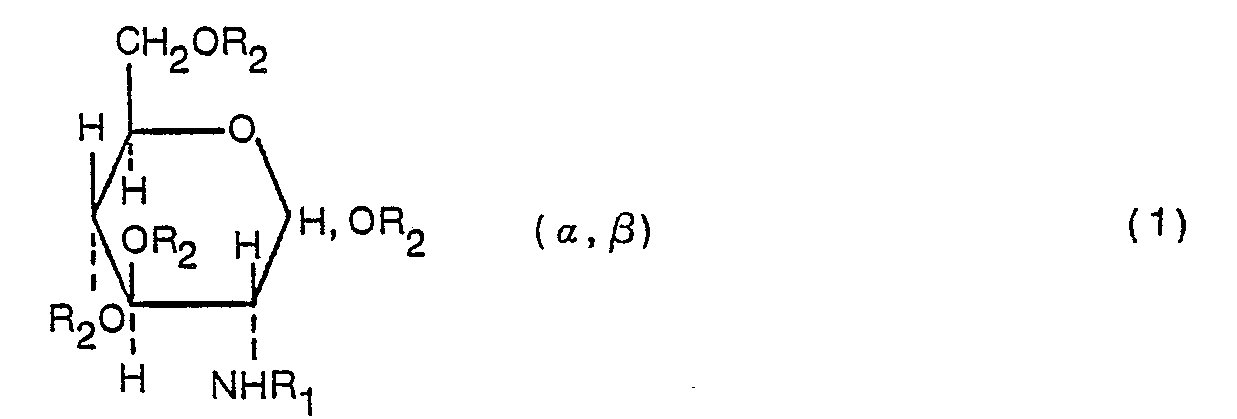

- More specifically the present invention relates to the N-nicotinoyl-glucosamine tetranicotinate having formula (1) in the isomeric forms α and β, the glucosamine tetranicotinate and their salts with non toxic and pharmacologically acceptable acids, such as fumaric, tartaric, hydrochloric, phthalic and terephthalic acids.
- It has been known for a long time that the nicotinic acid is one of the most efficacious hypolipemizing agents, this action being supplemented by a hypocholesterolemizing effect and consequently by an anti-aterogenic activity.
- Nicotinic acid, however, has raised relevant difficulties, as regards its therapeutical use, both because it is very readily eliminated from the blood circulation, and because at the high dosages needed to maintain an acceptable plasma content, undesirable and not neglibible side effects occur, such as for instance the so-called "rebound" effect of the free fatty acids (FFA) and of free glycerol in the blood.
- Such an effect is accompanied by toxic effects, mainly at the hepatic level, due to a lipidic infiltration of the lever, with prevailing accumulation of the triglyceride fraction. In recent years some derivatives of nicotinic acid, such as for example D-glucitol hexanicotinate, have been discovered and therapeutically used.
- In this case the side effects can be substantially reduced, but the problem of the duration of the therapeutical effect after the administration remains essentially unchanged.
- In the FR-PS 11 66 818 N-nicotinoyl-D-glucosamine and its acetyl derivatives are described showing a therapeutical activity in the case of diseases which are caused by tuberculosis bacteria and by amoebae.
- Moreover from FR-PS-22 58 861 derivatives of N-nicotinoyl-D-glucosamide having the following formula:

- These known compounds have a lipid reducing effect in the plasma. Although the lipid reducing effect of triglycerides in the plasma can be maintained by one single administration over 13 hours, this is not yet totally sufficient for long-term therapy.
- Accordingly, it is the object of the invention to provide nicotinoyl derivatives of glucosamine having efficacious hypolipemizing action that are suitable for long-term therapy or preventive treatment, whose therapeutical effects can be maintained over long periods also in the case of small dosages and that are exceptionally well-tolerated.
- It has been now found that the above mentioned problems, as presented both by nicotinic acid and from the known derivatives thereof, are substantially done away with the novel nicotinic acid derivatives of the present invention and more specifically with the glucosamine pentanicotinate.
- By the wording nicotinic derivatives of glucosamine there are meant the pentanicotinic acid ester of glucosamine in the isomeric forms α and β having formula (1), the tetranicotinic acid ester of glucosamine and the salts with non toxic and pharmaceutically acceptable acids, which hereinafter shall be considered as falling within the scope of the invention, even when reference is made only to the glucosamine pentanicotinate.
- The following compounds are the specific subject of the present invention:
- 1) a-N-nicotinoyl-glucosamine tetranicotinate, having structural formula (1) (P 1 = nicotinoyl) and empirical formula C30H28O10N6; it is a white-ivory powder, having molecular weight 704.6 and melting point 158―160° (with dec.),

- The compound is soluble in the common apolar organic solvents, and the corresponding salts are water soluble.
- The thin layer chromatographic analysis give only one spot having Rf = 0.4.
- 2) β-N-nicotinoyl-glucosamine tetranicotinate, having the same formula (1); it is a solid, crystalline, white product, which is slightly soluble in acetone, ethanol and chloroform, but soluble in dilute acids, with melting point 198―202°C, and

- 3) Glucosamine tetranicotinate having the formula:

- It is a crystalline, white product, soluble in the common organic solvents and in acidic solutions, with melting point 98° (with dec. and

- The process according to the invention for the preparation of the pentanicotinic acid ester of glucosamine comprises the reaction in an organic solvent, particularly pyridine, of nicotinoyl chloride hydrochloride and glucosamine hydrochloride at a temperature of between 40°C and 120°C for a time of 1 to 20 hours, the reaction product being thereafter separated and purified.
- More specifically, it has been found that by the process as above defined in its essential points a mixture of the two isomers is obtained, the related proportions of which in the resulting reaction mixture vary depending on the reaction conditions and particularly depending in the reaction tempera- tu-re and time.
- As a matter of principle, it has been found that when the temperature and the time of the reaction are increased, within the previously indicated limits, the percentage of beta isomer increases and the percentage of alpha isomer does correspondingly decrease.
- Lastly, as regards the preparation of glucosamine tetranicotinate, it is obtained by hot acid hydrolysis of phenanicotinate, both from the alpha and from the beta isomer. It is to be mentioned that no isomeric forms of tetranicotinate have been detected.
- The particular features of the process of the invention shall more clearly appear from the following examples.
- The reaction takes place according to the following scheme:

- In a flask, provided with a stirrer, 550 ml of pyridine are charged and 75 g (0.49 moles) of nicotinoyl chloride hydrochloride are added in portions and under vigorous stirring; the reaction is exothermic and is carried out by cooling with an ice bath at a temperature of 15°C.
- The resulting mixture is supplemented with 17.6 g (0.082 moles) of glucosamine hydrochloride in crystalline form, having the following chemical and physical properties: m.p. = 190-194°C; molecular weight = 215.64; [alo = +82.4°C.
- The reaction mass is heterogeneous and is slowly heated in a water bath, at a temperature of 70°C for a time of about 14 hours. At the end the reaction mass is homogeneous and is of brick-red colour.
- The reaction mixture is cooled to room temperature, is filtered under vacuum from the thus formed pyridine hydrochloride, the filtrate is concentrated, added with 1 liter water and extracted twice with 300 ml of chloroform. At this point the separation of the two phases is carried out, the organic phase being then recovered, dried over sodium sulfate and concentrated under vacuum.
- A spongy, tobacco coloured product is obtained, which is taken up in water and hydrogen chloride.
- A cloudy solution results, which is buffered with diluted ammonia up to incipient precipitation; de- colorising charcoal is added and the solution is filtered.
- The resulting clear solution is further decolorised by adding more charcoal; the operation is repeated several times until a straw-coloured solution (500 ml) is obtained.
- The aqueous solution is extracted under vigorous stirring with 300 ml of chloroform being made alkaline with diluted ammonia, two phases are separated, the organic phase being dried over sodium sulfate and concentrated under vacuum.
- A white-ivory product is thus recovered which is crystallized from mixtures of alcohols and esters, with an 80% yield, the analytical composition comprising 87 to 93% of alpha isomer and 7 to 12% of beta isomer, and the melting point being 156 to 160°C; 22 g of product are obtained, (corresponding a yield of 38.1% of theoretical value).
- From the mixture the two isomers can be isolated by fractionated crystallization.
- In a flask, provided with a stirrer, 110 g of nicotinoyl chloride hydrochloride, 100 ml of pyridine, 500 ml of a 1:1 mixture of 1,1,1-trichloroetane and chloroform are charged, and the mixture is stirred until a single phase is obtained.
- 19 g of glucosamine hydrochloride are added at room temperature and the reaction mixture is heated for a time of 4 hours at a temperature of between 80°C.
- The reaction mixture is evaporated under vacuum until dry, the mass is dispersed in water, extracted with chloroform, the organic phase being then dried.
- There is thus obtained the desired product, {3-N-nicotinoyl-glucosamine tetranicotinate, which upon crystallization from dimethylformamide-water is a white crystalline solid; the yield is 50-55%.
- In a flask, provided with a stirrer, 50 g of β-N-nicotinoyl-glucosamine tetranicotinate are dissolved in 2 liters of 0.5% HCI and heated to a temperature of 50°C for 4 hours.
- The solution is made alkaline with 5% sodium carbonate and extracted with 400 ml of chloroform; by evaporating the chloroform solution a residue is obtained which, upon crystallization from acetone, is a white crystalline powder (60% yield).
- With like procedures, by starting from 50 g of {3-N-nicotinoyl-glucosamine tetranicotinate and 1% HCI, and by heating for 4 hours at 60°C, the same glucosamine tetranicotinate is obtained with a 65% yield.
- For the preparation of the salts with non toxic and pharmacologically acceptable salts, the standard procedures for such a reaction are adopted, organic solvents, such as alcohols, dioxane and ketones being used, and temperatures not higher than 40°C, taking it into account that the conversion to the salt is complete.
- The compounds of the present invention have been the subject of preliminary pharmacological tests, by which the previously mentioned properties have been shown.
- As regards the toxicity it is to be considered that the nicotinic acid, besides being part of all the living cells, has been used worldwide for about 25 years in the therapy of several pathological states, with the only limitation of the undesirable side effects, at dosages of between 1 and 10 g per day, and consequently its safety needs not to be confirmed by extended pharmacological experiments. Like considerations can be drawn as regards the glucosamine.
- The preceeding conclusions have been confirmed by some practical tests, and results of which are reported in the Table 1, only as regards the mixture of isomers and as obtained according to example 1 (the ratio between the isomers being 75 to 25) and which for sake of brevity shall be indicated hereinafter with the abreviation GLUN.


- As it can be seen from table 1, the acute toxicity of GLUN in rats is negligible and twice as low by oral route and 20 times as low by intraperitoneal route than that of the nicotinic acid.
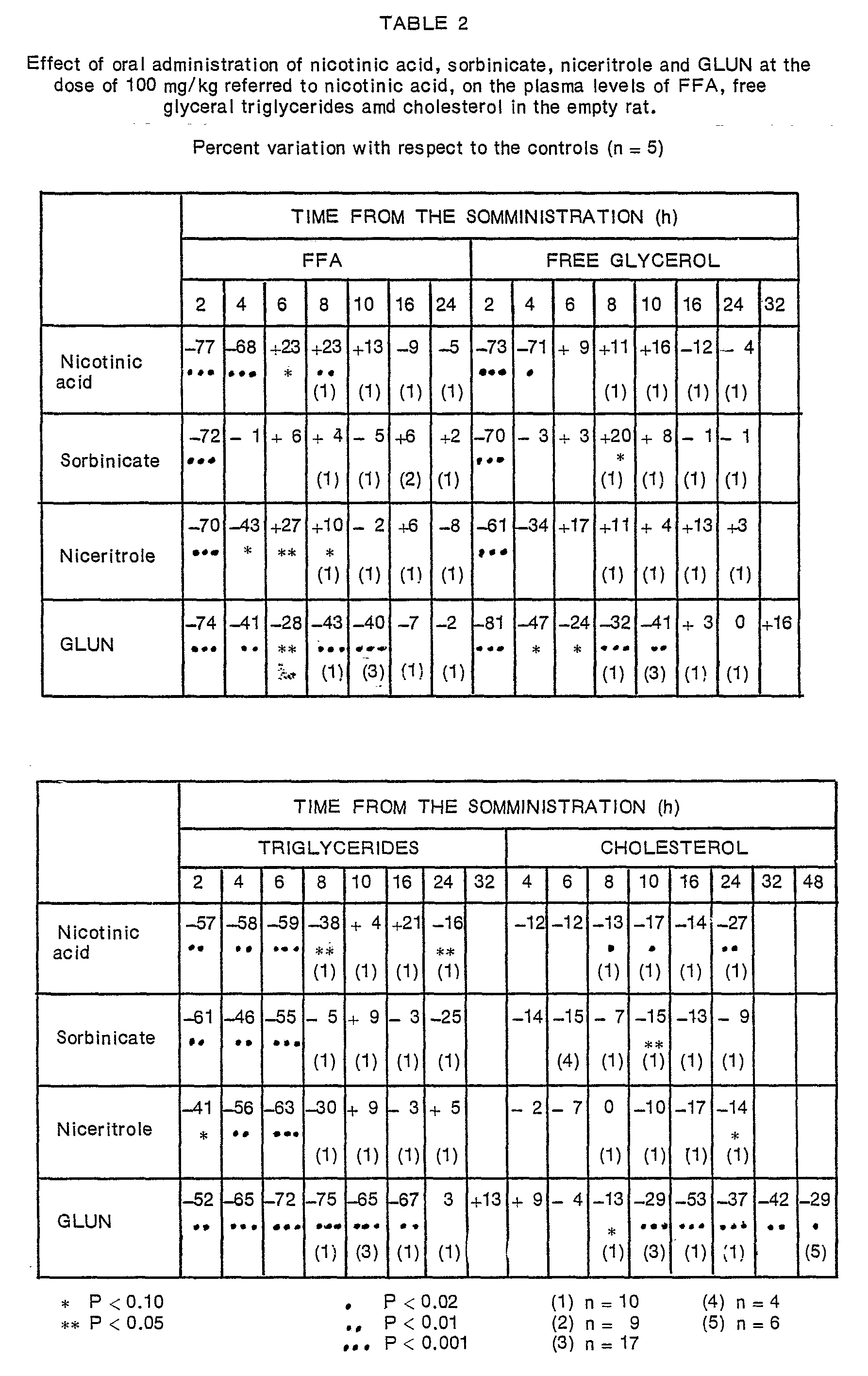
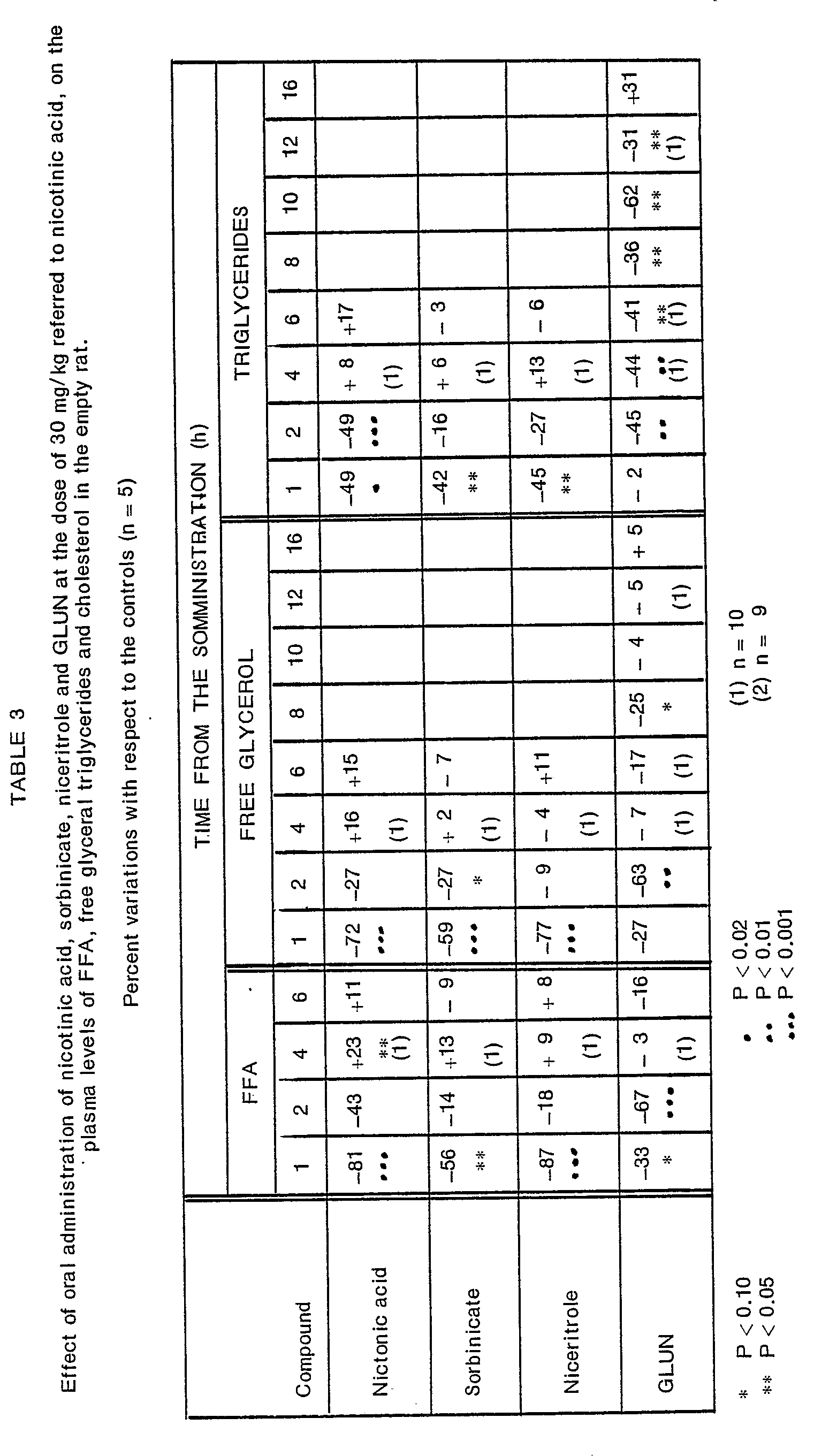
- There have also been investigated the effects of the oral administration of glucosamine pentanicotinate (GLUN) on the plasma levels of free fatty acids, free glycerol, triglycerides and cholesterol in the empty rat, in comparison with like doses of nicotinic acid, sorbinate (D-glucitol hexanicotinate) and niceritrole (pentaerithritol-tetranicrotinate).
- The kinetics of the free nicotinic acid in the plasma has been evaluated after an oral administration of GLUN, always in comparison with like doses of nicotinic acid, sorbinicate and niceritrole.
- 636 COBS CS (SD) BR male rats have been used in the whole, aged between 41 and 64 days and of body weight of between 180 and 345 grams.
- The results are reported in the tables 2 (effects on plasma lipids at the dose of 100 mg/kg), 3 (effects on the plasma lipids at the dose of 30 mg/kg) and 4 (kinetics of the frre nicotinic acid at the dose of 100 mg/kg).
- From the tables 2, 3, and 4, the following features appear evident:
- At the dose of 100 mg/kg the maximum anti-lipotic effect occurs within 2 hours from the administration for all the four substances under test. The intensity of the maximum effect is practically the same, but the duration of the effect is different in the several groups.
- The effect of the sorbinicate disappears within 4 hours, that of the nicotinic acid and of niceritrole within 6 hours, and that of GLUN within 16 hours. A FFA rebound is induced by nicotinic acid and niceritrole at the eighth and sixth hour respectively, whereas sorbinicate and GLUN are exempt from such an effect.
- At the dose of 30 mg.kg the four substances under test depress the plasma FFA after 1 hour, but only GLUN is still active at the second hour. The nicotinic acid only causes FFA rebound at the fourth hour.
- The effects of the tested compounds on the free glycerol are roughly identical to those on FFA at the dose of 100 mg/kg. The maximum effect is detected for all the substances within the second hour. The effect of the sorbinicate and of niceritrole disappears within the fourth hour, that of the nicotinic acid within the sixth hour, that of GLUN within the sixteenth hour.
- At the dose of 30 mg/kg nicotinic acid, sorbinicate, and niceritrole are active only after 1 hour, whereas GLUN is active at the 2nd hour.
- All the four substances under test cause the triglycerides to be relevantly reduced, but also in this case the duration of the effect is different in the several groups.
- At the dose of 100 mg/kg, the effect of sorbinicate and niceritrole disappears within the eighth hour, that of the nicotinic acid within the tenth hour, that of GLUN within the twenty fourth hour. At the dose of 30 mg/kg the effect disappears within 2 hours for the sorbinicate and the niceritrole, within 4 hours for the nicotinic acid and within 16 hours for the GLUN.
- At the dose of 100 mg/kg the nicotinic acid causes the cholestelolemy to be lowered at the eighth, tenth and twenty fourth hour, the sorbinicate at the tenth hour only, whereas the reduction induced by niceritrole is never significant (P 0.10 only at thet 24th hour).
- GLUN depresses the cholesterolemy from the eighth to the fortyeighth hour. Moreover, the effect of the latter substance seems to be constantly more relevant, from the quantitative point of view, with respect to that of the reference standards.
- Table 4 shows that nicotinic acid, sorbinicate and niceritrole give rise to a peak in the plasma concentration of free nicotinic acid within 30 minutes after administration, whereas GLUN gives rise to a plateau in the levels betwen about 2nd and the 12th hour.
- The highest concentration is attained with nicotinic acid, it is about twice as high as the peak concentration attained with niceritrole, 15 times higher that that attained with sorbinicate, 40 times higher than that attained with GLUN. Six hours after the administration, the plasma concentration of the free nicotinic acid is about 140 times less than that of the peak for the administration of nicotinic acid, about 80 times less in the case of niceritrole, about 9 times less in the case of sorbinicate, whereas in the case of GLUN the concentration is still within the plateau phase of the nicotinic acid levels.
- In order to assess possible differences of activity of the two isomers alpha and beta, as well as of the glucosamine tetranicotinate, the pharmacological tests reported in the table 2 have repeated, and the related results are indicated in the following table 5.

- The preceeding results show that the compounds of the invention are endowed with pharmaco- kinetic and pharmacodynamic properties which render them at least potentially more interesting than nicotinic acid and the known derivatives thereof available as drugs for the control of the human hyperdislipidamiae.
- In fact, the compounds of the invention do not cause the appearance of early and too high levels of nicotinic acid, which are useless from the point of view of hypolipemizing activity and are the potential cause of a number of side effects (flushing, gastro-intestinal disturbances and some times also hepatic troubles, hyperuricemia, altered tolerability with respect to the glucose, strial fibrillations and other aritmiae) and provide for extended times constant plasma levels of free nicotinic acid, which are not much higher than the pharmacologically active concentrations.
- As regards the therapeutical use of the compounds of the invention, daily dosages are foreseen of 1 to 6 g, the administration taking place in two or three times per day.
- As regards the pharmaceutical compositions, the compounds of the invention are formulated for oral use, in form of coated tablets, pills and capsules, containing 500 to 100 mg of active compound, together with the standard eccipients and vehicles.
- The following is an example of pharmaceutical composition of a coated tablets:

Claims (11)

Priority Applications (1)
| Application Number | Priority Date | Filing Date | Title |
|---|---|---|---|
| AT81103854T ATE10195T1 (en) | 1980-05-20 | 1981-05-19 | NICOTINAC ACID DERIVATIVES OF GLUCOSAMINE, PROCESS FOR THEIR PREPARATION AND THE PHARMACEUTICAL COMPOSITIONS CONTAINING THEM. |
Applications Claiming Priority (2)
| Application Number | Priority Date | Filing Date | Title |
|---|---|---|---|
| IT22188/80A IT1140962B (en) | 1980-05-20 | 1980-05-20 | NICOTINIC GLUCOSAMINE DERIVATIVES, PROCEDURE FOR PREPARATION AND RELATED COMPOSITIONS |
| IT2218880 | 1980-05-20 |
Publications (2)
| Publication Number | Publication Date |
|---|---|
| EP0040433A1 EP0040433A1 (en) | 1981-11-25 |
| EP0040433B1 true EP0040433B1 (en) | 1984-11-07 |
Family
ID=11192786
Family Applications (1)
| Application Number | Title | Priority Date | Filing Date |
|---|---|---|---|
| EP81103854A Expired EP0040433B1 (en) | 1980-05-20 | 1981-05-19 | Nicotinic derivatives of glucosamine, process for their preparation and related pharmaceutical compositions |
Country Status (15)
| Country | Link |
|---|---|
| US (1) | US4358441A (en) |
| EP (1) | EP0040433B1 (en) |
| JP (1) | JPS5711994A (en) |
| AT (1) | ATE10195T1 (en) |
| AU (1) | AU537946B2 (en) |
| BE (1) | BE888890A (en) |
| CA (1) | CA1192543A (en) |
| DE (1) | DE3167045D1 (en) |
| DK (1) | DK219781A (en) |
| ES (1) | ES502904A0 (en) |
| FR (1) | FR2482968A1 (en) |
| IL (1) | IL62919A (en) |
| IT (1) | IT1140962B (en) |
| NO (1) | NO150682C (en) |
| ZA (1) | ZA813383B (en) |
Families Citing this family (2)
| Publication number | Priority date | Publication date | Assignee | Title |
|---|---|---|---|---|
| NL2003019C2 (en) | 2009-06-12 | 2010-12-15 | 4Sight Innovation Bv | FLOOR PANEL AND FLOOR COVERAGE CONSISING OF MULTIPLE OF SUCH FLOOR PANELS. |
| NL2018781B1 (en) | 2017-04-26 | 2018-11-05 | Innovations4Flooring Holding N V | Panel and covering |
Family Cites Families (4)
| Publication number | Priority date | Publication date | Assignee | Title |
|---|---|---|---|---|
| FR1166818A (en) | 1956-01-20 | 1958-11-17 | Ciba Geigy | Process for the preparation of n-acylamino compounds |
| US3950324A (en) * | 1974-01-25 | 1976-04-13 | Hoffmann-La Roche Inc. | D-glucose-1-0-nicotinoyl-2-deoxy-2-nictinamido derivatives |
| CH597253A5 (en) | 1974-01-25 | 1978-03-31 | Hoffmann La Roche | |
| ZA747446B (en) * | 1974-01-25 | 1975-12-31 | Hoffmann La Roche | Pharmaceutical preparations |
-
1980
- 1980-05-20 IT IT22188/80A patent/IT1140962B/en active
-
1981
- 1981-05-19 DE DE8181103854T patent/DE3167045D1/en not_active Expired
- 1981-05-19 DK DK219781A patent/DK219781A/en not_active Application Discontinuation
- 1981-05-19 NO NO811699A patent/NO150682C/en unknown
- 1981-05-19 US US06/265,348 patent/US4358441A/en not_active Expired - Fee Related
- 1981-05-19 AT AT81103854T patent/ATE10195T1/en not_active IP Right Cessation
- 1981-05-19 EP EP81103854A patent/EP0040433B1/en not_active Expired
- 1981-05-20 CA CA000377882A patent/CA1192543A/en not_active Expired
- 1981-05-20 BE BE0/204855A patent/BE888890A/en not_active IP Right Cessation
- 1981-05-20 IL IL62919A patent/IL62919A/en unknown
- 1981-05-20 ES ES502904A patent/ES502904A0/en active Granted
- 1981-05-20 JP JP7640781A patent/JPS5711994A/en active Granted
- 1981-05-20 AU AU70855/81A patent/AU537946B2/en not_active Ceased
- 1981-05-20 FR FR8110034A patent/FR2482968A1/en active Granted
- 1981-08-07 ZA ZA00813383A patent/ZA813383B/en unknown
Also Published As
| Publication number | Publication date |
|---|---|
| FR2482968B1 (en) | 1984-02-17 |
| JPS5711994A (en) | 1982-01-21 |
| DE3167045D1 (en) | 1984-12-13 |
| IT8022188A0 (en) | 1980-05-20 |
| BE888890A (en) | 1981-09-16 |
| US4358441A (en) | 1982-11-09 |
| ES8203362A1 (en) | 1982-04-01 |
| NO150682B (en) | 1984-08-20 |
| EP0040433A1 (en) | 1981-11-25 |
| ATE10195T1 (en) | 1984-11-15 |
| IT1140962B (en) | 1986-10-10 |
| CA1192543A (en) | 1985-08-27 |
| ES502904A0 (en) | 1982-04-01 |
| AU537946B2 (en) | 1984-07-19 |
| IL62919A0 (en) | 1981-07-31 |
| NO150682C (en) | 1984-11-28 |
| NO811699L (en) | 1981-11-23 |
| IL62919A (en) | 1984-10-31 |
| ZA813383B (en) | 1982-06-30 |
| JPH0132835B2 (en) | 1989-07-10 |
| FR2482968A1 (en) | 1981-11-27 |
| DK219781A (en) | 1981-11-21 |
Similar Documents
| Publication | Publication Date | Title |
|---|---|---|
| US4654370A (en) | Glyceryl valproates | |
| AU2515599A (en) | Hypolipidemic benzothiazepine compounds | |
| EP1181294B1 (en) | Novel derivatives and analogues of galanthamin | |
| US5225529A (en) | Synthetic amphiphilic glycoconjugates for neurological use | |
| EP0040860B1 (en) | Dibenzoxazepine derivative, process for preparing the same and pharmaceutical composition comprising the same | |
| US4154850A (en) | Certain di-(substituted phenoxy) alkanes and hypolipidaemic use thereof | |
| JPH08504830A (en) | Spirostanil glycoside crystalline monohydrate | |
| FR2533919A1 (en) | DERIVATIVES WITH BIOLOGICAL ACTIVITY OF 2,5-PIPERAZINEDIONE, PROCESSES FOR THEIR PREPARATION AND PHARMACEUTICAL COMPOSITIONS CONTAINING SAME | |
| US4461775A (en) | Hydroxythioether fatty acid derivatives | |
| US4794115A (en) | Method of treating hyperlipemia | |
| DE3103144C2 (en) | ||
| FR2510575A1 (en) | NOVEL BICYCLIC COMPOUNDS, PROCESS FOR THEIR PREPARATION AND PHARMACEUTICAL COMPOSITION COMPRISING SAME | |
| US4036983A (en) | Ferrocene compounds and pharmaceutical composition for use in treatment of iron deficiency in an animal | |
| US4358441A (en) | Nicotinic derivatives of glucosamine and related pharmaceutical compositions | |
| IE50037B1 (en) | 25-halocholest-5-ene-3beta,22-diols and esters thereof | |
| US5385920A (en) | Diacylglycerol nicotinates | |
| US3852265A (en) | 2{40 ,3{40 -o-lower alkylidene or cyclohexylidene periplorhamnoside compounds | |
| US4452990A (en) | 1-Aroyl-5-oxo-2-pyrrolidinepropanoic acids and related esters | |
| US5330983A (en) | 14-O-p-chlorobenzoylaconine and analgesic/anti-inflammatory agent containing the same | |
| EP1230252A1 (en) | Beta-d-5-thioxylose derivatives, preparation method and therapeutic use | |
| US6071898A (en) | Asiatic acid derivatives having modified A-ring | |
| US4889853A (en) | Hydroquinonlyphenyl butyric acid amide derivative | |
| EP0240338B1 (en) | Butenoic acid derivatives | |
| KR840001034B1 (en) | Process for the preparation of pihydronicotinic acid derivatives | |
| EP0052238B1 (en) | A new vincamine derivative, a method for its preparation and pharmaceutical compositions containing it |
Legal Events
| Date | Code | Title | Description |
|---|---|---|---|
| PUAI | Public reference made under article 153(3) epc to a published international application that has entered the european phase |
Free format text: ORIGINAL CODE: 0009012 |
|
| AK | Designated contracting states |
Designated state(s): AT CH DE GB IT LI LU NL SE |
|
| 17P | Request for examination filed |
Effective date: 19811026 |
|
| ITF | It: translation for a ep patent filed | ||
| RAP1 | Party data changed (applicant data changed or rights of an application transferred) |
Owner name: LABORATORI GUIDOTTI S.P.A. |
|
| GRAA | (expected) grant |
Free format text: ORIGINAL CODE: 0009210 |
|
| AK | Designated contracting states |
Designated state(s): AT CH DE GB IT LI LU NL SE |
|
| REF | Corresponds to: |
Ref document number: 10195 Country of ref document: AT Date of ref document: 19841115 Kind code of ref document: T |
|
| REF | Corresponds to: |
Ref document number: 3167045 Country of ref document: DE Date of ref document: 19841213 |
|
| REG | Reference to a national code |
Ref country code: CH Ref legal event code: PL |
|
| PG25 | Lapsed in a contracting state [announced via postgrant information from national office to epo] |
Ref country code: LU Free format text: LAPSE BECAUSE OF NON-PAYMENT OF DUE FEES Effective date: 19850531 |
|
| PLBE | No opposition filed within time limit |
Free format text: ORIGINAL CODE: 0009261 |
|
| STAA | Information on the status of an ep patent application or granted ep patent |
Free format text: STATUS: NO OPPOSITION FILED WITHIN TIME LIMIT |
|
| 26N | No opposition filed | ||
| PGFP | Annual fee paid to national office [announced via postgrant information from national office to epo] |
Ref country code: SE Payment date: 19890509 Year of fee payment: 9 |
|
| PGFP | Annual fee paid to national office [announced via postgrant information from national office to epo] |
Ref country code: LU Payment date: 19890510 Year of fee payment: 9 |
|
| PGFP | Annual fee paid to national office [announced via postgrant information from national office to epo] |
Ref country code: AT Payment date: 19890511 Year of fee payment: 9 |
|
| PGFP | Annual fee paid to national office [announced via postgrant information from national office to epo] |
Ref country code: CH Payment date: 19890526 Year of fee payment: 9 |
|
| PGFP | Annual fee paid to national office [announced via postgrant information from national office to epo] |
Ref country code: NL Payment date: 19890531 Year of fee payment: 9 Ref country code: GB Payment date: 19890531 Year of fee payment: 9 |
|
| PGFP | Annual fee paid to national office [announced via postgrant information from national office to epo] |
Ref country code: DE Payment date: 19890630 Year of fee payment: 9 |
|
| PG25 | Lapsed in a contracting state [announced via postgrant information from national office to epo] |
Ref country code: GB Effective date: 19900519 Ref country code: AT Effective date: 19900519 |
|
| PG25 | Lapsed in a contracting state [announced via postgrant information from national office to epo] |
Ref country code: SE Effective date: 19900520 |
|
| PG25 | Lapsed in a contracting state [announced via postgrant information from national office to epo] |
Ref country code: LI Effective date: 19900531 Ref country code: CH Effective date: 19900531 |
|
| PG25 | Lapsed in a contracting state [announced via postgrant information from national office to epo] |
Ref country code: NL Effective date: 19901201 |
|
| GBPC | Gb: european patent ceased through non-payment of renewal fee | ||
| NLV4 | Nl: lapsed or anulled due to non-payment of the annual fee | ||
| REG | Reference to a national code |
Ref country code: CH Ref legal event code: PL |
|
| PG25 | Lapsed in a contracting state [announced via postgrant information from national office to epo] |
Ref country code: DE Effective date: 19910201 |
|
| ITTA | It: last paid annual fee | ||
| EUG | Se: european patent has lapsed |
Ref document number: 81103854.6 Effective date: 19910115 |