EP0039477B1 - Use of 1,3-dioxolen-2-one derivatives - Google Patents
Use of 1,3-dioxolen-2-one derivatives Download PDFInfo
- Publication number
- EP0039477B1 EP0039477B1 EP81103232A EP81103232A EP0039477B1 EP 0039477 B1 EP0039477 B1 EP 0039477B1 EP 81103232 A EP81103232 A EP 81103232A EP 81103232 A EP81103232 A EP 81103232A EP 0039477 B1 EP0039477 B1 EP 0039477B1
- Authority
- EP
- European Patent Office
- Prior art keywords
- dioxolen
- methyl
- ester
- ampicillin
- group
- Prior art date
- Legal status (The legal status is an assumption and is not a legal conclusion. Google has not performed a legal analysis and makes no representation as to the accuracy of the status listed.)
- Expired
Links
- VAYTZRYEBVHVLE-UHFFFAOYSA-N 1,3-dioxol-2-one Chemical class O=C1OC=CO1 VAYTZRYEBVHVLE-UHFFFAOYSA-N 0.000 title abstract description 12
- 150000001875 compounds Chemical class 0.000 claims abstract description 36
- 239000003795 chemical substances by application Substances 0.000 claims abstract description 17
- 125000002496 methyl group Chemical group [H]C([H])([H])* 0.000 claims abstract description 9
- 125000005843 halogen group Chemical group 0.000 claims abstract description 5
- 125000004435 hydrogen atom Chemical group [H]* 0.000 claims abstract description 4
- 125000001997 phenyl group Chemical group [H]C1=C([H])C([H])=C(*)C([H])=C1[H] 0.000 claims abstract description 4
- GWFALVUXAGYMHR-UHFFFAOYSA-N 4-(bromomethyl)-5-methyl-1,3-dioxol-2-one Chemical group CC=1OC(=O)OC=1CBr GWFALVUXAGYMHR-UHFFFAOYSA-N 0.000 claims description 6
- WKBOTKDWSSQWDR-UHFFFAOYSA-N Bromine atom Chemical compound [Br] WKBOTKDWSSQWDR-UHFFFAOYSA-N 0.000 claims description 6
- 125000003178 carboxy group Chemical group [H]OC(*)=O 0.000 claims description 6
- 239000000460 chlorine Substances 0.000 claims description 6
- 229910052801 chlorine Inorganic materials 0.000 claims description 6
- 125000001309 chloro group Chemical group Cl* 0.000 claims description 4
- ZCYVEMRRCGMTRW-UHFFFAOYSA-N 7553-56-2 Chemical compound [I] ZCYVEMRRCGMTRW-UHFFFAOYSA-N 0.000 claims description 3
- ZAMOUSCENKQFHK-UHFFFAOYSA-N Chlorine atom Chemical compound [Cl] ZAMOUSCENKQFHK-UHFFFAOYSA-N 0.000 claims description 3
- GDTBXPJZTBHREO-UHFFFAOYSA-N bromine Substances BrBr GDTBXPJZTBHREO-UHFFFAOYSA-N 0.000 claims description 3
- 229910052794 bromium Inorganic materials 0.000 claims description 3
- 229910052740 iodine Inorganic materials 0.000 claims description 3
- 125000001246 bromo group Chemical group Br* 0.000 claims description 2
- 239000011630 iodine Substances 0.000 claims description 2
- 125000002346 iodo group Chemical group I* 0.000 claims description 2
- 238000006243 chemical reaction Methods 0.000 abstract description 22
- 230000002140 halogenating effect Effects 0.000 abstract description 8
- 239000000651 prodrug Substances 0.000 abstract description 5
- 229940002612 prodrug Drugs 0.000 abstract description 5
- 239000003607 modifier Substances 0.000 abstract description 4
- 125000006239 protecting group Chemical group 0.000 abstract description 4
- 239000003153 chemical reaction reagent Substances 0.000 abstract description 3
- 239000003814 drug Substances 0.000 abstract description 3
- 238000002360 preparation method Methods 0.000 abstract description 3
- 230000001681 protective effect Effects 0.000 abstract 1
- XEKOWRVHYACXOJ-UHFFFAOYSA-N Ethyl acetate Chemical compound CCOC(C)=O XEKOWRVHYACXOJ-UHFFFAOYSA-N 0.000 description 27
- 229960000723 ampicillin Drugs 0.000 description 16
- AVKUERGKIZMTKX-NJBDSQKTSA-N ampicillin Chemical compound C1([C@@H](N)C(=O)N[C@H]2[C@H]3SC([C@@H](N3C2=O)C(O)=O)(C)C)=CC=CC=C1 AVKUERGKIZMTKX-NJBDSQKTSA-N 0.000 description 13
- YMWUJEATGCHHMB-UHFFFAOYSA-N Dichloromethane Chemical compound ClCCl YMWUJEATGCHHMB-UHFFFAOYSA-N 0.000 description 12
- 239000000203 mixture Substances 0.000 description 12
- 238000012360 testing method Methods 0.000 description 12
- VZGDMQKNWNREIO-UHFFFAOYSA-N tetrachloromethane Chemical compound ClC(Cl)(Cl)Cl VZGDMQKNWNREIO-UHFFFAOYSA-N 0.000 description 12
- VEXZGXHMUGYJMC-UHFFFAOYSA-N Hydrochloric acid Chemical compound Cl VEXZGXHMUGYJMC-UHFFFAOYSA-N 0.000 description 10
- 238000000034 method Methods 0.000 description 10
- 239000007787 solid Substances 0.000 description 10
- PCLIMKBDDGJMGD-UHFFFAOYSA-N N-bromosuccinimide Chemical compound BrN1C(=O)CCC1=O PCLIMKBDDGJMGD-UHFFFAOYSA-N 0.000 description 9
- -1 methyl ester hydrochloride Chemical class 0.000 description 9
- 239000000047 product Substances 0.000 description 9
- 239000000243 solution Substances 0.000 description 9
- FAPWRFPIFSIZLT-UHFFFAOYSA-M Sodium chloride Chemical compound [Na+].[Cl-] FAPWRFPIFSIZLT-UHFFFAOYSA-M 0.000 description 8
- 230000007062 hydrolysis Effects 0.000 description 7
- 238000006460 hydrolysis reaction Methods 0.000 description 7
- WEVYAHXRMPXWCK-UHFFFAOYSA-N Acetonitrile Chemical compound CC#N WEVYAHXRMPXWCK-UHFFFAOYSA-N 0.000 description 6
- UHOVQNZJYSORNB-UHFFFAOYSA-N Benzene Chemical compound C1=CC=CC=C1 UHOVQNZJYSORNB-UHFFFAOYSA-N 0.000 description 6
- KFZMGEQAYNKOFK-UHFFFAOYSA-N Isopropanol Chemical compound CC(C)O KFZMGEQAYNKOFK-UHFFFAOYSA-N 0.000 description 6
- ZMXDDKWLCZADIW-UHFFFAOYSA-N N,N-Dimethylformamide Chemical compound CN(C)C=O ZMXDDKWLCZADIW-UHFFFAOYSA-N 0.000 description 6
- 238000001914 filtration Methods 0.000 description 6
- 238000004519 manufacturing process Methods 0.000 description 6
- 239000011541 reaction mixture Substances 0.000 description 6
- JGSARLDLIJGVTE-MBNYWOFBSA-N Penicillin G Natural products N([C@H]1[C@H]2SC([C@@H](N2C1=O)C(O)=O)(C)C)C(=O)CC1=CC=CC=C1 JGSARLDLIJGVTE-MBNYWOFBSA-N 0.000 description 5
- 150000002148 esters Chemical class 0.000 description 5
- 239000002609 medium Substances 0.000 description 5
- 239000006188 syrup Substances 0.000 description 5
- 235000020357 syrup Nutrition 0.000 description 5
- OZAIFHULBGXAKX-UHFFFAOYSA-N 2,2'-azo-bis-isobutyronitrile Substances N#CC(C)(C)N=NC(C)(C)C#N OZAIFHULBGXAKX-UHFFFAOYSA-N 0.000 description 4
- UIIMBOGNXHQVGW-UHFFFAOYSA-M Sodium bicarbonate Chemical compound [Na+].OC([O-])=O UIIMBOGNXHQVGW-UHFFFAOYSA-M 0.000 description 4
- 230000002378 acidificating effect Effects 0.000 description 4
- 229960003311 ampicillin trihydrate Drugs 0.000 description 4
- 239000007864 aqueous solution Substances 0.000 description 4
- 210000004369 blood Anatomy 0.000 description 4
- 239000008280 blood Substances 0.000 description 4
- 238000000921 elemental analysis Methods 0.000 description 4
- 239000000706 filtrate Substances 0.000 description 4
- 239000005457 ice water Substances 0.000 description 4
- 239000002198 insoluble material Substances 0.000 description 4
- 239000010410 layer Substances 0.000 description 4
- 235000019371 penicillin G benzathine Nutrition 0.000 description 4
- 229940056360 penicillin g Drugs 0.000 description 4
- 238000010992 reflux Methods 0.000 description 4
- 239000011780 sodium chloride Substances 0.000 description 4
- JOXIMZWYDAKGHI-UHFFFAOYSA-N toluene-4-sulfonic acid Chemical compound CC1=CC=C(S(O)(=O)=O)C=C1 JOXIMZWYDAKGHI-UHFFFAOYSA-N 0.000 description 4
- XLYOFNOQVPJJNP-UHFFFAOYSA-N water Substances O XLYOFNOQVPJJNP-UHFFFAOYSA-N 0.000 description 4
- QYIOFABFKUOIBV-UHFFFAOYSA-N 4,5-dimethyl-1,3-dioxol-2-one Chemical compound CC=1OC(=O)OC=1C QYIOFABFKUOIBV-UHFFFAOYSA-N 0.000 description 3
- PVDNUJWCLUDTSE-UHFFFAOYSA-N 4-(bromomethyl)-5-phenyl-1,3-dioxol-2-one Chemical compound O1C(=O)OC(C=2C=CC=CC=2)=C1CBr PVDNUJWCLUDTSE-UHFFFAOYSA-N 0.000 description 3
- CSNNHWWHGAXBCP-UHFFFAOYSA-L Magnesium sulfate Chemical compound [Mg+2].[O-][S+2]([O-])([O-])[O-] CSNNHWWHGAXBCP-UHFFFAOYSA-L 0.000 description 3
- 230000003197 catalytic effect Effects 0.000 description 3
- 239000007788 liquid Substances 0.000 description 3
- 238000002844 melting Methods 0.000 description 3
- 230000008018 melting Effects 0.000 description 3
- 235000015497 potassium bicarbonate Nutrition 0.000 description 3
- 229910000028 potassium bicarbonate Inorganic materials 0.000 description 3
- 239000011736 potassium bicarbonate Substances 0.000 description 3
- TYJJADVDDVDEDZ-UHFFFAOYSA-M potassium hydrogencarbonate Chemical compound [K+].OC([O-])=O TYJJADVDDVDEDZ-UHFFFAOYSA-M 0.000 description 3
- 150000003254 radicals Chemical class 0.000 description 3
- 229920006395 saturated elastomer Polymers 0.000 description 3
- 210000002966 serum Anatomy 0.000 description 3
- 239000002904 solvent Substances 0.000 description 3
- 239000000126 substance Substances 0.000 description 3
- KFZJRSPXJHVSCX-UHFFFAOYSA-N 4-(bromomethyl)-1,3-dioxol-2-one Chemical compound BrCC1=COC(=O)O1 KFZJRSPXJHVSCX-UHFFFAOYSA-N 0.000 description 2
- HXXOPVULXOEHTK-UHFFFAOYSA-N 4-methyl-1,3-dioxol-2-one Chemical compound CC1=COC(=O)O1 HXXOPVULXOEHTK-UHFFFAOYSA-N 0.000 description 2
- JODXHEZZVYDUPS-UHFFFAOYSA-N 4-methyl-5-phenyl-1,3-dioxol-2-one Chemical compound O1C(=O)OC(C=2C=CC=CC=2)=C1C JODXHEZZVYDUPS-UHFFFAOYSA-N 0.000 description 2
- NGHVIOIJCVXTGV-UHFFFAOYSA-N 6beta-amino-penicillanic acid Natural products OC(=O)C1C(C)(C)SC2C(N)C(=O)N21 NGHVIOIJCVXTGV-UHFFFAOYSA-N 0.000 description 2
- HEDRZPFGACZZDS-UHFFFAOYSA-N Chloroform Chemical compound ClC(Cl)Cl HEDRZPFGACZZDS-UHFFFAOYSA-N 0.000 description 2
- RTZKZFJDLAIYFH-UHFFFAOYSA-N Diethyl ether Chemical compound CCOCC RTZKZFJDLAIYFH-UHFFFAOYSA-N 0.000 description 2
- IAZDPXIOMUYVGZ-WFGJKAKNSA-N Dimethyl sulfoxide Chemical compound [2H]C([2H])([2H])S(=O)C([2H])([2H])[2H] IAZDPXIOMUYVGZ-WFGJKAKNSA-N 0.000 description 2
- 108090000790 Enzymes Proteins 0.000 description 2
- 102000004190 Enzymes Human genes 0.000 description 2
- 241000699670 Mus sp. Species 0.000 description 2
- JRNVZBWKYDBUCA-UHFFFAOYSA-N N-chlorosuccinimide Chemical compound ClN1C(=O)CCC1=O JRNVZBWKYDBUCA-UHFFFAOYSA-N 0.000 description 2
- PMZURENOXWZQFD-UHFFFAOYSA-L Sodium Sulfate Chemical compound [Na+].[Na+].[O-]S([O-])(=O)=O PMZURENOXWZQFD-UHFFFAOYSA-L 0.000 description 2
- 239000002253 acid Substances 0.000 description 2
- 125000000746 allylic group Chemical group 0.000 description 2
- 125000003277 amino group Chemical group 0.000 description 2
- 125000003118 aryl group Chemical group 0.000 description 2
- HUMNYLRZRPPJDN-UHFFFAOYSA-N benzaldehyde Chemical compound O=CC1=CC=CC=C1 HUMNYLRZRPPJDN-UHFFFAOYSA-N 0.000 description 2
- 238000012474 bioautography Methods 0.000 description 2
- 238000009835 boiling Methods 0.000 description 2
- 150000001732 carboxylic acid derivatives Chemical class 0.000 description 2
- MVPPADPHJFYWMZ-UHFFFAOYSA-N chlorobenzene Chemical compound ClC1=CC=CC=C1 MVPPADPHJFYWMZ-UHFFFAOYSA-N 0.000 description 2
- 238000001816 cooling Methods 0.000 description 2
- 239000012043 crude product Substances 0.000 description 2
- 150000005676 cyclic carbonates Chemical class 0.000 description 2
- 229940088598 enzyme Drugs 0.000 description 2
- 238000001727 in vivo Methods 0.000 description 2
- 230000031891 intestinal absorption Effects 0.000 description 2
- 230000000968 intestinal effect Effects 0.000 description 2
- ZKUKMWMSYCIYRD-ZXFNITATSA-N lenampicillin Chemical compound O1C(=O)OC(COC(=O)[C@H]2C(S[C@H]3N2C([C@H]3NC(=O)[C@H](N)C=2C=CC=CC=2)=O)(C)C)=C1C ZKUKMWMSYCIYRD-ZXFNITATSA-N 0.000 description 2
- 238000002156 mixing Methods 0.000 description 2
- 230000000144 pharmacologic effect Effects 0.000 description 2
- 239000008363 phosphate buffer Substances 0.000 description 2
- 235000017557 sodium bicarbonate Nutrition 0.000 description 2
- 229910000030 sodium bicarbonate Inorganic materials 0.000 description 2
- SOROUYSPFADXSN-SUWVAFIASA-N talampicillin Chemical compound C1([C@@H](N)C(=O)N[C@H]2[C@H]3SC([C@@H](N3C2=O)C(=O)OC2C3=CC=CC=C3C(=O)O2)(C)C)=CC=CC=C1 SOROUYSPFADXSN-SUWVAFIASA-N 0.000 description 2
- 229960002780 talampicillin Drugs 0.000 description 2
- 231100000419 toxicity Toxicity 0.000 description 2
- 230000001988 toxicity Effects 0.000 description 2
- 150000003952 β-lactams Chemical class 0.000 description 2
- SCOCMPBPLMPDFM-LSDHQDQOSA-N (4e)-4-[hydroxy-(2-methyl-2,3-dihydro-1-benzofuran-5-yl)methylidene]-1-(5-methyl-1,3,4-thiadiazol-2-yl)-5-(3,4,5-trimethoxyphenyl)pyrrolidine-2,3-dione Chemical compound COC1=C(OC)C(OC)=CC(C2C(/C(=O)C(=O)N2C=2SC(C)=NN=2)=C(\O)C=2C=C3CC(C)OC3=CC=2)=C1 SCOCMPBPLMPDFM-LSDHQDQOSA-N 0.000 description 1
- MARXMDRWROUXMD-UHFFFAOYSA-N 2-bromoisoindole-1,3-dione Chemical compound C1=CC=C2C(=O)N(Br)C(=O)C2=C1 MARXMDRWROUXMD-UHFFFAOYSA-N 0.000 description 1
- WDRFYIPWHMGQPN-UHFFFAOYSA-N 2-chloroisoindole-1,3-dione Chemical compound C1=CC=C2C(=O)N(Cl)C(=O)C2=C1 WDRFYIPWHMGQPN-UHFFFAOYSA-N 0.000 description 1
- VMZCDNSFRSVYKQ-UHFFFAOYSA-N 2-phenylacetyl chloride Chemical compound ClC(=O)CC1=CC=CC=C1 VMZCDNSFRSVYKQ-UHFFFAOYSA-N 0.000 description 1
- FVTBEDLKPPVXNH-UHFFFAOYSA-N 3-bromo-7-hydroxy-4-methylchromen-2-one Chemical compound C1=C(O)C=CC2=C1OC(=O)C(Br)=C2C FVTBEDLKPPVXNH-UHFFFAOYSA-N 0.000 description 1
- XJVMCMVBEREXIE-UHFFFAOYSA-N 4-(chloromethyl)-1,3-dioxol-2-one Chemical compound ClCC1=COC(=O)O1 XJVMCMVBEREXIE-UHFFFAOYSA-N 0.000 description 1
- QCLFSYYUWPUWQR-UHFFFAOYSA-N 4-(chloromethyl)-5-methyl-1,3-dioxol-2-one Chemical compound CC=1OC(=O)OC=1CCl QCLFSYYUWPUWQR-UHFFFAOYSA-N 0.000 description 1
- NFPVRVVXCABZIO-UHFFFAOYSA-N 4-(chloromethyl)-5-phenyl-1,3-dioxol-2-one Chemical compound O1C(=O)OC(C=2C=CC=CC=2)=C1CCl NFPVRVVXCABZIO-UHFFFAOYSA-N 0.000 description 1
- SMTDIEBUWFHPON-UHFFFAOYSA-N 4-(iodomethyl)-5-methyl-1,3-dioxol-2-one Chemical compound CC=1OC(=O)OC=1CI SMTDIEBUWFHPON-UHFFFAOYSA-N 0.000 description 1
- 239000004342 Benzoyl peroxide Substances 0.000 description 1
- OMPJBNCRMGITSC-UHFFFAOYSA-N Benzoylperoxide Chemical compound C=1C=CC=CC=1C(=O)OOC(=O)C1=CC=CC=C1 OMPJBNCRMGITSC-UHFFFAOYSA-N 0.000 description 1
- 239000004215 Carbon black (E152) Substances 0.000 description 1
- KZBUYRJDOAKODT-UHFFFAOYSA-N Chlorine Chemical compound ClCl KZBUYRJDOAKODT-UHFFFAOYSA-N 0.000 description 1
- XDTMQSROBMDMFD-UHFFFAOYSA-N Cyclohexane Chemical compound C1CCCCC1 XDTMQSROBMDMFD-UHFFFAOYSA-N 0.000 description 1
- 238000005684 Liebig rearrangement reaction Methods 0.000 description 1
- 241001465754 Metazoa Species 0.000 description 1
- 241000699666 Mus <mouse, genus> Species 0.000 description 1
- 108010019160 Pancreatin Proteins 0.000 description 1
- 102000057297 Pepsin A Human genes 0.000 description 1
- 108090000284 Pepsin A Proteins 0.000 description 1
- CYTYCFOTNPOANT-UHFFFAOYSA-N Perchloroethylene Chemical group ClC(Cl)=C(Cl)Cl CYTYCFOTNPOANT-UHFFFAOYSA-N 0.000 description 1
- 230000010933 acylation Effects 0.000 description 1
- 238000005917 acylation reaction Methods 0.000 description 1
- 150000001408 amides Chemical class 0.000 description 1
- 150000001413 amino acids Chemical class 0.000 description 1
- 230000003466 anti-cipated effect Effects 0.000 description 1
- 239000012736 aqueous medium Substances 0.000 description 1
- 235000019400 benzoyl peroxide Nutrition 0.000 description 1
- 238000004166 bioassay Methods 0.000 description 1
- 230000031018 biological processes and functions Effects 0.000 description 1
- 230000037396 body weight Effects 0.000 description 1
- 150000007942 carboxylates Chemical class 0.000 description 1
- 150000001735 carboxylic acids Chemical class 0.000 description 1
- 230000007547 defect Effects 0.000 description 1
- BNIILDVGGAEEIG-UHFFFAOYSA-L disodium hydrogen phosphate Chemical compound [Na+].[Na+].OP([O-])([O-])=O BNIILDVGGAEEIG-UHFFFAOYSA-L 0.000 description 1
- 229910000397 disodium phosphate Inorganic materials 0.000 description 1
- 235000019800 disodium phosphate Nutrition 0.000 description 1
- 238000004821 distillation Methods 0.000 description 1
- 230000001747 exhibiting effect Effects 0.000 description 1
- 230000002349 favourable effect Effects 0.000 description 1
- 239000012530 fluid Substances 0.000 description 1
- 235000011389 fruit/vegetable juice Nutrition 0.000 description 1
- 210000004051 gastric juice Anatomy 0.000 description 1
- 150000008282 halocarbons Chemical class 0.000 description 1
- XLYOFNOQVPJJNP-ZSJDYOACSA-N heavy water Substances [2H]O[2H] XLYOFNOQVPJJNP-ZSJDYOACSA-N 0.000 description 1
- 229930195733 hydrocarbon Natural products 0.000 description 1
- 150000002430 hydrocarbons Chemical group 0.000 description 1
- 238000000338 in vitro Methods 0.000 description 1
- 238000007912 intraperitoneal administration Methods 0.000 description 1
- 238000001990 intravenous administration Methods 0.000 description 1
- 230000001678 irradiating effect Effects 0.000 description 1
- 238000004811 liquid chromatography Methods 0.000 description 1
- 231100000053 low toxicity Toxicity 0.000 description 1
- 229910001511 metal iodide Inorganic materials 0.000 description 1
- 230000007935 neutral effect Effects 0.000 description 1
- 239000012044 organic layer Substances 0.000 description 1
- 239000003960 organic solvent Substances 0.000 description 1
- 229940055695 pancreatin Drugs 0.000 description 1
- QNGNSVIICDLXHT-UHFFFAOYSA-N para-ethylbenzaldehyde Natural products CCC1=CC=C(C=O)C=C1 QNGNSVIICDLXHT-UHFFFAOYSA-N 0.000 description 1
- 238000005192 partition Methods 0.000 description 1
- 229940111202 pepsin Drugs 0.000 description 1
- 229940086066 potassium hydrogencarbonate Drugs 0.000 description 1
- 239000012264 purified product Substances 0.000 description 1
- 238000007348 radical reaction Methods 0.000 description 1
- 238000001953 recrystallisation Methods 0.000 description 1
- 239000001488 sodium phosphate Substances 0.000 description 1
- 238000006467 substitution reaction Methods 0.000 description 1
- 239000000725 suspension Substances 0.000 description 1
- 229950011008 tetrachloroethylene Drugs 0.000 description 1
Classifications
-
- C—CHEMISTRY; METALLURGY
- C07—ORGANIC CHEMISTRY
- C07D—HETEROCYCLIC COMPOUNDS
- C07D307/00—Heterocyclic compounds containing five-membered rings having one oxygen atom as the only ring hetero atom
- C07D307/02—Heterocyclic compounds containing five-membered rings having one oxygen atom as the only ring hetero atom not condensed with other rings
- C07D307/34—Heterocyclic compounds containing five-membered rings having one oxygen atom as the only ring hetero atom not condensed with other rings having two or three double bonds between ring members or between ring members and non-ring members
- C07D307/38—Heterocyclic compounds containing five-membered rings having one oxygen atom as the only ring hetero atom not condensed with other rings having two or three double bonds between ring members or between ring members and non-ring members with substituted hydrocarbon radicals attached to ring carbon atoms
- C07D307/40—Radicals substituted by oxygen atoms
- C07D307/46—Doubly bound oxygen atoms, or two oxygen atoms singly bound to the same carbon atom
-
- A—HUMAN NECESSITIES
- A61—MEDICAL OR VETERINARY SCIENCE; HYGIENE
- A61P—SPECIFIC THERAPEUTIC ACTIVITY OF CHEMICAL COMPOUNDS OR MEDICINAL PREPARATIONS
- A61P31/00—Antiinfectives, i.e. antibiotics, antiseptics, chemotherapeutics
- A61P31/04—Antibacterial agents
-
- A—HUMAN NECESSITIES
- A61—MEDICAL OR VETERINARY SCIENCE; HYGIENE
- A61P—SPECIFIC THERAPEUTIC ACTIVITY OF CHEMICAL COMPOUNDS OR MEDICINAL PREPARATIONS
- A61P43/00—Drugs for specific purposes, not provided for in groups A61P1/00-A61P41/00
-
- C—CHEMISTRY; METALLURGY
- C07—ORGANIC CHEMISTRY
- C07D—HETEROCYCLIC COMPOUNDS
- C07D317/00—Heterocyclic compounds containing five-membered rings having two oxygen atoms as the only ring hetero atoms
- C07D317/08—Heterocyclic compounds containing five-membered rings having two oxygen atoms as the only ring hetero atoms having the hetero atoms in positions 1 and 3
- C07D317/10—Heterocyclic compounds containing five-membered rings having two oxygen atoms as the only ring hetero atoms having the hetero atoms in positions 1 and 3 not condensed with other rings
- C07D317/32—Heterocyclic compounds containing five-membered rings having two oxygen atoms as the only ring hetero atoms having the hetero atoms in positions 1 and 3 not condensed with other rings with hetero atoms or with carbon atoms having three bonds to hetero atoms with at the most one bond to halogen, e.g. ester or nitrile radicals, directly attached to ring carbon atoms
- C07D317/34—Oxygen atoms
- C07D317/40—Vinylene carbonate; Substituted vinylene carbonates
-
- C—CHEMISTRY; METALLURGY
- C07—ORGANIC CHEMISTRY
- C07D—HETEROCYCLIC COMPOUNDS
- C07D317/00—Heterocyclic compounds containing five-membered rings having two oxygen atoms as the only ring hetero atoms
- C07D317/08—Heterocyclic compounds containing five-membered rings having two oxygen atoms as the only ring hetero atoms having the hetero atoms in positions 1 and 3
- C07D317/44—Heterocyclic compounds containing five-membered rings having two oxygen atoms as the only ring hetero atoms having the hetero atoms in positions 1 and 3 ortho- or peri-condensed with carbocyclic rings or ring systems
- C07D317/46—Heterocyclic compounds containing five-membered rings having two oxygen atoms as the only ring hetero atoms having the hetero atoms in positions 1 and 3 ortho- or peri-condensed with carbocyclic rings or ring systems condensed with one six-membered ring
-
- C—CHEMISTRY; METALLURGY
- C07—ORGANIC CHEMISTRY
- C07D—HETEROCYCLIC COMPOUNDS
- C07D317/00—Heterocyclic compounds containing five-membered rings having two oxygen atoms as the only ring hetero atoms
- C07D317/08—Heterocyclic compounds containing five-membered rings having two oxygen atoms as the only ring hetero atoms having the hetero atoms in positions 1 and 3
- C07D317/44—Heterocyclic compounds containing five-membered rings having two oxygen atoms as the only ring hetero atoms having the hetero atoms in positions 1 and 3 ortho- or peri-condensed with carbocyclic rings or ring systems
- C07D317/46—Heterocyclic compounds containing five-membered rings having two oxygen atoms as the only ring hetero atoms having the hetero atoms in positions 1 and 3 ortho- or peri-condensed with carbocyclic rings or ring systems condensed with one six-membered ring
- C07D317/48—Methylenedioxybenzenes or hydrogenated methylenedioxybenzenes, unsubstituted on the hetero ring
- C07D317/62—Methylenedioxybenzenes or hydrogenated methylenedioxybenzenes, unsubstituted on the hetero ring with hetero atoms or with carbon atoms having three bonds to hetero atoms with at the most one bond to halogen, e.g. ester or nitrile radicals, directly attached to atoms of the carbocyclic ring
- C07D317/64—Oxygen atoms
-
- C—CHEMISTRY; METALLURGY
- C07—ORGANIC CHEMISTRY
- C07D—HETEROCYCLIC COMPOUNDS
- C07D499/00—Heterocyclic compounds containing 4-thia-1-azabicyclo [3.2.0] heptane ring systems, i.e. compounds containing a ring system of the formula:, e.g. penicillins, penems; Such ring systems being further condensed, e.g. 2,3-condensed with an oxygen-, nitrogen- or sulfur-containing hetero ring
-
- Y—GENERAL TAGGING OF NEW TECHNOLOGICAL DEVELOPMENTS; GENERAL TAGGING OF CROSS-SECTIONAL TECHNOLOGIES SPANNING OVER SEVERAL SECTIONS OF THE IPC; TECHNICAL SUBJECTS COVERED BY FORMER USPC CROSS-REFERENCE ART COLLECTIONS [XRACs] AND DIGESTS
- Y02—TECHNOLOGIES OR APPLICATIONS FOR MITIGATION OR ADAPTATION AGAINST CLIMATE CHANGE
- Y02P—CLIMATE CHANGE MITIGATION TECHNOLOGIES IN THE PRODUCTION OR PROCESSING OF GOODS
- Y02P20/00—Technologies relating to chemical industry
- Y02P20/50—Improvements relating to the production of bulk chemicals
- Y02P20/55—Design of synthesis routes, e.g. reducing the use of auxiliary or protecting groups
Definitions
- This invention relates to the use of 1,3-dioxolen-2-one derivatives as ester-forming agents for carboxyl group-containing pharmaceutical compounds having low bioavailability by oral administration.
- Some pharmaceuticals despite their high pharmacological activity, cannot sufficiently exhibit their pharmaceutical utility because of their chemical instability or poor bioavailability.
- One method for remedying such a defect is to convert a pharmaceutical into a prodrug by chemically modifying it.
- a pharmaceutical having low intestinal absorption is chemically modified in part to increase its intestinal absorption.
- this modified pharmaceutical undergoes chemical and biological actions within the organism and reverts to the parent pharmaceutical, thereby exhibiting its inherent pharmacological activity.
- the object of this invention is the use of specific 1,3-dioxolen-2-one derivatives as ester-forming agents, for carboxyl group-containing pharmaceutical compounds having low bioavailability by oral administration.
- the present invention is directed to the use, as an ester-forming agent for carboxyl group-containing pharmaceutical compounds having low bioavailability by oral administration, of a compound represented by the following formula (1) wherein R, represents a hydrogen atom, methyl group or phenyl group and X represents a halogen atom selected from the group consisting of chlorine, bromine and iodine.
- a preferred embodiment of the present invention is characterized in that the ester-forming agent is 4-halomethyl-5-methyl-1 ,3-dioxolen-2-one wherein "halo" means chloro, bromo or iodo.
- a further preferred embodiment of the present invention is characterized in that the ester-forming agent is 4-bromomethyl-5-methyl-1,3-dioxolen-2-one.
- the 1,3-dioxolen-2-one derivative of general formula (I) reacts, with carboxylic acids to give the corresponding carboxylates, irrespective of whether X is e.g. a chlorine or bromine atom.
- Preferred 1,3-dioxolen-2-one derivatives used in this invention are those of general formula (I) in which R, is a methyl group.
- the 1,3-dioxolen-2-one derivative of general formula (I) can be produced by reacting a compound of the general formula (II) wherein R, is as defined above, with a halogenating agent.
- the compounds of general formula (II) i.e. 4-methyl-5-phenyl-1 ,3-dioxolen-2-one, 4,5-dimethyl-1,3-dioxolen-2-one and 4-methyl-1,3-dioxolene-2-one are known from Liebichs Annalen der Chemie, Vol. 764, pages 116-124 (1972), Tetrahedron Letters, pages 1701-1704, 1972, or US-A-3,020,290.
- the compounds of general formula (II) can be produced by the methods described in these known publications. Accordingly, in the present specification, these publications are cited as references.
- the process is carried out by reacting the compound of general formula (II) with a halogenating agent.
- the halogenating agent is preferably an allylic halogenating agent.
- preferred allylic halogenating agents are N-bromosuccinimide, N-chlorosuccinimide, N-bromophthalimide, N-chloro- phthalimide, bromine, chlorine and t-butylhypoiodide. According to the above process compounds of general formula (I) in which X is a chlorine or bromine atom can be conveniently produced.
- the radical generator may be a known radical generator such as a,a'-azobisisobutyronitrile or benzoyl peroxide.
- reaction under preferred reaction conditions proceeds to a favorable extent within several minutes to several hours.
- reaction mixture is concentrated, and any insoluble material is removed by filtration.
- the filtrate is concentrated to obtain a crude product. Recrystallization or distillation of the crude product gives a purified product.
- An ester obtained by reacting the 1,3-dioxolen-2-one derivative with a carboxylic acid is stable in neutral and acidic media but is susceptiable to hydrolysis in alkaline aqueous media or in the presence of a suitable enzyme. And the ester readily undergoes hydrolysis under such alkaline conditions as those employed in ordinary chemical reactions, but when administered orally it is relatively stable in the alkaline intestinal fluid and easily undergoes hydrolysis in the presence of enzymes to be converted back to the parent carboxylic acid.
- This property demonstrates that the 1,3-dioxolen-2-one derivative used in the invention is suitable for converting a pharmaceutical having low bioavailability into a prodrug having increased bioavailability.
- Ampicillin trihydrate (500 mg) was dispersed in 6 ml of dimethyl formamide, and 125 mg of potassium bicarbonate was added. The mixture was cooled to 0°C, and 0.25 ml of benzaldehyde was added. The mixture was stirred at 0°C for 2.5 hours. Then, 125 mg of potassium bicarbonate and 250 mg of 4-bromomethyl-5-methyl-1,3-dioxolen-2-one (the product obtained in Referential Example 2) were added, and the mixture was stirred at 0°C for 3 hours. After the reaction, the reaction mixture was poured into ice water. The precipitated solid was extracted with 30 ml of ethyl acetate. The organic layer was washed with 20 ml of water three times, and dried over anhydrous magnesium sulfate. The ethyl acetate was distilled off under reduced pressure to give a yellow syrup.
- the resulting syrupy residue was dissolved in 4 ml of acetonitrile and the solution was adjusted to pH 2.0 with dilute hydrochloric acid. The solution was then stirred at 0°C for 30 minutes. Water (10 ml) was added, and the acetonitrile was distilled off under reduced pressure. The aqueous layer was washed repeatedly with ethyl acetate, and then saturated with sodium chloride. The separated oily substance was extracted with 50 ml of methylene chloride, and washed with a saturated aqueous solution of sodium chloride. The methylene chloride layer was dried over anhydrous sodium sulfate, filtered and concentrated under reduced pressure to one half of its volume. To the solution isopropyl alcohol (30 ml) was added, and the mixture was again concentrated under reduced pressure to give a colorless solid.
- the resulting Ampicillin ester hydrochloride was incubated in 40% mouse blood in pH 7.4 phosphate buffer at 37°C for 10 minutes, and then subjected to bioautography. It was found to be completely converted to Ampicillin.
- Table 2 shows that in the acidic medium, the Ampicillin ester (A) derived from the compound used in the invention is much more stable than the known Ampicillin ester (B).
- Table 3 shows that the Ampicillin ester (A) is more stable than the known Ampicillin ester (B).
- mice Four week old; ddY
- 1,3-dioxolen-2-one derivatives are very useful as modifiers for prodrug preparation, and have very low toxicity. This utility cannot be anticipated at all from the prior knowledge.
- the ethyl acetate layer was washed several times with a saturated aqueous solution of sodium chloride, dried over anhydrous magnesium sulfate and concentrated under reduced pressure to give a yellow syrup.
- the syrup was dissolved in 80 ml of ethyl acetate, and with ice cooling, 5.2 g of p-toluenesulfonic acid was added. The mixture was stirred under ice cooling for 1 hour, whereupon a colorless solid precipitated. The solid was collected by filtration and well washed with ethyl acetate to give 8.3 g (yield 60%) of the title compound.
- benzylpenicillin (5-methyl-2-oxo-1,3-dioxolen-4-yl)methyl ester were suspended in a 20% mouce serum diluted with pH 7.4 phosphate buffer and incubated at 37°C for 2 hours and then subjected to bioautography. It was found to be completely converted to benzylpenicillin.
Landscapes
- Chemical & Material Sciences (AREA)
- Organic Chemistry (AREA)
- Health & Medical Sciences (AREA)
- Life Sciences & Earth Sciences (AREA)
- Public Health (AREA)
- General Chemical & Material Sciences (AREA)
- Medicinal Chemistry (AREA)
- Nuclear Medicine, Radiotherapy & Molecular Imaging (AREA)
- Chemical Kinetics & Catalysis (AREA)
- Pharmacology & Pharmacy (AREA)
- Veterinary Medicine (AREA)
- Animal Behavior & Ethology (AREA)
- General Health & Medical Sciences (AREA)
- Bioinformatics & Cheminformatics (AREA)
- Engineering & Computer Science (AREA)
- Communicable Diseases (AREA)
- Oncology (AREA)
- Pharmaceuticals Containing Other Organic And Inorganic Compounds (AREA)
- Organic Low-Molecular-Weight Compounds And Preparation Thereof (AREA)
- Saccharide Compounds (AREA)
- Hydrogenated Pyridines (AREA)
Abstract
Description
- This invention relates to the use of 1,3-dioxolen-2-one derivatives as ester-forming agents for carboxyl group-containing pharmaceutical compounds having low bioavailability by oral administration.
- In various chemical reactions, it is frequently the practice to protect a certain number of reactive sites of a reagent so as to induce the desired reaction and eliminate the protective groups after the reaction. For example, in acylating the amino group of an amino acid, the carboxyl group is protected in advance with a protective group, and after the acylation of the amino group, the protective group is removed to obtain an N-acylamino acid.
- Some pharmaceuticals, despite their high pharmacological activity, cannot sufficiently exhibit their pharmaceutical utility because of their chemical instability or poor bioavailability. One method for remedying such a defect is to convert a pharmaceutical into a prodrug by chemically modifying it. For example, a pharmaceutical having low intestinal absorption is chemically modified in part to increase its intestinal absorption. When administered to a living organism, this modified pharmaceutical undergoes chemical and biological actions within the organism and reverts to the parent pharmaceutical, thereby exhibiting its inherent pharmacological activity.
- The object of this invention is the use of specific 1,3-dioxolen-2-one derivatives as ester-forming agents, for carboxyl group-containing pharmaceutical compounds having low bioavailability by oral administration.
- This object is obtained by the present invention.
- Thus the present invention is directed to the use, as an ester-forming agent for carboxyl group-containing pharmaceutical compounds having low bioavailability by oral administration, of a compound represented by the following formula (1)

- A preferred embodiment of the present invention is characterized in that the ester-forming agent is 4-halomethyl-5-methyl-1 ,3-dioxolen-2-one wherein "halo" means chloro, bromo or iodo. A further preferred embodiment of the present invention is characterized in that the ester-forming agent is 4-bromomethyl-5-methyl-1,3-dioxolen-2-one.
- Liebigs Ann. Chem., 1977, 27-32, discloses a process for the production of 4,5-(bis- brommethyl)-1,3-dioxol-2-on by the reaction of 0.5 mole of 4,5-dimethyl-1,3-dioxol-2-on with 1.0 mole of N-bromsuccinimide. This publication is completely silent as to the possible use of these compounds as ester-forming agents for carboxyl group-containing pharmaceutical compounds having low bioavailability by oral administration.
- The 1,3-dioxolen-2-one derivative of general formula (I) reacts, with carboxylic acids to give the corresponding carboxylates, irrespective of whether X is e.g. a chlorine or bromine atom.
- Preferred 1,3-dioxolen-2-one derivatives used in this invention are those of general formula (I) in which R, is a methyl group.
- Specific examples of general formula (I) are
- 4-chloromethyl-1,3-dioxolen-2-one,
- 4-bromomethyl-1,3-dioxolen-2-one,
- 4-chloromethyl-5-phenyl-1,3-dioxolen-2-one,
- 4-bromomethyl-5-phenyl-1,3-dioxolen-2-one,
- 4-chloromethyl-5-methyl-1,3-dioxolen-2-one,
- 4-bromomethyl-5-methyl-1 ,3-dioxolen-2-one, and
- 4-iodomethyl-5-methyl-1,3-dioxolen-2-one.
- The 1,3-dioxolen-2-one derivative of general formula (I) can be produced by reacting a compound of the general formula (II)

- The compounds of general formula (II) i.e. 4-methyl-5-phenyl-1 ,3-dioxolen-2-one, 4,5-dimethyl-1,3-dioxolen-2-one and 4-methyl-1,3-dioxolene-2-one are known from Liebichs Annalen der Chemie, Vol. 764, pages 116-124 (1972), Tetrahedron Letters, pages 1701-1704, 1972, or US-A-3,020,290. The compounds of general formula (II) can be produced by the methods described in these known publications. Accordingly, in the present specification, these publications are cited as references.
- The process is carried out by reacting the compound of general formula (II) with a halogenating agent. The halogenating agent is preferably an allylic halogenating agent. Examples of preferred allylic halogenating agents are N-bromosuccinimide, N-chlorosuccinimide, N-bromophthalimide, N-chloro- phthalimide, bromine, chlorine and t-butylhypoiodide. According to the above process compounds of general formula (I) in which X is a chlorine or bromine atom can be conveniently produced.
- In the reaction, the halogenating agent is used in an amount of approx. 1 mole per mole of the compound of general formula (II). The reaction is carried out generally in an aprotic inert organic solvent. The solvent is preferably a hydrocarbon or halogenated hydrocarbon which is liquid under the reaction conditions. Examples of preferred solvents are methylene chloride, chloroform, carbon tetrachloride, tetrachloroethylene, benzene and chlorobenzene. The solvent is properly selected depending upon the properties of the compounds of formula (II) and the halogenating agent.
- The reaction proceeds at room temperature to the refluxing temperature of the reaction system. It is believed that the reaction is a radical reaction. The reaction favorably proceeds by causing a radical generator to be present in the reaction system, and/or by irradiating ultraviolet light to the reaction system.
- The radical generator may be a known radical generator such as a,a'-azobisisobutyronitrile or benzoyl peroxide.
- The reaction under preferred reaction conditions proceeds to a favorable extent within several minutes to several hours.
- After the reaction, the reaction mixture is concentrated, and any insoluble material is removed by filtration. The filtrate is concentrated to obtain a crude product. Recrystallization or distillation of the crude product gives a purified product.
- Compounds of general formula (I) in which X is iodine atom can be produced by subjecting the corresponding 1,3-dioxolen-2-one derivatives of general formula (I) wherein X is chlorine or bromine atom, which can be conveniently produced by the method described above, to a known halogen- substitution reaction such as reaction with a metal iodide.
- The novel 1,3-dioxolen-2-one derivatives can be used as modifiers for pharmaceuticals.
- An ester obtained by reacting the 1,3-dioxolen-2-one derivative with a carboxylic acid is stable in neutral and acidic media but is susceptiable to hydrolysis in alkaline aqueous media or in the presence of a suitable enzyme. And the ester readily undergoes hydrolysis under such alkaline conditions as those employed in ordinary chemical reactions, but when administered orally it is relatively stable in the alkaline intestinal fluid and easily undergoes hydrolysis in the presence of enzymes to be converted back to the parent carboxylic acid. This property demonstrates that the 1,3-dioxolen-2-one derivative used in the invention is suitable for converting a pharmaceutical having low bioavailability into a prodrug having increased bioavailability.
- The following Examples and Referential Examples illustrate the present invention more specifically.
- In 150 ml of carbon tetrachloride was dissolved 2.4 g (0.0136 mole) of 4-methyl-5-phenyl-1,3-dioxolen-2-one (synthesized by the method described in Liebichs Annalen der Chemie, Vol. 764, pages 116-124, 1972). N-bromosuccinimide (2.9 g, 0.0162 mole) and a catalytic amount of a,a'-azobisisobutyronitrile were added to the solution, and the mixture was heated under reflux for 90 minutes. The reaction mixture was concentrated to one half of its volume, and the insoluble material was separated by filtration. The filtrate was concentrated, and the residue was recrystallized from a mixture of benzene and cyclohexane to give 2.3 g (yield 66%) of colorless needles having a melting point of 90.5 to 91.5°C. This product had the following properties.
- Elemental analysis, molecular formula C10H7BrO3:

- IR (KBr):
- 1830, 1820 cm-1 (νc=o)
- NMR (CCl4, δ (ppm)):
- 4.35 (-CH2Br, s), 7.40 (benzene ring, s).
- From these data, the product was identified as the title compound.
- In 150 ml of carbon tetrachloride was dissolved 3.42 g (0.03 mole) of 4,5-dimethyl-1 ,3-dioxolen-2-one (synthesized by the method described in Tetrahedron Letters, 1972, pages 1701-1704). N-bromosuccinimide (5.34 g, 0.03 mole) and a catalytic amount of α,α'-azobisisobutyronitrile were added to the solution, and the mixture was heated under reflux for 15 minutes. The reaction mixture was concentrated to one half of its volume, and the insoluble material was removed by filtration. The filtrate was concentrated, and the syrupy residue was distilled under reduced pressure to give 4.2 g (yield 73%) of a colorless liquid having a boiling point of 115―120°C/5 mmHg. The product had the following properties.
- Elemental analysis, molecular formula C5H5BrO3:

- IR (neat):
- near 1835 cm-1 (νc=o)
- NMR (CC14, 6 (ppm)):
- 2.10 (-CH3, s), 4.10 (-CH2Br, s).
- From these data, the product was identified as the title compound.
- In 200 ml of carbon tetrachloride was dissolved 8.6 g (0.086 mole) of 4-methyl-1,3-dioxolen-2- one (synthesized by the method described in US-A-3,020,290). N-bromosuccinimide (17.8 g, 0.1 mole) and a catalytic amount of α,α'-azobisisobutyronitrile were added to the solution, and the mixture was heated under reflux for 90 minutes. The reaction mixture was worked up in the same way as in Example 2 to give 5.2 g (yield 33.6%) of a colorless liquid having a boiling point of 94°C/3 mmHg. The product had the following properties.
- Elemental analysis, molecular formula C4H3BrO3:

- IR (neat):
- 1830 cm-1 (νc=o)
- NMR (CCl4, δ (ppm)):
- 4.10 (-CH2Br, s), 7.00 (=CH-O-, s).
- From these data, the product was identified as the title compound.
- Ampicillin trihydrate (500 mg) was dispersed in 6 ml of dimethyl formamide, and 125 mg of potassium bicarbonate was added. The mixture was cooled to 0°C, and 0.25 ml of benzaldehyde was added. The mixture was stirred at 0°C for 2.5 hours. Then, 125 mg of potassium bicarbonate and 250 mg of 4-bromomethyl-5-methyl-1,3-dioxolen-2-one (the product obtained in Referential Example 2) were added, and the mixture was stirred at 0°C for 3 hours. After the reaction, the reaction mixture was poured into ice water. The precipitated solid was extracted with 30 ml of ethyl acetate. The organic layer was washed with 20 ml of water three times, and dried over anhydrous magnesium sulfate. The ethyl acetate was distilled off under reduced pressure to give a yellow syrup.
- The resulting syrupy residue was dissolved in 4 ml of acetonitrile and the solution was adjusted to pH 2.0 with dilute hydrochloric acid. The solution was then stirred at 0°C for 30 minutes. Water (10 ml) was added, and the acetonitrile was distilled off under reduced pressure. The aqueous layer was washed repeatedly with ethyl acetate, and then saturated with sodium chloride. The separated oily substance was extracted with 50 ml of methylene chloride, and washed with a saturated aqueous solution of sodium chloride. The methylene chloride layer was dried over anhydrous sodium sulfate, filtered and concentrated under reduced pressure to one half of its volume. To the solution isopropyl alcohol (30 ml) was added, and the mixture was again concentrated under reduced pressure to give a colorless solid.
- The solid was collected by filtration and washed with isopropyl alcohol and ether to give 312 mg (yield 50.6%) of Ampicillin (5-methyl-2-oxo-1 ,3-dioxolen-4-yl)methylester hydrochloride as a colorless amorphous solid. The product had the following properties.
- Appearance: Colorless amorphous solid
- Melting point: 145°C (decomp.)
- Elemental analysis, molecular formula C21H23N3O7S. HCl · H,O:

- 1830, 1780, 1740 cm-1 (νc=o), 1680 cm-1 (νCONH).
- The resulting Ampicillin ester hydrochloride was incubated in 40% mouse blood in pH 7.4 phosphate buffer at 37°C for 10 minutes, and then subjected to bioautography. It was found to be completely converted to Ampicillin.
- In the same way as in Example 1, Ampicillin-(5-phenyl-2-oxo-1,3-dioxolen-4-yl)methyl ester hydrochloride was obtained in a yield of 46.4% from Ampicillin trihydrate and 4-bromomethyl-5-phenyl-1,3-dioxolen-2-one. This product had the following properties.
- Appearance: Colorless amorphous solid
- Melting point: 140°C (decomp.)
- Elemental analvsis, molecular formula C26H25N3O7S · HCl · 2H2O:

- IR (KBr):
- 1820, 1780, 1740 cm-1 (νc=o), 1690 cm-1 (νCONH).
- The resulting Ampicillin(5-phenyl-2-oxo-1,3-dioxolen-4-yl)methyl ester hydrochloride was incubated in the same way as in Example 1 and was found to be completely converted to Ampicillin.
- In this example, the properties in vitro and in vivo of the Ampicillin ester produced in Example 1 were compared with those of known Ampicillin phthalidyl ester hydrochloride and Ampicillin trihydrate. The results of this Example 3 show the novel compounds used in this invention to be useful as a modifier for prodrug preparation.
-
- 1. Test compounds:
- A. Ampicillin (5-methyl-2-oxo-1,3-dioxolen-4-yl)methyl ester hydrochloride.
- B. Ampicillin phthalidyl ester hydrochloride (known Ampicillin ester used as a control; see GB-A-1,364,672).
- C. Ampicillin trihydrate (control).
- 2. Testing method:
- Each of the test compounds was orally administered in a dose of 50.0 mg/kg calculated as Ampicillin to four week old mice (ddY; body weight about 20 g; five per group) which had been caused to fast overnight. Blood was periodically taken from the test animals, and the Ampicillin concentration in the serum was measured by a bioassay method. The ratio of the serum Ampicillin levels of the test compounds was calculated.
- 3. Results:
- See Table 1.

- See Table 1.
- While the Ampicillin ester (A) derived from the compound used in this invention is easily absorbed and converted back to the parent Ampicillin in vivo, the results given in Table 1 show that (A) shows higher blood concentrations of Ampicillin over longer periods of time than (B) and (C).
-
- 1. Test compounds:
- A and B mentioned in (1) above.
- 2. Testing method:
- Each of the test compounds was dissolved in an acidic medium (pH 1.2) prepared by mixing 1000 ml of water with 2.0 g of sodium chloride, 24 ml of 10% hydrochloric acid and 3.2 g of pepsin. The solution was shaken at 37°C, and periodically sampled. The hydrolysis ratio of each compound was determined from a decrease in the peak height of each compound using a high-speed liquid chromatographic method (a reversed phase partition column).
- 3. Results:
- See Table 2.

- See Table 2.
- Table 2 shows that in the acidic medium, the Ampicillin ester (A) derived from the compound used in the invention is much more stable than the known Ampicillin ester (B).
-
- 1. Test compounds:
- A and B mentioned in (1).
- 2. Testing method:
- Each of the test compounds was dissolved in a basic medium (pH 7.5) prepared by mixing 1000 ml of water with 35.8 g of disodium phosphate, 6.0 ml of 10% hydrochloric acid and 2.8 g of pancreatin. The hydrolysis ratio of each of the test compounds was determined in the same way as in (2) above.
- 3. Results:
- See Table 3.

- See Table 3.
- Table 3 shows that the Ampicillin ester (A) is more stable than the known Ampicillin ester (B).
- The toxicity (LDso) of the compound (A) administered as an aqueous solution was examined using mice (four week old; ddY) to give the following results.
- Oral administration: >5000 mg/kg
- Intraperitoneal administration: 1430 mg/kg
- Intravenous administration: 557 mg/kg.
- It is seen from the foregoing that the 1,3-dioxolen-2-one derivatives are very useful as modifiers for prodrug preparation, and have very low toxicity. This utility cannot be anticipated at all from the prior knowledge.
- In 100 ml of dimethyl formamide was dissolved 13 g of 6-tritylaminopenicillanic acid synthesized by the method described in J. Am. Chem. Soc. 84, 2983 (1963). The solution was cooled to 0 to 5°C, and 3 g of potassium hydrogen carbonate and 6 g of 4-bromomethyl-5-methyl-1,3-dioxolen-2-one were added. The mixture was stirred at the above temperature for 3 hours. After the reaction, the reaction mixture was poured into ice water. The precipitated yellow solid was extracted with 300 ml of ethyl acetate. The ethyl acetate layer was washed several times with a saturated aqueous solution of sodium chloride, dried over anhydrous magnesium sulfate and concentrated under reduced pressure to give a yellow syrup. The syrup was dissolved in 80 ml of ethyl acetate, and with ice cooling, 5.2 g of p-toluenesulfonic acid was added. The mixture was stirred under ice cooling for 1 hour, whereupon a colorless solid precipitated. The solid was collected by filtration and well washed with ethyl acetate to give 8.3 g (yield 60%) of the title compound.
- IR (KBr):
- 1820 cm-1 (cyclic carbonate), 1780 cm-1 (β-lactam), 1760 cm-1 (ester).
- NMR (DMSO-d6, δ (ppm)):
- 1.40 and 1.59 (6H, methyl at the 2-position, s),
- 2.12 (3H,
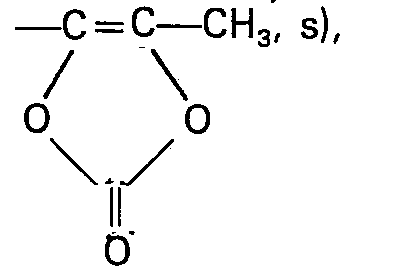
- 4.46 (1 H, proton at the 3-position, s),
- 4.96-5.10 (3H, proton at the 6-position and

- 5.41 (1H, proton at the 5-position, d),
- 2.24 (3H, CH3

- 6.97 and 7.38 (4H, aromatic protons of CH3

- Seven point five grams of 6-aminopenicillanic acid (5-methyl-2-oxo-1,3-dioxolen-4-yl)methyl ester p-toluenesulfonate were suspended in 300 ml of ethyl acetate. To the suspension was added at 0°C 200 ml of a 2% aqueous solution of sodium hydrogen carbonate cooled with ice. The mixture was vigorously stirred. The ethyl acetate layer was separated, washed with ice water, dried at 0°C over anhydrous magnesium sulfate, and concentrated under reduced pressure to give a pale yellow syrup. The syrup was dissolved in 70 ml of methylene chloride. The solution was cooled to 0°C, and 1.5 g of sodium hydrogen carbonate and 4 g of phenylacetyl chloride were added, and the mixture was stirred at 0°C for 5 hrs. Insoluble material was separated by filtration after the reaction, and the filtrate was washed with ice water, dried over anhydrous sodium sulfate, and concentrated under reduced pressure to give 5.9 g of benzylpenicillin (5-methyl-2-oxo-1,3-dioxolen-4-yl)methyl ester as pale yellow amorphous solid (yield 87%).
- IR (KBr):
- 1825 cm-1 (cyclic carbonate), 1785 cm-1 (β-lactam), 1750 cm-1 (ester), 1670 cm-1 (amide).
- NMR (CDCI3, 8 (ppm)):
- 1.37 and 1.42 (6H, methyl at the 2-position, s),
- 2.13 (3H,
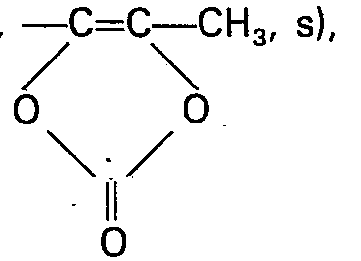
- 3.72 (2H, ―CH2

- 4.29 (1H. proton at the 3-position. s).
- 4.80 (2H,

- 5.36 (1 H, proton at the 6-position, m),
- 5.59 (1H, proton at the 5-position, d),
- 6.16 (1 H, -CONH-, d),
- 7.14 (5H, aromatic protons, s).
- Fifty milligrams of benzylpenicillin (5-methyl-2-oxo-1,3-dioxolen-4-yl)methyl ester were suspended in a 20% mouce serum diluted with pH 7.4 phosphate buffer and incubated at 37°C for 2 hours and then subjected to bioautography. It was found to be completely converted to benzylpenicillin.
Claims (3)

Priority Applications (2)
| Application Number | Priority Date | Filing Date | Title |
|---|---|---|---|
| DE8383102898T DE3176755D1 (en) | 1980-04-30 | 1981-04-29 | 1,3-dioxolen-2-one derivatives and process for production thereof |
| AT81103232T ATE10939T1 (en) | 1980-04-30 | 1981-04-29 | USE OF 1,3-DIOXOLEN-2-ONE DERIVATIVES. |
Applications Claiming Priority (2)
| Application Number | Priority Date | Filing Date | Title |
|---|---|---|---|
| JP55058510A JPS6019908B2 (en) | 1980-04-30 | 1980-04-30 | 1,3-dioxolen-2-one derivative |
| JP58510/80 | 1980-04-30 |
Related Child Applications (1)
| Application Number | Title | Priority Date | Filing Date |
|---|---|---|---|
| EP83102898.0 Division-Into | 1981-04-29 |
Publications (2)
| Publication Number | Publication Date |
|---|---|
| EP0039477A1 EP0039477A1 (en) | 1981-11-11 |
| EP0039477B1 true EP0039477B1 (en) | 1984-12-27 |
Family
ID=13086410
Family Applications (3)
| Application Number | Title | Priority Date | Filing Date |
|---|---|---|---|
| EP81103232A Expired EP0039477B1 (en) | 1980-04-30 | 1981-04-29 | Use of 1,3-dioxolen-2-one derivatives |
| EP87103766A Expired - Lifetime EP0237084B1 (en) | 1980-04-30 | 1981-04-29 | 4-bromomethyl-5-methyl-1,3-dioxolen-2-one, and a process for the production thereof |
| EP83102898A Expired EP0090344B1 (en) | 1980-04-30 | 1981-04-29 | 1,3-dioxolen-2-one derivatives and process for production thereof |
Family Applications After (2)
| Application Number | Title | Priority Date | Filing Date |
|---|---|---|---|
| EP87103766A Expired - Lifetime EP0237084B1 (en) | 1980-04-30 | 1981-04-29 | 4-bromomethyl-5-methyl-1,3-dioxolen-2-one, and a process for the production thereof |
| EP83102898A Expired EP0090344B1 (en) | 1980-04-30 | 1981-04-29 | 1,3-dioxolen-2-one derivatives and process for production thereof |
Country Status (7)
| Country | Link |
|---|---|
| US (1) | US4342693A (en) |
| EP (3) | EP0039477B1 (en) |
| JP (1) | JPS6019908B2 (en) |
| AT (3) | ATE59646T1 (en) |
| AU (1) | AU536686B2 (en) |
| CA (1) | CA1168251A (en) |
| DE (2) | DE3167908D1 (en) |
Families Citing this family (23)
| Publication number | Priority date | Publication date | Assignee | Title |
|---|---|---|---|---|
| US4479947A (en) * | 1981-07-13 | 1984-10-30 | Merck & Co., Inc. | Oral absorption enhancement of carboxylic acid pharmaceuticals using (5-alkyl-2-oxo-1,3-dioxolen-4-yl)methyl ester group |
| US4654331A (en) * | 1981-07-13 | 1987-03-31 | Merck & Co., Inc. | Oral absorption enhancement of carboxylic acid pharmaceuticals using (5-alkyl-2-oxo-1,3-dioxolen-4-yl)methyl ester group |
| GR76525B (en) * | 1981-07-13 | 1984-08-10 | Merck & Co Inc | |
| JPS5869876A (en) * | 1981-07-13 | 1983-04-26 | メルク・エンド・カムパニ−・インコ−ポレ−テツド | Oral absorption increase for carboxylic acid medicine using (5-alkyl-2-oxo-1,3-dioxolen- 4-yl)methyl ester group |
| JPS5874677A (en) * | 1981-10-30 | 1983-05-06 | Kanebo Ltd | Preparation of brominated 1,3-dioxolene-2-ones |
| JPS5921692A (en) * | 1982-07-29 | 1984-02-03 | Sankyo Co Ltd | Orally administrable penem compound and its preparation |
| US4434173A (en) | 1982-08-23 | 1984-02-28 | Pfizer Inc. | Bis-esters of 4,5-di(hydroxymethyl)-2-oxo-1,3-dioxole as antibacterial agents |
| US4555579A (en) * | 1983-03-24 | 1985-11-26 | E. R. Squibb & Sons, Inc. | Dioxolenylmethyl ester prodrugs of phosphinic acid ace inhibitors |
| JPS59212488A (en) * | 1983-05-18 | 1984-12-01 | Kyoto Yakuhin Kogyo Kk | Dioxole derivative |
| US4536393A (en) * | 1983-06-06 | 1985-08-20 | Pfizer Inc. | 6-(Aminomethyl)penicillanic acid 1,1-dioxide esters and intermediates therefor |
| JPS59231082A (en) * | 1983-06-14 | 1984-12-25 | Kanebo Ltd | 4-chloro-4-methyl-5-methylene-1,3-dioxolan-2-one |
| US4521533A (en) * | 1984-07-12 | 1985-06-04 | Pfizer Inc. | Salts of 6-alpha-(aminomethyl)penicillanic acid 1,1-dioxide esters and beta-lactam antibiotics |
| US4675186A (en) | 1985-04-18 | 1987-06-23 | Pfizer Inc. | 6-(1-acyl-1-hydroxymethyl)penicillanic acid derivatives |
| US4777267A (en) * | 1986-02-07 | 1988-10-11 | Kanebo Ltd. | 1,3-dioxol-2-one derivatives |
| US4985456A (en) * | 1986-08-07 | 1991-01-15 | Mikasa Seiyaku Co., Ltd. | 2-anilinophenylacetic acid derivative |
| ES2140393T3 (en) * | 1990-08-20 | 2000-03-01 | Suntory Ltd | PENEM COMPOUNDS. |
| ATE186053T1 (en) * | 1990-08-20 | 1999-11-15 | Suntory Ltd | ANTIBACTERIAL PENEM ESTER DERIVATIVES |
| US5616599A (en) * | 1991-02-21 | 1997-04-01 | Sankyo Company, Limited | Angiotensin II antagosist 1-biphenylmethylimidazole compounds and their therapeutic use |
| JP3501484B2 (en) * | 1992-12-17 | 2004-03-02 | 三共株式会社 | Biphenyl derivative |
| DE19920551A1 (en) * | 1999-05-05 | 2000-11-09 | Bayer Ag | Substituted benzimidazoles, their preparation and their use as agents against parasitic protozoa |
| WO2008059367A1 (en) * | 2006-11-14 | 2008-05-22 | Pfizer Products Inc. | Penem prodrugs |
| CN104230878A (en) * | 2014-09-26 | 2014-12-24 | 六安科瑞达新型材料有限公司 | Preparation method of 4-chloromethyl-5-methyl-1,3-dioxole-2-one |
| CN115772150A (en) * | 2022-11-10 | 2023-03-10 | 广州理文科技有限公司 | Preparation method of ethylene carbonate fluoro derivative |
Family Cites Families (1)
| Publication number | Priority date | Publication date | Assignee | Title |
|---|---|---|---|---|
| US3020290A (en) * | 1959-10-14 | 1962-02-06 | Jefferson Chem Co Inc | Preparation of unsaturated compounds |
-
1980
- 1980-04-30 JP JP55058510A patent/JPS6019908B2/en not_active Expired
-
1981
- 1981-04-27 US US06/257,564 patent/US4342693A/en not_active Expired - Lifetime
- 1981-04-28 CA CA000376391A patent/CA1168251A/en not_active Expired
- 1981-04-29 DE DE8181103232T patent/DE3167908D1/en not_active Expired
- 1981-04-29 AT AT87103766T patent/ATE59646T1/en not_active IP Right Cessation
- 1981-04-29 AT AT83102898T patent/ATE34572T1/en not_active IP Right Cessation
- 1981-04-29 EP EP81103232A patent/EP0039477B1/en not_active Expired
- 1981-04-29 AT AT81103232T patent/ATE10939T1/en not_active IP Right Cessation
- 1981-04-29 AU AU69988/81A patent/AU536686B2/en not_active Ceased
- 1981-04-29 DE DE8787103766T patent/DE3177239D1/en not_active Expired - Fee Related
- 1981-04-29 EP EP87103766A patent/EP0237084B1/en not_active Expired - Lifetime
- 1981-04-29 EP EP83102898A patent/EP0090344B1/en not_active Expired
Also Published As
| Publication number | Publication date |
|---|---|
| AU6998881A (en) | 1981-11-05 |
| DE3177239D1 (en) | 1991-02-07 |
| US4342693A (en) | 1982-08-03 |
| EP0090344B1 (en) | 1988-05-25 |
| CA1168251A (en) | 1984-05-29 |
| ATE34572T1 (en) | 1988-06-15 |
| EP0090344A1 (en) | 1983-10-05 |
| EP0039477A1 (en) | 1981-11-11 |
| ATE10939T1 (en) | 1985-01-15 |
| EP0237084A3 (en) | 1987-09-30 |
| EP0237084B1 (en) | 1991-01-02 |
| AU536686B2 (en) | 1984-05-17 |
| JPS5726684A (en) | 1982-02-12 |
| ATE59646T1 (en) | 1991-01-15 |
| JPS6019908B2 (en) | 1985-05-18 |
| EP0237084A2 (en) | 1987-09-16 |
| DE3167908D1 (en) | 1985-02-07 |
Similar Documents
| Publication | Publication Date | Title |
|---|---|---|
| EP0090344B1 (en) | 1,3-dioxolen-2-one derivatives and process for production thereof | |
| US4389408A (en) | Novel ampicillin esters and production thereof | |
| US4791135A (en) | Novel antimalarial dihydroartemisinin derivatives | |
| US3746751A (en) | 1-(3-chloro-4-cycloalkylphenyl)-cyclo-alkyl-1-carboxylic acids | |
| EP0380982A2 (en) | Process for preparing a naphthalene derivative and a synthetic intermediate thereof | |
| EP0078413B1 (en) | Process for producing brominated 1,3-dioxolen-2-ones | |
| FI75570C (en) | Process for the preparation of therapeutically useful 6- / D- (2-amino-2-phenylacetamido) / penicillanoyloxymethyl-1,1-dioxopenicillanoyloxymethylcarbonate. | |
| EP0433846A1 (en) | Process for the preparation of 2-acylamino-6-halogeno-purine from 2,9-diacylguanine | |
| US3442890A (en) | Substituted 3-benzazocin-16-ones | |
| JPH0476968B2 (en) | ||
| JPH0258271B2 (en) | ||
| Kraus et al. | Rearrangements of acyloxyfurans and thiophenes | |
| JP2005126340A (en) | Method for producing substituted pyridone compounds, raw material compound thereof and method for producing the same | |
| US4649213A (en) | Process for producing an α-aromatic group substituted alkanoic acid derivative | |
| US5001239A (en) | Formation of reissert compound of benzoyl benzimidazole | |
| JPS63126873A (en) | 4-bromomethyl-5-methyl-1,3-dioxolen-2-one | |
| US4508658A (en) | Pentahalophenyl ester of cyanoacetic acid derivatives | |
| KR890000376B1 (en) | Method for preparing novel alkanol ester derivatives of naproxen | |
| JPS626552B2 (en) | ||
| JPH0812658A (en) | Production of sydnones | |
| JPS5938954B2 (en) | Ampicillin ester and its manufacturing method | |
| Shibuya et al. | ROH+ CS | |
| JPH038357B2 (en) | ||
| JPS6143144A (en) | Production of 1-chloroalkyl carbonate | |
| IL31610A (en) | Benzazocine derivatives and processes for their preparation |
Legal Events
| Date | Code | Title | Description |
|---|---|---|---|
| PUAI | Public reference made under article 153(3) epc to a published international application that has entered the european phase |
Free format text: ORIGINAL CODE: 0009012 |
|
| AK | Designated contracting states |
Designated state(s): AT BE CH DE FR GB IT LI LU NL SE |
|
| 17P | Request for examination filed |
Effective date: 19820115 |
|
| ITF | It: translation for a ep patent filed | ||
| GRAA | (expected) grant |
Free format text: ORIGINAL CODE: 0009210 |
|
| AK | Designated contracting states |
Designated state(s): AT BE CH DE FR GB IT LI LU NL SE |
|
| REF | Corresponds to: |
Ref document number: 10939 Country of ref document: AT Date of ref document: 19850115 Kind code of ref document: T |
|
| REF | Corresponds to: |
Ref document number: 3167908 Country of ref document: DE Date of ref document: 19850207 |
|
| ET | Fr: translation filed | ||
| PLBE | No opposition filed within time limit |
Free format text: ORIGINAL CODE: 0009261 |
|
| STAA | Information on the status of an ep patent application or granted ep patent |
Free format text: STATUS: NO OPPOSITION FILED WITHIN TIME LIMIT |
|
| 26N | No opposition filed | ||
| ITTA | It: last paid annual fee | ||
| EPTA | Lu: last paid annual fee | ||
| EAL | Se: european patent in force in sweden |
Ref document number: 81103232.5 |
|
| PGFP | Annual fee paid to national office [announced via postgrant information from national office to epo] |
Ref country code: LU Payment date: 19960301 Year of fee payment: 16 |
|
| PGFP | Annual fee paid to national office [announced via postgrant information from national office to epo] |
Ref country code: SE Payment date: 19960314 Year of fee payment: 16 |
|
| PGFP | Annual fee paid to national office [announced via postgrant information from national office to epo] |
Ref country code: AT Payment date: 19960325 Year of fee payment: 16 |
|
| PGFP | Annual fee paid to national office [announced via postgrant information from national office to epo] |
Ref country code: FR Payment date: 19960415 Year of fee payment: 16 |
|
| PGFP | Annual fee paid to national office [announced via postgrant information from national office to epo] |
Ref country code: DE Payment date: 19960419 Year of fee payment: 16 |
|
| PGFP | Annual fee paid to national office [announced via postgrant information from national office to epo] |
Ref country code: GB Payment date: 19960422 Year of fee payment: 16 |
|
| PGFP | Annual fee paid to national office [announced via postgrant information from national office to epo] |
Ref country code: BE Payment date: 19960424 Year of fee payment: 16 |
|
| PGFP | Annual fee paid to national office [announced via postgrant information from national office to epo] |
Ref country code: NL Payment date: 19960430 Year of fee payment: 16 |
|
| PGFP | Annual fee paid to national office [announced via postgrant information from national office to epo] |
Ref country code: CH Payment date: 19960501 Year of fee payment: 16 |
|
| PG25 | Lapsed in a contracting state [announced via postgrant information from national office to epo] |
Ref country code: LU Free format text: LAPSE BECAUSE OF NON-PAYMENT OF DUE FEES Effective date: 19970429 Ref country code: GB Effective date: 19970429 Ref country code: AT Effective date: 19970429 |
|
| PG25 | Lapsed in a contracting state [announced via postgrant information from national office to epo] |
Ref country code: SE Effective date: 19970430 Ref country code: LI Free format text: LAPSE BECAUSE OF NON-PAYMENT OF DUE FEES Effective date: 19970430 Ref country code: CH Free format text: LAPSE BECAUSE OF NON-PAYMENT OF DUE FEES Effective date: 19970430 Ref country code: BE Effective date: 19970430 |
|
| BERE | Be: lapsed |
Owner name: KANEBO LTD Effective date: 19970430 |
|
| PG25 | Lapsed in a contracting state [announced via postgrant information from national office to epo] |
Ref country code: NL Effective date: 19971101 |
|
| REG | Reference to a national code |
Ref country code: CH Ref legal event code: PL |
|
| GBPC | Gb: european patent ceased through non-payment of renewal fee |
Effective date: 19970429 |
|
| PG25 | Lapsed in a contracting state [announced via postgrant information from national office to epo] |
Ref country code: FR Free format text: LAPSE BECAUSE OF NON-PAYMENT OF DUE FEES Effective date: 19971231 |
|
| PG25 | Lapsed in a contracting state [announced via postgrant information from national office to epo] |
Ref country code: DE Free format text: LAPSE BECAUSE OF NON-PAYMENT OF DUE FEES Effective date: 19980101 |
|
| NLV4 | Nl: lapsed or anulled due to non-payment of the annual fee |
Effective date: 19971101 |
|
| EUG | Se: european patent has lapsed |
Ref document number: 81103232.5 |
|
| REG | Reference to a national code |
Ref country code: FR Ref legal event code: ST |