EP0030848B1 - Pharmacologically active peptides, their preparation and pharmaceutical compositions containing them - Google Patents
Pharmacologically active peptides, their preparation and pharmaceutical compositions containing them Download PDFInfo
- Publication number
- EP0030848B1 EP0030848B1 EP80304476A EP80304476A EP0030848B1 EP 0030848 B1 EP0030848 B1 EP 0030848B1 EP 80304476 A EP80304476 A EP 80304476A EP 80304476 A EP80304476 A EP 80304476A EP 0030848 B1 EP0030848 B1 EP 0030848B1
- Authority
- EP
- European Patent Office
- Prior art keywords
- gly
- tyr
- phe
- ala
- met
- Prior art date
- Legal status (The legal status is an assumption and is not a legal conclusion. Google has not performed a legal analysis and makes no representation as to the accuracy of the status listed.)
- Expired
Links
- 239000008194 pharmaceutical composition Substances 0.000 title claims description 3
- 108090000765 processed proteins & peptides Proteins 0.000 title description 21
- 238000002360 preparation method Methods 0.000 title description 13
- 102000004196 processed proteins & peptides Human genes 0.000 title description 4
- 150000001875 compounds Chemical class 0.000 claims description 69
- -1 monosubstituted phenyl Chemical group 0.000 claims description 58
- 125000000217 alkyl group Chemical group 0.000 claims description 35
- 229910052739 hydrogen Inorganic materials 0.000 claims description 28
- 239000001257 hydrogen Substances 0.000 claims description 28
- 125000004435 hydrogen atom Chemical group [H]* 0.000 claims description 25
- 125000002496 methyl group Chemical group [H]C([H])([H])* 0.000 claims description 21
- 238000000034 method Methods 0.000 claims description 20
- 239000002253 acid Substances 0.000 claims description 17
- 239000011347 resin Substances 0.000 claims description 17
- 229920005989 resin Polymers 0.000 claims description 17
- 150000003839 salts Chemical class 0.000 claims description 16
- 230000000903 blocking effect Effects 0.000 claims description 13
- DTQVDTLACAAQTR-UHFFFAOYSA-N Trifluoroacetic acid Chemical group OC(=O)C(F)(F)F DTQVDTLACAAQTR-UHFFFAOYSA-N 0.000 claims description 11
- 125000000539 amino acid group Chemical group 0.000 claims description 11
- 125000006273 (C1-C3) alkyl group Chemical group 0.000 claims description 10
- 125000003903 2-propenyl group Chemical group [H]C([*])([H])C([H])=C([H])[H] 0.000 claims description 7
- 125000004186 cyclopropylmethyl group Chemical group [H]C([H])(*)C1([H])C([H])([H])C1([H])[H] 0.000 claims description 7
- 125000002924 primary amino group Chemical group [H]N([H])* 0.000 claims description 7
- 125000001424 substituent group Chemical group 0.000 claims description 7
- 125000002768 hydroxyalkyl group Chemical group 0.000 claims description 6
- 239000003795 chemical substances by application Substances 0.000 claims description 5
- 125000002887 hydroxy group Chemical group [H]O* 0.000 claims description 5
- 125000004372 methylthioethyl group Chemical group [H]C([H])([H])SC([H])([H])C([H])([H])* 0.000 claims description 5
- 231100000252 nontoxic Toxicity 0.000 claims description 5
- 230000003000 nontoxic effect Effects 0.000 claims description 5
- 125000001997 phenyl group Chemical group [H]C1=C([H])C([H])=C(*)C([H])=C1[H] 0.000 claims description 5
- GSYTVXOARWSQSV-BYPYZUCNSA-N L-methioninamide Chemical compound CSCC[C@H](N)C(N)=O GSYTVXOARWSQSV-BYPYZUCNSA-N 0.000 claims description 4
- 239000004480 active ingredient Substances 0.000 claims description 4
- 239000002243 precursor Substances 0.000 claims description 4
- 125000006274 (C1-C3)alkoxy group Chemical group 0.000 claims description 3
- 125000000449 nitro group Chemical group [O-][N+](*)=O 0.000 claims description 3
- 125000002023 trifluoromethyl group Chemical group FC(F)(F)* 0.000 claims description 3
- 239000000546 pharmaceutical excipient Substances 0.000 claims description 2
- OBSIQMZKFXFYLV-QMMMGPOBSA-N L-phenylalanine amide Chemical compound NC(=O)[C@@H](N)CC1=CC=CC=C1 OBSIQMZKFXFYLV-QMMMGPOBSA-N 0.000 claims 1
- 125000001475 halogen functional group Chemical group 0.000 claims 1
- 238000004519 manufacturing process Methods 0.000 claims 1
- COLNVLDHVKWLRT-QMMMGPOBSA-N L-phenylalanine Chemical compound OC(=O)[C@@H](N)CC1=CC=CC=C1 COLNVLDHVKWLRT-QMMMGPOBSA-N 0.000 description 63
- QTBSBXVTEAMEQO-UHFFFAOYSA-N Acetic acid Chemical compound CC(O)=O QTBSBXVTEAMEQO-UHFFFAOYSA-N 0.000 description 38
- YMWUJEATGCHHMB-UHFFFAOYSA-N Dichloromethane Chemical compound ClCCl YMWUJEATGCHHMB-UHFFFAOYSA-N 0.000 description 38
- UKAUYVFTDYCKQA-UHFFFAOYSA-N homoserine Chemical compound OC(=O)C(N)CCO UKAUYVFTDYCKQA-UHFFFAOYSA-N 0.000 description 36
- 125000000956 methoxy group Chemical group [H]C([H])([H])O* 0.000 description 30
- 229940024606 amino acid Drugs 0.000 description 28
- 235000001014 amino acid Nutrition 0.000 description 27
- RTZKZFJDLAIYFH-UHFFFAOYSA-N ether Substances CCOCC RTZKZFJDLAIYFH-UHFFFAOYSA-N 0.000 description 25
- 150000001413 amino acids Chemical class 0.000 description 23
- 239000000203 mixture Substances 0.000 description 22
- OKKJLVBELUTLKV-UHFFFAOYSA-N Methanol Chemical compound OC OKKJLVBELUTLKV-UHFFFAOYSA-N 0.000 description 20
- 125000003178 carboxy group Chemical group [H]OC(*)=O 0.000 description 18
- ZMXDDKWLCZADIW-UHFFFAOYSA-N N,N-Dimethylformamide Chemical compound CN(C)C=O ZMXDDKWLCZADIW-UHFFFAOYSA-N 0.000 description 16
- XEKOWRVHYACXOJ-UHFFFAOYSA-N Ethyl acetate Chemical compound CCOC(C)=O XEKOWRVHYACXOJ-UHFFFAOYSA-N 0.000 description 15
- QOSSAOTZNIDXMA-UHFFFAOYSA-N Dicylcohexylcarbodiimide Chemical compound C1CCCCC1N=C=NC1CCCCC1 QOSSAOTZNIDXMA-UHFFFAOYSA-N 0.000 description 14
- 150000001408 amides Chemical class 0.000 description 13
- 238000006243 chemical reaction Methods 0.000 description 13
- 125000000250 methylamino group Chemical group [H]N(*)C([H])([H])[H] 0.000 description 13
- 239000000047 product Substances 0.000 description 13
- 239000000243 solution Substances 0.000 description 13
- 229960000583 acetic acid Drugs 0.000 description 12
- 238000004458 analytical method Methods 0.000 description 12
- 230000000202 analgesic effect Effects 0.000 description 11
- 238000010168 coupling process Methods 0.000 description 11
- 125000001360 methionine group Chemical group N[C@@H](CCSC)C(=O)* 0.000 description 11
- JGFZNNIVVJXRND-UHFFFAOYSA-N N,N-Diisopropylethylamine (DIPEA) Chemical compound CCN(C(C)C)C(C)C JGFZNNIVVJXRND-UHFFFAOYSA-N 0.000 description 10
- RDOXTESZEPMUJZ-UHFFFAOYSA-N anisole Chemical compound COC1=CC=CC=C1 RDOXTESZEPMUJZ-UHFFFAOYSA-N 0.000 description 10
- 150000002148 esters Chemical class 0.000 description 10
- 238000012360 testing method Methods 0.000 description 10
- 238000005859 coupling reaction Methods 0.000 description 9
- 125000001495 ethyl group Chemical group [H]C([H])([H])C([H])([H])* 0.000 description 9
- ASOKPJOREAFHNY-UHFFFAOYSA-N 1-Hydroxybenzotriazole Chemical compound C1=CC=C2N(O)N=NC2=C1 ASOKPJOREAFHNY-UHFFFAOYSA-N 0.000 description 8
- VEXZGXHMUGYJMC-UHFFFAOYSA-N Hydrochloric acid Chemical compound Cl VEXZGXHMUGYJMC-UHFFFAOYSA-N 0.000 description 8
- 210000004899 c-terminal region Anatomy 0.000 description 8
- 125000001449 isopropyl group Chemical group [H]C([H])([H])C([H])(*)C([H])([H])[H] 0.000 description 8
- 230000037396 body weight Effects 0.000 description 7
- 230000008878 coupling Effects 0.000 description 7
- 125000004123 n-propyl group Chemical group [H]C([H])([H])C([H])([H])C([H])([H])* 0.000 description 7
- 230000006340 racemization Effects 0.000 description 7
- URLZCHNOLZSCCA-VABKMULXSA-N Leu-enkephalin Chemical compound C([C@@H](C(=O)N[C@@H](CC(C)C)C(O)=O)NC(=O)CNC(=O)CNC(=O)[C@@H](N)CC=1C=CC(O)=CC=1)C1=CC=CC=C1 URLZCHNOLZSCCA-VABKMULXSA-N 0.000 description 6
- 241000699666 Mus <mouse, genus> Species 0.000 description 6
- 102000007079 Peptide Fragments Human genes 0.000 description 6
- 108010033276 Peptide Fragments Proteins 0.000 description 6
- HEMHJVSKTPXQMS-UHFFFAOYSA-M Sodium hydroxide Chemical compound [OH-].[Na+] HEMHJVSKTPXQMS-UHFFFAOYSA-M 0.000 description 6
- 238000003776 cleavage reaction Methods 0.000 description 6
- 125000000959 isobutyl group Chemical group [H]C([H])([H])C([H])(C([H])([H])[H])C([H])([H])* 0.000 description 6
- 150000003138 primary alcohols Chemical class 0.000 description 6
- 125000006239 protecting group Chemical group 0.000 description 6
- 230000007017 scission Effects 0.000 description 6
- AQRLNPVMDITEJU-UHFFFAOYSA-N triethylsilane Chemical compound CC[SiH](CC)CC AQRLNPVMDITEJU-UHFFFAOYSA-N 0.000 description 6
- 125000001493 tyrosinyl group Chemical group [H]OC1=C([H])C([H])=C(C([H])=C1[H])C([H])([H])C([H])(N([H])[H])C(*)=O 0.000 description 6
- MTCFGRXMJLQNBG-REOHCLBHSA-N (2S)-2-Amino-3-hydroxypropansäure Chemical compound OC[C@H](N)C(O)=O MTCFGRXMJLQNBG-REOHCLBHSA-N 0.000 description 5
- SNDPXSYFESPGGJ-UHFFFAOYSA-N 2-aminopentanoic acid Chemical compound CCCC(N)C(O)=O SNDPXSYFESPGGJ-UHFFFAOYSA-N 0.000 description 5
- DHMQDGOQFOQNFH-UHFFFAOYSA-N Glycine Chemical compound NCC(O)=O DHMQDGOQFOQNFH-UHFFFAOYSA-N 0.000 description 5
- KZSNJWFQEVHDMF-UHFFFAOYSA-N Valine Chemical compound CC(C)C(N)C(O)=O KZSNJWFQEVHDMF-UHFFFAOYSA-N 0.000 description 5
- 159000000021 acetate salts Chemical class 0.000 description 5
- 239000004615 ingredient Substances 0.000 description 5
- UZKWTJUDCOPSNM-UHFFFAOYSA-N methoxybenzene Substances CCCCOC=C UZKWTJUDCOPSNM-UHFFFAOYSA-N 0.000 description 5
- 230000004048 modification Effects 0.000 description 5
- 238000012986 modification Methods 0.000 description 5
- 125000004108 n-butyl group Chemical group [H]C([H])([H])C([H])([H])C([H])([H])C([H])([H])* 0.000 description 5
- 125000002914 sec-butyl group Chemical group [H]C([H])([H])C([H])([H])C([H])(*)C([H])([H])[H] 0.000 description 5
- 239000000725 suspension Substances 0.000 description 5
- JOXIMZWYDAKGHI-UHFFFAOYSA-N toluene-4-sulfonic acid Chemical compound CC1=CC=C(S(O)(=O)=O)C=C1 JOXIMZWYDAKGHI-UHFFFAOYSA-N 0.000 description 5
- XLYOFNOQVPJJNP-UHFFFAOYSA-N water Substances O XLYOFNOQVPJJNP-UHFFFAOYSA-N 0.000 description 5
- ADFXKUOMJKEIND-UHFFFAOYSA-N 1,3-dicyclohexylurea Chemical compound C1CCCCC1NC(=O)NC1CCCCC1 ADFXKUOMJKEIND-UHFFFAOYSA-N 0.000 description 4
- YOETUEMZNOLGDB-UHFFFAOYSA-N 2-methylpropyl carbonochloridate Chemical compound CC(C)COC(Cl)=O YOETUEMZNOLGDB-UHFFFAOYSA-N 0.000 description 4
- 108010092674 Enkephalins Proteins 0.000 description 4
- LFQSCWFLJHTTHZ-UHFFFAOYSA-N Ethanol Chemical compound CCO LFQSCWFLJHTTHZ-UHFFFAOYSA-N 0.000 description 4
- ROHFNLRQFUQHCH-YFKPBYRVSA-N L-leucine Chemical compound CC(C)C[C@H](N)C(O)=O ROHFNLRQFUQHCH-YFKPBYRVSA-N 0.000 description 4
- 241000699670 Mus sp. Species 0.000 description 4
- WYURNTSHIVDZCO-UHFFFAOYSA-N Tetrahydrofuran Chemical compound C1CCOC1 WYURNTSHIVDZCO-UHFFFAOYSA-N 0.000 description 4
- 230000015572 biosynthetic process Effects 0.000 description 4
- 230000000694 effects Effects 0.000 description 4
- ARJXIGOIOGJAKR-LURJTMIESA-N ethyl L-methioninate Chemical compound CCOC(=O)[C@@H](N)CCSC ARJXIGOIOGJAKR-LURJTMIESA-N 0.000 description 4
- 125000005843 halogen group Chemical group 0.000 description 4
- 229930182817 methionine Natural products 0.000 description 4
- 125000004092 methylthiomethyl group Chemical group [H]C([H])([H])SC([H])([H])* 0.000 description 4
- 125000006503 p-nitrobenzyl group Chemical group [H]C1=C([H])C(=C([H])C([H])=C1[N+]([O-])=O)C([H])([H])* 0.000 description 4
- 238000010647 peptide synthesis reaction Methods 0.000 description 4
- 239000002244 precipitate Substances 0.000 description 4
- 239000000126 substance Substances 0.000 description 4
- 238000003786 synthesis reaction Methods 0.000 description 4
- WEVYAHXRMPXWCK-UHFFFAOYSA-N Acetonitrile Chemical compound CC#N WEVYAHXRMPXWCK-UHFFFAOYSA-N 0.000 description 3
- QGZKDVFQNNGYKY-UHFFFAOYSA-N Ammonia Chemical compound N QGZKDVFQNNGYKY-UHFFFAOYSA-N 0.000 description 3
- 239000004471 Glycine Substances 0.000 description 3
- MBZXSJWDBIIBLL-GDVGLLTNSA-N Homoisoleucine Chemical compound CCC(C)C[C@H](N)C(O)=O MBZXSJWDBIIBLL-GDVGLLTNSA-N 0.000 description 3
- OAKJQQAXSVQMHS-UHFFFAOYSA-N Hydrazine Chemical compound NN OAKJQQAXSVQMHS-UHFFFAOYSA-N 0.000 description 3
- UFHFLCQGNIYNRP-UHFFFAOYSA-N Hydrogen Chemical compound [H][H] UFHFLCQGNIYNRP-UHFFFAOYSA-N 0.000 description 3
- AGPKZVBTJJNPAG-WHFBIAKZSA-N L-isoleucine Chemical compound CC[C@H](C)[C@H](N)C(O)=O AGPKZVBTJJNPAG-WHFBIAKZSA-N 0.000 description 3
- FFEARJCKVFRZRR-BYPYZUCNSA-N L-methionine Chemical compound CSCC[C@H](N)C(O)=O FFEARJCKVFRZRR-BYPYZUCNSA-N 0.000 description 3
- QEFRNWWLZKMPFJ-YGVKFDHGSA-N L-methionine S-oxide Chemical compound CS(=O)CC[C@H](N)C(O)=O QEFRNWWLZKMPFJ-YGVKFDHGSA-N 0.000 description 3
- LRQKBLKVPFOOQJ-YFKPBYRVSA-N L-norleucine Chemical compound CCCC[C@H]([NH3+])C([O-])=O LRQKBLKVPFOOQJ-YFKPBYRVSA-N 0.000 description 3
- WMFOQBRAJBCJND-UHFFFAOYSA-M Lithium hydroxide Chemical compound [Li+].[OH-] WMFOQBRAJBCJND-UHFFFAOYSA-M 0.000 description 3
- CSNNHWWHGAXBCP-UHFFFAOYSA-L Magnesium sulfate Chemical compound [Mg+2].[O-][S+2]([O-])([O-])[O-] CSNNHWWHGAXBCP-UHFFFAOYSA-L 0.000 description 3
- SJRJJKPEHAURKC-UHFFFAOYSA-N N-Methylmorpholine Chemical compound CN1CCOCC1 SJRJJKPEHAURKC-UHFFFAOYSA-N 0.000 description 3
- KWYUFKZDYYNOTN-UHFFFAOYSA-M Potassium hydroxide Chemical compound [OH-].[K+] KWYUFKZDYYNOTN-UHFFFAOYSA-M 0.000 description 3
- FAPWRFPIFSIZLT-UHFFFAOYSA-M Sodium chloride Chemical compound [Na+].[Cl-] FAPWRFPIFSIZLT-UHFFFAOYSA-M 0.000 description 3
- 230000004913 activation Effects 0.000 description 3
- 229910052925 anhydrite Inorganic materials 0.000 description 3
- SRSXLGNVWSONIS-UHFFFAOYSA-N benzenesulfonic acid Chemical compound OS(=O)(=O)C1=CC=CC=C1 SRSXLGNVWSONIS-UHFFFAOYSA-N 0.000 description 3
- 125000001584 benzyloxycarbonyl group Chemical group C(=O)(OCC1=CC=CC=C1)* 0.000 description 3
- 238000001035 drying Methods 0.000 description 3
- 239000012467 final product Substances 0.000 description 3
- 238000007327 hydrogenolysis reaction Methods 0.000 description 3
- 239000002609 medium Substances 0.000 description 3
- UYWQUFXKFGHYNT-UHFFFAOYSA-N phenylmethyl ester of formic acid Natural products O=COCC1=CC=CC=C1 UYWQUFXKFGHYNT-UHFFFAOYSA-N 0.000 description 3
- 238000007127 saponification reaction Methods 0.000 description 3
- 150000003334 secondary amides Chemical class 0.000 description 3
- 150000003462 sulfoxides Chemical class 0.000 description 3
- 125000004066 1-hydroxyethyl group Chemical group [H]OC([H])([*])C([H])([H])[H] 0.000 description 2
- 125000000453 2,2,2-trichloroethyl group Chemical group [H]C([H])(*)C(Cl)(Cl)Cl 0.000 description 2
- BFSVOASYOCHEOV-UHFFFAOYSA-N 2-diethylaminoethanol Chemical compound CCN(CC)CCO BFSVOASYOCHEOV-UHFFFAOYSA-N 0.000 description 2
- 125000000954 2-hydroxyethyl group Chemical group [H]C([*])([H])C([H])([H])O[H] 0.000 description 2
- 125000004493 2-methylbut-1-yl group Chemical group CC(C*)CC 0.000 description 2
- USFZMSVCRYTOJT-UHFFFAOYSA-N Ammonium acetate Chemical compound N.CC(O)=O USFZMSVCRYTOJT-UHFFFAOYSA-N 0.000 description 2
- 239000005695 Ammonium acetate Substances 0.000 description 2
- 125000001433 C-terminal amino-acid group Chemical group 0.000 description 2
- MTCFGRXMJLQNBG-UWTATZPHSA-N D-Serine Chemical compound OC[C@@H](N)C(O)=O MTCFGRXMJLQNBG-UWTATZPHSA-N 0.000 description 2
- QNAYBMKLOCPYGJ-UWTATZPHSA-N D-alanine Chemical compound C[C@@H](N)C(O)=O QNAYBMKLOCPYGJ-UWTATZPHSA-N 0.000 description 2
- QNAYBMKLOCPYGJ-UHFFFAOYSA-N D-alpha-Ala Natural products CC([NH3+])C([O-])=O QNAYBMKLOCPYGJ-UHFFFAOYSA-N 0.000 description 2
- 150000008574 D-amino acids Chemical group 0.000 description 2
- 108010016626 Dipeptides Proteins 0.000 description 2
- QUSNBJAOOMFDIB-UHFFFAOYSA-N Ethylamine Chemical compound CCN QUSNBJAOOMFDIB-UHFFFAOYSA-N 0.000 description 2
- WQZGKKKJIJFFOK-GASJEMHNSA-N Glucose Natural products OC[C@H]1OC(O)[C@H](O)[C@@H](O)[C@@H]1O WQZGKKKJIJFFOK-GASJEMHNSA-N 0.000 description 2
- CPELXLSAUQHCOX-UHFFFAOYSA-N Hydrogen bromide Chemical compound Br CPELXLSAUQHCOX-UHFFFAOYSA-N 0.000 description 2
- QEFRNWWLZKMPFJ-UHFFFAOYSA-N L-methionine sulphoxide Natural products CS(=O)CCC(N)C(O)=O QEFRNWWLZKMPFJ-UHFFFAOYSA-N 0.000 description 2
- OUYCCCASQSFEME-QMMMGPOBSA-N L-tyrosine Chemical compound OC(=O)[C@@H](N)CC1=CC=C(O)C=C1 OUYCCCASQSFEME-QMMMGPOBSA-N 0.000 description 2
- ROHFNLRQFUQHCH-UHFFFAOYSA-N Leucine Natural products CC(C)CC(N)C(O)=O ROHFNLRQFUQHCH-UHFFFAOYSA-N 0.000 description 2
- 108010042237 Methionine Enkephalin Proteins 0.000 description 2
- BAVYZALUXZFZLV-UHFFFAOYSA-N Methylamine Chemical compound NC BAVYZALUXZFZLV-UHFFFAOYSA-N 0.000 description 2
- KDLHZDBZIXYQEI-UHFFFAOYSA-N Palladium Chemical compound [Pd] KDLHZDBZIXYQEI-UHFFFAOYSA-N 0.000 description 2
- ULXKXLZEOGLCRJ-BYPYZUCNSA-N S-ethyl-L-cysteine zwitterion Chemical compound CCSC[C@H](N)C(O)=O ULXKXLZEOGLCRJ-BYPYZUCNSA-N 0.000 description 2
- IDIDJDIHTAOVLG-VKHMYHEASA-N S-methylcysteine Chemical compound CSC[C@H](N)C(O)=O IDIDJDIHTAOVLG-VKHMYHEASA-N 0.000 description 2
- 150000007513 acids Chemical class 0.000 description 2
- 230000003213 activating effect Effects 0.000 description 2
- 235000004279 alanine Nutrition 0.000 description 2
- 150000003862 amino acid derivatives Chemical class 0.000 description 2
- 235000019257 ammonium acetate Nutrition 0.000 description 2
- 229940043376 ammonium acetate Drugs 0.000 description 2
- 150000008064 anhydrides Chemical class 0.000 description 2
- 229940092714 benzenesulfonic acid Drugs 0.000 description 2
- 125000001797 benzyl group Chemical group [H]C1=C([H])C([H])=C(C([H])=C1[H])C([H])([H])* 0.000 description 2
- 239000000872 buffer Substances 0.000 description 2
- OSGAYBCDTDRGGQ-UHFFFAOYSA-L calcium sulfate Chemical compound [Ca+2].[O-]S([O-])(=O)=O OSGAYBCDTDRGGQ-UHFFFAOYSA-L 0.000 description 2
- 230000003197 catalytic effect Effects 0.000 description 2
- 238000011097 chromatography purification Methods 0.000 description 2
- 238000001212 derivatisation Methods 0.000 description 2
- 239000008121 dextrose Substances 0.000 description 2
- XBDQKXXYIPTUBI-UHFFFAOYSA-N dimethylselenoniopropionate Natural products CCC(O)=O XBDQKXXYIPTUBI-UHFFFAOYSA-N 0.000 description 2
- MGHPNCMVUAKAIE-UHFFFAOYSA-N diphenylmethanamine Chemical compound C=1C=CC=CC=1C(N)C1=CC=CC=C1 MGHPNCMVUAKAIE-UHFFFAOYSA-N 0.000 description 2
- 125000005448 ethoxyethyl group Chemical group [H]C([H])([H])C([H])([H])OC([H])([H])C([H])([H])* 0.000 description 2
- 125000005745 ethoxymethyl group Chemical group [H]C([H])([H])C([H])([H])OC([H])([H])* 0.000 description 2
- 239000002024 ethyl acetate extract Substances 0.000 description 2
- 125000006351 ethylthiomethyl group Chemical group [H]C([H])([H])C([H])([H])SC([H])([H])* 0.000 description 2
- 239000000706 filtrate Substances 0.000 description 2
- 239000008187 granular material Substances 0.000 description 2
- 125000004029 hydroxymethyl group Chemical group [H]OC([H])([H])* 0.000 description 2
- 238000007912 intraperitoneal administration Methods 0.000 description 2
- 229960000310 isoleucine Drugs 0.000 description 2
- AGPKZVBTJJNPAG-UHFFFAOYSA-N isoleucine Natural products CCC(C)C(N)C(O)=O AGPKZVBTJJNPAG-UHFFFAOYSA-N 0.000 description 2
- 125000001972 isopentyl group Chemical group [H]C([H])([H])C([H])(C([H])([H])[H])C([H])([H])C([H])([H])* 0.000 description 2
- KWGKDLIKAYFUFQ-UHFFFAOYSA-M lithium chloride Chemical compound [Li+].[Cl-] KWGKDLIKAYFUFQ-UHFFFAOYSA-M 0.000 description 2
- 239000000314 lubricant Substances 0.000 description 2
- 239000000463 material Substances 0.000 description 2
- BDAGIHXWWSANSR-UHFFFAOYSA-N methanoic acid Natural products OC=O BDAGIHXWWSANSR-UHFFFAOYSA-N 0.000 description 2
- 125000004184 methoxymethyl group Chemical group [H]C([H])([H])OC([H])([H])* 0.000 description 2
- 150000004702 methyl esters Chemical class 0.000 description 2
- 125000000740 n-pentyl group Chemical group [H]C([H])([H])C([H])([H])C([H])([H])C([H])([H])C([H])([H])* 0.000 description 2
- PSZYNBSKGUBXEH-UHFFFAOYSA-N naphthalene-1-sulfonic acid Chemical compound C1=CC=C2C(S(=O)(=O)O)=CC=CC2=C1 PSZYNBSKGUBXEH-UHFFFAOYSA-N 0.000 description 2
- 125000001971 neopentyl group Chemical group [H]C([*])([H])C(C([H])([H])[H])(C([H])([H])[H])C([H])([H])[H] 0.000 description 2
- 239000012071 phase Substances 0.000 description 2
- 229960005190 phenylalanine Drugs 0.000 description 2
- 239000000843 powder Substances 0.000 description 2
- 150000003140 primary amides Chemical class 0.000 description 2
- 150000003141 primary amines Chemical class 0.000 description 2
- WGYKZJWCGVVSQN-UHFFFAOYSA-N propylamine Chemical compound CCCN WGYKZJWCGVVSQN-UHFFFAOYSA-N 0.000 description 2
- 239000011541 reaction mixture Substances 0.000 description 2
- 230000000717 retained effect Effects 0.000 description 2
- 239000007787 solid Substances 0.000 description 2
- 238000010532 solid phase synthesis reaction Methods 0.000 description 2
- 238000007920 subcutaneous administration Methods 0.000 description 2
- 238000006467 substitution reaction Methods 0.000 description 2
- KDYFGRWQOYBRFD-UHFFFAOYSA-N succinic acid Chemical compound OC(=O)CCC(O)=O KDYFGRWQOYBRFD-UHFFFAOYSA-N 0.000 description 2
- YLQBMQCUIZJEEH-UHFFFAOYSA-N tetrahydrofuran Natural products C=1C=COC=1 YLQBMQCUIZJEEH-UHFFFAOYSA-N 0.000 description 2
- 229960004441 tyrosine Drugs 0.000 description 2
- 239000004474 valine Substances 0.000 description 2
- HFVMEOPYDLEHBR-UHFFFAOYSA-N (2-fluorophenyl)-phenylmethanol Chemical compound C=1C=CC=C(F)C=1C(O)C1=CC=CC=C1 HFVMEOPYDLEHBR-UHFFFAOYSA-N 0.000 description 1
- QVHJQCGUWFKTSE-RXMQYKEDSA-N (2r)-2-[(2-methylpropan-2-yl)oxycarbonylamino]propanoic acid Chemical compound OC(=O)[C@@H](C)NC(=O)OC(C)(C)C QVHJQCGUWFKTSE-RXMQYKEDSA-N 0.000 description 1
- WNNNWFKQCKFSDK-SCSAIBSYSA-N (2r)-2-azaniumylpent-4-enoate Chemical compound [O-]C(=O)[C@H]([NH3+])CC=C WNNNWFKQCKFSDK-SCSAIBSYSA-N 0.000 description 1
- TZADAWVLFGIAKY-QMMMGPOBSA-N (2s)-2-amino-2-(4-methoxyphenyl)acetamide Chemical compound COC1=CC=C([C@H](N)C(N)=O)C=C1 TZADAWVLFGIAKY-QMMMGPOBSA-N 0.000 description 1
- YCSFMOVBARTLBW-YFKPBYRVSA-N (2s)-2-amino-4-ethoxybutanoic acid Chemical compound CCOCC[C@H](N)C(O)=O YCSFMOVBARTLBW-YFKPBYRVSA-N 0.000 description 1
- AFGCRUGTZPDWSF-BYPYZUCNSA-N (2s)-2-azaniumyl-3-ethoxypropanoate Chemical compound CCOC[C@H](N)C(O)=O AFGCRUGTZPDWSF-BYPYZUCNSA-N 0.000 description 1
- KFHRMMHGGBCRIV-BYPYZUCNSA-N (2s)-2-azaniumyl-4-methoxybutanoate Chemical compound COCC[C@H](N)C(O)=O KFHRMMHGGBCRIV-BYPYZUCNSA-N 0.000 description 1
- FMUMEWVNYMUECA-LURJTMIESA-N (2s)-2-azaniumyl-5-methylhexanoate Chemical compound CC(C)CC[C@H](N)C(O)=O FMUMEWVNYMUECA-LURJTMIESA-N 0.000 description 1
- CNBUSIJNWNXLQQ-NSHDSACASA-N (2s)-3-(4-hydroxyphenyl)-2-[(2-methylpropan-2-yl)oxycarbonylamino]propanoic acid Chemical compound CC(C)(C)OC(=O)N[C@H](C(O)=O)CC1=CC=C(O)C=C1 CNBUSIJNWNXLQQ-NSHDSACASA-N 0.000 description 1
- NWUYHJFMYQTDRP-UHFFFAOYSA-N 1,2-bis(ethenyl)benzene;1-ethenyl-2-ethylbenzene;styrene Chemical compound C=CC1=CC=CC=C1.CCC1=CC=CC=C1C=C.C=CC1=CC=CC=C1C=C NWUYHJFMYQTDRP-UHFFFAOYSA-N 0.000 description 1
- RQEUFEKYXDPUSK-UHFFFAOYSA-N 1-phenylethylamine Chemical compound CC(N)C1=CC=CC=C1 RQEUFEKYXDPUSK-UHFFFAOYSA-N 0.000 description 1
- XEZNGIUYQVAUSS-UHFFFAOYSA-N 18-crown-6 Chemical compound C1COCCOCCOCCOCCOCCO1 XEZNGIUYQVAUSS-UHFFFAOYSA-N 0.000 description 1
- JVSFQJZRHXAUGT-UHFFFAOYSA-N 2,2-dimethylpropanoyl chloride Chemical compound CC(C)(C)C(Cl)=O JVSFQJZRHXAUGT-UHFFFAOYSA-N 0.000 description 1
- ITYQPPZZOYSACT-UHFFFAOYSA-N 2-(2,2-dimethylpropylamino)acetic acid Chemical compound CC(C)(C)CNCC(O)=O ITYQPPZZOYSACT-UHFFFAOYSA-N 0.000 description 1
- JRUKDUAEXGBAKC-UHFFFAOYSA-N 2-(4-methoxyphenyl)-2-[(2-methylpropan-2-yl)oxycarbonylamino]acetic acid Chemical compound COC1=CC=C(C(NC(=O)OC(C)(C)C)C(O)=O)C=C1 JRUKDUAEXGBAKC-UHFFFAOYSA-N 0.000 description 1
- VRPJIFMKZZEXLR-UHFFFAOYSA-N 2-[(2-methylpropan-2-yl)oxycarbonylamino]acetic acid Chemical compound CC(C)(C)OC(=O)NCC(O)=O VRPJIFMKZZEXLR-UHFFFAOYSA-N 0.000 description 1
- NGNBDVOYPDDBFK-UHFFFAOYSA-N 2-[2,4-di(pentan-2-yl)phenoxy]acetyl chloride Chemical compound CCCC(C)C1=CC=C(OCC(Cl)=O)C(C(C)CCC)=C1 NGNBDVOYPDDBFK-UHFFFAOYSA-N 0.000 description 1
- WFIYPADYPQQLNN-UHFFFAOYSA-N 2-[2-(4-bromopyrazol-1-yl)ethyl]isoindole-1,3-dione Chemical compound C1=C(Br)C=NN1CCN1C(=O)C2=CC=CC=C2C1=O WFIYPADYPQQLNN-UHFFFAOYSA-N 0.000 description 1
- YVOOPGWEIRIUOX-UHFFFAOYSA-N 2-azanyl-3-sulfanyl-propanoic acid Chemical compound SCC(N)C(O)=O.SCC(N)C(O)=O YVOOPGWEIRIUOX-UHFFFAOYSA-N 0.000 description 1
- 125000004182 2-chlorophenyl group Chemical group [H]C1=C([H])C(Cl)=C(*)C([H])=C1[H] 0.000 description 1
- BMYNFMYTOJXKLE-UHFFFAOYSA-N 3-azaniumyl-2-hydroxypropanoate Chemical compound NCC(O)C(O)=O BMYNFMYTOJXKLE-UHFFFAOYSA-N 0.000 description 1
- 125000006275 3-bromophenyl group Chemical group [H]C1=C([H])C(Br)=C([H])C(*)=C1[H] 0.000 description 1
- OSWFIVFLDKOXQC-UHFFFAOYSA-N 4-(3-methoxyphenyl)aniline Chemical compound COC1=CC=CC(C=2C=CC(N)=CC=2)=C1 OSWFIVFLDKOXQC-UHFFFAOYSA-N 0.000 description 1
- QCQCHGYLTSGIGX-GHXANHINSA-N 4-[[(3ar,5ar,5br,7ar,9s,11ar,11br,13as)-5a,5b,8,8,11a-pentamethyl-3a-[(5-methylpyridine-3-carbonyl)amino]-2-oxo-1-propan-2-yl-4,5,6,7,7a,9,10,11,11b,12,13,13a-dodecahydro-3h-cyclopenta[a]chrysen-9-yl]oxy]-2,2-dimethyl-4-oxobutanoic acid Chemical compound N([C@@]12CC[C@@]3(C)[C@]4(C)CC[C@H]5C(C)(C)[C@@H](OC(=O)CC(C)(C)C(O)=O)CC[C@]5(C)[C@H]4CC[C@@H]3C1=C(C(C2)=O)C(C)C)C(=O)C1=CN=CC(C)=C1 QCQCHGYLTSGIGX-GHXANHINSA-N 0.000 description 1
- QISOBCMNUJQOJU-UHFFFAOYSA-N 4-bromo-1h-pyrazole-5-carboxylic acid Chemical compound OC(=O)C=1NN=CC=1Br QISOBCMNUJQOJU-UHFFFAOYSA-N 0.000 description 1
- 125000001255 4-fluorophenyl group Chemical group [H]C1=C([H])C(*)=C([H])C([H])=C1F 0.000 description 1
- LJCWONGJFPCTTL-UHFFFAOYSA-N 4-hydroxyphenylglycine Chemical compound OC(=O)C(N)C1=CC=C(O)C=C1 LJCWONGJFPCTTL-UHFFFAOYSA-N 0.000 description 1
- 125000006306 4-iodophenyl group Chemical group [H]C1=C([H])C(*)=C([H])C([H])=C1I 0.000 description 1
- 125000004172 4-methoxyphenyl group Chemical group [H]C1=C([H])C(OC([H])([H])[H])=C([H])C([H])=C1* 0.000 description 1
- PXRKCOCTEMYUEG-UHFFFAOYSA-N 5-aminoisoindole-1,3-dione Chemical compound NC1=CC=C2C(=O)NC(=O)C2=C1 PXRKCOCTEMYUEG-UHFFFAOYSA-N 0.000 description 1
- CIWBSHSKHKDKBQ-JLAZNSOCSA-N Ascorbic acid Chemical compound OC[C@H](O)[C@H]1OC(=O)C(O)=C1O CIWBSHSKHKDKBQ-JLAZNSOCSA-N 0.000 description 1
- 206010003591 Ataxia Diseases 0.000 description 1
- LSNNMFCWUKXFEE-UHFFFAOYSA-M Bisulfite Chemical compound OS([O-])=O LSNNMFCWUKXFEE-UHFFFAOYSA-M 0.000 description 1
- 206010010947 Coordination abnormal Diseases 0.000 description 1
- SNDPXSYFESPGGJ-SCSAIBSYSA-N D-2-aminopentanoic acid Chemical compound CCC[C@@H](N)C(O)=O SNDPXSYFESPGGJ-SCSAIBSYSA-N 0.000 description 1
- AGPKZVBTJJNPAG-RFZPGFLSSA-N D-Isoleucine Chemical compound CC[C@@H](C)[C@@H](N)C(O)=O AGPKZVBTJJNPAG-RFZPGFLSSA-N 0.000 description 1
- 229930195711 D-Serine Natural products 0.000 description 1
- QWCKQJZIFLGMSD-GSVOUGTGSA-N D-alpha-aminobutyric acid Chemical compound CC[C@@H](N)C(O)=O QWCKQJZIFLGMSD-GSVOUGTGSA-N 0.000 description 1
- UKAUYVFTDYCKQA-GSVOUGTGSA-N D-homoserine Chemical compound OC(=O)[C@H](N)CCO UKAUYVFTDYCKQA-GSVOUGTGSA-N 0.000 description 1
- 229930182845 D-isoleucine Natural products 0.000 description 1
- ROHFNLRQFUQHCH-RXMQYKEDSA-N D-leucine Chemical compound CC(C)C[C@@H](N)C(O)=O ROHFNLRQFUQHCH-RXMQYKEDSA-N 0.000 description 1
- 229930182819 D-leucine Natural products 0.000 description 1
- FFEARJCKVFRZRR-SCSAIBSYSA-N D-methionine Chemical compound CSCC[C@@H](N)C(O)=O FFEARJCKVFRZRR-SCSAIBSYSA-N 0.000 description 1
- 229930182818 D-methionine Natural products 0.000 description 1
- QEFRNWWLZKMPFJ-CQIZIWTCSA-N D-methionine S-oxide Chemical compound CS(=O)CC[C@@H](N)C(O)=O QEFRNWWLZKMPFJ-CQIZIWTCSA-N 0.000 description 1
- LRQKBLKVPFOOQJ-RXMQYKEDSA-N D-norleucine Chemical compound CCCC[C@@H](N)C(O)=O LRQKBLKVPFOOQJ-RXMQYKEDSA-N 0.000 description 1
- AYFVYJQAPQTCCC-STHAYSLISA-N D-threonine Chemical compound C[C@H](O)[C@@H](N)C(O)=O AYFVYJQAPQTCCC-STHAYSLISA-N 0.000 description 1
- 229930182822 D-threonine Natural products 0.000 description 1
- KZSNJWFQEVHDMF-SCSAIBSYSA-N D-valine Chemical compound CC(C)[C@@H](N)C(O)=O KZSNJWFQEVHDMF-SCSAIBSYSA-N 0.000 description 1
- 229930182831 D-valine Natural products 0.000 description 1
- XBPCUCUWBYBCDP-UHFFFAOYSA-N Dicyclohexylamine Chemical class C1CCCCC1NC1CCCCC1 XBPCUCUWBYBCDP-UHFFFAOYSA-N 0.000 description 1
- KRHYYFGTRYWZRS-UHFFFAOYSA-N Fluorane Chemical class F KRHYYFGTRYWZRS-UHFFFAOYSA-N 0.000 description 1
- AEMRFAOFKBGASW-UHFFFAOYSA-N Glycolic acid Chemical compound OCC(O)=O AEMRFAOFKBGASW-UHFFFAOYSA-N 0.000 description 1
- SNDPXSYFESPGGJ-BYPYZUCNSA-N L-2-aminopentanoic acid Chemical compound CCC[C@H](N)C(O)=O SNDPXSYFESPGGJ-BYPYZUCNSA-N 0.000 description 1
- HQMLIDZJXVVKCW-REOHCLBHSA-N L-alaninamide Chemical compound C[C@H](N)C(N)=O HQMLIDZJXVVKCW-REOHCLBHSA-N 0.000 description 1
- QNAYBMKLOCPYGJ-REOHCLBHSA-N L-alanine Chemical compound C[C@H](N)C(O)=O QNAYBMKLOCPYGJ-REOHCLBHSA-N 0.000 description 1
- ZGUNAGUHMKGQNY-ZETCQYMHSA-N L-alpha-phenylglycine zwitterion Chemical compound OC(=O)[C@@H](N)C1=CC=CC=C1 ZGUNAGUHMKGQNY-ZETCQYMHSA-N 0.000 description 1
- 150000008575 L-amino acids Chemical group 0.000 description 1
- GGLZPLKKBSSKCX-YFKPBYRVSA-N L-ethionine Chemical compound CCSCC[C@H](N)C(O)=O GGLZPLKKBSSKCX-YFKPBYRVSA-N 0.000 description 1
- UKAUYVFTDYCKQA-VKHMYHEASA-N L-homoserine Chemical compound OC(=O)[C@@H](N)CCO UKAUYVFTDYCKQA-VKHMYHEASA-N 0.000 description 1
- FORGMRSGVSYZQR-YFKPBYRVSA-N L-leucinamide Chemical compound CC(C)C[C@H](N)C(N)=O FORGMRSGVSYZQR-YFKPBYRVSA-N 0.000 description 1
- QEFRNWWLZKMPFJ-ZXPFJRLXSA-N L-methionine (R)-S-oxide Chemical compound C[S@@](=O)CC[C@H]([NH3+])C([O-])=O QEFRNWWLZKMPFJ-ZXPFJRLXSA-N 0.000 description 1
- UCUNFLYVYCGDHP-BYPYZUCNSA-N L-methionine sulfone Chemical compound CS(=O)(=O)CC[C@H](N)C(O)=O UCUNFLYVYCGDHP-BYPYZUCNSA-N 0.000 description 1
- 150000008547 L-phenylalanines Chemical class 0.000 description 1
- 125000002435 L-phenylalanyl group Chemical group O=C([*])[C@](N([H])[H])([H])C([H])([H])C1=C([H])C([H])=C([H])C([H])=C1[H] 0.000 description 1
- KZSNJWFQEVHDMF-BYPYZUCNSA-N L-valine Chemical compound CC(C)[C@H](N)C(O)=O KZSNJWFQEVHDMF-BYPYZUCNSA-N 0.000 description 1
- 108010022337 Leucine Enkephalin Proteins 0.000 description 1
- 241000124008 Mammalia Species 0.000 description 1
- YFGBQHOOROIVKG-FKBYEOEOSA-N Met-enkephalin Chemical compound C([C@@H](C(=O)N[C@@H](CCSC)C(O)=O)NC(=O)CNC(=O)CNC(=O)[C@@H](N)CC=1C=CC(O)=CC=1)C1=CC=CC=C1 YFGBQHOOROIVKG-FKBYEOEOSA-N 0.000 description 1
- 238000007126 N-alkylation reaction Methods 0.000 description 1
- GRYLNZFGIOXLOG-UHFFFAOYSA-N Nitric acid Chemical compound O[N+]([O-])=O GRYLNZFGIOXLOG-UHFFFAOYSA-N 0.000 description 1
- KNTFCRCCPLEUQZ-VKHMYHEASA-N O-methylserine Chemical compound COC[C@H](N)C(O)=O KNTFCRCCPLEUQZ-VKHMYHEASA-N 0.000 description 1
- NBIIXXVUZAFLBC-UHFFFAOYSA-N Phosphoric acid Chemical compound OP(O)(O)=O NBIIXXVUZAFLBC-UHFFFAOYSA-N 0.000 description 1
- BHLMCOCHAVMHLD-REOHCLBHSA-N S-oxy-L-cysteine Chemical compound OC(=O)[C@@H](N)CS=O BHLMCOCHAVMHLD-REOHCLBHSA-N 0.000 description 1
- 229920005654 Sephadex Polymers 0.000 description 1
- 239000012507 Sephadex™ Substances 0.000 description 1
- MTCFGRXMJLQNBG-UHFFFAOYSA-N Serine Natural products OCC(N)C(O)=O MTCFGRXMJLQNBG-UHFFFAOYSA-N 0.000 description 1
- VYPSYNLAJGMNEJ-UHFFFAOYSA-N Silicium dioxide Chemical compound O=[Si]=O VYPSYNLAJGMNEJ-UHFFFAOYSA-N 0.000 description 1
- NINIDFKCEFEMDL-UHFFFAOYSA-N Sulfur Chemical compound [S] NINIDFKCEFEMDL-UHFFFAOYSA-N 0.000 description 1
- QAOWNCQODCNURD-UHFFFAOYSA-N Sulfuric acid Chemical compound OS(O)(=O)=O QAOWNCQODCNURD-UHFFFAOYSA-N 0.000 description 1
- FEWJPZIEWOKRBE-UHFFFAOYSA-N Tartaric Acid Chemical compound [H+].[H+].[O-]C(=O)C(O)C(O)C([O-])=O FEWJPZIEWOKRBE-UHFFFAOYSA-N 0.000 description 1
- AYFVYJQAPQTCCC-UHFFFAOYSA-N Threonine Natural products CC(O)C(N)C(O)=O AYFVYJQAPQTCCC-UHFFFAOYSA-N 0.000 description 1
- 239000004473 Threonine Substances 0.000 description 1
- HCHKCACWOHOZIP-UHFFFAOYSA-N Zinc Chemical compound [Zn] HCHKCACWOHOZIP-UHFFFAOYSA-N 0.000 description 1
- 230000003187 abdominal effect Effects 0.000 description 1
- NIXOWILDQLNWCW-UHFFFAOYSA-N acrylic acid group Chemical group C(C=C)(=O)O NIXOWILDQLNWCW-UHFFFAOYSA-N 0.000 description 1
- 125000005076 adamantyloxycarbonyl group Chemical group C12(CC3CC(CC(C1)C3)C2)OC(=O)* 0.000 description 1
- 150000008044 alkali metal hydroxides Chemical class 0.000 description 1
- 125000003545 alkoxy group Chemical group 0.000 description 1
- 150000001347 alkyl bromides Chemical class 0.000 description 1
- 125000005907 alkyl ester group Chemical group 0.000 description 1
- 150000005215 alkyl ethers Chemical class 0.000 description 1
- 150000001351 alkyl iodides Chemical class 0.000 description 1
- 239000002168 alkylating agent Substances 0.000 description 1
- 229940100198 alkylating agent Drugs 0.000 description 1
- 230000029936 alkylation Effects 0.000 description 1
- 238000005804 alkylation reaction Methods 0.000 description 1
- 125000003368 amide group Chemical group 0.000 description 1
- 150000001412 amines Chemical class 0.000 description 1
- 229910021529 ammonia Inorganic materials 0.000 description 1
- 239000003708 ampul Substances 0.000 description 1
- 239000012736 aqueous medium Substances 0.000 description 1
- 125000003118 aryl group Chemical group 0.000 description 1
- 150000001540 azides Chemical class 0.000 description 1
- 239000002585 base Substances 0.000 description 1
- WPYMKLBDIGXBTP-UHFFFAOYSA-N benzoic acid Chemical compound OC(=O)C1=CC=CC=C1 WPYMKLBDIGXBTP-UHFFFAOYSA-N 0.000 description 1
- WQZGKKKJIJFFOK-VFUOTHLCSA-N beta-D-glucose Chemical compound OC[C@H]1O[C@@H](O)[C@H](O)[C@@H](O)[C@@H]1O WQZGKKKJIJFFOK-VFUOTHLCSA-N 0.000 description 1
- 239000011230 binding agent Substances 0.000 description 1
- 125000001246 bromo group Chemical group Br* 0.000 description 1
- YSMHTFWPDRJCMN-UHFFFAOYSA-N butan-2-yl carbonochloridate Chemical compound CCC(C)OC(Cl)=O YSMHTFWPDRJCMN-UHFFFAOYSA-N 0.000 description 1
- 239000002775 capsule Substances 0.000 description 1
- 229910052799 carbon Inorganic materials 0.000 description 1
- 150000004649 carbonic acid derivatives Chemical class 0.000 description 1
- 239000003054 catalyst Substances 0.000 description 1
- 229920001429 chelating resin Polymers 0.000 description 1
- 239000003153 chemical reaction reagent Substances 0.000 description 1
- 150000001805 chlorine compounds Chemical class 0.000 description 1
- 125000001309 chloro group Chemical group Cl* 0.000 description 1
- 238000007906 compression Methods 0.000 description 1
- 230000006835 compression Effects 0.000 description 1
- 238000010276 construction Methods 0.000 description 1
- 230000008602 contraction Effects 0.000 description 1
- 238000007796 conventional method Methods 0.000 description 1
- 150000003983 crown ethers Chemical class 0.000 description 1
- 235000018417 cysteine Nutrition 0.000 description 1
- XUJNEKJLAYXESH-UHFFFAOYSA-N cysteine Natural products SCC(N)C(O)=O XUJNEKJLAYXESH-UHFFFAOYSA-N 0.000 description 1
- UXGNZZKBCMGWAZ-UHFFFAOYSA-N dimethylformamide dmf Chemical compound CN(C)C=O.CN(C)C=O UXGNZZKBCMGWAZ-UHFFFAOYSA-N 0.000 description 1
- 239000002270 dispersing agent Substances 0.000 description 1
- 239000012153 distilled water Substances 0.000 description 1
- 239000003937 drug carrier Substances 0.000 description 1
- 230000004970 emotional disturbance Effects 0.000 description 1
- 239000000839 emulsion Substances 0.000 description 1
- 150000002170 ethers Chemical class 0.000 description 1
- VFRSADQPWYCXDG-LEUCUCNGSA-N ethyl (2s,5s)-5-methylpyrrolidine-2-carboxylate;2,2,2-trifluoroacetic acid Chemical compound OC(=O)C(F)(F)F.CCOC(=O)[C@@H]1CC[C@H](C)N1 VFRSADQPWYCXDG-LEUCUCNGSA-N 0.000 description 1
- RIFGWPKJUGCATF-UHFFFAOYSA-N ethyl chloroformate Chemical compound CCOC(Cl)=O RIFGWPKJUGCATF-UHFFFAOYSA-N 0.000 description 1
- 239000000284 extract Substances 0.000 description 1
- 238000001914 filtration Methods 0.000 description 1
- 239000000796 flavoring agent Substances 0.000 description 1
- 125000001153 fluoro group Chemical group F* 0.000 description 1
- 235000013355 food flavoring agent Nutrition 0.000 description 1
- 235000019253 formic acid Nutrition 0.000 description 1
- 238000009472 formulation Methods 0.000 description 1
- BTCSSZJGUNDROE-UHFFFAOYSA-N gamma-aminobutyric acid Chemical compound NCCCC(O)=O BTCSSZJGUNDROE-UHFFFAOYSA-N 0.000 description 1
- 239000012362 glacial acetic acid Substances 0.000 description 1
- BEBCJVAWIBVWNZ-UHFFFAOYSA-N glycinamide Chemical compound NCC(N)=O BEBCJVAWIBVWNZ-UHFFFAOYSA-N 0.000 description 1
- 125000003630 glycyl group Chemical group [H]N([H])C([H])([H])C(*)=O 0.000 description 1
- 229910052736 halogen Inorganic materials 0.000 description 1
- 238000005984 hydrogenation reaction Methods 0.000 description 1
- 208000016290 incoordination Diseases 0.000 description 1
- 239000003701 inert diluent Substances 0.000 description 1
- 230000036512 infertility Effects 0.000 description 1
- 239000007972 injectable composition Substances 0.000 description 1
- 238000003780 insertion Methods 0.000 description 1
- 230000037431 insertion Effects 0.000 description 1
- 238000007918 intramuscular administration Methods 0.000 description 1
- 238000001990 intravenous administration Methods 0.000 description 1
- 125000002346 iodo group Chemical group I* 0.000 description 1
- 239000003456 ion exchange resin Substances 0.000 description 1
- 229920003303 ion-exchange polymer Polymers 0.000 description 1
- 125000003253 isopropoxy group Chemical group [H]C([H])([H])C([H])(O*)C([H])([H])[H] 0.000 description 1
- JJWLVOIRVHMVIS-UHFFFAOYSA-N isopropylamine Chemical compound CC(C)N JJWLVOIRVHMVIS-UHFFFAOYSA-N 0.000 description 1
- 239000000644 isotonic solution Substances 0.000 description 1
- URLZCHNOLZSCCA-UHFFFAOYSA-N leu-enkephalin Chemical compound C=1C=C(O)C=CC=1CC(N)C(=O)NCC(=O)NCC(=O)NC(C(=O)NC(CC(C)C)C(O)=O)CC1=CC=CC=C1 URLZCHNOLZSCCA-UHFFFAOYSA-N 0.000 description 1
- 125000001909 leucine group Chemical group [H]N(*)C(C(*)=O)C([H])([H])C(C([H])([H])[H])C([H])([H])[H] 0.000 description 1
- 239000007788 liquid Substances 0.000 description 1
- 210000003141 lower extremity Anatomy 0.000 description 1
- 125000000040 m-tolyl group Chemical group [H]C1=C([H])C(*)=C([H])C(=C1[H])C([H])([H])[H] 0.000 description 1
- 229910052943 magnesium sulfate Inorganic materials 0.000 description 1
- 235000019341 magnesium sulphate Nutrition 0.000 description 1
- VZCYOOQTPOCHFL-UPHRSURJSA-N maleic acid Chemical compound OC(=O)\C=C/C(O)=O VZCYOOQTPOCHFL-UPHRSURJSA-N 0.000 description 1
- 210000005171 mammalian brain Anatomy 0.000 description 1
- KQSSATDQUYCRGS-UHFFFAOYSA-N methyl glycinate Chemical compound COC(=O)CN KQSSATDQUYCRGS-UHFFFAOYSA-N 0.000 description 1
- 238000007069 methylation reaction Methods 0.000 description 1
- 150000007522 mineralic acids Chemical class 0.000 description 1
- 230000000701 neuroleptic effect Effects 0.000 description 1
- PSACHCMMPFMFAJ-UHFFFAOYSA-N nmm n-methylmorpholine Chemical compound CN1CCOCC1.CN1CCOCC1 PSACHCMMPFMFAJ-UHFFFAOYSA-N 0.000 description 1
- 150000007524 organic acids Chemical class 0.000 description 1
- 230000003647 oxidation Effects 0.000 description 1
- 238000007254 oxidation reaction Methods 0.000 description 1
- 125000003854 p-chlorophenyl group Chemical group [H]C1=C([H])C(*)=C([H])C([H])=C1Cl 0.000 description 1
- 125000000636 p-nitrophenyl group Chemical group [H]C1=C([H])C(=C([H])C([H])=C1*)[N+]([O-])=O 0.000 description 1
- 125000001037 p-tolyl group Chemical group [H]C1=C([H])C(=C([H])C([H])=C1*)C([H])([H])[H] 0.000 description 1
- 238000007911 parenteral administration Methods 0.000 description 1
- 239000003208 petroleum Substances 0.000 description 1
- 239000008177 pharmaceutical agent Substances 0.000 description 1
- AHWALFGBDFAJAI-UHFFFAOYSA-N phenyl carbonochloridate Chemical compound ClC(=O)OC1=CC=CC=C1 AHWALFGBDFAJAI-UHFFFAOYSA-N 0.000 description 1
- COLNVLDHVKWLRT-UHFFFAOYSA-N phenylalanine Natural products OC(=O)C(N)CC1=CC=CC=C1 COLNVLDHVKWLRT-UHFFFAOYSA-N 0.000 description 1
- 229920005990 polystyrene resin Polymers 0.000 description 1
- 235000015497 potassium bicarbonate Nutrition 0.000 description 1
- 229910000028 potassium bicarbonate Inorganic materials 0.000 description 1
- 239000011736 potassium bicarbonate Substances 0.000 description 1
- NTTOTNSKUYCDAV-UHFFFAOYSA-N potassium hydride Chemical compound [KH] NTTOTNSKUYCDAV-UHFFFAOYSA-N 0.000 description 1
- 229910000105 potassium hydride Inorganic materials 0.000 description 1
- TYJJADVDDVDEDZ-UHFFFAOYSA-M potassium hydrogencarbonate Chemical compound [K+].OC([O-])=O TYJJADVDDVDEDZ-UHFFFAOYSA-M 0.000 description 1
- 239000003755 preservative agent Substances 0.000 description 1
- 125000001749 primary amide group Chemical group 0.000 description 1
- 235000019260 propionic acid Nutrition 0.000 description 1
- IUVKMZGDUIUOCP-BTNSXGMBSA-N quinbolone Chemical compound O([C@H]1CC[C@H]2[C@H]3[C@@H]([C@]4(C=CC(=O)C=C4CC3)C)CC[C@@]21C)C1=CCCC1 IUVKMZGDUIUOCP-BTNSXGMBSA-N 0.000 description 1
- 239000002516 radical scavenger Substances 0.000 description 1
- 230000035484 reaction time Effects 0.000 description 1
- 238000001953 recrystallisation Methods 0.000 description 1
- 238000009877 rendering Methods 0.000 description 1
- 238000007086 side reaction Methods 0.000 description 1
- 239000000741 silica gel Substances 0.000 description 1
- 229910002027 silica gel Inorganic materials 0.000 description 1
- 239000012279 sodium borohydride Substances 0.000 description 1
- 229910000033 sodium borohydride Inorganic materials 0.000 description 1
- 239000011780 sodium chloride Substances 0.000 description 1
- 239000007790 solid phase Substances 0.000 description 1
- 239000002904 solvent Substances 0.000 description 1
- 230000009295 sperm incapacitation Effects 0.000 description 1
- 239000007858 starting material Substances 0.000 description 1
- 239000012258 stirred mixture Substances 0.000 description 1
- 238000010254 subcutaneous injection Methods 0.000 description 1
- 239000007929 subcutaneous injection Substances 0.000 description 1
- 239000001384 succinic acid Substances 0.000 description 1
- 150000003457 sulfones Chemical class 0.000 description 1
- 229910052717 sulfur Inorganic materials 0.000 description 1
- 239000011593 sulfur Substances 0.000 description 1
- 239000004094 surface-active agent Substances 0.000 description 1
- 125000000999 tert-butyl group Chemical group [H]C([H])([H])C(*)(C([H])([H])[H])C([H])([H])[H] 0.000 description 1
- WHRNULOCNSKMGB-UHFFFAOYSA-N tetrahydrofuran thf Chemical compound C1CCOC1.C1CCOC1 WHRNULOCNSKMGB-UHFFFAOYSA-N 0.000 description 1
- WROMPOXWARCANT-UHFFFAOYSA-N tfa trifluoroacetic acid Chemical compound OC(=O)C(F)(F)F.OC(=O)C(F)(F)F WROMPOXWARCANT-UHFFFAOYSA-N 0.000 description 1
- 239000002562 thickening agent Substances 0.000 description 1
- 238000004809 thin layer chromatography Methods 0.000 description 1
- 238000006257 total synthesis reaction Methods 0.000 description 1
- 238000001665 trituration Methods 0.000 description 1
- OUYCCCASQSFEME-UHFFFAOYSA-N tyrosine Natural products OC(=O)C(N)CC1=CC=C(O)C=C1 OUYCCCASQSFEME-UHFFFAOYSA-N 0.000 description 1
- 239000003981 vehicle Substances 0.000 description 1
- 238000005303 weighing Methods 0.000 description 1
- 239000011701 zinc Substances 0.000 description 1
- 229910052725 zinc Inorganic materials 0.000 description 1
Classifications
-
- C—CHEMISTRY; METALLURGY
- C07—ORGANIC CHEMISTRY
- C07K—PEPTIDES
- C07K7/00—Peptides having 5 to 20 amino acids in a fully defined sequence; Derivatives thereof
- C07K7/04—Linear peptides containing only normal peptide links
- C07K7/06—Linear peptides containing only normal peptide links having 5 to 11 amino acids
-
- C—CHEMISTRY; METALLURGY
- C07—ORGANIC CHEMISTRY
- C07K—PEPTIDES
- C07K14/00—Peptides having more than 20 amino acids; Gastrins; Somatostatins; Melanotropins; Derivatives thereof
- C07K14/435—Peptides having more than 20 amino acids; Gastrins; Somatostatins; Melanotropins; Derivatives thereof from animals; from humans
- C07K14/665—Peptides having more than 20 amino acids; Gastrins; Somatostatins; Melanotropins; Derivatives thereof from animals; from humans derived from pro-opiomelanocortin, pro-enkephalin or pro-dynorphin
- C07K14/70—Enkephalins
- C07K14/702—Enkephalins with at least 1 amino acid in D-form
-
- A—HUMAN NECESSITIES
- A61—MEDICAL OR VETERINARY SCIENCE; HYGIENE
- A61P—SPECIFIC THERAPEUTIC ACTIVITY OF CHEMICAL COMPOUNDS OR MEDICINAL PREPARATIONS
- A61P25/00—Drugs for disorders of the nervous system
- A61P25/04—Centrally acting analgesics, e.g. opioids
-
- A—HUMAN NECESSITIES
- A61—MEDICAL OR VETERINARY SCIENCE; HYGIENE
- A61K—PREPARATIONS FOR MEDICAL, DENTAL OR TOILETRY PURPOSES
- A61K38/00—Medicinal preparations containing peptides
Definitions
- This invention relates to a novel class of compounds which exhibit analgesic activity.
- methionine-enkephalin and léucine-enkephalin, respectively.
- mice Although methionine and leucine enkephalin have been shown to exhibit analgesic activity in mice upon administration intracerebroventricularly [Buscher et al., Nature, 261, 423 (1976)], they are practically devoid of any useful analgesic activity when administered parenterally.
- European Patent Application 0005658 discloses peptide compounds optionally containing a p-fluoro-substituted L-phenylalanine residue which is, however, combined with a variety of other residues different from those of the present invention.
- this invention relates to a class of compounds having the formula and pharmaceutically acceptable non-toxic acid addition salts thereof, in which L and D define the chirality;
- the compounds of formula I are prepared by reacting a compound of the general formula wherein R 3 , R 4 and R s are defined as above; R s is hydrogen, C l -C 3 primary alkyl, or an amino blocking group; R 9 is R 2 as defined above or a hydroxy-protecting group; R 10 is hydrogen or a hydroxy-protecting group; Z' is Z as defined above or a precursor of Z including a resin support; with the limitation that at least one of the terms R 8 , R 9 , R 10 or Z' is a blocked moiety; with a suitable deblocking agent.
- composition comprising an excipient and as active ingredient a compound of formula I.
- Non-toxic acid addition salts include the organic and inorganic acid addition salts, for example, those prepared from acids such as hydrochloric, sulfuric, sulfonic, tartaric, fumaric, hydrobromic, glycolic, citric, maleic, phosphoric, succinic, acetic, nitric, benzoic, ascorbic, p-toluenesulfonic, benzenesulfonic, naphthalenesulfonic, or propionic acid.
- the acid addition salts are those prepared from hydrochloric acid, acetic acid, or succinic acid. Any of the above salts are prepared by conventional methods.
- the compounds which are defined by this structure are pentapeptides, the C-terminal portion of which is a primary alcohol or its lower alkyl ether derivative, a primary or secondary amide, or a lower alkyl ester.
- the stereoconfiguration of the compounds of formula I is an essential feature thereof.
- the amino acid residues of the pentapeptides of formula I are numbered sequentially beginning with the residue at the terminal amino function.
- the chirality of the amino acid residues, reading from Position 1 through Position 4, is L, D, none, and L.
- the residue in Position 3 is a glycine moiety, and, thus, no chirality as to this residue exists.
- Position 5 (the C-terminal position) its chirality is defined as that which is consistent with and corresponds to the corresponding putative L-amino acid residue or the corresponding putative D-amino acid residue, as well as, of course, the racemic mixture of both.
- the group R 1 as used herein is defined to include the group “C 1 ⁇ C 3 primary alkyl.”
- C,-C 3 primary alkyl is meant methyl, ethyl, and n-propyl.
- R e and R 7 as used herein are defined to include the group "C,-C 3 alkyl.”
- C 1 ⁇ C 3 alkyl is intended methyl, ethyl, n-propyl and isopropyl.
- the group R s as used herein is defined to include the group "C 1 ⁇ C 4 primary alkyl.”
- C 1 ⁇ C 4 primary alkyl in intended methyl, ethyl, n-propyl, and n-butyl.
- the groups R 2 and R 3 appearing in formula I are defined to include the group "C 1 ⁇ C 4 primary or secondary alkyl.”
- C 1 ⁇ C 4 primary or secondary alkyl is meant methyl, ethyl, n-propyl, isopropyl, n-butyl, isobutyl, and sec-butyl.
- the group R 4 appearing in formula I is defined to include the group "C 1 ⁇ C 5 primary or secondary alkyl.”
- C 1 ⁇ C 5 primary or secondary alkyl is meant methyl, ethyl, n-propyl, isopropyl, n-butyl, isobutyl, sec-butyl, n-pentyl, isopentyl, 2-methylbutyl, and neo-pentyl.
- the group R 2 is also defined as "C 1 ⁇ C 2 hydroxyalkyl.”
- C 1 ⁇ C 2 hydroxyalkyl is meant hydroxymethyl, 1-hydroxyethyl, and 2-hydroxyethyl.
- the group R 2 appearing in formula I is defined to include the group ⁇ (CH 2 ) m ⁇ U ⁇ CH 3 in which U is ⁇ S ⁇ or and m is 1 or 2.
- -(CH2)m U-CH3 is meant methylthiomethyl, methylthioethyl, and the sulfoxides of both.
- the group R 4 appearing in formula I is defined to include the group ⁇ (CH 2 ) n ⁇ X ⁇ (CH 2 ) p ⁇ CH 3 in which X is ⁇ O ⁇ , ⁇ S ⁇ , n is 1 or 2, and p is 0 or 1.
- ⁇ (CH 2 ) n ⁇ X ⁇ (CH 2 ) P ⁇ CH 3 is meant methylthiomethyl, ethylthiomethyl, methylthioethyl, ethylthioethyl, and the sulfoxides and sulfones of each, as well as methoxymethyl, ethoxymethyl, methoxyethyl, and ethoxyethyl.
- halo as used herein includes fluoro, chloro, bromo, and iodo.
- C 1 ⁇ C 3 alkoxy as used herein includes methoxy, ethoxy, propoxy, and isopropoxy.
- the group R 4 is defined to include mono-substituted phenyl, the substituent of which is halo, hydroxy, C l -C 3 alkoxy, nitro, C l -C 3 alkyl, or trifluoromethyl.
- phenyl moieties are p-chlorophenyl, p-fluorophenyl, m-bromophenyl, p-iodophenyl, o-chlorophenyl, p-hydroxyphenyl, o-hydroxyphenyl, p-methoxyphenyl, m-ethoxyphenyl, o-methoxyphenyl, m-propoxyphenyl, p-isopropoxyphenyl, p-nitrophenyl, m-nitrophenyl, p-tolyl, m-tolyl, o-ethylphenyl, p-cumyl, m-cumyl, p-propylphenyl, p-ethylphenyl, p-trifluoromethylphenyl, and m-trifluoromethylphenyl.
- the residue is that which results from L-tyrosine.
- the residue can be N-unsubstituted, in which case R 1 is hydrogen.
- the residue can be substituted by a C 1 ⁇ C 3 primary alkyl, giving rise to N-methyl-, N-ethyl-, or N-n-propyl-.
- the tyrosyl residue which is present in Position 1 preferably is N-unsubstituted.
- the tyrosyl residue which is present in Position 1 preferably is N-substituted.
- the N-substituent preferably is methyl.
- the amino acid residue which is present in the second position of the peptide of formula I must be the D stereoisomer and is any of several amino acid residues. These include residues derived from D-alanine (Ala) (R 2 is methyl), D-a-aminobutyric acid (Abu) (R 2 is ethyl), D-norvaline (Nva) (R 2 is n-propyl), D-valine (Val) (R 2 is is isopropyl), D-norleucine (Nle) (R 2 is n-butyl), D-leucine (Leu) (R 2 is isobutyl), D-isoleucine (lie) (R 2 is sec-butyl), D-allylglycine [Gly(Al)] (R 2 is allyl), D-cyclopropylmethylglycine [Gly(Cp)] (R 2 is cyclopropylmethyl), D-methionine (Met) (R 2 is 2-methylthi
- R 2 is C 1 ⁇ C 4 primary or secondary alkyl or C 1 ⁇ C 2 hydroxyalkyl.
- C 1 ⁇ C 4 primary or secondary alkyl is more preferred, and of the latter, the residue derived from D-alanine.
- the amino acid residue present in this position is that derived from glycine (Gly).
- the amino acid residue present in this position is that derived from p-fluoro substituted L-phenylalanine [Phe(F)].
- the residue can be either unsubstituted or substituted at the amino nitrogen (R 3 ).
- R 3 the residue is N-substituted, it is N-methyl, N-ethyl, N-n-propyl, N-isopropyl, N-n-butyl, N-isobutyl, N-sec-butyl, N-cyclopropyl-methyl, or N-allyl.
- R 3 is other than hydrogen, it is C 1 -C 4 primary or secondary alkyl, and, if the latter, methyl or ethyl.
- the residue present in the C-terminal position of the compounds of formula I is an amino acid structurally derivatized to its amide its primary alcohol or corresponding C 1 ⁇ C 3 alkyl ether (Z is ⁇ CH 2 OR 6 ), or its C 1 ⁇ C 3 alkyl ester
- the chirality of the amino acid residue in Position 5 of the pentapeptide is the L-, the D-, or the D,L-mixture.
- the chirality of the amino acid residue is L-.
- the residue is represented by any of the following, each of which has been derivatized to its amide, its primary alcohol ether, or its ester.
- glycine (Gly) R 4 is hydrogen
- alanine (Ala) R 4 is methyl
- a-aminobutyric acid Abu
- norvaline Nva
- valine Val
- norleucine Nle
- leucine Leu
- Ile is sec-butyl
- a-aminoheptanoic acid Ahp
- Rhp n-pentyl
- homoleucine Hie
- Hie R 4 isopentyl
- homoisoleucine (Hil) R 4 is 2-methylbutyl
- neopentylglycine Npg
- phenylglycine Pgl
- a preferred class of compounds are those in which R 4 is C 1 ⁇ C 5 primary or secondary alkyl. Of the latter compounds which are highly preferred are those in which R 4 is C 4 primary or secondary alkyl, and, in particular, isobutyl, which defines the leucine residue.
- Another preferred class are those compounds in which R 4 is ⁇ (CH 2 ) n ⁇ X ⁇ (CH 2 ) P ⁇ CH 3 .
- R 4 is ⁇ (CH 2 ) n ⁇ X ⁇ (CH 2 ) P ⁇ CH 3 .
- methylthioethyl which defines methionine, is highly preferred.
- R s is hydrogen and R 4 is phenyl or p-hydroxyphenyl.
- the residue of this terminal amino acid is either unsubstituted or substituted at its amino nitrogen (R s ).
- the substituent is a C 1 -C 4 primary alkyl group.
- the represented substituents are N-methyl, N-ethyl, N-n-propyl, and N-n-butyl.
- the amino nitrogen is substituted, i.e., R s is C 1 -C 4 primary alkyl. More preferably, the primary alkyl is methyl.
- R s when R s is other than hydrogen, R 3 must be hydrogen, and when R 3 is other than hydrogen, R s must be hydrogen.
- the residue in Position 5 is an amide, a primary alcohol, an ether, or an ester.
- the residue is an amide, an alcohol, or an ester, and more preferably, is an amide.
- the residue preferably is a primary amide i.e., Z is and R 6 is hydrogen.
- R 6 is a C 1 ⁇ C 3 alkyl group.
- the terminal amide group is N-methyl, N-ethyl, N-n-propyl, or N-isopropyl, and, preferably, is N-methyl.
- Examples of typical compounds of formula I include the following:
- the compounds of formula I are prepared by routine methods for peptide synthesis. It is possible, during the synthesis of certain of the compounds of formula 1, that partial racemization can occur. However, the extent of racemization, should such occur, is not sufficient to significiantly alter the analgesic activity of the compounds of formula I.
- the compounds of formula I can be synthesized by solid phase peptide synthesis or by classical solution phase synthesis.
- the peptide chain is sequentially constructed using a resin support, typically a benzhydrylamine resin or a chloromethylated polystyrene resin.
- the product is cleaved from the resin with HF at about 0°C. and purified, generally chromatographically.
- the preparation of the compounds of formula I involves the coupling of amino acids or peptide fragments by reaction of the carboxyl function of one with the amino function of another to produce an amide linkage.
- Each of the amino acids which is employed to produce the compounds of formula I and which has the particularly selected protecting groups and/or activating functionalities is prepared by techniques well recognized in the peptide art.
- Selected combinations of blocking groups are employed at each point of the total synthesis of the compounds of formula 1. These particular combinations have been found to function most smoothly. Other combinations would operate in the synthesis of the compounds of formula I, although, perhaps, with a lesser degree of success.
- benzyloxycarbonyl, t-butyloxycarbonyl, t-amyloxycarbonyl, p-methoxybenzyloxycarbonyl, adamantyloxycarbonyl, and isobornyloxycarbonyl can be variously employed as amino blocking groups in the synthesis of the compounds of formula I.
- benzyl generally is employed as the hydroxy-protecting group for the tyrosyl residue even though others, such as p-nitrobenzyl (PNB), pmethoxybenzyl (PMB), could well be employed.
- PNB p-nitrobenzyl
- PMB pmethoxybenzyl
- the carboxyl blocking groups used in preparing the compounds of formula I can be any of the typical ester-forming groups, including, for example, methyl, ethyl, benzyl, p-nitrobenzyl, p-methoxybenzyl, 2,2,2-trichloroethyl, and the like.
- Coupling of the suitably protected N-blocked amino acid or peptide fragment with a suitably protected carboxy-blocked amino acid or peptide fragment in prepartion of the compounds of formula I consists of rendering the free carboxyl function of the amino acid or peptide fragment active to the coupling reaction. This can be accomplished using any of several well recognized techniques.
- One such activation technique involves conversion of the carboxyl function to a mixed anhydride.
- the free carboxyl function is activated by reaction with another acid, typically a derivative of carbonic acid, such as an acid chloride thereof.
- acid chlorides used to form mixed anhydrides are ethyl chloroformate, phenyl chloroformate, sec-butyl chloroformate, isobutyl chloroformate, pivaloyl chloride.
- isobutyl chloroformate is employed.
- Another method of activating the carboxyl function for the purpose of carrying out the coupling reaction is by conversion to its active ester derivative
- active esters include, for example, a 2,4,5-trichlorophenyl ester, a pentachlorophenyl ester, a p-nitrophenyl ester.
- Another coupling method available for use is the well-recognized azide coupling method.
- the preferred coupling method in preparation of the compounds of formula I involves the use of N,N'- dicyclohexylcarbodiimide (DCC) to activate the free carboxyl function thereby permitting coupling to proceed.
- DCC N,N'- dicyclohexylcarbodiimide
- This activation and coupling technique is carried out employing an equimolar quantity of DCC relative to the amino acid or peptide fragment and is carried out in the presence of an equimolar quantity of 1-hydroxybenzotriazole (HBT).
- HBT 1-hydroxybenzotriazole
- Cleavage of selected blocking groups is necessary at particular points in the synthetic sequence employed in preparation of the compounds of formula 1.
- a chemist of ordinary skill in the art of peptide synthesis can readily select from representative protecting groups those groups which are compatible in the sense that selective cleavage of the product can be accomplished permitting removal of one or more but less than all of the protecting groups present on the amino acid or peptide fragment.
- These techniques are well recognized in the peptide art.
- a fuller discussion of the techniques which are available for selective cleavage is provided in the literature in Schroder and Lubke, The Peptides, Volume I, Academic Press, New York, (1965), and especially in the Table provided at pages 72-75 thereof.
- Cleavage of carboxyl protecting groups can be accomplished by alkaline saponification.
- Relatively strong alkaline conditions typically using an alkali metal hydroxide, such as sodium hydroxide, potassium hydroxide, lithium hydroxide, and the like, are generally employed to deesterify the protected carboxyl.
- the reaction conditions under which saponification is accomplished are well recognized in the art.
- Many of the carboxyl blocking groups also can be removed by catalytic hydrogenolysis including, for example, hydrogenolysis in the presence of a catalyst such as palladium on carbon.
- deblocking can be accomplished by reduction in the presence of zinc and hydrochloric acid.
- amino blocking groups are cleaved by treating the protected amino acid or peptide with an acid such as formic acid, trifluoroacetic acid (TFA), p-toluenesulfonic acid (TSA), benzenesulfonic acid (BSA), naphthalenesulfonic acid, to form the respective acid addition salt product.
- an acid such as formic acid, trifluoroacetic acid (TFA), p-toluenesulfonic acid (TSA), benzenesulfonic acid (BSA), naphthalenesulfonic acid
- Cleavage of others, for example, benzyloxycarbonyl can be accomplished by treating the blocked amino acid or peptide with a mixture of HBr and acetic acid to produce the corresponding hydrobromide acid addition salt.
- the particular method or reagent which is employed will depend upon the chemical or physical characteristics of the materials involved in the specific deblocking reaction.
- the resulting acid addition salt can be converted
- the hydroxy-protecting group can be retained on the peptide throughout the sequence of its preparation, being removed during the final synthetic step in conjunction with cleavage of the amino blocking group. However, depending upon the conditions employed for removal of the carboxyl blocking group, it may be removed earlier in the preparative sequence. When the carboxyl group is cleaved by alkaline saponification, the hydroxy-protecting group is retained; however, when catalytic hydrogenolysis is employed for removal of the carboxyl protecting group, the hydroxy protecting group also is cleaved. The latter situation does not represent a serious problem since preparation of the compounds of formula I can be accomplished in the presence of a tyrosyl residue having a free hydroxyl group, for example, a tyrosyl residue.
- a preferred specific method for preparing the compounds of formula I involves coupling a separately prepared N-terminal tripeptide with a separately prepared C-terminal dipeptide followed by appropriate deblocking of any remaining blocked moieties.
- the separately prepared C-terminal dipeptide which is reacted with the N-terminal tripeptide can be structured so as to contain the amide, alcohol, ether, or ester moiety. Alternatively, it can contain a group which represents a precursor to the desired C-terminal moiety.
- the general sequence, illustrating preparation of a pentapeptide offormula I can be depicted as follows. In the sequence, the letter Z represents the C-terminal moiety, whether in its final form or as a precursor, the symbol AA represents an amino acid residue, and the number appended to the symbol AA represents the position of the amino acid in the ultimate peptide product sequence.
- one or more of the groups R 1 , R 3 , and R 5 are, variously, alkyl, allyl, or cyclopropylmethyl.
- the appropriate N-substituted amino acid is employed in the preparative sequence. Any of the N-monosubstituted amino acids can be prepared as follows using an N-protected amino acid as starting material:
- the amino acid first is treated with potassium hydride in the presence of a suitable crown ether to generate the dianion.
- the intermediate then is treated with the appropriate allyl, cyclopropylmethyl, or alkyl iodide to obtain the desired N-substituted amino acid.
- racemization at the a-carbon can occur under strongly alkaline conditions such as those employed in the above alkylation procedure.
- the degree of racemization may vary depending upon the particular amino acid which is involved. Racemization can be minimized by using excess alkylating agent and by keeping the reaction time as short as possible. Nevertheless, even in the event that excessive racemization does occur, the product can be purified by recrystallization as the salt of a suitable chiral amine, for example, as the salt of d(+) a-phenylethylamine.
- the C-terminal portion of the peptides of formula I is derivatized to its primary or secondary amide, ester, alcohol, or ether.
- the amide is unsubstituted or N-monosubstituted.
- Derivatization to the amide is accomplished by activation of the carboxyl group of the amino acid with N,N'-dicyclohexylcarbodiimide (DCC) in the presence of 1-hydroxybenzotriazole (HBT) to give the HBT ester.
- DCC N,N'-dicyclohexylcarbodiimide
- HBT 1-hydroxybenzotriazole
- the ester then is reacted with anhydrous ammonia or the appropriate primary amine to give the unsubstituted or N-monosubstituted amide.
- Suitable primary amines for preparation of the pentapeptides of formula I include methylamine, ethylamine, n-propylamine, and isopropylamine.
- the C-terminai esters are available from the corresponding acids by techniques well recognized in the art. Derivatization to the primary alcohol is achieved by preparing the methyl ester of the C-terminal amino acid or peptide. The ester then is reduced using sodium borohydride and lithium chloride to give the corresponding primary alcohol derivative.
- the ethers can be prepared by any of a variety of well-recognized methods. One involves treating the corresponding alcohol in an aqueous sodium hydroxide medium with an alkyl bromide in which the alkyl group corresponds to the intended alkyl portion of the ether product.
- the compounds of formula I are valuable pharmaceutical agents. They exhibit analgesic activity and also neuroleptic activity. They are especially useful in alleviation of pain and amelioration of emotional disturbances when administered parenterally or orally to mammals, including humans.
- the compounds of formula I may be administered alone or in combination with pharmaceutically acceptable carriers, the proportion of which is determined by the solubility and chemical nature of the compound, the selected route of administration, and standard pharmaceutical practice.
- compositions arb those suitable for parenteral administration, that is, intramuscular, subcutaneous, or intravenous. These include sterile, injectable solutions or suspensions, and sterile injectable depot or slow-release formulations. Particularly convenient sterile, injectable solutions are made up in isotonic saline or isotonic dextrose.
- the sterile, injectable compositions can be prepared and stored as such or they can be prepared immediately prior to use by adding a sterile medium, for example, water, to a known weight of sterile ingredient enclosed in a vehicle, for example, a vial or an ampoule, which maintains sterility of the ingredient.
- the known weight of sterile ingredient may also contain sufficient sterile dextrose or sodium chloride to provide an isotonic solution or suspension after addition of the sterile medium.
- compositions also are those suitable for oral administration. These can be prepared as discrete units such as capsules, tablets, and the like, each containing a predetermined amount of the active ingredient. Moreover, they, for example, can be prepared in powder or granule form, as a solution or a suspension in an aqueous or a non-aqueous medium, or as an emulsion.
- the tablet can be prepared by compression, generally with one or more accessory ingredients.
- the tablets are prepared by compressing the active ingredient in a free-flowing form, such as a powder or granule, and generally mixed with one or more other ingredients, such as binders, lubricants, inert diluents, lubricating agents, surface active agents, buffers, flavoring agents, thickeners, preservatives, dispersing agents.
- the dosage will range from about 10 ug. to about 2 mg. per kilogram body weight of the recipient, and, preferably, from about 100 ⁇ g. to about 500 ⁇ g. per kilogram body weight, when administered intramuscularly or subcutaneously, and from about 1 ug. to about 200 ug. per kilogram body weight of the recipient, and, preferably, from about 3 ⁇ g. to about 50 ⁇ g. per kilogram body weight, when administered intravenously.
- the dosage generally will range from about 1 mg. to about 500 mg. per kilogram body weight of the recipient, and, preferably, from about 50 mg. to about 200 mg. per kilogram body weight, and, more preferably, from about 50 mg. to about 100 mg. per kilogram body weight.
- the peptide-resin was synthesized by automated solid-phase synthesis in a Beckman 990 Peptide Synthesizer using four grams of benzhydrylamine resin (Beckman, 0.47 mmoles-N/gram). The resin was neutralized with four percent diisopropylethylamine (DIEA) in methylene chloride and then was allowed to couple with Boc-(N-Me)Met-OH and DCC in methylene chloride to give the Boc-(N-Me)-Met-substituted resin.
- DIEA diisopropylethylamine
- Boc-D,L-(p-F)PheOH, Boc-Gly-OH, Boc-D-Ala-OH, and Boc-Tyr-OH were successively incorporated onto the peptide-resin by initial coupling according to Program No. 1 and subsequent recoupling of the same amino acid according to Program No. 2.
- the resulting Boc-pentapeptide-resin was deprotected according to Steps 1-8 of Program No. 1 to give 4.98 grams of the title compound.
- the washes in Programs Nos. 1 and 2 were carried out at 8 ml. per gram resin.
- the peptide resin from PartA was reacted with liquid anhydrous HF in vacuo for 60 minutes at 0°C. with anisole as scavenger.
- the volatile components were removed from the reaction in vacuo, and the peptide-resin was triturated with ether and filtered to remove residual HF and anisole.
- the peptide was extracted from the resin by trituration with 10 percent acetic acid.
- the 10 percent acetic acid extract was lyophilized to yield 745 mg. of crude title compound.
- the ethyl acetate extract then was washed successively with 1N potassium bicarbonate, 1N hydrochloric acid, and water.
- the ethyl acetate extract was dried over anhydrous magnesium sulfate, filtered, and evaporated to give 4.77 grams of a white solid which was recrystallized from a mixture of ethyl acetate and petroleum ether to give 3.32 grams (49%).
- the mixture was filtered to remove dicyclohexylurea (DCU), and the filtrate was evaporated in vacuo to give a yellow residue.
- the residue was partitioned between ethyl acetate (300 ml.) and water (200 mi.), and the layers were separated.
- the ethyl acetate layer was washed with pH 10 buffer (3 x 300 ml.), 0.1 N HCI (3 x 300 mi.), and water (300 ml.).
- the ethyl acetate was dried over magnesium sulfate; filtered, and the solvent was removed in vacuo to give 1.44 grams (100%) of the title compound.
- the material showed the presence of DCU by thin-layer chromatography (tlc).
- This product was prepared in accordance with the procedure of Example 1 to obtain 216 mg. which exhibited the following characteristics.
- the analgesic activity of the compounds of formula I is demonstrated by the mouse hot plate test.
- a mouse is placed inside an upright acrylic cylinder comprising, at its base, a hot plate surface which is maintained at 52°C.
- the mouse is given, orally or by subcutaneous injection, a predetermined amount of test compound dissolved or suspended in a suitable carrier, and, 15 minutes after administration of the test compound, the mouse is placed on the hot plate surface.
- the latency in seconds until the mouse jumps from the hot plate surface is measured.
- An agent which exhibits analgesic activity produces an increase in this latency over that of control mice which receive only the carrier. This must occur in a dose range which produces no motor incoordination or incapacitation.
- Table records the ED 50 results obtained from this test.
- mice writhing test Another test used to evaluate the analgesic activity of the compounds of formula I is the mouse writhing test.
- Writhing which is characterized by contraction of the abdominal musculature, extension of the hindlegs and rotation of the trunk, is induced by the intraperitoneal administration of 55 mg/kg of acetic acid (0.55%).
- Each treatment group consists of 5 mice.
- the total number of writhes for the treatment group is determined in a 10-minute observation period starting 5 minutes after acetic acid administration.
- Control groups have totals of 200-350 writhes per observation period.
- Test compounds are administered at 100 mg/kg by the oral route at 30,90 and 180 minutes and by the subcutaneous route at 30 minutes before the intraperitoneal administration of acetic acid.
- the following Table records the ED 50 results obtained from this test.
Landscapes
- Health & Medical Sciences (AREA)
- Chemical & Material Sciences (AREA)
- Organic Chemistry (AREA)
- Life Sciences & Earth Sciences (AREA)
- General Health & Medical Sciences (AREA)
- Medicinal Chemistry (AREA)
- Biophysics (AREA)
- Biochemistry (AREA)
- Molecular Biology (AREA)
- Genetics & Genomics (AREA)
- Proteomics, Peptides & Aminoacids (AREA)
- Toxicology (AREA)
- Zoology (AREA)
- Gastroenterology & Hepatology (AREA)
- Nuclear Medicine, Radiotherapy & Molecular Imaging (AREA)
- Pharmacology & Pharmacy (AREA)
- Bioinformatics & Cheminformatics (AREA)
- Engineering & Computer Science (AREA)
- Pain & Pain Management (AREA)
- Veterinary Medicine (AREA)
- Neurology (AREA)
- Animal Behavior & Ethology (AREA)
- Neurosurgery (AREA)
- Biomedical Technology (AREA)
- General Chemical & Material Sciences (AREA)
- Chemical Kinetics & Catalysis (AREA)
- Public Health (AREA)
- Medicines That Contain Protein Lipid Enzymes And Other Medicines (AREA)
- Peptides Or Proteins (AREA)
- Pharmaceuticals Containing Other Organic And Inorganic Compounds (AREA)
Description
- This invention relates to a novel class of compounds which exhibit analgesic activity.
- Recently, endogenous substances having morphine-like properties have been extracted from mammalian brain or csf. These substances, named enkephalin, have been identified by Hughes et al., Nature, 258, 577 (1975) as pentapeptides having the following sequences:


- These compounds are referred to as methionine-enkephalin and léucine-enkephalin, respectively.
- Although methionine and leucine enkephalin have been shown to exhibit analgesic activity in mice upon administration intracerebroventricularly [Buscher et al., Nature, 261, 423 (1976)], they are practically devoid of any useful analgesic activity when administered parenterally.
- Therefore, since the discovery of the enkephalins, much effort has been devoted to preparing analogs of the enkephalins in the hope of finding compounds having enhanced activity and practical utility due to their bioavailability by parenteral or oral administration.
- Dutta et al., Life Sciences 21, pp. 559-562 (1977) report certain structure modifications which, they suggest, tend to enhance potency. They suggest activity can be enhanced by any or all of the following:
- (a) substitution of Gly in position 2 by certain D- or a-aza-amino acids;
- (b) conversion of the terminal carboxyl to the methyl ester or the amide;
- (c) modification of the Phe in the 4-position by a-aza substitution, N-methylation, or hydrogenation of the aromatic ring.
- In addition, Roemer et al., Nature 269, pp. 547―549 (1977), suggest modification of the Met5 to its corresponding carbinol and oxidation of the Met sulfur to the sulfoxide as useful modifications.
- Another structural modification of significance is that reported in Belgian Patent No. 859,026. This publication suggests enhancement of activity and bioavailability of enkephalin analogs by insertion of a D-amino acid residue in position 2, conversion of the terminal carboxyl to an amide, and N-alkylation of the amino acid residue in position 5.
- A class of analogs of enkephalin having a high level of analgesic activity has now been discovered. These analogs are halogenated enkephalins which are structurally highly specific in terms both of the identity and the position of the halogen. The compounds of formula I below are pentapeptides having the residue of a p-fluoro-substituted L-phenylalanine in the 4-position of the peptide. Analogous compounds with the L-phenylalanine residue in the 4-position are disclosed in French Patent Publication 2365553.
- The literature recognizes other halogenated 4-phenylalanyl enkephalin analogs; however, none of the following are mono p-fluoro-substituted 4-phenylalanyl enkephalin analogs. A. R. Day et al., Res. Comm. in Chem. Path and Pharmacol. 14 (4), 597―603 (1976) reports H-Tyr-Gly-Gly-pCIPhe-Nle-OH. R. J. Miller et al., Vitamins and Hormones 36, 297-382, Academic Press (1978) mentions H-Tyr-D-Ala-Gly-pCIPhe-D-Leu-OH; H-Tyr-D-Ala-Gly-pClPhe-D-Leu-OMe; and H-Tyr-D-Ala-Gly-pCIPhe-D-Leu-NHEt. Pless et al., "Opioid Activity of Enkephalin Analogues," presented at the 15th European Peptide Symposium, Sept. 4-9, 1978, Gdansk, Poland, reports H-Tyr-D-Ala-Gly-pCIPhe-Met(O)-OL. D. H. Coy et al., BBRC 83 (3), 977-983 (1978) mentions H-Tyr-D-Ala-Gly-F5Phe-Met-NH2.
- European Patent Application 0005658 discloses peptide compounds optionally containing a p-fluoro-substituted L-phenylalanine residue which is, however, combined with a variety of other residues different from those of the present invention.
- None of the above reports the compounds of formula I below, and it has been discovered that both the identity and position of the halogen play a significant role in the level of analgesic activity of the enkephalin analog.
- Thus, this invention relates to a class of compounds having the formula

- R, is hydrogen or C1-C3 primary alkyl;
- R2 is C1-C4 primary or secondary alkyl, allyl, cyclopropylmethyl, C1-C2 hydroxyalkyl or ―(CH2)m―U―CH3 in which U is ―S― or

- R3 is hydrogen, C1―C4 primary or secondary alkyl, cyclopropylmethyl, or allyl,
- R4 is hydrogen, C1―C5 primary or secondary alkyl, ―(CH2)n―X―(CH2)p―CH3 in which X is ―O―, -S-,

- R5 is hydrogen or C1―C4 primary alkyl; and
- Z is ―CH2OR6,

- The compounds of formula I are prepared by reacting a compound of the general formula

- Also included within the scope of this invention is a pharmaceutical composition comprising an excipient and as active ingredient a compound of formula I.
- Pharmaceutically acceptable non-toxic acid addition salts include the organic and inorganic acid addition salts, for example, those prepared from acids such as hydrochloric, sulfuric, sulfonic, tartaric, fumaric, hydrobromic, glycolic, citric, maleic, phosphoric, succinic, acetic, nitric, benzoic, ascorbic, p-toluenesulfonic, benzenesulfonic, naphthalenesulfonic, or propionic acid. Preferably, the acid addition salts are those prepared from hydrochloric acid, acetic acid, or succinic acid. Any of the above salts are prepared by conventional methods.
- As will be noted from the definition of the various substituents which appear in formula I, the compounds which are defined by this structure are pentapeptides, the C-terminal portion of which is a primary alcohol or its lower alkyl ether derivative, a primary or secondary amide, or a lower alkyl ester.
- The stereoconfiguration of the compounds of formula I is an essential feature thereof. For the sake of convenience, the amino acid residues of the pentapeptides of formula I are numbered sequentially beginning with the residue at the terminal amino function. The chirality of the amino acid residues, reading from Position 1 through Position 4, is L, D, none, and L. The residue in Position 3 is a glycine moiety, and, thus, no chirality as to this residue exists. As to Position 5 (the C-terminal position), its chirality is defined as that which is consistent with and corresponds to the corresponding putative L-amino acid residue or the corresponding putative D-amino acid residue, as well as, of course, the racemic mixture of both.
- The group R1 as used herein is defined to include the group "C1―C3 primary alkyl." By the term "C,-C3 primary alkyl" is meant methyl, ethyl, and n-propyl.
- The groups Re and R7 as used herein are defined to include the group "C,-C3 alkyl." By the term "C1―C3 alkyl" is intended methyl, ethyl, n-propyl and isopropyl.
- The group Rs as used herein is defined to include the group "C1―C4 primary alkyl." By the term "C1―C4 primary alkyl" in intended methyl, ethyl, n-propyl, and n-butyl.
- The groups R2 and R3 appearing in formula I are defined to include the group "C1―C4 primary or secondary alkyl." By the term "C1―C4 primary or secondary alkyl" is meant methyl, ethyl, n-propyl, isopropyl, n-butyl, isobutyl, and sec-butyl.
- The group R4 appearing in formula I is defined to include the group "C1―C5 primary or secondary alkyl." By the term "C1―C5 primary or secondary alkyl" is meant methyl, ethyl, n-propyl, isopropyl, n-butyl, isobutyl, sec-butyl, n-pentyl, isopentyl, 2-methylbutyl, and neo-pentyl.
- The group R2 is also defined as "C1―C2 hydroxyalkyl." By the term "C1―C2 hydroxyalkyl" is meant hydroxymethyl, 1-hydroxyethyl, and 2-hydroxyethyl.
- The group R2 appearing in formula I is defined to include the group ―(CH2)m―U―CH3 in which U is ―S― or

- The group R4 appearing in formula I is defined to include the group―(CH2)n―X―(CH2)p―CH3 in which X is ―O―, ―S―,
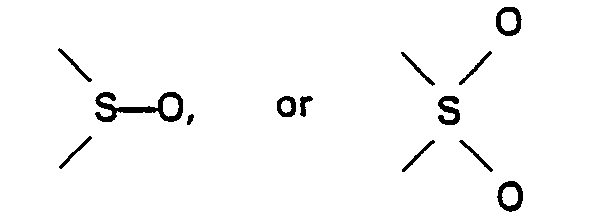
- The group R4 is defined to include mono-substituted phenyl, the substituent of which is halo, hydroxy, Cl-C3 alkoxy, nitro, Cl-C3 alkyl, or trifluoromethyl. Illustrations of these substituted phenyl moieties are p-chlorophenyl, p-fluorophenyl, m-bromophenyl, p-iodophenyl, o-chlorophenyl, p-hydroxyphenyl, o-hydroxyphenyl, p-methoxyphenyl, m-ethoxyphenyl, o-methoxyphenyl, m-propoxyphenyl, p-isopropoxyphenyl, p-nitrophenyl, m-nitrophenyl, p-tolyl, m-tolyl, o-ethylphenyl, p-cumyl, m-cumyl, p-propylphenyl, p-ethylphenyl, p-trifluoromethylphenyl, and m-trifluoromethylphenyl.
- With respect to the particular position residues of the pentapeptides of formula I, the following considerations prevail:
- This position represents the amino-terminal portion of the peptide. The residue is that which results from L-tyrosine. The residue can be N-unsubstituted, in which case R1 is hydrogen. Moreover, the residue can be substituted by a C1―C3 primary alkyl, giving rise to N-methyl-, N-ethyl-, or N-n-propyl-. For compounds having exceptionally high levels of analgesic activity when administered parenterally, the tyrosyl residue which is present in Position 1 preferably is N-unsubstituted. For compounds having exceptionally high levels of analgesic activity when administered orally, the tyrosyl residue which is present in Position 1 preferably is N-substituted. In the event that the tyrosyl is N-substituted, the N-substituent preferably is methyl.
- The amino acid residue which is present in the second position of the peptide of formula I must be the D stereoisomer and is any of several amino acid residues. These include residues derived from D-alanine (Ala) (R2 is methyl), D-a-aminobutyric acid (Abu) (R2 is ethyl), D-norvaline (Nva) (R2 is n-propyl), D-valine (Val) (R2 is isopropyl), D-norleucine (Nle) (R2 is n-butyl), D-leucine (Leu) (R2 is isobutyl), D-isoleucine (lie) (R2 is sec-butyl), D-allylglycine [Gly(Al)] (R2 is allyl), D-cyclopropylmethylglycine [Gly(Cp)] (R2 is cyclopropylmethyl), D-methionine (Met) (R2 is 2-methylthioethyl), D-(S-methyl)cysteine [Cys(Me)] (R2 is methylthiomethyl), D-methionine sulfoxide [Met(O)] (R2 is methylsulfinylethyl), D-(S-methyl)cysteine sulfoxide [Cys(Me) (O)] (R2 is methylsulfinylmethyl), D-serine (Ser) (R2 is hydroxymethyl), D-threonine (Thr) (R2 is 1-hydroxyethyl), and D-homoserine (Hse) (R2 is 2-hydroxyethyl). Preferably, R2 is C1―C4 primary or secondary alkyl or C1―C2 hydroxyalkyl. Of the two groups, C1―C4 primary or secondary alkyl is more preferred, and of the latter, the residue derived from D-alanine.
- The amino acid residue present in this position is that derived from glycine (Gly).
- The amino acid residue present in this position is that derived from p-fluoro substituted L-phenylalanine [Phe(F)]. The residue can be either unsubstituted or substituted at the amino nitrogen (R3). In the event that the residue is N-substituted, it is N-methyl, N-ethyl, N-n-propyl, N-isopropyl, N-n-butyl, N-isobutyl, N-sec-butyl, N-cyclopropyl-methyl, or N-allyl. Preferably, when R3 is other than hydrogen, it is C1-C4 primary or secondary alkyl, and, if the latter, methyl or ethyl.
- The residue present in the C-terminal position of the compounds of formula I is an amino acid structurally derivatized to its amide


- A preferred class of compounds are those in which R4 is C1―C5 primary or secondary alkyl. Of the latter compounds which are highly preferred are those in which R4 is C4 primary or secondary alkyl, and, in particular, isobutyl, which defines the leucine residue.
- Another preferred class are those compounds in which R4 is ―(CH2)n―X―(CH2)P―CH3. Of these, methylthioethyl, which defines methionine, is highly preferred.
- Another preferred class are those compounds in which Rs is hydrogen and R4 is phenyl or p-hydroxyphenyl.
- The residue of this terminal amino acid is either unsubstituted or substituted at its amino nitrogen (Rs). In those instances in which a substituent is present, the substituent is a C1-C4 primary alkyl group. The represented substituents are N-methyl, N-ethyl, N-n-propyl, and N-n-butyl. Preferably, the amino nitrogen is substituted, i.e., Rs is C1-C4 primary alkyl. More preferably, the primary alkyl is methyl. Furthermore, when Rs is other than hydrogen, R3 must be hydrogen, and when R3 is other than hydrogen, Rs must be hydrogen.
- In addition, as already noted, the residue in Position 5 is an amide, a primary alcohol, an ether, or an ester. Preferably, the residue is an amide, an alcohol, or an ester, and more preferably, is an amide. Of the latter, the residue preferably is a primary amide i.e., Z is

- In this specification, the following abbreviations, most of which are well known and are commonly used in the art, are employed:
- Abu - a-aminobutyric acid
- Ahp - a-aminoheptanoic acid
- Ala - alanine
- Cys - cysteine
- Cys(Et) - (S-ethyl)cysteine
- Cys(Et)(O) ― (S-ethyl)cysteine sulfoxide
- Cys(Et) (02) - (S-ethyl)cysteine sulfone
- Cys(Me) - (S-methyl)cysteine
- Cys(Me) (O) - (S-methyl)cysteine sulfoxide
- Cys(Me) (02) - (S-methyl)cysteine sulfone
- Eth - ethionine
- Eth(O) ― ethionine sulfoxide
- Eth(02) - ethionine sulfone
- Gly - glycine
- Gly(Al) - allylglycine
- Gly(Cp) - cyclopropylmethylglycine
- Hil - homoisoleucine
- Hle ― homoleucine
- Hse - homoserine
- Hse(Me) - (0-methyl)homoserine
- Hse(Et) ― (O-ethyl)homoserine
- Ile - isoleucine
- Leu - leucine
- Met - methionine
- Met(O) - methionine sulfoxide
- Met(O2) ― methionine sulfone
- Nle― norleucine
- Npg - neopentylglycine
- Nva - norvaline
- Pgl - phenylglycine
- Pgl(OH) - p-hydroxyphenylglycine
- Phe - phenylalanine
- Phe(F) ―p-fluorophenylalanine
- Ser- serine
- Ser(Me) - (O-methyl)serine
- Ser(Et) - (O-ethyl)serine
- Thr - threonine
- Tyr - tyrosine
- Val - valine
- Ac - acetyl
- Al ― allyl
- Cp - cyclopropylmethyl
- Me ― methyl
- Et - ethyl
- Ip - isopropyl
- Pr - n-propyl
- Bu - n-butyl
- i-Bu - isobutyl
- t-Bu - t-butyl
- s-Bu - sec-butyl
- Boc - t-butyloxycarbonyl
- Bzl - benzyl
- Cbz - benzyloxycarbonyl
- DCC - N,N'-dicyclohexylcarbodiimide
- HBT - 1-hydroxybenzotriazole
- DMF - N,N-dimethylformamide
- TFA - trifluoroacetic acid
- THF - tetrahydrofuran
- DEAE - diethylaminoethyl
- IBCF - isobutyl chloroformate
- NMM - N-methylmorpholine
- 18-crown-6 - 1,4,7,10,13,16-hexaoxacyclooctadecane
- Examples of typical compounds of formula I include the following:
- H-L-Tyr-D-Ala-Gly-L-(N-Me)Phe(F)-L-Met-NH2;
- H-L-Tyr-D-Ala-Gly-L-Phe(F)-L-(N-Me)Met-NH2;
- H-L-Tyr-D-Abu-Gly-L-Phe(F)-L-(N-Et)Met-NH2;
- H-L-Tyr-D-Abu-Gly-L-Phe(F)-D-(N-Me)Met-NH2;
- H-L-Tyr-D-Nva-Gly-L-Phe(F)-L-(N-Me)Met-NH2;
- H-L-Tyr-D-Nva-Gly-L-(N-Et)Phe(F)-L-Met-NH2;
- H-L-Tyr-D-Val-Gly-L-Phe(F)-D-(N-Et)Met-NH2;
- H-L-Tyr-D-Val-Gly-L-(N-Pr)Phe(F)-L-Met-NH2;
- H-L-Tyr-D-Nle-Gly-L-Phe(F)-L-(N-Bu)Met-NH2;
- H-L-Tyr-D-Nle-Gly-L-Phe(F)-D-(N-Et)Gly-NH2;
- H-L-Tyr-D-Leu-Gly-L-(N-Ip)Phe(F)-L-Met-NH2;
- H-L-Tyr-D-Leu-Gly-L-Phe(F)-L-(N-Pr)Met-NH2;
- H-L-Tyr-D-Ile-Gly-L-Phe(F)-L-(N-Bu)Met-NH2;
- H-L-Tyr-D-Ile-Gly-L-Phe(F)-D-(N-Pr)Met-NH2;
- H-L-Tyr-D-Ala-Gly-L-Phe(F)-L-(N-Et)Met-NH2;
- H-L-Tyr-D-Ala-Gly-L-Phe(F)-L-(N-Pr)Met-NH2;
- H-L-Tyr-D-Ala-Gly-L-Phe(F)-D-(N-Pr)Met-NH2;
- H-L-Tyr-D-Ala-Gly-L-(N-i-Bu)Phe(F)-L-Met-NH2;
- H-L-Tyr-D-Ala-Gly-L-Phe(F)-L-(N-Bu)Met-NH2;
- H-L-Tyr-D-Ala-Gly-L-(N-s-Bu)Phe(F)-D-Met-NH2;
- H-L-Tyr-D-Ala-Gly-L-Phe(F)-L-(N-Me)Ala-NH2;
- H-L-Tyr-D-Ala-Gly-L-Phe(F)-L-(N-Me)Abu-NH2;
- H-L-Tyr-D-Ala-Gly-L-Phe(F)-L-(N-Et)Nva-NH2;
- H-L-Tyr-D-Ala-Gly-L-Phe(F)-D-(N-Et)VaI-NH2;
- H-L-Tyr-D-Val-Gly-L-Phe(F)-L-(N-Me)Nle-NH2;
- H-L-Tyr-D-Leu-Gly-L-Phe(F)-L-(N-Me)Leu-NH2;
- H-L-Tyr-D-Val-Gly-L-Phe(F)-L-(N-Et)Ile-NH2;
- H-L-Tyr-D-Leu-Gly-L-Phe(F)-D-(N-Me)Ahp-NH2;
- H-L-Tyr-D-Ala-Gly-L-(N-Cp)Phe(F)-L-Nle-NH2;
- H-L-Tyr-D-Ala-Gly-L-Phe(F)-L-(N-Et)Hse(Me)-NH2;
- H-L-Tyr-D-Ala-Gly-L-Phe(F)-L-(N-Me)HIe-NH2;
- H-L-Tyr-D-Ala-Gly-L-Phe(F)-D-(N-Me)Hse(Me)-NH2;
- H-L-Tyr-D-Ala-Gly-L-(N-Al)Phe(F)-L-Met-NH2;
- H-L-Tyr-D-Gly(Al)-Gly-L-Phe(F)-L-(N-Me)Met-NH2;
- H-L-Tyr-D-Gly(Cp)-Gly-L-Phe(F)-L-(N-Me)Hil-NH2;
- H-L-Tyr-D-Met-Gly-L-Phe(F)-L-(N-Me)Met-NH2;
- H-L-Tyr-D-Cys(Me)-Gly-L-Phe(F)-D-(N-Et)Met-NH2;
- H-L-Tyr-D-Met(O)-Gly-L-Phe(F)-L-(N-Et)Met-NH2;
- H-L-Tyr-D-Cys(Me) (O)-Gly-L-Phe(F)-L-(N-Me)Npg-NH2;
- H-L-Tyr-D-Ser-Gly-L-Phe(F)-L-(N-Me)Hse(Me)-NH2;
- H-L-Tyr-D-Ala-Gly-L-(N-Et)-Phe(F)-L-Pgl-NH2;
- H-L-Tyr-D-Ala-Gly-L-Phe(F)-L-(N-Me)Pgl(OH)-NH2;
- H-L-Tyr-D-Thr-Gly-L-(N-Et)Phe(F)-L-Met-NH2;
- H-L-Tyr-D-Hse-Gly-L-Phe(F)-L-(N-Me)Met-NH2;
- (N-Me)-L-Tyr-D-Ala-Gly-L-Phe(F)-L-(N-Me)Cys(Me)-NH2;
- H-L-Tyr-D-Ala-Gly-L-Phe(F)-L-(N-Me)-Cys(Me) (O)-NH2;
- H-L-Tyr-D-Ala-Gly-L-Phe(F)-D-(N-Me)Cys(Et)-NH2;
- (N-Et)-L-Tyr-D-Abu-Gly-L-Phe(F)-L-(N-Et)Nle-NH2;
- H-L-Tyr-D-Val-Gly-L-(N-Et)Phe(F)-L-Hse(Me)-NH2;
- (N-Pr)-L-Tyr-D-Leu-Gly-L-Phe(F)-L-(N-Mel)-Cys(Et) (O2)-NH2;
- H-L-Tyr-D-Abu-Gly-L-Phel(F)-L-(N-Pr)Met(O)-NH2;
- H-L-Tyr-D-Nle-Gly-L-Phe(F)-L-(N-Me)Eth-NH2;
- H-L-Tyr-D-Ile-Gly-L-Phe(F)-D-(N-Pr)Eth(O)-NH2;
- (N-Me)-L-Tyr-D-Leu-Gly-L-Phe(F)-L-(N-Et)-Nle-NH2;
- (N-Me)-L-Tyr-D-Nva-Gly-L-Phe(F)-L-(N-Me)Hse(Et)-NH2;
- (N-Me)-L-Tyr-D-Ala-Gly-L-(N-Et)Phe(F)-D-Ser(Me)-NH2;
- H-L-Tyr-D-Ala-Gly-L-(N-Me)Phe(F)-L-Ser(Et)-NH2;
- H-L-Tyr-D-Ala-Gly-L-(N-Me)Phe(F)-D-Leu-NH2;
- H-L-Tyr-D-Ala-Gly-L-(N-Et)Phe(F)-L-Pgl-NH2;
- H-L-Tyr-D-Ala-Gly-L-(N-Al)Phe(F)-L-Leu-NH2;
- H-L-Tyr-D-Ala-Gly-L-(N-Pr)Phe(F)-L-Pgl(OH)-NH2;
- H-L-Tyr-D-Ala-Gly-L-(N-Me)Phe(F)-L-Met-NH2;
- H-L-Tyr-D-Ala-Gly-L-(N-Et)Phe(F)-L-Met(O2)-NH2;
- H-L-Tyr-D-Ala-Gly-L-(N-Et)Phe(F)-L-Met-NH(Me);
- H-L-Tyr-D-Ala-Gly-L-Phe(F)-L-(N-Me)Met-NH(Me);
- H-L-Tyr-D-Ala-Gly-L-Phe(F)-L-(N-Et)Met-NH(Me);
- H-L-Tyr-D-Ala-Gly-L-Phe(F)-L-(N-Me)Met-NH(Et);
- H-L-Tyr-D-Ala-Gly-L-(N-Et)Phe(F)-L-Met-NH(Et);
- H-L-Tyr-D-Ala-Gly-L-Phe(F)-L-(N-Me)Nle-NH(Me);
- H-L-Tyr-D-Ala-Gly-L-Phe(F)-L-(N-Et)Pgl-NH(Pr);
- H-L-Tyr-D-Ala-Gly-L-Phe(F)-L-(N-Pr)Leu-NH(Me);
- H-L-Tyr-D-Ala-Gly-L-(N-Al)Phe(F)-L-Met-NH(Ip);
- H-L-Tyr-D-Ala-Gly-L-(N-Me)Phe(F)-L-Met-CH2OH;
- H-L-Tyr-D-Ala-Gly-L-Phe(F)-L-(N-Me)Met-CH20H;
- H-L-Tyr-D-Abu-Gly-L-Phe(F)-L-(N-Et)Met-CH20H;
- H-L-Tyr-D-Abu-Gly-L-Phe(F)-D-(N-Me)Met-CH2OH;
- H-L-Tyr-D-Nva-Gly-L-Phe(F)-L-(N-Me)Met-CH20H;
- H-L-Tyr-D-Nva-Gly-L-(N-Et)Phe(F)-L-Met-CH20H;
- H-L-Tyr-D-Val-Gly-L-Phe(F)-D-(N-Et)Met-CH2OH;
- H-L-Tyr-D-Val-Gly-L-(N-Pr)Phe(F)-L-Met-CH20H;
- H-L-Tyr-D-Nle-Gly-L-Phe(F)-L-(N-Bu)Met-CH2OH;
- H-L-Tyr-D-Nle-Gly-L-Phe(F)-D-(N-Et)Gly-CH20H;
- H-L-Tyr-D-Leu-Gly-L-(N-Ip)Phe(F)-L-Met-CH2OH;
- H-L-Tyr-D-Leu-Gly-L-Phe(F)-L-(N-Pr)Met-CH20H;
- H-L-Tyr-D-Ile-Gly-L-Phe(F)-L-(N-Bu)Met-CH2OH;
- H-L-Tyr-D-Ile-Gly-L-Phe(F)-D-(N-Pr)Met-CH2OH;
- H-L-Tyr-D-Ala-Gly-L-Phe(F)-L-(N-Et)Met-CH20H;
- H-L-Tyr-D-Ala-Cly-L-Phe(F)-L-(N-Pr)Met-CH2OH;
- H-L-Tyr-D-Ala-Gly-L-Phe(F)-D-(N-Pr)Met-CH20H;
- H-L-Tyr-D-Ala-Gly-L-(N-i-Bu)Phe(F)-L-Met-(O2)-CH2OH;
- H-L-Tyr-D-Ala-Gly-L-Phe(F)-L-(N-Bu)Met-CH20H;
- H-L-Tyr-D-Ala-Gly-L-(N-s-Bu)Phe(F)-D-Met-CH20H;
- H-L-Tyr-D-Ala-Gly-L-Phe(F)-L-(N-Me)Ala-CH20H;
- H-L-Tyr-D-Ala-Gly-L-Phe(F)-L-(N-Me)Abu-CH20H;
- H-L-Tyr-D-Ala-Gly-L-Phe(F)-L-(N-Et)Nva-CH20H;
- H-L-Tyr-D-Ala-Gly-L-Phe(F)-D-(N-Et)Val-CH20H;
- H-L-Tyr-D-Val-Gly-L-Phe(F)-L-(N-Me)Nle-CH20H;
- H-L-Tyr-D-Leu-Gly-L-Phe(F)-L-(N-Me)Leu-CH20H;
- H-L-Tyr-D-Val-Gly-L-Phe(F)-L-(N-Et)lle-CH20H;
- H-L-Tyr-D-Leu-Gly-L-Phe(F)-D-(N-Me)Ahp-CH20H;
- H-L-Tyr-D-Ala-Gly-L-(N-Cp)Phe(F)-L-Nle-CH2OH;
- H-L-Tyr-D-Ala-Gly-L-Phe(F)-L-(N-Et)Hse(Me)-CH2OH;
- H-L-Tyr-D-Ala-Gly-L-Phe(F)-L-(N-Me)Hle-CH2OH;
- H-L-Tyr-D-Ala-Gly-L-Phe(F)-D-(N-Me)Hse(Me)-CH20H;
- H-L-Tyr-D-Ala-Gly-L-(N-AI)Phe(F)-L-Met-CH20H;
- H-L-Tyr-D-Gly(Al)-Gly-L-Phe(F)-L-(N-Me)Met-CH2OH;
- H-L-Tyr-D-Gly(Cp)-Gly-L-Phe(F)-L-(N-Me)Hil-CH2OH;
- H-L-Tyr-D-Met-Gly-L-Phe(F)-L-(N-Me)Met-CH20H;
- H-L-Tyr-D-Cys(Me)-Gly-L-Phe(F)-D-(N-Et)Met-CH2OH;
- H-L-Tyr-D-Met(O)-Gly-L-Phe(F)-L-(N-Et)Met-CH2OH;
- H-L-Tyr-D-Cys(Me) (O)-Gly-L-Phe(F)-L-(N-Me)Npg-CH2OH;
- H-L-Tyr-D-Ser-Gly-L-Phe(F)-L-(N-Me)Hse(Me)-CH20H;
- H-L-Tyr-D-Ala-Gly-L-(N-Et)-Phe(F)-L-Pgl-CH2OH;
- H-L-Tyr-D-Ala-Gly-L-Phe(F)-L- (N-Me)Pgl(OH)-CH2OHCH2OH;
- H-L-Tyr-D-Thr-Gly-L-(N-Et)Phe(F)-L-Met-CH20H;
- H-L-Tyr-D-Hse-Gly-L-Phe(F)-L-(N-Me)Met-CH20H;
- (N-Me)-L-Tyr-D-Ala-Gly-L-Phe(F)-L-(N-Me)Cys(Me)―CH2OH;
- H-L-Tyr-D-Ala-Gly-L-Phe(F)-L-(N-Me)-Cys(Me) (O)―CH2OH;
- H-L-Tyr-D-Ala-Gly-L- Phe(F)-D-(N-Me)Cys(Et)-(O2)―CH2OH;
- (N-Et)-L-Tyr-D-Abu-Gly-L-Phe(F)-L-(N-Et)-Nle-CH2OH;
- H-L-Tyr-D-Val-Gly-L-(N-Et)Phe(F)-L-Hse(Me)-CH2OH;
- (N-Pr)-L-Tyr-D-Leu-Gly-L-Phe(F)-L-(N-Me)Cys(Et) (O)-CH2OH;
- H-L-Tyr-D-Abu-Gly-L-Phe(F)-L-(N-Pr)Met(O)-CH2OH;
- H-L-Tyr-D-Nle-Gly-L-Phe(F)-L-(N-Me)Eth-CH2OH;
- H-L-Tyr-D-Ile-Gly-L-Phe(F)-D-(N-Pr)Eth(O2)-CH2OH;
- (N-Me)L-Tyr-D-Leu-Gly-L-Phe(F)-L-(N-Et)-Nle-CH2OH;
- (N-Me)-L-Tyr-D-Nva-Gly-L-Phe(F)-L-(N-Me)Hse(Et)-CH2OH;
- (N-Me)-L-Tyr-D-Ala-Gly-L-(N-Et)Phe(F)-D-Ser(Me)-CH2OH;
- H-L-Tyr-D-Ala-Gly-L-(N-Me)Phe(F)-L-Ser(Et)-CH2OH;
- H-L-Tyr-D-Ala-Gly-L-(N-Me)Phe(F)-D-Leu-CH2OH;
- H-L-Tyr-D-Ala-Gly-L-(N-Et)Phe(F)-L-Pgl-CH2OH;
- H-L-Tyr-D-Ala-Gly-L-(N-AI)Phe(F)-L-Leu-CH20H;
- H-L-Tyr-D-Ala-Gly-L-(N-Pr)Phe(F)-L-Pgl(OH)-CH2OH;
- H-L-Tyr-D-Ala-Gly-L-(N-Me)Phe(F)-L-Met-CH20H;
- H-L-Tyr-D-Ala-Gly-L-(N-Et)Phe(F)-L-Met(O)-CH2OH;
- H-L-Tyr-D-Ala-Gly-L-(N-Et)Phe(F)-L-Met-CH2OMe;
- H-L-Tyr-D-Ala-Gly-L-Phe(F)-L-(N-Me)Met-CH2OMe;
- H-L-Tyr-D-Ala-Gly-L-Phe(F)-L-(N-Et)Met-CH2OMe;
- H-L-Tyr-D-Ala-Gly-L-Phe(F)-L-N-Me)Met-CH2OEt;
- H-L-Tyr-D-Ala-Gly-L-(N-Et)Phe(F)-L-Met-CH2OEt;
- H-L-Tyr-D-Ala-Gly-L-Phe(F)-L-(N-Me)Nle-CH2OMe;
- H-L-Tyr-D-Ala-Gly-L-Phe(F)-L-(N-Et)Pgl-CH2OPr;
- H-L-Tyr-D-Ala-Gly-L-Phe(F)-L-(N-Pr)Leu-CH2OMe;
- H-L-Tyr-D-Ala-Gly-L-(N-Al)Phe(F)-L-Met-CH2Olp;
- H-L-Tyr-D-Ala-Gly-L-(N-Me)Phe(F)-L-Met-OMe;
- H-L-Tyr-D-Ala-Gly-L-Phe(F)-L-(N-Me)Met-OEt;
- H-L-Tyr-D-Abu-Gly-L-Phe(F)-L-(N-Et)Met-OMe;
- H-L-Tyr-D-Abu-Gly-L-Phe(F)-D-(N-Me)Met-OMe;
- H-L-Tvr-D-Nva-Glv-L-Phe(F)-L-(N-Me)Met-OPr;
- H-L-Tyr-D-Nva-Gly-L-(N-Et)Phe(F)-L-Met-OIp;
- H-L-Tyr-D-Val-Gly-L-Phe(F)-D-(N-Et)Met-OMe;
- H-L-Tyr-D-Val-Gly-L-(N-Pr)Phe(F)-L-Met-OEt;
- H-L-Tyr-D-Nle-Gly-L-Phe(F)-L-(N-Bu)Met-OEt;
- H-L-Tyr-D-Nle-Gly-L-Phe(F)-D-(N-Et)Gly-OMe;
- H-L-Tyr-D-Leu-Gly-L-(N-Ip)Phe(F)-L-Met-OEt;
- H-L-Tyr-D-Leu-Gly-L-Phe(F)-L-(N-Pr)Met-OPr;
- H-L-Tyr-D-Ile-Gly-L-Phe(F)-L-(N-Bu)Met-OMe;
- H-L-Tyr-D-Ile-Gly-L-Phe(F)-D-(N-Pr)Met-OMe;
- H-L-Tyr-D-Ala-Gly-L-Phe(F)-L-(N-Et)Met-OMe;
- H-L-Tyr-D-Ala-Gly-L-Phe(F)-L-(N-Pr)Met-OEt;
- H-L-Tyr-D-Ala-Gly-L-Phe(F)-D-(N-Pr)Met(O2)-OIP;
- H-L-Tyr-D-Ala-Gly-L-(N-i-Bu)Phe(F)-L-Met-OMe;
- H-L-Tyr-D-Ala-Gly-L-Phe(F)-L-(N-Bu)Met-OMe;
- H-L-Tyr-D-Ala-Gly-L-(N-s-Bu)Phe(F)-D-Met-OEt;
- H-L-Tyr-D-Ala-Gly-L-Phe(F)-L-(N-Me)Ala-OPr;
- H-L-Tyr-D-Ala-Gly-L-Phe(F)-L-(N-Me)Abu-OIp;
- H-L-Tyr-D-Ala-Gly-L-Phe(F)-L-(N-et)Nva-OMe;
- H-L-Tyr-D-Ala-Gly-L-Phe(F)-D-(N-Et)Val-OMe;
- H-L-Tyr-D-Val-Gly-L-Phe(F)-L-(N-Me)Nle-OMe;
- H-L-Tyr-D-Leu-Gly-L-Phe(F)-L-(N-Me)Leu-OEt;
- H-L-Tyr-D-Val-Gly-L-Phe(F)-L-(N-Et)lle-OMe;
- H-L-Tyr-D-Leu-Gly-L-Phe(F)-D-(N-Me)Ahp-OEt;
- H-L-Tyr-D-Ala-Gly-L-(N-Cp)Phe(F)-L-Nle-OPr;
- H-L-Tyr-D-Ala-Gly-L-Phe(F)-L-(N-Et)Hse(Me)-OIp;
- H-L-Tyr-D-Ala-Gly-L-Phe(F)-L-(N-Me)Hle-OMe;
- H-L-Tyr-D-Ala-Gly-L-Phe(F)-D-(N-Me)Hse(Me)-OMe;
- H-L-Tyr-D-Ala-Gly-L-(N-Al)Phe(F)-L-Met-OEt;
- H-L-Tyr-D-Gly(Al)-Gly-L-Phe(F)-L-(N-Me)Met-OEt;
- H-L-Tyr-D-Gly(Cp)-Gly-L-Phe(F)-L-(N-Me)-Hil-OPr;
- H-L-Tyr-D-Met-Gly-L-Phe(F)-L-(N-Me)Met-OMe;
- H-L-Tyr-D-Cys(Me)-Gly-L-Phe(F)-D-(N-Et)Met-OPr;
- H-L-Tyr-D-Met(O)-Gly-L-Phe(F)-L-(N-Et)Met-Olp;
- H-L-Tyr-D-Cys(Me) (O)-Gly-L-Phe(F)-L-(N-Me)Npg-OMe;
- H-L-Tyr-D-Ser-Gly-L-Phe(F)-L-(N-Me)Hse(Me)-OEt;
- H-L-Tyr-D-Ala-Gly-L-(N-Et)-Phe(F)-L-Pgl-OEt;
- H-L-Tyr-D-Ala-Gly-L-Phe(F)-L-(N-Me)Pgl-(OH)-OEt;
- H-L-Tyr-D-Thr-Gly-L-(N-Et)Phe(F)-L-Met-OMe;
- H-L-Tyr-D-Hse-Gly-L-Phe(F)-L-(N-Me)Met-OMe;
- (N-Me)-L-Tyr-D-Ala-Gly-L-Phe(F)-L-(N-Me)Cys(Me)-OMe;
- H-L-Tyr-D-Ala-Gly-L-Phe(F)-L-(N-Me)-Cys(Me) (O)-OMe;
- H-L-Tyr-D-Ala-Gly-L-Phe(F)-D-(N-Me)Cys(Et)-OMe;
- (N-Et)-L-Tyr-D-Abu-Gly-L-Phe(F)-L-(N-Et)NIe-OEt;
- H-L-Tyr-D-Val-Gly-L-(N-Et)Phe(F)-L-Hse(Mel)-OMe;
- (N-Pr)-L-Tyr-D-Leu-Gly-L-Phe(F)-L-(N-Me)-Cys(Et) (O)-OMe;
- H-L-Tyr-D-Abu-Gty-L-Phe(F)-L-(N-Pr)Met(0)-OMe;
- H-LTyr-D-Nle-Gly-L-Phe(F)-L-(N-Me)Eth-OEt;
- H-L-Tyr-D-Ile-Gly-L-Phe(F)-D-(N-Pr)Eth(O)-OPr;
- (N-Me)-L-Tyr-D-Leu-Gly-L-Phe(F)-L-(N-Et)Nle-Olp;
- (N-Me)-L-Tyr-D-Nva-Gly-L-Phe(F(%L-(N-Me)-Hse(Et)-Olp;
- (N-Me)-L-Tyr-D-Ala-Gly-L-(N-Et)Phe(F)=D-Ser(Me)-OPr;
- H-L-Tyr-D-Ala-Gly-L-(N-Me)Phe(F)-L-Ser(Et)-OMe;
- H-L-Tyr-D-Ala-Gly-L-(N-Me)Phe(F)-D-Leu-OEt;
- H-L-Tyr-D-Ala-Gly-L-(N-Et)Phe(F)-L-Pgl-OMe;
- H-L-Tyr-D-Ala-Gly-L-(N-AI)Phe(F)-L-Leu-OMe;
- H-L-Tyr-D-Ala-Gly-L-(N-Pr)Phe(F)-L-Pgl(OH)-OMe;
- H-L-Tyr-D-Ala-Gly-L-(N-Me)Phe(F)-L-Met-OMe;
- H-L-Tyr-D-Ala-Gly-L-(N-Et)Phe(F)-L-Met(02)-OMe,
- The compounds of formula I are prepared by routine methods for peptide synthesis. It is possible, during the synthesis of certain of the compounds of formula 1, that partial racemization can occur. However, the extent of racemization, should such occur, is not sufficient to significiantly alter the analgesic activity of the compounds of formula I.
- The compounds of formula I can be synthesized by solid phase peptide synthesis or by classical solution phase synthesis. In the solid phase method, the peptide chain is sequentially constructed using a resin support, typically a benzhydrylamine resin or a chloromethylated polystyrene resin. The product is cleaved from the resin with HF at about 0°C. and purified, generally chromatographically.
- Whichever method is used, the preparation of the compounds of formula I involves the coupling of amino acids or peptide fragments by reaction of the carboxyl function of one with the amino function of another to produce an amide linkage. In order to effectively achieve coupling, it is desirable, first, that all reactive functionalities not participating directly in the reaction be inactivated by the use of appropriate blocking groups, and, secondly, that the carboxyl function which is to be coupled be appropriately activated to permit coupling to proceed. All of this involves a careful selection of both reaction sequence and reaction conditions as well as utilization of specific blocking groups so that the desired peptide product will be realized. Each of the amino acids which is employed to produce the compounds of formula I and which has the particularly selected protecting groups and/or activating functionalities is prepared by techniques well recognized in the peptide art.
- Selected combinations of blocking groups are employed at each point of the total synthesis of the compounds of formula 1. These particular combinations have been found to function most smoothly. Other combinations would operate in the synthesis of the compounds of formula I, although, perhaps, with a lesser degree of success. Thus, for example, benzyloxycarbonyl, t-butyloxycarbonyl, t-amyloxycarbonyl, p-methoxybenzyloxycarbonyl, adamantyloxycarbonyl, and isobornyloxycarbonyl can be variously employed as amino blocking groups in the synthesis of the compounds of formula I. Furthermore, benzyl (Bzl) generally is employed as the hydroxy-protecting group for the tyrosyl residue even though others, such as p-nitrobenzyl (PNB), pmethoxybenzyl (PMB), could well be employed.
- The carboxyl blocking groups used in preparing the compounds of formula I can be any of the typical ester-forming groups, including, for example, methyl, ethyl, benzyl, p-nitrobenzyl, p-methoxybenzyl, 2,2,2-trichloroethyl, and the like.
- Coupling of the suitably protected N-blocked amino acid or peptide fragment with a suitably protected carboxy-blocked amino acid or peptide fragment in prepartion of the compounds of formula I consists of rendering the free carboxyl function of the amino acid or peptide fragment active to the coupling reaction. This can be accomplished using any of several well recognized techniques. One such activation technique involves conversion of the carboxyl function to a mixed anhydride. The free carboxyl function is activated by reaction with another acid, typically a derivative of carbonic acid, such as an acid chloride thereof. Examples of acid chlorides used to form mixed anhydrides are ethyl chloroformate, phenyl chloroformate, sec-butyl chloroformate, isobutyl chloroformate, pivaloyl chloride. Preferably, isobutyl chloroformate is employed.
- Another method of activating the carboxyl function for the purpose of carrying out the coupling reaction is by conversion to its active ester derivative Such active esters include, for example, a 2,4,5-trichlorophenyl ester, a pentachlorophenyl ester, a p-nitrophenyl ester. Another coupling method available for use is the well-recognized azide coupling method.
- The preferred coupling method in preparation of the compounds of formula I involves the use of N,N'- dicyclohexylcarbodiimide (DCC) to activate the free carboxyl function thereby permitting coupling to proceed. This activation and coupling technique is carried out employing an equimolar quantity of DCC relative to the amino acid or peptide fragment and is carried out in the presence of an equimolar quantity of 1-hydroxybenzotriazole (HBT). The presence of HBT suppresses undesirable side reactions including the possibility of racemization.
- Cleavage of selected blocking groups is necessary at particular points in the synthetic sequence employed in preparation of the compounds of formula 1. A chemist of ordinary skill in the art of peptide synthesis can readily select from representative protecting groups those groups which are compatible in the sense that selective cleavage of the product can be accomplished permitting removal of one or more but less than all of the protecting groups present on the amino acid or peptide fragment. These techniques are well recognized in the peptide art. A fuller discussion of the techniques which are available for selective cleavage is provided in the literature in Schroder and Lubke, The Peptides, Volume I, Academic Press, New York, (1965), and especially in the Table provided at pages 72-75 thereof.
- Cleavage of carboxyl protecting groups can be accomplished by alkaline saponification. Relatively strong alkaline conditions, typically using an alkali metal hydroxide, such as sodium hydroxide, potassium hydroxide, lithium hydroxide, and the like, are generally employed to deesterify the protected carboxyl. The reaction conditions under which saponification is accomplished are well recognized in the art. Many of the carboxyl blocking groups also can be removed by catalytic hydrogenolysis including, for example, hydrogenolysis in the presence of a catalyst such as palladium on carbon. Furthermore, in those instances in which the carboxyl blocking group is p-nitrobenzyl or 2,2,2-trichloroethyl, deblocking can be accomplished by reduction in the presence of zinc and hydrochloric acid.
- Many of the amino blocking groups are cleaved by treating the protected amino acid or peptide with an acid such as formic acid, trifluoroacetic acid (TFA), p-toluenesulfonic acid (TSA), benzenesulfonic acid (BSA), naphthalenesulfonic acid, to form the respective acid addition salt product. Cleavage of others, for example, benzyloxycarbonyl, can be accomplished by treating the blocked amino acid or peptide with a mixture of HBr and acetic acid to produce the corresponding hydrobromide acid addition salt. The particular method or reagent which is employed will depend upon the chemical or physical characteristics of the materials involved in the specific deblocking reaction. The resulting acid addition salt can be converted to a more pharmaceutically acceptable form by treatment with a suitable ion exchange resin, such as DEAE Sephadex A25, Amberlyst A27.
- The hydroxy-protecting group can be retained on the peptide throughout the sequence of its preparation, being removed during the final synthetic step in conjunction with cleavage of the amino blocking group. However, depending upon the conditions employed for removal of the carboxyl blocking group, it may be removed earlier in the preparative sequence. When the carboxyl group is cleaved by alkaline saponification, the hydroxy-protecting group is retained; however, when catalytic hydrogenolysis is employed for removal of the carboxyl protecting group, the hydroxy protecting group also is cleaved. The latter situation does not represent a serious problem since preparation of the compounds of formula I can be accomplished in the presence of a tyrosyl residue having a free hydroxyl group, for example, a tyrosyl residue.
- Of the classical solution methods, a preferred specific method for preparing the compounds of formula I involves coupling a separately prepared N-terminal tripeptide with a separately prepared C-terminal dipeptide followed by appropriate deblocking of any remaining blocked moieties. The separately prepared C-terminal dipeptide which is reacted with the N-terminal tripeptide can be structured so as to contain the amide, alcohol, ether, or ester moiety. Alternatively, it can contain a group which represents a precursor to the desired C-terminal moiety. The general sequence, illustrating preparation of a pentapeptide offormula I, can be depicted as follows. In the sequence, the letter Z represents the C-terminal moiety, whether in its final form or as a precursor, the symbol AA represents an amino acid residue, and the number appended to the symbol AA represents the position of the amino acid in the ultimate peptide product sequence.

- The above represents only one sequence for preparing compounds of formula I. Other sequences are available. Another solution method which can be employed involves the step-wise, sequential addition of single amino acids in construction of the peptide chain beginning with the C-terminal amino acid moiety. Reaction techniques such as those described above are employed in this as well as any other contemplated preparative sequence.
- In certain of the compounds of formula I, one or more of the groups R1, R3, and R5 are, variously, alkyl, allyl, or cyclopropylmethyl. In these instances, the appropriate N-substituted amino acid is employed in the preparative sequence. Any of the N-monosubstituted amino acids can be prepared as follows using an N-protected amino acid as starting material:

- As the above sequence indicates, the amino acid first is treated with potassium hydride in the presence of a suitable crown ether to generate the dianion. The intermediate then is treated with the appropriate allyl, cyclopropylmethyl, or alkyl iodide to obtain the desired N-substituted amino acid.
- It will be apparent to those of ordinary skill in the art of peptide synthesis that racemization at the a-carbon can occur under strongly alkaline conditions such as those employed in the above alkylation procedure. The degree of racemization may vary depending upon the particular amino acid which is involved. Racemization can be minimized by using excess alkylating agent and by keeping the reaction time as short as possible. Nevertheless, even in the event that excessive racemization does occur, the product can be purified by recrystallization as the salt of a suitable chiral amine, for example, as the salt of d(+) a-phenylethylamine.
- The C-terminal portion of the peptides of formula I is derivatized to its primary or secondary amide, ester, alcohol, or ether. In the amide pentapeptides of formula I, the amide is unsubstituted or N-monosubstituted. Derivatization to the amide is accomplished by activation of the carboxyl group of the amino acid with N,N'-dicyclohexylcarbodiimide (DCC) in the presence of 1-hydroxybenzotriazole (HBT) to give the HBT ester. In producing the pentapeptides of formula I, the ester then is reacted with anhydrous ammonia or the appropriate primary amine to give the unsubstituted or N-monosubstituted amide. Suitable primary amines for preparation of the pentapeptides of formula I include methylamine, ethylamine, n-propylamine, and isopropylamine.
- The C-terminai esters are available from the corresponding acids by techniques well recognized in the art. Derivatization to the primary alcohol is achieved by preparing the methyl ester of the C-terminal amino acid or peptide. The ester then is reduced using sodium borohydride and lithium chloride to give the corresponding primary alcohol derivative.
- The ethers can be prepared by any of a variety of well-recognized methods. One involves treating the corresponding alcohol in an aqueous sodium hydroxide medium with an alkyl bromide in which the alkyl group corresponds to the intended alkyl portion of the ether product.
- The compounds of formula I are valuable pharmaceutical agents. They exhibit analgesic activity and also neuroleptic activity. They are especially useful in alleviation of pain and amelioration of emotional disturbances when administered parenterally or orally to mammals, including humans.
- The compounds of formula I may be administered alone or in combination with pharmaceutically acceptable carriers, the proportion of which is determined by the solubility and chemical nature of the compound, the selected route of administration, and standard pharmaceutical practice.
- Preferred compositions arb those suitable for parenteral administration, that is, intramuscular, subcutaneous, or intravenous. These include sterile, injectable solutions or suspensions, and sterile injectable depot or slow-release formulations. Particularly convenient sterile, injectable solutions are made up in isotonic saline or isotonic dextrose. The sterile, injectable compositions can be prepared and stored as such or they can be prepared immediately prior to use by adding a sterile medium, for example, water, to a known weight of sterile ingredient enclosed in a vehicle, for example, a vial or an ampoule, which maintains sterility of the ingredient. The known weight of sterile ingredient may also contain sufficient sterile dextrose or sodium chloride to provide an isotonic solution or suspension after addition of the sterile medium.
- Preferred compositions also are those suitable for oral administration. These can be prepared as discrete units such as capsules, tablets, and the like, each containing a predetermined amount of the active ingredient. Moreover, they, for example, can be prepared in powder or granule form, as a solution or a suspension in an aqueous or a non-aqueous medium, or as an emulsion.
- The tablet can be prepared by compression, generally with one or more accessory ingredients. The tablets are prepared by compressing the active ingredient in a free-flowing form, such as a powder or granule, and generally mixed with one or more other ingredients, such as binders, lubricants, inert diluents, lubricating agents, surface active agents, buffers, flavoring agents, thickeners, preservatives, dispersing agents.
- Physicians will determine the particular dosage of the compounds of formula I which is most suitable. The selected dosages will vary depending upon the mode of administration, the particular compound administered, the patient under treatment, and the kind of treatment. In general, however, the dosage will range from about 10 ug. to about 2 mg. per kilogram body weight of the recipient, and, preferably, from about 100 µg. to about 500 µg. per kilogram body weight, when administered intramuscularly or subcutaneously, and from about 1 ug. to about 200 ug. per kilogram body weight of the recipient, and, preferably, from about 3 µg. to about 50 µg. per kilogram body weight, when administered intravenously. When administered orally, the dosage generally will range from about 1 mg. to about 500 mg. per kilogram body weight of the recipient, and, preferably, from about 50 mg. to about 200 mg. per kilogram body weight, and, more preferably, from about 50 mg. to about 100 mg. per kilogram body weight.
- The following examples are provided to illustrate the preparation and activity of the compounds of formula I. Any abbreviations used in these examples have been defined above.
- A. Trifluoroacetic Acid Salt of L-Tyrosyl-D-alanyl-glycyl-D,L-p-fluorophenylalanyl-L-(N°-methyl)-methionyl Benzhydrylamine Resin.
- The peptide-resin was synthesized by automated solid-phase synthesis in a Beckman 990 Peptide Synthesizer using four grams of benzhydrylamine resin (Beckman, 0.47 mmoles-N/gram). The resin was neutralized with four percent diisopropylethylamine (DIEA) in methylene chloride and then was allowed to couple with Boc-(N-Me)Met-OH and DCC in methylene chloride to give the Boc-(N-Me)-Met-substituted resin. Boc-D,L-(p-F)PheOH, Boc-Gly-OH, Boc-D-Ala-OH, and Boc-Tyr-OH were successively incorporated onto the peptide-resin by initial coupling according to Program No. 1 and subsequent recoupling of the same amino acid according to Program No. 2. The resulting Boc-pentapeptide-resin was deprotected according to Steps 1-8 of Program No. 1 to give 4.98 grams of the title compound. The washes in Programs Nos. 1 and 2 were carried out at 8 ml. per gram resin.
-
- 1. Wash three times with CH2CI2.
- 2. Treat for five minutes with a 30:5:65 volume mixture of TFA:Et3SiH:CH2Cl2.
- 3. Treat as in Step 2 for 30 minutes.
- 4. Wash twice with CH2Cl2.
- 5. Wash with methanol:CH2Cl2 (1:1).
- 6. Wash twice with methanol.
- 7. Wash twice with methanol:CH2Cl2 (1:1).
- 8. Wash twice with CH2CI2.
- 9. Treat four times for two minutes each with 4% DIEA in CH2Cl2.
- 10. Repeat Steps 4 to 8.
- 11. Treat with 2.5 equivalents of the desired amino acid derivative in CH2C2 and 1.25 equivalents of DCC in CH2Cl2 for 120 minutes.
- 12. Wash four times with CH2Cl2.
- 13. Repeat Steps 5 to 7.
- 14. Wash three times with CH2Cl2.
-
- 1. Treat four times with two minutes each with 4% DIEA in CH2Cl2.
- 2. Wash twice with CH2CI2.
- 3. Wash with methanol:CH2Cl2 (1:1).
- 4. Wash twice with methanol.
- 5. Wash with methanol:CH2Cl2 (1:1).
- 6. Wash twice with CH2Cl2.
- 7. Wash three times with DMF:CH2Cl2 (1:1).
- 8. Treat with 2.5 equivalents of the desired amino acid derivative in DMF:CH2Cl2 (1:1) and 1.25 equivalents of DCC in CH2Cl2 for 120 minutes.
- 9. Wash four times with DMF:CH2Cl2 (1:1).
- 10. Repeat Steps 4 to 6.
- B. Hydrogen Fluoride Salt of L-Tyrosyl-D-alanyl-glycyl-D,L-p-fluorophenylalanyl-L-(N°-methyl)-methioninamide.
- The peptide resin from PartAwas reacted with liquid anhydrous HF in vacuo for 60 minutes at 0°C. with anisole as scavenger. The volatile components were removed from the reaction in vacuo, and the peptide-resin was triturated with ether and filtered to remove residual HF and anisole. The peptide was extracted from the resin by trituration with 10 percent acetic acid. The 10 percent acetic acid extract was lyophilized to yield 745 mg. of crude title compound.
- C. Chromatographic Purification to Obtain Final Product.
- The crude mixture of peptide diastereomers was chromatographed over a column (5 x 72 cm.) of reverse-phase (C18) silica gel at low pressure (75―80 psig) with 26 percent acetonitrile in 0.1 N ammonium acetate. After collecting 2,000 mi. of eluant, 1.5 minute fractions of 17.0 ml. each were collected. Fractions 36-65 were pooled and lyophilized to give the final product, and Fractions 78-110 were pooled and lyophilized to give the corresponding D-p-fluorophenylalanyl compound. Both products were chromatographed separately over a Sephadex G-10 column (2.5 x 100 cm.) in 0.2 N acetic acid to remove ammonium acetate. The fraction were lyophilized to give the peptides as amorphous, white solids.
- (1). L-p-fluorophenylalanyl compound (253.8 mg.):

 Amino Acid Analysis:

- (2). D-p-fluorophenylalanyl compound (223.1 mg):
 Amino Acid Analysis:

- To 50 mi. of tetrahydrofuran (THF) were added 5.03 grams (17.9 mmoles) of Boc-p-methoxyphenylglycine. The mixture was chilled in an acetone-ice bath to -9°C. To the mixture then were added 1.99 ml. (17.9 mmoles) of N-methylmorpholine and 2.34 ml. (17.9 mmoles) isobutyl chloroformate. The mixture was stirred for 2.5 minutes. Ammonia was bubbled into the chilled reaction mixture for one hour. Distilled water (80 ml.) was added to the mixture, and the mixture was extracted with 80 ml. of ethyl acetate. The ethyl acetate extract then was washed successively with 1N potassium bicarbonate, 1N hydrochloric acid, and water. The ethyl acetate extract was dried over anhydrous magnesium sulfate, filtered, and evaporated to give 4.77 grams of a white solid which was recrystallized from a mixture of ethyl acetate and petroleum ether to give 3.32 grams (49%).
- To 32 grams (12.0 mmoles) of the product from Part A in 6.0 ml. of glacial acetic acid were added 4.7 ml. of triethylsilane and 4.7 mi. of anisole. To the mixture then were added 47 ml. (3 equivalents) of a 0.77 N HCI/acetic acid solution. The mixture was stirred at room temperature for 35 minutes. Ether (600 ml.) was added, and the resulting white precipitate was triturated. The mixture was filtered, and the collected precipitate was washed with ether to give 2.53 grams (66%) of the title compound.
- To a suspension of the compound from Part B (0.65 grams; 3 mmoles) in 8.0 ml, of cold (0°C.) DMF was added DIEA (0.52 ml.; 3 mmoles). A solution of Boc-D,L-(p-F)Phe-OH (0.85 grams; 3 mmoles) in DMF (8.0 ml.) then was added to the mixture followed by HBT (0.81 grams; 6 mmoles) and a solution of DCC (0.62 grams; 3 mmoles) in DMF (4 ml.). The resulting mixture was stirred under a CaSO4 drying tube at 0°C. for 1.5 hours and then at room temperature for 16 hours. The mixture was filtered to remove dicyclohexylurea (DCU), and the filtrate was evaporated in vacuo to give a yellow residue. The residue was partitioned between ethyl acetate (300 ml.) and water (200 mi.), and the layers were separated. The ethyl acetate layer was washed with pH 10 buffer (3 x 300 ml.), 0.1 N HCI (3 x 300 mi.), and water (300 ml.). The ethyl acetate was dried over magnesium sulfate; filtered, and the solvent was removed in vacuo to give 1.44 grams (100%) of the title compound. The material showed the presence of DCU by thin-layer chromatography (tlc).
- To a solution of the compound from Part D in acetic acid (4 ml.) were added anisole (1.0 ml.), triethylsilane (1.0 ml.), and 1.54 N HCl in acetic acid (10 ml.). The solution was stirred under a CaSO4 drying tube at room temperature (30 minutes) and then was diluted with ether (600 ml.). The resulting precipitate was filtered, washed with ether (2 x 25 mi.) and dried in vacuo at 35°C. to give 1.10 grams (96%) of the title compound. The compound was shown to be pure by tic analysis.
- To a suspension of the product from Part D (1.10 grams; 2.89 mmoles) in 9 ml. of cold (0°C.) DMFwas added Boc-L-Tyr-D-Ala-Gly-OH, dicyclohexylamine salt (1.70 grams; 2.88 mmoles) suspended in 21 ml. of DMF. To the resulting stirred mixture were added HBT (770 mg.; 5.76 mmoles) and a solution of DCC (594 mg.; 2.88 mmoles) in 2.5 ml. of DMF. The resulting mixture was stirred at 0°C for 1.25 hours and then at room temperature for 16 hours. The mixture was filtered to remove DCU, and the filtrate was concentrated in vacuo to give yellow residue. To the residue were added anisole (6.0 ml.), triethylsilane (6.0 ml.), and trifluoroacetic acid (60 ml.). The resulting solution was stirred under a CaS04 drying tube at room temperature for 0.5 hours after which the reaction mixture was concentrated in vacuo to a yellow oil. Ether (1.5 liters) was added to the yellow oil, and the resulting precipitate was collected by filtration and dried in vacuo to give 2.01 grams (93 percent) of crude title compound.
- The product from Part E was treated in the manner described in Part C of Example 1 to separate the two diastereomers and to obtain 763 mg. of the title compound.


- Analysis,

- Gly, 1.00; Ala, 1.00; Tyr, 0.99; Pgl(MeO), 1.04; Phe(F), 0.89; NH3, 0.99; %Peptide, 90.
- These products were prepared in accordance with the procedure of Example 2 and exhibited the following characteristics.
- (1) L-phenylglycinamide compound (1.043 g.):

 Amino Acid Analysis: Gly, 1.01; Ala, 1.00; Tyr, 1.00; Pgl, 0.99; Phe(F), 0.98; NH3, 1.01; %Peptide, 90.
- (2) D-phenylglycinamide compound (626 mg.):

 Amino Acid Analysis: Gly, 0.99 Ala, 1.00, Tyr, 0.96; Pgl, 1.02; Phe(F), 1.00; NH3, 1.05; %Peptide, 88.
- This product was prepared in accordance with the procedure of Example 1 to obtain 216 mg. which exhibited the following characteristics.


- Analysis,

- Thr, 0.98; Gly, 1.00; Tyr, 1.03; Phe(F), 0.96; NH3, 1.27; %Peptide, 86.
- The analgesic activity of the compounds of formula I is demonstrated by the mouse hot plate test. In this test, a mouse is placed inside an upright acrylic cylinder comprising, at its base, a hot plate surface which is maintained at 52°C. The mouse is given, orally or by subcutaneous injection, a predetermined amount of test compound dissolved or suspended in a suitable carrier, and, 15 minutes after administration of the test compound, the mouse is placed on the hot plate surface. The latency in seconds until the mouse jumps from the hot plate surface is measured. An agent which exhibits analgesic activity produces an increase in this latency over that of control mice which receive only the carrier. This must occur in a dose range which produces no motor incoordination or incapacitation. The following Table records the ED50 results obtained from this test.

- Another test used to evaluate the analgesic activity of the compounds of formula I is the mouse writhing test. In this test, Cox standard strain albino male mice, weighing 20-22 grams and fasted overnight, are used. Writhing, which is characterized by contraction of the abdominal musculature, extension of the hindlegs and rotation of the trunk, is induced by the intraperitoneal administration of 55 mg/kg of acetic acid (0.55%). Each treatment group consists of 5 mice. The total number of writhes for the treatment group is determined in a 10-minute observation period starting 5 minutes after acetic acid administration. Control groups have totals of 200-350 writhes per observation period. Test compounds are administered at 100 mg/kg by the oral route at 30,90 and 180 minutes and by the subcutaneous route at 30 minutes before the intraperitoneal administration of acetic acid. The following Table records the ED50 results obtained from this test.

Claims (18)


Applications Claiming Priority (2)
| Application Number | Priority Date | Filing Date | Title |
|---|---|---|---|
| US104348 | 1979-12-17 | ||
| US06/104,348 US4283329A (en) | 1979-12-17 | 1979-12-17 | Pharmacologically active peptides |
Publications (3)
| Publication Number | Publication Date |
|---|---|
| EP0030848A2 EP0030848A2 (en) | 1981-06-24 |
| EP0030848A3 EP0030848A3 (en) | 1981-12-16 |
| EP0030848B1 true EP0030848B1 (en) | 1985-02-13 |
Family
ID=22300018
Family Applications (1)
| Application Number | Title | Priority Date | Filing Date |
|---|---|---|---|
| EP80304476A Expired EP0030848B1 (en) | 1979-12-17 | 1980-12-11 | Pharmacologically active peptides, their preparation and pharmaceutical compositions containing them |
Country Status (13)
| Country | Link |
|---|---|
| US (1) | US4283329A (en) |
| EP (1) | EP0030848B1 (en) |
| JP (1) | JPS5697257A (en) |
| KR (1) | KR850000476B1 (en) |
| BE (1) | BE886677A (en) |
| CH (1) | CH646686A5 (en) |
| DE (1) | DE3070184D1 (en) |
| FR (1) | FR2471970A1 (en) |
| GB (1) | GB2065132B (en) |
| HU (1) | HU186375B (en) |
| IE (1) | IE50883B1 (en) |
| IL (1) | IL61703A (en) |
| IT (1) | IT1141135B (en) |
Families Citing this family (11)
| Publication number | Priority date | Publication date | Assignee | Title |
|---|---|---|---|---|
| DE2702711A1 (en) | 1976-02-02 | 1977-08-04 | Sandoz Ag | NEW ORGANIC COMPOUNDS, THEIR PRODUCTION AND USE |
| EP0044451B1 (en) * | 1980-07-17 | 1984-04-18 | Sandoz Ag | Novel pentapeptides, processes for their production, pharmaceutical compositions comprising said pentapeptides and their use |
| FR2488253A1 (en) * | 1980-08-08 | 1982-02-12 | Roques Bernard | NEW PEPTIDES AND THEIR THERAPEUTIC APPLICATION |
| US4322339A (en) * | 1980-10-20 | 1982-03-30 | Eli Lilly And Company | Pharmacologically active peptides |
| DK134784A (en) * | 1983-03-07 | 1984-09-08 | Lilly Co Eli | PHARMACOLOGICALLY EFFECTIVE TRIPEPTIDE DERIVATIVES AND PROCEDURES FOR PREPARING THEREOF |
| US6258550B1 (en) | 1993-04-23 | 2001-07-10 | Virginia Commonwealth University | Polypeptides that include conformation-constraining groups which flank a protein-protein interaction site |
| AU6770794A (en) * | 1993-04-23 | 1994-11-21 | Herbert J. Evans | Polypeptides that include conformation-constraining groups which flank a protein-protein interaction site |
| US5952465A (en) * | 1993-04-23 | 1999-09-14 | Virginia Commonwealth University | Polypeptides that include conformation-constraining groups which flank a protein-protein interaction site |
| US5928896A (en) * | 1993-04-23 | 1999-07-27 | Virginia Commonwealth University | Polypeptides that include conformation-constraining groups which flank a protein--protein interaction site |
| US5965698A (en) * | 1993-04-23 | 1999-10-12 | Virginia Commonwealth University | Polypeptides that include conformation-constraining groups which flank a protein--protein interaction site |
| US6084066A (en) * | 1993-10-29 | 2000-07-04 | Virginia Commonwealth University | Polypetides that include conformation-constraining groups which flank a protein-protein interaction site |
Citations (1)
| Publication number | Priority date | Publication date | Assignee | Title |
|---|---|---|---|---|
| FR2365553A1 (en) * | 1976-09-27 | 1978-04-21 | Lilly Co Eli | AMID DERIVATIVES OF PENTAPEPTIDES AND TETRAPEPTIDES AND THEIR USE AS MEDICINAL PRODUCTS |
Family Cites Families (3)
| Publication number | Priority date | Publication date | Assignee | Title |
|---|---|---|---|---|
| GB1577115A (en) * | 1976-07-27 | 1980-10-22 | Reckitt & Colmann Prod Ltd | Container closure units |
| CH619686A5 (en) * | 1976-02-02 | 1980-10-15 | Sandoz Ag | Process for the preparation of novel peptides or peptide derivatives |
| FR2424253A1 (en) * | 1978-04-27 | 1979-11-23 | Brun Lab Sa Le | NEW DERIVATIVES OF PEPTIDES ANALOGUES OF ENKEPHALINS, THEIR METHOD OF PREPARATION AND THEIR THERAPEUTIC APPLICATION |
-
1979
- 1979-12-17 US US06/104,348 patent/US4283329A/en not_active Expired - Lifetime
-
1980
- 1980-12-11 GB GB8039660A patent/GB2065132B/en not_active Expired
- 1980-12-11 EP EP80304476A patent/EP0030848B1/en not_active Expired
- 1980-12-11 DE DE8080304476T patent/DE3070184D1/en not_active Expired
- 1980-12-12 IL IL61703A patent/IL61703A/en unknown
- 1980-12-16 BE BE1/10078A patent/BE886677A/en not_active IP Right Cessation
- 1980-12-16 KR KR1019800004794A patent/KR850000476B1/en not_active Expired
- 1980-12-16 IT IT26672/80A patent/IT1141135B/en active
- 1980-12-16 JP JP17963980A patent/JPS5697257A/en active Pending
- 1980-12-16 CH CH927480A patent/CH646686A5/en not_active IP Right Cessation
- 1980-12-16 FR FR8026691A patent/FR2471970A1/en active Granted
- 1980-12-16 HU HU803011A patent/HU186375B/en unknown
- 1980-12-16 IE IE2642/80A patent/IE50883B1/en unknown
Patent Citations (1)
| Publication number | Priority date | Publication date | Assignee | Title |
|---|---|---|---|---|
| FR2365553A1 (en) * | 1976-09-27 | 1978-04-21 | Lilly Co Eli | AMID DERIVATIVES OF PENTAPEPTIDES AND TETRAPEPTIDES AND THEIR USE AS MEDICINAL PRODUCTS |
Also Published As
| Publication number | Publication date |
|---|---|
| IE802642L (en) | 1981-06-17 |
| KR830004218A (en) | 1983-07-06 |
| DE3070184D1 (en) | 1985-03-28 |
| EP0030848A3 (en) | 1981-12-16 |
| BE886677A (en) | 1981-06-16 |
| IT1141135B (en) | 1986-10-01 |
| FR2471970A1 (en) | 1981-06-26 |
| IE50883B1 (en) | 1986-08-06 |
| US4283329A (en) | 1981-08-11 |
| JPS5697257A (en) | 1981-08-05 |
| CH646686A5 (en) | 1984-12-14 |
| FR2471970B1 (en) | 1984-11-16 |
| IT8026672A0 (en) | 1980-12-16 |
| GB2065132B (en) | 1983-06-02 |
| IL61703A0 (en) | 1981-01-30 |
| IL61703A (en) | 1984-05-31 |
| GB2065132A (en) | 1981-06-24 |
| HU186375B (en) | 1985-07-29 |
| KR850000476B1 (en) | 1985-04-08 |
| EP0030848A2 (en) | 1981-06-24 |
Similar Documents
| Publication | Publication Date | Title |
|---|---|---|
| US4259234A (en) | Analgesic compounds | |
| US4322339A (en) | Pharmacologically active peptides | |
| EP0050502B1 (en) | Pharmacologically active tetrapeptide derivatives | |
| US4283329A (en) | Pharmacologically active peptides | |
| US4510082A (en) | Pharmacologically active peptides | |
| EP0030847B1 (en) | Pharmacologically active peptides, their preparation and pharmaceutical compositions containing them | |
| EP0001684B1 (en) | Tetrapeptides, methods for their preparation and their use in analgesic compositions | |
| US4333873A (en) | Pharmacologically active peptides | |
| EP0030846B1 (en) | Pharmacologically active peptides, their preparation and pharmaceutical compositions containing them | |
| CA1142514A (en) | Pharmacologically active peptides | |
| US4322342A (en) | Analgesic compounds | |
| EP0112036A1 (en) | Pharmacologically active peptides | |
| US4351763A (en) | Pharmacologically active peptides | |
| EP0122018B1 (en) | Improvements in and relating to pharmacologically active tripeptide derivatives |
Legal Events
| Date | Code | Title | Description |
|---|---|---|---|
| PUAI | Public reference made under article 153(3) epc to a published international application that has entered the european phase |
Free format text: ORIGINAL CODE: 0009012 |
|
| 17P | Request for examination filed |
Effective date: 19801218 |
|
| AK | Designated contracting states |
Designated state(s): DE GB LU NL SE |
|
| PUAL | Search report despatched |
Free format text: ORIGINAL CODE: 0009013 |
|
| AK | Designated contracting states |
Designated state(s): DE GB LU NL SE |
|
| GRAA | (expected) grant |
Free format text: ORIGINAL CODE: 0009210 |
|
| AK | Designated contracting states |
Designated state(s): DE GB LU NL SE |
|
| REF | Corresponds to: |
Ref document number: 3070184 Country of ref document: DE Date of ref document: 19850328 |
|
| PLBE | No opposition filed within time limit |
Free format text: ORIGINAL CODE: 0009261 |
|
| STAA | Information on the status of an ep patent application or granted ep patent |
Free format text: STATUS: NO OPPOSITION FILED WITHIN TIME LIMIT |
|
| PG25 | Lapsed in a contracting state [announced via postgrant information from national office to epo] |
Ref country code: LU Free format text: LAPSE BECAUSE OF NON-PAYMENT OF DUE FEES Effective date: 19851231 |
|
| 26N | No opposition filed | ||
| PGFP | Annual fee paid to national office [announced via postgrant information from national office to epo] |
Ref country code: NL Payment date: 19861231 Year of fee payment: 7 |
|
| PG25 | Lapsed in a contracting state [announced via postgrant information from national office to epo] |
Ref country code: SE Effective date: 19871212 |
|
| PG25 | Lapsed in a contracting state [announced via postgrant information from national office to epo] |
Ref country code: NL Effective date: 19880701 |
|
| NLV4 | Nl: lapsed or anulled due to non-payment of the annual fee | ||
| GBPC | Gb: european patent ceased through non-payment of renewal fee | ||
| PG25 | Lapsed in a contracting state [announced via postgrant information from national office to epo] |
Ref country code: DE Effective date: 19880901 |
|
| PG25 | Lapsed in a contracting state [announced via postgrant information from national office to epo] |
Ref country code: GB Free format text: LAPSE BECAUSE OF NON-PAYMENT OF DUE FEES Effective date: 19881118 |
|
| EUG | Se: european patent has lapsed |
Ref document number: 80304476.7 Effective date: 19880912 |