EP0030255B1 - 2-hydroxyaclacinomycin a, pharmaceutical composition containing it; 2-hydroxyaclavinone and fermentative process for preparing same - Google Patents
2-hydroxyaclacinomycin a, pharmaceutical composition containing it; 2-hydroxyaclavinone and fermentative process for preparing same Download PDFInfo
- Publication number
- EP0030255B1 EP0030255B1 EP80105306A EP80105306A EP0030255B1 EP 0030255 B1 EP0030255 B1 EP 0030255B1 EP 80105306 A EP80105306 A EP 80105306A EP 80105306 A EP80105306 A EP 80105306A EP 0030255 B1 EP0030255 B1 EP 0030255B1
- Authority
- EP
- European Patent Office
- Prior art keywords
- atcc
- streptomyces
- hydroxyaclacinomycin
- medium
- hydroxyaklavinone
- Prior art date
- Legal status (The legal status is an assumption and is not a legal conclusion. Google has not performed a legal analysis and makes no representation as to the accuracy of the status listed.)
- Expired
Links
- OPLSIDPSRWNQIH-UHFFFAOYSA-N CCC(CC(c1c2O)OC(CC3N(C)C)OC(C)C3OC(CC3O)OC(C)C3OC(CC3)OC(C)C3=O)(C(C(OC)=O)c1cc(C(c1cc(O)cc(O)c11)=O)c2C1=O)O Chemical compound CCC(CC(c1c2O)OC(CC3N(C)C)OC(C)C3OC(CC3O)OC(C)C3OC(CC3)OC(C)C3=O)(C(C(OC)=O)c1cc(C(c1cc(O)cc(O)c11)=O)c2C1=O)O OPLSIDPSRWNQIH-UHFFFAOYSA-N 0.000 description 1
- 0 CCC(CC1O*)(C(C(OC)=O)c(cc2C(c3cc(O)cc(O)c33)=O)c1c(O)c2C3=O)O Chemical compound CCC(CC1O*)(C(C(OC)=O)c(cc2C(c3cc(O)cc(O)c33)=O)c1c(O)c2C3=O)O 0.000 description 1
Images


Classifications
-
- C—CHEMISTRY; METALLURGY
- C07—ORGANIC CHEMISTRY
- C07H—SUGARS; DERIVATIVES THEREOF; NUCLEOSIDES; NUCLEOTIDES; NUCLEIC ACIDS
- C07H15/00—Compounds containing hydrocarbon or substituted hydrocarbon radicals directly attached to hetero atoms of saccharide radicals
- C07H15/20—Carbocyclic rings
- C07H15/24—Condensed ring systems having three or more rings
- C07H15/252—Naphthacene radicals, e.g. daunomycins, adriamycins
-
- C—CHEMISTRY; METALLURGY
- C12—BIOCHEMISTRY; BEER; SPIRITS; WINE; VINEGAR; MICROBIOLOGY; ENZYMOLOGY; MUTATION OR GENETIC ENGINEERING
- C12N—MICROORGANISMS OR ENZYMES; COMPOSITIONS THEREOF; PROPAGATING, PRESERVING, OR MAINTAINING MICROORGANISMS; MUTATION OR GENETIC ENGINEERING; CULTURE MEDIA
- C12N1/00—Microorganisms; Compositions thereof; Processes of propagating, maintaining or preserving microorganisms or compositions thereof; Processes of preparing or isolating a composition containing a microorganism; Culture media therefor
- C12N1/20—Bacteria; Culture media therefor
- C12N1/205—Bacterial isolates
-
- C—CHEMISTRY; METALLURGY
- C12—BIOCHEMISTRY; BEER; SPIRITS; WINE; VINEGAR; MICROBIOLOGY; ENZYMOLOGY; MUTATION OR GENETIC ENGINEERING
- C12P—FERMENTATION OR ENZYME-USING PROCESSES TO SYNTHESISE A DESIRED CHEMICAL COMPOUND OR COMPOSITION OR TO SEPARATE OPTICAL ISOMERS FROM A RACEMIC MIXTURE
- C12P19/00—Preparation of compounds containing saccharide radicals
- C12P19/44—Preparation of O-glycosides, e.g. glucosides
- C12P19/56—Preparation of O-glycosides, e.g. glucosides having an oxygen atom of the saccharide radical directly bound to a condensed ring system having three or more carbocyclic rings, e.g. daunomycin, adriamycin
-
- C—CHEMISTRY; METALLURGY
- C12—BIOCHEMISTRY; BEER; SPIRITS; WINE; VINEGAR; MICROBIOLOGY; ENZYMOLOGY; MUTATION OR GENETIC ENGINEERING
- C12P—FERMENTATION OR ENZYME-USING PROCESSES TO SYNTHESISE A DESIRED CHEMICAL COMPOUND OR COMPOSITION OR TO SEPARATE OPTICAL ISOMERS FROM A RACEMIC MIXTURE
- C12P29/00—Preparation of compounds containing a naphthacene ring system, e.g. tetracycline
-
- C—CHEMISTRY; METALLURGY
- C12—BIOCHEMISTRY; BEER; SPIRITS; WINE; VINEGAR; MICROBIOLOGY; ENZYMOLOGY; MUTATION OR GENETIC ENGINEERING
- C12R—INDEXING SCHEME ASSOCIATED WITH SUBCLASSES C12C - C12Q, RELATING TO MICROORGANISMS
- C12R2001/00—Microorganisms ; Processes using microorganisms
- C12R2001/01—Bacteria or Actinomycetales ; using bacteria or Actinomycetales
- C12R2001/465—Streptomyces
-
- C—CHEMISTRY; METALLURGY
- C12—BIOCHEMISTRY; BEER; SPIRITS; WINE; VINEGAR; MICROBIOLOGY; ENZYMOLOGY; MUTATION OR GENETIC ENGINEERING
- C12R—INDEXING SCHEME ASSOCIATED WITH SUBCLASSES C12C - C12Q, RELATING TO MICROORGANISMS
- C12R2001/00—Microorganisms ; Processes using microorganisms
- C12R2001/01—Bacteria or Actinomycetales ; using bacteria or Actinomycetales
- C12R2001/465—Streptomyces
- C12R2001/48—Streptomyces antibioticus ; Actinomyces antibioticus
Definitions
- the present invention relates to novel anthracycline compounds and a process for the production thereof. More particularly, the present invention relates to novel anthracycline compounds of the general formula I: wherein
- anthracycline glycosides have been found in the culture medium of Streptomyces, and are desribed in prior literature. Among them, daunomycin and adriamycin have already been clinically applied for human cancers.
- Rhodomycinones Rhodomycinones, iso-rhodomycinone and rhodomycin-related antibiotics are described in Chem. Ber. 88, 1792-1818 (1955); Chem. Ber. 101, 1341-1348 (1968); J. Med. Chem., 20, 957-960 (1977); Pharmacie 27, 782-789 (1972); Zeit. Allg. Microbiol., 14, 551-558 (1974); Tetrahed. Lett. No. 38, 3699-3702 (1973); Folia Microbiol., 24, 293-295 (1979); and J. Antibiotics, 32, 420 (1979).
- Aclacinomycin A is disclosed in U.S. Patent No. 3,988,315 and by Oki et al. in J. Antibiotics 28, 830 (1975) and 32, 791-812 (1979).
- anthracycline antibiotics can be located in Index of Antibiotics from Actinomycetes, Hamao Umezawa, Editor-in-Chief, University Park Press, State college, Pennsylvania, U.S.A. (1967) as follows:
- novel anthracycline compounds according to the present invention are 2-hydroxyaclacinomycin A and the non-toxic acid addition salt thereof and 2-hydroxyaklavinone.
- inventions of the present invention provide a new process for producing 2-hydroxyaclacinomycin A by cultivating a microorganism of streptomyces capable of converting anthracyclinone to anthracycline glycoside and adding 2-hydroxyaklavinone to the cultured medium of said microorganism during cultivation to produce and isolate said antibiotic from the cultured medium.
- Still other embodiments of the present invention provide a pharmaceutical containing sufficient amount of said antibiotic of the present invention or a non-toxic acid addition salt thereof to inhibit the growth and nucleic acid biosynthesis of malignant tumors such as L 1210 leukemia in mammals.
- the present invention provides the novel anthracycline compounds; 2-hydroxyaklavinone and 2-hydroxyaclacinomycin A, of the general formula I: wherein
- 2-Hydroxyaclacinomycin A having the general formula III, in the present invention can be favorably used as an anticancer agent owing to its potent antitumor activity against murine leukemia L 1210 and various experimental tumors with low toxicity.
- 2-Hydroxyaklavinone is an important and indispensable precursor for producing 2-hydroxyaclacinomycin A.
- the present inventors have extensively studied the biosynthesis of anthracyclines and the microbial conversion of various anthracyclinones to produce more useful anthracycline antibiotics having more potent anticancer activity with lower toxicity than adriamycin and daunomycin which are widely used as anticancer agents, and have found that biosynthesis of anthracyclines can be controlled by two kinds of genes which independently synthesize their sugar and aglycone moieties. Thus various mutants may be obtained which lack capability of biosynthesizing the aglycone moiety and/or the sugar moiety.
- a mutant lacking in capability of synthesizing aglycone moiety can not produce anthracycline glycosides, but could still produce biologically active antibiotics by exogenous addition of a proper anthracyclinone into the cultured medium.
- the inventors first established that a biologically inactive anthracyclinone aglycone is converted to new biologically active anthracycline antibiotics by use of such microorganisms.
- a process for producing 2-hydroxyaklavinone of the present invention is defined in claim 2 and 5.
- Microorganisms used for the preparation of 2-hydroxyaclacinomycin A of the present invention are mutants of Streptomyces galilaeus MA144-M1 (ATCC 31133). Such mutants are obtained by UV treatment and mutation using chemical mutagens such as NTG (N-methyl-N'-nitro-N-nitrosoguanidine). Among them, for example, mutant strain Streptomyces galilaeus MA144-M1 ANR 58 is most preferably used for the present invention. This mutant ANR-58 was deposited in the American Type Culture Collection, 12301 Parklawn Drive, Rockville, Maryland 20852, U.S.A. and added to the permanent collection of microorganisms as ATCC 31671. The taxonomical properties of MA144-M1 ANR 58 were compared with those of the parent strain, Streptomyces galilaeus MA144 ⁇ M1 as follows.
- the vegetative hyphae (about 1 ⁇ in diameter) produced monopodial branched mycelium.
- Aerial mycelia at maturity formed open coiled chains composed of more than 10 spores.
- the spore shape was ellipsoidal (0.4-0.8 x 0.8-1.6 p in size), and its surface is smooth. They could not produce any sporophore in verticls, sporangium and sclerotium.
- Physiological characteristics such as gelatin liquefaction, starch hydrolysis, melanin formation, peptonization of skimmed milk and utilization of carbohydrates of the mutant strain ANR-58 are similar to those of the parent strain, as follows.
- Strain MA144-M1 having the above characteristics has corresponded very closey with Streptomyces galilaeus ISP 5481 in morphology and color of the growth and mycelium on various media and physiological properties, and thus has been identified as S. galilaeus MA144-M1 (FERM-P 2455).
- mutants used for the present invention can be obtained from said Streptomyces ga///aeus MA144-M1 by the physical irradiation treatment such as a-, ⁇ -, y- and X-ray irradiations, or by mutation using chemical mutagens such as NTG and diepoxybutane.
- the NTG treatment, isolation and development of the mutant strain in the present invention can be carried out as follows.
- Mutant strain ANR-58 was obtained from Streptomyces galilaeus MA144-M1 (ATCC 31133) by the following procedure.
- the resulting spore suspension (4 ml, about 5 x 10 8 spores/ml) was added to an ethanol solution of N-methyl-N'-nitro-N-nitrosoguanidine (NTG 10 mg/ml) at a concentration of 1 mg/ml and shaken at 30°C for 60 min. in the dark.
- the killing rate was 90.6%.
- the spores were resuspended in 0.85% physiological saline, diluted, inoculated onto YS agar plate and cultivated for 5 days at 28°C to grow colonies.
- Colonies grown as above on YS agar plate were inoculated onto several YS agar slants and cultivated for one week at 28°C.
- An inoculum obtained from each slant by a platinum loop was inoculated in 4 ml of seed medium, and shake-cultured for 2 days at 28°C.
- Two ml of the seed culture were transferred to a 250- ml Erlenmeyer flask containing 25 ml of the sterilized production medium (as shown in Example 1), and cultivated for 2 days at 28°C on a rotary shaker.
- ANR-58 culture grown on YS agar slant and stored at 6 to 7°C was inoculated in a liquid medium, for example, of starch, glucose, organic nitrogent sources, and inorganic salts, and shake-cultured for 1 to 2 days at 25 to 32°C to prepare the seed culture. Then, the seed culture is inoculated into a conventional liquid medium, for example, of sucrose, glucose, soybean meal, inorganic salts with 1 to 3% w/w, and aerobically cultivated at 25 to 32°C for 36 to 100 hours.
- a liquid medium for example, of starch, glucose, organic nitrogent sources, and inorganic salts
- Cultured medium thus obtained is centrifuged to separate mycelium from filtrate, and pigments are extracted from both mycelium and filtrate.
- Butanol, methanol and acidic buffer solution can be used to extract 2-hydroxyaklavinone from mycelium acetone, and chloroform, toluene and ethylacetate are favorably used for extraction from filtrate.
- Purification can be favorably performed by adsorption column and thin-layer chromatography using silicic acid (Wakogel C-200, Wako-Junyaku KK; Kieselgel 60 PF 254 , Merck Co.), and gel filtration using Sephadex LH-20 (Cross-linked dextran gels, Pharmacia Fine Chemical AB).
- a process for producing and isolating the anthracycline glycoside 2-hydroxyaclacinomycin A in the present invention from the anthracyclinone 2-hydroxyaklavinone obtained above is as follows.
- An aclacinomycin-producing strain (Japan P-54-3809, J. Antibiotics 28, 830, 834, 1975, ibid. 32, 791-800,801-819,1979) such as Streptomyces galilaeus MA144-Mi (ATCC 31133) and various mutants therefrom; which can not produce anthracycline pigments and are capable of converting exogenous anthracyclinone to anthracycline glycosides can be used for the present invention.
- An anthracycline pigment non-producing mutant can be obtained from the parent strain, Streptomyces galilaeus MA144-Ml by the NTG treatment as follows.
- the spores were scratched from a YS agar slant (yeast extract 0.3%, soluble starch 1.0%, agar 1.5%, pH 7.0) of S. galilaeus MA144 ⁇ M1, grown for 1 week at 28°C, suspended in 5 ml of 0.2 M Tris-malate buffer (pH 7.5), and sonicated twice for 15 sec. (Ultra sonic disruptor, Model 1UR-200P, 20 KHz, Tomy Seiko KK, Japan).
- the spore sonicate was filtered through a sterile absorbent cotton filter tube (2 cm thick x 0.8 cm in diameter), and the resulting spore suspension (4 ml, about 5 x 10 8 spores/ml) was added to an ethanol solution of N-methyl-N'-nitro-N-nitrosoguanidine (NTG, 10 mg/ml) at a concentration of 1 mg/ml and shaken at 30°C for 60 min. in the dark.
- the killing rate is generally 75 to 80%.
- the spores were resuspended in 0.85% of physiological saline, diluted, inoculated onto YS agar plate and cultivated for 5 days at 28°C to grow colonies.
- Colonies grown as above on YS agar plate were inoculated to YS agar slant and cultivated for 1 week at 28°C.
- An inoculum obtained from each slant by a platinum loop was inoculated in 4 ml of seed medium (yeast extract 1 %, soluble starch 1 %, pH 7.0), shake-cultured for 2 days at 28°C.
- Two ml of the seed culture were transferred to a 250-ml Erlenmeyer flask containing 25 ml of sterilized production medium (glucose 1%, soluble starch 1.5% yeast extract 0.1%, soybean meal 3%, K 2 HP0 4 0.1%, MgS0 4 .7H 2 0 0.1%, NaCI 0.3%, mineral 0.125%, pH 7.4), and cultivated for 2 days at 28°C on a rotary shaker.
- Five ml of the cultured medium were centrifuged, and yellow pigment having absorbance of aklavinone at 430 nm was extracted from mycelium with 5 ml of acetone and determined by a spectrophotometer. Thus, anthracycline non-producing colonies were selected.
- anthracycline glycosides from the exogenously added anthracyclinones into the culture medium was examined in every anthracycline non-producing colony.
- An inoculum of a pigment non-producing mutant strain was inoculated in the above seed medium, which was then shake-cultured at 28°C for 2 days.
- 2.5 ml of seed culture was transferred into a 250-ml Erlenmeyer flask containing 25 mi of the above production medium, cultivated for 20 hours at 28°C on a rotary shaker, and then 0.5 ml of aklavinone solution was added (1 mg/ml in methanol, final concentration: 20 ug/ml).
- anthracycline non-producing mutants were isolated, and then among them, a mutant capable of producing anthracycline glycosides from the exogenous-added anthracyclinone as substrate by connecting sugar residue formed in the culture medium can be selected.
- other anthracycline-producing microorganisms such as Streptomyces galilaeus ATCC 14969, S. cinereoruber ATCC 19740, S. antibioticus ATCC 8663, S.
- nivereoruber ATCC 14971 which can produce various anthracycline glycosides such as cinerubin, galerubin and pyrromycin having the same sugar moiety as aclacinomycin A, also can be used for isolating mutants.
- the substrate, 2-hydroxyaklavinone, obtained according to the above-mentioned methods, can be used not only in pure form but in crude preparation, for example as the methanol solution of crude concentrate containing 2-hydroxyaklavinone extracted with acetone from the ANR-58 culture medium in the present invention.
- Production of 2-Hydroxyaclacinomycin A of the present invention is carried out as follows.
- a strain capable of converting exogenous anthracyclinones to anthracycline glycosides is grown on an agar slant (0.3% yeast extract, 1% soluble starch, 1.5% agar, pH 7.2), stored at 6 to 7°C, and shake-cultured for 1 to 3 days at 25 to 32°C in a conventional liquid medium of starch, glucose, organic nitrogen sources, and inorganic salts to prepare the seed culture.
- the seed culture is inoculated into a conventional liquid medium, for example, of sucrose, glucose, soybean meal and inorganic salts with 1 to 3% in volume, and shake-cultured at 25 to 32°C for 15 to 48 hours.
- a conventional liquid medium for example, of sucrose, glucose, soybean meal and inorganic salts with 1 to 3% in volume
- methanol solution of 2-hydroxyaklavinone is added to the cultured medium at the final concentration of 10 to 200 pg/ml on the logarithmic phase of microbial growth, and cultivation is further continued for 15 to 72 hours to complete the microbial conversion.
- defoamer such as Adecanol (Asahi Denka Ind. Co., commercial name) and silicone (Shinetsu Chem. Ind. Co.) can be used for preventing foaming.
- Cultured medium thus obtained is centrifuged to separate mycelium from filtrate, and crude pigments containing the compound in the present invention are extracted and purified from both mycelium and
- acetone, methanol, chloroform, ethyl acetate, toluene, dilute mineral acid and acidic buffer solution can be used.
- Purification can be favorably carried out by column and thin-layer chromatography using Sephadex LH-20 (Pharmacia Fine Chem. Co.), silica gel (Merck Co., or Wako Junyaku Co.) and CM-cellulose, high-performance liquid chroamtography, counter current distribution and any combination of these techniques.
- the compound in the present invention can be separated from crude pigments and the residual anthracycline aglycone used as substrate by gel filtration using Sephadex LH-20, and easily purified by the repeated preparative silica gel thin-layer chromatography (PF2 54 , Merck Co.) using various solvent systems.
- Chemical structure of the compound thus obtained in the present invention was determined by ultraviolet and visible absorption (UV), infrared absorption (IR), 100 MHz proton and "C-NMR and mass spectral analyses, and also by spectral analyses and Rf values on thin-layer of the aglycone and sugar moieties obtained by acid hydrolysis.
- the compound in the present invention has the same trisaccharide chain consisting of L-rhodosamine-2-deoxy-L-fucose-L-cinerulose as in aclacinomycin A (J. Antibiotics 32, 801 ⁇ 819,1979) at the C-7 position of 2-hydroxyaklavinone used as substrate for microbial conversion, and thus the compound is identified as 2-hydroxyaclacinomycin A.
- the compounds in the present invention can be obtained as free base of non-toxic acid addition salts with a variety of organic and inorganic salt-forming reagents.
- acid addition salt can be formed with such acids as sulfuric, phosphoric, hydrochloric, bromic, nitric, acetic, propionic, maleic, oleic, citric, succinic, tartaric, fumaric, glutamic, pantothenic, laurylsulfonic, methansulfonic, naphtalenesulfonic and related acids.
- the free base form of the compounds is equivalent to their non-toxic acid addition salts.
- the free base of the compounds can be lyophilized with non-toxic acid in the proper solution or acid addition salts can be recovered by precipitation from solvents capable of slightly dissolving their non-toxic acid addition salts. These acid addition salts can be changed into original free base form by neutralizing with basic compounds, and vice versa.
- the compound in the present invention inhibited markedly the growth and nucleic acid biosynthesis of murine leukemia L 1210 cells in culture.
- L 1210 cells were inoculated in RPMI (Rosewell Park Memorial Institute) 1640 medium containing 20% calf serum at the cell density of 5 x 10 4 cells/ml, and the compound in the present invention was simultaneously added to the medium at the concentration of 0.1 and 0.5 ⁇ g/ml and incubated at 37°C in a C0 2 incubator. 50% growth inhibition concentration of the compound over controls was determined.
- L 1210 cells as described above were also inoculated at 5 x 10 5 cells in RPMI 1640 medium containing 10% calf serum and incubated at 37°C for 1 to 2 hours in a C0 2 incubator.
- the cells were cultured for 15 min. at 37°C after the compound of the present invention was added at various concentrations, and then 14 C-uridine (0.05 ⁇ Ci/ml) or 14 C-thymidine (0.05 uCi/ml) was added and incubated for 60 additional min. at 37°C.
- mice were inoculated with 1 x 10 5 cells of L 1210 cells intraperitoneally, and 2-hydroxyaclacinomycin A was administered intraperitoneally once daily for 10 days consecutively, 24 hours after inoculation.
- Prolongation of lifespan over controls (injected with only physiological saline instead of 2-hydroxyaclacinomycin A) is shown in Table 1.
- Ld 5o value in dd mice is also shown in Table 1 comparing with that of aclacinomycin A.
- 2-hydroxyaclacinomycin A in the present invention suppressed the growth of murine leukemic cells at low concentration and exhibited marked prolongation of lifespan of L 1210- bearing mice. Furthermore its acute toxicity was much more less than those of known anthracycline antibiotics such as daunomycin and adriamycin. Comparing with aclacinomycin A which is one of the least toxic and the least cardiotoxic anthracycline antibiotics, 2-hydroxyaclacinomycin A has more potent antitumor activity with broader effective dose range (about a twice wider range of effective dose than that of aclacinomycin A) and less cardiotoxicity.
- 2-hydroxyaclacinomycin A specifically inhibited RNA synthesis with similar mode of action to aclacinomycin and rhodomycin-group of antibiotics.
- a nutrient medium having the following composition was prepared:
- Figs. 1 and 2 show the PMR spectra in CDCI 3 of 2-hydroxyaklavinone and 2-hydroxyaclacinomycin A, respectively.
Landscapes
- Chemical & Material Sciences (AREA)
- Organic Chemistry (AREA)
- Life Sciences & Earth Sciences (AREA)
- Engineering & Computer Science (AREA)
- Wood Science & Technology (AREA)
- Health & Medical Sciences (AREA)
- Zoology (AREA)
- Biotechnology (AREA)
- Genetics & Genomics (AREA)
- General Health & Medical Sciences (AREA)
- Bioinformatics & Cheminformatics (AREA)
- Biochemistry (AREA)
- General Engineering & Computer Science (AREA)
- Microbiology (AREA)
- Chemical Kinetics & Catalysis (AREA)
- General Chemical & Material Sciences (AREA)
- Biomedical Technology (AREA)
- Virology (AREA)
- Tropical Medicine & Parasitology (AREA)
- Medicinal Chemistry (AREA)
- Molecular Biology (AREA)
- Preparation Of Compounds By Using Micro-Organisms (AREA)
- Pharmaceuticals Containing Other Organic And Inorganic Compounds (AREA)
Description
- The present invention relates to novel anthracycline compounds and a process for the production thereof. More particularly, the present invention relates to novel anthracycline compounds of the general formula I:

- R represents a hydrogen atom or the following sugar chain: rhodosamine-2-deoxyfucose-cinerulose residue

- A number of anthracycline glycosides have been found in the culture medium of Streptomyces, and are desribed in prior literature. Among them, daunomycin and adriamycin have already been clinically applied for human cancers.
- Rhodomycinones, iso-rhodomycinone and rhodomycin-related antibiotics are described in Chem. Ber. 88, 1792-1818 (1955); Chem. Ber. 101, 1341-1348 (1968); J. Med. Chem., 20, 957-960 (1977); Pharmacie 27, 782-789 (1972); Zeit. Allg. Microbiol., 14, 551-558 (1974); Tetrahed. Lett. No. 38, 3699-3702 (1973); Folia Microbiol., 24, 293-295 (1979); and J. Antibiotics, 32, 420 (1979).
- Aclacinomycin A is disclosed in U.S. Patent No. 3,988,315 and by Oki et al. in J. Antibiotics 28, 830 (1975) and 32, 791-812 (1979).
- Cinerubins A and B are disclosed in U.K. Patent No. 846,130, U.S. Patent No. 3,864,480, Keller-Schierlein et al., "Antimicrobial Agents and Chemotherapy", page 68 (1970), Chemical Abstracts 54, 1466i (1960) and J. Antibiotics 28, 830 (1975).
- Further illustrative and summary disclosures of anthracycline antibiotics can be located in Index of Antibiotics from Actinomycetes, Hamao Umezawa, Editor-in-Chief, University Park Press, State college, Pennsylvania, U.S.A. (1967) as follows:

- The textbook, Antibiotics, Volume 1, Mechanisms of Action, edited by David Gottlieb and Paul D. Shaw, Springer-Verlag New York, Inc., N.Y. (1967) at pages 190-210 contains a review by A. DiMarco entitled "Daunomycin and Related Antibiotics".
- Information Bulletin, No. 10, International Center of Information of Antibiotics, in collaboration with WHO, December, 1972, Belgium, reviews anthracyclines and their derivatives.
- The novel anthracycline compounds according to the present invention are 2-hydroxyaclacinomycin A and the non-toxic acid addition salt thereof and 2-hydroxyaklavinone.
- Other embodiments of the present invention provide a new process for producing 2-hydroxyaclacinomycin A by cultivating a microorganism of streptomyces capable of converting anthracyclinone to anthracycline glycoside and adding 2-hydroxyaklavinone to the cultured medium of said microorganism during cultivation to produce and isolate said antibiotic from the cultured medium.
- Still other embodiments of the present invention provide a pharmaceutical containing sufficient amount of said antibiotic of the present invention or a non-toxic acid addition salt thereof to inhibit the growth and nucleic acid biosynthesis of malignant tumors such as L 1210 leukemia in mammals.
- The present invention provides the novel anthracycline compounds; 2-hydroxyaklavinone and 2-hydroxyaclacinomycin A, of the general formula I:

- . R represents a hydrogen atom or the following sugar chain: rhodosamine-2-deoxyfucose-cinerulose residue


- 2-Hydroxyaclacinomycin A having the general formula III, in the present invention, can be favorably used as an anticancer agent owing to its potent antitumor activity against murine leukemia L 1210 and various experimental tumors with low toxicity. 2-Hydroxyaklavinone is an important and indispensable precursor for producing 2-hydroxyaclacinomycin A.
- The present inventors have extensively studied the biosynthesis of anthracyclines and the microbial conversion of various anthracyclinones to produce more useful anthracycline antibiotics having more potent anticancer activity with lower toxicity than adriamycin and daunomycin which are widely used as anticancer agents, and have found that biosynthesis of anthracyclines can be controlled by two kinds of genes which independently synthesize their sugar and aglycone moieties. Thus various mutants may be obtained which lack capability of biosynthesizing the aglycone moiety and/or the sugar moiety.
- Accordingly, a mutant lacking in capability of synthesizing aglycone moiety can not produce anthracycline glycosides, but could still produce biologically active antibiotics by exogenous addition of a proper anthracyclinone into the cultured medium. Thus, the inventors first established that a biologically inactive anthracyclinone aglycone is converted to new biologically active anthracycline antibiotics by use of such microorganisms.
- In the course of the study mentioned above, the present inventors have discovered a process for extensively producing 2-hydroxyaklavinone in a cultured medium and have discovered a process for producing a new potent antitumor anthracycline antibiotic 2-hydroxyaclacinomycin A by microbial conversion of 2-hydroxyaklavinone.
- A process for producing 2-hydroxyaklavinone of the present invention is defined in
claim - Microorganisms used for the preparation of 2-hydroxyaclacinomycin A of the present invention are mutants of Streptomyces galilaeus MA144-M1 (ATCC 31133). Such mutants are obtained by UV treatment and mutation using chemical mutagens such as NTG (N-methyl-N'-nitro-N-nitrosoguanidine). Among them, for example, mutant strain Streptomyces galilaeus MA144-M1 ANR 58 is most preferably used for the present invention. This mutant ANR-58 was deposited in the American Type Culture Collection, 12301 Parklawn Drive, Rockville, Maryland 20852, U.S.A. and added to the permanent collection of microorganisms as ATCC 31671. The taxonomical properties of MA144-M1 ANR 58 were compared with those of the parent strain, Streptomyces galilaeus MA144―M1 as follows.
- There is no difference in morphological characteristics between both strains.
- The vegetative hyphae (about 1 µ in diameter) produced monopodial branched mycelium. Aerial mycelia at maturity formed open coiled chains composed of more than 10 spores. The spore shape was ellipsoidal (0.4-0.8 x 0.8-1.6 p in size), and its surface is smooth. They could not produce any sporophore in verticls, sporangium and sclerotium.
- The descriptions in the boxes follow the color standards of the "Color Harmony Manual" published by Container Corporation of America, U.S.A. and of "Japan Color Institute".

- Physiological characteristics such as gelatin liquefaction, starch hydrolysis, melanin formation, peptonization of skimmed milk and utilization of carbohydrates of the mutant strain ANR-58 are similar to those of the parent strain, as follows.
- (1) Growth temperature was examined on maltose-yeast extract agar (maltose 1% w/v, yeast extract 0.4% w.v. available from Oriental Yeast Co., Tokyo, agar 3.5% w/v, pH 6.0) at 20, 24, 27, 30, 37 and 50°C. Optimal temperature range for growth found at 27 to 37°C, but no growth at 50°C.
- (2) Gelatin liquefaction was examined (15% w/v gelatin medium, incubated at 20°C; glucose-peptone-gelatin agar medium, incubated at 27°C). Simple gelatin medium was weakly liquefied at 14 days incubation, but glucose-peptone-gelatin agar was weakly or moderately liquefied after 7 days incubation.
- (3) Starch hydrolysis was examined on inorganic salts starch agar at 27°C. Weak hydrolysis was found after 5 days incubation.
- (4) Coagulation and peptonization of skimmed milk was examined at 37°C. Skimmed milk was moderately to strongly peptonized after 5 days incubation and completely peptonized after about 17 days, but not coagulated.
- (5) Melanin formation was examined in tryptone-yeast extract broth (ISP medium No. 1), peptone- yeast extraction agar (ISP medium No. 6) and tyrosine agar (ISP medium No. 7), incubated at 27°C. The formation of melanoid pigment was observed in all media.
- (6) Utilization of carbon sources was examined on Pridham-Gottlieb basal medium (ISP medium No. 9) incubated at 27°C. Abundant growth was found with L-arabinose, D-xylose, glucose, D-fructose, sucrose, inositol, L-rhamnose, raffinose, but no growth with D-mannitol.
- (7) Liquefaction of calcium malate was examined on calcium malate agar at 27°C. Calcium malate was liquefied.
- (8) Nitrate reduction was examined on peptone medium containing 1% sodium nitrate (ISP medium No. 8), incubated at 27°C. The results were positive.
- Strain MA144-M1 having the above characteristics has corresponded very closey with Streptomyces galilaeus ISP 5481 in morphology and color of the growth and mycelium on various media and physiological properties, and thus has been identified as S. galilaeus MA144-M1 (FERM-P 2455).
- Various mutants used for the present invention can be obtained from said Streptomyces ga///aeus MA144-M1 by the physical irradiation treatment such as a-, β-, y- and X-ray irradiations, or by mutation using chemical mutagens such as NTG and diepoxybutane. As an example of obtaining a mutant strain, the NTG treatment, isolation and development of the mutant strain in the present invention can be carried out as follows.
- Mutant strain ANR-58 was obtained from Streptomyces galilaeus MA144-M1 (ATCC 31133) by the following procedure.
- Spores were scratched from a YS (yeast extract and soluble starch) agar slant (yeast extract 0.3%, soluble starch 1.0%, agar 1.5%, pH 7.0) of Streptomyces galilaeus MA144-M1, grown for 1 week at 28°C, suspended in 5 ml of 0.2 M Tris-malate buffer (pH 7.5), and sonicated twice for 15 sec. (Ultra sonic distruptor, Model 1 UR-200P, 20 KHz, Tomy Seiko KK, Japan). The spore sonicate was filtered through sterile absorbent cotton filter tube (2 cm thick x 0.8 cm in diameter). The resulting spore suspension (4 ml, about 5 x 10⁸ spores/ml) was added to an ethanol solution of N-methyl-N'-nitro-N-nitrosoguanidine (
NTG 10 mg/ml) at a concentration of 1 mg/ml and shaken at 30°C for 60 min. in the dark. The killing rate was 90.6%. After centrifugation of the NTG-treated spore suspension at 3000 rpm for 10 min., the spores were resuspended in 0.85% physiological saline, diluted, inoculated onto YS agar plate and cultivated for 5 days at 28°C to grow colonies. - Colonies grown as above on YS agar plate were inoculated onto several YS agar slants and cultivated for one week at 28°C. An inoculum obtained from each slant by a platinum loop was inoculated in 4 ml of seed medium, and shake-cultured for 2 days at 28°C. Two ml of the seed culture were transferred to a 250- ml Erlenmeyer flask containing 25 ml of the sterilized production medium (as shown in Example 1), and cultivated for 2 days at 28°C on a rotary shaker. Three ml of the cultured medium were taken, added to 0.5 ml of 0.1 M Tris-HCI buffer (pH 7.5) and 0.3 ml of toluene, mixed and extracted. Ten III of toluene layer obtained by centrifugation were spotted onto silica gel thin-layer (Merck Co., F254) and developed with chloroform-methanol (20:1) mixture. Among the colonies producing different aglycone from aklavinone, 2-hydroxyaklavinone-producing mutant ANR-58 was selected.
- The following procedure is provided as an example for fermentation and isolation of 2-hydroxyaklavinone in the present invention.
- ANR-58 culture grown on YS agar slant and stored at 6 to 7°C was inoculated in a liquid medium, for example, of starch, glucose, organic nitrogent sources, and inorganic salts, and shake-cultured for 1 to 2 days at 25 to 32°C to prepare the seed culture. Then, the seed culture is inoculated into a conventional liquid medium, for example, of sucrose, glucose, soybean meal, inorganic salts with 1 to 3% w/w, and aerobically cultivated at 25 to 32°C for 36 to 100 hours.
- Cultured medium thus obtained is centrifuged to separate mycelium from filtrate, and pigments are extracted from both mycelium and filtrate. Butanol, methanol and acidic buffer solution can be used to extract 2-hydroxyaklavinone from mycelium acetone, and chloroform, toluene and ethylacetate are favorably used for extraction from filtrate. Purification can be favorably performed by adsorption column and thin-layer chromatography using silicic acid (Wakogel C-200, Wako-Junyaku KK; Kieselgel 60 PF254, Merck Co.), and gel filtration using Sephadex LH-20 (Cross-linked dextran gels, Pharmacia Fine Chemical AB).
- Chemical structure of the compound thus obtained in the present invention was determined by ultraviolet and visible absorption (UV), infrared absorption (IR), 100 MHz proton NMR and mass spectral analyses, and the compound was identified as 2-hydroxyaklavinone which has physical-chemical properties as shown in Example 1.
- A process for producing and isolating the anthracycline glycoside 2-hydroxyaclacinomycin A in the present invention from the anthracyclinone 2-hydroxyaklavinone obtained above is as follows.
- An aclacinomycin-producing strain (Japan P-54-3809, J. Antibiotics 28, 830, 834, 1975, ibid. 32, 791-800,801-819,1979) such as Streptomyces galilaeus MA144-Mi (ATCC 31133) and various mutants therefrom; which can not produce anthracycline pigments and are capable of converting exogenous anthracyclinone to anthracycline glycosides can be used for the present invention. The general procedure for obtaining mutant strains from Streptomyces galilaeus MA144―M1 which are incapable of producing pigments (anthracycline antibiotics) and are capable of converting anthracyclinone to anthracycline glycosides is described in the following example.
- An anthracycline pigment non-producing mutant can be obtained from the parent strain, Streptomyces galilaeus MA144-Ml by the NTG treatment as follows.
- The spores were scratched from a YS agar slant (yeast extract 0.3%, soluble starch 1.0%, agar 1.5%, pH 7.0) of S. galilaeus MA144―M1, grown for 1 week at 28°C, suspended in 5 ml of 0.2 M Tris-malate buffer (pH 7.5), and sonicated twice for 15 sec. (Ultra sonic disruptor, Model 1UR-200P, 20 KHz, Tomy Seiko KK, Japan). The spore sonicate was filtered through a sterile absorbent cotton filter tube (2 cm thick x 0.8 cm in diameter), and the resulting spore suspension (4 ml, about 5 x 10⁸ spores/ml) was added to an ethanol solution of N-methyl-N'-nitro-N-nitrosoguanidine (NTG, 10 mg/ml) at a concentration of 1 mg/ml and shaken at 30°C for 60 min. in the dark. The killing rate is generally 75 to 80%. After centrifugation of the spore suspension for 10 min. at 300 rpm, the spores were resuspended in 0.85% of physiological saline, diluted, inoculated onto YS agar plate and cultivated for 5 days at 28°C to grow colonies.
- Colonies grown as above on YS agar plate were inoculated to YS agar slant and cultivated for 1 week at 28°C. An inoculum obtained from each slant by a platinum loop was inoculated in 4 ml of seed medium (yeast extract 1 %, soluble starch 1 %, pH 7.0), shake-cultured for 2 days at 28°C. Two ml of the seed culture were transferred to a 250-ml Erlenmeyer flask containing 25 ml of sterilized production medium (glucose 1%, soluble starch 1.5% yeast extract 0.1%,
soybean meal 3%, K2HP04 0.1%, MgS04.7H20 0.1%, NaCI 0.3%, mineral 0.125%, pH 7.4), and cultivated for 2 days at 28°C on a rotary shaker. Five ml of the cultured medium were centrifuged, and yellow pigment having absorbance of aklavinone at 430 nm was extracted from mycelium with 5 ml of acetone and determined by a spectrophotometer. Thus, anthracycline non-producing colonies were selected. Then, capability of producing anthracycline glycosides from the exogenously added anthracyclinones into the culture medium was examined in every anthracycline non-producing colony. An inoculum of a pigment non-producing mutant strain was inoculated in the above seed medium, which was then shake-cultured at 28°C for 2 days. 2.5 ml of seed culture was transferred into a 250-ml Erlenmeyer flask containing 25 mi of the above production medium, cultivated for 20 hours at 28°C on a rotary shaker, and then 0.5 ml of aklavinone solution was added (1 mg/ml in methanol, final concentration: 20 ug/ml). After 24 more hours of cultivation, 5 ml of the culture were centrifuged, and the mycelium was extracted with 5 ml of acetone. After concentrating the acetone layer under reduced pressure, 0.1 ml of toluene and 1 ml of 0.2 M Tris-HCI buffer (pH 7.5) were added to the concentrate, dissolved and the toluene layer was obtained for analysis. Twenty to 50 µl of the toluene layer were spotted onto silica gel thin-layer (F254, E. Merck Co.) together with authentic aclacinomycin A, and developed with a mixture of chloroform-methanol (20:1). Thus, the mutant strains possessing ability to produce aclacinomycin A can be used for the present invention. - According to the above method, at first anthracycline non-producing mutants were isolated, and then among them, a mutant capable of producing anthracycline glycosides from the exogenous-added anthracyclinone as substrate by connecting sugar residue formed in the culture medium can be selected. In the present invention, other anthracycline-producing microorganisms such as Streptomyces galilaeus ATCC 14969, S. cinereoruber ATCC 19740, S. antibioticus ATCC 8663, S. nivereoruber ATCC 14971, which can produce various anthracycline glycosides such as cinerubin, galerubin and pyrromycin having the same sugar moiety as aclacinomycin A, also can be used for isolating mutants.
- The substrate, 2-hydroxyaklavinone, obtained according to the above-mentioned methods, can be used not only in pure form but in crude preparation, for example as the methanol solution of crude concentrate containing 2-hydroxyaklavinone extracted with acetone from the ANR-58 culture medium in the present invention.
- Production of 2-Hydroxyaclacinomycin A of the present invention is carried out as follows. A strain capable of converting exogenous anthracyclinones to anthracycline glycosides, is grown on an agar slant (0.3% yeast extract, 1% soluble starch, 1.5% agar, pH 7.2), stored at 6 to 7°C, and shake-cultured for 1 to 3 days at 25 to 32°C in a conventional liquid medium of starch, glucose, organic nitrogen sources, and inorganic salts to prepare the seed culture. Then, the seed culture is inoculated into a conventional liquid medium, for example, of sucrose, glucose, soybean meal and inorganic salts with 1 to 3% in volume, and shake-cultured at 25 to 32°C for 15 to 48 hours. During cultivation, methanol solution of 2-hydroxyaklavinone is added to the cultured medium at the final concentration of 10 to 200 pg/ml on the logarithmic phase of microbial growth, and cultivation is further continued for 15 to 72 hours to complete the microbial conversion. During the fermentation, defoamer such as Adecanol (Asahi Denka Ind. Co., commercial name) and silicone (Shinetsu Chem. Ind. Co.) can be used for preventing foaming. Cultured medium thus obtained is centrifuged to separate mycelium from filtrate, and crude pigments containing the compound in the present invention are extracted and purified from both mycelium and filtrate as follows.
- To extract the compound of the present invention, acetone, methanol, chloroform, ethyl acetate, toluene, dilute mineral acid and acidic buffer solution can be used. Purification can be favorably carried out by column and thin-layer chromatography using Sephadex LH-20 (Pharmacia Fine Chem. Co.), silica gel (Merck Co., or Wako Junyaku Co.) and CM-cellulose, high-performance liquid chroamtography, counter current distribution and any combination of these techniques. For example, the compound in the present invention can be separated from crude pigments and the residual anthracycline aglycone used as substrate by gel filtration using Sephadex LH-20, and easily purified by the repeated preparative silica gel thin-layer chromatography (PF254, Merck Co.) using various solvent systems. Chemical structure of the compound thus obtained in the present invention was determined by ultraviolet and visible absorption (UV), infrared absorption (IR), 100 MHz proton and "C-NMR and mass spectral analyses, and also by spectral analyses and Rf values on thin-layer of the aglycone and sugar moieties obtained by acid hydrolysis. Determination of sugar chain and its connecting position to aglycone was performed according to the methods used for the structural analysis of aclacinomycin A. The compound in the present invention has the same trisaccharide chain consisting of L-rhodosamine-2-deoxy-L-fucose-L-cinerulose as in aclacinomycin A (J. Antibiotics 32, 801―819,1979) at the C-7 position of 2-hydroxyaklavinone used as substrate for microbial conversion, and thus the compound is identified as 2-hydroxyaclacinomycin A.
- The compounds in the present invention can be obtained as free base of non-toxic acid addition salts with a variety of organic and inorganic salt-forming reagents. Thus, acid addition salt can be formed with such acids as sulfuric, phosphoric, hydrochloric, bromic, nitric, acetic, propionic, maleic, oleic, citric, succinic, tartaric, fumaric, glutamic, pantothenic, laurylsulfonic, methansulfonic, naphtalenesulfonic and related acids. For the purpose as a cancer chemotherapeutic agent, the free base form of the compounds is equivalent to their non-toxic acid addition salts. The free base of the compounds can be lyophilized with non-toxic acid in the proper solution or acid addition salts can be recovered by precipitation from solvents capable of slightly dissolving their non-toxic acid addition salts. These acid addition salts can be changed into original free base form by neutralizing with basic compounds, and vice versa.
- The following are physical-chemical properties of 2-hydroxyaclacinomycin A in the present invention:
- Appearance: Yellowish brown powder
- Melting point: 165-167°C
- Molecular weight: 827.9
- Elementary analysis: C42H53NO'6

- [α]23 D: +42.3° (C 0.04, MeOH)
- UV and visible absorption spectrum:
- A90%MeOH max nm (E1% 1cm): 222 (375), 256 (235), 295 (207), 450 (110)
- λ0.1N max HCl-90%MeOH nm (E1% 1cm): 226 (448), 254 (238), 268 (245), 291 (251), 440 (158)
- λ0.1N max NaOH-90%MeOH nm (E1% 1cm): 240s (370), 297 (252), 330s (196), 540 (143)
- IR (KBr), cm-':
- 3450, 2975, 2940, 1735, 1675, 1620, 1610, 1450, 1400, 1380, 1300, 1255, 1230, 1170, 1120, 1010 PMR spectrum (100 MHz, CDCI3), 5ppm: (Fig. 2)
- The following describes the usefulness of 2-Hydroxyaclacinomycin A of the present invention.
- The compound in the present invention inhibited markedly the growth and nucleic acid biosynthesis of murine leukemia L 1210 cells in culture. In an example, L 1210 cells were inoculated in RPMI (Rosewell Park Memorial Institute) 1640 medium containing 20% calf serum at the cell density of 5 x 10⁴ cells/ml, and the compound in the present invention was simultaneously added to the medium at the concentration of 0.1 and 0.5 µg/ml and incubated at 37°C in a C02 incubator. 50% growth inhibition concentration of the compound over controls was determined. L 1210 cells as described above were also inoculated at 5 x 10⁵ cells in RPMI 1640 medium containing 10% calf serum and incubated at 37°C for 1 to 2 hours in a C02 incubator. The cells were cultured for 15 min. at 37°C after the compound of the present invention was added at various concentrations, and then 14C-uridine (0.05 µCi/ml) or 14C-thymidine (0.05 uCi/ml) was added and incubated for 60 additional min. at 37°C. After stopping the pulse-labeling by addition of 10% trichloroacetic acid (TCA) solution to the reaction mixture, acid-insoluble materials were precipitated, washed three times with 5 to 10% TCA, and dissolved in a small amount of formic acid. Then, radioactivity was determined, and inhibitory effects on the RNA and DNA biosynthesis were indicated by the 50% inhibition concentration (IC50) of the incorporation of radioactivity over controls.
- Antitumor effect against experimental animal tumor was examined as follows. CDF, mice were inoculated with 1 x 10⁵ cells of L 1210 cells intraperitoneally, and 2-hydroxyaclacinomycin A was administered intraperitoneally once daily for 10 days consecutively, 24 hours after inoculation. Prolongation of lifespan over controls (injected with only physiological saline instead of 2-hydroxyaclacinomycin A) is shown in Table 1. Ld5o value in dd mice is also shown in Table 1 comparing with that of aclacinomycin A.

- From these results, 2-hydroxyaclacinomycin A in the present invention suppressed the growth of murine leukemic cells at low concentration and exhibited marked prolongation of lifespan of L 1210- bearing mice. Furthermore its acute toxicity was much more less than those of known anthracycline antibiotics such as daunomycin and adriamycin. Comparing with aclacinomycin A which is one of the least toxic and the least cardiotoxic anthracycline antibiotics, 2-hydroxyaclacinomycin A has more potent antitumor activity with broader effective dose range (about a twice wider range of effective dose than that of aclacinomycin A) and less cardiotoxicity.
- Moreover, 2-hydroxyaclacinomycin A specifically inhibited RNA synthesis with similar mode of action to aclacinomycin and rhodomycin-group of antibiotics.
- The following examples are provided for illustrative purpose only and are not intended to limit the scope of the invention.
- A nutrient medium having the following composition was prepared:

- One hundred ml of this medium was sterilized in a 500-ml Erlenmeyer flask which was inoculated respectively from an agar slant culture of Streptomyces galilaeus MA144-M1 ANR-58 (ATCC 3T 671) by platinum loop, and shake-cultured for 48 hours at 28°C to prepare the seed culture. Three hundreds 500-ml Erlenmeyer flasks containing 50 ml of a previously sterilized production medium consisting of glucose 1 %, meat (soybean meal, Ajinomoto Co., Inc.) 3%, K2HPO4 0.1%, MgS04·7H20 0.1%, CuSO4·5H2O 0.0007%, FeS04.7H20 0.0001 %, MnCl2·4H2O 0.0008%, ZnSO4·7H2O 0.0002%, pH 7.4 were inoculated with 1 ml of the above seed culture, and cultivated for 48 hours at 28°C on a rotary shaker (220 rpm). Fourteen liters of the cultured medium was centrifuged to harvest the mycelium, and the product was extracted with 2.5 liters of acetone. After concentrating the acetone extract under reduced pressure, the pigment was reextracted with 1 liter of chloroform and the chloroform layer was concentrated to obtain 1.8 g of oily substance. The oily substance was dissolved in 30 ml of chloroform, applied to silica gel column (30 cm high x 3.5 cm in diameter) and eluted with chloroform-methanol (50:1) mixture. Initial yellow fractions were collected, concentrated to dryness (180 mg), dissolved in ethylacetate, spotted onto silica gel preparative thin-layer (F254, Merck Co.), and developed with chloroform-methanol (30:1) mixture. Main band corresponding to Rf 0.77 was scratched off, eluting with ethylacetate, concentrated to dryness, and crystallized in acetone-n-hexane. the resulting yellow needle was 218 mg, and had the following properties.
- Crystal: Orange yellow to yellow needle
- Melting point: 183―185°C (decomposition)
- Elementary analysis: C22H20O9

- Molecular weight (m/e): 428 (Mass spectral analysis)
- UV and visible absorption spectrum:
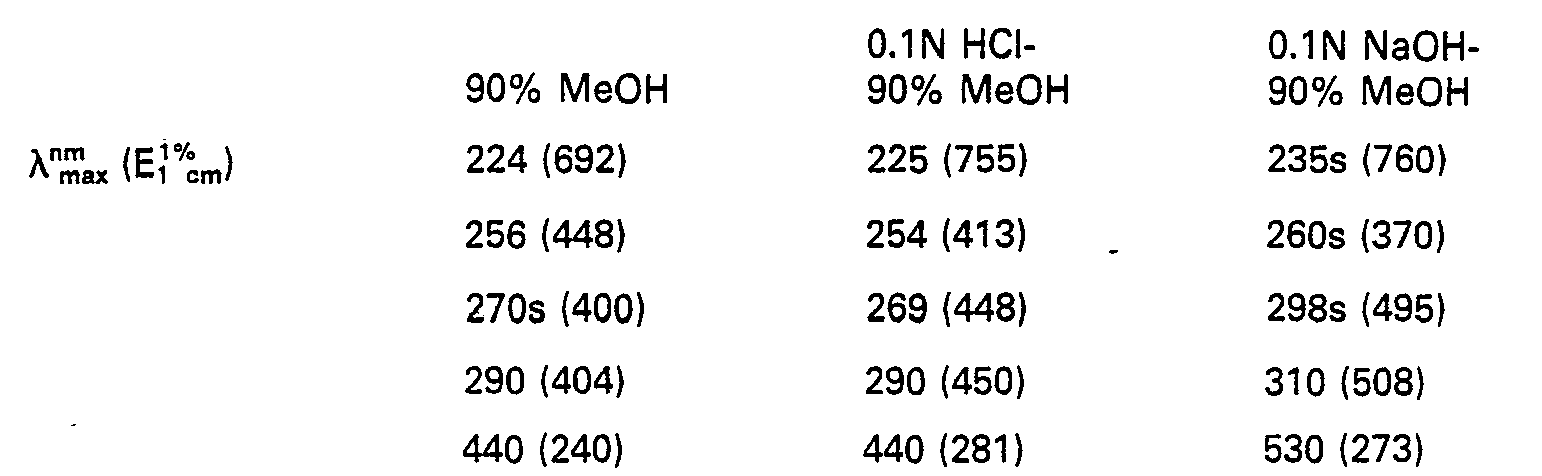
- IR spectrum (KBr): 3520, 3450, 1730, 1680, 1620, 1280, 1250, 1030 cm-1
- NMR (100 MHz, CDCI3:CD30D = 1:1): Fig. 1
- Figs. 1 and 2 show the PMR spectra in CDCI3 of 2-hydroxyaklavinone and 2-hydroxyaclacinomycin A, respectively.
Claims (6)


Applications Claiming Priority (4)
| Application Number | Priority Date | Filing Date | Title |
|---|---|---|---|
| JP11552079A JPS5649341A (en) | 1979-09-07 | 1979-09-07 | Anthracyclinone and its preparation |
| JP115520/79 | 1979-09-07 | ||
| JP92880/80 | 1980-07-07 | ||
| JP9288080A JPS5718672A (en) | 1980-07-07 | 1980-07-07 | Novel anthracycline antibiotic and its preparation |
Publications (3)
| Publication Number | Publication Date |
|---|---|
| EP0030255A2 EP0030255A2 (en) | 1981-06-17 |
| EP0030255A3 EP0030255A3 (en) | 1981-09-02 |
| EP0030255B1 true EP0030255B1 (en) | 1986-01-29 |
Family
ID=26434256
Family Applications (1)
| Application Number | Title | Priority Date | Filing Date |
|---|---|---|---|
| EP80105306A Expired EP0030255B1 (en) | 1979-09-07 | 1980-09-04 | 2-hydroxyaclacinomycin a, pharmaceutical composition containing it; 2-hydroxyaclavinone and fermentative process for preparing same |
Country Status (4)
| Country | Link |
|---|---|
| US (1) | US4386198A (en) |
| EP (1) | EP0030255B1 (en) |
| CA (1) | CA1156577A (en) |
| DE (1) | DE3071391D1 (en) |
Families Citing this family (8)
| Publication number | Priority date | Publication date | Assignee | Title |
|---|---|---|---|---|
| JPS5731696A (en) * | 1980-08-01 | 1982-02-20 | Sanraku Inc | Anthracycline derivative |
| EP0050724B1 (en) * | 1980-10-27 | 1985-01-09 | F. HOFFMANN-LA ROCHE & CO. Aktiengesellschaft | Process for anthracycline glycosides |
| CA1187434A (en) * | 1981-08-11 | 1985-05-21 | Akihiro Yoshimoto | Anthracycline antibiotics and their preparation method |
| US4405713A (en) * | 1981-12-28 | 1983-09-20 | Hoffmann-La Roche Inc. | Process for the preparation of optically active anthracycline glycosides A and B |
| US4471052A (en) * | 1982-01-18 | 1984-09-11 | Adria Laboratories, Inc. | Biosynthesis of simplified anthracyclines |
| JPS5982395A (en) * | 1982-11-02 | 1984-05-12 | Microbial Chem Res Found | Anthracycline compound, its preparation and use |
| DE69100679T2 (en) * | 1990-07-23 | 1994-04-28 | Mitsubishi Heavy Ind Ltd | Gasifying combustion method and gasifying energy production method. |
| CN108484553B (en) * | 2018-03-21 | 2020-10-20 | 杭州唯铂莱生物科技有限公司 | OZK1 and OZK2 compounds with antibiotic effect and preparation method thereof |
Family Cites Families (5)
| Publication number | Priority date | Publication date | Assignee | Title |
|---|---|---|---|---|
| US4020270A (en) * | 1974-05-02 | 1977-04-26 | Societa' Farmaceutici Italia S.P.A. | L-lyxohex-1-enopyranose derivative |
| JPS5134915B2 (en) * | 1974-07-27 | 1976-09-29 | ||
| JPS52136159A (en) * | 1976-04-07 | 1977-11-14 | Microbial Chem Res Found | Anti/malignanttumor containing the same as active ingredients |
| CH637160A5 (en) * | 1976-10-05 | 1983-07-15 | Microbial Chem Res Found | PROCESS FOR THE MANUFACTURE OF ANTHRACYCLINE GLUCOSIDES. |
| JPS5543012A (en) * | 1978-09-20 | 1980-03-26 | Sanraku Inc | Novel anthracycline derivatine and its preparation |
-
1980
- 1980-09-04 DE DE8080105306T patent/DE3071391D1/en not_active Expired
- 1980-09-04 EP EP80105306A patent/EP0030255B1/en not_active Expired
- 1980-09-05 US US06/184,518 patent/US4386198A/en not_active Expired - Lifetime
- 1980-09-05 CA CA000359645A patent/CA1156577A/en not_active Expired
Also Published As
| Publication number | Publication date |
|---|---|
| DE3071391D1 (en) | 1986-03-13 |
| CA1156577A (en) | 1983-11-08 |
| EP0030255A3 (en) | 1981-09-02 |
| EP0030255A2 (en) | 1981-06-17 |
| US4386198A (en) | 1983-05-31 |
Similar Documents
| Publication | Publication Date | Title |
|---|---|---|
| EP0022574B1 (en) | Rhodomycin-group of antibiotics and process for preparing same | |
| US3988315A (en) | Antibiotics aclacinomycins A and B | |
| CA1100895A (en) | Antitumor anthracylcine antibiotics | |
| US4386198A (en) | 2-Hydroxyaclacinomycin A and 2-hydroxyaklavinone and process for preparing same | |
| EP0012159B1 (en) | New anthracycline derivatives and process for preparing the same | |
| US4219622A (en) | Process for producing antibiotics MA 144-M1 and MA 144-M2 | |
| US4198480A (en) | Process for producing antibiotic baumycin complex and components | |
| EP0188293B1 (en) | Anthracycline compounds and uses thereof | |
| FI59613B (en) | FOERFARANDE FOER FRAMSTAELLNING AV ETT TUMOERFOERHINDRANDE RHODIRUBINKOMPLEX OCH DESS KOMPONENTER A OCH B | |
| EP0045474B1 (en) | Anthracycline derivatives | |
| CA1139693A (en) | Process for producing anthracycline glycosides | |
| EP0171677B1 (en) | Novel anthracycline antibiotics | |
| EP0072974B1 (en) | Anthracycline antibiotics and their preparation method | |
| US4204038A (en) | Process for preparing antibiotics MA 144-M1 and MA 144-M2 | |
| US4592999A (en) | Process for producing daunomycin | |
| US4897470A (en) | Anthracycline antibiotics DCP-1 and 2 | |
| EP0062327B1 (en) | Novel anthracycline antibiotic for use as an antitumour agent | |
| CA1338184C (en) | Bu-3862t antitumor antibiotic | |
| US5484712A (en) | Method for producing aclacinomycins A, B, Y using Strepomyces lavendofoliae DKRS | |
| EP0121121B1 (en) | Novel compound, arugomycin | |
| CA1125746A (en) | Antitumor antiobiotics ma 144-m.sub.1 and ma 144- m.sub.2 | |
| IE61342B1 (en) | A doxorubicin derivative, a process for preparing the same, pharmaceutical preparations comprising the same, and the use of the same for the manufacture of useful medicaments | |
| JPS6334160B2 (en) |
Legal Events
| Date | Code | Title | Description |
|---|---|---|---|
| PUAI | Public reference made under article 153(3) epc to a published international application that has entered the european phase |
Free format text: ORIGINAL CODE: 0009012 |
|
| AK | Designated contracting states |
Kind code of ref document: A2 Designated state(s): DE FR GB IT |
|
| PUAL | Search report despatched |
Free format text: ORIGINAL CODE: 0009013 |
|
| AK | Designated contracting states |
Kind code of ref document: A3 Designated state(s): DE FR GB IT |
|
| 17P | Request for examination filed |
Effective date: 19811119 |
|
| GRAA | (expected) grant |
Free format text: ORIGINAL CODE: 0009210 |
|
| AK | Designated contracting states |
Designated state(s): DE FR GB IT Kind code of ref document: B1 Designated state(s): DE FR GB IT |
|
| ITF | It: translation for a ep patent filed | ||
| REF | Corresponds to: |
Ref document number: 3071391 Country of ref document: DE Date of ref document: 19860313 |
|
| ET | Fr: translation filed | ||
| RAP2 | Party data changed (patent owner data changed or rights of a patent transferred) |
Owner name: SANRAKU INCORPORATED |
|
| PLBE | No opposition filed within time limit |
Free format text: ORIGINAL CODE: 0009261 |
|
| STAA | Information on the status of an ep patent application or granted ep patent |
Free format text: STATUS: NO OPPOSITION FILED WITHIN TIME LIMIT |
|
| 26N | No opposition filed | ||
| PGFP | Annual fee paid to national office [announced via postgrant information from national office to epo] |
Ref country code: GB Payment date: 19910904 Year of fee payment: 12 |
|
| PGFP | Annual fee paid to national office [announced via postgrant information from national office to epo] |
Ref country code: FR Payment date: 19910905 Year of fee payment: 12 |
|
| ITTA | It: last paid annual fee | ||
| PGFP | Annual fee paid to national office [announced via postgrant information from national office to epo] |
Ref country code: DE Payment date: 19911129 Year of fee payment: 12 |
|
| PG25 | Lapsed in a contracting state [announced via postgrant information from national office to epo] |
Ref country code: GB Effective date: 19920904 |
|
| GBPC | Gb: european patent ceased through non-payment of renewal fee |
Effective date: 19920904 |
|
| PG25 | Lapsed in a contracting state [announced via postgrant information from national office to epo] |
Ref country code: FR Effective date: 19930528 |
|
| PG25 | Lapsed in a contracting state [announced via postgrant information from national office to epo] |
Ref country code: DE Effective date: 19930602 |
|
| REG | Reference to a national code |
Ref country code: FR Ref legal event code: ST |