EP0017164B1 - Method for determining catecholic compounds and their related compounds - Google Patents
Method for determining catecholic compounds and their related compounds Download PDFInfo
- Publication number
- EP0017164B1 EP0017164B1 EP80101617A EP80101617A EP0017164B1 EP 0017164 B1 EP0017164 B1 EP 0017164B1 EP 80101617 A EP80101617 A EP 80101617A EP 80101617 A EP80101617 A EP 80101617A EP 0017164 B1 EP0017164 B1 EP 0017164B1
- Authority
- EP
- European Patent Office
- Prior art keywords
- compounds
- reaction
- catecholic
- metabolites
- substance
- Prior art date
- Legal status (The legal status is an assumption and is not a legal conclusion. Google has not performed a legal analysis and makes no representation as to the accuracy of the status listed.)
- Expired
Links
- 150000001875 compounds Chemical class 0.000 title claims abstract description 46
- 238000000034 method Methods 0.000 title claims abstract description 25
- -1 potassium ferricyanide Chemical compound 0.000 claims abstract description 46
- 238000006243 chemical reaction Methods 0.000 claims abstract description 43
- 239000003153 chemical reaction reagent Substances 0.000 claims abstract description 36
- 229910021578 Iron(III) chloride Inorganic materials 0.000 claims abstract description 26
- RBTARNINKXHZNM-UHFFFAOYSA-K iron trichloride Chemical compound Cl[Fe](Cl)Cl RBTARNINKXHZNM-UHFFFAOYSA-K 0.000 claims abstract description 26
- 239000000126 substance Substances 0.000 claims abstract description 20
- 239000007795 chemical reaction product Substances 0.000 claims abstract description 8
- 238000004128 high performance liquid chromatography Methods 0.000 claims abstract description 7
- 238000002798 spectrophotometry method Methods 0.000 claims abstract description 6
- 239000002207 metabolite Substances 0.000 claims description 28
- 239000000243 solution Substances 0.000 claims description 28
- 238000002835 absorbance Methods 0.000 claims description 16
- 230000009257 reactivity Effects 0.000 abstract description 6
- 239000000523 sample Substances 0.000 description 24
- CFFZDZCDUFSOFZ-UHFFFAOYSA-N 3,4-Dihydroxy-phenylacetic acid Chemical compound OC(=O)CC1=CC=C(O)C(O)=C1 CFFZDZCDUFSOFZ-UHFFFAOYSA-N 0.000 description 20
- QRMZSPFSDQBLIX-UHFFFAOYSA-N homovanillic acid Chemical compound COC1=CC(CC(O)=O)=CC=C1O QRMZSPFSDQBLIX-UHFFFAOYSA-N 0.000 description 16
- 230000035945 sensitivity Effects 0.000 description 13
- 150000003943 catecholamines Chemical class 0.000 description 11
- VYFYYTLLBUKUHU-UHFFFAOYSA-N dopamine Chemical compound NCCC1=CC=C(O)C(O)=C1 VYFYYTLLBUKUHU-UHFFFAOYSA-N 0.000 description 9
- 239000007788 liquid Substances 0.000 description 9
- RGHMISIYKIHAJW-UHFFFAOYSA-N 3,4-dihydroxymandelic acid Chemical compound OC(=O)C(O)C1=CC=C(O)C(O)=C1 RGHMISIYKIHAJW-UHFFFAOYSA-N 0.000 description 8
- XQXPVVBIMDBYFF-UHFFFAOYSA-N 4-hydroxyphenylacetic acid Chemical compound OC(=O)CC1=CC=C(O)C=C1 XQXPVVBIMDBYFF-UHFFFAOYSA-N 0.000 description 8
- CGQCWMIAEPEHNQ-UHFFFAOYSA-N Vanillylmandelic acid Chemical compound COC1=CC(C(O)C(O)=O)=CC=C1O CGQCWMIAEPEHNQ-UHFFFAOYSA-N 0.000 description 8
- FBWPWWWZWKPJFL-UHFFFAOYSA-N 3-Methoxy-4-hydroxyphenylethyleneglycol Chemical compound COC1=CC(C(O)CO)=CC=C1O FBWPWWWZWKPJFL-UHFFFAOYSA-N 0.000 description 7
- XEKOWRVHYACXOJ-UHFFFAOYSA-N Ethyl acetate Chemical compound CCOC(C)=O XEKOWRVHYACXOJ-UHFFFAOYSA-N 0.000 description 6
- 238000007796 conventional method Methods 0.000 description 6
- 239000000463 material Substances 0.000 description 5
- 238000012856 packing Methods 0.000 description 5
- 230000035484 reaction time Effects 0.000 description 5
- 210000002700 urine Anatomy 0.000 description 5
- UCTWMZQNUQWSLP-VIFPVBQESA-N (R)-adrenaline Chemical compound CNC[C@H](O)C1=CC=C(O)C(O)=C1 UCTWMZQNUQWSLP-VIFPVBQESA-N 0.000 description 4
- MTVWFVDWRVYDOR-UHFFFAOYSA-N 3,4-Dihydroxyphenylglycol Chemical compound OCC(O)C1=CC=C(O)C(O)=C1 MTVWFVDWRVYDOR-UHFFFAOYSA-N 0.000 description 4
- FVMDYYGIDFPZAX-UHFFFAOYSA-N 3-hydroxyphenylacetic acid Chemical compound OC(=O)CC1=CC=CC(O)=C1 FVMDYYGIDFPZAX-UHFFFAOYSA-N 0.000 description 4
- JWJCTZKFYGDABJ-UHFFFAOYSA-N Metanephrine Chemical compound CNCC(O)C1=CC=C(O)C(OC)=C1 JWJCTZKFYGDABJ-UHFFFAOYSA-N 0.000 description 4
- 239000007853 buffer solution Substances 0.000 description 4
- 229960003638 dopamine Drugs 0.000 description 4
- 239000000203 mixture Substances 0.000 description 4
- XLYOFNOQVPJJNP-UHFFFAOYSA-N water Substances O XLYOFNOQVPJJNP-UHFFFAOYSA-N 0.000 description 4
- SFLSHLFXELFNJZ-QMMMGPOBSA-N (-)-norepinephrine Chemical compound NC[C@H](O)C1=CC=C(O)C(O)=C1 SFLSHLFXELFNJZ-QMMMGPOBSA-N 0.000 description 3
- 229930182837 (R)-adrenaline Natural products 0.000 description 3
- QTBSBXVTEAMEQO-UHFFFAOYSA-N Acetic acid Chemical compound CC(O)=O QTBSBXVTEAMEQO-UHFFFAOYSA-N 0.000 description 3
- OKKJLVBELUTLKV-UHFFFAOYSA-N Methanol Chemical compound OC OKKJLVBELUTLKV-UHFFFAOYSA-N 0.000 description 3
- 238000001514 detection method Methods 0.000 description 3
- 229960005139 epinephrine Drugs 0.000 description 3
- 238000002474 experimental method Methods 0.000 description 3
- 229960002748 norepinephrine Drugs 0.000 description 3
- SFLSHLFXELFNJZ-UHFFFAOYSA-N norepinephrine Natural products NCC(O)C1=CC=C(O)C(O)=C1 SFLSHLFXELFNJZ-UHFFFAOYSA-N 0.000 description 3
- VEXZGXHMUGYJMC-UHFFFAOYSA-N Hydrochloric acid Chemical compound Cl VEXZGXHMUGYJMC-UHFFFAOYSA-N 0.000 description 2
- WTDRDQBEARUVNC-UHFFFAOYSA-N L-Dopa Natural products OC(=O)C(N)CC1=CC=C(O)C(O)=C1 WTDRDQBEARUVNC-UHFFFAOYSA-N 0.000 description 2
- 241001465754 Metazoa Species 0.000 description 2
- YNYAYWLBAHXHLL-UHFFFAOYSA-N Normetanephrine Chemical compound COC1=CC(C(O)CN)=CC=C1O YNYAYWLBAHXHLL-UHFFFAOYSA-N 0.000 description 2
- YNYAYWLBAHXHLL-MRVPVSSYSA-N Normetanephrine Natural products COC1=CC([C@H](O)CN)=CC=C1O YNYAYWLBAHXHLL-MRVPVSSYSA-N 0.000 description 2
- FAPWRFPIFSIZLT-UHFFFAOYSA-M Sodium chloride Chemical compound [Na+].[Cl-] FAPWRFPIFSIZLT-UHFFFAOYSA-M 0.000 description 2
- 238000004458 analytical method Methods 0.000 description 2
- 239000007864 aqueous solution Substances 0.000 description 2
- 239000007979 citrate buffer Substances 0.000 description 2
- MHUWZNTUIIFHAS-CLFAGFIQSA-N dioleoyl phosphatidic acid Chemical compound CCCCCCCC\C=C/CCCCCCCC(=O)OCC(COP(O)(O)=O)OC(=O)CCCCCCC\C=C/CCCCCCCC MHUWZNTUIIFHAS-CLFAGFIQSA-N 0.000 description 2
- 239000003814 drug Substances 0.000 description 2
- 229960004502 levodopa Drugs 0.000 description 2
- 238000012544 monitoring process Methods 0.000 description 2
- 150000002989 phenols Chemical class 0.000 description 2
- 239000011347 resin Substances 0.000 description 2
- 229920005989 resin Polymers 0.000 description 2
- DIVQKHQLANKJQO-UHFFFAOYSA-N 3-methoxytyramine Chemical compound COC1=CC(CCN)=CC=C1O DIVQKHQLANKJQO-UHFFFAOYSA-N 0.000 description 1
- WTDRDQBEARUVNC-LURJTMIESA-N L-DOPA Chemical compound OC(=O)[C@@H](N)CC1=CC=C(O)C(O)=C1 WTDRDQBEARUVNC-LURJTMIESA-N 0.000 description 1
- OZGANZKCVKSMQQ-UHFFFAOYSA-N MHPG Natural products NC(=N)NCCC1=CC=CC(O)=C1 OZGANZKCVKSMQQ-UHFFFAOYSA-N 0.000 description 1
- 241000124008 Mammalia Species 0.000 description 1
- DZGWFCGJZKJUFP-UHFFFAOYSA-N Tyramine Natural products NCCC1=CC=C(O)C=C1 DZGWFCGJZKJUFP-UHFFFAOYSA-N 0.000 description 1
- 238000010521 absorption reaction Methods 0.000 description 1
- 230000002378 acidificating effect Effects 0.000 description 1
- 239000012472 biological sample Substances 0.000 description 1
- 239000000872 buffer Substances 0.000 description 1
- 244000309464 bull Species 0.000 description 1
- 238000004587 chromatography analysis Methods 0.000 description 1
- 238000011161 development Methods 0.000 description 1
- 238000003745 diagnosis Methods 0.000 description 1
- 238000010586 diagram Methods 0.000 description 1
- 238000004817 gas chromatography Methods 0.000 description 1
- 238000002290 gas chromatography-mass spectrometry Methods 0.000 description 1
- 239000003456 ion exchange resin Substances 0.000 description 1
- 229920003303 ion-exchange polymer Polymers 0.000 description 1
- 238000004811 liquid chromatography Methods 0.000 description 1
- 238000012986 modification Methods 0.000 description 1
- 230000004048 modification Effects 0.000 description 1
- 238000005191 phase separation Methods 0.000 description 1
- 239000000047 product Substances 0.000 description 1
- 238000004445 quantitative analysis Methods 0.000 description 1
- 239000011541 reaction mixture Substances 0.000 description 1
- 238000000926 separation method Methods 0.000 description 1
- 239000011780 sodium chloride Substances 0.000 description 1
- 229960003732 tyramine Drugs 0.000 description 1
- 235000013311 vegetables Nutrition 0.000 description 1
- 239000002699 waste material Substances 0.000 description 1
Images


Classifications
-
- G—PHYSICS
- G01—MEASURING; TESTING
- G01N—INVESTIGATING OR ANALYSING MATERIALS BY DETERMINING THEIR CHEMICAL OR PHYSICAL PROPERTIES
- G01N33/00—Investigating or analysing materials by specific methods not covered by groups G01N1/00 - G01N31/00
- G01N33/48—Biological material, e.g. blood, urine; Haemocytometers
- G01N33/50—Chemical analysis of biological material, e.g. blood, urine; Testing involving biospecific ligand binding methods; Immunological testing
- G01N33/52—Use of compounds or compositions for colorimetric, spectrophotometric or fluorometric investigation, e.g. use of reagent paper and including single- and multilayer analytical elements
-
- Y—GENERAL TAGGING OF NEW TECHNOLOGICAL DEVELOPMENTS; GENERAL TAGGING OF CROSS-SECTIONAL TECHNOLOGIES SPANNING OVER SEVERAL SECTIONS OF THE IPC; TECHNICAL SUBJECTS COVERED BY FORMER USPC CROSS-REFERENCE ART COLLECTIONS [XRACs] AND DIGESTS
- Y10—TECHNICAL SUBJECTS COVERED BY FORMER USPC
- Y10T—TECHNICAL SUBJECTS COVERED BY FORMER US CLASSIFICATION
- Y10T436/00—Chemistry: analytical and immunological testing
- Y10T436/20—Oxygen containing
- Y10T436/203332—Hydroxyl containing
Definitions
- This invention relates to a new method for determining selectively catecholic compounds and their dihydroxyphenyl or hydroxymethoxyphenyl metabolites.
- Catecholic compounds are found in the animal and vegatable kingdoms, and among them, catecholamines, which play an important role among mammals, may be cited as typical. It is of utmost importance, therefore, in the fields of medicine, pharmacy, biochemistry, pharmacology, neurochemistry, etc.
- catecholamines such as dopamine, norepinephrine or epinephrin
- catecholamines such as dopamine, norepinephrine or epinephrin
- their related compounds or their metabolites 3-methyoxy- tyramine, normetanephrine, metanephrine, homovanillic acid, vanillylmandelic acid, 3,4-dihydroxyphenylacetic acid, 3,4-dihydroxymandelic acid, 3-methoxy-4-hydroxyphenyl- glycol, 3,4-dihydroxyphenylglycol, etc.
- a method of determining selectively catecholic compounds and their dihydroxyphenyl or hydroxymethoxyphenyl metabolites contained in a substance which also contains monophenolic compounds comprising reacting said substance with ferric chloride and potassium ferricyanide, characterised in reacting said substance simultaneously or consecutively with solutions of ferric chloride and potassium ferricyanide as reaction reagents for a reaction period of from 1.5 to 5 minutes and in the concentration of the solutions of ferric chloride and potassium ferricyanide of 0.01 to 0.5 M and 0.01 to 0.5 M, respectively, whereby the reaction products of said catecholic compounds or said metabolites with the reaction reagents will exhibit absorbances sufficiently higher than the reaction products of said mono- phenolic compounds when analysed by spectrophotometry at a wave length of 600 to 700 nm to enable selective determination of said catecholic compounds and their metabolites and analysing, after the reaction is completed, the reaction products by spectrophotometry at a wave length of 600
- the method of this invention is especially suitable for determining catecholic compounds present in the animal and vegetable kingdoms and others, particularly catecholamines such as dopamine, norepinephrine and epinephrine, and their metabolites including, for example, 3-methoxytyramine, normetanephrine, metanephrine, homovanillic acid, vanillylmandelic acid, 3,4-dihydroxyphenylacetic acid, 3,4-dihydroxymandelic acid, 3-methoxy-4-hydrophenylglycol and 3,4-dihydroxyphenylglycol.
- catecholamines such as dopamine, norepinephrine and epinephrine
- their metabolites including, for example, 3-methoxytyramine, normetanephrine, metanephrine, homovanillic acid, vanillylmandelic acid, 3,4-dihydroxyphenylacetic acid, 3,4-dihydroxymandelic acid, 3-
- a substance or sample containing catecholic compounds and their related metabolites is allowed to react with ferric chloride and potassium ferricyanide simultaneously or consectively, in which ferric chloride and potassium ferricyanide are used as reaction reagents preferably in the form of aqueous solutions.
- both the reagents may be dissolved in water and the resultant solution may be allowed to react with such a sample
- the present invention can be carried out, after solutions of the respective reagents have been prepared, by allowing one of the reagents (one of the solutions) and then allowing the resultant product to react with the other reagent (the other solution).
- the reaction with one of the reagents or with both the reagents is performed, preferably in the presence of a buffer such as citrate buffer solution, preferably in the acidic region of a pH of below 6. It is also preferable to allow the reaction to occur at a temperature between 4° and 100°C.
- a buffer such as citrate buffer solution
- the solutions of ferric chloride and potassium ferricyanide are prepared in concentrations of 0.01 to 0.5 M and 0.01 to 0.5 M, respectively, for obtaining the specific reactivity and high sensitivity.
- the suitable reaction time is from 1.5 to 5 minutes.
- the overall reaction products are spectrophotometrically analyzed to determine said catecholic compounds and said metabolites contained in the substance. That is to say, as a bluish color will develop duetothe reaction of the respective components with the reagents, each component can be selectively quantitated by measuring its absorbance at a wave length of 600 to 700 nm.
- the quantitative analysis may be carried out using a calibration standard prepared in advance for each of the components which may be contained in the sample.
- a calibration standard prepared in advance for each of the components which may be contained in the sample.
- the recorder response for the each component is linear to the concentrations of each components, for example, 3,4-dihydroxymandelic acid, 3,4-dihydroxyphenylacetic acid, homovanillic acid or 3- methyoxy-4-hydroxyphenylglycol, in concentrations up to 400 ng, and thus, such linearity can be used as the calibration standard.
- the method of this invention may be accomplished in combination with high-performance liquid chromatography.
- a sample is allowed to react with the reagents after separation of the components thereof by means of high-performance liquid chromatography, and then is analyzed spectrophotometrically to quantitate each component.
- the column-packing material for liquid chromatography may be properly selected from among commonly available packing materials, such as ion-exchange resins, resins of normal phase and resins of reversed phase, for a specific sample, such a column-packing material as Spherisorb S5 ODS@ (available from Phase Separations Ltd.) may be preferred.
- This embodiment is especially suitable for quantitating catecholamines and their metabolites contained in plant and biological substances, particularly in urine, with selectivity and high sensitivity.
- the determination apparatus comprises a reaction vessel in which a substance containing catecholic compounds and their metabolites is allowed to react with ferric chloride and potassium ferricyanide as reagents and a spectrophotometer in connectoin with the reaction vessel.
- a spectrophotometer of the type commonly available on market may be used.
- the reaction vessel is connected, preferably with a device to deliver a substance or sample containing catecholic compounds and their metabolites and a device to deliver the reagents.
- a device to deliver a sample a commonly available sample injector may be used.
- the device for delivering the reagents is preferably provided with a reservoir for ferric chloride and a reservoir for potassium ferricyanide.
- the reagents may respectively be delivered directly to the reaction vessel, it is especially preferable to install a mixing vessel between and connected with these reagent reservoirs and the reaction vessel so that a mixture of the two reagents can be delivered to the reaction vessel.
- the reagents can be delivered by a pump.
- the high-performance liquid chromatograph may be of a commonly available type, comprising a column packed with a commonly available packing material and a liquid circulation bath by which liquid, preferably water, at a constant temperature is circulated for the column.
- FIG. 1 A preferred arrangement of the determination apparatus is illustrated in Figure 1.
- a reaction vessel 1 a ferric chloride reservoir 2 and a potassium ferricyanide reservoir 3 are connected with each other through a mixing vessel 4, and the solutions of the reagents are delivered by pumps 5 and 6 respectively.
- the mixing of the reagents can be made by an optional means, such as a magnetic stirrer.
- a sample is injected from a sample injector 7 and delivered to the reaction vessel 1.
- the sample injected from the injector 7 is delivered to the reaction vessel 1 through the column of the high-performance liquid chromatograph 8.
- the numeral 9 represents a constant temperature water circulation bath for the column 8.
- a buffer solution reservoir 10 is installed, preferably prior to the sample injector 7, and the buffer solution is delivered to the sample injector 7 by a pump 11.
- a commonly available spectrophotometer 12 is connected, and the result of the absorption is recorded by a recorder 13.
- the reaction mixture after completion of the determination is drained into a waste reservoir 14.
- determination of each component of catecholic compounds (especially catecholamines) and their metabolites in a substance can be made selectively with high sensitivity by a simple and economical means, preferably in combination with a high- perforamnce liquid chormatograph, and this invention is highly useful for analysis, quantitation, or diagnosis in the fields of medicine, pharmacy, biochemistry, pharmacology and neurochemistry.
- Aqueous solutions of ferric chloride and potassium ferricyanide each in a desired concentration were delivered by pumps respectively from the ferric chloride reservoir 2 and the potassium ferricyanide reservoir 3 to the mixing vessel 4, and then to the reaction vessel 1, and each sample was delivered to the reaction vessel 1 from the sample injector 7.
- the reaction was allowed to take place at 45°C for a desired period of time, and then the absorbence was monitored with the spectrophotometer 12.
- dihydroxyphenyl compounds (catecholic compounds) and hydroxymethoxyphenyl compounds exhibited higher sensitivity than monohydroxyphenyl compound.
- the former group of compounds was found to be several times higher in sensitivity than the latter group of compounds in the spectrophotometric determination.
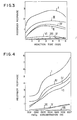
- Figure 4 represents the results of determination of absorbance at the wavelength of 690 nm after the reaction was allowed to proceed for 1.5 minutes with potassium ferricyanide solution in the fixed concentration of 0.01 M and ferric chloride solution in various concentrations. Similarly, the absorbance, using ferric chloride solution in the fixed concentrations of 0.03 M and potassium ferricyanide solution in various concentrations, is depicted in Figure 5.
- the Roman numerals in Figures 4 and 5 have the same meanings as in Figure 2.
- catecholamines can also be determined with high sensitivity.
- the column 8 was connected with another spectrophotometer, with which the absorbance of the column eluate was monitored at a wavelenght of 280 nm according to the conventional method.
- Metabolites of catecholamines contained in urine were determined, using the same modified equipment and under the same conditions for the determination as in Example 1, except that the detection conditions were as stated below.
Landscapes
- Health & Medical Sciences (AREA)
- Life Sciences & Earth Sciences (AREA)
- Hematology (AREA)
- Immunology (AREA)
- Engineering & Computer Science (AREA)
- Molecular Biology (AREA)
- Biomedical Technology (AREA)
- Chemical & Material Sciences (AREA)
- Urology & Nephrology (AREA)
- Food Science & Technology (AREA)
- Biochemistry (AREA)
- Cell Biology (AREA)
- Biotechnology (AREA)
- Medicinal Chemistry (AREA)
- Physics & Mathematics (AREA)
- Analytical Chemistry (AREA)
- Microbiology (AREA)
- General Health & Medical Sciences (AREA)
- General Physics & Mathematics (AREA)
- Pathology (AREA)
- Investigating Or Analysing Biological Materials (AREA)
- Investigating Or Analyzing Non-Biological Materials By The Use Of Chemical Means (AREA)
- Investigating Or Analysing Materials By The Use Of Chemical Reactions (AREA)
- Acyclic And Carbocyclic Compounds In Medicinal Compositions (AREA)
- Organic Low-Molecular-Weight Compounds And Preparation Thereof (AREA)
Abstract
Description
- This invention relates to a new method for determining selectively catecholic compounds and their dihydroxyphenyl or hydroxymethoxyphenyl metabolites.
- Catecholic compounds are found in the animal and vegatable kingdoms, and among them, catecholamines, which play an important role among mammals, may be cited as typical. It is of utmost importance, therefore, in the fields of medicine, pharmacy, biochemistry, pharmacology, neurochemistry, etc. to determine the fluctuation in a biological substance in the amount of catecholamines (such as dopamine, norepinephrine or epinephrin) and their related compounds or their metabolites (3-methyoxy- tyramine, normetanephrine, metanephrine, homovanillic acid, vanillylmandelic acid, 3,4-dihydroxyphenylacetic acid, 3,4-dihydroxymandelic acid, 3-methoxy-4-hydroxyphenyl- glycol, 3,4-dihydroxyphenylglycol, etc.).
- While catecholamines and their metabolites are present in very small quantities, various methods for the determination of catecholamines have recently been put into practical use. The methods applied are selected according to their effectiveness for the intended purpose and include, for example, methods using such techniques as gas chromatography (Chem. Pharm. Bull., 16:699-701, 1968), gas chromatography-mass spectrometry (Sci., 176: 177-180, 1972), high-performance liquid chromatography (Life Sci., 14:311-322, 1974) and the enzymeisotope method (Circ. Res., 26:53-57, 1970).
- There has been little study, however, on the determination of the metabolities, and no suitable method for accurate and highly sensitive determination thereof has yet been established. Recent advancements in high-performance liquid chromatography have made it possible to separate the components of a substance which may contain the metabolites. Thus, as described in "J. Chromatogr., 116:240-243, 1976", the analysis of such a substance may be carried out using the most recent advancement in high-performance liquid chromatography in combination with absorptiophotometry. However, when absorbance at 280 nm is used as described in the above-cited paper, a problem has been encountered in respect of the selectivity for quantitation of the metabolites from biological samples composed of many components including mono-phenolic compounds which have maximum adbsorption around 280 nm. In addition, the described method is disadvantageous in that the sensitivity also is insufficient for quantitating extremely small amounts of the metabolites as in normal human urine.
- It is described in "Nature (170:247-250, 1952)" that the solution of mixed ferric chloride and potassium ferricyanide was used as a color developer in paper chromatographic analysis of phenols. The reference only states that with such compounds the instantaneous development of a color will be produced (refer to the 14th line from the bottom, left column, page 250). Thus, it has not been known that the reactivities therewith are different depending upon the types of phenols.
- Under the circumstances, it is the principal object of the present invention to provide a method for determining, with excellent selectivity and high sensitivity, catecholic compounds and their metabolites contained in a substance which also may contain monophenolic compounds, particularly in a biological substance.
- As the result of various studies by the inventors, it has now been found that, when ferric chloride and potassium ferricyanide are used as reaction reagents, there are differences between the reactivity of catecholic compounds as well as their metabolites and the reactivity of mono- phenolic compounds (interferers). That is to say, the reaction of dihydroxyphenyl compounds (catecholic compounds such as catecholamines and their dihydroxyphenyl metabolites) and that of hydroxymethoxyphenyl compounds (metabolites of catecholic compounds) with the reagents have been found to occur faster than the reaction of monohydroxyphenyl compounds (the so-called monophenolic compounds) with the same reagents.
- Thus, according to the present invention, there is provided a method of determining selectively catecholic compounds and their dihydroxyphenyl or hydroxymethoxyphenyl metabolites contained in a substance which also contains monophenolic compounds, comprising reacting said substance with ferric chloride and potassium ferricyanide, characterised in reacting said substance simultaneously or consecutively with solutions of ferric chloride and potassium ferricyanide as reaction reagents for a reaction period of from 1.5 to 5 minutes and in the concentration of the solutions of ferric chloride and potassium ferricyanide of 0.01 to 0.5 M and 0.01 to 0.5 M, respectively, whereby the reaction products of said catecholic compounds or said metabolites with the reaction reagents will exhibit absorbances sufficiently higher than the reaction products of said mono- phenolic compounds when analysed by spectrophotometry at a wave length of 600 to 700 nm to enable selective determination of said catecholic compounds and their metabolites and analysing, after the reaction is completed, the reaction products by spectrophotometry at a wave length of 600 to 700 nm so as to determine said catecholic compounds and said metabolites.
- Figure 1 is a diagram showing a preferred embodiment of the apparatus for practising the method of this invention;
- Figure 2 through 6 are graphic presentations to indicate the specificity and sensitivity of catecholic compounds and hydroxymethoxy compounds to the reagents; and
- Figures 7 and 8 are graphic presentations representing the results obtained from the determination of standard samples and urine, respectively.
- The method of this invention is especially suitable for determining catecholic compounds present in the animal and vegetable kingdoms and others, particularly catecholamines such as dopamine, norepinephrine and epinephrine, and their metabolites including, for example, 3-methoxytyramine, normetanephrine, metanephrine, homovanillic acid, vanillylmandelic acid, 3,4-dihydroxyphenylacetic acid, 3,4-dihydroxymandelic acid, 3-methoxy-4-hydrophenylglycol and 3,4-dihydroxyphenylglycol.
- According to the present invention, a substance or sample containing catecholic compounds and their related metabolites is allowed to react with ferric chloride and potassium ferricyanide simultaneously or consectively, in which ferric chloride and potassium ferricyanide are used as reaction reagents preferably in the form of aqueous solutions. Thus, though both the reagents may be dissolved in water and the resultant solution may be allowed to react with such a sample, it is usually preferable to separately prepare solutions of the respective reagents and mix the solutions just before the reaction with the two reagents takes place. Alternatively, the present invention can be carried out, after solutions of the respective reagents have been prepared, by allowing one of the reagents (one of the solutions) and then allowing the resultant product to react with the other reagent (the other solution).
- The reaction with one of the reagents or with both the reagents is performed, preferably in the presence of a buffer such as citrate buffer solution, preferably in the acidic region of a pH of below 6. It is also preferable to allow the reaction to occur at a temperature between 4° and 100°C. The solutions of ferric chloride and potassium ferricyanide are prepared in concentrations of 0.01 to 0.5 M and 0.01 to 0.5 M, respectively, for obtaining the specific reactivity and high sensitivity. The suitable reaction time is from 1.5 to 5 minutes.
- The overall reaction products are spectrophotometrically analyzed to determine said catecholic compounds and said metabolites contained in the substance. That is to say, as a bluish color will develop duetothe reaction of the respective components with the reagents, each component can be selectively quantitated by measuring its absorbance at a wave length of 600 to 700 nm.
- More specifically, the quantitative analysis may be carried out using a calibration standard prepared in advance for each of the components which may be contained in the sample. For example, when each component is allowed to react, with 0.03 M ferric chloride solution and 0.03 M potassium ferricyanide solution at a reaction temperature of 45°C for a reaction time of 1.5 minutes, and its absorbance at 690 nm is monitored and recorded, the recorder response for the each component is linear to the concentrations of each components, for example, 3,4-dihydroxymandelic acid, 3,4-dihydroxyphenylacetic acid, homovanillic acid or 3- methyoxy-4-hydroxyphenylglycol, in concentrations up to 400 ng, and thus, such linearity can be used as the calibration standard.
- In addition, the method of this invention may be accomplished in combination with high-performance liquid chromatography. In such an embodiment, a sample is allowed to react with the reagents after separation of the components thereof by means of high-performance liquid chromatography, and then is analyzed spectrophotometrically to quantitate each component. While the column-packing material for liquid chromatography may be properly selected from among commonly available packing materials, such as ion-exchange resins, resins of normal phase and resins of reversed phase, for a specific sample, such a column-packing material as Spherisorb S5 ODS@ (available from Phase Separations Ltd.) may be preferred. This embodiment is especially suitable for quantitating catecholamines and their metabolites contained in plant and biological substances, particularly in urine, with selectivity and high sensitivity.
- For practising the method of the invention, a determination apparatus as described hereinafter may be used. The determination apparatus comprises a reaction vessel in which a substance containing catecholic compounds and their metabolites is allowed to react with ferric chloride and potassium ferricyanide as reagents and a spectrophotometer in connectoin with the reaction vessel. A spectrophotometer of the type commonly available on market may be used.
- The reaction vessel is connected, preferably with a device to deliver a substance or sample containing catecholic compounds and their metabolites and a device to deliver the reagents. As the device for delivering a sample, a commonly available sample injector may be used. The device for delivering the reagents is preferably provided with a reservoir for ferric chloride and a reservoir for potassium ferricyanide. Though the reagents may respectively be delivered directly to the reaction vessel, it is especially preferable to install a mixing vessel between and connected with these reagent reservoirs and the reaction vessel so that a mixture of the two reagents can be delivered to the reaction vessel.
- The reagents can be delivered by a pump. In addition, it is preferable to install a buffer solution reservoir prior to the sample injector, to deliver the buffer solution to the injector via the pump and to deliver the sample to the reaction vessel.
- It is further preferable to install a high-performance liquid chromatograph between the sample delivery device and the reaction vessel and to connect it with them. The high-performance liquid chromatograph may be of a commonly available type, comprising a column packed with a commonly available packing material and a liquid circulation bath by which liquid, preferably water, at a constant temperature is circulated for the column.
- A preferred arrangement of the determination apparatus is illustrated in Figure 1. In this figure, a reaction vessel 1, a
ferric chloride reservoir 2 and apotassium ferricyanide reservoir 3 are connected with each other through amixing vessel 4, and the solutions of the reagents are delivered bypumps sample injector 7 and delivered to the reaction vessel 1. In case of using a high-performance liquid chromatograph, the sample injected from theinjector 7 is delivered to the reaction vessel 1 through the column of the high-performance liquid chromatograph 8. Thenumeral 9 represents a constant temperature water circulation bath for thecolumn 8. Abuffer solution reservoir 10 is installed, preferably prior to thesample injector 7, and the buffer solution is delivered to thesample injector 7 by apump 11. Next to the reaction vessel 1, a commonlyavailable spectrophotometer 12 is connected, and the result of the absorption is recorded by arecorder 13. The reaction mixture after completion of the determination is drained into awaste reservoir 14. - According to this invention, determination of each component of catecholic compounds (especially catecholamines) and their metabolites in a substance can be made selectively with high sensitivity by a simple and economical means, preferably in combination with a high- perforamnce liquid chormatograph, and this invention is highly useful for analysis, quantitation, or diagnosis in the fields of medicine, pharmacy, biochemistry, pharmacology and neurochemistry.
- Below are descripted experiments conducted for elucidating that catecholic compounds and their related compounds (their metabolities) can be determined according to the present invention.
- In all the experiments, determination was performed with the same equipment as that illustrated in Figure 1, with the exception that the
column 8 for high-performance liquid chromatograph and the constant temperaturewater circulation bath 9 were excluded. As samples, the following compounds were used all in a concentration of 2x10⁻⁹ M: - 3,4-dihydroxymandelic acid (DOPAC)
- homovanillic acid (HVA)
- 3,4-dihydroxyphenylacetic acid (DOPAC)
- vanillylmandelic acid (VMA)
- 3-methoxy-4-hydroxyphenylglycol (MHPG)
- dopa (DOPA)
- dopamine (DA)
- morepinephrine (NE)
- epinephrine (E).
- In addition, for examining the behavior of monohydroxyphenyl compounds as interferring compounds, two samples were also prepared containing 4-hydroxyphenylacetic acid and 3-hydroxyphenylacetic acid, respectively, both in a concentration of 2x10⁻⁹ M, that is, the same concentration as the foregoing samples.
- Aqueous solutions of ferric chloride and potassium ferricyanide each in a desired concentration were delivered by pumps respectively from the
ferric chloride reservoir 2 and thepotassium ferricyanide reservoir 3 to the mixingvessel 4, and then to the reaction vessel 1, and each sample was delivered to the reaction vessel 1 from thesample injector 7. The reaction was allowed to take place at 45°C for a desired period of time, and then the absorbence was monitored with thespectrophotometer 12. - (A) Reactivity and sensitivity of each sample:
- With the reaction reagents in the concentration of 0.02 M ferric chloride and 0.01 M potassium ferricyanide, each sample was allowed to reactfor a reaction time of 1.5 minutes, and the absorbence of each sample was monitored at wavelengths between 600 and 720 nm, the results of which are shown in Figure 2.
- In Figure 2, the absorbance of each sample is represented by a Roman numeral as follows:
- I=DOMA; II=HVA; III=DOPAC; IV=VMA; V=4-hydroxyphenylacetic acid; VI=MHPG; VII=3-hydroxyphenylacetic acid.
- As mentioned earlier, the concentrations of V and VII are TO times higher than that of the others.
- As clarified from the results, dihydroxyphenyl compounds (catecholic compounds) and hydroxymethoxyphenyl compounds exhibited higher sensitivity than monohydroxyphenyl compound. For example, from the absorbances at 690 nm, the former group of compounds was found to be several times higher in sensitivity than the latter group of compounds in the spectrophotometric determination.
- With the reagents in the concentrations of 0.02 M ferric chloride and 0.01 M potassium ferricyanide, the reaction was allowed to proceed for different reaction times, and the respective absorbances were monitored at the wavelength of 690 nm, the results of which are shown in Figure 3. The Roman numerals in the figure have the same meanings as in Figure 2.
- In order to increase the selectivity of dihydroxyphenyl compounds and hydroxymethoxyphenyl compounds over monohydroxyphenyl compounds at the present concentrations of the reagents, it was found preferable to allow the reaction to proceed for about 1.5 minutes.
- Figure 4 represents the results of determination of absorbance at the wavelength of 690 nm after the reaction was allowed to proceed for 1.5 minutes with potassium ferricyanide solution in the fixed concentration of 0.01 M and ferric chloride solution in various concentrations. Similarly, the absorbance, using ferric chloride solution in the fixed concentrations of 0.03 M and potassium ferricyanide solution in various concentrations, is depicted in Figure 5. The Roman numerals in Figures 4 and 5 have the same meanings as in Figure 2.
- From these results, the optimal concentration of each reaction reagent was found at 0.02 to 0.03 M ferric chloride and at 0.02 to 0.04 M for potassium ferricyanide. In addition, in the reaction with 0.03 M ferric chloride solution and 0.03 M potassium ferricyanide solution, about 30 times higher sensitivity for dihydroxyphenyl compounds and about 20 times higher sensitivity for hydroxymethoxy compounds were obtained as compared with monohydroxy compounds (Figure 5).
- (D) Determination of catecholamines was performed under the same conditions as described in Experiment A, the results of which are shown in Figure 6. The chromatograms in the figure show the absorbances designated as VIII for DOPA, as IX for epinephrine, as X for norepinephrine and as XI for dopamine.
- As clarified from the results, catecholamines can also be determined with high sensitivity.
- Determination of a sample containing catecholic compounds and their metabolites was performed using an apparatus which, similar to that shown in Figure 1, was equipped with a high-performance liquid chromatograph, with the modification as specified below so as to permit a comparison of the data obtained by the method of the present invention with those by the conventional method.
- Instead of connecting with the reaction vessel 1, the
column 8 was connected with another spectrophotometer, with which the absorbance of the column eluate was monitored at a wavelenght of 280 nm according to the conventional method. The column eluate, the absorbance of which had been determined at 280 nm, was delivered to the reaction vessel 1 for the reaction with the reagents, and then its absorbance at the wavelength of 690 nm was monitored with thespectrophotometer 12. - As a sample, a mixture of 400 ng each of 3,4-dihydroxymandelic acid (DOMA), a vanillylmandelic acid (VMA), 3-methoxy-4-hydroxyphenylglycol (MHPG), 3,4-dihydroxyphenylacetic acid (DOPAC) and homovanillic acid (HVA) was used.
- The conditions for the determination were as follows:
- Size of Column: 4.6 mm in inside diameter and 25 cm in length.
- Packing Material: Spherisob S5 ODS@
- Column Temperature: 45°C.
- Mobile Phase: 10% methanol in 0.1 M citrate buffer solution (pH 3.4).
- Flow Rate of Mobile Phase: 0.6 ml per minute.
- Concentration of Reagents: 0.06 M ferric chloride solution; and 0.06 M potassium ferricyanide solution.
- Flow Rates of Reagents: 0.3 ml per minute, respectively.
- Detection: 280 nm, 1.0 AUFS (the conventional method) 690 nm, 1.28 AUFS (the method of this invention).
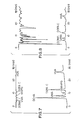
- The results of the determination are illustrated in Figure 7. The upper chromatogram in the figure was obtained by monitoring the absorbance at 280 nm according to the conventional method, and the lower chromatogram was obtained by monitoring the absorbance at 690 nm according to the method of this invention, and the abbreviations at the peaks of the chromatograms represent the components as stated above. As can be seen from these results, each component can be quantitated with high sensitivity by the method of this invention.
- Metabolites of catecholamines contained in urine were determined, using the same modified equipment and under the same conditions for the determination as in Example 1, except that the detection conditions were as stated below.
- Detection: 280 nm, 0.1 AUFS (the conventional
method)
690 nm, 0.64 AUFS (the method of this invention). - A 5 ml of urine was collected in a separatory funnel, to which 0.5 ml of 1 N hydrochloric acid and 1.5 g of sodium chloride were added. The mixture was agitated and 20 ml of ethyl acetate was added and shaken therewith. The ethyl acetate layer was collected, and evaporated at 40°C under reduced pressure to dryness, and the residue was dissolved in 2 ml of 0.2 N acetic acid. An aliquot of the resultant solution was injected into the
column 8 through theinjector 7. Figure 8 is one of the results obtained according to the procedure. The abbreviations of the respective components as well as the upper and lower chromatograms have the same meanings as in Figure 7. As clarified from these results, considerably complicated chromatograms are obtained by the conventional method, and so it is difficult to quantitate each component selectively. By contrast, simple and clear peaks of the components to be determined are obtained by the method of this invention, greatly facilitating selective quantitation.
Claims (2)
Priority Applications (1)
| Application Number | Priority Date | Filing Date | Title |
|---|---|---|---|
| AT80101617T ATE17047T1 (en) | 1979-03-30 | 1980-03-26 | PROCEDURE FOR THE DETECTION OF CATECHOL COMPOUNDS AND THEIR RELATED COMPOUNDS. |
Applications Claiming Priority (2)
| Application Number | Priority Date | Filing Date | Title |
|---|---|---|---|
| JP54036911A JPS5923388B2 (en) | 1979-03-30 | 1979-03-30 | Method and device for measuring catecholamines and their metabolites |
| JP36911/79 | 1979-03-30 |
Publications (2)
| Publication Number | Publication Date |
|---|---|
| EP0017164A1 EP0017164A1 (en) | 1980-10-15 |
| EP0017164B1 true EP0017164B1 (en) | 1985-12-18 |
Family
ID=12482948
Family Applications (1)
| Application Number | Title | Priority Date | Filing Date |
|---|---|---|---|
| EP80101617A Expired EP0017164B1 (en) | 1979-03-30 | 1980-03-26 | Method for determining catecholic compounds and their related compounds |
Country Status (5)
| Country | Link |
|---|---|
| US (1) | US4319883A (en) |
| EP (1) | EP0017164B1 (en) |
| JP (1) | JPS5923388B2 (en) |
| AT (1) | ATE17047T1 (en) |
| DE (1) | DE3071295D1 (en) |
Families Citing this family (15)
| Publication number | Priority date | Publication date | Assignee | Title |
|---|---|---|---|---|
| US4472507A (en) * | 1981-06-04 | 1984-09-18 | Pluim Jr Arthur W | Method for detecting exposure to poison ivy and the like |
| US4639415A (en) * | 1984-09-17 | 1987-01-27 | Konishiroku Photo Industry Co., Ltd. | Silver halide color photographic material containing a magenta color image-forming coupler |
| JP2518256B2 (en) * | 1987-03-02 | 1996-07-24 | 東ソー株式会社 | Method and apparatus for simultaneous analysis of vanillyl mandelic acid, homovanillic acid and creatinine |
| RU2194987C2 (en) * | 2000-05-26 | 2002-12-20 | Научно-исследовательский институт кардиологии Томского научного центра СО РАМН | Method for determining catecholamine quantity in urine |
| CN102778514B (en) * | 2011-05-11 | 2015-06-17 | 北京以岭生物工程技术有限公司 | Detection method for meclozine hydrochloride tablet-related substances |
| CN103743795B (en) * | 2013-12-16 | 2015-09-30 | 云南师范大学 | Based on the enantiomorph potentiometric sensor of sodium tetraphenylborate and the application in valine methyl ester detects thereof |
| CN103728393A (en) * | 2014-01-10 | 2014-04-16 | 无锡万全医药技术有限公司 | Method for separating and measuring deferasirox raw material related substances by liquid chromatography |
| JP6273508B2 (en) * | 2014-03-28 | 2018-02-07 | 国立大学法人山梨大学 | Detection method of catecholamines using metal fine particle formation process |
| CN104237421B (en) * | 2014-10-15 | 2016-07-20 | 济南春和景明医药技术有限公司 | A kind of relevant substance detecting method of succinum love song Ge Lieting and preparation thereof |
| CN104897810A (en) * | 2015-05-26 | 2015-09-09 | 扬州日兴生物科技股份有限公司 | Liquid phase analysis method for concentration of 1-amino-anthraquinone |
| CN107290472B (en) * | 2017-08-21 | 2019-02-15 | 宜宾五粮液股份有限公司 | Method for the detection of phenolic acids and/or their esters in wine and/or by-products of winemaking |
| CN109142594A (en) * | 2018-08-14 | 2019-01-04 | 美康生物科技股份有限公司 | Mass spectrometry kit for catecholamine and metanephrine in Accurate Determining body fluid sample |
| CN109725079A (en) * | 2018-12-30 | 2019-05-07 | 杭州凯莱谱精准医疗检测技术有限公司 | Determination of free methoxynorepinephrine and metanephrine in human plasma by high performance liquid chromatography tandem mass spectrometry |
| CN109827956A (en) * | 2019-03-14 | 2019-05-31 | 广东品川科技有限公司 | A kind of automatic detection device and detection method of ammonia nitrogen content of nitrite |
| CN111024874A (en) * | 2019-12-30 | 2020-04-17 | 上海百趣生物医学科技有限公司 | Method for quantitatively detecting catecholamine and metabolites thereof by liquid chromatography-mass spectrometry |
Family Cites Families (11)
| Publication number | Priority date | Publication date | Assignee | Title |
|---|---|---|---|---|
| US2981606A (en) * | 1955-06-20 | 1961-04-25 | Lilly Co Eli | Glucose indicator and method |
| US2902348A (en) * | 1955-08-03 | 1959-09-01 | Allied Res Products Inc | Testing material |
| US3074784A (en) * | 1959-05-05 | 1963-01-22 | Technicon Chromatography Corp | Continuous chromatographic analysis apparatus |
| NL7017964A (en) * | 1969-12-15 | 1971-06-17 | ||
| US3653841A (en) * | 1969-12-19 | 1972-04-04 | Hoffmann La Roche | Methods and compositions for determining glucose in blood |
| DE2043189C3 (en) * | 1970-09-01 | 1973-11-15 | Kurt Prof.Dr.Med. Greeff | Rapid test for the detection of a pathological amount of catecholamines in the urine |
| IT986838B (en) * | 1972-05-12 | 1975-01-30 | Sclavo Inst Sieroterapeut | COMPLEX OF REAGENTS FOR THE ENZYMATIC DETER MINATION OF GLUCOSE GLUCOSE SYSTEM OXIDASE PEROXIDASE DASES WITH MANUAL AND AUTOMATED METHODS CO WITH READING AT TERM OR IN KINETICS |
| SU545926A1 (en) * | 1975-04-17 | 1977-02-05 | Второй Московский Ордена В.И.Ленина Государственный Медицинский Институт Им.Н.И.Пирогова | The method of detection of ferroproteins |
| SU550568A1 (en) * | 1975-08-08 | 1977-03-15 | Ордена Ленина,Ордена Октябрьской Революции И Ордена Трудового Красного Знамени Ленинградский Горный Институт Им.Г.В.Плеханова | Method for quantitative determination of flotation reagent concentration |
| US4166719A (en) * | 1975-12-18 | 1979-09-04 | Albright & Wilson Limited | Testing of aqueous solutions |
| DE2912761A1 (en) * | 1979-03-30 | 1980-10-09 | Linde Ag | METHOD FOR DISASSEMBLING A GAS MIXTURE |
-
1979
- 1979-03-30 JP JP54036911A patent/JPS5923388B2/en not_active Expired
-
1980
- 1980-03-26 EP EP80101617A patent/EP0017164B1/en not_active Expired
- 1980-03-26 DE DE8080101617T patent/DE3071295D1/en not_active Expired
- 1980-03-26 AT AT80101617T patent/ATE17047T1/en not_active IP Right Cessation
- 1980-03-26 US US06/133,977 patent/US4319883A/en not_active Expired - Lifetime
Also Published As
| Publication number | Publication date |
|---|---|
| ATE17047T1 (en) | 1986-01-15 |
| JPS55129756A (en) | 1980-10-07 |
| EP0017164A1 (en) | 1980-10-15 |
| JPS5923388B2 (en) | 1984-06-01 |
| US4319883A (en) | 1982-03-16 |
| DE3071295D1 (en) | 1986-01-30 |
Similar Documents
| Publication | Publication Date | Title |
|---|---|---|
| US4319883A (en) | Method for determining catecholic compounds and their related compounds | |
| Ziegler et al. | HPLC of S-alk (en) yl-L-cysteine derivatives in garlic including quantitative determination of (+)-S-allyl-L-cysteine sulfoxide (alliin) | |
| Lien et al. | Determination of tamoxifen and four metabolites in serum by low-dispersion liquid chromatography. | |
| IMANARI et al. | Simultaneous determination of cyanide and thiocyanate by high performance liquid chromatography | |
| Peyrin et al. | Automated specific fluorimetric methods for epinephrine and norepinephrine assay in a single biolgical extract | |
| Wiener | A review of methods for plasma paracetamol estimation | |
| Davidson | Simultaneous assay for urinary 4-hydroxy-3-methoxymandelic acid, 5-hydroxyindoleacetic acid and homovanillic acid by isocratic HPLC with electrochemical detection | |
| Carr et al. | Determination of ascorbic acid in tissues of marine animals by liquid chromatography with electrochemical detection | |
| Kim et al. | Postcolumn HPLC detection of mono-and oligosaccharides with a chemosensor | |
| West | Rapid HPLC analysis of paracetamol (acetaminophen) in blood and postmortem viscera | |
| Holcomb et al. | Liquid chromatographic determination of folic acid in multivitamin-mineral preparations | |
| Krstulović et al. | Simultaneous determination of 4-hydroxy-3-methoxy-phenylacetic (homovanillic) acid and other monoamine metabolites in human lumbar cerebrospinal fluid: An improved high-performance liquid chromatographic study with electrochemical detection | |
| Hirata et al. | Determination of phenylpyruvic acid in urine and serum by high-performance liquid chromatography with fluorescence detection | |
| Brunner et al. | Capillary electrophoresis for therapeutic drug monitoring | |
| RU2102747C1 (en) | PROCESS OF QUANTITATIVE DETERMINATION OF α-TOCOPHEROL IN TISSUE OF HYDROBIONTS | |
| Rose et al. | Hydroquinone-based derivatization reagents for the quantitation of amines using electrochemical detection | |
| Przyjazny et al. | Competitive-binding approach to liquid chromatographic postcolumn reactions with fluorimetric detection | |
| Ruzicka et al. | Pesticide residue analysis | |
| Cepas et al. | Automated kinetic–spectrofluorimetric method for the determination of morphine in urine | |
| Bertil et al. | Reversed-phase ion-pair liquid chromatographic procedure with electrochemical detection for the analysis of urinary thiosulphate | |
| Moleman et al. | Determination of urinary norepinephrine and epinephrine by liquid chromatography with fluorescence detection and pre-column derivatization | |
| NAKAJIMA et al. | High-performance liquid chromatographic determination of cholesterol and cholestanol in human serum by precolumn derivatization with 2-[2-(isocyanate) ethyl]-3-methyl-1, 4-naphthoquinone combined with platinum catalyst reduction and electrochemical detection | |
| Causon | High-performance liquid chromatographic separation and determination of catecholamines | |
| Chou et al. | Liquid-chromatographic determination of urinary pentachlorophenol. | |
| Merás et al. | Determination of piromidic acid residues in trout muscle tissue and in urine by liquid chromatography with post-column modification of pH and fluorimetric detection |
Legal Events
| Date | Code | Title | Description |
|---|---|---|---|
| PUAI | Public reference made under article 153(3) epc to a published international application that has entered the european phase |
Free format text: ORIGINAL CODE: 0009012 |
|
| AK | Designated contracting states |
Designated state(s): AT BE CH DE FR GB IT LU NL SE |
|
| 17P | Request for examination filed |
Effective date: 19810401 |
|
| ITF | It: translation for a ep patent filed | ||
| GRAA | (expected) grant |
Free format text: ORIGINAL CODE: 0009210 |
|
| AK | Designated contracting states |
Designated state(s): AT BE CH DE FR GB IT LU NL SE |
|
| REF | Corresponds to: |
Ref document number: 17047 Country of ref document: AT Date of ref document: 19860115 Kind code of ref document: T |
|
| REF | Corresponds to: |
Ref document number: 3071295 Country of ref document: DE Date of ref document: 19860130 |
|
| ET | Fr: translation filed | ||
| PG25 | Lapsed in a contracting state [announced via postgrant information from national office to epo] |
Ref country code: LU Free format text: LAPSE BECAUSE OF NON-PAYMENT OF DUE FEES Effective date: 19860331 |
|
| PLBE | No opposition filed within time limit |
Free format text: ORIGINAL CODE: 0009261 |
|
| STAA | Information on the status of an ep patent application or granted ep patent |
Free format text: STATUS: NO OPPOSITION FILED WITHIN TIME LIMIT |
|
| 26N | No opposition filed | ||
| PGFP | Annual fee paid to national office [announced via postgrant information from national office to epo] |
Ref country code: AT Payment date: 19870324 Year of fee payment: 8 |
|
| PGFP | Annual fee paid to national office [announced via postgrant information from national office to epo] |
Ref country code: NL Payment date: 19870331 Year of fee payment: 8 |
|
| PG25 | Lapsed in a contracting state [announced via postgrant information from national office to epo] |
Ref country code: AT Effective date: 19880326 |
|
| PG25 | Lapsed in a contracting state [announced via postgrant information from national office to epo] |
Ref country code: SE Effective date: 19880327 |
|
| PG25 | Lapsed in a contracting state [announced via postgrant information from national office to epo] |
Ref country code: CH Effective date: 19880331 |
|
| BERE | Be: lapsed |
Owner name: ATTO CORP. Effective date: 19880331 |
|
| PG25 | Lapsed in a contracting state [announced via postgrant information from national office to epo] |
Ref country code: NL Effective date: 19881001 |
|
| NLV4 | Nl: lapsed or anulled due to non-payment of the annual fee | ||
| PG25 | Lapsed in a contracting state [announced via postgrant information from national office to epo] |
Ref country code: GB Free format text: LAPSE BECAUSE OF NON-PAYMENT OF DUE FEES Effective date: 19881118 |
|
| GBPC | Gb: european patent ceased through non-payment of renewal fee | ||
| PG25 | Lapsed in a contracting state [announced via postgrant information from national office to epo] |
Ref country code: FR Free format text: LAPSE BECAUSE OF NON-PAYMENT OF DUE FEES Effective date: 19881130 |
|
| REG | Reference to a national code |
Ref country code: CH Ref legal event code: PL |
|
| PG25 | Lapsed in a contracting state [announced via postgrant information from national office to epo] |
Ref country code: DE Effective date: 19881201 |
|
| REG | Reference to a national code |
Ref country code: FR Ref legal event code: ST |
|
| PG25 | Lapsed in a contracting state [announced via postgrant information from national office to epo] |
Ref country code: BE Effective date: 19890331 |
|
| PGFP | Annual fee paid to national office [announced via postgrant information from national office to epo] |
Ref country code: LU Payment date: 19910328 Year of fee payment: 12 |
|
| EPTA | Lu: last paid annual fee | ||
| EUG | Se: european patent has lapsed |
Ref document number: 80101617.1 Effective date: 19881205 |