EP0015658B1 - Topical compositions containing prostaglandine derivatives - Google Patents
Topical compositions containing prostaglandine derivatives Download PDFInfo
- Publication number
- EP0015658B1 EP0015658B1 EP80300399A EP80300399A EP0015658B1 EP 0015658 B1 EP0015658 B1 EP 0015658B1 EP 80300399 A EP80300399 A EP 80300399A EP 80300399 A EP80300399 A EP 80300399A EP 0015658 B1 EP0015658 B1 EP 0015658B1
- Authority
- EP
- European Patent Office
- Prior art keywords
- pharmaceutical composition
- composition according
- compound
- formula
- trans
- Prior art date
- Legal status (The legal status is an assumption and is not a legal conclusion. Google has not performed a legal analysis and makes no representation as to the accuracy of the status listed.)
- Expired
Links
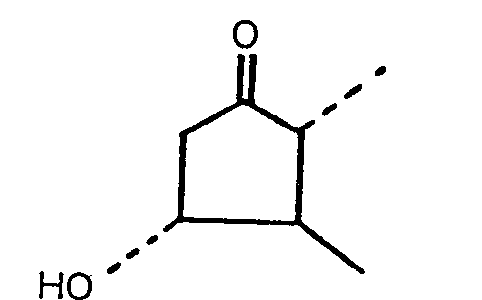
- LQFQOTBIQLUKMN-YSLANXFLSA-N CC([C@@H](C)C(C1)=O)[C@@H]1O Chemical compound CC([C@@H](C)C(C1)=O)[C@@H]1O LQFQOTBIQLUKMN-YSLANXFLSA-N 0.000 description 2
Images

Classifications
-
- C—CHEMISTRY; METALLURGY
- C07—ORGANIC CHEMISTRY
- C07C—ACYCLIC OR CARBOCYCLIC COMPOUNDS
- C07C405/00—Compounds containing a five-membered ring having two side-chains in ortho position to each other, and having oxygen atoms directly attached to the ring in ortho position to one of the side-chains, one side-chain containing, not directly attached to the ring, a carbon atom having three bonds to hetero atoms with at the most one bond to halogen, and the other side-chain having oxygen atoms attached in gamma-position to the ring, e.g. prostaglandins ; Analogues or derivatives thereof
-
- A—HUMAN NECESSITIES
- A61—MEDICAL OR VETERINARY SCIENCE; HYGIENE
- A61K—PREPARATIONS FOR MEDICAL, DENTAL OR TOILETRY PURPOSES
- A61K31/00—Medicinal preparations containing organic active ingredients
- A61K31/557—Eicosanoids, e.g. leukotrienes or prostaglandins
-
- A—HUMAN NECESSITIES
- A61—MEDICAL OR VETERINARY SCIENCE; HYGIENE
- A61P—SPECIFIC THERAPEUTIC ACTIVITY OF CHEMICAL COMPOUNDS OR MEDICINAL PREPARATIONS
- A61P9/00—Drugs for disorders of the cardiovascular system
- A61P9/08—Vasodilators for multiple indications
-
- A—HUMAN NECESSITIES
- A61—MEDICAL OR VETERINARY SCIENCE; HYGIENE
- A61P—SPECIFIC THERAPEUTIC ACTIVITY OF CHEMICAL COMPOUNDS OR MEDICINAL PREPARATIONS
- A61P9/00—Drugs for disorders of the cardiovascular system
- A61P9/10—Drugs for disorders of the cardiovascular system for treating ischaemic or atherosclerotic diseases, e.g. antianginal drugs, coronary vasodilators, drugs for myocardial infarction, retinopathy, cerebrovascula insufficiency, renal arteriosclerosis
-
- C—CHEMISTRY; METALLURGY
- C07—ORGANIC CHEMISTRY
- C07C—ACYCLIC OR CARBOCYCLIC COMPOUNDS
- C07C405/00—Compounds containing a five-membered ring having two side-chains in ortho position to each other, and having oxygen atoms directly attached to the ring in ortho position to one of the side-chains, one side-chain containing, not directly attached to the ring, a carbon atom having three bonds to hetero atoms with at the most one bond to halogen, and the other side-chain having oxygen atoms attached in gamma-position to the ring, e.g. prostaglandins ; Analogues or derivatives thereof
- C07C405/0008—Analogues having the carboxyl group in the side-chains replaced by other functional groups
- C07C405/0016—Analogues having the carboxyl group in the side-chains replaced by other functional groups containing only hydroxy, etherified or esterified hydroxy groups
-
- C—CHEMISTRY; METALLURGY
- C07—ORGANIC CHEMISTRY
- C07C—ACYCLIC OR CARBOCYCLIC COMPOUNDS
- C07C405/00—Compounds containing a five-membered ring having two side-chains in ortho position to each other, and having oxygen atoms directly attached to the ring in ortho position to one of the side-chains, one side-chain containing, not directly attached to the ring, a carbon atom having three bonds to hetero atoms with at the most one bond to halogen, and the other side-chain having oxygen atoms attached in gamma-position to the ring, e.g. prostaglandins ; Analogues or derivatives thereof
- C07C405/0008—Analogues having the carboxyl group in the side-chains replaced by other functional groups
- C07C405/0025—Analogues having the carboxyl group in the side-chains replaced by other functional groups containing keto groups
-
- C—CHEMISTRY; METALLURGY
- C07—ORGANIC CHEMISTRY
- C07C—ACYCLIC OR CARBOCYCLIC COMPOUNDS
- C07C405/00—Compounds containing a five-membered ring having two side-chains in ortho position to each other, and having oxygen atoms directly attached to the ring in ortho position to one of the side-chains, one side-chain containing, not directly attached to the ring, a carbon atom having three bonds to hetero atoms with at the most one bond to halogen, and the other side-chain having oxygen atoms attached in gamma-position to the ring, e.g. prostaglandins ; Analogues or derivatives thereof
- C07C405/0008—Analogues having the carboxyl group in the side-chains replaced by other functional groups
- C07C405/0033—Analogues having the carboxyl group in the side-chains replaced by other functional groups containing sulfur
Definitions
- This invention relates to pharmaceutical compositions containing certain PGE-type prostaglandins and being suitable for topical administration.
- U.S. Patent No. 4061670 discloses that the prostaglandins with which it is concerned have utility as bronchodilators and hypotensive agents and as agents for the control of excessive gastric secretion, and that the compounds may be administered topically.
- European Patent Application No. 4061670 discloses that the prostaglandins with which it is concerned have utility as bronchodilators and hypotensive agents and as agents for the control of excessive gastric secretion, and that the compounds may be administered topically.
- 78300772.7 also discloses numerous prostaglandins of the PGE, PGA and PGF series, and it furthermore discloses that these prostaglandins are potentially useful for the treatment of a wide variety of clinical disorders, including use as vasodilators. However, no specific compounds are suggested for use as vasodilators.
- Peripheral vascular diseases include a variety of arteriospastic and occlusive disorders.
- the major difficulty associated with the treatment of such diseases with systemic vasodilators is the inability of these drugs to produce a specific vasodilation in critical ischemic areas.
- the generalized vasodilation induced by sustemic vasodilators may actually exacerbate the ischemia produced by a peripheral vascular disease by shunting the blood into non-ischemic areas.
- Non-specificity of activity is also responsible for the numerous side-effects associated with prior art peripheral vasodilators.
- central sympathetic inhibitors such as reserpine and methyl dopa cause bradycardia, nasal congestion, impotence, depression, drug fever, and hepatic disfunction
- ⁇ -adrenergic receptor blocking agents such as tolazoline, azapetine and phenoxybenzamine cause nasal congestion, aggravation of angina, hypotension, headache and tachycardia
- A-adrenergic stimulating agents such as nylidrin and isoxsuprine cause anxiety, palpitations, aggravation of angina and tachycardia
- direct smooth muscle relaxants such as ethanol, papaverine and cyclandelate cause intoxication, respiratory depression, exacerbation of peptic ulcer, nausea, dizziness and headache.
- the potent vasodilator activity of the E-type prostaglandins is well recognized. See, e.g. Berg- strom, S. et al., The Prostaglandins: A Family of Biologically Active Lipids, Pharm. Rev. 20: 1-48, 1968.
- the systemic administration of the PGE type prostaglandins is associated with untoward side effects on many organ systems, while intradermal injection elicits an erythematous response with swelling, hyperalgia and at higher dosages, wheal and flare.
- U.S. Patent 4,009,282 discloses the use of the PGE series of prostaglandins and their esters to treat proliferating skin diseases.
- This invention thus relates to pharmaceutical preparations which when applied topically produce a distinct increase in peripheral (cutaneous and deep vessel) circulation.
- the intense and persistent vasodilation induced by the administration of the skin, of selected PGE-type prestaglandins renders these compounds especially useful for the treatment of peripheral vascular diseases of the arteriospastic and occlusive types.
- compositions containing these selected PGE-type prostalgndins disclosed herein are useful for the treatment of diseases such as Raynaud's phenomenon, Raynaud's disease, Buerger's disease, livedo reticularis, acrocyanosis, atherosclerosis, frostbite, vitiligo, alopecia areata, impending gangrene and other ischemic disorders.
- diseases such as Raynaud's phenomenon, Raynaud's disease, Buerger's disease, livedo reticularis, acrocyanosis, atherosclerosis, frostbite, vitiligo, alopecia areata, impending gangrene and other ischemic disorders.
- the ability of the compositions of the instant invention to increase peripheral circulation renders them useful to enhance the rate of healing of wounds, ulcers, infections and proliferative and inflammatory skin lesions including atopic dermatitis, acne and psoriasis; to treat impotency; or
- the prostaglandins utilized herein are represented by the following general formula: wherein W is wherein Z is selected from -(CH 2 ) 6 - or -CH 2 CH CH-(CH 2 ) 3 ; R 14 is selected from hydroxyl, C 1 -C 6 alkoxy, -CH 2 OH and -CH 2 OR 15 wherein R 15 is C 2 -C 6 alkanoyl; C 13 -C 14 is trans-vinylene; R 9 is selected from wherein R 17 is C 3 -C 7 alkyl; and, when R 14 is hydroxy, the pharmacologically acceptable cationic salts thereof.
- a 15-deoxy-16-hydroxy-16-substituted prostaglandin may consist of two dl racemates (16 ⁇ -hydroxyl and 16 ⁇ -hydroxyl) which on occasion, are separable into the 16 ⁇ and 16 ⁇ epimers.
- a species claim wherein the stereochemistry of the C 16 carbon is not specified encompasses the optically active 16 ⁇ and 16 ⁇ forms of the compound and the racemic mixtures thereof.
- Useful pharmacologically acceptable salts of the above-described synthetic prostaglandins when R 14 is hydroxyl are those with pharmacologically acceptable metal cations, ammonium, amine cations or quarternary ammonium cations.
- Preferred metal cations are those derived from the alkali metals, e.g. lithium, sodium and potassium and from the alkaline earth metals, e.g., magnesium and calcium, although cationic forms of other metals, e.g., aluminium, zinc and iron, are within the scope of the invention.
- amine cations are those derived from primary, secondary or tertialy amines such as mono-, di- or triisopropylamine, N-methylhexylamine, decylamine, dodecylamine, allylamine, crotylamine, cyclopentylamine, dicyclohexylamine, allylamine, crotylamine, cyclopentylamine, dicyclohexylamine, mono- or dibenzylamine, ⁇ - or ⁇ -phenylethylamine, ethylenediamine, diethylenetriamine, and arylaliphatic amines containing up to and including 18 carbon atoms, as well as heterocyclic amines, e.g., piperidine, morpholine, pyrrolidine, piperazine and lower alkyl derivatives thereof, e.g., 1-methylpiperidine, 4-ethylmorpholine, 1-isopropylpyrrolidine, 2-methylpyr
- Suitable pharmacologically acceptable quarternary ammonium cations are tetramethylammonium, tetraethylammonium, benzyltrimethylammonium, phenyltriefhylammonium and the like.
- topical means the application of the prostaglandin vasodilator to the surface of the skin in the area of the disease.
- the topical application of the prostaglandins disclosed herein produces a distinct and persistent erythema which is restricted to the site of application when used in limited amounts. Since the activity of the prostaglandins of the formula I above when applied to the skin surface is restricted to the site of application, the use of these compounds for the treatment of peripheral vascular diseases is preferable to the use of systemically active drugs disclosed by the prior art which are unable to produce a specific vasodilation in the critical arteriospastic or ischemic area.
- the prostaglandin are thus administered in a carrier adapted for topical administration
- such carriers include creams, ointments, lotions, pastes, jellies, sprays, aerosols, bath oils, or other pharmaceutical carriers which accomplish direct contact between the prostaglandin and the surface of the skin area to be treated.
- pharmaceutical preparations may comprise from .001% to 10%, and preferably from .01 to 5% by w/w of the active prostaglandin in a suitable carrier.
- a concentration-response relationship has been noted for the topical preparations of the instant invention; that is, as the concentration of the prostaglandin in a given topical formulation is increased, for the same amount of the preparation administered, to the same total area of skin, the resultant vasodilation is intensified.
- the concentration of the active prostaglandin in the carrier, or the amount of the preparation applied may be adjusted to induce a localized vasodilation of the desired intensity.
- composition of the instant invention when topically applied induce a intense and persistent erythema at varying dosages.
- the amount of prostaglandin administered to produce a localized vasodilation of the desired degree will vary depending upon the particular prostaglandin employed, as well as the characteristics of the particular individual or disease to be treated.
- the topical formulation may be applied to the diseased area of the skin in one or more administrations per day and in amounts necessary to produce a localized vasodilation of the desired degree and persistence.
- an effective dosage may represent from 1 to 1000 mg/m 2 for the more active prostaglandins.
- Test solutions of 32 ⁇ g/ml, 320 ⁇ g/ml and 3.2 mg/ml of 15-deoxy-16-hydroxy-16-vinyl-PGE2 and related prostaglandins in 15% ethanol-distilled water were prepared. 50,u1 of the test solutions were applied on a gauze under a closed dressing to the arm of a human volunteer. The duration of contact was about two hours. The erythema induced was scored from 0 to ++++. A score of 0 was recorded when no visible erythema was induced, and a score of ++++ when the erythema was intense. The results are summarized in Table I.
- Three 3.5 cm diameter circles were drawn with a black marking pen on the flank of each guinea pig.
- Vehicle was applied to one of the circles and one (or two) concentrations of drug to the other circle by means of a cotton applicator stick (one swab).
- the amount of material deposited to the entire area within the circle was estimated by weighing the applicator stick after immersion in drug or vehicle and again after swabbing the guine pig skin. Average amounts deposited were 11 mg (range 9-13 mg) for the ethanol and DMSO preparations.
- a female rhesus monkey (6.2 kg) was lightly anesthetized with 1 ml of Ketalar®. Two adjacent rectangular areas of approximately 2 cm x 3 cm on each forearm, abdomen and thigh were shaved. All racemic 15-deoxy-16-hydroxy-16-vinyl-PGE 2 in ethanol (10 mg/ml or 1 mg-ml) or ethanol alone was applied to each of the shaved areas of skin by means of a cotton applicator stick. Each entire area was swabbed twice, depositing approximately .030-.060 ml of the solution.
- the dorsal ear surfaces of rabbits weighing approximately 4 kg were shaved.
- 15-Deoxy-16-hydroxy-16-vinyl-PGE 2 or the methyl ester thereof (approximately 80-100 ⁇ l of a 5 mg/ml ethanol solution) was applied to the entire dorsal surface of one ear and an equal volume of ethanol as a control was applied to the entire dorsal surface of the other ear.
- prostaglandins for use in this invention, and for formulation with a pharmaceutical carrier or diluent adapted for topical administration are listed below in Table V.
- Test solutions of natural prostaglandin compounds PGE,, PGA 2 and PGF 2 ⁇ in 15% ethanol-distilled water are prepared at concentrations of 320 pg/ml and 3.2 mg/ml. 50 ⁇ l of the solution was applied on a gauze under a closed dressing in accordance with the procedure of Example 1 to the arm of a human test subject. The duration of contact was about 2 hours. No visible erythema was produced.
Landscapes
- Chemical & Material Sciences (AREA)
- Organic Chemistry (AREA)
- Health & Medical Sciences (AREA)
- Life Sciences & Earth Sciences (AREA)
- Veterinary Medicine (AREA)
- Public Health (AREA)
- General Health & Medical Sciences (AREA)
- Animal Behavior & Ethology (AREA)
- Medicinal Chemistry (AREA)
- Pharmacology & Pharmacy (AREA)
- Engineering & Computer Science (AREA)
- Bioinformatics & Cheminformatics (AREA)
- General Chemical & Material Sciences (AREA)
- Nuclear Medicine, Radiotherapy & Molecular Imaging (AREA)
- Chemical Kinetics & Catalysis (AREA)
- Heart & Thoracic Surgery (AREA)
- Cardiology (AREA)
- Epidemiology (AREA)
- Urology & Nephrology (AREA)
- Vascular Medicine (AREA)
- Pharmaceuticals Containing Other Organic And Inorganic Compounds (AREA)
- Acyclic And Carbocyclic Compounds In Medicinal Compositions (AREA)
Description
- This invention relates to pharmaceutical compositions containing certain PGE-type prostaglandins and being suitable for topical administration.
- Many of the PGE prostaglandins used in this invention have been previously described - see for example U.S. Patent No. 4061670, European Patent Application No. 78300772.7 (published under No. 0002590A), and UK Patent Application No. 2009162. More particularly, U.S. Patent No. 4061670 discloses that the prostaglandins with which it is concerned have utility as bronchodilators and hypotensive agents and as agents for the control of excessive gastric secretion, and that the compounds may be administered topically. European Patent Application No. 78300772.7 also discloses numerous prostaglandins of the PGE, PGA and PGF series, and it furthermore discloses that these prostaglandins are potentially useful for the treatment of a wide variety of clinical disorders, including use as vasodilators. However, no specific compounds are suggested for use as vasodilators.
- In accordance with the present invention we have now discovered that certain specific PGE compounds identified below, some of which are disclosed in EPA 78300772.7, unexpectedly exhibit a high level of activity as vasodilators when applied topically from topical formulations containing the active ingredients.
- Peripheral vascular diseases include a variety of arteriospastic and occlusive disorders. The major difficulty associated with the treatment of such diseases with systemic vasodilators is the inability of these drugs to produce a specific vasodilation in critical ischemic areas. The generalized vasodilation induced by sustemic vasodilators may actually exacerbate the ischemia produced by a peripheral vascular disease by shunting the blood into non-ischemic areas.
- Non-specificity of activity is also responsible for the numerous side-effects associated with prior art peripheral vasodilators. For example, central sympathetic inhibitors such as reserpine and methyl dopa cause bradycardia, nasal congestion, impotence, depression, drug fever, and hepatic disfunction; α-adrenergic receptor blocking agents such as tolazoline, azapetine and phenoxybenzamine cause nasal congestion, aggravation of angina, hypotension, headache and tachycardia; A-adrenergic stimulating agents such as nylidrin and isoxsuprine cause anxiety, palpitations, aggravation of angina and tachycardia; while direct smooth muscle relaxants such as ethanol, papaverine and cyclandelate cause intoxication, respiratory depression, exacerbation of peptic ulcer, nausea, dizziness and headache.
- The potent vasodilator activity of the E-type prostaglandins is well recognized. See, e.g. Berg- strom, S. et al., The Prostaglandins: A Family of Biologically Active Lipids, Pharm. Rev. 20: 1-48, 1968. The systemic administration of the PGE type prostaglandins, however, is associated with untoward side effects on many organ systems, while intradermal injection elicits an erythematous response with swelling, hyperalgia and at higher dosages, wheal and flare. U.S. Patent 4,009,282 discloses the use of the PGE series of prostaglandins and their esters to treat proliferating skin diseases.
- It has been recently reported that 15(S)-15-methyt PGEz methyl ester induces an erythema upon topical administration to the skin of a hairless mouse, while PGEz itself was ineffective in illiciting such a response. See, Lowe, N.J. and Stoughton, R.B., Effects of Topical Prostaglandin E2 Analog on Normal Hairless Mouse Epidermal DNA Synthesis, The Journal of Investigative Dermatology 68: 134-137, 1977. Although Lowe and Stoughton disclose the administration of 15(S)-15-methyl PGE;, methyl ester to topically induce an eruthema, they do not disclose a method of employing topical formulations of this prostaglandin for a therapeutic purpose, such as for the treatment of peripheral vascular disorders. Nor do they disclose a method of producing cutaneous, vasodilation without associated inflammatory changes.
- It is an object of the present invention to provide a topical composition for producing cutaneous vasodilation free of the difficulties associated with the administration of the prior art systemic vasodilators discussed above. More specifically, it is an object of the present invention to provide a composition for direct application to the surface of the skin, whereby the activity of the drug is controlled and restricted to the site of administration.
- This invention thus relates to pharmaceutical preparations which when applied topically produce a distinct increase in peripheral (cutaneous and deep vessel) circulation. The intense and persistent vasodilation induced by the administration of the skin, of selected PGE-type prestaglandins renders these compounds especially useful for the treatment of peripheral vascular diseases of the arteriospastic and occlusive types. Thus, the compositions containing these selected PGE-type prostalgndins disclosed herein are useful for the treatment of diseases such as Raynaud's phenomenon, Raynaud's disease, Buerger's disease, livedo reticularis, acrocyanosis, atherosclerosis, frostbite, vitiligo, alopecia areata, impending gangrene and other ischemic disorders. Moreover, the ability of the compositions of the instant invention to increase peripheral circulation renders them useful to enhance the rate of healing of wounds, ulcers, infections and proliferative and inflammatory skin lesions including atopic dermatitis, acne and psoriasis; to treat impotency; or to enhance the rate of absorption of pharmaceutically active agents. In addition, topical preparations of the instant invention may be employed to improve skin color and to promote blush.
- The prostaglandins utilized herein are represented by the following general formula:



- A 15-deoxy-16-hydroxy-16-substituted prostaglandin may consist of two dl racemates (16α-hydroxyl and 16β-hydroxyl) which on occasion, are separable into the 16α and 16β epimers. A species claim wherein the stereochemistry of the C16 carbon is not specified encompasses the optically active 16α and 16β forms of the compound and the racemic mixtures thereof.
- Useful pharmacologically acceptable salts of the above-described synthetic prostaglandins when R14 is hydroxyl are those with pharmacologically acceptable metal cations, ammonium, amine cations or quarternary ammonium cations.
- Preferred metal cations are those derived from the alkali metals, e.g. lithium, sodium and potassium and from the alkaline earth metals, e.g., magnesium and calcium, although cationic forms of other metals, e.g., aluminium, zinc and iron, are within the scope of the invention.
- Pharmacologically acceptable amine cations are those derived from primary, secondary or tertialy amines such as mono-, di- or triisopropylamine, N-methylhexylamine, decylamine, dodecylamine, allylamine, crotylamine, cyclopentylamine, dicyclohexylamine, allylamine, crotylamine, cyclopentylamine, dicyclohexylamine, mono- or dibenzylamine, α- or β-phenylethylamine, ethylenediamine, diethylenetriamine, and arylaliphatic amines containing up to and including 18 carbon atoms, as well as heterocyclic amines, e.g., piperidine, morpholine, pyrrolidine, piperazine and lower alkyl derivatives thereof, e.g., 1-methylpiperidine, 4-ethylmorpholine, 1-isopropylpyrrolidine, 2-methylpyrrolidine, 1,4-dimethylpiperazine, 2-methylpiperidine and the like, as well as amines containing water-solubilizing or hydrophilic groups, e.g., mono-, di-, or triethanolamine, ethyldiethanolamine, N-butylethanolamine, 2-amino-2-methyl-1-propanol, tris (hydroxymethyl)aminoethane, N-phenylethanolamine, N-(p-tertamyl- phenyl)diethanolamine, galactamine, N-methylglucamine, N-methylglucosamine, ephedrine, phenylephrine, epinephrine, procaine, and the like.
- Examples of suitable pharmacologically acceptable quarternary ammonium cations are tetramethylammonium, tetraethylammonium, benzyltrimethylammonium, phenyltriefhylammonium and the like.
- The term topical as employed herein means the application of the prostaglandin vasodilator to the surface of the skin in the area of the disease. The topical application of the prostaglandins disclosed herein produces a distinct and persistent erythema which is restricted to the site of application when used in limited amounts. Since the activity of the prostaglandins of the formula I above when applied to the skin surface is restricted to the site of application, the use of these compounds for the treatment of peripheral vascular diseases is preferable to the use of systemically active drugs disclosed by the prior art which are unable to produce a specific vasodilation in the critical arteriospastic or ischemic area.
- The prostaglandin are thus administered in a carrier adapted for topical administration, such carriers include creams, ointments, lotions, pastes, jellies, sprays, aerosols, bath oils, or other pharmaceutical carriers which accomplish direct contact between the prostaglandin and the surface of the skin area to be treated. In general pharmaceutical preparations may comprise from .001% to 10%, and preferably from .01 to 5% by w/w of the active prostaglandin in a suitable carrier. In some cases it may be necessary to dissolve the prostaglandin in an appropriate solvent such as ethanol or DMSO (dimethyl sulfoxide) and the like to facilitate incorporation into a pharmaceutical preparation.
- A concentration-response relationship has been noted for the topical preparations of the instant invention; that is, as the concentration of the prostaglandin in a given topical formulation is increased, for the same amount of the preparation administered, to the same total area of skin, the resultant vasodilation is intensified. Thus, the concentration of the active prostaglandin in the carrier, or the amount of the preparation applied may be adjusted to induce a localized vasodilation of the desired intensity.
- The composition of the instant invention when topically applied induce a intense and persistent erythema at varying dosages. The amount of prostaglandin administered to produce a localized vasodilation of the desired degree will vary depending upon the particular prostaglandin employed, as well as the characteristics of the particular individual or disease to be treated. Thus, the topical formulation may be applied to the diseased area of the skin in one or more administrations per day and in amounts necessary to produce a localized vasodilation of the desired degree and persistence. In general, an effective dosage may represent from 1 to 1000 mg/m2 for the more active prostaglandins.
- The invention is illustrated by the Examples which follow.
- Test solutions of 32 µg/ml, 320 µg/ml and 3.2 mg/ml of 15-deoxy-16-hydroxy-16-vinyl-PGE2 and related prostaglandins in 15% ethanol-distilled water were prepared. 50,u1 of the test solutions were applied on a gauze under a closed dressing to the arm of a human volunteer. The duration of contact was about two hours. The erythema induced was scored from 0 to ++++. A score of 0 was recorded when no visible erythema was induced, and a score of ++++ when the erythema was intense. The results are summarized in Table I.

- The following results summarized in Table II were observed upon application of the prostaglandin solution in gauze under a closed dressing to the back of a human test subject.

- Male albino guinea pigs, weighing 250 to 400 g were shaved and depilated on their flanks, the evening before testing, with a standard mixture of barium sulfide and gum acacia. On the day of testing, all racemic 15-deoxy-16-hydroxy-16-vinyl-PGE2 was dissolved at a concentration of 10 mg/ml in either DMSO or ethanol. Ten-fold dilutions (1 mg/ml) of each were also prepared. Vehicle controls were DMSO or ethanol alone.
- Three 3.5 cm diameter circles were drawn with a black marking pen on the flank of each guinea pig. Vehicle was applied to one of the circles and one (or two) concentrations of drug to the other circle by means of a cotton applicator stick (one swab). The amount of material deposited to the entire area within the circle was estimated by weighing the applicator stick after immersion in drug or vehicle and again after swabbing the guine pig skin. Average amounts deposited were 11 mg (range 9-13 mg) for the ethanol and DMSO preparations.
- Each circle was graded at 1,2 and 24 hours after application of compound or vehicle according to the following:


- A female rhesus monkey (6.2 kg) was lightly anesthetized with 1 ml of Ketalar®. Two adjacent rectangular areas of approximately 2 cm x 3 cm on each forearm, abdomen and thigh were shaved. All racemic 15-deoxy-16-hydroxy-16-vinyl-PGE2 in ethanol (10 mg/ml or 1 mg-ml) or ethanol alone was applied to each of the shaved areas of skin by means of a cotton applicator stick. Each entire area was swabbed twice, depositing approximately .030-.060 ml of the solution. Each area was graded immediately after swabbing (time 0), and at 30, 60, 152,270,390 minutes for the degree or erythema according to the following:


- The dorsal ear surfaces of rabbits weighing approximately 4 kg were shaved. 15-Deoxy-16-hydroxy-16-vinyl-PGE2 or the methyl ester thereof (approximately 80-100 µl of a 5 mg/ml ethanol solution) was applied to the entire dorsal surface of one ear and an equal volume of ethanol as a control was applied to the entire dorsal surface of the other ear.
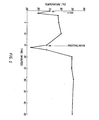
- Skin temperatures were recorded on a Digital Thermistor thermometer (Digitec Model 5810) by means of a 709A surface probe. The probe was attached with a metal clip to the ege of the dorsal ear surface. In one experiment (Figure 1) the temperature was monitored continuously from the same position on one ear, treated sequentially with ethanol and 15-deoxy-16-hydroxy-16-vinyl-PGE2, 5 mg/ml in ethanol. In a second experiment (Figure 2) the probe was shifted at specified times between corresponding positions on ethanol or prostaglandin (5 mg/ml in ethanol) treated ears of the same rabbit. In Figure 2, skin temperatures were recorded before and 1 and 3 hours after application. Mean temperature changes (befores vs. after) produced by the prostaglandin solution or ethanol control are presented in Figure 2 along with the standard error of the mean. Statistical comparison of means by Student's Test indicates that the temperature effects of the prostaglandin compared to those of the control are significant at P<0.05. The results of these experiments are summarized in Figures 1 and 2 below; wherein temperature is assumed to be a reflection of vasodilation and blood flow.
- Additional prostaglandins for use in this invention, and for formulation with a pharmaceutical carrier or diluent adapted for topical administration are listed below in Table V.

- Test solutions of natural prostaglandin compounds PGE,, PGA2 and PGF2β in 15% ethanol-distilled water are prepared at concentrations of 320 pg/ml and 3.2 mg/ml. 50 µl of the solution was applied on a gauze under a closed dressing in accordance with the procedure of Example 1 to the arm of a human test subject. The duration of contact was about 2 hours. No visible erythema was produced.
- The following compounds may be formulated for topical applications in a 15% ethanol distilled water solution:

Claims (17)


Applications Claiming Priority (2)
| Application Number | Priority Date | Filing Date | Title |
|---|---|---|---|
| US06/011,364 US4311707A (en) | 1979-02-12 | 1979-02-12 | Process for topically producing cutaneous vasodilation for the treatment of vasospastic or ischemic conditions |
| US11364 | 1979-02-12 |
Publications (2)
| Publication Number | Publication Date |
|---|---|
| EP0015658A1 EP0015658A1 (en) | 1980-09-17 |
| EP0015658B1 true EP0015658B1 (en) | 1983-05-04 |
Family
ID=21750072
Family Applications (1)
| Application Number | Title | Priority Date | Filing Date |
|---|---|---|---|
| EP80300399A Expired EP0015658B1 (en) | 1979-02-12 | 1980-02-12 | Topical compositions containing prostaglandine derivatives |
Country Status (4)
| Country | Link |
|---|---|
| US (1) | US4311707A (en) |
| EP (1) | EP0015658B1 (en) |
| JP (1) | JPS55111417A (en) |
| ZA (1) | ZA795932B (en) |
Families Citing this family (73)
| Publication number | Priority date | Publication date | Assignee | Title |
|---|---|---|---|---|
| US4322543A (en) * | 1979-11-28 | 1982-03-30 | G. D. Searle & Co. | 4,5-Unsaturated prostanoic acid derivatives |
| US4599353A (en) * | 1982-05-03 | 1986-07-08 | The Trustees Of Columbia University In The City Of New York | Use of eicosanoids and their derivatives for treatment of ocular hypertension and glaucoma |
| JPS59128327A (en) * | 1983-01-10 | 1984-07-24 | Teijin Ltd | Drug for transcutaneous administration containing 7-thiaprostaglandin e1 compound |
| US4529812A (en) * | 1983-02-02 | 1985-07-16 | G. D. Searle & Co. | 3-Oxaprostaglandins |
| US4883819A (en) * | 1986-07-31 | 1989-11-28 | The Trustees Of Columbia University In The City Of New York | Use of A, B and C prostaglandins and derivatives thereof to treat ocular hypertension and glaucoma |
| FI872553L (en) * | 1986-06-09 | 1987-12-10 | American Cyanamid Co | MEDIUM FOER LAEKEMEDEL FOER LOKALT BRUK. |
| FI872552A7 (en) * | 1986-06-09 | 1987-12-10 | American Cyanamid Co | A topical prostaglandin composition. |
| DE3777656D1 (en) * | 1986-08-08 | 1992-04-23 | Upjohn Co | AGENT FOR TREATING ALOPECIA. |
| US4822819A (en) * | 1986-11-07 | 1989-04-18 | Alcon Laboratories, Inc. | Use of trimoprostil and derivatives in glaucoma therapy |
| US4822820A (en) * | 1986-11-24 | 1989-04-18 | Alcon Laboratories, Inc. | Use of tri-methyl PG-F2 a and derivatives in glaucoma therapy |
| US4801587A (en) * | 1987-03-02 | 1989-01-31 | Gene Voss | Impotence ointment |
| US5256652A (en) * | 1987-11-12 | 1993-10-26 | Pharmedic Co. | Topical compositions and methods for treatment of male impotence |
| US4925873A (en) * | 1988-09-01 | 1990-05-15 | E. R. Squibb & Sons, Inc. | Method of treating skin injuries using thromboxane A2 receptor antagonists |
| SE463851B (en) * | 1988-09-02 | 1991-02-04 | Amsu Ltd | COMPOSITION FOR TREATMENT OF ERECT DYSFUNCTION THROUGH URETRA |
| FR2649613B1 (en) * | 1989-07-11 | 1991-09-27 | Virag Ronald | VASO-ACTIVE MEDICINE |
| US5242391A (en) * | 1990-04-25 | 1993-09-07 | Alza Corporation | Urethral insert for treatment of erectile dysfunction |
| US5175189A (en) * | 1990-05-22 | 1992-12-29 | K.K. Ueno Seiyaku Oyo Kenkyujo | Treatment of ocular hypertension with a synergistic combination for ophthalmic use |
| ES2059058T3 (en) * | 1990-05-22 | 1994-11-01 | R Tech Ueno Ltd | SYNERGIC COMBINATION FOR OPHTHALMIC USE. |
| US5981593A (en) * | 1991-07-03 | 1999-11-09 | Scott; Nathan Earl | Prostaglandin E2 treatment of impotence |
| US5962528A (en) * | 1991-07-03 | 1999-10-05 | Scott; Nathan Earl | Prostaglandin E2 /F2α combination for treating impotence |
| WO1993000894A1 (en) * | 1991-07-03 | 1993-01-21 | Scott Nathan E | Prostaglandin e2 treatment of impotence |
| US6291528B1 (en) | 1991-07-03 | 2001-09-18 | Nathan Earl Scott | Prostaglandin E1/F2 in combination with prostaglandin F2α for enhancing female sexual arousal |
| BR9203277A (en) * | 1992-08-21 | 1994-03-01 | Cesar Roberto Dias Nahoum | USE OF ERETOGENIC DRUGS AND THEIR APPLICATION METHODOLOGIES |
| US5773457A (en) * | 1995-02-15 | 1998-06-30 | Cesar Roberto Dias Nahoum | Compositions |
| AU669783B2 (en) * | 1993-02-03 | 1996-06-20 | Teijin Limited | Dermatologic preparation composition containing prostacyclinas active ingredient |
| CN1102039A (en) * | 1993-02-03 | 1995-04-26 | 帝人株式会社 | External skin treatment agent composition containing isocarbacycline as an active ingredient |
| KR950000664A (en) * | 1993-06-14 | 1995-01-03 | 우에노 도시오 | Novel 13,14-dihydro-fijief 2 beta (PGF2β) and isopropyl esters thereof |
| US5853755A (en) * | 1993-07-28 | 1998-12-29 | Pharmaderm Laboratories Ltd. | Biphasic multilamellar lipid vesicles |
| SE9303444D0 (en) * | 1993-10-20 | 1993-10-20 | Kabi Pharmacia Ab | New use of prostaglandins |
| US5482039A (en) * | 1994-03-25 | 1996-01-09 | Vivus, Inc. | Process for diagnosing erectile dysfunction, and related methods of treatment |
| CA2215307A1 (en) * | 1995-03-14 | 1996-09-19 | Vivus, Incorporated | Pharmaceutical compositions and kits for preventing erectile dysfunction |
| ATE266397T1 (en) | 1997-02-04 | 2004-05-15 | Murray A Johnstone | METHOD FOR PROMOTING HAIR GROWTH AND DEVELOPMENT OF THE HAIR SYSTEM |
| US6103765A (en) | 1997-07-09 | 2000-08-15 | Androsolutions, Inc. | Methods for treating male erectile dysfunction |
| WO1999002147A1 (en) * | 1997-07-09 | 1999-01-21 | Androsolutions, Inc. | Improved methods and compositions for treating male erectile dysfunction |
| SE9702706D0 (en) * | 1997-07-11 | 1997-07-11 | Pharmacia & Upjohn Ab | Prostaglandin derivatives devoid of side effects for the treatment of glaucoma |
| EP1059926A2 (en) * | 1997-12-18 | 2000-12-20 | SCOTT, Nathan Earl | PROSTAGLANDIN E 2?/F 2$g(a)? COMBINATION FOR TREATING IMPOTENCE AND ENHANCING SEXUAL AROUSAL |
| US6347243B1 (en) * | 1998-03-05 | 2002-02-12 | Advanced Monitors Corp. | Probe cover for infrared thermometer |
| US6132757A (en) | 1998-05-01 | 2000-10-17 | Neal R. Cutler | Treatment of sexual dysfunction in certain patient groups |
| US6187790B1 (en) | 1999-03-04 | 2001-02-13 | Neal R. Cutler | Use of cilostazol for treatment of sexual dysfunction |
| US6194433B1 (en) | 1998-10-05 | 2001-02-27 | Neal R. Cutler | Sexual dysfunction in females |
| US6132753A (en) * | 1998-05-01 | 2000-10-17 | Neal R. Cutler | Treatment of sexual dysfunction in certain patient groups |
| US6426084B1 (en) | 2000-06-19 | 2002-07-30 | Neal R. Cutler | Treatment of sexual dysfunction in certain patient groups |
| US6110489A (en) * | 1998-05-01 | 2000-08-29 | Cutler; Neal R. | Use of quinolines and quinolones to treat male erectile dysfunction |
| US5942545A (en) * | 1998-06-15 | 1999-08-24 | Macrochem Corporation | Composition and method for treating penile erectile dysfunction |
| RU2198660C2 (en) * | 1998-06-15 | 2003-02-20 | МакроЧем Корпорейшн | Method and composition for treating the cases of erection dysfunction of penis |
| US20070191320A1 (en) * | 1998-12-10 | 2007-08-16 | Nexmed Holdings, Inc. | Methods of treatment for female sexual arousal disorder |
| US6486207B2 (en) | 1998-12-10 | 2002-11-26 | Nexmed (Holdings), Inc. | Compositions and methods for amelioration of human female sexual dysfunction |
| US6825234B2 (en) | 1998-12-10 | 2004-11-30 | Nexmed (Holdings) , Inc. | Compositions and methods for amelioration of human female sexual dysfunction |
| CA2364948C (en) | 1999-03-05 | 2011-04-26 | Duke University | C16 unsaturated fp-selective prostaglandins analogs |
| US6303135B1 (en) | 1999-07-08 | 2001-10-16 | Neal R. Cutler | Use of quinolines and quinolones to treat male erectile dysfunction |
| US7105571B2 (en) * | 2000-01-10 | 2006-09-12 | Nexmed Holdings, Inc. | Prostaglandin compositions and methods of treatment for male erectile dysfunction |
| US6693135B2 (en) | 2000-01-10 | 2004-02-17 | Nexmed (Holdings) Incorporated | Prostaglandin compositions and methods of treatment for male erectile dysfunction |
| US6323241B1 (en) | 2000-01-10 | 2001-11-27 | Nexmed (Holdings) Inc. | Prostaglandin compositions and methods of treatment for male erectile dysfunction |
| US20020037914A1 (en) * | 2000-03-31 | 2002-03-28 | Delong Mitchell Anthony | Compositions and methods for treating hair loss using C16-C20 aromatic tetrahydro prostaglandins |
| US20020172693A1 (en) | 2000-03-31 | 2002-11-21 | Delong Michell Anthony | Compositions and methods for treating hair loss using non-naturally occurring prostaglandins |
| US20020013294A1 (en) | 2000-03-31 | 2002-01-31 | Delong Mitchell Anthony | Cosmetic and pharmaceutical compositions and methods using 2-decarboxy-2-phosphinico derivatives |
| US20020146439A1 (en) * | 2000-03-31 | 2002-10-10 | Delong Mitchell Anthony | Compositions and methods for treating hair loss using oximyl and hydroxylamino prostaglandins |
| US6562838B2 (en) | 2001-01-26 | 2003-05-13 | R. T. Alamo Ventures I, L.L.C. | Treatment of cardiovascular disease with quinolinone enantiomers |
| US7351404B2 (en) | 2002-02-04 | 2008-04-01 | Allergan, Inc. | Method of enhancing hair growth |
| US8758733B2 (en) | 2002-02-04 | 2014-06-24 | Allergan, Inc. | Topical treatment for chemotherapy induced eyelash loss or hypotrichosis using prostamide F2 alpha agonists |
| US9216183B2 (en) | 2002-02-04 | 2015-12-22 | Allergan, Inc. | Topical treatment for chemotherapy induced eyelash loss or hypotrichosis using prostamide F2 alpha agonists |
| US7041677B2 (en) * | 2002-03-01 | 2006-05-09 | R.T. Alamo Ventures I, Llc | Use of monochloroflosequinan in the treatment of sexual dysfunction |
| US20050009918A1 (en) | 2003-04-02 | 2005-01-13 | Nexmed (Holdings) Inc. | Prostaglandin compositions and methods for the treatment of vasospasm |
| GB0312552D0 (en) * | 2003-06-02 | 2003-07-09 | Nel Technologies Ltd | Functional therapeutic corporeal and wound dressing heaters |
| US20080071247A1 (en) * | 2006-09-18 | 2008-03-20 | Dimera Incorporated | Topical administration of a salt compound to facilitate venipuncture |
| US8623918B2 (en) | 2008-10-29 | 2014-01-07 | Novaer Holdings, Inc. | Amino acid salts of prostaglandins |
| US8722739B2 (en) * | 2008-10-29 | 2014-05-13 | Novaer Holdings, Inc. | Amino acid salts of prostaglandins |
| US20100204335A1 (en) * | 2008-12-01 | 2010-08-12 | Allergan, Inc. | Kit and composition for eyelash growth |
| EP3421030A1 (en) | 2009-11-09 | 2019-01-02 | Allergan, Inc. | Compositions and methods for stimulating hair growth |
| US9149484B2 (en) | 2009-11-09 | 2015-10-06 | Allergan, Inc. | Compositions and methods for stimulating hair growth |
| IT1397867B1 (en) * | 2010-02-03 | 2013-02-04 | Brotzu | LIPOSOMAS CONTAINING PROSTAGLANDINE E1 (PGE1), FORMULATIONS THAT CONTAIN THEM AND USE THEM |
| US8859616B2 (en) | 2011-01-21 | 2014-10-14 | Allergan, Inc. | Compounds and methods for enhancing hair growth |
| CA2838109C (en) | 2011-04-07 | 2020-06-09 | Nexmed Holdings, Inc. | Topical semisolid prostaglandin e1 composition for treating raynaud's disease |
Citations (1)
| Publication number | Priority date | Publication date | Assignee | Title |
|---|---|---|---|---|
| EP0002590A1 (en) * | 1977-12-08 | 1979-06-27 | American Cyanamid Company | Novel prostaglandin compounds, processes for the preparation thereof and pharmaceutical compositions containing them |
Family Cites Families (12)
| Publication number | Priority date | Publication date | Assignee | Title |
|---|---|---|---|---|
| US3551554A (en) * | 1968-08-16 | 1970-12-29 | Crown Zellerbach Corp | Enhancing tissue penetration of physiologically active agents with dmso |
| FR2235678A1 (en) * | 1973-07-02 | 1975-01-31 | Merck & Co Inc | Topical antipsoriasis agents - contg. prostaglandin E1 or E2 |
| US4009282A (en) * | 1973-12-17 | 1977-02-22 | The Regents Of The University Of Michigan | Treatment of proliferating skin diseases with prostaglandins |
| US4028396A (en) * | 1975-07-02 | 1977-06-07 | American Cyanamid Company | 16,16-Spirocycloalkyl prostaglandin derivatives |
| US4158667A (en) * | 1976-02-04 | 1979-06-19 | The Upjohn Company | 6-Keto PGF analogs |
| US4085272A (en) * | 1977-03-30 | 1978-04-18 | American Cyanamid Company | 11-(2-Hydroxyethylthio)prostenoic acid E2 series derivatives |
| US4154959A (en) * | 1977-03-30 | 1979-05-15 | American Cyanamid Company | 11-(2-Hydroxyethylthio)prostenoic acid E series derivatives |
| US4154954A (en) * | 1977-03-30 | 1979-05-15 | American Cyanamid Company | 11-(2-Hydroxyethylthio) prostenoic acid E series derivatives |
| US4131738A (en) * | 1977-07-05 | 1978-12-26 | The Upjohn Company | 6-Hydroxy-PGE1 compounds |
| DE2740953A1 (en) * | 1977-09-12 | 1979-03-22 | Thera Ges Fuer Patente | USE OF PROSTAGLANDINES TO LOWER BLOOD SUGAR LEVELS |
| JPS54104515A (en) * | 1978-02-03 | 1979-08-16 | Akebono Brake Ind | Brake assembly parts for brake motor |
| US4254145A (en) * | 1978-08-16 | 1981-03-03 | American Cyanamid Company | Topical application of prostaglandin hypotensive agents |
-
1979
- 1979-02-12 US US06/011,364 patent/US4311707A/en not_active Expired - Lifetime
- 1979-11-05 ZA ZA00795932A patent/ZA795932B/en unknown
-
1980
- 1980-02-08 JP JP1379680A patent/JPS55111417A/en active Pending
- 1980-02-12 EP EP80300399A patent/EP0015658B1/en not_active Expired
Patent Citations (1)
| Publication number | Priority date | Publication date | Assignee | Title |
|---|---|---|---|---|
| EP0002590A1 (en) * | 1977-12-08 | 1979-06-27 | American Cyanamid Company | Novel prostaglandin compounds, processes for the preparation thereof and pharmaceutical compositions containing them |
Also Published As
| Publication number | Publication date |
|---|---|
| EP0015658A1 (en) | 1980-09-17 |
| US4311707A (en) | 1982-01-19 |
| JPS55111417A (en) | 1980-08-28 |
| ZA795932B (en) | 1981-03-25 |
Similar Documents
| Publication | Publication Date | Title |
|---|---|---|
| US4311707A (en) | Process for topically producing cutaneous vasodilation for the treatment of vasospastic or ischemic conditions | |
| EP0008227B1 (en) | Pharmaceutical compositions for topical administration containing prostaglandins | |
| US20040198817A1 (en) | Use of cloprostenol and fluprostenol analogues to treat glaucoma and ocular hypertension | |
| EP0299914A1 (en) | 9-Halogen (Z) prostaglandin derivatives, process for their production and their use as medicines | |
| US4362742A (en) | Method for treating skin disorders | |
| CH636606A5 (en) | METHOD FOR THE PRODUCTION OF NEW PROSTATE ACIDS AND ALKYL ESTERS. | |
| US4707495A (en) | Peptic ulcer treatment method | |
| Bundy et al. | Synthesis and biological activity of prostaglandin lactones | |
| KR20030016418A (en) | Composition for treatment of ocular hypertension and glaucoma | |
| JP2002538138A (en) | C16 unsaturated FP-selective prostaglandin analog | |
| Collins et al. | Synthesis and gastric antisecretory properties of 4, 5 unsaturated derivatives of 15-deoxy-16-hydroxy-16-methylprostaglandin E1 | |
| JPS6024097B2 (en) | 9-deoxy-9-9methylene PGE↓2 and 9-deoxy-9α-hydroxymethyl PGF↓2α compounds | |
| EP0656889B1 (en) | 9-chloroprostaglandin esters and amides and their use in the preparation of drugs | |
| BG61143B1 (en) | METHOD FOR OBTAINING PROSTAGLANDINE DERIVATIVES | |
| US4289785A (en) | Method and compositions involving prostaglandins | |
| US4004027A (en) | Prostaglandin antagonists | |
| CH636855A5 (en) | METHOD FOR PRODUCING PROSTAGLANDIN ANALOGS IN WHICH THE CARBONYL GROUP ON THE C-9 IS REPLACED BY A METHYLENE GROUP. | |
| CH640847A5 (en) | Process for preparing analogues of 5,6-dihydroprostacyclin | |
| CH636347A5 (en) | Process for preparing 5,9-cyclic ethers of 9-deoxy-prostaglandin-F(1 alpha)-type compounds | |
| US5552413A (en) | Methods for inhibiting hyperproliferation of kerntinocytes | |
| DE2813342A1 (en) | 15-DEOXY-16-HYDROXY-16-SUBSTITUTED-PROSTANIC ACIDS, DERIVATIVES THEREOF AND METHOD FOR THEIR PRODUCTION | |
| CH630898A5 (en) | METHOD FOR PRODUCING NEW PROSTAGLANDIN ANALOGS WITH TRIPLE BINDING BETWEEN C-13 AND C-14. | |
| DE2542686A1 (en) | 2A, 2B-DIHOMO-15-METHYL- AND -15- AETHYL-PGF AND PGE COMPOUNDS AND METHODS OF PREPARATION | |
| KR910000648A (en) | Phenoxypyridinamine and its derivatives, preparation methods and uses as medicaments | |
| US4230879A (en) | 15-Deoxy-16-hydroxy-16-formyo or dimethoxy-methyl-prostane derivatives of the E and F series |
Legal Events
| Date | Code | Title | Description |
|---|---|---|---|
| PUAI | Public reference made under article 153(3) epc to a published international application that has entered the european phase |
Free format text: ORIGINAL CODE: 0009012 |
|
| AK | Designated contracting states |
Designated state(s): BE CH DE FR GB IT NL SE |
|
| 17P | Request for examination filed | ||
| ITF | It: translation for a ep patent filed | ||
| GRAA | (expected) grant |
Free format text: ORIGINAL CODE: 0009210 |
|
| AK | Designated contracting states |
Designated state(s): IT SE |
|
| PLBE | No opposition filed within time limit |
Free format text: ORIGINAL CODE: 0009261 |
|
| STAA | Information on the status of an ep patent application or granted ep patent |
Free format text: STATUS: NO OPPOSITION FILED WITHIN TIME LIMIT |
|
| 26N | No opposition filed | ||
| PGFP | Annual fee paid to national office [announced via postgrant information from national office to epo] |
Ref country code: SE Payment date: 19890111 Year of fee payment: 10 |
|
| PG25 | Lapsed in a contracting state [announced via postgrant information from national office to epo] |
Ref country code: SE Effective date: 19900213 |
|
| EUG | Se: european patent has lapsed |
Ref document number: 80300399.5 Effective date: 19901107 |