EP0006000B1 - Verfahren zur Herstellung Silicon enthaltender Schmiermittel - Google Patents
Verfahren zur Herstellung Silicon enthaltender Schmiermittel Download PDFInfo
- Publication number
- EP0006000B1 EP0006000B1 EP79300996A EP79300996A EP0006000B1 EP 0006000 B1 EP0006000 B1 EP 0006000B1 EP 79300996 A EP79300996 A EP 79300996A EP 79300996 A EP79300996 A EP 79300996A EP 0006000 B1 EP0006000 B1 EP 0006000B1
- Authority
- EP
- European Patent Office
- Prior art keywords
- oil
- silicone
- carrier
- solvent
- mixture
- Prior art date
- Legal status (The legal status is an assumption and is not a legal conclusion. Google has not performed a legal analysis and makes no representation as to the accuracy of the status listed.)
- Expired
Links
- 229920001296 polysiloxane Polymers 0.000 title claims description 120
- 238000004519 manufacturing process Methods 0.000 title claims description 9
- 239000010687 lubricating oil Substances 0.000 title claims description 8
- 239000003921 oil Substances 0.000 claims description 94
- 239000000203 mixture Substances 0.000 claims description 67
- 229920002545 silicone oil Polymers 0.000 claims description 57
- 239000002199 base oil Substances 0.000 claims description 48
- 239000002904 solvent Substances 0.000 claims description 33
- 238000000034 method Methods 0.000 claims description 24
- CYTYCFOTNPOANT-UHFFFAOYSA-N Perchloroethylene Chemical group ClC(Cl)=C(Cl)Cl CYTYCFOTNPOANT-UHFFFAOYSA-N 0.000 claims description 16
- 239000000725 suspension Substances 0.000 claims description 16
- 125000000118 dimethyl group Chemical group [H]C([H])([H])* 0.000 claims description 15
- QVGXLLKOCUKJST-UHFFFAOYSA-N atomic oxygen Chemical compound [O] QVGXLLKOCUKJST-UHFFFAOYSA-N 0.000 claims description 12
- 239000002480 mineral oil Substances 0.000 claims description 12
- 229910052760 oxygen Inorganic materials 0.000 claims description 12
- 239000001301 oxygen Substances 0.000 claims description 12
- 235000010446 mineral oil Nutrition 0.000 claims description 10
- 239000000314 lubricant Substances 0.000 claims description 8
- XLYOFNOQVPJJNP-UHFFFAOYSA-N water Substances O XLYOFNOQVPJJNP-UHFFFAOYSA-N 0.000 claims description 5
- NINIDFKCEFEMDL-UHFFFAOYSA-N Sulfur Chemical compound [S] NINIDFKCEFEMDL-UHFFFAOYSA-N 0.000 claims description 4
- 239000005864 Sulphur Substances 0.000 claims description 4
- 238000007669 thermal treatment Methods 0.000 claims description 3
- 239000000446 fuel Substances 0.000 description 15
- 239000000654 additive Substances 0.000 description 8
- 230000000996 additive effect Effects 0.000 description 6
- 238000009835 boiling Methods 0.000 description 6
- RTZKZFJDLAIYFH-UHFFFAOYSA-N Diethyl ether Chemical compound CCOCC RTZKZFJDLAIYFH-UHFFFAOYSA-N 0.000 description 5
- OKTJSMMVPCPJKN-UHFFFAOYSA-N Carbon Chemical compound [C] OKTJSMMVPCPJKN-UHFFFAOYSA-N 0.000 description 4
- 229910052799 carbon Inorganic materials 0.000 description 4
- 230000000694 effects Effects 0.000 description 4
- 239000012530 fluid Substances 0.000 description 4
- 239000010690 paraffinic oil Substances 0.000 description 4
- 230000009467 reduction Effects 0.000 description 4
- UHOVQNZJYSORNB-UHFFFAOYSA-N Benzene Chemical compound C1=CC=CC=C1 UHOVQNZJYSORNB-UHFFFAOYSA-N 0.000 description 3
- XUIMIQQOPSSXEZ-UHFFFAOYSA-N Silicon Chemical compound [Si] XUIMIQQOPSSXEZ-UHFFFAOYSA-N 0.000 description 3
- 206010040925 Skin striae Diseases 0.000 description 3
- YXFVVABEGXRONW-UHFFFAOYSA-N Toluene Chemical compound CC1=CC=CC=C1 YXFVVABEGXRONW-UHFFFAOYSA-N 0.000 description 3
- 238000010438 heat treatment Methods 0.000 description 3
- 230000006872 improvement Effects 0.000 description 3
- 229910052710 silicon Inorganic materials 0.000 description 3
- 239000010703 silicon Substances 0.000 description 3
- YIWUKEYIRIRTPP-UHFFFAOYSA-N 2-ethylhexan-1-ol Chemical compound CCCCC(CC)CO YIWUKEYIRIRTPP-UHFFFAOYSA-N 0.000 description 2
- QKUNKVYPGIOQNP-UHFFFAOYSA-N 4,8,11,14,17,21-hexachlorotetracosane Chemical compound CCCC(Cl)CCCC(Cl)CCC(Cl)CCC(Cl)CCC(Cl)CCCC(Cl)CCC QKUNKVYPGIOQNP-UHFFFAOYSA-N 0.000 description 2
- HEDRZPFGACZZDS-UHFFFAOYSA-N Chloroform Chemical compound ClC(Cl)Cl HEDRZPFGACZZDS-UHFFFAOYSA-N 0.000 description 2
- 241000209094 Oryza Species 0.000 description 2
- 235000007164 Oryza sativa Nutrition 0.000 description 2
- 125000001931 aliphatic group Chemical group 0.000 description 2
- 239000000969 carrier Substances 0.000 description 2
- 230000003247 decreasing effect Effects 0.000 description 2
- 238000000151 deposition Methods 0.000 description 2
- 230000001050 lubricating effect Effects 0.000 description 2
- 238000002156 mixing Methods 0.000 description 2
- 239000002245 particle Substances 0.000 description 2
- 239000003208 petroleum Substances 0.000 description 2
- 230000008569 process Effects 0.000 description 2
- 235000009566 rice Nutrition 0.000 description 2
- VZGDMQKNWNREIO-UHFFFAOYSA-N tetrachloromethane Chemical compound ClC(Cl)(Cl)Cl VZGDMQKNWNREIO-UHFFFAOYSA-N 0.000 description 2
- WSLDOOZREJYCGB-UHFFFAOYSA-N 1,2-Dichloroethane Chemical compound ClCCCl WSLDOOZREJYCGB-UHFFFAOYSA-N 0.000 description 1
- LZDKZFUFMNSQCJ-UHFFFAOYSA-N 1,2-diethoxyethane Chemical compound CCOCCOCC LZDKZFUFMNSQCJ-UHFFFAOYSA-N 0.000 description 1
- RYHBNJHYFVUHQT-UHFFFAOYSA-N 1,4-Dioxane Chemical compound C1COCCO1 RYHBNJHYFVUHQT-UHFFFAOYSA-N 0.000 description 1
- RYGMFSIKBFXOCR-UHFFFAOYSA-N Copper Chemical compound [Cu] RYGMFSIKBFXOCR-UHFFFAOYSA-N 0.000 description 1
- XDTMQSROBMDMFD-UHFFFAOYSA-N Cyclohexane Chemical compound C1CCCCC1 XDTMQSROBMDMFD-UHFFFAOYSA-N 0.000 description 1
- ZAFNJMIOTHYJRJ-UHFFFAOYSA-N Diisopropyl ether Chemical compound CC(C)OC(C)C ZAFNJMIOTHYJRJ-UHFFFAOYSA-N 0.000 description 1
- CTQNGGLPUBDAKN-UHFFFAOYSA-N O-Xylene Chemical compound CC1=CC=CC=C1C CTQNGGLPUBDAKN-UHFFFAOYSA-N 0.000 description 1
- 229920002367 Polyisobutene Polymers 0.000 description 1
- XSTXAVWGXDQKEL-UHFFFAOYSA-N Trichloroethylene Chemical group ClC=C(Cl)Cl XSTXAVWGXDQKEL-UHFFFAOYSA-N 0.000 description 1
- 230000009471 action Effects 0.000 description 1
- 150000001298 alcohols Chemical class 0.000 description 1
- 229940072049 amyl acetate Drugs 0.000 description 1
- PGMYKACGEOXYJE-UHFFFAOYSA-N anhydrous amyl acetate Natural products CCCCCOC(C)=O PGMYKACGEOXYJE-UHFFFAOYSA-N 0.000 description 1
- 239000003849 aromatic solvent Substances 0.000 description 1
- 230000009286 beneficial effect Effects 0.000 description 1
- 230000015572 biosynthetic process Effects 0.000 description 1
- 239000004359 castor oil Substances 0.000 description 1
- 235000019438 castor oil Nutrition 0.000 description 1
- 230000008859 change Effects 0.000 description 1
- 238000002485 combustion reaction Methods 0.000 description 1
- 238000001816 cooling Methods 0.000 description 1
- 230000002939 deleterious effect Effects 0.000 description 1
- 230000008021 deposition Effects 0.000 description 1
- 230000005672 electromagnetic field Effects 0.000 description 1
- 239000002272 engine oil additive Substances 0.000 description 1
- 230000001747 exhibiting effect Effects 0.000 description 1
- 239000011521 glass Substances 0.000 description 1
- ZEMPKEQAKRGZGQ-XOQCFJPHSA-N glycerol triricinoleate Natural products CCCCCC[C@@H](O)CC=CCCCCCCCC(=O)OC[C@@H](COC(=O)CCCCCCCC=CC[C@@H](O)CCCCCC)OC(=O)CCCCCCCC=CC[C@H](O)CCCCCC ZEMPKEQAKRGZGQ-XOQCFJPHSA-N 0.000 description 1
- MNWFXJYAOYHMED-UHFFFAOYSA-M heptanoate Chemical compound CCCCCCC([O-])=O MNWFXJYAOYHMED-UHFFFAOYSA-M 0.000 description 1
- 238000010348 incorporation Methods 0.000 description 1
- 229910052500 inorganic mineral Inorganic materials 0.000 description 1
- 239000011707 mineral Substances 0.000 description 1
- 239000010688 mineral lubricating oil Substances 0.000 description 1
- 239000010705 motor oil Substances 0.000 description 1
- TVMXDCGIABBOFY-UHFFFAOYSA-N octane Chemical compound CCCCCCCC TVMXDCGIABBOFY-UHFFFAOYSA-N 0.000 description 1
- 239000012053 oil suspension Substances 0.000 description 1
- 230000003647 oxidation Effects 0.000 description 1
- 238000007254 oxidation reaction Methods 0.000 description 1
- -1 petrol Chemical compound 0.000 description 1
- 125000001997 phenyl group Chemical group [H]C1=C([H])C([H])=C(*)C([H])=C1[H] 0.000 description 1
- 238000007789 sealing Methods 0.000 description 1
- 230000006641 stabilisation Effects 0.000 description 1
- 230000003019 stabilising effect Effects 0.000 description 1
- 239000000126 substance Substances 0.000 description 1
- 235000013311 vegetables Nutrition 0.000 description 1
- 239000003981 vehicle Substances 0.000 description 1
- 239000008096 xylene Substances 0.000 description 1
Images


Classifications
-
- C—CHEMISTRY; METALLURGY
- C10—PETROLEUM, GAS OR COKE INDUSTRIES; TECHNICAL GASES CONTAINING CARBON MONOXIDE; FUELS; LUBRICANTS; PEAT
- C10M—LUBRICATING COMPOSITIONS; USE OF CHEMICAL SUBSTANCES EITHER ALONE OR AS LUBRICATING INGREDIENTS IN A LUBRICATING COMPOSITION
- C10M155/00—Lubricating compositions characterised by the additive being a macromolecular compound containing atoms of elements not provided for in groups C10M143/00 - C10M153/00
- C10M155/02—Monomer containing silicon
-
- C—CHEMISTRY; METALLURGY
- C10—PETROLEUM, GAS OR COKE INDUSTRIES; TECHNICAL GASES CONTAINING CARBON MONOXIDE; FUELS; LUBRICANTS; PEAT
- C10M—LUBRICATING COMPOSITIONS; USE OF CHEMICAL SUBSTANCES EITHER ALONE OR AS LUBRICATING INGREDIENTS IN A LUBRICATING COMPOSITION
- C10M2207/00—Organic non-macromolecular hydrocarbon compounds containing hydrogen, carbon and oxygen as ingredients in lubricant compositions
- C10M2207/40—Fatty vegetable or animal oils
-
- C—CHEMISTRY; METALLURGY
- C10—PETROLEUM, GAS OR COKE INDUSTRIES; TECHNICAL GASES CONTAINING CARBON MONOXIDE; FUELS; LUBRICANTS; PEAT
- C10M—LUBRICATING COMPOSITIONS; USE OF CHEMICAL SUBSTANCES EITHER ALONE OR AS LUBRICATING INGREDIENTS IN A LUBRICATING COMPOSITION
- C10M2207/00—Organic non-macromolecular hydrocarbon compounds containing hydrogen, carbon and oxygen as ingredients in lubricant compositions
- C10M2207/40—Fatty vegetable or animal oils
- C10M2207/402—Castor oils
-
- C—CHEMISTRY; METALLURGY
- C10—PETROLEUM, GAS OR COKE INDUSTRIES; TECHNICAL GASES CONTAINING CARBON MONOXIDE; FUELS; LUBRICANTS; PEAT
- C10M—LUBRICATING COMPOSITIONS; USE OF CHEMICAL SUBSTANCES EITHER ALONE OR AS LUBRICATING INGREDIENTS IN A LUBRICATING COMPOSITION
- C10M2207/00—Organic non-macromolecular hydrocarbon compounds containing hydrogen, carbon and oxygen as ingredients in lubricant compositions
- C10M2207/40—Fatty vegetable or animal oils
- C10M2207/404—Fatty vegetable or animal oils obtained from genetically modified species
-
- C—CHEMISTRY; METALLURGY
- C10—PETROLEUM, GAS OR COKE INDUSTRIES; TECHNICAL GASES CONTAINING CARBON MONOXIDE; FUELS; LUBRICANTS; PEAT
- C10M—LUBRICATING COMPOSITIONS; USE OF CHEMICAL SUBSTANCES EITHER ALONE OR AS LUBRICATING INGREDIENTS IN A LUBRICATING COMPOSITION
- C10M2229/00—Organic macromolecular compounds containing atoms of elements not provided for in groups C10M2205/00, C10M2209/00, C10M2213/00, C10M2217/00, C10M2221/00 or C10M2225/00 as ingredients in lubricant compositions
- C10M2229/04—Siloxanes with specific structure
- C10M2229/041—Siloxanes with specific structure containing aliphatic substituents
-
- C—CHEMISTRY; METALLURGY
- C10—PETROLEUM, GAS OR COKE INDUSTRIES; TECHNICAL GASES CONTAINING CARBON MONOXIDE; FUELS; LUBRICANTS; PEAT
- C10M—LUBRICATING COMPOSITIONS; USE OF CHEMICAL SUBSTANCES EITHER ALONE OR AS LUBRICATING INGREDIENTS IN A LUBRICATING COMPOSITION
- C10M2229/00—Organic macromolecular compounds containing atoms of elements not provided for in groups C10M2205/00, C10M2209/00, C10M2213/00, C10M2217/00, C10M2221/00 or C10M2225/00 as ingredients in lubricant compositions
- C10M2229/04—Siloxanes with specific structure
- C10M2229/042—Siloxanes with specific structure containing aromatic substituents
-
- C—CHEMISTRY; METALLURGY
- C10—PETROLEUM, GAS OR COKE INDUSTRIES; TECHNICAL GASES CONTAINING CARBON MONOXIDE; FUELS; LUBRICANTS; PEAT
- C10M—LUBRICATING COMPOSITIONS; USE OF CHEMICAL SUBSTANCES EITHER ALONE OR AS LUBRICATING INGREDIENTS IN A LUBRICATING COMPOSITION
- C10M2229/00—Organic macromolecular compounds containing atoms of elements not provided for in groups C10M2205/00, C10M2209/00, C10M2213/00, C10M2217/00, C10M2221/00 or C10M2225/00 as ingredients in lubricant compositions
- C10M2229/04—Siloxanes with specific structure
- C10M2229/05—Siloxanes with specific structure containing atoms other than silicon, hydrogen, oxygen or carbon
- C10M2229/051—Siloxanes with specific structure containing atoms other than silicon, hydrogen, oxygen or carbon containing halogen
-
- C—CHEMISTRY; METALLURGY
- C10—PETROLEUM, GAS OR COKE INDUSTRIES; TECHNICAL GASES CONTAINING CARBON MONOXIDE; FUELS; LUBRICANTS; PEAT
- C10N—INDEXING SCHEME ASSOCIATED WITH SUBCLASS C10M RELATING TO LUBRICATING COMPOSITIONS
- C10N2020/00—Specified physical or chemical properties or characteristics, i.e. function, of component of lubricating compositions
- C10N2020/01—Physico-chemical properties
-
- C—CHEMISTRY; METALLURGY
- C10—PETROLEUM, GAS OR COKE INDUSTRIES; TECHNICAL GASES CONTAINING CARBON MONOXIDE; FUELS; LUBRICANTS; PEAT
- C10N—INDEXING SCHEME ASSOCIATED WITH SUBCLASS C10M RELATING TO LUBRICATING COMPOSITIONS
- C10N2040/00—Specified use or application for which the lubricating composition is intended
- C10N2040/25—Internal-combustion engines
-
- C—CHEMISTRY; METALLURGY
- C10—PETROLEUM, GAS OR COKE INDUSTRIES; TECHNICAL GASES CONTAINING CARBON MONOXIDE; FUELS; LUBRICANTS; PEAT
- C10N—INDEXING SCHEME ASSOCIATED WITH SUBCLASS C10M RELATING TO LUBRICATING COMPOSITIONS
- C10N2040/00—Specified use or application for which the lubricating composition is intended
- C10N2040/25—Internal-combustion engines
- C10N2040/251—Alcohol-fuelled engines
-
- C—CHEMISTRY; METALLURGY
- C10—PETROLEUM, GAS OR COKE INDUSTRIES; TECHNICAL GASES CONTAINING CARBON MONOXIDE; FUELS; LUBRICANTS; PEAT
- C10N—INDEXING SCHEME ASSOCIATED WITH SUBCLASS C10M RELATING TO LUBRICATING COMPOSITIONS
- C10N2040/00—Specified use or application for which the lubricating composition is intended
- C10N2040/25—Internal-combustion engines
- C10N2040/252—Diesel engines
-
- C—CHEMISTRY; METALLURGY
- C10—PETROLEUM, GAS OR COKE INDUSTRIES; TECHNICAL GASES CONTAINING CARBON MONOXIDE; FUELS; LUBRICANTS; PEAT
- C10N—INDEXING SCHEME ASSOCIATED WITH SUBCLASS C10M RELATING TO LUBRICATING COMPOSITIONS
- C10N2040/00—Specified use or application for which the lubricating composition is intended
- C10N2040/25—Internal-combustion engines
- C10N2040/252—Diesel engines
- C10N2040/253—Small diesel engines
-
- C—CHEMISTRY; METALLURGY
- C10—PETROLEUM, GAS OR COKE INDUSTRIES; TECHNICAL GASES CONTAINING CARBON MONOXIDE; FUELS; LUBRICANTS; PEAT
- C10N—INDEXING SCHEME ASSOCIATED WITH SUBCLASS C10M RELATING TO LUBRICATING COMPOSITIONS
- C10N2040/00—Specified use or application for which the lubricating composition is intended
- C10N2040/25—Internal-combustion engines
- C10N2040/255—Gasoline engines
-
- C—CHEMISTRY; METALLURGY
- C10—PETROLEUM, GAS OR COKE INDUSTRIES; TECHNICAL GASES CONTAINING CARBON MONOXIDE; FUELS; LUBRICANTS; PEAT
- C10N—INDEXING SCHEME ASSOCIATED WITH SUBCLASS C10M RELATING TO LUBRICATING COMPOSITIONS
- C10N2040/00—Specified use or application for which the lubricating composition is intended
- C10N2040/25—Internal-combustion engines
- C10N2040/255—Gasoline engines
- C10N2040/26—Two-strokes or two-cycle engines
-
- C—CHEMISTRY; METALLURGY
- C10—PETROLEUM, GAS OR COKE INDUSTRIES; TECHNICAL GASES CONTAINING CARBON MONOXIDE; FUELS; LUBRICANTS; PEAT
- C10N—INDEXING SCHEME ASSOCIATED WITH SUBCLASS C10M RELATING TO LUBRICATING COMPOSITIONS
- C10N2040/00—Specified use or application for which the lubricating composition is intended
- C10N2040/25—Internal-combustion engines
- C10N2040/255—Gasoline engines
- C10N2040/28—Rotary engines
-
- F—MECHANICAL ENGINEERING; LIGHTING; HEATING; WEAPONS; BLASTING
- F02—COMBUSTION ENGINES; HOT-GAS OR COMBUSTION-PRODUCT ENGINE PLANTS
- F02B—INTERNAL-COMBUSTION PISTON ENGINES; COMBUSTION ENGINES IN GENERAL
- F02B1/00—Engines characterised by fuel-air mixture compression
- F02B1/02—Engines characterised by fuel-air mixture compression with positive ignition
- F02B1/04—Engines characterised by fuel-air mixture compression with positive ignition with fuel-air mixture admission into cylinder
Definitions
- This invention relates to the incorporation of silicone into lubricating oils to make what are referred to as silicone oils.
- Silicone oils containing silicone are known, and have very much better lubricating properties than oils without silicone. Such silicone oils may be used with great effect as ordinary engine sump oils or as additives for sump oils, but are particularly suitable for use as upper cylinder lubricants and two stroke oils, especially in modern high power to weight ratio two stroke engines which can operate at speeds up to 20,000 rpm. So far, however, there have been problems with the stability of such oils, the silicone tending to separate too readily from the oil and, in some cases, the mixture breaking down under the extreme conditions encountered in the cylinders with the production of substances which are deleterious to the operation of the enqine.
- a suspension of silicone in a lubricating oil is formed, and the stability of the suspension is improved either by subjecting the mixture to a magnetic field or by thermal treatment as defined later.
- silicones and oil do not mix at all well and, although the silicone will dissolve in the oil if the temperature is raised high enough it will be usual for the suspension to be formed by mixing together the silicone, the oil, and a solvent in which the silicone is at least partly soluble.
- the oil which is used in forming the silicone oil may be any suitable mineral, vegetable or synthetic oil, such as for example, any paraffinic or naphthenic mineral lubricating oil, castor oil, polyisopropylene, or polyisobutylene.
- the oil will be a paraffinic mineral oil, and may comprise a mixture of different paraffinic mineral oils.
- the oil or oils used in the method in accordance with the invention should be substantially free of water (less than 30 parts per million by weight), and should preferably have a sulphur content which is less than 1%, preferably less than 0.3%, by weight. Most standard SAE 30 paraffinic oils which are on sale should be satisfactory from this point of view, particularly in respect of the low water contents.
- the silicone which is used in the method in accordance with the invention preferably has a molecular chain length which substantially matches that of the oil, or in other words the viscosities of the silicone and the oil are preferably of the same order as each other, at least over the normal ambient and operating temperature range.
- phenyl silicones, homologeous series silicones or halogenated silicones may be used, but preferably the silicone used in the invention is a dimethyl silicone. Particularly good results have been achieved with a half and half mixture of dimethyl silicone fluid having a nominal viscosity of 300 centi-stokes at 25°C and a dimethyl silicone fluid having a nominal viscosity of 50 centistokes at 25°C.
- the solvent when used, is preferably perchloroethylene, which may be of an industrial or anaiytical grade, but other common aliphatic solvents or aromatic solvents may be used, such as carbon tetrachloride, chloroform, ethylene dichloride, trichlorethylene, benzene, toluene, xylene, diethyl ether, di-isopropyl ether, or white spirit.
- perchloroethylene which may be of an industrial or anaiytical grade, but other common aliphatic solvents or aromatic solvents may be used, such as carbon tetrachloride, chloroform, ethylene dichloride, trichlorethylene, benzene, toluene, xylene, diethyl ether, di-isopropyl ether, or white spirit.
- cyclohexane petroleum ether, petrol, amyl acetate, petroleum spirit, 2-ethylhexanol, dioxane or diethyl cellosolve may be used, and possibly some of the alcohol series may be used provided the silicone can be made to go into at least partial solution.
- the silicone oil produced preferably comprises, by volume, not more than 1% silicone, not more than 4% solvent, and oil (including any other additives which may be considered desirable) as the remainder. It is thought that adding silicone in an amount as little as 0.001 % to an oil by the method in accordance with the invention will have some effect in improving the lubricating properties of the oil, but generally the silicone oil should contain not less than 0.02% silicone. Preferably the silicone oil will contain about 0.2% silicone and at least 0.4% solvent.
- the silicone, a solvent in which the silicone is at least partly soluble, and a carrier oil are mixed and are heated at between 100°C and 160°C in the absence of oxygen to form a silicone-rich carrier comprising, by volume, not more than 20% silicone, not more than 40% carrier oil, and solvent as the remainder, and the silicone-rich carrier is subsequently added to and mixed with a base oil at a temperature between 25°C and 125°C to form a mixture comprising, by volume, not more than 1% silicone, not more than 4% solvent, and oil as the remainder, the mixture, which is the silicone oil, being allowed to cool in the absence of oxygen.
- the carrier oil comprises at least a portion which is the same as the base oil, and in the preferred case where the base oil is a standard SAE 30 paraffinic mineral oil, the carrier oil is preferably a mixture of paraffinic technical white oil and a paraffinic mineral oil which is identical to the base oil, preferably in the ratio of 4:1.
- the heating of the components in the absence of oxygen is important to prevent oxidation of the silicone.
- the preferred method at least when the boiling point of the solvent is below 160°C (as is the case with the preferred solvent perchloroethylene) is not to add the silicone until the carrier oil and the solvent have been mixed and raised to the boiling point of the solvent in a suitable vessel.
- the silicone is then injected directly into the mixture in the vessel, and boiling of the mixture is maintained for a short while before sealing the vessel and allowing the contents to cool slowly.
- the silicone-rich carrier is preferably added to and mixed with the base oil at a temperature of 60°C, this step and the subsequent cooling of the final mixture taking place in the absence of oxygen for the same reason as mentioned above.
- the stabilisation of the silicone suspension in the method in accordance with the invention is carried out using a magnetic energy field rather than the relatively complicated thermal treatment described above.
- a magnetic energy field rather than the relatively complicated thermal treatment described above.
- the mixture of the silicone, the solvent (when used), and the oil need only be placed in or passed through the magnetic field to achieve the required effect, but preferably the silicone is added to and mixed with the other components in the presence of the magnetic field.
- a magnetic field to stabilise the silicone suspension is much easier and simpler than using heat since there is no need to take precautions to exclude oxygen from the process, and a straight mixture of the components may be treated in a single stage.
- a silicone-rich carrier of similar composition to that formed in the heat treatment process described above may first be formed, and the silicone-rich carrier subsequently added to a base oil to form the silicone oil mixture.
- the stabilising magnetic field is applied to the silicone-rich carrier, the silicone preferably being added to and mixed with the solvent and the carrier oil in the presence of the magnetic field.
- the final silicone oil mixture may also be subjected to a magnetic field.
- a silicone oil manufactured in accordance with the invention is suitable for use, amongst other things, as an engine sump oil.
- the silicone-rich carriers hereinbefore described may be used on their own as an engine oil additive which is rich in silicone and which would be added in small amounts to ordinary sump oils as required.
- the additive would comprise, by volume, not more than 20% silicone, not more than 40% oil, and solvent as the remainder, it being the intention for such an additive to be added to sump oil in an amount of from 1 to 5% by volume of the sump oil.
- the manufacture of the additive would be exactly the same as for the silicone-rich carriers described earlier.
- the oil will preferably be a mixture of paraffinic technical white oil and an SAE 30 paraffinic mineral oil, preferably in the ratio of 4:1.
- silicone and solvent contents will be less for a diesel engine sump oil additive than for a petrol engine sump oil additive.
- a dimethyl silicone mixture was made consisting of 50% dimethyl silicone fluid obtainable from ICI as F111/50 (having a nominal viscosity of 50 centistokes at 25°C), and 50% dimethyl silicone fluid obtainable from ICI as F111/300 (having a nominal viscosity of 300 centistokes at 25°C).
- a carrier oil mixture was made consisting of, by volume, 80% paraffinic technical white oil, and 20% of a standard SAE 30 paraffinic oil. This oil was obtained as SAE 30 Castrol 1 10A, and had a water content less than 30 parts per million by weight, and a sulphur content less than 0.3% by weight.
- the dimethyl silicone mixture and the carrier oil mixture were then used together with some perchloroethylene to make a silicone-rich carrier consisting of, by volume, 4% dimethyl silicone, 26% carrier oil, and 70% perchloroethylene.
- the carrier oil and the perchloroethylene were mixed together, without the silicone mixture, and heated in a suitable vessel to 127°C, which is the boiling point of perchloroethylene.
- the dimethyl silicone mixture was added directly to the contents of a vessel by syringe. Boiling was maintained for a short while to ensure that the silicone mixed completely with the oil and solvent, and to prevent air from re-entering the vessel.
- the vessel was then sealed and the mixture allowed to cool slowly in the absence of oxygen.
- the resulting mixture was the silicone-rich carrier.
- a standard SAE 30 paraffinic mineral oil (obtained as SAE 30 Castrol 110A) was then used as a base lubricating oil to which the silicone-rich carrer was added to form a silicone oil as follows.
- the base oil was placed in a closed vessel and heated to a temperature of 60°C while continuously agitating the oil, air being allowed to escape from the vessel but not to enter.
- a small quantity of the silicone-rich carrier was added to the base oil in the vessel, the quantity being 5% by volume of the total mixture, and the vessel was sealed after the remaining air had been expelled.
- the mixture of the base oil and the silicone-rich carrier in the vessel was agitated continuously for about 15 minutes at 60°C before being allowed to cool slowly in the absence of oxygen.
- the resulting mixture was a high quality silicone oil containing, by volume, 0.2% silicone, 3.5% perchloroethylene, 1.04% technical white oil, and the SAE 30 paraffinic oil as the remainder.
- Example I the first stage was to make a silicone-rich carrier.
- This carrier had exactly the same composition as that in Example I, and again the carrier oil mixture and the perchloroethylene were mixed together before the dimethyl silicone mixture was added.
- the mixture of the carrier oil and the perchloroethylene was placed, at room temperature, in a test tube within a coil comprising between 5,000 and 6,000 turns of SWG 34 copper wire, and the coil energised by a 28 volt d/c supply to generate an electro-magnetic field within the coil.
- the dimethyl silicone mixture was then added to and mixed with the contents of the test tube in the presence of this relatively weak magnetic field and the mixture subjected to the field for about 5 minutes.
- silicone-rich carrier so formed was added to and vigorously mixed with a quantity of a base lubricating oil in the form of a standard SAE 30 paraffinic oil (obtained as SAE 30 Castrol 11 OA), the silicone-rich carrier being added in an amount which was 5% by volume of the total mixture.
- a base lubricating oil in the form of a standard SAE 30 paraffinic oil (obtained as SAE 30 Castrol 11 OA)
- SAE 30 Castrol 11 OA SAE 30 paraffinic oil
- the silicone-rich carrier was added to the base oil at room temperature and the mixture was subjected to the same magnetic field which was used in the formation of the silicone-rich carrier. The mixture was subjected to the magnetic field for about 5 minutes, and the result was a high quality silicone oil having the same composition as that produced in Example I.
- the first stage was to make a silicone-rich carrier using perchloroethylene and the same dimethyl silicone mixture and carrier oil mixture as described in example I.
- 10ccs of the perchloroethylene were mixed with 6ccs of the carrier oil and placed in a tube within a coil generating a much stronger magnetic field than that used in Example II, 4ccs of the dimethyl silicone mixture then being added to and mixed with the perchloroethylene and carrier oil in the tube, i.e. in the presence of the magnetic field.
- the resulting mixture constituted the silicone-rich carrier, and comprised, by volume 20% dimethyl silicone, 50% perchloroethylene, and paraffinic mineral oil (4 parts technical white oil and 1 part SAE 30 base oil) as the remainder.
- the silicone-rich carrier so obtained was then added to and thoroughly mixed with a base oil in the form of a standard SAE 30 paraffinic mineral oil (obtained as SAE 30 Castrol 110A).
- a base oil in the form of a standard SAE 30 paraffinic mineral oil (obtained as SAE 30 Castrol 110A).
- the silicone-rich carrier was added in an amount which was 1 % by volume of the total mixture, and the mixture was subjected briefly to a further magnetic field by being poured through a tube surrounded by an energised electromagnetic coil.
- the resulting mixture was an excellent silicone oil containing, by volume, 0.2% silicon, 0.5% perchloroethylene, 0.24% technical white oil, and the SAE 30 paraffinic base oil as the remainder.
- Example 11 the magnetic field used in Example 11 was relatively weak, and although tests have not yet been carried out to prove the fact, it is considered that by making the magnetic field strength very much stronger the stability of the silicone oil suspension will be improved very much more, perhaps to a point where some of the silicone molecules will remain in suspension (sufficient to cause a beam of light projected through the oil to be visibly diffracted) almost indefinitely, even at fairly high ambient temperatures and the correspondingly low viscosity values. Indeed, provided that the oil is not overloaded with silicone and there is sufficient solvent present, it is considered that a major proportion of the silicone molecules could be stabilised in suspension.
- Example I Two motor cars whose petrol consumption had been measured over a long period of time using the recommended standard petrol and oil were then run using the silicone oil produced in Example I as an upper cylinder lubricant (3.3 to 6.6ccs per litre of petrol) and using the silicone-rich carrier of Example I as a sump and gear box oil additive (5ccs per 560 ccs), and the average petrol consumption measured over a period of about seven months.
- the silicone oil produced in Example I as an upper cylinder lubricant (3.3 to 6.6ccs per litre of petrol) and using the silicone-rich carrier of Example I as a sump and gear box oil additive (5ccs per 560 ccs), and the average petrol consumption measured over a period of about seven months.
- a VW Golf the average petrol consumption before using the silicone oil was 10.06 kms. per litre.
- the petrol consumption decreased to 11.3 kms. per litre, an improvement of approximately 13%.
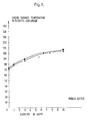
- the 21cc Ohlsson and Rice two stroke engine was run powering the Champ generator, and the engine surface temperature was measured at different power output levels using a calibrated thermistor bolted to the engine cylinder head.
- the test was carried out a number of times using different two stroke oils in the petrol used to fuel the engine (2% oil in the mixture), and the results are shown in the accompanying graphs which plot engine surface temperature (degrees centigrade) against generator power output (current in amps). It was found that the engine would often run at different temperatures on different days, despite using the same fuel mixture and the ambient temperature being the same. Consequently, the tests which are recorded on each graph were carried out on the same day as each other and as close as possible to each other in time in order to avoid as much as possible temperature differences arising for reasons other than the change in fuel mixture.
- the curve () - () represents a fuel mixture containing 2% of a commercially available synthetic two stroke oil
- the curve ⁇ represents a fuel mixture containing 2% of the silicone oil made in Example III.
- the curve x - x represents a fuel containing 2% of a commercially available synthetic two stroke oil different from those used in the tests of Figure 1;
- the ambient temperature throughout the tests was 1 1 °C.
- the engine temperatures at relatively low loads were much the same for the synthetic oil and the silicon oil mixture, but at higher loads were much higher for the synthetic oil and the engine would not actually produce maximum power.
- the silicone oil containing Cereclor 42 the engine ran very cool at low loads, perhaps too cool since a fluffy deposit was found on the sparking plug.
- the sparking plug ended in very good condition, being a matt grey colour with no deposits.
Landscapes
- Chemical & Material Sciences (AREA)
- Chemical Kinetics & Catalysis (AREA)
- General Chemical & Material Sciences (AREA)
- Oil, Petroleum & Natural Gas (AREA)
- Organic Chemistry (AREA)
- Lubricants (AREA)
Claims (17)
Applications Claiming Priority (4)
| Application Number | Priority Date | Filing Date | Title |
|---|---|---|---|
| GB2594378 | 1978-05-31 | ||
| GB2594378 | 1978-05-31 | ||
| GB7833877 | 1978-08-18 | ||
| GB3387778 | 1978-08-18 |
Publications (2)
| Publication Number | Publication Date |
|---|---|
| EP0006000A1 EP0006000A1 (de) | 1979-12-12 |
| EP0006000B1 true EP0006000B1 (de) | 1981-09-09 |
Family
ID=26257964
Family Applications (1)
| Application Number | Title | Priority Date | Filing Date |
|---|---|---|---|
| EP79300996A Expired EP0006000B1 (de) | 1978-05-31 | 1979-05-30 | Verfahren zur Herstellung Silicon enthaltender Schmiermittel |
Country Status (2)
| Country | Link |
|---|---|
| EP (1) | EP0006000B1 (de) |
| DE (1) | DE2960776D1 (de) |
Families Citing this family (2)
| Publication number | Priority date | Publication date | Assignee | Title |
|---|---|---|---|---|
| GB9613756D0 (en) * | 1996-07-01 | 1996-09-04 | Bingley Michael S | Additive composition |
| EP4560375A3 (de) | 2017-02-23 | 2025-07-16 | Corephotonics Ltd. | Gefaltete kameraobjektivdesigns |
Family Cites Families (4)
| Publication number | Priority date | Publication date | Assignee | Title |
|---|---|---|---|---|
| NL66837C (de) * | 1945-01-22 | |||
| US3024194A (en) * | 1958-03-19 | 1962-03-06 | Gulf Research Development Co | Method of inhibiting foam in a lubricating oil composition |
| US3275559A (en) * | 1963-01-14 | 1966-09-27 | Texaco Inc | Hydraulic fluid |
| US3629120A (en) * | 1966-09-29 | 1971-12-21 | Monsanto Co | Functional fluid compositions |
-
1979
- 1979-05-30 EP EP79300996A patent/EP0006000B1/de not_active Expired
- 1979-05-30 DE DE7979300996T patent/DE2960776D1/de not_active Expired
Also Published As
| Publication number | Publication date |
|---|---|
| DE2960776D1 (en) | 1981-11-26 |
| EP0006000A1 (de) | 1979-12-12 |
Similar Documents
| Publication | Publication Date | Title |
|---|---|---|
| US4224173A (en) | Lubricant oil containing polytetrafluoroethylene and fluorochemical surfactant | |
| US4127491A (en) | Hybrid lubricant including halocarbon oil | |
| US4039300A (en) | Gasoline fuel composition and method of using | |
| US2614985A (en) | Lubricating composition containing boric acid | |
| US6074444A (en) | Additive composition | |
| Covitch et al. | Oil thickening in the Mack T-7 engine test—fuel effects and the influence of lubricant additives on soot aggregation | |
| EP0006000B1 (de) | Verfahren zur Herstellung Silicon enthaltender Schmiermittel | |
| NO148782B (no) | Tilsetningsmiddel for motorolje for forbrenningsmotorer | |
| US4204968A (en) | Lubricant additive | |
| AU2010340059A1 (en) | Composition and method for reducing friction in internal combustion engines | |
| US2888913A (en) | Method of operating an internal combustion engine | |
| US2432109A (en) | Break-in fuel | |
| CN110408454A (zh) | 一种改善发动机动力的添加剂 | |
| US2188645A (en) | Carbon solvent and lubricant | |
| Yin et al. | Experimental study on the tribological behaviour of CeO2‐diesel blends on the injector body | |
| US3877887A (en) | Motor fuel composition | |
| US2086589A (en) | Motor fuel | |
| US2956870A (en) | Process for suppressing deposit formation in an internal combustion engine | |
| US3092586A (en) | Lubricants | |
| EP0578642B1 (de) | Schmierölzusammensetzung | |
| US5715785A (en) | Method of lubricating machinery in the presence of an electrical charge | |
| US2477098A (en) | Internal-combustion engine operation | |
| EP0636680A1 (de) | Schmiermittel für zweitaktmotor | |
| Yasutomi et al. | Kinetic approach to engine oil. 2. Antioxidant decay of lubricant in engine system | |
| US2206025A (en) | Carbon solvent and lubricant |
Legal Events
| Date | Code | Title | Description |
|---|---|---|---|
| PUAI | Public reference made under article 153(3) epc to a published international application that has entered the european phase |
Free format text: ORIGINAL CODE: 0009012 |
|
| AK | Designated contracting states |
Designated state(s): BE CH DE FR GB IT LU NL SE |
|
| 17P | Request for examination filed | ||
| ITF | It: translation for a ep patent filed | ||
| GRAA | (expected) grant |
Free format text: ORIGINAL CODE: 0009210 |
|
| AK | Designated contracting states |
Designated state(s): BE CH DE FR GB IT LU NL SE |
|
| REF | Corresponds to: |
Ref document number: 2960776 Country of ref document: DE Date of ref document: 19811126 |
|
| PG25 | Lapsed in a contracting state [announced via postgrant information from national office to epo] |
Ref country code: LU Free format text: LAPSE BECAUSE OF NON-PAYMENT OF DUE FEES Effective date: 19820531 |
|
| PGFP | Annual fee paid to national office [announced via postgrant information from national office to epo] |
Ref country code: FR Payment date: 19830519 Year of fee payment: 5 |
|
| PGFP | Annual fee paid to national office [announced via postgrant information from national office to epo] |
Ref country code: SE Payment date: 19830531 Year of fee payment: 5 Ref country code: NL Payment date: 19830531 Year of fee payment: 5 |
|
| PGFP | Annual fee paid to national office [announced via postgrant information from national office to epo] |
Ref country code: LU Payment date: 19830609 Year of fee payment: 5 |
|
| PGFP | Annual fee paid to national office [announced via postgrant information from national office to epo] |
Ref country code: CH Payment date: 19830617 Year of fee payment: 5 |
|
| PGFP | Annual fee paid to national office [announced via postgrant information from national office to epo] |
Ref country code: DE Payment date: 19830629 Year of fee payment: 5 |
|
| PGFP | Annual fee paid to national office [announced via postgrant information from national office to epo] |
Ref country code: BE Payment date: 19830630 Year of fee payment: 5 |
|
| PG25 | Lapsed in a contracting state [announced via postgrant information from national office to epo] |
Ref country code: SE Effective date: 19840531 Ref country code: CH Effective date: 19840531 Ref country code: BE Effective date: 19840531 |
|
| BERE | Be: lapsed |
Owner name: GULLY MICHAEL GUY JOHN THE VISCOUNT SELBY Effective date: 19840530 Owner name: BINGLEY MICHAEL STANLEY Effective date: 19840530 |
|
| PG25 | Lapsed in a contracting state [announced via postgrant information from national office to epo] |
Ref country code: NL Effective date: 19841201 |
|
| NLV4 | Nl: lapsed or anulled due to non-payment of the annual fee | ||
| PG25 | Lapsed in a contracting state [announced via postgrant information from national office to epo] |
Ref country code: FR Free format text: LAPSE BECAUSE OF NON-PAYMENT OF DUE FEES Effective date: 19850131 |
|
| REG | Reference to a national code |
Ref country code: CH Ref legal event code: PL |
|
| PG25 | Lapsed in a contracting state [announced via postgrant information from national office to epo] |
Ref country code: DE Effective date: 19850201 |
|
| REG | Reference to a national code |
Ref country code: FR Ref legal event code: ST |
|
| EUG | Se: european patent has lapsed |
Ref document number: 79300996.0 Effective date: 19850417 |
|
| PGFP | Annual fee paid to national office [announced via postgrant information from national office to epo] |
Ref country code: GB Payment date: 19970521 Year of fee payment: 19 |
|
| PG25 | Lapsed in a contracting state [announced via postgrant information from national office to epo] |
Ref country code: GB Free format text: LAPSE BECAUSE OF NON-PAYMENT OF DUE FEES Effective date: 19980530 |
|
| GBPC | Gb: european patent ceased through non-payment of renewal fee |
Effective date: 19980530 |
|
| PLBE | No opposition filed within time limit |
Free format text: ORIGINAL CODE: 0009261 |
|
| STAA | Information on the status of an ep patent application or granted ep patent |
Free format text: STATUS: NO OPPOSITION FILED WITHIN TIME LIMIT |