CN202634836U - Intelligent perception road LED (light-emitting diode) lighting controller - Google Patents
Intelligent perception road LED (light-emitting diode) lighting controller Download PDFInfo
- Publication number
- CN202634836U CN202634836U CN2012202974245U CN201220297424U CN202634836U CN 202634836 U CN202634836 U CN 202634836U CN 2012202974245 U CN2012202974245 U CN 2012202974245U CN 201220297424 U CN201220297424 U CN 201220297424U CN 202634836 U CN202634836 U CN 202634836U
- Authority
- CN
- China
- Prior art keywords
- module
- control
- interface
- human
- computer interaction
- Prior art date
- Legal status (The legal status is an assumption and is not a legal conclusion. Google has not performed a legal analysis and makes no representation as to the accuracy of the status listed.)
- Expired - Fee Related
Links
- 230000008447 perception Effects 0.000 title claims abstract description 6
- 238000004891 communication Methods 0.000 claims abstract description 59
- 230000003993 interaction Effects 0.000 claims abstract description 35
- 238000005070 sampling Methods 0.000 claims description 10
- 230000006698 induction Effects 0.000 claims description 3
- 238000012546 transfer Methods 0.000 claims description 2
- 238000005265 energy consumption Methods 0.000 abstract 1
- 238000005286 illumination Methods 0.000 description 56
- 238000011217 control strategy Methods 0.000 description 35
- 238000010586 diagram Methods 0.000 description 10
- 238000012423 maintenance Methods 0.000 description 10
- 238000000034 method Methods 0.000 description 10
- 238000001514 detection method Methods 0.000 description 9
- DGAQECJNVWCQMB-PUAWFVPOSA-M Ilexoside XXIX Chemical compound C[C@@H]1CC[C@@]2(CC[C@@]3(C(=CC[C@H]4[C@]3(CC[C@@H]5[C@@]4(CC[C@@H](C5(C)C)OS(=O)(=O)[O-])C)C)[C@@H]2[C@]1(C)O)C)C(=O)O[C@H]6[C@@H]([C@H]([C@@H]([C@H](O6)CO)O)O)O.[Na+] DGAQECJNVWCQMB-PUAWFVPOSA-M 0.000 description 7
- 229910052708 sodium Inorganic materials 0.000 description 7
- 239000011734 sodium Substances 0.000 description 7
- 230000000694 effects Effects 0.000 description 6
- 230000008901 benefit Effects 0.000 description 4
- 230000005540 biological transmission Effects 0.000 description 4
- 238000007689 inspection Methods 0.000 description 4
- 230000008859 change Effects 0.000 description 3
- 230000006870 function Effects 0.000 description 3
- 230000008569 process Effects 0.000 description 3
- 238000012545 processing Methods 0.000 description 3
- 238000011897 real-time detection Methods 0.000 description 3
- 238000013461 design Methods 0.000 description 2
- 238000003745 diagnosis Methods 0.000 description 2
- 230000009467 reduction Effects 0.000 description 2
- 238000012360 testing method Methods 0.000 description 2
- 230000002159 abnormal effect Effects 0.000 description 1
- 238000004458 analytical method Methods 0.000 description 1
- 230000033228 biological regulation Effects 0.000 description 1
- 238000005282 brightening Methods 0.000 description 1
- 238000006243 chemical reaction Methods 0.000 description 1
- 238000013480 data collection Methods 0.000 description 1
- 238000011234 economic evaluation Methods 0.000 description 1
- 230000005611 electricity Effects 0.000 description 1
- 238000004134 energy conservation Methods 0.000 description 1
- 238000005516 engineering process Methods 0.000 description 1
- 238000007499 fusion processing Methods 0.000 description 1
- 230000006872 improvement Effects 0.000 description 1
- 238000009434 installation Methods 0.000 description 1
- 239000000463 material Substances 0.000 description 1
- 239000011159 matrix material Substances 0.000 description 1
- 230000007246 mechanism Effects 0.000 description 1
- 238000012986 modification Methods 0.000 description 1
- 230000004048 modification Effects 0.000 description 1
- 238000012544 monitoring process Methods 0.000 description 1
- 230000008439 repair process Effects 0.000 description 1
- 238000011160 research Methods 0.000 description 1
- 238000012216 screening Methods 0.000 description 1
- 230000001932 seasonal effect Effects 0.000 description 1
- 239000004065 semiconductor Substances 0.000 description 1
- 239000002699 waste material Substances 0.000 description 1
Images





Classifications
-
- Y—GENERAL TAGGING OF NEW TECHNOLOGICAL DEVELOPMENTS; GENERAL TAGGING OF CROSS-SECTIONAL TECHNOLOGIES SPANNING OVER SEVERAL SECTIONS OF THE IPC; TECHNICAL SUBJECTS COVERED BY FORMER USPC CROSS-REFERENCE ART COLLECTIONS [XRACs] AND DIGESTS
- Y02—TECHNOLOGIES OR APPLICATIONS FOR MITIGATION OR ADAPTATION AGAINST CLIMATE CHANGE
- Y02B—CLIMATE CHANGE MITIGATION TECHNOLOGIES RELATED TO BUILDINGS, e.g. HOUSING, HOUSE APPLIANCES OR RELATED END-USER APPLICATIONS
- Y02B20/00—Energy efficient lighting technologies, e.g. halogen lamps or gas discharge lamps
- Y02B20/40—Control techniques providing energy savings, e.g. smart controller or presence detection
Landscapes
- Circuit Arrangement For Electric Light Sources In General (AREA)
Abstract
本实用新型涉及一种智能感知道路LED照明控制器。由区域回路控制器和现场节点控制器组成,区域回路控制器由电源模块、控制核、时钟模块、人机交互模块、控制模式选择、系统设置模块、诊断接口、通信模块、交通信息采集模块、外部信息采集模块和显示模块接口组成,现场节点控制器由电源模块、控制核、时钟模块、LED调光模块、人机交互模块、控制接口、系统设置模块、诊断接口、通信模块和显示模块接口组成,所述现场节点控制器与区域回路控制器进行双向无线连接,每个现场节点控制器连接相应的LED照明器。本实用新型基根据车辆位置对与车辆行驶相关的路段路灯进行亮度控制,不影响其他路段路灯,可大大减少能源消耗。LED路灯具体照度数值、LED路灯间的照度切换与当前车辆车速实时相关。
The utility model relates to an intelligent perception road LED lighting controller. It consists of a regional loop controller and a field node controller. The regional loop controller consists of a power supply module, a control core, a clock module, a human-computer interaction module, a control mode selection, a system setting module, a diagnostic interface, a communication module, a traffic information collection module, External information acquisition module and display module interface, field node controller consists of power supply module, control core, clock module, LED dimming module, human-computer interaction module, control interface, system setting module, diagnostic interface, communication module and display module interface It consists of two-way wireless connection between the field node controller and the regional loop controller, and each field node controller is connected with a corresponding LED illuminator. The utility model controls the brightness of street lamps in road sections related to vehicle running based on the position of the vehicle, does not affect street lamps in other road sections, and can greatly reduce energy consumption. The specific illuminance value of LED street lamps and the illuminance switching between LED street lamps are related to the current vehicle speed in real time.
Description
技术领域 technical field
本实用新型涉及一种智能感知道路LED照明控制器。 The utility model relates to an intelligent perception road LED lighting controller.
背景技术 Background technique
在道路照明领域,目前已有的技术文献,大多介绍高压钠灯道路照明系统,控制策略上目前国内大部分城市的道路照明管理系统仍在沿用简单的定时控制方式。这些系统普遍存在着难以反馈路灯运行状态信息、难以进行远程控制等局限,基本没有节电效果。 In the field of road lighting, most of the existing technical literature introduces high-pressure sodium lamp road lighting systems. In terms of control strategy, the road lighting management systems in most cities in China are still using simple timing control methods. These systems generally have limitations such as difficulty in feeding back street lamp operating status information and remote control, and basically have no power-saving effect.
LED光源与传统的高压钠灯相比具有更高的节能效果,耗电量是同等照明效果下传统光源的一半。在寿命方面LED光源通常寿命为50,000-100,000小时,可以瞬间启动,并且支持连续调光。随着半导体材料和工艺技术的日趋成熟,大功率LED的成本也将逐渐得到控制,在国家节能减排政策的大背景下,其应用的广度和深度会越来越大。以120w的LED路灯和250w传统高压钠灯进行测算,单盏路灯的年节约运行费用为650元左右。目前我国城市道路照明共有2000多万只以上的路灯,每年新增路灯150万以上,如果该增量部分全部换成LED路灯,每年可节点约30亿kwh以上。在对天津市团泊新城西区北华路进行经济评价后,结果表明使用LED路灯初始投资是高压钠灯的1.12倍,两年后LED路灯的总花费与高压钠灯总花费相比较就处于盈利的阶段,加之LED路灯的维护费用要小于高压钠灯,其使用寿命又远远大于高压钠灯,所以以多年计算两者费用,LED路灯项目的优势非常明显。 Compared with traditional high-pressure sodium lamps, LED light sources have higher energy-saving effects, and the power consumption is half of traditional light sources with the same lighting effect. In terms of lifespan, LED light sources usually have a lifespan of 50,000-100,000 hours, can be started instantly, and support continuous dimming. With the maturity of semiconductor materials and process technology, the cost of high-power LEDs will gradually be controlled. Under the background of national energy conservation and emission reduction policies, the breadth and depth of its application will become larger and larger. Based on 120w LED street lamps and 250w traditional high-pressure sodium lamps, the annual operating cost savings for a single street lamp is about 650 yuan. At present, there are more than 20 million street lights in my country's urban road lighting, and more than 1.5 million new street lights are added every year. If all the incremental parts are replaced with LED street lights, the nodes can be more than 3 billion kwh per year. After the economic evaluation of Beihua Road in the West District of Tuanbo New City, Tianjin, the results show that the initial investment of using LED street lamps is 1.12 times that of high-pressure sodium lamps. After two years, the total cost of LED street lamps is in a profitable stage compared with the total cost of high-pressure sodium lamps. , In addition, the maintenance cost of LED street lamps is less than that of high-pressure sodium lamps, and its service life is much longer than that of high-pressure sodium lamps. Therefore, the advantages of LED street lamp projects are very obvious when calculating the cost of the two over many years.
公开号CN102307414A专利《基于测定车流量的智能路灯系统》提出一种测定车流量的智能路灯系统,实现了道路照明中有车即亮、无车即熄的功能,该专利优点在于具有车辆感应效果,缺点是只能对单个路灯调节,只有在车行驶至该节点时,路灯才能亮起,且路灯只有打开与关闭两种状态。公开号CN102307419A专利《基于车流量的道路照明调光控制系统》,提出了使用单灯调光控制器采集车流量,集中控制器收集流量信息,根据车流量改变路灯亮度。缺点在于仅依靠车流量判断,若车流量进行不规则变化,路灯亮度调节频繁影响使用寿命。公开号CN202014396U专利《道路照明灯具智能节电开关控制器》优点在于可以根据不同的区域、气候和季节以及不同道路的实际情况来选择控制器的开关灯时间,提出了季节控制的思想,但缺点是仍旧不确定光照条件是否满足要求;公开号CN201230391Y专利《LED路灯分时段控制装置》,把一天24小时分为若干时间段,不同的时段产生不同宽度的脉冲,脉冲控制驱动电路点亮LED灯,优点在于引入LED路灯亮度多级控制和分时段概念,缺点在于缺乏集中控制。公开号CN101861027A专利《路灯智能化集中控制系统》,提出了利用主从节点实现集中控制,实现对照明终端的整体控制、局部控制和单体控制,对每个终端照明的全亮、半亮、熄灭三种状态的控制,但缺乏有效的控制策略,智能化程度不高。 Publication No. CN102307414A patent "Intelligent Street Light System Based on Measuring Traffic Flow" proposes an intelligent street light system for measuring traffic flow, which realizes the function of turning on when there is a car and turning off when there is no car in road lighting. The advantage of this patent is that it has a vehicle sensing effect , the disadvantage is that it can only be adjusted for a single street light, and the street light can only be turned on when the car travels to this node, and the street light can only be in two states: on and off. Publication No. CN102307419A patent "Road Lighting Dimming Control System Based on Traffic Flow" proposes to use a single lamp dimming controller to collect traffic flow, and a centralized controller to collect traffic flow information to change the brightness of street lamps according to the traffic flow. The disadvantage is that it only depends on the traffic flow to judge. If the traffic flow changes irregularly, the frequent adjustment of street light brightness will affect the service life. Publication No. CN202014396U patent "Intelligent Energy-Saving Switch Controller for Road Lighting Lamps" has the advantage that the switching time of the controller can be selected according to different regions, climates and seasons, and the actual conditions of different roads, and the idea of seasonal control is proposed. The disadvantage is that it is still not sure whether the lighting conditions meet the requirements; the patent of publication number CN201230391Y "LED street lamp time division control device" divides 24 hours a day into several time periods, different time periods generate pulses of different widths, and the pulse control drive circuit lights up the LED Lamp, the advantage lies in the introduction of multi-level control of LED street lamp brightness and the concept of time division, but the disadvantage lies in the lack of centralized control. Publication No. CN101861027A patent "Intelligent Centralized Control System for Street Lamps" proposes to use master-slave nodes to realize centralized control, realize overall control, local control and individual control of lighting terminals, and control the full brightness, half brightness, and The control of the three states is extinguished, but it lacks an effective control strategy and the degree of intelligence is not high.
发明内容 Contents of the invention
本实用新型的智能感知道路LED照明控制器是一种针对道路照明进行智能化控制,以节能降耗,按需照明为目的的智能感知道路LED照明控制器。 The intelligent sensing road LED lighting controller of the utility model is an intelligent sensing road LED lighting controller for the purpose of intelligently controlling road lighting, saving energy and reducing consumption, and lighting on demand.
本实用新型提出的智能感知道路ELD照明控制器,由区域回路控制器(LTU)22和现场节点控制器(RTU)23组成,其中: The intelligent sensing road ELD lighting controller proposed by the utility model is composed of a regional loop controller (LTU) 22 and a field node controller (RTU) 23, wherein:
区域回路控制器22由第一电源模块1、第一控制核2、第一时钟模块3、第一人机交互模块4、控制模式选择5、第一系统设置模块6、第一诊断接口7、第一通信模块8、交通信息采集模块9、外部信息采集模块10和第一显示模块接口11组成,第一控制核2分别与第一人机交互模块4、控制模式选择5和第一系统设置模块6进行双向连接,第一控制核2的输入端分别与第一时钟模块3、交通信息采集模块9和外部信息采集模块10的输出端连接,第一控制核2的输出端分别连接第一显示模块接口11和第一诊断接口7的输出端连接,第一控制模式选择5与第一通信模块8进行双向连接,第一控制核2、第一时钟模块3、第一人机交互模块4、控制模式选择5、第一系统设置模块6、第一诊断接口7、第一通信模块8交通信息采集模块9、外部信息采集模块10和第一显示模块接口11分别连接第一电源模块1;
The
第一电源模块1输出两档电源电压+5V和+3.3V,第一电源模块1的+5V输出端分别连接第一控制核2、第一时钟模块3、第一人机交互模块4、控制模式选择5、第一系统设置模块6、第一诊断接口7、第一通信模块8和交通信息采集模块9和第一显示模块接口11的电源端,第一电源模块1的+3.3V输出端连接外部信息采集模块10的电源端;
The first
交通信息采集模块9输出电平通过GPIO口送入第一控制核2中,外部信息采集模块10通过I2C总线连接至第一控制核2的I2C内置模块上;
The output level of the traffic information acquisition module 9 is sent to the first control core 2 through the GPIO port, and the external
控制模式选择5连接第一控制核2的UART0模块引脚,第一系统设置模块6连接第一控制核2的UART1模块引脚; Control mode selection 5 is connected to the UART0 module pin of the first control core 2, and the first system setting module 6 is connected to the UART1 module pin of the first control core 2;
第一控制核2的UART1使用内置定时器通过GPIO口产生PWM波,连接至第一人机交互模块4的PWM输入端; The UART1 of the first control core 2 uses a built-in timer to generate a PWM wave through the GPIO port, and is connected to the PWM input terminal of the first human-computer interaction module 4;
控制模式选择5的TX和RX脚分别连到第一通信模块8的RX和TX脚,用于与现场节点控制器进行数据通信; The TX and RX pins of the control mode selection 5 are respectively connected to the RX and TX pins of the first communication module 8 for data communication with the field node controller;
现场节点控制器23由第二电源模块12、第二控制核13、第二时钟模块14、LED调光模块15、第二人机交互模块20、控制接口16、第二系统设置模块17、第二诊断接口18、第二通信模块19和第二显示模块接口21组成,第二控制核13分别与LED调光模块15、控制接口16和第二系统设置模块17进行双向连接,第二控制核13的输入端分别与第二时钟模块14、第二人机交互模块20的输出端连接,第二控制核13的输出端分别连接第二显示模块接口21和第二诊断接口18的输出端连接,控制接口16与第二通信模块19进行双向连接,第二控制核13、第二时钟模块14、LED调光模块15、第二人机交互模块20、控制接口16、第二系统设置模块17、第二诊断接口18、第二通信模块19和第二显示模块接口21分别连接第二电源模块12;
The
第二电源模块12输出两档电源电压+5V和+3.3V,+5V输出端分别连接微第二控制核13,第二时钟模块14、LED调光模块15、控制接口16、第二系统设置模块17、第二诊断接口18、第二通信模块19和第二显示模块接口21的电源端,+3.3V输出端连接第二人机交互模块20的电源端;
The second
第二人机交互模块20输出电平通过GPIO口送入第二控制核12中,第二人机交互模块20通过I2C总线连接至第二控制核12的I2C内置模块上;
The output level of the second human-
控制接口16连接第二控制核12的UART0模块引脚上;
The
第二系统设置模块17连接第二控制核12的UART1模块引脚上;
The second
第二控制核12的UART1使用内置定时器通过GPIO口产生PWM波,连接至LED调光模块15的PWM输入端;
The UART1 of the
控制接口16的TX和RX脚连到第二通信模块19的RX和TX脚,用于与驱动回路控制器进行数据传输;
The TX and RX pins of the
所述现场节点控制器23的第二通信模块19与区域回路控制器22的第一通信模块8进行双向无线连接,所述现场节点控制器23的个数视具体情况而定,每个现场节点控制器23连接相应的LED照明器。
The
本实用新型中,所述交通信息采集模块9包括车辆采样传感器模块,所述车辆采样传感器模块由感应线圈,或者红外线传感器或声纳传感器来采样车辆的通过信息。 In the present invention, the traffic information collection module 9 includes a vehicle sampling sensor module, and the vehicle sampling sensor module uses an induction coil, or an infrared sensor or a sonar sensor to sample passing information of vehicles.
本实用新型中,所述外部信息采集模块10采用照度计。
In the present invention, the external
本实用新型所述的智能感知道路LED照明控制器用于道路照明现场,每个路段由1个区域回路控制器和若干个现场节点控制器构成,每个现场节点控制器对应一个LED照明器,相邻路段的区域回路控制器之间采用点对点通信,可以借助通过有线(如RS485、Modbus、CAN等)或无线(WIFI、GPRS等)通信方式进行数据交换。LTU与各RTU之间采用主从式控制结构,LTU为主控制器,RTU为从控制器,由LTU根据控制策略控制该路段的各RTU。 The intelligent sensing road LED lighting controller described in the utility model is used in the road lighting scene. Each road section is composed of a regional loop controller and several field node controllers. Each field node controller corresponds to an LED illuminator. Point-to-point communication is adopted between the regional loop controllers of adjacent road sections, and data exchange can be carried out by means of wired (such as RS485, Modbus, CAN, etc.) or wireless (WIFI, GPRS, etc.) communication. A master-slave control structure is adopted between the LTU and each RTU. The LTU is the master controller, and the RTU is the slave controller. The LTU controls each RTU in the road section according to the control strategy.
本实用新型的控制器控制策略的典型特点是“即时照明-Lighting just in time”,由以下五种控制模式构成。 The typical feature of the control strategy of the controller of the present invention is "instant lighting-Lighting just in time", which consists of the following five control modes.
(1)正常模式:依据当前的天气、光照时间以及光照度数据,由LTU设定各RTU的照度调节分级(如高、中、低、关闭四档)和开启/关闭时间,并随之依据当前的车辆位置、车流量、车速以及行车方向调节LED路灯的照度,以保证每辆车行驶前方和后方一定数目的LED路灯保持高照度,而其他LED保持基本照度。依据道路段的连接情况在相邻LTU之间交换照明控制数据,形成多路段的路灯照度联控。 (1) Normal mode: According to the current weather, illumination time and illumination data, the LTU sets the illumination adjustment classification (such as four levels of high, medium, low, and off) and on/off time of each RTU by the LTU, and then according to the current Adjust the illuminance of LED street lights according to the vehicle position, traffic flow, vehicle speed and driving direction to ensure that a certain number of LED street lights in front and behind each vehicle maintain high illuminance, while other LEDs maintain basic illuminance. Exchange lighting control data between adjacent LTUs according to the connection of road sections to form joint control of street lighting illumination for multiple road sections.
(2)节假日模式:依据当前的政策数据、天气、光照时间以及光照度数据,由LTU设定RTU所管辖的LED路灯的照度调节分级和调节时间段,如前半夜全功率照明,后半夜半功率照明等。 (2) Holiday mode: According to the current policy data, weather, lighting time and illuminance data, the LTU sets the illuminance adjustment classification and adjustment time period of the LED street lights under the jurisdiction of the RTU, such as full-power lighting in the first half of the night and half-power in the second half. lighting etc.
(3)紧急模式:根据系统设定发送信号给LTU,并控制相关RTU保持相关路段的LED路灯全亮或全灭。 (3) Emergency mode: Send a signal to the LTU according to the system settings, and control the relevant RTU to keep the LED street lights on the relevant road sections all on or off.
(4)维修模式:根据系统设定,由人工控制LTU和RTU进行单盏LED路灯的开关。 (4) Maintenance mode: According to the system setting, the LTU and RTU are manually controlled to switch on and off a single LED street lamp.
(5)自定义模式:根据系统设定,通过一定的编程方法设定LTU参数,并控制RTU按照设定程序进行LED路灯照明控制。 (5) Custom mode: According to the system settings, set the LTU parameters through a certain programming method, and control the RTU to control the LED street lighting according to the set program.
本实用新型中,其控制体系结构如附图1所示。
In the utility model, its control system structure is as shown in accompanying
(1) RTU接收LTU照明控制指令,输出恰当的LED照明功率,对LED路灯进行分级照度控制。LED路灯具体照度数值、LED路灯间的照度切换与当前车辆车速实时相关,即车速越快,前向的高照度LED路灯就越多,前向高照度道路长度就越长。在网络故障情况下,RTU保持LED路灯高照度输出; (1) The RTU receives the LTU lighting control command, outputs the appropriate LED lighting power, and controls the graded illumination of the LED street lamp. The specific illuminance value of LED street lamps and the illuminance switching between LED street lamps are related to the current vehicle speed in real time, that is, the faster the vehicle speed, the more forward high-illuminance LED street lamps, and the longer the forward high-illuminance road length. In case of network failure, RTU maintains high-illuminance output of LED street lights;
(2) LTU与RTU采用主从式控制结构,由一个LTU控制一个路段的多个RTU,依据道路照明控制策略输出RTU照明控制指令,从而对高路段的LED路灯照度实施控制; (2) LTU and RTU adopt a master-slave control structure, one LTU controls multiple RTUs in one road section, and outputs RTU lighting control commands according to the road lighting control strategy, so as to control the illumination of LED street lights in high road sections;
(3) LTU与LTU采用点对点控制结构,在跨路段连接处,为保证照明效果的连续性,LTU之间传递交通信息和道路照明控制信息,实施路段间的LED路灯联控。LTU负责采集道路路段政策数据、天气、光照时间、光照度等外部数据以及车辆位置、车流量、车速等实时交通信息数据。LTU之间可以采用有线(如RS485、Modbus、CAN等)或无线(WIFI、GPRS等)通信方式进行数据通信。 (3) LTU and LTU adopt a point-to-point control structure. In order to ensure the continuity of lighting effects at the junction of cross-road sections, LTUs transmit traffic information and road lighting control information to implement joint control of LED street lights between road sections. LTU is responsible for collecting external data such as road section policy data, weather, sunlight time, and illuminance, as well as real-time traffic information data such as vehicle location, traffic flow, and vehicle speed. Data communication between LTUs can be carried out by wired (such as RS485, Modbus, CAN, etc.) or wireless (WIFI, GPRS, etc.) communication methods.
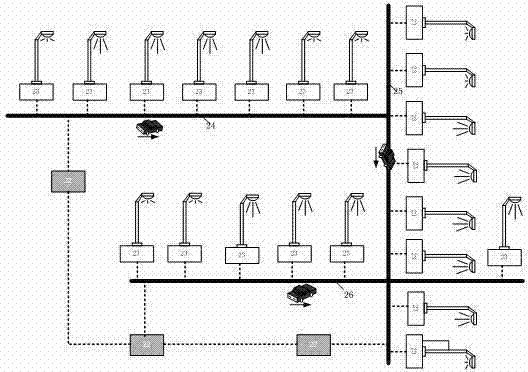
图1系统性地展示了多行驶车辆的多路段照明联控。其中24为第一路段,25为第二路段,26为第三路段,每个路段都有一个区域回路控制器和多个现场节点控制器。可以看出: Figure 1 systematically shows the multi-segment lighting joint control of multiple vehicles. Among them, 24 is the first road section, 25 is the second road section, and 26 is the third road section, and each road section has a regional loop controller and multiple field node controllers. As can be seen:
(1) 第一路段,当前只有1辆汽车车辆行驶。依据当前车速,车所在位置的现场节点控制器控制的LED路灯、前方和后方现场节点控制器控制的LED路灯均高照度,第一路段上无车的其余LED路灯均低照度。 (1) On the first road section, only one vehicle is currently driving. According to the current speed of the vehicle, the LED street lights controlled by the field node controller at the position of the car, the LED street lights controlled by the front and rear field node controllers all have high illuminance, and the other LED street lights without cars on the first road section have low illuminance.
(2) 第三路段,当前只有1辆汽车行驶,但是该汽车靠近路口,无法判断该汽车的去向,因此,该车所在位置的LED路灯以及前向(包括转向后的各路段)的LED路灯均高照度。显然,此时第二路段上的LTU需要与第三路段上的LTU进行数据同时,促使第三路段上的LTU输出该路段路口处的LED路灯的高照度控制信号。 (2) On the third road section, there is only one car driving at present, but the car is close to the intersection, so it is impossible to judge the whereabouts of the car. Average high illuminance. Obviously, at this time, the LTU on the second road section needs to perform data synchronization with the LTU on the third road section, so as to prompt the LTU on the third road section to output the high-illuminance control signal of the LED street lamp at the intersection of the road section.
需要注意的是,上述工作状态是处于正常工作模式下的智能感知LED照明控制方案。 It should be noted that the above working state is an intelligent sensing LED lighting control scheme in a normal working mode.
1. 道路照明控制策略 1. Road lighting control strategy
该控制器控制策略的典型特点是“Lighting just in time”,由以下五种控制模式构成: The typical feature of the controller's control strategy is "Lighting just in time", which consists of the following five control modes:
(1) 正常模式 (1) Normal mode
该控制策略更好地体现“即时照明”思想。依据当前的天气、光照时间以及光照度数据,由LTU设定RTU的照度调节分级(如高、中、低、关闭四档)和开启或关闭时间,并随之依据当前的车辆位置、车流量、车速调节各盏或各段LED的照度,以保证每辆车行驶前方和后方一定数目的LED路灯保持高照度,而其他LED保持基本照度。依据道路段的连接情况在LTU之间交换数据,形成多路段的路灯照度联控。 This control strategy better reflects the idea of "instant lighting". According to the current weather, illumination time, and illumination data, the LTU sets the illumination adjustment classification (such as high, medium, low, and off) and the opening or closing time of the RTU, and then according to the current vehicle position, traffic flow, The speed of the vehicle adjusts the illuminance of each lamp or section of LED to ensure that a certain number of LED street lights in front and behind each vehicle maintain high illuminance, while other LEDs maintain basic illuminance. Data is exchanged between LTUs according to the connection status of road sections to form joint control of street lamp illumination for multiple sections.
这种策略在午夜间车流量不多的情况下特别有效。若发现有车辆正在通过路段,调整当前路段路灯亮度,并引入对下一路段预判机制。道路设有车辆感应装置,用于感应车辆位置、车速,估计车流量,通过传感装置将数据采集到LTU中,采用正常模式的控制策略,选择在车辆未行至前,提前调整前向一定数量的路灯和后向一定数量的路灯进行高照度控制输出,其余路灯低照度控制输出,车辆行驶过的地方恢复原先亮度。如果车辆发生调转,可在新方向下一节点位置判断出方向改变,进而改变亮灯方向。在一段时间内若回路中检测不到车辆通过,自动恢复低等亮度状态。 This strategy works especially well at midnight when there is not much traffic. If it is found that a vehicle is passing the road section, adjust the brightness of the street lights of the current road section, and introduce a prediction mechanism for the next road section. The road is equipped with a vehicle sensing device, which is used to sense the position and speed of the vehicle, estimate the traffic flow, collect the data into the LTU through the sensing device, adopt the control strategy of the normal mode, and choose to adjust the forward direction in advance before the vehicle arrives. A certain number of street lamps and a certain number of street lamps will perform high-illuminance control output, and the rest of the street lamps will output low-illuminance control, and the place where the vehicle travels will restore the original brightness. If the vehicle turns around, the direction change can be judged at the node position next to the new direction, and then the direction of the light can be changed. If no vehicle is detected in the loop for a period of time, it will automatically restore the low-level brightness state.
上述工作模式还需要依据外部数据政策数据、天气、光照时间以及光照度数据,进行正常模式的启停控制。由于每个城市的经纬度不同,所以它们的日出日落时间也不相同,即使同一个地方每天的日出日落时间也会发生变化。首先按照日出日落时间算法根据城市的经纬度算出日出日落时间,并存在对应的数据表中,以供未来查询和提值。例如以上海道路状况为研究对象,可以根据上海的地理位置(东经121°4′,北纬31°2′)来确定日出日落时间。光控部分则要求开关灯时满足一定的照度水平,所执行的标准将开灯照度水平设置到15Lx,关灯照度水平设置到30-20Lx。在日出的时候,照度值有可能还没有达到30-20Lx,这时如果关灯,将对交通造成不堪的后果。在日落的时候,照度值还远远大于15Lx,这时开灯,必然使得电能浪费。通过时控光控结合的方法,既能节能又能保证路面的正常照度,使得路面能够达到流畅与安全。 The above working mode also needs to start and stop the normal mode based on external data policy data, weather, light time and illuminance data. Since the latitude and longitude of each city are different, their sunrise and sunset times are also different, even in the same place, the daily sunrise and sunset times will also change. First, according to the sunrise and sunset time algorithm, calculate the sunrise and sunset time according to the latitude and longitude of the city, and store it in the corresponding data table for future query and value improvement. For example, taking Shanghai's road conditions as the research object, the sunrise and sunset times can be determined according to Shanghai's geographical location (121°4' east longitude, 31°2' north latitude). The light control part requires a certain illuminance level when turning on and off the light. The implemented standard sets the illuminance level to 15Lx when the light is turned on, and 30-20Lx when the light is turned off. At sunrise, the illuminance value may not reach 30-20Lx. If the lights are turned off at this time, it will cause unbearable consequences to the traffic. At sunset, the illuminance value is far greater than 15Lx, turning on the lights at this time will inevitably waste electric energy. Through the combination of time control and light control, it can not only save energy but also ensure the normal illumination of the road surface, so that the road surface can be smooth and safe.
同时,还需要道路类型不同设置不同的照度等级。根据《城市道路设计规范》CJJ37-90对城市道路的分类,并结合道路照明本身的特点,将城市机动车道路照明按快速路与主干路、次干路、支路分为三级。根据《城市道路照明设计标准》,这三种道路的标准照度值如下表所示。 At the same time, it is also necessary to set different illumination levels for different types of roads. According to the classification of urban roads in "Urban Road Design Code" CJJ37-90, combined with the characteristics of road lighting itself, urban motor vehicle road lighting is divided into three levels according to express roads, trunk roads, secondary trunk roads, and branch roads. According to the "Urban Road Lighting Design Standards", the standard illuminance values of these three roads are shown in the table below.

即使在同一道路上例如城市主干路,也存在因位置不同照度需求存在差异的问题,在路况复杂事故易发路段,十字路口路段,建筑物遮蔽光严重的路段,应尽量保持路灯亮度保持高亮。 Even on the same road, such as an urban arterial road, there is a problem that there are differences in illumination requirements due to different locations. In complex road conditions, accident-prone road sections, intersection road sections, and road sections with serious building shadows, the brightness of street lights should be kept as high as possible. .
(2) 节假日模式:依据当前的政策数据、天气、光照时间以及光照度数据,由LTU设定RTU的照度调节分级和调节时间段,如前半夜全功率照明,后半夜半功率照明等。 (2) Holiday mode: According to the current policy data, weather, light time and illuminance data, the LTU sets the illuminance adjustment classification and adjustment time period of the RTU, such as full-power lighting in the first half of the night and half-power lighting in the second half of the night.
按照国家政策性要求,如国庆、五一、元旦等重要法定假日,为渲染节日气氛,在特定路段的照明不单单只满足车辆通行的要求,还要满足行人通行,观光拍照等人性化需求,因此,通常可采用前半夜该路段全功率高照度照明控制输出,而后半夜因为行人减少,转为为车辆通行照明服务,采用半功率照明控制输出或者自动转为正常模式输出。 In accordance with national policy requirements, such as National Day, May Day, New Year's Day and other important statutory holidays, in order to exaggerate the festive atmosphere, the lighting on specific road sections not only meets the requirements of vehicle traffic, but also meets the human needs of pedestrian traffic, sightseeing and photography, etc. Therefore, in the first half of the night, the full-power high-illuminance lighting control output of the road section can be used, and in the second half of the night, due to the reduction of pedestrians, it is switched to serve as vehicle traffic lighting, and the half-power lighting control output is used or automatically converted to normal mode output.
因此,控制器通过采集政策数据,如节假日照明设定,如每年的9月30日-10月7日国庆假日期间,采用上述道路照明功能需求。 Therefore, the controller adopts the above-mentioned road lighting function requirements by collecting policy data, such as holiday lighting settings, such as the National Day holiday period from September 30 to October 7 every year.
同时,也可以通过自定义模式输入节假日路灯照明控制策略并在该模式中进行控制策略选取,利用单点调节的特点,可以利用同一回路内或不同回路上的节点路灯亮度不同,颜色不同,以点阵的形式呈现出景观灯的效果。 At the same time, it is also possible to input holiday street lighting control strategies through the custom mode and select the control strategy in this mode. Using the characteristics of single-point regulation, it is possible to use the different brightness and color of node street lamps in the same loop or on different loops. The form of dot matrix presents the effect of landscape lights.
(3) 紧急模式:根据系统设定发送信号给LTU,并控制相关RTU保持全亮或全灭。 (3) Emergency mode: Send a signal to the LTU according to the system setting, and control the relevant RTU to keep all lights on or all off.
但是,若遭遇恶劣天气,如夏天的雷电等恶劣天气,甚至有可能出现白天变黑夜的情况,同时在傍晚或清晨出现雨、雪、雾、风沙和阴天等异常天气时,如果路灯没有及时的点亮,不仅会对人们的出行带来不便,甚至会对交通产生意想不到的影响。考虑一天中因特殊天气使得道路照度持续低于设定照度水平,不能满足照度需求,调整LTU进入紧急模式。当环境恢复正常后一段时间,关闭紧急模式,并进入正常模式。 However, if you encounter bad weather, such as thunder and lightning in summer, it may even turn the day into night. At the same time, when there are abnormal weather such as rain, snow, fog, sandstorm and cloudy in the evening or early morning, if the street lights are not timely The lighting will not only bring inconvenience to people's travel, but even have an unexpected impact on traffic. Considering that the road illuminance continues to be lower than the set illuminance level due to special weather during the day, which cannot meet the illumination demand, adjust the LTU to enter the emergency mode. After a period of time when the environment returns to normal, turn off emergency mode and enter normal mode.
同时,若系统检测到照明系统漏电、或者其他用电紧急状态,可以转入紧急模式的另一工作状态,所有LED路灯全部关闭。 At the same time, if the system detects a leakage in the lighting system or other emergency states of power consumption, it can switch to another working state of emergency mode, and all LED street lights will be turned off.
(4) 维修模式:根据系统设定,由人工控制LTU和RTU进行单盏路灯的开关。 (4) Maintenance mode: According to the system setting, the LTU and RTU are manually controlled to switch on and off a single street lamp.
系统在维修模式下,可以逐盏路灯控制与调试,进行单个路灯的维修,而不影响其他路灯的正常工作。 In the maintenance mode, the system can control and debug street lamps one by one, and repair a single street lamp without affecting the normal operation of other street lamps.
(5) 自定义模式:根据系统设定,通过一定的编程方法设定LTU参数,并控制RTU按照设定程序进行路灯照明控制。 (5) Custom mode: According to the system settings, set the LTU parameters through a certain programming method, and control the RTU to control the street lighting according to the set program.
在有人参与情况下,从控制策略数据库中选择合适的控制策略并通过人机交互进行策略调整,输出到RTU实施照度控制;或者自动生成性的道路照明控制策略。如隔灯照明控制方式,或者针对地下隧道的照明模式进行渐亮或渐暗控制等。同时对控制策略库进行维护与调整,加入新调整的控制策略,删除不恰当的控制策略。 In the case of human participation, select the appropriate control strategy from the control strategy database and adjust the strategy through human-computer interaction, and output it to the RTU to implement illumination control; or automatically generate road lighting control strategies. For example, the lighting control method for every lamp, or the gradual brightening or dimming control for the lighting mode of the underground tunnel. At the same time, maintain and adjust the control strategy library, add newly adjusted control strategies, and delete inappropriate control strategies.
各种模式的优先级表示如下: The priority of the various modes is expressed as follows:
维修模式>自定义模式>紧急模式>节假日模式>正常模式 Service Mode>Custom Mode>Emergency Mode>Holiday Mode>Normal Mode
2. 智能感知 2. IntelliSense
智能感知包括以下两个方面: IntelliSense includes the following two aspects:
数据感知:通过控制器的多数据接口,感知政策数据、天气、光照时间、光照度等外部数据以及车辆位置、车流量、车速等实时交通信息,并进行相关的智能数据融合处理,形成策略性数据信息。 Data perception: Through the multi-data interface of the controller, external data such as policy data, weather, lighting time, and illuminance, as well as real-time traffic information such as vehicle location, traffic volume, and vehicle speed, are perceived, and relevant intelligent data fusion processing is performed to form strategic data information.
策略感知与调整:无人参与情况下,依据策略性数据信息,通过智能筛选与匹配方法从控制策略库中挑选合适的控制策略,并对RTU进行照度控制;有人参与情况(如维修模式、自定义模式等)下,从控制策略数据库中选择合适的控制策略并通过人机交互进行策略调整,输出到RTU实施照度控制;对控制策略库进行维护与调整,加入新调整的控制策略,删除不恰当的控制策略。 Strategy perception and adjustment: In the case of unmanned participation, according to the strategic data information, select the appropriate control strategy from the control strategy library through intelligent screening and matching methods, and control the illumination of the RTU; Define mode, etc.), select the appropriate control strategy from the control strategy database and adjust the strategy through human-computer interaction, output to the RTU to implement illumination control; maintain and adjust the control strategy library, add the newly adjusted control strategy, delete Appropriate control strategy.
以下结合附图和实施例对本实用新型作比较详细的说明。 Below in conjunction with accompanying drawing and embodiment the utility model is described in more detail.
附图说明 Description of drawings
图1 是本实用新型的控制系统结构图。 Fig. 1 is the structural diagram of the control system of the present utility model.
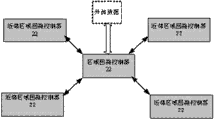
图2是本实用新型中系统部分LTU之间与外部数据的通信连接图。 Fig. 2 is a communication connection diagram between system part LTUs and external data in the utility model.
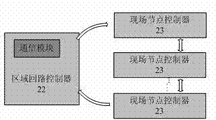
图3是本实用新型中系统部分LTU与RTU的通信连接图。 Fig. 3 is the communication connection diagram of system part LTU and RTU in the utility model.
图4是本实用新型中LTU内部结构图。 Fig. 4 is a diagram of the internal structure of the LTU in the utility model.
图5是本实用新型中RTU内部结构图。 Fig. 5 is a diagram of the internal structure of the RTU in the utility model.
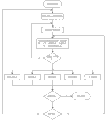
图6是LTU控制系统主架构程序流程图。 Figure 6 is a flow chart of the main architecture program of the LTU control system.
图7为LTU正常工作模式下的程序流程图。 FIG. 7 is a flow chart of the program in the normal working mode of the LTU.
图8为LTU自定义工作模式下的程序流程图。 Fig. 8 is a program flow chart in the LTU self-defined working mode.
图9为LTU节假日工作模式下的程序流程图。 FIG. 9 is a program flow chart of the LTU in holiday working mode.
图10为LTU紧急工作模式下的程序流程图。 Fig. 10 is a program flow chart in the emergency working mode of the LTU.
图11为LTU维修工作模式下的程序流程图。 Fig. 11 is a program flow chart in the LTU maintenance working mode.
图12为RTU控制系统的程序流程图。 Fig. 12 is a program flow chart of the RTU control system.
图中标号:1为第一电源模块,2为第一控制核,3为第一时钟模块,4为第一人机交互模块,5为控制模式选择,6为第一系统设置模块,7为诊断接口,8为第一通信模块,9为交通信息采集模块,10为外部信息采集模块,11为第一显示模块接口,12为第二电源模块,13为第二控制核,14为第二时钟模块,15为LED调光模块,16为控制接口,17为第二系统设置模块,18为第二诊断接口,19为第二通信模块,20为第二人机交互模块,21为第二显示模块接口,22为区域回路控制器LTU,23为现场节点控制器RTU,24为第一路段,25为第二路段,26为第三路段。 Numbers in the figure: 1 is the first power supply module, 2 is the first control core, 3 is the first clock module, 4 is the first human-computer interaction module, 5 is the control mode selection, 6 is the first system setting module, 7 is the Diagnosis interface, 8 is the first communication module, 9 is the traffic information collection module, 10 is the external information collection module, 11 is the first display module interface, 12 is the second power supply module, 13 is the second control core, 14 is the second Clock module, 15 is the LED dimming module, 16 is the control interface, 17 is the second system setting module, 18 is the second diagnosis interface, 19 is the second communication module, 20 is the second human-computer interaction module, 21 is the second Display module interface, 22 is the regional loop controller LTU, 23 is the field node controller RTU, 24 is the first section, 25 is the second section, 26 is the third section.
具体实施方式 Detailed ways
下面通过实施例结合附图进一步说明本实用新型。 Further illustrate the utility model below by embodiment in conjunction with accompanying drawing.
实施例1:图1 是本实用新型的控制系统结构图。所述智能感知道路LED照明控制器由所述区域回路控制器LTU和所述现场节点控制器RTU两部分构成。图1展示了多行驶车辆的多路段照明联控。其中24为第一路段,25为第二路段,26为第三路段,每个路段都有一个区域回路控制器和多个现场节点控制器,每个现场节点控制器控制一盏路灯。可以看出: Embodiment 1: Fig. 1 is a control system structural diagram of the present utility model. The intelligent sensing road LED lighting controller is composed of two parts: the regional loop controller LTU and the field node controller RTU. Figure 1 shows the multi-segment lighting joint control of multiple vehicles. Among them, 24 is the first road section, 25 is the second road section, and 26 is the third road section. Each road section has a regional loop controller and multiple field node controllers, and each field node controller controls a street lamp. As can be seen:
(1) 第一路段,当前只有1辆汽车车辆行驶。依据当前车速,车所在位置及其前方和后方的LED路灯均高照度,第一路段上其余LED路灯均低照度。 (1) On the first road section, only one vehicle is currently driving. According to the current speed of the vehicle, the LED street lamps at the position of the car and its front and rear all have high illumination, and the remaining LED street lamps on the first road section have low illumination.
(2) 第三路段,当前只有1辆汽车行驶,但是该汽车靠近路口,无法判断该汽车的去向,因此,该车所在位置的LED路灯以及前向(包括转向后的各路段)的LED路灯均高照度。显然,此时第二路段上的LTU需要与第三路段上的LTU进行数据同步,促使第三路段上的LTU输出该路段路口处的LED路灯的高照度控制信号。 (2) On the third road section, there is only one car driving at present, but the car is close to the intersection, so it is impossible to judge the whereabouts of the car. Average high illuminance. Obviously, at this time, the LTU on the second road section needs to perform data synchronization with the LTU on the third road section, so as to prompt the LTU on the third road section to output the high-illuminance control signal of the LED street lamp at the intersection of this road section.
图2是本实用新型中LTU与邻近路段LTU以及LTU与外部数据的通信连接图。 Fig. 2 is a communication connection diagram between LTU and adjacent section LTU and LTU and external data in the utility model.
(1) 区域回路控制器22与近邻区域回路控制器22之间采用点对点控制结构,可以采用有线(如RS485、Modbus、CAN等)或无线(WIFI、GPRS等)通信方式进行。通过LTU间交换车辆行驶方向、车速以及当前车辆位置等数据,使得相邻路段LTU分别控制各自路
(1) A point-to-point control structure is adopted between the
(2) 区域回路控制器22与外部数据通过交通信息采集模块9和外部信息采集模块10采集外部各种数据源提供的数据,包括但不限于当前政策数据、天气、光照时间、光照度等外部数据、车辆位置、车流量、车速、行车方向等实时交通信息以及车流量预测数据。主要用于LED路灯的照度分级和启动/关闭等功能。
(2) The
图3是本实用新型中系统部分LTU与RTU的通信连接图。 Fig. 3 is the communication connection diagram of system part LTU and RTU in the utility model.
(1) 区域回路控制器22(LTU)与现场节点控制器23(RTU)采用主从式控制结构,由一个LTU控制一个路段的多个RTU,依据道路照明控制策略输出RTU照明控制指令,从而对各路段的LED路灯照度实施控制。 (1) The regional loop controller 22 (LTU) and the field node controller 23 (RTU) adopt a master-slave control structure, one LTU controls multiple RTUs in one road section, and outputs RTU lighting control commands according to the road lighting control strategy, thus Control the illumination of LED street lights in each road section.
(2) LTU与RTU之间的数据交换通过第一通信模块8和第二通信模块19完成。LTU对RTU下达的指令包括但不限于参数设置、路灯照度功率设定、启动/关闭等,RTU向LTU反馈的数据包括但不限于路灯工作状态、电能参数,以方便进行节能数据监测与分析等。
(2) The data exchange between LTU and RTU is completed through the first communication module 8 and the
图4是本实用新型中LTU内部结构图。本实用新型中LTU装置包括第一电源模块1,第一控制核2(采用AVR公司8位单片机mega128),第一时钟模块3(采用实时时钟芯片DS1302),第一人机交互模块4,控制模式选择5(采用232通信模块),第一系统设置模块6(采用485通信模块),诊断接口7(采用JTAG调试接口),第一通信模块8(采用GPRS/GSM通信模块),交通信息采集模块9(采用车辆采样传感器模块,路面下铺设感应线圈和接收转换装置组成),外部信息采集模块10(采用照度计采集照度,提供网络接口采集地理位置、政策信息等数据),第一显示模块接口11。
Fig. 4 is a diagram of the internal structure of the LTU in the utility model. The LTU device in the utility model includes a first
(1) 第一电源模块1输出两档电源电压+5V和+3.3V,+5V输出端连接单片机mega128,实时时钟芯片DS1302,第一人机交互模块4,232通信模块,485通信模块,JTAG调试接口,GPRS/GSM模块,车辆采样传感器模块,第一显示模块接口11的电源端。+3.3V输出端连接外部信息采集模块10的电源端;
(1) The first
(2) 车辆采样传感器模块9输出电平通过GPIO口送入单片机mega128中,外部信息采集模块10通过I2C总线连接至单片机mega128的I2C内置模块上;
(2) The output level of the vehicle sampling sensor module 9 is sent into the single-chip microcomputer mega128 through the GPIO port, and the external
(3) 控制模式选择5连接第一控制核2即单片机mega128的UART0模块引脚上,第一系统设置模块6连接第一控制核2的UART1模块引脚上; (3) Control mode selection 5 is connected to the UART0 module pin of the first control core 2, that is, the single-chip microcomputer mega128, and the first system setting module 6 is connected to the UART1 module pin of the first control core 2;
(4) 单片机mega128的UART1使用内置定时器通过GPIO口产生PWM波,连接至第一人机交互模块4的PWM输入端; (4) The UART1 of the single-chip microcomputer mega128 uses the built-in timer to generate PWM waves through the GPIO port, and connects to the PWM input terminal of the first human-computer interaction module 4;
(5) 控制模式选择5的TX和RX脚连到第一通信模块8的RX和TX脚,用于与RTU进行数据通信。 (5) The TX and RX pins of the control mode selection 5 are connected to the RX and TX pins of the first communication module 8 for data communication with the RTU.
图5是本实用新型中RTU内部结构图。本实用新型中RTU装置包括第二电源模块12,第二控制核13(采用AVR公司8位单片机mega128),第二时钟模块14(采用实时时钟芯片DS1302),LED调光模块15,控制接口16(232通信模块),第二系统设置模块17(采用485通信模块),第二诊断接口18(采用JTAG调试接口),第二通信模块19(采用GPRS/GSM通信模块),第二人机交互模块20,第二显示模块接口21。
Fig. 5 is a diagram of the internal structure of the RTU in the utility model. The RTU device in the utility model includes a second
(1) 第二电源模块12输出两档电源电压+5V和+3.3V,+5V输出端连接微第二控制核13,第二时钟模块14,LED调光模块15,控制接口16,第二系统设置模块17,第二诊断接口18,第二通信模块19,第二显示模块接口21的电源端。+3.3V输出端连接第二人机交互模块20的电源端;
(1) The second
(2) 第二人机交互模块20输出电平通过GPIO口送入第二控制核12中,第二人机交互模块20通过I2C总线连接至第二控制核12的I2C内置模块上;
(2) The output level of the second human-
(3) 控制接口16连接第二控制核12的UART0模块引脚上;
(3) The
(4) 第二系统设置模块17连接第二控制核12的UART1模块引脚上;
(4) The second
(5) 第二控制核12的UART1使用内置定时器通过GPIO口产生PWM波,连接至LED调光模块15的PWM输入端;
(5) The UART1 of the
(6) 控制接口16的TX和RX脚连到第二通信模块19的RX和TX脚,用于与LTU进行数据传输。
(6) The TX and RX pins of the
图6为LTU控制系统主架构程序流程图,通过该主架构来控制LTU进入到何种工作模式状态。主要流程叙述如下: FIG. 6 is a flow chart of the program of the main architecture of the LTU control system, through which the working mode of the LTU is controlled. The main process is described as follows:
(1)开机自检和系统初始化,主要检测LTU的硬件工作状态和LTU各组成模块初始化; (1) Power-on self-inspection and system initialization, mainly to detect the hardware working status of the LTU and the initialization of each component module of the LTU;
(2)系统运行参数设置,主要用于设定系统工作模式,网络数据服务器地址,数据源采样时间间隔,通信控制参数等; (2) System operation parameter setting, which is mainly used to set the system working mode, network data server address, data source sampling time interval, communication control parameters, etc.;
(3)外部数据信息检测,用于采集外部网络数据,如政策数据、当前天气信息(冬季、夏季、阴天、雨天、晴天等)、道路信息(车道信息、LED路灯安装距离等)、交通信息(相邻LTU信息、工作日/休息日、历史交通流量等),并依据这些信息生成道路照明控制策略; (3) External data information detection, used to collect external network data, such as policy data, current weather information (winter, summer, cloudy, rainy, sunny, etc.), road information (lane information, LED street lamp installation distance, etc.), traffic Information (adjacent LTU information, working days/rest days, historical traffic flow, etc.), and generate road lighting control strategies based on these information;
(4)若没有设定工作模式,转到(2); (4) If the working mode is not set, go to (2);
(5)依据设定的工作模式,转到自定义模式、维护模式、紧急模式、节假日模式和正常模式中的一种工作模式,开始执行指定工作模式中的程序任务; (5) According to the set working mode, switch to one of the working modes of custom mode, maintenance mode, emergency mode, holiday mode and normal mode, and start to execute the program tasks in the designated working mode;
(6)工作模式任务执行完毕后,如果需要停机,则退出系统; (6) After the work mode task is executed, if it needs to be shut down, exit the system;
(7)如果不需要停机,只是需要系统复位,则转到(1); (7) If you don't need to stop, just need system reset, then go to (1);
(8)如果不需要系统复位,则转到(3)。 (8) If no system reset is required, go to (3).
图7为LTU正常工作模式下的程序流程图,主要流程叙述如下: Fig. 7 is the program flowchart under the LTU normal working mode, and the main flow is described as follows:
(1)设定正常模式参数,如道路照度水平,即道路照度低于多少照度时,可以启动正常模式,如果道路照度高于设定照度水平,则保持当前工作状态; (1) Set the normal mode parameters, such as the road illumination level, that is, when the road illumination is lower than the illumination, the normal mode can be activated, and if the road illumination is higher than the set illumination level, the current working state will be maintained;
(2)外部信息实时检测,主要检测道路当前的实时照度数据,用于与设定道路照度水平进行比较; (2) Real-time detection of external information, mainly detecting the current real-time illuminance data of the road, which is used for comparison with the set road illuminance level;
(3)实时交通信息检测。检测当前的车辆位置、车辆速度、行车方向、车流量数据; (3) Real-time traffic information detection. Detect the current vehicle position, vehicle speed, driving direction, and traffic flow data;
(4)选择Lighting Just in Time路灯控制策略。该策略检测当前车流量,若车流量大,则该路段不采用实时照度调整策略;若车流量偏小,则依据当前车辆位置和行车速度,对车辆前向和后向一定数目的LED路灯进行高亮度控制,其他无车LED路灯进行低亮度控制。若前后还有其他车辆, LED灯照度需进行特定的逻辑运算,以同时满足多辆车辆的照度需求。同时,LED路灯的照度数据还需要依据外部网络数据(天气)满足相应的照度水平调整,如能见度较差的雾天需要提高所有LED路灯照度等级等; (4) Select the Lighting Just in Time street light control strategy. This strategy detects the current traffic flow. If the traffic flow is large, the real-time illumination adjustment strategy will not be adopted for this road section; if the traffic flow is small, a certain number of LED street lights in the forward and backward direction of the vehicle will be adjusted according to the current vehicle position and driving speed. High brightness control, low brightness control for other car-free LED street lights. If there are other vehicles in the front and rear, the LED light illumination needs to perform specific logic operations to meet the illumination requirements of multiple vehicles at the same time. At the same time, the illuminance data of LED street lamps also needs to be adjusted according to the corresponding illuminance level based on external network data (weather). For example, in foggy days with poor visibility, it is necessary to increase the illuminance level of all LED street lamps, etc.;
(5)若控制点靠近邻近的LTU,还需要将交通信息发送给邻近的LTU,以保证在路口处车辆不论转向那条邻近路段,均使得LED路灯照度得以连续控制; (5) If the control point is close to the adjacent LTU, it is also necessary to send traffic information to the adjacent LTU to ensure that the illumination of the LED street lamp can be continuously controlled regardless of which adjacent road section the vehicle turns to at the intersection;
(6)依据控制策略向RTU发送现场LED路灯照度控制数据; (6) Send on-site LED street lamp illumination control data to RTU according to the control strategy;
(7)若RTU没有反馈数据,转向(9); (7) If the RTU has no feedback data, turn to (9);
(8)接受RTU的反馈数据,主要包括各LED路灯的电能消耗情况,LED路灯以及RTU的工作状态等数据; (8) Accept the feedback data of RTU, mainly including the power consumption of each LED street lamp, the working status of LED street lamp and RTU, etc.;
(9)通过网络结构发送数据到外部网络,包括电能统计、LTU和RTU以及LED路灯的工作状态,现场检测的实时数据(交通信息数据、照度数据等); (9) Send data to the external network through the network structure, including power statistics, LTU and RTU, and the working status of LED street lights, real-time data of on-site detection (traffic information data, illuminance data, etc.);
(10)如果工作模式有改变,则退出正常工作模式,进入到LTU主架构程序流程; (10) If the working mode is changed, exit the normal working mode and enter the program flow of the LTU main architecture;
(11)如果工作模式没有改变,转到(2)。 (11) If the working mode has not changed, go to (2).
图8为LTU自定义工作模式下的程序流程图,主要流程叙述如下: Figure 8 is a program flow chart in the LTU custom working mode, and the main process is described as follows:
(1)设定自定义模式参数,如道路照度水平,即道路照度低于多少照度时,可以启动正常模式,如果道路照度高于设定照度水平,则保持当前工作状态; (1) Set the parameters of the custom mode, such as the road illumination level, that is, when the road illumination is lower than the illumination, the normal mode can be activated, and if the road illumination is higher than the set illumination level, the current working state will be maintained;
(2)外部信息实时检测,主要检测道路当前的实时照度数据,用于与设定道路照度水平进行比较; (2) Real-time detection of external information, mainly detecting the current real-time illuminance data of the road, which is used for comparison with the set road illuminance level;
(3)实时交通信息检测。检测当前的车辆位置、车辆速度、行车方向、车流量数据; (3) Real-time traffic information detection. Detect the current vehicle position, vehicle speed, driving direction, and traffic flow data;
(4)自行定义路灯控制策略所有参数,如车流量控制等级,LED照明切换方式,数据通信方式以及诊断数据传输数量等。通过车流量等级调整,选择实时照度调整策略和LED照明切换模式;修正照度水平,如调整恶劣天气下的LED路灯照度等级等。确定诊断数据的选择传输等。即在该模式下,所有路灯控制策略参数均可以自行调整。 (4) Define all the parameters of the street lamp control strategy by yourself, such as traffic flow control level, LED lighting switching mode, data communication mode, and the number of diagnostic data transmissions. Through the adjustment of the traffic flow level, select the real-time illumination adjustment strategy and LED lighting switching mode; correct the illumination level, such as adjusting the illumination level of LED street lights in bad weather, etc. Determine the selective transfer of diagnostic data, etc. That is, in this mode, all street light control strategy parameters can be adjusted by themselves.
(5)若控制点靠近邻近的LTU,还需要将交通信息发送给邻近的LTU,以保证在路口处车辆不论转向那条邻近路段,均使得LED路灯照度得以连续控制; (5) If the control point is close to the adjacent LTU, it is also necessary to send traffic information to the adjacent LTU to ensure that the illumination of the LED street lamp can be continuously controlled regardless of which adjacent road section the vehicle turns to at the intersection;
(6)依据控制策略向RTU发送现场LED路灯照度控制数据; (6) Send on-site LED street lamp illumination control data to RTU according to the control strategy;
(7)若RTU没有反馈数据,转向(9); (7) If the RTU has no feedback data, turn to (9);
(8)接受RTU的反馈数据,主要包括各LED路灯的电能消耗情况,LED路灯以及RTU的工作状态等数据; (8) Accept the feedback data of RTU, mainly including the power consumption of each LED street lamp, the working status of LED street lamp and RTU, etc.;
(9)通过网络结构发送数据到外部网络,包括电能统计、LTU和RTU以及LED路灯的工作状态,现场检测的实时数据(交通信息数据、照度数据等); (9) Send data to the external network through the network structure, including power statistics, LTU and RTU, and the working status of LED street lights, real-time data of on-site detection (traffic information data, illuminance data, etc.);
(10)如果工作模式有改变,则退出正常工作模式,进入到LTU主架构程序流程; (10) If the working mode is changed, exit the normal working mode and enter the program flow of the LTU main architecture;
(11)如果工作模式没有改变,转到(2)。 (11) If the working mode has not changed, go to (2).
图9为LTU节假日工作模式下的程序流程图,主要流程叙述如下: Fig. 9 is a program flow chart under the LTU holiday working mode, and the main flow is described as follows:
(1)设定节假日模式参数,如道路照度水平,即道路照度低于多少照度时,可以启动正常模式,如果道路照度高于设定照度水平,则保持当前工作状态; (1) Set holiday mode parameters, such as the road illumination level, that is, when the road illumination is lower than the illumination, the normal mode can be activated, and if the road illumination is higher than the set illumination level, the current working state will be maintained;
(2)外部信息实时检测,主要检测道路当前的实时照度数据,用于与设定道路照度水平进行比较; (2) Real-time detection of external information, mainly detecting the current real-time illuminance data of the road, which is used for comparison with the set road illuminance level;
(3)时间数据检测和关键道路检测。检测当前的时间和关键道路信息; (3) Time data detection and critical road detection. Detect the current time and key road information;
(4)采用节假日控制策略。依据关键道路信息,确定关键路段。在关键路段和关键路口结合时间信息保证所有LED路灯前半夜全部实行高亮,后半夜退出节假日控制策略,转入正常模式控制。 (4) Adopt holiday control strategy. According to the key road information, the key road section is determined. Combining time information on key road sections and intersections to ensure that all LED street lights are highlighted in the first half of the night, exit the holiday control strategy in the second half of the night, and switch to normal mode control.
(5)若控制点靠近邻近的LTU,还需要将交通信息发送给邻近的LTU,以保证在路口处车辆不论转向那条邻近路段,均使得LED路灯照度得以连续控制; (5) If the control point is close to the adjacent LTU, it is also necessary to send traffic information to the adjacent LTU to ensure that the illumination of the LED street lamp can be continuously controlled regardless of which adjacent road section the vehicle turns to at the intersection;
(6)依据控制策略向RTU发送现场LED路灯照度控制数据; (6) Send on-site LED street lamp illumination control data to RTU according to the control strategy;
(7)若RTU没有反馈数据,转向(9); (7) If the RTU has no feedback data, turn to (9);
(8)接受RTU的反馈数据,主要包括各LED路灯的电能消耗情况,LED路灯以及RTU的工作状态等数据; (8) Accept the feedback data of RTU, mainly including the power consumption of each LED street lamp, the working status of LED street lamp and RTU, etc.;
(9)通过网络结构发送数据到外部网络,包括电能统计、LTU和RTU以及LED路灯的工作状态,现场检测的实时数据(交通信息数据、照度数据等); (9) Send data to the external network through the network structure, including power statistics, LTU and RTU, and the working status of LED street lights, real-time data of on-site detection (traffic information data, illuminance data, etc.);
(10)如果工作模式有改变,则退出正常工作模式,进入到LTU主架构程序流程; (10) If the working mode is changed, exit the normal working mode and enter the program flow of the LTU main architecture;
(11)如果工作模式没有改变,转到(2)。 (11) If the working mode has not changed, go to (2).
图10为LTU紧急工作模式下的程序流程图,主要流程叙述如下: Figure 10 is a program flow chart under the LTU emergency working mode, and the main flow is described as follows:
(1)设定节假日模式参数,如道路照度水平,即道路照度低于多少照度时,可以启动正常模式,如果道路照度高于设定照度水平,则保持当前工作状态; (1) Set holiday mode parameters, such as the road illumination level, that is, when the road illumination is lower than the illumination, the normal mode can be activated, and if the road illumination is higher than the set illumination level, the current working state will be maintained;
(2)若该路段存在用电危险,转向(11); (2) If there is a danger of electricity consumption in this road section, turn to (11);
(3)所有LED路灯全部高亮,以保证紧急状态下的交通疏通; (3) All LED street lights are highlighted to ensure smooth traffic in emergency situations;
(4)若控制点靠近邻近的LTU,还需要将交通信息发送给邻近的LTU,以保证在路口处车辆不论转向那条邻近路段,均使得LED路灯照度得以连续控制; (4) If the control point is close to the adjacent LTU, it is also necessary to send traffic information to the adjacent LTU to ensure that the illumination of the LED street lights can be continuously controlled regardless of which adjacent road section the vehicle turns to at the intersection;
(5)依据控制策略向RTU发送现场LED路灯照度控制数据; (5) Send on-site LED street lamp illumination control data to RTU according to the control strategy;
(6)若RTU没有反馈数据,转向(8); (6) If the RTU has no feedback data, turn to (8);
(7)接受RTU的反馈数据,主要包括各LED路灯的电能消耗情况,LED路灯以及RTU的工作状态等数据; (7) Accept the feedback data of RTU, mainly including the power consumption of each LED street lamp, the working status of LED street lamp and RTU, etc.;
(8)通过网络结构发送数据到外部网络,包括电能统计、LTU和RTU以及LED路灯的工作状态,现场检测的实时数据(交通信息数据、照度数据等); (8) Send data to the external network through the network structure, including power statistics, LTU and RTU, and the working status of LED street lights, real-time data of on-site detection (traffic information data, illuminance data, etc.);
(9)如果工作模式有改变,则退出正常工作模式,进入到LTU主架构程序流程; (9) If the working mode is changed, exit the normal working mode and enter the program flow of the LTU main architecture;
(10)如果工作模式没有改变,转到(2)。 (10) If the working mode has not changed, go to (2).
(11)所有LED路灯关闭,退出正常工作模式,进入到LTU主架构程序流程; (11) Turn off all LED street lights, exit the normal working mode, and enter the program flow of the LTU main architecture;
图11为LTU维修工作模式下的程序流程图,主要流程叙述如下: Fig. 11 is the program flow chart under the LTU maintenance work mode, and the main flow is described as follows:
(1)在线维修,包括在线参数设定等; (1) Online maintenance, including online parameter setting, etc.;
(2)LTU通信方式维修,检测通信质量等; (2) Maintenance of LTU communication mode, testing of communication quality, etc.;
(3)所有LED路灯控制自检; (3) All LED street lamp control self-inspection;
(4)LED单灯控制自检; (4) LED single light control self-test;
(5)数据采集自检; (5) Data collection self-inspection;
(6)数据处理与传输自检; (6) Data processing and transmission self-inspection;
(7)如果需要隔离维修,转向(10); (7) If isolated maintenance is required, turn to (10);
(8)如果工作模式有改变,则退出正常工作模式,进入到LTU主架构程序流程; (8) If the working mode is changed, exit the normal working mode and enter the program flow of the LTU main architecture;
(9)如果工作模式没有改变,转到(2)。 (9) If the working mode has not changed, go to (2).
(10)启动断电处理; (10) Start power-off processing;
(11)设置停机标志,退出正常工作模式,进入到LTU主架构程序流程; (11) Set the stop sign, exit the normal working mode, and enter the program flow of the LTU main structure;
图12为RTU控制系统的程序流程图,主要流程叙述如下: Figure 12 is a program flow chart of the RTU control system, the main flow is described as follows:
(1)开机自检和系统初始化,主要检测RTU的硬件工作状态和RTU各组成模块初始化; (1) Power-on self-check and system initialization, mainly to detect the hardware working status of the RTU and the initialization of each component module of the RTU;
(2)接受来自LTU的控制数据,读取相应的控制指令; (2) Accept the control data from the LTU and read the corresponding control instructions;
(3)控制LED路灯电流,对LED路灯功率进行控制,以控制LED路灯照度; (3) Control the current of the LED street lamp and control the power of the LED street lamp to control the illumination of the LED street lamp;
(4)检测LED路灯工作状态; (4) Detect the working status of LED street lamps;
(5)向LTU发送路灯反馈数据,主要包括用电情况、工作状态数据等。 (5) Send street light feedback data to the LTU, mainly including power consumption, working status data, etc.
(6)如果不需要停机,转到(2)。 (6) If no shutdown is required, go to (2).
(7)启动断电处理; (7) Start power-off processing;
(8)退出RTU控制系统。 (8) Exit the RTU control system.
虽然本实用新型已参照上述的实施例来描述,但是本技术领域的普通技术人员,应当认识到以上的实施例仅是用来说明本实用新型,应理解其中可作各种变化和修改而在广义上没有脱离本实用新型,所以并非作为对本实用新型的限定,只要在本实用新型的实质精神范围内,对以上所述的实施例的变化、变形都将落入本实用新型权利要求的保护范围。 Although the utility model has been described with reference to the above-mentioned embodiments, those of ordinary skill in the art should recognize that the above embodiments are only used to illustrate the utility model, and it should be understood that various changes and modifications can be made therein. In a broad sense, it does not depart from the utility model, so it is not used as a limitation to the utility model, as long as it is within the spirit of the utility model, changes and deformations to the above-mentioned embodiments will fall under the protection of the utility model claims scope.
Claims (3)
Priority Applications (1)
| Application Number | Priority Date | Filing Date | Title |
|---|---|---|---|
| CN2012202974245U CN202634836U (en) | 2012-06-25 | 2012-06-25 | Intelligent perception road LED (light-emitting diode) lighting controller |
Applications Claiming Priority (1)
| Application Number | Priority Date | Filing Date | Title |
|---|---|---|---|
| CN2012202974245U CN202634836U (en) | 2012-06-25 | 2012-06-25 | Intelligent perception road LED (light-emitting diode) lighting controller |
Publications (1)
| Publication Number | Publication Date |
|---|---|
| CN202634836U true CN202634836U (en) | 2012-12-26 |
Family
ID=47387968
Family Applications (1)
| Application Number | Title | Priority Date | Filing Date |
|---|---|---|---|
| CN2012202974245U Expired - Fee Related CN202634836U (en) | 2012-06-25 | 2012-06-25 | Intelligent perception road LED (light-emitting diode) lighting controller |
Country Status (1)
| Country | Link |
|---|---|
| CN (1) | CN202634836U (en) |
Cited By (10)
| Publication number | Priority date | Publication date | Assignee | Title |
|---|---|---|---|---|
| CN102752922A (en) * | 2012-06-25 | 2012-10-24 | 同济大学 | Intelligent road-perceiving LED (Light-Emitting Diode) illuminating controller |
| CN103116994A (en) * | 2012-12-28 | 2013-05-22 | 方科峰 | Transportation system of optical communication and transportation system management method |
| CN103249227A (en) * | 2013-04-28 | 2013-08-14 | 杭州鸿雁电器有限公司 | Intelligent roadway lighting control system |
| CN104853498A (en) * | 2015-05-25 | 2015-08-19 | 西安电子科技大学 | Intelligent street lamp road monitoring system and monitoring method thereof |
| CN105050300A (en) * | 2015-09-14 | 2015-11-11 | 重庆星河光电科技有限公司 | Method for adjusting brightness of lighting device, lighting device and lighting system |
| TWI511612B (en) * | 2013-12-13 | 2015-12-01 | Lite On Technology Corp | Environment detecting device suitable for street lamp and environment detecting method thereof |
| TWI514098B (en) * | 2014-04-03 | 2015-12-21 | Muse Technology Co Ltd | Street lamp control system and its operation method |
| TWI616117B (en) * | 2017-06-08 | 2018-02-21 | 合盈光電科技股份有限公司 | Energy-saving street light system |
| CN109275223A (en) * | 2018-07-20 | 2019-01-25 | 江苏省发明协会 | Intelligent lighting method, intelligent lighting system and storage device |
| CN112802328A (en) * | 2019-11-14 | 2021-05-14 | 中铁建电气化局集团南方工程有限公司 | Intelligent lamp pole system and dimming method thereof |
-
2012
- 2012-06-25 CN CN2012202974245U patent/CN202634836U/en not_active Expired - Fee Related
Cited By (13)
| Publication number | Priority date | Publication date | Assignee | Title |
|---|---|---|---|---|
| CN102752922A (en) * | 2012-06-25 | 2012-10-24 | 同济大学 | Intelligent road-perceiving LED (Light-Emitting Diode) illuminating controller |
| CN102752922B (en) * | 2012-06-25 | 2014-10-22 | 同济大学 | Intelligent road-perceiving LED (Light-Emitting Diode) illuminating controller |
| CN103116994A (en) * | 2012-12-28 | 2013-05-22 | 方科峰 | Transportation system of optical communication and transportation system management method |
| CN103116994B (en) * | 2012-12-28 | 2015-01-07 | 方科峰 | Transportation system of optical communication and transportation system management method |
| CN103249227A (en) * | 2013-04-28 | 2013-08-14 | 杭州鸿雁电器有限公司 | Intelligent roadway lighting control system |
| US9392674B2 (en) | 2013-12-13 | 2016-07-12 | Lite-On Technology Corporation | Environment detection device and environment detection method suitable for street lamp |
| TWI511612B (en) * | 2013-12-13 | 2015-12-01 | Lite On Technology Corp | Environment detecting device suitable for street lamp and environment detecting method thereof |
| TWI514098B (en) * | 2014-04-03 | 2015-12-21 | Muse Technology Co Ltd | Street lamp control system and its operation method |
| CN104853498A (en) * | 2015-05-25 | 2015-08-19 | 西安电子科技大学 | Intelligent street lamp road monitoring system and monitoring method thereof |
| CN105050300A (en) * | 2015-09-14 | 2015-11-11 | 重庆星河光电科技有限公司 | Method for adjusting brightness of lighting device, lighting device and lighting system |
| TWI616117B (en) * | 2017-06-08 | 2018-02-21 | 合盈光電科技股份有限公司 | Energy-saving street light system |
| CN109275223A (en) * | 2018-07-20 | 2019-01-25 | 江苏省发明协会 | Intelligent lighting method, intelligent lighting system and storage device |
| CN112802328A (en) * | 2019-11-14 | 2021-05-14 | 中铁建电气化局集团南方工程有限公司 | Intelligent lamp pole system and dimming method thereof |
Similar Documents
| Publication | Publication Date | Title |
|---|---|---|
| CN102752922B (en) | Intelligent road-perceiving LED (Light-Emitting Diode) illuminating controller | |
| CN101702853B (en) | Intelligent terminal controller | |
| CN101969713A (en) | LED street lamp control system based on electric power carrier communication technology | |
| CN101616525A (en) | An intelligent solar street lamp control system and its control method | |
| CN202145690U (en) | Urban illumination intelligent monitoring system | |
| CN114585135A (en) | A smart lighting control system and smart lighting control method | |
| CN106973476A (en) | A kind of NB IoT intelligent wireless Lighting Control Assemblies | |
| CN203378111U (en) | Real-time monitoring system for energy efficiency of street lamps | |
| CN203352881U (en) | LED street lamp illumination control system based on wireless technologies | |
| CN105554980A (en) | Solar street lamp-based intelligent management system for urban illumination | |
| CN205430708U (en) | Street lamp intelligence energy -saving control system and intelligent street lamp | |
| CN103249232A (en) | Intelligent streetlamp illumination control system | |
| CN203352890U (en) | Multi-mode intelligent street lamp control system | |
| CN201374845Y (en) | Intelligent LED Street Light Control System | |
| CN105491752B (en) | Solar street light controller and solar street light using the same | |
| CN204859641U (en) | Automatic LED street lamp of luminance is adjusted to sensitization | |
| CN205305199U (en) | Long -range monitor control ware in city | |
| CN201986239U (en) | Control system of city elevated intelligent road lamps | |
| CN105744674B (en) | Area networking formula solar energy intelligent compensation road lamp system and its control method | |
| CN202043329U (en) | Lighting single lamp monitoring system based on WSN network | |
| CN201197208Y (en) | Multi-period intelligent road lamp controller | |
| CN203907528U (en) | Intelligent self-controlled LED street lamp | |
| CN202634784U (en) | Street lamp management system based on Internet of things Zigbee | |
| CN201976300U (en) | Intelligent streetlamp controller | |
| CN201700070U (en) | Remote control electrodeless lamp lighting system |
Legal Events
| Date | Code | Title | Description |
|---|---|---|---|
| C14 | Grant of patent or utility model | ||
| GR01 | Patent grant | ||
| CF01 | Termination of patent right due to non-payment of annual fee |
Granted publication date: 20121226 Termination date: 20150625 |
|
| EXPY | Termination of patent right or utility model |