CN1663228B - Call routing in a user location-aware network - Google Patents
Call routing in a user location-aware network Download PDFInfo
- Publication number
- CN1663228B CN1663228B CN038147513A CN03814751A CN1663228B CN 1663228 B CN1663228 B CN 1663228B CN 038147513 A CN038147513 A CN 038147513A CN 03814751 A CN03814751 A CN 03814751A CN 1663228 B CN1663228 B CN 1663228B
- Authority
- CN
- China
- Prior art keywords
- call
- location
- network
- recipient
- wireless
- Prior art date
- Legal status (The legal status is an assumption and is not a legal conclusion. Google has not performed a legal analysis and makes no representation as to the accuracy of the status listed.)
- Expired - Fee Related
Links
Images


Classifications
-
- H—ELECTRICITY
- H04—ELECTRIC COMMUNICATION TECHNIQUE
- H04M—TELEPHONIC COMMUNICATION
- H04M3/00—Automatic or semi-automatic exchanges
- H04M3/42—Systems providing special services or facilities to subscribers
- H04M3/42229—Personal communication services, i.e. services related to one subscriber independent of his terminal and/or location
-
- H—ELECTRICITY
- H04—ELECTRIC COMMUNICATION TECHNIQUE
- H04M—TELEPHONIC COMMUNICATION
- H04M2242/00—Special services or facilities
- H04M2242/14—Special services or facilities with services dependent on location
-
- H—ELECTRICITY
- H04—ELECTRIC COMMUNICATION TECHNIQUE
- H04M—TELEPHONIC COMMUNICATION
- H04M2242/00—Special services or facilities
- H04M2242/30—Determination of the location of a subscriber
-
- H—ELECTRICITY
- H04—ELECTRIC COMMUNICATION TECHNIQUE
- H04M—TELEPHONIC COMMUNICATION
- H04M3/00—Automatic or semi-automatic exchanges
- H04M3/42—Systems providing special services or facilities to subscribers
- H04M3/54—Arrangements for diverting calls for one subscriber to another predetermined subscriber
Landscapes
- Engineering & Computer Science (AREA)
- Signal Processing (AREA)
- Mobile Radio Communication Systems (AREA)
- Telephonic Communication Services (AREA)
Abstract
一种用于确定单个用户的位置,可以将电话呼叫路由至该用户附近的电话的位置知悉网络。如果不能定位该用户,则将呼叫转发至语音邮箱。以无线的方式,例如,用资产标签或人员标签,进行位置确定。
A location awareness network for determining the location of an individual user can route phone calls to phones near that user. If the user cannot be located, the call is forwarded to a voicemail address. Location determination can be performed wirelessly, for example, using asset tags or personnel tags.
Description
技术领域technical field
本发明涉及呼叫路由选择,尤其涉及用于在位置知悉的网络中进行呼叫路由选择的方法和设备。The present invention relates to call routing, and more particularly to methods and apparatus for call routing in location-aware networks.
背景技术Background technique
许多办公建筑物在小房间、办公室和公共区域有大量电话。当来电的目标接收者不在电话附近时,电话在停之前通常会响许多次,很有可能会打扰电话附近的其它人。Many office buildings have a large number of phones in cubicles, offices and common areas. When the intended recipient of an incoming call is not in the vicinity of the phone, the phone will often ring many times before it stops, potentially disturbing others in the vicinity of the phone.
为了上述原因及下述本领域的技术人员在阅读和理解本发明时显而易见的其它原因,在本领域中需要改进的呼叫路由系统。For the above reasons, and other reasons described below which will be apparent to those skilled in the art upon reading and understanding the present disclosure, there is a need in the art for an improved call routing system.
发明内容Contents of the invention
在位置知悉网络中的呼叫路由选择包括:接收呼叫指示;通过与呼叫接收方相关联的无线资产标签,在位置知悉网络中定位呼叫接收方的位置;向位置知悉网络询问呼叫接收方的位置;将该呼叫路由至呼叫接收方的位置附近的固定电话;以及引发所述无线资产标签中的报警装置,以提醒呼叫接收方该进入固定电话的呼叫是打给所述呼叫接收方的。Call routing in the location-aware network includes: receiving a call indication; locating the location of the call recipient in the location-aware network via a wireless asset tag associated with the call recipient; querying the location-aware network for the location of the call recipient; routing the call to a landline near the call recipient's location; and triggering an alarm in the wireless asset tag to alert the call recipient that the call into the landline is intended for the call recipient.
在位置知悉网络中的呼叫路由选择包括:接收有关呼叫接收方的位置的查询;接收从呼叫接收方附近位置的无线装置始发的无线信号的属性;确定无线装置的位置;报告无线装置的位置;将该呼叫路由至无线装置附近的固定电话;以及引发所述无线装置中的报警装置,以提醒呼叫接收方该进入固定电话的呼叫是打给所述呼叫接收方的。Call routing in a location-aware network includes: receiving an inquiry regarding the location of a call recipient; receiving attributes of wireless signals originating from wireless devices located near the call recipient; determining the location of the wireless device; reporting the location of the wireless device ; routing the call to a landline in the vicinity of the wireless device; and triggering an alarm in the wireless device to alert a call recipient that the call into the landline is intended for the call recipient.
一种网络,包括:电话呼叫路由装置以及位置知悉网络。位置知悉网络包括:多个网络接入点和一位置服务器。位置服务器包括:端口,可与所述电话呼叫路由装置相耦合,以接收对呼叫接收方的位置的查询;收发机,可与所述多个网络接入点相耦合,以从呼叫接收方附近的无线装置接收无线信号的属性;以及处理器,用于从属性确定呼叫接收方的位置。该电话呼叫路由装置被配置为:通过多个网络接入点设备中的一个将该呼叫路由至呼叫接收方的位置附近的固定电话;并且引发所述无线装置中的报警装置,以提醒呼叫接收方该进入固定电话的呼叫是打给所述呼叫接收方的。A network includes: a telephone call routing device and a location aware network. The location-aware network includes: multiple network access points and a location server. A location server comprising: a port couplable to the telephone call routing device to receive a query for the location of a call recipient; a transceiver couplable to the plurality of network access points to An attribute of the wireless device receiving the wireless signal; and a processor for determining a location of a call recipient from the attribute. The telephone call routing device is configured to: route the call through one of a plurality of network access point devices to a landline telephone near the call recipient's location; and trigger an alarm device in the wireless device to alert the call recipient The call that the party should enter the landline phone is made to the call recipient.
一种电话呼叫路由装置,耦合到位置知悉网络。所述位置知悉网络通过与呼叫接收方相关联的无线资产标签来定位呼叫接收方的位置。所述电话呼叫路由装置包括:第一端口,可与公共交换电话网络相耦合,以接收呼叫;第二端口,可与位置知悉网络相耦合,以请求呼叫接收方的位置;以及呼叫路由电路,以将呼叫路由至呼叫接收方位置附近的固定电话;并且引发所述无线资产标签中的报警装置,以提醒呼叫接收方该进入固定电话的呼叫是打给所述呼叫接收方的。A telephone call routing device coupled to a location aware network. The location-aware network locates the location of the call recipient via a wireless asset tag associated with the call recipient. The telephone call routing apparatus includes: a first port couplable to a public switched telephone network to receive a call; a second port couplable to a location aware network to request a location of a recipient of a call; and call routing circuitry, to route the call to a landline near the location of the call recipient; and triggering an alarm device in the wireless asset tag to alert the call recipient that the call into the landline is intended for the call recipient.
一种无线网络,包括:多个无线网络接入点设备,其中每一个都包括用于测量从呼叫接收方附近的无线装置接收到的信号的属性的电路;该无线网络还包括:位置服务器,与所述多个无线网络接入点设备相耦合,该服务器配置成从一电话系统接收对呼叫接收方位置的查询,并从接收到的信号的属性确定呼叫接收方的位置。该无线网络还包括:呼叫路由装置,通过多个无线网络接入点设备中的一个将呼叫路由至呼叫接收方位置附近的固定电话;并且引发所述无线装置中的报警装置,以提醒呼叫接收方该进入固定电话的呼叫是打给所述呼叫接收方的。A wireless network comprising: a plurality of wireless network access point devices, each of which includes circuitry for measuring properties of signals received from wireless devices in the vicinity of a call recipient; the wireless network further comprising: a location server, Coupled to the plurality of wireless network access point devices, the server is configured to receive a query from a telephone system for the location of a call recipient and determine the location of the call recipient from attributes of the received signal. The wireless network also includes: call routing means for routing the call to a landline near the location of the call recipient via one of a plurality of wireless network access point devices; and triggering an alarm means in the wireless means to alert call receipt The call that the party should enter the landline phone is made to the call recipient.
附图说明Description of drawings
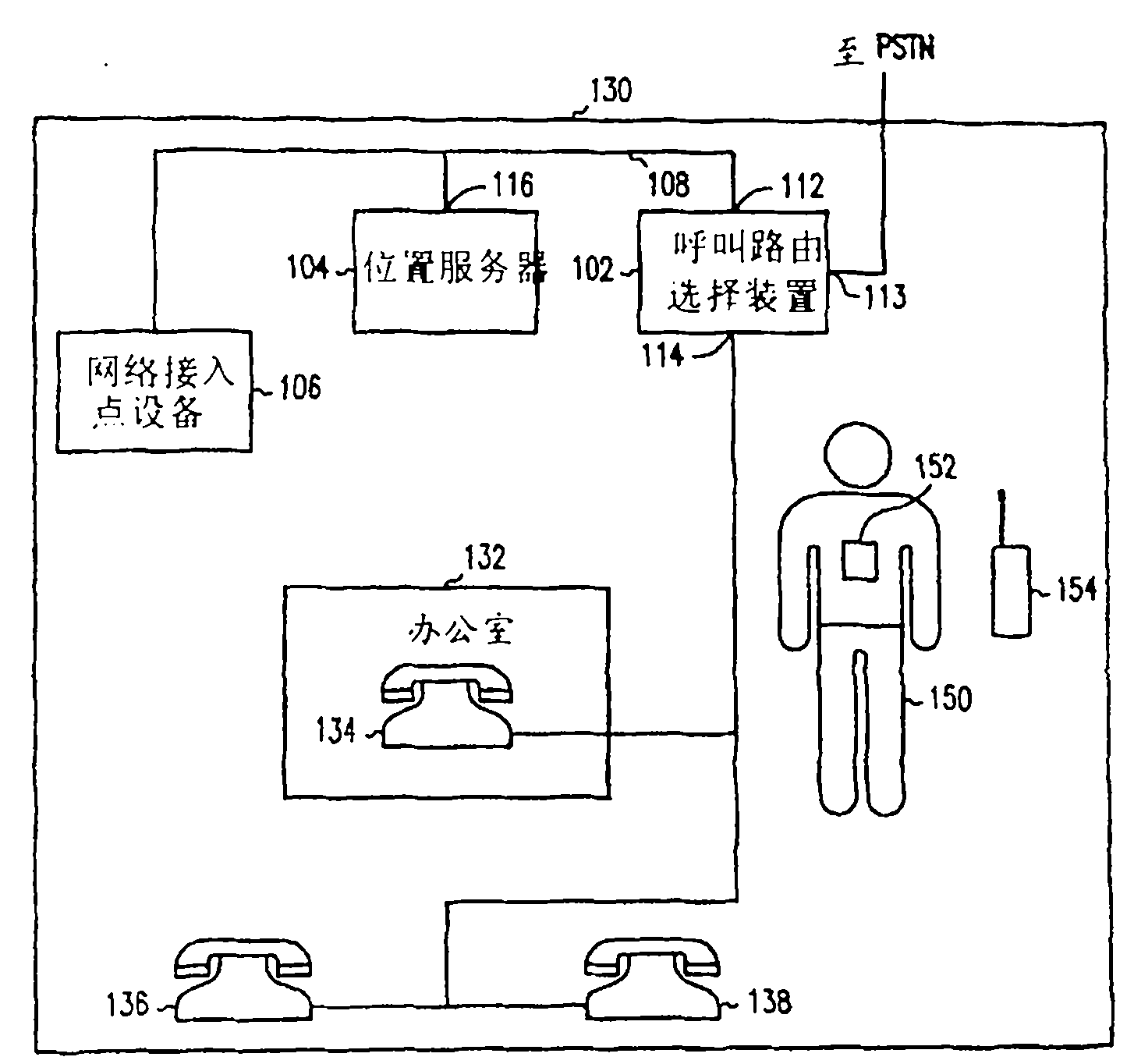
图1示出具有呼叫路由装置的网络的图;Figure 1 shows a diagram of a network with call routing means;
图2示出位置知悉网络的图;Figure 2 shows a diagram of a location aware network;
图3示出网络接入点设备的图;Figure 3 shows a diagram of a network access point device;
图4示出网络服务器的图;Figure 4 shows a diagram of a web server;
图5示出资产标签的图;Figure 5 shows a diagram of an asset tag;
图6示出呼叫路由装置的图;和Figure 6 shows a diagram of a call routing device; and
图7和图8示出根据本发明的各种实施例的流程图。7 and 8 illustrate flowcharts according to various embodiments of the invention.
具体实施方式Detailed ways
在以下实施例的详细说明中,引用了通过示例示出可实施本发明的特定实施例的附图。在附图中,整个几幅图中的相同标号描述实质上相似的部件。充分详细地描述这些实施例以使得本领域的技术人员可以实施本发明。可以利用其它实施例,并且可以对其作出结构、逻辑和电改变而不偏离本发明的范围。另外,应理解虽然本发明的各种实施例不相同,但不一定是相互排斥的。例如:在一个实施例中描述的特定特征、结构或属性也可以包含在其它实施例中。因此以下的详细说明不是限定,而本发明的范围仅由所附的权利要求及这些权利要求的等同物的整个范围所定义。In the following detailed description of the embodiments, reference is made to the accompanying drawings that show, by way of example, specific embodiments in which the invention may be practiced. In the drawings, like reference numbers throughout the several figures describe substantially similar components. These embodiments are described in sufficient detail to enable those skilled in the art to practice the invention. Other embodiments may be utilized and structural, logical, and electrical changes may be made without departing from the scope of the present invention. Additionally, it should be understood that although the various embodiments of the invention are different, they are not necessarily mutually exclusive. For example: a particular feature, structure or property described in one embodiment may also be included in other embodiments. The following detailed description is therefore not limiting, but the scope of the invention is defined only by the appended claims, along with the full scope of equivalents to which such claims are entitled.
以下将更详细地描述本发明的各种实施例。位置知悉网络提供服务以帮助将电话呼叫路由至固定电话、移动电话或电子语音邮箱系统。可以部分依据呼叫目标接收方的位置和固定及移动电话的位置进行路由。Various embodiments of the invention are described in more detail below. Location-aware networks provide services to help route phone calls to landlines, mobile phones, or electronic voicemail systems. Routing may be based in part on the location of the intended recipient of the call and the location of fixed and mobile phones.
图1示出具有呼叫路由装置的网络的图。该网络包括位置服务器104、呼叫路由装置102和网络接入点设备(NAPs)106。位置服务器104、呼叫路由装置102和NAP106通过媒体108互连。位置服务器104在端口116与媒体耦合,而呼叫路由装置102在端口112与媒体108耦合。媒体108可以是能提供服务器104、呼叫路由装置102和NAP106之间的数据通信路径的任何类型的传输媒体。例子可包括但不限于:电线、光纤电缆和无线链路。Figure 1 shows a diagram of a network with a call routing device. The network includes a location server 104 , a
位置服务器104和NAP106形成一个可提供基于位置服务的位置知悉网络。例如:在网络100中的各对象(例如:移动网络节点、资产标签、人员标签和电话)的位置可以通过使用位置服务器104和NAP106来定位。将参照下面的附图对位置知悉网络进行更详细的描述。Location server 104 and NAP 106 form a location-aware network that can provide location-based services. For example, the location of various objects in network 100 (eg, mobile network nodes, asset tags, person tags, and phones) can be located using location server 104 and NAP 106 . A location-aware network will be described in more detail with reference to the following figures.
呼叫路由装置102可以是能路由电话呼叫的任何类型的装置。例如:呼叫路由装置102可以是专用交换分机(PBX)。作为例子,呼叫路由装置102可以是能将呼叫路由至固定或移动电话的任何其它类型的路由装置。Call
图1还示出建筑物130、办公室132、固定电话134、136和138、用户150、移动电话154和人员标签的简图。建筑物130可以是包括电话的任何类型的结构或区域。例如:建筑物130可以是办公大楼、库房或其它任何类型的包括电话的区域。建筑物130还可以代表户外的任何界线。如1所示的各对象不必在室内。用户150与办公室132中的固定电话134相关联。在办公室环境中,用户150可以是通常在办公室132内工作并通常使用固定电话134的员工。Figure 1 also shows a simplified diagram of a
当呼叫进入呼叫路由装置102时,呼叫路由装置从位置服务器104请求与一始发拨打的电话号码相关联的用户的位置。例如:如果呼叫路由装置102收到一个对固定电话134的呼叫,选择路由装置102可以从位置服务器104请求用户150的位置。如果用户150在办公室132内或附近,呼叫路由装置102可以将呼叫路由至固定电话134。然而,如果用户不在办公室132内或附近,呼叫路由装置102可以将呼叫路由至另一固定电话、移动电话154、语音邮箱系统、或至诸如秘书之类的指定的替代对象。When a call enters the
在一些实施例中,位置知悉网络可以确定固定电话、移动电话及用户的位置。在这些实施例中,当接收到给用户的呼叫时,呼叫路由装置102可以选择将呼叫路由至用户150附近的固定电话。固定电话可包括能显示目标呼叫接收方的名字及其它标识的显示器。例如:如果接收到对用户150的呼叫,且确定用户150在固定电话138附近,则可以将该呼叫路由至固定电话138。另外,固定电话138可包括显示目标接收方的名字的显示机构。另外,人员标签152可包括提醒用户150对于在附近的固定电话接收到的呼叫。In some embodiments, the location-aware network can determine the location of landline phones, mobile phones, and users. In these embodiments, when a call is received for a user, call
如果用户150不在任何固定电话附近,呼叫路由装置102可以将该呼叫路由至移动电话154或将该呼叫路由至语音邮箱系统。在一些实施例中,当位置知悉网络确定用户150不在固定电话附近,但在移动电话154附近时,将该呼叫路由至移动电话154。可以通过公共交换电话网络(PSTN)或通过位置知悉网络将呼叫路由至移动电话154。例如:移动电话154可以是能通过PSTN到达的蜂窝电话。又例如:移动电话154可以是与位置知悉网络兼容的电话,且位置服务器104可以通过一个或多个NAP106路由该呼叫。If the
人员标签152可以是将用户150标识成位置知悉网络的资产的资产标签。类似地,移动电话154和各种固定电话也可以包括资产标签或将他们标识成位置知悉网络的资产的等同物。任何项目都可以在其上附上资产标签,或将资产标签包括成整体的组成部分。人员标签152是用于跟踪资产(在此例中为用户150)的资产标签的一个例子。
图2示出位置知悉网络的图。网络200包括服务器104、网络接入点(NAP)202、204和206、移动网络节点220、和资产标签242。如上参照图1所述,可以通过媒体108将网络接入点202、204和206耦合至服务器104,通过无线链路232、234和236将接入点202、204和206中的一个或多个耦合至节点220。接入点202、204和206与服务器104的组合为移动网络节点220和资产标签242提供网络服务。另外,在某些实施例中,节点220可以为其它节点(未示出)或为接入点202、204和206中任何一个或多个提供网络服务。网络接入点202、204和206与图1所示的NAP 106相对应。Figure 2 shows a diagram of a location aware network. Network 200 includes server 104 , network access points (NAPs) 202 , 204 , and 206 , mobile network node 220 , and asset tag 242 . As described above with reference to FIG. 1 , network access points 202 , 204 , and 206 may be coupled to server 104 via
无线网络200可以是允许节点用无线链路访问网络服务的任何类型网络。例如:在本发明的一些实施例中,无线网络200代表蜂窝电话网络,而在其它实施例中,无线网络200代表无线局域网(WLAN)或无线广域网(WWAN)。在另一些实施例中,网络200是为网络节点和接入点提供不同服务的组合的混合系统。例如:在一些实施例中,无线网络200为移动网络节点提供诸如呼叫路由装置102(图1)之类的资产跟踪服务呼叫路由装置。Wireless network 200 may be any type of network that allows nodes to access network services using wireless links. For example: In some embodiments of the invention, wireless network 200 represents a cellular telephone network, while in other embodiments wireless network 200 represents a wireless local area network (WLAN) or a wireless wide area network (WWAN). In other embodiments, network 200 is a hybrid system that provides a combination of different services for network nodes and access points. For example: In some embodiments, wireless network 200 provides mobile network nodes with asset tracking service call routing means, such as call routing means 102 (FIG. 1).
资产标签242是能物理地附在被跟踪的资产上的项目。例如:可以将资产标签242粘贴在固定电话或移动电话上。另外,还可以将资产标签242用作允许用户的位置被跟踪的人员标签。如下所述,可以通过网络200跟踪资产标签242和位置,并可以将跟踪的资产的位置传送至诸如移动网络节点220之类的网络节点或呼叫路由装置(未示出)。Asset tags 242 are items that can be physically attached to the asset being tracked. For example: asset tag 242 can be affixed to a landline or mobile phone. Additionally, the asset tag 242 can also be used as a person tag that allows the user's location to be tracked. As described below, asset tag 242 and location may be tracked over network 200, and the tracked location of the asset may be communicated to a network node, such as mobile network node 220, or a call routing device (not shown).
移动网络节点220可以是任能用无线链路接入网络服务的任何类型的网络节点。例如:节点220可以是蜂窝电话、计算机、个人数字助理(PDA)、或任何其他类型的能用无线链路接入网络的设备。在一些实施例中,节点220可以是提供无线数据和语音服务的蜂窝电话和计算机的组合。在另一些实施例中,节点220可以是向对节点220有访问权的用户显示资产跟踪信息的设备。Mobile network node 220 may be any type of network node capable of accessing network services with a wireless link. For example, node 220 may be a cellular phone, computer, personal digital assistant (PDA), or any other type of device capable of accessing a network using a wireless link. In some embodiments, node 220 may be a combination cellular telephone and computer that provides wireless data and voice services. In other embodiments, node 220 may be a device that displays asset tracking information to a user having access to node 220 .
一般来说,节点和接入点是可以提供网络服务、接收网络服务或两者兼备的网络元件。例如:在蜂窝网络实施例中,接入点202、204和206可以是提供网络服务的蜂窝基站,而节点220可以是主要接收网络服务的蜂窝电话。又例如:在无线LAN实施例中,接入点202、204和206以及节点220可以是提供和接收网络服务的计算机。又例如:移动网络节点220可以是诸如如图1所示那些之类的固定电话。In general, nodes and access points are network elements that can provide network services, receive network services, or both. For example: in a cellular network embodiment, access points 202, 204, and 206 may be cellular base stations that provide network services, while node 220 may be a cellular phone that primarily receives network services. As another example: in a wireless LAN embodiment, access points 202, 204, and 206 and node 220 may be computers that provide and receive network services. As another example: the mobile network node 220 may be a fixed telephone such as those shown in FIG. 1 .
在运行中,网络200提供确定移动网络节点和资产标签的位置的能力。在整个说明书中,将此能力称为“位置确定”。网络200通过使用无线链路232、234和236提供节点220的位置确定。网络200还通过使用无线链路252、254和256提供资产标签242的位置确定。这里将提供位置确定的网络称为“位置知悉网络”。网络200是通过使用各种无线链路提供节点220和资产标签242的位置确定的位置知悉网络。In operation, network 200 provides the ability to determine the location of mobile network nodes and asset tags. Throughout this specification, this capability is referred to as "position determination". Network 200 provides location determination for node 220 by using wireless links 232 , 234 and 236 . Network 200 also provides location determination for asset tag 242 by using wireless links 252 , 254 , and 256 . A network that provides location determination is referred to herein as a "location-aware network." Network 200 is a location-aware network that provides location determination of nodes 220 and asset tags 242 by using various wireless links.
无线链路232、234和236提供节点220与接入点202、204和206之间的通信路径。无线链路252、254和256提供资产标签242与接入点202、204和206之间的通信路径。各种接入点将无线信号发送至无线链路上的节点220和资产标签242以及从无线链路上的节点220和资产标签242接收无线信号,并且还用媒体108将信号发送至服务器104以及从服务器接收信号。在一些实施例中,网络节点220仅用所示无线链路中的一条与网络通信,但多个网络接入点接收由网络节点220发送的信号。Wireless links 232 , 234 and 236 provide communication paths between node 220 and access points 202 , 204 and 206 . Wireless links 252 , 254 , and 256 provide communication paths between asset tag 242 and access points 202 , 204 , and 206 . The various access points send wireless signals to and receive wireless signals from nodes 220 and asset tags 242 on the wireless link, and also send signals using the medium 108 to the server 104 and Receive a signal from the server. In some embodiments, network node 220 communicates with the network using only one of the wireless links shown, but multiple network access points receive signals sent by network node 220 .
在一些实施例中,无线链路利用基于脉冲的射频(RF)协议提供节点220和接入点202、204和206之间的通信。在这些实施例中,短RF脉冲是通过节点220和标签242发送的,且这些短RF脉冲是由接入点202、204和206接收的。在其它实施例中,无线链路利用基带调制协议(其中,希望被发送的数据通过各种方式叠加在正弦载波信号上)。适合的基于脉冲的协议的一个例子是新兴超宽带(UWB)协议(其中,低功率、短持续时间的脉冲是在无线链路上传送的)。在Fullerton等人于2000年2月29递交的美国专利:6,031,862中描述了另一个合适的基于脉冲的协议的例子。在其它实施例中,无线链路232、234、236、252、254和256利用数据调制正弦载波信号。可以将任何类型的无线协议用于无线链路。In some embodiments, wireless links provide communication between node 220 and access points 202, 204, and 206 using a pulse-based radio frequency (RF) protocol. In these embodiments, short RF bursts are sent by nodes 220 and tags 242 , and these short RF bursts are received by access points 202 , 204 , and 206 . In other embodiments, the wireless link utilizes a baseband modulation protocol (where the data desired to be transmitted is superimposed on a sinusoidal carrier signal by various means). One example of a suitable pulse-based protocol is the emerging ultra-wideband (UWB) protocol (in which low-power, short-duration pulses are transmitted over a wireless link). Another example of a suitable pulse-based protocol is described in US Patent: 6,031,862, Fullerton et al., filed February 29, 2000. In other embodiments, wireless links 232, 234, 236, 252, 254, and 256 utilize data modulated sinusoidal carrier signals. Any type of wireless protocol can be used for the wireless link.
从无线网络节点220接收到的信息可包括包含在从节点220接收到的信号中的任何信息。例如:该信号可以包含适于请求或提供网络服务的模拟或数字格式的语音信息或数据信息。从资产标签242接收到的信息还可包括任何类型的信息。例如:资产标签可以发送表示序列号的信息、资产说明或任何其它用于网络200的信息。The information received from the radio network node 220 may include any information contained in a signal received from the node 220 . For example: the signal may contain voice information or data information in analog or digital format suitable for requesting or providing network services. Information received from asset tags 242 may also include any type of information. For example: an asset tag may transmit information representing a serial number, a description of the asset, or any other information for the network 200 .
当从节点220和资产标签242接收无线信号时,各种接入点还可以收集描述无线信号的属性的信息。例如:在基于脉冲的实施例中,接入点可以收集脉冲到达时间信息以及到达角、脉冲幅充、脉冲持续时间和上升时间/下降时间信息。在正弦载波的实施例中,接入点可以收集中心频率、振幅、到达角、相位偏移或其它信息。一般来说,收集到的对接收到的信号的属性进行描述的信息可包括任何适于支持位置确定或资产跟踪的信息。例如:可以使用脉冲到达时间信息或到达角信息或兼用二者来确定与接入点的位置相关的网络节点220的位置。又例如:还可以将接收到的正弦载波信号的相位偏移用于支持位置确定。When receiving wireless signals from nodes 220 and asset tags 242, the various access points may also collect information describing properties of the wireless signals. For example: In a pulse-based embodiment, the access point may collect pulse arrival time information as well as angle of arrival, pulse amplitude, pulse duration, and rise time/fall time information. In an embodiment of a sinusoidal carrier, the access point may collect center frequency, amplitude, angle of arrival, phase offset, or other information. In general, collected information describing properties of received signals may include any information suitable to support location determination or asset tracking. For example: pulse time of arrival information or angle of arrival information or both may be used to determine the location of network node 220 in relation to the location of the access point. Another example: the phase offset of the received sinusoidal carrier signal can also be used to support position determination.
可以将接收到的无线信号的属性从各个接入点传送至服务器104。然后服务器104可以将这些属性用于确定节点220和资产标签242的位置。例如:在基于脉冲的实施例中,可以将由接入点收集到的脉冲到达时间和可任选地包括脉冲到达角信息用于解析节点220和资产标签242的相对于测量到达时间和/或到达角的接入点的位置的位置。又例如:在正弦载波实施例中,相位偏移可以用于解析节点220和资产标签242的位置。Attributes of received wireless signals may be communicated to server 104 from the various access points. Server 104 may then use these attributes to determine the location of node 220 and asset tag 242 . For example: in a pulse-based embodiment, the time-of-arrival and optionally angle-of-arrival information of the pulses collected by the access points may be used to resolve the relative measured time-of-arrival and/or arrival times of nodes 220 and asset tags 242 Angular location of the access point location. As another example: in a sinusoidal carrier embodiment, the phase offset can be used to resolve the position of nodes 220 and asset tags 242 .
图2示出三个接入点。在具有能接收来自节点220和资产标签242的信号的三个接入点的实施例中,可以在两维中确定节点220和资产标签242的位置。一些实施例具有超过三个接入点。在具有能接收来自节点220和资产标签242的信号的四个或更多个接入点的实施例中,可以在三维中确定节点220和资产标签242的位置。在一些实施例中,有关环境的信息可以与来自接入点的信息相结合以确定节点220的位置。例如:可以将描述墙、屋顶或障碍物的位置的信息与来自两个网络接入点的信息相结合,以在两维中确定节点220的位置。Figure 2 shows three access points. In an embodiment with three access points capable of receiving signals from node 220 and asset tag 242, the location of node 220 and asset tag 242 can be determined in two dimensions. Some embodiments have more than three access points. In embodiments having four or more access points capable of receiving signals from nodes 220 and asset tags 242, the locations of nodes 220 and asset tags 242 may be determined in three dimensions. In some embodiments, information about the environment may be combined with information from access points to determine node 220's location. For example: information describing the location of walls, roofs or obstacles can be combined with information from two network access points to determine the location of node 220 in two dimensions.
图3示出适于在图2所示的网络接入点使用的网络接入点设备的图。网络接入点设备300包括发射机302、接收机304、到达时间检测器306、到达角检测器314、处理器308和收发器310。收发器310使用媒体108与服务器(未示出)通信。收发器310还与处理器308通信。发射机302和接收机304都与处理器308和天线320通信。FIG. 3 shows a diagram of a network access point device suitable for use with the network access point shown in FIG. 2 . The network
天线320从在无线链路330上的资产标签和网络节点接收无线信号。在一些实施例中,在无线链路330上的无线信号包括如上参照图2所述的电磁脉冲。在这些实施例中,接收机304接收脉冲,而到达时间检测器306检测脉冲到达的时间。到达时间信息是可由接收机304测量的无线信号的许多可能的属性之一。例如:在一些实施例中,到达角检测器314检测脉冲到达的角度作为无线信号的属性。一些实施例即测量到达时间又测量到达角。处理器308接收对来自接收机304的描述无线信号的信息并将其提供给使用收发机310的网络服务器。
可以用若干不同的方式实施到达时间检测器306。在一个实施例中,到达时间检测器的功能是网络接入点设备300中的一个分离的模块。在其它实施例中,到达时间检测器306被集成到接收机304中。在另一些实施例中,到达时间检测器306利用处理器308的处理能力执行其功能。Time-of-
也可以用若干不同的方式实施到达角检测器314。在一些实施例中,到达角检测器314是接收来自相控阵天线的信号以测量接收信号的角度的电路。在这些实施例中,天线320可代表相控阵天线。可以将许多其它的机制用于测量无线信号的到达角。
处理器308可以是适于执行多种动作以支持网络接入点设备300的操作的任何类型的处理器。例如:处理器308可以为微处理器、微控制器等。又例如:处理器308可以是硬件控制器或能执行特定任务的硬件控制器组。存储器312表示包含机器可访问媒体的物品。例如:存储器312可表示下列中的一个或多个:硬盘、软盘、随机存取存储器(RAM)、只读存储器(ROM)、闪存、CDROM或包含可由机器读取的媒体的任何其它类型的物品。存储器312可存储用于实施本发明的各方法实施例的执行的指令。存储器312还可以包括对网络接入点设备300和整个网络的当前状态进行描述的数据。
当多个网络接入点设备300测量单个电磁脉冲的属性时,网络服务器可利用此信息来解析发出脉冲的网络节点的位置。在一些实施例中,多个电磁脉冲是由接收机304接收的。多个电磁脉冲可以表示任何类型的来自网络节点的通信。例如:一组脉冲可以表示来自网络节点的对特定资产进行定位的请求。又例如:一组脉冲可以表示来自网络节点的不同数据通信。接收机304从脉冲组中和从描述脉冲的属性中提取信息。处理器308从接收机304接收对脉冲组及单个脉冲的属性进行描述的信息。例如:处理器308可以接收来自网络节点的数据,并接收由接收机304接收到的脉冲的到达时间和到达角信息。When multiple network
图4示出适用于诸如网络100(图1)或网络200(图2)之类的无线网络中的网络服务器的图。服务器400包括处理器402、存储器404和收发机406。收发机406在端口116与媒体108相耦合。如以上参照图1所述,媒体108将网络服务器与诸如网络接入点设备300(图3)之类的任何数量的网络接入点设备相耦合。收发机406从媒体108上的网络接入点设备300接收信息。在一些实施例中,无线信号属性是从多个网络接入点设备接收到的,而处理器402确定发出无线信号的发射机的位置。服务器400可以是个人电脑(PC)、服务器、大型机、手提设备、便携式电脑或任何其它类型的可以执行这里所述的操作的系统。Figure 4 shows a diagram of a network server suitable for use in a wireless network such as network 100 (Figure 1) or network 200 (Figure 2).
存储器404表示包括了机器可访问媒体的物品。例如:存储器404可表示下列中的一个或多个:硬盘、软盘、随机存取存储器(RAM)、只读存储器(ROM)、闪存、CDROM或包含可由机器读取的媒体的任何其它类型的物品。存储器404可存储用于实施本发明的各方法实施例的执行的指令。存储器404还可以包括对服务器400和整个网络的当前状态进行描述的数据。例如:存储器404可包括描述资产的数据、资产序列码、资产的位置以及网络节点的位置。
图5示出资产标签的图。资产标签22是可适用于诸如网络100(图1)或网络200(图2)之类的位置知悉网络中的资产标签。可以将资产标签242用作诸如人员标签152(图1)之类的人员标签,或者可以将资产标签附在诸如移动电话154(图1)或各种图1所示的固定电话之类的资产上。资产标签242包括发射机502、接收机508、控制器504、报警装置512和存储器506。发射机502是能用天线510发射无线信号的发射机,而接收机508是能用天线510接收无线信号的接收机。资产标签242将无线信号发送至网络接入点,而网络确定该资产标签的位置。如图2所示,资产标签242发送并接收无线信号252、254和256。在一些实施例中,接收机508被省略,而资产标签242仅发送无线信号。Figure 5 shows a diagram of an asset tag. Asset tag 22 is an asset tag applicable in a location aware network such as network 100 (FIG. 1) or network 200 (FIG. 2). Asset tags 242 can be used as personnel tags such as personnel tags 152 (FIG. 1), or asset tags can be attached to assets such as mobile phones 154 (FIG. 1) or the various landline phones shown in FIG. superior. Asset tag 242 includes transmitter 502 , receiver 508 , controller 504 , alarm device 512 and memory 506 . Transmitter 502 is a transmitter capable of transmitting wireless signals using antenna 510 , and receiver 508 is a receiver capable of receiving wireless signals using antenna 510 . Asset tag 242 sends a wireless signal to a network access point, and the network determines the location of the asset tag. As shown in FIG. 2 , asset tag 242 sends and receives wireless signals 252 , 254 and 256 . In some embodiments, receiver 508 is omitted and asset tag 242 only transmits a wireless signal.
报警装置512可以是字符显示器、发光二极管(LED)、蜂鸣器、振动器等。在一些实施例中,报警装置512提醒用户他或她是电话呼叫的目标接收方。例如:在一些实施例中,当资产标签242是人员标签的一部分时,蜂鸣器或振动器会提醒佩带人员标签的人旁边的电话正在为他而响。又例如:当将资产标签242附在固定电话上时,字符显示器可以显示呼叫的目标接收方的名字或其它标识。在一些实施例中,省略了报警装置512。The alarm device 512 may be a character display, a light emitting diode (LED), a buzzer, a vibrator, and the like. In some embodiments, the alert device 512 alerts the user that he or she is the intended recipient of the telephone call. For example: in some embodiments, when the asset tag 242 is part of a personnel tag, a buzzer or vibrator will alert the person wearing the personnel tag that a nearby phone is ringing for him. As another example: when the asset tag 242 is attached to a landline telephone, the character display may display the name or other identification of the intended recipient of the call. In some embodiments, the alarm device 512 is omitted.
控制器504可以是任何类型的控制器,而存储器506可以任何类型的存储器。例如:控制器504可以是微处理器、微控制器等等。又例如:控制器504可以是硬件控制器或一组执行特定任务的硬件控制器。存储器506表示包含了机器可访问媒体的物品。例如:存储器506可表示下列中的任何一个或多个:硬盘、软盘、随机存取存储器(RAM)、只读存储器(ROM)、闪存、CDROM或包含可由机器读取的媒体的任何其它类型的物品。存储器506可存储用于实施本发明的各方法实施例的执行的指令。存储器506还可以包括与诸如序列码之类的资产或资产说明相关的信息。在一些实施例中,存储器506可以是廉价生产的专用只读存储器。Controller 504 can be any type of controller, and memory 506 can be any type of memory. For example: the controller 504 may be a microprocessor, a microcontroller, or the like. Another example: the controller 504 may be a hardware controller or a group of hardware controllers that perform specific tasks. Storage 506 represents an item that includes machine-accessible media. For example: memory 506 may represent any one or more of the following: hard disk, floppy disk, random access memory (RAM), read-only memory (ROM), flash memory, CDROM, or any other type of memory containing media that can be read by a machine thing. Memory 506 may store instructions for execution of various method embodiments implementing the present invention. Memory 506 may also include information related to assets or asset descriptions, such as serial codes. In some embodiments, memory 506 may be an inexpensively produced dedicated read-only memory.
图6示出呼叫路由装置的图。呼叫路由装置102包括与端口112、113和114相耦合的呼叫路由电路602。端口.112可与媒体108耦合,它允许与位置知悉网络的通信。端口114可与固定电话耦合,而端口113可与公共交换电话网络(PSTN)耦合。Figure 6 shows a diagram of a call routing device. Call
在运行中,呼叫路由装置102可以从PSTN接收一个呼叫指示。呼叫路由装置102可以从位置知悉网络请求目标呼叫接收方的位置,然后相应地路由该呼叫。例如:如果位置知悉网络报告目标呼叫接收方在固定电话附近,呼叫路由电路602会使用端口114将呼叫路由至固定电话。又例如:如果位置知悉网络报告目标呼叫接收方不在固定电话附近,呼叫路由电路602会将呼叫路由至移动电话,语音邮箱系统或诸如秘书之类的指定选择。In operation, call
在一些实施例中,可以通过PSTN(它可以通过蜂窝电话网络来路由呼叫)将呼叫路由至移动电话。在其它实施例中,可以通过位置知悉网络将呼叫路由至移动电话。在另一些实施例中,呼叫路由装置102可包括将呼叫直接路由至移动电话的无线接口。In some embodiments, the call can be routed to the mobile phone through the PSTN (which can route the call through the cellular telephone network). In other embodiments, the call may be routed to the mobile phone through the location-aware network. In other embodiments,
图7和图8示出根据本发明的各种实施例的流程图。图7和图8的流程图示出可以在网络(例如:上述那些网络)中执行的各种方法实施例。在一些实施例中,该方法可以由诸如服务器400(图4)之类的服务器,或由诸如呼叫路由装置102之类的呼叫路由装置(图1,6),或通过网络接入点来执行。在其它实施例中,可以在服务器、呼叫路由装置和网络接入点间分配该方法。图中所示的各种动作都可以以所呈现的次序执行,也可以以不同的次序执行。另外,在一些实施例中,省略了图中所列的某些动作。7 and 8 illustrate flowcharts according to various embodiments of the invention. The flowcharts of Figures 7 and 8 illustrate various method embodiments that may be performed in a network such as those described above. In some embodiments, the method may be performed by a server such as server 400 (FIG. 4), or by a call routing device such as call routing device 102 (FIGS. 1, 6), or by a network access point. . In other embodiments, the method may be distributed among the server, call routing device and network access point. The various acts shown in the figures may be performed in the order presented, or in a different order. Additionally, in some embodiments, certain acts listed in the figures are omitted.
参见图7,方法700从710的接收到呼叫指示开始,在一些实施例中,这对应于呼叫路由装置接收到对目标接收者的呼叫。在720中,在位置知悉网络查询目标接收方的位置。参见图1,这可以对应于呼叫路由装置102向位置服务器104查询用户150的位置。如果用户150附有诸如人员标签152之类的资产标签,或附有可以由网络定位的另一装置,位置服务器104可以将用户150的位置报告给呼叫路由装置102。Referring to FIG. 7, method 700 begins with a received call indication at 710, which in some embodiments corresponds to the call routing device receiving a call to an intended recipient. In 720, the location of the intended recipient is queried at the location aware network. Referring to FIG. 1 , this may correspond to call
在730中,位置知悉网络查询在呼叫接收方的位置附近的接收机。参见图1,位置服务器104可以具有与固定和移动电话位置相关的信息。例如:位置服务器104可以具有与固定电话134、136和138的位置相关的信息,也可以具有与移动电话154的位置相关的信息。位置服务器104可以报告离用户150最近的电话的位置,或者可以报告多个电话的位置。At 730, the location-aware network queries receivers in the vicinity of the call recipient's location. Referring to Figure 1, a location server 104 may have information related to the location of fixed and mobile phones. For example: location server 104 may have information related to the location of
在740中,在可能的时候将该呼叫路由至呼叫接收方的位置附近的接收机,否则在750中,将呼叫路由至语音邮箱系统。可以将该呼叫路由至固定电话、寻呼机、移动电话或任何其它的合适的接收装置。在一些实施例中,接收机可以被引发,以显示呼叫接收方的身份。例如:当接收机为固定电话时,将信息发送至该固定电话,以引发显示目标呼叫接收方的名字。在其它实施例中,可以引发资产标签中的报警装置,以提醒用户附近的电话是打给他的。例如:见图1,当用户150是目标呼叫接收方时,人员标签152中的报警装置提醒用户150固定电话138的呼入电话是打给他的。At 740, the call is routed to a receiver near the call recipient's location when possible, otherwise at 750, the call is routed to a voicemail system. The call may be routed to a landline, pager, mobile phone or any other suitable receiving device. In some embodiments, the receiver can be triggered to reveal the identity of the recipient of the call. For example: when the receiver is a landline, information is sent to the landline to cause the name of the intended call recipient to be displayed. In other embodiments, an alarm device in the asset tag can be triggered to alert the user that a nearby phone is intended for him. For example: see Fig. 1, when the
参见图8,方法800从810的接收到有关呼叫接收方的位置的查询开始。在820中,接收始发自呼叫接收方附近的装置的无线信号的属性。这可以对应于位置服务器从多个无线网络接入点装置接收属性。例如:参见图1,人员标签152可以将无线信号传送给网络接入点装置106。网络接入点装置106可以测量这些无线信号的属性,并将描述该属性的信息传送给位置服务器104。Referring to FIG. 8, method 800 begins at 810 with receipt of an inquiry regarding the location of a call recipient. At 820, attributes of wireless signals originating from devices in the vicinity of a call recipient are received. This may correspond to the location server receiving attributes from a plurality of wireless network access point devices. For example: Referring to FIG. 1 , the
在830中,确定该装置的位置,而在840中,响应于在810所作的查询报告该装置的位置。这可以对应于位置服务器104确定人员标签152或可移动电话154的位置并将该位置报告给路由装置102。在850中,呼叫被路由至该装置或该装置附近的对象。例如:如果该装置为固定电话,则可以将呼叫路由至固定电话。如果该装置为人员标签,则可以将呼叫路由至附近的固定电话或移动电话。At 830, the location of the device is determined, and at 840, the location of the device is reported in response to the query made at 810. This may correspond to location server 104 determining the location of
如上所述,图7和图8所涉及的位置知悉网络可以利用脉冲到达时间或到达角来解析移动或固定电话、资产标签或人员标签的位置。还可以通过位置知悉网络或通过诸如PSTN之类的不同机构来路由呼叫。As described above, the location-aware network of Figures 7 and 8 can utilize pulse time-of-arrival or angle-of-arrival to resolve the location of mobile or landline phones, asset tags, or person tags. Calls can also be routed through location-aware networks or through different mechanisms such as the PSTN.
应理解上述说明旨在示例,而非限定。在阅读和理解了上述说明后许多其它实施例对本领域的技术人员来说将会是显而易见的。因此,应参照所附权利要求和这些权利要求要求的等同物的整个范围来确定本发明的范围。It should be understood that the foregoing description is intended to be illustrative, not limiting. Many other embodiments will be apparent to those of skill in the art upon reading and understanding the above description. The scope of the invention should, therefore, be determined with reference to the appended claims, along with their full scope of equivalents to such claims.
Claims (19)
Applications Claiming Priority (3)
| Application Number | Priority Date | Filing Date | Title |
|---|---|---|---|
| US10/178,881 | 2002-06-24 | ||
| US10/178,881 US7251233B2 (en) | 2002-06-24 | 2002-06-24 | Call routing in a location-aware network |
| PCT/US2003/019096 WO2004002123A1 (en) | 2002-06-24 | 2003-06-19 | Call routing in a user location-aware network |
Publications (2)
| Publication Number | Publication Date |
|---|---|
| CN1663228A CN1663228A (en) | 2005-08-31 |
| CN1663228B true CN1663228B (en) | 2011-06-15 |
Family
ID=29734806
Family Applications (1)
| Application Number | Title | Priority Date | Filing Date |
|---|---|---|---|
| CN038147513A Expired - Fee Related CN1663228B (en) | 2002-06-24 | 2003-06-19 | Call routing in a user location-aware network |
Country Status (6)
| Country | Link |
|---|---|
| US (1) | US7251233B2 (en) |
| EP (1) | EP1523845A1 (en) |
| CN (1) | CN1663228B (en) |
| AU (1) | AU2003245541A1 (en) |
| MY (1) | MY141735A (en) |
| WO (1) | WO2004002123A1 (en) |
Families Citing this family (26)
| Publication number | Priority date | Publication date | Assignee | Title |
|---|---|---|---|---|
| US8280345B2 (en) | 2000-12-22 | 2012-10-02 | Google Inc. | LPRF device wake up using wireless tag |
| US7733818B2 (en) * | 2000-12-22 | 2010-06-08 | Terahop Networks, Inc. | Intelligent node communication using network formation messages in a mobile Ad hoc network |
| US7522568B2 (en) | 2000-12-22 | 2009-04-21 | Terahop Networks, Inc. | Propagating ad hoc wireless networks based on common designation and routine |
| US8204439B2 (en) | 2000-12-22 | 2012-06-19 | Google Inc. | Wireless reader tags (WRTs) with sensor components in asset monitoring and tracking systems |
| US20080303897A1 (en) | 2000-12-22 | 2008-12-11 | Terahop Networks, Inc. | Visually capturing and monitoring contents and events of cargo container |
| US7830850B2 (en) * | 2000-12-22 | 2010-11-09 | Terahop Networks, Inc. | Class-switching in class-based data communcations network |
| US7580380B2 (en) * | 2003-05-28 | 2009-08-25 | Artimi Ltd | Communications systems and methods |
| US8031725B2 (en) * | 2004-02-17 | 2011-10-04 | Alcatel Lucent | Methods and devices for obtaining and forwarding domain access rights for nodes moving as a group |
| JP4227917B2 (en) * | 2004-03-16 | 2009-02-18 | Necインフロンティア株式会社 | CTI system |
| US8005019B2 (en) * | 2004-05-11 | 2011-08-23 | Opnet Technologies, Inc. | Fuzzy routing |
| US7333014B2 (en) * | 2004-11-04 | 2008-02-19 | International Business Machines Corporation | Notifying users of device events in a networked environment |
| US7489774B2 (en) * | 2004-11-04 | 2009-02-10 | International Business Machines Corporation | Routing telecommunications to a user in dependence upon device-based routing preferences |
| US7296740B2 (en) * | 2004-11-04 | 2007-11-20 | International Business Machines Corporation | Routing telecommunications to a user in dependence upon location |
| JP4373939B2 (en) * | 2005-02-17 | 2009-11-25 | 株式会社東芝 | Telephone system |
| DE102006004601A1 (en) * | 2006-02-01 | 2007-08-09 | Siemens Ag | Method and arrangement for call diversion for communication terminals |
| WO2008054194A1 (en) * | 2006-11-03 | 2008-05-08 | Telefonaktiebolaget Lm Ericsson (Publ) | Method of conditionally routing a call made to a fixed telephone number |
| US20080160985A1 (en) * | 2007-01-03 | 2008-07-03 | Variyath Girish S | Location based dialing over wireless media |
| US8494482B2 (en) * | 2008-10-24 | 2013-07-23 | Centurylink Intellectual Property Llc | Telecommunications system and method for monitoring the body temperature of a user |
| US8494574B2 (en) * | 2008-10-24 | 2013-07-23 | Centurylink Intellectual Property Llc | System and method for controlling a feature of a telecommunications device based on the body temperature of a user |
| US8705523B2 (en) | 2009-02-05 | 2014-04-22 | Google Inc. | Conjoined class-based networking |
| US8560872B2 (en) | 2009-03-31 | 2013-10-15 | Centurylink Intellectual Property Llc | Body heat sensing control apparatus and method |
| US20120046995A1 (en) * | 2009-04-29 | 2012-02-23 | Waldeck Technology, Llc | Anonymous crowd comparison |
| US8077031B2 (en) * | 2009-08-20 | 2011-12-13 | Consortium P, Inc. | Position locating by polyhedral morphing |
| US9277021B2 (en) * | 2009-08-21 | 2016-03-01 | Avaya Inc. | Sending a user associated telecommunication address |
| US9112790B2 (en) | 2013-06-25 | 2015-08-18 | Google Inc. | Fabric network |
| US12452363B1 (en) * | 2022-09-01 | 2025-10-21 | United Services Automobile Association (Usaa) | Systems and methods for intelligent call management |
Citations (3)
| Publication number | Priority date | Publication date | Assignee | Title |
|---|---|---|---|---|
| CN2409723Y (en) * | 1999-12-24 | 2000-12-06 | 李希哲 | Designate a telephone device that calls a person's caller ID |
| WO2001031965A1 (en) * | 1999-10-29 | 2001-05-03 | Telefonaktiebolaget Lm Ericsson (Publ) | Multiple source location method |
| US6404874B1 (en) * | 1997-03-27 | 2002-06-11 | Cisco Technology, Inc. | Telecommute server |
Family Cites Families (8)
| Publication number | Priority date | Publication date | Assignee | Title |
|---|---|---|---|---|
| US5677927A (en) | 1994-09-20 | 1997-10-14 | Pulson Communications Corporation | Ultrawide-band communication system and method |
| DE19706000A1 (en) | 1997-02-06 | 1998-08-13 | Holger Galuschka | Communications system for dialling connections with person orientated addresses |
| US6463145B1 (en) * | 1999-01-29 | 2002-10-08 | Microsoft Corporation | Computer-implemented call forwarding options and methods therefor in a unified messaging system |
| US7411921B2 (en) * | 1999-10-21 | 2008-08-12 | Rf Technologies, Inc. | Method and apparatus for integrating wireless communication and asset location |
| US7209771B2 (en) * | 2000-12-22 | 2007-04-24 | Terahop Networks, Inc. | Battery powered wireless transceiver having LPRF component and second wake up receiver |
| US6934540B2 (en) * | 2000-12-22 | 2005-08-23 | Seekernet, Inc. | Network formation in asset-tracking system based on asset class |
| US7023356B2 (en) * | 2001-11-26 | 2006-04-04 | Aero-Vision Technologies, Inc. | System and method for monitoring individuals and objects associated with wireless identification tags |
| US7099677B2 (en) * | 2001-11-29 | 2006-08-29 | Bellsouth Intellectual Property Corp. | Smart call delivery GIS integration |
-
2002
- 2002-06-24 US US10/178,881 patent/US7251233B2/en not_active Expired - Fee Related
-
2003
- 2003-06-13 MY MYPI20032215A patent/MY141735A/en unknown
- 2003-06-19 WO PCT/US2003/019096 patent/WO2004002123A1/en not_active Ceased
- 2003-06-19 EP EP03739166A patent/EP1523845A1/en not_active Withdrawn
- 2003-06-19 CN CN038147513A patent/CN1663228B/en not_active Expired - Fee Related
- 2003-06-19 AU AU2003245541A patent/AU2003245541A1/en not_active Abandoned
Patent Citations (3)
| Publication number | Priority date | Publication date | Assignee | Title |
|---|---|---|---|---|
| US6404874B1 (en) * | 1997-03-27 | 2002-06-11 | Cisco Technology, Inc. | Telecommute server |
| WO2001031965A1 (en) * | 1999-10-29 | 2001-05-03 | Telefonaktiebolaget Lm Ericsson (Publ) | Multiple source location method |
| CN2409723Y (en) * | 1999-12-24 | 2000-12-06 | 李希哲 | Designate a telephone device that calls a person's caller ID |
Also Published As
| Publication number | Publication date |
|---|---|
| US7251233B2 (en) | 2007-07-31 |
| EP1523845A1 (en) | 2005-04-20 |
| CN1663228A (en) | 2005-08-31 |
| AU2003245541A1 (en) | 2004-01-06 |
| US20030235173A1 (en) | 2003-12-25 |
| MY141735A (en) | 2010-06-15 |
| WO2004002123A1 (en) | 2003-12-31 |
Similar Documents
| Publication | Publication Date | Title |
|---|---|---|
| US7251233B2 (en) | Call routing in a location-aware network | |
| CN100418328C (en) | Wireless network access point configuration | |
| US20030235172A1 (en) | Asset tracking methods and apparatus | |
| US7346358B2 (en) | Logical boundaries in communications networks | |
| US7098787B2 (en) | System and method for signaling emergency responses | |
| CN1247007C (en) | Message accessing and recording system and method in coordinate route point | |
| US6873258B2 (en) | Location aware services infrastructure | |
| US9244149B2 (en) | Applications for geographically coded access points | |
| US6738628B1 (en) | Electronic physical asset tracking | |
| US6320534B1 (en) | Location based personal telephone routing system | |
| US20070037605A1 (en) | Methods and apparatus for controlling cellular and portable phones | |
| US20050040957A1 (en) | Systems and methods for providing notification of a location of a restrained party | |
| EP1433346A1 (en) | System for delivering location related information to mobile telecommunication devices | |
| KR100732969B1 (en) | Device and method for finding people using mobile messenger service | |
| US20050177311A1 (en) | Information server with a database of information about particular locations and a telephone for remotely accessing and querying the same | |
| Quigley et al. | Proximation: Location-awareness though sensed proximity and gsm estimation | |
| Huang et al. | A privacy conscious bluetooth infrastructure for location aware computing | |
| US8825082B2 (en) | Systems and methods for gathering information about discrete wireless terminals | |
| Papazafeiropoulos et al. | Retrieving position from indoor WLANs through GWLC | |
| KR20010103815A (en) | Method for providing calling line location information of personal mobile terminal | |
| WO2017056111A2 (en) | Establishing a geo-spatial grid and location triangulation of a user/mobile device within large buildings | |
| Cunningham et al. | Indoor Wireless Location Management System for Smart Space Applications | |
| WO2003030455A1 (en) | Improvements in and relating to communication systems and methods | |
| Gonzalez et al. | An Adaptable Location-Based Service Framework Using Automatic Identification |
Legal Events
| Date | Code | Title | Description |
|---|---|---|---|
| C06 | Publication | ||
| PB01 | Publication | ||
| C10 | Entry into substantive examination | ||
| SE01 | Entry into force of request for substantive examination | ||
| C14 | Grant of patent or utility model | ||
| GR01 | Patent grant | ||
| CF01 | Termination of patent right due to non-payment of annual fee | ||
| CF01 | Termination of patent right due to non-payment of annual fee |
Granted publication date: 20110615 Termination date: 20180619 |