CN1663148A - Orthogonal code division multiple access on return link of satellite links - Google Patents
Orthogonal code division multiple access on return link of satellite links Download PDFInfo
- Publication number
- CN1663148A CN1663148A CN038139707A CN03813970A CN1663148A CN 1663148 A CN1663148 A CN 1663148A CN 038139707 A CN038139707 A CN 038139707A CN 03813970 A CN03813970 A CN 03813970A CN 1663148 A CN1663148 A CN 1663148A
- Authority
- CN
- China
- Prior art keywords
- access terminal
- gateway
- channel
- coupled
- transmit
- Prior art date
- Legal status (The legal status is an assumption and is not a legal conclusion. Google has not performed a legal analysis and makes no representation as to the accuracy of the status listed.)
- Granted
Links
Images

Classifications
-
- H—ELECTRICITY
- H04—ELECTRIC COMMUNICATION TECHNIQUE
- H04B—TRANSMISSION
- H04B7/00—Radio transmission systems, i.e. using radiation field
- H04B7/14—Relay systems
- H04B7/15—Active relay systems
- H04B7/204—Multiple access
- H04B7/216—Code division or spread-spectrum multiple access [CDMA, SSMA]
-
- H—ELECTRICITY
- H04—ELECTRIC COMMUNICATION TECHNIQUE
- H04B—TRANSMISSION
- H04B7/00—Radio transmission systems, i.e. using radiation field
- H04B7/14—Relay systems
- H04B7/15—Active relay systems
- H04B7/185—Space-based or airborne stations; Stations for satellite systems
- H04B7/1853—Satellite systems for providing telephony service to a mobile station, i.e. mobile satellite service
- H04B7/18539—Arrangements for managing radio, resources, i.e. for establishing or releasing a connection
- H04B7/18543—Arrangements for managing radio, resources, i.e. for establishing or releasing a connection for adaptation of transmission parameters, e.g. power control
-
- H—ELECTRICITY
- H04—ELECTRIC COMMUNICATION TECHNIQUE
- H04B—TRANSMISSION
- H04B2201/00—Indexing scheme relating to details of transmission systems not covered by a single group of H04B3/00 - H04B13/00
- H04B2201/69—Orthogonal indexing scheme relating to spread spectrum techniques in general
- H04B2201/707—Orthogonal indexing scheme relating to spread spectrum techniques in general relating to direct sequence modulation
- H04B2201/70702—Intercell-related aspects
-
- Y—GENERAL TAGGING OF NEW TECHNOLOGICAL DEVELOPMENTS; GENERAL TAGGING OF CROSS-SECTIONAL TECHNOLOGIES SPANNING OVER SEVERAL SECTIONS OF THE IPC; TECHNICAL SUBJECTS COVERED BY FORMER USPC CROSS-REFERENCE ART COLLECTIONS [XRACs] AND DIGESTS
- Y02—TECHNOLOGIES OR APPLICATIONS FOR MITIGATION OR ADAPTATION AGAINST CLIMATE CHANGE
- Y02D—CLIMATE CHANGE MITIGATION TECHNOLOGIES IN INFORMATION AND COMMUNICATION TECHNOLOGIES [ICT], I.E. INFORMATION AND COMMUNICATION TECHNOLOGIES AIMING AT THE REDUCTION OF THEIR OWN ENERGY USE
- Y02D30/00—Reducing energy consumption in communication networks
- Y02D30/70—Reducing energy consumption in communication networks in wireless communication networks
Landscapes
- Engineering & Computer Science (AREA)
- Computer Networks & Wireless Communication (AREA)
- Signal Processing (AREA)
- Physics & Mathematics (AREA)
- Astronomy & Astrophysics (AREA)
- Aviation & Aerospace Engineering (AREA)
- General Physics & Mathematics (AREA)
- Radio Relay Systems (AREA)
- Mobile Radio Communication Systems (AREA)
Abstract
Description
相关申请的交叉引用Cross References to Related Applications
本申请要求于2002年6月24日提交的美国临时申请第60/391,438号的优先权,后者通过引用被结合于此。This application claims priority to US Provisional Application No. 60/391,438, filed June 24, 2002, which is hereby incorporated by reference.
发明背景Background of the Invention
I.发明领域I. Field of Invention
本申请一般涉及无线通信系统,尤其涉及通过在反向链路中使用正交码分多址方法的接入终端来改进卫星通信系统中反向链路的带宽利用率的方法和装置。The present application relates generally to wireless communication systems, and more particularly to a method and apparatus for improving reverse link bandwidth utilization in a satellite communication system by an access terminal using an Orthogonal Code Division Multiple Access method in the reverse link.
II.背景II. Background
这些年已经开发了各种卫星通信系统。一种早期的系统结构被称为时分多址(TDMA),其特征为将一通信信道中的多个时隙分配给多个终端的每一个,并且与特别分配的时隙中发生的终端进行通信。一种改进的系统结构称为码分多址(CDMA)。基于CDMA的系统一般在前向链路(FL)方向工作在CDMA模式,而在反向链路(RL)方向工作在TDMA模式。Various satellite communication systems have been developed over the years. An early system architecture known as Time Division Multiple Access (TDMA) was characterized by assigning multiple time slots in a communication channel to each of a number of terminals and communicating with terminals occurring in specially assigned time slots. communication. An improved system architecture is called Code Division Multiple Access (CDMA). CDMA-based systems typically operate in CDMA mode in the forward link (FL) direction and in TDMA mode in the reverse link (RL) direction.
CDMA有两种主要的模式,异步CDMA和同步正交CDMA。在CDMA操作的异步模式中,来自不同终端的信号是不同步的,并因此对彼此造成干扰。在同步操作模式中,来自不同终端的传输信号被定时,比如在接收机处同步到达。在CDMA的同步模式中,如果使用正交编码来区分不同的终端传输,则在从终端接收到的不同信号间没有交叉干扰。在这种情况下,由于减少的干扰而实现较高的带宽效率。在前向链路上,由于所有信号始发自同一位置,即网关,因此不同编码间的正交性得以维持。然而在反向链路上,由于没有同步机制,因此来自不同终端的信号由于它们不同的传播延迟而在网关处异步到达。需要的是为卫星通信系统运行基于正交CDMA的反向链路的方法和装置。There are two main modes of CDMA, asynchronous CDMA and synchronous orthogonal CDMA. In the asynchronous mode of CDMA operation, signals from different terminals are not synchronized and thus interfere with each other. In a synchronous mode of operation, transmission signals from different terminals are timed, eg arriving synchronously at the receiver. In the synchronous mode of CDMA, if orthogonal coding is used to distinguish between different terminal transmissions, there is no cross-interference between different signals received from the terminals. In this case, higher bandwidth efficiency is achieved due to reduced interference. On the forward link, since all signals originate from the same location, the gateway, the orthogonality between the different codes is maintained. On the reverse link however, since there is no synchronization mechanism, the signals from the different terminals arrive asynchronously at the gateway due to their different propagation delays. What is needed are methods and apparatus for operating an orthogonal CDMA based reverse link for a satellite communication system.
发明内容Contents of the invention
公开了一种用于运行接入终端的方法,所述方法将一参考信号发送到网关;并且接收一消息,所述消息分配一时隙、一用于传输的编码信道、一发送时间调节指令、一发送功率指令、以及一数据速率指令,所述发送功率指令至少部分基于接入终端相对于波束中心的位置。A method for operating an access terminal is disclosed, the method sends a reference signal to a gateway; and receives a message allocating a time slot, a coded channel for transmission, a send time adjustment instruction, A transmit power command based at least in part on a location of the access terminal relative to a beam center, and a data rate command.
在其它实施例中,可以向网关发送一消息表明要从接入终端发出的数据量;且发送功率指令至少部分基于要从接入终端发出的数据量。发送时间调节指令至少部分基于接入终端相对于波束中心的位置。而且,在时隙分配所规定的时隙期间可以使用反向链路将Walsh编码调制的消息发送到网关,所述发送是以发送功率指令所规定的发送功率、并且以数据速率指令所规定的数据速率进行的。In other embodiments, a message may be sent to the gateway indicating the amount of data to be sent from the access terminal; and the transmit power command is based at least in part on the amount of data to be sent from the access terminal. The transmit timing adjustment instructions are based at least in part on the location of the access terminal relative to the center of the beam. Also, the reverse link may be used to transmit a Walsh code modulated message to the gateway during the time slot specified by the time slot assignment, at the transmit power specified by the transmit power command, and at the data rate command data rate is performed.
在另一实施例中,在发送至少一部分要发送的数据量以前,调节发送时间以实现编码同步,按照被分配给接入终端的编码信道对信号进行编码调制,并且以发送功率指令所规定的发送功率电平而发送至少一部分要发送的数据量。In another embodiment, prior to transmitting at least a portion of the amount of data to be transmitted, the transmit time is adjusted to achieve code synchronization, the signal is code modulated according to the code channel assigned to the access terminal, and the transmit power command specifies The power level is transmitted to transmit at least a portion of the amount of data to be transmitted.
在进一步的方面,检测信道条件的降级,比如由于电子流衰落,并且提高发送功率以补充信道条件的降级。In a further aspect, degradation in channel conditions is detected, such as due to flow fading, and transmit power is increased to compensate for the degradation in channel conditions.
在一进一步的实施例中,公开了一种运行通信系统的方法,包括在网关处从接入终端接收一消息、确定网关和接入终端间的信道条件、以及在网关处确定接收消息的接收信号强度。然后在网关处确定接收消息的定时偏移,并且将时隙分配、编码信道分配、发送时间调节指令、发送功率指令和数据速率指令发送到接入终端。In a further embodiment, a method of operating a communication system is disclosed, comprising receiving, at a gateway, a message from an access terminal, determining channel conditions between the gateway and the access terminal, and determining, at the gateway, receipt of the received message signal strength. A timing offset for receiving messages is then determined at the gateway, and time slot assignments, coded channel assignments, transmit time adjustment instructions, transmit power instructions, and data rate instructions are sent to the access terminal.
这可以对于多个接入终端完成或重复;其中被发送到多个接入终端的每一个的时隙分配是相同的。因此,可以在时隙分配所规定的时隙期间接收到多个经编码调制的消息,它们能并行地扩展。This can be done or repeated for multiple access terminals; where the slot allocation sent to each of the multiple access terminals is the same. Thus, a plurality of coded modulated messages can be received during a time slot defined by the time slot allocation, which can be spread in parallel.
公开了一接收机,其具有与A/D转换器耦合的下变频器,所述接收机具有多个解扩展器,每个解扩展器都有一输入端耦合到A/D转换器,每个解扩展器还有一输出端与多个数据解调器耦合,每个数据解调器都有一输入端耦合到相应的解扩展器输出端。A receiver is disclosed having a downconverter coupled to an A/D converter, the receiver having a plurality of despreaders each having an input coupled to the A/D converter, each The despreader also has an output coupled to a plurality of data demodulators, each data demodulator having an input coupled to a corresponding despreader output.
在进一步的实施例中,多个解扩展器每个都包括一Walsh解扩展器,多个Walsh解扩展器的每一个都与一Walsh编码源耦合。Walsh编码源能耦合到一总线,所述多个Walsh解扩展器的每一个也耦合到总线。所述多个Walsh解扩展器的每一个都包括至少一个存储的Walsh编码。In a further embodiment, each of the plurality of despreaders includes a Walsh despreader, each of the plurality of Walsh despreaders is coupled to a Walsh encoding source. The Walsh encoding source can be coupled to a bus to which each of the plurality of Walsh despreaders is also coupled. Each of the plurality of Walsh despreaders includes at least one stored Walsh code.
公开了一网关,所述网关具有一编码源耦合到至少一个编码调制器,并且耦合到多个解扩展器,一上变频器耦合到至少一个编码调制器,并进一步耦合到天线。下变频器耦合到天线,并进一步耦合到多个解扩展器,多个解调器各自耦合到相应的一个解扩展器。多个解扩展器各可以包括一Walsh解扩展器,所述编码源是正交Walsh码的信源。简言之,本发明的实施例提供了改进的带宽效率;提高了的克服电子流衰落或其它信道降级现象的能力;减少了的传输功率;或者它们的各种组合。通过有利地使用基于地面同步卫星的通信系统的反向链路中的正交CDMA,本发明的实施例允许多个接入终端在一波束中并发地发送,每个接入终端都有唯一的时隙/编码信道分配,所述终端所使用的功率与使用TDMA作为其接入方式的单个接入终端所使用的合成功率相比是相同的、或比其低。反向链路中正交CDMA的有利使用允许一个或多个接入终端以较高的传输功率进行发送以克服诸如由于电子流衰落所引起的信道降级效应,所述每个接入终端都处在一公共波束中并被分配到一公共时隙。对于特定的终端允许较高传输功率的能力会通过启用较高阶的调制技术来提高该终端的有效数据速率。这样,即使不提高终端功率放大器的峰值功率要求,也能有效地提高反向链路上的总发送功率,从而对于与TDMA系统中相同的终端峰值发送功率提高了总RL吞吐量。A gateway is disclosed having an encoding source coupled to at least one encoding modulator and to a plurality of despreaders, an upconverter coupled to the at least one encoding modulator and further coupled to an antenna. The downconverter is coupled to the antenna and further coupled to a plurality of despreaders, each of the plurality of demodulators being coupled to a corresponding one of the despreaders. Each of the plurality of despreaders may include a Walsh despreader, and the coded source is a source of orthogonal Walsh codes. In short, embodiments of the present invention provide improved bandwidth efficiency; increased ability to overcome flow fading or other channel degradation phenomena; reduced transmit power; or various combinations thereof. Embodiments of the invention allow multiple access terminals to transmit concurrently in a beam, each with a unique Slot/coded channel assignments where the terminal uses the same or lower power than the combined power used by a single access terminal using TDMA as its access method. The advantageous use of orthogonal CDMA in the reverse link allows one or more access terminals, each of which is at In a common beam and assigned to a common time slot. The ability to allow higher transmit power for a particular terminal increases the effective data rate for that terminal by enabling higher order modulation techniques. In this way, even if the peak power requirement of the terminal power amplifier is not increased, the total transmit power on the reverse link can be effectively increased, thereby increasing the total RL throughput for the same terminal peak transmit power as in the TDMA system.
附图简述Brief description of the drawings
通过下面提出的结合附图的详细描述,本发明的特征、性质和优点将变得更加明显,附图中相同的元件具有相同的标识,其中:The features, nature and advantages of the present invention will become more apparent from the detailed description set forth below when taken in conjunction with the accompanying drawings, in which like elements have like reference numerals, in which:
图1是用于在反向链路上从相应的多个终端接收多个并发CDMA传输的接收机的框图表示。1 is a block diagram representation of a receiver for receiving multiple concurrent CDMA transmissions on a reverse link from corresponding multiple terminals.
图2是适用于在OCDMA卫星通信系统的反向链路上发送消息的终端中发射机的框图表示。Figure 2 is a block diagram representation of a transmitter in a terminal suitable for sending messages on the reverse link of an OCDMA satellite communication system.
图3是按照本发明示出网关操作的说明性过程的流程图。3 is a flowchart showing an illustrative process for gateway operation in accordance with the present invention.
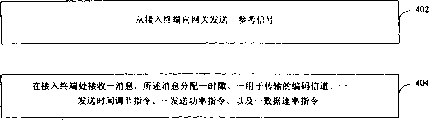
图4是按照本发明示出终端操作的说明性过程的流程图。4 is a flowchart showing an illustrative process for terminal operation in accordance with the present invention.
详细描述A detailed description
一般而言,本发明的实施例提供了改进的带宽效率、提高了的克服电子流衰落或其它信道降级现象的能力、减少了的传输功率、或者它们的各种组合。更具体地说,通过有利地使用基于地面卫星的通信系统的反向链路中的正交CDMA,本发明的实施例允许多个接入终端在一波束中并发地进行发送,每个终端都有一个唯一的时隙/编码信道分配,所述终端所使用的功率与使用TDMA作为其接入方式的单个接入终端所使用的合成功率是相同的、或比其低。在本发明其它实施例中,反向链路中正交CDMA的有利使用允许一个或多个终端以较高的传输功率进行发送以克服诸如由于电子流衰落引起的信道降级效应,所述终端每个都处在公共波束中并被分配到一公共的时隙。或者,提供较高传输功率的能力会通过启用较高阶的调制技术来提高终端的有效数据速率。In general, embodiments of the invention provide improved bandwidth efficiency, increased ability to overcome flow fading or other channel degradation phenomena, reduced transmit power, or various combinations thereof. More specifically, by advantageously using orthogonal CDMA in the reverse link of a terrestrial satellite-based communication system, embodiments of the invention allow multiple access terminals to transmit concurrently in a beam, each terminal There is a unique slot/coded channel assignment and the terminal uses the same or lower combined power than a single access terminal using TDMA as its access method. In other embodiments of the invention, the advantageous use of orthogonal CDMA in the reverse link allows one or more terminals to transmit at higher transmit powers to overcome channel degradation effects such as those caused by electron flow fading, the terminals each are all in a common beam and assigned to a common time slot. Alternatively, the ability to provide higher transmit power increases the terminal's effective data rate by enabling higher order modulation techniques.
在以下描述中,将描述本发明的各个方面。然而,对于本领域技术人员将显而易见的是,可以仅用本发明的某些或全部方面来实现本发明。为说明起见,提出了特定的数字、材料和配置以便能充分理解本发明。然而,对于本领域技术人员将显而易见的是,本发明也可以用其它细节来实现。在其它情况下,省略或简化了公知特性以便不混淆本发明。In the following description, various aspects of the invention will be described. However, it will be apparent to those skilled in the art that the present invention may be practiced with only some or all of its aspects. For purposes of illustration, specific numbers, materials and configurations are set forth in order to provide a full understanding of the invention. However, it will be apparent to a person skilled in the art that the invention may also be practiced with other details. In other instances, well-known features were omitted or simplified in order not to obscure the present invention.
这里对“一实施例”、“实施例”或类似表达的引用意味着结合实施例描述的特定的特性、结构、操作或特征被包括在本发明的至少一个实施例中。这样,这种短语或表达的出现不必全部指同一实施例。而且,可以在一个或多个实施例中以任何适当方式来组合各种特定的特性、结构、操作或特征。Reference herein to "an embodiment," "an embodiment," or similar expressions means that a particular feature, structure, operation, or characteristic described in connection with the embodiment is included in at least one embodiment of the present invention. Thus, appearances of such phrases or expressions are not necessarily all referring to the same embodiment. Furthermore, various specific features, structures, operations or characteristics may be combined in any suitable manner in one or more embodiments.
术语the term
这里所使用的前向链路数据速率控制是指最大可解码数据速率的索引,所述最大可解码数据速率是根据卫星系统前向链路上信噪比的一个或多个度量确定、接入终端所能解码的最大数据速率。Forward link data rate control as used herein refers to an index of the maximum decodable data rate determined from one or more metrics of signal-to-noise ratio on the forward link of a satellite system, access The maximum data rate that the terminal can decode.
终端或用户终端有时也称为接入终端、订户单元、移动单元、移动站,或在根据优选项某些通信系统中简称为“用户”、“移动站”或“订户”。这些术语是本领域中公知的。A terminal or user terminal is also sometimes called an access terminal, subscriber unit, mobile unit, mobile station, or simply "user", "mobile station" or "subscriber" in some communication systems according to preference. These terms are well known in the art.
在说明性的卫星通信系统中,可用于在接入终端和网关间通信的带宽被分成四条信道。这四条信道在此称为动力(heartbeat)信道、确定性保留信道、统计复用信道、以及随机接入信道。接着特别注意接入终端怎样使用这些信道而描述这些信道的功能。In the illustrative satellite communication system, the bandwidth available for communication between the access terminal and the gateway is divided into four channels. These four channels are referred to herein as the heartbeat channel, the deterministic reserved channel, the statistical multiplexing channel, and the random access channel. The functionality of these channels is then described with particular attention to how these channels are used by the access terminal.
对于随机接入信道,接入终端在随机接入信道上发送它们的初始分组以激活物理层。这个初始分组会包括对反向链路上确定性保留信道和/或统计复用保留信道上的带宽请求。随机接入信道也可由接入终端用来发送短的分组,以避免与请求保留信道上的带宽相关的延迟。随机接入信道是一异步的CDMA信道。For random access channels, access terminals send their initial packets on the random access channel to activate the physical layer. This initial packet would include a request for bandwidth on the deterministic reserved channel and/or the statistically multiplexed reserved channel on the reverse link. The random access channel can also be used by access terminals to send short packets to avoid delays associated with requesting bandwidth on the reserved channel. The random access channel is an asynchronous CDMA channel.
确定性保留信道被分成多个时隙。在各个实施例中,确定性保留信道也被分成编码信道。接入终端通过明确地作出对带宽的请求而在确定性保留信道上获取一时隙/编码信道保留。通过在前向链路(FL)上向接入终端发送一信道分配消息,网关可以许可这一请求。这样,会把唯一的时隙/编码信道分配提供给许多接入终端的每一个。The deterministic reserved channel is divided into multiple time slots. In various embodiments, deterministic reserved channels are also divided into coded channels. An access terminal acquires a slot/code channel reservation on a deterministic reservation channel by explicitly making a request for bandwidth. The gateway may grant this request by sending a channel assignment message on the forward link (FL) to the access terminal. In this way, a unique slot/coded channel assignment is provided to each of many access terminals.
动力信道被分成短的时隙/编码信道。每个接入终端被分配到动力信道上的一个时隙/编码信道。动力信道提供了有助于确定网关和各个接入终端间的信道调节的通信路径。首先,动力信道提供了一反馈信道,接入终端能通过所述反馈信道将它们的信道调节发送到网关。其次,动力信道还提供了一参考信号,网关通过所述参考信号能测量反向链路上接收到的信噪比。通过测量反向链路上接收到的信噪比,网关能确定接入终端以给定的发送功率在反向链路上发送的最大数据速率。而且,接入终端测量前向链路上接收到的信噪比,并且确定它们能正确解码的最大数据速率。The dynamic channel is divided into short slot/code channels. Each access terminal is assigned a slot/coded channel on the dynamic channel. The dynamic channel provides a communication path that facilitates determining channel adjustments between the gateway and various access terminals. First, the dynamic channel provides a feedback channel through which access terminals can send their channel adjustments to the gateway. Secondly, the dynamic channel also provides a reference signal by which the gateway can measure the signal-to-noise ratio received on the reverse link. By measuring the signal-to-noise ratio received on the reverse link, the gateway can determine the maximum data rate at which the access terminal can transmit on the reverse link at a given transmit power. Also, the access terminals measure the received signal-to-noise ratio on the forward link and determine the maximum data rate at which they can correctly decode.
接入终端在动力信道上向网关发送最大可解码数据速率的索引,也称为FL-DRC(前向链路数据速率控制)。网关以接入信道在动力信道上发送的消息中所规定的数据速率把数据发送到接入终端。因此,动力信道向网关提供与当前对接入终端可用的信道调节有关的反馈。在动力信道时隙/编码信道上发送的数据序列也由网关用来估计接入终端和网关间的时偏。如下所述,这个时偏估计用于调节接入终端在来自不同接入终端的反向链路传输间实现编码同步所需的传输时间。网关也可以使用动力信道上的信号来估计反向链路上使每个接入终端能提供称为接收信号强度指示(RSSI)的接收信号强度(RSS)。接入终端的传输功率和数据速率至少部分基于RSSI信息而确定。The access terminal sends an index of the maximum decodable data rate, also called FL-DRC (Forward Link Data Rate Control), to the gateway on the dynamic channel. The gateway sends data to the access terminal at the data rate specified in the message sent by the access channel on the powered channel. Thus, the dynamic channel provides feedback to the gateway regarding the channel adjustments currently available to the access terminal. The data sequences sent on the dynamic channel slot/coded channel are also used by the gateway to estimate the time offset between the access terminal and the gateway. As described below, this timing offset estimate is used to adjust the transmission time required by the access terminal to achieve code synchronization between reverse link transmissions from different access terminals. The gateway may also use the signal on the dynamic channel to estimate the received signal strength (RSS) on the reverse link to enable each access terminal to provide a received signal strength indication (RSSI). The transmit power and data rate for the access terminal are determined based at least in part on the RSSI information.
统计复用的(STATMUX)信道上的带宽被分成多个正交编码信道。每个编码信道都在特定的持续时间内被分配到一活动终端。可以使用多种方式来规定编码信道被分配给特定终端的时长。在一实施例中,终端维持编码信道,直到编码信道已经空闲了超出预先选定的时间间隔的这一时间为止,此时编码信道被释放到网关,以便被分配给另一终端。The bandwidth on a statistically multiplexed (STATMUX) channel is divided into a number of orthogonally coded channels. Each coded channel is assigned to an active terminal for a specific duration. The length of time that a coded channel is allocated to a particular terminal can be specified in a number of ways. In an embodiment, the terminal maintains the coded channel until the coded channel has been idle for longer than a preselected time interval, at which point the coded channel is released to the gateway for allocation to another terminal.
适用于产生统计复用的保留信道的一类编码是Walsh码。至少一个唯一的Walsh码被分配给多个接入终端的每一个,所述多个接入终端被允许实质上同时发送。也就是,每个活动接入终端在统计复用的保留信道上被分配到一个Walsh码。为与网关“活动地”交换数据的接入终端维持统计复用的保留信道编码信道分配。换言之,每个活动的接入终端都在反向链路的统计复用保留信道上被分配到特定的带宽量。注意到某些接入终端可能没有完全利用它们在统计复用的保留信道上分配的带宽。因此,统计复用保留信道上的一些带宽被浪费。然而,如下所述,按照本发明,统计复用保留信道上的带宽利用率的统计特性可用于改进统计复用保留信道的效率。A class of codes suitable for producing statistically multiplexed reserved channels are Walsh codes. At least one unique Walsh code is assigned to each of a plurality of access terminals that are permitted to transmit substantially simultaneously. That is, each active access terminal is assigned a Walsh code on the statistically multiplexed reserved channel. Statistically multiplexed reserved channel coding channel assignments are maintained for access terminals that "actively" exchange data with the gateway. In other words, each active access terminal is allocated a specific amount of bandwidth on the reverse link's statistical multiplex reserved channel. Note that some access terminals may not fully utilize their allocated bandwidth on the statistically multiplexed reserved channels. Therefore, some bandwidth on the statistically multiplexed reserved channel is wasted. However, as described below, according to the present invention, the statistical properties of the bandwidth utilization on the statistical multiplexed reserved channels can be used to improve the efficiency of the statistically multiplexed reserved channels.
注意到正交CDMA是一接入方式,它是已知的并且用于卫星通信系统的前向链路,但不用于反向链路。然而,在2002年6月24日提交的美国专利临时申请第60/391,437号中公开了用于使用反向链路中的正交CDMA的方法和装置,该申请题为“Orthogonal CDMA In Return Direction(反向的正交CDMA)”,通过引用被结合于此并被转让给本申请的受让人。通常,通过由网关发送到接入终端的控制信令来同步与地相对静止的卫星系统的反向链路上接入终端的传输。网关使用反向链路上来自接入终端的传输来确定在正交CDMA传输前每个接入终端必须引入的时偏,使得来自所有接入终端的信号以Walsh码同步到达网关。Note that Orthogonal CDMA is an access scheme which is known and used for the forward link of satellite communication systems, but not for the reverse link. However, methods and apparatus for using Orthogonal CDMA in the reverse link are disclosed in U.S. Patent Provisional Application No. 60/391,437, filed June 24, 2002, entitled "Orthogonal CDMA In Return Direction (Reverse Orthogonal CDMA)", incorporated herein by reference and assigned to the assignee of the present application. Typically, access terminal transmissions on the reverse link of a relatively geostationary satellite system are synchronized by control signaling sent by the gateway to the access terminal. The gateway uses the transmissions from the access terminals on the reverse link to determine the time offset that each access terminal must introduce before the orthogonal CDMA transmission so that the signals from all access terminals arrive at the gateway synchronously with Walsh codes.
在一实施例中,网关使用动力信道上的数据序列来估计接收到的序列和期望的参考时间之间的时偏。除了定时同步(即编码相位同步)以外,接入终端的发射机和网关的接收机之间的频偏也必须足够小,使得一个正交编码周期上信号的相位变化可忽略不计。在一种用于实现接入终端和网关间频率同步的方法中,接入终端调节其振荡器的频率以便锁定到从网关接收到的信号的频率。In one embodiment, the gateway uses the data sequence on the dynamic channel to estimate the time offset between the received sequence and the desired reference time. In addition to timing synchronization (ie encoding phase synchronization), the frequency offset between the transmitter of the access terminal and the receiver of the gateway must also be small enough so that the phase change of the signal over one orthogonal encoding period is negligible. In one method for achieving frequency synchronization between an access terminal and a gateway, the access terminal adjusts the frequency of its oscillator in order to lock to the frequency of a signal received from the gateway.
注意到上述同步机制被设计成同步Walsh码边界处的信号到达,在所述Walsh码边界处那些信号由不同的接入终端发起。一旦在反向链路上实现了不同接入终端间的同步,就能使用Walsh码来复用来自多个用户的数据。每个接入终端都在反向链路上被分配到一个特定的Walsh码。由于反向链路上不同接入终端的数据传输时间被调节以便使Walsh码在网关处同步到达,因此能在反向链路上在接收机处维持不同接入终端编码间的正交性。Note that the synchronization mechanisms described above are designed to synchronize the arrival of signals at Walsh code boundaries where those signals originate from different access terminals. Once synchronization between different access terminals is achieved on the reverse link, Walsh codes can be used to multiplex data from multiple users. Each access terminal is assigned a specific Walsh code on the reverse link. Since the data transmission times of the different access terminals on the reverse link are adjusted so that the Walsh codes arrive synchronously at the gateway, orthogonality between the codes of the different access terminals on the reverse link can be maintained at the receiver.
注意到与TDMA相比,通过使用正交CDMA能获得更大的带宽效率。在一实施例中,如下所述,通过与TDMA方式相比使用OCDMA能提高确定性保留信道的反向链路带宽效率。Note that greater bandwidth efficiency can be obtained by using orthogonal CDMA compared to TDMA. In one embodiment, the reverse link bandwidth efficiency of the deterministic reserved channel can be improved by using OCDMA compared to TDMA as described below.
首先,考虑一基于保留的多址技术的说明性示例,其中每个接入终端以TDMA方式在反向链路上被分配一专门的时隙。接入终端在网关分配给它们的特定时隙内发送它们的数据。网关可以使用前向链路控制信道把保留向量发送到接入终端。在反向链路时隙期间,网关能确定接入终端所见的信道条件,并且至少部分基于由接入终端发送到网关的一个或多个参考信号来作出RSSI估计。这种RSSI用于产生接入终端的速率和功率控制信息。然后,接入终端会以最大功率并以最大数据速率进行发送,在所述最大数据速率下网关能对从接入终端接收到的数据正确解码。接入终端能发送的数据速率至少部分取决于接入终端在给定波束中的位置。在更具体的说明性示例中,网关测量在动力信道上从每个接入终端接收到的信号强度,并且至少部分基于该测量,确定接入终端以给定的功率电平能在反向链路上发送的最大速率。接着,网关通过前向链路向接入终端发送被称为反向链路数据速率控制(反向链路-DRC)的信息。接入终端以网关发送给它们的反向链路-DRC所规定的数据速率进行发送。First, consider an illustrative example of a reservation-based multiple access technique in which each access terminal is assigned a dedicated time slot on the reverse link in TDMA. Access terminals transmit their data during specific time slots assigned to them by the gateway. The gateway can send the reservation vector to the access terminal using the forward link control channel. During reverse link time slots, the gateway can determine the channel conditions seen by the access terminal and make an RSSI estimate based at least in part on one or more reference signals sent by the access terminal to the gateway. This RSSI is used to generate rate and power control information for access terminals. The access terminal will then transmit at the maximum power and at the maximum data rate at which the gateway can correctly decode the data received from the access terminal. The data rate at which an access terminal can transmit depends at least in part on the location of the access terminal within a given beam. In a more specific illustrative example, the gateway measures the received signal strength on the dynamic channel from each access terminal, and based at least in part on this measurement, determines that the access terminal, at a given power level, can The maximum rate sent on the road. Next, the gateway sends information called Reverse Link Data Rate Control (Reverse Link - DRC) to the access terminal over the forward link. Access terminals transmit at the data rate specified by the reverse link-DRC sent to them by the gateway.
波束中心的接入终端会以最高规定的速率进行发送,因为位于波束中心的接入终端的天线增益最高。然而,在波束边缘的接入终端有较低的天线增益(在该说明性示例中低了4dB),其在网关处接收到的信号功率较低。因此,要求波束边缘的接入终端以较低的速率来发送它们的数据。换言之,接入终端的带宽效率取决于其在波束中的位置。波束中心的接入终端的带宽效率最高,波束边缘的接入终端的带宽效率最低。为了在这些情况下向所有接入终端提供相等的数据速率,必须向远离波束中心的接入终端分配更多时间,尤其对于位于波束边缘(即离波束中心最远)的接入终端来说。不幸的是,向远离波束中心的那些接入终端分配更多时间会减少系统的总吞吐量。例如,波束中心的接入终端会以1.5比特/秒/赫兹的带宽效率进行发送,而波束边缘的接入终端会以约0.75比特/秒/赫兹的带宽效率进行发送,因为网关接收到的信号功率比波束中心的接入终端的信号功率低了约4dB。按照本发明,通过使用OCDMA,能提高波束边缘处接入终端的带宽效率,使得它一般与波束中心接入终端的带宽效率相匹配,即1.5比特/秒/赫兹。The access terminal at the center of the beam will transmit at the highest specified rate because the access terminal at the center of the beam has the highest antenna gain. However, access terminals at the edge of the beam have lower antenna gain (4dB lower in this illustrative example), and their received signal power at the gateway is lower. Therefore, access terminals at the edge of the beam are required to transmit their data at a lower rate. In other words, the bandwidth efficiency of an access terminal depends on its position in the beam. Access terminals at the center of the beam have the highest bandwidth efficiency, and access terminals at the edge of the beam have the least bandwidth efficiency. In order to provide equal data rates to all access terminals under these circumstances, more time must be allocated to access terminals farther from the center of the beam, especially for access terminals located at the edges of the beam (ie, furthest from the center of the beam). Unfortunately, allocating more time to those access terminals that are far from the center of the beam reduces the overall throughput of the system. For example, an access terminal at the center of the beam would transmit with a bandwidth efficiency of 1.5 bits/s/Hz, while an access terminal at the edge of the beam would transmit with a bandwidth efficiency of about 0.75 bits/s/Hz because the signal received by the gateway The power is about 4dB lower than the signal power of the access terminal at the center of the beam. According to the present invention, by using OCDMA, the bandwidth efficiency of access terminals at the edge of the beam can be increased such that it generally matches the bandwidth efficiency of access terminals at the center of the beam, ie 1.5 bits/sec/Hz.
对于按照本发明的OCDMA反向链路,L个用户各自被分配到一个唯一的Walsh码。每个用户在每个Walsh码间隔期间发送一个数据调制码元。换言之,每个接入终端在其所分配的Walsh码周期内将一个数据调制码元重复L次,产生处理增益L。令(Eb/Nt)TDMA表示对于给定的编码和调制方案在基于TDMA的系统中测得的每比特能量。于是,如果OCDMA系统中的每个接入终端都以其最大可用功率进行发送,则对于反向链路上一个接入终端的OCDMA信道上接收到的Eb/Nt,由(Eb/Nt)OCDMA表示,如下给出:For the OCDMA reverse link according to the present invention, L users are each assigned a unique Walsh code. Each user transmits one data modulation symbol during each Walsh code interval. In other words, each access terminal repeats a data modulation symbol L times within its assigned Walsh code period, yielding a processing gain L. Let (E b /N t ) TDMA denote the energy per bit measured in a TDMA-based system for a given coding and modulation scheme. Then, if each access terminal in an OCDMA system transmits at its maximum available power, then for E b /N t received on the OCDMA channel of an access terminal on the reverse link, given by (E b / N t ) OCDMA representation, given as:
(Eb/Nt)OCDMA=L(Eb/Nt)TDMA (E b /N t ) OCDMA = L(E b / N t ) TDMA
换言之,对于接入终端处的相同发送功率,由于OCDMA的处理增益,OCDMA信道上可实现的Eb/Nt是TDMA信道上所能实现的L倍。因此,在OCDMA的情况下能使用较高阶的调制,从而实现比TDMA方式要高的带宽效率。注意到在OCDMA中,每个接入终端有效地具有TDMA系统中一个接入终端所具有的带宽的1/L。也就是,对于相同的调制/编码选择,一个OCDMA信道上的数据速率比TDMA信道上的要低L倍。然而根据上述讨论可见,由于对于相同的发送功率可以为OCDMA接入终端使用较高阶的调制/编码方案,因此OCDMA的带宽效率较高。In other words, for the same transmit power at the access terminal, the achievable Eb / Nt on an OCDMA channel is L times that on a TDMA channel due to the processing gain of OCDMA. Therefore, higher order modulations can be used in the case of OCDMA, thereby achieving higher bandwidth efficiency than TDMA schemes. Note that in OCDMA, each access terminal effectively has 1/L of the bandwidth that one access terminal has in a TDMA system. That is, the data rate on an OCDMA channel is L times lower than on a TDMA channel for the same modulation/coding choice. However, it can be seen from the above discussion that the bandwidth efficiency of OCDMA is higher because a higher order modulation/coding scheme can be used for the OCDMA access terminal for the same transmit power.
注意到如果在OCDMA情况下发送了最大可用发送功率的1/L,则OCDMA接入终端所实现的Eb/Nt会与TDMA方法所实现的相同。实践中,可以选择编码长度为L的OCDMA接入终端的发送功率:使得其发送功率在最大可用发送功率和最大可用发送功率的1/L之间。按照所述实施例,通过选择发送功率,相应地选择了接入终端的带宽效率。例如,波束中心的接入终端会以最大可用发送功率的1/L进行发送,由于与TDMA系统相比它们所实现的Eb/Nt未改变,因此仍以最高带宽效率(在这个说明性实施例中是1.5比特/秒/赫兹)发送数据。而波束边缘的接入终端会选择在最大可用发送功率和最大可用发送功率的1/L之间的一个发送功率。Note that if 1/L of the maximum available transmit power is transmitted in the OCDMA case, the E b /N t achieved by the OCDMA access terminal will be the same as that achieved by the TDMA method. In practice, the transmit power of the OCDMA access terminal with code length L can be selected such that its transmit power is between the maximum available transmit power and 1/L of the maximum available transmit power. According to the described embodiments, by selecting the transmit power, the bandwidth efficiency of the access terminal is correspondingly selected. For example, access terminals at the center of the beam would transmit at 1/L of the maximum available transmit power, still at maximum bandwidth efficiency (in this illustrative In the embodiment, it is 1.5 bits/second/Hz) to transmit data. However, the access terminal at the edge of the beam will select a transmit power between the maximum available transmit power and 1/L of the maximum available transmit power.
在一实施例中,选择发送功率电平,使得波束边缘的接入终端所实现的Eb/Nt仍足够高以支持最大的调制/编码速率以及与波束中心的接入终端相同的带宽效率。于是,使用正交Walsh码并行发送的所有接入终端都会以最大可用调制/编码(即最大带宽效率)进行发送,这会提高总的波束带宽效率。注意到波束中心的接入终端会以高于其最大可用发送功率的1/L的功率进行发送,并且将其调制/编码速率提高到TDMA情况下可行的速率以上。因此在保留信道上,OCDMA系统的带宽效率高于TDMA系统的带宽效率。In one embodiment, the transmit power level is selected such that the Eb / Nt achieved by the access terminals at the edge of the beam is still high enough to support the maximum modulation/coding rate and the same bandwidth efficiency as the access terminal at the center of the beam . Thus, all access terminals transmitting in parallel using orthogonal Walsh codes will transmit with the maximum available modulation/coding (ie, maximum bandwidth efficiency), which increases the overall beam bandwidth efficiency. Note that the access terminal at the center of the beam will transmit at a power higher than 1/L of its maximum available transmit power and increase its modulation/coding rate above what is feasible in the TDMA case. Therefore, on the reserved channel, the bandwidth efficiency of the OCDMA system is higher than that of the TDMA system.
作为怎样使OCDMA带宽效率高于TDMA系统的带宽效率的一个例子,考虑一系统,其中波束中心的Eb/Nt为X dB,并且在波束边缘处为X-3 dB。假定波束中心处接入终端的数据速率为R,波束边缘处接入终端的数据速率为R/2。对于相同级别的服务调度程序,其中每个接入终端都有足够的时间使所有接入终端实现相同的平均数据速率,则两个接入终端的平均吞吐量将会是R/1.5。于是TDMA系统的带宽效率是(R/1.5)/W。现在考虑一OCDMA系统,其中波束中心和波束边缘处的两个接入终端各自获得长度为2的一个正交码。于是,如果波束边缘的接入终端与TDMA系统中的接入终端以相同的功率进行发送,则由于处理增益,对于波束边缘的OCDMA接入终端所实现的Eb/Nt将会是X dB。如果波束中心的接入终端以TDMA系统中的接入终端的一半功率进行发送,则波束中心的接入终端的Eb/Nt也会是X dB。于是,在OCDMA系统中,两个接入终端都能与TDMA系统中波束中心的接入终端以相同的带宽效率进行发送。于是,该例中OCDMA系统中的带宽效率为R/W,它是TDMA系统的带宽效率的1.5倍。注意到在该例中,OCDMA接入终端的峰值速率比TDMA系统的峰值速率要低。通过允许波束中心的接入终端也以最大可用速率进行发送,可以进一步提高上述OCDMA示例的带宽效率,该情况下所实现的Eb/Nt会是X+3 dB。因而,接入终端会以大于2的速率进行发送(例如高达2R)。注意到如果使用了长度大于2的正交编码,则每个OCDMA接入终端的处理增益会更高,对于OCDMA接入终端产生较高的所实现的Eb/Nt。在这一情况下,可以使用较高阶的信号集和编码速率,所述编码速率又允许按照本发明的OCDMA系统中更高的带宽效率。As an example of how OCDMA bandwidth efficiency can be made higher than that of a TDMA system, consider a system where Eb / Nt is X dB at the beam center and X-3 dB at the beam edges. Assume that the data rate for access terminals at the center of the beam is R, and the data rate for access terminals at the edge of the beam is R/2. For the same level of service scheduler, where each access terminal has enough time for all access terminals to achieve the same average data rate, the average throughput for two access terminals will be R/1.5. The bandwidth efficiency of the TDMA system is then (R/1.5)/W. Now consider an OCDMA system where two access terminals at the beam center and at the beam edge each obtain an orthogonal code of length 2. Then, if an access terminal at the beam edge transmits at the same power as an access terminal in a TDMA system, the achieved E b /N t for an OCDMA access terminal at the beam edge will be X dB due to processing gain . If the access terminal at the center of the beam transmits at half the power of an access terminal in a TDMA system, then Eb / Nt for the access terminal at the center of the beam will also be X dB. Thus, in an OCDMA system, both access terminals can transmit with the same bandwidth efficiency as the access terminal at the center of the beam in a TDMA system. Thus, the bandwidth efficiency in the OCDMA system in this example is R/W, which is 1.5 times that of the TDMA system. Note that in this example, the peak rate of the OCDMA access terminal is lower than that of the TDMA system. The bandwidth efficiency of the above OCDMA example can be further improved by allowing the access terminal at the center of the beam to also transmit at the maximum available rate, in which case the achieved Eb / Nt would be X+3 dB. Thus, the access terminal may transmit at a rate greater than 2 (eg, up to 2R). Note that if an orthogonal code of length greater than 2 is used, the processing gain per OCDMA access terminal will be higher, resulting in a higher realized Eb / Nt for the OCDMA access terminal. In this case, higher order signal sets and coding rates can be used, which in turn allow higher bandwidth efficiency in the OCDMA system according to the invention.
注意到对OCDMA终端的发送功率以及所使用的调制信号集的尺寸也有限制。因为使用了较高阶的调制,由于调制信号集较高的峰均比,放大器的发送功率中需要较多的退回(back-off)。在一实施例中,来自上行链路上全部OCDMA终端的总发送功率被限制为一阈值,该阈值不超出对相邻卫星的可允许的干扰级别。Note that there are also restrictions on the transmit power of OCDMA terminals and the size of the modulation signal set used. Because higher order modulation is used, more back-off is required in the transmit power of the amplifier due to the higher peak-to-average ratio of the modulated signal set. In one embodiment, the aggregate transmit power from all OCDMA terminals on the uplink is limited to a threshold that does not exceed the allowable level of interference to neighboring satellites.
CDMA的另一个优点是其干扰平均能力。接入终端能在反向链路上发送的数据速率取决于在网关处会从接入终端接收到的Eb/Nt。为了确定接入终端发送所用的数据速率,网关预测从接入终端接收到的Eb/Nt,并且选择能在该Eb/Nt下被正确解码的最高速率。网关将所确定的反向链路数据速率通知给接入终端。接收到的Eb/Nt当然取决于从在同信道波束中同时发送的接入终端而来的同信道干扰。因此,为了对接收到的Eb/Nt作出准确的预测,必须能对同信道干扰作出准确的预测。然而在TDMA系统中,同信道干扰的变化通常很大,因为存在少量的TDMA同信道干扰信号。因此,为了确保分组能被正确解码,在Eb/Nt预测中必须包括余量以补偿同信道干扰中的变化。为了提供这一余量,需要可实现的数据速率中的退回,以及从中导出的吞吐量中的相应减少。在CDMA系统中,由于大量接入终端的统计复用,对于来自不同接入终端的干扰会取平均。因此,干扰中的变化在CDMA系统中会较小。结果,所需的退回比CDMA系统中的数据速率小,这又导致较高的容量。Another advantage of CDMA is its interference averaging capability. The data rate at which the access terminal can send on the reverse link depends on the Eb / Nt that would be received at the gateway from the access terminal. To determine the data rate at which the access terminal transmits, the gateway predicts the Eb / Nt received from the access terminal and chooses the highest rate that can be correctly decoded at that Eb / Nt . The gateway notifies the access terminal of the determined reverse link data rate. The received Eb / Nt depends of course on the co-channel interference from access terminals transmitting simultaneously in the co-channel beam. Therefore, in order to make an accurate prediction of the received Eb / Nt , it is necessary to be able to make an accurate prediction of the co-channel interference. However, in a TDMA system, the variation of co-channel interference is usually large because there are a small number of TDMA co-channel interfering signals. Therefore, to ensure that packets are decoded correctly, a margin must be included in the Eb / Nt prediction to compensate for variations in co-channel interference. In order to provide this margin, a backoff in the achievable data rate, and a corresponding reduction in the throughput derived therefrom, is required. In a CDMA system, due to the statistical multiplexing of a large number of access terminals, the interference from different access terminals is averaged. Therefore, the variation in interference will be smaller in a CDMA system. As a result, the required backoff is smaller than the data rate in a CDMA system, which in turn leads to a higher capacity.
由于接入终端向网关发送一保留请求消息以及网关许可该请求所需的时间,为接入终端的反向链路传输向其分配保留增加了数据传输前的延迟。这个延迟在发送短的分组时尤其不期望。为了避免这个增加的延迟,可能没有前面的保留而在随机接入信道上发送短消息。一种常用的随机接入信道是基于TDMA的Aloha方案。基于TDMA的Aloha方案的缺点是其低频谱效率。另一个随机接入方案是基于CDMA的Aloha,它相比基于TDMA的Aloha方案有较高的带宽效率和较低的延迟。如下所述,OCDMA可以被设计成基于反向链路的随机接入部分来提高保留的带宽效率。接着将描述一统计复用保留信道,其可以代替随机接入信道来发送短的分组。Assigning a reservation to an access terminal for its reverse link transmission adds delay before data transmission due to the time it takes for the access terminal to send a reservation request message to the gateway and for the gateway to grant the request. This delay is especially undesirable when sending short packets. To avoid this added delay, short messages may be sent on the random access channel without previous reservations. A commonly used random access channel is the Aloha scheme based on TDMA. The disadvantage of the TDMA-based Aloha scheme is its low spectral efficiency. Another random access scheme is Aloha based on CDMA, which has higher bandwidth efficiency and lower delay than the Aloha scheme based on TDMA. As described below, OCDMA can be designed to increase the efficiency of reserved bandwidth based on the random access portion of the reverse link. Next, a statistical multiplexing reserved channel will be described, which can transmit short packets instead of the random access channel.
在符合本发明的说明性实施例中,网关在统计复用的保留信道上向每个“活动的”接入终端分配一编码信道。如上所述,编码信道在规定的持续时间内被分配给一活动终端。持续时间会是预定的,或在编码信道已经在超过特定时间间隔的时间内不活动时被设为期满。OCDMA被有效地配置成发送短消息,而无须接入终端从网关作出对反向链路带宽的明确保留请求。如果接入终端有要发送的短分组(例如一确认),它会使用其分配到的Walsh码来发送该分组,并且会以其预定的功率电平和数据速率进行发送。然而,该方案中低效的信源导致特定数量的编码信道被维持空闲。由于接入信道在某些时间段也许没有任何数据要发送,这些空闲的编码信道存在。然而,如果确实发送的接入终端被允许以较高的功率电平和较高的带宽效率进行发送,则可以使用统计复用来提高带宽效率。In an illustrative embodiment consistent with the invention, the gateway assigns each "active" access terminal a coded channel on a statistically multiplexed reserved channel. As mentioned above, coded channels are assigned to an active terminal for a specified duration. The duration may be predetermined, or set to expire when the coded channel has been inactive for more than a specified time interval. OCDMA is effectively configured to send short messages without requiring the access terminal to make an explicit reservation request for reverse link bandwidth from the gateway. If an access terminal has a short packet to send (eg, an acknowledgment), it sends the packet using its assigned Walsh code and at its predetermined power level and data rate. However, sources of inefficiency in this scheme result in a certain number of coded channels being kept idle. These idle coded channels exist because the access channel may not have any data to transmit for certain periods of time. However, if access terminals that do transmit are allowed to transmit at higher power levels and with higher bandwidth efficiency, statistical multiplexing can be used to improve bandwidth efficiency.
在关于统计复用保留信道怎样运行的一例中,假定总共有2500个接入终端,并且在一给定的时间点,接入终端中的10%是活动的。于是可以向每个活动的接入终端分配例如长度为256的Walsh码。接入终端用于发送其数据的调制/编码方案(以及数据速率)会取决于它需要发送的数据量。如果它有很少数据要发送,它就会选择一个低数据速率调制/编码方案,因此以相对较低的功率电平发送其数据。具有较多数据要发送的其它接入终端会使用较高阶的调制/编码方案,并且会以较高的功率进行发送。换言之,每个接入终端会按照它实现特定延迟的数据速率要求来调节其数据速率和功率电平。In an example of how the statistical multiplexing reserved channel works, assume that there are a total of 2500 access terminals, and that at a given point in time, 10% of the access terminals are active. Each active access terminal may then be assigned a Walsh code of length 256, for example. The modulation/coding scheme (and data rate) that an access terminal uses to send its data will depend on the amount of data it needs to send. If it has little data to send, it chooses a low data rate modulation/coding scheme, thus sending its data at a relatively low power level. Other access terminals that have more data to send may use higher order modulation/coding schemes and may transmit at higher power. In other words, each access terminal adjusts its data rate and power level according to its data rate requirements to achieve a particular delay.
假定x%的接入终端会使用它们分配到的时隙。于是,由于在每个时隙期间允许多个接入终端使用正交码进行发送,由反向链路上一个波束中的所有接入终端所产生的实际功率量会是最火可行发送功率的约x%。如果所分配的正交码的数目为L,则每个终端会在其最大可用功率的1/L和最大可用功率间进行发送。理想地,会希望终端以它们的最大可用发送功率进行发送。然而,来自所有发送终端的上行链路上的总发送功率必须不超过一个特定的上限,以便不超过对相邻卫星的干扰级别。限制来自每个活动终端的发送功率的另一个考虑因素是下行链路上卫星处的可用功率。必须确保来自所有活动终端的总发送功率不超过在反向链路的下行链路上卫星内可用的发送功率限制。如果所使用的编码信道的平均百分比是已知的,则能通过允许利用其编码信道的接入终端以较高功率和较高的调制/编码进行发送,从而有效地使用带宽。Assume that x% of the access terminals will use their allocated time slots. Thus, since multiple access terminals are allowed to transmit using orthogonal codes during each slot, the actual amount of power generated by all access terminals in a beam on the reverse link will be the best possible transmit power about x%. If the number of allocated orthogonal codes is L, each terminal will transmit between 1/L of its maximum available power and the maximum available power. Ideally, terminals would be expected to transmit at their maximum available transmit power. However, the total transmit power on the uplink from all transmitting terminals must not exceed a certain upper limit in order not to exceed the level of interference to neighboring satellites. Another consideration that limits the transmit power from each active terminal is the power available at the satellite on the downlink. It must be ensured that the total transmit power from all active terminals does not exceed the transmit power limit available within the satellite on the downlink of the reverse link. If the average percentage of coded channels used is known, bandwidth can be used efficiently by allowing access terminals utilizing their coded channels to transmit at higher power and higher modulation/coding.
例如,如果预期平均有一半接入终端使用它们分配到的Walsh码,则仅会在反向链路的上行链路上产生一半功率。因此,会允许每个接入终端以其名义发送功率的双倍以及以较高的带宽效率进行发送。在这种情况下,仅有一半接入终端使用它们的Walsh码不会导致带宽效率的损失,因为通过允许接入终端以较高的功率输出并以较高的调制/编码速率进行发送,从而提高了接入终端的带宽效率。这导致了补偿未使用编码信道的统计复用增益。For example, if on average half the access terminals are expected to use their assigned Walsh codes, only half the power will be generated on the uplink of the reverse link. Thus, each access terminal would be allowed to transmit at twice its nominal transmit power and with greater bandwidth efficiency. In this case, having only half of the access terminals use their Walsh codes does not result in a loss of bandwidth efficiency, because by allowing the access terminals to output at higher power and transmit at higher modulation/coding rates, thus The bandwidth efficiency of the access terminal is improved. This results in a statistical multiplexing gain that compensates for unused coded channels.
注意到在Walsh码的数目很大时,例如大于八时,允许接入终端以较高的功率进行发送,能进一步提高基于OCDMA的统计复用保留信道的带宽效率。假定分配了八个Walsh码。则对于相同的带宽效率,OCDMA系统中的每个接入终端会需要L倍的时间来发送其数据,但也会以1/L的数据速率进行发送。然而,在这一情况下,每个接入终端会以比可比TDMA接入终端所需的功率输出电平低9dB的功率输出电平进行发送。如上所述,如果每一个OCDMA接入终端都被允许以它们的最大功率进行发送,则为反向链路上的每个接入终端实现的Eb/Nt会高9dB,这又允许较高的调制/编码方案和高得多的带宽效率。当然,对于OCDMA接入终端的发送功率也会有限制,这种限制会由不限于以下的因素来确定:比如相邻卫星干扰、反向链路上卫星内可用的下行链路功率、以及由上行链路上所有接入终端产生的累计噪声/调制间干扰。It is noted that when the number of Walsh codes is large, for example greater than eight, the access terminal is allowed to transmit with higher power, which can further improve the bandwidth efficiency of the OCDMA-based statistical multiplexing reserved channel. Assume eight Walsh codes are assigned. Then, for the same bandwidth efficiency, each access terminal in the OCDMA system will take L times longer to send its data, but will also send at a data rate of 1/L. In this case, however, each access terminal will transmit at a power output level that is 9 dB lower than that required by a comparable TDMA access terminal. As mentioned above, if every OCDMA access terminal is allowed to transmit at their maximum power, the E b /N t achieved for each access terminal on the reverse link will be 9dB higher, which in turn allows a higher High modulation/coding scheme and much higher bandwidth efficiency. Of course, there will also be limitations on the transmit power of OCDMA access terminals, which will be determined by factors not limited to the following: such as adjacent satellite interference, available downlink power in the satellite on the reverse link, and by The cumulative noise/intermodulation interference generated by all access terminals on the uplink.
图1是用于在反向链路上从相应的多个终端接收多个并发CDMA传输的接收机的框图表示。图1的接收机包括与下变频器104耦合的天线102。下变频器获得RF信号并降低频率。用于下变频的各种技术是已知的,但在这里不再详述。下变频器的输出耦合到模数(A/D)转换器106,模数转换器106把模拟信号转换成数字域内的相应信号。模数转换器106的输出耦合到多个解扩展器108a、108b、108n的每一个。对于解扩展器的数目没有特定的限制,然而在某些实施例中,解扩展器的数目等于网关在任一特定时隙可能从接入终端接收到的经编码调制的(即CDMA)信号的数目。编码源110也耦合到每一个解扩展器108a、108b、108n。编码源11O向解扩展器提供对到来的CDMA信号进行解扩展所需的编码。每个解扩展器108a、108b、108n的输出端分别耦合到一输入端和一数据解调器112a、112b、112n。1 is a block diagram representation of a receiver for receiving multiple concurrent CDMA transmissions on a reverse link from corresponding multiple terminals. The receiver of FIG. 1 includes an
按照本发明,这个结构用在这里是因为多个接入终端正并行地向网关发送OCDMA信号。According to the present invention, this structure is used here because multiple access terminals are transmitting OCDMA signals to the gateway in parallel.
图2是适用于在OCDMA卫星通信系统的反向链路中发送消息的终端内发射机的框图表示。在以前的系统中,接入终端从网关接收CDMA信号,但使用TDMA在反向链路中通信。图2所示的发射机不仅适用于发送CDMA信号,而且还如上所述地调节其发送功率。该发射机包括调制基带信号的数据调制器202以及一编码调制器204,所述编码调制器204进一步按照被分配给该特定接入终端的编码信道对要发送的信号进行调制。在该说明性示例中,编码调制器204的输出被一系列混频器206上变频。可以使用任何适当的上变频装置。最后的发射机电路208按照从功率控制单元212接收到的控制信号来确定发送功率。耦合了功率控制单元212以便从功率控制参数存储单元214接收控制信息。发射机功率控制是由接入终端从网关接收到的发送功率指令、以及对信道降级效应接入终端自身的确定的函数。通过测量前向链路上的信号强度,终端估计前向链路上的任何信号强度变化,例如由于电子流引起的衰落。每当前向链路上的信号强度有变化时,终端就估计反向链路上相应的信号强度变化,并相应地调节反向链路上的数据速率和/或发送功率。在一实施例中,终端会使用一校准表来根据前向链路信号变化确定反向链路信号强度变化。Figure 2 is a block diagram representation of an in-terminal transmitter suitable for sending messages in the reverse link of an OCDMA satellite communication system. In previous systems, access terminals received CDMA signals from the gateway, but communicated on the reverse link using TDMA. The transmitter shown in Figure 2 is not only adapted to transmit CDMA signals, but also adjusts its transmit power as described above. The transmitter includes a data modulator 202 that modulates the baseband signal and a code modulator 204 that further modulates the signal to be transmitted according to the code channel assigned to the particular access terminal. In this illustrative example, the output of coded modulator 204 is upconverted by series of mixers 206 . Any suitable upconversion device may be used. The final transmitter circuit 208 determines the transmission power according to the control signal received from the power control unit 212 . A power control unit 212 is coupled to receive control information from a power control parameter storage unit 214 . Transmitter power control is a function of transmit power instructions received by the access terminal from the gateway, and the access terminal's own determination of channel degradation effects. By measuring the signal strength on the forward link, the terminal estimates any signal strength changes on the forward link, such as fading due to electron flow. Each time there is a change in signal strength on the forward link, the terminal estimates a corresponding change in signal strength on the reverse link and adjusts the data rate and/or transmit power on the reverse link accordingly. In one embodiment, the terminal uses a calibration table to determine reverse link signal strength changes based on forward link signal changes.
图3是按照一实施例、示出网关操作的说明性过程的流程图。该说明性过程包括:在步骤302在网关处从接入终端接收一消息、并且从中确定网关和接入终端间的信道条件。接入终端会为该初始消息使用任何联系网关的适当装置。该方法还包括:在步骤304中在网关处确定在步骤302中接收到的消息的接收信号强度。还执行一操作,用于在步骤306中在网关处确定接收消息的定时偏移。确定该偏移是在反向链路中建立OCDMA的一方面。该说明性方法还包括在步骤308中向接入终端发送一时隙分配、一编码信道分配、一发送时间调节指令、一发送功率指令以及一数据速率指令。3 is a flowchart showing an illustrative process of gateway operation, according to one embodiment. The illustrative process includes receiving, at step 302, a message at a gateway from an access terminal and determining therefrom a channel condition between the gateway and the access terminal. The access terminal will use whatever appropriate means of contacting the gateway for this initial message. The method also includes determining, at step 304, a received signal strength of the message received at step 302 at the gateway. An operation is also performed for determining a timing offset for receiving the message at the gateway in step 306 . Determining this offset is one aspect of establishing OCDMA in the reverse link. The illustrative method also includes, in step 308, sending to the access terminal a time slot assignment, a coded channel assignment, a transmit time adjustment command, a transmit power command, and a data rate command.
图4是按照示出终端操作的说明性过程的一实施例的流程图。该说明性过程包括在步骤402中从接入终端向网关发送一参考信号。随后,按照图4的方法,执行以下操作:在步骤404中在接入终端处接收一消息,分配一时隙、一用于传输的编码信道、一发送时间调节指令、一发送功率指令、以及一数据速率指令。时隙分配向接入终端通知有关它要发送的时间,编码信道指令向接入终端通知有关对应OCDMA怎样编码发送数据。发送时间调节指令使接入终端能提前或推迟其传输时间,以便为反向链路中的OCDMA维持所需程度的编码同步。发送功率和数据速率指令向接入终端通知有关它要怎样操作以便实现期望的有效数据速率。Figure 4 is a flowchart according to one embodiment of an illustrative process showing operation of a terminal. The illustrative process includes, in
结论in conclusion
按照本发明的方法和装置使用卫星通信系统的反向链路中的正交CDMA以有利地提供较大的发送功率余量,以便补偿诸如电子流衰落这样的信道降级效应。类似地,通过允许较高的带宽效率,本发明的实施例允许远离波束中心的接入终端以较高的功率电平进行发送,从而又允许较高阶的调制方案,这又进一步允许波束中的多个终端具有相同的平均数据速率而无论它们相对于波束中心的位置是什么。Methods and apparatus according to the present invention use orthogonal CDMA in the reverse link of a satellite communication system to advantageously provide a large transmit power headroom to compensate for channel degradation effects such as stream fading. Similarly, by allowing for higher bandwidth efficiency, embodiments of the present invention allow access terminals located farther from the center of the beam to transmit at higher power levels, which in turn allows for higher order modulation schemes, which in turn allows further Multiple terminals in λ have the same average data rate regardless of their position relative to the beam center.
应该理解,本发明不限于上述的实施例,而是包含了权利要求范围内的任一和所有实施例。It should be understood that the invention is not limited to the embodiments described above, but encompasses any and all embodiments within the scope of the claims.
Claims (20)
Applications Claiming Priority (4)
| Application Number | Priority Date | Filing Date | Title |
|---|---|---|---|
| US39143802P | 2002-06-24 | 2002-06-24 | |
| US60/391,438 | 2002-06-24 | ||
| US10/428,953 | 2003-05-01 | ||
| US10/428,953 US7633895B2 (en) | 2002-06-24 | 2003-05-01 | Orthogonal code division multiple access on return link of satellite links |
Publications (2)
| Publication Number | Publication Date |
|---|---|
| CN1663148A true CN1663148A (en) | 2005-08-31 |
| CN100492938C CN100492938C (en) | 2009-05-27 |
Family
ID=30003193
Family Applications (1)
| Application Number | Title | Priority Date | Filing Date |
|---|---|---|---|
| CNB038139707A Expired - Fee Related CN100492938C (en) | 2002-06-24 | 2003-06-20 | Method of operating an access terminal and method of operating a communication system |
Country Status (8)
| Country | Link |
|---|---|
| US (1) | US7633895B2 (en) |
| EP (1) | EP1516444A2 (en) |
| CN (1) | CN100492938C (en) |
| AU (1) | AU2003243678A1 (en) |
| BR (1) | BR0312080A (en) |
| CO (1) | CO5631489A2 (en) |
| MX (1) | MXPA04012325A (en) |
| WO (1) | WO2004002009A2 (en) |
Cited By (1)
| Publication number | Priority date | Publication date | Assignee | Title |
|---|---|---|---|---|
| CN116015402A (en) * | 2022-12-06 | 2023-04-25 | 航天科工空间工程网络技术发展(杭州)有限公司 | Method and device for allocating satellite reverse channel resources and satellite communication system |
Families Citing this family (22)
| Publication number | Priority date | Publication date | Assignee | Title |
|---|---|---|---|---|
| US7570627B2 (en) * | 2005-03-11 | 2009-08-04 | Freescale Semiconductor, Inc. | Method for sharing bandwidth using reduced duty cycle signals and media access control |
| WO2006107988A1 (en) * | 2005-04-05 | 2006-10-12 | Skybitz, Inc. | Multiple return link |
| US8855704B2 (en) * | 2005-08-26 | 2014-10-07 | Qualcomm Incorporated | Fast cell selection in TD-CDMA (UMTS TDD) |
| US8068464B2 (en) * | 2005-10-27 | 2011-11-29 | Qualcomm Incorporated | Varying scrambling/OVSF codes within a TD-CDMA slot to overcome jamming effect by a dominant interferer |
| US8130727B2 (en) * | 2005-10-27 | 2012-03-06 | Qualcomm Incorporated | Quasi-orthogonal allocation of codes in TD-CDMA systems |
| US7711320B2 (en) * | 2006-01-04 | 2010-05-04 | Globalstar, Inc. | Satellite communication system for communicating packet data messages |
| US20070155318A1 (en) * | 2006-01-04 | 2007-07-05 | Globalstar, Inc. | Satellite communication system employing a combination of time slots and orthogonal codes |
| US7792487B2 (en) * | 2006-01-04 | 2010-09-07 | Globalstar, Inc. | Satellite communication system for communicating packet data messages |
| US7630682B2 (en) * | 2006-01-04 | 2009-12-08 | Globalstar, Inc. | Satellite communication system employing a combination of time slots and orthogonal codes |
| KR100965673B1 (en) * | 2006-11-15 | 2010-06-24 | 삼성전자주식회사 | Data transmission method in mobile communication system |
| US8036151B2 (en) * | 2006-12-17 | 2011-10-11 | Qualcomm Incorporated | Power-based rate signaling for cellular uplink |
| CN101783702B (en) * | 2010-03-04 | 2013-06-12 | 清华大学 | Signal transmission method applicable to satellite communication system |
| US8503353B2 (en) * | 2010-11-05 | 2013-08-06 | Qualcomm Incorporated | Reverse link power and data rate control |
| CN102426300B (en) * | 2011-08-31 | 2013-08-28 | 西安空间无线电技术研究所 | Calibration system of amplitude and phase errors of satellite-borne wave beam formation reception channels and method thereof |
| KR101519719B1 (en) * | 2013-08-14 | 2015-05-12 | 현대자동차주식회사 | Message process method of gateway |
| WO2016054111A1 (en) * | 2014-09-29 | 2016-04-07 | Hughes Network Systems, Llc | Inter-gateway interference management and admission control for a cdma satellite communications system |
| US10158986B2 (en) * | 2015-08-19 | 2018-12-18 | Kabushiki Kaisha Toshiba | Satellite communication system controlling gate in an emergency |
| EP3282598A1 (en) | 2016-08-12 | 2018-02-14 | Fraunhofer-Gesellschaft zur Förderung der angewandten Forschung e.V. | Communication system and transmitter |
| GB2557628B (en) | 2016-12-13 | 2020-01-01 | Inmarsat Global Ltd | Forward link power control |
| US10667188B2 (en) * | 2017-06-21 | 2020-05-26 | Qualcomm Incoporated | Method and apparatus for multiplexing hybrid satellite constellations |
| US11425608B2 (en) * | 2020-03-23 | 2022-08-23 | At&T Intellectual Property I, L.P. | Facilitating an interference leakage dependent resource reservation protocol in advanced networks |
| US11617108B2 (en) | 2020-06-22 | 2023-03-28 | At&T Intellectual Property I, L.P. | Facilitating a transmission power dependent resource reservation protocol in advanced networks |
Family Cites Families (54)
| Publication number | Priority date | Publication date | Assignee | Title |
|---|---|---|---|---|
| US5535238A (en) * | 1990-11-16 | 1996-07-09 | Interdigital Technology Corporation | Spread spectrum adaptive power control communications system and method |
| US5235615A (en) * | 1991-05-22 | 1993-08-10 | Cylink Corporation | Spread spectrum method |
| AU659189B2 (en) * | 1991-05-29 | 1995-05-11 | Comsat Corporation | Fully meshed CDMA network for personal communications terminals |
| US5305468A (en) * | 1992-03-18 | 1994-04-19 | Motorola, Inc. | Power control method for use in a communication system |
| US5216692A (en) * | 1992-03-31 | 1993-06-01 | Motorola, Inc. | Method and apparatus for adjusting a power control threshold in a communication system |
| JP2974274B2 (en) * | 1994-05-12 | 1999-11-10 | エヌ・ティ・ティ移動通信網株式会社 | Transmission power control method and transmission power control device |
| US5918155A (en) * | 1995-03-13 | 1999-06-29 | Hitachi, Ltd. | Satellite communication system and method thereof |
| US5710982A (en) * | 1995-06-29 | 1998-01-20 | Hughes Electronics | Power control for TDMA mobile satellite communication system |
| US6816473B2 (en) * | 1995-06-30 | 2004-11-09 | Interdigital Technology Corporation | Method for adaptive forward power control for spread-spectrum communications |
| US6108317A (en) * | 1995-11-01 | 2000-08-22 | Stm Wireless, Inc. | Cyclic code phase multiple access for inbound satellite communications |
| US5907813A (en) * | 1995-11-30 | 1999-05-25 | Qualcomm Incorporated | Signal acquisition in a wireless communication system by transmitting repeated access probes from a terminal to a hub |
| US5991279A (en) * | 1995-12-07 | 1999-11-23 | Vistar Telecommunications Inc. | Wireless packet data distributed communications system |
| IL124771A (en) * | 1995-12-07 | 2001-07-24 | Vistar Telecomm Inc | Wireless packet data distributed communications system |
| US5835847A (en) * | 1996-04-02 | 1998-11-10 | Qualcomm Incorporated | Pilot signal strength control for a low earth orbiting satellite communications system |
| US6396804B2 (en) * | 1996-05-28 | 2002-05-28 | Qualcomm Incorporated | High data rate CDMA wireless communication system |
| US6222828B1 (en) * | 1996-10-30 | 2001-04-24 | Trw, Inc. | Orthogonal code division multiple access waveform format for use in satellite based cellular telecommunications |
| US6542480B1 (en) * | 1996-11-05 | 2003-04-01 | Worldspace, Inc. | Satellite payload processing system using polyphase demultiplexing, quadrature phase shift keying demodulation and rate alignment |
| US5771229A (en) * | 1997-01-31 | 1998-06-23 | Motorola, Inc. | Method, system and mobile communication unit for communicating over multiple channels in a wireless communication system |
| US6212360B1 (en) * | 1997-04-09 | 2001-04-03 | Ge Capital Spacenet Services, Inc. | Methods and apparatus for controlling earth-station transmitted power in a VSAT network |
| US5867525A (en) * | 1997-06-10 | 1999-02-02 | L-3 Commuications Corporation | Synchronizer and method therefor and communications system incorporating same |
| US5974315A (en) * | 1997-09-03 | 1999-10-26 | Lockheed Martin Corporation | Spacecraft cellular communication system |
| US6285655B1 (en) * | 1997-09-08 | 2001-09-04 | Qualcomm Inc. | Method and apparatus for providing orthogonal spot beams, sectors, and picocells |
| US6356595B1 (en) * | 1997-10-14 | 2002-03-12 | Sony Corporation | Method and apparatus for decoding continuously coded convolutionally encoded messages |
| US6317412B1 (en) | 1997-12-12 | 2001-11-13 | Stanford Telecommunications, Inc. | Increased capacity in an OCDMA system for frequency isolation |
| US6373834B1 (en) * | 1997-12-19 | 2002-04-16 | Telefonaktiebolaget Lm Ericsson | Synchronization for cellular telecommunications network |
| KR100269591B1 (en) * | 1998-07-23 | 2000-10-16 | 조정남 | Reverse link synchronization setting method and reverse link synchronous transmission method in mobile communication system |
| US6674730B1 (en) * | 1998-08-04 | 2004-01-06 | Tachyon, Inc. | Method of and apparatus for time synchronization in a communication system |
| US6151328A (en) * | 1998-12-31 | 2000-11-21 | Lg Information & Communications Ltd. | Apparatus and method for controlling power in code division multiple access system |
| US6771642B1 (en) * | 1999-01-08 | 2004-08-03 | Cisco Technology, Inc. | Method and apparatus for scheduling packets in a packet switch |
| WO2000054430A1 (en) * | 1999-03-12 | 2000-09-14 | Qualcomm Incorporated | Methods and apparatus for power allocation on a reverse link power control channel of a communication system |
| BR0011085A (en) * | 1999-05-31 | 2002-03-19 | Samsung Electronics Co Ltd | Device and method for transmission by portal in cdma communication system |
| US6542536B1 (en) * | 1999-08-06 | 2003-04-01 | General Electric Company | Spread spectrum communications with selectable data transfer rates |
| EP1091506A3 (en) | 1999-10-01 | 2001-05-16 | Ascom Systec AG | A hybrid CDMA and TDMA radio access scheme for personal satellite communication systems |
| US6643318B1 (en) * | 1999-10-26 | 2003-11-04 | Golden Bridge Technology Incorporated | Hybrid DSMA/CDMA (digital sense multiple access/code division multiple access) method with collision resolution for packet communications |
| US6631124B1 (en) * | 1999-11-03 | 2003-10-07 | Ericsson Inc. | Methods and apparatus for allocating resources in hybrid TDMA communication systems |
| US6545990B1 (en) * | 1999-12-20 | 2003-04-08 | Tantivy Communications, Inc. | Method and apparatus for a spectrally compliant cellular communication system |
| WO2001058044A2 (en) * | 2000-02-07 | 2001-08-09 | Tantivy Communications, Inc. | Minimal maintenance link to support synchronization |
| US6996069B2 (en) * | 2000-02-22 | 2006-02-07 | Qualcomm, Incorporated | Method and apparatus for controlling transmit power of multiple channels in a CDMA communication system |
| DE10008653A1 (en) * | 2000-02-24 | 2001-09-06 | Siemens Ag | Improvements in a radio communication system |
| US6430418B1 (en) * | 2000-06-19 | 2002-08-06 | Trw Inc. | Method and system for controlling uplink power in a satellite communication system using error leveling |
| DE60134107D1 (en) * | 2000-06-24 | 2008-07-03 | Samsung Electronics Co Ltd | DEVICE AND METHOD FOR SYNCHRONIZING A SYNCHRONOUS TRANSMISSION PROCESS IN UPWARD DIRECTION IN A CDMA COMMUNICATION SYSTEM |
| US6763058B1 (en) * | 2000-06-27 | 2004-07-13 | Northrop Grumman Corporation | Low signal to noise ratio acquisition and link characterization techniques for VSAT spread spectrum modems |
| US7054593B2 (en) * | 2000-09-28 | 2006-05-30 | The Boeing Company | Return link design for PSD limited mobile satellite communication systems |
| AU2002213703A1 (en) * | 2000-10-24 | 2002-05-06 | Nortel Networks Limited | Shared channel structure, arq systems and methods |
| GB2398975B (en) * | 2001-02-01 | 2005-02-23 | Fujitsu Ltd | Communications systems |
| ATE507695T1 (en) * | 2001-02-12 | 2011-05-15 | Lg Electronics Inc | CONTROL OF THE DATA TRANSFER RATE IN THE REVERSE CONNECTION FOR EACH MOBILE STATION INDIVIDUALLY |
| US7046719B2 (en) * | 2001-03-08 | 2006-05-16 | Motorola, Inc. | Soft handoff between cellular systems employing different encoding rates |
| CA2380039C (en) * | 2001-04-03 | 2008-12-23 | Samsung Electronics Co., Ltd. | Method of transmitting control data in cdma mobile communication system |
| US6714760B2 (en) * | 2001-05-10 | 2004-03-30 | Qualcomm Incorporated | Multi-mode satellite and terrestrial communication device |
| US6996056B2 (en) * | 2001-05-31 | 2006-02-07 | Nortel Networks Limited | Method and apparatus for orthogonal code management in CDMA systems using smart antenna technology |
| WO2003017558A2 (en) * | 2001-08-21 | 2003-02-27 | Morphics Technology, Inc. | Method and apparatus for enhancing data rates in spread spectrum communication systems |
| US20030050072A1 (en) * | 2001-09-06 | 2003-03-13 | Anthony Noerpel | Dark beam operation scenario |
| JP4155740B2 (en) * | 2002-01-11 | 2008-09-24 | 株式会社日立コミュニケーションテクノロジー | Radio power transmission terminal transmission power control method and base station therefor |
| US7315536B2 (en) * | 2004-08-09 | 2008-01-01 | Telefonaktiebolaget Lm Ericsson (Publ) | Uplink synchronization in a radio telecommunication system |
-
2003
- 2003-05-01 US US10/428,953 patent/US7633895B2/en not_active Expired - Lifetime
- 2003-06-20 AU AU2003243678A patent/AU2003243678A1/en not_active Abandoned
- 2003-06-20 WO PCT/US2003/019463 patent/WO2004002009A2/en not_active Ceased
- 2003-06-20 BR BRPI0312080-5A patent/BR0312080A/en not_active IP Right Cessation
- 2003-06-20 EP EP03761174A patent/EP1516444A2/en not_active Withdrawn
- 2003-06-20 MX MXPA04012325A patent/MXPA04012325A/en unknown
- 2003-06-20 CN CNB038139707A patent/CN100492938C/en not_active Expired - Fee Related
-
2004
- 2004-12-22 CO CO04127944A patent/CO5631489A2/en not_active Application Discontinuation
Cited By (1)
| Publication number | Priority date | Publication date | Assignee | Title |
|---|---|---|---|---|
| CN116015402A (en) * | 2022-12-06 | 2023-04-25 | 航天科工空间工程网络技术发展(杭州)有限公司 | Method and device for allocating satellite reverse channel resources and satellite communication system |
Also Published As
| Publication number | Publication date |
|---|---|
| CN100492938C (en) | 2009-05-27 |
| MXPA04012325A (en) | 2005-04-08 |
| EP1516444A2 (en) | 2005-03-23 |
| US7633895B2 (en) | 2009-12-15 |
| AU2003243678A1 (en) | 2004-01-06 |
| AU2003243678A8 (en) | 2004-01-06 |
| WO2004002009A3 (en) | 2004-04-08 |
| CO5631489A2 (en) | 2006-04-28 |
| WO2004002009A2 (en) | 2003-12-31 |
| BR0312080A (en) | 2007-05-29 |
| US20040037238A1 (en) | 2004-02-26 |
Similar Documents
| Publication | Publication Date | Title |
|---|---|---|
| US7633895B2 (en) | Orthogonal code division multiple access on return link of satellite links | |
| US5442625A (en) | Code division multiple access system providing variable data rate access to a user | |
| KR100877262B1 (en) | Method and apparatus for controlling forward power in communication system | |
| JP4616996B2 (en) | Data transmission method in spread spectrum communication system | |
| US7206598B2 (en) | Method and apparatus for a control channel power allocation in a communication system | |
| JP4382868B2 (en) | Method and apparatus for high rate packet data transmission | |
| KR100828800B1 (en) | Hybrid tdm/ofdm/cdm reverse link transmission | |
| JP4824822B2 (en) | Method and apparatus for maximizing use of available capacity in a communication system | |
| US20030086393A1 (en) | Method for allocating wireless communication resources | |
| KR20020001299A (en) | Method and apparatus for link adaptation in mobile communication system | |
| EP1360785A2 (en) | Method and device for downlink packet switching | |
| CN1237839A (en) | CDMA transmission apparatus | |
| JP2004513536A (en) | Maximum distance block coding method | |
| HK1079911A (en) | Orthogonal code division multiple access on return link of satellite links | |
| KR100828801B1 (en) | Hybrid TMD / OPDM / CDM reverse link transmission |
Legal Events
| Date | Code | Title | Description |
|---|---|---|---|
| C06 | Publication | ||
| PB01 | Publication | ||
| C10 | Entry into substantive examination | ||
| SE01 | Entry into force of request for substantive examination | ||
| REG | Reference to a national code |
Ref country code: HK Ref legal event code: DE Ref document number: 1079911 Country of ref document: HK |
|
| C14 | Grant of patent or utility model | ||
| GR01 | Patent grant | ||
| REG | Reference to a national code |
Ref country code: HK Ref legal event code: WD Ref document number: 1079911 Country of ref document: HK |
|
| C17 | Cessation of patent right | ||
| CF01 | Termination of patent right due to non-payment of annual fee |
Granted publication date: 20090527 Termination date: 20110620 |