CN1521264A - Method for producing serine-rich protein using cysteine synthase gene - Google Patents
Method for producing serine-rich protein using cysteine synthase gene Download PDFInfo
- Publication number
- CN1521264A CN1521264A CNA031587763A CN03158776A CN1521264A CN 1521264 A CN1521264 A CN 1521264A CN A031587763 A CNA031587763 A CN A031587763A CN 03158776 A CN03158776 A CN 03158776A CN 1521264 A CN1521264 A CN 1521264A
- Authority
- CN
- China
- Prior art keywords
- protein
- gene
- cysk
- serine
- coli
- Prior art date
- Legal status (The legal status is an assumption and is not a legal conclusion. Google has not performed a legal analysis and makes no representation as to the accuracy of the status listed.)
- Granted
Links
Images



Classifications
-
- C—CHEMISTRY; METALLURGY
- C07—ORGANIC CHEMISTRY
- C07K—PEPTIDES
- C07K14/00—Peptides having more than 20 amino acids; Gastrins; Somatostatins; Melanotropins; Derivatives thereof
- C07K14/435—Peptides having more than 20 amino acids; Gastrins; Somatostatins; Melanotropins; Derivatives thereof from animals; from humans
- C07K14/575—Hormones
-
- C—CHEMISTRY; METALLURGY
- C07—ORGANIC CHEMISTRY
- C07K—PEPTIDES
- C07K14/00—Peptides having more than 20 amino acids; Gastrins; Somatostatins; Melanotropins; Derivatives thereof
- C07K14/435—Peptides having more than 20 amino acids; Gastrins; Somatostatins; Melanotropins; Derivatives thereof from animals; from humans
- C07K14/52—Cytokines; Lymphokines; Interferons
- C07K14/54—Interleukins [IL]
- C07K14/5434—IL-12
-
- C—CHEMISTRY; METALLURGY
- C07—ORGANIC CHEMISTRY
- C07K—PEPTIDES
- C07K14/00—Peptides having more than 20 amino acids; Gastrins; Somatostatins; Melanotropins; Derivatives thereof
- C07K14/435—Peptides having more than 20 amino acids; Gastrins; Somatostatins; Melanotropins; Derivatives thereof from animals; from humans
- C07K14/575—Hormones
- C07K14/5759—Products of obesity genes, e.g. leptin, obese (OB), tub, fat
-
- C—CHEMISTRY; METALLURGY
- C12—BIOCHEMISTRY; BEER; SPIRITS; WINE; VINEGAR; MICROBIOLOGY; ENZYMOLOGY; MUTATION OR GENETIC ENGINEERING
- C12N—MICROORGANISMS OR ENZYMES; COMPOSITIONS THEREOF; PROPAGATING, PRESERVING, OR MAINTAINING MICROORGANISMS; MUTATION OR GENETIC ENGINEERING; CULTURE MEDIA
- C12N15/00—Mutation or genetic engineering; DNA or RNA concerning genetic engineering, vectors, e.g. plasmids, or their isolation, preparation or purification; Use of hosts therefor
- C12N15/09—Recombinant DNA-technology
- C12N15/63—Introduction of foreign genetic material using vectors; Vectors; Use of hosts therefor; Regulation of expression
- C12N15/70—Vectors or expression systems specially adapted for E. coli
-
- C—CHEMISTRY; METALLURGY
- C12—BIOCHEMISTRY; BEER; SPIRITS; WINE; VINEGAR; MICROBIOLOGY; ENZYMOLOGY; MUTATION OR GENETIC ENGINEERING
- C12P—FERMENTATION OR ENZYME-USING PROCESSES TO SYNTHESISE A DESIRED CHEMICAL COMPOUND OR COMPOSITION OR TO SEPARATE OPTICAL ISOMERS FROM A RACEMIC MIXTURE
- C12P21/00—Preparation of peptides or proteins
- C12P21/02—Preparation of peptides or proteins having a known sequence of two or more amino acids, e.g. glutathione
Landscapes
- Health & Medical Sciences (AREA)
- Chemical & Material Sciences (AREA)
- Life Sciences & Earth Sciences (AREA)
- Organic Chemistry (AREA)
- Genetics & Genomics (AREA)
- Zoology (AREA)
- Engineering & Computer Science (AREA)
- Molecular Biology (AREA)
- Biochemistry (AREA)
- General Health & Medical Sciences (AREA)
- Wood Science & Technology (AREA)
- Proteomics, Peptides & Aminoacids (AREA)
- Biophysics (AREA)
- General Engineering & Computer Science (AREA)
- Bioinformatics & Cheminformatics (AREA)
- Biotechnology (AREA)
- Medicinal Chemistry (AREA)
- Gastroenterology & Hepatology (AREA)
- Toxicology (AREA)
- Microbiology (AREA)
- Biomedical Technology (AREA)
- Endocrinology (AREA)
- General Chemical & Material Sciences (AREA)
- Chemical Kinetics & Catalysis (AREA)
- Obesity (AREA)
- Child & Adolescent Psychology (AREA)
- Physics & Mathematics (AREA)
- Plant Pathology (AREA)
- Preparation Of Compounds By Using Micro-Organisms (AREA)
- Micro-Organisms Or Cultivation Processes Thereof (AREA)
- Enzymes And Modification Thereof (AREA)
Abstract
Description
技术领域technical field
本发明涉及富含丝氨酸的蛋白质的制备方法,其包括培养含半胱氨酸合成酶(cysK)基因和编码异种蛋白基因的细菌。更具体而言,本发明涉及一种制备富含丝氨酸的蛋白质的方法,其包括培养既含富含丝氨酸的异种蛋白基因又含半胱氨酸合成酶(cysK)基因的细菌,并从中分离富含丝氨酸的异种蛋白。The invention relates to a preparation method of serine-rich protein, which comprises culturing bacteria containing cysteine synthetase (cysK) gene and heterologous protein gene. More specifically, the present invention relates to a method for preparing a serine-rich protein, which comprises culturing a bacterium containing both a serine-rich heterologous protein gene and a cysteine synthase (cysK) gene, and isolating a bacterium rich in Serine-containing heterologous proteins.
背景技术Background technique
E.coli是合成和制备异种蛋白的常用菌株,通过重组技术该菌株被用于生产蛋白质,诸如干扰素,白介素2,集落刺激因子,生长激素,胰岛素样生长因子和人血清白蛋白的制备中。为了能在E.coli中有效得制备异种蛋白,需要有表达异种蛋白的质粒载体,适宜的培养条件,抑制所制得的异种蛋白降解的条件及类似条件,目前已经开发出了多种满足这些必要条件的系统(system)(Weickert et al.,Curr.Opin.Biotechnol.,7:494-9,1996)。E.coli is a commonly used strain for the synthesis and preparation of heterologous proteins. This strain is used to produce proteins such as interferon,
然而,还存在一个问题,当使用目前常规的方法时,很难提高制备异种蛋白的产率,这是因为诱导表达后需要大量的时间。为了克服这一问题已付出了很多努力,但仍没有见到令人满意的结果的报导。However, there is also a problem that it is difficult to increase the yield of preparing heterologous proteins when using the current conventional methods because a large amount of time is required after induction of expression. Many efforts have been made to overcome this problem, but no satisfactory results have been reported yet.
因此需要继续开发一种能够得到高产率的,由E.coli制备异种蛋白的方法。Therefore, it is necessary to continue to develop a method for preparing heterologous proteins from E. coli that can obtain high yields.
鉴于此,本发明人通过研究开发了一种能够得到高产率的,由E.coli制备异种蛋白的方法。我们发现在E.coli中制备富含丝氨酸的异种蛋白时,通过使编码富含丝氨酸的异种蛋白基因和来源于细菌的半胱氨酸合成酶(cysK)基因共表达,能够使制备富含丝氨酸的异种蛋白的产率得以提高,从而完成本发明。In view of this, the present inventors have developed a method for preparing heterologous proteins from E. coli that can obtain high yields through research. We found that when producing serine-rich heterologous protein in E.coli, by co-expressing the gene encoding serine-rich heterologous protein and the cysteine synthase (cysK) gene derived from bacteria, the production of serine-rich xenoprotein The yield of the heterologous protein is improved, thereby completing the present invention.
发明内容Contents of the invention
本发明的目的是提供一种制备异种蛋白的方法,包括培养一种既含cysK基因又含编码异种蛋白基因的细菌。The object of the present invention is to provide a method for preparing heterologous protein, comprising culturing a bacterium containing both cysK gene and gene encoding heterologous protein.
本发明的另一个目的是提供一种用包含编码异种蛋白基因的重组载体和包含cysK基因的重组载体同时进行转化的细菌,和一种用既含cysK基因又含编码异种蛋白基因的重组载体进行转化的细菌。Another object of the present invention is to provide a bacterium that is simultaneously transformed with a recombinant vector comprising a gene encoding a heterologous protein and a recombinant vector comprising a cysK gene, and a bacterium that is transformed simultaneously with a recombinant vector that contains both a cysK gene and a gene encoding a heterologous protein transformed bacteria.
本发明的再一目的是提供一种制备异种蛋白的方法,其是通过用cysK基因或包含cysK基因的重组载体进行转化微生物来制备的。Another object of the present invention is to provide a method for preparing heterologous proteins, which is prepared by transforming microorganisms with cysK gene or a recombinant vector containing cysK gene.
根据本发明,上述目的及其它目的可以通过提供一种制备异种蛋白的方法得以实现,该方法包括培养一种包含cysK基因和编码异种蛋白基因的细菌。According to the present invention, the above and other objects can be achieved by providing a method for preparing a heterologous protein, which comprises culturing a bacterium comprising a cysK gene and a gene encoding a heterologous protein.
根据本发明,细菌可以用一种包含cysK基因和编码异种蛋白基因的载体进行转化。任选地,细菌还可以通过包含cysK基因的载体和包含编码异种蛋白基因的载体进行转化。According to the present invention, bacteria can be transformed with a vector comprising a cysK gene and a gene encoding a foreign protein. Optionally, bacteria can also be transformed with a vector comprising the cysK gene and a vector comprising a gene encoding a heterologous protein.
本发明的另一个方案在于提供一种包含cysK基因和编码异种蛋白基因的重组载体。本发明的又一个方案在于提供一种细菌,该细菌用包含cysK基因的载体和包含编码异种蛋白基因的载体进行转化。Another solution of the present invention is to provide a recombinant vector comprising a cysK gene and a gene encoding a heterologous protein. Yet another solution of the present invention is to provide a bacterium transformed with a vector containing a cysK gene and a vector containing a gene encoding a heterologous protein.
本发明的再一个方案在于提供cysK基因或包含cysK基因的重组载体在被转化的微生物中制备异种蛋白的方法中的应用。Another solution of the present invention is to provide the application of the cysK gene or the recombinant vector containing the cysK gene in the method for preparing heterologous proteins in transformed microorganisms.
根据本发明,cysK基因是从E.coli中得到,异种蛋白选自富含丝氨酸的蛋白质。According to the present invention, the cysK gene is obtained from E. coli, and the heterologous protein is selected from serine-rich proteins.
富含丝氨酸的蛋白质包括肥胖蛋白(leptin)、IL-12P40(白细胞介素12 β链),但不受限于此。Serine-rich proteins include leptin, IL-12P40 (
在此,对本发明进行详细描述。Here, the present invention is described in detail.
首先,对本发明使用的术语进行如下定义。First, the terms used in the present invention are defined as follows.
本发明所用的术语“富含特定氨基酸的蛋白质”指的是一种蛋白质,它包含一种超过E.coli中平均氨基酸组成的特定氨基酸(Koonin et al.,inEscherichia coli and Salmonella:Cellular and Molecular Biology(eds.Neidhardt,F.C.et al.)American Society for Microbiology,Washington,DC,2203-17,1996)。所用术语“富含丝氨酸的蛋白质”定义为蛋白质中的丝氨酸在氨基酸成分中的含量为10%或更多,且在蛋白质中的含量至少排名第二。The term "protein rich in specific amino acids" as used in the present invention refers to a protein comprising a specific amino acid exceeding the average amino acid composition in E. coli (Koonin et al., in Escherichia coli and Salmonella: Cellular and Molecular Biology (eds. Neidhardt, F.C. et al.) American Society for Microbiology, Washington, DC, 2203-17, 1996). The term "serine-rich protein" as used is defined as a protein having a serine content of 10% or more of the amino acid composition and being at least the second most abundant in the protein.
根据目前了解的事实,如果通过DNA重组技术在E.coli中生产富含丝氨酸的蛋白质如肥胖蛋白,制备肥胖蛋白的方法涉及高浓度培养转化的E.coli,肥胖蛋白表达的诱导,肥胖蛋白的表达,转化的E.coli的分离和E.coli中肥胖蛋白的提取。制备肥胖蛋白时,从诱导表达起至达到最大的含量需要超过8个小时。本发明通过二维电泳确认了需要如此长的时间表达是因为,当产生肥胖蛋白的E.coli以高浓度培养时抑制了E.coli中的丝氨酸家族氨基酸的生物合成途径(图1)。According to the currently known facts, if a serine-rich protein such as obesin is produced in E.coli by recombinant DNA technology, the method of preparing obesin involves culturing transformed E.coli at a high concentration, induction of obesin expression, induction of obesin Expression, isolation of transformed E.coli and extraction of obese proteins from E.coli. When producing obesin, it takes more than 8 hours from the induction of expression to reach the maximum level. The present inventors confirmed by two-dimensional electrophoresis that such a long time expression is required because the biosynthetic pathway of serine family amino acids in E. coli was inhibited when obese protein-producing E. coli was cultured at a high concentration ( FIG. 1 ).
本发明的发明人发现通过编码促进丝氨酸家族氨基酸合成的半胱氨酸合成酶基因和富含丝氨酸的蛋白质基因的共表达,与只表达一种富含丝氨酸的蛋白质基因相比,可使制备富含丝氨酸蛋白质的时间缩短,并由此导致产率的增加。The inventors of the present invention have found that co-expression of a gene encoding a cysteine synthase that promotes the synthesis of amino acids in the serine family and a gene for a serine-rich protein enables the preparation of a protein rich in The time for serine-containing proteins is shortened and thus leads to an increased yield.
通过以下实施例对本发明进行详细描述。然而,对于本领技术人员而言,显然,这些实施例只是用于举例说明,本发明并不受限于此。The present invention is described in detail by the following examples. However, it is obvious to those skilled in the art that these examples are for illustration only, and the present invention is not limited thereto.
附图说明Description of drawings
结合如下附图进行详细描述能够充分理解本发明进一步的目的和优点:Detailed description in conjunction with the following drawings can fully understand the further purpose and advantages of the present invention:
图1是显示用重组E.coli诱导肥胖蛋白表达之前和之后的细胞中GlyA和CysK蛋白质的表达水平的曲线图。Fig. 1 is a graph showing the expression levels of GlyA and CysK proteins in cells before and after induction of obesin expression with recombinant E. coli.
图2是pAC104CysK质粒的基因图。Fig. 2 is a gene map of pAC104CysK plasmid.
图3是pEDIL-12p40质粒的基因图。Fig. 3 is a gene map of pEDIL-12p40 plasmid.
图4a是在培养能产生肥胖蛋白的E.coli BL21(DE3)(pEDOb5)时,随着培养时间的不同,细胞密度、干细胞重量和异种蛋白数量发生变化的曲线图。Fig. 4a is a graph showing changes in cell density, dry cell weight, and xenoprotein quantity with different culture times when E.coli BL21(DE3)(pEDOb5) capable of producing obese protein was cultured.
图4b是在培养能产生肥胖蛋白与共表达cysK基因的重组E.coliBL21(DE3)(pEDOb5)(pAC104CysK)时,随着培养时间的不同,细胞密度、干细胞重量和异种蛋白数量发生变化的曲线图。Figure 4b is a graph showing the changes in cell density, dry cell weight and heterologous protein quantity with different culture times when culturing recombinant E.coliBL21(DE3)(pEDOb5)(pAC104CysK) that can produce obesin and co-express cysK gene .
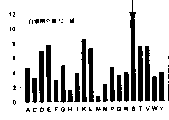
图5a是显示E.coli蛋白中的氨基酸组成的曲线图。Figure 5a is a graph showing the amino acid composition in E. coli protein.
图5b是显示肥胖蛋白中的氨基酸组成的曲线图。Figure 5b is a graph showing the amino acid composition in obesin.
图5c是显示G-CSF中的氨基酸组成的曲线图。Figure 5c is a graph showing the amino acid composition in G-CSF.
图5d是显示IL-12p40中的氨基酸组成的曲线图。Figure 5d is a graph showing the amino acid composition in IL-12p40.
图6a是在培养能产生IL-12p40的重组E.coli BL21(DE3)(pEDIL-12p40)时,随着培养时间的不同,细胞密度、干细胞重量和异种蛋白数量发生变化的曲线图。Figure 6a is a graph showing the changes in cell density, dry cell weight and xenoprotein quantity with different culture time when recombinant E.coli BL21(DE3)(pEDIL-12p40) capable of producing IL-12p40 was cultured.
图6b是在培养能产生IL-12p40与共表达cysK基因的重组E.coliBL21(DE3)(pEDIL-12p40)(pAC104CysK)时,随着培养时间的不同,细胞密度、干细胞重量和异种蛋白数量发生变化的曲线图。Figure 6b shows the changes in cell density, dry cell weight and heterologous protein quantity with different culture times when culturing recombinant E.coliBL21(DE3)(pEDIL-12p40)(pAC104CysK) that can produce IL-12p40 and co-express cysK gene of the graph.
具体实施方式Detailed ways
实施例1:利用二维电泳测定肥胖蛋白生产菌的生理性变化Example 1: Measuring Physiological Changes of Obesin-Producing Bacteria Using Two-dimensional Electrophoresis
根据已知方法,采用二维电泳比较E.coli BL21(DE3)(pEDOb5)中的人源肥胖蛋白过量产生之前和之后的蛋白质水平的变化(Hochstrasseret al.,Anal.Biochem.,173:424-5,1988;Han et al.,J.Bacteriol.,183:301-8,2001):即在E.coliBL21(DE3)(pEDOb5)预培养之后,诱导肥胖蛋白的表达并在高浓度下进行培养。取出诱导表达之前和之后的培养肉汤。每一种培养肉汤在4℃,以6000rpm转速下离心5分钟,得到的沉淀物用500μl的低盐缓冲液(KCl 3mM,KH2PO4 1.5mM,NaCl 68mM,NaH2PO4 9mM)清洗。然后,将产物悬浮在200μl的TE缓冲液中(Tris-HCl 10mM,EDTA 1mM)。悬浮液用声波降解器进行声波降解,并在4℃时,以12000rpm转速下离心10分钟。弃去上清液,真空干燥固体并在-20℃下储存,作为随后的测试样品备用。According to a known method, changes in protein levels before and after overproduction of human obesin in E. coli BL21(DE3)(pEDOb5) were compared using two-dimensional electrophoresis (Hochstrasser et al., Anal. Biochem., 173: 424- 5, 1988; Han et al., J.Bacteriol., 183:301-8, 2001): namely, after E.coliBL21(DE3)(pEDOb5) was pre-cultured, the expression of obesin was induced and cultured at a high concentration . Remove the culture broth before and after induction of expression. Each culture broth was centrifuged at 6000 rpm for 5 minutes at 4°C, and the resulting precipitate was washed with 500 μl of low-salt buffer (KCl 3 mM, KH 2 PO 4 1.5 mM, NaCl 68 mM, NaH 2 PO 4 9 mM) . Then, the product was suspended in 200 µl of TE buffer (Tris-
将200μg准备好的样品溶解在340μl调节后的IEF溶液中(尿素9M,CHAPS 0.5%(w/v),DTT 10mM,Bio-lyte pH3-10 0.2%(w/v),溴苯酚兰0.001%(w/v)),得到一个17cm的电泳带(ReadyStripTM IPG Strips PH3-10,Bio-Rad Laboratories Inc.,USA)。在20C下,水化该电泳带达12小时,进行等电聚焦。然后,将电泳带浸入平衡的缓冲液I(尿素6M,SDS 2%(w/v),Tris-HCl(pH8.8)0.375M,甘油20%(V/V),DTT 130mM)中震摇15分钟,然后浸入平衡的缓冲液II(尿素6M,SDS 2%(w/v),Tris-HCl(pH8.8)0.375M,甘油20%(V/V),碘化乙酰胺135mM,溴苯酚兰3.5M)中震摇15分钟。将电泳带放置在SDS凝胶上按分子量进行分离。Dissolve 200 μg of the prepared sample in 340 μl of adjusted IEF solution (urea 9M, CHAPS 0.5% (w/v),
将二维凝胶用银染色试剂盒染色(AmershamBiosciences,Uppsala,Sweden),用扫描仪扫描(GS710 Calibrated Imaging Densitometer,Bio-RadLaboratories Inc.,USA),用Melanie II软件(Bio-Rad Laboratories Inc.,USA)对蛋白质进行定量分析。将需要的蛋白质从二维凝胶中选择性分出以进行蛋白质分析,清洗并真空干燥,然后在37℃下与胰蛋白酶反应8个小时或更长。用MALDI-TOF MS(基质辅助镭射解吸附/离子化飞行时间质谱仪)(VoyagerTM Biospectrometry,Perseptive Biosystems Inc.,USA)测定由胰蛋白酶切的肽分子量。将肥胖蛋白表达之前的蛋白质水平与肥胖蛋白中最大含量的蛋白水平进行比较。The two-dimensional gel was stained with a silver staining kit (Amersham Biosciences, Uppsala, Sweden), scanned with a scanner (GS710 Calibrated Imaging Densitometer, Bio-Rad Laboratories Inc., USA), using Melanie II software (Bio-Rad Laboratories Inc., USA) for quantitative analysis of proteins. The desired protein is selectively separated from the 2D gel for protein analysis, washed and vacuum dried, and then reacted with trypsin at 37°C for 8 hours or more. The molecular weight of the peptides cleaved by trypsin was determined with MALDI-TOF MS (matrix-assisted laser desorption/ionization time-of-flight mass spectrometry) (Voyager ™ Biospectrometry, Perseptive Biosystems Inc., USA). Protein levels prior to obesin expression were compared to protein levels at maximal levels in obesin.
结果显示,在肥胖蛋白基因表达后基本所有的氨基酸的合成都被抑制了。更具体而言,涉及合成丝氨酸家族氨基酸(CysK,GlyA)的酶水平由于肥胖蛋白的过量产生而大量的减少,其中,GlyA减少了2.5倍,CysK减少了2.3倍(图1)。丝氨酸家族氨基酸的生物合成由于肥胖蛋白的过量产生而被严重地抑制了,因此,为了使产生肥胖蛋白,这种富含丝氨酸的蛋白质的菌株中与丝氨酸家族氨基酸生物合成的减少相关的代谢得以促进,导入了编码cysK蛋白的cysK基因,其是该途径中的关键酶。The results showed that the synthesis of essentially all amino acids was inhibited after obesin gene expression. More specifically, the levels of enzymes involved in the synthesis of serine family amino acids (CysK, GlyA) were greatly reduced by the overproduction of obese proteins, among which GlyA was reduced by 2.5-fold and CysK by 2.3-fold (Fig. 1). The biosynthesis of serine family amino acids is severely inhibited by the overproduction of obesin, therefore, in order to produce obesin, the metabolism associated with the reduction of serine family amino acid biosynthesis is promoted in this serine-rich protein strain , the cysK gene encoding the cysK protein, which is a key enzyme in this pathway, was introduced.
实施例2:导入cysK基因的重组质粒的制备Embodiment 2: the preparation of the recombinant plasmid that introduces cysK gene
表达CysK蛋白的重组质粒pAC104CysK的制备如下:首先,以E.coliBL21(DE3)染色体为模板进行聚合酶链反应(PCR),引物1:The preparation of the recombinant plasmid pAC104CysK expressing CysK protein is as follows: First, the E.coliBL21 (DE3) chromosome is used as a template for polymerase chain reaction (PCR), primer 1:
5’-gc gaattcatgagtaagatttttgaagataa-3’(SEQ ID NO:1)和引物5'-gc gaattc atgagtaagatttttgaagataa-3' (SEQ ID NO: 1) and primers
2:5’-gc gaattctatatactgttgcaattctttctc-3’(SEQ ID NO:2)。在95℃下,进行第一次变性达5分钟;第二次变性在95℃达50秒,在55℃时退火1分钟,在72℃延伸1分钟30秒,重复30个循环;最后在72℃延伸5分钟。这样就得到了由限制性内切酶EcoRI酶切的cysK基因,将得到的片段插入具有gntT104启动子的质粒p10499A(Park et al.,FEMS Microbiol.Lett.,214:217-22,2002)中,其被相同的限制性内切酶消化,从而形成质粒p104CysK。然后,质粒被限制性内切酶EcoRV和ScaI酶切,并被克隆到用限制性内切酶EcoRV消化的质粒pACYC184中。产物被转移至E.coli XL1-蓝中以制备重组的质粒pAC104CysK(图2)。2: 5'-gc gaattc tatatactgttgcaattctttctc-3' (SEQ ID NO: 2). At 95°C, perform the first denaturation for 5 minutes; the second denaturation at 95°C for 50 seconds, anneal at 55°C for 1 minute, and extend at 72°C for 1 minute and 30 seconds, repeating 30 cycles; finally at 72°C °C extension for 5 minutes. In this way, the cysK gene digested by the restriction endonuclease EcoRI was obtained, and the obtained fragment was inserted into the plasmid p10499A (Park et al., FEMS Microbiol. Lett., 214:217-22, 2002) having the gntT104 promoter , which was digested with the same restriction enzymes to form plasmid p104CysK. Then, the plasmid was digested with restriction enzymes EcoRV and Scal, and cloned into plasmid pACYC184 digested with restriction enzyme EcoRV. The product was transferred into E. coli XL1-blue to make recombinant plasmid pAC104CysK (Fig. 2).
实施例3:导入IL-12p40基因的重组质粒的制备Example 3: Preparation of recombinant plasmids introducing IL-12p40 gene
按如下方法制备重组质粒pEDIL-12p40,以表达IL-12p40(白细胞介素12β链)蛋白。用包含人白细胞介素β链基因的质粒pUC18/p40为模板,及引物3:5’-ggctagc attaatgatatgggaactgaagaaagat-3’(SEQ ID NO:3)和引物4:5’gcc ggatccttattaactgcagggcacaga-3’(SEQ ID NO:4)通过实施例2相同的方法进行PCR,得到IL-12p40基因。该基因用限制性内切酶AdeI和BamHI消化。将得到的片段嵌入肥胖蛋白表达载体中(Jeong and Lee,Appl.Environ.Microbiol.,65:3027-32,1999)以构成pEDIL-12p40,其中该载体已被限制性内切酶NdeI和BamHI消化(图3)。The recombinant plasmid pEDIL-12p40 was prepared as follows to express IL-12p40 (interleukin 12β chain) protein. Use the plasmid pUC18/p40 comprising the human interleukin β chain gene as a template, and primer 3: 5'-ggctagc attaat gatatgggaactgaagaaagat-3' (SEQ ID NO: 3) and primer 4: 5'gcc ggatcc ttattaactgcagggcacaga-3' ( SEQ ID NO: 4) Perform PCR by the same method as in Example 2 to obtain the IL-12p40 gene. The gene was digested with restriction enzymes AdeI and BamHI. The obtained fragment was inserted into the obesin expression vector (Jeong and Lee, Appl. Environ. Microbiol., 65:3027-32, 1999) to constitute pEDIL-12p40, wherein the vector had been digested with restriction enzymes NdeI and BamHI (image 3).
实施例4:通过cysK的共表达系统制备人肥胖蛋白Example 4: Preparation of human obesity protein by co-expression system of cysK
将实施例2制备的重组质粒pAC104Cysk和常规的肥胖蛋白表达质粒pEDOb5(Jeong and Lee,Appl.Environ.Microbiol.65,3027-32,1999)同时转化至细菌E.coli BL21(DE3)中来制备E.coli BL21(DE3)(pEDOb5)(pAC104Cysk)。培养重组的E.coli以制备肥胖蛋白。用只有常规的肥胖蛋白表达质粒pEDOb5转化的E.coli BL21(DE3)(pEDOb5)作为对照,并使其在相同的条件下进行培养而产生肥胖蛋白。The recombinant plasmid pAC104Cysk prepared in Example 2 and the conventional obese protein expression plasmid pEDOb5 (Jeong and Lee, Appl. Environ. Microbiol. 65, 3027-32, 1999) were simultaneously transformed into bacteria E. coli BL21 (DE3) to prepare E. coli BL21(DE3)(pEDOb5)(pAC104Cysk). Cultivation of recombinant E. coli to produce obese protein. E.coli BL21(DE3)(pEDOb5) transformed with only conventional obesin expression plasmid pEDOb5 was used as a control, and it was cultured under the same conditions to produce obesin.
将每一个被转化的E.coli菌株接种至10mL的R/2介质中(KH2PO46.75g/L,(NH4)2HPO4 2g/L,柠檬酸0.85g/L,痕量金属溶液(HCl 5M,FeSO4·7H2O 10g/L,CaCl2 2g/L,ZnSO4·7H2O 2.2g/L,MnSO4·5H2O 0.54g/L,CuSO4·5H2O 1g/L,(NH4)Mo7O24·4H2O 0.1g/L,Na2B4O7·10H2O 0.02g/L),5mL/L,MgSO4·7H2O 0.7g/L),其含有10g/L的葡萄糖,在37℃下培养过夜,转移至200mL的含有10g/L葡萄糖的R/2介质中,在37℃下培养8小时。然后,将200mL的已在R/2介质中培养的重组E.coli接种到1.8L的含10g/L葡萄糖的R/2介质中,在培养箱中于37℃和pH6.88的条件下进行培养,培养箱备有包含700g/L的葡萄糖和20g/L的MgSO4·7H2O的溶液。储备液根据pH的变化而供给。例如,当介质的pH值为6.88或更高,储备液被自动调节并以10mL/分钟的速度充入,以致发酵箱中葡萄糖的浓度为0.7g/L。空气和纯净氧气可被自动调节和供给,以保持介质中溶解的氧气(DO)占40%。在600nm下用分光光度仪测定培养肉汤的光学密度(O.D.)为30时,加入1mM的IPTG(异丙基-β-硫代半乳糖苷)以诱导肥胖蛋白的表达。在所有的培养物中,用100mg/L的氨卡青霉素和30mg/L的氯霉素稳定质粒。Inoculate each transformed E.coli strain into 10mL of R/2 medium (KH 2 PO 4 6.75g/L, (NH 4 ) 2 HPO 4 2g/L, citric acid 0.85g/L, trace metal Solution (HCl 5M, FeSO 4 7H 2 O 10g/L, CaCl 2 2g/L, ZnSO 4 7H 2 O 2.2g/L, MnSO 4 5H 2 O 0.54g/L, CuSO 4 5H 2 O 1g /L, (NH 4 )Mo 7 O 24 4H 2 O 0.1g/L, Na 2 B 4 O 7 10H 2 O 0.02g/L), 5mL/L, MgSO 4 7H 2 O 0.7g/L ), containing 10 g/L glucose, cultured overnight at 37°C, transferred to 200 mL of R/2 medium containing 10 g/L glucose, and incubated at 37°C for 8 hours. Then, inoculate 200 mL of recombinant E.coli that has been cultured in R/2 medium into 1.8 L of R/2 medium containing 10 g/L glucose, and inoculate at 37°C and pH 6.88 in an incubator. For culturing, the incubator was equipped with a solution containing 700 g/L of glucose and 20 g/L of MgSO 4 ·7H 2 O. The stock solution is supplied according to the change in pH. For example, when the pH of the medium is 6.88 or higher, the stock solution is automatically adjusted and filled at a rate of 10 mL/min so that the concentration of glucose in the fermenter is 0.7 g/L. Air and purified oxygen can be automatically regulated and supplied to maintain 40% dissolved oxygen (DO) in the medium. When the optical density (OD) of the culture broth was determined to be 30 by a spectrophotometer at 600 nm, 1 mM IPTG (isopropyl-β-thiogalactopyranoside) was added to induce the expression of obese protein. In all cultures, plasmids were stabilized with 100 mg/L ampicillin and 30 mg/L chloramphenicol.
在诱导肥胖蛋白表达之后,每小时取出培养肉汤。每等份都被稀释至光学密度(O.D.)为5,并在4℃,以6000rpm转速离心5分钟,得到沉淀。将沉积物悬浮在200μl的TE缓冲液中(Tris-HCl 10mM,EDTA 1mM)并按照已知方法进行12%的SDS-PAGE分析(图4a和图4b)。图4a是在培养对照组时,随着培养时间的不同,细胞密度、干细胞重量和异种蛋白数量发生变化的曲线图。图4b是在培养能产生肥胖蛋白的重组E.coli BL21(DE3)(pEDOb5)(pAC104CysK)时,随着培养时间的不同,细胞密度、干细胞重量和异种蛋白数量发生变化的曲线图,其中(■)表示细胞光学密度,(○)表示干细胞重量,(▲)表示产生的肥胖蛋白数量。如图4a所示,当肥胖蛋白表达质粒被单独表达时,肥胖蛋白的表达从诱导开始的8个小时后达到最大值。此时产率达到0.457g/L·小时。另一方面,如图4b所示,当肥胖蛋白表达质粒与pAC104CysK一起被共表达时,肥胖蛋白的表达从诱导起的2个小时后达到最大值。此时,产率达到1.56g/L·小时。After induction of obesin expression, the culture broth was removed hourly. Each aliquot was diluted to an optical density (O.D.) of 5 and centrifuged at 6000 rpm for 5 minutes at 4°C to obtain a pellet. The sediment was suspended in 200 μl of TE buffer (Tris-
因此可证明,与常规的方法相比,根据本发明采用cysK基因共表达生产富含丝氨酸的蛋白的方法能将肥胖蛋白的产率提高3.4倍。Therefore, it can be proved that, compared with the conventional method, the method for producing serine-rich protein by co-expression of cysK gene according to the present invention can increase the yield of obese protein by 3.4 times.
实施例5:通过cysK-共表达系统制备富含丝氨酸的蛋白质Example 5: Preparation of serine-rich protein by cysK-coexpression system
根据报导,亮氨酸和丙氨酸是普遍存在于E.coli蛋白质中的普通成分(亮氨酸10.5%,丙氨酸9.6%),丝氨酸平均为5.6%(图5a,图5b,图5c和图5d)。图5a至图5d的曲线图表示目前所知的蛋白质中氨基酸的组成比率,其中,图5a显示了E.coli蛋白质中氨基酸的组成比率,图5b显示了肥胖蛋白中氨基酸的组成比率,图5c显示了G-CSF中氨基酸的组成比率,图5d显示了IL-12p40中氨基酸的组成比率。According to reports, leucine and alanine are common components ubiquitously present in E.coli proteins (leucine 10.5%, alanine 9.6%), and serine is 5.6% on average (Fig. 5a, Fig. 5b, Fig. 5c and Figure 5d). The graphs of Figures 5a to 5d represent the composition ratios of amino acids in proteins currently known, wherein, Figure 5a shows the composition ratios of amino acids in E.coli proteins, Figure 5b shows the composition ratios of amino acids in obese proteins, and Figure 5c The compositional ratios of amino acids in G-CSF are shown, and Figure 5d shows the compositional ratios of amino acids in IL-12p40.
如图5b所示,肥胖蛋白这种典型的富含丝氨酸的蛋白质包含异常多的丝氨酸,其中丝氨酸的组成比率为11.6%。如图5c所示,另一个已知的蛋白质hG-CSF(人类粒细胞集落刺激因子)包含19%的主要成分亮氨酸和12%的丙氨酸,其与E.coli中的蛋白质相类似,尽管它的丝氨酸的含量为8.2%。如图5d所示,另一个蛋白质IL-12p40,也是一种已知的富含丝氨酸的蛋白质,其含11.1%的丝氨酸。As shown in Figure 5b, obesin, a typical serine-rich protein, contained an abnormally large amount of serine, with a serine composition ratio of 11.6%. As shown in Figure 5c, another known protein hG-CSF (human granulocyte colony-stimulating factor) contains 19% major components leucine and 12% alanine, which is similar to the protein in E.coli , despite its serine content of 8.2%. As shown in Figure 5d, another protein, IL-12p40, which is also a known serine-rich protein, contained 11.1% serine.
为了确认实施例4的结果是否能被应用于所有富含丝氨酸的蛋白质制备中,本发明人将hG-CSF和富含丝氨酸的蛋白质IL-12p40以相同的方法制备(Jeong and Lee,Protein Expr.Purif.,23:311-8,2001)。In order to confirm whether the results of Example 4 can be applied to the preparation of all serine-rich proteins, the inventors prepared hG-CSF and serine-rich protein IL-12p40 in the same way (Jeong and Lee, Protein Expr. Purif., 23:311-8, 2001).
对于hG-CSF,结果不同于实施例4,因为蛋白质没有cysK基因的共表达,在短时间内(3个小时)蛋白质的产生达到了高峰。然而,IL-12p40表现出了类似于由cysK基因共表达的肥胖蛋白产率增加的效果(图6a和图6b)。For hG-CSF, the results were different from Example 4, because the protein was not co-expressed with the cysK gene, and the protein production peaked within a short time (3 hours). However, IL-12p40 exhibited an effect similar to that of the obese protein co-expressed by the cysK gene (Fig. 6a and Fig. 6b).
图6a是在培养能产生IL-12p40的重组E.coli,BL21(DE3)(pEDIL-12p40)时,随着培养时间的不同,细胞密度、干细胞重量和异种蛋白数量发生变化的曲线图。图6b是在培养能产生IL-12p40和共表达cysK基因的重组e.coliBL21(DE3)(pEDIL-12p40)(pAC104CysK)时,随着培养时间的不同,细胞密度、干细胞重量和异种蛋白数量发生变化的曲线图,其中(■)表示细胞光学密度,(○)表示干细胞重量,(▲)表示制备的白细胞介素12 β链的数量。如图6a所示,当采用实施例4的方法制备IL-12p40,而不是采用实施例3中制备pEDIL-12p40的方法时,从诱导时起的7个小时后IL-12p40的表达达到了高峰。此时产率为0.090g/L·小时。另一个方面,如图6b所示,当IL-12p40依据实施例4的方法制备,而不是采用实施例2中制备pAC104CysK和实施例3中制备pEDIL-12p40的方法,从诱导起的2个小时后表达达到高峰,此时的最大产率为0.349g/L·小时。Fig. 6a is a graph showing the changes in cell density, dry cell weight and foreign protein quantity with different culture time when recombinant E.coli capable of producing IL-12p40 was cultured, BL21(DE3)(pEDIL-12p40). Figure 6b shows the changes in cell density, dry cell weight and heterologous protein quantity with different culture time when culturing recombinant e. The graph of changes, where (■) represents the optical density of cells, (○) represents the dry cell weight, and (▲) represents the amount of
因此,根据本发明由cysK基因的共表达制备富含丝氨酸的蛋白质的方法能够提高IL-12p40的产率,其与常规方法相比提高了大约3.9倍。Therefore, the method for preparing a serine-rich protein by co-expression of cysK gene according to the present invention can increase the yield of IL-12p40 by about 3.9 times compared with the conventional method.
如上所述,本发明的具体部分给予了详细的解释。然而,对于本领域技术人员而言,这些具体描述只是本发明的优选实施例,本发明并不受限于此。例如,作为过度表达半胱氨酸合成酶的方法,将cysK基因导入一种异种蛋白表达载体中或融合至宿主细胞的染色体中,可以使cysK基因的表达数量达到相同效果。As mentioned above, specific parts of the present invention are explained in detail. However, for those skilled in the art, these specific descriptions are only preferred embodiments of the present invention, and the present invention is not limited thereto. For example, as a method for overexpressing cysteine synthetase, introducing the cysK gene into a heterologous protein expression vector or fused to the chromosome of the host cell can achieve the same effect on the amount of expression of the cysK gene.
正如详细描述与证明的,本发明提供了制备异种蛋白的方法,其包括培养含有cysK基因和编码异种蛋白基因的细菌。更具体而言,本发明提供了一种制备富含丝氨酸的异种蛋白的方法,包括培养一种用含有富含丝氨酸的异种蛋白基因的一种表达载体和包含cysK基因的一种表达载体转化的细菌,或一种用既含cysK基因又含编码富含丝氨酸的异种蛋白基因的表达载体转化的细菌,以及从中分离异种蛋白。As described and demonstrated in detail, the present invention provides a method for producing a heterologous protein comprising culturing a bacterium containing a cysK gene and a gene encoding a heterologous protein. More specifically, the present invention provides a method for producing a serine-rich heterologous protein, comprising culturing a protein transformed with an expression vector containing a serine-rich heterologous protein gene and an expression vector containing a cysK gene. Bacteria, or a bacterium transformed with an expression vector containing both a cysK gene and a gene encoding a serine-rich heterologous protein, and isolation of the heterologous protein therefrom.
根据本发明,当采用重组的E.coli制备富含丝氨酸的异种蛋白,可大大地缩短制备最大量的蛋白所需的时间。因此,本发明有望被广泛采用以增加富含丝氨酸的异种蛋白的产率。According to the present invention, when the recombinant E. coli is used to prepare the serine-rich heterologous protein, the time required to prepare the maximum amount of protein can be greatly shortened. Therefore, the present invention is expected to be widely adopted to increase the yield of serine-rich heterologous proteins.
SEQUENCE LISTINGSEQUENCE LISTING
<110>韩国科学技术院<110>Korea Institute of Science and Technology
<120>用半胱氨酸合成酶基因制备富含丝氨酸的蛋白质的方法<120> Method for producing serine-rich protein using cysteine synthase gene
<130>PI034728C<130>PI034728C
<150>KR10-2003-0008689<150>KR10-2003-0008689
<151>2003-02-12<151>2003-02-12
<160>4<160>4
<170>KopatentIn 1.71<170>KopatentIn 1.71
<210>1<210>1
<211>31<211>31
<212>DNA<212>DNA
<213>Artificial Sequence<213>Artificial Sequence
<220><220>
<223>PCR primer<223> PCR primer
<400>1<400>1
gcgaattcat gagtaagatt tttgaagata a 31gcgaattcat gagtaagatt tttgaagata a 31
<210>2<210>2
<211>32<211>32
<212>DNA<212>DNA
<213>Artificial Sequence<213>Artificial Sequence
<220><220>
<223>PCR primer<223> PCR primer
<400>2<400>2
gcgaattcta tatactgttg caattctttc tc 32gcgaattcta tatactgttg caattctttc tc 32
<210>3<210>3
<211>35<211>35
<212>DNA<212>DNA
<213>Artificial Sequence<213>Artificial Sequence
<220><220>
<223>PCR primer<223> PCR primer
<400>3<400>3
ggctagcatt aatgatatgg gaactgaaga aagat 35ggctagcatt aatgatatgg gaactgaaga aagat 35
<210>4<210>4
<211>30<211>30
<212>DNA<212>DNA
<213>Artificial Sequence<213>Artificial Sequence
<220><220>
<223>PCR primer<223> PCR primer
<400>4<400>4
gccggatcct tattaactgc agggcacaga 30gccggatcct tattaactgc agggcacaga 30
Claims (14)
Applications Claiming Priority (3)
| Application Number | Priority Date | Filing Date | Title |
|---|---|---|---|
| KR1020030008689 | 2003-02-12 | ||
| KR10-2003-0008689A KR100489500B1 (en) | 2003-02-12 | 2003-02-12 | Process for Preparing Serine-rich Protein Employing Cysteine Synthetase(cysK) |
| KR10-2003-0008689 | 2003-02-12 |
Publications (2)
| Publication Number | Publication Date |
|---|---|
| CN1521264A true CN1521264A (en) | 2004-08-18 |
| CN1269965C CN1269965C (en) | 2006-08-16 |
Family
ID=32822698
Family Applications (1)
| Application Number | Title | Priority Date | Filing Date |
|---|---|---|---|
| CNB031587763A Expired - Fee Related CN1269965C (en) | 2003-02-12 | 2003-09-24 | Method for preparing serine-rich protein using cysteine synthetase gene |
Country Status (4)
| Country | Link |
|---|---|
| US (1) | US20040157290A1 (en) |
| JP (1) | JP4059398B2 (en) |
| KR (1) | KR100489500B1 (en) |
| CN (1) | CN1269965C (en) |
Families Citing this family (3)
| Publication number | Priority date | Publication date | Assignee | Title |
|---|---|---|---|---|
| US20090142804A1 (en) * | 2003-02-12 | 2009-06-04 | Korea Advanced Institute Of Science And Technology | Process For Preparing Serine-Rich Protein Employing Cysteine Synthase (CYSK) Gene |
| WO2006092449A2 (en) | 2005-03-02 | 2006-09-08 | Metanomics Gmbh | Process for the production of fine chemicals |
| KR101147860B1 (en) | 2008-09-22 | 2012-05-25 | 한국과학기술원 | Method for Preparing Protein Having High Specific Amino Acid Content Through Co-expression of tRNA of Specific Amino Acid |
-
2003
- 2003-02-12 KR KR10-2003-0008689A patent/KR100489500B1/en not_active Expired - Fee Related
- 2003-08-26 JP JP2003300844A patent/JP4059398B2/en not_active Expired - Fee Related
- 2003-09-16 US US10/662,517 patent/US20040157290A1/en not_active Abandoned
- 2003-09-24 CN CNB031587763A patent/CN1269965C/en not_active Expired - Fee Related
Also Published As
| Publication number | Publication date |
|---|---|
| KR100489500B1 (en) | 2005-05-16 |
| JP2004242665A (en) | 2004-09-02 |
| KR20040072992A (en) | 2004-08-19 |
| JP4059398B2 (en) | 2008-03-12 |
| CN1269965C (en) | 2006-08-16 |
| US20040157290A1 (en) | 2004-08-12 |
Similar Documents
| Publication | Publication Date | Title |
|---|---|---|
| CN1161372C (en) | Novel peptides with biological activity | |
| CN1318070A (en) | Modified i(E.coli) enterotoxin II signal peptide and microorganism expressing fusion protein of said peptide and heterologous protein | |
| CN106635945B (en) | Recombinant strain and preparation method thereof and method for producing L-threonine | |
| CN1201010C (en) | Mass production method of antimicrobial peptide and DNA construct and expression system thereof | |
| CN1080306C (en) | Adjusting and controlling factor for expression of nitrile solution deenzyme and gene thereof | |
| CN1854303A (en) | Method for the production of S-adenosylmethionine by fermentation | |
| CN1269965C (en) | Method for preparing serine-rich protein using cysteine synthetase gene | |
| CN1807456A (en) | Recombinant human parathormone PTH1-34 preparation method | |
| CN1284850C (en) | Improved Method for Recombinant Production of Polypeptides | |
| CN1254545C (en) | protein production method | |
| CN1729295A (en) | Preparation of antifreeze protein | |
| CN1444655A (en) | Production of recombinant proteins in prokaryotic host cells | |
| CN1058616A (en) | Cloning and overexpression of glucose-6-phosphate dehydrogenase from Leuconostoc glucan | |
| CN100351270C (en) | Antibacterial peptide of brown-spotted torrential frog, its gene and application in drug preparation | |
| CN100336906C (en) | Lipase gene sequence and its application in yeast | |
| CN1280424C (en) | Method for producing D-serine | |
| WO2004013175A1 (en) | SYNTHETIC GENE CODING FOR HUMAN GRANULOCYTE-COLONY STIMULATING FACTOR FOR THE EXPRESSION IN E. coli | |
| CN1190493C (en) | Preparation method of reversible photochromic biliprotein | |
| CN1814746A (en) | Nattokinase and its coding gene and clone and expressing method | |
| CN1233832C (en) | Microbiological method for producing L-carnitine | |
| CN1740320A (en) | Fenneropenaeus chinensis Anti-LPS factor gene and cloning process thereof | |
| CN1737117A (en) | Batch feeding method for cultivating bacillus coli | |
| CN1262649C (en) | Method for producing parathyroid hormone derivative by recombination and expression carrier used thereof | |
| US20090142804A1 (en) | Process For Preparing Serine-Rich Protein Employing Cysteine Synthase (CYSK) Gene | |
| CN1834246A (en) | Expression control of TrxA, encoding zone gene, its prepn. and uses |
Legal Events
| Date | Code | Title | Description |
|---|---|---|---|
| C06 | Publication | ||
| PB01 | Publication | ||
| C10 | Entry into substantive examination | ||
| SE01 | Entry into force of request for substantive examination | ||
| C14 | Grant of patent or utility model | ||
| GR01 | Patent grant | ||
| C17 | Cessation of patent right | ||
| CF01 | Termination of patent right due to non-payment of annual fee |
Granted publication date: 20060816 Termination date: 20120924 |