CN1201503C - Power control apparatus, and an associated method, for TDMA transmitter - Google Patents
Power control apparatus, and an associated method, for TDMA transmitter Download PDFInfo
- Publication number
- CN1201503C CN1201503C CNB988068346A CN98806834A CN1201503C CN 1201503 C CN1201503 C CN 1201503C CN B988068346 A CNB988068346 A CN B988068346A CN 98806834 A CN98806834 A CN 98806834A CN 1201503 C CN1201503 C CN 1201503C
- Authority
- CN
- China
- Prior art keywords
- communication signal
- transmitter branch
- time slot
- signal burst
- power level
- Prior art date
- Legal status (The legal status is an assumption and is not a legal conclusion. Google has not performed a legal analysis and makes no representation as to the accuracy of the status listed.)
- Expired - Fee Related
Links
Images


Classifications
-
- H—ELECTRICITY
- H04—ELECTRIC COMMUNICATION TECHNIQUE
- H04W—WIRELESS COMMUNICATION NETWORKS
- H04W52/00—Power management, e.g. Transmission Power Control [TPC] or power classes
- H04W52/04—Transmission power control [TPC]
- H04W52/38—TPC being performed in particular situations
- H04W52/42—TPC being performed in particular situations in systems with time, space, frequency or polarisation diversity
Landscapes
- Engineering & Computer Science (AREA)
- Computer Networks & Wireless Communication (AREA)
- Signal Processing (AREA)
- Mobile Radio Communication Systems (AREA)
- Time-Division Multiplex Systems (AREA)
- Transmitters (AREA)
Abstract
用于运行在TDMA通信系统(30)的发射站(32)中的功率控制设备和相关方法。发射站包括发射机支路(38),用于在选择地时隙(12)期间传送通信信号突发。在相邻时隙上发送的通信信号突发部分地重叠,从而接收站(34)能够从在相邻时隙上发送的通信信号突发中提取信息。
Power control equipment and related methods for use in a transmitting station (32) operating in a TDMA communication system (30). The transmitting station includes a transmitter branch (38) for transmitting communication signal bursts during a selected time slot (12). Communication signal bursts transmitted in adjacent time slots partially overlap, thereby enabling the receiving station (34) to extract information from the communication signal bursts transmitted in adjacent time slots.
Description
有关的专利申请的相互参照Cross-references to related patent applications
本发明与1997年1月28日提交的待决的专利申请序列号08/787,758有关,该专利申请的内容在此引用,以供参考。This invention is related to co-pending patent application Serial No. 08/787,758 filed January 28, 1997, the contents of which are incorporated herein by reference.
本发明总的涉及TDMA(时分多址)无线通信系统。更具体地,本发明涉及用于控制TDMA通信系统中规定的所选择的时隙期间传送的通信信号的突发脉冲的功率电平的功率控制设备和相关的方法。 The present invention generally relates to TDMA (Time Division Multiple Access) wireless communication systems. More particularly, the present invention relates to a power control apparatus and associated method for controlling the power level of bursts of communication signals transmitted during selected time slots defined in a TDMA communication system.
通过控制传送突发脉冲的功率电平,可以减小传送这种突发所造成的干扰。由于减小了干扰电平,通信系统的性能由于例如增加系统容量或提高通信质量而可得到提高。By controlling the power level at which bursts are transmitted, the interference caused by transmitting such bursts can be reduced. Due to the reduced interference level, the performance of the communication system can be improved by, for example, increasing system capacity or improving communication quality.
传送突发所采用的方式也允许接收站从在相邻的时隙期间传送的通信信号突发中提取信息。用来在一个时隙期间接收通信信号突发的接收站也能够从在相邻时隙期间传送的信号中提取信息。The manner in which the bursts are transmitted also allows the receiving station to extract information from the communication signal bursts transmitted during adjacent time slots. A receiving station configured to receive a burst of communication signals during one time slot is also able to extract information from signals transmitted during adjacent time slots.
可以使用发射机分集方式来从发射站的至少两个发射机支路中发送通信信号的突发。在相邻的时隙期间由这些发射机支路发送的通信信号突发在时间上部分地重叠。接收站由此能够提取在这样一个时隙期间所发送的通信信号突发的信息,该时隙是与藉以发送通信信号突发到该接收站的时隙相邻的。Transmitter diversity may be used to transmit bursts of communication signals from at least two transmitter branches of a transmitting station. The communication signal bursts transmitted by the transmitter branches during adjacent time slots partially overlap in time. The receiving station is thus able to extract information on a burst of communication signals transmitted during a time slot which is adjacent to the time slot through which the burst of communication signals was transmitted to the receiving station.
当在例如蜂窝通信系统中实施时,本发明的实施例的运行提供了以逐个时隙的原则的功率控制,而同时提供了允许接收站从发送到其它接收站的信号中提取信息的方式。When implemented in, for example, a cellular communication system, the operation of embodiments of the present invention provides power control on a slot-by-slot basis, while at the same time providing a means for allowing receiving stations to extract information from signals sent to other receiving stations.
所以,本发明的实施例在这样的通信系统中的实现是有利的,这些系统例如是按照EIA/TIA IS-136标准、PDC(太平洋数字蜂窝)标准、和为GSM(通用移动通信系统)提供GPRS(通用分组无线业务)而构建的蜂窝通信系统。Therefore, embodiments of the present invention are advantageously implemented in communication systems such as those provided in accordance with the EIA/TIA IS-136 standard, the PDC (Pacific Digital Cellular) standard, and the GSM (General System for Mobile Communications) A cellular communication system built on GPRS (General Packet Radio Service).
发明背景Background of the Invention
通信技术中的发展允许性能改进的数字通信系统的创建和实现。数字蜂窝通信系统,例如按照上述的标准之一构建的蜂窝通信系统,是相对于传统模拟系统来说具有改进性能特性的通信系统的范例。Advances in communication technology allow for the creation and implementation of digital communication systems with improved performance. A digital cellular communication system, such as a cellular communication system constructed in accordance with one of the above-mentioned standards, is an example of a communication system having improved performance characteristics relative to conventional analog systems.
在这样的TDMA(时分多址)系统中,分配给这些通信系统的频段的载波频率(此后称为“载频”)被划分成时隙。成组的时隙构成帧。时隙-载频组合定义了信道,在这些信道上把通信信号的突发发送到移动终端。因为在单个载频上定义了多个信道,所以可以在单个载频上实现与多个移动台的分开的通信。由无线基站发送的通信信号突发被称为下行链路突发。而由移动终端发送到无线基站的通信信号突发被称为上行链路突发。In such TDMA (Time Division Multiple Access) systems, the carrier frequency (hereinafter referred to as "carrier frequency") of the frequency band allocated to these communication systems is divided into time slots. Groups of time slots form frames. The time slot-carrier combination defines the channels on which bursts of communication signals are sent to the mobile terminals. Because multiple channels are defined on a single carrier frequency, separate communications with multiple mobile stations can be achieved on a single carrier frequency. Communication signal bursts transmitted by a radio base station are called downlink bursts. Whereas, bursts of communication signals sent by a mobile terminal to a radio base station are called uplink bursts.
蜂窝通信系统一般相对较为有效地利用分配给它的频带。一般,发送相对较低功率的信号。因为在由这样的系统覆盖的地理区域内在同一个频率上发送相对较低功率信号,所以相同的频率可以被复用。使用频率规划程序来把载频分配给系统的不同蜂窝小区,这样,只有在同信道干扰不扰乱通信的情况下才可以在不同的蜂窝小区中复用载频。A cellular communication system generally makes relatively efficient use of the frequency bands allocated to it. Typically, relatively low power signals are transmitted. Because relatively low power signals are transmitted on the same frequency within the geographic area covered by such a system, the same frequency can be reused. A frequency planning procedure is used to assign carrier frequencies to the different cells of the system so that carrier frequencies can be reused in different cells only if co-channel interference does not disrupt communications.
然而,由于蜂窝通信系统用途的增长,就不断需要找出更为有效地利用分配给它的频带的方式。However, as the use of cellular communication systems grows, there is an ongoing need to find ways to more efficiently utilize the frequency bands allocated thereto.
已经提出了各种不同的建议来更有效地利用分配用于蜂窝通信的频段。通过更有效地利用分配给蜂窝通信的频率,可以以改善的信号质量水平来提高系统的通信容量。Various proposals have been made to more efficiently utilize the frequency bands allocated for cellular communications. By more efficiently utilizing the frequencies allocated for cellular communications, the communications capacity of the system can be increased with improved signal quality levels.
上述的共同待决的专利申请(申请序列号08/787,758)特别地揭示了能够产生定向天线波束图的天线装置的使用。使用定向天线波束图来实施通信,可以允许单个蜂窝小区内的分开的通信同时在单个时隙期间实施。定向天线波束图的构成是一种空间功率控制形式。也就是说,在天线波束图覆盖的区域内广播的信号突发的信号功率电平在天线波束图覆盖的区域以外被大大地衰减。The aforementioned co-pending patent application (Application Serial No. 08/787,758) discloses, inter alia, the use of an antenna arrangement capable of producing a directional antenna beam pattern. Implementing communications using directional antenna beam patterns may allow separate communications within a single cell to be conducted simultaneously during a single time slot. The formation of a directional antenna beam pattern is a form of spatial power control. That is, the signal power levels of signal bursts broadcast within the area covered by the antenna beam pattern are greatly attenuated outside the area covered by the antenna beam pattern.
时间上的功率控制同样地可被使用来提高蜂窝通信系统的通信容量。任何一种这样的功率控制形式的使用允许蜂窝通信系统的通信容量得到提高。时间的功率控制涉及到发送通信信号突发的功率电平的控制。通过使得发送通信信号突发的功率电平最小化,可以使得由这样的通信信号的发射所造成的干扰最小化。Temporal power control can likewise be used to increase the communication capacity of a cellular communication system. The use of any such form of power control allows the communication capacity of the cellular communication system to be increased. Temporal power control involves control of the power level at which a communication signal burst is transmitted. By minimizing the power level at which bursts of communication signals are transmitted, the interference caused by the transmission of such communication signals may be minimized.
在某些现有的蜂窝通信系统中,提供了用于控制由移动台产生的上行链路突发的功率电平的装备。但是,下行链路突发的功率电平的控制是受限制的。这样的限制通常是由于移动终端利用在某些时隙上发送的下行链路突发的需要造成的,这些时隙是与移动终端藉以接收下行链路突发的时隙相邻的。In some existing cellular communication systems, provision is provided for controlling the power level of uplink bursts generated by mobile stations. However, the control of the power level of the downlink burst is limited. Such limitations are generally due to the need for the mobile terminal to utilize downlink bursts transmitted on certain time slots that are adjacent to the time slots through which the mobile terminal receives the downlink bursts.
相邻时隙信息通常被使用于减小接收机电路复杂性和使得移动台易于跟踪和同步的目的。这样的要求限制了在遵循IS-136、PDC、和GSM标准中的GPRS的系统中发送的下行链路突发的功率电平上实行控制的总量。在现有的GSM通信系统中,可以采用基于每个时隙的下行链路功率控制。在现有的PDC蜂窝通信系统中,允许进行在相邻时隙之间的多到8dB的下行链路功率控制。而在现有的IS-136系统中,下行链路发送功率电平在时隙正在工作时的一帧期间内必须保持在恒定的电平。在IS-136.2-A标准的已出版的版本的3.1.2节中特别地阐述了IS-136系统中与下行链路功率电平有关的要求。Adjacent slot information is typically used for the purpose of reducing receiver circuit complexity and enabling easy tracking and synchronization of mobile stations. Such requirements limit the amount of control that can be exercised over the power level of downlink bursts transmitted in systems conforming to IS-136, PDC, and GPRS in the GSM standard. In the existing GSM communication system, downlink power control based on each time slot can be adopted. In existing PDC cellular communication systems, up to 8dB downlink power control between adjacent time slots is allowed. Whereas in the existing IS-136 system, the downlink transmission power level must be kept at a constant level during a frame when the time slot is in operation. The requirements related to downlink power levels in IS-136 systems are specifically addressed in section 3.1.2 of the published version of the IS-136.2-A standard.
在运行于IS-136系统的移动终端中,移动终端为了同步的目的和有助于解调,使用了被包括在相邻时隙中的训练序列。如上所述,当前,如果在载频上所规定的任何时隙是正在工作的,则下行链路发射的功率电平必须保持在恒定的电平。所以,在IS-136系统中不允许进行基于时隙的下行链路功率控制。In a mobile terminal operating on the IS-136 system, the mobile terminal uses training sequences included in adjacent time slots for synchronization purposes and to facilitate demodulation. As mentioned above, currently, the power level of the downlink transmission must be kept at a constant level if any time slot specified on the carrier frequency is active. Therefore, slot-based downlink power control is not allowed in IS-136 systems.
在运行于PDC通信系统的移动终端中,移动终端为了分集天线选择而测量在相邻时隙上的接收信号强度电平。在PDC通信系统中规定的非工作的时隙上允许相对于在工作时隙上的功率电平的最大为-8dB的功率减小。In a mobile terminal operating in a PDC communication system, the mobile terminal measures received signal strength levels on adjacent time slots for diversity antenna selection. A power reduction of a maximum of −8 dB relative to the power level in active time slots is permissible in the non-operating time slots defined in the PDC communication system.
在运行于GSM通信系统中提供GPRS的移动终端中,移动终端读出在下行链路中发送的上行链路状态标志,以便能够确定移动终端是否被分配来使用随后的上行链路用来发送。所以,下行链路发送功率电平可改变的总量是有限的。In a mobile terminal operating in a GSM communication system providing GPRS, the mobile terminal reads the uplink status flag transmitted in the downlink in order to be able to determine whether the mobile terminal is allocated to use the subsequent uplink for transmission. Therefore, the total amount by which the downlink transmit power level can be changed is limited.
如果要把下行链路时间的或空间的功率控制引入到每个时隙、时间-定标系统上,则在按照这三种标准中的任一种标准构建的系统中会出现性能恶化。通过对发送下行链路突发的功率电平实行较好的控制,可以提高通信系统的性能。If downlink temporal or spatial power control were to be introduced on a per-slot, time-scaled system, performance degradation would occur in systems built to any of these three standards. The performance of the communication system can be improved by having better control over the power level at which downlink bursts are transmitted.
在TDMA通信系统中提供按逐个时隙原则的下行链路功率控制的同时、也提供允许接收站从发送到其它接收站的信号中提取信息的方式,将是有利的。It would be advantageous in a TDMA communication system to provide downlink power control on a slot-by-slot basis while also providing a means for allowing receiving stations to extract information from signals sent to other receiving stations.
根据以上与TDMA通信系统有关的背景信息,已经包含了本发明的重大改进。In light of the above background information relating to TDMA communication systems, a substantial improvement of the present invention has been incorporated.
发明概要Summary of Invention
因此,本发明有利地提供用于控制在TDMA系统中规定的所选择的时隙期间传送的通信信号的突发脉冲的功率电平的设备和相关的方法。Accordingly, the present invention advantageously provides apparatus and associated methods for controlling the power level of bursts of communication signals transmitted during selected time slots defined in a TDMA system.
控制突发的功率电平的方式也允许接收站从在相邻的时隙期间传送的通信信号突发中提取信息。所以,本发明的实施例可被实施于这样的通信系统,其中接收站必须能够从相邻时隙期间(即,与通常用来发送通信信号突发到接收站的时隙相邻的时隙期间)传送的信号中提取信息。The manner in which the power level of the bursts is controlled also allows the receiving station to extract information from the communication signal bursts transmitted during adjacent time slots. Therefore, embodiments of the present invention may be implemented in communication systems in which the receiving station must be able to read from adjacent time slot periods (i.e., time slots adjacent to the time slot normally used to transmit communication signal bursts to the receiving station) period) to extract information from the transmitted signal.
对发送通信信号的功率电平所进行的适当的时间的或空间的控制,使得由这样的突发传送所造成的干扰电平被减小。通过减小由这样的突发传送所造成的干扰电平,可以提高通信系统的性能。例如,可以增加系统容量,或可以提高系统中通信的通信质量。Appropriate temporal or spatial control of the power level at which communication signals are transmitted such that the level of interference caused by such bursty transmissions is reduced. By reducing the level of interference caused by such bursty transmissions, the performance of the communication system can be improved. For example, the system capacity can be increased, or the communication quality of communication in the system can be improved.
在本发明的一个方面,用来发送通信信号的突发的发射站利用发射机分集,从而使得通信信号的突发从发射站的至少两个发射机支路发送。在相邻的时隙期间由这些发射机支路发送的通信信号突发在时间上部分地重叠。由于部分的重叠,因而在一个时隙期间接收通信信号的突发的接收站能够提取在相邻时隙期间发送的通信信号突发的信息。In one aspect of the invention, a transmitting station for transmitting bursts of communication signals utilizes transmitter diversity such that bursts of communication signals are transmitted from at least two transmitter branches of the transmitting station. The communication signal bursts transmitted by the transmitter branches during adjacent time slots partially overlap in time. Due to the partial overlap, a receiving station receiving a burst of communication signal during one time slot is able to extract information from a burst of communication signal transmitted during an adjacent time slot.
本发明的实施例可被有利地实施于这样的蜂窝通信系统,即可以在其中运行的移动终端必须能够从在相邻时隙上发送的信号中提取信息。遵循EIA/TIA IS-136标准、PDC(太平洋数字蜂窝)标准的操作规范、和为GSM(通用移动通信系统)标准提供GPRS(通用分组无线电业务)而构建的蜂窝通信系统是这样的蜂窝通信系统的范例。Embodiments of the present invention may be advantageously implemented in cellular communication systems in which mobile terminals operating must be able to extract information from signals transmitted on adjacent time slots. The cellular communication system constructed following the EIA/TIA IS-136 standard, the operating specification of the PDC (Pacific Digital Cellular) standard, and providing GPRS (General Packet Radio Service) for the GSM (General Mobile Communication System) standard is such a cellular communication system example of .
当利用空间的下行链路功率控制时,在发射站处使用波束形成设备来形成在部分时隙内部分地重叠的天线波束图。而当利用时间的功率控制时,由不同的支路发送的通信信号突发的功率电平在至少部分的时隙期间部分地重叠。也可以利用时间的和空间的功率控制的组合。由此,可以提供以逐个时隙原则的功率控制,而同时也确保可以由接收站提取相邻时隙信息。When utilizing spatial downlink power control, a beamforming device is used at the transmitting station to form antenna beam patterns that partially overlap within partial time slots. Whereas when temporal power control is used, the power levels of the communication signal bursts transmitted by the different branches partially overlap during at least part of the time slots. A combination of temporal and spatial power control may also be utilized. Thereby, power control on a slot-by-slot basis can be provided, while at the same time ensuring that adjacent slot information can be extracted by the receiving station.
所以,在这些和其它的方面,揭示了功率控制设备和相关方法。在运行于TDMA系统中的发射站,实施了这样的设备和方法,该发射站在第一时隙期间至少把第一通信信号突发传送到第一远端站,以及在至少第二时隙期间至少把第二通信信号突发传送到至少第二远端站。传送第一通信信号突发和至少第二通信信号突发的功率电平被有选择地控制。第一发射机支路被耦合来接收第一通信信号突发和至少第二通信信号突发中的一个。第一发射机支路以第一选择的功率电平发送其所接收到的信号突发。至少第二发射机支路被耦合来接收第一通信信号突发和至少第二通信信号突发中的至少一个。第二发射机支路以第二选择的功率电平发送其所接收到的信号突发。由第二发射机支路发送的通信信号突发在一个时隙的至少一部分内被发送,该时隙与第一发射机支路在其间发送其所接收到的信号突发的时隙相邻。Thus, in these and other aspects, power control devices and related methods are disclosed. Apparatus and methods are implemented at a transmitting station operating in a TDMA system which transmits at least a first communication signal burst to a first remote station during a first time slot, and at least a second time slot During which at least a second communication signal burst is transmitted to at least a second remote station. A power level at which the first communication signal burst and at least the second communication signal burst are transmitted is selectively controlled. A first transmitter branch is coupled to receive one of a first communication signal burst and at least a second communication signal burst. The first transmitter branch transmits its received signal bursts at a first selected power level. At least a second transmitter branch is coupled to receive at least one of the first communication signal burst and the at least second communication signal burst. The second transmitter branch transmits its received signal bursts at a second selected power level. The communication signal burst transmitted by the second transmitter branch is transmitted in at least a portion of a time slot adjacent to the time slot between which the first transmitter branch transmitted its received signal burst .
从在下面简短地概述的附图、以下的对本发明的当前的优选实施例的详细描述、和附属权利要求中,可以得到对发明的更全面的了解和本发明的范围。A more complete appreciation of the invention and the scope of the invention can be obtained from the accompanying drawings, briefly summarized below, the following detailed description of presently preferred embodiments of the invention, and the appended claims.
附图简述Brief description of attached drawings
图1显示了示例的TDMA通信方案,其中被定义在载频上的成组的时隙形成信道,在这些信道上,可以发送通信信号的突发以便实施在通信系统的通信站之间的通信。Figure 1 shows an exemplary TDMA communication scheme in which groups of time slots defined on a carrier frequency form channels on which bursts of communication signals can be transmitted to effect communication between communication stations of the communication system .
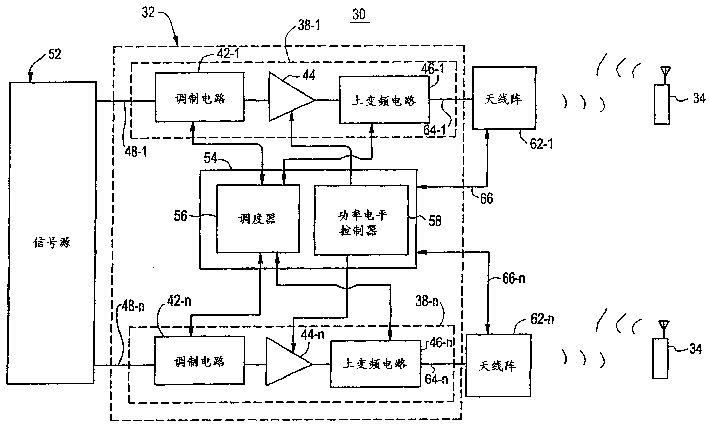
图2显示了包括本发明的实施例的发射站的通信系统的功能性方框图。Fig. 2 shows a functional block diagram of a communication system including a transmitting station of an embodiment of the present invention.
图3显示了表示由图2所示的发射站的两个分开的发射机支路所产生的信号之间的相对时间关系的时序图。FIG. 3 shows a timing diagram representing the relative time relationship between signals generated by two separate transmitter branches of the transmitting station shown in FIG. 2 .
图4显示了图2所示的通信系统的接收站的状态调度。FIG. 4 shows a state schedule of a receiving station of the communication system shown in FIG. 2 .
图5显示了表示下行链路功率调度的时序图,由图2所示的通信系统的两个发射机支路通过该调度过程来发送通信信号突发。FIG. 5 shows a timing diagram representing downlink power scheduling by which communication signal bursts are transmitted by two transmitter branches of the communication system shown in FIG. 2 .
图6显示了类似于图5所示的时序图,但它表示由按照本发明的另一个实施例的两个发射机支路发送的通信信号突发的功率电平。Figure 6 shows a timing diagram similar to that shown in Figure 5, but showing the power levels of the communication signal bursts transmitted by the two transmitter branches according to another embodiment of the invention.
图7显示了类似于图5-6所示的另一个时序图,但它显示也由按照本发明的另一个实施例的通信系统的两个发射机支路发送的通信信号突发的功率电平。Figure 7 shows another timing diagram similar to that shown in Figures 5-6, but showing the power levels of the communication signal bursts also transmitted by the two transmitter branches of the communication system according to another embodiment of the present invention. flat.
图8显示图2所示的其中利用空间功率控制的发射站的实施例的运行。FIG. 8 illustrates the operation of the embodiment of the transmitting station shown in FIG. 2 in which spatial power control is utilized.
图9显示了列出本发明的实施例的方法的各个步骤的方法流程图。Fig. 9 shows a method flowchart listing various steps of the method of an embodiment of the present invention.
详细说明 Detailed description
首先参照图1,在由通信系统分配用于通信的频带上定义了示例的TDMA(时分多址)通信方案,它总的被表示为10。位于所选择的间隔上的载频(这里称为f1,f2,...,fn)中的每一个被划分成多个具有所选择的时间间隔的时隙。Referring first to FIG. 1, an exemplary TDMA (Time Division Multiple Access) communication scheme, generally indicated at 10, is defined over a frequency band allocated for communication by a communication system. Each of the carrier frequencies (here called f 1 , f 2 , .
在每个载频f1-fn上的时隙组12被格式化为帧。在图1上所示的示例的通信方案10中所显示的各帧中的每一个由三个时隙12组成。为了简化起见,在每个载频f1-fn上只显示了足够形成单个帧14的时隙。在实际的实施例中,在每个载频f1-fn上规定了由多个时隙形成的各个接连的帧。在TDMA通信方案中,例如方案10,信道由时隙-载频组合形成。通信信号突发在定义这样的信道的时隙-载频组合上进行发送。The
当电路-交换的数据被发送时,通信信号突发一般(但并不是必须地)在相邻的帧组上发送,这些通信信号突发的总和构成了数据。当进行GPRS传输时,形成这种数据的信号突发被异步地发送。通信信号突发一旦在接收站被接收,它们就被链接在一起,以便重新生成由发射站发送的信号突发的信息内容。When circuit-switched data is transmitted, bursts of communication signals are typically (but not necessarily) sent on contiguous groups of frames, the sum of these bursts of communication signals making up the data. When performing GPRS transmission, the signal bursts forming this data are sent asynchronously. Once the communication signal bursts are received at the receiving station, they are linked together in order to regenerate the information content of the signal burst sent by the transmitting station.
在一些现有的蜂窝通信系统(例如GSM通信系统)中,第一组载频被分配用于下行链路突发。各个分开的信道被进行分配,以便用于发送通信信号突发到不同的移动终端。分开的信道被分配用于发送通信信号突发到不同的移动终端。一个单独的载频组被分配用于由移动终端为与无线基站通信而产生的上行链路发送。In some existing cellular communication systems (eg GSM communication systems), a first set of carrier frequencies is allocated for downlink bursts. Separate channels are allocated for transmitting communication signal bursts to different mobile terminals. Separate channels are allocated for transmitting communication signal bursts to different mobile terminals. A single set of carrier frequencies is allocated for uplink transmissions by mobile terminals for communication with radio base stations.
正如上面指出的,需要不断地提高分配给通信系统的频带的利用效率。以逐个时隙的方式选择控制蜂窝通信系统中发送下行链路突发的功率电平,会有助于分配的频带的更有效的利用。然而,在至少几个上述的现有系统中,移动终端必须能够提取相邻时隙信息,以便正确地运行。在下行链路上可以实现的功率电平变化量或其它控制是有限的。As indicated above, there is a constant need to improve the utilization efficiency of frequency bands allocated to communication systems. Selectively controlling the power level at which downlink bursts are transmitted in a cellular communication system on a slot-by-slot basis facilitates more efficient utilization of the allocated frequency band. However, in at least several of the above-mentioned existing systems, the mobile terminal must be able to extract adjacent time slot information in order to function correctly. There is a limit to the amount of power level variation or other control that can be achieved on the downlink.
本发明的实施例的运行提供了一种较好地控制下行链路通信突发的功率电平而同时仍允许移动终端提取相邻时隙信息的方法。Operation of embodiments of the present invention provides a method of better controlling the power level of downlink communication bursts while still allowing the mobile terminal to extract adjacent time slot information.
图2显示了一个总的表示为30的通信系统,这里它被显示为由发射站32和多个远端通信站34形成。通信系统30是蜂窝通信系统的一部分的实例,其中发射站32形成蜂窝无线基站的一部分,而远端站34形成运行于蜂窝通信系统中的移动终端。FIG. 2 shows a communication system generally indicated at 30 , here shown as being formed from a transmitting station 32 and a plurality of remote communication stations 34 . The communication system 30 is an example of a part of a cellular communication system, wherein the transmitting station 32 forms part of a cellular radio base station and the remote station 34 forms a mobile terminal operating in the cellular communication system.
当形成蜂窝通信系统的无线基站的一部分时,发射站32能通过运行来在由时隙-载频组合(例如,图1上所显示的那些)规定的信道上发送通信信号突发。然而,发射站32还以一种允许移动终端34能够在由相邻时隙规定的信道上提取相邻时隙信息的方式运行,该相邻时隙是与规定用来发送通信信号突发到特定的移动终端的信道的时隙相邻的。When forming part of a radio base station of a cellular communication system, transmitting station 32 is operable to transmit bursts of communication signals on channels specified by time slot-carrier frequency combinations such as those shown in Figure 1 . However, the transmitting station 32 also operates in a manner that allows the mobile terminal 34 to be able to extract adjacent time slot information on the channel defined by the adjacent time slot that is the same as that defined for transmitting a communication signal burst to the The time slots of the channels of a particular mobile terminal are adjacent.
发射站32包括多个发射机支路38。图2上所示的示例的实施例显示了n个可能的发射机支路38中的两个,即,发射机支路38-1和38-n,由它们形成发射站32。每个发射机支路包括发射机电路,它在这里被显示为包括调制电路42、放大器电路44、和上变频电路46。例如,发射机支路38-1包括调制电路42-1、放大器电路44-1、和上变频电路46-1。以及发射机支路38-n包括调制电路42-n、放大器电路44-n、和上变频电路46-n。每个发射机支路38被耦合来通过线路48接收通信信号。例如,发射机支路38-1被耦合来在线路48-1上接收通信信号以及发射机支路38-n被耦合来在线路48-n上接收通信信号。这里表示通信信号是由信号源52产生的。当发射站组成无线基站的一部分时,信号源52可以由例如PSTN(公共交换电话网)形成,其中在线路48上产生的通信信号形成要被传送到所选择的移动终端34的信号。Transmitting station 32 includes a plurality of transmitter branches 38 . The exemplary embodiment shown on FIG. 2 shows two of the n possible transmitter branches 38 , namely transmitter branches 38 - 1 and 38 - n , from which the transmitting station 32 is formed. Each transmitter branch includes transmitter circuitry, which is shown here as including modulation circuitry 42 , amplifier circuitry 44 , and frequency upconversion circuitry 46 . For example, transmitter branch 38-1 includes modulation circuit 42-1, amplifier circuit 44-1, and frequency upconversion circuit 46-1. And the transmitter branch 38-n includes a modulation circuit 42-n, an amplifier circuit 44-n, and an upconversion circuit 46-n. Each transmitter branch 38 is coupled to receive communication signals via line 48 . For example, transmitter branch 38-1 is coupled to receive communication signals on line 48-1 and transmitter branch 38-n is coupled to receive communication signals on line 48-n. Here it is indicated that the communication signal is generated by the signal source 52 . When the transmitting station forms part of a wireless base station, the signal source 52 may be formed by, for example, a PSTN (Public Switched Telephone Network), wherein the communication signal generated on the line 48 forms the signal to be transmitted to the selected mobile terminal 34 .
发射站32还包括控制电路54,用于控制发射机支路38的运行。控制电路54在这里被显示为包括调度器56和功率电平控制器58。调度器用来对在所选择的载频上的所选择时隙期间在线路48上产生的通信信号中的所选择的通信信号突发向选择的移动终端34的通信传输进行调度。而功率电平控制器58用来控制由各个相应的发射机支路38发送的通信信号突发的功率电平。Transmitting station 32 also includes control circuitry 54 for controlling the operation of transmitter branch 38 . Control circuitry 54 is shown here as including scheduler 56 and power level controller 58 . The scheduler is used to schedule communication transmissions to selected mobile terminals 34 of selected bursts of communication signals generated on lines 48 during selected time slots on selected carrier frequencies. And the power level controller 58 is used to control the power level of the communication signal burst transmitted by each corresponding transmitter branch 38 .
调度器56被耦合到各个发射机支路38的调制和上变频电路42和46,也被耦合到信号源52。调度器56因此控制藉以发送所选择的通信信号突发的时隙和载频。功率电平控制器58被耦合到发射机支路38的放大器电路44,以便控制放大器的增益,并从而控制由各个发射机支路38发送通信信号突发的功率电平。A scheduler 56 is coupled to the modulation and upconversion circuits 42 and 46 of the respective transmitter branches 38 and also to the signal source 52 . The scheduler 56 thus controls the time slots and carrier frequencies over which the selected communication signal bursts are transmitted. A power level controller 58 is coupled to the amplifier circuit 44 of the transmitter branch 38 to control the gain of the amplifier and thereby control the power level at which the communication signal burst is transmitted by the respective transmitter branch 38 .
在示例的实施例中,天线阵列62通过线路64被耦合到每个发射机支路38。例如,天线阵列62-1通过线路64-1被耦合到发射机支路38-1,以及天线阵列62-n通过线路64-n被耦合到发射机支路38-n。在示例的实施例中,天线阵列62由控制电路54自适应地控制,而控制电路54是通过线路66(即,分别为线路66-1到66-n)来与天线阵列62耦合的。在其它的实施例中,天线阵列62形成固定的天线图。而在一个实施例中,单个天线阵列或其它天线装置被耦合到一个以上的发射机支路38。In the exemplary embodiment, an antenna array 62 is coupled to each transmitter branch 38 by a line 64 . For example, antenna array 62-1 is coupled to transmitter branch 38-1 by line 64-1, and antenna array 62-n is coupled to transmitter branch 38-n by line 64-n. In the exemplary embodiment, antenna array 62 is adaptively controlled by control circuitry 54, which is coupled to antenna array 62 by lines 66 (ie, lines 66-1 through 66-n, respectively). In other embodiments, antenna array 62 forms a fixed antenna pattern. In one embodiment, however, a single antenna array or other antenna arrangement is coupled to more than one transmitter branch 38 .
控制电路54因此用来控制藉以发送通信信号突发的信道,以及通过适当地选择由天线阵列62呈现的天线波束图,从而控制通信信号突发所发送到的区域。对通信信号突发选择和由各个发射机支路藉以发送这样的突发的时间的适当的控制,允许构成无线基站一部分的发射站32可以这样来运行,即使得移动终端能提取相邻时隙信息从而能够按照上述的标准(例如,IS-136、用于GSM的GPRS、和PDC蜂窝标准中的一个标准)的需要来进行工作。The control circuit 54 is thus used to control the channel over which the communication signal burst is transmitted and, by appropriate selection of the antenna beam pattern presented by the antenna array 62, the area to which the communication signal burst is transmitted. Appropriate control over the selection of communication signal bursts and the times at which such bursts are transmitted by the respective transmitter branches allows the transmitting station 32 forming part of the radio base station to operate in such a way that a mobile terminal can extract adjacent time slots The information is thus able to work as required by the standards mentioned above (eg, IS-136, GPRS for GSM, and one of the PDC cellular standards).
图3显示在本发明的实施例的运行期间部分的通信信号突发的相对时序。这里,画出了两个二进制的对极的调制序列72和74作为符号时间T的函数。序列72和74由图2所示的发射站32的两个发射机支路产生。如图所示,序列72和74基本上是相同的,只是有一个相位偏移,用一段大小为.25T的延迟时间间隔τ表示。也就是说,再次参照图2所示的发射站32,信号源52把线路48上的相同的通信信号提供给两个发射机支路38。控制电路54的调度器56用来进一步执行时间调度,以便把延时引入到被加到一个支路的通信信号中,这样,由发射站32发送的序列72和74是互相偏移的。形成各个序列72和74的相同源数据的这样的延时建立了发射机分集。这样地建立的发射机分集使得由各个发射机支路发送的信号去相关。对于不同衰落模式的要求是:发射机分集应当结合极化分集或空间分集来使用。所以,发射机支路典型地通过使用不同的分隔开的天线来发送以便建立空间分集,和/或通过使用带有不同极化的不同天线来发送以便建立极化分集。Figure 3 shows the relative timing of portions of a communication signal burst during operation of an embodiment of the present invention. Here, two binary antipolar modulation sequences 72 and 74 are plotted as a function of the symbol time T. FIG. Sequences 72 and 74 are generated by the two transmitter branches of transmitting station 32 shown in FIG. 2 . As shown, sequences 72 and 74 are essentially identical, but with a phase offset represented by a delay time interval τ of size .25T. That is, referring again to transmitting station 32 shown in FIG. 2 , signal source 52 provides the same communication signal on line 48 to both transmitter branches 38 . The scheduler 56 of the control circuit 54 is further used to perform time scheduling to introduce a delay into the communication signal being added to a branch such that the sequences 72 and 74 transmitted by the transmitting station 32 are offset from each other. Such delays in the same source data forming the respective sequences 72 and 74 establish transmitter diversity. The transmitter diversity established in this way de-correlates the signals sent by the individual transmitter branches. The requirement for different fading modes is that transmitter diversity should be used in conjunction with polarization diversity or space diversity. Therefore, the transmitter branches typically transmit by using different spaced apart antennas in order to establish spatial diversity, and/or by transmitting by using different antennas with different polarizations in order to establish polarization diversity.
图4显示了移动状态调度图77,它用来表示被调谐到载频的移动终端或其它远端通信站的状态,在该载频上,帧14(图1所示)具有三个时隙12,即时隙12-1,12-2,和12-3。移动终端34处在三个状态即空闲状态、工作状态、和信息状态中的一个状态。当处在工作状态时,通信信号将由发射站32发送到移动终端。当处在信息状态时,移动终端34被用来从与其它移动终端通信的通信信号突发中提取信息。以及,当处在空闲状态时,移动终端不进行接收或不从任何通信信号突发中提取信息。Figure 4 shows a mobile state schedule diagram 77 for representing the state of a mobile terminal or other remote communication station tuned to a carrier frequency on which frame 14 (shown in Figure 1) has three
如图所示,当处在工作状态时,移动终端34在时隙(这里是第二时隙,即“时隙2”,12-2)的整个时间间隔内保持这样的状态。移动终端仅仅在时隙(这里是第一时隙和第三时隙,即“时隙1”,12-1,“时隙3”,12-3)的一部分内处在信息状态。在如图所示的实施例中,在第一时隙和第三时隙期间,移动终端在时隙的起始端和接近于时隙的结尾端进入信息状态。当处在这样的状态时,要被发送到其它移动终端的通信信号突发的信号能量也被在第二时隙12-2期间被工作的移动终端检测到。As shown, when in the active state, the mobile terminal 34 remains in this state for the entire time interval of the time slot (here the second time slot, ie, "slot 2", 12-2). The mobile terminal is in the information state only for a part of the time slots (here the first and third time slots, ie "
图5显示由按照本发明的实施例的发射站32的两个发射机支路38在三个接连的时隙12即时隙12-1、12-2、和12-3期间发送的通信信号的功率电平。控制电路54的功率电平控制器58(图2所示)用来使得各个发射机支路38的放大电路44将功率放大到三个电平中的一个电平,在图上由功率电平P1、P2、和P3表示。通过对各个发射机支路38的放大电路44产生的放大的电平的适当的控制,使得由各个发射机支路38产生各个功率电平。图上顶部的三个图形显示:在第一时隙12-1期间,要产生以功率电平P1的通信信号突发;在第二时隙12-2期间,要产生以功率电平P2的通信信号突发;在第三时隙12-3期间,要产生以功率电平P3的通信信号突发。如图所示,功率电平的信号能量不单在各自的时隙12期间发送,也在接连的时隙的信息状态期间发送。5 shows a diagram of the communication signal transmitted during three
波形76和78是由两个发射机支路38产生的通信信号的功率电平的代表。波形76和78形成表示由各个支路发送信号的功率电平的时间轨迹。由相同的源数据形成的相同的信号被不同的发射机支路发送,但在时间上互相有偏移。由此提供了在超出单个时隙12的时间间隔内发送的具有不同功率电平的信号。由不同发射机支路在相邻时隙上发送的信号的重叠允许移动终端在相邻时隙以正确的功率电平提取信息。换句话说,通过单独的功率调度,在一个或多个支路中发送相同的信息。由每个支路发送的信号在时间上也是偏移的。在一个实施例中,由各个支路产生的信号从单个天线发送。在另一个实施例中,利用分开的天线来建立空间分集。信号可以由呈现不同极化图的天线发送。天线图可以是例如全向的、形成固定窄波束的扇区形状的、或由天线阵列自适应形成的。波形76和78互相类似,但是具有一个相应于信息状态时间间隔的延时的偏移。因此,由至少一个发射机站38在相应于一个时隙的和相应于随后的时隙的信息状态的时间间隔内产生所指明的功率电平的信号能量。因此,在分配的时隙期间,被调谐到信道以便接收通信信号突发的移动终端也能够在接连的时隙12的信息状态期间提取相邻时隙信息。
在图5所示的方案中,在信息状态和工作状态期间,发送突发的功率电平呈现为倾斜向上和倾斜向下的形状。In the solution shown in FIG. 5 , during the information state and the working state, the power level of the transmission burst takes on the shape of slanting upward and sloping downward.
图6再次显示在时隙12-1、12-2、和12-3以及接连的信息状态期间的三个功率电平P1、P2、和P3,正如所示的。波形92和94是由两个发射机支路38产生的通信信号的功率电平的代表。图6的波形92和94不同于图5所示的相应的波形之处在于:通信信号突发不仅仅互相偏移,而且,对于每个发射机支路38由调度器56单独地调度通信信号的信号能量电平。然而,对波形92和94的检验表示,在相应的时隙和接连在其后的信息状态期间,产生了信号能量电平P1、P2、和P3。Figure 6 again shows the three power levels P1, P2, and P3 during time slots 12-1 , 12-2, and 12-3 and successive information states, as shown. Waveforms 92 and 94 are representative of the power levels of the communication signals produced by the two transmitter branches 38 . The waveforms 92 and 94 of FIG. 6 differ from the corresponding waveforms shown in FIG. 5 in that the communication signal bursts are not only offset from each other, but also that the communication signals are scheduled individually by the scheduler 56 for each transmitter branch 38. signal energy level. Examination of waveforms 92 and 94, however, shows that signal energy levels P1 , P2 , and P3 are generated during the corresponding time slot and successively following information states.
与图5所示的实施例相反,在图6的实施例中,在信息状态期间,由不同的支路发送的信号的功率电平保持在恒定的功率电平上。In contrast to the embodiment shown in Fig. 5, in the embodiment of Fig. 6 the power levels of the signals transmitted by the different branches are kept at a constant power level during the information state.
图7再次显示在与图5-6所示的相同的时隙期间的三个功率电平P1、P2、和P3。这里,波形96和98是由两个发射机支路38产生的通信信号的波形。这里,功率调度器56使得以这样的方式发送通信信号突发,从而使得由两个发射机支路38产生的组合的功率电平具有恒定值。Figure 7 again shows the three power levels P1 , P2 , and P3 during the same time slot as shown in Figures 5-6. Here, waveforms 96 and 98 are waveforms of communication signals generated by two transmitter branches 38 . Here, the power scheduler 56 causes the communication signal bursts to be transmitted in such a way that the combined power level produced by the two transmitter branches 38 has a constant value.
如前面指出的,由各个不同支路发送的信号都可以由能够形成固定的全向天线波束图、固定的扇形天线波束图、固定的窄波瓣天线波束图、和自适应天线波束图的天线组件产生。As previously indicated, the signals transmitted by the various branches can be formed by antennas capable of forming fixed omni-directional antenna beam patterns, fixed sector antenna beam patterns, fixed narrow-lobe antenna beam patterns, and adaptive antenna beam patterns Component generated.
图8显示了一个其中也提供波束成形的本发明实施例的运行。该图的顶部显示了由两个发射机支路38产生的、在前面的图6上显示过的波形92和94。该图的底部显示了构成无线基站的发射站32以及在各个不同时隙12和形成该时隙的一部分的信息状态期间由发射站的发射机支路38的天线阵列62所形成的定向天线波束图102、104、和106。Figure 8 illustrates the operation of an embodiment of the invention in which beamforming is also provided. The top of the figure shows the waveforms 92 and 94 produced by the two transmitter branches 38 previously shown in FIG. 6 . The bottom of the figure shows the transmitting station 32 constituting the radio base station and the directional antenna beams formed by the antenna array 62 of the transmitter branch 38 of the transmitting station during each of the
在每个时隙的信息状态部分期间,形成两个天线波束图,而在每个时隙12的其余部分期间,只形成单个天线波束图。During the information state portion of each time slot, two antenna beam patterns are formed, while during the remainder of each
例如,对于第一时隙12-1,在该时隙的信息状态部分期间,通信信号突发按照天线波束图102被发送到移动终端34-1,以及通信信号突发按照天线波束图104被发送到移动终端34-2。天线波束图102由被耦合到第一发射机支路的天线组件62形成,以及天线波束图104由被耦合到第二发射机支路38的天线组件62形成。For example, for the first time slot 12-1, during the information state portion of the time slot, a communication signal burst is transmitted to the mobile terminal 34-1 according to the antenna beam pattern 102, and a communication signal burst is transmitted according to the antenna beam pattern 104. sent to the mobile terminal 34-2. Antenna beam pattern 102 is formed by antenna assembly 62 coupled to first transmitter branch, and antenna beam pattern 104 is formed by antenna assembly 62 coupled to second transmitter branch 38 .
在第二时隙12-2的信息状态部分期间,通信信号突发被发送到移动终端34-2和34-3。通信信号突发由第二发射机支路38按照天线波束图104发送,以及通信信号突发由第一发射机支路38按照天线波束图106发送到移动终端34-3。在第二时隙12-2的其余部分期间,只发送由第一天线支路38按照天线波束图106发送的通信信号。During the information state portion of the second time slot 12-2, a communication signal burst is sent to the mobile terminals 34-2 and 34-3. The communication signal burst is transmitted by the second transmitter branch 38 according to the antenna beam pattern 104 and the communication signal burst is transmitted by the first transmitter branch 38 according to the antenna beam pattern 106 to the mobile terminal 34-3. During the remainder of the second time slot 12-2, only communication signals transmitted by the first antenna branch 38 according to the antenna beam pattern 106 are transmitted.
在第三时隙12-3期间分别借助于天线波束图102和106把通信信号传送到移动终端34-1和34-3。按照天线波束图102发送的通信信号突发由第二发射机支路38发送,以及按照天线波束图106发送的通信信号突发由第一发射机支路38发送。在第三时隙12-3的其余部分期间,通信信号突发按照由第二发射机支路38的天线组件62形成的天线波束图102发送到移动终端34-1。Communication signals are transmitted to mobile terminals 34-1 and 34-3 during the third time slot 12-3 by means of antenna beam patterns 102 and 106, respectively. The communication signal bursts transmitted according to the antenna beam pattern 102 are transmitted by the second transmitter branch 38 and the communication signal bursts transmitted according to the antenna beam pattern 106 are transmitted by the first transmitter branch 38 . During the remainder of the third time slot 12-3, bursts of communication signals are transmitted to the mobile terminal 34-1 according to the antenna beam pattern 102 formed by the antenna assembly 62 of the second transmitter branch 38.
在第一时隙12-1期间,移动终端34-2在该时隙的整个持续时间内处在工作状态。在第二时隙12-2期间,移动终端34-3在该时隙的整个时间间隔内处在工作状态,以及在第三时隙12期间,移动终端34-1在整个时隙的持续时间内处在工作状态。在第二时隙12-2的信息状态部分期间,移动终端34-2是附加地工作的,在第三时隙12-3的信息状态部分期间,移动终端34-3还是工作的,以及在第一时隙12-1的信息状态部分期间,移动终端34-1是附加地工作的。During the first time slot 12-1, the mobile terminal 34-2 is active for the entire duration of the time slot. During the second time slot 12-2, the mobile terminal 34-3 is active for the entire time interval of the time slot, and during the
图9显示方法流程图,它总的用120表示,列出了本发明的一个实施例的方法步骤。方法120有选择地控制由运行于TDMA通信系统的发射站传送的通信信号突发的功率电平。首先,如方框122所表示的,第一发射机支路被耦合来接收具有第一选择的功率电平的通信信号突发。然后,如方框124所表示的,至少一个第二发射机支路被耦合来接收通信信号突发。由第二发射机支路发送的通信信号突发在至少一部分的这样的时隙内发送,该时隙是与其间第一发射机支路发送被加到该支路的通信信号突发的时隙相邻的。Figure 9 shows a method flow diagram, generally indicated at 120, outlining the method steps of one embodiment of the present invention.
由此,本发明的实施例的运行提供了藉以控制在TDMA通信系统运行期间传送通信信号突发的功率电平的方式。对于功率电平的这样的控制允许减小由这样的突发进行的通信所造成的干扰电平。这些突发进一步以也允许接收站从在相邻时隙期间传送的通信信号突发中提取信息的方式来进行通信。由此,本发明的实施例可在这样的蜂窝通信系统中实施,其中需要移动终端能够从相邻的时隙中提取信息。Thus, operation of embodiments of the present invention provides a means by which to control the power level at which bursts of communication signals are transmitted during operation of a TDMA communication system. Such control over the power level allows reducing the level of interference caused by communications in such bursts. These bursts further communicate in a manner that also allows the receiving station to extract information from the communication signal bursts transmitted during adjacent time slots. Thus, embodiments of the present invention may be practiced in cellular communication systems where it is desired for a mobile terminal to be able to extract information from adjacent time slots.
前面的说明是针对用于实施本发明的优选的例子的,因此,本发明的范围并不应由本说明限制。本发明的范围由以下的权利要求规定。The foregoing description is of preferred examples for implementing the invention, and therefore, the scope of the invention should not be limited by this description. The scope of the invention is defined by the following claims.
Claims (34)
Applications Claiming Priority (2)
| Application Number | Priority Date | Filing Date | Title |
|---|---|---|---|
| US08/887,726 US6072792A (en) | 1997-07-03 | 1997-07-03 | Power control apparatus, and an associated method, for TDMA transmitter |
| US08/887,726 | 1997-07-03 |
Publications (2)
| Publication Number | Publication Date |
|---|---|
| CN1262000A CN1262000A (en) | 2000-08-02 |
| CN1201503C true CN1201503C (en) | 2005-05-11 |
Family
ID=25391736
Family Applications (1)
| Application Number | Title | Priority Date | Filing Date |
|---|---|---|---|
| CNB988068346A Expired - Fee Related CN1201503C (en) | 1997-07-03 | 1998-06-16 | Power control apparatus, and an associated method, for TDMA transmitter |
Country Status (8)
| Country | Link |
|---|---|
| US (1) | US6072792A (en) |
| JP (1) | JP4195100B2 (en) |
| CN (1) | CN1201503C (en) |
| AU (1) | AU737488B2 (en) |
| BR (1) | BR9810507A (en) |
| CA (1) | CA2294768C (en) |
| GB (1) | GB2342544B (en) |
| WO (1) | WO1999001949A1 (en) |
Families Citing this family (38)
| Publication number | Priority date | Publication date | Assignee | Title |
|---|---|---|---|---|
| US6301238B1 (en) * | 1997-01-28 | 2001-10-09 | Telefonaktiebolaget Lm Ericsson (Publ) | Directional-beam generative apparatus and associated method |
| FI106665B (en) * | 1997-11-05 | 2001-03-15 | Nokia Mobile Phones Ltd | Method and apparatus for determining the transmission power of a mobile station |
| FI110351B (en) * | 1997-11-11 | 2002-12-31 | Nokia Corp | A method for synchronizing time slots for radio signal transmission, and a method for a radio telephone network, a base station subsystem, and a mobile station |
| SE511859C2 (en) * | 1998-04-27 | 1999-12-06 | Ericsson Telefon Ab L M | Creation of intentional side lobe |
| US6615024B1 (en) * | 1998-05-01 | 2003-09-02 | Arraycomm, Inc. | Method and apparatus for determining signatures for calibrating a communication station having an antenna array |
| GB2339113B (en) * | 1998-06-30 | 2003-05-21 | Nokia Mobile Phones Ltd | Data transmission in tdma system |
| US6205334B1 (en) * | 1998-11-24 | 2001-03-20 | Ericsson Inc. | Accelerated scanning of cellular channels by cellular radiotelephones |
| FI990354A7 (en) | 1999-02-18 | 2000-08-19 | Nokia Corp | Method for automatic power control in a cellular radio network base station |
| US6529494B1 (en) * | 1999-09-21 | 2003-03-04 | Telefonaktiebolaget Lm Ericsson (Publ) | Downlink timeslot power control in a time division multiple access system |
| US6490261B1 (en) * | 1999-10-28 | 2002-12-03 | Ericsson Inc. | Overlapping slot transmission using phased arrays |
| US6411817B1 (en) * | 2000-01-21 | 2002-06-25 | Lucent Technologies Inc. | Method and system for dynamic downlink power control in a time-division, multiplex wireless system |
| US6754506B2 (en) | 2000-06-13 | 2004-06-22 | At&T Wireless Services, Inc. | TDMA communication system having enhanced power control |
| US6731619B1 (en) * | 2000-08-02 | 2004-05-04 | Ericsson Inc. | Method and system for using one type of transmit diversity in a first time slot and a second type in an adjacent time slot |
| DE10038667C1 (en) * | 2000-08-08 | 2002-04-18 | Siemens Ag | Method and base station for data transmission from and to subscriber stations sharing a time slot |
| US6694147B1 (en) * | 2000-09-15 | 2004-02-17 | Flarion Technologies, Inc. | Methods and apparatus for transmitting information between a basestation and multiple mobile stations |
| US6594499B1 (en) * | 2000-09-25 | 2003-07-15 | Telefonaktiebolaget Lm Ericsson (Publ) | Downlink power control in a cellular telecommunications network |
| SE0003748D0 (en) * | 2000-10-13 | 2000-10-13 | Ericsson Telefon Ab L M | Methods and arrangements relating to a radio communication system |
| US6873613B1 (en) | 2000-10-16 | 2005-03-29 | Ericsson Inc. | Methods for wirelessly communicating time division multiple access (TDMA) data using adaptive multiplexing and coding |
| US6735451B1 (en) * | 2000-11-09 | 2004-05-11 | Telefonaktlebolaget Lm Ericsson (Publ) | Method and apparatus for providing downlink power control in radio communication systems employing virtual cells |
| US20030002471A1 (en) * | 2001-03-06 | 2003-01-02 | Crawford James A. | Method for estimating carrier-to-noise-plus-interference ratio (CNIR) for OFDM waveforms and the use thereof for diversity antenna branch selection |
| US7006466B2 (en) * | 2001-03-09 | 2006-02-28 | Lucent Technologies Inc. | Dynamic rate control methods and apparatus for scheduling data transmissions in a communication network |
| DE10122217A1 (en) * | 2001-05-08 | 2002-11-28 | Siemens Ag | Method and device for adapting the transmission power in a time division system |
| US6950670B2 (en) * | 2001-10-31 | 2005-09-27 | At&T Corp. | Wireless network having joint power and data rate adaptation |
| US6747960B2 (en) | 2001-12-21 | 2004-06-08 | The Boeing Company | Closed loop power control for TDMA links |
| US6975853B2 (en) * | 2002-10-22 | 2005-12-13 | Mitsubishi Electric Research Labs, Inc. | Personal identification device for mobile telephone |
| US7349365B2 (en) | 2002-10-22 | 2008-03-25 | Mitsubishi Electric Research Laboratories, Inc. | Mobile telephone messaging by baseband envelope modulation |
| TWI244257B (en) * | 2004-06-18 | 2005-11-21 | Mediatek Inc | Control method and apparatus of transmission power amplifier |
| US7489909B2 (en) * | 2004-06-18 | 2009-02-10 | Mediatek Incorporation | Method and apparatus for controlling a TX power amplifier |
| US7412254B2 (en) * | 2004-10-05 | 2008-08-12 | Nortel Networks Limited | Power management and distributed scheduling for uplink transmissions in wireless systems |
| US20070178862A1 (en) * | 2006-01-30 | 2007-08-02 | Motia, Inc. | Weight Training For Antenna Array Beam Patterns in FDD/TDMA Terminals |
| US7808956B2 (en) * | 2006-03-31 | 2010-10-05 | Motorola, Inc. | Dynamic, adaptive power control for a half-duplex wireless communication system |
| US7742738B2 (en) * | 2006-12-27 | 2010-06-22 | Nortel Networks Limited | Method and system for diversity using orthogonal frequency/division multiplexing |
| US7983635B2 (en) * | 2007-07-20 | 2011-07-19 | Honeywell International Inc. | System and method for controlling intermodulation interference |
| US20090219916A1 (en) * | 2008-02-29 | 2009-09-03 | Motorola, Inc. | Method to scan for critical transmissions while transmitting on a conventional time division multiple access channel |
| US8189708B2 (en) * | 2008-08-08 | 2012-05-29 | The Boeing Company | System and method for accurate downlink power control of composite QPSK modulated signals |
| FR2946205B1 (en) * | 2009-05-29 | 2011-06-24 | St Nxp Wireless France | IMPROVING FLOW IN RADIO FREQUENCY COMMUNICATIONS |
| JP2011223274A (en) * | 2010-04-08 | 2011-11-04 | Sony Corp | Transmission device and transmission method |
| JP6899357B2 (en) * | 2018-06-20 | 2021-07-07 | 株式会社東芝 | Electronics, systems and power supply methods |
Family Cites Families (9)
| Publication number | Priority date | Publication date | Assignee | Title |
|---|---|---|---|---|
| US5515378A (en) * | 1991-12-12 | 1996-05-07 | Arraycomm, Inc. | Spatial division multiple access wireless communication systems |
| US5333175A (en) * | 1993-01-28 | 1994-07-26 | Bell Communications Research, Inc. | Method and apparatus for dynamic power control in TDMA portable radio systems |
| IT1261365B (en) * | 1993-12-02 | 1996-05-20 | Cselt Centro Studi Lab Telecom | PROCEDURE AND DEVICE FOR THE POWER CONTROL IN THE MOBILE BASE-HALF STATION ROUTE OF A RADIO-MOBILE SYSTEM WITH ACCESS TO CODE DIVISION |
| IL108056A (en) * | 1993-12-16 | 1998-07-15 | Geotek Ind Inc | Radio telephone system for minimizing co-channel interference utilizing geographic separation of signals and transmission power control |
| US5604730A (en) * | 1994-07-25 | 1997-02-18 | Qualcomm Incorporated | Remote transmitter power control in a contention based multiple access system |
| US5710982A (en) * | 1995-06-29 | 1998-01-20 | Hughes Electronics | Power control for TDMA mobile satellite communication system |
| AU3260195A (en) * | 1995-08-31 | 1997-03-19 | Nokia Telecommunications Oy | Method and device for controlling transmission power of a radio transmitter in a cellular communication system |
| US5722051A (en) * | 1996-02-13 | 1998-02-24 | Lucent Technologies Inc. | Adaptive power control and coding scheme for mobile radio systems |
| US5740165A (en) * | 1996-02-29 | 1998-04-14 | Lucent Technologies Inc. | Wireless TDMA transmitter with reduced interference |
-
1997
- 1997-07-03 US US08/887,726 patent/US6072792A/en not_active Expired - Lifetime
-
1998
- 1998-06-16 CA CA002294768A patent/CA2294768C/en not_active Expired - Fee Related
- 1998-06-16 WO PCT/SE1998/001163 patent/WO1999001949A1/en not_active Ceased
- 1998-06-16 BR BR9810507-8A patent/BR9810507A/en not_active IP Right Cessation
- 1998-06-16 GB GB9930679A patent/GB2342544B/en not_active Expired - Fee Related
- 1998-06-16 AU AU83603/98A patent/AU737488B2/en not_active Ceased
- 1998-06-16 JP JP50700199A patent/JP4195100B2/en not_active Expired - Fee Related
- 1998-06-16 CN CNB988068346A patent/CN1201503C/en not_active Expired - Fee Related
Also Published As
| Publication number | Publication date |
|---|---|
| BR9810507A (en) | 2000-10-24 |
| GB9930679D0 (en) | 2000-02-16 |
| GB2342544B (en) | 2002-02-20 |
| JP2002508131A (en) | 2002-03-12 |
| CA2294768A1 (en) | 1999-01-14 |
| US6072792A (en) | 2000-06-06 |
| GB2342544A (en) | 2000-04-12 |
| AU8360398A (en) | 1999-01-25 |
| JP4195100B2 (en) | 2008-12-10 |
| WO1999001949A1 (en) | 1999-01-14 |
| CN1262000A (en) | 2000-08-02 |
| AU737488B2 (en) | 2001-08-23 |
| CA2294768C (en) | 2005-05-10 |
Similar Documents
| Publication | Publication Date | Title |
|---|---|---|
| CN1262000A (en) | Power control apparatus, and an associated method, for TDMA transmitter | |
| CN1233107C (en) | Method and apparatus for forwarding multi-hop and MAC data structure for same | |
| US12120635B2 (en) | Method and apparatus for transmitting and receiving paging message in next generation mobile communication system | |
| CN1161892C (en) | Remote Transmitter Power Control in CDMA Communication System | |
| KR101693907B1 (en) | Communication apparatus and communication method | |
| CN1703847A (en) | Assigning training sequences based on spatial channels in wireless communications system | |
| CN1703924A (en) | Transmitting signals on a channel used for traffic and access in a communications system | |
| CN1250547A (en) | Directional-beam generative apparatus and associated method | |
| CN1109251A (en) | Method for coverage holes in cellular mobile radio system and radio repeater implementing the method | |
| WO2007129620A1 (en) | Radio communication base station device and transmission method in the radio communication base station device | |
| CN102084597A (en) | System and method for supporting antenna beamforming in a cellular network | |
| US9961412B2 (en) | Cellular communication system for broadcast communication | |
| GB2486742A (en) | Broadcast communication in cells equipped with relay nodes | |
| CN1433603A (en) | Apparatus and method for gated transmission in CDMA communication system | |
| CN1101118C (en) | Paging scheme for mobile communication system using increased paging channel data transmission rate | |
| US8737402B2 (en) | Multi-carrier scheduling | |
| US7583628B2 (en) | Data transmission method in a cellular communication network, corresponding system, terminal and base station | |
| US20130343262A1 (en) | Wireless communication unit, integrated circuit and method for reception of broadcast communication | |
| CN102077658B (en) | Indication method and base station for space division multiple access transmission | |
| CN103037356A (en) | Communication method and communication device | |
| WO2024088278A1 (en) | Method for communication, terminal device, network device, medium, and program product | |
| TW202135549A (en) | Terminal configured to perform vehicle-to-everything communication | |
| US12445178B2 (en) | Device-controlled adaptive delay diversity | |
| US20240163822A1 (en) | Device-controlled adaptive delay diversity | |
| CN1842973A (en) | Method and apparatus for power allocation of control channels in a communication system |
Legal Events
| Date | Code | Title | Description |
|---|---|---|---|
| C06 | Publication | ||
| PB01 | Publication | ||
| C10 | Entry into substantive examination | ||
| SE01 | Entry into force of request for substantive examination | ||
| C14 | Grant of patent or utility model | ||
| GR01 | Patent grant | ||
| CF01 | Termination of patent right due to non-payment of annual fee |
Granted publication date: 20050511 Termination date: 20140616 |
|
| EXPY | Termination of patent right or utility model |