CN1195103C - Process for electrochemically preparing nanoline array of Fullerenes - Google Patents
Process for electrochemically preparing nanoline array of Fullerenes Download PDFInfo
- Publication number
- CN1195103C CN1195103C CN 02105607 CN02105607A CN1195103C CN 1195103 C CN1195103 C CN 1195103C CN 02105607 CN02105607 CN 02105607 CN 02105607 A CN02105607 A CN 02105607A CN 1195103 C CN1195103 C CN 1195103C
- Authority
- CN
- China
- Prior art keywords
- fullerene
- nanowires
- template
- electrode
- preparation technology
- Prior art date
- Legal status (The legal status is an assumption and is not a legal conclusion. Google has not performed a legal analysis and makes no representation as to the accuracy of the status listed.)
- Expired - Fee Related
Links
- XMWRBQBLMFGWIX-UHFFFAOYSA-N C60 fullerene Chemical class C12=C3C(C4=C56)=C7C8=C5C5=C9C%10=C6C6=C4C1=C1C4=C6C6=C%10C%10=C9C9=C%11C5=C8C5=C8C7=C3C3=C7C2=C1C1=C2C4=C6C4=C%10C6=C9C9=C%11C5=C5C8=C3C3=C7C1=C1C2=C4C6=C2C9=C5C3=C12 XMWRBQBLMFGWIX-UHFFFAOYSA-N 0.000 title claims abstract description 44
- 229910003472 fullerene Inorganic materials 0.000 title claims abstract description 43
- 238000000034 method Methods 0.000 title claims description 15
- 239000002070 nanowire Substances 0.000 claims abstract description 50
- WEVYAHXRMPXWCK-UHFFFAOYSA-N Acetonitrile Chemical compound CC#N WEVYAHXRMPXWCK-UHFFFAOYSA-N 0.000 claims abstract description 27
- 238000002360 preparation method Methods 0.000 claims abstract description 18
- YXFVVABEGXRONW-UHFFFAOYSA-N Toluene Chemical compound CC1=CC=CC=C1 YXFVVABEGXRONW-UHFFFAOYSA-N 0.000 claims abstract description 17
- 238000003491 array Methods 0.000 claims abstract description 13
- 238000005516 engineering process Methods 0.000 claims abstract description 12
- 230000008021 deposition Effects 0.000 claims abstract description 11
- 239000011148 porous material Substances 0.000 claims abstract description 8
- 239000003792 electrolyte Substances 0.000 claims abstract description 7
- 238000002848 electrochemical method Methods 0.000 claims abstract description 5
- 238000000137 annealing Methods 0.000 claims abstract description 3
- 239000013078 crystal Substances 0.000 claims abstract description 3
- 239000002086 nanomaterial Substances 0.000 claims description 11
- 238000000151 deposition Methods 0.000 claims description 10
- 239000011521 glass Substances 0.000 claims description 8
- 239000000243 solution Substances 0.000 claims description 6
- 239000000126 substance Substances 0.000 claims description 5
- 239000008151 electrolyte solution Substances 0.000 claims description 4
- 229910052751 metal Inorganic materials 0.000 claims description 4
- 239000002184 metal Substances 0.000 claims description 4
- 239000004020 conductor Substances 0.000 claims description 3
- 229920001343 polytetrafluoroethylene Polymers 0.000 claims description 3
- 239000000376 reactant Substances 0.000 claims description 2
- -1 polytetrafluoroethylene Polymers 0.000 claims 2
- 239000004810 polytetrafluoroethylene Substances 0.000 claims 2
- 239000011248 coating agent Substances 0.000 claims 1
- 238000000576 coating method Methods 0.000 claims 1
- 239000011147 inorganic material Substances 0.000 claims 1
- 239000011368 organic material Substances 0.000 claims 1
- 238000004544 sputter deposition Methods 0.000 claims 1
- 238000007738 vacuum evaporation Methods 0.000 claims 1
- 230000001105 regulatory effect Effects 0.000 abstract 1
- 239000000463 material Substances 0.000 description 9
- HEMHJVSKTPXQMS-UHFFFAOYSA-M Sodium hydroxide Chemical compound [OH-].[Na+] HEMHJVSKTPXQMS-UHFFFAOYSA-M 0.000 description 6
- 229910052782 aluminium Inorganic materials 0.000 description 6
- XAGFODPZIPBFFR-UHFFFAOYSA-N aluminium Chemical compound [Al] XAGFODPZIPBFFR-UHFFFAOYSA-N 0.000 description 6
- 239000004809 Teflon Substances 0.000 description 5
- 229920006362 Teflon® Polymers 0.000 description 5
- 239000012528 membrane Substances 0.000 description 5
- 239000002071 nanotube Substances 0.000 description 5
- 229920000128 polypyrrole Polymers 0.000 description 5
- 229910052737 gold Inorganic materials 0.000 description 4
- 238000005287 template synthesis Methods 0.000 description 4
- 238000010586 diagram Methods 0.000 description 3
- 238000010438 heat treatment Methods 0.000 description 3
- 229920000642 polymer Polymers 0.000 description 3
- CSCPPACGZOOCGX-UHFFFAOYSA-N Acetone Chemical compound CC(C)=O CSCPPACGZOOCGX-UHFFFAOYSA-N 0.000 description 2
- 239000004721 Polyphenylene oxide Substances 0.000 description 2
- 239000004793 Polystyrene Substances 0.000 description 2
- 238000004458 analytical method Methods 0.000 description 2
- 230000004888 barrier function Effects 0.000 description 2
- 229920001940 conductive polymer Polymers 0.000 description 2
- 238000011161 development Methods 0.000 description 2
- 238000001652 electrophoretic deposition Methods 0.000 description 2
- 229910052742 iron Inorganic materials 0.000 description 2
- 238000000608 laser ablation Methods 0.000 description 2
- 150000002739 metals Chemical class 0.000 description 2
- 239000011259 mixed solution Substances 0.000 description 2
- 239000000203 mixture Substances 0.000 description 2
- 229920003229 poly(methyl methacrylate) Polymers 0.000 description 2
- 239000004417 polycarbonate Substances 0.000 description 2
- 229920000515 polycarbonate Polymers 0.000 description 2
- 239000004926 polymethyl methacrylate Substances 0.000 description 2
- 229920006380 polyphenylene oxide Polymers 0.000 description 2
- 238000011160 research Methods 0.000 description 2
- 238000001308 synthesis method Methods 0.000 description 2
- 238000003786 synthesis reaction Methods 0.000 description 2
- QENGPZGAWFQWCZ-UHFFFAOYSA-N 3-Methylthiophene Chemical compound CC=1C=CSC=1 QENGPZGAWFQWCZ-UHFFFAOYSA-N 0.000 description 1
- OKTJSMMVPCPJKN-UHFFFAOYSA-N Carbon Chemical compound [C] OKTJSMMVPCPJKN-UHFFFAOYSA-N 0.000 description 1
- 229910005542 GaSb Inorganic materials 0.000 description 1
- 229910001218 Gallium arsenide Inorganic materials 0.000 description 1
- 229910015643 LiMn 2 O 4 Inorganic materials 0.000 description 1
- 239000002033 PVDF binder Substances 0.000 description 1
- 229910010413 TiO 2 Inorganic materials 0.000 description 1
- HSFWRNGVRCDJHI-UHFFFAOYSA-N alpha-acetylene Natural products C#C HSFWRNGVRCDJHI-UHFFFAOYSA-N 0.000 description 1
- PNEYBMLMFCGWSK-UHFFFAOYSA-N aluminium oxide Inorganic materials [O-2].[O-2].[O-2].[Al+3].[Al+3] PNEYBMLMFCGWSK-UHFFFAOYSA-N 0.000 description 1
- 238000013459 approach Methods 0.000 description 1
- 238000001241 arc-discharge method Methods 0.000 description 1
- 239000012300 argon atmosphere Substances 0.000 description 1
- UHYPYGJEEGLRJD-UHFFFAOYSA-N cadmium(2+);selenium(2-) Chemical compound [Se-2].[Cd+2] UHYPYGJEEGLRJD-UHFFFAOYSA-N 0.000 description 1
- 239000002041 carbon nanotube Substances 0.000 description 1
- 229910021393 carbon nanotube Inorganic materials 0.000 description 1
- 238000006555 catalytic reaction Methods 0.000 description 1
- 238000006243 chemical reaction Methods 0.000 description 1
- 238000005229 chemical vapour deposition Methods 0.000 description 1
- 239000002131 composite material Substances 0.000 description 1
- 238000009833 condensation Methods 0.000 description 1
- 230000005494 condensation Effects 0.000 description 1
- 238000010276 construction Methods 0.000 description 1
- 239000012153 distilled water Substances 0.000 description 1
- 230000005684 electric field Effects 0.000 description 1
- 238000005868 electrolysis reaction Methods 0.000 description 1
- 238000001962 electrophoresis Methods 0.000 description 1
- 238000005265 energy consumption Methods 0.000 description 1
- 238000001704 evaporation Methods 0.000 description 1
- 230000008020 evaporation Effects 0.000 description 1
- 238000007429 general method Methods 0.000 description 1
- 239000008204 material by function Substances 0.000 description 1
- 239000010445 mica Substances 0.000 description 1
- 229910052618 mica group Inorganic materials 0.000 description 1
- 239000012046 mixed solvent Substances 0.000 description 1
- 239000002105 nanoparticle Substances 0.000 description 1
- 229910052759 nickel Inorganic materials 0.000 description 1
- 229910000510 noble metal Inorganic materials 0.000 description 1
- TWNQGVIAIRXVLR-UHFFFAOYSA-N oxo(oxoalumanyloxy)alumane Chemical compound O=[Al]O[Al]=O TWNQGVIAIRXVLR-UHFFFAOYSA-N 0.000 description 1
- 238000000053 physical method Methods 0.000 description 1
- 229910052697 platinum Inorganic materials 0.000 description 1
- 229920001197 polyacetylene Polymers 0.000 description 1
- 229920000767 polyaniline Polymers 0.000 description 1
- 229920002223 polystyrene Polymers 0.000 description 1
- 229920002981 polyvinylidene fluoride Polymers 0.000 description 1
- 239000004065 semiconductor Substances 0.000 description 1
- 229910052709 silver Inorganic materials 0.000 description 1
- 239000002904 solvent Substances 0.000 description 1
- 239000000758 substrate Substances 0.000 description 1
- 125000003944 tolyl group Chemical group 0.000 description 1
- XLYOFNOQVPJJNP-UHFFFAOYSA-N water Chemical compound O XLYOFNOQVPJJNP-UHFFFAOYSA-N 0.000 description 1
Images



Classifications
-
- B—PERFORMING OPERATIONS; TRANSPORTING
- B82—NANOTECHNOLOGY
- B82Y—SPECIFIC USES OR APPLICATIONS OF NANOSTRUCTURES; MEASUREMENT OR ANALYSIS OF NANOSTRUCTURES; MANUFACTURE OR TREATMENT OF NANOSTRUCTURES
- B82Y30/00—Nanotechnology for materials or surface science, e.g. nanocomposites
-
- B—PERFORMING OPERATIONS; TRANSPORTING
- B82—NANOTECHNOLOGY
- B82Y—SPECIFIC USES OR APPLICATIONS OF NANOSTRUCTURES; MEASUREMENT OR ANALYSIS OF NANOSTRUCTURES; MANUFACTURE OR TREATMENT OF NANOSTRUCTURES
- B82Y10/00—Nanotechnology for information processing, storage or transmission, e.g. quantum computing or single electron logic
Landscapes
- Engineering & Computer Science (AREA)
- Chemical & Material Sciences (AREA)
- Nanotechnology (AREA)
- Physics & Mathematics (AREA)
- Crystallography & Structural Chemistry (AREA)
- Composite Materials (AREA)
- Condensed Matter Physics & Semiconductors (AREA)
- General Physics & Mathematics (AREA)
- Materials Engineering (AREA)
- Mathematical Physics (AREA)
- Theoretical Computer Science (AREA)
- Carbon And Carbon Compounds (AREA)
Abstract
富勒烯类纳米线阵列的电化学制备技术主要是:首先把富勒烯的甲苯溶液加入到一定比例的乙腈溶液中,形成带有负电荷的富勒烯聚集体,然后利用电化学方法使该聚集体电泳到多孔模板的纳米孔洞中,从而形成有序的富勒烯纳米线阵列。纳米线的直径可由所用多孔模板的孔径进行调控,长度可由电解液浓度和沉积时间进行控制,晶体结构可通过退火得到改善。利用本发明不仅可以制得直径和长度可控的富勒烯纳米线,而且可得到高度有序的纳米线阵列。
The electrochemical preparation technology of fullerene nanowire arrays is mainly as follows: first, the toluene solution of fullerene is added to a certain proportion of acetonitrile solution to form negatively charged fullerene aggregates, and then the electrochemical method is used to make The aggregates are electrophoresed into the nanopores of the porous template, thereby forming an ordered array of fullerene nanowires. The diameter of the nanowires can be regulated by the pore size of the porous template used, the length can be controlled by the concentration of the electrolyte and the deposition time, and the crystal structure can be improved by annealing. By using the invention, not only fullerene nanowires with controllable diameter and length can be prepared, but also highly ordered nanowire arrays can be obtained.
Description
技术领域technical field
本发明涉及富勒烯纳米线的制备,特别是涉及高度有序、直径可控的富勒烯纳米线阵列的电化学制备技术。The invention relates to the preparation of fullerene nanowires, in particular to the electrochemical preparation technology of highly ordered and diameter-controllable fullerene nanowire arrays.
背景技术Background technique
材料、能源和信息是现代社会的支柱,也是新世纪所关心的主要问题。新材料的开发有可能成为新的经济增长点,在很大程度上决定或影响着一门产业的发展。Materials, energy and information are the backbone of modern society and the main concerns of the new century. The development of new materials may become a new economic growth point, which determines or affects the development of an industry to a large extent.
一维纳米材料(纳米线,纳米管),是指直径处于纳米尺度(1-100nm),而长度在微米量级或更长的线性纳米材料。它不仅在电子、光学、力学等器件方面有巨大的潜在应用前景,而且由于其独特的性质而对化学、物理学、电子学、光学、材料科学以及生物科学等领域的基础研究有着深远意义。One-dimensional nanomaterials (nanowires, nanotubes) refer to linear nanomaterials whose diameter is at the nanoscale (1-100 nm) and whose length is at the micron level or longer. It not only has huge potential application prospects in electronics, optics, mechanics and other devices, but also has far-reaching significance for basic research in the fields of chemistry, physics, electronics, optics, material science and biological science due to its unique properties.
富勒烯是一类重要的功能材料,它们的光物理、导电性、光导性和光限行为都已引起科学家们的极大兴趣,但难以把它们组装成有序的结构限制了它们的应用。因此,开发有序富勒烯纳米线阵列的制备技术有着重要的意义。Fullerenes are an important class of functional materials. Their photophysics, electrical conductivity, photoconductivity and light-limiting behavior have aroused great interest of scientists, but the difficulty of assembling them into ordered structures limits their applications. Therefore, it is of great significance to develop the preparation technology of ordered fullerene nanowire arrays.
在目前现有技术中,制备纳米线的方法总体上可分为物理法(包括激光烧蚀法、蒸发冷凝法、电弧放电法等)化学法(包括化学气相沉积法、溶液反应法、模板法等)和综合法。如激光烧蚀法,就是利用激光使材料(Si、Ge等)的原子蒸发出来,然后在纳米粒子(如Au、Fe等)催化下定向生长,形成纳米线。由于物理合成方法的设备复杂、成本高,而且制备的一维纳米材料的大小及形状不易控制,无法得到有序的阵列,因此,目前物理合成方法除在碳纳米管、Si、SiO2纳米线等少数一维纳米材料的制备上显示出一定的优势外,很少应用于其它一维纳米材料的制备上。In the current existing technology, the methods for preparing nanowires can be generally divided into physical methods (including laser ablation method, evaporation condensation method, arc discharge method, etc.) chemical methods (including chemical vapor deposition method, solution reaction method, template method, etc.) etc.) and the combined approach. For example, the laser ablation method is to use laser to evaporate the atoms of materials (Si, Ge, etc.), and then directional growth under the catalysis of nanoparticles (such as Au, Fe, etc.) to form nanowires. Due to the complex equipment and high cost of the physical synthesis method, and the size and shape of the prepared one-dimensional nanomaterials are not easy to control, orderly arrays cannot be obtained. Therefore, the current physical synthesis method is only used in carbon nanotubes, Si, SiO In addition to showing certain advantages in the preparation of a few one-dimensional nanomaterials, it is rarely used in the preparation of other one-dimensional nanomaterials.
一维纳米材料的制备主要采用化学合成方法,而在化学合成方法中又多采用模板合成法,其关键技术是利用具有一维纳米孔洞的材料(多孔阳极氧化铝膜、聚合物过滤膜等)作模板,通过化学、电化学方法或高温、高压的条件使材料进入模板孔洞,而模板的孔壁将限制所沉积材料的形状和尺寸,即可制得复制了孔道形状的一维纳米线。如选用孔道孔径均一、规则排列的材料作模板,则可制备出直径均匀、高度有序的纳米线阵列。The preparation of one-dimensional nanomaterials mainly adopts chemical synthesis methods, and template synthesis methods are often used in chemical synthesis methods. The key technology is to use materials with one-dimensional nanopores (porous anodized aluminum oxide membranes, polymer filter membranes, etc.) As a template, the material enters the template hole through chemical, electrochemical methods or high temperature and high pressure conditions, and the hole wall of the template will limit the shape and size of the deposited material, and one-dimensional nanowires that replicate the shape of the hole can be produced. If a material with uniform pore diameter and regular arrangement is selected as a template, a nanowire array with uniform diameter and high order can be prepared.
Martin等人在这方面作了大量的开拓性工作。1987年,他们首次以聚碳酸酯过滤膜为模板制备了Pt纳米线阵列;1989年,他们在阳极氧化铝模板的孔道内合成了Au纳米线。此后,他们将此模板合成法推广到了其它一维纳米材料的制备上,并取得了可喜的成果。例如,以聚碳酸酯过滤膜为模板制备了导电高分子聚吡咯的纳米管和纳米线,通过在阳极氧化铝模板中引入分子锚基,制备了Au纳米管。Martin et al. have done a lot of pioneering work in this area. In 1987, they prepared Pt nanowire arrays for the first time using polycarbonate filter membrane as a template; in 1989, they synthesized Au nanowires in the channels of anodized aluminum template. Since then, they have extended this template synthesis method to the preparation of other one-dimensional nanomaterials, and achieved gratifying results. For example, nanotubes and nanowires of conductive polymer polypyrrole were prepared using polycarbonate filter membrane as a template, and Au nanotubes were prepared by introducing molecular anchor groups into anodized aluminum templates.
继Martin等人的工作之后,利用一维纳米孔道模板合成法制备一维纳米结构材料的工作迅速地展开。目前,已制备出了贵金属Au、Pt、Ag,磁性金属Ni、Fe、Co,层状磁性金属Co/Cu,半导体CdS、Se、Te、GaSb、Bi2Te3、CdSe、CdSxSe1-x、ZnxCd1-xS、GaAs、MnO2的纳米线,聚合物聚苯乙烯(PS)、聚甲基丙烯酸甲酯(PMMA)、聚偏氟乙烯、对聚苯氧,导电高分子聚苯胺、聚3-甲基噻吩、聚乙炔,无机单质C的纳米管和纳米线、以及同轴C/PAN/Au、Au/PPO/PPy、TiS2/Au、PPy/LiMn2O4、TiO2/PPy、PS/PPy的复合纳米管或纳米线等。这些研究结果显示出了一维纳米孔道模板合成法在制备一维纳米结构材料方面简单易行和普遍适用的优点。Following the work of Martin et al., the use of one-dimensional nanopore template synthesis to prepare one-dimensional nanostructured materials has been carried out rapidly. At present, noble metals Au, Pt, Ag, magnetic metals Ni, Fe, Co, layered magnetic metals Co/Cu, semiconductors CdS, Se, Te, GaSb, Bi 2 Te 3 , CdSe, CdS x Se 1- x , Zn x Cd 1-x S, GaAs, MnO 2 nanowires, polymers polystyrene (PS), polymethyl methacrylate (PMMA), polyvinylidene fluoride, p-polyphenylene oxide, conductive polymers Polyaniline, poly-3-methylthiophene, polyacetylene, nanotubes and nanowires of inorganic simple substance C, and coaxial C/PAN/Au, Au/PPO/PPy, TiS 2 /Au, PPy/LiMn 2 O 4 , Composite nanotubes or nanowires of TiO 2 /PPy, PS/PPy, etc. These research results show that the one-dimensional nanopore template synthesis method is simple and universally applicable in the preparation of one-dimensional nanostructured materials.
但是,由于富勒烯溶解性的限制,很难用一般的方法把它们填充到模板的孔洞中.用孔道模板法制备富勒烯类纳米线及其阵列目前还未见报道。However, due to the limitation of the solubility of fullerenes, it is difficult to fill them into the pores of the template by general methods. The preparation of fullerene nanowires and their arrays by the channel template method has not been reported yet.
发明内容Contents of the invention
本发明的目的在于提供一种富勒烯类纳米线阵列的电化学制备技术,该技术简单易行,便于在普通实验条件下制备高度有序、直径可控的富勒烯类纳米线阵列。The purpose of the present invention is to provide an electrochemical preparation technology of fullerene nanowire arrays, which is simple and easy to prepare highly ordered and diameter-controllable fullerene nanowire arrays under common experimental conditions.
为实现上述目的,本发明主要是按照下述步骤实现富勒烯类纳米线阵列的制备:In order to achieve the above object, the present invention mainly realizes the preparation of the fullerene nanowire array according to the following steps:
首先在多孔模板的一面镀上一层厚度约有几百纳米的导电层形成电极,然后将模板上的电极固定在另一电极表面上,模板的另一面暴露于电解液中,形成工作电极;用另一导电材料作为对电极;电解池由Teflon或玻璃制成,中间用Teflon或玻璃的阻隔物隔离阳极与阴极。取富勒烯类的甲苯溶液加入到4~12倍体积的乙腈中,混合液呈黄褐色,调整富勒烯的最终浓度为20~40μM。电泳沉积前,把该电解液转移到电解池中,于20~400V下进行恒电压沉积,模板电极作阳极,沉积时间为1~30min。沉积完毕后,将工作电极从电解池中取出,用大量的乙腈冲洗数次,自然干燥。按以上步骤制得的富勒烯纳米线阵列,被模板包裹着,根据需要可以除去。纳米线的晶体结构可通过退火得到改善。First, plate a conductive layer with a thickness of about several hundred nanometers on one side of the porous template to form an electrode, then fix the electrode on the template on the surface of the other electrode, and expose the other side of the template to the electrolyte to form a working electrode; Use another conductive material as the counter electrode; the electrolytic cell is made of Teflon or glass, and the anode and cathode are separated by a Teflon or glass barrier in the middle. Take the toluene solution of fullerenes and add it to 4-12 times the volume of acetonitrile, the mixed solution is yellowish brown, adjust the final concentration of fullerenes to 20-40 μM. Before electrophoretic deposition, the electrolyte solution is transferred to the electrolytic cell, and the constant voltage deposition is carried out at 20~400V, the template electrode is used as the anode, and the deposition time is 1~30min. After the deposition, the working electrode was taken out from the electrolytic cell, rinsed several times with a large amount of acetonitrile, and dried naturally. The fullerene nanowire array prepared according to the above steps is wrapped by the template and can be removed as needed. The crystal structure of nanowires can be improved by annealing.
本发明以富勒烯类物质为反应物,通过电化学方法,以多孔模板为依托可制备其它纳米线、纳米结构或纳米器件。The invention uses fullerene substances as reactants, and can prepare other nanowires, nanostructures or nanodevices through electrochemical methods and on the basis of porous templates.
本发明具有以下特点:The present invention has the following characteristics:
1.本发明利用富勒烯类在甲苯和乙腈混合溶剂中会形成带有负电荷的聚集体(cluster)的特点,采用电化学方法,在室温下使这些聚集体电泳到纳米模板孔洞中,因而具有简单经济,能耗低,操作方便,可调控范围大的优点。1. The present invention utilizes the characteristics that fullerenes can form negatively charged aggregates (clusters) in toluene and acetonitrile mixed solvents, and adopts electrochemical methods to electrophoresis these aggregates into nano template holes at room temperature, Therefore, the utility model has the advantages of simplicity and economy, low energy consumption, convenient operation and large adjustable range.
2.富勒烯纳米线的直径由模板的孔径决定。因此,利用本发明可制得直径在较大范围内都可调控的富勒烯纳米线。另外,富勒烯纳米线的长度可由电解液浓度和沉积时间进行控制。2. The diameter of the fullerene nanowire is determined by the pore size of the template. Therefore, the present invention can be used to prepare fullerene nanowires whose diameter can be adjusted within a wide range. In addition, the length of fullerene nanowires can be controlled by electrolyte concentration and deposition time.
3.选用孔道孔径均一、规则排列的材料作模板,则可制备出直径均匀、高度有序的纳米线阵列,为构建纳米器件奠定了基础。3. By using materials with uniform pore size and regular arrangement as the template, nanowire arrays with uniform diameter and high order can be prepared, which lays the foundation for the construction of nanodevices.
附图说明Description of drawings
下面结合附图对本发明作进一步说明,其中:The present invention will be further described below in conjunction with accompanying drawing, wherein:
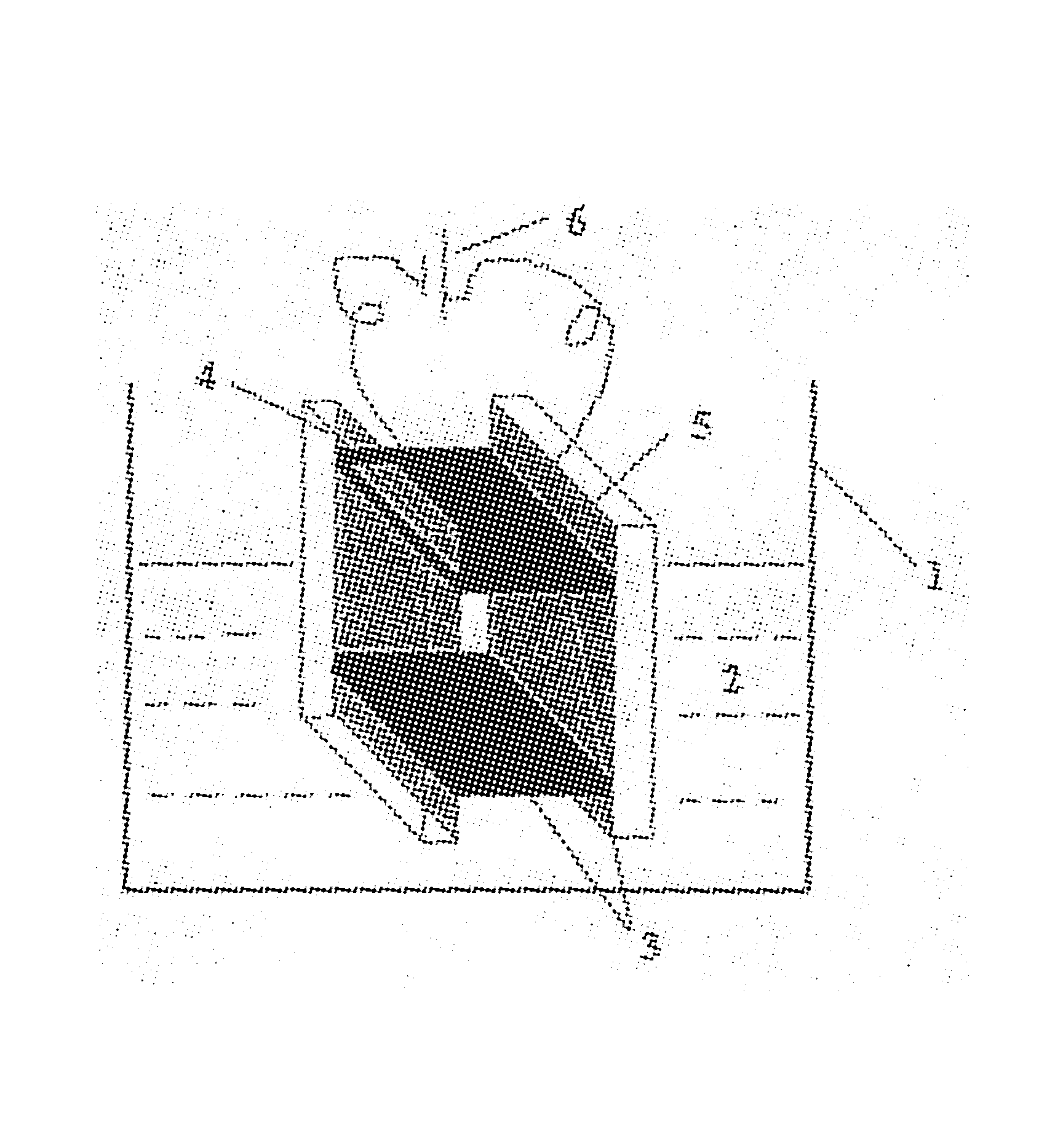
图1为本发明的装置示意图;Fig. 1 is a device schematic diagram of the present invention;
图2为图1中模板电极组成示意图;Figure 2 is a schematic diagram of the composition of the template electrode in Figure 1;
图3为本发明富勒烯纳米线阵列生长示意图;3 is a schematic diagram of the growth of fullerene nanowire arrays of the present invention;
图4为本发明实施例采用的多孔阳极氧化铝模板的AFM照片;Fig. 4 is the AFM photograph of the porous anodized aluminum template that the embodiment of the present invention adopts;
图5为本发明实施例制备的C60纳米线阵列的SEM照片;Fig. 5 is the SEM photograph of the C60 nanowire array prepared by the embodiment of the present invention;
图6为本发明实施例制备的C60纳米线阵列的AFM照片和横断面分析的高度。Fig. 6 is the height of the AFM photo and cross-sectional analysis of the C 60 nanowire array prepared in the embodiment of the present invention.
具体实施方式Detailed ways
如图1所示,把富勒烯类电解液2转移到由聚四氟乙烯(Teflon)制成的电解池1中,电解液的溶剂为甲苯/乙腈=1/4-12体积比;4为对电极(负极);工作电极为固定在导电基底上的模板电极5,其组成见图2;用Teflon隔板隔离开两电极;当在电极两端施加20-400V时,带负电荷的富勒烯聚集体在电场作用下电泳到纳米模板孔洞中,形成纳米线,如图3所示;沉积时间为1-30min;沉积完毕后,将工作电极从电解池中取出,用大量的乙腈冲洗数次,然后,自然干燥;即制成与模板孔道一致的纳米线。As shown in Figure 1,
实施例:Example:
首先在多孔阳极氧化铝模板的一面真空蒸镀上一层Ag作为电极,厚度约有200纳米;然后将该模板的镀Ag电极固定在导电玻璃表面上,模板的另一面暴露于电解液中,形成工作电极;对电极采用另一导电玻璃,在使用前先用0.1molL-1的NaOH浸泡1h,经超声洗涤30min后,用丙酮浸泡2小时,再用蒸馏水冲洗干净,自然干燥后备用;电解池由Teflon或玻璃制成,容积约为10ml,中间用Teflon或玻璃的阻隔物隔离阳极与阴极。First, a layer of Ag is vacuum-deposited on one side of the porous anodized aluminum template as an electrode with a thickness of about 200 nanometers; then the Ag-plated electrode of the template is fixed on the surface of conductive glass, and the other side of the template is exposed to the electrolyte. Form the working electrode; use another conductive glass as the counter electrode, soak it with 0.1molL -1 NaOH for 1 hour before use, wash it ultrasonically for 30 minutes, soak it in acetone for 2 hours, rinse it with distilled water, and dry it naturally for later use; electrolysis The pool is made of Teflon or glass, with a volume of about 10ml, and the anode and cathode are separated by a Teflon or glass barrier in the middle.
取富勒烯的甲苯溶液加入到10倍体积的乙腈中,混合液呈黄褐色,调整富勒烯的最终浓度为30μM。电泳沉积前,把该电解液转移到电解池中,于200V下进行恒电压沉积,模板电极作阳极,沉积时间为10min。沉积完毕后,将工作电极从电解池中取出,用大量的乙腈冲洗数次,然后,自然干燥。The toluene solution of fullerene was added to 10 times the volume of acetonitrile, the mixed solution was yellowish brown, and the final concentration of fullerene was adjusted to 30 μM. Before electrophoretic deposition, the electrolyte solution was transferred to an electrolytic cell, and a constant voltage deposition was performed at 200V, and the template electrode was used as an anode, and the deposition time was 10 min. After the deposition, the working electrode was taken out from the electrolytic cell, rinsed several times with a large amount of acetonitrile, and then dried naturally.
热处理在管式炉中进行.在氩气氛保护下,由室温加热到350℃(升温速度约为50℃/min),恒温3h后停止加热,室温静置冷却后即可。Heat treatment is carried out in a tube furnace. Under the protection of argon atmosphere, heat from room temperature to 350 °C (heating rate is about 50 °C/min), stop heating after constant temperature for 3 hours, and let it stand at room temperature to cool.
参见图4,由于选用的多孔阳极氧化铝模板是由中央具有圆孔(Pore)的六方形柱状体(Cell)成六角蜂窝状排列的竖直孔阵列,因此,以它为模板得到的为平行排列的有序富勒烯纳米线阵列。根据需要多孔阳极氧化铝模板可用1M的NaOH溶液除去。图5为所得C60纳米线阵列的SEM照片,可以看出纳米线直径均匀且平行排列,长度约为19μm。图6是分散在云母表面的C60纳米线的AFM照片,对它作横断面分析可得其高度(代表纳米线的直径)为41和47nm,与所用模板的孔径一致。Referring to Figure 4, since the selected porous anodized aluminum template is a hexagonal columnar body (Cell) with a round hole (Pore) in the center, it is a vertical hole array arranged in a hexagonal honeycomb shape. Therefore, using it as a template to obtain a parallel Arrays of ordered fullerene nanowires. Porous anodized alumina templates can be removed with 1M NaOH solution as needed. Figure 5 is the SEM photo of the obtained C 60 nanowire array, it can be seen that the diameter of the nanowires is uniform and arranged in parallel, and the length is about 19 μm. Figure 6 is an AFM photo of C 60 nanowires dispersed on the surface of mica, and its cross-sectional analysis shows that its height (representing the diameter of the nanowire) is 41 and 47 nm, which is consistent with the aperture of the template used.
需要说明的是,上述实施例只是用来说明本发明的技术特征,不是用来限定本发明的专利申请范围,比如本实施例中的多孔阳极氧化铝模板也可采用聚合物过滤膜等但其原理仍属本发明的专利申请范畴。It should be noted that the above-mentioned embodiments are only used to illustrate the technical characteristics of the present invention, and are not used to limit the scope of patent application of the present invention. For example, the porous anodized aluminum template in this embodiment can also use polymer filter membranes, etc. Principle still belongs to the scope of patent application of the present invention.
Claims (6)
Priority Applications (1)
| Application Number | Priority Date | Filing Date | Title |
|---|---|---|---|
| CN 02105607 CN1195103C (en) | 2002-04-15 | 2002-04-15 | Process for electrochemically preparing nanoline array of Fullerenes |
Applications Claiming Priority (1)
| Application Number | Priority Date | Filing Date | Title |
|---|---|---|---|
| CN 02105607 CN1195103C (en) | 2002-04-15 | 2002-04-15 | Process for electrochemically preparing nanoline array of Fullerenes |
Publications (2)
| Publication Number | Publication Date |
|---|---|
| CN1451785A CN1451785A (en) | 2003-10-29 |
| CN1195103C true CN1195103C (en) | 2005-03-30 |
Family
ID=29220720
Family Applications (1)
| Application Number | Title | Priority Date | Filing Date |
|---|---|---|---|
| CN 02105607 Expired - Fee Related CN1195103C (en) | 2002-04-15 | 2002-04-15 | Process for electrochemically preparing nanoline array of Fullerenes |
Country Status (1)
| Country | Link |
|---|---|
| CN (1) | CN1195103C (en) |
Cited By (1)
| Publication number | Priority date | Publication date | Assignee | Title |
|---|---|---|---|---|
| CN101241105B (en) * | 2007-02-06 | 2011-08-03 | 中国科学院化学研究所 | Electrochemical Detection Method of Ultratrace Aromatic Nitro Compounds |
Families Citing this family (3)
| Publication number | Priority date | Publication date | Assignee | Title |
|---|---|---|---|---|
| CN100572269C (en) * | 2005-11-18 | 2009-12-23 | 鸿富锦精密工业(深圳)有限公司 | Apparatus and method for directional growth of carbon nanotube arrays |
| CN108905924B (en) * | 2018-07-23 | 2020-10-16 | 东北大学秦皇岛分校 | Chemical reaction device for controllable nano material synthesis |
| CN116003843A (en) * | 2022-12-22 | 2023-04-25 | 之江实验室 | Asymmetric polypyrrole nano-pillar array film, preparation method thereof and application thereof in gas sensor |
-
2002
- 2002-04-15 CN CN 02105607 patent/CN1195103C/en not_active Expired - Fee Related
Cited By (1)
| Publication number | Priority date | Publication date | Assignee | Title |
|---|---|---|---|---|
| CN101241105B (en) * | 2007-02-06 | 2011-08-03 | 中国科学院化学研究所 | Electrochemical Detection Method of Ultratrace Aromatic Nitro Compounds |
Also Published As
| Publication number | Publication date |
|---|---|
| CN1451785A (en) | 2003-10-29 |
Similar Documents
| Publication | Publication Date | Title |
|---|---|---|
| Li et al. | Conducting polymer nanomaterials: electrosynthesis and applications | |
| Nie et al. | Gradient doped polymer nanowire for moistelectric nanogenerator | |
| Gan et al. | Spontaneous and fast growth of large‐area graphene nanofilms facilitated by oil/water interfaces | |
| Boccaccini et al. | Electrophoretic deposition of carbon nanotubes | |
| Malinauskas et al. | Conducting polymer-based nanostructurized materials: electrochemical aspects | |
| Guo et al. | Well‐Defined Fullerene Nanowire Arrays | |
| Zhang et al. | Graphene papers: smart architecture and specific functionalization for biomimetics, electrocatalytic sensing and energy storage | |
| Zhang et al. | One-pot green synthesis, characterizations, and biosensor application of self-assembled reduced graphene oxide–gold nanoparticle hybrid membranes | |
| Sun et al. | Cyclic voltammetry for the fabrication of high dense silver nanowire arrays with the assistance of AAO template | |
| AU2011279530A1 (en) | Material and applications therefor | |
| Zhu et al. | One-step electrochemical approach to the synthesis of graphene/MnO2 nanowall hybrids | |
| Li et al. | Solution self-assembly of an alternating copolymer toward hollow carbon nanospheres with uniform micropores | |
| Wysocka-Żołopa et al. | Electrochemical synthesis and properties of conical polypyrrole structures | |
| CN101003909A (en) | Electrochemical combined deposition method for preparing structure of composite membrane of Nano carbon tube - metal | |
| Piao et al. | Fabrication of nanostructured materials using porous alumina template and their applications for sensing and electrocatalysis | |
| Wang et al. | Electrochemical composite deposition of porous cactus-like manganese oxide/reduced graphene oxide–carbon nanotube hybrids for high-power asymmetric supercapacitors | |
| Zhang et al. | Synthesis and electrochemical sensing toward heavy metals of bunch-like bismuth nanostructures | |
| CN1609283A (en) | Preparation method of ordered porous anodic alumina template | |
| Wang et al. | Fabrication of nanostructure via self-assembly of nanowires within the AAO template | |
| Alameen et al. | Flexible all-solid-state supercapacitor based on polyhedron C-ZIF-8/PANI composite synthesized by unipolar pulse electrodeposition method | |
| Jessl et al. | Anisotropic carbon nanotube structures with high aspect ratio nanopores for Li-ion battery anodes | |
| US20140106232A1 (en) | Nanoscale three-dimensional battery architecture | |
| Beker et al. | Bioinspired nanostructural peptide materials for supercapacitor electrodes | |
| CN102492139A (en) | Polyaniline nanometer microsphere prepared with solution method and method thereof | |
| CN1215973C (en) | Electrochemical preparation method of fullerene nanotubes |
Legal Events
| Date | Code | Title | Description |
|---|---|---|---|
| C10 | Entry into substantive examination | ||
| SE01 | Entry into force of request for substantive examination | ||
| C06 | Publication | ||
| PB01 | Publication | ||
| C10 | Entry into substantive examination | ||
| SE01 | Entry into force of request for substantive examination | ||
| C14 | Grant of patent or utility model | ||
| GR01 | Patent grant | ||
| C17 | Cessation of patent right | ||
| CF01 | Termination of patent right due to non-payment of annual fee |
Granted publication date: 20050330 Termination date: 20140415 |