CN115758131A - Wind power scene data generation method, device and system for generating countermeasure network based on correction condition - Google Patents
Wind power scene data generation method, device and system for generating countermeasure network based on correction condition Download PDFInfo
- Publication number
- CN115758131A CN115758131A CN202211272477.6A CN202211272477A CN115758131A CN 115758131 A CN115758131 A CN 115758131A CN 202211272477 A CN202211272477 A CN 202211272477A CN 115758131 A CN115758131 A CN 115758131A
- Authority
- CN
- China
- Prior art keywords
- wind power
- data
- event
- generator
- predicted
- Prior art date
- Legal status (The legal status is an assumption and is not a legal conclusion. Google has not performed a legal analysis and makes no representation as to the accuracy of the status listed.)
- Granted
Links
Images


Landscapes
- Control Of Eletrric Generators (AREA)
- Wind Motors (AREA)
Abstract
本发明公开了一种基于校正条件生成对抗网络的风电场景数据生成方法、装置及系统,包括将获取到的预测风电数据和真实风电数据划分为训练集和测试集;获取预设的校正条件生成对抗网络,所述校正条件生成对抗网络包括条件校正器、判别器和生成器;所述条件校正器用于对接收到的数据进行校正,其输出端分别与所述判别器和生成器相连;利用所述训练集训练所述校正条件生成对抗网络,直至判别器和生成器之间达到Nash均衡;利用训练好的校正条件生成对抗网络输出风电场景数据。本发明能够获得更加准确的风电场景数据。

The invention discloses a method, device and system for generating wind power scene data based on a correction condition to generate an adversarial network, including dividing the obtained predicted wind power data and real wind power data into a training set and a test set; The confrontation network, the correction condition generation confrontation network includes a condition corrector, a discriminator and a generator; the condition corrector is used to correct the received data, and its output is connected to the discriminator and the generator respectively; using The training set trains the correction condition to generate an adversarial network until a Nash equilibrium is reached between the discriminator and the generator; the trained correction condition is used to generate the adversarial network to output wind power scene data. The invention can obtain more accurate wind power scene data.
Description
技术领域technical field
本发明属于风电出力场景数据生成领域,具体涉及一种基于校正条件生成对抗网络的风电场景数据生成方法、装置及系统。The invention belongs to the field of wind power output scene data generation, and in particular relates to a method, device and system for generating wind power scene data based on correction conditions to generate an adversarial network.
背景技术Background technique
风电出力场景是电力系统规划、运行的数据基础。统计学方法描述风电出力的不确定性成为了常用方法。统计学方法采用先验的统计模型,通过拟合风电历史数据并求解模型的参数,再进行抽样以生成风电出力场景。统计理论下的风电场景生成方法包括:蒙特卡洛抽样、场景树、动态场景树和马尔可夫链等。采用统计理论描述风电出力需假设固定及先验的概率模型,而风电出力的模糊性和随机性难以满足不变的概率模型,且概率模型的参数维度决定了该方法难以全面地描述风电不确定性出力的高维特征,生成场景数据存在特征模态单一、波动范围大、精度欠佳等问题。Wind power output scenarios are the data basis for power system planning and operation. Statistical methods to describe the uncertainty of wind power output have become a common method. Statistical methods use a priori statistical model to generate wind power output scenarios by fitting historical data of wind power and solving the parameters of the model, and then sampling. Wind power scene generation methods based on statistical theory include: Monte Carlo sampling, scene tree, dynamic scene tree and Markov chain, etc. Using statistical theory to describe wind power output needs to assume a fixed and prior probability model, but the fuzziness and randomness of wind power output are difficult to satisfy the constant probability model, and the parameter dimension of the probability model determines that it is difficult for this method to fully describe the uncertainty of wind power. Due to the high-dimensional features of high-efficiency, the generation of scene data has problems such as single feature mode, large fluctuation range, and poor accuracy.
发明内容Contents of the invention
针对上述问题,本发明提出一种基于校正条件生成对抗网络的风电场景数据生成方法、装置及系统,充分考虑了风电历史预测数据的准确性,在生成对抗网络中设计条件校正器,能够准确识别风电预测失准事件和风电爬坡事件,对作为条件信息的风电历史预测数据进行清洗,保证条件信息的高度可参考性。In view of the above problems, the present invention proposes a method, device and system for generating wind power scene data based on the correction condition generating confrontation network, fully considering the accuracy of wind power historical prediction data, and designing a condition corrector in the generating confrontation network, which can accurately identify Inaccurate wind power forecasting events and wind power ramp-up events clean the historical wind power forecast data as condition information to ensure high referenceability of condition information.
为了实现上述技术目的,达到上述技术效果,本发明通过以下技术方案实现:In order to achieve the above-mentioned technical purpose and achieve the above-mentioned technical effect, the present invention is realized through the following technical solutions:
第一方面,本发明提供了一种基于校正条件生成对抗网络的风电场景数据生成方法,包括:In the first aspect, the present invention provides a method for generating wind power scene data based on correction conditions to generate an adversarial network, including:
将获取到的预测风电数据和真实风电数据划分为训练集和测试集;Divide the obtained predicted wind power data and real wind power data into training set and test set;
获取预设的校正条件生成对抗网络,所述校正条件生成对抗网络包括条件校正器、判别器和生成器;所述条件校正器用于对接收到的数据进行校正,其输出端分别与所述判别器和生成器相连;Obtain preset correction conditions to generate an adversarial network, which includes a condition corrector, a discriminator, and a generator; the condition corrector is used to correct the received data, and its output is respectively connected to the discriminator The generator is connected to the generator;
利用所述训练集训练所述校正条件生成对抗网络,直至判别器和生成器之间达到Nash均衡;Using the training set to train the correction condition to generate an adversarial network until Nash equilibrium is reached between the discriminator and the generator;
利用所述训练集和测试集对训练好的校正条件生成对抗网络完成交叉验证;Using the training set and the test set to generate an adversarial network for the trained correction conditions to complete cross-validation;
利用训练好的校正条件生成对抗网络输出风电场景数据。Use the trained correction conditions to generate the wind power scene data output by the confrontation network.
可选地,所述利用所述训练集训练所述校正条件生成对抗网络,直至判别器和生成器之间达到Nash均衡,包括以下步骤:Optionally, using the training set to train the correction condition to generate an adversarial network until a Nash equilibrium is reached between the discriminator and the generator comprises the following steps:
将所述训练集中的预测风电数据和真实风电数据均输入至所述条件校正器,由所述条件校正器对训练集中的数据进行校正,获得校正条件数据,并将所述校正条件数据分别发送至判别器和生成器;Input both the predicted wind power data and the real wind power data in the training set to the condition corrector, and the condition corrector corrects the data in the training set to obtain correction condition data, and send the correction condition data respectively to discriminator and generator;
将所述训练集中的真实风电数据输入至所述判别器;inputting real wind power data in the training set to the discriminator;
利用所述生成器的多层卷积不断提取校正条件数据的分布特征,得到生成数据;Using the multi-layer convolution of the generator to continuously extract the distribution characteristics of the correction condition data to obtain the generated data;
利用所述判别器的多层卷积完成校正条件数据与生成数据之间的分类监督学习任务,通过与生成器的反复博弈,直至达到Nash均衡。The multi-layer convolution of the discriminator is used to complete the classification supervision learning task between the correction condition data and the generated data, and through repeated games with the generator, until the Nash equilibrium is reached.
可选地,所述条件校正器包括第一层网络和第二层网络;Optionally, the condition corrector includes a first layer network and a second layer network;
将训练集中的预测风电数据分为预测失准事件A1和预测合理事件A2;Divide the predicted wind power data in the training set into prediction inaccurate event A1 and prediction reasonable event A2;
当所述训练集输入至所述条件校正器后,利用所述第一层网络根据预测误差,判断预测失准事件A1是否发生;After the training set is input to the condition corrector, use the first layer network to judge whether the prediction inaccuracy event A1 occurs according to the prediction error;
当判断完预测失准事件A1后,利用所述第二层网络基于改进旋转门算法识别出预测失准事件A1下的风电爬坡事件A3;After judging the prediction misalignment event A1, use the second layer network to identify the wind power climbing event A3 under the prediction misalignment event A1 based on the improved revolving door algorithm;
将预测风电数据中识别为风电爬坡事件A3的数据片段保留,剩余数据片段利用对应的真实风电数据替换,生成新的预测风电数据,用作条件标签输入至生成器和判别器。The data segment identified as the wind power ramp event A3 in the predicted wind power data is retained, and the remaining data segments are replaced with the corresponding real wind power data to generate new predicted wind power data, which is used as a conditional label input to the generator and discriminator.
可选地,所述利用所述第一层网络根据预测误差,判断预测失准事件A1是否发生,具体包括:Optionally, using the first-layer network to determine whether the prediction inaccuracy event A1 occurs according to the prediction error specifically includes:
基于训练集中的预测风电数据和真实风电数据,计算出预测误差;Based on the predicted wind power data and real wind power data in the training set, the prediction error is calculated;
当所述预测误差满足


当所述预测误差满足
可选地,所述利用所述第二层网络基于改进旋转门算法识别出预测失准事件A1下的风电爬坡事件A3,具体包括:Optionally, using the second-layer network to identify the wind power climbing event A3 under the prediction misalignment event A1 based on the improved revolving door algorithm specifically includes:
将训练集中的真实风电数据输入至旋转门算法模块;Input the real wind power data in the training set to the revolving door algorithm module;
利用旋转门算法模块将真实风电数据划分为若干个阶段,并根据风电爬坡事件A3的定义判断每个阶段是否有风电爬坡事件A3发生;其中,风电爬坡事件A3定义具体为:风电功率的变化幅度与额定功率相比满足第一设定比例,则记为爬坡事件,或风电功率的变化幅度与额定功率相比满足第二设定比例且持续时间满足预设阈值,则记为爬坡事件;Use the revolving door algorithm module to divide the real wind power data into several stages, and judge whether there is a wind power ramp event A3 in each stage according to the definition of the wind power ramp event A3; among them, the definition of the wind power ramp event A3 is: wind power Compared with the rated power, the range of change of wind power meets the first set ratio, which is recorded as a ramp event, or the range of change of wind power compared with the rated power satisfies the second set ratio and the duration meets the preset threshold, then it is recorded as hill climbing event;
利用旋转门算法模块输出整个真实风电数据的判断结果,完成风电爬坡事件A3的识别;Use the revolving door algorithm module to output the judgment result of the entire real wind power data, and complete the identification of the wind power climbing event A3;
所述将预测风电数据中识别为风电爬坡事件A3的数据片段保留,具体为:The data segment identified as the wind power ramp event A3 in the predicted wind power data is retained, specifically:
将所述判断结果按时段对应到预测风电数据,获得预测风电数据中识别为风电爬坡事件A3的数据片段;Corresponding the judgment result to the predicted wind power data according to the period, and obtaining the data segment identified as the wind power climbing event A3 in the predicted wind power data;
保留预测风电数据中识别为风电爬坡事件A3的数据片段。The data segment identified as the wind power ramp event A3 in the predicted wind power data is kept.
可选地,所述判别器和生成器中的卷积均采用膨胀卷积。Optionally, both the discriminator and the convolution in the generator use dilated convolution.
第二方面,本发明提供了一种基于校正条件生成对抗网络的风电场景数据生成装置,其特征在于,包括:In the second aspect, the present invention provides a wind power scene data generation device based on correction conditions to generate an adversarial network, which is characterized in that it includes:
数据划分模块,被配置为用于将获取到的预测风电数据和真实风电数据划分为训练集和测试集;A data division module configured to divide the obtained predicted wind power data and real wind power data into a training set and a test set;
获取模块,被配置为用于获取预设的校正条件生成对抗网络,所述校正条件生成对抗网络包括条件校正器、判别器和生成器;所述条件校正器用于对接收到的数据进行校正,其输出端分别与所述判别器和生成器相连;The acquisition module is configured to acquire a preset correction condition generation confrontation network, the correction condition generation confrontation network includes a condition corrector, a discriminator and a generator; the condition corrector is used to correct the received data, Its output end is respectively connected with described discriminator and generator;
训练模块,被配置为用于利用所述训练集训练所述校正条件生成对抗网络,直至判别器和生成器之间达到Nash均衡;A training module configured to use the training set to train the correction condition to generate an adversarial network until a Nash equilibrium is reached between the discriminator and the generator;
交叉验证模块,被配置为用于利用所述训练集和测试集对训练好的校正条件生成对抗网络完成交叉验证;The cross-validation module is configured to use the training set and the test set to complete the cross-validation of the trained correction condition generation confrontation network;
风电场景数据输出模块,被配置为用于利用训练好的校正条件生成对抗网络输出风电场景数据。The wind power scene data output module is configured to use the trained correction conditions to generate an adversarial network to output wind power scene data.
可选地,所述训练模块包括:Optionally, the training module includes:
校正子模块,被配置为用于将所述训练集中的预测风电数据和真实风电数据均输入至所述条件校正器,由所述条件校正器对训练集中的数据进行校正,获得校正条件数据,并将所述校正条件数据分别发送至判别器和生成器;The corrector module is configured to input both the predicted wind power data and the real wind power data in the training set to the condition corrector, and the condition corrector corrects the data in the training set to obtain corrected condition data, and sending the correction condition data to the discriminator and the generator respectively;
数据输入模块,被配置为用于将所述训练集中的真实风电数据输入至所述判别器;a data input module configured to input real wind power data in the training set to the discriminator;
数据生成模块,被配置为用于利用所述生成器的多层卷积不断提取校正条件数据的分布特征,得到生成数据;The data generation module is configured to continuously extract the distribution characteristics of the correction condition data by using the multi-layer convolution of the generator to obtain the generated data;
数据判别模块,利用所述判别器的多层卷积完成校正条件数据与生成数据之间的分类监督学习任务,通过与生成器的反复博弈,直至达到Nash均衡。The data discrimination module uses the multi-layer convolution of the discriminator to complete the classification supervision learning task between the correction condition data and the generated data, and through repeated games with the generator, until the Nash equilibrium is reached.
可选地,所述条件校正器包括第一层网络和第二层网络;Optionally, the condition corrector includes a first layer network and a second layer network;
将训练集中的预测风电数据分为预测失准事件A1和预测合理事件A2;Divide the predicted wind power data in the training set into prediction inaccurate event A1 and prediction reasonable event A2;
当所述训练集输入至所述条件校正器后,利用所述第一层网络根据预测误差,判断预测失准事件A1是否发生;After the training set is input to the condition corrector, use the first layer network to judge whether the prediction inaccuracy event A1 occurs according to the prediction error;
当判断完预测失准事件A1后,利用所述第二层网络基于改进旋转门算法识别出预测失准事件A1下的风电爬坡事件A3;After judging the prediction misalignment event A1, use the second layer network to identify the wind power climbing event A3 under the prediction misalignment event A1 based on the improved revolving door algorithm;
将预测风电数据中识别为风电爬坡事件A3的数据片段保留,剩余数据片段利用对应的真实风电数据替换,生成新的预测风电数据,用作条件标签输入至生成器和判别器。The data segment identified as the wind power ramp event A3 in the predicted wind power data is retained, and the remaining data segments are replaced with the corresponding real wind power data to generate new predicted wind power data, which is used as a conditional label input to the generator and discriminator.
可选地,所述利用所述第一层网络根据预测误差,判断预测失准事件A1是否发生,具体包括:Optionally, using the first-layer network to determine whether the prediction inaccuracy event A1 occurs according to the prediction error specifically includes:
基于训练集中的预测风电数据和真实风电数据,计算出预测误差;Based on the predicted wind power data and real wind power data in the training set, the prediction error is calculated;
当所述预测误差满足


当所述预测误差满足
可选地,所述利用所述第二层网络基于改进旋转门算法识别出预测失准事件A1下的风电爬坡事件A3,具体包括:Optionally, using the second-layer network to identify the wind power climbing event A3 under the prediction misalignment event A1 based on the improved revolving door algorithm specifically includes:
将训练集中的真实风电数据输入至旋转门算法模块;Input the real wind power data in the training set to the revolving door algorithm module;
利用旋转门算法模块将真实风电数据划分为若干个阶段,并根据风电爬坡事件A3的定义判断每个阶段是否有风电爬坡事件A3发生;其中,风电爬坡事件A3定义具体为:风电功率的变化幅度与额定功率相比满足第一设定比例,则记为爬坡事件,或风电功率的变化幅度与额定功率相比满足第二设定比例且持续时间满足预设阈值,则记为爬坡事件;Use the revolving door algorithm module to divide the real wind power data into several stages, and judge whether there is a wind power ramp event A3 in each stage according to the definition of the wind power ramp event A3; among them, the definition of the wind power ramp event A3 is: wind power Compared with the rated power, the range of change of wind power meets the first set ratio, which is recorded as a ramp event, or the range of change of wind power compared with the rated power satisfies the second set ratio and the duration meets the preset threshold, then it is recorded as hill climbing event;
利用旋转门算法模块输出整个真实风电数据的判断结果,完成风电爬坡事件A3的识别;Use the revolving door algorithm module to output the judgment result of the entire real wind power data, and complete the identification of the wind power climbing event A3;
所述将预测风电数据中识别为风电爬坡事件A3的数据片段保留,具体为:The data segment identified as the wind power ramp event A3 in the predicted wind power data is retained, specifically:
将所述判断结果按时段对应到预测风电数据,获得预测风电数据中识别为风电爬坡事件A3的数据片段;Corresponding the judgment result to the predicted wind power data according to the period, and obtaining the data segment identified as the wind power climbing event A3 in the predicted wind power data;
保留预测风电数据中识别为风电爬坡事件A3的数据片段。The data segment identified as the wind power ramp event A3 in the predicted wind power data is retained.
第三方面,本发明提供了一种基于校正条件生成对抗网络的风电场景数据生成系统,包括存储介质和处理器;In a third aspect, the present invention provides a wind power scenario data generation system based on correction conditions to generate an adversarial network, including a storage medium and a processor;
所述存储介质用于存储指令;The storage medium is used to store instructions;
所述处理器用于根据所述指令进行操作以执行根据第一方面中任一项所述方法的步骤。The processor is configured to operate in accordance with the instructions to perform the steps of the method according to any one of the first aspects.
与现有技术相比,本发明的有益效果:Compared with prior art, the beneficial effect of the present invention:
本发明提出一种基于校正条件生成对抗网络的风电场景数据生成方法、装置及系统,充分考虑了风电历史预测数据的准确性,在生成对抗网络中设计条件校正器,利用预测误差准确识别出风电预测失准事件,并利用改进旋转门算法识别处风电爬坡事件,实现对标签信息的准确性加以判别,进而实现对作为条件信息的风电历史预测数据进行清洗,保证条件信息的高度可参考,提升校正条件生成对抗网络训练的稳定性和收敛性,缓解校正条件生成对抗网络崩溃的问题,最终获得更加准确的风电场景数据。The present invention proposes a method, device and system for generating wind power scene data based on a correction condition generation confrontation network, fully considering the accuracy of wind power historical prediction data, designing a condition corrector in the generation confrontation network, and using prediction errors to accurately identify wind power Predict inaccurate events, and use the improved revolving door algorithm to identify wind power climbing events, realize the accuracy of label information, and then realize the cleaning of wind power historical forecast data as condition information, so as to ensure that the condition information can be referenced highly. Improve the stability and convergence of the correction condition generation confrontation network training, alleviate the problem of correction condition generation confrontation network collapse, and finally obtain more accurate wind power scene data.
附图说明Description of drawings
为了使本发明的内容更容易被清楚地理解,下面根据具体实施例并结合附图,对本发明作进一步详细的说明,其中:In order to make the content of the present invention easier to understand clearly, the present invention will be described in further detail below according to specific embodiments in conjunction with the accompanying drawings, wherein:
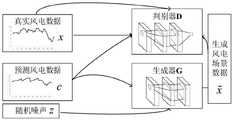
图1为本发明一种实施例的条件生成对抗网络图的结构示意图;Fig. 1 is a schematic structural diagram of a conditional generation confrontation network graph according to an embodiment of the present invention;
图2为本发明一种实施例的校正条件生成对抗网络图的结构示意图;Fig. 2 is a schematic structural diagram of a correction condition generation confrontation network graph according to an embodiment of the present invention;
图3为本发明一种实施例的膨胀卷积操作示意图;Fig. 3 is a schematic diagram of dilated convolution operation in an embodiment of the present invention;
图4为本发明一种实施例的条件校正器工作原理示意图。Fig. 4 is a schematic diagram of the working principle of the condition corrector according to an embodiment of the present invention.
具体实施方式Detailed ways
为了使本发明的目的、技术方案及优点更加清楚明白,以下结合实施例,对本发明进行进一步详细说明。应当理解,此处所描述的具体实施例仅仅用以解释本发明,并不用于限定本发明的保护范围。In order to make the object, technical solution and advantages of the present invention more clear, the present invention will be further described in detail below in conjunction with the examples. It should be understood that the specific embodiments described here are only used to explain the present invention, and are not intended to limit the protection scope of the present invention.
下面结合附图对本发明的应用原理作详细的描述。The application principle of the present invention will be described in detail below in conjunction with the accompanying drawings.
为实现风电的高效消纳,刻画风电出力的间歇性、随机性和波动性成为有待解决的关键问题。目前以生成对抗网络为代表的深度学习在数据和场景生成方面极具技术优势。利用生成对抗网络能学习训练数据中的高维流形特征,能一定程度解决风电时序数据建模和生成困难的问题,但是最终生成的风电场景数据准确性不高。为此,本发明充分考虑了风电历史预测数据的准确性,在生成对抗网络中设计条件校正器,能够准确识别风电预测失准事件和风电爬坡事件,对作为条件信息的风电历史预测数据进行清洗,保证条件信息的高度可参考性,最终能够获得更加准确的风电场景数据。In order to realize the efficient consumption of wind power, describing the intermittency, randomness and volatility of wind power output has become a key problem to be solved. At present, deep learning represented by generative confrontation network has great technical advantages in data and scene generation. Using the GAN can learn the high-dimensional manifold features in the training data, which can solve the difficult problem of modeling and generating wind power time series data to a certain extent, but the accuracy of the final wind power scene data generated is not high. For this reason, the present invention fully considers the accuracy of wind power historical forecast data, and designs a condition corrector in the generative confrontation network, which can accurately identify wind power forecast inaccurate events and wind power ramp-up events, and carry out the wind power historical forecast data as condition information. Cleaning ensures the high degree of referenceability of the condition information, and finally can obtain more accurate wind power scene data.
实施例1Example 1
本发明实施例中提供了一种基于校正条件生成对抗网络的风电场景数据生成方法,包括以下步骤:An embodiment of the present invention provides a method for generating wind power scene data based on correction conditions to generate an adversarial network, including the following steps:
(1)将获取到的预测风电数据和真实风电数据划分为训练集和测试集;(1) Divide the obtained predicted wind power data and real wind power data into training set and test set;
(2)获取预设的校正条件生成对抗网络,所述校正条件生成对抗网络包括条件校正器、判别器和生成器;所述条件校正器用于对接收到的数据进行校正,其输出端分别与所述判别器和生成器相连;(2) Obtain preset correction conditions to generate an adversarial network, which includes a condition corrector, a discriminator, and a generator; the condition corrector is used to correct the received data, and its output terminals are respectively connected to The discriminator is connected to the generator;
(3)利用所述训练集训练所述校正条件生成对抗网络,直至判别器和生成器之间达到Nash均衡;(3) using the training set to train the correction condition to generate an adversarial network until reaching Nash equilibrium between the discriminator and the generator;
(4)利用所述训练集和测试集对训练好的校正条件生成对抗网络完成交叉验证;(4) Utilize described training set and test set to generate the confrontational network to complete the cross-validation to the corrected condition of training;
(5)利用训练好的校正条件生成对抗网络输出风电场景数据。(5) Use the trained correction conditions to generate an adversarial network to output wind power scene data.
在本发明实施例的一种具体实施方式中,所述将获取到的预测风电数据和真实风电数据划分为训练集和测试集,可以通过以下子步骤实现:In a specific implementation manner of the embodiment of the present invention, the division of the acquired predicted wind power data and real wind power data into a training set and a test set may be achieved through the following sub-steps:
分别采集预测风电数据(即历史预测数据)和真实风电数据(即历史实测数据),所述预测风电数据和真实风电数据的样本维度须相同,按1:4的比例随机分配测试解和样本集的样本数量。在具体实施过程中,所述1:4的比例可以根据实际情况进行修改。Collect predicted wind power data (that is, historical forecast data) and real wind power data (that is, historical measured data) respectively. The sample dimensions of the predicted wind power data and the real wind power data must be the same, and the test solution and sample set are randomly assigned in a ratio of 1:4 of sample size. During specific implementation, the ratio of 1:4 may be modified according to actual conditions.
在本发明实施例的一种具体实施方式中,所述校正条件生成对抗网络可以通过以下步骤来构建:In a specific implementation manner of the embodiment of the present invention, the correction condition generation confrontation network can be constructed through the following steps:
a)构建条件生成对抗网络:a) Build a conditional generative confrontation network:
条件生成对抗网络包括两个深度神经网络:判别器和生成器。所述生成器的通过学习预测风电数据的潜在分布将随机噪声信号映射到生成样本中,判别器尽可能判断输入数据是真实风电数据还是条件信息(即预测风电数据)下生成的数据。Conditional Generative Adversarial Networks consist of two deep neural networks: a discriminator and a generator. The generator maps random noise signals to generated samples by learning the potential distribution of predicted wind power data, and the discriminator tries to determine whether the input data is real wind power data or data generated under conditional information (ie, predicted wind power data).
如图1所示,预测风电数据为条件信息c(也可以称为标签信息c),该条件信息输入判别器使其区别于常规的无监督生成对抗网络。生成器和判别器的内部层次结构均可包括卷积层、池化层和全连接层,以实现卷积、激活函数和批标准化操作,完成对风电时序和幅值特征信息的提取和识别。As shown in Figure 1, the predicted wind power data is conditional information c (also called label information c), which is input into the discriminator to distinguish it from the conventional unsupervised generative adversarial network. The internal hierarchy of the generator and the discriminator can include convolutional layers, pooling layers, and fully connected layers to implement convolution, activation functions, and batch normalization operations, and complete the extraction and identification of wind power timing and amplitude feature information.
随机噪声信号z和条件信息c合成输入生成器,而生成器将生成含条件信息的场景样本
第一、判断生成数据是否满足条件信息c;First, judge whether the generated data satisfies the condition information c;
第二、判断生成数据的分布与真实风电数据的分布之间的概率距离。可采用Wasserstein距离描述,该概率距离W定义如下:Second, judge the probability distance between the distribution of generated data and the distribution of real wind power data. It can be described by Wasserstein distance, and the probability distance W is defined as follows:

式中:


式中:E表示不同分布的期望值;D(~)为判别器的目标函数。上式可理解为一个带条件信息的极大极小值博弈问题,生成器希望提升生成样本被判别器判断为真的概率,而判别器希望尽可能提升其自身判断出生成器生成的样本为假的概率,经过反复博弈,生成器可生成符合条件信息的并接近真实风电样本的场景数据。判别器和生成器中均有卷积操作,本发明实施例中为提升卷积操作捕捉风电出力在纵向和横向相关性的能力,引入膨胀卷积。通过修改膨胀率,不同的膨胀率对应不同的感受野,即卷积核中填充0,进而获得样本的高维信息。图3为不同膨胀率的卷积示意。In the formula: E represents the expected value of different distributions; D(~) is the objective function of the discriminator. The above formula can be understood as a maxima-minimum game problem with conditional information. The generator hopes to increase the probability that the generated sample is judged to be true by the discriminator, and the discriminator hopes to improve its own judgment that the sample generated by the generator is as much as possible. False probability, after repeated games, the generator can generate scene data that meets the conditional information and is close to real wind power samples. Both the discriminator and the generator have convolution operations. In the embodiment of the present invention, in order to improve the ability of the convolution operation to capture the vertical and horizontal correlation of wind power output, dilated convolution is introduced. By modifying the expansion rate, different expansion rates correspond to different receptive fields, that is, the convolution kernel is filled with 0, and then the high-dimensional information of the sample is obtained. Figure 3 is a schematic diagram of convolution with different dilation rates.
b)构建条件校正器b) Build conditional corrector
条件信息作为生成器的输入是具有标签作用的。在实际风电预测问题中,风电本身的随机性、模糊性,以及预测间隔等问题都会造成预测精度不理想。若采用预测精度较差的数据作为条件信息输入生成器,将引入错误的标签信息,导致生成器生成偏离实际的场景数据。因此,本发明在条件生成对抗网络的基础上设计条件校正器构成如图2的校正条件生成对抗网络。As the input of the generator, the conditional information has a labeling effect. In the actual wind power forecasting problem, the randomness and fuzziness of wind power itself, as well as the prediction interval and other problems will cause the prediction accuracy to be unsatisfactory. If the data with poor prediction accuracy is used as the conditional information input to the generator, wrong label information will be introduced, causing the generator to generate scene data that deviates from the actual situation. Therefore, the present invention designs a conditional corrector on the basis of the conditional generation confrontation network to form a correction condition generation confrontation network as shown in FIG. 2 .
对比图1,图2中风电历史预测数据不再直接输入生成器,而是先与真实风电数据x联合输入条件校正器,由条件校正器进行数据校正,生成校正后的校正风电数据


在实际应用过程中,可以基于改进旋转门算法构建条件校正器,条件校正器构造方法如下:In the actual application process, the conditional corrector can be constructed based on the improved revolving door algorithm, and the construction method of the conditional corrector is as follows:
首先对预测误差et进行如下定义:First, the prediction error e t is defined as follows:
et=Pt real-Pt pre (3)e t =P t real -P t pre (3)
式中:Pt real、Pt pre分别为t时刻风电功率的实际值和预测值,时间分辨率为15分钟,即t=15min,(也可以根据实际需要进行适应性设计)。要求预测的月均方根误差率应小于20%,具体到分配到每个预测间隔内的预测误差方根误差率也应低于20%。In the formula: P t real , P t pre are the actual value and predicted value of wind power at time t, respectively, and the time resolution is 15 minutes, that is, t=15 min, (adaptive design can also be carried out according to actual needs). It is required that the monthly root mean square error rate of the forecast should be less than 20%, and the root mean square error rate of the forecast error allocated to each forecast interval should also be less than 20%.
当所述预测误差满足


当所述预测误差满足
预测失准事件A1定义中需要排除一类特殊情况,即风电爬坡事件。风电爬坡事件A3是指短时间风电功率急剧的上升和下降的情况,可由下式表示:In the definition of prediction inaccuracy event A1, a special case needs to be excluded, that is, wind power ramp-up event. The wind power climbing event A3 refers to the situation that the wind power power rises and falls sharply in a short period of time, which can be expressed by the following formula:

式中:
根据以上对预测事件的划分,为校正条件信息,图4设计了基于预测误差的条件校正器。According to the above division of forecast events, in order to correct condition information, a condition corrector based on forecast error is designed in Fig. 4 .
图4中的条件校正器有两层网络构成,分别定义为第一层网络和第二层网络,首先根据预测误差判断预测失准事件A1是否发生,当判断完预测失准事件A1后,启动改进旋转门算法,用于识别预测失准事件A1下的风电爬坡事件A3。即当所述训练集输入至所述条件校正器后,利用所述第一层网络根据预测误差,判断预测失准事件A1是否发生;当判断完预测失准事件A1后,利用所述第二层网络基于改进旋转门算法识别出预测失准事件A1下的风电爬坡事件A3。The condition corrector in Figure 4 consists of two layers of networks, which are respectively defined as the first layer network and the second layer network. Firstly, it is judged according to the prediction error whether the prediction inaccuracy event A1 occurs. After the prediction inaccuracy event A1 is judged, start An improved revolving door algorithm is used to identify the wind power ramp event A3 under the forecast misalignment event A1. That is, after the training set is input to the condition corrector, use the first layer network to judge whether the prediction inaccuracy event A1 occurs according to the prediction error; after judging the prediction inaccuracy event A1, use the second Based on the improved revolving door algorithm, the layer network identifies the wind power ramp event A3 under the forecast misalignment event A1.
改进旋转门算法可将风电时序的趋势化特征识别。首先需构造得分函数S,而爬坡事件的检测可转换为求解得分函数最大值的动态优化问题,该问题的目标函数J及其约束表示如下:The improved revolving door algorithm can identify the trend characteristics of wind power time series. First, the scoring function S needs to be constructed, and the detection of the climbing event can be transformed into a dynamic optimization problem to solve the maximum value of the scoring function. The objective function J and its constraints of this problem are expressed as follows:


S(i,j)=(j-i)2×A3(i,j) (10)S(i,j)=(ji) 2 ×A3(i,j) (10)
式中:目标函数J(i,j)在子区间内需取得最大值;S(i,k)是子区间中的得分值。爬坡趋势需满足式(9)。得分函数可具体表达为式(10)。A3(i,j)为子区间(i,j)上的爬坡事件标志位,为0-1变量,取值为1是代表爬坡事件发生,而取0时则在该子区间上没有发生爬坡事件。In the formula: the objective function J(i,j) needs to obtain the maximum value in the subinterval; S(i,k) is the score value in the subinterval. The climbing trend needs to satisfy formula (9). The scoring function can be specifically expressed as formula (10). A3(i, j) is the climbing event flag on the sub-interval (i, j), which is a 0-1 variable. The value of 1 means that the climbing event occurs, and when it is 0, there is no event in the sub-interval. A ramp event has occurred.
改进旋转门算法的主要流程如下:将训练集中的真实风电数据输入至旋转门算法模块;The main process of improving the revolving door algorithm is as follows: input the real wind power data in the training set to the revolving door algorithm module;
利用旋转门算法模块将真实风电数据划分为若干个阶段,并根据风电爬坡事件A3的定义判断每个阶段是否有风电爬坡事件A3发生;其中,风电爬坡事件A3定义具体为:风电功率的变化幅度与额定功率相比满足第一设定比例,则记为爬坡事件,或风电功率的变化幅度与额定功率相比满足第二设定比例且持续时间满足预设阈值,则记为爬坡事件;在具体实施过程中,可以做如下设置:风电功率的变化幅度大于额定功率的25%,记为风电爬坡事件;或风电功率的变化幅度大于额定功率的20%且持续时间大于4小时,记为风电爬坡事件。Use the revolving door algorithm module to divide the real wind power data into several stages, and judge whether there is a wind power ramp event A3 in each stage according to the definition of the wind power ramp event A3; among them, the definition of the wind power ramp event A3 is: wind power Compared with the rated power, the range of change of wind power meets the first set ratio, which is recorded as a ramp event, or the range of change of wind power compared with the rated power satisfies the second set ratio and the duration meets the preset threshold, then it is recorded as Slope event; in the specific implementation process, the following settings can be made: the change range of wind power is greater than 25% of the rated power, which is recorded as a wind power slope event; or the change range of wind power is greater than 20% of the rated power and the duration is longer than 4 hours, recorded as a wind power climbing event.
所述旋转门算法模块输出整个真实风电数据的判断结果,完成风电爬坡事件A3的识别;将判断结果按时段对应到预测风电数据,并对预测风电数据进行校正操作。The revolving door algorithm module outputs the judgment result of the entire real wind power data to complete the identification of the wind power ramp event A3; the judgment result is corresponding to the predicted wind power data according to the period, and the predicted wind power data is corrected.
校正操作如下:将所述判断结果按时段对应到预测风电数据,获得预测风电数据中识别为风电爬坡事件A3的数据片段;保留预测风电数据中识别为风电爬坡事件A3的数据片段,剩余预测风电数据片段被真实风电数据替换,获得新的预测风电数据,所述新的预测风电数据用作校正条件标签输入生成器和判别器。具体地,在进行数据拼接得到校正条件数据时,当预测失准时使用真实风电数据替代预测风电数据,如图2中以

在本发明实施例的一种具体实施方式中,所述利用所述训练集训练所述校正条件生成对抗网络,直至判别器和生成器之间达到Nash均衡,包括以下步骤:In a specific implementation manner of the embodiment of the present invention, said using said training set to train said correction condition generating confrontational network until a Nash equilibrium is reached between the discriminator and the generator comprises the following steps:
将所述训练集中的预测风电数据和真实风电数据均输入至所述条件校正器,由所述条件校正器对训练集中的数据进行校正,获得校正条件数据,并将所述校正条件数据分别发送至判别器和生成器;Input both the predicted wind power data and the real wind power data in the training set to the condition corrector, and the condition corrector corrects the data in the training set to obtain correction condition data, and send the correction condition data respectively to discriminator and generator;
将所述训练集中的真实风电数据输入至所述判别器;inputting real wind power data in the training set to the discriminator;
利用所述生成器的多层卷积不断提取校正条件数据的分布特征,得到生成数据;Using the multi-layer convolution of the generator to continuously extract the distribution characteristics of the correction condition data to obtain the generated data;
利用所述判别器的多层卷积完成校正条件数据与生成数据之间的分类监督学习任务,通过与生成器的反复博弈,直至达到Nash均衡。The multi-layer convolution of the discriminator is used to complete the classification supervision learning task between the correction condition data and the generated data, and through repeated games with the generator, until the Nash equilibrium is reached.
在本发明实施例的一种具体实施方式中,所述利用所述训练集和测试集对训练好的校正条件生成对抗网络完成交叉验证,具体包括以下步骤:In a specific implementation manner of the embodiments of the present invention, the cross-validation of the trained correction condition generation adversarial network by using the training set and the test set specifically includes the following steps:
基于CUDA的模型并行加速训练;CUDA-based model parallel accelerated training;
a)准备CUDA设备,选择CUDA11版本;a) Prepare CUDA device, select CUDA11 version;
b)准备CUDA环境,安装cuDNN;b) Prepare CUDA environment and install cuDNN;
c)利用CUDA指令读取数据,开始训练;c) Use CUDA instructions to read data and start training;
d)完成k-flod交叉验证,k取10,k-1份用于训练,1份用于验证,把每次模型的性能记录下来。d) Complete k-flod cross-validation, k is 10, k-1 is used for training, and 1 is used for verification, and the performance of each model is recorded.
实施例2Example 2
基于与实施例1相同的发明构思,本发明实施例中提供了一种基于校正条件生成对抗网络的风电场景数据生成装置,包括:Based on the same inventive concept as in
数据划分模块,被配置为用于将获取到的预测风电数据和真实风电数据划分为训练集和测试集;A data division module configured to divide the obtained predicted wind power data and real wind power data into a training set and a test set;
获取模块,被配置为用于获取预设的校正条件生成对抗网络,所述校正条件生成对抗网络包括条件校正器、判别器和生成器;所述条件校正器用于对接收到的数据进行校正,其输出端分别与所述判别器和生成器相连;The acquisition module is configured to acquire a preset correction condition generation confrontation network, the correction condition generation confrontation network includes a condition corrector, a discriminator and a generator; the condition corrector is used to correct the received data, Its output end is respectively connected with described discriminator and generator;
训练模块,被配置为用于利用所述训练集训练所述校正条件生成对抗网络,直至判别器和生成器之间达到Nash均衡;A training module configured to use the training set to train the correction condition to generate an adversarial network until a Nash equilibrium is reached between the discriminator and the generator;
风电场景数据输出模块,被配置为用于利用训练好的校正条件生成对抗网络输出风电场景数据。The wind power scene data output module is configured to use the trained correction conditions to generate an adversarial network to output wind power scene data.
本发明实施例中的基于校正条件生成对抗网络的风电场景数据生成装置,充分考虑了风电历史预测数据的准确性,在生成对抗网络中设计条件校正器,利用预测误差准确识别出风电预测失准事件,并利用改进旋转门算法识别处风电爬坡事件,实现对标签信息的准确性加以判别,进而实现对作为条件信息的风电历史预测数据进行清洗,保证条件信息的高度可参考,提升校正条件生成对抗网络训练的稳定性和收敛性,缓解校正条件生成对抗网络崩溃的问题,最终获得更加准确的风电场景数据。The wind power scene data generation device based on the correction condition generation confrontation network in the embodiment of the present invention fully considers the accuracy of the wind power historical forecast data, and designs a condition corrector in the generation confrontation network to accurately identify the inaccuracy of wind power prediction by using the prediction error Events, and use the improved revolving door algorithm to identify wind power climbing events, realize the accuracy of label information, and then realize the cleaning of wind power historical forecast data as condition information, ensure that the height of condition information can be referred to, and improve correction conditions The stability and convergence of the generation confrontation network training can alleviate the problem of correction condition generation confrontation network collapse, and finally obtain more accurate wind power scene data.
在本发明实施例的一种具体实施方式中,所述将获取到的预测风电数据和真实风电数据划分为训练集和测试集,可以通过以下子步骤实现:In a specific implementation manner of the embodiment of the present invention, the division of the acquired predicted wind power data and real wind power data into a training set and a test set may be achieved through the following sub-steps:
分别采集预测风电数据(即历史预测数据)和真实风电数据(即历史实测数据),所述预测风电数据和真实风电数据的样本维度须相同,按1:4的比例随机分配测试解和样本集的样本数量。在具体实施过程中,所述1:4的比例可以根据实际情况进行修改。Collect predicted wind power data (that is, historical forecast data) and real wind power data (that is, historical measured data) respectively. The sample dimensions of the predicted wind power data and the real wind power data must be the same, and the test solution and sample set are randomly assigned in a ratio of 1:4 of sample size. During specific implementation, the ratio of 1:4 may be modified according to actual conditions.
在本发明实施例的一种具体实施方式中,所述校正条件生成对抗网络可以通过以下步骤来构建:In a specific implementation manner of the embodiment of the present invention, the correction condition generation confrontation network can be constructed through the following steps:
a)构建条件生成对抗网络:a) Build a conditional generative confrontation network:
条件生成对抗网络包括两个深度神经网络:判别器和生成器。所述生成器的通过学习预测风电数据的潜在分布将随机噪声信号映射到生成样本中,判别器尽可能判断输入数据是真实风电数据还是条件信息(即预测风电数据)下生成的数据。Conditional Generative Adversarial Networks consist of two deep neural networks: a discriminator and a generator. The generator maps random noise signals to generated samples by learning the potential distribution of predicted wind power data, and the discriminator tries to determine whether the input data is real wind power data or data generated under conditional information (ie, predicted wind power data).
如图1所示,预测风电数据为条件信息c(也可以称为标签信息c),该条件信息输入判别器使其区别于常规的无监督生成对抗网络。生成器和判别器的内部层次结构均可包括卷积层、池化层和全连接层,以实现卷积、激活函数和批标准化操作,完成对风电时序和幅值特征信息的提取和识别。As shown in Figure 1, the predicted wind power data is conditional information c (also called label information c), which is input into the discriminator to distinguish it from the conventional unsupervised generative adversarial network. The internal hierarchy of the generator and the discriminator can include convolutional layers, pooling layers, and fully connected layers to implement convolution, activation functions, and batch normalization operations, and complete the extraction and identification of wind power timing and amplitude feature information.
随机噪声信号z和条件信息c合成输入生成器,而生成器将生成含条件信息的场景样本
第一、判断生成数据是否满足条件信息c;First, judge whether the generated data satisfies the condition information c;
第二、判断生成数据的分布与真实风电数据的分布之间的概率距离。可采用Wasserstein距离描述,该概率距离W定义如下:Second, judge the probability distance between the distribution of generated data and the distribution of real wind power data. It can be described by Wasserstein distance, and the probability distance W is defined as follows:

式中:


式中:E表示不同分布的期望值;D(~)为判别器的目标函数。上式可理解为一个带条件信息的极大极小值博弈问题,生成器希望提升生成样本被判别器判断为真的概率,而判别器希望尽可能提升其自身判断出生成器生成的样本为假的概率,经过反复博弈,生成器可生成符合条件信息的并接近真实风电样本的场景数据。判别器和生成器中均有卷积操作,本发明实施例中为提升卷积操作捕捉风电出力在纵向和横向相关性的能力,引入膨胀卷积。通过修改膨胀率,不同的膨胀率对应不同的感受野,即卷积核中填充0,进而获得样本的高维信息。图3为不同膨胀率的卷积示意。In the formula: E represents the expected value of different distributions; D(~) is the objective function of the discriminator. The above formula can be understood as a maxima-minimum game problem with conditional information. The generator hopes to increase the probability that the generated sample is judged to be true by the discriminator, and the discriminator hopes to improve its own judgment that the sample generated by the generator is as much as possible. False probability, after repeated games, the generator can generate scene data that meets the conditional information and is close to real wind power samples. Both the discriminator and the generator have convolution operations. In the embodiment of the present invention, in order to improve the ability of the convolution operation to capture the vertical and horizontal correlation of wind power output, dilated convolution is introduced. By modifying the expansion rate, different expansion rates correspond to different receptive fields, that is, the convolution kernel is filled with 0, and then the high-dimensional information of the sample is obtained. Figure 3 is a schematic diagram of convolution with different dilation rates.
b)构建条件校正器b) Build conditional corrector
条件信息作为生成器的输入是具有标签作用的。在实际风电预测问题中,风电本身的随机性、模糊性,以及预测间隔等问题都会造成预测精度不理想。若采用预测精度较差的数据作为条件信息输入生成器,将引入错误的标签信息,导致生成器生成偏离实际的场景数据。因此,本发明在条件生成对抗网络的基础上设计条件校正器构成如图2的校正条件生成对抗网络。As the input of the generator, the conditional information has a labeling effect. In the actual wind power forecasting problem, the randomness and fuzziness of wind power itself, as well as the prediction interval and other problems will cause the prediction accuracy to be unsatisfactory. If the data with poor prediction accuracy is used as the conditional information input to the generator, wrong label information will be introduced, causing the generator to generate scene data that deviates from the actual situation. Therefore, the present invention designs a conditional corrector on the basis of the conditional generation confrontation network to form a correction condition generation confrontation network as shown in FIG. 2 .
对比图1,图2中风电历史预测数据不再直接输入生成器,而是先与真实风电数据x联合输入条件校正器,由条件校正器进行数据校正,生成校正后的校正风电数据


在实际应用过程中,可以基于改进旋转门算法构建条件校正器,条件校正器构造方法如下:In the actual application process, the conditional corrector can be constructed based on the improved revolving door algorithm, and the construction method of the conditional corrector is as follows:
首先对预测误差et进行如下定义:First, the prediction error e t is defined as follows:
et=Pt real-Pt pre (3)e t =P t real -P t pre (3)
式中:Pt real、Pt pre分别为t时刻风电功率的实际值和预测值,时间分辨率为15分钟,即t=15min,(也可以根据实际需要进行适应性设计)。要求预测的月均方根误差率应小于20%,具体到分配到每个预测间隔内的预测误差方根误差率也应低于20%。In the formula: P t real , P t pre are the actual value and predicted value of wind power at time t, respectively, and the time resolution is 15 minutes, that is, t=15 min, (adaptive design can also be carried out according to actual needs). It is required that the monthly root mean square error rate of the forecast should be less than 20%, and the root mean square error rate of the forecast error allocated to each forecast interval should also be less than 20%.
当所述预测误差满足


当所述预测误差满足
预测失准事件A1定义中需要排除一类特殊情况,即风电爬坡事件。风电爬坡事件A3是指短时间风电功率急剧的上升和下降的情况,可由下式表示:In the definition of prediction inaccuracy event A1, a special case needs to be excluded, that is, wind power ramp-up event. The wind power climbing event A3 refers to the situation that the wind power power rises and falls sharply in a short period of time, which can be expressed by the following formula:

式中:
根据以上对预测事件的划分,为校正条件信息,图4设计了基于预测误差的条件校正器。According to the above division of forecast events, in order to correct condition information, a condition corrector based on forecast error is designed in Fig. 4 .
图4中的条件校正器有两层网络构成,分别定义为第一层网络和第二层网络,首先根据预测误差判断预测失准事件A1是否发生,当判断完预测失准事件A1后,启动改进旋转门算法,用于识别预测失准事件A1下的风电爬坡事件A3。即当所述训练集输入至所述条件校正器后,利用所述第一层网络根据预测误差,判断预测失准事件A1是否发生;当判断完预测失准事件A1后,利用所述第二层网络基于改进旋转门算法识别出预测失准事件A1下的风电爬坡事件A3。The condition corrector in Figure 4 consists of two layers of networks, which are respectively defined as the first layer network and the second layer network. Firstly, it is judged according to the prediction error whether the prediction inaccuracy event A1 occurs. After the prediction inaccuracy event A1 is judged, start An improved revolving door algorithm is used to identify the wind power ramp event A3 under the forecast misalignment event A1. That is, after the training set is input to the condition corrector, use the first layer network to judge whether the prediction inaccuracy event A1 occurs according to the prediction error; after judging the prediction inaccuracy event A1, use the second Based on the improved revolving door algorithm, the layer network identifies the wind power ramp event A3 under the forecast misalignment event A1.
改进旋转门算法可将风电时序的趋势化特征识别。首先需构造得分函数S,而爬坡事件的检测可转换为求解得分函数最大值的动态优化问题,该问题的目标函数J及其约束表示如下:The improved revolving door algorithm can identify the trend characteristics of wind power time series. First, the scoring function S needs to be constructed, and the detection of the climbing event can be transformed into a dynamic optimization problem to solve the maximum value of the scoring function. The objective function J and its constraints of this problem are expressed as follows:


S(i,j)=(j-i)2×A3(i,j) (10)S(i,j)=(ji) 2 ×A3(i,j) (10)
式中:目标函数J(i,j)在子区间内需取得最大值;S(i,k)是子区间中的得分值。爬坡趋势需满足式(9)。得分函数可具体表达为式(10)。A3(i,j)为子区间(i,j)上的爬坡事件标志位,为0-1变量,取值为1是代表爬坡事件发生,而取0时则在该子区间上没有发生爬坡事件。In the formula: the objective function J(i,j) needs to obtain the maximum value in the subinterval; S(i,k) is the score value in the subinterval. The climbing trend needs to satisfy formula (9). The scoring function can be specifically expressed as formula (10). A3(i, j) is the climbing event flag on the sub-interval (i, j), which is a 0-1 variable. The value of 1 means that the climbing event occurs, and when it is 0, there is no event in the sub-interval. A ramp event has occurred.
改进旋转门算法的主要流程如下:将训练集中的真实风电数据输入至旋转门算法模块;The main process of improving the revolving door algorithm is as follows: input the real wind power data in the training set to the revolving door algorithm module;
利用旋转门算法模块将真实风电数据划分为若干个阶段,并根据风电爬坡事件A3的定义判断每个阶段是否有风电爬坡事件A3发生;其中,风电爬坡事件A3定义具体为:风电功率的变化幅度与额定功率相比满足第一设定比例,则记为爬坡事件,或风电功率的变化幅度与额定功率相比满足第二设定比例且持续时间满足预设阈值,则记为爬坡事件;在具体实施过程中,可以做如下设置:风电功率的变化幅度大于额定功率的25%,记为风电爬坡事件;或风电功率的变化幅度大于额定功率的20%且持续时间大于4小时,记为风电爬坡事件。Use the revolving door algorithm module to divide the real wind power data into several stages, and judge whether there is a wind power ramp event A3 in each stage according to the definition of the wind power ramp event A3; among them, the definition of the wind power ramp event A3 is: wind power Compared with the rated power, the range of change of wind power meets the first set ratio, which is recorded as a ramp event, or the range of change of wind power compared with the rated power satisfies the second set ratio and the duration meets the preset threshold, then it is recorded as Slope event; in the specific implementation process, the following settings can be made: the change range of wind power is greater than 25% of the rated power, which is recorded as a wind power slope event; or the change range of wind power is greater than 20% of the rated power and the duration is longer than 4 hours, recorded as a wind power climbing event.
所述旋转门算法模块输出整个真实风电数据的判断结果,完成风电爬坡事件A3的识别;将判断结果按时段对应到预测风电数据,并对预测风电数据进行校正操作。The revolving door algorithm module outputs the judgment result of the entire real wind power data to complete the identification of the wind power ramp event A3; the judgment result is corresponding to the predicted wind power data according to the period, and the predicted wind power data is corrected.
校正操作如下:将所述判断结果按时段对应到预测风电数据,获得预测风电数据中识别为风电爬坡事件A3的数据片段;保留预测风电数据中识别为风电爬坡事件A3的数据片段,剩余预测风电数据片段被真实风电数据替换,获得新的预测风电数据,所述新的预测风电数据用作校正条件标签输入生成器和判别器。具体地,在进行数据拼接得到校正条件数据时,当预测失准时使用真实风电数据替代预测风电数据,如图2中以

在本发明实施例的一种具体实施方式中,所述训练模块包括:In a specific implementation manner of the embodiments of the present invention, the training module includes:
校正子模块,被配置为用于将所述训练集中的预测风电数据和真实风电数据均输入至所述条件校正器,由所述条件校正器对训练集中的数据进行校正,获得校正条件数据,并将所述校正条件数据分别发送至判别器和生成器;The corrector module is configured to input both the predicted wind power data and the real wind power data in the training set to the condition corrector, and the condition corrector corrects the data in the training set to obtain corrected condition data, and sending the correction condition data to the discriminator and the generator respectively;
数据输入模块,被配置为用于将所述训练集中的真实风电数据输入至所述判别器;a data input module configured to input real wind power data in the training set to the discriminator;
数据生成模块,被配置为用于利用所述生成器的多层卷积不断提取校正条件数据的分布特征,得到生成数据;The data generation module is configured to continuously extract the distribution characteristics of the correction condition data by using the multi-layer convolution of the generator to obtain the generated data;
数据判别模块,利用所述判别器的多层卷积完成校正条件数据与生成数据之间的分类监督学习任务,通过与生成器的反复博弈,直至达到Nash均衡。The data discrimination module uses the multi-layer convolution of the discriminator to complete the classification supervision learning task between the correction condition data and the generated data, and through repeated games with the generator, until the Nash equilibrium is reached.
在本发明实施例的一种具体实施方式中,所述基于校正条件生成对抗网络的风电场景数据生成装置,还包括交叉验证模块,所述交叉验证模块被配置为利用所述训练集和测试集对训练好的校正条件生成对抗网络完成交叉验证,具体包括以下步骤:In a specific implementation manner of the embodiment of the present invention, the wind power scene data generation device based on the correction condition generation adversarial network further includes a cross-validation module, and the cross-validation module is configured to use the training set and the test set Complete the cross-validation of the trained correction condition generation confrontation network, which specifically includes the following steps:
基于CUDA的模型并行加速训练;CUDA-based model parallel accelerated training;
a)准备CUDA设备,选择CUDA11版本;a) Prepare CUDA device, select CUDA11 version;
b)准备CUDA环境,安装cuDNN;b) Prepare CUDA environment and install cuDNN;
c)利用CUDA指令读取数据,开始训练;c) Use CUDA instructions to read data and start training;
d)完成k-flod交叉验证,k取10,k-1份用于训练,1份用于验证,把每次模型的性能记录下来。d) Complete k-flod cross-validation, k is 10, k-1 is used for training, and 1 is used for verification, and the performance of each model is recorded.
实施例3Example 3
基于与实施例1相同的发明构思,本发明实施例中提供了一种基于校正条件生成对抗网络的风电场景数据生成系统,包括存储介质和处理器;Based on the same inventive concept as in
所述存储介质用于存储指令;The storage medium is used to store instructions;
所述处理器用于根据所述指令进行操作以执行根据第一方面中任一项所述方法的步骤。The processor is configured to operate in accordance with the instructions to perform the steps of the method according to any one of the first aspects.
本领域内的技术人员应明白,本申请的实施例可提供为方法、系统、或计算机程序产品。因此,本申请可采用完全硬件实施例、完全软件实施例、或结合软件和硬件方面的实施例的形式。而且,本申请可采用在一个或多个其中包含有计算机可用程序代码的计算机可用存储介质(包括但不限于磁盘存储器、CD-ROM、光学存储器等)上实施的计算机程序产品的形式。Those skilled in the art should understand that the embodiments of the present application may be provided as methods, systems, or computer program products. Accordingly, the present application may take the form of an entirely hardware embodiment, an entirely software embodiment, or an embodiment combining software and hardware aspects. Furthermore, the present application may take the form of a computer program product embodied on one or more computer-usable storage media (including but not limited to disk storage, CD-ROM, optical storage, etc.) having computer-usable program code embodied therein.
本申请是参照根据本申请实施例的方法、设备(系统)、和计算机程序产品的流程图和/或方框图来描述的。应理解可由计算机程序指令实现流程图和/或方框图中的每一流程和/或方框、以及流程图和/或方框图中的流程和/或方框的结合。可提供这些计算机程序指令到通用计算机、专用计算机、嵌入式处理机或其他可编程数据处理设备的处理器以产生一个机器,使得通过计算机或其他可编程数据处理设备的处理器执行的指令产生用于实现在流程图一个流程或多个流程和/或方框图一个方框或多个方框中指定的功能的装置。The present application is described with reference to flowcharts and/or block diagrams of methods, apparatus (systems), and computer program products according to embodiments of the present application. It should be understood that each procedure and/or block in the flowchart and/or block diagram, and a combination of procedures and/or blocks in the flowchart and/or block diagram can be realized by computer program instructions. These computer program instructions may be provided to a general purpose computer, special purpose computer, embedded processor, or processor of other programmable data processing equipment to produce a machine such that the instructions executed by the processor of the computer or other programmable data processing equipment produce a An apparatus for realizing the functions specified in one or more procedures of the flowchart and/or one or more blocks of the block diagram.
这些计算机程序指令也可存储在能引导计算机或其他可编程数据处理设备以特定方式工作的计算机可读存储器中,使得存储在该计算机可读存储器中的指令产生包括指令装置的制造品,该指令装置实现在流程图一个流程或多个流程和/或方框图一个方框或多个方框中指定的功能。These computer program instructions may also be stored in a computer-readable memory capable of directing a computer or other programmable data processing apparatus to operate in a specific manner, such that the instructions stored in the computer-readable memory produce an article of manufacture comprising instruction means, the instructions The device realizes the function specified in one or more procedures of the flowchart and/or one or more blocks of the block diagram.
这些计算机程序指令也可装载到计算机或其他可编程数据处理设备上,使得在计算机或其他可编程设备上执行一系列操作步骤以产生计算机实现的处理,从而在计算机或其他可编程设备上执行的指令提供用于实现在流程图一个流程或多个流程和/或方框图一个方框或多个方框中指定的功能的步骤。These computer program instructions can also be loaded onto a computer or other programmable data processing device, causing a series of operational steps to be performed on the computer or other programmable device to produce a computer-implemented process, thereby The instructions provide steps for implementing the functions specified in the flow chart or blocks of the flowchart and/or the block or blocks of the block diagrams.
以上结合附图对本发明的实施例进行了描述,但是本发明并不局限于上述的具体实施方式,上述的具体实施方式仅仅是示意性的,而不是限制性的,本领域的普通技术人员在本发明的启示下,在不脱离本发明宗旨和权利要求所保护的范围情况下,还可做出很多形式,这些均属于本发明的保护之内。The embodiments of the present invention have been described above in conjunction with the accompanying drawings, but the present invention is not limited to the above-mentioned specific embodiments, which are only illustrative, rather than restrictive, and those of ordinary skill in the art will Under the enlightenment of the present invention, many forms can also be made without departing from the gist of the present invention and the protection scope of the claims, and these all belong to the protection of the present invention.
以上显示和描述了本发明的基本原理和主要特征和本发明的优点。本行业的技术人员应该了解,本发明不受上述实施例的限制,上述实施例和说明书中描述的只是说明本发明的原理,在不脱离本发明精神和范围的前提下,本发明还会有各种变化和改进,这些变化和改进都落入要求保护的本发明范围内。本发明要求保护范围由所附的权利要求书及其等效物界定。The basic principles and main features of the present invention and the advantages of the present invention have been shown and described above. Those skilled in the industry should understand that the present invention is not limited by the above-mentioned embodiments. What are described in the above-mentioned embodiments and the description only illustrate the principle of the present invention. Without departing from the spirit and scope of the present invention, the present invention will also have Variations and improvements are possible, which fall within the scope of the claimed invention. The protection scope of the present invention is defined by the appended claims and their equivalents.
Claims (12)


Priority Applications (1)
| Application Number | Priority Date | Filing Date | Title |
|---|---|---|---|
| CN202211272477.6A CN115758131B (en) | 2022-10-18 | 2022-10-18 | Wind power scene data generation method, device and system for generating countermeasure network based on correction conditions |
Applications Claiming Priority (1)
| Application Number | Priority Date | Filing Date | Title |
|---|---|---|---|
| CN202211272477.6A CN115758131B (en) | 2022-10-18 | 2022-10-18 | Wind power scene data generation method, device and system for generating countermeasure network based on correction conditions |
Publications (2)
| Publication Number | Publication Date |
|---|---|
| CN115758131A true CN115758131A (en) | 2023-03-07 |
| CN115758131B CN115758131B (en) | 2025-07-18 |
Family
ID=85352183
Family Applications (1)
| Application Number | Title | Priority Date | Filing Date |
|---|---|---|---|
| CN202211272477.6A Active CN115758131B (en) | 2022-10-18 | 2022-10-18 | Wind power scene data generation method, device and system for generating countermeasure network based on correction conditions |
Country Status (1)
| Country | Link |
|---|---|
| CN (1) | CN115758131B (en) |
Citations (13)
| Publication number | Priority date | Publication date | Assignee | Title |
|---|---|---|---|---|
| CN111008455A (en) * | 2019-11-01 | 2020-04-14 | 国网河南省电力公司电力科学研究院 | Medium-term wind power scene generation method and system |
| CN111191835A (en) * | 2019-12-27 | 2020-05-22 | 国网辽宁省电力有限公司阜新供电公司 | IES incomplete data load prediction method and system based on C-GAN transfer learning |
| CN112232488A (en) * | 2020-10-22 | 2021-01-15 | 国网河南省电力公司经济技术研究院 | A new energy output scenario generation method based on deep learning and data-driven |
| US20210073630A1 (en) * | 2019-09-10 | 2021-03-11 | Robert Bosch Gmbh | Training a class-conditional generative adversarial network |
| CN112529275A (en) * | 2020-12-02 | 2021-03-19 | 中国矿业大学 | Wind power ramp event prediction method based on feature extraction and deep learning |
| CN113298290A (en) * | 2021-04-27 | 2021-08-24 | 宁波职业技术学院 | Wind power prediction method and system based on image generation |
| CN114066236A (en) * | 2021-11-16 | 2022-02-18 | 国家电网公司西南分部 | Wind and solar active power output scene generation method and device, electronic equipment and storage medium |
| CN114117908A (en) * | 2021-11-19 | 2022-03-01 | 河南工业大学 | High-precision ASI sea ice density inversion algorithm based on CGAN for data correction |
| CN114282654A (en) * | 2021-12-24 | 2022-04-05 | 杭州电子科技大学 | EV charging load calculation method based on condition generation countermeasure network |
| CN114330515A (en) * | 2021-12-15 | 2022-04-12 | 东南大学 | Bridge monitoring data abnormity diagnosis and repair method |
| CN114580718A (en) * | 2022-02-22 | 2022-06-03 | 南京航空航天大学 | Pedestrian trajectory prediction method for generating confrontation network based on condition variation |
| CN115062528A (en) * | 2022-03-23 | 2022-09-16 | 哈尔滨工程大学 | A forecasting method for industrial process time series data |
| CN115187426A (en) * | 2022-06-01 | 2022-10-14 | 中国电力科学研究院有限公司 | Multi-region wind power output scene generation method and device |
-
2022
- 2022-10-18 CN CN202211272477.6A patent/CN115758131B/en active Active
Patent Citations (13)
| Publication number | Priority date | Publication date | Assignee | Title |
|---|---|---|---|---|
| US20210073630A1 (en) * | 2019-09-10 | 2021-03-11 | Robert Bosch Gmbh | Training a class-conditional generative adversarial network |
| CN111008455A (en) * | 2019-11-01 | 2020-04-14 | 国网河南省电力公司电力科学研究院 | Medium-term wind power scene generation method and system |
| CN111191835A (en) * | 2019-12-27 | 2020-05-22 | 国网辽宁省电力有限公司阜新供电公司 | IES incomplete data load prediction method and system based on C-GAN transfer learning |
| CN112232488A (en) * | 2020-10-22 | 2021-01-15 | 国网河南省电力公司经济技术研究院 | A new energy output scenario generation method based on deep learning and data-driven |
| CN112529275A (en) * | 2020-12-02 | 2021-03-19 | 中国矿业大学 | Wind power ramp event prediction method based on feature extraction and deep learning |
| CN113298290A (en) * | 2021-04-27 | 2021-08-24 | 宁波职业技术学院 | Wind power prediction method and system based on image generation |
| CN114066236A (en) * | 2021-11-16 | 2022-02-18 | 国家电网公司西南分部 | Wind and solar active power output scene generation method and device, electronic equipment and storage medium |
| CN114117908A (en) * | 2021-11-19 | 2022-03-01 | 河南工业大学 | High-precision ASI sea ice density inversion algorithm based on CGAN for data correction |
| CN114330515A (en) * | 2021-12-15 | 2022-04-12 | 东南大学 | Bridge monitoring data abnormity diagnosis and repair method |
| CN114282654A (en) * | 2021-12-24 | 2022-04-05 | 杭州电子科技大学 | EV charging load calculation method based on condition generation countermeasure network |
| CN114580718A (en) * | 2022-02-22 | 2022-06-03 | 南京航空航天大学 | Pedestrian trajectory prediction method for generating confrontation network based on condition variation |
| CN115062528A (en) * | 2022-03-23 | 2022-09-16 | 哈尔滨工程大学 | A forecasting method for industrial process time series data |
| CN115187426A (en) * | 2022-06-01 | 2022-10-14 | 中国电力科学研究院有限公司 | Multi-region wind power output scene generation method and device |
Non-Patent Citations (4)
| Title |
|---|
| C. MIN, Y. LI, L. FANG AND P. CHEN: "Conditional Generative Adversarial Network on Semi-supervised Learning Task", IEEE , 2019 IEEE 5TH INTERNATIONAL CONFERENCE ON COMPUTER AND COMMUNICATIONS (ICCC), 13 April 2020 (2020-04-13) * |
| ZHU, L ; WANG, Q ; WANG, XD; ZHANG, XG: "Green Hydrogen Energy Storage Sizing Method Based on Adversarial Learning Technology Under Inaccurate Supervision", IEEE, 2022 4TH INTERNATIONAL CONFERENCE ON SMART POWER & INTERNET ENERGY SYSTEMS, SPIES, 11 June 2023 (2023-06-11) * |
| 张东英;代悦;张旭;张婧;汪志成;薛磊;: "风电爬坡事件研究综述及展望", 电网技术, no. 06, 2 March 2018 (2018-03-02) * |
| 李洋;肖泽青;聂松松;曹军威;华昊辰;: "生成对抗网络及其在新能源数据质量中的应用研究综述", 南方电网技术, no. 02, 20 February 2020 (2020-02-20) * |
Also Published As
| Publication number | Publication date |
|---|---|
| CN115758131B (en) | 2025-07-18 |
Similar Documents
| Publication | Publication Date | Title |
|---|---|---|
| CN111401755B (en) | Multi-new-energy output scene generation method, device and system based on Markov chain | |
| JP3832281B2 (en) | Outlier rule generation device, outlier detection device, outlier rule generation method, outlier detection method, and program thereof | |
| CN117117968B (en) | Wind farm climbing event prediction method based on data enhancement | |
| WO2024077753A1 (en) | Wind turbine fault prediction method based on multi-source heterogeneous data | |
| CN120069185B (en) | Method and system for predicting and optimally scheduling load of gas-steam combined cycle unit power plant based on artificial intelligence | |
| CN117932512A (en) | Wind power curve abnormal value identification method, device, equipment and storage medium | |
| CN119474678A (en) | A method and device for predicting salinity time series | |
| CN119494444A (en) | A multi-mode adaptive switching ultra-short-term wind power prediction method and system | |
| CN117609772A (en) | Fault prediction method and system based on nuclear turbine | |
| CN115614269A (en) | An anomaly detection method for water pump sensor data | |
| CN119539215A (en) | A method and system for ultra-short-term photovoltaic power prediction based on short-term meteorological forecast | |
| CN119226949A (en) | A method, device, equipment and storage medium for identifying a wideband oscillation pattern | |
| CN115758131A (en) | Wind power scene data generation method, device and system for generating countermeasure network based on correction condition | |
| CN115587089A (en) | Intelligent completion method and device for power grid missing data | |
| CN110874601A (en) | Method for identifying running state of equipment, and state identification model training method and device | |
| CN120414503A (en) | A method, device, storage medium and system for predicting daily electricity consumption of residents based on dynamic clustering and time series fusion network | |
| US12229508B1 (en) | Unusual score generators for a neuro-linguistic behavioral recognition system | |
| CN113436751A (en) | Weekly ILI proportion trend prediction system and method | |
| CN119939415A (en) | Dynamic adaptive prediction method, device, equipment and medium for alarm events | |
| CN116627773B (en) | Abnormality analysis method and system of production and marketing difference statistics platform system | |
| CN116701846A (en) | A data cleaning method for hydropower station dispatching operation based on unsupervised learning | |
| CN115391523B (en) | Multi-source heterogeneous data processing method and device for wind power plant | |
| CN118367534A (en) | A demand side load forecasting method, system, computer equipment and storage medium | |
| CN118498963A (en) | A drilling pressure prediction method for drilling rigs based on deep learning | |
| CN107167555A (en) | The absorption tower entrance SO analyzed based on random sequence2Concentration prediction method |
Legal Events
| Date | Code | Title | Description |
|---|---|---|---|
| PB01 | Publication | ||
| PB01 | Publication | ||
| SE01 | Entry into force of request for substantive examination | ||
| SE01 | Entry into force of request for substantive examination | ||
| GR01 | Patent grant | ||
| GR01 | Patent grant |