Intelligent parking lot sharing management system and method based on Internet of things
Technical Field
The invention relates to the technical field of sharing management, in particular to an intelligent parking lot sharing management system and method based on the Internet of things.
Background
Along with the continuous progress of urbanization construction, urban population is more and more, and more people enjoy the convenience brought by urbanization in the aspects of travel and life; simultaneously, because the improvement of people's standard of living, the private car is also more and more, and then makes the parking stall more and more nervous, especially the trolley-bus, when considering the parking, still consider the problem of charging of vehicle, because trolley-bus charge time cycle is longer, and then many parking areas directly set up on the parking stall and fill electric pile, are convenient for the trolley-bus to park while charging.
The existing intelligent parking lot sharing management system based on the Internet of things only detects passing vehicles in the parking lot simply through a sensor, cannot reserve parking spaces matched with vehicle types of vehicle owners in the parking lot according to the needs of the vehicle owners in advance, further brings great inconvenience for parking of people, and needs to consume more time of the vehicle owners in searching the parking spaces.
Disclosure of Invention
The invention aims to provide an intelligent parking lot sharing management system and method based on the Internet of things, and aims to solve the problems in the background technology.
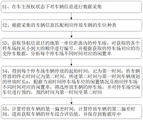
In order to solve the technical problems, the invention provides the following technical scheme: an intelligent parking lot sharing management method based on the Internet of things comprises the following steps:
s1, carrying out data acquisition on vehicle information under the authorization state of a vehicle owner, wherein the acquired information comprises the energy consumption type of the vehicle, a predicted value of the remaining endurance mileage, a starting point and a destination of navigation information and estimated running time;
s2, matching parking space types of corresponding parked vehicles according to the collected vehicle information, wherein the parking space types comprise common parking spaces and parking spaces with charging piles;
s3, parking lots in a first unit distance of a navigation information destination are obtained, the obtained parking lots are numbered from small to large, idle rates corresponding to different times of each parking lot are analyzed according to historical parking data corresponding to the obtained parking lots, the idle rate corresponding to a common parking space is recorded as a first idle rate, the idle rate corresponding to the parking space with a charging pile is recorded as a second idle rate, and the first unit distance is a constant prefabricated in a database;
s4, respectively obtaining the time of the vehicle reaching each parking lot within a first unit distance of the navigation information destination according to the estimated driving time and the current time of the navigation information, and obtaining the starting time of parking of the vehicle in each parking lot, and recording the starting time as first time; recording the stopping time of vehicle parking as a second time, recording the difference value of the second time and the first time as the parking time a planned by the vehicle, wherein the value of a is the setting result of the vehicle owner, screening the parking lot for parking the vehicle according to the idle condition of the parking lot parking space at the current time and the idle rate corresponding to different times of the corresponding parking lot, and reserving the idle parking space of the parking lot, wherein the reserved time is from the first time to the second time;
and S5, calculating first deviation time for parking the vehicle according to the difference value between the time for the vehicle to arrive at the parking lot and the first time, calculating second deviation time for parking the vehicle according to the difference value between the time for the vehicle to leave the parking lot and the second time, further acquiring a parking comprehensive evaluation value of the vehicle, and storing the parking comprehensive evaluation value in a database.
Further, the method for matching the parking space type of the corresponding parked vehicle according to the collected vehicle information in S2 includes the following steps:
s2.1, acquiring the energy consumption type of the vehicle, the predicted value of the remaining driving mileage, the starting point and the destination of navigation information in the acquired vehicle information, wherein the vehicle information is acquired through a vehicle-mounted terminal;
s2.2, when the energy consumption type of the vehicle is fuel oil vehicle, judging that the corresponding result of the parking place type of the parked vehicle is a common parking place, wherein the common parking place is a parking place without a charging pile;
s2.3, when the energy consumption type of the vehicle is an electric car, acquiring the distance of the shortest planned path between the starting point of the navigation information and the nearest shared charging pile, marking the distance as L1, calculating the distance of the shortest planned path between the starting point and the destination of the navigation information, marking the distance as L2, wherein the shortest planned path represents the path with the shortest corresponding distance in the navigation recommended paths,
comparing (beta + 1) (2 x L2+ L1) with the predicted value of the remaining driving mileage of the vehicle, wherein the beta represents the deviation coefficient of the driving mileage of the vehicle,
when (beta + 1) (2 + L2+ L1) is less than or equal to the predicted value of the remaining driving mileage of the vehicle, the corresponding result of the parking space type of the parked vehicle is judged to be a common parking space or a parking space with a charging pile,
when (beta + 1) (2 + L2+ L1) is larger than the predicted value of the remaining endurance mileage of the vehicle, judging that the corresponding result of the parking place types of the parked vehicles is the parking place with the charging pile;
the method for acquiring the beta comprises the following steps: acquiring a navigation path distance LXn1 of the first n1 driving and a variation value LBn1 of a predicted value of the remaining mileage of the vehicle before and after the vehicle drives in the previous n driving processes of the vehicle, wherein the LXn1 is more than 0 and the LBn1 is more than 0, obtaining a deviation coefficient beta n1 of the driving mileage of the vehicle corresponding to the previous n1 driving, wherein n1 is more than or equal to 1 and less than or equal to n,
when (LBn 1-LXn 1)/LBn 1 ≦ 0, then β n1=0;
when (LBn 1-LXn 1)/LBn 1 > 0, then β n1= (LBn 1-LXn 1)/LBn 1;
when n1 is different, the maximum value of the vehicle mileage deviation coefficient β n1 corresponding to the n1 th time is represented as β.
In the process of matching the parking place types of corresponding parked vehicles according to the acquired vehicle information, the energy consumption type of the vehicle is acquired by considering various factors such as the energy consumption type of the vehicle, the predicted value of the remaining driving mileage, the starting point and the destination of the navigation information and the like, so that whether the vehicle is an electric vehicle or not is judged, and the parking place types are conveniently screened; the starting point and the destination of the navigation information are obtained, the distance between the starting point and the destination of the navigation information is calculated, and whether the vehicle comes and goes and travels to the nearest shared charging pile again for charging or not is further calculated if the vehicle is not charged; and obtaining the predicted value of the remaining endurance mileage in order to calculate a deviation coefficient beta of the driving mileage of the vehicle, and comparing the size relation between (beta + 1) × (2 × L2+ L1) and the predicted value of the remaining endurance mileage of the vehicle, thereby accurately judging whether the corresponding result of the parking space type of the parked vehicle is a common parking space or a parking space with a charging pile.
Further, the method for analyzing the idle rate of each parking lot at different time according to the acquired historical parking data corresponding to the parking lot in S3 includes the following steps:
s3.1, obtaining historical parking data corresponding to each numbered parking lot within a first unit distance of a navigation information destination;
s3.2, acquiring historical parking data corresponding to the common parking spaces in the parking lot with the number i, acquiring the parking space state corresponding to each common parking space in the parking lot with the number i at the time t in each time period by taking 24 hours as one time period, wherein the parking space state comprises a parking state, a conversion state and an idle state, t is more than 0 and less than or equal to 24,
the parking state represents a parking space state when the vehicle is parked in the parking space,
the conversion state represents the parking space state when the vehicle is not parked in the parking space and the vehicle is parked in the parking space in the second unit time length, the second unit time length is a preset constant in the database,
the idle state represents a parking space state when no vehicle is parked in the parking space and no vehicle is parked in the parking space in the second unit time length;
s3.3, acquiring the number of the parking spaces with the parking spaces in the parking lot with the serial number i, wherein the parking spaces corresponding to the ordinary parking spaces at the time t in all time periods are in the idle state, marking the number as A1it, acquiring a first idle rate B1it corresponding to the parking lot with the serial number i at the time t,
b1i represents the total number of the common parking spaces in the parking lot with the number i, and b2it represents the total number of time periods including time t in the historical data corresponding to the parking lot with the number i;
s3.4, acquiring the number of parking spaces with charging piles in the parking lot with the number i, which corresponds to the parking spaces with the state of being idle at the time t in all time periods, marking the number of the parking spaces as A2it, acquiring a second idle rate B2it corresponding to the parking lot with the number i at the time t,
wherein, cb1i represents the total number of parking stall of taking the electric pile in the parking area of serial number i.
In the process of analyzing the idle rate corresponding to each parking lot at different time, the parking space states including the parking state, the conversion state and the idle state are set, and the conversion state is set to calibrate the value corresponding to the idle state in the parking space states in consideration of the fact that different vehicles are parked on the parking spaces or leave the parking lots with a time difference, and in the short time, although the vehicles are not parked in the parking spaces, the situation that the vehicles are parked in the idle state and no vehicles are parked in the parking spaces cannot be explained.
Further, the method for acquiring the first time and the second time corresponding to each parking lot in S4 includes the following steps:
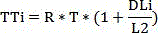
s4.1, acquiring estimated driving time T and current time of the navigation information, acquiring distances between a navigation information destination and each parking lot within a first unit distance of the navigation information destination, and recording the distance between the navigation information destination and the parking lot with the serial number i within the first unit distance of the navigation information destination as DLi;
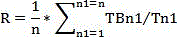
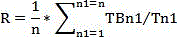
s4.2, acquiring a ratio TBn1 of estimated traveling time Tn1 of the navigation path of the n1 th traveling and actual traveling time of the navigation path in the previous n traveling processes of the vehicle in the historical data, wherein Tn1 is more than 0 and TBn1 is more than 0, acquiring a deviation coefficient R of the traveling time of the vehicle in the historical data, wherein n1 is more than or equal to 1 and less than or equal to n,
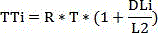
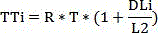
s4.3, obtaining the running time TTi when the vehicle arrives at the parking lot with the number i,
s4.4, obtaining a first time T1ei corresponding to the parking lot with the number i, wherein the T1ei is the sum of the current time and TTi;
and S4.5, obtaining a second time T2ei corresponding to the parking lot with the number i, wherein the T2ei is the sum of the T1ei and a.
In the process of acquiring the first time and the second time corresponding to each parking lot, R is acquired, so that the deviation between the actual driving time of the navigation path and the estimated driving time of the navigation path of the vehicle caused by the driving habit of a vehicle owner is quantized, the driving time TTi of the vehicle when the vehicle arrives at the parking lot with the number i is accurately calculated, and a data basis is provided for the subsequent calculation of the first time and the second time.
Further, the method for screening a parking lot where the vehicle is parked in S4 includes the steps of:
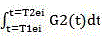
s4-1, acquiring a first time T1ei and a second time T2ei corresponding to a parking lot numbered i, acquiring an idle condition of a parking space of the parking lot numbered i at the current time, and a first idle rate B1it and a second idle rate B2it corresponding to the parking lot numbered i at the time T, wherein G1 (T) represents a corresponding relation between the B1it and T, and G2 (T) represents a corresponding relation between the B2it and T;
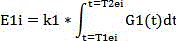
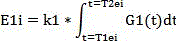
s4-2, calculating a vehicle parking information value E1i corresponding to the common parking space of the parking lot with the serial number i in a time period [ T1ei, T2ei ],
wherein k1 represents the ratio of the number of the ordinary parking spaces without vehicles in the parking lot with the current time number i to the total number of the ordinary parking spaces in the parking lot with the number i,
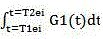
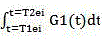
representing the areas of the curves formed by the coordinate points (T, B1 it) and the areas surrounded by the vertical axis, the straight line T = T1ei and the straight line T = T2ei in a plane rectangular coordinate system which is constructed by taking o as the origin, taking T as the horizontal axis and taking the idle rate as the vertical axis, wherein T is different values;
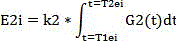
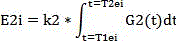
calculating a vehicle parking information value E2i corresponding to the parking space with the charging pile in the time period [ T1ei, T2ei ] of the parking lot with the number i,
wherein k2 represents the ratio of the number of parking spaces with charging piles, in which vehicles are not parked, in the parking lot with the current time number i to the total number of parking spaces with charging piles in the parking lot with the current time number i,
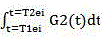
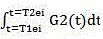
a curve composed of coordinate points (T, B2 it) and a vertical axis, a straight line T = T1ei and a straight line when T is different in a rectangular plane coordinate system constructed with o as an origin, T as a horizontal axis and an idle rate as a vertical axisT = area of the region surrounded by T2 ei;
s4-3, obtaining a screening result of the parking lot for parking vehicles, obtaining the parking space types of the parking vehicles,
when the parking place type corresponding result of the parked vehicle is a common parking place, acquiring a parking lot number corresponding to the minimum value in each E1i when i is different, and acquiring the parking lot number as a parking lot screening result of the parked vehicle;
when the parking place type corresponding result of the parked vehicle is a common parking place or a parking place with a charging pile, when i is different, the number of the parking lot corresponding to the minimum value of E1i and E2i is obtained, and the obtained number of the parking lot is the parking lot screening result of the parked vehicle;
when the parking place type corresponding result of parking the vehicle is the parking place with the charging pile, when obtaining i is different values, the parking lot number corresponding to the minimum value in each E2i, and the obtained parking lot number is the parking lot screening result of parking the vehicle.
In the process of screening parking lots with parked vehicles, according to the change conditions of a first idle rate and a second idle rate of a parking lot with the serial number i in a time period [ T1ei and T2ei ] and the parking conditions of the parking lot with the current time serial number i, the parking lot with the serial number i in the time period [ T1ei and T2ei ] is quantized to obtain a vehicle parking information value E1i corresponding to a common parking space of the parking lot with the serial number i in the time period [ T1ei and T2ei ] and a vehicle parking information value E2i corresponding to a parking space with a charging pile of the parking lot with the serial number i in the time period [ T1ei and T2ei ]; and then screening a plurality of quantized values to obtain the optimal parking lot matched with the vehicle reservation time.
Further, when a plurality of vehicles reserve parking spaces in the same parking lot at the same time, the reserved vehicles are subjected to priority ranking, the parking comprehensive evaluation value of each reserved vehicle for parking each time in the database is obtained, the average value of the parking comprehensive evaluation values corresponding to each reserved vehicle is calculated and recorded as the average parking comprehensive evaluation value corresponding to the corresponding reserved vehicle,
and comparing the average parking comprehensive evaluation values corresponding to the reserved vehicles, sequencing the average parking comprehensive evaluation values corresponding to the reserved vehicles in a descending order, giving priority to the reserved vehicles in a sequencing order, and giving higher priority to the reserved vehicles with small sequence numbers in the sequencing order than the reserved vehicles with large sequence numbers.
The method for acquiring the parking comprehensive evaluation value of the vehicle in the S5 comprises the following steps:
s5.1, acquiring the difference value between the time when the vehicle arrives at the parking lot and the first time, recording the difference value as TCZ1, calculating the first deviation time TP1 of the parked vehicle,
when TCZ1 is equal to or less than 0, the first deviation time TP1=0 for parking the vehicle,
when TCZ1 is greater than 0, then the first offset time TP1= TCZ1 for parking the vehicle;
s5.2, acquiring the difference between the time when the vehicle leaves the parking lot and the second time, recording the difference as TCZ2, calculating second deviation time TP2 of the parked vehicle,
when TCZ2 is equal to or less than 0, the second deviation time TP2=0 for parking the vehicle,
when TCZ2 is greater than 0, then the second offset time TP2= TCZ2 for parking the vehicle;
and S5.3, obtaining a corresponding parking comprehensive assessment value (TP 1+ TP 2)/(T2 ei-T1 ei) of the vehicle at the time.
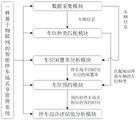
An intelligent parking lot sharing management system based on the Internet of things comprises the following modules:
the data acquisition module is used for acquiring data of vehicle information in an owner authorization state, wherein the acquired information comprises the energy consumption type of the vehicle, a predicted value of the remaining endurance mileage, a starting point and a destination of navigation information and estimated running time;
the parking place type matching module matches parking place types of corresponding parked vehicles according to the collected vehicle information, wherein the parking place types comprise common parking places and parking places with charging piles;
the parking space idle rate analysis module is used for acquiring parking lots in a first unit distance of a navigation information destination, numbering the acquired parking lots from small to large, analyzing idle rates of the parking lots at different time according to acquired historical parking data corresponding to the parking lots, recording idle rates corresponding to common parking spaces as first idle rates, recording idle rates corresponding to the parking spaces with charging piles as second idle rates, and recording the first unit distance as a constant prefabricated in a database;
the parking place reservation module is used for respectively obtaining the time of the vehicle reaching each parking lot within a first unit distance of a navigation information destination according to the estimated driving time and the current time of the navigation information, obtaining the starting time of parking the vehicle in each parking lot, and recording the starting time as the first time; recording the stopping time of vehicle parking as a second time, recording the difference value of the second time and the first time as the parking time a planned by the vehicle, wherein the value of a is the setting result of the vehicle owner, screening the parking lot for parking the vehicle according to the idle condition of the parking lot parking space at the current time and the idle rate corresponding to different times of the corresponding parking lot, and reserving the idle parking space of the parking lot, wherein the reserved time is from the first time to the second time;
and the parking comprehensive evaluation value analysis module calculates first deviation time for parking the vehicle according to the difference between the time when the vehicle arrives at the parking lot and the first time, calculates second deviation time for parking the vehicle according to the difference between the time when the vehicle leaves the parking lot and the second time, further obtains a parking comprehensive evaluation value of the vehicle, and stores the parking comprehensive evaluation value in a database.
Furthermore, the parking place type matching module acquires the energy consumption type, the predicted value of the remaining driving mileage, the starting point and the destination of the navigation information of the vehicle in the acquired vehicle information in the process of matching the parking place type of the corresponding parked vehicle according to the acquired vehicle information, wherein the vehicle information is acquired through the vehicle-mounted terminal;
when the energy consumption type of the vehicle is fuel oil vehicle, judging that the corresponding result of the parking place type of the parked vehicle is a common parking place, wherein the common parking place is a parking place without a charging pile;
when the energy consumption type of the vehicle is an electric car, acquiring the distance of the shortest planned path between the starting point of the navigation information and the nearest shared charging pile, recording the distance as L1, calculating the distance of the shortest planned path between the starting point of the navigation information and the destination, recording the distance as L2, wherein the shortest planned path represents the path with the shortest corresponding distance in the navigation recommended paths,
comparing (beta + 1) (2 x L2+ L1) with the predicted value of the remaining driving mileage of the vehicle, wherein the beta represents a deviation coefficient of the driving mileage of the vehicle,
when (beta + 1) (2 x L2+ L1) is less than or equal to the predicted value of the remaining driving mileage of the vehicle, the corresponding result of the parking space type of the parked vehicle is judged to be a common parking space or a parking space with a charging pile,
when (beta + 1) (2 + L2+ L1) is larger than the predicted value of the remaining endurance mileage of the vehicle, judging that the corresponding result of the parking place types of the parked vehicles is the parking place with the charging pile;
acquiring a navigation path distance LXn1 of the first n1 driving and a variation value LBn1 of a predicted value of the remaining mileage of the vehicle before and after the vehicle drives in the previous n driving processes of the vehicle, wherein the LXn1 is more than 0 and the LBn1 is more than 0, obtaining a deviation coefficient beta n1 of the driving mileage of the vehicle corresponding to the previous n1 driving, wherein n1 is more than or equal to 1 and less than or equal to n,
when (LBn 1-LXn 1)/LBn 1 ≦ 0, then β n1=0;
when (LBn 1-LXn 1)/LBn 1 > 0, then β n1= (LBn 1-LXn 1)/LBn 1;
when n1 is different, the maximum value of the vehicle mileage deviation coefficient β n1 corresponding to the n1 th time is represented as β.
Further, the parking space vacancy rate analysis module acquires historical parking data corresponding to each numbered parking lot within a first unit distance of a navigation information destination in the process of analyzing the vacancy rate corresponding to each parking lot at different time according to the acquired historical parking data corresponding to the parking lot; acquiring historical parking data corresponding to a common parking space in a parking lot with the number i, and acquiring a parking space state corresponding to each common parking space in the parking lot with the number i at time t in each time period by taking 24 hours as one time period, wherein the parking space state comprises a parking state, a conversion state and an idle state, t is more than 0 and less than or equal to 24, the parking state represents the parking space state when a vehicle is parked on the parking space, the conversion state represents the parking space state when the vehicle is not parked on the parking space and the vehicle is parked on the parking space in the first second unit time length, the first second unit time length is a constant prefabricated in a database, and the idle state represents the parking space state when the vehicle is not parked on the parking space and the vehicle is not parked on the parking space in the first second unit time length;
the parking space idle rate analysis module acquires the number of parking spaces with idle states corresponding to all common parking spaces in the parking lot with the number i at the time t in all time periods, marks the number of the parking spaces as A1it, and acquires a first idle rate B1it corresponding to the parking lot with the number i at the time t,
b1i represents the total number of common parking spaces in the parking lot with the number i, and b2it represents the total number of time periods including time t in the historical data corresponding to the parking lot with the number i;
the parking space idle rate analysis module acquires the number of parking spaces with the parking piles of which the parking spaces are numbered i, which correspond to the parking spaces with the charging piles at the time t in all time periods and are in the idle state, and records the number as A2it, so as to acquire a second idle rate B2it corresponding to the parking lot numbered i at the time t,
wherein, cb1i represents the total number of parking stall of taking the electric pile in the parking area of serial number i.
Compared with the prior art, the invention has the following beneficial effects: matching the parking lots around the destination through the vehicle information, the parking lot information around the destination and the historical parking data of the vehicle, screening the parking place types matched with the vehicle, predicting the starting time of parking the vehicle by combining the driving data of the vehicle, and reserving; the invention can plan the parking space of the parking lot in advance, avoids the situation that the vehicle can stop without the parking space when reaching the destination, and saves the time for the vehicle owner to search for the idle parking space.
Drawings
The accompanying drawings, which are included to provide a further understanding of the invention and are incorporated in and constitute a part of this specification, illustrate embodiments of the invention and together with the description serve to explain the principles of the invention and not to limit the invention. In the drawings:
fig. 1 is a schematic structural diagram of an intelligent parking lot sharing management system based on the internet of things;
fig. 2 is a flow diagram of an intelligent parking lot sharing management method based on the internet of things.
Detailed Description
The technical solutions in the embodiments of the present invention will be clearly and completely described below with reference to the drawings in the embodiments of the present invention, and it is obvious that the described embodiments are only a part of the embodiments of the present invention, and not all of the embodiments. All other embodiments, which can be obtained by a person skilled in the art without making any creative effort based on the embodiments in the present invention, belong to the protection scope of the present invention.
Referring to fig. 1-2, the present invention provides a technical solution: an intelligent parking lot sharing management method based on the Internet of things comprises the following steps:
s1, carrying out data acquisition on vehicle information in an owner authorization state, wherein the acquired information comprises an energy consumption type of a vehicle, a predicted value of remaining endurance mileage, a starting point and a destination of navigation information and estimated running time;
s2, matching parking place types of corresponding parked vehicles according to the collected vehicle information, wherein the parking place types comprise common parking places and parking places with charging piles;
s3, parking lots in a first unit distance of a navigation information destination are obtained, the obtained parking lots are numbered from small to large, idle rates corresponding to different times of each parking lot are analyzed according to historical parking data corresponding to the obtained parking lots, the idle rate corresponding to a common parking space is recorded as a first idle rate, the idle rate corresponding to the parking space with a charging pile is recorded as a second idle rate, and the first unit distance is a constant prefabricated in a database;
the first unit distance is 5 km in the present embodiment.
S4, respectively obtaining the time of the vehicle reaching each parking lot within a first unit distance of the navigation information destination according to the estimated driving time and the current time of the navigation information, and obtaining the starting time of parking of the vehicle in each parking lot, and recording the starting time as first time; recording the stopping time of vehicle parking as a second time, recording the difference value of the second time and the first time as the parking time a planned by the vehicle, wherein the value of a is the setting result of the vehicle owner, screening the parking lot for parking the vehicle according to the idle condition of the parking lot parking space at the current time and the idle rate corresponding to different times of the corresponding parking lot, and reserving the idle parking space of the parking lot, wherein the reserved time is from the first time to the second time;
in the embodiment a, the parking time is manually set by the vehicle owner, and the reserved time of the same parking space cannot be reserved again.
And S5, calculating first deviation time for parking the vehicle according to the difference between the time when the vehicle arrives at the parking lot and the first time, calculating second deviation time for parking the vehicle according to the difference between the time when the vehicle leaves the parking lot and the second time, further acquiring a parking comprehensive evaluation value of the vehicle, and storing the parking comprehensive evaluation value in a database.
The method for matching the parking space types of the corresponding parked vehicles according to the collected vehicle information in the S2 comprises the following steps:
s2.1, acquiring the energy consumption type of the vehicle, the predicted value of the remaining driving mileage, the starting point and the destination of navigation information in the acquired vehicle information, wherein the vehicle information is acquired through a vehicle-mounted terminal;
s2.2, when the energy consumption type of the vehicle is fuel vehicle, judging that the corresponding result of the parking place type of the parked vehicle is a common parking place, wherein the common parking place is a parking place without a charging pile;
s2.3, when the energy consumption type of the vehicle is an electric vehicle, acquiring the distance of the shortest planned path between the starting point of the navigation information and the nearest shared charging pile, marking the distance as L1, calculating the distance of the shortest planned path between the starting point of the navigation information and the destination, marking the distance as L2, wherein the shortest planned path represents the path with the shortest corresponding distance in the navigation recommended paths,
comparing (beta + 1) (2 x L2+ L1) with the predicted value of the remaining driving mileage of the vehicle, wherein the beta represents a deviation coefficient of the driving mileage of the vehicle,
when (beta + 1) (2 x L2+ L1) is less than or equal to the predicted value of the remaining driving mileage of the vehicle, the corresponding result of the parking space type of the parked vehicle is judged to be a common parking space or a parking space with a charging pile,
when (beta + 1) (2 + L2+ L1) is larger than the predicted value of the remaining endurance mileage of the vehicle, judging that the corresponding result of the parking place types of the parked vehicles is the parking place with the charging pile;
the method for acquiring the beta comprises the following steps: acquiring a navigation path distance LXn1 of the first n1 driving and a variation value LBn1 of a predicted value of the remaining mileage of the vehicle before and after the vehicle drives in the previous n driving processes of the vehicle, wherein the LXn1 is more than 0 and the LBn1 is more than 0, obtaining a deviation coefficient beta n1 of the driving mileage of the vehicle corresponding to the previous n1 driving, wherein n1 is more than or equal to 1 and less than or equal to n,
when (LBn 1-LXn 1)/LBn 1 ≦ 0, then β n1=0;
when (LBn 1-LXn 1)/LBn 1 > 0, then β n1= (LBn 1-LXn 1)/LBn 1;
when n1 is different, the maximum value of the vehicle mileage deviation coefficient β n1 corresponding to the n1 th time is represented as β.
The method for analyzing the idle rate of each parking lot at different time according to the acquired historical parking data corresponding to the parking lots in the S3 comprises the following steps:
s3.1, obtaining historical parking data corresponding to each numbered parking lot within a first unit distance of a navigation information destination;
s3.2, acquiring historical parking data corresponding to the common parking spaces in the parking lot with the number i, acquiring the parking space state corresponding to each common parking space in the parking lot with the number i at the time t in each time period by taking 24 hours as one time period, wherein the parking space state comprises a parking state, a conversion state and an idle state, t is more than 0 and less than or equal to 24,
the parking state represents a parking space state when the vehicle is parked in the parking space,
the conversion state represents the parking space state when the vehicle is not parked in the parking space and the vehicle is parked in the parking space in the second unit time length, the second unit time length is a preset constant in the database,
the second unit time length in this embodiment is 5 minutes.
The idle state represents a parking space state when no vehicle is parked in the parking space and no vehicle is parked in the parking space in the second unit time length;
s3.3, acquiring the number of the parking spaces with the parking spaces in the parking lot with the serial number i, wherein the parking spaces corresponding to the ordinary parking spaces at the time t in all time periods are in the idle state, marking the number as A1it, acquiring a first idle rate B1it corresponding to the parking lot with the serial number i at the time t,
b1i represents the total number of the common parking spaces in the parking lot with the number i, and b2it represents the total number of time periods including time t in the historical data corresponding to the parking lot with the number i;
s3.4, acquiring the number of parking spaces with parking piles of which the parking spaces with charging piles in the parking lot with the number i are in an idle state at time t in all time periods, recording the number of the parking spaces as A2it, acquiring a second idle rate B2it corresponding to the parking lot with the number i at time t,
wherein, cb1i represents the total number of parking stall of taking the electric pile in the parking area of serial number i.
The method for acquiring the first time and the second time corresponding to each parking lot in the step S4 comprises the following steps:
s4.1, acquiring estimated driving time T and current time of the navigation information, acquiring distances between a navigation information destination and each parking lot within a first unit distance of the navigation information destination respectively, and recording the distance between the navigation information destination and the parking lot with the serial number i within the first unit distance of the navigation information destination as DLi;
s4.2, acquiring a ratio TBn1 of estimated traveling time Tn1 of the navigation path traveled the n1 th time before and actual traveling time of the navigation path in the history data during the previous n times of traveling of the vehicle, wherein Tn1 is more than 0 and TBn1 is more than 0, acquiring a deviation coefficient R of the traveling time of the vehicle in the history data, wherein n1 is more than or equal to 1 and less than or equal to n,
s4.3, obtaining the running time TTi when the vehicle arrives at the parking lot with the number i,
s4.4, obtaining a first time T1ei corresponding to the parking lot with the number i, wherein the T1ei is the sum of the current time and TTi;
and S4.5, obtaining a second time T2ei corresponding to the parking lot with the number i, wherein the T2ei is the sum of the T1ei and a.
The method for screening the parking lot with the vehicle parked in the S4 comprises the following steps:
s4-1, acquiring a first time T1ei and a second time T2ei corresponding to a parking lot with the number i, acquiring the idle condition of a parking space of the parking lot with the current time number i, and a first idle rate B1it and a second idle rate B2it corresponding to the parking lot with the number i at the time T, wherein G1 (T) represents the corresponding relation between B1it and T, and G2 (T) represents the corresponding relation between B2it and T;
s4-2, calculating a vehicle parking information value E1i corresponding to the common parking space of the parking lot with the serial number i in a time period [ T1ei, T2ei ],
wherein k1 represents the ratio of the number of the ordinary parking spaces without vehicles in the parking lot with the current time number i to the total number of the ordinary parking spaces in the parking lot with the number i,
representing the areas of the curves formed by the coordinate points (T, B1 it) and the areas surrounded by the vertical axis, the straight line T = T1ei and the straight line T = T2ei in a plane rectangular coordinate system which is constructed by taking o as the origin, taking T as the horizontal axis and taking the idle rate as the vertical axis, wherein T is different values;
calculating a vehicle parking information value E2i corresponding to a parking space with a charging pile in a time period [ T1ei, T2ei ] of the parking lot with the number i,
wherein k2 represents the ratio of the number of parking spaces with charging piles, in which vehicles are not parked, in the parking lot with the current time number i to the total number of parking spaces with charging piles in the parking lot with the current time number i,
representing the areas of the areas surrounded by a curve formed by coordinate points (T, B2 it) and a vertical axis, a straight line T = T1ei and a straight line T = T2ei when T is different values in a plane rectangular coordinate system constructed by taking o as an origin, taking T as a horizontal axis and taking an idle rate as a vertical axis;
s4-3, obtaining a screening result of the parking lot for the parked vehicle, obtaining the parking space type of the parked vehicle,
when the parking place type corresponding result of the parked vehicle is a common parking place, acquiring the number of the parking lot corresponding to the minimum value in each E1i when i is different, and acquiring the number of the parking lot as the screening result of the parking lot for the parked vehicle;
when the parking place type corresponding result of the parked vehicle is a common parking place or a parking place with a charging pile, when i is different, the number of the parking lot corresponding to the minimum value of E1i and E2i is obtained, and the obtained number of the parking lot is the parking lot screening result of the parked vehicle;
when the parking place type corresponding result of parking the vehicle is the parking place with the charging pile, when obtaining i is different values, the parking lot number corresponding to the minimum value in each E2i, and the obtained parking lot number is the parking lot screening result of parking the vehicle.
When a plurality of vehicles reserve parking spaces in the same parking lot at the same time, the reserved vehicles are subjected to priority ranking, the comprehensive parking evaluation value of each reserved vehicle for parking each time in the database is obtained, the average value of the comprehensive parking evaluation values corresponding to each reserved vehicle is calculated and recorded as the average comprehensive parking evaluation value corresponding to the corresponding reserved vehicle,
and comparing the average parking comprehensive evaluation values corresponding to the reserved vehicles, sequencing the average parking comprehensive evaluation values corresponding to the reserved vehicles in a descending order, giving priority to the reserved vehicles in a sequencing order, and giving higher priority to the reserved vehicles with small sequence numbers in the sequencing order than the reserved vehicles with large sequence numbers.
The method for acquiring the parking comprehensive evaluation value of the vehicle in the S5 comprises the following steps:
s5.1, acquiring the difference value between the time when the vehicle arrives at the parking lot and the first time, recording the difference value as TCZ1, calculating the first deviation time TP1 of the parked vehicle,
when TCZ1 is equal to or less than 0, the first deviation time TP1=0 for parking the vehicle,
when TCZ1 is greater than 0, then the first offset time TP1= TCZ1 for parking the vehicle;
s5.2, acquiring the difference between the time when the vehicle leaves the parking lot and the second time, recording the difference as TCZ2, calculating second deviation time TP2 of the parked vehicle,
when TCZ2 is equal to or less than 0, the second deviation time TP2=0 of parking the vehicle,
when TCZ2 is greater than 0, then the second offset time TP2= TCZ2 for parking the vehicle;
and S5.3, obtaining a parking comprehensive evaluation value (TP 1+ TP 2)/(T2 ei-T1 ei) corresponding to the time of the vehicle.
An intelligent parking lot sharing management system based on the Internet of things comprises the following modules:
the data acquisition module is used for acquiring data of the vehicle information under the authorization state of the vehicle owner, and the acquired information comprises the energy consumption type of the vehicle, the predicted value of the remaining endurance mileage, the starting point and the destination of the navigation information and the estimated running time;
the parking place type matching module matches parking place types of corresponding parked vehicles according to the collected vehicle information, wherein the parking place types comprise common parking places and parking places with charging piles;
the parking space idle rate analysis module is used for acquiring parking lots in a first unit distance of a navigation information destination, numbering the acquired parking lots from small to large, analyzing idle rates of the parking lots at different time according to acquired historical parking data corresponding to the parking lots, recording idle rates corresponding to common parking spaces as first idle rates, recording idle rates corresponding to the parking spaces with charging piles as second idle rates, and recording the first unit distance as a constant prefabricated in a database;
the parking place reservation module is used for respectively obtaining the time of the vehicle reaching each parking lot within a first unit distance of a navigation information destination according to the estimated driving time and the current time of the navigation information, obtaining the starting time of parking the vehicle in each parking lot, and recording the starting time as the first time; recording the stopping time of the vehicle parking as a second time, recording the difference value of the second time and the first time as the planned parking time a of the vehicle, wherein the value of a is the setting result of the vehicle owner, screening the parking lot for parking the vehicle according to the idle condition of the parking lot at the current time and the idle rate corresponding to different times of the corresponding parking lot, and reserving the idle parking lot, wherein the reserved time is from the first time to the second time;
and the parking comprehensive evaluation value analysis module calculates first deviation time for parking the vehicle according to the difference value between the time for the vehicle to arrive at the parking lot and the first time, calculates second deviation time for parking the vehicle according to the difference value between the time for the vehicle to leave the parking lot and the second time, further obtains a parking comprehensive evaluation value of the vehicle, and stores the parking comprehensive evaluation value in a database.
The parking place type matching module acquires the energy consumption type of the vehicle, the predicted value of the remaining driving mileage, the starting point and the destination of the navigation information in the acquired vehicle information in the process of matching the parking place type of the corresponding parked vehicle according to the acquired vehicle information, wherein the vehicle information is acquired through a vehicle-mounted terminal;
when the energy consumption type of the vehicle is fuel oil vehicle, judging that the corresponding result of the parking place type of the parked vehicle is a common parking place, wherein the common parking place is a parking place without a charging pile;
when the energy consumption type of the vehicle is an electric car, acquiring the distance of the shortest planned path between the starting point of the navigation information and the nearest shared charging pile, recording the distance as L1, calculating the distance of the shortest planned path between the starting point of the navigation information and the destination, recording the distance as L2, wherein the shortest planned path represents the path with the shortest corresponding distance in the navigation recommended paths,
comparing (beta + 1) (2 x L2+ L1) with the predicted value of the remaining driving mileage of the vehicle, wherein the beta represents the deviation coefficient of the driving mileage of the vehicle,
when (beta + 1) (2 + L2+ L1) is less than or equal to the predicted value of the remaining driving mileage of the vehicle, the corresponding result of the parking space type of the parked vehicle is judged to be a common parking space or a parking space with a charging pile,
when (beta + 1) (2 x L2+ L1) is larger than the predicted value of the remaining driving mileage of the vehicle, judging that the corresponding result of the parking place type for parking the vehicle is the parking place with the charging pile;
acquiring a navigation path distance LXn1 of the previous n 1-time driving and a variation value LBn1 of a predicted value of the remaining driving range of the vehicle before and after the vehicle drives in the previous n-time driving process of the vehicle, wherein the LXn1 is more than 0 and the LBn1 is more than 0, obtaining a deviation coefficient beta n1 of the driving range of the vehicle corresponding to the previous n 1-time driving of the vehicle, n1 is more than or equal to 1 and less than or equal to n,
when (LBn 1-LXn 1)/LBn 1 ≦ 0, then β n1=0;
when (LBn 1-LXn 1)/LBn 1 > 0, then β n1= (LBn 1-LXn 1)/LBn 1;
when n1 is different, the maximum value of the vehicle mileage deviation coefficient β n1 corresponding to the n1 th time is represented as β.
The parking space vacancy rate analysis module acquires historical parking data corresponding to each numbered parking lot within a first unit distance of a navigation information destination in the process of analyzing vacancy rates corresponding to different times of each parking lot according to the acquired historical parking data corresponding to the parking lots; acquiring historical parking data corresponding to a common parking space in a parking lot with the number i, and acquiring a parking space state corresponding to each common parking space in the parking lot with the number i at the time t in each time period by taking 24 hours as one time period, wherein the parking space state comprises a parking state, a conversion state and an idle state, t is more than 0 and less than or equal to 24, the parking state represents the parking space state when a vehicle is parked on the parking space, the conversion state represents the parking space state when the vehicle is not parked on the parking space and the vehicle is parked on the parking space in the second unit time length, the second unit time length is a preset constant in a database, and the idle state represents the parking space state when the vehicle is not parked on the parking space and the vehicle is not parked on the parking space in the second unit time length;
the parking space idle rate analysis module acquires the number of the parking spaces with the idle state corresponding to all the common parking spaces in the parking lot with the serial number i at the time t in all the time periods, and marks the number as A1it, so as to obtain a first idle rate B1it corresponding to the parking lot with the serial number i at the time t,
b1i represents the total number of common parking spaces in the parking lot with the number i, and b2it represents the total number of time periods including time t in the historical data corresponding to the parking lot with the number i;
the parking space idle rate analysis module acquires the number of parking spaces with the parking piles of which the parking spaces are numbered i, which correspond to the parking spaces with the charging piles at the time t in all time periods and are in the idle state, and records the number as A2it, so as to acquire a second idle rate B2it corresponding to the parking lot numbered i at the time t,
wherein, cb1i represents the total number of parking stall of taking the electric pile in the parking area of serial number i.
It is noted that, herein, relational terms such as first and second, and the like may be used solely to distinguish one entity or action from another entity or action without necessarily requiring or implying any actual such relationship or order between such entities or actions. Also, the terms "comprises," "comprising," or any other variation thereof, are intended to cover a non-exclusive inclusion, such that a process, method, article, or apparatus that comprises a list of elements does not include only those elements but may include other elements not expressly listed or inherent to such process, method, article, or apparatus.
Finally, it should be noted that: although the present invention has been described in detail with reference to the foregoing embodiments, it will be apparent to those skilled in the art that modifications may be made to the embodiments described above, or equivalents may be substituted for elements thereof. Any modification, equivalent replacement, or improvement made within the spirit and principle of the present invention should be included in the protection scope of the present invention.