CN113335552B - Method for determining rear limit of gravity center of tail-free flying wing layout aircraft - Google Patents
Method for determining rear limit of gravity center of tail-free flying wing layout aircraft Download PDFInfo
- Publication number
- CN113335552B CN113335552B CN202110608229.3A CN202110608229A CN113335552B CN 113335552 B CN113335552 B CN 113335552B CN 202110608229 A CN202110608229 A CN 202110608229A CN 113335552 B CN113335552 B CN 113335552B
- Authority
- CN
- China
- Prior art keywords
- gravity
- center
- rear limit
- aircraft
- requirements
- Prior art date
- Legal status (The legal status is an assumption and is not a legal conclusion. Google has not performed a legal analysis and makes no representation as to the accuracy of the status listed.)
- Active
Links
Images


Classifications
-
- B—PERFORMING OPERATIONS; TRANSPORTING
- B64—AIRCRAFT; AVIATION; COSMONAUTICS
- B64F—GROUND OR AIRCRAFT-CARRIER-DECK INSTALLATIONS SPECIALLY ADAPTED FOR USE IN CONNECTION WITH AIRCRAFT; DESIGNING, MANUFACTURING, ASSEMBLING, CLEANING, MAINTAINING OR REPAIRING AIRCRAFT, NOT OTHERWISE PROVIDED FOR; HANDLING, TRANSPORTING, TESTING OR INSPECTING AIRCRAFT COMPONENTS, NOT OTHERWISE PROVIDED FOR
- B64F5/00—Designing, manufacturing, assembling, cleaning, maintaining or repairing aircraft, not otherwise provided for; Handling, transporting, testing or inspecting aircraft components, not otherwise provided for
-
- Y—GENERAL TAGGING OF NEW TECHNOLOGICAL DEVELOPMENTS; GENERAL TAGGING OF CROSS-SECTIONAL TECHNOLOGIES SPANNING OVER SEVERAL SECTIONS OF THE IPC; TECHNICAL SUBJECTS COVERED BY FORMER USPC CROSS-REFERENCE ART COLLECTIONS [XRACs] AND DIGESTS
- Y02—TECHNOLOGIES OR APPLICATIONS FOR MITIGATION OR ADAPTATION AGAINST CLIMATE CHANGE
- Y02T—CLIMATE CHANGE MITIGATION TECHNOLOGIES RELATED TO TRANSPORTATION
- Y02T90/00—Enabling technologies or technologies with a potential or indirect contribution to GHG emissions mitigation
Landscapes
- Engineering & Computer Science (AREA)
- Manufacturing & Machinery (AREA)
- Transportation (AREA)
- Aviation & Aerospace Engineering (AREA)
- Control Of Position, Course, Altitude, Or Attitude Of Moving Bodies (AREA)
- Aerodynamic Tests, Hydrodynamic Tests, Wind Tunnels, And Water Tanks (AREA)
Abstract
本申请提供了一种无尾飞翼布局飞机重心后限的确定方法,包括:确定一任意值的初始重心后限;对所述初始重心后限进行气动操纵效能评估、执行机构能力评估、飞机本体稳定性评估、线性幅值稳定性评估和非线性幅值稳定性评估;若上述任一评估不满足要求,则前移所述初始重心后限,直至重心后限能够满足上述评估要求;若上述评估均满足要求,则后移所述初始重心后限,直至重心后限不满足任一上述评估要求。本申请所提供的无尾飞翼布局飞机重心后限的确定方法能够针对无尾飞翼布局飞机的特殊性对重心后限进行评估,且能够全面的评估飞机重心后限下的操纵性、稳定性及飞行安全性。

The application provides a method for determining the rear limit of the center of gravity of an aircraft with tailless flying wing layout, including: determining an initial rear limit of the center of gravity of an arbitrary value; evaluating the initial rear limit of the center of gravity of the initial center of gravity; Body stability evaluation, linear amplitude stability evaluation and nonlinear amplitude stability evaluation; if any of the above evaluations does not meet the requirements, then move forward the initial center of gravity back limit until the center of gravity rear limit can meet the above evaluation requirements; if If all the above evaluations meet the requirements, the rear limit of the initial center of gravity is moved backward until the rear limit of the center of gravity does not meet any of the above evaluation requirements. The method for determining the rear limit of the center of gravity of an aircraft with a tailless flying wing layout provided by this application can evaluate the rear limit of the center of gravity for the particularity of the aircraft with a tailless flying wing layout, and can comprehensively evaluate the maneuverability and stability of the aircraft under the rear limit of the center of gravity of the aircraft. sex and flight safety.
Description
技术领域technical field
本申请属于飞行控制技术领域,特别涉及一种无尾飞翼布局飞机重心后限的确定方法。The application belongs to the technical field of flight control, in particular to a method for determining the rear limit of the center of gravity of an aircraft with a tailless flying wing layout.
背景技术Background technique
飞机在设计时,为了保证飞机的操纵性、稳定性及控制可行性,飞机的重心应约束在一定范围内,即重心允许范围。现代飞机为了追求更高的飞行性能及操纵敏捷性,纵向往往采用放宽静稳定设计,通过将重心设计在焦点之后,以达到静不安定状态。飞机在设计过程中,重心后限作为确保飞机飞行安全的重要指标应通过严格、全面的评估后确定。When designing an aircraft, in order to ensure the maneuverability, stability and control feasibility of the aircraft, the center of gravity of the aircraft should be restricted within a certain range, namely the allowable range of the center of gravity. In order to pursue higher flight performance and maneuvering agility, modern aircraft often adopt a relaxed static stability design in the longitudinal direction, and the center of gravity is designed behind the focus to achieve a static and unstable state. During the design process of the aircraft, the rear center of gravity limit, as an important indicator to ensure the flight safety of the aircraft, should be determined after strict and comprehensive evaluation.
如图1和图2所示,飞翼布局飞机作为一种先进布局结构的飞机,其非常规布局特点决定了飞机的操纵稳定性与传统布局的飞机具有较大的区别,而无尾飞翼布局航向静不安定的特点使得飞机稳定性进一步恶化,带来了更大的控制难度和失控的风险。重心作为影响飞机稳定性的关键参数,其后限的确定决定了无尾飞翼布局飞机的飞行安全及飞行品质。As shown in Fig. 1 and Fig. 2, the flying-wing layout aircraft is an aircraft with an advanced layout structure, and its unconventional layout characteristics determine that the handling stability of the aircraft is quite different from that of the traditional layout aircraft, while the tailless flying-wing The static and unstable characteristics of the layout and heading further deteriorate the stability of the aircraft, which brings greater control difficulty and risk of loss of control. The center of gravity is a key parameter affecting the stability of the aircraft, and the determination of its rear limit determines the flight safety and flight quality of the aircraft with tailless flying wing layout.
发明内容Contents of the invention
本申请的目的是提供了一种无尾飞翼布局飞机重心后限的确定方法,以解决或减轻上述至少一个问题。The purpose of this application is to provide a method for determining the rear limit of the center of gravity of an aircraft with tailless flying wing layout, so as to solve or alleviate at least one of the above problems.
本申请提供的技术方案是:一种无尾飞翼布局飞机重心后限的确定方法,所述方法包括:The technical solution provided by this application is: a method for determining the rear limit of the center of gravity of an aircraft with tailless flying wing layout, said method comprising:
确定一任意值的初始重心后限;Determine the rear limit of the initial center of gravity of an arbitrary value;
对所述初始重心后限进行气动操纵效能评估、执行机构能力评估、飞机本体稳定性评估、线性幅值稳定性评估和非线性幅值稳定性评估;Carrying out aerodynamic control effectiveness evaluation, actuator capability evaluation, aircraft body stability evaluation, linear amplitude stability evaluation and nonlinear amplitude stability evaluation on the initial center of gravity rear limit;
若上述任一评估不满足要求,则前移所述初始重心后限,直至重心后限能够满足上述评估要求;If any of the above evaluations does not meet the requirements, then move forward the rear limit of the initial center of gravity until the rear limit of the center of gravity can meet the above evaluation requirements;
若上述评估均满足要求,则后移所述初始重心后限,直至重心后限不满足任一上述评估要求。If the above evaluations all meet the requirements, the initial center of gravity rear limit is moved backward until the rear center of gravity does not meet any of the above evaluation requirements.
进一步的,对所述初始重心后限进行气动操纵效能的评估过程包括:Further, the process of evaluating the aerodynamic control effectiveness of the initial rear limit of the center of gravity includes:
在最大允许迎角范围内和重心后限条件下,飞机下俯操纵力矩能够防止飞机在滚转时迎角出现发散趋势,并能够使飞机从较大迎角状态恢复至较小迎角状态,下俯恢复力矩产生的俯仰加速度不小于预定值。Within the range of the maximum allowable angle of attack and the condition of the rear limit of the center of gravity, the pitching control moment of the aircraft can prevent the divergence of the angle of attack when the aircraft rolls, and can restore the aircraft from a state with a large angle of attack to a state with a small angle of attack. The pitch acceleration generated by the pitch recovery moment is not less than a predetermined value.
在上述实施方式中,俯仰加速度的预定值为0.4rad/s2。In the above embodiment, the predetermined value of the pitch acceleration is 0.4 rad/s 2 .
进一步的,对所述初始重心后限进行执行机构能力的评估过程包括:Further, the process of evaluating the capability of the actuator for the initial center of gravity rear limit includes:
在飞行包线内和重心后限条件下,操纵面偏转速率和铰链力矩能够在所有迎角和侧滑角组合范围内保证飞行安全。Within the flight envelope and under the condition of the rear limit of the center of gravity, the control surface deflection rate and hinge moment can ensure flight safety in all combinations of angles of attack and sideslip angles.
进一步的对所述初始重心后限进行飞机本体稳定性的评估过程包括:A further process of evaluating the stability of the aircraft body on the rear limit of the initial center of gravity includes:
在飞行包线和允许迎角范围内及重心后限条件下,飞机本体纵向短周期发散的倍幅时间应不小于第一预定时间,飞机本体横航向模态分母传递函数发散根最大倍幅时间应不小于第二预定时间。Within the range of the flight envelope and the allowable angle of attack and the rear limit of the center of gravity, the time for the divergence of the short-term vertical period of the aircraft body should not be less than the first predetermined time. Should not be less than the second predetermined time.
在上述实施方式中,所述第一预定时间和第二预定时间均为400ms。In the above implementation manner, both the first predetermined time and the second predetermined time are 400ms.
进一步的,对所述初始重心后限进行线性幅值稳定性的评估过程包括:Further, the evaluation process of the linear amplitude stability of the initial center of gravity rear limit includes:
在飞行包线内和重心后限条件下,飞机增稳后的模态特性应满足如下要求:Under the conditions of the flight envelope and the rear limit of the center of gravity, the modal characteristics of the stabilized aircraft should meet the following requirements:
a)俯仰短周期阻尼比、频率在使用飞行包线范围内满足一级飞行品质要求,在允许飞行包线范围内应至少满足三级飞行品质要求;a) Pitching short-cycle damping ratio and frequency meet the requirements of Class I flight quality within the range of the flight envelope used, and at least meet the requirements of Class III flight quality within the range of the allowable flight envelope;
b)俯仰控制增稳回路稳定储备满足幅值储备大于预定值,相位储备大于预定角度要求;b) The stability reserve of the pitch control stabilization loop meets the requirement that the amplitude reserve is greater than the predetermined value, and the phase reserve is greater than the predetermined angle;
c)荷兰滚模态阻尼比、频率在使用飞行包线范围内满足一级飞行品质要求;在允许飞行包线范围内至少满足三级飞行品质要求;c) The modal damping ratio and frequency of Dutch roll meet the first-level flight quality requirements within the range of the flight envelope used; at least meet the third-level flight quality requirements within the allowable flight envelope range;
d)滚转模态时间常数在使用飞行包线范围内满足一级飞行品质要求;在允许飞行包线范围内至少满足三级飞行品质要求;d) The roll mode time constant meets the requirements of the first-level flight quality within the range of the flight envelope used; at least meets the requirements of the third-level flight quality within the range of the allowable flight envelope;
e)滚转偏航控制增稳回路稳定储备满足幅值储备大于预定值,相位储备大于预定角度要求。e) The stability reserve of the roll and yaw control stabilization loop meets the requirement that the amplitude reserve is greater than the predetermined value, and the phase reserve is greater than the predetermined angle requirement.
在上述实施方式中,幅值储备的预定值为±6dB,相位储备的预定角度为45度。In the above embodiment, the predetermined value of the amplitude reserve is ±6dB, and the predetermined angle of the phase reserve is 45 degrees.
进一步的,对所述初始重心后限进行非线性幅值稳定性的评估过程包括:Further, the evaluation process of the nonlinear amplitude stability of the initial center of gravity rear limit includes:
在飞行包线内和重心后限条件下,增稳后的飞机加入大幅值指令或大幅值扰动,不出现如下发散响应:Under the conditions of the flight envelope and the rear limit of the center of gravity, the aircraft after stabilization is added with a large-value command or a large-value disturbance, and the following divergent responses do not appear:
a)连续加入至少N个周期“1-cos”型垂向全波离散突风,飞机不由于操纵效能不足而导致响应发散;a) Continuously add at least N periods of "1-cos" type vertical full-wave discrete gusts, and the aircraft will not cause response divergence due to insufficient control efficiency;
b)加入至少N个周期正弦形式的法向过载指令,飞机不由于操纵效能不足而导致响应发散;b) Add at least N cycles of normal overload commands in the form of sinusoids, and the aircraft will not cause response divergence due to insufficient control efficiency;
c)连续加入至少N个周期“1-cos”型侧向全波离散突风,飞机不由于操纵效能不足而导致响应发散;c) Continuously add at least N periods of "1-cos" type lateral full-wave discrete gusts, and the aircraft will not diverge in response due to insufficient control efficiency;
d)加入至少5个周期正弦形式的滚转角速率指令,飞机不由于操纵效能不足而导致响应发散。d) Add at least 5 cycles of sinusoidal roll rate command, and the aircraft will not diverge in response due to insufficient control efficiency.
进一步的,所述重心后限的移动颗粒度为0.5。Further, the moving granularity of the rear limit of the center of gravity is 0.5.
本申请所提供的无尾飞翼布局飞机重心后限的确定方法能够针对无尾飞翼布局飞机的特殊性对重心后限进行评估,且能够全面的评估飞机重心后限下的操纵性、稳定性及飞行安全性。The method for determining the rear limit of the center of gravity of an aircraft with a tailless flying wing layout provided by this application can evaluate the rear limit of the center of gravity for the particularity of the aircraft with a tailless flying wing layout, and can comprehensively evaluate the maneuverability and stability of the aircraft under the rear limit of the center of gravity performance and flight safety.
附图说明Description of drawings
为了更清楚地说明本申请提供的技术方案,下面将对附图作简单地介绍。显而易见地,下面描述的附图仅仅是本申请的一些实施例。In order to illustrate the technical solutions provided by the present application more clearly, the accompanying drawings will be briefly introduced below. Apparently, the drawings described below are only some embodiments of the present application.
图1为无尾飞翼布局飞机重心与操纵面之间的力臂示意图。Figure 1 is a schematic diagram of the moment arm between the center of gravity and the control surface of an aircraft with tailless flying wing layout.
图2为常规布局飞机重心与操纵面之间的力臂示意图。Figure 2 is a schematic diagram of the moment arm between the center of gravity and the control surface of an aircraft with a conventional layout.
图3为本申请的无尾飞翼布局飞机重心后限的确定方法流程图。Fig. 3 is a flowchart of a method for determining the rear limit of the center of gravity of an aircraft with a tailless flying wing layout according to the present application.
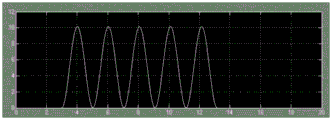
图4为本申请中施加的“1-cos”型波形示意图。Fig. 4 is a schematic diagram of the "1-cos" type waveform applied in this application.
具体实施方式Detailed ways
为使本申请实施的目的、技术方案和优点更加清楚,下面将结合本申请实施例中的附图,对本申请实施例中的技术方案进行更加详细的描述。In order to make the purpose, technical solution and advantages of the implementation of the application clearer, the technical solution in the embodiment of the application will be described in more detail below in conjunction with the drawings in the embodiment of the application.
为了实现对无尾飞翼布局飞机重心后限进行评估,本申请提供了一种无尾飞翼布局飞机的重心后限的确定方法。In order to realize the evaluation of the rear limit of the center of gravity of an aircraft with a tailless flying wing layout, the present application provides a method for determining the rear limit of the center of gravity of an aircraft with a tailless flying wing layout.
如图3所示,本申请的无尾飞翼布局飞机重心后限的确定方法包括如下步骤:As shown in Figure 3, the method for determining the rear limit of the center of gravity of the aircraft with tailless flying wing layout of the present application includes the following steps:
S1、确定一任意值的初始重心后限;S1. Determine the rear limit of the initial center of gravity of an arbitrary value;
S2、对初始重心后限进行气动操纵效能评估、执行机构能力评估、飞机本体稳定性评估、线性幅值稳定性评估和非线性幅值稳定性评估;S2. Carry out aerodynamic control effectiveness evaluation, actuator capability evaluation, aircraft body stability evaluation, linear amplitude stability evaluation and nonlinear amplitude stability evaluation on the rear limit of the initial center of gravity;
S3、若上述任一评估不满足要求,则前移初始重心后限,直至重心后限能够满足上述评估要求;S3. If any of the above evaluations does not meet the requirements, move the rear limit of the initial center of gravity forward until the rear limit of the center of gravity can meet the above evaluation requirements;
S4、若上述评估均满足要求,则后移初始重心后限,直至重心后限不满足任一上述评估要求。S4. If the above evaluations all meet the requirements, move the rear limit of the initial center of gravity backward until the rear limit of the center of gravity does not meet any of the above evaluation requirements.
其中,上述的气动操纵效能评估、执行机构能力评估、飞机本体稳定性评估、线性幅值稳定性评估和非线性幅值稳定性评估具体过程如下:Among them, the above-mentioned aerodynamic control effectiveness evaluation, actuator capability evaluation, aircraft body stability evaluation, linear amplitude stability evaluation and nonlinear amplitude stability evaluation specific process are as follows:
1、气动操纵效能评估1. Pneumatic manipulation performance evaluation
在最大允许迎角范围内和重心后限条件下,飞机下俯操纵力矩能够防止飞机在滚转时迎角出现发散趋势(稳定轴滚转角速率<=15°/s),并能够使飞机从大迎角状态迅速恢复至小迎角状态,下俯恢复力矩产生的俯仰加速度不小于预定值。在本申请一实施例中,该俯仰加速度预定值为0.4rad/s2。Within the range of the maximum allowable angle of attack and under the condition of the rear limit of the center of gravity, the pitching control moment of the aircraft can prevent the divergence of the angle of attack when the aircraft rolls (the rate of the roll angle of the stable axis<=15°/s), and can make the aircraft from The state of high angle of attack quickly returns to the state of small angle of attack, and the pitching acceleration generated by the downward recovery moment is not less than a predetermined value. In an embodiment of the present application, the predetermined value of the pitching acceleration is 0.4rad/s 2 .
其中,上述过程可在运动学仿真模型或方程组中,通过调整重心后限情况下得到下俯恢复力矩产生的俯仰加速度。Wherein, the above-mentioned process can obtain the pitching acceleration generated by the pitching recovery moment by adjusting the rear limit of the center of gravity in the kinematics simulation model or equations.
2、执行机构能力评估2. Capacity assessment of executive agencies
飞行包线内和重心后限条件下,操纵面偏转速率和铰链力矩的能力,应足以在所有可达到的迎角和侧滑角组合范围内保证安全。The control surface deflection rate and hinge moment capabilities within the flight envelope and behind the center of gravity should be sufficient to ensure safety over all achievable combinations of angles of attack and angles of sideslip.
其中,上述过程可通过仿真得到。Wherein, the above process can be obtained through simulation.
3、飞机本体稳定性评估3. Aircraft body stability assessment
飞行包线和允许迎角范围内以及重心后限条件下,飞机本体纵向短周期发散的倍幅时间应不小于第一预定时间,本体横航向模态分母传递函数发散根最大倍幅时间应不小于第二预定时间。在本申请一实施例中,上述第一预定时间和第二预定时间均为400ms。Within the range of the flight envelope and the allowable angle of attack and under the condition of the rear limit of the center of gravity, the multiplication time of the longitudinal short-period divergence of the aircraft body should not be less than the first predetermined time, and the maximum multiplication time of the divergence root of the denominator transfer function of the lateral heading mode of the aircraft body should not be less than less than the second predetermined time. In an embodiment of the present application, both the first predetermined time and the second predetermined time are 400ms.
其中,上述过程可通过运动学数学模型计算得到。Wherein, the above-mentioned process can be calculated through kinematics mathematical model.
4、线性稳定性评估4. Linear stability assessment
在飞行包线内和重心后限条件下,飞机增稳后的模态特性应满足相关飞行品质要求,稳定储备应满足相关要求,具体如下:Under the conditions of the flight envelope and the rear limit of the center of gravity, the modal characteristics of the aircraft after stabilization should meet the relevant flight quality requirements, and the stability reserve should meet the relevant requirements, as follows:
a)俯仰短周期阻尼比、频率在使用飞行包线范围内应满足一级飞行品质要求,在允许飞行包线范围内应至少满足三级飞行品质(国军标185-86)要求;a) Pitch short-cycle damping ratio and frequency should meet the requirements of the first-level flight quality within the range of the flight envelope, and at least meet the requirements of the third-level flight quality (National Military Standard 185-86) within the range of the allowable flight envelope;
b)俯仰控制增稳回路稳定储备应满足幅值储备大于预定值,相位储备大于预定角度要求;b) The stability reserve of the pitch control stabilization loop should meet the requirement that the amplitude reserve is greater than the predetermined value, and the phase reserve is greater than the predetermined angle;
c)荷兰滚模态阻尼比、频率在使用飞行包线范围内应满足一级飞行品质要求;在允许飞行包线范围内应至少满足三级飞行品质要求;c) The Dutch roll modal damping ratio and frequency shall meet the flight quality requirements of level 1 within the range of the flight envelope used; and shall meet the flight quality requirements of level 3 at least within the range of the allowable flight envelope;
d)滚转模态时间常数在使用飞行包线范围内应满足一级飞行品质要求;在允许飞行包线范围内应至少满足三级飞行品质要求;d) The roll mode time constant shall meet the flight quality requirements of the first class within the range of the flight envelope used; shall meet the flight quality requirements of the third class at least within the range of the allowable flight envelope;
e)滚转偏航控制增稳回路稳定储备应满足幅值储备大于预定值,相位储备大于预定角度要求;e) The stability reserve of the roll and yaw control stabilization loop should meet the requirement that the amplitude reserve is greater than the predetermined value, and the phase reserve is greater than the predetermined angle;
在本申请一实施例中,幅值储备预定值为±6dB,相位储备预定角度为45度。In an embodiment of the present application, the predetermined value of the amplitude reserve is ±6 dB, and the predetermined angle of the phase reserve is 45 degrees.
其中,上述过程可通过运动学数学模型计算得到。Wherein, the above-mentioned process can be calculated through kinematics mathematical model.
5、非线性稳定性评估考核要求5. Non-linear stability assessment requirements
在飞行包线内和重心后限条件下,增稳后的飞机加入大幅值指令或大幅值扰动,不应出现发散的响应,具体如下:Under the conditions of the flight envelope and the rear limit of the center of gravity, when the stabilized aircraft is added to a large-value command or a large-value disturbance, there should be no divergent response, as follows:
a)连续加入至少5次“1-cos”型垂向全波离散突风,参见图4所示,飞机不应由于操纵效能不足而导致响应发散;a) Add at least 5 times of "1-cos" type vertical full-wave discrete gusts continuously, as shown in Figure 4, the aircraft should not cause response divergence due to insufficient control efficiency;
b)加入至少5个周期正弦形式的法向过载指令(幅值取最大法向过载数值),飞机不应由于操纵效能不足而导致响应发散;b) Add at least 5 cycles of normal overload command in sinusoidal form (the amplitude is taken as the maximum normal overload value), and the aircraft should not cause divergence of response due to insufficient control efficiency;
c)连续加入至少5次“1-cos”型侧向全波离散突风,飞机不应由于操纵效能不足而导致响应发散;c) Add at least 5 "1-cos" type lateral full-wave discrete gusts continuously, and the aircraft should not diverge in response due to insufficient control efficiency;
d)加入至少5个周期正弦形式的滚转角速率指令(幅值取最大滚转角速率数值),飞机不应由于操纵效能不足而导致响应发散。d) Add at least 5 cycles of sinusoidal roll rate command (the amplitude is taken as the maximum roll rate value), and the aircraft should not cause divergent response due to insufficient control efficiency.
其中,上述过程可通过仿真得到。Wherein, the above process can be obtained through simulation.
最后,在步骤S4中,重心后限的移动颗粒度(或称步长)为0.5。Finally, in step S4, the moving granularity (or step size) of the rear limit of the center of gravity is 0.5.
本申请提供的无尾飞翼布局飞机重心后限的确定方法能够针对无尾飞翼布局飞机的特殊性对重心后限进行评估,能够全面的评估飞机重心后限下的操纵性、稳定性及飞行安全性,通过此方法能够确定满足飞行品质要求的重心后限,能够指导无尾飞翼布局飞机相关参数的设计,其具有极高的工程应用价值。The method for determining the rear limit of the center of gravity of an aircraft with a tailless flying wing layout provided by this application can evaluate the rear limit of the center of gravity for the particularity of an aircraft with a tailless flying wing layout, and can comprehensively evaluate the maneuverability, stability and Flight safety, through this method, the rear limit of the center of gravity that meets the flight quality requirements can be determined, and it can guide the design of relevant parameters of the tailless flying wing layout aircraft, which has extremely high engineering application value.
以上所述,仅为本申请的具体实施方式,但本申请的保护范围并不局限于此,任何熟悉本技术领域的技术人员在本申请揭露的技术范围内,可轻易想到的变化或替换,都应涵盖在本申请的保护范围之内。因此,本申请的保护范围应以所述权利要求的保护范围为准。The above is only a specific embodiment of the application, but the scope of protection of the application is not limited thereto. Any person familiar with the technical field can easily think of changes or substitutions within the technical scope disclosed in the application. All should be covered within the scope of protection of this application. Therefore, the protection scope of the present application should be determined by the protection scope of the claims.
Claims (10)
Priority Applications (1)
| Application Number | Priority Date | Filing Date | Title |
|---|---|---|---|
| CN202110608229.3A CN113335552B (en) | 2021-06-01 | 2021-06-01 | Method for determining rear limit of gravity center of tail-free flying wing layout aircraft |
Applications Claiming Priority (1)
| Application Number | Priority Date | Filing Date | Title |
|---|---|---|---|
| CN202110608229.3A CN113335552B (en) | 2021-06-01 | 2021-06-01 | Method for determining rear limit of gravity center of tail-free flying wing layout aircraft |
Publications (2)
| Publication Number | Publication Date |
|---|---|
| CN113335552A CN113335552A (en) | 2021-09-03 |
| CN113335552B true CN113335552B (en) | 2023-07-07 |
Family
ID=77474105
Family Applications (1)
| Application Number | Title | Priority Date | Filing Date |
|---|---|---|---|
| CN202110608229.3A Active CN113335552B (en) | 2021-06-01 | 2021-06-01 | Method for determining rear limit of gravity center of tail-free flying wing layout aircraft |
Country Status (1)
| Country | Link |
|---|---|
| CN (1) | CN113335552B (en) |
Families Citing this family (1)
| Publication number | Priority date | Publication date | Assignee | Title |
|---|---|---|---|---|
| CN114154434B (en) * | 2021-11-18 | 2024-12-20 | 中国航空工业集团公司沈阳飞机设计研究所 | A multi-constrained refined aerodynamic optimization design method for tailless flying wing layout |
Citations (3)
| Publication number | Priority date | Publication date | Assignee | Title |
|---|---|---|---|---|
| CN103748587A (en) * | 2011-09-29 | 2014-04-23 | 三菱重工业株式会社 | Airplane design device, airplane design program, and airplane design method |
| CN104317996A (en) * | 2014-10-15 | 2015-01-28 | 中国航空工业集团公司沈阳飞机设计研究所 | Method for designing and evaluating center of gravity of airplane |
| CN109711008A (en) * | 2018-12-12 | 2019-05-03 | 南京航空航天大学 | A kind of center of gravity of airplane envelope curve calculation method |
Family Cites Families (3)
| Publication number | Priority date | Publication date | Assignee | Title |
|---|---|---|---|---|
| US7455264B2 (en) * | 1997-08-26 | 2008-11-25 | Mcdonnell Douglas Corporation | Reconfiguration control system for an aircraft wing |
| US8024079B2 (en) * | 2008-05-20 | 2011-09-20 | The Boeing Company | Wing-body load alleviation for aircraft |
| HUP1000048A2 (en) * | 2010-01-25 | 2011-11-28 | Nandor Vestroci | Wing arrangement for aircrafts |
-
2021
- 2021-06-01 CN CN202110608229.3A patent/CN113335552B/en active Active
Patent Citations (3)
| Publication number | Priority date | Publication date | Assignee | Title |
|---|---|---|---|---|
| CN103748587A (en) * | 2011-09-29 | 2014-04-23 | 三菱重工业株式会社 | Airplane design device, airplane design program, and airplane design method |
| CN104317996A (en) * | 2014-10-15 | 2015-01-28 | 中国航空工业集团公司沈阳飞机设计研究所 | Method for designing and evaluating center of gravity of airplane |
| CN109711008A (en) * | 2018-12-12 | 2019-05-03 | 南京航空航天大学 | A kind of center of gravity of airplane envelope curve calculation method |
Non-Patent Citations (1)
| Title |
|---|
| 翼身融合布局大型客机的重心分析;索欣诗等;航空计算技术;第47卷(第4期);第67-71页 * |
Also Published As
| Publication number | Publication date |
|---|---|
| CN113335552A (en) | 2021-09-03 |
Similar Documents
| Publication | Publication Date | Title |
|---|---|---|
| Theis et al. | Robust control design for active flutter suppression | |
| CN115793696B (en) | Hypersonic vehicle attitude control methods, systems, electronic equipment and media | |
| CN111306998A (en) | A parameter perturbation-adaptive vertical attack guidance method for guided rockets | |
| CN102707624B (en) | Design method of longitudinal controller region based on conventional aircraft model | |
| CN116009594B (en) | A state-constrained fault-tolerant control method for hypersonic vehicles based on zero-sum game | |
| CN112114522B (en) | Four-rotor aircraft fault tolerance control method based on switching adaptive algorithm | |
| CN106383523A (en) | Aircraft nonlinear attitude control system stability analysis method | |
| CN111007724A (en) | A Quantitative Tracking Control Method for Specified Performance of Hypersonic Aircraft Based on Interval Type II Fuzzy Neural Network | |
| CN118915813A (en) | Multi-index customization-oriented aviation aircraft performance-protecting control method | |
| Wahid et al. | Pitch control system using LQR and Fuzzy Logic Controller | |
| Ye et al. | Heading control strategy assessment for coaxial compound helicopters | |
| CN102707723A (en) | Conventional aircraft model-based lateral-directional controller area design method | |
| CN113335552A (en) | Method for determining rear limit of gravity center of tailless flying wing layout aircraft | |
| CN102692928B (en) | Controller region design method based on quaternion model of aircraft | |
| CN111158391A (en) | Control surface control method based on discrete system direct control distribution | |
| Suresh Babu et al. | Leading-edge-vortex tailoring on unsteady airfoils using an inverse aerodynamic approach | |
| CN112947498A (en) | Aircraft track angle control method, system and storage medium | |
| CN102707629A (en) | Design method of full-dimensional controller region based on aircraft switching model | |
| CN117369524A (en) | A high-altitude attitude stabilization control method for aircraft oriented to air rudder | |
| CN115097854A (en) | An attitude adaptive control method for fixed-wing UAV based on model correction | |
| Wahid et al. | Comparative assesment using LQR and fuzzy logic controller for a pitch control system | |
| CN102707722A (en) | Omni-dimensional controller area designing method based on normal aircraft model | |
| CN115327916B (en) | Adaptive compensation control method for aerodynamic parameter perturbation of high-mobility aircraft | |
| Ming et al. | Application of reinforcement learning in deep-stall recovery | |
| CN116400668B (en) | Aeroservoelastic characteristics evaluation method, device, equipment and storage medium |
Legal Events
| Date | Code | Title | Description |
|---|---|---|---|
| PB01 | Publication | ||
| PB01 | Publication | ||
| SE01 | Entry into force of request for substantive examination | ||
| SE01 | Entry into force of request for substantive examination | ||
| GR01 | Patent grant | ||
| GR01 | Patent grant |