Disclosure of Invention
The invention aims to solve the problems in the prior art, and provides an edge trimming device for cutting and processing textile fabric.
In order to achieve the purpose, the invention adopts the following technical scheme:
the utility model provides a textile fabric tailors processing and uses whole limit device, includes the board, be connected with the riser through moving mechanism on the board, fixedly connected with carries out the cutting and sealing mechanism of semi-circular cutting and banding to the surface fabric on the riser, cutting and sealing mechanism includes the fixed block of fixed connection at the riser lateral wall, the fixed block lateral wall passes through fixed plate fixedly connected with arc, the arc wall has been seted up to the arc inside wall, arc wall inner wall sliding connection has two sliders, two the slider lateral wall is fixedly connected with cutter respectively, the embedded hot plate that is equipped with of cutter.
Further, moving mechanism is including seting up the standing groove at the board lateral wall, the standing groove inner wall rotates and is connected with the lead screw, lead screw lateral wall threaded connection has the slide, the slide lateral wall passes through L template and riser lower extreme fixed connection, board lateral wall fixedly connected with motor, motor expansion end and lead screw one end fixed connection.
Further, be equipped with the actuating mechanism that the drive cutter removed on the fixed block, actuating mechanism is including seting up two spouts at the fixed block lateral wall, spout inner wall sliding connection has the bar board, riser lateral wall fixedly connected with electric putter, electric putter expansion end and bar board lateral wall fixed connection, fixed block lateral wall fixedly connected with diaphragm, the diaphragm upper end is rotated through the pivot and is connected with two first actuating levers, two first actuating lever lateral wall respectively with two cutter lateral wall fixed connection, the bar board lateral wall rotates and is connected with the second actuating lever, second actuating lever lateral wall rotates with first actuating lever lateral wall and is connected.
Further, two the spout is close to two slider settings respectively, two the spout is crisscross setting from top to bottom, two first actuating lever is just right with two spouts respectively.
Further, be equipped with the mechanism of picking up that picks up the surface fabric after the cutting on the riser, it includes the connecting plate of fixed connection at the riser lateral wall to pick up the mechanism, the connecting plate lateral wall is seted up flutedly, recess inner wall sliding connection square plate, logical groove has been seted up to square plate lateral wall, it sets up to lead to the slope of groove, it has the round bar to lead to groove inner wall sliding connection, round bar one end fixedly connected with dead lever, dead lever lateral wall fixedly connected with telescopic link, telescopic link expansion end fixedly connected with negative pressure plate, the frame is accomodate to riser lateral wall fixedly connected with.
Furthermore, L type groove has been seted up jointly to connecting plate and riser lateral wall, L type inslot wall sliding connection has the sliding plug, sliding plug lateral wall and round bar other end fixed connection.
Further, be equipped with the adjustment mechanism that the position of square board was adjusted on the riser, adjustment mechanism is including rotating the horizontal pole of connection at the riser lateral wall, horizontal pole one end fixedly connected with disc, disc lateral wall fixedly connected with arm-tie, the arm-tie lateral wall rotates and is connected with the pull rod, the one end that the arm-tie was kept away from to the pull rod rotates with square board lateral wall and is connected.
Further, install on the bar shaped plate and drive horizontal pole pivoted drive mechanism, drive mechanism includes the pinion rack of fixed connection at square board lateral wall, pinion rack lateral wall and riser lateral wall sliding connection, riser lateral wall fixedly connected with fixed plate, the fixed plate lateral wall rotates and is connected with the montant, the montant upper end rotates and is connected with the gear with the pinion rack meshing, the first bevel gear of montant lower extreme fixedly connected with, the one end fixedly connected with and the second bevel gear of first bevel gear meshing of disc are kept away from to the horizontal pole.
The invention has the following advantages:
1: through setting up the cutting and sealing mechanism, can just carry out the banding when carrying out semi-circular cutting to textile fabric, avoided spouting steam to the cutting department for the clearance increase between the forked fibre bundle of cutting department leads to the banding effect relatively poor, and whole cutting banding process integration simultaneously optimizes production flow for cutting efficiency.
2: pick up the mechanism through setting up, can carry out automatic collection to the semi-circular textile fabric after the cutting, need not manual operation, the practicality is high.
3: through setting up slewing mechanism and adjustment mechanism, the bar shaped plate makes a round trip to slide and drives the cutter when cutting textile fabric intermittent type nature, drives the disc clearance clockwise or anticlockwise rotation half-turn for the negative pressure plate can adsorb the semi-circular textile fabric after the cutting, has avoided using multiple drive control equipment, and is energy-conserving effectual.
Drawings
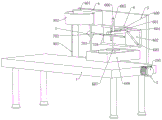
FIG. 1 is a schematic structural view of an edge trimming device for cutting textile fabric according to the present invention;
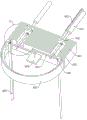
FIG. 2 is a schematic rear view of an edge trimming device for cutting textile fabric according to the present invention;
FIG. 3 is a schematic structural view of a cutting and sealing mechanism and a driving mechanism in the trimming device for cutting and processing textile fabric according to the present invention;
FIG. 4 is a schematic cross-sectional view of a cutting and sealing mechanism and a driving mechanism of an edge trimming device for cutting and processing textile fabrics according to the present invention;
FIG. 5 is an enlarged view of the structure at A in FIG. 4;
FIG. 6 is a schematic structural diagram of a picking mechanism and an adjusting mechanism in the trimming device for cutting and processing textile fabric provided by the invention;
FIG. 7 is a schematic side sectional structural view of a picking mechanism in an edge trimming device for cutting textile fabric according to the present invention;
fig. 8 is a schematic structural diagram of a transmission mechanism in the trimming device for cutting and processing textile fabric provided by the invention.
In the figure: the device comprises a machine table 1, a moving mechanism 2, a 201 placing groove, a 202 lead screw, a 203 sliding plate, a 204L-shaped plate, a 205 motor, a 3 vertical plate, a 4 cutting and sealing mechanism, a 401 fixed block, a 402 arc plate, a 403 arc groove, a 404 sliding block, a 405 cutter, a 406 heating plate, a 5 driving mechanism, a 501 sliding groove, a 502 strip-shaped plate, a 503 electric push rod, a 504 transverse plate, a 505 first driving rod, a 506 second driving rod, a 6 picking mechanism, a 601 connecting plate, a 602 square plate, a 603 through groove, a 604 round rod, a 605 fixed rod, a 606 telescopic rod, a 607 negative pressure plate, a 608 containing frame, a 609L-shaped groove, a 610 sliding plug, a 7 adjusting mechanism, a 701 transverse rod, a 702 disc, 703 pulling plate, 704 pulling rod, 8 transmission mechanism, a toothed plate 801, 802 vertical rod, 803 gear, 804 first bevel gear and 805 gear.
Detailed Description
Referring to fig. 1 and 3, a textile fabric tailors processing and uses whole limit device, including board 1, be connected with riser 3 through moving mechanism 2 on the board 1, fixedly connected with carries out the cutting and sealing mechanism 4 of semi-circular cutting and banding to the surface fabric on the riser 3, cutting and sealing mechanism 4 includes fixed block 401 of fixed connection at the 3 lateral walls of riser, fixed block 401 lateral wall passes through fixed plate fixedly connected with arc 402, arc 403 has been seted up to arc 402 inside wall, arc 403 inner wall sliding connection has two sliders 404, two sliders 404 lateral walls fixedly connected with cutter 405 respectively, the embedded hot plate 406 that is equipped with of cutter 405.
Further, the angle between two cutting edges on two cutters 405 is 180, when cutting textile fabric, cutting edge and textile fabric lateral wall laminating on the cutter 405, and then slider 404 drives two cutters 405 and is close to each other and slide 90 respectively, two cutting edges laminating this moment, and then carry out semi-circular cutting to textile fabric, compared with the prior art, it has accelerated cutting efficiency, hot plate 406 can heat up on cutter 405 simultaneously, make cutter 405 just can carry out the banding to the cutting position of textile fabric department when the cutting, cutting efficiency has still been accelerated simultaneously, steam jet has been avoided to the cutting department, make the clearance increase between the branching tow of cutting department, it is relatively poor to lead to the banding effect, make whole cutting banding process integration, optimize to production flow, and is swift high-efficient.
Referring to fig. 1 and 2, moving mechanism 2 is including seting up the standing groove 201 at board 1 lateral wall, standing groove 201 inner wall rotates and is connected with lead screw 202, lead screw 202 lateral wall threaded connection has slide 203, slide 203 lateral wall passes through L template 204 and riser 3 lower extreme fixed connection, board 1 lateral wall fixedly connected with motor 205, motor 205 expansion end and lead screw 202 one end fixed connection, motor 205 rotates and drives lead screw 202 and rotate, and then riser 3 drives and surely seals 4 removals of mechanism, can carry out the self-propelled cutting to the textile fabric who places on board 1.
Be equipped with actuating mechanism 5 that drive cutter 405 removed on fixed block 401, actuating mechanism 5 is including seting up two spouts 501 at fixed block 401 lateral wall, spout 501 inner wall sliding connection has strip shaped plate 502, 3 lateral wall fixedly connected with electric putter 503 of riser, electric putter 503 expansion end and strip shaped plate 502 lateral wall fixed connection, fixed block 401 lateral wall fixedly connected with diaphragm 504, diaphragm 504 upper end is rotated through the pivot and is connected with two first actuating levers 505, two first actuating levers 505 lateral walls respectively with two cutter 405 lateral wall fixed connection, strip shaped plate 502 lateral wall rotates and is connected with second actuating lever 506, second actuating lever 506 lateral wall rotates with first actuating lever 505 lateral wall to be connected.
Further, when two cutters 405 cut, adjust two electric putter 503 extensions this moment, and then two strip shaped plate 502 promote two second actuating levers 506 and remove, and then two second actuating levers 506 drive two first actuating levers 505 and rotate and be close to each other, and then drive two cutters 405 and be close to each other and cut textile fabric.
The two sliding chutes 501 are respectively close to the two sliding blocks 404, the two sliding chutes 501 are arranged in a vertically staggered manner, and the two first driving rods 505 are respectively opposite to the two sliding chutes 501.
Referring to fig. 1 and 6, be equipped with on the riser 3 and carry out the mechanism 6 of picking up that picks up to the surface fabric after the cutting, it includes the connecting plate 601 of fixed connection at the 3 lateral walls of riser to pick up mechanism 6, connecting plate 601 lateral wall is seted up flutedly, the square board 602 of recess inner wall sliding connection, logical groove 603 has been seted up to square board 602 lateral wall, logical groove 603 slope sets up, it has the round bar 604 to lead to groove 603 inner wall sliding connection, round bar 604 one end fixedly connected with dead lever 605, dead lever 605 lateral wall fixedly connected with telescopic link 606, telescopic link 606 expansion end fixedly connected with negative pressure board 607, telescopic link 606 can adjust the height of negative pressure board 607, and then can adsorb the textile fabric of different thickness, frame 608 is accomodate to riser 3 lateral wall fixedly connected with.
It should be noted that the negative pressure plate 607 is used for generating negative pressure inside through an external air suction pipe, and then absorbing the cut textile fabric, which is the prior art.
The connecting plate 601 and the side wall of the vertical plate 3 are jointly provided with an L-shaped groove 609, the inner wall of the L-shaped groove 609 is connected with a sliding plug 610 in a sliding manner, and the side wall of the sliding plug 610 is fixedly connected with the other end of the round rod 604. The sliding plug 610 can fix the position of the round rod 604 and prevent the round rod 604 from rolling in the through groove 603.
Further, as shown in fig. 6, when the square plate 602 slides towards the direction close to the circular disc 702, there are two motion states of the negative pressure plate 607, first, when the square plate 602 moves, the sliding plug 610 is located on the inner wall of the L-shaped groove 609 in the horizontal direction, so as to drive the negative pressure plate 607 to move horizontally, when the sliding plug 610 moves to the corner of the L-shaped groove 609, the negative pressure plate 607 is away from the storage frame 608, and further, when the square plate 602 continues to move, the sliding plug 610 slides downwards on the inner wall of the L-shaped groove 609 in the vertical direction, so as to drive the negative pressure plate 607 to move downwards, so that the negative pressure plate 607 adsorbs the cut textile fabric, similarly, when the square plate 602 slides away from the circular disc 702, the sliding plug 610 first slides upwards on the inner wall of the L-shaped groove 609 in the vertical direction, so as to drive the negative pressure plate 607 to move upwards, and then the sliding plug 610 slides horizontally on the inner wall of the L-shaped groove 609, and then the negative pressure plate 607 is driven to move to the position right above the containing frame 608, and the cut textile fabric is collected into the containing frame 608.
Referring to fig. 1 and 8, an adjusting mechanism 7 for adjusting the position of the square plate 602 is arranged on the vertical plate 3, the adjusting mechanism 7 includes a cross rod 701 rotatably connected to the side wall of the vertical plate 3, a disc 702 is fixedly connected to one end of the cross rod 701, a pulling plate 703 is fixedly connected to the side wall of the disc 702, a pulling rod 704 is rotatably connected to the side wall of the pulling plate 703, and one end of the pulling rod 704, far away from the pulling plate 703, is rotatably connected to the side wall of the square plate 602.
Referring to fig. 2 and 8, the strip-shaped plate 502 is provided with a transmission mechanism 8 for driving the cross rod 701 to rotate, the transmission mechanism 8 comprises a toothed plate 801 fixedly connected to the side wall of the strip-shaped plate 502, the side wall of the toothed plate 801 is slidably connected to the side wall of the riser 3, the side wall of the riser 3 is fixedly connected with a fixing plate, the side wall of the fixing plate is rotatably connected with a vertical rod 802, the upper end of the vertical rod 802 is rotatably connected with a gear 803 meshed with the toothed plate 801, the lower end of the vertical rod 802 is fixedly connected with a first bevel gear 804, and the cross rod 701 is far away from a second bevel gear 805 meshed with the first bevel gear 804 and one end of the disc 702.
It should be noted that, as shown in fig. 6 and 8, when the electric push rod 503 extends to drive the strip-shaped plate 502 to move to a stop, at this time, the toothed plate 801 drives the gear 803 to rotate clockwise for half a turn, and the gear 803 drives the second bevel gear 805 to rotate clockwise by half a turn through the first bevel gear 804, further driving the disc 702 to rotate clockwise for a half turn, so that the negative pressure plate 607 can absorb the cut textile fabric, and in the same way, when the electric push rod 503 contracts to move the strip-shaped plate 502 to the initial position, at this time, the toothed plate 801 drives the gear 803 to rotate counterclockwise for half a turn, and the disc 702 rotates counterclockwise for half a turn, and then the negative pressure plate 607 is driven to move to the position right above the receiving frame 608, so that, when the cutting and sealing mechanism 4 moves under the action of the moving mechanism 2 for self-cutting, the picking mechanism 6 can pick up and collect the cut semicircular textile fabric by self without manual operation.
According to the invention, the textile fabric is tightly pressed on the machine table 1, the surfaces of the cutters 405 are attached to the side walls of the textile fabric, then the two electric push rods 503 are adjusted to extend, so that the two strip-shaped plates 502 are driven to move, the two strip-shaped plates 502 drive the two first drive rods 505 to rotate through the two second drive rods 506, and further the two sliders 404 are driven to slide on the inner walls of the arc-shaped grooves 403, so that the two cutters 405 are driven to approach each other, the two cutters 405 are respectively driven to rotate 90 degrees, further the semicircular cutting of the textile fabric is completed, the heating plate 406 is powered on before the cutting, and then the temperature of the cutters 405 is raised, so that the cutting positions of the textile fabric can be sealed when the cutters 405 cut, and the cutting efficiency is also improved;
after cutting, adjusting two electric push rods 503 to contract, and further driving the strip-shaped plate 502 to move to an initial position, so that the two sliders 404 drive the two cutters 405 to move away from each other to the initial position, so that the cutters 405 are separated from the textile fabric, then the driving motor 205 rotates, and further drives the lead screw 202 to rotate, so that the sliding plate 203 drives the vertical plate 3 to move through the L-shaped plate 204, and further drives the cutters 405 to move, and the same side of the textile fabric is cut in a self-moving manner;
when the strip-shaped plate 502 moves to enable the cutter 405 to complete semicircular cutting of the textile fabric, at this time, the toothed plate 801 drives the gear 803 to rotate clockwise for half a turn, and then the first bevel gear 804 drives the second bevel gear 805 to rotate clockwise for half a turn, and then the disc 702 is driven to rotate clockwise for half a turn, when the disc 702 rotates for half a turn, the pull plate 703 drives the square plate 602 to slide towards the direction close to the disc 702 through the pull rod 704, and then the sliding plug 610 is driven to slide on the horizontal inner wall of the L-shaped groove 609, so that the circular rod 604 drives the negative pressure plate 607 to slide in the horizontal direction through the fixed rod 605 and the telescopic rod 606, when the sliding plug 610 moves to the corner of the L-shaped groove 609, at this time, the negative pressure plate 607 is far away from the accommodating frame 608, and when the square plate 602 continues to move, at this time, the sliding plug 610 can slide downwards on the vertical inner wall of the L-shaped groove 609, and then drives the negative pressure plate 607 to move downwards, so that the lower surface of the negative pressure plate 607 contacts with the upper surface of the textile fabric after cutting, the negative pressure plate 607 absorbs the cut textile fabric, and when the sliding plug 610 completes all the strokes in the L-shaped groove 609, the round rod 604 just completes all the strokes in the through groove 603;
when the strip-shaped plate 502 moves to make the cutter 405 return to the initial position, at this moment, the toothed plate 801 drives the gear 803 to rotate anticlockwise for half a circle, and then the disc 702 rotates anticlockwise for half a circle, and then the square plate 602 slides to the direction of keeping away from the disc 702, in this process, the sliding plug 610 firstly can slide upwards on the vertical direction inner wall of the L-shaped groove 609, and then the negative pressure plate 607 moves upwards, along with the continuous rotation of the disc 702, the pull rod 704 continues to push the square plate 602 to move, and then the sliding plug 610 is driven to slide along the horizontal direction inner wall of the L-shaped groove 609, and then the negative pressure plate 607 is driven to move right above the storage frame 608, and finally the semicircular textile fabric after cutting can be collected into the storage frame 608, thereby the whole.