CN113221663A - Real-time sign language intelligent identification method, device and system - Google Patents
Real-time sign language intelligent identification method, device and system Download PDFInfo
- Publication number
- CN113221663A CN113221663A CN202110410036.7A CN202110410036A CN113221663A CN 113221663 A CN113221663 A CN 113221663A CN 202110410036 A CN202110410036 A CN 202110410036A CN 113221663 A CN113221663 A CN 113221663A
- Authority
- CN
- China
- Prior art keywords
- data
- sign language
- time
- joint
- space
- Prior art date
- Legal status (The legal status is an assumption and is not a legal conclusion. Google has not performed a legal analysis and makes no representation as to the accuracy of the status listed.)
- Granted
Links
Images


Classifications
-
- G—PHYSICS
- G06—COMPUTING OR CALCULATING; COUNTING
- G06V—IMAGE OR VIDEO RECOGNITION OR UNDERSTANDING
- G06V40/00—Recognition of biometric, human-related or animal-related patterns in image or video data
- G06V40/20—Movements or behaviour, e.g. gesture recognition
- G06V40/28—Recognition of hand or arm movements, e.g. recognition of deaf sign language
-
- G—PHYSICS
- G06—COMPUTING OR CALCULATING; COUNTING
- G06F—ELECTRIC DIGITAL DATA PROCESSING
- G06F18/00—Pattern recognition
- G06F18/20—Analysing
- G06F18/25—Fusion techniques
-
- G—PHYSICS
- G06—COMPUTING OR CALCULATING; COUNTING
- G06N—COMPUTING ARRANGEMENTS BASED ON SPECIFIC COMPUTATIONAL MODELS
- G06N3/00—Computing arrangements based on biological models
- G06N3/02—Neural networks
- G06N3/04—Architecture, e.g. interconnection topology
- G06N3/045—Combinations of networks
-
- G—PHYSICS
- G06—COMPUTING OR CALCULATING; COUNTING
- G06N—COMPUTING ARRANGEMENTS BASED ON SPECIFIC COMPUTATIONAL MODELS
- G06N3/00—Computing arrangements based on biological models
- G06N3/02—Neural networks
- G06N3/04—Architecture, e.g. interconnection topology
- G06N3/047—Probabilistic or stochastic networks
-
- G—PHYSICS
- G06—COMPUTING OR CALCULATING; COUNTING
- G06N—COMPUTING ARRANGEMENTS BASED ON SPECIFIC COMPUTATIONAL MODELS
- G06N3/00—Computing arrangements based on biological models
- G06N3/02—Neural networks
- G06N3/08—Learning methods
Landscapes
- Engineering & Computer Science (AREA)
- Theoretical Computer Science (AREA)
- Physics & Mathematics (AREA)
- General Physics & Mathematics (AREA)
- Data Mining & Analysis (AREA)
- General Engineering & Computer Science (AREA)
- Health & Medical Sciences (AREA)
- Life Sciences & Earth Sciences (AREA)
- Artificial Intelligence (AREA)
- Evolutionary Computation (AREA)
- General Health & Medical Sciences (AREA)
- Computational Linguistics (AREA)
- Computing Systems (AREA)
- Molecular Biology (AREA)
- Biophysics (AREA)
- Mathematical Physics (AREA)
- Software Systems (AREA)
- Biomedical Technology (AREA)
- Computer Vision & Pattern Recognition (AREA)
- Bioinformatics & Computational Biology (AREA)
- Bioinformatics & Cheminformatics (AREA)
- Probability & Statistics with Applications (AREA)
- Evolutionary Biology (AREA)
- Psychiatry (AREA)
- Social Psychology (AREA)
- Human Computer Interaction (AREA)
- Multimedia (AREA)
- Image Analysis (AREA)
Abstract
Description
技术领域technical field
本发明属于手语识别技术领域,具体涉及一种实时手语智能识别方法、装置及系统。The invention belongs to the technical field of sign language recognition, and in particular relates to a real-time sign language intelligent recognition method, device and system.
背景技术Background technique
在全球范围内,大约有4.66亿听力受损的人,而且据估计,到2050年该数字高达9亿。手语是一种重要的人类肢体语言表达方式,包含信息量多,同时也是聋哑人与键听人之间沟通的主要载体。因此,利用新兴信息技术对手语进行识别有助于聋哑人与键听人进行实时的交流和沟通,对于改善听障人群的沟通及社交以及促进社会进步具有重要的 现实意义。同时,作为人类身体最直观的表达,手语的应用有助于人机交互向更加自然、 便捷的方式升级。因此,手语识别是当今人工智能领域的研究热点。Globally, there are approximately 466 million hearing-impaired people, and by 2050 the number is estimated to be as high as 900 million. Sign language is an important human body language expression, which contains a lot of information, and is also the main carrier of communication between the deaf and the key-hearing people. Therefore, the use of emerging information technology to identify sign language is helpful for deaf people to communicate and communicate with key hearing people in real time, which has important practical significance for improving the communication and social interaction of hearing-impaired people and promoting social progress. At the same time, as the most intuitive expression of the human body, the application of sign language helps to upgrade human-computer interaction to a more natural and convenient way. Therefore, sign language recognition is a research hotspot in the field of artificial intelligence today.
目前,RGB视频和不同类型的模态(例如深度,光流和人体骨骼)都可以用于手语识别(Sign Language Recognition,SLR)任务。与其它模式数据相比,人体的骨架数据不仅能够对人体各个关节之间的关系进行建模和编码,而且对相机拍摄的视角,运动速度,人体外观以及人体尺度等变化具有不变性。更重要的是,它还能够在较高视频帧率下进行计算,这极大的促进在线和实时应用的发展。从历史沿革上,SLR可分为传统识别方法和基 于深度学习的研究方法两大类。2016年以前,基于视觉的传统SLR技术研究较为广泛。 传统方法能够解决一定规模下的SLR问题,但算法复杂、泛化性不高,且面向的数据量与 模式种类受限,无法将人类对于手语的智能理解完全表述,例如MEI,HOF以及BHOF等 方法。因此,在当前大数据飞速发展的时代背景下,基于深度学习、挖掘人类视觉与认知 规律的SLR技术成为了必然。当前,大多数已存在的深度学习的研究主要集中在卷积神经 网络(Convolutional Neural Networks,CNN),循环神经网络(Recurrent Neural Networks,RNN和图卷积网络(Graph Convolutional Networks,GCN)。CNN和RNN非常适合处理 欧几里得数据,例如RGB,depth,光流等,但是,对于高度非线性和复杂多变的骨架数 据却不能很好的表达。GCN很适合处理骨架数据,但是,这种方法在处理面向基于骨架的 手语识别任务时存在以下几个难点:一是仅是利用骨架的关节坐标对手势运动信息进行表 征,这对手和手指运动信息的特征描述还是不够丰富的;二是手语的骨架数据常表现出高 度的非线性和复杂的变化性,这对GCN的识别能力提出了更高的要求;三是主流的基于 骨架的SLR图卷积网络(GCN)倾向于采用一阶Chebyshev多项式近似以减少开销,没有 考虑高阶连接,导致其表征能力受到限制。更糟糕的是,这种GCN网络还缺乏对骨架数 据动态时空相关性的建模能力,无法得到满意的识别精度。Currently, both RGB video and different types of modalities such as depth, optical flow, and human skeleton can be used for Sign Language Recognition (SLR) tasks. Compared with other pattern data, human skeleton data can not only model and encode the relationship between the various joints of the human body, but also have invariance to changes in the camera's viewing angle, movement speed, human appearance, and human scale. More importantly, it can also perform calculations at higher video frame rates, which greatly facilitates the development of online and real-time applications. Historically, SLR can be divided into two categories: traditional recognition methods and research methods based on deep learning. Before 2016, the traditional vision-based SLR technology was widely studied. The traditional method can solve the SLR problem of a certain scale, but the algorithm is complex, the generalization is not high, and the amount of data and the types of patterns it is oriented to are limited, and it is impossible to fully express the human intelligent understanding of sign language, such as MEI, HOF and BHOF, etc. method. Therefore, in the current era of rapid development of big data, SLR technology based on deep learning and mining the laws of human vision and cognition has become inevitable. Currently, most of the existing deep learning research mainly focuses on Convolutional Neural Networks (CNN), Recurrent Neural Networks (RNN) and Graph Convolutional Networks (GCN). CNN and RNN is very suitable for processing Euclidean data, such as RGB, depth, optical flow, etc. However, it cannot express well for highly nonlinear and complex and changeable skeleton data. GCN is very suitable for processing skeleton data, however, this kind of The method has the following difficulties when dealing with skeleton-based sign language recognition tasks: first, only the joint coordinates of the skeleton are used to represent the gesture motion information, and the feature description of the hand and finger motion information is not rich enough; the second is the sign language. The skeleton data often show a high degree of nonlinearity and complex variability, which puts forward higher requirements for the recognition ability of GCN; third, the mainstream skeleton-based SLR graph convolutional network (GCN) tends to use first-order Chebyshev Polynomial approximation is used to reduce the overhead, and high-order connections are not considered, which limits its representation ability. What's worse, this GCN network also lacks the ability to model the dynamic spatiotemporal correlation of skeleton data, and cannot obtain satisfactory recognition accuracy.
发明内容SUMMARY OF THE INVENTION
针对上述问题,本发明提出一种实时手语智能识别方法、装置及系统,通过构建时空 注意力的图卷积神经网络模型,从动态骨架数据(手语关节数据和手语骨骼数据)中自动 学习空间和时间模式,不仅具有更强的表现力,而且具有更强的泛化能力。In view of the above problems, the present invention proposes a real-time sign language intelligent recognition method, device and system. By constructing a graph convolutional neural network model of spatio-temporal attention, the space and Temporal mode, not only has stronger expressiveness, but also has stronger generalization ability.
为了实现上述技术目的,达到上述技术效果,本发明通过以下技术方案实现:In order to realize the above-mentioned technical purpose and achieve the above-mentioned technical effect, the present invention is realized through the following technical solutions:
第一方面,本发明提供了一种实时手语智能识别方法,包括:In a first aspect, the present invention provides a real-time sign language intelligent recognition method, comprising:
获取动态骨架数据,所述动态骨架数据包括手语关节数据和手语骨骼数据;Obtaining dynamic skeleton data, the dynamic skeleton data includes sign language joint data and sign language skeleton data;
对所述手语关节数据和手语骨骼数据进行数据融合,形成融合后的动态骨架数据,即 手语关节-骨骼数据;Data fusion is performed on the sign language joint data and the sign language skeleton data to form the fused dynamic skeleton data, that is, the sign language joint-skeletal data;
将所述手语关节-骨骼数据分成训练数据和测试数据;dividing the sign language joint-skeletal data into training data and test data;
获取时空注意力的图卷积神经网络模型,并利用所述训练数据训练所述时空注意力的 图卷积神经网络模型,获得训练好的时空注意力的图卷积神经网络模型;Obtain the graph convolutional neural network model of spatiotemporal attention, and utilize the training data to train the graph convolutional neural network model of the spatiotemporal attention, and obtain the graph convolutional neural network model of the trained spatiotemporal attention;
将所述测试数据输入至训练好的时空注意力的图卷积神经网络模型,输出手语分类的 结果,完成实时手语智能识别。The test data is input into the trained graph convolutional neural network model of space-time attention, the result of the sign language classification is output, and the real-time sign language intelligent recognition is completed.
可选地,所述手语关节数据的获取方法包括:Optionally, the method for acquiring the sign language joint data includes:
利用openpose环境对手语视频数据进行人体关节点2D坐标估计,得到原始关节点坐 标数据;Use the sign language video data in the openpose environment to estimate the 2D coordinates of human joint points to obtain the original joint point coordinate data;
从所述原始关节点坐标数据中筛选出与手语本身的特征直接相关的关节点坐标数据, 形成手语关节数据。The joint point coordinate data directly related to the features of the sign language itself are screened out from the original joint point coordinate data to form sign language joint data.
可选地,所述手语骨骼数据的获取方法包括:Optionally, the method for acquiring the sign language skeleton data includes:
对所述手语关节数据进行向量坐标变换处理,形成手语骨骼数据,每个手语骨骼数据 均由源关节和目标关节组成的2维向量表示,每个手语骨骼数据均包含源关节和目标关节 之间的长度和方向信息。Perform vector coordinate transformation processing on the sign language joint data to form sign language skeleton data, each sign language skeleton data is represented by a 2-dimensional vector composed of a source joint and a target joint, and each sign language skeleton data includes the source joint and the target joint. length and direction information.
可选地,所述手语关节-骨骼数据的计算公式为:Optionally, the calculation formula of the sign language joint-skeletal data is:

其中,
可选地,所述时空注意力的图卷积神经网络模型包括顺次相连的归一化层、时空图卷 积块层、全局平均池化层和softmax层;所述时空图卷积块层包括顺次设置的9个时空图卷 积块。Optionally, the graph convolutional neural network model of the spatiotemporal attention includes a normalization layer, a spatiotemporal graph convolution block layer, a global average pooling layer and a softmax layer that are connected in sequence; the spatiotemporal graph convolution block layer Including 9 spatiotemporal graph convolution blocks set in sequence.
可选地,所述时空图卷积块包括顺次相连的空间图卷积层、归一化层、ReLU层、时间 图卷积层,上一层的输出即为下一层的输入;各每个时空卷积块上均搭建有残差连接。Optionally, the spatiotemporal graph convolution block includes a spatial graph convolution layer, a normalization layer, a ReLU layer, and a time graph convolution layer that are connected in sequence, and the output of the upper layer is the input of the next layer; Residual connections are built on each spatiotemporal convolution block.
可选地,设定所述空间图卷积层有L个输出通道和个K个输入通道,则空间图卷积运 算公式为:Optionally, set the spatial graph convolution layer to have L output channels and K input channels, then the spatial graph convolution formula is:

其中,


Qm表示一个N×N的自适应权重矩阵,其全部元素初始化为1;Q m represents an N×N adaptive weight matrix, all elements of which are initialized to 1;
SAm是一个N×N的空间相关性矩阵,用于确定在空间维度上两个顶点之间是否存在连 接以及连接的强度,其表达式为:SA m is an N×N spatial correlation matrix, which is used to determine whether there is a connection between two vertices in the spatial dimension and the strength of the connection, and its expression is:

其中,Wθ和
TAm是一个N×N的时间相关性矩阵,其元素代表了不同时间段上的节点i和j之间的连 接的强弱,其表达式为:TA m is an N×N time correlation matrix, whose elements represent the strength of the connection between nodes i and j at different time periods, and its expression is:

其中,

STAm是一个N×N的时空相关性矩阵,用于确定时空中两个节点之间的相关性,其表 达式为:STA m is an N×N space-time correlation matrix, which is used to determine the correlation between two nodes in space and time, and its expression is:

其中,Wθ和


可选地,所述时间图卷积层属于时间维度的标准卷积层,通过合并相邻时间段上的信 息来更新节点的特征信息,从而获得动态骨架数据时间维度的信息特征,各时空卷积块上 的卷积操作为:Optionally, the time graph convolution layer belongs to the standard convolution layer of the time dimension, and the feature information of the node is updated by merging the information on the adjacent time period, so as to obtain the information feature of the time dimension of the dynamic skeleton data. The convolution operation on the accumulation block is:

其中,*表示标准卷积运算,Φ为时间维卷积核的参数,其内核大小为Kt×1,ReLU是 激活函数,M表示对一个手语所有节点数的划分方式,Wm在第m子图上的卷积核,
第二方面,本发明提供了一种实时手语智能识别装置,包括:In a second aspect, the present invention provides a real-time sign language intelligent recognition device, comprising:
获取模块,用于获取动态骨架数据,包括手语关节数据和手语骨骼数据;The acquisition module is used to acquire dynamic skeleton data, including sign language joint data and sign language skeleton data;
融合模块,用于对所述手语关节数据和手语骨骼数据进行数据融合,形成融合后的动 态骨架数据,即手语关节-骨骼数据;The fusion module is used to perform data fusion on the sign language joint data and the sign language skeleton data to form the fused dynamic skeleton data, that is, the sign language joint-skeletal data;
划分模块,用于将所述手语关节-骨骼数据分成训练数据和测试数据;a dividing module for dividing the sign language joint-skeletal data into training data and test data;
训练模块,用于获取时空注意力的图卷积神经网络模型,并利用所述训练数据训练所 述时空注意力的图卷积神经网络模型,获得训练好的时空注意力的图卷积神经网络模型;A training module for obtaining a graph convolutional neural network model of spatiotemporal attention, and using the training data to train the graph convolutional neural network model of spatiotemporal attention to obtain a trained graph convolutional neural network of spatiotemporal attention Model;
识别模块,用于将所述测试数据输入至训练好的时空注意力的图卷积神经网络模型, 输出手语分类的结果,完成实时手语智能识别。The recognition module is used for inputting the test data into the trained graph convolutional neural network model of spatiotemporal attention, outputting the result of sign language classification, and completing real-time sign language intelligent recognition.
第三方面,本发明提供了一种实时手语智能识别系统,包括:存储介质和处理器;In a third aspect, the present invention provides a real-time sign language intelligent recognition system, comprising: a storage medium and a processor;
所述存储介质用于存储指令;the storage medium is used for storing instructions;
所述处理器用于根据所述指令进行操作以执行第一方面中任一项所述方法的步骤。The processor is configured to operate in accordance with the instructions to perform the steps of the method of any one of the first aspects.
与现有技术相比,本发明的有益效果:Compared with the prior art, the beneficial effects of the present invention:
(1)本发明借助深层架构强大的端到端自主学习能力来取代传统的人工特征提取: 通过构建时空注意力的图卷积神经网络,从动态骨架数据(例如,关节点坐标数据(joints) 和骨骼坐标数据(bones))中自动学习空间和时间模式,避免了传统的骨架建模方法对骨架 数据建模表达能力有限的问题。(1) The present invention replaces the traditional artificial feature extraction with the powerful end-to-end self-learning ability of the deep architecture: By constructing a graph convolutional neural network with spatial and temporal attention, from dynamic skeleton data (for example, joint point coordinate data (joints) The spatial and temporal patterns are automatically learned from the skeleton coordinate data (bones), which avoids the problem that traditional skeleton modeling methods have limited ability to model skeleton data.
(2)本发明通过利用合适的高阶近似Chebyshev多项式,避免过高的计算开销,同时 扩大GCN的感受野。(2) The present invention avoids excessive computational overhead by using a suitable high-order approximation Chebyshev polynomial, and at the same time expands the receptive field of GCN.
(3)本发明通过设计了一种新的基于注意力的图卷积层,包括空间注意力用于关注 感兴趣的区域,时间注意力用于关注重要的运动信息,以及时空注意力机制用于关注重要 的骨架时空信息,进而实现对重要骨架信息进行选择。(3) The present invention designs a new attention-based graph convolution layer, including spatial attention for paying attention to areas of interest, temporal attention for paying attention to important motion information, and a spatiotemporal attention mechanism for paying attention to areas of interest. It focuses on important skeleton spatiotemporal information, and then realizes the selection of important skeleton information.
(4)本发明利用了一种有效的融合策略用于joints和bones数据的连接,不仅避免了 采用双流网络的融合方法带来的内存增加和计算开销,而且能够保证这两种数据的特征在 后期是具有相同维度的。(4) The present invention utilizes an effective fusion strategy for the connection of joints and bones data, which not only avoids the memory increase and computational overhead caused by the fusion method of the dual-stream network, but also ensures that the characteristics of the two kinds of data are The latter are of the same dimension.
附图说明Description of drawings
为了使本发明的内容更容易被清楚地理解,下面根据具体实施例并结合附图,对本发 明作进一步详细的说明,其中:In order to make the content of the present invention easier to be understood clearly, the present invention will be described in further detail below according to specific embodiments and in conjunction with the accompanying drawings, wherein:
图1是本发明一种低开销的实时手语智能识别方法的流程图;Fig. 1 is the flow chart of a kind of low-overhead real-time sign language intelligent recognition method of the present invention;
图2是本发明一种低开销的实时手语智能识别方法中与手语本身直接相关的28个关 节点示意图;Fig. 2 is the schematic diagram of 28 joint points directly related to sign language itself in a kind of low-cost real-time sign language intelligent recognition method of the present invention;
图3是本发明一种低开销的实时手语智能识别方法所用的图卷积神经网络模型示意图;3 is a schematic diagram of a graph convolutional neural network model used in a low-cost real-time sign language intelligent recognition method of the present invention;
图4是本发明一种低开销的实时手语智能识别方法中时空图卷积块示意图;4 is a schematic diagram of a spatiotemporal graph convolution block in a low-overhead real-time sign language intelligent recognition method of the present invention;
图5是本发明一种低开销的实时手语智能识别方法中时空图卷积示意图;5 is a schematic diagram of spatiotemporal graph convolution in a low-overhead real-time sign language intelligent recognition method of the present invention;
图6是本发明一种低开销的实时手语智能识别方法中时空注意力图卷积层Sgcn示意图;6 is a schematic diagram of the spatiotemporal attention map convolution layer Sgcn in a low-cost real-time sign language intelligent recognition method of the present invention;
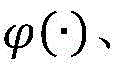
其中,


具体实施方式Detailed ways
为了使本发明的目的、技术方案及优点更加清楚明白,以下结合实施例,对本发明进 行进一步详细说明。应当理解,此处所描述的具体实施例仅仅用以解释本发明,并不用于 限定本发明的保护范围。In order to make the objects, technical solutions and advantages of the present invention more clearly understood, the present invention will be further described in detail below in conjunction with the embodiments. It should be understood that the specific embodiments described herein are only used to explain the present invention, and are not used to limit the protection scope of the present invention.
下面结合附图对本发明的应用原理作详细的描述。The application principle of the present invention will be described in detail below with reference to the accompanying drawings.
实施例1Example 1
本发明实施例中提供了一种低开销的实时手语智能识别方法,如图1所示,具体包括 以下步骤:In the embodiment of the present invention, a low-overhead real-time sign language intelligent recognition method is provided, as shown in Figure 1, which specifically includes the following steps:
步骤1:基于手语视频数据进行骨架数据的获取,包括手语关节数据和手语骨骼数据, 具体步骤如下:Step 1: Acquire skeleton data based on sign language video data, including sign language joint data and sign language skeleton data. The specific steps are as follows:
步骤1.1:搭建openpose环境,包括下载openpose,安装CmakeGui,测试是否安装成功。Step 1.1: Build the openpose environment, including downloading openpose, installing CmakeGui, and testing whether the installation is successful.
步骤1.2:利用步骤1.1搭建的openpose环境对手语RGB视频数据进行人体关节点2D 坐标估计,得到130个关节点坐标数据。这里的130个关节点坐标数据包括70个面部关节点,42个手部关节点(左手和右手分别为21个)和18个身体关节点。Step 1.2: Use the sign language RGB video data in the openpose environment built in step 1.1 to estimate the 2D coordinates of human joint points, and obtain 130 joint point coordinate data. The 130 joint point coordinate data here includes 70 face joint points, 42 hand joint points (21 for the left hand and right hand, respectively), and 18 body joint points.
步骤1.3:利用步骤1.2评估的130个关节点坐标数据,筛选与手语本身的特征直接相 关的关节点坐标数据,作为手语关节数据。对手语本身来说,最直接相关的关节点坐标数 据包括头(1个节点数据),脖子(1个节点数据),肩膀(左和右各1个节点数据), 手臂(左和右各1个节点数据)以及手部(左手和右手各11个节点数据),共计28个关 节点坐标数据,如图2所示。Step 1.3: Use the coordinate data of 130 joint points evaluated in step 1.2 to screen the joint point coordinate data directly related to the features of the sign language itself as sign language joint data. For sign language itself, the most directly related joint point coordinate data include head (1 node data), neck (1 node data), shoulder (1 node data for left and right), arm (1 node for left and right) There are 28 joint point coordinate data in total, as shown in Figure 2.
步骤1.4:将步骤1.3获取的28个关节点坐标数据划分为两个子数据集,即训练数据 和测试数据。考虑到手语样本规模小,在此过程中,利用了3折交叉验证原理,分配80%的样本用于训练和20%的样本用于测试。Step 1.4: Divide the 28 joint point coordinate data obtained in step 1.3 into two sub-data sets, namely training data and test data. Considering the small sample size of sign language, in this process, the principle of 3-fold cross-validation is used, and 80% of the samples are allocated for training and 20% for testing.
步骤1.5:对步骤1.4中获得的训练数据和测试数据,分别均进行数据规范化和序列化 处理,从而均生成两个物理文件,用于满足时空注意力的图卷积神经网络模型所需的文件 格式。Step 1.5: Perform data normalization and serialization on the training data and test data obtained in step 1.4, respectively, so as to generate two physical files, which are used to satisfy the files required by the graph convolutional neural network model of spatiotemporal attention. Format.
步骤1.6:利用步骤1.5获取的两个物理文件中的手语关节点数据(joints)进行向量坐 标变换处理,形成手语骨骼数据(bones),作为新的数据,用于训练和测试,进一步提升 模型的识别率。在这里中,每个手语骨骼数据是通过由两个关节(源关节和目标关节)组成的2维向量表示,其中,源关节点相比目标关节点更靠近骨骼重心。所以说,从源关节 点指向目标关节点的每个骨骼坐标数据是包含两个关节点之间的长度和方向信息的。Step 1.6: Use the sign language joint data (joints) in the two physical files obtained in step 1.5 to perform vector coordinate transformation processing to form sign language bone data (bones), as new data for training and testing to further improve the model. Recognition rate. Here, each sign language skeleton data is represented by a 2-dimensional vector consisting of two joints (source joint and target joint), where the source joint point is closer to the bone center of gravity than the target joint point. Therefore, each bone coordinate data from the source joint point to the target joint point contains the length and direction information between the two joint points.
步骤2,利用数据融合算法实现对步骤1所构建的手语关节数据和手语骨骼数据的数 据融合,形成融合后的融合后的动态骨架数据,即手语关节-骨骼相关数据(joints-bones)。 在数据融合算法中,每个骨骼数据是通过由两个关节(源关节和目标关节)组成的三维向 量表示。考虑到,手语关节数据和手语骨骼数据都是来自相同的视频源,对手语特征描述 的方式是相同的。因此,采用直接将这两种数据在前期输入阶段直接进行融合,不仅可以 保证这两种数据的特征在后期是具有相同维度的。此外,这种前期融合方式还可以避免因 采用双列网络架构进行后期特征融合带来的内存和计算量的增加,如图3所示。具体实现 如下:In step 2, a data fusion algorithm is used to realize the data fusion of the sign language joint data and the sign language skeleton data constructed in step 1 to form the fused dynamic skeleton data, namely the sign language joint-bones related data (joints-bones). In the data fusion algorithm, each skeleton data is represented by a three-dimensional vector consisting of two joints (source joint and target joint). Considering that both the sign language joint data and the sign language skeleton data come from the same video source, the way of describing the sign language features is the same. Therefore, by directly merging these two kinds of data in the early input stage, it can not only ensure that the features of the two kinds of data have the same dimension in the later stage. In addition, this early-stage fusion method can also avoid the increase in memory and computational complexity caused by the use of dual-column network architecture for later-stage feature fusion, as shown in Figure 3. The specific implementation is as follows:

其中,
步骤3,获取基于时空注意力的图卷积神经网络模型,如图3所示,包括1个归一化层(BN),9个时空图卷积块(D1-D9),1个全局平均池化层(GPA)和1个softmax层。
按照信息处理顺序依次为:归一化层、时空图卷积块1、时空图卷积块2、时空图卷积块3、时空图卷积块4、时空图卷积块5、时空图卷积块6、时空图卷积块7、时空图卷 积块8、时空图卷积块9、全局平均池化层、softmax层。其中,9个时空图卷积块的输出 通道参数分别设置为:64,64,64,128,128,128,256,256和256。对于每个时空图 卷积块,均包括空间图卷积层(Sgcn)1、归一化层1、ReLU层1、时间图卷积层(Tgcn) 1;上一层的输出即为下一层的输入;另外,在每个时空卷积块上会搭建残差连接,如图4 所示。每个时空卷积块的空间图卷积层(Sgcn):对输入骨架数据,即手语关节-骨骼相关 数据(joints-bones),采用卷积模板在六个通道(Conv-s、Conv-t、)上,对骨架数据进行 卷积操作,得到特征图向量。假定空间图卷积层(Sgcn)有L个输出通道和个K个输入通 道,于是需要利用KL卷积操作实现通道数目的转换,则空间图卷积运算公式为:The order of information processing is: normalization layer, spatiotemporal graph convolution block 1, spatiotemporal graph convolution block 2, spatiotemporal

其中,


在公式(2)中,A表示一个N×N的邻接矩阵,代表人体自然连接的骨架结构图,In是其的单位矩阵,当r=1时,
SAm是一个N×N的空间相关性矩阵,用于确定在空间维度上两个节点vi、vj之间是否 存在连接以及连接的强度,用normalized embedded Gaussian方程来衡量空间中两个节点 之间的相关性:SA m is an N×N spatial correlation matrix, which is used to determine whether there is a connection between two nodes v i and v j in the spatial dimension and the strength of the connection. The normalized embedded Gaussian equation is used to measure the two nodes in the space. Correlation between:

对于输入的特征图


其中,Wθ和

对于输入的特征图


其中,


其中,Wθ和


每个时空卷积块的时间图卷积Tgcn层:在时间图卷积Tgcn中采用时间维度的标准卷积对 得到特征图通过合并相邻时间段上的信息来更新节点的特征信息,从而获得节点数据时间 维度的信息特征,如图5(b)时间图卷积所示,以第k个时空卷积块上卷积操作为例:Temporal graph convolution Tgcn layer of each spatiotemporal convolution block: In the temporal graph convolution Tgcn, the standard convolution pair of the time dimension is used to obtain the feature map. The feature information of the node is updated by merging the information on adjacent time segments, thereby obtaining The information features of the time dimension of node data are shown in Figure 5(b) time graph convolution, taking the convolution operation on the kth spatiotemporal convolution block as an example:

其中*表示标准卷积运算,Φ为时间维卷积核的参数,其内核大小为Kt×1,在这里取 Kt=9,激活函数是ReLU,M表示对一个手语所有节点数的划分方式,Wm在第m子图上的 卷积核,
ReLU层:在ReLU层中采用线性整流函数(RectifiedLinear Unit,ReLU)对得到的特征 向量,线性整流函数为:Φ(x)=max(0,x)。其中x为ReLU层的输入向量,X(x)为输出向量,作为下一层的输入。ReLU层能更加有效率的梯度下降以及反向传播,避免了梯度爆炸和梯度消失问题。同时ReLU层简化了计算过程,没有了其他复杂激活函数中诸如指数函数的影响;同时活跃度的分散性使得卷积神经网络整体计算成本下降。在每个图卷积操作之后,都有ReLU的附加操作,其目的是在图卷积中加入非线性,因为使用图卷积来解决的现实世界的问题都是非线性的,而卷积运算是线性运算,所以必须使用一个如ReLU的激活函数来加入非线性的性质。ReLU layer: In the ReLU layer, a linear rectification function (Rectified Linear Unit, ReLU) is used to obtain the feature vector, and the linear rectification function is: Φ(x)=max(0, x). Where x is the input vector of the ReLU layer, and X(x) is the output vector, which is used as the input of the next layer. The ReLU layer can perform gradient descent and backpropagation more efficiently, avoiding the problems of gradient explosion and gradient disappearance. At the same time, the ReLU layer simplifies the calculation process, without the influence of other complex activation functions such as exponential functions; at the same time, the dispersion of activity reduces the overall computational cost of the convolutional neural network. After each graph convolution operation, there is an additional operation of ReLU, whose purpose is to add nonlinearity to the graph convolution, because the real-world problems solved by using graph convolution are nonlinear, and the convolution operation is Linear operation, so an activation function such as ReLU must be used to add nonlinear properties.
归一化层(BN):归一化有助于快速收敛;对局部神经元的活动创建竞争机制,使得其中响应比较大的值变得相对更大,并抑制其他反馈较小的神经元,增强了模型的泛化能力。Normalization Layer (BN): Normalization facilitates fast convergence; creates a competitive mechanism for local neuron activity such that values with larger responses become relatively larger and suppress other neurons with smaller feedback, The generalization ability of the model is enhanced.
全局平均池化层(GPA):对输入的特征图进行压缩,一方面使特征图变小,简化网络 计算复杂度;一方面进行特征压缩,提取主要特征。全局平均池化层(GPA)可以在保持最重要的信息的同时降低特征图的维度。Global average pooling layer (GPA): compress the input feature map, on the one hand, make the feature map smaller and simplify the network computational complexity; on the other hand, perform feature compression to extract the main features. A global average pooling layer (GPA) can reduce the dimensionality of feature maps while maintaining the most important information.
步骤4,利用所述训练数据对时空注意力的图卷积神经网络模型进行训练,具体步骤 如下:Step 4, utilize described training data to train the graph convolutional neural network model of spatiotemporal attention, and concrete steps are as follows:
步骤4.1,随机初始化所有时空注意力的图卷积神经网络模型的参数和权重值;Step 4.1, randomly initialize the parameters and weights of all spatiotemporal attention graph convolutional neural network models;
步骤4.2,将融合的动态骨架数据(手语关节-骨骼数据)作为时空注意力的图卷积网 络模型该模型的输入,经过前向传播步骤,即归一化层、9个时空图卷积块层、全局平均池化层,最后达到softmax层进行分类,得到分类结果,也就是输出一个包含每个类预测的概率值的向量。由于权重是随机分配给第一个训练样例的,因此输出概率也是随机的;Step 4.2, take the fused dynamic skeleton data (sign language joint-skeletal data) as the input of the graph convolution network model of spatiotemporal attention, and go through the forward propagation step, that is, the normalization layer, 9 spatiotemporal graph convolution blocks layer, global average pooling layer, and finally the softmax layer for classification, and the classification result is obtained, that is, a vector containing the predicted probability value of each class is output. Since the weights are randomly assigned to the first training example, the output probabilities are also random;
步骤4.3,计算输出层(softmax层)的损失函数Loss,如式(9)所示,采用交叉熵(Cross Entropy)损失函数,定义如下:Step 4.3, calculate the loss function Loss of the output layer (softmax layer), as shown in formula (9), adopt the cross entropy (Cross Entropy) loss function, which is defined as follows:

其中,C是手语分类的类别数,n是样本的总数量,xk是softmax输出层第k个神经元的输出, Pk是模型预测的概率分布,即softmax分类器对每个输入的手语样本属于第K个类别的概率 计算,yk是真实手语类别的离散分布。Loss表示损失函数,用来评测模型对真实概率分布 估计的准确程度,可以通过最小化损失函数Loss来优化模型,更新所有的网络参数。Among them, C is the number of categories of sign language classification, n is the total number of samples, x k is the output of the kth neuron in the softmax output layer, and P k is the probability distribution predicted by the model, that is, the softmax classifier for each input sign language The probability calculation that the sample belongs to the Kth class, yk is the discrete distribution of the real sign language classes. Loss represents the loss function, which is used to evaluate the accuracy of the model's estimation of the true probability distribution. The model can be optimized by minimizing the loss function Loss and update all network parameters.
步骤4.4,使用反向传播计算网络中所有权重的误差梯度。并使用梯度下降更新所有 滤波器值、权重和参数值,以最大限度地减少输出损失,也就是损失函数的值尽量降低。权重根据它们对损失的贡献进行调整。当再次输入相同的骨架数据时,输出概率可能更接近目标矢量。这意味着网络已经学会了通过调整其权重和滤波器来正确分类该特定骨架,从而减少输出损失。滤波器数量,滤波器大小,网络结构等参数在步骤4.1之前都已经固定,并且在训练过程中不会改变,只更新滤波器矩阵和连接权值。Step 4.4, compute the error gradient for all weights in the network using backpropagation. And use gradient descent to update all filter values, weights and parameter values to minimize the output loss, that is, the value of the loss function as low as possible. The weights are adjusted according to their contribution to the loss. When the same skeleton data is input again, the output probability may be closer to the target vector. This means that the network has learned to correctly classify that particular skeleton by adjusting its weights and filters, reducing the output loss. Parameters such as the number of filters, filter size, and network structure have been fixed before step 4.1, and will not change during the training process, only the filter matrix and connection weights are updated.
步骤4.5,对训练集中的所有骨架数据重复步骤4.2-4.4,直到训练次数达到设定的 epoch值。完成上述步骤对训练集数据通过构建的时空注意力的卷积神经网络进行训练学 习,这实际上意味着GCN的所有权重和参数都已经过优化,可正确手语分类。Step 4.5, repeat steps 4.2-4.4 for all skeleton data in the training set, until the number of training times reaches the set epoch value. After completing the above steps, the training set data is trained and learned through the constructed spatiotemporal attention convolutional neural network, which actually means that all the weights and parameters of the GCN have been optimized and can correctly classify sign language.
步骤5,用已经训练完成的时空注意力的图卷积神经网络模型对测试样本进行识别, 并输出手语分类的结果。Step 5: Identify the test samples with the trained spatiotemporal attention graph convolutional neural network model, and output the result of sign language classification.
根据输出手语分类的结果统计出识别的准确率。其中以识别精度(Accuracy)作为评 价系统的主要指标,包括Top1和Top5精确度,它的计算方式为:According to the results of the output sign language classification, the recognition accuracy is calculated. Among them, the recognition accuracy (Accuracy) is used as the main indicator of the evaluation system, including Top1 and Top5 accuracy, and its calculation method is:

其中TP为被正确地划分为正例的个数,即实际为正例并且被分类器划分为正例的实例 数;TN为被正确地划分为负例的个数,即实际为负例并且被分类器划分为负例的实例数; P为正样本数,N为负样本数。通常来说,准确率越高,识别结果越好。在这里,假设分类类别共n类,现在有m测试样本,那么一个样本输入网络,得到n类别概率,Top1是这n 类别概率中取概率最高的一个类别,如果此测试样本的类别是概率最高类别,则表明预测 正确,反之预测错误,Top1正确率是预测正确样本数/所有样本数,属于普通的准确率 Accuracy;而Top5就是这n类别概率中取概率最高的前五个类别,如果此测试样本的类别 在这五个类别中,则表明预测正确,反之预测错误,Top5正确率是预测正确样本数/所有 样本数。where TP is the number of correctly classified positive examples, that is, the number of instances that are actually positive and classified as positive by the classifier; TN is the number of correctly classified as negative examples, that is, the actual negative examples and The number of instances classified as negative by the classifier; P is the number of positive samples, and N is the number of negative samples. Generally speaking, the higher the accuracy, the better the recognition result. Here, assuming that there are n categories of classification categories, and there are m test samples, then a sample is input into the network to get n category probability, Top1 is the category with the highest probability among the n category probabilities, if the category of this test sample is the highest probability category, it indicates that the prediction is correct, otherwise, the prediction is wrong. The Top1 correct rate is the number of correct samples/all samples, which belongs to the common accuracy rate Accuracy; and Top5 is the top five categories with the highest probability among these n categories, if this If the category of the test sample is in these five categories, it indicates that the prediction is correct, otherwise the prediction is wrong, and the Top5 correct rate is the number of correct samples/all samples.
为了说明数据融合策略和空间图卷积Sgcn的5个模块对时空注意力的图卷积神经网络 模型的有效性,通过在预处理后的DEVISIGN-D手语骨架数据上进行了实验,首先将ST-GCN的模型作为基准模型,而后逐步加入空间图卷积Sgcn的各个模块。表1反映了使 用不同模式数据的时空图卷积神经网络模型的最佳分类能力,在这里,时空注意力的图卷 积神经网络模型,记为model。In order to illustrate the effectiveness of the data fusion strategy and the five modules of spatial graph convolution Sgcn on the graph convolutional neural network model of spatiotemporal attention, experiments were conducted on the preprocessed DEVISIGN-D sign language skeleton data. - The model of GCN is used as the benchmark model, and then each module of the spatial graph convolution Sgcn is gradually added. Table 1 reflects the best classification ability of spatiotemporal graph convolutional neural network models using different patterns of data. Here, the graph convolutional neural network model of spatiotemporal attention is denoted as model.
表1各个模型和融合框架在DEVISIGN-D上的实验结果Table 1 Experimental results of each model and fusion framework on DEVISIGN-D

对比表1中的数据可以发现,在joints数据模式下,使用Qm相比较基准方法可以对识 别Top1正确率有5.02%以上的提升,这也验证了在考虑给定图中每个节点之间连接一定的 权值参考下,有利于手语的识别。另外,实验结果也表明引入高阶Chebyshev近似
为了进一步验证时空注意力的图卷积神经网络模型的优势,本实验将其与公开方法在 识别率Accuracy方面进行对比,如表2所示,在这里时空注意力的图卷积神经网络模型, 记为model。In order to further verify the advantages of the spatiotemporal attention graph convolutional neural network model, this experiment compares it with the public method in terms of recognition rate Accuracy, as shown in Table 2, where the spatiotemporal attention graph convolutional neural network model, Record it as model.
表2本发明方法和其它公开方法在ASLLVD上的识别结果Table 2 Identification results of the method of the present invention and other disclosed methods on ASLLVD

如表格2所示,以前的研究呈现出更多原始方法,诸如MEI和MHI等方法,它们主要是从连续动作视频帧之间的差异来检测运动及其强度。它们不能区分个体,也不能专注于身体的特定部位,导致任何性质的运动被认为是对等的。而PCA反过来又增加了基于对方差较大的组分的识别来降低组分维数的能力,从而使之与检测更为相关框架内的运动。基于时空图卷积网络(ST-GCN)的方法是利用人体骨架的图结构,重点关注身体的运动及 其各部分之间的相互作用,并忽略周围环境的干扰。此外,在空间和时间维度下的运动, 能够捕捉到随着时间推移所进行的手势动作的动态方面的信息。基于这些特点,该方法很 适用于处理手语识别所面临的问题。相比于模型ST-GCN,时空注意力的图卷积模型(model) 更深入,尤其是对于手和手指的运动。为了寻找能够丰富手语运动的特征描述,model还 将二阶骨骼数据bones用于提取手语骨架的骨骼信息。此外,为了提升图卷积的表征能力, 扩大GCN的感受野,model采用合适的高阶Chebyshev近似的计算。最后,为了进一步改 善GCN的性能,注意力机制用于实现对手语骨架相对重要信息的选择,进一步提升图的 节点进行正确分类。表2的实验结果表明融合了joints和bones这两种数据的model模型 明显优于现有的基于ST-GCN的手语识别方法,正确率提升了31.06%。利用HOF特征提 取技术对图像进行预处理,可以为机器学习算法提供更丰富的信息。而BHOF方法则是应 用连续步骤进行光流提取、彩色地图创建、块分割和从中生成直方图,能够确保提取出更 多关于手运动的增强特征,有利于其符号识别性能。该技术源于HOF,不同之处在于计算 光流直方图时,只关注个体的手部。而像基于ST-GCN时空图卷积网络仅是基于人体关节 的坐标图,还不能提供像BHOF那样显著的结果,但是model的方法可以与BHOF方法相 媲美,正确识别率提升了2.88%。As shown in Table 2, previous studies present more primitive methods, such as MEI and MHI, which mainly detect motion and its intensity from the difference between consecutive action video frames. They cannot distinguish individuals or focus on specific parts of the body, resulting in movements of any nature being considered equivalent. And PCA in turn adds the ability to reduce the dimensionality of components based on the identification of components with high variance, making it more relevant for detecting motion within the frame. Methods based on spatiotemporal graph convolutional networks (ST-GCN) exploit the graph structure of the human skeleton, focus on the movement of the body and the interactions between its parts, and ignore the interference of the surrounding environment. In addition, motion in spatial and temporal dimensions can capture information about the dynamics of gestures performed over time. Based on these characteristics, this method is very suitable for dealing with the problems faced by sign language recognition. Compared to the model ST-GCN, the graph convolution model of spatiotemporal attention is more in-depth, especially for hand and finger motion. In order to find the feature description that can enrich the sign language movement, the model also uses the second-order bone data bones to extract the bone information of the sign language skeleton. In addition, in order to improve the representation ability of graph convolution and expand the receptive field of GCN, the model adopts a suitable high-order Chebyshev approximation calculation. Finally, in order to further improve the performance of GCN, the attention mechanism is used to realize the selection of relatively important information of the sign language skeleton, and further improve the correct classification of the nodes of the graph. The experimental results in Table 2 show that the model model integrating the joints and bones data is significantly better than the existing ST-GCN-based sign language recognition method, and the accuracy rate is increased by 31.06%. Using HOF feature extraction technology to preprocess images can provide richer information for machine learning algorithms. The BHOF method, on the other hand, applies successive steps for optical flow extraction, color map creation, block segmentation and histogram generation from it, which can ensure that more enhanced features about hand motion are extracted, which is beneficial to its symbol recognition performance. This technique is derived from HOF, the difference is that when calculating the optical flow histogram, only the hands of the individual are concerned. While the convolutional network based on ST-GCN spatiotemporal graph is only based on the coordinate map of human joints, it cannot provide the remarkable results like BHOF, but the model's method is comparable to the BHOF method, and the correct recognition rate is increased by 2.88%.
实施例2Example 2
基于与实施例1相同的发明构思,本发明实施例中提供了一种实时手语智能识别装置, 包括:Based on the same inventive concept as Embodiment 1, an embodiment of the present invention provides a real-time sign language intelligent recognition device, including:
其余部分均与实施例1相同。The rest are the same as in Example 1.
实施例3Example 3
基于与实施例1相同的发明构思,本发明实施例中提供了一种实时手语智能识别系统, 包括存储介质和处理器;Based on the same inventive concept as Embodiment 1, an embodiment of the present invention provides a real-time sign language intelligent recognition system, including a storage medium and a processor;
所述存储介质用于存储指令;the storage medium is used for storing instructions;
所述处理器用于根据所述指令进行操作以执行根据实施例1中任一项所述方法的步骤。The processor is configured to operate in accordance with the instructions to perform the steps of the method according to any of Embodiment 1.
本发明提出的一种低开销的实时手语智能识别方法不仅通过利用合适的高阶近似扩 大GCN感受野,进一步提升GCN的表征能力,而且采用注意力机制为每个手势动作选择最丰富最重要的信息。其中,空间注意力用于关注感兴趣的区域,时间注意力用于关注重要的运动信息,以及时空注意力机制用于关注重要的骨架时空信息。此外,该方法还从原始的视频样本中提取骨架样本包括joints和bones作为模型的输入,并采用深度学习的前期融合策略对joints和bones数据的特征进行融合。其中这种前期的融合策略不仅避免了采用双流网络的融合方法带来的内存增加和计算开销,而且能够保证这两种数据的特征在后期是具有相同维度的。实验结果显示,该方法在DEVISIGN-D和ASLLVD数据集上的 TOP1分别可达80.73%和87.88%,TOP5分别可达95.41%和100%。这一结果验证了这种方 法进行动态骨架手语识别方法的有效性。总之,在基于聋哑人的手语识别任务中,该方法 具有明显的优势,特别适合用于复杂和多变的手语识别。The low-cost real-time sign language intelligent recognition method proposed by the present invention not only expands the GCN receptive field by using a suitable high-order approximation, and further improves the representation ability of the GCN, but also adopts the attention mechanism to select the most abundant and important for each gesture action. information. Among them, spatial attention is used to focus on the region of interest, temporal attention is used to focus on important motion information, and spatiotemporal attention mechanism is used to focus on important skeleton spatiotemporal information. In addition, the method also extracts skeleton samples from the original video samples, including joints and bones as the input of the model, and adopts the pre-fusion strategy of deep learning to fuse the features of the joints and bones data. The fusion strategy in the early stage not only avoids the memory increase and computational overhead caused by the fusion method of the dual-stream network, but also ensures that the features of the two kinds of data have the same dimension in the later stage. The experimental results show that the method achieves 80.73% and 87.88% for TOP1 on DEVISIGN-D and ASLLVD datasets, and 95.41% and 100% for TOP5, respectively. This result verifies the effectiveness of this method for dynamic skeleton sign language recognition. In conclusion, in the sign language recognition task based on deaf-mute people, the method has obvious advantages, especially suitable for complex and changeable sign language recognition.
以上显示和描述了本发明的基本原理和主要特征和本发明的优点。本行业的技术人员 应该了解,本发明不受上述实施例的限制,上述实施例和说明书中描述的只是说明本发明 的原理,在不脱离本发明精神和范围的前提下,本发明还会有各种变化和改进,这些变化 和改进都落入要求保护的本发明范围内。本发明要求保护范围由所附的权利要求书及其等 效物界定。The basic principles and main features of the present invention and the advantages of the present invention have been shown and described above. Those skilled in the art should understand that the present invention is not limited by the above-mentioned embodiments. The above-mentioned embodiments and descriptions only illustrate the principle of the present invention. Without departing from the spirit and scope of the present invention, the present invention will also have Various changes and modifications fall within the scope of the claimed invention. The claimed scope of the present invention is defined by the appended claims and their equivalents.
Claims (10)


Priority Applications (1)
| Application Number | Priority Date | Filing Date | Title |
|---|---|---|---|
| CN202110410036.7A CN113221663B (en) | 2021-04-16 | 2021-04-16 | A real-time sign language intelligent recognition method, device and system |
Applications Claiming Priority (1)
| Application Number | Priority Date | Filing Date | Title |
|---|---|---|---|
| CN202110410036.7A CN113221663B (en) | 2021-04-16 | 2021-04-16 | A real-time sign language intelligent recognition method, device and system |
Publications (2)
| Publication Number | Publication Date |
|---|---|
| CN113221663A true CN113221663A (en) | 2021-08-06 |
| CN113221663B CN113221663B (en) | 2022-08-12 |
Family
ID=77087583
Family Applications (1)
| Application Number | Title | Priority Date | Filing Date |
|---|---|---|---|
| CN202110410036.7A Active CN113221663B (en) | 2021-04-16 | 2021-04-16 | A real-time sign language intelligent recognition method, device and system |
Country Status (1)
| Country | Link |
|---|---|
| CN (1) | CN113221663B (en) |
Cited By (20)
| Publication number | Priority date | Publication date | Assignee | Title |
|---|---|---|---|---|
| CN113657349A (en) * | 2021-09-01 | 2021-11-16 | 重庆邮电大学 | Human body behavior identification method based on multi-scale space-time graph convolutional neural network |
| CN113901891A (en) * | 2021-09-22 | 2022-01-07 | 上海交通大学 | Evaluation method and system, storage medium and terminal for making fist task in Parkinson's disease |
| CN114022958A (en) * | 2021-11-02 | 2022-02-08 | 泰康保险集团股份有限公司 | Sign language recognition method and device, storage medium and electronic device |
| CN114332917A (en) * | 2021-12-07 | 2022-04-12 | 南京邮电大学 | Real-time intelligent sign language recognition method and system |
| CN114613011A (en) * | 2022-03-17 | 2022-06-10 | 东华大学 | Human body 3D (three-dimensional) bone behavior identification method based on graph attention convolutional neural network |
| CN114618147A (en) * | 2022-03-08 | 2022-06-14 | 电子科技大学 | Taijiquan rehabilitation training action recognition method |
| CN114694248A (en) * | 2022-03-10 | 2022-07-01 | 苏州爱可尔智能科技有限公司 | Hand hygiene monitoring method, system, equipment and medium based on graph neural network |
| CN114882584A (en) * | 2022-04-07 | 2022-08-09 | 长沙千博信息技术有限公司 | Sign language vocabulary recognition system |
| CN114898464A (en) * | 2022-05-09 | 2022-08-12 | 南通大学 | Lightweight accurate finger language intelligent algorithm identification method based on machine vision |
| CN114998525A (en) * | 2022-06-21 | 2022-09-02 | 南京信息工程大学 | Action recognition method based on dynamic local-global graph convolutional neural network |
| CN115171212A (en) * | 2022-07-07 | 2022-10-11 | 西安电子科技大学 | Sign language recognition method, device, equipment and storage medium |
| CN115496953A (en) * | 2022-10-31 | 2022-12-20 | 河北工业大学 | Brain Network Classification Method Based on Spatiotemporal Graph Convolution |
| US20220415093A1 (en) * | 2021-06-29 | 2022-12-29 | Korea Electronics Technology Institute | Method and system for recognizing finger language video in units of syllables based on artificial intelligence |
| CN115546897A (en) * | 2022-10-19 | 2022-12-30 | 维沃移动通信有限公司 | Sign language recognition method, device, electronic device and readable storage medium |
| CN115761877A (en) * | 2022-10-24 | 2023-03-07 | 黑龙江大学 | Intelligent nursing human body abnormal behavior recognition system and method, computer and storage medium |
| CN115937729A (en) * | 2022-01-25 | 2023-04-07 | 中国电力科学研究院有限公司 | A VR action evaluation method and system based on graph convolution deep learning model |
| CN116152926A (en) * | 2023-02-16 | 2023-05-23 | 南京邮电大学 | Sign language recognition method, device and system based on fusion of vision and skeleton information |
| CN116363758A (en) * | 2023-04-07 | 2023-06-30 | 合肥工业大学 | A Sign Language Recognition Method Based on Graph Convolutional Neural Networks with Temporal Attention Augmentation |
| CN116993760A (en) * | 2023-08-17 | 2023-11-03 | 西安电子科技大学 | A gesture segmentation method, system, device and medium based on graph convolution and attention mechanism |
| CN117058750A (en) * | 2023-05-19 | 2023-11-14 | 天津理工大学 | Transformer sign language segmentation method based on human skeleton input |
Citations (2)
| Publication number | Priority date | Publication date | Assignee | Title |
|---|---|---|---|---|
| CN110399850A (en) * | 2019-07-30 | 2019-11-01 | 西安工业大学 | A kind of continuous sign language recognition method based on deep neural network |
| CN112101262A (en) * | 2020-09-22 | 2020-12-18 | 中国科学技术大学 | Multi-feature fusion sign language recognition method and network model |
-
2021
- 2021-04-16 CN CN202110410036.7A patent/CN113221663B/en active Active
Patent Citations (2)
| Publication number | Priority date | Publication date | Assignee | Title |
|---|---|---|---|---|
| CN110399850A (en) * | 2019-07-30 | 2019-11-01 | 西安工业大学 | A kind of continuous sign language recognition method based on deep neural network |
| CN112101262A (en) * | 2020-09-22 | 2020-12-18 | 中国科学技术大学 | Multi-feature fusion sign language recognition method and network model |
Cited By (28)
| Publication number | Priority date | Publication date | Assignee | Title |
|---|---|---|---|---|
| US20220415093A1 (en) * | 2021-06-29 | 2022-12-29 | Korea Electronics Technology Institute | Method and system for recognizing finger language video in units of syllables based on artificial intelligence |
| CN113657349A (en) * | 2021-09-01 | 2021-11-16 | 重庆邮电大学 | Human body behavior identification method based on multi-scale space-time graph convolutional neural network |
| CN113657349B (en) * | 2021-09-01 | 2023-09-15 | 重庆邮电大学 | A human behavior recognition method based on multi-scale spatiotemporal graph convolutional neural network |
| CN113901891A (en) * | 2021-09-22 | 2022-01-07 | 上海交通大学 | Evaluation method and system, storage medium and terminal for making fist task in Parkinson's disease |
| CN114022958A (en) * | 2021-11-02 | 2022-02-08 | 泰康保险集团股份有限公司 | Sign language recognition method and device, storage medium and electronic device |
| CN114022958B (en) * | 2021-11-02 | 2025-02-28 | 泰康保险集团股份有限公司 | Sign language recognition method and device, storage medium and electronic device |
| CN114332917A (en) * | 2021-12-07 | 2022-04-12 | 南京邮电大学 | Real-time intelligent sign language recognition method and system |
| CN115937729A (en) * | 2022-01-25 | 2023-04-07 | 中国电力科学研究院有限公司 | A VR action evaluation method and system based on graph convolution deep learning model |
| CN114618147A (en) * | 2022-03-08 | 2022-06-14 | 电子科技大学 | Taijiquan rehabilitation training action recognition method |
| CN114618147B (en) * | 2022-03-08 | 2022-11-15 | 电子科技大学 | A Tai Chi Rehabilitation Training Action Recognition Method |
| CN114694248A (en) * | 2022-03-10 | 2022-07-01 | 苏州爱可尔智能科技有限公司 | Hand hygiene monitoring method, system, equipment and medium based on graph neural network |
| CN114613011A (en) * | 2022-03-17 | 2022-06-10 | 东华大学 | Human body 3D (three-dimensional) bone behavior identification method based on graph attention convolutional neural network |
| CN114882584B (en) * | 2022-04-07 | 2024-08-13 | 长沙千博信息技术有限公司 | Sign language vocabulary recognition system |
| CN114882584A (en) * | 2022-04-07 | 2022-08-09 | 长沙千博信息技术有限公司 | Sign language vocabulary recognition system |
| CN114898464A (en) * | 2022-05-09 | 2022-08-12 | 南通大学 | Lightweight accurate finger language intelligent algorithm identification method based on machine vision |
| CN114998525A (en) * | 2022-06-21 | 2022-09-02 | 南京信息工程大学 | Action recognition method based on dynamic local-global graph convolutional neural network |
| CN115171212B (en) * | 2022-07-07 | 2026-02-13 | 西安电子科技大学 | Sign language recognition methods, devices, equipment and storage media |
| CN115171212A (en) * | 2022-07-07 | 2022-10-11 | 西安电子科技大学 | Sign language recognition method, device, equipment and storage medium |
| CN115546897A (en) * | 2022-10-19 | 2022-12-30 | 维沃移动通信有限公司 | Sign language recognition method, device, electronic device and readable storage medium |
| WO2024083138A1 (en) * | 2022-10-19 | 2024-04-25 | 维沃移动通信有限公司 | Sign language recognition method and apparatus, electronic device, and readable storage medium |
| CN115761877A (en) * | 2022-10-24 | 2023-03-07 | 黑龙江大学 | Intelligent nursing human body abnormal behavior recognition system and method, computer and storage medium |
| CN115761877B (en) * | 2022-10-24 | 2025-12-12 | 黑龙江大学 | A smart nursing care system, method, computer, and storage medium for recognizing abnormal human behavior. |
| CN115496953B (en) * | 2022-10-31 | 2025-05-27 | 河北工业大学 | Brain network classification method based on spatiotemporal graph convolution |
| CN115496953A (en) * | 2022-10-31 | 2022-12-20 | 河北工业大学 | Brain Network Classification Method Based on Spatiotemporal Graph Convolution |
| CN116152926A (en) * | 2023-02-16 | 2023-05-23 | 南京邮电大学 | Sign language recognition method, device and system based on fusion of vision and skeleton information |
| CN116363758A (en) * | 2023-04-07 | 2023-06-30 | 合肥工业大学 | A Sign Language Recognition Method Based on Graph Convolutional Neural Networks with Temporal Attention Augmentation |
| CN117058750A (en) * | 2023-05-19 | 2023-11-14 | 天津理工大学 | Transformer sign language segmentation method based on human skeleton input |
| CN116993760A (en) * | 2023-08-17 | 2023-11-03 | 西安电子科技大学 | A gesture segmentation method, system, device and medium based on graph convolution and attention mechanism |
Also Published As
| Publication number | Publication date |
|---|---|
| CN113221663B (en) | 2022-08-12 |
Similar Documents
| Publication | Publication Date | Title |
|---|---|---|
| CN113221663B (en) | A real-time sign language intelligent recognition method, device and system | |
| CN111291809B (en) | Processing device, method and storage medium | |
| Heidari et al. | Temporal attention-augmented graph convolutional network for efficient skeleton-based human action recognition | |
| Guo et al. | Facial expression recognition: a review | |
| CN110135249B (en) | Human action recognition method based on temporal attention mechanism and LSTM | |
| CN112101262B (en) | Multi-feature fusion sign language recognition method and network model | |
| CN107145833A (en) | Method and device for determining face area | |
| CN112434655A (en) | Gait recognition method based on adaptive confidence map convolution network | |
| CN106650806A (en) | Cooperative type deep network model method for pedestrian detection | |
| CN108416266A (en) | A kind of video behavior method for quickly identifying extracting moving target using light stream | |
| CN110222718B (en) | Image processing methods and devices | |
| CN112446253A (en) | Skeleton behavior identification method and device | |
| CN112906520A (en) | Gesture coding-based action recognition method and device | |
| CN114944013A (en) | A gesture recognition model training method and gesture recognition method based on improved yolov5 | |
| CN119229278B (en) | Remote sensing image rotation small target detection method fusing cognitive characteristics | |
| CN112199994A (en) | A method and device for real-time detection of 3D hand interaction with unknown objects in RGB video | |
| CN116503753A (en) | A Scene Classification Method for Remote Sensing Images Based on Multimodal Spatial Transformation Network | |
| Zhao et al. | Human action recognition based on improved fusion attention CNN and RNN | |
| CN114463840B (en) | Skeleton-based shift chart convolution network human body behavior recognition method | |
| CN117392491B (en) | Data processing method and device | |
| CN116824656B (en) | Micro expression sequence identification method based on double-flow Vision Transformer | |
| CN110348395B (en) | Skeleton behavior identification method based on space-time relationship | |
| Lu et al. | Dual-excitation spatial–temporal graph convolution network for skeleton-based action recognition | |
| CN111325149A (en) | Video action identification method based on voting time sequence correlation model | |
| CN119091496B (en) | Behavior recognition method, device, system, and storage medium |
Legal Events
| Date | Code | Title | Description |
|---|---|---|---|
| PB01 | Publication | ||
| PB01 | Publication | ||
| SE01 | Entry into force of request for substantive examination | ||
| SE01 | Entry into force of request for substantive examination | ||
| GR01 | Patent grant | ||
| GR01 | Patent grant |