CN113112552B - Checkerboard checking method based on deep learning semantic segmentation - Google Patents
Checkerboard checking method based on deep learning semantic segmentation Download PDFInfo
- Publication number
- CN113112552B CN113112552B CN202110439985.8A CN202110439985A CN113112552B CN 113112552 B CN113112552 B CN 113112552B CN 202110439985 A CN202110439985 A CN 202110439985A CN 113112552 B CN113112552 B CN 113112552B
- Authority
- CN
- China
- Prior art keywords
- checkerboard
- network
- image
- deep learning
- segmentation
- Prior art date
- Legal status (The legal status is an assumption and is not a legal conclusion. Google has not performed a legal analysis and makes no representation as to the accuracy of the status listed.)
- Active
Links
Images


Classifications
-
- G—PHYSICS
- G06—COMPUTING OR CALCULATING; COUNTING
- G06T—IMAGE DATA PROCESSING OR GENERATION, IN GENERAL
- G06T7/00—Image analysis
- G06T7/80—Analysis of captured images to determine intrinsic or extrinsic camera parameters, i.e. camera calibration
-
- G—PHYSICS
- G06—COMPUTING OR CALCULATING; COUNTING
- G06N—COMPUTING ARRANGEMENTS BASED ON SPECIFIC COMPUTATIONAL MODELS
- G06N3/00—Computing arrangements based on biological models
- G06N3/02—Neural networks
- G06N3/04—Architecture, e.g. interconnection topology
- G06N3/045—Combinations of networks
-
- G—PHYSICS
- G06—COMPUTING OR CALCULATING; COUNTING
- G06N—COMPUTING ARRANGEMENTS BASED ON SPECIFIC COMPUTATIONAL MODELS
- G06N3/00—Computing arrangements based on biological models
- G06N3/02—Neural networks
- G06N3/08—Learning methods
-
- G—PHYSICS
- G06—COMPUTING OR CALCULATING; COUNTING
- G06T—IMAGE DATA PROCESSING OR GENERATION, IN GENERAL
- G06T2207/00—Indexing scheme for image analysis or image enhancement
- G06T2207/20—Special algorithmic details
- G06T2207/20081—Training; Learning
-
- G—PHYSICS
- G06—COMPUTING OR CALCULATING; COUNTING
- G06T—IMAGE DATA PROCESSING OR GENERATION, IN GENERAL
- G06T2207/00—Indexing scheme for image analysis or image enhancement
- G06T2207/20—Special algorithmic details
- G06T2207/20084—Artificial neural networks [ANN]
Landscapes
- Engineering & Computer Science (AREA)
- Physics & Mathematics (AREA)
- Theoretical Computer Science (AREA)
- General Physics & Mathematics (AREA)
- General Health & Medical Sciences (AREA)
- General Engineering & Computer Science (AREA)
- Biophysics (AREA)
- Computational Linguistics (AREA)
- Data Mining & Analysis (AREA)
- Evolutionary Computation (AREA)
- Artificial Intelligence (AREA)
- Molecular Biology (AREA)
- Computing Systems (AREA)
- Biomedical Technology (AREA)
- Life Sciences & Earth Sciences (AREA)
- Mathematical Physics (AREA)
- Software Systems (AREA)
- Health & Medical Sciences (AREA)
- Computer Vision & Pattern Recognition (AREA)
- Image Processing (AREA)
- Image Analysis (AREA)
Abstract
The invention relates to a checkerboard checking method based on deep learning semantic segmentation, which is used for checking checkerboards when any camera is calibrated. Compared with the traditional image processing method, the method has the advantages of high accuracy and small error degree, can be combined with the advantages of traditional checkerboard detection, improves the adaptability to interference items in the environment, and also improves the adaptability to environmental illumination.
Description
Technical Field
The invention relates to a checkerboard checking method based on deep learning semantic segmentation, and belongs to the technical field of automobile driving assistance.
Background
At present, a camera-based vision system plays an increasingly important role in intelligent driving of a vehicle. The camera is similar to the eyes of a smart driving vehicle and is used for target detection to determine the surrounding environment. After the target object is detected, the distance from the target object to the vehicle needs to be known, and the pose of the camera relative to the vehicle can be calculated. The pose of the camera with respect to the vehicle needs to be calibrated.
The camera calibration mainly refers to calculating internal and external parameters (relative pose to the vehicle) of the camera. Currently, camera calibration is most commonly used to calculate internal and external parameters of a camera by detecting corner points of a checkerboard (including two-dimensional codes). From the offline calibration success rate of the intelligent driving vehicle and the applicability of 4S shop calibration, the robustness of the checkerboard (including the two-dimensional code) corner detection is particularly important.
The main method for detecting the checkerboard (including the two-dimensional code) is also the traditional image processing method, such as OCamcalib/ROCHADE/CHESS, etc. (refer to the following references). Under the condition that the illumination is ideal, the detection effects of the methods are good. However, when the ambient light is not uniform, the light is reflected, the checkerboard is dirty, or the illumination change is large at different time, the detection effect is not ideal. The environment of an off-line calibration factory with a camera is generally complex, and has the influence of front and rear lamps of an off-line vehicle and other light of the factory. Some factories can build a closed calibration station, so that the calibration environment still needs to be adapted to ensure the calibration passing rate. When the vehicle is used for calibrating the camera in a 4S shop, the environment is more uncontrollable, and in this case, calibration is generally performed in a way of manually selecting a corner point, so that the efficiency is very low.
When the deep learning is used for processing images, the robustness to the environment is obviously improved. MATE (refer to the following references) is a method for directly detecting the corner points of the checkerboard by deep learning, and the robustness to the environment is improved. However, because the corners of the checkerboard are directly detected, no other check information exists, and when the corners given by deep learning have errors, the corners are not well excluded. Meanwhile, the characteristics of the checkerboard corner points are easily interfered by other objects in the physical world, and sometimes, the corners of a piece of dirt on the ground can also be considered as the checkerboard corner points, so that the method is easy to detect by mistake.
Disclosure of Invention
The invention aims to provide a checkerboard inspection method based on deep learning semantic segmentation, which can be combined with the advantages of the traditional checkerboard detection, improve the adaptability to interference items in the environment and improve the adaptability to environmental illumination.
In order to achieve the purpose, the technical scheme adopted by the invention is as follows: a checkerboard inspection method based on deep learning semantic segmentation is used for checkerboard detection during calibration of any camera, firstly, checkerboard images are obtained to achieve the purpose of calibrating internal and external parameters of the camera, images are obtained through a vehicle-mounted camera, the mounting position of the vehicle-mounted camera comprises a front vehicle protection device, a rear vehicle protection device, a left rear view mirror, a right rear view mirror and a front windshield and a rear windshield, and the collected images are in any image formats such as RGB/YUV and the like;
the method specifically comprises the following steps of,
step 1, dividing a checkerboard in an image from the image by using a deep learning semantic division method; selecting a segmentation network, GT labeling, network parameter training and final prediction;
1.1, the network can be divided by selecting commonly used deep lab and the like, and the network can also be modified by resnet and the like to realize the dividing function. A plurality of deep learning networks can be realized in the scheme, and the standard of the deep learning network is selected as follows: a. in order to improve the robustness of the environment, the depth of the network must be enough, and the resnet network selected by the scheme is taken as an example, because the resnet solves the problem that degradation occurs along with the increase of the network layer. b. The segmentation accuracy of the small target must be enough, because as the network continuously samples down, the receptive field of each pixel in the feature map will be larger, and if the receptive field of one pixel exceeds 6 × 6 pixels, the features of the small target are not easy to learn. Resnet can keep more small target information by adding branch networks alongside the backbone network. c. The speed problem is also considered on the basis of meeting the two requirements, that is, the deeper the network depth is, the better the network depth is, and the more branches are, the better the network depth is.
1.2, marking GT, labeling label, wherein the label is divided into two types, one type of label is a black block in a checkerboard, the other type of label is a background, binarizing the original image by a manual and image processing method, the standard is that the brightness value of the pixel of the black block of the checkerboard is 0, the brightness value of other areas is 255, then marking the pixel point with the brightness value of 255 as 1, and marking the part with the brightness value of 0 as 0;
1.3, training parameters and the like according to normal deep learning training;
the original images and label images of the training set input by the network have the size of 256 × 256, and other image sizes can also be used. The data source is pictures collected in the mass production process of different vehicle types, different factories and different scenes, and the total sample number is close to 12 ten thousand. The mean value is subtracted for each pixel. The image is subjected to standard color enhancement. After each convolutional layer, a batch normalization is used before the active layer. Network parameters are initialized by using a He initialization method, and the network is trained from zero. The learning speed is started from 0.1, the learning rate is divided by 10 after 50000 iterations, then every 20000 iterations is divided by 10, the total iteration number is 200000, and the momentum is 0.9;
1.4, predicting, inputting the pictures to be predicted into a prediction network, and outputting the classification of each pixel of the pictures, wherein the image pixels are divided into two classes (0, 1). The prediction network is modified from the test network, and the scheme is completed by using a caffe framework;
step 2, checking the angular points of the checkerboard for the segmented image;
2.1, carrying out binarization processing on the segmented checkerboard image;
and 2.2, performing expansion corrosion treatment on the image after the binarization treatment, wherein the main target of the image after the binarization treatment is to separate black blocks.
And 2.3, finding a quadrangle and finding the quadrangle in the image. The black blocks in the non-checkerboard are also found out.
2.4, finding out neighbors at least according to the distance, the direction and the size proportion among quadrangles, wherein adjacent black blocks in the checkerboard are at opposite angles, the space among the black blocks in the checkerboard is always in a certain range, the proportion of the horizontal and vertical corresponding sides of the adjacent black blocks in the checkerboard is in a certain range, and the connected neighbors are called as neighbor communities. The distance between the black blocks in the checkerboard is within 15 pixels, the proportion of the horizontal and vertical corresponding sides of the adjacent black blocks in the checkerboard is 1/4-1/1, and the proportion is determined according to the specific checkerboard type.
And 2.5, the places where the quadrangles and the quadrangles are connected with opposite angles are called corner points of adjacent clusters. The coordinates of the angular points are calculated by two quadrilateral edges. The calculation method has higher precision than that of directly finding the corner point to obtain the coordinates of the corner point. And according to the arrangement sequence, marking a serial number, namely a row number and a column number, on each corner point, and simultaneously obtaining the number of rows and columns of each adjacent group.
And 2.6, judging whether the target neighbor is the target neighbor according to the number of the rows and the columns of the neighbor. Excluding some interference items again, wherein the number of rows and columns of the target neighbor group is known, and if the detected number of rows and columns of the neighbor group is inconsistent with that of the target neighbor group, the detected neighbor group is the interference item;
and 2.7, finally, the neighbor group meeting the requirements is the checkerboard needing to be detected.
The invention has the beneficial effects that:
1. compared with the traditional OCampalib/ROCHAD/CHESS image processing method, the scheme can well process large environment change, uneven illumination, reflection, dirt and the like.
2. In the existing method for directly detecting the checkerboard angular points through deep learning, as the characteristics of the checkerboard angular points are easily interfered by other objects in the physical world, false detection easily occurs.
3. In the existing method for directly detecting the checkerboard corner through deep learning, the corner coordinates are determined by the characteristic attribute of the corner, and two to three pixels which are biased relative to the true value still meet the characteristic attribute of the corner. The coordinate of the angular point is determined by two adjacent quadrangles together, so that the precision is higher.
Drawings
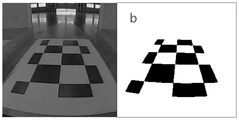
Fig. 1 is an exemplary diagram of GT labeling in the present invention, wherein (a) is an original image and (b) is label.
Fig. 2 shows the result of deep learning segmentation in the present invention, wherein (a) is the original image and (b) is the result of segmentation.
Fig. 3 is a schematic diagram of the detection rule of quadrilateral neighbors in the invention, wherein 5 quadrilaterals in (a) satisfy the tessellation neighbor rule, and the upper right, lower right and lower left quadrilaterals in (b) do not satisfy the tessellation neighbor rule.
Fig. 4 is a block flow diagram of the present invention.
Detailed Description
The invention is further described below with reference to the accompanying drawings.
The invention relates to a high-robustness checkerboard detection algorithm with strong environment adaptability, which combines strong environment adaptability of deep learning and high-robustness design of OCampCalib in checkerboard inspection.
The scheme is mainly realized by the following steps:
and (3) segmenting the checkerboard in the image from the image by using a deep learning semantic segmentation method. This step is realized by selecting a segmentation network, GT (group) labeling, network parameter training, and final prediction.
The network for dividing can be selected from commonly used deep lab and the like, and can also be modified by a plurality of resnet and the like to realize the dividing function. It should be noted that some target checkerboards only occupy 6 × 6 pixels in the image, so the segmentation accuracy of small targets is sufficient.
GT labels, label is mainly divided into two types, one type of label is black block in the checkerboard, and the other type of label is background, as shown in fig. 1, where a in fig. 1 is original image, and b is label. The background is adjusted to 255 for ease of display.
Parameters of training, etc., according to the normal deep learning training.
In fig. 2, a is an original image received during calibration, and b is a checkerboard black block obtained by prediction.
As can be seen from the figure, in the case of severe light reflection, the black blocks can still be detected by segmenting the network. Tests show that the segmentation has good treatment effect in the conditions of uneven brightness, dirt and the like.
The divided image is checked for the angular points of the checkerboard, and the detailed flow is as follows:
and binarizing the segmented image. Since the black block label of the image after segmentation is 0 and the background label is 1, the background may be 255.
And (4) expanding and corroding, wherein the main target of the binarized picture is to separate the black blocks.
Finding a quadrangle and finding a quadrangle in the image. The black blocks in the non-checkerboard are also found out.
And finding the neighbors. And finding neighbors according to the conditions of the distance, the direction, the size ratio and the like among the quadrangles. The connected neighbors are called neighbors. As in fig. 2, 3 neighbors will be found. This can eliminate the effect of black blocks in other locations. The black block in the upper right corner of fig. 3 (b) does not belong to the neighbor of the middle black block. The distance between black blocks in the checkerboard is always within a certain range, for example, 15 pixels, then the black block in the lower right corner is not a neighbor of the middle black block. The ratio of the horizontal and vertical corresponding sides of the adjacent black blocks in the checkerboard is within a certain range (for example, 1/4-1/1, the ratio can be determined according to the specific checkerboard type), and the black block at the lower left corner in fig. 3 (b) can be regarded as not being the neighbor of the middle black block). The connected neighbors are called neighbors. Finding the quadrangle is a very conventional algorithm in an image algorithm, for example, the findsquare function in opencv is directly detected, and can also be realized by itself, and the quadrangle is found by first finding the contour and then by means of contour approximation, which is not described in detail herein.
The place where the quadrangle and the quadrangle meet at opposite angles is called the corner point of the neighboring group. The coordinates of the angular points are calculated by two quadrilateral edges. The calculation method has higher precision than that of directly finding the corner point to obtain the coordinates of the corner point. And according to the arrangement sequence, marking a serial number, namely a row number and a column number, on each corner point, and simultaneously obtaining the number of rows and columns of each adjacent group.
And judging whether the target neighbor is the target neighbor according to the number of rows and columns of the neighbor. Again excluding some interfering terms.
The final neighbor group that satisfies the requirement is the checkerboard we want to detect.
In addition to the above embodiments, the present invention may have other embodiments. All technical solutions formed by adopting equivalent substitutions or equivalent transformations fall within the protection scope of the present invention.
Claims (3)
1. A checkerboard checking method based on deep learning semantic segmentation is characterized in that: the method is used for detecting the checkerboard when any camera is calibrated, firstly, a checkerboard image is obtained to achieve the purpose of calibrating internal and external parameters of the camera, the image is obtained through a vehicle-mounted camera, the mounting position of the vehicle-mounted camera comprises a front vehicle protection device, a rear vehicle protection device, a left rear view mirror, a right rear view mirror, a front windshield and a rear windshield, and the collected image is in any image format such as RGB/YUV and the like;
the method specifically comprises the following steps of,
step 1, dividing a checkerboard in an image from the image by using a deep learning semantic division method; selecting a segmentation network, GT labeling, network parameter training and final prediction;
1.1, the segmentation network selects a deep Lab or a resnet network to modify to realize the segmentation function;
1.2, marking GT, labeling label, wherein the label is divided into two types, one type of label is a black block in a checkerboard, the other type of label is a background, binarizing the original image by a manual and image processing method, the standard is that the brightness value of the pixel of the black block of the checkerboard is 0, the brightness value of other areas is 255, then marking the pixel point with the brightness value of 255 as 1, and marking the part with the brightness value of 0 as 0;
1.3, training parameters are carried out according to normal deep learning training;
1.4, predicting, inputting the pictures to be predicted into a prediction network, and outputting the classification of each pixel of the pictures, wherein the image pixels are divided into two classes (0, 1) according to the scheme;
the prediction network is modified from the test network, and the scheme is completed by using a caffe framework;
step 2, checking the angular points of the checkerboard for the segmented image;
2.1, carrying out binarization processing on the segmented checkerboard image;
2.2, performing expansion corrosion treatment on the image after the binarization treatment so as to separate black blocks;
2.3, finding a quadrangle, and finding a quadrangle in the image, wherein black blocks in the non-checkerboard are also found out in the process;
2.4, finding neighbors according to the distance, the direction and the size proportion among quadrangles, wherein adjacent black blocks in the checkerboard are in opposite angle positions, the space among the black blocks in the checkerboard is within 15 pixels, the proportion of the horizontal and vertical corresponding sides of the adjacent black blocks in the checkerboard is 1/4-1/1, the proportion is determined according to the specific type of the checkerboard, and the connected neighbors are called as neighbor clusters;
2.5, the places where the quadrangles and the quadrangles are connected with each other are called corner points of the adjacent living groups, the coordinates of the corner points are obtained by calculating the corner angles of the two quadrangles, and according to the arrangement sequence, each corner point is marked with a serial number, namely a row number and a column number, and the number of rows and columns of each adjacent living group is obtained at the same time;
2.6, judging whether the target neighbor cluster is the target neighbor cluster according to the number of the rows and columns of the neighbor cluster, and eliminating some interference items again, wherein the number of the rows and columns of the target neighbor cluster is known, and if the detected number of the rows and columns of the neighbor cluster is not consistent with that of the target neighbor cluster, the detected neighbor cluster is the interference item;
2.7, finally meeting the required neighbor group, namely the checkerboard needing to be detected.
2. The checkerboard inspection method based on deep learning semantic segmentation as claimed in claim 1, wherein: in step 1.1, the criteria for selecting the deep learning network are as follows: a. in order to improve the depth of the robust network of the environment, a resnet network is selected, because resnet solves the problem that degradation occurs as the network layer increases; b. the small target segmentation precision is ensured, because the receptive field of each pixel in the feature map is also larger along with continuous down-sampling of the network, if the receptive field of one pixel exceeds 6 × 6 pixels, the features of the small target are not easy to learn, and Resnet can reserve information of more small targets by adding a branch network beside a main network; c. the speed problem is also considered on the basis of meeting the two requirements, that is, the deeper the network depth is, the better the network depth is, and the more branches are, the better the network depth is.
3. The checkerboard inspection method based on deep learning semantic segmentation as claimed in claim 1, wherein: in the step 1.3, the sizes of the original images and the label images of the training set input by the network are 256 × 256, and other image sizes can also be used; the data source is pictures collected in the mass production process of different vehicle types, different factories and different scenes; subtracting the mean value for each pixel, applying standard color enhancement to the image, after each convolution layer, initializing network parameters by using a batch normalization method before an activation layer, training the network from zero, starting learning speed from 0.1, dividing the learning rate by 10 after 50000 iterations, then dividing by 10 every 20000 iterations, totaling 200000 iterations and 0.9 momentum.
Priority Applications (1)
| Application Number | Priority Date | Filing Date | Title |
|---|---|---|---|
| CN202110439985.8A CN113112552B (en) | 2021-04-23 | 2021-04-23 | Checkerboard checking method based on deep learning semantic segmentation |
Applications Claiming Priority (1)
| Application Number | Priority Date | Filing Date | Title |
|---|---|---|---|
| CN202110439985.8A CN113112552B (en) | 2021-04-23 | 2021-04-23 | Checkerboard checking method based on deep learning semantic segmentation |
Publications (2)
| Publication Number | Publication Date |
|---|---|
| CN113112552A CN113112552A (en) | 2021-07-13 |
| CN113112552B true CN113112552B (en) | 2022-05-27 |
Family
ID=76719860
Family Applications (1)
| Application Number | Title | Priority Date | Filing Date |
|---|---|---|---|
| CN202110439985.8A Active CN113112552B (en) | 2021-04-23 | 2021-04-23 | Checkerboard checking method based on deep learning semantic segmentation |
Country Status (1)
| Country | Link |
|---|---|
| CN (1) | CN113112552B (en) |
Families Citing this family (1)
| Publication number | Priority date | Publication date | Assignee | Title |
|---|---|---|---|---|
| CN117474828A (en) * | 2022-07-21 | 2024-01-30 | 北京字跳网络技术有限公司 | Corner detection methods, devices, equipment and media |
Citations (6)
| Publication number | Priority date | Publication date | Assignee | Title |
|---|---|---|---|---|
| US6768509B1 (en) * | 2000-06-12 | 2004-07-27 | Intel Corporation | Method and apparatus for determining points of interest on an image of a camera calibration object |
| CN101477687A (en) * | 2009-01-22 | 2009-07-08 | 上海交通大学 | Checkerboard angle point detection process under complex background |
| CN109949373A (en) * | 2019-03-22 | 2019-06-28 | 深圳市博维远景科技有限公司 | A kind of improved checkerboard angle point detection process |
| CN110458898A (en) * | 2019-08-15 | 2019-11-15 | 北京迈格威科技有限公司 | Camera calibration board, calibration data acquisition method, distortion correction method and device |
| CN110689579A (en) * | 2019-10-18 | 2020-01-14 | 华中科技大学 | Fast Monocular Vision Pose Measurement Method and Measurement System Based on Cooperative Target |
| CN111340893A (en) * | 2020-03-24 | 2020-06-26 | 深圳奥比中光科技有限公司 | Calibration plate, calibration method and calibration system |
-
2021
- 2021-04-23 CN CN202110439985.8A patent/CN113112552B/en active Active
Patent Citations (6)
| Publication number | Priority date | Publication date | Assignee | Title |
|---|---|---|---|---|
| US6768509B1 (en) * | 2000-06-12 | 2004-07-27 | Intel Corporation | Method and apparatus for determining points of interest on an image of a camera calibration object |
| CN101477687A (en) * | 2009-01-22 | 2009-07-08 | 上海交通大学 | Checkerboard angle point detection process under complex background |
| CN109949373A (en) * | 2019-03-22 | 2019-06-28 | 深圳市博维远景科技有限公司 | A kind of improved checkerboard angle point detection process |
| CN110458898A (en) * | 2019-08-15 | 2019-11-15 | 北京迈格威科技有限公司 | Camera calibration board, calibration data acquisition method, distortion correction method and device |
| CN110689579A (en) * | 2019-10-18 | 2020-01-14 | 华中科技大学 | Fast Monocular Vision Pose Measurement Method and Measurement System Based on Cooperative Target |
| CN111340893A (en) * | 2020-03-24 | 2020-06-26 | 深圳奥比中光科技有限公司 | Calibration plate, calibration method and calibration system |
Non-Patent Citations (3)
| Title |
|---|
| A Checkerboard Corner Detection Method Using Circular Samplers;Linchao Huang, et al;《2018 IEEE 4th International Conference on Computer and Communications (ICCC)》;20190801;全文 * |
| Error Distribution of Estimated Checkerboard Corner Location;Matthew J. Edwards, et al;《2018 International Conference on Image and Vision Computing New Zealand (IVCNZ)》;20190207;全文 * |
| 面向自动驾驶系统的相机—激光雷达的自动标定;许涵博;《中国优秀博硕士学位论文全文数据库(硕士) 工程科技Ⅱ辑》;20200215(第2期);全文 * |
Also Published As
| Publication number | Publication date |
|---|---|
| CN113112552A (en) | 2021-07-13 |
Similar Documents
| Publication | Publication Date | Title |
|---|---|---|
| Heinzler et al. | Cnn-based lidar point cloud de-noising in adverse weather | |
| CN110060237B (en) | Fault detection method, device, equipment and system | |
| Bascón et al. | An optimization on pictogram identification for the road-sign recognition task using SVMs | |
| US20210264147A1 (en) | Systems and methods for surface modeling using polarization cues | |
| CN111967498A (en) | Night target detection and tracking method based on millimeter wave radar and vision fusion | |
| Chen et al. | Nighttime vehicle detection for driver assistance and autonomous vehicles | |
| CN112766136B (en) | A spatial parking space detection method based on deep learning | |
| CN116643291B (en) | A SLAM method for jointly eliminating dynamic targets using vision and lidar | |
| CN108197523B (en) | Night vehicle detection method and system based on image conversion and contour neighborhood difference | |
| CN116978009A (en) | Dynamic object filtering method based on 4D millimeter wave radar | |
| CN112560538B (en) | Method for quickly positioning damaged QR (quick response) code according to image redundant information | |
| Choi et al. | A sensor fusion system with thermal infrared camera and LiDAR for autonomous vehicles: Its calibration and application | |
| CN111046741A (en) | Method and device for identifying lane line | |
| Magnussen et al. | A survey of the inadequacies in traffic sign recognition systems for autonomous vehicles | |
| Chang et al. | An efficient method for lane-mark extraction in complex conditions | |
| CN112907626A (en) | Moving object extraction method based on satellite time-exceeding phase data multi-source information | |
| CN110910379A (en) | Incomplete detection method and device | |
| CN113052118A (en) | Method, system, device, processor and storage medium for realizing scene change video analysis and detection based on high-speed dome camera | |
| CN119946446A (en) | Image data alignment for mobile system sensors | |
| CN114724119A (en) | Lane line extraction method, lane line detection apparatus, and storage medium | |
| CN113112552A (en) | Checkerboard checking method based on deep learning semantic segmentation | |
| CN109978916B (en) | Vibe moving target detection method based on gray level image feature matching | |
| CN113642553B (en) | Method for accurately positioning unconstrained license plate by combining whole and part target detection | |
| CN121281003A (en) | Vehicle risk identification method, system, electronic device and storage medium | |
| CN121147087A (en) | A method and apparatus for three-dimensional localization and defect detection of optically complex objects |
Legal Events
| Date | Code | Title | Description |
|---|---|---|---|
| PB01 | Publication | ||
| PB01 | Publication | ||
| SE01 | Entry into force of request for substantive examination | ||
| SE01 | Entry into force of request for substantive examination | ||
| GR01 | Patent grant | ||
| GR01 | Patent grant |