CN112829781A - Anti-slip fixture and long steel rail transport vehicle - Google Patents
Anti-slip fixture and long steel rail transport vehicle Download PDFInfo
- Publication number
- CN112829781A CN112829781A CN201911154563.5A CN201911154563A CN112829781A CN 112829781 A CN112829781 A CN 112829781A CN 201911154563 A CN201911154563 A CN 201911154563A CN 112829781 A CN112829781 A CN 112829781A
- Authority
- CN
- China
- Prior art keywords
- rail
- fixture
- clamp
- steel rail
- transport vehicle
- Prior art date
- Legal status (The legal status is an assumption and is not a legal conclusion. Google has not performed a legal analysis and makes no representation as to the accuracy of the status listed.)
- Pending
Links
Images




Classifications
-
- B—PERFORMING OPERATIONS; TRANSPORTING
- B61—RAILWAYS
- B61D—BODY DETAILS OR KINDS OF RAILWAY VEHICLES
- B61D45/00—Means or devices for securing or supporting the cargo, including protection against shocks
- B61D45/001—Devices for fixing to walls or floors
Abstract
The anti-slip fixture and the long steel rail transport vehicle provided by the embodiment of the invention comprise a first fixture and a second fixture, wherein the first fixture and the second fixture are clamped on a second steel rail in a locking state through the second fixture, and the first fixture and the second fixture are connected together through a detachable piece, so that the first fixture is fixedly arranged relative to the long steel rail transport vehicle. When uninstallation, first fixture presss from both sides the first rail of treating the uninstallation, and after the first rail of unblock, first rail receives the effect of first fixture friction force unable random slip, appears suddenly the drunkenness when avoiding first rail uninstallation and leads to the incident. Constructor drags first rail to subaerial when the uninstallation, accomplishes the uninstallation, and in whole uninstallation in-process, constructor only need with first fixture and second fixture clamp tight on first rail and second rail can, need not adjust first fixture and second fixture repeatedly, improved the work efficiency when uninstalling.
Description
Technical Field
The invention relates to the technical field of rail transit, in particular to an anti-slip clamp and a long steel rail transport vehicle.
Background
The rails are transported by transport vehicles onto the track of the track to be laid and are unloaded from the transport vehicles by the constructors on site. Generally, when a rail is unloaded on a line with a gradient exceeding 10 per thousand, the rail slides along the gradient direction, which brings great danger to field operation, and therefore, how to prevent the rail from sliding when the rail is unloaded on the line with the large gradient is gradually the focus of research.
In the prior art, a constructor generally prevents a steel rail from sliding during unloading through a locking weight, the locking weight is composed of a lower pressing plate, a locking bolt and rubber, the lower pressing plate is in contact with a rail head of the steel rail, the rubber is arranged on the surface of the contact of the lower pressing plate and the rail head of the steel rail, the locking bolt penetrates through the lower pressing plate and is in threaded connection with a locking beam arranged on the bottom surface of a transport vehicle, the locking bolt is fastened to reduce the distance between the lower pressing plate and the bottom surface of the transport vehicle, so that the friction force between the steel rail and the lower pressing plate is increased, and the fastening force of the locking bolt is adjusted during unloading to balance the friction force with the gliding force of the steel rail, so that the steel rail.
However, the unloading of the rail using the locking weight cannot accurately control the fastening force, and the fastening force of the locking bolt needs to be adjusted repeatedly by the constructor, resulting in low unloading efficiency.
Disclosure of Invention
The embodiment of the invention provides an anti-slip clamp and a long steel rail transport vehicle, which are used for solving the problems that in the prior art, the fastening force cannot be accurately controlled by using a locking weight to unload a steel rail, and the fastening force of a locking bolt needs to be repeatedly adjusted by a constructor, so that the unloading efficiency is low.
In a first aspect, an embodiment of the present invention provides an anti-skid fixture for fixing a rail in a long rail transport vehicle, including a first fixture and a second fixture connected by a detachable connection member, where the first fixture clamps a first rail to be unloaded to generate a friction force for limiting sliding of the first rail; the second clamp is clamped to the second rail in a locked condition to generate a frictional force that limits movement of the first clamp and the first rail.
The anti-slip clamp comprises a first clamping arm and a second clamping arm which are oppositely arranged on two sides of the first steel rail, the first clamping arm and the second clamping arm are connected through a first threaded fastener, and the first threaded fastener provides positive pressure for clamping the first clamping arm and the second clamping arm to the first steel rail.
The anti-slip clamp is characterized in that a nylon structure is arranged between the first clamping arm and the first steel rail, and between the second clamping arm and the first steel rail.
The anti-slip fixture comprises a first rail top, a first rail waist and a first rail seat, wherein the first rail top, the first rail waist and the first rail seat form an I-shaped structure, the first clamping arm and the second clamping arm respectively comprise a first acting portion attached to one side of the first rail top, a first connecting portion and a pressing portion, the first connecting portion is connected to two ends of the first acting portion, the first connecting portion is located above the first rail top and used for installing the first threaded fastener, and the pressing portion presses against the first rail waist.
The anti-skid fixture as described above, wherein the long rail transport vehicle includes a locking beam thereon, and the first fixture includes a fixing plate detachably mounted on the locking beam.
The anti-slip clamp comprises a third clamping arm and a fourth clamping arm which are oppositely arranged on two sides of the second steel rail, the third clamping arm and the fourth clamping arm are connected through a second threaded fastener, and the second threaded fastener provides positive pressure for clamping the third clamping arm and the fourth clamping arm on the second steel rail.
The anti-slip clamp is characterized in that a rubber structure is arranged between the third clamping arm and the second rail, and between the fourth clamping arm and the second rail.
The anti-slip clamp comprises a second rail, a second rail top, a second rail waist and a second rail seat, wherein the second rail comprises an I-shaped structure, the third clamping arm and the fourth clamping arm respectively comprise a second acting part attached to one side of the second rail top and a second connecting part connected with the second acting part, and the second connecting part is located above the second rail top and used for installing the second threaded fastener.
The anti-slip clamp as described above, wherein the detachable connector includes a first connecting plate and a second connecting plate molded to the first clamp and the second clamp, and a fixing pin connecting the first connecting plate and the second connecting plate.
In a second aspect, the embodiment of the invention further provides a long steel rail transport vehicle, which comprises the anti-skid fixture.
According to the anti-slip fixture and the long steel rail transport vehicle provided by the embodiment of the invention, the second fixture is clamped on the second steel rail, the second steel rail is kept in a locking state during unloading, so that the second fixture is fixedly arranged relative to the long steel rail transport vehicle, and the first fixture and the second fixture are connected together through the detachable piece, so that the first fixture is also fixedly arranged relative to the long steel rail transport vehicle, and the anti-slip fixture provided by the embodiment is ensured to be always fixed relative to the long steel rail transport vehicle during unloading the steel rail. When uninstallation, first fixture presss from both sides the first rail of treating the uninstallation, and after the first rail of unblock, first rail receives the effect of first fixture friction force unable random slip, appears suddenly the drunkenness when avoiding first rail uninstallation and leads to the incident. Constructor drags first rail to subaerial when the uninstallation, accomplishes the uninstallation, at whole uninstallation in-process, constructor only need with first fixture and second fixture clamp tight on first rail and second rail can, need not adjust first fixture and second fixture repeatedly, improved the work efficiency when uninstalling like this greatly, solved current uninstallation mode, thereby constructor need adjust the locking nose bar repeatedly and lead to the inefficiency problem of uninstallation.
Drawings
In order to more clearly illustrate the embodiments of the present invention or the technical solutions in the prior art, the drawings used in the description of the embodiments or the prior art will be briefly described below, and it is obvious that the drawings in the following description are some embodiments of the present invention, and those skilled in the art can also obtain other drawings according to the drawings without creative efforts.
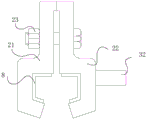
FIG. 1 is a schematic structural view of an anti-slip clamp according to an embodiment of the present invention;
FIG. 2 is a top view of the anti-skid clamp of FIG. 1;
FIG. 3 is a second schematic structural view of an anti-slip clamp according to an embodiment of the present invention;
FIG. 4 is a top view of the anti-skid clamp of FIG. 3;
fig. 5 is a schematic structural diagram of a first fixture according to an embodiment of the present invention;
FIG. 6 is a top view of the first fixture of FIG. 5;
fig. 7 is a schematic structural diagram of a second fixture according to an embodiment of the present invention;
FIG. 8 is a top view of the second fixture of FIG. 7;
FIG. 9 is a schematic structural view of a first clamp arm;
fig. 10 is a schematic structural view of a third clamping arm.
Description of reference numerals:
1: a first clamp;
11: a first clamp arm;
111: a first acting part;
112: a first connection portion;
113: a pressing part;
114: a first boss portion;
12: a second clamp arm;
13: a first threaded fastener;
14: a fixing plate;
2: a second fixture;
21: a third clamp arm;
211: a second acting part;
212: a second connecting portion;
213: a second boss portion;
22: a fourth clamp arm;
23: a second threaded fastener;
3: a detachable connector;
31: a first connecting plate;
32: a second connecting plate;
33: a fixing pin;
4: a first steel rail;
41: a first rail top;
42: a first rail web;
43: a first rail seat;
5: a second steel rail;
51: a second rail top;
52: a second web;
53: a second rail seat;
6: a nylon structure;
7: a locking beam;
8: a rubber structure.
Detailed Description
In order to make the objects, technical solutions and advantages of the embodiments of the present invention clearer, the technical solutions in the embodiments of the present invention will be clearly and completely described below with reference to the drawings in the embodiments of the present invention, and it is obvious that the described embodiments are some, but not all, embodiments of the present invention. All other embodiments, which can be derived by a person skilled in the art from the embodiments given herein without making any creative effort, shall fall within the protection scope of the present invention. The embodiments described below and the features of the embodiments can be combined with each other without conflict.
In the present invention, unless otherwise specifically stated, the terms "mounted," "connected," "fixed," and the like are to be understood broadly, and for example, may be fixedly connected, detachably connected, or integrally formed, mechanically connected, electrically connected, or communicable with each other; they may be directly connected or indirectly connected through an intermediate medium, or they may be connected internally or in any other manner known to those skilled in the art, unless otherwise specifically limited. The specific meanings of the above terms in the present invention can be understood by those skilled in the art according to specific situations.
The anti-slip fixture and the long steel rail transport vehicle provided by the embodiment can be applied to track laying engineering, and are particularly suitable for track laying engineering on a large-gradient road surface with the gradient exceeding 10 per mill.
FIG. 1 is a schematic structural view of an anti-slip clamp according to an embodiment of the present invention; FIG. 2 is a top view of the anti-skid clamp of FIG. 1; FIG. 3 is a second schematic structural view of an anti-slip clamp according to an embodiment of the present invention; FIG. 4 is a top view of the anti-skid clamp of FIG. 3; fig. 5 is a schematic structural diagram of a first fixture according to an embodiment of the present invention; FIG. 6 is a top view of the first fixture of FIG. 5; fig. 7 is a schematic structural diagram of a second fixture according to an embodiment of the present invention; FIG. 8 is a top view of the second fixture of FIG. 7; FIG. 9 is a schematic structural view of a first clamp arm; fig. 10 is a schematic structural view of a third clamping arm.
Please refer to fig. 1 to 10. In a first aspect, the present embodiment provides an anti-skid fixture for fixing a rail in a long rail transport vehicle, comprising a first fixture 1 and a second fixture 2 connected by a detachable connector 3, wherein the first fixture 1 is clamped to a first rail 4 to be unloaded to generate a friction force for limiting the sliding of the first rail 4; the second jaw 2 is clamped to the second rail 5 in a locked condition to generate a frictional force that limits movement of the first jaw 1 and the first rail 4.
The detachable connecting piece 3 can be specifically a group of lantern rings, each lantern ring comprises a first lantern ring which can be sleeved with a first fixture and a second lantern ring which is sleeved with a second fixture, when the detachable connecting piece is installed and used, the first fixture is sleeved in the first lantern ring and locks the first lantern ring, the second fixture is sleeved in the second lantern ring and locks the second lantern ring, so that the first fixture and the second fixture are connected together, and when the detachable connecting piece is detached, the first lantern ring and the second lantern ring are taken down; or, the detachable connecting piece 3 may also be a bolt, holes are formed in the first fixture 1 and the second fixture 2, and the bolt passes through the two holes and then is connected with the nut, so that the first fixture 1 and the second fixture 2 are connected together, and when the detachable connecting piece is detached, the nut is loosened. The first fixture 1 can be specifically connected with the first steel rail 4 through a clamping groove, the rail top of the first steel rail 4 is clamped in the clamping groove, and different clamping forces are provided to clamp the first steel rail 4 by changing the size of the clamping groove; or, two opposite clamping blocks may be disposed on the first fixture 1, each clamping block is connected to one side of the first rail 4, and the first rail 4 is clamped by applying pressure to the two clamping blocks. In this embodiment, the second fixture 2 may also adopt a similar implementation structure to the first fixture 1, which is not described again in this embodiment.
In addition, the first fixture 1 can meet the use requirements of different gradients by setting preset values of different clamping forces, for example, 10% may be used as a critical point, between 0% and 10%, the clamping force of the first fixture 1 may be a first clamping force, between 10% and 20%, the clamping force of the first fixture 1 may be a second clamping force, and when a constructor unloads a steel rail, the clamping force of the first fixture 1 may be set to a preset value designed in advance according to the current gradient.
It should be noted that the steel rails are laid on the bearing surface of the long steel rail transport vehicle in the transport process, and the adjacent steel rails are placed in parallel, so that constructors can unload the steel rails from two sides to the middle when unloading the steel rails. The rail to be unloaded is considered as the first rail 4 in this embodiment, and the rail adjacent to the first rail 4 is in a locked state in this unloading, and is considered as the second rail 5. The first fixture 1 and the second fixture 2 should be spaced apart perpendicular to the extension direction of the rail when coupled by the detachable coupling 3. Of course, the first rail 4 and the second rail 5 may be two non-adjacent rails in the present embodiment, as long as it is satisfied that the first rail 4 in unloading is the rail to be unloaded and the second rail 5 is the rail to be kept locked.
Specifically, the working principle of the anti-slip fixture provided by this embodiment is as follows:
firstly, the second fixture 2 is clamped on the second steel rail 5, the position of the second fixture 2 is kept to be fixed on the second steel rail 5 all the time, the first fixture 1 is clamped on the first steel rail 4, the first fixture 1 is connected with the second fixture 2 through the detachable connecting piece 3, the corresponding first fixture 1 is fixed relative to the second steel rail 5 through the detachable connecting piece 3 and the second fixture 2, and therefore the whole anti-sliding fixture is always in a fixed state relative to the long steel rail transport vehicle in the primary unloading process. During unloading, a constructor firstly clamps the first fixture 1 on the outermost steel rail, namely the first steel rail 4; the second fixture 2 is clamped to the rail adjacent to the first rail 1, i.e. the second rail 5. With first fixture 1 and second fixture 2 through dismantling the first rail 4 of unblock after connecting of connecting piece 3, first rail 4 receives the restriction of the frictional force of first fixture 1 and can't slide, avoids first rail 4 to slide suddenly or the drunkenness causes the incident, and constructor accomplishes the uninstallation through dragging first rail 4 and uninstalling it to subaerial. And after unloading, the detachable connecting piece 3 is taken down, the first fixture 1 and the second fixture 2 are loosened, and the next unloading is prepared.
The anti-skid fixture provided by the embodiment is clamped on the second steel rail 5 through the second fixture 2, the second steel rail 5 keeps a locking state when being unloaded, so that the second fixture 5 is fixedly arranged relative to the long steel rail transport vehicle, the first fixture 1 and the second fixture 2 are connected together through the detachable connecting piece 3, the first fixture 1 is also fixedly arranged relative to the long steel rail transport vehicle, and the anti-skid fixture provided by the embodiment is guaranteed to be always fixed relative to the long steel rail transport vehicle when the steel rails are unloaded. When uninstalling, first fixture 1 presss from both sides tight first rail 4 of treating the uninstallation, and after the first rail 4 of unblock, first rail 4 receives the effect of first fixture 1 friction force unable random slip, appears suddenly the drunkenness when avoiding first rail 1 uninstallation and leads to the incident. Constructor drags first rail 4 to subaerial when the uninstallation, accomplish the uninstallation, at whole uninstallation in-process, constructor only need with first fixture 1 and second fixture 2 press from both sides tightly on first rail 4 and second rail 5 can, need not adjust first fixture 1 and second fixture 2 repeatedly, work efficiency when having improved the uninstallation so greatly, solved among the current uninstallation mode, thereby constructor need adjust the locking nose bar repeatedly and lead to the problem that uninstallation efficiency is low
Further, on the basis of the above embodiment, in this embodiment, the first fixture 1 includes the first clamping arm 11 and the second clamping arm 12 which are oppositely disposed on both sides of the first steel rail 4, the first clamping arm 11 and the second clamping arm 12 are connected by the first threaded fastener 13, and the first threaded fastener 13 provides positive pressure for the first clamping arm 11 and the second clamping arm 12 to clamp to the first steel rail 4. First arm lock 11 and second arm lock 12 have the shape that is adapted to the rail appearance, and first arm lock 11 and second arm lock 12 connect the back through first threaded fastener 13, can increase the positive pressure that first fixture 1 applyed to first rail 4 through the fastening force that increases first threaded fastener 13, realize simple structure, and operation method is simple and convenient, has improved constructor's convenience of operating the anti-skidding fixture greatly. In addition, when locking the first threaded fastener, the constructor can use a torque wrench, so that the fastening force of the first threaded fastener 13 can be accurately controlled, and the friction force of the first fixture 1 on the first steel rail 4 can be further controlled.
It should be noted that, in this embodiment, the first clamping arm 11 and the second clamping arm 12 may adopt the same structure, and the two are mirror symmetry and are connected through the first threaded fastener 3, so that the first clamping arm 11 and the second clamping arm 12 have universality, and waste of material resources and financial resources is avoided.
Further, on the basis of the above embodiment, in this embodiment, the nylon structures 6 are disposed between the first clip arm 11 and the first rail 4 and between the second clip arm 12 and the first rail 4. Specifically, be provided with the nylon layer on the surface that first arm lock 11 and first rail 4 contact, be provided with the nylon layer on the surface that second arm lock 12 and first rail 4 contact equally, nylon can adopt comparatively common nylon materials to make and form, for example, nylon by lactam ring-opening polymerization, or the polymer nylon that obtains by the condensation polymerization of diamine and diacid, this embodiment does not do other requirements to the concrete type or the trade mark of the nylon that nylon structure 6 used. Through setting up nylon construction 6, make the area of contact increase of first arm lock 11 and second arm lock 12 and rail, improved the frictional force of first arm lock 11 and second arm lock 12 to first rail 4, in addition, nylon has good wear resistance to make first rail 4 draw by constructor and draw and when removing in first fixture 1, nylon is difficult for dropping or damaged, the effectual durability that has improved first fixture 1.
Further, on the basis of the above embodiment, in this embodiment, the first steel rail 4 includes the first rail top 41, the first rail web 42 and the first rail seat 43 which form the "i" structure, the first clip arm 11 and the second clip arm 12 both include the first acting portion 111 which is attached to one side of the first rail top 41, and the first connecting portion 112 and the pressing portion 113 which are connected to two ends of the first acting portion 111, the first connecting portion 112 is located above the first rail top 41 and is used for installing the first threaded fastener 13, and the pressing portion 113 presses against the first rail web 42. Specifically, the two first acting portions 111 are enclosed to form a first clamping groove, the first clamping groove encloses the first rail top 41 of the first steel rail 4, the first clamping arm 11 and the second clamping arm 12 are continuously closed, so that the two first acting portions 111 are closed, the positive pressure of the first acting portion 111 on the first rail top 41 is increased, and the friction force of the first fixture 1 on the first steel rail 4 is improved. In addition, the two pressing portions 113 press against the first rail web 42, which further increases the friction of the first fixture 1 against the first rail 4, and can be used to fix the first rail 4 in the horizontal direction to prevent the first rail 4 from shaking during unloading.
Optionally, a nylon structure 6 may be disposed on a surface of the first acting portion 111 facing the first rail 4, and a nylon structure 6 may also be disposed on a contact surface of the pressing portion 113 and the first rail 4, so as to further increase a friction force of the first fixture 1 on the first rail 4.
In addition, a first protruding portion 114 may be further disposed at an end of the first connecting portion 112 away from the first acting portion 111, referring to fig. 9, when the first clamping arm 11 and the second clamping arm 12 are connected together, the two first protruding portions 114 abut against each other, so that a certain distance is generated between the two first connecting portions 112, and the same distance is also generated between the two corresponding first acting portions 111, and by continuously tightening the first threaded fastener 13, the distance is further reduced, so as to increase the positive pressure exerted on the first rail 4 by the first clamping arm 11 and the second clamping arm 12, and the first protruding portion 114 provides a larger adjustable range of the clamping force for the first clamping apparatus 1.
Further, on the basis of the above-mentioned embodiment, in the present embodiment, the long rail transport vehicle includes the locking beam 7 thereon, and the first fixture 1 includes the fixing plate 14 detachably mounted to the locking beam 7. When the steel rail is unloaded to the last steel rail, the steel rail which is not in the locking state can be connected with the second fixture 2, and the first fixture 1 is fixed on the locking beam 7 of the long steel rail transport vehicle through the fixing plate 14, so that the anti-skid fixture provided by the embodiment can be used when the last steel rail is unloaded.
It should be noted that the cross section of the fixing plate 14 perpendicular to the extending direction of the first steel rail 4 may be a rectangular structure, at least two bolt holes are formed in the upper and lower surfaces of the rectangular structure, and the bolts pass through the bolt holes to be connected with the locking beam 7, so that the problem that the fixing plate 14 rotates around the bolts to cause a use failure of the anti-slip clamp is avoided. The fixing plate 14 may be connected to the first fixture 1 by welding, and specifically, the fixing plate 14 may be welded to the side wall of the first clamping arm 11, and a distance from the upper surface to the lower surface of the fixing plate 14 is at least greater than a distance from the first rail top 41 to the first rail seat 43 of the first steel rail 4, so that when the first fixture 1 is fixed on the locking beam 7 by the fixing plate 14, the first fixture 1 has a space capable of accommodating the lower first steel rail 4.
In addition, the bolt used in this embodiment may also be a positioning bolt with a rectangular head, the head of the bolt and the screw form a "T" shaped structure, see fig. 3, the locking beam 7 itself is provided with a "T" shaped sinking groove for installing the locking weight, when the rail is unloaded, the locking weight needs to be taken down so that the "T" shaped sinking groove is left, the fixing plate 14 can be fixed on the locking beam 7 by clamping the head of the positioning bolt into the "T" shaped sinking groove, and due to the structure of the locking beam 7 itself, no extra drilling on the locking beam 7 is needed, thereby improving the convenience of the use of the anti-slip clamp.
Further, on the basis of the above embodiment, in this embodiment, the second fixture 2 includes a third clamping arm 21 and a fourth clamping arm 22 which are oppositely disposed on two sides of the second steel rail 5, the third clamping arm 21 and the fourth clamping arm 22 are connected by a second threaded fastener 23, and the second threaded fastener 23 provides positive pressure for the third clamping arm 21 and the fourth clamping arm 22 to clamp to the second steel rail 5. The third clamping arm 21 and the fourth clamping arm 22 are in a shape suitable for the appearance of a steel rail, after the third clamping arm 21 and the fourth clamping arm 22 are connected through the second threaded fastener 23, the positive pressure applied to the second steel rail 5 by the second fixture 2 can be increased by increasing the fastening force of the second threaded fastener 23, the structure is simple, the operation method is simple and convenient, and the convenience for operating the anti-slip fixture by constructors is greatly improved. The third arm lock 21 also can adopt the same structure with fourth arm lock 22 to make third arm lock 21 and fourth arm lock 22 can exchange, improve the commonality of part, avoid extravagant a large amount of material resources and financial resources.
In addition, the first clamp arm 11, the second clamp arm 12, the third clamp arm 21, and the fourth clamp arm 22 may have the same structure, so that the parts of the first clamp 1 and the parts of the second clamp 2 may be used in common.
Further, on the basis of the above embodiment, in the present embodiment, the rubber structures 8 are disposed between the third clip arms 21 and the fourth clip arms 22 and the second rail 5. Specifically, can be provided with the rubber layer on the contact surface of third arm lock 21 and second rail 5, equally, also can be provided with the rubber layer on the contact surface of fourth arm lock 22 and second rail 5, rubber produces the deformation when the atress, and then has increased the area of contact between third arm lock 21 and fourth arm lock 22 and the second rail 5 to increased the frictional force of second fixture 2 to second rail 5, prevented that second rail 5 from following the drunkenness of second fixture 2 when uninstalling, caused the incident.
It should be noted that, in this embodiment, no other requirement is made on the specific type of the rubber material used for the rubber structure 8, as long as the rubber structure 8 can increase the friction force of the second fixture 2 against the second rail 5, for example, the rubber structure 8 used in this embodiment may be natural rubber, butadiene acrylonitrile rubber, or hydrogenated butadiene acrylonitrile rubber.
Further, on the basis of the above embodiment, in this embodiment, the second steel rail 5 includes the second rail top 51, the second rail web 52 and the second rail seat 53 which form the "i" structure, the third clip arm 21 and the fourth clip arm 22 each include the second connecting portion 212 which is attached to the second acting portion 211 on one side of the second rail top 51 and is connected to the second acting portion 211, and the second connecting portion 212 is located above the second rail top 51 and is used for installing the second threaded fastener 23. The two second acting portions 211 are enclosed to form a second clamping groove, the second clamping groove encloses the second rail top 51 of the second steel rail 5, the third clamping arm 21 and the fourth clamping arm 22 are continuously close to each other, so that the two second acting portions 211 are close to each other, the positive pressure of the second acting portions 211 on the second rail top 51 is increased, and the friction force of the second fixture 2 on the second steel rail 5 is improved. Rubber structures 8 may be provided on the surfaces of the two second engagement portions 511 facing the second rail 5, so as to further increase the friction force of the second fixture 2 against the second rail 5.
In addition, a second protruding portion 213 may be further disposed at an end of the second connecting portion 212 far from the second acting portion 211, referring to fig. 10, when the third clip arm 21 and the fourth clip arm 22 are connected together, the two second protruding portions 213 abut against each other, so that a certain distance is generated between the two second connecting portions 212, and the same distance is also generated between the corresponding two second acting portions 211, and the distance is decreased by continuously tightening the second threaded fastener 23, so as to increase the positive pressure exerted on the second rail 5 by the third clip arm 21 and the fourth clip arm 22. The second protrusions 213 provide a greater adjustable range of clamping force for the second fixture 2.
Further, on the basis of the above-described embodiment, in the present embodiment, the detachable connection member 3 includes the first connection plate 31 and the second connection plate 32 formed to the first jig 1 and the second jig 2, and the fixing pin 33 connecting the first connection plate 31 and the second connection plate 32. First pinhole 311 is provided with on first connecting plate 31, be provided with the second pinhole 321 that corresponds with first pinhole 311 position on second connecting plate 32, first fixture 1 and second fixture 2 can be linked together after fixed pin 33 passes first pinhole 311 and second pinhole 321, when needs get rid of detachable connections piece 3, extract fixed pin 33 can, simplified the process of installation detachable connections piece 3 greatly, further improvement uninstallation efficiency.
It should be noted that, in this embodiment, at least two first pin holes 311 are provided, and the number of the second pin holes 321 is consistent with that of the first pin holes 311, so as to avoid that when only one first pin hole 311 and one second pin hole 321 are provided, the first fixture 1 or the second fixture 2 can rotate around the fixing pin 33, which results in a malfunction of the anti-slip fixture.
Optionally, the first connecting plate 31 may be formed by integrally forming the first fixture 1 through die casting, or the first connecting plate 31 may also be connected to the first fixture 1 through a bolt connection or a welding connection, and specifically, the first connecting plate 31 may be connected to a side wall of the first fixture 1 facing the second fixture 2. Similarly, the second connecting plate 32 may be integrally formed with the second fixture 2, or may be connected by bolts or welding.
Further, on the basis of the above embodiments, the present embodiment further provides a long rail transport vehicle, including the anti-skid fixture described in the above embodiments. The specific structure and the implementation effect of the anti-slip fixture are as described in the above embodiments, and this embodiment is not described again. The long steel rail transport vehicle provided by the embodiment uses the anti-slip fixture, so that the working process of unloading steel rails by constructors can be effectively simplified, and the unloading efficiency is improved.
Finally, it should be noted that: the above embodiments are only used to illustrate the technical solution of the present invention, and not to limit the same; while the invention has been described in detail and with reference to the foregoing embodiments, it will be understood by those skilled in the art that: the technical solutions described in the foregoing embodiments may still be modified, or some or all of the technical features may be equivalently replaced; and the modifications or the substitutions do not make the essence of the corresponding technical solutions depart from the scope of the technical solutions of the embodiments of the present invention.
Claims (10)
1. An anti-slip fixture is used for fixing a steel rail in a long steel rail transport vehicle and is characterized by comprising a first fixture and a second fixture which are connected through a detachable connecting piece, wherein the first fixture is clamped on a first steel rail to be unloaded so as to generate friction force for limiting the first steel rail to slide; the second clamp is clamped to the second rail in a locked condition to generate a frictional force that limits movement of the first clamp and the first rail.
2. The anti-skid clamp of claim 1, wherein the first clamp includes first and second clamp arms disposed opposite each other on opposite sides of the first rail, the first and second clamp arms being connected by a first threaded fastener that provides positive pressure for the first and second clamp arms to clamp to the first rail.
3. The anti-slip clamp of claim 2 wherein a nylon structure is disposed between the first and second clamp arms and the first rail.
4. The anti-slip clamp according to claim 3, wherein the first steel rail comprises a first rail top, a first rail waist and a first rail seat which form an I-shaped structure, the first clamping arm and the second clamping arm each comprise a first acting portion attached to one side of the first rail top, and a first connecting portion and a pressing portion connected to two ends of the first acting portion, the first connecting portion is located above the first rail top and used for installing the first threaded fastener, and the pressing portion presses against the first rail waist.
5. The anti-skid clamp of claim 2, wherein said long rail transport vehicle includes a locking beam thereon, and said first clamp includes a mounting plate removably mounted to said locking beam.
6. The anti-creep clamp of any one of claims 1 to 5 wherein the second clamp includes third and fourth clamp arms disposed on opposite sides of the second rail, the third and fourth clamp arms being connected by a second threaded fastener that provides positive pressure for the third and fourth clamp arms to clamp to the second rail.
7. The anti-slip clamp of claim 6 wherein a rubber structure is disposed between the third and fourth clamp arms and the second rail.
8. The anti-skid clamp according to claim 7, wherein the second rail comprises a second rail top, a second rail web and a second rail seat, the second rail top, the second rail web and the second rail seat form an I-shaped structure, the third clamping arm and the fourth clamping arm each comprise a second connecting portion, a second acting portion and a second connecting portion, the second acting portion is attached to one side of the second rail top, the second connecting portion is attached to the second acting portion, and the second connecting portion is located above the second rail top and used for installing the second threaded fastener.
9. The anti-creep clamp of claim 1 wherein the detachable connections include first and second connection plates molded to the first and second clamps and a fixing pin connecting the first and second connection plates.
10. A long rail transport vehicle comprising the anti-skid device as claimed in any one of claims 1 to 9.
Priority Applications (1)
| Application Number | Priority Date | Filing Date | Title |
|---|---|---|---|
| CN201911154563.5A CN112829781A (en) | 2019-11-22 | 2019-11-22 | Anti-slip fixture and long steel rail transport vehicle |
Applications Claiming Priority (1)
| Application Number | Priority Date | Filing Date | Title |
|---|---|---|---|
| CN201911154563.5A CN112829781A (en) | 2019-11-22 | 2019-11-22 | Anti-slip fixture and long steel rail transport vehicle |
Publications (1)
| Publication Number | Publication Date |
|---|---|
| CN112829781A true CN112829781A (en) | 2021-05-25 |
Family
ID=75921437
Family Applications (1)
| Application Number | Title | Priority Date | Filing Date |
|---|---|---|---|
| CN201911154563.5A Pending CN112829781A (en) | 2019-11-22 | 2019-11-22 | Anti-slip fixture and long steel rail transport vehicle |
Country Status (1)
| Country | Link |
|---|---|
| CN (1) | CN112829781A (en) |
-
2019
- 2019-11-22 CN CN201911154563.5A patent/CN112829781A/en active Pending
Similar Documents
| Publication | Publication Date | Title |
|---|---|---|
| US8573568B2 (en) | Leaf spring attachment | |
| US7975811B2 (en) | Constant force rail clamp | |
| CN104661950B (en) | rail system | |
| AU2008100834B4 (en) | Two-piece rail seal clip and tool for installing same | |
| US20200378072A1 (en) | Cover assembly for structural members | |
| CA2251490C (en) | Two-piece rail seal clip and tool for installing same | |
| US6726246B2 (en) | Stabilizer pad for vehicles | |
| CN112829781A (en) | Anti-slip fixture and long steel rail transport vehicle | |
| CN1343814A (en) | Transversely regulating support abutment | |
| KR20220002491A (en) | Rail clamp with rotatable brake shoe | |
| WO2017181377A1 (en) | Anti-loosening rail fastening device | |
| JP5924622B2 (en) | A rail that has a structure that sandwiches the live load received from the wheels from the bottom of the rail with the left and right pawls while the railcar is running, and has the effect of reducing the gap between the rails and preventing the rail from moving forward (slip prevention). Fastening device. | |
| KR20180083390A (en) | Attachment for band-type fastening straps | |
| US10813270B2 (en) | Shear block equipment mounting system for an agricultural product applicator | |
| US7553102B2 (en) | Self-centering clamp block | |
| AT524130B1 (en) | climbing aid | |
| US557699A (en) | Wagon-brake | |
| CN101913533A (en) | Design improvement of crane heavy-duty truck traveling steel rail base | |
| CN207875319U (en) | A kind of steel plate spring connecting device | |
| CN218674225U (en) | High-strength bolt anti-sliding detection auxiliary device | |
| CN218668646U (en) | Personnel protection device used in welding of steel structure nodes | |
| CN218371281U (en) | Power battery's hoist and mount fastener and rail vehicle | |
| JPH11292491A (en) | Hydraulic piping device | |
| CN214993089U (en) | Suspension bridge cable clip with reinforced structure | |
| CN219326489U (en) | Clamp for hoisting or turning over component |
Legal Events
| Date | Code | Title | Description |
|---|---|---|---|
| PB01 | Publication | ||
| PB01 | Publication | ||
| SE01 | Entry into force of request for substantive examination | ||
| SE01 | Entry into force of request for substantive examination |