Disclosure of Invention
Aiming at the problems of long test data generation time and multiple iteration times of the conventional method, the invention provides a method for determining MPI parallel program test data generation based on communication of path coverage, which effectively shortens the generation time and the iteration times of the test data and improves the generation efficiency of the test data.
The purpose of the invention is realized by the following technical scheme:
the method for determining the test data generation of the MPI parallel program based on the communication of the path coverage comprises the following steps:
s1, deploying an MPI parallel program to be tested;
s2, acquiring a target path of the MPI parallel program;
s3, determining an initial test data set of the target path;
s4, correspondingly dividing the component of each initial test data into each sub-process of the MPI parallel program, wherein the MPI parallel program and the sub-processes are in a total division relationship and can also be expressed as a total process and a sub-process;
and S5, applying a collaborative cross artificial bee colony searching algorithm to the subprocess and the MPI parallel program to generate test data.
Preferably, in S5, the sub-processes correspond to sub-populations in the artificial bee colony algorithm one to one, and the MPI parallel program corresponds to a cooperative community group; and the sub-process and the MPI parallel program cooperate through a co-evolution mechanism.
Preferably, S5 comprises the steps of:
s5.1, concurrently generating test data by all the subprocesses, and storing more excellent test data by each subprocess and transmitting the excellent test data to an MPI parallel program;
s5.2, the MPI parallel program compares the quality of the received more excellent test data transmitted by the subprocess, judges whether the test data is expected test data, and outputs the expected test data if the test data is expected test data; if the test data is the unexpected test data, returning the unexpected test data to the subprocess;
and S5.3, repeating S5.1-S5.2 until reaching the preset cycle number or finding the data completely covering the target path, and ending the cycle.
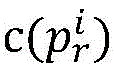
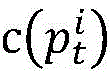
Preferably, in the artificial bee colony algorithm, the path similarity of the sub-processes
The following were used:
wherein,
indicating the number of continuous same codes starting from the first bit in the process of bit-by-bit comparison;
representing the proportion of the number of the same nodes which are continuously the same in the two paths to the number of the target path nodes;
is the similarity of the target path and the traversal path.
Preferably, the similarity of the target path and the traversal path
The following:
wherein min is
The minimum function of (1) is
And
is the encoding bit number;
is the target sub-path of the sub-process i,
is composed of
The encoding of (2);
for the traversal sub-path of the sub-process i,
is composed of
The coding of (2); k represents
And
the parity of the kth bit code of (1); m is a unit of
k Is the same number of bits when compared to the kth bit;
for left to right alignment
And
the encoding result of (3).
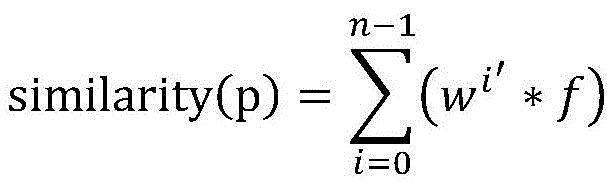
Preferably, in the artificial bee colony algorithm, the path similarity of the MPI parallel program
The following were used:
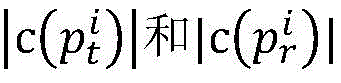
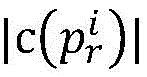
wherein, similarity (p) is p t And p r The similarity of (2); p is a radical of t And p r Respectively, a target path and a traversal path for program p.
Preferably, the following components:
wherein, w i′ Is a sub-path similarity weight w i Normalizing the weight value; w is a i =l i +1, wherein l i Inputting the number of the programs directly related to the subprocess i; f is the path similarity of the sub-process.
Preferably, the test data is generated as a mathematical model as follows:
wherein,
is the maximum value in the path similarity of the MPI parallel program, D is the value of the parameter in the program,
is the input of test data.
Preferably, in S5.1, the process of generating the test data by the sub-process includes:
optimizing input components related to a sub-process path of a certain process by the sub-population, executing the process by taking a decoded evolved individual as the input of the process in the evolution process to obtain a traversing path, and calculating the fitness value of the individual by the individual traversing path and a target sub-path; when the appointed evolution period is reached, the sub-population selects a preset number of excellent individuals to form a representative individual set according to the fitness and sends the representative individual set to the cooperative group, and waits for receiving the excellent individuals returned by the cooperative group, if the received individuals are empty, the expected test data is found, the evolution is terminated, and if not, the evolution is continued;
in S5.2, the process of generating the test data by the MPI parallel program includes:
after the cooperation group receives the representative individuals sent by each sub-group, the representative individuals are combined according to the input component set evolved by each sub-group to form initial evolved individuals of the group; after the initial evolution individuals of the population are obtained, decoding the evolution individuals as the input of the whole parallel program in each generation of evolution of a given period, executing the whole program to obtain a crossing path, and obtaining the fitness of the individuals through the individual crossing path and a target path; if the fitness of an individual is 1, the individual is expected test data, the individual is output, evolution is stopped, meanwhile null information is sent to the sub-populations, and evolution of all the populations is stopped; otherwise, continuing to evolve to generate a filial generation population; when the evolution period is reached, the dominant individuals are divided according to the input component of each sub-population evolution and are sent to the corresponding sub-populations.
Preferably, the process of combining representative individuals comprises:
firstly, solving a difference set of an input variable and an input component set of the sub-population evolution; then, extracting values related to the difference set components from the representative individuals of other sub-populations, expanding the representative individuals of the sub-populations corresponding to the difference input component set, and generating evolved individuals of the cooperative group for evolving and generating expected test data covering the target path; solving the intersection of the input component sets evolved by the two sub-populations, extracting values related to intersection components from the representative individuals of other sub-populations, replacing the corresponding values of the generated evolved individuals, and generating new evolved individuals; finally, if the evolved individual generated is different from the existing evolved individuals and includes at least one complete representative individual, the evolved individual is added to the group of cooperative groups.
The invention has the following beneficial technical effects:
in the method for generating the test data of the MPI parallel program based on the communication of the path coverage, the subprocess and the MPI parallel program apply the cooperative cross artificial bee colony search algorithm to generate the test data, and the cooperative cross artificial bee colony search algorithm well integrates the artificial bee colony algorithm, the single-point cross and the cooperative mechanism, thereby solving the problem of test data generation caused by the characteristics of the parallel program. In the test data generation of the MPI parallel program determined by communication, the data iteration times and the test data generation time are obviously reduced, the data effect is better, and the performance is very excellent.
Detailed Description
The invention will now be described in further detail with reference to the following figures and examples, which are given by way of illustration and not of limitation.
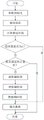
Referring to fig. 1 and 2, the method for generating test data of determining an MPI parallel program based on path-covered communication according to the present invention includes the following steps:
s1: deploying aiming at a task to be tested, namely an MPI parallel program;
s2: analyzing a tested program (namely an MPI parallel program) and acquiring a target path of the program;
s3: after the target path is defined, determining an initial test data set of the current target path by applying a method of combining a boundary value and an equivalence class;
s4: correspondingly dividing the component of each initial test data into each sub-process;
s5: the test data is generated by applying a collaborative cross artificial bee colony searching algorithm to the subtasks (i.e., the subprocesses) and the overall tasks (i.e., the overall processes).
The process of acquiring the target path of the program to be tested in S2 is specifically as follows:
first, a control flow graph of a tested program is drawn, and the intersection points of a plurality of flow lines are marked by circles which are called nodes. The connecting line between nodes is called an edge, which is a straight line or an arc line with a direction. And secondly, calculating the complexity of circles, which indicates the complexity of the logic structure of the program and defines the number of independent paths. The calculation formula of the circle complexity is V (G) = e-n +2p, e is the number of edges of the strong connection graph, n is the number of nodes, and p is the number of connected areas. Finally, when target paths are selected from the tested program, the target paths need to be uniformly distributed in a control flow graph of the tested program and cover more sentences in the program.
The process of acquiring the initial test data set in S3 is specifically as follows:
the equivalence class division is to divide an input variable set of a tested program according to different rules, and mainly divides the input variable set into an effective equivalence class (conforming to a program input rule) and an ineffective equivalence class (not conforming to the program input rule). Boundary value analysis is used as a supplementary method for the equivalence class division, the boundary of the equivalence class division is used as a case design, and in the boundary dereferencing of effective and ineffective equivalence classes, the situation of value repetition exists, and the selection can be carried out according to effectiveness and ineffectiveness.
In S4, the specific process of correspondingly dividing the component of each initial test data into each sub-process is as follows:
suppose the test data of the MPI parallel program to be tested is (x)
1 ,x
2 ,x
3 ,...,x
k ) Is recorded as a solution space
Each x
i Corresponding to a variable, x, in the program under test
k The last variable is the variable, and the number of the variables in the tested program can be determined through the value of k; assume that the initial process set of the MPI parallel program is divided into:
process 0 (x 1 ,x 2 ),process 1 (x 2 ,x 3 ),......,process m (x k-1 ,x 6 ) Where each process is referred to as a sub-process. The division adopted in the step is that the input variables of the solution space correspond to the sub-processes, namely the input variables required by each sub-process are divided into the corresponding processes, namely x 1 ,x 2 →process 0 ,x 2 ,x 3 →process 1 ,...,x k-1 ,x6→process m . And after the test data corresponding to the solution space is generated, dividing the input variable corresponding to the test data into corresponding sub-processes, so that the division is not blind any more.
The process of generating the test data by applying the cooperative cross artificial bee colony searching algorithm in the S5 is as follows:
the main principle of the cooperation mechanism is splitting, which is to decompose a large problem into a plurality of small sub-problems, each sub-problem is solved separately, and the sub-problems are executed concurrently and do not interfere with each other. The crossing mechanism selects a single-point crossing, which means that after two individuals are selected according to the probability, a point is selected from the individuals (the two individuals select the same point), the point is called a crossing point, and the single-point crossing is completed by exchanging bit strings behind or in front of the crossing point. The artificial bee colony algorithm comprises three different bees, namely a hiring bee, an observing bee and a searching bee, wherein the hiring bee and the observing bee select honey sources in the vicinity of the bee nest according to accumulated experiences, the direction of the honey sources is adjusted, and the searching bee randomly selects a position to pick the nectar. If the bees pick more nectar from the current position, the bees discard the honey source with less nectar and store the position information with more nectar in the memory. In order to solve the problems caused by the characteristics of the parallel program, the methods are combined, a collaborative cross artificial bee colony searching algorithm is designed, and the method is applied to generate the test data of the parallel program determined by communication.
In the process of generating test data, a plurality of subtasks concurrently generate test data, then superior test data is stored and transmitted to the overall task, the overall task compares the superiority and inferiority of the current data, and then the data meeting the requirements is transmitted back to the subtasks. This is alternated until a predetermined number of cycles is reached or data is found that completely covers the target path. The sub-process and the main process mutually transmit information and cooperate with each other to jointly complete the process of searching test data.
Examples
Referring to fig. 1 and 2, the method for determining the MPI parallel program test data generation based on the communication of the path coverage in the embodiment includes the following steps:
step 1, a test task is provided, and the given test task is deployed.
The specific content of the step is as follows:
the testing task in this step refers to the MPI parallel program determined by communication, for example, the task of solving the greatest common divisor of 3 numbers x, y, and z is divided into 4 subtasks, and the subtasks are respectively deployed on 4 computers, so that the deployment of the given testing task is completed. Writing an MPI program requires six basic MPI functions, namely MPI _ Recv (void × buf, int count, MPI _ datatypetype, interaction, MPI _ Comm _ WORLD, & status) as message receiving statements. Where source is the process number of the transmitted information and tag numbers the transmitted information. When the source and the tag both have specific values, the current MPI program adopts a determined communication mode. As shown in fig. 3, the first message receiving statement receives the message of process 0 number 1, and the second receiving statement receives the message of process 0 number 2.
And 2, analyzing the source program (namely the MPI parallel program) and acquiring the target path of the current program.
The specific content of the step is as follows:
s21: analyzing the data flow direction of the program, and drawing a program control flow diagram;
s22: calculating the circle complexity according to the control flow graph to obtain the number of independent paths;
the complexity of the program logic structure is indicated by the circle complexity, and the number of independent paths is determined. The calculation formula of the circle complexity is V (G) = e-n +2p, e is the number of edges of the strong connection graph, n is the number of nodes, and p is the number of connected areas.
S23: combining the tested program and the circle complexity to obtain an independent path of the tested program;
after the number of the linear independent paths, i.e. the degree of complexity of the circle, it is further necessary to determine all the independent paths of the tested program. The method mainly comprises the following steps: (1) Selecting an independent path, and selecting a path containing as many decision nodes as possible; (2) Backtracking the path, and sequentially 'reversing' each judgment node, namely, the judgment nodes take other values; (3) And (3) repeating the step (2) until all the decision nodes take different values. Therefore, all independent paths of the tested program can be obtained.
S24: and in the independent path, selecting a path which is uniformly distributed in a control flow graph of the tested program and covers more statements in the program as a target path.
Typically, a program contains multiple independent paths, however, it is impractical or unnecessary to test all of the paths of the program. Therefore, in the experimental process, only a part of paths of the program to be tested are selected as target paths, but the selection of the target paths has a great influence on the generation cost of test data, so in order to reduce the threat, paths which are uniformly distributed in a control flow graph of the program to be tested and cover more statements in the program are selected as the target paths in all the target paths.
And 3, analyzing the tested program by applying a boundary value analysis and equivalence class division method, and determining an initial test data set of the current target path.
And 4, correspondingly dividing the component of each test data into each subtask according to the characteristics of the MPI parallel program.
And 5, generating test data by adopting a collaborative cross artificial bee colony searching algorithm.
The specific content of the step is as follows:
s51: artificial bee colony algorithm;
the flow chart of the artificial bee colony algorithm is shown in fig. 4, each bee in the algorithm is a sub-population, and the sub-population is set as { bee 0 ,bee 1 ,...,bee n },
The initial set of subtasks is a process
0 (x
1 ,x
2 ),process
1 (x
2 ,x
3 ),...,process
m (x
k-1 ,x
6 ). The number of the sub-populations in the artificial bee colony algorithm is divided into n, the n is the same as the number m of the sub-tasks, and the sub-tasks correspond to the sub-populations one to one. Then there is
(i ∈ n, j ∈ m, n = m), and the values of i and j may be the same or different.
The artificial bee colony algorithm comprises three bees, namely a hiring bee, an observing bee and a searching bee, and the functions of each bee are explained in detail below.
(1) Hiring bees: on the premise that the current data cannot cover the target path, the hiring bee searches data around the current data, adds a random value to the current data to generate new data, and judges whether the data is good or not according to the value of the adaptive value function. If the data with the adaptation value of 1 is found, the data is stored and exits the optimizing stage.
(2) And (3) observing bees: observation bee basis probability
To select data and then search for data surrounding the selected data, new data is generated by adding a random value to the current data and then calculating an adaptation value for the new data. When the adaptive value of a certain data is 1, finding the required test data, storing the data and finishing the optimization.
(3) Searching bees: and the searching bee carries out cross operation on two data which are not improved after carrying out multiple iterations, and new data are generated by using a single-point cross mode. As shown in fig. 5, a specific crossing pattern is assumed to be a crossing point and a crossing point for a gene a sequence and a gene B sequence, and a single-point crossing is performed to exchange fragments between the two points, and data before and after the gene a sequence crossing are "651471036" and "651823545", respectively. The introduction of the cross mechanism can ensure that the data re-explored is performed on the premise of better data, so that exploration has guidance. Meanwhile, the new data is different from the existing data, and the diversity of the data is fully ensured. Then calculating the adaptive value of the new data, if the adaptive value is 1, finding the required data, storing the data and exiting the process of finding the data; if the adaptive value is not 1, storing the data with high adaptive value, and entering the next circulation to continuously search the data covering the target path.
S52: a co-evolution mechanism;
the concept of co-evolution in the invention is mainly embodied in the cooperation of the subtasks and the total task, as shown in fig. 6, the subtasks transmit the optimal data to the total task, and the total task transmits the better data to the subtasks, so that the optimal data and the total task are mutually iterated and co-cooperated to generate the final data. The decision mechanism in the coevolution mechanism is embodied in the algorithm as the coverage rate of current test data to a target path, namely the decision mechanism corresponds to a fitness function in the traditional artificial bee colony algorithm, the fitness function is defined by the percentage of the number of nodes which are actually walked to the number of nodes of the target path, and a calculation formula is designed according to actual problems.
The subtasks firstly use the artificial bee colony algorithm of the citation cross mechanism to solve test data, when data covering subpaths are found or the maximum iteration period is reached, the data are transmitted to the total task, the total task combines all data components to form initial data of the total task, the total task then uses the artificial bee colony algorithm of the citation cross mechanism to find superior test data and returns the superior test data to the subtasks, and the subtasks continue to find the superior test data on the premise of the data. The subtasks and the total task are executed alternately and cooperate to generate the test data of the MPI parallel program.
S53: designing a fitness function;
the fitness function is defined by the percentage of the number of nodes actually walked to the number of nodes of the target path, and the calculation formula is designed according to actual problems. Suppose, for a parallel program with n processes, a target path is given
When in use
When a program under test is run on input data, the path it traverses is
Therefore, the path similarity of the subtasks can be calculated first, and the total task path similarity can be further obtained.
(1) Computing path similarity for subtasks
The core of the path similarity calculation is that the proportion of the same continuous nodes of the two paths needs to be calculated, and in the method for comparing the nodes of the two paths, the Huffman coding is used as the optimal prefix coding, so that the number of data transmission can be reduced to the minimum. The program under test is huffman coded and, in fact, when the program under test is represented as a binary tree, the weighting problem generally does not have to be considered. In the present invention, the false branch of the branch statement is denoted by 0, and the true branch thereof is denoted by 1, and thus, path encoding from the root node to the leaf node can be traversed, and this path encoding is referred to as prefix encoding.
Based on the above idea, the method of the invention is as follows. The parallel program has n processes, and the target path is p
t For process i, note the target sub-path as
It is coded as
Number of coded bits of
To be provided with
For the input of test data, the path traversed is denoted pr, for process i the sub-path traversed is denoted pr
It is coded as
Coded bit number of
Left to right alignment
And
the result is recorded as:
wherein k represents
And
if they are the same, then
Otherwise
So that the number of comparisons is at most
Next, the process is carried out.
For each coded bit of the traversal path, considering the importance of the coded bit, the more identical bits compared, the closer the individual is to the test data of the target path. To facilitate recording of the number of identical bits, the code comparison is performed by marking with a counter m, i.e.
In order to distinguish the corresponding similarity of different coding bits more clearly, aiming at different coding bits, corresponding weights are set, namely when the kth bit code is compared by two paths, the total number of the same nodes accounts for the proportion of the number of the nodes of the target path, but the sum of the weights is 1, so that the weight formula is set as
Wherein min is
And
the minimum function of (1) is
When the k-th bit is compared, the number of parity is recorded as mk, and the similarity between the target path and the crossing path is recorded as mk
Can be expressed as:
comparison of
And
the more bits that are encoded identically,
the larger the size.
For the process crossing path, the importance of the path is considered, the same coding bits are continuously transmitted from front to back, and the more the bits are, the closer the individual is to the test data of the target path. The formula is thus modified as follows:
the adjusted similarity is
Wherein
Indicating the number of consecutive identical codes starting from the first bit during the bitwise comparison,
the ratio of the number of the same nodes which are continuously the same in the two paths to the number of the target path nodes is shown. The more the number of encoding bits that are continuously the same as the target path, the higher the similarity between the path and the target path.
Through the analysis, a similarity calculation formula of the target path and the traversing path in the process i is obtained.
(2) Calculating path similarity of total tasks
For a message passing parallel program, the program input directly involved by each process of the program should be considered. Generally, the program inputs directly involved in the different processes are also different; the more program inputs a process directly involves, the greater the contribution of the process sub-path similarity to the overall path similarity. In order to reflect the contribution of the sub-path similarity, when the path similarity is calculated, the weight of the sub-path similarity of a process is set according to the number of program inputs directly related to the process.
Based on the above idea, the method of the present invention is as follows. Note that process i is p i The sub-path similarity weight is w i The number of program inputs directly involved in the process is l i Because the weight cannot be less than or equal to 0, then w i The values of (A) are:
w i =l i +1 (4)
thus, w can be obtained 0 ,w 1 ,...,w n-1 The value of (c). Normalizing the weight values and recording w i The weight after normalization is w i′ Can be expressed as:
path p corresponding to parallel program p
t And p
r Its process p
i Respectively are
And
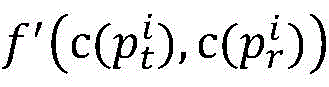
the sub-path similarity obtained by the formula (3) is
Abbreviated f, then in combination with the method of this section, p
t And p
r The similarity of (A) is as follows:
wherein n is the number of processes, and the similarity of the MPI parallel program is only related to the input data, so the similarity of the parallel program can be recorded as:
when the definition of the similarity is clear, the data which can cover the target path is needed, and based on the data, a mathematical model generated by test data is given:
the mathematical model defines that the path traversed by the program is as target as possible when the target function is running the program under test with a set of data. The constraint is that the input data must be within a given input space.
S54: and generating test data by the cooperative intersection of the subtasks and the total task.
The collaborative cross artificial bee colony test data generation algorithm provided in the step comprises two types of populations, namely a cooperative group population, a total population besides a plurality of sub-populations, and the two types of populations have different evolutionary modes.
(1) Subtask test data generation
The sub-population optimizes only the input components associated with a particular process sub-task path. In the evolution process, the decoded evolution individual is used as the input of the process, the process is executed to obtain a traversing path, and the fitness value of the individual is calculated according to the individual traversing path and the target sub-path. When the appointed evolution period is reached, the sub-population selects a certain number of excellent individuals to form a representative individual set according to the fitness and sends the representative individual set to the cooperative group, and waits for receiving the excellent individuals returned by the cooperative group, if the received individuals are empty, the excellent individuals indicate that expected test data are found, and the evolution is terminated. Otherwise, continuing to evolve.
(2) Total task test data generation
After the cooperative group receives the representative individuals sent by each sub-group, in order to ensure that the cooperative group has an initial population with good performance, the representative individuals are reasonably combined according to the evolved input component set of each sub-group to form initial evolved individuals of the group. The combination method is as follows:
firstly, solving a difference set of an input variable and an input component set evolved by a sub population; then, extracting values related to the difference set component from the representative individuals of other sub-populations, and expanding the representative individuals of the sub-populations corresponding to the difference input component set, so as to generate evolved individuals of the cooperative group population for evolving and generating expected test data covering the target path; in addition, in order to generate a new evolved individual, the intersection of the input component sets evolved by the two sub-populations is calculated, values related to intersection components are extracted from representative individuals of other sub-populations, corresponding values of the generated evolved individual are replaced, and then the new evolved individual is generated; finally, if the evolved individual is different from the existing evolved individuals and at least one complete representative individual is included in the evolved individuals, the evolved individuals are added to the cooperative group.
After the initial evolution individuals of the population are obtained, in each generation of evolution of a given period, decoding the evolution individuals as the input of the whole parallel program, executing the whole program to obtain a crossing path, and obtaining the fitness of the individuals through the individual crossing path and the target path. If the fitness of an individual is 1, namely the individual is expected test data, the individual is output, evolution is stopped, meanwhile null information is sent to the sub-populations, and evolution of all the populations is stopped. Otherwise, continuing to evolve to generate a filial generation population. When the evolution period is reached, the dominant individuals are divided according to the input component of each sub-population evolution and are sent to the corresponding sub-populations.
The method well integrates the artificial bee colony algorithm, the single-point crossing and the cooperation mechanism, thereby solving the problem of test data generation caused by the characteristics of the parallel program. Meanwhile, the fitness function is used as a data evaluation standard of the artificial bee colony algorithm, and the advantages and disadvantages of the algorithm are determined, so that the weight problem in the path similarity is comprehensively considered, and the fitness function is improved in a targeted manner. The Huffman coding is adopted, the importance of coding bits and the path is considered in the calculation of the sub-paths, and the contribution degree of each sub-path to the total path is considered in the calculation of the total path, so that a fitness function more suitable for an MPI parallel program is designed. In the test data generation of the MPI parallel program determined by communication, the data iteration times and the test data generation time are obviously reduced, the data effect is better, and the performance is very excellent.
The above contents are only for illustrating the technical idea of the present invention, and the protection scope of the present invention should not be limited thereby, and any modification made on the basis of the technical idea proposed by the present invention falls within the protection scope of the claims of the present invention.