Dog immune factor oral liquid and application thereof
Technical Field
The invention relates to an oral preparation and a preparation method thereof, in particular to an oral preparation with an immunity enhancement function and a preparation method thereof.
Background
With the increasing living standard of people, the family pet feeding is gradually popularized. However, many pet infectious diseases have zoonosis and cause no small harm to the development of pet industry and human health. Therefore, the immunity of the pet is improved and the healthy growth of the pet is ensured.
The transfer factor is a mixture of small molecular active substances such as polypeptide, amino acid, ribose, etc. extracted from animal spleen, and is used as cellular immunity promoter. Can make dog obtain specific and nonspecific cellular immune function rapidly, and promote the production and release of interferon and tumor necrosis factor. The transfer factor carries specific immune information of the sensitized lymphocyte, and can present the specific immune information to the receptor lymphocyte to convert the receptor inactive lymphocyte into the specific sensitized lymphocyte, so as to stimulate the immune response mediated by the receptor cell. The immune factor has wide immunoregulation activity, and on one hand, the immune factor can induce immune cells to be activated and enhance the nonspecific immunity of an organism; on the other hand, the specific immune information can be transmitted to a receptor animal to stimulate the animal to generate specific immune response. The immune factor is a small molecular active substance, can not be decomposed by pepsin and trypsin, can not be damaged by gastric acid, can be orally taken, has no species specificity, toxic or side effect and antigenicity, and can make the organism produce local or systemic immune response when the dosage is as small as 0.01 unit. The effect is quick, and the lymphocyte of a receptor animal can be activated in 4 hours at the fastest time to sensitize the receptor; the effect lasts for a long time, and can last for months to a year.
In the prior art, an immune factor oral liquid added with traditional Chinese medicines already exists, but the traditional Chinese medicines such as ginseng, lucid ganoderma, rhodiola rosea and the like which are continuously used for thousands of years are widely used. Most of the biological and chemical preparation medicaments have strong toxic and side effects; traditional medicinal materials with the immunity enhancing function such as ginseng, ganoderma lucidum, rhodiola rosea and the like have small toxic and side effects, but the traditional medicinal materials have obvious immunity enhancing effect after long-term administration, and the price of the medicinal materials is high, so that the traditional medicinal materials are far beyond the payment capability of common families. Meanwhile, the medicines are mostly used for human bodies, the effect on animals, particularly companion animals such as cats and dogs is limited, and particularly, the specific application is very small after the cost factor is considered. Moreover, due to the characteristics of companion animals such as cats and dogs, a targeted immune oral liquid is further needed.
At the same time, stability is of great importance for oral liquids, which in the prior art is generally solved by adding an adhesive matrix, such as pectin and/or alginate, thickeners, stabilizers, etc. Although these compositions described in the prior art have an effect of increasing stability to some extent, when the oral liquid composition is prepared by blending the raw materials described in these patents, there is a problem that aggregates are generated during preparation and/or storage, and therefore, the related compositions in the prior art are often in a gel state, and on the one hand, it is necessary to add a large amount of other components to maintain the jelly state, and at the same time, the added large amount of other components cause immune reaction of the animal body, causing symptoms such as fever, vomiting, uneasiness, and dysphoria of the animal body, changing the life habit and state of the companion animal, and sometimes causing a phenomenon that the animal bites other animals, owners, or other persons, and seriously affecting the actual use effect of the drug. On the other hand, the composition has poor stability and short storage life, and related technical means can be used for conveniently and quickly solving the problem. When such aggregates occur, there is a problem that when the prepared composition is taken through the tube, the tube is clogged due to the aggregates existing in the oral liquid composition (particularly, clogging of the aggregates occurs in a portion of a speed adjustment throttle valve for adjusting the administration speed). Further, the presence of aggregates increases the viscosity of the liquid oral liquid composition, and therefore the hose passage property of the liquid oral liquid composition also deteriorates. Further, when the prepared composition is taken orally, the "non-slippery feeling" is large due to the presence of aggregates, and further the "feeling of swallowing" is very poor due to high viscosity caused by the presence of aggregates, so that the discomfort of the pet is increased, and it is difficult to feed the composition for a long time or many times.
Disclosure of Invention
In order to solve the problems, the invention provides a dog immune factor oral liquid which comprises 10-30% of transfer factor, 1-5% of astragalus polysaccharide, 1-10% of sweetener, 0.5-5% of sodium chloride and water for injection.
Further, the sweetener of the present invention may be at least one of sucrose, glucose, aspartame, or the like.
Further, the composition also comprises a preservative, wherein the preservative is potassium sorbate, and the weight percentage of the preservative in the pharmaceutical composition is 0.1-1%.
Furthermore, the dog immune factor oral liquid has the p H value of 6.4-7.4, good solubility and no stimulation to animals.
Further, the oral liquid of the canine immune factor of the present invention has good fluidity and stability, and preferably has a viscosity of 400cP or less, more preferably 200cP or less, still more preferably 100cP or less, and particularly preferably 50cP or less in a 1 wt% aqueous solution (20 ℃).
Further, the particle size distribution of the oral liquid is a multimodal distribution, preferably a bimodal distribution, and preferably, the oral liquid has at least 1 peak in the particle size of 3000nm or less, more preferably 2000nm or less, and even more preferably 1000nm or less.
Furthermore, the frequency of the 1 st peak with smaller particle size in the bimodal distribution map is higher than the frequency of the 2 nd peak with larger particle size;
further, the oral liquid is in a homogeneous liquid state, has a viscosity of 200cP or less at 30 ℃, and shows little change in pH and viscosity and no visible aggregates after one-year standing storage at room temperature.
Further, the application provides a preparation method of the dog immune factor oral liquid, which comprises the following steps:
1. preparation of transfer factor
(1) Shearing and picking: removing thawed and melted spleen of dog, bagging, strictly selecting according to appearance requirements in raw material standards, clamping fat with forceps, and shearing with scissors.
(2) Cleaning: accurately weighing the feeding amount of the sheared and picked raw materials, washing the weighed raw materials for 2-3 times by using 0.8% NaCl solution, and draining.
(3) Primary stranding: placing the raw materials in a charging hopper of a meat grinder, operating according to the operating specification of the meat grinder, primarily grinding for 1 time, and containing the raw materials by a clean material barrel.
(4) Fine twisting: mixing the primarily-twisted raw materials with water for injection at a ratio of 1:1.5, placing in a charging hopper, grinding for 4 times according to the operation procedure of a colloid mill to obtain homogenate, adjusting pH to 4.8 with 2mol/L HCl, repeatedly freezing and thawing in a saline bottle or a plastic bottle at-20 deg.C for 6 times, and rapidly thawing with flowing water (or naturally thawing at a temperature below 37 deg.C).
(5) Centrifugal separation: centrifuging the frozen and thawed homogenate for 30min at 8000rpm at 4 deg.C by a refrigerated centrifuge, discarding the precipitate, collecting supernatant, adjusting pH to 6.8 with 2mol/L NaOH, and pre-filtering or freezing at-20 deg.C or below.
(6) Pre-filtering: and coarsely filtering the supernatant by using 1um, and ultrafiltering by using a pre-filtering column with the molecular weight cutoff of 300KD to obtain clear filtrate.
(7) And (3) ultrafiltration: ultrafiltering the filtrate with ultrafiltration membrane with cut-off molecular weight of 10KD-0.5KD, collecting refined active polypeptide solution, quantifying, and storing.
2. The astragalus polysaccharide raw powder is precisely weighed according to the weight proportion, a proper amount of water for injection is added, the mixture is stirred until the mixture is completely dissolved, and primary filtration is carried out by a 0.45um microporous filter.
3. Transferring the astragalus polysaccharide solution to a solution preparation tank, then sequentially adding sucrose, potassium sorbate, sodium chloride and the transfer factor prepared in the step(s) by corresponding weight, and stirring until the astragalus polysaccharide solution is completely dissolved.
4. Adding water for injection to the corresponding volume, stirring for 10-20 minutes, and adjusting the pH value to 6.4-7.4 by using hydrochloric acid or sodium hydroxide.
5. The resulting solution was treated with ultrasound. The method specifically comprises the following steps: firstly, cooling the solution to 0-4 ℃ at the speed of 5-10 ℃/h, firstly processing the solution for 30s at 1KW and 1KHz, and repeating for 3-5 times at intervals of 30 s; processing with 4KW and 1KHz for 10s with a gap of 30s, and repeating for 3-5 times; finally, processing with 5KW and 3KHz for 10s with a gap of 30s, and repeating for 3-5 times. Incubating at 0-4 deg.C for 1h, and returning to room temperature at 5-10 deg.C/h.
6. Sterilizing the medicinal liquid with 0.22um microporous filter, filtering, packaging, and storing.
Wherein the Astragalus polysaccharides is water soluble heteropolysaccharide obtained by extracting, concentrating and purifying dried root of Astragalus mongholicus (Fisch.) bge or Astragalus membranaceus (Fisch.) bge of Leguminosae. The Astragalus polysaccharides comprises hexuronic acid, glucose, fructose, rhamnose, arabinose, galacturonic acid and glucuronic acid, can be used as immunopotentiator or regulator, and has antiviral, antitumor, antiaging, radioprotective, anti-stress, and antioxidant effects. The astragalus polysaccharide can induce an organism to generate interferon, interfere the replication of viruses in the organism, improve the immune function of the organism, and promote the enhancement of the activities of superoxide dismutase and glutathione peroxidase; and can strengthen and stimulate the generation of lymphocytes and reticuloendothelial cells, enhance the phagocytic function of the reticuloendothelial cells and macrophages, and promote and regulate the immunity of body fluid, mucosa and cells.
Potassium sorbate is one of few preservatives permitted by the world health organization additive committee, has high safety and strong inhibition capacity on mold, has three advantages of corrosion prevention, safety and stability, is defined as a 'generally recognized as safe' (GRASS) variety by the U.S. food and drug administration, and is commonly used abroad. The potassium sorbate can inhibit growth of microorganism by inhibiting dehydrogenase system in microorganism, so as to achieve antiseptic effect, and has inhibiting effect on bacteria, mold and yeast.
The sucrose is mainly used for improving the taste of the oral liquid and increasing the palatability of the oral liquid.
The sodium chloride is an isotonic regulator, so that the obtained oral liquid is ensured to be isotonic, the osmotic pressure ratio is about 0.9-1.1, the product and body fluid have similar osmotic pressure, the stimulation of clinical use is reduced, the palatability is improved, and the stimulation of the product caused by the canine stomach and intestine is avoided.
The pH value of the hydrochloric acid or sodium hydroxide p H regulator oral liquid is 6.4-7.4, and is close to body fluid p H, so that the safety and comfort of use are improved, and the irritation is small.
Advantageous effects
The product is a high-efficiency immunopotentiator, and has anti-infectious, anti-stress, anti-tumor and vaccine immunity enhancing effects. The product is used for the adjuvant treatment of viral diseases such as canine parvovirus, canine distemper, canine coronary disease, canine influenza and the like. The immune factor is orally taken while the vaccine is inoculated, so that the generation time of the antibody can be shortened, the titer of the antibody is improved, and the effect of vaccine synergism is achieved. Improving immunity and anti-stress capability of dog, and preventing and treating immunodeficiency of dog, and immunosuppression caused by stress, medicine, operation, etc. Activating lymphocyte, promoting the generation and release of tumor necrosis factor, enhancing the phagocytic function of immune cells to tumor cells, and resisting tumor.
The oral liquid has stable structure, can be enduringly stable within 12 months, is clear and transparent, does not generate new impurities, is safe and effective, and has controllable quality.
Drawings
FIG. 1 is a graph of laser diffraction/scattering type particle size distribution measurement, in which the horizontal axis represents the average particle size, the vertical axis represents the distribution frequency of the particle size, and the peak in the particle size distribution represents the point of the maximum frequency value in a mountain-shaped distribution curve having the horizontal axis (particle size) as the base, wherein a to f correspond to example 1 and comparative examples 1 to 5, respectively.
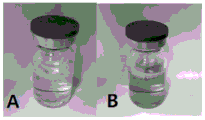
FIG. 2 is a figure showing the behavior of a portion of dog immune factor oral liquid, wherein A is a colorless transparent liquid, and B is a yellowing liquid after 6 months.
Fig. 3 shows the results of a hose feeding passing test.
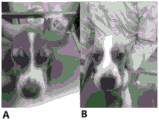
Fig. 4 is a clinical picture of dogs, wherein, a is a clinical picture of eyes before illness, and B is a clinical picture of eyes after cure.
Detailed Description
The following examples further illustrate the present invention but are not to be construed as limiting the invention. Modifications or substitutions to methods, procedures, or conditions of the invention may be made without departing from the spirit and scope of the invention.
Unless otherwise specified, the technical means used in the examples are conventional means well known to those skilled in the art.
Example 1. a method for preparing an oral liquid of canine immune factor,
taking 10000ml of dog immune factor oral liquid as an example, the steps are as follows.
1. Preparation of transfer factor
(1) Shearing and picking: removing thawed and melted spleen of dog, bagging, strictly selecting according to appearance requirements in raw material standards, clamping fat with forceps, and shearing with scissors.
(2) Cleaning: accurately weighing the feeding amount of the sheared and picked raw materials, washing the weighed raw materials for 2-3 times by using 0.8% NaCl solution, and draining.
(3) Primary stranding: placing the raw materials in a charging hopper of a meat grinder, operating according to the operating specification of the meat grinder, primarily grinding for 1 time, and containing the raw materials by a clean material barrel.
(4) Fine twisting: mixing the primarily-twisted raw materials with water for injection at a ratio of 1:1.5, placing in a charging hopper, grinding for 4 times according to the operation procedure of a colloid mill to obtain homogenate, adjusting pH to 4.8 with 2mol/L HCl, repeatedly freezing and thawing in a saline bottle or a plastic bottle at-20 deg.C for 6 times, and rapidly thawing with flowing water (or naturally thawing at a temperature below 37 deg.C).
(5) Centrifugal separation: centrifuging the frozen and thawed homogenate for 30min at 8000rpm at 4 deg.C by a refrigerated centrifuge, discarding the precipitate, collecting supernatant, adjusting pH to 6.8 with 2mol/L NaOH, and pre-filtering or freezing at-20 deg.C or below.
(6) Pre-filtering: and coarsely filtering the supernatant by using 1um, and ultrafiltering by using a pre-filtering column with the molecular weight cutoff of 300KD to obtain clear filtrate.
(7) And (3) ultrafiltration: ultrafiltering the filtrate with ultrafiltration membrane with cut-off molecular weight of 10KD-0.5KD, collecting refined active polypeptide solution, quantifying, and storing.
2. Accurately weighing 200g of astragalus polysaccharide raw powder, adding 4000ml of water for injection, stirring until the astragalus polysaccharide raw powder is completely dissolved, and performing primary filtration by using a 0.45-micron microporous filter.
3. Transferring the astragalus polysaccharide solution to a solution preparation tank, then sequentially adding 100g of sucrose, 10g of potassium sorbate, 72g of sodium chloride and transfer factors (ensuring that the final concentration is 20mg/ml), and stirring until the astragalus polysaccharide solution is completely dissolved.
4. Adding water for injection to 10000ml, stirring for 10-20 minutes, and adjusting the pH value to 6.4-7.4 by using hydrochloric acid or sodium hydroxide.
5. The resulting solution was treated with ultrasound. The method specifically comprises the following steps: cooling the solution to 0-4 deg.C at a speed of 3-10 deg.C/h, treating with 1KW and 1KHz for 30s, and repeating for 3-5 times with a gap of 30 s; processing with 4KW and 1KHz for 10s with a gap of 30s, and repeating for 3-5 times; finally, processing with 5KW and 3KHz for 10s with a gap of 30s, and repeating for 3-5 times. Incubating at 0-4 deg.C for 1h, and returning to room temperature at 3-10 deg.C/h.
6. Sterilizing the medicinal liquid with 0.22um microporous filter, filtering, packaging, and storing.
Comparative examples 1 to 5
In order to verify the stability of the oral liquid and the interrelationship between the ingredients and the specific operating parameters in example 1, a comparative example was set for the key steps therein, specifically:
comparative examples 1 and 2 were prepared as in example 1, but without transfer factor and astragalus polysaccharide, respectively;
comparative example 3 the procedure was the same as in example 1, but without the sonication stage;
comparative example 4 the procedure was as in example 1, but the sonication stage parameters were: firstly, the solution is cooled to 0-4 ℃ at the speed of 3-10 ℃/h, processed for 30s at 4KW and 1KHz, and repeated for 10-15 times at intervals of 30 s. Incubating at 0-4 deg.C for 1h, and returning to room temperature at 3-10 deg.C/h.
Comparative example 5 the procedure was the same as in example 1, but the sonication was carried out at room temperature.
Example 2 detection of particle size distribution of dog immune factor oral liquid
In the present example, the particle size distribution of the particles of the oral liquid was measured and evaluated by using a particle size distribution measuring apparatus using a laser diffraction/scattering method or the like. The particle size distribution measuring apparatus was a laser diffraction/scattering particle size distribution measuring apparatus (Horiba laser diffraction/scattering particle size distribution measuring apparatus LA-350, France).
The measurement conditions of the laser diffraction/scattering particle size distribution measuring apparatus were as follows: dispersion medium: distilled water, sample refractive index: 1.600 to 0.000i, refractive index of dispersion medium: 1.333, circulation speed: 13. stirring speed: the sample concentration is adjusted so that the light transmittance (R) and the transmittance (B) are 90-80% and 90-70%, respectively, at the time of measurement. The particle size distribution of the particles was measured under the above-mentioned measurement conditions.
The particle size distribution was measured for the liquids of example 1 and comparative examples 1 to 5 (as shown in fig. 1), wherein the particle size distribution was represented by a distribution curve having the particle size (nm) on the horizontal axis and the frequency (%) on the volume basis on the vertical axis. As can be seen from the figure, the liquid composition obtained in example 1 of the present application changed from a single monomodal distribution to a bimodal distribution after sonication, one peak of which was located below 1000nm in particle size. As can be seen from the analysis of the figure, the oral liquid composition having 2 or more peaks in the particle size distribution in particular tends to suppress the generation of aggregates, that is, to improve the stability. Further, it has been found that an oral liquid composition having the above-mentioned particle distribution characteristics specifically changed can be obtained by ultrasonic treatment.
From the above results, it was found that the occurrence of aggregates was correlated with the change in the particle size distribution. The method specifically comprises the following steps: the oral liquid composition of the present invention is one kind of granule system comprising different sizes of granule, and thus belongs to polydisperse system. The particle size distribution refers to the distribution rule of all the particle sizes in the composition particle system. The particle size distribution of the actual population of particles is strictly discontinuous, but can be considered continuous when the number of measurements is large. The water-soluble dietary fiber contained in astragalus polysaccharide is generally poor in compatibility with particles (macromolecules such as fats and oils and proteins contained in transfer factors) in the composition, and aggregation of the particles is induced by various actions such as evacuation interaction, electrostatic interaction, intermolecular crosslinking action, and the like. In the process of "agglutination", there is a stage in which particles in the composition aggregate as a preceding stage, and then "agglutination" occurs when the particles of "aggregation" bind. That is, particles in the "aggregated" state are easily redispersed because the particles are independent of each other, but particles in the "aggregated" state are not redispersed because the particles are bound to each other. Further, it is considered that the particles in the "aggregated" state "aggregate with each other and further aggregate to form a larger aggregate, thereby forming a vicious circle. The invention realizes two or more aggregation states of particles with different particle diameters through specific ultrasonic treatment, so that the particles exist in the dispersion system in an aggregation state to a certain extent instead of forming a uniform aggregation state, thereby fundamentally solving the technical problems that the dispersion system is unstable and easy to aggregate.
Furthermore, the frequency of the 1 st peak on the left side (particle size less than 1000nm) after further ultrasonic dispersion is higher than the frequency of the 2 nd peak on the right side (particle size around 10000 nm) as can be seen by comparison before and after ultrasonic dispersion. This is because the particles that make up peak 2 are aggregates and aggregations of many smaller particles. Since such aggregation may continue to disperse and each particle retains independence, it can be easily redispersed by a load of an external force such as ultrasonic waves (see comparison between fig. 1a and fig. 1 f). And because the aggregates exist, the aggregates do not disappear completely due to ultrasonic treatment, but show a specific particle size distribution characteristic, thereby realizing a better stabilizing effect.
Example 3 stability testing of oral liquid of dog immune factor
The products of example 1 and comparative examples 1 to 5 were subjected to stability tests for a total of 6 products. 50 of the products are placed in a temperature of 40 ℃ plus or minus 2 ℃ (a constant temperature and humidity incubator) and a relative humidity of 75 percent plus or minus 5 percent (saturated sodium chloride solution) for accelerated test, samples are taken at the end of 3, 6 and 12 months (the picture is shown in figure 2), and the quality detection of related substances, microorganisms, properties and main microorganisms is carried out by adopting a BP2005 method according to the items in the following table (see table 1).
Table 1 stability testing of the products
The stability test result shows that: after the product of example 1 was allowed to stand under accelerated conditions for 12 months, the product was acceptable in terms of both content and purity, and no major microorganisms were detected, and the stability of the liquid was significantly higher than that of the other products. Although the content and the purity of part of the comparative products are qualified at 3 months, the appearance and the purity of the comparative products are obviously beyond the range of the ICH qualified for the products of the common preparation after the comparative products are placed for 6 months, and the products are obviously turbid or layered after 12 months and cannot be normally used, generally, the accelerated stability result of 6 months is stable, which shows that the effective period of the products can be as long as 3 years, so that the quality of the dog immune factor oral liquid of the invention is obviously superior to that of the comparative products.
Further, the oral liquids in the above example 1 and comparative examples 1 to 5 were used to conduct a test for passing through tube (hose) feeding.
The hose used in the test was a general-purpose hose for pet feeding having a thickness of 16Fr, a length of 135cm, and a throttle valve for speed adjustment at a position 30cm from the end of one side of the hose. In the test, the oral liquid is transferred into the plastic bottle and arranged in a mode that the lower end of the plastic bottle is located at the height of 180cm above the ground, then the tail end of one side of the hose is connected with the lower end of the plastic bottle, the other side of the hose is located at the operable height on the pet restraint bed, the tail end of the hose is inserted into the stomach of a pet in the operation process, and the hose is directly fed, so that the hose is free from knotting, compression, backflow, high-low inversion and the like. In the test, the hose was adjusted to a position where distilled water flowed at a flow rate of 200 g/min by a throttle valve for adjusting the speed, and then each product was flowed in to observe the passing property thereof.
The results are shown in fig. 3, and the results show that the oral liquid of example 1 is substantially free from clogging due to aggregates and has very good tube passability. The oral liquid containing no transfer factor and astragalus polysaccharide has less blockage and good hose passing performance. The permeability of other compositions is inferior to that of the three compositions, and analysis is mainly because the oral liquid is in direct contact with gastric juice of pets, and semi-solid formation occurs in an acidic region in the stomach due to the change of pH, so that the flowability of the subsequent oral liquid is poor, and the application range of the product in specific practice is influenced.
Example 4 detection of therapeutic Effect of dog immune factor oral liquid
And (3) testing the pet: test 30 pet dogs with conjunctivitis were tested, and these samples were cases collected in pet hospitals from 2017 to 2020 (divided into 5 groups containing water for injection as a negative control).
The application scheme is as follows:
experimental groups: treatment with the canine chloramphenicol ointment was applied directly to the surface of the affected eye or eyes, preferably between the corneal surface and the lower eyelid. The composition can be administered twice daily for three days as a course of treatment, and after resting for one day, the next course of treatment is repeated for three courses. 20ml of oral liquid was fed at the same time as treatment, twice daily until the treatment period ended (group 1).
Negative control: same as experimental group, but fed with water for injection (group 2).
Control groups 1-3: the same experimental groups were used, but 20ml of control 1-3 product was used for feeding (groups 3-5).
The therapeutic effect judgment standard is as follows: according to the therapeutic effect standard of the literature, (1) curing: symptoms and signs disappear completely; (2) the effect is shown: disappearance of all symptoms or disappearance of major symptoms and signs; (3) the method has the following advantages: the main symptoms and signs basically disappear; (4) and (4) invalidation: symptoms and signs were not improved. The scores were scored 8, 6, 4 and 2, respectively, according to the above criteria, and the total score was calculated after summarization, see table 2.
TABLE 2 record of the scoring status and situation of the experimental groups
| Group of
|
Cure of disease
|
Show effect
|
Is effective
|
Invalidation
|
Total score
|
| 1
|
5
|
1
|
-
|
-
|
46
|
| 2
|
-
|
1
|
3
|
2
|
22
|
| 3
|
1
|
2
|
3
|
-
|
32
|
| 4
|
1
|
2
|
2
|
1
|
30
|
| 5
|
2
|
1
|
3
|
-
|
34 |
From clinical experience, in the treatment of canine conjunctivitis, significant effects can be seen by applying chloramphenicol ointment without other viral or bacterial infections for more than two weeks, and therefore, in the test, a treatment regimen of less than 14 days was used to observe whether the oral liquid has an accelerating effect on the use of the drug. The results show that after three courses of treatment, the experimental group and the control group are obviously better than the negative control group, which shows that the oral liquid can effectively promote the drug treatment of the dogs, has the effect of improving the immunity of the dogs, has obvious curative effect and high cure rate, wherein the effect of the embodiment group is best, 5 cases (93.3) are cured, 1 case (16.7) is obviously effective, 0 case (0) is ineffective and the total effective rate is 100%. After 6 days of treatment, the peripheral limbal infiltrate began to decrease in density. There were no signs of breakthrough epithelial keratitis. After 9 days, the infiltrates continued to decrease and conjunctivitis had resolved. The infection was completely cured within two weeks as confirmed by normal eye examination and color, and the pet dogs recovered normal behavior and activity (see figure 4).
Although the present invention and its embodiments have been described in detail, it should be understood that various changes, modifications, substitutions, combinations, and simplifications which may be made by those skilled in the art without departing from the technical principles of the present invention should be considered as equivalent substitutions, and these modifications should also be construed as the protection scope of the present invention.