CN112612552B - Application resource loading method and device, electronic equipment and readable storage medium - Google Patents
Application resource loading method and device, electronic equipment and readable storage medium Download PDFInfo
- Publication number
- CN112612552B CN112612552B CN202011642439.6A CN202011642439A CN112612552B CN 112612552 B CN112612552 B CN 112612552B CN 202011642439 A CN202011642439 A CN 202011642439A CN 112612552 B CN112612552 B CN 112612552B
- Authority
- CN
- China
- Prior art keywords
- application
- application page
- page
- loading
- priority
- Prior art date
- Legal status (The legal status is an assumption and is not a legal conclusion. Google has not performed a legal analysis and makes no representation as to the accuracy of the status listed.)
- Active
Links
Images


Classifications
-
- G—PHYSICS
- G06—COMPUTING OR CALCULATING; COUNTING
- G06F—ELECTRIC DIGITAL DATA PROCESSING
- G06F9/00—Arrangements for program control, e.g. control units
- G06F9/06—Arrangements for program control, e.g. control units using stored programs, i.e. using an internal store of processing equipment to receive or retain programs
- G06F9/44—Arrangements for executing specific programs
- G06F9/445—Program loading or initiating
- G06F9/44521—Dynamic linking or loading; Link editing at or after load time, e.g. Java class loading
-
- G—PHYSICS
- G06—COMPUTING OR CALCULATING; COUNTING
- G06F—ELECTRIC DIGITAL DATA PROCESSING
- G06F9/00—Arrangements for program control, e.g. control units
- G06F9/06—Arrangements for program control, e.g. control units using stored programs, i.e. using an internal store of processing equipment to receive or retain programs
- G06F9/46—Multiprogramming arrangements
- G06F9/50—Allocation of resources, e.g. of the central processing unit [CPU]
- G06F9/5005—Allocation of resources, e.g. of the central processing unit [CPU] to service a request
- G06F9/5011—Allocation of resources, e.g. of the central processing unit [CPU] to service a request the resources being hardware resources other than CPUs, Servers and Terminals
- G06F9/5016—Allocation of resources, e.g. of the central processing unit [CPU] to service a request the resources being hardware resources other than CPUs, Servers and Terminals the resource being the memory
-
- G—PHYSICS
- G06—COMPUTING OR CALCULATING; COUNTING
- G06F—ELECTRIC DIGITAL DATA PROCESSING
- G06F2209/00—Indexing scheme relating to G06F9/00
- G06F2209/50—Indexing scheme relating to G06F9/50
- G06F2209/5021—Priority
-
- Y—GENERAL TAGGING OF NEW TECHNOLOGICAL DEVELOPMENTS; GENERAL TAGGING OF CROSS-SECTIONAL TECHNOLOGIES SPANNING OVER SEVERAL SECTIONS OF THE IPC; TECHNICAL SUBJECTS COVERED BY FORMER USPC CROSS-REFERENCE ART COLLECTIONS [XRACs] AND DIGESTS
- Y02—TECHNOLOGIES OR APPLICATIONS FOR MITIGATION OR ADAPTATION AGAINST CLIMATE CHANGE
- Y02D—CLIMATE CHANGE MITIGATION TECHNOLOGIES IN INFORMATION AND COMMUNICATION TECHNOLOGIES [ICT], I.E. INFORMATION AND COMMUNICATION TECHNOLOGIES AIMING AT THE REDUCTION OF THEIR OWN ENERGY USE
- Y02D10/00—Energy efficient computing, e.g. low power processors, power management or thermal management
Landscapes
- Engineering & Computer Science (AREA)
- Software Systems (AREA)
- Theoretical Computer Science (AREA)
- Physics & Mathematics (AREA)
- General Engineering & Computer Science (AREA)
- General Physics & Mathematics (AREA)
- Stored Programmes (AREA)
Abstract
The invention provides an application resource loading method and device, electronic equipment and a readable storage medium, and relates to the technical field of software. The method comprises the following steps: acquiring a history access record corresponding to each application page in a target application program; determining the priority corresponding to each application page according to the historical access record corresponding to each application page; and loading corresponding cache resources in sequence according to the priority of each application page in the target application program. The problem that APP resources cannot be loaded according to user behavior habits in the related art, so that the APP resources are long in loading time and poor in user experience is solved.
Description
Technical Field
The present invention relates to the field of software technologies, and in particular, to a method and apparatus for loading application resources, an electronic device, and a readable storage medium.
Background
In the prior art, resource preloading schemes are arranged in an application program APP, particularly in an APP with relatively complicated service, in order to save network traffic of users and rapidly load data, some resource files (such as pictures, audios and videos, data files and the like) are always preloaded in advance, and in the prior art, all resource files are loaded in sequence according to a default code sequence when the APP is started.
In carrying out the present invention, the applicant has found that at least the following problems exist in the related art:
1) Because the loading sequence is fixed, loading cannot be differentially realized aiming at different user habits, and therefore, partial user experience can be affected.
2) Because the built-in resource file is loaded once when the system is started, the problem of long time consumption (even other processing tasks are blocked) for the first loading can be caused, and particularly, when a user needs to use a certain resource immediately, a long waiting (waiting for all other resources to be loaded) is needed, and the problems of resource waste, response time and the like are caused.
Aiming at the problems, no effective solution is proposed at present.
Disclosure of Invention
The embodiment of the invention provides an application program resource loading method, an application program resource loading device, electronic equipment and a readable storage medium, which are used for solving the problems that APP resources cannot be loaded according to user behavior habits in the related technology, so that the APP resources are long in loading time and poor in user experience.
In order to solve the technical problems, the invention is realized as follows:
in a first aspect, an embodiment of the present invention provides a method for loading an application resource, where the method includes: acquiring a history access record corresponding to each application page in a target application program; determining the priority corresponding to each application page according to the historical access record corresponding to each application page; and loading corresponding cache resources in sequence according to the priority of each application page in the target application program.
Further, the historical access record includes access times, where determining the priority corresponding to each application page according to the historical access record corresponding to each application page includes: and determining the priority corresponding to each application page according to the access times of each application page.
Further, the historical access record includes an access frequency, where determining, according to the historical access record corresponding to each application page, a priority corresponding to each application page includes: and determining the priority corresponding to each application page according to the access frequency of each application page in the first preset time period.
Further, loading corresponding cache resources in turn according to the priority of each application page in the target application program, including: establishing a cache loading queue in the target application program according to the application level and the priority corresponding to each application page; and loading the cache resource according to the cache loading queue.
Further, establishing a cache loading queue in the target application program according to the application level and the priority corresponding to each application page, including: under the condition that the application level of the appointed application page is a first page, adding the appointed application page into the cache loading queue according to the first priority of the appointed application page; and under the condition that the application level of the appointed application page is a sub page, adding the parent page corresponding to the appointed application page and the application page into the cache loading queue according to the first priority of the appointed application page, wherein the loading sequence of the parent page in the cache loading queue is higher than the loading sequence of the application page.
In a second aspect, an embodiment of the present invention further provides an application resource loading apparatus, where the apparatus includes: the acquisition unit is used for acquiring a history access record corresponding to each application page in the target application program; the determining unit is used for determining the priority corresponding to each application page according to the historical access record corresponding to each application page; and the loading unit is used for sequentially loading the corresponding cache resources according to the priority of each application page in the target application program.
Further, the history access record includes the number of accesses, wherein the determining unit includes: and the first determining module is used for determining the priority corresponding to each application page according to the access times of each application page.
Further, the history access record includes an access frequency, wherein the determining unit includes: and the second determining module is used for determining the priority corresponding to each application page according to the access frequency of each application page in the first preset time period.
Further, the loading unit includes: the processing module is used for establishing a cache loading queue in the target application program according to the application level and the priority corresponding to each application page; and the loading module is used for loading the cache resources according to the cache loading queue.
Further, the processing module includes: the first processing sub-module is used for adding the appointed application page into the cache loading queue according to the first priority of the appointed application page under the condition that the application level of the appointed application page is the first page; and the second processing submodule is used for adding the parent page corresponding to the appointed application page and the application page into the cache loading queue according to the first priority of the appointed application page under the condition that the application level of the appointed application page is the child page, wherein the loading sequence of the parent page in the cache loading queue is higher than the loading sequence of the application page.
In a third aspect, an embodiment of the present invention further provides an electronic device, including: a memory, a processor and a computer program stored on the memory and executable on the processor, which when executed by the processor implements the steps of the application resource loading method as described in the previous first aspect.
In a fourth aspect, embodiments of the present invention additionally provide a readable storage medium having stored thereon a computer program which, when executed by a processor, implements the steps of application resource loading as described in the previous first aspect.
In the embodiment of the invention, a history access record corresponding to each application page in a target application program is obtained; determining the priority corresponding to each application page according to the historical access record corresponding to each application page; and loading corresponding cache resources in sequence according to the priority of each application page in the target application program. And determining the user behavior habit of the user on the application page through the historical access record in the target application program, so as to realize quick loading of the application page cache resource according to the user behavior habit and reduce the waiting time of the user. The problem that APP resources cannot be loaded according to user behavior habits in the related art, so that the APP resources are long in loading time and poor in user experience is solved.
The foregoing description is only an overview of the present invention, and is intended to be implemented in accordance with the teachings of the present invention in order that the same may be more clearly understood and to make the same and other objects, features and advantages of the present invention more readily apparent.
Drawings
In order to more clearly illustrate the technical solutions of the embodiments of the present invention, the drawings that are needed in the description of the embodiments of the present invention will be briefly described below, and it is obvious that the drawings in the following description are only some embodiments of the present invention, and other drawings may be obtained according to these drawings without inventive effort for a person skilled in the art.
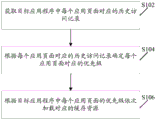
FIG. 1 is a flowchart of a method for loading application resources according to an embodiment of the present invention;
FIG. 2 is a schematic diagram of another method for loading application resources according to an embodiment of the present invention;
FIG. 3 is a schematic diagram of an application resource loading device according to an embodiment of the present invention;
fig. 4 is a schematic hardware structure of an electronic device according to an embodiment of the present invention.
Detailed Description
The following description of the embodiments of the present invention will be made clearly and fully with reference to the accompanying drawings, in which it is evident that the embodiments described are some, but not all embodiments of the invention. All other embodiments, which can be made by those skilled in the art based on the embodiments of the invention without making any inventive effort, are intended to be within the scope of the invention.
Example 1
In an embodiment of the present invention, an application resource loading method is provided, as shown in fig. 1, where the method specifically includes the following steps:
s102, acquiring a history access record corresponding to each application page in a target application program;
specifically, in the present embodiment, the terminal system in which the target application is located includes, but is not limited to, an android system, a Linux system, an iOS system, a Windows system, a hong harbor system, and the like. The target application program comprises a plurality of application components, after the target application program is started, an initial page of the target application program is displayed in the user terminal, and a plurality of corresponding application components are displayed in the initial page. And loading the cache resources of the application pages corresponding to the application components selected by the user by detecting the selection operation of the user on the application components, and then displaying the page contents corresponding to the application components.
The loading process of the application pages is monitored in the process that the user uses the target application program, for example, after the user accesses the application pages in the target application program, the access times of the user accessing the application pages are increased by 1, so that the statistics record is carried out on the access times of each application page in the whole target application program, and the historical access record corresponding to each application page in the target application program is obtained.
S104, determining the priority corresponding to each application page according to the history access record corresponding to each application page;
in a specific application scene, the behavior habit or behavior preference of the user is determined by acquiring a history access record corresponding to each application page in the target application program, so that the cache resource is loaded preferentially on the application pages focused or favored by the user. In this embodiment, the behavior habit of the user is determined according to the history access record corresponding to each application page, and then the priority of the application page in the target application program is determined according to the behavior habit of the user.
In this embodiment, the priority corresponding to each application page may be determined according to the number or frequency of times the user accesses the application page in the history access record.
In one example, the number of accesses to a plurality of pages in the target application program is counted, for example, the number of accesses to an application page a, an application page B, an application page C and an application page D in the target application program is counted, so that the number of accesses to the application page a is 1, the number of accesses to the application page B is 13, the number of accesses to the application page C is 9, the number of accesses to the application page D is 5, the number of accesses to the application page B is more, it can be obtained that the application page B accords with the user behavior habit of the current user, and the priority of the application page can be determined to be arranged as B > C > D > a from high to low according to the number of accesses to the application page.
S106, loading corresponding cache resources in sequence according to the priority of each application page in the target application program.
Specifically, after the historical access record of the user accessing the application page is obtained, the priority corresponding to each application page is determined according to the access times or the access frequency of each application page, and the corresponding cache resource is loaded.
Still further, by taking the above example as an example, the number of accesses of the application page a in the target application program is 1, the number of accesses of the application page B is 13, the number of accesses of the application page C is 9, the number of accesses of the application page D is 5, and the priority of the application page is arranged as B > C > D > a from high to low. After the target application program starts to load the initial application page, the cache resource of the application page B is loaded according to the application page priority, then the cache resource of the application page C is loaded, then the cache resource of the application page D is loaded, and finally the cache resource of the application page A is loaded.
In this embodiment, the cache resources of the application page in the application program may be obtained according to the terminal cache of the target terminal, or may be a cache of the loaded application page corresponding to the priority of the application page after the downloading of the APP resources is completed, which is requested to download the corresponding APP resources from the preset server corresponding to the preset application program after receiving the instruction to start the target application program.
In an optional technical scheme of this embodiment, after receiving a start instruction for starting a target application program, an APP resource request is sent to a preset server, where the APP resource request carries priorities of application pages in the target application program. After receiving the APP resource request, the preset server sends cache resources corresponding to each application page according to the priority of each application page.
For example, the preset server obtains that the terminal sends an APP resource request, where the APP resource request carries the priority of an application page in the APP, where the priority of the application page is arranged from high to low as B > C > D > a, and then the preset server may sequentially send a cache resource corresponding to the application page B, then send a cache resource of the application page C, then send a cache resource of the application page D, and finally send a cache resource of the application page a according to the priority of the application page.
As an optional technical solution in this embodiment, the priority of an initial application page of a target application program is higher than the priority of other application pages, after a start instruction of an application page is received, the target application program is started, first, a cache resource corresponding to the initial application page is loaded, and then, the corresponding cache resource is loaded according to the priority of other application pages in the target application program.
As another optional technical solution in this embodiment, the last application page of the target user in the history access record is obtained, after receiving the start instruction of the application page, the target application program is started, first, the cache resource corresponding to the last application page in the target application program is loaded, and then, the corresponding cache resource is loaded according to the priority of other application pages in the target application program.
It should be noted that, a history access record corresponding to each application page in the target application program is obtained; determining the priority corresponding to each application page according to the historical access record corresponding to each application page; and loading corresponding cache resources in sequence according to the priority of each application page in the target application program. And determining the user behavior habit of the user on the application page through the historical access record in the target application program, so as to realize quick loading of the application page cache resource according to the user behavior habit and reduce the waiting time of the user. The problem that APP resources cannot be loaded according to user behavior habits in the related art, so that the APP resources are long in loading time and poor in user experience is solved.
Optionally, in this embodiment, the historical access record includes the number of accesses, where the priority corresponding to each application page is determined according to the historical access record corresponding to each application page, including but not limited to: and determining the priority corresponding to each application page according to the access times of each application page.
Specifically, in this embodiment, statistics is performed according to the number of accesses to the application page by the user. For example, the priority corresponding to each application page is determined according to the number of times the user accesses. For example, the access times of each application page in the historical access record of the target application are obtained, the priority of each application page is determined, and then the application pages are ordered.
In one example, as shown in table 1, a statistics table of historical access records is recorded in which the name of the application page, the number of accesses, and the application hierarchy are recorded.
TABLE 1
| Application page | Number of accesses |
| A | 10 |
| B | 12 |
| C | 6 |
| D | 3 |
By way of example in table 1, it can be known that the number of accesses to application page B is the largest and the number of accesses to application page D is the smallest, and the priorities of the application pages are ordered according to the number of accesses to obtain the priority arrangement of application pages as B > a > C > D.
Through the embodiment, the priority corresponding to each application page is determined according to the access times of each application page, so that the user behavior habit of the user is determined according to the effective application page access data, and the user requirement is accurately determined.
Optionally, in this embodiment, the historical access record includes an access frequency, where the priority corresponding to each application page is determined according to the historical access record corresponding to each application page, including but not limited to: and determining the priority corresponding to each application page according to the access frequency of each application page in the first preset time period.
In a specific application scenario, the user's preference for application pages of the target application program may change over time. Therefore, in this embodiment, statistics are required according to the access frequency of the user to the application page. For example, the access frequency corresponding to each application page is determined according to the access times of the user in the preset time period, and then the priority corresponding to each application page is determined according to the access frequency in the first time period.
In one example, the daily access frequency of each application page in the historical access record of the target application over the last week is obtained, and the application pages are ordered. The first preset time may be a period of one week or one month, and specifically may be set according to actual experience, which is not limited in this embodiment.
In an optional technical scheme of this embodiment, an access frequency corresponding to each application page is determined according to the number of accesses of each application page in a preset time period; or determining the access frequency corresponding to each application page according to the effective access times of each application page in the preset time period, wherein the residence time of the user in the application page is greater than a first preset time threshold. And according to the browsing time or the stay time of the user on the application page, confirming whether the user executes effective access to the application page, wherein the effective access times are increased by 1. Specifically, if the browsing time of the user on the application page is smaller than a first preset time threshold, the current access of the user to the application is considered to be invalid access; and if the browsing time of the user on the application page is greater than or equal to a first preset time threshold, the current access of the user to the application is considered to be effective access. (1)
Through the embodiment, the priority corresponding to each application page is determined according to the access frequency of each application page in the first preset time period, so that the user behavior habit of the user is determined according to the effective application page access data, and the user requirement is accurately determined.
Optionally, in this embodiment, the corresponding cache resources are sequentially loaded according to the priority of each application page in the target application program, including but not limited to: establishing a cache loading queue in the target application program according to the application level and the priority corresponding to each application page; and loading the cache resources according to the cache loading queue.
In a specific application scenario, there is a dependency relationship between application pages in the target application program, for example, an application page whose application level is a child page depends on the application level being a parent page. Therefore, in this embodiment, the application page establishes a cache load queue of the target application program according to the application level and the priority corresponding to each application page, and after the target application program is started, the cache resource is loaded according to the cache load queue.
In one example, as shown in table 2, the priority of each application page applied in the target application program may be B > a > C > D, according to the number of accesses of each application page. On the other hand, the application level of the application page a and the application page B is 2, the application level of the application page C is 1, and the application level of the application page D is 3, which means that the application page a and the application page B are sub-pages of the application page C, and the application page a and the application page B depend on the application page C; the application page D depends on the application page B, and is a sub-page of the application page B. According to the application level and the priority corresponding application page of the application page, a cache loading queue is obtained as an application page C > application page B > application page A > application page D ", and then cache resources corresponding to the application page are loaded respectively according to the cache loading queue.
TABLE 2
| Application page | Number of accesses | Application hierarchy |
| A | 10 | 2 |
| B | 12 | 2 |
| C | 6 | 1 |
| D | 3 | 3 |
Through the embodiment, a cache loading queue in the target application program is established according to the application level and the priority corresponding to each application page; and loading the cache resources according to the cache loading queue. The buffer loading queue can be loaded and determined according to the dependency relationship and the priority of the application pages, so that the buffer resources of the application pages can be rapidly loaded according to the behavior habit of the user, and the waiting time of the user is reduced.
Optionally, in this embodiment, a cache load queue in the target application program is established according to the application level and the priority corresponding to each application page, including but not limited to: under the condition that the application level of the appointed application page is a parent page, adding the appointed application page into a cache loading queue according to the first priority of the appointed application page; and under the condition that the application level of the appointed application page is the sub page, adding the parent page corresponding to the appointed application page and the application page into a cache loading queue according to the first priority of the appointed application page, wherein the loading sequence of the parent page in the cache loading queue is higher than the loading sequence of the application page.
Specifically, in this embodiment, in the case where the application level of the designated application page is a parent page, for example, the designated application page is an application page corresponding to an application component in an initial application page of the target application program, that is, an application component in the initial application page displayed after the application is started, and after the user selects an operation, the displayed application page is the parent page; and obtaining an application level of the application page as a child page by selecting the components in the parent page. And when the application level of the appointed application page is the parent page, adding the appointed application page into the cache loading queue according to the first priority of the appointed application page.
On the other hand, in the case that the application hierarchy of the designated application page is a child page, the application hierarchy from which the designated application page comes is determined as the application page of the parent page, the first priority of the designated application page is determined, the designated application page and the parent page are added to the cache load queue, and specifically, the loading sequence of the parent page in the cache load queue is prioritized over the loading sequence of the application page. That is, after the cache resource corresponding to the parent page is loaded, the cache resource of the designated page is loaded.
For example, assuming that the existing cache load queue is "application page F > application page Z > application page E > application page D", if it is determined that the application page B priority is higher than the application page E priority and is less than the application Z priority. And if the parent page of the application page B is the application page A, the adjusted cache loading queue is 'application page F > application page Z > application page A > application page B > application page E > application page D'.
By the embodiment, the corresponding application pages are added into the cache loading queue according to the dependency relationship among the application pages, so that the sequence of loading the cache resources of the application pages is further perfected, and the loading speed of the application program resources is improved.
By the application program resource loading method provided by the embodiment, a history access record corresponding to each application page in the target application program is obtained; determining the priority corresponding to each application page according to the historical access record corresponding to each application page; and loading corresponding cache resources in sequence according to the priority of each application page in the target application program. And determining the user behavior habit of the user on the application page through the historical access record in the target application program, so as to realize quick loading of the application page cache resource according to the user behavior habit and reduce the waiting time of the user. The problem that APP resources cannot be loaded according to user behavior habits in the related art, so that the APP resources are long in loading time and poor in user experience is solved.
Example two
Referring to fig. 2, a flowchart of an application resource loading method according to an embodiment of the present invention is shown. The method specifically comprises the following steps:
s21, starting a target application program;
specifically, the selection operation of a user acting on a target application program in a target terminal is detected, and APP resources of an initial application page of the target application program and necessary APP resources for executing the target application program are loaded.
S22, reading user behavior data;
specifically, the access times or access frequencies corresponding to each application page in the target application program by the user are obtained.
S23, determining the resource loading sequence of the application page according to the user behavior data;
specifically, the weight of the application page is determined according to the corresponding access times or access frequencies of the application page, and then the resource loading sequence of the corresponding application page is determined according to the weight of the application page.
S24, loading APP resources according to the resource loading sequence;
specifically, corresponding APP resources are loaded according to the resource loading sequence corresponding to each application page, the selection operation of the application acting on the application page is detected, and the corresponding application page is accessed.
Through the embodiment, the user behavior habit of the user on the application page is determined through the historical access record in the target application program, so that the application page cache resource is rapidly loaded according to the user behavior habit, and the waiting time of the user is reduced. The problem that APP resources cannot be loaded according to user behavior habits in the related art, so that the APP resources are long in loading time and poor in user experience is solved.
Example III
An application resource loading device provided by the embodiment of the invention is described in detail.
Referring to fig. 3, a schematic structural diagram of an application resource loading device according to an embodiment of the present invention is shown.
The application resource loading device of the embodiment of the invention comprises: an acquisition unit 30, a determination unit 32, and a loading unit 34.
The functions of the modules and the interaction relationship between the modules are described in detail below.
An obtaining unit 30, configured to obtain a history access record corresponding to each application page in the target application program;
a determining unit 32, configured to determine a priority corresponding to each application page according to the historical access record corresponding to each application page;
and the loading unit 34 is configured to sequentially load the corresponding cache resources according to the priority of each application page in the target application program.
Optionally, in this embodiment, the history access record includes a number of accesses, wherein,
the determination unit 32 includes:
and the first determining module is used for determining the priority corresponding to each application page according to the access times of each application page.
Optionally, in this embodiment, the history access record includes an access frequency, wherein,
The determination unit 32 includes:
and the second determining module is used for determining the priority corresponding to each application page according to the access frequency of each application page in the first preset time period.
Optionally, in this embodiment, the loading unit 34 includes:
the processing module is used for establishing a cache loading queue in the target application program according to the application level and the priority corresponding to each application page;
and the loading module is used for loading the cache resources according to the cache loading queue.
Optionally, in this embodiment, the processing module includes:
the first processing sub-module is used for adding the appointed application page into the cache loading queue according to the first priority of the appointed application page under the condition that the application level of the appointed application page is the first page;
and the second processing submodule is used for adding the parent page corresponding to the appointed application page and the application page into the cache loading queue according to the first priority of the appointed application page under the condition that the application level of the appointed application page is the child page, wherein the loading sequence of the parent page in the cache loading queue is higher than the loading sequence of the application page.
By the application program resource loading device provided by the embodiment of the invention, the history access record corresponding to each application page in the target application program is obtained; determining the priority corresponding to each application page according to the historical access record corresponding to each application page; and loading corresponding cache resources in sequence according to the priority of each application page in the target application program. And determining the user behavior habit of the user on the application page through the historical access record in the target application program, so as to realize quick loading of the application page cache resource according to the user behavior habit and reduce the waiting time of the user. The problem that APP resources cannot be loaded according to user behavior habits in the related art, so that the APP resources are long in loading time and poor in user experience is solved.
Example four
Fig. 4 is a schematic hardware structure of an electronic device implementing various embodiments of the present invention.
The electronic device 400 includes, but is not limited to: radio frequency unit 401, network module 402, audio output unit 403, input unit 404, sensor 405, display unit 406, user input unit 407, interface unit 408, memory 409, processor 410, and power source 411. Those skilled in the art will appreciate that the electronic device structure shown in fig. 4 is not limiting of the electronic device and that the electronic device may include more or fewer components than shown, or may combine certain components, or a different arrangement of components. In the embodiment of the invention, the electronic equipment comprises, but is not limited to, a mobile phone, a tablet computer, a notebook computer, a palm computer, a vehicle-mounted terminal, a wearable device, a pedometer and the like.
It should be understood that, in the embodiment of the present invention, the radio frequency unit 401 may be used for receiving and transmitting signals during the process of receiving and transmitting information or communication, specifically, receiving downlink data from a base station and then processing the received downlink data by the processor 410; and, the uplink data is transmitted to the base station. Typically, the radio frequency unit 401 includes, but is not limited to, an antenna, at least one amplifier, a transceiver, a coupler, a low noise amplifier, a duplexer, and the like. In addition, the radio frequency unit 401 may also communicate with networks and other devices through a wireless communication system.
The electronic device provides wireless broadband internet access to the user through the network module 402, such as helping the user to send and receive e-mail, browse web pages, and access streaming media, etc.
The audio output unit 403 may convert audio data received by the radio frequency unit 401 or the network module 402 or stored in the memory 409 into an audio signal and output as sound. Also, the audio output unit 403 may also provide audio output (e.g., a call signal reception sound, a message reception sound, etc.) related to a specific function performed by the electronic device 400. The audio output unit 403 includes a speaker, a buzzer, a receiver, and the like.
The input unit 404 is used to receive an audio or video signal. The input unit 404 may include a graphics processor (Graphics Processing Unit, GPU) 4041 and a microphone 4042, the graphics processor 4041 processing image data of still pictures or video obtained by an image capturing device (e.g., a camera) in a video capturing mode or an image capturing mode. The processed image frames may be displayed on the display unit 406. The image frames processed by the graphics processor 4041 may be stored in memory 409 (or other storage medium) or transmitted via the radio frequency unit 401 or the network module 402. The microphone 4042 may receive sound and may be capable of processing such sound into audio data. The processed audio data may be converted into a format output that can be transmitted to the mobile communication base station via the radio frequency unit 401 in the case of a telephone call mode.
The electronic device 400 also includes at least one sensor 405, such as a light sensor, a motion sensor, and other sensors. Specifically, the light sensor includes an ambient light sensor that can adjust the brightness of the display panel 4061 according to the brightness of ambient light, and a proximity sensor that can turn off the display panel 4061 and/or the backlight when the electronic device 400 is moved to the ear. As one of the motion sensors, the accelerometer sensor can detect the acceleration in all directions (generally three axes), and can detect the gravity and direction when stationary, and can be used for recognizing the gesture of the electronic equipment (such as horizontal and vertical screen switching, related games, magnetometer gesture calibration), vibration recognition related functions (such as pedometer and knocking), and the like; the sensor 405 may further include a fingerprint sensor, a pressure sensor, an iris sensor, a molecular sensor, a gyroscope, a barometer, a hygrometer, a thermometer, an infrared sensor, etc., which are not described herein.
The display unit 406 is used to display information input by a user or information provided to the user. The display unit 406 may include a display panel 4061, and the display panel 4061 may be configured in the form of a liquid crystal display (Liquid Crystal Display, LCD), an Organic Light-Emitting Diode (OLED), or the like.
The user input unit 407 may be used to receive input numeric or character information and to generate key signal inputs related to user settings and function control of the electronic device. Specifically, the user input unit 407 includes a touch panel 4071 and other input devices 4072. The touch panel 4071, also referred to as a touch screen, may collect touch operations thereon or thereabout by a user (e.g., operations of the user on the touch panel 4071 or thereabout using any suitable object or accessory such as a finger, stylus, etc.). The touch panel 4071 may include two parts, a touch detection device and a touch controller. The touch detection device detects the touch azimuth of a user, detects a signal brought by touch operation and transmits the signal to the touch controller; the touch controller receives touch information from the touch detection device, converts it into touch point coordinates, and sends the touch point coordinates to the processor 410, and receives and executes commands sent from the processor 410. In addition, the touch panel 4071 may be implemented in various types such as resistive, capacitive, infrared, and surface acoustic wave. The user input unit 407 may include other input devices 4072 in addition to the touch panel 4071. In particular, other input devices 4072 may include, but are not limited to, a physical keyboard, function keys (e.g., volume control keys, switch keys, etc.), a trackball, a mouse, and a joystick, which are not described in detail herein.
Further, the touch panel 4071 may be overlaid on the display panel 4061, and when the touch panel 4071 detects a touch operation thereon or thereabout, the touch operation is transferred to the processor 410 to determine the type of touch event, and then the processor 410 provides a corresponding visual output on the display panel 4061 according to the type of touch event. Although in fig. 4, the touch panel 4071 and the display panel 4061 are two independent components for implementing the input and output functions of the electronic device, in some embodiments, the touch panel 4041 and the display panel 4061 may be integrated to implement the input and output functions of the electronic device, which is not limited herein.
The interface unit 408 is an interface to which an external device is connected to the electronic apparatus 400. For example, the external devices may include a wired or wireless headset port, an external power (or battery charger) port, a wired or wireless data port, a memory card port, a port for connecting a device having an identification module, an audio input/output (I/O) port, a video I/O port, an earphone port, and the like. The interface unit 408 may be used to receive input (e.g., data information, power, etc.) from an external device and transmit the received input to one or more elements within the electronic apparatus 400 or may be used to transmit data between the electronic apparatus 400 and an external device.
The processor 410 is a control center of the electronic device, connects various parts of the entire electronic device using various interfaces and lines, and performs various functions of the electronic device and processes data by running or executing software programs and/or modules stored in the memory 409 and invoking data stored in the memory 409, thereby performing overall monitoring of the electronic device. Processor 410 may include one or more processing units; preferably, the processor 410 may integrate an application processor that primarily handles operating systems, user interfaces, applications, etc., with a modem processor that primarily handles wireless communications. It will be appreciated that the modem processor described above may not be integrated into the processor 410.
The electronic device 400 may also include a power supply 411 (e.g., a battery) for powering the various components, and preferably the power supply 411 may be logically connected to the processor 410 via a power management system that performs functions such as managing charging, discharging, and power consumption.
In addition, the electronic device 400 includes some functional modules, which are not shown, and are not described herein.
Preferably, the embodiment of the present invention further provides an electronic device, including: the processor 410, the memory 409, and a computer program stored in the memory 409 and capable of running on the processor 410, where the computer program when executed by the processor 410 implements the respective processes of the application resource loading embodiments described above, and achieve the same technical effects, and are not repeated herein.
The embodiment of the invention also provides a readable storage medium, the readable storage medium stores a computer program, when the computer program is executed by a processor, the processes of the application resource loading method embodiment are realized, the same technical effects can be achieved, and the repetition is avoided, and the description is omitted here. Wherein the readable storage medium is selected from Read-Only Memory (ROM), random access Memory (Random Access Memory RAM), magnetic disk or optical disk.
It should be noted that, in this document, the terms "comprises," "comprising," or any other variation thereof, are intended to cover a non-exclusive inclusion, such that a process, method, article, or apparatus that comprises a list of elements does not include only those elements but may include other elements not expressly listed or inherent to such process, method, article, or apparatus. Without further limitation, an element defined by the phrase "comprising one … …" does not exclude the presence of other like elements in a process, method, article, or apparatus that comprises the element.
From the above description of the embodiments, it will be clear to those skilled in the art that the above-described embodiment method may be implemented by means of software plus a necessary general hardware platform, but of course may also be implemented by means of hardware, but in many cases the former is a preferred embodiment. Based on such understanding, the technical solution of the present invention may be embodied essentially or in a part contributing to the prior art in the form of a software product stored in a storage medium (e.g. ROM/RAM, magnetic disk, optical disk) comprising instructions for causing a terminal (which may be a mobile phone, a computer, a server, an air conditioner, or a network device, etc.) to perform the method according to the embodiments of the present invention.
The embodiments of the present invention have been described above with reference to the accompanying drawings, but the present invention is not limited to the above-described embodiments, which are merely illustrative and not restrictive, and many forms may be made by those having ordinary skill in the art without departing from the spirit of the present invention and the scope of the claims, which are to be protected by the present invention.
Those of ordinary skill in the art will appreciate that the various illustrative elements and algorithm steps described in connection with the embodiments disclosed herein may be implemented as electronic hardware, or combinations of computer software and electronic hardware. Whether such functionality is implemented as hardware or software depends upon the particular application and design constraints imposed on the solution. Skilled artisans may implement the described functionality in varying ways for each particular application, but such implementation decisions should not be interpreted as causing a departure from the scope of the present invention.
It will be clear to those skilled in the art that, for convenience and brevity of description, specific working procedures of the above-described systems, apparatuses and units may refer to corresponding procedures in the foregoing method embodiments, and are not repeated herein.
In the embodiments provided in the present application, it should be understood that the disclosed apparatus and method may be implemented in other manners. For example, the apparatus embodiments described above are merely illustrative, e.g., the division of the units is merely a logical function division, and there may be additional divisions when actually implemented, e.g., multiple units or components may be combined or integrated into another system, or some features may be omitted or not performed. Alternatively, the coupling or direct coupling or communication connection shown or discussed with each other may be an indirect coupling or communication connection via some interfaces, devices or units, which may be in electrical, mechanical or other form.
The units described as separate units may or may not be physically separate, and units shown as units may or may not be physical units, may be located in one place, or may be distributed on a plurality of network units. Some or all of the units may be selected according to actual needs to achieve the purpose of the solution of this embodiment.
In addition, each functional unit in the embodiments of the present invention may be integrated in one processing unit, or each unit may exist alone physically, or two or more units may be integrated in one unit.
The functions, if implemented in the form of software functional units and sold or used as a stand-alone product, may be stored in a computer-readable storage medium. Based on this understanding, the technical solution of the present invention may be embodied essentially or in a part contributing to the prior art or in a part of the technical solution, in the form of a software product stored in a storage medium, comprising several instructions for causing a computer device (which may be a personal computer, a server, a network device, etc.) to perform all or part of the steps of the method according to the embodiments of the present invention. And the aforementioned storage medium includes: a usb disk, a removable hard disk, a ROM, a RAM, a magnetic disk, or an optical disk, etc.
The foregoing is merely illustrative of the present invention, and the present invention is not limited thereto, and any person skilled in the art will readily recognize that variations or substitutions are within the scope of the present invention. Therefore, the protection scope of the invention is subject to the protection scope of the claims.
Claims (8)
1. A method for loading application resources, the method comprising:
acquiring a history access record corresponding to each application page in a target application program, wherein the history access record comprises access frequency in a first preset time period;
determining the priority corresponding to each application page according to the historical access record corresponding to each application page;
under the condition that an application level of a designated application page is a head page, adding the designated application page into a cache loading queue according to a first priority of the designated application page;
under the condition that the application level of the appointed application page is a sub page, adding a parent page corresponding to the appointed application page and the application page into the cache loading queue according to the first priority of the appointed application page, wherein the loading sequence of the parent page in the cache loading queue is prior to the loading sequence of the application page;
and loading the cache resource according to the cache loading queue.
2. The method of claim 1, wherein the historical access record comprises a number of accesses, wherein,
determining the priority corresponding to each application page according to the historical access record corresponding to each application page, including:
And determining the priority corresponding to each application page according to the access times of each application page.
3. The method of claim 2, wherein,
determining the priority corresponding to each application page according to the historical access record corresponding to each application page, including:
and determining the priority corresponding to each application page according to the access frequency of each application page in the first preset time period.
4. An application resource loading apparatus, the apparatus comprising:
the acquisition unit is used for acquiring a history access record corresponding to each application page in the target application program, wherein the history access record comprises access frequency in a first preset time period;
the determining unit is used for determining the priority corresponding to each application page according to the historical access record corresponding to each application page;
the processing module is used for adding the appointed application page into a cache loading queue according to the first priority of the appointed application page under the condition that the application level of the appointed application page is the first page; under the condition that the application level of the appointed application page is a sub page, adding a parent page corresponding to the appointed application page and the application page into the cache loading queue according to the first priority of the appointed application page, wherein the loading sequence of the parent page in the cache loading queue is prior to the loading sequence of the application page;
And the loading module is used for loading the cache resources according to the cache loading queue.
5. The apparatus of claim 4, wherein the historical access record comprises a number of accesses, wherein,
the determination unit includes:
and the first determining module is used for determining the priority corresponding to each application page according to the access times of each application page.
6. The apparatus of claim 5, wherein,
the determination unit includes:
and the second determining module is used for determining the priority corresponding to each application page according to the access frequency of each application page in the first preset time period.
7. An electronic device, comprising: a memory, a processor and a computer program stored on the memory and executable on the processor, which when executed by the processor performs the steps of the application resource loading method according to any of claims 1 to 3.
8. A readable storage medium, characterized in that it has stored thereon a computer program which, when executed by a processor, implements the steps of the application resource loading method according to any of claims 1 to 3.
Priority Applications (1)
| Application Number | Priority Date | Filing Date | Title |
|---|---|---|---|
| CN202011642439.6A CN112612552B (en) | 2020-12-31 | 2020-12-31 | Application resource loading method and device, electronic equipment and readable storage medium |
Applications Claiming Priority (1)
| Application Number | Priority Date | Filing Date | Title |
|---|---|---|---|
| CN202011642439.6A CN112612552B (en) | 2020-12-31 | 2020-12-31 | Application resource loading method and device, electronic equipment and readable storage medium |
Publications (2)
| Publication Number | Publication Date |
|---|---|
| CN112612552A CN112612552A (en) | 2021-04-06 |
| CN112612552B true CN112612552B (en) | 2023-05-23 |
Family
ID=75253037
Family Applications (1)
| Application Number | Title | Priority Date | Filing Date |
|---|---|---|---|
| CN202011642439.6A Active CN112612552B (en) | 2020-12-31 | 2020-12-31 | Application resource loading method and device, electronic equipment and readable storage medium |
Country Status (1)
| Country | Link |
|---|---|
| CN (1) | CN112612552B (en) |
Families Citing this family (6)
| Publication number | Priority date | Publication date | Assignee | Title |
|---|---|---|---|---|
| CN113378085B (en) * | 2021-05-31 | 2023-11-14 | 游艺星际(北京)科技有限公司 | Page loading method, device, terminal and storage medium |
| CN113282354B (en) * | 2021-06-28 | 2023-04-07 | 中国平安人寿保险股份有限公司 | H5 page loading method, device and equipment of application program and storage medium |
| CN115629875A (en) * | 2022-10-18 | 2023-01-20 | Oppo广东移动通信有限公司 | Memory page processing method and device and electronic equipment |
| CN116340686A (en) * | 2023-03-29 | 2023-06-27 | 阳光慧碳科技有限公司 | A page echo method and device, storage medium and electronic equipment |
| CN117421069B (en) * | 2023-11-24 | 2025-01-28 | 久睦本(海南)科技股份有限公司 | A dynamic loading method, system, device and storage medium for Internet applet |
| CN117873583B (en) * | 2023-12-06 | 2025-10-31 | 天翼云科技有限公司 | A file loading method and apparatus |
Family Cites Families (3)
| Publication number | Priority date | Publication date | Assignee | Title |
|---|---|---|---|---|
| CN105512251B (en) * | 2015-12-01 | 2019-09-10 | 北京百度网讯科技有限公司 | A kind of page cache method and device |
| CN108399222B (en) * | 2018-02-11 | 2020-09-01 | 北京奇艺世纪科技有限公司 | Page refreshing method and device |
| CN111984357A (en) * | 2020-08-31 | 2020-11-24 | 平安医疗健康管理股份有限公司 | Resource loading method, device and equipment based on WebWorker and storage medium |
-
2020
- 2020-12-31 CN CN202011642439.6A patent/CN112612552B/en active Active
Also Published As
| Publication number | Publication date |
|---|---|
| CN112612552A (en) | 2021-04-06 |
Similar Documents
| Publication | Publication Date | Title |
|---|---|---|
| JP7221971B2 (en) | Transmission method, mobile terminal and network equipment | |
| CN108924037B (en) | A kind of display method and mobile terminal of rich media communication RCS message | |
| CN112612552A (en) | Application program resource loading method and device, electronic equipment and readable storage medium | |
| CN108279948B (en) | A kind of application program startup method and mobile terminal | |
| CN110753201B (en) | Video recording method and device, electronic equipment and storage medium | |
| CN107888768B (en) | Unlocking control method, terminal and computer readable storage medium | |
| CN109669656B (en) | Information display method and terminal equipment | |
| CN107656793B (en) | Application program interface switching method and mobile terminal | |
| CN108984066B (en) | Application icon display method and mobile terminal | |
| CN109284144B (en) | Fast application processing method and mobile terminal | |
| JP7324949B2 (en) | Application sharing method, first electronic device and computer readable storage medium | |
| CN106203228A (en) | Two-dimensional code information transmission method, device and equipment | |
| CN108600516B (en) | Data acquisition method, mobile terminal and computer readable storage medium | |
| CN110191426B (en) | Information sharing method and terminal | |
| CN110516495B (en) | A code scanning method and mobile terminal | |
| CN108009031B (en) | Application control method and mobile terminal | |
| CN108228357B (en) | A kind of memory cleaning method and mobile terminal | |
| CN111310165B (en) | Account switching or registering method and electronic equipment | |
| CN111107223B (en) | A message processing method and electronic device | |
| CN109889568B (en) | Data export method, server and system | |
| CN110209333B (en) | A kind of page control method and mobile terminal | |
| CN110809186B (en) | Video processing method and electronic equipment | |
| CN110941473A (en) | Preloading method, apparatus, electronic device and medium | |
| CN108234745B (en) | A signal receiving method, mobile terminal and computer-readable storage medium | |
| CN107346347B (en) | Webpage table display method and device |
Legal Events
| Date | Code | Title | Description |
|---|---|---|---|
| PB01 | Publication | ||
| PB01 | Publication | ||
| SE01 | Entry into force of request for substantive examination | ||
| SE01 | Entry into force of request for substantive examination | ||
| GR01 | Patent grant | ||
| GR01 | Patent grant | ||
| TR01 | Transfer of patent right |
Effective date of registration: 20230921 Address after: Room 210-03, 2nd floor, block C, office building, Nangang Industrial Zone, Tianjin Binhai New Area Economic and Technological Development Zone, 300450 Patentee after: 58Tongcheng Information Technology Co.,Ltd. Address before: Room 210-03, 2nd floor, block C, office building, Nangang Industrial Zone, Tianjin Binhai New Area Economic and Technological Development Zone, 300450 Patentee before: 58 Co.,Ltd. |
|
| TR01 | Transfer of patent right |