Combined torque measuring system with one machine for two purposes
Technical Field
The invention relates to a torque calibration and measurement device, in particular to a combined device for static torque calibration and dynamic torque measurement.
Background
The torque standard device is a standard device for reproducing torque magnitude, is divided into three categories, namely a weight dead weight type, a composite lever type and a reference type, and is widely applied to various national metering mechanisms at present. The weight dead weight type torque standard device takes the gravity of a weight as a standard load and generates standard torque through the action of a force arm lever. The composite lever type torque standard device takes the gravity of a weight as a standard load, and generates standard torque through the action of a force arm lever after being amplified by a certain lever mechanism. The reference type torque standard device is a torque standard device which uses a standard torque meter with higher accuracy than the object to be detected as a reference standard, is connected in series with the object to be detected, and applies torque manually, mechanically, or hydraulically. The accuracy of the reference type torque standard device is derived from a standard torque sensor, and can reach the high accuracy of 0.05 grade at present. The dynamic torque measurement technology is not long in development time in China, and modal analysis methods, namely a step excitation method, a sine excitation method and a hammering excitation method, are basically used.
In the past, a static calibration torque sensor and a dynamic test torque sensor are required to be carried out on two devices, the torque sensor is complex to install, test and disassemble, the problem of test data dispersion is caused by repeated installation, the calibration and test efficiency is not improved, and the data accuracy and reliability of calibration and test are not ensured.
Disclosure of Invention
The invention provides a combined torque measuring system with two purposes, which can be used for performing reference type static torque calibration on a torque sensor to be calibrated and performing step mode test on the torque sensor to be calibrated, so that the static calibration and the dynamic test of the torque sensor are reliable and efficient, and the equipment cost is saved.
In order to realize the purpose of 'one machine with two purposes' of static and dynamic states, the technical scheme of the invention is as follows: a 'one-machine dual-purpose' combined torque measuring system comprises a machine base, a corrected torque sensor, an air bearing, a standard torque sensor and a loading mechanism, wherein the corrected torque sensor, a quick separator, the air bearing, the standard torque sensor and the loading mechanism are sequentially arranged on the machine base from left to right; the standard torque sensor is connected with the loading mechanism through the connecting piece and is used for performing reference type static torque calibration on the torque sensor to be calibrated and performing step mode test on the torque sensor to be calibrated in the same combined torque measurement system.
Further, the coupling is a flexible coupling.
Furthermore, a hydraulic band-type brake is arranged in the flexible coupling.
Further, the calibrated torque sensor is connected with the flexible coupling and the air bearing through a quick release.
Furthermore, the dynamic test of the torque sensor to be calibrated adopts a step excitation principle, firstly, a screw on a hydraulic band-type brake is utilized to quickly dismount a standard torque sensor, then the whole system is quickly connected again, then, a loading mechanism at the rear applies torque to directly transmit the torque to the torque sensor to be calibrated, a connecting piece in the middle adopts an air bearing, a flexible coupling and the hydraulic band-type brake to achieve high-precision torque transmission almost without friction and lateral force, when the torque sensor is loaded to reach full range, a quick release device is started to completely release the full range torque on the torque sensor to zero in a very short time, so that the torque sensor obtains step type energy excitation, a feedback signal enters a data acquisition and analysis system, and related parameters of the dynamic torque to be tested are directly calculated and displayed through related software, and finally, completing the dynamic test of the torque sensor.
Furthermore, when the torque sensor to be calibrated is dynamically tested, the loading system is loaded firstly, when the torque sensor is loaded to reach the full range, the torque sensor is quickly separated through the quick separator on the combined surface of the torque sensor to be calibrated and the connecting flange, so that the full range torque is completely released to zero in a very short time, the torque sensor obtains step-type energy excitation, the feedback signal enters the data acquisition and analysis system, and the processor calculates and displays the relevant parameters of the dynamic torque to be tested, and finally the dynamic test of the torque sensor is completed.
Furthermore, the static calibration of the torque sensor to be calibrated adopts a reference torque calibration principle, namely a loading mechanism at the rear applies torque to drive the standard torque sensor to be twisted and directly transmits the torque to the torque sensor to be calibrated, and a connecting piece in the middle adopts an air bearing, a flexible coupling and a hydraulic band-type brake to achieve high-precision torque transmission almost without friction and lateral force, so that the process of performing high-accuracy static calibration on the torque sensor to be calibrated by using the standard torque value of the standard torque sensor is completed.
Furthermore, the combined torque measuring system is used for statically calibrating the torque of the high-accuracy reference type calibrated torque sensor during dynamic testing, so that the calibrated data of the calibrated torque sensor can achieve certain high accuracy.
The invention has the beneficial effects that:
the combined torque measuring system with one machine and two purposes can be used for performing reference type static torque calibration on a torque sensor to be calibrated and can also perform modal test of a step method on the torque sensor to be calibrated.
2, because the middle connecting piece of the torque sensor to be calibrated in the system adopts an air bearing, a flexible coupling and a hydraulic band-type brake, high-precision torque transmission almost without friction and lateral force can be achieved, and finally high-precision static calibration and dynamic test data can be obtained.
3, the system of the invention has reasonable structure and easy operation, and can provide a technical design basis for the torque combination calibration test of different measuring ranges through technical expansion.
Drawings
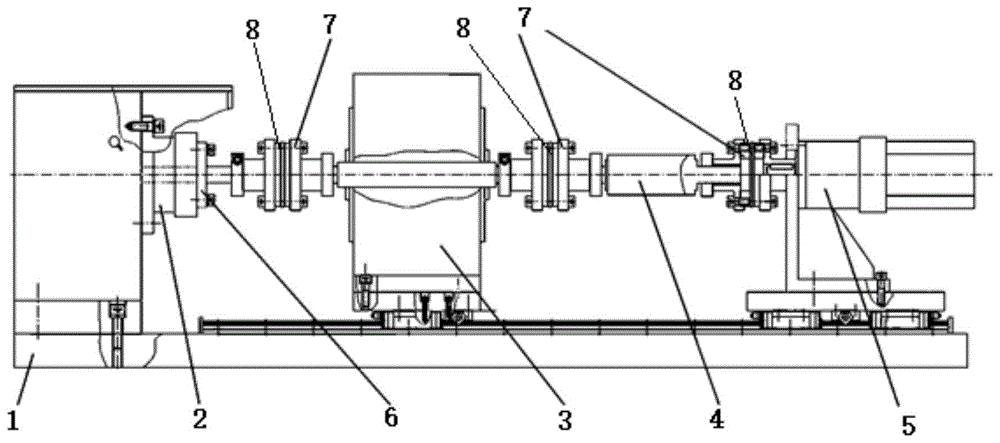
FIG. 1 is a schematic diagram of a "one machine two use" combined torque measurement system of the present invention.
Detailed Description
The invention is further explained with reference to the drawings and the embodiments.
As shown in figure 1, the combined torque measuring system with one machine and two purposes comprises a machine base 1, a torque sensor 2 to be calibrated, a quick release device 6, an air bearing 3, a standard torque sensor 4, a loading mechanism 5, a flexible coupling 7 and a hydraulic band-type brake 8. A calibrated torque sensor 2, an air bearing 3, a standard torque sensor 4 and a loading mechanism 5 are sequentially arranged on the base 1 from left to right; the calibrated torque sensor 2 is connected with the air bearing 3 through the quick release device 6 and the flexible coupling 7, the air bearing 3 is connected with the standard torque sensor 4 through the flexible coupling 7, and the standard torque sensor 4 is connected with the loading mechanism 5 through the flexible coupling 7. A hydraulic band-type brake 8 is arranged in the flexible coupling 7.
The static calibration adopts a reference type torque calibration principle, namely a loading mechanism at the rear applies torque to drive a standard torque sensor to be twisted and directly transmits the torque to a torque sensor to be calibrated, and a connecting piece at the middle adopts an air bearing, a flexible coupling and a hydraulic band-type brake to achieve high-precision torque transmission almost without friction and lateral force, so that the process of performing high-precision static calibration on the torque sensor to be calibrated by using a standard torque value of the standard torque sensor is completed.
The dynamic test adopts a step excitation principle, firstly utilizes a screw on a hydraulic band-type brake to quickly dismount the standard torque sensor, and then quickly connects the whole system again. Then, the loading mechanism at the rear applies torque to directly transmit the torque to the torque sensor to be calibrated, the connecting piece in the middle adopts an air bearing, a flexible coupling and a hydraulic band-type brake to achieve high-precision torque transmission almost without friction and lateral force, when the torque sensor reaches a full range after being loaded, a quick release device is started to completely release the full range torque on the torque sensor to zero in a very short time, so that the torque sensor obtains step-type energy excitation, a feedback signal enters a data acquisition and analysis system, related parameters of the dynamic torque to be measured are directly calculated and displayed through related software, and finally the dynamic test of the torque sensor is completed.
When a dynamic test is performed, a high-accuracy reference type static torque calibration must be performed, and the accuracy of the calibration data is the basis of the dynamic torque test. The data of the calibrated torque sensor reaches certain high accuracy, so that during dynamic testing, even under the condition that the standard torque sensor is detached, the full-scale torque value with high accuracy can still be reached, and the microsecond-level step time can be reached during testing, so that accurate and reliable dynamic torque measurement data can be obtained by combining the full-scale torque value with the microsecond-level step time.
When the dynamic test is carried out, a loading system is loaded firstly, when the loading of the torque sensor reaches the full range, in order to obtain that step data is excited within microsecond-level time, a quick release device (namely an energy quick release device) is used, namely, the full range torque between the torque sensor and the torque sensor is completely released to zero within extremely short time through the quick release system on a combined surface of the calibrated sensor and a connecting flange, so that the torque sensor obtains step-type energy excitation, a feedback signal enters a data acquisition and analysis system, relevant parameters of the tested dynamic torque are directly calculated and displayed through relevant software, and finally the dynamic test of the torque sensor is completed.
In order to obtain high accuracy of static calibration and dynamic test data, an air bearing, a flexible coupling and a hydraulic band-type brake are adopted in a middle connecting piece of a torque sensor to be calibrated in the system, so that high-accuracy torque transmission with almost no friction and no lateral force is achieved.