CN111850552B - Multifunctional surface modification method for synergistically improving corrosion resistance and biocompatibility of magnesium alloy - Google Patents
Multifunctional surface modification method for synergistically improving corrosion resistance and biocompatibility of magnesium alloy Download PDFInfo
- Publication number
- CN111850552B CN111850552B CN202010567160.XA CN202010567160A CN111850552B CN 111850552 B CN111850552 B CN 111850552B CN 202010567160 A CN202010567160 A CN 202010567160A CN 111850552 B CN111850552 B CN 111850552B
- Authority
- CN
- China
- Prior art keywords
- magnesium alloy
- solution
- chitosan
- graphene oxide
- surface modification
- Prior art date
- Legal status (The legal status is an assumption and is not a legal conclusion. Google has not performed a legal analysis and makes no representation as to the accuracy of the status listed.)
- Active
Links
- 229910000861 Mg alloy Inorganic materials 0.000 title claims abstract description 84
- 230000007797 corrosion Effects 0.000 title claims abstract description 30
- 238000005260 corrosion Methods 0.000 title claims abstract description 30
- 238000002715 modification method Methods 0.000 title claims abstract description 16
- OKTJSMMVPCPJKN-UHFFFAOYSA-N Carbon Chemical compound [C] OKTJSMMVPCPJKN-UHFFFAOYSA-N 0.000 claims abstract description 43
- 229910021389 graphene Inorganic materials 0.000 claims abstract description 43
- 102000008143 Bone Morphogenetic Protein 2 Human genes 0.000 claims abstract description 34
- 108010049931 Bone Morphogenetic Protein 2 Proteins 0.000 claims abstract description 34
- HTTJABKRGRZYRN-UHFFFAOYSA-N Heparin Chemical compound OC1C(NC(=O)C)C(O)OC(COS(O)(=O)=O)C1OC1C(OS(O)(=O)=O)C(O)C(OC2C(C(OS(O)(=O)=O)C(OC3C(C(O)C(O)C(O3)C(O)=O)OS(O)(=O)=O)C(CO)O2)NS(O)(=O)=O)C(C(O)=O)O1 HTTJABKRGRZYRN-UHFFFAOYSA-N 0.000 claims abstract description 32
- 229920000669 heparin Polymers 0.000 claims abstract description 32
- 229960002897 heparin Drugs 0.000 claims abstract description 32
- 230000004048 modification Effects 0.000 claims abstract description 21
- 238000012986 modification Methods 0.000 claims abstract description 21
- 239000011259 mixed solution Substances 0.000 claims abstract description 10
- 239000012620 biological material Substances 0.000 claims abstract description 9
- 238000000034 method Methods 0.000 claims abstract description 7
- 238000004140 cleaning Methods 0.000 claims abstract description 5
- 239000000243 solution Substances 0.000 claims description 34
- 229920001661 Chitosan Polymers 0.000 claims description 17
- 239000000956 alloy Substances 0.000 claims description 13
- HEMHJVSKTPXQMS-UHFFFAOYSA-M Sodium hydroxide Chemical compound [OH-].[Na+] HEMHJVSKTPXQMS-UHFFFAOYSA-M 0.000 claims description 12
- 238000001338 self-assembly Methods 0.000 claims description 11
- 238000002360 preparation method Methods 0.000 claims description 9
- NQTADLQHYWFPDB-UHFFFAOYSA-N N-Hydroxysuccinimide Chemical compound ON1C(=O)CCC1=O NQTADLQHYWFPDB-UHFFFAOYSA-N 0.000 claims description 8
- LMDZBCPBFSXMTL-UHFFFAOYSA-N 1-ethyl-3-(3-dimethylaminopropyl)carbodiimide Chemical compound CCN=C=NCCCN(C)C LMDZBCPBFSXMTL-UHFFFAOYSA-N 0.000 claims description 6
- 238000006243 chemical reaction Methods 0.000 claims description 6
- 230000003100 immobilizing effect Effects 0.000 claims description 4
- 238000002156 mixing Methods 0.000 claims description 4
- 238000005406 washing Methods 0.000 claims description 4
- 238000005119 centrifugation Methods 0.000 claims description 2
- IPCSVZSSVZVIGE-UHFFFAOYSA-N hexadecanoic acid Chemical compound CCCCCCCCCCCCCCCC(O)=O IPCSVZSSVZVIGE-UHFFFAOYSA-N 0.000 claims 2
- 235000021314 Palmitic acid Nutrition 0.000 claims 1
- 239000000463 material Substances 0.000 abstract description 10
- 238000011068 loading method Methods 0.000 abstract description 8
- 230000002188 osteogenic effect Effects 0.000 abstract description 6
- 230000002429 anti-coagulating effect Effects 0.000 abstract description 5
- 238000001035 drying Methods 0.000 abstract description 5
- 150000002680 magnesium Chemical class 0.000 abstract description 4
- 230000003511 endothelial effect Effects 0.000 abstract 1
- 230000001737 promoting effect Effects 0.000 abstract 1
- 210000000988 bone and bone Anatomy 0.000 description 11
- 210000000963 osteoblast Anatomy 0.000 description 9
- 239000007943 implant Substances 0.000 description 8
- 230000006872 improvement Effects 0.000 description 7
- 210000002889 endothelial cell Anatomy 0.000 description 6
- 230000035755 proliferation Effects 0.000 description 6
- 230000000975 bioactive effect Effects 0.000 description 4
- 230000004071 biological effect Effects 0.000 description 4
- 230000004069 differentiation Effects 0.000 description 4
- 239000011777 magnesium Substances 0.000 description 4
- JVXYHUCXFLBBGA-UHFFFAOYSA-N 16-phosphonohexadecanoic acid Chemical compound OC(=O)CCCCCCCCCCCCCCCP(O)(O)=O JVXYHUCXFLBBGA-UHFFFAOYSA-N 0.000 description 3
- 102000002260 Alkaline Phosphatase Human genes 0.000 description 3
- 108020004774 Alkaline Phosphatase Proteins 0.000 description 3
- 101150061927 BMP2 gene Proteins 0.000 description 3
- 229920002683 Glycosaminoglycan Polymers 0.000 description 3
- 102000004067 Osteocalcin Human genes 0.000 description 3
- 108090000573 Osteocalcin Proteins 0.000 description 3
- 208000007536 Thrombosis Diseases 0.000 description 3
- 229910045601 alloy Inorganic materials 0.000 description 3
- 230000033115 angiogenesis Effects 0.000 description 3
- 239000008280 blood Substances 0.000 description 3
- 210000004369 blood Anatomy 0.000 description 3
- 230000015556 catabolic process Effects 0.000 description 3
- 230000010261 cell growth Effects 0.000 description 3
- 238000006731 degradation reaction Methods 0.000 description 3
- 230000000694 effects Effects 0.000 description 3
- 150000004676 glycans Chemical class 0.000 description 3
- 230000001766 physiological effect Effects 0.000 description 3
- 229920001282 polysaccharide Polymers 0.000 description 3
- 239000005017 polysaccharide Substances 0.000 description 3
- 238000001179 sorption measurement Methods 0.000 description 3
- 102000010834 Extracellular Matrix Proteins Human genes 0.000 description 2
- 108010037362 Extracellular Matrix Proteins Proteins 0.000 description 2
- FYYHWMGAXLPEAU-UHFFFAOYSA-N Magnesium Chemical compound [Mg] FYYHWMGAXLPEAU-UHFFFAOYSA-N 0.000 description 2
- 239000013543 active substance Substances 0.000 description 2
- 230000000844 anti-bacterial effect Effects 0.000 description 2
- 125000003118 aryl group Chemical group 0.000 description 2
- 230000033558 biomineral tissue development Effects 0.000 description 2
- 230000015572 biosynthetic process Effects 0.000 description 2
- 125000003178 carboxy group Chemical group [H]OC(*)=O 0.000 description 2
- 125000003636 chemical group Chemical group 0.000 description 2
- 230000003993 interaction Effects 0.000 description 2
- 229910052749 magnesium Inorganic materials 0.000 description 2
- 239000000203 mixture Substances 0.000 description 2
- 230000010287 polarization Effects 0.000 description 2
- 210000001519 tissue Anatomy 0.000 description 2
- 230000001988 toxicity Effects 0.000 description 2
- 231100000419 toxicity Toxicity 0.000 description 2
- XLYOFNOQVPJJNP-UHFFFAOYSA-N water Substances O XLYOFNOQVPJJNP-UHFFFAOYSA-N 0.000 description 2
- 208000037408 Device failure Diseases 0.000 description 1
- 206010018910 Haemolysis Diseases 0.000 description 1
- UFHFLCQGNIYNRP-UHFFFAOYSA-N Hydrogen Chemical compound [H][H] UFHFLCQGNIYNRP-UHFFFAOYSA-N 0.000 description 1
- 206010061218 Inflammation Diseases 0.000 description 1
- JLVVSXFLKOJNIY-UHFFFAOYSA-N Magnesium ion Chemical compound [Mg+2] JLVVSXFLKOJNIY-UHFFFAOYSA-N 0.000 description 1
- 208000035415 Reinfection Diseases 0.000 description 1
- 230000004913 activation Effects 0.000 description 1
- 230000002411 adverse Effects 0.000 description 1
- 239000003513 alkali Substances 0.000 description 1
- 150000001450 anions Chemical class 0.000 description 1
- 239000003146 anticoagulant agent Substances 0.000 description 1
- 229940127219 anticoagulant drug Drugs 0.000 description 1
- 230000010100 anticoagulation Effects 0.000 description 1
- 230000009286 beneficial effect Effects 0.000 description 1
- 230000017531 blood circulation Effects 0.000 description 1
- 239000000316 bone substitute Substances 0.000 description 1
- 210000004027 cell Anatomy 0.000 description 1
- 230000021164 cell adhesion Effects 0.000 description 1
- 230000024245 cell differentiation Effects 0.000 description 1
- 230000004663 cell proliferation Effects 0.000 description 1
- 239000011248 coating agent Substances 0.000 description 1
- 238000000576 coating method Methods 0.000 description 1
- 230000007547 defect Effects 0.000 description 1
- 239000007857 degradation product Substances 0.000 description 1
- 230000018109 developmental process Effects 0.000 description 1
- 238000010586 diagram Methods 0.000 description 1
- 229940079593 drug Drugs 0.000 description 1
- 239000003814 drug Substances 0.000 description 1
- 239000008151 electrolyte solution Substances 0.000 description 1
- 238000000635 electron micrograph Methods 0.000 description 1
- 125000003700 epoxy group Chemical group 0.000 description 1
- 230000035876 healing Effects 0.000 description 1
- 238000010438 heat treatment Methods 0.000 description 1
- 230000008588 hemolysis Effects 0.000 description 1
- 239000001257 hydrogen Substances 0.000 description 1
- 229910052739 hydrogen Inorganic materials 0.000 description 1
- 125000002887 hydroxy group Chemical group [H]O* 0.000 description 1
- 238000001453 impedance spectrum Methods 0.000 description 1
- 238000001727 in vivo Methods 0.000 description 1
- 230000004054 inflammatory process Effects 0.000 description 1
- 208000014674 injury Diseases 0.000 description 1
- 229910001425 magnesium ion Inorganic materials 0.000 description 1
- 239000011159 matrix material Substances 0.000 description 1
- 238000005259 measurement Methods 0.000 description 1
- 230000007246 mechanism Effects 0.000 description 1
- 229910052751 metal Inorganic materials 0.000 description 1
- 239000002184 metal Substances 0.000 description 1
- 230000017074 necrotic cell death Effects 0.000 description 1
- 230000011514 reflex Effects 0.000 description 1
- 230000001105 regulatory effect Effects 0.000 description 1
- 230000000630 rising effect Effects 0.000 description 1
- 238000003756 stirring Methods 0.000 description 1
- 239000000126 substance Substances 0.000 description 1
- 238000001356 surgical procedure Methods 0.000 description 1
- 238000013268 sustained release Methods 0.000 description 1
- 239000012730 sustained-release form Substances 0.000 description 1
- 230000008733 trauma Effects 0.000 description 1
Images


Classifications
-
- C—CHEMISTRY; METALLURGY
- C23—COATING METALLIC MATERIAL; COATING MATERIAL WITH METALLIC MATERIAL; CHEMICAL SURFACE TREATMENT; DIFFUSION TREATMENT OF METALLIC MATERIAL; COATING BY VACUUM EVAPORATION, BY SPUTTERING, BY ION IMPLANTATION OR BY CHEMICAL VAPOUR DEPOSITION, IN GENERAL; INHIBITING CORROSION OF METALLIC MATERIAL OR INCRUSTATION IN GENERAL
- C23C—COATING METALLIC MATERIAL; COATING MATERIAL WITH METALLIC MATERIAL; SURFACE TREATMENT OF METALLIC MATERIAL BY DIFFUSION INTO THE SURFACE, BY CHEMICAL CONVERSION OR SUBSTITUTION; COATING BY VACUUM EVAPORATION, BY SPUTTERING, BY ION IMPLANTATION OR BY CHEMICAL VAPOUR DEPOSITION, IN GENERAL
- C23C26/00—Coating not provided for in groups C23C2/00 - C23C24/00
-
- A—HUMAN NECESSITIES
- A61—MEDICAL OR VETERINARY SCIENCE; HYGIENE
- A61L—METHODS OR APPARATUS FOR STERILISING MATERIALS OR OBJECTS IN GENERAL; DISINFECTION, STERILISATION OR DEODORISATION OF AIR; CHEMICAL ASPECTS OF BANDAGES, DRESSINGS, ABSORBENT PADS OR SURGICAL ARTICLES; MATERIALS FOR BANDAGES, DRESSINGS, ABSORBENT PADS OR SURGICAL ARTICLES
- A61L27/00—Materials for grafts or prostheses or for coating grafts or prostheses
- A61L27/02—Inorganic materials
- A61L27/04—Metals or alloys
- A61L27/047—Other specific metals or alloys not covered by A61L27/042 - A61L27/045 or A61L27/06
-
- A—HUMAN NECESSITIES
- A61—MEDICAL OR VETERINARY SCIENCE; HYGIENE
- A61L—METHODS OR APPARATUS FOR STERILISING MATERIALS OR OBJECTS IN GENERAL; DISINFECTION, STERILISATION OR DEODORISATION OF AIR; CHEMICAL ASPECTS OF BANDAGES, DRESSINGS, ABSORBENT PADS OR SURGICAL ARTICLES; MATERIALS FOR BANDAGES, DRESSINGS, ABSORBENT PADS OR SURGICAL ARTICLES
- A61L27/00—Materials for grafts or prostheses or for coating grafts or prostheses
- A61L27/28—Materials for coating prostheses
- A61L27/30—Inorganic materials
- A61L27/303—Carbon
-
- A—HUMAN NECESSITIES
- A61—MEDICAL OR VETERINARY SCIENCE; HYGIENE
- A61L—METHODS OR APPARATUS FOR STERILISING MATERIALS OR OBJECTS IN GENERAL; DISINFECTION, STERILISATION OR DEODORISATION OF AIR; CHEMICAL ASPECTS OF BANDAGES, DRESSINGS, ABSORBENT PADS OR SURGICAL ARTICLES; MATERIALS FOR BANDAGES, DRESSINGS, ABSORBENT PADS OR SURGICAL ARTICLES
- A61L27/00—Materials for grafts or prostheses or for coating grafts or prostheses
- A61L27/28—Materials for coating prostheses
- A61L27/34—Macromolecular materials
-
- A—HUMAN NECESSITIES
- A61—MEDICAL OR VETERINARY SCIENCE; HYGIENE
- A61L—METHODS OR APPARATUS FOR STERILISING MATERIALS OR OBJECTS IN GENERAL; DISINFECTION, STERILISATION OR DEODORISATION OF AIR; CHEMICAL ASPECTS OF BANDAGES, DRESSINGS, ABSORBENT PADS OR SURGICAL ARTICLES; MATERIALS FOR BANDAGES, DRESSINGS, ABSORBENT PADS OR SURGICAL ARTICLES
- A61L27/00—Materials for grafts or prostheses or for coating grafts or prostheses
- A61L27/50—Materials characterised by their function or physical properties, e.g. injectable or lubricating compositions, shape-memory materials, surface modified materials
-
- C—CHEMISTRY; METALLURGY
- C01—INORGANIC CHEMISTRY
- C01B—NON-METALLIC ELEMENTS; COMPOUNDS THEREOF; METALLOIDS OR COMPOUNDS THEREOF NOT COVERED BY SUBCLASS C01C
- C01B32/00—Carbon; Compounds thereof
- C01B32/15—Nano-sized carbon materials
- C01B32/182—Graphene
- C01B32/198—Graphene oxide
-
- C—CHEMISTRY; METALLURGY
- C23—COATING METALLIC MATERIAL; COATING MATERIAL WITH METALLIC MATERIAL; CHEMICAL SURFACE TREATMENT; DIFFUSION TREATMENT OF METALLIC MATERIAL; COATING BY VACUUM EVAPORATION, BY SPUTTERING, BY ION IMPLANTATION OR BY CHEMICAL VAPOUR DEPOSITION, IN GENERAL; INHIBITING CORROSION OF METALLIC MATERIAL OR INCRUSTATION IN GENERAL
- C23C—COATING METALLIC MATERIAL; COATING MATERIAL WITH METALLIC MATERIAL; SURFACE TREATMENT OF METALLIC MATERIAL BY DIFFUSION INTO THE SURFACE, BY CHEMICAL CONVERSION OR SUBSTITUTION; COATING BY VACUUM EVAPORATION, BY SPUTTERING, BY ION IMPLANTATION OR BY CHEMICAL VAPOUR DEPOSITION, IN GENERAL
- C23C22/00—Chemical surface treatment of metallic material by reaction of the surface with a reactive liquid, leaving reaction products of surface material in the coating, e.g. conversion coatings, passivation of metals
- C23C22/05—Chemical surface treatment of metallic material by reaction of the surface with a reactive liquid, leaving reaction products of surface material in the coating, e.g. conversion coatings, passivation of metals using aqueous solutions
- C23C22/60—Chemical surface treatment of metallic material by reaction of the surface with a reactive liquid, leaving reaction products of surface material in the coating, e.g. conversion coatings, passivation of metals using aqueous solutions using alkaline aqueous solutions with pH greater than 8
-
- A—HUMAN NECESSITIES
- A61—MEDICAL OR VETERINARY SCIENCE; HYGIENE
- A61L—METHODS OR APPARATUS FOR STERILISING MATERIALS OR OBJECTS IN GENERAL; DISINFECTION, STERILISATION OR DEODORISATION OF AIR; CHEMICAL ASPECTS OF BANDAGES, DRESSINGS, ABSORBENT PADS OR SURGICAL ARTICLES; MATERIALS FOR BANDAGES, DRESSINGS, ABSORBENT PADS OR SURGICAL ARTICLES
- A61L2300/00—Biologically active materials used in bandages, wound dressings, absorbent pads or medical devices
- A61L2300/20—Biologically active materials used in bandages, wound dressings, absorbent pads or medical devices containing or releasing organic materials
- A61L2300/23—Carbohydrates
- A61L2300/236—Glycosaminoglycans, e.g. heparin, hyaluronic acid, chondroitin
-
- A—HUMAN NECESSITIES
- A61—MEDICAL OR VETERINARY SCIENCE; HYGIENE
- A61L—METHODS OR APPARATUS FOR STERILISING MATERIALS OR OBJECTS IN GENERAL; DISINFECTION, STERILISATION OR DEODORISATION OF AIR; CHEMICAL ASPECTS OF BANDAGES, DRESSINGS, ABSORBENT PADS OR SURGICAL ARTICLES; MATERIALS FOR BANDAGES, DRESSINGS, ABSORBENT PADS OR SURGICAL ARTICLES
- A61L2300/00—Biologically active materials used in bandages, wound dressings, absorbent pads or medical devices
- A61L2300/20—Biologically active materials used in bandages, wound dressings, absorbent pads or medical devices containing or releasing organic materials
- A61L2300/252—Polypeptides, proteins, e.g. glycoproteins, lipoproteins, cytokines
-
- A—HUMAN NECESSITIES
- A61—MEDICAL OR VETERINARY SCIENCE; HYGIENE
- A61L—METHODS OR APPARATUS FOR STERILISING MATERIALS OR OBJECTS IN GENERAL; DISINFECTION, STERILISATION OR DEODORISATION OF AIR; CHEMICAL ASPECTS OF BANDAGES, DRESSINGS, ABSORBENT PADS OR SURGICAL ARTICLES; MATERIALS FOR BANDAGES, DRESSINGS, ABSORBENT PADS OR SURGICAL ARTICLES
- A61L2300/00—Biologically active materials used in bandages, wound dressings, absorbent pads or medical devices
- A61L2300/40—Biologically active materials used in bandages, wound dressings, absorbent pads or medical devices characterised by a specific therapeutic activity or mode of action
- A61L2300/404—Biocides, antimicrobial agents, antiseptic agents
-
- A—HUMAN NECESSITIES
- A61—MEDICAL OR VETERINARY SCIENCE; HYGIENE
- A61L—METHODS OR APPARATUS FOR STERILISING MATERIALS OR OBJECTS IN GENERAL; DISINFECTION, STERILISATION OR DEODORISATION OF AIR; CHEMICAL ASPECTS OF BANDAGES, DRESSINGS, ABSORBENT PADS OR SURGICAL ARTICLES; MATERIALS FOR BANDAGES, DRESSINGS, ABSORBENT PADS OR SURGICAL ARTICLES
- A61L2300/00—Biologically active materials used in bandages, wound dressings, absorbent pads or medical devices
- A61L2300/40—Biologically active materials used in bandages, wound dressings, absorbent pads or medical devices characterised by a specific therapeutic activity or mode of action
- A61L2300/412—Tissue-regenerating or healing or proliferative agents
-
- A—HUMAN NECESSITIES
- A61—MEDICAL OR VETERINARY SCIENCE; HYGIENE
- A61L—METHODS OR APPARATUS FOR STERILISING MATERIALS OR OBJECTS IN GENERAL; DISINFECTION, STERILISATION OR DEODORISATION OF AIR; CHEMICAL ASPECTS OF BANDAGES, DRESSINGS, ABSORBENT PADS OR SURGICAL ARTICLES; MATERIALS FOR BANDAGES, DRESSINGS, ABSORBENT PADS OR SURGICAL ARTICLES
- A61L2300/00—Biologically active materials used in bandages, wound dressings, absorbent pads or medical devices
- A61L2300/40—Biologically active materials used in bandages, wound dressings, absorbent pads or medical devices characterised by a specific therapeutic activity or mode of action
- A61L2300/42—Anti-thrombotic agents, anticoagulants, anti-platelet agents
-
- A—HUMAN NECESSITIES
- A61—MEDICAL OR VETERINARY SCIENCE; HYGIENE
- A61L—METHODS OR APPARATUS FOR STERILISING MATERIALS OR OBJECTS IN GENERAL; DISINFECTION, STERILISATION OR DEODORISATION OF AIR; CHEMICAL ASPECTS OF BANDAGES, DRESSINGS, ABSORBENT PADS OR SURGICAL ARTICLES; MATERIALS FOR BANDAGES, DRESSINGS, ABSORBENT PADS OR SURGICAL ARTICLES
- A61L2300/00—Biologically active materials used in bandages, wound dressings, absorbent pads or medical devices
- A61L2300/60—Biologically active materials used in bandages, wound dressings, absorbent pads or medical devices characterised by a special physical form
- A61L2300/602—Type of release, e.g. controlled, sustained, slow
-
- A—HUMAN NECESSITIES
- A61—MEDICAL OR VETERINARY SCIENCE; HYGIENE
- A61L—METHODS OR APPARATUS FOR STERILISING MATERIALS OR OBJECTS IN GENERAL; DISINFECTION, STERILISATION OR DEODORISATION OF AIR; CHEMICAL ASPECTS OF BANDAGES, DRESSINGS, ABSORBENT PADS OR SURGICAL ARTICLES; MATERIALS FOR BANDAGES, DRESSINGS, ABSORBENT PADS OR SURGICAL ARTICLES
- A61L2300/00—Biologically active materials used in bandages, wound dressings, absorbent pads or medical devices
- A61L2300/60—Biologically active materials used in bandages, wound dressings, absorbent pads or medical devices characterised by a special physical form
- A61L2300/606—Coatings
-
- A—HUMAN NECESSITIES
- A61—MEDICAL OR VETERINARY SCIENCE; HYGIENE
- A61L—METHODS OR APPARATUS FOR STERILISING MATERIALS OR OBJECTS IN GENERAL; DISINFECTION, STERILISATION OR DEODORISATION OF AIR; CHEMICAL ASPECTS OF BANDAGES, DRESSINGS, ABSORBENT PADS OR SURGICAL ARTICLES; MATERIALS FOR BANDAGES, DRESSINGS, ABSORBENT PADS OR SURGICAL ARTICLES
- A61L2400/00—Materials characterised by their function or physical properties
- A61L2400/18—Modification of implant surfaces in order to improve biocompatibility, cell growth, fixation of biomolecules, e.g. plasma treatment
-
- A—HUMAN NECESSITIES
- A61—MEDICAL OR VETERINARY SCIENCE; HYGIENE
- A61L—METHODS OR APPARATUS FOR STERILISING MATERIALS OR OBJECTS IN GENERAL; DISINFECTION, STERILISATION OR DEODORISATION OF AIR; CHEMICAL ASPECTS OF BANDAGES, DRESSINGS, ABSORBENT PADS OR SURGICAL ARTICLES; MATERIALS FOR BANDAGES, DRESSINGS, ABSORBENT PADS OR SURGICAL ARTICLES
- A61L2420/00—Materials or methods for coatings medical devices
- A61L2420/04—Coatings containing a composite material such as inorganic/organic, i.e. material comprising different phases
-
- A—HUMAN NECESSITIES
- A61—MEDICAL OR VETERINARY SCIENCE; HYGIENE
- A61L—METHODS OR APPARATUS FOR STERILISING MATERIALS OR OBJECTS IN GENERAL; DISINFECTION, STERILISATION OR DEODORISATION OF AIR; CHEMICAL ASPECTS OF BANDAGES, DRESSINGS, ABSORBENT PADS OR SURGICAL ARTICLES; MATERIALS FOR BANDAGES, DRESSINGS, ABSORBENT PADS OR SURGICAL ARTICLES
- A61L2420/00—Materials or methods for coatings medical devices
- A61L2420/06—Coatings containing a mixture of two or more compounds
-
- A—HUMAN NECESSITIES
- A61—MEDICAL OR VETERINARY SCIENCE; HYGIENE
- A61L—METHODS OR APPARATUS FOR STERILISING MATERIALS OR OBJECTS IN GENERAL; DISINFECTION, STERILISATION OR DEODORISATION OF AIR; CHEMICAL ASPECTS OF BANDAGES, DRESSINGS, ABSORBENT PADS OR SURGICAL ARTICLES; MATERIALS FOR BANDAGES, DRESSINGS, ABSORBENT PADS OR SURGICAL ARTICLES
- A61L2430/00—Materials or treatment for tissue regeneration
- A61L2430/02—Materials or treatment for tissue regeneration for reconstruction of bones; weight-bearing implants
Landscapes
- Chemical & Material Sciences (AREA)
- Health & Medical Sciences (AREA)
- Public Health (AREA)
- Veterinary Medicine (AREA)
- Oral & Maxillofacial Surgery (AREA)
- Transplantation (AREA)
- Epidemiology (AREA)
- Life Sciences & Earth Sciences (AREA)
- Animal Behavior & Ethology (AREA)
- General Health & Medical Sciences (AREA)
- Dermatology (AREA)
- Medicinal Chemistry (AREA)
- Organic Chemistry (AREA)
- Engineering & Computer Science (AREA)
- Materials Engineering (AREA)
- Inorganic Chemistry (AREA)
- Chemical Kinetics & Catalysis (AREA)
- Mechanical Engineering (AREA)
- Metallurgy (AREA)
- Nanotechnology (AREA)
- General Chemical & Material Sciences (AREA)
- Materials For Medical Uses (AREA)
Abstract
本发明公开了一种协同提高镁合金耐蚀性能和生物相容性的多功能表面改性方法,属于生物材料表面改性领域。首先制备壳聚糖功能化氧化石墨烯,并进一步将壳聚糖功能化氧化石墨烯共价固定在自组装表面改性的镁合金表面,然后制备肝素与骨形态发生蛋白2的混合溶液,最后将制备的混合溶液滴加在表面改性的镁合金表面充分装载,干燥清洗后获得具有良好耐蚀性能和生物相容性的镁合金生物材料。采用本发明的方法对镁合金进行表面改性,不仅可以显著提高镁合金的耐生理腐蚀性能,而且可以缓慢释放肝素和骨形态发生蛋白2,从而协同提高材料的抗凝血性能、促内皮生长性能以及成骨性能。
The invention discloses a multifunctional surface modification method for synergistically improving the corrosion resistance and biocompatibility of magnesium alloys, and belongs to the field of biological material surface modification. First, the chitosan-functionalized graphene oxide was prepared, and the chitosan-functionalized graphene oxide was further covalently fixed on the surface of the self-assembled surface-modified magnesium alloy, and then the mixed solution of heparin and bone morphogenetic protein 2 was prepared. The prepared mixed solution was added dropwise to the surface of the surface-modified magnesium alloy for full loading, and after drying and cleaning, a magnesium alloy biomaterial with good corrosion resistance and biocompatibility was obtained. Surface modification of magnesium alloys by the method of the invention can not only significantly improve the physiological corrosion resistance of magnesium alloys, but also slowly release heparin and bone morphogenetic protein 2, thereby synergistically improving the anticoagulant properties of the materials and promoting endothelial growth. performance and osteogenic properties.
Description
技术领域technical field
本发明属于生物材料表面改性领域,尤其涉及一种协同提高镁合金耐蚀性能和生物相容性的多功能表面改性方法。The invention belongs to the field of biological material surface modification, in particular to a multifunctional surface modification method for synergistically improving the corrosion resistance and biocompatibility of magnesium alloys.
背景技术Background technique
随着骨科创伤的增加,可生物降解植入物的发展越来越受到人们的关注。镁及其合金被认为是一种理想的骨植入材料,首先,镁合金的密度和力学性能与天然人骨相似,作为骨替代材料可以有效避免应力遮挡效应的发生;其次,镁可在人体内以Mg2+的形式降解,降解产物可排出体外或被人体吸收,因此,作为一种生物可降解金属,它可以避免二次手术取出,减少患者痛苦和再次感染的风险。虽然镁合金对人体无明显毒性,甚至能在一定程度上促进骨组织的愈合,但其在体内的快速降解通常超过人体生理环境所能承受的极限,大量的氢气和镁离子,以及种植体周围迅速上升的pH值,不仅破坏了承载种植体的机械完整性,而且破坏了体内的生理平衡,导致种植体与人体组织界面发生严重的炎症和毒性反应,最终导致植入失败。With the increase in orthopaedic trauma, the development of biodegradable implants has received increasing attention. Magnesium and its alloys are considered as ideal bone implant materials. First, the density and mechanical properties of magnesium alloys are similar to those of natural human bone. As bone substitute materials, they can effectively avoid the occurrence of stress shielding effects. Second, magnesium can be used in the human body. Degraded in the form of Mg 2+ , the degradation product can be excreted or absorbed by the body, therefore, as a biodegradable metal, it can avoid secondary surgical removal, reducing patient pain and the risk of re-infection. Although magnesium alloys have no obvious toxicity to the human body and can even promote the healing of bone tissue to a certain extent, their rapid degradation in the body usually exceeds the limit that the human physiological environment can bear, a large amount of hydrogen and magnesium ions, and surrounding implants. The rapidly rising pH value not only destroys the mechanical integrity of the bearing implant, but also destroys the physiological balance in the body, resulting in severe inflammation and toxicity at the interface between the implant and human tissue, and ultimately leading to implant failure.
众所周知,镁合金的耐蚀性和生物相容性与其表面性质密切相关,因此表面改性已成为提高镁合金耐蚀性和生物相容性的最为有效的方法之一。目前,人们已经采用了大量的表面改性方法来控制镁合金的耐蚀性和生物活性,这些方法通过在表面形成耐腐蚀的转化层或覆盖层,将基质与腐蚀性的周围环境隔离开来,有效地提高了耐腐蚀性,显著减少了快速降解引起的一系列不良生理反应,从而在一定程度上提高了生物相容性。It is well known that the corrosion resistance and biocompatibility of magnesium alloys are closely related to their surface properties, so surface modification has become one of the most effective methods to improve the corrosion resistance and biocompatibility of magnesium alloys. To date, a number of surface modification methods have been used to control the corrosion resistance and bioactivity of magnesium alloys, which insulate the matrix from the corrosive surrounding environment by forming a corrosion-resistant conversion layer or coating on the surface. , effectively improve corrosion resistance, significantly reduce a series of adverse physiological reactions caused by rapid degradation, thereby improving biocompatibility to a certain extent.
然而,现有的关于镁合金表面改性的这些方法改善效果有限,在生理环境中的生物活性和耐蚀性仍低于临床要求。且另一方面的研究表明,骨植入物抗凝血不良会导致血小板粘附和活化,导致植入部位血栓和血液流动不良,甚至局部组织坏死,因此,镁合金用于骨植入材料不仅需要控制其在体内的降解行为,而且要具有良好的成骨和抗凝性能以进一步提高生物相容性和耐蚀性。However, these existing methods for surface modification of magnesium alloys have limited improvement effects, and the biological activity and corrosion resistance in physiological environments are still lower than clinical requirements. On the other hand, studies have shown that poor anticoagulation of bone implants can lead to platelet adhesion and activation, leading to thrombosis and poor blood flow at the implant site, and even local tissue necrosis. Therefore, magnesium alloys are used for bone implant materials not only. Its degradation behavior in vivo needs to be controlled, and it should have good osteogenic and anticoagulant properties to further improve biocompatibility and corrosion resistance.
发明内容SUMMARY OF THE INVENTION
本发明的目的在于一种协同提高镁合金耐蚀性能和生物相容性的多功能表面改性方法,克服现有技术中的缺陷,有效解决背景技术中提出的问题,使得经过改性的镁合金表面可协同提高材料的抗凝血性能和促成骨性能,从而进一步提高镁合金表面的耐蚀性和生物相容性。The object of the present invention is a multifunctional surface modification method for synergistically improving the corrosion resistance and biocompatibility of magnesium alloys, overcomes the defects in the prior art, effectively solves the problems raised in the background technology, and makes the modified magnesium alloys The alloy surface can synergistically improve the anticoagulant and osteopromoting properties of the material, thereby further improving the corrosion resistance and biocompatibility of the magnesium alloy surface.
为了达到上述目的,本发明采用了以下技术方案:In order to achieve the above object, the present invention adopts the following technical solutions:
一种协同提高镁合金耐蚀性能和生物相容性的多功能表面改性方法,具体制备步骤为:A multifunctional surface modification method for synergistically improving the corrosion resistance and biocompatibility of magnesium alloys, the specific preparation steps are:
1)制备壳聚糖功能化氧化石墨烯;1) Preparation of chitosan-functionalized graphene oxide;
2)对镁合金进行自组装表面改性;2) Self-assembly surface modification of magnesium alloys;
3)将步骤1)制备的壳聚糖功能化氧化石墨烯固定在步骤2)的镁合金表面;3) immobilizing the chitosan-functionalized graphene oxide prepared in step 1) on the surface of the magnesium alloy in step 2);
4)镁合金表面装载肝素和骨形态发生蛋白2的复合物。4) The complex of heparin and bone morphogenetic protein 2 is loaded on the surface of magnesium alloy.
肝素是一种高度硫酸化的糖胺聚糖和线性天然多糖,被广泛应用于生物材料的表面改性,以改善血液相容性,同时,研究也表明肝素具有选择性促进内皮细胞生长的能力,因此,应用于骨材料时可以促进骨组织周围的血管生成,并有效避免血栓的形成。骨形态发生蛋白2(BMP2)能促进成骨细胞的增殖和分化,同时可以与肝素结合。因此本发明通过在经过壳聚糖功能化氧化石墨烯(GOCS)修饰处理的镁合金表面装载肝素和骨形态发生蛋白2(BMP2),可通过肝素和骨形态发生蛋白2(BMP2)的缓慢释放协同提高镁合金的抗凝血性能、促内皮细胞生长性能以及促成骨性能。Heparin is a highly sulfated glycosaminoglycan and linear natural polysaccharide, which is widely used in the surface modification of biomaterials to improve blood compatibility. At the same time, studies have also shown that heparin has the ability to selectively promote endothelial cell growth Therefore, when applied to bone materials, it can promote angiogenesis around the bone tissue and effectively avoid the formation of thrombus. Bone morphogenetic protein 2 (BMP2) can promote the proliferation and differentiation of osteoblasts and can bind to heparin. Therefore, in the present invention, by loading heparin and bone morphogenetic protein 2 (BMP2) on the surface of magnesium alloy modified with chitosan functionalized graphene oxide (GOCS), the slow release of heparin and bone morphogenetic protein 2 (BMP2) can be achieved. Synergistically improve the anticoagulant properties, endothelial cell growth-promoting properties and osteogenic properties of magnesium alloys.
本发明的进一步改进方案是,所述步骤1)中,壳聚糖功能化氧化石墨烯的制备方法为:充分混合石墨烯溶液与壳聚糖溶液后加入1-(3-二甲氨基丙基)-3-乙基-碳二亚胺和N-羟基琥珀酰亚胺的混合溶液,搅拌反应6-24小时,最后反复离心水洗获得壳聚糖功能化氧化石墨烯。A further improvement scheme of the present invention is, in the step 1), the preparation method of chitosan-functionalized graphene oxide is: fully mixing graphene solution and chitosan solution, then adding 1-(3-dimethylaminopropyl) )-3-ethyl-carbodiimide and N-hydroxysuccinimide mixed solution, stirred and reacted for 6-24 hours, and finally repeatedly centrifuged and washed to obtain chitosan-functionalized graphene oxide.
本发明的进一步改进方案是,所述石墨烯溶液浓度为0.1-1 mg/ml,所述壳聚糖溶液浓度为1-10mg/ml,加入的所述1-(3-二甲氨基丙基)-3-乙基-碳二亚胺和N-羟基琥珀酰亚胺的混合溶液为1-10mmol/L。A further improvement scheme of the present invention is that the concentration of the graphene solution is 0.1-1 mg/ml, the concentration of the chitosan solution is 1-10 mg/ml, and the added 1-(3-dimethylaminopropyl )-3-ethyl-carbodiimide and N-hydroxysuccinimide mixed solution is 1-10mmol/L.
本发明的进一步改进方案是,所述步骤2)中,镁合金自组装表面改性方法为:镁合金浸没于1-10mol/L的氢氧化钠溶液处理6-24小时,接着将处理得到的镁合金浸没于16-膦酰基十六烷酸的溶液中自组装反应6-24小时,最后把浸没过的镁合金取出清洗后120℃处理12小时。A further improvement scheme of the present invention is that in the step 2), the self-assembly surface modification method of the magnesium alloy is as follows: the magnesium alloy is immersed in a 1-10 mol/L sodium hydroxide solution for 6-24 hours, and then the obtained The magnesium alloy is immersed in a solution of 16-phosphonohexadecanoic acid for self-assembly reaction for 6-24 hours, and finally the immersed magnesium alloy is taken out for cleaning and treated at 120° C. for 12 hours.
本发明的进一步改进方案是,所述步骤3)中,镁合金表面共价固定壳聚糖功能化氧化石墨烯的方法为:将所述步骤2)获得的镁合金材料浸没到1-10mmol/L的1-(3-二甲氨基丙基)-3-乙基-碳二亚胺和N-羟基琥珀酰亚胺的混合溶液中振荡反应1-4小时,清洗干燥后浸没到1-10mg/ml的壳聚糖功能化氧化石墨烯溶液中继续振荡反应1-4小时,最后清洗干燥后获得表面共价固定了壳聚糖功能化氧化石墨烯的镁合金材料。A further improvement scheme of the present invention is that in the step 3), the method for covalently immobilizing the chitosan-functionalized graphene oxide on the surface of the magnesium alloy is: immersing the magnesium alloy material obtained in the step 2) to 1-10 mmol/ The mixed solution of L of 1-(3-dimethylaminopropyl)-3-ethyl-carbodiimide and N-hydroxysuccinimide was shaken for 1-4 hours, washed and dried, and then immersed to 1-10mg The chitosan-functionalized graphene oxide solution was continuously shaken and reacted for 1-4 hours. Finally, after washing and drying, a magnesium alloy material with chitosan-functionalized graphene oxide covalently fixed on the surface was obtained.
本发明的进一步改进方案是,所述步骤4)中,将肝素溶液与骨形态发生蛋白2溶液充分混合,然后滴加到步骤(3)获得的镁合金材料表面,充分吸附装载4-24小时,最后清洗干燥获得表面具有多功能特性的镁合金生物材料。A further improvement scheme of the present invention is that in the step 4), the heparin solution and the BMP 2 solution are fully mixed, and then dropwise added to the surface of the magnesium alloy material obtained in the step (3), fully adsorbed and loaded for 4-24 hours , and finally washed and dried to obtain magnesium alloy biomaterials with multifunctional surfaces.
本发明的进一步改进方案是,所述肝素溶液与所述骨形成发生蛋白2溶液的混合比例为1:1,其中所述肝素溶液浓度采用1-10mg/ml,所述骨形态发生蛋白2溶液的浓度为50-200 ng/ml 。A further improvement scheme of the present invention is that the mixing ratio of the heparin solution and the BMP 2 solution is 1:1, wherein the concentration of the heparin solution is 1-10 mg/ml, the BMP 2 solution is The concentration of 50-200 ng/ml.
本发明与现有技术相比,所带来的有益效果有:Compared with the prior art, the present invention has the following beneficial effects:
(1)肝素是一种高度硫酸化的糖胺聚糖和线性天然多糖,被广泛应用于生物材料的表面改性,以改善血液相容性,同时,研究也表明肝素具有选择性促进内皮细胞生长的能力,因此,应用于骨材料时可以促进骨组织周围的血管生成,并有效避免血栓的形成。骨形态发生蛋白2(BMP2)能促进成骨细胞的增殖和分化,同时可以与肝素结合。因此本发明通过在经过壳聚糖功能化氧化石墨烯(GOCS)修饰处理的镁合金表面装载肝素和骨形态发生蛋白2(BMP2),可通过肝素和骨形态发生蛋白2(BMP2)的缓慢释放协同提高镁合金的抗凝血性能、促内皮细胞生长性能以及促成骨性能。(1) Heparin is a highly sulfated glycosaminoglycan and linear natural polysaccharide, which is widely used in the surface modification of biomaterials to improve blood compatibility. At the same time, studies have also shown that heparin can selectively promote endothelial cells. The ability to grow, therefore, when applied to bone materials can promote angiogenesis around bone tissue and effectively avoid thrombus formation. Bone morphogenetic protein 2 (BMP2) can promote the proliferation and differentiation of osteoblasts and can bind to heparin. Therefore, in the present invention, by loading heparin and bone morphogenetic protein 2 (BMP2) on the surface of magnesium alloy modified with chitosan functionalized graphene oxide (GOCS), the slow release of heparin and bone morphogenetic protein 2 (BMP2) can be achieved. Synergistically improve the anticoagulant properties, endothelial cell growth-promoting properties and osteogenic properties of magnesium alloys.
(2)碱热处理的镁合金表面已经具有一定的耐生理腐蚀性能,通过在镁合金自组装表面改性的基础上共价固定壳聚糖功能化氧化石墨烯(GOCS),不仅可以进一步提高镁合金的耐蚀性能,还能为装载生物活性分子提供良好的平台,并且,GOCS本身也具有良好的生物相容性,可以在一定程度上促进成骨细胞的粘附、增殖和分化。(2) The surface of magnesium alloys treated with alkali heat treatment already has certain physiological corrosion resistance. By covalently fixing chitosan-functionalized graphene oxide (GOCS) on the basis of self-assembly surface modification of magnesium alloys, not only can the magnesium alloy be further improved. The corrosion resistance of the alloy can also provide a good platform for loading bioactive molecules, and GOCS itself also has good biocompatibility, which can promote the adhesion, proliferation and differentiation of osteoblasts to a certain extent.
(3)氧化石墨烯(GO)的芳环结构可以通过非共价相互作用增加对细胞外基质蛋白的吸附,且其表面富含的化学基团可与其它生物活性物质连接,实现多功能改性,而壳聚糖具有生物降解性、良好的生物相容性、抗菌活性等多种生理活性,可进一步提高氧化石墨烯(GO)的生物活性,经过壳聚糖改性后的壳聚糖功能化氧化石墨烯(GOCS)固定在镁合金表面也可以进一步增强镁合金的耐蚀能力。(3) The aromatic ring structure of graphene oxide (GO) can increase the adsorption of extracellular matrix proteins through non-covalent interactions, and its surface-rich chemical groups can be linked with other biologically active substances to achieve multifunctional modification. Chitosan has various physiological activities such as biodegradability, good biocompatibility, antibacterial activity, etc., which can further improve the biological activity of graphene oxide (GO). Chitosan modified by chitosan Functionalized graphene oxide (GOCS) immobilized on the surface of magnesium alloys can also further enhance the corrosion resistance of magnesium alloys.
(4)肝素和骨形态发生蛋白2(BMP2)与表面非共价结合,不影响生物活性分子的生物活性,可以更好地发挥生物分子的生理活性。同时,氧化石墨烯巨大的比面积以及正电荷特性,可以大大增加肝素与骨形态发生蛋白2的装载量,从而可以更加长时间地提高材料的生物相容性。(4) Heparin and bone morphogenetic protein 2 (BMP2) are non-covalently bound to the surface, which does not affect the biological activity of bioactive molecules, and can better exert the physiological activity of biomolecules. At the same time, the huge specific area and positive charge characteristics of graphene oxide can greatly increase the loading of heparin and bone morphogenetic protein 2, thereby improving the biocompatibility of the material for a longer time.
附图说明Description of drawings
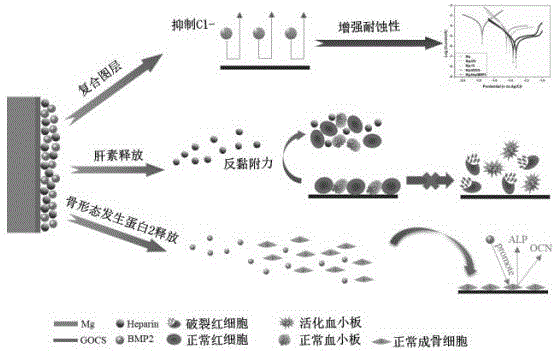
图1为本发明镁合金表面改性方法协同提高材料耐蚀性能和生物相容性的机理示意图Fig. 1 is a schematic diagram of the mechanism of synergistically improving the corrosion resistance and biocompatibility of the magnesium alloy surface modification method of the present invention
图2为本发明不同表面改性样品的典型扫描电镜照片Fig. 2 is the typical scanning electron microscope photograph of different surface modification samples of the present invention
图中:(a)Mg;In the figure: (a) Mg;
(b) Mg-OH(NaOH处理的样品);(b) Mg-OH (NaOH treated sample);
(c) Mg-16(自组装16-膦酰基十六烷酸的样品);(c) Mg-16 (sample of self-assembled 16-phosphonohexadecanoic acid);
(d) Mg-GOCS(表面固定壳聚糖功能化氧化石墨烯的样品);(d) Mg-GOCS (a sample of surface-immobilized chitosan-functionalized graphene oxide);
(e) Mg-Hep/BMP2(表面装载肝素和骨形态发生蛋白2的样品)(e) Mg-Hep/BMP2 (surface-loaded heparin and bone morphogenetic protein 2 samples)
图3为图2中不同镁合金表面的水接触角测量数据柱状图Fig. 3 is a bar graph of the water contact angle measurement data of different magnesium alloy surfaces in Fig. 2
图4为肝素和骨形态发生蛋白2的释放行为曲线图Figure 4 is a graph showing the release behavior of heparin and bone morphogenetic protein 2
图5为图2五个样品的动电位极化曲线(a)和电化学阻抗谱(b)图Fig. 5 shows the potentiodynamic polarization curves (a) and electrochemical impedance spectra (b) of the five samples in Fig. 2
图6为图2五个样品表面典型的血小板粘附电镜照片和相关情况图Fig. 6 is a typical platelet adhesion electron microscope photograph on the surfaces of the five samples of Fig. 2 and a graph of related conditions
图中: (a)五个样品表面典型的血小板粘附电镜照片In the figure: (a) Electron micrographs of typical platelet adhesion on the surfaces of five samples
(b)五个样品表面典型的血小板粘附数量(b) Typical platelet adhesion numbers on the surfaces of the five samples
(c)五个样品表面典型的血小板激活环磷鸟苷酸的释放浓度(c) Typical platelet-activating Cguanylate release concentrations on the surface of five samples
(d)五个样品表面典型的溶血率(d) Typical hemolysis rates on the surfaces of five samples
图7为本发明成骨细胞相关情况柱状图Fig. 7 is a bar chart of the related situation of osteoblasts of the present invention
图中:(a)成骨细胞培养1天和3天的增殖情况Figure: (a) Proliferation of osteoblasts cultured for 1 day and 3 days
(b)成骨细胞ALP 的表达情况(b) Expression of ALP in osteoblasts
(c)成骨细胞OCN的表达情况(c) Expression of OCN in osteoblasts
(d)矿化行为。(d) Mineralization behavior.
具体实施方式Detailed ways
下面结合附图和具体实施方式,进一步阐明本发明,应理解下述具体实施方式仅用于说明本发明而不用于限制本发明的范围,在阅读了本发明之后,本领域技术人员对发明的各种等价形式的修改均落于本申请所附权利要求所限定的范围。The present invention will be further clarified below in conjunction with the accompanying drawings and specific embodiments. It should be understood that the following specific embodiments are only used to illustrate the present invention and not to limit the scope of the present invention. Modifications of various equivalent forms fall within the scope defined by the appended claims of this application.
为使本发明实现的技术手段、创作特征、达成目的与功效易于明白了解,下面结合具体实施方式,进一步阐述本发明。In order to make the technical means, creative features, achievement goals and effects realized by the present invention easy to understand, the present invention will be further described below with reference to the specific embodiments.
实施例:Example:
如图1可知,本发明提供一种协同提高镁合金耐蚀性能和生物相容性的多功能表面改性方法,其具体制备步骤为:As can be seen from Figure 1, the present invention provides a multifunctional surface modification method for synergistically improving the corrosion resistance and biocompatibility of magnesium alloys, and its specific preparation steps are:
1)制备壳聚糖功能化氧化石墨烯;1) Preparation of chitosan-functionalized graphene oxide;
2)对镁合金进行自组装表面改性;2) Self-assembly surface modification of magnesium alloys;
3)将步骤1)制备的壳聚糖功能化氧化石墨烯固定在步骤2)的镁合金表面;3) immobilizing the chitosan-functionalized graphene oxide prepared in step 1) on the surface of the magnesium alloy in step 2);
4)镁合金表面装载肝素和骨形态发生蛋白2的复合物。4) The complex of heparin and bone morphogenetic protein 2 is loaded on the surface of magnesium alloy.
氧化石墨烯(GO)具有丰富的羧基,在电解质溶液中具有带负电荷的特性,可以阻止阴离子吸附,因此氧化石墨烯(GO)可用于镁合金的表面改性,以提高镁合金的耐蚀性和生物相容性。同时,氧化石墨烯(GO)的芳环结构可以通过非共价相互作用增加对细胞外基质蛋白的吸附,从而影响细胞的黏附、生长、增殖和分化。此外,氧化石墨烯(GO)表面富含的羟基、羧基、环氧基等化学基团可与其它生物活性物质连接,实现多功能改性。此外,其巨大的比表面积也为负载生物活性分子和药物增强生物活性提供了极好的平台。壳聚糖具有生物降解性、良好的生物相容性、抗菌活性等多种生理活性,因此,壳聚糖可以进一步提高氧化石墨烯(GO)的生物活性。同时,壳聚糖固定在镁合金表面也可以增强镁合金的耐蚀能力。因此,表面固定壳聚糖功能化氧化石墨烯(GOCS)不仅可以提高镁合金表面的耐蚀性和生物相容性,而且为生物活性物质的负载提供了一个很好的平台。Graphene oxide (GO) is rich in carboxyl groups and has a negative charge in electrolyte solution, which can prevent anion adsorption, so graphene oxide (GO) can be used for surface modification of magnesium alloys to improve the corrosion resistance of magnesium alloys sex and biocompatibility. Meanwhile, the aromatic ring structure of graphene oxide (GO) can increase the adsorption of extracellular matrix proteins through non-covalent interactions, thereby affecting cell adhesion, growth, proliferation, and differentiation. In addition, the abundant chemical groups such as hydroxyl, carboxyl, and epoxy groups on the surface of graphene oxide (GO) can be linked with other biologically active substances to achieve multifunctional modification. In addition, its huge specific surface area also provides an excellent platform for loading bioactive molecules and drugs to enhance bioactivity. Chitosan has various physiological activities such as biodegradability, good biocompatibility, antibacterial activity, etc. Therefore, chitosan can further enhance the biological activity of graphene oxide (GO). At the same time, the fixation of chitosan on the surface of magnesium alloy can also enhance the corrosion resistance of magnesium alloy. Therefore, surface-immobilized chitosan-functionalized graphene oxide (GOCS) can not only improve the corrosion resistance and biocompatibility of magnesium alloy surfaces, but also provide a good platform for the loading of bioactive substances.
肝素是一种高度硫酸化的糖胺聚糖和线性天然多糖,被广泛应用于生物材料的表面改性,以改善血液相容性,同时,研究也表明肝素具有选择性促进内皮细胞生长的能力,因此,应用于骨材料时可以促进骨组织周围的血管生成。骨形态发生蛋白2(BMP2)能促进成骨细胞的增殖和分化,同时可以与肝素结合。因此本发明通过在经过壳聚糖功能化氧化石墨烯(GOCS)修饰处理的镁合金表面装载肝素和骨形态发生蛋白2(BMP2),可通过肝素和骨形态发生蛋白2(BMP2)的缓慢释放协同提高镁合金的抗凝血性能、促内皮细胞生长性能以及促成骨性能。Heparin is a highly sulfated glycosaminoglycan and linear natural polysaccharide, which is widely used in the surface modification of biomaterials to improve blood compatibility. At the same time, studies have also shown that heparin has the ability to selectively promote endothelial cell growth , therefore, when applied to bone materials, it can promote angiogenesis around bone tissue. Bone morphogenetic protein 2 (BMP2) can promote the proliferation and differentiation of osteoblasts and can bind to heparin. Therefore, in the present invention, by loading heparin and bone morphogenetic protein 2 (BMP2) on the surface of magnesium alloy modified with chitosan functionalized graphene oxide (GOCS), the slow release of heparin and bone morphogenetic protein 2 (BMP2) can be achieved. Synergistically improve the anticoagulant properties, endothelial cell growth-promoting properties and osteogenic properties of magnesium alloys.
所述步骤1)中,壳聚糖功能化氧化石墨烯的制备方法为:In the step 1), the preparation method of chitosan-functionalized graphene oxide is as follows:
1.1)充分混合0.1-1 mg/ml的石墨烯溶液与1-10mg/ml的壳聚糖溶液;1.1) Thoroughly mix 0.1-1 mg/ml graphene solution and 1-10 mg/ml chitosan solution;
1.2)加入1-10mmol/L的1-(3-二甲氨基丙基)-3-乙基-碳二亚胺和N-羟基琥珀酰亚胺的混合溶液,搅拌反应6-24小时;1.2) Add a mixed solution of 1-10mmol/L of 1-(3-dimethylaminopropyl)-3-ethyl-carbodiimide and N-hydroxysuccinimide, and stir the reaction for 6-24 hours;
1.3)然后反复离心水洗获得壳聚糖功能化氧化石墨烯。1.3) Then, the chitosan-functionalized graphene oxide was obtained by repeated centrifugation and water washing.
从图2 的结果看来,经过表面改性后镁合金表面形成了连续完整且致密的改性层,且根据图3可知表面改性后镁合金的亲水性显著增加。From the results in Figure 2, it can be seen that a continuous, complete and dense modified layer is formed on the surface of the magnesium alloy after surface modification, and it can be seen from Figure 3 that the hydrophilicity of the magnesium alloy after surface modification is significantly increased.
根据图4可知肝素和骨形态发生蛋白2的持续释放超过了14天。According to Figure 4, the sustained release of heparin and bone morphogenetic protein 2 exceeded 14 days.
根据图5至图7可以看出,表面改性显著提升了镁合金材料的腐蚀电位,减小了腐蚀电流,并且增加了极化电阻,因此,显著提升了镁合金的耐蚀性能。表面改性的镁合金表面细胞不仅具有良好的增殖行为,而且可以显著促进碱性磷酸酶(ALP)和骨钙素(OCN)的上调表达,促进成骨细胞矿化,表明材料良好的成骨性能。It can be seen from Figures 5 to 7 that the surface modification significantly increases the corrosion potential of the magnesium alloy material, reduces the corrosion current, and increases the polarization resistance, thus significantly improving the corrosion resistance of the magnesium alloy. The surface-modified magnesium alloy surface cells not only have good proliferation behavior, but also can significantly promote the up-regulated expression of alkaline phosphatase (ALP) and osteocalcin (OCN), and promote the mineralization of osteoblasts, indicating that the material has good osteogenic properties. performance.
所述步骤2)中,镁合金自组装表面改性方法为:In the step 2), the magnesium alloy self-assembly surface modification method is as follows:
2.1)镁合金浸没于1-10mol/L的氢氧化钠溶液处理6-24小时;2.1) The magnesium alloy is immersed in 1-10mol/L sodium hydroxide solution for 6-24 hours;
2.2)将处理得到的镁合金浸没于16-膦酰基十六烷酸的溶液中自组装反应6-24小时;2.2) The magnesium alloy obtained by the treatment is immersed in a solution of 16-phosphonohexadecanoic acid for self-assembly reaction for 6-24 hours;
2.3)浸没过的镁合金取出清洗后120℃处理12小时。2.3) The immersed magnesium alloy is taken out and cleaned and treated at 120°C for 12 hours.
所述步骤3)中,镁合金表面共价固定壳聚糖功能化氧化石墨烯的方法为:In the step 3), the method for covalently fixing the chitosan-functionalized graphene oxide on the surface of the magnesium alloy is:
3.1)将所述步骤2)获得的镁合金材料浸没到1-10mmol/L的1-(3-二甲氨基丙基)-3-乙基-碳二亚胺和N-羟基琥珀酰亚胺的混合溶液中振荡反应1-4小时;3.1) Immerse the magnesium alloy material obtained in step 2) into 1-10 mmol/L of 1-(3-dimethylaminopropyl)-3-ethyl-carbodiimide and N-hydroxysuccinimide The mixed solution was shaken for 1-4 hours;
3.2)清洗干燥后浸没到1-10mg/ml的壳聚糖功能化氧化石墨烯溶液中继续振荡反应1-4小时;3.2) After cleaning and drying, immerse in 1-10mg/ml chitosan functionalized graphene oxide solution and continue to shake for 1-4 hours;
3.3)清洗干燥后获得表面共价固定了壳聚糖功能化氧化石墨烯的镁合金材料。3.3) After cleaning and drying, a magnesium alloy material with chitosan-functionalized graphene oxide covalently immobilized on the surface was obtained.
所述步骤4)中,镁合金自组装表面改性方法为:In the step 4), the magnesium alloy self-assembly surface modification method is as follows:
4.1)将1-10mg/ml的肝素溶液与 50-200 ng/ml 的骨形态发生蛋白2溶液按照1:1的比例充分混合;4.1) Thoroughly mix 1-10mg/ml heparin solution with 50-200 ng/ml bone morphogenetic protein 2 solution in a ratio of 1:1;
4.2)然后滴加到步骤(3)获得镁合金材料表面,充分吸附装载4-24小时;4.2) and then dropwise added to the surface of the magnesium alloy material obtained in step (3), fully adsorbed and loaded for 4-24 hours;
4.3)最后清洗干燥获得表面具有多功能特性的镁合金生物材料。4.3) Finally, the magnesium alloy biomaterial with multifunctional properties on the surface is obtained by washing and drying.
以上显示和描述了本发明的基本原理和主要特征和本发明的优点。本行业的技术人员应该了解,本发明不受上述实施例的限制,上述实施例和说明书中描述的只是说明本发明的原理,在不脱离本发明精神和范围的前提下,本发明还会有各种变化和改进,这些变化和改进都落入要求保护的本发明范围内。本发明要求保护范围由所附的权利要求书及其等效物界定。The basic principles and main features of the present invention and the advantages of the present invention have been shown and described above. Those skilled in the art should understand that the present invention is not limited by the above-mentioned embodiments, and the descriptions in the above-mentioned embodiments and the description are only to illustrate the principle of the present invention. Without departing from the spirit and scope of the present invention, the present invention will have Various changes and modifications fall within the scope of the claimed invention. The claimed scope of the present invention is defined by the appended claims and their equivalents.
Claims (4)
Priority Applications (1)
| Application Number | Priority Date | Filing Date | Title |
|---|---|---|---|
| CN202010567160.XA CN111850552B (en) | 2020-06-19 | 2020-06-19 | Multifunctional surface modification method for synergistically improving corrosion resistance and biocompatibility of magnesium alloy |
Applications Claiming Priority (1)
| Application Number | Priority Date | Filing Date | Title |
|---|---|---|---|
| CN202010567160.XA CN111850552B (en) | 2020-06-19 | 2020-06-19 | Multifunctional surface modification method for synergistically improving corrosion resistance and biocompatibility of magnesium alloy |
Publications (2)
| Publication Number | Publication Date |
|---|---|
| CN111850552A CN111850552A (en) | 2020-10-30 |
| CN111850552B true CN111850552B (en) | 2022-08-23 |
Family
ID=72987035
Family Applications (1)
| Application Number | Title | Priority Date | Filing Date |
|---|---|---|---|
| CN202010567160.XA Active CN111850552B (en) | 2020-06-19 | 2020-06-19 | Multifunctional surface modification method for synergistically improving corrosion resistance and biocompatibility of magnesium alloy |
Country Status (1)
| Country | Link |
|---|---|
| CN (1) | CN111850552B (en) |
Families Citing this family (1)
| Publication number | Priority date | Publication date | Assignee | Title |
|---|---|---|---|---|
| CN114306740A (en) * | 2021-12-21 | 2022-04-12 | 上海交通大学 | Medical material surface chitosan/graphene oxide coating and preparation method thereof |
Family Cites Families (5)
| Publication number | Priority date | Publication date | Assignee | Title |
|---|---|---|---|---|
| CN103657996B (en) * | 2013-12-03 | 2015-02-25 | 陕西师范大学 | Method for bonding carboxymethyl chitosan bioactive molecules on surface of magnesium alloy |
| CN107185055B (en) * | 2017-04-28 | 2019-12-31 | 淮阴工学院 | A kind of surface modification method of medical magnesium alloy |
| CN107137788B (en) * | 2017-04-28 | 2019-05-24 | 淮阴工学院 | A method of chitosan/test tube of hepari graphene oxide composite multilayer membrane is prepared in medical magnesium alloy surface |
| CN108379670B (en) * | 2018-03-29 | 2020-12-11 | 淮阴工学院 | A kind of magnesium alloy material carrying heparin on the surface and its preparation method and application |
| CN110833631B (en) * | 2018-08-17 | 2021-11-16 | 成都迈德克科技有限公司 | Preparation method of multifunctional intravascular stent |
-
2020
- 2020-06-19 CN CN202010567160.XA patent/CN111850552B/en active Active
Also Published As
| Publication number | Publication date |
|---|---|
| CN111850552A (en) | 2020-10-30 |
Similar Documents
| Publication | Publication Date | Title |
|---|---|---|
| Jiang et al. | Preparation and properties of nano-hydroxyapatite/chitosan/carboxymethyl cellulose composite scaffold | |
| Ibekwe et al. | Synthesis and characterization of chitosan/gum arabic nanoparticles for bone regeneration | |
| Ahmed et al. | A study of calcium carbonate/multiwalled-carbon nanotubes/chitosan composite coatings on Ti–6Al–4V alloy for orthopedic implants | |
| CN107137788B (en) | A method of chitosan/test tube of hepari graphene oxide composite multilayer membrane is prepared in medical magnesium alloy surface | |
| CN101052427B (en) | Hyaluronic acid-coated implant device, method of producing said implant device, and use of hyaluronic acid in the manufacture of said implant device | |
| Haroun et al. | Preparation, characterization and in vitro biological study of biomimetic three-dimensional gelatin–montmorillonite/cellulose scaffold for tissue engineering | |
| Mirza et al. | Synergistic combination of natural bioadhesive bael fruit gum and chitosan/nano-hydroxyapatite: A ternary bioactive nanohybrid for bone tissue engineering | |
| CN107661544B (en) | Antibacterial and osteopromoting composite functional porous orthopedic implant and preparation method thereof | |
| CN102268711A (en) | Method for preparing biological composite coating on surface of magnesium-based material | |
| Unagolla et al. | Chitosan microparticles based polyelectrolyte complex scaffolds for bone tissue engineering in vitro and effect of calcium phosphate | |
| CN107185055B (en) | A kind of surface modification method of medical magnesium alloy | |
| Leedy et al. | Use of chitosan as a bioactive implant coating for bone-implant applications | |
| CN112920452B (en) | Additive manufactured porous polyether-ether-ketone support, and biological activity improvement method and application thereof | |
| CN105327406A (en) | Method for preparing multi-layer heparin-carrying reduced graphene oxide coating | |
| Zhao et al. | Enhanced osteogenic and ROS-scavenging MXene nanosheets incorporated gelatin-based nanocomposite hydrogels for critical-sized calvarial defect repair | |
| CN111850552B (en) | Multifunctional surface modification method for synergistically improving corrosion resistance and biocompatibility of magnesium alloy | |
| CN111569146A (en) | Preparation method of medical titanium material loaded with Sr and Ag and capable of improving biocompatibility | |
| CN112717202A (en) | Metal @ tea polyphenol nanoparticle self-assembly biological tissue and preparation method thereof | |
| CN115317663B (en) | Continuous anti-infection composite bone powder and preparation method and application thereof | |
| CN119074274B (en) | Dental implant with bioactivity and preparation process thereof | |
| CN108144119A (en) | A kind of method that antibacterial Sodium Hyaluronate and chitosan bilayer are prepared on Biological magnesium alloy surface apatite coating | |
| CN119113218A (en) | A multifunctional bionic coating with both osteogenic induction and antibacterial properties and preparation method thereof | |
| CN1157232C (en) | Prepn of osteological material containing nano phase calcium phosphate, collagen and alginate | |
| CN108619571B (en) | Magnesium alloy material with Ca-P coating on the surface carrying metal ions and its preparation method and application | |
| CN104587527B (en) | A kind of carbon/carbon compound material of biological functional and preparation method thereof |
Legal Events
| Date | Code | Title | Description |
|---|---|---|---|
| PB01 | Publication | ||
| PB01 | Publication | ||
| SE01 | Entry into force of request for substantive examination | ||
| SE01 | Entry into force of request for substantive examination | ||
| GR01 | Patent grant | ||
| GR01 | Patent grant | ||
| TR01 | Transfer of patent right | ||
| TR01 | Transfer of patent right |
Effective date of registration: 20221117 Address after: No. 1, Rongtian South, Kengzi Street, Pingshan New District, Shenzhen, Guangdong 518000 Patentee after: SHENZHEN TECHDOW PHARMACEUTICAL Co.,Ltd. Address before: 223005 Jiangsu Huaian economic and Technological Development Zone, 1 East Road. Patentee before: HUAIYIN INSTITUTE OF TECHNOLOGY |