CN111663152A - Preparation method and application of foam nickel-supported amorphous phosphorus-doped nickel molybdate bifunctional electrocatalytic electrode - Google Patents
Preparation method and application of foam nickel-supported amorphous phosphorus-doped nickel molybdate bifunctional electrocatalytic electrode Download PDFInfo
- Publication number
- CN111663152A CN111663152A CN202010556343.1A CN202010556343A CN111663152A CN 111663152 A CN111663152 A CN 111663152A CN 202010556343 A CN202010556343 A CN 202010556343A CN 111663152 A CN111663152 A CN 111663152A
- Authority
- CN
- China
- Prior art keywords
- nickel
- supported
- molybdate
- doped
- foam
- Prior art date
- Legal status (The legal status is an assumption and is not a legal conclusion. Google has not performed a legal analysis and makes no representation as to the accuracy of the status listed.)
- Granted
Links
Images





Classifications
-
- C—CHEMISTRY; METALLURGY
- C25—ELECTROLYTIC OR ELECTROPHORETIC PROCESSES; APPARATUS THEREFOR
- C25B—ELECTROLYTIC OR ELECTROPHORETIC PROCESSES FOR THE PRODUCTION OF COMPOUNDS OR NON-METALS; APPARATUS THEREFOR
- C25B11/00—Electrodes; Manufacture thereof not otherwise provided for
- C25B11/02—Electrodes; Manufacture thereof not otherwise provided for characterised by shape or form
- C25B11/03—Electrodes; Manufacture thereof not otherwise provided for characterised by shape or form perforated or foraminous
-
- B—PERFORMING OPERATIONS; TRANSPORTING
- B01—PHYSICAL OR CHEMICAL PROCESSES OR APPARATUS IN GENERAL
- B01J—CHEMICAL OR PHYSICAL PROCESSES, e.g. CATALYSIS OR COLLOID CHEMISTRY; THEIR RELEVANT APPARATUS
- B01J27/00—Catalysts comprising the elements or compounds of halogens, sulfur, selenium, tellurium, phosphorus or nitrogen; Catalysts comprising carbon compounds
- B01J27/14—Phosphorus; Compounds thereof
- B01J27/186—Phosphorus; Compounds thereof with arsenic, antimony, bismuth, vanadium, niobium, tantalum, polonium, chromium, molybdenum, tungsten, manganese, technetium or rhenium
- B01J27/188—Phosphorus; Compounds thereof with arsenic, antimony, bismuth, vanadium, niobium, tantalum, polonium, chromium, molybdenum, tungsten, manganese, technetium or rhenium with chromium, molybdenum, tungsten or polonium
- B01J27/19—Molybdenum
-
- B—PERFORMING OPERATIONS; TRANSPORTING
- B01—PHYSICAL OR CHEMICAL PROCESSES OR APPARATUS IN GENERAL
- B01J—CHEMICAL OR PHYSICAL PROCESSES, e.g. CATALYSIS OR COLLOID CHEMISTRY; THEIR RELEVANT APPARATUS
- B01J35/00—Catalysts, in general, characterised by their form or physical properties
- B01J35/30—Catalysts, in general, characterised by their form or physical properties characterised by their physical properties
- B01J35/33—Electric or magnetic properties
-
- B—PERFORMING OPERATIONS; TRANSPORTING
- B01—PHYSICAL OR CHEMICAL PROCESSES OR APPARATUS IN GENERAL
- B01J—CHEMICAL OR PHYSICAL PROCESSES, e.g. CATALYSIS OR COLLOID CHEMISTRY; THEIR RELEVANT APPARATUS
- B01J35/00—Catalysts, in general, characterised by their form or physical properties
- B01J35/40—Catalysts, in general, characterised by their form or physical properties characterised by dimensions, e.g. grain size
-
- B—PERFORMING OPERATIONS; TRANSPORTING
- B01—PHYSICAL OR CHEMICAL PROCESSES OR APPARATUS IN GENERAL
- B01J—CHEMICAL OR PHYSICAL PROCESSES, e.g. CATALYSIS OR COLLOID CHEMISTRY; THEIR RELEVANT APPARATUS
- B01J37/00—Processes, in general, for preparing catalysts; Processes, in general, for activation of catalysts
- B01J37/02—Impregnation, coating or precipitation
- B01J37/0201—Impregnation
-
- C—CHEMISTRY; METALLURGY
- C25—ELECTROLYTIC OR ELECTROPHORETIC PROCESSES; APPARATUS THEREFOR
- C25B—ELECTROLYTIC OR ELECTROPHORETIC PROCESSES FOR THE PRODUCTION OF COMPOUNDS OR NON-METALS; APPARATUS THEREFOR
- C25B1/00—Electrolytic production of inorganic compounds or non-metals
- C25B1/01—Products
- C25B1/02—Hydrogen or oxygen
- C25B1/04—Hydrogen or oxygen by electrolysis of water
-
- Y—GENERAL TAGGING OF NEW TECHNOLOGICAL DEVELOPMENTS; GENERAL TAGGING OF CROSS-SECTIONAL TECHNOLOGIES SPANNING OVER SEVERAL SECTIONS OF THE IPC; TECHNICAL SUBJECTS COVERED BY FORMER USPC CROSS-REFERENCE ART COLLECTIONS [XRACs] AND DIGESTS
- Y02—TECHNOLOGIES OR APPLICATIONS FOR MITIGATION OR ADAPTATION AGAINST CLIMATE CHANGE
- Y02E—REDUCTION OF GREENHOUSE GAS [GHG] EMISSIONS, RELATED TO ENERGY GENERATION, TRANSMISSION OR DISTRIBUTION
- Y02E60/00—Enabling technologies; Technologies with a potential or indirect contribution to GHG emissions mitigation
- Y02E60/30—Hydrogen technology
- Y02E60/36—Hydrogen production from non-carbon containing sources, e.g. by water electrolysis
Landscapes
- Chemical & Material Sciences (AREA)
- Engineering & Computer Science (AREA)
- Materials Engineering (AREA)
- Organic Chemistry (AREA)
- Chemical Kinetics & Catalysis (AREA)
- Electrochemistry (AREA)
- Metallurgy (AREA)
- Inorganic Chemistry (AREA)
- Electrolytic Production Of Non-Metals, Compounds, Apparatuses Therefor (AREA)
- Electrodes For Compound Or Non-Metal Manufacture (AREA)
Abstract
本发明提供了一种泡沫镍负载无定型磷掺杂钼酸镍双功能电催化电极的制备方法及应用,属于氢能和燃料电池技术领域。本发明通过将泡沫镍浸泡到HCl溶液中,去除表面金属氧化物,将酸洗过的泡沫镍浸入到磷钼酸水溶液中,进行自发氧化还原反应,取出用去离子水冲洗干净,干燥备用,制得泡沫镍负载的无定型磷掺杂钼酸镍纳米结构。本发明利用磷钼酸水溶液刻蚀泡沫镍,干燥后直接使用,可以作为双功能电极材料同时用于尿素电氧化和水电还原,并且利用氧化电位低的尿素电氧化反应代替电催化析氧反应,在碱性溶液中构建了基于双功能电催化剂的两电极尿素辅助电解制氢系统,实现了低成本、低能耗、稳定的电化学制氢,适于大规模工业电化学制氢应用。
The invention provides a preparation method and application of a foam nickel-supported amorphous phosphorus-doped nickel molybdate bifunctional electrocatalytic electrode, and belongs to the technical field of hydrogen energy and fuel cells. In the invention, the nickel foam is immersed in the HCl solution to remove the surface metal oxides, the acid-washed nickel foam is immersed in the phosphomolybdic acid aqueous solution, and the spontaneous redox reaction is carried out. Amorphous phosphorus-doped nickel molybdate nanostructures supported by foamed nickel were prepared. The invention utilizes the phosphomolybdic acid aqueous solution to etch the nickel foam, which is directly used after drying, can be used as a bifunctional electrode material for urea electro-oxidation and hydro-electric reduction at the same time, and utilizes the urea electro-oxidation reaction with low oxidation potential to replace the electro-catalytic oxygen evolution reaction, A two-electrode urea-assisted electrolysis hydrogen production system based on a bifunctional electrocatalyst was constructed in an alkaline solution, realizing low-cost, low-energy consumption, and stable electrochemical hydrogen production, which is suitable for large-scale industrial electrochemical hydrogen production applications.
Description
技术领域technical field
本发明涉及一种泡沫镍负载无定型磷掺杂钼酸镍双功能电催化电极的制备方法及应用,属于氢能和燃料电池技术领域。The invention relates to a preparation method and application of a foam nickel-supported amorphous phosphorus-doped nickel molybdate bifunctional electrocatalytic electrode, and belongs to the technical field of hydrogen energy and fuel cells.
背景技术Background technique
化石能源的日益枯竭和逐渐恶化的环境迫切要求人们开发可再生能源和清洁能源。氢能是清洁的二次能源,是改善环境的重要技术研究方向,电解水制氢是目前最有前景的制氢技术之一(Science 2017,355,eaad4998)。电解水过程包含电化学析氢反应(HER)和电化学析氧反应(OER)两个过程,受限的反应动力学往往需要较高的过电位才能产生氢气,导致严重的电能损耗(Mater.Chem.Front.2017,1,2155-2173)。活性最佳的HER或OER催化剂仍然主要基于Pt基催化剂,或者IrO2和RuO2等贵金属催化剂,贵金属可以显著降低电化学反应的活化能垒,但是其高成本、储量低、长期运行稳定性差等缺点限制了大规模应用。因此,制备低成本、高催化活性、高稳定性的电催化剂实现低能耗电解水产氢具有重要的意义(Energy Environ.Sci.,2019,12,2620-2645;Adv.Mater.2019,31,1808167)。The depletion of fossil energy and the deteriorating environment urgently require people to develop renewable and clean energy. Hydrogen energy is a clean secondary energy source and an important technical research direction to improve the environment. Hydrogen production from water electrolysis is one of the most promising hydrogen production technologies (Science 2017, 355, eaad4998). The electrolysis of water involves two processes, the electrochemical hydrogen evolution reaction (HER) and the electrochemical oxygen evolution reaction (OER). .Front.2017, 1, 2155-2173). The most active HER or OER catalysts are still mainly based on Pt-based catalysts, or noble metal catalysts such as IrO 2 and RuO 2. Noble metals can significantly reduce the activation energy barrier of electrochemical reactions, but their high cost, low reserves, and poor long-term operational stability, etc. Disadvantages limit large-scale applications. Therefore, it is of great significance to prepare low-cost, high catalytic activity, and high stability electrocatalysts to achieve low-energy electrolysis of water for hydrogen production (Energy Environ. Sci., 2019, 12, 2620-2645; Adv. 1808167).
OER是电解水制氢过程中阳极非常重要的电极反应,动力学过程缓慢,反应路径复杂,决定着电解水制氢的能耗和法拉第效率,是电解水制氢的瓶颈反应(Journal of PowerSources 2018,400,31–68;Angew.Chem.Int.Ed.2019,58,4227–4231)。尿素电催化氧化反应(UOR)可以在理论电位为0.37V时进行,远低于OER(1.23V)。UOR可以代替OER制备混合水电解槽(Acc.Chem.Res.2018,51,1571),用较少的能源消耗生产氢气。但是UOR需要经历复杂的6e-电子转移过程CO(NH2)2+6OH-→N2+CO2+5H2O+6e-,这需要高活性位点来促进C-N键断裂为N2和CO2。贵金属铂、铑等能有效催化UOR反应,但成本高、储量低、长期稳定性差,严重阻碍了其实际应用。为了实现大规模工业化,过渡金属基电催化剂因其成本低、性能优异、来源广泛等优点而受到人们的特别关注。专利(CN106498430A)公布了基于双功能纳米阵列电极的低能耗电化学制氢系统,利用氧化电位低的小分子电氧化反应代替电化学OER反应,但是催化剂的制备需要在惰性气体保护下,在磷源、硫源、硒源、氮源存在下退火得到,而且前驱体需要通过水热反应、电沉积、化学浴沉积等方法制备。专利(CN110227480A)公开了一种钼酸镍析氢电催化剂的制备方法,需要依赖水热反应和管式炉高温热处理。总体来看上述制备过程繁琐,能耗高,不利于大规模工业化。OER is a very important electrode reaction at the anode in the process of hydrogen production from water electrolysis. The kinetic process is slow and the reaction path is complex, which determines the energy consumption and Faradaic efficiency of hydrogen production from water electrolysis. It is the bottleneck reaction of hydrogen production from water electrolysis (Journal of PowerSources 2018 , 400, 31–68; Angew. Chem. Int. Ed. 2019, 58, 4227–4231). The urea electrocatalytic oxidation reaction (UOR) can be carried out at a theoretical potential of 0.37 V, which is much lower than the OER (1.23 V). UOR can replace OER to prepare mixed water electrolyzer (Acc. Chem. Res. 2018, 51, 1571) to produce hydrogen with less energy consumption. But UOR needs to go through a complex 6e-electron transfer process CO(NH 2 ) 2 +6OH - →N 2 +CO 2 +5H 2 O+6e - , which requires highly active sites to facilitate the cleavage of CN bonds to N 2 and CO 2 . Precious metals such as platinum and rhodium can effectively catalyze the UOR reaction, but their high cost, low reserves, and poor long-term stability seriously hinder their practical application. In order to achieve large-scale industrialization, transition metal-based electrocatalysts have received special attention due to their low cost, excellent performance, and extensive sources. The patent (CN106498430A) discloses a low-energy-consumption electrochemical hydrogen production system based on bifunctional nano-array electrodes, using small molecule electro-oxidation with low oxidation potential to replace the electrochemical OER reaction, but the preparation of the catalyst needs to be under the protection of inert gas. Source, sulfur source, selenium source, nitrogen source are annealed to obtain, and the precursor needs to be prepared by hydrothermal reaction, electrodeposition, chemical bath deposition and other methods. Patent (CN110227480A) discloses a preparation method of nickel molybdate hydrogen evolution electrocatalyst, which needs to rely on hydrothermal reaction and high temperature heat treatment in tube furnace. Overall, the above-mentioned preparation process is cumbersome and energy-intensive, which is not conducive to large-scale industrialization.
鉴于以上原因,本发明拟提供一种具有一种泡沫镍负载无定型磷掺杂钼酸镍双功能电催化电极的制备方法及应用。In view of the above reasons, the present invention intends to provide a preparation method and application of a foamed nickel-supported amorphous phosphorus-doped nickel molybdate bifunctional electrocatalytic electrode.
发明内容SUMMARY OF THE INVENTION
本发明的目的是为了解决上述现有技术存在的问题,进而提供一种泡沫镍负载无定型磷掺杂钼酸镍双功能电催化电极的制备方法及应用。The purpose of the present invention is to solve the above-mentioned problems in the prior art, and further provide a preparation method and application of a foamed nickel-supported amorphous phosphorus-doped nickel molybdate bifunctional electrocatalytic electrode.
本发明的目的是通过以下技术方案实现的:The purpose of this invention is to realize through the following technical solutions:
一种泡沫镍负载无定型磷掺杂钼酸镍双功能电催化电极的制备方法,所述的一种泡沫镍负载的无定型磷掺杂钼酸镍纳米结构可以同时作为正极和负极,在碱性溶液中实现尿素辅助电解制氢系统,所述的泡沫镍负载的无定型磷掺杂钼酸镍纳米结构可以在低电压下电催化析出氢气。A method for preparing a foamed nickel-supported amorphous phosphorus-doped nickel molybdate bifunctional electrocatalytic electrode, the foamed nickel-supported amorphous phosphorus-doped nickel molybdate nanostructure can be used as a positive electrode and a negative electrode at the same time. The urea-assisted electrolysis hydrogen production system is realized in a neutral solution, and the amorphous phosphorus-doped nickel molybdate nanostructure supported by foamed nickel can electrocatalyze hydrogen evolution at low voltage.
所述的双功能电催化材料包括泡沫镍基底和磷掺杂的无定型钼酸镍活性层。The bifunctional electrocatalytic material includes a foamed nickel substrate and a phosphorus-doped amorphous nickel molybdate active layer.
可选地,所述的镍基底选自镍片、镍网、泡沫镍或者镍粉中的一种。Optionally, the nickel base is selected from one of nickel sheet, nickel mesh, nickel foam or nickel powder.
所述泡沫镍的表观形貌在引入磷掺杂的无定型钼酸镍后呈现网格状纳米结构。The apparent morphology of the nickel foam presents a grid-like nanostructure after introducing phosphorus-doped amorphous nickel molybdate.
本发明所述的制备方法,至少包括以下步骤:泡沫镍清洗、浸渍于含有磷钼酸的水溶液中静置后,经洗涤、干燥,即可得到所述的磷掺杂的无定型钼酸镍电催化材料。The preparation method of the present invention includes at least the following steps: cleaning foamed nickel, immersing it in an aqueous solution containing phosphomolybdic acid and standing, washing and drying to obtain the phosphorus-doped amorphous nickel molybdate Electrocatalytic materials.
优选地,所述电催化材料的制备方法,至少包括以下步骤:Preferably, the preparation method of the electrocatalytic material includes at least the following steps:
(1)将商业化购买的泡沫镍浸泡到一定浓度的HCl溶液中,除掉表面的氧化镍。(1) Immerse the commercially purchased nickel foam in a certain concentration of HCl solution to remove the nickel oxide on the surface.
(2)将新鲜刻蚀的泡沫镍浸泡到一定浓度磷钼酸水溶液中,静置一定时间,进行自发氧化还原反应,清水冲洗,烘干待用。(2) Immerse the freshly etched nickel foam in a certain concentration of phosphomolybdic acid aqueous solution, let stand for a certain period of time, carry out spontaneous redox reaction, rinse with clean water, and dry for use.
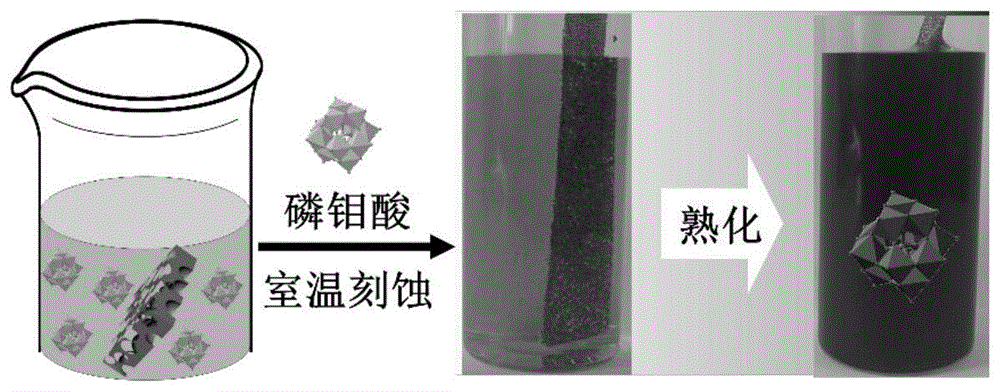
(3)磷钼酸水溶液转变为磷钼酸杂多蓝溶液,添加适量双氧水可以重新变为磷钼酸,继续作为刻蚀液使用多次。(3) The phosphomolybdic acid aqueous solution is converted into a phosphomolybdic acid heteropoly blue solution, and an appropriate amount of hydrogen peroxide can be added to convert it into phosphomolybdic acid again, and it can be used as an etching solution for many times.
可选地,步骤(1)中也可以利用含有氢气的气氛中进行处理,除掉表面的氧化镍。本领域技术人员可以根据实际需要选择盐酸刻蚀工艺或者氢气还原工艺。优选地,步骤(1)所述盐酸浓度为0.5~5mol/L,时间10~60分钟。可选地,氢气退火工艺中氢气/氮气或者氢气/氩气混合气体比例为1~50:100sccm,温度为200~400度,时间1~5小时。Optionally, in step (1), treatment in an atmosphere containing hydrogen gas can also be used to remove nickel oxide on the surface. Those skilled in the art can select a hydrochloric acid etching process or a hydrogen reduction process according to actual needs. Preferably, the concentration of hydrochloric acid in step (1) is 0.5-5 mol/L, and the time is 10-60 minutes. Optionally, in the hydrogen annealing process, the hydrogen/nitrogen or hydrogen/argon mixed gas ratio is 1-50:100 sccm, the temperature is 200-400 degrees, and the time is 1-5 hours.
优选地,步骤(2)中磷钼酸水溶液的浓度为10~100mg/mL,室温(20~25度)浸泡时间为12~48小时。如果提高反应温度为40~80度,可以缩短浸泡时间为0.5~10小时。步骤(2)中磷钼酸和金属的镍的自发反应如下:Preferably, in step (2), the concentration of the aqueous phosphomolybdic acid solution is 10-100 mg/mL, and the soaking time at room temperature (20-25 degrees) is 12-48 hours. If the reaction temperature is increased to 40 to 80 degrees, the soaking time can be shortened to 0.5 to 10 hours. The spontaneous reaction of phosphomolybdic acid and metallic nickel in step (2) is as follows:
磷钼酸:H3PMoVI 12O40+8e-=H11PMoVI 4MoV 8O40(1.616V)Phosphomolybdic acid: H 3 PMo VI 12 O 40 +8e − =H 11 PMo VI 4 Mo V 8 O 40 (1.616V)
金属镍:Ni=Ni2++2e-(-0.257V)Metal nickel: Ni=Ni 2+ +2e - (-0.257V)
电极电势差ΔE=EPMo12–ENi>0Electrode potential difference ΔE=E PMo12 –E Ni >0
氧化剂的电极电势和还原剂的电极电势差大于零,反应自发进行。When the electrode potential difference between the oxidant and the reductant is greater than zero, the reaction proceeds spontaneously.
优选地,步骤(3)中双氧水的质量浓度为0.5-5%,加入体积通过溶液颜色判断,溶液从黑蓝色变为淡黄色停止加入双氧水。Preferably, in step (3), the mass concentration of hydrogen peroxide is 0.5-5%, and the added volume is judged by the color of the solution, and the solution changes from dark blue to light yellow to stop adding hydrogen peroxide.
根据本发明的又一方面,提供上述任一泡沫镍负载无定型磷掺杂钼酸镍双功能电催化电极材料,根据上述任一方法制备的催化材料在碱性溶液中通过UOR辅助电解水制氢的应用。According to yet another aspect of the present invention, there is provided any of the above-mentioned foamed nickel-supported amorphous phosphorus-doped nickel molybdate bifunctional electrocatalytic electrode materials, and the catalytic material prepared according to any of the above-mentioned methods is prepared by UOR-assisted electrolysis of water in an alkaline solution. Hydrogen applications.
根据本发明的又一方面,提供一种通过UOR辅助电解水制氢的方法,包括将阳极和阴极置于包含尿素的碱性电解液中,电解水制备氢气,其中:According to another aspect of the present invention, there is provided a method for producing hydrogen by UOR-assisted electrolysis of water, comprising placing an anode and a cathode in an alkaline electrolyte containing urea, and electrolyzing water to prepare hydrogen, wherein:
所述的阳极包含阳极催化剂,所述阳极催化剂选自上述任一泡沫镍负载无定型磷掺杂钼酸镍材料,根据上述方法制备的催化材料中的至少一种;The anode comprises an anode catalyst, and the anode catalyst is selected from at least one of the above-mentioned foamed nickel-supported amorphous phosphorus-doped nickel molybdate materials and catalytic materials prepared according to the above method;
所述的阴极包含阴极催化剂,所述阴极催化剂选自上述任一泡沫镍负载无定型磷掺杂钼酸镍材料,根据上述方法制备的催化材料中的至少一种。The cathode comprises a cathode catalyst, and the cathode catalyst is selected from at least one of the above-mentioned foamed nickel-supported amorphous phosphorus-doped nickel molybdate materials and catalytic materials prepared according to the above-mentioned method.
可选地,所述碱性电解液中含有碱金属氢氧化物中的至少一种。Optionally, the alkaline electrolyte contains at least one of alkali metal hydroxides.
可选地,所述碱性电解液中含有KOH,NaOH,LiOH中的至少一种。Optionally, the alkaline electrolyte contains at least one of KOH, NaOH, and LiOH.
可选地,所述碱性电解液中碱金属氢氧化物的浓度为1-6mol/L。Optionally, the concentration of alkali metal hydroxide in the alkaline electrolyte is 1-6 mol/L.
可选地,所述电解水的实验温度为20-90度。Optionally, the experimental temperature of the electrolyzed water is 20-90 degrees.
本发明的有益效果为:The beneficial effects of the present invention are:
本发明的目的在于提供一种泡沫镍负载无定型磷掺杂钼酸镍双功能电催化电极的制备方法及其在尿素辅助电解水制氢中的应用,其核心技术内容针对碱性电解水电极材料的要求,通过简单、温和的条件制备高活性双功能电催化材料,并应用于低能耗电解水制氢。The purpose of the present invention is to provide a preparation method of a foamed nickel-supported amorphous phosphorus-doped nickel molybdate bifunctional electrocatalytic electrode and its application in the urea-assisted electrolysis of water for hydrogen production, and its core technical content is aimed at the alkaline electrolyzed water electrode According to the requirements of materials, high-activity bifunctional electrocatalytic materials are prepared by simple and mild conditions, and applied to hydrogen production by electrolysis of water with low energy consumption.
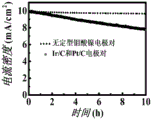
本发明提供的双功能电催化材料,制备工艺简单、条件温和,该方法室温即可操作,如果提高温度可以加快刻蚀反应速度,可以大面积刻蚀泡沫镍,并且磷钼酸刻蚀液可以重复使用多次,便于工业化应用。并且通过该方法合成的电催化剂具有表面网格状纳米结构,可以暴露更多的催化活性位点,更好的稳定性,可以在碱性溶液中利用尿素辅助电解水装置制备氢气。利用刻蚀后的材料作为阴极和阳极,可以实现尿素辅助电解水制备氢气,其制备10mA/cm2电流密度的氢气需要1.48V,然而商业化贵金属Pt/C和Ir/C作为阴阳极的对照组需要1.51V,并且在10mA/cm2电流密度下反应10小时后,磷钼酸刻蚀材料构筑的制氢装置性能保持率高于贵金属对照组。本发明为在碱性电解液中低能耗、稳定电解水制氢提供了新思路和实验材料。The bifunctional electrocatalytic material provided by the invention has simple preparation process and mild conditions, and the method can be operated at room temperature. If the temperature is increased, the etching reaction speed can be accelerated, and the nickel foam can be etched in a large area, and the phosphomolybdic acid etching solution can It can be reused many times, which is convenient for industrial application. And the electrocatalyst synthesized by this method has a grid-like nanostructure on the surface, which can expose more catalytic active sites and better stability, and can use urea to assist the water electrolysis device to prepare hydrogen in an alkaline solution. Using the etched materials as cathode and anode, urea-assisted electrolysis of water can be achieved to produce hydrogen, which requires 1.48 V to produce hydrogen with a current density of 10 mA/cm 2 . However, commercial precious metals Pt/C and Ir/C are used as cathode and anode controls. The group required 1.51 V, and after 10 hours of reaction at a current density of 10 mA/cm 2 , the performance retention rate of the hydrogen production device constructed with the phosphomolybdic acid etching material was higher than that of the precious metal control group. The invention provides new ideas and experimental materials for low energy consumption and stable electrolysis of water for hydrogen production in alkaline electrolyte.
本发明的重要创新在于,以除掉表面金属氧化物的泡沫镍为基础,在温和的室温条件下仅使用磷钼酸溶液一种反应物即可制备高活性UOR和HER双功能催化剂。对比现有的专利和文献中的双功能电催化材料,该无定型磷掺杂钼酸镍材料制备过程简单,易于大量制备,并且可以利用UOR代替OER反应有效的降低在碱性溶液中电解水制氢的能耗,并且在能够长时间稳定运行产氢,从而提高尿素辅助电解水制氢装置的运行能效。The important innovation of the present invention is that, based on the nickel foam with surface metal oxides removed, only one reactant of phosphomolybdic acid solution can be used to prepare high-activity UOR and HER bifunctional catalysts under mild room temperature conditions. Compared with the bifunctional electrocatalytic materials in the existing patents and literature, the amorphous phosphorus-doped nickel molybdate material has a simple preparation process, is easy to prepare in large quantities, and can use UOR instead of OER to effectively reduce the electrolysis of water in alkaline solution. The energy consumption of hydrogen production can be reduced, and the hydrogen production can be stably operated for a long time, thereby improving the operating energy efficiency of the urea-assisted water electrolysis hydrogen production device.
本发明要解决的其中一个问题是现有水热、溶剂热和化学气相沉积法在泡沫镍表面引入纳米结构成本高、实验过程繁琐;解决的另一个问题是钼酸镍材料本身电催化性能较低而且电催化功能单一,需要后续高温氮化、硫化、磷化等处理活化,能耗高,限制了工业化应用。本发明通过泡沫镍负载的无定型磷掺杂钼酸镍纳米结构作为尿素电氧化和水电还原双功能催化电极用于在碱性溶液中低能耗电解水制氢。本发明首次利用磷钼酸水溶液在室温刻蚀泡沫镍,干燥后直接使用,可以作为双功能电极材料同时用于尿素电氧化和水电还原,并且利用氧化电位低的尿素电氧化反应代替电催化析氧反应,在碱性溶液中构建了基于双功能电催化剂的两电极尿素辅助电解制氢系统,实现了低成本、低能耗、稳定的电化学制氢,适于大规模的工业电化学制氢应用。One of the problems to be solved by the present invention is that the existing hydrothermal, solvothermal and chemical vapor deposition methods have high cost and cumbersome experimental process to introduce nanostructures on the surface of the nickel foam; another problem to be solved is that the electrocatalytic performance of the nickel molybdate material itself is relatively high. Low and single electrocatalytic function, requires subsequent high-temperature nitriding, sulfidation, phosphating and other treatment activation, high energy consumption, limiting industrial application. In the invention, the amorphous phosphorus-doped nickel molybdate nanostructure supported by foamed nickel is used as a bifunctional catalytic electrode for urea electro-oxidation and hydro-electric reduction, and is used to electrolyze water to produce hydrogen with low energy consumption in an alkaline solution. The present invention uses phosphomolybdic acid aqueous solution to etch nickel foam at room temperature for the first time, and can be used directly after drying. Oxygen reaction, a two-electrode urea-assisted electrolysis hydrogen production system based on bifunctional electrocatalyst was constructed in alkaline solution, realizing low-cost, low-energy consumption and stable electrochemical hydrogen production, suitable for large-scale industrial electrochemical hydrogen production application.
附图说明Description of drawings
图1为磷钼酸和除掉表面氧化镍的泡沫镍氧化还原反应示意图;Fig. 1 is a schematic diagram of the redox reaction of nickel foam with phosphomolybdic acid and removal of surface nickel oxide;
图2为实施例1中除掉表面氧化镍的泡沫镍扫描电子显微镜图;Fig. 2 is the nickel foam scanning electron microscope figure of removing surface nickel oxide in
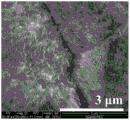
图3为实施例1中磷钼酸刻蚀泡沫镍的表面形貌扫描电子显微镜图;Fig. 3 is the scanning electron microscope picture of the surface topography of phosphomolybdic acid etching nickel foam in Example 1;
图4为实施例1中磷钼酸刻蚀泡沫镍的表面元素分析图;Fig. 4 is the surface element analysis diagram of phosphomolybdic acid etching nickel foam in Example 1;
图5为实施例1中磷钼酸刻蚀泡沫镍的表面形貌图,其中(a)为磷钼酸刻蚀泡沫镍的表面形貌的透射电子显微镜图,(b)为选取电子衍射图;Fig. 5 is the surface topography of the nickel foam etched by phosphomolybdic acid in Example 1, wherein (a) is the transmission electron microscope image of the surface topography of the nickel foam etched by phosphomolybdic acid, and (b) is the selected electron diffraction pattern ;
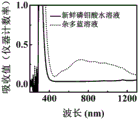
图6为实施例1中磷钼酸和杂多蓝的紫外可见吸收光谱;Fig. 6 is the ultraviolet-visible absorption spectrum of phosphomolybdic acid and heteropoly blue in Example 1;
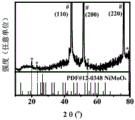
图7为实施例1中磷钼酸刻蚀泡沫镍表面新生成的无定型钼酸镍的XRD图;Fig. 7 is the XRD pattern of the amorphous nickel molybdate newly generated on the surface of nickel foam by phosphomolybdic acid etching in Example 1;
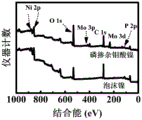
图8为实施例1中磷钼酸刻蚀泡沫镍表面新生成的磷掺杂无定型钼酸镍的XPS图;Fig. 8 is the XPS image of the phosphorus-doped amorphous nickel molybdate newly formed on the surface of the nickel foam by phosphomolybdic acid etching in Example 1;
图9为实施例2中磷钼酸刻蚀泡沫镍的表面形貌扫描电子显微镜图;Fig. 9 is the scanning electron microscope picture of the surface topography of phosphomolybdic acid etching nickel foam in Example 2;
图10为实施例3中磷钼酸刻蚀泡沫镍的表面形貌扫描电子显微镜图;Fig. 10 is the scanning electron microscope picture of the surface topography of phosphomolybdic acid etching nickel foam in Example 3;
图11为实施例4中HER的极化曲线图;Figure 11 is a polarization curve diagram of HER in Example 4;
图12为实施例5中UOR的极化曲线图;Fig. 12 is the polarization curve diagram of UOR in embodiment 5;
图13为实施例6中两电极尿素辅助电解水的极化曲线图;13 is a polarization curve diagram of two-electrode urea-assisted electrolyzed water in Example 6;
图14为实施例6中电极表面生成气体的示意图;14 is a schematic diagram of the gas generated on the electrode surface in Example 6;
图15为实施例7中两电极尿素辅助电解水的电流-时间图。15 is a current-time diagram of the two-electrode urea-assisted electrolyzed water in Example 7.
具体实施方式Detailed ways
下面将结合附图对本发明做进一步的详细说明:本实施例在以本发明技术方案为前提下进行实施,给出了详细的实施方式,但本发明的保护范围不限于下述实施例。The present invention will be further described in detail below with reference to the accompanying drawings: the present embodiment is implemented on the premise of the technical solution of the present invention, and provides a detailed implementation manner, but the protection scope of the present invention is not limited to the following embodiments.
如图1至图15所示,本实施例所涉及的一种泡沫镍负载无定型磷掺杂钼酸镍双功能电催化电极的制备方法,制备方法的具体步骤如下:As shown in FIG. 1 to FIG. 15 , a preparation method of a foamed nickel-supported amorphous phosphorus-doped nickel molybdate bifunctional electrocatalytic electrode involved in the present embodiment, the specific steps of the preparation method are as follows:
步骤一、将泡沫镍于室温浸泡到0.5~5mol/L盐酸水溶液中,去除表面的金属氧化物,浸泡时间为10~60分钟,取出泡沫镍用去离子水冲洗干净;
步骤二、将酸洗过的泡沫镍浸入到10~100mg/mL磷钼酸水溶液中,反应温度为室温,浸泡时间12~48小时之间,取出泡沫镍用去离子水冲洗干净,干燥备用,制得泡沫镍负载的无定型磷掺杂钼酸镍纳米结构。Step 2: Immerse the acid-washed nickel foam in a 10-100 mg/mL phosphomolybdic acid aqueous solution, the reaction temperature is room temperature, and the soaking time is between 12 and 48 hours, take out the nickel foam and rinse it with deionized water, dry it for later use, Amorphous phosphorus-doped nickel molybdate nanostructures supported by foamed nickel were prepared.
一种泡沫镍负载的无定型磷掺杂钼酸镍纳米结构双功能电极的应用,一种泡沫镍负载的无定型磷掺杂钼酸镍纳米结构双功能电极具有水电还原的用途,可以在碱性溶液中在低过电势下电催化析出氢气。Application of an amorphous phosphorus-doped nickel molybdate nanostructure bifunctional electrode supported by foamed nickel Electrocatalytic hydrogen evolution in a neutral solution at low overpotentials.
一种泡沫镍负载的无定型磷掺杂钼酸镍纳米结构双功能电极的应用,一种泡沫镍负载的无定型磷掺杂钼酸镍纳米结构双功能电极具有尿素电氧化的用途,可以在碱性溶液中在低电势下电催化氧化尿素。Application of a foamed nickel-supported amorphous phosphorus-doped nickel molybdate nanostructure bifunctional electrode, an amorphous phosphorus-doped nickel molybdate nanostructure bifunctional electrode supported by foam nickel has the purpose of urea electro-oxidation, and can be used in urea electro-oxidation. Electrocatalytic oxidation of urea at low potentials in alkaline solution.
所述的一种泡沫镍负载的无定型磷掺杂钼酸镍纳米结构可以同时作为正极和负极,在碱性溶液中实现尿素辅助电解制氢系统,所述的泡沫镍负载的无定型磷掺杂钼酸镍纳米结构可以在低电压下电催化析出氢气。The amorphous phosphorus-doped nickel molybdate nanostructure supported by foamed nickel can be used as a positive electrode and a negative electrode at the same time, and a urea-assisted electrolysis hydrogen production system can be realized in an alkaline solution. Nickel heteromolybdate nanostructures can electrocatalyze hydrogen evolution at low voltages.
实施例1:Example 1:
本实例中磷钼酸的浓度为20mg/mL,具体制备步骤如下:The concentration of phosphomolybdic acid in this example is 20mg/mL, and the specific preparation steps are as follows:
首先,将2cm×5cm大小的泡沫镍浸没到3mol/L HCl中10min以除去表面的氧化物。结束后,用去离子水将泡沫镍清洗干净。室温条件,将上述除掉表面金属氧化物的泡沫镍浸泡在10毫升磷钼酸水溶液中,磷钼酸浓度为20mg/mL,浸泡时间为24小时。反应结束后,用去离子水将其冲洗干净并烘干,待用。First, the nickel foam with a size of 2 cm × 5 cm was immersed in 3 mol/L HCl for 10 min to remove the oxides on the surface. When finished, rinse the nickel foam with deionized water. At room temperature, the above-mentioned foamed nickel with surface metal oxides removed was soaked in 10 ml of phosphomolybdic acid aqueous solution, the concentration of phosphomolybdic acid was 20 mg/mL, and the soaking time was 24 hours. After the reaction, it was rinsed with deionized water and dried for use.
实施例中,氧化还原反应示意图如图1所示。In the embodiment, a schematic diagram of the redox reaction is shown in FIG. 1 .
实施例中,除掉泡沫镍表面金属氧化物的表面形貌采用FEI Quanta 200扫描电子显微镜分析,如图2所示,显示了平滑的表面。In the examples, the surface morphology of the metal oxide on the surface of the nickel foam was removed, and the surface morphology was analyzed by
实施例中,磷钼酸刻蚀泡沫镍的表面形貌和表面元素分析采用带有能谱的FEIQuanta 200扫描电子显微镜分析,如图3和图4所示,显示了网格状纳米结构和Ni,Mo,O,P元素的存在。In the examples, the surface morphology and surface element analysis of phosphomolybdic acid etched nickel foam were analyzed by
实施例中,磷钼酸刻蚀泡沫镍的表面形貌和选区电子衍射采用FEITecnaiG2F30透射电子显微镜分析,如图5所示,显示了网格状纳米结构和无定型物相。In the examples, the surface morphology and selected area electron diffraction of phosphomolybdic acid etched nickel foam were analyzed by FEITecnaiG2F30 transmission electron microscope, as shown in Figure 5, showing a grid-like nanostructure and an amorphous phase.
实施例中,磷钼酸被还原为杂多蓝的过程采用了紫外-可见吸收光谱仪测试分析,与新鲜配置的磷钼酸溶液比较,还原后磷钼酸溶液在400~1200纳米出现的新吸收峰,证明了杂多蓝的存在,如图6所示。In the embodiment, the process of phosphomolybdic acid being reduced to heteropoly blue was tested and analyzed by an ultraviolet-visible absorption spectrometer. Compared with the freshly prepared phosphomolybdic acid solution, the new absorption of the phosphomolybdic acid solution at 400-1200 nanometers appeared after the reduction. peak, proving the existence of heteropoly blue, as shown in Figure 6.
实施例中,磷钼酸刻蚀泡沫镍表面新生成的无定型钼酸镍采用ShimadzuLabX-XRD-6000分析。如图7所示,#表示单质镍的XRD衍射峰,源于泡沫镍基底;*表示钼酸镍的XRD衍射峰,峰强度很弱,说明结晶性不好。In the examples, the newly formed amorphous nickel molybdate on the surface of nickel foam etched by phosphomolybdic acid was analyzed by ShimadzuLabX-XRD-6000. As shown in Figure 7, # represents the XRD diffraction peak of elemental nickel, originating from the foamed nickel base; * represents the XRD diffraction peak of nickel molybdate, and the peak intensity is very weak, indicating that the crystallinity is not good.
实施例中,磷钼酸刻蚀泡沫镍表面新生成的磷掺杂无定型钼酸镍中Ni,O,Mo,P元素采用Thermo Scientific K-Alpha XPS分析,如图8所示。In the embodiment, the Ni, O, Mo, and P elements in the phosphorus-doped amorphous nickel molybdate newly formed on the surface of the nickel foam etched by phosphomolybdic acid were analyzed by Thermo Scientific K-Alpha XPS, as shown in FIG. 8 .
实施例2:Example 2:
本实例中磷钼酸的浓度为10mg/mL,具体制备步骤如下:In this example, the concentration of phosphomolybdic acid is 10 mg/mL, and the specific preparation steps are as follows:
首先,将2cm×5cm大小的泡沫镍浸没到3mol/L HCl中10min以除去表面的氧化物。结束后,用去离子水将泡沫镍清洗干净。室温条件,将上述除掉表面金属氧化物的泡沫镍浸泡在10毫升磷钼酸水溶液中,磷钼酸浓度为10mg/mL,浸泡时间为24h。反应结束后,用去离子水将其冲洗干净并烘干,待用。First, the nickel foam with a size of 2 cm × 5 cm was immersed in 3 mol/L HCl for 10 min to remove the oxides on the surface. When finished, rinse the nickel foam with deionized water. Under room temperature conditions, the above-mentioned foamed nickel with surface metal oxides removed was soaked in 10 ml of phosphomolybdic acid aqueous solution, the concentration of phosphomolybdic acid was 10 mg/mL, and the soaking time was 24 h. After the reaction, it was rinsed with deionized water and dried for use.
实施例中,除掉泡沫镍表面金属氧化物的表面形貌采用FEI Quanta 200扫描电子显微镜分析,如图9所示,显示了网格状纳米结构。In the examples, the surface morphology of the metal oxide on the surface of the nickel foam was removed, and the surface morphology was analyzed by
实施例3:Example 3:
本实例中磷钼酸的浓度为40mg/mL,具体制备步骤如下:The concentration of phosphomolybdic acid in this example is 40mg/mL, and the specific preparation steps are as follows:
首先,将2cm×5cm大小的泡沫镍浸没到3mol/L HCl中10min以除去表面的氧化物。结束后,用去离子水将泡沫镍清洗干净。室温条件,将上述除掉表面金属氧化物的泡沫镍浸泡在10毫升磷钼酸水溶液中,磷钼酸浓度为40mg/mL,浸泡时间为24h。反应结束后,用去离子水将其冲洗干净并烘干,待用。First, the nickel foam with a size of 2 cm × 5 cm was immersed in 3 mol/L HCl for 10 min to remove the oxides on the surface. When finished, rinse the nickel foam with deionized water. At room temperature, the above-mentioned foamed nickel with surface metal oxides removed was soaked in 10 ml of phosphomolybdic acid aqueous solution, the concentration of phosphomolybdic acid was 40 mg/mL, and the soaking time was 24 h. After the reaction, it was rinsed with deionized water and dried for use.
实施例中,除掉泡沫镍表面金属氧化物的表面形貌采用FEI Quanta 200扫描电子显微镜分析,如图10所示,显示了网格状纳米结构。In the examples, the surface morphology of the metal oxide on the surface of the nickel foam was removed, and the surface morphology was analyzed by
实施例4:Example 4:
使用CHI-660E型电化学工作站对催化剂进行电化学HER性能测试。在1.0MKOH溶液中,以Hg/HgO作为参比电极,对电极为碳棒,实施例1中的材料为工作电极。并且直接购买的泡沫镍,除掉表面氧化镍的泡沫镍,以及贵金属Pt/C对照催化剂也采用相同的三电极结构进行电化学HER测试。HER的极化曲线如图11所示,实施例1中的材料在80mA/cm2以下比Pt/C性能差,但是大于80mA/cm2时比Pt/C性能好;同时比泡沫镍,除掉表面氧化镍的泡沫镍的HER性能优异。The electrochemical HER performance of the catalyst was tested using a CHI-660E electrochemical workstation. In a 1.0 MKOH solution, Hg/HgO was used as the reference electrode, the counter electrode was a carbon rod, and the material in Example 1 was used as the working electrode. And the directly purchased nickel foam, the nickel foam with the surface nickel oxide removed, and the precious metal Pt/C control catalyst also use the same three-electrode structure for electrochemical HER tests. The polarization curve of HER is shown in Figure 11. The material in Example 1 has worse performance than Pt/C below 80 mA/cm 2 , but better performance than Pt/C when it is greater than 80 mA/cm 2 ; The HER performance of the nickel foam with the surface nickel oxide removed is excellent.
实施例5:Example 5:
使用CHI-660E型电化学工作站对催化剂进行电化学UOR性能测试。在1.0MKOH溶液中,混入0.33mol/L的尿素,以Hg/HgO作为参比电极,对电极为碳棒,实施例1中的材料为工作电极。并且直接购买的泡沫镍,除掉表面氧化镍的泡沫镍,以及贵金属Ir/C对照催化剂也采用相同的三电极结构进行电化学UOR测试。UOR的极化曲线如图12所示,实施例1中的材料比Ir/C、泡沫镍,除掉表面氧化镍的泡沫镍的UOR性能都要优异。The electrochemical UOR performance test of the catalyst was carried out using a CHI-660E electrochemical workstation. In the 1.0MKOH solution, 0.33 mol/L urea was mixed, Hg/HgO was used as the reference electrode, the counter electrode was a carbon rod, and the material in Example 1 was the working electrode. And the directly purchased nickel foam, the nickel foam with the surface nickel oxide removed, and the precious metal Ir/C control catalyst also use the same three-electrode structure for electrochemical UOR test. The polarization curve of UOR is shown in Fig. 12. The material ratio in Example 1 is Ir/C, nickel foam, and nickel foam with surface nickel oxide removed has excellent UOR performance.
实施例6:Example 6:
使用CHI-660E型电化学工作站对催化剂进行尿素辅助电解水性能测试。在1.0MKOH溶液中,混入0.33mol/L的尿素,实施例1中的材料分别为阴极和阳极。对照组,贵金属Ir/C和Pt/C分别作为阳极和阴极。电解水的极化曲线如图13所示,由实施例1中的材料构筑的电解水装置电压小于贵金属对照组。The performance test of urea-assisted water electrolysis was carried out on the catalyst using CHI-660E electrochemical workstation. In the 1.0 MKOH solution, 0.33 mol/L urea was mixed, and the materials in Example 1 were the cathode and the anode, respectively. In the control group, noble metals Ir/C and Pt/C were used as anode and cathode, respectively. The polarization curve of electrolyzed water is shown in Figure 13, and the voltage of the electrolyzed water device constructed with the materials in Example 1 is lower than that of the precious metal control group.
实施例中,图14显示了阴极和阳极表面产生的氢气,以及氮气和二氧化碳。In the Examples, Figure 14 shows the production of hydrogen, as well as nitrogen and carbon dioxide at the cathode and anode surfaces.
实施例7:Example 7:
使用CHI-660E型电化学工作站对催化剂进行尿素辅助电解水稳定性测试。在1.0MKOH溶液中,混入0.33mol/L的尿素,实施例1中的材料分别为阴极和阳极。对照组,贵金属Pt/C和Ir/C分别作为阳极和阴极。电解水的电流-时间曲线如图15所示,由实施例1中的材料构筑的电解水装置稳定性优于贵金属对照组。The stability test of urea-assisted electrolyzed water was carried out on the catalyst using CHI-660E electrochemical workstation. In the 1.0 MKOH solution, 0.33 mol/L urea was mixed, and the materials in Example 1 were the cathode and the anode, respectively. In the control group, noble metals Pt/C and Ir/C were used as anode and cathode, respectively. The current-time curve of electrolyzed water is shown in Figure 15, and the stability of the electrolyzed water device constructed from the materials in Example 1 is better than that of the precious metal control group.
以上所述,仅为本发明较佳的具体实施方式,这些具体实施方式都是基于本发明整体构思下的不同实现方式,而且本发明的保护范围并不局限于此,任何熟悉本技术领域的技术人员在本发明揭露的技术范围内,可轻易想到的变化或替换,都应涵盖在本发明的保护范围之内。因此,本发明的保护范围应该以权利要求书的保护范围为准。The above are only preferred specific embodiments of the present invention, and these specific embodiments are based on different implementations under the overall concept of the present invention, and the protection scope of the present invention is not limited to this. Anyone familiar with the technical field Changes or substitutions that can be easily conceived by a skilled person within the technical scope disclosed by the present invention shall be covered within the protection scope of the present invention. Therefore, the protection scope of the present invention should be based on the protection scope of the claims.
Claims (7)
Priority Applications (1)
| Application Number | Priority Date | Filing Date | Title |
|---|---|---|---|
| CN202010556343.1A CN111663152B (en) | 2020-06-17 | 2020-06-17 | Preparation method and application of foam nickel-loaded amorphous phosphorus-doped nickel molybdate bifunctional electrocatalytic electrode |
Applications Claiming Priority (1)
| Application Number | Priority Date | Filing Date | Title |
|---|---|---|---|
| CN202010556343.1A CN111663152B (en) | 2020-06-17 | 2020-06-17 | Preparation method and application of foam nickel-loaded amorphous phosphorus-doped nickel molybdate bifunctional electrocatalytic electrode |
Publications (2)
| Publication Number | Publication Date |
|---|---|
| CN111663152A true CN111663152A (en) | 2020-09-15 |
| CN111663152B CN111663152B (en) | 2022-10-28 |
Family
ID=72388568
Family Applications (1)
| Application Number | Title | Priority Date | Filing Date |
|---|---|---|---|
| CN202010556343.1A Active CN111663152B (en) | 2020-06-17 | 2020-06-17 | Preparation method and application of foam nickel-loaded amorphous phosphorus-doped nickel molybdate bifunctional electrocatalytic electrode |
Country Status (1)
| Country | Link |
|---|---|
| CN (1) | CN111663152B (en) |
Cited By (12)
| Publication number | Priority date | Publication date | Assignee | Title |
|---|---|---|---|---|
| CN113363080A (en) * | 2021-05-28 | 2021-09-07 | 上海应用技术大学 | NF @ Co-MOF @ NiMoO4Composite material and preparation method and application thereof |
| CN114093679A (en) * | 2021-11-29 | 2022-02-25 | 华中师范大学 | beta-Ni (OH) growing on large-size foamed nickel in situ2Nanosheet array electrode material and application thereof |
| CN114457345A (en) * | 2022-02-23 | 2022-05-10 | 南通大学 | Nitrogen-doped phosphorylation modified electrode and preparation method thereof |
| CN114457362A (en) * | 2022-03-10 | 2022-05-10 | 河南科技大学 | P-Co3O4Application of/NF (nuclear factor) electrocatalyst in electrocatalytic urea oxidation |
| CN115287676A (en) * | 2022-08-17 | 2022-11-04 | 江西师范大学 | Method for preparing hydrogen by hydrazine borane-assisted water electrolysis |
| CN115627495A (en) * | 2022-09-29 | 2023-01-20 | 武汉工程大学 | A kind of cerium-doped nickel molybdate binary electrocatalytic material and its preparation method and application |
| CN116497395A (en) * | 2023-04-28 | 2023-07-28 | 安徽师范大学 | Ultrastable Ni nanoparticle reduction embedded in nickel molybdate nanorod material and its preparation method and application |
| CN116586074A (en) * | 2023-05-18 | 2023-08-15 | 浙江天堃生态环境科技有限公司 | A kind of NiMo composite electrocatalyst and its preparation method and application |
| CN119028741A (en) * | 2024-10-29 | 2024-11-26 | 合肥综合性国家科学中心能源研究院(安徽省能源实验室) | A chromium-doped nickel molybdate pseudocapacitor anode material and its preparation method and application |
| CN119733526A (en) * | 2024-12-25 | 2025-04-01 | 哈尔滨工业大学 | Preparation method and use of high entropy nanozyme with multi-pathway synergistic antibacterial effect |
| CN119776879A (en) * | 2024-12-31 | 2025-04-08 | 广西民族大学 | Preparation method and application of polyoxometallic acid etching optimized nickel molybdate oxygen evolution electrocatalytic material |
| CN120311245A (en) * | 2025-06-17 | 2025-07-15 | 华南理工大学 | A high-performance nickel-based catalyst and its preparation method and application in industrial-grade seawater electrolysis |
Citations (5)
| Publication number | Priority date | Publication date | Assignee | Title |
|---|---|---|---|---|
| US20090095636A1 (en) * | 2007-10-15 | 2009-04-16 | Ohio University | Electrolytic Cells and Methods for the Production of Ammonia and Hydrogen |
| CN106544694A (en) * | 2016-11-30 | 2017-03-29 | 中国科学技术大学 | Metallic composite, its preparation method and application, hydrogen manufacturing electrolytic cell |
| CN110773173A (en) * | 2019-11-28 | 2020-02-11 | 郑州大学 | Bifunctional catalyst β -Ni (OH) 2/NF, preparation method and application thereof |
| CN110846678A (en) * | 2019-11-20 | 2020-02-28 | 仰恩大学 | A kind of nickel foam supported as bifunctional catalyst electrode for urea electrolysis-assisted hydrogen production |
| CN111054408A (en) * | 2019-12-10 | 2020-04-24 | 太原理工大学 | Preparation method of porous nickel-molybdenum-based nanosheet bifunctional electrocatalyst |
-
2020
- 2020-06-17 CN CN202010556343.1A patent/CN111663152B/en active Active
Patent Citations (5)
| Publication number | Priority date | Publication date | Assignee | Title |
|---|---|---|---|---|
| US20090095636A1 (en) * | 2007-10-15 | 2009-04-16 | Ohio University | Electrolytic Cells and Methods for the Production of Ammonia and Hydrogen |
| CN106544694A (en) * | 2016-11-30 | 2017-03-29 | 中国科学技术大学 | Metallic composite, its preparation method and application, hydrogen manufacturing electrolytic cell |
| CN110846678A (en) * | 2019-11-20 | 2020-02-28 | 仰恩大学 | A kind of nickel foam supported as bifunctional catalyst electrode for urea electrolysis-assisted hydrogen production |
| CN110773173A (en) * | 2019-11-28 | 2020-02-11 | 郑州大学 | Bifunctional catalyst β -Ni (OH) 2/NF, preparation method and application thereof |
| CN111054408A (en) * | 2019-12-10 | 2020-04-24 | 太原理工大学 | Preparation method of porous nickel-molybdenum-based nanosheet bifunctional electrocatalyst |
Non-Patent Citations (3)
| Title |
|---|
| YUNFENG QIU ET AL.: "The polyoxometalates mediated preparation of phosphate-modified NiMoO4-x with abundant O-vacancies for H2 production via urea electrolysis", 《JOURNAL OF COLLOID AND INTERFACE SCIENCE》 * |
| ZI-YOU YU ET AL.: "Ni–Mo–O nanorod-derived composite catalysts for efficient alkaline water-to-hydrogen conversion via urea electrolysis", 《ENERGY ENVIRON. SCI.》 * |
| 纪心阳: "基于镍和钼的纳米结构的合成及其电催化性能研究", 《中国优秀硕士学位论文全文数据库(电子期刊) 工程科技Ⅰ辑》 * |
Cited By (16)
| Publication number | Priority date | Publication date | Assignee | Title |
|---|---|---|---|---|
| CN113363080B (en) * | 2021-05-28 | 2023-02-10 | 上海应用技术大学 | A kind of NF@Co-MOF@NiMoO4 composite material and its preparation method and application |
| CN113363080A (en) * | 2021-05-28 | 2021-09-07 | 上海应用技术大学 | NF @ Co-MOF @ NiMoO4Composite material and preparation method and application thereof |
| CN114093679A (en) * | 2021-11-29 | 2022-02-25 | 华中师范大学 | beta-Ni (OH) growing on large-size foamed nickel in situ2Nanosheet array electrode material and application thereof |
| CN114093679B (en) * | 2021-11-29 | 2023-09-22 | 华中师范大学 | A β-Ni(OH)2 nanosheet array electrode material grown in situ on large-sized nickel foam and its application |
| CN114457345B (en) * | 2022-02-23 | 2024-03-22 | 南通大学 | Nitrogen-doped and phosphorylation-combined modified electrode and preparation method thereof |
| CN114457345A (en) * | 2022-02-23 | 2022-05-10 | 南通大学 | Nitrogen-doped phosphorylation modified electrode and preparation method thereof |
| CN114457362A (en) * | 2022-03-10 | 2022-05-10 | 河南科技大学 | P-Co3O4Application of/NF (nuclear factor) electrocatalyst in electrocatalytic urea oxidation |
| CN114457362B (en) * | 2022-03-10 | 2024-01-19 | 河南科技大学 | Application of a P-Co3O4/NF electrocatalyst in electrocatalytic urea oxidation |
| CN115287676A (en) * | 2022-08-17 | 2022-11-04 | 江西师范大学 | Method for preparing hydrogen by hydrazine borane-assisted water electrolysis |
| CN115627495A (en) * | 2022-09-29 | 2023-01-20 | 武汉工程大学 | A kind of cerium-doped nickel molybdate binary electrocatalytic material and its preparation method and application |
| CN116497395A (en) * | 2023-04-28 | 2023-07-28 | 安徽师范大学 | Ultrastable Ni nanoparticle reduction embedded in nickel molybdate nanorod material and its preparation method and application |
| CN116586074A (en) * | 2023-05-18 | 2023-08-15 | 浙江天堃生态环境科技有限公司 | A kind of NiMo composite electrocatalyst and its preparation method and application |
| CN119028741A (en) * | 2024-10-29 | 2024-11-26 | 合肥综合性国家科学中心能源研究院(安徽省能源实验室) | A chromium-doped nickel molybdate pseudocapacitor anode material and its preparation method and application |
| CN119733526A (en) * | 2024-12-25 | 2025-04-01 | 哈尔滨工业大学 | Preparation method and use of high entropy nanozyme with multi-pathway synergistic antibacterial effect |
| CN119776879A (en) * | 2024-12-31 | 2025-04-08 | 广西民族大学 | Preparation method and application of polyoxometallic acid etching optimized nickel molybdate oxygen evolution electrocatalytic material |
| CN120311245A (en) * | 2025-06-17 | 2025-07-15 | 华南理工大学 | A high-performance nickel-based catalyst and its preparation method and application in industrial-grade seawater electrolysis |
Also Published As
| Publication number | Publication date |
|---|---|
| CN111663152B (en) | 2022-10-28 |
Similar Documents
| Publication | Publication Date | Title |
|---|---|---|
| CN111663152B (en) | Preparation method and application of foam nickel-loaded amorphous phosphorus-doped nickel molybdate bifunctional electrocatalytic electrode | |
| CN114318393B (en) | Porous nickel-molybdenum-cobalt hydrogen evolution electrode and preparation method and application thereof | |
| CN110201697B (en) | Three-dimensional nitrogen-doped transition metal oxide/nickel sulfide composite catalyst, and preparation method and application thereof | |
| CN107267124B (en) | MOFs (metal-organic frameworks) nitrogen-containing graphitized carbon material containing Ni/Fe bimetal | |
| CN106025302A (en) | Single-cell-thickness nano porous cobalt oxide nanosheet array electrocatalytic material | |
| CN113908870B (en) | Controllable preparation of double-function non-noble metal nitride catalyst and high-current electrolytic urea hydrogen production application | |
| CN111185206B (en) | Transition metal-phosphide catalyst and preparation method and application thereof | |
| CN114059082B (en) | An N, P co-doped NF@NiMoO4 hollow nanowire composite material and its preparation method and application | |
| CN113512738B (en) | Ternary iron-nickel-molybdenum-based composite material water electrolysis catalyst, and preparation method and application thereof | |
| CN110331416B (en) | CoOOH nanosheet modified Fe2O3Preparation method and application of composite photo-anode | |
| CN110711583A (en) | A kind of high-efficiency electrocatalyst material with three-dimensional structure, preparation method and application thereof | |
| CN110735147A (en) | A Prussian blue analog nanosheet array material and its application in water electrolysis | |
| Roh et al. | Hierarchically nanostructured Ni (Mo, Co)-WOx electrocatalysts for highly efficient urea electrolysis | |
| CN107803212B (en) | Defect-rich Fe2O3-FeF2Nano porous film, preparation method and application thereof | |
| CN118745581A (en) | Preparation method and application of metal ruthenium-doped nickel-molybdenum nitride nanorod catalyst for hydrogen production by water electrolysis | |
| CN118756185A (en) | Preparation method and application of transition metal-based composite electrode for urea oxidation-assisted water electrolysis to produce hydrogen | |
| CN117884145A (en) | Ammonia oxidation anti-poisoning Pt-based active catalyst and its preparation method and application | |
| CN117779079A (en) | A nickel-based self-supporting electrolysis water catalyst and its preparation method and application | |
| CN117512676B (en) | Hierarchical iron doped nickel-carbon structure nanotube and preparation method and application thereof | |
| CN105680061B (en) | A kind of carbon dioxide electrochemical reduction catalyst and its preparation and application | |
| CN111933961A (en) | Binary CoFe alloy loaded g-C3N4Catalyst and preparation method thereof | |
| CN111569884B (en) | Ni-Fe catalyst and preparation method and application thereof | |
| CN116815229A (en) | An iridium-cobalt nano-alloy, its preparation method and use | |
| CN115011997B (en) | Self-supporting hollow sugarcoated haws-end electrocatalyst and preparation method and application thereof | |
| CN114045514B (en) | A kind of preparation method of V@CoxP catalyst |
Legal Events
| Date | Code | Title | Description |
|---|---|---|---|
| PB01 | Publication | ||
| PB01 | Publication | ||
| SE01 | Entry into force of request for substantive examination | ||
| SE01 | Entry into force of request for substantive examination | ||
| GR01 | Patent grant | ||
| GR01 | Patent grant | ||
| TR01 | Transfer of patent right | ||
| TR01 | Transfer of patent right |
Effective date of registration: 20241129 Address after: 150028 6th floor, building 7, Harbin Songbei (Shenzhen Longgang) science and Technology Innovation Industrial Park, 3043 Zhigu 2nd Street, Songbei District, Harbin City, Heilongjiang Province Patentee after: Heilongjiang Jihe Biotechnology Co.,Ltd. Country or region after: China Address before: 150001 No. 92 West straight street, Nangang District, Heilongjiang, Harbin Patentee before: HARBIN INSTITUTE OF TECHNOLOGY Country or region before: China |