CN111026552B - Resource scheduling method, device, electronic device, and computer-readable storage medium - Google Patents
Resource scheduling method, device, electronic device, and computer-readable storage medium Download PDFInfo
- Publication number
- CN111026552B CN111026552B CN201911251093.4A CN201911251093A CN111026552B CN 111026552 B CN111026552 B CN 111026552B CN 201911251093 A CN201911251093 A CN 201911251093A CN 111026552 B CN111026552 B CN 111026552B
- Authority
- CN
- China
- Prior art keywords
- resource
- target
- category
- call
- invocation
- Prior art date
- Legal status (The legal status is an assumption and is not a legal conclusion. Google has not performed a legal analysis and makes no representation as to the accuracy of the status listed.)
- Active
Links
Images


Classifications
-
- G—PHYSICS
- G06—COMPUTING OR CALCULATING; COUNTING
- G06F—ELECTRIC DIGITAL DATA PROCESSING
- G06F9/00—Arrangements for program control, e.g. control units
- G06F9/06—Arrangements for program control, e.g. control units using stored programs, i.e. using an internal store of processing equipment to receive or retain programs
- G06F9/46—Multiprogramming arrangements
- G06F9/50—Allocation of resources, e.g. of the central processing unit [CPU]
- G06F9/5005—Allocation of resources, e.g. of the central processing unit [CPU] to service a request
Landscapes
- Engineering & Computer Science (AREA)
- Software Systems (AREA)
- Theoretical Computer Science (AREA)
- Physics & Mathematics (AREA)
- General Engineering & Computer Science (AREA)
- General Physics & Mathematics (AREA)
- Telephonic Communication Services (AREA)
- Data Exchanges In Wide-Area Networks (AREA)
Abstract
本申请涉及计算机操作系统技术领域,公开了一种资源的调度方法、装置和电子设备,资源的调度方法包括:接收目标算法对资源的调用请求;调用请求包括目标算法请求调用的资源类别、资源占用量和调用时长;资源类别包括CPU资源和GPU资源;基于调用请求根据当前资源占用信息查询符合资源类别和资源占用量的目标资源;若查询到目标算法可用的目标资源,在调用时长内调用目标资源以运行目标算法;查询与目标算法对应的延迟释放时长,若调用目标资源调用时长后,在延迟释放时长内未接收到目标算法对资源的新的调用请求,释放目标资源。本申请提供的资源的调度方法可以有效减少资源的浪费。
This application relates to the technical field of computer operating systems, and discloses a resource scheduling method, device, and electronic equipment. The resource scheduling method includes: receiving a resource call request from a target algorithm; Occupancy and call duration; resource categories include CPU resources and GPU resources; based on the call request, query the target resource that meets the resource category and resource usage according to the current resource occupancy information; if the target resource available to the target algorithm is queried, call it within the call duration The target resource is used to run the target algorithm; query the delayed release time corresponding to the target algorithm. If no new call request for the resource by the target algorithm is received within the delayed release time after calling the target resource call time, release the target resource. The resource scheduling method provided in this application can effectively reduce resource waste.
Description
技术领域technical field
本申请涉及计算机操作系统技术领域,具体而言,本申请涉及一种资源的调度方法、装置、电子设备及计算机可读存储介质。The present application relates to the technical field of computer operating systems, and in particular, the present application relates to a resource scheduling method, device, electronic equipment, and computer-readable storage medium.
背景技术Background technique
在计算机操作系统中,CPU(中央处理器,central processing unit)和GPU(图像处理器,Graphics Processing Unit)往往需要被多种任务共享。In a computer operating system, a CPU (central processing unit, central processing unit) and a GPU (image processor, Graphics Processing Unit) often need to be shared by various tasks.
通常,需要根据可能被用到的算法或模型规划布局大量的CPU和GPU资源,但只有少量的算法或服务需要长期占用资源,例如,针对AI(人工智能,ArtificialIntelligence)推理系统(模型部署平台,为训练好的AI模型提供部署平台)、ADC(集中托管式数据应用中心,Application data center)应用系统或AI训练系统等多种算法,其中只有部分算法需要长期占用资源,另一些算法调用资源的时间是随机不确定的,这使得用户必须提供充足的资源准备随时被调用,但是这会造成资源的浪费。Usually, a large number of CPU and GPU resources need to be planned and deployed according to the algorithms or models that may be used, but only a small number of algorithms or services need to occupy resources for a long time, for example, for AI (Artificial Intelligence, Artificial Intelligence) reasoning system (model deployment platform, Provide a deployment platform for the trained AI model), ADC (Application data center) application system or AI training system and other algorithms, only some of which need to occupy resources for a long time, and other algorithms call resources The time is random and uncertain, which requires the user to provide sufficient resources ready to be called at any time, but this will cause a waste of resources.
因此,有必要提供一种资源调度的方法,可以减少资源的浪费。Therefore, it is necessary to provide a resource scheduling method that can reduce waste of resources.
发明内容Contents of the invention
本申请的目的旨在至少能解决上述的技术缺陷之一,特提出以下技术方案:The purpose of the application aims to at least solve one of the above-mentioned technical defects, and proposes the following technical solutions:
第一方面,提供了一种资源的调度方法,包括:In the first aspect, a resource scheduling method is provided, including:
接收目标算法对资源的调用请求;调用请求包括目标算法请求调用的资源类别、资源占用量和调用时长;资源类别包括CPU资源和GPU资源;Receive the resource call request of the target algorithm; the call request includes the resource category requested by the target algorithm, the resource occupation and the call duration; the resource category includes CPU resources and GPU resources;
基于调用请求根据当前资源占用信息查询符合资源类别和资源占用量的目标资源;Based on the call request, query the target resources that meet the resource category and resource occupancy according to the current resource occupancy information;
若查询到目标算法可用的目标资源,在调用时长内调用目标资源以运行目标算法;If the target resource available to the target algorithm is found, call the target resource within the calling duration to run the target algorithm;
查询与目标算法对应的延迟释放时长,若调用目标资源调用时长后,在延迟释放时长内未接收到目标算法对资源的新的调用请求,释放目标资源。Query the delayed release time corresponding to the target algorithm. If no new call request for the resource by the target algorithm is received within the delayed release time after calling the target resource call time, release the target resource.
在第一方面的可选实施例中,资源的调度方法还包括:In an optional embodiment of the first aspect, the resource scheduling method further includes:
若未查询到目标算法可用的目标资源,将调用请求存储于请求队列中;If the target resource available to the target algorithm is not found, store the call request in the request queue;
针对于请求队列中的每一个调用请求,执行基于调用请求在当前资源占用信息中查询符合资源类别和资源占用量的目标资源。For each invocation request in the request queue, perform a query based on the invocation request in the current resource occupancy information for target resources that meet the resource category and resource occupancy.
在第一方面的可选实施例中,针对于请求队列中的每一个调用请求,执行基于调用请求在当前资源占用信息中查询符合资源类别和资源占用量的目标资源,包括:In an optional embodiment of the first aspect, for each invocation request in the request queue, performing a query based on the invocation request in the current resource occupation information for target resources that meet the resource category and resource occupancy, including:
根据每一个调用请求的接收时间,对请求队列中的至少一个调用请求进行排序;sorting at least one call request in the request queue according to the receiving time of each call request;
基于对调用请求的排序,依次执行基于调用请求在当前资源占用信息中查询符合资源类别和资源占用量的目标资源。Based on the sorting of the call requests, the query of the target resource that meets the resource category and the resource occupation is performed sequentially based on the call request in the current resource occupancy information.
在第一方面的可选实施例中,针对于请求队列中的每一个调用请求,执行基于调用请求在当前资源占用信息中查询符合资源类别和资源占用量的目标资源,包括:In an optional embodiment of the first aspect, for each invocation request in the request queue, performing a query based on the invocation request in the current resource occupation information for target resources that meet the resource category and resource occupancy, including:
查询每一个调用请求对应的目标算法的紧急调用级别,依据紧急调用级别对请求队列中的至少一个调用请求排序;Query the emergency invocation level of the target algorithm corresponding to each invocation request, and sort at least one invocation request in the request queue according to the emergency invocation level;
基于对调用请求的排序,依次执行基于调用请求在当前资源占用信息中查询符合资源类别和资源占用量的目标资源。Based on the sorting of the call requests, the query of the target resource that meets the resource category and the resource occupation is performed sequentially based on the call request in the current resource occupancy information.
在第一方面的可选实施例中,查询与目标算法对应的延迟释放时长之前,还包括:In an optional embodiment of the first aspect, before querying the delayed release duration corresponding to the target algorithm, further includes:
确定目标算法的调用类别;调用类别包括占用不释放类别和占用后释放类别;Determine the call category of the target algorithm; the call category includes the category of occupation without release and the category of release after occupation;
查询与目标算法对应的延迟释放时长,包括:Query the delayed release duration corresponding to the target algorithm, including:
若目标算法的调用类别为占用后释放类别,查询与目标算法对应的延迟释放时长。If the call type of the target algorithm is the release after occupying type, query the delayed release time corresponding to the target algorithm.
在第一方面的可选实施例中,资源的调度方法还包括:In an optional embodiment of the first aspect, the resource scheduling method further includes:
若目标算法的调用类别为占用不释放类别,调用目标资源以运行目标算法,并持续调用目标资源以等待接收目标算法的新的调用请求。If the invocation category of the target algorithm is occupied and not released, the target resource is invoked to run the target algorithm, and the target resource is continuously invoked to wait for receiving a new invocation request of the target algorithm.
在第一方面的可选实施例中,在调用时长内调用目标资源以运行目标算法之后,还包括:In an optional embodiment of the first aspect, after invoking the target resource within the invocation duration to run the target algorithm, further include:
根据目标资源的资源类别、资源占用量和调用时长,对当前资源占用信息进行更新。Update the current resource occupancy information according to the resource category, resource occupancy, and call duration of the target resource.
第二方面,提供了一种资源的调度装置,包括:In a second aspect, a resource scheduling device is provided, including:
接收模块,用于接收目标算法对资源的调用请求;调用请求包括目标算法请求调用的资源类别、资源占用量和调用时长;资源类别包括CPU资源和GPU资源;The receiving module is used to receive the resource call request of the target algorithm; the call request includes the resource category, resource occupation and call duration requested by the target algorithm; the resource category includes CPU resources and GPU resources;
查询模块,用于基于调用请求在当前资源占用信息中查询符合资源类别和资源占用量的目标资源;A query module, configured to query the current resource occupancy information for target resources that meet the resource category and resource occupancy based on the call request;
第一调用模块,用于若查询到目标算法可用的目标资源,在调用时长内调用目标资源以运行目标算法;The first calling module is used to call the target resource to run the target algorithm within the calling duration if the target resource available to the target algorithm is found;
释放模块,用于查询与目标算法对应的延迟释放时长,若调用目标资源调用时长后,在延迟释放时长内未接收到目标算法对资源的新的调用请求,释放目标资源。The release module is used to query the delayed release duration corresponding to the target algorithm. If no new call request for the resource by the target algorithm is received within the delayed release duration after invoking the target resource call duration, the target resource is released.
在第二方面的可选实施例中,资源的调度装置还包括存储模块,存储模块用于:In an optional embodiment of the second aspect, the resource scheduling device further includes a storage module, and the storage module is used for:
若未查询到目标算法可用的目标资源,将调用请求存储于请求队列中;If the target resource available to the target algorithm is not found, store the call request in the request queue;
针对于请求队列中的每一个调用请求,执行基于调用请求在当前资源占用信息中查询符合资源类别和资源占用量的目标资源。For each invocation request in the request queue, perform a query based on the invocation request in the current resource occupancy information for target resources that meet the resource category and resource occupancy.
在第二方面的可选实施例中,存储模块在针对于请求队列中的每一个调用请求,执行基于调用请求在当前资源占用信息中查询符合资源类别和资源占用量的目标资源时,具体用于:In an optional embodiment of the second aspect, when the storage module searches the current resource occupancy information based on the invocation request for each invocation request in the request queue for a target resource that conforms to the resource category and resource occupancy, the specific use At:
根据每一个调用请求的接收时间,对请求队列中的至少一个调用请求进行排序;sorting at least one call request in the request queue according to the receiving time of each call request;
基于对调用请求的排序,依次执行基于调用请求在当前资源占用信息中查询符合资源类别和资源占用量的目标资源。Based on the sorting of the call requests, the query of the target resource that meets the resource category and the resource occupation is performed sequentially based on the call request in the current resource occupancy information.
在第二方面的可选实施例中,存储模块在针对于请求队列中的每一个调用请求,执行基于调用请求在当前资源占用信息中查询符合资源类别和资源占用量的目标资源时,具体用于:In an optional embodiment of the second aspect, when the storage module searches the current resource occupancy information based on the invocation request for each invocation request in the request queue for a target resource that conforms to the resource category and resource occupancy, the specific use At:
查询每一个调用请求对应的目标算法的紧急调用级别,依据紧急调用级别对请求队列中的至少一个调用请求排序;Query the emergency invocation level of the target algorithm corresponding to each invocation request, and sort at least one invocation request in the request queue according to the emergency invocation level;
基于对调用请求的排序,依次执行基于调用请求在当前资源占用信息中查询符合资源类别和资源占用量的目标资源。Based on the sorting of the call requests, the query of the target resource that meets the resource category and the resource occupation is performed sequentially based on the call request in the current resource occupancy information.
在第二方面的可选实施例中,资源的调度装置还包括确定模块,确定模块用于:In an optional embodiment of the second aspect, the device for scheduling resources further includes a determining module, and the determining module is configured to:
确定目标算法的调用类别;调用类别包括占用不释放类别和占用后释放类别;Determine the call category of the target algorithm; the call category includes the category of occupation without release and the category of release after occupation;
释放模块在查询与目标算法对应的延迟释放时长时,具体用于:When the release module queries the delayed release duration corresponding to the target algorithm, it is specifically used for:
若目标算法的调用类别为占用后释放类别,查询与目标算法对应的延迟释放时长。If the call type of the target algorithm is the release after occupying type, query the delayed release time corresponding to the target algorithm.
在第二方面的可选实施例中,资源的调度装置还包括第二调用模块,第二调用模块用于:In an optional embodiment of the second aspect, the resource scheduling device further includes a second calling module, and the second calling module is used for:
若目标算法的调用类别为占用不释放类别,调用目标资源以运行目标算法,并持续调用目标资源以等待接收目标算法的新的调用请求。If the invocation category of the target algorithm is occupied and not released, the target resource is invoked to run the target algorithm, and the target resource is continuously invoked to wait for receiving a new invocation request of the target algorithm.
在第二方面的可选实施例中,资源的调度装置还包括更新模块,更新模块用于:In an optional embodiment of the second aspect, the resource scheduling device further includes an update module, and the update module is used for:
根据目标资源的资源类别、资源占用量和调用时长,对当前资源占用信息进行更新。Update the current resource occupancy information according to the resource category, resource occupancy, and call duration of the target resource.
第三方面,提供了一种电子设备,包括存储器、处理器及存储在存储器上并可在处理器上运行的计算机程序,处理器执行程序时实现本申请第一方面所示的资源的调度方法。The third aspect provides an electronic device, including a memory, a processor, and a computer program stored on the memory and operable on the processor. When the processor executes the program, the resource scheduling method shown in the first aspect of the present application is implemented. .
第四方面,提供了一种计算机可读存储介质,计算机可读存储介质上存储有计算机程序,该程序被处理器执行时实现本申请第一方面所示的资源的调度方法。In a fourth aspect, a computer-readable storage medium is provided. A computer program is stored on the computer-readable storage medium. When the program is executed by a processor, the resource scheduling method described in the first aspect of the present application is implemented.
本申请提供的技术方案带来的有益效果是:The beneficial effects brought by the technical solution provided by the application are:
当接收到目标算法对资源的调用请求时,调用目标资源一定的调用时长以运行目标算法,并查询目标算法的延迟释放时长,若调用目标资源调用时长后,在延迟释放时长内未接收到目标算法对资源的新的调用请求,释放目标资源,可以在满足目标算法对目标资源的使用,并且在调用目标资源后,及时释放目标资源,以提供给其他算法调用,有效减少资源的浪费。When receiving a call request from the target algorithm for a resource, call the target resource for a certain calling time to run the target algorithm, and query the delayed release time of the target algorithm. If the call time of the target resource is called, the target is not received within the delayed release time Algorithms make new call requests for resources and release target resources, which can satisfy the target algorithm’s use of target resources, and after calling target resources, release target resources in time to provide other algorithm calls, effectively reducing resource waste.
进一步的,可以先确定目标算法的调用类别,对于占用不释放类别的目标算法,即便根据调用时长运行完,也不用释放目标算法,可以满足这类别的目标算法的长期调用目标资源的要求。Furthermore, the invocation category of the target algorithm can be determined first. For the target algorithm that occupies the non-release category, even if it runs out according to the invocation time, the target algorithm does not need to be released, which can meet the long-term invocation target resource requirements of this category of target algorithms.
本申请附加的方面和优点将在下面的描述中部分给出,这些将从下面的描述中变得明显,或通过本申请的实践了解到。Additional aspects and advantages of the application will be set forth in part in the description which follows, and will become apparent from the description, or may be learned by practice of the application.
附图说明Description of drawings
本申请上述的和/或附加的方面和优点从下面结合附图对实施例的描述中将变得明显和容易理解,其中:The above and/or additional aspects and advantages of the present application will become apparent and easy to understand from the following description of the embodiments in conjunction with the accompanying drawings, wherein:
图1为本申请实施例提供的一种资源的调度方法的应用环境图;FIG. 1 is an application environment diagram of a resource scheduling method provided by an embodiment of the present application;
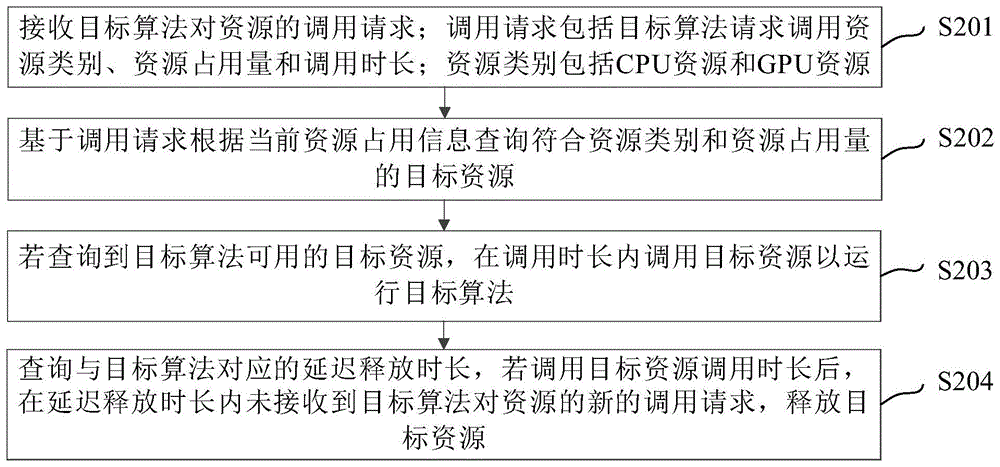
图2为本申请实施例提供的一种资源的调度方法的流程示意图;FIG. 2 is a schematic flowchart of a resource scheduling method provided by an embodiment of the present application;
图3为本申请实施例提供的一种资源的调度方法的流程示意图;FIG. 3 is a schematic flowchart of a resource scheduling method provided in an embodiment of the present application;
图4为本申请实施例提供的一种请求队列的示意图;FIG. 4 is a schematic diagram of a request queue provided by an embodiment of the present application;
图5为本申请一个示例中提供的一种资源的调度方法的流程示意图;FIG. 5 is a schematic flowchart of a resource scheduling method provided in an example of the present application;
图6为本申请实施例提供的一种资源的调度装置的结构示意图;FIG. 6 is a schematic structural diagram of a resource scheduling device provided by an embodiment of the present application;
图7为本申请实施例提供的一种资源的调度的电子设备的结构示意图。FIG. 7 is a schematic structural diagram of an electronic device for resource scheduling provided by an embodiment of the present application.
具体实施方式Detailed ways
下面详细描述本申请的实施例,实施例的示例在附图中示出,其中自始至终相同或类似的标号表示相同或类似的元件或具有相同或类似功能的元件。下面通过参考附图描述的实施例是示例性的,仅用于解释本申请,而不能解释为对本申请的限制。Embodiments of the present application are described in detail below, and examples of the embodiments are shown in the drawings, wherein the same or similar reference numerals denote the same or similar elements or elements having the same or similar functions throughout. The embodiments described below by referring to the figures are exemplary only for explaining the present application, and are not construed as limiting the present application.
本技术领域技术人员可以理解,除非特意声明,这里使用的单数形式“一”、“一个”、“所述”和“该”也可包括复数形式。应该进一步理解的是,本申请的说明书中使用的措辞“包括”是指存在特征、整数、步骤、操作、元件和/或组件,但是并不排除存在或添加一个或多个其他特征、整数、步骤、操作、元件、组件和/或它们的组。应该理解,当我们称元件被“连接”或“耦接”到另一元件时,它可以直接连接或耦接到其他元件,或者也可以存在中间元件。此外,这里使用的“连接”或“耦接”可以包括无线连接或无线耦接。这里使用的措辞“和/或”包括一个或更多个相关联的列出项的全部或任一单元和全部组合。Those skilled in the art will understand that unless otherwise stated, the singular forms "a", "an", "said" and "the" used herein may also include plural forms. It should be further understood that the word "comprising" used in the description of the present application refers to the presence of features, integers, steps, operations, elements and/or components, but does not exclude the presence or addition of one or more other features, integers, Steps, operations, elements, components and/or groups thereof. It will be understood that when an element is referred to as being "connected" or "coupled" to another element, it can be directly connected or coupled to the other element or intervening elements may also be present. Additionally, "connected" or "coupled" as used herein may include wireless connection or wireless coupling. The expression "and/or" used herein includes all or any elements and all combinations of one or more associated listed items.
为使本申请的目的、技术方案和优点更加清楚,下面将结合附图对本申请实施方式作进一步地详细描述。In order to make the purpose, technical solution and advantages of the present application clearer, the implementation manners of the present application will be further described in detail below in conjunction with the accompanying drawings.
本申请提供的资源的调度方法、装置、电子设备及计算机可读存储介质,旨在解决现有技术的如上技术问题。The resource scheduling method, device, electronic equipment, and computer-readable storage medium provided in this application aim to solve the above technical problems in the prior art.
下面以具体地实施例对本申请的技术方案以及本申请的技术方案如何解决上述技术问题进行详细说明。下面这几个具体的实施例可以相互结合,对于相同或相似的概念或过程可能在某些实施例中不再赘述。下面将结合附图,对本申请的实施例进行描述。The technical solution of the present application and how the technical solution of the present application solves the above technical problems will be described in detail below with specific embodiments. The following specific embodiments may be combined with each other, and the same or similar concepts or processes may not be repeated in some embodiments. Embodiments of the present application will be described below in conjunction with the accompanying drawings.
本申请提供的资源的调度方法,可以应用于如图1所示的应用环境中。具体的,服务器或终端中设置有资源的调度系统,资源类别包括CPU资源和GPU资源;当资源的调度系统接收到目标算法的调用请求时,查询可用的目标资源,若查询到符合调用请求的目标资源,在调用时长内调用目标资源以运行目标算法;若调用目标资源调用时长后,在延迟释放时长内未接收到目标算法对资源的新的调用请求,释放目标资源。The resource scheduling method provided in this application can be applied to the application environment shown in FIG. 1 . Specifically, a resource scheduling system is set in the server or terminal, and the resource types include CPU resources and GPU resources; when the resource scheduling system receives a call request of the target algorithm, it queries the available target resources, and if the query meets the call request For the target resource, call the target resource to run the target algorithm within the invocation duration; if no new invocation request from the target algorithm for the resource is received within the delayed release duration after invoking the target resource invocation duration, release the target resource.
本申请实施例中提供了一种可能的实现方式,如图2所示,提供了一种资源的调度方法,可以应用于图1所示的资源的调度系统中,可以包括以下步骤:A possible implementation is provided in the embodiment of the present application. As shown in FIG. 2, a resource scheduling method is provided, which can be applied to the resource scheduling system shown in FIG. 1, and may include the following steps:
步骤S201,接收目标算法对资源的调用请求;调用请求包括目标算法请求调用的资源类别、资源占用量和调用时长;资源类别包括CPU资源和GPU资源。Step S201 , receiving a call request for a resource by the target algorithm; the call request includes the resource type requested by the target algorithm, resource occupation and call duration; the resource class includes CPU resources and GPU resources.
其中,目标算法可以包括多种需要调用CPU资源或GPU资源的算法,也可以包括需要调用资源的模型、服务等等。Wherein, the target algorithm may include various algorithms that need to call CPU resources or GPU resources, and may also include models and services that need to call resources.
例如,目标算法可以包括多种AI推理模型、ADC应用模型或AI训练模型。For example, the target algorithm may include various AI reasoning models, ADC application models or AI training models.
具体的,资源占用量是指需要调用的资源容量,调用时长是指调用资源的时长。Specifically, the resource usage refers to the resource capacity to be called, and the calling time refers to the time for calling the resource.
在具体实施过程中,资源的调度系统通过统一的访问地址接收调用请求,例如采用HTTP协议,固定统一的访问地址,将统一的访问地址注册于各个不同算法或模型的系统中,便于各个不同的算法或模型请求调用资源。In the specific implementation process, the resource scheduling system receives call requests through a unified access address, such as using the HTTP protocol, fixing a unified access address, and registering the unified access address in systems with different algorithms or models, which is convenient for different Algorithm or model request invoke resource.
步骤S202,基于调用请求根据当前资源占用信息查询符合资源类别和资源占用量的目标资源。Step S202 , based on the calling request, querying target resources that meet the resource category and resource occupancy according to the current resource occupancy information.
具体的,资源的调度系统中实时对当前资源占用信息进行监测,当前资源占用信息可以包括不同类型的资源的正在调用量、剩余调用时长、可用资源量等等。Specifically, the resource scheduling system monitors the current resource occupancy information in real time, and the current resource occupancy information may include the amount of different types of resources being called, the remaining calling time, the amount of available resources, and so on.
例如,当前资源占用信息可以包括总共资源有3块CPU资源,其中2块正在被调用,被调用的2块CPU中1块还需要被调用5分钟,另一块还需要被调用10分钟,3块CPU中还有一块是可用资源。For example, the current resource occupancy information may include a total of 3 CPU resources, 2 of which are being called, and one of the two called CPUs needs to be called for 5 minutes, and the other needs to be called for 10 minutes. There is another block in the CPU that is an available resource.
步骤S203,若查询到目标算法可用的目标资源,在调用时长内调用目标资源以运行目标算法。Step S203, if the target resource available to the target algorithm is found, call the target resource within the call duration to run the target algorithm.
具体的,可以根据当前资源占用信息查询可用资源量,判断目标算法请求调用的资源类型中可用资源量是否不小于请求调用的资源占用量;若请求调用的资源类型中可用资源量满足目标算法请求调用的资源占用量,则查询到目标算法可用的目标资源。Specifically, the amount of available resources can be queried according to the current resource occupancy information to determine whether the amount of available resources in the resource type requested by the target algorithm is not less than the resource occupancy of the requested call; if the amount of available resources in the resource type requested to be called meets the target algorithm request The resource usage of the call, then query the target resources available to the target algorithm.
在具体实施过程中,若资源的调度系统查询到目标算法可用的目标资源,可以是资源的调度系统调用目标资源,然后将目标资源供应与目标算法运行;也可以是资源的调度系统查询到目标算法可用的目标资源,目标算法直接调用目标资源。In the specific implementation process, if the resource scheduling system inquires the target resources available to the target algorithm, the resource scheduling system can call the target resource, and then supply the target resource and run the target algorithm; or the resource scheduling system can query the target resource. The target resource available to the algorithm, and the target algorithm directly calls the target resource.
步骤S204,查询与目标算法对应的延迟释放时长,若调用目标资源调用时长后,在延迟释放时长内未接收到目标算法对资源的新的调用请求,释放目标资源。Step S204, query the delayed release duration corresponding to the target algorithm, and release the target resource if no new call request for the resource by the target algorithm is received within the delayed release duration after invoking the target resource invocation duration.
其中,释放的目标资源包括所调用的资源,还可以包括所占用的内存。Wherein, the released target resource includes the called resource, and may also include the occupied memory.
具体的,延迟释放时长是指目标算法在调用目标资源运行调用时长后,继续保持调用目标资源的时间,设置延迟释放时长,可以避免需要频繁调用资源的目标算法,在运行完后直接释放资源,但又需要重新调用目标资源,导致操作繁琐。Specifically, the delayed release time refers to the time that the target algorithm continues to call the target resource after calling the target resource to run the calling time. Setting the delayed release time can avoid the target algorithm that needs to call the resource frequently and release the resource directly after running. However, the target resource needs to be called again, resulting in cumbersome operations.
若调用目标资源调用时长后,在延迟释放时长内接收到目标算法对资源的新的调用请求,则重复调用目标资源调用时长,然后继续等待延迟释放时长,直至在调用目标资源调用时长后,在延迟释放时长内未接收到目标算法对资源的新的调用请求,释放目标资源。If after invoking the target resource invocation duration, a new invocation request for the resource by the target algorithm is received within the delayed release duration, then the target resource invocation duration will be called repeatedly, and then continue to wait for the delayed release duration until after invoking the target resource invocation duration, at If no new invocation request of the target algorithm for the resource is received within the delayed release period, the target resource is released.
在具体实施过程中,资源的调用系统可以直接释放目标资源,也可以控制目标算法释放目标资源,具体针对目标资源的释放方式在此不作限制。In the specific implementation process, the resource invoking system can directly release the target resource, or can control the target algorithm to release the target resource, and there is no restriction on the release method of the target resource.
上述的资源的调度方法,当接收到目标算法对资源的调用请求时,调用目标资源一定的调用时长以运行目标算法,并查询目标算法的延迟释放时长,若调用目标资源调用时长后,在延迟释放时长内未接收到目标算法对资源的新的调用请求,释放目标资源,可以在满足目标算法对目标资源的使用,并且在调用目标资源后,及时释放目标资源,以提供给其他算法调用,有效减少资源的浪费。The resource scheduling method mentioned above, when receiving the call request of the target algorithm for the resource, calls the target resource for a certain calling time to run the target algorithm, and queries the delay release time of the target algorithm, if the calling time of the target resource is called, delay If no new invocation request of the target algorithm for the resource is received within the release period, the target resource can be released to satisfy the target algorithm’s use of the target resource, and after invoking the target resource, release the target resource in time for other algorithm calls. Effectively reduce the waste of resources.
本申请实施例中提供了一种可能的实现方式,如图3所示,资源的调度方法还可以包括:A possible implementation is provided in the embodiment of the present application. As shown in FIG. 3, the resource scheduling method may also include:
步骤S205,若未查询到目标算法可用的目标资源,将调用请求存储于请求队列中。Step S205, if no target resource available to the target algorithm is found, store the call request in the request queue.
具体的,可以根据当前资源占用信息查询可用资源量,判断目标算法请求调用的资源类型中可用资源量是否不小于请求调用的资源占用量;若请求调用的资源类型中可用资源量不满足目标算法请求调用的资源占用量,则未查询到目标算法可用的目标资源。Specifically, the amount of available resources can be queried according to the current resource occupancy information to determine whether the amount of available resources in the resource type requested by the target algorithm is not less than the resource occupancy of the requested call; if the amount of available resources in the resource type requested to be called does not meet the target algorithm If the resource usage of the request is called, the target resource available to the target algorithm has not been queried.
步骤S206,针对于请求队列中的每一个调用请求,执行基于调用请求在当前资源占用信息中查询符合资源类别和资源占用量的目标资源。Step S206 , for each invocation request in the request queue, query the current resource occupancy information based on the invocation request for target resources that meet the resource category and resource occupancy.
具体的,请求队列中可以包括至少一个调用请求,当请求队列中包括至少两个调用请求时,可以按照对调用请求的接收时间对多个调用请求进行排序,也可以按照调用请求的紧急程度对调用请求进行排序,对请求队列中的至少两个调用请求,依次执行查询可调用的目标资源,并且可以循环执行查询任务。Specifically, the request queue may include at least one invocation request. When the request queue includes at least two invocation requests, the multiple invocation requests may be sorted according to the receiving time of the invocation requests, or may be sorted according to the urgency of the invocation requests. The call requests are sorted, and at least two call requests in the request queue are sequentially executed to query callable target resources, and the query tasks can be executed cyclically.
如图4所示,请求队列中存储有N个算法发送的调用请求,其中,N为大于2的自然数,资源的调度系统可以按照队列中调用请求的顺序,依次查询与调用请求1、调用请求2……直至调用请求N对应的资源,可以在查询完整个请求队列后,循环从调用请求1开始继续查询,查询到符合任一个调用请求的资源,即调用该资源供对应的算法运行。As shown in Figure 4, there are N call requests sent by algorithms stored in the request queue, where N is a natural number greater than 2, and the resource scheduling system can query and call requests in turn according to the order of call requests in the queue 1, call request 2... Until the resource corresponding to the call request N, after querying the entire request queue, continue to query from the call request 1, and query the resource that meets any call request, that is, call the resource for the corresponding algorithm to run.
在一种实施过程中,步骤S206的针对于请求队列中的每一个调用请求,执行基于调用请求在当前资源占用信息中查询符合资源类别和资源占用量的目标资源,可以包括:In an implementation process, for each invocation request in the request queue in step S206, querying the current resource occupancy information based on the invocation request for target resources that meet the resource category and resource occupancy may include:
(1)根据每一个调用请求的接收时间,对请求队列中的至少一个调用请求进行排序;(1) sort at least one call request in the request queue according to the receiving time of each call request;
(2)基于对调用请求的排序,依次执行基于调用请求在当前资源占用信息中查询符合资源类别和资源占用量的目标资源。(2) Based on the sorting of the invocation requests, the invocation requests are sequentially executed to search for target resources that meet the resource category and resource occupancy in the current resource occupancy information.
具体的,可以根据请求队列中的每一个调用请求的接收时间,将请求队列中所包括的所有调用请求进行排序。Specifically, all the call requests included in the request queue may be sorted according to the receiving time of each call request in the request queue.
例如,先接收到的调用请求,先执行基于调用请求在当前资源占用信息中查询符合资源类别和资源占用量的目标资源。For example, the invocation request is received first, and the current resource occupation information is searched based on the invocation request for target resources that meet the resource category and resource occupancy.
在另一种实施过程中,步骤S206的针对于请求队列中的每一个调用请求,执行基于调用请求在当前资源占用信息中查询符合资源类别和资源占用量的目标资源,可以包括:In another implementation process, for each invocation request in the request queue in step S206, querying the current resource occupancy information based on the invocation request for target resources that meet the resource category and resource occupancy may include:
(1)查询每一个调用请求对应的目标算法的紧急调用级别,依据紧急调用级别对请求队列中的至少一个调用请求排序;(1) Query the emergency invocation level of the target algorithm corresponding to each invocation request, and sort at least one invocation request in the request queue according to the emergency invocation level;
(2)基于对调用请求的排序,依次执行基于调用请求在当前资源占用信息中查询符合资源类别和资源占用量的目标资源。(2) Based on the sorting of the invocation requests, the invocation requests are sequentially executed to search for target resources that meet the resource category and resource occupancy in the current resource occupancy information.
具体的,也可以根据目标算法的紧急调用级别对请求队列中的所有调用请求进行排序,紧急调用级别越高,对应的目标算法越重要、越紧急,可以先执行基于调用请求在当前资源占用信息中查询符合资源类别和资源占用量的目标资源。Specifically, all call requests in the request queue can also be sorted according to the urgent call level of the target algorithm. The higher the urgent call level, the more important and urgent the corresponding target algorithm is. Query the target resource that matches the resource category and resource usage.
本申请实施例中提供了一种可能的实现方式,步骤S204的查询与目标算法对应的延迟释放时长之前,还可以包括:确定目标算法的调用类别;调用类别包括占用不释放类别和占用后释放类别。A possible implementation is provided in the embodiment of the present application. Before the query in step S204 corresponds to the delayed release time of the target algorithm, it may also include: determining the call category of the target algorithm; the call category includes the category of occupation without release and release after occupation category.
其中,占用不释放类别是指目标算法调用目标资源后,即便根据调用时长运行完,也不用释放目标算法,这种类别的算法需要调用目标资源较频繁,或者目标算法本身需要持续调用目标资源不能间断。Among them, the category of occupying and not releasing means that after the target algorithm calls the target resource, it does not need to release the target algorithm even if it runs out according to the calling time. This type of algorithm needs to call the target resource frequently, or the target algorithm itself needs to continuously call the target resource. Intermittent.
本申请实施例中提供了一种可能的实现方式,步骤S204的查询与目标算法对应的延迟释放时长,可以包括:若目标算法的调用类别为占用后释放类别,查询与目标算法对应的延迟释放时长。A possible implementation is provided in the embodiment of the present application. The query in step S204 corresponds to the delayed release duration of the target algorithm, which may include: if the call category of the target algorithm is the release category after occupation, query the delayed release corresponding to the target algorithm duration.
具体的,占用后释放类别是指目标算法调用目标资源运行调用时长后,需要释放目标资源,这类目标算法对于目标资源的调用不太频繁,不需要持续调用目标资源不间断,因此调用完后,如果在延迟释放时长内未接受到目标算法的新的调用申请,资源的调用系统可以释放目标资源。Specifically, the category of release after occupation refers to the target algorithm that needs to release the target resource after calling the target resource for a long time. This type of target algorithm does not call the target resource frequently and does not need to continuously call the target resource without interruption. Therefore, after calling , if no new invocation application of the target algorithm is received within the delayed release time, the resource invocation system can release the target resource.
本申请实施例中提供了一种可能的实现方式,资源的调度方法还可以包括:A possible implementation is provided in the embodiment of this application, and the resource scheduling method may also include:
若目标算法的调用类别为占用不释放类别,调用目标资源以运行目标算法,并持续调用目标资源以等待接收目标算法的新的调用请求。If the invocation category of the target algorithm is occupied and not released, the target resource is invoked to run the target algorithm, and the target resource is continuously invoked to wait for receiving a new invocation request of the target algorithm.
具体的,若目标算法的调用类别为占用不释放类别,即算法需要调用目标资源较频繁,或者目标算法本身需要持续调用目标资源不能间断,在调用时长内调用目标资源以运行目标算法后,保持持续调用目标资源,等待接收目标算法的新的调用请求,并重复依据新的调用请求运行目标算法。Specifically, if the invocation category of the target algorithm is occupied and not released, that is, the algorithm needs to call the target resource frequently, or the target algorithm itself needs to continuously call the target resource without interruption, after calling the target resource to run the target algorithm within the calling time, keep Continuously call the target resource, wait to receive a new call request of the target algorithm, and repeatedly run the target algorithm according to the new call request.
本申请实施例中提供了一种可能的实现方式,步骤S03的在调用时长内调用目标资源以运行目标算法之后,还可以包括:A possible implementation is provided in the embodiment of the present application. After calling the target resource to run the target algorithm within the calling time in step S03, it may also include:
根据目标资源的资源类别、资源占用量和调用时长,对当前资源占用信息进行更新。Update the current resource occupancy information according to the resource category, resource occupancy, and call duration of the target resource.
具体的,若查询到目标资源,需要对当前资源占用信息进行更新,以便根据下一个目标算法的调用请求查询更新后的资源占用信息。Specifically, if the target resource is queried, the current resource occupancy information needs to be updated, so that the updated resource occupancy information can be queried according to the call request of the next target algorithm.
可以理解的是,当调用目标资源调用时长后,在延迟释放时长内未接收到目标算法对资源的新的调用请求,释放目标资源后,同样需要根据所释放的目标资源的资源类别、资源占用量和调用时长,对更新后的资源占用信息再次更新。It is understandable that after the invocation time of the target resource is called, no new invocation request of the target algorithm for the resource is received within the delayed release time. After the target resource is released, the resource category and resource occupation of the released target resource also need The amount and call duration, and update the updated resource occupancy information again.
本申请实施例中提供了一种可能的实现方式,若请求队列中的调用请求的数量超过预设阈值,或者请求队列中的多个调用请求持续保持等待的时间超过预设时间,还可以发送超负荷提醒到用户终端,提醒用户终端进行资源的扩增。A possible implementation is provided in the embodiment of this application. If the number of invocation requests in the request queue exceeds the preset threshold, or the waiting time of multiple invocation requests in the request queue exceeds the preset time, you can also send The overload notification is sent to the user terminal, reminding the user terminal to expand resources.
上述的资源的调度方法,当接收到目标算法对资源的调用请求时,调用目标资源一定的调用时长以运行目标算法,并查询目标算法的延迟释放时长,若调用目标资源调用时长后,在延迟释放时长内未接收到目标算法对资源的新的调用请求,释放目标资源,可以在满足目标算法对目标资源的使用,并且在调用目标资源后,及时释放目标资源,以提供给其他算法调用,有效减少资源的浪费。The resource scheduling method mentioned above, when receiving the call request of the target algorithm for the resource, calls the target resource for a certain calling time to run the target algorithm, and queries the delay release time of the target algorithm, if the calling time of the target resource is called, delay If no new invocation request of the target algorithm for the resource is received within the release period, the target resource can be released to satisfy the target algorithm’s use of the target resource, and after invoking the target resource, release the target resource in time for other algorithm calls. Effectively reduce the waste of resources.
进一步的,可以先确定目标算法的调用类别,对于占用不释放类别的目标算法,即便根据调用时长运行完,也不用释放目标算法,可以满足这类别的目标算法的长期调用目标资源的要求。Furthermore, the invocation category of the target algorithm can be determined first. For the target algorithm that occupies the non-release category, even if it runs out according to the invocation time, the target algorithm does not need to be released, which can meet the long-term invocation target resource requirements of this category of target algorithms.
为了便于理解,以下将结合具体示例详细阐述本发明的资源的调度方法:For ease of understanding, the resource scheduling method of the present invention will be described in detail below in conjunction with specific examples:
在一个示例中,如图5所示,本申请提供的资源的调度方法,包括如下步骤:In an example, as shown in FIG. 5, the resource scheduling method provided by the present application includes the following steps:
步骤S501,接收目标算法对资源的调用请求;Step S501, receiving a resource invocation request from the target algorithm;
步骤S502,根据当前资源占用信息查询是否存在目标算法可用的目标资源;若存在,执行步骤S503;若不存在,执行步骤S508;Step S502, query whether there is a target resource available to the target algorithm according to the current resource occupation information; if yes, perform step S503; if not, perform step S508;
步骤S503,在调用时长内调用目标资源以运行目标算法;Step S503, calling the target resource to run the target algorithm within the calling duration;
步骤S504,确定目标算法的调用类别;若调用类别为占用后释放类别,执行步骤S505;若调用类别为占用不释放类别,执行步骤S507;Step S504, determine the invocation category of the target algorithm; if the invocation category is the category of release after occupation, perform step S505; if the invocation category is the category of occupation without release, perform step S507;
步骤S505,查询与目标算法对应的延迟释放时长;Step S505, querying the delayed release duration corresponding to the target algorithm;
步骤S506,若调用目标资源调用时长后,在延迟释放时长内未接收到目标算法对资源的新的调用请求,释放目标资源;Step S506, if no new invocation request of the resource by the target algorithm is received within the delayed release period after invoking the target resource, release the target resource;
步骤S507,调用目标资源以运行目标算法,并持续调用目标资源以等待接收目标算法的新的调用请求;Step S507, calling the target resource to run the target algorithm, and continuously calling the target resource to wait for receiving a new call request of the target algorithm;
步骤S508,将调用请求存储于请求队列中;Step S508, storing the call request in the request queue;
步骤S509,针对请求队列中的每一个调用请求,执行步骤S502。Step S509, for each call request in the request queue, execute step S502.
上述示例中,当接收目标算法对资源的调用请求时,根据当前资源占用信息查询是否存在目标算法可用的目标资源;若存在,调用目标资源一定的调用时长以运行目标算法;确定目标算法的调用类别;若调用类别为占用后释放类别,查询与目标算法对应的延迟释放时长;调用目标资源调用时长后,在延迟释放时长内未接收到目标算法对资源的新的调用请求,释放目标资源,可以及时释放目标资源,以提供给其他算法调用,有效减少资源的浪费。In the above example, when receiving a resource call request from the target algorithm, check whether there is a target resource available to the target algorithm according to the current resource occupancy information; if so, call the target resource for a certain invocation time to run the target algorithm; determine the call of the target algorithm category; if the invocation category is release after occupation, query the delayed release duration corresponding to the target algorithm; after invoking the invocation duration of the target resource, if no new invocation request for the resource by the target algorithm is received within the delayed release duration, release the target resource, The target resources can be released in time to provide other algorithm calls, effectively reducing the waste of resources.
本申请实施例中提供了一种可能的实现方式,如图6所示,提供了一种资源的调度装置60,包括接收模块601、查询模块602、第一调用模块603和释放模块604,其中,A possible implementation is provided in the embodiment of the present application. As shown in FIG. 6 , a resource scheduling device 60 is provided, including a
接收模块601,用于接收目标算法对资源的调用请求;调用请求包括目标算法请求调用的资源类别、资源占用量和调用时长;资源类别包括CPU资源和GPU资源;The receiving
查询模块602,用于基于调用请求在当前资源占用信息中查询符合资源类别和资源占用量的目标资源;A
第一调用模块603,用于若查询到目标算法可用的目标资源,在调用时长内调用目标资源以运行目标算法;The
释放模块604,用于查询与目标算法对应的延迟释放时长,若调用目标资源调用时长后,在延迟释放时长内未接收到目标算法对资源的新的调用请求,释放目标资源。The
本申请实施例中提供了一种可能的实现方式,资源的调度装置60还包括存储模块,存储模块用于:A possible implementation is provided in the embodiment of the present application. The resource scheduling device 60 also includes a storage module, and the storage module is used for:
若未查询到目标算法可用的目标资源,将调用请求存储于请求队列中;If the target resource available to the target algorithm is not found, store the call request in the request queue;
针对于请求队列中的每一个调用请求,执行基于调用请求在当前资源占用信息中查询符合资源类别和资源占用量的目标资源。For each invocation request in the request queue, perform a query based on the invocation request in the current resource occupancy information for target resources that meet the resource category and resource occupancy.
在第二方面的可选实施例中,存储模块在针对于请求队列中的每一个调用请求,执行基于调用请求在当前资源占用信息中查询符合资源类别和资源占用量的目标资源时,具体用于:In an optional embodiment of the second aspect, when the storage module searches the current resource occupancy information based on the invocation request for each invocation request in the request queue for a target resource that conforms to the resource category and resource occupancy, the specific use At:
根据每一个调用请求的接收时间,对请求队列中的至少一个调用请求进行排序;sorting at least one call request in the request queue according to the receiving time of each call request;
基于对调用请求的排序,依次执行基于调用请求在当前资源占用信息中查询符合资源类别和资源占用量的目标资源。Based on the sorting of the call requests, the query of the target resource that meets the resource category and the resource occupation is performed sequentially based on the call request in the current resource occupancy information.
在第二方面的可选实施例中,存储模块在针对于请求队列中的每一个调用请求,执行基于调用请求在当前资源占用信息中查询符合资源类别和资源占用量的目标资源时,具体用于:In an optional embodiment of the second aspect, when the storage module searches the current resource occupancy information based on the invocation request for each invocation request in the request queue for a target resource that conforms to the resource category and resource occupancy, the specific use At:
查询每一个调用请求对应的目标算法的紧急调用级别,依据紧急调用级别对请求队列中的至少一个调用请求排序;Query the emergency invocation level of the target algorithm corresponding to each invocation request, and sort at least one invocation request in the request queue according to the emergency invocation level;
基于对调用请求的排序,依次执行基于调用请求在当前资源占用信息中查询符合资源类别和资源占用量的目标资源。Based on the sorting of the call requests, the query of the target resource that meets the resource category and the resource occupation is performed sequentially based on the call request in the current resource occupancy information.
在第二方面的可选实施例中,资源的调度装置60还包括确定模块,确定模块用于:In an optional embodiment of the second aspect, the resource scheduling device 60 further includes a determining module, and the determining module is configured to:
确定目标算法的调用类别;调用类别包括占用不释放类别和占用后释放类别;Determine the call category of the target algorithm; the call category includes the category of occupation without release and the category of release after occupation;
释放模块在查询与目标算法对应的延迟释放时长时,具体用于:When the release module queries the delayed release duration corresponding to the target algorithm, it is specifically used for:
若目标算法的调用类别为占用后释放类别,查询与目标算法对应的延迟释放时长。If the call type of the target algorithm is the release after occupying type, query the delayed release time corresponding to the target algorithm.
在第二方面的可选实施例中,资源的调度装置60还包括第二调用模块,第二调用模块用于:In an optional embodiment of the second aspect, the resource scheduling device 60 further includes a second calling module, and the second calling module is used for:
若目标算法的调用类别为占用不释放类别,调用目标资源以运行目标算法,并持续调用目标资源以等待接收目标算法的新的调用请求。If the invocation category of the target algorithm is occupied and not released, the target resource is invoked to run the target algorithm, and the target resource is continuously invoked to wait for receiving a new invocation request of the target algorithm.
在第二方面的可选实施例中,资源的调度装置60还包括更新模块,更新模块用于:In an optional embodiment of the second aspect, the resource scheduling device 60 further includes an update module, and the update module is used for:
根据目标资源的资源类别、资源占用量和调用时长,对当前资源占用信息进行更新。Update the current resource occupancy information according to the resource category, resource occupancy, and call duration of the target resource.
上述的资源的调度装置,当接收到目标算法对资源的调用请求时,调用目标资源一定的调用时长以运行目标算法,并查询目标算法的延迟释放时长,若调用目标资源调用时长后,在延迟释放时长内未接收到目标算法对资源的新的调用请求,释放目标资源,可以在满足目标算法对目标资源的使用,并且在调用目标资源后,及时释放目标资源,以提供给其他算法调用,有效减少资源的浪费。The above-mentioned resource scheduling device, when receiving a resource call request from a target algorithm, calls the target resource for a certain calling time to run the target algorithm, and queries the delay release time of the target algorithm. If the calling time of the target resource is called, the delay If no new invocation request of the target algorithm for the resource is received within the release period, the target resource can be released to satisfy the target algorithm’s use of the target resource, and after invoking the target resource, release the target resource in time for other algorithm calls. Effectively reduce the waste of resources.
进一步的,可以先确定目标算法的调用类别,对于占用不释放类别的目标算法,即便根据调用时长运行完,也不用释放目标算法,可以满足这类别的目标算法的长期调用目标资源的要求。Furthermore, the invocation category of the target algorithm can be determined first. For the target algorithm that occupies the non-release category, even if it runs out according to the invocation time, the target algorithm does not need to be released, which can meet the long-term invocation target resource requirements of this category of target algorithms.
本公开实施例的图片的资源的调度装置可执行本公开的实施例所提供的一种图片的资源的调度方法,其实现原理相类似,本公开各实施例中的图片的资源的调度装置中的各模块所执行的动作是与本公开各实施例中的图片的资源的调度方法中的步骤相对应的,对于图片的资源的调度装置的各模块的详细功能描述具体可以参见前文中所示的对应的图片的资源的调度方法中的描述,此处不再赘述。The picture resource scheduling device in the embodiments of the present disclosure can execute a picture resource scheduling method provided in the embodiments of the present disclosure, and its implementation principle is similar. The actions performed by each module of the system correspond to the steps in the picture resource scheduling method in each embodiment of the present disclosure. For the detailed functional description of each module of the picture resource scheduling device, please refer to the above. The description in the resource scheduling method of the corresponding picture will not be repeated here.
基于与本公开的实施例中所示的方法相同的原理,本公开的实施例中还提供了一种电子设备,该电子设备可以包括但不限于:处理器和存储器;存储器,用于存储计算机操作指令;处理器,用于通过调用计算机操作指令执行实施例所示的资源的调度方法。与现有技术相比,本申请中的资源的调度方法可以在满足目标算法对目标资源的使用,并且在调用目标资源后,及时释放目标资源,以提供给其他算法调用,有效减少资源的浪费。Based on the same principle as the method shown in the embodiments of the present disclosure, the embodiments of the present disclosure also provide an electronic device, which may include but not limited to: a processor and a memory; a memory for storing computer An operation instruction; a processor, configured to execute the resource scheduling method shown in the embodiment by invoking a computer operation instruction. Compared with the prior art, the resource scheduling method in this application can satisfy the usage of the target resource by the target algorithm, and after invoking the target resource, release the target resource in time to provide for other algorithm calls, effectively reducing the waste of resources .
在一个可选实施例中提供了一种电子设备,如图7所示,图7所示的电子设备4000包括:处理器4001和存储器4003。其中,处理器4001和存储器4003相连,如通过总线4002相连。可选地,电子设备4000还可以包括收发器4004。需要说明的是,实际应用中收发器4004不限于一个,该电子设备4000的结构并不构成对本申请实施例的限定。An electronic device is provided in an optional embodiment. As shown in FIG. 7 , the
处理器4001可以是CPU(Central Processing Unit,中央处理器),通用处理器,DSP(Digital Signal Processor,数据信号处理器),ASIC(Application SpecificIntegrated Circuit,专用集成电路),FPGA(Field Programmable Gate Array,现场可编程门阵列)或者其他可编程逻辑器件、晶体管逻辑器件、硬件部件或者其任意组合。其可以实现或执行结合本申请公开内容所描述的各种示例性的逻辑方框,模块和电路。处理器4001也可以是实现计算功能的组合,例如包含一个或多个微处理器组合,DSP和微处理器的组合等。The
总线4002可包括一通路,在上述组件之间传送信息。总线4002可以是PCI(Peripheral Component Interconnect,外设部件互连标准)总线或EISA(ExtendedIndustry Standard Architecture,扩展工业标准结构)总线等。总线4002可以分为地址总线、数据总线、控制总线等。为便于表示,图7中仅用一条粗线表示,但并不表示仅有一根总线或一种类型的总线。
存储器4003可以是ROM(Read Only Memory,只读存储器)或可存储静态信息和指令的其他类型的静态存储设备,RAM(Random Access Memory,随机存取存储器)或者可存储信息和指令的其他类型的动态存储设备,也可以是EEPROM(Electrically ErasableProgrammable Read Only Memory,电可擦可编程只读存储器)、CD-ROM(Compact DiscRead Only Memory,只读光盘)或其他光盘存储、光碟存储(包括压缩光碟、激光碟、光碟、数字通用光碟、蓝光光碟等)、磁盘存储介质或者其他磁存储设备、或者能够用于携带或存储具有指令或数据结构形式的期望的程序代码并能够由计算机存取的任何其他介质,但不限于此。
存储器4003用于存储执行本申请方案的应用程序代码,并由处理器4001来控制执行。处理器4001用于执行存储器4003中存储的应用程序代码,以实现前述方法实施例所示的内容。The
其中,电子设备包括但不限于:移动电话、笔记本电脑、数字广播接收器、PDA(个人数字助理)、PAD(平板电脑)、PMP(便携式多媒体播放器)、车载终端(例如车载导航终端)等等的移动终端以及诸如数字TV、台式计算机等等的固定终端。图7示出的电子设备仅仅是一个示例,不应对本公开实施例的功能和使用范围带来任何限制。Among them, electronic devices include but are not limited to: mobile phones, notebook computers, digital broadcast receivers, PDA (personal digital assistants), PAD (tablet computers), PMP (portable multimedia players), vehicle-mounted terminals (such as vehicle-mounted navigation terminals), etc. Mobile terminals such as digital TVs, desktop computers, etc. and fixed terminals. The electronic device shown in FIG. 7 is only an example, and should not limit the functions and application scope of the embodiments of the present disclosure.
本申请实施例提供了一种计算机可读存储介质,该计算机可读存储介质上存储有计算机程序,当其在计算机上运行时,使得计算机可以执行前述方法实施例中相应内容。与现有技术相比,本申请中的资源的调度方法可以在满足目标算法对目标资源的使用,并且在调用目标资源后,及时释放目标资源,以提供给其他算法调用,有效减少资源的浪费。An embodiment of the present application provides a computer-readable storage medium, on which a computer program is stored, and when it is run on a computer, the computer can execute the corresponding content in the foregoing method embodiments. Compared with the prior art, the resource scheduling method in this application can satisfy the usage of the target resource by the target algorithm, and after invoking the target resource, release the target resource in time to provide for other algorithm calls, effectively reducing the waste of resources .
应该理解的是,虽然附图的流程图中的各个步骤按照箭头的指示依次显示,但是这些步骤并不是必然按照箭头指示的顺序依次执行。除非本文中有明确的说明,这些步骤的执行并没有严格的顺序限制,其可以以其他的顺序执行。而且,附图的流程图中的至少一部分步骤可以包括多个子步骤或者多个阶段,这些子步骤或者阶段并不必然是在同一时刻执行完成,而是可以在不同的时刻执行,其执行顺序也不必然是依次进行,而是可以与其他步骤或者其他步骤的子步骤或者阶段的至少一部分轮流或者交替地执行。It should be understood that although the various steps in the flow chart of the accompanying drawings are displayed sequentially according to the arrows, these steps are not necessarily executed sequentially in the order indicated by the arrows. Unless otherwise specified herein, there is no strict order restriction on the execution of these steps, and they can be executed in other orders. Moreover, at least some of the steps in the flowcharts of the accompanying drawings may include multiple sub-steps or multiple stages, and these sub-steps or stages are not necessarily executed at the same time, but may be executed at different times, and the order of execution is also It is not necessarily performed sequentially, but may be performed alternately or alternately with at least a part of other steps or sub-steps or stages of other steps.
需要说明的是,本公开上述的计算机可读介质可以是计算机可读信号介质或者计算机可读存储介质或者是上述两者的任意组合。计算机可读存储介质例如可以是——但不限于——电、磁、光、电磁、红外线、或半导体的系统、装置或器件,或者任意以上的组合。计算机可读存储介质的更具体的例子可以包括但不限于:具有一个或多个导线的电连接、便携式计算机磁盘、硬盘、随机访问存储器(RAM)、只读存储器(ROM)、可擦式可编程只读存储器(EPROM或闪存)、光纤、便携式紧凑磁盘只读存储器(CD-ROM)、光存储器件、磁存储器件、或者上述的任意合适的组合。在本公开中,计算机可读存储介质可以是任何包含或存储程序的有形介质,该程序可以被指令执行系统、装置或者器件使用或者与其结合使用。而在本公开中,计算机可读信号介质可以包括在基带中或者作为载波一部分传播的数据信号,其中承载了计算机可读的程序代码。这种传播的数据信号可以采用多种形式,包括但不限于电磁信号、光信号或上述的任意合适的组合。计算机可读信号介质还可以是计算机可读存储介质以外的任何计算机可读介质,该计算机可读信号介质可以发送、传播或者传输用于由指令执行系统、装置或者器件使用或者与其结合使用的程序。计算机可读介质上包含的程序代码可以用任何适当的介质传输,包括但不限于:电线、光缆、RF(射频)等等,或者上述的任意合适的组合。It should be noted that the above-mentioned computer-readable medium in the present disclosure may be a computer-readable signal medium or a computer-readable storage medium or any combination of the above two. A computer readable storage medium may be, for example, but not limited to, an electrical, magnetic, optical, electromagnetic, infrared, or semiconductor system, device, or device, or any combination thereof. More specific examples of computer-readable storage media may include, but are not limited to, electrical connections with one or more wires, portable computer diskettes, hard disks, random access memory (RAM), read-only memory (ROM), erasable Programmable read-only memory (EPROM or flash memory), optical fiber, portable compact disk read-only memory (CD-ROM), optical storage device, magnetic storage device, or any suitable combination of the above. In the present disclosure, a computer-readable storage medium may be any tangible medium that contains or stores a program that can be used by or in conjunction with an instruction execution system, apparatus, or device. In the present disclosure, however, a computer-readable signal medium may include a data signal propagated in baseband or as part of a carrier wave carrying computer-readable program code therein. Such propagated data signals may take many forms, including but not limited to electromagnetic signals, optical signals, or any suitable combination of the foregoing. A computer-readable signal medium may also be any computer-readable medium other than a computer-readable storage medium, which can transmit, propagate, or transmit a program for use by or in conjunction with an instruction execution system, apparatus, or device . Program code embodied on a computer readable medium may be transmitted by any appropriate medium, including but not limited to wires, optical cables, RF (radio frequency), etc., or any suitable combination of the above.
上述计算机可读介质可以是上述电子设备中所包含的;也可以是单独存在,而未装配入该电子设备中。The above-mentioned computer-readable medium may be included in the above-mentioned electronic device, or may exist independently without being incorporated into the electronic device.
上述计算机可读介质承载有一个或者多个程序,当上述一个或者多个程序被该电子设备执行时,使得该电子设备执行上述实施例所示的方法。The above-mentioned computer-readable medium carries one or more programs, and when the above-mentioned one or more programs are executed by the electronic device, the electronic device is made to execute the methods shown in the above-mentioned embodiments.
可以以一种或多种程序设计语言或其组合来编写用于执行本公开的操作的计算机程序代码,上述程序设计语言包括面向对象的程序设计语言—诸如Java、Smalltalk、C++,还包括常规的过程式程序设计语言—诸如“C”语言或类似的程序设计语言。程序代码可以完全地在用户计算机上执行、部分地在用户计算机上执行、作为一个独立的软件包执行、部分在用户计算机上部分在远程计算机上执行、或者完全在远程计算机或服务器上执行。在涉及远程计算机的情形中,远程计算机可以通过任意种类的网络——包括局域网(LAN)或广域网(WAN)—连接到用户计算机,或者,可以连接到外部计算机(例如利用因特网服务提供商来通过因特网连接)。Computer program code for carrying out the operations of the present disclosure can be written in one or more programming languages, or combinations thereof, including object-oriented programming languages—such as Java, Smalltalk, C++, and conventional Procedural Programming Language - such as "C" or a similar programming language. The program code may execute entirely on the user's computer, partly on the user's computer, as a stand-alone software package, partly on the user's computer and partly on a remote computer or entirely on the remote computer or server. In cases involving a remote computer, the remote computer can be connected to the user computer through any kind of network, including a local area network (LAN) or a wide area network (WAN), or it can be connected to an external computer (such as through an Internet service provider). Internet connection).
附图中的流程图和框图,图示了按照本公开各种实施例的系统、方法和计算机程序产品的可能实现的体系架构、功能和操作。在这点上,流程图或框图中的每个方框可以代表一个模块、程序段、或代码的一部分,该模块、程序段、或代码的一部分包含一个或多个用于实现规定的逻辑功能的可执行指令。也应当注意,在有些作为替换的实现中,方框中所标注的功能也可以以不同于附图中所标注的顺序发生。例如,两个接连地表示的方框实际上可以基本并行地执行,它们有时也可以按相反的顺序执行,这依所涉及的功能而定。也要注意的是,框图和/或流程图中的每个方框、以及框图和/或流程图中的方框的组合,可以用执行规定的功能或操作的专用的基于硬件的系统来实现,或者可以用专用硬件与计算机指令的组合来实现。The flowchart and block diagrams in the Figures illustrate the architecture, functionality, and operation of possible implementations of systems, methods and computer program products according to various embodiments of the present disclosure. In this regard, each block in a flowchart or block diagram may represent a module, program segment, or portion of code that contains one or more logical functions for implementing specified executable instructions. It should also be noted that, in some alternative implementations, the functions noted in the block may occur out of the order noted in the figures. For example, two blocks shown in succession may, in fact, be executed substantially concurrently, or they may sometimes be executed in the reverse order, depending upon the functionality involved. It should also be noted that each block of the block diagrams and/or flowchart illustrations, and combinations of blocks in the block diagrams and/or flowchart illustrations, can be implemented by a dedicated hardware-based system that performs the specified functions or operations , or may be implemented by a combination of dedicated hardware and computer instructions.
描述于本公开实施例中所涉及到的模块可以通过软件的方式实现,也可以通过硬件的方式来实现。其中,模块的名称在某种情况下并不构成对该模块本身的限定,例如,接收模块还可以被描述为“用于接收调用请求的模块”。The modules involved in the embodiments described in the present disclosure may be implemented by software or by hardware. Wherein, the name of the module does not constitute a limitation of the module itself under certain circumstances, for example, the receiving module may also be described as "a module for receiving call requests".
以上描述仅为本公开的较佳实施例以及对所运用技术原理的说明。本领域技术人员应当理解,本公开中所涉及的公开范围,并不限于上述技术特征的特定组合而成的技术方案,同时也应涵盖在不脱离上述公开构思的情况下,由上述技术特征或其等同特征进行任意组合而形成的其它技术方案。例如上述特征与本公开中公开的(但不限于)具有类似功能的技术特征进行互相替换而形成的技术方案。The above description is only a preferred embodiment of the present disclosure and an illustration of the applied technical principle. Those skilled in the art should understand that the disclosure scope involved in this disclosure is not limited to the technical solution formed by the specific combination of the above-mentioned technical features, but also covers the technical solutions formed by the above-mentioned technical features or Other technical solutions formed by any combination of equivalent features. For example, a technical solution formed by replacing the above-mentioned features with (but not limited to) technical features with similar functions disclosed in this disclosure.
Claims (8)
Priority Applications (1)
| Application Number | Priority Date | Filing Date | Title |
|---|---|---|---|
| CN201911251093.4A CN111026552B (en) | 2019-12-09 | 2019-12-09 | Resource scheduling method, device, electronic device, and computer-readable storage medium |
Applications Claiming Priority (1)
| Application Number | Priority Date | Filing Date | Title |
|---|---|---|---|
| CN201911251093.4A CN111026552B (en) | 2019-12-09 | 2019-12-09 | Resource scheduling method, device, electronic device, and computer-readable storage medium |
Publications (2)
| Publication Number | Publication Date |
|---|---|
| CN111026552A CN111026552A (en) | 2020-04-17 |
| CN111026552B true CN111026552B (en) | 2023-03-03 |
Family
ID=70208800
Family Applications (1)
| Application Number | Title | Priority Date | Filing Date |
|---|---|---|---|
| CN201911251093.4A Active CN111026552B (en) | 2019-12-09 | 2019-12-09 | Resource scheduling method, device, electronic device, and computer-readable storage medium |
Country Status (1)
| Country | Link |
|---|---|
| CN (1) | CN111026552B (en) |
Families Citing this family (5)
| Publication number | Priority date | Publication date | Assignee | Title |
|---|---|---|---|---|
| CN112054957B (en) * | 2020-08-11 | 2022-04-29 | 烽火通信科技股份有限公司 | Resource scheduling method, apparatus, device and storage medium |
| CN112099952B (en) * | 2020-09-16 | 2024-12-31 | 亚信科技(中国)有限公司 | Resource scheduling method, device, electronic device and storage medium |
| CN114896075A (en) * | 2022-06-13 | 2022-08-12 | 平生医疗科技(昆山)有限公司 | Image reconstruction method and device, electronic equipment and storage medium |
| CN114816720B (en) * | 2022-06-24 | 2022-09-13 | 小米汽车科技有限公司 | Scheduling method and device of multi-task shared physical processor and terminal equipment |
| CN121616448A (en) * | 2026-02-03 | 2026-03-06 | 青岛海尔科技有限公司 | Model resource management method and device, storage medium and electronic device |
Citations (8)
| Publication number | Priority date | Publication date | Assignee | Title |
|---|---|---|---|---|
| JP2009211386A (en) * | 2008-03-04 | 2009-09-17 | Nec Corp | Process control apparatus, method, and program |
| CN101868037A (en) * | 2009-04-20 | 2010-10-20 | 伊兹安全网络有限公司 | To optimizing packet data transmissions |
| CN104853338A (en) * | 2014-02-14 | 2015-08-19 | 中国移动通信集团广东有限公司 | Business continuing method, device, and mobile switching center / visitor location register |
| CN107343023A (en) * | 2017-05-25 | 2017-11-10 | 北京奇艺世纪科技有限公司 | Resource allocation methods, device and electronic equipment in a kind of Mesos management cluster |
| CN108090225A (en) * | 2018-01-05 | 2018-05-29 | 腾讯科技(深圳)有限公司 | Operation method, device, system and the computer readable storage medium of database instance |
| CN110162398A (en) * | 2019-04-11 | 2019-08-23 | 平安科技(深圳)有限公司 | A kind of dispatching method, device and the terminal device of diseases analysis model |
| CN110297701A (en) * | 2019-05-16 | 2019-10-01 | 平安科技(深圳)有限公司 | Data processing operation dispatching method, device, computer equipment and storage medium |
| CN110362407A (en) * | 2019-07-19 | 2019-10-22 | 中国工商银行股份有限公司 | Computing resource scheduling method and device |
Family Cites Families (1)
| Publication number | Priority date | Publication date | Assignee | Title |
|---|---|---|---|---|
| CN106648877B (en) * | 2015-10-28 | 2020-08-25 | 阿里巴巴集团控股有限公司 | Resource application and release method and device |
-
2019
- 2019-12-09 CN CN201911251093.4A patent/CN111026552B/en active Active
Patent Citations (8)
| Publication number | Priority date | Publication date | Assignee | Title |
|---|---|---|---|---|
| JP2009211386A (en) * | 2008-03-04 | 2009-09-17 | Nec Corp | Process control apparatus, method, and program |
| CN101868037A (en) * | 2009-04-20 | 2010-10-20 | 伊兹安全网络有限公司 | To optimizing packet data transmissions |
| CN104853338A (en) * | 2014-02-14 | 2015-08-19 | 中国移动通信集团广东有限公司 | Business continuing method, device, and mobile switching center / visitor location register |
| CN107343023A (en) * | 2017-05-25 | 2017-11-10 | 北京奇艺世纪科技有限公司 | Resource allocation methods, device and electronic equipment in a kind of Mesos management cluster |
| CN108090225A (en) * | 2018-01-05 | 2018-05-29 | 腾讯科技(深圳)有限公司 | Operation method, device, system and the computer readable storage medium of database instance |
| CN110162398A (en) * | 2019-04-11 | 2019-08-23 | 平安科技(深圳)有限公司 | A kind of dispatching method, device and the terminal device of diseases analysis model |
| CN110297701A (en) * | 2019-05-16 | 2019-10-01 | 平安科技(深圳)有限公司 | Data processing operation dispatching method, device, computer equipment and storage medium |
| CN110362407A (en) * | 2019-07-19 | 2019-10-22 | 中国工商银行股份有限公司 | Computing resource scheduling method and device |
Non-Patent Citations (5)
| Title |
|---|
| Deep Learning Based Urban Post-Accidental Congestion Prediction;Mingming Lu等;《2018 IEEE 15th International Conference on Mobile Ad Hoc and Sensor Systems (MASS)》;20181209;第155-156页 * |
| 一篇文章搞懂腾讯云AI平台的人工智能IDE:TI-ONE;腾讯技术工程;《https://zhuanlan.zhihu.com/p/37400202》;20180528;第1-7页 * |
| 支持大规模云服务平台的敏捷弹性伸缩技术;杨勇等;《华中科技大学学报(自然科学版)》;20140110;第41卷;第63-67页 * |
| 腾讯大数据之新一代资源管理与调度平台;腾讯大数据;《https://cloud.tencent.com/developer/article/1030007》;20180126;第1-6页 * |
| 面向能耗优化的云计算资源调度算法研究;郝亮;《中国博士学位论文全文数据库信息科技辑》;20160215;I139-1 * |
Also Published As
| Publication number | Publication date |
|---|---|
| CN111026552A (en) | 2020-04-17 |
Similar Documents
| Publication | Publication Date | Title |
|---|---|---|
| CN111026552A (en) | Resource scheduling method, apparatus, electronic device, and computer-readable storage medium | |
| CN112379982B (en) | Task processing method, device, electronic device, and computer-readable storage medium | |
| CN111240834B (en) | Task execution methods, devices, electronic equipment and storage media | |
| CN102906726A (en) | Co-processing acceleration method, device and system | |
| CN113722056A (en) | Task scheduling method and device, electronic equipment and computer readable medium | |
| CN116880990A (en) | Task execution method, device, electronic equipment and computer readable storage medium | |
| CN116089756A (en) | Page component rendering method, device, equipment and medium | |
| CN114153620B (en) | Optimal allocation method and device for Hudi operating environment resources | |
| CN112784139B (en) | Query method, device, electronic equipment and computer readable medium | |
| CN110633141A (en) | Memory management method and device of application program, terminal equipment and medium | |
| CN115190180B (en) | Network resource request scheduling method and device during network resource request surge | |
| CN113518183B (en) | Camera calling method and device and electronic equipment | |
| CN113760178B (en) | Cache data processing method, device, electronic device and computer readable medium | |
| CN110489219B (en) | Method, device, medium and electronic equipment for scheduling functional objects | |
| CN115373869A (en) | Process processing method and device based on AAR and electronic equipment | |
| CN113138883A (en) | Message processing method and device, storage medium and electronic equipment | |
| CN110825342B (en) | Memory scheduling device and system, method and apparatus for processing information | |
| CN116431523B (en) | Test data management method, device, equipment and storage medium | |
| CN115225586B (en) | Data packet transmitting method, device, equipment and computer readable storage medium | |
| CN116302271A (en) | A page display method, device and electronic equipment | |
| CN113660699A (en) | A kind of intelligent cluster networking method, device and electronic equipment | |
| HK40022236B (en) | Method, apparatus, electronic device, and computer-readable storage medium for scheduling resource | |
| HK40022236A (en) | Method, apparatus, electronic device, and computer-readable storage medium for scheduling resource | |
| CN113779079A (en) | Method and apparatus for caching data | |
| CN111538721A (en) | Account processing method and device, electronic equipment and computer readable storage medium |
Legal Events
| Date | Code | Title | Description |
|---|---|---|---|
| PB01 | Publication | ||
| PB01 | Publication | ||
| SE01 | Entry into force of request for substantive examination | ||
| SE01 | Entry into force of request for substantive examination | ||
| REG | Reference to a national code |
Ref country code: HK Ref legal event code: DE Ref document number: 40022236 Country of ref document: HK |
|
| GR01 | Patent grant | ||
| GR01 | Patent grant | ||
| TR01 | Transfer of patent right | ||
| TR01 | Transfer of patent right |
Effective date of registration: 20230927 Address after: 309 West, floor 3, No. 49, Zhichun Road, Haidian District, Beijing 100080 Patentee after: TENCENT CLOUD COMPUTING (BEIJING) Co.,Ltd. Address before: 518000 Tencent Building, No. 1 High-tech Zone, Nanshan District, Shenzhen City, Guangdong Province, 35 Floors Patentee before: TENCENT TECHNOLOGY (SHENZHEN) Co.,Ltd. |