CN109840552B - A dynamic image classification method - Google Patents

A dynamic image classification method Download PDF

Info

Publication number
CN109840552B
CN109840552B CN201910031358.3A CN201910031358A CN109840552B CN 109840552 B CN109840552 B CN 109840552B CN 201910031358 A CN201910031358 A CN 201910031358A CN 109840552 B CN109840552 B CN 109840552B
Authority
CN
China
Prior art keywords
model
lenet
pictures
subset
picture
Prior art date
Legal status (The legal status is an assumption and is not a legal conclusion. Google has not performed a legal analysis and makes no representation as to the accuracy of the status listed.)
Expired - Fee Related
Application number
CN201910031358.3A
Other languages
Chinese (zh)
Other versions
CN109840552A (en
Inventor
舒军
杨露
吴柯
蒋明威
李振亚
邓明舟
舒心怡
潘健
王淑青
Current Assignee (The listed assignees may be inaccurate. Google has not performed a legal analysis and makes no representation or warranty as to the accuracy of the list.)
Hubei University of Technology
Original Assignee
Hubei University of Technology
Priority date (The priority date is an assumption and is not a legal conclusion. Google has not performed a legal analysis and makes no representation as to the accuracy of the date listed.)
Filing date
Publication date
Application filed by Hubei University of Technology filed Critical Hubei University of Technology
Priority to CN201910031358.3A priority Critical patent/CN109840552B/en
Publication of CN109840552A publication Critical patent/CN109840552A/en
Application granted granted Critical
Publication of CN109840552B publication Critical patent/CN109840552B/en
Expired - Fee Related legal-status Critical Current
Anticipated expiration legal-status Critical

Links

Images

Landscapes

  • Image Analysis (AREA)

Abstract

本发明公开了一种动态图像分类方法,从图片中随机选取一张图作为输入经过LeNet模型得到Q函数;根据Q函数选取一个动作1或0得到一个奖励和下一张图片;根据奖励更新LeNet模型各层的权重从而得到新的LeNet模型。得到的下一张图作为更新后LeNet模型的输入重复上述操作直到遍历所有图片,保存模型。本发明结合LeNet和强化学习中Qlearning算法用来处理动态图像分类问题,本发明可以用来处理各种大样本数据集如ciffa10,ciffa100等。

Figure 201910031358

The invention discloses a dynamic image classification method. A picture is randomly selected from a picture as an input to obtain a Q function through a LeNet model; an action 1 or 0 is selected according to the Q function to obtain a reward and the next picture; LeNet is updated according to the reward The weights of each layer of the model are obtained to obtain a new LeNet model. The next image obtained is used as the input of the updated LeNet model and the above operation is repeated until all images are traversed and the model is saved. The present invention combines LeNet and the Qlearning algorithm in reinforcement learning to deal with the dynamic image classification problem, and the present invention can be used to deal with various large sample data sets such as ciffa10, ciffa100 and the like.

Figure 201910031358

Description

Dynamic image classification method
Technical Field
The invention belongs to the technical field of image classification, relates to a dynamic image classification method, and particularly relates to a dynamic image classification method based on deep learning and reinforcement learning.
Background
With the development of artificial intelligence, image classification based on deep learning has wide application prospects and important research values, and becomes a research hotspot field in recent years, and both industrial application and academic research have achieved a lot of valuable achievements. Reinforcement learning is an important branch of machine learning, and is mainly used for solving decision problems. The reinforcement learning can learn how to achieve the set target in a complex and uncertain environment, and the application scenarios are very wide, such as controlling the motor of the robot to make it execute a specific task, pricing commodities or performing inventory management, playing video games or chess and card games, and the like.
When the deep learning algorithm such as AlexNet, VggNet, ResNet and the like is used for processing the image classification problem, parameters are fixed after training is finished and cannot be changed. The pictures on the production line are continuous and dynamic, and the model can be updated at any time, so that the deep learning algorithm cannot solve the dynamic problem, and the existing reinforcement learning is mainly applied to game processing and has no algorithm suitable for the image classification direction.
Disclosure of Invention
In order to solve the technical problems, the invention provides a dynamic image classification method based on deep learning and reinforcement learning, which combines the characteristic extraction capability of a LeNet model and the dynamic decision-making capability of Qlearning in a reinforcement learning algorithm to process the problem that pictures on a production line are increased continuously.
The technical scheme adopted by the invention is as follows: a dynamic image classification method is characterized by comprising the following steps:
step 1: acquiring a plurality of pictures as a sample set;
step 2: dividing a sample set into a plurality of subsets;
and step 3: randomly selecting a picture from the pictures in the first subset as an input to approach a Q (s, a; theta) function through a LeNet model, wherein s represents a state, a represents an action, and theta represents the weight of the LeNet model;
and 4, step 4: selecting an action 1 or 0 according to a Q (s, a; theta) function to obtain a reward and a next picture; where 1 and 0 represent 2 opposite categories of pictures, respectively; obtaining a reward, and if the classification is correct, then scoring by + 1; if the classification is wrong, -1 point; the higher the score is, the higher the classification accuracy is;
and 5: updating the weight of each layer of the LeNet model according to the reward so as to obtain a new LeNet model;
step 6: the next obtained picture is used as the input of the updated LeNet model, the operation is repeated until all pictures in the first subset are traversed, and the model is stored;
and 7: adding the pictures in the first subset to the previous subset, and performing the step 3 in a revolving way;
and 8: comparing the accuracy of each time;
if the accuracy rate is reduced, all training needs to be restarted, and step 3 is executed in a rotating mode from the pictures in the first subset;
if the accuracy rate increases or does not change, the model is saved.
Compared with the prior art, the invention has the beneficial effects that: the LeNet model (the existing deep learning model) and the Qlearning algorithm are combined for processing the dynamic picture classification problem, the deep learning algorithm can not be used for processing the dynamic picture classification problem when being used alone, the reinforcement learning almost has no algorithm used in the image classification field at present, and the LeNet model and the Qlearning algorithm are combined for processing the dynamic picture classification problem.
Drawings
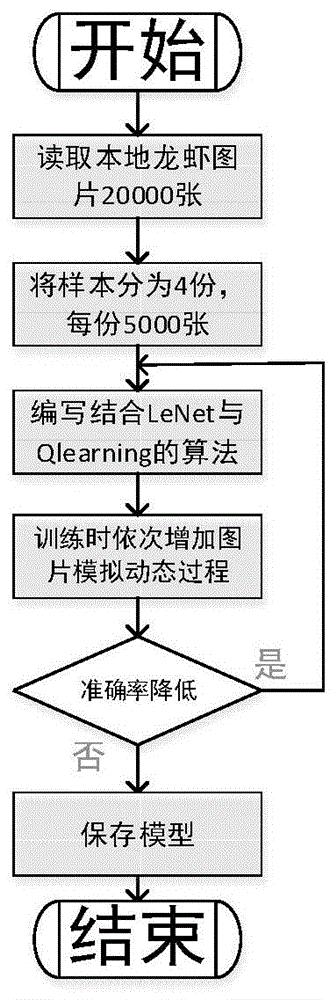
FIG. 1 is a flow chart of an embodiment of the present invention;
FIG. 2 is a diagram of a LeNet model in an embodiment of the present invention;
fig. 3 is a schematic diagram of LeNet and qleaving algorithms according to an embodiment of the present invention.
Detailed Description
In order to facilitate the understanding and implementation of the present invention for those of ordinary skill in the art, the present invention is further described in detail with reference to the accompanying drawings and examples, it is to be understood that the embodiments described herein are merely illustrative and explanatory of the present invention and are not restrictive thereof.
Referring to fig. 1 and fig. 3, a dynamic image classification method provided by the present invention includes the following steps:
step 1: acquiring a plurality of pictures as a sample set;
in this embodiment, taking a lobster sample as an example, 20000 local pictures are selected;
step 2: dividing a sample set into a plurality of subsets;
this example will divide the sample set into 4, 5000 pieces each, in preparation for simulating the dynamic process.
And step 3: randomly selecting a picture from the pictures in the first subset as an input to approach a Q (s, a; theta) function through a LeNet model, wherein s represents a state, a represents an action, and theta represents the weight of the LeNet model;
referring to fig. 2, the LeNet model of the present embodiment includes 3 convolution layers of 5 × 5, two pooling layers, and two full-connection layers.
And 4, step 4: selecting an action 1 or 0 according to a Q (s, a; theta) function to obtain a reward and a next picture; wherein 1 and 0 respectively represent 2 opposite categories of pictures (examples 1 and 0 respectively represent a good lobster picture and a bad lobster picture); obtaining a reward, and if the classification is correct, then scoring by + 1; if the classification is wrong, -1 point;
because each picture is classified, the samples are divided into two classes, in the case of lobsters, good lobsters are classified into one class, 1 is used as a label, 0 is used as a label, the classification is correct +1, and the classification is wrong-1, and finally the classification accuracy is judged through the obtained scores, wherein the higher the score is, the higher the classification accuracy is, and the better the classification effect is.
And 5: updating the weight of each layer of the LeNet model according to the reward so as to obtain a new LeNet model;
step 6: the next obtained picture is used as the input of the updated LeNet model, the operation is repeated until all pictures in the first subset are traversed, and the model is stored;
and 7: adding the pictures in the first subset to the previous subset, and performing the step 3 in a revolving way;
in the embodiment, pictures are sequentially added during training, wherein the pictures are 5000 pictures for the first time, 10000 pictures for the second time, 15000 pictures for the third time and 20000 pictures for the fourth time, and the dynamic process is simulated by the method.
And 8: comparing the accuracy of each time;
if the accuracy rate is reduced, adjusting a LeNet model such as a convolution module added with 1 x 1 to strengthen the algorithm, restarting all training, and performing step 3 in a rotating manner from the pictures in the first subset;
if the accuracy rate increases or does not change, the model is saved.
The invention is mainly applied to dynamic image classification, the dynamic problems of increasing pictures on a production line cannot be processed by singly using the current deep learning algorithm with better classification effect, and the current reinforcement learning is mainly applied to processing games. Therefore, the invention is combined with LeNet and Qlearning algorithm in reinforcement learning to process the dynamic image classification problem. The present invention can also be used to process a wide variety of large sample datasets such as ciffa10, ciffa100, etc.
It should be understood that parts of the specification not set forth in detail are well within the prior art.
It should be understood that the above description of the preferred embodiments is given for clarity and not for any purpose of limitation, and that various changes, substitutions and alterations can be made herein without departing from the spirit and scope of the invention as defined by the appended claims.

Claims (2)

1.一种动态图像分类方法,其特征在于,包括以下步骤:1. a dynamic image classification method, is characterized in that, comprises the following steps: 步骤1:获取若干图片,作为样本集;Step 1: Obtain several pictures as a sample set; 步骤2:将样本集分为若干子集;Step 2: Divide the sample set into several subsets; 步骤3:从第一个子集中的图片中随机选取一张图作为输入经过LeNet模型逼近Q(s,a;θ)函数,其中s表示状态,a表示动作,θ表示LeNet模型的权重;Step 3: Randomly select a picture from the pictures in the first subset as input and approximate the Q(s, a; θ) function through the LeNet model, where s represents the state, a represents the action, and θ represents the weight of the LeNet model; 步骤4:根据Q(s,a;θ)函数选取一个动作1或0,得到一个奖励和下一张图片;其中,1和0分别表示图片的2个对立的类别;所述得到一个奖励,如果分类正确,则+1分;如果分类错误,则-1分;得分越高分类准确率越高;Step 4: Select an action 1 or 0 according to the Q(s, a; θ) function, and get a reward and the next picture; wherein, 1 and 0 represent two opposite categories of the picture respectively; said getting a reward, If the classification is correct, +1 point; if the classification is wrong, -1 point; the higher the score, the higher the classification accuracy; 步骤5:根据奖励更新LeNet模型各层的权重从而得到新的LeNet模型;Step 5: Update the weights of each layer of the LeNet model according to the reward to obtain a new LeNet model; 步骤6:得到的下一张图作为更新后LeNet模型的输入,回转执行步骤3直到遍历第一个子集中的所有图片,保存模型;Step 6: The next picture obtained is used as the input of the updated LeNet model, and step 3 is executed in turn until all pictures in the first subset are traversed, and the model is saved; 步骤7:将后一个子集中的图片添加到前面的子集中,回转执行步骤3;Step 7: Add the pictures in the latter subset to the former subset, and perform step 3 in turn; 步骤8:对比每次的准确率;Step 8: Compare the accuracy of each time; 如果准确率下降,微调LeNet模型,所有的训练要重新开始,从第一个子集中的图片开始,回转执行步骤3;其中所述微调LeNet模型,是增加1*1的卷积层;If the accuracy rate drops, fine-tune the LeNet model, all training must be restarted, starting from the pictures in the first subset, and perform step 3 in turn; wherein the fine-tuning of the LeNet model is to add a 1*1 convolutional layer; 如果准确率增加或不变,则保存模型。If the accuracy increases or does not change, save the model. 2.根据权利要求1所述的动态图像分类方法,其特征在于:步骤3中所述LeNet模型,包括3层5*5的卷积层、两层池化层和两层全连接层。2. The dynamic image classification method according to claim 1, characterized in that: the LeNet model described in step 3 comprises three layers of 5*5 convolution layers, two layers of pooling layers and two layers of fully connected layers.
CN201910031358.3A 2019-01-14 2019-01-14 A dynamic image classification method Expired - Fee Related CN109840552B (en)

Priority Applications (1)

Application Number Priority Date Filing Date Title
CN201910031358.3A CN109840552B (en) 2019-01-14 2019-01-14 A dynamic image classification method

Applications Claiming Priority (1)

Application Number Priority Date Filing Date Title
CN201910031358.3A CN109840552B (en) 2019-01-14 2019-01-14 A dynamic image classification method

Publications (2)

Publication Number Publication Date
CN109840552A CN109840552A (en) 2019-06-04
CN109840552B true CN109840552B (en) 2020-04-10

Family

ID=66883811

Family Applications (1)

Application Number Title Priority Date Filing Date
CN201910031358.3A Expired - Fee Related CN109840552B (en) 2019-01-14 2019-01-14 A dynamic image classification method

Country Status (1)

Country Link
CN (1) CN109840552B (en)

Families Citing this family (1)

* Cited by examiner, † Cited by third party
Publication number Priority date Publication date Assignee Title
CN111633647B (en) * 2020-05-26 2021-06-22 山东大学 A multi-mode fusion robot sewing method and system based on deep reinforcement learning

Family Cites Families (5)

* Cited by examiner, † Cited by third party
Publication number Priority date Publication date Assignee Title
CN104766096B (en) * 2015-04-17 2017-11-10 南京大学 A kind of image classification method based on multiple dimensioned global characteristics and local feature
US11580398B2 (en) * 2016-10-14 2023-02-14 KLA-Tenor Corp. Diagnostic systems and methods for deep learning models configured for semiconductor applications
CN106874956B (en) * 2017-02-27 2018-10-23 陕西师范大学 The construction method of image classification convolutional neural networks structure
CN107016409A (en) * 2017-03-20 2017-08-04 华中科技大学 A kind of image classification method and system based on salient region of image
CN108537277A (en) * 2018-04-10 2018-09-14 湖北工业大学 A kind of image classification knowledge method for distinguishing

Also Published As

Publication number Publication date
CN109840552A (en) 2019-06-04

Similar Documents

Publication Publication Date Title
CN110799992B (en) Using simulation and domain adaptation for robot control
US11640518B2 (en) Method and apparatus for training a neural network using modality signals of different domains
CN111507419A (en) Training method and device of image classification model
CN112232395B (en) A semi-supervised image classification method based on joint training of generative adversarial networks
CN110880176B (en) Semi-supervised industrial image defect segmentation method based on countermeasure generation network
CN110209857B (en) Vehicle multi-attribute identification method, device and medium based on neural network structure search
TWI785739B (en) Method of acquiring target model, electronic device and storage medium
CN114037055A (en) Data processing system, method, device, equipment and storage medium
CN112766315A (en) Method and system for testing robustness of artificial intelligence model
CN113449878B (en) Data distributed incremental learning method, system, equipment and storage medium
CN117237720A (en) Label noise correction image classification method based on reinforcement learning
CN110807291A (en) Site situation future guiding technology based on mimicry counterstudy mechanism
CN113689348A (en) Multi-task image restoration method, system, electronic device and storage medium
CN115953618A (en) Method for realizing unsupervised domain self-adaptive image classification through feature decoupling
CN113837296B (en) A RGBT visual tracking method and system based on two-stage fusion structure search
CN109840552B (en) A dynamic image classification method
CN119863706A (en) Lightweight fruit target detection method based on characteristic distillation and improvement YOLOv8
CN113033410B (en) Domain generalized person re-identification method, system and medium based on automatic data augmentation
CN114298168A (en) Three-dimensional point cloud processing method and system
CN114463596A (en) Small sample image identification method, device and equipment of hypergraph neural network
CN114445684B (en) Lane segmentation model training method, device, equipment and storage medium
CN116702872A (en) Reinforcement learning method and device based on offline pre-training state transfer Transformer model
WO2020087254A1 (en) Optimization method for convolutional neural network, and related product
CN111144497B (en) Image saliency prediction method under multi-task deep network based on aesthetic analysis
CN113591647B (en) Human action recognition method, device, computer equipment and storage medium

Legal Events

Date Code Title Description
PB01 Publication
PB01 Publication
SE01 Entry into force of request for substantive examination
GR01 Patent grant
GR01 Patent grant
CF01 Termination of patent right due to non-payment of annual fee

Granted publication date: 20200410

CF01 Termination of patent right due to non-payment of annual fee