CN109726552B - Control method and device and electronic equipment - Google Patents
Control method and device and electronic equipment Download PDFInfo
- Publication number
- CN109726552B CN109726552B CN201811635568.5A CN201811635568A CN109726552B CN 109726552 B CN109726552 B CN 109726552B CN 201811635568 A CN201811635568 A CN 201811635568A CN 109726552 B CN109726552 B CN 109726552B
- Authority
- CN
- China
- Prior art keywords
- data processing
- processing request
- output device
- parameter
- electronic device
- Prior art date
- Legal status (The legal status is an assumption and is not a legal conclusion. Google has not performed a legal analysis and makes no representation as to the accuracy of the status listed.)
- Active
Links
- 238000000034 method Methods 0.000 title claims abstract description 69
- 238000012545 processing Methods 0.000 claims abstract description 496
- 230000004044 response Effects 0.000 claims description 91
- 238000012546 transfer Methods 0.000 claims description 13
- 230000002401 inhibitory effect Effects 0.000 claims description 4
- 230000005540 biological transmission Effects 0.000 description 84
- 238000004891 communication Methods 0.000 description 21
- 238000010586 diagram Methods 0.000 description 10
- 238000012512 characterization method Methods 0.000 description 6
- 241000700605 Viruses Species 0.000 description 3
- 238000012217 deletion Methods 0.000 description 3
- 230000037430 deletion Effects 0.000 description 3
- GOLXNESZZPUPJE-UHFFFAOYSA-N spiromesifen Chemical compound CC1=CC(C)=CC(C)=C1C(C(O1)=O)=C(OC(=O)CC(C)(C)C)C11CCCC1 GOLXNESZZPUPJE-UHFFFAOYSA-N 0.000 description 3
- 230000001010 compromised effect Effects 0.000 description 2
- 230000000694 effects Effects 0.000 description 2
- 238000005516 engineering process Methods 0.000 description 2
- 230000001419 dependent effect Effects 0.000 description 1
- 238000013461 design Methods 0.000 description 1
- 238000011161 development Methods 0.000 description 1
- 238000012986 modification Methods 0.000 description 1
- 230000004048 modification Effects 0.000 description 1
Images


Landscapes
- Mobile Radio Communication Systems (AREA)
- Telephone Function (AREA)
Abstract
The disclosure discloses a control method, a control device and electronic equipment, wherein the method comprises the following steps: obtaining a data processing request and obtaining a use state parameter, wherein the use state parameter can be used for representing the use state of the electronic equipment; if the use state parameter meets the condition, forbidding to respond to the data processing request; and responding to the data processing request if the use state parameter does not meet the condition. According to the method and the device, different control modes can be adopted for the data processing request in the electronic equipment according to different use states of the electronic equipment.
Description
Technical Field
The present disclosure relates to the field of electronic technologies, and in particular, to a control method and apparatus, and an electronic device.
Background
With the continuous development of electronic technology, various applications in electronic devices are increasing. At present, on the electronic equipment, an application often executes an instruction which does not accord with the intention of a user in the background, so that the electronic equipment is easy to have potential harm.
Disclosure of Invention
In view of this, the present disclosure provides a control method, an apparatus and an electronic device, which can adopt different control modes for data processing requests in the electronic device according to different use states of the electronic device.
The present disclosure provides a control method, comprising:
obtaining a data processing request;
obtaining a use state parameter, wherein the use state parameter can be used for representing a use state of the electronic equipment;
if the use state parameter meets the condition, forbidding to respond to the data processing request;
and responding to the data processing request if the using state parameter does not meet the condition.
In the above method, preferably, the obtaining a data processing request includes:
a data transfer request is obtained.
The method preferably, the obtaining the usage state parameter includes:
obtaining a parameter characterizing whether the data processing request is generated according to an input operation from an input device;
correspondingly, if the generation of the data processing request is not characterized by the input operation from the input device, the response to the data processing request is forbidden;
accordingly, the data processing request is responded to if the generation of the data processing request is characterized by the input operation from the output device.
The method preferably, the obtaining the usage state parameter includes:
obtaining a use state parameter of an output device, wherein the use state parameter of the output device is used for representing whether the output device is in a working state or not;
correspondingly, if the use state parameter of the output device represents that the output device is in a non-working state, the data processing request is prohibited from being responded;
correspondingly, if the use state parameter of the output device indicates that the output device is in the working state, the data processing request is responded.
The method preferably, obtaining the data processing request includes: obtaining the data processing request in case of outputting content information;
wherein after responding to the data processing request, further comprising: and outputting prompt information different from the content information, wherein the prompt information is used for representing that the data processing request is responded.
The method preferably further includes outputting a prompt message different from the content message:
outputting prompt information different from the content information if the content information is information of a first application and the data processing request is generated by a second application;
wherein the first application and the second application are different.
Preferably, after the prohibiting the response to the data processing request, the method further includes:
recording application and/or access parameters;
and if the use state parameter does not meet the condition, outputting the recorded application and/or access parameter.
A control device, comprising:
a request acquisition unit for acquiring a data processing request;
the device comprises a parameter acquisition unit, a parameter storage unit and a parameter display unit, wherein the parameter acquisition unit is used for acquiring a use state parameter which can be used for representing the use state of the electronic equipment;
a prohibition unit configured to prohibit a response to the data processing request if the usage status parameter satisfies a condition;
a response unit, configured to respond to the data processing request if the usage status parameter does not satisfy the condition.
Preferably, in the above control device, the request obtaining unit is specifically configured to:
a data transfer request is obtained.
Preferably, in the above control device, the parameter obtaining unit is specifically configured to:
obtaining a parameter characterizing whether the data processing request is generated according to an input operation from an input device
Correspondingly, if the generation of the data processing request is not according to the input operation from the input device, the prohibiting unit is specifically configured to: inhibiting responding to the data processing request;
correspondingly, if the generation of the data processing request is characterized by an input operation from the output device, the response unit is specifically configured to: responding to the data processing request.
Preferably, in the above control device, the parameter obtaining unit is specifically configured to:
obtaining a use state parameter of an output device, wherein the use state parameter of the output device is used for representing whether the output device is in a working state or not;
correspondingly, if the use state parameter of the output device represents that the output device is in the non-working state, the prohibiting unit is specifically configured to: inhibiting responding to the data processing request;
correspondingly, if the use state parameter of the output device represents that the output device is in the working state, the response unit is specifically configured to: responding to the data processing request.
Preferably, in the above control device, the parameter obtaining unit is specifically configured to:
obtaining the data processing request in case of outputting content information;
further comprising:
and the prompt information output unit is used for outputting prompt information different from the content information after responding to the data processing request, and the prompt information is used for representing that the data processing request is responded.
Preferably, in the control device, the prompt information output unit is specifically configured to:
outputting prompt information different from the content information if the content information is information of a first application and the data processing request is generated by a second application;
wherein the first application and the second application are different.
The control device preferably further includes:
the recording unit is used for forbidding to record the application and/or the access parameter after responding to the data processing request;
further comprising:
an output unit, configured to output the recorded application and/or access parameter if the usage status parameter does not satisfy a condition.
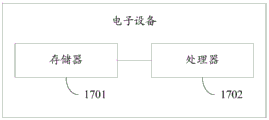
An electronic device, comprising:
the memory is used for storing the application program and data generated by the operation of the application program;
a processor for running the application to obtain a data processing request; the processor is further configured to obtain a use state parameter, where the use state parameter can be used to characterize a use state of the electronic device;
the processor is further configured to prohibit a response to the data processing request if the usage status parameter satisfies a condition;
the processor is further configured to respond to the data processing request if the usage state parameter does not satisfy the condition.
According to the technical scheme, when a data processing request is acquired, the state of the electronic equipment is judged through the acquired parameter which can be used for representing the use state of the electronic equipment, when the use state parameter meets the condition, the data processing request is prohibited to be responded, and when the use state parameter does not meet the condition, the data processing request is responded; according to different use states of the electronic equipment, different control modes can be adopted for the data processing request of the electronic equipment.
Drawings
In order to more clearly illustrate the embodiments of the present disclosure or the technical solutions in the prior art, the drawings used in the description of the embodiments or the prior art will be briefly described below, it is obvious that the drawings in the following description are only some embodiments of the present disclosure, and other drawings can be obtained by those skilled in the art without creative efforts.
Fig. 1 to 8 are flow charts of implementation of an embodiment of a control method disclosed in the present disclosure;
fig. 9 to 16 are schematic structural diagrams illustrating an implementation of an embodiment of a control device according to the present disclosure;
fig. 17 is a schematic view of an implementation structure of an embodiment of an electronic device disclosed in the present disclosure.
Detailed Description
The technical solutions in the embodiments of the present disclosure will be clearly and completely described below with reference to the drawings in the embodiments of the present disclosure, and it is obvious that the described embodiments are only a part of the embodiments of the present disclosure, and not all of the embodiments. All other embodiments, which can be derived by a person skilled in the art from the embodiments disclosed herein without making any creative effort, shall fall within the protection scope of the present disclosure.
As shown in fig. 1, an implementation flowchart of embodiment 1 of a control method provided by the present disclosure is a method, which is suitable for an electronic device capable of performing data processing, such as a mobile phone, a pad, or a notebook computer, and correspondingly, the method in this embodiment may include the following steps:
step 101, obtaining a data processing request;
in this embodiment, when the electronic device obtains a data processing request, it will perform corresponding control on the request. Wherein the obtained data processing request comprises a request that potentially endangers or not the electronic device. For example, when the data processing request meets the user's intention, the obtained data processing request does not cause potential harm to the electronic device; when the data processing request does not meet the user's intent, the obtained data processing request can potentially harm the electronic device. The obtained data processing request may be initiated by a device capable of establishing a communication connection with the electronic device, such as a server, or may be initiated by an input device capable of establishing a connection with the electronic device, such as a keyboard, a mouse, or the like. When the data of the electronic equipment needs to be processed, a data processing request is generated.
102, obtaining a use state parameter, wherein the use state parameter can be used for representing a use state of the electronic equipment;
and after the data processing request is obtained, further obtaining the use state parameters capable of representing the current state of the electronic equipment. For example, the usage parameters of the electronic device in the black screen state are acquired, or the usage parameters of the electronic device in the bright screen state are acquired. The electronic equipment can be judged to be in a use state or a non-use state currently through the obtained use state parameters. In this embodiment, whether the obtained data processing request meets the intention of the user can be determined according to the use state or the non-use state of the electronic device at present.
Step 103, if the use state parameter meets the condition, forbidding to respond to the data processing request;
in the present embodiment, when the obtained usage state parameter satisfies the condition, the control electronic device prohibits the response to the obtained data processing request at this time. The use state parameter satisfies the condition, which indicates that the user's intention is not met in response to the data processing request at this time, and the electronic device is potentially harmful. For example, in a non-use state (a black screen state) of the electronic device, the data request is not initiated by a user to automatically kill viruses, automatically compress data, automatically delete data, or automatically establish a search index, and in this case, if the data request is responded, the processor performance, the power, or the network bandwidth of the electronic device may be wasted. Therefore, in this case, the electronic device is controlled to prohibit the response to the data processing request, so that the electronic device can be effectively prevented from being harmed.
And 104, responding to the data processing request if the using state parameter does not meet the condition.
In the present embodiment, when the obtained usage state parameter does not satisfy the condition, the control electronic device responds to the obtained data processing request at this time. The use state parameter does not meet the condition, and the representation accords with the data processing intention of the user if the data processing request is responded at the moment. For example, when a request to delete data is initiated by a user, the electronic device does not harm the electronic device by responding to the data deletion request.
In summary, in the above embodiment, when the data processing request is acquired, the state of the electronic device is determined by the acquired parameter that can be used to characterize the use state of the electronic device, when the state parameter satisfies the condition, the data processing request is prohibited from being responded to, and when the state parameter does not satisfy the condition, the data processing request is responded to; whether the data processing request meets the user intention can be judged according to different using states of the electronic equipment, and when the data processing request does not meet the user intention, the electronic equipment is controlled to forbid responding to the data processing request, so that the problem that the electronic equipment has potential harm is effectively avoided.
As shown in fig. 2, an implementation flowchart of embodiment 2 of a control method provided by the present disclosure is a method, which is suitable for an electronic device capable of performing data processing, such as a mobile phone, a pad, or a notebook computer, and correspondingly, the method in this embodiment may include the following steps:
step 201, obtaining a data transmission request;
in this embodiment, when the electronic device obtains a data transmission request, it will perform corresponding control on the request. Wherein the data transmission request can be used for transmitting data in an electronic device in an uplink and/or a downlink. For example, the data transfer request is used to download data in the electronic device or to transfer a downloaded application into the electronic device.
Wherein the obtained data transmission request comprises a request that potentially endangers or not the electronic device. For example, when the data transmission request conforms to the user's intention (for example, the data transmission request is a request initiated by the user to download pictures in the gallery of the electronic device), the obtained data transmission request does not cause potential harm to the electronic device; when the data transfer request does not meet the user's intent (e.g., the data transfer request is not a user-initiated request to download a picture in the gallery of the electronic device), the obtained data transfer request can potentially harm the electronic device.
The obtained data transmission request may be initiated by a device capable of establishing a communication connection with the electronic device, such as a server, or may be initiated by an input device capable of establishing a connection with the electronic device, such as a keyboard, a mouse, or the like. When data transmission is required in the electronic equipment, a data transmission request is generated.
Step 202, obtaining a use state parameter, wherein the use state parameter can be used for representing a use state of the electronic device;
and after the data transmission request is obtained, further obtaining the use state parameters capable of representing the current state of the electronic equipment. For example, the usage parameters of the electronic device in the black screen state are acquired, or the usage parameters of the electronic device in the bright screen state are acquired. The electronic equipment can be judged to be in a use state or a non-use state currently through the obtained use state parameters. In this embodiment, whether the obtained data transmission request meets the intention of the user can be determined according to the use state or the non-use state of the electronic device.
Step 203, if the using state parameter meets the condition, forbidding to respond to the data transmission request;
in this embodiment, when the obtained usage state parameter satisfies the condition, the control electronic device prohibits the response to the obtained data transmission request at this time. The use state parameter satisfies the condition, which indicates that the user's intention is not met if the data transmission request is responded at this time, and the electronic device is potentially harmful. For example, the data transmission request is not initiated by the user to download data in the electronic device or transmit the downloaded application to the electronic device, in this case, if the data transmission request is responded, there is a danger that private data in the electronic device is leaked, or there is a danger that the downloaded application is maliciously transmitted to the electronic device. Therefore, in this case, the electronic device is controlled to prohibit the response to the data transmission request, so that the electronic device can be effectively prevented from being endangered by leakage of private data or transmission of maliciously downloaded applications to the electronic device.
And step 204, responding to the data transmission request if the using state parameter does not meet the condition.
In this embodiment, when the obtained usage state parameter does not satisfy the condition, the control electronic device responds to the obtained data transmission request at this time. The use state parameter does not meet the condition, at the moment, if the data transmission request is responded, the data transmission intention of the user is met, and in the state, the electronic equipment can carry out normal data transmission. For example, the data transmission request is initiated by a user to download data in the electronic device or to transmit a downloaded application to the electronic device, in which case the electronic device is not compromised if the data transmission request is responded to.
In summary, in the above embodiment, when the data transmission request is acquired, the state of the electronic device is determined according to the acquired parameter that can be used to represent the use state of the electronic device, when the state parameter satisfies the condition, the data transmission request is prohibited from being responded, and when the state parameter does not satisfy the condition, the data transmission request is responded; the method and the device have the advantages that the response of uplink transmission data and/or downlink transmission data can be forbidden when the state parameters meet the conditions, so that the privacy data in the electronic equipment are effectively prevented from being leaked, the malicious downloaded application is effectively prevented from being transmitted to the electronic equipment, and correspondingly, the data transmission request can be normally responded when the state parameters do not meet the conditions.
It should be noted that, in the above-mentioned embodiment, when determining whether the obtained usage state parameter satisfies the condition, the electronic device may be controlled to prohibit a response to the data processing request by determining whether the obtained usage state parameter represents an input operation of the data processing request from the input device, and when the obtained usage state parameter of the electronic device does not represent an input operation of the data processing request from the user to the input device, that is, the obtained usage state parameter satisfies the condition, the electronic device may be controlled to prohibit a response to the data processing request; when the obtained use state parameter of the electronic equipment represents the generation of the data processing request from the input operation of the user to the input device, namely the data processing request obtained by the electronic equipment is generated by the input operation of the user to the input device, and at the moment, the obtained use state parameter does not meet the condition, the electronic equipment is controlled to respond to the data processing request; a specific implementation is shown in fig. 3 below.
In addition, in the above embodiment, when determining whether the obtained usage state parameter satisfies the condition, the electronic device may further be controlled to prohibit a response to the data processing request by determining whether the obtained usage state parameter of the output device indicates that the output device is in the operating state, and when the obtained usage state parameter of the output device indicates that the output device is not in the operating state, the obtained usage state parameter satisfies the condition; when the obtained use state parameter of the output device represents that the output device is in a working state, the obtained use state parameter does not meet the condition, and the electronic equipment is controlled to respond to the data processing request; a specific implementation is shown in fig. 4 below.
In addition, in the above embodiment, when determining whether the obtained usage state parameter satisfies the condition, the electronic device may be further controlled to prohibit a response to the data processing request by simultaneously determining whether the obtained usage state parameter represents an input operation from the input device generated by the data processing request and determining whether the obtained usage state parameter of the output device represents that the output device is in the operating state, when the obtained usage state parameter of the electronic device does not represent an input operation from the user to the input device generated by the data processing request and the obtained usage state parameter of the output device represents that the output device is not in the operating state, the obtained usage state parameter satisfies the condition; when the obtained using state parameter of the electronic equipment represents the input operation of the user on the input device and/or the obtained using state parameter of the output device represents that the output device is in a working state, and at the moment, the obtained using state parameter does not meet the condition, controlling the electronic equipment to respond to the data processing request; a specific implementation is shown in fig. 5 below.
As shown in fig. 3, an implementation flowchart of embodiment 3 of a control method provided in the present disclosure is a flowchart, where the method is applied to an electronic device capable of performing data processing, such as a mobile phone, a pad, or a notebook computer, and correspondingly, the method in this embodiment may include the following steps:
step 301, obtaining a data processing request;
in this embodiment, when the electronic device obtains a data processing request, it will perform corresponding control on the request. Wherein the obtained data processing request comprises a request that potentially endangers or not the electronic device. For example, when the data processing request meets the user's intention, the obtained data processing request does not cause potential harm to the electronic device; when the data processing request does not meet the user's intent, the obtained data processing request can potentially harm the electronic device.
The obtained request may be used to process data of the electronic device, for example, delete and compress the data in the electronic device, or perform uplink transmission and/or downlink transmission in the electronic device.
The obtained request may be initiated by a device capable of establishing a communication connection with the electronic device, such as a server, or may be initiated by an input device capable of establishing a connection with the electronic device, such as a keyboard, a mouse, or the like. When the data of the electronic equipment needs to be processed, a data processing request is generated.
Step 302, obtaining whether the generation of the data processing request is according to the parameters of the input operation from the input device;
and further acquiring parameters after acquiring the data processing request, wherein the acquired parameters can represent whether the generated data processing request is based on the input operation from the input device. For example, whether the generated data request is according to input operations collected by various input devices such as keyboard input, mouse input, touch trajectory input, space gesture input or voice input and the like is characterized.
Wherein, when it is judged by the obtained parameter whether the generation of the data processing request is in accordance with the input operation from the input device, the judgment may be made by identifying the obtained parameter. For example, when the acquired parameter flag is 1, it indicates that a data processing request is generated by an input operation to the input device at this time. For example, the user inputs the operation of downloading the picture of the electronic device through voice, and generates a request for downloading the picture in the electronic device. When the acquired parameter flag is 0, it indicates that the acquired data processing request is not generated by an input operation of the input device. For example, a data processing request is initiated by a server communicatively coupled to the electronic device.
It should be noted that the input device is a local device, and does not include a communication device, such as: an antenna, a network card or a communication device such as Bluetooth.
Step 303, if the generation of the representation data processing request is not based on the input operation from the input device, forbidding to respond to the data processing request;
in this embodiment, when the data processing request acquired by the electronic apparatus is not generated by an input operation to the input device, the electronic apparatus prohibits the response to the acquired data transmission request. For example, when the acquired request for downloading the picture of the electronic equipment is not generated by the input of the user through the input device, the response to the request for downloading the picture from the electronic equipment is forbidden, and the picture in the electronic equipment of the user can be effectively prevented from being leaked. Or when the obtained request for uploading the application is not generated by the input of the user through the input device, the response to the request for uploading the application to the electronic equipment is forbidden, and the application which is maliciously downloaded can be effectively prevented from being transmitted to the electronic equipment.
Step 304, responding to the data processing request if the token data processing request is generated based on an input operation from the input device.
In this embodiment, when the data processing request acquired by the electronic device is generated by an input operation to the input device, the electronic device responds to the acquired data transmission request. For example, when the acquired request for downloading the picture of the electronic device is generated by the input of the user through the input device, the request for downloading the picture from the electronic device is responded at this time, and the requirement of the user for downloading the picture can be met. Or, when the obtained request for uploading the application is generated by the user through input of the input device, the application required by the user can be installed on the electronic equipment in response to the request for uploading the application to the electronic equipment.
It should be noted that, in this embodiment, in the process of responding to the data processing request when the usage status parameter does not satisfy the condition, if the usage status of the electronic device again satisfies the parameter condition, the response data processing request may be continuously executed at this time, or the response data processing request may be suspended until the usage status of the electronic device does not satisfy the parameter condition, and the response data processing request is continuously executed. For example, when a user generates a request for downloading a picture of an electronic device through an input device, if the electronic device appears a black screen during the process of downloading the picture of the electronic device, the picture of the electronic device can be continuously downloaded until the downloading is completed, and the downloading of the picture of the electronic device can be suspended until the picture of the electronic device is continuously downloaded when the electronic device is on the screen.
In summary, in the above embodiments, by determining whether the generation of the data processing request is from an input operation of the input device, and using different control manners for the data processing request in the electronic device according to different determination results, the data processing request is responded only when the generation of the data processing request is from the input operation of the input device, that is, the data processing request is responded only when the generation of the data processing request is from the input operation of the user on the input device, so that the privacy is effectively prevented from being violated without the user knowing, and the user experience is improved.
As shown in fig. 4, which is an implementation flowchart of embodiment 4 of a control method provided in the present disclosure, the method is suitable for an electronic device capable of performing data processing, such as a mobile phone, a pad, or a notebook computer, and correspondingly, the method in this embodiment may include the following steps:
step 401, obtaining a data processing request;
in this embodiment, when the electronic device obtains a data processing request, it will perform corresponding control on the request. Wherein the obtained data processing request comprises a request that potentially endangers or not the electronic device. For example, when the data processing request meets the user's intention, the obtained data processing request does not cause potential harm to the electronic device; when the data processing request does not meet the user's intent, the obtained data processing request can potentially harm the electronic device. The obtained request is used for processing data of the electronic device, for example, deleting and compressing data in the electronic device, or performing processing such as uplink transmission data and/or downlink transmission data in the electronic device. The obtained request may be initiated by a device capable of establishing a communication connection with the electronic device, such as a server, or may be initiated by an input device capable of establishing a connection with the electronic device, such as a keyboard, a mouse, or the like. When the data of the electronic equipment needs to be processed, a data processing request is generated.
402, obtaining a use state parameter of the output device, wherein the use state parameter of the output device is used for representing whether the output device is in a working state;
and when the data processing request is obtained, further obtaining the use state parameters of the output device. The output device is a multimedia output device, such as an image output device or an audio output device. And the current output device can be judged to be in a working state or a non-working state through the obtained using state parameters of the output device. For example, when the obtained using state parameter represents that the image output device is outputting an image, the image output device is in a working state at the moment; or when the obtained using state parameter represents that the audio output device outputs the audio, the audio output device is in the working state.
Step 403, representing that the output device is in a non-working state by using the state parameters of the output device, and forbidding to respond to the data processing request;
when the output device is in the non-operating state, the response to the data processing request is prohibited. That is, when the output device is in the non-operating state, it indicates that the user is not currently using the electronic device, and at this time, there is a risk that the electronic device is subjected to a malicious request if responding to the data processing request. For example, when the electronic device is in a blank screen state and no audio is output, if a request for deleting data is responded at this time, data in the electronic device may be deleted by mistake without the user's knowledge.
And step 404, representing that the output device is in a working state by using the use state parameter of the output device, and responding to the data processing request.
When the output device is in the working state, the data processing request is responded. That is, when the output device is in an operating state, indicating that the user is currently using the electronic apparatus, the data processing request is responded to. For example, when a user is watching a video through the electronic device, a request to upload the acquired video assets to the electronic device may be responded to at this time.
It should be noted that, in this embodiment, in the process of responding to the data processing request when the output device is in the operating state, if the output device enters the non-operating state, the response data processing request may be continuously executed, or the response data processing request may be suspended until the output device is in the operating state again, and the response data processing request is continuously executed. For example, when a user watches a video through the image output device and downloads the watched video at the same time, if the image output device enters a non-operating state during the process of downloading the video, the video can be continuously downloaded until the downloading is completed, and the video downloading can be suspended until the image output device is in an operating state again and continues to download the video.
In summary, in the above embodiments, by determining whether the output device is in the working state, and using different control manners for the data processing request in the electronic device according to different determination results, the data processing request is responded only when the output device is in the working state, so that the privacy is effectively prevented from being violated under the condition that the user does not know, and the user experience is improved.
As shown in fig. 5, an implementation flowchart of embodiment 5 of a control method provided by the present disclosure is a method, which is suitable for an electronic device capable of performing data processing, such as a mobile phone, a pad, or a notebook computer, and correspondingly, the method in this embodiment may include the following steps:
step 501, obtaining a data processing request;
in this embodiment, when the electronic device obtains a data processing request, it will perform corresponding control on the request. Wherein the obtained data processing request comprises a request that potentially endangers or not the electronic device. For example, when the data processing request meets the user's intention, the obtained data processing request does not cause potential harm to the electronic device; when the data processing request does not meet the user's intent, the obtained data processing request can potentially harm the electronic device.
The obtained request may be used to process data of the electronic device, for example, delete and compress the data in the electronic device, or perform uplink transmission and/or downlink transmission in the electronic device.
The obtained request may be initiated by a device capable of establishing a communication connection with the electronic device, such as a server, or may be initiated by an input device capable of establishing a connection with the electronic device, such as a keyboard, a mouse, or the like. When the data of the electronic equipment needs to be processed, a data processing request is generated.
Step 502, obtaining a parameter indicating whether the generation of the data processing request is based on the input operation from the input device;
and further acquiring parameters after acquiring the data processing request, wherein the acquired parameters can represent whether the generated data processing request is based on the input operation from the input device. For example, whether the generated data request is according to input operations collected by various input devices such as keyboard input, mouse input, touch trajectory input, space gesture input or voice input and the like is characterized.
Wherein, when it is judged by the obtained parameter whether the generation of the data processing request is in accordance with the input operation from the input device, the judgment may be made by identifying the obtained parameter. For example, when the acquired parameter flag is 1, it indicates that a data processing request is generated by an input operation to the input device at this time. For example, the user inputs the operation of downloading the picture of the electronic device through voice, and generates a request for downloading the picture in the electronic device. When the acquired parameter flag is 0, it indicates that the acquired data processing request is not generated by an input operation of the input device. For example, a data processing request is initiated by a server communicatively coupled to the electronic device.
It should be noted that the input device is a local device, and does not include a communication device, such as: an antenna, a network card or a communication device such as Bluetooth.
Step 503, obtaining a use state parameter of the output device, wherein the use state parameter of the output device is used for representing whether the output device is in a working state;
and when the data processing request is obtained, further obtaining the use state parameters of the output device. The output device is a multimedia output device, such as an image output device or an audio output device. And the current output device can be judged to be in a working state or a non-working state through the obtained using state parameters of the output device. For example, when the obtained using state parameter represents that the image output device is outputting an image, the image output device is in a working state at the moment; or when the obtained using state parameter represents that the audio output device outputs the audio, the audio output device is in the working state.
Step 504, if the generation of the representation data processing request is not based on the input operation from the input device, and the use state parameter of the output device represents that the output device is in a non-working state, the response to the data processing request is forbidden;
and further acquiring parameters after acquiring the data processing request, wherein the acquired parameters can represent whether the generated data processing request is based on the input operation from the input device. For example, whether the generated data request is according to input operations collected by various input devices such as keyboard input, mouse input, touch trajectory input, space gesture input or voice input and the like is characterized.
Meanwhile, whether the output device is in a working state or not is judged according to the obtained using state parameters of the output device, and when the output device is in a non-working state, the user is indicated that the electronic equipment is not used currently.
When the data processing request is not generated according to the input operation from the input device (for example, the request for obtaining the picture downloaded from the electronic equipment is not generated by the input operation of the user through the input device), and the use state parameter of the output device indicates that the output device is in the non-working state (for example, the image output device does not output the image at the moment, or the audio output device does not output the audio at the moment), it indicates that the electronic equipment is potentially harmful if the data processing request is not met at the moment. For example, when a picture in the electronic device is downloaded at this time, the picture in the electronic device may be leaked without the user knowing.
And 505, responding to the data processing request if the generation of the representation data processing request is based on the input operation from the input device and/or the use state parameter of the output device represents that the output device is in the working state.
When the data processing request is generated according to the input operation from the input device, for example, the data processing request obtained by the electronic device is a request for downloading a picture in the electronic device generated by the user through the input operation of the input device, at this time, if the data processing request is responded, the intention of the user is met, and the electronic device is not potentially damaged. Or, the use state parameter of the output device represents that the output device is in an operating state, for example, a user is watching a video output by the image output device, at this time, it indicates that the user is using the electronic device, and the user responds to the data processing request under the condition of knowing the user, so that the electronic device is not potentially harmful. Or, when the representation data processing request is generated according to the input operation from the input device and the usage state parameter of the output device represents that the output device is in the working state, for example, the data processing request obtained by the electronic device is a request for downloading a picture in the electronic device generated by the user through the input operation of the input device, and the user is watching a video output by the image output device at the moment, it indicates that the user is using the electronic device and the data processing request is issued by the user, and the data processing request is responded to under the condition that the user knows, so that the electronic device is not potentially harmful.
It should be noted that, in the above embodiment, in the process of responding to the data processing request, when the generation of the data processing request is based on the input operation from the input device and the usage state parameter of the output device indicates that the output device is in the working state, if the output device enters the non-working state, the data processing request is suspended and the data processing request continues to be responded until the output device enters the working state again.
On the basis of the embodiment that the output device is in a working state and responds to the data processing request, under the condition that the output content information exists, prompt information different from the content information can be further output and is used for timely prompting a user to respond to the data processing request; a specific implementation is shown in fig. 6 below.
As shown in fig. 6, which is a flowchart of an implementation of embodiment 6 of a control method provided in the present disclosure, the method is suitable for an electronic device capable of performing data processing, such as a mobile phone, a pad, or a notebook computer, and correspondingly, the method in this embodiment may include the following steps:
step 601, obtaining a data processing request under the condition of outputting content information;
in this embodiment, when the electronic device obtains a data processing request under the condition of outputting content information, corresponding control is performed on the request. The output content information refers to that the electronic equipment is currently outputting information through an output device, for example, outputting a video in a video application through a multimedia output device.
Wherein the obtained data processing request comprises a request that potentially endangers or not the electronic device. For example, when the data processing request meets the user's intention, the obtained data processing request does not cause potential harm to the electronic device; when the data processing request does not meet the user's intent, the obtained data processing request can potentially harm the electronic device.
The obtained request is used for processing data of the electronic device, for example, deleting and compressing data in the electronic device, or performing processing such as uplink transmission data and/or downlink transmission data in the electronic device. The obtained request may be initiated by a device capable of establishing a communication connection with the electronic device, such as a server, or may be initiated by an input device capable of establishing a connection with the electronic device, such as a keyboard, a mouse, or the like. When the data of the electronic equipment needs to be processed, a data processing request is generated.
Step 602, obtaining a use state parameter of the output device, wherein the use state parameter of the output device is used for representing whether the output device is in a working state;
and when the data processing request is obtained, further obtaining the use state parameters of the output device. The output device is a multimedia output device, such as an image output device or an audio output device. And the current output device can be judged to be in a working state or a non-working state through the obtained using state parameters of the output device. For example, when the obtained using state parameter represents that the image output device is outputting an image, the image output device is in a working state at the moment; or when the obtained using state parameter represents that the audio output device outputs the audio, the audio output device is in the working state.
603, representing that the output device is in a working state by using the state parameters of the output device, and responding to the data processing request;
when the output device outputs the content information in the working state, the data processing request is responded. That is, when the output device is in an operating state, indicating that the user is currently using the electronic apparatus, the data processing request is responded to. For example, when a user is watching a video through the electronic device, a request to upload the acquired video assets to the electronic device may be responded to at this time.
It should be noted that, in this embodiment, in the process of responding to the data processing request when the output device is in the operating state, if the output device enters the non-operating state, the response data processing request may be continuously executed, or the response data processing request may be suspended until the output device is in the operating state again, and the response data processing request is continuously executed. For example, when a user watches a video through the image output device and downloads the watched video at the same time, if the image output device enters a non-operating state during the process of downloading the video, the video can be continuously downloaded until the downloading is completed, and the video downloading can be suspended until the image output device is in an operating state again and continues to download the video.
And step 604, outputting prompt information different from the content information, wherein the prompt information is used for representing the responded data processing request.
And after the output content information of the output device is in a working state and responds to the data processing request, further outputting prompt information representing the responded data processing request. The content of the output presentation information is different from the content output by the output device. For example, when the content information output by the output device is video information and the data processing request is to download a picture of the electronic device, the output prompt information is to indicate that the picture of the electronic device is being downloaded. The content of the output presentation information is different from the content output by the output device, but the type of the output presentation information may be the same as the type of the content information output by the output device. For example, when the content information output by the output device is video information, the prompt information representing that the picture of the electronic device is being downloaded can be displayed on the electronic device in the form of a prompt box, and the content in the prompt box is the "picture being downloaded". Alternatively, when the content information output by the output device is audio information, such as music being played by the audio output device, the prompt information indicating that the picture of the electronic device is being downloaded may be output in the form of audio, such as audio of "picture being downloaded". The type of the output prompt information is matched with the type of the content information output by the output device, so that a user can more conveniently know the data processing request responded by the current electronic equipment.
In summary, on the basis of the above embodiments, after responding to the data processing request, the embodiment further outputs the prompt information different from the content information output by the output device, so that the user can conveniently know the data processing request responded by the current electronic device through the output prompt information, and the user experience is further improved.
Specifically, one implementation manner of outputting the prompt information different from the content information may be: when the output content information is information of a first application and the data processing request is generated by a second application different from the first application, the prompt information different from the content information is output. That is, only when the application that outputs the content information is different from the application that generates the data processing request, the presentation information different from the content information is output after responding to the data processing request; a specific implementation is shown in fig. 7 below.
As shown in fig. 7, which is a flowchart of an implementation of embodiment 7 of a control method provided by the present disclosure on the basis of the above method embodiment 6, the method is suitable for an electronic device capable of performing data processing, such as a mobile phone, a pad, or a notebook computer, and correspondingly, the method in this embodiment may include the following steps:
step 701, obtaining a data processing request under the condition of outputting content information;
step 702, obtaining a use state parameter of the output device, wherein the use state parameter of the output device is used for representing whether the output device is in a working state;
703, representing that the output device is in a working state by using the state parameters of the output device, and responding to the data processing request;
step 704, if the content information is information of a first application and the data processing request is generated by a second application, outputting prompt information different from the content information, wherein the prompt information is used for representing that the data processing request is responded, and the first application and the second application are different.
After the content information output by the output device is the information of the first application, the data processing request is generated by the second application, and the data processing request is responded, prompt information which represents the responded data processing request is further output. For example, the content information output by the output device is video information of a video application, and when the data processing request is a request for obtaining a chat record generated by a social application, prompt information of "obtaining the chat record" is output. That is, in this embodiment, if the content information output by the output device is the information of the first application, the data processing request is also generated by the first application, and the prompt information is not generated after the data processing request is responded. For example, when the content information output by the output device is video information of a video application, and the data processing request is that the video application acquires resources related to the video information, since the privacy of the user is not violated at this time, in order to avoid that the user continuously pops up prompt information for acquiring the resources related to the video information while watching a video, the prompt information is not generated after responding to the data processing request, and the user experience is further improved while the privacy of the user is protected.
The content of the output presentation information is different from the content output by the output device. For example, when the content information output by the output device is video information and the data processing request is to download a picture of the electronic device, the output prompt information is to indicate that the picture of the electronic device is being downloaded.
The content of the output presentation information is different from the content output by the output device, but the type of the output presentation information may be the same as the type of the content information output by the output device. For example, when the content information output by the output device is video information, the prompt information representing that the picture of the electronic device is being downloaded can be displayed on the electronic device in the form of a prompt box, and the content in the prompt box is the "picture being downloaded". Alternatively, when the content information output by the output device is audio information, such as music being played by the audio output device, the prompt information indicating that the picture of the electronic device is being downloaded may be output in the form of audio, such as audio of "picture being downloaded". The type of the output prompt information is matched with the type of the content information output by the output device, so that a user can more conveniently know the data processing request responded by the current electronic equipment.
In the above embodiment, after the response to the data processing request is prohibited, the application and/or access parameter in the response to the data processing request is further recorded, and the recorded application and/or access parameter is output for the user to view. When the application and/or access parameter of the record is output, the application and/or access parameter may be output immediately after the record, or may be output when the obtained usage state parameter does not satisfy the condition again. One specific implementation of which is shown in fig. 8 below.
As shown in fig. 8, which is a flowchart of an implementation of embodiment 8 of a control method provided by the present disclosure on the basis of the foregoing method embodiment 1, the method is suitable for an electronic device capable of performing data processing, such as a mobile phone, a pad, or a notebook computer, and correspondingly, after the step 103 prohibits the response of the data processing request, the method in this embodiment may further include the following steps:
step 801, recording application and/or access parameters;
after the response to the data processing request is prohibited, the application and/or access parameters in the response to the data processing request may be further recorded. For example, the data processing request is to download a chat record of the social application, and after the download of the chat record of the social application is prohibited, the social application and the chat record information of the social application are recorded. Or, the output processing request is to transmit the application to the electronic device, and after the application is prohibited from being transmitted to the electronic device, the external address parameter for transmitting the application is recorded.
Based on the above embodiment, in a specific implementation manner, when the data processing request acquired by the electronic device is not generated by an input operation on the input device, at this time, the application and/or the access parameter in the data request which is prohibited from responding may be further recorded. Or when the output device is in a non-working state, after the data processing request is prohibited to be responded, further recording the application and/or access parameters in the data processing request which is prohibited to be responded.
And step 802, if the state parameter does not meet the condition, outputting the recorded application and/or access parameter.
When the status parameter does not satisfy the condition, when the data processing request can be responded, the application and/or access parameter recorded after the data processing request is prohibited from being responded is output.
By outputting the recorded application and/or access parameters after the data processing requests are prohibited from being responded when the data processing requests can be responded again, users can know which data processing requests are prohibited from being responded specifically, and the recorded application and/or access parameters can be output immediately after recording, so that the effect of saving the performance of the processor of the electronic equipment can be further achieved. For example, when the user uses the electronic device again, the recorded social application and the chat log information of the social application are displayed, so that the user can know the condition of being illegally accessed.
Based on the above embodiments, in a specific implementation, it may be that the electronic device is again in a state where the generation of the characterization data processing request is based on an input operation from the input device, and the application and/or access parameter recorded after the response to the data processing request is prohibited is output. It is also possible to output the application and/or access parameter recorded after disabling the response to the data processing request when the output device is in the operating state again.
It should be noted that, in a specific implementation manner, after the application and/or access parameter is recorded, the recorded application and/or access parameter may be output in time, that is, the recorded application and/or access parameter does not need to be output when the status parameter does not meet the condition, so that a user can know the condition of being illegally accessed in time.
As shown in fig. 9, a schematic structural diagram of an embodiment 1 of a control device provided in this disclosure, the control device is suitable for an electronic device capable of performing data processing, such as a mobile phone, a pad, or a notebook computer, and accordingly, the control device in this embodiment may include:
a request obtaining unit 901 configured to obtain a data processing request;
in this embodiment, when the electronic device obtains a data processing request, it will perform corresponding control on the request. Wherein the obtained data processing request comprises a request that potentially endangers or not the electronic device. For example, when the data processing request meets the user's intention, the obtained data processing request does not cause potential harm to the electronic device; when the data processing request does not meet the user's intent, the obtained data processing request can potentially harm the electronic device. The obtained data processing request may be initiated by a device capable of establishing a communication connection with the electronic device, such as a server, or may be initiated by an input device capable of establishing a connection with the electronic device, such as a keyboard, a mouse, or the like. When the data of the electronic equipment needs to be processed, a data processing request is generated.
A parameter obtaining unit 902, configured to obtain a use state parameter, where the use state parameter can be used to represent a use state of the electronic device;
and after the data processing request is obtained, further obtaining the use state parameters capable of representing the current state of the electronic equipment. For example, the usage parameters of the electronic device in the black screen state are acquired, or the usage parameters of the electronic device in the bright screen state are acquired. The electronic equipment can be judged to be in a use state or a non-use state currently through the obtained use state parameters. In this embodiment, whether the obtained data processing request meets the intention of the user can be determined according to the use state or the non-use state of the electronic device at present.
A prohibition unit 903 configured to prohibit a response to the data processing request if the usage status parameter satisfies a condition;
in the present embodiment, when the obtained usage state parameter satisfies the condition, the control electronic device prohibits the response to the obtained data processing request at this time. The use state parameter satisfies the condition, which indicates that the user's intention is not met in response to the data processing request at this time, and the electronic device is potentially harmful. For example, in a non-use state (a black screen state) of the electronic device, the data request is not initiated by a user to automatically kill viruses, automatically compress data, automatically delete data, or automatically establish a search index, and in this case, if the data request is responded, the processor performance, the power, or the network bandwidth of the electronic device may be wasted. Therefore, in this case, the electronic device is controlled to prohibit the response to the data processing request, so that the electronic device can be effectively prevented from being harmed.
A response unit 904 for responding to the data processing request if the usage status parameter does not satisfy the condition.
In the present embodiment, when the obtained usage state parameter does not satisfy the condition, the control electronic device responds to the obtained data processing request at this time. The use state parameter does not meet the condition, and the representation accords with the data processing intention of the user if the data processing request is responded at the moment. For example, when a request to delete data is initiated by a user, the electronic device does not harm the electronic device by responding to the data deletion request. In summary, in the above embodiment, when the data processing request is acquired, the state of the electronic device is determined by the acquired parameter that can be used to characterize the use state of the electronic device, when the state parameter satisfies the condition, the data processing request is prohibited from being responded to, and when the state parameter does not satisfy the condition, the data processing request is responded to; whether the data processing request meets the user intention can be judged according to different using states of the electronic equipment, and when the data processing request does not meet the user intention, the electronic equipment is controlled to forbid responding to the data processing request, so that the problem that the electronic equipment has potential harm is effectively avoided.
As shown in fig. 10, a schematic structural diagram of an embodiment 2 of a control device provided in this disclosure, the control device is suitable for an electronic device capable of performing data processing, such as a mobile phone, a pad, or a notebook computer, and accordingly, the control device in this embodiment may include:
a request acquisition unit 1001 configured to acquire a data transmission request;
in this embodiment, when the electronic device obtains a data transmission request, it will perform corresponding control on the request. Wherein the data transmission request can be used for transmitting data in an electronic device in an uplink and/or a downlink. For example, the data transfer request is used to download data in the electronic device or to transfer a downloaded application into the electronic device.
Wherein the obtained data transmission request comprises a request that potentially endangers or not the electronic device. For example, when the data transmission request conforms to the user's intention (for example, the data transmission request is a request initiated by the user to download pictures in the gallery of the electronic device), the obtained data transmission request does not cause potential harm to the electronic device; when the data transfer request does not meet the user's intent (e.g., the data transfer request is not a user-initiated request to download a picture in the gallery of the electronic device), the obtained data transfer request can potentially harm the electronic device.
The obtained data transmission request may be initiated by a device capable of establishing a communication connection with the electronic device, such as a server, or may be initiated by an input device capable of establishing a connection with the electronic device, such as a keyboard, a mouse, or the like. When data transmission is required in the electronic equipment, a data transmission request is generated.
A parameter obtaining unit 1002, configured to obtain a use state parameter, where the use state parameter can be used to represent a use state of the electronic device;
and after the data transmission request is obtained, further obtaining the use state parameters capable of representing the current state of the electronic equipment. For example, the usage parameters of the electronic device in the black screen state are acquired, or the usage parameters of the electronic device in the bright screen state are acquired. The electronic equipment can be judged to be in a use state or a non-use state currently through the obtained use state parameters. In this embodiment, whether the obtained data transmission request meets the intention of the user can be determined according to the use state or the non-use state of the electronic device.
A prohibition unit 1003 configured to prohibit a response to the data transmission request if the usage status parameter satisfies a condition;
in this embodiment, when the obtained usage state parameter satisfies the condition, the control electronic device prohibits the response to the obtained data transmission request at this time. The use state parameter satisfies the condition, which indicates that the user's intention is not met if the data transmission request is responded at this time, and the electronic device is potentially harmful. For example, the data transmission request is not initiated by the user to download data in the electronic device or transmit the downloaded application to the electronic device, in this case, if the data transmission request is responded, there is a danger that private data in the electronic device is leaked, or there is a danger that the downloaded application is maliciously transmitted to the electronic device. Therefore, in this case, the electronic device is controlled to prohibit the response to the data transmission request, so that the electronic device can be effectively prevented from being endangered by leakage of private data or transmission of maliciously downloaded applications to the electronic device.
A response unit 1004 for responding to the data transmission request if the usage status parameter does not satisfy the condition.
In this embodiment, when the obtained usage state parameter does not satisfy the condition, the control electronic device responds to the obtained data transmission request at this time. The use state parameter does not meet the condition, at the moment, if the data transmission request is responded, the data transmission intention of the user is met, and in the state, the electronic equipment can carry out normal data transmission. For example, the data transmission request is initiated by a user to download data in the electronic device or to transmit a downloaded application to the electronic device, in which case the electronic device is not compromised if the data transmission request is responded to.
In summary, in the above embodiment, when the data transmission request is acquired, the state of the electronic device is determined according to the acquired parameter that can be used to represent the use state of the electronic device, when the state parameter satisfies the condition, the data transmission request is prohibited from being responded, and when the state parameter does not satisfy the condition, the data transmission request is responded; the method and the device have the advantages that the response of uplink transmission data and/or downlink transmission data can be forbidden when the state parameters meet the conditions, so that the privacy data in the electronic equipment are effectively prevented from being leaked, the malicious downloaded application is effectively prevented from being transmitted to the electronic equipment, and correspondingly, the data transmission request can be normally responded when the state parameters do not meet the conditions.
It should be noted that, in the above-mentioned embodiment, when determining whether the obtained usage state parameter satisfies the condition, the electronic device may be controlled to prohibit a response to the data processing request by determining whether the obtained usage state parameter represents an input operation of the data processing request from the input device, and when the obtained usage state parameter of the electronic device does not represent an input operation of the data processing request from the user to the input device, that is, the obtained usage state parameter satisfies the condition, the electronic device may be controlled to prohibit a response to the data processing request; when the obtained use state parameter of the electronic equipment represents the generation of the data processing request from the input operation of the user to the input device, namely the data processing request obtained by the electronic equipment is generated by the input operation of the user to the input device, and at the moment, the obtained use state parameter does not meet the condition, the electronic equipment is controlled to respond to the data processing request; a specific implementation is shown in fig. 11 below.
In addition, in the above embodiment, when determining whether the obtained usage state parameter satisfies the condition, the electronic device may further be controlled to prohibit a response to the data processing request by determining whether the obtained usage state parameter of the output device indicates that the output device is in the operating state, and when the obtained usage state parameter of the output device indicates that the output device is not in the operating state, the obtained usage state parameter satisfies the condition; when the obtained use state parameter of the output device represents that the output device is in a working state, the obtained use state parameter does not meet the condition, and the electronic equipment is controlled to respond to the data processing request; a specific implementation is shown in fig. 12 below.
In addition, in the above embodiment, when determining whether the obtained usage state parameter satisfies the condition, the electronic device may be further controlled to prohibit a response to the data processing request by simultaneously determining whether the obtained usage state parameter represents an input operation from the input device generated by the data processing request and determining whether the obtained usage state parameter of the output device represents that the output device is in the operating state, when the obtained usage state parameter of the electronic device does not represent an input operation from the user to the input device generated by the data processing request and the obtained usage state parameter of the output device represents that the output device is not in the operating state, the obtained usage state parameter satisfies the condition; when the obtained using state parameter of the electronic equipment represents the input operation of the user on the input device and/or the obtained using state parameter of the output device represents that the output device is in a working state, and at the moment, the obtained using state parameter does not meet the condition, controlling the electronic equipment to respond to the data processing request; a specific implementation is shown in fig. 13 below.
As shown in fig. 11, a schematic structural diagram of an embodiment 3 of a control device provided in this disclosure, the control device is suitable for an electronic device capable of performing data processing, such as a mobile phone, a pad, or a notebook computer, and accordingly, the control device in this embodiment may include:
a request acquisition unit 1101 for acquiring a data processing request;
in this embodiment, when the electronic device obtains a data processing request, it will perform corresponding control on the request. Wherein the obtained data processing request comprises a request that potentially endangers or not the electronic device. For example, when the data processing request meets the user's intention, the obtained data processing request does not cause potential harm to the electronic device; when the data processing request does not meet the user's intent, the obtained data processing request can potentially harm the electronic device.
The obtained request may be used to process data of the electronic device, for example, delete and compress the data in the electronic device, or perform uplink transmission and/or downlink transmission in the electronic device.
The obtained request may be initiated by a device capable of establishing a communication connection with the electronic device, such as a server, or may be initiated by an input device capable of establishing a connection with the electronic device, such as a keyboard, a mouse, or the like. When the data of the electronic equipment needs to be processed, a data processing request is generated.
A parameter obtaining unit 1102 for obtaining a parameter indicating whether generation of the data processing request is in accordance with an input operation from the input device;
and further acquiring parameters after acquiring the data processing request, wherein the acquired parameters can represent whether the generated data processing request is based on the input operation from the input device. For example, whether the generated data request is according to input operations collected by various input devices such as keyboard input, mouse input, touch trajectory input, space gesture input or voice input and the like is characterized.
Wherein, when it is judged by the obtained parameter whether the generation of the data processing request is in accordance with the input operation from the input device, the judgment may be made by identifying the obtained parameter. For example, when the acquired parameter flag is 1, it indicates that a data processing request is generated by an input operation to the input device at this time. For example, the user inputs the operation of downloading the picture of the electronic device through voice, and generates a request for downloading the picture in the electronic device. When the acquired parameter flag is 0, it indicates that the acquired data processing request is not generated by an input operation of the input device. For example, a data processing request is initiated by a server communicatively coupled to the electronic device.
It should be noted that the input device is a local device, and does not include a communication device, such as: an antenna, a network card or a communication device such as Bluetooth.
A prohibiting unit 1103 for prohibiting a response to the data processing request if generation of the characterization data processing request is not in accordance with an input operation from the input device;
in this embodiment, when the data processing request acquired by the electronic apparatus is not generated by an input operation to the input device, the electronic apparatus prohibits the response to the acquired data transmission request. For example, when the acquired request for downloading the picture of the electronic equipment is not generated by the input of the user through the input device, the response to the request for downloading the picture from the electronic equipment is forbidden, and the picture in the electronic equipment of the user can be effectively prevented from being leaked. Or when the obtained request for uploading the application is not generated by the input of the user through the input device, the response to the request for uploading the application to the electronic equipment is forbidden, and the application which is maliciously downloaded can be effectively prevented from being transmitted to the electronic equipment.
A response unit 1104 for responding to the data processing request if the generation of the characterization data processing request is in accordance with an input operation from the input device.
In this embodiment, when the data processing request acquired by the electronic device is generated by an input operation to the input device, the electronic device responds to the acquired data transmission request. For example, when the acquired request for downloading the picture of the electronic device is generated by the input of the user through the input device, the request for downloading the picture from the electronic device is responded at this time, and the requirement of the user for downloading the picture can be met. Or, when the obtained request for uploading the application is generated by the user through input of the input device, the application required by the user can be installed on the electronic equipment in response to the request for uploading the application to the electronic equipment.
It should be noted that, in this embodiment, in the process of responding to the data processing request when the usage status parameter does not satisfy the condition, if the usage status of the electronic device again satisfies the parameter condition, the response data processing request may be continuously executed at this time, or the response data processing request may be suspended until the usage status of the electronic device does not satisfy the parameter condition, and the response data processing request is continuously executed. For example, when a user generates a request for downloading a picture of an electronic device through an input device, if the electronic device appears a black screen during the process of downloading the picture of the electronic device, the picture of the electronic device can be continuously downloaded until the downloading is completed, and the downloading of the picture of the electronic device can be suspended until the picture of the electronic device is continuously downloaded when the electronic device is on the screen.
In summary, in the above embodiments, by determining whether the generation of the data processing request is from an input operation of the input device, and using different control manners for the data processing request in the electronic device according to different determination results, the data processing request is responded only when the generation of the data processing request is from the input operation of the input device, that is, the data processing request is responded only when the generation of the data processing request is from the input operation of the user on the input device, so that the privacy is effectively prevented from being violated without the user knowing, and the user experience is improved.
As shown in fig. 12, which is a schematic structural diagram of an embodiment 4 of a control device provided in this disclosure, the control device is suitable for an electronic device capable of performing data processing, such as a mobile phone, a pad, or a notebook computer, and correspondingly, the control device in this embodiment may include:
a request obtaining unit 1201, configured to obtain a data processing request;
in this embodiment, when the electronic device obtains a data processing request, it will perform corresponding control on the request. Wherein the obtained data processing request comprises a request that potentially endangers or not the electronic device. For example, when the data processing request meets the user's intention, the obtained data processing request does not cause potential harm to the electronic device; when the data processing request does not meet the user's intent, the obtained data processing request can potentially harm the electronic device. The obtained request is used for processing data of the electronic device, for example, deleting and compressing data in the electronic device, or performing processing such as uplink transmission data and/or downlink transmission data in the electronic device. The obtained request may be initiated by a device capable of establishing a communication connection with the electronic device, such as a server, or may be initiated by an input device capable of establishing a connection with the electronic device, such as a keyboard, a mouse, or the like. When the data of the electronic equipment needs to be processed, a data processing request is generated.
A parameter obtaining unit 1202, configured to obtain a use state parameter of the output device, where the use state parameter of the output device is used to represent whether the output device is in a working state;
and when the data processing request is obtained, further obtaining the use state parameters of the output device. The output device is a multimedia output device, such as an image output device or an audio output device. And the current output device can be judged to be in a working state or a non-working state through the obtained using state parameters of the output device. For example, when the obtained using state parameter represents that the image output device is outputting an image, the image output device is in a working state at the moment; or when the obtained using state parameter represents that the audio output device outputs the audio, the audio output device is in the working state.
A prohibiting unit 1203, configured to prohibit a response to the data processing request, when the use state parameter of the output device indicates that the output device is in a non-working state;
when the output device is in the non-operating state, the response to the data processing request is prohibited. That is, when the output device is in the non-operating state, it indicates that the user is not currently using the electronic device, and at this time, there is a risk that the electronic device is subjected to a malicious request if responding to the data processing request. For example, when the electronic device is in a blank screen state and no audio is output, if a request for deleting data is responded at this time, data in the electronic device may be deleted by mistake without the user's knowledge.
A response unit 1204, configured to characterize the operating state of the output device by using the state parameter of the output device, and respond to the data processing request.
When the output device is in the working state, the data processing request is responded. That is, when the output device is in an operating state, indicating that the user is currently using the electronic apparatus, the data processing request is responded to. For example, when a user is watching a video through the electronic device, a request to upload the acquired video assets to the electronic device may be responded to at this time.
It should be noted that, in this embodiment, in the process of responding to the data processing request when the output device is in the operating state, if the output device enters the non-operating state, the response data processing request may be continuously executed, or the response data processing request may be suspended until the output device is in the operating state again, and the response data processing request is continuously executed. For example, when a user watches a video through the image output device and downloads the watched video at the same time, if the image output device enters a non-operating state during the process of downloading the video, the video can be continuously downloaded until the downloading is completed, and the video downloading can be suspended until the image output device is in an operating state again and continues to download the video.
In summary, in the above embodiments, by determining whether the output device is in the working state, and using different control manners for the data processing request in the electronic device according to different determination results, the data processing request is responded only when the output device is in the working state, so that the privacy is effectively prevented from being violated under the condition that the user does not know, and the user experience is improved.
As shown in fig. 13, a schematic structural diagram of an embodiment 5 of a control device provided in this disclosure, the control device is suitable for an electronic device capable of performing data processing, such as a mobile phone, a pad, or a notebook computer, and accordingly, the control device in this embodiment may include:
a request obtaining unit 1301, configured to obtain a data processing request;
in this embodiment, when the electronic device obtains a data processing request, it will perform corresponding control on the request. Wherein the obtained data processing request comprises a request that potentially endangers or not the electronic device. For example, when the data processing request meets the user's intention, the obtained data processing request does not cause potential harm to the electronic device; when the data processing request does not meet the user's intent, the obtained data processing request can potentially harm the electronic device.
The obtained request may be used to process data of the electronic device, for example, delete and compress the data in the electronic device, or perform uplink transmission and/or downlink transmission in the electronic device.
The obtained request may be initiated by a device capable of establishing a communication connection with the electronic device, such as a server, or may be initiated by an input device capable of establishing a connection with the electronic device, such as a keyboard, a mouse, or the like. When the data of the electronic equipment needs to be processed, a data processing request is generated.
A parameter obtaining unit 1302 for obtaining a parameter indicating whether the generation of the data processing request is in accordance with an input operation from the input device;
after obtaining the data processing request, further obtaining a parameter, wherein the obtained parameter can represent whether the generated data processing request is based on an input operation from the input device. For example, whether the generated data request is according to input operations collected by various input devices such as keyboard input, mouse input, touch trajectory input, space gesture input or voice input and the like is characterized.
Wherein, when it is judged by the obtained parameter whether the generation of the data processing request is in accordance with the input operation from the input device, the judgment may be made by identifying the obtained parameter. For example, when the acquired parameter flag is 1, it indicates that a data processing request is generated by an input operation to the input device at this time. For example, the user inputs the operation of downloading the picture of the electronic device through voice, and generates a request for downloading the picture in the electronic device. When the acquired parameter flag is 0, it indicates that the acquired data processing request is not generated by an input operation of the input device. For example, a data processing request is initiated by a server communicatively coupled to the electronic device.
It should be noted that the input device is a local device, and does not include a communication device, such as: an antenna, a network card or a communication device such as Bluetooth.
The parameter obtaining unit 1302 is further configured to obtain a use state parameter of the output device, where the use state parameter of the output device is used to represent whether the output device is in a working state;
and when the data processing request is obtained, further obtaining the use state parameters of the output device. The output device is a multimedia output device, such as an image output device or an audio output device. And the current output device can be judged to be in a working state or a non-working state through the obtained using state parameters of the output device. For example, when the obtained using state parameter represents that the image output device is outputting an image, the image output device is in a working state at the moment; or when the obtained using state parameter represents that the audio output device outputs the audio, the audio output device is in the working state.
A prohibiting unit 1303, configured to prohibit a response to the data processing request if the generation of the characterization data processing request is not based on an input operation from the input device and the usage state parameter of the output device characterizes that the output device is in a non-working state;
and further acquiring parameters after acquiring the data processing request, wherein the acquired parameters can represent whether the generated data processing request is based on the input operation from the input device. For example, whether the generated data request is according to input operations collected by various input devices such as keyboard input, mouse input, touch trajectory input, space gesture input or voice input and the like is characterized.
Meanwhile, whether the output device is in a working state or not is judged according to the obtained using state parameters of the output device, and when the output device is in a non-working state, the user is indicated that the electronic equipment is not used currently.
When the data processing request is not generated according to the input operation from the input device (for example, the request for obtaining the picture downloaded from the electronic equipment is not generated by the input operation of the user through the input device), and the use state parameter of the output device indicates that the output device is in the non-working state (for example, the image output device does not output the image at the moment, or the audio output device does not output the audio at the moment), it indicates that the electronic equipment is potentially harmful if the data processing request is not met at the moment. For example, when a picture in the electronic device is downloaded at this time, the picture in the electronic device may be leaked without the user knowing.
A response unit 1304 for responding to the data processing request if the generation of the characterization data processing request is dependent on the input operation from the input device, and/or the usage state parameter of the output device characterizes that the output device is in the working state.
When the data processing request is generated according to the input operation from the input device, for example, the data processing request obtained by the electronic device is a request for downloading a picture in the electronic device generated by the user through the input operation of the input device, at this time, if the data processing request is responded, the intention of the user is met, and the electronic device is not potentially damaged. Or, the use state parameter of the output device represents that the output device is in an operating state, for example, a user is watching a video output by the image output device, at this time, it indicates that the user is using the electronic device, and the user responds to the data processing request under the condition of knowing the user, so that the electronic device is not potentially harmful. Or, when the representation data processing request is generated according to the input operation from the input device and the usage state parameter of the output device represents that the output device is in the working state, for example, the data processing request obtained by the electronic device is a request for downloading a picture in the electronic device generated by the user through the input operation of the input device, and the user is watching a video output by the image output device at the moment, it indicates that the user is using the electronic device and the data processing request is issued by the user, and the data processing request is responded to under the condition that the user knows, so that the electronic device is not potentially harmful.
It should be noted that, in the above embodiment, in the process of responding to the data processing request, when the generation of the data processing request is based on the input operation from the input device and the usage state parameter of the output device indicates that the output device is in the working state, if the output device enters the non-working state, the data processing request is suspended and the data processing request continues to be responded until the output device enters the working state again.
On the basis of the embodiment that the output device is in a working state and responds to the data processing request, under the condition that the output content information exists, prompt information different from the content information can be further output and is used for timely prompting a user to respond to the data processing request; a specific implementation is shown in fig. 14 below.
As shown in fig. 14, a schematic structural diagram of an embodiment 6 of a control device provided in this disclosure, the control device is suitable for an electronic device capable of performing data processing, such as a mobile phone, a pad, or a notebook computer, and accordingly, the control device in this embodiment may include:
a request acquisition unit 1401 for acquiring a data processing request in a case where the content information is output;
in this embodiment, when the electronic device obtains a data processing request under the condition of outputting content information, corresponding control is performed on the request. The output content information refers to that the electronic equipment is currently outputting information through an output device, for example, outputting a video in a video application through a multimedia output device.
Wherein the obtained data processing request comprises a request that potentially endangers or not the electronic device. For example, when the data processing request meets the user's intention, the obtained data processing request does not cause potential harm to the electronic device; when the data processing request does not meet the user's intent, the obtained data processing request can potentially harm the electronic device.
The obtained request is used for processing data of the electronic device, for example, deleting and compressing data in the electronic device, or performing processing such as uplink transmission data and/or downlink transmission data in the electronic device. The obtained request may be initiated by a device capable of establishing a communication connection with the electronic device, such as a server, or may be initiated by an input device capable of establishing a connection with the electronic device, such as a keyboard, a mouse, or the like. When the data of the electronic equipment needs to be processed, a data processing request is generated.
A parameter obtaining unit 1402, configured to obtain a usage state parameter of the output device, where the usage state parameter of the output device is used to represent whether the output device is in a working state;
and when the data processing request is obtained, further obtaining the use state parameters of the output device. The output device is a multimedia output device, such as an image output device or an audio output device. And the current output device can be judged to be in a working state or a non-working state through the obtained using state parameters of the output device. For example, when the obtained using state parameter represents that the image output device is outputting an image, the image output device is in a working state at the moment; or when the obtained using state parameter represents that the audio output device outputs the audio, the audio output device is in the working state.
A response unit 1403, configured to characterize the operating state of the output device by using the state parameter of the output device, and respond to the data processing request;
when the output device outputs the content information in the working state, the data processing request is responded. That is, when the output device is in an operating state, indicating that the user is currently using the electronic apparatus, the data processing request is responded to. For example, when a user is watching a video through the electronic device, a request to upload the acquired video assets to the electronic device may be responded to at this time.
It should be noted that, in this embodiment, in the process of responding to the data processing request when the output device is in the operating state, if the output device enters the non-operating state, the response data processing request may be continuously executed, or the response data processing request may be suspended until the output device is in the operating state again, and the response data processing request is continuously executed. For example, when a user watches a video through the image output device and downloads the watched video at the same time, if the image output device enters a non-operating state during the process of downloading the video, the video can be continuously downloaded until the downloading is completed, and the video downloading can be suspended until the image output device is in an operating state again and continues to download the video.
A prompt information output unit 1404 configured to output prompt information different from the content information, wherein the prompt information is used to characterize the responded data processing request.
And after the output content information of the output device is in a working state and responds to the data processing request, further outputting prompt information representing the responded data processing request. The content of the output presentation information is different from the content output by the output device. For example, when the content information output by the output device is video information and the data processing request is to download a picture of the electronic device, the output prompt information is to indicate that the picture of the electronic device is being downloaded. The content of the output presentation information is different from the content output by the output device, but the type of the output presentation information may be the same as the type of the content information output by the output device. For example, when the content information output by the output device is video information, the prompt information representing that the picture of the electronic device is being downloaded can be displayed on the electronic device in the form of a prompt box, and the content in the prompt box is the "picture being downloaded". Alternatively, when the content information output by the output device is audio information, such as music being played by the audio output device, the prompt information indicating that the picture of the electronic device is being downloaded may be output in the form of audio, such as audio of "picture being downloaded". The type of the output prompt information is matched with the type of the content information output by the output device, so that a user can more conveniently know the data processing request responded by the current electronic equipment.
In summary, on the basis of the above embodiments, after responding to the data processing request, the embodiment further outputs the prompt information different from the content information output by the output device, so that the user can conveniently know the data processing request responded by the current electronic device through the output prompt information, and the user experience is further improved.
Specifically, one implementation manner of outputting the prompt information different from the content information may be: when the output content information is information of a first application and the data processing request is generated by a second application different from the first application, the prompt information different from the content information is output. That is, only when the application that outputs the content information is different from the application that generates the data processing request, the presentation information different from the content information is output after responding to the data processing request; a specific implementation is shown in fig. 15 below.
As shown in fig. 15, a schematic structural diagram of an embodiment 7 of a control device provided in this disclosure, the control device is suitable for an electronic device capable of performing data processing, such as a mobile phone, a pad, or a notebook computer, and accordingly, the control device in this embodiment may include:
a request acquisition unit 1501 for obtaining a data processing request in a case where content information is output;
a parameter obtaining unit 1502, configured to obtain a usage state parameter of the output device, where the usage state parameter of the output device is used to represent whether the output device is in a working state;
a response unit 1503, configured to respond to the data processing request when the use state parameter of the output device indicates that the output device is in a working state;
a prompt information output unit 1504 for outputting prompt information different from the content information if the content information is information of a first application and the data processing request is generated by a second application, wherein the prompt information is used to characterize that the first application and the second application are different in response to the data processing request.
After the content information output by the output device is the information of the first application, the data processing request is generated by the second application, and the data processing request is responded, prompt information which represents the responded data processing request is further output. For example, the content information output by the output device is video information of a video application, and when the data processing request is a request for obtaining a chat record generated by a social application, prompt information of "obtaining the chat record" is output. That is, in this embodiment, if the content information output by the output device is the information of the first application, the data processing request is also generated by the first application, and the prompt information is not generated after the data processing request is responded. For example, when the content information output by the output device is video information of a video application, and the data processing request is that the video application acquires resources related to the video information, since the privacy of the user is not violated at this time, in order to avoid that the user continuously pops up prompt information for acquiring the resources related to the video information while watching a video, the prompt information is not generated after responding to the data processing request, and the user experience is further improved while the privacy of the user is protected.
The content of the output presentation information is different from the content output by the output device. For example, when the content information output by the output device is video information and the data processing request is to download a picture of the electronic device, the output prompt information is to indicate that the picture of the electronic device is being downloaded.
The content of the output presentation information is different from the content output by the output device, but the type of the output presentation information may be the same as the type of the content information output by the output device. For example, when the content information output by the output device is video information, the prompt information representing that the picture of the electronic device is being downloaded can be displayed on the electronic device in the form of a prompt box, and the content in the prompt box is the "picture being downloaded". Alternatively, when the content information output by the output device is audio information, such as music being played by the audio output device, the prompt information indicating that the picture of the electronic device is being downloaded may be output in the form of audio, such as audio of "picture being downloaded". The type of the output prompt information is matched with the type of the content information output by the output device, so that a user can more conveniently know the data processing request responded by the current electronic equipment.
In the above embodiment, after the response to the data processing request is prohibited, the application and/or access parameter in the response to the data processing request is further recorded, and the recorded application and/or access parameter is output for the user to view. When the application and/or access parameter of the record is output, the application and/or access parameter may be output immediately after the record, or may be output when the obtained usage state parameter does not satisfy the condition again. One specific implementation of which is shown in fig. 16 below.
As shown in fig. 16, a schematic structural diagram of an embodiment 7 of a control device provided in the present disclosure on the basis of the embodiment 1 of the control device, the control device is suitable for an electronic device capable of performing data processing, such as a mobile phone, a pad, or a notebook computer, and correspondingly, the control device in this embodiment may further include, on the basis of the embodiment 1 of the control device:
a recording unit 1601 for recording application and/or access parameters;
after the response to the data processing request is prohibited, the application and/or access parameters in the response to the data processing request may be further recorded. For example, the data processing request is to download a chat record of the social application, and after the download of the chat record of the social application is prohibited, the social application and the chat record information of the social application are recorded. Or, the output processing request is to transmit the application to the electronic device, and after the application is prohibited from being transmitted to the electronic device, the external address parameter for transmitting the application is recorded.
Based on the above embodiment, in a specific implementation manner, when the data processing request acquired by the electronic device is not generated by an input operation on the input device, at this time, the application and/or the access parameter in the data request which is prohibited from responding may be further recorded. Or when the output device is in a non-working state, after the data processing request is prohibited to be responded, further recording the application and/or access parameters in the data processing request which is prohibited to be responded.
An output unit 1602, configured to output the recorded application and/or access parameter if the status parameter does not satisfy the condition.
When the status parameter does not satisfy the condition, when the data processing request can be responded, the application and/or access parameter recorded after the data processing request is prohibited from being responded is output.
By outputting the recorded application and/or access parameters after the data processing requests are prohibited from being responded when the data processing requests can be responded again, users can know which data processing requests are prohibited from being responded specifically, and the recorded application and/or access parameters can be output immediately after recording, so that the effect of saving the performance of the processor of the electronic equipment can be further achieved. For example, when the user uses the electronic device again, the recorded social application and the chat log information of the social application are displayed, so that the user can know the condition of being illegally accessed.
Based on the above embodiments, in a specific implementation, it may be that the electronic device is again in a state where the generation of the characterization data processing request is based on an input operation from the input device, and the application and/or access parameter recorded after the response to the data processing request is prohibited is output. It is also possible to output the application and/or access parameter recorded after disabling the response to the data processing request when the output device is in the operating state again.
It should be noted that, in a specific implementation manner, after the application and/or access parameter is recorded, the recorded application and/or access parameter may be output in time, that is, the recorded application and/or access parameter does not need to be output when the status parameter does not meet the condition, so that a user can know the condition of being illegally accessed in time.
As shown in fig. 17, a schematic structural diagram of an electronic device provided in the present disclosure is shown, where the electronic device may be, for example, a mobile phone, a pad, or a notebook computer, and accordingly, in an embodiment, the electronic device may include:
a memory 1701 for storing applications and data generated by the application operations;
a processor 1702 for running the application to obtain a data processing request;
in this embodiment, when the electronic device obtains a data processing request, it will perform corresponding control on the request. Wherein the obtained data processing request comprises a request that potentially endangers or not the electronic device. For example, when the data processing request meets the user's intention, the obtained data processing request does not cause potential harm to the electronic device; when the data processing request does not meet the user's intent, the obtained data processing request can potentially harm the electronic device. The obtained data processing request may be initiated by a device capable of establishing a communication connection with the electronic device, such as a server, or may be initiated by an input device capable of establishing a connection with the electronic device, such as a keyboard, a mouse, or the like. When the data of the electronic equipment needs to be processed, a data processing request is generated.
A processor 1702 for obtaining a usage state parameter, wherein the usage state parameter is usable to characterize a usage state of the electronic device;
and after the data processing request is obtained, further obtaining the use state parameters capable of representing the current state of the electronic equipment. For example, the usage parameters of the electronic device in the black screen state are acquired, or the usage parameters of the electronic device in the bright screen state are acquired. The electronic equipment can be judged to be in a use state or a non-use state currently through the obtained use state parameters. In this embodiment, whether the obtained data processing request meets the intention of the user can be determined according to the use state or the non-use state of the electronic device at present.
A processor 1702 for inhibiting a response to the data processing request if the usage status parameter satisfies a condition;
in the present embodiment, when the obtained usage state parameter satisfies the condition, the control electronic device prohibits the response to the obtained data processing request at this time. The use state parameter satisfies the condition, which indicates that the user's intention is not met in response to the data processing request at this time, and the electronic device is potentially harmful. For example, in a non-use state (a black screen state) of the electronic device, the data request is not initiated by a user to automatically kill viruses, automatically compress data, automatically delete data, or automatically establish a search index, and in this case, if the data request is responded, the processor performance, the power, or the network bandwidth of the electronic device may be wasted. Therefore, in this case, the electronic device is controlled to prohibit the response to the data processing request, so that the electronic device can be effectively prevented from being harmed.
A processor 1702 for responding to the data processing request if the usage status parameter does not satisfy the condition.
In the present embodiment, when the obtained usage state parameter does not satisfy the condition, the control electronic device responds to the obtained data processing request at this time. The use state parameter does not meet the condition, and the representation accords with the data processing intention of the user if the data processing request is responded at the moment. For example, when a request to delete data is initiated by a user, the electronic device does not harm the electronic device by responding to the data deletion request.
In summary, in the above embodiment, when the data processing request is acquired, the state of the electronic device is determined by the acquired parameter that can be used to characterize the use state of the electronic device, when the state parameter satisfies the condition, the data processing request is prohibited from being responded to, and when the state parameter does not satisfy the condition, the data processing request is responded to; whether the data processing request meets the user intention can be judged according to different using states of the electronic equipment, and when the data processing request does not meet the user intention, the electronic equipment is controlled to forbid responding to the data processing request, so that the problem that the electronic equipment has potential harm is effectively avoided.
It should be noted that the principles of other implementation manners of the electronic device disclosed in the present disclosure are the same as those of embodiments 2 to 8 of the control method, and are not described herein again.
Those of skill would further appreciate that the various illustrative elements and algorithm steps described in connection with the embodiments disclosed herein may be implemented as electronic hardware, computer software, or combinations of both, and that the various illustrative components and steps have been described above generally in terms of their functionality in order to clearly illustrate this interchangeability of hardware and software. Whether such functionality is implemented as hardware or software depends upon the particular application and design constraints imposed on the implementation. Skilled artisans may implement the described functionality in varying ways for each particular application, but such implementation decisions should not be interpreted as causing a departure from the scope of the present disclosure.
The steps of a method or algorithm described in connection with the embodiments disclosed herein may be embodied directly in hardware, in a software module executed by a processor, or in a combination of the two. A software module may reside in Random Access Memory (RAM), memory, Read Only Memory (ROM), electrically programmable ROM, electrically erasable programmable ROM, registers, hard disk, a removable disk, a CD-ROM, or any other form of storage medium known in the art.
The previous description of the disclosed embodiments is provided to enable any person skilled in the art to make or use the present disclosure. Various modifications to these embodiments will be readily apparent to those skilled in the art, and the generic principles defined herein may be applied to other embodiments without departing from the spirit or scope of the disclosure. Thus, the present disclosure is not intended to be limited to the embodiments shown herein but is to be accorded the widest scope consistent with the principles and novel features disclosed herein.
Claims (7)
1. A control method, comprising:
obtaining a data processing request in a case of outputting the content information;
obtaining a use state parameter, wherein the use state parameter can be used for representing a use state of the electronic equipment;
if the use state parameter meets the condition, forbidding to respond to the data processing request;
responding to the data processing request if the use state parameter does not satisfy the condition;
the obtaining the usage state parameters comprises:
obtaining a use state parameter of an output device, wherein the use state parameter of the output device is used for representing whether the output device is in a working state or not; correspondingly, if the use state parameter of the output device represents that the output device is in a non-working state, the data processing request is prohibited from being responded;
correspondingly, if the use state parameter of the output device represents that the output device is in the working state, responding to the data processing request;
after responding to the data processing request, the method further comprises the following steps: outputting prompt information different from the content information if the content information is information of a first application and the data processing request is generated by a second application;
wherein the first application and the second application are different, and the prompt information is used for representing that the data processing request is responded.
2. The method of claim 1, the obtaining a data processing request comprising:
a data transfer request is obtained.
3. The method of claim 1, the obtaining usage state parameters comprising:
obtaining a parameter characterizing whether the data processing request is generated according to an input operation from an input device; correspondingly, if the generation of the data processing request is not characterized by the input operation from the input device, the response to the data processing request is forbidden;
accordingly, the data processing request is responded to if the generation of the data processing request is characterized by the input operation from the output device.
4. The method of claim 1, after said inhibiting responding to said data processing request, further comprising:
recording application and/or access parameters;
and if the use state parameter does not meet the condition, outputting the recorded application and/or access parameter.
5. A control device, comprising:
a request acquisition unit for acquiring a data processing request in a case where the content information is output;
the device comprises a parameter acquisition unit, a parameter storage unit and a parameter display unit, wherein the parameter acquisition unit is used for acquiring a use state parameter which can be used for representing the use state of the electronic equipment;
a prohibition unit configured to prohibit a response to the data processing request if the status parameter satisfies a condition;
a response unit, configured to respond to the data processing request if the status parameter does not satisfy the condition;
the parameter acquiring unit acquiring the use state parameter includes:
obtaining a use state parameter of an output device, wherein the use state parameter of the output device is used for representing whether the output device is in a working state or not; correspondingly, if the use state parameter of the output device represents that the output device is in a non-working state, the data processing request is prohibited from being responded;
correspondingly, if the use state parameter of the output device represents that the output device is in the working state, responding to the data processing request;
wherein, after responding to the data processing request, the response unit further comprises: outputting prompt information different from the content information if the content information is information of a first application and the data processing request is generated by a second application;
wherein the first application and the second application are different, and the prompt information is used for representing that the data processing request is responded.
6. The control device of claim 5, further comprising:
the recording unit is used for forbidding to record the application and/or the access parameter after responding to the data processing request;
and the output unit is used for outputting the recorded application and/or access parameters if the state parameters do not meet the conditions.
7. An electronic device, comprising:
the memory is used for storing the application program and data generated by the operation of the application program;
a processor for running the application to obtain a data processing request in the case of outputting content information;
the processor is further configured to obtain a use state parameter, where the use state parameter can be used to characterize a use state of the electronic device;
the processor is further configured to prohibit a response to the data processing request if the usage status parameter satisfies a condition;
the processor is further configured to respond to the data processing request if the usage state parameter does not satisfy the condition;
the obtaining the usage state parameters comprises:
obtaining a use state parameter of an output device, wherein the use state parameter of the output device is used for representing whether the output device is in a working state or not; correspondingly, if the use state parameter of the output device represents that the output device is in a non-working state, the data processing request is prohibited from being responded;
correspondingly, if the use state parameter of the output device represents that the output device is in the working state, responding to the data processing request;
wherein, after responding to the data processing request, the method further comprises: outputting prompt information different from the content information if the content information is information of a first application and the data processing request is generated by a second application;
wherein the first application and the second application are different, and the prompt information is used for representing that the data processing request is responded.
Priority Applications (1)
| Application Number | Priority Date | Filing Date | Title |
|---|---|---|---|
| CN201811635568.5A CN109726552B (en) | 2018-12-29 | 2018-12-29 | Control method and device and electronic equipment |
Applications Claiming Priority (1)
| Application Number | Priority Date | Filing Date | Title |
|---|---|---|---|
| CN201811635568.5A CN109726552B (en) | 2018-12-29 | 2018-12-29 | Control method and device and electronic equipment |
Publications (2)
| Publication Number | Publication Date |
|---|---|
| CN109726552A CN109726552A (en) | 2019-05-07 |
| CN109726552B true CN109726552B (en) | 2021-09-14 |
Family
ID=66296055
Family Applications (1)
| Application Number | Title | Priority Date | Filing Date |
|---|---|---|---|
| CN201811635568.5A Active CN109726552B (en) | 2018-12-29 | 2018-12-29 | Control method and device and electronic equipment |
Country Status (1)
| Country | Link |
|---|---|
| CN (1) | CN109726552B (en) |
Citations (5)
| Publication number | Priority date | Publication date | Assignee | Title |
|---|---|---|---|---|
| WO2013079010A1 (en) * | 2011-11-29 | 2013-06-06 | 腾讯科技(深圳)有限公司 | Processing method and device in application running |
| CN103488939A (en) * | 2013-08-30 | 2014-01-01 | 小米科技有限责任公司 | Method, device and terminal for prompting user |
| CN104135561A (en) * | 2013-07-08 | 2014-11-05 | 腾讯科技(深圳)有限公司 | Method and device of reminding user of flow of terminal as well as terminal |
| CN104423871A (en) * | 2013-09-10 | 2015-03-18 | 联想(北京)有限公司 | Information processing method and electronic device |
| CN107944277A (en) * | 2017-11-21 | 2018-04-20 | 广东欧珀移动通信有限公司 | Application startup control method, device, storage medium and intelligent terminal |
-
2018
- 2018-12-29 CN CN201811635568.5A patent/CN109726552B/en active Active
Patent Citations (5)
| Publication number | Priority date | Publication date | Assignee | Title |
|---|---|---|---|---|
| WO2013079010A1 (en) * | 2011-11-29 | 2013-06-06 | 腾讯科技(深圳)有限公司 | Processing method and device in application running |
| CN104135561A (en) * | 2013-07-08 | 2014-11-05 | 腾讯科技(深圳)有限公司 | Method and device of reminding user of flow of terminal as well as terminal |
| CN103488939A (en) * | 2013-08-30 | 2014-01-01 | 小米科技有限责任公司 | Method, device and terminal for prompting user |
| CN104423871A (en) * | 2013-09-10 | 2015-03-18 | 联想(北京)有限公司 | Information processing method and electronic device |
| CN107944277A (en) * | 2017-11-21 | 2018-04-20 | 广东欧珀移动通信有限公司 | Application startup control method, device, storage medium and intelligent terminal |
Also Published As
| Publication number | Publication date |
|---|---|
| CN109726552A (en) | 2019-05-07 |
Similar Documents
| Publication | Publication Date | Title |
|---|---|---|
| US10192059B2 (en) | System and method for protecting systems from active content | |
| CN109711168B (en) | Behavior-based service identification method, apparatus, device, and readable storage medium | |
| US9235586B2 (en) | Reputation checking obtained files | |
| US20130333039A1 (en) | Evaluating Whether to Block or Allow Installation of a Software Application | |
| EP2492819B1 (en) | Method and apparatus for protecting information based on data card | |
| US20070239844A1 (en) | Image processing apparatus and method for transmitting display screen | |
| CN105095788B (en) | The method, apparatus and system of private data guard | |
| CN104462997B (en) | Method, device and system for protecting work data in mobile terminal | |
| WO2018171503A1 (en) | File hiding method and device | |
| CN108170844A (en) | Storage method, device, terminal and storage medium for screen recording files | |
| CN111181905B (en) | File encryption method and device | |
| CN104253714A (en) | Monitoring method, system, browser and server | |
| CN111327764A (en) | Information sharing method, terminal and readable storage medium | |
| CN106203141A (en) | The data processing method of a kind of application and device | |
| EP3016013A1 (en) | Information processing device, terminal device, information processing program, and information processing method | |
| CN109726552B (en) | Control method and device and electronic equipment | |
| CN110990873A (en) | Illegal operation monitoring method, computer equipment and storage medium | |
| CN114297710A (en) | Home data security management storage method, device, device and storage medium | |
| CN111651763B (en) | Process monitoring method and device, electronic equipment and storage medium | |
| CN111125660B (en) | A privacy protection method, mobile terminal and device with storage function | |
| JP2010015476A (en) | Data management system and its method | |
| CN112823336A (en) | Data processing method, data processing device, electronic equipment and storage medium | |
| CN112823349A (en) | Data processing method, data processing device, electronic equipment and storage medium | |
| KR102728413B1 (en) | Method of accessing to open source-based metaverse platform using avatar-token information | |
| CN113486308A (en) | Application management method and device |
Legal Events
| Date | Code | Title | Description |
|---|---|---|---|
| PB01 | Publication | ||
| PB01 | Publication | ||
| SE01 | Entry into force of request for substantive examination | ||
| SE01 | Entry into force of request for substantive examination | ||
| GR01 | Patent grant | ||
| GR01 | Patent grant |