CN108828552B - A Target Detection and Track Search Method for Airborne Pulse Lidar - Google Patents
A Target Detection and Track Search Method for Airborne Pulse Lidar Download PDFInfo
- Publication number
- CN108828552B CN108828552B CN201810264327.8A CN201810264327A CN108828552B CN 108828552 B CN108828552 B CN 108828552B CN 201810264327 A CN201810264327 A CN 201810264327A CN 108828552 B CN108828552 B CN 108828552B
- Authority
- CN
- China
- Prior art keywords
- search
- target
- track
- speed
- pulse
- Prior art date
- Legal status (The legal status is an assumption and is not a legal conclusion. Google has not performed a legal analysis and makes no representation as to the accuracy of the status listed.)
- Expired - Fee Related
Links
Images


Classifications
-
- G—PHYSICS
- G01—MEASURING; TESTING
- G01S—RADIO DIRECTION-FINDING; RADIO NAVIGATION; DETERMINING DISTANCE OR VELOCITY BY USE OF RADIO WAVES; LOCATING OR PRESENCE-DETECTING BY USE OF THE REFLECTION OR RERADIATION OF RADIO WAVES; ANALOGOUS ARRANGEMENTS USING OTHER WAVES
- G01S7/00—Details of systems according to groups G01S13/00, G01S15/00, G01S17/00
- G01S7/48—Details of systems according to groups G01S13/00, G01S15/00, G01S17/00 of systems according to group G01S17/00
- G01S7/4802—Details of systems according to groups G01S13/00, G01S15/00, G01S17/00 of systems according to group G01S17/00 using analysis of echo signal for target characterisation; Target signature; Target cross-section
Landscapes
- Engineering & Computer Science (AREA)
- Computer Networks & Wireless Communication (AREA)
- Physics & Mathematics (AREA)
- General Physics & Mathematics (AREA)
- Radar, Positioning & Navigation (AREA)
- Remote Sensing (AREA)
- Optical Radar Systems And Details Thereof (AREA)
Abstract
本发明提出了一种机载脉冲激光雷达的目标检测及航迹搜索方法,属激光雷达的信号处理和目标检测技术领域。在一个观测周期内,利用目标的运动特性,按照目标可能的速度方向进行有针对性的搜索,以减少大量的无效搜索;同时,根据具体搜索速度所对应的时间偏移量对回波数据移位,再累加,其中的最大值作为可能的航迹点,对全部可能的速度范围步进搜索,取若干可能的航迹点作为潜在目标,在连续多个观测周期内,满足设定的置信阈值,即可判断目标的航迹及其速度,完成目标捕获。本发明只需要用到数据移位和累加两种运算,特别适合DSP或FPGA进行高速并行数字处理,具有运算量小、目标检测和航迹搜索实时处理速度快、改善信噪比、提高检测性能的优点。

The invention provides a target detection and track search method of airborne pulse laser radar, which belongs to the technical field of signal processing and target detection of laser radar. In an observation period, the target search is carried out according to the possible speed direction of the target by using the motion characteristics of the target, so as to reduce a large number of invalid searches; at the same time, the echo data is shifted according to the time offset corresponding to the specific search speed. The maximum value is used as a possible track point, and the step search for all possible speed ranges is performed, and several possible track points are taken as potential targets, and the set confidence is satisfied in multiple consecutive observation periods. Threshold, you can judge the track and speed of the target, and complete the target capture. The invention only needs two operations of data shift and accumulation, and is especially suitable for DSP or FPGA to perform high-speed parallel digital processing. The advantages.
Description
技术领域technical field
本发明涉及激光雷达的信号处理和目标检测技术领域,尤其是一种脉冲激光雷达的目标检测及航迹搜索方法,特别适合于在强杂波、低信噪比环境下对低可观测性目标的检测。The invention relates to the technical field of signal processing and target detection of laser radar, in particular to a target detection and track search method of pulse laser radar, which is especially suitable for low observability targets in the environment of strong clutter and low signal-to-noise ratio. detection.
背景技术Background technique
在强杂波、低信噪比环境下,低可观测性目标的检测是雷达及光电探测领域的重要研究方向。机载光电探测系统中,红外因其作用距离远,可用于搜索探测空域目标的热辐射,从而判断目标的有无并锁定目标的方位;激光(红外波段)照射探测距离近,可用于获取目标的径向距离等信息;二者结合实现对特定空域目标在三维空间的定位。在机载脉冲激光雷达探测远程高速飞机目标时,“探得到”是首要前提,“探得准”是激光测距的关键指标。通常,目标的回波信号由于非常微弱,对于低可观测性目标的检测与跟踪,传统方法是通过门限处理后发送至独立的跟踪滤波器进行跟踪,即检测后跟踪(track-after-detect,TAD)方法。对于低可观测性目标,TAD方法处理的检测能力可以通过降低检测门限或提高传感器灵敏度来加强。但是,这两种途径都需要处理更多的虚警和无效回波信号,若提高检测门限又将造成目标漏检。过多的虚警及目标的漏检都将导致跟踪滤波的失败。In the environment of strong clutter and low signal-to-noise ratio, the detection of low-observable targets is an important research direction in the field of radar and photoelectric detection. In the airborne photoelectric detection system, infrared can be used to search and detect the thermal radiation of airspace targets because of its long operating distance, so as to determine whether the target exists and lock the orientation of the target; the laser (infrared band) irradiation has a short detection distance and can be used to obtain the target. The radial distance and other information; the combination of the two realizes the positioning of the specific airspace target in the three-dimensional space. When airborne pulse lidar detects long-range high-speed aircraft targets, "detectable" is the primary premise, and "accurately detected" is the key indicator of laser ranging. Usually, the echo signal of the target is very weak. For the detection and tracking of low-observable targets, the traditional method is to send it to an independent tracking filter for tracking after threshold processing, that is, track-after-detect. TAD) method. For low-observability targets, the detection capability handled by the TAD method can be enhanced by lowering the detection threshold or increasing the sensor sensitivity. However, both methods need to deal with more false alarms and invalid echo signals, and if the detection threshold is increased, the target will be missed. Too many false alarms and missed target detection will lead to the failure of tracking filtering.
在此背景下,许多目标检测算法相继提出,如比较典型的非相参积累方法——检测前跟踪(Track Before Detect,TBD)方法,就是一种重要直接采用传感器原始观测数据的目标检测与跟踪方法。与常规DBT检测方法进行门限硬判决不同,基于TBD的目标检测对一段时间内每一帧的数据进行存储和处理,而并不对每帧数据提供检测,经过多帧的积累,在目标的运动轨迹被估计出来后,检测结果与目标初始航迹同时被确认。In this context, many target detection algorithms have been proposed one after another, such as the typical non-coherent accumulation method-Track Before Detect (TBD) method, which is an important target detection and tracking method that directly uses the original observation data of sensors. method. Different from the conventional DBT detection method for hard threshold decision, the target detection based on TBD stores and processes the data of each frame within a period of time, but does not provide detection for each frame of data. After being estimated, the detection result is confirmed at the same time as the initial track of the target.
但新的问题是多帧的积累造成的数据量巨大的运算困难。机载脉冲激光雷达在工作的时候,一般首先由其红外探测单元对探测区域执行搜索任务,发现存在目标后,控制伺服工作平台瞄准目标,接通激光激励电源,复位系统,启动激光器,向目标辐射激光脉冲探测信号;在接收端,机载脉冲激光雷达的光电探测器接收包含目标信息和噪声的回波信号,对回波信号进行放大、整形和离散化等信号处理后,存储进行数据处理。设在一个观测周期内,获得帧数为N、每帧采样点数为K的回波数据,第n帧的第k个采样点的回波数据用

发明内容SUMMARY OF THE INVENTION
针对以上问题,本发明提出了一种机载脉冲激光雷达的目标检测及航迹搜索方法,在一个观测周期内,利用目标的运动特性,按照目标可能的速度方向进行有针对性的搜索,以减少大量的无效搜索;同时,根据具体搜索速度所对应的时间偏移量对回波数据移位,之后再累加,其中的最大值作为可能的航迹点,对全部可能的速度范围步进搜索,取若干可能的航迹点作为潜在目标,在连续多个观测周期内,满足设定的置信阈值,即可判断目标的航迹及其速度,完成目标捕获。具体包括步骤:In view of the above problems, the present invention proposes a target detection and track search method for airborne pulse laser radar. Reduce a large number of invalid searches; at the same time, the echo data is shifted according to the time offset corresponding to the specific search speed, and then accumulated, the maximum value of which is used as a possible track point, and the step search is performed for all possible speed ranges. , taking several possible track points as potential targets, and meeting the set confidence threshold in multiple consecutive observation periods, the track and speed of the target can be judged, and the target acquisition can be completed. Specifically include steps:
S1,机载脉冲激光雷达的红外探测单元对探测区域执行搜索任务,发现存在目标后控制伺服工作平台瞄准目标,启动激光器,向目标辐射激光脉冲串重复周期为T的探测信号,所述探测信号在一个脉冲串重复周期内,脉冲间隔为Ts、脉冲宽度为τ、脉冲串数量为N,所述机载脉冲激光雷达接收回波信号,并对所述回波信号离散化处理,在一个观测周期T内,获得帧数为N、每帧采样点数为K的回波数据,第n帧的第k个采样点的回波数据用
S2,设目标相对机载脉冲激光雷达的径向速度为Vr,选择远离机载脉冲激光雷达的方向为正方向,在一个观测周期T内,每次步进搜索时,对各帧回波数据按照此次搜索速度对应的目标脉冲时间偏移量进行移位,然后将移位后的所有N帧回波数据以采样点k为基准进行累加,取累加后数据的最大值作为可能的航迹点;以ΔVr为搜索步进的步长,对目标速度搜索范围为Vr∈[Vmin,Vmax]的整个范围进行搜索,共得到

S3,对M个最大值由从大到小排序,按照目标检测虚警概率设置阈值,取其中排序在前的若干个航迹点作为潜在目标,同时估计潜在目标的速度,给每个潜在目标一个置信度初始值;S3, sort the M maximum values from large to small, set the threshold according to the target detection false alarm probability, take several track points in the ranking as potential targets, and estimate the speed of the potential targets, give each potential target an initial confidence value;
S4,在连续多个脉冲串重复周期内,每确认该潜在目标航迹一次,增加置信度,直至达到设定置信度阈值,即可判定目标及其速度,完成目标捕获。S4, in multiple consecutive pulse train repetition periods, each time the potential target track is confirmed, the confidence is increased until the set confidence threshold is reached, the target and its speed can be determined, and the target acquisition can be completed.
进一步地,步骤S2具体包括:Further, step S2 specifically includes:
S201,在一个观测周期T内,设定目标速度搜索的起始点为Vr=Vmin,搜索步进的次数记为m=1,当m≤M时执行下述步骤;S201, in an observation period T, set the starting point of the target speed search as V r =V min , the number of times of the search step is recorded as m=1, and the following steps are performed when m≤M;
S202,对第n帧回波数据所有K个样本点按照此次搜索速度对应的目标脉冲时间偏移量进行移位,移位点数为


S203,将移位后的所有N帧回波数据以采样点k为基准进行累加,得到积累量

S204,步进的次数m+1代替m;S204, the number of steps m+1 replaces m;
S205,重复S202~S204,直至不满足S201条件时结束该观测周期T内的搜索,得到最大值集合
或者,进一步地,当Vmin为负值,Vmax为正值时,步骤S2具体包括:Or, further, when V min is a negative value and V max is a positive value, step S2 specifically includes:
S211,在一个观测周期T内,设定目标速度搜索的起始点为Vr=0,搜索步进的次数记为q=1,当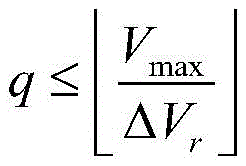
S212,对第n帧回波数据所有K个样本点按照此次搜索速度对应的目标脉冲时间偏移量进行移位,移位点数为


S213,将移位后的所有N帧回波数据以采样点k为基准进行累加,得到积累量

S214,步进的次数q+1代替q;S214, the number of steps q+1 replaces q;
S215,重复S212~S214,直至不满足S211条件;S215, repeat S212-S214 until the condition of S211 is not satisfied;
S216,在一个观测周期T内,设定目标速度搜索的起始点为Vr=0,搜索步进的次数记为p=1,当
S217,对第n帧回波数据所有K个样本点按照此次搜索速度对应的目标脉冲时间偏移量进行移位,移位点数为


S218,将移位后的所有N帧回波数据以采样点k为基准进行累加,得到积累量

S219,步进的次数p+1代替p;S219, the number of steps p+1 replaces p;
S220,重复S216~S219直至不满足S216条件时结束。S220, repeating S216 to S219 until the condition of S216 is not satisfied, the process ends.
经过上述步骤,从而完成该观测周期T内的全部的目标速度搜索范围搜索,得到最大值集合:After the above steps, all the target speed search range searches in the observation period T are completed, and the maximum value set is obtained:

再进一步地,所述步骤S211~S215和S216~S220进行并行处理。Still further, the steps S211-S215 and S216-S220 are processed in parallel.
进一步地,步骤S1中还包括对回波数据


进一步地,所述压缩处理的过程在ADC采样之后、在累加的数据存储于外部存储器之前完成,以减少存储所需的硬件空间和数据处理时的运算花销。Further, the compression processing process is completed after ADC sampling and before the accumulated data is stored in the external memory, so as to reduce the hardware space required for storage and the operation cost during data processing.
再进一步地,c的取值为4,5或6。Further, the value of c is 4, 5 or 6.
进一步地,步骤S3中所述的排序在前的若干个航迹点是排序在前的第一个航迹点。Further, the several track points in the first order described in step S3 are the first track point in the order.
本发明只需要用到数据移位和累加两种运算,特别适合DSP或FPGA进行高速并行数字处理,具有运算量小、目标检测和航迹搜索实时处理速度快、改善信噪比、提高检测性能的优点。The invention only needs two operations of data shift and accumulation, and is especially suitable for DSP or FPGA to perform high-speed parallel digital processing. The advantages.
附图说明Description of drawings
下面结合附图和实施例对本发明进一步说明。The present invention will be further described below in conjunction with the accompanying drawings and embodiments.
图1为本发明的流程图;Fig. 1 is the flow chart of the present invention;
图2为机载脉冲激光雷达多帧回波数据示意图;Figure 2 is a schematic diagram of multi-frame echo data of airborne pulsed lidar;
图3为按目标速度移位后的多帧回波数据示意图;3 is a schematic diagram of multi-frame echo data shifted by the target speed;
图4为本发明速度步进搜索实施例1的流程图;Fig. 4 is the flow chart of the speed
图5本发明速度步进搜索实施例2的流程图;Fig. 5 is the flow chart of the speed
图6为本发明速度步进搜索实施例3的流程图;Fig. 6 is the flow chart of the speed
图7为本发明不同速度目标检测输出的积累信号;Fig. 7 is the accumulation signal of different speed target detection output of the present invention;
具体实施方式Detailed ways
在附图1的流程图中,一个观测周期内机载脉冲激光雷达接收到的回波数据

若定义远离机载脉冲激光雷达的方向为正方向,假设目标相对机载脉冲激光雷达的径向速度为Vr,以马赫(Ma)为单位的Vr可能的范围在-2Ma~1Ma,速度搜索步进的步长为0.02Ma,则搜索次数M=150。目标检测按照2Hz脉冲串重复周期进行,在一个观测周期0.5s内,对目标照射一串200个激光脉冲,获得200帧回波观测数据,按照1GSPS采集数据,每帧回波信号将采集8×10⁵个样本点。压缩处理时,每5个样本点累加后作为一个样本点,这样每帧得到1.6×10⁵个样本点。If the direction away from the airborne pulsed lidar is defined as the positive direction, assuming that the radial velocity of the target relative to the airborne pulsed lidar is V r , the possible range of V r in Mach (Ma) is -2Ma to 1Ma. The step size of the search step is 0.02Ma, and the number of searches M=150. The target detection is carried out according to the repetition period of the 2Hz pulse train. In an observation period of 0.5s, a series of 200 laser pulses are irradiated on the target to obtain 200 frames of echo observation data. 10 5 sample points. During compression processing, every 5 sample points are accumulated as a sample point, so that 1.6×10 5 sample points are obtained per frame.
图4是本发明在一个观测周期内速度步进搜索实施例1的流程图。针对上述参数情况,具体为:FIG. 4 is a flow chart of
S201,设定目标速度搜索的起始点为Vr=-2Ma,搜索步进的次数记为m=1,当m≤150时执行下述步骤;S201, the starting point of the set target speed search is V r =-2Ma, the number of times of the search step is recorded as m=1, and the following steps are performed when m≤150;
S202,对第n帧回波数据所有1.6×10⁵个样本点按照此次搜索速度对应的目标脉冲时间偏移量进行移位,移位点数为


S203,将移位后的所有200帧回波数据以采样点k为基准进行累加,得到积累量

S204,步进的次数m+1代替m;S204, the number of steps m+1 replaces m;
S205,重复S202~S204,直至不满足S201条件时结束该观测周期T内的搜索,得到最大值集合
图5是本发明在一个观测周期内速度步进搜索实施例2的流程图。针对上述参数情况,具体分为正向搜索(S211~S215)和负向搜索(S216~S220):Fig. 5 is a flow chart of
S211,设定目标速度搜索的起始点为Vr=0,搜索步进的次数记为q=1,当q≤50时执行下述正向搜索步骤;S211, the starting point of the set target speed search is V r =0, the number of times of the search step is recorded as q=1, and the following forward search step is performed when q≤50;
S212,对第n帧回波数据所有1.6×10⁵个样本点按照此次搜索速度对应的目标脉冲时间偏移量进行移位,移位点数为


S213,将移位后的所有200帧回波数据以采样点k为基准进行累加,得到积累量
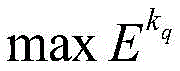
S214,步进的次数q+1代替q;S214, the number of steps q+1 replaces q;
S215,重复S212~S214,直至不满足S211条件;S215, repeat S212-S214 until the condition of S211 is not satisfied;
S216,在一个观测周期T内,设定目标速度搜索的起始点为Vr=0,搜索步进的次数记为p=1,当p≤100时执行下述负向搜索步骤;S216, in an observation period T, set the starting point of the target speed search as V r =0, the number of times of the search step is recorded as p=1, and the following negative search step is performed when p≤100;
S217,对第n帧回波数据所有1.6×10⁵个样本点按照此次搜索速度对应的目标脉冲时间偏移量进行移位,移位点数为


S218,将移位后的所有200帧回波数据以采样点k为基准进行累加,得到积累量

S219,步进的次数p+1代替p;S219, the number of steps p+1 replaces p;
S220,重复S216~S219,直至不满足S216条件时结束。S220, repeating S216 to S219 until the condition of S216 is not satisfied, the process ends.
图6为本发明在一个观测周期内速度步进搜索实施例3的流程图。与实施例2相似,不同之处在于正向搜索(S211~S215)和负向搜索(S216~S220)进行并行处理。FIG. 6 is a flow chart of
图7为本发明在信噪比(这里说的“信噪比”(SNR)均是指光电探测目标电压信号幅度峰值与噪声均方根的直接比值,非对数信噪比,与以dB为单位的对数信噪比的换算关系为20logSNR)为0.7时,不同速度(a为-2Ma,b为0Ma)目标的检测输出的积累信号,横轴为压缩为272点后的样本点值,纵轴为幅度,单位为100mV,由图可见,经过积累后信噪比约为12,信噪比增益为17.2,说明本发明方法可以改善信噪比,有效提高检测性能。Fig. 7 is the signal-to-noise ratio of the present invention (here, "signal-to-noise ratio" (SNR) refers to the direct ratio of the peak value of the photoelectric detection target voltage signal amplitude to the noise root mean square, the non-logarithmic signal-to-noise ratio, and the decibel The conversion relationship of the logarithmic signal-to-noise ratio in units of 20logSNR) is 0.7, the accumulated signal of the detection output of the target at different speeds (a is -2Ma, b is 0Ma), the horizontal axis is the sample point value after compression to 272 points , the vertical axis is the amplitude, and the unit is 100mV. It can be seen from the figure that the signal-to-noise ratio after accumulation is about 12, and the signal-to-noise ratio gain is 17.2, indicating that the method of the present invention can improve the signal-to-noise ratio and effectively improve the detection performance.
Claims (10)


Priority Applications (1)
| Application Number | Priority Date | Filing Date | Title |
|---|---|---|---|
| CN201810264327.8A CN108828552B (en) | 2018-03-28 | 2018-03-28 | A Target Detection and Track Search Method for Airborne Pulse Lidar |
Applications Claiming Priority (1)
| Application Number | Priority Date | Filing Date | Title |
|---|---|---|---|
| CN201810264327.8A CN108828552B (en) | 2018-03-28 | 2018-03-28 | A Target Detection and Track Search Method for Airborne Pulse Lidar |
Publications (2)
| Publication Number | Publication Date |
|---|---|
| CN108828552A CN108828552A (en) | 2018-11-16 |
| CN108828552B true CN108828552B (en) | 2020-12-15 |
Family
ID=64154269
Family Applications (1)
| Application Number | Title | Priority Date | Filing Date |
|---|---|---|---|
| CN201810264327.8A Expired - Fee Related CN108828552B (en) | 2018-03-28 | 2018-03-28 | A Target Detection and Track Search Method for Airborne Pulse Lidar |
Country Status (1)
| Country | Link |
|---|---|
| CN (1) | CN108828552B (en) |
Families Citing this family (6)
| Publication number | Priority date | Publication date | Assignee | Title |
|---|---|---|---|---|
| CN109375212B (en) * | 2018-12-10 | 2023-04-18 | 西安电子科技大学 | Target detection method based on radar and photoelectric turntable in movable unmanned platform |
| CN110412609B (en) * | 2019-07-11 | 2020-09-18 | 郑州航空工业管理学院 | A multi-pulse lidar target detection method |
| CN110687939A (en) * | 2019-09-05 | 2020-01-14 | 中国航空工业集团公司洛阳电光设备研究所 | Scanning Control Method Based on Ramp Increment Method |
| WO2021056269A1 (en) * | 2019-09-25 | 2021-04-01 | 深圳市速腾聚创科技有限公司 | Laser radar echo signal processing method and device, computer device and storage medium |
| CN110988907B (en) * | 2019-11-25 | 2022-08-30 | 中国科学院上海光学精密机械研究所 | Doppler compensation based three-dimensional coherent laser radar push-broom imaging method |
| CN111366920A (en) * | 2020-03-31 | 2020-07-03 | 中国能源建设集团广东省电力设计研究院有限公司 | Radar photoelectric tracking system of offshore wind farm |
Citations (8)
| Publication number | Priority date | Publication date | Assignee | Title |
|---|---|---|---|---|
| JP2004219300A (en) * | 2003-01-16 | 2004-08-05 | Mitsubishi Electric Corp | Target tracking device |
| CN102313884A (en) * | 2010-06-29 | 2012-01-11 | 电子科技大学 | Target track-before-detect (TBD) method based on multi-frame coherent integration |
| CN102608590A (en) * | 2012-03-21 | 2012-07-25 | 电子科技大学 | Coherent integration method based on dynamic programming and back image projection algorithm |
| CN103439697A (en) * | 2013-08-23 | 2013-12-11 | 西安电子科技大学 | Target detection method based on dynamic programming |
| CN104062651A (en) * | 2014-06-30 | 2014-09-24 | 电子科技大学 | Track-before-detect method based on G0 clutter background and constant target amplitude |
| CN104076354A (en) * | 2014-07-08 | 2014-10-01 | 西安电子科技大学 | Detection method for radar target tracks on basis of correlation speeds |
| CN104536009A (en) * | 2014-12-30 | 2015-04-22 | 华中科技大学 | Laser infrared composite ground building recognition and navigation method |
| CN107436434A (en) * | 2017-07-25 | 2017-12-05 | 西安电子科技大学 | Track initiation method based on two-way Doppler estimation |
-
2018
- 2018-03-28 CN CN201810264327.8A patent/CN108828552B/en not_active Expired - Fee Related
Patent Citations (8)
| Publication number | Priority date | Publication date | Assignee | Title |
|---|---|---|---|---|
| JP2004219300A (en) * | 2003-01-16 | 2004-08-05 | Mitsubishi Electric Corp | Target tracking device |
| CN102313884A (en) * | 2010-06-29 | 2012-01-11 | 电子科技大学 | Target track-before-detect (TBD) method based on multi-frame coherent integration |
| CN102608590A (en) * | 2012-03-21 | 2012-07-25 | 电子科技大学 | Coherent integration method based on dynamic programming and back image projection algorithm |
| CN103439697A (en) * | 2013-08-23 | 2013-12-11 | 西安电子科技大学 | Target detection method based on dynamic programming |
| CN104062651A (en) * | 2014-06-30 | 2014-09-24 | 电子科技大学 | Track-before-detect method based on G0 clutter background and constant target amplitude |
| CN104076354A (en) * | 2014-07-08 | 2014-10-01 | 西安电子科技大学 | Detection method for radar target tracks on basis of correlation speeds |
| CN104536009A (en) * | 2014-12-30 | 2015-04-22 | 华中科技大学 | Laser infrared composite ground building recognition and navigation method |
| CN107436434A (en) * | 2017-07-25 | 2017-12-05 | 西安电子科技大学 | Track initiation method based on two-way Doppler estimation |
Also Published As
| Publication number | Publication date |
|---|---|
| CN108828552A (en) | 2018-11-16 |
Similar Documents
| Publication | Publication Date | Title |
|---|---|---|
| CN108828552A (en) | A kind of target detection and track searching method of airbome pulse laser radar | |
| CN111060965B (en) | Seismic facies picking and event detection method based on convolutional neural network | |
| CN112986950B (en) | Single-pulse laser radar echo feature extraction method based on deep learning | |
| CN108490410B (en) | Two-coordinate radar sea target joint detection and tracking method | |
| CN104730537B (en) | Infrared/laser radar data fusion target tracking method based on multi-scale model | |
| CN110031821B (en) | Vehicle-mounted obstacle avoidance laser radar waveform extraction method, laser radar and medium | |
| CN113466827A (en) | Denoising method based on improved local sparse algorithm | |
| CN103197297B (en) | Radar moving target detection method based on cognitive framework | |
| CN104062651B (en) | A kind of based on tracking before the detection of G0 clutter background and constant target amplitude | |
| CN111257900B (en) | Laser radar ranging method and device | |
| CN112415503B (en) | A multi-target particle filter pre-detection tracking method based on target re-tracking | |
| CN109977885A (en) | A kind of people's vehicle automatic identifying method and device based on Doppler Feature | |
| CN111856411B (en) | A dual-threshold target detection method and device | |
| CN113608193A (en) | Radar multi-target distance and speed estimation method based on UNet | |
| CN111413693A (en) | A Combination Method of TBD and Conventional Tracking Based on Dual Threshold Split Processing in MIMO Radar | |
| CN113189553A (en) | Multi-modal optimization-based micro-maneuvering multi-target rapid detection method | |
| Kakkanattu et al. | Continuous monitoring of the atmospheric boundary layer (ABL) height from micro pulse lidar over a tropical coastal station, Kattankulathur (12.82° N, 80.04° E) | |
| CN110161494A (en) | RD plane Faint target detection tracking and device based on velocity squared filtering | |
| CN115420293B (en) | Automatic target tracking method and device | |
| CN112327286A (en) | Method, device, device and storage medium for daily activity classification under low complexity | |
| JP5036392B2 (en) | Target detection device | |
| Li et al. | Weak multi-targets track-before-detect algorithm based on recursive Hough transform | |
| JP5623253B2 (en) | Multi-target tracking device | |
| Cosentino et al. | Porpoise click classifier (PorCC): A high-accuracy classifier to study harbour porpoises (Phocoena phocoena) in the wild | |
| CN111860688B (en) | Target type identification method and system and electronic equipment |
Legal Events
| Date | Code | Title | Description |
|---|---|---|---|
| PB01 | Publication | ||
| PB01 | Publication | ||
| SE01 | Entry into force of request for substantive examination | ||
| SE01 | Entry into force of request for substantive examination | ||
| GR01 | Patent grant | ||
| GR01 | Patent grant | ||
| CF01 | Termination of patent right due to non-payment of annual fee | ||
| CF01 | Termination of patent right due to non-payment of annual fee |
Granted publication date: 20201215 |