Background
Performance capture techniques, including capture of performer movements and expressions, have wide application in the fields of movies, animations, games, and the like. The virtual character is endowed with real and reasonable actions and vivid expressions through the performance capturing technology, and excellent and more elegant impression experience can be brought to the user. The mainstream motion capture technology includes optical capture and inertial navigation capture, wherein the optical capture captures a performer through an optical camera, analyzes and calculates joint points of the performer, such as kinect and the like; the motion state of the joint point is acquired by the sensor worn by the performer, and the current posture of the performer is analyzed, such as Nordic, OptiTrack and the like.
Currently, facial expressions capturing schemes include that Faceware series software is used for performing animation processing on facial expressions of characters captured by video equipment, a network camera and a helmet-type camera to generate virtual character facial animations; FaceRig software captures expressions through RGB video stream, and can use user-defined role models to generate corresponding expression animations in the software; FaceShift provides an animated preview of the character model within the software based on a single depth camera capturing an expression. However, the main performance capturing technical solution is to attach markers to the whole body and face of the performer, capture the whole body movement and facial expression by an optical camera, and replace the captured images of the performer with virtual character models according to the captured markers in the later production. The method can not well combine the action capture and the expression capture, only provides the role animation preview in the software, and limits the user to edit other roles.
Disclosure of Invention
In order to solve the above problems in the prior art, that is, in the process of simultaneously capturing the actions and expressions of performers to generate rich and real character animations, the difficulties of mutual combination are increased in the later production due to the fact that the expressions are captured and the actions are captured respectively and then synthesized, the invention adopts the following technical scheme to solve the above problems:
the present application provides a UE engine based performance capture system, the system comprising: the facial performance capturing unit is configured to acquire facial image data of a target object, determine eyeball rotation parameters of the target object according to the facial image data, and determine basic expression weights of the target object by using a preset basic expression library; a motion performance capturing unit configured to acquire motion parameters of the target object using a sensing device attached to a limb of the target object; and the animation generating unit is configured to determine the expression animation of the virtual character according to the basic expression weight parameter, the eyeball rotation parameter and the limb action parameter.
In some examples, the preset basic expression library is generated by a method including: collecting multiple types of facial expression images of the target object; and respectively fitting user basic expressions corresponding to the facial expression images based on the collected facial expression images to form a basic expression library.
In some examples, the basic expression weight parameter may be obtained by: determining a basic expression weight parameter of the facial image data based on feature point analysis performed on the facial image data and each basic expression in the basic expression library; the method for acquiring the eyeball rotation parameters comprises the following steps: and determining and calculating an euler angle parameter of the eyeball of the target object in the face image data according to the face image data, and taking the euler angle parameter as an eyeball rotation parameter.
In some examples, the motion performance capture unit includes a motion capture sensing device and a motion parameter determination module; the motion capture sensing device comprises a plurality of sensors attached to a plurality of joints of a body of a target object, the sensors acquiring motion data of the joints of the target object; the motion parameter determination module is configured to calculate a motion parameter of the target object according to the obtained motion data of the motion capture sensing device.
In some examples, the motion performance capture unit further comprises a pose calibration module configured to: acquiring a reference action instruction from a preset reference action instruction set, and indicating the target object to make a specified gesture; and determining the motion data of the target object captured by the motion capture sensing device based on the designated gesture as reference motion data of the designated gesture.
In some examples, the action parameter determination module is further configured to: calculating a whole body posture of the target object by combining velocity, acceleration, and angular velocity data of each joint point of the motion data with each reference motion data of the target object; the motion data includes velocity, acceleration, and angular velocity of each joint point.
In some examples, the animation generation unit is preset with a character expression library, and the animation generation unit is further configured to: constructing a corresponding mapping relation between the basic expression library and each expression of the role expression library; and determining the role expression corresponding to the facial image data according to the basic expression weight parameters by using the corresponding mapping relation, and determining the role expression weight parameters of the target object.
In some examples, the UE engine in the animation generation unit inputs the character expression weight parameter into a target deformation setting function of the UE engine, and controls the deformation of the facial vertex of the virtual character; controlling the eyeball rotation of the virtual character according to the eyeball Euler angle parameter; and generating the expression animation of the virtual character based on the facial vertex deformation of the virtual character and the eyeball rotation of the virtual character.
In some examples, the animation generation unit is further configured to: and controlling the rotation of the human skeleton of the virtual character according to the whole body posture to synthesize the motion animation of the virtual character.
The performance capturing system based on the UE engine provided by the application captures facial expression data and motion data of a target object through the facial performance capturing unit and the motion performance capturing unit, and generates the motion and expression animation of a virtual character by utilizing the UE engine of the animation generating unit. The method and the device simultaneously capture the action and expression data of the target object, and render the action and expression of the target object in real time by using the user-defined role model in the UE engine, so that the action and expression of the target object are well combined, and the problem that the performance of an animation role character is interfered because the mark point causes invasion to the facial performance of the target object because the mark point does not need to be marked on the face; meanwhile, because the Faceshift software and the Axis Neuron software are connected with the UE engine, the role model can be customized, and the user is not limited to edit other roles.
Detailed Description
Preferred embodiments of the present invention are described below with reference to the accompanying drawings. It should be understood by those skilled in the art that these embodiments are only for explaining the technical principle of the present invention, and are not intended to limit the scope of the present invention.
It should be noted that the embodiments and features of the embodiments in the present application may be combined with each other without conflict. The present application will be described in detail below with reference to the embodiments with reference to the attached drawings.
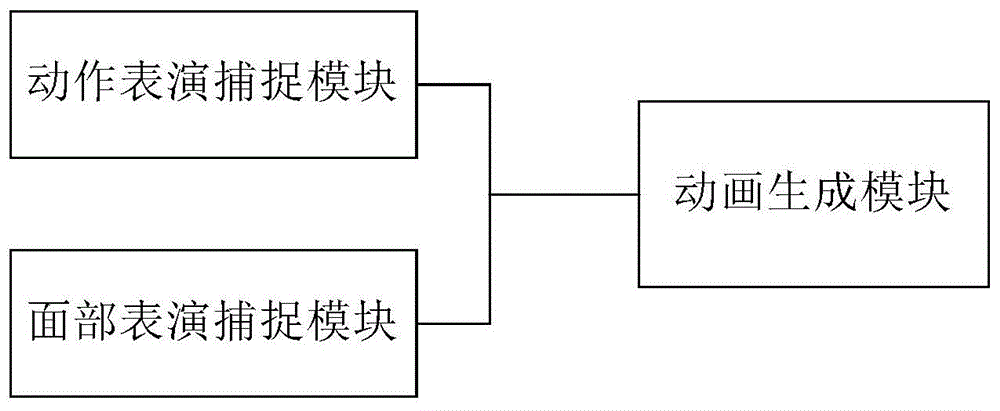
Fig. 1 illustrates an exemplary system architecture to which embodiments of the UE engine based performance capture system of the present application may be applied.
As shown in fig. 1, the system includes a facial performance capture unit, a motion performance capture unit, and an animation generation unit. The facial performance capturing unit is configured to acquire facial image data of a target object, determine eyeball rotation parameters of the target object according to the facial image data, and determine basic expression weights of the target object by using a preset basic expression library; a motion performance capture unit configured to acquire limb motion parameters of the target object using a sensing device attached to a limb of the target object; and the animation generation unit is configured to determine the expression animation of the virtual character according to the basic expression weight parameter, the eyeball rotation parameter and the limb action parameter.
In this embodiment, the facial performance capturing unit may be an electronic device having a video stream capturing or image capturing apparatus. The electronic equipment can be provided with various application programs, and the application programs can instruct a sensor in communication connection with the electronic equipment to acquire the face image data of the target object and process the face image data. The electronic devices may include, but are not limited to, smart phones, tablet computers, laptop portable computers, desktop computers, and the like. It should be noted that the electronic device includes a sensor, such as a Kinect sensor, for acquiring the facial expression of the target object. Specifically, the facial performance capturing unit can be a system formed by connecting a Kinect depth camera to a PC.
In this embodiment, the motion performance capturing unit is an electronic device having a video stream acquisition or inertial data acquisition device. The electronic equipment comprises a motion sensor for inertial data acquisition, and various application programs can be installed. The application program can instruct the motion sensor to acquire the motion data of the target object, and the application program processes the motion data to confirm the posture of the human skeleton of the target object. The action performance module can be a system formed by connecting a PC machine with a plurality of action sensors. Specifically, the motion performance module may be a wearable device, and a user wears the motion tactile sensor as required and starts the motion control software to connect to the motion tactile sensor. As an example, a user wears the Haoyitang sensor as desired, turns on the sensor power, starts Axis Neuron software, and clicks on the connection sensor to capture the user's motion data.
In this embodiment, the animation generation unit may be an electronic device with network communication, on which various types of application software are installed, and the installed application software may be used to generate the expression and motion animation of the virtual character according to the facial expression of the user and the motion of the human skeleton. The animation generation unit may be a processor or a server providing various services, such as an image processing server that performs data analysis and image processing on the motion information and facial expression information of the human skeleton of the target object transmitted from the facial performance capture unit and the electronic device in which the motion performance capture unit is located. The image processing server can analyze and process the received information, and fit to generate the motion animation and the expression animation of the virtual character. Specifically, the animation generation unit is installed with a UE graphics program based on a UE engine. Before the UE graph program is used for drawing the action animation and the expression animation of the target object in real time, a user needs to prepare role data in advance, namely the user uses modeling software such as Maya and the like to establish a three-dimensional model of a virtual role according to the requirements of the user, a certain skeleton structure is bound for the three-dimensional model, so that the role model can control the action by the change of the skeleton, and different basic expressions of the role are obtained by operating a controller of the role model.
In this embodiment, the facial performance capturing unit presets a basic expression library including a plurality of basic expressions of the target object. The method for generating the basic expression library comprises the following steps: collecting multiple types of facial expression images of the target object; and respectively fitting user basic expressions corresponding to the facial expression images based on the collected facial expression images to form a basic expression library. Specifically, a first predetermined number of specified facial expressions of the target object are captured by an image capturing device; and fitting a second preset number of user basic expressions corresponding to the facial expressions through faceshift software according to the facial expressions, and generating a basic expression library by the second preset number of user basic expressions. As an example, the basic expression library may be established as follows: the user makes a first predetermined number of specified facial expressions to the image capture device. And the faceshift software analyzes and fits a second preset number of basic expressions through the first preset number of expressions to generate a user basic expression library. In a preferred embodiment, the image capturing device is a Kinect sensor, and the first predetermined number may be 23 and the second predetermined number may be 51. Namely: the user makes 23 kinds of appointed expressions to Kinect, including initial closed mouth expression, open mouth, smile, eyebrow are raised, eyebrow sink, keep away from sight, chin left, chin right, chin forward, mouth left, mouth right, dimple, chin lift, the mouth of pounding, stick lip, lip angle down, stick lip, drum lip, chew, lip extrusion, tensile lip angle, lower lip is downward, go up the upward 23 kinds of facial expressions such as lip, facshift matches 51 kind of basic expressions through these 23 kinds of expression analysis, generates user's basic expression storehouse.
In this embodiment, the method for obtaining the basic expression weight parameter includes: determining basic expression weight parameters of the facial image data based on the facial image data and the feature points of each basic expression in the basic expression library; the method for acquiring the eyeball rotation parameters comprises the following steps: an euler's angle parameter of the eyeball of the target object in the face image data is calculated, and the euler's angle parameter is used as an eyeball rotation parameter. In the above-described facial performance capturing unit, the facial expression basis expression weight parameter and the eyeball rotation parameter of the facial expression are identified by FaceShift. Specifically, the basic expression weight parameter of the facial image data may be determined by comparing facial feature points in the facial image data, such as pixel comparison, and comparison with each basic expression in the basic expression library. And comparing the characteristics of the eyes and the eyeballs in the facial image data with the basic expressions in the data base to determine Euler angle parameters of the eyeballs of the target object.
The basic expression weight parameter for recognizing the facial expression by FaceShift may be calculated as follows. A computer Personal Computer (PC) can be connected with a Kinect sensor, faceShift can automatically detect the Kinect sensor and is connected with the Kinect sensor, and the depth data of the facial expression captured by the Kinect sensor can be transmitted to faceShift in real time. FaceShift compares and analyzes the facial expression depth data acquired by the Kinect sensor with a basic expression model of the user, and FaceShift calculates 51 weight parameters of the current expression and records the weight parameters as { w }i,i=1,2,...,51}。
Specifically, taking a blendshape expression model composed of n basic expressions as an example, each basic expression is represented by a three-dimensional mesh face model having p vertices, each vertex has three components x, y, and z, that is, the spatial coordinate of each vertex is (x, y, z). The vertex coordinates of each basic expression are expanded into long vectors in any order, but the expansion order after the vertex coordinates of each basic expression after expansion is the same, and the expansion order can be (xxxyyzzz) or (xyzxyzxyz), and the like, so that n vectors b with the length of 3p are obtained
k1, 2, 1, n, with b
0Representing neutral expression, b
k-b
0I.e. the kth basic expression b
kWith neutral expression b
0The difference, the current expression may be expressed as:
wherein, w
kIs shown in the interval [0,1 ]]Any value within. Thus, 51 base expression models can be represented as F
i=b
i-b
0(i 1, …,51), the above formula is simplified to
Wherein F ═ F-b
0。
In this embodiment, the motion performance capture unit includes a motion capture sensing device and a motion parameter determination module; the motion capture sensing device comprises a plurality of sensors attached to a plurality of joints of a body of a target object, the sensors acquiring motion data of the joints of the target object; the motion parameter determination module is configured to calculate a motion parameter of the target object according to the obtained motion data of the motion capture sensing device.
The motion capture sensing equipment captures the whole body motion of the performer, and can determine the motion state of each joint point of the human body skeleton and the change of the human body skeleton formed by connecting the joint points by acquiring the data of the human body skeleton of the whole body of the performer and by utilizing the coordinates of each joint point and the change of the coordinate point in the data of the human body skeleton. Specifically, the motion capture sensing device may be a kinect sensor or a knoxia (Neuron) sensor. The above-mentioned determination of the motion data of the target object using the nocotary (Neuron) sensor may be: the target object wears the Naja sensor as required, the power supply of the sensor is turned on, Axis Neuron software is started, the sensor is clicked, and after connection is successful, action performance made by the target object is captured. The motion parameter determining module analyzes and calculates the motion data of the captured target object by using Axis Neuron software to obtain the motion parameters of the target object. Before the motion data acquisition, skeleton measurement can be carried out on the human skeleton data of the target object. The bones of the target object may be measured using various measuring tools, and the lengths of the bones of various portions of the target object, including the head, neck, shoulder width, upper arm, forearm, palm, crotch width, torso, thigh, calf, sole length, and ankle height, may be measured and stored in an xml format. The motion parameter determining module may analyze the captured motion data of the target object with reference to the skeletal data, and calculate a motion parameter of the target object.
In this embodiment, the motion performance capture unit further comprises a pose calibration module configured to: acquiring a reference action instruction from a preset reference action instruction set, and indicating the target object to make a specified gesture; and determining the motion data of the target object captured by the motion capture sensing device based on the designated gesture as reference motion data of the designated gesture.
The motion capture sensing device needs to be calibrated before motion data capture can be performed. As an example, when the motion capture sensing device is a notheim sensor, the gesture calibration module performs the motion gesture calibration by: after a target object wears the Noriten sensor, Axis Neuron software is started, the connecting sensor is clicked, after connection is successful, the click posture is calibrated, and the target object is put into a specified posture according to prompts and/or instructions, such as basic postures of an A posture, a T posture, an S posture and the like; motion data of the target object at the specified pose is collected as reference motion data for the above motion capture sensing device calibration.
In this embodiment, the action parameter determining module is further configured to: the motion data comprises the speed, the acceleration and the angular velocity of each joint point; the velocity, acceleration, and angular velocity data of each joint of the motion data are combined with reference motion data of the target object, and the posture of the whole body of the target object is calculated.
In this embodiment, the animation generating unit is preset with a character expression library, and the animation generating unit is further configured to: mapping the basic expression library to the corresponding expression of the role expression library; and determining the role expression corresponding to the facial image data according to the basic expression weight parameters by using the corresponding mapping relation, and determining the role expression weight parameters of the target object.
The animation generation module converts the basic expression weight parameters of the facial image data of the target object into the character expression weight parameters. Specifically, a mapping relationship between the basic expression weight parameter of the basic expression library and the character expression weight parameter of the character expression library may be established, so that the angle corresponding to the facial image data may be determined according to the basic expression weight parameterAnd (5) color expression. As an example, this can be achieved by the following procedure: determining the number of basic expression weight parameters for describing the facial expression of the user according to the number of basic expressions used for describing the facial expression of the user in the basic expression library; for example, if there are 51 basic expressions in the basic expression library, the number of basic expression parameters describing the facial expression of the user is 51, and is denoted as { w }
i1, 2.., 51 }. Determining the number of basic expression parameters of the role expressions according to the number of the role expressions which can be loaded to the role model in the role expression library; for example, the number of the character expressions in the character expression library is N, and the weight parameters { v) corresponding to the expressions loaded into the character model
i1, 2. If the settings in the character expression library and the basic expression library are completely consistent, if N is 51, the expression weight v of the character
i=w
i1, 2, ·, 51; if the basic expression types of the characters are less, namely the number N of the character expressions is less than 51, selecting the weight parameter w of the basic expression j which is closest to the ith character expression in the character expression library in the basic expression library
jIs assigned to v
iI.e. v
i=w
j(ii) a If the basic expression types of the roles are more, namely the number N of the role expressions is more than 51, selecting a subset of the role expression library
The subset is in one-to-one correspondence with the basic expressions in the basic expression library, and the weight parameters in the subset are set to be
And setting the weight parameters of other expressions to be 0.
In this embodiment, the UE engine in the animation generation unit inputs the character expression weight parameter into a target deformation setting function of the UE engine, and controls the deformation of the facial vertex of the virtual character; controlling the eyeball rotation of the virtual character according to the eyeball Euler angle parameter; and synthesizing the expression animation of the virtual character based on the facial vertex deformation of the virtual character and the eyeball rotation of the virtual character.
The control of the facial vertex deformation of the virtual character can be realized by inputting the character expression parameters into a target deformation setting function to carry out the facial vertex deformation of the virtual character; the character expression weight parameters are basic expression weight parameters corresponding to the facial image data of the target object, and are converted into the character expression weight parameters through parameter conversion. The expression animation of the virtual character also comprises the rotation of eyeballs, and the rotation of the eyeballs of the virtual character is controlled by utilizing the Euler angle parameters of the eyeballs.
In this embodiment, the animation generation unit is further configured to: and controlling the rotation of the human skeleton of the virtual character according to the whole body posture to synthesize the motion animation of the virtual character.
By way of example, referring to FIG. 2, a flow diagram for emotion and motion animation generation using the present system is shown in FIG. 2.
Firstly, role data preparation is carried out, wherein the role data preparation can be to lead the established role three-dimensional model, role skeleton and role basic expression library into a UE engine for use in the subsequent steps.
Secondly, user real-time input is carried out, namely the motion and expression data of the target object are collected in real time through the facial performance capturing module and the motion performance capturing module. Before that, users have built face performance capture units and motion performance capture units. The built face performance capturing unit can be a PC connected with a Kinect, a faceShift application automatically detects the current Kinect and connects the Kinect, and data captured by the Kinect can be received in real time. The constructed motion performance capturing unit can be used for enabling a user to wear a Haoyitang sensor according to requirements, turning on a sensor power supply, starting Axis Neuron software and clicking a connecting sensor to capture motion data.
And finally, sending the motion and expression data captured by the facial performance capturing unit and the motion performance capturing unit to an animation generating unit through a network to carry out performance animation generation. Here, the UE engine is used to control the expression of the character according to the facial expression data, so as to generate a character expression animation, and the facial expression data used in the faneshift software is previewed, as shown in fig. 3 a; the UE engine is used for controlling the role action according to the action data to generate a role action animation, and the used action data is previewed in Axis Neuron software, as shown in figure 3 b; and finally, synthesizing the character expression animation and the character action animation, wherein the character action animation and the character action animation correspond to the character action and the expression animation, and the figure 3c shows.
According to the system provided by the embodiment of the application, the facial expression and the eyeball rotation angle of the target object are captured through the facial performance capturing unit, the motion performance capturing unit captures the motion of the target object, and the animation generating unit generates the motion and expression animation of the character by using the UE engine according to the facial expression, the eyeball rotation angle and the motion of the target object. The invention can simultaneously capture the facial expression and body motion data of the target object and generate the motion animation and expression animation of the character model, solves the problem that the motion animation and the expression animation can not be well combined because the expression capture and the motion capture are separated, and simultaneously does not need to mark the face of the target object, thereby solving the problem that the mark causes invasion to the facial expression animation of the target object and the performance of the character of the animation character is interfered.
So far, the technical solutions of the present invention have been described in connection with the preferred embodiments shown in the drawings, but it is easily understood by those skilled in the art that the scope of the present invention is obviously not limited to these specific embodiments. Equivalent changes or substitutions of related technical features can be made by those skilled in the art without departing from the principle of the invention, and the technical scheme after the changes or substitutions can fall into the protection scope of the invention.