CN107918552B - Light application calling method and device, client device and electronic equipment - Google Patents
Light application calling method and device, client device and electronic equipment Download PDFInfo
- Publication number
- CN107918552B CN107918552B CN201711065785.0A CN201711065785A CN107918552B CN 107918552 B CN107918552 B CN 107918552B CN 201711065785 A CN201711065785 A CN 201711065785A CN 107918552 B CN107918552 B CN 107918552B
- Authority
- CN
- China
- Prior art keywords
- light application
- invoking
- client device
- application
- user
- Prior art date
- Legal status (The legal status is an assumption and is not a legal conclusion. Google has not performed a legal analysis and makes no representation as to the accuracy of the status listed.)
- Active
Links
Images



Classifications
-
- G—PHYSICS
- G06—COMPUTING OR CALCULATING; COUNTING
- G06F—ELECTRIC DIGITAL DATA PROCESSING
- G06F9/00—Arrangements for program control, e.g. control units
- G06F9/06—Arrangements for program control, e.g. control units using stored programs, i.e. using an internal store of processing equipment to receive or retain programs
- G06F9/44—Arrangements for executing specific programs
- G06F9/445—Program loading or initiating
- G06F9/44521—Dynamic linking or loading; Link editing at or after load time, e.g. Java class loading
- G06F9/44526—Plug-ins; Add-ons
-
- G—PHYSICS
- G06—COMPUTING OR CALCULATING; COUNTING
- G06F—ELECTRIC DIGITAL DATA PROCESSING
- G06F16/00—Information retrieval; Database structures therefor; File system structures therefor
- G06F16/90—Details of database functions independent of the retrieved data types
- G06F16/95—Retrieval from the web
- G06F16/955—Retrieval from the web using information identifiers, e.g. uniform resource locators [URL]
-
- G—PHYSICS
- G06—COMPUTING OR CALCULATING; COUNTING
- G06F—ELECTRIC DIGITAL DATA PROCESSING
- G06F9/00—Arrangements for program control, e.g. control units
- G06F9/06—Arrangements for program control, e.g. control units using stored programs, i.e. using an internal store of processing equipment to receive or retain programs
- G06F9/46—Multiprogramming arrangements
- G06F9/54—Interprogram communication
- G06F9/547—Remote procedure calls [RPC]; Web services
Landscapes
- Engineering & Computer Science (AREA)
- Theoretical Computer Science (AREA)
- Software Systems (AREA)
- Physics & Mathematics (AREA)
- General Engineering & Computer Science (AREA)
- General Physics & Mathematics (AREA)
- Databases & Information Systems (AREA)
- Data Mining & Analysis (AREA)
- Telephonic Communication Services (AREA)
- Telephone Function (AREA)
- Stored Programmes (AREA)
Abstract
The invention discloses a light application calling method, a light application calling device, a client device and electronic equipment. The method comprises the following steps: acquiring a trigger event for invoking a light application in a client device; determining that no local light application is available; and providing the webpage address corresponding to the light application to the user for the user to use. According to one embodiment, the use experience of the user when the light application is called can be improved.
Description
Technical Field
The present invention relates to the field of light application technology, and more particularly, to a method for invoking a light application, an apparatus for invoking a light application, a client apparatus, and an electronic device.
Background
At present, application scenes based on light applications are increasing. In general, light applications refer to applications that are affiliated with Native apps. Examples of local applications are browsers, local applications, etc. The local application may also be referred to as a client device. The light application is platform and built on top of the native application. For example, the light application may be an application implemented in JavaScript on a browser platform, an application implemented in HTML5, and so on.
In general, unlike native applications, light applications can be used directly without installation.
In the prior art, the light application is usually verified and called by means of a configuration file. This approach needs to rely on the distribution and synchronization of the configuration files. For example, the native light application may not be consistent with the light application in the configuration file due to manual deletion by the user, etc. In this case, the client apparatus may not return the call result, or return an empty call result. This may cause a great trouble to the user. This reduces the user experience.
In the prior art, many systems employ the scheme (or schema) protocol to jump between local applications. For example, in an iOS mobile platform system, the scheme protocol may be used to invoke one native application in another native application. Specifically, an application to be invoked is first registered in the system. For example, the sms application may register the keyword sms, the mail application may register the keyword mail, and the like. The call to the registered application may be triggered in another application. For example, a text messaging application may be triggered in an email program. For example, the short message is sent to the mobile phone number 133 and 3333. The scheme call corresponding to the method is sms:// 133-. In the case where the keyword and the application to be invoked are already registered in the system, the application may be invoked and parameters passed to the application.
Therefore, it is desirable to provide a new technical solution, which is improved in view of at least one of the technical problems in the prior art.
Disclosure of Invention
It is an object of the present invention to provide a new solution for this.
According to a first aspect of the present invention, there is provided a method for invoking a light application, comprising: acquiring a trigger event for invoking a light application in a client device; determining that no local light application is available; and providing the webpage address corresponding to the light application to the user for the user to use.
Optionally or alternatively, the method further comprises: and setting a scheme for calling the light application, a corresponding webpage address and a light application identifier.
Optionally or alternatively, obtaining the trigger event for invoking the light application comprises: and acquiring a trigger event for triggering the scheme link in the webpage.
Optionally or alternatively, determining that no native light applications are available comprises: acquiring a corresponding light application identifier based on the scheme link request; and determining that no local light application is available without obtaining the light application identification.
Optionally or alternatively, the light application identification is obtained from the corresponding interface of the client device by using a JavaScript function in the triggered web page.
Optionally or alternatively, providing the user with the web page address corresponding to the light application includes: and displaying the webpage content corresponding to the webpage address through a webpage.
Optionally or alternatively, the method further comprises: determining that there is a local light application available; and invoking the native light application.
Optionally or alternatively, the method further comprises: and verifying the local light application through a server.
According to a second aspect of the present invention, there is provided an apparatus for invoking a light application, comprising: means for obtaining a trigger event for invoking a light application in a client device; means for determining that no native light applications are available; and means for providing the web page address corresponding to the light application to the user for use by the user.
According to a third aspect of the present invention, there is provided a client device comprising means for invoking a light application according to an embodiment or being designed to perform steps in a scheme according to an embodiment.
According to a fourth aspect of the present invention, there is provided an electronic device comprising an apparatus for invoking a light application according to one embodiment, or comprising a client apparatus according to one embodiment, or comprising a memory and a processor, wherein the memory is configured to store instructions that, when the electronic device is running, control the processor to perform operations in a method for invoking a light application according to one embodiment.
According to one embodiment, the use experience of the user when the light application is called can be improved.
Other features of the present invention and advantages thereof will become apparent from the following detailed description of exemplary embodiments thereof, which proceeds with reference to the accompanying drawings.
Drawings
The accompanying drawings, which are incorporated in and constitute a part of this specification, illustrate embodiments of the invention and together with the description, serve to explain the principles of the invention.
Fig. 1 is a schematic flow diagram of a method according to an embodiment of the invention.
Fig. 2 is a schematic block diagram of a client device according to another embodiment of the present invention.
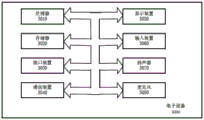
Fig. 3 is a schematic block diagram of an electronic device according to another embodiment of the invention.
FIG. 4 is a schematic diagram of a system in which one embodiment of the invention may be applied.
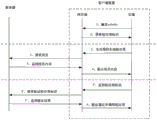
Fig. 5 is a schematic flow diagram according to an example of the invention.
Detailed Description
Various exemplary embodiments of the present invention will now be described in detail with reference to the accompanying drawings. It should be noted that: the relative arrangement of the components and steps, the numerical expressions and numerical values set forth in these embodiments do not limit the scope of the present invention unless specifically stated otherwise.
The following description of at least one exemplary embodiment is merely illustrative in nature and is in no way intended to limit the invention, its application, or uses.
Techniques, methods, and apparatus known to those of ordinary skill in the relevant art may not be discussed in detail but are intended to be part of the specification where appropriate.
In all examples shown and discussed herein, any particular value should be construed as merely illustrative, and not limiting. Thus, other examples of the exemplary embodiments may have different values.
It should be noted that: like reference numbers and letters refer to like items in the following figures, and thus, once an item is defined in one figure, further discussion thereof is not required in subsequent figures.
In an embodiment of the present invention, a new way to invoke lightweight applications is presented. Various embodiments and examples according to the present invention are described below with reference to the accompanying drawings.
< method >
FIG. 1 is a schematic flow diagram of a method for invoking a light application according to one embodiment of the present invention.
As shown in fig. 1, in step S1100, a trigger event for calling a light application in a client apparatus is acquired.
The light applications may be triggered in a number of ways depending on the operating system used.
Preferably, it is proposed here to use scheme approach to invoke light applications. For example, first, a scheme for calling a light application, a corresponding web address, and a light application identifier are set. The client device may be a web-based application. Here, the web-based application means that the application can parse and present web content. For example, the client device may be a browser application. In addition, applications such as WeChat, microblog, etc. may also present web pages and act as client devices as described herein.
Scheme links may be set in a web page. For example, when a user clicks on a scheme link, a trigger event is generated. The client device may obtain a trigger event that triggers a scheme link in a web page.
In step S1200, it is determined that no local light application is available.
For example, after the user clicks the scheme link, the client device acquires the corresponding light application identifier based on the scheme link request. For example, a backend program of the client device may obtain a scheme keyword and obtain a corresponding light application identifier based on the keyword. The light application identification may be obtained from a corresponding interface of the client device using a JavaScript function in the trigger webpage. In this case, the light application may be invoked by JavaScript rather than by the code of the native application. This provides a flexible way of invoking light applications.
Next, it is determined that no local light application is available without obtaining the light application identification. The local light application refers to a light application that has been downloaded locally to the client apparatus and registered. For example, a user downloads a certain light application in a client apparatus and registers on a server. Thereafter, the user deletes the light application in the client device, or the user has not downloaded the light application. This causes inconsistency between the registration information and the actual download situation. In this case, the client device queries based on the light application identification and determines that there is no corresponding light application in the client device.
In step S1300, the web page address corresponding to the light application is provided to the user for use by the user.
Here, when it is determined that there is no local light application available, the client device may not perform processing or return an empty result. This may cause a trouble to the user. In many cases, the user does not know whether the user is due to system configuration problems, network problems, etc. In addition, the user may not know how to proceed next.
Here, by providing the user with a website corresponding to the light application, the user may attempt to reacquire the light application through the website. The web address is, for example, a download web address of the light application, or a web address of a web site for searching the light application. And presenting the webpage content corresponding to the webpage address through a webpage.
In addition, in the case where it is determined that there is a local light application available, the local light application may also be directly invoked. The local light application may be authenticated by the server when the light application is invoked.
According to the present embodiment, a new way for invoking light applications is provided. Here, in the case where no local light application is available, a web page may be provided for the user to query or download the light application. This may enhance the user experience.
Optionally, with this embodiment, the invocation of the light application no longer depends entirely on the issuing and synchronization of the configuration file. This way is more flexible. Furthermore, this approach also has advantages in real-time.
In the prior art, the light application is verified and invoked by native code. Optionally, in this embodiment, the light application may be invoked by interacting with the local program through a JavaScript function in the web page. In this way the flexibility of invoking light applications can be increased.
< apparatus >
Those skilled in the art will appreciate that in the electronic arts, the above-described methods may be embodied in products by software, hardware, and a combination of software and hardware, and those skilled in the art can easily generate an apparatus for invoking light applications based on the above-disclosed methods, the apparatus comprising means for performing various operations in the multi-threaded segment download method according to the described embodiments. For example, the apparatus comprises: means for obtaining a trigger event for invoking a light application in a client device; means for determining that no native light applications are available; and means for providing the web page address corresponding to the light application to the user for use by the user.
< client terminal device >
At least one embodiment according to the invention may be implemented in a client device (or client application) such as a browser, WeChat, microblog, etc.
Fig. 2 is a schematic block diagram of a client device according to another embodiment of the present invention. As shown in fig. 2, the client device 2000 includes a light application invocation device 2010. The light application calling apparatus 2010 may be an apparatus for calling a light application according to the above-described embodiment.
Furthermore, as mentioned above, a client device may also be generated based on the method described above, which may be designed to perform the steps of the solution of the embodiment described with reference to fig. 1.
It is well known to those skilled in the art that with the development of electronic information technology such as large scale integrated circuit technology and the trend of software hardware, it has been difficult to clearly divide the software and hardware boundaries of a computer system. As any of the operations may be implemented in software or hardware. Execution of any of the instructions may be performed by hardware, as well as by software. Whether a hardware implementation or a software implementation is employed for a certain machine function depends on non-technical factors such as price, speed, reliability, storage capacity, change period, and the like. A software implementation and a hardware implementation are equivalent for the skilled person. The skilled person can choose software or hardware to implement the above described scheme as desired. Therefore, specific software or hardware is not limited herein.
< electronic apparatus >
Any of the above embodiments may be implemented in an electronic device such as a cell phone, tablet computer, or the like. For example, the electronic device may include the apparatus for invoking the light application in the above embodiment or include the client apparatus in the above embodiment.
Furthermore, fig. 3 shows a schematic block diagram of an electronic device according to another embodiment of the invention. As shown in fig. 3, the electronic device 3000 may include a processor 3010, a memory 3020, an interface device 3030, a communication device 3040, a display device 3050, an input device 3060, a speaker 3070, a microphone 3080, and so forth.
The processor 3010 may be, for example, a central processing unit CPU, a microprocessor MCU, or the like. The memory 3020 includes, for example, a ROM (read only memory), a RAM (random access memory), a nonvolatile memory such as a hard disk, and the like. The interface device 3030 includes, for example, a USB interface, a headphone interface, and the like.
The communication device 3040 can perform wired or wireless communication, for example.
The display device 3050 is, for example, a liquid crystal display panel, a touch panel, or the like. The input device 3060 may include, for example, a touch screen, a keyboard, and the like. A user can input/output voice information through the speaker 3070 and the microphone 3080.
The electronic device shown in fig. 3 is merely illustrative and is in no way intended to limit the present invention, its application, or uses.
In this embodiment, the memory 3020 is configured to store instructions that, when executed by the electronic device 3000, control the processor 3010 to perform the operations of the method for invoking light applications described above with reference to fig. 1. It should be understood by those skilled in the art that although a plurality of devices are shown in fig. 3, the present invention may only relate to some of the devices, such as the processor 3010 and the storage device 3020. The skilled person can design the instructions according to the disclosed solution. How the instructions control the operation of the processor is well known in the art and will not be described in detail herein.
< example >
FIG. 4 is a schematic diagram of a system in which one embodiment of the invention may be applied.
As shown in fig. 4, electronic devices 4020, 4030 and a server 4040 are connected via a network 4010. The electronic devices 4020, 4030 may implement various functions. For example, the electronic devices 4020, 4030 comprise means for invoking light applications and/or client devices according to the invention. The electronic devices 4020 and 4030 are, for example, mobile phones, tablet computers, and the like.
Fig. 5 is a schematic flow diagram according to an example of the invention.
In this example, the client device invokes the light application via the scheme protocol. The client device is, for example, a browser, and the light application is, for example, a slave application in the browser, and may be embodied in the form of a plug-in or the like, for example. The client apparatuses may be installed in the electronic devices 4020, 4030 shown in fig. 4, for example.
First, the light application may be registered in the server. For example, a scheme for calling a light application, a corresponding web address, and a light application identification are registered. For example, the correspondence in the following table is set.
| Scheme | Web page address | Light application identification | Remarks for note |
| App-map | www.amap.com | 10001 | Invoking map light applications |
| App-pic | www.bing.com | 10002 | Invoking Picture-with-View light application |
| App-hotel | www.elong.com | 10003 | Invoking Hotel lightweight applications |
| App-air | www.airchina.com | 10004 | Invoking airline ticket light applications |
Here, the web page address is used for the demotion process when the light application is not downloaded. This can alleviate the problem of the user failing to use the related functions due to the failure to download the light application. For example, in the prior art, in the case where the user deletes the light application after downloading the light application, the configuration file may have a problem of being out of synchronization. Here, the impact on user usage is mitigated by providing a web page to the user. Here, the scheme protocol is used to call the light application and set the association relationship of the scheme, the web page address, and the light application identification. In addition, other modes can be used for calling the light application and carrying out corresponding setting according to needs.
For example, as shown in fig. 4, in step 1, a scheme link is set in a page of the client apparatus. For example, when the user clicks on the link, the back end of the client device detects the click of the user and triggers a scheme link or acquires a scheme.
For example, in step 2, a JavaScript function in the web page may be triggered to request to obtain the light application identifier. The web page may call back an interface in the client device through JSBridge for requesting retrieval of the light application identification. For example, the client device may pass back the currently supported light application identification in the completehandle function. Examples of JavaScript functions are as follows:

after the backend of the client device receives a request initiated through a JavaScript function in a web page, two situations may occur. In the first case, there are no light applications available locally at the client device. In this case, the client device may not process or return empty results in the prior art. The processing in this example corresponds to steps 3-6 in fig. 5. In the second case, there are available light applications locally at the client device. For example, the corresponding light application identification may be passed back to the web site, e.g., completionHandler (@ { App _ ID:10001} in the example of the JavaScript function above). The processing in this example corresponds to steps 3 '-6' in fig. 5. Steps 3-6 and 3 '-6' are described below, respectively.
As shown in fig. 5, at step 3, it is determined that no local light application is available. And step 4, acquiring a corresponding webpage address based on scheme, and requesting a webpage from the server. Here, the server may be a specific server for the light application, or may be a server corresponding to a web page address. At step 5, the server returns the web page content. In step 6, the web page content is presented to the user. The user can retrieve or download the light application as needed, or use the web page as a replacement for the light application, or perform other processing.
Further, as shown in fig. 5, in a case where the client apparatus locally has an available light application, the backend of the client apparatus returns the light application identification to the web page side in step 3'. In step 4', the webpage side sends the light application identifier to the server for verification. In step 5', the server returns the verification result. At step 6', the client device receives the verification result. The verification result shows that the verification is passed, and the client device calls the corresponding light application. For example, the call is performed by the following function:
-(void)didLaunchScheme:(NSDictionary*)dict
andCallback:(void(^)(NSDictionary*params))completionHandler
{
launchApp(dict);
}
in this example, the flow of invoking the light application may be normalized to a standard flow, independent of the platform and system.
Further, in this example, the invocation of the light application may not be dependent on the issuance and synchronization of the configuration file. This may be more advantageous in real-time and/or more flexible.
In addition, in this example, the web page side interacts with the client device local program based on JavaScript functions to invoke the light application. This is different from the prior art approach of calling light applications through native code.
One specific example according to the embodiment is described above. It will be appreciated by persons skilled in the art that the present invention is not limited to the specific examples described above.
The present invention may be an apparatus, method and/or computer program product. The computer program product may include a computer-readable storage medium having computer-readable program instructions embodied therewith for causing a processor to implement various aspects of the present invention.
The computer readable storage medium may be a tangible device that can hold and store the instructions for use by the instruction execution device. The computer readable storage medium may be, for example, but not limited to, an electronic memory device, a magnetic memory device, an optical memory device, an electromagnetic memory device, a semiconductor memory device, or any suitable combination of the foregoing. More specific examples (a non-exhaustive list) of the computer readable storage medium would include the following: a portable computer diskette, a hard disk, a Random Access Memory (RAM), a read-only memory (ROM), an erasable programmable read-only memory (EPROM or flash memory), a Static Random Access Memory (SRAM), a portable compact disc read-only memory (CD-ROM), a Digital Versatile Disc (DVD), a memory stick, a floppy disk, a mechanical coding device, such as punch cards or in-groove projection structures having instructions stored thereon, and any suitable combination of the foregoing. Computer-readable storage media as used herein is not to be construed as transitory signals per se, such as radio waves or other freely propagating electromagnetic waves, electromagnetic waves propagating through a waveguide or other transmission medium (e.g., optical pulses through a fiber optic cable), or electrical signals transmitted through electrical wires.
The computer-readable program instructions described herein may be downloaded from a computer-readable storage medium to a respective computing/processing device, or to an external computer or external storage device via a network, such as the internet, a local area network, a wide area network, and/or a wireless network. The network may include copper transmission cables, fiber optic transmission, wireless transmission, routers, firewalls, switches, gateway computers and/or edge servers. The network adapter card or network interface in each computing/processing device receives computer-readable program instructions from the network and forwards the computer-readable program instructions for storage in a computer-readable storage medium in the respective computing/processing device.
The computer program instructions for carrying out operations of the present invention may be assembler instructions, Instruction Set Architecture (ISA) instructions, machine-related instructions, microcode, firmware instructions, state setting data, or source or object code written in any combination of one or more programming languages, including an object oriented programming language such as Smalltalk, C + + or the like and conventional procedural programming languages, such as the "C" programming language or similar programming languages. The computer-readable program instructions may execute entirely on the user's computer, partly on the user's computer, as a stand-alone software package, partly on the user's computer and partly on a remote computer or entirely on the remote computer or server. In the case of a remote computer, the remote computer may be connected to the user's computer through any type of network, including a Local Area Network (LAN) or a Wide Area Network (WAN), or the connection may be made to an external computer (for example, through the Internet using an Internet service provider). In some embodiments, aspects of the present invention are implemented by personalizing an electronic circuit, such as a programmable logic circuit, a Field Programmable Gate Array (FPGA), or a Programmable Logic Array (PLA), with state information of computer-readable program instructions, which can execute the computer-readable program instructions.
Aspects of the present invention are described herein with reference to flowchart illustrations and/or block diagrams of methods, apparatus (systems) and computer program products according to embodiments of the invention. It will be understood that each block of the flowchart illustrations and/or block diagrams, and combinations of blocks in the flowchart illustrations and/or block diagrams, can be implemented by computer-readable program instructions.
These computer-readable program instructions may be provided to a processor of a general purpose computer, special purpose computer, or other programmable data processing apparatus to produce a machine, such that the instructions, which execute via the processor of the computer or other programmable data processing apparatus, create means for implementing the functions/acts specified in the flowchart and/or block diagram block or blocks. These computer-readable program instructions may also be stored in a computer-readable storage medium that can direct a computer, programmable data processing apparatus, and/or other devices to function in a particular manner, such that the computer-readable medium storing the instructions comprises an article of manufacture including instructions which implement the function/act specified in the flowchart and/or block diagram block or blocks.
The computer readable program instructions may also be loaded onto a computer, other programmable data processing apparatus, or other devices to cause a series of operational steps to be performed on the computer, other programmable apparatus or other devices to produce a computer implemented process such that the instructions which execute on the computer, other programmable apparatus or other devices implement the functions/acts specified in the flowchart and/or block diagram block or blocks.
The flowchart and block diagrams in the figures illustrate the architecture, functionality, and operation of possible implementations of systems, methods and computer program products according to various embodiments of the present invention. In this regard, each block in the flowchart or block diagrams may represent a module, segment, or portion of instructions, which comprises one or more executable instructions for implementing the specified logical function(s). In some alternative implementations, the functions noted in the block may occur out of the order noted in the figures. For example, two blocks shown in succession may, in fact, be executed substantially concurrently, or the blocks may sometimes be executed in the reverse order, depending upon the functionality involved. It will also be noted that each block of the block diagrams and/or flowchart illustration, and combinations of blocks in the block diagrams and/or flowchart illustration, can be implemented by special purpose hardware-based systems which perform the specified functions or acts, or combinations of special purpose hardware and computer instructions. It is well known to those skilled in the art that implementation by hardware, by software, and by a combination of software and hardware are equivalent.
Having described embodiments of the present invention, the foregoing description is intended to be exemplary, not exhaustive, and not limited to the embodiments disclosed. Many modifications and variations will be apparent to those of ordinary skill in the art without departing from the scope and spirit of the described embodiments. The terminology used herein is chosen in order to best explain the principles of the embodiments, the practical application, or improvements made to the technology in the marketplace, or to enable others of ordinary skill in the art to understand the embodiments disclosed herein. The scope of the invention is defined by the appended claims.
Claims (10)
1. A method for invoking a light application, comprising:
setting an incidence relation among a scheme for calling the light application, a corresponding webpage address and a light application identifier;
obtaining a trigger event for invoking a light application in a client device, wherein the client device is a web-based application capable of rendering and parsing web content;
determining that no available local light application exists according to the incidence relation; and
and providing the webpage address corresponding to the light application for the user to use.
2. The method of claim 1, wherein obtaining a trigger event for invoking a light application comprises:
and acquiring a trigger event for triggering the scheme link in the webpage.
3. The method of claim 2, wherein determining that no native light applications are available comprises:
acquiring a corresponding light application identifier based on the scheme link request; and
determining that no local light application is available without obtaining the light application identification.
4. The method of claim 3, wherein the light application identification is obtained from a corresponding interface of the client device using a JavaScript function in the trigger webpage.
5. The method of claim 1, wherein providing the user with the web page address corresponding to the light application comprises:
and displaying the webpage content corresponding to the webpage address through a webpage.
6. The method of claim 1, further comprising:
determining that there is a local light application available; and
and calling the local light application.
7. The method of claim 6, further comprising:
and verifying the local light application through a server.
8. An apparatus for invoking a light application, comprising:
the device is used for setting an incidence relation among a scheme for calling the light application, a corresponding webpage address and a light application identifier;
means for obtaining a trigger event for invoking a light application in a client device, wherein the client device is a web-based application capable of rendering and parsing web content;
means for determining that no local light application is available according to the incidence relation; and
and means for providing the web page address corresponding to the light application to the user for use by the user.
9. A client device comprising an apparatus for invoking a light application according to claim 8 or being designed for performing the steps in the method according to any of claims 1-7.
10. An electronic device comprising the apparatus for invoking a light application according to claim 8, or comprising the client apparatus according to claim 9, or comprising a memory and a processor, wherein the memory is configured to store instructions that, when the electronic device is run, control the processor to perform operations in the method for invoking a light application according to any one of claims 1-7.
Priority Applications (1)
| Application Number | Priority Date | Filing Date | Title |
|---|---|---|---|
| CN201711065785.0A CN107918552B (en) | 2017-11-02 | 2017-11-02 | Light application calling method and device, client device and electronic equipment |
Applications Claiming Priority (1)
| Application Number | Priority Date | Filing Date | Title |
|---|---|---|---|
| CN201711065785.0A CN107918552B (en) | 2017-11-02 | 2017-11-02 | Light application calling method and device, client device and electronic equipment |
Publications (2)
| Publication Number | Publication Date |
|---|---|
| CN107918552A CN107918552A (en) | 2018-04-17 |
| CN107918552B true CN107918552B (en) | 2021-10-08 |
Family
ID=61895280
Family Applications (1)
| Application Number | Title | Priority Date | Filing Date |
|---|---|---|---|
| CN201711065785.0A Active CN107918552B (en) | 2017-11-02 | 2017-11-02 | Light application calling method and device, client device and electronic equipment |
Country Status (1)
| Country | Link |
|---|---|
| CN (1) | CN107918552B (en) |
Families Citing this family (3)
| Publication number | Priority date | Publication date | Assignee | Title |
|---|---|---|---|---|
| CN110311968B (en) * | 2019-06-26 | 2022-04-08 | 北京小米移动软件有限公司 | Method, device and smart device for streaming file loading |
| CN110557502B (en) * | 2019-08-09 | 2021-03-23 | 五八有限公司 | Method and device for calling up applet, electronic device and readable storage medium |
| CN114461421A (en) * | 2022-01-24 | 2022-05-10 | 北京金山云网络技术有限公司 | Method and apparatus for calling client, electronic device and storage medium |
Citations (3)
| Publication number | Priority date | Publication date | Assignee | Title |
|---|---|---|---|---|
| CN103678508A (en) * | 2013-11-21 | 2014-03-26 | 北京奇虎科技有限公司 | Method and device for opening a webpage |
| CN104883384A (en) * | 2015-03-25 | 2015-09-02 | 百度在线网络技术(北京)有限公司 | Method and apparatus for providing end capabilities of client for light application |
| CN107122172A (en) * | 2017-03-23 | 2017-09-01 | 广州神马移动信息科技有限公司 | Processing method, operation method, equipment and the application apparatus gently applied |
Family Cites Families (1)
| Publication number | Priority date | Publication date | Assignee | Title |
|---|---|---|---|---|
| US10083113B2 (en) * | 2015-07-27 | 2018-09-25 | International Business Machines Corporation | Scheme for determining data object usage in a memory region |
-
2017
- 2017-11-02 CN CN201711065785.0A patent/CN107918552B/en active Active
Patent Citations (3)
| Publication number | Priority date | Publication date | Assignee | Title |
|---|---|---|---|---|
| CN103678508A (en) * | 2013-11-21 | 2014-03-26 | 北京奇虎科技有限公司 | Method and device for opening a webpage |
| CN104883384A (en) * | 2015-03-25 | 2015-09-02 | 百度在线网络技术(北京)有限公司 | Method and apparatus for providing end capabilities of client for light application |
| CN107122172A (en) * | 2017-03-23 | 2017-09-01 | 广州神马移动信息科技有限公司 | Processing method, operation method, equipment and the application apparatus gently applied |
Also Published As
| Publication number | Publication date |
|---|---|
| CN107918552A (en) | 2018-04-17 |
Similar Documents
| Publication | Publication Date | Title |
|---|---|---|
| US8527862B2 (en) | Methods for making ajax web applications bookmarkable and crawlable and devices thereof | |
| US20170371974A1 (en) | Method for loading webpage, client and programmable device | |
| CN102937979B (en) | The self-defined optimization of webpage | |
| CN104965848B (en) | A kind of front end resource loading method and device | |
| TWI703463B (en) | Information display method, device and intelligent terminal | |
| CN110941779B (en) | Page loading method and device, storage medium and electronic equipment | |
| EP3273362A1 (en) | Webpage access method, apparatus, device and non-volatile computer storage medium | |
| US20150113626A1 (en) | Customized Log-In Experience | |
| CN109683998A (en) | Internationalize implementation method, device and system | |
| CN107122172B (en) | Light application processing method, light application running method, light application equipment and light application equipment | |
| CN113282591B (en) | Permission filtering method, device, computer equipment and storage medium | |
| WO2017206626A1 (en) | Network resource access apparatus, mixed apparatus, and method | |
| CN107819845B (en) | Light application pushing method and device and server | |
| US9426201B2 (en) | Transforming application cached template using personalized content | |
| CN110825990A (en) | Page access method, client, server and system | |
| CN107479868B (en) | Interface loading method, device and device | |
| WO2018053594A1 (en) | Emoji images in text messages | |
| CN112088362B (en) | Notification updates for saved sites | |
| CN115309470A (en) | Method, device and equipment for loading widgets and storage medium | |
| CN114115855A (en) | Code multiplexing method and device, computer readable storage medium and electronic equipment | |
| EP3188417B1 (en) | Information display method, terminal and server | |
| US20210405826A1 (en) | System and method for optimized generation of a single page application for multi-page applications | |
| CN107077499B (en) | Generation of mapping definitions for content management systems | |
| CN113761415B (en) | Page display method and device | |
| US12219083B2 (en) | Cross-channel configurable navigation |
Legal Events
| Date | Code | Title | Description |
|---|---|---|---|
| PB01 | Publication | ||
| PB01 | Publication | ||
| SE01 | Entry into force of request for substantive examination | ||
| SE01 | Entry into force of request for substantive examination | ||
| TA01 | Transfer of patent application right | ||
| TA01 | Transfer of patent application right |
Effective date of registration: 20200525 Address after: 310051 room 508, floor 5, building 4, No. 699, Wangshang Road, Changhe street, Binjiang District, Hangzhou City, Zhejiang Province Applicant after: Alibaba (China) Co.,Ltd. Address before: 510627 Guangdong city of Guangzhou province Whampoa Tianhe District Road No. 163 Xiping Yun Lu Yun Ping square B radio tower 12 layer self unit 01 Applicant before: GUANGZHOU SHENMA MOBILE INFORMATION TECHNOLOGY Co.,Ltd. |
|
| GR01 | Patent grant | ||
| GR01 | Patent grant |