Heterophylly falsestarwort root cyclic peptide HB precursor protein gene and application thereof
The technical field is as follows:
the invention belongs to the technical field of functional genes of traditional Chinese medicinal materials. In particular to a heterophylly falsestarwort root cyclic peptide HB precursor protein gene and application of a polypeptide coded by the gene.
Technical background:
the radix Pseudostellariae is dry root tuber of Pseudostellaria heterophylla (Miq.) Pax of Caryophyllaceae, and has effects of invigorating qi, invigorating spleen, promoting fluid production, and moistening lung. Radix pseudostellariae is a medicinal and edible traditional Chinese medicinal material due to mild medicinal properties. With the increasing of the consumption of the radix pseudostellariae in the health food and cosmetic industries year by year, the market demand is increased, and the rapid expansion of the radix pseudostellariae planting industry is stimulated. Taking Guizhou province as an example, ten counties, cities and administrative districts are planned to develop the planting of radix pseudostellariae as one of means for improving the agricultural industrial structure and promoting the local economic development.
At present, about 16 cyclic peptide components are separated from radix pseudostellariae, and the wide physiological activity of the cyclic peptide components is a new hotspot of research in the field of medicine. Modern researches show that the cyclic peptide components of radix pseudostellariae have tyrosinase inhibitory activity and an effect of resisting skin melanin generation, and complement a positioning concept of researching and developing radix pseudostellariae as health-care medicines and cosmetics, and particularly, the cyclic peptide HB (Heterophyllin B, HB) of radix pseudostellariae is recorded as a component for content determination of radix pseudostellariae by Chinese pharmacopoeia (2005 edition, 2010 edition).
Modern studies have demonstrated that the biosynthetic pathway of plant cyclic peptides is mainly composed of three parts: the cyclic peptide precursor protein gene is transcribed and expressed into the cyclic peptide precursor protein, and the cyclic peptide precursor protein is generated into the linear peptide through the protease shearing and the cyclic peptide protein under the action of the cyclase. Among them, transcription and expression of the cyclic peptide precursor protein gene are the first step of synthesis and are also key steps. The invention lays a solid foundation for the application of the precursor protein gene of the heterophylly falsestarwort root cyclic peptide HB, such as the detection of the expression level of the gene of the heterophylly falsestarwort root cyclic peptide HB precursor protein, the synthesis of the heterophylly falsestarwort root cyclic peptide HB by adopting a biological technology or a chemical technology, and the like.
The invention content is as follows:
the invention aims to provide a nucleotide sequence of a heterophylly falsestarwort root cyclic peptide HB precursor protein gene PhHB, a CDS sequence of the heterophylly falsestarwort root cyclic peptide HB precursor protein gene PhHB, an amino acid sequence coded by the heterophylly falsestarwort root cyclic peptide HB precursor protein gene PhHB, an amino acid sequence of a heterophylly falsestarwort root cyclic peptide HB linear peptide prePhHB, an amplification primer of the full length of the CDS sequence of the heterophylly falsestarwort root cyclic peptide HB precursor protein gene PhHB, a detection primer of the expression level of the heterophylly falsestarwort root cyclic peptide HB precursor protein gene PhHB, and a sequence which is generated by codon optimization or point mutation on the basis of the sequence and has more than 90 percent of similarity with an original sequence.
The radix pseudostellariae cyclic peptide HB precursor protein gene PhHB (shown as SEQ ID No.1 in a sequence table) is characterized by application of a radix pseudostellariae cyclic peptide HB precursor protein gene PhHB sequence. The nucleotide sequence of the gene has 477bp length, contains a 5 'non-coding region (5' UTR) of 172bp and a 3 'non-coding region (3' UTR) of 197bp, wherein CDS is 108bp and codes 35 amino acids. The gene has the structure of a typical plant cyclopeptide precursor protein gene.
The invention relates to a cloning method of a heterophylly falsestarwort root cyclic peptide HB precursor protein gene PhHB, which is characterized in that a primer is designed by using a sequence of SEQ ID No.1, the full-length CDS of the heterophylly falsestarwort root cyclic peptide HB precursor protein gene PhHB is amplified by using a heterophylly falsestarwort root cDNA as a template, and after connection and transformation, positive clones are selected.
The invention provides application of a heterophylly falsestarwort root cyclic peptide HB linear peptide prePhHB, such as: according to the amino acid sequence of the gene provided by the invention, a heterophylly falsestarwort root cyclic peptide HB linear peptide prePhHB is synthesized, and then a biotechnology or a chemical technology is adopted to synthesize the heterophylly falsestarwort root cyclic peptide HB.
The invention provides an application of a nucleotide sequence of a heterophylly falsestarwort root cyclic peptide HB precursor protein gene PhHB in related researches of heterophylly falsestarwort root, such as: specific primers are designed according to gene sequences, and the expression levels of the precursor protein gene of the pseudostellaria cyclic peptide HB in different pseudostellaria materials are detected and analyzed by a PCR technology.
The inventor carries out a series of experiments to prove that the precursor protein gene PhHB of the radix pseudostellariae cyclic peptide HB and the polypeptide coded by the precursor protein gene PhHB, and the experiment proves that prePhHB is the linear peptide of the radix pseudostellariae cyclic peptide HB to prove the effectiveness of the invention. The method comprises the following specific steps:
firstly, constructing a radix pseudostellariae transcriptome database
Extracting total RNA of the radix pseudostellariae, performing transcriptome sequencing by an Illumina HiSeq 2500 sequencing platform by utilizing a second-generation high-throughput sequencing technology, and enriching, splicing and annotating sequencing data to construct a radix pseudostellariae transcriptome database.
Second, analyze radix pseudostellariae transcriptome database
The transcriptome database of the radix pseudostellariae is comprehensively analyzed by using a plurality of biological information software such as muscle 3.6, BioEdit, Genetyx _ version 7 and the like to obtain a gene sequence (the sequence is shown as SEQ ID No.1 in a sequence table), and the gene sequence is named as PhHB. The PhHB gene has a typical plant cyclopeptide precursor protein gene structure, and the coded amino acid sequence of the PhHB gene comprises a linear peptide of the radix pseudostellariae cyclopeptide HB (the invention is named as prePhHB, and the amino acid sequence of the PhHB gene is shown as SEQ ID No.4 in a sequence table), so that the PhHB gene is presumed to be a precursor protein gene of the radix pseudostellariae cyclopeptide HB.
Third, verify
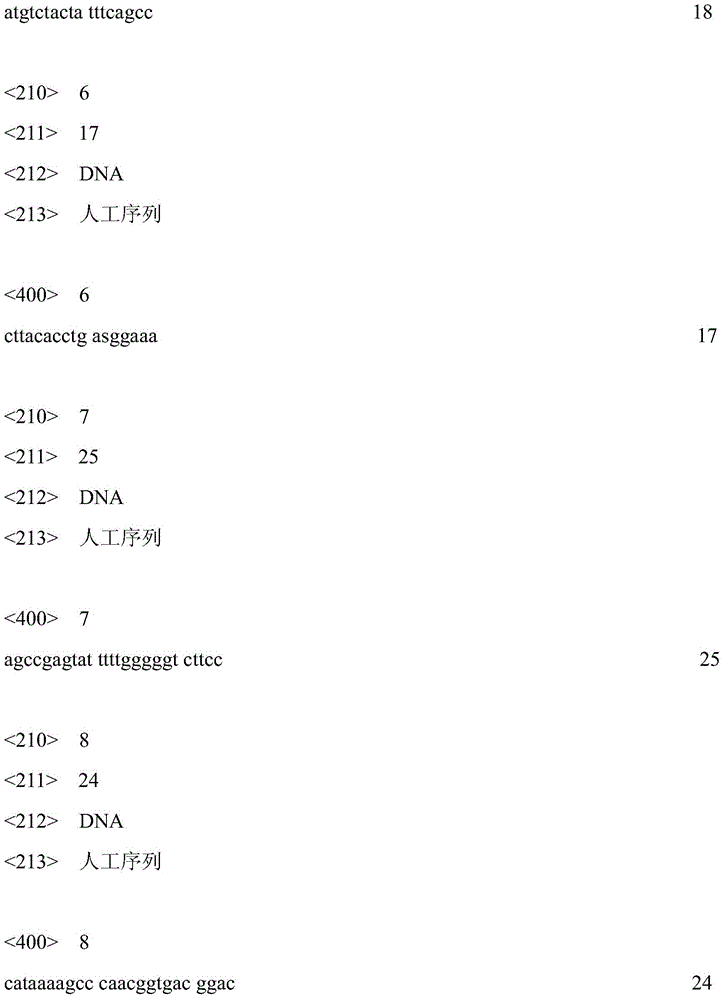
(1) The full-length CDS of the amplified PhHB is used for designing full-length CDS amplification primers (the sequences of the upstream primer and the downstream primer of the full-length CDS amplification primers are respectively shown as SEQ ID No.5 and SEQ ID No.6 in the sequence table) according to the nucleotide sequence (shown as SEQ ID No.1 in the sequence table) information of the PhHB. The first chain of the radix pseudostellariae tuberous root cDNA is used as a template, PCR amplification and clone sequencing are carried out, and the obtained nucleotide sequence is completely consistent with SEQ ID No.2 in a sequence table, so that the amplification primer can amplify the full-length CDS of the radix pseudostellariae cyclic peptide HB precursor protein gene PhHB.
(2) The cyclic reaction of the radix pseudostellariae cyclic peptide HB takes a linear peptide prePhHB (amino acid sequence is shown as SEQ ID No.4 in a sequence table) synthesized by a chemical method as a substrate, and the cyclic peptide HB can be generated by catalyzing crude enzyme of radix pseudostellariae root tuber extracted by buffer solution (pH 8.5), which indicates that the prePhHB is precursor protein for forming the radix pseudostellariae cyclic peptide HB.
(3) The radix pseudostellariae material can be divided into two types, namely high and low content of cyclic peptide HB of radix pseudostellariae, by analyzing the gene expression of the radix pseudostellariae PhHB. Specific primers (the sequences of the upstream primer and the downstream primer are respectively shown as SEQ ID No.7 and SEQ ID No.8 in a sequence table) are designed according to a precursor protein gene PhHB of the heterophylly falsestarwort root cyclic peptide HB, and PCR reaction is respectively carried out by taking the first chain of the tuberous root cDNA of the heterophylly falsestarwort root with different Heterophyllin B contents as a template. The expression level of PhHB gene was determined by the intensity of the band after electrophoresis on 2.0% agarose gel. The result shows that the expression quantity of PhHB is in positive correlation with the content of cyclic peptide HB in radix pseudostellariae, and the PhHB is a precursor protein gene for forming the cyclic peptide HB of radix pseudostellariae by combining the verification results of the (1) and (2).
Description of the drawings:
FIG. 1 is a chemical molecular structural formula of pseudostellaria heterophylla cyclic peptide HB.
FIG. 2 is a detection map of full-length CDS amplification electrophoresis of a precursor gene PhHB of pseudostellaria heterophylla cyclic peptide HB; m: marker (TaKaRa DL 500); 1-2: precursor gene of pseudostellaria cyclic peptide HB.
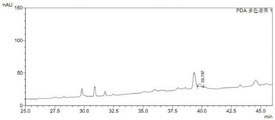
FIG. 3 is an HPLC chromatogram of a standard substance of pseudostellaria heterophylla cyclic peptide HB.
FIG. 4 is an HPLC chromatogram of cyclic peptide HB of radix Pseudostellariae; CK-: no crude enzyme was added to the cyclization reaction.
FIG. 5 is an HPLC chromatogram of cyclic peptide HB of radix Pseudostellariae; PrePhHB was not added to the CK + cyclization reaction.
FIG. 6 is an HPLC chromatogram of cyclic peptide HB of radix Pseudostellariae; PrePhHB and crude enzyme were added simultaneously to the cyclization reaction.
FIG. 7 is a bar graph comparing amounts of cyclic peptide HB of radix Pseudostellariae in cyclization reactions; k-: crude enzyme is not added in the cyclization reaction; no prepHB is added in the CK + cyclization reaction; prephB: the linear peptide prepHB and the crude enzyme were added simultaneously. 100: the amount of crude enzyme added in the cyclization reaction was 100. mu.L; 150: the amount of crude enzyme added in the cyclization reaction was 150. mu.L; 200: the amount of crude enzyme added in the cyclization reaction was 200. mu.L.
FIG. 8 is an electrophoresis detection map of PhHB precursor gene expression in radix Pseudostellariae materials with different contents of cyclic peptide HB of radix Pseudostellariae; m: marker (TaKaRa DL 500); 1-6: radix pseudostellariae with high content of cyclic peptide HB; 7-12: radix Pseudostellariae with low content of cyclic peptide HB.
The specific implementation mode is as follows:
the present invention is further explained with reference to the following examples, so that those skilled in the art can implement the invention in view of the description, but the examples are not intended to limit the invention in any way.
The first embodiment is as follows:
taking radix pseudostellariae root tuber of Schlegel of Guizhou as a material, extracting total RNA, taking a first chain of reverse transcription cDNA as a template, and carrying out PCR amplification reaction. A 25 μ L reaction system comprising: 0.125. mu.L TaKaRa Ex Taq (5U. mu.L)-1),2.5μL 10×Ex Taq Buffer(Mg2+Plus), 2. mu.L dNTP mix (2.5 mmol. multidot.L each)-1) 1. mu.L of a primer shown as SEQ ID No.5 (10. mu. mol. L)-1) And 1. mu.L of a primer shown as a primer represented by SEQ ID No.6 (10. mu. mol. L)-1) 1 μ L of cDNA template, ddH2Supplementing O to 25 mu L; the reaction procedure is as follows: pre-denaturation at 95 ℃ for 4min, denaturation at 95 ℃ for 30s, annealing at 51 ℃ for 30s, extension at 72 ℃ for 45s, and extension at 72 ℃ for 7min after 35 cycles. Subjecting the PCR product to agarose gel electrophoresis, cutting a target band, recovering, and directly mixing the obtained product with pMD19-T vector connection, transformation of Escherichia coli DH5 alpha, selection of positive clone sequencing, removal of pMD19-T vector sequence, the obtained nucleotide sequence is consistent with SEQ ID NO.2 in the sequence table, and the coded amino acid sequence is the same as the amino acid sequence (shown in SEQ ID NO.3 in the sequence table) coded by the PhHB gene.
Example two:
taking a proper amount of radix pseudostellariae root tuber in Xianxing county of Guizhou, extracting, purifying and concentrating to obtain crude enzyme. Cyclizing for 5h at the constant temperature of 30 ℃, wherein the reaction system (1000 mu L) is as follows: 15 mM. L-1Tris(pH 8.5),100mM·L-1NaCl,5mM·L-1DTT,0.2mg·L-1BSA,15μg·L-1PrePhHB (synthesized by Kinsley Biotechnology Ltd., purity of 99%) and crude enzyme (three gradients of 100. mu.L, 150. mu.L and 200. mu.L), ddH2And O is supplemented to 1000 mu L. Controls were made without prephB or without the addition of the protease, 3 replicates per group. And after the reaction is finished, adding 9 times of volume of methanol to terminate the reaction, placing the mixture into an evaporation dish, heating and concentrating the mixture in a water bath until the mixture is dry, adding chromatographic pure methanol to dissolve residues, transferring the residues into a 2mL volumetric flask, adding methanol to fix the volume to a scale, shaking the mixture evenly, filtering the mixture through a 0.45 mu m filter membrane, taking subsequent filtrate, and detecting the amount of the pseudostellaria heterophylla cyclopeptide HB generated by the cyclization reaction according to content determination conditions under the pseudostellaria root item in 2010 edition of Chinese pharmacopoeia. The results show that: adding 100 mu L, 150 mu L and 200 mu L of crude enzyme with three gradients which can react with PrePhHB to form radix pseudostellariae cyclic peptide HB, wherein the content of the radix pseudostellariae cyclic peptide HB is increased along with the increase of the dosage of the crude enzyme; the content of the pseudostellaria cyclic peptide HB in the control group without adding prePhHB is obviously lower than that in the experimental group, and the content of the pseudostellaria cyclic peptide HB in the control group without adding crude enzyme is lower than the detection limit.
Example three:
the content of the cyclic peptide HB of the radix pseudostellariae in the radix pseudostellariae root tuber is determined by referring to a content determination method of the cyclic peptide HB of the radix pseudostellariae under the item of the radix pseudostellariae in 2010 version of Chinese pharmacopoeia. According to the detection result, the radix pseudostellariae materials are divided into two types, namely the radix pseudostellariae cyclic peptide HB content is high (measured as 0.0256 +/-0.0049%) and the radix pseudostellariae cyclic peptide HB content is extremely low (measured as 0.0000 +/-0.0002%). Extracting root tuber total RNA respectively, and reversely transcribing the same amount of total RNA into cDNA. According to the nucleotide sequence of heterophylly falsestarwort root cyclic peptide HB precursor protein gene PhHBCounting primers (the sequences of the upstream primer and the downstream primer are shown as SEQ ID No.7 and SEQ ID No.8 in the sequence table), and respectively carrying out PCR amplification by taking the cDNA as a template. The reaction system (25. mu.L) was: 0.125. mu.L TaKaRa Ex Taq (5U. mu.L)-1),2.5μL 10×Ex Taq Buffer(Mg2+Plus), 2. mu.L of dNTP mix (2.5 mM each), 1. mu.L (10. mu. mol. L) of each of the above upstream and downstream primers-1) cDNA template 1. mu.L, ddH2And O is supplemented to 25 mu L. Reaction procedure: pre-denaturation at 95 ℃ for 4min, denaturation at 95 ℃ for 30s, annealing at 68 ℃ for 30s, and extension at 72 ℃ for 45s, and after 30 cycles, extension at 72 ℃ for 7 min. And (3) carrying out 2.0% agarose gel electrophoresis on the PCR amplification product after EB (Epstein-Barr) dyeing, observing in a gel imaging system, photographing and storing. The expression level of PhHB gene was determined by the intensity of the band after electrophoresis on 2.0% agarose gel. The result shows that the expression quantity of the precursor protein gene PhHB of the heterophylly falsestarwort root cyclic peptide HB is in positive correlation with the content of the heterophylly falsestarwort root cyclic peptide HB (figure 8). The high band of the pseudostellaria cyclic peptide HB content is clear and bright, which shows that the PhHB gene has high expression level, while the pseudostellaria type with the very low pseudostellaria cyclic peptide HB content has no obvious band, which shows that the expression level of the PhHB gene is very low.