CN1068503C - Immobilised beta-mannanase - Google Patents
Immobilised beta-mannanase Download PDFInfo
- Publication number
- CN1068503C CN1068503C CN95103639A CN95103639A CN1068503C CN 1068503 C CN1068503 C CN 1068503C CN 95103639 A CN95103639 A CN 95103639A CN 95103639 A CN95103639 A CN 95103639A CN 1068503 C CN1068503 C CN 1068503C
- Authority
- CN
- China
- Prior art keywords
- beta
- extract
- mannase
- proposition
- matrix
- Prior art date
- Legal status (The legal status is an assumption and is not a legal conclusion. Google has not performed a legal analysis and makes no representation as to the accuracy of the status listed.)
- Expired - Fee Related
Links
Images




Classifications
-
- C—CHEMISTRY; METALLURGY
- C12—BIOCHEMISTRY; BEER; SPIRITS; WINE; VINEGAR; MICROBIOLOGY; ENZYMOLOGY; MUTATION OR GENETIC ENGINEERING
- C12Y—ENZYMES
- C12Y302/00—Hydrolases acting on glycosyl compounds, i.e. glycosylases (3.2)
- C12Y302/01—Glycosidases, i.e. enzymes hydrolysing O- and S-glycosyl compounds (3.2.1)
- C12Y302/01025—Beta-mannosidase (3.2.1.25), i.e. mannanase
-
- A—HUMAN NECESSITIES
- A23—FOODS OR FOODSTUFFS; TREATMENT THEREOF, NOT COVERED BY OTHER CLASSES
- A23F—COFFEE; TEA; THEIR SUBSTITUTES; MANUFACTURE, PREPARATION, OR INFUSION THEREOF
- A23F5/00—Coffee; Coffee substitutes; Preparations thereof
- A23F5/16—Removing unwanted substances
- A23F5/163—Removing unwanted substances using enzymes or microorganisms
Landscapes
- Life Sciences & Earth Sciences (AREA)
- Chemical & Material Sciences (AREA)
- Organic Chemistry (AREA)
- Engineering & Computer Science (AREA)
- General Health & Medical Sciences (AREA)
- Genetics & Genomics (AREA)
- Health & Medical Sciences (AREA)
- Biochemistry (AREA)
- Bioinformatics & Cheminformatics (AREA)
- General Engineering & Computer Science (AREA)
- Food Science & Technology (AREA)
- Polymers & Plastics (AREA)
- Microbiology (AREA)
- Wood Science & Technology (AREA)
- Zoology (AREA)
- Immobilizing And Processing Of Enzymes And Microorganisms (AREA)
- Preparation Of Compounds By Using Micro-Organisms (AREA)
- Tea And Coffee (AREA)
- Enzymes And Modification Thereof (AREA)
- Polysaccharides And Polysaccharide Derivatives (AREA)
Abstract
一种使液体咖啡率出物中的半乳甘露聚糖水解的方法,其中该萃出物是在20-80℃的温度下用固定化β-甘露聚糖酶进行水解的。

A method of hydrolyzing galactomannan in liquid coffee extract, wherein the extract is hydrolyzed at a temperature of 20-80°C with immobilized β-mannanase.
Description
本发明涉及液体咖啡萃出物中所含的半乳甘露聚糖的一种水解方法。The present invention relates to a method for the hydrolysis of galactomannan contained in liquid coffee extract.
美国专利2802920公开了咖啡萃出物中所含的半乳甘露聚糖的水解方法,水解时使用β-甘露聚糖酶制剂,以便防止这种萃出物在冷冻过程中形成凝胶。US Patent 2802920 discloses a process for the hydrolysis of galactomannan contained in coffee extract using a β-mannanase preparation in order to prevent the gelation of this extract during freezing.
Food Review, 8/9,37-39(1984)公开了β-甘露聚糖酶的工业用途,即降低液体咖啡萃出物的粘度,使得有可能将其浓缩成高含量的干物质。Food Review, 8/9 , 37-39 (1984) discloses the industrial use of beta-mannanase to reduce the viscosity of liquid coffee extract, making it possible to concentrate it to a high content of dry matter.
但是,β-甘露聚糖酶的这种工业用途具有一定的缺点。例如,由于这种酶只使用一次,因而被浪费掉。在成品中存在这种酶也是所不希望的。However, this industrial use of β-mannanase has certain disadvantages. For example, since the enzyme is used only once, it is wasted. The presence of such enzymes in the finished product is also undesirable.
本发明旨在弥补先有技术的这些缺点。The present invention aims to remedy these disadvantages of the prior art.
为此目的,在本发明的液体咖啡中的半乳甘露聚糖的水解方法中,该萃出物是在20-80℃固定化β-甘露聚糖酶进行水解的。For this purpose, in the method for hydrolyzing galactomannan in liquid coffee of the present invention, the extract is hydrolyzed by immobilizing β-mannanase at 20-80°C.
β-甘露聚糖酶较好是通过共价键连接固定在基质上或通过吸附在基质上的β-甘露聚糖酶的聚合作用而达到固定化。The β-mannanase is preferably immobilized on the substrate by covalent linkage or by polymerization of the β-mannanase adsorbed on the substrate to achieve immobilization.
因此,本发明的一个优点是达到了节省酶的目的。Therefore, an advantage of the present invention is that an enzyme saving is achieved.
另一个优点是β-甘露聚糖酶不会从基质上盐析出来。Another advantage is that the β-mannanase does not salt out from the matrix.
再一个优点是可以在不会产生细菌污染的温度下操作。A further advantage is that it can be operated at temperatures where bacterial contamination does not occur.
本发明的一个令人惊奇的优点是β-甘露聚糖酶通过共价键连接在基质上后或在吸附于基质上的分子聚合之后不会失去活性,类似地,固定化β-甘露聚糖酶的酶活性对时间而言是相对恒定的。A surprising advantage of the present invention is that β-mannanase does not lose its activity after covalently linking to the substrate or after polymerization of molecules adsorbed on the substrate, similarly, immobilized β-mannan The enzymatic activity of an enzyme is relatively constant with respect to time.
最后,本发明还有一个优点,即咖啡萃出物既可以在搅拌槽罐式反应器中进行,也可以在包括固定化β-甘露聚糖酶的固定床或流化床的反应器中进行,不必考虑咖啡萃出物的粘度。Finally, the present invention also has the advantage that the coffee extract can be carried out both in stirred tank reactors and in fixed-bed or fluidized-bed reactors comprising immobilized β-mannanase , regardless of the viscosity of the coffee extract.
在下面的叙述中“搅拌槽罐式反应器”一词意指含有处于悬浮状态的固定化β-甘露聚糖酶的、进行机械搅拌的系统。In the following description, the term "stirred tank reactor" means a system containing immobilized β-mannanase in suspension, which is mechanically stirred.
类似地“固定化β-甘露聚糖酶的固定床”一词应理解为固定在紧密装填在适用于连续加工液体咖啡萃出物的反应器中的基质上或基质中的β-甘露聚糖酶。Similarly the expression "fixed bed of immobilized beta-mannanase" is understood as beta-mannan immobilized on or in a matrix tightly packed in a reactor suitable for continuous processing of liquid coffee extract enzyme.
“固定化β-甘露聚糖酶的流化床”一词应理解为固定在装填但并非紧密装填在适用于连续加工液体咖啡萃出物的反应器中的基质上的β-甘露聚糖酶。然后,咖啡萃出物从底部到顶部的循环流动使基质颗粒处于悬浮状态。这种类型的反应器称为“流动床反应器”,特别有利于加工含有悬浮状固体物质的介质。The term "fluidized bed of immobilized beta-mannanase" is understood to mean a beta-mannanase immobilized on a substrate in a packed but not tightly packed reactor suitable for the continuous processing of liquid coffee extract . Then, the circulating flow of coffee extract from the bottom to the top keeps the matrix particles in suspension. This type of reactor is called a "fluid bed reactor" and is particularly advantageous for processing media containing suspended solids.
“二聚甘露糖(manobiose)”和“

β-甘露聚糖酶的单位定义为在pH5及30℃条件下每分钟从角豆树胶释放出来的相当于1微摩尔甘露糖的还原蔗糖的量。The unit of β-mannanase is defined as the amount of reduced sucrose corresponding to 1 micromole of mannose released from carob gum per minute at
因此,为了实施本发明,β-甘露聚糖酶例如可通过共价键连接固定在常用基质的表面上,或者也可以通过事先吸附在常用基质表面上的β-甘露聚糖酶的聚合作用而达到固定化。Therefore, in order to practice the present invention, the β-mannanase can be immobilized on the surface of a common substrate, for example, by covalent linkage, or can also be formed by polymerization of the β-mannanase previously adsorbed on the surface of a common substrate. achieve immobilization.
然后例如可用这些固定化的酶将液体咖啡萃出物在40-70℃的温度下进行水解。The liquid coffee extract can then be hydrolyzed, for example, with these immobilized enzymes at a temperature of 40-70°C.
为此目的,较好是使用细菌或霉菌β-甘露聚糖酶,特别是从Aspergillus niger中提取的β-甘露聚糖酶,例如特别是以Gamanase商标(丹麦,NOVO-NORDISK公司)销售的,经纯化的Aspergillus niger β-甘露聚糖酶。For this purpose, it is preferred to use a bacterial or fungal β-mannanase, in particular a β-mannanase extracted from Aspergillus niger, sold for example under the trademark Gamanase® (Denmark, NOVO-NORDISK company) , purified Aspergillus niger β-mannanase.
此外,可让萃取液滤过装填有经研磨烘烤过的咖啡萃取槽来获得液体咖啡萃出物。这种萃取方法可以逆流方式进行,即可在压力下在150-180℃的温度下,把水引入到装有经研磨烘烤过的最大限度耗尽的咖啡料的萃取槽中,而该咖啡料已在其底部经过N次萃取。然后使从该萃取槽出来的液体萃出物通过装有已经使用过(N-1)次的咖啡料的萃取槽中,如此直至液体萃出物通过装填有经研磨烘烤的新鲜咖啡的萃取槽为止。最后使用的萃出物来自温度约为100℃的最后一个萃取槽。因此可以分成由装有最大限度耗尽的咖啡的萃取槽构成的加压段,和由装有最小限度耗尽的咖啡的萃取槽构成的常压段。Alternatively, liquid coffee extract can be obtained by filtering the extract through an extraction tank filled with roasted ground coffee. This extraction method can be carried out in a countercurrent manner, that is, water is introduced under pressure at a temperature of 150-180°C into an extraction tank containing ground and roasted coffee material that is exhausted to the maximum extent, and the coffee The feed has been extracted N times at its bottom. The liquid extract from the extraction tank is then passed through the extraction tank containing the coffee material that has been used (N-1) times, so until the liquid extract is extracted through the extraction tank filled with ground and roasted fresh coffee up to the slot. The last extract used comes from the last extraction tank at about 100°C. A division can thus be made into a pressurized section consisting of extraction troughs containing maximally depleted coffee, and a normal-pressure section consisting of extraction troughs containing minimally depleted coffee.
也可让萃取液滤过装填有经研磨烘烤的咖啡的加压段萃取槽来获得液体咖啡萃出物。这种方法称为“分裂提取”,在其余的叙述部分中也将使用这一术语。在该方法中使用两种萃取液,萃取槽分成加压段和常压段,每段用其自己的萃取液进行萃取。装在常压段中的咖啡是在适中的温度和压力条件下用第一种萃取液进行萃取的,而装在加压段中的咖啡是在高得多的温度和压力的条件下用第二种萃取液进行萃取的。因此必然会产生两种不同的液体萃出物,例如从加压段出来的萃出物经部分蒸发后可以互相合并,然后用常规方法制成粉末。Liquid coffee extract can also be obtained by filtering the extract through a pressurized extraction tank filled with ground roast coffee. This approach is called "split extraction," and this term will be used throughout the rest of the narrative. In this method, two extraction liquids are used, and the extraction tank is divided into a pressurized section and an atmospheric section, and each section uses its own extraction liquid for extraction. The coffee contained in the normal pressure section is extracted with the first extraction liquid under moderate temperature and pressure conditions, while the coffee contained in the pressurized section is extracted with the second extraction liquid under much higher temperature and pressure conditions. Two extracts were extracted. Therefore two different liquid extracts are necessarily produced, for example the extracts from the pressurized section can be combined with each other after partial evaporation and then powdered by conventional methods.
因此,在本发明中尤其可以使用从研磨烘烤的咖啡的分裂提取工艺的加压段中得到的萃出物,然后才将其进行部分蒸发。Therefore, in the present invention it is especially possible to use the extract obtained from the pressurized section of the split extraction process of ground roast coffee before it is subjected to partial evaporation.
因此,较好是使用例如从EP 0 538 512所公开的加压段得到的萃出物。Therefore, it is preferred to use extracts obtained, for example, from the pressurized section as disclosed in
按照本发明,所述基质可以是多孔基质,例如尤其是孔径为20-200毫微米的多孔基质。According to the invention, the substrate may be a porous substrate, such as, in particular, a porous substrate with a pore diameter of 20-200 nanometers.
具体说,多孔基质可以选自粒状的硅石、玻璃、丙烯酸类聚合物,尤其是牌号为Eupergit-C的丙烯酸类聚合物(德国,Rhm公司),和酚醛聚合物,尤其是牌号为Duolite的酚醛树脂(美国,Supelco公司),例如特别是DuoliteS-761牌号的树脂。Specifically, the porous substrate can be selected from granular silica, glass, acrylic polymers, especially those of the Eupergit- C® brand (Röhm, Germany), and phenolic polymers, especially of the brand Eupergit-C® Duolite (R) phenolic resins (Supelco, USA), such as in particular Duolite (R) S-761 resins.
β-甘露聚糖酶较好是通过共价键连接固定在丙烯酸类聚合物Eupergit-C的表面上。该聚合物具有环氧乙烯基团,其环氧环可以固定β-甘露聚糖酶。因此每克Eupergit-C可以固定例如至少1900单位的β-甘露聚糖酶。The beta-mannanase is preferably immobilized on the surface of the acrylic polymer Eupergit-C (R) by covalent linkage. The polymer has oxirane groups whose epoxy rings can immobilize β-mannanase. Thus Eupergit-C (R) can immobilize, for example, at least 1900 units of [beta]-mannanase per gram of Eupergit-C(R).
多种β-甘露聚糖酶较好是通过吸附在酚醛树脂Duolite颗粒表面上的β-甘露聚糖酶的聚合作用来固定。例如可以用戊二醛作为聚合剂。The multiple beta-mannanases are preferably immobilized by polymerization of the beta-mannanases adsorbed on the surface of the phenolic resin Duolite (R) particles. For example, glutaraldehyde can be used as polymerizing agent.
在本发明的第一个优选的具体实施方案中,咖啡萃出液是用β-甘露聚糖酶的槽罐式反应器中进行水解的,所述β-甘露聚糖酶是由共价键连接固定在基质上的或由吸附在基质上的β-甘露聚糖酶的聚合而固定的。该系统可以以半连续方式,按如下三步自动进行操作。在该第一个方案中,将待处理的咖啡萃出物装入到槽罐中,然后进行水解,同时进行机械搅拌,经过预定的时间后将槽罐放空。在槽罐下部配置一个过滤器就可以保留反应器中的酶。该过滤器能截留住例如直径大于40微米的所有颗粒。In a first preferred embodiment of the invention, the coffee extract is hydrolyzed in a tank reactor with a β-mannanase produced by a covalent bond Linkage immobilized on the substrate or by polymerization of β-mannanase adsorbed on the substrate. The system can be operated automatically in the following three steps in a semi-continuous manner. In this first variant, the coffee extract to be treated is charged into a tank, then hydrolyzed with mechanical agitation, and the tank is emptied after a predetermined period of time. The enzyme in the reactor can be retained by disposing a filter in the lower part of the tank. The filter is capable of retaining all particles, eg, larger than 40 microns in diameter.
从这种水解方法,可以看出,通过共价键连接而固定在基质上的β-甘露聚糖酶具有良好的稳定性,因为在至少500次连续循环水解咖啡萃出物后其酶活性能保留60%以上。From this hydrolysis method, it can be seen that the β-mannanase immobilized on the substrate by covalent linkage has good stability, as its enzymatic activity can Keep more than 60%.
本发明的第二个优选的具体实施方案中,液体咖啡萃出物是在含有β-甘露聚糖酶的固定床反应器中进行连续水解的,所述β-甘露聚糖酶是由共价键连接固定在基质上的或由吸附在基质上的β-甘露聚糖酶的聚合而固定的。当以这种方式使用时,该固定化β-甘露聚糖酶能保持良好的稳定性,因为在20小时以上的连续水解后其酶活性能保留80%以上。In a second preferred embodiment of the invention, the liquid coffee extract is continuously hydrolyzed in a fixed bed reactor containing a β-mannanase produced by covalent Linkage immobilized on the substrate or immobilized by polymerization of β-mannanase adsorbed on the substrate. When used in this way, the immobilized β-mannanase can maintain good stability, since more than 80% of its enzyme activity can be retained after more than 20 hours of continuous hydrolysis.
在本发明的第三个优选具体实施方案中,液体咖啡萃出物是在含有由共价键连接固定在基质上的β-甘露聚糖酶的流化床反应器中进行连续水解的。In a third preferred embodiment of the invention, the liquid coffee extract is subjected to continuous hydrolysis in a fluidized bed reactor comprising a beta-mannanase immobilized on a substrate by covalent linkages.
下列实例说明本发明的方法。在这些实例中使用了以Gamanase商标销售的β-甘露聚糖酶,这种酶的比活性为65000单位/每克蛋白质,在其中的一些实例中用可溶性咖啡在蒸馏水中的2%混合物或从角豆树胶中制取的半乳甘露聚糖溶液作为标准基质,这很好地说明了由咖啡萃出物所得到的结果。The following examples illustrate the method of the invention. Beta-mannanase sold under the trademark Gamanase® , which has a specific activity of 65,000 units per gram of protein, was used in these examples, and in some of these examples a 2% mixture of soluble coffee in distilled water or Galactomannan solutions prepared from carob gum served as a standard matrix, which well illustrate the results obtained with coffee extract.
在列举这些实例之前先说明一下萃出物的色谱分析及附图。Before enumerating these examples, explain the chromatographic analysis and accompanying drawings of the extract.
高效薄层色谱法(HPTLC)High Performance Thin Layer Chromatography (HPTLC)
液体咖啡萃出物中存在的寡糖可用色谱法进行定性和定量测定,而无需将该萃出物进行初步纯化。因此这种方法可用于各种不同的测试中,例如半乳甘露聚糖水解的酶动力学研究和水解后咖啡萃出物中残留酶活性的测定等。Oligosaccharides present in liquid coffee extracts can be qualitatively and quantitatively determined chromatographically without initial purification of the extract. This method can therefore be used in various tests, such as enzymatic kinetic studies of galactomannan hydrolysis and determination of residual enzyme activity in coffee extract after hydrolysis, etc.
为此,在HPTLC色谱中使用了硅胶片“硅胶60”(Merck 5631/5641)。沉积出80微克当量的干咖啡萃出物,用由比例为30/35/11的氯仿、乙酸和水组成的溶剂进行三次连续显色。用由4ml苯胺、4克二苯胺、200ml丙酮和30ml 85%磷酸组成的药剂使诙硅胶片在110℃暴露30分钟。For this, silica gel sheets "Silica
然后就可以定性测定萃出物中所存在的寡糖,例如游离的甘露糖、二聚甘露糖、 糖和聚合度低于8的其它甘露糖类。The oligosaccharides present in the extract can then be qualitatively determined, such as free mannose, dimannose, Sugars and other mannoses with a degree of polymerization lower than 8.
通过比较硅胶片上相应于萃出物中寡糖的色斑和以已知浓度沉积在硅胶片上相应于这种寡糖的色斑的密度,也可以测定萃出物中各种寡糖的含量。当萃出物中只剩下二聚甘露糖和 糖时就可以认为半乳甘露聚糖达到100%的水解,因为上述两种甘露糖是酶无法再将其分解的最终反应产物。The content of various oligosaccharides in the extract can also be determined by comparing the density of stains on the silica gel sheet corresponding to the oligosaccharides in the extract with those deposited on the silica gel sheet at known concentrations corresponding to the oligosaccharides. When only dimannose and The galactomannan can be considered to have reached 100% hydrolysis when the sugar is present, since the two mannoses mentioned above are final reaction products that can no longer be broken down by enzymes.
附图说明:Description of drawings:
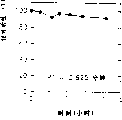
图1(1a和1b):说明半乳甘露聚糖在装有固定在DuoliteS-761上的β-甘露聚糖酶的固定床反应器中的水解情况。图1a说明水解百分率与停留时间的关系,图1b说明酶的相对活性与时间的关系。Figure 1 (1a and 1b): illustrates the hydrolysis of galactomannan in a fixed bed reactor with β-mannanase immobilized on Duolite® S-761. Figure 1a illustrates the percentage of hydrolysis versus residence time, and Figure 1b illustrates the relative activity of the enzymes versus time.
图2(2a和2b):说明半乳甘露聚糖在装有固定在二氧化硅珠上的β-甘露聚糖酶的固定床反应器中的水解情况。图2a说明水解百分率与停留时间的关系,图2b说明酶的相对活性与时间的关系。Figure 2 (2a and 2b): illustrates the hydrolysis of galactomannan in a fixed bed reactor containing β-mannanase immobilized on silica beads. Figure 2a illustrates percent hydrolysis versus residence time, and Figure 2b illustrates relative enzyme activity versus time.
图3(3a和3b):说明半乳甘露聚糖在装有固定在Eupergit-C上的β-甘露聚糖酶的固定床反应器中的水解情况。图3a说明水解百分率与停留时间的关系,图3b说明酶的相对活性与时间的关系。Figure 3 (3a and 3b): illustrates the hydrolysis of galactomannan in a fixed bed reactor with β-mannanase immobilized on Eupergit- C® . Figure 3a illustrates percent hydrolysis versus residence time, and Figure 3b illustrates relative enzyme activity versus time.
图4说明咖啡萃出物在流动床中被固定在Eupergit-C上的β-甘露聚糖酶水解的情况。图中曲线说明水解百分率与标准化停留时间的关系。Figure 4 illustrates the hydrolysis of coffee extract by β-mannanase immobilized on Eupergit-C (R) in a fluidized bed. The curves in the figure illustrate the percent hydrolysis versus normalized residence time.
图5说明咖啡萃出物在搅拌槽罐中被固定在Eupergit-C上的β-甘露聚糖酶水解的情况。图中曲线说明所产生的甘露糖类的百分率与水解循环次数的关系。Figure 5 illustrates the hydrolysis of coffee extract by β-mannanase immobilized on Eupergit-C (R) in a stirred tank. The graph shows the percentage of mannose produced as a function of the number of hydrolysis cycles.
实例1Example 1
按下述方法通过吸附和聚合将β-甘露聚糖酶固定在酚醛聚合物中。The β-mannanase was immobilized in the phenolic polymer by adsorption and polymerization as follows.
使用孔径约60毫微米的树脂Duolite S-761(美国Supelco公司)。将该树脂过筛,得到0.2-0.4毫米的颗粒,用0.5N NaOH处理1个时,然后水洗,再用0.25N HCl处理30分钟,最后用蒸馏水洗涤至pH4。将25ml由5ml Gamanase和20ml 0.1M pH=6的磷酸钠缓冲液组成的溶液加入到5克上述经处理过的树脂中,在徐徐搅拌下于22℃让Gamanase吸附在该树脂上达12小时之久。然后用蒸馏水洗涤该制剂,所吸附的酶用2.5%的戊二醛溶液在22℃聚合3小时,然后用蒸馏水最后洗涤该制剂。A resin Duolite® S-761 (Supelco, USA) with a pore size of about 60 nm was used. The resin was sieved to obtain 0.2-0.4 mm particles, treated with 0.5N NaOH for 1 hour, washed with water, treated with 0.25N HCl for 30 minutes, and finally washed with distilled water to pH4. Add 25ml of a solution consisting of 5ml Gamanase® and 20ml 0.1M pH=6 sodium phosphate buffer into 5 grams of the above-mentioned treated resin, and allow Gamanase® to be adsorbed on the resin for 12°C at 22°C under gentle stirring. hours long. The preparation was then washed with distilled water, the adsorbed enzyme was polymerized with a 2.5% solution of glutaraldehyde at 22° C. for 3 hours, and the preparation was finally washed with distilled water.
另外,将3克角豆树胶加入到1升0.1M pH为5的乙酸盐缓冲液中并加热至80℃,由此制得半乳甘露聚糖溶液,其中可溶部分用于进行下述测试。Separately, 3 g of carob gum was added to 1 liter of 0.1 M acetate buffer at
于是可以在普通的固定床反应器中测定固定化的酶。该反应器包括一个管状玻璃壳体和两个尼龙过滤器(70微米),保持壳体各端的水平表面。将该反应器浸没 在30℃的水浴中,用普通蠕动泵将半乳甘露聚糖溶液泵入该反应器中,在通过该反应器之前先加热至30℃。Immobilized enzymes can then be assayed in common fixed bed reactors. The reactor consisted of a tubular glass housing and two nylon filters (70 microns), maintaining a horizontal surface at each end of the housing. The reactor was submerged in a water bath at 30°C, and the galactomannan solution was pumped into the reactor with a common peristaltic pump, heated to 30°C before passing through the reactor.
在第一种情况下,半乳甘露聚糖溶液以各种不同速度泵入反应器中。然后用习用方法测定洗脱液中还原糖的量随萃出物在反应器中的停留时间(RT)不同而变化的情况。然后测定半乳甘露聚糖的水解百分率与萃出物在反应器中的停留时间的函数关系。可以认为,当所生成的还原糖的量等于用未固定的Gamanase进行单独试验使基质全部水解时所得到的还原糖的量时,就算达到了100%的水解率。结果示于图1a中。In the first case, the galactomannan solution was pumped into the reactor at various speeds. The amount of reducing sugars in the eluate was then determined by conventional methods as a function of the residence time (RT) of the extract in the reactor. The percent hydrolysis of galactomannan was then determined as a function of the residence time of the extract in the reactor. It is considered that 100% hydrolysis is achieved when reducing sugars are formed in an amount equal to that obtained in a separate test with unimmobilized Gamanase( R) to completely hydrolyze the matrix. The results are shown in Figure 1a.
在第二种情况下,半乳甘露聚糖溶液被迫连续通入到反应器中,为此目的选定一个能提供在实验开始时水解率小于100%的停留时间(RT)。然后定期测定洗脱液中还原糖的量。可以看出,该量随时间而减少,可能是由于酶活性的损失。正是由于这个原因,可以通过比较所得到的还原糖的量与实验开始时所存在的还原糖量来测定酶的相对活性(%)与时间的函数关系。结果示于图1b。In the second case, the galactomannan solution was forced to pass continuously into the reactor, for which purpose a residence time (RT) was chosen which provided a hydrolysis rate of less than 100% at the start of the experiment. The amount of reducing sugars in the eluate is then periodically determined. It can be seen that this amount decreases over time, probably due to loss of enzyme activity. It is for this reason that the relative activity (%) of the enzyme as a function of time can be determined by comparing the amount of reducing sugar obtained with the amount of reducing sugar present at the start of the experiment. The results are shown in Figure 1b.
下表说明基质的一些特性。
实例2Example 2
通过共价键连接使β-甘露聚糖酶固定在直径为0.1-0.3毫米,孔径约60毫微米的二氧化硅珠X-030 LS(Sepracor,法国)上,方法如下。The β-mannanase was immobilized on silica beads X-030 LS (Sepracor, France) with a diameter of 0.1-0.3 mm and a pore size of about 60 nm by covalent linkage as follows.
用H.H.Weetall在“Method of Silanisation in anaqueous medium”(Methods in Enz., 44 135-148,1976)中所公开的方法先使二氧化硅珠与γ-氨基丙基三乙氧基硅烷偶联。5克二氧化硅珠用50ml 2.5%戊二醛在0.1M pH=7的磷酸钠缓冲液中的溶液在真空下处理1小时,接着在常压下处理2小时。然后依次用蒸馏水、0.5M NaCl溶液和0.1M pH=6的磷酸钠缓冲液洗涤上述处理过的颗粒。然后在该活化基质中加入25ml含有5mlGamanase和20ml pH=6的磷酸钠缓冲液的溶液,然后在4℃令其在氦气氛中反应12小时。最后依次用蒸馏水和0.1M pH=6的磷酸钠缓冲液充分洗涤这些硅胶珠。Silica beads were first coupled to γ-aminopropyltriethoxysilane by the method disclosed by HH Weetall in "Method of Silanisation in anaqueous medium" (Methods in Enz., 44 135-148, 1976). 5 g of silica beads were treated with 50 ml of a solution of 2.5% glutaraldehyde in 0.1 M sodium phosphate buffer pH=7 under vacuum for 1 hour, followed by 2 hours under normal pressure. The above treated particles were then washed successively with distilled water, 0.5M NaCl solution and 0.1M sodium phosphate buffer solution at pH=6. Then 25 ml of a solution containing 5 ml of Gamanase® and 20 ml of sodium phosphate buffer at pH = 6 was added to the activated matrix, which was then allowed to react at 4°C for 12 hours in a helium atmosphere. Finally, these silica gel beads were thoroughly washed with distilled water and 0.1M pH=6 sodium phosphate buffer successively.
然后按实例1的相同方法在固定床反应器中测试上述制剂。于是测得了半乳甘露聚糖的水解百分率与基质在反应器中的停留时间的函数关系(图2a),以及酶的相对活性与时间的函数关系(图2b)。The above formulation was then tested in a fixed bed reactor in the same manner as in Example 1. The percent hydrolysis of galactomannans as a function of the residence time of the substrate in the reactor (Fig. 2a) and the relative activity of the enzymes as a function of time (Fig. 2b) were then measured.
下表说明所用基质的一些特性。
实例3Example 3
通过共价键连接使β-甘露聚糖酶固定在含有反应性环氧乙烷基团,孔径为约35毫微米的Eupergit-C丙烯酸类聚合物珠上(德国,Rhm),其方法如下。The β-mannanase was immobilized by covalent linkage on Eupergit- C® acrylic polymer beads (Röhm, Germany) containing reactive oxirane groups with a pore size of about 35 nm. Methods as below.
将37.5ml由7.5ml Gamanase和30ml 0.5M pH=7的磷酸钾缓冲溶液组成的溶液加入到5克Eupergit-C中,在轻轻搅拌下令其在室温下反应48小时。然后用pH=7的0.5M磷酸钾缓冲溶液洗涤所得制剂。37.5ml of a solution consisting of 7.5ml of Gamanase® and 30ml of 0.5M pH=7 potassium phosphate buffer solution was added to 5g of Eupergit- C® , and allowed to react at room temperature for 48 hours with gentle stirring. The resulting preparation was then washed with pH=7 0.5M potassium phosphate buffer solution.
再按实例1所述的相同方法在固定床反应器中对该制剂进行测试。于是可测定半乳甘露聚糖的水解百分率与该基质在反应器中的停留时间的函数关系(图3a)以及酶的相对活性与时间的函数关系(图3b)可以看出,在该基质上酶的稳定性特别好,因为经16小时连续水解后该固定化β-甘露聚糖酶能保持其酶活性80%以上。The formulation was then tested in a fixed bed reactor in the same manner as described in Example 1. The hydrolysis percentage of galactomannan can then be determined as a function of the residence time of the substrate in the reactor (Fig. 3a) and the relative activity of the enzyme as a function of time (Fig. 3b). It can be seen that on the substrate The stability of the enzyme is particularly good, because the immobilized β-mannanase can maintain more than 80% of its enzyme activity after 16 hours of continuous hydrolysis.
还可以看出,在整个过程中在洗脱液中没有发现这种酶从基质上盐析出来。当将该洗脱液在30℃保温数小时并测定还原糖含量变化时,未发现有任何改变。It can also be seen that no salting out of the enzyme from the matrix was found in the eluate throughout the process. When the eluate was incubated at 30°C for several hours and the change in reducing sugar content was measured, no change was found.
下表说明所用基质的一些特性。
实例4Example 4
通过共价键连接将酶固定在5克具有约70毫微米确定孔径并含有氨丙基基团的普通玻璃颗粒(Sigma G5019)上,固定方法与实例2中固定硅胶珠的方法相同。The enzyme was immobilized on 5 grams of ordinary glass particles (Sigma G5019) with a defined pore size of about 70 nanometers and containing aminopropyl groups by covalent linkage, and the immobilization method was the same as that of the silica gel beads in Example 2.
按实例1所述方法,用普通可溶性咖啡萃出物(Nescafé,雀巢公司)的2%蒸馏水溶液在固定床反应器中测试上述制剂。The above formulation was tested in a fixed bed reactor as described in Example 1 with a 2% distilled water solution of ordinary soluble coffee extract ( Nescafé® , Nestlé).
改变咖啡萃出物的流量,并用HPTLC法分析从反应器流出的萃出物。可以看出,停留时间为64秒和81秒时反应产物大部分是二聚甘露糖和


下表说明所用基质的特性。
实例5Example 5
从EP专利0 538 512所述的经研磨烘烤后的咖啡的分裂提取法的加压段得到的液体咖啡萃出物用来连续供入保持在50℃的实例1中所述的固定床反应器。Liquid coffee extract obtained from the pressurized section of the split extraction process of ground roasted coffee described in
该反应器装有按实例3所述方法固定在Eupergit-C上的Gamanase。控制流量使停留时间为8分钟。在48小时内定期取样。用HPLC法测定所产生的寡糖。The reactor was loaded with Gamanase® immobilized on Eupergit- C® as described in Example 3. Flow was controlled to give a residence time of 8 minutes. Samples were taken periodically within 48 hours. The oligosaccharides produced were determined by HPLC.
分析结果表明萃出物中的半乳甘露聚糖达到完全水解,因为经处理后的萃出物中仅有的寡糖是二聚甘露糖和

实例6Example 6
用实例5中所述的咖啡萃出物在含有固定在Eupergit-C上的Gamanase流化床的普通立式柱中进行若干次水解试验。Several hydrolysis experiments were carried out using the coffee extract described in Example 5 in a conventional vertical column containing a fluidized bed of Gamanase® mounted on Eupergit- C® .
基质中每克含有28.6毫克蛋白质,该蛋白质用类似于实例3中所述方法固定。试验在65℃进行。The matrix contained 28.6 mg of protein per gram, which was immobilized similarly to that described in Example 3. The test was carried out at 65°C.
用上述色谱法测定每次试验的洗脱液中所含的二聚甘露糖的量。于是测得半乳甘露聚糖的水解百分率与该萃出物在反应器中的标准停留时间(分钟×蛋白质的毫克数/毫升)的函数关系。图4说明了这些试验的结果。The amount of dimannose contained in the eluate from each test was determined by the chromatographic method described above. The percent hydrolysis of galactomannan was then determined as a function of the standard residence time of the extract in the reactor (min x mg protein/ml). Figure 4 illustrates the results of these experiments.
各次试验的实验条件及所得结果列于下表。
实例7Example 7
用实例5中所述的萃出物在含有固定在Eupergit-C上的Gamanase悬浮液的槽罐式搅拌反应器中进行大约500次连续水解试验。Using the extract described in Example 5, about 500 consecutive hydrolysis tests were carried out in a stirred tank reactor containing a suspension of Gamanase ( R) immobilized on Eupergit-C(R ) .
在5克Eupergit-C中加入37.5ml由7.5ml Gamanase和30ml 1.25M pH=7的磷酸钾缓冲液组成的溶液,使酶固定。在轻轻搅拌下令其在室温下反应72小时。The enzyme was immobilized by adding 37.5 ml of a solution consisting of 7.5 ml of Gamanase® and 30 ml of 1.25 M potassium phosphate buffer at pH=7 to 5 g of Eupergit- C® . It was allowed to react at room temperature for 72 hours with gentle stirring.
各次水解相当于30分钟的循环,在此期间头两分钟用泵将萃出物引入到槽罐中,在搅拌下让该萃出物反应26分钟,在最后2分钟用泵从槽罐底部抽吸经水解的萃出物。用安装在槽罐底部的过滤器(40微米)截留固定化酶,该槽罐恒温控制在60℃,用上述HPTLC色谱法分析各次洗脱液。然后测定对应于二聚甘露糖和 糖色斑的密度。Each hydrolysis corresponds to a 30-minute cycle, during which the extract is pumped into the tank for the first two minutes, allowed to react for 26 minutes under agitation, and pumped from the bottom of the tank during the last two minutes. The hydrolyzed extract was aspirated. The immobilized enzyme was retained by a filter (40 microns) installed at the bottom of the tank, and the temperature of the tank was controlled at 60° C., and each eluate was analyzed by the above-mentioned HPTLC chromatography. Then determine the corresponding to the dimeric mannose and The density of the sugar stain.
图5说明所产生的二聚甘露糖和

下表列出了实验条件。
Claims (13)
Applications Claiming Priority (2)
| Application Number | Priority Date | Filing Date | Title |
|---|---|---|---|
| EP94105366.2 | 1994-04-07 | ||
| EP94105366A EP0676145B1 (en) | 1994-04-07 | 1994-04-07 | Coffee hydrolysis with immobilised beta-mannanase |
Publications (2)
| Publication Number | Publication Date |
|---|---|
| CN1117349A CN1117349A (en) | 1996-02-28 |
| CN1068503C true CN1068503C (en) | 2001-07-18 |
Family
ID=8215839
Family Applications (1)
| Application Number | Title | Priority Date | Filing Date |
|---|---|---|---|
| CN95103639A Expired - Fee Related CN1068503C (en) | 1994-04-07 | 1995-04-06 | Immobilised beta-mannanase |
Country Status (18)
| Country | Link |
|---|---|
| US (1) | US5714183A (en) |
| EP (1) | EP0676145B1 (en) |
| JP (1) | JPH07274833A (en) |
| CN (1) | CN1068503C (en) |
| AT (1) | ATE183886T1 (en) |
| AU (1) | AU681001B2 (en) |
| BR (1) | BR9501477A (en) |
| CA (1) | CA2144707A1 (en) |
| DE (1) | DE69420390T2 (en) |
| DK (1) | DK0676145T3 (en) |
| ES (1) | ES2137277T3 (en) |
| FI (1) | FI951568L (en) |
| GR (1) | GR3031962T3 (en) |
| NO (1) | NO951224L (en) |
| NZ (1) | NZ270694A (en) |
| PH (1) | PH31646A (en) |
| RU (1) | RU2157407C2 (en) |
| ZA (1) | ZA952131B (en) |
Cited By (1)
| Publication number | Priority date | Publication date | Assignee | Title |
|---|---|---|---|---|
| CN1956999B (en) * | 2004-05-24 | 2010-06-09 | 雀巢技术公司 | Isolation of Arabinogalactan from Coffee |
Families Citing this family (30)
| Publication number | Priority date | Publication date | Assignee | Title |
|---|---|---|---|---|
| EP2284272B1 (en) | 1998-06-10 | 2014-08-13 | Novozymes A/S | Mannanases |
| US6209547B1 (en) * | 1998-10-29 | 2001-04-03 | Philip Morris Incorporated | Cigarette filter |
| BR9915148A (en) * | 1998-11-11 | 2001-08-07 | Produites Nestle S A Soc D | Arabic coffee mannase |
| US6911189B1 (en) | 1999-10-29 | 2005-06-28 | Philip Morris Usa Inc. | Filter for selective removal of a gaseous component |
| ATE240657T1 (en) * | 2000-03-02 | 2003-06-15 | Nestle Sa | MACCHIATO COFFEE CONCENTRATE SYSTEM |
| EP1138771A1 (en) * | 2000-03-30 | 2001-10-04 | Societe Des Produits Nestle S.A. | Coffee endo-mannanase |
| ES2315801T5 (en) * | 2005-07-18 | 2019-04-04 | Douwe Egberts Bv | Production of soluble coffee assisted by enzymes |
| US20070237857A1 (en) * | 2006-04-10 | 2007-10-11 | Silver Richard S | Stabilized Enzyme Compositions |
| US7678556B2 (en) * | 2006-11-21 | 2010-03-16 | Cornell Research Foundation, Inc. | Beta-mannanase from coffee berry borer, Hypothenemus hampei, and uses thereof |
| US8591308B2 (en) * | 2008-09-10 | 2013-11-26 | Igt | Gaming system and method providing indication of notable symbols including audible indication |
| BR112013027209A2 (en) | 2011-04-29 | 2016-11-29 | Danisco Us Inc | "recombinant polypeptide, geobacillus tepidamans mannanase-containing detergent composition, method for cleaning textile, expression vector and host cell" |
| US20140073548A1 (en) | 2011-04-29 | 2014-03-13 | Danisco Us Inc. | Detergent compositions containing bacillus sp. mannanase and methods of use thereof |
| WO2012149317A1 (en) | 2011-04-29 | 2012-11-01 | Danisco Us Inc. | Detergent compositions containing bacillus agaradhaerens mannanase and methods of use thereof |
| CN102586219A (en) * | 2012-03-16 | 2012-07-18 | 海南大学 | Method for immobilizing mannase by taking macroporous resin as carrier and application of immobilized mannase |
| WO2014102232A1 (en) * | 2012-12-28 | 2014-07-03 | Nestec S.A. | Method of improving coffee crema |
| DK3032959T3 (en) | 2013-08-15 | 2022-01-10 | Novozymes As | Process for the preparation of a coffee extract using enzymes having primarily endo-beta-1,3-galactanase activity and prepared coffee extract |
| MY182295A (en) | 2014-07-08 | 2021-01-18 | Gea Process Engineering As | Production of an instant coffee product in high yield |
| DK3313193T3 (en) * | 2015-06-26 | 2021-06-07 | Novozymes As | PROCEDURE FOR PREPARING A COFFEE EXTRACT |
| CA2995140A1 (en) | 2015-08-21 | 2017-03-02 | Nestec S.A. | Beverage with high solid content comprising beta-mannase |
| CN108603183B (en) | 2015-11-05 | 2023-11-03 | 丹尼斯科美国公司 | Paenibacillus spp. and Bacillus spp. mannanase |
| CN105713047B (en) * | 2016-03-25 | 2018-05-08 | 东南大学 | One eka-platinium (II) complex and its preparation method and application |
| CN111417725A (en) | 2017-10-02 | 2020-07-14 | 诺维信公司 | Polypeptides having mannanase activity and polynucleotides encoding same |
| US11732221B2 (en) | 2017-10-02 | 2023-08-22 | Novozymes A/S | Polypeptides having mannanase activity and polynucleotides encoding same |
| US11866748B2 (en) | 2017-10-24 | 2024-01-09 | Novozymes A/S | Compositions comprising polypeptides having mannanase activity |
| US11517141B1 (en) | 2018-09-27 | 2022-12-06 | Ripples Ltd. | Ink-printing apparatuses, methods and formulations |
| CN113056476A (en) | 2018-10-03 | 2021-06-29 | 诺维信公司 | Polypeptides having alpha-mannan degrading activity and polynucleotides encoding same |
| US12497606B2 (en) | 2020-01-31 | 2025-12-16 | Novozymes A/S | Mannanase variants and polynucleotides encoding same |
| EP4097227A1 (en) | 2020-01-31 | 2022-12-07 | Novozymes A/S | Mannanase variants and polynucleotides encoding same |
| WO2023247348A1 (en) | 2022-06-21 | 2023-12-28 | Novozymes A/S | Mannanase variants and polynucleotides encoding same |
| KR102914838B1 (en) * | 2023-07-11 | 2026-01-20 | 전남대학교 산학협력단 | Coffee oligosaccharides with enhanced anti-diabetic, anti-inflammatory and immunomodulatory effects prepared using coffee by-products and their uses |
Citations (2)
| Publication number | Priority date | Publication date | Assignee | Title |
|---|---|---|---|---|
| US2801920A (en) * | 1954-12-09 | 1957-08-06 | Standard Brands Inc | Prevention of gel in frozen coffee extract |
| CN1059759A (en) * | 1990-10-20 | 1992-03-25 | 河北师范学院 | The preparation method of complex solidifying enzyme |
Family Cites Families (4)
| Publication number | Priority date | Publication date | Assignee | Title |
|---|---|---|---|---|
| DE2063489A1 (en) * | 1970-12-23 | 1972-06-29 | Deutsche Extrakt Kaffee Gmbh, 2102 Hamburg | Storage-stable liquid coffee prodn - by enzymatic decomposition of pentosans |
| IN141178B (en) * | 1973-06-01 | 1977-01-29 | Unilever Ltd | |
| SU1055770A1 (en) * | 1982-07-23 | 1983-11-23 | Предприятие П/Я Г-4740 | Method for preparing immobilized hemycellulose complex |
| BR9200186A (en) * | 1992-01-22 | 1993-07-27 | Brasil Pesquisa Agropec | PROCESS FOR REDUCING THE VISCOSITY OF COFFEE EXTRACT IN THE MANUFACTURE OF SOLUBLE COFFEE |
-
1994
- 1994-04-07 EP EP94105366A patent/EP0676145B1/en not_active Expired - Lifetime
- 1994-04-07 AT AT94105366T patent/ATE183886T1/en not_active IP Right Cessation
- 1994-04-07 ES ES94105366T patent/ES2137277T3/en not_active Expired - Lifetime
- 1994-04-07 DK DK94105366T patent/DK0676145T3/en active
- 1994-04-07 DE DE69420390T patent/DE69420390T2/en not_active Expired - Fee Related
-
1995
- 1995-03-13 NZ NZ270694A patent/NZ270694A/en unknown
- 1995-03-13 PH PH50118A patent/PH31646A/en unknown
- 1995-03-15 ZA ZA952131A patent/ZA952131B/en unknown
- 1995-03-15 CA CA002144707A patent/CA2144707A1/en not_active Abandoned
- 1995-03-16 AU AU14885/95A patent/AU681001B2/en not_active Ceased
- 1995-03-30 NO NO951224A patent/NO951224L/en not_active Application Discontinuation
- 1995-04-03 FI FI951568A patent/FI951568L/en unknown
- 1995-04-05 RU RU95104978/13A patent/RU2157407C2/en not_active IP Right Cessation
- 1995-04-06 JP JP7081119A patent/JPH07274833A/en active Pending
- 1995-04-06 CN CN95103639A patent/CN1068503C/en not_active Expired - Fee Related
- 1995-04-06 US US08/418,240 patent/US5714183A/en not_active Expired - Fee Related
- 1995-04-06 BR BR9501477A patent/BR9501477A/en not_active Application Discontinuation
-
1999
- 1999-11-25 GR GR990403055T patent/GR3031962T3/en unknown
Patent Citations (2)
| Publication number | Priority date | Publication date | Assignee | Title |
|---|---|---|---|---|
| US2801920A (en) * | 1954-12-09 | 1957-08-06 | Standard Brands Inc | Prevention of gel in frozen coffee extract |
| CN1059759A (en) * | 1990-10-20 | 1992-03-25 | 河北师范学院 | The preparation method of complex solidifying enzyme |
Non-Patent Citations (3)
| Title |
|---|
| 食品生物化学 1981.8.1 天津轻工业学院 无锡轻工业学院分编中国轻工业出版社 * |
| 食品生物化学 1981.8.1 天津轻工业学院 无锡轻工业学院分编中国轻工业出版社;食品生物化学 1981.8.1 天津轻院,无锡轻院合编中国轻工业出版社 * |
| 食品生物化学 1981.8.1 天津轻院,无锡轻院合编中国轻工业出版社 * |
Cited By (1)
| Publication number | Priority date | Publication date | Assignee | Title |
|---|---|---|---|---|
| CN1956999B (en) * | 2004-05-24 | 2010-06-09 | 雀巢技术公司 | Isolation of Arabinogalactan from Coffee |
Also Published As
| Publication number | Publication date |
|---|---|
| CN1117349A (en) | 1996-02-28 |
| DK0676145T3 (en) | 2000-03-13 |
| NO951224D0 (en) | 1995-03-30 |
| GR3031962T3 (en) | 2000-03-31 |
| FI951568A7 (en) | 1995-10-08 |
| DE69420390T2 (en) | 1999-12-16 |
| FI951568A0 (en) | 1995-04-03 |
| AU1488595A (en) | 1995-10-19 |
| EP0676145B1 (en) | 1999-09-01 |
| ATE183886T1 (en) | 1999-09-15 |
| ZA952131B (en) | 1995-12-18 |
| RU2157407C2 (en) | 2000-10-10 |
| CA2144707A1 (en) | 1995-10-08 |
| BR9501477A (en) | 1995-11-07 |
| FI951568L (en) | 1995-10-08 |
| EP0676145A1 (en) | 1995-10-11 |
| NO951224L (en) | 1995-10-09 |
| AU681001B2 (en) | 1997-08-14 |
| NZ270694A (en) | 1996-01-26 |
| ES2137277T3 (en) | 1999-12-16 |
| PH31646A (en) | 1999-01-12 |
| US5714183A (en) | 1998-02-03 |
| JPH07274833A (en) | 1995-10-24 |
| DE69420390D1 (en) | 1999-10-07 |
Similar Documents
| Publication | Publication Date | Title |
|---|---|---|
| RU2157407C2 (en) | Liquid coffee extract galactomannane hydrolysis method | |
| US4493894A (en) | Polysaccharide beads | |
| Shaw et al. | Lipolytic activities of a lipase immobilized on six selected supporting materials | |
| Ivanov et al. | Methods for the immobilization of lipases and their use for ester synthesis | |
| CN1152135C (en) | Process for immobilisation of enzymes | |
| FI85384C (en) | Process for hydrolyzing hemicellulose with immobilized enzymes and product comprising an immobilized hemicellulolytic enzyme | |
| US4797358A (en) | Microorganism or enzyme immobilization with a mixture of alginate and silica sol | |
| Spasojevic et al. | The enzyme immobilization: carriers and immobilization methods | |
| US20050013788A1 (en) | Sorptive composite materials | |
| RU2475538C2 (en) | Ferment lovastatin esterase, immobilised on hard carrier, method of ferment immobilisation, biocatalysed flow reactor and method of simvastatin treatment | |
| RU2135582C1 (en) | Enzyme immobilized on carrier and method of its preparing | |
| Kosugi et al. | Functional immobilization of lipase eliminating lipolysis product inhibition | |
| FI101400B (en) | Process for the preparation of carrier-bound enzymes | |
| CN1101406C (en) | Polyose with fungal cell wall structure and its preparing process and application | |
| CN1313607C (en) | Reproduction method of solidified enzyme | |
| CN1059759A (en) | The preparation method of complex solidifying enzyme | |
| CN112704774B (en) | Hemoperfusion apparatus filled with immobilized L-asparaginase and preparation method and application thereof | |
| KR100205278B1 (en) | Coffee hydrolysis with immobilised beta-mannanse | |
| JP2000513570A (en) | Method for producing isomaltulose by immobilized microorganism and carrier therefor | |
| CN120738170B (en) | Immobilization method of biocatalyst and application of biocatalyst in synthesis of chiral pesticide | |
| EP0340378B1 (en) | Method for microbial immobilization | |
| CN113862253B (en) | Preparation method of composite carrier, composite carrier and resolution method of racemate by composite carrier | |
| JPS5920357B2 (en) | Enzymatic decomposition of lipids | |
| CN111979282A (en) | Method for producing alpha-arbutin by substrate and cell double-immobilization fermentation | |
| JP3632242B2 (en) | Process for producing palatinose and trehalulose |
Legal Events
| Date | Code | Title | Description |
|---|---|---|---|
| C06 | Publication | ||
| PB01 | Publication | ||
| C10 | Entry into substantive examination | ||
| SE01 | Entry into force of request for substantive examination | ||
| C14 | Grant of patent or utility model | ||
| GR01 | Patent grant | ||
| C19 | Lapse of patent right due to non-payment of the annual fee | ||
| CF01 | Termination of patent right due to non-payment of annual fee |