CN106709552B - Smart card safety protection method and device - Google Patents
Smart card safety protection method and device Download PDFInfo
- Publication number
- CN106709552B CN106709552B CN201510791916.8A CN201510791916A CN106709552B CN 106709552 B CN106709552 B CN 106709552B CN 201510791916 A CN201510791916 A CN 201510791916A CN 106709552 B CN106709552 B CN 106709552B
- Authority
- CN
- China
- Prior art keywords
- data
- access instruction
- type
- smart card
- detecting whether
- Prior art date
- Legal status (The legal status is an assumption and is not a legal conclusion. Google has not performed a legal analysis and makes no representation as to the accuracy of the status listed.)
- Active
Links
Images


Classifications
-
- G—PHYSICS
- G06—COMPUTING OR CALCULATING; COUNTING
- G06K—GRAPHICAL DATA READING; PRESENTATION OF DATA; RECORD CARRIERS; HANDLING RECORD CARRIERS
- G06K19/00—Record carriers for use with machines and with at least a part designed to carry digital markings
- G06K19/06—Record carriers for use with machines and with at least a part designed to carry digital markings characterised by the kind of the digital marking, e.g. shape, nature, code
- G06K19/067—Record carriers with conductive marks, printed circuits or semiconductor circuit elements, e.g. credit or identity cards also with resonating or responding marks without active components
- G06K19/07—Record carriers with conductive marks, printed circuits or semiconductor circuit elements, e.g. credit or identity cards also with resonating or responding marks without active components with integrated circuit chips
- G06K19/073—Special arrangements for circuits, e.g. for protecting identification code in memory
- G06K19/07309—Means for preventing undesired reading or writing from or onto record carriers
Landscapes
- Engineering & Computer Science (AREA)
- Computer Hardware Design (AREA)
- Computer Security & Cryptography (AREA)
- General Engineering & Computer Science (AREA)
- Microelectronics & Electronic Packaging (AREA)
- Physics & Mathematics (AREA)
- General Physics & Mathematics (AREA)
- Theoretical Computer Science (AREA)
- Storage Device Security (AREA)
Abstract
一种智能卡安全防护方法及装置,所述方法包括:接收访问智能卡数据区的指令;在对访问指令进行处理时,实时检测所述访问指令对应的目标数据是否处于目标数据区间内;当检测到所述访问指令对应的目标数据处于目标数据区间外时,判定所述智能卡受到攻击。采用所述方法及装置,可以有效降低智能卡的安全隐患。
A smart card security protection method and device, the method comprising: receiving an instruction to access a data area of a smart card; when processing the access instruction, detecting in real time whether target data corresponding to the access instruction is within the target data interval; When the target data corresponding to the access instruction is outside the target data interval, it is determined that the smart card is attacked. By using the method and device, the security risks of the smart card can be effectively reduced.
Description
Technical Field
The invention relates to the technical field of smart cards, in particular to a smart card safety protection method and device.
Background
Smart card technology is increasingly used in various fields such as finance, transportation, medical treatment, education and the like because of its excellent reliability and portability. Nowadays, the application scene of the smart card is becoming more and more complex, various information attack technologies are also developing synchronously, so the requirement of the security is increasingly paid attention to.
The Java smart card is supported and downloaded, is multi-application, and has the characteristic of cross-platform, so that the Java smart card is widely used and popularized in various environments. It follows that software attack techniques such as malicious code implantation snooping vulnerabilities of Java smart cards and data tampering and destruction through post-download applications have led to extensive research in academia and industry.
In a traditional Java smart card, an offline bytecode Verifier (BCV) is used to perform security check on an application file to be burned onto the card, and if the check is passed, the application file is allowed to be burned onto the card, otherwise, alarm information is given.
However, the method cannot perform security check on the application program file installed after the Java smart card leaves the factory, so that the Java smart card has potential safety hazards.
Disclosure of Invention
The problem solved by the embodiment of the invention is how to reduce the potential safety hazard of the Java smart card.
In order to solve the above problem, an embodiment of the present invention provides a smart card security protection method, including:
receiving an instruction for accessing a data area of the smart card;
when an access instruction is processed, detecting whether target data corresponding to the access instruction is in a target data interval in real time;
and when detecting that the target data corresponding to the access instruction is out of the target data interval, judging that the smart card is attacked.
Optionally, the smart card security protection method further includes: acquiring the data type related to the access instruction and the data type of the target data pointed by the access instruction in real time; detecting whether the data type related to the access instruction is the same as the data type of the target data; and when detecting that the data type related to the access instruction is different from the data type of the target data, judging that the smart card is attacked.
Optionally, after determining that the smart card is attacked, the method further includes at least one of: sending alarm information; the access operation is terminated.
Optionally, the smart card data area includes at least one of the following: a stack data area, a static variable data area and an object field data area.
Optionally, when the access instruction accesses the stack data area, the obtaining the data type related to the access instruction in real time includes: analyzing the access instruction, acquiring an operation code and an operand carried by the access instruction, and acquiring data type information contained in the operation code; the obtaining of the data type of the target data pointed by the access instruction includes: and acquiring the data type of the target data in the stack data area corresponding to the operand.
Optionally, the detecting, in real time, whether the target data corresponding to the access instruction is within a preset range includes: and detecting whether the target data corresponding to the access instruction is in a preset range of the stack data area in real time.
Optionally, the detecting, in real time, whether the target data corresponding to the access instruction is within a preset range of the stack data area includes: when the operation corresponding to the access instruction comprises a stack pushing operation or a stack popping operation, acquiring the position of a data unit related to the access instruction operation in real time, and detecting whether the position of the data unit is positioned at the upper and lower boundaries of an operand stack of a current function frame; when a function call generates a new function frame, detecting whether the stack top storing function characteristic information exceeds the upper boundary of an operand stack of the new function frame; and when the function call returns, detecting whether the stack top information corresponding to the access instruction exceeds the upper boundary of the whole stack when popping.
Optionally, when the access instruction is an instruction for accessing a static variable data area, the detecting whether target data corresponding to the access instruction is within a preset range in real time includes: analyzing the access instruction, acquiring an operation code and an operand carried by the access instruction, and acquiring data type information contained in the operation code; acquiring static mirror image information of a target data packet corresponding to the access instruction; and detecting whether the static data address corresponding to the operand is in the data interval corresponding to the static mirror image information or not according to the static mirror image information.
Optionally, the detecting whether the data type involved in the access instruction is the same as the target data type includes: when the static data corresponding to the operand is of a reference type, detecting whether the static data is in a reference data interval corresponding to the static mirror image information; and when the static data corresponding to the operand is of a basic data type, detecting whether the static data is in a basic type data interval corresponding to the static mirror image information.
Optionally, when the access instruction is an instruction to access the object field data area, the detecting whether the data type related to the access instruction is the same as the data type of the target data includes: analyzing the access instruction, acquiring an operation code and an operand carried by the access instruction, and acquiring data type information contained in the operation code; obtaining the class information of the object pointed by the access instruction; acquiring the corresponding inheritance structure information according to the class information to acquire reference type data and basic type data in each layer of class structure of the target object; traversing each class structure according to the operand and the data type information contained in the operation code; when the data type information contained in the operation code is a reference type, detecting whether the target data is in a reference type data interval; and when the data type information contained in the operation code is a basic data type, detecting whether the target data is in a basic data type interval.
Optionally, the detecting, in real time, whether the target data corresponding to the access instruction is within a preset range includes: and detecting whether the target data is in a data interval of an object corresponding to the access instruction in real time.
The embodiment of the invention also provides a smart card safety protection device, which comprises:
the receiving unit is used for receiving an instruction for accessing the data area of the intelligent card;
the boundary detection unit is used for detecting whether target data corresponding to an access instruction is in a target data interval in real time when the access instruction is processed;
and the judging unit is used for judging that the smart card is attacked when the target data corresponding to the access instruction is detected to be out of the target data interval.
Optionally, the smart card security device further includes: the type detection unit is used for acquiring the data type related to the access instruction and the data type of the target data pointed by the access instruction, and detecting whether the data type related to the access instruction is the same as the data type of the target data; the judging unit is further configured to: and when detecting that the data type related to the access instruction is different from the data type of the target data, judging that the smart card is attacked.
Optionally, the smart card security device further includes: and the safety control unit is used for sending alarm information and terminating the access operation after the judging unit judges that the smart card is attacked.
Optionally, the smart card data area includes at least one of the following: a stack data area, a static variable data area and an object field data area.
Optionally, when the access instruction is to access the stack data area, the type detecting unit is configured to: analyzing the access instruction, acquiring an operation code and an operand carried by the access instruction, and acquiring data type information contained in the operation code; and acquiring the data type of the target data in the stack data area corresponding to the operand.
Optionally, the boundary detecting unit is configured to: and detecting whether the target data corresponding to the access instruction is in a preset range of the stack data area in real time.
Optionally, the boundary detecting unit is configured to: when the operation corresponding to the access instruction comprises a stack pushing operation or a stack popping operation, acquiring the position of a data unit related to the access instruction operation in real time, and detecting whether the position of the data unit is positioned at the upper and lower boundaries of an operand stack of a current function frame; when a function call generates a new function frame, detecting whether the stack top storing function characteristic information exceeds the upper boundary of an operand stack of the new function frame; and when the function call returns, detecting whether the stack top information corresponding to the access instruction exceeds the upper boundary of the whole stack when popping.
Optionally, when the access instruction is an instruction for accessing a static variable data area, the boundary detecting unit is configured to: analyzing the access instruction, acquiring an operation code and an operand carried by the access instruction, and acquiring data type information contained in the operation code; acquiring static mirror image information of a target data packet corresponding to the access instruction; and detecting whether the static data address corresponding to the operand is in the data interval corresponding to the static mirror image information or not according to the static mirror image information.
Optionally, the type detecting unit is configured to: when the static data corresponding to the operand is of a reference type, detecting whether the static data is in a reference data interval corresponding to the static mirror image information; and when the static data corresponding to the operand is of a basic data type, detecting whether the static data is in a basic type data interval corresponding to the static mirror image information.
Optionally, when the access instruction is an instruction to access the object field data area, the type detecting unit is configured to: analyzing the access instruction, acquiring an operation code and an operand carried by the access instruction, and acquiring data type information contained in the operation code; obtaining the class information of the object pointed by the access instruction; acquiring the corresponding inheritance structure information according to the class information to acquire reference type data and basic type data in each layer of class structure of the target object; traversing each class structure according to the operand and the data type information contained in the operation code; when the data type information contained in the operation code is a reference type, detecting whether the target data is in a reference type data interval; and when the data type information contained in the operation code is a basic data type, detecting whether the target data is in a basic data type interval.
Optionally, the boundary detecting unit is configured to: and detecting whether the target data is in a data interval of an object corresponding to the access instruction in real time.
Compared with the prior art, the technical scheme of the embodiment of the invention has the following advantages:
when an access instruction for accessing the data area of the smart card is received, whether target data corresponding to the access instruction is located in a target data interval or not is detected. When the target data corresponding to the access instruction is outside the target data interval, the smart card is judged to be attacked, so that whether the smart card is attacked or not can be detected in real time, and the potential safety hazard of the smart card is reduced.
Furthermore, by comparing the data type related to the access instruction with the data type of the target data, when the data type related to the access instruction and the data type of the target data are different, the smart card is judged to be attacked, and the potential safety hazard of the smart card can be further reduced.
Drawings
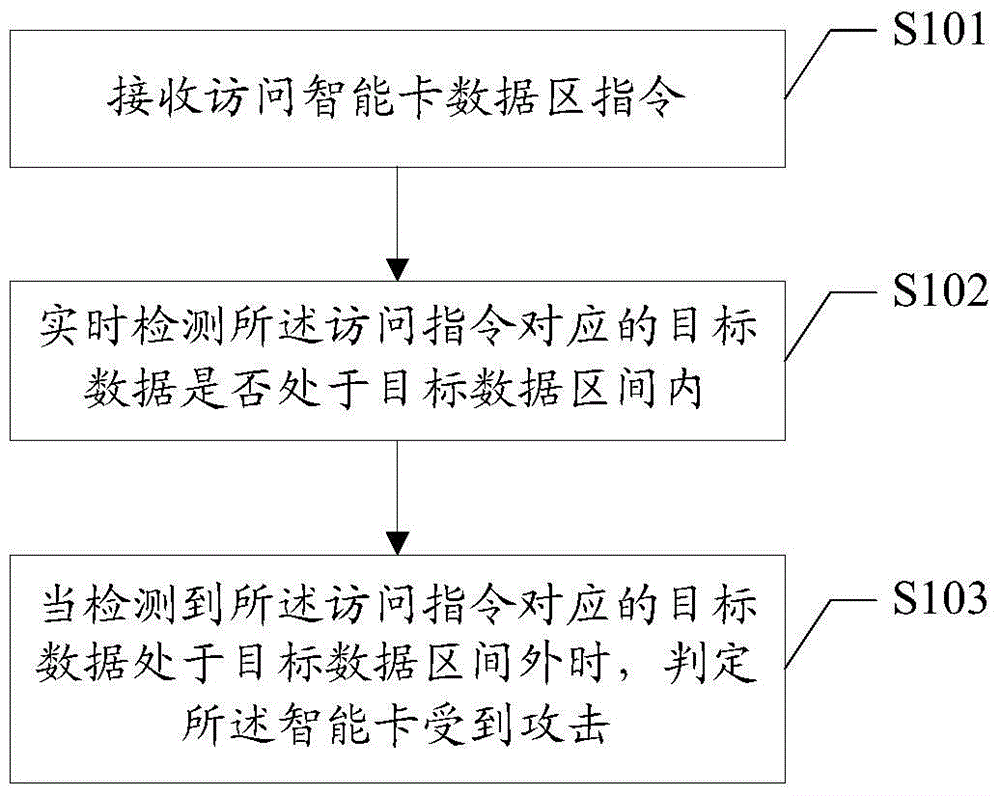
Fig. 1 is a flowchart of a smart card security protection method in an embodiment of the present invention;
fig. 2 is a schematic structural diagram of a smart card security device in an embodiment of the present invention.
Detailed Description
For a traditional Java smart card, an offline bytecode Verifier (BCV) is usually used to perform security check on an application file to be burned onto the card, and if the check is passed, the application file is allowed to be burned onto the card, otherwise, alarm information is given. However, if a user downloads some application programs when using the Java smart card, and some application programs from unknown information sources may carry virus programs, the existing Java smart card detection method cannot perform security detection on programs downloaded by the user, so that the Java smart card has potential security hazards.
In the embodiment of the invention, when an access instruction for accessing the data area of the smart card is received, whether target data corresponding to the access instruction is in a target data interval is detected. When the target data corresponding to the access instruction is outside the target data interval, the smart card is judged to be attacked, so that whether the smart card is attacked or not can be detected in real time, and the potential safety hazard of the smart card is reduced.
In order to make the aforementioned objects, features and advantages of the embodiments of the present invention comprehensible, specific embodiments accompanied with figures are described in detail below.
The embodiment of the invention provides a method for detecting a security method of an intelligent card, which is described in detail by referring to fig. 1 through specific steps.
And step S101, receiving an instruction for accessing the data area of the smart card.
In the embodiment of the present invention, the smart card data area may include three data areas, namely a stack data area, a static variable data area, and an object field data area. The received access instruction may be an instruction to access any one or more of the above three data areas.
Step S102, when the access instruction is processed, whether the target data corresponding to the access instruction is in the target data interval or not is detected in real time.
In the embodiment of the invention, whether the target data corresponding to the access instruction is in the target data interval can be detected in real time. The target data may refer to data pointed by the access instruction, and the target data interval may be an address interval for storing the target data, which is set in advance in an actual application. For example, the target data is data a, and in practical applications, data a should be stored in address interval B.
Under normal conditions, when the access instruction is a normal access instruction, the target data corresponding to the access instruction should be located in the target data interval theoretically. If the data is outside the target data interval, the abnormal condition can be judged to exist.
Therefore, when the access instruction is processed, whether the target data corresponding to the access instruction is in the preset target data interval can be judged. When the target data corresponding to the access instruction is in the target data interval, judging that the access instruction is a legal instruction and the current smart card has no attacked condition; when the target data corresponding to the access instruction is not in the target data interval, step S103 is executed.
And step S103, when detecting that the target data corresponding to the access instruction is out of the target data interval, judging that the smart card is attacked.
In the embodiment of the present invention, as described above, if the target data is not within the target data interval, it may be determined that the current access instruction is possibly an illegal instruction, and thus it may be determined that the smart card is attacked.
For example, the target data is data a, which is normally stored in the address interval B. In the process of processing the access instruction, if the data A is detected to be in the address interval B, the access instruction can be judged to be a legal instruction; and if the data A is detected not to be in the address interval B, judging that the smart card is attacked currently.
In the embodiment of the invention, when the smart card is attacked, the access operation corresponding to the access instruction can be immediately terminated. After the access operation is terminated, corresponding alarm information can be sent to inform the user that the current smart card is attacked, and the user is indicated that the access instruction corresponding to which application program is illegal, so that the user is informed of which application program has potential safety hazard.
Therefore, when an access instruction for accessing the data area of the smart card is received, whether the target data corresponding to the access instruction is in the target data interval or not is detected. When the target data corresponding to the access instruction is outside the target data interval, the smart card is judged to be attacked, so that whether the smart card is attacked or not can be detected in real time, and the potential safety hazard of the smart card is reduced.
In the embodiment of the invention, after the instruction for accessing the data area of the smart card is received, the data type related to the access instruction can be acquired in real time, and the data type related to the access instruction is compared with the data type of the target data pointed by the access instruction. When the data type related to the access instruction is the same as that of the target data, the access instruction can be judged to be a legal instruction; when the data type related to the access instruction is different from the data type of the target data, the access instruction can be judged to be an illegal instruction, and the smart card can be attacked at the moment.
The following describes the execution flow of the smart card security method protection method provided in the above embodiment of the present invention in the data area of three types of smart cards.
In the embodiment of the present invention, when the Access instruction is an instruction for accessing the stack data area, the stack space of a Random Access Memory (RAM) in the smart card may be first stored twice, so that the length of each unit on the stack is doubled. Namely, a 2-byte unit is expanded to 4-byte length, and the newly added 2 bytes are used for storing the type information of the data stored in the unit.
When the stack data area is accessed, the data involved in the accessing process of the stack data area can be subjected to boundary check in real time.
Assuming that the address growth sequence of the stack structure in the RAM is bottom-up, in a smart card system, a bidirectional stack is usually used, that is, a function frame created during function call grows from bottom to top, and feature information of the function is saved to the top of the stack and grows from top to bottom.
When the operation corresponding to the access instruction is a push operation, whether the position of the data unit involved in the push operation exceeds the upper boundary of the operand stack of the current function frame or not can be detected in real time. When the upper boundary is exceeded, the current smart card can be judged to be attacked; when the upper boundary is not exceeded, then the current access instruction may be determined to be a normal instruction.
When the operation corresponding to the access instruction is a stack popping operation, whether the position of a data unit involved in the stack popping operation exceeds the lower boundary of the operand stack of the current function frame can be detected in real time. When the lower boundary is exceeded, the current smart card can be judged to be attacked; when the upper boundary is not exceeded, then the current access instruction may be determined to be a normal instruction.
In addition, a new function frame is created when a function call is made, and feature information of a previously old function frame is saved to the top of the stack. Whether the stack top storing the function characteristic information exceeds the upper boundary of the operand of the new function frame can be detected in real time. And when the upper boundary is exceeded, judging that the current smart card is attacked.
Similarly, when the function call returns, the function frame corresponding to the current access instruction needs to be cleared, and the frame of the caller needs to be restored. At this time, it may be detected whether the top information of the caller is popped up beyond the upper bound of the entire stack. And when the popped stack top information is detected to exceed the upper boundary of the whole stack, judging that the current smart card is attacked.
While adding bounds checking to accesses to the stack, type checking may also be added to accesses to the stack. When data in the data unit is read and written, the data type matching principle needs to be satisfied. For any access instruction that involves a stack operation, it may be parsed to obtain the corresponding operand and opcode. Comparing the data type of the target data in the stack data area corresponding to the operand with the data type contained in the operation code, and judging that the access instruction is a legal instruction when the data type of the target data in the stack data area corresponding to the operand is the same as the data type of the target data in the stack data area corresponding to the operand; when the two are different, the current smart card is judged to be attacked, and the program is immediately terminated and an error is reported.
When the access instruction is an instruction for accessing the static variable data area, boundary check and type check can be added to the access of the static variable data.
In a specific application, the access instruction to the static variable relates to a static image corresponding to a certain data packet on the smart card. And according to a preset analysis mode of the access instruction, after the access instruction is positioned to the data packet C, the static mirror image information of the data packet C can be obtained.
In this embodiment of the present invention, the static mirror information of the data packet C may include: the address interval of the static variable storage of the data packet C, the number of the static variables containing the reference type in the data packet C, and the like. And performing boundary check and type check on the access instruction through the static mirror information of the data packet C.
After the access instruction is analyzed, when the static data address corresponding to the obtained operand is located in the address interval of the static mirror image of the data packet C, the success of the boundary check can be judged, that is, the current access instruction is a legal instruction; otherwise, the boundary check is judged to fail, namely the current access instruction is an illegal instruction.
When the static data corresponding to the operand of the obtained access instruction is of the reference type and is located in the reference data interval of the static mirror image, it can be determined that the type check is successful, that is, the data type related to the access instruction is the same as the target data type, and the current access instruction is a legal instruction. When the static data corresponding to the operand of the obtained access instruction is of the basic data type and is located in the basic type data interval of the static mirror image, it can be determined that the type check is successful, that is, the data type related to the access instruction is the same as the target data type, and the current access instruction is a legal instruction. Otherwise, the type check is regarded as failed, and the current access instruction is an illegal instruction.
Similarly, when the access instruction is an instruction to access the object field data area, a boundary check and a type check may also be added to the access of the object field data area.
In actual practice, there is already object reference data stored on the stack in advance before the execution of the access instruction to the object field data. The object reference is resolved to a corresponding object address according to predefined rules. And reading an object header defined on the object address, and acquiring the class information and the packet information corresponding to the object. And acquiring related inheritance structure information and the number of reference type data of the current class according to the class information. And dividing the field interval of the current object according to the information, wherein the field interval comprises reference type data and basic type data in each layer of class structure. And traversing each layer of class structure including various sub-class structures and root structures according to the operand in the access instruction and the data type information contained in the operation code.
And when the data type information contained in the operation code is the reference type, detecting whether the target data is in a reference type data interval. And when the target data is in the reference type data interval, judging that the type detection is successful. And when the data type information contained in the operation code is the basic data type, detecting whether the target data is in the basic data type interval. And when the target data is in the basic data type interval, judging that the type detection is successful.
When the target data is in the data interval of the object corresponding to the access instruction, the boundary check can be judged to be successful; otherwise, the boundary check is judged to fail.
It can be understood that, in the embodiment of the present invention, whether the smart card is attacked or not may be obtained only by determining whether the target data corresponding to the access instruction is within the target data interval or not, and whether the smart phone is attacked or not may be obtained only by determining whether the data type related to the access instruction is the same as the data type of the target data or not. And simultaneously, whether the smart card is attacked or not can be known together by judging whether the target data corresponding to the access instruction is in the target data interval or not and whether the data type is the same as that of the target data or not.
Referring to fig. 2, a smart card security device 20 according to an embodiment of the present invention is shown, including: a receiving unit 201, a boundary detecting unit 202, and a judging unit 203, wherein:
a receiving unit 201, configured to receive an instruction for accessing a data area of a smart card;
the boundary detection unit 202 is configured to detect whether target data corresponding to an access instruction is located in a target data interval in real time when the access instruction is processed;
and the judging unit 203 is configured to judge that the smart card is attacked when it is detected that the target data corresponding to the access instruction is outside the target data interval.
In a specific implementation, the smart card security guard 20 may further include: a type detection unit 204, configured to obtain a data type involved in the access instruction and a data type of target data pointed by the access instruction, and detect whether the data type involved in the access instruction is the same as the data type of the target data;
the determining unit 203 may be further configured to: and when detecting that the data type related to the access instruction is different from the data type of the target data, judging that the smart card is attacked.
In a specific implementation, the smart card security guard 20 may further include: and the security control unit 205 is used for sending alarm information and terminating the access operation after the judging unit judges that the smart card is attacked.
In a specific implementation, the smart card data area may include at least one of: a stack data area, a static variable data area and an object field data area.
In a specific implementation, when the access instruction is to access the stack data area, the type detection unit 204 may be configured to: analyzing the access instruction, acquiring an operation code and an operand carried by the access instruction, and acquiring data type information contained in the operation code; and acquiring the data type of the target data in the stack data area corresponding to the operand.
In a specific implementation, the boundary detection unit 202 may be configured to: and detecting whether the target data corresponding to the access instruction is in a preset range of the stack data area in real time.
In a specific implementation, the boundary detection unit 202 may be configured to: when the operation corresponding to the access instruction comprises a stack pushing operation or a stack popping operation, acquiring the position of a data unit related to the access instruction operation in real time, and detecting whether the position of the data unit is positioned at the upper and lower boundaries of an operand stack of a current function frame; when a function call generates a new function frame, detecting whether the stack top storing function characteristic information exceeds the upper boundary of an operand stack of the new function frame; and when the function call returns, detecting whether the stack top information corresponding to the access instruction exceeds the upper boundary of the whole stack when popping.
In a specific implementation, when the access instruction is an instruction for accessing a static variable data area, the boundary detection unit 202 may be configured to:
analyzing the access instruction, acquiring an operation code and an operand carried by the access instruction, and acquiring data type information contained in the operation code;
acquiring static mirror image information of a target data packet corresponding to the access instruction;
and detecting whether the static data address corresponding to the operand is in the data interval corresponding to the static mirror image information or not according to the static mirror image information.
In a specific implementation, the type detection unit 204 may be configured to:
when the static data corresponding to the operand is of a reference type, detecting whether the static data is in a reference data interval corresponding to the static mirror image information;
and when the static data corresponding to the operand is of a basic data type, detecting whether the static data is in a basic type data interval corresponding to the static mirror image information.
In a specific implementation, when the access instruction is an instruction to access the object field data area, the type detection unit 204 may be configured to:
analyzing the access instruction, acquiring an operation code and an operand carried by the access instruction, and acquiring data type information contained in the operation code;
obtaining the class information of the object pointed by the access instruction; acquiring the corresponding inheritance structure information according to the class information to acquire reference type data and basic type data in each layer of class structure of the target object;
traversing each class structure according to the operand and the data type information contained in the operation code;
when the data type information contained in the operation code is a reference type, detecting whether the target data is in a reference type data interval;
and when the data type information contained in the operation code is a basic data type, detecting whether the target data is in a basic data type interval.
In a specific implementation, the boundary detection unit 202 may be configured to: and detecting whether the target data is in a data interval of an object corresponding to the access instruction in real time.
Those skilled in the art will appreciate that all or part of the steps in the methods of the above embodiments may be implemented by associated hardware instructed by a program, which may be stored in a computer-readable storage medium, and the storage medium may include: ROM, RAM, magnetic or optical disks, and the like.
Although the present invention is disclosed above, the present invention is not limited thereto. Various changes and modifications may be effected therein by one skilled in the art without departing from the spirit and scope of the invention as defined in the appended claims.
Claims (18)
1. A smart card security protection method is characterized by comprising the following steps:
receiving an instruction for accessing a data area of the smart card; the smart card data area comprises at least one of the following: a stack data area, a static variable data area and an object field data area;
when an access instruction is processed, detecting whether target data corresponding to the access instruction is in a target data interval in real time; when the access instruction is an instruction for accessing a static variable data area, the detecting whether target data corresponding to the access instruction is in a target data interval in real time includes: analyzing the access instruction, acquiring an operation code and an operand carried by the access instruction, and acquiring data type information contained in the operation code; acquiring static mirror image information of a target data packet corresponding to the access instruction; detecting whether a static data address corresponding to the operand is in a data interval corresponding to the static mirror image information or not according to the static mirror image information;
and when detecting that the target data corresponding to the access instruction is out of the target data interval, judging that the smart card is attacked.
2. The smart card security method of claim 1, further comprising:
acquiring the data type related to the access instruction and the data type of the target data pointed by the access instruction in real time;
detecting whether the data type related to the access instruction is the same as the data type of the target data;
and when detecting that the data type related to the access instruction is different from the data type of the target data, judging that the smart card is attacked.
3. The smart card security protection method of claim 1 or 2, further comprising at least one of the following after determining that the smart card is attacked: sending alarm information; the access operation is terminated.
4. The smart card security protection method of claim 2, wherein when the access instruction is to access the stack data area, the obtaining the data type related to the access instruction in real time comprises: analyzing the access instruction, acquiring an operation code and an operand carried by the access instruction, and acquiring data type information contained in the operation code;
the obtaining of the data type of the target data pointed by the access instruction includes: and acquiring the data type of the target data in the stack data area corresponding to the operand.
5. The smart card security protection method of claim 4, wherein the detecting whether the target data corresponding to the access instruction is within a preset range in real time comprises: and detecting whether the target data corresponding to the access instruction is in a preset range of the stack data area in real time.
6. The smart card security protection method of claim 5, wherein the detecting whether the target data corresponding to the access instruction is within the preset range of the stack data area in real time comprises:
when the operation corresponding to the access instruction comprises a stack pushing operation or a stack popping operation, acquiring the position of a data unit related to the access instruction operation in real time, and detecting whether the position of the data unit is positioned at the upper and lower boundaries of an operand stack of a current function frame;
when a function call generates a new function frame, detecting whether the stack top storing function characteristic information exceeds the upper boundary of an operand stack of the new function frame;
and when the function call returns, detecting whether the stack top information corresponding to the access instruction exceeds the upper boundary of the whole stack when popping.
7. The smart card security protection method of claim 2, wherein the detecting whether the data type involved in the access instruction is the same as the target data type comprises:
when the static data corresponding to the operand is of a reference type, detecting whether the static data is in a reference data interval corresponding to the static mirror image information;
and when the static data corresponding to the operand is of a basic data type, detecting whether the static data is in a basic type data interval corresponding to the static mirror image information.
8. The smart card security protection method of claim 2, wherein when the access instruction is an instruction for accessing the object field data area, the detecting whether the data type involved in the access instruction is the same as the data type of the target data includes:
analyzing the access instruction, acquiring an operation code and an operand carried by the access instruction, and acquiring data type information contained in the operation code;
obtaining the class information of the object pointed by the access instruction; acquiring the corresponding inheritance structure information according to the class information to acquire reference type data and basic type data in each layer of class structure of the target object;
traversing each class structure according to the operand and the data type information contained in the operation code; when the data type information contained in the operation code is a reference type, detecting whether the target data is in a reference type data interval;
and when the data type information contained in the operation code is a basic data type, detecting whether the target data is in a basic data type interval.
9. The smart card security protection method of claim 8, wherein the detecting whether the target data corresponding to the access instruction is within a preset range in real time comprises:
and detecting whether the target data is in a data interval of an object corresponding to the access instruction in real time.
10. A smart card security device, comprising:
the receiving unit is used for receiving an instruction for accessing the data area of the intelligent card; the smart card data area comprises at least one of the following: a stack data area, a static variable data area and an object field data area;
the boundary detection unit is used for detecting whether target data corresponding to an access instruction is in a target data interval in real time when the access instruction is processed; when the access instruction is an instruction for accessing a static variable data area, the boundary detection unit is configured to: analyzing the access instruction, acquiring an operation code and an operand carried by the access instruction, and acquiring data type information contained in the operation code; acquiring static mirror image information of a target data packet corresponding to the access instruction; detecting whether a static data address corresponding to the operand is in a data interval corresponding to the static mirror image information or not according to the static mirror image information;
and the judging unit is used for judging that the smart card is attacked when the target data corresponding to the access instruction is detected to be out of the target data interval.
11. The smart card security guard of claim 10 further comprising: the type detection unit is used for acquiring the data type related to the access instruction and the data type of the target data pointed by the access instruction, and detecting whether the data type related to the access instruction is the same as the data type of the target data;
the judging unit is further configured to: and when detecting that the data type related to the access instruction is different from the data type of the target data, judging that the smart card is attacked.
12. The smart card security guard of claim 10 or 11, further comprising: and the safety control unit is used for sending alarm information and terminating the access operation after the judging unit judges that the smart card is attacked.
13. The smart card security guard of claim 11 wherein when the access instruction is to access the stack data area, the type detection unit is to: analyzing the access instruction, acquiring an operation code and an operand carried by the access instruction, and acquiring data type information contained in the operation code; and acquiring the data type of the target data in the stack data area corresponding to the operand.
14. The smart card security guard of claim 13, wherein the boundary detection unit is to: and detecting whether the target data corresponding to the access instruction is in a preset range of the stack data area in real time.
15. The smart card security guard of claim 14 wherein the boundary detection unit is to:
when the operation corresponding to the access instruction comprises a stack pushing operation or a stack popping operation, acquiring the position of a data unit related to the access instruction operation in real time, and detecting whether the position of the data unit is positioned at the upper and lower boundaries of an operand stack of a current function frame;
when a function call generates a new function frame, detecting whether the stack top storing function characteristic information exceeds the upper boundary of an operand stack of the new function frame;
and when the function call returns, detecting whether the stack top information corresponding to the access instruction exceeds the upper boundary of the whole stack when popping.
16. The smart card security guard of claim 11 wherein the type detection unit is to:
when the static data corresponding to the operand is of a reference type, detecting whether the static data is in a reference data interval corresponding to the static mirror image information;
and when the static data corresponding to the operand is of a basic data type, detecting whether the static data is in a basic type data interval corresponding to the static mirror image information.
17. The smart card security guard of claim 11 wherein when the access instruction is an instruction to access the object field data region, the type detection unit is to:
analyzing the access instruction, acquiring an operation code and an operand carried by the access instruction, and acquiring data type information contained in the operation code;
obtaining the class information of the object pointed by the access instruction; acquiring the corresponding inheritance structure information according to the class information to acquire reference type data and basic type data in each layer of class structure of the target object;
traversing each class structure according to the operand and the data type information contained in the operation code; when the data type information contained in the operation code is a reference type, detecting whether the target data is in a reference type data interval;
and when the data type information contained in the operation code is a basic data type, detecting whether the target data is in a basic data type interval.
18. The smart card security guard of claim 17 wherein the boundary detection unit is to: and detecting whether the target data is in a data interval of an object corresponding to the access instruction in real time.
Priority Applications (1)
| Application Number | Priority Date | Filing Date | Title |
|---|---|---|---|
| CN201510791916.8A CN106709552B (en) | 2015-11-17 | 2015-11-17 | Smart card safety protection method and device |
Applications Claiming Priority (1)
| Application Number | Priority Date | Filing Date | Title |
|---|---|---|---|
| CN201510791916.8A CN106709552B (en) | 2015-11-17 | 2015-11-17 | Smart card safety protection method and device |
Publications (2)
| Publication Number | Publication Date |
|---|---|
| CN106709552A CN106709552A (en) | 2017-05-24 |
| CN106709552B true CN106709552B (en) | 2020-04-17 |
Family
ID=58932244
Family Applications (1)
| Application Number | Title | Priority Date | Filing Date |
|---|---|---|---|
| CN201510791916.8A Active CN106709552B (en) | 2015-11-17 | 2015-11-17 | Smart card safety protection method and device |
Country Status (1)
| Country | Link |
|---|---|
| CN (1) | CN106709552B (en) |
Family Cites Families (7)
| Publication number | Priority date | Publication date | Assignee | Title |
|---|---|---|---|---|
| KR101080596B1 (en) * | 2009-11-04 | 2011-11-04 | 삼성에스디에스 주식회사 | Apparatus and method for non-interactive key generation and for communication security using the same in wireless networks |
| CN102169459B (en) * | 2010-11-29 | 2013-04-24 | 北京握奇数据系统有限公司 | Method, device and intelligent card for accessing data |
| CN102110205B (en) * | 2010-12-23 | 2013-06-05 | 北京握奇数据系统有限公司 | Method for checking operating authority of smart card and smart card |
| CN102867209B (en) * | 2011-07-05 | 2015-04-22 | 中国移动通信集团公司 | Smart card and safety protection method thereof |
| CN103136571B (en) * | 2011-11-28 | 2016-03-30 | 国民技术股份有限公司 | A kind of smart card system |
| CN103440175A (en) * | 2013-08-06 | 2013-12-11 | 北京数码视讯科技股份有限公司 | Method and device for handling exception of intelligent card |
| CN103617005A (en) * | 2013-11-28 | 2014-03-05 | 中国联合网络通信集团有限公司 | Access method, device and system for intelligent card |
-
2015
- 2015-11-17 CN CN201510791916.8A patent/CN106709552B/en active Active
Also Published As
| Publication number | Publication date |
|---|---|
| CN106709552A (en) | 2017-05-24 |
Similar Documents
| Publication | Publication Date | Title |
|---|---|---|
| US12026257B2 (en) | Method of malware detection and system thereof | |
| US11188650B2 (en) | Detection of malware using feature hashing | |
| US9336390B2 (en) | Selective assessment of maliciousness of software code executed in the address space of a trusted process | |
| US9280664B2 (en) | Apparatus and method for blocking activity of malware | |
| JP5265061B1 (en) | Malicious file inspection apparatus and method | |
| US9015814B1 (en) | System and methods for detecting harmful files of different formats | |
| US20140053267A1 (en) | Method for identifying malicious executables | |
| KR101064164B1 (en) | Kernel Integrity Check and Modified Kernel Data Recovery in Linux Kernel-based Smart Platform | |
| US8875165B2 (en) | Computing device having a DLL injection function, and DLL injection method | |
| WO2014071867A1 (en) | Program processing method and system, and client and server for program processing | |
| JP2009238153A (en) | Malware handling system, method, and program | |
| WO2019014546A1 (en) | System and method for validating in-memory integrity of executable files to identify malicious activity | |
| Choi et al. | All‐in‐One Framework for Detection, Unpacking, and Verification for Malware Analysis | |
| CN107103243B (en) | Vulnerability detection method and device | |
| CN105550573B (en) | The method and apparatus for intercepting bundled software | |
| KR101042858B1 (en) | Windows kernel tamper detection method | |
| CN106301974A (en) | A kind of website back door detection method and device | |
| KR102292844B1 (en) | Apparatus and method for detecting malicious code | |
| KR101311367B1 (en) | Method and apparatus for diagnosing attack that bypass the memory protection | |
| CN111027072B (en) | Kernel Rootkit detection method and device based on elf binary standard analysis under Linux | |
| KR101288833B1 (en) | Method for preventing malicious code using office documents, and computer-readable recording medium for the same | |
| CN119903516A (en) | Malware detection method, device, electronic device and storage medium | |
| JP4643201B2 (en) | Buffer overflow vulnerability analysis method, data processing device, analysis information providing device, analysis information extraction processing program, and analysis information provision processing program | |
| WO2016095671A1 (en) | Method and device for processing application-based message | |
| CN103593614A (en) | Unknown virus retrieval method |
Legal Events
| Date | Code | Title | Description |
|---|---|---|---|
| PB01 | Publication | ||
| PB01 | Publication | ||
| SE01 | Entry into force of request for substantive examination | ||
| GR01 | Patent grant | ||
| GR01 | Patent grant |