Background
The control of nonlinear parameterized systems is a hot and difficult problem in the research of the control world today. The method has great significance not only in the theoretical aspect but also in engineering application for the research of nonlinear parameterization. A large number of uncertain items in an actual system are represented in a nonlinear parameterization form, such as system models of a chemical process, a robot visual servo, friction compensation and the like. Therefore, intensive research into nonlinear parametric systems is necessary.
Adaptive control has many advantages in dealing with the uncertainty problem, mainly in that the influence of the linearly parameterizable uncertainty on the system can be reduced by on-line parameter estimation, thereby obtaining considerable control performance without using high gain. But the disadvantages of adaptive control are also apparent: under the condition of disturbance, a good control effect is difficult to maintain, and under the condition that continuous excitation is not satisfied, the system is likely to be unstable due to small disturbance, that is to say, the robustness of adaptive control is difficult to guarantee; in addition, adaptive control has excellent steady-state performance, but its transient performance is not good.
The dynamic surface control is an improved method provided by a basic backstepping method, abandons the derivation process of each step of the backstepping method on the Lyapunov function, and estimates the virtual control quantity by a first-order low-pass filter, thereby solving the problem of calculation expansion of the backstepping method and enabling the controller to be simpler and more efficient. However, most of the conventional dynamic surface control approaches unknown terms of the system by using an RBF neural network, which can estimate any nonlinear term, but the biggest problem is that the prior knowledge of the system is not fully utilized, resulting in information loss.
The Chinese patent publication No. CN101846975A discloses a self-adaptive robust control algorithm to process the nonlinear parameterization problem, and the method realizes the on-line estimation of the friction value by constructing a friction model approximator and carrying out self-adaptive adjustment on the parameters of the friction model approximator, and then enables the system to have enough anti-interference capability through the action of a robust controller. The invention can ensure that the system has good robustness, but the invention uses the traditional integral estimator and can not well play the function of reducing the parameter uncertainty influence of the self-adaptive module.
Disclosure of Invention
The invention provides a dynamic surface control method based on immersion and constant flow pattern for a lower triangular nonlinear parameterization system which is a large system aiming at the defects of the prior art.
The specific technical scheme of the invention is as follows:
the invention utilizes the unknown parameters of the non-linear parameterization of the immersion and invariant self-adaptive estimation rate estimation system, reduces the adverse effect of the uncertainty of the parameters on the system, and utilizes the robust action added in the dynamic surface control to inhibit various external disturbances and unmodeled dynamics of the system.
The invention relates to a reverse-thrust system by using a dynamic surface control method, which designs a relatively simple controller for the system and uses the immersion and invariant adaptive law to eliminate the influence of uncertainty on the control performance of the system to the maximum extent. Wherein:
the dynamic surface control abandons the process of derivation of the Lyapunov function in each step in the reverse step method, and estimates the virtual control quantity by using a first-order low-pass filter, so that the problem of calculation expansion of the reverse step method is solved, and the controller becomes simpler and more efficient.
The adaptive estimation rate part of the system introduces the functions of immersion and invariant adaptive laws, abandons the use of the fixed equivalence principle in the traditional adaptive action, and adds the function of a regulating function into the integral estimator, thereby realizing the accurate estimation of unknown parameters.
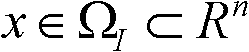
The lower triangular nonlinear parameterization system provided by the invention is characterized in that: it can be described by the following mathematical expression:
(1)
y=x1
wherein,
u (t) E R is the control input of the system,
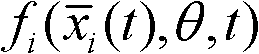
is a smooth nonlinear function with known structure but unknown theta value, and satisfies the Lipschitz condition for theta; theta is formed by R
pIs a function of
The unknown parameters of (1); delta
i(x (t), i ═ 1, L n are the lumped unknown nonlinear function terms composed of all unmodeled dynamics and interference terms of the system.
The lower triangular nonlinear parameterization system provided by the invention is characterized in that the parameter uncertainty and nonlinear uncertainty terms are as follows: the uncertainty is within a certain range and the boundaries of this range are known:
θ∈Ωθ={θ:θjmin≤θj≤θjmax,j=1,L,p}
|Δi(x,t)|≤di,i=1,L,n
the scheme of the invention has the following beneficial effects:
the dynamic surface control method adopted by the invention combines the advantages of self-adaptive control and robust control, and overcomes the defects of poor transient performance and weak anti-interference capability of self-adaptive control; meanwhile, a robust control method is largely used in the design process of the controller, so that the system keeps the advantage of good transient performance and overcomes the defect of strong conservation.
The invention adds the functions of immersion and invariant adaptive laws on the basis of dynamic surface control, considers the flow pattern formed by the error between the estimated value and the true value of the parameter, can add the function of an adjusting function to ensure that the design of the estimated rate is more flexible, and ensure that the integral function of the whole parameter estimated rate is converted into the proportional integral function from the integral function of the traditional adaptive law, also avoids using the traditional parameter estimator depending on the principle of determining equivalence, and improves the effectiveness of parameter estimation. Therefore, accurate estimation of the parameters can be realized on the basis of not influencing the action of the controller on the system. The influence of the uncertainty of the system parameters on the control performance is reduced.
Detailed Description
The technical solution of the invention is further explained in detail with reference to the system (1).
The coordination module of the present invention functions to reconcile the contradiction between robust action and adaptive estimation, where the estimation value generated by the adaptive estimator may be unbounded, and the robust action cannot deal with the unbounded control problem. Therefore, the coordination module of the present invention projects the estimated values of the parameters of the adaptive estimator in a continuous projection manner to keep the values within a bounded range, and the projection algorithm is as follows:
<math>
<mrow>
<msub>
<mi>Π</mi>
<mi>i</mi>
</msub>
<mrow>
<mo>(</mo>
<msub>
<mi>r</mi>
<mi>i</mi>
</msub>
<mo>)</mo>
</mrow>
<mo>=</mo>
<mfenced open='{' close=''>
<mtable>
<mtr>
<mtd>
<msup>
<mi>e</mi>
<mrow>
<mfrac>
<mn>1</mn>
<msub>
<mi>ϵ</mi>
<msub>
<mi>θ</mi>
<mi>i</mi>
</msub>
</msub>
</mfrac>
<msub>
<mi>r</mi>
<mi>i</mi>
</msub>
<mo>-</mo>
<mfrac>
<mrow>
<msub>
<mi>θ</mi>
<mrow>
<mi>i</mi>
<mi>min</mi>
</mrow>
</msub>
<mo>+</mo>
<msub>
<mi>ϵ</mi>
<msub>
<mi>θ</mi>
<mi>i</mi>
</msub>
</msub>
</mrow>
<msub>
<mi>ϵ</mi>
<msub>
<mi>θ</mi>
<mi>i</mi>
</msub>
</msub>
</mfrac>
<mo>+</mo>
<mi>ln</mi>
<msub>
<mi>ϵ</mi>
<msub>
<mi>θ</mi>
<mi>i</mi>
</msub>
</msub>
</mrow>
</msup>
<mo>+</mo>
<msub>
<mi>θ</mi>
<mrow>
<mi>i</mi>
<mi>min</mi>
</mrow>
</msub>
<mo>,</mo>
<mi>LL</mi>
<msub>
<mi>r</mi>
<mi>i</mi>
</msub>
<mo><</mo>
<msub>
<mi>θ</mi>
<mrow>
<mi>i</mi>
<mi>min</mi>
</mrow>
</msub>
<mo>+</mo>
<msub>
<mi>ϵ</mi>
<msub>
<mi>θ</mi>
<mi>i</mi>
</msub>
</msub>
<mo>,</mo>
</mtd>
</mtr>
<mtr>
<mtd>
<msub>
<mi>r</mi>
<mi>i</mi>
</msub>
<mo>,</mo>
<mi>LLLLLLLLLLL</mi>
<msub>
<mi>r</mi>
<mi>i</mi>
</msub>
<mo>∈</mo>
<mo>[</mo>
<msub>
<mi>θ</mi>
<mrow>
<mi>i</mi>
<mi>min</mi>
</mrow>
</msub>
<mo>+</mo>
<msub>
<mi>ϵ</mi>
<msub>
<mi>θ</mi>
<mi>i</mi>
</msub>
</msub>
<mo>,</mo>
<msub>
<mi>θ</mi>
<mrow>
<mi>i</mi>
<mi>max</mi>
</mrow>
</msub>
<mo>-</mo>
<msub>
<mi>ϵ</mi>
<msub>
<mi>θ</mi>
<mi>i</mi>
</msub>
</msub>
<mo>]</mo>
</mtd>
</mtr>
<mtr>
<mtd>
<mo>-</mo>
<msup>
<mi>e</mi>
<mrow>
<mo>-</mo>
<mfrac>
<mn>1</mn>
<msub>
<mi>ϵ</mi>
<msub>
<mi>θ</mi>
<mi>i</mi>
</msub>
</msub>
</mfrac>
<msub>
<mi>r</mi>
<mi>i</mi>
</msub>
<mo>+</mo>
<mfrac>
<mrow>
<msub>
<mi>θ</mi>
<mrow>
<mi>i</mi>
<mi>max</mi>
</mrow>
</msub>
<mo>-</mo>
<msub>
<mi>ϵ</mi>
<msub>
<mi>θ</mi>
<mi>i</mi>
</msub>
</msub>
</mrow>
<msub>
<mi>ϵ</mi>
<msub>
<mi>θ</mi>
<mi>i</mi>
</msub>
</msub>
</mfrac>
<mo>+</mo>
<mi>ln</mi>
<msub>
<mi>ϵ</mi>
<msub>
<mi>θ</mi>
<mi>i</mi>
</msub>
</msub>
</mrow>
</msup>
<mo>+</mo>
<msub>
<mi>θ</mi>
<mrow>
<mi>i</mi>
<mi>max</mi>
</mrow>
</msub>
<mo>,</mo>
<mi>L</mi>
<msub>
<mi>r</mi>
<mi>i</mi>
</msub>
<mo>></mo>
<msub>
<mi>θ</mi>
<mrow>
<mi>i</mi>
<mi>max</mi>
</mrow>
</msub>
<mo>-</mo>
<msub>
<mi>ϵ</mi>
<msub>
<mi>θ</mi>
<mi>i</mi>
</msub>
</msub>
</mtd>
</mtr>
</mtable>
</mfenced>
<mo>-</mo>
<mo>-</mo>
<mo>-</mo>
<mrow>
<mo>(</mo>
<mn>2</mn>
<mo>)</mo>
</mrow>
</mrow>
</math>
the online learning module adopts the immersion and invariant self-adaptive estimation rate, and is characterized in that the determination equivalence principle in the traditional self-adaptive action is abandoned, and the action of a regulating function is added into an integral estimator so as to
As an estimation value of the unknown parameter, accurate estimation of the unknown parameter is realized. The specific expression form is as follows:
selecting the tuning function β (x) such that the function
<math>
<mrow>
<mi>ψ</mi>
<mrow>
<mo>(</mo>
<mi>θ</mi>
<mo>)</mo>
</mrow>
<mo>=</mo>
<msup>
<mrow>
<mo>[</mo>
<mfrac>
<mrow>
<mo>∂</mo>
<mi>β</mi>
</mrow>
<mrow>
<mo>∂</mo>
<mi>x</mi>
</mrow>
</mfrac>
<mo>]</mo>
</mrow>
<mi>T</mi>
</msup>
<mfenced open='[' close=']'>
<mtable>
<mtr>
<mtd>
<msub>
<mi>x</mi>
<mn>2</mn>
</msub>
<mo>+</mo>
<msub>
<mi>f</mi>
<mn>1</mn>
</msub>
<mrow>
<mo>(</mo>
<msub>
<mover>
<mi>x</mi>
<mo>‾</mo>
</mover>
<mn>1</mn>
</msub>
<mo>,</mo>
<mi>θ</mi>
<mo>,</mo>
<mi>t</mi>
<mo>)</mo>
</mrow>
</mtd>
</mtr>
<mtr>
<mtd>
<mi>M</mi>
</mtd>
</mtr>
<mtr>
<mtd>
<mi>u</mi>
<mo>+</mo>
<msub>
<mi>f</mi>
<mi>n</mi>
</msub>
<mrow>
<mo>(</mo>
<mi>x</mi>
<mo>,</mo>
<mi>θ</mi>
<mo>,</mo>
<mi>t</mi>
<mo>)</mo>
</mrow>
</mtd>
</mtr>
</mtable>
</mfenced>
</mrow>
</math>
In the collection
The strict P monotonic condition is satisfied internally, i.e.,
(a-b)TP{ψ(a)-ψ(b)}>0
wherein a, b ∈ R
p,P∈R
p×p,P=P
TIs greater than 0. Then for any
And can be such that x (t) e Ω
IU (t) phi and phi (theta) are bounded and make the parameter estimation error, i.e.
Monotonically converges to near the origin. When the unknown nonlinear term in the system is zero, the estimation error can be monotonically converged to zero.
The controller part of the invention uses a design method of dynamic surface control as a framework, and tracks the expected signal y by gradually expanding a virtual controller of a design subsystem to a controller of the whole systemd. For the first order subsystem, let S1=y-ydAnd obtaining the following by derivation:
wherein
For obtaining values by applying the adaptive lawThe estimated value of the unknown parameter theta is obtained after the processing of the projection algorithm (2),
since the Lipschitz condition is satisfied, there is delta
1≤L
1||θ
max-θ
min||,
Is also bounded.
Design a1A virtual controller that is a first order subsystem, of the form:
and a first order filter is added to this controller as follows,
let y
2=z
2-a
1Then there is
Then order S
i=x
i-z
iI-2, L n-1, having:
then to Si=xi-ziAnd i is 2, L n-1, and the derivation is obtained:
wherein
Design a
iThe virtual controller of the subsystem is as follows:
the filter form is added to the virtual controller as follows:
let y
i+1=z
i+1-a
iIs provided with
Then it is possible to obtain:
on the basis of the above, the S is also pairedn=xn-znAnd (5) obtaining a derivative:
design controller
Substituting the formula into the formula:
the Lyapunov function of the selected system is
V=Vn+Vθ
<math>
<mrow>
<msub>
<mi>V</mi>
<mi>n</mi>
</msub>
<mo>=</mo>
<munderover>
<mi>Σ</mi>
<mrow>
<mi>i</mi>
<mo>=</mo>
<mn>1</mn>
</mrow>
<mi>n</mi>
</munderover>
<mfrac>
<mn>1</mn>
<mn>2</mn>
</mfrac>
<msubsup>
<mi>S</mi>
<mi>i</mi>
<mn>2</mn>
</msubsup>
<mo>+</mo>
<munderover>
<mi>Σ</mi>
<mrow>
<mi>i</mi>
<mo>=</mo>
<mn>1</mn>
</mrow>
<mrow>
<mi>n</mi>
<mo>-</mo>
<mn>1</mn>
</mrow>
</munderover>
<mfrac>
<mn>1</mn>
<mn>2</mn>
</mfrac>
<msubsup>
<mi>y</mi>
<mrow>
<mi>i</mi>
<mo>+</mo>
<mn>1</mn>
</mrow>
<mn>2</mn>
</msubsup>
</mrow>
</math>
And (5) obtaining the following by derivation:
selecting
K1=3+K
Due to the fact that
Is a continuous function, so that there is a maximum in the defined domain, set to λ
iSo the above equation can be changed to:
get
And because the invention adopts the immersion and invariable self-adaptive estimation rate, the invention ensures that
Negative thereby ensuring V
θMonotonically converging to zero, i.e. as the time approaches infinity,
the signal converges to zero. At this time, V is V
nIts dynamics become
Multiplication of two sides of the inequality by e2KtObtaining:
and (3) integrating the two sides of the formula to obtain:
due to the fact that
Is a bounded function, assuming
Solving the above equation yields:
<math>
<mrow>
<mn>0</mn>
<mo>≤</mo>
<msub>
<mi>V</mi>
<mi>n</mi>
</msub>
<mrow>
<mo>(</mo>
<mi>t</mi>
<mo>)</mo>
</mrow>
<mo>≤</mo>
<mrow>
<mo>(</mo>
<msub>
<mi>V</mi>
<mi>n</mi>
</msub>
<mrow>
<mo>(</mo>
<mn>0</mn>
<mo>)</mo>
</mrow>
<mo>-</mo>
<mfrac>
<mrow>
<mi>φ</mi>
<mo>+</mo>
<mi>γ</mi>
</mrow>
<mrow>
<mn>2</mn>
<mi>K</mi>
</mrow>
</mfrac>
<mo>)</mo>
</mrow>
<msup>
<mi>e</mi>
<mrow>
<mo>-</mo>
<mn>2</mn>
<mi>Kt</mi>
</mrow>
</msup>
<mo>+</mo>
<mfrac>
<mrow>
<mi>φ</mi>
<mo>+</mo>
<mi>γ</mi>
</mrow>
<mrow>
<mn>2</mn>
<mi>K</mi>
</mrow>
</mfrac>
</mrow>
</math>
therefore, the system is bounded and the tracking error of the system can be reduced by increasing the value of K.