CN101589447A - A double-breaking contact system for a low voltage circuit breaker, a molded case circuit breaker comprising the double-breaking contact system, and a method for breaking a circuit - Google Patents
A double-breaking contact system for a low voltage circuit breaker, a molded case circuit breaker comprising the double-breaking contact system, and a method for breaking a circuit Download PDFInfo
- Publication number
- CN101589447A CN101589447A CN200780050381.2A CN200780050381A CN101589447A CN 101589447 A CN101589447 A CN 101589447A CN 200780050381 A CN200780050381 A CN 200780050381A CN 101589447 A CN101589447 A CN 101589447A
- Authority
- CN
- China
- Prior art keywords
- section
- contact arm
- conductor
- contact
- current
- Prior art date
- Legal status (The legal status is an assumption and is not a legal conclusion. Google has not performed a legal analysis and makes no representation as to the accuracy of the status listed.)
- Granted
Links
Images




Classifications
-
- H—ELECTRICITY
- H01—ELECTRIC ELEMENTS
- H01H—ELECTRIC SWITCHES; RELAYS; SELECTORS; EMERGENCY PROTECTIVE DEVICES
- H01H77/00—Protective overload circuit-breaking switches operated by excess current and requiring separate action for resetting
- H01H77/02—Protective overload circuit-breaking switches operated by excess current and requiring separate action for resetting in which the excess current itself provides the energy for opening the contacts, and having a separate reset mechanism
- H01H77/10—Protective overload circuit-breaking switches operated by excess current and requiring separate action for resetting in which the excess current itself provides the energy for opening the contacts, and having a separate reset mechanism with electrodynamic opening
- H01H77/107—Protective overload circuit-breaking switches operated by excess current and requiring separate action for resetting in which the excess current itself provides the energy for opening the contacts, and having a separate reset mechanism with electrodynamic opening characterised by the blow-off force generating means, e.g. current loops
-
- H—ELECTRICITY
- H01—ELECTRIC ELEMENTS
- H01H—ELECTRIC SWITCHES; RELAYS; SELECTORS; EMERGENCY PROTECTIVE DEVICES
- H01H1/00—Contacts
- H01H1/12—Contacts characterised by the manner in which co-operating contacts engage
- H01H1/14—Contacts characterised by the manner in which co-operating contacts engage by abutting
- H01H1/20—Bridging contacts
- H01H1/2041—Rotating bridge
Abstract
This invention uses the concept of a double-breaking contact system with a rotating contact arm. A novel arrangement of fixed conductors that cross over the contact arm is presented. A double-breakingcontact system for a low voltage circuit breaker comprising a double-breaking contact arm extending along a longitudinal axis and being rotatable across a central bearing; a first fixed conductor and a second fixed conductor, each conductor contacting one end of the contact arm, respectively; having first segments below the contact arm, second segments above the contact arm and third segments cro ssing over the contact arm and connecting the first segments with the corresponding second segments of each conductor; wherein the first segments and/or the second segments are arranged parallel to each other for guiding a current in a parallel direction through the respective first and/or second segments, but reverse to the current in the contact arm.
Description
Technical field
The present invention relates to the method for electric current in the double break contact system of low-voltage circuit breaker, the breaker of plastic casing that comprises the double break contact system and the disconnection low-voltage circuit.
Background technology
Circuit breaker is the electric switch of working automatically, and its protective circuit is avoided by the damage of transshipping or short circuit causes.Compare continuation operate as normal thereby circuit breaker can reset with fuse.Many different technologies all are used in the circuit breaker.The present invention relates to current limiting low-voltage breaker of plastic casing (MCCB) field.A major function is a fault current limiting in the short circuit process.When short circuit took place, the MCCB expection can stop flowing of electric current as quickly as possible, thereby protected conductor and electric device in the MCCB circuit downstream.The tolerance index of the current limiting capacity of MCCB comprises the duration of fault current, and is the highest instantaneous by electric current (I
p), and Joule integral, i.e. ∫ i
2Dt, i is instantaneous by electric current here, and t is the time, and the duration is quadratured.When manufacturer declares MCCB " current limliting ", the threshold limit value of qualification is arranged for Ip and Joule integral.Yet, all these 3 in the MCCB of current limliting tolerance indexs are minimized normally favourable, thereby the protection of maximum possible is provided for circuit downstream.
MCCB generally includes one or more pairs of electrical contacts, thus its closed allow electric current to flow through and open (" disconnections ") thus the prevention electric current flows through.That the interruption of short circuit current causes fixing and movably the electromagnetism between contact arm repel, cause that contact arm is separately.Very high electric current is arranged in the short circuit process, and this means when MCCB disconnection and outage has a lot of inductions and capacitive circuit energy to dissipate.When contact disconnected, this energy caused form electric arc between contact.Energy dissipation causes near the thermal conducting plasma (hotconductive plasma) the contact, and it allows electric current to continue to flow.In order to stop electric current to flow, MCCB generally includes metal demarcation strip (splitter plate) in order to absorb energy, cools off electric arc and reduces gas conduction.This voltage that causes the electric arc two ends increases, and then reacts on system voltage, therefore reduces and finally stopped flowing of electric current.But arc resistance is not only the function of electric arc conductivity, and is the function of arc length.Increasing arc length in the short circuit process as quickly as possible, is extremely important thereby increase arc voltage and stop the mobile of electric current fast.Therefore, MCCB has the formula of blowing open contact (blow-apartcontacts) usually, and the very high currents that wherein is derived from short circuit produces magnetic field, and contact is separated from each other.Be independent of operating mechanism motion because blowing motion open, in the short circuit process, the formula contact of blowing open can than operating mechanism the response that can make disconnect fasterly.In the normal switch operation, contact disconnects or closure by moving handle by triggering spring (toggle spring) operating mechanism.Replacedly, this mechanism can thread off and breaking-off contact automatically.Usually, MCCB comprises trip unit (trip unit), and the actuating of its sensing overload current and the operation of the dropout by mechanism starts in other words and responds.Trip unit can comprise bimetal strip, if surpass threshold current, and the release lever (trip-lever) that this bimetal strip is crooked and retracting spring loads then.Because heat quite slow, so can adopt of the big surge of other mechanism's process source from short circuit.If big surge is arranged, promote ferroelectric pivot (iron armature) at once by one or more little electromagnets that constitute around the conductor circuit of an iron core.Replacedly, many MCCB have the electronics trip unit that comprises current sensor, microprocessor and electromechanical assembly that the dropout of mechanism operation is activated.
There is several method to be used to increase the separating rate that blows the formula contact open.At first, simple return circuit (reverse loop) is arranged, as illustrated in fig. 1 and 2.An example is SiemensMCCB catalog number (Cat.No.) 3VL1716-1 DA33.In the return circuit, the fixed conductor that has fixed contact is parallel with mobile contact arm.This forms parallel conductor, and wherein electric current flows in the opposite direction, causes the magnetic repulsion of conductor.
Secondly, Fig. 3 and 4 illustrates two formula contact arm notions that blow open.This is similar to the return circuit, but is not a fixed contact, but two contacts all are connected to the removable contact arm that repels each other.This speed and acceleration that contact is separated doubles.An example is SiemensMCCB catalog number (Cat.No.) MLFB 3VL3725-3DC36.
The 3rd, Fig. 5,6 and 7 are illustrated in the return circuit that mobile contact arm opposite side combines with return loop (returnloop).An example is Moeller NZM N1.This return loop is parallel with contact arm.The direction that electric current flows in contact arm and return loop is identical, and therefore, two conductors attract each other.This compares the improvement that the increase aspect speed and acceleration is provided with simple return circuit.
The 4th, Fig. 8, the double break contact system of rotation shown in 9 and 10.This notion is explanation in Siemens European patent EP 0174904B1 and U.S. Patent No. 4,649,247 for example.An example is Schneider MCCB type NS250.With single contact is compared, two pairs of contacts that are provided with rotary contact and disconnect simultaneously basically, speed and acceleration that contact is separated double.Double break system in this example is used in combination with the return circuit.
The 5th, ferromagnetic material, for example steel uses in conjunction with blowing the formula contact system open sometimes, thereby adds high-intensity magnetic field and increase power on the contact arm.For ferromagnetic material, multiple layout all is possible.The example of four simplification is shown; Steel below fixed contact (Figure 11 and 12), the slot type motor (Figure 13 and 14) of part, complete slot type motor (full slot motor) (Figure 15 and 16) and the long leg on the electric arc demarcation strip (Figure 17 and 18).In the method for all these quick separate contacts, no matter whether use conducting loop (conducting loop) or ferromagnetic material, magnetic field is generation power in contact arm all.All can be observed under each situation in these situations, magnetic field also has second benefit; It produces the power that electric arc is pushed demarcation strip in electric arc.
DE 27 20 736 discloses a kind of current-limiting apparatus, and it has removable contact, and this contact repels device by electromagnetism and effectively moves to the open circuit position when short circuit current occurring.Delay element (retarding member) thus being mechanically connected to removable contact postpones the closed again of contact and prevents closed again before circuit breaker tripping.
DE 23 38 637 discloses a kind of two contact arrangement that blow the circuit breaker of formula contact arm open that are used to have.Each removable contact arm is equipped with the contact of contact fixed arm.The 3rd contact is provided between two moveable arms.
Another kind of circuit breaker is disclosed in DE 15 63 842.The purpose of this invention is the circuit breaker that improves type in order to provide, and it comprises that 2 interrupt mechanisms are suitable for repelling the effective interrupt operation of execution by electromagnetism.Circuit breaker comprises fixedly contact arm and the fixedly contact arm of load-side and the removable contact assembly of a pair of fixed contact of engagement of mains side.
In EP 0 418 754, further illustrate a kind of current limiter.In the double-contact type current limiter, wherein two contacts electricity series connection each other, in two removable contact arms each all fixedly each in the contact arm is parallel and extend along it with two basically, thereby the electromagnetism that obtains balance when overcurrent flows through repels.
Current limiting performance is constantly attempted to improve by MCCB manufacturer.But compact dimensions also is desirable for MCCB, so that electric circuit protection equipment does not use a large amount of valuable spaces in the building.Therefore, problem is that improved current limiting performance is provided in a little space.
Summary of the invention
The purpose of this invention is to provide have the significantly improved system and method that is used to open circuit aspect current limiting performance, it compared with prior art has on a small quantity or does not increase required space.
Therefore, provide the double break that is used for low-voltage circuit breaker contact system, this system comprises: the rotatable double break contact arm of axis extension longitudinally; First fixed conductor and second fixed conductor, each conductor contacts an end of contact arm respectively, and have a plurality of first sections below contact arm, a plurality of second sections on contact arm and a plurality of the 3rd sections that stride across contact arm and first section and corresponding second section of each conductor linked together; Wherein first section layout parallel to each other in case parallel but with contact arm in first section of guide current by separately on the direction of current reversal, and/or second section layout parallel to each other so as parallel but with contact arm in second section of guide current by separately on the direction of current reversal.
Compare with above-mentioned prior art, of the present invention first and major advantage be that fixed conductor provides the twice electric current so that repel contact arm.In the short circuit process, each conductor carries whole short circuit currents.Therefore, the short circuit current of twice is parallel to contact arm and flows altogether, repels short circuit current in the contact arm.Compare with for example simple return circuit, this significantly increases the power on the contact arm.
Preferably, first fixed conductor and second fixed conductor are along vertical axis setting interlaced with each other, so that first section of first conductor is arranged in the first section top of second conductor and in parallel, and second section of first conductor is arranged in the second section top of second conductor and in parallel.
For turn-off current, the demarcation strip of a plurality of vertical stackings laterally each end of (laterally) contiguous contact arm is provided with.
Preferably, the 3rd section and longitudinal axis are approximated to arranged at right angles.The 3rd section is arranged as and allows contact arm to rotate between first make position and second open position.Described the 3rd section strides across described contact arm respectively on the not ipsilateral of contact arm.
Second advantage is that to stride across the sense of current of section opposite with the arc current direction that forms between contact arm end and conductor.This produces the repulsive force that helps electric arc is pushed demarcation strip.Each strides across section and carries whole short circuit currents, so this repulsive force is that the twice short circuit current produces.
Contact arm is equipped with the contact that is separately fixed on each end of contact arm.Each all is equipped with fixed contact respectively for first fixed conductor and second fixed conductor.Fixed contact contacts the contact of contact arm on the make position of contact arm.
First and second sections can be positioned at the center of contact arm plane of movement.First conductor can be realized by the line conductor, and second conductor can be realized by load conductor.Each conductor is suitable for not connecting connecting circuit on the end of described contact arm at it.
Particularly, first conductor can comprise: first section that below that side that is equipped with the first removable contact of contact arm and with this parallel sided, extends, and this first section is equipped with fixed contact so that contact with the first removable contact on the surface thereon on first make position of contact arm; That second section that extends above side and with this parallel sided that is equipped with the second removable contact at contact arm, this second section provides the contact that passes to circuit on it is away from the end at center of contact arm, and the 3rd section, it vertically strides across contact arm and be connected first section and second section on the end at the center of approaching contact arm of first section and second section.Second conductor can comprise: at that first section that extends above side and with this parallel sided and extend in parallel below second element of first conductor and with this second element that is equipped with the second removable contact of contact arm, this first section is being equipped with fixed contact on its lower surface so that contact with the second removable contact on first make position at contact arm; Extend and second section parallel with first section of first conductor and that extend below this first section below that side that is equipped with the first removable contact of contact arm and with this parallel sided, this second section is provided with the contact that passes to circuit on it is away from the end at center of contact arm; And the 3rd section, it vertically strides across contact arm and be connected first section and second section on the end at the center of approaching contact arm of first section and second section.
When contact arm was in second open position, first and second conductors were insulated from each other.
The electric current arm can rotate between two positions below: primary importance, the closure between the respective end of its end that described contact arm is provided respectively and described first conductor contact and the respective end of another end of described contact arm and described second conductor between closure contact; And second open position after the short circuit, wherein on being suitable for allowing arbitrary end at contact arm, the contact between conductor and the contact arm forms arc current.
The 3rd section can be arranged and be used for guide current on the direction opposite with arc current, thereby produce repulsive force so that electric arc is pushed each demarcation strip.
Preferably, can provide vertical class s shape section to be connected respectively to first element of second conductor and second element of first conductor, so that in the level of s shape section changes partly, provide electric current upwards, and in changing partly, the level of s shape section provides downward electric current.Advantageously, electric current attracts each arc current so that electric arc is directed in the demarcation strip in the s shape section.
Correspondingly, breaker of plastic casing (MCCB) comprising: at least one is according to contact system of the present invention; Mould shell; Intersection (crossbar) system, it provides common carrier for contact arm so that activate the disconnection and the closing motion of the contact arm of at least one contact system, cross system is suitable for rotating around being fixed on the pivotal axis of moulding in the shell, cross system comprises spring mechanism, and it provides contact pressure and allows contact arm to break in the short circuit process; Operating mechanism, it is suitable for rotating, and cross system disconnects or closure; And connecting rod, it is suitable for attended operation mechanism to cross system and will move and be delivered to cross system from operating mechanism.
Operating mechanism can be used as handle (handle) and/or trip unit is realized.
In multipole system, every utmost point that can provide contact system to be used for circuit, contact system layout parallel to each other, cross system is provided at being rigidly connected between each contact arm.Cross system can be suitable for simultaneously and/or rotate independently of one another the contact arm of all utmost points.
Correspondingly, also provide a kind of method that is used for breaking at the double break contact system that is used for low-voltage circuit breaker the circuit electric current after short circuit, this double break contact system comprises: the rotatable double break contact arm of axis extension longitudinally; First fixed conductor and second fixed conductor, each conductor contacts an end of contact arm respectively, and has first section below contact arm, second section on contact arm and the 3rd section that strides across contact arm and first section and corresponding second section of each conductor linked together; This method may further comprise the steps: by parallel to each other and disposed adjacent first section, and parallel but with contact arm on the direction of current reversal guide current between the electric current of the electric current of contact arm and first section on end of contact arm, provide repulsive force by first section; By parallel to each other and disposed adjacent second section, and parallel but with contact arm on the direction of current reversal guide current between the electric current of the electric current of contact arm and second section on another end of contact arm, provide repulsive force by first section.
This method can further may further comprise the steps: because repulsive force rotates to second open position with contact arm from first make position; Between end of contact arm and the contact on first conductor, form electric arc, and between another end of contact arm and the second conductor upper contact head, form electric arc; With on the direction opposite, produce extra repulsive power by guide current by the 3rd section with arc current so that electric arc is pushed away the center of contact arm.
This system can further be equipped with the section of vertical similar s shape of second element of first element that is connected respectively to second conductor and first conductor, this method further may further comprise the steps: guide current makes progress in the level of s shape section changes partly, and guide current is downward in the level of s shape section changes partly; By the guiding between each arc current and electric current that make progress and downward produce attraction in case pilot arc respectively away from the center of contact arm.
Advantage with respect to the simple return circuit in the prior art rotation double break system is, return loop has the disadvantageous sense of current, and this sense of current has caused the attraction that the power that blows open only that makes from the return circuit reduces, and the present invention's this return loop not.This unfavorable effect can not appear in the present invention.
Another advantage is that the space that is provided more effectively is provided in the present invention.
Another advantage is, the electric current in a plurality of vertical s shape sections on meeting produces direction to the attraction of electric arc, thereby produce the ideal effect that trends towards electric arc is moved into demarcation strip.
Description of drawings
Describe embodiments of the invention in detail below in conjunction with a plurality of accompanying drawings.
List included accompanying drawing below:
Fig. 1 is a prior art, has the end view of the contact system of simple return circuit, and arrow illustrates flowing of electric current.
Fig. 2 is the oblique view of device shown in Figure 1.
Fig. 3 is a prior art, have two end views that blow the contact system of separate type contact, and each contact arm all is shown closed and disconnects fully, and arrow illustrates flowing of electric current.
Fig. 4 is the oblique view of device shown in Figure 3.
Fig. 5 is a prior art, have with mobile contact arm opposite side on the end view of contact system of return circuit of return loop combination, arrow illustrates flowing of electric current.
Fig. 6 is the end view of device shown in Figure 5, but in this case, contact arm disconnects, and the view of electric arc before it moves into the electric arc demarcation strip is shown, and arrow illustrates flowing of electric current.
Fig. 7 is the oblique view of device shown in Figure 5.
Fig. 8 is a prior art, the end view of rotation double break contact system, and contact arm is shown closed, and arrow illustrates flowing of electric current.
Fig. 9 is the oblique view of device shown in Figure 8.
Figure 10 is a prior art, and another end view of device shown in Figure 8, contact arm are shown fully and disconnect, and the view of electric arc before it moves into electric arc demarcation strip be shown, and arrow illustrates flowing of electric current.
Figure 11 is a prior art, the end view of device shown in Figure 1, but have the ferromagnetic material (containing iron) that is added in below the fixed contact.
Figure 12 is the oblique view of device shown in Figure 11.
Figure 13 is a prior art, the end view of device shown in Figure 1, but the slot type motor with part of being made by ferromagnetic material.
Figure 14 is the oblique view of device shown in Figure 13.
Figure 15 is a prior art, the end view of device shown in Figure 1, but have the complete slot type motor of making by ferromagnetic material.
Figure 16 is the oblique view of device shown in Figure 15.
Figure 17 is a prior art, the end view of device shown in Figure 1, but have the electric arc demarcation strip of making by ferromagnet, this demarcation strip has the long leg that extends to the contact side.
Figure 18 is the oblique view of device shown in Figure 17.
Figure 19 is an end view of the present invention, and contact arm is in the close position, and arrow illustrates flowing of electric current.
Figure 20 is an end view of the present invention, and contact arm is in open position, is illustrated in the view of the electric arc between the contact, and arrow illustrates flowing of electric current.
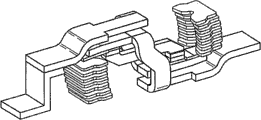
Figure 21 is an oblique view of the present invention.
Figure 22 is an end view of the present invention, and this is the example of the possible embodiment of breaker of plastic casing inside.
Figure 23 is a top view of the present invention.
Figure 24 is another oblique view of the present invention.
Figure 25 is another oblique view of the present invention.
Figure 26 is an end view, is replaceable form of the present invention.
Figure 27 is the oblique view that installs among Figure 26.
Figure 28 is an end view, is replaceable form of the present invention.
Figure 29 is the oblique view that installs among Figure 28.
Figure 30 is an end view, is replaceable form of the present invention, and wherein long leg extends to the contact side.
Figure 31 is the oblique view that installs among Figure 30.
Embodiment
Fig. 1 to 18 describes the different embodiment of the known circuit breaker of prior art.
Embodiments of the invention are shown in Figure 19 to 31.The present invention uses above-mentioned notion with double break contact system of rotary contact.In addition, the present invention has the new arrangement of the fixed conductor that strides across contact arm.
Figure 19 to 21 illustrates rotary contact 1, has the removable contact 2 and 9 that is fixed to each end.Be provided with two fixed contacts 3 and 10 and two fixed conductors.Two fixed conductors are line conductor and load conductor.The line conductor comprises section 7,6,5,17 and 11.Load conductor comprises section 4,18,12,13 and 14.Fixed contact 3 and 10 is connected respectively to the section 4 and 11 of these two fixed conductors.Section 4 and 11 is parallel to contact arm, and keeps being about the distance of the rotation from the contact to the contact arm.In addition, each fixed conductor has second section of striding to the contact arm opposite side.In the online conductor,, section 17 between section 5 and 11, connects thereby striding across contact arm.Similarly in load conductor, thereby section 18 connects between section 12 and 4 striding across contact arm on the opposite side.Stride across section 17 and 18 and contact arm be approximated to the right angle, but it is configured as and allows contact arm to disconnect.In addition, each fixed conductor has the 3rd section of first section that is parallel to other fixed conductors respectively.That is to say that section 5 is parallel to section 4, and section 12 is parallel to section 11.Section 4,5,11 and 12 are usually located at the center in the contact arm plane of movement.Stride across section 17 and 18 respectively on the left side and the right side of contact arm.In addition, each fixed conductor continues to extend and finish when being connected to remaining circuit.In the example shown, load conductor finishes at line terminal wiring 7 places that are used for cable or bus (bus bar).Load conductor can finish at wiring 14 places of leading to trip unit.Angled section 6 and 13 is optionally and sometimes to need to make tie point to be connected in the circuit breaker position easily.
Line conductor and load conductor must be electrically insulated from each other when contact arm disconnects.Can predict many possible modes of moulding the shell design in order to required insulation to be provided.Many possible conductive paths all are possible in trip unit, the 15th, and reduced representation, it finishes at face terminals wiring 16 places that are used for cable or bus.Contact arm 1 can rotate to open position among Figure 20 by the make position of an angle from Figure 19.
In a word, the invention provides the double break contact system that is used for low-voltage circuit breaker, it comprises the vertical centre rotary contact 1 of axis 40 extensions longitudinally, the axle or the optional centre bearing (central bearing) 50 that contact arm 1 are divided into left side and right side, first fixed conductor 4,12,18 and second fixed conductor 5,11,17, each conductor all strides across contact arm 1 in vertical direction, this conductor comprises: first section 4,5 that is parallel to the right flank of contact arm 1 and extends below this right flank is parallel to the left surface of contact arm 1 and at this second section 12 that extends above left surface, 11, with the 3rd section 18 that on the end of approaching contact arm 1 center of conductor, vertically first section 4,5 of each conductor and corresponding second section 12,11 is linked together, 17, the three sections are arranged on the either side of contact arm 1; Wherein first and second fixed conductors are perpendicular to one another and are crisscross arranged, thereby make the conductor 4 of winning, 12,18 first section 4 is arranged in second conductor 5,11, the top of 17 first section 5, but parallel to each other, and make the conductor 4,12 of winning, 18 second section 12 is arranged in second conductor 5, the top of 11,17 second section 11, but parallel to each other, first section 4 of first conductor is suitable for contacting turning arm 1 right-hand member, and second element 12 of first conductor is suitable at the end contact circuit away from contact arm 1 center; Can contact turning arm 1 left end with second section 11 of second conductor, first element 5 of second conductor can be at the end contact circuit away from contact arm 1 center.
Preferably, contact arm 1 can rotate around axis.Also can provide contact arm 1 to rotate around centre bearing 50.This bearing is shown circular hole in the drawings, only as an example.Can not have bearing at all yet, rotation is only arranged.Flute profile feature (slot-shaped feature) maybe can be arranged thereby the uneven wear (ablation) of compensating switch operation back contact.Contact arm 1 can float on symmetrical spring.The flute profile feature can vertically or tilt to provide.
This system also can be as following mode illustrates, this system comprises the rotary contact 1 of axis 40 extensions longitudinally, this contact arm can be around axis or optionally centre bearing 50 rotations, contact arm 1 is equipped with and is positioned on the one end thereof and is positioned at the first rotatable contact 2 on the lower surface, and be equipped with and be positioned on the opposed end and be positioned at the second removable contact 9 on the upper surface, the demarcation strip 8 of a plurality of vertical stackings, it laterally provides each end of contiguous contact arm 1; First conductor comprises: be equipped with fixed contact 3 so that contact with the first removable contact 2 on the surface thereon below that side that is equipped with the first removable contact 2 of contact arm 1 and with first section, 4, the first sections 4 that this parallel sided is extended; That second section 12 that extends above side and with this parallel sided that is equipped with the second removable contact 9 at contact arm 1, second section 12 provides the contact that passes to circuit on it is away from the end at center of contact arm 1, and vertically strides across contact arm 1 and be connected the 3rd section 18 of first section 4 and second section 12 on the end at the center of approaching contact arm 1 of first section and second section; Second conductor comprises: that is equipped with the second removable contact 9 at contact arm 1 extend above the side and with this parallel sided and second element 12 of first conductor below also first section, 11, the first sections 11 of extension in parallel fixed contact 10 is equipped with on its lower surface, so that contact with the second removable contact 9; Below that side that is equipped with the first removable contact 2 of contact arm 1 and with this parallel sided, extend and second section 5 parallel with first section 4 of first conductor and that below first section, extend, second section 5 provides the contact that passes to circuit on it is away from the end at center of contact arm 1, and vertically strides across contact arm 1 and be connected the 3rd section 17 of first section 11 and second section 5 on the end at the center of approaching contact arm 1 of first section and second section.
The plane of movement of contact arm 1 is limited by longitudinal axis 40 and vertical axis 41.The 3rd section is parallel to the plane of movement of contact arm 1 and arranges.One the 3rd section is provided at the front of contact arm 1, and another the 3rd section 18 is provided at the back of contact arm 1.Therefore, contact arm 1 is arranged between the 3rd section 17,18 and rotation in the plane that is positioned between the 3rd section 17,18.
In Figure 20, the electric arc in label 19 and the 20 expression short circuit processes.Shown in electric arc 19 and be moment before being moved into demarcation strip 8 on 20 times.The function aspects of expecting in the short circuit process, magnetic force and air-flow will make electric arc 19 and 20 externally move into demarcation strip 8.Shown in the shape of demarcation strip 8, number and arrange that many variants all are possible only as an example.
Figure 22 illustrates the present invention possible embodiment in MCCB.Multipole MCCB will be respectively has current the present invention in extremely at each.The contact system that is used for each utmost point is layout parallel to each other on a line preferably.Cross system 21 provides common carrier and the rotation of the pivotal axis in being fixed on shell 26 for different contact arms 1.
A plurality of contact arms 1 disconnect independently of one another in the cross system 21 permission multipole circuit breakers.Operating mechanism 23 is further adapted for rotation cross system 1 and disconnects or closure.Connecting rod 22 attended operation mechanisms 23 also will move to cross system 21 and be delivered to cross system from operating mechanism.The actuating of the motion of operating mechanism response handle 24 or trip unit 25 is rotated cross system 21 and is disconnected or closure.
The contact arm 1 of multipole system can while or independent actuation.For example, all contact arms 1 can be activated together by handle 24, or specific contact arm 1 can respond corresponding extremely middle short circuit current self actuating.
Compare with above-mentioned prior art, the primary and major advantage of the present invention is that fixed conductor provides the twice electric current to be used to repel contact arm.In Figure 19, the electric current in the conductor section 4 and 5 flows with identical direction, but opposite with sense of current in the contact arm 1.Similarly, the electric current in the section 11 and 12 on same direction, but with contact arm 1 in opposite current.In the short circuit process, each conductor carries whole short circuit currents.Therefore, it is mobile that the twice short circuit current is parallel to contact arm 1 altogether, repels the short circuit current in the contact arm.Compare with for example simple return circuit, this significantly increases the power on the contact arm.
With reference to Figure 20, second advantage is to stride across section or be called that to intersect the sense of current of section 17 and 18 opposite with the direction of arc current 19 and 20.This has produced the repulsive force that helps electric arc is pushed demarcation strip.Each strides across section and carries whole short circuit currents, so this repulsive force is produced by the twice short circuit current.
Be better than the simple return circuit in the prior art rotation double break system, the 3rd advantage is that the present invention does not have the return loop that has the disadvantageous sense of current.With reference to figure 8, conductor section 127 is identical with the contact arm sense of current with 128 the sense of current.This generation reduces to come from the attraction of the power that blows open only of return circuit.The present invention does not have so undesirable effect.
The 4th advantage is that the present invention avoids the problem that occurs in the notion shown in Figure 7. Conductor section 129 and 130 is positioned at the left side and the right side of demarcation strip.This layout has the crowded problem in space on the MCCB Width.It is wideer holding the thickness of conductor that MCCB must do, otherwise demarcation strip must do narrower, this can reduce the efficient of its cooling electric arc.
With reference to Figure 20, the 5th advantage is that electric current in conductor section 6 and 7 is on the direction that can produce the attraction of electric arc 19.This generation trends towards electric arc is moved into the ideal effect of demarcation strip.Similarly, section 13,14 and 15 attracts electric arc 20.This compares with the unfavorable conditions of prior art among Figure 10, and section 131 and 132 trends towards repelling electric arc 136 respectively, and section 133,134 and 135 trends towards repelling electric arc 137 respectively.
Figure 23 to 25 illustrates the embodiment of the invention with different perspective view, i.e. top view (Figure 23), end view (Figure 24) and put upside down end view (Figure 24).
Figure 26-the 31st, the example of alternative embodiment of the present invention, it utilizes the difference of ferromagnetic material to arrange.In each of these situations, ferromagnetic material strengthens the magnetic flux of striding contact arm, thereby increases the tensile force on the contact arm, and increases the power that electric arc is pushed demarcation strip.
Figure 26 and 27 illustrates the present invention and has two complete slot type motors.Each slot type motor comprises the complete loops of ferromagnetic material, this ferromagnetic material loop circle segment guiding path.A slot type motor is around conductor section 4,5 and contact arm 1.Another slot type motor is around conductor section 11,12 and contact arm 1.In these slot type motors each all strengthens magnetic field in the known mode of prior art, shown in Figure 15 and 16.But the present invention is bigger than the advantage that prior art obtained, and this is because the current doubles of flowing through in the fixed conductor of each slot type motor.The electric current that increases is induced bigger magnetic field intensity in the slot type motor, thereby increases contact arm and the useful power of electric arc.
Figure 28 and 29 illustrates the slot type motor that the present invention has two parts.The advantage that it obtained is similar to the advantage of slot type motor complete in Figure 26 and 27.Yet, do not have in the complete slot type motor big like that to the increase of the power of contact arm and electric arc.The slot type motor of part is suitable for strengthening magnetic flux, but it can not be fully around conductor.But the advantage of the slot type motor of part is that the space of its requirement is littler than complete slot type motor, and may carry out in complete product easilier concerning the product design personnel.
Figure 30 and 31 illustrates the present invention and has the electric arc demarcation strip of being made by ferromagnetic material, and this demarcation strip has the long leg that extends to the contact side.Such demarcation strip is that prior art is known, for example shown in Figure 17 and 18.
List of reference numerals
1 rotation double break contact arm
2 mobile contacts
3 fixed contacts
4 load conductor sections
5 line conductor sections
6 line conductor sections
7 line conductor sections
8 demarcation strips
9 removable contacts
10 fixed contacts
11 line conductor sections
12 load conductor sections
13 load conductor sections
14 load conductor sections
15 guiding paths
16 load terminal wiring
17 line conductor sections
18 load conductor sections
19 electric arcs
20 electric arcs
21 cross parts
22 connecting rods
23 operating mechanisms
24 handles
25 trip units
26 substrates
40 longitudinal axis
41 vertical axis
50 rotary middle spindles or bearing
100 rotatable contact arms
101 rotatable double break contact arms
110 fixed conductors
127 conductor sections
128 conductor sections
129 conductor sections
130 conductor sections
131 conductor sections
132 conductor sections
133 conductor sections
134 conductor sections
135 conductor sections
136 electric arcs
137 electric arcs
140 ferromagnetic materials
The slot type motor of 150 parts
160 complete slot type motors
Claims (27)
1. double break contact system that is used for low-voltage circuit breaker comprises:
The rotatable double break contact arm (1) of axis (40) extension longitudinally;
First fixed conductor (4; 12; 18) and second fixed conductor (5; 11; 17), each conductor
Contact an end of described contact arm (1) respectively;
Have a plurality of first sections (4 below described contact arm (1); 5), a plurality of second sections (12 on described contact arm (1); 11) and stride across described contact arm (1) and with described first section (4 of each conductor; 5) with corresponding described second section (12; 11) a plurality of the 3rd sections (18 that link together; 17);
Wherein
Described first section (4; 5) be arranged parallel to each other with parallel but with described contact arm (1) in described first section (4 of guide current by separately on the direction of current reversal; 5), and/or
Described second section (12; 11) be arranged parallel to each other with parallel but with described contact arm (1) in described second section (12 of guide current by separately on the direction of current reversal; 11).
2. system according to claim 1, wherein said first fixed conductor (4; 12; 18) and described second fixed conductor (5; 11; 17) along vertical axis (41) setting interlaced with each other, so that
Described first conductor (4; 12; 18) described first section (4) is arranged in described second conductor (5; 11; 17) described first section (5) top is also parallel with described first section of described second conductor, and
Described first conductor (4; 12; 18) described second section (12) is arranged in described second conductor (5; 11; 17) described second section (11) top is also parallel with described second section of described second conductor.
3. system according to claim 1 and 2, wherein the demarcation strip of a plurality of vertical stackings (8) laterally is provided with each end of contiguous described contact arm (1).
4. according to each described system in the aforementioned claim, wherein said the 3rd section (18; 17) be approximated to arranged at right angles with described longitudinal axis (40).
5. according to each described system in the aforementioned claim, wherein said the 3rd section (18; 17) being arranged as the described contact arm of permission (1) rotates between first make position and second open position.
6. system according to claim 5, wherein said the 3rd section (18; 17) stride across described contact arm (1) at the not ipsilateral of described contact arm (1) respectively.
7. according to each described system in the aforementioned claim, wherein said contact arm (1) is equipped with contact (2) and (9) on each end that is separately fixed at described contact arm.
8. according to each described system in the aforementioned claim, wherein said first fixed conductor (4; 12; 18) and described second fixed conductor (5; 11; 17) fixed contact (3) and (10) are equipped with respectively.
9. according to each described system in the aforementioned claim, wherein said first and second sections (4; 5; 11; 12) be positioned at the center of described contact arm plane of movement.
10. according to each described system in the aforementioned claim, wherein said first conductor (4; 12; 18) realize with the line conductor, and wherein said second conductor (5; 11; 17) realize with load conductor.
11. according to each described system in the aforementioned claim, wherein each conductor is suitable for not connecting connecting circuit on the end of described contact arm (1) at it.
12. according to each described system in the aforementioned claim, wherein said first conductor comprises:
First section (4) that below that side that is equipped with the described first removable contact (2) of described contact arm (1) and with described parallel sided, extends, described first section (4) is being equipped with fixed contact (3) so that contact with the described first removable contact (2) on first make position at described contact arm on the upper surface of described first section
That second section (12) that extends in parallel above side and with described side that is equipped with the described second removable contact (9) at described contact arm (1), described second section (12) is provided with the contact that passes to circuit on the end at the center of the described contact arm of being away from of described second section (1), and
Vertically stride across described contact arm (1) and on the end at the described center of approaching described contact arm (1) of described first section and described second section, be connected the 3rd section (18) of described first section (4) and described second section (12).
13. system according to claim 12, wherein said second conductor comprises:
At that first section (11) that extends above side and with described parallel sided and extend in parallel below second element (12) of described first conductor and with described second element that is equipped with the described second removable contact (9) of described contact arm (1), described first section (11) is being equipped with fixed contact (10) so that contact with the described second removable contact (9) on first make position at described contact arm on the lower surface of described first section;
Below that side that is equipped with the described first removable contact (2) of described contact arm (1) and with described parallel sided, extend and with first section (4) of described first conductor, second section parallel and that below described first section, extend (5), described second section (5) is provided with the contact that passes to circuit on the end at the center of the described contact arm of being away from of described second section (1), and
Vertically stride across described contact arm (1) and on the end at the described center of approaching described contact arm (1) of described first section and described second section, be connected the 3rd section (17) of described first section (11) and described second section (5).
14. according to each described system in the aforementioned claim, wherein when described contact arm was positioned at described second open position, described first and second conductors were insulated from each other.
15. according to each described system in the aforementioned claim, wherein said electric current arm (1) can rotate between two positions below:
Primary importance, it provides an end and described first conductor (4 of described contact arm (1) respectively; 12; 18) the closure contact between the respective end and another end and described second conductor (5 of described contact arm (1); 11; 17) the closure contact between the respective end; And
Second open position after the short circuit, wherein contacting between described conductor and described contact arm (1) is suitable for allowing to form arc current (19) and (20) on arbitrary end of described contact arm (1).
16. system according to claim 15, wherein said the 3rd section (18; 17) arrange be used for described arc current (19; 20) guide current on the opposite direction, thus repulsive force produced so that with described electric arc (19; 20) push each described demarcation strip (8).
17. according to each described system in the aforementioned claim, the section (6) of wherein vertical similar s shape and (13) are connected respectively to described second conductor (5; 11; 17) described first element (5) and first conductor (4; 12; 18) described second element (12) is so that provide electric current upwards and provide downward electric current in the level of described s shape section (13) changes partly in the level of described s shape section (6) changes partly.
18. system according to claim 17 is wherein at described s shape section (6; 13) the described electric current in attracts each arc current (19; 20) so that with described electric arc (19; 20) be directed in the described demarcation strip (8).
19. system according to claim 1, wherein said rotatable contact arm (1) rotates in the plane that is limited by described longitudinal axis (40) and described vertical axis (41).
20. system according to claim 1, wherein said rotatable contact arm (1) but be set to the span centre axle or centre bearing (50) rotation.
21. a breaker of plastic casing (MCCB) comprising:
At least one is according to each described contact system in the claim 1 to 20; Mould shell (26);
Cross system (21), it provides carrier so that activate the disconnection and the closing motion of the contact arm (1) of at least one contact system for described contact arm (1), described cross system (21) is suitable for around being fixed on described pivotal axis rotation of moulding in the shell (26), described cross system (21) comprises spring mechanism, and described spring mechanism provides contact pressure and allows described contact arm (1) to break in the short circuit process;
Operating mechanism (23), it is suitable for rotating, and described cross system (21) disconnects or closure; And
Connecting rod (22), it is suitable for connecting described operating mechanism (23) to described cross system (21) and will move and be delivered to described cross system from described operating mechanism.
22. breaker of plastic casing according to claim 21, wherein said operating mechanism (23) is realized as handle (24) and/or trip unit (25).
23. according to claim 21 or 22 described breaker of plastic casing, the every utmost point that wherein provides contact system to be used for circuit, described contact system layout parallel to each other, described cross system (21) is provided at being rigidly connected between each contact arm (1).
24. breaker of plastic casing according to claim 23, wherein said cross system (21) are suitable for simultaneously and/or rotate independently of one another the described contact arm (1) of all utmost points.
25. a method that is used for breaking at the double break contact system that is used for low-voltage circuit breaker the circuit electric current after short circuit, described double break contact system comprises:
Double break contact arm (1), its axis (40) extension longitudinally; First fixed conductor (4; 12; 18) and second fixed conductor (5; 11; 17), each conductor contacts an end of described contact arm (1) respectively, and has first section (4 below described contact arm (1); 5), second section (12 on described contact arm (1); 11) and stride across described contact arm (1) and with described first section (4 of each conductor; 5) with corresponding described second section (12; 11) the 3rd section (18 that links together; 17);
Said method comprising the steps of:
By parallel to each other and described first section of disposed adjacent, and parallel but with described contact arm (1) on the direction of current reversal guide current by described first section (4; 5), described first section (4 on an end of the electric current of described contact arm (1) and described contact arm (1); 5) provide repulsive force between the electric current;
By parallel to each other and described second section (12 of disposed adjacent; 11), and parallel but with described contact arm (1) on the direction of current reversal guide current by described first section, described second section (12 on another end of the electric current of described contact arm (1) and described contact arm (1); 11) provide repulsive force between the electric current.
26. method according to claim 25 further may further comprise the steps:
Because described repulsive force rotates to second open position with described contact arm (1) from first make position;
The end and first conductor (4 at described contact arm (1); 12; 18) form electric arc (19) between the contact on, and at another end and described second conductor (5 of described contact arm (1); 11; 17) form electric arc (20) between the contact on; And
By guide current with described arc current (19; 20) on the opposite direction by described the 3rd section (18; 17) produce extra repulsive power, so that with electric arc (19; 20) push away the center of described contact arm (1).
27. according to claim 25 or 26 described methods, wherein said system further is equipped with and is connected respectively to described second conductor (5; 11; 17) described first element (5) and described first conductor (4; 12; Section (6) and (13) of the vertical similar s shape of described second element (12) 18) said method comprising the steps of:
Guide current makes progress in the level of described s shape section (6) changes partly, and guide current is downward in the level of described s shape section (13) changes partly;
By at each described arc current (19; 20) and the described guiding between described that make progress and the downward electric current produce attraction so that guide described electric arc (19; 20) respectively away from the described center of described contact arm (1).
Applications Claiming Priority (1)
| Application Number | Priority Date | Filing Date | Title |
|---|---|---|---|
| PCT/IB2007/001723 WO2008090398A1 (en) | 2007-01-24 | 2007-01-24 | A double-breaking contact system for a low voltage circuit breaker, a molded case circuit breaker comprising the double-breaking contact system, and a method for breaking a circuit |
Publications (2)
| Publication Number | Publication Date |
|---|---|
| CN101589447A true CN101589447A (en) | 2009-11-25 |
| CN101589447B CN101589447B (en) | 2013-05-01 |
Family
ID=38521140
Family Applications (1)
| Application Number | Title | Priority Date | Filing Date |
|---|---|---|---|
| CN200780050381.2A Expired - Fee Related CN101589447B (en) | 2007-01-24 | 2007-01-24 | A double-breaking contact system for a low voltage circuit breaker, a molded case circuit breaker comprising the double-breaking contact system, and a method for breaking a circuit |
Country Status (4)
| Country | Link |
|---|---|
| US (1) | US8159319B2 (en) |
| CN (1) | CN101589447B (en) |
| DE (1) | DE112007003283T5 (en) |
| WO (1) | WO2008090398A1 (en) |
Cited By (3)
| Publication number | Priority date | Publication date | Assignee | Title |
|---|---|---|---|---|
| CN103026440A (en) * | 2010-03-10 | 2013-04-03 | Ge能源能量变换技术有限公司 | Rotary switches |
| CN104851760A (en) * | 2014-02-18 | 2015-08-19 | 通用电气公司 | Electromagnetically enhanced contact separation in a circuit breaker |
| CN109478475A (en) * | 2016-05-11 | 2019-03-15 | 伊顿智能动力有限公司 | High-voltage electrical apparatus with magnetic arc deflection component disconnects device |
Families Citing this family (12)
| Publication number | Priority date | Publication date | Assignee | Title |
|---|---|---|---|---|
| DE102008005115A1 (en) * | 2008-01-14 | 2009-07-16 | Siemens Aktiengesellschaft | Switching device, in particular power switching device, with two series-connected switching contact pairs for interrupting a current path |
| DE102010036215A1 (en) * | 2010-09-01 | 2012-03-01 | Siemens Aktiengesellschaft | Electrical circuit breaker |
| JP5644690B2 (en) * | 2011-06-17 | 2014-12-24 | トヨタ自動車株式会社 | Current breaker and power storage system |
| JP5585550B2 (en) * | 2011-07-18 | 2014-09-10 | アンデン株式会社 | relay |
| DE102011081736A1 (en) | 2011-08-29 | 2013-02-28 | Siemens Aktiengesellschaft | Electric switch |
| US9552934B2 (en) * | 2012-02-27 | 2017-01-24 | Siemens Aktiengesellschaft | Slot motor, slot motor cover, slot motor—arc plate assembly, and methods of operation |
| KR101343185B1 (en) * | 2012-07-09 | 2013-12-19 | 엘에스산전 주식회사 | A movable contactor assembly for a circuit breaker |
| CN104332331B (en) * | 2014-11-06 | 2017-01-11 | 佳一电气有限公司 | Contact terminal system |
| US9552951B2 (en) | 2015-03-06 | 2017-01-24 | Cooper Technologies Company | High voltage compact fusible disconnect switch device with magnetic arc deflection assembly |
| US10636607B2 (en) * | 2017-12-27 | 2020-04-28 | Eaton Intelligent Power Limited | High voltage compact fused disconnect switch device with bi-directional magnetic arc deflection assembly |
| EP3671783A1 (en) * | 2018-12-20 | 2020-06-24 | ABB Schweiz AG | Contact assembly configured for a load break switch, load break switch and method for closing a circuit path of a contact assembly |
| WO2023121722A1 (en) | 2021-12-22 | 2023-06-29 | Powell Electrical Systems, Inc. | Enabling equipment to withstand and control the effects of internal arcing faults |
Family Cites Families (9)
| Publication number | Priority date | Publication date | Assignee | Title |
|---|---|---|---|---|
| US3343108A (en) | 1965-12-10 | 1967-09-19 | Terasaki Denki Sangyo Kk | High speed circuit interrupter using magnetic blowoff and means for decreasing the inertial effects during interruption |
| DE2338637A1 (en) | 1973-07-30 | 1975-02-20 | Bbc Brown Boveri & Cie | Power cct. breaker contact arrangement - has two angled insulated, rotary contact levers with two contact coatings in series, and hinged spring |
| FR2351483A1 (en) | 1976-05-12 | 1977-12-09 | Merlin Gerin | QUICK LIMITER CIRCUIT BREAKER |
| FR2416541A1 (en) | 1978-01-31 | 1979-08-31 | Merlin Gerin | POWER LIMITATION AND CUT-OFF DEVICE |
| DE3431288A1 (en) | 1984-08-23 | 1986-03-06 | Siemens AG, 1000 Berlin und 8000 München | CONTACT ARRANGEMENT FOR LOW VOLTAGE CIRCUIT BREAKERS WITH A TWO-ARM CONTACT LEVER |
| JPH088048B2 (en) | 1989-09-18 | 1996-01-29 | 三菱電機株式会社 | Current limiting device |
| EP1069584B1 (en) | 1998-12-28 | 2007-09-12 | Mitsubishi Denki Kabushiki Kaisha | Current limiter and circuit breaker with current-limiting function |
| CN2427013Y (en) * | 2000-03-30 | 2001-04-18 | 上海奥富捷电气终端成套厂 | Multicircuit breaker |
| JP3997818B2 (en) * | 2001-05-28 | 2007-10-24 | 富士電機機器制御株式会社 | Circuit breaker for wiring |
-
2007
- 2007-01-24 DE DE112007003283T patent/DE112007003283T5/en not_active Withdrawn
- 2007-01-24 WO PCT/IB2007/001723 patent/WO2008090398A1/en active Application Filing
- 2007-01-24 US US12/449,112 patent/US8159319B2/en not_active Expired - Fee Related
- 2007-01-24 CN CN200780050381.2A patent/CN101589447B/en not_active Expired - Fee Related
Cited By (4)
| Publication number | Priority date | Publication date | Assignee | Title |
|---|---|---|---|---|
| CN103026440A (en) * | 2010-03-10 | 2013-04-03 | Ge能源能量变换技术有限公司 | Rotary switches |
| CN104851760A (en) * | 2014-02-18 | 2015-08-19 | 通用电气公司 | Electromagnetically enhanced contact separation in a circuit breaker |
| CN104851760B (en) * | 2014-02-18 | 2019-06-11 | 通用电气公司 | The separation of the contact of Electromagnetic enhancement in circuit-breaker |
| CN109478475A (en) * | 2016-05-11 | 2019-03-15 | 伊顿智能动力有限公司 | High-voltage electrical apparatus with magnetic arc deflection component disconnects device |
Also Published As
| Publication number | Publication date |
|---|---|
| WO2008090398A1 (en) | 2008-07-31 |
| US20090321233A1 (en) | 2009-12-31 |
| DE112007003283T5 (en) | 2010-02-04 |
| CN101589447B (en) | 2013-05-01 |
| US8159319B2 (en) | 2012-04-17 |
Similar Documents
| Publication | Publication Date | Title |
|---|---|---|
| CN101589447B (en) | A double-breaking contact system for a low voltage circuit breaker, a molded case circuit breaker comprising the double-breaking contact system, and a method for breaking a circuit | |
| US6248970B1 (en) | ARC chute for a molded case circuit breaker | |
| KR950003868B1 (en) | Circuit breaker with force generating shunt | |
| JP4105719B2 (en) | Pressure trip device for circuit breaker for wiring | |
| MX2010012127A (en) | Indicator for a fault interrupter and load break switch. | |
| US10665413B2 (en) | Fusible switch disconnect device for DC electrical power system | |
| MX2010012126A (en) | Adjustable rating for a fault interrupter and load break switch. | |
| EP2026369B1 (en) | Housing for single-pole circuit breaker comprising two current path regions | |
| WO2015009434A2 (en) | Interchangeable switching module and electrical switching apparatus including the same | |
| WO2013070465A1 (en) | Electrical switching apparatus including magnet assembly and first and second arc chambers | |
| CN101625934A (en) | Circuit breaker | |
| JP5585374B2 (en) | Circuit breaker | |
| EP2026368B1 (en) | Housing for single-pole circuit breaker comprising two current path regions | |
| EP0208295A2 (en) | Current limiting circuit breaker with arc commutating structure | |
| CN108122698B (en) | Arc extinguishing device and electromechanical protective switching device | |
| WO2017141197A1 (en) | Electrical switch incorporating an arc splitter arrangement | |
| US9805887B2 (en) | Slot motor configuration for high amperage multi-finger circuit breaker | |
| EP2447969B1 (en) | Switching device for low voltage electrical circuits | |
| KR102612860B1 (en) | Direct Current Circuit Breaker | |
| KR100631827B1 (en) | Pressure trip device of the circuit breaker | |
| CN101447375A (en) | Combined low-voltage direct current limit switch electric appliance | |
| JPH08250011A (en) | Circuit breaker | |
| JP2017010796A (en) | Circuit breaker | |
| CN113471032A (en) | Electromechanical compact protective switching device | |
| JPH03182028A (en) | Circuit breaker |
Legal Events
| Date | Code | Title | Description |
|---|---|---|---|
| C06 | Publication | ||
| PB01 | Publication | ||
| C10 | Entry into substantive examination | ||
| SE01 | Entry into force of request for substantive examination | ||
| C14 | Grant of patent or utility model | ||
| GR01 | Patent grant | ||
| CF01 | Termination of patent right due to non-payment of annual fee | ||
| CF01 | Termination of patent right due to non-payment of annual fee |
Granted publication date: 20130501 Termination date: 20190124 |