BRPI0802005B1 - METHOD OF HYDROAMINOMETYLATION OF ACENAPHTILENE AND ITS DERIVATIVES - Google Patents
METHOD OF HYDROAMINOMETYLATION OF ACENAPHTILENE AND ITS DERIVATIVES Download PDFInfo
- Publication number
- BRPI0802005B1 BRPI0802005B1 BRPI0802005-1A BRPI0802005A BRPI0802005B1 BR PI0802005 B1 BRPI0802005 B1 BR PI0802005B1 BR PI0802005 A BRPI0802005 A BR PI0802005A BR PI0802005 B1 BRPI0802005 B1 BR PI0802005B1
- Authority
- BR
- Brazil
- Prior art keywords
- hydroaminotylation
- cod
- acenaphthylene
- ome
- toluene
- Prior art date
Links
Images
Landscapes
- Organic Low-Molecular-Weight Compounds And Preparation Thereof (AREA)
- Low-Molecular Organic Synthesis Reactions Using Catalysts (AREA)
Abstract
MÉTODO DE HIDROAMINOMETILAÇÃO DO ACENAFTILENO E SEUS DERIVADOS A presente invenção descreve um método para a hidroaminometilação do acenaftileno e seus derivados. O método de hidroaminometilação do acenaftileno, ora descrito, inclui uma olefina, uma amina, um catalisador de ródio, rutênio ou cobalto e gás de síntese (syngas). A presente invenção fornece uma maneira simples de fazer, em alto rendimento e alta regioespecificidade, uma variedade de produtos, incluindo produtos farmacologicamente ativos.METHOD OF HYDROAMINOmethylation of Acenaphthylene and its derivatives The present invention describes a method for the hydroaminomethylation of acenaphthylene and its derivatives. The method of hydroaminomethylation of acenaphthylene described herein includes an olefin, an amine, a rhodium, ruthenium or cobalt catalyst, and synthesis gas (syngas). The present invention provides a simple way to make, in high yield and high regiospecificity, a variety of products, including pharmacologically active products.
Description
A presente invenção descreve um método para a hidroaminometilação do acenaftileno e seus derivados. O método de hidroaminometilação do acenaftileno, ora descrito, inclui uma olefina, uma amina, um catalisador de ródio, rutênio ou cobalto e gás de síntese (syngas). A presente invenção fornece uma maneira simples de fazer, em alto rendimento e alta regioespecificidade, uma variedade de produtos, incluindo produtos farmacologicamente ativos.The present invention describes a method for the hydroaminomethylation of acenaphthylene and its derivatives. The method of hydroaminomethylation of acenaphthylene described herein includes an olefin, an amine, a rhodium, ruthenium or cobalt catalyst, and synthesis gas (syngas). The present invention provides a simple way to make, in high yield and high regiospecificity, a variety of products, including pharmacologically active products.
Aminas alifáticas são úteis em uma variedade de aplicações, incluindo agrotóxicos, produtos farmacêuticos e produtos intermediários de performance, bem como precursores de polímeros como poliuretanos. A reação de hidroaminometilação consiste de um conjunto de reações, hidroformilação/aminação redutiva, realizadas em uma única etapa (one pot). Nesta sequência o intermediário aldeídico reage com uma amina primária ou secundária para formar uma imina ou enamina intermediaria, que sofre hidrogenação para formar uma amina secundária ou terciária.Aliphatic amines are useful in a variety of applications, including pesticides, pharmaceuticals and performance intermediates, as well as polymer precursors such as polyurethanes. The hydroaminomethylation reaction consists of a set of reactions, hydroformylation/reductive amination, carried out in a single step (one pot). In this sequence the aldehyde intermediate reacts with a primary or secondary amine to form an intermediate imine or enamine, which undergoes hydrogenation to form a secondary or tertiary amine.
Alguns dos aspectos inovadores da presente invenção consistem na utilização do acenaftileno como precursor do aldeído para a síntese, o uso de solventes menos tóxicos e de mais fácil manipulação e a não utilização de ligantes de fósforo durante o processo.Some of the innovative aspects of the present invention consist in the use of acenaphthylene as an aldehyde precursor for the synthesis, the use of less toxic solvents that are easier to handle and the non-use of phosphorus binders during the process.
No estado da técnica constam poucos trabalhos relacionados à hidroaminometilação de olefinas. Nos trabalhos encontrados são empregados como catalisadores homogêneos complexos de ródio ou cobalto promovidos com ligantes de fósforo mono- ou bidentados tais como, fosfinas, fosfitos: a) BRIGS et al (WO 2005/077884 A2) estudaram a hidroaminometilação de alquilaminas partindo de olefinas com a fórmula geral ArXCR=CR2, em que Ar é um grupo aril ou aril substituído, cada R é independentemente H, alquil, cicloalquil, aril, alquil substituído, cicloalquil substituído, aril substituído ou um grupo contendo heteroátomo e X -CH2- ou -OCH2. Aminas primárias, secundárias e amónia foram utilizadas bem como catalisadores homogêneos de ródio promovidos por ligantes fosforados. Solventes tais com tolueno, THF, metanol e dioxano foram utilizados. b) GREIVING HELMUT et al.(EP1265844) relataram um método para hidroaminometilação de uma ampla classe de olefinas utilizando líquidos iônicos. c) BELLER et al. relataram em J. Am. Chem. Soc. 2003, 125, 10311-10318 a hidroaminometilação de alquenos terminais utilizando o catalisador [Rh(cod)2BF4] e o ligante Xantphos, em que as melhores conversões e seletividades foram alcançadas com uma mistura de tolueno/metanol como solvente. d) GRAEBIN et al.em Catalysis Communications (In Press) relataram a hidroaminometilação do limoneno catalisada por [HRh(CO)(PPh3)3] com um protocolo em duas etapas, no qual a mistura de H2/CO, após conclusão da etapa de hidroformilação, é substituída por H2 puro, com a finalidade de aumentar a eficiência da hidrogenação da enamina Zimina. e) BRIGGS et al.em Organic Letters 2005, 7, 4795-4798 estudando a síntese das aminas biologicamente ativas ibutilida e aripiprazol via hidroaminometilação e utilizando o sistema catalítico ródio-bifosfito, observaram aumento na produção de amina quando quantidades subestequiométricas do bifosfito foram utilizadas. f) EILBRACHT et al.em Tetrahedron 199, 55, 9801-9816 relatou baixa seletividade quando a hidroaminometilação foi realizada na ausência de ligantes.In the prior art there are few works related to the hydroaminomethylation of olefins. In the works found, complex homogeneous catalysts of rhodium or cobalt promoted with mono- or bidentate phosphorus binders such as phosphines, phosphites are used: a) BRIGS et al (WO 2005/077884 A2) studied the hydroaminomethylation of alkylamines starting from olefins with the general formula ArXCR=CR2 wherein Ar is an aryl or substituted aryl group, each R is independently H, alkyl, cycloalkyl, aryl, substituted alkyl, substituted cycloalkyl, substituted aryl or a group containing heteroatom and X is -CH2- or - OCH2. Primary, secondary amines and ammonia were used as well as homogeneous rhodium catalysts promoted by phosphorus ligands. Solvents such as toluene, THF, methanol and dioxane were used. b) GREIVING HELMUT et al.(EP1265844) reported a method for hydroaminomethylation of a wide class of olefins using ionic liquids. c) BELLER et al. reported in J. Am. Chem. Soc. 2003, 125, 10311-10318 the hydroaminomethylation of terminal alkenes using the catalyst [Rh(cod)2BF4] and the Xantphos ligand, in which the best conversions and selectivities were achieved with a mixture of toluene/methanol as solvent. d) GRAEBIN et al. in Catalysis Communications (In Press) reported the hydroaminomethylation of limonene catalyzed by [HRh(CO)(PPh3)3] with a two-step protocol, in which the H2/CO mixture, after completion of the step of hydroformylation, is replaced by pure H2 in order to increase the efficiency of the hydrogenation of the enamine Zimine. e) BRIGGS et al. in Organic Letters 2005, 7, 4795-4798 studying the synthesis of the biologically active amines ibutilide and aripiprazole via hydroaminomethylation and using the rhodium-bisphosphite catalytic system, observed an increase in amine production when substoichiometric amounts of bisphosphite were used . f) EILBRACHT et al. in Tetrahedron 199, 55, 9801-9816 reported low selectivity when hydroaminomethylation was carried out in the absence of linkers.
Não foram encontrados no estado da técnica trabalhos que descrevam processos como este, em condições brandas com alta conversão e seletividade na ausência de ligantes de fósforo. Os solventes geraímente utilizados para a hidroaminometilação são tolueno, THF, benzeno, dioxano, metanol e mistura tolueno/metanol. A utilização de tais solventes representa um problema para a aplicação industrial do processo, uma vez que são considerados nocivos e de custo elevado.We did not find in the prior art works describing processes like this, under mild conditions with high conversion and selectivity in the absence of phosphorus binders. Solvents commonly used for hydroaminomethylation are toluene, THF, benzene, dioxane, methanol and a toluene/methanol mixture. The use of such solvents represents a problem for the industrial application of the process, as they are considered harmful and costly.
Embora a hidroaminometilação tenha sido estudada para várias olefinas e aminas primárias, secundárias e amónia em diversas condições, não constam no estado da técnica trabalhos referentes à hidroaminometilação do acenaftileno e o uso de etanol como solvente na hidroaminometilação de olefinas. O etanol é um solvente de baixa periculosidade e fácil manipulação, sua utilização em escala industrial representa grande vantagem tecnológica em relação aos outros solventes comumente utilizados.Although hydroaminomethylation has been studied for several olefins and primary, secondary amines and ammonia under different conditions, there are no prior art works referring to the hydroaminomethylation of acenaphthylene and the use of ethanol as a solvent in the hydroaminomethylation of olefins. Ethanol is a solvent with low danger and easy handling, its use on an industrial scale represents a great technological advantage over other commonly used solvents.
Em primeiro aspecto a invenção descreve um processo em uma única etapa para a obtenção de produtos de hidroaminometilação do acenaftileno e derivados, na presença de uma amina primária ou secundária; um catalisador tal como ródio neutro, rutênio ou cobalto na ausência de ligantes de fósforo; o gás de síntese CO/H2 e como solvente tolueno ou uma mistura de tolueno/etanol.In the first aspect, the invention describes a process in a single step for obtaining hydroaminomethylation products of acenaphthylene and derivatives, in the presence of a primary or secondary amine; a catalyst such as neutral rhodium, ruthenium or cobalt in the absence of phosphorus binders; the synthesis gas CO/H2 and as a solvent toluene or a mixture of toluene/ethanol.
Em segundo aspecto os derivados do acenaftileno obedecem à fórmula geral ArRC=CRAr, em que R é independentemente H, alquil, aril ou heteroátomo e Ar para ambos átomos de carbono é um único naftaleno ou naftaleno substituído.In the second aspect the acenaphthylene derivatives obey the general formula ArRC=CRAr, wherein R is independently H, alkyl, aryl or heteroatom and Ar for both carbon atoms is a single naphthalene or substituted naphthalene.
A presente invenção descreve um método para a preparação de naftilaminas em condições de hidroaminometilação na presença de uma olefina, uma amina, um complexo de ródio neutro e o gás de síntese. A olefina pode ser o acenaftileno ou um de seus derivados, em que as substituições no anel aromático podem ser nas posições β e/ou y e/ou δ e do tipo alquil, aril, OMe, CHO, OH, COR (R=alquil), NO21 5 SO3 e halogênios. As aminas podem ser primárias (ex: metilamina. etilamina, n- propilamina, n-butilamina, isopropilamina, isobutilamina, t-butilamina, n-hexilamina, heptilamina, n-octilamina, benzilamina, alilamina, 1-feniletilamina, neopentilamina, ciclohexilamina, etanolamina, anilina, 4-aminobenzoato de etila, p-aminofenol), secundárias (ex: dimetilamina, etilmetilamina, butilmetilamina, di-n-hexilamina, 10 piperidina, pirrolideno, morfolina, N-metilanilina, dibenzilamina, dietanolamina, N- metilbenzilamina, N-metilciclohexilamina, N-metilalilamina e indol), amónia e pode conter mais de um nitrogênio (etilenodiamina, 1,2-diaminopropano, 1,3- diaminopropano, hexametilenodiamina, piperazina, N-metilpiperazina, 1-(2,3- diclorofenil)piperazina, 1,4-diaminociclohexano, hidrazina, N,N’-dimetilpropodiamina).The present invention describes a method for preparing naphthylamines under hydroaminomethylation conditions in the presence of an olefin, an amine, a neutral rhodium complex and the synthesis gas. The olefin can be acenaphthylene or one of its derivatives, in which the substitutions on the aromatic ring can be in the β and/or y and/or δ positions and of the alkyl, aryl, OMe, CHO, OH, COR (R=alkyl) type , NO21 5 SO3 and halogens. Amines can be primary (eg methylamine, ethylamine, n-propylamine, n-butylamine, isopropylamine, isobutylamine, t-butylamine, n-hexylamine, heptylamine, n-octylamine, benzylamine, allylamine, 1-phenylethylamine, neopentylamine, cyclohexylamine, ethanolamine, aniline, ethyl 4-aminobenzoate, p-aminophenol), secondary (eg dimethylamine, ethylmethylamine, butylmethylamine, di-n-hexylamine, piperidine, pyrrolidene, morpholine, N-methylaniline, dibenzylamine, diethanolamine, N-methylbenzylamine, N-methylcyclohexylamine, N-methylallylamine and indole), ammonia and may contain more than one nitrogen (ethylenediamine, 1,2-diaminopropane, 1,3-diaminopropane, hexamethylenediamine, piperazine, N-methylpiperazine, 1-(2,3-dichlorophenyl) )piperazine, 1,4-diaminocyclohexane, hydrazine, N,N'-dimethylpropodiamine).
A amina pode também conter um ou mais grupos funcionais os quais não participam da reação (ex: anilina substituída na posição orto, meta e para, onde os substituintes podem ser, OMe, CF3 e CN).The amine may also contain one or more functional groups which do not participate in the reaction (eg aniline substituted in the ortho, meta and para position, where the substituents can be, OMe, CF3 and CN).
O catalisador pode ser um complexo neutro de ródio, cobalto ou rutênio sem ligante auxiliar de fósforo. Os precursores catalíticos de ródio incluem 20 [Rh2(OMe)2(cod)2], [Rh2(OAc)2(cod)2], [Rh(CO)2(acac)], [Rh2(cod) 2CI2], de rutênio incluem [(cod)RuCI2]n, [(cod)Ru(C5H11)2CI2]> [Ru3(CO)12], [(cod)Ru(C3H5)2] e de cobalto incluem [HCo(CO)3PCy3], [HCo(CO)3PPh3] e [HCo(CO)3PBz3J. O presente método compreende o uso de tolueno, THF, dioxano, hexano, ciclo-hexano, pentano, propanona, metanol, propanol, butanol, etanol ou uma mistura tolueno/etanol em 25 proporções variadas (tolueno/etanol = 0,01 a 99,99) como solvente. O gás de síntese CO/H2 pode ser utilizado em pressões que variam entre 10 a 120 bar, mais preferencialmente em pressões que variam entre 20 a 90 bar. A proporção entre os gases CO/H2 pode variar de 1/5 a 5/1, sendo preferencialmente entre 1/3 e 3/1. As reações devem ser realizadas sobre agitação e aquecimento, no qual a temperatura 30 pode variar entre 40 °C a 140 °C e preferencialmente entre 70 °C e 110 °C.The catalyst can be a neutral complex of rhodium, cobalt or ruthenium without a phosphorus auxiliary binder. Rhodium catalytic precursors include 20 [Rh2(OMe)2(cod)2], [Rh2(OAc)2(cod)2], [Rh(CO)2(acac)], [Rh2(cod)2Cl2], of ruthenium include [(cod)RuCl2]n, [(cod)Ru(C5H11)2CI2]> [Ru3(CO)12], [(cod)Ru(C3H5)2] and of cobalt include [HCo(CO)3PCy3 ], [HCo(CO)3PPh3] and [HCo(CO)3PBz3J. The present method comprises the use of toluene, THF, dioxane, hexane, cyclohexane, pentane, propanone, methanol, propanol, butanol, ethanol or a toluene/ethanol mixture in varying proportions (toluene/ethanol = 0.01 to 99 .99) as a solvent. Synthesis gas CO/H2 can be used at pressures ranging from 10 to 120 bar, more preferably at pressures ranging from 20 to 90 bar. The proportion between CO/H2 gases can vary from 1/5 to 5/1, preferably between 1/3 and 3/1. The reactions must be carried out under stirring and heating, in which the temperature may vary between 40 °C to 140 °C and preferably between 70 °C and 110 °C.
O processo pode ser melhor entendido através dos exemplos a seguir, não limitantes:The process can be better understood through the following non-limiting examples:
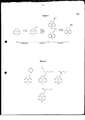
Em uma autoclave de aço inox 316 de 100 mL foram adicionadas 5 mmol de 35 acenaftileno, 5 mmol de morfolina, 5.10‘3mmol de [Rh2(μ-OMe)2(cod)2] em 40 mL de tolueno. A autoclave foi pressurizada a uma pressão de 80 bar com uma mistura CO/H2 (1:1) e aquecida a 100 °C sob agitação. A conversão do acenaftileno foi de 100% em 24 horas de reação e 82% de seletividade para a amina I (Figura 1).In a 100 mL stainless steel 316 autoclave, 5 mmol of 35 acenaphthylene, 5 mmol of morpholine, 5.10‘3 mmol of [Rh2(μ-OMe)2(cod)2] in 40 mL of toluene were added. The autoclave was pressurized at a pressure of 80 bar with a mixture CO/H2 (1:1) and heated to 100°C under stirring. The conversion of acenaphthylene was 100% within 24 hours of reaction and 82% selectivity for amine I (Figure 1).
Em uma autoclave de aço inox 316 de 100 mL foram adicionadas 5 mmol de acenaftileno, 5 mmol de morfolina, 5.1 O’3 mmol de [Rh2(μ-OMe)2(cod)2] em 40 mL de tolueno. A autoclave foi pressurizada a uma pressão de 80 bar com uma mistura CO/H2 (1:3) e aquecida a 100°C sob agitação. A conversão do acenaftileno foi de 98% em 8 horas de reação e 76% de seletividade para a amina I (Figura 1).In a 100 mL stainless steel 316 autoclave, 5 mmol of acenaphthylene, 5 mmol of morpholine, 5.1 O’3 mmol of [Rh2(μ-OMe)2(cod)2] in 40 mL of toluene were added. The autoclave was pressurized at a pressure of 80 bar with a mixture CO/H2 (1:3) and heated to 100°C under stirring. The conversion of acenaphthylene was 98% within 8 hours of reaction and 76% selectivity for amine I (Figure 1).
Em uma autoclave de aço inox 316 de 100 mL foram adicionadas 5 mmol de acenaftileno, 5 mmol de morfolina, 5.10'3 mmol de [Rh2(μ-OMe)2(cod)2] em 40 mL de uma mistura tolueno/etanol 1:1. A autoclave foi pressurizada a uma pressão de 40 bar com uma mistura CO/H2 (1:1) e aquecida a 100°C sob agitação. A conversão do acenaftileno foi de 97% em 24 horas de reação e 67% de seletividade para a amina I (Figura 1).In a 100 mL stainless steel 316 autoclave, 5 mmol of acenaphthylene, 5 mmol of morpholine, 5.10'3 mmol of [Rh2(μ-OMe)2(cod)2] in 40 mL of a toluene/ethanol 1 mixture were added. :1. The autoclave was pressurized at a pressure of 40 bar with a mixture CO/H2 (1:1) and heated to 100°C under stirring. The conversion of acenaphthylene was 97% within 24 hours of reaction and 67% selectivity for amine I (Figure 1).
Em uma autoclave de aço inox 316 de 100 mL foram adicionadas 5 mmol de acenaftileno, 5 mmol de morfolina, 5.1 O'3 mmol de [Rh2(μ-OMe)2(cod)2] em 40 mL de uma mistura tolueno/etanol 3:1. A autoclave foi pressurizada a uma pressão de 40 bar com uma mistura CO/H2 (1:1) e aquecida a 100°C sob agitação. A conversão do acenaftileno foi de 70% em 24 horas de reação e 75% de seletividade para a amina I (Figura 1).In a 100 mL stainless steel 316 autoclave, 5 mmol of acenaphthylene, 5 mmol of morpholine, 5.1 O'3 mmol of [Rh2(μ-OMe)2(cod)2] in 40 mL of a toluene/ethanol mixture were added 3:1. The autoclave was pressurized at a pressure of 40 bar with a mixture CO/H2 (1:1) and heated to 100°C under stirring. The conversion of acenaphthylene was 70% within 24 hours of reaction and 75% selectivity for amine I (Figure 1).
Em uma autoclave de aço inox 316 de 100 mL foram adicionadas 5 mmol de acenaftileno, 5 mmol de di-n-butilamina, 5.1 O’3 mmol de [Rh2(μ-OMe)2(cod)2] em 40 mL de tolueno. A autoclave foi pressurizada a uma pressão de 40 bar com uma mistura CO/H2 (1:1) e aquecida a 100°C sob agitação. A conversão do acenaftileno foi de 97% em 24 horas de reação e 86% de seletividade para a amina II (Figura 1).In a 100 mL stainless steel 316 autoclave were added 5 mmol of acenaphthylene, 5 mmol of di-n-butylamine, 5.1 O'3 mmol of [Rh2(μ-OMe)2(cod)2] in 40 mL of toluene . The autoclave was pressurized at a pressure of 40 bar with a mixture CO/H2 (1:1) and heated to 100°C under stirring. The conversion of acenaphthylene was 97% within 24 hours of reaction and 86% selectivity for amine II (Figure 1).
Em uma autoclave de aço inox 316 de 100 mL foram adicionadas 5 mmol de acenaftileno, 5 mmol de n-propilamina, 5.1 O'3 mmol de [Rh2(μ-OMe)2(cod)2] em 40 mL de tolueno. A autoclave foi pressurizada a uma pressão de 40 bar com uma mistura CO/H2 (1:1) e aquecida a 100°C sob agitação. A conversão do acenaftileno foi de 85% em 8 horas de reação e 98% de seletividade para a amina III (Figura 1).In a 100 mL stainless steel 316 autoclave, 5 mmol of acenaphthylene, 5 mmol of n-propylamine, 5.1 O'3 mmol of [Rh2(μ-OMe)2(cod)2] in 40 mL of toluene were added. The autoclave was pressurized at a pressure of 40 bar with a mixture CO/H2 (1:1) and heated to 100°C under stirring. The conversion of acenaphthylene was 85% within 8 hours of reaction and 98% selectivity for amine III (Figure 1).
Em uma autoclave de aço inox 316 de 100 mL foram adicionadas 5 mmol de acenaftileno, 5 mmol de n-butilamina, 5.1 O'3 mmol de [Rh2(μ-OMe)2(cod)2] em 40 mL de tolueno. A autoclave foi pressurizada a uma pressão de 40 bar com uma mistura 5 CO/H2 (1:1) e aquecida a 100°C sob agitação. A conversão do acenaftileno foi de 97% em 8 horas de reação e 90% de seletividade para a amina IV (Figura 1).In a 100 mL stainless steel 316 autoclave, 5 mmol of acenaphthylene, 5 mmol of n-butylamine, 5.1 O'3 mmol of [Rh2(μ-OMe)2(cod)2] in 40 mL of toluene were added. The autoclave was pressurized at a pressure of 40 bar with a mixture 5 CO/H2 (1:1) and heated to 100°C under stirring. The conversion of acenaphthylene was 97% in 8 hours of reaction and 90% selectivity to amine IV (Figure 1).
Através do presente método proposto é possível obter em alto rendimento e numa única etapa aminas com potencial aplicação como agente hipotensores e antiinflamatórios. Pela utilização do método de síntese proposta nos exemplos não 10 limitantes, são obtidos derivados funcionalizados do acenaftileno já descritos na patente relatada por HIMMELE WALTER DR et al.(BE791538) de estruturas I, II, III e IV (Figura 2), as quais foram citadas anteriormente como agentes hipotensores e antiinflamatórios.Through the present proposed method it is possible to obtain in high yield and in a single step amines with potential application as hypotensive and anti-inflammatory agents. By using the synthesis method proposed in the non-limiting examples, functionalized derivatives of acenaphthylene are obtained, already described in the patent reported by HIMMELE WALTER DR et al. (BE791538) of structures I, II, III and IV (Figure 2), which have been cited above as hypotensive and anti-inflammatory agents.
Figura 1: Esquema representativo do método de hidroaminometilação do acenaftileno Figura 2: Estruturas I, II, III e IV. Produtos derivados da hidroaminometilação do acenaftileno e seus derivados.Figure 1: Representative scheme of the hydroaminomethylation method of acenaphthylene Figure 2: Structures I, II, III and IV. Products derived from the hydroaminomethylation of acenaphthylene and its derivatives.
Claims (10)
Priority Applications (1)
| Application Number | Priority Date | Filing Date | Title |
|---|---|---|---|
| BRPI0802005-1A BRPI0802005B1 (en) | 2008-04-17 | 2008-04-17 | METHOD OF HYDROAMINOMETYLATION OF ACENAPHTILENE AND ITS DERIVATIVES |
Applications Claiming Priority (1)
| Application Number | Priority Date | Filing Date | Title |
|---|---|---|---|
| BRPI0802005-1A BRPI0802005B1 (en) | 2008-04-17 | 2008-04-17 | METHOD OF HYDROAMINOMETYLATION OF ACENAPHTILENE AND ITS DERIVATIVES |
Publications (2)
| Publication Number | Publication Date |
|---|---|
| BRPI0802005A2 BRPI0802005A2 (en) | 2009-12-29 |
| BRPI0802005B1 true BRPI0802005B1 (en) | 2021-06-29 |
Family
ID=41449503
Family Applications (1)
| Application Number | Title | Priority Date | Filing Date |
|---|---|---|---|
| BRPI0802005-1A BRPI0802005B1 (en) | 2008-04-17 | 2008-04-17 | METHOD OF HYDROAMINOMETYLATION OF ACENAPHTILENE AND ITS DERIVATIVES |
Country Status (1)
| Country | Link |
|---|---|
| BR (1) | BRPI0802005B1 (en) |
-
2008
- 2008-04-17 BR BRPI0802005-1A patent/BRPI0802005B1/en not_active IP Right Cessation
Also Published As
| Publication number | Publication date |
|---|---|
| BRPI0802005A2 (en) | 2009-12-29 |
Similar Documents
| Publication | Publication Date | Title |
|---|---|---|
| Chandrashekhar et al. | Nickel-catalyzed hydrogenative coupling of nitriles and amines for general amine synthesis | |
| Marin et al. | Ni‐Catalyzed Amination Reactions: An Overview | |
| Li et al. | Room temperature and solvent-free iridium-catalyzed selective alkylation of anilines with alcohols | |
| Wolfe et al. | Simple, efficient catalyst system for the palladium-catalyzed amination of aryl chlorides, bromides, and triflates | |
| Li et al. | Chiral counteranion-aided asymmetric hydrogenation of acyclic imines | |
| Johansson Seechurn et al. | Air-stable Pd (R-allyl) LCl (L= Q-Phos, P (t-Bu) 3, etc.) systems for C–C/N couplings: insight into the structure–activity relationship and catalyst activation pathway | |
| US8481735B2 (en) | Organic metal complex and process for preparing amine compound | |
| Broomfield et al. | Phosphino‐amine (PN) Ligands for Rapid Catalyst Discovery in Ruthenium‐Catalyzed Hydrogen‐Borrowing Alkylation of Anilines: A Proof of Principle | |
| Ferretti et al. | New nonsymmetric phenanthrolines as very effective ligands in the palladium-catalyzed carbonylation of nitrobenzene | |
| Mondal et al. | Sustainable and Affordable Synthesis of (Deuterated) N-Methyl/Ethyl Amines from Nitroarenes | |
| Khan et al. | Metal-Free, mild, nonepimerizing, chemo-and enantio-or diastereoselective N-alkylation of amines by alcohols via oxidation/imine–iminium formation/reductive amination: A pragmatic synthesis of octahydropyrazinopyridoindoles and higher ring analogues | |
| CA1287630C (en) | Selective synthesis of substituted amines | |
| Wu et al. | Secondary Phosphine Sulfide‐Enabled Iridium‐Catalyzed Asymmetric Allylic Substitution | |
| US6255493B1 (en) | Transition metal-catalyzed reactions based on chiral amine oxazolinyl ligands | |
| Chung et al. | Cobalt–rhodium heterobimetallic nanoparticle-catalyzed N-alkylation of amines with alcohols to secondary and tertiary amines | |
| Alonso et al. | Hydrogen-transfer reductive amination of aldehydes catalysed by nickel nanoparticles | |
| Ma et al. | Ruthenium-catalysed chemoselective alkylation of nitroarenes with alkanols | |
| CN103502199B (en) | The method of primary amine is prepared by the alcohol amination of homogeneous catalysis | |
| Park et al. | Catalytic alkyne arylation using traceless directing groups | |
| Liu et al. | Novel C 2-symmetric planar chiral diphosphine ligands and their application in Pd-catalyzed asymmetric allylic substitutions | |
| Furukawa et al. | Low‐Temperature N‐Alkylation of Amines with Alcohols in Protic Solvents Catalyzed by Iridium Complexes Bearing N‐Heterocyclic Carbenes | |
| Zhang et al. | Catalysis‐Controlled Selective N‐mono or N‐di‐methylation of Anilines: A Review on Synthesis of N‐methyl or N, N‐dimethyl anilines | |
| Guo et al. | C− N Bond Formation Using Paraformaldehyde as C1 Source–Recent Advances | |
| He et al. | β-Methylation of Primary Alcohols with Methanol Catalyzed by a Metal–Ligand Bifunctional Iridium Catalyst | |
| Li et al. | A metal-free protocol for the preparation of amines using ammonia borane under mild conditions |
Legal Events
| Date | Code | Title | Description |
|---|---|---|---|
| B03A | Publication of a patent application or of a certificate of addition of invention [chapter 3.1 patent gazette] | ||
| B06F | Objections, documents and/or translations needed after an examination request according [chapter 6.6 patent gazette] | ||
| B07D | Technical examination (opinion) related to article 229 of industrial property law [chapter 7.4 patent gazette] |
Free format text: DE ACORDO COM O ARTIGO 229-C DA LEI NO 10196/2001, QUE MODIFICOU A LEI NO 9279/96, A CONCESSAO DA PATENTE ESTA CONDICIONADA A ANUENCIA PREVIA DA ANVISA. CONSIDERANDO A APROVACAO DOS TERMOS DO PARECER NO 337/PGF/EA/2010, BEM COMO A PORTARIA INTERMINISTERIAL NO 1065 DE 24/05/2012, ENCAMINHA-SE O PRESENTE PEDIDO PARA AS PROVIDENCIAS CABIVEIS. |
|
| B07G | Grant request does not fulfill article 229-c lpi (prior consent of anvisa) [chapter 7.7 patent gazette] | ||
| B06V | Preliminary requirement: patent application procedure suspended [chapter 6.22 patent gazette] | ||
| B09A | Decision: intention to grant [chapter 9.1 patent gazette] | ||
| B09X | Republication of the decision to grant [chapter 9.1.3 patent gazette] | ||
| B16A | Patent or certificate of addition of invention granted [chapter 16.1 patent gazette] |
Free format text: PRAZO DE VALIDADE: 20 (VINTE) ANOS CONTADOS A PARTIR DE 17/04/2008, OBSERVADAS AS CONDICOES LEGAIS. PATENTE CONCEDIDA CONFORME ADI 5.529/DF, , QUE DETERMINA A ALTERACAO DO PRAZO DE CONCESSAO. |
|
| B25E | Requested change of name of applicant rejected |
Owner name: UNIVERSIDADE FEDERAL DE MINAS GERAIS (BR/MG) Free format text: INDEFERIDO O PEDIDO DE ALTERACAO DE NOME CONTIDO NA PETICAO 870210042264 DE 10/05/2021, POR NAO SE REFERIR AO DEPOSITANTE DO PEDIDO COM FUNDAMENTACAO NO ART. 59 DA LPI. |
|
| B21F | Lapse acc. art. 78, item iv - on non-payment of the annual fees in time |
Free format text: REFERENTE A 17A ANUIDADE. |
|
| B24J | Lapse because of non-payment of annual fees (definitively: art 78 iv lpi, resolution 113/2013 art. 12) |
Free format text: EM VIRTUDE DA EXTINCAO PUBLICADA NA RPI 2823 DE 11-02-2025 E CONSIDERANDO AUSENCIA DE MANIFESTACAO DENTRO DOS PRAZOS LEGAIS, INFORMO QUE CABE SER MANTIDA A EXTINCAO DA PATENTE E SEUS CERTIFICADOS, CONFORME O DISPOSTO NO ARTIGO 12, DA RESOLUCAO 113/2013. |