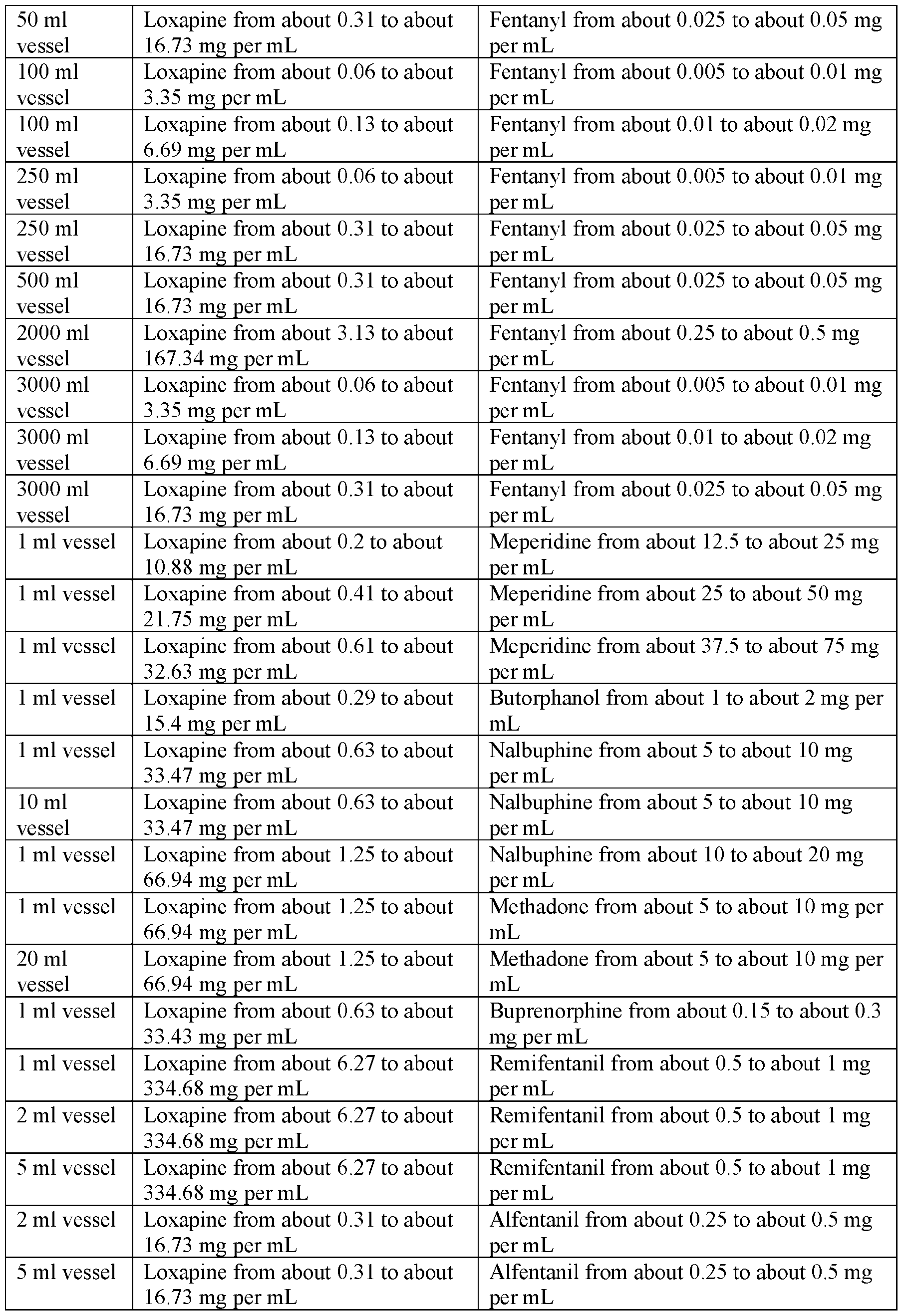
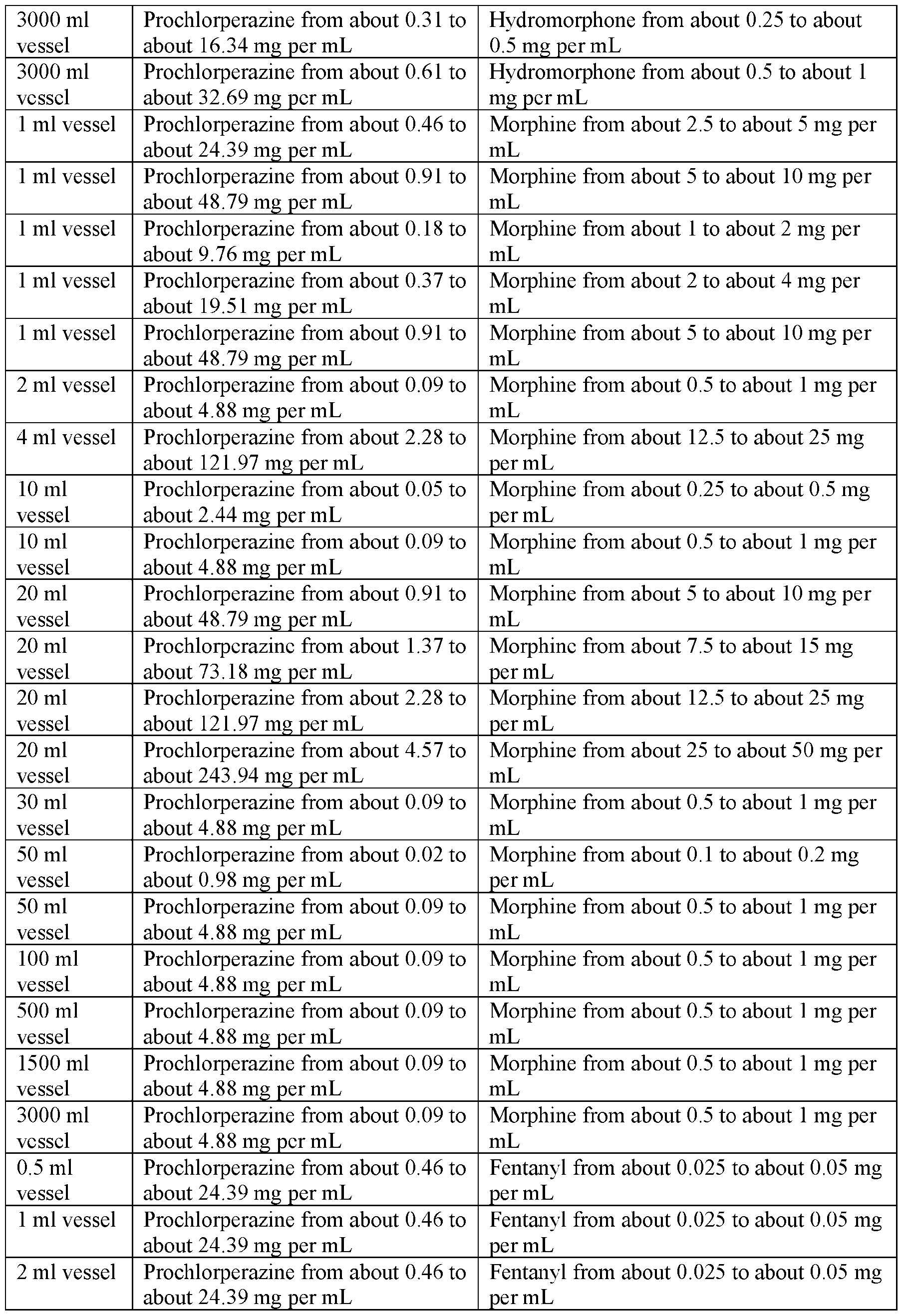
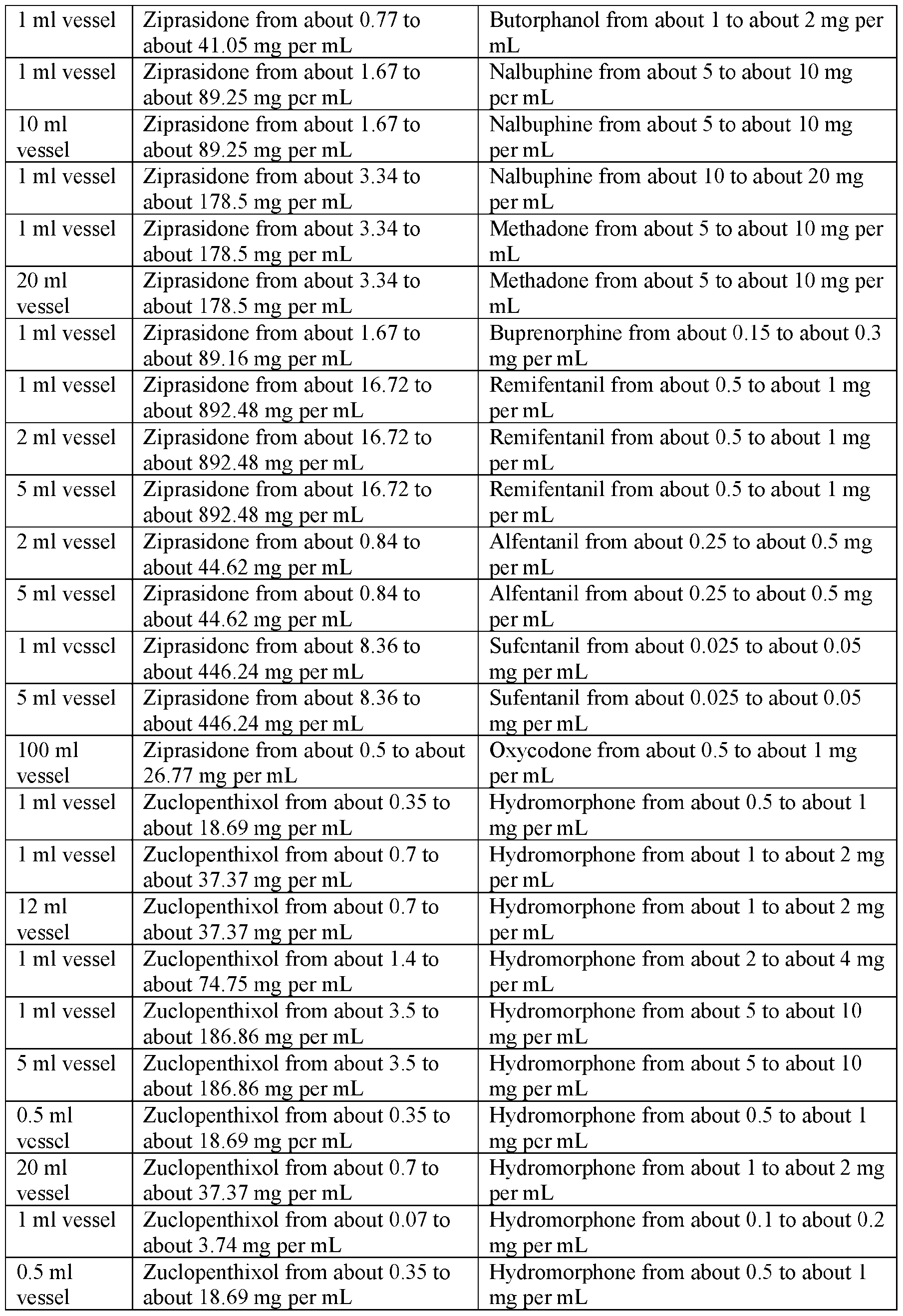
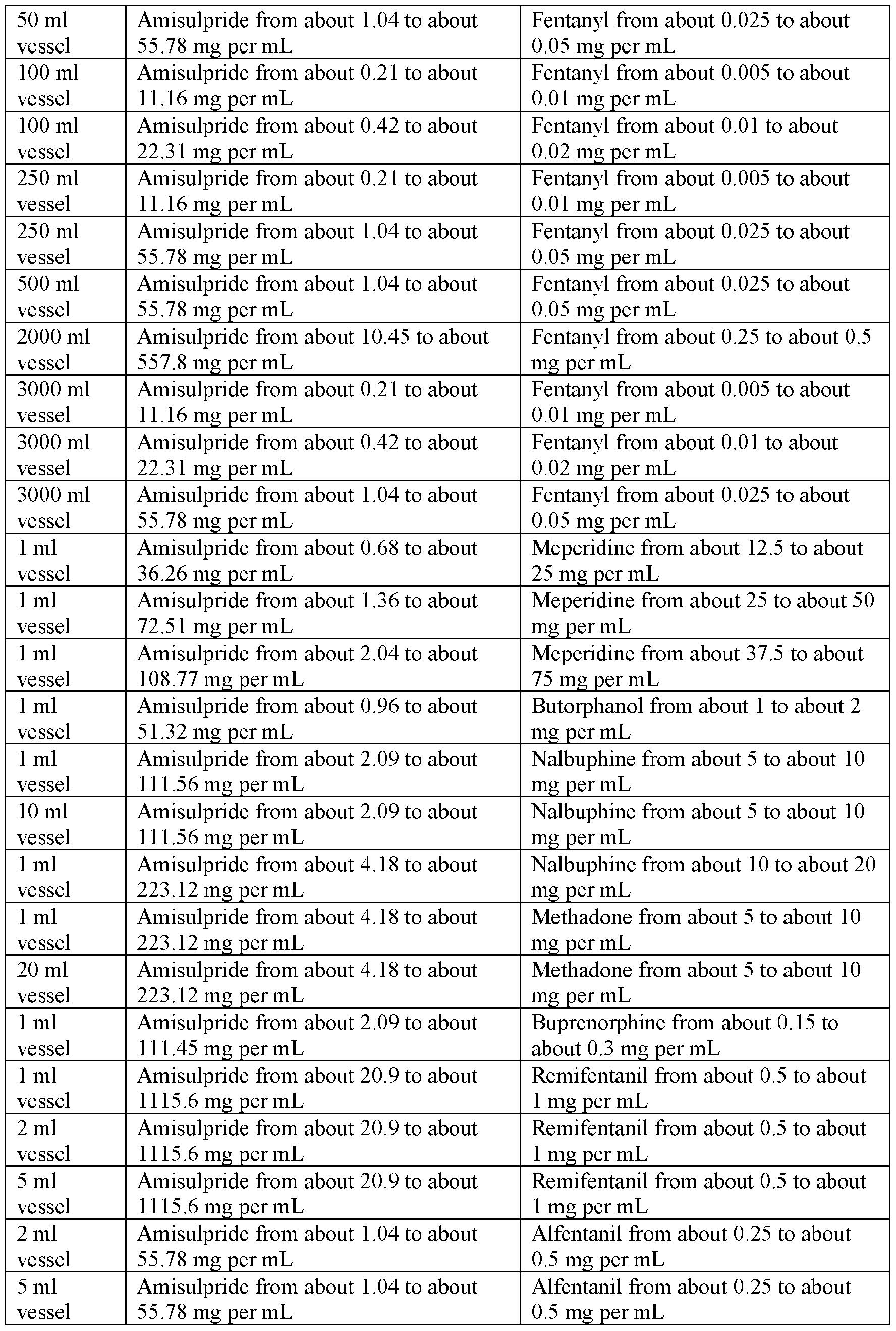
COMPOSITIONS COMPRISING ANESTHETICS AND METHODS OF USING THE
SAME
CROSS-REFERENCE TO RELATED APPLICATIONS
This application claims the benefit of U.S. provisional application No. 63/614,582, which was filed December 24, 2023, and is entitled “COMPOSITIONS COMPRISING ANESTHETICS AND METHODS OF USING THE SAME,” and of U.S. provisional application No. 63/703,160, which was filed October 3, 2024, and is entitled “COMPOSITIONS COMPRISING ANESTHETICS AND METHODS OF USING THE SAME,” both of which are incorporated herein in their entireties.
STATEMENT REGARDING FEDERALLY SPONSORED RESEARCH
This invention was made with government support under grant number NIH R01DA056593 and NIH R21DA048323 awarded by the National Institutes of Health (NIH). The government has certain rights in the invention.
FIELD
The disclosure relates to a composition, pharmaceutical composition and methods of administering the compositions for prevention of opioid-related disorders, such as opioid use disorder and opioid addiction. The disclosure also relates to methods of treating pain in a subject in need thereof with a dopamine antagonist by administering the dopamine antagonist to the subject with one or more of the compositions disclosed herein.
BACKGROUND
Over nine million Americans misused opioids in the past year alone, leading to over 106,000 deaths in 2021. The origin of this crisis is rooted in the healthcare system itself, when patients are first exposed to opioids to control pain from medical procedures including surgery. Of the ~51 million patients who undergo surgery each year in the US, 76.2% of patients filled an opioid prescription within the first 7 days after discharge and 9% to 13% of those patients continue longterm use of opioids. Even more significantly, 10% to 50% of those patients develop persistent postsurgical pain and chronic pain, and 8% to 12% of these individuals go on to develop opioid
use disorder. There are no effective treatments for opioid-related disorders or safer drug regiments that both treat pain of patients as well as prevent opioid dependence.
SUMMARY OF EMBODIMENTS
The disclosure relates to novel formulations and novel methods to manage, prevent, and treat opioid-use disorders that are not subject to treatment by conventional methods or therapies. Such new agents could be used alone or in combination with other treatment to improve patient outcomes.. Surprisingly, the methods and compositions of the present disclosure fulfdl these needs and satisfy other objects and advantages that will become apparent from the description which follows.
The disclosure encompasses compositions and formulations comprising a compound of Formulas I -VI that are useful for treating or preventing pain, preventing an opioid disorder including, but not limited to, conditions such as opioid dependence and drug liking. Some embodiments of the disclosure include compositions useful in anesthetizing a subject in need thereof and potentiating the effects of opioids.
The disclosure also encompasses methods for treating pain or preventing opioid-related disorders, which comprises administering to a mammal in need of such treatment or prevention a therapeutically or prophylactically effective amount of a composition comprising one of: (i) a dopamine antagonist, a dopamine antagonist and an opioid, a compound of Formula I- VI, or a pharmaceutically acceptable salt or prodrug thereof; and (ii) a pharmaceutically acceptable carrier. In some embodiments, the dopamine antagonist comprises a compound of formula (I):
or a pharmaceutically acceptable salt thereof, an isomer thereof, or a prodrug thereof.
In some embodiments, the dopamine antagonist comprises a compound of formula (II):
Formula II or a pharmaceutically acceptable salt thereof, an isomer thereof, or a prodrug thereof.
In some embodiments, the dopamine antagonist comprises a compound of formula (III):
Formula III or a pharmaceutically acceptable salt thereof, an isomer thereof, or a prodrug thereof.
In some embodiments, the dopamine antagonist comprises a compound of formula (IV):
X1 is chosen from H, Cl, F, I, O, OH, or NH2;
R2 is chosen from O, N, NH, a substituted or unsubstituted alkyl group, a substituted or unsubstituted alkylene group, a substituted or unsubstituted aryl group, a substituted or unsubstituted acyl group, a substituted or unsubstituted heteroalkyl, a substituted or unsubstituted heteroacyl group, a substituted or unsubstituted cycloalkyl, or a substituted or unsubstituted heterocycloalkyl;
Ri and R3 are individually chosen from O, N, NH, a substituted or unsubstituted alkyl group, a substituted or unsubstituted alkylene group, a substituted or unsubstituted aryl group, a substituted or unsubstituted acyl group, a substituted or unsubstituted heteroalkyl, a substituted or unsubstituted heteroacyl group, a substituted or unsubstituted cycloalkyl, or a substituted or unsubstituted heterocycloalkyl; or a pharmaceutically acceptable salt thereof, an isomer thereof, or a prodrug thereof.
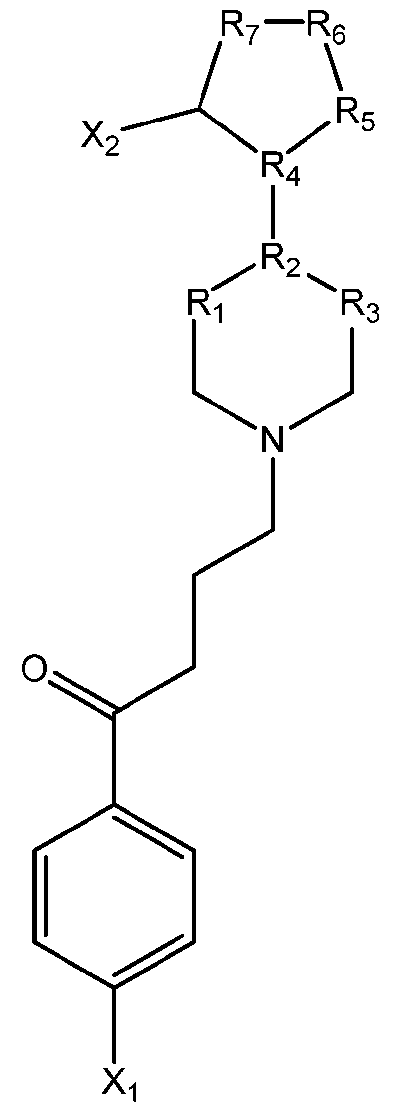
In some embodiments, the dopamine antagonist comprises a compound of formula (V):
XI is chosen from H, Cl, F, I, O, OH, or NH2;
R2 is chosen from a substituted or unsubstituted amine group, a substituted or unsubstituted alkyl group, or a substituted or unsubstituted alkylene group;
R1 and R3 are individually chosen fromO, N, NH, a substituted or unsubstituted alkyl group, a substituted or unsubstituted aryl group, a substituted or unsubstituted acyl group, a substituted or unsubstituted heteroalkyl, a substituted or unsubstituted heteroacyl group, a substituted or unsubstituted cycloalkyl, or a substituted or unsubstituted heterocycloalkyl;
X2 is chosen from Cl, F, I, OH, or =0;
R4 is chosen from a substituted or unsubstituted amine group, or a substituted or unsubstituted alkyl group;
R7 is chosen from a substituted or unsubstituted amine group, a substituted or unsubstituted alkyl group, or a substituted or unsubstituted alkylene group;
R5 and R6 are individually chosen from O, N, NH, a substituted or unsubstituted alkyl group, a substituted or unsubstituted alkylene group, a substituted or unsubstituted aryl group, a substituted or unsubstituted acyl group, a substituted or unsubstituted heteroalkyl, a substituted or unsubstituted heteroacyl group, a substituted or unsubstituted cycloalkyl, and a substituted or unsubstituted heterocycloalkyl, or R5 and R6 together form a substituted or unsubstituted cycloalkyl, a substituted or unsubstituted heterocycloalkyl, or a substituted or unsubstituted cycloalkene; or a pharmaceutically acceptable salt thereof, an isomer thereof, or a prodrug thereof.
[0001] The disclosure also relates to a composition comprising a dopamine antagonist comprising a compound of formula (VI):
wherein
X1 is chosen from halogen, H, O, OH, or NH2;
R2 is chosen from a substituted or unsubstituted amine group, a substituted or unsubstituted alkyl group, or a substituted or unsubstituted alkylene group; and R1 and R3 are individually chosen from O, N, NH, a substituted or unsubstituted alkyl group, a substituted or unsubstituted alkylene group, a substituted or unsubstituted aryl group, a substituted or unsubstituted acyl group, a substituted or unsubstituted heteroalkyl, a substituted or unsubstituted heteroacyl group, a substituted or unsubstituted cycloalkyl, or a substituted or unsubstituted heterocycloalkyl; and
X3 is chosen from H, O, OH, halogen or NH2; or a pharmaceutically acceptable salt thereof
The disclosure also relates to a composition comprising a dopamine antagonist or a pharmaceutically acceptable salt thereof or prodrug thereof. The disclosure also relates to a composition comprising an opioid, or a pharmaceutically acceptable salt thereof. In some
embodiments, compositions of the disclosure include a dopamine antagonist and an opioid, or pharmaceutically acceptable salts thereof. In some embodiments, the composition comprises a dopamine antagonist, wherein the dopamine antagonist is chosen from: DD8, DD9, DD10, or a pharmaceutically acceptable salt thereof. In some embodiments, the dopamine antagonist selected from: prochlorperazine, haloperidol, quetiapine, droperidol, or a pharmaceutically acceptable salt thereof or prodrug thereof. In some embodiments, the opioid is chosen from: morphine, codeine, oxycodone, hydrocodone, fentanyl, hydromorphone, levorphanol, oxymorphone, meperidine, methadone, tapentadol, tramadol, and pharmaceutically acceptable salts thereof.
The disclosure relates to a composition comprising a dopamine antagonist, or pharmaceutically acceptable salt thereof, and an opioid or a pharmaceutically acceptable salt thereof, wherein the opioid is a compound having a structure represented by a formula:
or a pharmaceutically acceptable salt thereof. In some embodiments, the opioid is chosen from: morphine, codeine, hydromorphone, fentanyl, hydrocodone, levorphanol, meperidine, methadone, oxycodone, oxymorphone, tramadol, the opioid is fentanyl, or a pharmaceutically acceptable salt thereof, and wherein the mass of fentanyl in the dosage form fentanyl is from about 100 micrograms to about 500 micrograms. In some embodiments, the dopamine antagonist is DD9, or a pharmaceutically acceptable salt thereof, and wherein the mass of DD9 is from about 0.1 milligrams to about 2 milligrams.
In some embodiments, the disclosure also relates to a composition comprising a dopamine antagonist or a pharmaceutically acceptable salt thereof or prodrug thereof. The disclosure also relates to a composition comprising an opioid, or a pharmaceutically acceptable salt thereof. In
some embodiments, compositions of the disclosure include a dopamine antagonist and an opioid, or pharmaceutically acceptable salts thereof. In some embodiments, the composition comprises a dopamine antagonist, wherein the dopamine antagonist comprises DD12, or a pharmaceutically acceptable salt thereof. In some embodiments, the opioid is chosen from: morphine, codeine, oxycodone, hydrocodone, fentanyl, hydromorphone, levorphanol, oxymorphone, meperidine, methadone, tapentadol, tramadol, and pharmaceutically acceptable salts thereof. In some embodiment, the dopamine antagonist comprises DD12 but is free of DD9, DD10, variants thereof or salts thereof. In some embodiments, the composition comprises from about 2 milligrams to about 200 milligrams DD12. In some embodiments, the composition is in an immediate-release dosage form.
The disclosure also relates to a pharmaceutical composition comprising: (i) a dopamine antagonist or a prodrug thereof; (ii) an opioid or a prodrug thereof; and (iii) a pharmaceutically acceptable carrier. In some embodiments, the dopamine antagonist is a compound having a structure represented by a formula I, II, III, IV, V, VI, or a pharmaceutically acceptable salt or prodrug thereof. In some embodiments, the pharmaceutical composition comprises an effective amount of a dopamine antagonist chosen from: DD8, DD9, DD10, a pharmaceutically acceptable salts or prodrugs thereof. In some embodiments, the pharmaceutical composition comprises an effective amount of a dopamine antagonist chosen from the compounds listed on Table X, or any pharmaceutically acceptable salts or prodrugs thereof. In some embodiments, the dopamine antagonist, pharmaceutically acceptable salt thereof, or prodrug thereof, wherein the mass of dopamine antagonist is from about 0.1 milligrams to about 2 milligrams. In some embodiments, the opioid is a compound having a structure represented by a formula VII
wherein R1 is a 6-member carbon ring or a 6-member heterocycle, or a pharmaceutically acceptable salt thereof or a prodrug thereof. In some embodiments, the opioid is chosen from: morphine, codeine, hydromorphone, fentanyl, hydrocodone, levorphanol, meperidine, methadone, oxycodone, oxymorphone, tramadol, tapentadol, or a pharmaceutically acceptable salt thereof. In some embodiments, the pharmaceutical composition comprises an opioid with a mass of from about from about 100 micrograms to about 500 micrograms. In some embodiments, the pharmaceutical composition comprises dopamine antagonist, wherein the dopamine antagonist is administered as a dose of from about 0.1 milligrams to about 24 milligrams. In some embodiments, the opioid is fentanyl, a pharmaceutically acceptable salt thereof or a prodrug thereof, wherein the mass of fentanyl is from about 100 micrograms to about 500 micrograms.
In some embodiments, the disclosure also relates to a pharmaceutical composition comprising: (i) a dopamine antagonist or a prodrug thereof; (ii) an opioid or a prodrug thereof; and (iii) a pharmaceutically acceptable carrier. In some embodiments, the pharmaceutical composition comprises an effective amount of DD12, a pharmaceutically acceptable salts or prodrugs thereof. In some embodiment, the pharmaceutical composition comprises DD12 but is free of DD9, DD10, variants thereof or salts thereof. In some embodiments, the dopamine antagonist, pharmaceutically acceptable salt thereof, or prodrug thereof, is present in the pharmaceutical composition in an amount of about 0.1 milligrams to about 2 milligrams.
The disclosure relates to any pharmaceutical compositions disclosed herein, wherein the pharmaceutical composition is in an oral dosage form. The disclosure relates to any pharmaceutical compositions disclosed herein, wherein the pharmaceutical composition is in an liquid dosage form. In some embodiments, the pharmaceutical composition is a single oral dosage form
comprising a dopamine antagonist and an opioid. In some embodiments, the pharmaceutical composition is a single oral dosage form comprising DD9 and an opioid. In some embodiments, the pharmaceutical composition is a single oral dosage form comprising DD10 and an opioid. In some embodiments, the pharmaceutical composition is a single oral dosage form comprising DD12 and an opioid. In some embodiments, the pharmaceutical composition is in an immediate-release dosage form.
In some embodiments, the disclosure relates to a pharmaceutical composition comprising a dopamine antagonist. In some embodiments the pharmaceutical composition comprises about 0.2 mg., about 0.3 mg, about 0.4 mg, about 0.5 mg, about 0.6 mg, about 0.7 mg, about 0.8 mg, about 0.9 mg, about 1 mg, about 2 mg, about 3 mg, about 4 mg, about 5 mg, about 6 mg, about 7mg, about 8 mg, about 9 mg, about 10 mg, about 11 mg, about 12 mg, about 13 mg, about 14 mg, about 15 mg, about 16 mg, about 17 mg, about 18 mg, about 19 mg, about 20 mg, about 21 mg, about 22 mg, about 23 mg, about 24 mg, about 25 mg, about 26 mg, about 27 mg, about 28 mg, about 29 mg, about 39 mg, about 31 mg, about 32 mg, about 33 mg, about 34 mg, about 35 mg, about 36 mg, about 37 mg, about 38 mg, about 39 mg, about 40 mg, about 41 mg, about 42 mg, about 43 mg, about 44 mg, about 45 mg, about 46 mg, about 47 mg, about 48 mg, about 49 mg, about 50 mg of the dopamine antagonist. In some embodiments, the dopamine antagonist is DD12 and the pharmaceutical composition is free of DD9, DD10, variants thereof or salts thereof. In some embodiments, the dopamine antagonist is DD9, DD10, or DD12, and the pharmaceutical composition is free of at least one other dopamine antagonist listed in Table X.
Another set of aspects of the disclosure relate to methods of preventing opioid liking and/or opioid dependence comprising administering to a subject in need thereof a pharmaceutical composition comprising an effective amount of an opioid and an effective amount of a dopamine antagonist. In some embodiments, the effective amount of both compounds are prophylactically effective amounts, or those amounts necessary to prevent onset of opioid liking and/or opioid dependence. In some embodiments, the amount of dopamine antagonist administered is an amount sufficient to reduce the frequency of oscillations from about 4 Hz to about 8 Hz when measured by an EEG. The disclosure also relates to a method of treating pain comprising administering to a subject in need thereof any composition or pharmaceutical composition disclosed herein. In some embodiments, the subject is administered as an IV, oral or liquid dosage form comprising a dopamine antagonist, such as DD8, DD9 or DD10, with a total mass of from about 2 milligrams
to about 200 milligrams. In some embodiments, the dopamine antagonist is administered prior to or contemporaneous with administration of an opioid. In some embodiments, the administration occurs in one, two, three or more doses provided during a surgical procedure and about three more doses within 72 hours after the surgical procedure. In some embodiments, the opioid administration occurs about one, about two, about three, or about four times per day. In some embodiments, the dosage form is an immediate release dosage form. And in some embodiments, the methods including an administration step comprising administration of more than one dose per day.
In some embodiments, the disclosure also relates to a method of treating pain comprising administering to a subject in need thereof any composition or pharmaceutical composition disclosed herein. In some embodiments, the subject is administered as an IV, oral or liquid dosage form comprising a dopamine antagonist comprising DD12, with a total mass of from about 0.2 milligrams to about 200 milligrams. In some embodiment, the dopamine antagonist comprises DD12 or analog thereof but is free of DD9, DD10, variants thereof or salts thereof. In some embodiments, the dopamine antagonist is administered prior to or contemporaneous with administration of an opioid. In some embodiments, the administration occurs in one, two, three or more doses provided during a surgical procedure and about three more doses within 72 hours after the surgical procedure. In some embodiments, the opioid administration occurs one, two, three, or four times per day. In some embodiments, the antagonist is administered one, two, three, or four times per day. In some embodiments, the dosage form is an immediate-release dosage form.
In some embodiments, the dose of dopamine antagonist is from about 2 to about 24 milligrams in liquid or solid dosage form. In some embodiments the methods of the disclosure comprise a step of administering a dopamine antagonist daily, twice daily, once every other day for about 1, 2, 3, 4, 5, 6, 7, 8, 9 10 or more days after a surgical procedure. In some embodiments, methods that include administration of the dopamine antagonist comprise administering to a subject in need thereof a low dose of dopamine antagonist from about 1 month to about 3 months after surgery or, at least as long as the subject is also taking opioids to treat pain after a surgical procedure. In some embodiments a dopamine antagonist is administered with an opioid in the same (or two separate compositions within about an hour from also administering an opioid) at a dose sufficient to potentiate the analgesic affect of the opioid and prevent side effects of both the dopamine receptor and the opioid (such as opioid addiction, drug-liking and opioid use disorder). In addition, some
embodiments of the disclosure include methods of reducing respiratory and cardiovascular side effects of the opioids due to their lower doses accomplishing as effective treatment of pain as the higher dose. In some embodiments, the opioid administration occurs one, two, three, or four times per day. In some embodiments, the antagonist is administered one, two, three, or four times per day. In some embodiments, the dosage form is an immediate-release dosage form.
The disclosure also relates to a kit comprising any disclosed composition or pharmaceutical composition and, optionally, a syringe or other device to administer the pharmaceutical composition.
BRIEF DESCRIPTION OF DRAWINGS
The following detailed description of embodiments will be better understood when read in conjunction with the appended drawings. For the purpose of illustration, there are shown in the drawings certain embodiments. It is understood, however, that the embodiments are not limited to the precise arrangements and instrumentalities shown. In the drawings:
FIGS. 1A-1D: An electroencephalogram (EEG) biomarker of opioid drug effects: Theta oscillations correlate with increasing Fentanyl concentration. Changes in fentanyl ESC and EEG. Subjects were administered up to three boluses of fentanyl (2 mcg/kg ideal body weight) in 2- minute intervals after a baseline period (Fl, F2, and F3), and concentration levels were computed through PK/PD modeling. FIG. 1A shows the predicted ESC of a representative subject. Exposure to fentanyl corresponded with changes in the spectrogram shown in FIG. IB and power spectrum changes as illustrated in a representative subject’s electroencephalogram. FIG. 1C shows the spectrum at different time points during the experiment, showing increasing EEG theta (4 to 8 Hz) power as the experiment proceeds and fentanyl concentration increases. FIG. ID shows the correlation between EEG theta power and fentanyl effect site concentration.
FIGS. 2A and 2B: Fentanyl -induced theta oscillations are present in brain regions consistent with the reward circuit. FIG. 2A shows the mean differences in power (dB) at the Theta frequency band (4 - 8 Hz) after fentanyl infusion relative to baseline were calculated for 824 channels across 5 subjects and plotted on Colin 27 brain template. Lighter shades indicate an increase in power, darker shades indicate a decrease in power, and a hatched color indicates no change in power (confidence interval overlaps zero). FIG. 2B shows the change in power after fentanyl administration in different brain regions with confidence intervals.
FIGS. 3A and 3B: Theta oscillations during remifentanil administration are attenuated by 1 mg of Haloperidol. FIG. 3A compares the EEG power spectrum of the two conditions: a baseline condition of total intravenous anesthesia (TIVA) with remifentanil as baseline, vs. the condition after 1 milligram of haloperidol is administered. The EEG power spectrum shows a clear and statistically significant decrease in the theta (4 to 8 Hz) power after administration of haloperidol. FIG. 3B shows the bootstrapped sample of the difference in theta power after administration of haloperidol with 99% confidence intervals.
FIG. 4: Theta oscillations during fentanyl administration are attenuated by 1 mg of Haloperidol. This figure compares the EEG power spectrum of the two conditions: a baseline condition of anesthesia during administration of fentanyl as baseline, vs. the condition after 1 milligram of haloperidol is administered. The EEG power spectrum shows a clear and statistically significant decrease in the theta (4 to 8 Hz) power after administration of haloperidol.
FIG. 5: Theta oscillations during hydromorphone administration are attenuated by 1 mg of Haloperidol. This figure compares the EEG power spectrum of the two conditions: a baseline condition of anesthesia during administration of hydromorphone as baseline, vs. the condition after 1 milligram of haloperidol is administered. The EEG power spectrum shows a clear and statistically significant decrease in the theta (4 to 8 Hz) power after administration of haloperidol. FIG. 6: Structure of neural network used to learn CPT and ICD-10 set embeddings.
For each patient, ICD-10 and CPT codes are mapped to vectors by the initial embedding layer, generating a matrix of code embeddings. This matrix is then passed to a multi-head self-attention layer with mean-pooling, which computes the set embedding. This set embedding is concatenated with demographic variables and is then passed to a feed-forward network, which contributes to the prediction of the exposure.
FIG. 7: Distribution of the intraoperative fentanyl exposure. This figure shows the distribution of intraoperative fentanyl exposure, represented as an average effect site concentration in ng/mL, a component of the causal inference analysis of the effect of dopamine antagonist administration on pain and opioid consumption.
FIGS. 8A and 8B: Distribution of the timing of haloperidol and fentanyl administration throughout the surgery.
FIG. 9: The adjusted odds ratios for intraoperative haloperidol, fentanyl, and our interaction term (haloperidol * fentanyl) on our primary and secondary outcomes.
FIGS. 1 OA through 1 OF : Counterfactual estimates of short and medium-term pain as well as opioid- related outcomes for our exposure of haloperidol dose divided by patient weight (mg/kg). Here we present the counterfactual estimates for max pain in the PACU (FIG. 10A), max pain at 24 hrs post surgery (FIG. 10B), max pain in-hospital (FIG. IOC), the total amount of opioid consumption in the PACU (MME) (FIG. 10D), the total amount of opioid consumption 24 hours post surgery (FIG. 10E), and the total amount of opioid consumption through the hospital encounter (FIG. 10F).
FIG. 11 : Distribution of fentanyl effect site concentrations. This figure shows the distribution of intraoperative fentanyl exposure, represented as an average effect site concentration in ng/mL, a component of the causal inference analysis of the effect of dopamine antagonist administration on pain and oral opioid consumption.
FIGS. 12A and 12B: Distribution of the timing of intraoperative exposures, including haloperidol (FIG. 12 A) and fentanyl (FIG. 12B).
FIG. 13: The adjusted odds ratios for intraoperative haloperidol, fentanyl, and our interaction term (haloperidol * fentanyl) on our primary and secondary outcomes.
FIG. 14: Plot of the log-transformed average effect site concentration of haloperidol in the PACU against the amount of oxycodone administered in the PACU (MME). The line represents the fitted regression line with confidence bounds.
FIG. 15: Estimated distribution of change in EEG theta (4-8 Hz) power produced by 1 mg morphine IV.
FIG. 16: Estimated distribution of change in EEG theta (4-8 Hz) power produced by 1 mg haloperidol IV.
FIG. 17. Estimated distribution of the amount of haloperidol required to counteract the opioid- induced EEG theta power increase.
FIG. 18: Bootstrapped distribution of theta power change after administration of DD9 with new spectral analysis parameters. The vertical lines represent the mean and the 99% Confidence intervals of the distribution.
FIG. 19: Distribution of the dose of DD9 needed to counteract the brain effect of 1 mg of intravenous morphine. The vertical lines represent the mean and the 99% Confidence intervals of the distribution.
FIG. 20: Box plot with individual data points and connecting lines, showing the average theta power (in decibels, dB) under two conditions. The data points show individual values of theta
power in each condition. Connecting lines indicate changes in theta power for each subject from "Steady-state Remifentanil" to "After DD12.". The asterisk denotes statistical significance after a paired-t-test.
FIG. 21 : Bootstrapped distribution of theta power change after administration of DD12. The vertical lines represent the mean and the 99% Confidence intervals of the distribution.
FIG. 22: Distribution of the dose of DD12 needed to counteract the brain effect of 1 mg of intravenous morphine. The vertical lines represent the mean and the 99% Confidence intervals of the distribution.
FIG. 23: Distribution of theta power change after administration of DD9. The vertical dashed line represents the mean of the distribution.
FIG. 24: Counterfactual estimates for changes in max pain score in the PACU caused by decreases in EEG theta band power.
FIG. 25: Counterfactual estimates for changes in max pain score 24 hours after surgery caused by decreases in EEG theta band power.
FIG. 26: Counterfactual estimates for changes in max pain score during the hospital stay caused by decreases in EEG theta band power.
FIG. 27: Counterfactual estimates for changes in the rate of PACU discharge caused by decreases in EEG theta band power.
FIG. 28: Counterfactual estimates for changes in the rate of hospital discharge caused by decreases in EEG theta band power.
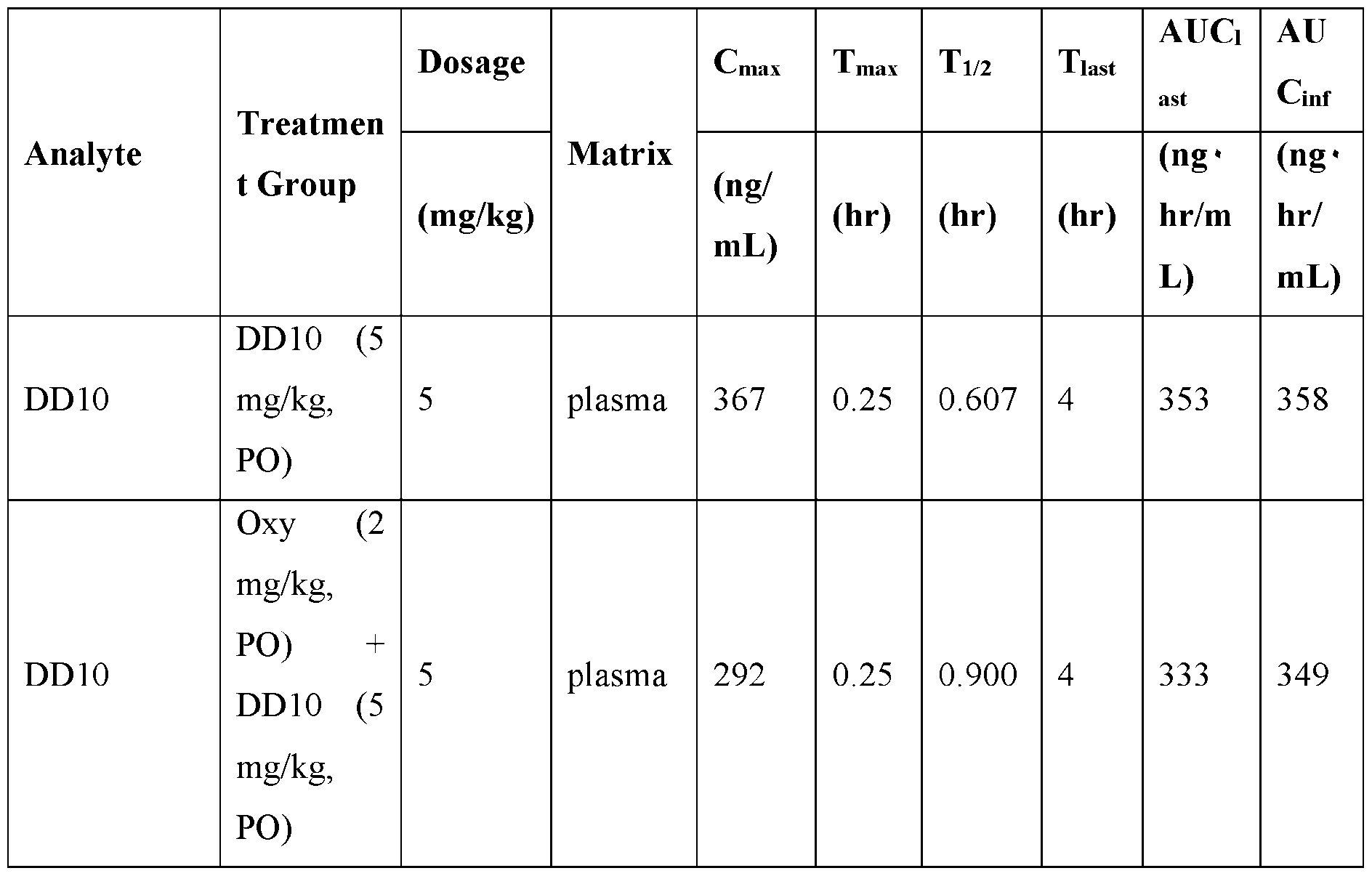
FIG. 29: Mean concentration-time profiles of DD 10 in mouse plasma following oral administration of DD10 at 5 mg/kg with or without co-administration of Oxycodone at 2 mg/kg.
FIG. 30: Mean concentration-time profiles of DD12 in mouse plasma following oral administration of DD12 at 5 mg/kg with or without co-administration of Oxycodone at 2 mg/kg.
FIG. 31 : Mean concentration-time profiles of Oxycodone in mouse plasma following oral administration of Oxycodone at dose 2 mg/kg with or without co-administration of DD10 at 5 mg/kg or DD12 at 5 mg/kg.
FIG. 32A and 32B: Vertical counts in groups receiving Oxycodone and DD10. 32A) Oxycodone 2 mg/kg and DD10 at doses: 0.01, 0.025, 0.05, 0.1 mg/kg. 32B) Oxycodone 2 mg/kg and DD10 at doses: 0.5, 1, 2.5, 5 mg/kg. Hypoactivity, indicated by a significant reduction in vertical counts, was observed at doses of 0.5, 1, 2.5, and 5 mg/kg.
FIG. 33: Vertical counts in groups receiving DD10 at doses: 0.05, 0.1, 0.25, 0.5 mg/kg. Hypoactivity, indicated by a significant reduction in vertical counts, was observed at oxycodone + DD10 at doses of 0.1, 0.25, and 0.5 mg/kg.
FIG. 34: Vertical counts in groups receiving DD12 at doses: 5, 10, 20, and 40 mg/kg. No significant differences in vertical count were observed between vehicle and treatment groups.
FIG. 35: Vertical count in groups receiving vehicle, oxycodone (2 mg/kg) and oxycodone combined with DD12 at following doses: 10, 20, 40 and 100 mg/kg. No significant differences in vertical count were observed between vehicle and treatment groups.
FIG. 36: Vertical count in groups receiving vehicle, oxycodone (2 mg/kg) and oxycodone combined with DD12 100 mg/kg.
FIG. 37: Conditioned place preference for each condition, represented as the time in chamber for vehicle, oxycodone (2 mg/kg), Oxycodone + DD10 (0.005 mg/kg, PO), Oxycodone + DD10 (0.025 mg/kg, PO), Oxycodone + DD10 (0.05 mg/kg, PO), Oxycodone + DD12 (20 mg/kg, PO), Oxycodone + DD 12 (30 mg/kg, PO), Oxycodone + DD12 (40 mg/kg, PO) and Oxycodone + DD12 (60 mg/kg, PO).
FIG. 38: Relationship between DD10 dose and oxycodone-induced conditioned place preference. For each DD10 dose condition, we plotted the mean with the 95% CI calculated by bootstrap. The linear regression line of the raw data is overlaid.
FIG. 39: Relationship between DD12 dose and oxycodone-induced conditioned place preference. For each DD12 dose condition, we plotted the mean with the 95% CI calculated by bootstrap. The linear regression line of the raw data is overlaid.
FIG. 40: Estimated plasma concentration of olanzapine. For these models, a 2.5 and 30 mg olanzapine equivalent dose was administered at varying dosing schedules to mirror the frequency of opioid administration to treat acute and chronic pain. Curves for three weights (50 kg, 70 kg, and 100 kg) are plotted. The plasma concentration model for olanzapine does not depend on weight, and therefore all three curves are identical. A dashed horizontal line is placed at the olanzapine equivalent side effect plasma concentration.
FIG. 41 : Estimated plasma concentration of aripiprazole. For these models, a 2.5 and 30 mg olanzapine equivalent dose was administered at varying dosing schedules to mirror the frequency of opioid administration to treat acute and chronic pain. Curves for three weights (50 kg, 70 kg,
and 100 kg) are plotted. A dashed horizontal line is placed at the olanzapine equivalent side effect plasma concentration.
FIG. 42: Estimated plasma concentration of quetiapine. For these models, a 2.5 and 30 mg olanzapine equivalent dose was administered at varying dosing schedules to mirror the frequency of opioid administration to treat acute and chronic pain. Curves for three weights (50 kg, 70 kg, and 100 kg) are plotted. The plasma concentration model for quetiapine does not depend on weight, and therefore all three curves are identical. A dashed horizontal line is placed at the olanzapine equivalent side effect plasma concentration.
FIG. 43: Estimated plasma concentration of risperidone. For these models, a 2.5 and 30 mg olanzapine equivalent dose was administered at varying dosing schedules to mirror the frequency of opioid administration to treat acute and chronic pain. Curves for three weights (50 kg, 70 kg, and 100 kg) are plotted. A dashed horizontal line is placed at the olanzapine equivalent side effect plasma concentration.
FIG. 44: Estimated plasma concentration of ziprasidone. For these models, a 2.5 and 30 mg olanzapine equivalent dose was administered at varying dosing schedules to mirror the frequency of opioid administration to treat acute and chronic pain. Curves for three weights (50 kg, 70 kg, and 100 kg) are plotted. A dashed horizontal line is placed at the olanzapine equivalent side effect plasma concentration.
FIG. 45: Estimated plasma concentration of droperidol. For these models, a 0.08 mg, 4.29 mg, and 8.58 mg oral dose was administered at varying dosing schedules to mirror the frequency of opioid administration to treat acute and chronic pain. Curves for three weights (50 kg, 70 kg, and 100 kg) are plotted. A dashed horizontal line is placed at the olanzapine equivalent side effect plasma concentration.
FIG. 46: Estimated plasma concentration of amisulpride. For these models, a 0.58 mg, 25.67 mg, and 51.34 mg oral dose was administered at varying dosing schedules to mirror the frequency of opioid administration to treat acute and chronic pain. Curves for three weights (50 kg, 70 kg, and 100 kg) are plotted. A dashed horizontal line is placed at the plasma concentration listed by laboratory guidelines as the threshold for high amisulpride levels.
FIG. 47: Plasma concentration of amisulpride in mice after a 5 mg/kg oral dose.
FIG. 48: Estimated human plasma concentration of amisulpride at proposed doses when paired with oxycodone. We estimated the plasma concentration in humans after a single administration
of oral amisulpride at the lower and upper limits of doses proposed to pair with commonly prescribed oxycodone doses: 0.58 mg and 102.68 mg. We also plotted the estimated mouse plasma concentration of DD12 that eliminated the behavioral effects induced by oxycodone: 30-60 mg/kg. We then shaded plasma concentrations above 852 ng/mL which represent the estimated initial sedative mouse plasma concentrations derived from our mice activity chamber experiments.
FIG. 49: Estimated human plasma concentration of amisulpride at proposed doses when paired with hydrocodone. We estimated the plasma concentration in humans after a single administration of oral amisulpride at the lower and upper limits of doses proposed to pair with commonly prescribed hydrocodone doses: 0.39 mg and 84.71 mg. We also plotted the estimated mouse plasma concentration of DD12 that eliminated the behavioral effects induced by oxycodone: 30- 60 mg/kg. We then shaded plasma concentrations above 852 ng/mL which represent the estimated initial sedative mouse plasma concentrations derived from our mice activity chamber experiments. FIG. 50: Estimated human plasma concentration of amisulpride at proposed doses when paired with morphine. We estimated the plasma concentration in humans after a single administration of oral amisulpride at the lower and upper limits of doses proposed to pair with commonly prescribed morphine doses: 0.77 and 101.66 mg. We also plotted the estimated mouse plasma concentration of DD12 that eliminated the behavioral effects induced by oxycodone: 30-60 mg/kg. We then shaded plasma concentrations above 852 ng/mL which represent the estimated initial sedative mouse plasma concentrations derived from our mice activity chamber experiments.
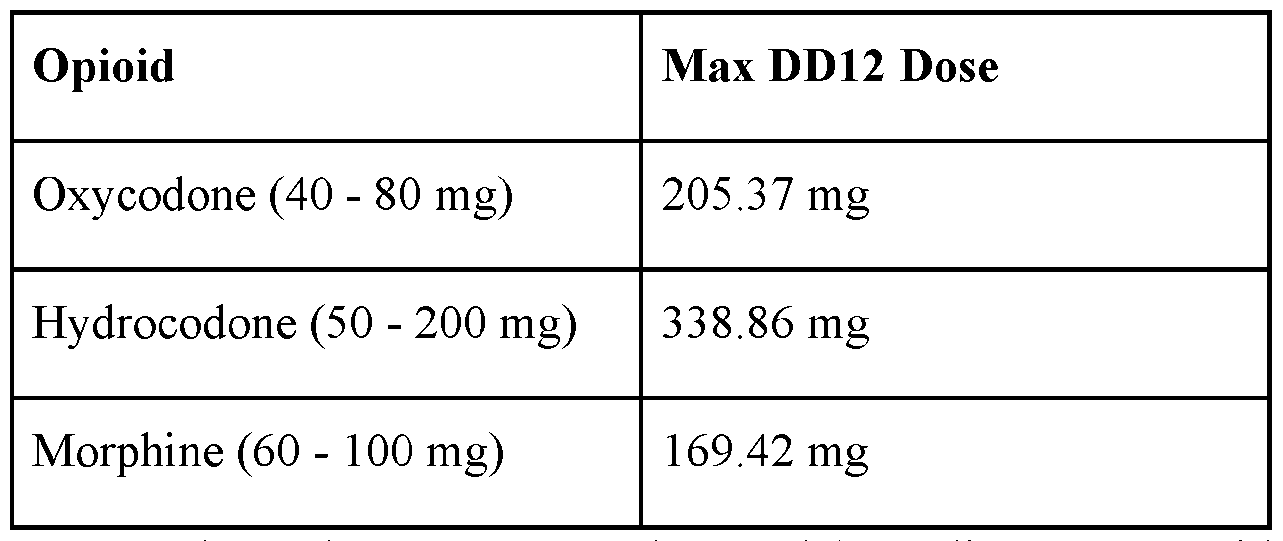
FIG. 51 : Estimated human plasma concentration of amisulpride at maximum proposed doses when paired with commonly prescribed oral opioids. We estimated the plasma concentration in humans after a single administration of oral amisulpride at the lower and upper limits of maximum doses proposed to pair with commonly prescribed opioid doses: 169.42 mg and 338.86 mg. We also plotted the estimated mouse plasma concentration of DD12 that eliminated the behavioral effects induced by oxycodone: 30-60 mg/kg. We then shaded plasma concentrations above 852 ng/mL which represent the estimated initial sedative mouse plasma concentrations derived from our mice activity chamber experiments.
FIG. 52: Plasma concentration of droperidol in mice after a 5 mg/kg oral dose.
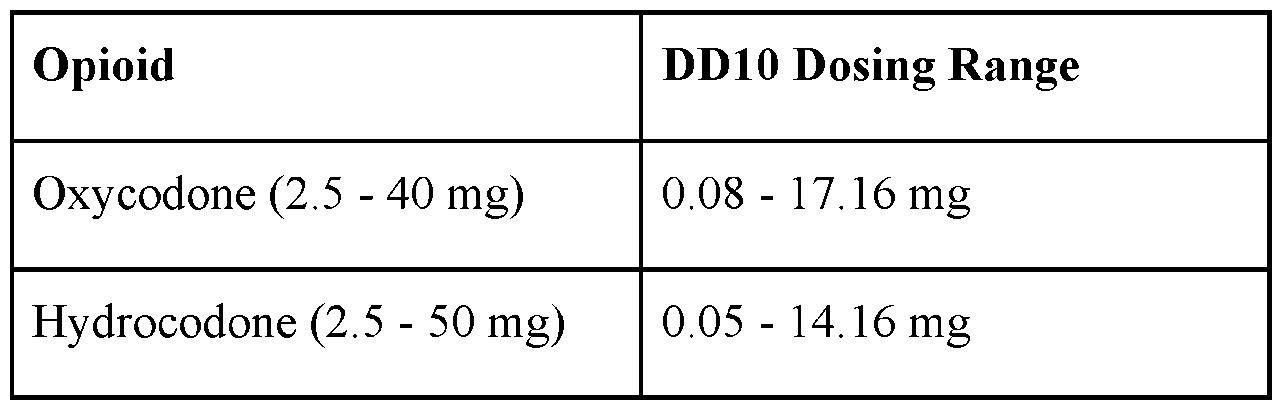
FIG. 53: Estimated human plasma concentration of droperidol at proposed doses when paired with oxycodone. We estimated the plasma concentration in humans after a single administration of oral droperidol at the lower and upper limits of doses proposed to pair with commonly prescribed
oxycodone doses: 0.08 mg and 17.16 mg. We also plotted the estimated mouse plasma concentration of DD10 that eliminated the behavioral effects induced by oxycodone: 0.005-0.05 mg/kg. We then shaded plasma concentrations above 44 ng/mL which represent the estimated initial sedative mouse plasma concentrations derived from our mice activity chamber experiments. FIG. 54: Estimated human plasma concentration of droperidol at proposed doses when paired with hydrocodone. We estimated the plasma concentration in humans after a single administration of oral droperidol at the lower and upper limits of doses proposed to pair with commonly prescribed hydrocodone doses: 0.05 mg and 14.16 mg. We also plotted the estimated mouse plasma concentration of DD10 that eliminated the behavioral effects induced by oxycodone: 0.005-0.05 mg/kg. We then shaded plasma concentrations above 44 ng/mL which represent the estimated initial sedative mouse plasma concentrations derived from our mice activity chamber experiments. FIG. 55: Estimated human plasma concentration of droperidol at proposed doses when paired with morphine. We estimated the plasma concentration in humans after a single administration of oral droperidol at the lower and upper limits of doses proposed to pair with commonly prescribed morphine doses: 2.83 mg and 16.99 mg. We also plotted the estimated mouse plasma concentration of DD10 that eliminated the behavioral effects induced by morphine: 0.005-0.05 mg/kg. We then shaded plasma concentrations above 44 ng/mL which represent the estimated initial sedative mouse plasma concentrations derived from our mice activity chamber experiments.
FIG. 56: Plasma concentration of oxycodone in mice after a 2 mg/kg oral dose.
FIG. 57: Estimated human plasma concentration of oxycodone after a single oral dose. We estimated the plasma concentration in humans after a single administration of oral oxycodone at two doses: 2.5 mg and 40 mg. We also plotted the estimated mouse plasma concentration of oxycodone whose behavioral effects induced in mice were eliminated with a paired dose of amisulpride.
FIGS. 58A and 58B: Visual Analog Scale scores and EEG theta power differences observed in a patient who received DD10 under a continuous infusion of remifentanil.
FIG. 59 illustrates study procedures.
DETAILED DESCRIPTION OF EMBODIMENTS
Definitions
Listed below are definitions of various terms used to describe this disclosure. These definitions apply to the terms as they are used throughout this specification, unless otherwise limited in specific instances, either individually or as part of a larger group.
As used herein, the terms “a” or “an” means that “at least one” or “one or more” unless the context clearly indicates otherwise. The phrase “and/or,” as used herein in the specification and in the claims, should be understood to mean “either or both” of the elements so conjoined, i.e., elements that are conjunctively present in some cases and disjunctively present in other cases. Other elements may optionally be present other than the elements specifically identified by the “and/or” clause, whether related or unrelated to those elements specifically identified unless clearly indicated to the contrary. Thus, as a non-limiting example, a reference to “A and/or B,” when used in conjunction with open-ended language such as “comprising” can refer, in various embodiments, to A without B (optionally including elements other than B); in another embodiment, to B without A (optionally including elements other than A); in yet another embodiment, to both A and B (optionally including other elements); etc.
The term “or” as used herein shall only be interpreted as indicating exclusive alternatives (i.e., “one or the other but not both”) when preceded by terms of exclusivity, “either,” “one of,” “only one of,” or “exactly one of”
As used herein, the terms “comprising” (and any form of comprising, such as “comprise,” “comprises,” and “comprised”), “having” (and any form of having, such as “have” and “has”), “including” (and any form of including, such as “includes” and “include”), or “containing” (and any form of containing, such as “contains” and “contain”), are inclusive or open-ended and do not exclude additional, unrecited elements or method steps.
As used herein, the term “about” means that the numerical value is approximate and small variations would not significantly affect the practice of the disclosed embodiments. Where a numerical limitation is used, unless indicated otherwise by the context, “about” means the numerical value can vary by ±10%, ±/-5%, ±/-4%, +/-3%, +/-2%, ±/-l%, and remain within the scope of the disclosed embodiments.
The abbreviations used herein have their conventional meaning within the chemical and biological arts. The chemical structures and formulae set forth herein are constructed according to the standard rules of chemical valency known in the chemical arts.
References in the specification and concluding claims to parts by weight of a particular element or component in a composition denotes the weight relationship between the element or component and any other elements or components in the composition or article for which a part by weight is expressed. Thus, in a compound containing 2 parts by weight of component X and 5 parts by weight component Y, X and Y are present at a weight ratio of 2:5, and are present in such ratio regardless of whether additional components are contained in the compound.
A weight percent (wt. %) of a component, unless specifically stated to the contrary, is based on the total weight of the formulation or composition in which the component is included.
As used herein, the terms “optional” or “optionally” mean that the subsequently described event or circumstance can or cannot occur, and that the description includes instances where said event or circumstance occurs and instances where it does not.
As used herein, the term “diagnosed” means having been subjected to a physical examination by a person of skill, for example, a physician, and found to have a condition that can be diagnosed or treated by the compounds, compositions, or methods disclosed herein. In some embodiments of the disclosed methods, the subject has been diagnosed with a need for treatment of a disorder associated with opioid use such as, for example, opioid liking, opioid use disorder, prior to the administering step. As used herein, the phrase “identified to be in need of treatment for a disorder,” or the like, refers to selection of a subject based upon need for treatment of the disorder. It is contemplated that the identification can, in some embodiments, be performed by a person different from the person making the diagnosis. It is also contemplated, in further embodiments, that the administration can be performed by one who subsequently performed the administration.
As used herein, the terms “administering” and “administration” refer to any method of providing a pharmaceutical preparation to a subject. Such methods are well known to those skilled in the art and include, but are not limited to, oral administration, transdermal administration, administration by inhalation, nasal administration, topical administration, intravaginal administration, ophthalmic administration, intraaural administration, intracerebral administration, rectal administration, and parenteral administration, including injectable such as intravenous administration, intra-arterial administration, intramuscular administration, and subcutaneous administration. Administration can be continuous or intermittent. In various embodiments, a preparation can be administered therapeutically; that is, administered to treat an existing disease or condition. In further various
embodiments, a preparation can be administered prophylactically; that is, administered for prevention of a disease or condition.
The term “contacting” as used herein refers to bringing a disclosed compound and a cell, target receptor, or other biological entity together in such a manner that the compound can affect the activity of the target (e.g., receptor, cell, etc.), either directly; i.e., by interacting with the target itself, or indirectly; i.e., by interacting with another molecule, co-factor, factor, or protein on which the activity of the target is dependent.
As used herein, “IC50,” is intended to refer to the concentration of a substance (e.g., a compound or a drug) that is required for about 50% inhibition of a biological process, or component of a process, including a protein, subunit, organelle, ribonucleoprotein, etc. In some embodiments, an IC50 can refer to the concentration of a substance that is required for about 50% inhibition in vivo, as further defined elsewhere herein. In some embodiments, an IC50 can refer to the concentration of a substance that is required for about 40% inhibition in vivo, as further defined elsewhere herein. In some embodiments, an IC50 can refer to the concentration of a substance that is required for about 30% inhibition in vivo, as further defined elsewhere herein. In some embodiments, an IC50 can refer to the concentration of a substance that is required for about 20% inhibition in vivo, as further defined elsewhere herein. In some embodiments, an IC50 can refer to the concentration of a substance that is required for about 10% inhibition in vivo, as further defined elsewhere herein. In some embodiments, an IC50 can refer to the concentration of a substance that is required for about 60% inhibition in vivo, as further defined elsewhere herein. In some embodiments, inhibition is inhibition of any one or more of DI, D2, D3, D4, and/or D5 dopamine receptor.
As used herein, “EC50,” is intended to refer to the concentration of a substance (e.g., a compound or a drug) that is results in a half-maximal response (i.e., 50% of the maximum response) of a biological process, or component of a process, including a protein, subunit, organelle, ribonucleoprotein, etc. In some embodiments, an EC50 can refer to the concentration of a substance that is required to achieve about 50% of the maximum response in vivo, as further defined elsewhere herein. In some embodiments, an EC50 can refer to the concentration of a substance that is required to achieve about 10% of the maximum response in vivo, as further defined elsewhere herein. In some embodiments, an EC50 can refer to the concentration of a substance that is required to achieve about 20% of the maximum response in vivo, as further defined elsewhere herein. In some embodiments, an EC50 can refer to the concentration of a
substance that is required to achieve about 30% of the maximum response in vivo, as further defined elsewhere herein. In some embodiments, an EC50 can refer to the concentration of a substance that is required to achieve about 40% of the maximum response in vivo, as further defined elsewhere herein. In some embodiments, an EC50 can refer to the concentration of a substance that is required to achieve about 60% of the maximum response in vivo, as further defined elsewhere herein. In some embodiments, an EC50 can refer to the concentration of a substance that is required to achieve about 70% of the maximum response in vivo, as further defined elsewhere herein. In some embodiments maximum response is determined by measuring a drop in theta oscillations through an electroencephalogram. In some embodiments, the maximum response is determined by measuring the reduction in frequency of theta oscillations in the brain during an electroencephalogram from about 4 Hz to about 8 Hz. In some embodiments, the decrease in theta oscillation is about 8 Hz. In some embodiments, the decrease in theta oscillation is about 7 Hz. In some embodiments, the decrease in theta oscillation is about 6 Hz. In some embodiments, the decrease in theta oscillation is about 5 Hz. In some embodiments, the decrease in theta oscillation is about 4 Hz. In some embodiments, the decrease in theta oscillation no less than about 4 Hz.
The compounds according to this disclosure may form prodrugs at hydroxyl or amino functionalities using alkoxy, amino acids, etc., groups as the prodrug forming moieties. For instance, the hydroxymethyl position may form mono-, di- or triphosphates and again these phosphates can form prodrugs. Preparations of such prodrug derivatives are discussed in various literature sources (examples are: Alexander et al., J. Med. Chem. 1988, 31, 318; Aligas-Martin et al., PCT WO 2000/041531, p. 30). The nitrogen function converted in preparing these derivatives is one (or more) of the nitrogen atoms of a compound of the disclosure.
“Derivatives” of the compounds disclosed herein are pharmaceutically acceptable salts, prodrugs, deuterated forms, radio-actively labeled forms, isomers, solvates and combinations thereof. The “combinations” mentioned in this context are refer to derivatives falling within at least two of the groups: pharmaceutically acceptable salts, prodrugs, deuterated forms, radio-actively labeled forms, isomers, and solvates. Examples of radio-actively labeled forms include compounds labeled with tritium, phosphorous-32, iodine-129, carbon-11, fluorine-18, and the like.
The term “leaving group” refers to an atom (or a group of atoms) with electron withdrawing ability that can be displaced as a stable species, taking with it the bonding electrons. Examples of suitable
leaving groups include sulfonate esters, including triflate, mesylate, tosylate, brosylate, and halides.
As used herein, the term “substituted” is contemplated to include all permissible substituents of organic compounds. In a broad embodiment, the permissible substituents include acyclic and cyclic, branched and unbranched, carbocyclic and heterocyclic, and aromatic and nonaromatic substituents of organic compounds. Illustrative substituents include, for example, those described below. The permissible substituents can be one or more and the same or different for appropriate organic compounds. For purposes of this disclosure, the heteroatoms, such as nitrogen, can have hydrogen substituents and/or any permissible substituents of organic compounds described herein which satisfy the valences of the heteroatoms. This disclosure is not intended to be limited in any manner by the permissible substituents of organic compounds. Also, the terms “substitution” or “substituted with” include the implicit proviso that such substitution is in accordance with permitted valence of the substituted atom and the substituent, and that the substitution results in a stable compound, e.g., a compound that does not spontaneously undergo transformation such as by rearrangement, cyclization, elimination, etc. It is also contemplated that, in certain embodiments, unless expressly indicated to the contrary, individual substituents can be further optionally substituted (i.e., further substituted or unsubstituted).
In defining various terms, “Al,” “A2,” “A3,” and “A4” are used herein as generic symbols to represent various specific substituents. These symbols can be any substituent, not limited to those disclosed herein, and when they are defined to be certain substituents in one instance, they can, in another instance, be defined as some other substituents.
The terms “halo” and “halogen” as used herein refer to an atom selected from fluorine (fluoro, -F), chlorine (chloro, -Cl), bromine (bromo, -Br), and iodine (iodo, -I).
The term “aliphatic” or “aliphatic group,” as used herein, denotes a hydrocarbon moiety that may be straight-chain (i.e., unbranched), branched, or cyclic (including fused, bridging, and spirofused polycyclic) and may be completely saturated or may contain one or more units of unsaturation, but which is not aromatic. Unless otherwise specified, aliphatic groups contain 1-20 carbon atoms. Aliphatic groups include, but are not limited to, linear or branched, alkyl, alkenyl, and alkynyl groups, and hybrids thereof such as (cycloalkyl)alkyl, (cycloalkenyl)alkyl or (cycloalkyl)alkenyl. The term “alkyl,” as used herein, refers to a monovalent saturated, straight- or branched-chain hydrocarbon radical, having unless otherwise specified, 1-6 carbon atoms. Examples of alkyl
radicals include, but are not limited to, methyl, ethyl, n-propyl, isopropyl, n-butyl, iso-butyl, sec-butyl, n-pentyl, tert-pentyl, neopentyl, sec-pentyl, 3-pentyl, sec-isopentyl, hexyl, 2- methylpentane, 3 -methylpentane, 2,2-dimethylbutane, 2,3-dimentybutane and the like. The alkyl group can also be substituted or unsubstituted. For example, the alkyl group can be substituted with one or more groups including, but not limited to, alkyl, cycloalkyl, alkoxy, amino, ether, halide, hydroxy, nitro, silyl, sulfo-oxo, or thiol, as described herein. A “lower alkyl” group is an alkyl group containing from one to six (e.g., from one to four) carbon atoms. The term alkyl group can also be a Cl alkyl, C1-C2 alkyl, C1-C3 alkyl, C1-C4 alkyl, C1-C5 alkyl, C1-C6 alkyl, C1-C7 alkyl, C1-C8 alkyl, C1-C9 alkyl, C1-C10 alkyl, and the like up to and including a C1-C24 alkyl.
Throughout the specification “alkyl” is generally used to refer to both unsubstituted alkyl groups and substituted alkyl groups; however, substituted alkyl groups are also specifically referred to herein by identifying the specific substituent(s) on the alkyl group. For example, the term “halogenated alkyl” or “haloalkyl” specifically refers to an alkyl group that is substituted with one or more halide, e.g., fluorine, chlorine, bromine, or iodine. Alternatively, the term “monohaloalkyl” specifically refers to an alkyl group that is substituted with a single halide, e.g. fluorine, chlorine, bromine, or iodine. The term “polyhaloalkyl” specifically refers to an alkyl group that is independently substituted with two or more halides, i.e. each halide substituent need not be the same halide as another halide substituent, nor do the multiple instances of a halide substituent need to be on the same carbon. The term “alkoxyalkyl” specifically refers to an alkyl group that is substituted with one or more alkoxy groups, as described below. The term “aminoalkyl” specifically refers to an alkyl group that is substituted with one or more amino groups. The term “hydroxyalkyl” specifically refers to an alkyl group that is substituted with one or more hydroxy groups. When “alkyl” is used in one instance and a specific term such as “hydroxyalkyl” is used in another, it is not meant to imply that the term “alkyl” does not also refer to specific terms such as “hydroxyalkyl” and the like.
This practice is also used for other groups described herein. That is, while a term such as “cycloalkyl” refers to both unsubstituted and substituted cycloalkyl moieties, the substituted moieties can, in addition, be specifically identified herein; for example, a particular substituted cycloalkyl can be referred to as, e.g., an “alkylcycloalkyl.” Similarly, a substituted alkoxy can be specifically referred to as, e.g., a “halogenated alkoxy,” a particular substituted alkenyl can be, e g., an “alkenylalcohol,” and the like. Again, the practice of using a general term, such as
“cycloalkyl,” and a specific term, such as “alkylcycloalkyl,” is not meant to imply that the general term does not also include the specific term.
The term “alkenyl” as used herein is a hydrocarbon group of from 2 to 24 carbon atoms with a structural formula containing at least one carbon-carbon double bond. Asymmetric structures such as (Al A2)C=C(A3A4) are intended to include both the E and Z isomers. This can be presumed in structural formulae herein wherein an asymmetric alkene is present, or it can be explicitly indicated by the bond symbol C=C. The alkenyl group can be substituted with one or more groups including, but not limited to, alkyl, cycloalkyl, alkoxy, alkenyl, cycloalkenyl, alkynyl, cycloalkynyl, aryl, heteroaryl, aldehyde, amino, carboxylic acid, ester, ether, halide, hydroxy, ketone, azide, nitro, silyl, sulfo-oxo, or thiol, as described herein.
The term “alkynyl” as used herein is a hydrocarbon group of 2 to 24 carbon atoms with a structural formula containing at least one carbon-carbon triple bond. The alkynyl group can be unsubstituted or substituted with one or more groups including, but not limited to, alkyl, cycloalkyl, alkoxy, alkenyl, cycloalkenyl, alkynyl, cycloalkynyl, aryl, heteroaryl, aldehyde, amino, carboxylic acid, ester, ether, halide, hydroxy, ketone, azide, nitro, silyl, sulfo-oxo, or thiol, as described herein. The term “heteroalkyl,” as used herein refers to an alkyl group containing at least one heteroatom. Suitable heteroatoms include, but are not limited to, O, N, Si, P, and S, wherein the nitrogen, phosphorous and sulfur atoms are optionally oxidized, and the nitrogen heteroatom is optionally quaternized. Heteroalkyls can be substituted as defined above for alkyl groups.
The term “haloalkyl” includes mono, poly, and perhaloalkyl groups where the halogens are independently selected from fluorine, chlorine, bromine, and iodine.
“Alkoxy” is an alkyl group which is attached to another moiety via an oxygen linker (-O(alkyl)). Non-limiting examples include methoxy, ethoxy, propoxy, and butoxy.
“Haloalkoxy” is a haloalkyl group which is attached to another moiety via an oxygen atom such as, e.g., but are not limited to -OCHCF2 or -OCF3.
The term “9- to 10-membered carbocyclyl” means a 9- or 10- membered monocyclic, bicyclic (e g., a bridged or spiro bicyclic ring), polycyclic (e.g., tricyclic), or fused hydrocarbon ring system that is saturated or partially unsaturated. The term “9- to 10-membered carbocyclyl” also includes saturated or partially unsaturated hydrocarbon rings that are fused to one or more aromatic or partically saturated hydrocarbon rings (e.g., dihydroindenyl and tetrahydronaphthalenyl). Bridged bicyclic cycloalkyl groups include, without limitation, bicyclo[4.3.1]decanyl and the like. Spiro
bicyclic cycloalkyl groups include, e.g., spiro[3.6]decanyl, spiro[4.5]decanyl, spiro [4.4]nonyl and the like. Fused cycloalkyl rings include, e.g., decahydronaphthalenyl, dihydroindenyl, decahydroazulenyl, octahydroazulenyl, tetrahydronaphthalenyl, and the like. It will be understood that when specified, optional substituents on a carbocyclyl (e.g., in the case of an optionally substituted cycloalkyl) may be present on any substitutable position and, include, e g., the position at which the carbocyclyl group is attached.
The term “cycloalkyl” as used herein is a non-aromatic carbon-based ring composed of at least three carbon atoms. Examples of cycloalkyl groups include, but are not limited to, cyclopropyl, cyclobutyl, cyclopentyl, cyclohexyl, cycloheptyl, cyclooctyl, norbomyl, and the like. The term “heterocycloalkyl” is a type of cycloalkyl group as defined above, and is included within the meaning of the term “cycloalkyl,” where at least one of the carbon atoms of the ring is replaced with a heteroatom such as, but not limited to, nitrogen, oxygen, sulfur, or phosphorus. The cycloalkyl group and heterocycloalkyl group can be substituted or unsubstituted. The cycloalkyl group and heterocycloalkyl group can be substituted with one or more groups including, but not limited to, alkyl, cycloalkyl, alkoxy, amino, ether, halide, hydroxy, nitro, silyl, sulfo-oxo, or thiol as described herein. In various aspects, the cycloalkyl group and heterocycloalkyl group can be monocyclic, bicyclic (e.g., bridged such as, for example, bicyclo[4.3.1]decanyl or spiro such as, for example, spiro[3.6]decanyl, spiro[4.5]decanyl, spiro [4.4]nonyl), polycyclic (e.g., tricyclic), or a fused hydrocarbon ring system that is saturated or partially unsaturated (e.g., decahydronaphthalenyl, dihydroindenyl, decahydroazulenyl, octahydroazulenyl, tetrahydronaphthalenyl).
The term “cycloalkenyl” as used herein is a non-aromatic carbon-based ring composed of at least three carbon atoms and containing at least one carbon-carbon double bound, i.e., C=C. Examples of cycloalkenyl groups include, but are not limited to, cyclopropenyl, cyclobutenyl, cyclopentenyl, cyclopentadienyl, cyclohexenyl, cyclohexadienyl, norbomenyl, and the like. The term “heterocycloalkenyl” is a type of cycloalkenyl group as defined above, and is included within the meaning of the term “cycloalkenyl,” where at least one of the carbon atoms of the ring is replaced with a heteroatom such as, but not limited to, nitrogen, oxygen, sulfur, or phosphorus. The cycloalkenyl group and heterocycloalkenyl group can be substituted or unsubstituted. The cycloalkenyl group and heterocycloalkenyl group can be substituted with one or more groups including, but not limited to, alkyl, cycloalkyl, alkoxy, alkenyl, cycloalkenyl, alkynyl,
cycloalkynyl, aryl, heteroaryl, aldehyde, amino, carboxylic acid, ester, ether, halide, hydroxy, ketone, azide, nitro, silyl, sulfo-oxo, or thiol as described herein.
The term “cycloalkynyl” as used herein is a non-aromatic carbon-based ring composed of at least seven carbon atoms and containing at least one carbon-carbon triple bound. Examples of cycloalkynyl groups include, but are not limited to, cycloheptynyl, cyclooctynyl, cyclononynyl, and the like. The term “heterocycloalkynyl” is a type of cycloalkenyl group as defined above, and is included within the meaning of the term “cycloalkynyl,” where at least one of the carbon atoms of the ring is replaced with a heteroatom such as, but not limited to, nitrogen, oxygen, sulfur, or phosphorus. The cycloalkynyl group and heterocycloalkynyl group can be substituted or unsubstituted. The cycloalkynyl group and heterocycloalkynyl group can be substituted with one or more groups including, but not limited to, alkyl, cycloalkyl, alkoxy, alkenyl, cycloalkenyl, alkynyl, cycloalkynyl, aryl, heteroaryl, aldehyde, amino, carboxylic acid, ester, ether, halide, hydroxy, ketone, azide, nitro, silyl, sulfo-oxo, or thiol as described herein.
The terms “heterocycle” or “heterocyclyl,” as used herein can be used interchangeably and refer to single and multi-cyclic aromatic or non-aromatic ring systems in which at least one of the ring members is other than carbon. Thus, the term is inclusive of, but not limited to, “heterocycloalkyl,” “heteroaryl,” “bicyclic heterocycle,” and “polycyclic heterocycle.” The heterocycle can be monocyclic, bicyclic (e.g., spiro or bridged), polycyclic, or a fused system that is saturated or partially saturated. Heterocycle includes pyridine, pyrimidine, furan, thiophene, pyrrole, isoxazole, isothiazole, pyrazole, oxazole, thiazole, imidazole, oxazole, including, 1,2, 3 -oxadiazole, 1,2,5- oxadiazole and 1,3,4-oxadiazole, thiadiazole, including, 1,2,3-thiadiazole, 1,2,5-thiadiazole, and 1,3,4-thiadiazole, triazole, including, 1,2,3-triazole, 1,3,4-triazole, tetrazole, including 1, 2,3,4- tetrazole and 1,2,4,5-tetrazole, pyridazine, pyrazine, triazine, including 1,2,4-triazine and 1,3,5- triazine, tetrazine, including 1,2,4,5-tetrazine, pyrrolidine, piperidine, piperazine, morpholine, azetidine, tetrahydropyran, tetrahydrofuran, dioxane, and the like. The term heterocyclyl group can also be a C2 heterocyclyl, C2-C3 heterocyclyl, C2-C4 heterocyclyl, C2-C5 heterocyclyl, C2- C6 heterocyclyl, C2-C7 heterocyclyl, C2-C8 heterocyclyl, C2-C9 heterocyclyl, C2-C10 heterocyclyl, C2-C11 heterocyclyl, and the like up to and including a C2-C18 heterocyclyl. For example, a C2 heterocyclyl comprises a group which has two carbon atoms and at least one heteroatom, including, but not limited to, aziridinyl, diazetidinyl, dihydrodiazetyl, oxiranyl, thiiranyl, and the like. Alternatively, for example, a C5 heterocyclyl comprises a group which has
five carbon atoms and at least one heteroatom, including, but not limited to, piperidinyl, tetrahydropyranyl, tetrahydrothiopyranyl, diazepanyl, pyridinyl, and the like. It is understood that a heterocyclyl group may be bound either through a heteroatom in the ring, where chemically possible, or one of carbons comprising the heterocyclyl ring.
The term “bicyclic heterocycle” or “bicyclic heterocyclyl,” as used herein refers to a ring system in which at least one of the ring members is other than carbon. Bicyclic heterocyclyl encompasses ring systems wherein an aromatic ring is fused with another aromatic ring, or wherein an aromatic ring is fused with a non-aromatic ring. Bicyclic heterocyclyl encompasses ring systems wherein a benzene ring is fused to a 5- or a 6-membered ring containing 1 , 2 or 3 ring heteroatoms or wherein a pyridine ring is fused to a 5- or a 6-membered ring containing 1, 2 or 3 ring heteroatoms. Bicyclic heterocyclic groups include, but are not limited to, indolyl, indazolyl, pyrazolo[l,5-a]pyridinyl, benzofuranyl, quinolinyl, quinoxalinyl, 1,3-benzodioxolyl, 2,3-dihydro-l,4-benzodioxinyl, 3,4- dihydro-2H-chromenyl, lH-pyrazolo[4,3-c]pyridin-3-yl; lH-pyrrolo[3,2-b]pyridin-3-yl; and 1H- pyrazolo[3, 2-b]pyri din-3 -yl.
The term “heterocycloalkyl” as used herein refers to an aliphatic, partially unsaturated or fully saturated, 3- to 14-membered ring system, including single rings of about 3 to about 8 atoms and bi- and tricyclic ring systems. The heterocycloalkyl ring-systems include one to four heteroatoms independently selected from oxygen, nitrogen, and sulfur, wherein a nitrogen and sulfur heteroatom optionally can be oxidized and a nitrogen heteroatom optionally can be substituted. Representative heterocycloalkyl groups include, but are not limited to, pyrrolidinyl, pyrazolinyl, pyrazolidinyl, imidazolinyl, imidazolidinyl, piperidinyl, piperazinyl, oxazolidinyl, isoxazolidinyl, morpholinyl, thiazolidinyl, isothiazolidinyl, and tetrahydrofuryl.
The term “9-membered fused heterocyclyl” means a 9-membered saturated or partially unsaturated fused monocyclic heterocyclic ring comprising at least one oxygen heteroatom and optionally two to four additional heteroatoms independently selected from N, O, and S. The terms “heterocycle,” “heterocyclyl,” “heterocyclyl ring,” “heterocyclic group,” “heterocyclic moiety,” and “heterocyclic radical,” are used interchangeably herein. A heterocyclyl ring can be attached to its pendant group at any heteroatom or carbon atom that results in a stable structure. Examples of fused saturated or partially unsaturated heterocyclic radicals compristing at least one oxygen atom include, without limitation, dihydrobenzofuranyl, dihydrofuropyridinyl, octahydrobenzofuranyl, and the like. Where specified as being optionally substituted, substituents on a heterocyclyl (e.g.,
in the case of an optionally substituted heterocyclyl) may be present on any substitutable position and include, e.g., the position at which the heterocyclyl group is attached.
The term “aromatic group” as used herein refers to a ring structure having cyclic clouds of delocalized it electrons above and below the plane of the molecule, where the it clouds contain (4n+2) TI electrons. A further discussion of aromaticity is found in Morrison and Boyd, Organic Chemistry, (5th Ed., 1987), Chapter 13, entitled “Aromaticity,” pages 477-497, incorporated herein by reference. The term “aromatic group” is inclusive of both aryl and heteroaryl groups.
The term “aryl” as used herein is a group that contains any carbon-based aromatic group including, but not limited to, benzene, naphthalene, phenyl, biphenyl, anthracene, and the like. The aryl group can be substituted or unsubstituted. The aryl group can be substituted with one or more groups including, but not limited to, alkyl, cycloalkyl, alkoxy, alkenyl, cycloalkenyl, alkynyl, cycloalkynyl, aryl, heteroaryl, aldehyde, — NH2, carboxylic acid, ester, ether, halide, hydroxy, ketone, azide, nitro, silyl, sulfo-oxo, or thiol as described herein. The term “biaryl” is a specific type of aryl group and is included in the definition of “aryl.” In addition, the aryl group can be a single ring structure or comprise multiple ring structures that are either fused ring structures or attached via one or more bridging groups such as a carbon-carbon bond. For example, biaryl can be two aryl groups that are bound together via a fused ring structure, as in naphthalene, or are attached via one or more carbon-carbon bonds, as in biphenyl.
The term “heteroaryl,” as used herein refers to an aromatic group that has at least one heteroatom incorporated within the ring of the aromatic group. Examples of heteroatoms include, but are not limited to, nitrogen, oxygen, sulfur, and phosphorus, where N-oxides, sulfur oxides, and dioxides are permissible heteroatom substitutions. The heteroaryl group can be substituted or unsubstituted. The heteroaryl group can be substituted with one or more groups including, but not limited to, alkyl, cycloalkyl, alkoxy, amino, ether, halide, hydroxy, nitro, silyl, sulfo-oxo, or thiol as described herein. Heteroaryl groups can be monocyclic, or alternatively fused ring systems. Heteroaryl groups include, but are not limited to, furyl, imidazolyl, pyrimidinyl, tetrazolyl, thienyl, pyridinyl, pyrrolyl, N-methylpyrrolyl, quinolinyl, isoquinolinyl, pyrazolyl, triazolyl, thiazolyl, oxazolyl, isoxazolyl, oxadiazolyl, thiadiazolyl, isothiazolyl, pyridazinyl, pyrazinyl, benzofuranyl, benzodi oxolyl, benzothiophenyl, indolyl, indazolyl, benzimidazolyl, imidazopyridinyl, pyrazolopyridinyl, and pyrazolopyrimidinyl. Further not limiting examples of heteroaryl groups include, but are not limited to, pyridinyl, pyridazinyl, pyrimidinyl, pyrazinyl, thiophenyl,
pyrazolyl, imidazolyl, benzo[d]oxazolyl, benzo[d]thiazolyl, quinolinyl, quinazolinyl, indazolyl, imidazo[l,2-b]pyridazinyl, imidazo[l,2-a]pyrazinyl, benzo[c][l,2,5]thiadiazolyl, benzo[c][l,2,5]oxadiazolyl, and pyrido[2,3-b]pyrazinyl.
The term “5- or 6- membered heteroaryl” refers to a 5- or 6-membered aromatic radical containing 1-4 heteroatoms selected from N, O, and S. Nonlimiting examples include thienyl, furanyl, pyrrolyl, imidazolyl, pyrazolyl, triazolyl, tetrazolyl, oxazolyl, isoxazolyl, oxadiazolyl, thiazolyl, isothiazolyl, thiadiazolyl, pyridyl, pyridazinyl, pyrimidinyl, pyrazinyl, etc. When specified, optional substituents on a heteroaryl group may be present on any substitutable position and, include, e.g., the position at which the heteroaryl is attached.
The term “aldehyde” as used herein is represented by the formula — C(O)H. Throughout this specification “C(O)” is a short hand notation for a carbonyl group, i.e., C=O.
The terms “amine” or “amino” as used herein are represented by the formula — NA1A2, where Al and A2 can be, independently, hydrogen or alkyl, cycloalkyl, alkenyl, cycloalkenyl, alkynyl, cycloalkynyl, aryl, or heteroaryl group as described herein. A specific example of amino is — NH2. The term “alkylamino” as used herein is represented by the formula — NH(-alkyl) where alkyl is a described herein. Representative examples include, but are not limited to, methylamino group, ethylamino group, propylamino group, isopropylamino group, butylamino group, isobutylamino group, (sec-butyl)amino group, (tert-butyl )amino group, pentylamino group, isopentylamino group, (tert-pentyl)amino group, hexylamino group, and the like.
The term “dialkylamino” as used herein is represented by the formula — N(-alkyl)2 where alkyl is a described herein. Representative examples include, but are not limited to, dimethylamino group, diethylamino group, dipropylamino group, diisopropylamino group, dibutylamino group, diisobutylamino group, di(sec-butyl)amino group, di(tert-butyl)amino group, dipentylamino group, diisopentylamino group, di(tert-pentyl)amino group, dihexylamino group, N-ethyl-N- methylamino group, N-methyl-N-propylamino group, N-ethyl-N-propylamino group and the like. The term “carboxylic acid” as used herein is represented by the formula — C(O)OH.
The term “ester” as used herein is represented by the formula — OC(O)A1 or — C(O)OA1, where Al can be alkyl, cycloalkyl, alkenyl, cycloalkenyl, alkynyl, cycloalkynyl, aryl, or heteroaryl group as described herein. The term “polyester” as used herein is represented by the formula — (AlO(O)C-A2-C(O)O)a— or — (A10(0)C-A2-0C(0))a— , where Al and A2 can be, independently, an alkyl, cycloalkyl, alkenyl, cycloalkenyl, alkynyl, cycloalkynyl, aryl, or
heteroaryl group described herein and “a” is an integer from about 1 to about 500. “Polyester” is as the term used to describe a group that is produced by the reaction between a compound having at least two carboxylic acid groups with a compound having at least two hydroxyl groups.
The term “ether” as used herein is represented by the formula A1OA2, where Al and A2 can be, independently, an alkyl, cycloalkyl, alkenyl, cycloalkenyl, alkynyl, cycloalkynyl, aryl, or heteroaryl group described herein. The term “polyether” as used herein is represented by the formula — (A10-A20)a — , where Al and A2 can be, independently, an alkyl, cycloalkyl, alkenyl, cycloalkenyl, alkynyl, cycloalkynyl, aryl, or heteroaryl group described herein and “a” is an integer of from 1 to 500. Examples of polyether groups include polyethylene oxide, polypropylene oxide, and polybutylene oxide.
As described herein, compounds of the disclosure may contain “optionally substituted” moieties. In general, the term “substituted,” whether preceded by the term “optionally” or not, means that one or more hydrogens of the designated moiety are replaced with a suitable substituent. Unless otherwise indicated, an “optionally substituted” group may have a suitable substituent at each substitutable position of the group, and when more than one position in any given structure may be substituted with more than one substituent selected from a specified group, the substituent may be either the same or different at every position. Combinations of substituents envisioned by this disclosure are preferably those that result in the formation of stable or chemically feasible compounds. In is also contemplated that, in certain embodiments, unless expressly indicated to the contrary, individual substituents can be further optionally substituted (i.e., further substituted or unsubstituted).
In some embodiments, a structure of a compound can be represented by a formula:
which is understood to be equivalent to a formula:
wherein n is typically an integer. That is, R” is understood to represent five independent substituents, R
n(a), R
n(b), R
n(c), R
n(d), R
n(e). In each such case, each of the five R
n can be hydrogen or
a recited substituent. By “independent substituents,” it is meant that each R substituent can be independently defined. For example, if in one instance R”
(a) is halogen, then R
n(b) is not necessarily halogen in that instance.
In some yet further embodiments, a structure of a compound can be represented by a formula:
wherein R
y represents, for example, 0-2 independent substituents selected from A
1, A
2, and A
3, which is understood to be equivalent to the groups of formulae: wherein R
y represents 0 independent substituents
wherein R
y represents 1 independent substituent
wherein R
y represents 2 independent substituents
Again, by “independent substituents,” it is meant that each R substituent can be independently defined. For example, if in one instance Ryl is Al, then Ry2 is not necessarily Al in that instance. In some further embodiments, a structure of a compound can be represented by a formula,
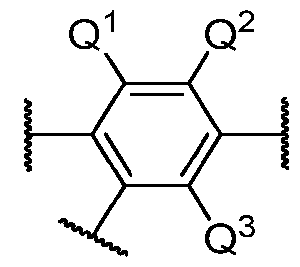
wherein, for example, Q comprises three substituents independently selected from hydrogen and A, which is understood to be equivalent to a formula:
Again, by “independent substituents,” it is meant that each Q substituent is independently defined as hydrogen or A, wherein Q comprises three substituents independently selected from H and A which is understood to be equivalent to the groups of formulae:
In some embodiments, the disclosed compounds exists as geometric isomers. “Geometric isomer” refers to isomers that differ in the orientation of substituent atoms in relationship to a cycloalkyl
ring, i.e., cis or trans isomers. When a disclosed compound is named or depicted by structure without indicating a particular cis or trans geometric isomer form, it is to be understood that the name or structure encompasses one geometric isomer free of other geometric isomers, mixtures of geometric isomers, or mixtures enriched in one geometric isomer relative to its corresponding geometric isomer. When a particular geometric isomer is depicted, i.e., cis or trans, the depicted isomer is at least about 60%, 70%, 80%, 90%, 99%, or 99.9% by weight pure relative to the other geometric isomer.
The compounds described herein may be present in the form of pharmaceutically acceptable salts. For use in medicines, the salts of the compounds described herein refer to nontoxic “pharmaceutically acceptable salts.” Pharmaceutically acceptable salt forms include pharmaceutically acceptable acidic/anionic or basic/cationic salts. Suitable pharmaceutically acceptable acid addition salts of the compounds described herein include e g., salts of inorganic acids (such as hydrochloric acid, hydrobromic, phosphoric, nitric, and sulfuric acids) and of organic acids (such as, acetic acid, benzenesulfonic, benzoic, methanesulfonic, and p- toluenesulfonic acids). Examples of pharmaceutically acceptable base addition salts include e.g., sodium, potassium, calcium, ammonium, organic amino, or magnesium salt. Specific pharmaceutical salts include, but are not limited to, salts of acids such as hydrochloric, phosphoric, hydrobromic, malic, glycolic, fumaric, sulfuric, sulfamic, suifanilic, formic, toluenesulfonie, methanesulfonic, benzene sulfonic, ethane disulfonic, 2- hydroxyethyl sulfonic, nitric, benzoic, 2- acetoxybenzoic, citric, tartaric, lactic, stearic, salicylic, glutamic, ascorbic, pamoic, succinic, fumaric, maleic, propionic, hydroxymaleic, hydroiodic, phenyiacetic, alkanoic such as acetic, HOOC-(CH2)n-COOH where n is from about 0 to about 4, and the like.
The term “pharmaceutically acceptable carrier” refers to a non-toxic carrier, adjuvant, or vehicle that does not destroy the pharmacological activity of the compound with which it is formulated. Pharmaceutically acceptable carriers, adjuvants or vehicles that may be used in the compositions described herein include, but are not limited to, ion exchangers, alumina, aluminum stearate, lecithin, serum proteins, such as human serum albumin, buffer substances such as phosphates, glycine, sorbic acid, potassium sorbate, partial glyceride mixtures of saturated vegetable fatty acids, water, salts or electrolytes, such as protamine sulfate, disodium hydrogen phosphate, potassium hydrogen phosphate, sodium chloride, zinc salts, colloidal silica, magnesium trisilicate, polyvinyl pyrrolidone, cellulose-based substances, polyethylene glycol, sodium
carboxymethylcellulose, poly acrylates, waxes, polyethylene-polyoxypropylene-block polymers, polyethylene glycol and wool fat.
As used herein, the phrase “pharmaceutically acceptable” means those compounds, materials, compositions, and/or dosage forms which are, within the scope of sound medical judgment, suitable for use in contact with tissues of humans and animals. In some embodiments, “pharmaceutically acceptable” means approved by a regulatory agency of the Federal or a state government or listed in the U.S. Pharmacopeia or other generally recognized pharmacopeia for use in animals, and more particularly in humans.
As used herein and unless otherwise indicated, the term "pharmaceutically acceptable prodrug" means a derivative of a compound that can hydrolyze, oxidize, or otherwise react under biological conditions (in vitro or in vivo) to provide the compound. Examples of prodrugs include, but are not limited to, compounds that comprise biohydrolyzable moieties such as biohydrolyzable amides, biohydrolyzable esters, biohydrolyzable carbamates, biohydrolyzable carbonates, biohydrolyzable ureides, and biohydrolyzable phosphate analogues. Other examples of prodrugs include compounds that comprise oligonucleotides, peptides, lipids, aliphatic and aromatic groups, or NO, NO2, ONO, and ONO2 moieties. Prodrugs can typically be prepared using well known methods, such as those described in Burger's Medicinal Chemistry and Drug Discovery, pp. 172, 178, 949, 982 (Manfred E. Wolff ed., 5th ed. 1995), and Design of Prodrugs (H. Bundgaard ed., Elselvier, New York 1985).
As used herein and unless otherwise indicated, the terms "biohydrolyzable amide," "biohydrolyzable ester," "biohydrolyzable carbamate," "biohydrolyzable carbonate," "biohydrolyzable ureide," "biohydrolyzable phosphate" mean an amide, ester, carbamate, carbonate, ureide, or phosphate, respectively, of a compound that either: 1) does not interfere with the biological activity of the compound but can confer upon that compound advantageous properties in vivo, such as uptake, duration of action, or onset of action; or 2) is biologically inactive but is converted in vivo to the biologically active compound. Examples of biohydrolyzable esters include, but are not limited to, lower alkyl esters, lower acyloxyalkyl esters (such as acetoxylmethyl, acetoxyethyl, aminocarbonyloxy-methyl, pivaloyloxymethyl, and pivaloyloxyethyl esters), lactonyl esters (such as phthalidyl and thiophthalidyl esters), lower alkoxyacyloxyalkyl esters (such as methoxycarbonyloxy-methyl, ethoxycarbonyloxy-ethyl and isopropoxycarbonyloxyethyl esters), alkoxyalkyl esters, choline esters, and acylamino alkyl esters
(such as acetamidomethyl esters). Examples ofbiohydrolyzable amides include, but are not limited to, lower alkyl amides, a amino acid amides, alkoxyacyl amides, and alkylaminoalkyl-carbonyl amides. Examples of biohydrolyzable carbamates include, but are not limited to, lower alkylamines, substituted ethylenediamines, aminoacids, hydroxyalkylamines, heterocyclic and heteroaromatic amines, and polyether amines.
Disease, disorder, and condition are used interchangeably herein.
As used herein, the terms “treatment,” “treat,” and “treating” refer to reversing, alleviating, delaying the onset of, or inhibiting the progress of a disease or disorder, or one or more symptoms thereof, as described herein. In some embodiments, treatment may be administered after one or more symptoms have developed, i.e., therapeutic treatment. In other embodiments, treatment may be administered in the absence of symptoms. For example, treatment may be administered to a susceptible individual prior to the onset of symptoms (e g., in light of a history of symptoms and/or in light of exposure to a particular organism, or other susceptibility factors), i.e., prophylactic treatment. Treatment may also be continued after symptoms have resolved, for example to delay their recurrence.
As used herein, the term “prevent” or “preventing” refers to precluding, averting, obviating, forestalling, stopping, or hindering something from happening, especially by advance action. It is understood that where reduce, inhibit, or prevent are used herein, unless specifically indicated otherwise, the use of the other two words is also expressly disclosed. The term “preventing” refers to preventing a disease, disorder, or condition from occurring in a human or an animal that may be predisposed to the disease, disorder and/or condition, but has not yet been diagnosed as having it; and/or inhibiting the disease, disorder, or condition, i.e., arresting its development.
The term “effective amount” or “therapeutically effective amount” refers to an amount that is sufficient to achieve the desired result (e.g., that will elicit a biological or medical response of a subject. As a non-limiting example, a dosage from about 0.01 to about 100 mg/kg body weight/day) or to have an effect on an undesired condition. For example, a “therapeutically effective amount” refers to an amount that is sufficient to achieve the desired therapeutic result or to have an effect on undesired symptoms, but is generally insufficient to cause adverse side effects. The specific therapeutically effective dose level for any particular patient will depend upon a variety of factors including the disorder being treated and the severity of the disorder; the specific
composition employed; the age, body weight, general health, sex and diet of the patient; the time of administration; the route of administration; the rate of excretion of the specific compound employed; the duration of the treatment; drugs used in combination or coincidental with the specific compound employed and like factors well known in the medical arts. For example, it is well within the skill of the art to start doses of a compound at levels lower than those required to achieve the desired therapeutic effect and to gradually increase the dosage until the desired effect is achieved. If desired, the effective daily dose can be divided into multiple doses for purposes of administration. Consequently, single dose compositions can contain such amounts or submultiples thereof to make up the daily dose. The dosage can be adjusted by the individual physician in the event of any contraindications. Dosage can vary, and can be administered in one or more dose administrations daily, for one or several days. Guidance can be found in the literature for appropriate dosages for given classes of pharmaceutical products. In further various embodiments, a preparation can be administered in a “prophylactically effective amount”; that is, an amount effective for prevention of a disease or condition.
As used herein, the term “salt” refers to acid or base salts of the compounds used in the methods of the present disclosure. Illustrative examples of acceptable salts are mineral acid (hydrochloric acid, hydrobromic acid, phosphoric acid, and the like) salts, organic acid (acetic acid, propionic acid, glutamic acid, citric acid and the like) salts, quaternary ammonium (methyl iodide, ethyl iodide, and the like) salts.
The terms “subject” and “patient” may be used interchangeably, and means a mammal in need of treatment, e.g., companion animals (e.g., dogs, cats, and the like), farm animals (e.g., cows, pigs, horses, sheep, goats and the like) and laboratory animals (e.g., rats, mice, guinea pigs and the like). In some embodiments, the subject is a human in need of treatment.
The term “associated” or “associated with” in the context of a substance or substance activity or function associated with a disorder (e.g., a protein associated disease, a symptom associated with a opioid liking, opioid use disorder, or symptom associated with pain) means that the disease (e.g., opioid liking, opioid use disorder) is caused by (in whole or in part), or a symptom of the disease is caused by (in whole or in part) the substance or substance activity or function. For example, a symptom of a disease or condition associated with an elevated level of dopamine receptor activity may be a symptom that results (entirely or partially) from activation in the level of dopamine receptor activity. As used herein, what is described as being associated with a disease,
if a causative agent, could be a target for treatment of the disease. For example, a disease associated with stimulation or persistent stimulation of an opioid receptor, may be treated with an agent (e.g., compound as described herein) effective for decreasing activity of the opioid by association with the receptor or indirectly by association with another receptor, such as a dopamine receptor.
“Control” or “control experiment” is used in accordance with its plain ordinary meaning and refers to an experiment in which the subjects or reagents of the experiment are treated as in a parallel experiment except for omission of a procedure, reagent, or variable of the experiment. In some instances, the control is used as a standard of comparison in evaluating experimental effects.
“Contacting” is used in accordance with its plain ordinary meaning and refers to the process of allowing at least two distinct species (e.g., chemical compounds including biomolecules, or cells) to become sufficiently proximal to react, interact or physically touch. It should be appreciated, however, that the resulting reaction product can be produced directly from a reaction between the added reagents or from an intermediate from one or more of the added reagents which can be produced in the reaction mixture. The term “contacting” may include allowing two species to react, interact, or physically touch, wherein the two species may be a compound as described herein and a protein or enzyme (e.g., dopamine antagonist to a dopamine receptor). In embodiments contacting includes allowing a compound described herein to interact with a protein or enzyme that is involved in a signaling pathway.
As defined herein, the term “inhibition,” “inhibit,” “inhibiting,” and the like in reference to a protein-modulator (e.g., antagonist) interaction means negatively affecting (e.g., decreasing) the activity or function of the protein relative to the activity or function of the protein in the absence of the modulator. In embodiments inhibition refers to reduction of a disease or symptoms of disease. In embodiments, inhibition refers to a reduction in the activity of a signal transduction pathway or signaling pathway. Thus, inhibition includes, at least in part, partially or totally blocking stimulation, decreasing, preventing, or delaying activation, or inactivating, desensitizing, or down-regulating signal transduction or enzymatic activity or the amount of a protein.
The symbol
denotes the point of attachment of a chemical moiety to the remainder of a molecule or chemical formula.
As defined herein, the term “activation,” “activate,” “activating” and the like in reference to a protein-activator (e.g., agonist) interaction means positively affecting (e g., increasing) the activity or function of the protein (e.g., an opioid receptor in respect to an opioid and a dopamine
receptor in respect to a dopamine agonist) relative to the activity or function of the protein in the absence of the activator (e.g., compound described herein). In embodiments, activation refers to an increase in the activity of a signal transduction pathway or signaling pathway (e.g., opioid receptor pathway). Thus, activation may include, at least in part, partially or totally increasing stimulation, increasing or enabling activation, or activating, sensitizing, or up-regulating signal transduction or enzymatic activity or the amount of a protein decreased in a disease (e.g., reduction of the level of opioid receptor activity or protein associated with a dopamine effect). Activation may include, at least in part, partially or totally increasing stimulation, increasing or enabling activation, or activating, sensitizing, or up-regulating signal transduction or enzymatic activity or the amount of a protein (e.g., mu receptor (MOR), kappa receptor (KOR), delta receptor (DOR), nociception receptor (NOR) and zeta receptor (ZOR) - and optionally within these different types are a subset of subtypes, mul, mu2, mu3, kappal, kappa2, kappa3, deltal, and delta2) that may modulate the level of another protein or stimulate release of additional neurotransmitters (e.g., increase in opioid activity may increase pain killing effect that may or may not have a reduction in opioid receptor function relative to a control).
The term “modulator” refers to a composition that increases or decreases the level of a target molecule or the function of a target molecule. In embodiments, the modulator is a modulator of mu receptor (MOR), kappa receptor (KOR), delta receptor (DOR), nociception receptor (NOR), and/or zeta receptor (ZOR) in respect to an opioid, or DI, D2, D3, D4, and/or D5 in respect to a dopamine antagonist. In embodiments, the modulator is a modulator of an opioid receptor and is a compound that reduces the severity of one or more symptoms of a disease or disorder associated with drug liking (e.g., reduction of the level of DI, D2, D3, D4 and/or D5 activity or protein associated with drug-liking or opioid disorder). In embodiments, a modulator is a compound that reduces the severity of one or more symptoms of a drug-liking, pain, or opioid dependence that is not caused or characterized by DI, D2, D3, D4 or D5 but may benefit from modulation of DI, D2, D3, D4 or D5 activity (e.g., increase in level of activity).
The terms “opioid related disorder” refers to drug liking, opioid dependence, opioid-use disorder, persistent and/or new persistent opioid use.
Drug “liking” is a measurement reflecting the degree to which a patient perceives that they like the effect of a drug. It is measured using a visual analog scale that can be unipolar or bipolar (i.e., to quantify both liking and disliking).
“Opioid dependence” generally refers to the persistent urge to use opioids despite harm or negative consequences arising from repeated and prolonged use of opioids.
The diagnostic and statistical manual of mental disorders, 5th edition (DSM-V) defines the criteria for diagnosis of opioid use disorder to include the following components or assessments: 1) Opioids are often taken in larger amounts or over a longer period of time than intended; 2) There is a persistent desire or unsuccessful efforts to cut down or control opioid use; 3) A great deal of time is spent in activities necessary to obtain the opioid, use the opioid, or recover from its effects; 4) Craving, or a strong desire or urge to use opioids; 5) Recurrent opioid use resulting in a failure to fulfill major role obligations at work, school, or home; 6) Continued opioid use, despite having persistent or recurrent social or interpersonal problems caused or exacerbated by the effects of opioids; 7) Important social, occupational, or recreational activities are given up or reduced because of opioid use; 8) Recurrent opioid use in situations in which it is physically hazardous; 9) Continued opioid use, despite knowledge of having a persistent or recurrent physical or psychological problem that is likely to have been caused or exacerbated by the substance; 10) Drug “tolerance,” as defined by either of the following: A) A need for markedly increased amounts of opioids to achieve intoxication or desired effect; B) A markedly diminished effect with continued use of the same amount of an opioid.
Persistent opioid use may be defined as the occurrence of any opioid prescription 90 to 180 days after some index medical treatment such a surgery. New persistent opioid use may be defined as the occurrence of any opioid prescription 90 to 180 days after some index medical treatment such a surgery in which no opioid prescriptions were filled in the 11 months prior to that medical treatment.
Clinical outcomes that might reflect a reduced risk of an opioid related disorder attained by application of the art described herein could include: reduced drug liking; reduced drug consumption, which could be measured in terms of milligram morphine equivalents (MME) or other units such as milligrams of a given opioid; an opioid sparing effect measured in MME, milligrams, or as a percentage relative to some baseline or control; the incidence of persistent opioid use or new persistent opioid use after some index medical treatment such as a surgery; the severity of persistent opioid use or new persistent opioid use measured in terms of the amount of opioids persistently consumed or prescribed, in MME or milligrams of a given opioid, or some other comparable measure of severity; the incidence of opioid use disorder, or its severity as
measured by the number of DSM-V criteria satisfying the definition of opioid use disorder; the frequency or severity of any of the components that constitute the DSM-V criteria for opioid use disorder.
“Patient” or “subject in need thereof’ refers to a living organism suffering from or prone to a disease or condition that can be treated by administration of a compound or pharmaceutical composition, as provided herein. Non-limiting examples include humans, other mammals, bovines, rats, pigs, mice, dogs, cats, monkeys, goat, sheep, cows, deer, and other non-mammalian animals. In embodiments, a patient is human.
Compositions
The disclosure relates to a composition comprising: (i) a dopamine antagonist; and (ii) an opioid; wherein the dopamine antagonist is selected from any of Formula I, II, III, or IV, salts thereof or prodrugs thereof. In some embodiments, the opioid is selected from any of Formula V or VI, salts thereof or prodrugs thereof. The disclosure also relates to a composition comprising: (i) a dopamine antagonist; and (ii) an opioid; wherein the dopamine antagonist is selected from any dopamine antagonist, salts thereof or prodrugs thereof. In some embodiments, the opioid is selected from any of Formula V or VI, salts thereof or prodrugs thereof. In some embodiments, the disclosure relates to a composition comprising a single active agent that is a dopamine agonist. Any disclosed dopamine antagonists and/or opioids are contemplated by the compositions, including, but not limited to those molecules listed on Tables X, Y and Z. In some embodiments, the dopamine antagonist and/or the opioid are in the mass amounts, ranges of mass amount or concentrations provided in the disclosure, including, but not limited to the mass amounts and/or concentrations in any of Tables X, Y or Z.
The disclosure relates to a composition comprising: (i) a dopamine antagonist; and (ii) an opioid; wherein the dopamine antagonist comprises a total mass of from about 0.1 to about 2.5 milligrams; and wherein the opioid comprises a total mass of from about 0.2 milligrams to about 150 milligrams. In some embodiments, the composition comprises a dopamine antagonist comprises a total mass of from about 0.2 to about 2.5 milligrams; and wherein the opioid comprises a total mass of from about 0.2 milligrams to about 150 milligrams, dopamine antagonist comprises a total mass of from about 0.3 to about 2.5 milligrams; and wherein the opioid comprises a total mass of from about 0.2 milligrams to about 150 milligrams dopamine antagonist comprises a total
mass of from about 0.4 to about 2.5 milligrams; and wherein the opioid comprises a total mass of from about 0.2 milligrams to about 150 milligrams dopamine antagonist comprises a total mass of from about 0.5 to about 2.5 milligrams; and wherein the opioid comprises a total mass of from about 0.2 milligrams to about 150 milligrams dopamine antagonist comprises a total mass of from about 0.6 to about 2.5 milligrams; and wherein the opioid comprises a total mass of from about 0.2 milligrams to about 150 milligrams dopamine antagonist comprises a total mass of from about 0.7 to about 2.5 milligrams; and wherein the opioid comprises a total mass of from about 0.2 milligrams to about 150 milligrams dopamine antagonist comprises a total mass of from about 0.8 to about 2.5 milligrams; and wherein the opioid comprises a total mass of from about 0.2 milligrams to about 150 milligrams dopamine antagonist comprises a total mass of from about 0.9 to about 2.5 milligrams; and wherein the opioid comprises a total mass of from about 0.2 milligrams to about 150 milligrams dopamine antagonist comprises a total mass of from about 1.0 to about 2.5 milligrams; and wherein the opioid comprises a total mass of from about 0.2 milligrams to about 150 milligrams dopamine antagonist comprises a total mass of from about 1.1 to about 2.5 milligrams; and wherein the opioid comprises a total mass of from about 0.2 milligrams to about 150 milligrams dopamine antagonist comprises a total mass of from about 0.1 to about 2.5 milligrams; and wherein the opioid comprises a total mass of from about 0.2 milligrams to about 150 milligrams. In some embodiments, the composition is in an immediate release dosage form. In some embodiments, the disclosure relates to a pharmaceutical composition comprising a composition herein and a pharmaceutically acceptable carrier.
The disclosure relates to a composition comprising: (i) a dopamine antagonist comprising DD12; and (ii) an opioid; wherein the dopamine antagonist comprises a total mass of from about 0.1 to about 2.5 milligrams; and wherein the opioid comprises a total mass of from about 0.2 milligrams to about 150 milligrams. In some embodiments, the composition is free of DD9, DD10, variants thereof or salts thereof. In some embodiments, the dopamine antagonists is at a total mass of from about 0.2 to about 2.5 milligrams; and the opioid is at a total mass of from about 0.2 milligrams to about 150 milligrams. In some embodiments, the DD12 is at a total mass of from about 0.2 to about 2.5 milligrams; and the opioid is at a total mass of from about 0.2 milligrams to about 150 milligrams. In some embodiments, the dopamine antagonist is at a total mass of from about 0.3 to about 2.5 milligrams; and the opioid is at a total mass of from about 0.2 milligrams to about 150 milligrams. In some embodiments, the DD12 is a total mass of from about 0.3 to about 2.5
milligrams; and the opioid is at a total mass of from about 0.2 milligrams to about 150 milligrams. In some embodiments, the dopamine antagonist is at a total mass of from about 0.4 to about 2.5 milligrams; and the opioid is a total mass of from about 0.2 milligrams to about 150 milligrams. In some embodiments, the DD12 is at a total mass of from about 0.4 to about 2.5 milligrams; and the opioid is a total mass of from about 0.2 milligrams to about 150 milligrams. In some embodiments, the dopamine antagonist is at a total mass of from about 0.5 to about 2.5 milligrams; and the opioid is at a total mass of from about 0.2 milligrams to about 150 milligrams. In some embodiments, the DD12 is at a total mass of from about 0.5 to about 2.5 milligrams; and the opioid is at a total mass of from about 0.2 milligrams to about 150 milligrams. In some embodiments, the dopamine antagonist is at a total mass of from about 0.6 to about 2.5 milligrams; and the opioid is at a total mass of from about 0.2 milligrams to about 150 milligrams. In some embodiments, the DD12 is at a total mass of from about 0.6 to about 2.5 milligrams; and the opioid is at a total mass of from about 0.2 milligrams to about 150 milligrams. In some embodiments, the dopamine antagonist is at a total mass of from about 0.7 to about 2.5 milligrams; and wherein the opioid is at a total mass of from about 0.2 milligrams to about 150 milligrams. In some embodiments, the DD12 is at a total mass of from about 0.7 to about 2.5 milligrams; and wherein the opioid is at a total mass of from about 0.2 milligrams to about 150 milligrams. In some embodiments, the dopamine antagonist is at a total mass of from about 0.8 to about 2.5 milligrams; and wherein the opioid is at a total mass of from about 0.2 milligrams to about 150 milligrams. In some embodiments, the DD12 is at a total mass of from about 0.8 to about 2.5 milligrams; and wherein the opioid is at a total mass of from about 0.2 milligrams to about 150 milligrams. In some embodiments, the dopamine antagonist is at a total mass of from about 0.9 to about 2.5 milligrams; and wherein the opioid is at a total mass of from about 0.2 milligrams to about 150 milligrams. In some embodiments, the DD12 is at a total mass of from about 0.9 to about 2.5 milligrams; and wherein the opioid is at a total mass of from about 0.2 milligrams to about 150 milligrams. In some embodiments, the dopamine antagonist is at a total mass of from about 1.0 to about 2.5 milligrams; and wherein the opioid is at a total mass of from about 0.2 milligrams to about 150 milligrams. In some embodiments, the DD12 is at a total mass of from about 1.0 to about 2.5 milligrams; and wherein the opioid is at a total mass of from about 0.2 milligrams to about 150 milligrams. In some embodiments, the dopamine antagonist is at a total mass of from about 1.1 to about 2.5 milligrams; and wherein the opioid is at a total mass of from about 0.2 milligrams to
about 150 milligrams. In some embodiments, the DD12 is at a total mass of from about 1.1 to about 2.5 milligrams; and wherein the opioid is at a total mass of from about 0.2 milligrams to about 150 milligrams. In some embodiments, the dopamine antagonist is at a total mass of from about 0.1 to about 2.5 milligrams; and wherein the opioid is at a total mass of from about 0.2 milligrams to about 150 milligrams. In some embodiments, the DD12 is at a total mass of from about 0.1 to about 2.5 milligrams; and wherein the opioid is at a total mass of from about 0.2 milligrams to about 150 milligrams. In some embodiments, the composition is in an immediate release dosage form. In some embodiments, the disclosure relates to a pharmaceutical composition comprising a composition herein and a pharmaceutically acceptable carrier.
The disclosure relates to a composition comprising: (i) a dopamine antagonist; and (ii) an opioid; wherein the dopamine antagonist is Amisulpride. In some embodiments, the composition comprises from about 10 to about 800 milligrams of total mass of Amisulpride; and wherein the composition contains from about 1 milligram to about 2 milligrams of Buprenorphine. In some embodiments, the composition comprises from about 10 to about 800 milligrams of total mass of Amisulpride; and wherein the composition contains from about 4 milligrams to about 8 milligrams of Buprenorphine. In some embodiments, the composition comprises from about 1.5 to about 800 milligrams of total mass of Amisulpride; and wherein the composition contains from about 7.5 milligrams to about 15 milligrams of Codeine. In some embodiments, the composition comprises from about 2.99 to about 800 milligrams of total mass of Amisulpride; and wherein the composition contains from about 15 milligrams to about 30 milligrams of Codeine. In some embodiments, the composition comprises from about 5.98 to about 800 milligrams of total mass of Amisulpride; and wherein the composition contains from about 30 milligrams to about 60 milligrams of Codeine. In some embodiments, the composition comprises from about 2.35 to about 800 milligrams of total mass of Amisulpride; and wherein the composition contains from about 5 milligrams to about 10 milligrams of Hydrocodone. In some embodiments, the composition comprises from about 4.7 to about 800 milligrams of total mass of Amisulpride; and wherein the composition contains from about 10 milligrams to about 20 milligrams of Hydrocodone. In some embodiments, the composition comprises from about 7.05 to about 800 milligrams of total mass of Amisulpride; and wherein the composition contains from about 15 milligrams to about 30 milligrams of Hydrocodone. In some embodiments, the composition comprises from about 9.4 to about 800 milligrams of total mass of Amisulpride; and wherein the composition contains from
about 20 milligrams to about 40 milligrams of Hydrocodone. In some embodiments, the composition comprises from about 10 to about 800 milligrams of total mass of Amisulpride; and wherein the composition contains from about 25 milligrams to about 50 milligrams of Hydrocodone. In some embodiments, the composition comprises from about 10 to about 800 milligrams of total mass of Amisulpride; and wherein the composition contains from about 30 milligrams to about 60 milligrams of Hydrocodone. In some embodiments, the composition comprises from about 10 to about 800 milligrams of total mass of Amisulpride; and wherein the composition contains from about 40 milligrams to about 80 milligrams of Hydrocodone. In some embodiments, the composition comprises from about 10 to about 800 milligrams of total mass of Amisulpride; and wherein the composition contains from about 50 milligrams to about 100 milligrams of Hydrocodone. In some embodiments, the composition comprises from about 10 to about 800 milligrams of total mass of Amisulpride; and wherein the composition contains from about 100 milligrams to about 200 milligrams of Hydrocodone. In some embodiments, the composition comprises from about 1.9 to about 800 milligrams of total mass of Amisulpride; and wherein the composition contains from about 1 milligram to about 2 milligrams of Hydromorphone. In some embodiments, the composition comprises from about 3.79 to about 800 milligrams of total mass of Amisulpride; and wherein the composition contains from about 2 milligrams to about 4 milligrams of Hydromorphone. In some embodiments, the composition comprises from about 7.58 to about 800 milligrams of total mass of Amisulpride; and wherein the composition contains from about 4 milligrams to about 8 milligrams of Hydromorphone. In some embodiments, the composition comprises from about 5.27 to about 800 milligrams of total mass of Amisulpride; and wherein the composition contains from about 1 milligram to about 2 milligrams of Levorphanol. In some embodiments, the composition comprises from about 1.18 to about 800 milligrams of total mass of Amisulpride; and wherein the composition contains from about 25 milligrams to about 50 milligrams of Meperidine. In some embodiments, the composition comprises from about 2.35 to about 800 milligrams of total mass of Amisulpride; and wherein the composition contains from about 50 milligrams to about 100 milligrams of Meperidine. In some embodiments, the composition comprises from about 2.35 to about 800 milligrams of total mass of Amisulpride; and wherein the composition contains from about 5 milligrams to about 10 milligrams of Morphine. In some embodiments, the composition comprises from about 3.53 to about 800 milligrams of total mass of Amisulpride; and wherein the composition contains from
about 7.5 milligrams to about 15 milligrams of Morphine. In some embodiments, the composition comprises from about 7.05 to about 800 milligrams of total mass of Amisulpride; and wherein the composition contains from about 15 milligrams to about 30 milligrams of Morphine. In some embodiments, the composition comprises from about 10 to about 800 milligrams of total mass of Amisulpride; and wherein the composition contains from about 30 milligrams to about 60 milligrams of Morphine. In some embodiments, the composition comprises from about 10 to about 800 milligrams of total mass of Amisulpride; and wherein the composition contains from about 50 milligrams to about 100 milligrams of Morphine. In some embodiments, the composition comprises from about 2.38 to about 800 milligrams of total mass of Amisulpride; and wherein the composition contains from about 2.5 milligrams to about 5 milligrams of Methadone. In some embodiments, the composition comprises from about 4.75 to about 800 milligrams of total mass of Amisulpride; and wherein the composition contains from about 5 milligrams to about 10 milligrams of Methadone. In some embodiments, the composition comprises from about 1.78 to about 800 milligrams of total mass of Amisulpride; and wherein the composition contains from about 2.5 milligrams to about 5 milligrams of Oxycodone. In some embodiments, the composition comprises from about 2.67 to about 800 milligrams of total mass of Amisulpride; and wherein the composition contains from about 3.75 milligrams to about 7.5 milligrams of Oxycodone. In some embodiments, the composition comprises from about 3.56 to about 800 milligrams of total mass of Amisulpride; and wherein the composition contains from about 5 milligrams to about 10 milligrams of Oxycodone. In some embodiments, the composition comprises from about 5.34 to about 800 milligrams of total mass of Amisulpride; and wherein the composition contains from about 7.5 milligrams to about 15 milligrams of Oxycodone. In some embodiments, the composition comprises from about 10 to about 800 milligrams of total mass of Amisulpride; and wherein the composition contains from about 15 milligrams to about 30 milligrams of Oxycodone. In some embodiments, the composition comprises from about 10 to about 800 milligrams of total mass of Amisulpride; and wherein the composition contains from about 20 milligrams to about 40 milligrams of Oxycodone. In some embodiments, the composition comprises from about 3.56 to about 800 milligrams of total mass of Amisulpride; and wherein the composition contains from about 2.5 milligrams to about 5 milligrams of Oxymorphone. In some embodiments, the composition comprises from about 7.12 to about 800 milligrams of total mass of Amisulpride; and wherein the composition contains from about 5 milligrams to about 10 milligrams of
Oxymorphone. In some embodiments, the composition comprises from about 2.32 to about 800 milligrams of total mass of Amisulpride; and wherein the composition contains from about 32.5 milligrams to about 65 milligrams of Propoxyphene. In some embodiments, the composition comprises from about 4.63 to about 800 milligrams of total mass of Amisulpride; and wherein the composition contains from about 25 milligrams to about 50 milligrams of Tapentadol. In some embodiments, the composition comprises from about 6.95 to about 800 milligrams of total mass of Amisulpride; and wherein the composition contains from about 37.5 milligrams to about 75 milligrams of Tapentadol. In some embodiments, the composition comprises from about 9.26 to about 800 milligrams of total mass of Amisulpride; and wherein the composition contains from about 50 milligrams to about 100 milligrams of Tapentadol. In some embodiments, the composition comprises from about 1.07 to about 800 milligrams of total mass of Amisulpride; and wherein the composition contains from about 25 milligrams to about 50 milligrams of Tramadol. In some embodiments, the composition comprises from about 2.14 to about 800 milligrams of total mass of Amisulpride; and wherein the composition contains from about 50 milligrams to about 100 milligrams of Tramadol. In some embodiments, the composition comprises from about 4.27 to about 800 milligrams of total mass of Amisulpride; and wherein the composition contains from about 100 milligrams to about 200 milligrams of Tramadol. In some embodiments, the composition comprises from about 6.41 to about 800 milligrams of total mass of Amisulpride; and wherein the composition contains from about 150 milligrams to about 300 milligrams of Tramadol. In some embodiments, the composition is in an immediate release dosage form. In some embodiments, the disclosure relates to a pharmaceutical composition comprising a composition herein and a pharmaceutically acceptable carrier.
TABLE W: Table of Name Designations for Exemplary Dopamine Antagonists
TABLE X: Table of Dopamine Antagonists
TABLE Z: Dopamine Antagonists and Conversions Ratios used to calculate their Dose Ranges
Compositions of the disclosure include pharmaceutical compositions comprising two active agents and a pharmaceutically acceptable carrier. The disclosure relates to a pharmaceutical composition comprising an effective amount of a dopamine antagonist and an effective amount of an opioid, wherein the dopamine antagonist comprises a mass to total weight percentage of from about 50% to about 70%; and wherein the opioid comprises a mass to total weight percentage of from about 10% to about 30%.
An embodiment of the disclosure may be formed into an easily administered dosage form. Dosage forms of the disclosure include solid or liquid dosage forms. If in a solid dosage form, an embodiment of the disclosure includes dosage form such as tablets or into capsules by methods well known in the art. When forming tablets containing the analgesic formulation, it will be appreciated that the salts can be compressed into a uniform mixture and can optionally include inert diluents such as a tablet binder. The tablet binder may be a pharmaceutically acceptable binder and is one which produces no appreciable osmotic effects. Examples of useful binders include non-ionic detergents from the Pluronic™ series, such as Pluronic F-68™(a trademark of BASF-Wyandotte Chemicals, defined as a condensate of ethylene oxide with a condensate of propylene oxide and propylene glycol), related non-ionic surfactants, and mechanical adhesives such as polyvinyl alcohol and sodium carboxymethylcellulose, among numerous others. Microcrystalline cellulose (MCC) may also be used to enhance the compactability of any disclosed salts into the tablet or capsule form. A soluble, nonfermentable binder that may be used in the formulations of the disclosure includes polyethylene glycol (PEG). PEG is represented by the
structural formula: HOCH2(CH2OCH2)mCH2OH, wherein m represents the average number of oxyethylene groups. Any PEG polymer may be employed in the compositions contemplated herein. In some embodiments, the PEG polymers are solid at room temperature (i.e., 25 degree C.) and/or soluble in (or miscible with) water at room temperature. In some embodiments of the disclosure, the average molecular weight of the PEG polymer is at least 200, at least 400, at least 600, at least 1,000, at least 1540, at least 3000, at least 4,000, or at least 8,000. In some embodiments of the disclosure, the average molecular weight of the PEG polymer is from about 7,000 to about 9,000.
The amount of binder may vary depending on the desired characteristics of the solid dosage form and can be determined by one of ordinary skill in the art. In some embodiments of the disclosure, a PEG binder comprises from about 5 to about 20%, in another embodiment from about 7.5 to about 15%, and in an additional embodiment about 10% by weight. In some embodiments of the disclosure, the formulation does not comprise a PEG binder.
In some embodiments of the disclosure, the composition of the disclosure is free of insoluble binder or only contains levels of insoluble binder that do not impede or obstruct the visualization of the colon. One of ordinary skill may readily modify the additives combined with the dopamine antagonists and/or opioid salts according to the present disclosure in order to optimize the formulations for oral delivery.
Solid dosage forms are well known in the art. Solid dosage forms are easier for a patient or caregiver to identify, handle and administer. They are also non-invasive and have high patient compliance. Solid dosage forms can be divided into several groups, based upon the route by which the drug is delivered, including, for example, gastrointestinal (GI) tract delivery, suppository (rectal, vaginal and urethral) delivery, and transdermal delivery. The majority of solid dosage forms on the market are designed for gastro-intestinal delivery. GI delivery is often referred to simply as "oral delivery," because a tablet or capsule is initially introduced orally, and swallowed. However, this type of solid delivery form is designed to dissolve in the GI tract.
In some embodiments, the disclosure relates to an oral dosage form comprising a dopamine antagonist and an opioid in a pharmaceutical composition further comprising a pharmaceutically acceptable carrier. In some embodiments, the oral dosage form comprises two active agents consisting of one dopamine antagonist from the above table and one opioid from the above table. In some embodiments, the pharmaceutical composition or dosage form is free of non-opioid
analgesic agent, a barbiturate agent, a stimulant agent. In some embodiments, the pharmaceutical composition or dosage form is free of active agents other than a single dopamine antagonist and a single opioid. In some embodiments, the composition or pharmaceutical compositions of the disclosure are free of acetaminophen and naproxen.
The disclosure relates to a composition comprising: (i) a dopamine antagonist; and (ii) an opioid; wherein the dopamine antagonist is Aripiprazole. In some embodiments, the composition comprises from about 2.91 to about 42.76 milligrams of total mass of Aripiprazole; and wherein the composition contains from about 1 milligrams to about 2 milligrams of total mass of Buprenorphine; In some embodiments, the composition comprises from about 6 to about 171.05 milligrams of total mass of Aripiprazole; and wherein the composition contains from about 4 milligrams to about 8 milligrams of total mass of Buprenorphine; In some embodiments, the composition comprises from about 0.31 to about 4.49 milligrams of total mass of Aripiprazole; and wherein the composition contains from about 7.5 milligrams to about 15 milligrams of total mass of Codeine; In some embodiments, the composition comprises from about 0.61 to about 8.98 milligrams of total mass of Aripiprazole; and wherein the composition contains from about 15 milligrams to about 30 milligrams of total mass of Codeine; In some embodiments, the composition comprises from about 1.22 to about 17.96 milligrams of total mass of Aripiprazole; and wherein the composition contains from about 30 milligrams to about 60 milligrams of total mass of Codeine; In some embodiments, the composition comprises from about 0.48 to about 7.06 milligrams of total mass of Aripiprazole; and wherein the composition contains from about 5 milligrams to about 10 milligrams of total mass of Hydrocodone; In some embodiments, the composition comprises from about 0.96 to about 14.11 milligrams of total mass of Aripiprazole; and wherein the composition contains from about 10 milligrams to about 20 milligrams of total mass of Hydrocodone; In some embodiments, the composition comprises from about 1.44 to about 21.17 milligrams of total mass of Aripiprazole; and wherein the composition contains from about 15 milligrams to about 30 milligrams of total mass of Hydrocodone; In some embodiments, the composition comprises from about 1.92 to about 28.22 milligrams of total mass of Aripiprazole; and wherein the composition contains from about 20 milligrams to about 40 milligrams of total mass of Hydrocodone; In some embodiments, the composition comprises from about 2.4 to about 35.28 milligrams of total mass of Aripiprazole; and wherein the composition contains from about 25 milligrams to about 50 milligrams of total mass of Hydrocodone; In some embodiments, the
composition comprises from about 2.88 to about 42.33 milligrams of total mass of Aripiprazole; and wherein the composition contains from about 30 milligrams to about 60 milligrams of total mass of Hydrocodone; In some embodiments, the composition comprises from about 3.85 to about 56.45 milligrams of total mass of Aripiprazole; and wherein the composition contains from about 40 milligrams to about 80 milligrams of total mass of Hydrocodone; In some embodiments, the composition comprises from about 4.81 to about 70.56 milligrams of total mass of Aripiprazole; and wherein the composition contains from about 50 milligrams to about 100 milligrams of total mass of Hydrocodone; In some embodiments, the composition comprises from about 6 to about 141.11 milligrams of total mass of Aripiprazole; and wherein the composition contains from about 100 milligrams to about 200 milligrams of total mass of Hydrocodone; In some embodiments, the composition comprises from about 0.39 to about 5.69 milligrams of total mass of Aripiprazole; and wherein the composition contains from about 1 milligrams to about 2 milligrams of total mass of Hydromorphone; In some embodiments, the composition comprises from about 0.77 to about 11.38 milligrams of total mass of Aripiprazole; and wherein the composition contains from about 2 milligrams to about 4 milligrams of total mass of Hydromorphone; In some embodiments, the composition comprises from about 1.55 to about 22.75 milligrams of total mass of Aripiprazole; and wherein the composition contains from about 4 milligrams to about 8 milligrams of total mass of Hydromorphone; In some embodiments, the composition comprises from about 1.08 to about 15.82 milligrams of total mass of Aripiprazole; and wherein the composition contains from about 1 milligrams to about 2 milligrams of total mass of Levorphanol; In some embodiments, the composition comprises from about 0.24 to about 3.53 milligrams of total mass of Aripiprazole; and wherein the composition contains from about 25 milligrams to about 50 milligrams of total mass of Meperidine; In some embodiments, the composition comprises from about 0.48 to about 7.06 milligrams of total mass of Aripiprazole; and wherein the composition contains from about 50 milligrams to about 100 milligrams of total mass of Meperidine; In some embodiments, the composition comprises from about 0.48 to about 7.06 milligrams of total mass of Aripiprazole; and wherein the composition contains from about 5 milligrams to about 10 milligrams of total mass of Morphine; In some embodiments, the composition comprises from about 0.72 to about 10.58 milligrams of total mass of Aripiprazole; and wherein the composition contains from about 7.5 milligrams to about 15 milligrams of total mass of Morphine; In some embodiments, the composition comprises from about 1.44 to about 21.17 milligrams of total mass of Aripiprazole;
and wherein the composition contains from about 15 milligrams to about 30 milligrams of total mass of Morphine; In some embodiments, the composition comprises from about 2.88 to about 42.33 milligrams of total mass of Aripiprazole; and wherein the composition contains from about 30 milligrams to about 60 milligrams of total mass of Morphine; In some embodiments, the composition comprises from about 4.81 to about 70.56 milligrams of total mass of Aripiprazole; and wherein the composition contains from about 50 milligrams to about 100 milligrams of total mass of Morphine; In some embodiments, the composition comprises from about 0.49 to about 7.13 milligrams of total mass of Aripiprazole; and wherein the composition contains from about
2.5 milligrams to about 5 milligrams of total mass of Methadone; In some embodiments, the composition comprises from about 0.97 to about 14.26 milligrams of total mass of Aripiprazole; and wherein the composition contains from about 5 milligrams to about 10 milligrams of total mass of Methadone; In some embodiments, the composition comprises from about 0.36 to about 5.35 milligrams of total mass of Aripiprazole; and wherein the composition contains from about
2.5 milligrams to about 5 milligrams of total mass of Oxycodone; In some embodiments, the composition comprises from about 0.55 to about 8.02 milligrams of total mass of Aripiprazole; and wherein the composition contains from about 3.75 milligrams to about 7.5 milligrams of total mass of Oxycodone; In some embodiments, the composition comprises from about 0.73 to about 10.69 milligrams of total mass of Aripiprazole; and wherein the composition contains from about 5 milligrams to about 10 milligrams of total mass of Oxycodone; In some embodiments, the composition comprises from about 1.09 to about 16.04 milligrams of total mass of Aripiprazole; and wherein the composition contains from about 7.5 milligrams to about 15 milligrams of total mass of Oxycodone; In some embodiments, the composition comprises from about 2.18 to about 32.07 milligrams of total mass of Aripiprazole; and wherein the composition contains from about 15 milligrams to about 30 milligrams of total mass of Oxycodone; In some embodiments, the composition comprises from about 2.91 to about 42.76 milligrams of total mass of Aripiprazole; and wherein the composition contains from about 20 milligrams to about 40 milligrams of total mass of Oxycodone; In some embodiments, the composition comprises from about 0.73 to about 10.69 milligrams of total mass of Aripiprazole; and wherein the composition contains from about
2.5 milligrams to about 5 milligrams of total mass of Oxymorphone; In some embodiments, the composition comprises from about 1.46 to about 21.38 milligrams of total mass of Aripiprazole; and wherein the composition contains from about 5 milligrams to about 10 milligrams of total
mass of Oxymorphone; In some embodiments, the composition comprises from about 0.47 to about 6.95 milligrams of total mass of Aripiprazole; and wherein the composition contains from about 32.5 milligrams to about 65 milligrams of total mass of Propoxyphene; In some embodiments, the composition comprises from about 0.95 to about 13.9 milligrams of total mass of Aripiprazole; and wherein the composition contains from about 25 milligrams to about 50 milligrams of total mass of Tapentadol; In some embodiments, the composition comprises from about 1.42 to about 20.85 milligrams of total mass of Aripiprazole; and wherein the composition contains from about 37.5 milligrams to about 75 milligrams of total mass of Tapentadol; In some embodiments, the composition comprises from about 1.89 to about 27.8 milligrams of total mass of Aripiprazole; and wherein the composition contains from about 50 milligrams to about 100 milligrams of total mass of Tapentadol; In some embodiments, the composition comprises from about 0.22 to about 3.21 milligrams of total mass of Aripiprazole; and wherein the composition contains from about 25 milligrams to about 50 milligrams of total mass of Tramadol; In some embodiments, the composition comprises from about 0.44 to about 6.41 milligrams of total mass of Aripiprazole; and wherein the composition contains from about 50 milligrams to about 100 milligrams of total mass of Tramadol; In some embodiments, the composition comprises from about 0.87 to about 12.83 milligrams of total mass of Aripiprazole; and wherein the composition contains from about 100 milligrams to about 200 milligrams of total mass of Tramadol; In some embodiments, the composition comprises from about 1.31 to about 19.24 milligrams of total mass of Aripiprazole; and wherein the composition contains from about 150 milligrams to about 300 milligrams of total mass of Tramadol.
Chlorpromazine
The disclosure relates to a composition comprising: (i) a dopamine antagonist; and (ii) an opioid; wherein the dopamine antagonist is Chlorpromazine. In some embodiments, the composition comprises from about 58.26 to about 855.24 milligrams of total mass of Chlorpromazine; and wherein the composition contains from about 1 milligrams to about 2 milligrams of total mass of Buprenorphine; In some embodiments, the composition comprises from about 120 to about 3420.9 milligrams of total mass of Chlorpromazine; and wherein the composition contains from about 4 milligrams to about 8 milligrams of total mass of Buprenorphine; In some embodiments, the composition comprises from about 6.12 to about 89.82 milligrams of total mass of Chlorpromazine; and wherein the composition contains from about 7.5 milligrams to about 15
milligrams of total mass of Codeine; In some embodiments, the composition comprises from about 12.24 to about 179.58 milligrams of total mass of Chlorpromazine; and wherein the composition contains from about 15 milligrams to about 30 milligrams of total mass of Codeine; In some embodiments, the composition comprises from about 24.48 to about 359.22 milligrams of total mass of Chlorpromazine; and wherein the composition contains from about 30 milligrams to about 60 milligrams of total mass of Codeine; In some embodiments, the composition comprises from about 9.6 to about 141.12 milligrams of total mass of Chlorpromazine; and wherein the composition contains from about 5 milligrams to about 10 milligrams of total mass of Hydrocodone; In some embodiments, the composition comprises from about 19.2 to about 282.24 milligrams of total mass of Chlorpromazine; and wherein the composition contains from about 10 milligrams to about 20 milligrams of total mass of Hydrocodone; In some embodiments, the composition comprises from about 28.86 to about 423.36 milligrams of total mass of Chlorpromazine; and wherein the composition contains from about 15 milligrams to about 30 milligrams of total mass of Hydrocodone; In some embodiments, the composition comprises from about 38.46 to about 564.48 milligrams of total mass of Chlorpromazine; and wherein the composition contains from about 20 milligrams to about 40 milligrams of total mass of Hydrocodone; In some embodiments, the composition comprises from about 48.06 to about 705.54 milligrams of total mass of Chlorpromazine; and wherein the composition contains from about 25 milligrams to about 50 milligrams of total mass of Hydrocodone; In some embodiments, the composition comprises from about 57.66 to about 846.66 milligrams of total mass of Chlorpromazine; and wherein the composition contains from about 30 milligrams to about 60 milligrams of total mass of Hydrocodone; In some embodiments, the composition comprises from about 76.92 to about 1128.9 milligrams of total mass of Chlorpromazine; and wherein the composition contains from about 40 milligrams to about 80 milligrams of total mass of Hydrocodone; In some embodiments, the composition comprises from about 96.12 to about 1411.14 milligrams of total mass of Chlorpromazine; and wherein the composition contains from about 50 milligrams to about 100 milligrams of total mass of Hydrocodone; In some embodiments, the composition comprises from about 120 to about 2822.28 milligrams of total mass of Chlorpromazine; and wherein the composition contains from about 100 milligrams to about 200 milligrams of total mass of Hydrocodone; In some embodiments, the composition comprises from about 7.74 to about 113.76 milligrams of total mass of Chlorpromazine; and wherein the
composition contains from about 1 milligrams to about 2 milligrams of total mass of Hydromorphone; In some embodiments, the composition comprises from about 15.48 to about 227.52 milligrams of total mass of Chlorpromazine; and wherein the composition contains from about 2 milligrams to about 4 milligrams of total mass of Hydromorphone; In some embodiments, the composition comprises from about 31.02 to about 454.98 milligrams of total mass of Chlorpromazine; and wherein the composition contains from about 4 milligrams to about 8 milligrams of total mass of Hydromorphone; In some embodiments, the composition comprises from about 21.54 to about 316.44 milligrams of total mass of Chlorpromazine; and wherein the composition contains from about 1 milligrams to about 2 milligrams of total mass of Levorphanol; In some embodiments, the composition comprises from about 4.8 to about 70.56 milligrams of total mass of Chlorpromazine; and wherein the composition contains from about 25 milligrams to about 50 milligrams of total mass of Meperidine; In some embodiments, the composition comprises from about 9.6 to about 141.12 milligrams of total mass of Chlorpromazine; and wherein the composition contains from about 50 milligrams to about 100 milligrams of total mass of Meperidine; In some embodiments, the composition comprises from about 9.6 to about 141.12 milligrams of total mass of Chlorpromazine; and wherein the composition contains from about 5 milligrams to about 10 milligrams of total mass of Morphine; In some embodiments, the composition comprises from about 14.4 to about 211.68 milligrams of total mass of Chlorpromazine; and wherein the composition contains from about 7.5 milligrams to about 15 milligrams of total mass of Morphine; In some embodiments, the composition comprises from about 28.86 to about 423.36 milligrams of total mass of Chlorpromazine; and wherein the composition contains from about 15 milligrams to about 30 milligrams of total mass of Morphine; In some embodiments, the composition comprises from about 57.66 to about 846.66 milligrams of total mass of Chlorpromazine; and wherein the composition contains from about 30 milligrams to about 60 milligrams of total mass of Morphine; In some embodiments, the composition comprises from about 96.12 to about 1411.14 milligrams of total mass of Chlorpromazine; and wherein the composition contains from about 50 milligrams to about 100 milligrams of total mass of Morphine; In some embodiments, the composition comprises from about 9.72 to about 142.62 milligrams of total mass of Chlorpromazine; and wherein the composition contains from about 2.5 milligrams to about 5 milligrams of total mass of Methadone; In some embodiments, the composition comprises from about 19.44 to about 285.24 milligrams of total mass of
Chlorpromazine; and wherein the composition contains from about 5 milligrams to about 10 milligrams of total mass of Methadone; In some embodiments, the composition comprises from about 7.26 to about 106.92 milligrams of total mass of Chlorpromazine; and wherein the composition contains from about 2.5 milligrams to about 5 milligrams of total mass of Oxycodone; In some embodiments, the composition comprises from about 10.92 to about 160.38 milligrams of total mass of Chlorpromazine; and wherein the composition contains from about 3.75 milligrams to about 7.5 milligrams of total mass of Oxycodone; In some embodiments, the composition comprises from about 14.58 to about 213.78 milligrams of total mass of Chlorpromazine; and wherein the composition contains from about 5 milligrams to about 10 milligrams of total mass of Oxycodone; In some embodiments, the composition comprises from about 21.84 to about 320.7 milligrams of total mass of Chlorpromazine; and wherein the composition contains from about 7.5 milligrams to about 15 milligrams of total mass of Oxycodone; In some embodiments, the composition comprises from about 43.68 to about 641.4 milligrams of total mass of Chlorpromazine; and wherein the composition contains from about 15 milligrams to about 30 milligrams of total mass of Oxycodone; In some embodiments, the composition comprises from about 58.26 to about 855.24 milligrams of total mass of Chlorpromazine; and wherein the composition contains from about 20 milligrams to about 40 milligrams of total mass of Oxycodone; In some embodiments, the composition comprises from about 14.58 to about 213.78 milligrams of total mass of Chlorpromazine; and wherein the composition contains from about 2.5 milligrams to about 5 milligrams of total mass of Oxymorphone; In some embodiments, the composition comprises from about 29.16 to about 427.62 milligrams of total mass of Chlorpromazine; and wherein the composition contains from about 5 milligrams to about 10 milligrams of total mass of Oxymorphone; In some embodiments, the composition comprises from about 9.48 to about 138.96 milligrams of total mass of Chlorpromazine; and wherein the composition contains from about 32.5 milligrams to about 65 milligrams of total mass of Propoxyphene; In some embodiments, the composition comprises from about 18.96 to about 277.92 milligrams of total mass of Chlorpromazine; and wherein the composition contains from about 25 milligrams to about 50 milligrams of total mass of Tapentadol; In some embodiments, the composition comprises from about 28.38 to about 416.94 milligrams of total mass of Chlorpromazine; and wherein the composition contains from about 37.5 milligrams to about 75 milligrams of total mass of Tapentadol; In some embodiments, the
composition comprises from about 37.86 to about 555.9 milligrams of total mass of Chlorpromazine; and wherein the composition contains from about 50 milligrams to about 100 milligrams of total mass of Tapentadol; In some embodiments, the composition comprises from about 4.38 to about 64.14 milligrams of total mass of Chlorpromazine; and wherein the composition contains from about 25 milligrams to about 50 milligrams of total mass of Tramadol; In some embodiments, the composition comprises from about 8.76 to about 128.28 milligrams of total mass of Chlorpromazine; and wherein the composition contains from about 50 milligrams to about 100 milligrams of total mass of Tramadol; In some embodiments, the composition comprises from about 17.46 to about 256.56 milligrams of total mass of Chlorpromazine; and wherein the composition contains from about 100 milligrams to about 200 milligrams of total mass of Tramadol; In some embodiments, the composition comprises from about 26.22 to about 384.84 milligrams of total mass of Chlorpromazine; and wherein the composition contains from about 150 milligrams to about 300 milligrams of total mass of Tramadol.
Clozapine
The disclosure relates to a composition comprising: (i) a dopamine antagonist; and (ii) an opioid; wherein the dopamine antagonist is Clozapine. In some embodiments, the composition comprises from about 38.84 to about 570.16 milligrams of total mass of Clozapine; and wherein the composition contains from about 1 milligrams to about 2 milligrams of total mass of Buprenorphine; In some embodiments, the composition comprises from about 80 to about 2280.6 milligrams of total mass of Clozapine; and wherein the composition contains from about 4 milligrams to about 8 milligrams of total mass of Buprenorphine; In some embodiments, the composition comprises from about 4.08 to about 59.88 milligrams of total mass of Clozapine; and wherein the composition contains from about 7.5 milligrams to about 15 milligrams of total mass of Codeine; In some embodiments, the composition comprises from about 8.16 to about 119.72 milligrams of total mass of Clozapine; and wherein the composition contains from about 15 milligrams to about 30 milligrams of total mass of Codeine; In some embodiments, the composition comprises from about 16.32 to about 239.48 milligrams of total mass of Clozapine; and wherein the composition contains from about 30 milligrams to about 60 milligrams of total mass of Codeine; In some embodiments, the composition comprises from about 6.4 to about 94.08 milligrams of total mass of Clozapine; and wherein the composition contains from about 5 milligrams to about 10 milligrams of total mass of Hydrocodone; In some embodiments, the
composition comprises from about 12.8 to about 188.16 milligrams of total mass of Clozapine; and wherein the composition contains from about 10 milligrams to about 20 milligrams of total mass of Hydrocodone; In some embodiments, the composition comprises from about 19.24 to about 282.24 milligrams of total mass of Clozapine; and wherein the composition contains from about 15 milligrams to about 30 milligrams of total mass of Hydrocodone; In some embodiments, the composition comprises from about 25.64 to about 376.32 milligrams of total mass of Clozapine; and wherein the composition contains from about 20 milligrams to about 40 milligrams of total mass of Hydrocodone; In some embodiments, the composition comprises from about 32.04 to about 470.36 milligrams of total mass of Clozapine; and wherein the composition contains from about 25 milligrams to about 50 milligrams of total mass of Hydrocodone; In some embodiments, the composition comprises from about 38.44 to about 564.44 milligrams of total mass of Clozapine; and wherein the composition contains from about 30 milligrams to about 60 milligrams of total mass of Hydrocodone; In some embodiments, the composition comprises from about 51.28 to about 752.6 milligrams of total mass of Clozapine; and wherein the composition contains from about 40 milligrams to about 80 milligrams of total mass of Hydrocodone; In some embodiments, the composition comprises from about 64.08 to about 940.76 milligrams of total mass of Clozapine; and wherein the composition contains from about 50 milligrams to about 100 milligrams of total mass of Hydrocodone; In some embodiments, the composition comprises from about 80 to about 1881.52 milligrams of total mass of Clozapine; and wherein the composition contains from about 100 milligrams to about 200 milligrams of total mass of Hydrocodone; In some embodiments, the composition comprises from about 5.16 to about 75.84 milligrams of total mass of Clozapine; and wherein the composition contains from about 1 milligrams to about 2 milligrams of total mass of Hydromorphone; In some embodiments, the composition comprises from about 10.32 to about 151.68 milligrams of total mass of Clozapine; and wherein the composition contains from about 2 milligrams to about 4 milligrams of total mass of Hydromorphone; In some embodiments, the composition comprises from about 20.68 to about 303.32 milligrams of total mass of Clozapine; and wherein the composition contains from about 4 milligrams to about 8 milligrams of total mass of Hydromorphone; In some embodiments, the composition comprises from about 14.36 to about 210.96 milligrams of total mass of Clozapine; and wherein the composition contains from about 1 milligrams to about 2 milligrams of total mass of Levorphanol; In some embodiments, the composition comprises from about 3.2 to about 47.04
milligrams of total mass of Clozapine; and wherein the composition contains from about 25 milligrams to about 50 milligrams of total mass of Meperidine; In some embodiments, the composition comprises from about 6.4 to about 94.08 milligrams of total mass of Clozapine; and wherein the composition contains from about 50 milligrams to about 100 milligrams of total mass of Meperidine; In some embodiments, the composition comprises from about 6.4 to about 94.08 milligrams of total mass of Clozapine; and wherein the composition contains from about 5 milligrams to about 10 milligrams of total mass of Morphine; In some embodiments, the composition comprises from about 9.6 to about 141.12 milligrams of total mass of Clozapine; and wherein the composition contains from about 7.5 milligrams to about 15 milligrams of total mass of Morphine; In some embodiments, the composition comprises from about 19.24 to about 282.24 milligrams of total mass of Clozapine; and wherein the composition contains from about 15 milligrams to about 30 milligrams of total mass of Morphine; In some embodiments, the composition comprises from about 38.44 to about 564.44 milligrams of total mass of Clozapine; and wherein the composition contains from about 30 milligrams to about 60 milligrams of total mass of Morphine; In some embodiments, the composition comprises from about 64.08 to about 940.76 milligrams of total mass of Clozapine; and wherein the composition contains from about 50 milligrams to about 100 milligrams of total mass of Morphine; In some embodiments, the composition comprises from about 6.48 to about 95.08 milligrams of total mass of Clozapine; and wherein the composition contains from about 2.5 milligrams to about 5 milligrams of total mass of Methadone; In some embodiments, the composition comprises from about 12.96 to about 190.16 milligrams of total mass of Clozapine; and wherein the composition contains from about 5 milligrams to about 10 milligrams of total mass of Methadone; In some embodiments, the composition comprises from about 4.84 to about 71.28 milligrams of total mass of Clozapine; and wherein the composition contains from about 2.5 milligrams to about 5 milligrams of total mass of Oxycodone; In some embodiments, the composition comprises from about 7.28 to about 106.92 milligrams of total mass of Clozapine; and wherein the composition contains from about 3.75 milligrams to about 7.5 milligrams of total mass of Oxycodone; In some embodiments, the composition comprises from about 9.72 to about 142.52 milligrams of total mass of Clozapine; and wherein the composition contains from about 5 milligrams to about 10 milligrams of total mass of Oxycodone; In some embodiments, the composition comprises from about 14.56 to about 213.8 milligrams of total mass of Clozapine; and wherein the composition contains from about 7.5
milligrams to about 15 milligrams of total mass of Oxycodone; In some embodiments, the composition comprises from about 29.12 to about 427.6 milligrams of total mass of Clozapine; and wherein the composition contains from about 15 milligrams to about 30 milligrams of total mass of Oxycodone; In some embodiments, the composition comprises from about 38.84 to about 570.16 milligrams of total mass of Clozapine; and wherein the composition contains from about 20 milligrams to about 40 milligrams of total mass of Oxycodone; In some embodiments, the composition comprises from about 9.72 to about 142.52 milligrams of total mass of Clozapine; and wherein the composition contains from about 2.5 milligrams to about 5 milligrams of total mass of Oxymorphone; In some embodiments, the composition comprises from about 19.44 to about 285.08 milligrams of total mass of Clozapine; and wherein the composition contains from about 5 milligrams to about 10 milligrams of total mass of Oxymorphone; In some embodiments, the composition comprises from about 6.32 to about 92.64 milligrams of total mass of Clozapine; and wherein the composition contains from about 32.5 milligrams to about 65 milligrams of total mass of Propoxyphene; In some embodiments, the composition comprises from about 12.64 to about 185.28 milligrams of total mass of Clozapine; and wherein the composition contains from about 25 milligrams to about 50 milligrams of total mass of Tapentadol; In some embodiments, the composition comprises from about 18.92 to about 277.96 milligrams of total mass of Clozapine; and wherein the composition contains from about 37.5 milligrams to about 75 milligrams of total mass of Tapentadol; In some embodiments, the composition comprises from about 25.24 to about 370.6 milligrams of total mass of Clozapine; and wherein the composition contains from about 50 milligrams to about 100 milligrams of total mass of Tapentadol; In some embodiments, the composition comprises from about 2.92 to about 42.76 milligrams of total mass of Clozapine; and wherein the composition contains from about 25 milligrams to about 50 milligrams of total mass of Tramadol; In some embodiments, the composition comprises from about 5.84 to about 85.52 milligrams of total mass of Clozapine; and wherein the composition contains from about 50 milligrams to about 100 milligrams of total mass of Tramadol; In some embodiments, the composition comprises from about 11.64 to about 171.04 milligrams of total mass of Clozapine; and wherein the composition contains from about 100 milligrams to about 200 milligrams of total mass of Tramadol; In some embodiments, the composition comprises from about 17.48 to about 256.56 milligrams of total mass of Clozapine; and wherein the composition contains from about 150 milligrams to about 300 milligrams of total mass of Tramadol.
Droperidol
The disclosure relates to a composition comprising: (i) a dopamine antagonist; and (ii) an opioid; wherein the dopamine antagonist is Droperidol. In some embodiments, the composition comprises from about 0.97 to about 14.25 milligrams of total mass of Droperidol; and wherein the composition contains from about 1 milligrams to about 2 milligrams of total mass of Buprenorphine; In some embodiments, the composition comprises from about 2 to about 57.02 milligrams of total mass of Droperidol; and wherein the composition contains from about 4 milligrams to about 8 milligrams of total mass of Buprenorphine; In some embodiments, the composition comprises from about 0.1 to about 1.5 milligrams of total mass of Droperidol; and wherein the composition contains from about 7.5 milligrams to about 15 milligrams of total mass of Codeine; In some embodiments, the composition comprises from about 0.2 to about 2.99 milligrams of total mass of Droperidol; and wherein the composition contains from about 15 milligrams to about 30 milligrams of total mass of Codeine; In some embodiments, the composition comprises from about 0.41 to about 5.99 milligrams of total mass of Droperidol; and wherein the composition contains from about 30 milligrams to about 60 milligrams of total mass of Codeine; In some embodiments, the composition comprises from about 0.16 to about 2.35 milligrams of total mass of Droperidol; and wherein the composition contains from about 5 milligrams to about 10 milligrams of total mass of Hydrocodone; In some embodiments, the composition comprises from about 0.32 to about 4.7 milligrams of total mass of Droperidol; and wherein the composition contains from about 10 milligrams to about 20 milligrams of total mass of Hydrocodone; In some embodiments, the composition comprises from about 0.48 to about 7.06 milligrams of total mass of Droperidol; and wherein the composition contains from about 15 milligrams to about 30 milligrams of total mass of Hydrocodone; In some embodiments, the composition comprises from about 0.64 to about 9.41 milligrams of total mass of Droperidol; and wherein the composition contains from about 20 milligrams to about 40 milligrams of total mass of Hydrocodone; In some embodiments, the composition comprises from about 0.8 to about 11.76 milligrams of total mass of Droperidol; and wherein the composition contains from about 25 milligrams to about 50 milligrams of total mass of Hydrocodone; In some embodiments, the composition comprises from about 0.96 to about 14.11 milligrams of total mass of Droperidol; and wherein the composition contains from about 30 milligrams to about 60 milligrams of total mass of Hydrocodone; In some embodiments, the composition comprises from about 1.28 to about 18.82
milligrams of total mass of Droperidol; and wherein the composition contains from about 40 milligrams to about 80 milligrams of total mass of Hydrocodone; In some embodiments, the composition comprises from about 1.6 to about 23.52 milligrams of total mass of Droperidol; and wherein the composition contains from about 50 milligrams to about 100 milligrams of total mass of Hydrocodone; In some embodiments, the composition comprises from about 2 to about 47.04 milligrams of total mass of Droperidol; and wherein the composition contains from about 100 milligrams to about 200 milligrams of total mass of Hydrocodone; In some embodiments, the composition comprises from about 0.13 to about 1.9 milligrams of total mass of Droperidol; and wherein the composition contains from about 1 milligrams to about 2 milligrams of total mass of Hydromorphone; In some embodiments, the composition comprises from about 0.26 to about 3.79 milligrams of total mass of Droperidol; and wherein the composition contains from about 2 milligrams to about 4 milligrams of total mass of Hydromorphone; In some embodiments, the composition comprises from about 0.52 to about 7.58 milligrams of total mass of Droperidol; and wherein the composition contains from about 4 milligrams to about 8 milligrams of total mass of Hydromorphone; In some embodiments, the composition comprises from about 0.36 to about 5.27 milligrams of total mass of Droperidol; and wherein the composition contains from about 1 milligrams to about 2 milligrams of total mass of Levorphanol; In some embodiments, the composition comprises from about 0.08 to about 1.18 milligrams of total mass of Droperidol; and wherein the composition contains from about 25 milligrams to about 50 milligrams of total mass of Meperidine; In some embodiments, the composition comprises from about 0.16 to about 2.35 milligrams of total mass of Droperidol; and wherein the composition contains from about 50 milligrams to about 100 milligrams of total mass of Meperidine; In some embodiments, the composition comprises from about 0.16 to about 2.35 milligrams of total mass of Droperidol; and wherein the composition contains from about 5 milligrams to about 10 milligrams of total mass of Morphine; In some embodiments, the composition comprises from about 0.24 to about 3.53 milligrams of total mass of Droperidol; and wherein the composition contains from about 7.5 milligrams to about 15 milligrams of total mass of Morphine; In some embodiments, the composition comprises from about 0.48 to about 7.06 milligrams of total mass of Droperidol; and wherein the composition contains from about 15 milligrams to about 30 milligrams of total mass of Morphine; In some embodiments, the composition comprises from about 0.96 to about 14.11 milligrams of total mass of Droperidol; and wherein the composition contains from about 30
milligrams to about 60 milligrams of total mass of Morphine; In some embodiments, the composition comprises from about 1.6 to about 23.52 milligrams of total mass of Droperidol; and wherein the composition contains from about 50 milligrams to about 100 milligrams of total mass of Morphine; In some embodiments, the composition comprises from about 0.16 to about 2.38 milligrams of total mass of Droperidol; and wherein the composition contains from about 2.5 milligrams to about 5 milligrams of total mass of Methadone; In some embodiments, the composition comprises from about 0.32 to about 4.75 milligrams of total mass of Droperidol; and wherein the composition contains from about 5 milligrams to about 10 milligrams of total mass of Methadone; In some embodiments, the composition comprises from about 0.12 to about 1.78 milligrams of total mass of Droperidol; and wherein the composition contains from about 2.5 milligrams to about 5 milligrams of total mass of Oxycodone; In some embodiments, the composition comprises from about 0.18 to about 2.67 milligrams of total mass of Droperidol; and wherein the composition contains from about 3.75 milligrams to about 7.5 milligrams of total mass of Oxycodone; In some embodiments, the composition comprises from about 0.24 to about 3.56 milligrams of total mass of Droperidol; and wherein the composition contains from about 5 milligrams to about 10 milligrams of total mass of Oxycodone; In some embodiments, the composition comprises from about 0.36 to about 5.35 milligrams of total mass of Droperidol; and wherein the composition contains from about 7.5 milligrams to about 15 milligrams of total mass of Oxycodone; In some embodiments, the composition comprises from about 0.73 to about 10.69 milligrams of total mass of Droperidol; and wherein the composition contains from about 15 milligrams to about 30 milligrams of total mass of Oxycodone; In some embodiments, the composition comprises from about 0.97 to about 14.25 milligrams of total mass of Droperidol; and wherein the composition contains from about 20 milligrams to about 40 milligrams of total mass of Oxycodone; In some embodiments, the composition comprises from about 0.24 to about 3.56 milligrams of total mass of Droperidol; and wherein the composition contains from about 2.5 milligrams to about 5 milligrams of total mass of Oxymorphone; In some embodiments, the composition comprises from about 0.49 to about 7.13 milligrams of total mass of Droperidol; and wherein the composition contains from about 5 milligrams to about 10 milligrams of total mass of Oxymorphone; In some embodiments, the composition comprises from about 0.16 to about 2.32 milligrams of total mass of Droperidol; and wherein the composition contains from about 32.5 milligrams to about 65 milligrams of total mass of Propoxyphene; In some embodiments, the
composition comprises from about 0.32 to about 4.63 milligrams of total mass of Droperidol; and wherein the composition contains from about 25 milligrams to about 50 milligrams of total mass of Tapentadol; In some embodiments, the composition comprises from about 0.47 to about 6.95 milligrams of total mass of Droperidol; and wherein the composition contains from about 37.5 milligrams to about 75 milligrams of total mass of Tapentadol; In some embodiments, the composition comprises from about 0.63 to about 9.27 milligrams of total mass of Droperidol; and wherein the composition contains from about 50 milligrams to about 100 milligrams of total mass of Tapentadol; In some embodiments, the composition comprises from about 0.07 to about 1.07 milligrams of total mass of Droperidol; and wherein the composition contains from about 25 milligrams to about 50 milligrams of total mass of Tramadol; In some embodiments, the composition comprises from about 0.15 to about 2.14 milligrams of total mass of Droperidol; and wherein the composition contains from about 50 milligrams to about 100 milligrams of total mass of Tramadol; In some embodiments, the composition comprises from about 0.29 to about 4.28 milligrams of total mass of Droperidol; and wherein the composition contains from about 100 milligrams to about 200 milligrams of total mass of Tramadol; In some embodiments, the composition comprises from about 0.44 to about 6.41 milligrams of total mass of Droperidol; and wherein the composition contains from about 150 milligrams to about 300 milligrams of total mass of Tramadol.
Flupenthixol
The disclosure relates to a composition comprising: (i) a dopamine antagonist; and (ii) an opioid; wherein the dopamine antagonist is Flupenthixol. In some embodiments, the composition comprises from about 0.97 to about 14.25 milligrams of total mass of Flupenthixol; and wherein the composition contains from about 1 milligrams to about 2 milligrams of total mass of Buprenorphine; In some embodiments, the composition comprises from about 2 to about 57.02 milligrams of total mass of Flupenthixol; and wherein the composition contains from about 4 milligrams to about 8 milligrams of total mass of Buprenorphine; In some embodiments, the composition comprises from about 0.1 to about 1.5 milligrams of total mass of Flupenthixol; and wherein the composition contains from about 7.5 milligrams to about 15 milligrams of total mass of Codeine; In some embodiments, the composition comprises from about 0.2 to about 2.99 milligrams of total mass of Flupenthixol; and wherein the composition contains from about 15 milligrams to about 30 milligrams of total mass of Codeine; In some embodiments, the
composition comprises from about 0.41 to about 5.99 milligrams of total mass of Flupenthixol; and wherein the composition contains from about 30 milligrams to about 60 milligrams of total mass of Codeine; In some embodiments, the composition comprises from about 0.16 to about 2.35 milligrams of total mass of Flupenthixol; and wherein the composition contains from about 5 milligrams to about 10 milligrams of total mass of Hydrocodone; In some embodiments, the composition comprises from about 0.32 to about 4.7 milligrams of total mass of Flupenthixol; and wherein the composition contains from about 10 milligrams to about 20 milligrams of total mass of Hydrocodone; In some embodiments, the composition comprises from about 0.48 to about 7.06 milligrams of total mass of Flupenthixol; and wherein the composition contains from about 15 milligrams to about 30 milligrams of total mass of Hydrocodone; In some embodiments, the composition comprises from about 0.64 to about 9.41 milligrams of total mass of Flupenthixol; and wherein the composition contains from about 20 milligrams to about 40 milligrams of total mass of Hydrocodone; In some embodiments, the composition comprises from about 0.8 to about 11.76 milligrams of total mass of Flupenthixol; and wherein the composition contains from about 25 milligrams to about 50 milligrams of total mass of Hydrocodone; In some embodiments, the composition comprises from about 0.96 to about 14.11 milligrams of total mass of Flupenthixol; and wherein the composition contains from about 30 milligrams to about 60 milligrams of total mass of Hydrocodone; In some embodiments, the composition comprises from about 1.28 to about 18.82 milligrams of total mass of Flupenthixol; and wherein the composition contains from about 40 milligrams to about 80 milligrams of total mass of Hydrocodone; In some embodiments, the composition comprises from about 1.6 to about 23.52 milligrams of total mass of Flupenthixol; and wherein the composition contains from about 50 milligrams to about 100 milligrams of total mass of Hydrocodone; In some embodiments, the composition comprises from about 2 to about 47.04 milligrams of total mass of Flupenthixol; and wherein the composition contains from about 100 milligrams to about 200 milligrams of total mass of Hydrocodone; In some embodiments, the composition comprises from about 0.13 to about 1.9 milligrams of total mass of Flupenthixol; and wherein the composition contains from about 1 milligrams to about 2 milligrams of total mass of Hydromorphone; In some embodiments, the composition comprises from about 0.26 to about 3.79 milligrams of total mass of Flupenthixol; and wherein the composition contains from about 2 milligrams to about 4 milligrams of total mass of Hydromorphone; In some embodiments, the composition comprises from about 0.52 to about 7.58 milligrams of total mass of Flupenthixol;
and wherein the composition contains from about 4 milligrams to about 8 milligrams of total mass of Hydromorphone; In some embodiments, the composition comprises from about 0.36 to about 5.27 milligrams of total mass of Flupenthixol; and wherein the composition contains from about 1 milligrams to about 2 milligrams of total mass of Levorphanol; In some embodiments, the composition comprises from about 0.08 to about 1.18 milligrams of total mass of Flupenthixol; and wherein the composition contains from about 25 milligrams to about 50 milligrams of total mass of Meperidine; In some embodiments, the composition comprises from about 0.16 to about 2.35 milligrams of total mass of Flupenthixol; and wherein the composition contains from about 50 milligrams to about 100 milligrams of total mass of Meperidine; In some embodiments, the composition comprises from about 0.16 to about 2.35 milligrams of total mass of Flupenthixol; and wherein the composition contains from about 5 milligrams to about 10 milligrams of total mass of Morphine; In some embodiments, the composition comprises from about 0.24 to about 3.53 milligrams of total mass of Flupenthixol; and wherein the composition contains from about
7.5 milligrams to about 15 milligrams of total mass of Morphine; In some embodiments, the composition comprises from about 0.48 to about 7.06 milligrams of total mass of Flupenthixol; and wherein the composition contains from about 15 milligrams to about 30 milligrams of total mass of Morphine; In some embodiments, the composition comprises from about 0.96 to about 14.11 milligrams of total mass of Flupenthixol; and wherein the composition contains from about 30 milligrams to about 60 milligrams of total mass of Morphine; In some embodiments, the composition comprises from about 1.6 to about 23.52 milligrams of total mass of Flupenthixol; and wherein the composition contains from about 50 milligrams to about 100 milligrams of total mass of Morphine; In some embodiments, the composition comprises from about 0.16 to about 2.38 milligrams of total mass of Flupenthixol; and wherein the composition contains from about
2.5 milligrams to about 5 milligrams of total mass of Methadone; In some embodiments, the composition comprises from about 0.32 to about 4.75 milligrams of total mass of Flupenthixol; and wherein the composition contains from about 5 milligrams to about 10 milligrams of total mass of Methadone; In some embodiments, the composition comprises from about 0.12 to about 1.78 milligrams of total mass of Flupenthixol; and wherein the composition contains from about
2.5 milligrams to about 5 milligrams of total mass of Oxycodone; In some embodiments, the composition comprises from about 0.18 to about 2.67 milligrams of total mass of Flupenthixol; and wherein the composition contains from about 3.75 milligrams to about 7.5 milligrams of total
mass of Oxycodone; In some embodiments, the composition comprises from about 0.24 to about 3.56 milligrams of total mass of Flupenthixol; and wherein the composition contains from about 5 milligrams to about 10 milligrams of total mass of Oxycodone; In some embodiments, the composition comprises from about 0.36 to about 5.35 milligrams of total mass of Flupenthixol; and wherein the composition contains from about 7.5 milligrams to about 15 milligrams of total mass of Oxycodone; In some embodiments, the composition comprises from about 0.73 to about 10.69 milligrams of total mass of Flupenthixol; and wherein the composition contains from about 15 milligrams to about 30 milligrams of total mass of Oxycodone; In some embodiments, the composition comprises from about 0.97 to about 14.25 milligrams of total mass of Flupenthixol; and wherein the composition contains from about 20 milligrams to about 40 milligrams of total mass of Oxycodone; In some embodiments, the composition comprises from about 0.24 to about 3.56 milligrams of total mass of Flupenthixol; and wherein the composition contains from about 2.5 milligrams to about 5 milligrams of total mass of Oxymorphone; In some embodiments, the composition comprises from about 0.49 to about 7.13 milligrams of total mass of Flupenthixol; and wherein the composition contains from about 5 milligrams to about 10 milligrams of total mass of Oxymorphone; In some embodiments, the composition comprises from about 0.16 to about 2.32 milligrams of total mass of Flupenthixol; and wherein the composition contains from about 32.5 milligrams to about 65 milligrams of total mass of Propoxyphene; In some embodiments, the composition comprises from about 0.32 to about 4.63 milligrams of total mass of Flupenthixol; and wherein the composition contains from about 25 milligrams to about 50 milligrams of total mass of Tapentadol; In some embodiments, the composition comprises from about 0.47 to about 6.95 milligrams of total mass of Flupenthixol; and wherein the composition contains from about 37.5 milligrams to about 75 milligrams of total mass of Tapentadol; In some embodiments, the composition comprises from about 0.63 to about 9.27 milligrams of total mass of Flupenthixol; and wherein the composition contains from about 50 milligrams to about 100 milligrams of total mass of Tapentadol; In some embodiments, the composition comprises from about 0.07 to about 1.07 milligrams of total mass of Flupenthixol; and wherein the composition contains from about 25 milligrams to about 50 milligrams of total mass of Tramadol; In some embodiments, the composition comprises from about 0.15 to about 2.14 milligrams of total mass of Flupenthixol; and wherein the composition contains from about 50 milligrams to about 100 milligrams of total mass of Tramadol; In some embodiments, the composition comprises from
about 0.29 to about 4.28 milligrams of total mass of Flupenthixol; and wherein the composition contains from about 100 milligrams to about 200 milligrams of total mass of Tramadol; In some embodiments, the composition comprises from about 0.44 to about 6.41 milligrams of total mass of Flupenthixol; and wherein the composition contains from about 150 milligrams to about 300 milligrams of total mass of Tramadol.
Fluphenazine
The disclosure relates to a composition comprising: (i) a dopamine antagonist; and (ii) an opioid; wherein the dopamine antagonist is Fluphenazine. In some embodiments, the composition comprises from about 1.17 to about 17.1 milligrams of total mass of Fluphenazine; and wherein the composition contains from about 1 milligrams to about 2 milligrams of total mass of Buprenorphine; In some embodiments, the composition comprises from about 2.4 to about 68.42 milligrams of total mass of Fluphenazine; and wherein the composition contains from about 4 milligrams to about 8 milligrams of total mass of Buprenorphine; In some embodiments, the composition comprises from about 0.12 to about 1.8 milligrams of total mass of Fluphenazine; and wherein the composition contains from about 7.5 milligrams to about 15 milligrams of total mass of Codeine; In some embodiments, the composition comprises from about 0.24 to about 3.59 milligrams of total mass of Fluphenazine; and wherein the composition contains from about 15 milligrams to about 30 milligrams of total mass of Codeine; In some embodiments, the composition comprises from about 0.49 to about 7.18 milligrams of total mass of Fluphenazine; and wherein the composition contains from about 30 milligrams to about 60 milligrams of total mass of Codeine; In some embodiments, the composition comprises from about 0.19 to about 2.82 milligrams of total mass of Fluphenazine; and wherein the composition contains from about 5 milligrams to about 10 milligrams of total mass of Hydrocodone; In some embodiments, the composition comprises from about 0.38 to about 5.64 milligrams of total mass of Fluphenazine; and wherein the composition contains from about 10 milligrams to about 20 milligrams of total mass of Hydrocodone; In some embodiments, the composition comprises from about 0.58 to about 8.47 milligrams of total mass of Fluphenazine; and wherein the composition contains from about 15 milligrams to about 30 milligrams of total mass of Hydrocodone; In some embodiments, the composition comprises from about 0.77 to about 11.29 milligrams of total mass of Fluphenazine; and wherein the composition contains from about 20 milligrams to about 40 milligrams of total mass of Hydrocodone; In some embodiments, the composition comprises from about 0.96 to about
14.11 milligrams of total mass of Fluphenazine; and wherein the composition contains from about 25 milligrams to about 50 milligrams of total mass of Hydrocodone; In some embodiments, the composition comprises from about 1.15 to about 16.93 milligrams of total mass of Fluphenazine; and wherein the composition contains from about 30 milligrams to about 60 milligrams of total mass of Hydrocodone; In some embodiments, the composition comprises from about 1.54 to about 22.58 milligrams of total mass of Fluphenazine; and wherein the composition contains from about 40 milligrams to about 80 milligrams of total mass of Hydrocodone; In some embodiments, the composition comprises from about 1.92 to about 28.22 milligrams of total mass of Fluphenazine; and wherein the composition contains from about 50 milligrams to about 100 milligrams of total mass of Hydrocodone; In some embodiments, the composition comprises from about 2.4 to about 56.45 milligrams of total mass of Fluphenazine; and wherein the composition contains from about 100 milligrams to about 200 milligrams of total mass of Hydrocodone; In some embodiments, the composition comprises from about 0.15 to about 2.28 milligrams of total mass of Fluphenazine; and wherein the composition contains from about 1 milligrams to about 2 milligrams of total mass of Hydromorphone; In some embodiments, the composition comprises from about 0.31 to about 4.55 milligrams of total mass of Fluphenazine; and wherein the composition contains from about 2 milligrams to about 4 milligrams of total mass of Hydromorphone; In some embodiments, the composition comprises from about 0.62 to about 9.1 milligrams of total mass of Fluphenazine; and wherein the composition contains from about 4 milligrams to about 8 milligrams of total mass of Hydromorphone; In some embodiments, the composition comprises from about 0.43 to about 6.33 milligrams of total mass of Fluphenazine; and wherein the composition contains from about 1 milligrams to about 2 milligrams of total mass of Levorphanol; In some embodiments, the composition comprises from about 0.1 to about 1.41 milligrams of total mass of Fluphenazine; and wherein the composition contains from about 25 milligrams to about 50 milligrams of total mass of Meperidine; In some embodiments, the composition comprises from about 0.19 to about 2.82 milligrams of total mass of Fluphenazine; and wherein the composition contains from about 50 milligrams to about 100 milligrams of total mass of Meperidine; In some embodiments, the composition comprises from about 0.19 to about 2.82 milligrams of total mass of Fluphenazine; and wherein the composition contains from about 5 milligrams to about 10 milligrams of total mass of Morphine; In some embodiments, the composition comprises from about 0.29 to about 4.23 milligrams of total mass of Fluphenazine; and wherein the composition contains from about
7.5 milligrams to about 15 milligrams of total mass of Morphine; In some embodiments, the composition comprises from about 0.58 to about 8.47 milligrams of total mass of Fluphenazine; and wherein the composition contains from about 15 milligrams to about 30 milligrams of total mass of Morphine; In some embodiments, the composition comprises from about 1.15 to about 16.93 milligrams of total mass of Fluphenazine; and wherein the composition contains from about 30 milligrams to about 60 milligrams of total mass of Morphine; In some embodiments, the composition comprises from about 1.92 to about 28.22 milligrams of total mass of Fluphenazine; and wherein the composition contains from about 50 milligrams to about 100 milligrams of total mass of Morphine; In some embodiments, the composition comprises from about 0.19 to about 2.85 milligrams of total mass of Fluphenazine; and wherein the composition contains from about
2.5 milligrams to about 5 milligrams of total mass of Methadone; In some embodiments, the composition comprises from about 0.39 to about 5.7 milligrams of total mass of Fluphenazine; and wherein the composition contains from about 5 milligrams to about 10 milligrams of total mass of Methadone; In some embodiments, the composition comprises from about 0.15 to about 2.14 milligrams of total mass of Fluphenazine; and wherein the composition contains from about 2.5 milligrams to about 5 milligrams of total mass of Oxycodone; In some embodiments, the composition comprises from about 0.22 to about 3.21 milligrams of total mass of Fluphenazine; and wherein the composition contains from about 3.75 milligrams to about 7.5 milligrams of total mass of Oxycodone; In some embodiments, the composition comprises from about 0.29 to about 4.28 milligrams of total mass of Fluphenazine; and wherein the composition contains from about 5 milligrams to about 10 milligrams of total mass of Oxycodone; In some embodiments, the composition comprises from about 0.44 to about 6.41 milligrams of total mass of Fluphenazine; and wherein the composition contains from about 7.5 milligrams to about 15 milligrams of total mass of Oxycodone; In some embodiments, the composition comprises from about 0.87 to about 12.83 milligrams of total mass of Fluphenazine; and wherein the composition contains from about 15 milligrams to about 30 milligrams of total mass of Oxycodone; In some embodiments, the composition comprises from about 1.17 to about 17.1 milligrams of total mass of Fluphenazine; and wherein the composition contains from about 20 milligrams to about 40 milligrams of total mass of Oxycodone; In some embodiments, the composition comprises from about 0.29 to about 4.28 milligrams of total mass of Fluphenazine; and wherein the composition contains from about
2.5 milligrams to about 5 milligrams of total mass of Oxymorphone; In some embodiments, the
composition comprises from about 0.58 to about 8.55 milligrams of total mass of Fluphenazine; and wherein the composition contains from about 5 milligrams to about 10 milligrams of total mass of Oxymorphone; In some embodiments, the composition comprises from about 0.19 to about 2.78 milligrams of total mass of Fluphenazine; and wherein the composition contains from about 32.5 milligrams to about 65 milligrams of total mass of Propoxyphene; In some embodiments, the composition comprises from about 0.38 to about 5.56 milligrams of total mass of Fluphenazine; and wherein the composition contains from about 25 milligrams to about 50 milligrams of total mass of Tapentadol; In some embodiments, the composition comprises from about 0.57 to about 8.34 milligrams of total mass of Fluphenazine; and wherein the composition contains from about 37.5 milligrams to about 75 milligrams of total mass of Tapentadol; In some embodiments, the composition comprises from about 0.76 to about 11.12 milligrams of total mass of Fluphenazine; and wherein the composition contains from about 50 milligrams to about 100 milligrams of total mass of Tapentadol; In some embodiments, the composition comprises from about 0.09 to about 1.28 milligrams of total mass of Fluphenazine; and wherein the composition contains from about 25 milligrams to about 50 milligrams of total mass of Tramadol; In some embodiments, the composition comprises from about 0.18 to about 2.57 milligrams of total mass of Fluphenazine; and wherein the composition contains from about 50 milligrams to about 100 milligrams of total mass of Tramadol; In some embodiments, the composition comprises from about 0.35 to about 5.13 milligrams of total mass of Fluphenazine; and wherein the composition contains from about 100 milligrams to about 200 milligrams of total mass of Tramadol; In some embodiments, the composition comprises from about 0.52 to about 7.7 milligrams of total mass of Fluphenazine; and wherein the composition contains from about 150 milligrams to about 300 milligrams of total mass of Tramadol.
Haloperidol
The disclosure relates to a composition comprising: (i) a dopamine antagonist; and (ii) an opioid; wherein the dopamine antagonist is Haloperidol. In some embodiments, the composition comprises from about 0.97 to about 14.25 milligrams of total mass of Haloperidol; and wherein the composition contains from about 1 milligrams to about 2 milligrams of total mass of Buprenorphine; In some embodiments, the composition comprises from about 2 to about 57.02 milligrams of total mass of Haloperidol; and wherein the composition contains from about 4 milligrams to about 8 milligrams of total mass of Buprenorphine; In some embodiments, the
composition comprises from about 0.1 to about 1.5 milligrams of total mass of Haloperidol; and wherein the composition contains from about 7.5 milligrams to about 15 milligrams of total mass of Codeine; In some embodiments, the composition comprises from about 0.2 to about 2.99 milligrams of total mass of Haloperidol; and wherein the composition contains from about 15 milligrams to about 30 milligrams of total mass of Codeine; In some embodiments, the composition comprises from about 0.41 to about 5.99 milligrams of total mass of Haloperidol; and wherein the composition contains from about 30 milligrams to about 60 milligrams of total mass of Codeine; In some embodiments, the composition comprises from about 0.16 to about 2.35 milligrams of total mass of Haloperidol; and wherein the composition contains from about 5 milligrams to about 10 milligrams of total mass of Hydrocodone; In some embodiments, the composition comprises from about 0.32 to about 4.7 milligrams of total mass of Haloperidol; and wherein the composition contains from about 10 milligrams to about 20 milligrams of total mass of Hydrocodone; In some embodiments, the composition comprises from about 0.48 to about 7.06 milligrams of total mass of Haloperidol; and wherein the composition contains from about 15 milligrams to about 30 milligrams of total mass of Hydrocodone; In some embodiments, the composition comprises from about 0.64 to about 9.41 milligrams of total mass of Haloperidol; and wherein the composition contains from about 20 milligrams to about 40 milligrams of total mass of Hydrocodone; In some embodiments, the composition comprises from about 0.8 to about 11.76 milligrams of total mass of Haloperidol; and wherein the composition contains from about 25 milligrams to about 50 milligrams of total mass of Hydrocodone; In some embodiments, the composition comprises from about 0.96 to about 14.11 milligrams of total mass of Haloperidol; and wherein the composition contains from about 30 milligrams to about 60 milligrams of total mass of Hydrocodone; In some embodiments, the composition comprises from about 1.28 to about 18.82 milligrams of total mass of Haloperidol; and wherein the composition contains from about 40 milligrams to about 80 milligrams of total mass of Hydrocodone; In some embodiments, the composition comprises from about 1.6 to about 23.52 milligrams of total mass of Haloperidol; and wherein the composition contains from about 50 milligrams to about 100 milligrams of total mass of Hydrocodone; In some embodiments, the composition comprises from about 2 to about 47.04 milligrams of total mass of Haloperidol; and wherein the composition contains from about 100 milligrams to about 200 milligrams of total mass of Hydrocodone; In some embodiments, the composition comprises from about 0.13 to about 1.9 milligrams of total mass of Haloperidol; and
wherein the composition contains from about 1 milligrams to about 2 milligrams of total mass of Hydromorphone; In some embodiments, the composition comprises from about 0.26 to about 3.79 milligrams of total mass of Haloperidol; and wherein the composition contains from about 2 milligrams to about 4 milligrams of total mass of Hydromorphone; In some embodiments, the composition comprises from about 0.52 to about 7.58 milligrams of total mass of Haloperidol; and wherein the composition contains from about 4 milligrams to about 8 milligrams of total mass of Hydromorphone; In some embodiments, the composition comprises from about 0.36 to about 5.27 milligrams of total mass of Haloperidol; and wherein the composition contains from about 1 milligrams to about 2 milligrams of total mass of Levorphanol; In some embodiments, the composition comprises from about 0.08 to about 1.18 milligrams of total mass of Haloperidol; and wherein the composition contains from about 25 milligrams to about 50 milligrams of total mass of Meperidine; In some embodiments, the composition comprises from about 0.16 to about 2.35 milligrams of total mass of Haloperidol; and wherein the composition contains from about 50 milligrams to about 100 milligrams of total mass of Meperidine; In some embodiments, the composition comprises from about 0.16 to about 2.35 milligrams of total mass of Haloperidol; and wherein the composition contains from about 5 milligrams to about 10 milligrams of total mass of Morphine; In some embodiments, the composition comprises from about 0.24 to about 3.53 milligrams of total mass of Haloperidol; and wherein the composition contains from about 7.5 milligrams to about 15 milligrams of total mass of Morphine; In some embodiments, the composition comprises from about 0.48 to about 7.06 milligrams of total mass of Haloperidol; and wherein the composition contains from about 15 milligrams to about 30 milligrams of total mass of Morphine; In some embodiments, the composition comprises from about 0.96 to about 14.11 milligrams of total mass of Haloperidol; and wherein the composition contains from about 30 milligrams to about 60 milligrams of total mass of Morphine; In some embodiments, the composition comprises from about 1.6 to about 23.52 milligrams of total mass of Haloperidol; and wherein the composition contains from about 50 milligrams to about 100 milligrams of total mass of Morphine; In some embodiments, the composition comprises from about 0.16 to about 2.38 milligrams of total mass of Haloperidol; and wherein the composition contains from about 2.5 milligrams to about 5 milligrams of total mass of Methadone; In some embodiments, the composition comprises from about 0.32 to about 4.75 milligrams of total mass of Haloperidol; and wherein the composition contains from about 5 milligrams to about 10 milligrams of total mass of
Methadone; In some embodiments, the composition comprises from about 0.12 to about 1.78 milligrams of total mass of Haloperidol; and wherein the composition contains from about 2.5 milligrams to about 5 milligrams of total mass of Oxycodone; In some embodiments, the composition comprises from about 0.18 to about 2.67 milligrams of total mass of Haloperidol; and wherein the composition contains from about 3.75 milligrams to about 7.5 milligrams of total mass of Oxycodone; In some embodiments, the composition comprises from about 0.24 to about 3.56 milligrams of total mass of Haloperidol; and wherein the composition contains from about 5 milligrams to about 10 milligrams of total mass of Oxycodone; In some embodiments, the composition comprises from about 0.36 to about 5.35 milligrams of total mass of Haloperidol; and wherein the composition contains from about 7.5 milligrams to about 15 milligrams of total mass of Oxycodone; In some embodiments, the composition comprises from about 0.73 to about 10.69 milligrams of total mass of Haloperidol; and wherein the composition contains from about 15 milligrams to about 30 milligrams of total mass of Oxycodone; In some embodiments, the composition comprises from about 0.97 to about 14.25 milligrams of total mass of Haloperidol; and wherein the composition contains from about 20 milligrams to about 40 milligrams of total mass of Oxycodone; In some embodiments, the composition comprises from about 0.24 to about 3.56 milligrams of total mass of Haloperidol; and wherein the composition contains from about 2.5 milligrams to about 5 milligrams of total mass of Oxymorphone; In some embodiments, the composition comprises from about 0.49 to about 7.13 milligrams of total mass of Haloperidol; and wherein the composition contains from about 5 milligrams to about 10 milligrams of total mass of Oxymorphone; In some embodiments, the composition comprises from about 0.16 to about 2.32 milligrams of total mass of Haloperidol; and wherein the composition contains from about 32.5 milligrams to about 65 milligrams of total mass of Propoxyphene; In some embodiments, the composition comprises from about 0.32 to about 4.63 milligrams of total mass of Haloperidol; and wherein the composition contains from about 25 milligrams to about 50 milligrams of total mass of Tapentadol; In some embodiments, the composition comprises from about 0.47 to about 6.95 milligrams of total mass of Haloperidol; and wherein the composition contains from about 37.5 milligrams to about 75 milligrams of total mass of Tapentadol; In some embodiments, the composition comprises from about 0.63 to about 9.27 milligrams of total mass of Haloperidol; and wherein the composition contains from about 50 milligrams to about 100 milligrams of total mass of Tapentadol; In some embodiments, the composition comprises from about 0.07 to about 1.07
milligrams of total mass of Haloperidol; and wherein the composition contains from about 25 milligrams to about 50 milligrams of total mass of Tramadol; In some embodiments, the composition comprises from about 0.15 to about 2.14 milligrams of total mass of Haloperidol; and wherein the composition contains from about 50 milligrams to about 100 milligrams of total mass of Tramadol; In some embodiments, the composition comprises from about 0.29 to about 4.28 milligrams of total mass of Haloperidol; and wherein the composition contains from about 100 milligrams to about 200 milligrams of total mass of Tramadol; In some embodiments, the composition comprises from about 0.44 to about 6.41 milligrams of total mass of Haloperidol; and wherein the composition contains from about 150 milligrams to about 300 milligrams of total mass of Tramadol.
Levomepromazine
The disclosure relates to a composition comprising: (i) a dopamine antagonist; and (ii) an opioid; wherein the dopamine antagonist is Levomepromazine. In some embodiments, the composition comprises from about 38.84 to about 570.16 milligrams of total mass of Levomepromazine; and wherein the composition contains from about 1 milligrams to about 2 milligrams of total mass of Buprenorphine; In some embodiments, the composition comprises from about 80 to about 2280.6 milligrams of total mass of Levomepromazine; and wherein the composition contains from about 4 milligrams to about 8 milligrams of total mass of Buprenorphine; In some embodiments, the composition comprises from about 4.08 to about 59.88 milligrams of total mass of Levomepromazine; and wherein the composition contains from about 7.5 milligrams to about 15 milligrams of total mass of Codeine; In some embodiments, the composition comprises from about 8.16 to about 119.72 milligrams of total mass of Levomepromazine; and wherein the composition contains from about 15 milligrams to about 30 milligrams of total mass of Codeine; In some embodiments, the composition comprises from about 16.32 to about 239.48 milligrams of total mass of Levomepromazine; and wherein the composition contains from about 30 milligrams to about 60 milligrams of total mass of Codeine; In some embodiments, the composition comprises from about 6.4 to about 94.08 milligrams of total mass of Levomepromazine; and wherein the composition contains from about 5 milligrams to about 10 milligrams of total mass of Hydrocodone; In some embodiments, the composition comprises from about 12.8 to about 188.16 milligrams of total mass of Levomepromazine; and wherein the composition contains from about 10 milligrams to about 20 milligrams of total mass of Hydrocodone; In some embodiments, the
composition comprises from about 19.24 to about 282.24 milligrams of total mass of Levomepromazine; and wherein the composition contains from about 15 milligrams to about 30 milligrams of total mass of Hydrocodone; In some embodiments, the composition comprises from about 25.64 to about 376.32 milligrams of total mass of Levomepromazine; and wherein the composition contains from about 20 milligrams to about 40 milligrams of total mass of Hydrocodone; In some embodiments, the composition comprises from about 32.04 to about 470.36 milligrams of total mass of Levomepromazine; and wherein the composition contains from about 25 milligrams to about 50 milligrams of total mass of Hydrocodone; In some embodiments, the composition comprises from about 38.44 to about 564.44 milligrams of total mass of Levomepromazine; and wherein the composition contains from about 30 milligrams to about 60 milligrams of total mass of Hydrocodone; In some embodiments, the composition comprises from about 51.28 to about 752.6 milligrams of total mass of Levomepromazine; and wherein the composition contains from about 40 milligrams to about 80 milligrams of total mass of Hydrocodone; In some embodiments, the composition comprises from about 64.08 to about 940.76 milligrams of total mass of Levomepromazine; and wherein the composition contains from about 50 milligrams to about 100 milligrams of total mass of Hydrocodone; In some embodiments, the composition comprises from about 80 to about 1881.52 milligrams of total mass of Levomepromazine; and wherein the composition contains from about 100 milligrams to about 200 milligrams of total mass of Hydrocodone; In some embodiments, the composition comprises from about 5.16 to about 75.84 milligrams of total mass of Levomepromazine; and wherein the composition contains from about 1 milligrams to about 2 milligrams of total mass of Hydromorphone; In some embodiments, the composition comprises from about 10.32 to about 151.68 milligrams of total mass of Levomepromazine; and wherein the composition contains from about 2 milligrams to about 4 milligrams of total mass of Hydromorphone; In some embodiments, the composition comprises from about 20.68 to about 303.32 milligrams of total mass of Levomepromazine; and wherein the composition contains from about 4 milligrams to about 8 milligrams of total mass of Hydromorphone; In some embodiments, the composition comprises from about 14.36 to about 210.96 milligrams of total mass of Levomepromazine; and wherein the composition contains from about 1 milligrams to about 2 milligrams of total mass of Levorphanol; In some embodiments, the composition comprises from about 3.2 to about 47.04 milligrams of total mass of Levomepromazine; and wherein the composition contains from about 25 milligrams
to about 50 milligrams of total mass of Meperidine; In some embodiments, the composition comprises from about 6.4 to about 94.08 milligrams of total mass of Levomepromazine; and wherein the composition contains from about 50 milligrams to about 100 milligrams of total mass of Meperidine; In some embodiments, the composition comprises from about 6.4 to about 94.08 milligrams of total mass of Levomepromazine; and wherein the composition contains from about 5 milligrams to about 10 milligrams of total mass of Morphine; In some embodiments, the composition comprises from about 9.6 to about 141.12 milligrams of total mass of Levomepromazine; and wherein the composition contains from about 7.5 milligrams to about 15 milligrams of total mass of Morphine; In some embodiments, the composition comprises from about 19.24 to about 282.24 milligrams of total mass of Levomepromazine; and wherein the composition contains from about 15 milligrams to about 30 milligrams of total mass of Morphine; In some embodiments, the composition comprises from about 38.44 to about 564.44 milligrams of total mass of Levomepromazine; and wherein the composition contains from about 30 milligrams to about 60 milligrams of total mass of Morphine; In some embodiments, the composition comprises from about 64.08 to about 940.76 milligrams of total mass of Levomepromazine; and wherein the composition contains from about 50 milligrams to about 100 milligrams of total mass of Morphine; In some embodiments, the composition comprises from about 6.48 to about 95.08 milligrams of total mass of Levomepromazine; and wherein the composition contains from about 2.5 milligrams to about 5 milligrams of total mass of Methadone; In some embodiments, the composition comprises from about 12.96 to about 190.16 milligrams of total mass of Levomepromazine; and wherein the composition contains from about 5 milligrams to about 10 milligrams of total mass of Methadone; In some embodiments, the composition comprises from about 4.84 to about 71.28 milligrams of total mass of Levomepromazine; and wherein the composition contains from about 2.5 milligrams to about 5 milligrams of total mass of Oxycodone; In some embodiments, the composition comprises from about 7.28 to about 106.92 milligrams of total mass of Levomepromazine; and wherein the composition contains from about 3.75 milligrams to about 7.5 milligrams of total mass of Oxycodone; In some embodiments, the composition comprises from about 9.72 to about 142.52 milligrams of total mass of Levomepromazine; and wherein the composition contains from about 5 milligrams to about 10 milligrams of total mass of Oxycodone; In some embodiments, the composition comprises from about 14.56 to about 213.8 milligrams of total mass of Levomepromazine; and wherein the
composition contains from about 7.5 milligrams to about 15 milligrams of total mass of Oxycodone; In some embodiments, the composition comprises from about 29.12 to about 427.6 milligrams of total mass of Levomepromazine; and wherein the composition contains from about 15 milligrams to about 30 milligrams of total mass of Oxycodone; In some embodiments, the composition comprises from about 38.84 to about 570.16 milligrams of total mass of Levomepromazine; and wherein the composition contains from about 20 milligrams to about 40 milligrams of total mass of Oxycodone; In some embodiments, the composition comprises from about 9.72 to about 142.52 milligrams of total mass of Levomepromazine; and wherein the composition contains from about 2.5 milligrams to about 5 milligrams of total mass of Oxymorphone; In some embodiments, the composition comprises from about 19.44 to about 285.08 milligrams of total mass of Levomepromazine; and wherein the composition contains from about 5 milligrams to about 10 milligrams of total mass of Oxymorphone; In some embodiments, the composition comprises from about 6.32 to about 92.64 milligrams of total mass of Levomepromazine; and wherein the composition contains from about 32.5 milligrams to about 65 milligrams of total mass of Propoxyphene; In some embodiments, the composition comprises from about 12.64 to about 185.28 milligrams of total mass of Levomepromazine; and wherein the composition contains from about 25 milligrams to about 50 milligrams of total mass of Tapentadol; In some embodiments, the composition comprises from about 18.92 to about 277.96 milligrams of total mass of Levomepromazine; and wherein the composition contains from about 37.5 milligrams to about 75 milligrams of total mass of Tapentadol; In some embodiments, the composition comprises from about 25.24 to about 370.6 milligrams of total mass of Levomepromazine; and wherein the composition contains from about 50 milligrams to about 100 milligrams of total mass of Tapentadol; In some embodiments, the composition comprises from about 2.92 to about 42.76 milligrams of total mass of Levomepromazine; and wherein the composition contains from about 25 milligrams to about 50 milligrams of total mass of Tramadol; In some embodiments, the composition comprises from about 5.84 to about 85.52 milligrams of total mass of Levomepromazine; and wherein the composition contains from about 50 milligrams to about 100 milligrams of total mass of Tramadol; In some embodiments, the composition comprises from about 11.64 to about 171.04 milligrams of total mass of Levomepromazine; and wherein the composition contains from about 100 milligrams to about 200 milligrams of total mass of Tramadol; In some embodiments, the composition comprises from about 17.48 to about 256.56
milligrams of total mass of Levomepromazine; and wherein the composition contains from about 150 milligrams to about 300 milligrams of total mass of Tramadol.
Loxapine
The disclosure relates to a composition comprising: (i) a dopamine antagonist; and (ii) an opioid; wherein the dopamine antagonist is Loxapine. In some embodiments, the composition comprises from about 5.83 to about 85.52 milligrams of total mass of Loxapine; and wherein the composition contains from about 1 milligrams to about 2 milligrams of total mass of Buprenorphine; In some embodiments, the composition comprises from about 12 to about 342.09 milligrams of total mass of Loxapine; and wherein the composition contains from about 4 milligrams to about 8 milligrams of total mass of Buprenorphine; In some embodiments, the composition comprises from about 0.61 to about 8.98 milligrams of total mass of Loxapine; and wherein the composition contains from about 7.5 milligrams to about 15 milligrams of total mass of Codeine; In some embodiments, the composition comprises from about 1.22 to about 17.96 milligrams of total mass of Loxapine; and wherein the composition contains from about 15 milligrams to about 30 milligrams of total mass of Codeine; In some embodiments, the composition comprises from about 2.45 to about 35.92 milligrams of total mass of Loxapine; and wherein the composition contains from about 30 milligrams to about 60 milligrams of total mass of Codeine; In some embodiments, the composition comprises from about 0.96 to about 14.11 milligrams of total mass of Loxapine; and wherein the composition contains from about 5 milligrams to about 10 milligrams of total mass of Hydrocodone; In some embodiments, the composition comprises from about 1.92 to about 28.22 milligrams of total mass of Loxapine; and wherein the composition contains from about 10 milligrams to about 20 milligrams of total mass of Hydrocodone; In some embodiments, the composition comprises from about 2.89 to about 42.34 milligrams of total mass of Loxapine; and wherein the composition contains from about 15 milligrams to about 30 milligrams of total mass of Hydrocodone; In some embodiments, the composition comprises from about 3.85 to about 56.45 milligrams of total mass of Loxapine; and wherein the composition contains from about 20 milligrams to about 40 milligrams of total mass of Hydrocodone; In some embodiments, the composition comprises from about 4.81 to about 70.55 milligrams of total mass of Loxapine; and wherein the composition contains from about 25 milligrams to about 50 milligrams of total mass of Hydrocodone; In some embodiments, the composition comprises from about 5.77 to about 84.67 milligrams of total mass of Loxapine; and wherein the composition contains from about 30
milligrams to about 60 milligrams of total mass of Hydrocodone; In some embodiments, the composition comprises from about 7.69 to about 112.89 milligrams of total mass of Loxapine; and wherein the composition contains from about 40 milligrams to about 80 milligrams of total mass of Hydrocodone; In some embodiments, the composition comprises from about 9.61 to about 141.11 milligrams of total mass of Loxapine; and wherein the composition contains from about 50 milligrams to about 100 milligrams of total mass of Hydrocodone; In some embodiments, the composition comprises from about 12 to about 282.23 milligrams of total mass of Loxapine; and wherein the composition contains from about 100 milligrams to about 200 milligrams of total mass of Hydrocodone; In some embodiments, the composition comprises from about 0.77 to about 11.38 milligrams of total mass of Loxapine; and wherein the composition contains from about 1 milligrams to about 2 milligrams of total mass of Hydromorphone; In some embodiments, the composition comprises from about 1.55 to about 22.75 milligrams of total mass of Loxapine; and wherein the composition contains from about 2 milligrams to about 4 milligrams of total mass of Hydromorphone; In some embodiments, the composition comprises from about 3.1 to about 45.5 milligrams of total mass of Loxapine; and wherein the composition contains from about 4 milligrams to about 8 milligrams of total mass of Hydromorphone; In some embodiments, the composition comprises from about 2.15 to about 31.64 milligrams of total mass of Loxapine; and wherein the composition contains from about 1 milligrams to about 2 milligrams of total mass of Levorphanol; In some embodiments, the composition comprises from about 0.48 to about 7.06 milligrams of total mass of Loxapine; and wherein the composition contains from about 25 milligrams to about 50 milligrams of total mass of Meperidine; In some embodiments, the composition comprises from about 0.96 to about 14.11 milligrams of total mass of Loxapine; and wherein the composition contains from about 50 milligrams to about 100 milligrams of total mass of Meperidine; In some embodiments, the composition comprises from about 0.96 to about 14.11 milligrams of total mass of Loxapine; and wherein the composition contains from about 5 milligrams to about 10 milligrams of total mass of Morphine; In some embodiments, the composition comprises from about 1.44 to about 21.17 milligrams of total mass of Loxapine; and wherein the composition contains from about 7.5 milligrams to about 15 milligrams of total mass of Morphine; In some embodiments, the composition comprises from about 2.89 to about 42.34 milligrams of total mass of Loxapine; and wherein the composition contains from about 15 milligrams to about 30 milligrams of total mass of Morphine; In some embodiments, the
composition comprises from about 5.77 to about 84.67 milligrams of total mass of Loxapine; and wherein the composition contains from about 30 milligrams to about 60 milligrams of total mass of Morphine; In some embodiments, the composition comprises from about 9.61 to about 141.11 milligrams of total mass of Loxapine; and wherein the composition contains from about 50 milligrams to about 100 milligrams of total mass of Morphine; In some embodiments, the composition comprises from about 0.97 to about 14.26 milligrams of total mass of Loxapine; and wherein the composition contains from about 2.5 milligrams to about 5 milligrams of total mass of Methadone; In some embodiments, the composition comprises from about 1.94 to about 28.52 milligrams of total mass of Loxapine; and wherein the composition contains from about 5 milligrams to about 10 milligrams of total mass of Methadone; In some embodiments, the composition comprises from about 0.73 to about 10.69 milligrams of total mass of Loxapine; and wherein the composition contains from about 2.5 milligrams to about 5 milligrams of total mass of Oxycodone; In some embodiments, the composition comprises from about 1.09 to about 16.04 milligrams of total mass of Loxapine; and wherein the composition contains from about 3.75 milligrams to about 7.5 milligrams of total mass of Oxycodone; In some embodiments, the composition comprises from about 1.46 to about 21.38 milligrams of total mass of Loxapine; and wherein the composition contains from about 5 milligrams to about 10 milligrams of total mass of Oxycodone; In some embodiments, the composition comprises from about 2.18 to about 32.07 milligrams of total mass of Loxapine; and wherein the composition contains from about 7.5 milligrams to about 15 milligrams of total mass of Oxycodone; In some embodiments, the composition comprises from about 4.37 to about 64.14 milligrams of total mass of Loxapine; and wherein the composition contains from about 15 milligrams to about 30 milligrams of total mass of Oxycodone; In some embodiments, the composition comprises from about 5.83 to about 85.52 milligrams of total mass of Loxapine; and wherein the composition contains from about 20 milligrams to about 40 milligrams of total mass of Oxycodone; In some embodiments, the composition comprises from about 1.46 to about 21.38 milligrams of total mass of Loxapine; and wherein the composition contains from about 2.5 milligrams to about 5 milligrams of total mass of Oxymorphone; In some embodiments, the composition comprises from about 2.92 to about 42.76 milligrams of total mass of Loxapine; and wherein the composition contains from about 5 milligrams to about 10 milligrams of total mass of Oxymorphone; In some embodiments, the composition comprises from about 0.95 to about 13.9 milligrams of total mass of Loxapine; and
wherein the composition contains from about 32.5 milligrams to about 65 milligrams of total mass of Propoxyphene; In some embodiments, the composition comprises from about 1.9 to about 27.79 milligrams of total mass of Loxapine; and wherein the composition contains from about 25 milligrams to about 50 milligrams of total mass of Tapentadol; In some embodiments, the composition comprises from about 2.84 to about 41.69 milligrams of total mass of Loxapine; and wherein the composition contains from about 37.5 milligrams to about 75 milligrams of total mass of Tapentadol; In some embodiments, the composition comprises from about 3.79 to about 55.59 milligrams of total mass of Loxapine; and wherein the composition contains from about 50 milligrams to about 100 milligrams of total mass of Tapentadol; In some embodiments, the composition comprises from about 0.44 to about 6.41 milligrams of total mass of Loxapine; and wherein the composition contains from about 25 milligrams to about 50 milligrams of total mass of Tramadol; In some embodiments, the composition comprises from about 0.88 to about 12.83 milligrams of total mass of Loxapine; and wherein the composition contains from about 50 milligrams to about 100 milligrams of total mass of Tramadol; In some embodiments, the composition comprises from about 1.75 to about 25.66 milligrams of total mass of Loxapine; and wherein the composition contains from about 100 milligrams to about 200 milligrams of total mass of Tramadol; In some embodiments, the composition comprises from about 2.62 to about 38.48 milligrams of total mass of Loxapine; and wherein the composition contains from about 150 milligrams to about 300 milligrams of total mass of Tramadol.
Mesoridazine
The disclosure relates to a composition comprising: (i) a dopamine antagonist; and (ii) an opioid; wherein the dopamine antagonist is Mesoridazine. In some embodiments, the composition comprises from about 29.13 to about 427.62 milligrams of total mass of Mesoridazine; and wherein the composition contains from about 1 milligrams to about 2 milligrams of total mass of Buprenorphine; In some embodiments, the composition comprises from about 60 to about 1710.45 milligrams of total mass of Mesoridazine; and wherein the composition contains from about 4 milligrams to about 8 milligrams of total mass of Buprenorphine; In some embodiments, the composition comprises from about 3.06 to about 44.91 milligrams of total mass of Mesoridazine; and wherein the composition contains from about 7.5 milligrams to about 15 milligrams of total mass of Codeine; In some embodiments, the composition comprises from about 6.12 to about 89.79 milligrams of total mass of Mesoridazine; and wherein the composition contains from about
15 milligrams to about 30 milligrams of total mass of Codeine; In some embodiments, the composition comprises from about 12.24 to about 179.61 milligrams of total mass of Mesoridazine; and wherein the composition contains from about 30 milligrams to about 60 milligrams of total mass of Codeine; In some embodiments, the composition comprises from about 4.8 to about 70.56 milligrams of total mass of Mesoridazine; and wherein the composition contains from about 5 milligrams to about 10 milligrams of total mass of Hydrocodone; In some embodiments, the composition comprises from about 9.6 to about 141.12 milligrams of total mass of Mesoridazine; and wherein the composition contains from about 10 milligrams to about 20 milligrams of total mass of Hydrocodone; In some embodiments, the composition comprises from about 14.43 to about 211.68 milligrams of total mass of Mesoridazine; and wherein the composition contains from about 15 milligrams to about 30 milligrams of total mass of Hydrocodone; In some embodiments, the composition comprises from about 19.23 to about 282.24 milligrams of total mass of Mesoridazine; and wherein the composition contains from about 20 milligrams to about 40 milligrams of total mass of Hydrocodone; In some embodiments, the composition comprises from about 24.03 to about 352.77 milligrams of total mass of Mesoridazine; and wherein the composition contains from about 25 milligrams to about 50 milligrams of total mass of Hydrocodone; In some embodiments, the composition comprises from about 28.83 to about 423.33 milligrams of total mass of Mesoridazine; and wherein the composition contains from about 30 milligrams to about 60 milligrams of total mass of Hydrocodone; In some embodiments, the composition comprises from about 38.46 to about 564.45 milligrams of total mass of Mesoridazine; and wherein the composition contains from about 40 milligrams to about 80 milligrams of total mass of Hydrocodone; In some embodiments, the composition comprises from about 48.06 to about 705.57 milligrams of total mass of Mesoridazine; and wherein the composition contains from about 50 milligrams to about 100 milligrams of total mass of Hydrocodone; In some embodiments, the composition comprises from about 60 to about 1411.14 milligrams of total mass of Mesoridazine; and wherein the composition contains from about 100 milligrams to about 200 milligrams of total mass of Hydrocodone; In some embodiments, the composition comprises from about 3.87 to about 56.88 milligrams of total mass of Mesoridazine; and wherein the composition contains from about 1 milligrams to about 2 milligrams of total mass of Hydromorphone; In some embodiments, the composition comprises from about 7.74 to about 113.76 milligrams of total mass of Mesoridazine; and wherein the
composition contains from about 2 milligrams to about 4 milligrams of total mass of Hydromorphone; In some embodiments, the composition comprises from about 15.51 to about 227.49 milligrams of total mass of Mesoridazine; and wherein the composition contains from about 4 milligrams to about 8 milligrams of total mass of Hydromorphone; In some embodiments, the composition comprises from about 10.77 to about 158.22 milligrams of total mass of Mesoridazine; and wherein the composition contains from about 1 milligrams to about 2 milligrams of total mass of Levorphanol; In some embodiments, the composition comprises from about 2.4 to about 35.28 milligrams of total mass of Mesoridazine; and wherein the composition contains from about 25 milligrams to about 50 milligrams of total mass of Meperidine; In some embodiments, the composition comprises from about 4.8 to about 70.56 milligrams of total mass of Mesoridazine; and wherein the composition contains from about 50 milligrams to about 100 milligrams of total mass of Meperidine; In some embodiments, the composition comprises from about 4.8 to about 70.56 milligrams of total mass of Mesoridazine; and wherein the composition contains from about 5 milligrams to about 10 milligrams of total mass of Morphine; In some embodiments, the composition comprises from about 7.2 to about 105.84 milligrams of total mass of Mesoridazine; and wherein the composition contains from about 7.5 milligrams to about 15 milligrams of total mass of Morphine; In some embodiments, the composition comprises from about 14.43 to about 211.68 milligrams of total mass of Mesoridazine; and wherein the composition contains from about 15 milligrams to about 30 milligrams of total mass of Morphine; In some embodiments, the composition comprises from about 28.83 to about 423.33 milligrams of total mass of Mesoridazine; and wherein the composition contains from about 30 milligrams to about 60 milligrams of total mass of Morphine; In some embodiments, the composition comprises from about 48.06 to about 705.57 milligrams of total mass of Mesoridazine; and wherein the composition contains from about 50 milligrams to about 100 milligrams of total mass of Morphine; In some embodiments, the composition comprises from about 4.86 to about 71.31 milligrams of total mass of Mesoridazine; and wherein the composition contains from about 2.5 milligrams to about 5 milligrams of total mass of Methadone; In some embodiments, the composition comprises from about 9.72 to about 142.62 milligrams of total mass of Mesoridazine; and wherein the composition contains from about 5 milligrams to about 10 milligrams of total mass of Methadone; In some embodiments, the composition comprises from about 3.63 to about 53.46 milligrams of total mass of Mesoridazine; and wherein the composition contains from about 2.5 milligrams to
about 5 milligrams of total mass of Oxycodone; In some embodiments, the composition comprises from about 5.46 to about 80.19 milligrams of total mass of Mesoridazine; and wherein the composition contains from about 3.75 milligrams to about 7.5 milligrams of total mass of Oxycodone; In some embodiments, the composition comprises from about 7.29 to about 106.89 milligrams of total mass of Mesoridazine; and wherein the composition contains from about 5 milligrams to about 10 milligrams of total mass of Oxycodone; In some embodiments, the composition comprises from about 10.92 to about 160.35 milligrams of total mass of Mesoridazine; and wherein the composition contains from about 7.5 milligrams to about 15 milligrams of total mass of Oxycodone; In some embodiments, the composition comprises from about 21.84 to about 320.7 milligrams of total mass of Mesoridazine; and wherein the composition contains from about 15 milligrams to about 30 milligrams of total mass of Oxycodone; In some embodiments, the composition comprises from about 29.13 to about 427.62 milligrams of total mass of Mesoridazine; and wherein the composition contains from about 20 milligrams to about 40 milligrams of total mass of Oxycodone; In some embodiments, the composition comprises from about 7.29 to about 106.89 milligrams of total mass of Mesoridazine; and wherein the composition contains from about 2.5 milligrams to about 5 milligrams of total mass of Oxymorphone; In some embodiments, the composition comprises from about 14.58 to about 213.81 milligrams of total mass of Mesoridazine; and wherein the composition contains from about 5 milligrams to about 10 milligrams of total mass of Oxymorphone; In some embodiments, the composition comprises from about 4.74 to about 69.48 milligrams of total mass of Mesoridazine; and wherein the composition contains from about 32.5 milligrams to about 65 milligrams of total mass of Propoxyphene; In some embodiments, the composition comprises from about 9.48 to about 138.96 milligrams of total mass of Mesoridazine; and wherein the composition contains from about 25 milligrams to about 50 milligrams of total mass of Tapentadol; In some embodiments, the composition comprises from about 14.19 to about 208.47 milligrams of total mass of Mesoridazine; and wherein the composition contains from about 37.5 milligrams to about 75 milligrams of total mass of Tapentadol; In some embodiments, the composition comprises from about 18.93 to about 277.95 milligrams of total mass of Mesoridazine; and wherein the composition contains from about 50 milligrams to about 100 milligrams of total mass of Tapentadol; In some embodiments, the composition comprises from about 2.19 to about 32.07 milligrams of total mass of Mesoridazine; and wherein the composition contains from about 25 milligrams to about 50
milligrams of total mass of Tramadol; In some embodiments, the composition comprises from about 4.38 to about 64.14 milligrams of total mass of Mesoridazine; and wherein the composition contains from about 50 milligrams to about 100 milligrams of total mass of Tramadol; In some embodiments, the composition comprises from about 8.73 to about 128.28 milligrams of total mass of Mesoridazine; and wherein the composition contains from about 100 milligrams to about 200 milligrams of total mass of Tramadol; In some embodiments, the composition comprises from about 13.11 to about 192.42 milligrams of total mass of Mesoridazine; and wherein the composition contains from about 150 milligrams to about 300 milligrams of total mass of Tramadol.
Molindone
The disclosure relates to a composition comprising: (i) a dopamine antagonist; and (ii) an opioid; wherein the dopamine antagonist is Molindone. In some embodiments, the composition comprises from about 9.71 to about 142.54 milligrams of total mass of Molindone; and wherein the composition contains from about 1 milligrams to about 2 milligrams of total mass of Buprenorphine; In some embodiments, the composition comprises from about 20 to about 570.15 milligrams of total mass of Molindone; and wherein the composition contains from about 4 milligrams to about 8 milligrams of total mass of Buprenorphine; In some embodiments, the composition comprises from about 1.02 to about 14.97 milligrams of total mass of Molindone; and wherein the composition contains from about 7.5 milligrams to about 15 milligrams of total mass of Codeine; In some embodiments, the composition comprises from about 2.04 to about 29.93 milligrams of total mass of Molindone; and wherein the composition contains from about 15 milligrams to about 30 milligrams of total mass of Codeine; In some embodiments, the composition comprises from about 4.08 to about 59.87 milligrams of total mass of Molindone; and wherein the composition contains from about 30 milligrams to about 60 milligrams of total mass of Codeine; In some embodiments, the composition comprises from about 1.6 to about 23.52 milligrams of total mass of Molindone; and wherein the composition contains from about 5 milligrams to about 10 milligrams of total mass of Hydrocodone; In some embodiments, the composition comprises from about 3.2 to about 47.04 milligrams of total mass of Molindone; and wherein the composition contains from about 10 milligrams to about 20 milligrams of total mass of Hydrocodone; In some embodiments, the composition comprises from about 4.81 to about 70.56 milligrams of total mass of Molindone; and wherein the composition contains from about 15
milligrams to about 30 milligrams of total mass of Hydrocodone; In some embodiments, the composition comprises from about 6.41 to about 94.08 milligrams of total mass of Molindone; and wherein the composition contains from about 20 milligrams to about 40 milligrams of total mass of Hydrocodone; In some embodiments, the composition comprises from about 8.01 to about 117.59 milligrams of total mass of Molindone; and wherein the composition contains from about 25 milligrams to about 50 milligrams of total mass of Hydrocodone; In some embodiments, the composition comprises from about 9.61 to about 141.11 milligrams of total mass of Molindone; and wherein the composition contains from about 30 milligrams to about 60 milligrams of total mass of Hydrocodone; In some embodiments, the composition comprises from about 12.82 to about 188.15 milligrams of total mass of Molindone; and wherein the composition contains from about 40 milligrams to about 80 milligrams of total mass of Hydrocodone; In some embodiments, the composition comprises from about 16.02 to about 235.19 milligrams of total mass of Molindone; and wherein the composition contains from about 50 milligrams to about 100 milligrams of total mass of Hydrocodone; In some embodiments, the composition comprises from about 20 to about 470.38 milligrams of total mass of Molindone; and wherein the composition contains from about 100 milligrams to about 200 milligrams of total mass of Hydrocodone; In some embodiments, the composition comprises from about 1.29 to about 18.96 milligrams of total mass of Molindone; and wherein the composition contains from about 1 milligrams to about 2 milligrams of total mass of Hydromorphone; In some embodiments, the composition comprises from about 2.58 to about 37.92 milligrams of total mass of Molindone; and wherein the composition contains from about 2 milligrams to about 4 milligrams of total mass of Hydromorphone; In some embodiments, the composition comprises from about 5.17 to about 75.83 milligrams of total mass of Molindone; and wherein the composition contains from about 4 milligrams to about 8 milligrams of total mass of Hydromorphone; In some embodiments, the composition comprises from about 3.59 to about 52.74 milligrams of total mass of Molindone; and wherein the composition contains from about 1 milligrams to about 2 milligrams of total mass of Levorphanol; In some embodiments, the composition comprises from about 0.8 to about 11.76 milligrams of total mass of Molindone; and wherein the composition contains from about 25 milligrams to about 50 milligrams of total mass of Meperidine; In some embodiments, the composition comprises from about 1.6 to about 23.52 milligrams of total mass of Molindone; and wherein the composition contains from about 50 milligrams to about 100 milligrams of total mass
of Meperidine; Tn some embodiments, the composition comprises from about 1.6 to about 23.52 milligrams of total mass of Molindone; and wherein the composition contains from about 5 milligrams to about 10 milligrams of total mass of Morphine; In some embodiments, the composition comprises from about 2.4 to about 35.28 milligrams of total mass of Molindone; and wherein the composition contains from about 7.5 milligrams to about 15 milligrams of total mass of Morphine; In some embodiments, the composition comprises from about 4.81 to about 70.56 milligrams of total mass of Molindone; and wherein the composition contains from about 15 milligrams to about 30 milligrams of total mass of Morphine; In some embodiments, the composition comprises from about 9.61 to about 141.11 milligrams of total mass of Molindone; and wherein the composition contains from about 30 milligrams to about 60 milligrams of total mass of Morphine; In some embodiments, the composition comprises from about 16.02 to about 235.19 milligrams of total mass of Molindone; and wherein the composition contains from about 50 milligrams to about 100 milligrams of total mass of Morphine; In some embodiments, the composition comprises from about 1.62 to about 23.77 milligrams of total mass of Molindone; and wherein the composition contains from about 2.5 milligrams to about 5 milligrams of total mass of Methadone; In some embodiments, the composition comprises from about 3.24 to about 47.54 milligrams of total mass of Molindone; and wherein the composition contains from about 5 milligrams to about 10 milligrams of total mass of Methadone; In some embodiments, the composition comprises from about 1.21 to about 17.82 milligrams of total mass of Molindone; and wherein the composition contains from about 2.5 milligrams to about 5 milligrams of total mass of Oxycodone; In some embodiments, the composition comprises from about 1.82 to about 26.73 milligrams of total mass of Molindone; and wherein the composition contains from about 3.75 milligrams to about 7.5 milligrams of total mass of Oxycodone; In some embodiments, the composition comprises from about 2.43 to about 35.63 milligrams of total mass of Molindone; and wherein the composition contains from about 5 milligrams to about 10 milligrams of total mass of Oxycodone; In some embodiments, the composition comprises from about 3.64 to about 53.45 milligrams of total mass of Molindone; and wherein the composition contains from about 7.5 milligrams to about 15 milligrams of total mass of Oxycodone; In some embodiments, the composition comprises from about 7.28 to about 106.9 milligrams of total mass of Molindone; and wherein the composition contains from about 15 milligrams to about 30 milligrams of total mass of Oxycodone; In some embodiments, the composition comprises from about 9.71 to about 142.54
milligrams of total mass of Molindone; and wherein the composition contains from about 20 milligrams to about 40 milligrams of total mass of Oxycodone; In some embodiments, the composition comprises from about 2.43 to about 35.63 milligrams of total mass of Molindone; and wherein the composition contains from about 2.5 milligrams to about 5 milligrams of total mass of Oxymorphone; In some embodiments, the composition comprises from about 4.86 to about 71.27 milligrams of total mass of Molindone; and wherein the composition contains from about 5 milligrams to about 10 milligrams of total mass of Oxymorphone; In some embodiments, the composition comprises from about 1.58 to about 23.16 milligrams of total mass ofMolindone; and wherein the composition contains from about 32.5 milligrams to about 65 milligrams of total mass of Propoxyphene; In some embodiments, the composition comprises from about 3.16 to about 46.32 milligrams of total mass of Molindone; and wherein the composition contains from about 25 milligrams to about 50 milligrams of total mass of Tapentadol; In some embodiments, the composition comprises from about 4.73 to about 69.49 milligrams of total mass ofMolindone; and wherein the composition contains from about 37.5 milligrams to about 75 milligrams of total mass of Tapentadol; In some embodiments, the composition comprises from about 6.31 to about 92.65 milligrams of total mass of Molindone; and wherein the composition contains from about 50 milligrams to about 100 milligrams of total mass of Tapentadol; In some embodiments, the composition comprises from about 0.73 to about 10.69 milligrams of total mass ofMolindone; and wherein the composition contains from about 25 milligrams to about 50 milligrams of total mass of Tramadol; In some embodiments, the composition comprises from about 1.46 to about 21.38 milligrams of total mass of Molindone; and wherein the composition contains from about 50 milligrams to about 100 milligrams of total mass of Tramadol; In some embodiments, the composition comprises from about 2.91 to about 42.76 milligrams of total mass ofMolindone; and wherein the composition contains from about 100 milligrams to about 200 milligrams of total mass of Tramadol; In some embodiments, the composition comprises from about 4.37 to about 64.14 milligrams of total mass of Molindone; and wherein the composition contains from about 150 milligrams to about 300 milligrams of total mass of Tramadol.
Olanzapine
The disclosure relates to a composition comprising: (i) a dopamine antagonist; and (ii) an opioid; wherein the dopamine antagonist is Olanzapine. In some embodiments, the composition comprises from about 1.94 to about 28.51 milligrams of total mass of Olanzapine; and wherein the
composition contains from about 1 milligrams to about 2 milligrams of total mass of Buprenorphine; In some embodiments, the composition comprises from about 4 to about 114.03 milligrams of total mass of Olanzapine; and wherein the composition contains from about 4 milligrams to about 8 milligrams of total mass of Buprenorphine; In some embodiments, the composition comprises from about 0.2 to about 2.99 milligrams of total mass of Olanzapine; and wherein the composition contains from about 7.5 milligrams to about 15 milligrams of total mass of Codeine; In some embodiments, the composition comprises from about 0.41 to about 5.99 milligrams of total mass of Olanzapine; and wherein the composition contains from about 15 milligrams to about 30 milligrams of total mass of Codeine; In some embodiments, the composition comprises from about 0.82 to about 11.97 milligrams of total mass of Olanzapine; and wherein the composition contains from about 30 milligrams to about 60 milligrams of total mass of Codeine; In some embodiments, the composition comprises from about 0.32 to about 4.7 milligrams of total mass of Olanzapine; and wherein the composition contains from about 5 milligrams to about 10 milligrams of total mass of Hydrocodone; In some embodiments, the composition comprises from about 0.64 to about 9.41 milligrams of total mass of Olanzapine; and wherein the composition contains from about 10 milligrams to about 20 milligrams of total mass of Hydrocodone; In some embodiments, the composition comprises from about 0.96 to about 14.11 milligrams of total mass of Olanzapine; and wherein the composition contains from about 15 milligrams to about 30 milligrams of total mass of Hydrocodone; In some embodiments, the composition comprises from about 1.28 to about 18.82 milligrams of total mass of Olanzapine; and wherein the composition contains from about 20 milligrams to about 40 milligrams of total mass of Hydrocodone; In some embodiments, the composition comprises from about 1.6 to about 23.52 milligrams of total mass of Olanzapine; and wherein the composition contains from about 25 milligrams to about 50 milligrams of total mass of Hydrocodone; In some embodiments, the composition comprises from about 1.92 to about 28.22 milligrams of total mass of Olanzapine; and wherein the composition contains from about 30 milligrams to about 60 milligrams of total mass of Hydrocodone; In some embodiments, the composition comprises from about 2.56 to about 37.63 milligrams of total mass of Olanzapine; and wherein the composition contains from about 40 milligrams to about 80 milligrams of total mass of Hydrocodone; In some embodiments, the composition comprises from about 3.2 to about 47.04 milligrams of total mass of Olanzapine; and wherein the composition contains from about 50 milligrams to about 100 milligrams of total mass
of Hydrocodone; In some embodiments, the composition comprises from about 4 to about 94.08 milligrams of total mass of Olanzapine; and wherein the composition contains from about 100 milligrams to about 200 milligrams of total mass of Hydrocodone; In some embodiments, the composition comprises from about 0.26 to about 3.79 milligrams of total mass of Olanzapine; and wherein the composition contains from about 1 milligrams to about 2 milligrams of total mass of Hydromorphone; In some embodiments, the composition comprises from about 0.52 to about 7.58 milligrams of total mass of Olanzapine; and wherein the composition contains from about 2 milligrams to about 4 milligrams of total mass of Hydromorphone; In some embodiments, the composition comprises from about 1.03 to about 15.17 milligrams of total mass of Olanzapine; and wherein the composition contains from about 4 milligrams to about 8 milligrams of total mass of Hydromorphone; In some embodiments, the composition comprises from about 0.72 to about 10.55 milligrams of total mass of Olanzapine; and wherein the composition contains from about 1 milligrams to about 2 milligrams of total mass of Levorphanol; In some embodiments, the composition comprises from about 0.16 to about 2.35 milligrams of total mass of Olanzapine; and wherein the composition contains from about 25 milligrams to about 50 milligrams of total mass of Meperidine; In some embodiments, the composition comprises from about 0.32 to about 4.7 milligrams of total mass of Olanzapine; and wherein the composition contains from about 50 milligrams to about 100 milligrams of total mass of Meperidine; In some embodiments, the composition comprises from about 0.32 to about 4.7 milligrams of total mass of Olanzapine; and wherein the composition contains from about 5 milligrams to about 10 milligrams of total mass of Morphine; In some embodiments, the composition comprises from about 0.48 to about 7.06 milligrams of total mass of Olanzapine; and wherein the composition contains from about 7.5 milligrams to about 15 milligrams of total mass of Morphine; In some embodiments, the composition comprises from about 0.96 to about 14.11 milligrams of total mass of Olanzapine; and wherein the composition contains from about 15 milligrams to about 30 milligrams of total mass of Morphine; In some embodiments, the composition comprises from about 1.92 to about 28.22 milligrams of total mass of Olanzapine; and wherein the composition contains from about 30 milligrams to about 60 milligrams of total mass of Morphine; In some embodiments, the composition comprises from about 3.2 to about 47.04 milligrams of total mass of Olanzapine; and wherein the composition contains from about 50 milligrams to about 100 milligrams of total mass of Morphine; In some embodiments, the composition comprises from about 0.32 to about 4.75
milligrams of total mass of Olanzapine; and wherein the composition contains from about 2.5 milligrams to about 5 milligrams of total mass of Methadone; In some embodiments, the composition comprises from about 0.65 to about 9.51 milligrams of total mass of Olanzapine; and wherein the composition contains from about 5 milligrams to about 10 milligrams of total mass of Methadone; In some embodiments, the composition comprises from about 0.24 to about 3.56 milligrams of total mass of Olanzapine; and wherein the composition contains from about 2.5 milligrams to about 5 milligrams of total mass of Oxycodone; In some embodiments, the composition comprises from about 0.36 to about 5.35 milligrams of total mass of Olanzapine; and wherein the composition contains from about 3.75 milligrams to about 7.5 milligrams of total mass of Oxycodone; In some embodiments, the composition comprises from about 0.49 to about 7.13 milligrams of total mass of Olanzapine; and wherein the composition contains from about 5 milligrams to about 10 milligrams of total mass of Oxycodone; In some embodiments, the composition comprises from about 0.73 to about 10.69 milligrams of total mass of Olanzapine; and wherein the composition contains from about 7.5 milligrams to about 15 milligrams of total mass of Oxycodone; In some embodiments, the composition comprises from about 1.46 to about 21.38 milligrams of total mass of Olanzapine; and wherein the composition contains from about 15 milligrams to about 30 milligrams of total mass of Oxycodone; In some embodiments, the composition comprises from about 1.94 to about 28.51 milligrams of total mass of Olanzapine; and wherein the composition contains from about 20 milligrams to about 40 milligrams of total mass of Oxycodone; In some embodiments, the composition comprises from about 0.49 to about 7.13 milligrams of total mass of Olanzapine; and wherein the composition contains from about 2.5 milligrams to about 5 milligrams of total mass of Oxymorphone; In some embodiments, the composition comprises from about 0.97 to about 14.25 milligrams of total mass of Olanzapine; and wherein the composition contains from about 5 milligrams to about 10 milligrams of total mass of Oxymorphone; In some embodiments, the composition comprises from about 0.32 to about 4.63 milligrams of total mass of Olanzapine; and wherein the composition contains from about 32.5 milligrams to about 65 milligrams of total mass of Propoxyphene; In some embodiments, the composition comprises from about 0.63 to about 9.26 milligrams of total mass of Olanzapine; and wherein the composition contains from about 25 milligrams to about 50 milligrams of total mass of Tapentadol; In some embodiments, the composition comprises from about 0.95 to about 13.9 milligrams of total mass of Olanzapine; and wherein the composition
contains from about 37.5 milligrams to about 75 milligrams of total mass of Tapentadol; In some embodiments, the composition comprises from about 1.26 to about 18.53 milligrams of total mass of Olanzapine; and wherein the composition contains from about 50 milligrams to about 100 milligrams of total mass of Tapentadol; In some embodiments, the composition comprises from about 0.15 to about 2.14 milligrams of total mass of Olanzapine; and wherein the composition contains from about 25 milligrams to about 50 milligrams of total mass of Tramadol; In some embodiments, the composition comprises from about 0.29 to about 4.28 milligrams of total mass of Olanzapine; and wherein the composition contains from about 50 milligrams to about 100 milligrams of total mass of Tramadol; In some embodiments, the composition comprises from about 0.58 to about 8.55 milligrams of total mass of Olanzapine; and wherein the composition contains from about 100 milligrams to about 200 milligrams of total mass of Tramadol; In some embodiments, the composition comprises from about 0.87 to about 12.83 milligrams of total mass of Olanzapine; and wherein the composition contains from about 150 milligrams to about 300 milligrams of total mass of Tramadol.
Paliperidone
The disclosure relates to a composition comprising: (i) a dopamine antagonist; and (ii) an opioid; wherein the dopamine antagonist is Paliperidone. In some embodiments, the composition comprises from about 0.87 to about 12.82 milligrams of total mass of Paliperidone; and wherein the composition contains from about 1 milligrams to about 2 milligrams of total mass of Buprenorphine; In some embodiments, the composition comprises from about 1.8 to about 51.29 milligrams of total mass of Paliperidone; and wherein the composition contains from about 4 milligrams to about 8 milligrams of total mass of Buprenorphine; In some embodiments, the composition comprises from about 0.09 to about 1.35 milligrams of total mass of Paliperidone; and wherein the composition contains from about 7.5 milligrams to about 15 milligrams of total mass of Codeine; In some embodiments, the composition comprises from about 0.18 to about 2.69 milligrams of total mass of Paliperidone; and wherein the composition contains from about 15 milligrams to about 30 milligrams of total mass of Codeine; In some embodiments, the composition comprises from about 0.37 to about 5.39 milligrams of total mass of Paliperidone; and wherein the composition contains from about 30 milligrams to about 60 milligrams of total mass of Codeine; In some embodiments, the composition comprises from about 0.14 to about 2.12 milligrams of total mass of Paliperidone; and wherein the composition contains from about 5
milligrams to about 10 milligrams of total mass of Hydrocodone; In some embodiments, the composition comprises from about 0.29 to about 4.23 milligrams of total mass of Paliperidone; and wherein the composition contains from about 10 milligrams to about 20 milligrams of total mass of Hydrocodone; In some embodiments, the composition comprises from about 0.43 to about 6.35 milligrams of total mass of Paliperidone; and wherein the composition contains from about 15 milligrams to about 30 milligrams of total mass of Hydrocodone; In some embodiments, the composition comprises from about 0.58 to about 8.46 milligrams of total mass of Paliperidone; and wherein the composition contains from about 20 milligrams to about 40 milligrams of total mass of Hydrocodone; In some embodiments, the composition comprises from about 0.72 to about 10.58 milligrams of total mass of Paliperidone; and wherein the composition contains from about 25 milligrams to about 50 milligrams of total mass of Hydrocodone; In some embodiments, the composition comprises from about 0.86 to about 12.69 milligrams of total mass of Paliperidone; and wherein the composition contains from about 30 milligrams to about 60 milligrams of total mass of Hydrocodone; In some embodiments, the composition comprises from about 1.15 to about 16.93 milligrams of total mass of Paliperidone; and wherein the composition contains from about 40 milligrams to about 80 milligrams of total mass of Hydrocodone; In some embodiments, the composition comprises from about 1.44 to about 21.16 milligrams of total mass of Paliperidone; and wherein the composition contains from about 50 milligrams to about 100 milligrams of total mass of Hydrocodone; In some embodiments, the composition comprises from about 1.8 to about 42.31 milligrams of total mass of Paliperidone; and wherein the composition contains from about 100 milligrams to about 200 milligrams of total mass of Hydrocodone; In some embodiments, the composition comprises from about 0.12 to about 1.71 milligrams of total mass of Paliperidone; and wherein the composition contains from about 1 milligrams to about 2 milligrams of total mass of Hydromorphone; In some embodiments, the composition comprises from about 0.23 to about 3.41 milligrams of total mass of Paliperidone; and wherein the composition contains from about 2 milligrams to about 4 milligrams of total mass of Hydromorphone; In some embodiments, the composition comprises from about 0.47 to about 6.82 milligrams of total mass of Paliperidone; and wherein the composition contains from about 4 milligrams to about 8 milligrams of total mass of Hydromorphone; In some embodiments, the composition comprises from about 0.32 to about 4.74 milligrams of total mass of Paliperidone; and wherein the composition contains from about 1 milligrams to about 2 milligrams of total mass of Levorphanol; In some embodiments, the
composition comprises from about 0.07 to about 1.06 milligrams of total mass of Paliperidone; and wherein the composition contains from about 25 milligrams to about 50 milligrams of total mass of Meperidine; In some embodiments, the composition comprises from about 0.14 to about 2.12 milligrams of total mass of Paliperidone; and wherein the composition contains from about 50 milligrams to about 100 milligrams of total mass of Meperidine; In some embodiments, the composition comprises from about 0.14 to about 2.12 milligrams of total mass of Paliperidone; and wherein the composition contains from about 5 milligrams to about 10 milligrams of total mass of Morphine; In some embodiments, the composition comprises from about 0.22 to about 3.17 milligrams of total mass of Paliperidone; and wherein the composition contains from about
7.5 milligrams to about 15 milligrams of total mass of Morphine; In some embodiments, the composition comprises from about 0.43 to about 6.35 milligrams of total mass of Paliperidone; and wherein the composition contains from about 15 milligrams to about 30 milligrams of total mass of Morphine; In some embodiments, the composition comprises from about 0.86 to about 12.69 milligrams of total mass of Paliperidone; and wherein the composition contains from about 30 milligrams to about 60 milligrams of total mass of Morphine; In some embodiments, the composition comprises from about 1.44 to about 21.16 milligrams of total mass of Paliperidone; and wherein the composition contains from about 50 milligrams to about 100 milligrams of total mass of Morphine; In some embodiments, the composition comprises from about 0.15 to about 2.14 milligrams of total mass of Paliperidone; and wherein the composition contains from about
2.5 milligrams to about 5 milligrams of total mass of Methadone; In some embodiments, the composition comprises from about 0.29 to about 4.28 milligrams of total mass of Paliperidone; and wherein the composition contains from about 5 milligrams to about 10 milligrams of total mass of Methadone; In some embodiments, the composition comprises from about 0.11 to about
1.6 milligrams of total mass of Paliperidone; and wherein the composition contains from about 2.5 milligrams to about 5 milligrams of total mass of Oxycodone; In some embodiments, the composition comprises from about 0.16 to about 2.4 milligrams of total mass of Paliperidone; and wherein the composition contains from about 3.75 milligrams to about 7.5 milligrams of total mass of Oxycodone; In some embodiments, the composition comprises from about 0.22 to about 3.21 milligrams of total mass of Paliperidone; and wherein the composition contains from about 5 milligrams to about 10 milligrams of total mass of Oxycodone; In some embodiments, the composition comprises from about 0.33 to about 4.81 milligrams of total mass of Paliperidone;
and wherein the composition contains from about 7.5 milligrams to about 15 milligrams of total mass of Oxycodone; In some embodiments, the composition comprises from about 0.65 to about 9.62 milligrams of total mass of Paliperidone; and wherein the composition contains from about 15 milligrams to about 30 milligrams of total mass of Oxycodone; In some embodiments, the composition comprises from about 0.87 to about 12.82 milligrams of total mass of Paliperidone; and wherein the composition contains from about 20 milligrams to about 40 milligrams of total mass of Oxycodone; In some embodiments, the composition comprises from about 0.22 to about 3.21 milligrams of total mass of Paliperidone; and wherein the composition contains from about 2.5 milligrams to about 5 milligrams of total mass of Oxymorphone; In some embodiments, the composition comprises from about 0.44 to about 6.41 milligrams of total mass of Paliperidone; and wherein the composition contains from about 5 milligrams to about 10 milligrams of total mass of Oxymorphone; In some embodiments, the composition comprises from about 0.14 to about 2.08 milligrams of total mass of Paliperidone; and wherein the composition contains from about 32.5 milligrams to about 65 milligrams of total mass of Propoxyphene; In some embodiments, the composition comprises from about 0.28 to about 4.17 milligrams of total mass of Paliperidone; and wherein the composition contains from about 25 milligrams to about 50 milligrams of total mass of Tapentadol; In some embodiments, the composition comprises from about 0.43 to about 6.25 milligrams of total mass of Paliperidone; and wherein the composition contains from about 37.5 milligrams to about 75 milligrams of total mass of Tapentadol; In some embodiments, the composition comprises from about 0.57 to about 8.33 milligrams of total mass of Paliperidone; and wherein the composition contains from about 50 milligrams to about 100 milligrams of total mass of Tapentadol; In some embodiments, the composition comprises from about 0.07 to about 0.96 milligrams of total mass of Paliperidone; and wherein the composition contains from about 25 milligrams to about 50 milligrams of total mass of Tramadol; In some embodiments, the composition comprises from about 0.13 to about 1.92 milligrams of total mass of Paliperidone; and wherein the composition contains from about 50 milligrams to about 100 milligrams of total mass of Tramadol; In some embodiments, the composition comprises from about 0.26 to about 3.85 milligrams of total mass of Paliperidone; and wherein the composition contains from about 100 milligrams to about 200 milligrams of total mass of Tramadol; In some embodiments, the composition comprises from about 0.39 to about 5.77 milligrams of total mass
of Paliperidone; and wherein the composition contains from about 150 milligrams to about 300 milligrams of total mass of Tramadol.
Pericy azine
The disclosure relates to a composition comprising: (i) a dopamine antagonist; and (ii) an opioid; wherein the dopamine antagonist is Pericyazine. In some embodiments, the composition comprises from about 4.86 to about 71.27 milligrams of total mass of Pericyazine; and wherein the composition contains from about 1 milligrams to about 2 milligrams of total mass of Buprenorphine; In some embodiments, the composition comprises from about 10 to about 285.08 milligrams of total mass of Pericyazine; and wherein the composition contains from about 4 milligrams to about 8 milligrams of total mass of Buprenorphine; In some embodiments, the composition comprises from about 0.51 to about 7.49 milligrams of total mass of Pericyazine; and wherein the composition contains from about 7.5 milligrams to about 15 milligrams of total mass of Codeine; In some embodiments, the composition comprises from about 1.02 to about 14.97 milligrams of total mass of Pericyazine; and wherein the composition contains from about 15 milligrams to about 30 milligrams of total mass of Codeine; In some embodiments, the composition comprises from about 2.04 to about 29.94 milligrams of total mass of Pericyazine; and wherein the composition contains from about 30 milligrams to about 60 milligrams of total mass of Codeine; In some embodiments, the composition comprises from about 0.8 to about 11.76 milligrams of total mass of Pericyazine; and wherein the composition contains from about 5 milligrams to about 10 milligrams of total mass of Hydrocodone; In some embodiments, the composition comprises from about 1.6 to about 23.52 milligrams of total mass of Pericyazine; and wherein the composition contains from about 10 milligrams to about 20 milligrams of total mass of Hydrocodone; In some embodiments, the composition comprises from about 2.41 to about 35.28 milligrams of total mass of Pericyazine; and wherein the composition contains from about 15 milligrams to about 30 milligrams of total mass of Hydrocodone; In some embodiments, the composition comprises from about 3.21 to about 47.04 milligrams of total mass of Pericyazine; and wherein the composition contains from about 20 milligrams to about 40 milligrams of total mass of Hydrocodone; In some embodiments, the composition comprises from about 4.01 to about 58.8 milligrams of total mass of Pericyazine; and wherein the composition contains from about 25 milligrams to about 50 milligrams of total mass of Hydrocodone; In some embodiments, the composition comprises from about 4.81 to about 70.56 milligrams of total mass of Pericyazine;
and wherein the composition contains from about 30 milligrams to about 60 milligrams of total mass of Hydrocodone; In some embodiments, the composition comprises from about 6.41 to about 94.08 milligrams of total mass of Pericyazine; and wherein the composition contains from about 40 milligrams to about 80 milligrams of total mass of Hydrocodone; In some embodiments, the composition comprises from about 8.01 to about 117.6 milligrams of total mass of Pericyazine; and wherein the composition contains from about 50 milligrams to about 100 milligrams of total mass of Hydrocodone; In some embodiments, the composition comprises from about 10 to about 235.19 milligrams of total mass of Pericyazine; and wherein the composition contains from about 100 milligrams to about 200 milligrams of total mass of Hydrocodone; In some embodiments, the composition comprises from about 0.65 to about 9.48 milligrams of total mass of Pericyazine; and wherein the composition contains from about 1 milligrams to about 2 milligrams of total mass of Hydromorphone; In some embodiments, the composition comprises from about 1.29 to about 18.96 milligrams of total mass of Pericyazine; and wherein the composition contains from about 2 milligrams to about 4 milligrams of total mass of Hydromorphone; In some embodiments, the composition comprises from about 2.59 to about 37.92 milligrams of total mass of Pericyazine; and wherein the composition contains from about 4 milligrams to about 8 milligrams of total mass of Hydromorphone; In some embodiments, the composition comprises from about 1.8 to about 26.37 milligrams of total mass of Pericyazine; and wherein the composition contains from about 1 milligrams to about 2 milligrams of total mass of Levorphanol; In some embodiments, the composition comprises from about 0.4 to about 5.88 milligrams of total mass of Pericyazine; and wherein the composition contains from about 25 milligrams to about 50 milligrams of total mass of Meperidine; In some embodiments, the composition comprises from about 0.8 to about 11.76 milligrams of total mass of Pericyazine; and wherein the composition contains from about 50 milligrams to about 100 milligrams of total mass of Meperidine; In some embodiments, the composition comprises from about 0.8 to about 11.76 milligrams of total mass of Pericyazine; and wherein the composition contains from about 5 milligrams to about 10 milligrams of total mass of Morphine; In some embodiments, the composition comprises from about 1.2 to about 17.64 milligrams of total mass of Pericyazine; and wherein the composition contains from about 7.5 milligrams to about 15 milligrams of total mass of Morphine; In some embodiments, the composition comprises from about 2.41 to about 35.28 milligrams of total mass of Pericyazine; and wherein the composition contains from about 15 milligrams to about 30 milligrams of total
mass of Morphine; In some embodiments, the composition comprises from about 4.81 to about 70.56 milligrams of total mass of Pericyazine; and wherein the composition contains from about 30 milligrams to about 60 milligrams of total mass of Morphine; In some embodiments, the composition comprises from about 8.01 to about 117.6 milligrams of total mass of Pericyazine; and wherein the composition contains from about 50 milligrams to about 100 milligrams of total mass of Morphine; In some embodiments, the composition comprises from about 0.81 to about 11.89 milligrams of total mass of Pericyazine; and wherein the composition contains from about
2.5 milligrams to about 5 milligrams of total mass of Methadone; In some embodiments, the composition comprises from about 1.62 to about 23.77 milligrams of total mass of Pericyazine; and wherein the composition contains from about 5 milligrams to about 10 milligrams of total mass of Methadone; In some embodiments, the composition comprises from about 0.61 to about 8.91 milligrams of total mass of Pericyazine; and wherein the composition contains from about
2.5 milligrams to about 5 milligrams of total mass of Oxycodone; In some embodiments, the composition comprises from about 0.91 to about 13.37 milligrams of total mass of Pericyazine; and wherein the composition contains from about 3.75 milligrams to about 7.5 milligrams of total mass of Oxycodone; In some embodiments, the composition comprises from about 1.22 to about 17.82 milligrams of total mass of Pericyazine; and wherein the composition contains from about 5 milligrams to about 10 milligrams of total mass of Oxycodone; In some embodiments, the composition comprises from about 1.82 to about 26.73 milligrams of total mass of Pericyazine; and wherein the composition contains from about 7.5 milligrams to about 15 milligrams of total mass of Oxycodone; In some embodiments, the composition comprises from about 3.64 to about 53.45 milligrams of total mass of Pericyazine; and wherein the composition contains from about 15 milligrams to about 30 milligrams of total mass of Oxycodone; In some embodiments, the composition comprises from about 4.86 to about 71.27 milligrams of total mass of Pericyazine; and wherein the composition contains from about 20 milligrams to about 40 milligrams of total mass of Oxycodone; In some embodiments, the composition comprises from about 1.22 to about 17.82 milligrams of total mass of Pericyazine; and wherein the composition contains from about
2.5 milligrams to about 5 milligrams of total mass of Oxymorphone; In some embodiments, the composition comprises from about 2.43 to about 35.64 milligrams of total mass of Pericyazine; and wherein the composition contains from about 5 milligrams to about 10 milligrams of total mass of Oxymorphone; In some embodiments, the composition comprises from about 0.79 to
about 1 1.58 milligrams of total mass of Pericyazine; and wherein the composition contains from about 32.5 milligrams to about 65 milligrams of total mass of Propoxyphene; In some embodiments, the composition comprises from about 1.58 to about 23.16 milligrams of total mass of Pericyazine; and wherein the composition contains from about 25 milligrams to about 50 milligrams of total mass of Tapentadol; In some embodiments, the composition comprises from about 2.37 to about 34.75 milligrams of total mass of Pericyazine; and wherein the composition contains from about 37.5 milligrams to about 75 milligrams of total mass of Tapentadol; In some embodiments, the composition comprises from about 3.16 to about 46.33 milligrams of total mass of Pericyazine; and wherein the composition contains from about 50 milligrams to about 100 milligrams of total mass of Tapentadol; In some embodiments, the composition comprises from about 0.37 to about 5.35 milligrams of total mass of Pericyazine; and wherein the composition contains from about 25 milligrams to about 50 milligrams of total mass of Tramadol; In some embodiments, the composition comprises from about 0.73 to about 10.69 milligrams of total mass of Pericyazine; and wherein the composition contains from about 50 milligrams to about 100 milligrams of total mass of Tramadol; In some embodiments, the composition comprises from about 1.46 to about 21.38 milligrams of total mass of Pericyazine; and wherein the composition contains from about 100 milligrams to about 200 milligrams of total mass of Tramadol; In some embodiments, the composition comprises from about 2.19 to about 32.07 milligrams of total mass of Pericyazine; and wherein the composition contains from about 150 milligrams to about 300 milligrams of total mass of Tramadol.
Perphenazine
The disclosure relates to a composition comprising: (i) a dopamine antagonist; and (ii) an opioid; wherein the dopamine antagonist is Perphenazine. In some embodiments, the composition comprises from about 2.91 to about 42.76 milligrams of total mass of Perphenazine; and wherein the composition contains from about 1 milligrams to about 2 milligrams of total mass of Buprenorphine; In some embodiments, the composition comprises from about 6 to about 171.05 milligrams of total mass of Perphenazine; and wherein the composition contains from about 4 milligrams to about 8 milligrams of total mass of Buprenorphine; In some embodiments, the composition comprises from about 0.31 to about 4.49 milligrams of total mass of Perphenazine; and wherein the composition contains from about 7.5 milligrams to about 15 milligrams of total mass of Codeine; In some embodiments, the composition comprises from about 0.61 to about 8.98
I l l
milligrams of total mass of Perphenazine; and wherein the composition contains from about 15 milligrams to about 30 milligrams of total mass of Codeine; In some embodiments, the composition comprises from about 1.22 to about 17.96 milligrams of total mass of Perphenazine; and wherein the composition contains from about 30 milligrams to about 60 milligrams of total mass of Codeine; In some embodiments, the composition comprises from about 0.48 to about 7.06 milligrams of total mass of Perphenazine; and wherein the composition contains from about 5 milligrams to about 10 milligrams of total mass of Hydrocodone; In some embodiments, the composition comprises from about 0.96 to about 14.11 milligrams of total mass of Perphenazine; and wherein the composition contains from about 10 milligrams to about 20 milligrams of total mass of Hydrocodone; In some embodiments, the composition comprises from about 1.44 to about 21.17 milligrams of total mass of Perphenazine; and wherein the composition contains from about 15 milligrams to about 30 milligrams of total mass of Hydrocodone; In some embodiments, the composition comprises from about 1.92 to about 28.22 milligrams of total mass of Perphenazine; and wherein the composition contains from about 20 milligrams to about 40 milligrams of total mass of Hydrocodone; In some embodiments, the composition comprises from about 2.4 to about 35.28 milligrams of total mass of Perphenazine; and wherein the composition contains from about 25 milligrams to about 50 milligrams of total mass of Hydrocodone; In some embodiments, the composition comprises from about 2.88 to about 42.33 milligrams of total mass of Perphenazine; and wherein the composition contains from about 30 milligrams to about 60 milligrams of total mass of Hydrocodone; In some embodiments, the composition comprises from about 3.85 to about 56.45 milligrams of total mass of Perphenazine; and wherein the composition contains from about 40 milligrams to about 80 milligrams of total mass of Hydrocodone; In some embodiments, the composition comprises from about 4.81 to about 70.56 milligrams of total mass of Perphenazine; and wherein the composition contains from about 50 milligrams to about 100 milligrams of total mass of Hydrocodone; In some embodiments, the composition comprises from about 6 to about 141.11 milligrams of total mass of Perphenazine; and wherein the composition contains from about 100 milligrams to about 200 milligrams of total mass of Hydrocodone; In some embodiments, the composition comprises from about 0.39 to about 5.69 milligrams of total mass of Perphenazine; and wherein the composition contains from about 1 milligrams to about 2 milligrams of total mass of Hydromorphone; In some embodiments, the composition comprises from about 0.77 to about 11.38 milligrams of total mass of Perphenazine; and wherein the composition contains from about
2 milligrams to about 4 milligrams of total mass of Hydromorphone; In some embodiments, the composition comprises from about 1.55 to about 22.75 milligrams of total mass of Perphenazine; and wherein the composition contains from about 4 milligrams to about 8 milligrams of total mass of Hydromorphone; In some embodiments, the composition comprises from about 1.08 to about 15.82 milligrams of total mass of Perphenazine; and wherein the composition contains from about 1 milligrams to about 2 milligrams of total mass of Levorphanol; In some embodiments, the composition comprises from about 0.24 to about 3.53 milligrams of total mass of Perphenazine; and wherein the composition contains from about 25 milligrams to about 50 milligrams of total mass of Meperidine; In some embodiments, the composition comprises from about 0.48 to about 7.06 milligrams of total mass of Perphenazine; and wherein the composition contains from about 50 milligrams to about 100 milligrams of total mass of Meperidine; In some embodiments, the composition comprises from about 0.48 to about 7.06 milligrams of total mass of Perphenazine; and wherein the composition contains from about 5 milligrams to about 10 milligrams of total mass of Morphine; In some embodiments, the composition comprises from about 0.72 to about 10.58 milligrams of total mass of Perphenazine; and wherein the composition contains from about
7.5 milligrams to about 15 milligrams of total mass of Morphine; In some embodiments, the composition comprises from about 1.44 to about 21.17 milligrams of total mass of Perphenazine; and wherein the composition contains from about 15 milligrams to about 30 milligrams of total mass of Morphine; In some embodiments, the composition comprises from about 2.88 to about 42.33 milligrams of total mass of Perphenazine; and wherein the composition contains from about 30 milligrams to about 60 milligrams of total mass of Morphine; In some embodiments, the composition comprises from about 4.81 to about 70.56 milligrams of total mass of Perphenazine; and wherein the composition contains from about 50 milligrams to about 100 milligrams of total mass of Morphine; In some embodiments, the composition comprises from about 0.49 to about 7.13 milligrams of total mass of Perphenazine; and wherein the composition contains from about
2.5 milligrams to about 5 milligrams of total mass of Methadone; In some embodiments, the composition comprises from about 0.97 to about 14.26 milligrams of total mass of Perphenazine; and wherein the composition contains from about 5 milligrams to about 10 milligrams of total mass of Methadone; In some embodiments, the composition comprises from about 0.36 to about 5.35 milligrams of total mass of Perphenazine; and wherein the composition contains from about
2.5 milligrams to about 5 milligrams of total mass of Oxycodone; In some embodiments, the
composition comprises from about 0.55 to about 8.02 milligrams of total mass of Perphenazine; and wherein the composition contains from about 3.75 milligrams to about 7.5 milligrams of total mass of Oxycodone; In some embodiments, the composition comprises from about 0.73 to about 10.69 milligrams of total mass of Perphenazine; and wherein the composition contains from about 5 milligrams to about 10 milligrams of total mass of Oxycodone; In some embodiments, the composition comprises from about 1.09 to about 16.04 milligrams of total mass of Perphenazine; and wherein the composition contains from about 7.5 milligrams to about 15 milligrams of total mass of Oxycodone; In some embodiments, the composition comprises from about 2.18 to about 32.07 milligrams of total mass of Perphenazine; and wherein the composition contains from about 15 milligrams to about 30 milligrams of total mass of Oxycodone; In some embodiments, the composition comprises from about 2.91 to about 42.76 milligrams of total mass of Perphenazine; and wherein the composition contains from about 20 milligrams to about 40 milligrams of total mass of Oxycodone; In some embodiments, the composition comprises from about 0.73 to about 10.69 milligrams of total mass of Perphenazine; and wherein the composition contains from about 2.5 milligrams to about 5 milligrams of total mass of Oxymorphone; In some embodiments, the composition comprises from about 1.46 to about 21.38 milligrams of total mass of Perphenazine; and wherein the composition contains from about 5 milligrams to about 10 milligrams of total mass of Oxymorphone; In some embodiments, the composition comprises from about 0.47 to about 6.95 milligrams of total mass of Perphenazine; and wherein the composition contains from about 32.5 milligrams to about 65 milligrams of total mass of Propoxyphene; In some embodiments, the composition comprises from about 0.95 to about 13.9 milligrams of total mass of Perphenazine; and wherein the composition contains from about 25 milligrams to about 50 milligrams of total mass of Tapentadol; In some embodiments, the composition comprises from about 1.42 to about 20.85 milligrams of total mass of Perphenazine; and wherein the composition contains from about 37.5 milligrams to about 75 milligrams of total mass of Tapentadol; In some embodiments, the composition comprises from about 1.89 to about 27.8 milligrams of total mass of Perphenazine; and wherein the composition contains from about 50 milligrams to about 100 milligrams of total mass of Tapentadol; In some embodiments, the composition comprises from about 0.22 to about 3.21 milligrams of total mass of Perphenazine; and wherein the composition contains from about 25 milligrams to about 50 milligrams of total mass of Tramadol; In some embodiments, the composition comprises from about 0.44 to about 6.41 milligrams of total mass
of Perphenazine; and wherein the composition contains from about 50 milligrams to about 100 milligrams of total mass of Tramadol; In some embodiments, the composition comprises from about 0.87 to about 12.83 milligrams of total mass of Perphenazine; and wherein the composition contains from about 100 milligrams to about 200 milligrams of total mass of Tramadol; In some embodiments, the composition comprises from about 1.31 to about 19.24 milligrams of total mass of Perphenazine; and wherein the composition contains from about 150 milligrams to about 300 milligrams of total mass of Tramadol.
Pimozide
The disclosure relates to a composition comprising: (i) a dopamine antagonist; and (ii) an opioid; wherein the dopamine antagonist is Pimozide. In some embodiments, the composition comprises from about 0.78 to about 11.4 milligrams of total mass of Pimozide; and wherein the composition contains from about 1 milligrams to about 2 milligrams of total mass of Buprenorphine; In some embodiments, the composition comprises from about 1.6 to about 45.61 milligrams of total mass of Pimozide; and wherein the composition contains from about 4 milligrams to about 8 milligrams of total mass of Buprenorphine; In some embodiments, the composition comprises from about 0.08 to about 1.2 milligrams of total mass of Pimozide; and wherein the composition contains from about 7.5 milligrams to about 15 milligrams of total mass of Codeine; In some embodiments, the composition comprises from about 0.16 to about 2.39 milligrams of total mass of Pimozide; and wherein the composition contains from about 15 milligrams to about 30 milligrams of total mass of Codeine; In some embodiments, the composition comprises from about 0.33 to about 4.79 milligrams of total mass of Pimozide; and wherein the composition contains from about 30 milligrams to about 60 milligrams of total mass of Codeine; In some embodiments, the composition comprises from about 0.13 to about 1.88 milligrams of total mass of Pimozide; and wherein the composition contains from about 5 milligrams to about 10 milligrams of total mass of Hydrocodone; In some embodiments, the composition comprises from about 0.26 to about 3.76 milligrams of total mass of Pimozide; and wherein the composition contains from about 10 milligrams to about 20 milligrams of total mass of Hydrocodone; In some embodiments, the composition comprises from about 0.38 to about 5.64 milligrams of total mass of Pimozide; and wherein the composition contains from about 15 milligrams to about 30 milligrams of total mass of Hydrocodone; In some embodiments, the composition comprises from about 0.51 to about 7.53 milligrams of total mass of Pimozide; and wherein the composition contains from about 20
milligrams to about 40 milligrams of total mass of Hydrocodone; In some embodiments, the composition comprises from about 0.64 to about 9.41 milligrams of total mass of Pimozide; and wherein the composition contains from about 25 milligrams to about 50 milligrams of total mass of Hydrocodone; In some embodiments, the composition comprises from about 0.77 to about 11.29 milligrams of total mass of Pimozide; and wherein the composition contains from about 30 milligrams to about 60 milligrams of total mass of Hydrocodone; In some embodiments, the composition comprises from about 1.03 to about 15.05 milligrams of total mass of Pimozide; and wherein the composition contains from about 40 milligrams to about 80 milligrams of total mass of Hydrocodone; In some embodiments, the composition comprises from about 1.28 to about 18.82 milligrams of total mass of Pimozide; and wherein the composition contains from about 50 milligrams to about 100 milligrams of total mass of Hydrocodone; In some embodiments, the composition comprises from about 1.6 to about 37.63 milligrams of total mass of Pimozide; and wherein the composition contains from about 100 milligrams to about 200 milligrams of total mass of Hydrocodone; In some embodiments, the composition comprises from about 0.1 to about 1.52 milligrams of total mass of Pimozide; and wherein the composition contains from about 1 milligrams to about 2 milligrams of total mass of Hydromorphone; In some embodiments, the composition comprises from about 0.21 to about 3.03 milligrams of total mass of Pimozide; and wherein the composition contains from about 2 milligrams to about 4 milligrams of total mass of Hydromorphone; In some embodiments, the composition comprises from about 0.41 to about 6.07 milligrams of total mass of Pimozide; and wherein the composition contains from about 4 milligrams to about 8 milligrams of total mass of Hydromorphone; In some embodiments, the composition comprises from about 0.29 to about 4.22 milligrams of total mass of Pimozide; and wherein the composition contains from about 1 milligrams to about 2 milligrams of total mass of Levorphanol; In some embodiments, the composition comprises from about 0.06 to about 0.94 milligrams of total mass of Pimozide; and wherein the composition contains from about 25 milligrams to about 50 milligrams of total mass of Meperidine; In some embodiments, the composition comprises from about 0.13 to about 1.88 milligrams of total mass of Pimozide; and wherein the composition contains from about 50 milligrams to about 100 milligrams of total mass of Meperidine; In some embodiments, the composition comprises from about 0.13 to about 1.88 milligrams of total mass of Pimozide; and wherein the composition contains from about 5 milligrams to about 10 milligrams of total mass of Morphine; In some embodiments, the
composition comprises from about 0.19 to about 2.82 milligrams of total mass of Pimozide; and wherein the composition contains from about 7.5 milligrams to about 15 milligrams of total mass of Morphine; In some embodiments, the composition comprises from about 0.38 to about 5.64 milligrams of total mass of Pimozide; and wherein the composition contains from about 15 milligrams to about 30 milligrams of total mass of Morphine; In some embodiments, the composition comprises from about 0.77 to about 11.29 milligrams of total mass of Pimozide; and wherein the composition contains from about 30 milligrams to about 60 milligrams of total mass of Morphine; In some embodiments, the composition comprises from about 1.28 to about 18.82 milligrams of total mass of Pimozide; and wherein the composition contains from about 50 milligrams to about 100 milligrams of total mass of Morphine; In some embodiments, the composition comprises from about 0.13 to about 1.9 milligrams of total mass of Pimozide; and wherein the composition contains from about 2.5 milligrams to about 5 milligrams of total mass of Methadone; In some embodiments, the composition comprises from about 0.26 to about 3.8 milligrams of total mass of Pimozide; and wherein the composition contains from about 5 milligrams to about 10 milligrams of total mass of Methadone; In some embodiments, the composition comprises from about 0.1 to about 1.43 milligrams of total mass of Pimozide; and wherein the composition contains from about 2.5 milligrams to about 5 milligrams of total mass of Oxycodone; In some embodiments, the composition comprises from about 0.15 to about 2.14 milligrams of total mass of Pimozide; and wherein the composition contains from about 3.75 milligrams to about 7.5 milligrams of total mass of Oxycodone; In some embodiments, the composition comprises from about 0.19 to about 2.85 milligrams of total mass of Pimozide; and wherein the composition contains from about 5 milligrams to about 10 milligrams of total mass of Oxycodone; In some embodiments, the composition comprises from about 0.29 to about 4.28 milligrams of total mass of Pimozide; and wherein the composition contains from about 7.5 milligrams to about 15 milligrams of total mass of Oxycodone; In some embodiments, the composition comprises from about 0.58 to about 8.55 milligrams of total mass of Pimozide; and wherein the composition contains from about 15 milligrams to about 30 milligrams of total mass of Oxycodone; In some embodiments, the composition comprises from about 0.78 to about 11.4 milligrams of total mass of Pimozide; and wherein the composition contains from about 20 milligrams to about 40 milligrams of total mass of Oxycodone; In some embodiments, the composition comprises from about 0.19 to about 2.85 milligrams of total mass of Pimozide; and
wherein the composition contains from about 2.5 milligrams to about 5 milligrams of total mass of Oxymorphone; In some embodiments, the composition comprises from about 0.39 to about 5.7 milligrams of total mass of Pimozide; and wherein the composition contains from about 5 milligrams to about 10 milligrams of total mass of Oxymorphone; In some embodiments, the composition comprises from about 0.13 to about 1.85 milligrams of total mass of Pimozide; and wherein the composition contains from about 32.5 milligrams to about 65 milligrams of total mass of Propoxyphene; In some embodiments, the composition comprises from about 0.25 to about 3.71 milligrams of total mass of Pimozide; and wherein the composition contains from about 25 milligrams to about 50 milligrams of total mass of Tapentadol; In some embodiments, the composition comprises from about 0.38 to about 5.56 milligrams of total mass of Pimozide; and wherein the composition contains from about 37.5 milligrams to about 75 milligrams of total mass of Tapentadol; In some embodiments, the composition comprises from about 0.5 to about 7.41 milligrams of total mass of Pimozide; and wherein the composition contains from about 50 milligrams to about 100 milligrams of total mass of Tapentadol; In some embodiments, the composition comprises from about 0.06 to about 0.86 milligrams of total mass of Pimozide; and wherein the composition contains from about 25 milligrams to about 50 milligrams of total mass of Tramadol; In some embodiments, the composition comprises from about 0.12 to about 1.71 milligrams of total mass of Pimozide; and wherein the composition contains from about 50 milligrams to about 100 milligrams of total mass of Tramadol; In some embodiments, the composition comprises from about 0.23 to about 3.42 milligrams of total mass of Pimozide; and wherein the composition contains from about 100 milligrams to about 200 milligrams of total mass of Tramadol; In some embodiments, the composition comprises from about 0.35 to about 5.13 milligrams of total mass of Pimozide; and wherein the composition contains from about 150 milligrams to about 300 milligrams of total mass of Tramadol.
Prochlorperazine
The disclosure relates to a composition comprising: (i) a dopamine antagonist; and (ii) an opioid; wherein the dopamine antagonist is Prochlorperazine. In some embodiments, the composition comprises from about 8.49 to about 124.67 milligrams of total mass of Prochlorperazine; and wherein the composition contains from about 1 milligrams to about 2 milligrams of total mass of Buprenorphine; In some embodiments, the composition comprises from about 17.49 to about 498.67 milligrams of total mass of Prochlorperazine; and wherein the composition contains from
about 4 milligrams to about 8 milligrams of total mass of Buprenorphine; In some embodiments, the composition comprises from about 0.89 to about 13.09 milligrams of total mass of Prochlorperazine; and wherein the composition contains from about 7.5 milligrams to about 15 milligrams of total mass of Codeine; In some embodiments, the composition comprises from about 1.78 to about 26.18 milligrams of total mass of Prochlorperazine; and wherein the composition contains from about 15 milligrams to about 30 milligrams of total mass of Codeine; In some embodiments, the composition comprises from about 3.57 to about 52.36 milligrams of total mass of Prochlorperazine; and wherein the composition contains from about 30 milligrams to about 60 milligrams of total mass of Codeine; In some embodiments, the composition comprises from about 1.4 to about 20.57 milligrams of total mass of Prochlorperazine; and wherein the composition contains from about 5 milligrams to about 10 milligrams of total mass of Hydrocodone; In some embodiments, the composition comprises from about 2.8 to about 41.14 milligrams of total mass of Prochlorperazine; and wherein the composition contains from about 10 milligrams to about 20 milligrams of total mass of Hydrocodone; In some embodiments, the composition comprises from about 4.21 to about 61.71 milligrams of total mass of Prochlorperazine; and wherein the composition contains from about 15 milligrams to about 30 milligrams of total mass of Hydrocodone; In some embodiments, the composition comprises from about 5.61 to about 82.29 milligrams of total mass of Prochlorperazine; and wherein the composition contains from about 20 milligrams to about 40 milligrams of total mass of Hydrocodone; In some embodiments, the composition comprises from about 7.01 to about 102.85 milligrams of total mass of Prochlorperazine; and wherein the composition contains from about 25 milligrams to about 50 milligrams of total mass of Hydrocodone; In some embodiments, the composition comprises from about 8.41 to about 123.42 milligrams of total mass of Prochlorperazine; and wherein the composition contains from about 30 milligrams to about 60 milligrams of total mass of Hydrocodone; In some embodiments, the composition comprises from about 11.21 to about 164.56 milligrams of total mass of Prochlorperazine; and wherein the composition contains from about 40 milligrams to about 80 milligrams of total mass of Hydrocodone; In some embodiments, the composition comprises from about 14.01 to about 205.71 milligrams of total mass of Prochlorperazine; and wherein the composition contains from about 50 milligrams to about 100 milligrams of total mass of Hydrocodone; In some embodiments, the composition comprises from about 17.49 to about 411.41 milligrams of total mass of Prochlorperazine; and wherein the
composition contains from about 100 milligrams to about 200 milligrams of total mass of Hydrocodone; In some embodiments, the composition comprises from about 1.13 to about 16.58 milligrams of total mass of Prochlorperazine; and wherein the composition contains from about 1 milligrams to about 2 milligrams of total mass of Hydromorphone; In some embodiments, the composition comprises from about 2.26 to about 33.17 milligrams of total mass of Prochlorperazine; and wherein the composition contains from about 2 milligrams to about 4 milligrams of total mass of Hydromorphone; In some embodiments, the composition comprises from about 4.52 to about 66.32 milligrams of total mass of Prochlorperazine; and wherein the composition contains from about 4 milligrams to about 8 milligrams of total mass of Hydromorphone; In some embodiments, the composition comprises from about 3.14 to about 46.13 milligrams of total mass of Prochlorperazine; and wherein the composition contains from about 1 milligrams to about 2 milligrams of total mass of Levorphanol; In some embodiments, the composition comprises from about 0.7 to about 10.29 milligrams of total mass of Prochlorperazine; and wherein the composition contains from about 25 milligrams to about 50 milligrams of total mass of Meperidine; In some embodiments, the composition comprises from about 1.4 to about 20.57 milligrams of total mass of Prochlorperazine; and wherein the composition contains from about 50 milligrams to about 100 milligrams of total mass of Meperidine; In some embodiments, the composition comprises from about 1.4 to about 20.57 milligrams of total mass of Prochlorperazine; and wherein the composition contains from about 5 milligrams to about 10 milligrams of total mass of Morphine; In some embodiments, the composition comprises from about 2.1 to about 30.86 milligrams of total mass of Prochlorperazine; and wherein the composition contains from about 7.5 milligrams to about 15 milligrams of total mass of Morphine; In some embodiments, the composition comprises from about 4.21 to about 61.71 milligrams of total mass of Prochlorperazine; and wherein the composition contains from about 15 milligrams to about 30 milligrams of total mass of Morphine; In some embodiments, the composition comprises from about 8.41 to about 123.42 milligrams of total mass of Prochlorperazine; and wherein the composition contains from about 30 milligrams to about 60 milligrams of total mass of Morphine; In some embodiments, the composition comprises from about 14.01 to about 205.71 milligrams of total mass of Prochlorperazine; and wherein the composition contains from about 50 milligrams to about 100 milligrams of total mass of Morphine; In some embodiments, the composition comprises from about 1.42 to about 20.79 milligrams of total mass of
Prochlorperazine; and wherein the composition contains from about 2.5 milligrams to about 5 milligrams of total mass of Methadone; In some embodiments, the composition comprises from about 2.83 to about 41.58 milligrams of total mass of Prochlorperazine; and wherein the composition contains from about 5 milligrams to about 10 milligrams of total mass of Methadone; In some embodiments, the composition comprises from about 1.06 to about 15.59 milligrams of total mass of Prochlorperazine; and wherein the composition contains from about 2.5 milligrams to about 5 milligrams of total mass of Oxycodone; In some embodiments, the composition comprises from about 1.59 to about 23.38 milligrams of total mass of Prochlorperazine; and wherein the composition contains from about 3.75 milligrams to about 7.5 milligrams of total mass of Oxycodone; In some embodiments, the composition comprises from about 2.13 to about 31.16 milligrams of total mass of Prochlorperazine; and wherein the composition contains from about 5 milligrams to about 10 milligrams of total mass of Oxycodone; In some embodiments, the composition comprises from about 3.18 to about 46.75 milligrams of total mass of Prochlorperazine; and wherein the composition contains from about 7.5 milligrams to about 15 milligrams of total mass of Oxycodone; In some embodiments, the composition comprises from about 6.37 to about 93.5 milligrams of total mass of Prochlorperazine; and wherein the composition contains from about 15 milligrams to about 30 milligrams of total mass of Oxycodone; In some embodiments, the composition comprises from about 8.49 to about 124.67 milligrams of total mass of Prochlorperazine; and wherein the composition contains from about 20 milligrams to about 40 milligrams of total mass of Oxycodone; In some embodiments, the composition comprises from about 2.13 to about 31.16 milligrams of total mass of Prochlorperazine; and wherein the composition contains from about 2.5 milligrams to about 5 milligrams of total mass of Oxymorphone; In some embodiments, the composition comprises from about 4.25 to about 62.34 milligrams of total mass of Prochlorperazine; and wherein the composition contains from about 5 milligrams to about 10 milligrams of total mass of Oxymorphone; In some embodiments, the composition comprises from about 1.38 to about 20.26 milligrams of total mass of Prochlorperazine; and wherein the composition contains from about 32.5 milligrams to about 65 milligrams of total mass of Propoxyphene; In some embodiments, the composition comprises from about 2.76 to about 40.51 milligrams of total mass of Prochlorperazine; and wherein the composition contains from about 25 milligrams to about 50 milligrams of total mass of Tapentadol; In some embodiments, the composition comprises from
about 4.14 to about 60.78 milligrams of total mass of Prochlorperazine; and wherein the composition contains from about 37.5 milligrams to about 75 milligrams of total mass of Tapentadol; In some embodiments, the composition comprises from about 5.52 to about 81.03 milligrams of total mass of Prochlorperazine; and wherein the composition contains from about 50 milligrams to about 100 milligrams of total mass of Tapentadol; In some embodiments, the composition comprises from about 0.64 to about 9.35 milligrams of total mass of Prochlorperazine; and wherein the composition contains from about 25 milligrams to about 50 milligrams of total mass of Tramadol; In some embodiments, the composition comprises from about 1.28 to about 18.7 milligrams of total mass of Prochlorperazine; and wherein the composition contains from about 50 milligrams to about 100 milligrams of total mass of Tramadol; In some embodiments, the composition comprises from about 2.55 to about 37.4 milligrams of total mass of Prochlorperazine; and wherein the composition contains from about 100 milligrams to about 200 milligrams of total mass of Tramadol; In some embodiments, the composition comprises from about 3.82 to about 56.1 milligrams of total mass of Prochlorperazine; and wherein the composition contains from about 150 milligrams to about 300 milligrams of total mass of Tramadol.
Quetiapine
The disclosure relates to a composition comprising: (i) a dopamine antagonist; and (ii) an opioid; wherein the dopamine antagonist is Quetiapine. In some embodiments, the composition comprises from about 72.83 to about 1069.05 milligrams of total mass of Quetiapine; and wherein the composition contains from about 1 milligrams to about 2 milligrams of total mass of Buprenorphine; In some embodiments, the composition comprises from about 150 to about 4276.13 milligrams of total mass of Quetiapine; and wherein the composition contains from about 4 milligrams to about 8 milligrams of total mass of Buprenorphine; In some embodiments, the composition comprises from about 7.65 to about 112.28 milligrams of total mass of Quetiapine; and wherein the composition contains from about 7.5 milligrams to about 15 milligrams of total mass of Codeine; In some embodiments, the composition comprises from about 15.3 to about 224.48 milligrams of total mass of Quetiapine; and wherein the composition contains from about 15 milligrams to about 30 milligrams of total mass of Codeine; In some embodiments, the composition comprises from about 30.6 to about 449.03 milligrams of total mass of Quetiapine; and wherein the composition contains from about 30 milligrams to about 60 milligrams of total
mass of Codeine; In some embodiments, the composition comprises from about 12 to about 176.4 milligrams of total mass of Quetiapine; and wherein the composition contains from about 5 milligrams to about 10 milligrams of total mass of Hydrocodone; In some embodiments, the composition comprises from about 24 to about 352.8 milligrams of total mass of Quetiapine; and wherein the composition contains from about 10 milligrams to about 20 milligrams of total mass of Hydrocodone; In some embodiments, the composition comprises from about 36.08 to about 529.2 milligrams of total mass of Quetiapine; and wherein the composition contains from about 15 milligrams to about 30 milligrams of total mass of Hydrocodone; In some embodiments, the composition comprises from about 48.08 to about 705.6 milligrams of total mass of Quetiapine; and wherein the composition contains from about 20 milligrams to about 40 milligrams of total mass of Hydrocodone; In some embodiments, the composition comprises from about 60.08 to about 881.93 milligrams of total mass of Quetiapine; and wherein the composition contains from about 25 milligrams to about 50 milligrams of total mass of Hydrocodone; In some embodiments, the composition comprises from about 72.08 to about 1058.33 milligrams of total mass of Quetiapine; and wherein the composition contains from about 30 milligrams to about 60 milligrams of total mass of Hydrocodone; In some embodiments, the composition comprises from about 96.15 to about 1411.13 milligrams of total mass of Quetiapine; and wherein the composition contains from about 40 milligrams to about 80 milligrams of total mass of Hydrocodone; In some embodiments, the composition comprises from about 120.15 to about 1763.93 milligrams of total mass of Quetiapine; and wherein the composition contains from about 50 milligrams to about 100 milligrams of total mass of Hydrocodone; In some embodiments, the composition comprises from about 150 to about 3527.85 milligrams of total mass of Quetiapine; and wherein the composition contains from about 100 milligrams to about 200 milligrams of total mass of Hydrocodone; In some embodiments, the composition comprises from about 9.68 to about 142.2 milligrams of total mass of Quetiapine; and wherein the composition contains from about 1 milligrams to about 2 milligrams of total mass of Hydromorphone; In some embodiments, the composition comprises from about 19.35 to about 284.4 milligrams of total mass of Quetiapine; and wherein the composition contains from about 2 milligrams to about 4 milligrams of total mass of Hydromorphone; In some embodiments, the composition comprises from about 38.78 to about 568.73 milligrams of total mass of Quetiapine; and wherein the composition contains from about 4 milligrams to about 8 milligrams of total mass of Hydromorphone; In some embodiments, the
composition comprises from about 26.93 to about 395.55 milligrams of total mass of Quetiapine; and wherein the composition contains from about 1 milligrams to about 2 milligrams of total mass of Levorphanol; In some embodiments, the composition comprises from about 6 to about 88.2 milligrams of total mass of Quetiapine; and wherein the composition contains from about 25 milligrams to about 50 milligrams of total mass of Meperidine; In some embodiments, the composition comprises from about 12 to about 176.4 milligrams of total mass of Quetiapine; and wherein the composition contains from about 50 milligrams to about 100 milligrams of total mass of Meperidine; In some embodiments, the composition comprises from about 12 to about 176.4 milligrams of total mass of Quetiapine; and wherein the composition contains from about 5 milligrams to about 10 milligrams of total mass of Morphine; In some embodiments, the composition comprises from about 18 to about 264.6 milligrams of total mass of Quetiapine; and wherein the composition contains from about 7.5 milligrams to about 15 milligrams of total mass of Morphine; In some embodiments, the composition comprises from about 36.08 to about 529.2 milligrams of total mass of Quetiapine; and wherein the composition contains from about 15 milligrams to about 30 milligrams of total mass of Morphine; In some embodiments, the composition comprises from about 72.08 to about 1058.33 milligrams of total mass of Quetiapine; and wherein the composition contains from about 30 milligrams to about 60 milligrams of total mass of Morphine; In some embodiments, the composition comprises from about 120.15 to about 1763.93 milligrams of total mass of Quetiapine; and wherein the composition contains from about 50 milligrams to about 100 milligrams of total mass of Morphine; In some embodiments, the composition comprises from about 12.15 to about 178.28 milligrams of total mass of Quetiapine; and wherein the composition contains from about 2.5 milligrams to about 5 milligrams of total mass of Methadone; In some embodiments, the composition comprises from about 24.3 to about 356.55 milligrams of total mass of Quetiapine; and wherein the composition contains from about 5 milligrams to about 10 milligrams of total mass of Methadone; In some embodiments, the composition comprises from about 9.08 to about 133.65 milligrams of total mass of Quetiapine; and wherein the composition contains from about 2.5 milligrams to about 5 milligrams of total mass of Oxycodone; In some embodiments, the composition comprises from about 13.65 to about 200.48 milligrams of total mass of Quetiapine; and wherein the composition contains from about 3.75 milligrams to about 7.5 milligrams of total mass of Oxycodone; In some embodiments, the composition comprises from about 18.23 to about 267.23 milligrams of total mass of Quetiapine;
and wherein the composition contains from about 5 milligrams to about 10 milligrams of total mass of Oxycodone; In some embodiments, the composition comprises from about 27.3 to about 400.88 milligrams of total mass of Quetiapine; and wherein the composition contains from about 7.5 milligrams to about 15 milligrams of total mass of Oxycodone; In some embodiments, the composition comprises from about 54.6 to about 801.75 milligrams of total mass of Quetiapine; and wherein the composition contains from about 15 milligrams to about 30 milligrams of total mass of Oxycodone; In some embodiments, the composition comprises from about 72.83 to about 1069.05 milligrams of total mass of Quetiapine; and wherein the composition contains from about 20 milligrams to about 40 milligrams of total mass of Oxycodone; In some embodiments, the composition comprises from about 18.23 to about 267.23 milligrams of total mass of Quetiapine; and wherein the composition contains from about 2.5 milligrams to about 5 milligrams of total mass of Oxymorphone; In some embodiments, the composition comprises from about 36.45 to about 534.53 milligrams of total mass of Quetiapine; and wherein the composition contains from about 5 milligrams to about 10 milligrams of total mass of Oxymorphone; In some embodiments, the composition comprises from about 11.85 to about 173.7 milligrams of total mass of Quetiapine; and wherein the composition contains from about 32.5 milligrams to about 65 milligrams of total mass of Propoxyphene; In some embodiments, the composition comprises from about 23.7 to about 347.4 milligrams of total mass of Quetiapine; and wherein the composition contains from about 25 milligrams to about 50 milligrams of total mass of Tapentadol; In some embodiments, the composition comprises from about 35.48 to about 521.18 milligrams of total mass of Quetiapine; and wherein the composition contains from about 37.5 milligrams to about 75 milligrams of total mass of Tapentadol; In some embodiments, the composition comprises from about 47.33 to about 694.88 milligrams of total mass of Quetiapine; and wherein the composition contains from about 50 milligrams to about 100 milligrams of total mass of Tapentadol; In some embodiments, the composition comprises from about 5.48 to about 80.18 milligrams of total mass of Quetiapine; and wherein the composition contains from about 25 milligrams to about 50 milligrams of total mass of Tramadol; In some embodiments, the composition comprises from about 10.95 to about 160.35 milligrams of total mass of Quetiapine; and wherein the composition contains from about 50 milligrams to about 100 milligrams of total mass of Tramadol; In some embodiments, the composition comprises from about 21.83 to about 320.7 milligrams of total mass of Quetiapine; and wherein the composition contains from about 100 milligrams to about 200
milligrams of total mass of Tramadol; In some embodiments, the composition comprises from about 32.78 to about 481.05 milligrams of total mass of Quetiapine; and wherein the composition contains from about 150 milligrams to about 300 milligrams of total mass of Tramadol.
Risperidone
The disclosure relates to a composition comprising: (i) a dopamine antagonist; and (ii) an opioid; wherein the dopamine antagonist is Risperidone. In some embodiments, the composition comprises from about 0.58 to about 8.55 milligrams of total mass of Risperidone; and wherein the composition contains from about 1 milligrams to about 2 milligrams of total mass of Buprenorphine; In some embodiments, the composition comprises from about 1.2 to about 34.21 milligrams of total mass of Risperidone; and wherein the composition contains from about 4 milligrams to about 8 milligrams of total mass of Buprenorphine; In some embodiments, the composition comprises from about 0.06 to about 0.9 milligrams of total mass of Risperidone; and wherein the composition contains from about 7.5 milligrams to about 15 milligrams of total mass of Codeine; In some embodiments, the composition comprises from about 0.12 to about 1.8 milligrams of total mass of Risperidone; and wherein the composition contains from about 15 milligrams to about 30 milligrams of total mass of Codeine; In some embodiments, the composition comprises from about 0.24 to about 3.59 milligrams of total mass of Risperidone; and wherein the composition contains from about 30 milligrams to about 60 milligrams of total mass of Codeine; In some embodiments, the composition comprises from about 0.1 to about 1.41 milligrams of total mass of Risperidone; and wherein the composition contains from about 5 milligrams to about 10 milligrams of total mass of Hydrocodone; In some embodiments, the composition comprises from about 0.19 to about 2.82 milligrams of total mass of Risperidone; and wherein the composition contains from about 10 milligrams to about 20 milligrams of total mass of Hydrocodone; In some embodiments, the composition comprises from about 0.29 to about 4.23 milligrams of total mass of Risperidone; and wherein the composition contains from about 15 milligrams to about 30 milligrams of total mass of Hydrocodone; In some embodiments, the composition comprises from about 0.38 to about 5.64 milligrams of total mass of Risperidone; and wherein the composition contains from about 20 milligrams to about 40 milligrams of total mass of Hydrocodone; In some embodiments, the composition comprises from about 0.48 to about 7.06 milligrams of total mass of Risperidone; and wherein the composition contains from about 25 milligrams to about 50 milligrams of total mass of Hydrocodone; In some embodiments, the
composition comprises from about 0.58 to about 8.47 milligrams of total mass of Risperidone; and wherein the composition contains from about 30 milligrams to about 60 milligrams of total mass of Hydrocodone; In some embodiments, the composition comprises from about 0.77 to about 11.29 milligrams of total mass of Risperidone; and wherein the composition contains from about 40 milligrams to about 80 milligrams of total mass of Hydrocodone; In some embodiments, the composition comprises from about 0.96 to about 14.11 milligrams of total mass of Risperidone; and wherein the composition contains from about 50 milligrams to about 100 milligrams of total mass of Hydrocodone; In some embodiments, the composition comprises from about 1.2 to about 28.22 milligrams of total mass of Risperidone; and wherein the composition contains from about 100 milligrams to about 200 milligrams of total mass of Hydrocodone; In some embodiments, the composition comprises from about 0.08 to about 1.14 milligrams of total mass of Risperidone; and wherein the composition contains from about 1 milligrams to about 2 milligrams of total mass of Hydromorphone; In some embodiments, the composition comprises from about 0.15 to about 2.28 milligrams of total mass of Risperidone; and wherein the composition contains from about 2 milligrams to about 4 milligrams of total mass of Hydromorphone; In some embodiments, the composition comprises from about 0.31 to about 4.55 milligrams of total mass of Risperidone; and wherein the composition contains from about 4 milligrams to about 8 milligrams of total mass of Hydromorphone; In some embodiments, the composition comprises from about 0.22 to about 3.16 milligrams of total mass of Risperidone; and wherein the composition contains from about 1 milligrams to about 2 milligrams of total mass of Levorphanol; In some embodiments, the composition comprises from about 0.05 to about 0.71 milligrams of total mass of Risperidone; and wherein the composition contains from about 25 milligrams to about 50 milligrams of total mass of Meperidine; In some embodiments, the composition comprises from about 0.1 to about 1.41 milligrams of total mass of Risperidone; and wherein the composition contains from about 50 milligrams to about 100 milligrams of total mass of Meperidine; In some embodiments, the composition comprises from about 0.1 to about 1.41 milligrams of total mass of Risperidone; and wherein the composition contains from about 5 milligrams to about 10 milligrams of total mass of Morphine; In some embodiments, the composition comprises from about 0.14 to about 2.12 milligrams of total mass of Risperidone; and wherein the composition contains from about 7.5 milligrams to about 15 milligrams of total mass of Morphine; In some embodiments, the composition comprises from about 0.29 to about 4.23 milligrams of total mass of Risperidone; and
wherein the composition contains from about 15 milligrams to about 30 milligrams of total mass of Morphine; In some embodiments, the composition comprises from about 0.58 to about 8.47 milligrams of total mass of Risperidone; and wherein the composition contains from about 30 milligrams to about 60 milligrams of total mass of Morphine; In some embodiments, the composition comprises from about 0.96 to about 14.11 milligrams of total mass of Risperidone; and wherein the composition contains from about 50 milligrams to about 100 milligrams of total mass of Morphine; In some embodiments, the composition comprises from about 0.1 to about 1.43 milligrams of total mass of Risperidone; and wherein the composition contains from about 2.5 milligrams to about 5 milligrams of total mass of Methadone; In some embodiments, the composition comprises from about 0.19 to about 2.85 milligrams of total mass of Risperidone; and wherein the composition contains from about 5 milligrams to about 10 milligrams of total mass of Methadone; In some embodiments, the composition comprises from about 0.07 to about 1.07 milligrams of total mass of Risperidone; and wherein the composition contains from about 2.5 milligrams to about 5 milligrams of total mass of Oxycodone; In some embodiments, the composition comprises from about 0.11 to about 1.6 milligrams of total mass of Risperidone; and wherein the composition contains from about 3.75 milligrams to about 7.5 milligrams of total mass of Oxycodone; In some embodiments, the composition comprises from about 0.15 to about 2.14 milligrams of total mass of Risperidone; and wherein the composition contains from about 5 milligrams to about 10 milligrams of total mass of Oxycodone; In some embodiments, the composition comprises from about 0.22 to about 3.21 milligrams of total mass of Risperidone; and wherein the composition contains from about 7.5 milligrams to about 15 milligrams of total mass of Oxycodone; In some embodiments, the composition comprises from about 0.44 to about 6.41 milligrams of total mass of Risperidone; and wherein the composition contains from about 15 milligrams to about 30 milligrams of total mass of Oxycodone; In some embodiments, the composition comprises from about 0.58 to about 8.55 milligrams of total mass of Risperidone; and wherein the composition contains from about 20 milligrams to about 40 milligrams of total mass of Oxycodone; In some embodiments, the composition comprises from about 0.15 to about 2.14 milligrams of total mass of Risperidone; and wherein the composition contains from about 2.5 milligrams to about 5 milligrams of total mass of Oxymorphone; In some embodiments, the composition comprises from about 0.29 to about 4.28 milligrams of total mass of Risperidone; and wherein the composition contains from about 5 milligrams to about 10 milligrams of total mass of
Oxymorphone; In some embodiments, the composition comprises from about 0.09 to about 1.39 milligrams of total mass of Risperidone; and wherein the composition contains from about 32.5 milligrams to about 65 milligrams of total mass of Propoxyphene; In some embodiments, the composition comprises from about 0.19 to about 2.78 milligrams of total mass of Risperidone; and wherein the composition contains from about 25 milligrams to about 50 milligrams of total mass of Tapentadol; In some embodiments, the composition comprises from about 0.28 to about 4.17 milligrams of total mass of Risperidone; and wherein the composition contains from about 37.5 milligrams to about 75 milligrams of total mass of Tapentadol; In some embodiments, the composition comprises from about 0.38 to about 5.56 milligrams of total mass of Risperidone; and wherein the composition contains from about 50 milligrams to about 100 milligrams of total mass of Tapentadol; In some embodiments, the composition comprises from about 0.04 to about 0.64 milligrams of total mass of Risperidone; and wherein the composition contains from about 25 milligrams to about 50 milligrams of total mass of Tramadol; In some embodiments, the composition comprises from about 0.09 to about 1.28 milligrams of total mass of Risperidone; and wherein the composition contains from about 50 milligrams to about 100 milligrams of total mass of Tramadol; In some embodiments, the composition comprises from about 0.17 to about 2.57 milligrams of total mass of Risperidone; and wherein the composition contains from about 100 milligrams to about 200 milligrams of total mass of Tramadol; In some embodiments, the composition comprises from about 0.26 to about 3.85 milligrams of total mass of Risperidone; and wherein the composition contains from about 150 milligrams to about 300 milligrams of total mass of Tramadol.
Thioridazine
The disclosure relates to a composition comprising: (i) a dopamine antagonist; and (ii) an opioid; wherein the dopamine antagonist is Thioridazine. In some embodiments, the composition comprises from about 48.55 to about 712.7 milligrams of total mass of Thioridazine; and wherein the composition contains from about 1 milligrams to about 2 milligrams of total mass of Buprenorphine; In some embodiments, the composition comprises from about 100 to about 2850.75 milligrams of total mass of Thioridazine; and wherein the composition contains from about 4 milligrams to about 8 milligrams of total mass of Buprenorphine; In some embodiments, the composition comprises from about 5.1 to about 74.85 milligrams of total mass of Thioridazine; and wherein the composition contains from about 7.5 milligrams to about 15 milligrams of total
mass of Codeine; In some embodiments, the composition comprises from about 10.2 to about 149.65 milligrams of total mass of Thioridazine; and wherein the composition contains from about 15 milligrams to about 30 milligrams of total mass of Codeine; In some embodiments, the composition comprises from about 20.4 to about 299.35 milligrams of total mass of Thioridazine; and wherein the composition contains from about 30 milligrams to about 60 milligrams of total mass of Codeine; In some embodiments, the composition comprises from about 8 to about 117.6 milligrams of total mass of Thioridazine; and wherein the composition contains from about 5 milligrams to about 10 milligrams of total mass of Hydrocodone; In some embodiments, the composition comprises from about 16 to about 235.2 milligrams of total mass of Thioridazine; and wherein the composition contains from about 10 milligrams to about 20 milligrams of total mass of Hydrocodone; In some embodiments, the composition comprises from about 24.05 to about 352.8 milligrams of total mass of Thioridazine; and wherein the composition contains from about 15 milligrams to about 30 milligrams of total mass of Hydrocodone; In some embodiments, the composition comprises from about 32.05 to about 470.4 milligrams of total mass of Thioridazine; and wherein the composition contains from about 20 milligrams to about 40 milligrams of total mass of Hydrocodone; In some embodiments, the composition comprises from about 40.05 to about 587.95 milligrams of total mass of Thioridazine; and wherein the composition contains from about 25 milligrams to about 50 milligrams of total mass of Hydrocodone; In some embodiments, the composition comprises from about 48.05 to about 705.55 milligrams of total mass of Thioridazine; and wherein the composition contains from about 30 milligrams to about 60 milligrams of total mass of Hydrocodone; In some embodiments, the composition comprises from about 64.1 to about 940.75 milligrams of total mass of Thioridazine; and wherein the composition contains from about 40 milligrams to about 80 milligrams of total mass of Hydrocodone; In some embodiments, the composition comprises from about 80.1 to about 1175.95 milligrams of total mass of Thioridazine; and wherein the composition contains from about 50 milligrams to about 100 milligrams of total mass of Hydrocodone; In some embodiments, the composition comprises from about 100 to about 2351.9 milligrams of total mass of Thioridazine; and wherein the composition contains from about 100 milligrams to about 200 milligrams of total mass of Hydrocodone; In some embodiments, the composition comprises from about 6.45 to about 94.8 milligrams of total mass of Thioridazine; and wherein the composition contains from about 1 milligrams to about 2 milligrams of total mass of Hydromorphone; In some embodiments, the
composition comprises from about 12.9 to about 189.6 milligrams of total mass of Thioridazine; and wherein the composition contains from about 2 milligrams to about 4 milligrams of total mass of Hydromorphone; In some embodiments, the composition comprises from about 25.85 to about 379.15 milligrams of total mass of Thioridazine; and wherein the composition contains from about 4 milligrams to about 8 milligrams of total mass of Hydromorphone; In some embodiments, the composition comprises from about 17.95 to about 263.7 milligrams of total mass of Thioridazine; and wherein the composition contains from about 1 milligrams to about 2 milligrams of total mass of Levorphanol; In some embodiments, the composition comprises from about 4 to about 58.8 milligrams of total mass of Thioridazine; and wherein the composition contains from about 25 milligrams to about 50 milligrams of total mass of Meperidine; In some embodiments, the composition comprises from about 8 to about 117.6 milligrams of total mass of Thioridazine; and wherein the composition contains from about 50 milligrams to about 100 milligrams of total mass of Meperidine; In some embodiments, the composition comprises from about 8 to about 117.6 milligrams of total mass of Thioridazine; and wherein the composition contains from about 5 milligrams to about 10 milligrams of total mass of Morphine; In some embodiments, the composition comprises from about 12 to about 176.4 milligrams of total mass of Thioridazine; and wherein the composition contains from about 7.5 milligrams to about 15 milligrams of total mass of Morphine; In some embodiments, the composition comprises from about 24.05 to about 352.8 milligrams of total mass of Thioridazine; and wherein the composition contains from about 15 milligrams to about 30 milligrams of total mass of Morphine; In some embodiments, the composition comprises from about 48.05 to about 705.55 milligrams of total mass of Thioridazine; and wherein the composition contains from about 30 milligrams to about 60 milligrams of total mass of Morphine; In some embodiments, the composition comprises from about 80.1 to about 1175.95 milligrams of total mass of Thioridazine; and wherein the composition contains from about 50 milligrams to about 100 milligrams of total mass of Morphine; In some embodiments, the composition comprises from about 8.1 to about 118.85 milligrams of total mass of Thioridazine; and wherein the composition contains from about 2.5 milligrams to about 5 milligrams of total mass of Methadone; In some embodiments, the composition comprises from about 16.2 to about 237.7 milligrams of total mass of Thioridazine; and wherein the composition contains from about 5 milligrams to about 10 milligrams of total mass of Methadone; In some embodiments, the composition comprises from about 6.05 to about 89.1 milligrams of total mass
of Thioridazine; and wherein the composition contains from about 2.5 milligrams to about 5 milligrams of total mass of Oxycodone; In some embodiments, the composition comprises from about 9.1 to about 133.65 milligrams of total mass of Thioridazine; and wherein the composition contains from about 3.75 milligrams to about 7.5 milligrams of total mass of Oxycodone; In some embodiments, the composition comprises from about 12.15 to about 178.15 milligrams of total mass of Thioridazine; and wherein the composition contains from about 5 milligrams to about 10 milligrams of total mass of Oxycodone; In some embodiments, the composition comprises from about 18.2 to about 267.25 milligrams of total mass of Thioridazine; and wherein the composition contains from about 7.5 milligrams to about 15 milligrams of total mass of Oxycodone; In some embodiments, the composition comprises from about 36.4 to about 534.5 milligrams of total mass of Thioridazine; and wherein the composition contains from about 15 milligrams to about 30 milligrams of total mass of Oxycodone; In some embodiments, the composition comprises from about 48.55 to about 712.7 milligrams of total mass of Thioridazine; and wherein the composition contains from about 20 milligrams to about 40 milligrams of total mass of Oxycodone; In some embodiments, the composition comprises from about 12.15 to about 178.15 milligrams of total mass of Thioridazine; and wherein the composition contains from about 2.5 milligrams to about 5 milligrams of total mass of Oxymorphone; In some embodiments, the composition comprises from about 24.3 to about 356.35 milligrams of total mass of Thioridazine; and wherein the composition contains from about 5 milligrams to about 10 milligrams of total mass of Oxymorphone; In some embodiments, the composition comprises from about 7.9 to about 115.8 milligrams of total mass of Thioridazine; and wherein the composition contains from about 32.5 milligrams to about 65 milligrams of total mass of Propoxyphene; In some embodiments, the composition comprises from about 15.8 to about 231.6 milligrams of total mass of Thioridazine; and wherein the composition contains from about 25 milligrams to about 50 milligrams of total mass of Tapentadol; In some embodiments, the composition comprises from about 23.65 to about 347.45 milligrams of total mass of Thioridazine; and wherein the composition contains from about 37.5 milligrams to about 75 milligrams of total mass of Tapentadol; In some embodiments, the composition comprises from about 31.55 to about 463.25 milligrams of total mass of Thioridazine; and wherein the composition contains from about 50 milligrams to about 100 milligrams of total mass of Tapentadol; In some embodiments, the composition comprises from about 3.65 to about 53.45 milligrams of total mass of Thioridazine; and wherein the composition contains from about 25 milligrams to about 50
milligrams of total mass of Tramadol; In some embodiments, the composition comprises from about 7.3 to about 106.9 milligrams of total mass of Thioridazine; and wherein the composition contains from about 50 milligrams to about 100 milligrams of total mass of Tramadol; In some embodiments, the composition comprises from about 14.55 to about 213.8 milligrams of total mass of Thioridazine; and wherein the composition contains from about 100 milligrams to about 200 milligrams of total mass of Tramadol; In some embodiments, the composition comprises from about 21.85 to about 320.7 milligrams of total mass of Thioridazine; and wherein the composition contains from about 150 milligrams to about 300 milligrams of total mass of Tramadol.
Thiothixene
The disclosure relates to a composition comprising: (i) a dopamine antagonist; and (ii) an opioid; wherein the dopamine antagonist is Thiothixene. In some embodiments, the composition comprises from about 2.91 to about 42.76 milligrams of total mass of Thiothixene; and wherein the composition contains from about 1 milligrams to about 2 milligrams of total mass of Buprenorphine; In some embodiments, the composition comprises from about 6 to about 171.05 milligrams of total mass of Thiothixene; and wherein the composition contains from about 4 milligrams to about 8 milligrams of total mass of Buprenorphine; In some embodiments, the composition comprises from about 0.31 to about 4.49 milligrams of total mass of Thiothixene; and wherein the composition contains from about 7.5 milligrams to about 15 milligrams of total mass of Codeine; In some embodiments, the composition comprises from about 0.61 to about 8.98 milligrams of total mass of Thiothixene; and wherein the composition contains from about 15 milligrams to about 30 milligrams of total mass of Codeine; In some embodiments, the composition comprises from about 1.22 to about 17.96 milligrams of total mass of Thiothixene; and wherein the composition contains from about 30 milligrams to about 60 milligrams of total mass of Codeine; In some embodiments, the composition comprises from about 0.48 to about 7.06 milligrams of total mass of Thiothixene; and wherein the composition contains from about 5 milligrams to about 10 milligrams of total mass of Hydrocodone; In some embodiments, the composition comprises from about 0.96 to about 14.11 milligrams of total mass of Thiothixene; and wherein the composition contains from about 10 milligrams to about 20 milligrams of total mass of Hydrocodone; In some embodiments, the composition comprises from about 1.44 to about 21.17 milligrams of total mass of Thiothixene; and wherein the composition contains from about 15 milligrams to about 30 milligrams of total mass of Hydrocodone; In some embodiments, the
composition comprises from about 1.92 to about 28.22 milligrams of total mass of Thiothixene; and wherein the composition contains from about 20 milligrams to about 40 milligrams of total mass of Hydrocodone; In some embodiments, the composition comprises from about 2.4 to about 35.28 milligrams of total mass of Thiothixene; and wherein the composition contains from about 25 milligrams to about 50 milligrams of total mass of Hydrocodone; In some embodiments, the composition comprises from about 2.88 to about 42.33 milligrams of total mass of Thiothixene; and wherein the composition contains from about 30 milligrams to about 60 milligrams of total mass of Hydrocodone; In some embodiments, the composition comprises from about 3.85 to about 56.45 milligrams of total mass of Thiothixene; and wherein the composition contains from about 40 milligrams to about 80 milligrams of total mass of Hydrocodone; In some embodiments, the composition comprises from about 4.81 to about 70.56 milligrams of total mass of Thiothixene; and wherein the composition contains from about 50 milligrams to about 100 milligrams of total mass of Hydrocodone; In some embodiments, the composition comprises from about 6 to about 141. 11 milligrams of total mass of Thiothixene; and wherein the composition contains from about 100 milligrams to about 200 milligrams of total mass of Hydrocodone; In some embodiments, the composition comprises from about 0.39 to about 5.69 milligrams of total mass of Thiothixene; and wherein the composition contains from about 1 milligrams to about 2 milligrams of total mass of Hydromorphone; In some embodiments, the composition comprises from about 0.77 to about 11.38 milligrams of total mass of Thiothixene; and wherein the composition contains from about 2 milligrams to about 4 milligrams of total mass of Hydromorphone; In some embodiments, the composition comprises from about 1.55 to about 22.75 milligrams of total mass of Thiothixene; and wherein the composition contains from about 4 milligrams to about 8 milligrams of total mass of Hydromorphone; In some embodiments, the composition comprises from about 1.08 to about 15.82 milligrams of total mass of Thiothixene; and wherein the composition contains from about 1 milligrams to about 2 milligrams of total mass of Levorphanol; In some embodiments, the composition comprises from about 0.24 to about 3.53 milligrams of total mass of Thiothixene; and wherein the composition contains from about 25 milligrams to about 50 milligrams of total mass of Meperidine; In some embodiments, the composition comprises from about 0.48 to about 7.06 milligrams of total mass of Thiothixene; and wherein the composition contains from about 50 milligrams to about 100 milligrams of total mass of Meperidine; In some embodiments, the composition comprises from about 0.48 to about 7.06 milligrams of total mass of Thiothixene; and
wherein the composition contains from about 5 milligrams to about 10 milligrams of total mass of Morphine; In some embodiments, the composition comprises from about 0.72 to about 10.58 milligrams of total mass of Thiothixene; and wherein the composition contains from about 7.5 milligrams to about 15 milligrams of total mass of Morphine; In some embodiments, the composition comprises from about 1.44 to about 21.17 milligrams of total mass of Thiothixene; and wherein the composition contains from about 15 milligrams to about 30 milligrams of total mass of Morphine; In some embodiments, the composition comprises from about 2.88 to about 42.33 milligrams of total mass of Thiothixene; and wherein the composition contains from about 30 milligrams to about 60 milligrams of total mass of Morphine; In some embodiments, the composition comprises from about 4.81 to about 70.56 milligrams of total mass of Thiothixene; and wherein the composition contains from about 50 milligrams to about 100 milligrams of total mass of Morphine; In some embodiments, the composition comprises from about 0.49 to about 7.13 milligrams of total mass of Thiothixene; and wherein the composition contains from about 2.5 milligrams to about 5 milligrams of total mass of Methadone; In some embodiments, the composition comprises from about 0.97 to about 14.26 milligrams of total mass of Thiothixene; and wherein the composition contains from about 5 milligrams to about 10 milligrams of total mass of Methadone; In some embodiments, the composition comprises from about 0.36 to about 5.35 milligrams of total mass of Thiothixene; and wherein the composition contains from about 2.5 milligrams to about 5 milligrams of total mass of Oxycodone; In some embodiments, the composition comprises from about 0.55 to about 8.02 milligrams of total mass of Thiothixene; and wherein the composition contains from about 3.75 milligrams to about 7.5 milligrams of total mass of Oxycodone; In some embodiments, the composition comprises from about 0.73 to about 10.69 milligrams of total mass of Thiothixene; and wherein the composition contains from about 5 milligrams to about 10 milligrams of total mass of Oxycodone; In some embodiments, the composition comprises from about 1.09 to about 16.04 milligrams of total mass of Thiothixene; and wherein the composition contains from about 7.5 milligrams to about 15 milligrams of total mass of Oxycodone; In some embodiments, the composition comprises from about 2.18 to about 32.07 milligrams of total mass of Thiothixene; and wherein the composition contains from about 15 milligrams to about 30 milligrams of total mass of Oxycodone; In some embodiments, the composition comprises from about 2.91 to about 42.76 milligrams of total mass of Thiothixene; and wherein the composition contains from about 20 milligrams to about 40 milligrams of total
mass of Oxycodone; In some embodiments, the composition comprises from about 0.73 to about 10.69 milligrams of total mass of Thiothixene; and wherein the composition contains from about 2.5 milligrams to about 5 milligrams of total mass of Oxymorphone; In some embodiments, the composition comprises from about 1.46 to about 21.38 milligrams of total mass of Thiothixene; and wherein the composition contains from about 5 milligrams to about 10 milligrams of total mass of Oxymorphone; In some embodiments, the composition comprises from about 0.47 to about 6.95 milligrams of total mass of Thiothixene; and wherein the composition contains from about 32.5 milligrams to about 65 milligrams of total mass of Propoxyphene; In some embodiments, the composition comprises from about 0.95 to about 13.9 milligrams of total mass of Thiothixene; and wherein the composition contains from about 25 milligrams to about 50 milligrams of total mass of Tapentadol; In some embodiments, the composition comprises from about 1.42 to about 20.85 milligrams of total mass of Thiothixene; and wherein the composition contains from about 37.5 milligrams to about 75 milligrams of total mass of Tapentadol; In some embodiments, the composition comprises from about 1.89 to about 27.8 milligrams of total mass of Thiothixene; and wherein the composition contains from about 50 milligrams to about 100 milligrams of total mass of Tapentadol; In some embodiments, the composition comprises from about 0.22 to about 3.21 milligrams of total mass of Thiothixene; and wherein the composition contains from about 25 milligrams to about 50 milligrams of total mass of Tramadol; In some embodiments, the composition comprises from about 0.44 to about 6.41 milligrams of total mass of Thiothixene; and wherein the composition contains from about 50 milligrams to about 100 milligrams of total mass of Tramadol; In some embodiments, the composition comprises from about 0.87 to about 12.83 milligrams of total mass of Thiothixene; and wherein the composition contains from about 100 milligrams to about 200 milligrams of total mass of Tramadol; In some embodiments, the composition comprises from about 1.31 to about 19.24 milligrams of total mass of Thiothixene; and wherein the composition contains from about 150 milligrams to about 300 milligrams of total mass of Tramadol.
Trifluoperazine
The disclosure relates to a composition comprising: (i) a dopamine antagonist; and (ii) an opioid; wherein the dopamine antagonist is Trifluoperazine. In some embodiments, the composition comprises from about 1.94 to about 28.51 milligrams of total mass of Trifluoperazine; and wherein the composition contains from about 1 milligrams to about 2 milligrams of total mass of
Buprenorphine; In some embodiments, the composition comprises from about 4 to about 114.03 milligrams of total mass of Trifluoperazine; and wherein the composition contains from about 4 milligrams to about 8 milligrams of total mass of Buprenorphine; In some embodiments, the composition comprises from about 0.2 to about 2.99 milligrams of total mass of Trifluoperazine; and wherein the composition contains from about 7.5 milligrams to about 15 milligrams of total mass of Codeine; In some embodiments, the composition comprises from about 0.41 to about 5.99 milligrams of total mass of Trifluoperazine; and wherein the composition contains from about 15 milligrams to about 30 milligrams of total mass of Codeine; In some embodiments, the composition comprises from about 0.82 to about 11.97 milligrams of total mass of Trifluoperazine; and wherein the composition contains from about 30 milligrams to about 60 milligrams of total mass of Codeine; In some embodiments, the composition comprises from about 0.32 to about 4.7 milligrams of total mass of Trifluoperazine; and wherein the composition contains from about 5 milligrams to about 10 milligrams of total mass of Hydrocodone; In some embodiments, the composition comprises from about 0.64 to about 9.41 milligrams of total mass of Trifluoperazine; and wherein the composition contains from about 10 milligrams to about 20 milligrams of total mass of Hydrocodone; In some embodiments, the composition comprises from about 0.96 to about 14.11 milligrams of total mass of Trifluoperazine; and wherein the composition contains from about 15 milligrams to about 30 milligrams of total mass of Hydrocodone; In some embodiments, the composition comprises from about 1.28 to about 18.82 milligrams of total mass of Trifluoperazine; and wherein the composition contains from about 20 milligrams to about 40 milligrams of total mass of Hydrocodone; In some embodiments, the composition comprises from about 1.6 to about 23.52 milligrams of total mass of Trifluoperazine; and wherein the composition contains from about 25 milligrams to about 50 milligrams of total mass of Hydrocodone; In some embodiments, the composition comprises from about 1.92 to about 28.22 milligrams of total mass of Trifluoperazine; and wherein the composition contains from about 30 milligrams to about 60 milligrams of total mass of Hydrocodone; In some embodiments, the composition comprises from about 2.56 to about 37.63 milligrams of total mass of Trifluoperazine; and wherein the composition contains from about 40 milligrams to about 80 milligrams of total mass of Hydrocodone; In some embodiments, the composition comprises from about 3.2 to about 47.04 milligrams of total mass of Trifluoperazine; and wherein the composition contains from about 50 milligrams to about 100 milligrams of total mass of Hydrocodone; In some embodiments, the composition comprises from
about 4 to about 94.08 milligrams of total mass of Trifluoperazine; and wherein the composition contains from about 100 milligrams to about 200 milligrams of total mass of Hydrocodone; In some embodiments, the composition comprises from about 0.26 to about 3.79 milligrams of total mass of Trifluoperazine; and wherein the composition contains from about 1 milligrams to about 2 milligrams of total mass of Hydromorphone; In some embodiments, the composition comprises from about 0.52 to about 7.58 milligrams of total mass of Trifluoperazine; and wherein the composition contains from about 2 milligrams to about 4 milligrams of total mass of Hydromorphone; In some embodiments, the composition comprises from about 1.03 to about 15.17 milligrams of total mass of Trifluoperazine; and wherein the composition contains from about 4 milligrams to about 8 milligrams of total mass of Hydromorphone; In some embodiments, the composition comprises from about 0.72 to about 10.55 milligrams of total mass of Trifluoperazine; and wherein the composition contains from about 1 milligrams to about 2 milligrams of total mass of Levorphanol; In some embodiments, the composition comprises from about 0.16 to about 2.35 milligrams of total mass of Trifluoperazine; and wherein the composition contains from about 25 milligrams to about 50 milligrams of total mass of Meperidine; In some embodiments, the composition comprises from about 0.32 to about 4.7 milligrams of total mass of Trifluoperazine; and wherein the composition contains from about 50 milligrams to about 100 milligrams of total mass of Meperidine; In some embodiments, the composition comprises from about 0.32 to about 4.7 milligrams of total mass of Trifluoperazine; and wherein the composition contains from about 5 milligrams to about 10 milligrams of total mass of Morphine; In some embodiments, the composition comprises from about 0.48 to about 7.06 milligrams of total mass of Trifluoperazine; and wherein the composition contains from about 7.5 milligrams to about 15 milligrams of total mass of Morphine; In some embodiments, the composition comprises from about 0.96 to about 14.11 milligrams of total mass of Trifluoperazine; and wherein the composition contains from about 15 milligrams to about 30 milligrams of total mass of Morphine; In some embodiments, the composition comprises from about 1.92 to about 28.22 milligrams of total mass of Trifluoperazine; and wherein the composition contains from about 30 milligrams to about 60 milligrams of total mass of Morphine; In some embodiments, the composition comprises from about 3.2 to about 47.04 milligrams of total mass of Trifluoperazine; and wherein the composition contains from about 50 milligrams to about 100 milligrams of total mass of Morphine; In some embodiments, the composition comprises from about 0.32 to about 4.75 milligrams of total mass
of Trifluoperazine; and wherein the composition contains from about 2.5 milligrams to about 5 milligrams of total mass of Methadone; In some embodiments, the composition comprises from about 0.65 to about 9.51 milligrams of total mass of Trifluoperazine; and wherein the composition contains from about 5 milligrams to about 10 milligrams of total mass of Methadone; In some embodiments, the composition comprises from about 0.24 to about 3.56 milligrams of total mass of Trifluoperazine; and wherein the composition contains from about 2.5 milligrams to about 5 milligrams of total mass of Oxycodone; In some embodiments, the composition comprises from about 0.36 to about 5.35 milligrams of total mass of Trifluoperazine; and wherein the composition contains from about 3.75 milligrams to about 7.5 milligrams of total mass of Oxycodone; In some embodiments, the composition comprises from about 0.49 to about 7.13 milligrams of total mass of Trifluoperazine; and wherein the composition contains from about 5 milligrams to about 10 milligrams of total mass of Oxycodone; In some embodiments, the composition comprises from about 0.73 to about 10.69 milligrams of total mass of Trifluoperazine; and wherein the composition contains from about 7.5 milligrams to about 15 milligrams of total mass of Oxycodone; In some embodiments, the composition comprises from about 1.46 to about 21.38 milligrams of total mass of Trifluoperazine; and wherein the composition contains from about 15 milligrams to about 30 milligrams of total mass of Oxycodone; In some embodiments, the composition comprises from about 1.94 to about 28.51 milligrams of total mass of Trifluoperazine; and wherein the composition contains from about 20 milligrams to about 40 milligrams of total mass of Oxycodone; In some embodiments, the composition comprises from about 0.49 to about 7.13 milligrams of total mass of Trifluoperazine; and wherein the composition contains from about 2.5 milligrams to about 5 milligrams of total mass of Oxymorphone; In some embodiments, the composition comprises from about 0.97 to about 14.25 milligrams of total mass of Trifluoperazine; and wherein the composition contains from about 5 milligrams to about 10 milligrams of total mass of Oxymorphone; In some embodiments, the composition comprises from about 0.32 to about 4.63 milligrams of total mass of Trifluoperazine; and wherein the composition contains from about 32.5 milligrams to about 65 milligrams of total mass of Propoxyphene; In some embodiments, the composition comprises from about 0.63 to about 9.26 milligrams of total mass of Trifluoperazine; and wherein the composition contains from about 25 milligrams to about 50 milligrams of total mass of Tapentadol; In some embodiments, the composition comprises from about 0.95 to about 13.9 milligrams of total mass of Trifluoperazine; and wherein the composition contains from about 37.5 milligrams to about 75
milligrams of total mass of Tapentadol; In some embodiments, the composition comprises from about 1.26 to about 18.53 milligrams of total mass of Trifluoperazine; and wherein the composition contains from about 50 milligrams to about 100 milligrams of total mass of Tapentadol; In some embodiments, the composition comprises from about 0.15 to about 2.14 milligrams of total mass of Trifluoperazine; and wherein the composition contains from about 25 milligrams to about 50 milligrams of total mass of Tramadol; In some embodiments, the composition comprises from about 0.29 to about 4.28 milligrams of total mass of Trifluoperazine; and wherein the composition contains from about 50 milligrams to about 100 milligrams of total mass of Tramadol; In some embodiments, the composition comprises from about 0.58 to about 8.55 milligrams of total mass of Trifluoperazine; and wherein the composition contains from about 100 milligrams to about 200 milligrams of total mass of Tramadol; In some embodiments, the composition comprises from about 0.87 to about 12.83 milligrams of total mass of Trifluoperazine; and wherein the composition contains from about 150 milligrams to about 300 milligrams of total mass of Tramadol.
Ziprasidone
The disclosure relates to a composition comprising: (i) a dopamine antagonist; and (ii) an opioid; wherein the dopamine antagonist is Ziprasidone. In some embodiments, the composition comprises from about 15.54 to about 228.06 milligrams of total mass of Ziprasidone; and wherein the composition contains from about 1 milligrams to about 2 milligrams of total mass of Buprenorphine; In some embodiments, the composition comprises from about 32 to about 912.24 milligrams of total mass of Ziprasidone; and wherein the composition contains from about 4 milligrams to about 8 milligrams of total mass of Buprenorphine; In some embodiments, the composition comprises from about 1.63 to about 23.95 milligrams of total mass of Ziprasidone; and wherein the composition contains from about 7.5 milligrams to about 15 milligrams of total mass of Codeine; In some embodiments, the composition comprises from about 3.26 to about 47.89 milligrams of total mass of Ziprasidone; and wherein the composition contains from about 15 milligrams to about 30 milligrams of total mass of Codeine; In some embodiments, the composition comprises from about 6.53 to about 95.79 milligrams of total mass of Ziprasidone; and wherein the composition contains from about 30 milligrams to about 60 milligrams of total mass of Codeine; In some embodiments, the composition comprises from about 2.56 to about 37.63 milligrams of total mass of Ziprasidone; and wherein the composition contains from about 5 milligrams to about 10 milligrams of total mass of Hydrocodone; In some embodiments, the
composition comprises from about 5.12 to about 75.26 milligrams of total mass of Ziprasidone; and wherein the composition contains from about 10 milligrams to about 20 milligrams of total mass of Hydrocodone; In some embodiments, the composition comprises from about 7.7 to about 112.9 milligrams of total mass of Ziprasidone; and wherein the composition contains from about 15 milligrams to about 30 milligrams of total mass of Hydrocodone; In some embodiments, the composition comprises from about 10.26 to about 150.53 milligrams of total mass of Ziprasidone; and wherein the composition contains from about 20 milligrams to about 40 milligrams of total mass of Hydrocodone; In some embodiments, the composition comprises from about 12.82 to about 188.14 milligrams of total mass of Ziprasidone; and wherein the composition contains from about 25 milligrams to about 50 milligrams of total mass of Hydrocodone; In some embodiments, the composition comprises from about 15.38 to about 225.78 milligrams of total mass of Ziprasidone; and wherein the composition contains from about 30 milligrams to about 60 milligrams of total mass of Hydrocodone; In some embodiments, the composition comprises from about 20.51 to about 301.04 milligrams of total mass of Ziprasidone; and wherein the composition contains from about 40 milligrams to about 80 milligrams of total mass of Hydrocodone; In some embodiments, the composition comprises from about 25.63 to about 376.3 milligrams of total mass of Ziprasidone; and wherein the composition contains from about 50 milligrams to about 100 milligrams of total mass of Hydrocodone; In some embodiments, the composition comprises from about 32 to about 752.61 milligrams of total mass of Ziprasidone; and wherein the composition contains from about 100 milligrams to about 200 milligrams of total mass of Hydrocodone; In some embodiments, the composition comprises from about 2.06 to about 30.34 milligrams of total mass of Ziprasidone; and wherein the composition contains from about 1 milligrams to about 2 milligrams of total mass of Hydromorphone; In some embodiments, the composition comprises from about 4.13 to about 60.67 milligrams of total mass of Ziprasidone; and wherein the composition contains from about 2 milligrams to about 4 milligrams of total mass of Hydromorphone; In some embodiments, the composition comprises from about 8.27 to about 121.33 milligrams of total mass of Ziprasidone; and wherein the composition contains from about 4 milligrams to about 8 milligrams of total mass of Hydromorphone; In some embodiments, the composition comprises from about 5.74 to about 84.38 milligrams of total mass of Ziprasidone; and wherein the composition contains from about 1 milligrams to about 2 milligrams of total mass of Levorphanol; In some embodiments, the composition comprises from about 1.28 to about 18.82
milligrams of total mass of Ziprasidone; and wherein the composition contains from about 25 milligrams to about 50 milligrams of total mass of Meperidine; In some embodiments, the composition comprises from about 2.56 to about 37.63 milligrams of total mass of Ziprasidone; and wherein the composition contains from about 50 milligrams to about 100 milligrams of total mass of Meperidine; In some embodiments, the composition comprises from about 2.56 to about 37.63 milligrams of total mass of Ziprasidone; and wherein the composition contains from about 5 milligrams to about 10 milligrams of total mass of Morphine; In some embodiments, the composition comprises from about 3.84 to about 56.45 milligrams of total mass of Ziprasidone; and wherein the composition contains from about 7.5 milligrams to about 15 milligrams of total mass of Morphine; In some embodiments, the composition comprises from about 7.7 to about 112.9 milligrams of total mass of Ziprasidone; and wherein the composition contains from about 15 milligrams to about 30 milligrams of total mass of Morphine; In some embodiments, the composition comprises from about 15.38 to about 225.78 milligrams of total mass of Ziprasidone; and wherein the composition contains from about 30 milligrams to about 60 milligrams of total mass of Morphine; In some embodiments, the composition comprises from about 25.63 to about 376.3 milligrams of total mass of Ziprasidone; and wherein the composition contains from about 50 milligrams to about 100 milligrams of total mass of Morphine; In some embodiments, the composition comprises from about 2.59 to about 38.03 milligrams of total mass of Ziprasidone; and wherein the composition contains from about 2.5 milligrams to about 5 milligrams of total mass of Methadone; In some embodiments, the composition comprises from about 5.18 to about 76.06 milligrams of total mass of Ziprasidone; and wherein the composition contains from about 5 milligrams to about 10 milligrams of total mass of Methadone; In some embodiments, the composition comprises from about 1.94 to about 28.51 milligrams of total mass of Ziprasidone; and wherein the composition contains from about 2.5 milligrams to about 5 milligrams of total mass of Oxycodone; In some embodiments, the composition comprises from about 2.91 to about 42.77 milligrams of total mass of Ziprasidone; and wherein the composition contains from about 3.75 milligrams to about 7.5 milligrams of total mass of Oxycodone; In some embodiments, the composition comprises from about 3.89 to about 57.01 milligrams of total mass of Ziprasidone; and wherein the composition contains from about 5 milligrams to about 10 milligrams of total mass of Oxycodone; In some embodiments, the composition comprises from about 5.82 to about 85.52 milligrams of total mass of Ziprasidone; and wherein the composition contains from about
7.5 milligrams to about 15 milligrams of total mass of Oxycodone; In some embodiments, the composition comprises from about 11.65 to about 171.04 milligrams of total mass of Ziprasidone; and wherein the composition contains from about 15 milligrams to about 30 milligrams of total mass of Oxycodone; In some embodiments, the composition comprises from about 15.54 to about 228.06 milligrams of total mass of Ziprasidone; and wherein the composition contains from about 20 milligrams to about 40 milligrams of total mass of Oxycodone; In some embodiments, the composition comprises from about 3.89 to about 57.01 milligrams of total mass of Ziprasidone; and wherein the composition contains from about 2.5 milligrams to about 5 milligrams of total mass of Oxymorphone; In some embodiments, the composition comprises from about 7.78 to about 114.03 milligrams of total mass of Ziprasidone; and wherein the composition contains from about 5 milligrams to about 10 milligrams of total mass of Oxymorphone; In some embodiments, the composition comprises from about 2.53 to about 37.06 milligrams of total mass of Ziprasidone; and wherein the composition contains from about 32.5 milligrams to about 65 milligrams of total mass of Propoxyphene; In some embodiments, the composition comprises from about 5.06 to about 74.11 milligrams of total mass of Ziprasidone; and wherein the composition contains from about 25 milligrams to about 50 milligrams of total mass of Tapentadol; In some embodiments, the composition comprises from about 7.57 to about 111.18 milligrams of total mass of Ziprasidone; and wherein the composition contains from about 37.5 milligrams to about 75 milligrams of total mass of Tapentadol; In some embodiments, the composition comprises from about 10.1 to about 148.24 milligrams of total mass of Ziprasidone; and wherein the composition contains from about 50 milligrams to about 100 milligrams of total mass of Tapentadol; In some embodiments, the composition comprises from about 1.17 to about 17.1 milligrams of total mass of Ziprasidone; and wherein the composition contains from about 25 milligrams to about 50 milligrams of total mass of Tramadol; In some embodiments, the composition comprises from about 2.34 to about 34.21 milligrams of total mass of Ziprasidone; and wherein the composition contains from about 50 milligrams to about 100 milligrams of total mass of Tramadol; In some embodiments, the composition comprises from about 4.66 to about 68.42 milligrams of total mass of Ziprasidone; and wherein the composition contains from about 100 milligrams to about 200 milligrams of total mass of Tramadol; In some embodiments, the composition comprises from about 6.99 to about 102.62 milligrams of total mass of Ziprasidone; and wherein the composition contains from about 150 milligrams to about 300 milligrams of total mass of Tramadol.
Zuclopenthixol
The disclosure relates to a composition comprising: (i) a dopamine antagonist; and (ii) an opioid; wherein the dopamine antagonist is Zuclopenthixol. In some embodiments, the composition comprises from about 4.86 to about 71.27 milligrams of total mass of Zuclopenthixol; and wherein the composition contains from about 1 milligrams to about 2 milligrams of total mass of Buprenorphine; In some embodiments, the composition comprises from about 10 to about 285.08 milligrams of total mass of Zuclopenthixol; and wherein the composition contains from about 4 milligrams to about 8 milligrams of total mass of Buprenorphine; In some embodiments, the composition comprises from about 0.51 to about 7.49 milligrams of total mass of Zuclopenthixol; and wherein the composition contains from about 7.5 milligrams to about 15 milligrams of total mass of Codeine; In some embodiments, the composition comprises from about 1.02 to about 14.97 milligrams of total mass of Zuclopenthixol; and wherein the composition contains from about 15 milligrams to about 30 milligrams of total mass of Codeine; In some embodiments, the composition comprises from about 2.04 to about 29.94 milligrams of total mass of Zuclopenthixol; and wherein the composition contains from about 30 milligrams to about 60 milligrams of total mass of Codeine; In some embodiments, the composition comprises from about 0.8 to about 11.76 milligrams of total mass of Zuclopenthixol; and wherein the composition contains from about 5 milligrams to about 10 milligrams of total mass of Hydrocodone; In some embodiments, the composition comprises from about 1.6 to about 23.52 milligrams of total mass of Zuclopenthixol; and wherein the composition contains from about 10 milligrams to about 20 milligrams of total mass of Hydrocodone; In some embodiments, the composition comprises from about 2.41 to about 35.28 milligrams of total mass of Zuclopenthixol; and wherein the composition contains from about 15 milligrams to about 30 milligrams of total mass of Hydrocodone; In some embodiments, the composition comprises from about 3.21 to about 47.04 milligrams of total mass of Zuclopenthixol; and wherein the composition contains from about 20 milligrams to about 40 milligrams of total mass of Hydrocodone; In some embodiments, the composition comprises from about 4.01 to about 58.8 milligrams of total mass of Zuclopenthixol; and wherein the composition contains from about 25 milligrams to about 50 milligrams of total mass of Hydrocodone; In some embodiments, the composition comprises from about 4.81 to about 70.56 milligrams of total mass of Zuclopenthixol; and wherein the composition contains from about 30 milligrams to about 60 milligrams of total mass of Hydrocodone; In some embodiments, the composition comprises from
about 6.41 to about 94.08 milligrams of total mass of Zuclopenthixol; and wherein the composition contains from about 40 milligrams to about 80 milligrams of total mass of Hydrocodone; In some embodiments, the composition comprises from about 8.01 to about 117.6 milligrams of total mass of Zuclopenthixol; and wherein the composition contains from about 50 milligrams to about 100 milligrams of total mass of Hydrocodone; In some embodiments, the composition comprises from about 10 to about 235.19 milligrams of total mass of Zuclopenthixol; and wherein the composition contains from about 100 milligrams to about 200 milligrams of total mass of Hydrocodone; In some embodiments, the composition comprises from about 0.65 to about 9.48 milligrams of total mass of Zuclopenthixol; and wherein the composition contains from about 1 milligrams to about 2 milligrams of total mass of Hydromorphone; In some embodiments, the composition comprises from about 1.29 to about 18.96 milligrams of total mass of Zuclopenthixol; and wherein the composition contains from about 2 milligrams to about 4 milligrams of total mass of Hydromorphone; In some embodiments, the composition comprises from about 2.59 to about 37.92 milligrams of total mass of Zuclopenthixol; and wherein the composition contains from about 4 milligrams to about 8 milligrams of total mass of Hydromorphone; In some embodiments, the composition comprises from about 1.8 to about 26.37 milligrams of total mass of Zuclopenthixol; and wherein the composition contains from about 1 milligrams to about 2 milligrams of total mass of Levorphanol; In some embodiments, the composition comprises from about 0.4 to about 5.88 milligrams of total mass of Zuclopenthixol; and wherein the composition contains from about 25 milligrams to about 50 milligrams of total mass of Meperidine; In some embodiments, the composition comprises from about 0.8 to about 11.76 milligrams of total mass of Zuclopenthixol; and wherein the composition contains from about 50 milligrams to about 100 milligrams of total mass of Meperidine; In some embodiments, the composition comprises from about 0.8 to about 11.76 milligrams of total mass of Zuclopenthixol; and wherein the composition contains from about 5 milligrams to about 10 milligrams of total mass of Morphine; In some embodiments, the composition comprises from about 1.2 to about 17.64 milligrams of total mass of Zuclopenthixol; and wherein the composition contains from about 7.5 milligrams to about 15 milligrams of total mass of Morphine; In some embodiments, the composition comprises from about 2.41 to about 35.28 milligrams of total mass of Zuclopenthixol; and wherein the composition contains from about 15 milligrams to about 30 milligrams of total mass of Morphine; In some embodiments, the composition comprises from about 4.81 to about 70.56 milligrams of total mass
of Zuclopenthixol; and wherein the composition contains from about 30 milligrams to about 60 milligrams of total mass of Morphine; In some embodiments, the composition comprises from about 8.01 to about 117.6 milligrams of total mass of Zuclopenthixol; and wherein the composition contains from about 50 milligrams to about 100 milligrams of total mass of Morphine; In some embodiments, the composition comprises from about 0.81 to about 11.89 milligrams of total mass of Zuclopenthixol; and wherein the composition contains from about 2.5 milligrams to about 5 milligrams of total mass of Methadone; In some embodiments, the composition comprises from about 1.62 to about 23.77 milligrams of total mass of Zuclopenthixol; and wherein the composition contains from about 5 milligrams to about 10 milligrams of total mass of Methadone; In some embodiments, the composition comprises from about 0.61 to about 8.91 milligrams of total mass of Zuclopenthixol; and wherein the composition contains from about 2.5 milligrams to about 5 milligrams of total mass of Oxycodone; In some embodiments, the composition comprises from about 0.91 to about 13.37 milligrams of total mass of Zuclopenthixol; and wherein the composition contains from about 3.75 milligrams to about 7.5 milligrams of total mass of Oxycodone; In some embodiments, the composition comprises from about 1.22 to about 17.82 milligrams of total mass of Zuclopenthixol; and wherein the composition contains from about 5 milligrams to about 10 milligrams of total mass of Oxycodone; In some embodiments, the composition comprises from about 1.82 to about 26.73 milligrams of total mass of Zuclopenthixol; and wherein the composition contains from about 7.5 milligrams to about 15 milligrams of total mass of Oxycodone; In some embodiments, the composition comprises from about 3.64 to about 53.45 milligrams of total mass of Zuclopenthixol; and wherein the composition contains from about 15 milligrams to about 30 milligrams of total mass of Oxycodone; In some embodiments, the composition comprises from about 4.86 to about 71.27 milligrams of total mass of Zuclopenthixol; and wherein the composition contains from about 20 milligrams to about 40 milligrams of total mass of Oxycodone; In some embodiments, the composition comprises from about 1.22 to about 17.82 milligrams of total mass of Zuclopenthixol; and wherein the composition contains from about 2.5 milligrams to about 5 milligrams of total mass of Oxymorphone; In some embodiments, the composition comprises from about 2.43 to about 35.64 milligrams of total mass of Zuclopenthixol; and wherein the composition contains from about 5 milligrams to about 10 milligrams of total mass of Oxymorphone; In some embodiments, the composition comprises from about 0.79 to about 11.58 milligrams of total mass of Zuclopenthixol; and wherein the composition contains from about 32.5 milligrams to about 65
milligrams of total mass of Propoxyphene; In some embodiments, the composition comprises from about 1.58 to about 23.16 milligrams of total mass ofZuclopenthixol; and wherein the composition contains from about 25 milligrams to about 50 milligrams of total mass of Tapentadol; In some embodiments, the composition comprises from about 2.37 to about 34.75 milligrams of total mass of Zuclopenthixol; and wherein the composition contains from about 37.5 milligrams to about 75 milligrams of total mass of Tapentadol; In some embodiments, the composition comprises from about 3.16 to about 46.33 milligrams of total mass ofZuclopenthixol; and wherein the composition contains from about 50 milligrams to about 100 milligrams of total mass of Tapentadol; In some embodiments, the composition comprises from about 0.37 to about 5.35 milligrams of total mass of Zuclopenthixol; and wherein the composition contains from about 25 milligrams to about 50 milligrams of total mass of Tramadol; In some embodiments, the composition comprises from about 0.73 to about 10.69 milligrams of total mass ofZuclopenthixol; and wherein the composition contains from about 50 milligrams to about 100 milligrams of total mass of Tramadol; In some embodiments, the composition comprises from about 1.46 to about 21.38 milligrams of total mass ofZuclopenthixol; and wherein the composition contains from about 100 milligrams to about 200 milligrams of total mass of Tramadol; In some embodiments, the composition comprises from about 2.19 to about 32.07 milligrams of total mass ofZuclopenthixol; and wherein the composition contains from about 150 milligrams to about 300 milligrams of total mass of Tramadol.
In some embodiments, the disclosure relates to a pharmaceutical composition comprising a dopamine antagonist or a pharmaceutically acceptable salt thereof. In some embodiments, the disclosure relates to a method of treating a subject in need thereof comprising administering any pharmaceutical composition disclosed herein. In some embodiments, the administering is conducted 1, 2, 3, 4, or 5 times per day. In some embodiments, the administering is conducted 1, 2, 3, or 4 times per day. In some embodiments, the administering is conducted 2, 3, or 4 times per day. In some embodiments, the administering is conducted 2 times per day. In some embodiments, the administering is conducted 3 times per day. In some embodiments, the administering is conducted 4 times per day. In some embodiments the pharmaceutical composition comprises about In some embodiments the pharmaceutical composition comprises about 0.1 mg, about 0.2 mg, about 0.3 mg, about 0.4 mg, about 0.5 mg, about 0.6 mg, about 0.7 mg, about 0.8 mg, about 0.9 mg, about 1 mg, about 2 mg, about 3 mg, about 4 mg, about 5 mg, about 6 mg, about 7mg, about 8 mg, about 9 mg, about 10 mg, about 11 mg, about 12 mg, about 13 mg, about 14 mg, about 15
mg, about 16 mg, about 17 mg, about 18 mg, or about 19 mg of the dopamine antagonist. In some embodiments the pharmaceutical composition comprises an amount of the dopamine antagonist in a range between and including any two of about 0.1 mg, about 0.2 mg, about 0.3 mg, about 0.4 mg, about 0.5 mg, about 0.6 mg, about 0.7 mg, about 0.8 mg, about 0.9 mg, about 1 mg, about 2 mg, about 3 mg, about 4 mg, about 5 mg, about 6 mg, about 7mg, about 8 mg, about 9 mg, about 10 mg, about 11 mg, about 12 mg, about 13 mg, about 14 mg, about 15 mg, about 16 mg, about 17 mg, about 18 mg, or about 19 mg. In some embodiments the pharmaceutical composition comprises an amount of the dopamine antagonist in a range between any to of about 1 mg, about 2 mg, about 3 mg, about 4 mg, about 5 mg, about 6 mg, about 7mg, about 8 mg, about 9 mg, about 10 mg, about 11 mg, about 12 mg, about 13 mg, about 14 mg, about 15 mg, about 16 mg, about 17 mg, about 18 mg, and about 19 mg. In some embodiments the pharmaceutical composition comprises an amount of the dopamine antagonist in a range of from about 1 mg to about 19 mg, from about 1 mg to about 18 mg, from about 1 mg to about 17 mg, from about 1 mg to about 16 mg, from about 1 mg to about 15 mg, from about 1 mg to about 14 mg, from about 1 mg to about 13 mg, from about 1 mg to about 12 mg, from about 1 mg to about 11 mg, from about 1 mg to about 10 mg, from about 1 mg to about 9 mg, from about 1 mg to about 8 mg, from about 1 mg to about 7 mg, from about 1 mg to about 6 mg, from about 1 mg to about 5 mg, from about 1 mg to about 4 mg, from about 1 mg to about 3 mg, or from about 1 mg to about 2 mg. In some embodiments, the pharmaceutical composition comprises an amount of the dopamine antagonist from about 2 mg to about 19 mg, about 18 mg, about 17 mg, about 16 mg, about 15 mg, about 14 mg, about 13 mg, about 12 mg, about 11 mg, about 10 mg, about 9 mg, about 8 mg, about 7 mg, about 6 mg, about 5 mg, about 4 mg, or about 3 mg. In some embodiments, the pharmaceutical composition comprises an amount of the dopamine antagonist from about 3 mg to about 19 mg, about 18 mg, about 17 mg, about 16 mg, about 15 mg, about 14 mg, about 13 mg, about 12 mg, about 11 mg, about 10 mg, about 9 mg, about 8 mg, about 7 mg, about 6 mg, about 5 mg, or about 4 mg. In some embodiments, the pharmaceutical composition comprises an amount of the dopamine antagonist from about 4 mg to about 19 mg, about 18 mg, about 17 mg, about 16 mg, about 15 mg, about 14 mg, about 13 mg, about 12 mg, about 11 mg, about 10 mg, about 9 mg, about 8 mg, about 7 mg, about 6 mg, or about 5 mg. In some embodiments, the pharmaceutical composition comprises an amount of the dopamine antagonist from about 5 mg to about 19 mg, about 18 mg, about 17 mg, about 16 mg, about 15 mg, about 14 mg, about 13 mg, about 12 mg,
about 11 mg, about 10 mg, about 9 mg, about 8 mg, about 7 mg, or about 6 mg. In some embodiments, the pharmaceutical composition comprises an amount of the dopamine antagonist from about 6 mg to about 19 mg, about 18 mg, about 17 mg, about 16 mg, about 15 mg, about 14 mg, about 13 mg, about 12 mg, about 11 mg, about 10 mg, about 9 mg, about 8 mg, or about 7 mg. In some embodiments, the pharmaceutical composition comprises an amount of the dopamine antagonist from about 7 mg to about 19 mg, about 18 mg, about 17 mg, about 16 mg, about 15 mg, about 14 mg, about 13 mg, about 12 mg, about 11 mg, about 10 mg, about 9 mg, or about 8 mg. In some embodiments, the pharmaceutical composition comprises an amount of the dopamine antagonist from about 8 mg to about 19 mg, about 18 mg, about 17 mg, about 16 mg, about 15 mg, about 14 mg, about 13 mg, about 12 mg, about 11 mg, about 10 mg, or about 9 mg. In some embodiments, the pharmaceutical composition comprises an amount of the dopamine antagonist from about 9 mg to about 19 mg, about 18 mg, about 17 mg, about 16 mg, about 15 mg, about 14 mg, about 13 mg, about 12 mg, about 11 mg, or about 10 mg. In some embodiments, the pharmaceutical composition comprises an amount of the dopamine antagonist from about 10 mg to about 19 mg, about 18 mg, about 17 mg, about 16 mg, about 15 mg, about 14 mg, about 13 mg, about 12 mg, or about 11 mg. In some embodiments, the pharmaceutical composition comprises an amount of the dopamine antagonist from about 11 mg to about 19 mg, about 18 mg, about 17 mg, about 16 mg, about 15 mg, about 14 mg, about 13 mg, or about 12 mg. In some embodiments, the pharmaceutical composition comprises an amount of the dopamine antagonist from about 12 mg to about 19 mg, about 18 mg, about 17 mg, about 16 mg, about 15 mg, about 14 mg, or about 13 mg. In some embodiments, the pharmaceutical composition comprises an amount of the dopamine antagonist from about 13 mg to about 19 mg, about 18 mg, about 17 mg, about 16 mg, about 15 mg, or about 14 mg. In some embodiments, the pharmaceutical composition comprises an amount of the dopamine antagonist from about 14 mg to about 19 mg, about 18 mg, about 17 mg, about 16 mg, or about 15 mg. In some embodiments, the pharmaceutical composition comprises an amount of the dopamine antagonist from about 15 mg to about 19 mg, about 18 mg, about 17 mg, or about 16 mg. In some embodiments, the pharmaceutical composition comprises an amount of the dopamine antagonist from about 16 mg to about 19 mg, about 18 mg, or about 17 mg. In some embodiments, the pharmaceutical composition comprises an amount of the dopamine antagonist from about 17 mg to about 19 mg, or about 18 mg. In some embodiments, the pharmaceutical composition comprises an amount of the dopamine antagonist from about 18
mg to about 19 mg. In some embodiments, the dopamine antagonist is DD9, DD10, or DD12. In some embodiments, the composition is in an immediate release dosage form. In some embodiments, the dopamine antagonist is DD12 and the pharmaceutical composition is free of DD9, DD10, variants thereof or salts thereof. In some embodiments, the dopamine antagonist is DD9, DD10, or DD12, and the pharmaceutical composition is free of at least one other dopamine antagonist or a variant thereof listed in Table X. In some embodiments, the pharmaceutical composition comprises Amisulpride and is free of Risperidone, Olanzapine and/or variants thereof. In some embodiments, the pharmaceutical composition comprises Amisulpride but no more than about 1 mg, 2 mg, 3 mg, 4 mg, 5, mg, 6 mg, 7 mg, 8 mg, 9 mg, or 10 mg Risperidone and/or no less than about 1 mg, 2 mg, 2.5 mg, 3 mg, 4 mg, 5, mg, 6 mg, 7 mg, 8 mg, 9 mg, 10 mg, 11, mg, 12, mg, 13, mg, 14 mg, 15 mg, 16 mg, 17 mg, 18 mg, 19 mg, 20 mg, 21, mg, 22 mg, 23 mg, 24 mg, 25 mg, 26 mg, 27 mg, 28 mg, 29 mg, 30 mg, 31 mg, 32, mg, 33 mg, 34 mg, or 35 mg Olanzapine. In some embodiments, the pharmaceutical composition comprises Amisulpride no more than about 4 mg or 3.9 mg Risperidone and/or no more than about 30 mg Olanzapine. In some embodiments, the pharmaceutical composition comprises Amisulpride and continue no more than about 5 mg Risperidone and/or no more than about 31 mg Olanzapine. In some embodiments the pharmaceutical composition is in an oral dosage form. In some embodiments the pharmaceutical composition is in an immediate-release dosage form. In some embodiments, the pharmaceutical composition comprises Haloperidol, Droperidol, Fluphenazine, Prochlorperazine, Risperidone, Olanzapine, Clozapine, Aripiprazole, Quetiapine, Chlorpromazine, Ziprasidone, Amisulpride, Lurasidone, Sertindole, Thioridazine, Asenapine, or Paliperidone. And in some embodiments, the dosage is administered 2 to 4 times per day.
In some embodiments, the disclosure relates to a method of treating an opioid use disorder in a subject in need thereof comprising administering any pharmaceutical composition disclosed herein, including as a non-limiting example, a pharmaceutical composition identified in Tables A through K or X, Y or Z. In some embodiments, the disclosure relates to a method of preventing and/or treating opioid liking in a subject in need thereof comprising administering any pharmaceutical composition disclosed herein, including as a non-limiting example, a pharmaceutical composition identified in Tables A through K.
The disclosure also relates to a method of monitoring or assessing opioid liking in a subject by measuring a change in theta oscillation corresponding to an EEG waveform in a subject treated
with an opioid, wherein the change in theta oscillation is determined by measuring the EEG waveform of the subject at a first time point after administering a dose of opioid and measuring the EEG waveform after of the subject at a second time after a dose of a dopamine antagonist during opioid treatment and calculating the change of theta oscillation from the first to the second time point; and correlating the change in theta oscillation to the degree of liking the subject may experience after additional doses of the opioid.
The disclosure also relates to a method of treating and/ preventing opioid use disorder in a subject comprising: (a) measuring a change in theta oscillation corresponding to an EEG waveform in a subject treated with an opioid, wherein the change in theta oscillation is determined by measuring the EEG waveform of the subject at a first time point after administering a dose of opioid and measuring the EEG waveform after of the subject at a second time after a dose of a dopamine antagonist during opioid treatment; and (b) calculating the change of theta oscillation from the first to the second time point; and (c) determining an effective amount of the dopamine antagonist dose to prevent liking during use of the opioid by correlating the change in theta oscillation to the dose. In some embodiments the method further comprises a step of (d) administering the effective amount of the dopamine antagonist dose to treat or prevent liking in the subject. In some embodiments the effective dose is administered in an oral solid dosage form or an oral liquid dosage form. In some embodiments the effective dose is administered intravenously. In some embodiments the effective dose is administered intravenously perioperatively and/or post operatively and the effective dose is administered in an oral solid dosage form or an oral liquid dosage form after hospitalization. In some embodiments the effective dose is administered daily for as long as the subject is taking opioids. In some embodiments, the effective dose is administered from about 2 to about 6 times per day. In some embodiments, the effective dose is administered about 4 times per day.
Methods of measuring theta oscillation are disclosed in WO/2023/178268, which is incorporated by reference in its entirety. Briefly, methods of the disclosure comprise utilizing a system or monitoring electroencephalogram (EEG) intraoperatively. In some embodiments, an intraoperative patient monitoring system includes: one or more sensors configured to measure EEG and electrodermal signals of a patient subject to at least one anesthetic agent and at least one analgesic agent during an operative medical procedure; and a processor, operably coupled to the one or more sensors, configured to: receive the EEG and electrodermal signals; using the EEG or
electrodermal signals, monitor a nociceptive state of the patient in real-time during the operative medical procedure; and generate a post-operative pain management plan using at least one of the nociceptive state of the patient during the operative medical procedure or the at least one analgesic agent administered to the patient for the operative medical procedure.
In another aspect of the present disclosure, an intraoperative patient monitoring system is described, the system including: one or more sensors configured to measure electroencephalogram (EEG) and electrodermal signals of a patient subject to at least one anesthetic agent and at least one analgesic agent during an operative medical procedure; and a processor, operably coupled to the one or more sensors, configured to: receive the EEG and electrodermal signals; and using the EEG or electrodermal signals, generate a report indicating the nociceptive state of the patient in real-time during the operative medical procedure while the patient is subject to the at least one anesthetic. In one non-limiting example, a system may be used to that is configured to acquire patient information and determine signature in the information that are highly correlated with opioid drug concentrations and that can be applied in concert with administration of a dopamine antagonist or a composition disclosed herein comprising a dopamine antagonist and an opioid during methods of administering general anesthesia and/or sedation. Such signature(s) may also be used alongside other physiological features, such as response to a dopamine antagonist, to monitor nociception, opioid liking and analgesia during anesthesia and intensive care. These features may be combined into a monitoring index that can be used to improve post-operative pain and opioid requirements. A surgical nociception monitor may be provided to reduce post-operative opioid requirements but potentiate analgesic effects by administration of the dopamine antagonist. In one further, non-limiting example, an integrated measure of nociceptive control based on neurophysiologic (as one non-limiting example, using EEG) and autonomic markers (as one nonlimiting example, using EDA) of arousal and nociception provide anesthesiologists with a monitor that empowers clinicians to create plans, both surgical and/or post-surgical, that minimize postoperative pain and post-operative opioid requirements. The disclosure relates to real-time monitoring of EEG using, as a non-liming example, the above sensor to determine an effective dosage of a dopamine antagonist to treat or prevent opioid use disorder, such as liking or opioid dependence. Methods of the disclosure relate to methods of treating and/or preventing an opioid use disorder in a subject in need thereof comprising: (a) monitoring EEG post operatively and/or perioperatively; (b) measuring theta oscillation; and (c) administering an effective amount of a
dopamine antagonist to treat pain but simultaneously preventing liking in the subject or administering a pharmaceutical composition comprising a dopamine antagonist or salt thereof; an opioid or salt thereof; and a pharmaceutically acceptable carrier. IN some embodiments, the method of treating or preventing comprising administering the pharmaceutical composition comprising any combination of dopamine antagonist and opioid in Tables A through K, X, Y and Z. In some embodiments, the step of administering is performed via intravenously or orally with a liquid or solid dosage form of the pharmaceutical composition.
In some embodiments, compositions of the disclosure comprise a Haloperidol and the pharmaceutical composition is free of one or a combination of two or more of: Droperidol, Fluphenazine, Prochlorperazine, Risperidone, Olanzapine, Clozapine, Aripiprazole, Quetiapine, Chlorpromazine, Ziprasidone, Amisulpride, Lurasidone, Sertindole, Thioridazine, Asenapine, Paliperidone. In some embodiments, the dopamine antagonist is Haloperidol and the pharmaceutical composition is free of one or a combination of two or more variants chosen from: Droperidol, Fluphenazine, Prochlorperazine, Risperidone, Olanzapine, Clozapine, Aripiprazole, Quetiapine, Chlorpromazine, Ziprasidone, Amisulpride, Lurasidone, Sertindole, Thioridazine, Asenapine, and Paliperidone. In some embodiments, the dopamine antagonist is Haloperidol and the pharmaceutical composition is free of one or a combination of two or more variants chosen from: Droperidol, Fluphenazine, Prochlorperazine, Risperidone, Olanzapine, Clozapine, Aripiprazole, Quetiapine, Chlorpromazine, Ziprasidone, Amisulpride, Lurasidone, Sertindole, Thioridazine, Asenapine, Paliperidone, and any variants thereof.
In some embodiments, the dopamine antagonist is Haloperidol and the pharmaceutical composition is free of all of Droperidol, Fluphenazine, Prochlorperazine, Risperidone, Olanzapine, Clozapine, Aripiprazole, Quetiapine, Chlorpromazine, Ziprasidone, Amisulpride, Lurasidone, Sertindole, Thioridazine, Asenapine, Paliperidone, and derivatives thereof.
In some embodiments, the dopamine antagonist is Droperidol and the pharmaceutical composition is free of one or a combination of two or more of Haloperidol, Fluphenazine, Prochlorperazine, Risperidone, Olanzapine, Clozapine, Aripiprazole, Quetiapine, Chlorpromazine, Ziprasidone, Amisulpride, Lurasidone, Sertindole, Thioridazine, Asenapine, or Paliperidone. In some embodiments, the dopamine antagonist is Droperidol and the pharmaceutical composition is free of all of Haloperidol, Fluphenazine, Prochlorperazine, Risperidone, Olanzapine, Clozapine,
Aripiprazole, Quetiapine, Chlorpromazine, Ziprasidone, Amisulpride, Lurasidone, Sertindole, Thioridazine, Asenapine, Paliperidone, and derivatives thereof.
In some embodiments, the dopamine antagonist is Fluphenazine and the pharmaceutical composition is free of one or a combination of two or more of Droperidol, Haloperidol, Prochlorperazine, Risperidone, Olanzapine, Clozapine, Aripiprazole, Quetiapine, Chlorpromazine, Ziprasidone, Amisulpride, Lurasidone, Sertindole, Thioridazine, Asenapine, Paliperidone, and derivatives thereof. In some embodiments, the dopamine antagonist is Fluphenazine and the pharmaceutical composition is free of all of Droperidol, Haloperidol, Prochlorperazine, Risperidone, Olanzapine, Clozapine, Aripiprazole, Quetiapine, Chlorpromazine, Ziprasidone, Amisulpride, Lurasidone, Sertindole, Thioridazine, Asenapine, Paliperidone, and derivatives thereof.
In some embodiments, the dopamine antagonist is Prochlorperazine and the pharmaceutical composition is free of one or a combination of two or more of Droperidol, Fluphenazine, Haloperidol, Risperidone, Olanzapine, Clozapine, Aripiprazole, Quetiapine, Chlorpromazine, Ziprasidone, Amisulpride, Lurasidone, Sertindole, Thioridazine, Asenapine, Paliperidone, and derivatives thereof. In some embodiments, the dopamine antagonist is Prochlorperazine and the pharmaceutical composition is free of all of Droperidol, Fluphenazine, Haloperidol, Risperidone, Olanzapine, Clozapine, Aripiprazole, Quetiapine, Chlorpromazine, Ziprasidone, Amisulpride, , Lurasidone, Sertindole, Thioridazine, Asenapine, Paliperidone, and derivatives thereof.
In some embodiments, the dopamine antagonist is Risperidone and the pharmaceutical composition is free of one or a combination of two or more of Droperidol, Fluphenazine, Prochlorperazine, Haloperidol, Olanzapine, Clozapine, Aripiprazole, Quetiapine, Chlorpromazine, Ziprasidone, Amisulpride, Lurasidone, Sertindole, Thioridazine, Asenapine, Paliperidone, and derivatives thereof. In some embodiments, the dopamine antagonist is Risperidone and the pharmaceutical composition is free of all of: Droperidol, Fluphenazine, Prochlorperazine, Haloperidol, Olanzapine, Clozapine, Aripiprazole, Quetiapine, Chlorpromazine, Ziprasidone, Amisulpride, Lurasidone, Sertindole, Thioridazine, Asenapine, Paliperidone, and derivatives thereof.
In some embodiments, the dopamine antagonist is Olanzapine and the pharmaceutical composition is free of one or a combination of two or more of Droperidol, Fluphenazine, Prochlorperazine, Risperidone, Haloperidol, Clozapine, Aripiprazole, Quetiapine, Chlorpromazine, Ziprasidone,
Amisulpride, Lurasidone, Sertindole, Thioridazine, Asenapine, Paliperidone, and derivatives thereof. In some embodiments, the dopamine antagonist is Olanzapine and the pharmaceutical composition is free of all of Droperidol, Fluphenazine, Prochlorperazine, Risperidone, Haloperidol, Clozapine, Aripiprazole, Quetiapine, Chlorpromazine, Ziprasidone, Amisulpride, Lurasidone, Sertindole, Thioridazine, Asenapine, Paliperidone, and derivatives thereof.
In some embodiments, the dopamine antagonist is Clozapine and the pharmaceutical composition is free of one or a combination of two or more of Droperidol, Fluphenazine, Prochlorperazine, Risperidone, Olanzapine, Haloperidol, Aripiprazole, Quetiapine, Chlorpromazine, Ziprasidone, Amisulpride, Lurasidone, Sertindole, Thioridazine, Asenapine, or Paliperidone. In some embodiments, the dopamine antagonist is Clozapine and the pharmaceutical composition is free of all of Droperidol, Fluphenazine, Prochlorperazine, Risperidone, Olanzapine, Haloperidol, Aripiprazole, Quetiapine, Chlorpromazine, Ziprasidone, Amisulpride, Lurasidone, Sertindole, Thioridazine, Asenapine, Paliperidone, and derivatives thereof.
In some embodiments, the dopamine antagonist is Aripiprazole and the pharmaceutical composition is free of one or a combination of two or more of Droperidol, Fluphenazine, Prochlorperazine, Risperidone, Olanzapine, Clozapine, Haloperidol, Quetiapine, Chlorpromazine, Ziprasidone, Amisulpride, Lurasidone, Sertindole, Thioridazine, Asenapine, Paliperidone, and derivatives thereof. In some embodiments, the dopamine antagonist is Aripiprazole and the pharmaceutical composition is free of all of Droperidol, Fluphenazine, Prochlorperazine, Risperidone, Olanzapine, Clozapine, Haloperidol, Quetiapine, Chlorpromazine, Ziprasidone, Amisulpride, Lurasidone, Sertindole, Thioridazine, Asenapine, Paliperidone, and derivatives thereof.
In some embodiments, the dopamine antagonist is Quetiapine and the pharmaceutical composition is free of one or a combination of two or more of Droperidol, Fluphenazine, Prochlorperazine, Risperidone, Olanzapine, Clozapine, Aripiprazole, Haloperidol, Chlorpromazine, Ziprasidone, Amisulpride, Lurasidone, Sertindole, Thioridazine, Asenapine, Paliperidone, and derivatives thereof. In some embodiments, the dopamine antagonist is Quetiapine and the pharmaceutical composition is free of all of Droperidol, Fluphenazine, Prochlorperazine, Risperidone, Olanzapine, Clozapine, Aripiprazole, Haloperidol, Chlorpromazine, Ziprasidone, Amisulpride, Lurasidone, Sertindole, Thioridazine, Asenapine, Paliperidone, and derivatives thereof..
In some embodiments, the dopamine antagonist is Chlorpromazine and the pharmaceutical composition is free of one or a combination of two or more of Droperidol, Fluphenazine, Prochlorperazine, Risperidone, Olanzapine, Clozapine, Aripiprazole, Quetiapine, Haloperidol, Ziprasidone, Amisulpride, Lurasidone, Sertindole, Thioridazine, Asenapine, or Paliperidone. In some embodiments, the dopamine antagonist is Chlorpromazine and the pharmaceutical composition is free of all of Droperidol, Fluphenazine, Prochlorperazine, Risperidone, Olanzapine, Clozapine, Aripiprazole, Quetiapine, Haloperidol, Ziprasidone, Amisulpride, Lurasidone, Sertindole, Thioridazine, Asenapine, Paliperidone, and derivatives thereof.
In some embodiments, the dopamine antagonist is Ziprasidone and the pharmaceutical composition is free of one or a combination of two or more of Droperidol, Fluphenazine, Prochlorperazine, Risperidone, Olanzapine, Clozapine, Aripiprazole, Quetiapine, Chlorpromazine, Haloperidol, Amisulpride, Lurasidone, Sertindole, Thioridazine, Asenapine, or Paliperidone. In some embodiments, the dopamine antagonist is Ziprasidone and the pharmaceutical composition is free of all of Droperidol, Fluphenazine, Prochlorperazine, Risperidone, Olanzapine, Clozapine, Aripiprazole, Quetiapine, Chlorpromazine, Haloperidol, Amisulpride, Lurasidone, Sertindole, Thioridazine, Asenapine, Paliperidone, and derivatives thereof.
In some embodiments, the dopamine antagonist is Amisulpride and the pharmaceutical composition is free of one or a combination of two or more of Droperidol, Fluphenazine, Prochlorperazine, Risperidone, Olanzapine, Clozapine, Aripiprazole, Quetiapine, Chlorpromazine, Ziprasidone, Haloperidol, Lurasidone, Sertindole, Thioridazine, Asenapine, or Paliperidone. In some embodiments, the dopamine antagonist is Amisulpride and the pharmaceutical composition is free of all of Droperidol, Fluphenazine, Prochlorperazine, Risperidone, Olanzapine, Clozapine, Aripiprazole, Quetiapine, Chlorpromazine, Ziprasidone, Haloperidol, Lurasidone, Sertindole, Thioridazine, Asenapine, Paliperidone, and derivatives thereof.
In some embodiments, the dopamine antagonist is Lurasidone and the pharmaceutical composition is free of one or a combination of two or more of Droperidol, Fluphenazine, Prochlorperazine, Risperidone, Olanzapine, Clozapine, Aripiprazole, Quetiapine, Chlorpromazine, Ziprasidone, Amisulpride, Haloperidol, Sertindole, Thioridazine, Asenapine, or Paliperidone. In some embodiments, the dopamine antagonist is Lurasidone and the pharmaceutical composition is free
of all of Droperidol, Fluphenazine, Prochlorperazine, Risperidone, Olanzapine, Clozapine, Aripiprazole, Quetiapine, Chlorpromazine, Ziprasidone, Amisulpride, Haloperidol, Sertindole, Thioridazine, Asenapine, Paliperidone, and derivatives thereof.
In some embodiments, the dopamine antagonist is Sertindole and the pharmaceutical composition is free of one or a combination of two or more of Droperidol, Fluphenazine, Prochlorperazine, Risperidone, Olanzapine, Clozapine, Aripiprazole, Quetiapine, Chlorpromazine, Ziprasidone, Amisulpride, Lurasidone, Haloperidol, Thioridazine, Asenapine, or Paliperidone. In some embodiments, the dopamine antagonist is Sertindole and the pharmaceutical composition is free of all of Droperidol, Fluphenazine, Prochlorperazine, Risperidone, Olanzapine, Clozapine, Aripiprazole, Quetiapine, Chlorpromazine, Ziprasidone, Amisulpride, Lurasidone, Haloperidol, Thioridazine, Asenapine, Paliperidone, and derivatives thereof.
In some embodiments, the dopamine antagonist is Thioridazine and the pharmaceutical composition is free of one or a combination of two or more of Droperidol, Fluphenazine, Prochlorperazine, Risperidone, Olanzapine, Clozapine, Aripiprazole, Quetiapine, Chlorpromazine, Ziprasidone, Amisulpride, Lurasidone, Sertindole, Haloperidol, Asenapine, or Paliperidone. In some embodiments, the dopamine antagonist is Thioridazine and the pharmaceutical composition is free of all of Droperidol, Fluphenazine, Prochlorperazine, Risperidone, Olanzapine, Clozapine, Aripiprazole, Quetiapine, Chlorpromazine, Ziprasidone, Amisulpride, Lurasidone, Sertindole, Haloperidol, Asenapine, Paliperidone, and derivatives thereof.
In some embodiments, the dopamine antagonist is Asenapine and the pharmaceutical composition is free of one or a combination of two or more of Droperidol, Fluphenazine, Prochlorperazine, Risperidone, Olanzapine, Clozapine, Aripiprazole, Quetiapine, Chlorpromazine, Ziprasidone, Amisulpride, Lurasidone, Sertindole, Thioridazine, Haloperidol, or Paliperidone. In some embodiments, the dopamine antagonist is Asenapine and the pharmaceutical composition is free of all of Droperidol, Fluphenazine, Prochlorperazine, Risperidone, Olanzapine, Clozapine, Aripiprazole, Quetiapine, Chlorpromazine, Ziprasidone, Amisulpride, Lurasidone, Sertindole, Thioridazine, Haloperidol, Paliperidone, and derivatives thereof.
In some embodiments, the dopamine antagonist is Paliperidone and the pharmaceutical composition is free of one or a combination of two or more of Droperidol, Fluphenazine, Prochlorperazine, Risperidone, Olanzapine, Clozapine, Aripiprazole, Quetiapine,
Chlorpromazine, Ziprasidone, Amisulpride, Lurasidone, Sertindole, Thioridazine, Asenapine, or Haloperidol. In some embodiments, the dopamine antagonist is Paliperidone and the pharmaceutical composition is free of all of Droperidol, Fluphenazine, Prochlorperazine, Risperidone, Olanzapine, Clozapine, Aripiprazole, Quetiapine, Chlorpromazine, Ziprasidone, Amisulpride, Lurasidone, Sertindole, Thioridazine, Asenapine, Haloperidol and derivatives thereof.
In some embodiments, the pharmaceutical composition comprises more than one dopamine antagonist or derivative thereof. In some embodiments, the more than one dopamine antagonist is selected from Haloperidol, Droperidol, Fluphenazine, Prochlorperazine, Risperidone, Olanzapine, Clozapine, Aripiprazole, Quetiapine, Chlorpromazine, Ziprasidone, Amisulpride, Lurasidone, Sertindole, Thioridazine, Asenapine, or Paliperidone.
In some embodiments, the disclosure relates to a pharmaceutical composition in an oral dosage form comprising an opioid or a pharmaceutically acceptable salt thereof and a dopamine antagonist or a pharmaceutically acceptable salt thereof. In some embodiments, the disclosure relates to a method of treating a subject in need thereof comprising administering the pharmaceutical composition. In some embodiments, the administering is conducted 1, 2, 3, 4, or 5 times per day. In some embodiments, the administering is conducted 1, 2, 3, or 4 times per day. In some embodiments, the administering is conducted 2, 3, or 4 times per day. In some embodiments, the administering is conducted 2 times per day. In some embodiments, the administering is conducted 3 times per day. In some embodiments, the administering is conducted 4 times per day. In some embodiments, the opioid is one as described above. In some embodiments, the opioid is at a dose or amount as described above. In some embodiments, the opioid comprises Morphine, Codeine, Hydromorphone, Hydromorphone, Fentanyl, Fentanyl, Fentanyl, Fentanyl, Fentanyl, Hydrocodone, Levorphanol, Meperidine, Meperidine, Methadone, Oxycodone, Oxymorphone, Tramadol, or Tapentadol. In some embodiments, the opioid is one of Morphine, Codeine, Hydromorphone, Hydromorphone, Fentanyl, Fentanyl, Fentanyl, Fentanyl, Fentanyl, Hydrocodone, Levorphanol, Meperidine, Meperidine, Methadone, Oxycodone, Oxymorphone, Tramadol, or Tapentadol, where each is at the respective dose or amount described above. In some embodiments, the disclosure relates to a pharmaceutical composition comprising a dopamine antagonist In some embodiments the pharmaceutical composition comprises about 0.1 mg, about 0.2 mg, about 0.3 mg, about 0.4 mg, about 0.5 mg, about 0.6 mg, about 0.7 mg, about 0.8 mg,
about 0.9 mg, about 1 mg, about 2 mg, about 3 mg, about 4 mg, about 5 mg, about 6 mg, about 7mg, about 8 mg, about 9 mg, about 10 mg, about 11 mg, about 12 mg, about 13 mg, about 14 mg, about 15 mg, about 16 mg, about 17 mg, about 18 mg, or about 19 mg of the dopamine antagonist. In some embodiments the pharmaceutical composition comprises an amount of the dopamine antagonist in a range between and including any two of about 0.1 mg, about 0.2 mg, about 0.3 mg, about 0.4 mg, about 0.5 mg, about 0.6 mg, about 0.7 mg, about 0.8 mg, about 0.9 mg, about 1 mg, about 2 mg, about 3 mg, about 4 mg, about 5 mg, about 6 mg, about 7mg, about 8 mg, about 9 mg, about 10 mg, about 11 mg, about 12 mg, about 13 mg, about 14 mg, about 15 mg, about 16 mg, about 17 mg, about 18 mg, or about 19 mg. In some embodiments the pharmaceutical composition comprises an amount of the dopamine antagonist in a range from about 1 mg, about 2 mg, about 3 mg, about 4 mg, about 5 mg, about 6 mg, about 7mg, about 8 mg, about 9 mg, about 10 mg, about 11 mg, about 12 mg, about 13 mg, about 14 mg, about 15 mg, about 16 mg, about 17 mg, about 18 mg, and about 19 mg to about 2 mg, about 3 mg, about 4 mg, about 5 mg, about 6 mg, about 7mg, about 8 mg, about 9 mg, about 10 mg, about 11 mg, about 12 mg, about 13 mg, about 14 mg, about 15 mg, about 16 mg, about 17 mg, about 18 mg, or about 19 mg. In some embodiments the pharmaceutical composition comprises an amount of the dopamine antagonist in a range of from about 0.1 mg to about 19 mg, from about 0.15 mg to about 19 mg, from about 0.2 mg to about 19 mg, from about 1 mg to about 19 mg, from about 0.1 mg to about 18 mg, from about 1 mg to about 18 mg, from about 1 mg to about 17 mg, from about 0.1 mg to about 16 mg, from about 1 mg to about 15 mg, from about 1 mg to about 14 mg, from about 1 mg to about 13 mg, from about 1 mg to about 12 mg, from about 1 mg to about 11 mg, from about 1 mg to about 10 mg, from about 1 mg to about 9 mg, from about 1 mg to about 8 mg, from about 1 mg to about 7 mg, from about 1 mg to about 6 mg, from about 1 mg to about 5 mg, from about 1 mg to about 4 mg, from about 1 mg to about 3 mg, or from about 1 mg to about 2 mg. In some embodiments, the pharmaceutical composition comprises an amount of the dopamine antagonist from about 2 mg to about 19 mg, about 18 mg, about 17 mg, about 16 mg, about 15 mg, about 14 mg, about 13 mg, about 12 mg, about 11 mg, about 10 mg, about 9 mg, about 8 mg, about 7 mg, about 6 mg, about 5 mg, about 4 mg, or about 3 mg. In some embodiments, the pharmaceutical composition comprises an amount of the dopamine antagonist from about 3 mg to about 19 mg, about 18 mg, about 17 mg, about 16 mg, about 15 mg, about 14 mg, about 13 mg, about 12 mg, about 11 mg, about 10 mg, about 9 mg, about 8 mg, about 7 mg, about 6 mg, about
5 mg, or about 4 mg. In some embodiments, the pharmaceutical composition comprises an amount of the dopamine antagonist from about 4 mg to about 19 mg, about 18 mg, about 17 mg, about 16 mg, about 15 mg, about 14 mg, about 13 mg, about 12 mg, about 11 mg, about 10 mg, about 9 mg, about 8 mg, about 7 mg, about 6 mg, or about 5 mg. In some embodiments, the pharmaceutical composition comprises an amount of the dopamine antagonist or derivative, or salt thereof from about 5 mg to about 19 mg, about 18 mg, about 17 mg, about 16 mg, about 15 mg, about 14 mg, about 13 mg, about 12 mg, about 11 mg, about 10 mg, about 9 mg, about 8 mg, about 7 mg, or about 6 mg. In some embodiments, the pharmaceutical composition comprises an amount of the dopamine antagonist from about 6 mg to about 19 mg, about 18 mg, about 17 mg, about 16 mg, about 15 mg, about 14 mg, about 13 mg, about 12 mg, about 11 mg, about 10 mg, about 9 mg, about 8 mg, or about 7 mg. In some embodiments, the pharmaceutical composition comprises an amount of the dopamine antagonist from about 7 mg to about 19 mg, about 18 mg, about 17 mg, about 16 mg, about 15 mg, about 14 mg, about 13 mg, about 12 mg, about 11 mg, about 10 mg, about 9 mg, or about 8 mg. In some embodiments, the pharmaceutical composition comprises an amount of the dopamine antagonist from about 8 mg to about 19 mg, about 18 mg, about 17 mg, about 16 mg, about 15 mg, about 14 mg, about 13 mg, about 12 mg, about 11 mg, about 10 mg, or about 9 mg. In some embodiments, the pharmaceutical composition comprises an amount of the dopamine antagonist from about 9 mg to about 19 mg, about 18 mg, about 17 mg, about 16 mg, about 15 mg, about 14 mg, about 13 mg, about 12 mg, about 11 mg, or about 10 mg. In some embodiments, the pharmaceutical composition comprises an amount of the dopamine antagonist from about 10 mg to about 19 mg, about 18 mg, about 17 mg, about 16 mg, about 15 mg, about 14 mg, about 13 mg, about 12 mg, or about 11 mg. In some embodiments, the pharmaceutical composition comprises an amount of the dopamine antagonist from about 11 mg to about 19 mg, about 18 mg, about 17 mg, about 16 mg, about 15 mg, about 14 mg, about 13 mg, or about 12 mg. In some embodiments, the pharmaceutical composition comprises an amount of the dopamine antagonist from about 12 mg to about 19 mg, about 18 mg, about 17 mg, about 16 mg, about 15 mg, about 14 mg, or about 13 mg. In some embodiments, the pharmaceutical composition comprises an amount of the dopamine antagonist from about 13 mg to about 19 mg, about 18 mg, about 17 mg, about 16 mg, about 15 mg, or about 14 mg. In some embodiments, the pharmaceutical composition comprises an amount of the dopamine antagonist from about 14 mg to about 19 mg, about 18 mg, about 17 mg, about 16 mg, or about 15 mg. In some embodiments, the pharmaceutical
composition comprises an amount of the dopamine antagonist from about 15 mg to about 19 mg, about 18 mg, about 17 mg, or about 16 mg. In some embodiments, the pharmaceutical composition comprises an amount of the dopamine antagonist from about 16 mg to about 19 mg, about 18 mg, or about 17 mg. In some embodiments, the pharmaceutical composition comprises an amount of the dopamine antagonist from about 17 mg to about 19 mg, or about 18 mg. In some embodiments, the pharmaceutical composition comprises an amount of the dopamine antagonist from about 18 mg to about 19 mg. In some embodiments, the dopamine antagonist is DD9, DD10, or DD12. In some embodiments, the composition is in an immediate release dosage form. In some embodiments, the dopamine antagonist is DD12 or a derivative thereof or salt thereof; and the pharmaceutical composition is free of DD9, DD10, variants thereof or salts thereof. In some embodiments, the dopamine antagonist is DD9, DD10, or DD12, and the pharmaceutical composition is free of at least one dopamine antagonist listed in Table X. In some embodiments, the pharmaceutical composition comprises Amisulpride and is does not contain over 1 mg, 2 mg, 3 mg, 4 mg, 5, mg, 6 mg, 7 mg, 8 mg, 9 mg, or 10 mg Risperidone and/or over 1 mg, 2 mg, 2.5 mg, 3 mg, 4 mg, 5, mg, 6 mg, 7 mg, 8 mg, 9 mg, 10 mg, 11, mg, 12, mg, 13, mg, 14 mg, 15 mg, 16 mg, 17 mg, 18 mg, 19 mg, 20 mg, 21, mg, 22 mg, 23 mg, 24 mg, 25 mg, 26 mg, 27 mg, 28 mg, 29 mg, 30 mg, 31 mg, 32, mg, 33 mg, 34 mg, or 35 mg Olanzapine. In some embodiments, the pharmaceutical composition comprises Amisulpride and is does not contain over 4 mg Risperidone and/or over 30 mg Olanzapine. In some embodiments, the pharmaceutical composition comprises Amisulpride and is does not contain over 5 mg Risperidone and/or over 31 mg Olanzapine. In some embodiments the pharmaceutical composition is in an oral dosage form. In some embodiments the pharmaceutical composition is in an immediate release dosage form. In some embodiments, the pharmaceutical composition comprises Amisulpride, Aripiprazole, Asenapine, Benperidol, Chlorpromazine, Clopenthixol, Chlorprothixene, Clotiapine, Clozapine, Droperidol, Flupenthixol, Fluphenazine, Haloperidol, Levomepromazine, Loxapine, Lurasidone, Mesoridazine, Methotrimeprazine, Molindone, Olanzapine, Oxypertine, Paliperidone, Periciazine, Perphenazine, Pimozide, Prochlorperazine, Quetiapine, Remoxipride, Risperidone, Sertindole, Sulpiride, Thioridazine, Thiothixene, Trifluoperazine, Trifluperidol, Trifluprom azine, Ziprasidone, Zotepine, or Zuclopenthixol.
In some embodiments, the dopamine antagonist is Haloperidol and the pharmaceutical composition is free of one or a combination of two or more of Amisulpride, Aripiprazole,
Asenapine, Benperidol, Chlorpromazine, Clopenthixol, Chlorprothixene, Clotiapine, Clozapine, Droperidol, Flupenthixol, Fluphenazine, Levomepromazine, Loxapine, Lurasidone, Mesoridazine, Methotrimeprazine, Molindone, Olanzapine, Oxypertine, Paliperidone, Periciazine, Perphenazine, Pimozide, Prochlorperazine, Quetiapine, Remoxipride, Risperidone, Sertindole, Sulpiride, Thioridazine, Thiothixene, Trifluoperazine, Trifluperidol, Triflupromazine, Ziprasidone, Zotepine, or ZuclopenthixoL In some embodiments, the dopamine antagonist is Haloperidol and the pharmaceutical composition is free of all of Amisulpride, Aripiprazole, Asenapine, Benperidol, Chlorpromazine, Clopenthixol, Chlorprothixene, Clotiapine, Clozapine, Droperidol, Flupenthixol, Fluphenazine, Levomepromazine, Loxapine, Lurasidone, Mesoridazine, Methotrimeprazine, Molindone, Olanzapine, Oxypertine, Paliperidone, Periciazine, Perphenazine, Pimozide, Prochlorperazine, Quetiapine, Remoxipride, Risperidone, Sertindole, Sulpiride, Thioridazine, Thiothixene, Trifluoperazine, Trifluperidol, Triflupromazine, Ziprasidone, Zotepine, and Zuclopenthixol.
In some embodiments, the dopamine antagonist is Droperidol and the pharmaceutical composition is free of one or a combination of two or more of Amisulpride, Aripiprazole, Asenapine, Benperidol, Chlorpromazine, Clopenthixol, Chlorprothixene, Clotiapine, Clozapine, Flupenthixol, Fluphenazine, Haloperidol, Levomepromazine, Loxapine, Lurasidone, Mesoridazine, Methotrimeprazine, Molindone, Olanzapine, Oxypertine, Paliperidone, Periciazine, Perphenazine, Pimozide, Prochlorperazine, Quetiapine, Remoxipride, Risperidone, Sertindole, Sulpiride, Thioridazine, Thiothixene, Trifluoperazine, Trifluperidol, Triflupromazine, Ziprasidone, Zotepine, or Zuclopenthixol. In some embodiments, the dopamine antagonist is Droperidol and the pharmaceutical composition is free of all of Amisulpride, Aripiprazole, Asenapine, Benperidol, Chlorpromazine, Clopenthixol, Chlorprothixene, Clotiapine, Clozapine, Flupenthixol, Fluphenazine, Haloperidol, Levomepromazine, Loxapine, Lurasidone, Mesoridazine, Methotrimeprazine, Molindone, Olanzapine, Oxypertine, Paliperidone, Periciazine, Perphenazine, Pimozide, Prochlorperazine, Quetiapine, Remoxipride, Risperidone, Sertindole, Sulpiride, Thioridazine, Thiothixene, Trifluoperazine, Trifluperidol, Triflupromazine, Ziprasidone, Zotepine, and Zuclopenthixol.
In some embodiments, the dopamine antagonist is Fluphenazine and the pharmaceutical composition is free of one or a combination of two or more of Amisulpride, Aripiprazole, Asenapine, Benperidol, Chlorpromazine, Clopenthixol, Chlorprothixene, Clotiapine, Clozapine,
Droperidol, Flupenthixol, Haloperidol, Levomepromazine, Loxapine, Lurasidone, Mesoridazine, Methotrimeprazine, Molindone, Olanzapine, Oxypertine, Paliperidone, Periciazine, Perphenazine, Pimozide, Prochlorperazine, Quetiapine, Remoxipride, Risperidone, Sertindole, Sulpiride, Thioridazine, Thiothixene, Trifluoperazine, Trifluperidol, Triflupromazine, Ziprasidone, Zotepine, or Zuclopenthixol. In some embodiments, the dopamine antagonist is Fluphenazine and the pharmaceutical composition is free of all of Amisulpride, Aripiprazole, Asenapine, Benperidol, Chlorpromazine, Clopenthixol, Chlorprothixene, Clotiapine, Clozapine, Droperidol, Flupenthixol, Haloperidol, Levomepromazine, Loxapine, Lurasidone, Mesoridazine, Methotrimeprazine, Molindone, Olanzapine, Oxypertine, Paliperidone, Periciazine, Perphenazine, Pimozide, Prochlorperazine, Quetiapine, Remoxipride, Risperidone, Sertindole, Sulpiride, Thioridazine, Thiothixene, Trifluoperazine, Trifluperidol, Triflupromazine, Ziprasidone, Zotepine, and Zuclopenthixol.
In some embodiments, the dopamine antagonist is Prochlorperazine and the pharmaceutical composition is free of one or a combination of two or more of Amisulpride, Aripiprazole, Asenapine, Benperidol, Chlorpromazine, Clopenthixol, Chlorprothixene, Clotiapine, Clozapine, Droperidol, Flupenthixol, Fluphenazine, Haloperidol, Levomepromazine, Loxapine, Lurasidone, Mesoridazine, Methotrimeprazine, Molindone, Olanzapine, Oxypertine, Paliperidone, Periciazine, Perphenazine, Pimozide, Quetiapine, Remoxipride, Risperidone, Sertindole, Sulpiride, Thioridazine, Thiothixene, Trifluoperazine, Trifluperidol, Triflupromazine, Ziprasidone, Zotepine, or Zuclopenthixol. In some embodiments, the dopamine antagonist is Prochlorperazine and the pharmaceutical composition is free of all of Amisulpride, Aripiprazole, Asenapine, Benperidol, Chlorpromazine, Clopenthixol, Chlorprothixene, Clotiapine, Clozapine, Droperidol, Flupenthixol, Fluphenazine, Haloperidol, Levomepromazine, Loxapine, Lurasidone, Mesoridazine, Methotrimeprazine, Molindone, Olanzapine, Oxypertine, Paliperidone, Periciazine, Perphenazine, Pimozide, Quetiapine, Remoxipride, Risperidone, Sertindole, Sulpiride, Thioridazine, Thiothixene, Trifluoperazine, Trifluperidol, Triflupromazine, Ziprasidone, Zotepine, and Zuclopenthixol.
In some embodiments, the dopamine antagonist is Risperidone and the pharmaceutical composition is free of one or a combination of two or more of Amisulpride, Aripiprazole, Asenapine, Benperidol, Chlorpromazine, Clopenthixol, Chlorprothixene, Clotiapine, Clozapine, Droperidol, Flupenthixol, Fluphenazine, Haloperidol, Levomepromazine, Loxapine, Lurasidone,
Mesoridazine, Methotrimeprazine, Molindone, Olanzapine, Oxypertine, Paliperidone, Periciazine, Perphenazine, Pimozide, Prochlorperazine, Quetiapine, Remoxipride, Sertindole, Sulpiride, Thioridazine, Thiothixene, Trifluoperazine, Trifluperidol, Triflupromazine, Ziprasidone, Zotepine, or Zuclopenthixol. In some embodiments, the dopamine antagonist is Risperidone and the pharmaceutical composition is free of all of Amisulpride, Aripiprazole, Asenapine, Benperidol, Chlorpromazine, Clopenthixol, Chlorprothixene, Clotiapine, Clozapine, Droperidol, Flupenthixol, Fluphenazine, Haloperidol, Levomepromazine, Loxapine, Lurasidone, Mesoridazine, Methotrimeprazine, Molindone, Olanzapine, Oxypertine, Paliperidone, Periciazine, Perphenazine, Pimozide, Prochlorperazine, Quetiapine, Remoxipride, Sertindole, Sulpiride, Thioridazine, Thiothixene, Trifluoperazine, Trifluperidol, Triflupromazine, Ziprasidone, Zotepine, and Zuclopenthixol.
In some embodiments, the dopamine antagonist is Olanzapine and the pharmaceutical composition is free of one or a combination of two or more of Amisulpride, Aripiprazole, Asenapine, Benperidol, Chlorpromazine, Clopenthixol, Chlorprothixene, Clotiapine, Clozapine, Droperidol, Flupenthixol, Fluphenazine, Haloperidol, Levomepromazine, Loxapine, Lurasidone, Mesoridazine, Methotrimeprazine, Molindone, Oxypertine, Paliperidone, Periciazine, Perphenazine, Pimozide, Prochlorperazine, Quetiapine, Remoxipride, Risperidone, Sertindole, Sulpiride, Thioridazine, Thiothixene, Trifluoperazine, Trifluperidol, Triflupromazine, Ziprasidone, Zotepine, or Zuclopenthixol. In some embodiments, the dopamine antagonist is Olanzapine and the pharmaceutical composition is free of all of Amisulpride, Aripiprazole, Asenapine, Benperidol, Chlorpromazine, Clopenthixol, Chlorprothixene, Clotiapine, Clozapine, Droperidol, Flupenthixol, Fluphenazine, Haloperidol, Levomepromazine, Loxapine, Lurasidone, Mesoridazine, Methotrimeprazine, Molindone, Oxypertine, Paliperidone, Periciazine, Perphenazine, Pimozide, Prochlorperazine, Quetiapine, Remoxipride, Risperidone, Sertindole, Sulpiride, Thioridazine, Thiothixene, Trifluoperazine, Trifluperidol, Triflupromazine, Ziprasidone, Zotepine, or Zuclopenthixol.
In some embodiments, the dopamine antagonist is Clozapine and the pharmaceutical composition is free of one or a combination of two or more of Amisulpride, Aripiprazole, Asenapine, Benperidol, Chlorpromazine, Clopenthixol, Chlorprothixene, Clotiapine, Droperidol, Flupenthixol, Fluphenazine, Haloperidol, Levomepromazine, Loxapine, Lurasidone, Mesoridazine, Methotrimeprazine, Molindone, Olanzapine, Oxypertine, Paliperidone, Periciazine,
Perphenazine, Pimozide, Prochlorperazine, Quetiapine, Remoxipride, Risperidone, Sertindole, Sulpiride, Thioridazine, Thiothixene, Trifluoperazine, Trifluperidol, Triflupromazine, Ziprasidone, Zotepine, or Zuclopenthixol. In some embodiments, the dopamine antagonist is Clozapine and the pharmaceutical composition is free of all of Amisulpride, Aripiprazole, Asenapine, Benperidol, Chlorpromazine, Clopenthixol, Chlorprothixene, Clotiapine, Droperidol, Flupenthixol, Fluphenazine, Haloperidol, Levomepromazine, Loxapine, Lurasidone, Mesoridazine, Methotrimeprazine, Molindone, Olanzapine, Oxypertine, Paliperidone, Periciazine, Perphenazine, Pimozide, Prochlorperazine, Quetiapine, Remoxipride, Risperidone, Sertindole, Sulpiride, Thioridazine, Thiothixene, Trifluoperazine, Trifluperidol, Triflupromazine, Ziprasidone, Zotepine, and Zuclopenthixol.
In some embodiments, the dopamine antagonist is Aripiprazole and the pharmaceutical composition is free of one or a combination of two or more of Amisulpride, Asenapine, Benperidol, Chlorpromazine, Clopenthixol, Chlorprothixene, Clotiapine, Clozapine, Droperidol, Flupenthixol, Fluphenazine, Haloperidol, Levomepromazine, Loxapine, Lurasidone, Mesoridazine, Methotrimeprazine, Molindone, Olanzapine, Oxypertine, Paliperidone, Periciazine, Perphenazine, Pimozide, Prochlorperazine, Quetiapine, Remoxipride, Risperidone, Sertindole, Sulpiride, Thioridazine, Thiothixene, Trifluoperazine, Trifluperidol, Triflupromazine, Ziprasidone, Zotepine, or Zuclopenthixol. In some embodiments, the dopamine antagonist is Aripiprazole and the pharmaceutical composition is free of all of Amisulpride, Asenapine, Benperidol, Chlorpromazine, Clopenthixol, Chlorprothixene, Clotiapine, Clozapine, Droperidol, Flupenthixol, Fluphenazine, Haloperidol, Levomepromazine, Loxapine, Lurasidone, Mesoridazine, Methotrimeprazine, Molindone, Olanzapine, Oxypertine, Paliperidone, Periciazine, Perphenazine, Pimozide, Prochlorperazine, Quetiapine, Remoxipride, Risperidone, Sertindole, Sulpiride, Thioridazine, Thiothixene, Trifluoperazine, Trifluperidol, Triflupromazine, Ziprasidone, Zotepine, and Zuclopenthixol.
In some embodiments, the dopamine antagonist is Quetiapine and the pharmaceutical composition is free of one or a combination of two or more of Amisulpride, Aripiprazole, Asenapine, Benperidol, Chlorpromazine, Clopenthixol, Chlorprothixene, Clotiapine, Clozapine, Droperidol, Flupenthixol, Fluphenazine, Haloperidol, Levomepromazine, Loxapine, Lurasidone, Mesoridazine, Methotrimeprazine, Molindone, Olanzapine, Oxypertine, Paliperidone, Periciazine, Perphenazine, Pimozide, Prochlorperazine, Remoxipride, Risperidone, Sertindole, Sulpiride,
Thioridazine, Thiothixene, Trifluoperazine, Trifluperidol, Triflupromazine, Ziprasidone, Zotepine, or Zuclopenthixol. In some embodiments, the dopamine antagonist is Quetiapine and the pharmaceutical composition is free of all of Amisulpride, Aripiprazole, Asenapine, Benperidol, Chlorpromazine, Clopenthixol, Chlorprothixene, Clotiapine, Clozapine, Droperidol, Flupenthixol, Fluphenazine, Haloperidol, Levomepromazine, Loxapine, Lurasidone, Mesoridazine, Methotrimeprazine, Molindone, Olanzapine, Oxypertine, Paliperidone, Periciazine, Perphenazine, Pimozide, Prochlorperazine, Remoxipride, Risperidone, Sertindole, Sulpiride, Thioridazine, Thiothixene, Trifluoperazine, Trifluperidol, Triflupromazine, Ziprasidone, Zotepine, or Zuclopenthixol.
In some embodiments, the dopamine antagonist is Chlorpromazine and the pharmaceutical composition is free of one or a combination of two or more of Amisulpride, Aripiprazole, Asenapine, Benperidol, Clopenthixol, Chlorprothixene, Clotiapine, Clozapine, Droperidol, Flupenthixol, Fluphenazine, Haloperidol, Levomepromazine, Loxapine, Lurasidone, Mesoridazine, Methotrimeprazine, Molindone, Olanzapine, Oxypertine, Paliperidone, Periciazine, Perphenazine, Pimozide, Prochlorperazine, Quetiapine, Remoxipride, Risperidone, Sertindole, Sulpiride, Thioridazine, Thiothixene, Trifluoperazine, Trifluperidol, Triflupromazine, Ziprasidone, Zotepine, or Zuclopenthixol. In some embodiments, the dopamine antagonist is Chlorpromazine and the pharmaceutical composition is free of all of Amisulpride, Aripiprazole, Asenapine, Benperidol, Clopenthixol, Chlorprothixene, Clotiapine, Clozapine, Droperidol, Flupenthixol, Fluphenazine, Haloperidol, Levomepromazine, Loxapine, Lurasidone, Mesoridazine, Methotrimeprazine, Molindone, Olanzapine, Oxypertine, Paliperidone, Periciazine, Perphenazine, Pimozide, Prochlorperazine, Quetiapine, Remoxipride, Risperidone, Sertindole, Sulpiride, Thioridazine, Thiothixene, Trifluoperazine, Trifluperidol, Triflupromazine, Ziprasidone, Zotepine, and Zuclopenthixol.
In some embodiments, the dopamine antagonist is Ziprasidone and the pharmaceutical composition is free of one or a combination of two or more of Amisulpride, Aripiprazole, Asenapine, Benperidol, Chlorpromazine, Clopenthixol, Chlorprothixene, Clotiapine, Clozapine, Droperidol, Flupenthixol, Fluphenazine, Haloperidol, Levomepromazine, Loxapine, Lurasidone, Mesoridazine, Methotrimeprazine, Molindone, Olanzapine, Oxypertine, Paliperidone, Periciazine, Perphenazine, Pimozide, Prochlorperazine, Quetiapine, Remoxipride, Risperidone, Sertindole, Sulpiride, Thioridazine, Thiothixene, Trifluoperazine, Trifluperidol, Triflupromazine, Zotepine,
or Zuclopenthixol. In some embodiments, the dopamine antagonist is Ziprasidone and the pharmaceutical composition is free of all of Amisulpride, Aripiprazole, Asenapine, Benperidol, Chlorpromazine, Clopenthixol, Chlorprothixene, Clotiapine, Clozapine, Droperidol, Flupenthixol, Fluphenazine, Haloperidol, Levomepromazine, Loxapine, Lurasidone, Mesoridazine, Methotrimeprazine, Molindone, Olanzapine, Oxypertine, Paliperidone, Periciazine, Perphenazine, Pimozide, Prochlorperazine, Quetiapine, Remoxipride, Risperidone, Sertindole, Sulpiride, Thioridazine, Thiothixene, Trifluoperazine, Trifluperidol, Triflupromazine, Zotepine, or Zuclopenthixol.
In some embodiments, the dopamine antagonist is Amisulpride and the pharmaceutical composition is free of one or a combination of two or more of Aripiprazole, Asenapine, Benperidol, Chlorpromazine, Clopenthixol, Chlorprothixene, Clotiapine, Clozapine, Droperidol, Flupenthixol, Fluphenazine, Haloperidol, Levomepromazine, Loxapine, Lurasidone, Mesoridazine, Methotrimeprazine, Molindone, Olanzapine, Oxypertine, Paliperidone, Periciazine, Perphenazine, Pimozide, Prochlorperazine, Quetiapine, Remoxipride, Risperidone, Sertindole, Sulpiride, Thioridazine, Thiothixene, Trifluoperazine, Trifluperidol, Triflupromazine, Ziprasidone, Zotepine, or Zuclopenthixol. In some embodiments, the dopamine antagonist is Amisulpride and the pharmaceutical composition is free of all of Aripiprazole, Asenapine, Benperidol, Chlorpromazine, Clopenthixol, Chlorprothixene, Clotiapine, Clozapine, Droperidol, Flupenthixol, Fluphenazine, Haloperidol, Levomepromazine, Loxapine, Lurasidone, Mesoridazine, Methotrimeprazine, Molindone, Olanzapine, Oxypertine, Paliperidone, Periciazine, Perphenazine, Pimozide, Prochlorperazine, Quetiapine, Remoxipride, Risperidone, Sertindole, Sulpiride, Thioridazine, Thiothixene, Trifluoperazine, Trifluperidol, Triflupromazine, Ziprasidone, Zotepine, and Zuclopenthixol.
In some embodiments, the dopamine antagonist is Lurasidone and the pharmaceutical composition is free of one or a combination of two or more of Amisulpride, Aripiprazole, Asenapine, Benperidol, Chlorpromazine, Clopenthixol, Chlorprothixene, Clotiapine, Clozapine, Droperidol, Flupenthixol, Fluphenazine, Haloperidol, Levomepromazine, Loxapine, Mesoridazine, Methotrimeprazine, Molindone, Olanzapine, Oxypertine, Paliperidone, Periciazine, Perphenazine, Pimozide, Prochlorperazine, Quetiapine, Remoxipride, Risperidone, Sertindole, Sulpiride, Thioridazine, Thiothixene, Trifluoperazine, Trifluperidol, Triflupromazine, Ziprasidone, Zotepine, or Zuclopenthixol. In some embodiments, the dopamine antagonist is Lurasidone and
the pharmaceutical composition is free of all of Amisulpride, Aripiprazole, Asenapine, Benperidol, Chlorpromazine, Clopenthixol, Chlorprothixene, Clotiapine, Clozapine, Droperidol, Flupenthixol, Fluphenazine, Haloperidol, Levomepromazine, Loxapine, Mesoridazine, Methotrimeprazine, Molindone, Olanzapine, Oxypertine, Paliperidone, Periciazine, Perphenazine, Pimozide, Prochlorperazine, Quetiapine, Remoxipride, Risperidone, Sertindole, Sulpiride, Thioridazine, Thiothixene, Trifluoperazine, Trifluperidol, Trifl upromazine, Ziprasidone, Zotepine, and Zuclopenthixol.
In some embodiments, the dopamine antagonist is Sertindole and the pharmaceutical composition is free of one or a combination of two or more of Amisulpride, Aripiprazole, Asenapine, Benperidol, Chlorpromazine, Clopenthixol, Chlorprothixene, Clotiapine, Clozapine, Droperidol, Flupenthixol, Fluphenazine, Haloperidol, Levomepromazine, Loxapine, Lurasidone, Mesoridazine, Methotrimeprazine, Molindone, Olanzapine, Oxypertine, Paliperidone, Periciazine, Perphenazine, Pimozide, Prochlorperazine, Quetiapine, Remoxipride, Risperidone, Sulpiride, Thioridazine, Thiothixene, Trifluoperazine, Trifluperidol, Triflupromazine, Ziprasidone, Zotepine, or Zuclopenthixol. In some embodiments, the dopamine antagonist is Sertindole and the pharmaceutical composition is free of all of Amisulpride, Aripiprazole, Asenapine, Benperidol, Chlorpromazine, Clopenthixol, Chlorprothixene, Clotiapine, Clozapine, Droperidol, Flupenthixol, Fluphenazine, Haloperidol, Levomepromazine, Loxapine, Lurasidone, Mesoridazine, Methotrimeprazine, Molindone, Olanzapine, Oxypertine, Paliperidone, Periciazine, Perphenazine, Pimozide, Prochlorperazine, Quetiapine, Remoxipride, Risperidone, Sertindole, Sulpiride, Thioridazine, Thiothixene, Trifluoperazine, Trifluperidol, Triflupromazine, Ziprasidone, Zotepine, and Zuclopenthixol.
In some embodiments, the dopamine antagonist is Thioridazine and the pharmaceutical composition is free of one or a combination of two or more of Amisulpride, Aripiprazole, Asenapine, Benperidol, Chlorpromazine, Clopenthixol, Chlorprothixene, Clotiapine, Clozapine, Droperidol, Flupenthixol, Fluphenazine, Haloperidol, Levomepromazine, Loxapine, Lurasidone, Mesoridazine, Methotrimeprazine, Molindone, Olanzapine, Oxypertine, Paliperidone, Periciazine, Perphenazine, Pimozide, Prochlorperazine, Quetiapine, Remoxipride, Risperidone, Sertindole, Sulpiride, Thiothixene, Trifluoperazine, Trifluperidol, Triflupromazine, Ziprasidone, Zotepine, or Zuclopenthixol. In some embodiments, the dopamine antagonist is Thioridazine and the pharmaceutical composition is free of all of Amisulpride, Aripiprazole, Asenapine, Benperidol,
Chlorpromazine, Clopenthixol, Chlorprothixene, Clotiapine, Clozapine, Droperidol, Flupenthixol, Fluphenazine, Haloperidol, Levomepromazine, Loxapine, Lurasidone, Mesoridazine, Methotrimeprazine, Molindone, Olanzapine, Oxypertine, Paliperidone, Periciazine, Perphenazine, Pimozide, Prochlorperazine, Quetiapine, Remoxipride, Risperidone, Sertindole, Sulpiride, Thiothixene, Trifluoperazine, Trifluperidol, Triflupromazine, Ziprasidone, Zotepine, and Zuclopenthixol.
In some embodiments, the dopamine antagonist is Asenapine and the pharmaceutical composition is free of one or a combination of two or more of Amisulpride, Aripiprazole, Benperidol, Chlorpromazine, Clopenthixol, Chlorprothixene, Clotiapine, Clozapine, Droperidol, Flupenthixol, Fluphenazine, Haloperidol, Levomepromazine, Loxapine, Lurasidone, Mesoridazine, Methotrimeprazine, Molindone, Olanzapine, Oxypertine, Paliperidone, Periciazine, Perphenazine, Pimozide, Prochlorperazine, Quetiapine, Remoxipride, Risperidone, Sertindole, Sulpiride, Thioridazine, Thiothixene, Trifluoperazine, Trifluperidol, Triflupromazine, Ziprasidone, Zotepine, or Zuclopenthixol. In some embodiments, the dopamine antagonist is Asenapine and the pharmaceutical composition is free of all of Amisulpride, Aripiprazole, Benperidol, Chlorpromazine, Clopenthixol, Chlorprothixene, Clotiapine, Clozapine, Droperidol, Flupenthixol, Fluphenazine, Haloperidol, Levomepromazine, Loxapine, Lurasidone, Mesoridazine, Methotrimeprazine, Molindone, Olanzapine, Oxypertine, Paliperidone, Periciazine, Perphenazine, Pimozide, Prochlorperazine, Quetiapine, Remoxipride, Risperidone, Sertindole, Sulpiride, Thioridazine, Thiothixene, Trifluoperazine, Trifluperidol, Triflupromazine, Ziprasidone, Zotepine, and Zuclopenthixol.
In some embodiments, the dopamine antagonist is Paliperidone and the pharmaceutical composition is free of one or a combination of two or more of Amisulpride, Aripiprazole, Asenapine, Benperidol, Chlorpromazine, Clopenthixol, Chlorprothixene, Clotiapine, Clozapine, Droperidol, Flupenthixol, Fluphenazine, Haloperidol, Levomepromazine, Loxapine, Lurasidone, Mesoridazine, Methotrimeprazine, Molindone, Olanzapine, Oxypertine, Periciazine, Perphenazine, Pimozide, Prochlorperazine, Quetiapine, Remoxipride, Risperidone, Sertindole, Sulpiride, Thioridazine, Thiothixene, Trifluoperazine, Trifluperidol, Triflupromazine, Ziprasidone, Zotepine, or Zuclopenthixol. In some embodiments, the dopamine antagonist is Paliperidone and the pharmaceutical composition is free of all of Amisulpride, Aripiprazole, Asenapine, Benperidol, Chlorpromazine, Clopenthixol, Chlorprothixene, Clotiapine, Clozapine,
Droperidol, Flupenthixol, Fluphenazine, Haloperidol, Levomepromazine, Loxapine, Lurasidone, Mesoridazine, Methotrimeprazine, Molindone, Olanzapine, Oxypertine, Periciazine, Perphenazine, Pimozide, Prochlorperazine, Quetiapine, Remoxipride, Risperidone, Sertindole, Sulpiride, Thioridazine, Thiothixene, Trifluoperazine, Trifluperidol, Triflupromazine, Ziprasidone, Zotepine, and Zuclopenthixol.
In some embodiments, the dopamine antagonist is Benperidol and the pharmaceutical composition is free of one or a combination of two or more of Amisulpride, Aripiprazole, Asenapine, Chlorpromazine, Clopenthixol, Chlorprothixene, Clotiapine, Clozapine, Droperidol, Flupenthixol, Fluphenazine, Haloperidol, Levomepromazine, Loxapine, Lurasidone, Mesoridazine, Methotrimeprazine, Molindone, Olanzapine, Oxypertine, Paliperidone, Periciazine, Perphenazine, Pimozide, Prochlorperazine, Quetiapine, Remoxipride, Risperidone, Sertindole, Sulpiride, Thioridazine, Thiothixene, Trifluoperazine, Trifluperidol, Triflupromazine, Ziprasidone, Zotepine, or Zuclopenthixol. In some embodiments, the dopamine antagonist is Benperidol and the pharmaceutical composition is free of all of Amisulpride, Aripiprazole, Asenapine, Chlorpromazine, Clopenthixol, Chlorprothixene, Clotiapine, Clozapine, Droperidol, Flupenthixol, Fluphenazine, Haloperidol, Levomepromazine, Loxapine, Lurasidone, Mesoridazine, Methotrimeprazine, Molindone, Olanzapine, Oxypertine, Paliperidone, Periciazine, Perphenazine, Pimozide, Prochlorperazine, Quetiapine, Remoxipride, Risperidone, Sertindole, Sulpiride, Thioridazine, Thiothixene, Trifluoperazine, Trifluperidol, Triflupromazine, Ziprasidone, Zotepine, and Zuclopenthixol.
In some embodiments, the dopamine antagonist is Clopenthixol and the pharmaceutical composition is free of one or a combination of two or more of Amisulpride, Aripiprazole, Asenapine, Benperidol, Chlorpromazine, Chlorprothixene, Clotiapine, Clozapine, Droperidol, Flupenthixol, Fluphenazine, Haloperidol, Levomepromazine, Loxapine, Lurasidone, Mesoridazine, Methotrimeprazine, Molindone, Olanzapine, Oxypertine, Paliperidone, Periciazine, Perphenazine, Pimozide, Prochlorperazine, Quetiapine, Remoxipride, Risperidone, Sertindole, Sulpiride, Thioridazine, Thiothixene, Trifluoperazine, Trifluperidol, Triflupromazine, Ziprasidone, Zotepine, or Zuclopenthixol. In some embodiments, the dopamine antagonist is Clopenthixol and the pharmaceutical composition is free of all of Amisulpride, Aripiprazole, Asenapine, Benperidol, Chlorpromazine, Chlorprothixene, Clotiapine, Clozapine, Droperidol, Flupenthixol, Fluphenazine, Haloperidol, Levomepromazine, Loxapine, Lurasidone,
Mesoridazine, Methotrimeprazine, Molindone, Olanzapine, Oxypertine, Paliperidone, Periciazine, Perphenazine, Pimozide, Prochlorperazine, Quetiapine, Remoxipride, Risperidone, Sertindole, Sulpiride, Thioridazine, Thiothixene, Trifluoperazine, Trifluperidol, Trifluprom azine, Ziprasidone, Zotepine, and Zuclopenthixol.
In some embodiments, the dopamine antagonist is Chlorprothixene and the pharmaceutical composition is free of one or a combination of two or more of Amisulpride, Aripiprazole, Asenapine, Benperidol, Chlorpromazine, Clopenthixol, Clotiapine, Clozapine, Droperidol, Flupenthixol, Fluphenazine, Haloperidol, Levomepromazine, Loxapine, Lurasidone, Mesoridazine, Methotrimeprazine, Molindone, Olanzapine, Oxypertine, Paliperidone, Periciazine, Perphenazine, Pimozide, Prochlorperazine, Quetiapine, Remoxipride, Risperidone, Sertindole, Sulpiride, Thioridazine, Thiothixene, Trifluoperazine, Trifluperidol, Trifluprom azine, Ziprasidone, Zotepine, or Zuclopenthixol. In some embodiments, the dopamine antagonist is Chlorprothixene and the pharmaceutical composition is free of all of Amisulpride, Aripiprazole, Asenapine, Benperidol, Chlorpromazine, Clopenthixol, Clotiapine, Clozapine, Droperidol, Flupenthixol, Fluphenazine, Haloperidol, Levomepromazine, Loxapine, Lurasidone, Mesoridazine, Methotrimeprazine, Molindone, Olanzapine, Oxypertine, Paliperidone, Periciazine, Perphenazine, Pimozide, Prochlorperazine, Quetiapine, Remoxipride, Risperidone, Sertindole, Sulpiride, Thioridazine, Thiothixene, Trifluoperazine, Trifluperidol, Triflupromazine, Ziprasidone, Zotepine, and Zuclopenthixol.
In some embodiments, the dopamine antagonist is Clotiapine and the pharmaceutical composition is free of one or a combination of two or more of Amisulpride, Aripiprazole, Asenapine, Benperidol, Chlorpromazine, Clopenthixol, Chlorprothixene, Clozapine, Droperidol, Flupenthixol, Fluphenazine, Haloperidol, Levomepromazine, Loxapine, Lurasidone, Mesoridazine, Methotrimeprazine, Molindone, Olanzapine, Oxypertine, Paliperidone, Periciazine, Perphenazine, Pimozide, Prochlorperazine, Quetiapine, Remoxipride, Risperidone, Sertindole, Sulpiride, Thioridazine, Thiothixene, Trifluoperazine, Trifluperidol, Triflupromazine, Ziprasidone, Zotepine, or Zuclopenthixol. In some embodiments, the dopamine antagonist is Clotiapine and the pharmaceutical composition is free of all of Amisulpride, Aripiprazole, Asenapine, Benperidol, Chlorpromazine, Clopenthixol, Chlorprothixene, Clozapine, Droperidol, Flupenthixol, Fluphenazine, Haloperidol, Levomepromazine, Loxapine, Lurasidone, Mesoridazine, Methotrimeprazine, Molindone, Olanzapine, Oxypertine, Paliperidone, Periciazine,
Perphenazine, Pimozide, Prochlorperazine, Quetiapine, Remoxipride, Risperidone, Sertindole, Sulpiride, Thioridazine, Thiothixene, Trifluoperazine, Trifluperidol, Triflupromazine, Ziprasidone, Zotepine, and Zuclopenthixol.
In some embodiments, the dopamine antagonist is Flupenthixol and the pharmaceutical composition is free of one or a combination of two or more of Amisulpride, Aripiprazole, Asenapine, Benperidol, Chlorpromazine, Clopenthixol, Chlorprothixene, Clotiapine, Clozapine, Droperidol, Fluphenazine, Haloperidol, Levomepromazine, Loxapine, Lurasidone, Mesoridazine, Methotrimeprazine, Molindone, Olanzapine, Oxypertine, Paliperidone, Periciazine, Perphenazine, Pimozide, Prochlorperazine, Quetiapine, Remoxipride, Risperidone, Sertindole, Sulpiride, Thioridazine, Thiothixene, Trifluoperazine, Trifluperidol, Triflupromazine, Ziprasidone, Zotepine, or Zuclopenthixol. In some embodiments, the dopamine antagonist is Flupenthixol and the pharmaceutical composition is free of all of Amisulpride, Aripiprazole, Asenapine, Benperidol, Chlorpromazine, Clopenthixol, Chlorprothixene, Clotiapine, Clozapine, Droperidol, Fluphenazine, Haloperidol, Levomepromazine, Loxapine, Lurasidone, Mesoridazine, Methotrimeprazine, Molindone, Olanzapine, Oxypertine, Paliperidone, Periciazine, Perphenazine, Pimozide, Prochlorperazine, Quetiapine, Remoxipride, Risperidone, Sertindole, Sulpiride, Thioridazine, Thiothixene, Trifluoperazine, Trifluperidol, Triflupromazine, Ziprasidone, Zotepine, and Zuclopenthixol.
In some embodiments, the dopamine antagonist is Levomepromazine and the pharmaceutical composition is free of one or a combination of two or more of Amisulpride, Aripiprazole, Asenapine, Benperidol, Chlorpromazine, Clopenthixol, Chlorprothixene, Clotiapine, Clozapine, Droperidol, Flupenthixol, Fluphenazine, Haloperidol, Loxapine, Lurasidone, Mesoridazine, Methotrimeprazine, Molindone, Olanzapine, Oxypertine, Paliperidone, Periciazine, Perphenazine, Pimozide, Prochlorperazine, Quetiapine, Remoxipride, Risperidone, Sertindole, Sulpiride, Thioridazine, Thiothixene, Trifluoperazine, Trifluperidol, Triflupromazine, Ziprasidone, Zotepine, or Zuclopenthixol. In some embodiments, the dopamine antagonist is Levomepromazine and the pharmaceutical composition is free of all of Amisulpride, Aripiprazole, Asenapine, Benperidol, Chlorpromazine, Clopenthixol, Chlorprothixene, Clotiapine, Clozapine, Droperidol, Flupenthixol, Fluphenazine, Haloperidol, Loxapine, Lurasidone, Mesoridazine, Methotrimeprazine, Molindone, Olanzapine, Oxypertine, Paliperidone, Periciazine, Perphenazine, Pimozide, Prochlorperazine, Quetiapine, Remoxipride, Risperidone, Sertindole, Sulpiride,
Thioridazine, Thiothixene, Trifluoperazine, Trifluperidol, Triflupromazine, Ziprasidone, Zotepine, and Zuclopenthixol.
In some embodiments, the dopamine antagonist is Loxapine and the pharmaceutical composition is free of one or a combination of two or more of Amisulpride, Aripiprazole, Asenapine, Benperidol, Chlorpromazine, Clopenthixol, Chlorprothixene, Clotiapine, Clozapine, Droperidol, Flupenthixol, Fluphenazine, Haloperidol, Levomepromazine, Lurasidone, Mesoridazine, Methotrimeprazine, Molindone, Olanzapine, Oxypertine, Paliperidone, Periciazine, Perphenazine, Pimozide, Prochlorperazine, Quetiapine, Remoxipride, Risperidone, Sertindole, Sulpiride, Thioridazine, Thiothixene, Trifluoperazine, Trifluperidol, Triflupromazine, Ziprasidone, Zotepine, or Zuclopenthixol. In some embodiments, the dopamine antagonist is Loxapine and the pharmaceutical composition is free of all of Amisulpride, Aripiprazole, Asenapine, Benperidol, Chlorpromazine, Clopenthixol, Chlorprothixene, Clotiapine, Clozapine, Droperidol, Flupenthixol, Fluphenazine, Haloperidol, Levomepromazine, Lurasidone, Mesoridazine, Methotrimeprazine, Molindone, Olanzapine, Oxypertine, Paliperidone, Periciazine, Perphenazine, Pimozide, Prochlorperazine, Quetiapine, Remoxipride, Risperidone, Sertindole, Sulpiride, Thioridazine, Thiothixene, Trifluoperazine, Trifluperidol, Triflupromazine, Ziprasidone, Zotepine, and Zuclopenthixol.
In some embodiments, the dopamine antagonist is Mesoridazine and the pharmaceutical composition is free of one or a combination of two or more of Amisulpride, Aripiprazole, Asenapine, Benperidol, Chlorpromazine, Clopenthixol, Chlorprothixene, Clotiapine, Clozapine, Droperidol, Flupenthixol, Fluphenazine, Haloperidol, Levomepromazine, Loxapine, Lurasidone, Methotrimeprazine, Molindone, Olanzapine, Oxypertine, Paliperidone, Periciazine, Perphenazine, Pimozide, Prochlorperazine, Quetiapine, Remoxipride, Risperidone, Sertindole, Sulpiride, Thioridazine, Thiothixene, Trifluoperazine, Trifluperidol, Triflupromazine, Ziprasidone, Zotepine, or Zuclopenthixol. In some embodiments, the dopamine antagonist is Mesoridazine and the pharmaceutical composition is free of all of Amisulpride, Aripiprazole, Asenapine, Benperidol, Chlorpromazine, Clopenthixol, Chlorprothixene, Clotiapine, Clozapine, Droperidol, Flupenthixol, Fluphenazine, Haloperidol, Levomepromazine, Loxapine, Lurasidone, Methotrimeprazine, Molindone, Olanzapine, Oxypertine, Paliperidone, Periciazine, Perphenazine, Pimozide, Prochlorperazine, Quetiapine, Remoxipride, Risperidone, Sertindole, Sulpiride, Thioridazine,
Thiothixene, Trifluoperazine, Trifluperidol, Triflupromazine, Ziprasidone, Zotepine, and Zuclopenthixol.
In some embodiments, the dopamine antagonist is Methotrimeprazine and the pharmaceutical composition is free of one or a combination of two or more of Amisulpride, Aripiprazole, Asenapine, Benperidol, Chlorpromazine, Clopenthixol, Chlorprothixene, Clotiapine, Clozapine, Droperidol, Flupenthixol, Fluphenazine, Haloperidol, Levomepromazine, Loxapine, Lurasidone, Mesoridazine, Molindone, Olanzapine, Oxypertine, Paliperidone, Periciazine, Perphenazine, Pimozide, Prochlorperazine, Quetiapine, Remoxipride, Risperidone, Sertindole, Sulpiride, Thioridazine, Thiothixene, Trifluoperazine, Trifluperidol, Triflupromazine, Ziprasidone, Zotepine, or Zuclopenthixol. In some embodiments, the dopamine antagonist is Methotrimeprazine and the pharmaceutical composition is free of all of Amisulpride, Aripiprazole, Asenapine, Benperidol, Chlorpromazine, Clopenthixol, Chlorprothixene, Clotiapine, Clozapine, Droperidol, Flupenthixol, Fluphenazine, Haloperidol, Levomepromazine, Loxapine, Lurasidone, Mesoridazine, Molindone, Olanzapine, Oxypertine, Paliperidone, Periciazine, Perphenazine, Pimozide, Prochlorperazine, Quetiapine, Remoxipride, Risperidone, Sertindole, Sulpiride, Thioridazine, Thiothixene, Trifluoperazine, Trifluperidol, Triflupromazine, Ziprasidone, Zotepine, and Zuclopenthixol.
In some embodiments, the dopamine antagonist is Molindone and the pharmaceutical composition is free of one or a combination of two or more of Amisulpride, Aripiprazole, Asenapine, Benperidol, Chlorpromazine, Clopenthixol, Chlorprothixene, Clotiapine, Clozapine, Droperidol, Flupenthixol, Fluphenazine, Haloperidol, Levomepromazine, Loxapine, Lurasidone, Mesoridazine, Methotrimeprazine, Olanzapine, Oxypertine, Paliperidone, Periciazine, Perphenazine, Pimozide, Prochlorperazine, Quetiapine, Remoxipride, Risperidone, Sertindole, Sulpiride, Thioridazine, Thiothixene, Trifluoperazine, Trifluperidol, Triflupromazine, Ziprasidone, Zotepine, or Zuclopenthixol. In some embodiments, the dopamine antagonist is Molindone and the pharmaceutical composition is free of all of Amisulpride, Aripiprazole, Asenapine, Benperidol, Chlorpromazine, Clopenthixol, Chlorprothixene, Clotiapine, Clozapine, Droperidol, Flupenthixol, Fluphenazine, Haloperidol, Levomepromazine, Loxapine, Lurasidone, Mesoridazine, Methotrimeprazine, Olanzapine, Oxypertine, Paliperidone, Periciazine, Perphenazine, Pimozide, Prochlorperazine, Quetiapine, Remoxipride, Risperidone, Sertindole,
Sulpiride, Thioridazine, Thiothixene, Trifluoperazine, Trifluperidol, Triflupromazine, Ziprasidone, Zotepine, and Zuclopenthixol.
In some embodiments, the dopamine antagonist is Oxypertine and the pharmaceutical composition is free of one or a combination of two or more of Amisulpride, Aripiprazole, Asenapine, Benperidol, Chlorpromazine, Clopenthixol, Chlorprothixene, Clotiapine, Clozapine, Droperidol, Flupenthixol, Fluphenazine, Haloperidol, Levomepromazine, Loxapine, Lurasidone, Mesoridazine, Methotrimeprazine, Molindone, Olanzapine, Paliperidone, Periciazine, Perphenazine, Pimozide, Prochlorperazine, Quetiapine, Remoxipride, Risperidone, Sertindole, Sulpiride, Thioridazine, Thiothixene, Trifluoperazine, Trifluperidol, Triflupromazine, Ziprasidone, Zotepine, or Zuclopenthixol. In some embodiments, the dopamine antagonist is Oxypertine and the pharmaceutical composition is free of all of Amisulpride, Aripiprazole, Asenapine, Benperidol, Chlorpromazine, Clopenthixol, Chlorprothixene, Clotiapine, Clozapine, Droperidol, Flupenthixol, Fluphenazine, Haloperidol, Levomepromazine, Loxapine, Lurasidone, Mesoridazine, Methotrimeprazine, Molindone, Olanzapine, Paliperidone, Periciazine, Perphenazine, Pimozide, Prochlorperazine, Quetiapine, Remoxipride, Risperidone, Sertindole, Sulpiride, Thioridazine, Thiothixene, Trifluoperazine, Trifluperidol, Triflupromazine, Ziprasidone, Zotepine, and Zuclopenthixol.
In some embodiments, the dopamine antagonist is Periciazine and the pharmaceutical composition is free of one or a combination of two or more of Amisulpride, Aripiprazole, Asenapine, Benperidol, Chlorpromazine, Clopenthixol, Chlorprothixene, Clotiapine, Clozapine, Droperidol, Flupenthixol, Fluphenazine, Haloperidol, Levomepromazine, Loxapine, Lurasidone, Mesoridazine, Methotrimeprazine, Molindone, Olanzapine, Oxypertine, Paliperidone, Perphenazine, Pimozide, Prochlorperazine, Quetiapine, Remoxipride, Risperidone, Sertindole, Sulpiride, Thioridazine, Thiothixene, Trifluoperazine, Trifluperidol, Triflupromazine, Ziprasidone, Zotepine, or Zuclopenthixol. In some embodiments, the dopamine antagonist is Periciazine and the pharmaceutical composition is free of all of Amisulpride, Aripiprazole, Asenapine, Benperidol, Chlorpromazine, Clopenthixol, Chlorprothixene, Clotiapine, Clozapine, Droperidol, Flupenthixol, Fluphenazine, Haloperidol, Levomepromazine, Loxapine, Lurasidone, Mesoridazine, Methotrimeprazine, Molindone, Olanzapine, Oxypertine, Paliperidone, Perphenazine, Pimozide, Prochlorperazine, Quetiapine, Remoxipride, Risperidone, Sertindole,
Sulpiride, Thioridazine, Thiothixene, Trifluoperazine, Trifluperidol, Triflupromazine, Ziprasidone, Zotepine, and Zuclopenthixol.
In some embodiments, the dopamine antagonist is Perphenazine and the pharmaceutical composition is free of one or a combination of two or more of Amisulpride, Aripiprazole, Asenapine, Benperidol, Chlorpromazine, Clopenthixol, Chlorprothixene, Clotiapine, Clozapine, Droperidol, Flupenthixol, Fluphenazine, Haloperidol, Levomepromazine, Loxapine, Lurasidone, Mesoridazine, Methotrimeprazine, Molindone, Olanzapine, Oxypertine, Paliperidone, Periciazine, Pimozide, Prochlorperazine, Quetiapine, Remoxipride, Risperidone, Sertindole, Sulpiride, Thioridazine, Thiothixene, Trifluoperazine, Trifluperidol, Triflupromazine, Ziprasidone, Zotepine, or Zuclopenthixol. In some embodiments, the dopamine antagonist is Perphenazine and the pharmaceutical composition is free of all of Amisulpride, Aripiprazole, Asenapine, Benperidol, Chlorpromazine, Clopenthixol, Chlorprothixene, Clotiapine, Clozapine, Droperidol, Flupenthixol, Fluphenazine, Haloperidol, Levomepromazine, Loxapine, Lurasidone, Mesoridazine, Methotrimeprazine, Molindone, Olanzapine, Oxypertine, Paliperidone, Periciazine, Pimozide, Prochlorperazine, Quetiapine, Remoxipride, Risperidone, Sertindole, Sulpiride, Thioridazine, Thiothixene, Trifluoperazine, Trifluperidol, Triflupromazine, Ziprasidone, Zotepine, and Zuclopenthixol.
In some embodiments, the dopamine antagonist is Pimozide and the pharmaceutical composition is free of one or a combination of two or more of Amisulpride, Aripiprazole, Asenapine, Benperidol, Chlorpromazine, Clopenthixol, Chlorprothixene, Clotiapine, Clozapine, Droperidol, Flupenthixol, Fluphenazine, Haloperidol, Levomepromazine, Loxapine, Lurasidone, Mesoridazine, Methotrimeprazine, Molindone, Olanzapine, Oxypertine, Paliperidone, Periciazine, Perphenazine, Prochlorperazine, Quetiapine, Remoxipride, Risperidone, Sertindole, Sulpiride, Thioridazine, Thiothixene, Trifluoperazine, Trifluperidol, Triflupromazine, Ziprasidone, Zotepine, or Zuclopenthixol. In some embodiments, the dopamine antagonist is Pimozide and the pharmaceutical composition is free of all of Amisulpride, Aripiprazole, Asenapine, Benperidol, Chlorpromazine, Clopenthixol, Chlorprothixene, Clotiapine, Clozapine, Droperidol, Flupenthixol, Fluphenazine, Haloperidol, Levomepromazine, Loxapine, Lurasidone, Mesoridazine, Methotrimeprazine, Molindone, Olanzapine, Oxypertine, Paliperidone, Periciazine, Perphenazine, Prochlorperazine, Quetiapine, Remoxipride, Risperidone, Sertindole, Sulpiride, Thioridazine,
Thiothixene, Trifluoperazine, Trifluperidol, Triflupromazine, Ziprasidone, Zotepine, and Zuclopenthixol.
In some embodiments, the dopamine antagonist is Remoxipride and the pharmaceutical composition is free of one or a combination of two or more of Amisulpride, Aripiprazole, Asenapine, Benperidol, Chlorpromazine, Clopenthixol, Chlorprothixene, Clotiapine, Clozapine, Droperidol, Flupenthixol, Fluphenazine, Haloperidol, Levomepromazine, Loxapine, Lurasidone, Mesoridazine, Methotrimeprazine, Molindone, Olanzapine, Oxypertine, Paliperidone, Periciazine, Perphenazine, Pimozide, Prochlorperazine, Quetiapine, Risperidone, Sertindole, Sulpiride, Thioridazine, Thiothixene, Trifluoperazine, Trifluperidol, Triflupromazine, Ziprasidone, Zotepine, or Zuclopenthixol. In some embodiments, the dopamine antagonist is Remoxipride and the pharmaceutical composition is free of all of Amisulpride, Aripiprazole, Asenapine, Benperidol, Chlorpromazine, Clopenthixol, Chlorprothixene, Clotiapine, Clozapine, Droperidol, Flupenthixol, Fluphenazine, Haloperidol, Levomepromazine, Loxapine, Lurasidone, Mesoridazine, Methotrimeprazine, Molindone, Olanzapine, Oxypertine, Paliperidone, Periciazine, Perphenazine, Pimozide, Prochlorperazine, Quetiapine, Risperidone, Sertindole, Sulpiride, Thioridazine, Thiothixene, Trifluoperazine, Trifluperidol, Triflupromazine, Ziprasidone, Zotepine, and Zuclopenthixol.
In some embodiments, the dopamine antagonist is Sulpiride and the pharmaceutical composition is free of one or a combination of two or more of Amisulpride, Aripiprazole, Asenapine, Benperidol, Chlorpromazine, Clopenthixol, Chlorprothixene, Clotiapine, Clozapine, Droperidol, Flupenthixol, Fluphenazine, Haloperidol, Levomepromazine, Loxapine, Lurasidone, Mesoridazine, Methotrimeprazine, Molindone, Olanzapine, Oxypertine, Paliperidone, Periciazine, Perphenazine, Pimozide, Prochlorperazine, Quetiapine, Remoxipride, Risperidone, Sertindole, Thioridazine, Thiothixene, Trifluoperazine, Trifluperidol, Triflupromazine, Ziprasidone, Zotepine, or Zuclopenthixol. In some embodiments, the dopamine antagonist is Sulpiride and the pharmaceutical composition is free of all of Amisulpride, Aripiprazole, Asenapine, Benperidol, Chlorpromazine, Clopenthixol, Chlorprothixene, Clotiapine, Clozapine, Droperidol, Flupenthixol, Fluphenazine, Haloperidol, Levomepromazine, Loxapine, Lurasidone, Mesoridazine, Methotrimeprazine, Molindone, Olanzapine, Oxypertine, Paliperidone, Periciazine, Perphenazine, Pimozide, Prochlorperazine, Quetiapine, Remoxipride, Risperidone, Sertindole, Thioridazine,
Thiothixene, Trifluoperazine, Trifluperidol, Triflupromazine, Ziprasidone, Zotepine, and Zuclopenthixol.
In some embodiments, the dopamine antagonist is Thiothixene and the pharmaceutical composition is free of one or a combination of two or more of Amisulpride, Aripiprazole, Asenapine, Benperidol, Chlorpromazine, Clopenthixol, Chlorprothixene, Clotiapine, Clozapine, Droperidol, Flupenthixol, Fluphenazine, Haloperidol, Levomepromazine, Loxapine, Lurasidone, Mesoridazine, Methotrimeprazine, Molindone, Olanzapine, Oxypertine, Paliperidone, Periciazine, Perphenazine, Pimozide, Prochlorperazine, Quetiapine, Remoxipride, Risperidone, Sertindole, Sulpiride, Thioridazine, Trifluoperazine, Trifluperidol, Triflupromazine, Ziprasidone, Zotepine, or Zuclopenthixol. In some embodiments, the dopamine antagonist is Thiothixene and the pharmaceutical composition is free of all of Amisulpride, Aripiprazole, Asenapine, Benperidol, Chlorpromazine, Clopenthixol, Chlorprothixene, Clotiapine, Clozapine, Droperidol, Flupenthixol, Fluphenazine, Haloperidol, Levomepromazine, Loxapine, Lurasidone, Mesoridazine, Methotrimeprazine, Molindone, Olanzapine, Oxypertine, Paliperidone, Periciazine, Perphenazine, Pimozide, Prochlorperazine, Quetiapine, Remoxipride, Risperidone, Sertindole, Sulpiride, Thioridazine, Trifluoperazine, Trifluperidol, Triflupromazine, Ziprasidone, Zotepine, and Zuclopenthixol.
In some embodiments, the dopamine antagonist is Trifluoperazine and the pharmaceutical composition is free of one or a combination of two or more of Amisulpride, Aripiprazole, Asenapine, Benperidol, Chlorpromazine, Clopenthixol, Chlorprothixene, Clotiapine, Clozapine, Droperidol, Flupenthixol, Fluphenazine, Haloperidol, Levomepromazine, Loxapine, Lurasidone, Mesoridazine, Methotrimeprazine, Molindone, Olanzapine, Oxypertine, Paliperidone, Periciazine, Perphenazine, Pimozide, Prochlorperazine, Quetiapine, Remoxipride, Risperidone, Sertindole, Sulpiride, Thioridazine, Thiothixene, Trifluperidol, Triflupromazine, Ziprasidone, Zotepine, or Zuclopenthixol. In some embodiments, the dopamine antagonist is Trifluoperazine and the pharmaceutical composition is free of all of Amisulpride, Aripiprazole, Asenapine, Benperidol, Chlorpromazine, Clopenthixol, Chlorprothixene, Clotiapine, Clozapine, Droperidol, Flupenthixol, Fluphenazine, Haloperidol, Levomepromazine, Loxapine, Lurasidone, Mesoridazine, Methotrimeprazine, Molindone, Olanzapine, Oxypertine, Paliperidone, Periciazine, Perphenazine, Pimozide, Prochlorperazine, Quetiapine, Remoxipride, Risperidone, Sertindole, Sulpiride,
Thioridazine, Thiothixene, Trifluperidol, Triflupromazine, Ziprasidone, Zotepine, and Zuclopenthixol.
In some embodiments, the dopamine antagonist is Trifluperidol and the pharmaceutical composition is free of one or a combination of two or more of Amisulpride, Aripiprazole, Asenapine, Benperidol, Chlorpromazine, Clopenthixol, Chlorprothixene, Clotiapine, Clozapine, Droperidol, Flupenthixol, Fluphenazine, Haloperidol, Levomepromazine, Loxapine, Lurasidone, Mesoridazine, Methotrimeprazine, Molindone, Olanzapine, Oxypertine, Paliperidone, Periciazine, Perphenazine, Pimozide, Prochlorperazine, Quetiapine, Remoxipride, Risperidone, Sertindole, Sulpiride, Thioridazine, Thiothixene, Trifluoperazine, Triflupromazine, Ziprasidone, Zotepine, or Zuclopenthixol. In some embodiments, the dopamine antagonist is Trifluperidol and the pharmaceutical composition is free of all of Amisulpride, Aripiprazole, Asenapine, Benperidol, Chlorpromazine, Clopenthixol, Chlorprothixene, Clotiapine, Clozapine, Droperidol, Flupenthixol, Fluphenazine, Haloperidol, Levomepromazine, Loxapine, Lurasidone, Mesoridazine, Methotrimeprazine, Molindone, Olanzapine, Oxypertine, Paliperidone, Periciazine, Perphenazine, Pimozide, Prochlorperazine, Quetiapine, Remoxipride, Risperidone, Sertindole, Sulpiride, Thioridazine, Thiothixene, Trifluoperazine, Triflupromazine, Ziprasidone, Zotepine, and Zuclopenthixol.
In some embodiments, the dopamine antagonist is Triflupromazine and the pharmaceutical composition is free of one or a combination of two or more of Amisulpride, Aripiprazole, Asenapine, Benperidol, Chlorpromazine, Clopenthixol, Chlorprothixene, Clotiapine, Clozapine, Droperidol, Flupenthixol, Fluphenazine, Haloperidol, Levomepromazine, Loxapine, Lurasidone, Mesoridazine, Methotrimeprazine, Molindone, Olanzapine, Oxypertine, Paliperidone, Periciazine, Perphenazine, Pimozide, Prochlorperazine, Quetiapine, Remoxipride, Risperidone, Sertindole, Sulpiride, Thioridazine, Thiothixene, Trifluoperazine, Trifluperidol, Ziprasidone, Zotepine, or Zuclopenthixol. In some embodiments, the dopamine antagonist is Triflupromazine and the pharmaceutical composition is free of all of Amisulpride, Aripiprazole, Asenapine, Benperidol, Chlorpromazine, Clopenthixol, Chlorprothixene, Clotiapine, Clozapine, Droperidol, Flupenthixol, Fluphenazine, Haloperidol, Levomepromazine, Loxapine, Lurasidone, Mesoridazine, Methotrimeprazine, Molindone, Olanzapine, Oxypertine, Paliperidone, Periciazine, Perphenazine, Pimozide, Prochlorperazine, Quetiapine, Remoxipride, Risperidone, Sertindole, Sulpiride,
Thioridazine, Thiothixene, Trifluoperazine, Trifluperidol, Ziprasidone, Zotepine, and Zuclopenthixol.
In some embodiments, the dopamine antagonist is Zotepine and the pharmaceutical composition is free of one or a combination of two or more of Amisulpride, Aripiprazole, Asenapine, Benperidol, Chlorpromazine, Clopenthixol, Chlorprothixene, Clotiapine, Clozapine, Droperidol, Flupenthixol, Fluphenazine, Haloperidol, Levomepromazine, Loxapine, Lurasidone, Mesoridazine, Methotrimeprazine, Molindone, Olanzapine, Oxypertine, Paliperidone, Periciazine, Perphenazine, Pimozide, Prochlorperazine, Quetiapine, Remoxipride, Risperidone, Sertindole, Sulpiride, Thioridazine, Thiothixene, Trifluoperazine, Trifluperidol, Trifluprom azine, Ziprasidone, or Zuclopenthixol. In some embodiments, the dopamine antagonist is Zotepine and the pharmaceutical composition is free of all of Amisulpride, Aripiprazole, Asenapine, Benperidol, Chlorpromazine, Clopenthixol, Chlorprothixene, Clotiapine, Clozapine, Droperidol, Flupenthixol, Fluphenazine, Haloperidol, Levomepromazine, Loxapine, Lurasidone, Mesoridazine, Methotrimeprazine, Molindone, Olanzapine, Oxypertine, Paliperidone, Periciazine, Perphenazine, Pimozide, Prochlorperazine, Quetiapine, Remoxipride, Risperidone, Sertindole, Sulpiride, Thioridazine, Thiothixene, Trifluoperazine, Trifluperidol, Triflupromazine, Ziprasidone, and Zuclopenthixol.
In some embodiments, the dopamine antagonist is Zuclopenthixol and the pharmaceutical composition is free of one or a combination of two or more of Amisulpride, Aripiprazole, Asenapine, Benperidol, Chlorpromazine, Clopenthixol, Chlorprothixene, Clotiapine, Clozapine, Droperidol, Flupenthixol, Fluphenazine, Haloperidol, Levomepromazine, Loxapine, Lurasidone, Mesoridazine, Methotrimeprazine, Molindone, Olanzapine, Oxypertine, Paliperidone, Periciazine, Perphenazine, Pimozide, Prochlorperazine, Quetiapine, Remoxipride, Risperidone, Sertindole, Sulpiride, Thioridazine, Thiothixene, Trifluoperazine, Trifluperidol, Triflupromazine, Ziprasidone, or Zotepine. In some embodiments, the dopamine antagonist is Zuclopenthixol and the pharmaceutical composition is free of all of Amisulpride, Aripiprazole, Asenapine, Benperidol, Chlorpromazine, Clopenthixol, Chlorprothixene, Clotiapine, Clozapine, Droperidol, Flupenthixol, Fluphenazine, Haloperidol, Levomepromazine, Loxapine, Lurasidone, Mesoridazine, Methotrimeprazine, Molindone, Olanzapine, Oxypertine, Paliperidone, Periciazine, Perphenazine, Pimozide, Prochlorperazine, Quetiapine, Remoxipride, Risperidone, Sertindole, Sulpiride,
Thioridazine, Thiothixene, Trifluoperazine, Trifluperidol, Tri fluprom azine, Ziprasidone, and Zotepine.
In some embodiments, the pharmaceutical composition comprises more than one dopamine antagonist. In some embodiments, the more than one dopamine antagonist is selected from Amisulpride, Aripiprazole, Asenapine, Benperidol, Chlorpromazine, Clopenthixol, Chlorprothixene, Clotiapine, Clozapine, Droperidol, Flupenthixol, Fluphenazine, Haloperidol, Levomepromazine, Loxapine, Lurasidone, Mesoridazine, Methotrimeprazine, Molindone, Olanzapine, Oxypertine, Paliperidone, Periciazine, Perphenazine, Pimozide, Prochlorperazine, Quetiapine, Remoxipride, Risperidone, Sertindole, Sulpiride, Thioridazine, Thiothixene, Trifluoperazine, Trifluperidol, Triflupromazine, Ziprasidone, Zotepine, or Zuclopenthixol.
In some embodiments, the pharmaceutical composition comprises: (i) a single dopamine antagonist, salt or derivative thereof; (ii) a single opioid, salt or derivative thereof; and (iii) a pharmaceutically acceptable carrier. In some embodiments, the pharmaceutical composition comprises: (i) a single dopamine antagonist, salt or derivative thereof; (ii) a single opioid, salt or derivative thereof; and (iii) a pharmaceutically acceptable carrier; wherein the dopamine antagonist is free of DD12, salt or derivative thereof. In some embodiments, the pharmaceutical composition comprises: (i) a single dopamine antagonist, salt or derivative thereof; (ii) a single opioid, salt or derivative thereof; and (iii) a pharmaceutically acceptable carrier; wherein the opioid is free of methodone, a salt or derivative thereof. In some embodiments, the pharmaceutical composition is an oral dosage form comprising: (i) a single dopamine antagonist, salt or derivative thereof; (ii) a single opioid, salt or derivative thereof; and (iii) a pharmaceutically acceptable carrier. In some embodiments, the pharmaceutical composition is an oral dosage form comprising: (i) a single dopamine antagonist, salt or derivative thereof; (ii) a single opioid, salt or derivative thereof; and (iii) a pharmaceutically acceptable carrier; wherein the dopamine antagonist is free of DD12, salt or derivative thereof. In some embodiments, the pharmaceutical composition is an oral dosage form comprising: (i) a single dopamine antagonist, salt or derivative thereof; (ii) a single opioid, salt or derivative thereof; and (iii) a pharmaceutically acceptable carrier; wherein the opioid is free of methodone, a salt or derivative thereof. In some embodiments, the pharmaceutical composition is an oral dosage form comprising: (i) a single dopamine antagonist, salt or derivative thereof; (ii) a single opioid, salt or derivative thereof; and (iii) a pharmaceutically acceptable carrier; wherein the pharmaceutical composition is free of the combination of: DD12 and
methodone. In some embodiments, the pharmaceutical composition is an oral dosage form comprising: (i) a single dopamine antagonist, salt or derivative thereof; (ii) a single opioid, salt or derivative thereof; and (iii) a pharmaceutically acceptable carrier; wherein the pharmaceutical composition is free of the combination of: DD12 and methodone. In some embodiments, the pharmaceutical composition is an oral dosage form comprising: (i) a single dopamine antagonist, salt or derivative thereof; (ii) a single opioid, salt or derivative thereof; and (iii) a pharmaceutically acceptable carrier; wherein the pharmaceutical composition is free of the combination of: DD9 and methodone.
In some embodiments, the compounds are formulated in accordance with routine procedures as a pharmaceutical composition adapted for administration to humans. Typically, compounds are solutions in sterile isotonic aqueous buffer. Where necessary, the compositions can also include a solubilizing agent. Compositions for intravenous administration may optionally include a local anesthetic such as lidocaine to ease pain at the site of the injection. Generally, the ingredients are supplied either separately or mixed together in unit dosage form, for example, as a dry lyophilized powder or water free concentrate in a hermetically sealed container such as an ampoule or sachette indicating the quantity of active agent. Where the compound is to be administered by infusion, it can be dispensed, for example, with an infusion bottle containing sterile pharmaceutical grade water or saline. Where the compound is administered by injection, an ampoule of sterile water for injection or saline can be provided so that the ingredients may be mixed prior to administration.
The pharmaceutical compositions can be in unit dosage form. In such form, the composition can be divided into unit doses containing appropriate quantities of the active component. The unit dosage form can be a packaged preparation, the package containing discrete quantities of the preparations, for example, packeted tablets, capsules, and powders in vials or ampules. The unit dosage form can also be a capsule, cachet, or tablet itself, or it can be the appropriate number of any of these packaged forms.
In some embodiments, a composition of the present disclosure is in the form of a liquid wherein the active agent is present in solution, in suspension, as an emulsion, or as a solution/suspension. In some embodiments, the liquid composition is in the form of a gel. In other embodiments, the liquid composition is aqueous. In other embodiments, the composition is in the form of an ointment.
In some embodiments, the composition is in the form of a solid article. For example, in some embodiments, the ophthalmic composition is a solid article that can be inserted in a suitable location in the eye, such as between the eye and eyelid or in the conjunctival sac, where it releases the active agent as described, for example, U.S. Pat. No. 3,863,633; U.S. Pat. No. 3,867,519; U.S. Pat. No. 3,868,445; U.S. Pat. No. 3,960,150; U.S. Pat. No. 3,963,025; U.S. Pat. No. 4,186,184; U.S. Pat. No. 4,303,637; U.S. Pat. No. 5,443,505; and U.S. Pat. No. 5,869,079. Release from such an article is usually to the cornea, either via the lacrimal fluid that bathes the surface of the cornea, or directly to the cornea itself, with which the solid article is generally in intimate contact. Solid articles suitable for implantation in the eye in such fashion are generally composed primarily of polymers and can be bioerodible or non-bioerodible. Bioerodible polymers that can be used in the preparation of ocular implants carrying one or more of the compounds described herein in accordance with the present disclosure include, but are not limited to, aliphatic polyesters such as polymers and copolymers of poly(glycolide), poly(lactide), poly(epsilon-caprolactone), poly- (hydroxybutyrate) and poly(hydroxyvalerate), polyamino acids, polyorthoesters, polyanhydrides, aliphatic polycarbonates and polyether lactones. Suitable non-bioerodible polymers include silicone elastomers.
The compositions described herein can contain preservatives. Suitable preservatives include, but are not limited to, mercury-containing substances such as phenylmercuric salts (e.g., phenylmercuric acetate, borate and nitrate) and thimerosal; stabilized chlorine dioxide; quaternary ammonium compounds such as benzalkonium chloride, cetyltrimethylammonium bromide and cetylpyridinium chloride; imidazolidinyl urea; parabens such as methylparaben, ethylparaben, propylparaben and butylparaben, and salts thereof; phenoxyethanol; chlorophenoxyethanol; phenoxy propanol; chlorobutanol; chlorocresol; phenylethyl alcohol; disodium EDTA; and sorbic acid and salts thereof.
In addition to the compositions in either solid or liquid form, the formulations and compositions of the present disclosure may also contain optional ingredients to enhance the characteristics of the solid dosage form, maintain the integrity of particles of the active ingredient during the formulation process, and/or enhance the safety of the formulation. Any additional components may be compatible with the other ingredients in the formulations of the disclosure, in particular the active ingredients, and may be inert. If inert, the additional component does not adversely affect the osmolarity, osmolality, or isotoncity of the formulations or interfere, to a
measurable degree, with the biological function of the analgesic. Additional optional ingredients that may be used in the formulations of the disclosure include, for example, coatings, diluents, binders, glidants, lubricants, colors, disintegrants, flavors, sweeteners, polymers or waxes.
Non-limiting examples of diluents include various types of starch, cellulose, crystalline cellulose, microcrystalline cellulose, lactose, fructose, sucrose, mannitol or other sugar alcohols, kaolin, calcium phosphate or sulfate, inorganic salts such as sodium chloride and powdered sugar. Powdered cellulose derivatives are also useful. In some embodiments of the disclosure, the formulation does not include a diluent. Lubricants, for example, may be included in the formulations of the disclosure. Such lubricants include, but are not limited to, magnesium stearate, potassium stearate, talc, stearic acid, sodium lauryl sulphate, and paraffin. In some embodiments of the disclosure, the formulation further comprises magnesium stearate. Lubricants serve to facilitate the manufacturing of a solid dosage form. In some embodiments of the disclosure, the formulation does not comprise a lubricant. Additional suitable ingredients also include, but are not limited to, carriers, such as sodium citrate and dicalcium phosphate; fillers or extenders, such as stearates, silicas, gypsum, starches, lactose, sucrose, glucose, mannitol, talc, and silicic acid; binders, such as hydroxypropyl methylcellulose, hydroxymethyl-cellulose, alginates, gelatin, polyvinyl pyrrolidone, sucrose, and acacia; humectants, such as glycerol; disintegrating agents, such as agar, calcium carbonate, potato and tapioca starch, alginic acid, certain silicates, colloidal silicon dioxide, sodium starch glycolate, crospovidone, and sodium carbonate; solution retarding agents, such as paraffin; absorption accelerators, such as quaternary ammonium compounds; wetting agents, such as cetyl alcohol and glycerol monostearate; absorbents, such as kaolin and bentonite clay; stabilizers, such as fumaric acid; coloring agents; buffering agents; dispersing agents; preservatives; organic acids; and organic bases. In some embodiments of the instant disclosure, the tablet or capsules may also include inert dispersal agents which will facilitate dissolution of the tablet or capsule contents in the stomach of the patient. Preferably, the dispersal agent is a pharmaceutically acceptable dispersant and is one which also produces no appreciable osmotic effects. Examples of acceptable dispersants include microcrystalline cellulose (which is also useful as a compacting agent) and anhydrous lactose. In some embodiments, the dispersal agent is AC-DLSOL, a cross-linked starch.
In some embodiments of the present disclosure, the formulation or composition may also include a buffering agent to minimize any acid imbalance which may accompany ingestion of the
formulation. Suitable buffering agents include magnesium hydroxide, aluminum hydroxide, calcium carbonate and magnesium carbonate. In some embodiments, the formulation is free of a buffering agent.
In some embodiments of the disclosure, an additional component in the formulations of the disclosure may function to maintain the electrolyte balance in a patient. For example, formulations of the disclosure may further comprise calcium, phosphate, potassium, magnesium, other anions, or salts thereof, which may normally be lost before, during, or after a surgical procedure.
Acidic or basic compounds may also be optionally added to the formulation to adjust the pH of the compound or to alter the disintegration characteristics of a tablet or capsule. Acidic or basic compounds that may be included in the formulations of the disclosure include, but are not limited to, sodium carbonate, sodium bicarbonate, sodium phosphate, calcium carbonate, magnesium hydroxide, potassium hydroxide, magnesium carbonate, and aluminum hydroxide. It will be appreciated that a change of the pH may also change the taste characteristics of the formulation. Formulations very high in pH typically are very bitter in taste. As the pH drops, the taste becomes less bitter, then salty, and may eventually become sour. In some embodiments, the orally administered formulation may be easily and conveniently administered and avoids the problems and objectionable tastes of known formulations. Nonetheless, it may be desirable to add a flavoring agent to the compositions of the present disclosure. A wide range of flavors are available for preparing good tasting and desirable medications within the scope of the present disclosure. These may be required in order to mask the taste of the amount of the active agent(s). Flavorings may be combined, as desired, to produce a particular flavor mix which is compatible with a particular medication. Some of the confectioner's flavorings which may be used in the context of the present disclosure include artificial vanilla, vanilla cream, mint, berry, cherry, spearmint, grape, coconut, chocolate, menthol, licorice, lemon, lemon-lime, and butterscotch. Each of these flavorings is obtainable in a concentrated powder form. Some embodiments of the disclosure include flavoring agents prepared by spray drying. Other flavorings known in the confectionary arts may also be acceptable because of the ease of combining the ingredients of the present disclosure. Any number of flavorings may be combined in any desired ratio in order to produce the specific desired taste characteristics required for any particular application. For example, flavor combinations may be varied in order to be compatible with the flavor characteristics of any specific drug.
Flavoring agents may be varied in order to identify an optimal visual field during medical evaluation. In order to produce a desirable color for the end product, artificial colorings may also be added to the composition. The flavorings described above are generally a white powder, as are the other major components. Therefore, additional coloring is necessary if a colored end product is desired. Coloring may also be important as a code to indicate the type of formulation. Any type of color known to be "generally regarded as safe" ("GRAS"), and thus generally used in the confectionary trade, or otherwise approved by the appropriate regulatory authority for use in formulations administered to subjects, may be used to provide coloring to the product.
In some embodiments it may be necessary to add sugars, sugar alcohols, or other sweeteners to the composition for flavor enhancement. Suitable artificial sweeteners include aspartame, acesulfame K, saccharin, sucralose, altitame, cyclamic acid and its salts, glycerrhizinate, dihydrochalcones, thaumatin, monellin, or any other non-cariogenic, sugar-free sweetener, alone or in combination. For compositions which contain a sugar alcohol, additional sweeteners may not be necessary, due to the naturally sweet taste of these polyhydric alcohols. It is desired that a sweetener or combination of sweeteners be obtained which is compatible with the dopamine antagonist and the opioid and the other components such that a good tasting solid dosage form is produced.
As mentioned previously, the compositions may also include a disintegrating agent. Tablet disintegrators are substances which swell when wetted to break up the tablet and release the dopamine antagonist and/or opioid, and include starches such as com and potato starches, clays, celluloses, aligns, gums, methylcellulose, agar, bentonite, wood cellulose, powdered natural sponge, cation-exchange resins, alginic acid, guar gum, citrus pulp, carboxymethyl cellulose, and sodium lauryl sulfate. Solid form dosages in a formulation can be prepared according to any means suitable in the art. The solid dosage form of the disclosure may be a tablet or capsules. Capsules are prepared by mixing the active agent mixture with a suitable diluent and filling the proper amount of the mixture in capsules. Tablets are prepared by direct compression, by wet granulation, or by dry granulation. Their formulations usually incorporate diluents, binders, lubricants and disintegrators as well as the compound. A lubricant can be used in a tablet formulation to prevent the tablet and punches from sticking in the die. The lubricant can be chosen from such slippery solids as talc, magnesium and calcium stearate, stearic acid and hydrogenated vegetable oils. Tablets can be coated with sugar as a flavor and sealant, or with film-forming protecting agents to
modify the dissolution properties of the tablet. The compounds may also be formulated as chewable tablets, by using large amounts of pleasant-tasting substances such as mannitol in the formulation, as is now well-established in the art.
Liquid dosage forms are well known in the art. Suitable liquid formulations include, for example, the list of liquid formulations included in Remington: The Science and Practice of Pharmacy, 20th Edition. Baltimore, MD: Lippincott Williams & Wilkins, 2000. Concentrated aqueous phosphate and sulfate solutions are, at times, extremely unpalatable, so much so that the recommended dosage form is administered ice cold so as to minimize the objectionable saline taste. Often patients complain of severe nausea and vomiting, possible secondary to the extremely salty taste of the preparation. Frequently, patients cannot even tolerate the ingestion of this preparation at the initial dose and often the second dose becomes even more problematic due to the unpalatable extremely salty taste, even when the taste is partially masked by the use of flavoring agents. An embodiment of the disclosure includes liquid dosage forms that have the same or pain reduction as compared to existing opioid formulations but have an improved safety margin, fewer side effects, and/or better taste due to the reduced mass of opioid needed for the same effect. In the case of opioids, not only do the disclosed compositions prevent opioid liking, addiction and opioid use disorder, but they simultaneously have about 10%, about 20%, about 30%, about 40% or about 50% reduction in the amount of opioid needed in the composition to achieve the same or similar pain management. This is theorized to be due to the effect of the dopamine antagonist, which blocks dopamine but simultaneously potentiates opioid effect. Because less opioid is needed to generate the same analgesic effect, cardiovascular, respiratory and other side effects are reduced. The disclosure relates to the discovery of these synergistic effects.
Also contemplated are liquid formulations and solid form preparations which are intended to be converted, shortly before use, to liquid form preparations for, as a non-limiting example, either oral administration or intravenous administration. Such liquid forms include solutions, suspensions, syrups, slurries, and emulsions. One embodiment of the disclosure involves solid form preparations which are intended to be converted, shortly before use, to liquid form preparations wherein the solid form preparation, or formulation, comprises a dopamine antagonist and an opioid as anhydrous powders. Shortly before use, the anhydrous powders of the embodiment may be dissolved in a fluid such as water to produce a liquid preparation. In one embodiment of the disclosure, the composition that comprises a dopamine antagonist and an opioid
as anhydrous powders is in a sachet. Liquid preparations may be prepared by conventional means with pharmaceutically acceptable additives such as suspending agents (e.g., sorbitol syrup, cellulose derivatives or hydrogenated edible fats or oils); emulsifying agents (e.g., lecithin or acacia); non-aqueous vehicles (e.g., almond oil, oily esters, or fractionated vegetable oils); and preservatives (e.g., methyl or propyl-p-hydroxybenzoates or sorbic acid). These preparations may contain, in addition to the active agent, colorants, flavors, stabilizers, buffers, artificial and natural sweeteners, dispersants, thickeners, solubilizing agents, and the like. Certain embodiments of the disclosure may not contain colorants, flavors, stabilizers, buffers, artificial and natural sweeteners, dispersants, thickeners, solubilizing agents, and the like, if such inactive agent impairs or obstructs visibility of the colon during medical evaluation. The compositions may be in powder form, anhydrous or otherwise, for constitution with a suitable vehicle such as sterile water, saline solution, or alcohol, before use. In some embodiments of the disclosure sachets containing the composition may be produced for dissolution in a suitable vehicle such as sterile water, saline solution, or alcohol, before use. Some embodiments of the disclosure relate to the liquid formulations comprising a dopamine antagonist or a pharmaceutically acceptable salt thereof and an opioid or a pharmaceutically acceptable salt thereof of certain weight percentages that, when administered to a subject, cause inhibition of dopamine release, such that liking within a subject is reduced upon administration of an opioid. In some embodiments of the disclosure, the liquid formulations comprising a dopamine antagonist or a pharmaceutically acceptable salt thereof and an opioid or a pharmaceutically acceptable salt thereof of certain weight percentages that, when administered to a subject, cause a reduction in oscillations of from about 4 Hz to about 8 Hz in the EEG measurements taken from a subject’s brain. Some embodiments of the disclosure relate to liquid formulations comprising a dopamine antagonist or a pharmaceutically acceptable salt thereof and a opioid or a pharmaceutically acceptable salt thereof of certain weight percentages, that, when administered to a subject, cause a reduction in oscillations of from about 4 Hz to about 8 Hz in the EEG measurements taken from a subject’s brain.
Liquid formulations can be suitable for oral administration or injection. Additional ingredients of the liquid formulations of the disclosure can optionally include, for example, at least one pharmaceutical excipient selected from a buffer, an antioxidant, a chelating agent, a preservative, a tonicity adjuster, a cyclodextrin, a surfactant, a suspending agent, a wetting agent, a stabilizer, a flocculating agent, a sweetener, a flavoring, a colorant, a cos ol vent, and other
ingredients. Oral liquid formulations can contain taste-masking ingredients such as sweeteners (artificial and/or natural) and flavorings.
The liquid vehicle can be any pharmaceutically acceptable liquid carrier including water, oils, (e.g., edible oils), and mixtures thereof. Example oils include sesame oil, soybean oil, other plant-derived oils and mixtures thereof.
The liquid formulations can contain any suitable amount of the active ingredient opioid and/or dopamine antagonist. In some embodiments, opioid is present in an amount of about 0.005 to about 60, about 0.005 to about 50, about 0.005 to about 10, about 0.005 to about 5, or about 0.005 to about 2 % w/v. In some embodiments, opioid is present in an amount of about 0.005, about 0.01, about 0.05, about 0.1, about 0.9, about 1.0, about 1.4, about 1.5, about 5, or about 6 % w/v.
A buffer can be optionally added to the liquid, for example, to maintain pH in a desired range or enhance the solubility of the pharmaceutically active agent. Suitable buffers are those that are not chemically reactive with other ingredients and are present in amounts sufficient to provide the desired degree of pH buffering. In some embodiments, the buffer is selected to assist in maintaining an acidic pH of the liquid formulation. For example, the pH can be from about 3 to about 6. In some embodiments, the pH is about 4, about 4.5, or about 5.
Examples pharmaceutically acceptable buffers suitable for maintaining an acidic pH include lactic acid, citric acid, acetic acid, ascorbic acid, and the like. These acids can be titrated with any appropriate base (e.g., sodium hydroxide, sodium acetate, disodium phosphate, and the like) to reach the desired pH. Other buffers include potassium phosphate and sodium phosphate. The amount of buffer can range from about 0 to about 5, about 0 to about 3, about 0.1 to about 3, about 0.1 to about 1, or about 1 to about 3 % w/v. In some embodiments, the buffered vehicle can be about 0.1 to about 0.5, about 0.1 to about 0.3, or about 0.3 M.
Suitable antioxidants are known in the art and include, for example, citric acid, tocopherols, and the like. The amount of antioxidant can be present, for example, in an amount 0 of about 0 to about 3, 0 to about 1, or 0.1 to about 1 % w/v.
Suitable chelating agents include any pharmaceutically acceptable sequestering agent such as EDTA (ethylenediaminetetraacetic acid) in an amount of about 0 to about 0.1% w/v.
Preservatives include but are not limited to sodium benzoate, potassium sorbate, salts of edetate (also known as salts of ethylenediaminetetraacetic acid, or EDTA, such as disodium edetate),
parabens (such as methyl, ethyl, propyl and butyl p-hydroxybenzoic acids esters or mixtures thereof) or mixtures thereof. Sodium benzoate, propylparaben, butylparaben or mixtures thereof are preferred preservative ingredients and may be added to a liquid formulation although other pharmaceutically acceptable preservatives can be substituted. Preservatives can be present in amounts of up to about 1 gram per 100 mL. Preferably, an individual preservative may be present in an amount in the range of from about 0.015 to about 0.5 gram per 100 mL. Preferably, a preservative such as propylparaben, butylparaben or mixtures thereof is present in a range of from about 0.01 to about 0.05 gram per 100 mL. More preferably, about 0.006 gram per 100 mL of a preservative selected from propylparaben, butylparaben or mixtures thereof is present. A preservative such as sodium benzoate can be optionally present in a range of from about 0.1 to about 0.5 gram per 100 mL. More preferably, about 0.2 gram per 100 mL sodium benzoate is present. In some embodiments, the liquid formulation comprises about 0 to about 5% w/v preservative.
Tonicity adjuster can be added to the liquid formulations of the disclosure to achieve a desired tonicity. In some embodiments, the desired tonicity is substantially the same as for blood plasma, such as for formulations suitable for injection. Accordingly, suitable tonicity can be about 300 m0sm/kg. Example tonicity adjusters include salts (e.g., sodium chloride), dextrose, and the lilte. For example, the formulations of the disclosure can contain about 0 to about 10, about 0 to about 6, about 0.5 to about 6, or about 0.9 to about 5.5 % w/v of tonicity adjuster.
In some embodiments, the formulations of the disclosure include a cyclodextrin such as, for example, hydroxypropyl-P-cyclodextrin or the like in an amount of about 0 to about 70, about 1 to about 65, or about 1 to about 45 % w/v.
Surfactants can be included in the formulations of the disclosure. Suitable surfactants include, for example, sorbitan oleate ester, polyoxyethylene sorbitan monooleate, and the like. The surfactant can be present in an amount of about 0 to about 10, about 0 to about 5, or about 0. 1 to about 5 % w/v.
Cosolvents include other liquids in addition to the liquid vehicle that contribute to the liquid volume of the formulation. Example cosolvents include organic solvents including alcohols such as ethanol and other pharmaceutically acceptable liquids. In some embodiments, the liquid formulation contains about 0 to about 75, about 0 to about 50, about 0 to about 30, about 0 to about 20, or about 0 to about 10% w/v cosolvent.
Artificial sweeteners that may be used include, and are not limited to, aspartame, acesulfame potassium, saccharin, saccharin sodium, sucralose or mixtures thereof. The taste masking effective amount of aspartame has a range of from about 0.15 to about 8 grams per 100 mL, The taste masking effective amount of acesulfame potassium has a range of from about 0.15 to about 8 grams per 100 mL. The taste masking effective amount of saccharin has a range of from about 0.08 to about 3 grams per 100 mL. The taste masking effective amount of saccharin sodium has a range of from about 0.1 to about 5 grams per 100 mL.
Flavoring agents that may be used include, and are not limited to, natural flavors, natural fruit flavors, artificial flavors, artificial fruit flavors, flavor enhancers or mixtures thereof. Natural flavors, artificial flavors or mixtures thereof include, and are not limited to, mint (such as peppermint or spearmint), menthol, cinnamon, vanilla, artificial vanilla, chocolate, artificial chocolate or bubble gum. Natural fruit flavors, artificial fruit flavors or mixtures thereof include, and are not limited to, cherry, grape, orange, strawberry or lemon. Flavor enhancers include, and are not limited to, citric acid. A flavoring agent used in the taste masking composition has a range of from about 0.02 to about 0.06 grams per 100 mL. Preferably, a flavoring agent is present in a range of from about 0.03 to about 0.04 grams per 100 mL.
Optional further sweetening agents include, but are not limited to, sugar sweeteners such as monosaccharides, disaccharides and polysaccharides. Examples of suitable sugar sweeteners include but arc not limited to xylose, ribose, glucose, mannose, galactose, fructose, dextrose, sucrose, maltose, partially hydrolyzed starch (such as maltitol syrup) or corn syrup solids and sugar alcohols such as sorbitol, xylitol, mannitol, glycerin and combination thereof. Preferably, the type of glycerin used is U.S.P. grade. Preferred as a sugar sweetener is high fructose com syrup. The amount of sugar sweetener used in the taste masking composition will vary depending on the degree of palatability desired for the liquid pharmaceutical composition. Generally the total amount of sugar sweetener used has a range of from 0 to about 90 grains per 100 mL. Preferably, the amount of sugar sweetener used has a range of from about 50 grams to about 90 grams per 100 mL.
Coloring agents also can be incorporated to provide an appealing color to the liquid formulation. Suitable coloring agents include those that avoid chemical incompatibilities with other ingredients. Example coloring agents include dyes, lake dyes or natural coloring.
A liquid formulation may optionally contain pH stabilizers (such as, but not limited to, hydrochloric acid, lactic acid, citric acid, ascorbic acid, potassium phosphate or sodium phosphate), wetting agents (such as, but not limited to, sodium laurel sulfate or docusate sodium), defoaming agents (such us, but not limited to, simethicone), or electrolytes (such as, but not limited to, sodium chloride, potassium chloride or sodium bicarbonate).
An example liquid formulation contains about 0.01 to about 10 % w/v of fentanyl in water or oil vehicle (or combination thereof), about 0 to about 5% w/v buffer, about 0 to about 3% w/v antioxidant, about 0 to about 0.1% w/v chelating agent, about 0 to about 5 % w/v preservative, about 0 to about 10% w/v tonicity adjuster, about 0 to about 70% w/v cyclodextrin, about 0 to about 10% w/v surfactant, and about 0 to about 75 % w/v cosolvent.
An example liquid formulation suitable for injection contains from about 0.05 to about 70 % w/v of an opioid, from about 10% to 70% w/v of a dopamine antagonist, in water vehicle, about 1 to about 3% w/v buffer, about 0.1 to about 0.5% w/v antioxidant, about 0.01 to about 0.075% w/v chelating agent, about 0.002 to about 2 % w/v preservative, about 0.9 to about 5.5% w/v tonicity adjuster, about 1 to about 45% w/v cyclodextrin, about 0.1 to about 5% w/v surfactant, and about 0.5 to about 50 % w/v cosolvent.
In some embodiments, 1 mL of the liquid formulation contains about 0.5 to about 10 mg of in water vehicle. In some embodiments, 1 mL of the liquid formulation contains about 0.5 to about 200 mg of DD9 in an oil vehicle; or about 50 mg to about 300mg of DD9 and from about 0.1 mg to about 100 mg of an opioid in an oil vehicle.
The disclosure also relates to pharmaceutical compositions comprising: (i) a single active agent; (ii) and a pharmaceutically effective carrier. In some embodiments, the pharmaceutical composition comprises a single active agent that is a pharmaceutically effective amount of a dopamine antagonist with a mass amount of from about 0.02 to about 495.30 mg, wherein the dopamine antagonist is chosen from the Table X, A, B, C, D, E, F, G, H, I, J or K, or a pharmaceutically acceptable salt thereof or a prodrug thereof. In some embodiments, the dopamine antagonist is chosen from: Formula I, II, III, IV, DD8, DD9, DD10, DD11, or DD12 or a pharmaceutically acceptable salt or derivative thereof. In some embodiments, the pharmaceutical composition comprises a single active agent that is a pharmaceutically effective amount of a DD12 with a mass amount of from about 0.39 milligrams (mg) to about 410.73 milligrams (mg). In some embodiments, the pharmaceutical composition comprises a single active
agent that is a pharmaceutically effective amount of a DD1 1 with a mass amount of from about 0.21 mg to about 495.30 mg. In some embodiments, the pharmaceutical composition comprises a single active agent that is a pharmaceutically effective amount of a DD10 with a mass amount of from about 0.02 mg to about 68.65 mg. In some embodiments, the pharmaceutical composition comprises a single active agent that is a pharmaceutically effective amount of a DD9 with a mass amount of from about 0.02 mg to about 68.65 mg. In some embodiments, the pharmaceutical composition comprising a single active dopamine antagonist is administered orally or intravenously before or after administration of an opioid. In some embodiments, the amount of DD12 in the pharmaceutical composition is from about 0.39 milligrams to about 410.73 milligrams
The disclosure also relates to pharmaceutical compositions comprising: (i) exactly two active agents, and (ii) a pharmaceutically effective carrier; wherein the two active agents consist of a dopamine antagonist and an opioid. In some embodiments, the pharmaceutical composition comprises two active agents that are, respectively, a pharmaceutically effective amount of a dopamine antagonist with a mass amount of from about 0.02 to about 495.30 mg, wherein the dopamine antagonist is chosen from the Table X, A, B, C, D, E, F, G, H, I, J or K, and a pharmaceutically effective amount of an opioid a pharmaceutically acceptable chosen from the Table X, A, B, C, D, E, F, G, H, I, J or K salt thereof or a prodrug thereof. In some embodiments, the dopamine antagonist is chosen from: Formula I, II, III, IV, DD8, DD9, DD10, DD11, or DD12 or a pharmaceutically acceptable salt or derivative thereof; and the opioid is chosen from Formula V, Formula VI, Formula VII, Table X, A, B, C, D, E, F, G, H, I, J or K salt thereof or a prodrug thereof. In some embodiments, the opioid is in an amount from about 1 mg to about 300 mg, from about 1 to about 100 mg, or from about 1 to about 80 mg. In some embodiments, the pharmaceutical composition comprises a pharmaceutically effective amount of a DD12 with a mass amount of from about 0.39 mg to about 410.73 mg. In some embodiments, the pharmaceutical composition comprises a pharmaceutically effective amount of a DD11 with a mass amount of from about 0.21 mg to about 495.30 mg. In some embodiments, the pharmaceutical composition comprises a pharmaceutically effective amount of a DD10 with a mass amount of from about 0.02 mg to about 68.65 mg. In some embodiments, the pharmaceutical composition comprises a pharmaceutically effective amount of a DD9 with a mass amount of from about 0.02 to about 68.65 mg.
Methods
Due to the activity of the compounds of the disclosure, the compounds are advantageously useful in veterinary and human medicine. As described above, the compounds of the disclosure are useful for the prevention of opioid related disorders including opioid dependence and opioid liking. In some embodiments, the compositions disclosed herein can be used to treat pain in a subject in need thereof. The disclosure also relates to a method of potentiating the effects of an opioid in a subject in need thereof comprising administering to the subject an effective amount of a dopamine antagonist. In some embodiments, the potentiation of the opioid results in the dose of the opioids disclosed herein being administered at about 50%, 60%, 70% or 80% of the standard of clinical dose without increasing the amount of pain scored by a patient.
The disclosure provides methods of treatment and prophylaxis of liking and opioid dependence disorder by administration to a patient of an effective amount of a composition comprising a compound of the disclosure. The patient is a mammal, including, but not limited, to an animal such a cow, horse, sheep, pig, chicken, turkey, quail, cat, dog, mouse, rat, rabbit, guinea pig, etc. In some embodiments, the subject is a human.
The present compositions, which comprise one or more compounds of the disclosure, can be administered orally. The compounds of the disclosure may also be administered by any other convenient route, for example, by infusion or bolus injection, by absorption through epithelial or mucocutaneous linings (e.g., oral mucosa, rectal and intestinal mucosa, etc.) and may be administered together with another biologically active agent. Administration can be systemic or local. Various delivery systems are known, e.g., encapsulation in liposomes, microparticles, microcapsules, capsules, etc., and can be used to administer a compound of the disclosure. In certain embodiments, more than one compound of the disclosure is administered to a patient. Methods of administration include but are not limited to intradermal, intramuscular, intraperitoneal, intravenous, subcutaneous, intranasal, epidural, oral, sublingual, intranasal, intracerebral, intravaginal, transdermal, rectally, by inhalation, or topically, particularly to the ears, nose, eyes, or skin. The preferred mode of administration is left to the discretion of the practitioner, and will depend in-part upon the site of the medical condition. In most instances, administration will result in the release of the compounds of the disclosure into the bloodstream. In any of the embodiments disclosed herein, a composition of the invention can be administered using one or more different dosage forms which are further described herein. For example, a composition
comprising multiple active agents can be administered in solid, semi-solid, micro-emulsion, gel, patch or liquid form. Such dosage forms are further described herein. Examples of such dosage forms are known, such as tablet forms disclosed in US Patent Nos: 3048526, 3108046, 4786505, 4919939, 4950484; gel forms disclosed in US Patent Nos; 4904479, 6482435, 6572871, 5013726; patches for delivery of pharmaceutical compositions such as those disclosed in US Patent Nos: 5741510, 4624-665, 4626539, 4834978, 6469227, 5919479, 6261595, 6303142, 6341387, 6465006, 6613350, 6780426, 7094228, 6756053; capsule forms disclosed in US Patent Not: 4800083, 4532126,4935243, 6258380; liquid forms disclosed in US patent Nos: 4625494,4478822, 5610184; or I V. forms disclosed in US Patent Not: 4671353, 4925114, 5484406, all of which are incorporated by reference in their entireties. Immediate-release refers to the release of an active agent substantially immediately upon administration. In one embodiment, immediate-release results in dissolution of an agent within 120 minutes after entering the stomach. Dissolution can be of all or less than the entire amount of the active agent. For example, dissolution of 100% of an agent can occur in the prescribed time. Alternatively, dissolution of less than all of the agent can occur in about 1 minute to about 20 minutes (e.g., dissolution of about 70%, about 75%, about 80%, about 85%, about 90%, about 91%, about 92%, about 93%, about 94%, about 95%, about 96%, about 97%, about 98%, about 99%, about 99.5% or 99.9% of an agent).
In specific embodiments, it may be desirable to administer one or more compounds of the disclosure locally to the area in need of treatment. This may be achieved, for example, and not by way of limitation, by local infusion during surgery, topical application, e.g., in conjunction with a wound dressing after surgery, by injection, by means of a catheter, by means of a suppository, or by means of an implant, said implant being of a porous, non-porous, or gelatinous material, including membranes, such as sialastic membranes, or fibers. In one embodiment, administration can be by direct inj ection at the site (or former site) of anatherosclerotic plaque or tissue comprising artherosclerotic plaque.
Pulmonary administration can also be employed, e.g., by use of an inhaler or nebulizer, and formulation with an aerosolizing agent, or via perfusion in a fluorocarbon or synthetic pulmonary surfactant. In certain embodiments, the compounds of the disclosure can be formulated as a suppository, with traditional binders and vehicles such as triglycerides.
In another embodiment, the compounds of the disclosure can be delivered in a vesicle, in particular a liposome (see Langer, 1990, Science 249:1527-1533; Treat et al., in Liposomes in the Therapy of Infectious Disease and Cancer, Lopez-Berestein and Fidler (eds.), Liss, New York, pp. 353-365 (1989); Lopez-Berestein, ibid., pp. 317-327; see generally ibid.).
In yet another embodiment, the compounds of the disclosure can be delivered in a controlled release system. In one embodiment, a pump may be used (see Langer, supra; Sefton, 1987, CRC Crit. Ref. Biomed. Eng. 14:201; Buchwald et al., 1980, Surgery 88:507 Saudek et al., 1989, N. Engl. J. Med. 321:574). In another embodiment, polymeric materials can be used (see Medical Applications of Controlled Release, Langer and Wise (eds.), CRC Pres., Boca Raton, Fla. (1974); Controlled Drug Bioavailability, Drug Product Design and Performance, Smolen and Ball (eds.), Wiley, New York (1984); Ranger and Peppas, 1983, J. Macromol. ScL Rev. Macromol. Chem. 23:61; see also Levy et al., 1985, Science 228:190; During et al., 1989, Ann. Neurol. 25:351; Howard et al., 1989, J. Neurosurg. 71 : 105). In yet another embodiment, a controlled- release system can be placed in proximity of the target of the compounds of the disclosure, e.g., the liver, thus requiring only a fraction of the systemic dose (see, e.g., Goodson, in Medical Applications of Controlled Release, supra, vol. 2, pp. 115-138 (1984)). Other controlled-release systems discussed in the review by Langer, 1990, Science 249: 1527-1533) may be used.
The present compositions will contain a therapeutically or prophylactically effective amount of a compound of the disclosure, optionally more than one compound of the disclosure, preferably in purified form, together with a suitable amount of a pharmaceutically acceptable vehicle so as to provide the form for proper administration to the patient. In a specific embodiment, the term "pharmaceutically acceptable" means approved by a regulatory agency of the Federal or a state government or listed in the U.S. Pharmacopeia or other generally recognized pharmacopeia for use in animals, and more particularly in humans. The term "vehicle" refers to a diluent, adjuvant, excipient, or carrier with which a compound of the disclosure is administered. Such pharmaceutical vehicles can be liquids, such as water and oils, including those of petroleum, animal, vegetable or synthetic origin, such as peanut oil, soybean oil, mineral on, sesame on ana me like. The pharmaceutical vehicles can be saline, gum acacia, gelatin, starch paste, talc, keratin, colloidal silica, urea, and the like. In addition, auxiliary, stabilizing, thickening, lubricating and coloring agents may be used. When administered to a patient, the compounds of the disclosure and pharmaceutically acceptable vehicles are preferably sterile. Water is a preferred vehicle when the
compound of the disclosure is administered intravenously. Saline solutions and aqueous dextrose and glycerol solutions can also be employed as liquid vehicles, particularly for injectable solutions. Suitable pharmaceutical vehicles also include excipients such as starch, glucose, lactose, sucrose, gelatin, malt, rice, flour, chalk, silica gel, sodium stearate, glycerol monostearate, talc, sodium chloride, dried skim milk, glycerol, propylene, glycol, water, ethanol and the like. The present compositions, if desired, can also contain minor amounts of wetting or emulsifying agents, or pH buffering agents.
The present compositions can take the form of solutions, suspensions, emulsion, tablets, pills, pellets, capsules, capsules containing liquids, powders, sustained-release formulations, suppositories, emulsions, aerosols, sprays, suspensions, or any other form suitable for use. In one embodiment, the pharmaceutically acceptable vehicle is a capsule (see e g., U.S. Pat. No. 5,698,155). Other examples of suitable pharmaceutical vehicles are described in "Remington's Pharmaceutical Sciences" by A. R. Gennaro.
In a preferred embodiment, the compounds of the disclosure are formulated in accordance with routine procedures as a pharmaceutical composition adapted for intravenous administration to human beings. Typically, compounds of the disclosure for intravenous administration are solutions in sterile isotonic aqueous buffer. Where necessary, the compositions may also include a solubilizing agent. Compositions for intravenous administration may optionally include a local anesthetic such as lignocaine to ease pain at the site of the injection. Generally, the ingredients are supplied either separately or mixed together in unit dosage form, for example, as a dry lyophilized powder or water free concentrate in a hermetically sealed container such as an ampule or sachette indicating the quantity of active agent. Where the compound of the disclosure is to be administered by infusion, it can be dispensed, for example, with an infusion bottle containing sterile pharmaceutical grade water or saline. Where the compound of the disclosure is administered by injection, an ampoule of sterile water for injection or saline can be provided so that the ingredients may be mixed prior to administration.
Formulations for oral delivery may be in the form of tablets, lozenges, aqueous or oily suspensions, granules, powders, emulsions, capsules, syrups, or elixirs, for example. Orally administered compositions may contain one or more optionally agents, for example, sweetening agents such as fructose, aspartame or saccharin; flavoring agents such as peppermint, oil of wintergreen, or cherry; coloring agents; and preserving agents, to provide a pharmaceutically
palatable preparation. Moreover, where in tablet or pill form, the compositions may be coated to delay disintegration and absorption in the gastrointestinal tract thereby providing a sustained action over an extended period of time. Selectively permeable membranes surrounding an osmotically active driving compound are also suitable for orally administered compounds of the disclosure. In these later platforms, fluid from the environment surrounding the capsule is imbibed by the driving compound, which swells to displace the agent or agent composition through an aperture. These delivery platforms can provide an essentially zero order delivery profde as opposed to the spiked profdes of immediate release formulations. A time delay material such as glycerol monostearate or glycerol stearate may also be used. Oral compositions can include standard vehicles such as mannitol, lactose, starch, magnesium stearate, sodium saccharine, cellulose, magnesium carbonate, etc. Such vehicles are preferably of pharmaceutical grade.
The amount of a compound of the disclosure that will be effective in the treatment of pain or preventative of the conditions disclosed herein will depend on the nature of the disorder or condition, and can be determined by standard clinical techniques. In addition, in vitro or in vivo assays may optionally be employed to help identify optimal dosage ranges. The precise dose to be employed in the compositions will also depend on the route of administration, and the seriousness of the disease or disorder, and should be decided according to the judgment of the practitioner and each patient's circumstances. However, suitable dosage ranges for oral administration are generally about 0.001 milligram to 200 milligrams of a compound of the disclosure per kilogram body weight. In specific preferred embodiments of the disclosure, the oral dose is 0.01 milligram to 70 milligrams per kilogram body weight, more preferably 0.1 milligram to 50 milligrams per kilogram body weight, more preferably 0.5 milligram to 20 milligrams per kilogram body weight, and yet more preferably 1 milligram to 10 milligrams per kilogram body weight. In a most preferred embodiment, the oral dose is 5 milligrams of a compound of the disclosure per kilogram body weight. The dosage amounts described herein refer to total amounts administered; that is, if more than one compound of the disclosure is administered, the preferred dosages correspond to the total amount of the compounds of the disclosure administered. Oral compositions preferably contain 10% to 95% active ingredient by weight.
Suitable dosage ranges for intravenous (i.v.) administration are about 0.01 milligram to aboutlOO milligrams per kilogram body weight, about 0.1 milligram to about 35 milligrams per kilogram body weight, and 1 milligram to 10 milligrams per kilogram body weight. Suitable
dosage ranges for intranasal administration are generally about 0.01 ng/kg body weight to 1 mg/kg body weight. Suppositories generally contain 0.01 milligram to 50 milligrams of a compound of the disclosure per kilogram body weight and comprise active ingredient in the range of about 0.5% to about 10% by weight. Recommended dosages for intradermal, intramuscular, intraperitoneal, subcutaneous, epidural, sublingual, intracerebral, intravaginal, transdermal administration or administration by inhalation are in the range of about 0.001 milligrams to about 200 milligrams per kilogram of body weight. Suitable doses of the compounds of the disclosure for topical administration are in the range of 0.001 milligram to 1 milligram, depending on the area to which the compound is administered. Effective doses may be extrapolated from dose-response curves derived from in vitro or animal model test systems. Such animal models and systems are well known in the art.
The disclosure also provides pharmaceutical packs or kits comprising one or more containers fdled with one or more compounds of the disclosure. Optionally associated with such container(s) can be a notice in the form prescribed by a governmental agency regulating the manufacture, use or sale of pharmaceuticals or biological products, which notice reflects approval by the agency of manufacture, use or sale for human administration. In a certain embodiment, the kit contains more than one compound of the disclosure. In some embodiments, the kit comprises a composition comprising a dopamine antagonist and a composition comprising an opioid. In some embodiments, the dopamine antagonist is a dopamine antagonist selected from the drugs of Table X, Tables A through K, or pharmaceutically acceptable salt and prodrugs thereof. In some embodiments, the opioid selected from the compounds of Table Y, a pharmaceutically acceptable salt thereof, and a prodrug thereof. In some embodiments, the opioid and dopamine antagonist is selected from the compounds of Table Y and Table X, respectively, in the mass ranges identified in Table Y, or a pharmaceutically acceptable salt thereof, or a prodrug thereof. In some embodiments, the kit comprises a container comprising a pharmaceutical composition disclosed here and, optionally, a syringe or device for administration of the pharmaceutical composition. The compounds of the disclosure can be assayed in vitro and in vivo, for the desired therapeutic or prophylactic activity, prior to use in humans. For example, in vitro assays can be used to determine whether administration of a specific compound of the disclosure or a combination of compounds of the disclosure is for treating opioid related disorders, such as opioid dependence
and drug liking, or pain. The compounds of the disclosure may also be demonstrated to be effective and safe using animal model systems.
The disclosure relates to a method of anesthetizing a subject in need thereof comprising administering to the subject a composition comprising a dopamine antagonist or any of the disclosed compositions, including those compositions comprising both a dopamine antagonist and an opioid. In some embodiments, the dopamine antagonist is chosen from the Table X, A, B, C, D, E, F, G, H, I, J or K, or a pharmaceutically acceptable salt thereof or a prodrug thereof. In some embodiments, the dopamine antagonist is chosen from: DD8, DD9, DD10, DD11, or DD12 or a pharmaceutically acceptable salt or derivative thereof. In some embodiments, the methods of the disclosure relate to administering to the subject a composition comprising an effective amount of a dopamine antagonist and an effective amount of an opioid. Methods of the disclosure also relate to a method of potentiating an effect of an opioid in a subject in need thereof, the method comprising administering to the subject one or more of the compositions disclosed herein, including those compositions comprising a single active agent that is a dopamine antagonist or those compositions comprising both a dopamine antagonist and an opioid.
In some embodiments, the disclosure relates to a method of anesthetizing a subject in need thereof comprising administering to the subject a composition comprising a dopamine antagonist or any of the disclosed compositions. In some embodiments, the dopamine antagonist is DD12, or a pharmaceutically acceptable salt thereof. In some embodiment, the composition comprises DD12 but is free of DD9, DD10, or derivatives thereof or salts thereof. In some embodiments, the methods of the disclosure relate to administering to the subject a composition comprising an effective amount of a DD12 and an effective amount of an opioid. In some embodiments, the methods of the disclosure relate to administering to the subject a composition comprising an effective amount of a DD12 but not DD9, DD10, derivatives thereof or salts thereof and an effective amount of an opioid.
Methods of the disclosure also relate to a method of potentiating an effect of an opioid in a subject in need thereof, the method comprising administering to the subject a composition comprising DD12. In some embodiments the composition further comprises an opioid. In some embodiments, the composition comprises DD12 but is free of DD9, DD10, derivatives thereof or salts thereof.
The disclosure relates to a method of treating pain and methods of preventing opioid related disorders in a subject in need thereof, the method comprising administering to the subject a pharmaceutical composition comprising an amount of from about 0.1 mg/kg/day to about 100 mg/kg/day of a dopamine antagonist; and an amount of from about 0.01 mg to about 200 mg of an opioid. In some embodiments, the method comprises a step of administering to the subject a pharmaceutical composition comprising an amount of from about 0.2 mg/kg/day to about 100 mg/kg/day of a dopamine antagonist; and an amount of from about 0.01 mg to about 200 mg of an opioid. In some embodiments, the method comprises a step of administering to the subject a pharmaceutical composition comprising an amount of from about 0.3 mg/kg/day to about 100 mg/kg/day of a dopamine antagonist; and an amount of from about 0.01 mg to about 200 mg of an opioid.
The disclosure also relates to a method of preventing opioid related disorders or opioid dependence disorders by administering to a subject in need thereof a pharmaceutical composition comprising an effective amount of a dopamine antagonist and an effective amount of an opioid, or administering to the subject a first pharmaceutical composition comprising an opioid and a second pharmaceutical composition comprising a dopamine antagonist. In some embodiments, the methods are free of inducing or exhausting serotonin stores and free of inducing a hallucination effect. In some embodiments, the method is free of serotonin release caused by the opioid and/or free of hallucination effect caused by the dopamine antagonist. In some embodiments, the method of preventing opioid related disorder comprise simultaneously treating pain. In some embodiments, the methods comprise administering to the mammalian subject in need thereof a pharmaceutical composition comprising an effective amount of a dopamine antagonist and an opioid, salts or derivatives thereof; wherein the dopamine antagonist is DD12, DD10, DD9, or a pharmaceutically acceptable salt or derivative thereof at a mass of from about 0.2 to about 2.0 mg; and wherein the method is free of serotonin release caused by the opioid and/or free of hallucination effect caused by the dopamine antagonist. In some embodiments, the pharmaceutical composition is an oral dosage form administered from about 2 to about 6 times per day, such that the total dopamine antagonist dosage per day is less than or equal to about 50, about 40, about 45, about 35 or about 30 mg per day.
Embodiments of the disclosure also relate to administration of a pharmaceutical composition disclosed herein that is an oral dosage form, wherein the dopamine antagonist is
DD12 or salt thereof and wherein the opioid is tramadol, morphine, hydrocodone , oxycodone or salts thereof; wherein the dopamine antagonist comprises a mass of from about 0.2 to about 19 mg and wherein the administration does not induce serotonin release or cause hallucination, and wherein the administration steps are performing from about 2 to about 6 times a day. In some embodiments, the dopamine antagonist is DD12, DD10 or DD11 or a salt or derivative thereof, and the pharmaceutical composition is free of DD9, salts or derivatives thereof.
In some embodiments, the opioid is administered over a period of about 3 days to about 12 months. In some embodiments, the dopamine antagonist is administered during a surgical procedure, and/or once within about one, two, three, four, five, six, seven, eight, nine or fewer hours within a time that an opioid is administered. In some embodiments, the methods include administering the dopamine antagonist within about one hour of administering the opioid. If the opioid is administered to the subject in a formulation separate from the formulation comprising the dopamine antagonist, the administration steps may include administering the mass of any dopamine antagonist and any mass opioids separately but with the mass amounts mentioned above or below for embodiments disclosed as mass amounts in a single composition (such as paragraphs 115-156 or 210-224).
The disclosure relates to liquid dosage forms comprising Amisulpride, such as for parenteral administration. In some embodiments, the disclosure relates to a liquid dosage form comprising: (i) a dopamine antagonist; and (ii) an opioid; wherein the dopamine antagonist is Amisulpride. In some embodiments, wherein the liquid dosage form comprises from about 9.56 to about 216.56 milligrams of Amisulpride per milliliter of solution volume; and wherein the liquid dosage form comprises from about 0.5 to about 1 milligrams of Hydromorphone per milliliter of solution volume. In some embodiments, wherein the liquid dosage form comprises from about 19.19 to about 433.12 milligrams of Amisulpride per milliliter of solution volume; and wherein the liquid dosage form comprises from about 1 to about 2 milligrams of Hydromorphone per milliliter of solution volume. In some embodiments, wherein the liquid dosage form comprises from about 38.37 to about 866.16 milligrams of Amisulpride per milliliter of solution volume; and wherein the liquid dosage form comprises from about 2 to about 4 milligrams of Hydromorphone per milliliter of solution volume. In some embodiments, wherein the liquid dosage form comprises from about 95.93 to about 2165.44 milligrams of Amisulpride per milliliter of solution volume; and wherein the liquid dosage form comprises from about 5 to about 10 milligrams of
Hydromorphone per milliliter of solution volume. In some embodiments, wherein the liquid dosage form comprises from about 1.47 to about 32.3 milligrams of Amisulpride per milliliter of solution volume; and wherein the liquid dosage form comprises from about 0.5 to about 1 milligrams of Morphine per milliliter of solution volume. In some embodiments, wherein the liquid dosage form comprises from about 5.72 to about 129.28 milligrams of Amisulpride per milliliter of solution volume; and wherein the liquid dosage form comprises from about 2 to about 4 milligrams of Morphine per milliliter of solution volume. In some embodiments, wherein the liquid dosage form comprises from about 2.86 to about 64.6 milligrams of Amisulpride per milliliter of solution volume; and wherein the liquid dosage form comprises from about 1 to about 2 milligrams of Morphine per milliliter of solution volume. In some embodiments, wherein the liquid dosage form comprises from about 14.3 to about 323.16 milligrams of Amisulpride per milliliter of solution volume; and wherein the liquid dosage form comprises from about 5 to about 10 milligrams of Morphine per milliliter of solution volume. In some embodiments, wherein the liquid dosage form comprises from about 21.49 to about 484.81 milligrams of Amisulpride per milliliter of solution volume; and wherein the liquid dosage form comprises from about 7.5 to about 15 milligrams of Morphine per milliliter of solution volume. In some embodiments, wherein the liquid dosage form comprises from about 35.79 to about 807.98 milligrams of Amisulpride per milliliter of solution volume; and wherein the liquid dosage form comprises from about 12.5 to about 25 milligrams of Morphine per milliliter of solution volume. In some embodiments, wherein the liquid dosage form comprises from about 7.19 to about 161.58 milligrams of Amisulpride per milliliter of solution volume; and wherein the liquid dosage form comprises from about 0.025 to about 0.05 milligrams of Fentanyl per milliliter of solution volume. In some embodiments, wherein the liquid dosage form comprises from about 4.67 to about 105.07 milligrams of Amisulpride per milliliter of solution volume; and wherein the liquid dosage form comprises from about 12.5 to about 25 milligrams of Meperidine per milliliter of solution volume. In some embodiments, wherein the liquid dosage form comprises from about 9.28 to about 210.07 milligrams of Amisulpride per milliliter of solution volume; and wherein the liquid dosage form comprises from about 25 to about 50 milligrams of Meperidine per milliliter of solution volume. In some embodiments, wherein the liquid dosage form comprises from about 13.95 to about 315.14 milligrams of Amisulpride per milliliter of solution volume; and wherein the liquid dosage form comprises from about 37.5 to about 75 milligrams of Meperidine per milliliter of solution volume. In some embodiments,
wherein the liquid dosage form comprises from about 6.56 to about 148.67 milligrams of Amisulpride per milliliter of solution volume; and wherein the liquid dosage form comprises from about 1 to about 2 milligrams of Butorphanol per milliliter of solution volume. In some embodiments, wherein the liquid dosage form comprises from about 14.3 to about 323.16 milligrams of Amisulpride per milliliter of solution volume; and wherein the liquid dosage form comprises from about 5 to about 10 milligrams of Nalbuphine per milliliter of solution volume. In some embodiments, wherein the liquid dosage form comprises from about 28.6 to about 646.4 milligrams of Amisulpride per milliliter of solution volume; and wherein the liquid dosage form comprises from about 10 to about 20 milligrams of Nalbuphine per milliliter of solution volume. In some embodiments, wherein the liquid dosage form comprises from about 28.6 to about 646.4 milligrams of Amisulpride per milliliter of solution volume; and wherein the liquid dosage form comprises from about 5 to about 10 milligrams of Methadone per milliliter of solution volume. In some embodiments, wherein the liquid dosage form comprises from about 14.3 to about 322.88 milligrams of Amisulpride per milliliter of solution volume; and wherein the liquid dosage form comprises from about 0.15 to about 0.3 milligrams of Buprenorphine per milliliter of solution volume. In some embodiments, wherein the liquid dosage form comprises from about 139.53 to about 3231.98 milligrams of Amisulpride per milliliter of solution volume; and wherein the liquid dosage form comprises from about 0.5 to about 1 milligrams of Remifentanil per milliliter of solution volume. In some embodiments, wherein the liquid dosage form comprises from about 7.19 to about 161.58 milligrams of Amisulpride per milliliter of solution volume; and wherein the liquid dosage form comprises from about 0.25 to about 0.5 milligrams of Alfentanil per milliliter of solution volume. In some embodiments, wherein the liquid dosage form comprises from about 71.58 to about 1615.95 milligrams of Amisulpride per milliliter of solution volume; and wherein the liquid dosage form comprises from about 0.025 to about 0.05 milligrams of Sufentanil per milliliter of solution volume. In some embodiments, wherein the liquid dosage form comprises from about 71.58 to about 1615.95 milligrams of Amisulpride per milliliter of solution volume; and wherein the liquid dosage form comprises from about 0.025 to about 0.05 milligrams of Sufentanil per milliliter of solution volume.
The disclosure relates to liquid dosage forms comprising Chlorpromazine, such as for parenteral administration. In some embodiments, the disclosure relates to a liquid dosage form comprising: (i) a dopamine antagonist; and (ii) an opioid; wherein the dopamine antagonist is
Chlorpromazine. In some embodiments, wherein the liquid dosage form comprises from about 8.22 to about 186.24 milligrams of Chlorpromazine per milliliter of solution volume; and wherein the liquid dosage form comprises from about 0.5 to about 1 milligrams of Hydromorphone per milliliter of solution volume. In some embodiments, wherein the liquid dosage form comprises from about 16.5 to about 372.48 milligrams of Chlorpromazine per milliliter of solution volume; and wherein the liquid dosage form comprises from about 1 to about 2 milligrams of Hydromorphone per milliliter of solution volume. In some embodiments, wherein the liquid dosage form comprises from about 33 to about 744.9 milligrams of Chlorpromazine per milliliter of solution volume; and wherein the liquid dosage form comprises from about 2 to about 4 milligrams of Hydromorphone per milliliter of solution volume. In some embodiments, wherein the liquid dosage form comprises from about 82.5 to about 1862.28 milligrams of Chlorpromazine per milliliter of solution volume; and wherein the liquid dosage form comprises from about 5 to about 10 milligrams of Hydromorphone per milliliter of solution volume. In some embodiments, wherein the liquid dosage form comprises from about 1.26 to about 27.78 milligrams of Chlorpromazine per milliliter of solution volume; and wherein the liquid dosage form comprises from about 0.5 to about 1 milligrams of Morphine per milliliter of solution volume. In some embodiments, wherein the liquid dosage form comprises from about 4.92 to about 111.18 milligrams of Chlorpromazine per milliliter of solution volume; and wherein the liquid dosage form comprises from about 2 to about 4 milligrams of Morphine per milliliter of solution volume. In some embodiments, wherein the liquid dosage form comprises from about 2.46 to about 55.56 milligrams of Chlorpromazine per milliliter of solution volume; and wherein the liquid dosage form comprises from about 1 to about 2 milligrams of Morphine per milliliter of solution volume. In some embodiments, wherein the liquid dosage form comprises from about 12.3 to about 277.92 milligrams of Chlorpromazine per milliliter of solution volume; and wherein the liquid dosage form comprises from about 5 to about 10 milligrams of Morphine per milliliter of solution volume. In some embodiments, wherein the liquid dosage form comprises from about 18.48 to about 416.94 milligrams of Chlorpromazine per milliliter of solution volume; and wherein the liquid dosage form comprises from about 7.5 to about 15 milligrams of Morphine per milliliter of solution volume. In some embodiments, wherein the liquid dosage form comprises from about 30.78 to about 694.86 milligrams of Chlorpromazine per milliliter of solution volume; and wherein the liquid dosage form comprises from about 12.5 to about 25 milligrams of Morphine per milliliter
of solution volume. In some embodiments, wherein the liquid dosage form comprises from about 6.18 to about 138.96 milligrams of Chlorpromazine per milliliter of solution volume; and wherein the liquid dosage form comprises from about 0.025 to about 0.05 milligrams of Fentanyl per milliliter of solution volume. In some embodiments, wherein the liquid dosage form comprises from about 4.02 to about 90.36 milligrams of Chlorpromazine per milliliter of solution volume; and wherein the liquid dosage form comprises from about 12.5 to about 25 milligrams of Meperidine per milliliter of solution volume. In some embodiments, wherein the liquid dosage form comprises from about 7.98 to about 180.66 milligrams of Chlorpromazine per milliliter of solution volume; and wherein the liquid dosage form comprises from about 25 to about 50 milligrams of Meperidine per milliliter of solution volume. In some embodiments, wherein the liquid dosage form comprises from about 12 to about 271.02 milligrams of Chlorpromazine per milliliter of solution volume; and wherein the liquid dosage form comprises from about 37.5 to about 75 milligrams of Meperidine per milliliter of solution volume. In some embodiments, wherein the liquid dosage form comprises from about 5.64 to about 127.86 milligrams of Chlorpromazine per milliliter of solution volume; and wherein the liquid dosage form comprises from about 1 to about 2 milligrams of Butorphanol per milliliter of solution volume. In some embodiments, wherein the liquid dosage form comprises from about 12.3 to about 277.92 milligrams of Chlorpromazine per milliliter of solution volume; and wherein the liquid dosage form comprises from about 5 to about 10 milligrams of Nalbuphine per milliliter of solution volume. In some embodiments, wherein the liquid dosage form comprises from about 24.6 to about 555.9 milligrams of Chlorpromazine per milliliter of solution volume; and wherein the liquid dosage form comprises from about 10 to about 20 milligrams of Nalbuphine per milliliter of solution volume. In some embodiments, wherein the liquid dosage form comprises from about 24.6 to about 555.9 milligrams of Chlorpromazine per milliliter of solution volume; and wherein the liquid dosage form comprises from about 5 to about 10 milligrams of Methadone per milliliter of solution volume. In some embodiments, wherein the liquid dosage form comprises from about 12.3 to about 277.68 milligrams of Chlorpromazine per milliliter of solution volume; and wherein the liquid dosage form comprises from about 0.15 to about 0.3 milligrams of Buprenorphine per milliliter of solution volume. In some embodiments, wherein the liquid dosage form comprises from about 120 to about 2779.5 milligrams of Chlorpromazine per milliliter of solution volume; and wherein the liquid dosage form comprises from about 0.5 to about 1 milligrams of
Remifentanil per milliliter of solution volume. In some embodiments, wherein the liquid dosage form comprises from about 6.18 to about 138.96 milligrams of Chlorpromazine per milliliter of solution volume; and wherein the liquid dosage form comprises from about 0.25 to about 0.5 milligrams of Alfentanil per milliliter of solution volume. In some embodiments, wherein the liquid dosage form comprises from about 61.56 to about 1389.72 milligrams of Chlorpromazine per milliliter of solution volume; and wherein the liquid dosage form comprises from about 0.025 to about 0.05 milligrams of Sufentanil per milliliter of solution volume. In some embodiments, wherein the liquid dosage form comprises from about 61.56 to about 1389.72 milligrams of Chlorpromazine per milliliter of solution volume; and wherein the liquid dosage form comprises from about 0.025 to about 0.05 milligrams of Sufentanil per milliliter of solution volume.
The disclosure relates to liquid dosage forms comprising Droperidol, such as those dosage forms for parenteral administration. In some embodiments, the disclosure relates to a liquid dosage form comprising: (i) a dopamine antagonist; and (ii) an opioid; wherein the dopamine antagonist is Droperidol. In some embodiments, wherein the liquid dosage form comprises from about 0.14 to about 3.1 milligrams of Droperidol per milliliter of solution volume; and wherein the liquid dosage form comprises from about 0.5 to about 1 milligrams of Hydromorphone per milliliter of solution volume. In some embodiments, wherein the liquid dosage form comprises from about 0.28 to about 6.21 milligrams of Droperidol per milliliter of solution volume; and wherein the liquid dosage form comprises from about 1 to about 2 milligrams of Hydromorphone per milliliter of solution volume. In some embodiments, wherein the liquid dosage form comprises from about 0.55 to about 12.42 milligrams of Droperidol per milliliter of solution volume; and wherein the liquid dosage form comprises from about 2 to about 4 milligrams of Hydromorphone per milliliter of solution volume. In some embodiments, wherein the liquid dosage form comprises from about 1.38 to about 31.04 milligrams of Droperidol per milliliter of solution volume; and wherein the liquid dosage form comprises from about 5 to about 10 milligrams of Hydromorphone per milliliter of solution volume. In some embodiments, wherein the liquid dosage form comprises from about 0.02 to about 0.46 milligrams of Droperidol per milliliter of solution volume; and wherein the liquid dosage form comprises from about 0.5 to about 1 milligrams of Morphine per milliliter of solution volume. In some embodiments, wherein the liquid dosage form comprises from about 0.08 to about 1.85 milligrams of Droperidol per milliliter of solution volume; and wherein the liquid dosage form comprises from about 2 to about 4 milligrams of Morphine per milliliter of solution volume. In
some embodiments, wherein the liquid dosage form comprises from about 0.04 to about 0.93 milligrams of Droperidol per milliliter of solution volume; and wherein the liquid dosage form comprises from about 1 to about 2 milligrams of Morphine per milliliter of solution volume. In some embodiments, wherein the liquid dosage form comprises from about 0.21 to about 4.63 milligrams of Droperidol per milliliter of solution volume; and wherein the liquid dosage form comprises from about 5 to about 10 milligrams of Morphine per milliliter of solution volume. In some embodiments, wherein the liquid dosage form comprises from about 0.31 to about 6.95 milligrams of Droperidol per milliliter of solution volume; and wherein the liquid dosage form comprises from about 7.5 to about 15 milligrams of Morphine per milliliter of solution volume. In some embodiments, wherein the liquid dosage form comprises from about 0.51 to about 11.58 milligrams of Droperidol per milliliter of solution volume; and wherein the liquid dosage form comprises from about 12.5 to about 25 milligrams of Morphine per milliliter of solution volume. In some embodiments, wherein the liquid dosage form comprises from about 0.1 to about 2.32 milligrams of Droperidol per milliliter of solution volume; and wherein the liquid dosage form comprises from about 0.025 to about 0.05 milligrams of Fentanyl per milliliter of solution volume. In some embodiments, wherein the liquid dosage form comprises from about 0.07 to about 1.51 milligrams of Droperidol per milliliter of solution volume; and wherein the liquid dosage form comprises from about 12.5 to about 25 milligrams of Meperidine per milliliter of solution volume. In some embodiments, wherein the liquid dosage form comprises from about 0.13 to about 3.01 milligrams of Droperidol per milliliter of solution volume; and wherein the liquid dosage form comprises from about 25 to about 50 milligrams of Meperidine per milliliter of solution volume. In some embodiments, wherein the liquid dosage form comprises from about 0.2 to about 4.52 milligrams of Droperidol per milliliter of solution volume; and wherein the liquid dosage form comprises from about 37.5 to about 75 milligrams of Meperidine per milliliter of solution volume. In some embodiments, wherein the liquid dosage form comprises from about 0.09 to about 2.13 milligrams of Droperidol per milliliter of solution volume; and wherein the liquid dosage form comprises from about 1 to about 2 milligrams of Butorphanol per milliliter of solution volume. In some embodiments, wherein the liquid dosage form comprises from about 0.21 to about 4.63 milligrams of Droperidol per milliliter of solution volume; and wherein the liquid dosage form comprises from about 5 to about 10 milligrams of Nalbuphine per milliliter of solution volume. In some embodiments, wherein the liquid dosage form comprises from about 0.41 to about 9.27
milligrams of Droperidol per milliliter of solution volume; and wherein the liquid dosage form comprises from about 10 to about 20 milligrams of Nalbuphine per milliliter of solution volume. In some embodiments, wherein the liquid dosage form comprises from about 0.41 to about 9.27 milligrams of Droperidol per milliliter of solution volume; and wherein the liquid dosage form comprises from about 5 to about 10 milligrams of Methadone per milliliter of solution volume. In some embodiments, wherein the liquid dosage form comprises from about 0.21 to about 4.63 milligrams of Droperidol per milliliter of solution volume; and wherein the liquid dosage form comprises from about 0.15 to about 0.3 milligrams of Buprenorphine per milliliter of solution volume. In some embodiments, wherein the liquid dosage form comprises from about 2 to about 46.33 milligrams of Droperidol per milliliter of solution volume; and wherein the liquid dosage form comprises from about 0.5 to about 1 milligrams of Remifentanil per milliliter of solution volume. In some embodiments, wherein the liquid dosage form comprises from about 0.1 to about 2.32 milligrams of Droperidol per milliliter of solution volume; and wherein the liquid dosage form comprises from about 0.25 to about 0.5 milligrams of Alfentanil per milliliter of solution volume. In some embodiments, wherein the liquid dosage form comprises from about 1.03 to about 23.16 milligrams of Droperidol per milliliter of solution volume; and wherein the liquid dosage form comprises from about 0.025 to about 0.05 milligrams of Sufentanil per milliliter of solution volume. In some embodiments, wherein the liquid dosage form comprises from about 1.03 to about 23.16 milligrams of Droperidol per milliliter of solution volume; and wherein the liquid dosage form comprises from about 0.025 to about 0.05 milligrams of Sufentanil per milliliter of solution volume.
The disclosure relates to liquid dosage forms comprising Fluphenazine, such as those for parenteral administration. In some embodiments, the disclosure relates to a liquid dosage form comprising: (i) a dopamine antagonist; and (ii) an opioid; wherein the dopamine antagonist is Fluphenazine. In some embodiments, wherein the liquid dosage form comprises from about 0.16 to about 3.72 milligrams of Fluphenazine per milliliter of solution volume; and wherein the liquid dosage form comprises from about 0.5 to about 1 milligrams of Hydromorphone per milliliter of solution volume. In some embodiments, wherein the liquid dosage form comprises from about 0.33 to about 7.45 milligrams of Fluphenazine per milliliter of solution volume; and wherein the liquid dosage form comprises from about 1 to about 2 milligrams of Hydromorphone per milliliter of solution volume. In some embodiments, wherein the liquid dosage form comprises from about 0.66 to about
14.9 milligrams of Fluphenazine per milliliter of solution volume; and wherein the liquid dosage form comprises from about 2 to about 4 milligrams of Hydromorphone per milliliter of solution volume. In some embodiments, wherein the liquid dosage form comprises from about 1.65 to about 37.25 milligrams of Fluphenazine per milliliter of solution volume; and wherein the liquid dosage form comprises from about 5 to about 10 milligrams of Hydromorphone per milliliter of solution volume. In some embodiments, wherein the liquid dosage form comprises from about 0.03 to about 0.56 milligrams of Fluphenazine per milliliter of solution volume; and wherein the liquid dosage form comprises from about 0.5 to about 1 milligrams of Morphine per milliliter of solution volume. In some embodiments, wherein the liquid dosage form comprises from about 0.1 to about 2.22 milligrams of Fluphenazine per milliliter of solution volume; and wherein the liquid dosage form comprises from about 2 to about 4 milligrams of Morphine per milliliter of solution volume. In some embodiments, wherein the liquid dosage form comprises from about 0.05 to about 1.11 milligrams of Fluphenazine per milliliter of solution volume; and wherein the liquid dosage form comprises from about 1 to about 2 milligrams of Morphine per milliliter of solution volume. In some embodiments, wherein the liquid dosage form comprises from about 0.25 to about 5.56 milligrams of Fluphenazine per milliliter of solution volume; and wherein the liquid dosage form comprises from about 5 to about 10 milligrams of Morphine per milliliter of solution volume. In some embodiments, wherein the liquid dosage form comprises from about 0.37 to about 8.34 milligrams of Fluphenazine per milliliter of solution volume; and wherein the liquid dosage form comprises from about 7.5 to about 15 milligrams of Morphine per milliliter of solution volume. In some embodiments, wherein the liquid dosage form comprises from about 0.62 to about 13.9 milligrams of Fluphenazine per milliliter of solution volume; and wherein the liquid dosage form comprises from about 12.5 to about 25 milligrams of Morphine per milliliter of solution volume. In some embodiments, wherein the liquid dosage form comprises from about 0.12 to about 2.78 milligrams of Fluphenazine per milliliter of solution volume; and wherein the liquid dosage form comprises from about 0.025 to about 0.05 milligrams of Fentanyl per milliliter of solution volume. In some embodiments, wherein the liquid dosage form comprises from about 0.08 to about 1.81 milligrams of Fluphenazine per milliliter of solution volume; and wherein the liquid dosage form comprises from about 12.5 to about 25 milligrams of Meperidine per milliliter of solution volume. In some embodiments, wherein the liquid dosage form comprises from about 0.16 to about 3.61 milligrams of Fluphenazine per milliliter of solution volume; and wherein the liquid dosage form
comprises from about 25 to about 50 milligrams of Meperidine per milliliter of solution volume. In some embodiments, wherein the liquid dosage form comprises from about 0.24 to about 5.42 milligrams of Fluphenazine per milliliter of solution volume; and wherein the liquid dosage form comprises from about 37.5 to about 75 milligrams of Meperidine per milliliter of solution volume. In some embodiments, wherein the liquid dosage form comprises from about 0.11 to about 2.56 milligrams of Fluphenazine per milliliter of solution volume; and wherein the liquid dosage form comprises from about 1 to about 2 milligrams of Butorphanol per milliliter of solution volume. In some embodiments, wherein the liquid dosage form comprises from about 0.25 to about 5.56 milligrams of Fluphenazine per milliliter of solution volume; and wherein the liquid dosage form comprises from about 5 to about 10 milligrams of Nalbuphine per milliliter of solution volume. In some embodiments, wherein the liquid dosage form comprises from about 0.49 to about 11.12 milligrams of Fluphenazine per milliliter of solution volume; and wherein the liquid dosage form comprises from about 10 to about 20 milligrams of Nalbuphine per milliliter of solution volume. In some embodiments, wherein the liquid dosage form comprises from about 0.49 to about 11.12 milligrams of Fluphenazine per milliliter of solution volume; and wherein the liquid dosage form comprises from about 5 to about 10 milligrams of Methadone per milliliter of solution volume. In some embodiments, wherein the liquid dosage form comprises from about 0.25 to about 5.55 milligrams of Fluphenazine per milliliter of solution volume; and wherein the liquid dosage form comprises from about 0.15 to about 0.3 milligrams of Buprenorphine per milliliter of solution volume. In some embodiments, wherein the liquid dosage form comprises from about 2.4 to about 55.59 milligrams of Fluphenazine per milliliter of solution volume; and wherein the liquid dosage form comprises from about 0.5 to about 1 milligrams of Remifentanil per milliliter of solution volume. In some embodiments, wherein the liquid dosage form comprises from about 0.12 to about 2.78 milligrams of Fluphenazine per milliliter of solution volume; and wherein the liquid dosage form comprises from about 0.25 to about 0.5 milligrams of Alfentanil per milliliter of solution volume. In some embodiments, wherein the liquid dosage form comprises from about 1.23 to about 27.79 milligrams of Fluphenazine per milliliter of solution volume; and wherein the liquid dosage form comprises from about 0.025 to about 0.05 milligrams of Sufentanil per milliliter of solution volume. In some embodiments, wherein the liquid dosage form comprises from about 1.23 to about 27.79 milligrams of Fluphenazine per milliliter of solution volume; and wherein the liquid dosage
form comprises from about 0.025 to about 0.05 milligrams of Sufentanil per milliliter of solution volume.
The disclosure relates to liquid dosage form comprising Haloperidol, such as for parenteral administration. In some embodiments, the disclosure relates to a liquid dosage form comprising: (i) a dopamine antagonist; and (ii) an opioid; wherein the dopamine antagonist is Haloperidol. In some embodiments, wherein the liquid dosage form comprises from about 0.14 to about 3.1 milligrams of Haloperidol per milliliter of solution volume; and wherein the liquid dosage form comprises from about 0.5 to about 1 milligrams of Hydromorphone per milliliter of solution volume. In some embodiments, wherein the liquid dosage form comprises from about 0.28 to about 6.21 milligrams of Haloperidol per milliliter of solution volume; and wherein the liquid dosage form comprises from about 1 to about 2 milligrams of Hydromorphone per milliliter of solution volume. In some embodiments, wherein the liquid dosage form comprises from about 0.55 to about 12.42 milligrams of Haloperidol per milliliter of solution volume; and wherein the liquid dosage form comprises from about 2 to about 4 milligrams of Hydromorphone per milliliter of solution volume. In some embodiments, wherein the liquid dosage form comprises from about 1.38 to about 31.04 milligrams of Haloperidol per milliliter of solution volume; and wherein the liquid dosage form comprises from about 5 to about 10 milligrams of Hydromorphone per milliliter of solution volume. In some embodiments, wherein the liquid dosage form comprises from about 0.02 to about 0.46 milligrams of Haloperidol per milliliter of solution volume; and wherein the liquid dosage form comprises from about 0.5 to about 1 milligrams of Morphine per milliliter of solution volume. In some embodiments, wherein the liquid dosage form comprises from about 0.08 to about 1.85 milligrams of Haloperidol per milliliter of solution volume; and wherein the liquid dosage form comprises from about 2 to about 4 milligrams of Morphine per milliliter of solution volume. In some embodiments, wherein the liquid dosage form comprises from about 0.04 to about 0.93 milligrams of Haloperidol per milliliter of solution volume; and wherein the liquid dosage form comprises from about 1 to about 2 milligrams of Morphine per milliliter of solution volume. In some embodiments, wherein the liquid dosage form comprises from about 0.21 to about 4.63 milligrams of Haloperidol per milliliter of solution volume; and wherein the liquid dosage form comprises from about 5 to about 10 milligrams of Morphine per milliliter of solution volume. In some embodiments, wherein the liquid dosage form comprises from about 0.31 to about 6.95 milligrams of Haloperidol per milliliter of solution volume; and wherein the
liquid dosage form comprises from about 7.5 to about 15 milligrams of Morphine per milliliter of solution volume. In some embodiments, wherein the liquid dosage form comprises from about 0.51 to about 11.58 milligrams of Haloperidol per milliliter of solution volume; and wherein the liquid dosage form comprises from about 12.5 to about 25 milligrams of Morphine per milliliter of solution volume. In some embodiments, wherein the liquid dosage form comprises from about 0.1 to about 2.32 milligrams of Haloperidol per milliliter of solution volume; and wherein the liquid dosage form comprises from about 0.025 to about 0.05 milligrams of Fentanyl per milliliter of solution volume. In some embodiments, wherein the liquid dosage form comprises from about 0.07 to about 1.51 milligrams of Haloperidol per milliliter of solution volume; and wherein the liquid dosage form comprises from about 12.5 to about 25 milligrams of Meperidine per milliliter of solution volume. In some embodiments, wherein the liquid dosage form comprises from about 0.13 to about 3.01 milligrams of Haloperidol per milliliter of solution volume; and wherein the liquid dosage form comprises from about 25 to about 50 milligrams of Meperidine per milliliter of solution volume. In some embodiments, wherein the liquid dosage form comprises from about 0.2 to about 4.52 milligrams of Haloperidol per milliliter of solution volume; and wherein the liquid dosage form comprises from about 37.5 to about 75 milligrams of Meperidine per milliliter of solution volume. In some embodiments, wherein the liquid dosage form comprises from about 0.09 to about 2.13 milligrams of Haloperidol per milliliter of solution volume; and wherein the liquid dosage form comprises from about 1 to about 2 milligrams of Butorphanol per milliliter of solution volume. In some embodiments, wherein the liquid dosage form comprises from about 0.21 to about 4.63 milligrams of Haloperidol per milliliter of solution volume; and wherein the liquid dosage form comprises from about 5 to about 10 milligrams of Nalbuphine per milliliter of solution volume. In some embodiments, wherein the liquid dosage form comprises from about 0.41 to about 9.27 milligrams of Haloperidol per milliliter of solution volume; and wherein the liquid dosage form comprises from about 10 to about 20 milligrams of Nalbuphine per milliliter of solution volume. In some embodiments, wherein the liquid dosage form comprises from about 0.41 to about 9.27 milligrams of Haloperidol per milliliter of solution volume; and wherein the liquid dosage form comprises from about 5 to about 10 milligrams of Methadone per milliliter of solution volume. In some embodiments, wherein the liquid dosage form comprises from about 0.21 to about 4.63 milligrams of Haloperidol per milliliter of solution volume; and wherein the liquid dosage form comprises from about 0.15 to about 0.3 milligrams of Buprenorphine per
milliliter of solution volume. In some embodiments, wherein the liquid dosage form comprises from about 2 to about 46.33 milligrams of Haloperidol per milliliter of solution volume; and wherein the liquid dosage form comprises from about 0.5 to about 1 milligrams of Remifentanil per milliliter of solution volume. In some embodiments, wherein the liquid dosage form comprises from about 0.1 to about 2.32 milligrams of Haloperidol per milliliter of solution volume; and wherein the liquid dosage form comprises from about 0.25 to about 0.5 milligrams of Alfentanil per milliliter of solution volume. In some embodiments, wherein the liquid dosage form comprises from about 1.03 to about 23.16 milligrams of Haloperidol per milliliter of solution volume; and wherein the liquid dosage form comprises from about 0.025 to about 0.05 milligrams of Sufentanil per milliliter of solution volume. In some embodiments, wherein the liquid dosage form comprises from about 1.03 to about 23.16 milligrams of Haloperidol per milliliter of solution volume; and wherein the liquid dosage form comprises from about 0.025 to about 0.05 milligrams of Sufentanil per milliliter of solution volume.
The disclosure relates to liquid dosage forms comprising Loxapine, such as those for parenteral administration. In some embodiments, the disclosure relates to a liquid dosage form comprising: (i) a dopamine antagonist; and (ii) an opioid; wherein the dopamine antagonist is Loxapine. In some embodiments, wherein the liquid dosage form comprises from about 0.82 to about 18.62 milligrams of Loxapine per milliliter of solution volume; and wherein the liquid dosage form comprises from about 0.5 to about 1 milligrams of Hydromorphone per milliliter of solution volume. In some embodiments, wherein the liquid dosage form comprises from about 1.65 to about 37.25 milligrams of Loxapine per milliliter of solution volume; and wherein the liquid dosage form comprises from about 1 to about 2 milligrams of Hydromorphone per milliliter of solution volume. In some embodiments, wherein the liquid dosage form comprises from about 3.3 to about 74.49 milligrams of Loxapine per milliliter of solution volume; and wherein the liquid dosage form comprises from about 2 to about 4 milligrams of Hydromorphone per milliliter of solution volume. In some embodiments, wherein the liquid dosage form comprises from about 8.25 to about 186.23 milligrams of Loxapine per milliliter of solution volume; and wherein the liquid dosage form comprises from about 5 to about 10 milligrams of Hydromorphone per milliliter of solution volume. In some embodiments, wherein the liquid dosage form comprises from about 0.13 to about 2.78 milligrams of Loxapine per milliliter of solution volume; and wherein the liquid dosage form comprises from about 0.5 to about 1 milligrams of Morphine per milliliter of solution
volume. In some embodiments, wherein the liquid dosage form comprises from about 0.49 to about 11.12 milligrams of Loxapine per milliliter of solution volume; and wherein the liquid dosage form comprises from about 2 to about 4 milligrams of Morphine per milliliter of solution volume. In some embodiments, wherein the liquid dosage form comprises from about 0.25 to about 5.56 milligrams of Loxapine per milliliter of solution volume; and wherein the liquid dosage form comprises from about 1 to about 2 milligrams of Morphine per milliliter of solution volume. In some embodiments, wherein the liquid dosage form comprises from about 1.23 to about 27.79 milligrams of Loxapine per milliliter of solution volume; and wherein the liquid dosage form comprises from about 5 to about 10 milligrams of Morphine per milliliter of solution volume. In some embodiments, wherein the liquid dosage form comprises from about 1.85 to about 41.69 milligrams of Loxapine per milliliter of solution volume; and wherein the liquid dosage form comprises from about 7.5 to about 15 milligrams of Morphine per milliliter of solution volume. In some embodiments, wherein the liquid dosage form comprises from about 3.08 to about 69.49 milligrams of Loxapine per milliliter of solution volume; and wherein the liquid dosage form comprises from about 12.5 to about 25 milligrams of Morphine per milliliter of solution volume. In some embodiments, wherein the liquid dosage form comprises from about 0.62 to about 13.9 milligrams of Loxapine per milliliter of solution volume; and wherein the liquid dosage form comprises from about 0.025 to about 0.05 milligrams of Fentanyl per milliliter of solution volume. In some embodiments, wherein the liquid dosage form comprises from about 0.4 to about 9.04 milligrams of Loxapine per milliliter of solution volume; and wherein the liquid dosage form comprises from about 12.5 to about 25 milligrams of Meperidine per milliliter of solution volume. In some embodiments, wherein the liquid dosage form comprises from about 0.8 to about 18.07 milligrams of Loxapine per milliliter of solution volume; and wherein the liquid dosage form comprises from about 25 to about 50 milligrams of Meperidine per milliliter of solution volume. In some embodiments, wherein the liquid dosage form comprises from about 1.2 to about 27.1 milligrams of Loxapine per milliliter of solution volume; and wherein the liquid dosage form comprises from about 37.5 to about 75 milligrams of Meperidine per milliliter of solution volume. In some embodiments, wherein the liquid dosage form comprises from about 0.56 to about 12.79 milligrams of Loxapine per milliliter of solution volume; and wherein the liquid dosage form comprises from about 1 to about 2 milligrams of Butorphanol per milliliter of solution volume. In some embodiments, wherein the liquid dosage form comprises from about 1.23 to about 27.79
milligrams of Loxapine per milliliter of solution volume; and wherein the liquid dosage form comprises from about 5 to about 10 milligrams of Nalbuphine per milliliter of solution volume. In some embodiments, wherein the liquid dosage form comprises from about 2.46 to about 55.59 milligrams of Loxapine per milliliter of solution volume; and wherein the liquid dosage form comprises from about 10 to about 20 milligrams of Nalbuphine per milliliter of solution volume. In some embodiments, wherein the liquid dosage form comprises from about 2.46 to about 55.59 milligrams of Loxapine per milliliter of solution volume; and wherein the liquid dosage form comprises from about 5 to about 10 milligrams of Methadone per milliliter of solution volume. In some embodiments, wherein the liquid dosage form comprises from about 1.23 to about 27.77 milligrams of Loxapine per milliliter of solution volume; and wherein the liquid dosage form comprises from about 0.15 to about 0.3 milligrams of Buprenorphine per milliliter of solution volume. In some embodiments, wherein the liquid dosage form comprises from about 12 to about 277.95 milligrams of Loxapine per milliliter of solution volume; and wherein the liquid dosage form comprises from about 0.5 to about 1 milligrams of Remifentanil per milliliter of solution volume. In some embodiments, wherein the liquid dosage form comprises from about 0.62 to about 13.9 milligrams of Loxapine per milliliter of solution volume; and wherein the liquid dosage form comprises from about 0.25 to about 0.5 milligrams of Alfentanil per milliliter of solution volume. In some embodiments, wherein the liquid dosage form comprises from about 6.16 to about 138.97 milligrams of Loxapine per milliliter of solution volume; and wherein the liquid dosage form comprises from about 0.025 to about 0.05 milligrams of Sufentanil per milliliter of solution volume. In some embodiments, wherein the liquid dosage form comprises from about 6.16 to about 138.97 milligrams of Loxapine per milliliter of solution volume; and wherein the liquid dosage form comprises from about 0.025 to about 0.05 milligrams of Sufentanil per milliliter of solution volume.
The disclosure relates to liquid dosage forms comprising Prochlorperazine for parenteral administration. In some embodiments, the disclosure relates to a liquid dosage form comprising: (i) a dopamine antagonist; and (ii) an opioid; wherein the dopamine antagonist is Prochlorperazine. In some embodiments, wherein the liquid dosage form comprises from about 1.2 to about 27.15 milligrams of Prochlorperazine per milliliter of solution volume; and wherein the liquid dosage form comprises from about 0.5 to about 1 milligrams of Hydromorphone per milliliter of solution volume. In some embodiments, wherein the liquid dosage form comprises
from about 2.41 to about 54.3 milligrams of Prochlorperazine per milliliter of solution volume; and wherein the liquid dosage form comprises from about 1 to about 2 milligrams of Hydromorphone per milliliter of solution volume. In some embodiments, wherein the liquid dosage form comprises from about 4.81 to about 108.59 milligrams of Prochlorperazine per milliliter of solution volume; and wherein the liquid dosage form comprises from about 2 to about 4 milligrams of Hydromorphone per milliliter of solution volume. In some embodiments, wherein the liquid dosage form comprises from about 12.03 to about 271.47 milligrams of Prochlorperazine per milliliter of solution volume; and wherein the liquid dosage form comprises from about 5 to about 10 milligrams of Hydromorphone per milliliter of solution volume. In some embodiments, wherein the liquid dosage form comprises from about 0.18 to about 4.05 milligrams of Prochlorperazine per milliliter of solution volume; and wherein the liquid dosage form comprises from about 0.5 to about 1 milligrams of Morphine per milliliter of solution volume. In some embodiments, wherein the liquid dosage form comprises from about 0.72 to about 16.21 milligrams of Prochlorperazine per milliliter of solution volume; and wherein the liquid dosage form comprises from about 2 to about 4 milligrams of Morphine per milliliter of solution volume. In some embodiments, wherein the liquid dosage form comprises from about 0.36 to about 8.1 milligrams of Prochlorperazine per milliliter of solution volume; and wherein the liquid dosage form comprises from about 1 to about 2 milligrams of Morphine per milliliter of solution volume. In some embodiments, wherein the liquid dosage form comprises from about 1.79 to about 40.51 milligrams of Prochlorperazine per milliliter of solution volume; and wherein the liquid dosage form comprises from about 5 to about 10 milligrams of Morphine per milliliter of solution volume. In some embodiments, wherein the liquid dosage form comprises from about 2.69 to about 60.78 milligrams of Prochlorperazine per milliliter of solution volume; and wherein the liquid dosage form comprises from about 7.5 to about 15 milligrams of Morphine per milliliter of solution volume. In some embodiments, wherein the liquid dosage form comprises from about 4.49 to about 101.29 milligrams of Prochlorperazine per milliliter of solution volume; and wherein the liquid dosage form comprises from about 12.5 to about 25 milligrams of Morphine per milliliter of solution volume. In some embodiments, wherein the liquid dosage form comprises from about 0.9 to about 20.26 milligrams of Prochlorperazine per milliliter of solution volume; and wherein the liquid dosage form comprises from about 0.025 to about 0.05 milligrams of Fentanyl per milliliter of solution volume. In some embodiments, wherein the liquid dosage form comprises from about
0.59 to about 13.17 milligrams of Prochlorperazine per milliliter of solution volume; and wherein the liquid dosage form comprises from about 12.5 to about 25 milligrams of Meperidine per milliliter of solution volume. In some embodiments, wherein the liquid dosage form comprises from about 1.16 to about 26.34 milligrams of Prochlorperazine per milliliter of solution volume; and wherein the liquid dosage form comprises from about 25 to about 50 milligrams of Meperidine per milliliter of solution volume. In some embodiments, wherein the liquid dosage form comprises from about 1.75 to about 39.51 milligrams of Prochlorperazine per milliliter of solution volume; and wherein the liquid dosage form comprises from about 37.5 to about 75 milligrams of Meperidine per milliliter of solution volume. In some embodiments, wherein the liquid dosage form comprises from about 0.82 to about 18.64 milligrams of Prochlorperazine per milliliter of solution volume; and wherein the liquid dosage form comprises from about 1 to about 2 milligrams of Butorphanol per milliliter of solution volume. In some embodiments, wherein the liquid dosage form comprises from about 1.79 to about 40.51 milligrams of Prochlorperazine per milliliter of solution volume; and wherein the liquid dosage form comprises from about 5 to about 10 milligrams of Nalbuphine per milliliter of solution volume. In some embodiments, wherein the liquid dosage form comprises from about 3.59 to about 81.03 milligrams of Prochlorperazine per milliliter of solution volume; and wherein the liquid dosage form comprises from about 10 to about 20 milligrams of Nalbuphine per milliliter of solution volume. In some embodiments, wherein the liquid dosage form comprises from about 3.59 to about 81.03 milligrams of Prochlorperazine per milliliter of solution volume; and wherein the liquid dosage form comprises from about 5 to about 10 milligrams of Methadone per milliliter of solution volume. In some embodiments, wherein the liquid dosage form comprises from about 1.79 to about 40.48 milligrams of Prochlorperazine per milliliter of solution volume; and wherein the liquid dosage form comprises from about 0.15 to about 0.3 milligrams of Buprenorphine per milliliter of solution volume. In some embodiments, wherein the liquid dosage form comprises from about 17.49 to about 405.17 milligrams of Prochlorperazine per milliliter of solution volume; and wherein the liquid dosage form comprises from about 0.5 to about 1 milligrams of Remifentanil per milliliter of solution volume. In some embodiments, wherein the liquid dosage form comprises from about 0.9 to about 20.26 milligrams of Prochlorperazine per milliliter of solution volume; and wherein the liquid dosage form comprises from about 0.25 to about 0.5 milligrams of Alfentanil per milliliter of solution volume. In some embodiments, wherein the liquid dosage form comprises from about 8.97 to about 202.58
milligrams of Prochlorperazine per milliliter of solution volume; and wherein the liquid dosage form comprises from about 0.025 to about 0.05 milligrams of Sufentanil per milliliter of solution volume. In some embodiments, wherein the liquid dosage form comprises from about 8.97 to about 202.58 milligrams of Prochlorperazine per milliliter of solution volume; and wherein the liquid dosage form comprises from about 0.025 to about 0.05 milligrams of Sufentanil per milliliter of solution volume.
The disclosure relates to liquid dosage forms comprising Risperidone, such as for parenteral administration. In some embodiments, the disclosure relates to a liquid dosage form comprising: (i) a dopamine antagonist; and (ii) an opioid; wherein the dopamine antagonist is Risperidone. In some embodiments, wherein the liquid dosage form comprises from about 0.08 to about 1.86 milligrams of Risperidone per milliliter of solution volume; and wherein the liquid dosage form comprises from about 0.5 to about 1 milligrams of Hydromorphone per milliliter of solution volume. In some embodiments, wherein the liquid dosage form comprises from about 0.17 to about 3.72 milligrams of Risperidone per milliliter of solution volume; and wherein the liquid dosage form comprises from about 1 to about 2 milligrams of Hydromorphone per milliliter of solution volume. In some embodiments, wherein the liquid dosage form comprises from about 0.33 to about 7.45 milligrams of Risperidone per milliliter of solution volume; and wherein the liquid dosage form comprises from about 2 to about 4 milligrams of Hydromorphone per milliliter of solution volume. In some embodiments, wherein the liquid dosage form comprises from about 0.83 to about 18.62 milligrams of Risperidone per milliliter of solution volume; and wherein the liquid dosage form comprises from about 5 to about 10 milligrams of Hydromorphone per milliliter of solution volume. In some embodiments, wherein the liquid dosage form comprises from about 0.01 to about 0.28 milligrams of Risperidone per milliliter of solution volume; and wherein the liquid dosage form comprises from about 0.5 to about 1 milligrams of Morphine per milliliter of solution volume. In some embodiments, wherein the liquid dosage form comprises from about 0.05 to about 1.11 milligrams of Risperidone per milliliter of solution volume; and wherein the liquid dosage form comprises from about 2 to about 4 milligrams of Morphine per milliliter of solution volume. In some embodiments, wherein the liquid dosage form comprises from about 0.02 to about 0.56 milligrams of Risperidone per milliliter of solution volume; and wherein the liquid dosage form comprises from about 1 to about 2 milligrams of Morphine per milliliter of solution volume. In some embodiments, wherein the liquid dosage form comprises from about
0.12 to about 2.78 milligrams of Risperidone per milliliter of solution volume; and wherein the liquid dosage form comprises from about 5 to about 10 milligrams of Morphine per milliliter of solution volume. In some embodiments, wherein the liquid dosage form comprises from about 0.18 to about 4.17 milligrams of Risperidone per milliliter of solution volume; and wherein the liquid dosage form comprises from about 7.5 to about 15 milligrams of Morphine per milliliter of solution volume. In some embodiments, wherein the liquid dosage form comprises from about 0.31 to about 6.95 milligrams of Risperidone per milliliter of solution volume; and wherein the liquid dosage form comprises from about 12.5 to about 25 milligrams of Morphine per milliliter of solution volume. In some embodiments, wherein the liquid dosage form comprises from about 0.06 to about 1.39 milligrams of Risperidone per milliliter of solution volume; and wherein the liquid dosage form comprises from about 0.025 to about 0.05 milligrams of Fentanyl per milliliter of solution volume. In some embodiments, wherein the liquid dosage form comprises from about 0.04 to about 0.9 milligrams of Risperidone per milliliter of solution volume; and wherein the liquid dosage form comprises from about 12.5 to about 25 milligrams of Meperidine per milliliter of solution volume. In some embodiments, wherein the liquid dosage form comprises from about 0.08 to about 1.81 milligrams of Risperidone per milliliter of solution volume; and wherein the liquid dosage form comprises from about 25 to about 50 milligrams of Meperidine per milliliter of solution volume. In some embodiments, wherein the liquid dosage form comprises from about 0.12 to about 2.71 milligrams of Risperidone per milliliter of solution volume; and wherein the liquid dosage form comprises from about 37.5 to about 75 milligrams of Meperidine per milliliter of solution volume. In some embodiments, wherein the liquid dosage form comprises from about 0.06 to about 1.28 milligrams of Risperidone per milliliter of solution volume; and wherein the liquid dosage form comprises from about 1 to about 2 milligrams of Butorphanol per milliliter of solution volume. In some embodiments, wherein the liquid dosage form comprises from about 0.12 to about 2.78 milligrams of Risperidone per milliliter of solution volume; and wherein the liquid dosage form comprises from about 5 to about 10 milligrams of Nalbuphine per milliliter of solution volume. In some embodiments, wherein the liquid dosage form comprises from about 0.25 to about 5.56 milligrams of Risperidone per milliliter of solution volume; and wherein the liquid dosage form comprises from about 10 to about 20 milligrams of Nalbuphine per milliliter of solution volume. In some embodiments, wherein the liquid dosage form comprises from about 0.25 to about 5.56 milligrams of Risperidone per milliliter of solution volume; and wherein the
liquid dosage form comprises from about 5 to about 10 milligrams of Methadone per milliliter of solution volume. In some embodiments, wherein the liquid dosage form comprises from about 0.12 to about 2.78 milligrams of Risperidone per milliliter of solution volume; and wherein the liquid dosage form comprises from about 0.15 to about 0.3 milligrams of Buprenorphine per milliliter of solution volume. In some embodiments, wherein the liquid dosage form comprises from about 1.2 to about 27.8 milligrams of Risperidone per milliliter of solution volume; and wherein the liquid dosage form comprises from about 0.5 to about 1 milligrams of Remifentanil per milliliter of solution volume. In some embodiments, wherein the liquid dosage form comprises from about 0.06 to about 1.39 milligrams of Risperidone per milliliter of solution volume; and wherein the liquid dosage form comprises from about 0.25 to about 0.5 milligrams of Alfentanil per milliliter of solution volume. In some embodiments, wherein the liquid dosage form comprises from about 0.62 to about 13.9 milligrams of Risperidone per milliliter of solution volume; and wherein the liquid dosage form comprises from about 0.025 to about 0.05 milligrams of Sufentanil per milliliter of solution volume. In some embodiments, wherein the liquid dosage form comprises from about 0.62 to about 13.9 milligrams of Risperidone per milliliter of solution volume; and wherein the liquid dosage form comprises from about 0.025 to about 0.05 milligrams of Sufentanil per milliliter of solution volume.
The disclosure relates to liquid dosage forms comprising Ziprasidone, such as for parenteral administration. In some embodiments, the disclosure relates to a liquid dosage form comprising: (i) a dopamine antagonist; and (ii) an opioid; wherein the dopamine antagonist is Ziprasidone. In some embodiments, wherein the liquid dosage form comprises from about 2.19 to about 49.66 milligrams of Ziprasidone per milliliter of solution volume; and wherein the liquid dosage form comprises from about 0.5 to about 1 milligrams of Hydromorphone per milliliter of solution volume. In some embodiments, wherein the liquid dosage form comprises from about 4.4 to about 99.33 milligrams of Ziprasidone per milliliter of solution volume; and wherein the liquid dosage form comprises from about 1 to about 2 milligrams of Hydromorphone per milliliter of solution volume. In some embodiments, wherein the liquid dosage form comprises from about 8.8 to about 198.64 milligrams of Ziprasidone per milliliter of solution volume; and wherein the liquid dosage form comprises from about 2 to about 4 milligrams of Hydromorphone per milliliter of solution volume. In some embodiments, wherein the liquid dosage form comprises from about 22 to about 496.61 milligrams of Ziprasidone per milliliter of solution volume; and wherein the liquid dosage
form comprises from about 5 to about 10 milligrams of Hydromorphone per milliliter of solution volume. In some embodiments, wherein the liquid dosage form comprises from about 0.34 to about 7.41 milligrams of Ziprasidone per milliliter of solution volume; and wherein the liquid dosage form comprises from about 0.5 to about 1 milligrams of Morphine per milliliter of solution volume. In some embodiments, wherein the liquid dosage form comprises from about 1.31 to about 29.65 milligrams of Ziprasidone per milliliter of solution volume; and wherein the liquid dosage form comprises from about 2 to about 4 milligrams of Morphine per milliliter of solution volume. In some embodiments, wherein the liquid dosage form comprises from about 0.66 to about 14.82 milligrams of Ziprasidone per milliliter of solution volume; and wherein the liquid dosage form comprises from about 1 to about 2 milligrams of Morphine per milliliter of solution volume. In some embodiments, wherein the liquid dosage form comprises from about 3.28 to about 74.11 milligrams of Ziprasidone per milliliter of solution volume; and wherein the liquid dosage form comprises from about 5 to about 10 milligrams of Morphine per milliliter of solution volume. In some embodiments, wherein the liquid dosage form comprises from about 4.93 to about 111.18 milligrams of Ziprasidone per milliliter of solution volume; and wherein the liquid dosage form comprises from about 7.5 to about 15 milligrams of Morphine per milliliter of solution volume. In some embodiments, wherein the liquid dosage form comprises from about 8.21 to about 185.3 milligrams of Ziprasidone per milliliter of solution volume; and wherein the liquid dosage form comprises from about 12.5 to about 25 milligrams of Morphine per milliliter of solution volume. In some embodiments, wherein the liquid dosage form comprises from about 1.65 to about 37.06 milligrams of Ziprasidone per milliliter of solution volume; and wherein the liquid dosage form comprises from about 0.025 to about 0.05 milligrams of Fentanyl per milliliter of solution volume. In some embodiments, wherein the liquid dosage form comprises from about 1.07 to about 24.1 milligrams of Ziprasidone per milliliter of solution volume; and wherein the liquid dosage form comprises from about 12.5 to about 25 milligrams of Meperidine per milliliter of solution volume. In some embodiments, wherein the liquid dosage form comprises from about 2.13 to about 48.18 milligrams of Ziprasidone per milliliter of solution volume; and wherein the liquid dosage form comprises from about 25 to about 50 milligrams of Meperidine per milliliter of solution volume. In some embodiments, wherein the liquid dosage form comprises from about 3.2 to about 72.27 milligrams of Ziprasidone per milliliter of solution volume; and wherein the liquid dosage form comprises from about 37.5 to about 75 milligrams of Meperidine per milliliter of solution volume.
In some embodiments, wherein the liquid dosage form comprises from about 1.5 to about 34.1 milligrams of Ziprasidone per milliliter of solution volume; and wherein the liquid dosage form comprises from about 1 to about 2 milligrams of Butorphanol per milliliter of solution volume. In some embodiments, wherein the liquid dosage form comprises from about 3.28 to about 74.11 milligrams of Ziprasidone per milliliter of solution volume; and wherein the liquid dosage form comprises from about 5 to about 10 milligrams of Nalbuphine per milliliter of solution volume. In some embodiments, wherein the liquid dosage form comprises from about 6.56 to about 148.24 milligrams of Ziprasidone per milliliter of solution volume; and wherein the liquid dosage form comprises from about 10 to about 20 milligrams of Nalbuphine per milliliter of solution volume. In some embodiments, wherein the liquid dosage form comprises from about 6.56 to about 148.24 milligrams of Ziprasidone per milliliter of solution volume; and wherein the liquid dosage form comprises from about 5 to about 10 milligrams of Methadone per milliliter of solution volume. In some embodiments, wherein the liquid dosage form comprises from about 3.28 to about 74.05 milligrams of Ziprasidone per milliliter of solution volume; and wherein the liquid dosage form comprises from about 0.15 to about 0.3 milligrams of Buprenorphine per milliliter of solution volume. In some embodiments, wherein the liquid dosage form comprises from about 32 to about 741.2 milligrams of Ziprasidone per milliliter of solution volume; and wherein the liquid dosage form comprises from about 0.5 to about 1 milligrams of Remifentanil per milliliter of solution volume. In some embodiments, wherein the liquid dosage form comprises from about 1.65 to about 37.06 milligrams of Ziprasidone per milliliter of solution volume; and wherein the liquid dosage form comprises from about 0.25 to about 0.5 milligrams of Alfentanil per milliliter of solution volume. In some embodiments, wherein the liquid dosage form comprises from about 16.42 to about 370.59 milligrams of Ziprasidone per milliliter of solution volume; and wherein the liquid dosage form comprises from about 0.025 to about 0.05 milligrams of Sufentanil per milliliter of solution volume. In some embodiments, wherein the liquid dosage form comprises from about 16.42 to about 370.59 milligrams of Ziprasidone per milliliter of solution volume; and wherein the liquid dosage form comprises from about 0.025 to about 0.05 milligrams of Sufentanil per milliliter of solution volume.
The disclosure relates to liquid dosage forms comprising Zuclopenthixol, such as those for parenteral administration. In some embodiments, the disclosure relates to a liquid dosage form comprising: (i) a dopamine antagonist; and (ii) an opioid; wherein the dopamine antagonist is
Zuclopenthixol. In some embodiments, wherein the liquid dosage form comprises from about 0.69 to about 15.52 milligrams of Zuclopenthixol per milliliter of solution volume; and wherein the liquid dosage form comprises from about 0.5 to about 1 milligrams of Hydromorphone per milliliter of solution volume. In some embodiments, wherein the liquid dosage form comprises from about 1.38 to about 31.04 milligrams of Zuclopenthixol per milliliter of solution volume; and wherein the liquid dosage form comprises from about 1 to about 2 milligrams of Hydromorphone per milliliter of solution volume. In some embodiments, wherein the liquid dosage form comprises from about 2.75 to about 62.08 milligrams of Zuclopenthixol per milliliter of solution volume; and wherein the liquid dosage form comprises from about 2 to about 4 milligrams of Hydromorphone per milliliter of solution volume. In some embodiments, wherein the liquid dosage form comprises from about 6.88 to about 155.19 milligrams of Zuclopenthixol per milliliter of solution volume; and wherein the liquid dosage form comprises from about 5 to about 10 milligrams of Hydromorphone per milliliter of solution volume. In some embodiments, wherein the liquid dosage form comprises from about 0. 11 to about 2.32 milligrams of Zuclopenthixol per milliliter of solution volume; and wherein the liquid dosage form comprises from about 0.5 to about 1 milligrams of Morphine per milliliter of solution volume. In some embodiments, wherein the liquid dosage form comprises from about 0.41 to about 9.27 milligrams of Zuclopenthixol per milliliter of solution volume; and wherein the liquid dosage form comprises from about 2 to about 4 milligrams of Morphine per milliliter of solution volume. In some embodiments, wherein the liquid dosage form comprises from about 0.21 to about 4.63 milligrams of Zuclopenthixol per milliliter of solution volume; and wherein the liquid dosage form comprises from about 1 to about 2 milligrams of Morphine per milliliter of solution volume. In some embodiments, wherein the liquid dosage form comprises from about 1.03 to about 23.16 milligrams of Zuclopenthixol per milliliter of solution volume; and wherein the liquid dosage form comprises from about 5 to about 10 milligrams of Morphine per milliliter of solution volume. In some embodiments, wherein the liquid dosage form comprises from about 1.54 to about 34.75 milligrams of Zuclopenthixol per milliliter of solution volume; and wherein the liquid dosage form comprises from about 7.5 to about 15 milligrams of Morphine per milliliter of solution volume. In some embodiments, wherein the liquid dosage form comprises from about 2.57 to about 57.91 milligrams of Zuclopenthixol per milliliter of solution volume; and wherein the liquid dosage form comprises from about 12.5 to about 25 milligrams of Morphine per milliliter of solution volume. In some embodiments, wherein the liquid
dosage form comprises from about 0.52 to about 11 .58 milligrams of Zuclopenthixol per milliliter of solution volume; and wherein the liquid dosage form comprises from about 0.025 to about 0.05 milligrams of Fentanyl per milliliter of solution volume. In some embodiments, wherein the liquid dosage form comprises from about 0.34 to about 7.53 milligrams of Zuclopenthixol per milliliter of solution volume; and wherein the liquid dosage form comprises from about 12.5 to about 25 milligrams of Meperidine per milliliter of solution volume. In some embodiments, wherein the liquid dosage form comprises from about 0.67 to about 15.06 milligrams of Zuclopenthixol per milliliter of solution volume; and wherein the liquid dosage form comprises from about 25 to about 50 milligrams of Meperidine per milliliter of solution volume. In some embodiments, wherein the liquid dosage form comprises from about 1 to about 22.59 milligrams of Zuclopenthixol per milliliter of solution volume; and wherein the liquid dosage form comprises from about 37.5 to about 75 milligrams of Meperidine per milliliter of solution volume. In some embodiments, wherein the liquid dosage form comprises from about 0.47 to about 10.66 milligrams of Zuclopenthixol per milliliter of solution volume; and wherein the liquid dosage form comprises from about 1 to about 2 milligrams of Butorphanol per milliliter of solution volume. In some embodiments, wherein the liquid dosage form comprises from about 1.03 to about 23.16 milligrams of Zuclopenthixol per milliliter of solution volume; and wherein the liquid dosage form comprises from about 5 to about 10 milligrams of Nalbuphine per milliliter of solution volume. In some embodiments, wherein the liquid dosage form comprises from about 2.05 to about 46.33 milligrams of Zuclopenthixol per milliliter of solution volume; and wherein the liquid dosage form comprises from about 10 to about 20 milligrams of Nalbuphine per milliliter of solution volume. In some embodiments, wherein the liquid dosage form comprises from about 2.05 to about 46.33 milligrams of Zuclopenthixol per milliliter of solution volume; and wherein the liquid dosage form comprises from about 5 to about 10 milligrams of Methadone per milliliter of solution volume. In some embodiments, wherein the liquid dosage form comprises from about 1.03 to about 23.14 milligrams of Zuclopenthixol per milliliter of solution volume; and wherein the liquid dosage form comprises from about 0.15 to about 0.3 milligrams of Buprenorphine per milliliter of solution volume. In some embodiments, wherein the liquid dosage form comprises from about 10 to about 231.63 milligrams of Zuclopenthixol per milliliter of solution volume; and wherein the liquid dosage form comprises from about 0.5 to about 1 milligrams of Remifentanil per milliliter of solution volume. In some embodiments, wherein the liquid dosage form comprises from about
0.52 to about 11 .58 milligrams of Zuclopenthixol per milliliter of solution volume; and wherein the liquid dosage form comprises from about 0.25 to about 0.5 milligrams of Alfentanil per milliliter of solution volume. In some embodiments, wherein the liquid dosage form comprises from about 5.13 to about 115.81 milligrams of Zuclopenthixol per milliliter of solution volume; and wherein the liquid dosage form comprises from about 0.025 to about 0.05 milligrams of Sufentanil per milliliter of solution volume. In some embodiments, wherein the liquid dosage form comprises from about 5.13 to about 115.81 milligrams of Zuclopenthixol per milliliter of solution volume; and wherein the liquid dosage form comprises from about 0.025 to about 0.05 milligrams of Sufentanil per milliliter of solution volume.
To the extent that the disclosure relates to compositions comprising single active agents that are dopamine antagonists, the embodiments include oral dosage forms and liquid dosage forms that include any of the recited mass or mass per volume amounts disclosed above free of the opioid. In such cases, methods of the disclosure include administering the dopamine antagonist to a subject in need thereof with only the dopamine antagonist to potentiate the efficacy of a separately administered opioid. In such cases, methods of administering include administering to the subject: (i) a mass (in respect to a solid dosage form) or mass per volume (in respect to a liquid dosage form) of a dopamine antagonist disclosed above; and (ii) administering a mass or mass per volume of an opioid as disclosed above in any of the above recited mass or concentration values disclosed as combination products.
The disclosure also relates to a method of potentiating the analgesic effect of an opioid in a subject in need thereof comprising: (i) administering to the subject a composition comprising a dopamine antagonist. In some embodiments, the step of administering comprises administering a dose of a dopamine antagonist from about 0.005 milligrams per kilogram of weight of patient or “mg/kg”) to about 0.025 mg/kg. In some embodiments, the disclosure relates to method of potentiating the analgesic effect of an opioid in a subject in need thereof comprising: (i) administering to the subject a composition comprising a dopamine antagonist, such as droperidol. In some embodiments, the step of administering comprises administering a dose of a dopamine antagonist from about 0.005 mg/kg to about 0.03 mg/kg. In some embodiments, the step of administering comprises administering a dose of a dopamine antagonist from about 0.005 mg/kg to about 0.06 mg/kg. In some embodiments, the step of administering comprises administering a dose of a dopamine antagonist from about 0.005 mg/kg to about 0.07 mg/kg. In some embodiments, the step of
administering comprises administering a dose of a dopamine antagonist from about 0.005 mg/kg to about 0.08 mg/kg. In some embodiments, the step of administering comprises administering a dose of a dopamine antagonist from about 0.005 mg/kg to about 0.09 mg/kg. In some embodiments, the step of administering comprises administering a dose of a dopamine antagonist from about 0.005 mg/kg to about 0.10 mg/kg.
Likewise, the disclosure relates to a method of treating pain in a subject in need thereof comprising administering to the subject a composition disclosed herein comprising a dopamine antagonist, such as droperidol. In some embodiments, the step of administering comprises administering a dose of a dopamine antagonist from about 0.005 mg/kg to about 0.03 mg/kg. In some embodiments, the step of administering comprises administering a dose of a dopamine antagonist from about 0.005 mg/kg to about 0.06 mg/kg. In some embodiments, the step of administering comprises administering a dose of a dopamine antagonist from about 0.005 mg/kg to about 0.07 mg/kg. In some embodiments, the step of administering comprises administering a dose of a dopamine antagonist from about 0.005 mg/kg to about 0.08 mg/kg. In some embodiments, the step of administering comprises administering a dose of a dopamine antagonist from about 0.005 mg/kg to about 0.09 mg/kg. In some embodiments, the step of administering comprises administering a dose of a dopamine antagonist from about 0.005 mg/kg to about 0.10 mg/kg. In some embodiments, the step of administering comprises administering a dose of a dopamine antagonist from about 0.005 mg/kg to about 1.0 mg/kg. In some embodiments, the step of administering comprises administering a dose of a dopamine antagonist from about 0.005 mg/kg to about 2.0 mg/kg.
Formulations and compositions, in some embodiments, are free of: haloperidol, amisulpride, risperidone, sulpride, metoclopramide, and/or olanzapine. In some embodiments the compositions and formulations are free of one or more of the opioids of Table Y but they comprise a single opioid or analog thereof. In some embodiments the compositions and formulations are free of one or more of the dopamine antagonists of Table X. In some embodiments, the formulation or composition of the disclosure is free of sufentanil. In some embodiments, the formulation or composition of the disclosure is free of alfentanil. In some embodiments, the formulation or composition of the disclosure is free of remifentanil. In some embodiments, the formulation or composition of the disclosure is free of levorphanol. In some embodiments, the formulation or composition of the disclosure is free of codeine. In some embodiments, the formulation or
composition of the disclosure is free of hydrocodone. In some embodiments, the formulation or composition of the disclosure is free of oxycodone. In some embodiments, the formulation or composition of the disclosure is free of pentazocine. In some embodiments, the formulation or composition of the disclosure is free of nalbuphine. In some embodiments, the formulation or composition of the disclosure is free of buprenorphine.
In respect to dopamine antagonists and in some embodiments, the formulation or composition of the disclosure is free of paliperoal. In some embodiments, the formulation or composition of the disclosure is free of asenapine. In some embodiments, the formulation or composition of the disclosure is free of thioridazine. In some embodiments, the formulation or composition of the disclosure is free of sertindole. In some embodiments, the formulation or composition of the disclosure is free of lurasidone. In some embodiments, the formulation or composition of the disclosure is free of amisulpride. In some embodiments, the formulation or composition of the disclosure is free of ziprasidone. In some embodiments, the formulation or composition of the disclosure is free of chlorpromazine. In some embodiments, the formulation or composition of the disclosure is free of quetiapine. In some embodiments, the formulation or composition of the disclosure is free of aripiprazole. In some embodiments, the formulation or composition of the disclosure is free of clozapine. In some embodiments, the formulation or composition of the disclosure is free of olanzapine. In some embodiments, the formulation or composition of the disclosure is free of risperidone. In some embodiments, the formulation or composition of the disclosure is free of prochlorperazine. In some embodiments, the formulation or composition of the disclosure is free of fluphenazine. In some embodiments, the formulation or composition of the disclosure is free of droperidol. In some embodiments, the formulation or composition of the disclosure is free of haloperidol. In In some embodiments, the formulation or composition of the disclosure is free of two of the aforementioned dopamine antagonists. In some embodiments, the formulation or composition of the disclosure is free of at least three of the aforementioned dopamine antagonists.
Some embodiments include administration of a pharmaceutical composition comprising two active ingredients that consist essentially of one opioid and one dopamine antagonist, wherein the ratio of dopamine antagonist to opioid is a weight ratio from about 1 :2 to about 1 : 10, from about 1 :2 to about 1: 15, from about 1 :2 to about 1 :20, from about 1 :2 to about 1 :22, from about 1 :2 to about 1 :23, from about 1 :2 to about 1 :24, from about 1 :2 to about 1 :25, from about 1 :2 to about 1 :26,
from about 1 :2 to about 1 :27, from about 1 :2 to about 1 :28, from about 1 :2 to about 1 :29, from about 1:2 to about 1:30, from about 1:2 to about 1:31, from about 1:2 to about 1:32, from about 1:2 to about 1:33, from about 1:34 to about 1:10, from about 1:3 to about 1:10, from about 1:3 to about 1:15, from about 1:3 to about 1:20, from about 1:3 to about 1:21, from about 1:3 to about 1:22, from about 1:3 to about 1:23, from about 1:3 to about 1:24, from about 1:3 to about 1:25, from about 1:3 to about 1:26, from about 1:3 to about 1:27, from about 1:3 to about 1:28, from about 1:3 to about 1:29, from about 1:3 to about 1:30, from about 1:3 to about 1:31, from about 1:3 to about 1:32, from about 1:3 to about 1:33, from about 1:3 to about 1:34, from about 1:3 to about 1 :35, from about 1 :3 to about 1 :36, from about 1 :40 to about 1 :45, or from about 1 :3 to about 1:50. In some embodiments, the dopamine antagonist is droperidol or salts thereof or prodrugs thereof, and in some embodiments, the opioid is chosen from: methadone, fentanyl, morphine, heroin, tramadol, codeine, or salts thereof or prodrug thereof. Any of the above methods can be performed with any of the aforementioned pharmaceutical compositions.
Methods of the disclosure also relate to methods of simultaneously treating pain and preventing opioid addiction, opioid liking and opioid use disorder comprising administering to a subject in need thereof any of the aforementioned compositions or pharmaceutical compositions. In some embodiments, the pharmaceutical composition comprises one or two active agents consisting essentially of either one dopamine antagonist or one dopamine antagonist and one opioid. In some embodiment, the ratio of dopamine antagonist to opioid is a weight ratio from about 1 :2 to about 1:10, from about 1:2 to about 1:15, from about 1:2 to about 1:20, from about 1:2 to about 1:22, from about 1:2 to about 1:23, from about 1:2 to about 1:24, from about 1:2 to about 1:25, from about 1:2 to about 1:26, from about 1:2 to about 1:27, from about 1:2 to about 1:28, from about 1:2 to about 1:29, from about 1:2 to about 1:30, from about 1:2 to about 1:31, from about 1:2 to about 1:32, from about 1:2 to about 1:33, from about 1:34 to about 1:10, from about 1:3 to about 1:10, from about 1:3 to about 1:15, from about 1:3 to about 1:20, from about 1:3 to about 1:21, from about 1:3 to about 1:22, from about 1:3 to about 1:23, from about 1:3 to about 1:24, from about 1:3 to about 1:25, from about 1:3 to about 1:26, from about 1:3 to about 1:27, from about 1:3 to about 1:28, from about 1:3 to about 1:29, from about 1:3 to about 1:30, from about 1:3 to about 1:31, from about 1:3 to about 1:32, from about 1:3 to about 1:33, from about 1:3 to about 1:34, from about 1:3 to about 1:35, from about 1:3 to about 1:36, from about 1:40 to about 1:45, or from about 1:3 to about 1:50.. In some embodiments, the compositions and pharmaceutical
compositions comprise a single active agent consisting essentially of droperidol or an analog thereof, and is free of haloperidol and/or an analog thereof.
Methods of the disclosure may include administration of the dopamine antagonist with or without an opioid with a variety of mode of administration. In some embodiments, antagonist or the pharmaceutical composition is administered by oral administration, parenteral administration, sublingual administration, transdermal administration, rectal administration, transmucosal administration, topical administration, inhalation, buccal administration, intrapleural administration, intravenous administration, intraarterial administration, intraperitoneal administration, subcutaneous administration, intramuscular administration, intranasal administration, intrathecal administration, and intraarticular administration, or combinations thereof.
Methods of the disclosure relate to dosing of a single composition of a dopamine antagonist and an opioid, or successive administration steps of dosing an subject with one composition comprising a dopamine antagonist and a second composition comprising an opioid. In such successive administration methods, a time period of no more than about 1, 2, 3, 4, 5, 6, 7, 8, 9, 10, 11, 12, 13, 14, 15, 16, 17, 18, 19, 20, 30, 40, 50, 60, 70 , 80, 90, 100, 110, 120, 130, 140, 150, 160, 170, 180, 190, 200, or 210 mins is elapsed in between administration steps.
It is understood that the disclosed compositions can be prepared from the disclosed compounds. It is also understood that the disclosed compositions can be employed in the disclosed methods of using.
The disclosure also relates to a compositions comprising a combined dosage form, such as an oral dosage form, from Tables A-K, wherein the dopamine antagonist from one row is paired with opioid on the same row. Certain Tables below references a “vessel.” Exemplary, non-limiting examples of a vessel include a syringe, a vial, an ampule, a tube, or an IV bag in the case of liquid formulations. In some embodiments, the disclosure relates to a kit comprising one or more of the disclosed compositions. In some embodiments, the one or more compositions in a kit are contained in one or more vessels. In some embodiments, the kit comprises the individual components of a combined oral dose in separate vessels. In some embodiments, the kit comprises the individual components of a combined oral dose in a single vessel or single pill compounded with both active dosage forms. In some embodiments, the kit comprises a single composition with a single dopamine antagonist at an amount disclosed herein. In some embodiments, the disclosure relates
to a device comprising a vessel containing a composition combined oral dose from Tables A-K. In some embodiments, the device comprises a syringe comprising a liquid dosage form with a total volume indicated in Tables A through K. In some embodiments, the disclosure relates to a method of dosing comprising administering to a subject in need thereof a combined dose from Tables A- K. In each of Tables A-K, each row is a combined dose of a dopamine agonist (left column) and an opioid (right column).
Table A: Novel oral drug formulations of an opioid combined with a dopamine antagonist derived from our EEG biomarker studies with improved spectral analysis parameters. The methods describing the derivation of these dose combinations are found in Example 5.
Table B: Oral drug formulations of an opioid combined with a dopamine antagonist derived from our EEG biomarker studies, using antipsychotic drug equivalences based on anti-emetic dosing. The methods describing the derivation of these dose combinations are found in Example 5.
Table C: Oral drug formulations of an opioid combined with amisulpride derived from our amisulpride-specific EEG biomarker study. The methods describing the derivation of these dose combinations are found in Example 6.
Table D: Additional oral drug formulations of oxycodone, hydrocodone, and morphine with droperidol and amisulpride derived from our EEG biomarker studies. The methods describing the derivation of these dose combinations are found in Example 9.
Table E: Oral drug formulations for amisulpride derived from human plasma concentration models in order to mirror the plasma concentrations necessary to eliminate the oxycodone-induced behavioral effects in mice. The methods describing the derivation of these dose combinations are found in Example 9.
Table F: Oral drug formulations for droperidol derived from human plasma concentration models in order to mirror the plasma concentrations necessary to eliminate the oxycodone-induced behavioral effects in mice. The methods describing the derivation of these dose combinations are found in Example 9.
Table G: Novel IV drug formulations of an opioid combined with a dopamine antagonist derived from our EEG biomarker studies with improved spectral analysis parameters. Tire methods describing the derivation of these dose combinations are found in Example 5.
Table H: IV drug formulations of an opioid combined with a dopamine antagonist derived from our EEG biomarker studies, using antipsychotic drug equivalences based on anti-emetic dosing. The methods describing the derivation of these dose combinations are found in Example 5.
Table I: IV drug formulations of an opioid combined with amisulpride derived from our amisulpride- specific EEG biomarker study. The methods describing the derivation of these dose combinations are found in Example 6.
Table J: IV drug formulations for amisulpride derived from human plasma concentration models in order to mirror the plasma concentrations necessary to eliminate tire oxycodone-induced behavioral effects in mice. The methods describing the derivation of these dose combinations are found in Example 9.
Table K: IV drug formulations for droperidol derived from human plasma concentration models in order to mirror the plasma concentrations necessary to eliminate the oxycodone-induced behavioral effects in mice. The methods describing the derivation of these dose combinations are found in Example 9.
In some embodiments, the disclosure relates to a composition comprising a drug formulation of Tables AE-AI. In Tables AE-AI, the components of a formulation are listed on one row. In some embodiments, the composition is in dry form and comprises the components in the first two columns from one row of Tables AE-AI. In some embodiments, the composition is in liquid form. In some embodiments, the composition is in a liquid form in the final volume after reconstitution indicated in the right column of Tables AE-AI. Non-limiting examples of a liquid for reconstitution comprise water, buffer, and PBS. In some embodiments, the disclosure relates to kit comprising one or more of the drug formulation of Tables AE-AI. In some embodiments, the kit comprises one or more vessel. In some embodiments, a drug formulation in the kit is contained in a vessel. In some embodiments, the kit comprises a vessel comprising a reconstitution liquid and one or more other vessel comprising dry components of the formulation. In some embodiments, the individual components of the formulation are in separate vessels. In some embodiments, the
individual components of the formulation are in a single vessel. In some embodiments, the disclosure relates to a method of treating comprising administering a formulation of Tables AE- AI.
Table AE: Novel drug formulations of remifentanil powder combined with a dopamine antagonist derived from our EEG biomarker studies with improved spectral analysis parameters. The methods describing the derivation of these dose combinations are found in Example 5.
Table AF: Drug formulations of remifentanil powder combined with a dopamine antagonist derived from our EEG biomarker studies, using antipsychotic drug equivalences based on antiemetic dosing. The methods describing the derivation of these dose combinations are found in Example 5.
Table AG: Drug formulations of remifentanil powder combined with amisulpride derived from our amisulpride-specific EEG biomarker study. The methods describing the derivation of these dose combinations are found in Example 6.
Table AH: IV drug formulations for amisulpride derived from human plasma concentration models in order to mirror the plasma concentrations necessary to eliminate the oxycodone-induced behavioral effects in mice. The methods describing the derivation of these dose combinations are found in Example 9.
Table Al: IV drug formulations for droperidol derived from human plasma concentration models in order to mirror the plasma concentrations necessary to eliminate the oxycodone-induced
behavioral effects in mice. The methods describing the derivation of these dose combinations are found in Example 9.
References
1. Balanza GA, Bharadwaj KM, Mullen AC, et al. An electroencephalogram biomarker of fentanyl drug effects. PNAS Nexus. 2022;l(4):pgacl58. doi: 10.1093/pnasnexus/pgacl58
2. Gardner DM, Murphy AL, O’Donnell H, Pharm B, Centorrino F, Baldessarini RJ.
International Consensus Study of Antipsychotic Dosing. Am J Psychiatry. Published online 2010.
3. FDA Label: Zyprexa (Olanzapine). https://www.accessdata.fda.gov/drugsatfda_docs/label/2014/020592s062021086s040021 253s0481bl.pdf
4. FDA Label: Ambilify (Aripiprazole). https://www.accessdata.fda.gov/drugsatfda_docs/label/2014/021436s038,021713 s030,02 1729s022,021866s023 Ibl .pdf
5. Han L, Gu JQ, Mao JH, Liu XQ, Jiao Z. Insights into the population pharmacokinetics and pharmacodynamics of quetiapine: a systematic review. Expert Rev Clin Pharmacol. 2024;17(l):57-72. doi: 10.1080/17512433.2023.2295428
6. FDA Label: Seroquel (Quetiapine). https://www.accessdata.fda.gov/drugsatfda_docs/label/2013/020639s0611bl.pdf
7. FDA Label: Risperdal (Risperidone). https://www.accessdata.fda.gov/drugsatfda_docs/label/2009/020272s056,020588s044,02 1346s033, 021444s031bl.pdf
FDA Label: Geodon (Ziprasidone). https://www.accessdata.fda.gov/drugsatfda_docs/label/2015/020825s054%2C020919s04 l%2C021483s0141bl.pdf Kolli P, Kelley G, Rosales M, Faden J, Serdenes R. Olanzapine Pharmacokinetics: A Clinical Review of Current Insights and Remaining Questions. Pharmacogenomics Pers Med. 2023;16: 1097-1108. doi: 10.2147/PGPM.S391401 Al Mutairi F, Dwivedi G, Al Ameel T. Fulminant hepatic failure in association with quetiapine: a case report. J Med Case Reports. 2012;6(l):418. doi: 10.1186/1752-1947-6- 418 Paklet L, Abe AM, Olajide D. Priapism associated with risperidone: a case report, literature review and review of the South London and Maudsley hospital patients’ database. Ther Adv Psychopharmacol. 2013;3(l):3-13. doi: 10.1177/2045125312464104 FDA Drug Safety Communication: FDA reporting mental health drug ziprasidone (Geodon) associated with rare but potentially fatal skin reactions. https://www.fda.gov/drugs/drug-safety-and-availability/fda-drug-safety-communication- fda-reporting-mental-health-drug-ziprasidone-geodon-associated-rare Center for Drug Evaluation and Research. FDA Approval: Barhemsys (Amisulpride). New Zealand Data Sheet: Droperidol Panpharma. https://www. medsafe, govt.nz/profs/datasheet/d/droperidolpanpharmainj .pdf Flschler M, Bonnet F, Trang H, et al. The Pharmacokinetics of Droperidol in Anesthetized Patients. Anesthesiology. 1986;64(4):486-489. doi: 10.1097/00000542- 198604000-00012 Hiemke C, Bergemann N, Clement H, et al. Consensus Guidelines for Therapeutic Drug Monitoring in Neuropsychopharmacology: Update 2017. Pharmacopsychiatry.
2018 ; 51 (01/02):9-62. doi : 10.1055/s-0043- 116492 Rosenzweig P, Canal M, Patat A, Bergougnan L, Zieleniuk I, Bianchetti G. A review of the pharmacokinetics, tolerability and pharmacodynamics of amisulpride in healthy volunteers. Hum Psychopharmacol Clin Exp. 2002; 17(1): 1-13. doi:10.1002/hup.320 Fox GM, Roffel AF, Hartstra J, Bussian LA, Van Marie SP. Metabolism and Excretion of Intravenous, Radio-Labeled Amisulpride in Healthy, Adult Volunteers. Clin Pharmacol AdvAppl. 2019;Volume 11 : 161-169. doi: 10.2147/CPAA.S234256
DePriest A, Puet B, Holt A, Roberts A, Cone E. Metabolism and Disposition of Prescription Opioids: A Review. Forensic Sci Rev. 2015;27(2):115 — 145. Puangpetch A, Vanwong N, Nuntamool N, Hongkaew Y, Chamnanphon M, Sukasem C. CYP2D6 polymorphisms and their influence on risperidone treatment.
Pharmacogenomics Pers Med. 2016;Volume 9:131-147. doi:10.2147/PGPM.S107772 Gunther M, Dopheide JA. Antipsychotic Safety in Liver Disease: A Narrative Review and Practical Guide for the Clinician. J Acad Consult-Liaison Psychiatry . 2023;64(l):73- 82. doi: 10.1016/j.jaclp.2022.09.006 Siafis S, Tzachanis D, Samara M, Papazisis G. Antipsychotic Drugs: From Receptorbinding Profdes to Metabolic Side Effects. Curr Neuropharmacol . 2018; 16(8): 1210- 1223. doi: 10.2174/1570159X15666170630163616 Khasawneh FT, Shankar GS. Minimizing Cardiovascular Adverse Effects of Atypical Antipsychotic Drugs in Patients with Schizophrenia. Cardiol Res Pr act. 2014;2014:1-8. doi: 10.1155/2014/273060 Miller DD. Atypical Antipsychotics: Sleep, Sedation, and Efficacy. Prim Care Companion J Clin Psychiatry. Sartori M, Favaretto E, Cosmi B. Relevance of immobility as a risk factor for symptomatic proximal and isolated distal deep vein thrombosis in acutely ill medical inpatients. VascMed. 2021;26(5): 542-548. doi: 10.1177/1358863X21996825 Gopinath A, Wilson M. Factors affecting drug absorption and distribution. Anaesth Intensive CareMed. 2020;21(5):223-228. doi: 10.1016/j.mpaic.2020.02.003 Lemma GL, Desta Z, Jones DR, Gorski JC, Hall SD. Droperidol is predominantly metabolized by human CYP3A enzymes. Clin Pharmacol Ther. 2003;73(2). doi : 10.1016/S0009-9236(03)90413 -9 Nair A, Jacob S. A simple practice guide for dose conversion between animals and human. J Basic ClinPharm. 2016;7(2):27. doi: 10.4103/0976-0105.177703 US Food and Drug Administration. Guidance for Industry: Estimating the Maximum Safe Starting Dose in Adult Healthy Volunteer. 2005. Mandema JW, Kaiko RF, Oshiack B, Reder RF, Stanski DR. Characterization and validation of a pharmacokinetic model for controlled-release oxycodone. Br J Clin Pharmacol. 1996;42(6):747-756. doi: 10.1046/j.1365-2125.1996.00481.x
31 . Lamminsalo M, Piirainen P, Kokki H, et al. Population pharmacokinetics of oxycodone in plasma and cerebrospinal fluid after epidural and intravenous administration. Expert Opin Drug Deliv . 2019;16(6):649-656. doi: 10.1080/17425247.2019.1618267
32. Shafer S. Stanpump R. Open-source software for pharmacokinetic/pharmacodynamic simulation. Accessed November 21, 2022.
The references cited throughout this application, are incorporated for all purposes apparent herein and in the references themselves as if each reference was fully set forth. For the sake of presentation, specific ones of these references are cited at particular locations herein. A citation of a reference at a particular location indicates a manner(s) in which the teachings of the reference are incorporated. However, a citation of a reference at a particular location does not limit the manner in which all of the teachings of the cited reference are incorporated for all purposes.
EXAMPLES
EXAMPLE 1: Identifying an Opioid-Specific Theta- Band EEG Power Biomarker and Detailing the Effects of Dopamine Antagonists.
Dopamine Antagonists Reduce Theta Oscillation for Measurement of Liking within a Human Subject
Methods
We aimed to characterize the neurophysiological signatures for opioid drugs, in order to provide objective measures of opioid effects, and to better understand opioid-related mechanisms. We measured EEG, respiratory plethysmography, and sedation state during administration of fentanyl prior to induction of general anesthesia. Fentanyl is generally administered before intubation to blunt the circulatory response to laryngoscopy. We designed our protocol to administer fentanyl gradually over a 4-minute period in doses of 2 pg/kg of ideal body weight (IBW) every 2 minutes with a maximum dose of 6 pg/kg IBW according to patient tolerance and performance on the behavioral task. To ensure the subject’s safety, vital signs and potential side effects were closely monitored by the research anesthesiologist staff. Interventions up to and including abandonment of the protocol were considered depending on the subject’s tolerance. We recorded a four-channel frontal EEG.
Results
We estimated the fentanyl effect site concentration using pharmacokinetic/pharmacodynamic (PkPD) modeling, illustrated in FIG. 1 A for a representative subject. The multi taper spectrogram, shown in the FIG. IB for the same subject, shows how EEG power in the theta (4-8 Hz) and slow/delta (0-4 Hz) bands increase the Fentanyl concentration increases. These same oscillations may also be appreciated in the spectrum, illustrated at different time points in FIG. 1C. We note that when the EEG waveforms are visualized in time domain the theta signal is difficult to perceive, however with spectral analysis at the correct resolution the theta signal is readily apparent. To quantify the relationship between the EEG and fentanyl concentration, we constructed a mixed- effects model representing Fentanyl concentration as a function of theta power, which revealed a strong association across subjects (Slope 0.55, Conditional R2 0.744; FIG. ID). We note that this theta EEG signature has a large effect size of 1.8 (Cohen’s d) and is readily visible in individual subjects. These data describe a novel, high signal-to-noise-ratio EEG signature for an opioid- induced drug effect. The methods and results of this study were described in Balanza, et all.
Whereas the slow/delta oscillation is an EEG signature common to sleep and many sedativehypnotic drugs, the opioid-induced theta EEG signature was novel. We hypothesized that this theta oscillation could have a dopaminergic mechanism and that it might reflect dopaminergic reward signaling induced by opioids. This led us to map out the brain regions that might be generating this signal using intracranial electrode recordings in human patients with implanted electrodes for epilepsy surgery who routinely receive opioids during induction of general anesthesia for the electrode removal surgery.
Mapping the Locations of Opioid-Induced Theta EEG Oscillations Using Human Intracranial Neurophysiology
Methods
We recorded intracranial EEG in n = 5 epilepsy patients during general anesthesia for electrode removal surgery. In each subject we recorded baseline signals for 5 minutes. For these patients, anesthesia was initiated using a subanesthetic dose of ketamine (0.5 mg/Kg over 14 minutes). Fentanyl or Remifentanil was administered prior to induction of general anesthesia with Propofol. We analyzed these n = 5 patients who received Fentanyl or Remifentanil to characterize the change in Theta (4 - 8 Hz) power after opioid administration. We analyzed a total of 415 channels coregistered against the DKT40 neuroanatomic atlas and plotted statistically significant changes in theta power after opioid administration.
Results
In these patients that received Fentanyl or Remifentanil we observed a significant increase of theta EEG power in anatomical structures consistent with the reward circuit, including anterior cingulate, prefrontal cortex, amygdala, and striatum. A map of the theta power increase attributed to each brain structure is shown in FIG. 2A. A plot of the power change, with confidence intervals estimated using the bootstrap, is shown in FIG. 2B. These results support the hypothesis that the opioid-induced theta oscillation has a dopaminergic reward circuit mechanism, potentially reflecting dopaminergic reward signaling that mediates drug liking, opioid addiction, and opioid dependence mechanisms.
To further explore this hypothesis, we considered whether a dopamine antagonist antipsychotic drug such as haloperidol or droperidol might attenuate this opioid-induced theta EEG signal.
Attenuation of the Opioid-Induced EEG Theta Oscillation by a Dopamine Antagonist Methods
We conducted a study on subjects undergoing general anesthesia using a strategy known as total intravenous anesthesia (TIVA), with Remifentanil infused as the analgesic component. Patients were administered infusion rates of remifentanil within the range of 0.05 to 0.15 mcg/kg/min. We recorded a frontal electroencephalogram (EEG) as consistent with standard of care at this institution. We recorded first a baseline of maintenance of anesthesia and then a period after the administration of 1 mg of haloperidol when it was administered clinically to prevent nausea and vomiting. We then estimated the frequency power at canonical frequency bands with specific interest in changes in the Theta band (4 - 8 Hz).
Statistical analysis
In evaluating the influence of haloperidol on theta band frequency power, a paired t-test was utilized to compare measurements before and after drug administration. The paired t-test was selected to individually contrast each subject's post-drug state with their own baseline, enhancing the sensitivity to within-subject variations. A predetermined significance level of a = 0.05 was established to discern statistical significance.
Bootstrapping
In addition to the paired t-test, a bootstrap analysis with 10,000 resamples was conducted to further scrutinize the robustness of the observed differences in theta band frequency power induced by
Haloperidol. This resampling technique involved repeatedly drawing samples with replacement from the original dataset to create a distribution of the mean changes in power.
The rationale behind employing bootstrapping was to assess the stability and reliability of our findings, especially when dealing with potential non-normality or limited sample sizes. Each resample generated an estimate of the distribution of mean changes, allowing for the calculation of confidence intervals and offering insights into the variability of the observed effects.
Results
A total sample of 11 intraoperative EEGs under general anesthesia using TIVA and Haloperidol was collected. Within this population, a discernible mean decrease of 0.92 dB in theta band frequency power was observed following the administration of 1 mg of Haloperidol, as shown in in FIG. 3A. The paired t-test underscored the statistical significance of these findings, revealing a p-value less than 0.04, affirming the impact of the drug on theta band frequency power.
The bootstrap analysis confirmed the consistency of our findings, with the 99% confidence interval for the mean change in theta band frequency power notably excluding zero, as shown in in FIG. 3B. This provides additional support for the significance of the observed effects and enhances the robustness of our conclusions. The distribution of resampled differences further complements the paired t-test results, reinforcing the reliability of the reported mean decrease of 0.92 dB and its significance (p < 0.001).
We also analyzed EEG data from individual subjects who received haloperidol alongside fentanyl (FIG. 4) and hydromorphone (FIG. 5) using similar methods. In both cases, EEG theta power decreases after administration of haloperidol, consistent with the results shown in FIG. 3A and FIG. 3B for remifentanil. In summary, this analysis strongly suggests that the opioid-induced EEG theta oscillation is dopaminergic in origin. In combination with the intracranial recording data shown in FIG. IB, these data support the hypothesis that the opioid-induced theta oscillation has a dopaminergic reward circuit mechanism reflecting dopaminergic reward signaling generated by opioids that mediates drug liking, opioid addiction, and opioid dependence.
Thus, the opioid-induced theta oscillation measured in the EEG constitutes a neurophysiological biomarker of dopaminergic reward circuit function. As activity within this dopaminergic reward circuit is tied to drug liking, opioid addiction, opioid dependence, and more generally to other opioid related disorders such as opioid-use disorder, persistent and/or new persistent opioid use, attenuation of opioid-induced activity within this circuit would be expected to reduce the risk of
such opioid related disorders. What is more, antipsychotic-induced attenuation of the biomarker that indicates activity within this dopaminergic reward circuit, namely the EEG theta oscillation, could be used as an intermediate biomarker to determine effective dose ranges of antipsychotic drugs administered in combination with different doses of opioids to attenuate opioid-induced reward activity, liking, and subsequent opioid related disorders. Further examples below will describe in detail how measurements of this EEG theta oscillation under the influence of opioids and antipsychotic drugs may be used to determine effective dose ranges of antipsychotic drugs administered in combination with different doses of opioids to diminish the effect or risk of opioid related disorders and associated phenomena.
EXAMPLE 2: Dopamine Antagonist Compositions Affect Liking of Opioids and Efficacy of Opioids When Administered with Opioids.
Attenuation of the Opioid-Induced EEG Theta Oscillation by a Dopamine Antagonist: Analysis of Large-Scale Retrospective Clinical EEG Data
Design, Data Source, and Study Population
To further verify the ability of haloperidol and other dopamine antagonist drugs to attenuate the opioid-induced EEG theta oscillation, we analyzed a retrospective cohort of patients (n=410) who underwent a surgical procedure requiring general anesthesia at Massachusetts General Hospital between April 2016 and December 2019, that had an EEG recorded during surgery, and were given haloperidol during surgery. Informed consent was waived because only retrospective clinical data collected as part of standard of care for the institution were analyzed and analyses of these data pose minimal risk.
Data Collection
Frontal EEG recordings were collected using the SedLine Brain Function Monitor (Masimo Corporation, Irvine, CA). The SedLine SEDTrace electrode array has a standard configuration which records from electrodes located at Fpl, Fp2, F7, and F8, with a ground electrode at Fpz and reference electrode around 1 cm above Fpz. Electrode impedance was <5kQ for each electrode. Spectral Analysis Methods and EEG Analysis Window Selection
The exposure we studied was intraoperative frontal EEG theta power, defined as the signal power within the alpha band of frequencies (4-8Hz). We used multi-taper spectral estimation methods implemented in the MNE-Python toolbox to compute the power spectra and spectrogram for each
patient. EEG data were referenced to electrode Fpz and bandpass fdtered between 0.1 and 30 Hz. We estimated the spectra and spectrograms using the following parameters: window length (T) = 4 seconds with no overlap and spectral resolution (2W) = 1 Hz, thus time half-bandwidth product (TW) = 2 and number of tapers (K) = 3. Power in the theta band was computed by integration of the multitaper spectrum between 4-8 Hz, averaging across each channel, and then converting to the decibel scale.
For each patient, we visually selected the closest 2 minute time window before and after haloperidol administration that did not contain any artifacts or burst suppression, and had stable EEG dynamics on the spectrogram (i.e. no transitions with emergence or burst suppression). Burst suppression is a state of profound brain inactivation that can be induced by high anesthetic doses, which has a characteristic “flickering” between high-power broad-spectrum peaks and isoelectricity in the EEG spectrogram. The investigator performing the visual selection was blinded to all outcomes while performing window selection.
Statistical Analysis
We performed a paired Wilcoxon-signed rank test to determine whether there was a significant change in theta power with the administration of haloperidol.
Results
Over our entire population, we found a 0.48 dB mean drop in theta power after the administration of haloperidol. A paired wilcoxon-signed rank test found this difference to be statistically significant (p < 0.001).
Table L: The drop in theta power for individual opioid types in our study population.
We performed a subgroup analysis where we identified patients who received a specific type of opioid and calculated the drop in theta power after haloperidol administration (Table L). We observed that 290 patients (70.73%) received fentanyl, together showcasing a 0.23 dB mean drop in theta power after haloperidol administration. A paired wilcoxon-signed rank test found this difference to be significant (p<0.001). 230 patients (56.10%) received hydromorphone, with a 0.16 dB mean drop in theta power. A paired wilcoxon-signed rank test found this difference to be significant (p=0.037).
We also analyzed patients who received other opioids including methadone (6 patients, 1.46%), meperidine (5 patients, 1.22%), alfentanil (1 patient, 0.24%), and sufentanil (1 patient, 0.24%). In each we see a mean drop in theta power after haloperidol administration: 0.47 dB drop for methadone, 0.34 dB drop for meperidine, 0.31 dB drop for alfentanil, and 0.48 dB drop for sufentanil.
In summary, this analysis strongly suggests that the opioid-induced EEG theta oscillation is dopaminergic in origin, corroborating the earlier data shown in FIGS 3A, 3B, 4, and 5. In combination with the intracranial recording data shown in FIGS 2A and 2B, these data support the hypothesis that the opioid-induced theta oscillation has a dopaminergic reward circuit mechanism reflecting dopaminergic reward signaling generated by opioids that mediates drug liking, opioid addiction, and opioid dependence.
Furthermore, these results illustrate that haloperidol is able to decrease the opioid-induced theta across a number of different opioids. Other antipsychotic medications with dopamine antagonist mechanisms similar to haloperidol would have similar effects on opioid-induced theta power. For instance, given that droperidol is known to have a 1:1 dosing equivalency ratio to haloperidol, we reason that droperidol would also decrease the opioid-induced theta power with a similar magnitude as haloperidol for similar doses. Similarly for other antipsychotic medications, the known dosing equivalency ratio could be used to calculate the relevant dose ranges for those other antipsychotics based on the present data shown for haloperidol.
These EEG data alongside opioid and dopamine antagonist pharmacological manipulations provide evidence for a dopaminergic reward signal that can be attenuated by a surprisingly small dose of a dopaminergic drug far below the dose range meant to treat psychotic symptoms, and
below the dose range where serious sedative, behavioral, motor, or cardiovascular symptoms of these antipsychotics would be expected to take hold. Given that opioids activate the dopaminergic reward system as part of the mechanism for drug liking, opioid addiction, and opioid dependence, we hypothesized that co-administration of a dopaminergic antagonist such as haloperidol alongside an opioid such as fentanyl, hydromorphone, or oxycodone could lead to a reduction in the amount of opioids consumed post-operatively, measured in the aggregate in terms of milligram morphine equivalents. Furthermore, we hypothesized that when such a dopamine antagonist were coadministered alongside an opioid, the resulting combination of effects would be at least noninferior for pain (i.e., would not make pain worse). We therefore performed a causal inference analysis in a large population of surgical patients to evaluate the effect of haloperidol administration on post-operative opioid consumption, post-operative pain, and long-term opioid consumption, in addition to other variables described below. If these hypotheses were supported by this analysis, we believed it would provide the means to specify novel embodiments and methods for novel combination products and methods employing an opioid combined with a dopamine antagonist for the purposes of reduction of drug liking, prevention of opioid addiction, prevention of opioid dependence, for reduction of opioid consumption, and for reduction in pain or improved analgesia, all compared to conventional opioid drug forms.
Causal Inference Analysis of the Effect of Dopamine Antagonist Administration on Pain and Opioid Consumption
Methods
Study Cohort
The study included patients who underwent noncardiac surgery with general anesthesia at a quaternary academic medical center. We used data from patient electronic health records and conducted a complete case analysis. Race and ethnicity were included as patient baseline variables, and their association with intraoperative exposure and clinician decision making were controlled for in our propensity weighting. These variables were also reported to provide an accurate account of the demographic characteristics of our study cohort. Categories were determined based on how these variables were recorded in the electronic health record (Epic).
We included patients 18 years and older who were admitted to the post anesthesia care unit (PACU) after surgery. We excluded patients who underwent cesarean surgery, received regional anesthesia as a complement to general anesthesia, received opioids other than fentanyl or
hydromorphone during the exposure window, received postoperative patient-controlled analgesia, had a history of Parkinson’s disease, psychosis, or seizures, had adverse effects to haloperidol, ondansetron, anti-psychotics, or neuroleptics, had been treated with an antipsychotic within 15 days before surgery, had been treated with dexamethasone or dopamine antagonists, were admitted to the intensive care unit, or who died during the intraoperative period.
Exposures
The primary exposure was defined by the administration of haloperidol during the intraoperative period, evaluated through patient medication records. The exposure was coded both as a binary variable representing the presence or absence of haloperidol, as well as a continuous variable in which we took the dose of haloperidol divided by the weight of the patient to obtain a mg/kg dosing of the exposure per patient. Given the expected dose-dependent effect of haloperidol based on concurrent opioid administration, we included an interaction term between haloperidol and intraoperative fentanyl dose.
Outcomes
The primary study outcomes were maximal pain score during the PACU stay and frequency of uncontrolled pain at 24 hours. Secondary outcomes included cumulative opioid dose administered in the PACU, quantified in morphine milligram equivalents (MME); new instances of chronic pain diagnosis between 3 months and 1 year; total opioid use at 24 hours and in the hospital; opioid prescriptions at 30, 90, and 180 postoperative days; frequency of new persistent opioid use at 90 and 180 days; maximal pain score in the first 24 hours and in the hospital; incidence of opioid- related complications in the PACU (ie, postoperative nausea and vomiting).
Covariates
We included additional adjustment variables as covariates in each model to account for potential confounds occurring concurrently with or after the exposure. These variables increase modeling precision but are not interpreted, as they are not controlled for confounding.
Statistical Analysis
We calculated a multivariate propensity score for each patient using the specified confounding variables. This weighting controls for the effects of the confounding variables on the exposures. To account for the multitude of different diagnoses and procedures each patient received, we used a neural network to create a set embedding of all ICD-10 diagnosis and CPT procedure codes in our cohort.
Set embeddings were computed using a neural network consisting of an embedding layer, which accepts as inputs the indexed set of CPT and ICD-10 codes of a given patient, and computes a 130 by 256 zero-padded matrix representation, where each row corresponds to the embedding of a specific CPT or ICD-10 code (FIG. 6). This is passed to a multi-head self-attention layer with mean pooling. For each patient, this layer produces a single 256-dimensional vector which represents the information contained within their set of CPT and ICD-10 codes, which we refer to as the set embedding.
We calculated the correlation with exposures before and after reweighting using Pearson correlation for continuous and binary variables and the Kendall rank correlation for ordinal variables. Outlier propensity weights above the 99.5th percentile were discarded. We rescaled continuous variables to a mean of 0 and standard deviation of 1. We binarized categorical variables by one-hot encoding, which represents each category by an indicator variable. We used ordinal regression to model pain score outcomes (ie, PACU maximum pain score, 24-hour postoperative maximum pain score, and in-hospital maximum pain score). We used hurdle models consisting of a binomial logistic regression and a log-normal component for opioid usage outcomes (ie, PACU total MME, 24-hour postoperative total MME, and in-hospital total MME). We fitted logistic regression models for each binary outcome (ie, frequency of uncontrolled pain; 3-month and 12- month new chronic pain diagnoses; 30-day, 90-day, and 180-day opioid prescription; new persistent opioid use; postoperative nausea and vomiting in the PACU).
We conducted sensitivity analyses with control individuals for confounding of exposures by comorbidities and surgical complexity as represented by International Statistical Classification of Diseases and Related Health Problems, Tenth Revision (ICD-10) and Current Procedural Terminology (CPT) codes through propensity weighting on the impact of interaction terms in models of primary and secondary outcomes and in the subgroup of patients with body mass index (calculated as weight in kilograms divided by height in meters squared) greater than 30.
We made counterfactual predictions of the mean expected difference in each outcome resulting from the administration of haloperidol in the intraoperative window using fitted models, computed on the unweighted study population. Counterfactual predictions were computed as the mean difference in model-adjusted predictions at the observed values in our dataset without haloperidol administration before propensity weighting, and at the observed values with haloperidol administration. Confidence intervals were computed by bootstrapping from the multivariate
Gaussian distribution of each model’s parameters, with mean equal to the model’s parameter estimates, and covariance equal to the model covariance matrix. While the parameters of the binomial and log-normal components of the hurdle models are not independent, we sample from their parameter distributions independently for ease of computation, which yields an upper bound to the width of the computed confidence interval. We computed confidence intervals by bootstrap. Statistical analyses were performed using R version 4.2.2 (R Foundation).
Pharmacokinetic/Pharmacodynamic Modeling
The mean effect site concentration of fentanyl and hydromorphone during the exposure window was computed using pharmacokinetic/pharmacodynamic modeling. While pharmacokinetic/pharmacodynamic models cannot represent a drug’s behavior at the individual level, these models provide a sound theoretical basis for estimating opioid concentrations on average for a population of patients, accounting for variables such as weight, height, and age. The distribution of fentanyl effect site concentrations observed in this cohort is shown in FIG. 7. Results
The study cohort includes 60,244 individuals, with an average age of 55.32 years and 53.67 % female. A total of 2,047 (3.40%) individuals were Asian, 2,884 (4.79%) were Black, 273 (0.45%) were Hispanic, 49,311 (81.85%) were White, and 5,728 (9.51%) were of another race or ethnicity (including American Indian or Alaska Native, Native Hawaiian or Other Pacific Islander, or recorded values that did not fall into any of the National Institutes of Health Office of Management and Budget-defined categories, such as unavailable or multiple; these categories were consolidated as their numbers were too few for accurate statistical inference or had values that were not informative). Orthopedic (13,847; 22.98%), general surgery (10,440; 17.33%), and urology (8,517; 14.14%) were the most common surgical specialties. There were a total of 3,107 unique CPT codes associated with these procedures, the 25 most frequent making up 10.55% of operations. We found that after propensity weighting, there were no significant correlations between the exposure and confounding variables.
Looking at our exposure variable: intraoperative administration of haloperidol, we find that 25,066 patients (41.61%) received haloperidol in the surgical window. Haloperidol administration was approximately independent from opioid administration, with a Pearson correlation of 0.06 and 0.046 with fentanyl and hydromorphone, respectively. Among our population 4,384 (7.28%) patients received no fentanyl. Haloperidol administration tended to occur towards the end of the
exposure window, suggesting that significant concentrations of the drug would be present in the postoperative period when opioids are administered for pain management (FIG. 8A). Meanwhile fentanyl administration tended towards the beginning of surgery (FIG. 8B).
Results for Primary and Secondary Outcomes
Our results are summarized in the forest plots depicted in FIG. 9. We fit statistical models on the propensity-weighted dataset to describe the effect of haloperidol exposure on our primary and secondary outcomes. Intraoperative haloperidol exposure was associated with a lower maximum pain score in the PACU. We also found that haloperidol administration was associated with a decreased probability of opioid administration in the PACU, indicated by a negative coefficient in the binomial component of the PACU total MME hurdle model, and lower total opioid dosage in the PACU, indicated by a negative coefficient in the log-normal component. We also find a positive association in our interaction term between haloperidol and fentanyl, indicating that with increasing intraoperative fentanyl dosing the effect of haloperidol on pain and opioid administration in the PACU decreases in magnitude. This suggests a criticality of range where if the concentration of fentanyl is increased above some level, the effect of haloperidol to reduce pain and opioid use in the PACU would be reduced or negated.
For our medium-term outcomes, we see that haloperidol is broadly associated with decreased pain and opioid requirements. While we find no association between haloperidol and postop 24 hour max pain, we do see a negative association with total in-hospital max pain score. Haloperidol was not associated with a change in probability of opioid administration 24 hours postop. However, haloperidol was associated with a marginally significant increase in probability of opioid administration in-hospital (p = 0.044). Haloperidol was associated with a lower total opioid dosage both postop 24 hours and in-hospital. Our interaction term between haloperidol and fentanyl administration showed a negative association with the probability of opioid administration both at postop 24 hour and total in-hospital, and a positive association with total opioid dosing at both time points. This indicates that at higher intraoperative fentanyl dosing, the probability of receiving an opioid decreases at all time points, but the effect of haloperidol on the total dose of opioids administered postoperative decreases in magnitude. As we saw with the PACU outcomes, this positive interaction term suggests a criticality of range where if the concentration of fentanyl is
increased above some level, the effect of haloperidol to reduce pain and opioid use in the PACU would be reduced or negated.
For our long-term outcomes examining the presence of opioid prescriptions at 30, 90, and 180 days after surgery, we find that haloperidol is not associated with opioid use outcomes. This finding indicates that the beneficial effects of haloperidol only impacts short and medium-term outcomes within the surgical encounter. This suggests that in order to obtain haloperidol’s opioidsparing effects, they must be co-administered within some time-limited span, beyond which the ability of haloperidol to reduce pain and opioid consumption is lost.
Other antipsychotic medications with dopamine antagonist mechanisms similar to haloperidol would have similar effects on pain and opioid consumption. For instance, given that droperidol is known to have a 1 : 1 dosing equivalency ratio to haloperidol, we reason that droperidol would also decrease pain and opioid consumption with a similar magnitude as haloperidol for similar doses. Similarly for other antipsychotic medications, the known dosing equivalency ratio could be used to calculate the relevant dose ranges for those other antipsychotics based on the present data shown for haloperidol.
Counterfactual Estimates
Our counterfactual analysis results are summarized in Table M. We computed the expected association of administering 1 mg of haloperidol intraoperatively, compared to no administration for each patient in our study population. These analyses indicated that administering 1 mg of haloperidol leads to a 0.20 (4.41%) mean reduction in max pain score in the PACU measured using the numerical rating scale for pain, with 0.06 (0.93%) at 24 hours, and 0.13 (1.85%) in the hospital. For postoperative opioid administration, we found that administering 1 mg of haloperidol leads to mean reduction 0.540 MME (15.23%) of postoperative opioid administration in the PACU, 1.39 MME (10.16%) at 24 hours, and 10.01 MME (18.90%) in the hospital.
For our long-term outcomes, we find that haloperidol is not associated with any change in new opioid prescription at 90 days. Haloperidol is marginally associated with a 0.013 increase in odds at 30 days and 0.010 increase in odds at 180 days. However, the confidence interval of these estimates are very close to zero and the increase in odds are likely not clinically significant. As before, this suggests that in order to obtain haloperidol’s opioid-sparing effects, they must be coadministered within some time-limited span, beyond which the ability of haloperidol to reduce pain and opioid consumption is lost.
As before, other antipsychotic medications with dopamine antagonist mechanisms similar to haloperidol would have similar effects on pain and opioid consumption. For instance, given that droperidol is known to have a 1 : 1 dosing equivalency ratio to haloperidol, we reason that droperidol would also decrease pain and opioid consumption with a similar magnitude as haloperidol for similar doses. Similarly for other antipsychotic medications, the known dosing equivalency ratio could be used to calculate the relevant dose ranges for those other antipsychotics based on the present data shown for haloperidol.
We note that the above 1 mg of haloperidol is significantly lower than those administered for the antipsychotic indications for which haloperidol and other antipsychotics were developed and are administered to treat.
Table M: Counterfactual estimates of the effect of haloperidol exposure on our primary and secondary outcomes. Here we present the expected change in value for each outcome both as the change in magnitude as well as the percentage difference.
EXAMPLE 2: Understanding the Clinical Effects of Dopamine Antagonists on Pain- and Opioid-Related Postsurgical Clinical Outcomes
Causal Inference Analysis of the Effect of Dopamine Antagonist in Administration on a Milligram per Kilogram Basis on Pain and Opioid Consumption
Methods
While the previous analysis indicates that the presence of haloperidol can lead to short and medium-term opioid sparing effects, we wanted to determine whether the different dosing concentrations due to the variance in weight of each patient could explain differences in opioidsparing levels across the population.
To do this, we employed the exact same methods used in our previous retrospective analysis, but instead our exposure was the dose of haloperidol in mg divided by the weight of the patient in kg. Given that our new exposure is the division of two variables already balanced in our previous propensity score reweighting, we were able to use the same weighted data set to perform our statistical analysis.
We then calculated counterfactual estimates across a range of exposure values from 0.005 (Img of haloperidol / 400 kg) to 0.025 (Img of haloperidol / 40 kg). We then plotted these estimates to determine the minimum exposure level necessary to obtain a significant change in our pain and opioid-related outcomes, equivalent to the mg/kg dose of haloperidol above which the confidence limits for the percentage change in effect do not intersect zero, as shown in FIG. 10A-F.
From these graphs, we can see that for our pain score outcomes, doses as low as 0.00202 mg/kg can lead to decreases in max pain score in the PACU, 0.00699 mg/kg at 24 hours postop, and 0.00314 for the entire in-hospital encounter. For an 80 kg person these doses translate to 0.1616 mg of haloperidol leading to decreases in PACU max pain score, 0.5592 mg at 24 hours postop, and 0.2512 mg for the in-hospital stay. These amounts are presented below in Table N. [0002] 2
For our opioid-related outcomes, doses as low as 0.00206 mg/kg can lead to a meaningful decrease in PACU MME, 0.00277 mg/kg at 24 hours post op, and 0.0153 mg/kg for the in-hospital
encounter. For an 80 kg person these doses translate to 0.1648 mg of haloperidol leading to decreases in PACU opioid use, 0.2216 mg at 24 postop opioid use, and 1.224 mg for total in- hospital opioid use. These amounts are presented below in Table N.
These results suggest that haloperidol per weight doses as low as 0.00202 mg/kg can lead to significant decreases in max pain outcomes, and 0.00206 mg/kg can lead to significant decreases in opioid-related outcomes. They also suggest that doses above these lower thresholds would lead to significant improvements to short and medium-term pain and opioid-related outcomes.
As before, other antipsychotic medications with dopamine antagonist mechanisms similar to haloperidol would have similar effects on pain and opioid consumption. For instance, given that droperidol is known to have a 1 : 1 dosing equivalency ratio to haloperidol, we reason that droperidol would also decrease pain and opioid consumption with a similar magnitude as haloperidol for similar doses on a mg/kg basis. Similarly for other antipsychotic medications, the known dosing equivalency ratio could be used to calculate the relevant dose ranges for those other antipsychotics based on the present data shown for haloperidol.
We note that the above doses of haloperidol are significantly lower than those administered for the antipsychotic indications for which haloperidol and other antipsychotics were developed and are administered to treat.
Table N: Doses of haloperidol (mg/kg; mg for 80 kg person) required to observe a significant decrease in the short and medium-term pain and opioid-related outcomes based on our causal inference analysis.
Estimated Reductions in Opioid Consumption for Different Opioids Due to the Administration of a Dopamine Antagonist
Our previous counterfactual estimates on the effect of the presence of haloperidol on postoperative opioid use found that receiving haloperidol during surgery led to a 0.540 MME (15.23%) drop in opioid usage in the PACU, 1.391 (10.16%) drop at 24 hours postop, and 10.014 (18.90%) drop over the in-hospital stay. We wanted to estimate what were the decreases for each individual opioid type in this population.
To do this, we pooled together all opioid administered in the PACU across our entire retrospective population (n = 60,244) and calculated their percentage contribution to the pooled amount of opioids administered in the PACU (measured as MME), summarized below in Table O. From this table we can see that the decrease in opioid MME consumption likely occurred across a range of opioids administered post-operatively, including hydromorphone, oxycodone, fentanyl, morphine, meperidine, remifentanil, tramadol, nalbuphine, butorphanol, alfentanil, and sufentanil.
Table O: Contribution of each opioid to the total pooled opioid use in the PACU for our study population.
We also provide the equivalent decrease in each opioid’s use in the PACU using the counterfactual estimated decreases in opioid use when haloperidol is administered.
EXAMPLE 3: Describing an Oral Formulation of Dopamine Antagonists with Opioids
Causal Inference Analysis of the Effect of Dopamine Antagonist Administration on Pain and Opioid Consumption for the Oral Opioid Oxycodone
Methods
We wanted to determine whether we could characterize the effects of haloperidol on the pain and MME opioid consumption outcomes for an oral opioid, distinct from the composite effects across all opioids as seen in our previous analysis. To do this, we performed a subgroup analysis on the population and methods presented earlier. Here we analyzed the subset of patients that received only oral oxycodone in the PACU. Similar to previous methods, we propensity-weighted our data and then built linear regression models to determine the association of intraoperative haloperidol exposure and postoperative pain and oral oxycodone use in the PACU.
Statistical Analysis
Because we subset our population to only those with a non-zero postoperative opioid-use, we did not require the hurdle model employed in our earlier analysis, and instead fit a log-normal component for opioid usage outcomes (ie, PACU total MME, 24-hour postoperative total MME, and in-hospital total MME). Otherwise all other outcomes are modeled in the same way as previously described. Counterfactuals were also calculated in the same manner as previously described, measuring the effect of intraoperative haloperidol administration compared to no haloperidol administration.
Results
The subpopulation includes 16,391 individuals, with an average age of 52.48 years and 54.57 % female. A total of 473 (2.88%) individuals were Asian, 841 (5.12%) were Black, 94 (0.57%) were Hispanic, 13,233 (80.54%) were White, and 1,789 (10.89%) were of another race or ethnicity (including American Indian or Alaska Native, Native Hawaiian or Other Pacific Islander, or recorded values that did not fall into any of the National Institutes of Health Office of Management
and Budget-defined categories, such as unavailable or multiple; these categories were consolidated as their numbers were too few for accurate statistical inference or had values that were not informative).
Orthopedic (4,230; 25.75%), general surgery (3,157; 19.21%), and gynecology (1,909; 11.62%) were the most common surgical specialties. There were a total of 2,.376 unique CPT codes associated with these procedures, the 25 most frequent making up 11.78% of operations. We found that after propensity weighting, there were no significant correlations between the exposure and confounding variables.
The distribution of intraoperative fentanyl effect site concentrations is shown in FIG. 11.
Looking at our exposure variable, intraoperative administration of haloperidol, we find that 7,137 patients (43.44%) received haloperidol in the surgical window. Similar to our previous full cohort analysis, we find that haloperidol is mostly administered at the end of surgery, while fentanyl is administered towards the beginning of surgery, as illustrated in FIGS 12A and 12B.
Modeling of Primary and Secondary Outcomes
Our results are summarized in the forest plot depicted in FIG. 13. We fit statistical models on the propensity-weighted dataset to describe the effect of haloperidol exposure on our primary and secondary outcomes for the subset of patients that only received oral oxycodone in the PACU. Intraoperative haloperidol exposure was associated with a lower maximum pain score in the PACU. We also found that haloperidol administration was associated with a lower total oxycodone dosage in the PACU. We also find a positive association in our interaction term between haloperidol and fentanyl, indicating that with increasing intraoperative fentanyl dosing the effect of haloperidol on pain and oxycodone administration in the PACU decreases in magnitude. Consistent with our full cohort analysis presented above, this positive interaction term suggests a criticality of range where if the concentration of fentanyl is increased above some level, the effect of haloperidol to reduce pain and opioid use in the PACU would be reduced or negated.
While we know that this subset population only received oxycodone in the PACU, they could receive other types of opioids for pain control after discharge to the inpatient units. For our medium and long-term outcomes, we see that the haloperidol coefficient shows no association with pain or opioid administration 24 hours post-op or in-hospital. However, the interaction term between haloperidol and intraoperative fentanyl administration showed a negative association for both pain and opioid administration at both 24 hours post-op and in-hospital. This indicates that as the
amount of fentanyl administered during surgery increases, the effect of haloperidol on decreasing pain and opioid administration increases in magnitude.
Counterfactual Estimates
Our counterfactual analysis results are summarized in Table P. We computed the expected association of 1 mg of haloperidol administered during surgery, compared to no haloperidol administration for each patient in our study population for this subset group analysis. These analyses indicated that administering 1 mg of haloperidol is associated with a 0.25 (3.75%) mean reduction in max pain score in the PACU, 0.03 (0.37%) at 24 hours, and 0.09 (1.30%) in the hospital. These amounts are presented below in Table P.
For postoperative opioid administration, we found that administering 1 mg of haloperidol was associated with a mean reduction of 0.79 MME (10.99%) of postoperative oxycodone administration in the PACU, 1.72 MME (7.38%) of opioids at 24 hours, and 18.14 MME (8.23%) of opioids in the hospital. These amounts are presented below in Table P.
Overall, these results showcase that haloperidol does have an immediate effect of decreasing the use of oral oxycodone in the PACU as well as general opioid usage in the entire hospital encounter. As before, other antipsychotic medications with dopamine antagonist mechanisms similar to haloperidol would have similar effects on pain and opioid consumption. For instance, given that droperidol is known to have a 1 : 1 dosing equivalency ratio to haloperidol, we reason that droperidol would also decrease pain and opioid consumption with a similar magnitude as haloperidol for similar doses. Similarly for other antipsychotic medications, the known dosing equivalency ratio could be used to calculate the relevant dose ranges for those other antipsychotics based on the present data shown for haloperidol.
[0003] We note that the above 1 mg of haloperidol is significantly lower than those administered for the antipsychotic indications for which haloperidol and other antipsychotics were developed and are administered to treat.
Table P: Counterfactual estimates of the effect of haloperidol exposure on our primary and secondary outcomes. Here we present the expected change in value for each outcome both as the change in magnitude as well as percent difference.
The Relationship Between the Plasma Concentration of a Dopamine Antagonist and the Amount of Opioids Consumed
Methods
Within the subgroup analysis of patients who only received oxycodone in PACU, we then wanted to determine whether there was an association between the effect site concentration of haloperidol in the PACU and the amount of oral oxycodone administered in the PACU. Among the 16,391 patients originally in the oxycodone subgroup analysis, 7,137 patients received haloperidol during their surgery and were included in this analysis.
We utilized a PK/PD model of IV haloperidol to create effect site concentration curves over time for each patient. We then averaged the effect site concentration over the entire time spent in the PACU for each patient to calculate an average effect site concentration. We performed a logtransform of the average PACU effect site concentration to normalize the distribution of residuals for our linear model.
We fit a linear model regressing the log-transformed average effect site concentration of haloperidol in nanograms per milliliter against the amount of oxycodone administered in PACU measured in MME, as shown in FIG. 14.
Results
We found that the log-transformed average effect site concentration of haloperidol in the PACU was significantly associated with the amount of oxycodone administered in the PACU with a coefficient of -3.56. This indicates that for every 10-fold magnitude increase in the effect site concentration of haloperidol, there is a 3.56 decrease in the amount of oxycodone administered in the PACU measured in MME.
When looking at the range of average effect site concentration of haloperidol in the PACU measured as [0.001 percentile, 0.999 percentile], we see a difference of 16.40 ng/mL. Using the results of our linear regression, a 16.40 ng/mL increase in average haloperidol effect site concentration would lead to a 9.08 MME drop in oxycodone use in the PACU. This is a 72.48% drop in MME use when compared to the 0.001 percentile MME value. This is equivalent to a decrease of 18.2 mg of oxycodone used in the PACU. Given that oxycodone is commonly dosed in 5 mg equivalents, this could represent up to 4 doses of oxycodone spared in the PACU.
These results highlight how even when haloperidol is given beforehand during an operation, its ongoing pharmacological effects in the PACU lead to meaningful reductions in oral oxycodone consumption in the PACU. Our results suggest that this decrease could be up to 72.48%. This implies that novel dose forms for opioids, including oral oxycodone as well as other oral opioids and intravenous opioids, could be constructed as we propose here that consist of a dopamine antagonist alongside an opioid whose amount or dose is reduced by up to 72.48% compared to conventional formulations.
As before, other antipsychotic medications with dopamine antagonist mechanisms similar to haloperidol would have similar effects on pain and opioid consumption. For instance, given that droperidol is known to have a 1 : 1 dosing equivalency ratio to haloperidol, we reason that droperidol would also decrease pain and opioid consumption with a similar magnitude as haloperidol for similar doses. Similarly for other antipsychotic medications, the known dosing equivalency ratio could be used to calculate the relevant dose ranges for those other antipsychotics based on the present data shown for haloperidol.
EXAMPLE 4: Description of Pre-Clinical Studies
The goal of the following experiments is to better understand the neural effects of Oxycodone, DD10 and DD12. We have completed the PK/PD studies and intend to have conduct experiments to study sedation, nociception, and Conditioned Place Preference (CPP) in the animal models specified below.
[0004] Experiment 1 : Pk/Pd Studies
Male, 8 weeks-old, C57B1/6J (Jackson Laboratory, Stock ID#664) were used in the Pharmacokinetic study. Oxycodone Hydrochloride (Oxy, Cayman Chemical, Item#26513),
Droperidol (DD10, Selleckchem.com, Item#S4096), and Amisulpride (DD12, Selleckchem.com, Item#S1280) were used in the study.
Five groups of mice with n=4 mice per group were used. Mice in Group 1 were dosed orally with Oxy (2 mg/kg, PO). Mice in Group 2 were dosed orally with DD10 (5 mg/kg, PO). Mice in Group 3 were dosed orally with DD12 (5 mg/kg, PO). Mice in Group 4 were dosed orally with a combination of Oxy (2 mg/kg, PO) and DD10 (5 mg/kg, PO). Mice in Group 5 were dosed orally with a combination of Oxy (2 mg/kg, PO) and DD12 (5 mg/kg, PO). Dose volume of lOml/kg of was used in the study. Tissue was collected at one of the following timepoints after dosing: 0 (no dosing), 0.25 , 0.5, 0.75, 1, 1.5, 2, or 4 hours. Mice were anesthetized with isoflurane (2-3%) and blood was collected by cardiac puncture into a K2EDTA-treated plasma collection tube (BD Microtainer, Ref 365974). Plasma tubes were placed on ice after inverting 10 times to allow contact with the anti-coagulant and were centrifuged within 60 minutes from collection at 4°C, 8,000G for 4 minutes. Plasma was pipetted into microcentrifuge tubes and placed on dry ice. After blood collection, mice were perfused with ice cold 1 x phosphate buffered saline and brain samples were collected and placed on dry ice. Both plasma and brain samples were stored at -80°C until LCMS analysis.
Drug Information, Formulation and Dosing
Oxycodone Hydrochloride (Cayman Chemical, Item#26513)
Droperidol (DD10) (Selleckchem.com, Item#S4096)
Amisulpride (DD12) (Selleckchem.com, Item#S1280)
Vehicle for Oxycodone, DD10 and DD12
10% Dimethylsulfoxide (DMSO): 10% Tween: 80% MilliQ Filtered Water (1 : 1: 8 by volume) Dose Volume lOml/kg (e.g. 30g mouse will receive 0.3ml of drugs).
For combination drug groups (Oxy + DD10 and Oxy + DD12), 5ml of Oxy and 5ml of DD10 or DD12 at double the concentration was used to get the final dose volume of lOml/kg.
Route
Per oral for all drugs.
Sample Preparation
The brain samples were homogenized with 2 volumes of 20% acetonitrile in water and then 2-fold diluted with blank mouse plasma. A 20 pL aliquot of plasma or diluted brain homogenate was treated with 100 pL of 90% acetonitrile with 5 mM ammonium acetate and 0.1% acetic acid containing the internal standard (verapamil). The mixture was shaken on a shaker for 15 minutes and subsequently centrifuged at 3220 g for 15 minutes. A 70 pL aliquot of the supernatant was mixed with 70 pL of 70% acetonitrile in water for injection to the LC/MS/MS. Calibration standards and quality control samples were prepared by spiking the test compounds into blank mouse plasma and then processed with the unknown samples in the same batch.
Instrumentation and Conditions
A Shimadzu LC30AD coupled to a Sciex API 5000 was used for chromatographic separation and detection. The chromatographic separation was performed on a Phenomenex Kinetex Cl 8, 50 x 2.1 mm with a particle size of 1.7 pm. The mobile phase consisted of solvent A (10 mM ammonium formate and 0.1% formic acid in water) and solvent B (0.1% formic acid in acetonitrile) at a flow rate of 0.7 mL/min. The column temperature was maintained at 40°C. The pump program was set as follows:
Time (min) B (%) 0.00 5
0.20 5
1.20 95
1.60 95
1.65 5
2.00 Stop
Mass Spectrometry
The mass spectrometer was operated in positive ionization mode using a Turbo Ion Spray source.
The MRM transitions for each analyte were as follows:
Analyte QI m/zQ3 m/z
Oxycodone 316.3 298.1
DD10 380.3 165.0
DD12 370.3 242.0
Verapamil (IS) 455.3 165.0
Planned Pre-Clinical Studies [PROPHETIC]
Described below are pre-clinical Experiments 2, 3, and 4 that we have planned to conduct
Experiment 2: Locomotor activity
Prior: We will inform this experiment with the predicted Tmax derived from PK model from Experiment 1 : PK/PD.
Objective: Evaluation of the general activity levels after administration of different doses of both medications as specified below.
Apparatus: Activity chamber.
1) Vehicle (PO)
2) Oxy (2mg/kg, PO)
3) DD10 (0.5mg/kg, PO)
4) DD10 (1 mg/kg, PO)
5) DD10 (2.5 mg/kg, PO)
6) DD10 (5mg/kg, PO
7) DD12 (5mg/kg, PO)
8) DD12 (10mg/kg, PO)
9) DD12 (20mg/kg, PO)
10) DD12 (30mg/kg, PO)
Experiment 3 : Nociception
Prior: We will inform this experiment with the results from Experiment 2: Locomotor activity to avoid using a dose that would cause sedation.
Objective: Evaluation of the response to thermal stimulation after administration of the drugs specified below
Apparatus: Hot Plate
Groups:
Group A: Vehicle
Group B : 2 mg/Kg Oxy
Group C: 2 mg/Kg Oxy + 1/2.5/5 mg/Kg DD10*
Group F : 2 mg/Kg Oxy + 5/10/20 mg/Kg DD12*
* These doses of DD12 and DD10 are anticipated to change after results from Experiment 2 Experiment 4: Conditioned Place Preference
Prior: We hope to inform this experiment with the results from Experiment 2: Locomotor activity to avoid using a dose that would cause sedation.
Objective: Evaluation of place preference after conditioning sessions with the drug combination on a vehicle (Group A), a positive control (Group B) and on a treatment group (Groups C and onwards).
Apparatus: Conditioned Place Preference
Groups: The treatment groups may vary according to results of Experiment 1 : PK/PD.
Group A: Vehicle
Group B : 2 mg/Kg Oxy
Group C: 2 mg/Kg Oxy + 1/2.5/5 mg/Kg DD10*
Group F : 2 mg/Kg Oxy + 5/10/20 mg/Kg DD12*
* Dosing for Experiment 4 may be adjusted based on findings from Experiments 2 and 3.
Experiment 5 : Withdrawal
Prior: We will inform this experiment with the results of Experiment 1 : PK/PD and Experiment 4: Conditioned Place Preference.
Objective: To evaluate the state of anxiety produced as a symptom of acute withdrawal after conditioning was established in the previous experiment.
[0005] Apparatus: Elevated Plus Maze
[0006] Groups: Same as Experiment 4: Conditioned Place Preference
Group A: Vehicle
Group B : 2 mg/Kg Oxy
Group C: 2 mg/Kg Oxy + 1/2.5/5 mg/Kg DD10*
Group F: 2 mg/Kg Oxy + 5/10/20 mg/Kg DD12*
* These doses of DD12 and DD10 are anticipated to change after results from Experiment 2
Methods: Human Clinical EEG Biomarker Studies
Inclusion criteria:
1) Adults patients (18 years old or older)
2) Scheduled to undergo non-cardiac surgery under general anesthesia in which total intravenous anesthesia with Remifentanil is indicated by the anesthesia provider
3) ASA physical status classification I to III
Exclusion criteria:
1) ASA physical status classification IV or greater
2) History of allergic reaction to Amisulpride
3) Known or suspected need for rapid sequence induction
4) Known or suspected difficult intubation
5) History of long QT syndrome
6) History of Torsades de Pointes
7) History of opioid abuse
8) History of psychosis and no past chronic use of anti-psychotic
9) History of movement disorders (e.g. Parkinson's disease and dementia with Lewy bodies)
10) Severe renal impairment with no dialysis
11) Current use of Droperidol, Levodopa, Lithium, Clozapine, Metoclopramide, Benzodiazepines
12) History of pheochromocytoma
13) History of concomitant prolactin-dependent tumors e.g. prolactinoma, breast cancer
14) Lactation
Study Procedures are illustrated in FIG. 59.
Consent Procedures
Upon arrival at the Stanford Hospital campus, patients will be asked to provide informed consent by a member of the study staff. All subjects will have the opportunity to ask the investigator any questions they may have about participation before signing the consent form. Consent may take place on the day of the clinic visit, preoperative clinic visit or the day of surgery visit. We may also obtain consent from patients virtually prior to the day of surgery.
Day of Surgery Study Procedures
1. Anesthesia Procedure
Anesthetics will be administered according to dosing and timing for total intravenous anesthesia (TIVA) with remifentanil as determined by the patient's anesthesia care provider.
2. DD12 Administration
As part of the study procedure, we will ask the anesthesiologist to administer a single intravenous dose of DD12 during maintenance of general anesthesia. We will administer the FDA-approved dose of 5 mg infused over 1 to 2 minutes.
3. Frontal EEG Recording
At Stanford the EEG is routinely used to monitor anesthesia and sedation using an adhesive sensor placed on the patient's forehead. These clinical monitors can therefore be used to measure continuous EEG while the patient undergoes surgery and anesthesia. If they are not already doing so, we will ask anesthesia care providers to place the adhesive electroencephalography (EEG) sensor before the induction of general anesthesia. EEG data may be recorded using the SedLine monitor (SedLine, Masimo Corporation, Irvine, CA) or the Pascall Systems Wireless EEG system (PASCALL Systems, Boston, MA).
4. Electronic Health Record Data
The EPIC record provides information to help characterize the patients baseline and recovery from surgery and anesthesia. Important information about comorbidities, diagnosis leading to surgery and medications regularly taken by the patient are recorded there. Furthermore, the EPIC record also provides information on drugs given, dosage, times given, as well as physiological parameters such as heart rate and blood pressure, which can also indicate level of patient arousal and state of recovery. In the perioperative area and PACU, EPIC time-flow sheets record behavioral and
physiological data as well, providing a complete clinical summary of baseline state, surgery, anesthesia, and recovery. We would collect the EPIC summary screenshot, as well as tabulated numerical data for anesthetic gas concentrations, drug concentrations, heart rate, and blood pressure, sedation scales, etc.
Results: Translational Analysis
A total of n = 8 human subjects were studied under the protocol described above where DD12 was administered during maintenance of general anesthesia using remifentanil.
Attenuation of the EEG theta power biomarker will be used as an intermediate biomarker of drug liking and analgesic effect. We expect that DD12 will reduce EEG theta power by an amount whose 95% confidence limits intersect approximately 0.25 to 0.5 dB or more. Further, we will use the time course of the EEG theta biomarker as a pharmacodynamic measurement with which to estimate the (brain) effect site concentration for DD12. We will use existing validated human pharmacokinetic (PK) models to estimate the time course of plasma concentration for each of our human study subjects. We will then use this estimated plasma concentration and the observed EEG theta power to estimate the rate constants linking the plasma compartment to the effect compartment. We will also use this information to estimate the effect site concentration for DD12. With this estimated model, we can use the range of drug doses described earlier to estimate a range of effect site concentrations that would be predicted to be efficacious based on our biomarker studies.
At the same time, we will use locomotor studies in our animal model to determine the doses of DD12 that can lead to significant sedation that might confound later assessments of conditioned place preference (CPP) and hot plate responses. We will select doses below this level to study the effect of DD12 combined with an opioid such as oxycodone on CPP and hot plate responses. We will use the animal PK/PD data to estimate the (brain) effect site concentrations corresponding to doses that were efficacious for attenuating CPP and hot plate responses.
We expect that the effect site concentrations in rodents corresponding to doses that attenuate CPP and hot plate responses will, in at least an approximate manner, be consistent with the range of effect site concentrations predicted from the human PK/PD model that correspond to the range of efficacious doses determined by the human clinical EEG biomarkers data.
We expect that when similar methods are applied to human and rodent data for DD10 in combination with an opioid such as oxycodone that similar results and relationships will be evident.
EXAMPLE 5: Novel drug formulations for an opioid combined with a dopamine antagonist using an EEG biomarker
Methods
We devised methods for establishing the quantities of different dopamine antagonist drugs to be combined with different opioid drugs. The approach was to use the opioid-induced EEG theta power as a biomarker of opioid-induced reward circuit activity, and in turn calculate the amount of dopamine antagonist required to counteract this reward circuit activity based on the magnitude of EEG theta power reduction produced by the dopamine antagonist. In a non-limiting approach, we can employ the EEG theta power increase induced by different amounts of the opioid fentanyl and extend this relationship to other opioids using established MME conversion factors, listed in Table Y, that describe how dosing of different opioids relate to one another. Similarly, we can employ the EEG theta power decrease induced by the dopamine antagonist haloperidol and extend this relationship to other dopamine antagonists using different conversion factors that describe how dosing of different dopamine antagonist anti-psychotics relate to one another under different circumstances.
First, we calculated the relationship between EEG theta (4 - 8 Hz) power increase expressed in decibels (dB) and fentanyl administration in morphine milligram equivalents (MME), using the data from Balanza et al., described abovel. To estimate EEG power, we used multitaper spectral analysis, employing a 10-second window moving at 1 -second intervals with 4 tapers and a spectral resolution of 1 Hz. As shown in FIG 15, the mean shift in theta power was 0.078 dB, with a 99% confidence interval of 0.02 to 0.14 dB per morphine milligram equivalent (MME), obtained using a bootstrap procedure with 10,000 resamples on this dataset.
Similarly, to delineate the decrease in theta power following the administration of Haloperidol, we examined EEG data from the cases illustrated in FIG 3 during administration of haloperidol during a maintenance infusion of remifentanil. We aimed to characterize the decline in theta power in decibels (dB) per milligram of haloperidol. As shown in FIG 16, we saw an average reduction of
0.9182 dB, accompanied by a 99% confidence interval of (-1.96 to -0.22) per milligram of haloperidol, obtained using a bootstrap procedure with 10,000 resamples on this dataset.
Next, we can calculated the amount of haloperidol required to counteract the EEG theta power increase induced by an MME of opioid. In particular, (Theta EEG dB change per Opioid MME)
- (Amt. of haloperidol in mg to counteract) x abs(Theta EEG dB change per mg haloperidol) = 0 (Amt. of haloperidol in mg to counteract) =
(Theta EEG dB change per Opioid MME) / abs(Theta EEG dB change per mg haloperidol), where abs() denotes the absolute value, since haloperidol reduces the theta EEG power. As before, the amount of haloperidol required to counteract the opioid-induced EEG theta power increase can be estimated as a distribution using the bootstrap procedure with 10,000 resamples on these data. As shown in FIG 17, we found that an average of 0.11 mg of haloperidol IV, with a range between 0.02 and 0.46 milligrams of haloperidol IV, specified by the 99% confidence interval, can counteract the opioid-induced EEG theta power increase due to 1 milligram morphine IV equivalent (MME) of an opioid. Given this relationship, we can calculate equivalent dose ranges for any form of opioid, oral or intravenous, using the MME conversion ratios presented in Table Y, employing the upper 99% confidence limit to denote the highest dose in the range, and the lower 99% confidence limit to denote the lowest dose in the range. Similarly, we can calculate equivalent dose ranges for any form of dopamine antagonist using the conversion ratios presented in Table Z, adapted from Gardner, et al2, alongside knowledge of the bioavailability of haloperidol, which is approximately 65%.
Analysis With Improved Spectral Analysis Parameters
We conducted a parallel analysis using alternative parameters for multitaper spectral analysis, this time employing a 20-second window that advanced every 2 seconds, with 6 tapers and a spectral resolution of 1 Hz. These parameters were chosen to minimize spectral leakage, enhance spectral resolution, and further reduce noise. The results employing these improved parameters are illustrated in FIG 18 and FIG 19. As shown in FIG 18, we saw an average reduction of 1.03 dB, accompanied by a 99% confidence interval of (-2.2 to -0.19) per milligram of haloperidol, obtained using a bootstrap procedure with 10,000 resamples on this dataset. As shown in FIG 19, we found that an average of 0.1 mg of haloperidol, with a range between 0.02 and 0.56 milligrams of haloperidol, specified by the 99% confidence interval, can counteract the opioid-induced EEG
theta power increase due to 1 milligram morphine equivalent (MME) of an opioid. Given this relationship, we can calculate equivalent dose ranges for any form of opioid, oral or intravenous, using the MME conversion ratios presented in Table Y, employing the upper 99% confidence limit to denote the highest dose in the range, and the lower 99% confidence limit to denote the lowest dose in the range. Similarly, we can calculate equivalent dose ranges for any form of dopamine antagonist using the conversion ratios presented in Table Z, adapted from Gardner, et al2 , alongside knowledge of the bioavailability of haloperidol, which is approximately 65%. Antipsychotic Drug Equivalence Based on Anti-Emetic Dosing
Dopamine antagonists are frequently employed for the prevention of postoperative nausea and vomiting (PONV) at doses lower than those used in psychiatric settings. Leveraging the methodology described earlier, we adopted PONV-specific equivalent doses of antipsychotics as an alternative conversion ratio to formulate combinations of both components. Thus, these PONV- specific equivalent doses that we compiled could be used in place of the conversion ratios presented in Table Z that were adapted from Gardner, et al. This approach was designed to optimize the side-effect profde, focusing on reducing risks like extrapy rami dal symptoms and sedation while maintaining efficacy in pain management.
Employing the novel insights described earlier, we can construct novel combination formulations of an opioid with a dopamine antagonist that can reduce drug liking, prevent drug addiction, prevent drug dependence, prevent persistent use, and at the same time enhance pain relief or analgesia, or alternatively reduce the amount of opioids required to achieve a similar level of pain relief or analgesia. In particular, as we showed earlier, the increase in EEG theta power is indicative of opioid-induced dopaminergic reward circuit activity that underlies drug liking, drug addiction, drug dependence, persistent use, opioid use disorder, and more generally opioid related disorders. Also as shown earlier, we found that the co-administration of a dopaminergic antagonist with an opioid leads to a reduction in the amount of opioids required to control pain by up to about 72.48%. We can therefore construct specific formulations of an opioid with a dopamine antagonist in an amount intended to counteract reward signal activity induced by the opioid. Furthermore, when a dopamine antagonist is co-administered, we can therefore construct formulations in which the amount of opioid is reduced by up to about 72.48% compared to a typical formulation in order to achieve a comparable level of pain relief or analgesia with a reduced amount of opioids (i.e., opioid sparing formulations).
Application of these methods lead to a number of oral and intravenous dose forms with the specifications described herein.
EXAMPLE 6: Attenuation of the Opioid-Induced EEG Theta Oscillation by Amisulpride
Methods
We conducted a study at Stanford Hospital in Palo Alto, CA on subjects undergoing general anesthesia using a strategy known as total intravenous anesthesia (TIVA), with Remifentanil infused as the analgesic component. We recorded a frontal electroencephalogram (EEG) as consistent with standard of care at this institution. We recorded first a baseline of maintenance of anesthesia and then a period after the administration of 5 mg of amisulpride when it was administered clinically to prevent nausea and vomiting. We then estimated the frequency power at canonical frequency bands with specific interest in changes in the Theta band (4 - 8 Hz).
Statistical analysis
In evaluating the influence of amisulpride on theta band frequency power, a paired t-test was utilized to compare measurements before and after drug administration. The paired t-test was selected to individually contrast each subject's post-drug state with their own baseline, enhancing the sensitivity to within-subject variations. A predetermined significance level of a = 0.05 was established to discern statistical significance.
Bootstrapping
In addition to the paired t-test, a bootstrap analysis with 10,000 resamples was conducted to further scrutinize the robustness of the observed differences in theta band frequency power induced by amisulpride. This resampling technique involved repeatedly drawing samples with replacement from the original dataset to create a distribution of the mean changes in power.
The rationale behind employing bootstrapping was to assess the stability and reliability of our findings, especially when dealing with potential non-normality or limited sample sizes. Each resample generated an estimate of the distribution of mean changes, allowing for the calculation of confidence intervals and offering insights into the variability of the observed effects.
Results
A total sample of 20 datasets of intraoperative EEGs under general anesthesia using TIVA and amisulpride was collected. We used an iterative state-space model to detect a theta oscillation at
the baseline period to identify the brain response to the administration of the opioid. We found that a total of n = 9 subjects showed an opioid-induced EEG theta oscillation. We then performed multitaper spectral analysis to compute the theta power (4 to 8 Hz), employing a 10-second window moving at 1 -second intervals with 4 tapers and a spectral resolution of 1 Hz. Within this population, a discernible mean decrease of 0.456 dB in theta band frequency power was observed following the administration of 5 mg of amisulpride, as shown in in FIG 20. The paired t-test underscored the statistical significance of these findings, revealing a p-value less than 0.04, affirming the impact of the drug on theta band frequency power.
The bootstrap analysis confirmed the consistency of our findings, with the 99% confidence interval for the mean change in theta band frequency power notably excluding zero. This provides additional support for the significance of the observed effects and enhances the robustness of our conclusions. The distribution of resampled differences further complements the paired t-test results, reinforcing the reliability of the reported mean decrease of 0.92 dB and its significance (p < 0.001), as seen in FIG 21.
This evidence further strongly supports the hypothesis that opioid-induced theta oscillation measured in the EEG constitutes a neurophysiological biomarker of dopaminergic reward circuit function, and that these opioid-induced theta oscillations are subsequently diminished by the administration of dopamine receptor antagonists like amisulpride. Since this EEG theta oscillation biomarker is tied to subjective experience of opioid drug liking, as described elsewhere in this disclosure, these data for amisulpride further support our use of the EEG theta biomarker, as described elsewhere in this disclosure, to determine effective dose ranges of antipsychotic drugs administered in combination with different doses of opioids to diminish the effect or risk of opioid related disorders and associated phenomena. Moreover, this data demonstrates that when an antipsychotic is administered to a human patient within the range of doses specified herein, the antipsychotic is indeed effective at reducing the EEG theta biomarker that is tied to the subjective experience of liking that underlies opioid related disorders.
Dose extrapolation
Using the brain's response to Amisulpride, we analyzed the bootstrapped distribution of theta power changes induced by Fentanyl relative to IV morphine, as depicted in FIG 15. We then compared this with the bootstrapped distribution of theta power changes following amisulpride administration to estimate the effective dose of amisulpride per milligram of IV morphine, which
is illustrated in FIG 22. Finally, by employing the confidence intervals from these distributions and referencing the Morphine Milligram Equivalents (MME) for various opioids listed in Table Y, we extrapolated the range of amisulpride doses necessary to mitigate the theta power increase associated with prescribed opioids.
First, we calculated the relationship between EEG theta (4 - 8 Hz) power increase expressed in decibels (dB) and fentanyl administration in morphine milligram equivalents (MME), using the data from Balanza et al., described above. As shown in FIG 15, the mean shift in theta power was 0.078 dB, with a 99% confidence interval of 0.02 to 0.14 dB per morphine milligram equivalent (MME), obtained using a bootstrap procedure with 10,000 resamples on this dataset.
Similarly, to delineate the decrease in theta power following the administration of amisulpride, we examined EEG data from these cases during administration of amisulpride during a maintenance infusion of remifentanil. The decrease in power in the theta band is illustrated in FIG 20. We aimed to characterize the decline in theta power in decibels (dB) per milligram of amisulpride. As shown in FIG 21, we saw an average reduction of 0.09 dB, accompanied by a 99% confidence interval of (-0.96 to -0.03) per milligram of amisulpride, obtained using a bootstrap procedure with 10,000 resamples on this dataset.
Next, we can calculate the amount of amisulpride required to counteract the EEG theta power increase induced by an MME of opioid. In particular,
(Theta EEG dB change per Opioid MME) - (Amt. of amisulpride in mg to counteract) x abs(Theta EEG dB change per mg amisulpride) = 0
(Amt. of amisulpride in mg to counteract) = (Theta EEG dB change per Opioid MME) / abs(Theta EEG dB change per mg amisulpride), where abs() denotes the absolute value, since amisulpride reduces the theta EEG power. As before, the amount of amisulpride required to counteract the opioid-induced EEG theta power increase can be estimated as a distribution using the bootstrap procedure with 10,000 resamples on these data. As shown in FIG 22, we found that an average of 0.93 mg of amisulpride, with a range between 0.23 and 2.57 milligrams of amisulpride specified by the 99% confidence interval, can counteract the opioid-induced EEG theta power increase due to 1 milligram morphine equivalent (MME) of an opioid. Given this relationship, we can calculate equivalent dose ranges for any form of opioid, oral or intravenous, using the MME conversion ratios presented in Table Y and taking into account the bioavailability of amisulpride of 50% to calculate oral dosing amounts.
EXAMPLE 7: Identifying the drop in opioid-induced EEG theta power for all opioids after
DD9 administration and describing its effects on postsurgical clinical outcomes
Description of Theta Power Difference Induced by DD9
Methods
Design, Data Source, and Study Population
We analyzed a retrospective cohort of patients (n=410) who underwent a surgical procedure requiring general anesthesia at Massachusetts General Hospital between April 2016 and December 2019, that had an EEG recorded during surgery, and were given haloperidol during surgery. Informed consent was waived because we only analyzed retrospective clinical data collected as part of standard of care for the institution and analyses of these data pose minimal risk.
Data Collection
Frontal EEG recordings were collected using the SedLine Brain Function Monitor (Masimo Corporation, Irvine, CA). The SedLine SEDTrace electrode array has a standard configuration which records from electrodes located at Fpl, Fp2, F7, and F8, with a ground electrode at Fpz and reference electrode around 1 cm above Fpz. Electrode impedance was <5k£2 for each electrode. Spectral Analysis Methods and EEG Analysis Window Selection
The exposure we studied was intraoperative frontal EEG theta power, defined as the signal power within the alpha band of frequencies (4-8Hz). We used multi-taper spectral estimation methods implemented in the MNE-Python toolbox to compute the power spectra and spectrogram for each patient.1 EEG data were referenced to electrode Fpz and bandpass filtered between 0.1 and 30 Hz. We estimated the spectra and spectrograms using the following parameters: window length (T) = 4 seconds with no overlap and spectral resolution (2W) = 1 Hz, thus time half-bandwidth product (TW) = 2 and number of tapers (K) = 3. Power in the theta band was computed by integration of the multitaper spectrum between 4-8 Hz, averaging across each 4 second window and channel, and then converting to the decibel scale.
For each patient, we visually selected the closest 2 minute time window before and after haloperidol administration that did not contain any artifacts or burst suppression, and had stable EEG dynamics on the spectrogram (i.e. no transitions with emergence or burst suppression). Burst
suppression is a state of profound brain inactivation that can be induced by high anesthetic doses, which has a characteristic “flickering” between high-power broad-spectrum peaks and isoelectricity in the EEG spectrogram. The investigator performing window selection was blinded to all outcomes while performing window selection.
Statistical Analysis
We performed a paired Wilcoxon-signed rank test to determine whether there was a significant change in theta power with the administration of haloperidol.
Results
Over our entire population, we found a 0.48 dB mean decrease in alpha power after the administration of haloperidol (FIG 23). The paired Wilcoxon-signed rank test found this difference to be statistically significant (p < 0.001).
Table Q: Change in theta power after the administration of DD9 grouped by the administration of specific opioids intraoperatively.
We performed a subgroup analysis where we isolated patients who received at least one type of opioid and calculated the decrease in theta power after haloperidol administration (Table Q). A total of 290 patients (70.73%) received fentanyl, together showcasing a -0.23 dB mean change in
theta power after haloperidol administration. A paired Wilcoxon-signed rank test found this difference to be significant (p<0.001). A total of 230 patients (56.10%) received hydromorphone, with a -0.16 dB mean change in theta power. A paired Wilcoxon-signed rank test found this difference to be significant (p=0.037).
We also analyzed patients who received other opioids including methadone (6 patients, 1.46%), meperidine (5 patients, 1.22%), alfentanil (1 patient, 0.24%), and sufentanil (1 patient, 0.24%). In each we see a mean change in theta power after haloperidol administration: -0.47 dB change for methadone, -0.34 dB change for meperidine, -0.31 dB change for alfentanil, and -0.48 dB change for sufentanil.
The effects of the DD9-induced drop in EEG theta power on postsurgical clinical outcomes Methods
Using the same data set as described above, our goal was to understand whether the DD9-induced decrease in theta band power was associated with changes in pain and opioid-related clinical outcomes.
Exposure
The exposure we studied was the difference in intraoperative frontal EEG theta power after the administration of DD9. We used multitaper spectral estimation methods implemented in the MNE- Python toolbox to compute the power spectra and spectrogram for each patient.1 EEG data were referenced to electrode Fpz and bandpass filtered between 0.1 and 30 Hz. We estimated the spectra and spectrograms using the following parameters: window length (T) = 4 seconds with no overlap and spectral resolution (2W) = 1 Hz, thus time half-bandwidth product (TW) = 2 and number of tapers (K) = 3. Power in the theta band was computed by integration of the multitaper spectrum between 4-8 Hz, averaging across each 4 second window and channel, and then converting to the decibel scale.
For each patient, we visually selected the closest 2 minute time window before and after DD9 administration that did not contain any artifacts or burst suppression, and had stable EEG dynamics on the spectrogram (i.e. no transitions with emergence or burst suppression). Burst suppression is a state of profound brain inactivation that can be induced by high anesthetic doses, which has a characteristic “flickering” between high-power broad-spectrum peaks and isoelectricity in the
EEG spectrogram. The investigator performing window selection was blinded to all outcomes while performing window selection.
Theta power difference values exceeding two standard deviations from the mean were removed. Q-Q plots were used to inspect the distributions of theta power changes for normality. In cases where the distribution significantly deviated from normality, non-parametric tests such as the Wilcoxon signed-rank test were used.
Outcomes
The primary study outcomes were maximal pain score during the PACU stay. The secondary study outcomes were maximal pain score in the first 24 hours postoperatively and in the hospital, PACU length of stay, and hospital length of stay.
Confounding Control
Given the observational nature of the study, propensity score reweighting was used to account for potential confounders that could influence both theta power changes and the clinical outcomes of interest. The propensity score was defined as the predicted probability of experiencing a given theta power change, conditioned on several covariates known to affect our theta power exposure and clinical outcomes. Our propensity score model included covariates that encompassed patient demographics (age, gender, race, BMI, and ethnicity), baseline comorbidities (opioid abuse history, chronic pain, cognitive disorders (e.g., dementia, delirium, mild cognitive impairment), cancer history), frailty index, characteristics of surgery (inpatient vs. ambulatory, laparoscopic vs. open procedure, surgical duration), and preemptive administration of opioid and non-opioid analgesia. A gradient boosting machine (GBM) model was used using the “Weightlf ’ package in R. Data was then weighted using the inverse of this score to account for potential confounding introduced by these variables.
In order to account for possible confounding that occurred with our theta power exposure, we included additional adjustment variables as covariates in each model. These variables included characteristics of surgery, blood loss, anesthetic dosing, and intraoperative medications administered. While these variables help increase modeling precision, they are not controlled for confounding and thus are not interpreted.
Statistical Analysis
To understand how changes in theta power are associated with changes in clinical outcomes, we made counterfactual predictions of the mean expected difference in each outcome corresponding
to a decrease in theta power due to administration of DD9 or similar compound, at three increments: a 0.5 dB decrease in theta power, a 1 dB decrease, and a 2 dB decrease. To do this, we first fit various linear models to our data corresponding to the outcome modeled. Ordinal regression was used to model pain outcomes (i.e. PACU maximum pain score, 24-hour postoperative maximum pain score, and in-hospital maximum pain score). Cox proportional hazard models were used to model time-related outcomes (i.e. recovery from sedation, PACU length of stay, and hospital length of stay). Expected differences in outcome were calculated using our fitted models, computed on the unweighted study population. We computed confidence intervals by bootstrap.
All data processing, modeling, and statistical analyses were performed using R (R Core Team, 2023), including packages for linear modeling (Im), survival analysis (survival), and bootstrapping (boot). The tidyverse package suite was used for data manipulation, and visualizations were generated using ggplot2.
Results
The study cohort consisted of 376 individuals, with key preoperative and intraoperative variables summarized in Table R. The mean (95% CI) age of patients was 52.97 years (51.34, 54.61), and 35.9% of patients were male (n=135). Among preoperative factors, the majority of surgeries were inpatient procedures (n=257, 68.4%), while 274 (72.9%) were laparoscopic, with only one case requiring conversion to open surgery. Opioids used intraoperatively included fentanyl (n=292, 77.7%), hydromorphone (n=207, 55.1%), and remifentanil (n=110, 29.3%).
Our primary exposure, the postoperative change in theta power, had a median (IQR) of 0.08 dB (- 0.48, 0.64). Maximal pain scores were consistently reported with an IQR of 4 to 9 and a mean of 5 across three key time points: in the post-anesthesia care unit (PACU), during the postoperative period, and up to the point of discharge.
Table R: Baseline statistics, clinical characteristics, and postoperative outcomes with propensity-weighted correlations of the study population for preoperative variables.
Counterfactual Predictions
The baseline counterfactual for the PACU maximum pain score was 5.04 (FIG 24). With a 0.5 dB decrease in theta power, the predicted mean score decreases slightly to 4.99 (95% CI: 4.99-5.00).
A 1 dB reduction results in a more noticeable decrease, with the predicted mean score dropping to 4.96 (95% CI: 4.96-4.97). A 2 dB reduction has an even more pronounced effect, with the predicted mean score decreasing to 4.86 (95% CI: 4.86-4.87).
Similarly, counterfactual analyses of theta power on 24-hour postoperative maximum pain scores reveal that a baseline mean score of 6.00 decreases with reductions in theta power (FIG 25). A 0.5 dB reduction results in a predicted mean score of 5.94 (95% CI: 5.942-5.946). A 1 dB reduction leads to a further decrease, with a mean score of 5.89 (95% CI: 5.884-5.889). A 2 dB reduction shows the predicted mean score dropping to 5.79 (95% CI: 5.786-5.790).
At discharge, counterfactual analyses of theta power on maximum pain scores at discharge showcase that a baseline mean score of 5.31 (95% CI: 5.309-5.313) decreases with reductions in theta power (FIG 26). A 0.5 dB reduction results in a predicted mean score of 5.27 (95% CI: 5.267- 5.271). A 1 dB reduction leads to a further decrease, with a mean score of 5.23 (95% CI: 5.227- 5.231). A 2 dB reduction has the predicted mean score dropping to 5.14 (95% CI: 5.143-5.147).
In the PACU (FIG 27), counterfactual analyses indicate that a reduction in theta power increases the likelihood of PACU discharge. For a 0.5 dB reduction, the predicted mean discharge likelihood relative to baseline is 4.64% (95% CI: 4.53-4.76). A 1 dB reduction results in a more noticeable increase, with a predicted mean likelihood of discharge relative to baseline of 8.50% (95% CI: 8.38-8.61). A 2 dB reduction leads to a substantial increase in the likelihood of discharge relative to baseline, with a predicted mean of 19.94% (95% CI: 19.81-20.07).
Counterfactual analyses of hospital length of stay indicate that reductions in theta power are associated with an increase in the likelihood of hospital discharge (FIG 28). For a 0.5 dB reduction in theta power, the predicted mean likelihood of discharge relative to baseline is 2.88% (95% CI: 2.45-3.31). A 1 dB reduction results in a notable increase of predicted mean likelihood of 5.50% (95% CI: 5.05-5.94). With a 2 dB reduction, the likelihood of hospital discharge increases significantly, with a predicted mean of 11.99% (95% CI: 11.52-12.46).
Discussion
These findings showcase how changes in intraoperative frontal EEG theta band power resulting from administration of dopamine antagonist medications are associated with clinically significant changes in clinical outcomes, including postoperative pain and PACU and hospital lengths of stay. We found that dopamine antagonist-induced decreases in EEG theta band power led to improvements in pain and facilitated quicker recovery and discharge in postoperative care. These
findings are consistent with the larger retrospective analysis we report above describing a causal link between perioperative dopamine antagonist administration and post-operative outcomes, and provide a link between the dopamine antagonist activity on the EEG theta band biomarker and downstream clinical outcomes.
EXAMPLE 8: Pre-clinical Studies
The goal of the following experiments is to better understand the effects of Oxycodone, DD10 and DD12, when administered orally in combination, respectively. We aimed to understand the PK/PD of these medications, as well as their sedative effects using movement within activity chambers, their effects on pain using hot plate studies, and their effects on drug liking and drug dependence using conditioned place preference (CPP), in the animal studies specified below.
Experiment 1: PK/PD Studies
Male, 8 weeks-old, C57B1/6J (Jackson Laboratory, Stock ID 664) were used in this PK/PD study. Oxycodone hydrochloride (Oxy, Cayman Chemical, Item#26513), Droperidol (referred to hear and elsewhere as "DD10," Selleckchem.com, Item#S4096), and Amisulpride (referred to here and elsewhere as "DD12," Selleckchem.com, Item#S1280) were used in the study.
Five groups of mice with n=4 mice per group were studied. Mice in Group 1 were dosed orally with Oxy (2 mg/kg, PO). Mice in Group 2 were dosed orally with DD10 (5 mg/kg, PO). Mice in Group 3 were dosed orally with DD12 (5 mg/kg, PO). Mice in Group 4 were dosed orally with a combination of Oxy (2 mg/kg, PO) and DD10 (5 mg/kg, PO). Mice in Group 5 were dosed orally with a combination of Oxy (2 mg/kg, PO) and DD12 (5 mg/kg, PO). A dose volume of lOml/kg was used in the study. Tissue was collected at one of the following timepoints after dosing: 0 (no dosing), 0.25 , 0.5, 0.75, 1, 1.5, 2, or 4 hours. Mice were anesthetized with isoflurane (2-3%) and blood was collected by cardiac puncture into a K2 EDTA-treated plasma collection tube (BD Microtainer, Ref 365974). Plasma tubes were placed on ice after inverting 10 times to allow contact with the anticoagulant and were centrifuged within 60 minutes from collection at 4°C, 8,000G for 4 minutes. Plasma was pipetted into microcentrifuge tubes and placed on dry ice. After blood collection, mice were perfused with ice cold 1 x phosphate buffered saline and brain samples were collected and placed on dry ice. Both plasma and brain samples were stored at -80°C until LCMS analysis.
Drug Infor ation. Formulation and Dosing
Oxycodone Hydrochloride (Cayman Chemical, Item#26513)
Droperidol (DD10) (Selleckchem.com, Item#S4096)
Amisulpride (DD12) (Selleckchem.com, Item#S1280)
Vehicle for Oxycodone, DD10 and DD12
10% Dimethylsulfoxide (DMSO): 10% Tween: 80% MilliQ Filtered Water (1 : 1: 8 by volume) Dose Volume
10 ml/kg (e.g. 30g mouse will receive 0.3ml of drugs).
For combination drug groups (Oxy + DD10 and Oxy + DD12), 5 ml of Oxy and 5 ml of DD10 or DD12 at double the concentration was used to obtain a final dose volume of 10 ml/kg.
Route
Per oral for all drugs.
LCMS Analysis
Objective
To evaluate the pharmacokinetics (PK) of DD10, DD12, and Oxycodone in mice plasma and brain via single- or co-administration.
Experiments
The in-life study was performed by Stanford University (Palo Alto, CA). Test article DD 10, DD12, and Oxycodone were prepared in the formulations as described above and administered to mice through oral gavage (n=28 per group) as described in Table S, using a sparse sampling approach with samples allocated to different time points. Each mouse was sampled at one time point for both plasma and brain. Plasma was obtained following centrifugation of the blood at 6500 rpm at 4 oC. The plasma and brain samples were stored and shipped on dry ice to Quintara Discovery, Inc (QDI) for bioanalysis.
During bioanalysis, the samples were thawed and mixed well. The brain samples were homogenized with 2 volumes of 20% acetonitrile in water and then 2-fold diluted with blank mouse plasma. A 20 pL aliquot of plasma or diluted brain homogenate was treated with 100 pL of 90% acetonitrile with 5 mM ammonium acetate and 0.1% acetic acid containing the internal standard (verapamil). The mixture was shaken on a shaker for 15 minutes and subsequently centrifuged at 3220 g for 15 minutes. A 70 pL aliquot of the supernatant was mixed with 70 pL of 70% acetonitrile in water for injection to the LC/MS/MS. Calibration standards and quality control
samples were prepared by serial dilution of stock solution (2 mg/mL in DMSO, each) with 70% acetonitrile and subsequently spiking of the solutions into blank mouse plasma. These samples were extracted in the same way as the unknown samples in the same batch. The samples were analyzed by LC-MS/MS using positive electrospray ionizations under the multiple-reactionmonitoring (MRM) mode for the detection of the test article and the internal standard. The standard curves fitted by linear regression were used to quantify the analyte in the matrix using Analyst 1.6.3 software (Sciex, Framingham, MA). Table T lists the LC-MS/MS conditions of the method used in the experiment.
Table S: Treatment, dose and sampling information.
Table T: LC-MS/MS conditions.
Results
The mean concentration time profiles of the compound in plasma are illustrated in FIG 29, FIG 30, and FIG 31. Drug concentrations of DD10, DD12, and Oxycodone verified penetration of the drugs into the central nervous system (data not shown). Non-compartmental analysis by Phoenix WinNonlin (Certara, Princeton, NJ) version 8 was applied to the DD10, DD12, and Oxycodone. The following parameters, shown in Table U, were estimated whenever possible:
Table U: Modeling Parameters
Nominal doses and sampling times were used. Various models of calculators, computers, and computer programs were used to analyze data in this study. As different models round off or truncate numbers differently, values in some tables (eg, means, standard deviations, or individual values) may differ slightly from those in other tables, from individually calculated data, or from statistical analysis data. Neither the integrity nor the interpretation of the data was affected by these differences.
Table V: Pharmacokinetic parameters of DD10, DD12, and Oxycodone in mice plasma.
Experiment 2: Locomotor Activity
Prior: We informed this experiment with the predicted Tmax derived from the PK model from Experiment 1 : PK/PD studies.
Objective: Evaluation of the general activity levels after administration of different doses of both medications as specified below.
Apparatus: Activity chamber.
Groups:
1. Vehicle (PO)
2. Oxy (2 mg/kg, PO)
3. DDK) (0.5mg/kg, PO)
4. DD10 (1 mg/kg, PO)
5. DD10 (2.5 mg/kg, PO)
6. DD10 (5mg/kg, PO
7. DD12 (5mg/kg, PO)
8. DD12 (10 mg/kg, PO)
9. DD12 (20 mg/kg, PO)
10. DD12 (40 mg/kg, PO)
11. DD 10 (0.01 mg/kg, PO)
12. DD10 (0.025/kg, PO)
13. DD10 (0.05 mg/kg, PO)
14. DD10 (0.1 mg/kg, PO
15. Oxy (2 mg/kg) + DD 12 ( 10 mg/kg, PO)
16. Oxy (2 mg/kg) + DD 12 (20 mg/kg, PO)
17. Oxy (2 mg/kg) + DD 12 (40 mg/kg, PO)
18. Oxy (2 mg/kg) + DD 12 (100 mg/kg, PO)
19. Oxy (2 mg/kg) + DD10 (0.05mg/kg, PO)
20. Oxy (2 mg/kg) + DD10 (0.1 mg/kg, PO)
21. Oxy (2 mg/kg) + DD 10 (0.25mg/kg, PO)
22. Oxy (2 mg/kg) + DD10 (0.5mg/kg, PO)
Methods
We performed a series of locomotor activity experiments using male, 8-16 weeks-old C57BL/6J mice. Each experiment consisted of groups of 6 mice, with treatment groups including Oxycodone, DD10, DD12, or combinations of these at varying doses described above.
The locomotor assessment was conducted in an Open Field Activity Arena (Med Associates Inc., St. Albans, VT, Model ENV-515) equipped with three planes of infrared detectors and enclosed within a specially designed sound-attenuating chamber (Med Associates Inc., St. Albans, VT, Model MED-017M-027). The arena measured 43 cm (L) x 43 cm (W) x 30 cm (H), and the soundattenuating chamber measured 74 cm (L) x 60 cm (W) x 60 cm (H). Mice were administered orally with either vehicle, oxycodone, DD10, DD12, oxycodone combined with DD10 or oxycodone combined with DD12 and immediately placed in a corner of the testing arena. They were allowed to explore freely for 60 minutes while their activity was tracked using an automated tracking system. Parameters analyzed included distance moved, velocity, rearing frequency, and the time spent in the periphery versus the center of the arena. The periphery was defined as the area within 5 cm of the arena walls. The arena was cleaned with a 1% Virkon solution after each trial. Data was analyzed using R and GraphPrism. Statistical comparisons were performed using t-tests.
Locomotor Activity Experiment Results
DD10
Mice treated with DD10 at doses of 0.5, 1, 2.5, and 5 mg/kg showed a significant reduction in locomotor activity (p < 0.05), as indicated by reduced vertical counts over a 60-minute period compared to the vehicle group (FIG 32A). Follow-up tests with lower DD10 doses (0.01, 0.025, 0.05, and 0.1 mg/kg) revealed no significant differences (p > 0.05) in the number of vertical counts between the experimental and vehicle groups (FIG 32B).
DD10 + Oxycodone
Mice receiving oxycodone (2 mg/kg, PO) in combination with DD10 at doses of 0.05, 0.1, 0.25, and 0.5 mg/kg showed significant reductions in vertical counts at DD10 doses of 0.1, 0.25, and 0.5 mg/kg (p < 0.05), with measures decreasing progressively with increasing doses (FIG 33). This trend suggested a dose-dependent reduction in vertical exploration. These findings indicate that oxycodone combined with DD10 at doses exceeding 0.1 mg/kg may reduce vertical engagement, suggesting a sedative effect
In conclusion, the combination of oxycodone and DD10 suggested sedative effects at doses of 0.1 mg/kg and above, while doses below 0.1 mg/kg did not significantly induce sedation. Since the 0.05 mg/kg dose showed no significant reductions in vertical counts, it was selected as the highest dose of DD10 unlikely to cause sedation for use in conditioned place preference studies.
DD12
As shown in FIG 34, there were no significant differences in vertical counts for the following doses of DD12: 5, 10, 20, 40 mg/kg compared to the vehicle group (p > 0.05). Given the lack of significant differences, we concluded that these tested doses of DD12 did not appear to cause sedation.
DD12 + Oxycodone
_We did not observe a significant reduction (p > 0.05) in vertical counts in groups that received oxycodone combined with DD12 at doses of 10, 20, 40, and 100 mg/kg compared to the vehicle group (FIG 35). However, as noted in FIG 36, at the 30-minute and 40-minute time points, mice that received Oxycodone + DD12 100 mg/kg exhibited a trend toward reduced vertical counts. As a result, we interpreted that the dose of oxycodone + 100 mg/kg DD12 combination conservatively represented the very beginning of the sedative dose range and chose to exclude the DD12 100 mg/kg dose from subsequent conditioned place preference (CPP) studies.
Experiment 3 : Nociception Study
Prior: We informed this experiment with the results from Experiment 2: Locomotor activity to avoid using medication doses that would cause sedation.
Objective: Evaluation of the response to thermal stimulation after administration of the drugs specified below.
Apparatus: Hot Plate
Hot plate test is a widely used method to assess nociceptive (pain) responses in rodents by measuring the latency to behaviors such as paw licking, flicking, or jumping when exposed to a heated surface. The same mice from Locomotor Activity were reused after a washout period of approximately one week. Ten groups of male mice (N=6 mice/group) were used in the study. The groups are described below:
1. Vehicle (10% DMSO, 10% Tween 80, 80% MilliQ Water)
2. Oxycodone (2 mg/kg, PO)
3. Oxycodone (2 mg/kg, PO) + DD10 (0.005 mg/kg, PO)
4. Oxycodone (2 mg/kg, PO) + DD10 (0.025 mg/kg, PO)
5. Oxycodone (2 mg/kg, PO) + DD10 (0.05 mg/kg, PO)
6. DD12 (40 mg/kg, PO)
7. Oxycodone (2 mg/kg, PO) + DD12 (20 mg/kg, PO)
8. Oxycodone (2 mg/kg, PO) + DD12 (30 mg/kg, PO)
9. Oxycodone (2 mg/kg, PO) + DD12 (40 mg/kg, PO)
10. Oxycodone (2 mg/kg, PO) + DD12 (60 mg/kg, PO)
Methods
A Hot Plate apparatus (IITC Inc., Model 39) set to 55°C was used in this study. Mice were administered orally with either vehicle, oxycodone, DD10, DD12, oxycodone combined with DD10 or oxycodone combined with DD12 and returned to their home cages. Testing was conducted 30 minutes after dosing. During the test, each mouse was placed on the hot plate and enclosed within a transparent glass cylinder measuring 25 cm in height and 12 cm in diameter. To minimize the animals' exposure to painful stimuli and prevent permanent tissue damage, a maximum trial duration of 30 seconds was enforced. A remote foot-switch pad was used to control the start, stop, and reset functions of the apparatus.
Parameters measured were the latency to respond with nocifensive behaviors (paw licking, flicking, or jumping). Data were analyzed using R, with comparisons made between oxycodone group and oxycodone + DD10/DD12 groups using t-tests.
Results
We found no significant difference between the oxycodone-only trials and mice treated with oxycodone in combination with DD10 (0.005, 0.025, or 0.05 mg/kg) and oxycodone in combination with DD12 (20, 30, 40, or 60 mg/kg) (p > 0.05; data not shown). This suggests at least non-inferiority to oxycodone administered alone, within the limitations imposed by the sample size and the inherent uncertainty in the assay, suggesting that the combinations of oxycodone with DD10 or DD12 at these doses are at least equally effective in relieving pain.
Experiment 4: Conditioned Place Preference
Prior; We informed this experiment with the results from Experiment 2: Locomotor activity to avoid using medication doses that would cause sedation.
Objective: Evaluation of place preference after conditioning sessions with the drug combination on a vehicle, a positive control, and on a treatment group.
Apparatus: Conditioned Place Preference
Conditioned place preference (CPP) is a commonly used method to investigate the rewarding effects of drugs of abuse in rodents. We studied conditioned place preference (CPP) experiments in two runs, involving four and six groups of mice, respectively, in each of the two runs, with 10
mice per group. The doses of DD12 and DD10 were selected based on findings informed by our PkPd and Locomotor Activity studies. The runs are described below:
Group 1 ("CPP 1"):
1. Vehicle (10% DMSO, 10% Tween 80, 80% MilliQ Water)
2. *Oxycodone (2 mg/kg, PO)
3. Oxycodone (2 mg/kg, PO) + DD12 (20 mg/kg, PO)
4. Oxycodone (2 mg/kg, PO) + DD12 (40 mg/kg, PO)
*One mouse was excluded from the Oxycodone (2 mg/kg, PO) group due to an experimental error, resulting in a final sample size of N=9 for this group.
Group 2 ("CPP 2"):
1. Oxycodone (2 mg/kg, PO)
2. Oxycodone (2 mg/kg, PO) + DD12 (30 mg/kg, PO)
3. Oxycodone (2 mg/kg, PO) + DD12 (60 mg/kg, PO)
4. Oxycodone (2 mg/kg, PO) + DD10 (0.005 mg/kg, PO)
5. Oxycodone (2 mg/kg, PO) + DD10 (0.025 mg/kg, PO)
6. Oxycodone (2 mg/kg, PO) + DD10 (0.05 mg/kg, PO)
Methods:
CPP experiments were conducted in a modified two-compartment apparatus (San Diego Instruments, San Diego, CA). Male C57BL/6J mice (~8 weeks old) were used for this study (Jackson Laboratory, Stock ID#664). One compartment featured white-colored walls with blue 1- inch circles and a transparent, rough-textured floor. The other compartment had black-colored walls with white 1-inch stripes and a black, smooth-textured floor. Both compartments were illuminated at 8 lux. A removable transparent acrylic plastic divider with a 3 -inch hole positioned 1 inch from the edge was used to separate the white and black compartments during the Preconditioning and Test phases. A similar divider without a hole was used during the Conditioning phase. The dimensions of the white and black compartments were 12” (W) x 8.25” (L) x 13.75” (H), and the divider measured 8” (W) x 13” (H). All data were recorded using a computerized tracking system (San Diego Instruments, San Diego, CA). After each session, all compartments were cleaned with 1% Virkon solution.
The CPP procedure consisted of three phases: (1) Pre-conditioning, (2) Conditioning, and (3) the CPP expression test described below. The time spent in each chamber was recorded to determine baseline preference. Animals were randomized to ensure each group spent approximately 50% of their time in each chamber.
Day 1: Pretest (30 minutes): Mice were placed in the center of the CPP apparatus with free access to both chambers. Time spent in each chamber was recorded to establish baseline preferences.
Days 2 and 4: Conditioning Sessions (30 minutes): During conditioning sessions, mice received their assigned treatment and were immediately confined to their respective treatment chamber for 30 minutes.
Days 3 and 5: Vehicle Days (30 minutes): On alternate days, all mice received vehicle treatment and were immediately confined to the opposite chamber for 30 minutes.
Day 6: CPP Expression Test Session (30 minutes): Mice were placed in the middle of the divider facing the white compartment with free access to both chambers for 30 minutes. Time spent in each chamber was recorded using the PAS (Photobeam Activity System) tracking system and PAS Data Reporter software (San Diego Instruments, San Diego, CA) to evaluate preference. An increase in time spent in the treatment-paired chamber relative to the pretest was interpreted as evidence of a conditioned preference.
Conditioned Place Preference Results
Oxycodone
We pooled the results for oxycodone from both Group 1 and Group 2 to estimate the CPP effect for oxycodone administered alone. As shown in FIG 37, mice receiving oxycodone (2 mg/kg) spent significantly more time in the drug-paired chamber compared to the vehicle group.
DD10 + Oxycodone
In contrast, mice treated with a combination of Oxycodone + DD10 at all doses (0.005 mg/kg, PO; 0.025 mg/kg, PO; 0.05 mg/kg, PO) showed no preference for the conditioning chamber, as indicated by the lack of a significant difference in time spent between the vehicle chamber and conditioning chambers.
These results highlight DD10 as a promising modulator of oxycodone’s rewarding effects in mice, with an effective dose range of at least 0.005 to 0.05 mg/kg. Our previous activity chamber experiments indicated that doses greater than about 0.1 mg/kg for DD10 lead to sedation, suggesting that a DD10 dose of about 0.1 mg/kg, taking into account uncertainty within the data,
could represent a plausible approximate upper bound for a therapeutic dose with reduced risk of side effects such as sedation. This therapeutic range of DD10 ensures efficacy without sedation while maintaining suppression of oxycodone's rewarding effects.
DD12
As shown in FIG 37, mice receiving oxycodone (2 mg/kg) and oxycodone + DD12 (20 mg/kg) spent significantly more time in the drug-paired chamber compared to the vehicle group. However, mice treated with oxycodone and higher doses of DD12 (30 mg/kg, PO; 40 mg/kg, PO; 60 mg/kg, PO) showed no preference for the conditioning chamber, as indicated by the lack of a significant difference in time spent between the vehicle chamber and conditioning chambers.
These results highlight DD12 as a promising modulator of oxycodone’s rewarding effects in mice, with an effective dose range of at least 30 to 60 mg/kg. Our previous activity chamber experiments indicated that the dose of about 100 mg/kg show trends toward sedation which suggests that an upper limit dose of about 100 mg/kg, taking into account uncertainty within the data, would be a plausible approximate upper bound for a therapeutic dose with reduced risk of side effects such as sedation. This therapeutic range of DD12 ensures efficacy without sedation while maintaining suppression of oxycodone's rewarding effects.
In observing FIG 37, we can see that as we increase the dose of DD10 and DD12 the oxycodone- induced conditioned place preference decreases. We wanted to formally characterize this relationship to determine whether or not the CPP effect showed a dose-dependent decrease with increases in DD10 or DD12, respectively. To do this, for each condition we calculated the change in time spent in the chamber between the vehicle control and when medications were administered (oxycodone alone, oxycodone + DD10, or oxycodone + DD12). We then fit a regression line to the plot to estimate the relationship between DD10 or DD12 dosing and the difference in time spent in each chamber. FIGS 38-39 present the means of each condition with 95% CI calculated using bootstrap, with the regression line overlaid. We can see in FIG 38 that there is a negative relationship between DD10 dose and the change in time spent in a specific chamber, indicating a decrease in oxycodone-induced conditioned place preference. The equation for the line is: Change in Preference for Test Condition = —3495 * DD10 Dose + 251. The negative slope of this line is consistent with a dose-dependent decrease in CPP with increasing DD10 dose. We can see in FIG 39 that there is a negative relationship between DD10 dose and the change in time spent in a specific chamber, indicating a decrease in oxycodone-induced conditioned place
preference. The equation for the line is: Change in Preference for Test Condition = —4.65 * DD12 Dose + 356. The negative slope of this line is consistent with a dose-dependent decrease in CPP with increasing DD12 dose.
EXAMPLE 9: Translating the Effective Opioid-Antipsychotic from our Animal Studies to Human Drug Formulations
Designing an Optimal Opioid-Antipsychotic Combination Pill
While there are many examples of antipsychotics that could potentially provide an opioid-sparing benefit, many might fail to provide clinical utility. This is because their slow kinetics when coupled with typical antipsychotic doses at intervals one might commonly prescribe for opioids (e.g., 2 to 6 times per day) would lead to rising plasma concentrations that could lead to side effects, including sedation, extrapyramidal symptoms, akathisia, QT prolongation, weight gain, metabolic disorders, and nausea. Here we provide some examples of antipsychotics and their modeled plasma concentrations with various dosing schemes. Antipsychotic ranges equivalent to 2.5-30 mg of olanzapine were calculated below.2
We built PK/PD models using parameters for olanzapine3, aripiprazole4, quetiapine5,6, risperidone7, and ziprasidone8 provided in both FDA drug approval labels and published peer- reviewed scientific articles.32 For all drugs, we modeled their plasma concentrations at two doses to illustrate the range of doses proposed; i.e., between 2.5 and 30 mg olanzapine equivalent doses. The modeled doses are shown in Table V. Because some of these models include weight as a parameter, we chose to model three weights to showcase the potential range in plasma concentrations by weight: 50 kg, 70 kg, and 100 kg. We also chose to create models at different dosing schedules that mirror potential opioid dosing schemes: every 12 h (two doses per day), every 8 h (three doses per day), every 6 h (4 doses per day), every 4 h (6 doses per day), and every 2 h (12 doses per day). Plasma concentration time courses were modeled until they reached steady state. Plots are presented in FIGS 40-44. For all plots, we placed a horizontal dashed line at the potential plasma concentrations that could lead to side effects in patients. Many of these drugs do not have published guidelines for threshold plasma concentration levels that lead to side effects. Therefore, we placed a line at the olanzapine equivalent plasma concentration that led to high probability of side effects: 80 ng/mL.9
Table V: Modeled Antipsychotics and Their Olanzapine Equivalent Dosing
Results
We can see from these graphs that for each of these antipsychotics, multiple of the dosing schedules currently used for opioids to treat acute and chronic pain would lead to plasma concentrations for the antipsychotic drug with a high probability of side effects. Additionally, we can see in olanzapine, aripiprazole, and ziprasidone that the drug kinetics are very slow and do not reach steady state plasma concentrations for many days. Given that opioids can be given for short courses to treat acute pain such as after a surgical operation, these antipsychotics may not provide their full effect until the tail-end of the prescribed opioid course, thus reducing their utility.
Dose Required to Reach Olanzapine Equivalent Side Effect Plasma Concentration
For each of these antipsychotics, we calculated the critical oral dose required for each dosing schedule that would lead to a plasma concentration that exceeded the olanzapine equivalent plasma concentration with a high probability of side effects (Table AA). We calculated these values with models for a 50 kg, 70 kg, and 100 kg subject and then reported the range of these values. For each of these critical dose ranges, we added asterisks to ranges in which a 2.5 - 30 mg olanzapine equivalent dose would exceed this range and lead to plasma concentrations above the threshold that would increase concern for side effects of the antipsychotic. We can see that each of these drugs has many if not all dosing schedules that when dosed in this range would lead to plasma concentrations with a high probability of side effects. These data illustrate the importance of using neurophysiological (EEG) biomarkers, or behavioral markers in animal studies across a range of
doses (i.e., conditioned place preference or CPP), to identify dose ranges specific to the effect of interest, namely dopaminergic reward circuit activity, in order to provide more specific drug dose ranges that can be efficacious while avoiding doses that lead to side effects.
Table AA: Critical Antipsychotic Side Effect Dose Ranges. Dose ranges that are annotated and bolded represent those that would exceed the proposed 2.5 - 30 mg olanzapine equivalent dosing ranges
List of potential side effects for each of these antipsychotic candidates
We have shown that a 2.5 - 30 mg olanzapine equivalent dose for these five antipsychotics would lead to plasma concentrations with a high probability of side effects when administered at dosing schedules currently used for opioids in treating acute and chronic pain. Below we detail the potential side effects that could occur for each antipsychotic, which include life threatening side effects and others that would decrease adherence to an opioid-antipsychotic combination pill. Each section was taken from the FDA label for olanzapine3, aripiprazole4, quetiapine6, risperidone7, and ziprasidone8.
Olanzapine
Olanzapine can cause increased mortality in patients with dementia-related psychosis. In placebo- controlled clinical trials of elderly patients with dementia-related psychosis, the incidence of death in olanzapine-treated patients was 3.5% which was significantly greater than placebo-treated patients, 1.5%. During premarketing testing, seizures occurred in 0.9% of 2,500 olanzapine-treated patients. Olanzapine may cause poor drug adherence due to somnolence. Somnolence was a commonly reported adverse reaction occurring at an incidence of 26% in olanzapine-treated patients compared to 15% in placebo-treated patients. This adverse reaction was also dose related. Somnolence led to discontinuation in 0.4% of 2,500 patients in the premarketing database. Olanzapine is associated with weight gain, possibly causing poor drug adherence. In an analysis of 13 placebo-controlled olanzapine monotherapy studies, olanzapine-treated patients gained an average of 2.6 kg compared to an average 0.3 kg weight loss in placebo-treated patients with a median exposure of 6 weeks; 22.2% of olanzapine-treated patients gained at least 7% of their baseline weight, compared to 3% of placebo-treated patients, with a median exposure to event of 8 weeks; 4.2% of olanzapine-treated patients gained at least 15% of their baseline weight, compared to 0.3% of placebo-treated patients, with a median exposure to event of 12 weeks. Discontinuation due to weight gain occurred in 0.2% of olanzapine-treated patients and in 0% of placebo-treated patients. In long-term studies, in which patients were followed for at least 48
weeks, the mean weight gain was 5.6 kg with median exposure of 573 days, and a sample size of 2,021. The percentages of patients who gained at least 7%, 15%, or 25% of their baseline body weight with long-term exposure were 64%, 32%, and 12%, respectively. Discontinuation due to weight gain occurred in 0.4% of olanzapine treated patients following at least 48 weeks of exposure. Fasting blood glucose testing and lipid profde at the beginning of, and periodically during, treatment is recommended. A slight increased risk of extrapyramidal symptoms (EPS) is seen at therapeutic dose range. In a 6-week trial, 23.5% of the placebo group reported EPS, compared with 39.1% of 64 patients in the olanzapine 10 ± 2.5 mg/day group and 46.4% of 69 patients in the olanzapine 15 ± 2.5 mg/day group. Other potential side effects include suicide, neuroleptic malignant syndrome, QT prolongation, hyperglycaemia-related adverse events, and agranulocytosis, but no incidence data is available.
Aripiprazole
Aripiprazole is associated with increased risk of seizures: In short-term, placebo-controlled trials, seizures or convulsions occurred in 0.1% of 2,467 adult patients treated with oral aripiprazole and in 0.1% of 732 pediatric patients (6 to 18 years). Aripiprazole is associated with increased risk of sedation, making it less ideal for post-operative rehabilitation. In a short-term, placebo-controlled trial, it was reported that the incidence of somnolence (including sedation) was 11% in the treatment group, compared with 6 % in the placebo group. Increased risk of extrapyramidal symptoms was reported in short-term use of aripiprazole. In a pool of 3-week, placebo-controlled, bipolar mania trials patients were administered at doses of 15 or 30 mg/day. The incidence of akathisia was 13% in the treatment group, compared with 4% in the placebo group. Weight gain and increased fasting glucose were reported in short-term use. In an analysis of 13 placebo- controlled monotherapy trials, primarily from pooled schizophrenia and bipolar disorder, with a median exposure of 21 to 25 days, the mean change in body weight in 1,673 Aripiprazole-treated patients was +0.3 kg compared to -0.1 kg in placebo-controlled 1,100 patients. The incidence of increased fasting glucose from borderline hyperglycemia range (>100 mg/dL and <126 mg/dL) to high (>126 mg/dL) was 17.6% in aripiprazole-treated patients, compared with 9.2% 142 patients treated with placebo. Other potential side effects include increased mortality in elderly patients with dementia-related psychosis, neuroleptic malignant syndrome, QT prolongation, and agranulocytosis, but no incidence data is available.
Quetiapine
Quetiapine is associated with seizures. During clinical trials, seizures occurred in 0.5% in 3,490 patients treated with quetiapine compared to 0.2% in 954 patients treated with placebo and 0.7% in 527 patients on active control drugs. Quetiapine is associated with decreases in complete blood count making it less ideal for post-surgical patients especially those who require adjuvant chemotherapy. Neutropenia has been reported with quetiapine administration. In placebo- controlled monotherapy clinical trials involving 3,368 adult patients on quetiapine fumarate and 1,515 patients on placebo, the incidence of at least one occurrence of neutrophil count less than 1.0 x 10⁹/L among patients with a normal baseline neutrophil count and at least one available follow up laboratory measurement was 0.3% in 2,967 patients treated with quetiapine fumarate, compared to 0.1% in 1,349 patients treated with placebo. Quetiapine is also associated with transient decrease in hemoglobin. In short-term placebo-controlled trials, decreases in hemoglobin to less than 13 g/dL in males, less than 12 g/dL in females on at least one occasion occurred in 8.3% in 7, 155 quetiapine-treated patients compared to 6.2% in 3,536 patients treated with placebo. In a database of controlled and uncontrolled clinical trials, decreases in hemoglobin to less than 13 g/dL in males, less than 12 g/dL in females on at least one occasion occurred in 11% in 20,729 quetiapine-treated patients. Quetiapine may cause difficult interpretation in liver function in early postoperative period as it is associated with asymptomatic, transient and reversible elevations in serum transaminases. In schizophrenia trials in adults, the proportions of patients with transaminase elevations of greater than three times the upper limits of the normal reference range in a pool of 3- to 6-week placebo-controlled trials were approximately 6% in 483 patients treated with quetiapine compared to 1% in 194 patients treated with placebo. In acute bipolar mania trials, the proportions of adult patients with transaminase elevations of greater than three times the upper limits of the normal reference range in a pool of 3- to 12-week placebo-controlled trials were approximately 1% for both quetiapine and placebo groups. These hepatic enzyme elevations usually occurred within the first three weeks of drug treatment and promptly returned to pre-study levels with ongoing treatment with quetiapine. A rare case of fulminant hepatic failure, however, has been reported for quetiapine use.10 Quetiapine is associated with somnolence and may affect mobility and rehabilitation in the early postoperative period. Somnolence was a commonly reported adverse event in patients treated with quetiapine especially during the 3 to 5 day period of initial dose-titration. In schizophrenia trials, somnolence was reported in 18% in 510 patients on quetiapine compared to 11% in 206 patients on placebo. In acute bipolar mania trials using
quetiapine as monotherapy, somnolence was reported in 16% in 209 patients on quetiapine compared to 4% in the placebo group. Quetiapine is associated with weight gain of at least 7% of body weight after 3, 6, 8, and 12 weeks of use. Additionally, patients who are administered a course of 12 weeks or longer may have higher risk of hyperglycemia. In a 24-week trial with 115 patients treated with quetiapine, the incidence of a treatment-emergent post-glucose challenge glucose level > 200 mg/dL was 1.7%, whereas the incidence of a fasting treatment-emergent blood glucose level > 126 mg/dL was 2.6%. The mean change in fasting glucose from baseline was 3.2 mg/dL. In two long-term placebo-controlled randomized withdrawal clinical trials for bipolar I disorder maintenance, mean exposure of 213 days for 646 quetiapine-treated patients and 152 days for 680 placebo-treated patients, the mean change in glucose from baseline was +5.0 mg/dL for quetiapine group and -0.05 mg/dL for placebo group. Quetiapine is associated with increased risk of extrapyramidal symptoms. In two placebo-controlled clinical trials for the treatment of bipolar depression using 300 mg and 600 mg of quetiapine, the incidence of adverse reactions potentially related to EPS was 12% in both treatment groups, compared with 6% in the placebo group. However, in these studies, the incidence of the individual adverse reactions (akathisia, extrapyramidal disorder, tremor, dyskinesia, dystonia, restlessness, muscle contractions involuntary, psychomotor hyperactivity and muscle rigidity) were generally low and did not exceed 4% in any treatment group. Quetiapine is associated with acute withdrawal symptoms such as insomnia, nausea and vomiting. In short-term placebo-controlled, monotherapy clinical trials with quetiapine extended-release form which studied a discontinuation phase reported the aggregated incidence of patients experiencing one or more discontinuation symptoms after abrupt cessation was 12. 1% in 1,993 patients in the quetiapine extended-release treatment group and 6.7% in 1,065 patients in the placebo group. Gradual withdrawal is advised and therefore quetiapine may not be an ideal drug of choice in post-surgical or acute pain management. Other potential side effects include increased mortality in patients with dementia-related psychosis, neuroleptic malignant syndrome, and QT prolongation, but no incidence data is available.
Risperidone
Risperidone is associated with increased risk of seizure. During premarketing testing, seizures occurred in 0.3% of 2,607 patients treated with risperidone. Thrombotic Thrombocytopenic Purpura (TTP) has been reported after risperidone use. A single case of TTP was reported in a 28 year-old female patient receiving oral risperidone in a large, open premarketing experience with
approximately 1,300 patients. She experienced jaundice, fever, and bruising, but eventually recovered after receiving plasmapheresis. Risperidone is associated with weight gain of 7% of body weight or more. In a pool of 6- to 8-week, placebo-controlled trials, 18% of patients treated with risperidone reported weight gain compared to 9% treated with placebo. Risperidone is associated with somnolence and may affect postoperative rehabilitation. Somnolence was a commonly reported adverse event associated with risperidone treatment. This adverse event is dose-related, and in a study utilizing a checklist to detect adverse events, 41% of the patients who received oral risperidone 16 mg/day reported somnolence compared to 16% of patients who received placebo. Risperidone is associated with increased risk of extrapyramidal symptoms (EPS). Data from two fixed-dose trials in adults with schizophrenia demonstrated evidence of dose-response for extrapyramidal symptoms. This data shows that the incidence of EPS was 11 % in the placebo group compared with 15% in 2mg/day, 16% in 6mg/day, 20% in lOmg/day, and 31% in 16mg/day groups, respectively. Other side effects include increased mortality in elderly patients with dementia-related psychosis, suicide, neuroleptic malignant syndrome, hyperglycaemia-related adverse events, and agranulocytosis but there is no incidence data available. Cases of priapism have been reported with risperidone use during postmarketing surveillance.11
Ziprasidone
Ziprasidone is associated with increased mortality in elderly patients with dementia-related psychosis.8 In a 10-week controlled trial, the rate of death in drug-treated patients was 4.5%, compared to 2.6% in the placebo group. Ziprasidone is associated with increased risk of seizures. During clinical trials, seizures occurred in 0.4% of patients treated with ziprasidone. Ziprasidone is associated with QT prolongation. In placebo-controlled trials, oral ziprasidone increased the QTc interval compared to placebo by approximately 10 msec at the highest recommended daily dose of 160 mg. Ziprasidone is associated with rash, leading to discontinuation of treatment. In premarketing trials with ziprasidone, about 5% of patients developed rash and/or urticaria, with discontinuation of treatment in about one-sixth of these cases. The occurrence of rash was related to dose of ziprasidone, although the finding might also be explained by the longer exposure time in the higher dose patients. Ziprasidone is associated with somnolence and may affect postoperative rehabilitation. In the 4- and 6-week placebo-controlled trials, somnolence was reported in 14% of patients on ziprasidone compared to 7% of placebo patients. Somnolence led
to discontinuation in 0.3% of patients in short-term clinical trials. Ziprasidone may be associated with increased risk of extrapy rami dal symptoms (EPS). The incidence of reported EPS (which included the adverse event terms extrapyramidal syndrome, hypertonia, dystonia, dyskinesia, hypokinesia, tremor, paralysis and twitching) for ziprasidone-treated patients in the short-term, placebo-controlled schizophrenia trials was 14%, compared to 8% in placebo group. Objectively collected data from those trials on the Simpson-Angus Rating Scale (for EPS) and the Barnes Akathisia Scale (for akathisia) did not generally show a difference between ziprasidone and placebo. Ziprasidone may require pretreatment and intermittent laboratory monitoring. It is recommended that patients being considered for ziprasidone treatment that are at risk of significant electrolyte disturbances should have baseline serum potassium and magnesium measurements. Low serum potassium and magnesium should be repleted before proceeding with treatment. Patients who are started on diuretics during ziprasidone therapy need periodic monitoring of serum potassium and magnesium. Ziprasidone should be discontinued in patients who are found to have persistent QTc measurements greater than 500 msec. Other potential side effects include suicide, neuroleptic malignant syndrome, and agranulocytosis but incidence data is not available. FDA issued a warning on ziprasidone as six cases developed Drug Reaction with Eosinophilia and Systemic Symptoms (DRESS). DRESS appeared between 11 and 30 days after ziprasidone treatment was started.12
Utility of Droperidol and Amisulpride in Combination with Oral Opioids for Their Opioid-Sparing Effects
Two antipsychotics that have excellent kinetics suitable for a combination therapy with an oral opioid regimen are droperidol and amisulpride, referred below and elsewhere in this disclosure as DD10 and DD12, respectively. To illustrate this, we have built PK/PD models to estimate plasma concentration with oral dosing using parameters for each drug described through both drug approval labels and published peer-reviewed scientific articles.13 15
In this example, we proposed various dosing ranges for these two antipsychotics for specific opioid doses that are derived from our studies on an opioid-specific EEG biomarker for dopaminergic reward circuit activity that is dampened by the administration of antipsychotics. To illustrate how DD10 and DD12 would provide optimal kinetics in a drug combination with oral opioids, we created models of both antipsychotics corresponding to commonly prescribed oxycodone tablet dosages: 5 mg and 10 mg of oral oxycodone. For DD10, our proposed dosing ranges detail that
0.08 - 4.29 mg of DD10 be paired with a 5 mg oxycodone tablet, and 0.16 - 8.58 mg of DD10 be paired with a 10 mg oxycodone tablet. Therefore, we created models for three oral doses of DD10: 0.08 mg, 4.29 mg, and 8.58 mg. For DD12, our proposed ranges detail that 0.58 - 25.67 mg of DD12 be paired with a 5 mg oxycodone tablet, and 1.17 - 51.34 mg of DD12 be paired with a 10 mg oxycodone tablet. Therefore, we created models for three oral doses of DD12: 0.58 mg, 25.67 mg, and 51.34 mg.
Because these models include weight as a parameter, we chose to model three weights to showcase the potential range in plasma concentrations by weight: 50 kg , 70 kg, and 100 kg. We also chose to create models at different dosing schedules that mirror potential opioid dosing schemes: every 12 h (two doses per day), every 8 h (three doses per day), every 6 h (4 doses per day), every 4 h (6 doses per day), and every 2 h (12 doses per day). Plasma concentration time courses were modeled until they reached steady state (FIGS 45-46).
For both plots, we placed a horizontal dashed line at the potential plasma concentrations that could lead to side effects in patients. For droperidol, there were no published guidelines found for threshold plasma concentration levels for side effects. Therefore, we placed a line at the olanzapine equivalent plasma concentration of 80 ng/mL which has a high probability of side effects.9 Published laboratory guidelines for amisulpride state that plasma levels above 640 ng/mL should be alerted, and therefore a line was placed at this level on our graphs.16 Results
We can see for both droperidol and amisulpride that their kinetics allow both to reach steady state plasma concentrations as quickly as within a single day depending on the dosing schedule. Most dosing schedules for both drugs at all tested dosings are well below the side effect plasma concentration threshold. These results suggest that both droperidol and amisulpride have clinically-acceptable kinetics at the doses described in this disclosure to be paired with opioids for our formulation without incurring antipsychotic side effects.
Discussion
In contrast to other antipsychotics such as olanzapine, quetiapine, risperidone, aripiprazole, and ziprasidone, amisulpride undergoes minimal metabolism, and it is not a substrate for the cytochrome P450 system.17 Around 80% of the eliminated drug remains in the parent form.18 Olanzapine is extensively metabolized by liver via UDP-glucuronosyltransferase, CYP1A2, flavin mono-oxygenase, and to a lesser extent by CYP2D6.3 Additionally, polymorphisms associated
with UDP glucuronosyltransferase, CYP1 A2, and P-glycoprotein have been identified, making the therapeutic effect of olanzapine less predictable in some individuals.9 Aripiprazole and quetiapine are metabolized by CYP3A4 and CYP2D6, and both cytochromes are also involved in the metabolism of oxycodone, making these two antipsychotics relatively less desirable to be administered concurrently with oxycodone.4,6'19 Risperidone is metabolized by CYP2D6.11 Although genetic polymorphism of CYP2D6 may not be associated with interindividual variations of treatment response among patients on risperidone, a systematic review found that certain CYP2D6 poor metabolizers are subject to increased risk of adverse drug effects, such as weight gain and raised prolactin level.20 Ziprasidone is metabolized by mainly CYP3A4 and to a lesser extent by CYP1 A2.8 As amisulpride is metabolized minimally, and hence is considered safe in patients with deranged liver function. In contrast, a systematic review on antipsychotic safety in liver disease concludes that olanzapine is associated with moderate to high risk of worsening of liver disease whereas risperidone and quetiapine pose moderate risks.21 .A rare case of fulminant hepatic failure has been reported for quetiapine use.10
Unlike the other five antipsychotics, amisulpride has minimal affinity to Hi receptor, which causes somnolence and to alphai receptor, which causes orthostatic hypotension.22 24 Therefore, amisulpride is a superior option as post-surgical patients are generally encouraged to mobilize to facilitate recovery and avoid complications such as deep vein thrombosis.25 Amisulpride is relatively more suitable for patients who are on other drugs with high protein binding, such as warfarin, as it has a very low protein binding of 16%, compared with the other five antipsychotics, which have a protein binding of at least 80%.26 Droperidol has a short half life of approximately 2 hours and oral bioavailability of 75%, making it desirable to be administered with the multi-daily dosing of oral oxycodone.14 However, unlike amisulpride, droperidol requires extensive liver metabolism involving CYP3A4 and CYP3A5.27
Converting Antipsychotic Dosing in Mice to Humans to Eliminate Oxycodone-Induced Behavioral Changes Related to Persistent Opioid Use, Opioid Dependence, and/or Opioid Use Disorder
In our previous experiments in mice, we found dose ranges for both DD10 and DD12 that were able to eliminate the conditioned place preference induced by 2 mg/kg of oxycodone. We wanted to obtain estimates for how this dosing within mice could be translated to humans. We therefore
propose two main methods for dosing: the first based on allometric scaling between mice and humans, and another based upon estimated blood plasma concentration levels.
Method 1 : Allometric Scaling
Allometric scaling is an empirical approach where the drug dose is normalized to each specimen’s body surface area, assuming that anatomical, physiological, and biochemical process among species and the possible difference in pharmacokinetics/physiological time is accounted for by allometric scaling.28,29 Drugs with a low hepatic metabolism, low volume of distribution, and mainly excreted by renal mechanisms are ideal candidates.28 The US Food and Drug Administration’s current guidance is to scale the No Observed Adverse Effect Levels (NOAEL) of drug using allometry to derive the maximum recommended starting dose (MRSD) for clinical studies.29 FDA guidelines indicate that for dosing in rats with a reference body weight of 0.15 kg, working weight range of 0.08-0.27 kg, body surface area of 0.025 m2, and Km of 6, we can translate mouse dosing to human dosing by dividing the animal dose by 12.3.
Amisulpride
Our studies understanding the efficacy of DD12 to eliminate the behavioral effects of oxycodone measured through our conditioned place preference found that an oral DD12 dose of 30-60 mg/kg eliminated the conditioned place preference induced by an oral oxycodone dose of 2 mg/kg. Therefore, a dose of at least 30 mg/kg is necessary to eliminate the behavioral effects induced by oxycodone. Translated to human dosing using allometry, this indicates that an oral DD12 dose of 2.439 mg/kg could eliminate the behavioral effects caused by an oral oxycodone dose of 0.163 mg/kg. Turned into a ratio, optimal dosing of DD12 with oxycodone would be
Translating these numbers to a 5mg oxycodone tablet, this would require a lower bound of 75 mg of DD 12. Translating these numbers to a 5mg hydromorphone tablet which is equivalent to 13 ,3mg of oxycodone, this would require 199.5 mg of DD12.
Droperidol
Our studies characterizing the efficacy of DD10 to eliminate the behavioral effects of oxycodone measured through our conditioned place preference found that an oral DD10 dose of 0.005-0.05 mg/kg eliminated the conditioned place preference induced by an oral oxycodone dose of 2 mg/kg. Therefore, a dose of at least 0.005 mg/kg is necessary to eliminate the behavioral effects induced by oxycodone. Translated to human dosing using allometry, this indicates that an oral DD12 dose
of 0.0004065 mg/kg could eliminate the behavioral effects caused by an oral oxycodone dose of 0.163 mg/kg. Turned into a ratio, optimal dosing of DD10 with oxycodone would be
Translating these numbers to a 5mg oxycodone tablet, this would require a lower bound of 0.0125 mg of DD10. Translate these numbers to a 5mg hydromorphone tablet which is equivalent to 13.3mg of oxycodone, this would require 0.03325 mg of DD10.
Method 2: Deriving Human Dosing that Leads to Equivalent Plasma Concentrations
While allometry may provide rough estimates for potential effective human dosing, we believe that the differences in drug metabolism and physiology between humans and mice are too large to identify an optimal antipsychotic-opioid dose combination. This is in part due to the potential differences in behavioral and neural effects induced by both drugs between mice and humans.
We believe a potentially more informative method is to estimate the plasma concentrations of DD10 and DD12 within mice that led to beneficial effects such as eliminating the behavioral effects induced by oxycodone, and then identify human dosing schemes using PK/PD models that match that plasma concentration. A general summary of this process included 1) identifying the relationship between oral dosing of DD10/DD12 and plasma concentration, 2) estimating the plasma concentration of effective DD10/DD12 doses inferred from our mice studies, 3) using human PK/PD models of DD 10/DD 12 to identify drug doses that match this plasma concentration. Amisulpride
In our mice experiments, we measured the plasma concentration of amisulpride in mice over a 4 hour period after the administration of a 5 mg/kg oral dose of DD12. We plotted the resulting plasma concentrations in FIG 47. Using linear-log trapezoidal summation to calculate the area under the curve and bootstrapping values at each timepoint to calculate a confidence interval (1,000 samples), we found that over the 4 hour period there was a mean (95% CI) DD12 plasma concentration of 22.28 (15.98, 42.60) ng/mL.
Our studies characterizing the efficacy of DD12 to reduce the behavioral effects of oxycodone measured through our conditioned place preference found that an oral DD12 dose of 30 - 60 mg/kg reduced the conditioned place preference induced by an oral oxycodone dose of 2 mg/kg. Given that PK/PD models estimating plasma concentration are at least approximately linear with increasing dose, we estimate that the average plasma concentration of DD12 in a mouse for an oral
dose of 30 mg/kg of DD12 is 133.68 ng/mL with a 95% CI of (95.88, 255.60) ng/mL. For an oral dose of 60 mg/kg of DD12, the estimated average plasma concentration in a mouse is 267.36 ng/mL with a 95% CI of (191.76, 511.20) ng/mL. These values suggest that plasma concentrations of DD12 within the range 95.88 to 511.20 ng/mL are effective in reducing the conditioned place preference behavioral effects induced by oxycodone in mice. We therefore hypothesize that a similar range of plasma concentrations of DD12 in humans could reduce the negative behavioral effects of oxycodone in humans, including persistent opioid use, opioid dependence, and/or opioid use disorder, to name a few.
With these effective plasma concentrations in hand, our goal was to understand whether the dosing ranges of DD12 that we propose for commonly prescribed oral opioids administered at typical doses for acute pain would lie within a similar range. Using our previous neural biomarker data, we derived the following dosing ranges for oxycodone, hydrocodone, and morphine (Table AB). Table AB: Proposed DD12 dosing for commonly prescribed oral opioids at typical doses for acute pain.
We then built PK/PD models of DD12 plasma concentrations using modeling parameters defined by the FDA drug approval of DD12.13 We modeled the lower and upper limit of the dosing ranges for each opioid for a standard subject with a weight of 70 kg and renal clearance of 100 mL/min. In FIGS 48-50, we also plotted the estimated plasma concentrations of DD12 in mice that eliminated the behavioral effects induced by oxycodone, which occurred at an oral dose of 30-60 mg/kg of DD10. Our mice studies also found that mice activity trended towards sedation when administering oral DD12 doses higher than 100 mg/kg. We estimated the plasma concentration in mice corresponding to an oral dose of 100 mg/kg, and found that the upper limit of the 95% CI for this range was 852.00 ng/mL. We plotted a shaded box on these figures from 852.00 ng/mL and above to indicate the estimated initial sedative mouse plasma concentrations for DD12.
These data support a number of important insights into the human dose ranges specified in this disclosure. First, the described range of human oral doses of DD12 that should be combined with oral Oxycodone from about 2.5 mg to about 40 mg, Hydrocodone from about 2.5 mg to about 50 mg, and Morphine from about 5 mg to about 60 mg, respectively, lead to a range of DD12 plasma concentrations that intersect with the mouse plasma concentrations estimated from oral dosing of 30 to 60 mg/kg found to be efficacious for reduction of conditioned place preference. This provides strong support that the disclosed DD12 oral dose ranges for humans coincide with the animal data and thus could be efficacious for reducing human behavioral effects of opioid exposure, including persistent opioid use, opioid dependence, and/or opioid use disorder, to name a few, that correspond to the animals’ conditioned place preference. Furthermore, these data reveal that the dose ranges disclosed for both mice and humans sit within some critical range below doses that, based on the animal studies, could lead to sedative effects for the combination of opioids and antipsychotics. Thus, the disclosed dose ranges for both animals and humans sit within a critical range that is both likely efficacious for the desired clinical and behavioral endpoints while also avoiding the crucial side effect of sedation, among others.
Finally, the dose ranges identified for humans, using a human neurophysiological EEG biomarker that measures brain activity within the dopaminergic reward circuit as described elsewhere in this disclosure, is surprising in that this range extends well below the range of doses that could be inferred from the animal data alone. These analyses employing the unique human neurophysiological EEG biomarker reflecting dopaminergic reward circuit activity thus identify unique human-applicable dose ranges for DD12 and other antipsychotics, for the application of reducing unwanted behavioral effects of opioids, whose full extent could not be predicted from animal data and Pk/PD modeling alone. As suggested earlier in this disclosure, the use of antipsychotic doses that are effective yet lower than might be conventionally expected from animal studies would have the important benefit that side effects from high plasma concentrations of the antipsychotic could be avoided.
In summary, the foregoing analysis illustrates by way of example the disclosed combinations of amisulpride from about 0.58 mg to about 102.68 mg with oxycodone from about 2.5 mg to about 40 mg, amisulpride from about 0.39 g to about 84.71 mg with hydrocodone from about 2.5 mg to about 50 mg, and amisulpride from about 0.77 mg to about 101.66 mg with morphine from about 5 mg to about 60 mg, and supports all of the other disclosed combinations of an antipsychotic drug
with an opioid developed using similar methodology. For each of these oral opioids, higher doses can be administered in scenarios such as chronic pain, for instance. For such higher doses, we also created an equivalent plot of the human plasma concentration for the maximum dose of DD12 we propose in our drug combinations with these opioids. The maximum dose of DD12 for each opioid is detailed in Table AC. We then plotted the estimated human plasma concentration for the upper and lower bound of these doses, which is 169.42 mg and 338.86 mg of DD12 (FIG 51).
Table AC: Maximum dose of DD12 proposed with each oral opioid.
Because these plasma concentration models are linear, we can identify the equivalent human oral dose of DD12 that leads to an average plasma concentration over an 8 hour period that is equivalent to 30-60 mg/kg oral dose of DD12 that eliminates the conditioned place preference induced by oxycodone. We found that to obtain average plasma concentrations between 95.88 to 511.20 ng/mL, we would need to administer an oral dose of 94.175 - 502.112 mg of DD12.
These plots provide further strong support that the disclosed DD12 oral dose ranges for humans coincide with the animal data and thus could be efficacious for reducing human behavioral effects of opioid exposure, including persistent opioid use, opioid dependence, and/or opioid use disorder, to name a few, that correspond to the animals’ conditioned place preference. As before, even for the highest clinical doses of these opioids, these data reveal that the dose ranges disclosed for both mice and humans sit within some critical range below doses that, based on the animal studies, could lead to sedative effects for the combination of opioids and antipsychotics. Thus, the disclosed dose ranges for both animals and humans sit within a critical range that is both likely efficacious for the desired clinical and behavioral endpoints while also avoiding the crucial side effect of sedation, among others. In summary, the foregoing analysis illustrates by way of example the disclosed combinations of amisulpride from about 0.58 mg to about 205.37 mg with oxycodone from about 2.5 mg to about 80 mg, amisulpride from about 0.39 g to about 338.86 mg with hydrocodone from about 2.5 mg to about 200 mg, and amisulpride from about 0.77 mg to about
169.42 mg with morphine from about 5 mg to about 100 mg, and supports all of the other disclosed combinations of an antipsychotic drug with an opioid developed using similar methodology.
Droperidol
In our previous mice experiments, we measured the plasma concentration of amisulpride in mice over a 4 hour period after the administration of a 5 mg/kg oral dose of DD10. We plotted the resulting plasma concentrations in FIG 52. Using lineardog trapezoidal summation to calculate the area under the curve and bootstrapping values at each timepoint to calculate a confidence interval (1,000 samples), we found that over the 4 hour period there was a mean (95% CI) DD10 plasma concentration of 287.0 (233.0, 373.0) ng/mL. Our studies characterizing the efficacy of DD10 to reduce the behavioral effects of oxycodone measured through our conditioned place preference found that an oral DD10 dose of 0.005 - 0.05 mg/kg reduced the conditioned place preference induced by an oral oxycodone dose of 2 mg/kg. Given that PK/PD models estimating plasma concentration are at least approximately linear with increasing dose, we estimate that the average plasma concentration of DD12 in a mouse for an oral dose of 0.005 mg/kg ofDDlO is 0.287 ng/mL with a 95% CI of (0.233, 0.373) ng/mL. For an oral dose of 0.05 mg/kg of DD10, the estimated average plasma concentration in a mouse is 2.87 ng/mL with a 95% CI of (2.33, 3.73) ng/mL. These values suggest that plasma concentrations of DD10 within the range 0.233 - 3.73 ng/mL are effective in eliminating the conditioned place preference behavioral effects induced by oxycodone in mice. We therefore hypothesize that a similar range of plasma concentrations of DD10 in humans could reduce the negative behavioral effects of oxycodone in humans, including persistent opioid use, opioid dependence, and/or opioid use disorder, to name a few. With these effective plasma concentrations in hand, our goal was to understand whether the dosing ranges of DD10 that we propose for commonly prescribed oral opioids would lie within a similar range. Using our previous neural biomarker data, we derived the following dosing ranges for oxycodone, hydrocodone, and morphine (Table AD).
Table AD: Proposed DD10 dosing for commonly prescribed oral opioids for acute pain.
We then built PK/PD models of DD10 plasma concentrations using modeling parameters defined by the drug approval and research studies of DD10.14 15 We then modeled the lower and upper limit of the dosing ranges for each opioid for a standard subject with a weight of 70 kg and renal clearance of 100 mL/min. In FIG 53-55, we also plotted the estimated plasma concentrations of DD10 in mice that eliminated the behavioral effects induced by oxycodone, which occurred at an oral dose of 0.005-0.05 mg/kg of DD10. Our mice studies also found that mice activity trended towards sedation when administering oral DD10 doses higher than 0.5 mg/kg. This oral dose corresponds to an upper limit of our 95% CI for the estimated average DD10 plasma concentration of 44.0 ng/mL. We plotted a shaded box on this figure to indicate the estimated initial sedative mouse plasma concentrations for DD10.
Because these plasma concentration models are at least approximately linear, we can identify the equivalent human oral dose of DD10 that leads to an average plasma concentration over an 8 hour period that is equivalent to 0.005-0.05 mg/kg oral dose of DD10 that eliminates the conditioned place preference induced by oxycodone. We found that to obtain average plasma concentrations between 0.233 - 3.73 ng/mL, we would need to administer an oral dose of 0.195 - 3.119 mg of DD10.
These data support a number of important insights into the human dose ranges specified in this disclosure. First, the described range of human oral doses of DD10 that should be combined with oral Oxycodone from about 2.5 mg to about 40 mg, Hydrocodone from about 2.5 mg to about 50 mg, and Morphine from about 5 mg to about 60 mg, respectively, lead to a range of DD10 plasma concentrations that intersect with the mouse plasma concentrations estimated from oral dosing of 0.005 to 0.05 mg/kg found to be efficacious for reduction of conditioned place preference. This provides strong support that the disclosed DD10 oral dose ranges for humans coincide with the animal data and thus could be efficacious for reducing human behavioral effects of opioid exposure, including persistent opioid use, opioid dependence, and/or opioid use disorder, to name a few, that correspond to the animals’ conditioned place preference. Furthermore, these data reveal that the dose ranges disclosed for both mice and humans sit within some critical range below doses that, based on the animal studies, could lead to sedative effects for the combination of opioids and antipsychotics. Thus, the disclosed dose ranges for both animals and humans sit within a critical
range that is both likely efficacious for the desired clinical and behavioral endpoints while also avoiding the crucial side effect of sedation, among others.
Finally, the dose ranges identified for humans, using a human neurophysiological EEG biomarker that measures brain activity within the dopaminergic reward circuit as described elsewhere in this disclosure, is surprising in that this range extends beyond the range of doses that could be inferred from the animal data alone. These analyses employing the unique human neurophysiological EEG biomarker reflecting dopaminergic reward circuit activity thus identify unique human-applicable dose ranges for DD10 and other antipsychotics, for the application of reducing unwanted behavioral effects of opioids, whose full extent could not be predicted from animal data and Pk/PD modeling alone. On the one hand, as suggested earlier in this disclosure, the use of antipsychotic doses that are effective yet lower than might be conventionally expected from animal studies would have the important benefit that side effects from high plasma concentrations of the antipsychotic could be avoided. Knowledge that higher doses might be required would certainly enable the selection of higher relative doses of DD10 that could lead to a more effective drug product while still avoiding unwanted side effects such as sedation, among others.
In summary, the foregoing analysis illustrates by way of example the disclosed combinations of droperidol from about 0.08 mg to about 17.16 mg with oxycodone from about 2.5 mg to about 40 mg, droperidol from about 0.05 mg to about 14.16 mg with hydrocodone from about 2.5 mg to about 50 mg, and droperidol from about 0.11 mg to about 16.99 mg with morphine from about 5 mg to about 60 mg, and supports all of the other disclosed combinations of an antipsychotic drug with an opioid developed using similar methodology.
Determination of Oxycodone Dose Range Mitigated by Amisulpride and Droperidol Through Mice Studies
The analysis above of our mice study results showed that a mouse oral dose of between about 30 mg/kg to 60 mg/kg of amisulpride, or about 0.005 mg/kg to about 0.05 mg/kg droperidol, are effective in reducing the conditioned place preference behavioral effects induced by a 2 mg/kg dose of oxycodone in mice. Above, we described how we calculated allometrically scaled doses to estimate potentially efficacious human doses. We also estimated plasma concentrations corresponding to those doses of amisulpride and droperidol, respectively, in mice to estimate human doses that would lead to the same range of plasma concentrations and thus be likely to be efficacious in humans. In similar fashion, we wanted to determine how this mouse dose of
oxycodone might translate to humans in hopes of understanding the oxycodone range mitigated by this dose of amisulpride.
Method 1 : Allometric Scaling
The simplest method of translating mouse to human dosing is to perform allometric scaling. FDA guidelines indicate that for dosing in rats with a reference body weight of 0.15 kg, working weight range of 0.08-0.27 kg, body surface area of 0.025 m2, and Km of 6, we can translate mouse dosing to human dosing by dividing the animal dose by 12.3. Therefore, a 2 mg/kg dose of oxycodone in mice would translate to a 0.163 mg/kg dose of oxycodone in humans. This translates to about 11.41 mg of oxycodone for a 70 kg person. The present disclosure states that for a 5-10 mg tablet of oxycodone, we would need 3.56 - 800 mg of amisulpride. For a 7.5-15 mg tablet of oxycodone, we would need 5.34 - 800 mg of amisulpride. Our previous analysis above already showed how a dose of amisulpride within these ranges is able to reach the plasma concentrations of amisulpride seen in mice. Therefore, these results suggest that our proposed dosing for amisulpride can be sufficient to mitigate the behavioral effects induced by the oxycodone doses proposed.
Method 2: Oxycodone Plasma Concentration Estimation
In our previous mice experiments, we measured the plasma concentration of oxycodone in mice over a 4 hour period after the administration of a 2 mg/kg oral dose of oxycodone. We plotted the resulting plasma concentrations in FIG 56. Using linear-log trapezoidal summation to calculate the area under the curve and bootstrapping values at each timepoint to calculate a confidence interval (1,000 samples), we found that over the 4 hour period there was a mean (95% CI) oxycodone plasma concentration of 9.88 (8.20, 13.95) ng/mL.
Within the present disclosure, we presented oxycodone doses in combination with amisulpride or droperidol or other antipsychotic drugs, with the oxycodone doses derived from doses currently included in medical guidelines to treat acute and chronic pain. We wanted to know whether these oxycodone doses lead to plasma concentration in humans within a similar range to those induced by a 2 mg/kg dose of oxycodone in mice. We built PK/PD models of oxycodone plasma concentrations using modeling parameters defined by the FDA approval of oxycodone.30’31 We modeled the human plasma concentrations for both a single dose of oxycodone at 2.5 mg and 40 mg for a typical patient with a weight of 70 kg and renal clearance of 100 mL/min. We can see that across the 8-hour modeling period, the human plasma concentration of oxycodone is broadly
within a similar range of the estimated plasma concentrations of oxycodone within mice whose behavioral effects were mitigated by a paired dose of amisulpride or droperidol (FIG 57).
Given the linearity of these plasma concentration models, we were able to estimate the exact human oral dose that would lead to an average plasma concentration that matched the range of mouse oxycodone plasma concentrations after a 2 mg/kg oral dose. We found that to obtain an average plasma concentration range within an 8-hour window of 8.20 to 13.95 ng/mL in humans, it would require an oral oxycodone dose of 9.11 to 15.51 mg. Similar to our results from Method 1 : Allometric Scaling, these doses of oxycodone are in line with those that we describe earlier in this disclosure. Overall, these results suggest that the dosing schemes in our mice studies that lead to elimination of behavioral changes induced by oxycodone are comparable to those estimated by our human biomarker studies.
Translating Our Effective Animal Doses to Human Dosing Ratios for an Antipsychotic-Opioid Combination
Our mouse studies found doses of DD10 and DD12 that are able to mitigate the behavioral effects induced by opioids, and the analysis above showcased that we can derive human oral doses of DD10 and DD12 that lead to the similar plasma concentrations. For DD12, we found that to achieve the same plasma concentration in humans as 30 - 60 mg/kg oral dosing in mice which was effective in eliminating the oxycodone-induced conditioned place preference, we need an oral dose of 94.175 - 502.112 mg in humans. For DD10, we found that to achieve the same plasma concentration in humans as 0.005 - 0.05 mg/kg oral dosing in mice which was effective in eliminating the oxycodone-induced conditioned place preference, we need an oral dose of 0.195 - 3.119 mg in humans. For oxycodone, we found that to achieve the same plasma concentration in humans as 2 mg/kg oral dosing that we used in our mice studies, we need an oral dose of 9.11 - 15.51 mg of oxycodone in humans. Therefore, we expect that to reduce the risk of drug liking, persistent use, dependence, or opioid use disorder caused by a 9.11 - 15.51 mg oxycodone dose, we would need either 94.175 - 502.112 mg of DD12 or 0.195 - 3.119 mg of DD10.
Using this ratio of oxycodone to antipsychotic, we can build new dosing combination ranges that might be effective in helping to mitigate the adverse behavioral and clinical effects induced by opioids. In order to derive a full distribution of possible effective antipsychotic:opioid ratios, we should recognize that the range of proposed DD10 and DD12 doses above could apply to both the upper and lower limit of proposed oxycodone doses.
For example, suppose we wished to estimate the range of DD12 that might conservatively correspond to between about 5 mg to 10 mg of oxycodone. If we let c oxycodone low = 9.11 c oxy codone high = 15.51 c_ddl2_low = 94.175 c_ddl2_high = 502.112 c_ddl0_low = 0.195 c_dd 10_high = 3.119, where, “c_” is meant to denote a confidence limit, then the range of DD12 doses that might reasonably correspond to a range of low (dose low = 5 mg) and high (dose high = 10 mg) oxycodone doses could be expressed as an interval from about dose_ddl2_low to dose_ddl2_high, where dose_ddl2_low = c_ddl2_low * (dose_low/c_oxycodone_high) and dose_ddl2_high = c_ddl2_high * (dose_high/c_oxycodone_low).
Substituting the appropriate numerical values into this expression, we therefore find that a dose range of about 30.36 mg DD12 to about 551.17 mg DD12 could be combined with about 5 mg to about 10 mg of oxycodone to reduce opioid drug liking or the risk of persistent opioid use or the risk of opioid dependence or the risk of opioid use disorder, the human behavioral and clinical endpoints analogous to conditioned place preference.
Similarly, for DD10, the range of DD10 doses that might reasonably correspond to a range of low (dose low = 5 mg) and high (dose high = 10 mg) oxycodone doses could be expressed as an interval from about dose dd 10 low to dose dd 10 high, where dose dd 10 low = c_ddlO_low*(dose_low/c_oxycodone_high) and dose_ddlO_high = c_ddlO_high*(dose_high/c_oxycodone_low).
Applying this formula, we would therefore find that a dose range of about 0.06 mg DD10 to about 3.42 mg DD10 could be combined with about 5 mg to about 10 mg of oxycodone to reduce opioid drug liking or the risk of persistent opioid use or the risk of opioid dependence or the risk of opioid use disorder, the human behavioral and clinical endpoints analogous to conditioned place preference.
We could extend this calculation to other opioids by using milligram morphine equivalent values to convert the parameters specified for oxycodone to other opioids of interest. In a computer pseudocode, this could be expressed as: for each opioid in TABLE Y. dose low = low dose range for opioid; dose high = high dose range for opioid; c opi oi d high = c oxy codone hi gh * (mme_ 1 mg_i v opi oid/mme_ 1 mg iv oxy codone) ; c opioid low = c_oxycodone_low*(mme_lmg_iv_opioid/mme_lmg_iv_oxycodone); dose_ddl2_low = c_ddl2_low*(dose_low/c_opioid_high); dose_ddl2_high = c_ddl2_high*(dose_high/c_opioid_low); dose_ddlO_low = c_ddlO_low*(dose_low/c_opioid_high); dose_ddlO_high = c_ddlO_high*(dose_high/c_opioid_low);
End; where mme lmg iv opioid is the one milligram iv morphine equivalent for the given opioid and where mme lmg iv oxy codone is the one milligram iv morphine equivalent for oxycodone. We used this approach to determine the ranges of DD12 and DD10 dosing, respectively, based solely on the animal study data, described earlier.
EXAMPLE 10: Exemplary example of extinction of drug liking effect by DD10 during continuous remifentanil administration
Methods
We conducted a study at Hospital Clinico de la Universidad de Chile Jose Joaquin Aguirre, in Santiago, Chile on subjects undergoing general anesthesia using a strategy known as total intravenous anesthesia (TIVA), with Remifentanil infused as the analgesic component. We recorded a frontal electroencephalogram (EEG) as consistent with standard of care at this institution.
Subject
The subject was enrolled in the study after signing informed consent and receiving a detailed explanation of the behavioral task. The following inclusion and exclusion criteria were applied: Inclusion Criteria
18 years of age or older
ASA physical status < III
Scheduled to undergo a surgical procedure under general anesthesia with TTVA (Total Intravenous
Anesthesia)
Exclusion Criteria:
History of opioid abuse
History of psychiatric conditions
History of Parkinson's disease
Craniofacial abnormalities
History or suspicion of difficult intubation
History or suspicion of rapid desaturation during intubation
BMI over 30
Devices
EEG Monitoring: A four-channel frontal EEG was recorded using the BIS monitor from COVIDIEN. This monitor provides processed EEG parameters, including the Bispectral Index (BIS), which is commonly used to assess the depth of anesthesia. The electrode array included Fpl and Fp2 AF7 and AF8. The EEG was imported and preprocessed in MATLAB R2024a. Frequency estimates were calculated with multitaper spectral methods. Band-specific power (theta: 4 - 8 Hz) was computed.
Behavioral Task Administration: The behavioral task was presented to the subject on an iPad Pro (13 inches). The touchscreen interface allowed the subject to respond to prompts interactively, enabling real-time collection of subjective data.
TCI Pump: The remifentanil infusion was delivered using the COVIDIEN TCI pump, which implements the Eleveld pharmacokinetic and pharmacodynamic model. This model accounts for age, weight, and sex to maintain a target effect-site concentration. The pump was programmed to maintain a 2 ng/mL remifentanil concentration at the effect site.
Behavioral Task
The behavioral task was designed to evaluate subjective effects in a time-series format. Every 30 seconds, the subject was prompted with the following sequence of questions: l."Do you feel any effect?"
If the subject answered "Yes," the task proceeded to the next prompt.
2. "Do you like the effect?"
If the subject answered "Yes," they were prompted to score their liking on a Visual Analog Scale (VAS) from 0 to 100.
After the VAS response (or a "No" response to the previous prompts), the task entered a 30-second timer before repeating the sequence. The task allowed for the continuous assessment of subjective effects over time.
Procedure
The experiment began with the simultaneous initiation of the behavioral task and the remifentanil infusion. The infusion was programmed to maintain a 2 ng/mL effect-site concentration using the TCI pump. Five minutes after the start of the infusion, providing sufficient time for the effect site concentration to reach a steady state, DD10 (1 mg) was administered intravenously. Following DD10 administration, the behavioral task and EEG recording continued for an additional five minutes to capture the effects of the intervention. After this period, the anesthesia provider proceeded with the administration of other drugs required for induction and continued with the planned TIVA protocol for the surgical procedure.
Data Collection
EEG data, subjective responses from the behavioral task, and VAS scores were recorded continuously throughout the experiment. The timing of DD10 administration was marked in the data to facilitate subsequent analysis.
Results
FIG 58 illustrates the subjective and objective effects observed during an experiment conducted under a continuous infusion of remifentanil using a target-controlled infusion (TCI) pump set to maintain a 2 ng/mL effect-site concentration. The experiment evaluates the impact of administering 1 mg of DD10 at the time marked by the vertical line in the left panel.
Left Panel: Subjective Effects Over Time
The X-axis represents time in seconds, while the Y-axis displays binary responses ("Yes" or "No"). Two subjective measures were recorded: "Feel effect?" (solid line with circles): Participants consistently reported feeling the effect of remifentanil after approximately 750 seconds. Following DD10 administration, the "Feel effect?" response remained "Yes" but gradually declined to "No" around 900 seconds.
"Like effect?" (dotted line with Xs): Participants initially reported liking the effect, but this response declined rapidly after DD10 administration, reaching "No" before the 900-second mark.If
the subjects reported liking, they were prompted to score their liking on a scale from 0 to 100 on a Visual Analog Scale (VAS)
Right Panel: Objective Effects
Boxplots depict the average power (dB) in the theta band (4 - 8 Hz) under the two conditions: "Remifentanil only" and "After DD10 1 mg"
This exemplary case reveals: Under a continuous remifentanil infusion (2 ng/mL effect-site concentration), participants initially report both feeling and liking the effect of the drug, at a level of about 54 out of 100 on a visual analog scale.
Administration of DD10 transiently maintains the subjective "Feel effect?" but diminishes the "Like effect?" shortly afterwards, leading to a subsequent point of reporting not feeling anything at all.
DD10 significantly reduces EEG theta band (oscillation) power (dB), indicating a suppressive effect on remifentanil-induced activity within the dopaminergic reward circuit that mediates opioid related disorders.
In summary, our findings corroborate the hypothesis that opioid-induced theta oscillations represent an activation of dopaminergic pathways, and show that these opioid-induced theta oscillations are subsequently diminished by the administration of dopamine receptor antagonists like droperidol. Moreover, this case further supports the fact that the EEG theta oscillation biomarker described earlier is a marker of dopaminergic reward circuit activity, and that this marker is tied directly to the subjective experience of liking that is central to the development of opioid related disorders. This evidence directly linking the EEG theta oscillation biomarker to the subjective experience of opioid drug liking strongly supports our use of the EEG theta biomarker, as described elsewhere in this disclosure, to determine effective dose ranges of antipsychotic drugs administered in combination with different doses of opioids to diminish the effect or risk of opioid related disorders and associated phenomena. Moreover, this example demonstrates that when an antipsychotic is administered to a human patient within the range of doses so specified, the antipsychotic is indeed effective at reducing, or in this case completely abolishing, the subjective experience of liking that underlies opioid related disorders.
[0007] It is understood, therefore, that this invention is not limited to the particular embodiments disclosed, but is intended to cover all modifications which are within the spirit and scope of the
invention as defined by the appended claims; the above description; and/or shown in the attached drawings.