WO2025129231A1 - A directed evolution system - Google Patents
A directed evolution system Download PDFInfo
- Publication number
- WO2025129231A1 WO2025129231A1 PCT/AU2024/050763 AU2024050763W WO2025129231A1 WO 2025129231 A1 WO2025129231 A1 WO 2025129231A1 AU 2024050763 W AU2024050763 W AU 2024050763W WO 2025129231 A1 WO2025129231 A1 WO 2025129231A1
- Authority
- WO
- WIPO (PCT)
- Prior art keywords
- evolution
- nucleic acid
- virus
- candidate
- acid sequence
- Prior art date
- Legal status (The legal status is an assumption and is not a legal conclusion. Google has not performed a legal analysis and makes no representation as to the accuracy of the status listed.)
- Pending
Links
Classifications
-
- C—CHEMISTRY; METALLURGY
- C07—ORGANIC CHEMISTRY
- C07K—PEPTIDES
- C07K14/00—Peptides having more than 20 amino acids; Gastrins; Somatostatins; Melanotropins; Derivatives thereof
- C07K14/005—Peptides having more than 20 amino acids; Gastrins; Somatostatins; Melanotropins; Derivatives thereof from viruses
-
- C—CHEMISTRY; METALLURGY
- C12—BIOCHEMISTRY; BEER; SPIRITS; WINE; VINEGAR; MICROBIOLOGY; ENZYMOLOGY; MUTATION OR GENETIC ENGINEERING
- C12N—MICROORGANISMS OR ENZYMES; COMPOSITIONS THEREOF; PROPAGATING, PRESERVING, OR MAINTAINING MICROORGANISMS; MUTATION OR GENETIC ENGINEERING; CULTURE MEDIA
- C12N15/00—Mutation or genetic engineering; DNA or RNA concerning genetic engineering, vectors, e.g. plasmids, or their isolation, preparation or purification; Use of hosts therefor
- C12N15/09—Recombinant DNA-technology
- C12N15/10—Processes for the isolation, preparation or purification of DNA or RNA
- C12N15/1034—Isolating an individual clone by screening libraries
- C12N15/1058—Directional evolution of libraries, e.g. evolution of libraries is achieved by mutagenesis and screening or selection of mixed population of organisms
-
- C—CHEMISTRY; METALLURGY
- C12—BIOCHEMISTRY; BEER; SPIRITS; WINE; VINEGAR; MICROBIOLOGY; ENZYMOLOGY; MUTATION OR GENETIC ENGINEERING
- C12N—MICROORGANISMS OR ENZYMES; COMPOSITIONS THEREOF; PROPAGATING, PRESERVING, OR MAINTAINING MICROORGANISMS; MUTATION OR GENETIC ENGINEERING; CULTURE MEDIA
- C12N15/00—Mutation or genetic engineering; DNA or RNA concerning genetic engineering, vectors, e.g. plasmids, or their isolation, preparation or purification; Use of hosts therefor
- C12N15/09—Recombinant DNA-technology
- C12N15/63—Introduction of foreign genetic material using vectors; Vectors; Use of hosts therefor; Regulation of expression
- C12N15/79—Vectors or expression systems specially adapted for eukaryotic hosts
- C12N15/85—Vectors or expression systems specially adapted for eukaryotic hosts for animal cells
- C12N15/86—Viral vectors
-
- C—CHEMISTRY; METALLURGY
- C12—BIOCHEMISTRY; BEER; SPIRITS; WINE; VINEGAR; MICROBIOLOGY; ENZYMOLOGY; MUTATION OR GENETIC ENGINEERING
- C12N—MICROORGANISMS OR ENZYMES; COMPOSITIONS THEREOF; PROPAGATING, PRESERVING, OR MAINTAINING MICROORGANISMS; MUTATION OR GENETIC ENGINEERING; CULTURE MEDIA
- C12N7/00—Viruses; Bacteriophages; Compositions thereof; Preparation or purification thereof
-
- C—CHEMISTRY; METALLURGY
- C40—COMBINATORIAL TECHNOLOGY
- C40B—COMBINATORIAL CHEMISTRY; LIBRARIES, e.g. CHEMICAL LIBRARIES
- C40B40/00—Libraries per se, e.g. arrays, mixtures
- C40B40/04—Libraries containing only organic compounds
- C40B40/06—Libraries containing nucleotides or polynucleotides, or derivatives thereof
- C40B40/08—Libraries containing RNA or DNA which encodes proteins, e.g. gene libraries
-
- C—CHEMISTRY; METALLURGY
- C12—BIOCHEMISTRY; BEER; SPIRITS; WINE; VINEGAR; MICROBIOLOGY; ENZYMOLOGY; MUTATION OR GENETIC ENGINEERING
- C12N—MICROORGANISMS OR ENZYMES; COMPOSITIONS THEREOF; PROPAGATING, PRESERVING, OR MAINTAINING MICROORGANISMS; MUTATION OR GENETIC ENGINEERING; CULTURE MEDIA
- C12N2760/00—MICROORGANISMS OR ENZYMES; COMPOSITIONS THEREOF; PROPAGATING, PRESERVING, OR MAINTAINING MICROORGANISMS; MUTATION OR GENETIC ENGINEERING; CULTURE MEDIA ssRNA viruses negative-sense
- C12N2760/00011—Details
- C12N2760/20011—Rhabdoviridae
- C12N2760/20211—Vesiculovirus, e.g. vesicular stomatitis Indiana virus
- C12N2760/20222—New viral proteins or individual genes, new structural or functional aspects of known viral proteins or genes
-
- C—CHEMISTRY; METALLURGY
- C12—BIOCHEMISTRY; BEER; SPIRITS; WINE; VINEGAR; MICROBIOLOGY; ENZYMOLOGY; MUTATION OR GENETIC ENGINEERING
- C12N—MICROORGANISMS OR ENZYMES; COMPOSITIONS THEREOF; PROPAGATING, PRESERVING, OR MAINTAINING MICROORGANISMS; MUTATION OR GENETIC ENGINEERING; CULTURE MEDIA
- C12N2760/00—MICROORGANISMS OR ENZYMES; COMPOSITIONS THEREOF; PROPAGATING, PRESERVING, OR MAINTAINING MICROORGANISMS; MUTATION OR GENETIC ENGINEERING; CULTURE MEDIA ssRNA viruses negative-sense
- C12N2760/00011—Details
- C12N2760/20011—Rhabdoviridae
- C12N2760/20211—Vesiculovirus, e.g. vesicular stomatitis Indiana virus
- C12N2760/20241—Use of virus, viral particle or viral elements as a vector
- C12N2760/20245—Special targeting system for viral vectors
-
- C—CHEMISTRY; METALLURGY
- C12—BIOCHEMISTRY; BEER; SPIRITS; WINE; VINEGAR; MICROBIOLOGY; ENZYMOLOGY; MUTATION OR GENETIC ENGINEERING
- C12N—MICROORGANISMS OR ENZYMES; COMPOSITIONS THEREOF; PROPAGATING, PRESERVING, OR MAINTAINING MICROORGANISMS; MUTATION OR GENETIC ENGINEERING; CULTURE MEDIA
- C12N2770/00—MICROORGANISMS OR ENZYMES; COMPOSITIONS THEREOF; PROPAGATING, PRESERVING, OR MAINTAINING MICROORGANISMS; MUTATION OR GENETIC ENGINEERING; CULTURE MEDIA ssRNA viruses positive-sense
- C12N2770/00011—Details
- C12N2770/36011—Togaviridae
- C12N2770/36111—Alphavirus, e.g. Sindbis virus, VEE, EEE, WEE, Semliki
- C12N2770/36121—Viruses as such, e.g. new isolates, mutants or their genomic sequences
-
- C—CHEMISTRY; METALLURGY
- C12—BIOCHEMISTRY; BEER; SPIRITS; WINE; VINEGAR; MICROBIOLOGY; ENZYMOLOGY; MUTATION OR GENETIC ENGINEERING
- C12N—MICROORGANISMS OR ENZYMES; COMPOSITIONS THEREOF; PROPAGATING, PRESERVING, OR MAINTAINING MICROORGANISMS; MUTATION OR GENETIC ENGINEERING; CULTURE MEDIA
- C12N2770/00—MICROORGANISMS OR ENZYMES; COMPOSITIONS THEREOF; PROPAGATING, PRESERVING, OR MAINTAINING MICROORGANISMS; MUTATION OR GENETIC ENGINEERING; CULTURE MEDIA ssRNA viruses positive-sense
- C12N2770/00011—Details
- C12N2770/36011—Togaviridae
- C12N2770/36111—Alphavirus, e.g. Sindbis virus, VEE, EEE, WEE, Semliki
- C12N2770/36122—New viral proteins or individual genes, new structural or functional aspects of known viral proteins or genes
-
- C—CHEMISTRY; METALLURGY
- C12—BIOCHEMISTRY; BEER; SPIRITS; WINE; VINEGAR; MICROBIOLOGY; ENZYMOLOGY; MUTATION OR GENETIC ENGINEERING
- C12N—MICROORGANISMS OR ENZYMES; COMPOSITIONS THEREOF; PROPAGATING, PRESERVING, OR MAINTAINING MICROORGANISMS; MUTATION OR GENETIC ENGINEERING; CULTURE MEDIA
- C12N2770/00—MICROORGANISMS OR ENZYMES; COMPOSITIONS THEREOF; PROPAGATING, PRESERVING, OR MAINTAINING MICROORGANISMS; MUTATION OR GENETIC ENGINEERING; CULTURE MEDIA ssRNA viruses positive-sense
- C12N2770/00011—Details
- C12N2770/36011—Togaviridae
- C12N2770/36111—Alphavirus, e.g. Sindbis virus, VEE, EEE, WEE, Semliki
- C12N2770/36123—Virus like particles [VLP]
-
- C—CHEMISTRY; METALLURGY
- C12—BIOCHEMISTRY; BEER; SPIRITS; WINE; VINEGAR; MICROBIOLOGY; ENZYMOLOGY; MUTATION OR GENETIC ENGINEERING
- C12N—MICROORGANISMS OR ENZYMES; COMPOSITIONS THEREOF; PROPAGATING, PRESERVING, OR MAINTAINING MICROORGANISMS; MUTATION OR GENETIC ENGINEERING; CULTURE MEDIA
- C12N2770/00—MICROORGANISMS OR ENZYMES; COMPOSITIONS THEREOF; PROPAGATING, PRESERVING, OR MAINTAINING MICROORGANISMS; MUTATION OR GENETIC ENGINEERING; CULTURE MEDIA ssRNA viruses positive-sense
- C12N2770/00011—Details
- C12N2770/36011—Togaviridae
- C12N2770/36111—Alphavirus, e.g. Sindbis virus, VEE, EEE, WEE, Semliki
- C12N2770/36131—Uses of virus other than therapeutic or vaccine, e.g. disinfectant
-
- C—CHEMISTRY; METALLURGY
- C12—BIOCHEMISTRY; BEER; SPIRITS; WINE; VINEGAR; MICROBIOLOGY; ENZYMOLOGY; MUTATION OR GENETIC ENGINEERING
- C12N—MICROORGANISMS OR ENZYMES; COMPOSITIONS THEREOF; PROPAGATING, PRESERVING, OR MAINTAINING MICROORGANISMS; MUTATION OR GENETIC ENGINEERING; CULTURE MEDIA
- C12N2770/00—MICROORGANISMS OR ENZYMES; COMPOSITIONS THEREOF; PROPAGATING, PRESERVING, OR MAINTAINING MICROORGANISMS; MUTATION OR GENETIC ENGINEERING; CULTURE MEDIA ssRNA viruses positive-sense
- C12N2770/00011—Details
- C12N2770/36011—Togaviridae
- C12N2770/36111—Alphavirus, e.g. Sindbis virus, VEE, EEE, WEE, Semliki
- C12N2770/36141—Use of virus, viral particle or viral elements as a vector
- C12N2770/36143—Use of virus, viral particle or viral elements as a vector viral genome or elements thereof as genetic vector
-
- C—CHEMISTRY; METALLURGY
- C12—BIOCHEMISTRY; BEER; SPIRITS; WINE; VINEGAR; MICROBIOLOGY; ENZYMOLOGY; MUTATION OR GENETIC ENGINEERING
- C12N—MICROORGANISMS OR ENZYMES; COMPOSITIONS THEREOF; PROPAGATING, PRESERVING, OR MAINTAINING MICROORGANISMS; MUTATION OR GENETIC ENGINEERING; CULTURE MEDIA
- C12N2770/00—MICROORGANISMS OR ENZYMES; COMPOSITIONS THEREOF; PROPAGATING, PRESERVING, OR MAINTAINING MICROORGANISMS; MUTATION OR GENETIC ENGINEERING; CULTURE MEDIA ssRNA viruses positive-sense
- C12N2770/00011—Details
- C12N2770/36011—Togaviridae
- C12N2770/36111—Alphavirus, e.g. Sindbis virus, VEE, EEE, WEE, Semliki
- C12N2770/36141—Use of virus, viral particle or viral elements as a vector
- C12N2770/36144—Chimeric viral vector comprising heterologous viral elements for production of another viral vector
-
- C—CHEMISTRY; METALLURGY
- C12—BIOCHEMISTRY; BEER; SPIRITS; WINE; VINEGAR; MICROBIOLOGY; ENZYMOLOGY; MUTATION OR GENETIC ENGINEERING
- C12N—MICROORGANISMS OR ENZYMES; COMPOSITIONS THEREOF; PROPAGATING, PRESERVING, OR MAINTAINING MICROORGANISMS; MUTATION OR GENETIC ENGINEERING; CULTURE MEDIA
- C12N2770/00—MICROORGANISMS OR ENZYMES; COMPOSITIONS THEREOF; PROPAGATING, PRESERVING, OR MAINTAINING MICROORGANISMS; MUTATION OR GENETIC ENGINEERING; CULTURE MEDIA ssRNA viruses positive-sense
- C12N2770/00011—Details
- C12N2770/36011—Togaviridae
- C12N2770/36111—Alphavirus, e.g. Sindbis virus, VEE, EEE, WEE, Semliki
- C12N2770/36141—Use of virus, viral particle or viral elements as a vector
- C12N2770/36145—Special targeting system for viral vectors
Definitions
- the present invention relates to a system for evolving a target biomolecule, methods of using such system and composition comprising said system.
- the invention has been developed primarily as a directed evolution system and will be described hereinafter with reference to this application. However, it will be appreciated that the invention is not limited to this particular field of use.
- directed evolution can produce biomolecules with new or improved functions (FIG. 1, (1, 2, 4-7)). While this approach has been widely used to evolve molecules in simple prokaryotic and eukaryotic systems (8, 9), these environments lack the full complement of post-translational modifications, protein- protein interactions, and signaling networks found in mammalian cells (3).
- proteins destined for mammalian applications would be evolved directly in mammalian cells. Historically, this has been achieved using ex mammalia mutagenesis techniques combined with phenotypic screening in mammalian cells (10). More recently, targeted mutagenesis has linked protein function to selectable or screenable markers allowing target diversification and variant selection in the same mammalian cell (11, 12). However, cell-based approaches that link an integrated target molecule to cellular fitness can be derailed by mutations in the host genome (13). Placing the target in a viral genome can mitigate this issue since naive host cells can be provided for each round of DE. However, existing virus-based mammalian DE systems are limited by safety concerns (14), low mutational rates (15), are target-specific (16, 17), or lack functionality (18, 19).
- the present invention broadly relates to a novel DE system which overcomes or ameliorates at least one of the disadvantages of the prior art, or to provide a useful alternative.
- the present invention drives evolution using a virus-like particle (VLP) based on an RNA virus.
- VLP virus-like particle
- the present invention provides a directed evolution system, comprising:
- (Hi) a third nucleic acid sequence encoding a target element for the at least one evolution candidate and the one or more packaging genes, wherein the first nucleic acid sequence and the second nucleic acid sequence generates a first virus-like particle (VLP) after expression in a host cell, and wherein said first VLP and the third nucleic acid sequence generates a second VLP after transduction of the first VLP and expression of the third nucleic acid sequence in a host cell, wherein said evolution is driven by at least one round of error-prone viral genome replication of the at least one evolution candidate after transduction of the first VLP, and wherein the generation of the second VLP is dependent on the target element regulated directly or indirectly by the at least one evolution candidate.
- VLP virus-like particle
- the one or more packaging gene is different from the virus.
- the one or more packaging genes is from a different virus.
- the one or more packaging genes is a vesicular stomatitis virus (VSV) G DNA encoding a VSV G protein.
- VSV vesicular stomatitis virus
- the virus preferably is an RNA virus, more preferably an alphavirus.
- the RNA virus is Semliki Forest Virus (SFV).
- the one or more non-structural genes comprises non-structural protein (NSP) 1, NSP2, NSP3 and NSP4 of SFV non-structural genes.
- NSP non-structural protein
- the one or more non-structural genes further comprises a 5’ untranslated region and a 3’ untranslated region of SFV non-structural genes operably linked to NSP1 , NSP2, NSP3 and NSP4.
- the VLP is a virus-like vesicle (VLV).
- VLV virus-like vesicle
- the one or more non-structural genes comprises at least one mutation that increases virus titer production.
- the at least one mutation is selected from G-4700-A, A-5424-G, G- 5434-A, T-5825-C, T-5930-C, A-6047-G, G-6783-A, G-6963-A, G-7834- A, T-8859-A, T-8864-C, G-9211-A , A-10427-G, G-11560-A, or any other modifications that improve packaging or functionality of the system.
- the at least one mutation comprises G- 4700-A, A-5424-G, G-5434-A, T-5825-C, T-5930-C, A-6047-G, G-6783-A, G-6963-A, G-7834- A, T-8859-A, T-8864-C, G-9211-A , A-10427-G, and G-11560-A.
- the at least one mutation is selected from G106E, L347L, V351I, L481S, I516T, D555G, L880L, T860T, A1151T, 14921, M1494T, A1610T, N2015S, E2393K or any other modifications that improve packaging or functionality of the system.
- the at least one mutation comprises G106E, L347L, V351I, L481S, I516T, D555G, L880L, T860T, A1151T, 14921, M1494T, A1610T, N2015S, and E2393K.
- the one or more packaging genes comprises at least one mutation that increases virus titer production.
- the at least one mutation is selected from A- 11871- G, T-11978-C and other modifications that improve packaging or functionality of the system.
- the first nucleic acid sequence comprises a DNA sequence comprising a promoter sequence operably linked to a DNA sequence encoding the one or more non-structural genes of the RNA virus, operably linked to a DNA sequence encoding the at least one evolution candidate.
- the first nucleic acid sequence further comprises an alphavirus subgenomic RNA promoter (SGP) operably linked between the one or more non-structural genes of the RNA virus and the at least one evolution candidate.
- SGP alphavirus subgenomic RNA promoter
- the alphavirus SGP is an SFV promoter.
- the second nucleic acid sequence comprises a DNA sequence comprising a promoter sequence operably linked to the one or more packaging genes.
- the promoter sequence is a cytomegalovirus immediate early promoter (CMV promoter) sequence.
- CMV promoter cytomegalovirus immediate early promoter
- the host cell is a mammalian cell, such as BHK-21 cell or HEK293T cell.
- the evolution candidate comprises a sequence of at least one transgene of interest.
- the at least one transgene of interest preferably encodes a protein, a protein domain, a protein-coding region, a non-protein-coding region, a truncated protein, a truncated protein domain, a truncated protein coding region or a truncated non-protein-coding region.
- the evolution candidate is selected from the group consisting of Tet transactivator (tTa), reverse Tet transactivator (rtTa), and anti-p53 nanobody.
- the second VLP and the third nucleic acid sequence generates further VLPs after transduction of the second VLP and expression of the third nucleic acid sequence in a host cell, wherein the generation of the further VLPs are dependent on the target element regulated directly or indirectly by the at least one evolution candidate.
- the system further generates one or more additional VLPs through expression of the third nucleic acid and transduction of the further VLPs in a host cell, wherein the generation of the one or more additional VLPs are dependent on the target element regulated directly or indirectly by the at least one evolution candidate.
- the system is a continuous system.
- the present invention provides a method of performing directed evolution of at least one evolution candidate, comprising the directed evolution system according to the first aspect.
- the present invention provides a method of performing directed evolution of at least one evolution candidate, comprising:
- VLP virus-like particle
- the method further comprises screening the host cells for VLPs comprising a desirable evolved candidate.
- the method further comprises transducing a host cell with the second VLP and expressing the third nucleic acid sequence to generate further VLPs, wherein the generation of the further VLPs are dependent on the target element regulated directly or indirectly by the at least one evolution candidate.
- the method further comprises transducing a host cell with the further VLPs and expressing the third nucleic acid sequence to generate one or more additional VLPs, wherein the generation of the one or more additional VLPs are dependent on the target element regulated directly or indirectly by the at least one evolution candidate.
- the present invention provides a virus-like particle produced by the method according to the second or the third aspect.
- the present invention provides a host cell comprising the virus-like particle according to the fourth aspect.
- the present invention provides a composition comprising the virus-like particle according to the fourth aspect.
- the present invention provides a kit for performing directed evolution, comprising.
- the kit comprises the directed evolution system according to the first aspect. In another embodiment, the kit is for use in the method according to the second or the third aspect.
- FIG. 1 Schematic diagram of Directed Evolution
- FIG. 2 Host-dependent propagation of VLVs.
- SFV VLVs are initially packaged using SFV-DE DNA replicons that encode the DE target transgene in cells that constitutively express VSVG.
- Infectious VLVs are propagated for evolution in host cells that express VSVG under the control of a circuit that is directly or indirectly regulated by the DE target.
- FIG. 3 Benchmarking the SFV-VSVG VLV DE system platform,
- FP/RP indicate the positions of the primers used for transgene isolation/sequencing.
- Propagation (b) and amplification (c) of WT and ADA>RLE attenuated eGFP-LUC VLVs in CMV_VSVG-expressing BHK-21 cells (N 4).
- Brightfield and epifluorescence microscopy of +VSVG BHK-21 cells at RP or following transduction with eGFP- LUC VLVs at RA-R4 (representative of N 4). Scale bars, 200 pm.
- FIG. 5 VLV propagation is dependent on host expression of VSVG.
- (b) FBS dose-dependent SRE_LUC reporter activation by endogenous factors (N 3).
- (c) SRF-VP64-mediated induction of an SRE-regulated LUC reporter (N 3).
- Titers (d) and amplification factors (e) of SRF-VP64 and neutral eGFP-LUC VLVs propagated on cells expressing VSVG under the control of an SRE promoter in 1% FBS- supplemented growth medium (gray box) (N 3).
- FIG. 7. Directed evolution of tTA (Campaign 2).
- a similar analysis of mutation combinations for Campaign 1 cannot be extracted from short-read Illumina sequencing because of the distance between the identified Q32R and R158G residues.
- a synonymous passenger mutation (E159E) rose to similar levels as each of the R158G, D178G, H179R, Q180R mutations during this campaign.
- FIG. 8. Enhancing drug-inducible transcriptional control,
- (b) Dox-dependent activation of a TRE3G-regulated LUC reporter (N 3).
- (c) Titers of VLVs propagated on cells expressing VSVG under the control of TRE3G at 100 ng/mL dox (gray box) (N 4).
- (e) Dox-sensitivity of evolved tTA variants (N 3).
- FIG. 9. Directed evolution of rtTA-3G.
- (a) Amplification factors of VLVs propagated on cells expressing VSVG under the control of TRE3G at 100 ng/mL dox (gray box) (N 4).
- (e) Basal activity of the evolved variants in the absence of dox (N 3).
- FIG. 10 Directed evolution of a nanobody with the SFV-VSVG VLV DE system,
- (b) Effect of 16 ⁇ M cisplatin on parental Nb139-eGFP nuclear localization (N 18).
- N ⁇ 272 cells analyzed per replicate
- FIG. 12 Individual channels from timelapse in Fig. 10G. Nuclei labeled with mCherry (red). Nb139[S26P]-eGFP biosensor or turboGFP control (green). White arrows indicate cells of interest; asterisks indicate foci formation. Scale bars, 25 pm.
- the present invention drives evolution using a VLP based on the alphavirus Semliki Forest Virus (SFV).
- SFV alphavirus Semliki Forest Virus
- the capsid-free VLPs according to one or more aspect of the present invention are packaged and passaged with nucleic acids that possess sequences with reduced homology or no homologous sequence, and thus cannot recombine to produce pathogenic virus.
- the use of an RNA viral backbone which lacks proof- reading capacity according to one or more aspects of the present invention allows for a naturally high mutation rate that can be exploited for transgene diversification.
- a cell includes one cell, one or more cells and a plurality of cells.
- the term “about” is meant to encompass variations of ⁇ 20% or ⁇ 10%, more preferably ⁇ 5%, even more preferably ⁇ 1%, and still more preferably ⁇ 0.1% from the specified value, as such variations are appropriate to perform the disclosed methods.
- ranges throughout this disclosure, various aspects of the invention can be presented in a range format. It should be understood that the description in range format is merely for convenience and brevity and should not be construed as an inflexible limitation on the scope of the invention. Accordingly, the description of a range should be considered to have specifically disclosed all the possible subranges as well as individual numerical values within that range. For example, description of a range such as from 1 to 6 should be considered to have specifically disclosed subranges such as from 1 to 3, from 1 to 4, from 1 to 5, from 2 to 4, from 2 to 6, from 3 to 6 etc., as well as individual numbers within that range, for example, 1, 2, 2.7, 3, 4, 5, 5.3, and 6. This applies regardless of the breadth of the range.
- the present invention employs methods and techniques that are known to a person having ordinary skill in the art.
- Such methods and techniques as employed in the present invention include conventional molecular biology, microbiology, and recombinant DNA methods and techniques as disclosed and explained fully in the relevant literature, for example only, Becker’s World of the Cell, 9th edition, Hardin, J., et al., Pearson (2015); Essential Cell Biology, 5th edition, Alberts, B, et al., T&F/Garland (2019); Freshney's Culture of Animal Cells: A Manual of Basic Technique and Specialized Applications, Freshney, R.I., and Capes-Davis, A., Wiley-Blackwell (2021); Gel Electrophoresis: Nucleic Acids, Martin, R., Garland Science (2020); Karp’s Cell and Molecular Biology, 9th edition, Karp, G., et al., Wiley (2020); Lewin’s Genes, 12th edition, Krebs, J.E., et al., Jones
- nucleic acid refers to polynucleotides such as deoxyribonucleic acid (DNA), and, where appropriate, ribonucleic acid (RNA).
- DNA deoxyribonucleic acid
- RNA ribonucleic acid
- the term should also be understood to include, as equivalents, analogs of either RNA or DNA made from nucleotide analogs, and, as applicable to the embodiment being described, single (sense or antisense) and double-stranded polynucleotides.
- ESTs, chromosomes, cDNAs, mRNAs, and rRNAs are representative examples of molecules that may be referred to as nucleic acids.
- Equivalent when used in reference to nucleotide sequences, is understood to refer to nucleotide sequences encoding functionally equivalent polypeptides. Equivalent nucleotide sequences will include sequences that differ by one or more nucleotide substitutions, additions or deletions, such as allelic variants; and will, therefore, include sequences that differ from the nucleotide sequence of the nucleic acids described herein due to the degeneracy of the genetic code.
- variants when used in the context of a polynucleotide sequence, may encompass a polynucleotide sequence related to that of a gene or the coding sequence thereof. This definition may also include, for example, "allelic,” “splice,” “species,” or “polymorphic” variants. The polypeptides generally will have significant amino acid identity relative to each other.
- a polymorphic variant is a variation in the polynucleotide sequence of a particular gene between individuals of a given species.
- Polymorphic variants may encompass "single nucleotide polymorphisms" (SNPs) in which the polynucleotide sequence varies by one base. The presence of SNPs may be indicative of, for example, a certain population, a disease state, or a propensity for a disease state.
- SNPs single nucleotide polymorphisms
- peptide As used herein, the terms “peptide,” “polypeptide,” and “protein” are used interchangeably, and refer to a compound comprised of amino acid residues covalently linked by peptide bonds.
- a protein or peptide must contain at least two amino acids, and no limitation is placed on the maximum number of amino acids that may comprise a protein or peptide's sequence.
- Polypeptides include any peptide or protein comprising two or more amino acids joined to each other by peptide bonds.
- the term refers to both short chains, which also commonly are referred to in the art as peptides, oligopeptides and oligomers, for example, and to longer chains, which generally are referred to in the art as proteins, of which there are many types.
- a "fusion protein” as used herein refers to a protein wherein the protein comprises two or more proteins linked together by peptide bonds or other chemical bonds.
- the proteins can be linked together directly by a peptide or other chemical bond, or with one or more amino acids between the two or more proteins, referred to herein as a spacer.
- nucleic acid bases In the context of the present invention, the following abbreviations for the commonly occurring nucleic acid bases are used. "A” refers to adenosine, “C” refers to cytosine, “G” refers to guanosine, “T” refers to thymidine, and “U” refers to uridine. “Transform”, “transforming”, and “transformation “is used herein to refer to a process of introducing an isolated nucleic acid into the interior of an organism.
- isolated refers to molecules separated from other DNAs or RNAs, respectively, that are present in the natural source of the macromolecule.
- isolated as used herein also refers to a nucleic acid or peptide that is substantially free of cellular material, viral material, or culture medium when produced by recombinant DNA techniques, or chemical precursors or other chemicals when chemically synthesized.
- isolated nucleic acid is meant to include nucleic acid fragments which are not naturally occurring as fragments and would not be found in the natural state.
- isolated is also used herein to refer to polypeptides which are isolated from other cellular proteins and is meant to encompass both purified and recombinant polypeptides.
- An "isolated cell” or “isolated population of cells” is a cell or population of cells that is not present in its natural environment.
- evolved or “evolve” as used herein refers to the change (i.e., the evolution) in the inherited characteristics of biological populations over successive generations. Evolutionary processes give rise to diversity at every level of biological organization, including species, individual organisms and molecules such as DNAand proteins (Hall and Hallgrimsson, eds. 2008, Strickberger's Evolution (4th ed.), Jones & Bartlett).
- the present invention provides a directed evolution system, comprising:
- the virus preferably is a RNA virus, more preferably an alphavirus.
- an "Alphavirus” is a member of the Group IV Togaviridae family of viruses.
- Alphaviruses include, but are not limited to Aura virus, Babanki virus, Barmah Forest virus, Bebaru virus, Cabassou virus, Chikungunya virus, Eastern equine encephalitis virus, Everglades virus, Fort Morgan virus, Getah virus, Highlands virus, Kyzylagach virus, Mayaro virus, Me Tri virus, Middelburg virus, Mosso das Pedras virus, Mucambo virus, Ndumu virus, O'nyong'nyong virus, Pixuna virus, Rio Negro virus, Ross River virus, Sagiama virus, Salmon pancreas disease virus, Semliki Forest virus, Sindbis virus, Southern elephant seal virus, Tonate virus, Trocara virus, Una virus, Venezuelan equine encephalitis virus, Western equine encephalitis virus
- a “mutation” as used therein is a change in a DNA sequence resulting in an alteration from its natural state.
- the mutation can comprise a deletion and/or insertion and/or duplication and/or substitution of at least one desoxyribonucleic acid base such as a purine (adenine and/or thymine) and/or a pyrimidine (guanine and/or cytosine).
- Mutations may or may not produce discernible changes in the observable characteristics (phenotype) of an organism.
- control or " reference” are used interchangeably, and refer to a value that is used as a standard of comparison.
- Titers are numerical measures of the concentration of a virus or viral vector compared to a reference sample, where the concentration is determined either by the activity of the virus, or by measuring the number of viruses in a unit volume of buffer.
- the titer of viral stocks are determined, e.g., by measuring the infectivity of a solution or solutions (typically serial dilutions) of the viruses, e.g., on HeLa cells using the soft agar method (see, Graham & Van Der eb (1973) Virology 52:456-467) or by monitoring resistance conferred to cells, e.g., G418 resistance encoded by the virus or vector, or by quantitating the viruses by UV spectrophotometry (see, Chardonnet & Dales (1970) Virology 40:462-477).
- the one or more packaging gene is different from the virus.
- the one or more packaging genes is from a different virus.
- the one or more packaging genes is a vesicular stomatitis virus (VSV) G DNA encoding a VSV G protein.
- VSV encoding the VSV G protein can be from any VSV serotype known in the art. Non-limiting examples of VSV serotypes include the Indiana (IND-VSV) serotype and New Jersey (NJ-VSV) serotype.
- the VSV G sequence is SEQ ID NO: 11 or 12.
- the evolution is further driven by a chemical compound.
- the chemical compound can increase mutation rate of the at least one evolution candidate.
- the chemical compound is a drug, a prodrug, an analog, or a derivative thereof.
- the drug, prodrug, analog, or derivative thereof is selected from (and not limiting to) one or more of 5-Azacytidine, 5-hydroxymethyl-2'-deoxycytidine, Decitabine, Gemcitabine, 5- hydroxydeoxycytidine, KP1212 (5,6-dihydro-5-aza-2'-deoxycytidine), 5-hydroxymethyl-2'- deoxyuridine, 5-fluorouracil, KP1461 (N4-heptyloxycarbonyl-5,6-dihydro-5-aza-2'-deoxycytidine), Ribavirin, Favipiravir, and Molnupiravir.
- the evolution is further driven by one or more mutations that increases the error-prone viral genome replication.
- the one or more mutations that increases the error-prone viral genome replication is included in a gene encoding a replicase or a replication complex for the virus.
- the one or more mutations that increases the error- prone viral genome replication is included in the one or more non-structural genes of the virus.
- the one or more non-structural genes further comprises a 5’ untranslated region and a 3’ untranslated region of SFV non-structural genes operably linked to NSP1, NSP2, NSP3 and NSP4.
- the one or more non-structural genes comprises at least one mutation that increases virus titer production.
- the at least one mutation is selected from G- 4700-A, A-5424-G, G-5434-A, T-5825-C, T-5930-C, A-6047-G, G-6783-A, G-6963-A, G-7834- A, T-8859-A, T-8864-C, G-9211-A , A-10427-G, G-11560-A, or other modifications that improve packaging or functionality of the system.
- the at least one mutation is selected from G106E, L347L, V351I, L481S, I516T, D555G, L880L, T860T, A1151T, 14921, M1494T, A1610T, N2015S, E2393K or any other modifications that improve packaging or functionality of the system.
- the at least one mutation comprises G106E, L347L, V351I, L481S, I516T, D555G, L880L, T860T, A1151T, 14921, M1494T, A1610T, N2015S, and E2393K.
- the one or more packaging genes comprises at least one mutation that increases virus titer production.
- the at least one mutation is selected from A-11871- G, T-11978-C and other modifications that improve packaging or functionality of the system.
- the number indicated in the abovementioned mutations refers to the position of the nucleotide of a nucleic acid sequence, for example, the nucleic acid sequence of NSP1-4 of SFV and VSVG as disclosed in Rose et al 2014 (15) and in PCT/US2015/030102, or the position of the amino acid of a protein sequence.
- the VLPs disclosed herein accumulated beneficiary mutations and produced VLPs with 1000 times higher titers after 50 passages in culture than the VLPs without the mutations.
- the first nucleic acid sequence comprises a DNA sequence comprising a promoter sequence operably linked to a DNA sequence encoding the one or more non-structural genes of the RNA virus, operably linked to a DNA sequence encoding the at least one evolution candidate.
- the first nucleic acid sequence further comprises an alphavirus subgenomic RNA promoter (SGP) operably linked between the one or more non-structural genes of the RNA virus and the at least one evolution candidate.
- SGP alphavirus subgenomic RNA promoter
- the alphavirus SGP is a SFV promoter.
- the SGP sequence is SEQ ID NO: 14.
- the second nucleic acid sequence comprises a DNA sequence comprising a promoter sequence operably linked to the one or more packaging genes.
- promoter as used herein is defined as a DNA sequence recognized by the synthetic machinery of the cell, or introduced synthetic machinery, required to initiate the specific transcription of a polynucleotide sequence.
- promoter/regulatory sequence means a nucleic acid sequence which is required for expression of a gene product operably linked to the promoter/regulatory sequence.
- this sequence may be the core promoter sequence and in other instances, this sequence may also include an enhancer sequence and other regulatory elements which are required for expression of the gene product.
- the promoter/regulatory sequence may, for example, be one which expresses the gene product in a tissue specific manner.
- a "constitutive" promoter is a nucleotide sequence which, when operably linked with a polynucleotide which encodes or specifies a gene product, causes the gene product to be produced in a cell under most or all physiological conditions of the cell.
- the promoter sequence is a cytomegalovirus immediate early promoter (CMV promoter) sequence.
- an "inducible" promoter is a nucleotide sequence which, when operably linked with a polynucleotide which encodes or specifies a gene product, causes the gene product to be produced in a cell substantially only when an inducer which corresponds to the promoter is present in the cell.
- the first nucleic acid sequence, the second nucleic acid sequence and/or the third nucleic acid sequence are included in at least one DNA construct.
- the first nucleic acid sequence, the second nucleic acid sequence and the third nucleic acid sequence are each included in a separate DNA construct.
- the DNA construct comprises a vector.
- a "vector” is a composition of matter which comprises an isolated nucleic acid and which can be used to deliver the isolated nucleic acid to the interior of a cell.
- vectors are known in the art including, but not limited to, linear polynucleotides, polynucleotides associated with ionic or amphiphilic compounds, plasmids, and viruses.
- the first nucleic acid sequence, the second nucleic acid sequence and/or the third nucleic acid sequence are integrated into a host cell genome for stable expression.
- the at least one transgene of interest encodes a protein, a protein domain, a protein-coding region, a non-protein-coding, a truncated protein, a truncated protein domain, a truncated-protein coding region or a truncated non-protein-coding region.
- the evolution candidate is selected from the group consisting of Tet transactivator (tTa), reverse Tet transactivator (rtTa), and anti-p53 nanobody.
- pharmaceutically acceptable carrier includes a pharmaceutically acceptable salt, pharmaceutically acceptable material, composition or carrier, such as a liquid or solid filler, diluent, excipient, solvent or encapsulating material, involved in carrying or transporting a compound(s) of the present invention within or to the subject such that it may perform its intended function. Typically, such compounds are carried or transported from one organ, or portion of the body, to another organ, or portion of the body.
- Each salt or carrier must be “acceptable” in the sense of being compatible with the other ingredients of the formulation, and not injurious to the subject.
- the term "effective amount” or “therapeutically effective amount” means the amount of the virus like particle generated from vector of the invention which is required to prevent the particular disease condition, or which reduces the severity of and/or ameliorates the disease condition or at least one symptom thereof or condition associated therewith.
- ameliorating or “treating” means that the clinical signs and/or the symptoms associated with a disease are lessened as a result of the actions performed.
- the signs or symptoms to be monitored will be well known to the skilled clinician.
- treatment as used within the context of the present invention is meant to include therapeutic treatment as well as prophylactic, or suppressive measures for the disease or disorder.
- treatment and associated terms such as “treat” and “treating” means the reduction of the progression, severity and/or duration of a disease condition or at least one symptom thereof.
- the term 'treatment' therefore refers to any regimen that can benefit a subject.
- the treatment may be in respect of an existing condition or may be prophylactic (preventative treatment). Treatment may include curative, alleviative or prophylactic effects.
- References herein to "therapeutic” and “prophylactic” treatments are to be considered in their broadest context. The term “therapeutic” does not necessarily imply that a subject is treated until total recovery.
- treatment includes the administration of an agent prior to or following the onset of a disease or disorder thereby preventing or removing all signs of the disease or disorder.
- administration of the agent after clinical manifestation of the disease to combat the symptoms of the disease comprises "treatment" of the disease.
- combination therapy is meant that a first agent is administered in conjunction with another agent.
- “In combination with” or “In conjunction with” refers to administration of one treatment modality in addition to another treatment modality.
- in combination with refers to administration of one treatment modality before, during, or after delivery of the other treatment modality to the individual. Such combinations are considered to be part of a single treatment regimen or regime.
- a “subject” or “patient,” as used therein, may be a human or non-human mammal.
- Nonhuman mammals include, for example, livestock and pets, such as ovine, bovine, porcine, canine, feline and murine mammals.
- the subject is human.
- biological sample refers to a sample obtained from an organism or from components (e.g., cells) of an organism.
- the sample may be of any biological tissue or fluid. Frequently the sample will be a "clinical sample” which is a sample derived from a patient.
- Such samples include, but are not limited to, bone marrow, cardiac tissue, sputum, blood, lymphatic fluid, blood cells (e.g., white cells), tissue or fine needle biopsy samples, urine, peritoneal fluid, and pleural fluid, or cells therefrom.
- Biological samples may also include sections of tissues such as frozen sections taken for histological purposes.
- the present invention provides a kit for performing directed evolution, comprising.
- a third nucleic acid sequence encoding a target element for the at least one evolution candidate and the one or more packaging genes, wherein the first nucleic acid sequence and the second nucleic acid sequence generates a first virus-like particle (VLP) after expression in a host cell, and wherein said first VLP and the third nucleic acid sequence generates a second VLP after transduction of the first VLP and expression of the third nucleic acid in a host cell, wherein said evolution is driven by at least one round of error-prone viral genome replication of the at least one evolution candidate after transduction of the first VLP, and wherein the generation of the second VLP is dependent on the target element regulated directly or indirectly by the at least one evolution candidate.
- VLP virus-like particle
- kits that includes reagents, vectors, cells, software, systems, and/or apparatuses for carrying out the methods provided herein.
- the kit will also include instructions for performing the method as disclosed herein.
- the kit comprises the directed evolution system according to the first aspect.
- the kit is for use in the method according to the second or the third aspect.
- kits for treating, preventing, or ameliorating an a given disease, disorder or condition, or a symptom thereof, as described herein wherein the kit comprises: a) a compound or compositions as described herein; and optionally b) an additional agent or therapy as described herein.
- the kit can further include instructions or a label for using the kit to treat, prevent, or ameliorate the disease, disorder or condition.
- the invention extends to kits assays for a given disease, disorder or condition, or a symptom thereof, as described herein.
- Such kits may, for example, contain the reagents from PCR or other nucleic acid hybridization technology (microarrays) or reagents for immunologically based detection techniques (e.g., ELISpot, ELISA).
- the present invention provides an SFV-based DE system for evolving a target protein, comprising:
- a first plasmid comprising non-structural genes of the SFV genome and an evolution candidate, wherein the non-structural SFV genes include one or more mutations that increases virus titer when using a VSVG envelope protein instead of proteins encoded by the endogenous SFV structural genes;
- VLV-containing supernatants were collected and processed as described in Packaging (RP).
- VLV Titration VLV-containing supernatants were titrated as per (11) using an NSP2-specific primer- probe set. Following collection and clarification, undiluted VLV-containing supernatants were combined with the TaqManTM Fast Virus 1-Step Master Mix (ThermoFisher, #4444434) in a minimum of technical duplicates. Plates were run on a QuantStudioTM 7 Flex or QuantStudioTM 6 Pro Real-Time PCR System (ThermoFisher) using ‘Fast’ protocol parameters. Serially diluted pSFV_eGFP-LUC plasmid DMA was used to generate a standard curve for absolute quantification (ranging between 10 3 -10 7 genome copies (gc) per reaction).
- VLV titers were used to determine VLV titers in gc/mL. Detection thresholds were determined with no template control reactions and typically ranged between 10 2 -10 3 gc/mL. For subsequent VLV transductions, these values were subtracted from calculated titers. Primer sequences are listed in Table 2 below.
- amplified VLVs from RA were propagated in synthetic circuit-expressing cells that require VLV-encoded transgene functionality to activate transcription of the VSVG packaging element.
- BHK-21 cells were seeded in 6-well plates at a density of 1.95 x 10 5 cells/well in 2 mL BHK-21 Growth Medium, incubated for 24 hours, and transfected using TranslT-2020 Transfection Reagent (Mirus Bio, #MIR5400) following the manufacturer's recommendations with a total of 1 ⁇ g of synthetic circuit-encoding plasmids.
- the SRF circuit used 1 ⁇ g of pSRE_VSVG the tTA/rtTA circuits used 1 ⁇ g of pTRE3G_VSVG; the Nb139 circuit supplied two plasmids at a 1 :1 ratio (p53-ZF43:pZF43-VSVG), 0.5 ⁇ g/plasmid.
- Growth medium was replaced prior to transfection if the circuit of interest required chemical additives or adjusted media (e.g. reduced [FBS]).
- a mock-transfected well was trypsinized and counted to calculate the volume of titered VLV inoculum needed to achieve an MOI of 1 gc/cell. Typical counts ranged between 3-10 x 10 5 cells/well.
- An MOI of 1 is used to restrict circuit activation to the activity of a single transgene variant per cell to minimize crosstalk.
- Cells were rinsed once with DPBS before VLV was applied in a 500 pL volume of BHK-21 Growth Medium supplemented with 8 ⁇ g/ml polybrene. Cells were incubated with VLVs for 1 hour and rinsed twice with DPBS before 1.2 mL BHK-21 Growth Medium was added for a further 23 hours of incubation (supplemented
- Each subsequent round uses the titered VLVs produced in the preceding round to iteratively diversify, select and amplify variants of improved fitness.
- the number of cells transduced, and hence the number of variant transgenecarrying VLVs screened per round, can be increased by proportionally upscaling to larger flask footprints.
- All evolution campaigns presented within this article represent experiments performed in 6-well plates.
- An MOI >1 could be used to achieve higher circuit activation, but dominance of high fitness mutations may be delayed by the piggybacking of low fitness variants following co- transduction of a single cell.
- the concentration of dox used to initiate tTA and rtTA campaigns was optimized to permit propagation of VLVs.
- BHK-21 cells were seeded in 2 x 96-well plates at 6.6 x 10 3 cells/well. Cells were transfected with a total 34 ng of plasmid constructs using TranslT-2020 Transfection Reagent following the manufacturer’s recommendations. At 6 hours post-transfection, cells were washed twice with DPBS, fresh BHK-21 Growth Medium added and the plates incubated for 24 hours. Cell viability (as a proxy for cell density) was determined by replacement of growth medium with 30 ⁇ g/ml resazurin (Sigma-Aldrich, #R7017)-supplemented medium and incubation for approximately 30 min. Resorufin fluorescence was measured on an Infinite M1000 PRO microplate reader (Tecan).
- Phase contrast and eGFP fluorescence images were obtained on an Axio Vert.AI FL (Zeiss) microscope fitted with an AxioCam ICM1 camera (Zeiss 60N-C 2/3” 0.63X adapter) at 5X magnification.
- eGFP images were captured with a BP475/40 excitation and BP530/50 emission filter (FT500 beam splitter). Images were collected with Zen 2 Blue Edition (Zeiss, version 2.0.0.0).
- the AlphaFold2_mmseqs2 Google Colab notebook from ColabFold (v1 ,5.2-patch; was used to predict protein structures using default settings.
- the top-ranked prediction by average pLDDT was used for annotation and visualization with UCSF Chimera (Version 1.17.3), developed by the Resource for Biocomputing, Visualization, and Informatics at the University of California, San Francisco, with support from NIH P41- GM103311 (31).
- Example 1 Capsid-deficient VLVs support host-dependent propagation of the SFV genome
- Alphavirus genomic RNA is recognized by a strain-specific capsid protein that packages gRNA into infectious particles. While cognate packaging signals encoded in the gRNA are sufficient for encapsidation (20), there are additional redundant packaging sequences distributed throughout the alphavirus genome (21). In the context of DE, these interactions generate "cheater” particles that interfere with viral replication and contribute to a failure to recover authentic DE products (19). While an intact capsid is essential for the pathogenicity of blood- borne viruses, the capsid protein is dispensable for in vitro propagation of VLVs (22).
- SFV Semliki Forest Virus
- VSVG Indiana vesiculovirus G
- Attenuation did not affect SFV-DE/VSVG VLV titer or amplification factor (the ratio of VLVs released per VLV transduced) (FIG. 3b and 3c), indicating that reduced cytotoxicity was achieved without compromising VLV fitness.
- SFV-DE VLVs carrying an eGFP-P2A-Luciferase (eGFP-LUC) reporter were propagated for multiple rounds at high titer (>10 8 genome copies (gc)/mL; FIG. 2b, R1-R3) and then used to infect VSVG- or mock- transfected host cells (FIG. 2b, R4-R5).
- eGFP-LUC eGFP-P2A-Luciferase
- thermostable enzyme variant by cloning and selection in a thermophile. Proc. Natl. Acad. Sci. U. S. A. 83, 576-580 (1986).
Landscapes
- Life Sciences & Earth Sciences (AREA)
- Health & Medical Sciences (AREA)
- Chemical & Material Sciences (AREA)
- Genetics & Genomics (AREA)
- Organic Chemistry (AREA)
- Engineering & Computer Science (AREA)
- Wood Science & Technology (AREA)
- Zoology (AREA)
- Bioinformatics & Cheminformatics (AREA)
- Biomedical Technology (AREA)
- Biotechnology (AREA)
- General Engineering & Computer Science (AREA)
- General Health & Medical Sciences (AREA)
- Biochemistry (AREA)
- Molecular Biology (AREA)
- Biophysics (AREA)
- Microbiology (AREA)
- Medicinal Chemistry (AREA)
- Plant Pathology (AREA)
- Virology (AREA)
- Physics & Mathematics (AREA)
- Ecology (AREA)
- Crystallography & Structural Chemistry (AREA)
- Bioinformatics & Computational Biology (AREA)
- Gastroenterology & Hepatology (AREA)
- Proteomics, Peptides & Aminoacids (AREA)
- Chemical Kinetics & Catalysis (AREA)
- General Chemical & Material Sciences (AREA)
- Immunology (AREA)
- Micro-Organisms Or Cultivation Processes Thereof (AREA)
Abstract
The present invention relates to a system for evolving a target biomolecule, methods of using such system and composition comprising said system.
Description
A DIRECTED EVOLUTION SYSTEM
CROSS-REFERENCE TO RELATED APPLICATIONS
This application claims priority from Australian Provisional Application No. 2023904160, filed on 20 December 2023, which is hereby incorporated by reference in its entirety herein.
SEQUENCE LISTING
The instant application contains a sequence listing which has been submitted electronically as an XML document in the ST26 format and is hereby incorporated by reference in its entirety. Said XML copy, created on 15 July 2024, is named “P0063048PCT” and is 66,946 bytes in size.
FIELD
The present invention relates to a system for evolving a target biomolecule, methods of using such system and composition comprising said system. The invention has been developed primarily as a directed evolution system and will be described hereinafter with reference to this application. However, it will be appreciated that the invention is not limited to this particular field of use.
BACKGROUND
Using iterative rounds of diversification, selection, and amplification, directed evolution (DE) can produce biomolecules with new or improved functions (FIG. 1, (1, 2, 4-7)). While this approach has been widely used to evolve molecules in simple prokaryotic and eukaryotic systems (8, 9), these environments lack the full complement of post-translational modifications, protein- protein interactions, and signaling networks found in mammalian cells (3).
Ideally, proteins destined for mammalian applications would be evolved directly in mammalian cells. Historically, this has been achieved using ex mammalia mutagenesis techniques combined with phenotypic screening in mammalian cells (10). More recently, targeted mutagenesis has linked protein function to selectable or screenable markers allowing target diversification and variant selection in the same mammalian cell (11, 12). However, cell-based approaches that link an integrated target molecule to cellular fitness can be derailed by mutations
in the host genome (13). Placing the target in a viral genome can mitigate this issue since naive host cells can be provided for each round of DE. However, existing virus-based mammalian DE systems are limited by safety concerns (14), low mutational rates (15), are target-specific (16, 17), or lack functionality (18, 19).
SUMMARY OF THE INVENTION
The present invention broadly relates to a novel DE system which overcomes or ameliorates at least one of the disadvantages of the prior art, or to provide a useful alternative. In one or more aspects, the present invention drives evolution using a virus-like particle (VLP) based on an RNA virus.
In a first aspect, the present invention provides a directed evolution system, comprising:
(i) a first nucleic acid sequence encoding one or more non-structural genes of a virus and at least one evolution candidate,
(ii) a second nucleic acid sequence encoding one or more packaging genes, and
(Hi) a third nucleic acid sequence encoding a target element for the at least one evolution candidate and the one or more packaging genes, wherein the first nucleic acid sequence and the second nucleic acid sequence generates a first virus-like particle (VLP) after expression in a host cell, and wherein said first VLP and the third nucleic acid sequence generates a second VLP after transduction of the first VLP and expression of the third nucleic acid sequence in a host cell, wherein said evolution is driven by at least one round of error-prone viral genome replication of the at least one evolution candidate after transduction of the first VLP, and wherein the generation of the second VLP is dependent on the target element regulated directly or indirectly by the at least one evolution candidate.
Preferably, the one or more packaging gene is different from the virus. In one embodiment, the one or more packaging genes is from a different virus. In a particular embodiment, the one or more packaging genes is a vesicular stomatitis virus (VSV) G DNA encoding a VSV G protein.
The virus preferably is an RNA virus, more preferably an alphavirus. In a particular embodiment, the RNA virus is Semliki Forest Virus (SFV).
Preferably, the one or more non-structural genes comprises non-structural protein (NSP) 1, NSP2, NSP3 and NSP4 of SFV non-structural genes.
Preferably, the one or more non-structural genes further comprises a 5’ untranslated region and a 3’ untranslated region of SFV non-structural genes operably linked to NSP1 , NSP2, NSP3 and NSP4.
In one embodiment, the VLP is a virus-like vesicle (VLV).
Preferably, the one or more non-structural genes comprises at least one mutation that increases virus titer production.
In one embodiment, the at least one mutation is selected from G-4700-A, A-5424-G, G- 5434-A, T-5825-C, T-5930-C, A-6047-G, G-6783-A, G-6963-A, G-7834- A, T-8859-A, T-8864-C, G-9211-A , A-10427-G, G-11560-A, or any other modifications that improve packaging or functionality of the system. In one particular embodiment, the at least one mutation comprises G- 4700-A, A-5424-G, G-5434-A, T-5825-C, T-5930-C, A-6047-G, G-6783-A, G-6963-A, G-7834- A, T-8859-A, T-8864-C, G-9211-A , A-10427-G, and G-11560-A.
In another embodiment, the at least one mutation is selected from G106E, L347L, V351I, L481S, I516T, D555G, L880L, T860T, A1151T, 14921, M1494T, A1610T, N2015S, E2393K or any other modifications that improve packaging or functionality of the system. In one particular embodiment, the at least one mutation comprises G106E, L347L, V351I, L481S, I516T, D555G, L880L, T860T, A1151T, 14921, M1494T, A1610T, N2015S, and E2393K.
Preferably, the one or more packaging genes comprises at least one mutation that increases virus titer production. Preferably, the at least one mutation is selected from A- 11871- G, T-11978-C and other modifications that improve packaging or functionality of the system.
Preferably, the first nucleic acid sequence comprises a DNA sequence comprising a promoter sequence operably linked to a DNA sequence encoding the one or more non-structural genes of the RNA virus, operably linked to a DNA sequence encoding the at least one evolution candidate.
Preferably, the first nucleic acid sequence further comprises an alphavirus subgenomic RNA promoter (SGP) operably linked between the one or more non-structural genes of the RNA virus and the at least one evolution candidate. In one embodiment, the alphavirus SGP is an SFV promoter.
Preferably, the second nucleic acid sequence comprises a DNA sequence comprising a promoter sequence operably linked to the one or more packaging genes.
In one embodiment, the promoter sequence is a cytomegalovirus immediate early promoter (CMV promoter) sequence.
Preferably, the host cell is a mammalian cell, such as BHK-21 cell or HEK293T cell.
Preferably, the evolution candidate comprises a sequence of at least one transgene of interest. The at least one transgene of interest preferably encodes a protein, a protein domain, a protein-coding region, a non-protein-coding region, a truncated protein, a truncated protein domain, a truncated protein coding region or a truncated non-protein-coding region. In one embodiment, the evolution candidate is selected from the group consisting of Tet transactivator (tTa), reverse Tet transactivator (rtTa), and anti-p53 nanobody.
Preferably, the second VLP and the third nucleic acid sequence generates further VLPs after transduction of the second VLP and expression of the third nucleic acid sequence in a host cell, wherein the generation of the further VLPs are dependent on the target element regulated directly or indirectly by the at least one evolution candidate. Preferably, the system further generates one or more additional VLPs through expression of the third nucleic acid and transduction of the further VLPs in a host cell, wherein the generation of the one or more additional VLPs are dependent on the target element regulated directly or indirectly by the at least one evolution candidate. In one embodiment, the system is a continuous system.
In a second aspect, the present invention provides a method of performing directed evolution of at least one evolution candidate, comprising the directed evolution system according to the first aspect.
In a third aspect, the present invention provides a method of performing directed evolution of at least one evolution candidate, comprising:
(i) expressing in a host cell
(a) a first nucleic acid sequence encoding one or more non-structural genes of a virus and the at least one evolution candidate, , and
(b) a second nucleic acid sequence encoding one or more packaging genes,
(ii) generating a first virus-like particle (VLP) by the host cell, and
(iii) transducing a host cell with the first VLP and expressing a third nucleic acid sequence encoding a target element for the at least one evolution candidate and the one or more packaging genes to generate a second VLP, wherein said evolution is driven by at least one round of error-prone viral genome replication of the at least one evolution candidate in step (iii), and wherein the generation of the second VLP is dependent on the target element regulated directly or indirectly by the at least one evolution candidate.
Preferably, the method further comprises screening the host cells for VLPs comprising a desirable evolved candidate.
In one embodiment, the method further comprises transducing a host cell with the second VLP and expressing the third nucleic acid sequence to generate further VLPs, wherein the generation of the further VLPs are dependent on the target element regulated directly or indirectly by the at least one evolution candidate. Preferably, the method further comprises transducing a host cell with the further VLPs and expressing the third nucleic acid sequence to generate one or more additional VLPs, wherein the generation of the one or more additional VLPs are dependent on the target element regulated directly or indirectly by the at least one evolution candidate.
In a fourth aspect, the present invention provides a virus-like particle produced by the method according to the second or the third aspect.
In a fifth aspect, the present invention provides a host cell comprising the virus-like particle according to the fourth aspect.
In a sixth aspect, the present invention provides a composition comprising the virus-like particle according to the fourth aspect.
In a seventh aspect, the present invention provides a kit for performing directed evolution, comprising.
(i) a first nucleic acid sequence encoding one or more non-structural genes of an virus and at least one evolution candidate,
(ii) a second nucleic acid sequence encoding one or more packaging genes, and
(iii) a third nucleic acid sequence encoding a target element for the at least one evolution candidate and the one or more packaging genes, wherein the first nucleic acid sequence and the second nucleic acid sequence generates a first virus-like particle (VLP) after expression in a host cell, and wherein said first VLP and the third nucleic acid sequence generates a second VLP after transduction of the first VLP and expression of the third nucleic acid sequence in a host cell, wherein said evolution is driven by at least one round of error-prone viral genome replication of the at least one evolution candidate after transduction of the first VLP, and wherein the generation of the second VLP is dependent on the target element regulated directly or indirectly by the at least one evolution candidate.
In one embodiment, the kit comprises the directed evolution system according to the first aspect. In another embodiment, the kit is for use in the method according to the second or the third aspect.
BRIEF DESCRIPTION OF THE FIGURES
FIG. 1. Schematic diagram of Directed Evolution
FIG. 2. Host-dependent propagation of VLVs. (a) SFV VLVs are initially packaged using SFV-DE DNA replicons that encode the DE target transgene in cells that constitutively express VSVG. Infectious VLVs are propagated for evolution in host cells that express VSVG under the control of a circuit that is directly or indirectly regulated by the DE target. Titers (b) and amplification factors
(c) of eGFP-LUC VLVs propagated in cells constitutively expressing CMV_VSVG (+VSVG) for all rounds (R) RP-R5 or control DNA (-VSVG; for R4 and R5 presented within the gray box) (N = 6).
(d) Allele frequency of mutations in a neutral eGFP transgene. Dotted line represents detection limit for viral variants (0.3%). (e) Mutational spectrum of viral variants from R2 (N= 95). (f) Circuit design for tTA mediated activation of TRE3G. (g) Dox-dependent repression of a TRE3G- regulated LUC reporter (N = 4). (h) Titers of serially diluted tTA VLVs propagated on cells expressing VSVG under the control of TRE3G in the absence of doxycycline (N= 3). Colors are for illustrative purposes and do not reflect different membrane compositions.
FIG. 3. Benchmarking the SFV-VSVG VLV DE system platform, (a) Schematic representation of the SFV DNA replicon genome. FP/RP indicate the positions of the primers used for transgene isolation/sequencing. Propagation (b) and amplification (c) of WT and ADA>RLE attenuated eGFP-LUC VLVs in CMV_VSVG-expressing BHK-21 cells (N = 4). (d) Brightfield and epifluorescence microscopy of +VSVG BHK-21 cells at RP or following transduction with eGFP- LUC VLVs at RA-R4 (representative of N = 4). Scale bars, 200 pm. (e) Microscopy of -VSVG BHK-21 cells transduced at R3 and R4 (representative of N = 4). Scale bars, 200 pm. (f) RT-PCR and DNA gel electrophoresis of SFV-DE eGFP-LUC VLV transgenes (N = 4 pooled).
FIG. 4. RT-PCR and DNA gel electrophoresis of isolated transgenes from serially diluted SFV-DE tTA : eGFP-LUC VLVs (R1-R3; N = 3 pooled).
FIG. 5. VLV propagation is dependent on host expression of VSVG. (a) Circuit design for SRF- VP64 mediated activation of SRE. (b) FBS dose-dependent SRE_LUC reporter activation by endogenous factors (N= 3). (c) SRF-VP64-mediated induction of an SRE-regulated LUC reporter (N= 3). Titers (d) and amplification factors (e) of SRF-VP64 and neutral eGFP-LUC VLVs propagated on cells expressing VSVG under the control of an SRE promoter in 1% FBS- supplemented growth medium (gray box) (N= 3). (f) Nanopore sequencing of transgene RNA isolated from pooled co-packaged VLV samples (N= 6) aligned to reference sequences (>10,000
reads per sample). For E1-E4, VLVs were propagated in 1% FBS-supplemented growth medium, (g) Brightfield and epifluorescence microscopy of BHK-21 cells at RP or following transduction with a 1:1 packaged cohort of SRF-VP64:eGFP-LUC VLVs at RA-E4 (representative of N = 6). Scale bars, 200 pm. (h) RT-PCR and DNA gel electrophoresis of isolated transgenes from a 1:1 packaged cohort of SRF-VP64:eGFP-LUC VLVs (N = 6 pooled), (i) The DNA bands from E3 and E4 marked as ‘Truncated’ in (h) were cloned and sequenced (n= 11 clones per sample), (j) Reads from (f) (>10,000 per sample) were aligned to a VSVG reference sequence. For E1-E4, VLVs were propagated in 1% FBS-supplemented growth medium.
FIG. 6. The SFV-VSVG VLV DE system generates authentic evolution products, (a) Titers and amplification factors of VLVs propagated on cells expressing VSVG under the control of TRE3G (gray box) (N= 4). RP (packaging) and RA (amplification) indicate rounds of VLV propagation under constitutive VSVG expression, while E1-X labelling indicates rounds of evolution under transgene-regulated VSVG expression, (b) Allele frequency of the major variants identified in Campaign 1. (c) Dox-resistance of evolved tTA variants (N = 5). (d) Variant-induced structural changes in tTA modelled with AlphaFold2 (red, mutated residues; blue, displaced functional groups; dashed green circle, drug binding pocket).
FIG. 7. Directed evolution of tTA (Campaign 2). (a) DNA gel electrophoresis of isolated tTA transgenes following RT-PCR (from independent Campaigns 1 and 2). Allele frequency of the major variants individually (b) and combined (c) identified in Campaign 2. A similar analysis of mutation combinations for Campaign 1 cannot be extracted from short-read Illumina sequencing because of the distance between the identified Q32R and R158G residues. Note, a synonymous passenger mutation (E159E) rose to similar levels as each of the R158G, D178G, H179R, Q180R mutations during this campaign. Analysis in (c) permitted synonymous substitutions at E159 to capture all reads analyzed in (b). (d) Dox-resistance of evolved tTA variants (N=5). (e) Isolated effects of aa178-180 single mutants (N=5). (f) Alignment of crystal structure 4AC0 (blue) with Alphafold2-modeled tTA (gray), (g) Variant-induced structural changes in tTA modelled with AlphaFold2 (red, mutated residues; blue, displaced functional groups; dashed green circle, drug binding pocket).
FIG. 8. Enhancing drug-inducible transcriptional control, (a) Circuit design for rtTA-mediated activation of TRE3G. (b) Dox-dependent activation of a TRE3G-regulated LUC reporter (N= 3). (c) Titers of VLVs propagated on cells expressing VSVG under the control of TRE3G at 100 ng/mL dox (gray box) (N= 4). (d) Allele frequency of the major variants identified during long-term propagation on minimal concentrations of dox. (e) Dox-sensitivity of evolved tTA variants (N= 3).
FIG. 9. Directed evolution of rtTA-3G. (a) Amplification factors of VLVs propagated on cells expressing VSVG under the control of TRE3G at 100 ng/mL dox (gray box) (N= 4). (b) Dox concentration and AF for each round of rtTA-3G evolution, (c) DNA gel electrophoresis of isolated
rtTA transgenes following RT-PCR. (d) Allele frequencies of single and double mutant variants during long-term propagation on minimal concentrations of dox. (e) Basal activity of the evolved variants in the absence of dox (N = 3). (f) Alignment of top 5 ranked Alphafold2 predictions for rtTA-3G (tan) and the D5N/M59I variant (blue; red, mutated residues).
FIG. 10. Directed evolution of a nanobody with the SFV-VSVG VLV DE system, (a) Schematic of Nb139-VP64 and Nb139-eGFP fusions, (b) Effect of 16 μM cisplatin on parental Nb139-eGFP nuclear localization (N = 18). (c) p53 immunofluorescence (red) and Hoechst nuclear staining (gray); Quantification of nuclear p53 accumulation. Scale bars, 50 μm. (N ≥ 272 cells analyzed per replicate), (d) Amplification factors of VLVs propagated on cells expressing VSVG under the control of a p532-hybrid circuit (gray box) (N= 4). (e) DNA gel electrophoresis of isolated Nb139- VP64 transgenes following RT-PCR. (f) Allele frequencies of single and double mutant variants during long-term propagation on the 2-hybrid circuit.
FIG. 11. Directed evolution of an intracellular nanobody, (a) 2-hybrid circuit design for nanobody- p53 interactions, (b) Recruitment of Nb139-VP64 to a p53 bait activates the 2-hybrid circuit (SV40, positive interaction control (PMID: 9043710, N= 4)). Normalized to the ZF43RE_LUC + p53-ZF43 bait incomplete circuit, (c) Titers of VLVs propagated on cells expressing VSVG under the control of a p532-hybrid circuit (gray box) (N= 4). (d) Allele frequency of the major variants identified during long-term propagation on the 2-hybrid circuit, (e) Crystal structure 4QO1 showing Nb139 (gray; green, Nb139 complementarity-determining regions; red, evolved variant positions) in a complex with p53 (blue), (f) Circuit activation by Nb139-VP64 variants in cells expressing a p53 bait and LUC reporter (N= 4). (g) Timelapse of cisplatin-treated cells that express Nb139[S26P]- eGFP fusion or GFP alone (red, nuclei labelled with mCherry; scale bar, 25 pm). White arrows indicate cells of interest; asterisks indicate foci formation, (h) Quantification of G. (N > 1000 tracked cells).
FIG. 12. Individual channels from timelapse in Fig. 10G. Nuclei labeled with mCherry (red). Nb139[S26P]-eGFP biosensor or turboGFP control (green). White arrows indicate cells of interest; asterisks indicate foci formation. Scale bars, 25 pm.
DESCRIPTION OF EMBODIMENTS
In one or more aspects, the present invention drives evolution using a VLP based on the alphavirus Semliki Forest Virus (SFV). Chimeric in design, the capsid-free VLPs according to one or more aspect of the present invention are packaged and passaged with nucleic acids that possess sequences with reduced homology or no homologous sequence, and thus cannot recombine to produce pathogenic virus. The use of an RNA viral backbone which lacks proof-
reading capacity according to one or more aspects of the present invention allows for a naturally high mutation rate that can be exploited for transgene diversification.
Unless defined otherwise, all technical and scientific terms used herein have the same meaning as commonly understood by one of ordinary skill in the art to which the invention pertains. Although any methods and materials similar or equivalent to those described herein may be used in the practice for testing of the present invention, the preferred materials and methods are described herein. In describing and claiming the present invention, the following terminology will be used.
It is also to be understood that the terminology used herein is for the purpose of describing particular embodiments only, and is not intended to be limiting.
The indefinite articles ‘a’ and ‘an’ are used here to refer to or encompass singular or plural elements or features and should not be taken as meaning or defining “one” or a “single” element or feature. For example, “a” cell includes one cell, one or more cells and a plurality of cells.
Unless the context requires otherwise, the terms “comprise”, “comprises” and “comprising”, or similar terms are intended to mean a non-exclusive inclusion, such that a recited list of elements or features does not include those stated or listed elements solely, but may include other elements or features that are not listed or stated.
As used herein, unless otherwise specified the use of the ordinal adjectives “first”, “second”, “third”, etc., to describe a common object, merely indicate that different instances of like objects are being referred to and are not intended to imply that the objects so described must be in a given sequence, either temporally, spatially, in ranking, or in any other manner.
As used herein, when referring to a measurable value such as an amount, a temporal duration, and the like, the term "about" is meant to encompass variations of ±20% or ±10%, more preferably ±5%, even more preferably ±1%, and still more preferably ±0.1% from the specified value, as such variations are appropriate to perform the disclosed methods.
Ranges: throughout this disclosure, various aspects of the invention can be presented in a range format. It should be understood that the description in range format is merely for convenience and brevity and should not be construed as an inflexible limitation on the scope of the invention. Accordingly, the description of a range should be considered to have specifically disclosed all the possible subranges as well as individual numerical values within that range. For example, description of a range such as from 1 to 6 should be considered to have specifically disclosed subranges such as from 1 to 3, from 1 to 4, from 1 to 5, from 2 to 4, from 2 to 6, from 3 to 6 etc., as well as individual numbers within that range, for example, 1, 2, 2.7, 3, 4, 5, 5.3, and 6. This applies regardless of the breadth of the range.
The present invention employs methods and techniques that are known to a person having ordinary skill in the art. Such methods and techniques as employed in the present invention include conventional molecular biology, microbiology, and recombinant DNA methods and techniques as disclosed and explained fully in the relevant literature, for example only, Becker’s World of the Cell, 9th edition, Hardin, J., et al., Pearson (2015); Essential Cell Biology, 5th edition, Alberts, B, et al., T&F/Garland (2019); Freshney's Culture of Animal Cells: A Manual of Basic Technique and Specialized Applications, Freshney, R.I., and Capes-Davis, A., Wiley-Blackwell (2021); Gel Electrophoresis: Nucleic Acids, Martin, R., Garland Science (2020); Karp’s Cell and Molecular Biology, 9th edition, Karp, G., et al., Wiley (2020); Lewin’s Genes, 12th edition, Krebs, J.E., et al., Jones & Bartlett Learning (2017); Molecular Biology of the Cell, 6th edition, Alberts, B., et al., Garland Science (2014); Molecular Biology of the Gene, 7th edition, Watson, J., et al., Pearson (2013); Molecular Biology, 5th edition, Weaver, R., McGraw-Hill Education (2011); Molecular Biology: Principles of Genome Function, 2nd edition, Craig, N., et al., Oxford University Press (2014); Molecular Cell Biology, 8th edition, Lodish, H, WH. Freeman (2016); Molecular Cloning: A Laboratory Manual, Volumes 1 , 2, and 3, 4th edition, Green, M.R., and Sambrook, J., Cold Spring Harbour Laboratory Press (2014); and NucleicAcid Hybridization, Anderson, M.L.M., Garland Science (2020).
As used herein, the term "nucleic acid" refers to polynucleotides such as deoxyribonucleic acid (DNA), and, where appropriate, ribonucleic acid (RNA). The term should also be understood to include, as equivalents, analogs of either RNA or DNA made from nucleotide analogs, and, as applicable to the embodiment being described, single (sense or antisense) and double-stranded polynucleotides. ESTs, chromosomes, cDNAs, mRNAs, and rRNAs are representative examples of molecules that may be referred to as nucleic acids.
The term "equivalent," when used in reference to nucleotide sequences, is understood to refer to nucleotide sequences encoding functionally equivalent polypeptides. Equivalent nucleotide sequences will include sequences that differ by one or more nucleotide substitutions, additions or deletions, such as allelic variants; and will, therefore, include sequences that differ from the nucleotide sequence of the nucleic acids described herein due to the degeneracy of the genetic code.
The term "variant," when used in the context of a polynucleotide sequence, may encompass a polynucleotide sequence related to that of a gene or the coding sequence thereof. This definition may also include, for example, "allelic," "splice," "species," or "polymorphic" variants. The polypeptides generally will have significant amino acid identity relative to each other. A polymorphic variant is a variation in the polynucleotide sequence of a particular gene between individuals of a given species. Polymorphic variants may encompass "single nucleotide polymorphisms" (SNPs) in which the polynucleotide sequence varies by one base. The presence
of SNPs may be indicative of, for example, a certain population, a disease state, or a propensity for a disease state.
As used herein, the terms "peptide," "polypeptide," and "protein" are used interchangeably, and refer to a compound comprised of amino acid residues covalently linked by peptide bonds. A protein or peptide must contain at least two amino acids, and no limitation is placed on the maximum number of amino acids that may comprise a protein or peptide's sequence. Polypeptides include any peptide or protein comprising two or more amino acids joined to each other by peptide bonds. As used herein, the term refers to both short chains, which also commonly are referred to in the art as peptides, oligopeptides and oligomers, for example, and to longer chains, which generally are referred to in the art as proteins, of which there are many types. "Polypeptides" include, for example, biologically active fragments, substantially homologous polypeptides, oligopeptides, homodimers, heterodimers, variants of polypeptides, modified polypeptides, derivatives, analogs, fusion proteins, among others. The polypeptides include natural peptides, recombinant peptides, synthetic peptides, or a combination thereof.
A "fusion protein" as used herein refers to a protein wherein the protein comprises two or more proteins linked together by peptide bonds or other chemical bonds. The proteins can be linked together directly by a peptide or other chemical bond, or with one or more amino acids between the two or more proteins, referred to herein as a spacer.
Abbreviations of amino acids and nucleic acids, and analogs and derivatives of amino acids and nucleic acids will be known to a person having ordinary skill in the art. Such abbreviations may be found as published as the International Union of Pure and Applied Chemistry (IUPAC) and the International Union of Biochemistry and Molecular Biology (IUBMB) recommendation.
In the context of the present invention, the following abbreviations for the commonly occurring nucleic acid bases are used. "A" refers to adenosine, "C" refers to cytosine, "G" refers to guanosine, "T" refers to thymidine, and "U" refers to uridine. "Transform", "transforming", and "transformation "is used herein to refer to a process of introducing an isolated nucleic acid into the interior of an organism.
The term "isolated" as used herein with respect to nucleic acids, such as DNA or RNA, refers to molecules separated from other DNAs or RNAs, respectively, that are present in the natural source of the macromolecule. The term isolated as used herein also refers to a nucleic acid or peptide that is substantially free of cellular material, viral material, or culture medium when produced by recombinant DNA techniques, or chemical precursors or other chemicals when chemically synthesized. Moreover, an "isolated nucleic acid" is meant to include nucleic acid fragments which are not naturally occurring as fragments and would not be found in the natural state. The term "isolated" is also used herein to refer to polypeptides which are isolated from other cellular proteins and is meant to encompass both purified and recombinant polypeptides. An
"isolated cell" or "isolated population of cells" is a cell or population of cells that is not present in its natural environment.
The term "evolved" or "evolve" as used herein refers to the change (i.e., the evolution) in the inherited characteristics of biological populations over successive generations. Evolutionary processes give rise to diversity at every level of biological organization, including species, individual organisms and molecules such as DNAand proteins (Hall and Hallgrimsson, eds. 2008, Strickberger's Evolution (4th ed.), Jones & Bartlett).
In one aspect, the present invention provides a directed evolution system, comprising:
(i) a first nucleic acid sequence encoding one or more non-structural genes of a virus and at least one evolution candidate,
(ii) a second nucleic acid sequence encoding one or more packaging genes, and
(iii) a third nucleic acid sequence encoding a target element for the at least one evolution candidate and the one or more packaging genes, wherein the first nucleic acid sequence and the second nucleic acid sequence generates a first VLP after expression in a host cell, and wherein said first VLP and the third nucleic acid sequence generates a second VLP after transduction of the first VLP and expression of the third nucleic acid sequence in a host cell, wherein said evolution is driven by at least one round of error-prone viral genome replication of the at least one evolution candidate after transduction of the first VLP, and wherein the generation of the second VLP is dependent on the target element regulated directly or indirectly by the at least one evolution candidate.
The virus preferably is a RNA virus, more preferably an alphavirus. As defined herein, an "Alphavirus" is a member of the Group IV Togaviridae family of viruses. Alphaviruses include, but are not limited to Aura virus, Babanki virus, Barmah Forest virus, Bebaru virus, Cabassou virus, Chikungunya virus, Eastern equine encephalitis virus, Everglades virus, Fort Morgan virus, Getah virus, Highlands virus, Kyzylagach virus, Mayaro virus, Me Tri virus, Middelburg virus, Mosso das Pedras virus, Mucambo virus, Ndumu virus, O'nyong'nyong virus, Pixuna virus, Rio Negro virus, Ross River virus, Sagiama virus, Salmon pancreas disease virus, Semliki Forest virus, Sindbis virus, Southern elephant seal virus, Tonate virus, Trocara virus, Una virus, Venezuelan equine encephalitis virus, Western equine encephalitis virus and Whataroa virus.
In a particular embodiment, the RNA virus is Semliki Forest Virus (SFV). In one embodiment, the SFV comprises SEQ ID NO: 1 or 2.
As defined herein, an alphavirus “non-structural protein" (NSP) can be selected from the group consisting of NSP1 , NSP2, NSP3 and NSP4. Preferably, the one or more non-structural genes comprises NSP1 , NSP2, NSP3 and NSP4 of SFV non-structural genes. The NSP1-4 proteins are translated from the first two-thirds of the viral genomic RNA. These proteins form a complex which directs replication of the genomic RNA to form antigenomic RNA. In some embodiments, the one or more non-structural genes is any one or more of SEQ ID NO. 3, 5, 7, and 9. In some embodiments, the one or more non-structural genes is any one or more of SEQ ID NO. 4, 6, 8, and 10.
A "mutation" as used therein is a change in a DNA sequence resulting in an alteration from its natural state. The mutation can comprise a deletion and/or insertion and/or duplication and/or substitution of at least one desoxyribonucleic acid base such as a purine (adenine and/or thymine) and/or a pyrimidine (guanine and/or cytosine).
Mutations may or may not produce discernible changes in the observable characteristics (phenotype) of an organism.
As used herein, “increase" or "greater" refers to expression levels which are at least 10%> or more, for example, 20%, 30%, 40%, or 50%, 60%, 70%, 80%, 90% higher or more, and/or 1.1 fold, 1.2 fold, 1.4 fold, 1.6 fold, 1.8 fold, 2.0 fold higher or more, and any and all whole or partial increments therebetween, than a control.
As used herein, the terms "control," or " reference " are used interchangeably, and refer to a value that is used as a standard of comparison.
"Titers" are numerical measures of the concentration of a virus or viral vector compared to a reference sample, where the concentration is determined either by the activity of the virus, or by measuring the number of viruses in a unit volume of buffer. The titer of viral stocks are determined, e.g., by measuring the infectivity of a solution or solutions (typically serial dilutions) of the viruses, e.g., on HeLa cells using the soft agar method (see, Graham & Van Der eb (1973) Virology 52:456-467) or by monitoring resistance conferred to cells, e.g., G418 resistance encoded by the virus or vector, or by quantitating the viruses by UV spectrophotometry (see, Chardonnet & Dales (1970) Virology 40:462-477).
Preferably, the one or more packaging gene is different from the virus. In one embodiment, the one or more packaging genes is from a different virus. In a particular embodiment, the one or more packaging genes is a vesicular stomatitis virus (VSV) G DNA encoding a VSV G protein. In one embodiment, the VSV encoding the VSV G protein can be from any VSV serotype known in the art. Non-limiting examples of VSV serotypes include the Indiana (IND-VSV) serotype and New Jersey (NJ-VSV) serotype. In some embodiments, the VSV G sequence is SEQ ID NO: 11 or 12.
In one embodiment, the evolution is further driven by a chemical compound. Preferably, the chemical compound can increase mutation rate of the at least one evolution candidate. Preferably, the chemical compound is a drug, a prodrug, an analog, or a derivative thereof. In one embodiment, the drug, prodrug, analog, or derivative thereof is selected from (and not limiting to) one or more of 5-Azacytidine, 5-hydroxymethyl-2'-deoxycytidine, Decitabine, Gemcitabine, 5- hydroxydeoxycytidine, KP1212 (5,6-dihydro-5-aza-2'-deoxycytidine), 5-hydroxymethyl-2'- deoxyuridine, 5-fluorouracil, KP1461 (N4-heptyloxycarbonyl-5,6-dihydro-5-aza-2'-deoxycytidine), Ribavirin, Favipiravir, and Molnupiravir.
In one embodiment, the evolution is further driven by one or more mutations that increases the error-prone viral genome replication. Preferably, the one or more mutations that increases the error-prone viral genome replication is included in a gene encoding a replicase or a replication complex for the virus. In one embodiment, the one or more mutations that increases the error- prone viral genome replication is included in the one or more non-structural genes of the virus.
Preferably, the one or more non-structural genes further comprises a 5’ untranslated region and a 3’ untranslated region of SFV non-structural genes operably linked to NSP1, NSP2, NSP3 and NSP4.
In some embodiments, the 5’UTR sequence is SEQ ID NO: 13. In some embodiment, the 3’ UTR is SEQ ID NO: 15.
In one embodiment, the VLP is a virus-like vesicle (VLV). VLV are SFV-based self- propagating infectious particles that propagate in the cytoplasm and produce infectious spherules containing only one structural protein, the VSV-G glycoprotein, which promotes vesicle budding and spread from infected cells.
Preferably, the one or more non-structural genes comprises at least one mutation that increases virus titer production. In one embodiment, the at least one mutation is selected from G- 4700-A, A-5424-G, G-5434-A, T-5825-C, T-5930-C, A-6047-G, G-6783-A, G-6963-A, G-7834- A, T-8859-A, T-8864-C, G-9211-A , A-10427-G, G-11560-A, or other modifications that improve packaging or functionality of the system. In one particular embodiment, the at least one mutation comprises G-4700-A, A-5424-G, G-5434-A, T-5825-C, T-5930-C, A-6047-G, G-6783-A, G-6963- A, G-7834- A, T-8859-A, T-8864-C, G-9211-A , A-10427-G, and G-11560-A.
In another embodiment, the at least one mutation is selected from G106E, L347L, V351I, L481S, I516T, D555G, L880L, T860T, A1151T, 14921, M1494T, A1610T, N2015S, E2393K or any other modifications that improve packaging or functionality of the system. In one particular embodiment, the at least one mutation comprises G106E, L347L, V351I, L481S, I516T, D555G, L880L, T860T, A1151T, 14921, M1494T, A1610T, N2015S, and E2393K.
Preferably, the one or more packaging genes comprises at least one mutation that increases virus titer production. Preferably, the at least one mutation is selected from A-11871- G, T-11978-C and other modifications that improve packaging or functionality of the system.
As would be understood by the skilled person, the number indicated in the abovementioned mutations refers to the position of the nucleotide of a nucleic acid sequence, for example, the nucleic acid sequence of NSP1-4 of SFV and VSVG as disclosed in Rose et al 2014 (15) and in PCT/US2015/030102, or the position of the amino acid of a protein sequence. In one embodiment, the VLPs disclosed herein accumulated beneficiary mutations and produced VLPs with 1000 times higher titers after 50 passages in culture than the VLPs without the mutations.
Preferably, the first nucleic acid sequence comprises a DNA sequence comprising a promoter sequence operably linked to a DNA sequence encoding the one or more non-structural genes of the RNA virus, operably linked to a DNA sequence encoding the at least one evolution candidate. Preferably, the first nucleic acid sequence further comprises an alphavirus subgenomic RNA promoter (SGP) operably linked between the one or more non-structural genes of the RNA virus and the at least one evolution candidate. In one embodiment, the alphavirus SGP is a SFV promoter. In one embodiment, the SGP sequence is SEQ ID NO: 14.
Preferably, the second nucleic acid sequence comprises a DNA sequence comprising a promoter sequence operably linked to the one or more packaging genes.
The term "promoter" as used herein is defined as a DNA sequence recognized by the synthetic machinery of the cell, or introduced synthetic machinery, required to initiate the specific transcription of a polynucleotide sequence.
As used herein, the term "promoter/regulatory sequence" means a nucleic acid sequence which is required for expression of a gene product operably linked to the promoter/regulatory sequence. In some instances, this sequence may be the core promoter sequence and in other instances, this sequence may also include an enhancer sequence and other regulatory elements which are required for expression of the gene product. The promoter/regulatory sequence may, for example, be one which expresses the gene product in a tissue specific manner.
A "constitutive" promoter is a nucleotide sequence which, when operably linked with a polynucleotide which encodes or specifies a gene product, causes the gene product to be produced in a cell under most or all physiological conditions of the cell. In one embodiment, the promoter sequence is a cytomegalovirus immediate early promoter (CMV promoter) sequence.
An "inducible" promoter is a nucleotide sequence which, when operably linked with a polynucleotide which encodes or specifies a gene product, causes the gene product to be produced in a cell substantially only when an inducer which corresponds to the promoter is present in the cell.
In one embodiment, the first nucleic acid sequence, the second nucleic acid sequence and/or the third nucleic acid sequence are included in at least one DNA construct. In one embodiment, the first nucleic acid sequence, the second nucleic acid sequence and the third nucleic acid sequence are each included in a separate DNA construct. Preferably, the DNA construct comprises a vector.
A "vector" is a composition of matter which comprises an isolated nucleic acid and which can be used to deliver the isolated nucleic acid to the interior of a cell. Numerous vectors are known in the art including, but not limited to, linear polynucleotides, polynucleotides associated with ionic or amphiphilic compounds, plasmids, and viruses.
In another embodiment, the first nucleic acid sequence, the second nucleic acid sequence and/or the third nucleic acid sequence are integrated into a host cell genome for stable expression.
Preferably, the evolution candidate comprises a sequence of at least one transgene of interest. The term “transgene of interest” as used herein should be understood to refer to a nucleotide sequence encoding a gene or truncated gene product of interest. Such a gene or truncated gene product of interest should be understood to refer to a gene or truncated gene product intended to be evolved in a directed evolution process as disclosed herein. It will be appreciated that the term “transgene of interest” includes variations of the transgene of interest that are a result of the directed evolution process disclosed herein. A person of ordinary skill will appreciate that a transgene of interest could be any nucleic acid encoding a gene or truncated gene product to be evolved. Accordingly, in one embodiment, the at least one transgene of interest encodes a protein, a protein domain, a protein-coding region, a non-protein-coding, a truncated protein, a truncated protein domain, a truncated-protein coding region or a truncated non-protein-coding region. In one embodiment, the evolution candidate is selected from the group consisting of Tet transactivator (tTa), reverse Tet transactivator (rtTa), and anti-p53 nanobody.
Preferably, the second VLP and the third nucleic acid sequence generates further VLPs after transduction of the second VLP and expression of the third nucleic acid sequence in a host cell, wherein the generation of the further VLPs are dependent on the target element regulated directly or indirectly by the at least one evolution candidate. Preferably, the system further generates one or more additional VLPs through expression of the third nucleic acid and transduction of the further VLPs in a host cell, wherein the generation of the one or more additional VLPs are dependent on the target element regulated directly or indirectly by the at least one evolution candidate. In one embodiment, the system is a continuous system.
As described herein, the “further VLPs” and “additional VLPs” are VLPs that contain an evolved candidate. Both the “further VLPs” and the “additional VLPs” can be used to further transduce a host cell with the expression of the third nucleic acid to generate one or more “further
VLPs” and “additional VLPs” until a desirable evolved candidate is obtained, wherein the generation of the further VLPs and the additional VLPs are dependent on the target element regulated directly or indirectly by the at least one evolution candidate.
In another aspect, the present invention provides a method of performing directed evolution of at least one evolution candidate, comprising the directed evolution system as disclosed herein.
In another aspect, the present invention provides a method of performing directed evolution of at least one evolution candidate, comprising:
(i) expressing in a host cell with
(a) a first nucleic acid sequence encoding one or more non-structural genes of a virus and the at least one evolution candidate, and
(b) a second nucleic acid sequence encoding one or more packaging genes,
(ii) generating a first virus-like particle (VLP) by the host cell, and
(iii) transducing a host cell with the first VLP and expressing a third nucleic acid sequence encoding a target element for the at least one evolution candidate and the one or more packaging genes to generate a second VLP, wherein said evolution is driven by at least one round of error-prone viral genome replication of the at least one evolution candidate in step (iii), and wherein the generation of the second VLP is dependent on the target element regulated directly or indirectly by the at least one evolution candidate.
In one embodiment, “expression” of the first, second and/or third nucleic acid sequence in a host cell can be done by transfecting and expressing one or more DNA constructs that includes the first, second and/or third nucleic acid sequence. In another embodiment, the first nucleic acid sequence, the second nucleic acid sequence and/or the third nucleic acid sequence are integrated into a host cell genome for stable expression.
Preferably, the method further comprises screening the host cells for VLPs comprising a desirable evolved candidate.
In one embodiment, the method further comprises transducing a host cell with the second VLP and expressing the third nucleic acid sequence to generate further VLPs, wherein the generation of the further VLPs are dependent on the target element regulated directly or indirectly by the at least one evolution candidate. Preferably, the method further comprises transducing a host cell with the further VLPs and expressing the third nucleic acid sequence to generate one or
more additional VLPs, wherein the generation of the one or more additional VLPs are dependent on the target element regulated directly or indirectly by the at least one evolution candidate.
In another aspect, the present invention provides a virus-like particle produced by the method disclosed herein.
In another aspect, the present invention provides a host cell comprising the virus-like particle disclosed herein.
The term "host cell," as used herein, should be understood to refer to a cell that can host a nucleic acid sequence, a nucleic acid construct, a vector, a VLP and/or a virus. A cell can host a nucleic acid sequence, a nucleic acid construct, a vector, a VLP and/or a virus if it supports expression of the nucleic acid sequence, the nucleic acid construct, the vector, the VLP and/or the virus, replication of the nucleic acid sequence, the nucleic acid construct, the vector, and/or the genome of the VLP or the virus, and/or the generation of viral particles. Preferably, the host cell is a mammalian cell, such as BHK-21 cell or HEK293T cell.
In another aspect, the present invention provides a composition comprising the virus-like particle disclosed herein.
As used herein, the term “composition” or "pharmaceutical composition" refers to a mixture of at least one compound useful within the invention with other chemical components, such as carriers, stabilizers, diluents, adjuvants, dispersing agents, suspending agents, thickening agents, and/or excipients. The composition or the pharmaceutical composition facilitates administration of the compound to an organism. Multiple techniques of administering a compound exist in the art including, but not limited to: intravenous, oral, aerosol, parenteral, ophthalmic, pulmonary and topical administration.
The language "pharmaceutically acceptable carrier" includes a pharmaceutically acceptable salt, pharmaceutically acceptable material, composition or carrier, such as a liquid or solid filler, diluent, excipient, solvent or encapsulating material, involved in carrying or transporting a compound(s) of the present invention within or to the subject such that it may perform its intended function. Typically, such compounds are carried or transported from one organ, or portion of the body, to another organ, or portion of the body. Each salt or carrier must be "acceptable" in the sense of being compatible with the other ingredients of the formulation, and not injurious to the subject. Some examples of materials that may serve as pharmaceutically acceptable carriers include: sugars, such as lactose, glucose and sucrose; starches, such as corn starch and potato starch; cellulose, and its derivatives, such as sodium carboxymethyl cellulose, ethyl cellulose and cellulose acetate; powdered tragacanth; malt; gelatin; talc; excipients, such as cocoa butter and suppository waxes; oils, such as peanut oil, cottonseed oil, safflower oil, sesame oil, olive oil, corn oil and soybean oil; glycols, such as propylene glycol; polyols, such as glycerin,
sorbitol, mannitol and polyethylene glycol; esters, such as ethyl oleate and ethyl laurate; agar; buffering agents, such as magnesium hydroxide and aluminum hydroxide; alginic acid; pyrogen- free water; isotonic saline; Ringer's solution; ethyl alcohol; phosphate buffer solutions; diluent; granulating agent; lubricant; binder; disintegrating agent; wetting agent; emulsifier; coloring agent; release agent; coating agent; sweetening agent; flavoring agent; perfuming agent; preservative; antioxidant; plasticizer; gelling agent; thickener; hardener; setting agent; suspending agent; surfactant; humectant; carrier; stabilizer; and other non-toxic compatible substances employed in pharmaceutical formulations, or any combination thereof. As used herein, "pharmaceutically acceptable carrier" also includes any and all coatings, antibacterial and antifungal agents, and absorption delaying agents, and the like that are compatible with the activity of the compound, and are physiologically acceptable to the subject.
Supplementary active compounds may also be incorporated into the compositions.
As used herein, the term "effective amount" or "therapeutically effective amount" means the amount of the virus like particle generated from vector of the invention which is required to prevent the particular disease condition, or which reduces the severity of and/or ameliorates the disease condition or at least one symptom thereof or condition associated therewith.
The term "ameliorating" or "treating" means that the clinical signs and/or the symptoms associated with a disease are lessened as a result of the actions performed. The signs or symptoms to be monitored will be well known to the skilled clinician.
The term "treatment" as used within the context of the present invention is meant to include therapeutic treatment as well as prophylactic, or suppressive measures for the disease or disorder. As used herein, the term "treatment" and associated terms such as "treat" and "treating" means the reduction of the progression, severity and/or duration of a disease condition or at least one symptom thereof. The term 'treatment' therefore refers to any regimen that can benefit a subject. The treatment may be in respect of an existing condition or may be prophylactic (preventative treatment). Treatment may include curative, alleviative or prophylactic effects. References herein to "therapeutic" and "prophylactic" treatments are to be considered in their broadest context. The term "therapeutic" does not necessarily imply that a subject is treated until total recovery. Similarly, "prophylactic" does not necessarily mean that the subject will not eventually contract a disease condition. Thus, for example, the term treatment includes the administration of an agent prior to or following the onset of a disease or disorder thereby preventing or removing all signs of the disease or disorder. As another example, administration of the agent after clinical manifestation of the disease to combat the symptoms of the disease comprises "treatment" of the disease.
As used herein, by "combination therapy" is meant that a first agent is administered in conjunction with another agent. "In combination with" or "In conjunction with" refers to
administration of one treatment modality in addition to another treatment modality. As such, "in combination with" refers to administration of one treatment modality before, during, or after delivery of the other treatment modality to the individual. Such combinations are considered to be part of a single treatment regimen or regime.
A "subject" or "patient," as used therein, may be a human or non-human mammal. Nonhuman mammals include, for example, livestock and pets, such as ovine, bovine, porcine, canine, feline and murine mammals. Preferably, the subject is human.
The term "biological" or "biological sample" refers to a sample obtained from an organism or from components (e.g., cells) of an organism. The sample may be of any biological tissue or fluid. Frequently the sample will be a "clinical sample" which is a sample derived from a patient. Such samples include, but are not limited to, bone marrow, cardiac tissue, sputum, blood, lymphatic fluid, blood cells (e.g., white cells), tissue or fine needle biopsy samples, urine, peritoneal fluid, and pleural fluid, or cells therefrom. Biological samples may also include sections of tissues such as frozen sections taken for histological purposes.
In another aspect, the present invention provides a kit for performing directed evolution, comprising.
(i) a first nucleic acid sequence encoding one or more non-structural genes of a virus and at least one evolution candidate,
(ii) a second nucleic acid sequence encoding one or more packaging genes, and
(iii) a third nucleic acid sequence encoding a target element for the at least one evolution candidate and the one or more packaging genes, wherein the first nucleic acid sequence and the second nucleic acid sequence generates a first virus-like particle (VLP) after expression in a host cell, and wherein said first VLP and the third nucleic acid sequence generates a second VLP after transduction of the first VLP and expression of the third nucleic acid in a host cell, wherein said evolution is driven by at least one round of error-prone viral genome replication of the at least one evolution candidate after transduction of the first VLP, and wherein the generation of the second VLP is dependent on the target element regulated directly or indirectly by the at least one evolution candidate.
In some embodiments, a kit is provided that includes reagents, vectors, cells, software, systems, and/or apparatuses for carrying out the methods provided herein. Typically, the kit will also include instructions for performing the method as disclosed herein.
In one embodiment, the kit comprises the directed evolution system according to the first aspect. In another embodiment, the kit is for use in the method according to the second or the third aspect.
In some embodiments, a kit is provided for treating, preventing, or ameliorating an a given disease, disorder or condition, or a symptom thereof, as described herein wherein the kit comprises: a) a compound or compositions as described herein; and optionally b) an additional agent or therapy as described herein. The kit can further include instructions or a label for using the kit to treat, prevent, or ameliorate the disease, disorder or condition. In yet other embodiments, the invention extends to kits assays for a given disease, disorder or condition, or a symptom thereof, as described herein. Such kits may, for example, contain the reagents from PCR or other nucleic acid hybridization technology (microarrays) or reagents for immunologically based detection techniques (e.g., ELISpot, ELISA).
In one particular aspect, the present invention provides an SFV-based DE system for evolving a target protein, comprising:
(i) a first plasmid comprising non-structural genes of the SFV genome and an evolution candidate, wherein the non-structural SFV genes include one or more mutations that increases virus titer when using a VSVG envelope protein instead of proteins encoded by the endogenous SFV structural genes;
(ii) a second plasmid comprising a gene sequence encoding the VSVG envelope protein; and
(iii) a synthetic circuit comprising a target element that is responsive to the evolution candidate and a sequence encoding the VSVG envelope protein gene.
Preferably, a VLP containing the SFV non-structural genes and the evolution candidate is first produced by transfecting the first and second plasmid in a host cell, and the VLP is further amplified. The evolution candidate is then subjected to direct evolution through selective pressure by transducing the VLP with the synthetic circuit. The expression of the VSVG envelope protein from the synthetic circuit (and thus production of VLP comprising the evolution target with increased activity) is controlled by the target element under the regulation of the evolution candidate.
Table 1 - Sequences


So that preferred embodiments of the invention may be fully understood and put into practical effect, reference is made to the following non-limiting examples.
EXAMPLES
Materials and Methods
Cell Culture
BHK-21 [C-13] cells (#CCL-10) were sourced from the American Type Culture Collection (ATCC). Cells were maintained in a humidified 37°C (5% CO2) atmosphere in MEM a (ThermoFisher, #32571101) supplemented with 5% fetal bovine serum (FBS) (Bovogen, #SFBS- F, French origin) and 10% tryptose phosphate broth (TPB) (ThermoFisher, #CM0283B), hereafter defined as ‘BHK-21 Growth Medium'. Fresh aliquots of cells were thawed for directed evolution campaigns once in-house passage counts reached 28.
Molecular Biology and Plasmid Construction
All SFV-based DE system and synthetic circuit plasmids were designed in SnapGene® (Version 6.1). Sequences of interest (e.g. promoter sequences, transgene inserts, plasmid vector backbones etc.) were isolated by high-fidelity PCR amplification with Velocity DNA Polymerase (Bioline, #BIO-21099) or Q5® High-Fidelity 2X Mastermix (NEB, #M0492) using primers synthesized by Integrated DNA Technologies (IDT). Assembly of PCR amplicons was performed using the NEBuilder HiFi DNA Assembly Master Mix (NEB, #E2621) following manufacturer’s recommendations. Assembled products were transformed into NEB® 10-beta Competent E. coli (NEB, #03019) and selected on LB agar plates (ThermoFisher, #22700025) supplemented with 100 μg/ml ampicillin (Sigma-Aldrich, #A9518). Single colonies grown overnight in liquid LB broth (ThermoFisher, #12795-084) supplemented with 100 μg/ml ampicillin were processed with the ISOLATE II Plasmid Mini Kit (Bioline, #BIO-52057) for sequence verification. Plasmid constructs were verified by restriction digestion and Sanger sequencing at the Australian Genome Research Facility (AGRF). Once successful assembly had been confirmed, fresh streaks of confirmed positive constructs were generated on antibiotic-supplemented LB agar plates and cultures generated for plasmid isolation using the Pure Yield™ Plasmid Maxiprep System (Promega, #A2393), producing the yields and purity necessary for transfection applications.
Semliki Forest Virus (SFV) System Constructs
The initial SFV DNA plasmid construct (pSFV-DE_eGFP-LUC) was designed for expression from a constitutive CMV promoter in the mammalian expression vector pcDNA3.1(+). This parental plasmid was linearized by PCR and the amplicon purified by gel extraction. SFV
elements (5’UTR, NSP1-4, 3’UTR), the sequences of which were derived from pSFV3 (Addgene #92072) (28), were synthesized as a series of gBIocks HiFi Gene Fragments by IDT and used for NEBuilder HiFi assembly. We built fourteen point mutations into the NSP genome sequence which evolved in a capsid-deficient SFV strain for production of high-titer VLVs enveloped with VSVG (75). Two intermediates containing separate halves of the NSP1-4__eGFP-LUC_3’UTR insert were generated from which the final assembly was obtained by PCR and HiFi assembly.
Subsequently, the NSP2 674ADA676 codon Vloop was mutated to 674RLE676 by HiFi assembly to attenuate cytopathic effects (29). This attenuated VLV (pSFV-DE) forms the basis of the SFV DNA replicon system presented within this study, and all transgenes for directed evolution were inserted as a direct replacement of the eGFP-LUC coding sequence by PCR and HiFi assembly.
Packaging and Amplification of SFV-VSVG DE VLVs
Packaging (RP)
SFV-VSVG DE VLVs were packaged in BHK-21 cells following transfection with plasmid DNA. BHK-21 cells were seeded in 6-well plates at a density of 1.95 x 10s cells/well in 2 mL BHK-21 Growth Medium and incubated for 24 hours. A total of 1 μg of plasmid DNA (2:1:1 of pCM V_VSVG, pSFV-DE_[transgene] and pSFV-DE_eGFP-LUC) was diluted in Opti-MEM Reduced Serum Medium with GlutaMAX Supplement (ThermoFisher, #51985034) and transfected into cells using TranslT-2020 Transfection Reagent (Mirus Bio, #MIR5400) following the manufacturer’s recommendations (employing a 3:1 transfection reagent: DNA ratio). 6 hours post-transfection, cells were rinsed twice with DPBS (Sigma-Aldrich, #D8537) and 1.2 mL of BHK-21 Growth Medium was added. VLV-containing supernatant was collected 24 hours post-transfection and centrifuged at 1000 g for 5 minutes to pellet cellular debris. Clarified supernatants were collected for titration and subsequent transduction experiments.
- Amplification (RA)
Packaged VLVs from RP were propagated further in constitutive VSVG-expressing BHK-21 cells to amplify infectious, enveloped particles. BHK-21 cells were seeded in 6-well plates (1.95 x 10⁵ cells/well in 2 mL) in BHK-21 Growth Medium and incubated for 24 hours. A total of 1 μg of pCMVJVSVG DNA was transfected into cells using TranslT-2020 Transfection Reagent. 6 hours post-transfection, cells were rinsed twice with DPBS and neat RP VLVs added (500 μL for 6-well plates) in the presence of 8 μg/ml polybrene (Sigma-Aldrich, #H9268). Cells were incubated with VLVs for 1 hour and rinsed twice with DPBS before 1.2 mL BHK-21 Growth Medium was added for a further 23 hours of incubation. VLV-containing supernatants were collected and processed as described in Packaging (RP).
VLV Titration
VLV-containing supernatants were titrated as per (11) using an NSP2-specific primer- probe set. Following collection and clarification, undiluted VLV-containing supernatants were combined with the TaqMan™ Fast Virus 1-Step Master Mix (ThermoFisher, #4444434) in a minimum of technical duplicates. Plates were run on a QuantStudio™ 7 Flex or QuantStudio™ 6 Pro Real-Time PCR System (ThermoFisher) using ‘Fast’ protocol parameters. Serially diluted pSFV_eGFP-LUC plasmid DMA was used to generate a standard curve for absolute quantification (ranging between 103-107 genome copies (gc) per reaction). Plotted standard curves were used to determine VLV titers in gc/mL. Detection thresholds were determined with no template control reactions and typically ranged between 102-103 gc/mL. For subsequent VLV transductions, these values were subtracted from calculated titers. Primer sequences are listed in Table 2 below.
Table 2. List of primers.

VLV Transduction (Evolution Round 1 (El)-onwards)
For evolution, amplified VLVs from RA were propagated in synthetic circuit-expressing cells that require VLV-encoded transgene functionality to activate transcription of the VSVG packaging element. BHK-21 cells were seeded in 6-well plates at a density of 1.95 x 10⁵ cells/well in 2 mL BHK-21 Growth Medium, incubated for 24 hours, and transfected using TranslT-2020 Transfection Reagent (Mirus Bio, #MIR5400) following the manufacturer's recommendations with a total of 1 μg of synthetic circuit-encoding plasmids. The SRF circuit used 1 μg of pSRE_VSVG: the tTA/rtTA circuits used 1 μg of pTRE3G_VSVG; the Nb139 circuit supplied two plasmids at a 1 :1 ratio (p53-ZF43:pZF43-VSVG), 0.5 μg/plasmid. Growth medium was replaced prior to transfection if the circuit of interest required chemical additives or adjusted media (e.g. reduced [FBS]). 6 hours post-transfection, a mock-transfected well was trypsinized and counted to calculate the volume of titered VLV inoculum needed to achieve an MOI of 1 gc/cell. Typical counts ranged between 3-10 x 105 cells/well. An MOI of 1 is used to restrict circuit activation to the activity of a single transgene variant per cell to minimize crosstalk. Cells were rinsed once with DPBS before VLV was applied in a 500 pL volume of BHK-21 Growth Medium supplemented with 8 μg/ml polybrene. Cells were incubated with VLVs for 1 hour and rinsed twice with DPBS before 1.2 mL BHK-21 Growth Medium was added for a further 23 hours of incubation (supplemented
SUBSTITUTE SHEET (RULE 26)
with chemical additives (e.g. doxycycline or reduced [FBS] where relevant)). VLV-containing supernatants were collected and processed as described in Packaging (RP).
Each subsequent round uses the titered VLVs produced in the preceding round to iteratively diversify, select and amplify variants of improved fitness.
Notes: the number of cells transduced, and hence the number of variant transgenecarrying VLVs screened per round, can be increased by proportionally upscaling to larger flask footprints. All evolution campaigns presented within this article represent experiments performed in 6-well plates. An MOI >1 could be used to achieve higher circuit activation, but dominance of high fitness mutations may be delayed by the piggybacking of low fitness variants following co- transduction of a single cell. The concentration of dox used to initiate tTA and rtTA campaigns was optimized to permit propagation of VLVs.
Luciferase/Resazurin Assay
BHK-21 cells were seeded in 2 x 96-well plates at 6.6 x 10³ cells/well. Cells were transfected with a total 34 ng of plasmid constructs using TranslT-2020 Transfection Reagent following the manufacturer’s recommendations. At 6 hours post-transfection, cells were washed twice with DPBS, fresh BHK-21 Growth Medium added and the plates incubated for 24 hours. Cell viability (as a proxy for cell density) was determined by replacement of growth medium with 30 μg/ml resazurin (Sigma-Aldrich, #R7017)-supplemented medium and incubation for approximately 30 min. Resorufin fluorescence was measured on an Infinite M1000 PRO microplate reader (Tecan). Supplemented medium was removed before cells were rinsed once with room temperature DPBS and replaced with 30 pL growth medium. Luciferase activity was assessed using the Steady-Gio® Luciferase Assay System (Promega, E2510) following manufacturer’s recommendations in black-bottom plates. Firefly luminescence was measured on an Infinite M1000 PRO microplate reader (Tecan). Raw firefly luminescence values were background-subtracted and then normalized against well-matched resazurin fluorescence prior to analyses.
Transgene Isolation
SFV RNA was extracted from 140 μL culture supernatant using the QIAamp Viral RNA Mini Kit (Qiagen, #52904) following the manufacturer’s recommendations. SFV RNA was reverse transcribed into cDNA and all SFV transgene sequences, positioned between NSP4 and the viral 3’ untranslated region (UTR), were PCR-amplified using the OneTaq® One-Step RT-PCR Kit (E5315S). PCR was conducted using an NSP4-specific forward primer and a viral 3’UTR-specific reverse primer (listed in Table 2 above). Amplified transgenes were resolved by gel electrophoresis using standard protocols and amplicons of the appropriate size range for the transgene of interest were purified by gel extraction using the ISOLATE II PCR and Gel Kit
(Bioline, #BIO-52060). Amplicons were sequenced through long-read nanopore, short-read Illumina, or single read Sanger sequencing approaches. For Sanger sequencing, amplicon transgene DNA was blunt cloned into the linear plasmid backbone of the PCR Cloning Kit (NEB, #E1202S) using manufacturer’s recommendations. Following transformation, single colonies were cultured and sequenced as described in Molecular Biology and Plasmid Construction.
Long-read (Oxford Nanopore) Sequencing
Sample Processing
RT-PCR-isolated transgene DNA sequences were processed to generate the libraries required for full-length transgene sequencing with Oxford Nanopore Technologies (ONT) Flongle flow cells (ONT, #FLO-FLG001). Sequencing samples were prepared following the recommendations found within the ONT protocol ’Amplicons by Ligation’ (version ACDE__9110_v110__revV__10Nov2020). DNA concentrations were determined using the Qubit™ dsDNA HS Assay Kit (ThermoFisher, #032851) and 200 fmol of DNA was processed using the NEBNext Companion Module for ONT Ligation Sequencing (NEB, #E7180). Sequencing adapters were ligated onto sequences with the Ligation Sequencing Kit (ONT, #SQK-LSK110).
Sequencing and Basecalling
Up to 40 fmol of each DNA library was loaded on ONT Flongle flow cells (R9.4.1 chemistry, #FLO- FLG001) in a MinlON Mk1B Sequencer (ONT, #MIN-101B) fitted with a Flongle Adapter (ONT, #ADP-FLG001). Sequencing was performed using MinKNOW(ONT, version 4.2.8) using default parameters and the following inputs: kit used, SQK-LSK110; 0.5 hours between MUX scans; basecalling, disabled. A minimum 2 x 10⁴ raw reads were obtained per flow cell. Raw FAST5 files were basecalled using Guppy (version 4.5.2) with the minimum q-score filter set to 7.0. 'Basecalled FASTQ reads have been deposited at the Gene Expression Omnibus (GEO; GSE250502).
- Alignment
Quality-filtered basecalled reads (in FASTQ format) were processed using EPI2ME Desktop Agent (ONT, version 3.3.0.1031). Sequence reference files were uploaded into the program with the Fasta Reference Upload workflow (v2021.07.15). For each sample, all reads were aligned to reference files using the Fastq Custom Alignment workflow (v2021.03.25) using default parameters.
Short-read (Illumina) Sequencing
Sample Processing
RT-PCR-isolated transgene DNA sequences were processed further to generate the yield of DNA required for short-read Illumina sequencing with NovogeneAIT Genomics Singapore (Novogene). Extracted DNA was further amplified by high-fidelity PCR amplification with Q5® High-Fidelity 2X Mastermix (NEB, #M0492) using the same primer set as for initial transgene isolation. Amplicons were resolved by DNA gel electrophoresis and purified to have a minimum 1.5 μg for sequencing.
Sequencing
Samples were sequenced with Novogene using their 'Microbial PCR Product Whole Genome Sequencing’ strategy. Amplicons underwent fragmentation prior to PCR-free library preparation and sequencing using NovaSeq PE250 technology. Raw FASTQ reads have been deposited at the Gene Expression Omnibus (GEO; GSE250502).
Variant Nucleotide Analysis
To identify variant nucleotides, raw FASTQ files were aligned to transgene reference sequences (FASTA) with minimap2. Any mate-pair issues were fixed in the output .sam files with the samtools fixmate command before reads were sorted (samtools sort) and reformatted (samtools mpileup). VarScan 2.3.9 (30) was used to call for variants with command mpileup2snp with arguments --min-coverage 10000 -min-reads2 15 --min-var-freq 0.00025 -p-value 0.01. Further annotation was performed with vcf~annotator using default commands, aligning to transgene reference sequences (GenBank format).
Immunocytochemistry
Cells were fixed with 4% PFA for 20 minutes at room temperature. Blocking was performed in PBS with 5% Normal Goat Serum, 1% BSA, 0.05% Triton-X, 0.3M Glycine for 1 hour at room temperature. Cells were then incubated with 1:400 anti-P53 mAb (Clone 7F5) (Cell Signaling Technology, #2527) in blocking solution for one hour at room temperature, followed by five washes with PBS-0.05% Triton-X. A goat anti-rabbit Alexa647 secondary antibody (Invitrogen, #A21245) and Hoechst 33142 in blocking solution were then used to incubate cells for one hour at room temperature. Cells were then washed 5 times with PBS-0.05% Triton-X, and imaged in PBS.
Epifluorescence Microscopy
Phase contrast and eGFP fluorescence images were obtained on an Axio Vert.AI FL (Zeiss) microscope fitted with an AxioCam ICM1 camera (Zeiss 60N-C 2/3” 0.63X adapter) at 5X magnification. eGFP images were captured with a BP475/40 excitation and BP530/50 emission filter (FT500 beam splitter). Images were collected with Zen 2 Blue Edition (Zeiss, version 2.0.0.0).
High-throughput Imaging
Fixed
Cells were imaged using the Opera Phenix Plus High-Content Screening system. High- throughput image analysis was performed using Harmony Software V5.1 (Perkin Elmer).
Live
Cells were imaged using the Opera Phenix Plus High-Content Screening system. Live cell tracking was performed by detecting nuclear fluorescence across a period of 24 hours (~11 min intervals) using Harmony Software V5.1 (Perkin Elmer). Tracked objects with detectable nuclear GFP signal were exported.
Protein Structure Prediction
The AlphaFold2_mmseqs2 Google Colab notebook from ColabFold (v1 ,5.2-patch;
 was used to predict protein structures using default
 settings. The top-ranked prediction by average pLDDT was used for annotation and visualization with UCSF Chimera (Version 1.17.3), developed by the Resource for Biocomputing, Visualization, and Informatics at the University of California, San Francisco, with support from NIH P41- GM103311 (31).
Statistics
Statistical analyses were performed in GraphPad Prism 9.2.0, GraphPad Software, San Diego, California USA,
 All data were plotted as mean ± SEM. Cisplatin treatment assays, VLV titer plots and AF plots were analyzed with two-tailed unpaired t-tests. Fold-changes in luciferase activity were statistically analyzed with a non-parametric Kruskal- Wallis test with a Dunn’s multiple comparisons test (FIG. 11b) or a repeated measures one-way ANOVA with the Geisser-Greenhouse correction with a Dunn’s multiple comparisons test (FIG. 11f). Means were compared to the control baseline mean. Changes in nuclear eGFP over time were analyzed using a two-way ANOVA with Sidak’s multiple comparisons test. p-values<0.05 were considered significant (*, p<0.05; **, p<0.01; ***, p<0.001; ****, p<0.0001).
Example 1 - Capsid-deficient VLVs support host-dependent propagation of the SFV genome
Alphavirus genomic RNA (gRNA) is recognized by a strain-specific capsid protein that packages gRNA into infectious particles. While cognate packaging signals encoded in the gRNA are sufficient for encapsidation (20), there are additional redundant packaging sequences distributed throughout the alphavirus genome (21). In the context of DE, these interactions generate "cheater" particles that interfere with viral replication and contribute to a failure to recover
authentic DE products (19). While an intact capsid is essential for the pathogenicity of blood- borne viruses, the capsid protein is dispensable for in vitro propagation of VLVs (22).
To explore whether eliminating capsid-gRNA interactions enables robust host-dependent viral propagation, we designed a chimeric two-component system based on a self-replicating Semliki Forest Virus (SFV) replicon (23), where the infectivity of SFV VLVs is determined by the expression level of the Indiana vesiculovirus G (VSVG) coat protein in a host mammalian cell permissive to SFV replication (BHK-21, FIG. 2a). Importantly, VSVG does not encapsidate viral RNA and there are no regions of significant homology between the RNA encoding VSVG and the SFV genome, reducing opportunities for recombination events that could restore replication competence. We generated an SFV DNA replicon incorporating fourteen point mutations (four synonymous) in the Non-Structural Proteins (NSPs 1-4), which were reported to produce high- titer SFV VLVs pseudotyped with VSVG (FIG. 3a, (24)). Further, to reduce the cytopathic effects of SFV transduction, we exchanged a three amino acid loop within NSP2 with an attenuated variant (A674R/D675L/A676E (25)) to generate the pSFV-DE replicon construct (FIG. 2a, FIG. 3a). Attenuation did not affect SFV-DE/VSVG VLV titer or amplification factor (the ratio of VLVs released per VLV transduced) (FIG. 3b and 3c), indicating that reduced cytotoxicity was achieved without compromising VLV fitness.
Implementation of chimeric VLVs for mammalian DE campaigns requires complementation by host cell expression of VSVG. To confirm host-dependence, SFV-DE VLVs carrying an eGFP-P2A-Luciferase (eGFP-LUC) reporter were propagated for multiple rounds at high titer (>108genome copies (gc)/mL; FIG. 2b, R1-R3) and then used to infect VSVG- or mock- transfected host cells (FIG. 2b, R4-R5). VSVG-transfected cells supported SFV-DE VLV titers leading to an amplification factor >1000 (FIG. 2c). Without VSVG, however, VLV titers drop below the limit of detection and these mock-transfected (VSVG negative) cells showed an amplification factor <1.
While eGFP expression was maintained in cells that constitutively expressed VSVG (FIG. 3d), no eGFP expression was detectable after two rounds of transduction on mock-transfected cells (FIG. 3e). Of note, VSVG-expressing cells showed a gradual reduction in eGFP levels over 5 rounds of transduction with SFV-DE VLVs (FIG. 3d). Since VSVG levels were constitutive and not dependent on the viral transgene, and since smaller viral genomes have a replicative advantage (26), we hypothesized that the reduced eGFP signal was due to truncation of the GFP transgene over rounds of transduction. Indeed, rounds of transduction were accompanied by progressive truncation of the viral transgene (FIG. 3f), suggesting that selective pressure is required to maintain a full-length viral transgene.
DE requires diversification of the target transgene to produce variants with increased fitness. Alphaviruses are error-prone with reported mutation frequencies >10-4 per nucleotide in
each round of replication (27). Using non-viral DNA and RNA templates, we established a detection limit of 0.3% for new mutations by amplicon deep sequencing (dotted line, FIG. 2d). We observed an accumulation of bona fide mutations (~1 per 104 transduced cells) during the propagation of VLVs carrying the unselected eGFP-LUC reporter (FIG. 2d, RP-R2). Multiple substitution types were observed with a strong A-to-G (and complementary U-to-C) transition mutational bias (FIG. 2e, Table 3 (28)).
Table 3. eGFP-LUC variants. All substitutions in transgene RNA detected at >0.3% over three rounds of VLV propagation.


ASynonymous mutations.
Application of selective pressure to a target transgene requires a tight link between the resulting expression level of VSVG and viral infectivity (i.e. fitness). To test whether transgenedependent VSVG induction gives VLVs a selective advantage, we used a circuit that is activated by the tetracycline-controlled transactivator (tTA; FIG. 2f) in the absence of doxycycline (dox) (FIG. 2g). VLVs carrying the circuit-activating tTA transgene were serially diluted with VLVs carrying a neutral eGFP-LUC transgene and propagated in the absence of dox (FIG. 2h). Within 3 rounds, the titers of populations containing tTA VLVs diverged from the non-activating eGFP- LUC control (FIG. 2h). This was consistent with the propagation-associated enrichment of the tTA transgene at dilutions up to 1:1000 (FIG. 4). We next tested a serum-responsive circuit (FIG. 5 a and b,(19)) in which expression of the serum response factor DNA binding domain (SRF[DBD]) fused to the VP64 activation domain (SRF-VP64) further enhanced circuit activity (FIG. 5c). VLVs carrying the circuit-activating SRF-VP64 transgene exhibited a small proliferative advantage over those carrying eGFP-LUC (FIG. 5d and e), which correlated with increasing prevalence in a direct competition experiment within four rounds (FIG. 5f-h). Selection rapidly favored a shorter SRF transgene that retained a minimal DNA-binding domain (29) (FIG. 5i). Chimeric VLVs do not indiscriminately package significant amounts of VSVG RNA, and none was detected by R4 (FIG. 5j), indicating that VLV propagation is completely dependent on host cell expression of VSVG. The SFV-VSVG VLV DE system, therefore, resolves problems identified in other virus-based mammalian DE systems (19).
Example 2 - An SFV-VSVG VLV DE system generates authentic evolution products
To test whether a circuit linking a VLV-encoded transgene to VSVG production can evolve a new protein function, we used a tTA-regulated circuit (FIG. 2f) to select for doxycycline (dox) resistance in tTA. Saturating clonal selections in bacteria have identified point mutations distributed across the tTA protein that confer dox resistance (30), some of which are also sufficient to provide dox resistance in mammalian cells (75). Having confirmed that tTA activity was suppressed by dox in BHK-21 cells using a luciferase reporter under the control of an optimized tetracycline response element (TRE3G (37); Fig. 2g), we asked whether tTA activity could support VLV propagation on a TRE3G-regulated VSVG circuit under mild selective pressure. tTA and eGFP-LUC VLVs were independently packaged and amplified in cells constitutively expressing VSVG before switching to a TRE3G-regulated circuit exposed to minimally inhibiting dox (0.1 ng/mL, E1-E3, gray box), where tTA provided a large selective advantage over the neutral eGFP- LUC transgene (FIG. 6a and b). Note, all VLVs amplified in cells constitutively expressing VSVG show efficient transduction at E1 so the exponential selective advantage of circuit activation is observed from round E2.
We conducted two independent ten-round DE campaigns to isolate dox-resistant tTA variants (FIG. 7a). A R158G variant (resulting from an A-to-G transition (FIG. 2e)) was detected in both campaigns by E4 (Table 4), with different second-site mutations appearing by E6: Q32R (Campaign 1, FIG. 6c) and a triple mutant D178G/H179R/Q180R (Campaign 2, FIG. 7b and c). Both variants from Campaign 1 have been previously identified as dox resistance mutants (30, 32). In isolation, R158G provided modest dox resistance, while Q32R had minimal effect (FIG. 6d, Table 5). However, the Q32R/R158G double mutant showed strong resistance to fully inhibitory concentrations of dox (FIG. 6d), consistent with their synchronized increase in frequency once both appeared in the population (FIG. 6c, Table 4). Similarly, in Campaign 2, the DHQ-to-GRR mutation enhanced the dox resistance of the initial R158G mutation (FIG. 7d, Table 5). Within this cluster of mutations at positions 178-180, all of the dox resistance was associated with the previously identified D178G variant (FIG. 7e, (30)), indicating that H179R/Q180R were passengers arising from a complex mutational event. Structural modelling of the parental tTA protein with AlphaFold2 (33) was congruent with the drug-bound crystal structure (FIG. 7f). Therefore, we modelled the dox resistant mutations from both campaigns, revealing side chain rearrangements in a linker region distal to the drug-binding site (FIG. 6e, FIG. 7g). Together, these campaigns recovered authentic evolution products in tTA, validating SFV-DE VLVs as an efficient platform for DE.
Table 4. tTA variants. Non-synonymous substitutions in transgene RNA detected at>1% during two SFV-VSVG VLV DE system campaigns.

Table 5. Analysis of tTA and rtTA-3G mutants. Half maximal inhibitory/effective concentrations (IC50/EC50) and 95% confidence intervals (95% Cl) for tTA and rtTA-3G figures.
>

SUBSTITUTE SHEET (RULE 26)
Example 3 - Enhancing drug-inducible transcriptional control
We next asked if the SFV-VSVG VLV DE system can be used to improve existing molecular tools. Here, we focused on increasing the dox sensitivity of the third-generation reverse tetracycline-controlled transactivator (rtTA-3G), which has been extensively optimized using other methods (14, 34). Using a TRE3G-regulated circuit (FIG. 8a), the parental rtTA-3G protein had an EC50 of 39 ng/mL dox (FIG. 8b). On the TRE3G-regulated circuit, rtTA-3G VLVs had a large fitness advantage over neutral eGFP-LUC VLVs at 100 ng/mL dox (FIG. 8c, FIG. 9a). We propagated rtTA-3G VLVs for 30 rounds, adjusting the dox concentration to maintain strong selective pressure for increased dox sensitivity (FIG. 9b). The VLVs were sequenced every 5 rounds (FIG. 9c), revealing an M59I variant that appeared early in the campaign and reached fixation by E30 (FIG. 8d, Table 6). A second D5N variant appeared by E20 and the majority of rtTA-3G transgenes (57.75%) carried both mutations by E30 (FIG. 8d, FIG. 9d, Table 6). No additional variants were detected by E60 at 3 ng/mL dox suggesting that this campaign reached a local fitness peak. Both single mutations individually enhanced the dox sensitivity of rtTA-3G and the D5N/M59I double mutant was further improved (EC507 ng/mL; FIG. 8e, Table 5), without increased leakiness in the absence of dox (FIG. 9e). Both mutations were distal to the dox binding site and were not predicted to cause any major structural changes (FIG. 9f). Overall, the D5N/M59I variant has a superior dox response profile and will find broad utility as a fourth generation rtTA tool (rtTA-4G) in challenging applications that require tight control of gene expression.
Table 6. rtTA-3G variants. Non-synonymous substitutions in transqene RNA detected at >1% of the population during an SFV-VSVG VLV DE system campaign.

Example 4 - Directed evolution of an intracellular nanobody
Intracellular nanobodies (Nb) have potential for interrogating or modulating “undruggable” targets but are prone to instability when localized inside mammalian cells (35). For example, a p53 biosensor based on Nb139 (FIG. 10a, (36)) does not localize to the nucleus in response to cisplatin (FIG. 10b) despite robust nuclear p53 accumulation (FIG. 10c). To improve Nb139 interaction with p53, we conducted a DE campaign regulated by Nb139 activating a p53-
SUBSTITUTE SHEET (RULE 26)
dependent synthetic circuit. Using a 2-hybrid circuit design with a p53 bait (FIG. 11a), the parental Nb139-VP64 fusion successfully activated a reporter circuit (FIG. 11b), and Nb139-VP64 VLVs outcompeted neutral eGFP-LUC VLVs (FIG. 11c, FIG. 10d). Long-term propagation of Nb139- VP64 VLVs (FIG. 10e) led to the accumulation of S26P and Y60C mutations that evolved to fixation in the population (FIG. 11 d, FIG. 10f, Table 7). S26P and Y60C map to framework region (FR) 1 and FR2, respectively, indicating that these variant residues do not interact directly with p53 (FIG. 11e). However, only the S26P variant increased reporter activity at early and late timepoints (FIG. 11f), with no further increase observed in the S26P/Y60C double mutant. To test whether S26P improved the sensitivity of a p53 biosensor (FIG. 10a), we expressed Nb139-eGFP fusions (parental and variants) in BHK-21 cells. In response to cisplatin, Nb139[S26P]-eGFP translocated to the nucleus and labeled nuclear puncta prior to cell death, in contrast to uniform expression throughout the cell in tGFP controls (FIG. 11g, FIG. 12). The S26P single mutant exhibited the largest response to cisplatin, while Y60C also modestly improved sensitivity in the biosensor format (FIG. 11 h). This campaign demonstrates that the intracellular function of Nb139 (crystal structure 4QO1), which was already classified as stable (35), can be further improved through evolution within a mammalian cell. Notably, the evolved variants did not directly alter the Nb139-p53 binding interface. Overall, our application of the SFV-VSVG VLV DE system here has generated a novel p53 biosensor that allows the visualization of p53 nuclear recruitment in vivo.
Table 7. Nb139 variants. Non-synonymous substitutions in transqene RNA detected at >1% during a SFV-VSVG VLV DE system campaign.
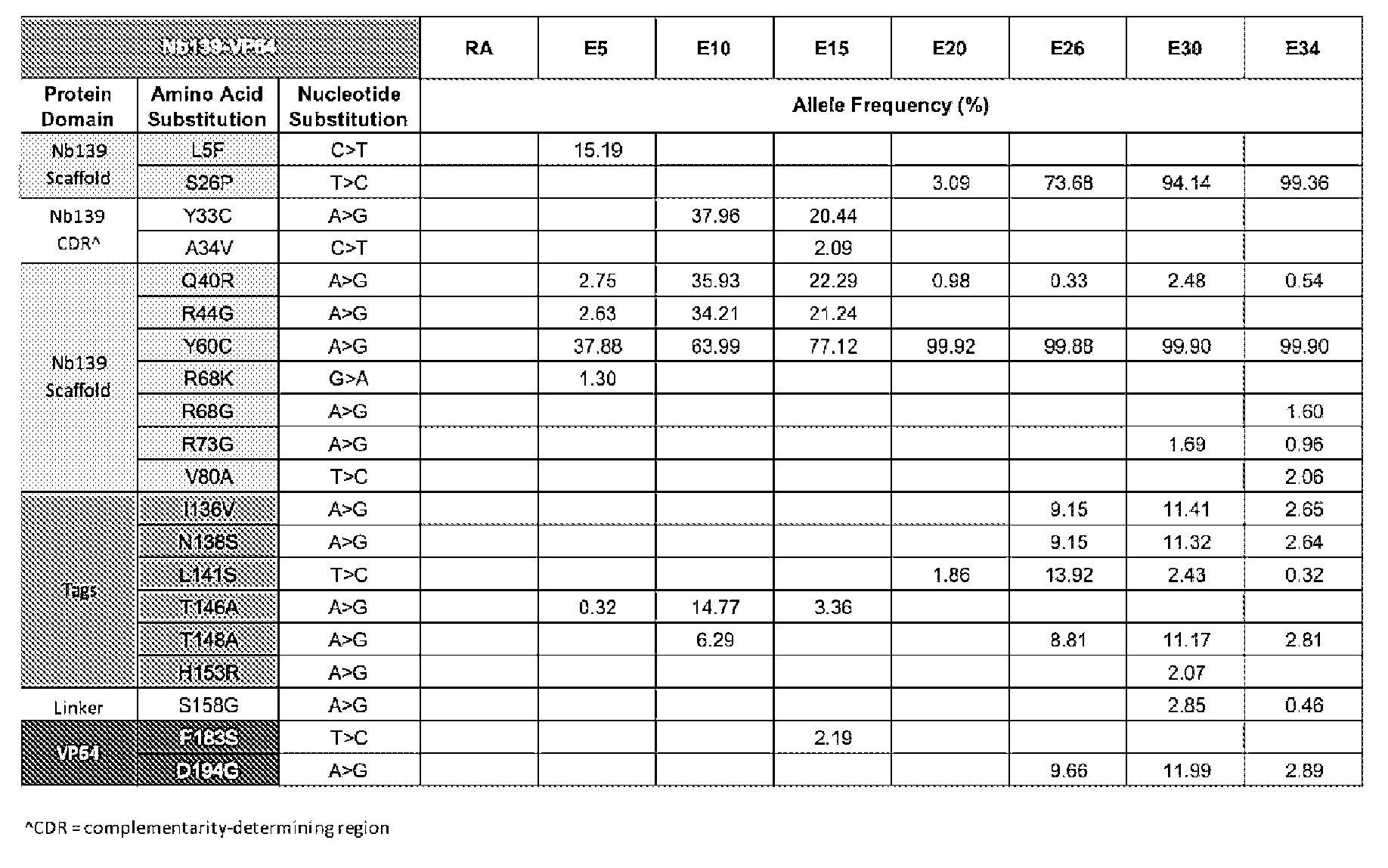
Discussion
SUBSTITUTE SHEET (RULE 26)
Mammalian directed evolution aims to generate biomolecules that are optimized in situ for a desired activity. This is dependent on a high mutation rate to diversify the target and a robust link between function and fitness to maintain the integrity of the system, technical challenges that have not yet been overcome. To this end, we have developed a novel DE platform based on a chimeric SFV design, which takes advantage of the high error rate inherent in alphavirus replication while solving major issues with previous strategies (11).
Natural viral infections generate a diversity of virions encoding incomplete genomes that collectively compete with host defenses (37). Our work was motivated by the recent observation that capsid-genome interactions are distributed throughout the alphavirus genome (21), which contribute to the production of non-functional "cheater" particles containing incomplete genomes that encode structural proteins and contaminate DE campaigns (19). The capsidless VLVs used in the present DE system utilize the cellular exosome pathway to escape the host cell (24), eliminating the co-evolved and highly redundant links between the viral genome and its cognate capsid. This approach maintained system integrity and enabled long-term propagation (>30 rounds) on a synthetic DE circuit. These results pave the way for the adaptation of the present DE system to other mammalian cell types to provide tissue- or disease-specific environments for DE campaigns. The effectiveness of the present DE campaigns using VLVs depends on how tightly the transgene function is coupled to VLV fitness. We confirmed that the present DE system generates authentic evolution products by recovering well-characterised doxycycline resistance mutations in tTA. While single mutations appeared in the VLV population at low frequency, they were rapidly outcompeted by double mutant variants that exhibited greater dox resistance, highlighting the power of the present DE system to generate complex mutations that would be difficult to generate through existing technologies. For example, sampling the complete double mutant sequence space of tTA would require testing 20247 combinations, which is beyond any existing experimental approach. In a more challenging test, the sensitivity of the highly optimized rtTA-3G protein was further increased by long-term propagation on limiting amounts of doxycycline. This shows that selective pressure can be maintained over extended DE campaigns. Finally, by optimizing the intracellular function of a nanobody, we generated a p53 biosensor that responds to DNA damage. We anticipate that the present DE system will be suitable for the generation or optimization of diverse biomolecules designed to function in complex mammalian systems.
Table 8. Other sequences


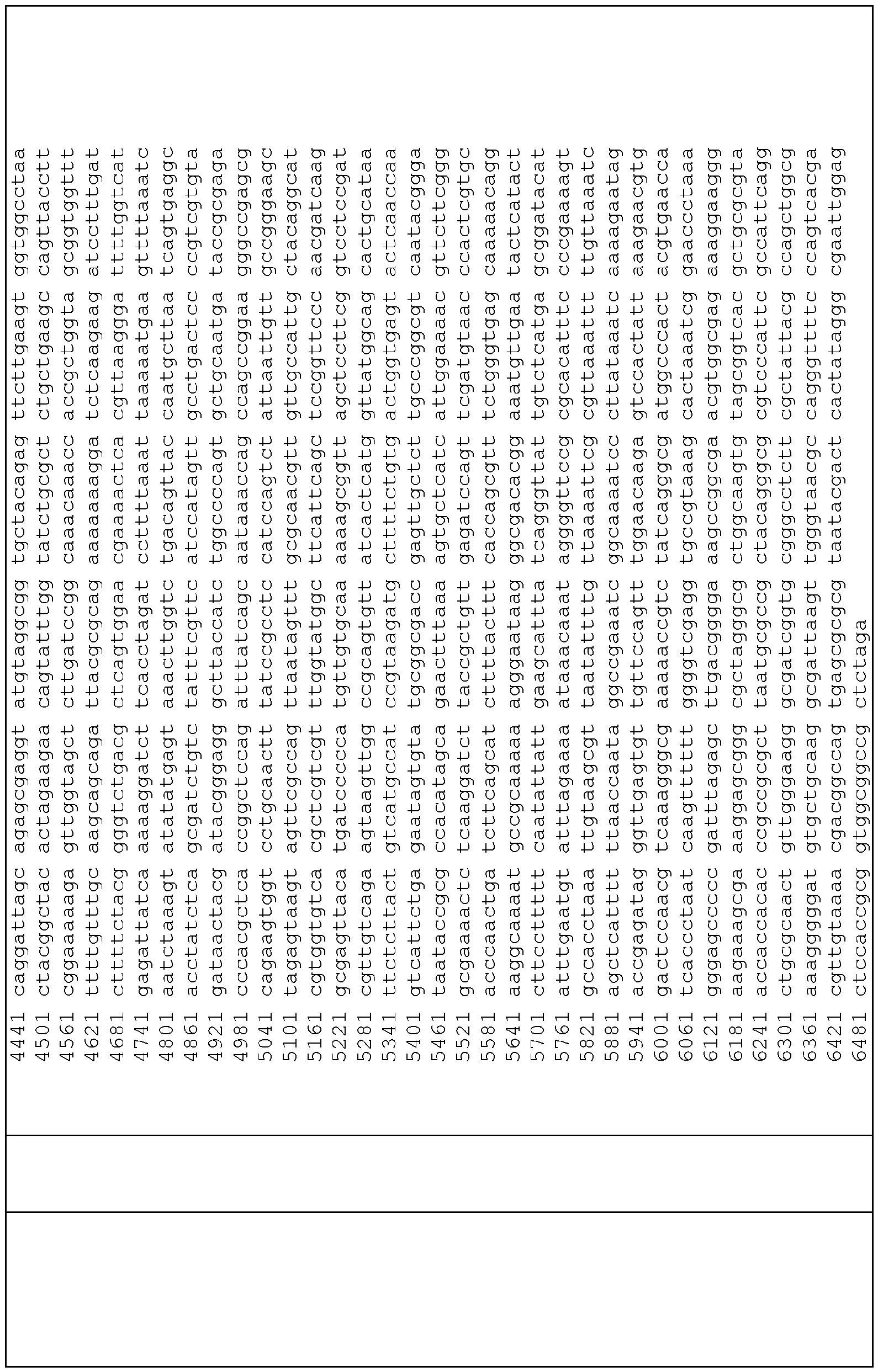
REFERENCES
1. Romero, P. A. & Arnold, F. H. Exploring protein fitness landscapes by directed evolution. Nat. Rev. Mol. Cell Biol. 10, 866-876 (2009).
2. Packer, M. S. & Liu, D. R. Methods for the directed evolution of proteins. Nat. Rev. Genet. 16, 379-394 (2015).
3. Hendel, S. J. & Shoulders, M. D. Directed evolution in mammalian cells. Nat. Methods 18, 346-357 (2021).
4. Eigen, M. & Gardiner, W. Evolutionary molecular engineering based on RNA replication. J. Macromol. Sci. Part A Pure Appl. Chem. 56, 967-978 (1984).
5. Liao, H., McKenzie, T. & Hageman, R. Isolation of a thermostable enzyme variant by cloning and selection in a thermophile. Proc. Natl. Acad. Sci. U. S. A. 83, 576-580 (1986).
6. Chen, K. Q. & Arnold, F. H. Enzyme engineering for nonaqueous solvents: random mutagenesis to enhance activity of subtilisin E in polar organic media. Biotechnology 9, 1073-1077 (1991).
7. Stemmer, W. P. Rapid evolution of a protein in vitro by DNA shuffling. Nature 370, 389-391 (1994).
8. Esvelt, K. M., Carlson, J. C. & Liu, D. R. A system for the continuous directed evolution of biomolecules. Nature 472, 499-503 (2011).
9. Ravikumar, A., Arrieta, A. & Liu, C. C. An orthogonal DNA replication system in yeast. Nat. Chem. Biol. 10, 175-177 (2014).
10. Azam, M., Latek, R. R. & Daley, G. Q. Mechanisms of autoinhibition and STI-571/imatinib resistance revealed by mutagenesis of BCR-ABL. Cell 112, 831-843 (2003).
11. Park, H. & Kim, S. Gene-specific mutagenesis enables rapid continuous evolution of enzymes in vivo. Nucleic Acids Res. 49, e32 (2021).
12. Hess, G. T. et al. Directed evolution using dCas9-targeted somatic hypermutation in mammalian cells. Nat. Methods 13, 1036-1042 (2016).
13. Molina, R. S. etal. In vivo hypermutation and continuous evolution. Nat Rev Methods Primers 2, (2022).
14. Das, A. T. et al. Viral evolution as a tool to improve the tetracycline-regulated gene expression system. J. Biol. Chem. 279, 18776-18782 (2004).
15. Berman, C. M. et al. An Adaptable Platform for Directed Evolution in Human Cells. J. Am. Chem. Soc. 140, 18093-18103 (2018).
16. Jewel, D. et al. Virus-assisted directed evolution of enhanced suppressor tRNAs in mammalian cells. Nat. Methods 20, 95-103 (2023).
17. Klenk, C. et al. A Vaccinia-based system for directed evolution of GPCRs in mammalian cells. Nat. Commun. 14, 1770 (2023).
18. English, J. G. etal. VEGAS as a Platform for Facile Directed Evolution in Mammalian Cells. Cell 178, 748-761. e17 (2019).
19. Denes, C. E. et al. The VEGAS Platform Is Unsuitable for Mammalian Directed Evolution. ACS Synth. Biol. 11, 3544-3549 (2022).
20. Kim, D. Y, Firth, A. E., Atasheva, S., Frolova, E. I. & Frolov, I. Conservation of a packaging signal and the viral genome RNA packaging mechanism in alphavirus evolution. J. Virol. 85, 8022-8036 (2011).
21. Brown, R. S., Anastasakis, D. G., Hafner, M. & Kielian, M. Multiple capsid protein binding sites mediate selective packaging of the alphavirus genomic RNA. Nat. Commun. 11, 4693 (2020).
22. Ruiz-Guillen, M. et al. Capsid-deficient alphaviruses generate propagative infectious microvesicles at the plasma membrane. Cell. Mol. Life Sci. 73, 3897-3916 (2016).
23. Rolls, M. M., Webster, P, Baiba, N. H. & Rose, J. K. Novel infectious particles generated by expression of the vesicular stomatitis virus glycoprotein from a self-replicating RNA. Cell 79, 497-506 (1994).
24. Rose, N. F. et al. In vitro evolution of high-titer, virus-like vesicles containing a single structural protein. Proc. Natl. Acad. Sci. U. S. A. 111, 16866-16871 (2014).
25. Akhrymuk, I., Lukash, T., Frolov, I. & Frolova, E. I. Novel Mutations in nsP2 Abolish Chikungunya Virus-Induced Transcriptional Shutoff and Make the Virus Less Cytopathic without Affecting Its Replication Rates. J. Virol. 93, (2019).
26. Belshaw, R., Pybus, O. G. & Rambaut, A. The evolution of genome compression and genomic novelty in RNA viruses. Genome Res. 17, 1496-1504 (2007).
27. Patterson, E. I. et al. Measuring Alphavirus Fidelity Using Non-lnfectious Virus Particles. Viruses 12, (2020).
28. O’Hara, P. J., Nichol, S. T., Horodyski, F. M. & Holland, J. J. Vesicular stomatitis virus
defective interfering particles can contain extensive genomic sequence rearrangements and base substitutions. Cell 36, 915-924 (1984).
29. Drewett, V. et al. Serum response factor cleavage by caspases 3 and 7 linked to apoptosis in human BJAB cells. J. Biol. Chem. 276, 33444-33451 (2001).
30. Hecht, B., Muller, G. & Hillen, W. Noninducible Tet repressor mutations map from the operator binding motif to the C terminus. J. Bacteriol. 175, 1206-1210 (1993).
31. Loew, R., Heinz, N., Hampf, M., Bujard, H. &Gossen, M. Improved Tet-responsive promoters with minimized background expression. BMC Biotechnol. 10, 81 (2010).
32. Muller, G. et al. Characterization of non-inducible Tet repressor mutants suggests conformational changes necessary for induction. Nat. Struct. Biol. 2, 693-703 (1995).
33. Jumper, J. et al. Highly accurate protein structure prediction with AlphaFold. Nature 596, 583-589 (2021).
34. Zhou, X., Vink, M., Klaver, B., Berkhout, B. & Das, A. T. Optimization of the Tet-On system for regulated gene expression through viral evolution. Gene Ther. 13, 1382-1390 (2006).
35. Dingus, J. G., Tang, J. C. Y., Amamoto, R., Wallick, G. K. & Cepko, C. L. A general approach for stabilizing nanobodies for intracellular expression. Elife 11, (2022).
36. Bethuyne, J. et al. A nanobody modulates the p53 transcriptional program without perturbing its functional architecture. Nucleic Acids Res. 42, 12928-12938 (2014).
37. Vignuzzi, M. & Lopez, C. B. Defective viral genomes are key drivers of the virus-host interaction. Nat Microbiol 4, 1075-1087 (2019).
38. Bass, B. L. RNA editing by adenosine deaminases that act on RNA. Annu. Rev. Biochem. 71, 817-846 (2002).
39. Tian, R. et al. Establishing a synthetic orthogonal replication system enables accelerated evolution in. Science 383, 421-426 (2024).
Throughout the specification the aim has been to describe the preferred embodiments of the invention without limiting the invention to any one embodiment or specific collection of features. It will therefore be appreciated by those of skill in the art that, in light of the instant disclosure, various modifications and changes can be made in the particular embodiments exemplified without departing from the scope of the present invention.
All computer programs, algorithms, patent and scientific literature referred to herein is incorporated herein by reference.
Any reference to publications cited in this specification is not an admission that the disclosures constitute common general knowledge in Australia.
Claims
1. A directed evolution system, comprising:
(i) a first nucleic acid sequence encoding one or more non-structural genes of a virus and at least one evolution candidate,
(ii) a second nucleic acid sequence encoding one or more packaging genes, and
(iii) a third nucleic acid sequence encoding a target element for the at least one evolution candidate and the one or more packaging genes, wherein the first nucleic acid sequence and the second nucleic acid sequence generates a first virus-like particle (VLP) after expression in a host cell, and wherein said first VLP and the third nucleic acid sequence generates a second VLP after transduction of the first VLP and expression of the third nucleic acid sequence in a host cell, wherein said evolution is driven by at least one round of error-prone viral genome replication of the at least one evolution candidate after transduction of the first VLP, and wherein the generation of the second VLP is dependent on the target element regulated directly or indirectly by the at least one evolution candidate.
2. The directed evolution of claim 1, wherein the one or more packaging gene is different from the virus
3. The directed evolution system of claim 1, wherein the one or more packaging genes is from a different virus.
4. The directed evolution system of claim 1, wherein the one or more packaging genes is a vesicular stomatitis virus (VSV) G DNA encoding a VSV G protein.
5. The directed evolution system of claim 1 , wherein the virus is a RNA virus.
6. The directed evolution system of claim 1, wherein the virus is an alphavirus.
7. The directed evolution system of claim 1, wherein the virus is Semliki Forest Virus (SFV).
8. The directed evolution system of claim 7, wherein the one or more non-structural genes comprises NSP1, NSP2, NSP 3 and NSP4 of SFV non-structural genes.
9. The directed evolution system of claim 7, wherein the one or more non-structural genes further comprises a 5’ untranslated region and a 3’ untranslated region of SFV non-structural genes operably linked to NSP1, NSP2, NSP3 and NSP4.
10. The directed evolution system of claim 1, wherein the VLP is a virus-like vesicle (VLV)
11. The directed evolution system of any one of claims 1 to 10, wherein the one or more non- structural genes comprises at least one mutation that increases virus titer production.
12. The directed evolution system of claim 11, wherein the at least one mutation is selected from G-4700-A, A-5424-G, G-5434-A, T-5825-C, T-5930-C, A-6047-G, G-6783-A, G-6963-A, G- 7834- A, T-8859-A, T-8864-C, G-9211-A , A-10427-G, G-11560-A , and other modifications that improve packaging or functionality of the system.
13. The directed evolution system of claim 11, wherein the at least one mutation comprises G-4700-A, A-5424-G, G-5434-A, T-5825-C, T-5930-C, A-6047-G, G-6783-A, G-6963-A, G-7834- A, T-8859-A, T-8864-C, G-9211-A , A-10427-G, and G-11560-A.
14. The directed evolution system of claim 11, wherein the at least one mutation is selected from G106E, L347L, V351I, L481S, I516T, D555G, L880L, T860T, A1151T, 14921, M1494T, A1610T, N2015S, E2393K or any other modifications that improve packaging or functionality of the system.
15. The directed evolution system of claim 11, wherein the at least one mutation comprises G106E, L347L, V351I, L481S, I516T, D555G, L880L, T860T, A1151T, 14921, M1494T, A1610T, N2015S, and E2393K.
16. The directed evolution system of any one of claims 1 to 15, wherein the one or more packaging genes comprises at least one mutation that increases virus titer production selected from A-11871-G, T-11978-C and other modifications that improve packaging or functionality of the system.
17. The directed evolution system of claim 1, wherein the first nucleic acid sequence comprises a DNA sequence comprising a promoter sequence operably linked to a DNA sequence encoding the one or more non-structural genes of the RNA virus, operably linked to a DNA sequence encoding the at least one evolution candidate.
18. The directed evolution system of claim 17, wherein the first nucleic acid sequence further comprises an alphavirus subgenomic RNA promoter (SGP) operably linked between the one or more non-structural genes of the RNA virus and the at least one evolution candidate.
19. The directed evolution system of claim 18, wherein the alphavirus SGP is a SFV promoter.
20. The directed evolution system of claim 1, wherein the second nucleic acid sequence comprises a DNA sequence comprising a promoter sequence operably linked to the one or more viral packaging genes.
21. The directed evolution system of any one of claims 17 to 20, wherein the promoter sequence is a cytomegalovirus immediate early promoter (CMV promoter) sequence.
22. The directed evolution system of claim 1 , wherein the host cell is a mammalian cell.
23. The directed evolution system of claim 22, wherein the mammalian cell is a BHK-21 cell ora HEK293T cell.
24. The directed evolution system of claim 1, wherein the evolution candidate comprises a sequence of at least one transgene of interest.
25. The directed evolution system of claim 24, wherein the at least one transgene of interest encodes a protein, a protein domain, a protein-coding region, a non-protein-coding, a truncated protein, a truncated protein domain, a truncated-protein coding region or a truncated non-protein- coding region.
26. The directed evolution system of claim 24 or 25, wherein the evolution candidate is selected from the group consisting of Tet transactivator (tTa), reverse Tet transactivator (rtTa), and anti-p53 nanobody.
27. The directed evolution system of claim 1, wherein the second VLP and the third nucleic acid sequence generates further VLPs after transduction of the second VLP and expression of the third nucleic acid sequence in a host cell, wherein the generation of the further VLPs are dependent on the target element regulated directly or indirectly by the at least one evolution candidate
28. The directed evolution system of claim 27, wherein the system further generates one or more additional VLPs through expression of the third nucleic acid and transduction of the further VLPs in a host cell, wherein the generation of the one or more additional VLPs are dependent on the target element regulated directly or indirectly by the at least one evolution candidate.
29. A method of performing directed evolution of at least one evolution candidate, comprising the directed evolution system of claim 1.
30. A method of performing directed evolution of at least one evolution candidate, comprising:
(i) expressing in a host cell with
(a) a first nucleic acid sequence encoding one or more non-structural genes of a virus and the at least one evolution candidate, and
(b) a second nucleic acid sequence encoding one or more viral packaging genes,
(ii) generating a first virus-like particle (VLP) by the host cell, and
(iii) transducing a host cell with the first VLP and expressing a third nucleic acid sequence encoding a target element for the at least one evolution candidate and the one or more packaging genes to generate a second VLP, wherein said evolution is driven by at least one round of error-prone viral genome replication of the at least one evolution candidate in step (iii), and wherein the generation of the second VLP is dependent on the target element regulated directly or indirectly by the at least one evolution candidate.
31. The method of claim 30, further comprises screening the host cells for VLPs comprising a desirable evolved candidate.
32. The method of claim 30, further comprises transducing a host cell with the second VLP and expressing the third nucleic acid sequence to generate further VLPs, wherein the generation of the further VLPs are dependent on the target element regulated directly or indirectly by the at least one evolution candidate.
33. The method of claim 32, further comprises transducing a host cell with the further VLPs and expressing the third nucleic acid sequence to generate one or more additional VLPs, wherein the generation of the one or more additional VLPs are dependent on the target element regulated directly or indirectly by the at least one evolution candidate.
34. A virus-like particle produced by the method of any one of claims 29 to 33.
35. A host cell comprising the virus-like particle of claim 34.
36. A composition comprising the virus-like particle of claim 34.
37. A kit for performing directed evolution, comprising
(i) a first nucleic acid sequence encoding one or more non-structural genes of a virus and at least one evolution candidate,
(ii) a second nucleic acid sequence encoding one or more packaging genes, and
(iii) a third nucleic acid sequence encoding a target element for the at least one evolution candidate and the one or more packaging genes, wherein the first nucleic acid sequence and the second nucleic acid sequence generates a first virus-like particle (VLP) after expression in a host cell, and wherein said first VLP and the third plasmid generates a second VLP after transduction of the first VLP and expression of the third nucleic acid sequence in a host cell, wherein said evolution is driven by at least one round of error-prone viral genome replication of the at least one evolution candidate after transduction of the first VLP, and wherein the generation of the second VLP is dependent on the target element regulated directly or indirectly by the at least one evolution candidate.
38. The kit of claim 37, comprising the directed evolution system of claim 1.
39. The kit of claim 37, for use in the method of any one of claims 29 to 33.
Applications Claiming Priority (2)
| Application Number | Priority Date | Filing Date | Title |
|---|---|---|---|
| AU2023904160A AU2023904160A0 (en) | 2023-12-20 | A directed evolution system | |
| AU2023904160 | 2023-12-20 |
Publications (1)
| Publication Number | Publication Date |
|---|---|
| WO2025129231A1 true WO2025129231A1 (en) | 2025-06-26 |
Family
ID=96135979
Family Applications (1)
| Application Number | Title | Priority Date | Filing Date |
|---|---|---|---|
| PCT/AU2024/050763 Pending WO2025129231A1 (en) | 2023-12-20 | 2024-07-17 | A directed evolution system |
Country Status (1)
| Country | Link |
|---|---|
| WO (1) | WO2025129231A1 (en) |
-
2024
- 2024-07-17 WO PCT/AU2024/050763 patent/WO2025129231A1/en active Pending
Non-Patent Citations (3)
| Title |
|---|
| DENES CHRISTOPHER E., COLE ALEXANDER J., TRAN MINH THUAN NGUYEN, MOHD KHALID MOHD KHAIRUL NIZAM, HEWITT ALEX W., HESSELSON DANIEL,: "The VEGAS Platform Is Unsuitable for Mammalian Directed Evolution", ACS SYNTHETIC BIOLOGY, AMERICAN CHEMICAL SOCIETY, WASHINGTON DC ,USA, vol. 11, no. 10, 21 October 2022 (2022-10-21), Washington DC ,USA , pages 3544 - 3549, XP093332100, ISSN: 2161-5063, DOI: 10.1021/acssynbio.2c00460 * |
| ENGLISH JUSTIN G.; OLSEN REID H.J.; LANSU KATHERINE; PATEL MICHAEL; WHITE KAROLINE; COCKRELL ADAM S.; SINGH DARSHAN; STRACHAN RYAN: "VEGAS as a Platform for Facile Directed Evolution in Mammalian Cells", CELL, ELSEVIER, AMSTERDAM NL, vol. 178, no. 3, 4 July 2019 (2019-07-04), Amsterdam NL , pages 748, XP085747876, ISSN: 0092-8674, DOI: 10.1016/j.cell.2019.05.051 * |
| NINA F. ROSE, LINDA BUONOCORE, JOHN B. SCHELL, ANASUYA CHATTOPADHYAY, KAPIL BAHL, XINRAN LIU, JOHN K. ROSE: "In vitro evolution of high-titer, virus-like vesicles containing a single structural protein", PROCEEDINGS OF THE NATIONAL ACADEMY OF SCIENCES (PNAS), NATIONAL ACADEMY OF SCIENCES, vol. 111, no. 47, 25 November 2014 (2014-11-25), pages 16866 - 16871, XP055422561, ISSN: 0027-8424, DOI: 10.1073/pnas.1414991111 * |
Similar Documents
| Publication | Publication Date | Title |
|---|---|---|
| CA2805915C (en) | Multiple input biologic classifier circuits for cells | |
| Sedivy et al. | An inducible mammalian amber suppressor: propagation of a poliovirus mutant | |
| Chapman et al. | Detection of the virulent form of AVR3a from Phytophthora infestans following artificial evolution of potato resistance gene R3a | |
| Lello et al. | Cross-utilisation of template RNAs by alphavirus replicases | |
| JP5258874B2 (en) | RNA interference tag | |
| JP2001519165A (en) | Recombinant alphavirus-based vectors with reduced inhibition of cell macromolecule synthesis | |
| JP2001521369A (en) | Alphavirus vector with reduced inhibition of cell macromolecule synthesis | |
| US12241062B2 (en) | Mammalian cells and methods for engineering the same | |
| AU2003267851B2 (en) | Novel full-length genomic RNA of Japanese encephalitis virus, infectious JEV CDNA therefrom, and use thereof | |
| Urbanowicz et al. | Homologous crossovers among molecules of brome mosaic bromovirus RNA1 or RNA2 segments in vivo | |
| US20250197884A1 (en) | Insect cells and methods for engineering the same | |
| WO2025129231A1 (en) | A directed evolution system | |
| Tzanetakis et al. | Nucleotide sequence of Blackberry yellow vein associated virus, a novel member of the Closteroviridae | |
| Mangrauthia et al. | Genetic variation of coat protein gene among the isolates of Rice tungro spherical virus from tungro-endemic states of the India | |
| Both | Identification of a unique family of F-box proteins in atadenoviruses | |
| KR20010079671A (en) | USE OF SUPPRESSOR tRNA'S TO REGULATE CYTOTOXICITY DURING THE PRODUCTION OF RECOMBINANT GENE PRODUCTS | |
| Cole et al. | A chimeric viral platform for directed evolution in mammalian cells | |
| Rausalu et al. | Properties and use of novel replication-competent vectors based on Semliki Forest virus | |
| CN104789598B (en) | A kind of construction method for the recombinant silkworm cytoplasmic polyhedrosis virus for expressing red fluorescent protein | |
| Tzeng et al. | Rubella virus capsid protein modulation of viral genomic and subgenomic RNA synthesis | |
| US20250215422A1 (en) | RT-DNA Fidelity and Retron Genome Editing | |
| Adams et al. | Analysis of intermolecular RNA–RNA recombination by rubella virus | |
| Asuke et al. | Evolution of HMA-integrated tandem kinases accompanied by expansion of target pathogens | |
| CN107034232B (en) | Application of ATG16L1 gene in enhancing replication capacity of Newcastle disease virus | |
| CN119432748A (en) | Lassa virus cell model and its application in antiviral drug analysis, viral infection mechanism and life cycle |
Legal Events
| Date | Code | Title | Description |
|---|---|---|---|
| 121 | Ep: the epo has been informed by wipo that ep was designated in this application |
Ref document number: 24905164 Country of ref document: EP Kind code of ref document: A1 |