WO2025128805A1 - A cyclic peptide il-1beta trap for the treatment of atherosclerosis and inflammatory disorders - Google Patents
A cyclic peptide il-1beta trap for the treatment of atherosclerosis and inflammatory disorders Download PDFInfo
- Publication number
- WO2025128805A1 WO2025128805A1 PCT/US2024/059742 US2024059742W WO2025128805A1 WO 2025128805 A1 WO2025128805 A1 WO 2025128805A1 US 2024059742 W US2024059742 W US 2024059742W WO 2025128805 A1 WO2025128805 A1 WO 2025128805A1
- Authority
- WO
- WIPO (PCT)
- Prior art keywords
- compound
- pharmaceutically acceptable
- acceptable salt
- group
- mmol
- Prior art date
- Legal status (The legal status is an assumption and is not a legal conclusion. Google has not performed a legal analysis and makes no representation as to the accuracy of the status listed.)
- Pending
Links
Classifications
-
- C—CHEMISTRY; METALLURGY
- C07—ORGANIC CHEMISTRY
- C07K—PEPTIDES
- C07K7/00—Peptides having 5 to 20 amino acids in a fully defined sequence; Derivatives thereof
- C07K7/64—Cyclic peptides containing only normal peptide links
-
- C—CHEMISTRY; METALLURGY
- C07—ORGANIC CHEMISTRY
- C07K—PEPTIDES
- C07K7/00—Peptides having 5 to 20 amino acids in a fully defined sequence; Derivatives thereof
- C07K7/04—Linear peptides containing only normal peptide links
- C07K7/08—Linear peptides containing only normal peptide links having 12 to 20 amino acids
-
- A—HUMAN NECESSITIES
- A61—MEDICAL OR VETERINARY SCIENCE; HYGIENE
- A61K—PREPARATIONS FOR MEDICAL, DENTAL OR TOILETRY PURPOSES
- A61K38/00—Medicinal preparations containing peptides
Definitions
- the present disclosure relates to certain cyclic peptides that trap interleukin- ip (IL-ip), pharmaceutical compositions comprising such peptides, and methods for using the compounds for treating, inhibiting, or ameliorating one or more cardiovascular disease states that could benefit from trapping IL-ip, including atherosclerosis.
- IL-ip interleukin- ip
- Atherosclerosis is a disease of the arteries characterized by the accumulation of cholesterol plaques on the interior wall of the artery. Progression of atherosclerosis can result in hardening or narrowing of the arteries and increases the risk of plaque ruptures. These ruptures release cholesterol globules and other material into the bloodstream which may result in blockage of blood flow to the brain, heart, or other organ. Medically, these are known as Major Adverse Cardiac Events (MACE).
- MACE Major Adverse Cardiac Events
- Atherosclerotic Cardiovascular Disease includes high cholesterol, high blood pressure, diet high in saturated fat, smoking, obesity, diabetes, lack of exercise, and elevated levels of C-reactive protein (CRP), a marker of inflammation.
- CRP C-reactive protein
- the first line of treatment to prevent the progression of ASCVD is a healthy diet and exercise, however, compliance is generally poor.
- Pharmacological treatments for ASCVD have largely focused on cholesterol-lowering medications such as statins, cholesterol absorption inhibitors, and low-density lipoprotein (LDL) receptor inhibitors. These medications are highly effective at reducing the buildup of fatty acid deposits and improving arterial health.
- Other medications that are prescribed for ASCVD which do not ameliorate the disease state include blood thinners, such as aspirin, to prevent clumping of platelets in narrow arteries, and blood pressure medications to reduce the risk and severity of heart attacks.
- Surgical options for more aggressive intervention in advanced cases of ASCVD include angioplasty, stent placement, endarterectomy (surgical removal of plaques), and bypass surgery.
- Canakinumab Anti-inflammatory Thrombosis Outcomes Study was the first clinical trial to show that reducing vascular inflammation in the absence of concomitant lipid lowering reduces the rates of cardiovascular events. N Engl J Med 2017; 377:1119-1131.
- Canakinumab is an anti-interleukin-1 beta (IL-ip) human monoclonal antibody approved for clinical use in rheumatologic disorders.
- IL-ip is a proinflammatory cytokine that induces IL-6 and thereby elevates the downstream inflammatory biomarker high sensitivity CRP (hsCRP). Therefore, CANTOS provides proof of concept that therapies targeting IL-ip could reduce rates of MACE in certain patients in a manner that is complimentary and potentially additive to the LDL-lowering standard of care.
- the present disclosure provides certain cyclic peptides that reduce inflammation by binding to the IL-ip cytokine and prevent engagement with the IL-1 receptor, resulting in inhibition of downstream pro-inflammatory signaling. These cyclic peptides can be valuable pharmaceutically active compounds for the treatment of cardiovascular diseases and inflammatory disorders.
- the present disclosure provides compounds of Formula (I)
- the present disclosure provides a method for treating a cardiovascular disorder (e.g., atherosclerosis, vascular inflammation) comprising administering a therapeutically effective amount of the compound of the disclosure to a subject in need thereof.
- a cardiovascular disorder e.g., atherosclerosis, vascular inflammation
- the administration comprises an oral administration of the compound.
- the disclosure furthermore provides processes for preparing compounds of the disclosure and pharmaceutical compositions which comprise compounds of the disclosure and a pharmaceutically acceptable carrier.
- FIG. 1 describes the amino acid sequences of SEQ ID NOS: 1-379 and their associated properties.
- the present disclosure provides a compound having structural
- L3 is selected from the group consisting of: wherein RP r is H or C1-C3 alkyl; wherein each RLa i s independently H or C1-C3 alkyl, or alternatively the two RLa together with the carbon atom to which they are attached, form a 5- to 6-membered saturated heterocyclic ring containing 1 heteroatom group selected from the group consisting of N(H), N(CH3), N(CH3)2, O and S; and
- L2 is selected from the group consisting of:
- RL2a is H or methyl
- R1 is selected from the group consisting of:
- Ria is (a) C1-C3 alkyl
- Rib is:
- a 5- to 6-membered heteroaryl wherein the 5- to 6-membered heteroaryl contains 1 to 3 heteroatoms independently selected from the group consisting of N, O, and S;
- Rlc is hydroxy, amino, morpholinyl, morpholinyl(CH2CH2)-N(H)-;
- A2 is -C(O)OH or -C(0)NH2;
- R2 is H, -C(O)-(C1-C3 alkyl), -C(O)-(CH2)g-C2, -C(O)-C(H)(CH3)-C2, or -(CH2)h-C 2 ,
- a 5- to 6-membered mono- or a 9- to 10-membered bicyclic heteroaryl containing wherein said 5- to 6-membered or 9- to 10-membered bicyclic heteroaryl contains 1 to 2 heteroatoms independently selected from the group consisting of N, O, and S; wherein C2 is unsubstituted or substituted by 1 to 3 RC2 substituents independently selected from the group consisting of halo, amino, hydroxy, C1-C3 alkyl, C1-C3 fluoroalkyl, C1-C3 alkoxy, and phenyl;
- heteroaryl contains 1 to 2 heteroatoms independently selected from the group consisting of N, O, and S; wherein R3 is unsubstituted or substituted by 1 to 2 R3 a substituents independently selected from the group consisting of halo, C1-C3 alkyl, and C1-C3 alkoxy;
- R4 is -(CH2)iCO2H, -(CH2)iOH, -C(H)(0H)-CH3, -C4a ⁇ c4b -CH2-C4a O r -CH2-C4b ;
- R5 is Ci-C3 alkyl
- R6 is H or C1-C3 alkyl; or alternatively R5 and R6 together with the atoms to which they are attached form a pyrrolidinyl, piperidinyl or azepinyl ring;
- Ring CPC is phenyl or cyclohexyl
- R7 is -(CH 2 )jNH 2 ; -(CH 2 )jN + (CH 3 )3;
- a 4- to 6-membered saturated monocyclic heterocycloalkyl wherein said 4- to 6- membered saturated monocyclic heterocycloalkyl contains 1 to 2 heteroatoms independently selected from the group consisting of N, O, and S; wherein C7a i s unsubstituted or substituted by 1 to 3 RC7a substituents independently selected from the group consisting of halo, amino, amino(Ci-C3)alkyl, carbamoyl, hydroxy, carboxy, C1-C3 alkyl, C1-C3 fluoroalkyl, C1-C3 alkoxy, and -C(O)CH2-C7b ;
- C ⁇ b i a 4- to 6-membered saturated monocyclic heterocycloalkyl, wherein said 4- to 6-membered saturated monocyclic heterocycloalkyl contains 1 to 2 heteroatoms independently selected from the group consisting of N and O; wherein C7b i s unsubstituted or substituted by 1 to 2 RC7b substituents independently selected from the group consisting of C1-C3 alkyl;
- R8 is H, halo, or C1-C3 alkyl; subscript a is 0 or 1; subscript b is 0 or 1; subscript c is 1, 2, 3, 4, or 5; subscript d is 1 or 2; subscript e is 0, 1, or 2; subscript f is 0, 1, 2, or 3; subscript g is 0, 1, or 2; subscript h is 1 or 2; subscript i is 1, 2, or 3; subscript j is 1, 2, or 3; and subscript k is 1, 2, 3, or 4; subscript m is 0, 1, 2, 3, or 4; subscript nl n is 0, 1 or 2; subscript n2 is 1 or 2; subscript p is 0, 1, 2, or 3; subscript q is 0, 1, 2, 3, or 4; and subscript r is 1, 2, 3, 4, or 5; or a pharmaceutically acceptable salt thereof.
- the present disclosure provides a compound of the Formula (I), wherein L3 is
- L3cy i s cyclopropyl, cyclopentenyl, or phenyl.
- the present disclosure provides a compound of the Formula (I), wherein L3 is
- RP r is H.
- the present disclosure provides a compound of the Formula (I), wherein L3 is
- the present disclosure provides a compound of the Formula (I), wherein L3 is
- each RLa is methyl; or the two RLa together with the carbon atom to which they are attached, form a piperidine ring.
- the present disclosure provides a compound of the Formula (I), wherein L3 is subscript c is 1, 2, 3, or 4.
- the present disclosure provides a compound of the Formula (I), wherein L2 is
- RL2 i s C1-C4 alkyl.
- RL2a is methyl
- RL2 is -(CH2)e-CL2, wherein CL2 i s unsubstituted or substituted phenyl, and subscript e is 0.
- the present disclosure provides a compound of the Formula (I), wherein L2 is wherein subscript nl is 0, 1, or 2 and subscript n2 is 1 or 2.
- RCL3 i selected from the group consisting of pyrimidin-5-yl, 4-fluorobenzyloxy, and 1,3- oxazolylmethoxy.
- L2 is
- the present disclosure provides a compound of the Formula (I), wherein L2 is
- RCL3 is independently selected from the group consisting of benzyloxy and 1,3-oxazol- 2-yl methoxy, and subscript f is 0 or 1.
- the present disclosure provides a compound of the Formula (I) wherein R1 is Rl a -C(O)N(H)-CH2CH2-O-.
- Ria is methyl.
- the present disclosure provides a compound of the Formula (I) wherein: i .
- R 1 is the group
- Rib is methyl or morpholin-4-yl-CH2-.
- the present disclosure provides a compound of the Formula
- R 1 is the group
- Rib is morpholin-4-yl-CH2-.
- the present disclosure provides a compound of the Formula (I) wherein R2 is -H, -C(O)CH2Ph, -CH2Ph, -C(O)CH3, -C(O)-pyridyl, -C(O)CH2-indolyl, or -C(O)-C(H)(CH3)-pyridyl.
- the present disclosure provides a compound of the Formula (I) wherein R3 is substituted or unsubstituted naphthyl or indolyl.
- the present disclosure provides a compound of the Formula (I) wherein R4 is -(CH )iCO2H. In a specific embodiment subscript i is 1.
- the present disclosure provides a compound of the Formula (I) wherein R5 and R6 together with the atoms to which they are attached form a piperidinyl ring.
- the present disclosure provides a compound of the Formula (I) wherein R5 and R6 are methyl.
- the present disclosure provides a compound of the Formula (I) wherein ring CPC is phenyl. [0040] In another embodiment, the present disclosure provides a compound of the Formula (I) wherein Al is -CO2H.
- the present disclosure provides a compound of the Formula (I) wherein R.7 is -C a. in a particular embodiment, C ⁇ a i s indolyl.
- the present disclosure provides a compound of the Formula (I) wherein R is H, F or Cl.
- R is substituted on the 6-position of the illustrated indole ring.
- R is substituted on the 7-position of the illustrated indole ring.
- the present disclosure provides a compound of the Formula (I) wherein:
- L3 is selected from the group consisting of: each RLa is methyl; or the two RLa, together with the carbon atom to which they are attached, form a piperidine ring; and subscript c is 1, 2, 3, or 4;
- L2 is selected from the group consisting of:
- RCL3 i independently selected from benzyloxy and l,3-oxazol-2-yl methoxy; and subscript f is 0 or 1;
- R1 is:
- R1 -C(O)N(H)-CH2CH2-O- and Rl a is methyl
- Rib is methyl or morpholin-4-yl-CH2-;
- R2 is -H
- R3 is substituted or unsubstituted naphthyl or indolyl (e.g., naphth-l-yl, 4-fluoroindol-3-yl, or 4-chloroindol-3-yl);
- R4 is-(CH2)iCO2H and subscript i is 1;
- R5 and R6 are methyl, or alternatively, R5 and R6 together with the atoms to which they are attached form a piperidinyl ring;
- Ring CPC is phenyl
- Al is -CO2H
- R7 is indolyl or 7-azaindolyl (e.g., 7-aza-3-indol-3-yl);
- R8 is H, F, or Cl.
- the present disclosure provides a compound of Formula (IA)
- the present disclosure provides the compound of the Formula (IA) or the pharmaceutically acceptable thereof, wherein:
- RCL3 i independently selected from benzyloxy and l,3-oxazol-2-yl methoxy
- R1 is:
- Rib is methyl or morpholin-4-yl-CH2-;
- R8 is H, F, or Cl.
- the present disclosure provides a compound of Formula (I) wherein the compound is selected from the group consisting of SEQ ID NOS: 1-379.
- the present disclosure provides a compound of Formula (I) wherein the compound is selected from the group consisting of (SEQ ID NOS: 246, 292, 324, 189, 301, 302, 305, 265, 280, 199, 286, 188 and 379, respectively):
- the compounds of the disclosure trap interleukin- ip, prevent signaling through the IL-1 receptor and hence reduce the downstream markers IL-6 and CRP.
- the compounds can be useful to treat the inflammatory components of cardiovascular diseases such as ASCVD and heart failure with preserved ejection fraction (HFpEF).
- the compounds can also be useful to treat inflammatory disorders such as hidradenitis suppurativa (acne inversa), inflammatory bowel disease, and osteoarthritis.
- salt(s) denotes acidic salts formed with inorganic and/or organic acids, as well as basic salts formed with inorganic and/or organic bases.
- a compound of Formula (I) contains both a basic moiety, such as, but not limited to an amino group, pyrrolidine or imidazole, and an acidic moiety, such as, but not limited to a carboxylic acid, zwitterions ("inner salts") may be formed and are included within the term “salt(s)" as used herein.
- the salt is a pharmaceutically acceptable (i.e., non-toxic, physiologically acceptable) salt.
- the salt is other than a pharmaceutically acceptable salt.
- Salts of the compounds of Formula (I) may be formed, for example, by reacting a compound of Formula (I) with an amount of acid or base, such as an equivalent amount, in a medium such as one in which the salt precipitates or in an aqueous medium followed by lyophilization.
- Acyl means an alkyl-C(O)- group, wherein alkyl is as defined below.
- the bond to the parent group is through the carbon atom of the carbonyl group.
- Alkyl as well as other groups having the prefix “alk”, such as alkoxy, and the like, means carbon chains which may be linear or branched, or combinations thereof, containing the indicated number of carbon atoms.
- a Ci-Ce alkyl means an alkyl group having one (i.e., methyl) up to 6 carbon atoms (i.e., hexyl).
- linear alkyl groups have 1-6 carbon atoms and branched alkyl groups have 3-7 carbon atoms.
- alkyl groups include methyl, ethyl, propyl, isopropyl, butyl, sec- and tert-butyl, pentyl, hexyl, heptyl, octyl, nonyl and the like.
- Alkoxy and “alkyl-O-” are used interchangeably and refer to an alkyl group linked to oxygen.
- Amino means a H2N- group. The bond to the parent group is through the nitrogen atom.
- Aryl represents a monocyclic 6-membered or bicyclic 10-membered ring system, wherein at least one ring is aromatic, and all the ring atoms are carbon.
- Bocyclic ring system refers to two joined rings.
- the rings may be fused, i.e., share two adjacent atoms, or “spirocyclic”, i.e., share only a single atom.
- Heteroaryl refers to aromatic monocyclic, bicyclic and tricyclic ring structures in which one or more atoms in the ring, the heteroatom(s), is an element other than carbon. Heteroatoms are typically O, S, or N atoms. Examples of heteroaromatic groups include pyridinyl, pyrimidinyl, pyrrolyl, pyridazinyl, isoxazolyl, thiazolyl, oxazolyl, indolyl, benzoxazolyl, benzothiazolyl, and imidazolyl.
- “Hydroxyalkyl” means a HO-alkyl- group in which alkyl is as previously defined. The bond to the parent moiety is through a carbon atom of the alkyl group. Preferred hydroxyalkyls contain from 1 to 3 carbon atoms. Non-limiting examples of suitable hydroxyalkyl groups include hydroxymethyl and 2-hydroxy ethyl.
- any variable e.g., R CL3
- its definition on each occurrence is independent of its definition at every other occurrence.
- Combinations of substituents and/or variables are permissible only if such combinations result in stable compounds.
- substituents e.g., R C9
- a “stable” compound is a compound which can be prepared and isolated and whose structure and properties remain or can be caused to remain essentially unchanged for a period of time sufficient to allow use of the compound for the purposes described herein (e.g., therapeutic or prophylactic administration to a subject).
- substituted shall be deemed to include multiple degrees of substitution by a named substituent. Where multiple substituent moieties are disclosed or claimed, the substituted compound can be independently substituted by one or more of the disclosed or claimed substituent moieties, singly or plurally. By independently substituted, it is meant that the (two or more) substituents can be the same or different.
- the wavy line ' AnAf ' indicates a point of attachment to the rest of the compound.
- Some of the compounds described herein may exist as tautomers which have different points of attachment of hydrogen accompanied by one or more double bond shifts.
- a ketone and its enol form are keto-enol tautomers.
- the individual tautomers as well as mixtures thereof are encompassed with compounds of the present disclosure.
- Enriching for deuterium may afford certain therapeutic advantages, such as increasing in vivo half-life or reducing dosage requirements or may provide a compound useful as a standard for characterization of biological samples.
- Isotopically-enriched compounds of the disclosure can be prepared without undue experimentation by conventional techniques well known to those skilled in the art or by processes analogous to those described in the Schemes and Examples herein using appropriate isotopically-enriched reagents and/or intermediates.
- prophylactically effective (or efficacious) amount and similar descriptions such as “an amount efficacious for prevention” are intended to mean that amount of a compound of the disclosure that will prevent or reduce the risk of occurrence of the biological or medical event that is sought to be prevented in a tissue, a system, animal or human by a researcher, veterinarian, medical doctor or other clinician.
- the dosage regimen utilizing a compound of the present disclosure is selected in accordance with a variety of factors including type, species, age, weight, sex and medical condition of the patient; the severity of the condition to be treated; the potency of the compound chosen to be administered; the route of administration; and the renal and hepatic function of the patient.
- a consideration of these factors is well within the purview of the ordinarily skilled clinician for the purpose of determining the therapeutically effective or prophylactically effective dosage amount needed to prevent, counter, or arrest the progress of the condition. It is understood that a specific daily dosage amount can simultaneously be both a therapeutically effective amount, e.g., for treatment of an oncological condition, and a prophylactically effective amount, e.g., for prevention of an oncological condition.
- Administering of the drug to the subject includes both self-administration and administration to the patient by another person.
- the subject may be in need of, or desire, treatment for an existing disease or medical condition, or may be in need of or desire prophylactic treatment to prevent or reduce the risk of occurrence of the disease or medical condition.
- a subject “in need” of treatment of an existing condition or of prophylactic treatment encompasses both a determination of need by a medical professional as well as the desire of a patient for such treatment.
- compositions adapted for nasal administration wherein the carrier is a solid include a coarse powder having a particle size for example in the range 20 to 500 microns which is administered in the manner in which snuff is taken, i.e., by rapid inhalation through the nasal passage from a container of the powder held close up to the nose.
- suitable compositions wherein the carrier is a liquid, for administration as a nasal spray or as nasal drops, include aqueous or oil solutions of the active ingredient.
- compositions adapted for administration by inhalation include fine particle dusts or mists which may be generated by means of various types of metered dose pressurized aerosols, nebulizers or insufflators.
- compositions adapted for vaginal administration may be presented as pessaries, tampons, creams, gels, pastes, foams or spray formulations.
- compositions adapted for parenteral administration include aqueous and non-aqueous sterile injection solution which may contain anti-oxidants, buffers, bacteriostats and solutes which render the formulation substantially isotonic with the blood of the intended recipient; and aqueous and non-aqueous sterile suspensions which may include suspending agents and thickening agents.
- Excipients which may be used for injectable solutions include water-for-inj ection, alcohols, polyols, glycerin and vegetable oils, for example.
- compositions may be presented in unit-dose or multi-dose containers, for example sealed ampoules and vials, and may be stored in a freeze-dried (lyophilized) condition requiring only the addition of the sterile liquid carrier, for example water or saline for injections, immediately prior to use. Extemporaneous injection solutions and suspensions may be prepared from sterile powders, granules and tablets.
- the pharmaceutical compositions may contain preserving agents, solubilizing agents, stabilizing agents, wetting agents, emulsifiers, sweeteners, colorants, odorants, salts (substances of the present disclosure may themselves be provided in the form of a pharmaceutically acceptable salt), buffers, coating agents or antioxidants. They may also contain therapeutically-active agents in addition to the compounds of the present disclosure.
- the present application provides a method of IL-1 mediated cell signaling comprising contacting a cell with a compound of the disclosure or a pharmaceutically acceptable salt thereof. Inhibition of IL-1 mediated cell signaling can be assessed by detecting decreases in the levels of downstream biomarker IL-6 and CRP (e.g., hsCRP).
- CRP e.g., hsCRP
- the inflammatory disorder is nonalcoholic steatohepatitis (NASH).
- NASH nonalcoholic steatohepatitis
- One or more additional pharmacologically active agents may be administered in combination with a compound of the disclosure.
- An additional active agent (or agents) is intended to mean a pharmaceutically active agent (or agents) that is active in the body, including pro-drugs that convert to pharmaceutically active form after administration, which are different from the compound of Formula I, and also includes free-acid, free-base and pharmaceutically acceptable salts of said additional active agents.
- any suitable additional active agent or agents including but not limited to anti-hypertensive agents, anti-atherosclerotic agents such as a lipid modifying compound, anti-diabetic agents and/or anti-obesity agents, anti-inflammatory agents, may be used in any combination with the compound of the disclosure in a single dosage formulation (a fixed dose drug combination), or may be administered to the subject in one or more separate dosage formulations which allows for concurrent or sequential administration of the active agents (co-administration of the separate active agents).
- angiotensin converting enzyme inhibitors e.g., alacepril, benazepril, captopril, ceronapril, cilazapril, delapril, enalapril, enalaprilat, fosinopril, imidapril, lisinopril, moveltipril, perindopril, quinapril, ramipril, spirapril, temocapril, or trandolapril), angiotensin II receptor antagonists (e.g., losartan, i.e., COZAAR®, valsartan (including combinations with sacubitril), candesartan, olmesartan, telmesartan and any of these drugs used in combination with hydrochlorothiazide such as HYZAAR®); sGC activators (e.g.
- CoA cholesterol acyltransferase inhibitors, (e.g., avasimibe); anti obesity compounds; agents intended for use in inflammatory conditions, such as aspirin, non-steroidal anti-inflammatory drugs or NSAIDs, glucocorticoids, and selective cyclooxygenase-2 or COX-2 inhibitors; glucokinase activators (GKAs); inhibitors of 11 P-hydroxy steroid dehydrogenase type 1, (e.g., such as those disclosed in U.S. Patent No. 6,730,690); inhibitors of fructose 1,6-bisphosphatase, (e.g., such as those disclosed in U.S. Patent Nos.
- GKAs glucokinase activators
- PACAP, PACAP mimetics, and PACAP receptor 3 agonists PACAP, PACAP mimetics, and PACAP receptor 3 agonists; PPAR agonists; protein tyrosine phosphatase-1 B (PTP-1 B) inhibitors; IL-ip antibodies, (e.g., gevokizumab and canakinumab); and bromocriptine mesylate and rapid-release formulations thereof; or with other drugs beneficial for the treatment of the above-mentioned conditions or disorders including the free-acid, free- base, and pharmaceutically acceptable salt forms of the above active agents where chemically possible.
- PTP-1 B protein tyrosine phosphatase-1 B
- IL-ip antibodies e.g., gevokizumab and canakinumab
- bromocriptine mesylate and rapid-release formulations thereof or with other drugs beneficial for the treatment of the above-mentioned conditions or disorders including the free-acid, free- base, and pharmaceutically acceptable salt forms of
- additional active agents which may be employed in treating inflammatory disorders include but are not limited to steroidal and non-steroidal anti-inflammatory agents, glucocorticoids, and therapeutic hormones.
- the additional active agent in treating hidradenitis suppurativa (acne inversa), can be an antibiotic, an injectable steroid, a therapeutic hormone, a TNF inhibitor (e.g., infliximab, adalimumab, etanercept, golimumab, certolizumab), a pain medication (e.g., codeine, hydrocodone, morphine, pregabalin, gabapentin, Intralesional triamcinolone, a corticosteroid, naproxen, ketoprofen, diclofenac, ibuprofen, acetaminophen).
- a TNF inhibitor e.g., infliximab, adalimumab, etanercept, golimum
- the additional active agent in treating an inflammatory bowel disease, can be methotrexate, a TNF inhibitor, an oral sphingosine 1 -phosphate receptor modulator (e.g., fmgolimod, siponimod, ozanimod, ponesimod) or a selective JAK inhibitor (e.g., tofacitinib, baricitinib, upadacitinib).
- the additional active agent in treating osteoarthritis, can be a pain medication (examples listed above).
- the additional active agent in treating gouty arthritis, can be colcichine, a non-steroidal antiinflammatory agent, or a glucocorticoid.
- Step 2 (2-((((9H-fluoren-9-yl)methoxy)carbonyl)amino)ethyl)glycine (1g, 2.94 mmol) was dissolved in dry methanol (10 mL), then formaldehyde (0.441 g, 14.69 mmol) and NaCNBEE (0.277 g, 4.41 mmol) were added and the mixture was stirred at rt overnight. After 20 h the reaction was complete. The solvent was removed in vacuo.
- Step 1 (2S,4S)-4-((((9H-fluoren-9-yl)methoxy)carbonyl)amino)-l-(tert- butoxycarbonyl)pyrrolidine-2-carboxylic acid (2.1 g, 4.64 mmol) was suspended in DCM and treated with TFA (10 mL, 130 mmol) at rt for 4h. Then the volatiles were removed under reduced pressure to give the crude product (2S,4S)-4-((((9H-fluoren-9- yl)methoxy)carbonyl)amino)pyrrolidine-2-carboxylic acid.
- UPLC-MS (ES, m/z): 353 [M+H] +.
- Step2 (2S,4S)-4-((((9H-fluoren-9-yl)methoxy)carbonyl)amino)pyrrolidine-2-carboxylic acid, HC1 (1.789 g, 4.6 mmol) was dissolved in dry MeOH (46.0 mL), then formaldehyde (3.42 mL, 46.0 mmol), acetic acid (0.527 mL, 9.20 mmol) and NaCNBH? (1.445 g, 23.00 mmol) were added. The mixture was stirred for at room temperature for 2 h under nitrogen.
- Step 1 2-(2-((tert-butoxycarbonyl)amino)ethoxy)acetic acid (0.266 g, 1.216 mmol) in 20 mL DMF was treated with HATU (0.420 g, 1.105 mmol) and DIPEA (0.386 ml, 2.210 mmol) for 5 minutes and then added to a solution of (9H-fluoren-9-yl)methyl (2S,4R)-2-acetyl-4- aminopyrrolidine-1 -carboxylate (0.389 g, 1.105 mmol) in 15 mL DMF. The pH was adjusted to 8-9 with the addition of DIPEA and the mixture was stirred at rt for 2 h.
- Step 2 (2S,4R)-l-(((9H-fluoren-9-yl)methoxy)carbonyl)-4-(2-(2-((tert- butoxycarbonyl)amino)ethoxy)acetamido)pyrrolidine-2-carboxylic acid (0.612 g, 1.105 mmol) was dissolved in DCM/TFA 1 : 1 (40 ml) and the reaction was stirred 1 h at rt.
- Step 3 To a solution of (2S,4R)-l-(((9H-fluoren-9-yl)methoxy)carbonyl)-4-(2-(2- aminoethoxy)acetamido)pyrrolidine-2-carboxylic acid (0.501 g, 1.105 mmol) in acetonitrile (4.42 ml) were added iodomethane (1.382 ml, 22.10 mmol) and a solution of Na2COs (0.351 g, 3.32 mmol) in water (1.105 ml) and the mixture was stirred at rt. Then the volitiles were removed under reduced pressure.
- iodomethane 1.382 ml, 22.10 mmol
- Na2COs 0.351 g, 3.32 mmol
- Step 3 14-carboxy-N,N,N-trimethyl-3,6,9,12-tetraoxatetradecan-l-aminium chloride (1.013 g, 1.971 mmol) in 20 mL DMF was treated with HATU (0.681 g, 1.792 mmol) and DIPEA (0.626 mL, 3.58 mmol) for 5 minutes and then added to a solution of 2-((((9H-fluoren-9- yl)methoxy)carbonyl)amino)-3-(4-(2-aminoethoxy)phenyl)propanoic acid (0.8 g, 1.792 mmol) in 15 mL DMF and the mixture was stirred at rt for 1 h.
- the crude product was purified by flash chromatography on silica (Luknova C18 110g column; water/acetonitrile, each eluent containing 0.1% of TFA, elution from 20:80 to 80:20 in 15CV ) to give 18-(4-(2-((((9H- fluoren-9-yl)methoxy)carbonyl)amino)-2-carboxyethyl)phenoxy)-N,N,N-trimethyl-l 5-oxo- 3,6,9, 12-tetraoxa-16-azaoctadecan-l-aminium.
- UPLC-MS (ES, m/z): 736 [M]+.
- Step 1 2 A solution of (S)-2-(tert-butoxycarbonyl)-7-hydroxy-l, 2,3,4- tetrahydroisoquinoline-3-carboxylic acid (1 g, 3.41 mmol) was dissolved in dry acetonitrile (38 mL) and treated with K2CO3 (1.414 g, 10.23 mmol) followed by dropwise addition of (bromomethyl)benzene (0.892 mL, 7.50 mmol) under stirring. The reaction mixture was heated at 80 °C for 1 h and at rt for 16 h overnight.
- Step 2 (S)-7-(benzyloxy)-2-(tert-butoxycarbonyl)-l,2,3,4-tetrahydroisoquinoline-3- carboxylic acid (1.304 g, 3.4 mmol) was dissolved in DCM (10 mL) and treated at rt with TFA (5 mL, 64.9 mmol) for 2 h. The volatiles were removed, and the crude residue lyophilized to give (S)-7-(benzyloxy)-l,2,3,4-tetrahydroisoquinoline-3-carboxylic acid, TFA salt (1.19 g) which used in the next step.
- Step 3 (S)-7-(benzyloxy)-l,2,3,4-tetrahydroisoquinoline-3-carboxylic acid (482 mg, 1.7 mmol) was dissolved in was dissolved in acetone (22 mL) and water (44 mL) then treated with sodium bicarbonate (857 mg, 10.20 mmol) and Fmoc-Osu (516 mg, 1.530 mmol) for 16 h. The reaction mixture turned limpid. EtOAc (15 mL) was added, and the mixture was acidified with HC1 IN 10 mL. The aqueous and organic phases were separated and the aqueous phase was extracted with another 15 mL of EtOAc.
- Step 1 (S)-2-(tert-butoxycarbonyl)-7-hydroxy-l,2,3,4-tetrahydroisoquinoline-3- carboxylic acid (500 mg, 1.705 mmol) was dissolved in toluene (10.00 mL) and MeOH (10 mL) then treated with TMS-Diazomethane (1.705 mL, 3.41 mmol) at 0 °C for 1 h. Then the volatiles were removed under reduced pressure to give the crude product 2-(tert-butyl) 3-methyl (S)-7- hydroxy-3,4-dihydroisoquinoline-2,3(lH)-dicarboxylate.
- Step 2 2-(tert-butyl) 3-methyl (S)-7-hydroxy-3,4-dihydroisoquinoline-2,3(lH)- dicarboxylate (0.522 g, 1.7 mmol) was dissolved in dry ACN (15 mL), K2CO3 (0.775 g, 5.61 mmol) and 2-(bromomethyl)oxazole (0.289 g, 1.785 mmol) at 50 °C for 16 h. The mixture was left to reach rt and filtered to remove the solids (KBr and K2CO3).
- Step 3 (S)-2-(tert-butoxycarbonyl)-7-(oxazol-2-ylmethoxy)-l, 2,3,4- tetrahydroisoquinoline-3-carboxylic acid (0.636 g, 1.7 mmol) was dissolved in DCM (8 mL) and treated at rt with TFA (2.62 mL, 34.0 mmol) for 2 h. UPLC MS monitor showed that the reaction was complete. The volatiles were removed to give the crude product (S)-7-(oxazol-2-ylmethoxy)- l,2,3,4-tetrahydroisoquinoline-3-carboxylic acid which was used in the next step.
- Step 4 (S)-7-(oxazol-2-ylmethoxy)-l,2,3,4-tetrahydroisoquinoline-3-carboxylic acid (466 mg, 1.7 mmol) was dissolved in was dissolved in acetone (22 mL) and water (44 mL). The mixture treated with sodium bicarbonate (857 mg, 10.20 mmol) and Fmoc-Osu (516 mg, 1.530 mmol) for 16 h. The reaction mixture turns limpid. EtOAc 30 mL was added, and the mixture acidified with HC1 IN. The phases were separated and the aqueous phase was extracted with another 30 mL of EtOAc.
- Step 1 (S)-3-(4-bromophenyl)-2-((tert-butoxycarbonyl)amino)propanoic acid (10 g, 29.1 mmol) and benzyl piperazine- 1 -carboxylate (5.58 mL, 29.1 mmol), were dissolved/suspended in toluene (120 mL). Bubbling with N2 was performed for 5 minutes and the mixture heated at 90-100 °C.
- X Phos Pd G2 (3.43 g, 4.36 mmol) and cesium carbonate (14.20 g, 43.6 mmol) were added under nitrogen flux and the mixture heated at 110 °C for 20 h under nitrogen.
- Step 2 (S)-3-(4-(4-((benzyloxy)carbonyl)piperazin-l-yl)phenyl)-2-((tert- butoxycarbonyl)amino)propanoic acid (12 g, 24.82 mmol) was dissolved in EtOAc (310 mL) and the solution was degassed under vacuum and fluxed with N2, Pd on carbon 0.2 eq. was added under N2, and the mixture treated with H2 for 48 h. The reaction was complete.
- Stepl 2-(2-((tert-butoxycarbonyl)amino)ethoxy)acetic acid (1g, 4.56 mmol) was dissolved in a mixture of DCM (9.12 mL) and TFA (9.12 mL) and the recti on was stirred for 2 h at rt. The solvent was removed in vacuo to afford the product 2-(2-aminoethoxy)acetic acid as a colorless oil.
- ‘HNMR (300 MHz, DMSO-d6) 5 7.87 (bs, 2H), 4.09 (s, 2H), 3.67 (t, 2H), .3.01- 2.97 (m, 2H).
- Step 2 To a solution of 2-(2-aminoethoxy)acetic acid (0.543 g, 4.56 mmol) in MeCN/H2O (8:2), was added sodium bicarbonate (1.450 g, 13.68 mmol), followed by 2-iodo-2- methylpropane (7.36 mL, 91 mmol). The reaction mixture was left stirring at rt 3 days. The solvent was removed by rotary evaporator. The crude product was dissolved in methanol, filtered and the solvent was removed with a rotary evaporator.
- Step 1 A solution of (S)-2-((((9H-fluoren-9-yl)methoxy)carbonyl)amino)-3-(l-methylpiperidin-4-yl)propanoic acid (1.5 g, 3.03 mmol) in THF (10 mL) was treated with HCI 4M in dioxane (10 mL, 40.0 mmol) for 16 h. The volatiles were removed under reduced pressure to give the crude product (S)-2-((((9H-fluoren-9-yl)methoxy)carbonyl)amino)-
- Step 2 A solution of (S)-2-((((9H-fluoren-9-yl)methoxy)carbonyl)amino)-3-(piperidin-
- Stepl A solution of (S)-2-((((9H-fluoren-9-yl)methoxy)carbonyl)amino)-3-(l -(tertbutoxy carbonyl)piperidin-4-yl)propanoic acid (1.5 g, 3.03 mmol) in THF (10 mL) was treated with HC1 4M in dioxane (10 mL, 40.0 mmol) for 16 h. The volatiles were removed under reduced pressure to give the crude product (S)-2-((((9H-fluoren-9-yl)methoxy)carbonyl)amino)- 3-(piperidin-4-yl)propanoic acid, HC1 salt.
- UPLC-MS (ES, m/z): 395 [M+H] +.
- Step2 A solution of 2-morpholinoacetic acid (440 mg, 3.03 mmol), HATU (1267 mg, 3.33 mmol) and DIPEA (1.588 mL, 9.09 mmol) in DMF 25 mL was added to a solution of (S)-2- ((((9H-fluoren-9-yl)methoxy)carbonyl)amino)-3-(piperidin-4-yl)propanoic acid (1195 mg, 3.03 mmol) in DMF (25 mL). An aggregate gel was observed after few minutes from addition.
- PdC12(dppf) 39.2 mg, 0.054 mmol were dissolved in a mixture 1 : 1 of IP A (10 mL) and water (10 mL) and heated at 45 °C for 16 h under nitrogen. Then the mixture was cooled to rt and yjr IPA removed under reduced pressure. The aqueous layer was acidified to pH 3 with HC1 IN and extracted with EtOAc. The organic layer was washed with brine. The collected organic phase was dried (Na2SOq) and filtered.
- Step 1 To a solution of (2S,3R)-2-((((9H-fluoren-9-yl)methoxy)carbonyl)amino)-3- hydroxybutanoic acid (250 g, 1.00 eq) in DMF (1.5 L) was added benzyl bromide (250 g, 2.00 eq) dropwise at 20 °C. Then, cesium carbonate (477 g, 2.00 eq) was added and the solution was stirred at 20°C for 3 h. The reaction was poured into ice H2O (3 L) and extracted with EtOAc (500 mL x 3).
- Step 2 To a 3-neck round-bottom flask was added (2S,3R)-benzyl 2-((((9H-fluoren-9- yl)methoxy)carbonyl)amino)-3-hydroxybutanoate (125 g, 1.00 eq) and DCE (750 mL) with an inert atmosphere of nitrogen. The reaction was cooled to 0 °C followed by the addition of NIS (195 g, 3.00 eq) and PPI13 (228 g, 3.00 eq). The temperature was raised to 50 °C and the reaction mixture was stirred for 3 h. The reaction was poured into ice H2O (500 mL) and extracted with DCM (500 mL x 2).
- Step 3 To a 3-neck round-bottom flask was placed 2-((((9H-fluoren-9-yl) methoxy) carbonyl)amino)-3-iodobutanoate, 1 -iodonaphthalene (42.2 g, 1.20 eq), TBAI (76.7 g, 1.50 eq), Zn (19.0 g, 2.10 eq) and DMA (750 mL). To a second 3-neck round-bottom flask was placed picolinimidamide.2HCl (42.2 g, 1.20 eq), NiCh.glyme (7.61 g, 0.25 eq) and DMA (750 mL) at 25 °C.
- Peak 1 (2S,3R)-benzyl 2-((((9H-fluoren-9-yl)methoxy)carbonyl) amino)-3- (naphthalene-l-yl)butanoate.
- Peak 2 (2S,3S)-benzyl 2-((((9H-fluoren- 9-yl)methoxy) carbonyl) amino)-3 -(naphthal en-l-yl)butanoate.
- Step 5 To a 3-neck round-bottom flask was added (2S,3S)-benzyl 2-((((9H-fluoren-9- yl) methoxy) carbonyl)amino)-3 -(naphthal en-l-yl)butanoate (40.0 g, 1.00 eq) and THF (200 mL). 10% wet Pd/C (7.00 g) was added and the reaction was purged 3 times with H2 and stirred at 25 °C for 12 h under H2Q5 psi). The reaction was filtered through a celite pad and concentrated under vacuum at 35 °C. The crude product was triturated with PE at 25 °C for 1 h.
- Step 1 To a stirred solution of methyl (tert-butoxycarbonyl)-L-tyrosinate (10.0 g, 33.9 mmol), benzyl (2-bromoethyl)carbamate (26.2 g, 102 mmol) and TBAB (5.46 g, 16.93 mmol) in DMF (150 mL) was added potassium carbonate (14.04 g, 102 mmol) at rt. The mixture was then stirred at 50 °C for 24 h.
- Step 2 To a stirred solution of methyl (5)-3-(4-(2- (((benzyloxy)carbonyl)amino)ethoxy)phenyl)-2-((/c/7-butoxycarbonyl)amino)propanoate (16.0 g, 33.9 mmol) and acetic anhydride (6.39 mL, 67.7 mmol) in THF (200 mL) was added Pd/C (3.60 g, 33.9 mmol, dry, 10%wt) at rt under nitrogen atmosphere. The mixture was degassed with hydrogen 3 times and stirred at 20 °C for 4 h.
- Step 3 To a stirred solution of methyl (5)-3-(4-(2-acetamidoethoxy)phenyl)-2-((terL butoxycarbonyl)amino)propanoate (12.5 g, 32.9 mmol) THF (100 mL) was added lithium hydroxide (65.7 mL, 65.7 mmol, 1 N in water) at rt. The solution was stirred at 20 °C for 2 h. The pH of the solution was adjusted to 3 with 1 N HC1. The aqueous layer was extracted with EtOAc (2 x 250 mL). The combined organic layers were washed with brine (150 mL), dried over anhydrous sodium sulfate, filtered, and concentrated under reduced pressure.
- Step 4 To a stirred solution of (5)-3-(4-(2-acetamidoethoxy)phenyl)-2-((terL butoxycarbonyl)amino)propanoic acid (12.5 g, 30.7 mmol) in THF (20 mL) was added 4 N HC1 in dioxane (200 mL) at rt. The solution was stirred at 20 °C for 1 h. The solvent was concentrated under reduced pressure. MS ESI [M + H] + : 267.05.
- Step 5 To a stirred mixture of (5)-3-(4-(2-acetamidoethoxy)phenyl)-2-aminopropanoic acid hydrochloride (9.50 g, 25.1 mmol) and NaHCCL (10.54 g, 126 mmol) in THF (100 mL) and water (100 mL) was added Fmoc-OSu (7.62 g, 22.59 mmol) at rt. The mixture was stirred at 20 °C for 1 h. The pH value of the solution was adjusted to 3 with 1 N HC1. The aqueous phase was extracted with EtOAc (2 x 500 mL).
- Step 2 To a stirred mixture of (5)-3-(4-(4-((benzyloxy)carbonyl)piperazin-l-yl)phenyl)- 2-((terLbutoxycarbonyl)amino)propanoic acid (5.8 g, 11.99 mmol) in DCM (40 mL) was added TFA (30 mL, 389 mmol) at 25 °C. The resulting mixture was stirred for 2.5 h at 25 °C.
- Step 1 Tert-butyl 2-oxobutanoate (1582 mg, 10 mmol, 1.00 eq) and K2CO3 (4146 mg, 30 mmol, 3.00 eq) were dissolved in in toluene (4.75 mL) at 25 °C.
- l-Bromo-3- fluoronaphthalene (4501 mg, 20 mmol, 2.0 eq) and P(t-Bu)3.HBF4 (290 mg, 1 mmol, 0.1 eq) were added to the reaction mixture at 25 °C, and the reaction was purged with N2 for three times.
- Step 3 To a solution of 3 -(3 -fluoronaphthal en-l-yl)-2-oxobutanoic acid (246 mg, 1.0 mmol) in DMSO (1231 pl) and borate buffer (pH 10, 0.1M) (1.11E+04 pl) was added L-lysine monohydrate (246 mg, 1.500 mmol). Pyridoxal Phosphate (12.36 mg, 0.050 mmol) was added, followed by Prozomix TAm-248 (172 mg, 1.000 mmol). The mixture was stirred for 48 h at which time complete disappearance of starting material was observed.
- Step 4 NaHCCE (102 mg, 1.213 mmol) was added to a solution of Fmoc-OSu (130 mg, 0.384 mmol) and (2S,3S)-2-amino-3-(3-fluoronaphthalen-l-yl)butanoic acid (100 mg, 0.404 mmol) in water/MeCN (1 : 1, 20 mL). The reaction mixture was stirred at room temperature overnight.
- Step 1 A solution of Nickel(II) chloride ethylene glycol dimethyl ether complex (0.642 g, 2.92 mmol) and 1,10-phenanthroline (0.527 g, 2.92 mmol) in DMA (100 mL) at room temperature was prepared. The solution was stirred at 50 °C for 2 h.
- Step 2 To a mixture of tert-butyl (5)-4-(5-(2-((tert-butoxycarbonyl)amino)-3-methoxy- 3 -oxopropyl)pyridin-2-yl)piperazine-l -carboxylate (6.5 g, 13.99 mmol) in THF (70 mL) was added LiOH (28 mL, 28.0 mmol, 1 N in water) at room temperature. The solution was stirred at 25 °C for 2 h.
- Step 3 To a stirred solution of (5)-2-((tert-butoxycarbonyl)amino)-3-(6-(4-(tert- butoxycarbonyl)piperazin- l-yl)pyri din-3 -yl)propanoic acid (6.3 g, 13.98 mmol) in THF (30 mL) was added HC1 (35 mL, 140 mmol, 4 N in dioxane) at ambient temperature. The reaction was stirred at ambient temperature for 2 h.
- Step 4 To a stirred solution of (5)-2-amino-3-(6-(piperazin-l-yl)pyri din-3 -yl)propanoic acid (3.5 g, 13.98 mmol) in MeOH (60 mL) were added DIEA (12.21 mL, 69.9 mmol) and 2- acetyldimedone (3.82 g, 20.97 mmol) at room temperature. The solution was stirred at 25 °C for 2 h. The resulting solution was concentrates in vacuum to afford crude product.
- Step 5 To a mixture of (5)-2-((l-(4,4-dimethyl-2,6-dioxocyclohexylidene)ethyl)amino)- 3-(6-(piperazin-l-yl)pyridin-3-yl)propanoic acid (4.5 g, 10.86 mmol) in THF (50 mL) and water (50 mL) were added NaHCCL (2.74 g, 32.6 mmol) and Fmoc-OSu (3.30 g, 9.77 mmol) at ambient temperature. The reaction was stirred at ambient temperature for 2 h. The resulting solution was acidified with HC1 (1 M) and extracted with EA (4 x 100 mL).
- Recombinant human IL-ip (BioLegend 579404) at 2X ECso concentration was prepared in seeding medium, EMEM (ATCC 30-2003) with 0.025% BSA (Sigma A9576), IX penicillin/ streptomycin (Gibco 15070-063), lX NEAA (Gibco 11140-050), IX GlutaMax (Gibco 35050-061), and IX sodium pyruvate (Gibco 11360-070).
- 20 pL of IL-ip was added to a 384- well collagen-coated plate (Coming 354664) and pre-incubated at ambient temperature for 1 hour with 200 nL of compound dispensed using an ECHO 555 liquid handler.
Landscapes
- Chemical & Material Sciences (AREA)
- Organic Chemistry (AREA)
- Genetics & Genomics (AREA)
- Biochemistry (AREA)
- Biophysics (AREA)
- General Health & Medical Sciences (AREA)
- Health & Medical Sciences (AREA)
- Medicinal Chemistry (AREA)
- Molecular Biology (AREA)
- Proteomics, Peptides & Aminoacids (AREA)
- Life Sciences & Earth Sciences (AREA)
- Pharmaceuticals Containing Other Organic And Inorganic Compounds (AREA)
- Medicines That Contain Protein Lipid Enzymes And Other Medicines (AREA)
- Acyclic And Carbocyclic Compounds In Medicinal Compositions (AREA)
- Plural Heterocyclic Compounds (AREA)
Abstract
Provided are compounds of the Formula (I), or their pharmaceutically acceptable salts, wherein L1, L2, X1-X3, CPC, A1, A2, and R1-R8 are as herein described. (I) The compounds and their pharmaceutically acceptable salts can trap IL-1β and are expected to have utility as therapeutic agents, for example, for treating cardiovascular disease and inflammatory disorders. The disclosure also provides pharmaceutical compositions which comprise the compounds disclosed herein or pharmaceutically acceptable salts thereof. The disclosure also relates to methods for use of the compounds or their pharmaceutically acceptable salts in the therapy and prophylaxis of cardiovascular disease and inflammatory disorders and for preparing pharmaceuticals for this purpose.
Description
A CYCLIC PEPTIDE IL-1BETA TRAP FOR THE TREATMENT OF ATHEROSCLEROSIS AND INFLAMMATORY DISORDERS
CROSS-REFERENCE TO RELATED APPLICATIONS
[0001] The application claims the benefit of priority to U.S. Provisional Application Nos. 63/672,292, filed July 17, 2024, and 63/610,766, filed December 15, 2023, the contents of each of which are incorporated herein by reference in their entireties.
REFERENCE TO SEQUENCE LISTING SUBMITTED ELECTRONICALLY
[0002] The contents of the electronic sequence listing (25877-WO-PCT_SL.xml; Size: 1,659,851 bytes; and Date of Creation: August 23, 2024) are herein incorporated by reference in their entirety.
FIELD
[0003] The present disclosure relates to certain cyclic peptides that trap interleukin- ip (IL-ip), pharmaceutical compositions comprising such peptides, and methods for using the compounds for treating, inhibiting, or ameliorating one or more cardiovascular disease states that could benefit from trapping IL-ip, including atherosclerosis.
BACKGROUND
[0004] Atherosclerosis is a disease of the arteries characterized by the accumulation of cholesterol plaques on the interior wall of the artery. Progression of atherosclerosis can result in hardening or narrowing of the arteries and increases the risk of plaque ruptures. These ruptures release cholesterol globules and other material into the bloodstream which may result in blockage of blood flow to the brain, heart, or other organ. Medically, these are known as Major Adverse Cardiac Events (MACE).
[0005] Risk factors for the development and progression of Atherosclerotic Cardiovascular Disease (ASCVD) include high cholesterol, high blood pressure, diet high in saturated fat, smoking, obesity, diabetes, lack of exercise, and elevated levels of C-reactive protein (CRP), a marker of inflammation.
[0006] The first line of treatment to prevent the progression of ASCVD is a healthy diet and exercise, however, compliance is generally poor. Pharmacological treatments for ASCVD have largely focused on cholesterol-lowering medications such as statins, cholesterol absorption inhibitors, and low-density lipoprotein (LDL) receptor inhibitors. These medications are highly
effective at reducing the buildup of fatty acid deposits and improving arterial health. Other medications that are prescribed for ASCVD which do not ameliorate the disease state include blood thinners, such as aspirin, to prevent clumping of platelets in narrow arteries, and blood pressure medications to reduce the risk and severity of heart attacks. Surgical options for more aggressive intervention in advanced cases of ASCVD include angioplasty, stent placement, endarterectomy (surgical removal of plaques), and bypass surgery.
[0007] While cholesterol-lowering medications have served as an important standard of care for slowing the progression of atherosclerosis, clinical data support an additional critical role for inflammation in the progression of ASCVD that has remained untreated. Biomarkers of inflammation such as CRP are associated with increased risk of cardiovascular events, independent of cholesterol levels. The Canakinumab Anti-inflammatory Thrombosis Outcomes Study (CANTOS) was the first clinical trial to show that reducing vascular inflammation in the absence of concomitant lipid lowering reduces the rates of cardiovascular events. N Engl J Med 2017; 377:1119-1131. Canakinumab is an anti-interleukin-1 beta (IL-ip) human monoclonal antibody approved for clinical use in rheumatologic disorders. IL-ip is a proinflammatory cytokine that induces IL-6 and thereby elevates the downstream inflammatory biomarker high sensitivity CRP (hsCRP). Therefore, CANTOS provides proof of concept that therapies targeting IL-ip could reduce rates of MACE in certain patients in a manner that is complimentary and potentially additive to the LDL-lowering standard of care.
[0008] There is a need for additional, non-surgical therapeutic approaches beyond the standard of care cholesterol-lowering medications for slowing the progression of atherosclerosis and decreasing the risk of MACE. In addition, patients suffering from inflammatory disorders would benefit from orally administered agents which block the same cytokine, IL-ip, as canakinumab.
SUMMARY
[0009] The present disclosure provides certain cyclic peptides that reduce inflammation by binding to the IL-ip cytokine and prevent engagement with the IL-1 receptor, resulting in inhibition of downstream pro-inflammatory signaling. These cyclic peptides can be valuable pharmaceutically active compounds for the treatment of cardiovascular diseases and inflammatory disorders. In one aspect, the present disclosure provides compounds of Formula (I)

[0010] The compounds can trap IL-ip and thereby affect the downstream pro-inflammatory signaling pathway which may be associated with cardiovascular disorders. Accordingly, in another aspect, the present disclosure provides a method for treating a cardiovascular disorder (e.g., atherosclerosis, vascular inflammation) comprising administering a therapeutically effective amount of the compound of the disclosure to a subject in need thereof. In some embodiments, the administration comprises an oral administration of the compound.
[0011] The disclosure furthermore provides processes for preparing compounds of the disclosure and pharmaceutical compositions which comprise compounds of the disclosure and a pharmaceutically acceptable carrier.
[0012] The summary of the technology described above is non-limiting and other features and advantages of the technology will be apparent from the following detailed description, and from the claims.
BRIEF DESCRIPTION OF THE DRAWINGS
[0013] FIG. 1 describes the amino acid sequences of SEQ ID NOS: 1-379 and their associated properties.
DETAILED DESCRIPTION
[0014] In one embodiment, the present disclosure provides a compound having structural
Formula (I) as shown above wherein:
L3 is selected from the group consisting of:
 wherein RPr is H or C1-C3 alkyl;
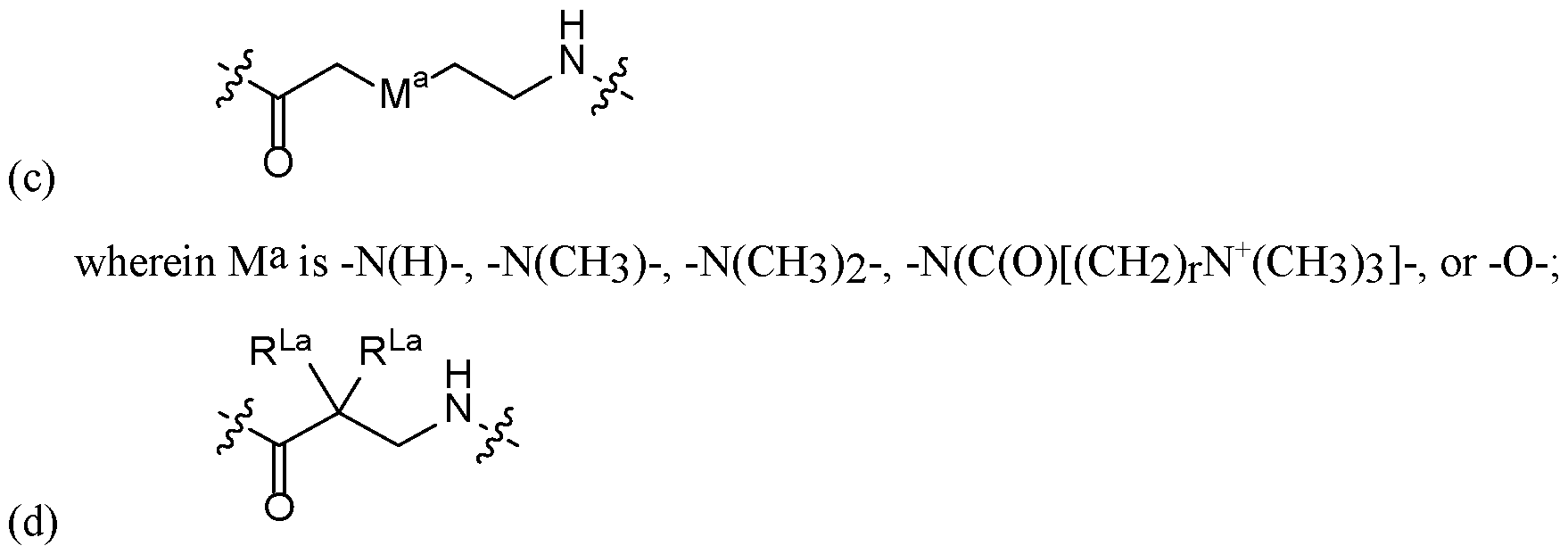 wherein each RLa is independently H or C1-C3 alkyl, or alternatively the two RLa together with the carbon atom to which they are attached, form a 5- to 6-membered saturated heterocyclic ring containing 1 heteroatom group selected from the group consisting of N(H), N(CH3), N(CH3)2, O and S; and

L2 is selected from the group consisting of:

RL2a is H or methyl;
RL2 is:
(i) C1-C5 alkyl; or
(ii) -(CH2)e-CL2, wherein
CL2 is:
(i) phenyl,
(ii) C3-C6 cycloalkyl,
(iii)a 5- to 6-membered, saturated heterocycle containing one heteroatom selected from the group consisting of N, O, and S; or
(iv) a 5- to 6-membered heteroaryl containing one to two heteroatoms independently selected from the group consisting of N, O, and S wherein CL2 is unsubstituted or substituted by 1 to 3 RCL2 substituents independently selected from the group consisting of halo, C1-C3 alkyl, phenyl, hydroxy, and C1-C3 hydroxyalkyl; each RCL3 is independently selected from the group consisting of H, halo, C1-C3 alkyl, hydroxy, phenyl, pyrimidinyl, benzyloxy, and oxazolylmethoxy; wherein the phenyl, pyrimidinyl, benzyloxy and oxazolylmethoxy of RCL3 is unsubstituted or substituted by 1 to 3 substituents independently selected from the group consisting of halo, C1-C3 alkyl and C1-C3 alkoxy; each of Xl, X2, and X3 are independently C(H) or N;
R1 is selected from the group consisting of:
(i) Rla-C(O)N(H)-CH2CH2-O-, wherein
Ria is
(a) C1-C3 alkyl; or
(b)(CH3)3N+CH2CH2(OCH2CH2)m-;
 wherein
Rib is:
(a) C1-C3 alkyl; or
(b) Clb-(CH2)p-, wherein Clb is:
(i) a 5- to 6-membered saturated heterocyclyl, wherein the 5- to 6-membered saturated heterocyclyl contains 1 to 2 heteroatoms independently selected from the group consisting of N, O, and S;
(ii) a 5- to 6-membered heteroaryl, wherein the 5- to 6-membered heteroaryl contains 1 to 3 heteroatoms independently selected from the group consisting of N, O, and S; and
(iii)phenyl; wherein Clb is unsubstituted or substituted by 1 to 2 substituents independently selected from the group consisting of halo, C1-C3 alkyl and C1-C3 alkoxy;
(c) (CH3)3N+CH2CH2(OCH2CH2)q-;
(d) (CH3)3N+CH2CH2OCH2-; or
(e) CH3OCH2CH2(OCH2CH2)q-;
(111) a group
 , wherein
Rlc is hydroxy, amino, morpholinyl, morpholinyl(CH2CH2)-N(H)-;
A2 is -C(O)OH or -C(0)NH2;
R2 is H, -C(O)-(C1-C3 alkyl), -C(O)-(CH2)g-C2, -C(O)-C(H)(CH3)-C2, or -(CH2)h-C2,
C2 is
(i) phenyl or
(ii) a 5- to 6-membered mono- or a 9- to 10-membered bicyclic heteroaryl containing wherein said 5- to 6-membered or 9- to 10-membered bicyclic heteroaryl contains 1 to 2 heteroatoms independently selected from the group consisting of N, O, and S;
wherein C2 is unsubstituted or substituted by 1 to 3 RC2 substituents independently selected from the group consisting of halo, amino, hydroxy, C1-C3 alkyl, C1-C3 fluoroalkyl, C1-C3 alkoxy, and phenyl;
R3 is
(i) naphthyl; or
(ii) a 9- to 10-membered heteroaryl, wherein said heteroaryl contains 1 to 2 heteroatoms independently selected from the group consisting of N, O, and S; wherein R3 is unsubstituted or substituted by 1 to 2 R3 a substituents independently selected from the group consisting of halo, C1-C3 alkyl, and C1-C3 alkoxy;
R4 is -(CH2)iCO2H, -(CH2)iOH, -C(H)(0H)-CH3, -C4a ~c4b -CH2-C4a Or -CH2-C4b;
C4a is tetrahydrofuryl, tetrahydropyranyl, 1,3-dioxolanyl, or 1,3-dioxanyl;
C4b is imidazolyl, wherein said imidazolyl is unsubstituted or substituted by 1 C1-C3 alkyl;
R5 is Ci-C3 alkyl;
R6 is H or C1-C3 alkyl; or alternatively R5 and R6 together with the atoms to which they are attached form a pyrrolidinyl, piperidinyl or azepinyl ring;
Ring CPC is phenyl or cyclohexyl;
Al is -CO2H or -N(H)SO2CH3;
R7 is -(CH2)jNH2; -(CH2)jN+(CH3)3;
-(CH2)jN(H)C(O)CH2CH2O(CH2CH2-O)k-CH2CH2N+(CH3)3 ; -(CH2)j C(O)NH2;
-(CH2)jOH; -(CH2)jOCH3, or -C a
C7a is:
(i) a 5- to 6-membered monocyclic aryl or heteroaryl, wherein said 5- to 6-membered heteroaryl contains 1 to 2 heteroatoms independently selected from the group consisting of N, O, and S;
(ii) a 9- to 10-membered bicyclic aryl or heteroaryl, wherein said 9- to 10-membered bicyclic heteroaryl contains 1 to 4 heteroatoms independently selected from the group consisting of N, O, and S; or
(iii) a 4- to 6-membered saturated monocyclic heterocycloalkyl, wherein said 4- to 6- membered saturated monocyclic heterocycloalkyl contains 1 to 2 heteroatoms independently selected from the group consisting of N, O, and S;
wherein C7a is unsubstituted or substituted by 1 to 3 RC7a substituents independently selected from the group consisting of halo, amino, amino(Ci-C3)alkyl, carbamoyl, hydroxy, carboxy, C1-C3 alkyl, C1-C3 fluoroalkyl, C1-C3 alkoxy, and -C(O)CH2-C7b;
C^b is a 4- to 6-membered saturated monocyclic heterocycloalkyl, wherein said 4- to 6-membered saturated monocyclic heterocycloalkyl contains 1 to 2 heteroatoms independently selected from the group consisting of N and O; wherein C7b is unsubstituted or substituted by 1 to 2 RC7b substituents independently selected from the group consisting of C1-C3 alkyl;
R8 is H, halo, or C1-C3 alkyl; subscript a is 0 or 1; subscript b is 0 or 1; subscript c is 1, 2, 3, 4, or 5; subscript d is 1 or 2; subscript e is 0, 1, or 2; subscript f is 0, 1, 2, or 3; subscript g is 0, 1, or 2; subscript h is 1 or 2; subscript i is 1, 2, or 3; subscript j is 1, 2, or 3; and subscript k is 1, 2, 3, or 4; subscript m is 0, 1, 2, 3, or 4; subscript nl n is 0, 1 or 2; subscript n2 is 1 or 2; subscript p is 0, 1, 2, or 3; subscript q is 0, 1, 2, 3, or 4; and subscript r is 1, 2, 3, 4, or 5; or a pharmaceutically acceptable salt thereof.
[0015] In another embodiment, the present disclosure provides a compound of the Formula (I), wherein L3 is

[0016] In certain embodiments, L3cy is cyclopropyl, cyclopentenyl, or phenyl.
[0017] In another embodiment, the present disclosure provides a compound of the Formula (I), wherein L3 is

[0018] In particular embodiments, RPr is H.
[0019] In another embodiment, the present disclosure provides a compound of the Formula (I), wherein L3 is

[0020] In another embodiment, the present disclosure provides a compound of the Formula (I), wherein L3 is

[0021] In certain embodiments, each RLa is methyl; or the two RLa together with the carbon atom to which they are attached, form a piperidine ring.
[0022] In another embodiment, the present disclosure provides a compound of the Formula (I), wherein L3 is
 subscript c is 1, 2, 3, or 4.
[0023] In another embodiment, the present disclosure provides a compound of the Formula (I), wherein L2 is

[0024] In specific embodiments, RL2 is C1-C4 alkyl.
[0025] In some embodiments, RL2a is methyl.
[0026] In specific embodiments,
RL2a is H and
RL2 is -(CH2)e-CL2, wherein CL2 is unsubstituted or substituted phenyl, and subscript e is 0.
[0027] In another embodiment, the present disclosure provides a compound of the Formula (I), wherein L2 is
 wherein subscript nl is 0, 1, or 2 and subscript n2 is 1 or 2. In specific embodiments, RCL3 is selected from the group consisting of pyrimidin-5-yl, 4-fluorobenzyloxy, and 1,3- oxazolylmethoxy.
[0028] In some embodiments, L2 is

[0029] In specific embodiments, the present disclosure provides a compound of the Formula (I), wherein L2 is

RCL3 is independently selected from the group consisting of benzyloxy and 1,3-oxazol- 2-yl methoxy, and subscript f is 0 or 1.
[0030] In another embodiment, the present disclosure provides a compound of the Formula (I), wherein L2 is

[0031] In another embodiment, the present disclosure provides a compound of the Formula (I) wherein R1 is Rla-C(O)N(H)-CH2CH2-O-. In certain embodiments, Ria is methyl.
[0032] In another embodiment, the present disclosure provides a compound of the Formula (I) wherein: i .
R1 is the group

Rib is methyl or morpholin-4-yl-CH2-.
[0033] In a specific embodiment, the present disclosure provides a compound of the Formula
(I) wherein:
,
R1 is the group

Rib is morpholin-4-yl-CH2-.
[0034] In another embodiment, the present disclosure provides a compound of the Formula (I) wherein R2 is -H, -C(O)CH2Ph, -CH2Ph, -C(O)CH3, -C(O)-pyridyl, -C(O)CH2-indolyl, or -C(O)-C(H)(CH3)-pyridyl.
[0035] In another embodiment, the present disclosure provides a compound of the Formula (I) wherein R3 is substituted or unsubstituted naphthyl or indolyl.
[0036] In another embodiment, the present disclosure provides a compound of the Formula (I) wherein R4 is -(CH )iCO2H. In a specific embodiment subscript i is 1.
[0037] In another embodiment, the present disclosure provides a compound of the Formula (I) wherein R5 and R6 together with the atoms to which they are attached form a piperidinyl ring.
[0038] In another embodiment, the present disclosure provides a compound of the Formula (I) wherein R5 and R6 are methyl.
[0039] In another embodiment, the present disclosure provides a compound of the Formula (I) wherein ring CPC is phenyl.
[0040] In another embodiment, the present disclosure provides a compound of the Formula (I) wherein Al is -CO2H.
[0041] In another embodiment, the present disclosure provides a compound of the Formula (I) wherein R.7 is -C a. in a particular embodiment, C^a is indolyl.
[0042] In another embodiment, the present disclosure provides a compound of the Formula (I) wherein R is H, F or Cl. In one particular embodiment, R is substituted on the 6-position of the illustrated indole ring. In another particular embodiment, R is substituted on the 7-position of the illustrated indole ring.
[0043] In another embodiment, the present disclosure provides a compound of the Formula (I) wherein:
L3 is selected from the group consisting of:
 each RLa is methyl; or the two RLa, together with the carbon atom to which they are attached, form a piperidine ring; and
 subscript c is 1, 2, 3, or 4;
L2 is selected from the group consisting of:

RCL3 is independently selected from benzyloxy and l,3-oxazol-2-yl methoxy; and subscript f is 0 or 1;
R1 is:
(i) R1 -C(O)N(H)-CH2CH2-O- and Rla is methyl; or
.... ,
(11) the group

Rib is methyl or morpholin-4-yl-CH2-;
R2 is -H;
R3 is substituted or unsubstituted naphthyl or indolyl (e.g., naphth-l-yl, 4-fluoroindol-3-yl, or 4-chloroindol-3-yl);
R4 is-(CH2)iCO2H and subscript i is 1;
R5 and R6 are methyl, or alternatively, R5 and R6 together with the atoms to which they are attached form a piperidinyl ring;
Ring CPC is phenyl;
Al is -CO2H;
R7 is indolyl or 7-azaindolyl (e.g., 7-aza-3-indol-3-yl); and
R8 is H, F, or Cl.
[0044] In another embodiment, the present disclosure provides a compound of Formula (IA)

[0045] In some embodiments, the present disclosure provides the compound of the Formula (IA) or the pharmaceutically acceptable thereof, wherein:
L2 is selected from the group consisting of:

RCL3 is independently selected from benzyloxy and l,3-oxazol-2-yl methoxy;
R1 is:
(i) R1 -C(O)N(H)-CH2CH2-O- and Ria is methyl; or
,
(11) the group

Rib is methyl or morpholin-4-yl-CH2-;
R3 is naphthyl or indolyl, wherein the naphthyl or indolyl is unsubstituted or substituted by 1 halo;
R5 and R6 are methyl, or alternatively, R5 and R6 together with the atoms to which they are attached form a piperidinyl ring;
R7 is indolyl or 7-azaindolyl; and
R8 is H, F, or Cl.
[0046] In another embodiment, the present disclosure provides a compound of Formula (I) wherein the compound is selected from the group consisting of SEQ ID NOS: 1-379.
[0047] In another embodiment, the present disclosure provides a compound of Formula (I) wherein the compound is selected from the group consisting of (SEQ ID NOS: 246, 292, 324, 189, 301, 302, 305, 265, 280, 199, 286, 188 and 379, respectively):


[0048] While not being bound by any specific theory, the Applicants believe that the compounds of the disclosure trap interleukin- ip, prevent signaling through the IL-1 receptor and hence reduce the downstream markers IL-6 and CRP. Hence the compounds can be useful to
treat the inflammatory components of cardiovascular diseases such as ASCVD and heart failure with preserved ejection fraction (HFpEF). The compounds can also be useful to treat inflammatory disorders such as hidradenitis suppurativa (acne inversa), inflammatory bowel disease, and osteoarthritis.
Definitions
[0049] Unless defined otherwise, all technical and scientific terms used herein have the same meaning as is commonly understood by one of skill in the art to which this invention belongs. [0050] As used throughout this disclosure, “a compound of the disclosure”, “a compound of the present disclosure” and “a compound disclosed herein” are used interchangeably are to be understood to include the disclosed cyclic peptides and compounds of Formula (I). The compounds of Formula (I) can form salts which are also within the scope of the present disclosure. Reference to a compound of the disclosure (or compound of Formula (I)) herein is understood to include reference to salts thereof, unless otherwise indicated. The term "salt(s)", as employed herein, denotes acidic salts formed with inorganic and/or organic acids, as well as basic salts formed with inorganic and/or organic bases. In addition, when a compound of Formula (I) contains both a basic moiety, such as, but not limited to an amino group, pyrrolidine or imidazole, and an acidic moiety, such as, but not limited to a carboxylic acid, zwitterions ("inner salts") may be formed and are included within the term "salt(s)" as used herein. In one embodiment, the salt is a pharmaceutically acceptable (i.e., non-toxic, physiologically acceptable) salt. In another embodiment, the salt is other than a pharmaceutically acceptable salt. Salts of the compounds of Formula (I) may be formed, for example, by reacting a compound of Formula (I) with an amount of acid or base, such as an equivalent amount, in a medium such as one in which the salt precipitates or in an aqueous medium followed by lyophilization.
[0051] “Acyl” means an alkyl-C(O)- group, wherein alkyl is as defined below. The bond to the parent group is through the carbon atom of the carbonyl group.
[0052] “Alkyl”, as well as other groups having the prefix “alk”, such as alkoxy, and the like, means carbon chains which may be linear or branched, or combinations thereof, containing the indicated number of carbon atoms. For instance, a Ci-Ce alkyl means an alkyl group having one (i.e., methyl) up to 6 carbon atoms (i.e., hexyl). In particular embodiments, linear alkyl groups have 1-6 carbon atoms and branched alkyl groups have 3-7 carbon atoms. Examples of alkyl groups include methyl, ethyl, propyl, isopropyl, butyl, sec- and tert-butyl, pentyl, hexyl, heptyl, octyl, nonyl and the like.
[0053] “Alkoxy” and “alkyl-O-” are used interchangeably and refer to an alkyl group linked to oxygen.
[0054] “Amino” means a H2N- group. The bond to the parent group is through the nitrogen atom.
[0055] " Amino acid" refers to naturally-occurring a-amino acids and their stereoisomers, as well as unnatural amino acids (such as P-amino acids and substituted amino acids) and their stereoisomers. In the sequences given for the peptides (compounds) according to the present disclosure, the amino acid residues have their conventional meaning. Thus, "G" is glycine, "W" is tryptophan, "A" is alanine, "S" is serine, and so on. It is to be understood that "D" isomers are designated by a “d” before the one letter code or amino acid name, such that for example dA is the D isomer of L-alanine. Amino acid residues not encompassed by the foregoing have the definitions provided in the Table in the Examples section below.
[0056] “Aryl”, as used herein, represents a monocyclic 6-membered or bicyclic 10-membered ring system, wherein at least one ring is aromatic, and all the ring atoms are carbon.
[0057] “Bicyclic ring system” refers to two joined rings. The rings may be fused, i.e., share two adjacent atoms, or “spirocyclic”, i.e., share only a single atom.
[0058] “Carbamoyl” means a EhN- O)- group, which is the univalent group formed by loss of -OH group of carbamic acid. The bond to the parent group is through the carbon atom of the carbonyl component.
[0059] “Carboxy” means a HO2C- group. The bond to the parent group is through the carbon atom of the carbonyl component.
[0060] “Cycloalkenyl” means an unsaturated, non-aromatic hydrocarbon radical. In particular embodiments, the cycloalkenyl group has 4-6 carbon atoms, forming monocyclic carbocyclic rings. Examples of cycloalkyl include cyclobutenyl, cyclopentenyl, cyclohexenyl, and the like. [0061] “Cycloalkyl” means a saturated cyclic hydrocarbon radical. In particular embodiments, the cycloalkyl group has 3-12 carbon atoms, forming 1-3 carbocyclic rings that. The rings may be fused, or “spirocyclic”, i.e., share only a single atom, or “bridged”, i.e., share three or more atoms with two bridgehead atoms being connected by a bridge containing at least one atom. Examples of cycloalkyl include cyclopropyl, cyclobutyl, cyclopentyl, cyclohexyl, cycloheptyl, adamantyl, bicyclo[l. l.l]pentanyl, and the like.
[0062] “Fluoroalkyl” includes mono-substituted as well as multiple fluoro- substituted alkyl groups, up to perfluoro substituted alkyl. For example, fluoromethyl, 1,1 -difluoroethyl, trifluorom ethyl or 1,1,1,2,2-pentafluorobutyl are included.
[0063] “Halogen” or “halo”, unless otherwise indicated, includes fluorine (fluoro), chlorine (chloro), bromine (bromo) and iodine (iodo). In one embodiment, halo is fluoro (-F) or chloro (- Cl).
[0064] “Heterocycloalkyl” or “heterocyclyl” means a non-aromatic monocyclic, bicyclic or tricyclic ring system comprising about 3 to about 10 ring atoms, preferably about 5 to about 10 ring atoms, in which one or more of the atoms in the ring system is an element other than carbon, for example nitrogen, oxygen or sulfur, alone or in combination. The rings of bi- and tricyclic ring may be fused, or “spirocyclic”, i.e., share only a single atom, or “bridged”, i.e., share three or more atoms with two bridgehead atoms being connected by a bridge containing at least one atom. There are no adjacent oxygen and/or sulfur atoms present in the ring system. In some embodiments, heterocycloalkyls contain about 5 to about 6 ring atoms. The prefix aza, oxa or thia before the heterocyclyl root name means that at least a nitrogen, oxygen or sulfur atom respectively is present as a ring atom. In some embodiments, the nitrogen or sulfur atom of the heterocycloalkyl can be optionally oxidized to the corresponding N-oxide, S-oxide or S,S- dioxide. Non-limiting examples of suitable monocyclic heterocyclyl rings include piperidyl, pyrrolidinyl, piperazinyl, morpholinyl, thiomorpholinyl, thiazolidinyl, 1,4-dioxanyl, tetrahydrofuranyl, tetrahydropyranyl, tetrahydrothiophenyl, and the like.
[0065] “Heteroaryl” refers to aromatic monocyclic, bicyclic and tricyclic ring structures in which one or more atoms in the ring, the heteroatom(s), is an element other than carbon. Heteroatoms are typically O, S, or N atoms. Examples of heteroaromatic groups include pyridinyl, pyrimidinyl, pyrrolyl, pyridazinyl, isoxazolyl, thiazolyl, oxazolyl, indolyl, benzoxazolyl, benzothiazolyl, and imidazolyl.
[0066] “Hydroxyalkyl” means a HO-alkyl- group in which alkyl is as previously defined. The bond to the parent moiety is through a carbon atom of the alkyl group. Preferred hydroxyalkyls contain from 1 to 3 carbon atoms. Non-limiting examples of suitable hydroxyalkyl groups include hydroxymethyl and 2-hydroxy ethyl.
[0067] When any variable (e.g., RCL3) occurs more than one time in any constituent or in Formula (I) or other generic formulas herein, its definition on each occurrence is independent of its definition at every other occurrence. Combinations of substituents and/or variables are permissible only if such combinations result in stable compounds. In choosing compounds of the present disclosure, one of ordinary skill in the art will recognize that the various substituents, e.g., RC9, are to be chosen in conformity with well-known principles of chemical structure connectivity and stability. Unless expressly stated to the contrary, substitution by a named substituent is permitted on any atom in a ring (c.g, aryl, a heteroaryl ring, or a saturated
heteroaryl ring) provided such ring substitution is chemically allowed and results in a stable compound. A “stable” compound is a compound which can be prepared and isolated and whose structure and properties remain or can be caused to remain essentially unchanged for a period of time sufficient to allow use of the compound for the purposes described herein (e.g., therapeutic or prophylactic administration to a subject).
[0068] The term “substituted” shall be deemed to include multiple degrees of substitution by a named substituent. Where multiple substituent moieties are disclosed or claimed, the substituted compound can be independently substituted by one or more of the disclosed or claimed substituent moieties, singly or plurally. By independently substituted, it is meant that the (two or more) substituents can be the same or different.
[0069] Unless expressly depicted or described otherwise, variables depicted in a structural formula with a “floating” bond, are permitted on any available carbon atom in the ring to which the variable is attached. When a moiety is noted as being “optionally substituted” in Formula (I) or any embodiment thereof, it means that Formula (I) or the embodiment thereof encompasses compounds that contain the noted substituent (or substituents) on the moiety and also compounds that do not contain the noted substituent (or substituents) on the moiety.
[0070] The wavy line 'AnAf' , as used herein, indicates a point of attachment to the rest of the compound.
[0071] Some of the compounds described herein may exist as tautomers which have different points of attachment of hydrogen accompanied by one or more double bond shifts. For example, a ketone and its enol form are keto-enol tautomers. The individual tautomers as well as mixtures thereof are encompassed with compounds of the present disclosure.
[0072] In the compounds of the disclosure, the atoms may exhibit their natural isotopic abundances, or one or more of the atoms may be artificially enriched in a particular isotope having the same atomic number, but an atomic mass or mass number different from the atomic mass or mass number predominantly found in nature. The present disclosure as described and claimed herein is meant to include all suitable isotopic variations of the compounds of the disclosure and embodiments thereof. For example, different isotopic forms of hydrogen (H) include protium (JH) and deuterium (2H, also denoted herein as D). Protium is the predominant hydrogen isotope found in nature. Enriching for deuterium may afford certain therapeutic advantages, such as increasing in vivo half-life or reducing dosage requirements or may provide a compound useful as a standard for characterization of biological samples. Isotopically-enriched compounds of the disclosure, can be prepared without undue experimentation by conventional techniques well known to those skilled in the art or by processes analogous to those described in
the Schemes and Examples herein using appropriate isotopically-enriched reagents and/or intermediates.
[0073] The term "pharmaceutically acceptable salts" refers to salts prepared from pharmaceutically acceptable non-toxic bases or acids. When the compound of the present disclosure is acidic (or has a functional group which may be anionic), its corresponding salt can be conveniently prepared from pharmaceutically acceptable non-toxic bases, including inorganic bases and organic bases. Examples of suitable inorganic cations include, but are not limited to, alkali metal ions such as Li+, Na+, and K+, alkaline earth metal cations such as Ca2+, and Mg2+, and other cations such as A + and Zn+. Examples of suitable organic cations include, but are not limited to, ammonium ion (i.e., NH4+) and substituted ammonium ions. Examples of suitable substituted ammonium ions are those derived from methylamine, ethylamine, diethylamine, triethylamine and ethylenediamine. When a compound of the present disclosure is basic, its corresponding salt can be conveniently prepared from pharmaceutically acceptable non- toxic acids, including inorganic acids and organic acids. Example of such acid addition salts include salts formed from hydrohalic acids (e.g., hydrochloric, hydrobromic, hydroiodic), formic acid, acetic acid, capric acid, and citric acids. Salts containing acetate, formate, caprate, chloride, or sodium salts are typical for use with the compounds of the present disclosure. In some embodiments, salts of compounds of the present disclosure can be formed by exchange well- known to those of ordinary skill in the art, such as by anion exchange, e.g., replacement of trifluoroacetate ions with chloride ions.
[0074] Furthermore, compounds of the present disclosure may exist in amorphous form and/or one or more crystalline forms, and as such all amorphous and crystalline forms and mixtures thereof of the compounds of Formula (I), including the Examples, are intended to be included within the scope of the present disclosure. In addition, some of the compounds of the instant disclosure may form solvates with water (i.e., a hydrate) or common organic solvents such as, but not limited to, acetic acid or acetonitrile. Such solvates and hydrates, particularly the pharmaceutically acceptable solvates and hydrates, of the instant compounds are likewise encompassed within the scope of this disclosure, along with un-solvated and anhydrous forms. [0075] Any pharmaceutically acceptable pro-drug modification of a compound of this disclosure which results in conversion in vivo to a compound within the scope of this disclosure is also within the scope of this disclosure.
[0076] The present disclosure also relates to processes for the preparation of the compounds of Formula (I) which are described in the following Examples and by which the compounds of the disclosure are obtainable.
[0077] “ Treatment” and “treating” refer to all processes in which there may be a slowing, interrupting, arresting, controlling, or stopping of the progression of a disease or disorder described herein. The terms do not necessarily indicate a total elimination of all disease or disorder symptoms.
[0078] “Preventing,” or “prophylaxis,” as used herein, refers to reducing the likelihood of contracting disease or disorder described herein, or reducing the severity of a disease or disorder described herein.
[0079] The terms “therapeutically effective (or efficacious) amount” and similar descriptions such as “an amount efficacious for treatment” or “an effective dose” are intended to mean that amount of a compound of the disclosure that will elicit the biological or medical response of a tissue, a system, animal or human that is being sought by a researcher, veterinarian, medical doctor or other clinician. In a preferred embodiment, the term “therapeutically effective amount” means an amount of a compound of the disclosure that alleviates at least one clinical symptom in a human patient. The terms “prophylactically effective (or efficacious) amount” and similar descriptions such as “an amount efficacious for prevention” are intended to mean that amount of a compound of the disclosure that will prevent or reduce the risk of occurrence of the biological or medical event that is sought to be prevented in a tissue, a system, animal or human by a researcher, veterinarian, medical doctor or other clinician.
Dosages of the Compounds of the Present Disclosure
[0080] The dosage regimen utilizing a compound of the present disclosure is selected in accordance with a variety of factors including type, species, age, weight, sex and medical condition of the patient; the severity of the condition to be treated; the potency of the compound chosen to be administered; the route of administration; and the renal and hepatic function of the patient. A consideration of these factors is well within the purview of the ordinarily skilled clinician for the purpose of determining the therapeutically effective or prophylactically effective dosage amount needed to prevent, counter, or arrest the progress of the condition. It is understood that a specific daily dosage amount can simultaneously be both a therapeutically effective amount, e.g., for treatment of an oncological condition, and a prophylactically effective amount, e.g., for prevention of an oncological condition.
[0081] While individual needs vary, determination of optimal ranges of effective amounts of the compound of the present disclosure is within the skill of the art. For administration to a human in the curative or prophylactic treatment of the conditions and disorders identified herein, for example, typical dosages of the compounds of the present disclosure can be about 0.05
mg/kg/day to about 50 mg/kg/day. In some embodiments, a patient is administered from about 5 mg/day to about 120 mg/day, such as from 10 mg/day, 20 mg/day, 30 mg/day, 40 mg/day, 50 mg/day, 60 mg/day, 70 mg/day, 80 mg/day, mg/day, 90 mg/day, or 100 mg/day of a compound of the present disclosure. In certain embodiments, a patient is administered from about 0.2 mg/kg to about 5 mg/kg, such as from 0.5 mg/kg, 0.75 mg/kg, 1.0 mg/kg, 1.25 mg/kg, or 1.5 mg/kg of a compound of the present disclosure. Such doses may be administered in a single dose or may be divided into multiple doses.
Pharmaceutical Compositions
[0082] The compounds of the disclosure and their pharmaceutically acceptable salts can be administered to animals, preferably to mammals, and particularly to humans, as pharmaceuticals by themselves, in mixtures with one another or in the form of pharmaceutical compositions. The term “subject” or “patient” includes animals, preferably mammals and especially humans, who use the instant active agents for the prevention or treatment of a medical condition.
Administering of the drug to the subject includes both self-administration and administration to the patient by another person. The subject may be in need of, or desire, treatment for an existing disease or medical condition, or may be in need of or desire prophylactic treatment to prevent or reduce the risk of occurrence of the disease or medical condition. As used herein, a subject “in need” of treatment of an existing condition or of prophylactic treatment encompasses both a determination of need by a medical professional as well as the desire of a patient for such treatment.
[0083] The present disclosure therefore also provides the compounds of the disclosure and their pharmaceutically acceptable salts for use as pharmaceuticals, their use for modulating the activity of the cytokine IL-ip, and in particular, their use in the therapy and prophylaxis of the below- mentioned diseases or disorders as well as their use for preparing medicaments for these purposes. In certain embodiments, the compounds of the disclosure and their pharmaceutically acceptable salts trap IL-ip.
[0084] Furthermore, the present disclosure provides pharmaceutical compositions which comprise as active component an effective dose of at least one compound of the disclosure and/or a pharmaceutically acceptable salt thereof and a customary pharmaceutically acceptable carrier, i.e., one or more pharmaceutically acceptable carrier substances and/or additives.
[0085] Thus, the present disclosure provides, for example, said compound and its pharmaceutically acceptable salts for use as pharmaceutical compositions which comprise as active component an effective dose of the compound of the disclosure and/or a pharmaceutically
acceptable salt thereof and a customary pharmaceutically acceptable carrier, and the uses of said compound and/or a pharmaceutically acceptable salt thereof in the therapy or prophylaxis of the below-mentioned diseases or disorders, e.g., atherosclerosis, as well as their use for preparing medicaments for these purposes.
[0086] The pharmaceutical compositions according to the disclosure can be administered orally, for example, in the form of pills, tablets, lacquered tablets, sugar-coated tablets, granules, hard and soft gelatin capsules, aqueous, alcoholic or oily solutions, syrups, emulsions or suspensions, or rectally, for example, in the form of suppositories. Administration can also be carried out parenterally, for example, subcutaneously, intramuscularly or intravenously in the form of solutions for injection or infusion.
[0087] Other suitable administration forms are, for example, percutaneous or topical administration, for example, in the form of ointments, tinctures, sprays or transdermal therapeutic systems, or, for example, microcapsules, implants or rods. The preferred administration form depends, for example, on the disease to be treated and on its severity.
[0088] The present disclosure also provides pharmaceutical compositions comprising a compound of Formula (I). The compound of Formula (I) can be used in combination with any suitable pharmaceutical carrier or excipient. Such pharmaceutical compositions comprise a therapeutically effective amount of one or more compounds of Formula (I), and pharmaceutically acceptable excipient(s) and/or carrier(s). The specific pharmaceutic composition will suit the mode of administration. In particular aspects, the pharmaceutical acceptable carrier may be water or a buffered solution.
[0089] Excipients included in the pharmaceutical compositions have different purposes depending, for example on the nature of the drug, and the mode of administration. Examples of generally used excipients include, without limitation: saline, buffered saline, dextrose, water-for- infection, glycerol, ethanol, and combinations thereof, stabilizing agents, solubilizing agents and surfactants, buffers and preservatives, tonicity agents, bulking agents, lubricating agents (such as talc or silica, and fats, such as vegetable stearin, magnesium stearate or stearic acid), emulsifiers, suspending or viscosity agents, inert diluents, fillers (such as cellulose, dibasic calcium phosphate, vegetable fats and oils, lactose, sucrose, glucose, mannitol, sorbitol, calcium carbonate, and magnesium stearate), disintegrating agents (such as crosslinked polyvinyl pyrrolidone, sodium starch glycolate, cross-linked sodium carboxymethyl cellulose), binding agents (such as starches, gelatin, cellulose, methyl cellulose or modified cellulose such as microcrystalline cellulose, hydroxypropyl cellulose, sugars such as sucrose and lactose, or sugar alcohols such as xylitol, sorbitol or maltitol, polyvinylpyrrolidone and polyethylene glycol),
wetting agents, antibacterials, chelating agents, coatings (such as a cellulose film coating, synthetic polymers, shellac, corn protein zein or other polysaccharides, and gelatin), preservatives (including vitamin A, vitamin E, vitamin C, retinyl palmitate, and selenium, cysteine, methionine, citric acid and sodium citrate, and synthetic preservatives, including methyl paraben and propyl paraben), sweeteners, perfuming agents, flavoring agents, coloring agents, absorption enhancers, administration aids, and combinations thereof.
[0090] Carriers are compounds and substances that improve and/or prolong the delivery of an active ingredient to a subject in the context of a pharmaceutical composition. Carriers may serve to prolong the in vivo activity of a drug or slow the release of the drug in a subject, using controlled-release technologies. Carriers may also decrease drug metabolism in a subject and/or reduce the toxicity of the drug. Carriers can also be used to target the delivery of the drug to particular cells or tissues in a subject. Common carriers (both hydrophilic and hydrophobic carriers) include fat emulsions, lipids, PEGylated phospholipids, PEGylated liposomes, PEGylated liposomes coated via a PEG spacer with a cyclic RGD peptide, liposomes and lipospheres, microspheres (including those made of biodegradable polymers or albumin), polymer matrices, biocompatible polymers, protein-DNA complexes, protein conjugates, erythrocytes, vesicles, nanoparticles, and side-chains for hydro-carbon stapling. The aforementioned carriers can also be used to increase cell membrane permeability of the compounds of Formula (I). In addition to their use in the pharmaceutical compositions of the present disclosure, carriers may also be used in compositions for other uses, such as research uses in vitro (e.g., for delivery to cultured cells) and/or in vivo.
[0091] Pharmaceutical compositions adapted for oral administration may be presented as discrete units such as capsules or tablets; as powders or granules; as solutions, syrups or suspensions (in aqueous or non-aqueous liquids; or as edible foams or whips; or as emulsions). Suitable excipients for tablets or hard gelatin capsules include lactose, maize starch or derivatives thereof, stearic acid or salts thereof. Suitable excipients for use with soft gelatin capsules include for example vegetable oils, waxes, fats, semi-solid, or liquid polyols etc. For the preparation of solutions and syrups, excipients which may be used include for example water, polyols and sugars. For the preparation of suspensions oils, e.g., vegetable oils, may be used to provide oil-in- water or water in oil suspensions. Excipients which promote absorption from the gastrointestinal tract, e.g., permeation enhancers, such as sodium caprate can be included. In certain situations, delayed release preparations may be advantageous and compositions which can deliver the compounds of the present disclosure in a delayed or controlled release manner may also be prepared. Prolonged gastric residence brings with it the problem of degradation by the enzymes
present in the stomach and so enteric-coated capsules may also be prepared by standard techniques in the art where the active substance for release lower down in the gastro-intestinal tract.
[0092] Pharmaceutical compositions adapted for transdermal administration may be presented as discrete patches intended to remain in intimate contact with the epidermis of the recipient for a prolonged period of time. For example, the active ingredient may be delivered from the patch by iontophoresis as generally described in Pharmaceutical Research, 3(6):318 (1986).
[0093] Pharmaceutical compositions adapted for topical administration may be formulated as ointments, creams, suspensions, lotions, powders, solutions, pastes, gels, sprays, aerosols or oils. When formulated in an ointment, the active ingredient may be employed with either a paraffinic or a water-miscible ointment base. Alternatively, the active ingredient may be formulated in a cream with an oil-in-water cream base or a water-in-oil base. Pharmaceutical compositions adapted for topical administration to the eye include eye drops wherein the active ingredient is dissolved or suspended in a suitable carrier, especially an aqueous solvent. Pharmaceutical compositions adapted for topical administration in the mouth include lozenges, pastilles and mouth washes.
[0094] Pharmaceutical compositions adapted for rectal administration may be presented as suppositories or enemas.
[0095] Pharmaceutical compositions adapted for nasal administration wherein the carrier is a solid include a coarse powder having a particle size for example in the range 20 to 500 microns which is administered in the manner in which snuff is taken, i.e., by rapid inhalation through the nasal passage from a container of the powder held close up to the nose. Suitable compositions wherein the carrier is a liquid, for administration as a nasal spray or as nasal drops, include aqueous or oil solutions of the active ingredient.
[0096] Pharmaceutical compositions adapted for administration by inhalation include fine particle dusts or mists which may be generated by means of various types of metered dose pressurized aerosols, nebulizers or insufflators.
[0097] Pharmaceutical compositions adapted for vaginal administration may be presented as pessaries, tampons, creams, gels, pastes, foams or spray formulations.
[0098] Pharmaceutical compositions adapted for parenteral administration include aqueous and non-aqueous sterile injection solution which may contain anti-oxidants, buffers, bacteriostats and solutes which render the formulation substantially isotonic with the blood of the intended recipient; and aqueous and non-aqueous sterile suspensions which may include suspending agents and thickening agents. Excipients which may be used for injectable solutions include
water-for-inj ection, alcohols, polyols, glycerin and vegetable oils, for example. The compositions may be presented in unit-dose or multi-dose containers, for example sealed ampoules and vials, and may be stored in a freeze-dried (lyophilized) condition requiring only the addition of the sterile liquid carrier, for example water or saline for injections, immediately prior to use. Extemporaneous injection solutions and suspensions may be prepared from sterile powders, granules and tablets. The pharmaceutical compositions may contain preserving agents, solubilizing agents, stabilizing agents, wetting agents, emulsifiers, sweeteners, colorants, odorants, salts (substances of the present disclosure may themselves be provided in the form of a pharmaceutically acceptable salt), buffers, coating agents or antioxidants. They may also contain therapeutically-active agents in addition to the compounds of the present disclosure.
Methods of Using the Compounds of the Disclosure
[0099] The present application provides a method of IL-1 mediated cell signaling comprising contacting a cell with a compound of the disclosure or a pharmaceutically acceptable salt thereof. Inhibition of IL-1 mediated cell signaling can be assessed by detecting decreases in the levels of downstream biomarker IL-6 and CRP (e.g., hsCRP).
[0100] The present application also provides methods of using the compounds of the disclosure (or their pharmaceutically acceptable salts) or pharmaceutical compositions containing such compounds to treat disease conditions, including but not limited to, conditions implicated by IL- ip.
[0101] In some embodiments, the present disclosure provides a method of treating cardiovascular disease, the method comprising administering a therapeutically effective amount a compound of the disclosure (or a pharmaceutically acceptable salt thereof) or any of the foregoing pharmaceutical compositions comprising such a compound to a subject in need of such treatment. In some embodiments, the cardiovascular disease is vascular inflammation. In some embodiments, the cardiovascular disease is atherosclerosis. In some embodiments, the cardiovascular disease is heart failure with preserved ejection fraction (HFpEF). In other embodiments the cardiovascular disease is heart failure with reduced ejection fraction (HFrEF). [0102] In some embodiments, the present disclosure provides a method of treating a chronic kidney disease, the method comprising administering a therapeutically effective amount a compound of the disclosure (or a pharmaceutically acceptable salt thereof) or any of the foregoing pharmaceutical compositions comprising such a compound to a subject in need of such treatment.
[0103] In some embodiments, the present disclosure provides a method of treating inflammatory disorders, the method comprising administering a therapeutically effective amount of a compound of the disclosure (or a pharmaceutically acceptable salt thereof) or any of the foregoing pharmaceutical compositions comprising such a compound to a subject in need of such treatment. In certain embodiments, the inflammatory disorder is selected from the group consisting of hidradenitis suppurativa (acne inversa), inflammatory bowel disease, arthritis, and nonalcoholic steatohepatitis (NASH).
[0104] In some embodiments, the inflammatory disorder is hidradenitis suppurativa (acne inversa).
[0105] In certain embodiments, the inflammatory disorder is inflammatory bowel disease, such as Crohn’s disease or ulcerative colitis.
[0106] In some embodiments, the inflammatory disorder is arthritis, e.g., osteoarthritis, rheumatoid arthritis, psoriatic arthritis, or gouty arthritis.
[0107] In other embodiments, the inflammatory disorder is nonalcoholic steatohepatitis (NASH).
Combination Therapies
[0108] One or more additional pharmacologically active agents may be administered in combination with a compound of the disclosure. An additional active agent (or agents) is intended to mean a pharmaceutically active agent (or agents) that is active in the body, including pro-drugs that convert to pharmaceutically active form after administration, which are different from the compound of Formula I, and also includes free-acid, free-base and pharmaceutically acceptable salts of said additional active agents. Generally, any suitable additional active agent or agents, including but not limited to anti-hypertensive agents, anti-atherosclerotic agents such as a lipid modifying compound, anti-diabetic agents and/or anti-obesity agents, anti-inflammatory agents, may be used in any combination with the compound of the disclosure in a single dosage formulation (a fixed dose drug combination), or may be administered to the subject in one or more separate dosage formulations which allows for concurrent or sequential administration of the active agents (co-administration of the separate active agents).
[0109] Examples of additional active agents which may be employed in treating cardiovascular disorders include but are not limited to angiotensin converting enzyme inhibitors (e.g., alacepril, benazepril, captopril, ceronapril, cilazapril, delapril, enalapril, enalaprilat, fosinopril, imidapril, lisinopril, moveltipril, perindopril, quinapril, ramipril, spirapril, temocapril, or trandolapril), angiotensin II receptor antagonists (e.g., losartan, i.e., COZAAR®, valsartan (including
combinations with sacubitril), candesartan, olmesartan, telmesartan and any of these drugs used in combination with hydrochlorothiazide such as HYZAAR®); sGC activators (e.g., riociguat and vericiguat), PCSK9 inhibitors (e.g., evolocumab, alirocumab, MK-0616 and those disclosed in WO2019/246349), neutral endopeptidase inhibitors (e.g., thiorphan and phosphoramidon), aldosterone antagonists, aldosterone synthase inhibitors, renin inhibitors, endothelin receptor antagonists, phosphodiesterase-5 inhibitors (e.g., sildenafil, tadalafil and vardenafil), vasodilators, calcium channel blockers (e.g., amlodipine, nifedipine, verapamil, diltiazem, gallopamil, niludipine, nimodipins, nicardipine), potassium channel activators (e.g., nicorandil, pinacidil, cromakalim, minoxidil, aprilkalim, loprazolam), diuretics (e.g., hydrochlorothiazide), sympatholitics, beta-adrenergic blocking drugs (e.g., propranolol, atenolol, bisoprolol, carvedilol, metoprolol, or metoprolol tartate), alpha adrenergic blocking drugs (e.g., doxazocin, prazocin or alpha methyldopa) central alpha adrenergic agonists, peripheral vasodilators (e.g., hydralazine); lipid lowering agents e.g., HMG-CoA reductase inhibitors such as simvastatin and lovastatin which are marketed as ZOCOR® and MEV ACOR® in lactone pro-drug form and function as inhibitors after administration, and pharmaceutically acceptable salts of dihydroxy open ring acid HMG-CoA reductase inhibitors such as atorvastatin (particularly the calcium salt sold in LIPITOR®), rosuvastatin (particularly the calcium salt sold in CRESTOR®), pravastatin (particularly the sodium salt sold in PRAVACHOL®), fluvastatin (particularly the sodium salt sold in LESCOL®), crivastatin, and pitavastatin; a cholesterol absorption inhibitor such as ezetimibe (ZETIA®) in combination with any other lipid lowering agents such as the HMG-CoA reductase inhibitors noted above and particularly with simvastatin (VYTORIN®) or with atorvastatin calcium; niacin in immediate-release or controlled release forms and/or with an HMG-CoA reductase inhibitor; niacin receptor agonists such as acipimox and acifran, as well as niacin receptor partial agonists; metabolic altering agents including insulin and insulin mimetics (e.g., insulin degludec, insulin glargine, insulin lispro), dipeptidyl peptidase-IV (DPP-4) inhibitors (e.g., sitagliptin, alogliptin, omari gliptin, linagliptin, vildagliptin); insulin sensitizers, including (i) PPARy agonists, such as the glitazones (e.g., pioglitazone, mitoglitazone, lobeglitazone, rosiglitazone, and balaglitazone), and other PPAR ligands, including (1) PPARa/y dual agonists (e.g., chiglitazar, muraglitazar, aleglitazar, sodelglitazar, and naveglitazar); (2) PPARa agonists such as fenofibric acid derivatives (e.g., gemfibrozil, clofibrate, ciprofibrate, fenofibrate, bezafibrate), (3) selective PPAR y modulators (SPPAR y M's), (e.g., such as those disclosed in WO 02/060388, WO 02/08188, WO 2004/019869, WO 2004/020409, WO 2004/020408, and WO 2004/066963); and (4) PPAR y partial agonists; (ii) biguanides, such as metformin and its pharmaceutically acceptable salts, in particular, metformin hydrochloride, and
extended-release formulations thereof, such as Glumetza™, Fortamet™, and GlucophageXR™; and (iii) protein tyrosine phosphatase- 1 B (PTP-1 B) inhibitors; insulin or insulin analogs (e.g., insulin detemir, insulin glulisine, insulin degludec, insulin glargine, insulin lispro and inhalable formulations of each); leptin and leptin derivatives and agonists; amylin and amylin analogs (e.g., pramlintide); sulfonylurea and non-sulfonylurea insulin secretagogues (e.g., tolbutamide, glyburide, glipizide, glimepiride, mitiglinide, meglitinides, nateglinide and repaglinide); a- glucosidase inhibitors (e.g., acarbose, voglibose and miglitol); glucagon receptor antagonists; incretin mimetics, such as GLP-1, GLP-1 analogs, derivatives, and mimetics; and GLP-1 receptor agonists (e.g., dulaglutide, semaglutide, albiglutide, exenatide, liraglutide, lixisenatide, taspoglutide, including intranasal, transdermal, and once-weekly formulations thereof); bile acid sequestering agents (e.g., colestilan, colestimide, colesevalam hydrochloride, colestipol, cholestyramine, and dialkylaminoalkyl derivatives of a cross-linked dextran), acyl
CoA: cholesterol acyltransferase inhibitors, (e.g., avasimibe); anti obesity compounds; agents intended for use in inflammatory conditions, such as aspirin, non-steroidal anti-inflammatory drugs or NSAIDs, glucocorticoids, and selective cyclooxygenase-2 or COX-2 inhibitors; glucokinase activators (GKAs); inhibitors of 11 P-hydroxy steroid dehydrogenase type 1, (e.g., such as those disclosed in U.S. Patent No. 6,730,690); inhibitors of fructose 1,6-bisphosphatase, (e.g., such as those disclosed in U.S. Patent Nos. 6,054,587; 6,110,903; 6,284,748; 6,399,782; and 6,489,476); inhibitors of acetyl CoA carboxylase-1 or 2 (ACC1 or ACC2); AMP-activated Protein Kinase (AMPK) activators; other agonists of the G-protein-coupled receptors: (i) GPR- 109, (ii) GPR-119, and (iii) GPR-40; SSTR3 antagonists (e.g., such as those disclosed in WO 2009/001836); neuromedin U receptor agonists (e.g., such as those disclosed in WO 2009/042053, including, but not limited to, neuromedin S (NMS)); SCD modulators; GPR-105 antagonists (e.g., such as those disclosed in WO 2009/000087); SGLT inhibitors (e.g., empagliflozin, dapagliflozin, canagliflozin, ertugliflozin, remogloflozin, tofogliflozin, and ipragliflozin); inhibitors of acyl coenzyme A: diacylglycerol acyltransferase 1 and 2 (DGAT-1 and DGAT-2); inhibitors of fatty acid synthase; inhibitors of acyl coenzyme A:monoacylglycerol acyltransferase 1 and 2 (MGAT-1 and MGAT-2); agonists of the TGR5 receptor (also known as GPBAR1, BG37, GPCR19, GPR131, and M-BAR); ileal bile acid transporter inhibitors;
PACAP, PACAP mimetics, and PACAP receptor 3 agonists; PPAR agonists; protein tyrosine phosphatase-1 B (PTP-1 B) inhibitors; IL-ip antibodies, (e.g., gevokizumab and canakinumab); and bromocriptine mesylate and rapid-release formulations thereof; or with other drugs beneficial for the treatment of the above-mentioned conditions or disorders including the free-acid, free-
base, and pharmaceutically acceptable salt forms of the above active agents where chemically possible.
[0110] Examples of additional active agents which may be employed in treating inflammatory disorders include but are not limited to steroidal and non-steroidal anti-inflammatory agents, glucocorticoids, and therapeutic hormones. In particular embodiments, in treating hidradenitis suppurativa (acne inversa), the additional active agent can be an antibiotic, an injectable steroid, a therapeutic hormone, a TNF inhibitor (e.g., infliximab, adalimumab, etanercept, golimumab, certolizumab), a pain medication (e.g., codeine, hydrocodone, morphine, pregabalin, gabapentin, Intralesional triamcinolone, a corticosteroid, naproxen, ketoprofen, diclofenac, ibuprofen, acetaminophen). In other embodiments, in treating an inflammatory bowel disease, the additional active agent can be methotrexate, a TNF inhibitor, an oral sphingosine 1 -phosphate receptor modulator (e.g., fmgolimod, siponimod, ozanimod, ponesimod) or a selective JAK inhibitor (e.g., tofacitinib, baricitinib, upadacitinib). In some embodiments, in treating osteoarthritis, the additional active agent can be a pain medication (examples listed above). In other embodiments, in treating gouty arthritis, the additional active agent can be colcichine, a non-steroidal antiinflammatory agent, or a glucocorticoid.
EXAMPLES
[OHl] The compounds described herein can be prepared according to the procedures of the following schemes and examples, using appropriate materials and are further exemplified by the following specific examples. The Examples also include methods for testing such compounds in cellular assays. The compounds illustrated in the examples are not, however, to be construed as forming the only genus that is considered as the disclosure.
[0112] The examples further illustrate details for the preparation of the compounds of the present disclosure. Those skilled in the art will readily understand that known variations of the conditions and processes of the following preparative procedures can be used to prepare these compounds. For instance, in some cases, the order of carrying out the steps of reaction schemes may be varied to facilitate the reaction or to avoid unwanted reaction products. Starting materials and intermediates for the final compounds are purchased, made from known procedures, or as otherwise illustrated. The examples are provided for the purpose of further illustration only and are not intended to be limitations on the disclosure.
[0113] NMR data were obtained on a 300 MHz or 400 MHz instrument in CDCI3, DMSO-t/tf, or Methanol-t/./ with the chemical shifts referenced to solvent signals relative to tetramethylsilane. Multiplets are reported by the following abbreviations: s = singlet, d = doublet,
t = triplet, q = quartet, dd = doublet of doublets, m = multiplet or overlap of nonequivalent resonances. Coupling constants (J) are reported in Hertz (Hz).
[0114] The following examples are meant to be illustrative and should not be construed as further limiting. The contents of the figures and all references, patents, and published patent applications cited throughout this application are expressly incorporated herein by reference.
[0115] Throughout the synthetic schemes and examples, abbreviations and acronyms may be used with the following meanings unless otherwise indicated:
Abbreviations


[0116] The following schemes and descriptions disclose method of preparing suitably protected amino acid intermediates and other intermediates for preparing the compounds of the disclosure. The following examples are meant to be illustrative and should not be construed as further limiting. The contents of the figures and all references, patents, and published patent applications cited throughout this application are expressly incorporated herein by reference.
Synthetic Scheme 1
Step 1
O HCI dioxane 4M in THF Q
|| Boc rt, overnight n H HCr ^^N^^^NHFmoc

N-(2-((((9H-fluoren-9-yl)methoxy)carbonyl)amino)ethyl)-N-(tert-butoxycarbonyl)glycine [0117] Step 1 : N-(2-((((9H-fluoren-9-yl)methoxy)carbonyl)amino)ethyl)-N-(tert- butoxycarbonyl)glycine (2 g, 4.5 mmol) was dissolved in a mixture of THF (8.84 mL) and 4M HC1 in dioxane (8.84 mL) and the recti on was stirred overnight at rt. After 20 h the reaction was complete. The solvent was removed in vacuo to afford the product (2-((((9H-fluoren-9- yl)methoxy)carbonyl)amino)ethyl)glycine, HC1 as a white solid. UPLC-MS: (ES, m/z): 341 [M+H] +.
[0118] Step 2: (2-((((9H-fluoren-9-yl)methoxy)carbonyl)amino)ethyl)glycine (1g, 2.94 mmol) was dissolved in dry methanol (10 mL), then formaldehyde (0.441 g, 14.69 mmol) and NaCNBEE (0.277 g, 4.41 mmol) were added and the mixture was stirred at rt overnight. After 20 h the reaction was complete. The solvent was removed in vacuo. The crude product was purified by reverse phase chromatography (C18 150g column: elution A= H2O + 0.1%TFA; B= ACN + 0.1%TFA from 5% B to 80 % B in 8 CV) to give N-(2-((((9H-fluoren-9- yl)methoxy)carbonyl)amino)ethyl)-N-methylglycine. UPLC-MS: (ES, m/z): 355 [M+H] +.
Synthetic Scheme 2

2-((((9H-fluoren-9-yl)methoxy)carbonyl)amino)-N-(carboxymethyl)-N,N-dimethylethan-l- aminium
[0119] To a solution of (2-((((9H-fluoren-9-yl)methoxy)carbonyl)amino)ethyl)glycine (0.8g, 2.350 mmol) in MeCN/EEO (8:2), was added Na2COs (0.747 g, 7.05 mmol), followed by iodomethane (2.93 mL, 47.0 mmol). The reaction mixture was left under stirring for 4 h. The solvent was removed by rotary evaporator. The residue was dissolved in EtOAc, acidified with 6N HC1 and extracted several times with EtOAc, dried on Na2SO4, filtered, concentrated to dryness and lyophilized to afford 2-((((9H-fluoren-9-yl)methoxy)carbonyl)amino)-N- (carboxymethyl)-N,N-dimethylethan-l-aminium, HC1 as a yellow solid. UPLC-MS: (ES, m/z): 369 [M+H] +.
Synthetic Scheme 3
Step 1 Step 2
FmocHN

Precursor to NMeProc4NH2
FmocHN

(2S,4S)-4-((((9H-fluoren-9-yl)methoxy)carbonyl)amino)-l-methylpyrrolidine-2-carboxylic acid,
HC1 salt
[0120] Step 1 : (2S,4S)-4-((((9H-fluoren-9-yl)methoxy)carbonyl)amino)-l-(tert- butoxycarbonyl)pyrrolidine-2-carboxylic acid (2.1 g, 4.64 mmol) was suspended in DCM and treated with TFA (10 mL, 130 mmol) at rt for 4h. Then the volatiles were removed under reduced
pressure to give the crude product (2S,4S)-4-((((9H-fluoren-9- yl)methoxy)carbonyl)amino)pyrrolidine-2-carboxylic acid. UPLC-MS: (ES, m/z): 353 [M+H] +. [0121] Step2: (2S,4S)-4-((((9H-fluoren-9-yl)methoxy)carbonyl)amino)pyrrolidine-2-carboxylic acid, HC1 (1.789 g, 4.6 mmol) was dissolved in dry MeOH (46.0 mL), then formaldehyde (3.42 mL, 46.0 mmol), acetic acid (0.527 mL, 9.20 mmol) and NaCNBH? (1.445 g, 23.00 mmol) were added. The mixture was stirred for at room temperature for 2 h under nitrogen. The solvent was removed in vacuo and the residue purified by reverse phase chromatography (Cl 8 300g column: elution A= H2O + 0.1%TFA; B= ACN + 0.1%TFA initial 10%B for 1CV then from 10% B to 90 % B in 6 CV) to give after lyophilization and salt exchange to HC1 the title compound. UPLC- MS: (ES, m/z): 367 [M+H] +.
Synthetic Scheme 4
Steps 1 and 2
1) a) 2-(2-((tert- butoxycarbonyl)amino)ethoxy)acetic
HATU, DIPEA, DCM rt, 2h
 2) TFA/DCM 1 :1 , rt, 2h


Precursor to Prot4NH2|PEGlNMe3

2-(2-(((3R,5S)-l-(((9H-fluoren-9-yl)methoxy)carbonyl)-5-carboxypyrrolidin-3-yl)amino)-2- oxoethoxy )-N.N.N-trimethylethan- 1 -aminium
[0122] Step 1 : 2-(2-((tert-butoxycarbonyl)amino)ethoxy)acetic acid (0.266 g, 1.216 mmol) in 20 mL DMF was treated with HATU (0.420 g, 1.105 mmol) and DIPEA (0.386 ml, 2.210 mmol) for 5 minutes and then added to a solution of (9H-fluoren-9-yl)methyl (2S,4R)-2-acetyl-4- aminopyrrolidine-1 -carboxylate (0.389 g, 1.105 mmol) in 15 mL DMF. The pH was adjusted to 8-9 with the addition of DIPEA and the mixture was stirred at rt for 2 h. 1 mL of TFA was added to the reaction mixture, then the volatiles were removed in vacuo to give crude (2S,4R)-1-(((9H- fluoren-9-yl)methoxy)carbonyl)-4-(2-(2-((tert- butoxycarbonyl)amino)ethoxy)acetamido)pyrrolidine-2-carboxylic acid (orange-yellow oil). UPLC-MS: (ES, m/z): 554 [M+H] +.
[0123] Step 2: (2S,4R)-l-(((9H-fluoren-9-yl)methoxy)carbonyl)-4-(2-(2-((tert- butoxycarbonyl)amino)ethoxy)acetamido)pyrrolidine-2-carboxylic acid (0.612 g, 1.105 mmol) was dissolved in DCM/TFA 1 : 1 (40 ml) and the reaction was stirred 1 h at rt. The solvent was removed in vacuo to afford the crude product (2S,4R)-l-(((9H-fluoren-9-yl)methoxy)carbonyl)- 4-(2-(2-aminoethoxy)acetamido)pyrrolidine-2-carboxylic acid as an orange-yellow oil. UPLC- MS: (ES, m/z): 454 [M+H] +.
[0124] Step 3: To a solution of (2S,4R)-l-(((9H-fluoren-9-yl)methoxy)carbonyl)-4-(2-(2- aminoethoxy)acetamido)pyrrolidine-2-carboxylic acid (0.501 g, 1.105 mmol) in acetonitrile (4.42 ml) were added iodomethane (1.382 ml, 22.10 mmol) and a solution of Na2COs (0.351 g, 3.32 mmol) in water (1.105 ml) and the mixture was stirred at rt. Then the volitiles were removed under reduced pressure. Purification on Biotage: Luknova C18 110g flow 85ml/min; method: 10%B 3CV, 10 to 70%B in 7CV (A=water+0.1%TFA; B=acetonitrile+0.1%TFA) afforded the title compound. UPLC-MS: (ES, m/z): 496 [M] +.
Synthetic Scheme 5
Step 1 and 2
BocHN
1) HCI 4M in dioxane, THF rt, 20h

Fmoc H


Step 3
Boc-anhydride
DIPEA
DCM, rt,3 h

Precursor to Prot4NHEtPh

(2S,4R)-l-(((9H-fluoren-9-yl)methoxy)carbonyl)-4-((tertbutoxy carbonyl)(phenethyl)amino)pyrrolidine-2-carboxylic acid
[0125] Step 1 : (2S,4R)-l-(((9H-fluoren-9-yl)methoxy)carbonyl)-4-((tert- butoxycarbonyl)amino)pyrrolidine-2-carboxylic acid (3.2 g, 7.07 mmol) was dissolved in THF 30 mL and treated with HCI in dioxane (15 mL, 60.0 mmol) 4M for 20 h. The volatiles were removed under reduced pressure to give the crude product (2S,4R)-l-(((9H-fluoren-9- yl)methoxy)carbonyl)-4-aminopyrrolidine-2-carboxylic acid, HCI salt as white solid which was used as such without further purification. UPLC-MS: (ES, m/z): 353 [M+H] +.
[0126] Step 2: (2S,4R)-l-(((9H-fluoren-9-yl)methoxy)carbonyl)-4-aminopyrrolidine-2- carboxylic acid, HCI salt (600 mg, 1.543 mmol) was dissolved in MeOH dry (25 mL), 2- phenylacetaldehyde (185 mg, 1.543 mmol) was added and the mixture was stirred at rt under nitrogen fluxl6 h, then NaCNBHi (107 mg, 1.697 mmol) was added and the mixture was stirred
at room temperature for 4 h. The reaction was quenched with water then the solvent was removed in vacuo. The residue was lyophilized to afford the crude product (2S,4R)-l-(((9H-fluoren-9- yl)methoxy)carbonyl)-4-(phenethylamino)pyrrolidine-2-carboxylic acid as a white solid that was used in the next step without further purification. UPLC-MS: (ES, m/z): 457 [M+H] + [0127] Step 3: A solution of (2S,4R)-l-(((9H-fluoren-9-yl)methoxy)carbonyl)-4- (phenethylamino)pyrrolidine-2-carboxylic acid (704 mg, 1.543 mmol) in DCM (30 mL) was treated with BOC-Anhydride (1.791 mL, 7.72 mmol) and DIPEA (1.347 mL, 7.72 mmol) for 3 h. The reaction monitored by UPLC MS. The solvent was removed under reduced pressure to give the crude product which was purified by reverse phase chromatography on a Biotage Cl 8 column 110 g elution from water 0,1% TFA /acetonitrile 0,1% TFA 90: 10 to 10:90 in 10 CV) to give the title compound after lyophilization. UPLC-MS: (ES, m/z): 557 [M+H] +.
Synthetic Scheme 6
 overnight

Precursor to Prot4NHBn

(2S,4R)-l-(((9H-fluoren-9-yl)methoxy)carbonyl)-4-(benzyl(tert- butoxycarbonyl)amino)pyrrolidine-2-carboxylic acid
[0128] Step 1 : (2S,4R)-l-(((9H-fluoren-9-yl)methoxy)carbonyl)-4-((tert- butoxycarbonyl)amino)pyrrolidine-2-carboxylic acid (3.2 g, 7.07 mmol) was dissolved in THF 30 mL and treated with HC1 in dioxane (15 mL, 60.0 mmol) 4M for 20 h. The volatiles were removed under reduced pressure to give the crude product (2S,4R)-l-(((9H-fluoren-9- yl)methoxy)carbonyl)-4-aminopyrrolidine-2-carboxylic acid, HC1 salt as white solid which used without further purification in the next step. UPLC-MS: (ES, m/z): 353 [M+H] +.
[0129] Step 2: (2S,4R)-l-(((9H-fluoren-9-yl)methoxy)carbonyl)-4-aminopyrrolidine-2- carboxylic acid, HC1 (500 mg, 1.286 mmol) was dissolved in dry DCM (50 mL). Benzaldehyde (0.136 mL, 1.286 mmol) was added and the mixture was stirred at rt for 30 minutes. Sodium triacetoxyhydroborate (409 mg, 1.929 mmol) was added and the mixture was stirred at room temperature overnight. The solvent was removed in vacuo. The residue was dissolved in ethyl acetate and the organic phase was washed with HC1. The organic layer was dried over ISfeSCU, filtered and then the solvent was removed in vacuo to afford (2S,4R)-l-(((9H-fluoren-9- yl)methoxy)carbonyl)-4-(benzylamino)pyrrolidine-2-carboxylic acid as a white solid which was used in the next step without further purification. UPLC-MS: (ES, m/z): 443 [M+H] +.
[0130] Step 3: A solution of (2S,4R)-l-(((9H-fluoren-9-yl)methoxy)carbonyl)-4- (benzylamino)pyrrolidine-2-carboxylic acid (569 mg, 1.286 mmol) in DCM (30 mL) was treated with BOC-anhydride (1.493 mL, 6.43 mmol) and DIPEA (1.123 mL, 6.43 mmol) for 3 h. The reaction monitored by UPLC MS. The solvent was removed under reduced pressure to give the crude product which was purified by reverse phase chromatography on Biotage (Cl 8 column 120 g elution from water 0,1% TFA /acetonitrile 0,1% TFA 100:0 to 20:80 in 10 CV) to give the title compound after lyophilization. UPLC-MS: (ES, m/z): 543 [M+H] +.
Synthetic Scheme 7

Precursor to Prot4NHCO4Py

Fmoc
(2S,4R)-l-(((9H-fluoren-9-yl)methoxy)carbonyl)-4-(2-(pyridin-4-yl)acetamido)pyrrolidine-2- carboxylic acid
[0131] 2-(Pyridin-4-yl)acetic acid, HC1 (192 mg, 1.105 mmol) in DCM 10 mL was treated with PyOAP (576 mg, 1.105 mmol) and DIPEA (0.772 mL, 4.42 mmol) for 10 minutes. The mixture was then added to a solution of (2S,4R)-l-(((9H-fluoren-9-yl)methoxy)carbonyl)-4- aminopyrrolidine-2-carboxylic acid, HC1 salt (430 mg, 1.105 mmol) in DCM 10 mL and the mixture was stirred at rt for 3 h. Then the volatiles were removed and the crude product was purified by flash chromatography on silica (80 g HP column, DCM/MeOH each eluent containing 0.5% of AcOH, elution from 100:0 2CV then to 90: 10 in 10CV and 90: 10 for 3CV) to give after salt exchange with HC1 and removal of excess of AcOH with toluene (2S,4R)-1-(((9H- fluoren-9-yl)methoxy)carbonyl)-4-(2-(pyridin-4-yl)acetamido)pyrrolidine-2-carboxylic acid, HC1. UPLC-MS: (ES, m/z): 472 [M+H] +. 'HNMR (300 MHz, DMSO-d6) 5 9.16 (s, 1H), 8.81 (s, 3H), 7.89 (m, 4H), 7.66 (d, 2H), 7.43 - 7.19 (m, 4H), 4.30 (m,4H), 4.16 (m, 1H), 3.82 (s, 2H), 3.61 (m, 2H), 3.37 (m, 1H), 3.17 (m, 1H), 2.21 (m, 1H).
Synthetic Scheme 8
Br

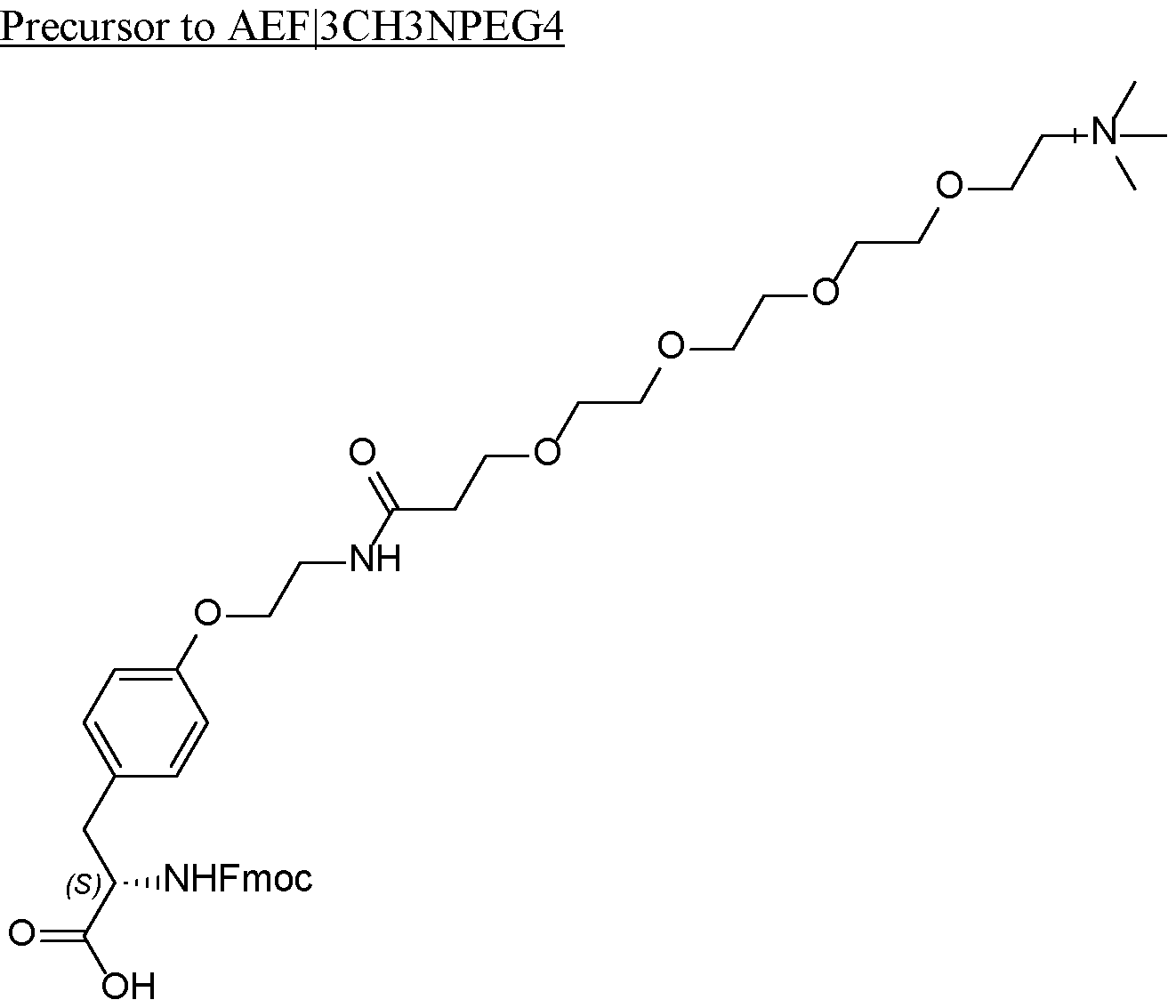
(S)-18-(4-(2-((((9H-fluoren-9-yl)methoxy icarbonyl )amino)-2-carboxyethyl)phenoxy)-N,N,N- trimethyl- 15-oxo-3.6.9.12 -tetraoxa- 16-azaoctadecan- 1 -aminium
[0132] Step 1 : Tert-butyl l-bromo-3,6,9,12-tetraoxapentadecan-15-oate (3.74 g, 9.71 mmol) was dissolved in trimethylamine (15.36 mL, 97 mmol) and ethanol (8 mL) was added. The reaction mixture was stirred at 60 °C for 24 h in an ACE tube. The solvent was removed in vacuo. The starting material and the product were detected only by mass. The product was lyophilized to give N,N,N,17,17-pentamethyl-15-oxo-3,6,9,12,16-pentaoxaoctadecan-l-aminium. UPLC-MS: (ES, m/z): 364 [M+H] +.
[0133] Step 2: N,N,N,17,17-pentamethyl-15-oxo-3,6,9,12,16-pentaoxaoctadecan-l-aminium was treated with 30 mL of TFA and 30 mL of DCM and stirred at rt. After 1 h, the reaction was completed, and the solvent was removed in vacuo. 0.5 mL of HC1 IN was added and the product was lyophilized to give 14-carboxy-N,N,N-trimethyl-3,6,9,12-tetraoxatetradecan-l-aminium chloride salt. UPLC-MS: (ES, m/z): 308 [M+H] +.
[0134] Step 3: 14-carboxy-N,N,N-trimethyl-3,6,9,12-tetraoxatetradecan-l-aminium chloride (1.013 g, 1.971 mmol) in 20 mL DMF was treated with HATU (0.681 g, 1.792 mmol) and DIPEA (0.626 mL, 3.58 mmol) for 5 minutes and then added to a solution of 2-((((9H-fluoren-9- yl)methoxy)carbonyl)amino)-3-(4-(2-aminoethoxy)phenyl)propanoic acid (0.8 g, 1.792 mmol) in 15 mL DMF and the mixture was stirred at rt for 1 h. The conversion of the starting material was almost complete, 1 mL of 14-carboxy-N,N,N-trimethyl-3,6,9,12-tetraoxatetradecan-l-aminium activated solution was added. After 5 minutes, the reaction was complete. 1 mL of TFA was added to the reaction mixture, then the volatiles were removed in vacuo. The crude product was
purified by flash chromatography on silica (Luknova C18 110g column; water/acetonitrile, each eluent containing 0.1% of TFA, elution from 20:80 to 80:20 in 15CV ) to give 18-(4-(2-((((9H- fluoren-9-yl)methoxy)carbonyl)amino)-2-carboxyethyl)phenoxy)-N,N,N-trimethyl-l 5-oxo- 3,6,9, 12-tetraoxa-16-azaoctadecan-l-aminium. UPLC-MS: (ES, m/z): 736 [M]+.
Synthetic Scheme 9


Precursor to Tic7OBn

((S)-2-(((9H-fluoren-9-yl)methoxy)carbonyl)-7-(benzyloxy)-L2,3,4-tetrahydroisoquinoline-3- carboxylic acid
[0135] Step 1 : 2 A solution of (S)-2-(tert-butoxycarbonyl)-7-hydroxy-l, 2,3,4- tetrahydroisoquinoline-3-carboxylic acid (1 g, 3.41 mmol) was dissolved in dry acetonitrile (38 mL) and treated with K2CO3 (1.414 g, 10.23 mmol) followed by dropwise addition of (bromomethyl)benzene (0.892 mL, 7.50 mmol) under stirring. The reaction mixture was heated at 80 °C for 1 h and at rt for 16 h overnight. Once the reaction was done the mixture was filtered to remove the solids (KBr and K2CO3) and acetonitrile was evaporated under reduced pressure. The residue was taken up with EtOAc and washed with water (2 times) and brine. The combined
organic was dried (Na2SO4) and the solvent removed under reduced pressure. The product was purified by flash chromatography on silica (8 Og column, EtOAc/Petroleum ether from 0: 100 to 30:70 in 10 CV) to give the product as benzyl ester which was dissolved in EtOH and water treated with lithium hydroxide (0.408 g, 17.05 mmol) at 80 °C for 30 minutes. Then the mixture was acidified with HC1 IN aqueous solution and extracted with EtOAc. The organic phase was dried QSfeSCU) filtered and the solvent removed under reduced pressure to give crude product (S)-7-(benzyloxy)-2-(tert-butoxycarbonyl)-l,2,3,4-tetrahydroisoquinoline-3-carboxylic acid (1.8 g). UPLC-MS: (ES, m/z): 384 [M+H] +.
[0136] Step 2: (S)-7-(benzyloxy)-2-(tert-butoxycarbonyl)-l,2,3,4-tetrahydroisoquinoline-3- carboxylic acid (1.304 g, 3.4 mmol) was dissolved in DCM (10 mL) and treated at rt with TFA (5 mL, 64.9 mmol) for 2 h. The volatiles were removed, and the crude residue lyophilized to give (S)-7-(benzyloxy)-l,2,3,4-tetrahydroisoquinoline-3-carboxylic acid, TFA salt (1.19 g) which used in the next step. UPLC-MS: (ES, m/z): 284 [M+H] +.
[0137] Step 3: (S)-7-(benzyloxy)-l,2,3,4-tetrahydroisoquinoline-3-carboxylic acid (482 mg, 1.7 mmol) was dissolved in was dissolved in acetone (22 mL) and water (44 mL) then treated with sodium bicarbonate (857 mg, 10.20 mmol) and Fmoc-Osu (516 mg, 1.530 mmol) for 16 h. The reaction mixture turned limpid. EtOAc (15 mL) was added, and the mixture was acidified with HC1 IN 10 mL. The aqueous and organic phases were separated and the aqueous phase was extracted with another 15 mL of EtOAc. The combined organic layers were dried (Na2SO4), filtered and the solvent removed under reduced pressure. The residue was lyophilized to give the crude product which was purified by reverse phase chromatography (Cl 8 column 55 g, elution A= H2O + 0.1%TFA; B= MeCN + 0.1% TFA 10% B 2CV then from 10% B to 90% B in 15 CV) to give (S)-2-(((9H-fluoren-9-yl)methoxy)carbonyl)-7-(benzyloxy)-l, 2,3,4- tetrahydroisoquinoline-3-carboxylic acid (580 mg). UPLC-MS: (ES, m/z): 506 [M+H] +. 'H NMR (300 MHz, DMSO-d6) 5 12.81 (s, 1H), 7.91 (m, 2H), 7.72-7.63 (m, 2H), 7.43 - 7.48-7.29 (m, 9H), 7.14 (d, 1H), 6.94-6.85 (m, 2H), 5.10 (d,2H), 4.85 (m, 1H), 4.63-4.56 (m. 1H), 4.50- 4.25 (m, 4H), 3.12-3.01 (m, 2H).
Precursor to Tic6OBn

((S)-2-(((9H-fluoren-9-yl)methoxy)carbonyl)-6-(benzyloxy)-L2,3,4-tetrahydroisoquinoline-3- carboxylic acid
[0138] ((S)-2-(((9H-fluoren-9-yl)methoxy)carbonyl)-6-(benzyloxy)-l,2,3,4- tetrahydroisoquinoline-3-carboxylic acid was prepared according to same procedure as for ((S)- 2-(((9H-fluoren-9-yl)methoxy)carbonyl)-7-(benzyloxy)-l,2,3,4-tetrahydroisoquinoline-3- carboxylic acid. UPLC-MS: (ES, m/z): 506 [M+H] +
Synthetic Scheme 10
Step 1


Precursor to Tic7OMeOxazole or Tic7OMe2Oxa

(S)-2-(((9H-fluoren-9-yl)methoxy)carbonyl)-7-(oxazol-2-ylmethoxy)-L2,3,4- tetrahydroisoquinoline-3-carboxylic acid
[0139] Step 1 : (S)-2-(tert-butoxycarbonyl)-7-hydroxy-l,2,3,4-tetrahydroisoquinoline-3- carboxylic acid (500 mg, 1.705 mmol) was dissolved in toluene (10.00 mL) and MeOH (10 mL) then treated with TMS-Diazomethane (1.705 mL, 3.41 mmol) at 0 °C for 1 h. Then the volatiles were removed under reduced pressure to give the crude product 2-(tert-butyl) 3-methyl (S)-7- hydroxy-3,4-dihydroisoquinoline-2,3(lH)-dicarboxylate. UPLC-MS: (ES, m/z): 284 [M+H] +.
[0140] Step 2: 2-(tert-butyl) 3-methyl (S)-7-hydroxy-3,4-dihydroisoquinoline-2,3(lH)- dicarboxylate (0.522 g, 1.7 mmol) was dissolved in dry ACN (15 mL), K2CO3 (0.775 g, 5.61 mmol) and 2-(bromomethyl)oxazole (0.289 g, 1.785 mmol) at 50 °C for 16 h. The mixture was left to reach rt and filtered to remove the solids (KBr and K2CO3). Acetonitrile was evaporated under reduced pressure, the residue was taken up with EtOAc and washed with water (2 times) and brine. The combined organic was dried QS^SOq) and the solvent removed under reduced pressure. The product was dissolved in THF and water treated with lithium hydroxide (0.102 g, 4.25 mmol) at 100°C for 2xlh under MW irradiation. Then the mixture was acidified with citric acid (5% aqueous solution) and extracted with EtOAc. The organic phase was dried (Na2SOq) and the solvent removed under reduced pressure to give (S)-2-(tert-butoxycarbonyl)-7-(oxazol-2- ylmethoxy)-l,2,3,4-tetrahydroisoquinoline-3-carboxylic acid. UPLC-MS: (ES, m/z): 375 [M+H]+.
[0141] Step 3: (S)-2-(tert-butoxycarbonyl)-7-(oxazol-2-ylmethoxy)-l, 2,3,4- tetrahydroisoquinoline-3-carboxylic acid (0.636 g, 1.7 mmol) was dissolved in DCM (8 mL) and treated at rt with TFA (2.62 mL, 34.0 mmol) for 2 h. UPLC MS monitor showed that the reaction was complete. The volatiles were removed to give the crude product (S)-7-(oxazol-2-ylmethoxy)- l,2,3,4-tetrahydroisoquinoline-3-carboxylic acid which was used in the next step.
[0142] Step 4: (S)-7-(oxazol-2-ylmethoxy)-l,2,3,4-tetrahydroisoquinoline-3-carboxylic acid (466 mg, 1.7 mmol) was dissolved in was dissolved in acetone (22 mL) and water (44 mL). The mixture treated with sodium bicarbonate (857 mg, 10.20 mmol) and Fmoc-Osu (516 mg, 1.530 mmol) for 16 h. The reaction mixture turns limpid. EtOAc 30 mL was added, and the mixture acidified with HC1 IN. The phases were separated and the aqueous phase was extracted with another 30 mL of EtOAc. The combined organic layers were dried (Na2SOq) filtered and the solvent removed under reduced pressure to give the crude product which was lyophilized to give the crude product which was purified by reverse phase chromatography (column 55 g, elution A= H2O + 0.1%TFA; B= ACN + 0.1% TFA, 10% B 2CV then from 10% B to 90% B in 15 CV) to give (S)-2-(((9H-fluoren-9-yl)methoxy)carbonyl)-7-(oxazol-2-ylmethoxy)-l, 2,3,4- tetrahydroisoquinoline-3-carboxylic acid. UPLC-MS: (ES, m/z): 330 [M+Na] +. 'H NMR (300 MHz, DMSO-d6) 5 12.8 (bs, 1H), 8.18 (d, 1H), 7.93-7.89 (m, 2H), 7.71-7.69 (m, 1H), .7.65-7.62 (m, 1H), 7.46-7.27 (m, 6H), 7.15-7.13 (m, 1H), 6.95-6.86 (m,3H), 5.22 (d. 2H), 4.86-4.84 (m, 1H), 4.63-4.56 (m, 1H), .4.5-4.26 (m, 4H), 3.13-3.01(m, 2H).
Synthetic Scheme 11

(S)-2-(((9H-fluoren-9-yl)methoxy icarbonyl )-7-phenyl-E2 ,3, 4-tetrahydroisoquinoline-3- carboxylic acid
[0143] (S)-2-(((9H-fluoren-9-yl)methoxy)carbonyl)-7-bromo-l,2,3,4-tetrahydroisoquinoline-3- carboxylic acid (500 mg, 1.045 mmol) and phenylboronic acid (382 mg, 3.14 mmol) were dissolved in water (20 mL)/2-propanol (20 mL) and the solution degassed under N2 for 30 minutes then the solution heated at 50°C and potassium carbonate (722 mg, 5.23 mmol) and PdChdppf (38.2 mg, 0.052 mmol) were added under N2 flux. The reaction mixture was heated for 20 h. The reaction mixture was cooled EtOAc was added, and the mixture washed with HC1 IN the phases separated and the organic dried (Na2SO4), filtered and the solvent removed under reduced pressure to give the crude product which was purified by reverse phase chromatography (column C18 110 g, water/acetonitrile each eluent with 0.1%TFA, gradient: 90: 10 to 10:90 in 10 CV) to give title compound, as beige solid. UPLC-MS: (ES, m/z): 476 [M+H] +.

(S)-2-(((9H-fluoren-9-yl)methoxy)carbonyl)-7-(pyrimidin-5-yl)-E2,3,4-tetrahydroisoquinoline- 3 -carboxylic acid
[0144] Pyrimidin-5-ylboronic acid (777 mg, 6.27 mmol), (S)-2-(((9H-fluoren-9- yl)methoxy)carbonyl)-7-bromo-l,2,3,4-tetrahydroisoquinoline-3-carboxylic acid (500 mg, 1.045 mmol) and K2CO3 (433 mg, 3.14 mmol) were dissolved in 2-propanol (20 mL) and water (20 mL). The mixture was degassed with N2 through bubbling of the solution then the mixture heated at 50 °C. PdC12(dppf) (50 mg, 0.068 mmol) was added, and the mixture heated at 50 °C for 16 h under nitrogen. Then the mixture was cooled to rt. The mixture was acidified with aqueous HC1 (1 M) and extracted with DCM. The collected organic phase was evaporated to dryness under reduced pressure to give the crude product which was purified by reverse phase chromatography (Cl 8 column 110 g Luknova, water/acetonitrile 0.1 % TFA in both eluents, gradient from 100:0 to 90: 10 in 12 CV) to give after lyophilization the title compound. UPLC- MS: (ES, m/z): 478 [M+H] +. *H NMR (300 MHz, DMSO-d6) 5 12.8 (bs, 1H), 9.2 (d, 1H), 9.17 (d, 2H), 7.92 (m, 2H), .7.75-7.62 (m, 4H), 7.46-7.20 (m, 5H), 5.1-4.9 (m. 1H), 4.82-4.15 (m, 6H), 3.25 (m, 2H).
Synthetic Scheme 12


(S (^-/(T (NH-fluoren-O-yl (methoxy (carbonyl (ami no (-3 - ('4-('('al lyl oxy (carbonyl (pi perazin- l -
 yl)phenyl)propanoic acid
[0145] Step 1 : (S)-3-(4-bromophenyl)-2-((tert-butoxycarbonyl)amino)propanoic acid (10 g, 29.1 mmol) and benzyl piperazine- 1 -carboxylate (5.58 mL, 29.1 mmol), were dissolved/suspended in toluene (120 mL). Bubbling with N2 was performed for 5 minutes and the mixture heated at 90-100 °C. X Phos Pd G2 (3.43 g, 4.36 mmol) and cesium carbonate (14.20 g, 43.6 mmol) were added under nitrogen flux and the mixture heated at 110 °C for 20 h under nitrogen. Then the mixture was cooled to rt and acidified with citric acid, the aqueous phase was extracted with EtOAc. The organic phase was washed with brine. The collected organic phase was dried (Na2SO4) and filtered. The solvent was removed under reduced pressure to give the crude product which was purified by reverse phase flash chromatography (column 330 g Lucknova, eluent petroleum ether/EtOAc 0,5 % AcOH in both eluents, gradient from 100:0 to 40:60 in 10 CV then to 20:80 in 1CV and 20:80 2CV) to give (S)-3-(4-(4- ((benzyloxy)carbonyl)piperazin-l-yl)phenyl)-2-((tert-butoxycarbonyl)amino)propanoic acid, AcOH salt (residual excess of AcOH present). UPLC-MS: (ES, m/z): 484 [M+H] +.
[0146] Step 2: (S)-3-(4-(4-((benzyloxy)carbonyl)piperazin-l-yl)phenyl)-2-((tert- butoxycarbonyl)amino)propanoic acid (12 g, 24.82 mmol) was dissolved in EtOAc (310 mL) and the solution was degassed under vacuum and fluxed with N2, Pd on carbon 0.2 eq. was added under N2, and the mixture treated with H2 for 48 h. The reaction was complete. The solid catalyst was filtered and the solvent removed under reduced pressure to give the crude product (S)-2-((tert-butoxycarbonyl)amino)-3-(4-(piperazin-l-yl)phenyl)propanoic acid as the AcOH salt. UPLC-MS: (ES, m/z): 450 [M+H] +.
[0147] Step 3: A solution of (S)-2-((tert-butoxycarbonyl)amino)-3-(4-(piperazin-l- yl)phenyl)propanoic acid, AcOH salt (6 g, 14.65 mmol) in acetone (16.5 mL) was treated with sodium bicarbonate (4.92 g, 58.6 mmol) dissolved in water (33 mL) and with Alloc-OSu (2.043 g, 10.26 mmol) at rt for 16 hours. Then Alloc-OSu 0.1 eq was added and the reaction mixture stirred for 16 h. The reaction mixture was washed with Et2O, acidified with HC1 IN and extracted with EtOAc two times. The collected organic layer was dried (Na2SOq), filtered and the solvent was removed under reduced pressure. The crude product was lyophilized (water: acetonitrile 1 : 1) to give (S)-3-(4-(4-((allyloxy)carbonyl)piperazin-l-yl)phenyl)-2-((tert- butoxycarbonyl)amino) propanoic acid. UPLC-MS: (ES, m/z): 434 [M+H] +.
[0148] Step 4: (S)-3-(4-(4-((allyloxy)carbonyl)piperazin-l-yl)phenyl)-2-((tert- butoxycarbonyl)amino)propanoic acid (6.2 g, 14.30 mmol) was dissolved in DCM (70 mL) and treated with TFA 22 mL at rt for 4 h. The volatiles were removed, and the residue suspended in acetone (33 mL). The suspension was brought to pH 8 with sodium bicarbonate (6.01 g, 71.5 mmol) dissolved in water (66 mL) and Fmoc-OSu (3.22 g, 10.01 mmol) was added and the mixture stirred at rt for 16h. The mixture was acidified with citric acid 5% aqueous solution and the aqueous extracted two times with EtOAc. The combined organic phases were dried (Na2SO4) filtered and the solvent removed under reduced pressure to give the crude product which was purified by flash chromatography on silica (240 g column Lucknova, eluent petroleum ether/EtOAc 0,5 % AcOH in both eluents, gradient from 100:0 to 40:60 in 10 CV) to give after lyophilization (water/acetonitrile 1 : 1) and salt exchange with HC1 the title compound, HC1 salt. UPLC-MS: (ES, m/z): 556 [M+H] +. 'HNMR (300 MHz, DMSO-d6) 57.98 (d, 2H), 7.71-7.63 (m, 2H), 7.43-7.37 (m, 2H), .7.35-6.5 (m, 6H), 6.00-5.95 (m,lH), 5.27 (d. 1H), 5.2 (d. 1H), 4.57 (s, 2H), 4.19 (m, 4H), .3.62 (m, 4H), 3.18(m, 4H), 3.02(d,lH), 2.8 (d,lH).
Synthetic Scheme 13
Step 1

Precursor to Tic7OCH2THP

(S)-2-(((9H-fluoren-9-yl)methoxy)carbonyl)-7-((tetrahydro-2H-pyran-4-yl)methoxy)-l, 2,3,4- tetrahydroisoquinoline-3-carboxylic acid
[0149] Step 1 : (S)-2-(tert-butoxycarbonyl)-7-hydroxy-l,2,3,4-tetrahydroisoquinoline-3- carboxylic acid (500 mg, 1.705 mmol) was dissolved in dry toluene (10.00 mL) and dry MeOH (10 mL) then treated with TMS-Diazomethane (1.705 mL, 3.41 mmol) at 0 °C for 1 h under N2. Then the volatiles were removed under reduced pressure to give the crude product 2-(tert-butyl) 3-methyl (S)-7-hydroxy-3,4-dihydroisoquinoline-2,3(lH)-dicarboxylate. UPLC-MS: (ES, m/z): 284 [M+H] +.
[0150] Step: 2-(tert-butyl) 3-methyl (S)-7-hydroxy-3,4-dihydroisoquinoline-2,3(lH)- dicarboxylate (600 mg, 1.952 mmol) was dissolved in acetonitrile dry (30 mL) and treated with K2CO3 (890 mg, 6.44 mmol) and 4-(bromomethyl)tetrahydro-2H-pyran (419 mg, 2.343 mmol) at rt for 16 h. Then K2CO3 (1 eq) and KI (162 mg, 0.976 mmol) and 4-(bromomethyl)tetrahydro- 2H-pyran (419 mg, 2.343 mmol) were added and the mixture stirred at 80°C for 8 h. 4- (bromomethyl)tetrahydro-2H-pyran (419 mg, 2.343 mmol) and KI (162 mg, 0.976 mmol) were added and the mixture stirred for another 20 h. The reaction was not complete. About 60% conversion was observed by UPLC MS. Then the reaction mixture was left to cool to rt and water was added and the aqueous extracted with EtOAc (2 x 100 mL). The combined organic phases were dried (Na?SO4), filtered and the solvent was evaporated under reduced pressure. The residue was purified by column chromatography on silica gel (column Lucknova 40g column, eluting with petroleum ether /EtOAc 100:0 to 40:60 in 10 CV) to give 2-(tert-butyl) 3-methyl (S)-7- ((tetrahydro-2H-pyran-4-yl)methoxy)-3,4-dihydroisoquinoline-2,3(lH)-dicarboxylate mixture 70:30 with starting material as a colorless gum. UPLC-MS: (ES, m/z): 428 [M+Na] +.
[0151] Step 3: 2-(tert-butyl) 3-methyl (S)-7-((tetrahydro-2H-pyran-4-yl)methoxy)-3,4- dihydroisoquinoline-2,3(lH)-dicarboxylate (0.373 g, 0.920 mmol) was dissolved in DCM (5 mL) and treated at rt with TFA (1.417 mL, 18.40 mmol) for 2h. The volatiles were removed to give the crude product methyl (S)-7-((tetrahydro-2H-pyran-4-yl)methoxy)-l, 2,3,4- tetrahydroisoquinoline-3-carboxylate which used in the next step.
UPLC-MS: (ES, m/z): 306 [M+H] +.
[0152] Step 4: Methyl (S)-7-((tetrahydro-2H-pyran-4-yl)methoxy)-l,2,3,4- tetrahydroisoquinoline-3-carboxylate (291 mg, 0.953 mmol) was dissolved in acetone (22 mL) and water (44 mL) then treated with NaHCCL (480 mg, 5.72 mmol) and Fmoc-Osu (289 mg, 0.858 mmol) for 16 h. The reaction mixture turns limpid. EtOAc (15 mL) was added, and the mixture acidified with HC1 IN 10 mL. The aqueous phase was extracted, the phases were separated and the aqueous extracted with another 15 mL of EtOAc. The combined organic layers were dried (Na2SO4), filtered and the solvent removed under reduced pressure to give the crude product which was dissolved in IPA (6.00 mL) and water (12 mL) and treated with CaCh (1904 mg, 17.15 mmol) and LiOH (91 mg, 3.81 mmol) and the mixture was left stirring for 24 h. Then the mixture was acidified with citric acid (5% aqueous solution) and the aqueous extracted with EtOAc. The combined organic layers were dried (Na?SO4) filtered and the solvent removed under reduced pressure to give the crude product which was purified by reverse phase chromatography (column C18 55 g, water/ACN each eluent with 0.1%TFA, gradient: 90: 10 to 10:90 in 10 CV) to give the title compound as white solid. UPLC-MS: (ES, m/z): 514 [M+H] +. 'HNMR (300 MHz, DMSO-d6) 5 12.8 (bs, 1H), 7.93-7.89 (m, 2H), 7.71-7.69 (m, 1H), .7.65- 7.62 (m, 1H), 7.46-7.27 (m, 4H), 7.11-7.09 (m, 1H), 6.6-6.8 (m, 2H), 4.84 (d. 1H), 4.65-4.2 (m, 5H), 3.9-3.6 (m, 4H), .3.08 (m, 2H), 1.99 (m, 1H), 1.67 (m, 2H), 1.4-1.0 (m, 4H).
Synthetic Scheme 14
Steps 1 and 2

2-('carboxymethoxy )-N. N.N-tri methyl ethan- 1 -aminium
[0153] Stepl : 2-(2-((tert-butoxycarbonyl)amino)ethoxy)acetic acid (1g, 4.56 mmol) was dissolved in a mixture of DCM (9.12 mL) and TFA (9.12 mL) and the recti on was stirred for 2 h at rt. The solvent was removed in vacuo to afford the product 2-(2-aminoethoxy)acetic acid as a colorless oil. ‘HNMR (300 MHz, DMSO-d6) 5 7.87 (bs, 2H), 4.09 (s, 2H), 3.67 (t, 2H), .3.01- 2.97 (m, 2H).
[0154] Step 2: To a solution of 2-(2-aminoethoxy)acetic acid (0.543 g, 4.56 mmol) in MeCN/H2O (8:2), was added sodium bicarbonate (1.450 g, 13.68 mmol), followed by 2-iodo-2- methylpropane (7.36 mL, 91 mmol). The reaction mixture was left stirring at rt 3 days. The solvent was removed by rotary evaporator. The crude product was dissolved in methanol, filtered and the solvent was removed with a rotary evaporator. The residue was dissolved in water/acetonitrile and freeze-dried to afford the crude product as a white solid 2- (carboxymethoxy)-N,N,N-trimethylethan-l-aminium. UPLC-MS: (ES, m/z): 162 [M] +.
Synthetic Scheme 15
NHFmoc

6-((2-((((9H-fluoren-9-yl)methoxy)carbonyl)amino)ethyl)(carboxymethyl)amino)-N,N,N- trimethyl-6-oxohexan- 1 -aminium
[0155] To a solution of 6-(trimethyl-14-azaneyl)hexanoic acid (600 mg, 3.44 mmol) in DMSO were added HATU (1571 mg, 4.13 mmol) and DIPEA (1443 pl, 8.26 mmol). The resulting reaction mixture was stirred for 10 min. Later, the amine (2-((((9H-fluoren-9- yl)methoxy)carbonyl)amino)ethyl)glycine (1172 mg, 3.44 mmol) was added and the reaction was left stirring at room temperature for 12 h. The crude product was purified by Biotage Flash Chromatography by using a Biotage Sfar Bio C4 duo 300 A 20pm column to afford the title compound. UPLC-MS: (ES, m/z): 496 [M] +.
Synthetic Scheme 16

(S)-2-((((9H-fluoren-9-yl)methoxy)carbonyl)amino)-3-(l-methylpiperidin-4-yl)propanoic acid [0156] Step 1 : A solution of (S)-2-((((9H-fluoren-9-yl)methoxy)carbonyl)amino)-3-(l -(tertbutoxy carbonyl)piperidin-4-yl)propanoic acid (1.5 g, 3.03 mmol) in THF (10 mL) was treated with HCI 4M in dioxane (10 mL, 40.0 mmol) for 16 h. The volatiles were removed under reduced pressure to give the crude product (S)-2-((((9H-fluoren-9-yl)methoxy)carbonyl)amino)-
3-(piperidin-4-yl)propanoic acid, HCI salt. UPLC-MS: (ES, m/z): 395 [M+H] +.
[0157] Step 2: A solution of (S)-2-((((9H-fluoren-9-yl)methoxy)carbonyl)amino)-3-(piperidin-
4-yl)propanoic acid, HCI salt (500 mg, 1.160 mmol) in dry MeOH (12 mL) was treated with acetic acid (0.133 mL, 2.321 mmol), formaldehyde (0.864 mL, 11.60 mmol) and NaCNBHs (365 mg, 5.80 mmol) for 16 h under nitrogen flux. The solvents were removed, and the crude product purified by reverse phase chromatography (C18 150g column: elution A= H2O + 0.1%TFA; B= ACN + 0.1%TFA initial 5% B for 1CV then from 5% B to 40 % B in 12 CV) to give after salt exchange the title compound, HCI salt. UPLC-MS: (ES, m/z): 409 [M+H] +.
Synthetic Scheme 17

■, — NHFmoc
HO A
(S)-2-((((9H-fluoren-9-yl)methoxy)carbonyl)amino)-3-(l-(2-morpholinoacetyl)piperidin-4- yDpropanoic acid
[0158] Stepl : A solution of (S)-2-((((9H-fluoren-9-yl)methoxy)carbonyl)amino)-3-(l -(tertbutoxy carbonyl)piperidin-4-yl)propanoic acid (1.5 g, 3.03 mmol) in THF (10 mL) was treated with HC1 4M in dioxane (10 mL, 40.0 mmol) for 16 h. The volatiles were removed under reduced pressure to give the crude product (S)-2-((((9H-fluoren-9-yl)methoxy)carbonyl)amino)- 3-(piperidin-4-yl)propanoic acid, HC1 salt. UPLC-MS: (ES, m/z): 395 [M+H] +.
[0159] Step2: A solution of 2-morpholinoacetic acid (440 mg, 3.03 mmol), HATU (1267 mg, 3.33 mmol) and DIPEA (1.588 mL, 9.09 mmol) in DMF 25 mL was added to a solution of (S)-2- ((((9H-fluoren-9-yl)methoxy)carbonyl)amino)-3-(piperidin-4-yl)propanoic acid (1195 mg, 3.03 mmol) in DMF (25 mL). An aggregate gel was observed after few minutes from addition. The gel was filtered and the DMF was removed under reduced pressure to give the crude desired product which was purified by reverse phase flash chromatography (Cl 8 column 150 g Luknova elution A= H2O + 0.1%TFA; B= ACN + 0.1% TFA Flow: 80 mL/min, 10% B 2CV, from 10% B to 70% B in 10 CV). The product obtained was not pure enough due to presence of 2- morpholinoacetic acid so half of it (500 mg) was further purified by RP-HPLC; deltapak Cl 8
mm 15pm: eluted with (%B): 20 (5 min); 20 to 40 (20 min) then 45 (5 min) then 80 (5 min); A= H20 + 0.1%TFA; B= ACN + 0.1% TFA Flow: 80 mL/min, X: 214 nm. Sample load: DMSO (2.5 mL), to give the title compound. UPLC-MS: (ES, m/z): 522 [M+H] +.
Synthetic Scheme 18

(S)-2-((((9H-fluoren-9-yl)methoxy)carbonyl)amino)-3-(4'-(morpholine-4-carbonyl)-rEr- biphenyl]-4-yl)propanoic acid
[0160] (S)-2-((((9H-fluoren-9-yl)methoxy)carbonyl)amino)-3-(4-bromophenyl)propanoic acid (500mg, 1.072 mmol), morpholino(4-(4,4,5,5-tetramethyl-l,3,2-dioxaborolan-2- yl)phenyl)methanone (408 mg, 1.287 mmol), K2CO3 (741 mg, 5.36 mmol) and PdC12(dppf) (39.2 mg, 0.054 mmol) were dissolved in a mixture 1 : 1 of IPA (10 mL) and water (10 mL) and heated at 45°C for 1 h under nitrogen. Then the mixture was cooled to rt and IPA removed under reduced pressure. The aqueous layer was acidified to pH 3 with HC1 (IN) and extracted with
EtOAc, the organic washed with brine. The collected organic phase was dried (ISfeSCU) and filtered on CELITE and the solvent removed under reduced pressure to give the crude solid title compound. UPLC-MS: (ES, m/z): 577 [M+H] +.
Synthetic Scheme 19
Boc

(S)-2-((((9H-fluoren-9-yl)methoxy)carbonyl)amino)-3-(4'-(4-(tert-butoxycarbonyl)piperazine-l- carbonyl)-! Ll'-biphenyl1-4-yl)propanoic acid
[0161] (S)-2-((((9H-fluoren-9-yl)methoxy)carbonyl)amino)-3-(4-bromophenyl)propanoic acid (500 mg, 1.072 mmol), tert-butyl 4-(4-(4,4,5,5-tetramethyl-l,3,2-dioxaborolan-2- yl)benzoyl)piperazine-l -carboxylate (580 mg, 1.394 mmol), K2CO3 (741 mg, 5.36 mmol) and
PdC12(dppf) (39.2 mg, 0.054 mmol) were dissolved in a mixture 1 : 1 of IP A (10 mL) and water (10 mL) and heated at 45 °C for 16 h under nitrogen. Then the mixture was cooled to rt and yjr
IPA removed under reduced pressure. The aqueous layer was acidified to pH 3 with HC1 IN and extracted with EtOAc. The organic layer was washed with brine. The collected organic phase was dried (Na2SOq) and filtered. The solvent was removed under reduced pressure to give the crude product which was purified by flash chromatography on silica (column 80 g HP Luknova, eluent petroleum ether / EtOAc 0.5 % AcOH in both eluents, gradient from 90: 10 to 70:30 in 13 CV) to give the title compound as awhite solid. UPLC-MS: (ES, m/z): 676 [M+H] +.
Synthetic Scheme 20

(S)-2-((((9H-fluoren-9-yl)methoxy)carbonyl)amino)-3-(4'-((2-morpholinoethyl)carbamoyl)-
 biphenyl1-4-yl)propanoic acid
[0162] (S)-2-((((9H-fluoren-9-yl)methoxy)carbonyl)amino)-3-(4-bromophenyl)propanoic acid
(300 mg, 0.643 mmol), N-(2-morpholinoethyl)-4-(4,4,5,5-tetramethyl-l,3,2-dioxaborolan-2-
yl)benzamide (278 mg, 0.772 mmol), K2CO3 (445 mg, 3.22 mmol )were dissolved in a 1 : 1 mixture of IP A (10 mL) and water (10 mL). Bubbling of the mixture with nitrogen was performed. The mixture was heated at 45 °C and PdC12(dppf) (23.54 mg, 0.032 mmol) was added. The reaction mixture heated at the same temperature for 1 h under nitrogen. Then the mixture was cooled to rt and the IPA was removed under reduced pressure. The aqueous phase was acidified to pH 3 with HC1 IN and extracted with EtOAc. The organic phase washed with brine. The collected organic phase was dried (Na2SO4) and filtered. The solvent was removed under reduced pressure to give the crude product which was purified by flash chromatography on silica C18 (column 50 g, eluent acetonitrile/ water 1% TFA in both eluents, gradient from 10: 10 (10 CV) to 10:60 in (3 CV)) to give the title compound TFA salt, white solid. UPLC-MS: (ES, m/z): 620 [M+H] +.
Synthetic Scheme 21

(S)-2-((((9H-fluoren-9-yl)methoxy)carbonyl)amino)-3-(4'-(tert-butoxycarbonyl)-lLl'-biphenyl1- 4-yl)propanoic acid
[0163] Argon gas was bubbled through a mixture of (5 -2-((((9J/-fluoren-9- yl)methoxy)carbonyl)amino)-3-(4-bromophenyl)propanoic acid (6 g, 12.87 mmol), (4-(tert-
butoxycarbonyl)phenyl)boronic acid (4.29 g, 19.30 mmol) and K3PO4 (8.19 g, 38.6 mmol) in THF (40 mL) for 10 min, then [ I , l '-bis(di-/c 7-biitylphosphino)ferrocene]di chloropalladium (II) (0.839 g, 1.287 mmol) was added. After the resulting mixture was stirred at 50 °C for 16 h, it was diluted with EtOAc (300 mL) and washed with aqueous saturated NaHCO3 (3 x 80 mL), brine (2 x 40 mL), dried over Na2SO4 and filtered. The filtrate was concentrated under reduced pressure. The residue was purified by silica gel column chromatography, eluted with gradient 0% - 50% EtOAc in PE. The product-containing fractions were collected and roto-evaporated in vacuo. The residue was re-purified by combi-Flash with the following conditions: Column: Column: C18 gel column (330 g), 20-35 pm; Mobile Phase A: 0.5% aq. TFA; Mobile Phase B: MeCN; (Gradient: 0% B hold 10 min, up to 62.3% B within 25 min, 62.3% B hold 6.2 min; up to 95% B within 2 min, 95% B hold 10 min); Flow rate: 90 mL/min; Detector: UV 254 & 210 nm; RT: 32.32 min. The product-containing fractions were collected and concentrated under reduced pressure to afford (5)-2-((((9J/-fluoren-9-yl)methoxy)carbonyl)amino)-3-(4'-(terLbutoxycarbonyl)-[l,l'- biphenyl]-4-yl)propanoic acid. MS ESI calculated for C35H34NO6 [M + 1]+ 564.23, found 564.15. 'H NMR (300 MHz, Methanol-^) 5 7.97 - 7.95 (m, 2H), 7.78 - 7.76 (m, 2H), 7.61 - 7.53 (m, 6H), 7.38 - 7.21 (m, 2H), 4.51 - 4.11 (m, 4H), 3.32 - 3.25 (m, 1H), 3.03 - 2.95 (m, 1H), 1.61 (s, 9H).
Synthetic Scheme 22
 (S)-2-((((9H-fluoren-9-yl)methoxy)carbonyl)amino)-3-(6-(4-acetylpiperazin-l-yl)pyri din-3 - yDpropanoic acid
[0164] Step 1 : To a mixture of 1 -(piperazin- l-yl)ethan-l -one (21.85 g, 170 mmol) in DMF (150 mL) was added 5-bromo-2-fluoropyridine (15 g, 85 mmol) under argon at rt. The reaction was stirred at 100 °C for 2 h, then diluted with 300 mL EtOAc and washed with H2O (3 x 80 mL), aqueous saturated NaCl (80 mL), dried over Na2SO4 and filtered. The filtrate was concentrated under reduced pressure. The residue was purified by silica gel column chromatography, eluting with a gradient of 0% - 100% EtOAc in PE. The fractions containing desired product were combined and concentrated under reduced pressure to afford l-(4-(5- bromopyridin-2-yl)piperazin-l-yl)ethan-l-one. MS ESI calculated for Cl lH15BrN3O [M + H]+ 284.03 and 286.03, found 283.90 and 285.90.
[0165] Step 2: The mixture of nickel (II) chloride ethylene glycol dimethyl ether complex (0.696 g, 3.17 mmol) and 1,10-phenanthroline (0.571 g, 3.17 mmol) in DMA (2 mL) was heated at 50 °C for 0.5 hours. The mixture of l-(4-(5-bromopyridin-2-yl)piperazin-l-yl)ethan-l-one (4.5 g, 15.84 mmol), tert-butyl (R)-2-((((9H-fluoren-9-yl)methoxy)carbonyl)amino)-3- bromopropanoate (7.78 g, 17.42 mmol) and tetrabutylammonium iodide (5.85 g, 15.84 mmol) in DMA (2 mL) were added at 25 °C. Then zinc powder (2.071 g, 31.7 mmol) was added. The resulting mixture was stirred for 1 h at 50 °C. The resulting mixture was poured into water (300 mL) and extracted with EtOAc (3 x 300 mL). The organic layer was washed with water (100 mL) and brine (2 x 80 mL), dried over anhydrous sodium sulfate and concentrated under reduced pressure. The residue was purified by column chromatography on silica gel eluting with DCM- MeOH (10: 1) to afford tert-butyl (S)-2-((((9H-fluoren-9-yl)methoxy)carbonyl)amino)-3-(6-(4- acetylpiperazin-l-yl)pyridin-3-yl)propanoate. MS ESI calculated for C33H39N4O5 [M + H]+ 571.28, found 571.40.
[0166] Step 3: To a mixture of tert-butyl (S)-2-((((9H-fluoren-9-yl)methoxy)carbonyl)amino)- 3-(6-(4-acetylpiperazin-l-yl)pyridin-3-yl)propanoate (7.3 g, 12.79 mmol) in DCM (70 mL) was added TFA (70 mL, 909 mmol) under argon at rt. The reaction was stirred at rt for 1 h then concentrated under reduced pressure. The residue was dissolved in THF (20 mL) and the resultant mixture was purified by reverse phase Combi-Flash with the following conditions: Column C18 silica gel column (330 g), 20-35 pm; Mobile Phase A: 5 mM aq. TFA; Mobile Phase B: MeCN; (Gradient: 0% B hold 10 min, up to 42.3% B within 35 min, 42.3% B hold 3.2 min; up to 95% B within 2 min, 95% B hold 10 min); Flow rate: 60 mL/min; Detector: UV 254 & 210 nm; RT: 35.32 min. The product-containing fractions were collected and concentrated under vacuum to afford (S)-2-((((9H-fluoren-9-yl)methoxy)carbonyl)amino)-3-(6-(4-
acetylpiperazin-l-yl)pyridin-3-yl)propanoic acid. MS ESI calculated for C29H31N4O5 [M + H]+ 515.22, found 515.15. 'HNMR (300 MHz, Methanol-^) 5 7.87 - 7.79 (m, 4H), 7.62 - 7.55 (m, 2H), 7.42 - 7.27 (m, 4H), 7.11 - 7.09 (m, 1H), 4.51 - 4.46 (m, 1H), 4.32 - 4.09 (m, 3H), 3.65 - 3.54 (m, 8H), 3.29 - 3.20 (m, 1H), 2.94 - 2.89 (m, 1H), 2.12 (s, 3H).
Synthetic Scheme 23

Step 3

(S)-2-((((9H-fluoren-9-yl)methoxy)carbonyl)amino)-3-(6-(2-acetamidoethoxy)pyridin-3- yDpropanoic acid
[0167] Step 1 : To a mixture of A-(2-hydroxyethyl)acetamide (17.58 g, 170 mmol) in t-BuOH (150 mL) was added under argon at rt 5-bromo-2-fluoropyridine (15 g, 85 mmol) followed by potassium tert-butoxide (19.13 g, 170 mmol). The reaction was stirred at rt for 1 h then concentrated under reduced pressure. The residue was diluted with 500 mL EtOAc and washed with aqueous saturated NaHCCh (3 x 250 mL), aqueous saturated NaCl (250 mL), dried over Na2SC>4 and filtered. The filtrate was concentrate under reduced pressure to afford crude N-(2- ((5-bromopyridin-2-yl)oxy)ethyl)acetamide. MS ESI calculated for C9H12BrN2O2 [M + H]+ 259.00 and 261.00, found 258.90 and 261.90.
[0168] Step 2: The mixture of nickel (II) chloride ethylene glycol dimethyl ether complex (1.187 g, 5.40 mmol) and 1,10-phenanthroline (0.974 g, 5.40 mmol) in DMA (70 mL) was heated at 50 °C for 0.5 hours. The mixture of N-(2-((5-bromopyridin-2-yl)oxy)ethyl)acetamide (7 g,
27.0 mmol), tert-butyl (R)-2-((((9H-fluoren-9-yl)methoxy)carbonyl)amino)-3-bromopropanoate (13.26 g, 29.7 mmol) and tetrabutylammonium iodide (9.98 g, 27.0 mmol) in DMA (70 mL) were added at 25 °C. Then zinc powder (3.53 g, 54.0 mmol) was added and the resulting mixture was stirred for 1 h at 50 °C. The reaction mixture was diluted with 300 mL EtOAc and washed with aqueous saturated NaHCCL (3 x 80 mL), brine (80 mL), dried over Na2SO4 and filtered. The filtrate was concentrated under reduced pressure. The residue was purified by silica gel column chromatography, eluting with gradient 0% - 20% DCM in MeOH. The fractions containing the desired product were combined and concentrated under reduced pressure to afford tert-butyl (S)-
2-((((9H-fluoren-9-yl) methoxy)carbonyl)amino)-3-(6-(2-acetamidoethoxy)pyri din-3 - yl)propanoate. MS ESI calculated for C31H36N3O6 [M + H]+ 546.25, found 546.40.
[0169] Step 3: To a mixture of tert-butyl (S)-2-((((9H-fluoren-9-yl)methoxy)carbonyl)amino)-
3-(6-(2-acetamidoethoxy)pyridin-3-yl)propanoate (8 g, 14.66 mmol) in DCM (80 mL) was added TFA (80 mL, 1038 mmol) under argon at rt. The reaction was stirred at rt for 1 h then concentrated under reduced pressure. The residue was purified by RP flash column chromatography with the following conditions: Column: C18 silica gel column (330 g), 20-35 pm; Mobile Phase A: 5 mM aq. NH4HCO3; Mobile Phase B: MeCN; (Gradient: 0% B hold 5 min, up to 45% B within 20 min, 45% B hold 10 min; up to 95% B within 15 min, 95% B hold 10 min); Flow rate: 60 mL/min; Detector: UV 254 & 210 nm; RT: 35.32 min. The productcontaining fractions were collected and concentrated under reduced pressure to give (S)-2- ((((9H-fluoren-9-yl)methoxy)carbonyl)amino)-3-(6-(2-acetamidoethoxy)pyridin-3-yl)propanoic acid. MS ESI calculated for C27H28N3O6 [M + H]+ 490.19, found 490.10. 'HNMR (400 MHz, Methanol-^) 5 8.02 - 8.00 (m, 1H), 7.79 - 7.77 (m, 2H), 7.67 - 7.64 (m, 1H), 7.61 - 7.57 (m, 2H), 7.40 - 7.36 (m, 2H), 7.31 - 7.27 (m, 2H), 6.82 - 6.80 (m, 1H), 4.42 - 4.39 (m, 1H), 4.33 - 4.22 (m, 4H), 4.16 - 4.13 (m, 1H), 3.53 - 3.51 (m, 2H), 3.20 - 3.15 (m, 1H), 2.93 - 2.87 (m, 1H), 1.92 (s, 3H).
Synthetic Scheme 24
 e c p
e c p
Precursor to Phe4AcPip

HO iMHFmoc
(S)-2-((((9H-fluoren-9-yl)methoxy)carbonyl)amino)-3-(4-(4-acetylpiperazin-l- yl)phenyl)propanoic acid
[0170] Step 1 : To a stirred solution of (5)-3-(4-bromophenyl)-2-((tert- butoxycarbonyl)amino)propanoic acid (6 g, 17.43 mmol) in toluene (180 mL) was added XPhos Pd G2 (2.057 g, 2.61 mmol) at 25 °C under nitrogen. The resulting solution was stirred at 100 °C for 10 min. 1 -(Piperazin- l-yl)ethan-l -one (2.234 g, 17.43 mmol) and CS2CO3 (5.04 g, 26.1 mmol) were added and the resulting solution was stirred at 110 °C for 2 h. The reaction was cooled to rt and quenched with H2O (500 mL), extracted with EtOAc (2 x 500 mL). The combined organic layer was washed with brine (3 x 200 mL), dried over anhydrous ISfeSCU and filtered. The filtrate was concentrated under reduced pressure and the residue was purified by silica gel column chromatography, eluted with 0 - 60% EtOAc in PE to give (5)-3-(4-(4- acetylpiperazin- l -yl)phenyl)-2-((/c/7-butoxycarbonyl)amino)propanoic acid. MS ESI calculated for C2OH3ON305[M + H]+ 392.21, found 392.25. JH NMR (400 MHz, Methanol-^) 5 7.12 (d, J= 8 Hz, 2H), 6.89 (d, J= 8 Hz, 2H), 4.16 - 4.13 (m, 1H), 3.72 - 3.65 (m, 4H), 3.14 - 3.04 (m, 4H), 2.93 - 2.81 (m, 2H), 2.13 (s, 3H), 1.38 - 1.29 (m, 9H).
[0171] Step 2: To a stirred solution of (5)-3-(4-(4-acetylpiperazin-l-yl)phenyl)-2-((terL butoxycarbonyl)amino)propanoic acid (10 g, 25.5 mmol) in DCM (30 mL) was added TFA (30 mL) at rt. The solution was stirred at 25 °C for 1 h then concentrated under reduced pressure. The crude (5)-3-(4-(4-acetylpiperazin-l-yl)phenyl)-2-aminopropanoic acid was used to the next step
directly without any further purification. MS ESI calculated for CisE^NsChfM + H]+ 292.16, found 292.20.
[0172] Step 3: To a stirred solution of (5)-3-(4-(4-acetylpiperazin-l-yl)phenyl)-2- (carboxyamino)propanoic acid (7 g, 20.87 mmol) in THF (25 mL) and water (25 mL) was added Fmoc-OSu (6.34 g, 18.79 mmol) at 25 °C under nitrogen. And then NaHCCL (8.77 g, 104 mmol) was added. The resulting mixture was stirred at 25 °C for 2 h. The pH was adjusted to 5 with 1 N HC1 and extracted with EtOAc (2 x 200 mL). The combined organic layer was washed with brine (3 x 100 mL), dried over anhydrous ISfeSCU and filtered. The filtrate was concentrated under reduced pressure and the residue was purified by reverse phase flash chromatography with the following conditions: Column: C18 silica gel (330 g); Mobile Phase A: water (0.1% TFA), Mobile Phase B: MeCN; (Gradient: 5% B hold 5 min, up to 55% B within 15 min, 55% B hold 5 min; up to 95% B within 20 min, 95% B hold 5 min); Flow rate: 90 mL/min; Detector: UV 210 nm; RT = 45 min. The product-containing fractions were collected and concentrated in vacuo to give (5)-2-((((9J/-fluoren-9-yl)methoxy)carbonyl)amino)-3-(4-(4-acetylpiperazin-l- yl)phenyl)propanoic acid. MS ESI calculated for C30H32N3O5 [M + H]+ 514.23, found 514.30. 'H NMR (400 MHz, Methanol-^) 5 7.78 - 7.76 (m, 2H), 7.61 - 7.52 (m, 2H), 7.40 - 7.37 (m, 2H), 7.32 - 7.22 (m, 4H), 7.08 - 6.98 (m, 2H), 4.47 - 4.43 (m, 1H), 4.33 - 4.31 (m, 1H), 4.14 - 4.02 (m, 2H), 3.68 - 3.63 (m, 4H), 3.23 - 3.08 (m, 5H), 2.91 - 2.85 (m, 1H), 2.11 (s, 3H).
Synthetic Scheme 25

(2S,3S)-2-amino-3-(4-fluoro-lH-indol-3-yl)butanoic acid
[0173] Into a 1-L 3 -necked round-bottom flask purged and maintained with an inert atmosphere of nitrogen, was placed 4-fluoro-lH-indole (10 g, 1.00 eq), L-threonine (10.6 g, 1.20 eq), DMSO (100 mL), potassium phosphate buffer (0.2 M, 300 mL, pH = 7.4). The reaction mixture was heated to 65 °C, then PfTrpB-7E6 (2.5 g, 25 wt%) and 3-hydroxy-2-methyl-5- ([phosphonooxy]methyl)-4-pyridinecarboxaldehyde (0.078 g, 0.004 eq) were added. The resulting solution was stirred overnight at 65 °C. The mixture was then cooled to rt and used directly in the next step.
[0174] Into the above reaction mixture, THF (100 mL), sodium carbonate (23.56 g, 3.0 eq.) and 2,5-dioxopyrrolidin-l-yl 9H-fluoren-9-ylmethyl carbonate (29.96 g, 1.20 eq.) were added at 0 °C. The resulting solution was stirred overnight at rt. The pH was adjusted to 4 by 3 M HC1 and the solid precipitate was filtered away. The resulting solution was extracted with EtOAc (3 x 500 mL). The organic fractions were combined, and washed with brine (1 L), dried over anhydrous sodium sulfate and concentrated under vacuum. The mixture was applied onto a silica gel column with MeOH:DCM = 1 :5. HPLC-MS: (ES, m/z): [M+l]: 459. *H NMR (300 MHz, DMSO-t/tf) 5 12.60 (s, 1H), 11.15 (s, 1H), 7.87 (d, J = 7.6 Hz, 2H), 7.76 - 7.49 (m, 3H), 7.47 - 7.34 (m, 2H), 7.34 - 7.16 (m, 4H), 7.03 (td, J = 7.9, 5.0 Hz, 1H), 6.73 (dd, J = 11.8, 7.7 Hz, 1H), 4.36 (t, J = 8.5 Hz, 1H), 4.31 - 4.02 (m, 3H), 3.51 (q, J = 7.4 Hz, 1H), 1.31 (d, J = 7.0 Hz, 4H), 0.78 (s, 1H).
Synthetic Scheme 26

(2S,3S)-2-amino-3-(4-chloro-lH-indol-3-yl)butanoic acid
[0175] Into a 1-L 3 -necked round-bottom flask purged and maintained with an inert atmosphere of nitrogen, was placed 4-chloro-lH-indole (10g, 1.00 eq.), L-threonine (14.09 g, 1.8 eq.), DMSO (100 mL), potassium phosphate buffer (0.2 M, 300 mL, pH = 7.4), the reaction mixture was
heated to 65 °C, then PfTrpB-7E6 (7.5g, 25 wt%) and 3-hydroxy-2-methyl-5- ([phosphonooxy]methyl)-4-pyridinecarboxaldehyde (174 mg, 0.01 eq.) were added. The resulting solution was stirred for 36 h at 65 °C. The mixture was then cooled to rt and used directly in the next step.
[0176] Into the above reaction mixture, THF (100 mL), sodium carbonate (20.9 g, 3.0 eq.) and 2,5-dioxopyrrolidin-l-yl 9H-fluoren-9-ylmethyl carbonate (31.0 g, 1.40 eq.) were added at 0 °C. The resulting solution was stirred overnight at rt. The pH was adjusted to 4 by 3 M HC1 and the solid precipitate was filtered away. The resulting solution was extracted with EtOAc (3 x 500 mL). The organic fractions were combined, and washed with brine (1 L), dried over anhydrous sodium sulfate and concentrated under vacuum. HPLC-MS: (ES, m/z): [M+l]: 475
Synthetic Scheme 27
 sbMelNal
Precursor to sbMelNal

(2S,3S)-2-amino-3-(naphthalen-l-yl)butanoic acid
[0177] Step 1 : To a solution of (2S,3R)-2-((((9H-fluoren-9-yl)methoxy)carbonyl)amino)-3- hydroxybutanoic acid (250 g, 1.00 eq) in DMF (1.5 L) was added benzyl bromide (250 g, 2.00 eq) dropwise at 20 °C. Then, cesium carbonate (477 g, 2.00 eq) was added and the solution was stirred at 20°C for 3 h. The reaction was poured into ice H2O (3 L) and extracted with EtOAc
(500 mL x 3). The organic phase was washed with 3% LiCl solution (500 mL x 2) and brine (500 mL), dried over sodium sulfate and concentrated under vacuum at 40 °C. The crude product was triturated with methyl tert-butyl etherPE = 6: 1. JH NMR (400 MHz, CDCh): 5 7.77 (d, J = 7.6 Hz, 1H), 7.40 (d, J = 8.0 Hz, 1H), 7.31-7.36 (m, 10H), 5.65-5.71 m, 1H), 5.13-5.31 (m, 3H), 4.39-4.43 (m, 3H), 4.22-4.25 (m, 1H), 1.25 (d, J = 6.4 Hz, 3H)
[0178] Step 2: To a 3-neck round-bottom flask was added (2S,3R)-benzyl 2-((((9H-fluoren-9- yl)methoxy)carbonyl)amino)-3-hydroxybutanoate (125 g, 1.00 eq) and DCE (750 mL) with an inert atmosphere of nitrogen. The reaction was cooled to 0 °C followed by the addition of NIS (195 g, 3.00 eq) and PPI13 (228 g, 3.00 eq). The temperature was raised to 50 °C and the reaction mixture was stirred for 3 h. The reaction was poured into ice H2O (500 mL) and extracted with DCM (500 mL x 2). The organic phase was dried over sodium sulfate and concentrated under vacuum at 40°C. The residue was purified by silica gel column chromatography (PEZEtOAc =1/0 to 0/1). XH NMR (400 MHz, CDCI3): 8 7.78 (d, J= 7.6 Hz, 2H), 7.68 (d, J= 7.2 Hz, 2H), 7.33- 7.43 (m, 9H), 5.27-5.68 (m, 1H), 5.21-5.23 (m, 2H), 4.39-4.52 (m, 3H), 4.25-4.38 (m, 1H), 1.91- 1.95 (m, 3H).
[0179] Step 3 : To a 3-neck round-bottom flask was placed 2-((((9H-fluoren-9-yl) methoxy) carbonyl)amino)-3-iodobutanoate, 1 -iodonaphthalene (42.2 g, 1.20 eq), TBAI (76.7 g, 1.50 eq), Zn (19.0 g, 2.10 eq) and DMA (750 mL). To a second 3-neck round-bottom flask was placed picolinimidamide.2HCl (42.2 g, 1.20 eq), NiCh.glyme (7.61 g, 0.25 eq) and DMA (750 mL) at 25 °C. Under argon, the contents of the second flask were added to the first flask. The resulting mixture was then stirred for 12 h at 25 °C. The reaction was poured into ice H2O (3 L) and extracted with EtOAc (1 L x 2). The organic phase was dried over sodium sulfate and concentrated under vacuum at 40 °C. The crude product was purified by reversed-phase HPLC (MeCN:H2O). HPLC-MS: [M+23]: 564. 'H NMR (400 MHz, CDCh) 6: 8.17-8.24 (m, 1H), 8.15- 8.17 (m, 1H), 7.77-7.87 (m, 2H), 7.76-7.77 (m, 4H), 7.30-7.41 (m, 10H), 5.30-5.38 (m, 1H), 4.96-5.04 (m, 3H), 4.85-4.87 (m, 1H), 4.30-4.34 (m, 1H), 4.18-4.26 (m, 4H), 1.43-1.45 (m, 3H). [0180] Step 4: 143 g of (2S)-benzyl 2-((((9H-fluoren-9-yl) methoxy) carbonyl) amino)-3- (naphthalen-l-yl)butanoate was separated by SFC. The organic phase was concentrated under vacuum at 35 °C.
[0181] Peak 1 : (2S,3R)-benzyl 2-((((9H-fluoren-9-yl)methoxy)carbonyl) amino)-3- (naphthalene-l-yl)butanoate. XH NMR (400 MHz, DMSO ): 5 8.11-8.12 (m, 2H), 8.10-8.11 (m, 1H), 7.88-7.90 (m, 2H), 7.54-7.88 (m, 1H), 7.44-7.53 (m, 2H), 7.42-7.44 (m, 4H), 7.33-7.42 (m, 3H), 7.27-7.33 (m, 6H), 7.08-7.09 (m, 2H), 4.91-4.94 (m, 1H), 4.79- 4.82 (m, 1H), 4.58 (t, J = 8.0 Hz), 4.17-4.25 (m, 4H), 1.39 (d, J= 6.8 Hz, 3H). Peak 2: (2S,3S)-benzyl 2-((((9H-fluoren-
9-yl)methoxy) carbonyl) amino)-3 -(naphthal en-l-yl)butanoate. ’H NMR (400 MHz, DMSO-t/^): 5 7.92-8.15 (m, 1H), 7.86-7.92 (m, 1H), 7.84-7.86 (m, 1H), 7.57-7.84 (m, 2H), 7.56-7.57 (m, 1H), 7.41-7.54 (m, 4H), 7.30-7.38 (m, 4H), 7.27-7.30 (m, 7H), 5.08-5.14 (m, 2H), 4.65 (t, J = 8.0 Hz), 4.23-4.26 (m, 1H), 4.05-4.18 (m, 3H), 1.30 (d, J= 6.8 Hz, 3H).
[0182] Step 5: To a 3-neck round-bottom flask was added (2S,3S)-benzyl 2-((((9H-fluoren-9- yl) methoxy) carbonyl)amino)-3 -(naphthal en-l-yl)butanoate (40.0 g, 1.00 eq) and THF (200 mL). 10% wet Pd/C (7.00 g) was added and the reaction was purged 3 times with H2 and stirred at 25 °C for 12 h under H2Q5 psi). The reaction was filtered through a celite pad and concentrated under vacuum at 35 °C. The crude product was triturated with PE at 25 °C for 1 h. After filtration, the filter cake was dissolved in MeCN (100 mL) and concentrated under vacuum at 35 °C to remove residual solvent. HPLC-MS: [M+23]: 474. *H NMR (400 MHz, DMSO-t/tf) 5 12.78 (s, 1H), 8.23 (d, J= 7.6 Hz, 1H), 7.86-7.88 (m, 1H), 7.80-7.86 (m, 2H), 7.61-7.80 (m, 2H), 7.55-7.59 (m, 4H), 7.481-7.55 (m, 1H), 7.40-7.48 (m, 3H), 7.27-7.29 (m, 2H), 4.28-4.60 (m, 1H), 4.24-4.28 (m, 1H), 4.17-4.24 (m, 2H), 4.04-4.15 (m, 1H), 1.36 (d, J= 6.8 Hz, 3H).

 L-Tyrosine (9-ethyl acetamide or (S)-3-(4-(2-acetamidoethoxy)phenyl)-2-aminopropanoic acid [0183] Step 1 : To a stirred solution of methyl (tert-butoxycarbonyl)-L-tyrosinate (10.0 g, 33.9 mmol), benzyl (2-bromoethyl)carbamate (26.2 g, 102 mmol) and TBAB (5.46 g, 16.93 mmol) in DMF (150 mL) was added potassium carbonate (14.04 g, 102 mmol) at rt. The mixture was then stirred at 50 °C for 24 h. The mixture was cooled to rt, quenched with water (250 mL) and extracted with EtOAc (2 x 500 mL). The combined organic layers were washed with brine (3 x 150 mL), dried over anhydrous sodium sulfate and filtered. The filtrate was concentrated under reduced pressure, and the residue was purified by silica gel column chromatography, eluted with 0 - 30% EtOAc in PE. MS ESI calculated for C25H32N2O7 [M + Na]+ 495.22, found 495.10; 'H NMR (300 MHz, CDCI3) 8 7.38 - 7.32 (m, 5H), 7.04 (d, J= 8.4 Hz, 2H), 6.81 (d, J= 8.4 Hz, 2H), 5.31 (br, 1H), 5.21 (s, 2H), 4.97 (br, 1H), 4.56 - 4.53 (m, 1H), 4.03 (t, J= 5.0 Hz, 2H), 3.72 (s, 3H), 3.64 - 3.58 (m, 2H), 3.06 - 3.01 (m, 2H), 1.43 (s, 9H).
[0184] Step 2: To a stirred solution of methyl (5)-3-(4-(2- (((benzyloxy)carbonyl)amino)ethoxy)phenyl)-2-((/c/7-butoxycarbonyl)amino)propanoate (16.0 g, 33.9 mmol) and acetic anhydride (6.39 mL, 67.7 mmol) in THF (200 mL) was added Pd/C (3.60 g, 33.9 mmol, dry, 10%wt) at rt under nitrogen atmosphere. The mixture was degassed with hydrogen 3 times and stirred at 20 °C for 4 h. DIPEA (17.74 mL, 102 mmol) was added to the mixture and stirred at 20 °C for 1 h. The mixture was filtered, and the filtrate was concentrated under reduced pressure. The residue was purified by silica gel column chromatography, eluted with 0 - 3% MeOH in DCM. MS ESI calculated for C19H28N2O6 [M + Na]+ 403.19, found 403.10; 'HNMR (300 MHz, CDCI3) 6 7.05 (d, J= 8.4 Hz, 2H), 6.85 - 6.80 (m, 2H), 5.99 (br, 1H), 5.32 (br, 1H), 4.99 - 4.97 (m, 1H), 4.02 (t, J= 5.0 Hz, 2H), 3.72 (s, 3H), 3.69 - 3.63 (m, 2H), 3.10 - 2.89 (m, 2H), 2.02 (s, 3H), 1.42 (s, 9H).
[0185] Step 3: To a stirred solution of methyl (5)-3-(4-(2-acetamidoethoxy)phenyl)-2-((terL butoxycarbonyl)amino)propanoate (12.5 g, 32.9 mmol) THF (100 mL) was added lithium hydroxide (65.7 mL, 65.7 mmol, 1 N in water) at rt. The solution was stirred at 20 °C for 2 h. The pH of the solution was adjusted to 3 with 1 N HC1. The aqueous layer was extracted with EtOAc (2 x 250 mL). The combined organic layers were washed with brine (150 mL), dried over anhydrous sodium sulfate, filtered, and concentrated under reduced pressure.
MS ESI [M + H]+: 367.10.
[0186] Step 4: To a stirred solution of (5)-3-(4-(2-acetamidoethoxy)phenyl)-2-((terL butoxycarbonyl)amino)propanoic acid (12.5 g, 30.7 mmol) in THF (20 mL) was added 4 N HC1 in dioxane (200 mL) at rt. The solution was stirred at 20 °C for 1 h. The solvent was concentrated under reduced pressure. MS ESI [M + H]+: 267.05.
[0187] Step 5: To a stirred mixture of (5)-3-(4-(2-acetamidoethoxy)phenyl)-2-aminopropanoic acid hydrochloride (9.50 g, 25.1 mmol) and NaHCCL (10.54 g, 126 mmol) in THF (100 mL) and water (100 mL) was added Fmoc-OSu (7.62 g, 22.59 mmol) at rt. The mixture was stirred at 20 °C for 1 h. The pH value of the solution was adjusted to 3 with 1 N HC1. The aqueous phase was extracted with EtOAc (2 x 500 mL). The combined organic layers were washed with brine (150 mL), dried over anhydrous sodium bicarbonate and filtered. The filtrate was concentrated under reduced pressure, and the residue was recrystallized from EtOAc (200 mL). The solid was collected by filtration and dried under vacuum. MS ESI [M + H]+: 489.05; 1 H NMR (300 MHz, Methanol-^) 5 7.79 (d, J= 7.6 Hz, 2H), 7.62-7.57 (m, 2H), 7.42-7.26 (m, 4H), 7.17-7.14 (m, 2H), 6.83 (d, J= 8.4 Hz, 2H), 4.41-4.31 (m, 2H), 4.29-4.10 (m, 2H), 3.96 (t, J= 4.8 Hz, 2H), 3.51 (t, J= 5.4 Hz, 2H), 3.19-3.13 (m, 1H), 2.92-2.84 (m, 1H), 1.94 (s, 3H).
Synthetic Scheme 29

(
 2,6-dioxocyclohexylidene)ethyl)amino)propanoic acid
[0188] Step 1 : To a solution of benzyl piperazine- 1 -carboxylate (16.89 g, 77 mmol) and (5)-2- ((/c/7-butoxycarbonyl)amino)-3-(4-iodophenyl)propanoic acid (10 g, 25.6 mmol) in dioxane (300 mL) were added chloro(2-dicyclohexylphosphino-2',4',6'-triisopropyl-l,l'-biphenyl)[2-(2'-amino- l,l'-biphenyl)]palladium (II) (2.011 g, 2.56 mmol), CS2CO3 (24.99 g, 77 mmol) at room temperature. The resulted mixture was stirred for 18 h at 100 °C then cooled to ambient temperature, diluted with water (200 mL) and the pH value was adjusted to 5 with hydrochloric
acid (1 M). After filtration, the filtrate was concentrated under vacuum to afford red solid which was purified by 7^>-flash with the following conditions: Column: C18 gel column (330 g); Mobile Phase A: water (0.1% TFA); Mobile Phase B: MeCN; (Gradient: 0% B hold 5 min, up to 45% B within 20 min, 50% B hold 10 min; up to 95% B within 5 min, 95% B hold 10 min). The product-containing fractions were collected and roto-evaporated in vacuo to give fS')-3-(4-(4- ((benzyloxy)carbonyl)piperazin- l -yl)phenyl)-2-((/c/7-butoxycarbonyl)amino)propanoic acid (6.8 g, 12.94 mmol, 50.6% yield) as a yellow oil. MS ESI calculated for C26H34N3O6 [M + H]+ 484.24, found 484.50. 'H NMR (300 MHz, CDCI3) d 7.42 - 7.30 (m, 5H), 7.19 - 7.18 (m, 2H), 7.16 - 7.11 (m, 2H), 5.17 (s, 2H), 5.02 - 5.00 (m, 1H), 4.55 - 4.49 (m, 1H), 3.79 (s, 4H), 3.26 (s, 4H), 3.25 - 3.12 (m, 2H), 1.41 (s, 9H).
[0189] Step 2: To a stirred mixture of (5)-3-(4-(4-((benzyloxy)carbonyl)piperazin-l-yl)phenyl)- 2-((terLbutoxycarbonyl)amino)propanoic acid (5.8 g, 11.99 mmol) in DCM (40 mL) was added TFA (30 mL, 389 mmol) at 25 °C. The resulting mixture was stirred for 2.5 h at 25 °C. The solvent was evaporated under reduced pressure to give crude (5)-2-amino-3-(4-(4- ((benzyloxy)carbonyl)piperazin-l-yl)phenyl)propanoic acid (4.6 g, 10.56 mmol, 88% yield) as a colorless oil. MS ESI calculated for C21H26N3O4 [M + H]+ 384.18, found 384.10.
[0190] Step 3: To a mixture of (5)-2-amino-3-(4-(4-((benzyloxy)carbonyl)piperazin-l- yl)phenyl)propanoic acid (4.6 g, 12.00 mmol) in MeOH (70 mL) were added DIEA (4.19 mL, 23.99 mmol) and 2-acetyldimedone (3.28 g, 17.99 mmol) at room temperature. The reaction was stirred at room temperature for 16 h then concentrated in vacuum. The residue was acidified with aqueous HC1 to pH = 3 and extracted with EtOAc (2 x 500 mL). The organic layers were combined, washed with brine (3 x 350 mL), dried over anhydrous sodium sulfate and filtered. The residue was purified by silica gel chromatography, eluting with a gradient of EtOAc in PE from 0% to 100% to afford (5)-3-(4-(4-((benzyloxy)carbonyl)piperazin-l-yl)phenyl)-2-((l-(4,4- dimethyl-2,6-dioxocyclohexylidene)ethyl)amino)propanoic acid (5.9 g, 10.45 mmol, 87% yield) as a white solid. MS ESI calculated for C31H38N3O6 [M + H]+ 548.27, found 548.15.
[0191] Step 4 : To a solution of (5)-3-(4-(4-((benzyloxy)carbonyl)piperazin-l-yl)phenyl)-2-((l- (4,4-dimethyl-2,6-dioxocyclohexylidene)ethyl)amino)propanoic acid (5.9 g, 10.77 mmol) in acetonitrile (120 mL) were added sodium iodide (16.15 g, 108 mmol) and chlorotrimethylsilane (13.61 mL, 108 mmol) at 0 °C. The resulted mixture was stirred for 16 h at room temperature. The solvent was concentrated under reduced pressure and diluted with water (100 mL). The aqueous was extracted with ethyl ether (2 x 40 mL). The aqueous phase was used to the next step directly. MS ESI calculated for C23H32N3O4 [M + H]+ 414.23, found 414.15.
[0192] Step 5: To a stirred solution of (5)-2-((l-(4,4-dimethyl-2,6- dioxocyclohexylidene)ethyl)amino)-3-(4-(piperazin-l-yl)phenyl)propanoic acid (4.45 g, 10.76 mmol) in THF (50 mL) and water (50 mL) were added NaHCCh (4.52 g, 53.8 mmol) and Fmoc- OSu (3.63 g, 10.76 mmol) at room temperature. The resulting mixture was stirred at 25 °C for 2 h. The pH was adjusted to 3 with 1 N HC1 then extracted with EtOAc (2 x 400 mL), washed with brine (3 x 250 mL), dried over anhydrous (ISfeSCL), filtered. The filtrate was concentrated under reduced pressure and the residue was purified by /( -flash with the following conditions: 330 g C18 column, 2% 46% in 25 min, 46% - 55% in 30 min, MeCN in water (0.05% TFA) to give (5)- 3-(4-(4-(((9J/-fluoren-9-yl)methoxy)carbonyl)piperazin-l-yl)phenyl)-2-((l-(4,4-dimethyl-2,6- dioxocyclohexylidene)ethyl)amino)propanoic acid (2.3107 g, 3.61 mmol, 33.5% yield) as an off- white soild. MS ESI calculated for C38H42N3O6 [M + H]+ 636.30, found 636.60. 'HNMR (400 MHz, DMSO-t/e) d 13.49 - 13.47 (m, 1H), 7.90 - 7.88 (m, 2H), 7.65 - 7.63 (m, 2H), 7.45 - 7.38 (m, 2H), 7.34 - 7.32 (m, 2H), 7.10 - 7.03 (m, 2H), 6.90 - 6.82 (m, 2H), 4.82 - 4.80 (m, 1H), 4.43 - 4.41 (m, 2H), 4.29 - 4.27 (m, 1H), 3.43 (s, 4H), 3.15 - 3.14 (m, 1H), 3.10 - 2.97(m, 4H), 3.95 - 2.93 (m, 1H), 2.31 - 2.27 (m, 7H), 0.94 (s, 6H).
Synthetic Scheme 30

Precursor to Phe4Piperaz|MorphNAcOH

(M-2-((( fluoren-9-yl)methoxy)carbonyl)amino)-3-(4-(4-(2-morpholinoacetyl)piperazin-l- yl)phenyl)propanoic acid hydrochloride
[0193] Step 1 : To a solution of tert-butyl piperazine- 1 -carboxylate (47.6 g, 256 mmol) and fS')- 2-((tert-butoxycarbonyl)amino)-3-(4-iodophenyl)propanoic acid (20 g, 51.1 mmol) in dioxane (1000 mL) were added chloro(2-dicyclohexylphosphino-2',4',6'-triisopropyl-l,l'-biphenyl)[2-(2'- amino-l,T-biphenyl)]palladium(II) (8.05 g, 10.22 mmol), CS2CO3 (50.0 g, 153 mmol) at room temperature. The resulted mixture was stirred for 18 h at 100 °C. The reaction was cooled down to ambient temperature, diluted with water (200 mL). The pH value of the reaction solution was adjusted to 5 with hydrochloric acid (1 M). The mixture was filtered. The filtrate was concentrated under vacuum to afford red solid. The residue was diluted with water (300 mL) and ethyl acetate (1000 mL). The organic layer was washed with brine (2 x 300 mL), dried over anhydrous ISfeSCU and filtered. The filtrate was concentrated in vacuum and the residue was purified by silica gel chromatography, eluted with a gradient of MeOH in DCM from 0 to 10% to afford (5)-2-((tert-butoxycarbonyl)amino)-3-(4-(4-(tert-butoxycarbonyl)piperazin-l- yl)phenyl)propanoic acid (15.5 g, 31.0 mmol, 60.7% yield) as an orange oil. MS ESI calculated for C23H36N3O6 [M + H]+ 450.25, found 450.55.
[0194] Step 2: A mixture of (5)-2-((tert-butoxycarbonyl)amino)-3-(4-(4-(tert- butoxycarbonyl)piperazin-l-yl)phenyl)propanoic acid (15.5 g, 34.5 mmol) in 4 N HC1 in 1,4- dioxane (300 mL) was stirred for 2.5 h at 25 °C. The solvent was evaporated under reduced pressure to afford (5)-2-amino-3-(4-(piperazin-l-yl)phenyl)propanoic acid (11.2 g, 31.4 mmol, 91% yield) as a brown oil. MS ESI calculated for C13H20N3O2 [M + H]+ 250.15, found 250.05. [0195] Step 3 : To a mixture of (5)-2-amino-3-(4-(piperazin-l-yl)phenyl)propanoic acid (11.2 g, 44.9 mmol) in MeOH (220 mL) were added DIEA (15.69 mL, 90 mmol) and Dde (12.28 g, 67.4 mmol) at room temperature. The reaction was stirred at room temperature for 16 h. The residue was acidified with 1 M HC1 to pH = 4. The resulting solution was concentrated in vacuum to afford crude product. The residue was purified by RP-flash with the following conditions: 330 g C18 column, 2% - 2% in 5 min, 2% - 30% in 30 min, ACN in water (0.05% TFA) to afford (5)-2- ((l-(4,4-dimethyl-2,6-dioxocyclohexylidene)ethyl)amino)-3-(4-(piperazin-l-yl)phenyl)propanoic acid (7.9 g, 16.81 mmol, 37.4% yield) as a yellow oil. MS ESI calculated for C23H32N3O4 [M + H]+ 414.23, found 414.45.
[0196] Step 4: The mixture of (5)-2-((l-(4,4-dimethyl-2,6-dioxocyclohexylidene)ethyl)amino)- 3-(4-(piperazin-l-yl)phenyl)propanoic acid (10.87 g, 26.3 mmol) and BSA (8.91 g, 43.8 mmol) in DMA (130 mL) was heated at 50 °C for 1 hours. The solution was cooled to room temperature and marked as solution A. The mixture of 2-morpholinoacetic acid (3.18 g, 21.91 mmol) and DIE A (4.59 mL, 26.3 mmol) in DMA (36 mL) was added PivCl (3.23 mL, 26.3 mmol) at 0 °C. Then stirred for 1 h at 0 °C. This mixture was added to solution A and stirred at 0 °C for 2 h. The solution was quenched with water (20 mL). The solution was concentrated under reduced pressure. The residue was purified by RP -flash with the following conditions: 330 g C18 column, 2% - 2% in 5 min, 2% - 35% in 30 min, ACN in water to give A-ethyl-A-isopropylpropan-2- amine (5)-2-((l-(4,4-dimethyl-2,6-dioxocyclohexylidene)ethyl) amino)-3-(4-(4-(2- morpholinoacetyl)piperazin-l-yl)phenyl)propanoate (3.1584 g, 4.55 mmol, 20.79% yield) as an off-white solid. MS ESI calculated for C29H41N4O6 [M + H]+ 541.29, found 541.30. 'H NMR (400 MHz, CD3OD) <5 7.17 - 7.08 (m, 2H), 6.96 - 6.84 (m, 2H), 4.49 - 4.47 (m, 1H), 3.80 - 3.65 (m, 8H), 3.52 (s, 2H), 3.29 - 3.18 (m, 1H), 3.21 - 3.05 (m, 4H), 2.93 - 2.91 (m, 1H), 2.72 - 2.70 (m, 4H), 2.32 (s, 4H), 2.16 (s, 3H), 1.01 (s, 6H).
[0197] Step 5: To a stirred mixture of A-ethyl-A-isopropylpropan-2-amine (5)-2-((l-(4,4- dimethyl-2,6-dioxocyclohexylidene)ethyl)amino)-3-(4-(4-(2 -morpholinoacetyl) piperazin- 1-yl) phenyl)propanoate (30 mg, 0.045 mmol) in DMF (1 mL) was added 2% NH2-NH2 (1 mL, 0.045 mmol) at 25 °C. The resulting mixture was stirred for 1 h at 25 °C. The solvent was evaporated under reduced pressure. The crude product was used to the next step directly. MS ESI calculated for C19H29N4O4 [M + H]+ 377.21, found 377.45.
[0198] Step 6: To the solution of (5)-2-amino-3-(4-(4-(2-morpholinoacetyl)piperazin-l- yl)phenyl)propanoic acid (18 mg, 0.048 mmol) in THF (2 mL) and water (2 mL) were added NaHCCL (20.08 mg, 0.239 mmol) and Fmoc-OSu (32.3 mg, 0.096 mmol) at room temperature. The resulting mixture was stirred at 25 °C for 2.5 h. The pH was adjusted to 3 with 1 N HC1. The reaction mixture was extracted with EtOAc (100 mL x 3). The organic layers were washed with brine (80 mLx 3), dried over anhydrous sodium sulfate. The solvent was concentrated under reduced pressure and the residue was purified by RP-flash with the following conditions: 40 g C18 column, 2% - 2% in 5 min, 2% - 25% in 25 min, ACN in water to give (5)-2-((((9J/-fluoren- 9-yl)methoxy)carbonyl)amino)-3-(4-(4-(2-morpholinoacetyl)piperazin-l-yl)phenyl)propanoic acid hydrochloride (20.9 mg, 0.031 mmol, 65.6% yield) as a white solid. MS ESI calculated for C34H39N4O6 [M - Cl]+ 599.28, found 599.15. *HNMR (400 MHz, DMSO-t/6) d 7.88 (d, J= 7.5 Hz, 2H), 7.63 - 7.61 (m, 2H), 7.42 - 7.40 (m, 2H), 7.33 - 7.31 (m, 2H), 6.98 (d, J= 8.1 Hz, 2H), 6.75 (d, J= 8.3 Hz, 2H), 6.36 (d, J = 6.6 Hz, 1H), 4.31 - 4.30 (m, 1H), 4.18 - 4.16 (m, 1H), 4.10 -
4.08 (m, 1H), 3.76 - 3.75 (m, 1H), 3.65 - 3.55 (m, 2H), 3.56 - 3.56 (m, 6H), 3.17 (s, 2H), 3.05 - 2.97 (m, 2H), 2.97 - 2.95 (m, 3H), 2.84 - 2.82 (m, 1H), 2.50 - 2.40 (m, 4H).
Synthetic Scheme 31
Step 1

 1 )NiCl2 glyme, 1 ,10-phenanthroline
2)TBAI, Zn, DMA

(2S)-2-((((9H-fluoren-9-yl)methoxy)carbonyl)amino)-3-(6-(6-acetyl-3,6- diazabicy clo[3, L 11heptan-3-yl)pyri din-3 -yDpropanoic acid.
[0199] Stepl : To a mixture of l-(3,6-diazabicyclo[3.1.1]heptan-6-yl)ethan-l-one (308 mg, 2.2 mmol) and potassium carbonate (235 mg, 1.7 mmol) in DMF (5 mL) was added 5-bromo-2- fluoropyridine (211 mg, 1.2 mmol) under argon at rt. The reaction was stirred at 100 °C for 2 h, then diluted with 30 mL EtOAc and washed with H2O (3 x 80 mL), aqueous saturated NaCl (80 mL), dried over Na2SO4 and filtered. The filtrate was concentrated under reduced pressure. The residue was purified by BIOTAGE reversed-phase chromatography, eluting with a gradient of 10% - 90% MeCN in water with 0.1% of TFA affording the desired product l-(3-(5- bromopyri din-2 -yl)-3,6-diazabicyclo[3.1.1]heptan-6-yl)ethan-l -one (300 mg). MS ESI calculated for Cl 2Hl4BrN3O [M + H]+ 296.16 and 298.16, found 296.2 and 298.2
[0200] Step 2: A mixture of nickel (II) chloride (26.3 mg, 0.203 mmol) and 1,10- phenanthroline (36.5 mg, 0.203 mmol) in DMA (2 mL) was heated at 50 °C for 0.5 hours. A mixture of tert-butyl (R)-3-bromo-2-((tert-butoxycarbonyl)amino)propanoate (361 mg, 1.114 mmol), l-(3-(5-bromopyridin-2-yl)-3,6-diazabicyclo[3.1.1]heptan-6-yl)ethan-l-one (300 mg, 1.013 mmol) and tetrabutylammonium iodide (374 mg, 1.013 mmol) in DMA (2 mL) was added
at 25 °C. Then zinc (132 mg, 2.026 mmol) was added. The resulting mixture was stirred for 4 h at 50 °C. The reaction mixture was filtered through CELITE and reduced to a residue by rotary evaporator using high vacuum pump.
[0201] The residue was purified by reversed-phase flash chromatography on Biotage (34 g C18 column, eluting with a gradient of 10% - 90% MeCN in water with 0.1% of TFA) affording the desired product tert-butyl (2S)-3-(6-(6-acetyl-3,6-diazabicyclo[3.1.1]heptan-3-yl)pyridin-3-yl)-2- ((tert-butoxycarbonyl)amino)propanoate (280 mg). MS ESI calculated for C24H36N4O5 [M + H]+ 461.57, found 461.5.
[0202] Step 3: The residue was treated with a solution of HC1 4N in 1,4-dioxane (10 mL) for 2 hour. After this time, the reaction mixture was checked by UPLC. The reaction mixture was concentrated to a residue and dissolved in water: acetonitrile. The solution was lyophilized to afford (2S)-3-(6-(6-acetyl-3,6-diazabicyclo[3.1.1]heptan-3-yl)pyridin-3-yl)-2-aminopropanoic acid.
[0203] Step 4: A solution of NaHCCL (3 eq) in H2O (50 mL) was prepared. The resulting solution was diluted with CH3CN (50 mL) and (2S)-3-(6-(6-acetyl-3,6- diazabicyclo[3.1.1]heptan-3-yl)pyri din-3 -yl)-2-aminopropanoic acid (Iveq) and Fmoc-OSu (0.95 eq.) were added to the stirred solution. The reaction mixture was stirred at room temperature for 4h. HC1 (1 N) was added and then the mixture was lyophilized. The residue was purified by reversed-phase flash chromatography on Biotage (eluting with a gradient of 10% - 90% MeCN in water with 0.1% of TFA) affording the title compound (130 mg). MS ESI calculated for C30H30N4O5 [M + H]+ 527.59, found 527.4
Precursor to sbMelNal3Me

(2S,3S)-2-((((9H-fluoren-9-yl)methoxy)carbonyl)amino)-3-(3-methylnaphthalen-l-yl)butanoic acid
Synthetic Scheme 32
 toluene
Prozomix TAm-248
TFA/DCM
Boronate buffer
DMSO


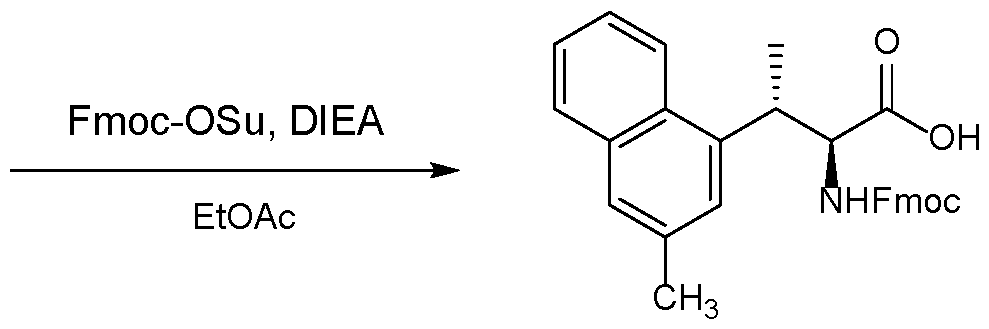
[0204] Step 1 : Tert-butyl 2-oxobutanoate (50.0 g, 316 mmol, 1.00 eq) and K2CO3 (131 g, 948 mmol, 3.00 eq) were dissolved in in toluene (1.50 L) at 25 °C. l-bromo-3 -methylnaphthalene (55.9 g, 253 mmol, 0.80 eq) and P(t-Bu)3.HBF4 (7.34 g, 25.3 mmol, 0.08 eq) were added to the reaction mixture at 25 °C, and the reaction was purged with N2 for three times. Pd2(dba)3 (5.79 g, 6.32 mmol, 0.02 eq) was added to the reaction mixture at 25 °C under N2, and the reaction was purged with N2 for three times. The reaction mixture was stirred at 110 °C for 3 h under N2. TLC (petroleum ether/ethyl acetate = 8/1, product Rf = 0.38) showed the reaction was completed. The reaction mixture was poured into aq. NH4CI (1.00 L) and extracted with EtOAc (500 mL x 3). The combined organic layers were washed with brine (500 mL x 2), dried over with Na2SO4, filtered and concentrated under reduced pressure to give the crude product. Purification by silica chromatography (SiO2, petroleum ether/ethyl acetate = 80/1 to 1/1) gave tert-butyl 3-(3- methylnaphthalen-l-yl)-2-oxobutanoate.
[0205] Step 2: To tert-butyl 3 -(3 -m ethylnaphthal en-l-yl)-2-oxobutanoate (62.0 g, 208 mmol, 1.00 eq) in DCM (620 mL) was added TFA (620 mL) dropwise to the reaction mixture at 0 °C. The reaction mixture was stirred at 20 °C for 2 h under N2.TLC (petroleum ether/ethyl acetate = 3/1, product Rf = 0.01) showed the reaction was completed. The reaction mixture was concentrated under reduced pressure to give the crude product. The crude product was further purification by prep-HPLC (column: Phenomenex luna cl8 250mm * 100mm * 10pm; mobile
phase: [H2O (0.1% TFA)-ACN]; gradient: 30% - 60% B over 20.0 min) to obtain 3-(3- methylnaphthalen-l-yl)-2-oxobutanoic acid.
[0206] Step 3: DL-Lysine (94.5 g, 646 mmol, 3.10 eq) was dissolved in DMSO (295 mL) and Na2B4O? (0.1 M, 458 mL) at 20 °C. Na2B4O?. IOH2O (23.9 g, 62.5 mmol, 0.30 eq) was added to the reaction mixture at 20 °C. 3 -(3 -Methylnaphthal en-l-yl)-2-oxobutanoic acid (50.5 g, 208 mmol, 1.00 eq) was added to the reaction mixture at 20 °C. Add Prozomix TAm-248 (29.5 g) to the reaction mixture at 20 °C. Pyridoxal-5-phosphate hydrate (2.58 g, 10.4 mmol, 0.05 eq) was added to the reaction mixture at 20 °C. The reaction mixture was stirred at 45 °C for 12 hrs. TLC (ethyl acetate/methanol = 10/1, product Rf = 0.01) showed the reaction was completed. The reaction mixture was cooled to 20 °C. The pH was adjusted to 5.0 with 5N HC1 (200 mL) at 20 °C. The reaction mixture was stirred at 20 °C for 30 min. The mixture was filtered and the filter cake was washed with H2O (200 mL x 3). The filter cake was collected and concentrated under reduced pressure to obtain (2S,3S)-2-amino-3-(3-methylnaphthalen-l-yl)butanoic acid, which was used to next step without purification.
[0207] Step 4: (2S,3S)-2-amino-3-(3-methylnaphthalen-l-yl)butanoic acid (50.7 g, 208 mmol, 1.00 eq) was dissolved in EtOAc (507 mL) at 20 °C. DIEA (32.3 g, 250 mmol, 43.6 mL, 1.20 eq) was added to reaction mixture at 20 °C. Fmoc-OSu (70.3 g, 208 mmol, 1.00 eq) was added to the reaction mixture at 20 °C. The reaction mixture was stirred at 20 °C for 12 h under N2. TLC (petroleum ether/ethyl acetate = 0/1, product Rf = 0.25) showed the reaction was completed. The reaction was filtered and the filter cake was washed with EtOAc (100 mL x 5). The organic layers were combined and washed with brine (300 mL x 2), dried over with Na2SO4, filtered and concentrated under reduced pressure to give the crude product. Purification by pre-HPLC (column: WePure Biotech XP t C18 250 * 70 * 10 pm; mobile phase: [H2O (lOmM NH4HCO3)- ACN]; gradient: 25%-60% B over 20.0 min) gave (2S,3S)-2-((((9H-fluoren-9- yl)methoxy)carbonyl)amino)-3 -(3 -methylnaphthal en-l-yl)butanoic acid. MS ESI calculated for C30H27NO4 [M + H]+ 465.19, found 489.1 ‘H NMR (400 MHz, DMSO-f/ ) 3 8.24 (d, J= 6.8 Hz, 1H), 7.83-7.90 (m, 2H), 7.77-7.82 (m, 1H), 7.57-7.64 (m, 1H), 7.50-7.56 (m, 2H), 7.34-7.49 (m, 5H), 7.18-7.30 (m, 3H), 4.43 ( t, J= 7.6 Hz, 1H), 4.22-4.31 (m, 1H), 4.08-4.17 (m, 2H), 3.95- 4.04 (m, 1H), 2.40 (s, 3H), 1.32( d, J= 6.8 Hz, 3H).
Precursor to sbMelNal3F

(2S,3S)-2-((((9H-fluoren-9-yl)methoxy)carbonyl)amino)-3-(3-fluoronaphthalen-l-yl)butanoic acid
Synthetic Scheme 33

[0208] Step 1 : Tert-butyl 2-oxobutanoate (1582 mg, 10 mmol, 1.00 eq) and K2CO3 (4146 mg, 30 mmol, 3.00 eq) were dissolved in in toluene (4.75 mL) at 25 °C. l-Bromo-3- fluoronaphthalene (4501 mg, 20 mmol, 2.0 eq) and P(t-Bu)3.HBF4 (290 mg, 1 mmol, 0.1 eq) were added to the reaction mixture at 25 °C, and the reaction was purged with N2 for three times. Pd2(dba)3 (229 mg, 0.25 mmol, 0.025 eq) was added to the reaction mixture at 25 °C under N2, and the reaction was purged with N2 for three times. The reaction mixture was stirred at 110 °C for 12 h under N2. The reaction mixture was concentrated and redissolved in 1 : 1 MTBE:hexanes and purified by silica chromatography (SiCh, 5-40% MTBE in hexanes) gave tert-butyl 3-(3- fluoronaphthal en- 1 -y l)-2 -oxobutanoate .
[0209] Step 2: To tert-butyl 3 -(3 -fluoronaphthal en-l-yl)-2-oxobutanoate (1.21 g, 4 mmol, 1.00 eq) in DCM (3.16 mL) was added TFA (1.58 mL) dropwise to the reaction mixture. The reaction mixture was stirred at 20 °C for 2 h under N2. The reaction mixture was concentrated under
reduced pressure to give the crude product. The crude product was purified by silica chromatography (SiCh, 10-60%% MTBE in hexanes) to 3 -(3 -fluoronaphthal en-l-yl)-2- oxobutanoic acid.
Synthetic Scheme 34
Step 3

Prozomix TAm-248
Boronate buffer
 DMSO
DMSO

Step 4
NaHCO3, Fmoc- water/MeCN 1


[0210] Step 3: To a solution of 3 -(3 -fluoronaphthal en-l-yl)-2-oxobutanoic acid (246 mg, 1.0 mmol) in DMSO (1231 pl) and borate buffer (pH 10, 0.1M) (1.11E+04 pl) was added L-lysine monohydrate (246 mg, 1.500 mmol). Pyridoxal Phosphate (12.36 mg, 0.050 mmol) was added, followed by Prozomix TAm-248 (172 mg, 1.000 mmol). The mixture was stirred for 48 h at which time complete disappearance of starting material was observed. The mixture was quenched with IN HC1 to adjust to pH 3-4 and directly purified by reverse phase chromatography (5-90% MeCN in water with no modifier). The compound eluted at 15-20% MeCN/water. Product-containing fractions were concentrated in vacuo to provide the product. HPLC-MS: (ES, m/z): [M+l]: 248.
[0211] Step 4: NaHCCE (102 mg, 1.213 mmol) was added to a solution of Fmoc-OSu (130 mg, 0.384 mmol) and (2S,3S)-2-amino-3-(3-fluoronaphthalen-l-yl)butanoic acid (100 mg, 0.404 mmol) in water/MeCN (1 : 1, 20 mL). The reaction mixture was stirred at room temperature overnight. The reaction mixture was cooled to room temperature and dried to residue by rotary evaporator to afford the desired product (2S,3S)-2-((((9H-fluoren-9-
yl)methoxy)carbonyl)amino)-3 -(3 -fluoronaphthal en-l-yl)butanoic acid (150 mg, 0.319 mmol) which was used in the next reaction without further purification. UPLC-MS: (ES, m/z): [M+l]: 270.5.

(S)-3-(6-(4-(((9H-fluoren-9-yl)methoxy)carbonyl)piperazin-l-yl)pyridin-3-yl)-2-((l-(4,4- dimethyl-2,6-dioxocyclohexylidene)ethyl)amino)propanoic acid
Synthetic Scheme 35

[0212] Step 1 : A solution of Nickel(II) chloride ethylene glycol dimethyl ether complex (0.642 g, 2.92 mmol) and 1,10-phenanthroline (0.527 g, 2.92 mmol) in DMA (100 mL) at room temperature was prepared. The solution was stirred at 50 °C for 2 h. The solution was cooled to room temperature and tert-butyl 4-(5-bromopyridin-2-yl)piperazine-l-carboxylate (5 g, 14.61 mmol), methyl (A)-2-((tert-butoxycarbonyl)amino)-3-iodopropanoate (5.77 g, 17.53 mmol), TBAI (5.40 g, 14.61 mmol) and zinc (1.910 g, 29.2 mmol) were added. The reaction was stirred 16 h at room temperature. The resulting solution was quenched with water (100 mL) and extracted with EtOAc (3 x 250 mL). The organic layers were combined, washed with brine (4 x 200 mL), dried over anhydrous ISfeSCU and filtered. The filtrate was concentrated under reduced
pressure and the residue was purified by silica gel column chromatography, eluted with 0 - 20% ethyl acetate in PE to give tert-butyl (iS)-4-(5-(2-((tert-butoxycarbonyl)amino)-3-methoxy-3- oxopropyl)pyridin-2-yl)piperazine-l -carboxylate. MS ESI calculated for C23H37N4O6 [M + H]+ 465.26, found 465.35.
[0213] Step 2: To a mixture of tert-butyl (5)-4-(5-(2-((tert-butoxycarbonyl)amino)-3-methoxy- 3 -oxopropyl)pyridin-2-yl)piperazine-l -carboxylate (6.5 g, 13.99 mmol) in THF (70 mL) was added LiOH (28 mL, 28.0 mmol, 1 N in water) at room temperature. The solution was stirred at 25 °C for 2 h. The pH was adjusted to 7 with 1 N HC1 and concentrated under reduced pressure to afford (5 -2-((terZ-butoxycarbonyl)amino)-3-(6-(4-(tert-butoxycarbonyl)piperazin-l- yl)pyri din-3 -yl)propanoic acid (6.3 g, 11.19 mmol, 80% yield) as an off-white solid. MS ESI calculated for C22H35N4O6 [M + H]+ 451.25, found 451.20.
[0214] Step 3 : To a stirred solution of (5)-2-((tert-butoxycarbonyl)amino)-3-(6-(4-(tert- butoxycarbonyl)piperazin- l-yl)pyri din-3 -yl)propanoic acid (6.3 g, 13.98 mmol) in THF (30 mL) was added HC1 (35 mL, 140 mmol, 4 N in dioxane) at ambient temperature. The reaction was stirred at ambient temperature for 2 h. The resulting solution was concentrated in vacuum to afford (5)-2-amino-3-(6-(piperazin-l-yl)pyri din-3 -yl)propanoic acid (3.5 g, 11.19 mmol, 80% yield) (crude product). MS ESI calculated for C12H19N4O2 [M + H]+ 251.14, found 251.15.
[0215] Step 4: To a stirred solution of (5)-2-amino-3-(6-(piperazin-l-yl)pyri din-3 -yl)propanoic acid (3.5 g, 13.98 mmol) in MeOH (60 mL) were added DIEA (12.21 mL, 69.9 mmol) and 2- acetyldimedone (3.82 g, 20.97 mmol) at room temperature. The solution was stirred at 25 °C for 2 h. The resulting solution was concentrates in vacuum to afford crude product. The crude product was purified by RP flash with the following conditions: Flash C18 (330 g); Mobile Phase A: water (0.05% TFA), Mobile Phase B: ACN; (Gradient: 2% B hold 5 min, up to 75% B within 15 min, 49.5% B hold 6 min; up to 60% B within 5 min, 95% B hold 5 min); The productcontaining fractions were collected to give (5)-2-((l-(4,4-dimethyl-2,6- di oxocy cl ohexylidene)ethyl)amino)-3-(6-(piperazin-l-yl)pyri din-3 -yl)propanoic acid (5.8 g, 13.29 mmol, 95% yield) as a yellow solid. MS ESI calculated for C22H31N4O4 [M + H]+ 415.23, found 415.25.
[0216] Step 5: To a mixture of (5)-2-((l-(4,4-dimethyl-2,6-dioxocyclohexylidene)ethyl)amino)- 3-(6-(piperazin-l-yl)pyridin-3-yl)propanoic acid (4.5 g, 10.86 mmol) in THF (50 mL) and water (50 mL) were added NaHCCL (2.74 g, 32.6 mmol) and Fmoc-OSu (3.30 g, 9.77 mmol) at ambient temperature. The reaction was stirred at ambient temperature for 2 h. The resulting solution was acidified with HC1 (1 M) and extracted with EA (4 x 100 mL). The combined organic layers were dried over anhydrous Na2SO4 and filtered. The residue was purified by silica
gel chromatography, eluting with 0% - 60% EA in PE to afford (5)-3-(6-(4-(((9J/-fluoren-9- yl)methoxy)carbonyl)piperazin-l-yl)pyridin-3-yl)-2-((l-(4,4-dimethyl-2,6- dioxocyclohexylidene)ethyl)amino)propanoic acid (6.5655 g, 9.83 mmol, 91% yield) as an off- white solid. MS ESI calculated for C37H41N4O6 [M + H]+ 637.29, found 637.55. 'HNMR (400 MHz, CDCI3) 8 13.66 (s, 1H), 10.84 (s, 1H), 8.14 (s, 1H), 7.76 - 7.75 (m, 2H), 7.57 - 7.52 (m, 2H), 7.46 - 7.24 (m, 5H), 6.67 - 6.65 (m, 1H), 4.64 - 4.63 (m, 1H), 4.46 (d, J= 6.8 Hz, 2H), 4.25 (t, J= 6.4 Hz, 1H), 3.64 - 3.45 (m, 8H), 3.25 (s, 1H), 3.07 - 3.05 (m, 1H), 2.50 (s, 3H), 2.33 (s, 4H), 0.98 (s, 6H).
Preparation of Final Compounds
A, Generalized Procedure for Synthesizing Linear Peptide Precursors
[0217] Peptides in FIG. 1 were synthesized using standard solid-phase synthesis using Fmoc/ZBu chemistry as exemplified in Chan, W.C.; White, P.D. “Fmoc Solid-Phase Synthesis: a Practical Approach”, Oxford University Press, Oxford, 2000; Steward, J.; Young, J. “Solid Phase Peptide Synthesis”, Pierce Chemical Company, Rockford, 1984.; Benoiton, N.L. “Chemistry of Peptide Synthesis”, CRC Press, New York, 2006; and Lloyd-Williams, P.; Albericio, F.; Giralt, E. “Chemical Approaches to the Synthesis of Peptides and Proteins”, CRC Press, New York, 1997.
[0218] During peptide chain elongation, the a-amino group of each amino acid was protected with a 97/-fluoren-9-ylmethoxycarbonyl group (Fmoc). To avoid any side reactions during the chain elongation steps, any reactive amino acid side chains also carry acid-labile protecting groups, effectively masking the reactive groups until removal upon treatment with strong acid. After completion of each coupling step, the Fmoc group of the TV-terminal amino acid was removed with piperidine or 4-methylpiperidine and the resin was thoroughly washed to prepare for the coupling of the subsequent Fmoc-protected amino acid derivative.
[0219] The side chain protecting groups used were: Zc/V-butyl (/Bu) for S, hY, Bip4CO2H, Phe4COOH; /c/V-butoxy-carbonyl (Boc) for Dap, dDab, dK, dOrn, K, Prot4NH2; and, P- methylpentyl ester (OMpe) for D.
[0220] In the description of the synthetic used to prepare cyclic peptides provided below (Protocols A-G), reference is made to specific AA numbers in the peptide. The AA numbering is indicated as shown in the following examples:
[0221] TyrEtNAc (AAl)-Trp6Cl(AA2)-Phe4COOH(AA3)-G(AA4)-Prot4NH2(AA5)- SbMeW4Cl(AA6)-D(AA7)-dPip(AA8)-G(AA9)-Bip4CO2H(AA10)-AlaPip4(AAl 1)- deNC2NH2Gly(AA12)-aMeNle(AA13) (SEQ ID NO:221)
[0222] 3AzaPhe4AcPip(AAl)-W(AA2)-Phe4COOH(AA3)-G(AA4)-Prot4NH2(AA5)- SbMelNal(AA6)-D(AA)-dNMeA(AA8)-G(AA9)-Bip4CO2H(AA10)-Trp7az(AAl 1)- NMeProc4NH2(AA12)-aMeNle(AA13); (SEQ ID NO:310)
[0223] The solid phase synthesis of cyclic peptides starts from AA9: G(AA9). Glycine was preloaded on the resin.
[0224] Fmoc-protected amino acids were typically obtained from vendors such as Sigma- Aldrich, Novabiochem, Chem-Impex, and Combi-Block. Other Fmoc-protected amino acids can be obtained using the synthetic methods protected amino acids described above.
[0225] H-Gly-loaded 2-chlorotrityl resin (100-200 mesh, 0.84 mmol/g loading, 1% cross-linked polystyrene, IRIS or Novabiochem) was used for solid phase synthesis.
B, Synthetic Procedures used to Prepare Cyclic Peptides
Synthetic Scheme 36
Solid-phase peptide synthesis

Release from solid support 25% HFIP in DCM
Macrolactamization and side chain deprotection

Solid-Phase Synthesis of Peptides Protocol A
[0226] Peptides were synthesized on a Liberty Blue™ synthesizer from CEM Corporation, using standard solid-phase synthesis using Fmoc/tBu or Fmoc/Boc chemistry as summarized above in Scheme 36. HATU with DIPEA were used as coupling agents to create the amide bond between the free amino terminus of the resin-bound protected peptide and the carboxylic acid of the Fmoc-protected amino acid. All the amino acids were dissolved at a 0.2 M concentration in DMF fMAAli methyl form am ide). The amino acids were activated with equimolar amounts of
HATU (0.5 M in DMF) and DIPEA solution (2 M in NMP). Reactions were typically performed at the 250 or 100 pmol scale.
[0227] Every synthesis cycle included: Fmoc-amino acid deprotection by 20% piperidine in DMF (rt, 2*3 min) and coupling (potentially repeated twice for difficult couplings) with Fmoc- protected amino acid (e.g., PheCOOH, dPip)/HATU/DIPEA (2, 2, and 4 eq respectively; 50 °C microwave assisted heating at 35W, 240 sec) or Fmoc-protected amino acid (e.g., SbMelNal)/HATU/DIPEA (2 or 3, 2 or 3, and 4 or 6 eq respectively; 50 °C microwave assisted heating at 60W, 480 sec) or with Fmoc-protected amino acid (e.g., G, W, D)/HATU/DIPEA (4, 4, and 8 eq respectively; 50 °C microwave assisted heating at 35W, 240 sec) or with Fmoc- protected amino acid (e.g., NC2NH2Gly, aMeNle, TyrEtNAc and Prot4NH(Boc)/(Alloc))/HATU/DIPEA (3, 3, and 6 eq respectively; 50 °C microwave assisted heating at 35W, 240 sec). Cycles of Fmoc deprotection and Fmoc-protected amino acid coupling were repeated with the desired monomers until the full linear peptide was formed.
[0228] Final Fmoc deprotection of resin-bound full linear peptide was frequently performed manually.
Solid-Phase Synthesis of Peptides Protocol B (Manual Synthesis)
[0229] Alternatively, peptides were synthesized totally or partially manually using standard solid-phase synthesis using Fmoc/tBu or Fmoc/Boc chemistry as summarized above in Scheme 36. HO AT with DIC and DIPEA to adjust to pH = 7 were used as coupling agents to create the amide bond between the free amino terminus of the resin-bound protected peptide and the carboxylic acid of the Fmoc-protected amino acid. All the amino acids were dissolved at a 0.05- 0.2 M concentration in DMF. Reactions were typically performed at the 50-100 pmol scale.
[0230] Every synthesis cycle included: Fmoc-amino acid deprotection by 20% piperidine in DMF (rt, 3x3 min or 2x5 min ) and coupling (potentially repeated twice for difficult couplings) Fmoc-protected natural amino acid HOAT/DIC (3, 4 or 5 eq, 3, 4 or 5 eq, and 6, 8 or 10 eq respectively; 45 min) or with Fmoc-protected non-natural amino acid HOAT/DIC (1.5 or 2 eq, 1.5 or 2 eq, and 3 or 4 eq respectively; 45 min) with DIPEA 0.5-1 eq typically used (to adjust to pH = 7).
[0231] Alternatively, peptides were synthesized totally or partially manually using standard solid-phase synthesis using Fmoc/tBu or Fmoc/Boc chemistry as summarized above in Scheme 36. HATU and DIPEA were used as coupling agents to create the amide bond between the free amino terminus of the resin-bound protected peptide and the carboxylic acid of the Fmoc- protected amino acid. All the amino acids were dissolved at a 0.05-0.2 M concentration in DMF.
[0232] Reactions were typically performed at the 50-100 pmol scale.
[0233] Every synthesis cycle included: Fmoc-amino acid deprotection by 20% piperidine in DMF (rt, 3x3 min or 2x5 min ) and coupling (potentially repeated twice for difficult couplings) with Fmoc-protected natural amino acid HATU/DIPEA (3, 4 or 5 eq, 3, 4 or 5 eq, and 6, 8 or 10 eq respectively; 45 min) or with Fmoc-protected non-natural amino acid HATU/DIPEA (1.5 or 2 eq, 1.5 or 2 eq, and 3 or 4 eq respectively; 45 min).
[0234] Cycles of Fmoc deprotection and Fmoc-protected amino acid coupling were repeated with the desired monomers until the full linear peptide was formed.
Synthetic Scheme 37

Solid-Phase Synthesis of Peptides Protocol C
[0235] Alternatively, peptides were synthesized according to protocol A up to AA5 and prosecuted manually using standard solid-phase synthesis using Fmoc/tBu, Fmoc/Boc or Alloc/Fmoc chemistry as summarized above in Scheme 37. HOAT with DIC were used as coupling agents to create the amide bond between the free amino terminus of the resin-bound protected peptide and the carboxylic acid of the Fmoc-protected amino acid. For manual couplings all the amino acids were dissolved at a 0.05-0.2 M concentration in DMF or NMP. Before final Fmoc deprotection the Alloc protecting group was removed from AA5, the peptidyl resin was partitioned and coupling with appropriate acid using HOAT with DIC was performed.
In the specific case where R=Me (R, in the above scheme), acetic anhydride in NMP was used to acetylate the amino of Prot4NH2 (AA5). Reactions were typically performed at the 100 pmol scale. Cycles of Fmoc deprotection and Fmoc-protected amino acid coupling were repeated with the desired monomers until the full linear peptide was formed.
Solid Phase Alloc Deprotection
[0236] Pd(PhsP)4 (0.130 g, 0.113 mmol) was dissolved in DCM dry 15 mL and added to the resin-bound protected peptide (-750 pmol) with phenylsilane (1.948 g, 18.00 mmol) in DCM dry under N2 bubbling. The reaction was left bubbling under a N2 atmosphere for 10 min. The resinbound protected peptide was washed with a solution 0.5% w/v sodium diethylcarbamodithioate (0.017 g, 0.100 mmol), 0.5% V/V DIPEA in DMF (200 mL), then with DMF.
Synthetic Scheme 38

Solid-Phase Synthesis of Peptides Protocol D
[0237] Alternatively, peptides were synthesized according to protocol A up to AA2 (and in some cases up to AA3) and prosecuted manually using standard solid-phase synthesis using Fmoc/tBu, Fmoc/Boc or Fmoc/ Alloc chemistry as summarized above in Scheme 38. HOAT with DIC/DIPEA (0.5 eq) or HATU with DIPEA were used as coupling agents to create the amide bond between the free amino terminus of the resin-bound protected peptide and the carboxylic
acid of the Fmoc-protected amino acid. H-Gly-loaded 2-chlorotrityl resin. For manual couplings all the amino acids were dissolved at a 0.05-0.2 M concentration in DMF or NMP. Before final Fmoc deprotection, the Alloc protecting group was removed from AA1, the peptidyl resin was partitioned and coupling with appropriate acid using HO AT with DIC was performed. Reactions were typically performed at the 100 pmol scale. Cycles of Fmoc deprotection and Fmoc- protected amino acid coupling were repeated with the desired monomers until the full linear peptide was formed.
Solid Phase Alloc Deprotection
[0238] Pd(PhsP)4 (0.130 g, 0.113 mmol) was dissolved in dry DCM (15 mL) and added to the resin-bound protected peptide (-750 pmol) with phenylsilane (1.948 g, 18.00 mmol) in DCM dry under N2 bubbling. The reaction was left bubbling under N2 atmosphere for 7min. The resinbound protected peptide was washed with a solution 0.5% w/v sodium diethylcarbamodithioate (0.017 g, 0.100 mmol), 0.5% V/V DIPEA in DMF (200 mL), then with DMF.
Synthetic Scheme 39

Solid-Phase Synthesis of Peptides Protocol E
[0239] Alternatively, peptides were synthesized according to protocol A up to AA2 (or in some cases only up to AA3) and prosecuted manually using standard solid-phase synthesis using Fmoc/tBu, Fmoc/Boc or Dde/Fmoc chemistry as summarized above in Scheme 39. HOAT with DIC or HATU with DIPEA were used as coupling agents to create the amide bond between the free amino terminus of the resin-bound protected peptide and the carboxylic acid of the Fmoc- protected amino acid. For manual couplings all the amino acids were dissolved at a 0.05-0.2 M concentration in DMF or NMP. When the Fmoc protecting group was removed from AA1, the peptidyl resin was partitioned and coupling with the appropriate acid using HOAT with DIC for X=C(H),N or HOAT with DIC and DIPEA (0.5 eq) or PyOAp and DIPEA for X=Nwas performed. Then the Dde protecting group ((l-(4,4-dimethyl-2,6-dioxocyclohexylidene) ethyl)) was removed and the synthesis prosecuted to final cyclic peptide as summarized above in Scheme 34. Reactions were typically performed at the 100 pmol scale.
Solid Phase Dde Deprotection
[0240] The resin-bound protected peptide was treated with a solution of hydrazine 3% in DMF v/v (50 mL) by portion wise addition and dropwise draining, then washed with 50 mL of DMF to give resin-bound protected peptide deprotected from Dde.
Synthetic Scheme 40

Solid-Phase Synthesis of Peptides Protocol F
[0241] Alternatively, peptides were synthesized according to protocol A up to AA2 (or in some cases only up to AA3) and prosecuted manually using standard solid-phase synthesis using Fmoc/tBu, Fmoc/Boc or Dde/Fmoc chemistry as summarized above in Scheme 40. HOAT with DIC with DIPEA (protocol B) were used as coupling agents to create the amide bond between the free amino terminus of the resin-bound protected peptide and the carboxylic acid of the Fmoc-protected amino acid. For manual couplings all the amino acids were dissolved at a 0.05- 0.2 M concentration in DMF or NMP. Then the Dde protecting group ((l-(4,4-dimethyl-2,6- dioxocyclohexylidene) ethyl)) was removed and the synthesis prosecuted to final cyclic peptide as summarized above in Scheme 35. Reactions were typically performed at the 100 pmol scale.
Solid Phase Dde Deprotection
[0242] The resin-bound protected peptide was treated with a solution of hydrazine 3% in DMF v/v (50 mL) by portion wise addition and dropwise draining, then washed with 50 mL of DMF to give resin-bound protected peptide deprotected from Dde.
Synthetic Scheme 41

Solid-Phase Synthesis of Peptides Protocol G
[0243] Alternatively, peptides were synthesized according to protocol A and then after selective cleavage of protected petide from resin and macrolactamization (performed as described below), the azide moiety of Prot4N3 was reduced to Prot4NH2 and manual coupling with PyOAp/DIPEA was performed with the appropriate acid as summarized above in Scheme 41. Then final side chain deprotection was performed. Reactions were typically performed at the 100 pmol scale.
Solution Phase Azide reduction
[0244] The peptide was dissolved in 50 mL of a mixture acetonitrile/water 9: 1 and HEPES (N- 2-hydroxyethylpiperazine-N-2-ethane sulfonic acid) IM buffer was added until pH 7, 10 eq of TCEP (Tris(2-carboxyethy)phosphine) were added and the reaction was stirred at room temperature. After 2 h the reaction was almost complete, it was left overnight. The solvent was removed in vacuo with a rotary evaporator.
Selective Cleavage of Protected Peptide and Macrolactamization
[0245] For the cleavage of the protected linear peptide from the solid support, the peptidyl resin (~16 mg) was treated with 25% hexafluoroisopropanol (HFIP) in DCM for 20 min or 3x3 min at rt, filtered, and the solvent was removed under reduced pressure. The resulting residue was either lyophilized from water/ acetonitrile and the resulting powder dissolved in DMF (Img/ mL) or directly dissolved in DMF (Img/ mL) and HATU (1 eq) or PyOAp (leq) and DIPEA (3 eq) were added. The mixture was stirred for 20 min at rt. Upon completion of the macrolactamization, monitored by UPLC-MS, the solvent was removed under reduced pressure.
Final side chain deprotection
[0246] A solution of TFA/H2O/TIS (92.5/5/2.5, v/v/v, 25 mL for 100 pmol scale) was added to the crude protected cyclic peptide. The mixture was stirred for 10 min at rt. the volatiles were removed under reduced pressure and the residue dissolved in water/acetonitrile 1 : 1 and TFA (1 mL) was added, and the mixture stirred for at least Ih then frozen and lyophilized to give the deprotected cyclic peptide as a solid.
HPLC Purification
[0247] Purification was performed by preparative reversed-phase high performance liquid chromatography (RP-HPLC) on Waters X-bridge C18 50*250 mm, 120A, 5pm, or
[0248] Reprosil Gold Longlife DAC C8 250*40 mm 5pm, 120 or 200A; or Reprosil Gold Longlife DAC C8 250*50 mm 5pm, 200A.
[0249] Second purification when necessary was performed by preparative reversed-phase high performance liquid chromatography (RP-HPLC): LunaPhenomenex C18 250*30 mm 5pm, 100A or on Waters X-Bridge C8 19*150 mm 5pm, 300A.
[0250] Mobile phase: (A) 0.1% TFA in HPLC water and (B) 0.1% TFA in HPLC acetonitrile; UV wavelength 1 = 215 nm;
[0251] UV absorbing fractions containing the target m/z ions were collected and the fractions containing product were confirmed by LC/MS.
[0252] Confirmation of identity and purity assessment of final compounds was performed by UPLC-MS, which was measured by a reverse phase Waters Acquity™. UPLC-MS system. ColumnA: Waters BEH C18 Column (130 A, 1.7 pm, column size 2.1 * 100 mm). Mobile phase 1 : mobile phase 2: (A) 0.1% TFA in HPLC water and (B) 0.1% TFA in HPLC acetonitrile; injection volume: 1 pL; flow rate: 0.4 mL/min; UV wavelength X = 214 nm; or Column B: Waters BEH C4 Column (300 A, 1.7 pm, column size: 2.1 * 100 mm, or column size 2: 2.1 * 50 mm, column temperature 45°C). Mobile phase 1 : (A) 0.1% TFA in HPLC water and (B) 0.1% TFA in HPLC acetonitrile; injection volume: 1 pL; flow rate: 0.4 mL/min; UV wavelength X = 214 nm; injection volume: 1 pL; flow rate: 0.4 mL/min; UV wavelength X = 214 nm; Mass range: ES(+): 400-1800 amu. UV detection range: 400-1200 nm. The usage of this methodology is indicated by UPLC-MS in the analytic characterization of the described compounds. Typical examples of gradients are:
[0253] Method 1 : (%B): 20% in 1 min; 20% to 40 % in 4 or 5 min.
[0254] Method 2: (%B): 25% in 1 min; 25 to 45 % in 4 or 5 min.
[0255] Method 3: (%B): 30% in 1 min; 30 to 50 % in 4 or 5 min.
[0256] Method 4: (%B): 35% in 1 min; 35 to 55 % in 4 or 5 min.
[0257] Method 5: (%B): 40% in 1 min; 40 to 60 % in 4 or 5 min.
[0258] Lyophilization of combined fractions containing pure peptide resulted in the final cyclized product as a powder.
BIOLOGICAL ASSAYS:
[0259] The inhibition of IL-ip induced IL-6 secretion was evaluated in MRC5 cells.
Recombinant human IL-ip (BioLegend 579404) at 2X ECso concentration was prepared in seeding medium, EMEM (ATCC 30-2003) with 0.025% BSA (Sigma A9576), IX penicillin/ streptomycin (Gibco 15070-063), lX NEAA (Gibco 11140-050), IX GlutaMax (Gibco 35050-061), and IX sodium pyruvate (Gibco 11360-070). 20 pL of IL-ip was added to a 384- well collagen-coated plate (Coming 354664) and pre-incubated at ambient temperature for 1 hour with 200 nL of compound dispensed using an ECHO 555 liquid handler. Human lung fibroblast MRC5 cells (ATCC CCL-171) were added at a density of 3000 cells / 20 pL per well. The cells were prepared by passaging three times in growth medium, EMEM (ATCC 30-2003) with 10% fetal bovine serum (Gibco 16140-071), IX penicillin/ streptomycin (Gibco 15070-063), IX NEAA (Gibco 11140-050), IX GlutaMax (Gibco 35050-061), and IX sodium pyruvate (Gibco
11360-070) in collagen-coated T175 flasks (Greiner 661950) and harvested in seeding medium after 5 minutes of 0.25% trypsin-EDTA (Gibco 25200-056) digestion. The 384-well collagen- coated plate, containing a final volume of 40 pL, was incubated at 37 °C, 5% CO2 overnight. 5 pL of the conditioned medium was transferred to a 384-well AlphaLISA plate (PerkinElmer 6005350) for detection of IL-6 using the human AlphaLISA IL-6 kit (PerkinElmer AL223F) as per the manufacturer’s protocol. 20 pL of the acceptor bead/biotinylated antibody mix was added to the 384-well AlphaLISA plate and incubated for 1 hour at ambient temperature. The donor bead mix was protected from light and 25 pL was added to the plate and incubated for 30 minutes at ambient temperature. The AlphaLISA plate was read on an EnVision multimode plate reader (Perkin Elmer model 2104) using the AlphaScreen setting (laser exc at 680 nm and emis at 570 nm). Dose response curves and IC50 values were analyzed using a 4-parameter logistic equation in Spotfire software (Tibco, Palo Alto, CA).
[0260] The amino acid sequences, biological activities (MRC IC50S), molecular weights and mass spectral data ([M+2H]/2+ or [M + 3H]3+) of Example Nos. 1-379 (SEQ ID NOS: 1-379) are provided in FIG. 1.
[0261] The disclosed subject matter is not to be limited in scope by the specific embodiments and examples described herein. Indeed, various modifications of the disclosure in addition to those described will become apparent to those skilled in the art from the foregoing description and accompanying figures. Such modifications are intended to fall within the scope of the appended claims.
[0262] All references (e.g., publications or patents or patent applications) cited herein are incorporated herein by reference in their entirety and for all purposes to the same extent as if each individual reference (e.g., publication or patent or patent application) was specifically and individually indicated to be incorporated by reference in its entirety for all purposes. Other embodiments are within the following claims.
Claims
1. A compound of Formula (I)
 wherein:
L3 is selected from the group consisting of:
 wherein RPr is H or C1-C3 alkyl;

(c)
wherein Ma is -N(H)-, -N(CHs)-, -N(CH3)2-, -N(H)(C(O)[(CH2)rN+(CH3)3]-, or -0-

(d) wherein each RLa is independently H or C1-C3 alkyl, or alternatively the two RLa together with the carbon atom to which they are attached, form a 5- to 6-membered saturated heterocyclic ring containing 1 heteroatom group selected from the group consisting of N(H), N(CH3), N(CH3)2, O and S; and

(e)
L2 is selected from the group consisting of:
 wherein:
RL2a is H or methyl;
RL2 is:
(i) C1-C5 alkyl; or
(ii) -(CH2)e-CL2, wherein
CL2 is:
(i) phenyl,
(ii) C3-C6 cycloalkyl,
(iii)a 5- to 6-membered, saturated heterocycle containing one heteroatom selected from the group consisting of N, O, and S; or
(iv) a 5- to 6-membered heteroaryl containing one to two heteroatoms independently selected from the group consisting of N, O, and S
wherein CL2 is unsubstituted or substituted by 1 to 3 RCL2 substituents independently selected from the group consisting of halo, C1-C3 alkyl, phenyl, hydroxy, and C1-C3 hydroxyalkyl; each RCL3 is independently selected from the group consisting of H, halo, C1-C3 alkyl, hydroxy, phenyl, pyrimidinyl, benzyloxy, and oxazolylmethoxy; wherein the phenyl, pyrimidinyl, benzyloxy and oxazolylmethoxy of RCL3 js unsubstituted or substituted by 1 to 3 substituents independently selected from the group consisting of halo, C1-C3 alkyl and C1-C3 alkoxy; each of Xl, X2, and X3 are independently C(H) or N;
R1 is selected from the group consisting of:
(i) Rla-C(O)N(H)-CH2CH2-O-, wherein
Ria is
(a) C1-C3 alkyl; or
(b)(CH3)3N+CH2CH2(OCH2CH2)m-;
 wherein
Rib is:
(a) C1-C3 alkyl; or
(b) Clb-(CH2)p-, wherein Clb is:
(i) a 5- to 6-membered saturated heterocyclyl, wherein the 5- to 6- membered saturated heterocyclyl contains 1 to 2 heteroatoms independently selected from the group consisting of N, O, and S;
(ii) a 5- to 6-membered heteroaryl, wherein the 5- to 6-membered heteroaryl contains 1 to 3 heteroatoms independently selected from the group consisting of N, O, and S; and
(iii) phenyl; wherein Clb is unsubstituted or substituted by 1 to 2 substituents independently selected from the group consisting of halo, C1-C3 alkyl and C1-C3 alkoxy;
(c) (CH3)3N+CH2CH2(OCH2CH2)q-;
(d) (CH3)3N+CH2CH2OCH2-; or
(e) CH3OCH2CH2(OCH2CH2)q-;
(iii) a group
 wherein
Rlc is hydroxy, amino, morpholinyl, morpholinyl(CH2CH2)-N(H)-;
A2 is -C(O)OH or -C(O)NH2;
R2 is H, -C(O)-(C1-C3 alkyl), -C(O)-(CH2)g-C2, -C(O)-C(H)(CH3)-C2, or -(CH2)h-C2,
C2 is
(i) phenyl or
(ii) a 5- to 6-membered mono- or a 9- to 10-membered bicyclic heteroaryl containing wherein said 5- to 6-membered or 9- to 10-membered bicyclic heteroaryl contains 1 to 2 heteroatoms independently selected from the group consisting of N, O, and S; wherein C2 is unsubstituted or substituted by 1 to 3 RC2 substituents independently selected from the group consisting of halo, amino, hydroxy, C1-C3 alkyl, C1-C3 fluoroalkyl, C1-C3 alkoxy, and phenyl;
R3 is
(i) naphthyl; or
(ii) a 9- to 10-membered heteroaryl, wherein said heteroaryl contains 1 to 2 heteroatoms independently selected from the group consisting of N, O, and S; wherein R3 is unsubstituted or substituted by 1 to 2 R3 a substituents independently selected from the group consisting of halo, C1-C3 alkyl, and C1-C3 alkoxy;
R4 is -(CH2)iCO2H, -(CH2)iOH, -C(H)(OH)-CH3, -C4a ~c4b -CH2-C4a or -CH2-C4b;
C4a is tetrahydrofuryl, tetrahydropyranyl, 1,3-dioxolanyl, or 1,3-dioxanyl;
C4b is imidazolyl, wherein said imidazolyl is unsubstituted or substituted by 1 C1-C3 alkyl;
R5 is Ci-C3 alkyl;
R6 is H or C1-C3 alkyl; or alternatively R5 and R6 together with the atoms to which they are attached form a pyrrolidinyl, piperidinyl or azepinyl ring;
Ring CPC is phenyl or cyclohexyl;
Al is -CO2H, or -N(H)SO2CH3;
R7 is -(CH2)jNH2; -(CH2)jN+(CH3)3;
-(CH2)jN(H)C(O)CH2CH2O(CH2CH2-O)k-CH2CH2N+(CH3)3 ; -(CH2)j C(O)NH2;
-(CH2)jOH; -(CH2)jOCH3, or -C7a
C7a is:
(i) a 5- to 6-membered monocyclic aryl or heteroaryl, wherein said 5- to 6-membered heteroaryl contains 1 to 2 heteroatoms independently selected from the group consisting of N, O, and S;
(ii) a 9- to 10-membered bicyclic aryl or heteroaryl, wherein said 9- to 10-membered bicyclic heteroaryl contains 1 to 4 heteroatoms independently selected from the group consisting of N, O, and S; or
(iii) a 4- to 6-membered saturated monocyclic heterocycloalkyl, wherein said 4- to 6- membered saturated monocyclic heterocycloalkyl contains 1 to 2 heteroatoms independently selected from the group consisting of N, O, and S; wherein C7a is unsubstituted or substituted by 1 to 3 RC7a substituents independently selected from the group consisting of halo, amino, amino(Ci- C3)alkyl, carbamoyl, hydroxy, carboxy, C1-C3 alkyl, C1-C3 fluoroalkyl, C1- C3 alkoxy, and -C(O)CH2-C7b;
C7b is a 4- to 6-membered saturated monocyclic heterocycloalkyl, wherein said 4- to 6-membered saturated monocyclic heterocycloalkyl contains 1 to 2 heteroatoms independently selected from the group consisting of N and O; wherein C7b is unsubstituted or substituted by 1 to 2 RC7b substituents independently selected from the group consisting of C1-C3 alkyl;
R8 is H, halo, or C1-C3 alkyl; subscript a is 0 or 1; subscript b is 0 or 1; subscript c is 1, 2, 3, 4, or 5; subscript d is 1 or 2; subscript e is 0, 1, or 2; subscript f is 0, 1, 2, or 3; subscript g is 0, 1, or 2; subscript h is 1 or 2; subscript i is 1, 2, or 3;
subscript j is 1, 2, or 3; and subscript k is 1, 2, 3, or 4; subscript m is 0, 1, 2, 3, or 4; subscript nl n is 0, 1 or 2; subscript n2 is 1 or 2; subscript p is 0, 1, 2, or 3; subscript q is 0, 1, 2, 3, or 4; and subscript r is 1, 2, 3, 4, or 5; or a pharmaceutically acceptable salt thereof.
2. The compound of claim 1 or a pharmaceutically acceptable salt thereof, wherein L3 is

3. The compound of claim 2 or a pharmaceutically acceptable salt thereof, wherein L3cy is cyclopropyl, cyclopentenyl, or phenyl.
4. The compound of claim 1 or a pharmaceutically acceptable salt thereof, wherein L3 is

5. The compound of claim 4 or a pharmaceutically acceptable salt thereof, wherein Rpr is H.
6. The compound of claim 1 or a pharmaceutically acceptable salt thereof, wherein L3 is

7. The compound of claim 1 or a pharmaceutically acceptable salt thereof, wherein L3 is

8. The compound of claim 7 or a pharmaceutically acceptable salt thereof, wherein each RLa is methyl; or the two RLa, together with the carbon atom to which they are attached, form a piperidine ring.
9. The compound of claim 1 or a pharmaceutically acceptable salt thereof, wherein L3 is
 and subscript c is 1, 2, 3, or 4.
10. The compound of claim 1 or a pharmaceutically acceptable salt thereof, wherein L2 is

11. The compound of claim 10 or a pharmaceutically acceptable salt thereof, wherein RL2 is C1-C4 alkyl.
12. The compound of claim 10 or a pharmaceutically acceptable salt thereof, wherein RL2a is methyl.
13. The compound of claim 12 or a pharmaceutically acceptable salt thereof, wherein: RL2a is H,
RL2 is _(CH2)e-CL2, wherein CL2 is unsubstituted or substituted phenyl, and subscript e is 0.
14. The compound of claim 1 or a pharmaceutically acceptable salt thereof, wherein L2 is
 wherein subscript nl is 0, 1, or 2 and subscript n2 is 1 or 2.
15. The compound of claim 14 or a pharmaceutically acceptable salt thereof, wherein L2 is

16. The compound of claim 15 or a pharmaceutically acceptable salt thereof, wherein
RCL3 is independently selected from the group consisting of benzyloxy and 1,3-oxazol- 2-yl methoxy, and subscript f is 0 or 1.
17. The compound of claim 1 or a pharmaceutically acceptable salt thereof, wherein L2 is

18. The compound of claim 1 or a pharmaceutically acceptable salt thereof wherein R1 is Rla-C(O)N(H)-CH2CH2-O-.
19. The compound of claim 1 or a pharmaceutically acceptable salt thereof wherein R1 is the group
 , and Rib is methyl or morpholin-4-yl-CH2-.
20. The compound of claim 19 or a pharmaceutically acceptable salt thereof, wherein Rib is morpholin-4-yl-CH2-.
21. The compound of claim 1 or a pharmaceutically acceptable salt thereof wherein R2 is
-H, -C(O)CH2Ph, -CH2Ph, -C(0)CH3, -C(O)-pyridyl, -C(O)CH2-indolyl, or -C(O)-C(H)(CH3)-pyridyl.
22. The compound of claim 1 or a pharmaceutically acceptable salt thereof wherein R3 is substituted or unsubstituted naphthyl or indolyl.
23. The compound of claim 1 or a pharmaceutically acceptable salt thereof wherein R4 is -(CH2)iCO2H.
24. The compound of claim 23 or a pharmaceutically acceptable salt thereof, wherein subscript i is 1.
25. The compound of claim 1 or a pharmaceutically acceptable salt thereof, wherein R5 and R6 together with the atoms to which they are attached form a piperidinyl ring.
26. The compound of claim 1 or a pharmaceutically acceptable salt thereof, wherein R5 and R6 are methyl.
27. The compound of claim 1 or a pharmaceutically acceptable salt thereof, wherein ring CPC is phenyl.
28. The compound of claim 1 or a pharmaceutically acceptable salt thereof, wherein Al is -C02H.
29. The compound of claim 1 or a pharmaceutically acceptable salt thereof, wherein R7 is -C7a.
30. The compound of claim 29 or a pharmaceutically acceptable salt thereof, wherein C7a is indolyl.
31. The compound of claim 1 or a pharmaceutically acceptable salt thereof, wherein:
L3 is selected from the group consisting of:
 each RLa js methyl; or the two RLa, together with the carbon atom to which they are attached, form a piperidine ring; and
 subscript c is 1, 2, 3, or 4;
L2 is selected from the group consisting of:

RCL3 is independently selected from benzyloxy and l,3-oxazol-2-yl methoxy; and subscript f is 0 or 1;
R1 is:
(i) Rla-C(O)N(H)-CH2CH2-O- and Ria is methyl; or
.... ,
(11) the group

Rib is methyl or morpholin-4-yl-CH2-;
R2 is -H;
R3 is substituted or unsubstituted naphthyl or indolyl;
R4 is-(CH2)iCO2H and subscript i is 1;
R5 and R6 are methyl, or alternatively, R5 and R6 together with the atoms to which they are attached form a piperidinyl ring;
Ring CPC is phenyl;
Al is -CO2H;
R7 is indolyl or 7-azaindolyl; and
R8 is H, F, or Cl.
32. The compound of claim 1 or a pharmaceutically acceptable salt thereof, wherein the compound of Formula (I) has Formula (IA)

33. The compound of claim 32 or the pharmaceutically acceptable salt thereof, wherein:
L2 is selected from the group consisting of:

RCL3 is independently selected from benzyloxy and l,3-oxazol-2-yl methoxy;
R1 is:
(i) Rla-C(O)N(H)-CH2CH2-O- and Rla is methyl; or
.... ,
(11) the group

Rib is methyl or morpholin-4-yl-CH2-;
R3 is naphthyl or indolyl, wherein the naphthyl or indolyl is unsubstituted or substituted by 1 halo;
R5 and R6 are methyl, or alternatively, R and R6 together with the atoms to which they are attached form a piperidinyl ring;
R7 is indolyl or 7-azaindolyl; and
R8 is H, F, or Cl.
34. The compound of claim 1 selected from the group consisting of SEQ ID NOS: 1-379, or a pharmaceutically acceptable salt thereof.
35. The compound of claim 1 selected from the group consisting of (SEQ ID NOS: 246, 292, 324, 189, 301, 302, 305, 265, 280, 199, 286, 188 and 379 respectively):


 pharmaceutically acceptable salt thereof.
36. A pharmaceutical composition comprising the compound of any one of claims 1-35 or a pharmaceutically acceptable salt thereof, and a pharmaceutically acceptable carrier.
37. A method of treating atherosclerosis, comprising administering a therapeutically effective amount of the compound of any one of claims 1-35 or a pharmaceutically acceptable salt thereof to a subject in need thereof.
38. A method of treating vascular inflammation, comprising administering a therapeutically effective amount of the compound of any one of claims 1-35 or a pharmaceutically acceptable salt thereof to a subject in need thereof.
39. A method of treating an inflammatory disorder, comprising administering a therapeutically effective amount of the compound of any one of claims 1-35 or a pharmaceutically acceptable salt thereof to a subject in need thereof.
40. The method of any one of claims 37, 38, and 39, wherein the effective amount of the compound or a pharmaceutically acceptable salt thereof is administered orally to the subject.
41. Use of a compound of any one of claims 1-35 or a pharmaceutically acceptable salt thereof in therapy.
42. Use of a compound of any one of claims 1-35 or a pharmaceutically acceptable salt thereof for treating atherosclerosis.
43. Use of a compound of any one of claims 1-35 or a pharmaceutically acceptable salt thereof for treating vascular inflammation.
44. Use of a compound of any one of claims 1-35 or a pharmaceutically acceptable salt thereof for treating an inflammatory disorder.
Applications Claiming Priority (4)
| Application Number | Priority Date | Filing Date | Title |
|---|---|---|---|
| US202363610766P | 2023-12-15 | 2023-12-15 | |
| US63/610,766 | 2023-12-15 | ||
| US202463672292P | 2024-07-17 | 2024-07-17 | |
| US63/672,292 | 2024-07-17 |
Publications (1)
| Publication Number | Publication Date |
|---|---|
| WO2025128805A1 true WO2025128805A1 (en) | 2025-06-19 |
Family
ID=94210498
Family Applications (1)
| Application Number | Title | Priority Date | Filing Date |
|---|---|---|---|
| PCT/US2024/059742 Pending WO2025128805A1 (en) | 2023-12-15 | 2024-12-12 | A cyclic peptide il-1beta trap for the treatment of atherosclerosis and inflammatory disorders |
Country Status (3)
| Country | Link |
|---|---|
| US (1) | US20260116923A1 (en) |
| TW (1) | TW202542176A (en) |
| WO (1) | WO2025128805A1 (en) |
Citations (18)
| Publication number | Priority date | Publication date | Assignee | Title |
|---|---|---|---|---|
| US6054587A (en) | 1997-03-07 | 2000-04-25 | Metabasis Therapeutics, Inc. | Indole and azaindole inhibitors of fructose-1,6-bisphosphatase |
| US6110903A (en) | 1997-03-07 | 2000-08-29 | Sankyo Company Ltd. | Benzimidazole inhibitors of fructose 1,6-bisphosphatase |
| US6284748B1 (en) | 1997-03-07 | 2001-09-04 | Metabasis Therapeutics, Inc. | Purine inhibitors of fructose 1,6-bisphosphatase |
| WO2002008188A1 (en) | 2000-07-25 | 2002-01-31 | Merck & Co., Inc. | N-substituted indoles useful in the treatment of diabetes |
| WO2002060388A2 (en) | 2001-01-30 | 2002-08-08 | Merck & Co., Inc. | Acyl sulfamides for treatment of obesity, diabetes and lipid disorders |
| US6489476B1 (en) | 1998-09-09 | 2002-12-03 | Metabasis Therapeutics, Inc. | Heteroaromatic compounds containing a phosphonate group that are inhibitors of fructose-1,6-bisphosphatase |
| WO2004020409A1 (en) | 2002-08-29 | 2004-03-11 | Merck & Co., Inc. | Indoles having anti-diabetic activity |
| WO2004019869A2 (en) | 2002-08-29 | 2004-03-11 | Merck & Co., Inc. | Indoles having anti-diabetic activity |
| US6730690B2 (en) | 2002-06-10 | 2004-05-04 | Merck & Co., Inc. | 11-β-hydroxysteroid dehydrogenase 1 inhibitors useful for the treatment of diabetes, obesity and dyslipidemia |
| WO2004066963A2 (en) | 2003-01-17 | 2004-08-12 | Merck & Co., Inc. | N-cyclohexylaminocarbonyl benzenesulfonamide derivatives |
| WO2009000087A1 (en) | 2007-06-28 | 2008-12-31 | Merck Frosst Canada Ltd. | Substituted fused pyrimidines as antagonists of gpr105 activity |
| WO2009001836A1 (en) | 2007-06-28 | 2008-12-31 | Semiconductor Energy Laboratory Co., Ltd. | Manufacturing method of semiconductor device |
| WO2009042053A2 (en) | 2007-09-21 | 2009-04-02 | Merck & Co., Inc. | Neuromedin u receptor agonists and uses thereof |
| WO2010106441A2 (en) * | 2009-03-20 | 2010-09-23 | Centre Hospitalier Universitaire Sainte-Justine | Peptidomimetics for modulating interleukin-1 receptor |
| WO2019246349A1 (en) | 2018-06-21 | 2019-12-26 | Merck Sharp & Dohme Corp. | Pcsk9 antagonist compounds |
| WO2023244554A1 (en) * | 2022-06-15 | 2023-12-21 | Merck Sharp & Dohme Llc | Cyclic peptides for trapping interleukin-1 beta |
| WO2024215820A2 (en) * | 2023-04-14 | 2024-10-17 | Merck Sharp & Dohme Llc | A cyclic peptide for trapping interleukin-1 beta |
| WO2024258943A1 (en) * | 2023-06-13 | 2024-12-19 | Merck Sharp & Dohme Llc | Methods of using cyclic peptides for trapping interleukin-1 beta |
-
2024
- 2024-12-12 US US18/978,412 patent/US20260116923A1/en active Pending
- 2024-12-12 WO PCT/US2024/059742 patent/WO2025128805A1/en active Pending
- 2024-12-12 TW TW113148289A patent/TW202542176A/en unknown
Patent Citations (20)
| Publication number | Priority date | Publication date | Assignee | Title |
|---|---|---|---|---|
| US6054587A (en) | 1997-03-07 | 2000-04-25 | Metabasis Therapeutics, Inc. | Indole and azaindole inhibitors of fructose-1,6-bisphosphatase |
| US6110903A (en) | 1997-03-07 | 2000-08-29 | Sankyo Company Ltd. | Benzimidazole inhibitors of fructose 1,6-bisphosphatase |
| US6284748B1 (en) | 1997-03-07 | 2001-09-04 | Metabasis Therapeutics, Inc. | Purine inhibitors of fructose 1,6-bisphosphatase |
| US6399782B1 (en) | 1997-03-07 | 2002-06-04 | Metabasis Therapeutics, Inc. | Benzimidazole inhibitors of fructose 1,6-bisphosphatase |
| US6489476B1 (en) | 1998-09-09 | 2002-12-03 | Metabasis Therapeutics, Inc. | Heteroaromatic compounds containing a phosphonate group that are inhibitors of fructose-1,6-bisphosphatase |
| WO2002008188A1 (en) | 2000-07-25 | 2002-01-31 | Merck & Co., Inc. | N-substituted indoles useful in the treatment of diabetes |
| WO2002060388A2 (en) | 2001-01-30 | 2002-08-08 | Merck & Co., Inc. | Acyl sulfamides for treatment of obesity, diabetes and lipid disorders |
| US6730690B2 (en) | 2002-06-10 | 2004-05-04 | Merck & Co., Inc. | 11-β-hydroxysteroid dehydrogenase 1 inhibitors useful for the treatment of diabetes, obesity and dyslipidemia |
| WO2004020408A1 (en) | 2002-08-29 | 2004-03-11 | Merck & Co., Inc. | Indoles having anti-diabetic activity |
| WO2004019869A2 (en) | 2002-08-29 | 2004-03-11 | Merck & Co., Inc. | Indoles having anti-diabetic activity |
| WO2004020409A1 (en) | 2002-08-29 | 2004-03-11 | Merck & Co., Inc. | Indoles having anti-diabetic activity |
| WO2004066963A2 (en) | 2003-01-17 | 2004-08-12 | Merck & Co., Inc. | N-cyclohexylaminocarbonyl benzenesulfonamide derivatives |
| WO2009000087A1 (en) | 2007-06-28 | 2008-12-31 | Merck Frosst Canada Ltd. | Substituted fused pyrimidines as antagonists of gpr105 activity |
| WO2009001836A1 (en) | 2007-06-28 | 2008-12-31 | Semiconductor Energy Laboratory Co., Ltd. | Manufacturing method of semiconductor device |
| WO2009042053A2 (en) | 2007-09-21 | 2009-04-02 | Merck & Co., Inc. | Neuromedin u receptor agonists and uses thereof |
| WO2010106441A2 (en) * | 2009-03-20 | 2010-09-23 | Centre Hospitalier Universitaire Sainte-Justine | Peptidomimetics for modulating interleukin-1 receptor |
| WO2019246349A1 (en) | 2018-06-21 | 2019-12-26 | Merck Sharp & Dohme Corp. | Pcsk9 antagonist compounds |
| WO2023244554A1 (en) * | 2022-06-15 | 2023-12-21 | Merck Sharp & Dohme Llc | Cyclic peptides for trapping interleukin-1 beta |
| WO2024215820A2 (en) * | 2023-04-14 | 2024-10-17 | Merck Sharp & Dohme Llc | A cyclic peptide for trapping interleukin-1 beta |
| WO2024258943A1 (en) * | 2023-06-13 | 2024-12-19 | Merck Sharp & Dohme Llc | Methods of using cyclic peptides for trapping interleukin-1 beta |
Non-Patent Citations (6)
| Title |
|---|
| "The Canakinumab Anti-inflammatory Thrombosis Outcomes Study (CANTOS) was the first clinical trial to show that reducing vascular inflammation in the absence of concomitant lipid lowering reduces the rates of cardiovascular events", N ENGL J MED, vol. 377, 2017, pages 1119 - 1131 |
| BENOITON, N.L.: "Chemistry of Peptide Synthesis", 2006, CRC PRESS |
| CHAN, W.C.WHITE, P.D: "Fmoc Solid-Phase Synthesis: a Practical Approach", 2000, OXFORD UNIVERSITY PRESS |
| CHARLES A. DINARELLO ET AL: "Treating inflammation by blocking interleukin-1 in a broad spectrum of diseases", NATURE REVIEWS DRUG DISCOVERY, vol. 11, no. 8, 1 August 2012 (2012-08-01), pages 633 - 652, XP055051238, ISSN: 1474-1776, DOI: 10.1038/nrd3800 * |
| LLOYD-WILLIAMS, P.ALBERICIO, F.GIRALT, E: "Chemical Approaches to the Synthesis of Peptides and Proteins", 1997, CRC PRESS |
| STEWARD, J.YOUNG, J.: "Solid Phase Peptide Synthesis", 1984, PIERCE CHEMICAL COMPANY |
Also Published As
| Publication number | Publication date |
|---|---|
| TW202542176A (en) | 2025-11-01 |
| US20260116923A1 (en) | 2026-04-30 |
Similar Documents
| Publication | Publication Date | Title |
|---|---|---|
| EP4540267B1 (en) | Cyclic peptides for trapping interleukin-1 beta | |
| TW202019950A (en) | PCSK9 antagonist compounds | |
| EP3188730B1 (en) | Tetrahydroisoquinoline derivatives useful as inhibitors of diacylglyceride o-acyltransferase 2 | |
| EP3810129B1 (en) | Pcsk9 antagonist bicyclo-compounds | |
| WO2017107052A1 (en) | Soluble guanylate cyclase stimulators | |
| CA3174086A1 (en) | Compounds and uses thereof | |
| EP4076492A1 (en) | Pcsk9 antagonist compounds | |
| KR20240000510A (en) | Sortilin activity modulator | |
| CA3119912A1 (en) | A crystalline spirocyclic compound inhibitor of tryptophan hydroxylase 1 (tph1) for treating diseases or disorders associated with peripheral serotonin | |
| AU2017360941A1 (en) | Indole derivatives useful as inhibitors of diacylglyceride O-acyltransferase 2 | |
| WO2017197555A1 (en) | Fused pyrazine derivatives useful as soluble guanylate cyclase stimulators | |
| JP7786006B1 (en) | Cyclic peptides for capturing interleukin-1 beta | |
| US20250084099A1 (en) | Thiazolo[5,4-b]pyridine malt-1 inhibitors | |
| WO2025128805A1 (en) | A cyclic peptide il-1beta trap for the treatment of atherosclerosis and inflammatory disorders | |
| JP2025159726A (en) | Cyclic peptides for inhibiting TNF receptor 1 activity | |
| US20250152658A1 (en) | Cyclic peptide for trapping interleukin-1 beta | |
| JP2025179043A (en) | Cyclic peptides for capturing interleukin-1 beta | |
| EA051617B1 (en) | Cyclic peptides for capturing interleukin-1 beta | |
| US20260055057A1 (en) | Glucose-dependent insulinotropic polypeptide receptor antagonists and uses thereof | |
| WO2026002833A1 (en) | Ethanolamine salt of 4-chloro-5-[4-(2,6-dichlorophenyl)sulfonylpiperazin-1-yl]-1-benzofuran-2-carboxylic acid and various forms thereof |
Legal Events
| Date | Code | Title | Description |
|---|---|---|---|
| 121 | Ep: the epo has been informed by wipo that ep was designated in this application |
Ref document number: 24834179 Country of ref document: EP Kind code of ref document: A1 |