WO2025117331A1 - Methods of making stem cell-derived islet-like cells, as well as populations and compositions including the same - Google Patents
Methods of making stem cell-derived islet-like cells, as well as populations and compositions including the same Download PDFInfo
- Publication number
- WO2025117331A1 WO2025117331A1 PCT/US2024/056908 US2024056908W WO2025117331A1 WO 2025117331 A1 WO2025117331 A1 WO 2025117331A1 US 2024056908 W US2024056908 W US 2024056908W WO 2025117331 A1 WO2025117331 A1 WO 2025117331A1
- Authority
- WO
- WIPO (PCT)
- Prior art keywords
- cells
- population
- cell
- differentiating
- cell population
- Prior art date
- Legal status (The legal status is an assumption and is not a legal conclusion. Google has not performed a legal analysis and makes no representation as to the accuracy of the status listed.)
- Pending
Links
Classifications
-
- C—CHEMISTRY; METALLURGY
- C12—BIOCHEMISTRY; BEER; SPIRITS; WINE; VINEGAR; MICROBIOLOGY; ENZYMOLOGY; MUTATION OR GENETIC ENGINEERING
- C12N—MICROORGANISMS OR ENZYMES; COMPOSITIONS THEREOF; PROPAGATING, PRESERVING, OR MAINTAINING MICROORGANISMS; MUTATION OR GENETIC ENGINEERING; CULTURE MEDIA
- C12N5/00—Undifferentiated human, animal or plant cells, e.g. cell lines; Tissues; Cultivation or maintenance thereof; Culture media therefor
- C12N5/06—Animal cells or tissues; Human cells or tissues
- C12N5/0602—Vertebrate cells
- C12N5/0676—Pancreatic cells
-
- C—CHEMISTRY; METALLURGY
- C12—BIOCHEMISTRY; BEER; SPIRITS; WINE; VINEGAR; MICROBIOLOGY; ENZYMOLOGY; MUTATION OR GENETIC ENGINEERING
- C12N—MICROORGANISMS OR ENZYMES; COMPOSITIONS THEREOF; PROPAGATING, PRESERVING, OR MAINTAINING MICROORGANISMS; MUTATION OR GENETIC ENGINEERING; CULTURE MEDIA
- C12N2500/00—Specific components of cell culture medium
- C12N2500/30—Organic components
- C12N2500/34—Sugars
-
- C—CHEMISTRY; METALLURGY
- C12—BIOCHEMISTRY; BEER; SPIRITS; WINE; VINEGAR; MICROBIOLOGY; ENZYMOLOGY; MUTATION OR GENETIC ENGINEERING
- C12N—MICROORGANISMS OR ENZYMES; COMPOSITIONS THEREOF; PROPAGATING, PRESERVING, OR MAINTAINING MICROORGANISMS; MUTATION OR GENETIC ENGINEERING; CULTURE MEDIA
- C12N2506/00—Differentiation of animal cells from one lineage to another; Differentiation of pluripotent cells
- C12N2506/02—Differentiation of animal cells from one lineage to another; Differentiation of pluripotent cells from embryonic cells
-
- C—CHEMISTRY; METALLURGY
- C12—BIOCHEMISTRY; BEER; SPIRITS; WINE; VINEGAR; MICROBIOLOGY; ENZYMOLOGY; MUTATION OR GENETIC ENGINEERING
- C12N—MICROORGANISMS OR ENZYMES; COMPOSITIONS THEREOF; PROPAGATING, PRESERVING, OR MAINTAINING MICROORGANISMS; MUTATION OR GENETIC ENGINEERING; CULTURE MEDIA
- C12N5/00—Undifferentiated human, animal or plant cells, e.g. cell lines; Tissues; Cultivation or maintenance thereof; Culture media therefor
- C12N5/06—Animal cells or tissues; Human cells or tissues
- C12N5/0602—Vertebrate cells
- C12N5/0676—Pancreatic cells
- C12N5/0678—Stem cells; Progenitor cells; Precursor cells
Definitions
- the disclosure relates generally to biology and medicine, and more particularly it relates to methods of making stem cell-derived islet-like cells (SC-ICs), populations thereof and compositions including the same, as well as relates to uses thereof in treating metabolic disorders such as diabetes mellitus (diabetes).
- SC-ICs stem cell-derived islet-like cells
- BACKGROUND [0003] Diabetes is a major, global healthcare problem and is a group of metabolic disorders characterized by abnormal glucose homeostasis/metabolism. A hallmark of diabetes is an elevated blood glucose concentration.
- T1D Type I diabetes
- INS lack of insulin
- T2D Type II diabetes
- T2D Type II diabetes
- Individuals having diabetes manage it by keeping their blood glucose concentration close to normal (i.e., between 70-120 mg/dL or 3.9-6.7 mmol/L). Diabetes management includes diet, exercise, weight loss, use of therapeutic agents (e.g., exogenous INS and/or anti- diabetics) or a combination thereof.
- a more recent treatment for diabetes, especially T1D is islet transplantation with donor islets. See, e.g., Shapiro et al. (2000) N. Engl. J. Med.343:230-238.
- SC-ICs functional islet-like cells
- PP pancreatic progenitor
- PEP pancreatic endocrine precursor
- SC-ICs e.g., a precursor SC-IC population defined herein
- these methods produce a SC-IC population having one or more altered characteristics as compared to a control SC-IC population.
- the methods are adapted and scalable for bioreactors such as, for example, large scale bioreactors, suitable to produce differentiated cell populations comprising a large number of differentiated functional islet-like cells.
- a SC-IC population can be derived by a method that includes or begins with culturing a PP cell population, a PEP cell population or a precursor SC-IC population in one or more differentiating mediums (e.g., as defined herein), at least one of which is a low- glucose defined medium comprising ⁇ about 2.5 mM of glucose, or ⁇ about 2 mM of glucose, for example, without limitation zero-glucose.
- the SC-IC population can have one or more altered characteristics as compared to a control SC-IC population obtained by performing the same method in the same differentiating medium(s) except that each control differentiating medium has ⁇ 2 mM glucose or ⁇ 2.5 mM glucose.
- the SC- IC population can include one or more of the following: increased INS content, increased INS secretion, increased glucose-stimulated INS secretion (GSIS), a lower percentage of non- pancreatic endocrine cells (NPECs), a lower percentage of proliferating cells, a higher percentage of pancreatic endocrine cells (PECs) and a higher percentage of pancreatic beta- like cells (PBLCs).
- GSIS glucose-stimulated INS secretion
- NPECs non- pancreatic endocrine cells
- PECs pancreatic endocrine cells
- PBLCs pancreatic beta- like cells
- a SC-IC population can be derived by a method that includes or begins with culturing a PP cell population or a PEP cell population in one or more differentiating mediums, at least one of which is a defined medium comprising an epigenetic modifier.
- the SC-IC population can have one or more altered characteristics as compared to a control SC-IC population obtained by performing the same method in the same differentiating medium(s) except that each control differentiating medium lacks an epigenetic modifier.
- the altered characteristics can include one or more of the following: a higher percentage of PECs, a higher percentage of PBLCs and a lower percentage of polyhormonal cells.
- the epigenetic modifier can be an S- adenosylhomocysteine hydrolase (ADOHCYASE) inhibitor, a (HMT) inhibitor, a DNA methyltransferase (DNMT) inhibitor, a histone deacetylase (HDAC) inhibitor, a sirtuin 1 (SIRT1) activator or a sirtuin 6 (SIRT6) activator.
- the epigenetic modifier can be an inhibitor of Vietnamese histone-lysine N-methyltransferase 2 (EHMT2), also known as G9a.
- a SC-IC population can be derived by a method that includes or begins with culturing a PP cell population or a PEP cell population in one or more differentiating mediums, wherein culturing is at pH in the range of: pH7.2 to pH7.8, pH7.3 to pH7.8, pH7.4 to pH7.6, pH7.4 to pH7.8, pH 7.2+/- 0.2 (pH7.0 to pH7.4), pH 7.4+/- 0.2 (pH7.2 to pH7.6), pH7.6+/- 0.2 (pH7.4 to pH7.8) or pH7.8+/- 0.2 (pH7.6 to pH8.0).
- the SC-IC population can have one or more altered characteristics as compared to a control SC- IC population obtained by performing the same method in the same differentiating medium(s) except that the culturing is at a pH below pH7.4.
- a SC-IC population can be derived by a method that includes or begins with culturing a PP cell population in one or more PP-differentiating mediums to produce a PEP cell population, then culturing the PEP cell population in one or more PEP- differentiating mediums to produce a precursor SC-IC population, and then culturing the precursor SC-IC population in a SC-IC-differentiating medium to obtain the SC-IC population, where each of the PP-, PEP- and SC-IC-differentiating mediums can be a defined medium comprising a G9a inhibitor.
- the SC-IC population has one or more altered characteristics as compared to a control SC-IC population and can be obtained by performing the same method in the same differentiating mediums except that each control differentiating medium lacks a G9a inhibitor.
- the altered characteristics in the SC-IC population can include one or more of the following: a higher percentage of PECs, a higher percentage of PBLCs, a lower percentage of polyhormonal cells, increased INS content, increased INS secretion and increased GSIS.
- the G9a inhibitor can be CM- 272, UNC0321, UNC0638 or a combination thereof.
- a SC-IC population can be derived by a method that includes or begins with culturing a PEP cell population or a precursor SC-IC population in one or more differentiating mediums, where at least one of the differentiating mediums is a defined medium comprising ⁇ about 1 mM pyruvate.
- the SC-IC population has one or more altered characteristics as compared to a control SC-IC population obtained by performing the same method in the same differentiating mediums except that each control differentiating medium comprises > about 1 mM pyruvate.
- the altered characteristics in the derived SC-IC population can include one or more of the following: increased INS secretion and increased GSIS.
- the defined medium can include about 0.05 mM pyruvate. In some instances, the defined medium can include a human plasma-like medium (HPLM).
- the altered characteristics in the SC-IC population can be one or more of the following: a higher percentage of PECs, a higher percentage of PBLCs, a lower percentage of polyhormonal cells, increased INS content, increased INS secretion and increased GSIS as compared to a control SC-IC population obtained by performing the same method in differentiating medium(s) that lack HPLM. [0014] In another aspect, differentiation methods and processes for generating a population of INS producing cells, called SC-ICs, with improved characteristics.
- the methods described herein are based upon a finding that culturing cells in a differentiation medium with a concentration of glucose below 2.5mM, e.g. without limitation about 0mM glucose, and optionally adding galactose (or another alternative nutrient) while differentiating PP cells to PEPs, or PEPs to immature SC-ICs decreases (i.e., reduces or eliminates) EC-like cells (i.e., SLC18A1 + cells).
- the methods comprise at least one step of culturing cells, e.g.
- the methods comprise at least one step of culturing cells, e.g.
- a differentiation medium with a concentration of glucose below 2.5mM, e.g. without limitation about 0mM glucose, and at a pH in the range of: pH7.2 to pH7.8, pH7.3 to pH7.8, pH7.4 to pH7.6, pH7.4 to pH7.8, pH 7.2+/- 0.2 (pH7.0 to pH7.4), pH 7.4+/- 0.2 (pH7.2 to pH7.6), pH7.6+/- 0.2 (pH7.4 to pH7.8) or pH7.8+/- 0.2 (pH7.6 to pH8.0).
- the pH and glucose concentration effectively selects against and thereby decreases (i.e., reduces or eliminates) EC-like cells (i.e., SLC18A1 + cells) in the differentiated population.
- the methods described herein are based on the finding that differentiating PPs is optimal in the presence of two tankyrase 1/2 inhibitors, at least one of which is Wiki4.
- at least about 67% of the cells in population are CPEP + /GCG- cells, e.g.67% to 80% of the cells in population are CPEP + /GCG- , and at least about 99% of the cells in the population are CHGA + , e.g.
- the disclosure describes methods that incorporate one or more of the above differentiation methods to derive SC-ICs from pluripotent stem cells such as iPSCs or from partially differentiated cells.
- the method can include or can begin with a step of differentiating pluripotent stem cells (PSCs) to mesendoderm (ME) cells by culturing a population of cells including PSCs (a PSC population) in a PSC-differentiating medium for about 0.5 day to about 2 days, especially for about 1 day, to obtain a population of cells including ME cells (an ME cell population).
- PSCs pluripotent stem cells
- ME mesendoderm
- the PSC population can be iPSCs (an iPSC population) and the PSC-differentiating medium can be a defined medium supplemented with one or more differentiation factors in amount(s) effective to promote differentiation of at least a portion of the iPSC population to ME cells.
- the PSC-differentiating medium can include glucose and/or fructose and can be supplemented with one or more of a GSK-3 ⁇ and GSK-3 ⁇ inhibitor/Wnt pathway signaling activator (e.g., CHIR99021), a Rho kinase (ROCK) inhibitor (e.g., Y- 27632), a growth factor from the transforming growth factor ⁇ (TGF- ⁇ ) superfamily (e.g., Activin A) and a Wnt/ ⁇ -catenin pathway activator (e.g., a Wnt3a protein).
- a GSK-3 ⁇ and GSK-3 ⁇ inhibitor/Wnt pathway signaling activator e.g., CHIR99021
- a Rho kinase (ROCK) inhibitor e.g., Y- 27632
- TGF- ⁇ transforming growth factor ⁇
- Wnt/ ⁇ -catenin pathway activator e.g., a Wnt3a protein
- the PSC-differentiating medium also can include one or more of a buffer (e.g., sodium bicarbonate (NaHCO3)), albumin, glutamine (e.g., a glutamine dipeptide), glutamate and pyruvate (e.g., sodium pyruvate).
- a buffer e.g., sodium bicarbonate (NaHCO3)
- albumin e.g., sodium bicarbonate (NaHCO3)
- glutamine e.g., a glutamine dipeptide
- glutamate e.g., sodium pyruvate
- pyruvate e.g., sodium pyruvate
- the PSC-differentiating medium also can include a serum replacement supplement that includes one or more of the following: INS, transferrin, a selenium (e.g., sodium selenite) and ethanolamine (e.g., an ITS-G or ITS-X supplement described herein).
- the PSC population can include one or more cell aggregates, with each cell aggregate having an initial aggregate diameter of about 150 ⁇ m to about 170 ⁇ m.
- the PSC population can be a human iPSC (hiPSC) population and optionally about 95% of the cells in the PSC population can be OCT4 + /NANOG + , and the ME cell population can be characterized as including at least about 50% to about 70% TBXT + /MIXL1 + cells.
- the method also can include expanding and/or aggregating steps for the PSCs prior to initiating the differentiating step. In some instances, the method can include washing the PSCs in a defined medium prior to initiating the differentiating step.
- the method can include or can begin with a step of differentiating ME cells to definitive endoderm (DE) cells by culturing a ME cell population (e.g., as defined herein) in a ME-differentiating medium for about 0.5 day to about 2 days, especially for about 1 day, to obtain a population of cells including DE cells (i.e., a DE cell population).
- the ME- differentiating medium can be a defined medium supplemented with one or more differentiation factors in amount(s) effective to promote differentiation of at least a portion of the ME cell population to DE cells.
- the ME-differentiating medium can include glucose and/or fructose and can be supplemented with one or more of a bone morphogenetic protein (BMP) inhibitor (e.g., LDN-193189) and a TGF- ⁇ superfamily growth factor (e.g., Activin A).
- BMP bone morphogenetic protein
- TGF- ⁇ superfamily growth factor e.g., Activin A
- the ME-differentiating medium also can include one or more of a buffer (e.g., NaHCO 3 ), albumin, glutamine (e.g., a glutamine dipeptide), glutamate and pyruvate (e.g., sodium pyruvate).
- the ME-differentiating medium also can include a serum replacement supplement that includes one or more of INS, transferrin, a selenium (e.g., sodium selenite) and ethanolamine (e.g., an ITS-G or ITS-X supplement).
- the ME cell population can be derived from a hiPSC population, and the DE cell population can be characterized as including > about 90% GATA6 + /SOX17 + cells and at least any of about 40% to about 80% FOXA2 + /SOX17 + cells.
- the method can include washing the ME cell population in a defined medium prior to initiating the differentiating step.
- the method can include or can begin with a step of differentiating DE cells to primitive gut tube (PGT) cells by culturing a DE cell population (e.g., as defined herein) in a DE-differentiating medium for about 2 days to about 4 days, especially for about 3 days, to obtain a population of cells including PGT cells (e.g., a PGT cell population defined herein).
- the DE-differentiating medium can be a defined medium supplemented with one or more differentiation factors in amount(s) effective to promote differentiation of at least a portion of the DE cell population to PGT cells.
- the DE-differentiating medium can include glucose and/or fructose and can be supplemented with one or more of a Vitamin C compound (e.g., ascorbic acid) and a growth factor from the fibroblast growth factor (FGF) family (e.g., keratinocyte growth factor (KGF)).
- a Vitamin C compound e.g., ascorbic acid
- FGF fibroblast growth factor
- KGF keratinocyte growth factor
- the DE-differentiating medium also can include one or more of the following: a buffer (e.g., NaHCO3), albumin, glutamine (e.g., a glutamine dipeptide), glutamate and pyruvate (e.g., sodium pyruvate), and glutamine (e.g., a glutamine dipeptide), glutamate and pyruvate (e.g., sodium pyruvate).
- a buffer e.g., NaHCO3
- albumin e.g., albumin
- glutamine e.g., a glutamine dipeptide
- glutamate and pyruvate e.g., sodium pyruvate
- glutamine e.g., a glutamine dipeptide
- glutamate and pyruvate e.g., sodium pyruvate
- the DE-differentiating medium also can include a serum replacement supplement that includes one or more of the following: INS, transferrin, a selenium (e.g., sodium selenite) and ethanolamine (e.g., an ITS-G or ITS-X supplement described herein).
- INS INS
- transferrin e.g., transferrin
- selenium e.g., sodium selenite
- ethanolamine e.g., an ITS-G or ITS-X supplement described herein.
- the DE cell population can be human cells, and the PGT cell population can be characterized as including at least about 50% to about 70% FOXA2 + cells.
- the method can include or can begin with a step of differentiating PGT cells to foregut endoderm (FE) cells by culturing a PGT cell population in a first PGT- differentiating medium for about 0.5 day to about 2 days, especially for about 1 day, and then in a second PGT-differentiating medium for about 12 hours (hr) to about 48 hr, especially for about 1 day, to obtain a population of cells including FE cells (e.g., a FE cell population).
- Each PGT-differentiating medium can be a defined medium supplemented with one or more differentiation factors in amount(s) effective to promote differentiation of at least a portion of the PGT cell population to FE cells.
- the first PGT-differentiating medium can include glucose and/or fructose and can be supplemented with one or more of the following: a Vitamin C compound (e.g., ascorbic acid), a small molecule BMP inhibitor (e.g., DMH-1), a FGF family growth factor (e.g., a KGF protein), a protein kinase C (PKC) activator (e.g., 2S,5S-E,E-8-5-4- trifluoromethyl phenyl-2,4-pentadienoylamino benzolactam (TPPB)), a retinoid (e.g., all-trans retinoic acid (ATRA)), a ROCK inhibitor (e.g., Y-27632), a cell-permeable Sonic Hedgehog (SHH) signaling inhibitor (e.g., SANT-1), a TGF- ⁇ superfamily growth factor (e.g., Activin A) and at least
- the first PGT-differentiating medium can include only one tankyrase 1/2 inhibitor (e.g., IWR-1 or WIKI4).
- the second PGT-differentiating medium lacks a BMP inhibitor but can otherwise be identical to the first PGT-differentiating medium.
- the second PGT-differentiating medium includes two tankyrase 1/2 inhibitors (e.g., IWR-1 and WIKI4).
- one or both PGT-differentiating mediums also can include one or more of a buffer (e.g., NaHCO3), albumin, glutamine (e.g., a glutamine dipeptide), glutamate and pyruvate (e.g., sodium pyruvate).
- one or both PGT-differentiating mediums also can include a serum replacement supplement that includes one or more of the following: INS, transferrin, a selenium (e.g., sodium selenite) ethanolamine, biotin, alpha tocopherol, Vitamin A, albumin, catalase, superoxide dismutase, corticosterone, galactose, glutathione, L-carnitine, linoleic acid, linolenic acid, progesterone, putrescine and triiodo-L-thyronine (e.g., a B27 supplement described herein).
- INS transferrin
- a selenium e.g., sodium selenite
- the PGT cell population can be human cells, and the FE cell population can be characterized as including PDX1 + cells.
- the method can include or can begin with a step of differentiating FE cells to PP cells by culturing a FE cell population in a FE-differentiating medium for about 2 days to about 6 days, especially for about 3 days, to obtain a population of cells including PP cells (e.g., a PP cell population).
- the FE-differentiating medium can be a defined medium supplemented with one or more differentiation factors in amount(s) effective to promote differentiation of at least a portion of the FE cell population to PP cells.
- the FE-differentiating medium can include glucose and/or fructose and can be supplemented with one or more of the following: a Vitamin C compound (e.g., ascorbic acid), a growth factor from the epidermal growth factor (EGF) family (e.g., an EGF protein), a FGF family growth factor (e.g., a KGF protein), a Vitamin B3 compound (e.g., nicotinamide (NAM)), a PKC activator (e.g., TPPB), a retinoid (e.g., ATRA), a ROCK inhibitor (e.g., Y-27632), a cell-permeable SHH signaling inhibitor (e.g., SANT-1) and at least one tankyrase 1/2 inhibitor as defined herein (e.g., IWR-1 and/or WIKI4).
- a Vitamin C compound e.g., ascorbic acid
- EGF epidermal growth factor
- FGF family growth factor e.g.
- the FE-differentiating medium also can include an epigenetic modifier (e.g., a G9a inhibitor such as UNC321).
- the FE-differentiating medium also can include one or more of a buffer (e.g., NaHCO 3 ), albumin, glutamine (e.g., a glutamine dipeptide), glutamate and pyruvate (e.g., sodium pyruvate).
- the FE-differentiating medium also can include a serum replacement supplement that includes one or more of the following: INS, transferrin, a selenium (e.g., sodium selenite) ethanolamine, biotin, alpha tocopherol, Vitamin A, albumin, catalase, superoxide dismutase, corticosterone, galactose, glutathione, L-carnitine, linoleic acid, linolenic acid, progesterone, putrescine and triiodo-L-thyronine (e.g., a B27 supplement described herein).
- INS transferrin
- a selenium e.g., sodium selenite
- the FE cell population includes of human cells, and the PP cell population can be characterized as including at least about 70% PDX1 + cells, at least about 30% PDX1 + /NKX6.1 + cells and less than about 40% CHGA + cells.
- the method can include or can begin with a step of differentiating PP cells to PEP cells by culturing a PP cell population (e.g., as defined herein) in a first PP- differentiating medium for about 3 days to about 6 days, especially for about 4 days, then in a second PP-differentiating medium for about 1 day to about 3 days, especially for about 2 days, to obtain a population of cells including PEP cells (e.g., a PEP cell population defined herein).
- Each PP-differentiating medium can be a defined medium supplemented with one or more differentiation factors in amount(s) effective to promote differentiation of at least a portion of the PP cell population to PEP cells.
- PP and PP/PEP cell populations cultured in a bioreactor are typically cultured at a range of pH between pH7.0 and pH7.2.
- the present methods unexpectedly demonstrate that culturing certain cell populations such as, for example, populations comprising PP cells, at a pH higher than pH7.0 to pH7.2, selectively improves the proportion of mature SC-ICs in the in vitro differentiated cell population.
- the culturing comprises monitoring and adjusting the pH in the bioreactor so as to maintain a pH that is not higher than pH7.8.
- the culturing comprises monitoring and adjusting the pH in the bioreactor so as to maintain a pH that is a pH in the range of: pH7.2 to pH7.8, pH7.3 to pH7.8, pH7.4 to pH7.8, pH 7.2+/- 0.2 (pH7.0 to pH7.4), pH 7.4+/- 0.2 (pH7.2 to pH7.6), pH7.6+/- 0.2 (pH7.4 to pH7.8) or pH7.8+/- 0.2 (pH7.6 to pH8.0).
- the culturing is performed under conditions where dissolved oxygen is >50mmHg, about 100mmHg to about 110mmHg, optionally about 102mmHg to about 107mmHg.
- the first PP-differentiating medium can include about 2 mM to ⁇ about 50 mM glucose (e.g., about 25 mM) while the concentration of glucose in the second PP- differentiating medium can be ⁇ about 2 mM (e.g., ⁇ about 1 mM or ⁇ about 0.5 mM) or is glucose-free (i.e., ⁇ about 0.01 mM, ⁇ about 0.001 mM or 0 mM).
- the first PP-differentiating medium can include about 5 mM to about 40 mM glucose and can be supplemented with one or more of a small molecule BMP inhibitor (e.g., LDN-193189), a zinc compound (e.g., zinc sulfate (ZnSO4)), a thyroid hormone signaling pathway activator (e.g., triiodothyronine (T3)), an ATP-competitive inhibitor of TGF- ⁇ RI kinase (e.g., ALK5 inhibitor II (ALK5iII)), a cell-permeable SHH signaling inhibitor (e.g., SANT-1), a ROCK inhibitor (e.g., Y-27632), a Vitamin C compound (e.g., ascorbic acid), a ⁇ -secretase inhibitor (GSI; e.g., GSI-XX), an epigenetic modifier (e.g.
- a small molecule BMP inhibitor e.g., L
- the second PP-differentiating medium can include glucose at ⁇ about 0.05 mM (or is glucose-free; i.e., ⁇ about 0.01 mM, ⁇ about 0.001 mM or 0 mM), an alternative nutrient (e.g., galactose) and can be supplemented with one or more of the following: an epigenetic modifier (e.g.
- a G9a inhibitor a small molecule BMP inhibitor (e.g., LDN-193189), a zinc compound (e.g., ZnSO 4 ), a thyroid hormone signaling pathway activator (e.g., T3), an ATP-competitive inhibitor of TGF- ⁇ RI kinase (e.g.
- one or both PP-differentiating mediums also can include one or more of a buffer (e.g., NaHCO 3 ), albumin, glutamine (e.g., a glutamine dipeptide), glutamate and pyruvate (e.g., sodium pyruvate).
- a buffer e.g., NaHCO 3
- albumin e.g., glutamine dipeptide
- glutamate e.g., sodium pyruvate
- one or both PP-differentiating mediums also can include a serum replacement supplement that includes a mixture of two or more of INS, transferrin, a selenium (e.g., sodium selenite) ethanolamine, biotin, alpha tocopherol, Vitamin A, albumin, catalase, superoxide dismutase, corticosterone, galactose, glutathione, L-carnitine, linoleic acid, linolenic acid, progesterone, putrescine and T3 (e.g., a B27 supplement described herein).
- INS transferrin
- a selenium e.g., sodium selenite
- one or both PP-differentiating mediums also can include a heparin (e.g., an unfractionated heparin (UFH)).
- one or both PP-differentiating mediums also can include a non- essential amino acid (NEAA) supplement that includes two or more non-essential amino acids.
- the PP cell population includes human cells, and the PEP cell population can be characterized as including at least about 70% CHGA + cells, at least about 40% CHGA + /PDX1 + cells and less than about 30% Ki67 + cells.
- the method also includes a step of dissociating cell aggregates in the PEP cell population into single cells to obtain a dissociated PEP cell population before performing any subsequent step. In some instances, the method also can include a step of washing the dissociated PEP cell population before performing any subsequent step.
- the method can include or can begin with a step of differentiating PEP cells to SC-ICs by culturing a dissociated PEP cell population (e.g., as defined herein) in a first PEP-differentiating medium for about 1 day to about 3 days, especially for about 2 days, to obtain a reaggregated cell population, then culturing the reaggregated cell population in a second PEP-differentiating medium for about 1 day to about 3 days, especially for about 2 days, to obtain a precursor SC-IC population.
- a dissociated PEP cell population e.g., as defined herein
- Each of the PEP-differentiating mediums is a defined medium that includes a pyruvate concentration of ⁇ about 1 mM (e.g., about 0.01 mM to about 0.5 mM) supplemented with one or more differentiation factors in amount(s) effective to promote differentiation of at least a portion of the PEP cell population to immature pancreatic endocrine cells (e.g., immature PBLCs and immature pancreatic alpha-like cells (PALCs)).
- immature pancreatic endocrine cells e.g., immature PBLCs and immature pancreatic alpha-like cells (PALCs)
- the defined medium in each of the PEP-differentiating mediums can include glucose and/or fructose, ⁇ about 0.5 mM pyruvate and can be supplemented with one of more of the following: an epigenetic modifier (e.g., a G9a inhibitor), a thiol-based antioxidant (e.g., N-acetyl cysteine (NAC)), a Vitamin C compound (e.g., ascorbic acid), an ATP-competitive inhibitor of TGF- ⁇ RI kinase (e.g., ALKViII)), a small molecule BMP inhibitor (e.g., LDN-193189), a heparin (e.g., an UFH), a thiol-based antioxidant (e.g., N-acetyl cysteine (NAC)), a cell-permeable SHH signaling inhibitor (e.g., SANT-1), a thyroid hormone signaling pathway activator
- an epigenetic modifier
- the first PEP-differentiating medium also can include a deoxyribonuclease (e.g., a recombinant mammalian DNAse I).
- a deoxyribonuclease e.g., a recombinant mammalian DNAse I.
- the defined medium in one or both PP-differentiating mediums also can include one or more of a buffer (e.g., NaHCO 3 ), albumin, galactose, glutamine (e.g., a glutamine dipeptide), glutamate and pyruvate (e.g., sodium pyruvate).
- the defined medium in one or both PP-differentiating mediums can be HPLM, which can include about 5 mM glucose, about 0.04 mM fructose, about 0.06 mM galactose, about 0.55 mM glutamine and about 0.05 mM pyruvate.
- one or both PEP-differentiating mediums also can include a serum replacement supplement that includes a mixture of at least two the following components: INS, transferrin, a selenium (e.g., sodium selenite) ethanolamine, biotin, alpha tocopherol, Vitamin A, an albumin, catalase, superoxide dismutase, corticosterone, galactose, glutathione, L- carnitine, linoleic acid, linolenic acid, progesterone, putrescine and triiodo-L-thyronine (e.g., a B27 supplement).
- INS transferrin
- a selenium e.g., sodium selenite
- the method can include or can begin with a step of differentiating immature SC-ICs to mature SC-ICs by culturing a precursor SC-IC population in a SC-IC- differentiating medium for about 8 days to about 15 days or for about 8 days to about 10 days, especially for about 9 days, to obtain a population of cells including mature SC-ICs (e.g., a mature SC-IC population defined herein).
- a step of differentiating immature SC-ICs to mature SC-ICs by culturing a precursor SC-IC population in a SC-IC- differentiating medium for about 8 days to about 15 days or for about 8 days to about 10 days, especially for about 9 days, to obtain a population of cells including mature SC-ICs (e.g., a mature SC-IC population defined herein).
- the SC-IC-differentiating medium can be a defined medium having a pyruvate concentration of ⁇ about 1 mM (e.g., about 0.01 mM to about 0.5 mM) and can be supplemented with one or more differentiation factors in amount(s) effective to promote differentiation of at least a portion of the precursor SC-IC population to mature PBLCs.
- the defined medium in the SC-IC-differentiating medium can include glucose and/or fructose, ⁇ about 0.5 mM pyruvate (e.g., sodium pyruvate) and can be supplemented with one of more of the following: a Vitamin C compound (e.g., ascorbic acid), a small molecule BMP inhibitor (e.g., LDN-193189), a carnitine compound (e.g., acetyl-L- carnitine), a thiol-based antioxidant (e.g., NAC), a thyroid hormone signaling pathway activator (e.g.,T3), a cell-permeable Vitamin E analog/antioxidant (e.g., Trolox), a zinc compound (e.g., ZnSO4) and an epigenetic modifier (e.g., a G9a inhibitor).
- a Vitamin C compound e.g., ascorbic acid
- a small molecule BMP inhibitor e.g., LDN-19
- the defined medium in the SC-IC-differentiating medium also can include one or more of a buffer (e.g., NaHCO3), albumin, galactose, glutamine (e.g., a glutamine dipeptide) and glutamate.
- a buffer e.g., NaHCO3
- albumin e.g., albumin
- galactose e.g., glutamine dipeptide
- gluta dipeptide e.g., a glutamine dipeptide
- glutamate e.g., glutamine dipeptide
- the defined medium in the SC-IC-differentiating medium can be a HPLM (e.g., as defined herein), which can include about 5 mM glucose, about 0.04 mM fructose, about 0.06 mM galactose, about 0.55 mM glutamine and about 0.05 mM pyruvate.
- the SC-IC-differentiating medium also can include a serum replacement medium that includes a mixture of at least two of the following components: glycine, L-histidine, L-isoleucine, L-methionine, L-phenylalanine, L-proline, L- hydroxyproline, L-serine, L-threonine, L-tryptophan, L-tyrosine, L-valine, thiamine, reduced glutathione, L-ascorbic acid 2-phosphate, transferrin, INS, a selenium (e.g., sodium selenite), a lipid-rich albumin and salts containing the trace element moieties Ag + , Al3 + , Ba 2+ , Cd 2+ , Co 2+ , Cr 3+ , Ge 4+ , Se 4+ , Br-, I-, F-, Mn 2+ , Si 4+ , V 5+ , Mo 6+ , Ni 2+ ,
- a serum replacement medium
- the SC-IC-differentiating medium also can include a trace elements A supplement that includes one or more of the following: cupric sulfate, ferric citrate, a selenium (e.g., sodium selenite) and zinc sulfate (e.g., a trace elements A supplement).
- the SC-IC-differentiating medium also can include a trace elements B supplement that includes one or more of the following: ammonium molybdate, ammonium vanadate, manganese sulfate, nickel sulfate, sodium silicate, stannous chloride and hydrochloric acid (e.g., a trace elements B supplement).
- the SC-IC-differentiating medium can also include a chemically defined lipid mixture (CDLM) that includes two or more of the following: arachidonic acid, cholesterol, DL-alpha-tocopherol acetate, linoleic acid, linolenic acid, myristic acid, oleic acid, palmitic acid, palmitoleic acid and stearic acid (e.g., a CDLM).
- CDLM chemically defined lipid mixture
- the SC-IC-differentiating medium also can include a heparin (e.g., a UFH).
- the SC-IC population includes human cells
- the mature SC-IC population can be characterized as including one or more of: (i) about 50% to about 90% INS + /SLC18A1- cells, (ii) about 0% to about 20% INS-/SLC18A1 + cells (iii) about 45% to about 75% CPEP + /GCG- cells, (iv) about 5% to about 45% CPEP + /GCG + cells and (v) about 90% to about 100% CHGA + /Ki67- cells.
- the methods of deriving SC-ICs from PSCs can include differentiating PSCs (e.g., iPSCs, especially hiPSCs) into cells with expression markers characteristic of the ME and DE (i.e., Stage 1 cells) as described herein, differentiating the Stage 1 cells into cells expressing markers characteristic of the PGT (i.e., Stage 2 cells) as described herein, differentiating the Stage 2 cells into cells expressing markers characteristic of the FE (i.e., Stage 3 cells) as described herein, differentiating the Stage 3 cells into cells expressing markers of PPs (i.e., Stage 4 cells) as described herein, differentiating the Stage 4 cells into cells expressing markers of PEPs (i.e., Stage 5 cells) as described herein, differentiating the Stage 5 cells into cells expressing markers of immature SC-ICs (i.e., Stage 6 cells) as described herein, and differentiating the Stage 6 cells into cells expressing markers of mature SC-ICs (i.g., i
- the methods of deriving SC-ICs from partially differentiated cells can include differentiating Stage 1 cells into cells expressing markers characteristic of the PGT (i.e., Stage 2 cells) as described herein, differentiating the Stage 2 cells into cells expressing markers characteristic of the FE (i.e., Stage 3 cells) as described herein, differentiating the Stage 3 cells into cells expressing markers of PPs (i.e., Stage 4 cells) as described herein, differentiating the Stage 4 cells into cells expressing markers of PEPs (i.e., Stage 5 cells) as described herein, differentiating the Stage 5 cells into cells expressing markers of immature SC-ICs (i.e., Stage 6 cells) as described herein, and differentiating the Stage 6 cells into cells expressing markers of mature SC-ICs (i.e., Stage 7 cells) as described herein.
- the methods of deriving SC-ICs from partially differentiated cells can include differentiating Stage 2 cells into cells expressing markers characteristic of the FE (i.e., Stage 3 cells) as described herein, differentiating the Stage 3 cells into cells expressing markers of PPs (i.e., Stage 4 cells) as described herein, differentiating the Stage 4 cells into cells expressing markers of PEPs (i.e., Stage 5 cells) as described herein, differentiating the Stage 5 cells into cells expressing markers of immature SC-ICs (i.e., Stage 6 cells) as described herein, and differentiating the Stage 6 cells into cells expressing markers of mature SC-ICs (i.e., Stage 7 cells) as described herein.
- the methods of deriving SC-ICs from partially differentiated cells can include differentiating Stage 3 cells into cells expressing markers of PPs (i.e., Stage 4 cells) as described herein, differentiating the Stage 4 cells into cells expressing markers of PEPs (i.e., Stage 5 cells) as described herein, differentiating the Stage 5 cells into cells expressing markers of immature SC-ICs (i.e., Stage 6 cells) as described herein, and differentiating the Stage 6 cells into cells expressing markers of mature SC-ICs (i.e., Stage 7 cells) as described herein.
- the methods of deriving SC-ICs from partially differentiated cells can include differentiating Stage 4 cells into cells expressing markers of PEPs (i.e., Stage 5 cells) as described herein, differentiating the Stage 5 cells into cells expressing markers of immature SC-ICs (i.e., Stage 6 cells) as described herein, and differentiating the Stage 6 cells into cells expressing markers of mature SC-ICs (i.e., Stage 7 cells) as described herein.
- the methods of deriving SC-ICs from partially differentiated cells can include differentiating Stage 5 cells into cells expressing markers of immature SC-ICs (i.e., Stage 6 cells) as described herein, and differentiating the Stage 6 cells into cells expressing markers of mature SC-ICs (i.e., Stage 7 cells) as described herein.
- the methods of deriving SC-ICs from partially differentiated cells can include differentiating Stage 6 cells into cells expressing markers of mature SC-ICs (i.e., Stage 7 cells) as described herein.
- the methods can include the steps of dissociating and reaggregating any of the cell populations before initiating differentiation of that cell population, for example, dissociating and reaggregating an FE cell population (e.g., Stage 3 cells) before culturing in any PP-differentiating medium and/or dissociating and reaggregating a precursor SC-IC population (e.g., Stage 6 cells) before culturing in any SC-IC differentiating medium.
- the methods can begin with human PSCs (e.g., hiPSCs) or with more differentiated cells derived from human PSCs (e.g., hiPSCs).
- the methods also can include a step of isolating or purifying a cell type of interest to obtain an essentially pure population of the cell type of interest.
- the methods also can include a step of reaggregating at least two isolated or purified populations of cells into pseudoislets.
- the isolated or purified populations of cells are alpha ( ⁇ )-like cells and beta-like cells (e.g., PALCs and PBLCs) obtained from mature SC-ICs.
- the disclosure describes methods of differentiating certain less differentiated cells into more differentiated cells, and in particular a method of differentiating PP cells into PEP cells and a method of differentiating PEP cells into a SC-IC population.
- compositions that include a SC-IC population obtained by performing a differentiation method described herein as well as compositions useful for performing certain differentiation steps in the methods: a composition that includes PP cells and a G9a inhibitor and optionally at least one tankyrase 1/2 inhibitor, a composition that includes PEP cells and a G9a inhibitor, and a composition that includes immature PBLCs and a G9a inhibitor.
- compositions that include a human SC-IC population having characteristics that are desirable for use as an implantable cell therapy to treat diabetes, and pharmaceutical compositions including the same.
- the SC-IC population includes greater than 60% PBLCs, about 25% PALCs and about 15% EC-like cells.
- compositions and implantable devices that encapsulate an SC-IC population described herein.
- the implantable device can be a hydrogel capsule including an afibrotic compound (e.g., on an outer layer of the hydrogel capsule) and a population of SC-IC described herein.
- the disclosure describes methods of treating metabolic disorders such as diabetes (e.g., Type 1 diabetes) by administering to the individual an effective amount of a SC- IC population described herein.
- the SC-IC population can be administered as a composition, as a device including encapsulated SC-ICs or as a composition including unencapsulated SC- ICs.
- the disclosure describes uses for SC-IC populations, compositions and implantable devices described herein in treating metabolic disorders such as diabetes (e.g., T1D).
- the disclosure describes uses for the SC-IC populations and compositions herein in manufacturing a medicament or implantable device for treating metabolic disorders such as diabetes (e.g., T1D).
- the disclosure describes in vitro methods that are adapted and scalable for bioreactors, e.g. large scale bioreactors, suitable to produce large number of differentiated stem cells.
- the bioreactor is stirred-tanked bioreactor.
- An advantage of the SC-IC derivation methods herein is that differentiating certain precursor cell populations (i.e., PP, PEP and/or precursor SC-IC populations) following the steps and differentiating mediums described herein results in mature SC-IC populations with desirable characteristics as compared to SC-IC populations derived using standard methods known in the art.
- EC-like cells i.e., SLC18A1 + cells
- proliferating Ki67 + cells a higher percentages of PECs (i.e., CPEP + cells) and mature PBLCs (i.e., CPEP + /GCG- cells)
- INS content and GSIS increased INS content and GSIS.
- An advantage of the methods herein is that the resulting SC-IC populations have appropriate INS content, INS secretion and GSIS response (i.e., are functional) for use in islet cell therapy of an individual having or suspected of having diabetes (e.g., T1D).
- the disclosure provides a method of deriving a cell population comprising mature stem cell-derived islet-like cells (SC-ICs), the method comprising a step of: (a) culturing a first precursor cell population in one or more differentiating mediums to obtain the mature SC-IC population, wherein at least one of the differentiating mediums is a defined medium comprising glucose at less than about 2.5 mM or at less than about 2 mM, and wherein the first precursor cell population is selected from the group consisting of a foregut endoderm (FE) population, a pancreatic progenitor (PP) cell population, a pancreatic endocrine precursor (PEP) cell population and a precursor SC-IC cell population.
- FE foregut endoderm
- PP pancreatic progenitor
- PEP pancreatic endocrine precursor
- the first precursor PP cell population comprises PDX1+ cells
- the method comprising: (a) culturing the first precursor PP cell population comprising PDX1 + cells, optionally PDX1 + /NKX6.1 + cells and CHGA- cells (optionally PDX1 + /CHGA- cells), wherein the at least one of the differentiating mediums is a defined medium comprising glucose at a concentration of about 0 mM to less than about 2.5 mM and a G9a inhibitor, thereby obtaining a second cell population comprising PDX1 + / CHGA + cells (PDX1 + / NKX6.1 + /CHGA + cells).
- the first precursor PP cell population comprises PDX1 + /NKX6.1 + cells and CHGA- cells , optionally PDX1 + /CHGA- cells.
- the at least one of the cell differentiating mediums is a defined medium comprising glucose at a concentration of about 0 to about 0.02 mM, about 0 to about 0.04 mM, about 0 to about 0.06 mM, about 0 to about 0.08 mM, about 0 to about 0.1 mM, about 0 to about 0.2 mM, about 0 to about 0.3 mM, about 0 to about 0.4 mM, about 0 to about 0.5 mM, about 0 to about 0.6 mM, about 0 to about 0.7 mM, about 0 to about 0.8 mM, about 0 to about 0.9 mM, about 0 to about 1.0 mM, about 0 to about 1.1 mM, about 0 to about
- the at least one of the cell differentiating mediums is a defined medium comprising glucose at a concentration of about 0mM, about 0.1mM, about 0.2mM, about 0.3mM, about 0.4mM, about 0.5mM, about 0.6mM, about 0.7mM, about 0.8mM, about 0.9mM, about 1.0mM, about 1.1mM, about 1.2mM, about 1.3mM, about 1.4mM, about 1.5mM, about 1.6mM, about 1.7mM, about 1.8mM, about 1.9mM, about 2.0mM, about 2.1mM, about 2.2mM, about 2.3mM, about 2.4mM, about 2.5mM, about 2.6mM, or less than 2.8mM.
- the at least one of the cell differentiating mediums is a defined medium comprising glucose at a concentration of 0mM, 0.1mM, 0.2mM, 0.3mM, 0.4mM, 0.5mM, 0.6mM, 0.7mM, 0.8mM, 0.9mM, 1.0mM, 1.1mM, 1.2mM, 1.3mM, 1.4mM, 1.5mM, 1.6mM, 1.7mM, 1.8mM, 1.9mM, 1.0mM, 2.1mM, 2.2mM, 2.3mM, 2.4mM, 2.5mM, 2.6mM, 2,7 or less than 2.8mM.
- the culturing in step (a) further comprises monitoring the pH.
- the culturing in step (a) is at a pH in the range of: pH7.2 to pH7.8, pH7.4 to pH7.8, pH 7.2+/- 0.2 (pH7.0 to pH7.4), pH 7.4+/- 0.2 (pH7.2 to pH7.6), pH7.6+/- 0.2 (pH7.4 to pH7.8) or pH7.8+/- 0.2 (pH7.6 to pH8.0).
- the culturing in step (a) is in a bioreactor and comprises monitoring and maintaining a pH which is not higher than pH7.8, a pH in the range of: pH7.2 to pH7.8, pH7.4 to pH7.8, pH 7.2+/- 0.2 (pH7.0 to pH7.4), pH 7.4+/- 0.2 (pH7.2 to pH7.6), pH7.6+/- 0.2 (pH7.4 to pH7.8) or pH7.8+/- 0.2 (pH7.6 to pH8.0).
- at least one of the one or more differentiating mediums of steps (a) comprises a tankyrase 1/2 inhibitor, wherein the tankyrase 1 ⁇ 2 inhibitor is Wiki4.
- the defined medium is glucose-free.
- the defined medium comprises galactose at a concentration of about 4 mM to about 7 mM, about 5 mM to about 6.0 mM, about 5.5mM optionally and wherein the defined medium is pyruvate-free.
- step (a) comprises: 5.5mM galactose, glutamine, and at least two differentiation factors selected from the group consisting of: a small molecule BMP inhibitor, a zinc compound, a thyroid hormone signaling pathway activator, a heparin, an ATP-competitive inhibitor of TGF- ⁇ RI kinase, a cell permeable Sonic Hedgehog (SHH) signaling inhibitor, a non-essential amino acids (NEAA) supplement, a Rho kinase (ROCK) inhibitor, a Vitamin C compound, and a ⁇ -secretase inhibitor (GSI), and optionally further comprises one or more of an albumin, a buffer and a serum replacement supplement.
- a small molecule BMP inhibitor a zinc compound
- a thyroid hormone signaling pathway activator a heparin
- an ATP-competitive inhibitor of TGF- ⁇ RI kinase a cell permeable Sonic Hedgehog (SHH) signaling inhibitor
- NEAA non-essen
- the methods further comprise: (b) culturing the second cell population comprising CHGA + /PDX1 + cells in a differentiating medium in the presence of an enzymatic aggregate-dissociating solution, to obtain a dissociated cell population comprising CHGA + /PDX1 + cells single cells, optionally wherein the enzymatic aggregate dissociating solution comprises trypsin activity, chymotrypsin/elastase activity, and collagenase type 1 activity, optionally including a chelating agent such as EDTA; and (c) culturing the dissociated cell population comprising CHGA + /PDX1 + cells single cells in a differentiating medium comprising DNAase I and G9a inhibitor for an additional time period sufficient to obtain a reaggregated population, wherein the reaggregated population comprises NKX6.1+/CPEP+ cells, CPEP+/ GCG- cells, INS+/SLC18A1- cells, CHGA+
- the differentiating mediums of step (b) and step (c) each comprises glucose at a concentration of about 1 mM to ⁇ about 25 mM, glutamine, and at least two differentiation factors selected from the group consisting of: a thiol-based antioxidant, a small molecule BMP inhibitor, a zinc compound, a thyroid hormone signaling pathway activator, an ATP-competitive inhibitor of TGF- ⁇ RI kinase, a cell permeable SHH signaling inhibitor, a Vitamin C compound, a heparin, and optionally wherein each differentiating mediums further comprises one or more of an albumin, a buffer and a serum replacement supplement.
- the enzymatic aggregate dissociating solution comprises chymotrypsin/elastase activity and EDTA at a concentration of 0.5mM.
- filtering of the dissociated cell population is through a 40micron filter and at least about 80% of the cells in the population are single cells.
- the methods further comprise: (d) culturing the reaggregated population, wherein the population comprises NKX6.1+/CPEP+ cells, CPEP+/ GCG- cells, INS+/SLC18A1- cells, CHGA+/Ki67- cells, or a combination thereof, in a differentiating medium for a time period sufficient to obtain the mature (SC-ICs) cell population comprising NKX6.1+/CPEP+ cells and CPEP+/ GCG- cells, wherein the differentiating medium comprises glucose at a concentration of about 1 mM to ⁇ about 25 mM, glutamine and at least two differentiation factors selected from the group consisting of: a cell-permeable vitamin E analog/antioxidant, a carnitine compound, a chemically defined lipid mixture (CDLM), a thiol-based antioxidant, a small molecule bone morphogenetic protein (BMP) inhibitor; a zinc compound, a thyroid hormone signaling pathway activator, a Vitamin
- the methods do not include a step of sorting or isolating individual cells or cell populations comprising a cell marker or a combination of cell markers, optionally a cell surface marker or a combination of cell surface cell markers.
- the methods do not include sorting or isolating individual cells or cell populations by means of fluorescent activated cell sorting, or magnetic beads sorting.
- the sorting or isolating uses a selection marker such as, for example, a positive selection marker, to enrich for CPEP+/GCG- cells, CPEP+/NKX6.1+ cells, or CPEP+ cells, wherein the selection marker is a cell marker, e.g.
- the sorting or isolating uses a selection marker, e.g. a negative selection marker, to deplete cell populations other than CPEP+/GCG-, or CPEP+/NKX6.1+ or CPEP+, wherein the selection marker a is a cell marker such as, for example and without limitation, CD26, SLC18A, or a combination thereof.
- the mature SC-ICs cell population comprises at least about 54% to about 60% NKX6.1 + /CPEP + cells and at least about 60% to about 80% CPEP + /GCG- cells.
- the mature SC-ICs cell population further comprises about 99.8% CHGA + cells.
- the culturing in (a), (b), (c) and (d) is in a bioreactor and produces at least 1.5E5cells/ml, optionally 1.5E5 cells/ml to 5E5 cells/ml, or about 3E5 cells/ml.
- the bioreactor is a 1L, 2L , 3L , 5L, 10L, 15L, 20L, 25L, 30L, 35L, 40L, 45L, or 50L bioreactor.
- the bioreactor is a large bioreactor.
- the disclosure also provides a method of deriving a cell population comprising mature stem cell-derived islet-like cells (SC-ICs) from a cell population comprising pancreatic progenitor (PP) cells comprising PDX1 + cells, wherein the method comprises: (i) culturing the PP cell population in a first PP-differentiating medium for a time period sufficient to obtain an intermediate PP/PEP cell population, wherein the PP cell population comprises PDX1+, optionally PDX1 + /NKX6.1 + cells and CHGA- cells (PDX1 + /CHGA- cells) and the PP/PEP cell population comprises PDX1+/CHGA+, wherein the first PP-differentiating medium is a defined medium comprising about 5 mM to about 50 mM glucose and a set of differentiation factors in amounts sufficient to promote differentiation of a least a portion of the PP cell population to PEP cells, wherein the set of differentiation factors comprises a G9a inhibitor and at least one
- the methods further comprise obtaining the PP cell population used in step (i) by culturing a foregut endoderm (FE) population of cells comprising PDX1 + cells in an FE-differentiating medium for a time period sufficient to obtain the PP cell population, wherein the FE-differentiating medium is a defined medium comprising about 5 mM to about 50 mM glucose and a set of differentiation factors in amounts sufficient to promote differentiation of at least a portion of the FE cell population to PP cells, wherein the set of differentiation factors comprises at least one factor selected from the group consisting of: an EGF family growth factor, a Vitamin B3 compound, a Vitamin C compound, a FGF family growth factor, a PKC activator, a retinoid, a ROCK inhibitor, a cell-permeable SHH signaling inhibitor, at least one tankyrase 1/2 inhibitor, optionally two tankyrase 1/2 inhibitors, wherein at least one of the trankyrase 1 ⁇ 2 inhibitor is Wiki4.
- FE foregut endoder
- the methods further comprise the step of: obtaining the FE cell population by: (i) culturing a primitive gut tube (PGT) population of cells comprising FOXA2 + cells or a PGT cell population in a first PGT-differentiating medium for a first time period of about 12 hours to about 48 hours to obtain an intermediate PGT/FE cell population; and (ii) culturing the intermediate PGT/FE cell population in a second PGT medium for a second time period of about 12 hours to about 48 hours to obtain the FE cell population, wherein the first PGT-differentiating medium is a defined medium comprising about 5 mM to about 50 mM glucose and a set of differentiation factors in amounts sufficient to promote differentiation of at least a portion of the PGT cell population to FE cells, wherein the factors are selected from the group consisting of a small molecule BMP inhibitor and at least one of an FGF family growth factor, a PKC activator, a retinoid, a ROCK inhibitor,
- the methods further comprise obtaining the PGT cell population by culturing a definitive endoderm (DE) population of cells comprising PDX1- cells, and FOXA2+/SOX17+ cells or GATA6+/SOX17+ cells, in a DE-differentiating medium for a time period sufficient to obtain the PGT cell population, wherein the DE-differentiating medium is a defined medium comprising about 5 mM to about 20 mM glucose and a set of differentiation factors in amounts sufficient to promote differentiation of at least a portion of the DE cell population to PGT cells, wherein the factors comprise at least one factor selected from the group consisting of a Vitamin C compound and an FGF family growth factor.
- DE definitive endoderm
- the disclosure provides a composition comprising a cell population such as, for example, an in vitro cell population, and optionally a carrier, wherein: (i) ⁇ about 2% of the cells in the cell population or population cells are non- endocrine cells (CHGA-), or at least about 98% of the population cells express chromogranin A (CHGA + ); (ii) at least about 50% of the population cells are CPEP+/GCG- cells or at least about 50% of the population cells produce C-peptide (CPEP + ) and do not express glucagon (GCG-) (CPEP + /GCG-); (iii) ⁇ about 40% of the population cells express glucagon (GCG + ); (iv) at least about 45%of the population cells are pancreatic endocrine cells (PDX+/CHGA+), or at least about 45% of the population cells produce CPEP (CPEP + ) and express NK6 homeobox 1 (NKX6.l + )
- the disclosure provides an in vitro cell population such as, for example, an in vitro differentiated cell population, comprising cells wherein: (i) about 40% to about 60% or about 45% to about 55% of the cells in the population are PDX1 + /NKX6.1 + cells; optionally wherein about 60% of the cells in the population are PDX1 + /NKX6.1 + ; (ii) about 60% to about 90% or about 65% to about 75% of the cells in the population are PDX1 + /CHGA- cells; (iii) about 50% to about 65% or about 50% to about 60% of the cells in the population are NKX6.1 + cells; (iv) about 65% to about 97% or about 80% to about 85% of the cells in the population are PDX1 + cells; or (v) ⁇ about 5% to about 15% or ⁇ about 9% to about 13% of the cells in the population are CHGA + cells.
- an in vitro differentiated cell population comprising cells wherein: (i) about 40% to about 60% or about 45%
- the disclosure provides an in vitro cell population such as, for example, an in vitro differentiated cell population, comprising cells wherein: (i) at least about 60% of the cells in the population are CPEP + /GCG- cells; optionally about 60%, about 60% to about 68% of the cells in the population are CPEP + /GCG- cells; (ii) no more than about 23% of the cells in the population are GCG + cells; optionally about 10% to about 20%, about 10% to about 23% of the cells in the population are GCG + cells; (iii) at least about 54% of the cells in the population are NKX6.1 + /CPEP + cells; optionally about 54% to about 65%, about 54% of the cells in the population are NKX6.1 + /CPEP + cells; (iv) at least about 68% of the cells in the population are INS + /SLC- cells; optionally about 68%, about 68% to about 77% of the cells in the population are INS + /SLC-
- the in vitro cell population at least about 60% to about 68% of the cells in the population are CPEP + /GCG- and at least about 99.5% of the cells in the population are CHGA + . In some embodiments of the in vitro cell population at least about 54% to about 65% of the cells in the population are NKX6.1 + /CPEP + and less than about 11% of the cells in the population are INS-/SLC + . In some embodiments of the in vitro cell population at least about 60% to about 68% of the cells in the population are CPEP + /GCG- and at least about 68% of the cells in the population are INS + /SLC-.
- the in vitro cell population at least about 54% of the cells in the population are NKX6.1 + /CPEP + and at least about 68% to about 77% of the cells in the population are INS + /SLC-. In some embodiments of the in vitro cell population no more than about 23% of the cells in the population are GCG + . In some embodiments of the in vitro cell population at least about 99.5% of the cells in the population are CHGA + .
- the disclosure provides an in vitro cell population such as, for example, an in vitro differentiated cell population, comprising cells wherein: (i) at least about 67% of the cells in population are CPEP + /GCG-; optionally about 67% to about 80%, about 67% about 70%, about 70% to about 80%, about 70% to about 85% of the cells in the population are CPEP + /GCG- cells; (ii) no more than about 22% of the cells in the cell population are GCG + cells; optionally about 10% to about 20%, about 10% to about 22% of the cells in the population are GCG + cells; (iii) at least about 60% of the cells in the cell population are NKX6.1 + /CPEP + cells; optionally about 60% to about 70%, about 65% to about 75%, about 60% of the cells in the population are NKX6.1 + /CPEP + cells; (iv) about 68% of the cells in the cell population are INS + /SLC- cells; optionally about 77%,
- the in vitro cell population about 67% of the cells in population are CPEP + /GCG- and about 99.8% of the cells in the population are CHGA + cells. In some embodiments of the in vitro cell population at least about 54% of the cells in the population are NKX6.1 + /CPEP + and less than about 11% of the cells in the population are INS- /SLC + . In some embodiments of the in vitro cell population about 67% of the cells in the population are CPEP + /GCG- and about 68% of the cells in the population are INS + /SLC-.
- the in vitro cell population about 60% of the cells in the population are NKX6.1 + /CPEP + and about 68% of the cells in the population are INS + /SLC-. In some embodiments of the in vitro cell population no more than about 22% of the cells in the population are GCG + . In some embodiments of the in vitro cell population at least about 99.8% of the cells in the population are CHGA + . [0129] In some embodiments of the in vitro cell population, the population has an insulin content of at least 150nU/cell to about 200nU/cell. In some embodiments of the in vitro cell population lactate production by the cell population of less than 0.5 mM in 48hrs.
- a liquid cell differentiating composition comprising: (a) a serum-free basal culture media; and (b) a set of differentiation factors, wherein the set of differentiation factors is: (i) a set of factors promoting differentiation of foregut endoderm (FE) cells to pancreatic progenitor (PP) cells (a FE factor set); (ii) a set of factors promoting differentiation of pancreatic progenitor (PP) comprising PDX1+ cells to pancreatic endocrine precursor (PEP) population comprising PDX1 + / CHGA + cells (a PP factor set); (iii) a set of factors promoting differentiation of PEP cells to immature SC- IC (a PEP factor set); or (iv) a set of factors capable of promoting differentiation of immature SC-IC to mature SC-IC (a SC-IC factor set).
- the set of differentiation factors is: (i) a set of factors promoting differentiation of foregut endoderm (FE) cells to pancreatic progen
- the serum-free basal culture media comprises 0 mM to less than 2.5 mM glucose and the PP factor set comprises a G9a inhibitor, optionally UNC0321.
- the liquid cell differentiating composition further comprising at least one tankyrase 1 ⁇ 2 inhibitor, optionally wherein the tankyrase 1 ⁇ 2 inhibitor is Wiki4.
- the liquid cell differentiating composition is used for differentiating progenitor populations comprising PDX1+ cells, optionally a PP population comprising PDX1+ cells to a PEP population comprising PDX1 + / CHGA + cells.
- the disclosure provides a pharmaceutical composition comprising the compositions comprising differentiated SC-IC cells as described or in vitro cell populations as described, and a carrier, for example a suitable pharmaceutical carrier.
- the disclosure provides methods of treating an individual having diabetes mellitus, one or more complications related to diabetes mellitus or a pre-diabetic condition, the method comprising: (a) administering to the individual an effective amount of a composition comprising differentiated SC-IC cells as described herein, any one of the in vitro cell populations or a pharmaceutical composition comprising the same; (b) administering to the individual an effective amount of a pharmaceutical composition as described or any one of the in vitro cell populations, each encapsulated in a device that provides immune protection of the encapsulated compositions and/or cell populations; or (c) administering to the individual a device comprising a composition comprising differentiated SC-IC cells as described, any one of the in vitro cell populations or the pharmaceutical composition comprising these.
- the methods further comprising administering to the individual an immunosuppressant before and/or after the administering of step (a), (b) or (c).
- the device comprises alginate chemically modified with an afibrotic-effective amount of a compound of Formula I.
- diabetes mellitus is T1D.
- the disclosure provides compositions of comprising differentiated SC-IC cells as described, any one of the in vitro cell populations, pharmaceutical compositions comprising these or devices comprising these for use in the treatment of diabetes mellitus, one or more complications related to diabetes or a pre-diabetic condition. In some embodiments, the use is in the treatment of Type 1 Diabetes.
- the disclosure provides use of compositions of comprising differentiated SC-IC cells as described, any one of the in vitro cell populations, pharmaceutical compositions comprising these or devices comprising these in the manufacture of a medicament for treating diabetes, one or more complications related to diabetes mellitus or a pre-diabetic condition.
- the medicament is for treating of Type 1 Diabetes.
- the disclosure provides methods of culturing stem cells to obtain a population comprising differentiated cells, the method comprising at least one step of culturing a population cells at a pH that is not higher than pH7.8, a pH in the range of: pH7.2 to pH7.8, pH7.3 to pH 7.8, pH7.4 to pH7.8, pH 7.2+/- 0.2 (pH7.0 to pH7.4), pH 7.4+/- 0.2 (pH7.2 to pH7.6), pH7.6+/- 0.2 (pH7.4 to pH7.8) or pH7.8+/- 0.2 (pH7.6 to pH8.0), wherein the at least one step is conducted in a bioreactor.
- a population of differentiated cells derived from stem cells comprising at least one step of culturing a population cells at a pH that is not higher than pH7.8, a pH in the range of: pH7.2 to pH7.8, pH7.3 to pH 7.8, pH7.4 to pH7.8, pH 7.2+/- 0.2 (pH7.0 to pH7.4), pH 7.4+/- 0.2 (pH7.2 to pH7.6), pH7.6+/- 0.2 (pH7.4 to pH7.8) or pH7.8+/- 0.2 (pH7.6 to pH8.0) in at least one differentiation medium.
- the differentiation medium comprises a defined medium comprising 0 mM to less than 2.5mM glucose, 0 mM to less than 2mM glucose, 0mM to 25mM glucose, 0mM to 50mM glucose, or any glucose concentration in these ranges, and wherein the method is conducted in a bioreactor.
- the culturing step is in a differentiation protocol that differentiates stem cells such as, for example and without limitation, iPSCs to mature SC-ICs.
- the culturing is of a population of cells, e.g. without limitation PDX1+ cells.
- the population of differentiated cells is mature SC-ICs comprising CPEP + /GCG- cells and GCG + cells.
- the disclosure provides methods of deriving a cell population comprising mature SC-ICs, the method comprising a step of: (a) culturing a first precursor cell population comprising PDX1+ cells in one or more differentiating mediums to obtain the mature SC-IC population, wherein the first precursor cell population is selected from the group consisting of a FE population, a PP cell population, a PEP cell population and a precursor SC-IC cell population, wherein at least one of the differentiating mediums is a defined medium comprising G9a inhibitor.
- the G9a inhibitor is UNC0321 and optionally wherein at least one of the differentiating mediums is a defined medium comprising glucose at less than about 2.5 mM or at less than about 2 mM.
- the culturing of the first precursor cell population comprising PDX1+ cells is at pH in the range of: pH7.2 to pH7.8, pH7.3 to pH7.8, pH7.4 to pH7.6, pH7.4 to pH7.8, pH 7.2+/- 0.2 (pH7.0 to pH7.4), pH 7.4+/- 0.2 (pH7.2 to pH7.6), pH7.6+/- 0.2 (pH7.4 to pH7.8) or pH7.8+/- 0.2 (pH7.6 to pH8.0).
- the methods comprise additional culturing steps in one or more differentiating mediums as described herein, so as to derive the population of differentiated cells is mature SC-ICs comprising CPEP + /GCG- cells and GCG + cells.
- the culturing steps of the methods described herein are conducted in a bioreactor.
- the bioreactor is a large-scale bioreactor such as, for example and without limitation, having a volume over 500mL.
- the bioreactor is a large-scale bioreactor such as, for example and without limitation, having a volume over 1L.
- the bioreactor is a large-scale bioreactor such as, for example and without limitation, having a volume over 3L.
- the bioreactor is a large scale bioreactor such as, for example and without limitation, having a volume over 5L.
- the bioreactor is a large-scale bioreactor such as, for example and without limitation, having a volume over 10L.
- the bioreactor is a large-scale bioreactor such as, for example and without limitation, having a volume over 25L.
- the bioreactor is a large-scale bioreactor such as, for example and without limitation, having a volume over 50L.
- the disclosure provides an in vitro cell population such as, for example and without limitation, comprising mature SC-ICs, wherein the population is produced by any one of the methods as described.
- an in vitro cell population comprising cells wherein: (i) at least about 67% of the cells in population are CPEP + /GCG-; (ii) no more than about 22% of the cells in the cell population are GCG + cells; (iii) at least about 60% of the cells in the cell population are NKX6.1 + /CPEP + cells; (iv) about 68% of the cells in the cell population are INS + /SLC- cells; (v) less than about 7% of the cells in the cell population are INS-/SLC + cells; (vi) at least about 99.8% of the cells in the cell population are CHGA + cells; (vii) less than about 2% of the cells in the cell population are Ki67 + cells; (viii) an insulin content of 150nu/cell to at
- FIG.1A shows an overview of an exemplary iPSC to SC-IC differentiation protocol
- FIG.1B shows a more detailed schematic of the exemplary protocol shown in FIG.1A.
- FIGS. 2A-2D show graphs illustrating the effects of reaggregation and glucose deprivation on SC-IC composition and potency relative to other contemporaneous treatments.
- FIG. 4 shows the effects on INS content (FIG. 4A) and INS secretion (FIG. 4B) of glucose deprivation and/or reaggregation at various times in stages 5 and 6, with synergistic benefits observed when glucose deprivation and reaggregation were performed sequentially at the end of Stage 5 and beginning of Stage 6 (D14-D15, Zero Glucose, D16 Reagg).
- FIG. 4 shows the effects on INS content (FIG. 4A) and INS secretion (FIG. 4B) of glucose deprivation and/or reaggregation at various times in stages 5 and 6, with synergistic benefits observed when glucose deprivation and reaggregation were performed sequentially at the end of Stage 5 and beginning of Stage 6 (D14-D15, Zero Glucose, D16 Reagg).
- FIG. 5A shows the effects of the D14-D15, Zero Glucose, D16 Reagg treatment on LDHA expression in the mature SC-IC composition
- FIG.5B shows the effects of the same on lactate production by the differentiating cells during Stages 6 and 7.
- FIG.6 shows the effects on INS content of including UNC0321 during all of Stage 5 (D10-16) and including MDL-800 or butyrate starting near the end of Stage 5 and continuing through Stage 6 (D14-20) relative to matched controls.
- FIG.7 shows the effects of varying pyruvate concentrations during Stages 6 and 7 on INS secretion by the resulting SC-IC composition.
- FIG. 8A-8D shows the effects of HPLM vs MCDB basal media during Stage 7 on SC-IC composition and potency.
- FIG. 9 shows in vivo glucose lowering effects of encapsulated SC-ICs derived from the methods described herein.
- DETAILED DESCRIPTION [0157] Overview [0158] Diabetes is a family of disorders characterized by chronic hyperglycemia and the development of long-term complications. This family of disorders includes T1D, T2D, gestational diabetes, and other types of diabetes. Persons with diabetes, especially those diagnosed with T1D, could potentially be cured through transplantation of an exogenous supply of beta cells. This approach, however, is limited because of the scarcity and quality of donor islets.
- SC-ICs differentiate methods and processes for generating a population of insulin producing cells, called SC-ICs
- at least about 67% of the cells in population are CPEP + /GCG-, e.g.67% to 80% of the cells in population are CPEP + /GCG-
- at least about 99% of the cells in the population are CHGA + , e.g. 99% to 99.99% of the cells in the population are CHGA + , that can be used for cell therapy to treat, for example, diabetes mellitus (e.g., T1D).
- diabetes mellitus e.g., T1D
- the methods described herein are based on the finding that differentiating PPs is optimal in the presence of two tankyrase 1/2 inhibitors, at least one of which is Wiki4. In one embodiment, the methods described herein are based upon a finding that culturing cells in a differentiation medium with a concentration of glucose below 2.5mM, e.g. without limitation about 0mM glucose, and optionally adding galactose (or another alternative nutrient) while differentiating PP cells to PEPs, or PEPs to immature SC-ICs decreases (i.e., reduces or eliminates) EC-like cells (i.e., SLC18A1 + cells).
- the methods comprise at least one step of culturing cells, e.g. without limitation in a bioreactor culturing PP cells to PEPs, or PEPs to immature SC-ICs, at a pH in the range of: pH7.2 to pH7.8, pH7.3 to pH7.8, pH7.4 to pH7.6, pH7.4 to pH7.8, pH 7.2+/- 0.2 (pH7.0 to pH7.4), pH 7.4+/- 0.2 (pH7.2 to pH7.6), pH7.6+/- 0.2 (pH7.4 to pH7.8) or pH7.8+/- 0.2 (pH7.6 to pH8.0).
- the pH and glucose concentration effectively selects against and thereby decreases (i.e., reduces or eliminates) EC-like cells (i.e., SLC18A1 + cells) in the differentiated population.
- the methods comprise at least one step of culturing cells, e.g.
- a bioreactor culturing PP cells to PEPs, or PEPs to immature SC-ICs in a differentiation medium with a concentration of glucose below 2.5mM and at a pH in the range of: pH7.2 to pH7.8, pH7.3 to pH7.8, pH7.4 to pH7.6, pH7.4 to pH7.8, pH 7.2+/- 0.2 (pH7.0 to pH7.4), pH 7.4+/- 0.2 (pH7.2 to pH7.6), pH7.6+/- 0.2 (pH7.4 to pH7.8) or pH7.8+/- 0.2 (pH7.6 to pH8.0), which combination effectively selects against and thereby decreases (i.e., reduces or eliminates) EC-like cells (i.e., SLC18A1 + cells) in the differentiated population.
- EC-like cells i.e., SLC18A1 + cells
- the methods described herein are based upon a finding that dissociating a population comprising immature SC-ICs into single cells, wherein a substantial portion of the population is dissociated into singe cells, separating the dissociated immature SC-ICs single cells from the undissociated cells, and then reaggregating the dissociated immature SC-ICs single cells prior to differentiating the cells to mature SC-ICs produces an enriched population that exhibits a dynamic INS secretion response.
- the methods described herein are based upon a finding that adding an epigenetic modifier, e.g.
- a G9a inhibitor including without limitation a G9a inhibitor such as UNC0321, when obtaining PEPs and/or immature SC-ICs improves cell composition and potency of mature SC-ICs.
- indefinite article “a” or “an” does not exclude the possibility that more than one element is present, unless the context clearly requires that there be one and only one element.
- the indefinite article “a” or “an” thus usually means “at least one.”
- use of “including,” as well as other forms, such as “include,” “includes” and “included” is not limiting.
- use of “comprising,” as well as other forms, such as “comprise”, “comprises” and “comprised” is not limiting. The presence of including or comprising (or any of their other forms) in the description or claims herein does not exclude additional, unrecited elements or method steps.
- ADOHCYASE refers to S-adenosylhomocysteine hydrolase
- ADRA2A refers to adrenoceptor alpha 2A
- AAC refers to O-acetyl-L-carnitine hydrochloride
- AK5iII refers to ALK5 inhibitor II
- amu refers to atomic mass unit(s)
- APP refers to amyloid precursor protein
- ARX refers to aristaless-
- Activin A means a homodimer of two beta A chains from the Activin family, which are nonglycosylated homodimers or heterodimers of various beta subunits (beta A, beta B, beta C and beta E in mammals). The 14 kDa mature human beta A chain shares 100% amino acid sequence identity with bovine, feline, mouse, porcine, and rat beta A.
- the Activin A protein in a differentiation medium described herein is recombinant human Activin A, which is commercially available from, for example, R&D Systems (Minneapolis, MN USA).
- “albumin” means a mammalian albumin protein, which has been either isolated from the serum of the mammalian species or has been recombinantly produced.
- the albumin used in the methods described herein is bovine serum albumin or human serum albumin.
- the albumin is a fatty-acid free (FAF) albumin, which means that all or substantially all of the fatty acids that bind to the albumin when present in serum have been removed.
- FAF fatty-acid free
- FAF-BSA and FAF-HSA are commercially available from, for example, Millipore Sigma (Burlington, MA USA).
- Other albumins suitable for use in the differentiation methods described herein include a recombinant mammalian (e.g., bovine or human) albumin, which can be part of an albumin composition that includes (a) one or more phospholipids (e.g., sphingoine-1-phosphate and/or lysophsphatidic acid) or (b) a mixture of fatty acids (e.g., as described in US Patent No. 11,767,504; or a deAlbuminTM composition commercially available from Albcura Corp (New Taipai City, Taiwan)).
- phospholipids e.g., sphingoine-1-phosphate and/or lysophsphatidic acid
- a mixture of fatty acids e.g., as described in US Patent No. 11,767,504; or a deAlbuminTM composition commercial
- ALK5 inhibitor II is the small molecule compound, 2-(3-(6- methylpyridin-2-yl)-1H-pyrazol-4-yl)-1,5-naphthyridine (C 17 H 13 N 5 , CAS No. 446859-33-2)).
- ALK inhibitor II which is also known as RepSox, E-616452 and SJN 2511 and is a selective and ATP-competitive inhibitor of TGF- ⁇ type I receptor ALK5 with an IC 50 of 4 nM.
- ALK5 inhibitor II is commercially available from, for example, ReproCell (Beltsville, MD USA).
- ALK5 inhibitor compound and “ALK5i compound” mean a compound (e.g., a small molecule compound) that is an ATP competitive inhibitor of the TGF- ⁇ type I receptor ALK5.
- the ALK5i compound is 3-(pyridineyridin-2-yl)-4- (4-quinonyl)]-1H-pyrazole; (C17H12N4, CAS No. 396129-53-6), which is also known as LY364947 and is an ATP competitive inhibitor of with an IC 50 of 59 nM in a cell-free assay and exhibits 7-fold selectivity over TGF ⁇ R-II.
- LY364947 is commercially available from, for example, Selleck Chemicals (Houston, TX USA).
- the ALK5i compound is ALK inhibitor II as defined herein.
- alpha-like cell As used herein, “alpha-like cell,” “ ⁇ -like cell,” “pancreatic alpha-like cell,” “pancreatic ⁇ -like cell” and “PALC” may be used interchangeably to mean a pancreatic endocrine cell that at least expresses and secretes glucagon (GCG; i.e., GCG+) or otherwise has characteristics such that the cell is functionally equivalent to a native, human alpha cell.
- GCG glucagon
- a PALC is sometimes referred to herein as being immature or mature based on, for example, its functional characteristics. In some instances, immature PALCs (or pre-alpha cells) proliferate, express prohormone convertase 1/3 (PC1/3), produce GLP-1 and express the GLP-1 receptor.
- immature PALCs, or pre-alpha cells are polyhormonal (i.e., co-express INS and GCG).
- a PALC expresses both CPEP and GCG (i.e., CPEP + /GCG + cell).
- a mature PALC is a monohormonal GCG-expressing cell.
- a mature PALC expresses both CPEP and GCG but does not secrete INS (i.e., CPEP + /GCG + /INS- cell).
- alternative nutrient means a non-glucose energy source such as an amino acid, lipid and/or non-glucose carbohydrate that allows the cell to produce ATP through mitochondrial respiration but does not allow the cell to rely solely on anaerobic glycolysis for survival.
- alternative nutrients include, but are not limited to, galactose, methyl pyruvate, methyl succinate and pyruvate.
- all-trans retinoic acid and “ATRA” means an oxidized form of Vitamin A that acts by binding to heterodimers of the retinoic acid receptor (RAR) and the retinoid ⁇ receptor (RXR), which then bind to retinoic acid response elements (RAREs) in the regulatory regions activating gene transcription (Marshall et al. (1996) FASEB J 10:969-978).
- RAR retinoic acid receptor
- RXR retinoid ⁇ receptor
- RAREs retinoic acid response elements
- betacellulin means a member of the EGF family and signals through the EGF receptor (EGFR) and the receptor tyrosine-protein kinase, ERBB4.
- EGFR EGF receptor
- ERBB4 receptor tyrosine-protein kinase
- a recombinant human betacullulin protein is commercially available from, for example, Stemcell Technologies (Vancouver, BC Canada) and has an amino acid sequence of SEQ ID NO:1.
- B27 supplement means a defined mixture of antioxidant enzymes, proteins, Vitamins and fatty acids that are combined in optimized ratios to support neuronal survival in culture and is based on the serum-free neuronal culture supplement formula developed by Dr. Gregory Brewer and colleagues.
- the B27 supplement is a 50x concentrated solution.
- the composition of an exemplary B27 (50x) supplement is shown in Table 28 in the Examples below.
- Another exemplary B27 (50x) supplement is the commercially available serum-free B-27 TM Supplement (50X) from, for example, ThermoFisher Scientific (Waltham, MA USA).
- beta-like cell As used herein, “beta-like cell,” “ ⁇ -like cell,” “pancreatic beta-like cell” and PBLC may be used interchangeably and mean a pancreatic endocrine cell that at least makes and secretes INS (i.e., INS + ), but does not express GCG (i.e., GCG-), somatostatin, ghrelin or pancreatic polypeptide.
- a PBLC is sometimes referred to herein as being immature or mature based on, for example, whether it exhibits functional characteristics that are substantially similar to functional characteristics exhibited by human endogenous immature or to functional characteristics exhibited by human endogenous mature beta cells.
- immature and mature beta cells are well-known in the art (see, e.g., Barsby & Otonkoski (2022) Diabetologia 65:917-930; Sun et al. (2021) World J. Stem Cells 13:193-207; Intl. Patent Application Publication No. WO 2020/247954 and US Patent Application Publication No.2014/0287944).
- Both immature and mature PBLCs express CPEP but do not express GCG (i.e., CPEP + /GCG-).
- a PBLC expresses CPEP and NKX6.1 (i.e., CPEP + /NKX6.1 + ).
- a PBLC is INS + /CPEP + /GCG- and/or INS + /CPEP + /NKX6.1 + .
- “immature PBLC” means a pancreatic endocrine cell that produces INS, but lacks a GSIS response that is characteristic of an endogenous human beta cell (e.g., a biphasic GSIS).
- immature PBLCs expressing markers characteristic of human beta cells can be characterized by their expression of INS and at least one of the following transcription factors: PDX1, NKX2.2, NKX6.1, NeuroD1, GLIS3, ISL1, HNF3 ⁇ , HB9, MAFA, MAFB, NEUROG3, RFX3 and PAX6.
- an immature PBLC expresses INS and NKX6.1 and does not substantially express NGN3.
- an immature PBLC expresses INS but does not express UCN3 protein, or another mature beta cell marker as described below.
- intermediate PGT/FE cell population means a population of cells that are at various points of differentiation between PGT cells and FE cells, and may include, for example, various percentages of: (i) PGT cells (e.g., exhibiting only PGT markers, (ii) FE cells (e.g., exhibiting only FE cell markers, and (iii) cells with intermediate phenotypes, which can be phenotypically more similar to PGT cells than to FE cells (e.g., exhibit more PGT cell markers than FE cell markers) and/or phenotypically more similar to FE cells than PGT cells (e.g., exhibit more FE cell markers than PGT cell markers).
- intermediate PP/PEP cell population means a population of cells that exists at a referenced time point during a method of differentiating a PP cell population to a PEP cell population, and can include various percentages of PP cells (e.g., express only PP cell markers), PEP cells (e.g., exhibit only PEP cell markers) and cells with intermediate phenotypes (e.g., exhibit both PP cell markers and PEP cell markers).
- intermediate PEP/SC-IC population means a population of cells that exists at a referenced time point during a method of differentiating a PEP cell population to a precursor SC-IC population and may include various percentages of: PEP cells (e.g., exhibit only PEP cell markers), cells that exhibit one or more markers of different SC-IC types that have varying degrees of maturity (e.g., cells that exhibit marker(s) for immature/mature PALCs and/or immature/mature PBLCs), and cells with intermediate phenotypes (e.g., exhibit both PEP cell marker(s) and markers for PLACs and/or PBLCs).
- PEP cells e.g., exhibit only PEP cell markers
- cells that exhibit one or more markers of different SC-IC types that have varying degrees of maturity e.g., cells that exhibit marker(s) for immature/mature PALCs and/or immature/mature PBLCs
- intermediate phenotypes e.g., exhibit
- intermediate precursor/mature SC-IC population means a population of cells that exists at a referenced time point during a method of differentiating a precursor SC-IC population (e.g., includes immature and/or maturing beta-like cells and alpha- like cells) to a mature SC-IC population (e.g., includes higher percentages of mature SC-ICs such as mature beta-like cells and mature alpha-like cells than in the precursor SC-IC population).
- a “mature PBLC” means a pancreatic endocrine cell that produces INS, expresses at least one marker indicative of an endogenous mature beta cell (e.g., UCN3 and/or MAFA) and displays a GSIS response to a glucose challenge that is substantially similar to the biphasic GSIS response exhibited by an endogenous mature pancreatic beta cell, or otherwise has characteristics such that the PBLC is functionally equivalent to an endogenous mature human beta cell.
- an endogenous mature beta cell e.g., UCN3 and/or MAFA
- mature PBLCs exhibit at least one of the following characteristics of biphasic GSIS: (i) coupling of mitochondrial respiration/activity with INS secretion; (ii) rapid INS secretion response to heightened demand (here defined as high glucose concentration); (iii) ability to rapidly turn off INS secretion after demand has subsided; (iv) ability for multiple rounds of “on-off” switching of INS secretion; (v) ability to secrete the correct amount of INS as dictated by demand; and (vi) ability to respond to multiple INS secretagogues (for example, Exendin-4, or amino acids L-glutamine and L-arginine).
- INS secretagogues for example, Exendin-4, or amino acids L-glutamine and L-arginine
- a mature PBLC may be identified as having one or more of the following markers: single hormonal INS, NKX6.1, UCN3, GLUT2, SLC2A1, SIX2, SIX3, BMAL and PDX1, and MAFA expression at a higher level than a less mature pancreatic endocrine cell, in particular an immature PBLC.
- a mature PBLC may be identified as having one or more of these markers in addition to the absence of one or more of MCT1 (SLC16A1), LDHA, and HK1 expression.
- BMP inhibitor means a compound such as, for example, a small molecule compound, that inhibits the BMP type-I receptor activin receptor-like kinase 2, also known as the ALK2 receptor.
- BMP inhibitors include, but are not limited to, DMH- 1, LDN-193189 and KO2288 (CAS No.1431985-92-0).
- carnitine compound means L-carnitine and derivatives thereof, such as O-acetyl-L-carnitine hydrochloride (ALC), propionyl-L-carnitine (PLC), and isovaleryl L-carnitine (ILC).
- L-carnitine also known as Vitamin BT
- Vitamin BT Vitamin BT
- the chemical names and structures for L-Carnitine and ALC are shown in Table 15 below, and each compound is commercially available from, for example, Millipore Sigma.
- cell marker means a marker (i.e., a peptide, a protein) expressed in, or produced by, a cell that is specific to a particular cell type or particular class of cells present in a population of cells (e.g., CPEP + is a marker for pancreatic endocrine cells and Ki-67 + is a marker for proliferating cells).
- CPEP + is a marker for pancreatic endocrine cells
- Ki-67 + is a marker for proliferating cells.
- Various cell types described herein may be characterized as being positive or negative for one or more cell markers.
- “chemically defined lipid mixture” and “CDLM” mean a liquid composition that includes two or more of arachidonic acid, cholesterol, DL-alpha-tocopherol acetate, linoleic acid, linolenic acid, myristic acid, oleic acid, palmitic acid, palmitoleic acid and stearic acid in defined concentrations.
- a CDLM includes three, four, five, six, seven, eight, nine or all ten of these lipids.
- a CDLM can include one of the lipid combinations set forth in Table 6 of US Patent Application Publication No. 2013/0273010.
- a CDLM can include one or more emulsifiers such as, for example, Pluronic F68® and Tween 80®.
- An exemplary CDLM composition is shown in Table 27 herein below.
- a CDLM used in the differentiation methods described herein includes components 1 to 10 of Table 27 herein below.
- the CDLM does not include palmitoleic acid.
- the CDLM includes components 1 to 12 or components 1 to 13 of Table 27.
- CDLM compositions are commercially available, e.g., Sigma-Aldrich Lipid Mixture 1 and Gibco TM Chemically Defined Lipid Concentrate.
- CHIR98014 means a small molecule compound having the chemical name and structure shown in Table 15 herein below. CHIR98014, which inhibits GSK-3 ⁇ and GSK-3 ⁇ with IC50 values of 0.65 nM and 0.58 nM, respectively, is commercially available from, for example, APExBIO (Houston, TX USA).
- CHIR98014 which inhibits GSK-3 ⁇ and GSK-3 ⁇ with IC50 values of 0.65 nM and 0.58 nM, respectively, is commercially available from, for example, APExBIO (Houston, TX USA).
- CHIR980114 which inhibits GSK-3 ⁇ and GSK-3 ⁇ with IC50 values of 0.65 nM and 0.58 nM, respectively, is commercially available from, for example, APExBIO (Houston, TX USA).
- CHIR980121 means a small molecule compound known as laduviglusib (chemical name and structure shown in Table 15) and pharmaceutically acceptable salts thereof.
- CHIR99021 which acts as an inhibitor of GSK-3 (GSK3 ⁇ , IC 50 7nM) and as a Wnt/ ⁇ -catenin activator, is commercially available from, for example, Selleck Chemicals (Houston, TX USA).
- Chroman 1 means a small molecule compound having the chemical name and structure shown in Table 15 and pharmaceutically acceptable salts thereof.
- consists essentially of and variations such as “consist essentially of” or “consisting essentially of” as used throughout the specification and claims, indicate the inclusion of any recited elements or group of elements, and the optional inclusion of other elements, of similar or different nature than the recited elements, that do not materially change the basic or novel properties of the specified molecule, cell population, composition, device, or method.
- a cell population which consists essentially of a specified cell type e.g., CPEP + cells
- a differentiating medium that consists essentially of a recited list of components may have other components that do not materially change the cell culturing or differentiating properties of the medium.
- culturing means an in vitro process unless otherwise specified.
- defined medium means an aqueous cell growth medium in which the amounts or quantities of the chemical components or ingredients (i.e., formulation) are known.
- a defined medium minimally includes at least one nutrient and at least one electrolyte and can also include one or more other components typically present in cell culture mediums, (e.g., a buffer, albumin or albumin substitute, galactose, INS, transferrin or transferrin substitute, one or more amino acids, one or more antioxidants, one or more lipids, one or more Vitamins, one or more trace elements such as selenium, and the like). All references to glucose and galactose in a defined medium herein refer to the D form (e.g., D-glucose and D-galactose) unless otherwise specified.
- D form e.g., D-glucose and D-galactose
- glucose as a nutrient in any defined medium described herein may be partially or completely replaced with fructose (e.g., the medium may include glucose, fructose or glucose and fructose).
- All references to glutamine in a defined medium herein refer to the L form (L-glutamine) unless otherwise specified.
- defined media include, but are not limited to, DMEM (commercially available from Gibco; the components of DMEM are described in Dulbecco & Freeman (1959) Virol.8:396-397), MCDB 131 (no glutamine; commercially available from ThermoFisher Scientific; the components for MCDB 131 are described in Knedler & Ham (1987) In Vitro Cell. Dev. Biol.
- “definitive endoderm cell population” or “DE cell population” means a cell population obtained by: (i) differentiating pluripotent stem cells (e.g., iPSCs) by any method known in the art or as described herein or (ii) differentiating a precursor cell population derived from PSCs (e.g., a ME cell population).
- pluripotent stem cells e.g., iPSCs
- PSCs pluripotent stem cells
- a DE cell population includes less differentiated and/or more differentiated cells (e.g., ME and/or PGT cells) and/or cells of other cell types.
- a DE cell population is derived from human PSCs (e.g., hiPSCs) or from a ME cell population that was derived from human PSCs (e.g., hiPSCs).
- “delta-like cell” and “ ⁇ -like cell” mean an SC-IC that at least makes and secretes somatostatin (SST) (e.g., SST + cell) or otherwise has characteristics such that the cell is functionally equivalent to a native, human delta cell.
- SST somatostatin
- a delta-like cell is SST + /HHEX + .
- diabetes means a disease characterized by high blood glucose levels over a prolonged period. That is, “diabetes” can refer to all or any type of diabetes, including, but not limited to, T1D, T2D, cystic fibrosis-related, surgical, gestational diabetes and mitochondrial diabetes.
- differentiate As used herein, “differentiate,” “differentiated,” and “differentiating” are relative terms that mean a process by which a less specialized cell (e.g., a more naive cell with a higher cell potency) becomes a more specialized cell type (e.g., a less naive cell with a lower cell potency).
- a less specialized cell e.g., a more naive cell with a higher cell potency
- a more specialized cell type e.g., a less naive cell with a lower cell potency
- a differentiated call can be a cell that has progressed further down a developmental pathway than the cell it is being compared with (e.g., from an immature state to a less immature state; e.g., from a partially differentiated cell to a more differentiated cell) or from an immature state to a mature state (e.g., from a partially differentiated cell to a fully differentiated cell).
- pluripotent cells can differentiate into lineage-restricted progenitor cells (e.g., ectoderm, endoderm, and mesoderm), which in turn can differentiate into cells that are further restricted (e.g., PEP), which can differentiate into end-stage cells (e.g., terminally differentiated cells; e.g., cardiomyocytes, neurons, beta cells, etc.), and which play a characteristic role in a certain tissue type and which can or cannot retain the capacity to proliferate further.
- progenitor cells e.g., ectoderm, endoderm, and mesoderm
- PEP e.g., PEP
- end-stage cells e.g., terminally differentiated cells; e.g., cardiomyocytes, neurons, beta cells, etc.
- DMH-1 means a small molecule compound having the chemical name and structure shown in Table 15.
- DMH-1 which is a selective inhibitor of BMP type-I receptor activin receptor-like kinase 2 (ALK2) receptor, exhibits 6- and 19-fold selectivity for ALK-2 over ALK-1 and ALK-3, respectively, and no significant inhibition of AMPK, ALK5, KDR (VEGFR-2) or PDGFR receptors, is commercially available from, for example, Bio- Techne Corporation (Minneapolis, MN USA).
- ALK2 BMP type-I receptor activin receptor-like kinase 2
- DNase I and “DNAse I” mean a mammalian DNA-specific endonuclease that hydrolyzes double-stranded or single-stranded DNA to a mixture of oligonucleotides and mononucleotides.
- DNase I is often included in tissue dissociation protocols to digest DNA that has leaked into the dissociation medium because of cell damage.
- the DNase I is a recombinant DNAse I, which has the same amino acid sequence as bovine DNAse I and is recombinantly expressed (e.g., in Pichia pastoris) without using any animal cells or other materials derived from animals.
- the recombinant bovine DNAse I is a glycoprotein with a molecular weight of approximately 39 kDa.
- a recombinant bovine DNAse I is commercially available from, for example, Millipore Sigma.
- ectoderm cell, “ectodermal cell” and the like means a cell or cells from the ectoderm (EC), which is one of the three primary germ cells layers in the very early embryo. These cells can differentiate to form epithelial and neural tissues.
- an effective amount means an amount, concentration or dose of, for example, an SC-IC or an SC-IC population described herein or a composition including the same that upon single or multiple dose administration to an individual in need thereof, provides a desired effect in such an individual under diagnosis or treatment (i.e., may produce a clinically measurable difference in a condition of the individual such as, for example, a reduction in blood glucose, a reduction in HbA1c, and/or a reduction in weight or body fat).
- An effective amount can be readily determined by one of skill in the art by using known techniques and by observing results obtained under analogous circumstances.
- endocrine cell means a cell that expresses CHGA (i.e., CHGA + ).
- endoderm cell As used herein, “endoderm cell,” “endodermal cell”, and “EN cell” mean a cell from the endoderm (EN), which is one of the three primary germ cell layers in the very early embryo. EN cells can first differentiate to the embryonic gut and then to the linings of the respiratory and digestive tracts, the liver, and the pancreas. EN cells express at least one of SOX17 and FOXA2 (i.e., SOX17 + /FOXA2 + cells).
- enterochromaffin-like cell or “EC-like cell” or “ECLC” means a cell that at least makes and secretes serotonin (SRT; i.e., SRT + ) or otherwise has characteristics such that the cell is functionally equivalent to a native, human enterochromaffin cell (ECC) (e.g., ECC cell markers such as ADR ⁇ 2A, CXCL14, FEV, LMX1A, SLC18A1 and TAC1).
- ECC enterochromaffin cell
- ECLCs are CHGA + /NKX6.1 + but lack PBLC markers such as PDX1, ISL1, G6PC2 and NPTX2.
- ECLCs may be called non-pancreatic cells.
- EGF family and “EGF family” mean the family of EGF proteins that include EGF, heparin-binding EGF-like growth factor (HB-EGF), transforming growth factor-alpha (TGF- ⁇ ), amphiregulin (AR), epiregulin, epigen, betacellulin, neuregulin-1, neuregulin-2, neuregulin-3, and neuregulin-4.
- EGF family member protein used in the differentiation methods described herein is a recombinant human EGF protein or a recombinant human betacellulin protein.
- EGF protein means the mammalian epidermal growth factor protein which is the founding member of the EGF family and signals through the class I tyrosine kinase receptor c-erbB.
- the mammalian EGF protein used in the differentiation methods herein is recombinant human EGF protein, which is commercially available from R&D Systems (Minneapolis, MN USA) and has an amino acid sequence of SEQ ID NO:2.
- epigenetic modifier means a chemical agent used to modulate gene activity and/or expression in a cell or cell population by exerting changes in DNA methylation, histone modification and chromatin organization but not by changing a DNA sequence itself.
- epigenetic modifiers that influence a cell or cell population to more likely differentiate into pancreatic beta-like cells (e.g., immature PBLCs and/or mature PBLCs in an SC-IC population).
- epigenetic modifiers include, but are not limited to, bromodomain inhibitors, DNA methylation inhibitors, histone acetyltransferase inhibitors, histone deacetylase inhibitors and histone methyltransferase (e.g., G9a) inhibitors, as well as combinations thereof.
- epigenetic modifiers include, but are not limited to, azacytidine, butyrate, DZNep, EPZ004777, MDL-800, CM-272, UNC0321 and UNC0638.
- epsilon-like cell and ⁇ -like cell mean a cell that at least makes and secretes ghrelin (GRL; i.e., GRL + ) or otherwise has characteristics such that the cell is functionally equivalent to a native, human epsilon cell.
- GRL ghrelin
- “express” and the like, with regard to a marker means to have an observable and/or a measurable amount or presence thereof (i.e., capable of qualitative or quantitative characterization).
- “foregut endoderm cell”, “FE cell” and the like mean a cell derived from PGT cells and expresses at least one of the following markers: CDX2, FOXA2, HNF4 ⁇ , PDX1 and SOX2, especially PDX1.
- FE cell population means a cell population obtained by (i) differentiating pluripotent stem cells (e.g., iPSCs) by any method known in the art or as described herein or (ii) differentiating a precursor cell population derived from PSCs (e.g., a PGT cell population defined herein).
- PSCs pluripotent stem cells
- PGT cell population a precursor cell population derived from PSCs
- the majority of the cells in an FE cell population are FE cells (e.g., express one or more FE cell markers listed above), but the population may also include less and/or more differentiated cells (e.g., PGT and/or PP cells) and/or other cell types (e.g., off-target cells).
- An FE cell population typically has a higher amount of PDX1 expression than the PGT cell population from which it was derived.
- an FE cell population comprises greater than about any of 50%, 70%, 80%, 90% or 95% FE cells.
- at least 60%, 70%, 80%, 90% or 95% of the cells in an FE cell population are PDX1 + cells.
- an FE cell population is derived from human PSCs (e.g., hiPSCs) or from a PGT cell population that was derived from human PSCs (e.g., hiPSCs).
- a beta-like cell in describing a differentiating or differentiated cell type herein, means the cell performs the same function and/or provides the same utility as a referenced, native human cell type even though not identical thereto.
- a beta-like cell can be functionally equivalent to a native, human beta cell if it displays at least one marker indicative of a native, human beta cell, has an INS content (i.e., has observable INS granules), and/or secretes INS in response to appropriate stimuli such as, for example, glucose (i.e., has a regulated GSIS).
- beta-like cell characteristics include, but are not limited to, (i) coupling of mitochondrial respiration/activity with INS secretion; (ii) rapid INS secretion response to heightened demand (here defined as high glucose concentration); (iii) ability to rapidly turn off INS secretion after demand subsides; (iv) ability for multiple rounds of INS secretion; (v) ability to secrete an amount of INS as dictated by demand; and (vi) ability to respond to multiple INS secretagogues (e.g., Exendin-4 or amino acids such as L-glutamine and L-arginine).
- INS secretagogues e.g., Exendin-4 or amino acids such as L-glutamine and L-arginine
- G9a inhibitor means a compound such as, for example, a small molecule compound, that inhibits the activity of one or both of (i) the histone methyltransferase G9a (also known as Vietnamese histone lysine methyltransferase 2 (EHMT2)) and (ii) the histone methyltransferase G9a-like protein (also known as Vietnamese histone lysine methyltransferase 1 (EHMT1)).
- EHMT2 histone methyltransferase 2
- EHMT1 histone methyltransferase G9a-like protein
- a G9a inhibitor is more selective for G9a than G9a-like.
- Exemplary inhibitors include CM-272, UNC0321 and UNC0638, whose chemical names and structures are shown in Table 15 herein below.
- gamma-like cell and ⁇ -like cell mean a cell that at least makes and secretes pancreatic polypeptide (PPP; i.e., a PPP + cell) or otherwise has characteristics such that the cell is functionally equivalent to a native, human gamma cell.
- PPP pancreatic polypeptide
- ⁇ -Secretase Inhibitor and “GSI” mean a compound such as, for example, a small molecule compound, that inhibits ⁇ -secretase, a multimeric membrane protein complex.
- the GSI is ⁇ -Secretase Inhibitor XX (GSI-XX), which is a cell- permeable dibenzazepine compound that acts as a potent inhibitor of ⁇ -secretase.
- GSI-XX is commercially available from, for example, MilliporeSigma.
- the GSI is DAPT (N-[N-(3,5-Difluorophenacetyl)-L-alanyl]-S-phenylglycine t-butyl ester), DAPT, also known as GSI-IX is commercially available from, for example, MedChemExpress (Monmouth Junction, NJ USA).
- glucose-free medium means a defined medium that contains no glucose (i.e., ⁇ about 0.01 mM, ⁇ about 0.001 mM or 0 mM).
- glucose-stimulated insulin secretion or “GSIS” means an ability of a native, human beta cell or a beta-like cell in an in vitro or in vivo environment to sense glucose and to secrete INS via potassium ion (K + ) channel-dependent and/or K + channel-independent mechanisms.
- glucose dipeptide means a dipeptide of L-glutamine and another amino acid.
- Exemplary glutamine dipeptides are L-alanyl-L-glutamine (also referred to herein as L-alanine-L-glutamine) and glycyl-L-glutamine.
- the terms “grafting,” “administering,” “introducing,” “implanting” and “transplanting,” as well as grammatical variations thereof, are used interchangeably and mean in the context of the placement of cells (e.g., SC-IC cells herein) or a population of cells (e.g., SC-IC populations herein) into an individual by a method or route that results in at least partial localization of the introduced cells at a desired site.
- the SC-IC cells can be implanted directly to the desired site, or alternatively can be administered by any appropriate route that results in delivery to a desired location in the individual where at least a portion of the implanted cells or components of the cells remain viable.
- the period of viability of the cells after administration to a subject can be as short as a few hours (e.g., 24 hr), to a few days or even to as long as several years.
- “GSK-3 ⁇ and GSK-3 ⁇ inhibitor/Wnt pathway signaling activator” means a compound such as, for example, a small molecule compound, that acts as an inhibitor of GSK-3 and as a Wnt/ ⁇ -catenin activator.
- GSK-3 ⁇ and GSK-3 ⁇ inhibitor/Wnt pathway signaling activators include the GSK-3 ⁇ inhibitor compounds described in Intl. Patent Application Publication No. WO 2013/192005.
- a GSK-3 ⁇ and GSK-3 ⁇ inhibitor/Wnt pathway signaling activator suitable for use in the differentiation methods described herein is CHIR98014, CHIR99021 or GSK inhibitor IX.
- GSK-3 inhibitor IX means a small molecule compound known as 6-bromo-3-[3-(hydroxyamino)indol-2-ylidene]-1H-indol-2-one (C16H10BrN3O2, CAS No. 667463-62-9).
- GSK-3 inhibitor IX is commercially available from, for example, APExBIO.
- heparin and heparin sulfate means a linear, unbranched and highly sulfated polysaccharide with anticoagulant activity that belongs to the family of glycosaminoglycans (GAGs).
- the repeating disaccharide units of heparin consist of uronic acid and D-glucosamine connected by ⁇ -glycosidic linkage.
- At least three forms of heparin are commercially available: UFH (average molecular weight of 19 kDa), low molecular weight heparin (LMWH) and ultralow molecular weight heparin (ULMWH), which have the characteristics described in Plamberger et al. (2021) Int. J. Mol. Sci.22:12041.
- UFH is isolated from porcine intestinal mucosa (UFH-PIM) or lung and intestine from cattle (UFH-C).
- the differentiation methods described herein use UFH- PIM, which is a heparin sulfate commercially available from, for example, Sigma Aldrich.
- the heparin form is a LMWH or a ULMWH.
- the differentiation methods described herein use a synthetic ULMWH (e.g., fondaparinux; CAS No.114870-03-0, commercially available from Dr.Reddy’s).
- “human plasma like medium” or “HPLM” mean a basal cell culture medium that (a) includes the components and concentration ranges of any of the basal culture mediums described in Intl. Patent Application No.
- WO 2018/089927 or (b) includes some or all components in Table 18 or Table 19 herein below that would correspond to the following exemplary HPLMs.
- One exemplary HPLM includes: (a) at least 9 of the following proteinogenic amino acids: glycine, L- alanine, L-arginine, L-asparagine, L-aspartate, L- cysteine, L-glutamate, L-glutamine, L- histidine, L-isoleucine, L-leucine, L-lysine, L- methionine, L-phenylalanine, L-proline, L-serine, L-threonine, L-tryptophan, L-tyrosine, L- valine and L-cystine; (b) at least 8, 9, 10 or 11 of the following Vitamins: D-biotin, choline, folic acid, myo-inositol, niacinamide, p-aminobenzoic acid, D
- LDN-193189 means a small molecule compound having the chemical name and structure shown in Table 15 herein below and pharmaceutically acceptable salts thereof (e.g., a hydrochloride salt).
- LDN-193189 which is a cell- permeable selective inhibitor of BMP type I receptors ALK2 and ALK3 with IC 50 values of 5 nM and 30 nM, respectively, is commercially available from, for example, Reprocell (Beltsville, MD USA).
- low-glucose medium means a defined medium that contains less than about 2.5 mM glucose or less than about 2 mM glucose. In some instances, the glucose concentration in a low-glucose medium ⁇ about 1 mM, ⁇ about 0.5 mM, ⁇ about 0.1 mM or ⁇ about 0.05 mM. In some instances, a low-glucose medium is a glucose-free medium (i.e., ⁇ about 0.01 mM, ⁇ about 0.001 mM or 0 mM).
- “individual” means any mammal including, but not limited to, cats, dogs, mice, rats and primates, especially humans.
- induced pluripotent stem cell means a pluripotent stem cell artificially derived (e.g., induced or by complete reversal) from a non- pluripotent cell, typically an adult somatic cell by, for example, inducing a forced expression of one or more reprogramming factors (e.g., Klf4, Lin28, Myc, Oct3/4, Sox2 and/or Nanog). See, e.g., Takahashi et al. (2007) Cell 131:861-872; and Yu et al.
- reprogramming factors e.g., Klf4, Lin28, Myc, Oct3/4, Sox2 and/or Nanog.
- iPSCs have an ESC-like morphology, growing as flat colonies with large nucleo- cytoplasmic ratios, defined borders, and prominent nuclei. Like ESCs, iPSCs express one or more pluripotency markers including, but not limited to, alkaline phosphatase, SSEA3, SSEA4, Sox2, Oct3/4, Nanog, TRA160, TRA181, TDGF 1, Dnmt3b, FoxD3, GDF3, Cyp26al, TERT and zfp42, which may be detected via RT-PCR, Northern blots, in situ hybridization (see, e.g., “Current Protocols in Molecular Biology,” (Ausubel et al., eds., John Wiley & Sons, Inc.
- “human induced pluripotent stem cell” or “hiPSC” means an iPSC derived from a human somatic cell.
- induced pluripotent stem cell population or “iPSC population” means a cell population in which a majority of cells are iPSCs (e.g., as defined above). In some instances, > about 80%, > about 90% or more of the cells in an iPSC population express one or more of the pluripotency markers listed above. In some instances, > about 80%, > about 90%, > about 95%, > about 99% or more of the cells in an iPSC population co-express Oct4 and Nanog. In some instances, all of the iPSCs in an iPSC population are hiPSCs, and the iPSC population is referred to as an hiPSC population.
- ITS-G supplement and “ITSG supplement” may be used interchangeably and mean a serum replacement supplement comprising INS, transferrin and a selenium (e.g., sodium selenite). In some instances, the ITS-G supplement is a 100x concentrated solution.
- composition of an exemplary ITS-G (100x) supplement is a solution comprising INS, transferrin, sodium selenite and ethanol at the concentrations shown in Table 23 in the Examples below.
- Another exemplary ITS-G (100x) supplement is the GibcoTM Insulin-Transferrin-Selenium-Ethanolamine (ITS-G) (100X) solution, which is commercially available from, for example, ThermoFisher Scientific (Waltham, MA USA).
- ITS-X supplement and “ITSX supplement” may be used interchangeably and mean a cell culture medium supplement comprising INS, transferrin, a selenium (e.g., sodium selenite) and ethanolamine.
- the ITS-X supplement is a 100x concentrated solution.
- the composition of an exemplary ITS-X (100x) supplement is a solution having the composition shown in Table 23 in the Examples below.
- Another exemplary ITS-X (100x) supplement is the GibcoTM Insulin-Transferrin-Selenium- Ethanolamine (ITS-X) (100X) solution, which is commercially available from, for example, ThermoFisher Scientific.
- IWR-1-endo and “IWR-1” may be used interchangeably and mean a small molecule compound having the chemical name and structure shown in Table 15. IWR- 1 is an inhibitor of Tankyrase 1 and 2.
- keratinocyte growth factor protein As used herein, “keratinocyte growth factor protein,” “KGF,” “KGF protein,” “FGF- 7” and “FGF-7 protein” may be used interchangeably and mean a mammalian protein that is a member of the fibroblast growth factor (FGF) family and signals through FGF Receptor 2b.
- the mammalian KGF protein used herein is a recombinant human KGF.
- Recombinant human KGF (SEQ ID NO:3) is commercially available from, for example, Peprotech, which is part of ThermoFisher Scientific.
- KnockOut serum replacement medium or “KOSR medium” mean a serum-free medium including small organic molecules (e.g., amino acids, Vitamins and antioxidants), trace elements, INS, transferrin, selenite and albumin (e.g., a lipid-rich albumin as described herein).
- exemplary KOSR mediums include, but are not limited to, any of the serum-free culture medium supplements described in Intl. Patent Application Publication No. WO 1998/030679. The components of an exemplary KOSR medium are shown in Tables 29 and 30 below.
- the KOSR medium is the KOSR composition shown in Table 30 or the commercially available Gibco KOSR or xeno-free (XF) version thereof from ThermoFisher Scientific.
- lactate dehydrogenase A or “LDHA” means an enzyme that preferentially catalyzes the conversion of pyruvate to lactate.
- LDHA is a monomer of lactate dehydrogenase, which exists as a tetramer that includes lactate dehydrogenase B (LDHB) as the other main subunit.
- LDHA lactate dehydrogenase B
- marker means any molecule that can be observed or detected.
- a marker include, but are not limited to, a nucleic acid, such as a transcript of a specific gene; a polypeptide, such as a membrane protein or a glycoprotein; a carbohydrate; a lipid, such as a glycolipid or a lipoprotein; or a small molecule (e.g., molecules having a molecular weight of less than 10,000 amu).
- a marker is differentially expressed by or in a cell of interest. In this context, differential expression of a positive marker means an increased level for that marker as compared to an undifferentiated cell or a cell at another stage of differentiation.
- differential expression of a negative marker means a decreased level of that marker as compared to an undifferentiated cell or a cell at another stage of differentiation.
- the detectable level of the marker is sufficiently higher or lower in the cell of interest compared to another cell, such that the cell of interest can be identified and distinguished from the other using any of a variety of detection methods known in the art.
- meoderm cell and “mesodermal cell” mean a cell that is from the mesoderm, which is one of the three primary germ cell layers in the very early embryo.
- Mesoderm cells can differentiate to form mesenchyme, mesothelium, non-epithelial blood cells and coelomocytes and express at least one of the following markers: eomesodermin (EOMES) and nodal growth differentiation factor (NODAL).
- EOMES eomesodermin
- NODAL nodal growth differentiation factor
- meendoderm cell mean a cell that is from the mesendoderm, an embryonic tissue layer that can differentiate into ME and EN (i.e., is bipotent).
- ME cells express at least one of the following markers: TBXT (also known as brachyury) and MIXL1.
- ME cell population means a cell population obtained by differentiating pluripotent stem cells (e.g., iPSCs) by any method known in the art or as described herein.
- the majority of the cells in a ME cell population are ME cells (e.g., express one or more ME cell markers listed above), but the cell population may also include less and/or more differentiated cells (e.g., iPSCs and/or DE cells) and/or other cell types (e.g., off-target cells).
- the ME cell population comprises greater than about any of about 70%, 80%, 90% or 95% ME cells.
- multipotent stem cell means a cell that is committed to one or more embryonic cell fate(s)/lineage(s) and retains a capacity to self-renew but, in contrast to a pluripotent cell, cannot give rise to each of the three germ cell layers.
- multipotent stem cells include, for example, hematopoietic stem cells, mesenchymal stem cells and neural stem cells.
- N-acetyl-L-cysteine N-acetyl-cysteine
- N-acetylcysteine N-acetylcysteine
- NAC N-acetylcysteine
- NAC which is a cell-permeable antioxidant and a precursor of reduced glutathione (GSH)
- GSH reduced glutathione
- nicotinamide and “NAM” can be used interchangeably and mean a small molecule compound having the chemical name and structure shown in Table .
- NAM which is the amide form of Vitamin B3
- NAM is an inhibitor of multiple enzymes (including poly(ADP-ribose)polymerase 1 (PARP-1), ROCK and casein kinase 1) and is commercially available from, for example, Millipore Sigma.
- PARP-1 poly(ADP-ribose)polymerase 1
- ROCK casein kinase 1
- NEAA supplement means a defined mixture of two, three, four, five or more of the following non-essential amino acids: alanine, arginine, asparagine, aspartic acid (or aspartate), cysteine, glutamic acid (or glutamate), glycine, proline, serine, tyrosine and selenocysteine.
- An exemplary NEAA supplement includes the non-essential amino acids listed in Table 24 herein below, which are the same non-essential amino acids present in the standard minimum essential medium (MEM) well-known in the art.
- a NEAA supplement is a 100x concentrated solution.
- the composition of an exemplary NEAA (100x) supplement is shown in Table 24.
- Another exemplary NEAA (100x) supplement is GibcoTM MEM Non-Essential Amino Acids Solution that is commercially available from, for example, ThermoFisher Scientific.
- non-pancreatic cell means a cell from a developmental lineage outside the pancreas (e.g., an ECLC that expresses SLC18A1; i.e., SLC18A1 + ECLC).
- non-proliferative cell or “non-proliferating cell” means a cell that has exited the cell cycle and no longer undergoes division.
- pancreatic endocrine cell or “PEC” means a cell that expresses chromogranin A (CHGA) and at least one pancreatic islet hormone (e.g., INS, GCG, SST, GRL and/or PPP).
- CHGA chromogranin A
- Other markers characteristic of PECs include one or more of HB9, ISL1, NeuroD1, NKX2.2, NKX6.1, PAX4, PAX6 and PDX1.
- a PEC is a CHGA + /INS + cell or a CHGA + /GCG + cell.
- a PEC is a PALC (e.g., CHGA + /GCG + ) or a PBALC (e.g., CHGA + /INS + ).
- PALC e.g., CHGA + /GCG +
- PBALC e.g., CHGA + /INS +
- PEP cell pancreatic endocrine precursor cell
- a PEP cell is NKX2.2 + /NeuroD + .
- a PEP cell is CHGA + /NGN3 + , CHGA + /PDX1 + or NGN3 + /PDX1 + .
- PEP cell population means a cell population obtained by (i) differentiating pluripotent stem cells (e.g., iPSCs) by any method known in the art or as described herein or (ii) differentiating a precursor cell population derived from PSCs (e.g., a PP cell population as defined herein).
- PEP cells e.g., express one or more PEP cell markers listed above
- the population may also include less and/or more differentiated cells (e.g., PP cells and/or PECs) and/or other cell types (e.g., off-target cells such as SOX9 + cells or ECLCs).
- a PEP cell population comprises greater than about 70%, 80%, 90% or 95% PEP cells.
- at least about 70%, 80%, 90% or 95% of the cells in a PEP cell population are CHGA+ cells and at least about 40% of the cells are CHGA + /PDX1 + cells.
- a PEP cell population is derived from human PSCs (e.g., hiPSCs) or from a PP cell population that was derived from human PSCs (e.g., hiPSCs).
- PP pancreatic progenitor
- PP pancreatic progenitor
- PKC activator is a compound such as, for example, a small molecule compound that activates PKC.
- PKC activators include, but are not limited to, TPPB, phorbol 12,13-dibutyrate (PdBU) (CAS No.37558-16-0), phorbol-12-myristate-13- acetate (PMA) (CAS No. 16561-29-8), (-)-indolactam V (ILV) (CAS No. 90365-57-4), bryostatin 1 (CAS No.83314-01-6) and derivatives of these compounds.
- PdBU phorbol 12,13-dibutyrate
- PMA phorbol-12-myristate-13- acetate
- IMV indolactam V
- bryostatin 1 CAS No.83314-01-6
- PP cell population means a cell population obtained by (i) differentiating pluripotent stem cells (e.g., iPSCs) by any method known in the art or as described herein or (ii) differentiating a precursor cell population derived from PSCs (e.g., an FE cell population as defined herein).
- the majority of the cells in a PP cell population are PP cells (e.g., express one or more PP cell markers listed above), but the population may also include less and/or more differentiated cells (e.g., FE and/or PEP cells) and/or other cell types (e.g., off-target cells such as SOX2 + and/or CDX2 + cells).
- a PP cell population comprises greater than about 70%, 80%, 90% or 95% PP cells. In some instances, at least about 70%, 80%, 90% or 95% of the cells in a PP cell population are PDX1 + cells, at least about 30% of the cells are PDX1 + /NKX6.1 + cells, and less than about 30%, 20% or 10% of the cells are CHGA + .
- a PP cell population is derived from human PSCs (e.g., hiPSCs) or from an FE cell population that was derived from human PSCs (e.g., hiPSCs).
- pluripotent stem cell or “PSC” means a cell having a capacity, under defined conditions, to differentiate to more than one differentiated cell type, and preferably to differentiate to a cell type characteristic of all three germ cell layers. Pluripotent cells are characterized primarily by, for example, a nude mouse teratoma formation assay.
- Pluripotency is also evidenced by the expression of embryonic stem cell (ESC) markers, although the preferred test for pluripotency is the demonstration of the capacity to differentiate into cells of each of the three germ layers. It should be noted that simply culturing such cells does not, on its own, render them pluripotent.
- Reprogrammed pluripotent cells e.g., iPSCs
- iPSCs also have the characteristic of the capacity of extended passaging without loss of growth potential, relative to primary cell parents, which generally have capacity for only a limited number of divisions in culture. as used herein can refer to a stem cell capable of producing all cell types of the organism.
- pluripotent stem cell can give rise to cells of all germ layers (e.g., the endoderm, mesoderm and ectoderm).
- Pluripotent cells can be capable of forming teratomas and of contributing to ectoderm, mesoderm, or endoderm tissues in a living organism.
- pluripotent stem cell can refer to pluripotent stem cells regardless of their derivation. That is, the term pluripotent stem cell can encompass the terms embryonic stem cell and iPSC, as well as the term embryonic germ stem cell (EGSC).
- PSCs can be in the form of an established cell line, can be obtained directly from primary embryonic tissue or can be derived from a somatic cell.
- polyhormonal cell means a cell that at least expresses (i.e., makes and/or secretes) GCG and INS, and may be detected by flow cytometry analysis for expression of GCG and INS (GCG + /INS + ) or for expression of GCG and CPEP (GCG + /CPEP + ).
- GCG + /INS + cells and GCG + /CPEP + cells are used herein interchangeably to refer to the same type of polyhormonal cell unless otherwise specified.
- “potency,” with regard to SC-ICs, means cellular INS content, INS release/secretion, GSIS, and/or marker expression akin to that of a native, human beta cell.
- “primitive gut tube” or “PGT” means a cell or cells derived from DE, where PGT cells express at least one of the following markers: FOXA2, GATA4, HNF1 ⁇ and hepatocyte nuclear factor 4 alpha (HNF4 ⁇ ), especially FOXA2.
- PGT cell population means a cell population obtained by (i) differentiating pluripotent stem cells (e.g., iPSCs) by any method known in the art or as described herein or (ii) differentiating a precursor cell population derived from PSCs (e.g., a DE cell population defined herein).
- PGT cells e.g., express one or more PGT cell markers listed above
- the population may also include less and/or differentiated cells (e.g., DE and/or FE cells) and/or other cell types (e.g., off-target cells).
- a PGT cell population comprises greater than about 70%, 80%, 90% or 95% PGT cells. In some instances, at least about 70%, 80%, 90% or 95% of the cells in a PGT cell population are FOXA2 + cells (i.e., FOXA2 + /PDX1- cells). In some instances, a PGT cell population is derived from human PSCs (e.g., hiPSCs) or from a DE cell population that was derived from human PSCs (e.g., hiPSCs).
- progenitor cell and “precursor cell” are used interchangeably herein and mean a cell that has a cellular phenotype that is more primitive (e.g., is at an earlier step along a developmental pathway or progression than is a fully differentiated cell) relative to a cell that it can give rise to by differentiation. Often, progenitor cells can have significant or very high proliferative potential. Progenitor cells can give rise to multiple distinct differentiated cell types or to a single differentiated cell type, depending on the developmental pathway and on the environment in which the cells develop and differentiate. [0262] As used herein, “proliferative cell” or “proliferating cell” means a cell that undergoes active cell division to produce two daughter cells.
- Proliferating cells may be identified by any means known in the art, for example, by expressing Ki67 (i.e., Ki67 + cells).
- reprogramming factor(s) means one or more molecules that are associated with cell “reprogramming,” that is, differentiation, and/or de-differentiation, and/or trans-differentiation, such that a cell converts to a different cell type or phenotype.
- Reprogramming factors generally affect expression of genes associated with cell differentiation, dedifferentiation and/or transdifferentiation. Transcription factors are examples of reprogramming factors such as Klf4, Lin28, Myc, Oct3/4, Sox2 and/or Nanog.
- ROCK inhibitor means a compound such as, for example, a small molecule compound that inhibits one or both of Rho kinase family members ROCK1 and ROCK2.
- exemplary ROCK inhibitors useful in the differentiation methods described herein include, but are not limited to, Chroman 1, Y-27632, thiazovivin (CAS No. 1226056-71-8), fasudil hydrochloride, also known as HA1077 HCl (CAS No. 105628-07-7) and H-1152 dihydrochloride (CAS No.871543-07-6).
- SANT-1 means a small molecule compound known as N-[(3,5- dimethyl-1-phenyl-1H-pyrazol-4-yl)methylene]-4-(phenylmethyl)-1-piperazinamine (C23H27N5, CAS No. 304909-07-7). SANT-1 is a cell-permeable antagonist of the SHH signaling pathway by binding to Smoothened, a distant relative of G protein-coupled receptors.
- Sonic Hedgehog signaling pathway inhibitor or “SHH signaling pathway inhibitor” means a compound such as, for example, a small molecule compound capable of inhibiting the SHH signaling pathway.
- SHH signaling pathway inhibitors suitable for use in the differentiation methods described herein include cyclopamine, glasdegib, saridegib, sonedegib and vismodegib.
- stem cell or “SC” means a cell having an ability to self-renew and differentiate to another cell having a more differentiated state.
- Stem cells can be characterized by both the presence of specific markers (e.g., RNAs, proteins, etc.) and the absence of specific markers.
- Stem cells can also be identified by functional assays both in vitro and in vivo, particularly assays relating to the ability of stem cells to give rise to multiple differentiated progenies.
- stem cells include, but are not limited to, totipotent stem cells, pluripotent stem cells and multipotent stem cells.
- stem cell-derived islet-like cell mean a cell derived from, for example, a stem cell such as an ESC or an iPSC that possess characteristics akin to one of the different endocrine cell types (e.g., ⁇ , ⁇ , ⁇ , ⁇ and/or ⁇ cells) present in native islet cells (e.g., express markers characteristic of the different endocrine cell types).
- SC-ICs examples include PALC, PBLC, delta-like cell (PDLC), epsilon-like cell (EDLC) and gamma- like cell (PGLC).
- an SC-IC can be an immature or precursor SC-IC (i.e., has a less mature phenotype than the corresponding native endocrine cell type).
- mature stem cell-derived islet-like cell As used herein, “mature stem cell-derived islet-like cell,” “mature SC-IC” and the like means an SC-IC cell type that has phenotypic and functional characteristics that are closer to the phenotype and function of the corresponding cell type in native, human islets relative to immature SC-ICs (e.g., SC-ICs obtained by culturing PEP cells in a PEP differentiating medium for about 4 or 5 days).
- a mature SC-IC is a mature PBLC (e.g., displays at least one marker indicative of a pancreatic beta cell (e.g., PDX1 or NKX6.1), expresses INS and displays a GSIS response to a glucose challenge characteristic of an endogenous mature pancreatic beta cell.
- a mature SC-IC is a mature PALC (e.g., a monohormonal GCG + cell).
- mature SC-IC population means a cell population obtained by (i) differentiating pluripotent stem cells (e.g., iPSCs) by any method known in the art or as described herein or (ii) differentiating a precursor cell population derived from PSCs (e.g., a precursor SC-IC population as defined herein).
- pluripotent stem cells e.g., iPSCs
- precursor cell population derived from PSCs e.g., a precursor SC-IC population as defined herein.
- the majority of the cells in a mature SC-IC cell population are mature SC-ICs (i.e., express one or more of the markers of native, mature, human islet cells listed below) and include mature PBLCs and mature PALCs.
- a mature SC-IC population includes less differentiated cells (e.g., immature PBLCs and immature PALCs) and can include other cell types (e.g., off-target cells such as proliferating cells and ECLCs).
- the mature SC-IC population includes a greater percentage of mature PBLCs than immature PBLCs and/or a greater percentage of mature PALCs than immature PALCs.
- a mature SC-IC population is characterized as comprising at least about 99.5% CHGA + cells, at least about 60% CPEP + /GCG- cells, at least about 50% CPEP + /NKX6.1 + cells, at least about 70% INS + / SLC18A1- cells; less than about 12% INS-/ SLC18A1 + cells and less than about 4% Ki67- cells and optionally an INS content of at least about 325 nU/cell.
- a mature SC-IC population is derived from human PSCs (e.g., hiPSCs) or from a precursor SC-IC population that was derived from human PSCs (e.g., hiPSCs).
- Exemplary markers of native, mature, human pancreatic alpha ( ⁇ ) cells include, but are not limited to, GCG and ARX, but not PDX1, NKX6.1 or INS.
- Other examples of markers of native, mature, human pancreatic alpha cells include, but are not limited to, expressing GCG, secreting GCG, and /or displaying a response to a stimulus akin to that of a native, mature, human pancreatic alpha cell; and expressing or secreting GCG, GLP-1, GRL, INS, PPP and/or SST akin to that of a native, mature, human pancreatic ⁇ cell.
- markers of native, mature, human pancreatic alpha cells include expressing ARX and MAFB but not PDX1 and NKX6.1.
- Another marker of native, mature human pancreatic alpha cells is expression of the prohormone convertase PC2.
- markers of native, mature, human pancreatic beta ( ⁇ ) cells include, but are not limited to, amylin (IAPP), B2, CPEP, E-cadherin (ECAD), glucagon-like peptide 1 receptor (GLIP1R), glucose transporter 1 (GLUT1), glucose transporter 2 (GLUT2), HNF3 ⁇ , HNF6, INS, MAFA, NeuroD1, NKX2.2, Pax4, Pax6, prohormone convertase enzyme 2 (PC2), PC1/3, PDXl, urocortin 3 (UCN3), and zinc transporter 8 (ZnT8), especially INS, NKX6.1 and/or CPEP without GCG.
- markers of native, mature, human pancreatic beta cells include expressing INS, secreting INS, and/or displaying a GSIS response akin to that of a native, mature, human pancreatic beta cell; and expressing or secreting GCG, GRL, INS, PPP and/or SST akin to that of a native, mature, human pancreatic beta cell.
- Exemplary markers of native, mature, human pancreatic delta ( ⁇ ) cells include, but are not limited to, expressing SST, secreting SST and/or displaying a response to a stimulus akin to that of a native, mature, human pancreatic delta cell; and expressing or secreting GCG, GRL, INS, PPP and/or SST akin to that of a native, mature, human pancreatic delta cell.
- Exemplary markers of native, mature, human pancreatic epsilon ( ⁇ ) cells include, but are not limited to expressing GRL, secreting GRL, and/or displaying a response to a stimulus akin to that of a native, mature, human pancreatic epsilon cell; and expressing or secreting GCG, GRL, INS, PPP and/or SST akin to that of a native, mature, human pancreatic epsilon cell.
- Exemplary markers of native, mature human pancreatic gamma ( ⁇ ) cells include, but are not limited to expressing PPP, secreting PPP, and/or displaying a response to a stimulus akin to that of a native, mature, human pancreatic gamma cell; and expressing or secreting GCG, GRL, INS, PPP and/or SST akin to that of a native, mature, human pancreatic gamma cell.
- precursor SC-IC or “immature SC-IC” means a cell derived from PEP cells and is functionally less mature than a mature SC-IC of the same cell type.
- a precursor (immature) SC-IC can express at least one of the following markers: CHGA, CPEP, GCG, GHRL, INS, PPP, SST, ARX, HB9, ISLl, NeuroD1, NKX2.2, NKX6.l, PAX4, PAX6 and PDX1, especially GCG, CPEP and/or INS.
- a precursor (immature) SC-IC is an immature PBLC or an immature PALC, each as defined above.
- precursor SC-IC population and “immature SC-IC population” may be used interchangeably to mean a cell population obtained by (i) differentiating pluripotent stem cells (e.g., iPSCs) by any method known in the art or as described herein or (ii) differentiating a precursor cell population derived from PSCs (e.g., a PEP cell population as defined herein).
- iPSCs pluripotent stem cells
- precursor cell population derived from PSCs e.g., a PEP cell population as defined herein.
- many of the cells in a precursor SC-IC cell population are immature SC-ICs (i.e., express one or more of the precursor SC-IC markers listed above) and include immature PBLCs and immature PALCs.
- a precursor SC-IC population includes less and/or more differentiated cells (e.g., PEP cells and/or mature PBLCs and mature PALCs) and can include other cell types (e.g., off-target cells such as proliferating cells and ECLCs).
- the precursor SC-IC population includes a greater percentage of immature PBLCs than mature PBLCs and/or a greater percentage of immature PALCs than mature PALCs.
- a precursor SC-IC population is about 40% to about 90% INS + /SLC18A1- (or alternatively, less than about 25% INS-/SLC18A1 + ), about 35% to about 80% CPEP + /GCG- (or alternatively, less than about 10% to about 40% CPEP + /GCG + ) and/or about 90% to about 100% CHGA + /Ki67-.
- the precursor SC-IC population obtained by culturing a PEP cell population as described herein can be characterized by flow cytometry as including: about 50% to about 85% INS + /SLC18A- cells; ⁇ about 25% INS-/SLC + cells, about 40% to about 75% CPEP + /GCG- cells; CPEP + /GCG + cells; and about 95% to about 100% CHGA + /Ki67- cells.
- a precursor SC-IC population is derived from human PSCs (e.g., hiPSCs) or from a PEP cell population that was derived from human PSCs (e.g., hiPSCs).
- the term “supplemented with” means that a supplement has been added to a starting material to arrive at an ending material. Unless specifically indicated, the supplement or supplements need not be added at a specific time or in a specific order. The term “supplemented with” does not preclude the starting material from being additionally supplemented with other supplements, at any point in time, before or after being supplemented with the present supplement. Unless specifically indicated, supplements are added to a culture media or differentiation medium in a “substantially pure” form. The term “substantially pure” indicates that a supplement is substantially free of components with which it naturally occurs in nature. For example, a substantially pure albumin could be a purified albumin or an albumin that is recombinantly produced.
- tankyrase 1/2 inhibitor means a compound such as, for example, a small molecule compound that binds to tankyrase 1 and/or 2 and antagonizes the Wnt signal transduction pathway by stabilizing axin and promoting ⁇ -catenin degradation.
- Tankyrase 1 TNKS1/ARTD5/ PARP5a
- Tankyrase 2 TNKS2/ARTD6/PARP5b
- TNKS1 and TNKS2 share 82% sequence identity and are distinguished from the rest of the family by a unique domain structure containing several ankyrin repeats and a sterile alpha motif (SAM).
- a tankyrase 1/2 inhibitor inhibits binding of a substrate to a nicotinamide subsite or an adenosine subsite, or both, of tankyrase 1 and/or tankyrase 2.
- Exemplary tankyrase 1/2 inhibitors include, but are not limited to, AZ 6102, JW55, MN64, IWR-l-endo, TC-E5001, WIKI4, TNKS 22, TNKS 49, 2X- 121 (E7449), XAV-939, G007-LK and NVP-TNKS656.
- the tankyrase 1/2 inhibitor binds to the nicotinamide pocket of tankyrases 1 and 2 and can be XAV939.
- the tankyrase 1/2 inhibitor does not bind to the nicotinamide pocket but instead binds to the adenosine subsite of the catalytic domains in tankyrases 1 and 2.
- This class of adenosine subsite specific binding tankyrase 1/2 inhibitors includes the various adenosine binding site compounds listed in Table 1 of Mariotti et al. (2017) Brit. J. Pharmacol. 174:461-4636, the ADE subsite binding compounds shown in Fig. 5 of Haikarainen et al. (2014) Curr. Pharm. Des.20:6472-6488 and the inhibitors based on the 1,2,4 triazole scaffold disclosed in Table 1 of Leenders et al. (2021) J. Med.
- adenosine subsite binding compounds described in these references include G007-LK, IWR-1, JW55, CMP4, CMP24 and CMP40 in Fig.5 of Haikarainen et al., supra; the JW74-based Compound No.15 in Table 1 of Mariotti et al., supra; K-756; OM-153; OM-1700; oxazolidinone and the oxazoldinone- based compound 20 in Table 1 of Mariotti et al., supra and WIKI4.
- the tankyrase 1/2 inhibitor binds to the adenosine subsite of tankyrases 1 and 2, but also interacts with the G-loop (see, Hakiarainen et al. (2013) PLoS One 8:e65404).
- This adenosine subsite/G- loop interacting class of tankyrase 1and 2 inhibitors includes WIKI4.
- “totipotent stem cell” or “TSC” means a cell having an ability to self- renew and differentiate to another cell having a more differentiated state.
- TPPB means a small molecule compound known as 2S,5S-E,E-8- 5-4-trifluoromethyl phenyl-2,4-pentadienoylamino benzolactam (CAS No. 497259-23-1).
- TPPB is commercially available from, for example, Millipore Sigma.
- trace elements A supplement means a liquid composition that includes one, two, three or all four of cupric sulfate, ferric citrate, a selenium (e.g., sodium selenite) and zinc sulfate.
- trace elements B supplement means a liquid composition that includes one, two, three, four, five, six or all seven of ammonium molybdate, ammonium vanadate, manganese sulfate, nickel sulfate, sodium silicate, stannous chloride and hydrochloric acid.
- each of the trace elements A and B supplements is a 100x concentrated solution.
- compositions of exemplary 100x and 1x trace elements A and trace elements B supplements are shown below in Tables 25 and 26, respectively.
- Concentrated trace elements A (100x) and trace elements B (100x) supplements are commercially available from, for example, Fisher Scientific.
- “treat” or “treating” means an act of providing care to an individual in need thereof, for example, by administering a therapeutic agent (e.g., an SC-IC or composition including the same) to the individual for purposes of improving the health and/or well-being of the individual with respect to an existing condition (e.g., a disease, disorder) or to prevent or decrease the likelihood of the occurrence of a condition.
- a therapeutic agent e.g., an SC-IC or composition including the same
- Treating also can involve decreasing the frequency or severity of at least one sign, symptom or contributing factor of a condition (e.g., disease or disorder) experienced by the individual.
- a condition e.g., disease or disorder
- T3 may be used interchangeably to mean the thyroid hormone having a chemical name and structure shown in Table 15.
- T3, also known as liothyronine, is commercially available from, for example, Millipore Sigma.
- trolox means a small molecule compound known as 6-hydroxy- 2,5,7,8-tetramethylchroman-2-carboxylic acid (C 14 H 18 O 4 ; CAS No.
- Trolox is a cell-permeable, water-soluble derivative of Vitamin E with potent antioxidant properties. Trolox is commercially available from, for example, Millipore Sigma.
- retinoid means Vitamin A compounds and vitamers of Vitamin A. Retinoids include, but are not limited to, retinol, retinal, retinoic acid, beta carotene, isotrentinoin, tretinoin (also known as ATRA), alitrentinoin, etretinate and its metabolite acitretin, and retinoidal benzoic acid derivatives such as adapalene, bexarotene and tazarotene.
- thiol-based antioxidant means a compound that contains a sulfhydryl (SH) side chain group or a disulfide bond and acts as an antioxidant.
- exemplary thiol-based antioxidants for use herein include, but are not limited to, cysteine, NAC, cystine and cystine analogues such as N,N′-diacetyl-l-cystine (DiNAC) (CAS No. 5545-17-5) and N,N′-diacetyl-l-cystine dimethylester (DACDM) (CAS No.32381-28-5).
- TPPB means a small molecule compound having the chemical name and structure shown in Table 15.
- TPPB is commercially available from, for example, Millipore Sigma.
- urocortin 3 and UN3 mean a peptide hormone that is expressed in mature endogenous pancreatic islet beta cells.
- UCN3 which is a member of the corticotropin-releasing factor (CRF) family that selectively binds the G-protein coupled receptor CRFR2, is co-released with INS under high glucose conditions and stimulates somatostatin secretion from delta cells, which are the primary cells within the islet that express CRHR2.
- CRF corticotropin-releasing factor
- Vitamin B3 compound means (a) niacin, nicotinamide, nicotinic acid and/or nicotinamide riboside; (b) nicotinamide derivatives and analogues with activity in the differentiation methods described herein that is substantially similar to nicotinamide; and (c) pharmaceutically acceptable salts of any of the compounds listed in (a) and (b).
- Vitamin C compound means (a) ascorbic acid; (b) analogues or derivatives and analogues of ascorbic acid having activity substantially similar to ascorbic acid in the differentiation methods described herein; and (c) pharmaceutically acceptable salts of the compounds in (a) and (b).
- a Vitamin C compound is any of dehydroascorbic acid and pharmaceutically acceptable salts thereof, ascorbyl phosphate and pharmaceutically acceptable salts thereof, sodium ascorbate, calcium ascorbate, zinc ascorbate, niacinamide ascorbate.
- Dehydroascorbic acid (chemical name and structure shown in Table 15) is made from the oxidation of ascorbic acid.
- WNT/ ⁇ -catenin signaling pathway activator means a compound such as, for example, a small molecule compound or a protein, capable of activating this signaling pathway at a similar level as achieved by a Wnt3 ligand (e.g., Wnt3a. Wnt1, Wnt3a and spondin).
- WIKI4 prevents AXIN ubiquitinylation and degradation and inhibits signaling through the Wnt/beta-catenin pathway.
- WIKI4 is commercially available from, for example, Cayman Chemical (Ann Arbor, MI USA).
- Y-27632 means a small molecule compound having the chemical name and structure shown in Table 15 and pharmaceutically acceptable salts thereof. Y-27632 is a specific inhibitor of the ROCK family with Ki values of 0.22 ⁇ M and 0.30 ⁇ M for ROCK1 and ROCK2, respectively.
- zinc compound means a small molecule compound containing zinc 2+ (Zn 2+ ).
- zinc compounds useful in the differentiation methods described herein is a salt of Zn 2+ (e.g., zinc sulfate (ZnSO 4 ), zinc acetate (Zn(O 2 CCH 3 ) 2 ), zinc nitrate (Zn(NO3)2), zinc chlorate (Zn(ClO3)2) and zinc phosphate Zn(PO4)2.
- the zinc compound is a pharmaceutically acceptable salt of zinc.
- Methods [0298] Methods of Differentiating Stem Cells to SC-ICs [0299] Pluripotent Cell Lines: The differentiation methods can begin with stem cells, especially pluripotent stem cells such as, for example, iPSCs. iPSCs can be derived from multiple different cell types, including terminally differentiated cells (i.e., somatic cells). In some instances, the iPSCs are derived from a human cell type. [0300] One can generate iPSCs via any of the reprogramming methods for somatic cells that are well-known in the art. See, e.g., US Patent Application Publication Nos.
- iPSCs can be obtained from commercial suppliers including, but not limited to, Cell and Gene Therapy Catapult (London, United Kingdom), FujiFilm Cellular Dynamics, Inc. (Madison, WI, USA), Healios K.K.
- PSC Expansion Although presumably immortal in their renewal capacity, the stress of in vitro culture on PSCs is known to cause genetic alterations that eventually may impair a cell line’s capacity to “perform” as desired. For that reason, characterizing, expanding and banking of PSCs may be necessary.
- a PSC line such as an iPSC line (e.g., hiPSC line) can be expanded by culturing a cell population of > about 98% Oct4 + /Nanog + cells for about 3 days to about 5 days in a two-dimensional (2D) culture.
- the cells can be at a density of about 150,000 cells/cm 2 to about 500,000 cells/cm 2 .
- the cells can be at a density of about 175,000 cells/cm 2 to about 475,000 cells/cm 2 , about 200,000 cells/cm 2 to about 450,000 cells/cm 2 , about 225,000 cells/cm 2 to about 425,000 cells/cm 2 , about 250,000 cells/cm 2 to about 400,000 cells/cm 2 , about 275,000 cells/cm 2 to about 375,000 cells/cm 2 , about 300,000 cells/cm 2 to about 350,000 cells/cm 2 , or about 325,000 cells/cm 2 .
- the cells can be at a density of about any of 250,000 cells/cm 2 , 275,000 cells/cm 2 , 300,000 cells/cm 2 , 325,000 cells/cm 2 , 350,000 cells/cm 2 , 375,000 cells/cm 2 , 400,000 cells/cm 2 , 425,000 cells/cm 2 , and 450,000 cells/cm 2 , especially about 350,000 cells/cm 2 .
- the cells can be initially cultured in a medium such as Essential 8 (E8) including vitronectin-N (VTN-N). A final passage prior to using such cells can be in a medium such as mTESRTM including VTN-N. In some embodiments, the medium is E8 flex + pluronic.
- iPSCs via any of the methods that are well-known in the art. See, e.g., Intl. Patent Application Publication No. WO 2017/222879, as well as Kwok et al. (2022) Reprod. Toxicol. 112:22-35, Manstein et al. (2021) Stem Cells Trans. Med. 10- 7:1063-1080, Marotta et al. (2022) Methods Mol. Biol.2454:1-15, Mesquita et al. (2021) Stem Cell Biol.5:209-229 and Van der Wal et al. (2016) Stem Cell Rep.10:1975-1990.
- iPSC Aggregation The methods also can include an iPSC aggregation step to increase the surface area for cell growth per media volume.
- iPSC aggregation step to increase the surface area for cell growth per media volume.
- about 0.25 x 10 6 cells/mL to about 2 x 10 6 cells/mL, especially about 1 x 10 6 cells/mL, of the expanded iPSCs can be aggregated for about 1 day in spinner flasks, a conventional stirred-tank bioreactor, or a vertical wheel bioreactor (such as a bioreactor in the PBS vertical wheel family (PBS Biotech; Camarillo, CA USA) in a defined medium such as mTESRTM, Essential 8TM , Essential 8TM Flex including a ROCK inhibitor and Poloxamer 188, or Essentual 8TM flex + pluronic.
- the culture pH can range from about 6.6 to about 7.4 and dissolved oxygen can be at a concentration from about 20 mmHg to about 100 mmHg.
- agitation rates in a vertical wheel bioreactor can be from about any of about 20 rpm, 30 rpm, 40 rpm and 50 rpm but up to about 60 rpm.
- Aggregate morphology at the end can be from about 50 ⁇ m to about 170 ⁇ m, depending on the choice of aggregation medium used.
- the culture can be controlled at a temperature of about 36°C to about 38°C, especially about 37°C.
- air, carbon dioxide and oxygen are supplied to the bioreactor via passive diffusion, active overlay or sparging.
- the ROCK inhibitor is Y-27632 (e.g., Y-276322HCl), which can be at a concentration from about 1 ⁇ M to about 20 ⁇ M.
- Y-276322HCl can be at a concentration from about 2 ⁇ M to about 19 ⁇ M, about 3 ⁇ M to about 18 ⁇ M, about 4 ⁇ M to about 17 ⁇ M, about 5 ⁇ M to about 16 ⁇ M, about 6 ⁇ M to about 15 ⁇ M, about 7 ⁇ M to about 14 ⁇ M, about 8 ⁇ M to about 13 ⁇ M, about 9 ⁇ M to about 12 ⁇ M, or about 10 ⁇ M to about 11 ⁇ M.
- the ROCK inhibitor can be at a concentration of about 5 ⁇ M, 6 ⁇ M, 7 ⁇ M, 8 ⁇ M, 9 ⁇ M, 10 ⁇ M, 11 ⁇ M, 12 ⁇ M, 13 ⁇ M, 14 ⁇ M, or 15 ⁇ M especially about 10 ⁇ M.
- Other suitable ROCK inhibitors include, but are not limited to, Chroman 1, thiazovivin, fasudil/HA1077 and H-1152.
- differentiation factors a serum-free medium
- differentiation methods can be performed in the order below or can begin at any particular stage and commence from there. That is, in some instances, the differentiation methods can begin with pluripotent stem cells such as iPSCs; however, in other instances the methods can begin with a more differentiated cell type, such as PP cells or PEP cells, and proceed from there. In some instances, there can be seven differentiation stages. In other instances, there can be less than seven differentiation stages such as, for example, six differentiation stages, five differentiation stages, four differentiation stages, three differentiation stages, two differentiation stages or even one differentiation stage.
- any differentiation stage can include two or more sub-stages.
- the cell population generated in the first sub-stage of a differentiation stage has one or more different characteristics than the cell population generated in the next sub-stage (e.g., the cell population generated in a second sub-stage is more differentiated (i.e., more mature)) than the first sub-stage cell population.
- the cell population generated in the first sub- stage is washed in a defined medium before carrying out the second sub-stage.
- one or more of the individual differentiation stages in the methods described herein can be carried out by a method well-known the art and/or may include alternative differentiation factors and culturing techniques well-known in the art. Exemplary methods, differentiation factors and culturing techniques used in various stages of PSC to SC-IC differentiation protocols are described in the following published patent applications: Intl. Patent Application Publication Nos.
- Any differentiating medium described herein can optionally include an antibiotic to minimize the risk of bacterial contamination of the cell culture(s).
- the antibiotic can be a penicillin-streptomycin solution at a concentration from about 0.5% to about 1.5%, about 0.7% to about 1.3%, about 0.9% to about 1.1%, or about 1.0%.
- the concentration of penicillin-streptomycin solution in a differentiating medium can be at a concentration of about any of about 0.5%, 0.6%, 0.7%, 0.8%, 0.9%, 1.0%, 1.1%, 1.2%, 1.3%, 1.4% or 1.5%.
- the differentiation methods can begin with or can include differentiating PSCs (e.g., iPSCs) into ME cells by culturing a population of PSCs (e.g., a PSC population that includes Oct4 + /Nanog + iPSCs) in a PSC-differentiating medium for a time period of about 1 day (e.g., Day 0 in FIG. 1B) to obtain a cell population including ME cells (e.g., the ME cell population includes TBXT+ cells and/or MIXL1+ cells.
- the PSC population consists essentially of hiPSCs.
- the culturing of the PSC population is performed in a bioreactor and includes cell transfer densities from about 3 x 10 5 cells/mL to about 2 x 10 6 cells/mL.
- the culture pH can range from about 6.6 to about 7.4.
- pH can be about 6.6, 6.7, 6.8, 6.9, 7.0, 7.1, 7.2, 7.3 or 7.4.
- the dissolved oxygen can be controlled to a concentration from about 20 mmHg to about 60 mmHg.
- agitation rates can be from about 20 rpm to about 60 rpm depending on the bioreactor size.
- the PSC-differentiating medium can include a defined medium including glucose and/or fructose and one or more of glutamine (e.g., a glutamine dipeptide), albumin (e.g., BSA or HSA), a buffer (e.g., NaHCO3), a serum replacement supplement (e.g., an ITS-G or ITS-X supplement described herein), a TGF- ⁇ superfamily growth factor (e.g., Activin A), a Wnt/ ⁇ -catenin pathway signaling activator (a Wnt3a protein), a GSK-3 ⁇ and GSK-3 ⁇ inhibitor/Wnt pathway signaling activator (e.g., CHIR99021) and a ROCK inhibitor (e.g.,
- the PSC-differentiating medium includes the MCDB media described in Table 16 herein below.
- the PSC-differentiating medium includes glucose at a concentration from about 5 mM to about 20 mM. In some instances, the glucose concentration can be about 6 mM to about 19 mM, about 8 mM to about 17 mM, about 10 mM to about 15 mM, or about 12 mM to about 13 mM.
- the glucose concentration in the PSC-differentiating medium can be about 7 mM, 8 mM, 9 mM, 10 mM, 11 mM, 12 mM, 13 mM, 14 mM, 15 mM, 16 mM or 17 mM. In some instances, the PSC-differentiating medium includes about 12 mM glucose. [0315] In some instances, the PSC-differentiating medium includes glutamine, which can be in the form of a glutamine-containing dipeptide compound (e.g., L-alanine-L-glutamine or glycyl-L-glutamine).
- glutamine can be in the form of a glutamine-containing dipeptide compound (e.g., L-alanine-L-glutamine or glycyl-L-glutamine).
- the PSC-differentiating medium includes L-alanine- L-glutamine at a concentration of about 1 mM to about 4 mM. In some instances, the L-alanine- L-glutamine concentration is about 1.25 mM to about 3.5 mM, about 1.5 mM to about 3 mM or about 1.75 mM to about 2.25 mM. In some instances, each the PSC-differentiating medium includes about 2 mM L-alanine-L-glutamine. [0316] In some instances, the PSC-differentiating medium includes an albumin (e.g., a serum albumin or recombinant albumin described herein) at a concentration of about 0.05% to about 2%.
- albumin e.g., a serum albumin or recombinant albumin described herein
- the albumin can be a recombinant human albumin, which can be provided in a composition comprising a mixture of fatty acids and/or lipids.
- the PSC-differentiating medium includes FAF-BSA or FAF-HSA at a concentration from about 0.05% to about 1%.
- the concentration of FAF-BSA or FAF-HSA can be about 0.05% to about 0.5%, about 0.07% to about 0.25%, about 0.09% to about 0.23%, about 0.11% to about 0.21%, about 0.13% to about 0.19%, or about 0.15% to about 0.17%.
- the FAF-BSA or FAF-HSA concentration in the PSC-differentiating medium can be about 0.15%, 0.16%, 0.17%, 0.18%, 0.19%, 0.20%, 0.21%, 0.22%, 0.23%, 0.24% or 0.25%.
- the PSC-differentiating medium includes about 0.2% FAF-BSA or about 0.2% FAF-HSA.
- the PSC-differentiating medium includes a buffer, which can be NaHCO3 at a concentration from about 25 mM to about 60 mM.
- the concentration of NaHCO 3 in the PSC-differentiating medium is about 30 mM to about 55 mM, about 35 mM to about 50 mM, about 40 mM to about 50 mM, or about 42 mM to about 48 mM.
- the NaHCO 3 concentration can be about 42 mM, 43 mM, 44 mM, 45 mM, 46 mM, 47 mM or 48 mM.
- the PSC-differentiating medium includes about 45.2 mM NaHCO 3 (3.8 g/L NaHCO 3 ).
- the PSC-differentiating medium includes a serum replacement supplement, which can include one, two, three or all four of INS, transferrin, a selenium (e.g., sodium selenite) and ethanolamine.
- the serum replacement supplement includes INS, transferrin and sodium selenite, which can be provided in a concentrated ITS-G supplement (e.g., as defined herein).
- the serum replacement supplement includes all four of these components, which can be provided in a concentrated ITS-X supplement (e.g., as defined herein).
- the serum replacement supplement in the PSC-differentiating medium is an ITS-X (100x) solution, which has the composition shown in Table 23.
- the concentration (v:v) of the ITS-X (100x) solution in the PSC- differentiating medium can be about 1:1000 to about 1:8000. In some instances, the ITS-X (100x) solution can be present at a concentration (v:v) of about 1:1500 to about 1:7500, about 1:2000 to about 1:7000, about 1:2500 to about 1:6500, about 1:3000 to about 1:6000, about 1:3500 to about 1:5500, or about 1:4000 to about 1:5000.
- the ITS-X (100x) supplement concentration (v:v) is about any of 1:3000, 1:3500, 1:4000, 1:4500, 1:5000, 1:5500, 1:6000, 1:6500, 1:7000, 1:7500 and 1:8000.
- the PSC-differentiating medium includes the ITS-X (100x) solution shown in Table 23 at a concentration (v:v) of about 1:5500.
- the PSC-differentiating medium includes a TGF- ⁇ growth factor, which can be Activin A at a concentration from about 50 ng/mL to about 300 ng/mL.
- the concentration of Activin A in the PSC-differentiating medium can be about 60 ng/mL to about 290 ng/mL, about 80 ng/mL to about 270 ng/mL, about 100 ng/mL to about 250 ng/mL, about 120 ng/mL to about 230 ng/mL, about 140 ng/mL to about 210 ng/mL, about 160 ng/mL to about 190 ng/mL, or about 180 ng/mL.
- the Activin A concentration can be about 150 ng/mL, 160 ng/mL, 170 ng/mL, 180 ng/mL, 190 ng/mL, 200 ng/mL, 210, ng/mL, 220 ng/mL, 230 ng/mL, 240 ng/mL or 250 ng/mL.
- the PSC-differentiating medium includes about 200 ng/mL Activin A.
- Other suitable TGF- ⁇ growth factors include, but are not limited to, growth differentiating factor 8 (GDF8).
- the PSC-differentiating medium includes a Wnt pathway signaling activator, which can be a Wnt3a protein, as defined herein, at a concentration from about 5 ng/mL to about 20 ng/mL.
- the Wnt3a protein is recombinant human Wnt3a.
- the Wnt3a protein is recombinant mouse Wnt3a.
- the concentration of the Wnt3a protein in the PSC-differentiating medium can be about 6 ng/mL to about 19 ng/mL, about 8 ng/mL to about 18 ng/mL, about 10 ng/mL to about 16 ng/mL or about 12 ng/mL to about 14 ng/mL. In some instances, the Wnt3a protein concentration in the PSC-differentiating medium can be about 9 ng/mL, 10 ng/mL, 11 ng/mL, 12 ng/mL, 13 ng/mL, 14 ng/mL or 15 ng/mL.
- the PSC-differentiating medium includes about 12.5 ng/mL recombinant mouse Wnt3a protein or recombinant human Wnt3a protein.
- the PSC-differentiating medium includes a GSK-3 ⁇ and GSK-3 ⁇ inhibitor/Wnt pathway signaling activator, which can be CHIR99021 at a concentration from about 1 ⁇ M to about 5 ⁇ M.
- the CHIR99021 concentration in the PSC- differentiating medium can be about 1 ⁇ M, 2 ⁇ M, 3 ⁇ M, 4 ⁇ M or 5 ⁇ M.
- the PSC-differentiating medium includes about 3 ⁇ M CHIR99021.
- the PSC-differentiating medium includes a ROCK inhibitor, which can be Y-27632 (e.g., Y-276322HCl) at a concentration from about 5 ⁇ M to about 15 ⁇ M.
- the Y-27632 concentration in the PSC-differentiating medium can be about 6 ⁇ M to about 14 ⁇ M, about 8 ⁇ M to about 12 ⁇ M, or about 10 ⁇ M.
- the Y- 27632 concentration in the PSC-differentiating medium can be about 5 ⁇ M, 6 ⁇ M, 7 ⁇ M, 8 ⁇ M, 9 ⁇ M, 10 ⁇ M, 11 ⁇ M, 12 ⁇ M, 13 ⁇ M, 14 ⁇ M or 15 ⁇ M.
- the PSC- differentiating medium includes about 10 ⁇ M Y-27532 (e.g., Y-276322HCl).
- Other suitable ROCK inhibitors include, but are not limited to, Chroman 1, thiazovivin, fasudil/HA1077 and H-1152.
- the PSC-differentiating medium includes (i) about 11 mM to about 13 mM glucose; (ii) about 1.75 mM to about 2.25 mM L-alanine-L-glutamine; (iii) about 0.15% to about 0.25% of FAF-BSA or FAF-HSA; (iv) about 42 mM to about 48 mMNaHCO3; (v) an ITS-X (100x) solution (e.g., the composition shown in Table 23) at a ratio of about 1:4000 to about 1:6000; (vi) about 190 ng/mL to about 210 ng/mL Activin A; (vii) about 12 ng/mL to about 13 ng/mL recombinant mouse Wnt3a protein or recombinant human Wnt3a; (viii) about 2.5 ⁇ M to about 3.5 ⁇ M CHIR99021: and (ix) about 9 ⁇ M to about 11 ⁇
- the PSC-differentiating medium also includes the MCDB media shown in Table 16 herein below.
- the PSC-differentiating medium includes the MCDB media shown in Table 16, about 12 mM glucose, about 0.25% of FAF-BSA or FAF-HSA, about 45.2 mM NaHCO 3 , the ITS-X (100x) solution shown in Table 23 at a ratio of about 1:5000, about 200 ng/mL Activin A, about 12.5 ng/mL recombinant mouse Wnt3a or the corresponding concentration of recombinant human Wnt3a, about 3.0 ⁇ M CHIR99021 and about 10 ⁇ M Y- 27632 (e.g., Y-276322HCl).
- Stage 1b Cells and Cell Populations (ME to DE): [0327] The differentiation methods can begin with or can include differentiating ME cells into DE cells by culturing an ME cell population in an ME-differentiating medium for about 1 day (i.e., Day 1 in FIG. 1B) to obtain a DE cell population including Sox17 + cells.
- the method uses an ME cell population obtained by: (a) performing the Stage 1a differentiating method or (b) differentiating PSCs into ME cells by any method known in the art.
- the method includes washing the ME cell population in a wash media before culturing in the ME-differentiating medium.
- the culturing of the ME cell population is performed in a bioreactor and includes cell transfer densities from about 5 x 10 5 cells/mL to about 3 x 10 6 cells/mL.
- the culture pH can range from about 6.6 to about 7.4.
- pH can be about 6.6, 6.7, 6.8, 6.9, 7.0, 7.1, 7.2, 7.3 or 7.4.
- the dissolved oxygen can be controlled to a concentration from about 20 mmHg to about 100 mmHg.
- agitation rates can be from about 20 rpm to about 60 rpm depending on the bioreactor size.
- the culture is controlled at a temperature of about 36°C to about 38°C, especially about 37°C.
- air, carbon dioxide and oxygen are supplied to the bioreactor via passive diffusion, active overlay or sparging.
- the wash media can include a defined medium comprising glucose (e.g., about 4 mM to about 7 mM) and NaHCO3 (e.g., about 10 mM to about 20 mM).
- the wash media can include about 5.6 mM glucose, about 14 mM NaHCO3 and the MCDB media described in Table 16 herein below.
- the ME-differentiating medium can include a defined medium comprising glucose and/or fructose and one or more of glutamine (e.g., L-alanine-L- glutamine or glycyl-L-glutamine), albumin (e.g., BSA or HSA), a buffer (e.g., NaHCO3), a serum replacement supplement (e.g., an ITS-G or an ITS-X supplement), a TGF- ⁇ superfamily growth factor (e.g., Activin A) and a BMP inhibitor (e.g., LDN-193189).
- glutamine e.g., L-alanine-L- glutamine or glycyl-L-glutamine
- albumin e.g., BSA or HSA
- a buffer e.g., NaHCO3
- a serum replacement supplement e.g., an ITS-G or an ITS-X supplement
- TGF- ⁇ superfamily growth factor e.g.
- the ME-differentiating medium can include glucose at a concentration from about 5 mM to about 20 mM. In some instances, the ME-differentiating medium includes glucose at a concentration of any of the glucose concentration ranges and concentrations described above for the PSC-differentiating medium. In some instances, the glucose concentration in the ME-differentiating medium can be about 11 mM to about 13 mM glucose. In some instances, the ME-differentiating medium can include about 12 mM glucose. [0332] In some instances, the ME-differentiating medium includes glutamine, which can be in the form of a glutamine-containing dipeptide compound (e.g., L-alanine-L-glutamine or glycyl-L-glutamine).
- glutamine can be in the form of a glutamine-containing dipeptide compound (e.g., L-alanine-L-glutamine or glycyl-L-glutamine).
- the ME-differentiating medium includes L-alanine-L- glutamine at a concentration of about 1 mM to about 4 mM.
- the L-alanine- L-glutamine concentration in the ME-differentiating medium can be any of the L-alanine-L- glutamine concentration ranges and concentrations described above for the PSC-differentiating medium.
- the L-alanine-L-glutamine concentration in the ME-differentiating medium can be about 1.75 mM to about 2.5 mM.
- the ME-differentiating medium includes about 2 mM L-alanine-L-glutamine.
- the ME-differentiating medium includes an albumin (e.g., a FAF- albumin or recombinant albumin described herein), which can be at a concentration of about 0.05% to about 2%.
- the albumin in each medium can be a recombinant albumin (e.g., recombinant human albumin), which can be provided in a composition comprising fatty acids and/or lipids.
- the albumin can be FAF-BSA or FAF- HSA, which can be at a concentration from about 0.05% to about 1%.
- the FAF-albumin (e.g., FAF-BSA or FAF-HSA) concentration in the ME-differentiating medium can be selected from any of the FAF-BSA/FAF-HSA concentration ranges and concentrations described above for the PSC-differentiating medium.
- the FAF-BSA or FAF- HSA albumin concentration in the ME-differentiating medium can be about 0.19% to about 0.21%.
- the ME-differentiating medium includes about 0.20% FAF-BSA or about 0.20% FAF-HSA.
- the ME-differentiating medium includes a buffer, which can be NaHCO3 at a concentration from about 24 mM to about 60 mM.
- the concentration of NaHCO 3 in the ME-differentiating medium can be selected from any of the NaHCO3 concentration ranges and concentrations described above for the PSC-differentiating medium.
- the NaHCO 3 concentration in the ME-differentiating medium can be about 43 mM to about 47 mM.
- the ME-differentiating medium includes about 45.2 mM NaHCO 3 .
- the ME-differentiating medium includes a serum replacement supplement, which can include one, two, three or all four of INS, transferrin, a selenium (e.g., sodium selenite) and ethanolamine.
- the serum replacement supplement includes INS, transferrin and sodium selenite (e.g., the serum replacement supplement can be a concentrated ITS-G supplement). In some instances, the serum replacement supplement includes all four of these components (e.g., the serum replacement supplement can be a concentrated ITS-X supplement).
- the serum replacement supplement in the ME-differentiating medium is an ITS-X (100x) solution, which has the composition shown in Table 23. In some instances, the concentration of the ITS-X (100x) solution in the ME- differentiating medium can be selected from any of the ITS-X (100x) solution concentration ranges and concentrations described above for the PSC-differentiating medium.
- the concentration of the ITS-X (100x) solution in the ME-differentiating medium can be about 1:4500 to about 1:5500.
- the ME-differentiating medium includes the ITS-X (100x) solution shown in Table 23 at a concentration of about 1:5500.
- the ME-differentiating medium includes a TGF- ⁇ growth factor, which can be Activin A at a concentration from about 50 ng/mL to about 300 ng/mL.
- the concentration of Activin A in the ME-differentiating medium can be selected from any of the Activin A concentration ranges and concentrations described above for the PSC-differentiating medium.
- the Activin A concentration in the ME- differentiating medium can be about 180 ng/mL, 190 ng/mL, 200 ng/mL, 210, ng/mL or 220 ng/mL. In some instances, ME-differentiating medium includes about 200 ng/mL Activin A. Other suitable TGF- ⁇ growth factors include, but are not limited to, GDF8. [0337] In some instances, the ME-differentiating medium includes a BMP inhibitor, which can be LDN-193189 at a concentration from about 5 nM to about 20 nM.
- the concentration of LDN-193189 in the ME-differentiating medium can be about 6 nM to about 18 nM, about 7 nM to about 16 nM, about 8 nM to about 14 nM, or about 9 nM to about 12 nM.
- the LDN-193189 concentration in the ME-differentiating medium can be about 5 nM, 6 nM, 7 nM, 8 nM, 9 nM, 10 nM, 11 nM, 12 nM, 13 nM, 14 nM or 15 nM.
- ME-differentiating medium includes about 10 nM LDN-193189.
- the ME-differentiating medium includes (i) about 11 mM to about 13 mM glucose, (ii) about 1.75 mM to about 2.25 mM L-alanine-L-glutamine, (iii) about 0.15% to about 0.25% FAF-BSA or FAF-HSA; (iv) about 42 mM to about 48 mM NaHCO 3 , (v) about 190 ng/mL to about 210 ng/mL Activin A, and (vi) about 9 nM to about 11 nM LDN-193189.
- the ME-differentiating medium also includes an ITS-X (100x) supplement solution (e.g., the composition shown in Table 23) at a ratio of about 1:4000 to about 1:6:000.
- the ME-differentiating medium also includes the MCDB media shown in Table 16 herein below. [0339] In some instances, the ME-differentiating medium includes the MCDB media shown in Table 16, about 12 mM glucose, about 0.2% FAF-BSA or about 0.2% FAF-HSA, about 42.5 mM NaHCO3, about 200 ng/mL Activin A and about 10 nM LDN-193189.
- ME-differentiating medium also includes the ITSX (100x) solution shown in Table 23 at a ratio of about 1:5000.
- ITSX 100x
- the differentiation methods can begin with or can include differentiating DE cells into PGT cells by culturing a DE cell population in a DE-differentiating medium for a time period of about 3 days (i.e., Days 2-4 in FIG. 1B) to obtain a PGT cell population including FOXA2 + cells (e.g., FOXA2 + , PDX1- cells).
- the method uses a DE cell population obtained by: (a) performing the Stage 1b differentiating method, and optionally also performing the Stage 1a differentiating method, or (b) differentiating PSCs or ME cells into DE cells by any method known in the art.
- the method includes replacing the DE-differentiating medium in the culture with fresh DE-differentiating medium one or two times during the time period (i.e., at about 24 hr and/or about 48 hr after initiating the culturing step).
- the culturing of the DE cell population is performed in a bioreactor and includes cell transfer densities from about 5 x 10 5 cells/mL to about 3 x 10 6 cells/mL.
- the culture pH can range from about 6.6 to about 7.4. In yet other instances, pH can be about 6.6, 6.7, 6.8, 6.9, 7.0, 7.1, 7.2, 7.3 or 7.4. In some instances, the dissolved oxygen can be controlled to a concentration from about 20 mmHg to about 100 mmHg. In some instances, agitation rates can be from about 20 rpm to about 60 rpm depending on the bioreactor size. In some instances, the culture is controlled at a temperature of about 36°C to about 38°C, especially about 37°C. In some instances, air, carbon dioxide and oxygen are supplied to the bioreactor via passive diffusion, active overlay or sparging. [0344] DE-differentiating medium.
- the DE-differentiating medium can include a defined medium comprising glucose and/or fructose and one or more of glutamine (e.g., a glutamine dipeptide), albumin (e.g., FAF-BSA or FAF-HSA), a buffer (e.g., NaHCO3), a Vitamin C compound (e.g., ascorbic acid), a serum replacement supplement (e.g., an ITS-G or ITS-X supplement) and a growth factor from the FGF family (e.g., KGF).
- glutamine e.g., a glutamine dipeptide
- albumin e.g., FAF-BSA or FAF-HSA
- a buffer e.g., NaHCO3
- Vitamin C compound e.g., ascorbic acid
- serum replacement supplement e.g., an ITS-G or ITS-X supplement
- a growth factor from the FGF family e.g., KGF
- the DE- differentiating medium
- DE-differentiating medium includes each of glucose, L-alanine-L- glutamine, FAF-BSA (or FAF-HSA) and NaHCO 3 , which can be present at concentrations selected from the respective glucose, L-alanine-L-glutamine and FAF-BSA (or FAF-HSA) and NaHCO 3 concentration ranges and concentrations described above for the PSC-differentiating and ME-differentiating mediums.
- the concentrations of glucose, L-alanine- L-glutamine, FAF-BSA (or FAF-HSA) and NaHCO 3 in the DE-differentiating medium can be about 10 to about 15 mM, about 1 to about 3 mM, about 0.19% to about 0.21% or about 35 mM to 54 mM, respectively.
- the DE-differentiating medium includes about 12 mM glucose, about 2 mM L-alanine-L-glutamine, about 0.2% FAF-BSA (or FAF-HSA) and about 45.2 mM (3.8 g/L) NaHCO 3 .
- the DE-differentiating medium includes a Vitamin C compound, which can be ascorbic acid at a concentration of about 0.05 mM to about 0.50 mM.
- the ascorbic acid concentration in the DE-differentiating medium can be about 0.10 mM to about 0.45 mM, about 0.15 mM to about 0.40 mM, about 0.20 mM to about 0.35 mM, or about 0.30 mM.
- the ascorbic acid concentration can be about 0.05 mM, 0.10 mM, 0.15 mM, 0.20 mM, 0.25 mM, 0.30 mM, 0.35 mM, 0.40 mM, 0.45 mM or 0.50 mM.
- the DE-differentiating medium includes about 0.25 mM ascorbic acid. In some instances, the Vitamin C compound is dehydroascorbic acid. [0347] In some instances, the DE-differentiating medium includes a serum replacement supplement, which can include a mixture of two, three or all four of INS, transferrin, a selenium (e.g., sodium selenite) and ethanolamine. In some instances, the serum replacement supplement includes INS, transferrin and sodium selenite (e.g., the serum replacement can be a concentrated ITS-G supplement). In some instances, the serum replacement supplement includes all four of these components (e.g., the serum replacement can be a concentrated ITS- X supplement).
- a serum replacement supplement which can include a mixture of two, three or all four of INS, transferrin, a selenium (e.g., sodium selenite) and ethanolamine.
- the serum replacement supplement includes INS, transferrin and sodium selenite (e.g., the
- the serum replacement supplement in the DE-differentiating medium can be an ITS-X (100x) solution, which has the composition shown in Table 23.
- the concentration (v:v) of the ITS-X (100x) solution in the DE-differentiating medium can be about 1:50 to about 1:400.
- the ITS-X (100x) solution can be present at a concentration (v:v) of about 1:75 to about 1:350, about 1:100 to about 1:300, about 1:125 to about 1:250, about 1:150 to about 1:225 or about 1:175 to about 1:200.
- the ITS-X (100x) supplement concentration (v:v) can be about 1:100, 1:150, 1:200, 1:250 or 1:300.
- the PSC-differentiating medium includes the ITS-X (100x) solution shown in Table 23 at a concentration (v:v) of about 1:200.
- the DE-differentiating medium includes a FGF family growth factor, which can be a KGF protein at a concentration from about 10 ng/mL to about 200 ng/mL.
- the KGF protein is a recombinant human KGF protein can be at a concentration from about 15 ng/mL to about 200 ng/mL, about 20 ng/mL to about 150 ng/mL, about 25 ng/mL to about 100 ng/mL, about 30 ng/mL to about 75 ng/mL or about 35 ng/mL to about 50 ng/mL.
- the concentration of recombinant human KGF protein in the DE-differentiating medium can be about 10 ng/mL, 15 ng/mL, 20 ng/mL, 25 ng/mL, 30 ng/mL, 35 ng/mL, 40 ng/mL, 45 ng/mL, 50 ng/mL, 55 ng/mL, 60 ng/mL, 65 ng/mL, 70 ng/mL or about 75 ng/mL.
- the DE-differentiating medium includes about 50 ng/mL of recombinant human KGF protein.
- Other suitable FGF family growth factors include FGF2, FGF8B, FGF10 and FGF21.
- the DE-differentiating medium also includes an ITS-X (100x) solution (e.g., the composition shown in Table 23) at a ratio of about 1:175 to about 1:225.
- the DE-differentiating medium includes (i) about 11 mM to about 13 mM glucose, (ii) about 1.75 mM to about 2.25 mM L-alanine-L-glutamine, (iii) about 0.15% to about 0.25% FAF-BSA or 0.25% FAF-HSA, (iv) about 40 mM to about 50 mM NaHCO3, (v) about 0.20 mM to about 0.3 mM ascorbic acid and (vi) about 40 ng/ml to about 60 ng/mL recombinant human KGF protein.
- ITS-X (100x) solution e.g., the composition shown in Table 23
- the DE-differentiating medium includes (i) about 11 mM to about 13 mM glucose, (ii) about 1.75
- the DE-differentiating medium also includes an ITS-X (100x) solution (e.g., the composition shown in Table 23) at a ratio of about 1:175 to about 1:225.
- the PSC-differentiating medium also includes the MCDB A/B media shown in Table 16 herein below.
- the DE-differentiating medium includes the MCDB media shown in Table 16, about 12 mM glucose, about 0.2% FAF-BSA (or FAF-HSA), about 45.2 mM NaHCO3, about 0.25 mM ascorbic acid and about 50 ng/mL recombinant human KGF protein.
- ME-differentiating medium also includes the ITSX (100x) solution shown in Table 23 at a ratio of about 1:200.
- ITSX 100x
- Table 23 at a ratio of about 1:200.
- the method uses a PGT cell population obtained by: (a) performing the Stage 2 differentiation method, and optionally also performing the Stage 1a and Stage 1b differentiation methods, or (b) differentiating PSCs into FE cells by any method known in the art.
- the culturing of the PGT and PGT/FE cell populations can be performed in a bioreactor and includes cell transfer densities from about 5 x 10 5 cells/mL to about 3.5 x 10 6 cells/mL.
- the culture pH can range from about 6.6 to 7.4.
- pH can be about 6.6, 6.7, 6.8, 6.9, 7.0, 7.1, 7.2, 7.3 or 7.4.
- the dissolved oxygen can be controlled to a concentration from about 20 mmHg to about 100 mmHg.
- agitation rates can be from about 20 rpm to about 60 rpm depending on the bioreactor size.
- the culture is controlled at a temperature of about 36°C to about 38°C, especially about 37°C.
- air, carbon dioxide and oxygen are supplied to the bioreactor via passive diffusion, active overlay or sparging.
- Each of the first and second PGT-differentiating mediums can include a defined medium comprising glucose and/or fructose and one or more of glutamine (e.g., a glutamine dipeptide), albumin (e.g., BSA or HSA), a buffer (e.g., NaHCO3), a Vitamin C compound (e.g., ascorbic acid), a serum replacement supplement (e.g., a B27 supplement), a FGF family growth factor (e.g., KGF), a PKC activator (e.g., TPPB), a retinoid (e.g., ATRA), a ROCK inhibitor (e.g., Y-27632), a cell-permeable SHH signaling inhibitor (e.g., SANT-1), a TGF- ⁇ superfamily growth factor (e.g., Activin A) and at least one tankyrase 1/2 inhibitor (e.g., IWR-1 and/or WIKI4).
- glutamine e.g.,
- the first PGT- differentiating medium also includes a small molecule BMP inhibitor (e.g., DMH-1).
- each PGT-differentiating medium includes the MCDB Media described in Table 16 herein below.
- the glucose and/or fructose concentrations in each PGT- differentiating medium can be the same or different.
- each PGT- differentiating medium includes glucose at a concentration from about 5 mM to about 50 mM.
- the glucose concentration can be about 10 mM to about 45 mM, about 15 mM to about 40 mM, about 20 mM to about 35 mM or about 25 mM to about 30 mM.
- the glucose concentration can be about 5 mM, 10 mM, 15 mM, 20 mM, 25 mM, 30 mM, 35 mM, 45 mM or 50 mM. In some instances, the glucose concentration in each of the first and second PGT-differentiating mediums can be about 25 mM.
- one or both PGT-differentiating mediums includes glutamine, which can be provided in the form of L-alanine-L-glutamine at a concentration that can be the same or different in each medium.
- one or both PGT-differentiating mediums includes a buffer, which can be NaHCO 3 at a concentration that is the same or different in each medium.
- each PGT-differentiating medium includes L-alanine-L-glutamine and NaHCO3 at concentrations that can be selected from the respective L-alanine-L-glutamine and NaHCO3 concentration ranges and concentrations described above for the DE- differentiating medium.
- each of the PGT-differentiating mediums includes about 1.75 mM to about 2.25 mM L-alanine-L-glutamine and about 42 mM to about 48 mM NaHCO3.
- each of the PGT-differentiating mediums includes about 2 mM L-alanine-L-glutamine and about 42.5 mM NaHCO 3 .
- one or both PGT-differentiating mediums can include an albumin, which can be at the same or different concentration in each medium.
- the albumin concentration in each PGT-differentiating medium can be about 0.5% to about 5%.
- the albumin in each medium can be a recombinant human albumin, which can be provided in a composition comprising fatty acids and/or lipids.
- the albumin can be FAF-BSA or FAF-HSA, which can be at a concentration from about 1% to about 3%.
- the FAF-BSA or FAF-HSA concentration in each of the PGT- differentiating mediums can be about 0.5%, 1%, 1.5%, 2%, 2.5%, 3% or 3.5%. In some instances, each of the PGT-differentiating mediums includes about 2% FAF-BSA (or FAF- HSA). [0361] In some instances, each PGT-differentiating medium includes a Vitamin C compound, which can be ascorbic acid at the same or different concentrations in each medium. [0362] In some instances, each PGT-differentiating medium includes a FGF family growth factor, which can be KGF at the same or different concentrations in each medium.
- each PGT-differentiating medium includes ascorbic acid and KGF, which can be present at concentrations selected from the respective ascorbic acid and KGF concentration ranges and concentrations described above for the DE-differentiating medium.
- each of the PGT-differentiating mediums includes about 0.20 mM to about 0.30 mM ascorbic acid, and about 45 ng/mL to about 55 ng/mL recombinant human KGF.
- each of the PGT-differentiating mediums includes about 0.25 mM ascorbic acid and about 50 ng/ml KGF.
- each PGT-differentiating medium includes a serum replacement supplement, which can include two, three, four, five or more of the components of a B27 supplement as defined herein.
- the serum replacement supplement can be a concentrated B27 supplement (e.g., B27 (50x)) that can be added to the defined medium at a volume that is selected to achieve a desired final concentration, which can be the same or different in each PGT-differentiating medium.
- the B27 (50x) supplement can be present in each PGT-differentiating medium at a concentration of about 0.1x to about 1.0x.
- the serum replacement supplement is the B27 (50x) supplement shown in Table 28 herein below, or the commercially available B-27 TM Supplement (50x), either of which can be present in each PGT-differentiating medium at a concentration of about 0.2x to about 0.9x, about 0.3x to about 0.8x, about 0.4x to about 0.7x or about 0.5x to about 0.6x.
- the B27 (50x) supplement concentration in each PGT-differentiating medium can be about 0.1x, 0.2x, 0.3x, 0.4x, 0.5x, 0.6x, 0.7x ,0.8x, 0.9x or 1.0x.
- each of the first and second PGT-differentiating mediums includes the B27 (50x) supplement at about 0.5x concentration.
- each PGT-differentiating medium includes a PKC activator, which may be the same or different in each medium.
- the PKC activator in each PGT-differentiating medium is TPPB, which can be at the same or different concentration in each medium.
- the TPPB concentration in each PGT-differentiating medium can be from about 5 nM to about 100 nM.
- each PGT-differentiating medium can be about 10 nM to about 90 nM, about 20 nM to about 80 nM, about 30 nM to about 70 nM, about 40 nM to about 60 nM or about 45 nM to about 55 nM.
- each PGT-differentiating medium includes TPPB at a concentration of about 20 nM, 25 nM, 30 nM, 35 nM, 40 nM, 45 nM, 50 nM, 55 nM, 60 nM, 65 nM, 70 nM, 75 or 80 nM. In some instances, each PGT-differentiating medium includes about 50 nM TPPB.
- each PGT-differentiating medium includes a retinoid, which may be the same or different in each medium.
- the retinoid in each medium is ATRA, which can be at the same or different concentration in each medium.
- the ATRA concentration in each PGT-differentiating medium is from about 0.25 ⁇ M to about 10 ⁇ M.
- the concentration of ATRA in each PGT-differentiating medium can be about 0.50 ⁇ M to about 8 ⁇ M, about 1 ⁇ M to about 6 ⁇ M, about 1.5 ⁇ M to about 4 ⁇ M or about 2 ⁇ M to about 5 ⁇ M.
- the ATRA concentration can be about 1 ⁇ M, 1.5 ⁇ M, 2 ⁇ M, 2.5 ⁇ M, 3 ⁇ M, 3.5 ⁇ M, 4 ⁇ M, 4.5 ⁇ M or 5 ⁇ M.
- each PGT- differentiating medium includes about 3 ⁇ M ATRA.
- each PGT-differentiating medium includes a Rock inhibitor, which may be the same or different in each medium.
- the ROCK inhibitor in each PGT-differentiating medium is Y-27632 (e.g., Y-276322HCl), which can be at the same or different concentration in each medium.
- the Y-27632 concentration in each PGT-differentiating medium can be about 1 ⁇ M to about 20 ⁇ M. In some instances, the Y- 27632 concentration in each PGT-differentiating medium can be selected from the Y-27632 2HCl concentration ranges and concentrations described above for the PSC-differentiating medium. In some instances, the Y-27632 (e.g., Y-276322HCl) concentration in each PGT- medium can be about 9 ⁇ M to about 11 ⁇ M. In some instances, each PGT-differentiating medium includes about 10 ⁇ M Y-27632 (Y-27632 2HCl).
- each PGT-differentiating medium includes a cell-permeable SHH signaling inhibitor, which may be the same or different in each medium.
- the SHH signaling inhibitor in each PGT-differentiating medium is SANT-1, which can be at the same or different concentration in each medium.
- the SANT-1 concentration in each PGT-differentiating medium can be about 0.1 ⁇ M to about 0.5 ⁇ M.
- the concentration of SANT-1 in each PTG-differentiating medium can be about 0.15 ⁇ M to about 0.4 ⁇ M or about 0.2 ⁇ M to about 0.3 ⁇ M. In some instances, the SANT-1 concentration in each PGT-differentiating medium can be about 0.15 ⁇ M, 0.2 ⁇ M, 0.25 ⁇ M, 0.3 ⁇ M, 0.35 ⁇ M or 0.4 ⁇ M. In some instances, each PGT-differentiating medium includes about 0.25 ⁇ M SANT-1. [0369] In some instances, each PGT-differentiating medium includes a TGF- ⁇ superfamily growth factor, which may be the same or different in each medium.
- the TGF- ⁇ growth factor in each PGT-differentiating is Activin A, which can be at the same or different concentration in each medium.
- the Activin A concentration in each PGT-differentiating medium can be from about 5 ng/mL to about 40 ng/mL.
- the concentration of Activin A can be about 5 ng/mL to about 35 ng/mL, about 10ng/mL to about 30 ng/mL or about 15 ng/mL to about 20 ng/mL.
- the concentration of Activin A in each PGT-differentiating medium can be about 10 ng/mL, 11 ng/mL, 12 ng/mL, 13 ng/mL, 14 ng/mL, 15 ng/mL, 16 ng/mL, 17 ng/mL, 18 ng/mL, 19 ng/mL, 20 ng/mL, 21, ng/mL, 22 ng/mL, 23 ng/mL, 24 ng/mL, 25 ng/mL, about 26 ng/mL, 27 ng/mL, 28 ng/mL, 29 ng/mL or 30 ng/mL.
- each PGT-differentiating medium includes about 20 ng/mL Activin A.
- each PGT-differentiating medium includes a tankyrase 1/2 inhibitor (e.g., an adenosine subsite binding inhibitor or an adenosine subsite binding/G loop interacting inhibitor), which can be the same or different in each medium, or at different concentrations in each medium.
- the adenosine subsite binding inhibitor is IWR-1, JW55 or JW74.
- the adenosine subsite binding/G loop interacting inhibitor is WIKI4.
- the tankyrase 1/2 inhibitor in one or both PGT-differentiating mediums is an adenosine subsite binding inhibitor, which can be IWR-1 at the same or different concentration in each medium.
- the IWR-1 concentration in each PGT- differentiating medium can be about 50 nM to about 400 nM.
- the concentration of IWR-1 can be about 75 nM to about 375 nM, about 100 nM to about 350 nM, about 125 to about 325 nM, about 150 nM to about 300 nM or about 175 nM to about 275 nM.
- the IWR-1 concentration in each PGT-differentiating medium can be about 100 nM, 125 nM, 150 nM, 175 nM, 200 nM, 225 nM, 250 nM, 275 nM or 300 nM. In some instances, each PGT-differentiating medium includes about 200 nM IWR-1. In some instances, each PGT-differentiating medium lacks any other tankyrase inhibitor. [0372] In some instances, the tankyrase 1/2 inhibitor in one or both PGT-differentiating mediums is an adenosine subsite binding/G loop interacting inhibitor, which can be WIKI4 at the same or different concentration in each medium.
- the WIKI4 concentration in each PGT-differentiating medium can be from about 1 ⁇ M to about 30 ⁇ M. In some instances, the concentration of WIKI4 can be about 3 ⁇ M to about 20 ⁇ M, about 4 ⁇ M to about 15 ⁇ M, about 6 ⁇ M to about 12 ⁇ M or about 8 ⁇ M to about 10 ⁇ M. In some instances, the WIKI4 concentration in each PGT-differentiating medium can be about 3 ⁇ M, 6 ⁇ M, 9 ⁇ M, 12 ⁇ M or 15 ⁇ M. In some instances, each PGT-differentiating medium includes about 9 ⁇ M WIKI4. In some instances, each PGT-differentiating medium lacks any other tankyrase inhibitor.
- one or both PGT-differentiating mediums includes two tankyrase 1/2 inhibitors: one is an adenosine subsite specific binding inhibitor (e.g., IWR-1. JW55, or JW74) and the other is an adenosine subsite/G-loop interacting inhibitor (e.g., WIKI4).
- the second PGT-differentiating medium includes two tankyrase 1/2 inhibitors.
- each PGT-differentiating medium includes both IWR-1 and WIKI4, which can be present at the same or different concentrations in each medium.
- the IWR-1 and WIKI 4 concentrations in any PGT-differentiating medium that includes both compounds can be selected from any of the IWR-1 and WIKI4 concentrations described above.
- the IWR-1 and WIKI4 concentrations in each PGT- differentiating medium, or in just the second PGT-differentiating medium can be about 180 nM to about 220 nM and about 8 ⁇ M to about 10 ⁇ M, respectively.
- each PGT-differentiating medium, or just the second PGT-differentiating medium includes about 200 nM IWR-1 and about 9 ⁇ M WIKI4.
- the first PGT-differentiating medium includes a small molecule BMP inhibitor, which can be DMH-1 at a concentration from about 50 nM to about 250 nM.
- the concentration of DMH-1 in the first PGT-differentiating medium can be about 75 nM to about 225 nM, about 100 nM to about 200 nM, about 125 nM to about 175 nM or about 140 nM to about 160 mM.
- the DMH-1 concentration can be about 100 nM, 110 nM, 120 nM, 130 nM, 140 nM, 150 nM, 160 nM, 170 nM, 180 nM, 190 nM or 200 nM.
- the first PGT-differentiating medium includes about 150 nM DMH- 1.
- Other suitable BMP inhibitors include, but are not limited to, LDN-193189.
- the first PGT-differentiating medium includes about 125 nM to about 175 nM DMH-1 and each of the first and second PGT-differentiating mediums includes about 20 mM to about 30 mM glucose, about 1.75 mM to about 2.25 mM L-alanine-L- glutamine, about 1.5% to about 2.5% BSA or HSA, about 42 mM3.6 g/L to about 48 mM NaHCO3, about 0.20 mM to about 0.30 mM ascorbic acid, about 45 ng/mL to about 55 ng/mL recombinant human KGF, 45 nM to about 55 nM TPPB, about 2.5 ⁇ M to 3.5 ⁇ M ATRA, about 9 ⁇ M to about 11 ⁇ M Y-27632 (e.g.,
- the first PGT-differentiating medium includes IWR-1 or WIKI4 but does not include both compounds.
- each PGT-differentiating medium also includes a B27 (50x) supplement at about 0.25x to about 0.75x.
- each PGT-differentiating medium also includes the Table 1 MCDB media.
- the first PGT-differentiating medium includes about 150 nM DMH-1 and each of the first and second PGT-differentiating mediums includes the Table 16 MCDB media, about 25 mM glucose, about 2 mM L-alanine-L-glutamine, about 2% BSA (or HSA), about 45.2 mM NaHCO 3 , about 0.25 mM ascorbic acid, about 50 ng/mL recombinant human KGF, about 50 nM TPPB, about 3 ⁇ M ATRA, about 10 ⁇ M Y-27632 (e.g., Y-27632 2HCl), about 0.25 ⁇ M SANT-1, about 20 ng/mL Activin A and about 200 nM IWR-1-Endo.
- Table 16 MCDB media about 25 mM glucose, about 2 mM L-alanine-L-glutamine, about 2% BSA (or HSA), about 45.2 mM NaHCO 3 , about 0.25 mM ascor
- each PGT-differentiating medium includes about 9 ⁇ M WIKI4 and does not include IWR-1-Endo. In some instances, each PGT-differentiating medium also includes a B27 (50x) supplement at about 0.5x. [0378] Alternatively, one can differentiate PGT cells into FE cells via any of the methods that are well-known in the art. [0379] Stage 4 Cells and Cell Populations (FE to PP): [0380] The methods can begin with or can include differentiating FE cells to PP cells by culturing an FE cell population in a FE-differentiating medium for a time period of about 3 days (e.g., Days 7-9 in FIG.
- the method uses an FE cell population obtained by: (a) performing the Stage 3 differentiation method, and optionally also performing the Stage 1a, Stage 1b and Stage 2 differentiation methods, or (b) differentiating PSCs into FE cells by any method known in the art.
- the method includes replacing the FE-differentiating medium in the culture with fresh FE-differentiating medium one or two times during the time period (e.g., at about 24 hr and/or about 48 hr after initiating the culturing step).
- the culturing of the FE cell population can be performed in a bioreactor and includes cell transfer densities from about 1 x 10 6 cells/mL to about 5 x 10 6 cells/mL.
- the culture pH can range from about 6.6 to about 8.0.
- pH can be about 6.6, 6.7, 6.8, 6.9, 7.0, 7.1, 7.2, 7.3, 7.4. 7.5, 7.6, 7.8, 7.9 or 8.0.
- the dissolved oxygen can be controlled to a concentration from about 20 mmHg to about 150 mmHg.
- agitation rates can be from about 20 rpm to about 60 rpm depending on the bioreactor size.
- the culture can be controlled at a temperature of about 36°C to about 38°C, especially about 37°C.
- air, carbon dioxide and oxygen can be supplied to the bioreactor via passive diffusion, active overlay or sparging.
- the FE-differentiating medium can include a defined medium comprising glucose and/or fructose and one or more of glutamine (e.g., a glutamine dipeptide), an albumin (e.g., BSA or HSA), a buffer (e.g., NaHCO 3 ) and one or more of an EGF family growth factor (e.g., recombinant human EGF protein), a Vitamin B3 compound (e.g., NAM), a Vitamin C compound (e.g., ascorbic acid), a serum replacement supplement (e.g., a B27 supplement defined herein), a FGF family growth factor (e.g., a KGF protein), a PKC activator (e.g., TPPB), a retinoid (e.g., ATRA), a ROCK inhibitor (e.g., Y-27632), a cell- permeable SHH signaling inhibitor (e.g., SANT-1), at least one tankyrase 1/2 inhibitor (e.g
- the FE- differentiating medium includes the MCDB media described in Table 16 herein below.
- the FE-differentiating medium includes each of glucose, L- alanine-L-glutamine, albumin and NaHCO 3 , which can be present at concentrations selected from the respective glucose, L-alanine-L-glutamine, albumin and NaHCO3 concentration ranges and concentrations described above for the PGT-differentiating mediums.
- the glucose concentration in the FE-differentiating medium can be about 20 mM to about 30 mM.
- the L-alanine-L-glutamine concentration in the FE- differentiating medium can be about 1.8 mM to about 2.2 mM L-alanine-L-glutamine.
- the albumin is FAF-BSA or FAF-HSA
- the FE-differentiating medium includes FAF-BSA or FAF-HSA at about 1%, 1.5%, 2%, 2.5% or 3%.
- the NaHCO3 concentration is about 42 mM to about 48 mM NaHCO 3 .
- the FE-differentiating medium includes about 25 mM glucose, about 2 mM L-alanine-L-glutamine, about 2% FAF-BSA or FAF-HSA and about 45.2 mM NaHCO 3 .
- the FE-differentiating medium includes an EGF family growth factor, which can be a recombinant EGF protein at a concentration from about 50 ng/mL to about 350 ng/mL.
- the EGF protein is recombinant human EGF, which can be at a concentration from about 100 ng/mL to about 300 ng/mL, about 125 ng/mL to about 275 ng/mL, about 150 ng/mL to about 250 ng/mL or about 175 ng/mL to about 225 ng/mL.
- the concentration of recombinant human EGF in the FE-differentiating medium can be about 100 ng/mL, 125 ng/mL, 150 ng/mL, 175 ng/mL, 200 ng/mL, 225 ng/mL, 250 ng/mL, 275 ng/mL or 300 ng/mL.
- the FE-differentiating medium includes about 200 ng/mL recombinant human EGF.
- the FE-differentiating medium includes a Vitamin B3 compound, which can NAM at a concentration of about 1 ⁇ M to about 20 ⁇ M, about 2.5 ⁇ M to about 17.5 ⁇ M, about 5 ⁇ M to about 15 ⁇ M or about 7.5 ⁇ M to about 12.5 ⁇ M.
- the NAM concentration can be about 2 ⁇ M, 4 ⁇ M, 6 ⁇ M, 8 ⁇ M, 10 ⁇ M, 12 ⁇ M, 14 ⁇ M, 16 ⁇ M or 18 ⁇ M.
- the FE-differentiating medium includes 10 ⁇ M NAM.
- the FE-differentiating medium does not include NAM. In some instances, the FE- differentiating medium does not include a Vitamin B3 compound in addition to any amount of a Vitamin B3 compound that can be present in the basal medium or in any multi-component supplement present in or added to the FE-differentiating medium. [0386] In some instances, the FE-differentiating medium includes a Vitamin C compound, which can be ascorbic acid at a concentration of about 0.05 mM to about 0.50 mM. In some instances, the ascorbic acid concentration in the FE-differentiating medium can be selected from the ascorbic acid concentration ranges and concentrations described above for the DE- differentiating mediums.
- the ascorbic acid concentration in the FE- differentiating medium can be about 0.20 mM to about 0.30 mM. In some instances, the FE- differentiating medium includes about 0.25 mM ascorbic acid. In some instances, the Vitamin C compound is dehydroascorbic acid.
- FE-differentiating medium includes a serum replacement supplement, which can include the components of a B27 supplement as defined herein. In some instances, the serum replacement supplement can be a concentrated B27 supplement (e.g., B27 (50x)) which can be added to the defined medium at a volume that is selected to achieve a desired final concentration.
- the B27 supplement is a B27 (50x) supplement as described above, which can be present at a concentration from about 0.2x to about 2.0x.
- the B27 supplement is the B27 (50x) supplement shown in Table 28 herein below, or the commercially available B-27 TM Supplement (50x), either of which can be present from about 0.3x to about 1.9x, about 0.5x to about 1.7x, about 0.7x to about 1.5x, about 0.9x to about 1.3x or about 1.0x to about 1.1x.
- the FE-differentiating medium includes a B27 (50x) supplement at about 0.6x, 0.7x, 0.8x, 0.9x, 1.0x, 1.1x, 1.2x, 1.3x or1.4x. In some instances, the FE-differentiating medium includes the B27 (50x) supplement at about 1x concentration. [0388] In some instances, the FE-differentiating medium includes a FGF family growth factor, which can be KGF (e.g., recombinant human KGF) at a concentration selected from the KGF concentration ranges and concentrations described above for the PGT-differentiating mediums.
- KGF e.g., recombinant human KGF
- the FE-differentiating medium includes recombinant human KGF at a concentration of about 45 ng/mL to about 55 ng/mL. In some instances, the FE- differentiating medium includes about 50 ng/ml recombinant human KGF. [0389] In some instances, the FE-differentiating medium includes a PKC activator, which can be TPPB at a concentration from about 20 nM to about 200 nM.
- the concentration of TPPB in the FE-differentiating medium can be about 40 nM to about 180 nM, about 60 nM to about 160 nM, about 80 nM to about 140 nM, about 90 nM to about 120 nM or about 100 nM to about 110 nM.
- the FE-differentiating medium includes TPPB at a concentration of about 50 nM, 60 nM, 70 nM, 80 nM, 90 nM, 100 nM, 110 nM, 120 nM, 130 nM, 140 nM or 150 nM. In some instances, the FE-differentiating medium includes about 100 nM TPPB.
- the FE-differentiating medium includes a retinoid, which can be ATRA at a concentration from about 50 nM to about 200 nM.
- the concentration of ATRA in the FE-differentiating medium can be about 60 nM to about 180 ⁇ M, about 70 nM to about 160 nM, about 80 nM to about 150 nM or about 90 nM to about 130 nM.
- the ATRA concentration can be about 80 nM, 90 nM, 100 nM, 110 nM or 120 nM.
- the FE-differentiating medium includes about 100 nM ATRA.
- the FE-differentiating medium includes one or both of a ROCK inhibitor and a cell-permeable SHH signaling inhibitor.
- the concentrations for the ROCK inhibitor and cell-permeable SHH signaling inhibitor in the FE-differentiating medium can be selected from their respective concentration ranges and concentrations described above for the PGT-differentiating mediums.
- the ROCK inhibitor can be Y-27632 (e.g., Y-276322HCl), which can be at a concentration of about 9 ⁇ M to about 11 ⁇ M.
- the cell-permeable SHH signaling inhibitor is SANT-1, which can be present at a concentration of about 0.2 ⁇ M to about 0.3 ⁇ M.
- the FE-differentiating medium includes about 10 ⁇ M Y-27632 (e.g., Y-276322HCl) and about 0.25 ⁇ M SANT-1.
- the FE-differentiating medium includes a tankyrase 1/2 inhibitor (e.g., an adenosine subsite binding inhibitor or an adenosine subsite binding/G loop interacting inhibitor), which may be the same or different compound, or may be present at the same or different concentration, than any tankyrase 1/2 inhibitor present in the PGT-differentiating mediums.
- the adenosine subsite binding inhibitor can be IWR-1, JW55 or JW74.
- the adenosine subsite binding/G loop interacting inhibitor can be WIKI4.
- the tankyrase 1/2 inhibitor in the FE-differentiating medium can be an adenosine subsite binding inhibitor, which can be IWR-1 at a concentration from about 50 nM to about 400 nM. In some instances, the concentration of IWR-1 can be about 75 nM to about 375 nM, about 100 nM to about 350 nM, about 125 to about 325 nM, about 150 nM to about 300 nM or about 175 nM to about 275 nM.
- the IWR-1 concentration in the FE-differentiating medium can be about 100 nM, 125 nM, 150 nM, 175 nM, 200 nM, 225 nM, 250 nM, 275 nM or 300 nM. In some instances, the FE-differentiating medium includes about 200 nM IWR-1.
- Other exemplary tankyrase 1/2 inhibitors for use in the FE- differentiating medium instead of IWR-1 include G007-LK (e.g., at a concentration of about 5 ⁇ M), JW55 (e.g., at a concentration of about 5 ⁇ M) and JW74 (e.g., at a concentration of about 105 ⁇ M).
- FE-differentiating medium lacks any other tankyrase inhibitor.
- the tankyrase 1/2 inhibitor in the FE-differentiating medium can be an adenosine subsite binding/G loop interacting inhibitor, which can be WIKI4 at a concentration from about 1 ⁇ M to about 30 ⁇ M.
- the concentration of WIKI4 can be about 3 ⁇ M to about 20 ⁇ M, about 4 ⁇ M to about 15 ⁇ M, about 6 ⁇ M to about 12 ⁇ M or about 8 ⁇ M to about 10 ⁇ M.
- the WIKI4 concentration in the FE- differentiating medium can be about 3 ⁇ M, 6 ⁇ M, 9 ⁇ M, 12 ⁇ M or 15 ⁇ M.
- the FE-differentiating medium includes about 9 ⁇ M WIKI4. In some instances, the FE- differentiating medium lacks any other tankyrase inhibitor. [0395] In some instances, the FE-differentiating medium includes two tankyrase 1/2 inhibitors, where one is an adenosine subsite specific binding inhibitor (e.g., G007-LK, IWR- 1, JW55, or JW74) and the other is an adenosine subsite/G-loop interacting inhibitor (e.g., WIKI4). In some instances, FE-differentiating medium includes both IWR-1 and WIKI4, which can be present at concentrations selected from any of the IWR-1 and WIKI4 concentrations described above.
- adenosine subsite specific binding inhibitor e.g., G007-LK, IWR- 1, JW55, or JW74
- WIKI4 adenosine subsite/G-loop interacting inhibitor
- FE-differentiating medium includes both IWR-1 and WIKI4,
- the FE-differentiating medium includes about 180 nM to about 220 nM IWR-1 and about 8 ⁇ M to about 10 ⁇ M WIKI4. In some instances, the FE-differentiating medium includes about 200 nM IWR-1 and about 9 ⁇ M WIKI4. [0396] In some instances, the FE-differentiating medium includes a G9a inhibitor, which can be UNC0321, UNC0638 or CM-272. [0397] In some instances, the G9a inhibitor is UNC0321, which can be present in the FE- differentiating medium at a concentration of about 1 ⁇ M to about 10 ⁇ M.
- the UNC0321 concentration can be about 2 ⁇ M to about 9 ⁇ M, about 3 ⁇ M to about 8 ⁇ M, about 4 ⁇ M to about 7 ⁇ M or about 4.5 ⁇ M to about 5.5 ⁇ M. In some instances, the UNC0321 concentration can be about 1 ⁇ M, 2 ⁇ M, 3 ⁇ M, 4 ⁇ M, 5 ⁇ M, 6 ⁇ M, 7 ⁇ M, 8 ⁇ M, 9 ⁇ M or 10 ⁇ M. In some instances, the FE-differentiating medium includes about 5 ⁇ M UNC0321.
- the G9a inhibitor is UNC0638, which can be present in the FE- differentiating medium at a concentration of about 0.1 ⁇ M to about 1.0 ⁇ M.
- the UNC0638 concentration can be about 0.2 ⁇ M to about 0.9 ⁇ M, about 0.3 ⁇ M to about 0.8 ⁇ M, about 0/4 ⁇ M to about 0.7 ⁇ M or about 0.45 ⁇ M to about 0.55 ⁇ M.
- the UNC0638 concentration can be about 0.2 ⁇ M, 0.4 ⁇ M, 0.6 ⁇ M or 0.8 ⁇ M.
- the FE-differentiating medium includes about 0.5 ⁇ M UNC0638.
- the FE-differentiating medium includes about 20 mM to about 30 mM glucose, about 1.8 mM to about 2.2 mM L-alanine-L-glutamine, about 1.5% to about 2.5% BSA or HSA, about 42 mM to about 48 mM NaHCO3, about 175 ng/mL to about 225 ng/mL recombinant human EGF, about 9 ⁇ M to about 11 ⁇ M NAM, 0.20 mM to about 0.30 mM ascorbic acid, about 45 ng/mL to about 55 ng/mL recombinant human KGF, about 90 nM to about 110 nM TPPB, 90 nM to about 110 nM ATRA, 9 ⁇ M to about 11 ⁇ M Y-27632 (e.g., Y- 276322HCl), about 0.2 ⁇ M to about 0.3 ⁇ M SANT-1, about 180 nM to about 220 nM IWR-1-
- the FE- differentiating medium also includes a B27 (50x) supplement at about 0.5x to about 1.5x.
- FE-differentiating medium also includes the Table 16 MCDB media.
- the FE-differentiating medium includes the MCDB A/B media shown in Table 16, about 25 mM glucose, about 2 mM L-alanine-L-glutamine, about 2% BSA (or HSA), about 45.2 mM NaHCO3, about 20 ng/mL recombinant human EGF, about 10 ⁇ M NAM, about 0.25 mM ascorbic acid, about 50 ng/mL recombinant human KGF, about 100 nM TPPB, about 100 nM ATRA, about 10 ⁇ M Y-27632 (e.g., Y-276322HCl), about 0.25 ⁇ M SANT-1, one or both of about 200 nM IWR-1-Endo and about 9 ⁇ M WIKI4,
- the FE-differentiating medium also includes a B27 (50x) supplement at about 1x.
- a B27 (50x) supplement at about 1x.
- an intermediate PP/PEP cell population (e.g., as defined herein) to obtain an intermediate PP/PEP cell population (e.g., as defined herein), washing the intermediate PP/PEP cell population in a PP/PEP wash media comprising less than about 2.5, less than about 2 mM glucose (e.g., ⁇ about 1 mM glucose or glucose-free (i.e., 0 mM)), and then culturing the washed, intermediate PP/PEP cell population in a second PP-differentiating medium comprising ⁇ about 2 mM glucose (e.g., ⁇ about 1 mM glucose or glucose-free) for a second time period of about 2 days (i.e., Days 14-15 in FIG.
- a PP/PEP wash media comprising less than about 2.5, less than about 2 mM glucose (e.g., ⁇ about 1 mM glucose or glucose-free (i.e., 0 mM)
- the first and/or second PP-differentiating medium comprises glucose at concentration of about 0 to about 0.02 mM, about 0 to about 0.04 mM, about 0 to about 0.06 mM, about 0 to about 0.08 mM about 0 to about 0.1 mM 0, about 0 to about 0.2 mM, about 0 to about 0.3 mM, about 0 to about 0.4 mM, about 0 to about 0.5 mM, about 0 to about 0.6 mM, about 0 to about 0.7 mM, about 0 to about 0.8 mM, about 0 to about 0.9 mM, about 0 to about 1.0 mM, about 0 to about 1.1 mM, about 0 to about 1.2 mM, about 0 to about 1.3 mM, about 0 to about 1.4 mM, about 0 to about 1.5 mM, about 0 to about 0.
- the PP-differentiating medium comprises glucose at concentration of about 0mM, about 0.1mM, about 0.2mM, about 0.3mM, about 0.4mM, about 0.5mM, about 0.6mM, about 0.7mM, about 0.8mM, about 0.9mM, about 1.0mM, about 1.1mM, about 1.2mM, about 1.3mM, about 1.4mM, about 1.5mM, about 1.6mM, about 1.7mM, about 1.8mM, about 1.9mM, about 2.0mM, about 2.1mM, about 2.2mM, about 2.3mM, about 2.4mM, or about 2.5mM.
- the method uses a PP cell population obtained by: (a) performing the Stage 4 differentiation method described herein, and optionally also performing the Stage 1a, Stage 1b, Stage 2 and Stage 3 differentiation methods, or (b) differentiating PSCs into PP cells by any method known in the art.
- the PP to PEP differentiating method includes replacing the first PP-differentiating medium in the culture with fresh first PP-differentiating medium one or more times during the first time period (e.g., at one or more of about 24 hr, 48 hr or 72 hr after initiating the culturing in the first PP-differentiating medium), and replacing the second PP- differentiating medium in the culture with fresh second PP-differentiating medium one time during the second time period (e.g., at about 24 hr after starting culturing in the second PP- differentiating medium).
- the PEP cell population includes cell aggregates, and the method can include dissociating the cell aggregates into single cells.
- the dissociating step can be chemically, enzymatically or mechanically mediated via methods that are well-known in the art. See, e.g., Veres et al. (2019) Nature.569:368-373; Ali et al. (2023) Biol Open 12(3); and Velazco-Cruz et al. (2019) Stem Cell Rep 12(2): 351-365.
- the dissociating step includes collecting the aggregates from the PEP cell population and contacting the collected aggregates with an enzymatic solution comprising trypsin activity, chymotrypsin/elastase activity and collagenase type 1 activity for a time period sufficient to obtain a dissociated PEP cell population including CHGA + /PDX1 + cells.
- the time period can be from about 3 minutes to about 12 minutes, about 4 minutes to about 11 minutes, about 5 minutes to about 10 minutes or about 6 minutes to about 8 minutes.
- the culturing of the PP and PP/PEP cell populations can be performed in a bioreactor and includes cell transfer densities from about 1 x 10 6 cells/mL to about 5 x 10 6 cells/mL.
- the culture pH can range from about 6.6 to about 8.0.
- pH is about: 6.6, 6.8, 7.0, 7.2, 7.3, 7.4, 7.5, 7.6, 7.7, 7.8, 7.9 or 8.0.
- PP and PP/PEP cell populations cultured at this stage of differentiation in a bioreactor are typically cultured at a range of pH between pH7.0 and pH7.2.
- culturing certain cell populations such as, for example, populations comprising PP cells, at a pH higher than pH7.0 to pH7.2, selectively improves the proportion of mature SC-ICs in the in vitro differentiated cell population.
- culturing comprises monitoring and adjusting the pH in the bioreactor so as to maintain a pH that is not higher than pH7.8.
- culturing comprises monitoring and adjusting the pH in the bioreactor so as to maintain a pH that is a pH in the range of: pH7.2 to pH7.8, pH7.4 to pH7.8, pH 7.2+/- 0.2 (pH7.0 to pH7.4), pH 7.4+/- 0.2 (pH7.2 to pH7.6), pH7.6+/- 0.2 (pH7.4 to pH7.8) or pH7.8+/- 0.2 (pH7.6 to pH8.0).
- Adjusting the pH is achieved by any suitable means such as, for example, supplying a suitable buffer to maintain the desired pH range.
- the dissolved oxygen can be controlled to a concentration from about 20 mmHg to about 150 mmHg.
- agitation rates can be from about 20 rpm to 60 rpm depending on the bioreactor size.
- the culture is controlled at a temperature of about 36°C to about 38°C, especially about 37°C.
- air, carbon dioxide and oxygen are supplied to the bioreactor via passive diffusion, active overlay or sparging.
- the first PP-differentiating medium can include a defined medium having glucose and/or fructose and one or more of glutamine (e.g., a glutamine dipeptide), pyruvate, albumin (e.g., BSA or HSA), a buffer (e.g., NaHCO3), a small molecule BMP inhibitor (e.g., LDN-193189), a zinc compound (e.g., ZnSO4), a thyroid hormone signaling pathway activator (e.g., T3), a heparin (e.g., a UFH), an ATP-competitive inhibitor of TGF- ⁇ RI kinase (e.g., ALK5iII), a serum replacement supplement (e.g., a B27 supplement described herein), a cell-permeable SHH signaling inhibitor (e.g.,SANT-1), a NEAA supplement, a ROCK inhibitor (e.g., Y-27632), a Vitamin C compound
- the first PP-differentiating medium includes the MCDB media described in Table 16 herein below.
- the first PP-differentiating medium includes each of glucose or is glucose-free, L-alanine-L-glutamine, an albumin and NaHCO 3 , which can be at concentrations selected from the respective glucose, L-alanine-L-glutamine, albumin, and NaHCO3 concentration ranges and concentrations described above for the PGT-differentiating mediums.
- the glucose concentration in the first PP-differentiating medium can be about 20 mM to about 30 mM.
- the L-alanine-L-glutamine concentration in the first PP-differentiating medium can be about 1.8 mM to about 2.2 mM.
- the albumin can be FAF-BSA or FAF-HSA
- the first PP-differentiating medium includes FAF-BSA or FAF-HSA at about 1.5% to about 2.5%.
- the NaHCO3 concentration can be about 42 mM to about 48 mM.
- the first PP- differentiating medium includes about 25 mM glucose, about 2 mM L-alanine-L-glutamine, about 2% FAF-BSA and about 45.2 mM NaHCO 3 .
- the first PP-differentiating medium optionally includes pyruvate, which can be at a concentration of about 0.25 mM to 2.0 mM, about 0.5 mM to about 1.50 mM or about 0.75 mM to about 1.25 mM.
- the pyruvate concentration in the first PP-differentiating medium can be about 0.5 mM, 0.6 mM, 0.7 mM, 0.8 mM, 0.9 mM, 1 mM, 1.1 mM, 1.2 mM, 1.3 mM, 1.4 mM or 1.5 mM.
- the first PP-differentiating medium includes about 1.0 mM pyruvate.
- the first PP-differentiating medium is substantially pyruvate free.
- the first PP-differentiating medium includes a small molecule BMP inhibitor (e.g., LDN-193189 or DMH-1).
- the BMP inhibitor is LDN- 193189, which can be present at a concentration of about 50 nM to about 200 nM.
- the concentration of LDN-193189 in the first PP-differentiating medium can be about 60 nM to about 190 nM, about 70 nM to about 180 nM, about 80 nM to about 170 nM, about 90 nM to about 160 nM, about 100 nM to about 150 nM, about 110 nM to about 140 nM or about 120 nM to about 130 nM.
- the LDN-193189 concentration in the first PP-differentiating medium can be about 70 nM, 80 nM, 90 nM, 100 nM, 110 nM, 120 nM or 130 nM.
- the first PP-differentiating medium includes about 100 nM LDN- 193189.
- the first PP-differentiating medium includes a zinc compound, which can be ZnSO 4 , at a concentration of about 1 ⁇ M to about 5 ⁇ M, about 2 ⁇ M to about 4 ⁇ M or about 3 ⁇ M.
- the ZnSO4 concentration in the first PP-differentiating medium can be about 1 ⁇ M, 2 ⁇ M, 3 ⁇ M or 4 ⁇ M.
- the first PP-differentiating medium includes about 2 ⁇ M ZnSO4.
- the first PP-differentiating medium does not include a zinc compound in addition to any amount of a zinc compound that can be present in the basal medium or in any multi-component supplement present in or added to the first PP-differentiating medium.
- the first PP-differentiating medium includes a thyroid hormone signaling pathway activator, which can be T3 at a concentration of about 1 ⁇ M to about 5 ⁇ M, about 2 ⁇ M to about 4 ⁇ M or about 2.5 ⁇ M to about 3.5 ⁇ M. In some instances, the T3 concentration can be about 1.5 ⁇ M, 2 ⁇ M, 2.5 ⁇ M, 3 ⁇ M, 3.5 ⁇ M or 4 ⁇ M.
- the first PP-differentiating medium includes about 3 ⁇ M T3.
- suitable thyroid hormone signaling pathway activators include, but are not limited to, other thyroid hormones (e.g., GC- 1) and the T3 analogs and derivatives described in Intl. Patent Application Publication No. WO 2019/018818.
- the first PP-differentiating medium does not contain a thyroid hormone signaling pathway activator in addition to any amount of a thyroid hormone signaling pathway activator that can be present in the basal medium or in any multi-component supplement present in or added to the first PP-differentiating medium.
- the first PP-differentiating medium includes a heparin (e.g., a UFH) at a concentration of about 1 ⁇ g/mL to about 20 ⁇ g/mL, about 3 ⁇ g/mL to about 18 ⁇ g/mL, about 5 ⁇ g/mL to about 16 ⁇ g/mL, about 7 ⁇ g/mL to about 14 ⁇ g/mL or about 9 ⁇ g/mL to about 12 ⁇ g/mL.
- a heparin e.g., a UFH
- the heparin concentration can be about 6 ⁇ g/mL, 7 ⁇ g/mL, 8 ⁇ g/mL, 9 ⁇ g/mL, 10 ⁇ g/mL, 11 ⁇ g/mL, 12 ⁇ g/mL, 13 ⁇ g/mL or 14 ⁇ g/mL.
- the first PP-differentiating medium includes about 10 ⁇ g/mL UFH-PIM.
- Other suitable heparins include, but are not limited to, fondaparinux.
- the first PP-differentiating medium includes an ATP-competitive inhibitor of TGF- ⁇ RI kinase, which can be ALK5iII at a concentration of about 1 ⁇ M to about 10 ⁇ M.
- ALK5iII concentration can be about 2 ⁇ M to about 9 ⁇ M, about 3 ⁇ M to about 8 ⁇ M, about 4 ⁇ M to about 7 ⁇ M or about 5 ⁇ M to about 6 ⁇ M.
- the ALK5iII concentration can be about 3 ⁇ M, 4 ⁇ M, 5 ⁇ M, 6 ⁇ M or 7 ⁇ M.
- the first PP-differentiating medium includes about 5 ⁇ M ALK5iII.
- the first PP-differentiating medium includes the components of a B27 supplement (e.g., as defined herein).
- the B27 supplement can be a B27 (50x) supplement as described above, which can be present at a concentration selected from the B27 (50x) supplement concentration ranges and concentrations described above for the FE- differentiating medium.
- the concentration of the B27 (50x) supplement in the first PP-differentiating medium can be about 0.9x to about 1.1x concentration.
- the first PP-differentiating medium includes the B27 (50x) supplement at about 1x concentration.
- the first PP-differentiating medium includes a cell-permeable SHH signaling inhibitor, which can be SANT-1 at a concentration of about 0.1 ⁇ M to about 0.5 ⁇ M or about 0.2 ⁇ M to about 0.3 ⁇ M.
- the SANT-1 concentration can be selected from the SANT-1 concentration ranges and concentrations described above for the PGT- differentiating mediums.
- the first PP-differentiating medium includes about 0.25 ⁇ M SANT-1.
- the first PP-differentiating medium includes two or more of the components of an NEAA supplement described herein.
- the NEAA supplement components can be provided as an about 100x concentrate solution (e.g., NEAA (100x)) at a volume selected to achieve a desired final concentration in the differentiating medium.
- the NEAA supplement can be the NEAA (100x) supplement shown in Table 24, which can be present in the first PP-differentiating medium at a concentration of about 0.5x to about 1.5x, about 0.7x to about 1.3x or about 0.9x to about 1.1x.
- the concentration of the NEAA (100x) supplement can be about 0.7x, 0.8x, 0.9x, 1.0x, 1.1x ,1.2x or 1.3x.
- the first PP-differentiating medium includes the NEAA (100x) supplement at about 1x concentration. In some instances, the first PP- differentiating medium does not contain a NEAA supplement. [0418] In some instances, the first PP-differentiating medium includes a ROCK inhibitor, which can be Y-27632 (e.g., Y-276322HCl) at a concentration from about 1 ⁇ M to about 20 ⁇ M or about 9 ⁇ M to about 11 ⁇ M. In some instances, the concentration of Y-276322HCl can be selected from the Y-276322HCl concentration ranges and concentrations described above for the PGT-differentiating mediums.
- a ROCK inhibitor which can be Y-27632 (e.g., Y-276322HCl) at a concentration from about 1 ⁇ M to about 20 ⁇ M or about 9 ⁇ M to about 11 ⁇ M. In some instances, the concentration of Y-276322HCl can be selected from the Y-27
- the first PP-differentiating medium includes about 10 ⁇ M Y-27632 2HCl.
- Other suitable ROCK inhibitors include, but are not limited to, Chroman 1, thiazovivin, fasudil/HA1077 and H-1152.
- the first PP-differentiating medium includes a Vitamin C compound, which can be ascorbic acid at a concentration of about 0.05 mM to about 0.50 mM, about 0.10 mM to about 0.45 mM, about 0.15 mM to about 0.40 mM or about 0.20 mM to about 0.35 mM.
- the ascorbic acid concentration can be about 0.15 mM, 0.20 mM, 0.25 mM, 0.30 mM or 0.35 mM.
- the first PP-differentiating medium includes about 0.25 nM ascorbic acid.
- the Vitamin C compound is dehydroascorbic acid.
- the first PP-differentiating medium includes a ⁇ -secretase inhibitor (GSI), which can be GSI-XX at a concentration from about 50 nM to about 200 nM.
- GSI ⁇ -secretase inhibitor
- GSI-XX can be at a concentration from about 60 nM to about 180 nM, about 70 nM to about 160 nM, about 80 nM to about 140 nM or about 90 nM to about 120 nM. In some instances, the GSI-XX concentration can be about 70 nM, 80 nM, 90 nM, 100 nM, 110 nM, 120 nM or 130 nM. In some instances, the first PP-differentiating medium includes about 100 nM GSI-XX. Other suitable GSIs include, but are not limited to, DAPT.
- the first PP-differentiating medium includes a G9a inhibitor, which can be UNC0321, UNC0638 or CM-272.
- the first PP-differentiating medium includes UNC0321 at a concentration of about 1 ⁇ M to about 10 ⁇ M.
- the UNC0321 concentration can be about 2 ⁇ M to about 9 ⁇ M, about 3 ⁇ M to about 8 ⁇ M, about 4 ⁇ M to about 7 ⁇ M or about 4.5 ⁇ M to about 5.5 ⁇ M.
- the UNC0321 concentration can be about 1 ⁇ M, 2 ⁇ M, 3 ⁇ M, 4 ⁇ M, 5 ⁇ M, 6 ⁇ M, 7 ⁇ M, 8 ⁇ M, 9 ⁇ M or 10 ⁇ M.
- the first PP-differentiating medium includes about 5 ⁇ M UNC0321.
- the first PP-differentiating medium includes UNC0638 at a concentration of about 0.1 ⁇ M to about 1.0 ⁇ M.
- the UNC0638 concentration can be about 0.2 ⁇ M to about 0.9 ⁇ M, about 0.3 ⁇ M to about 0.8 ⁇ M, about 0/4 ⁇ M to about 0.7 ⁇ M or about 0.45 ⁇ M to about 0.55 ⁇ M. In some instances, the UNC0638 concentration can be about 0.2 ⁇ M, 0.4 ⁇ M, 0.6 ⁇ M or 0.8 ⁇ M. In some instances, the first PP-differentiating medium includes about 0.5 ⁇ M UNC0638.
- the first PP-differentiating medium includes a tankyrase 1/2 inhibitor (e.g., an adenosine subsite binding inhibitor or an adenosine subsite binding/G loop interacting inhibitor), which may be the same or different compound, or may be present at the same or different concentration, than any tankyrase 1/2 inhibitor present in any of the PGT- differentiating and FE-differentiating mediums.
- a tankyrase 1/2 inhibitor e.g., an adenosine subsite binding inhibitor or an adenosine subsite binding/G loop interacting inhibitor
- the adenosine subsite binding inhibitor can be IWR-1, JW55 or JW74.
- the adenosine subsite binding/G loop interacting inhibitor can be WIKI4.
- the tankyrase 1/2 inhibitor in the first PP-differentiating medium is an adenosine subsite binding inhibitor, which can be IWR-1 at a concentration from about 50 nM to about 400 nM.
- the concentration of IWR-1 can be about 75 nM to about 375 nM, about 100 nM to about 350 nM, about 125 to about 325 nM, about 150 nM to about 300 nM or about 175 nM to about 275 nM.
- the IWR-1 concentration in the first PP-differentiating medium can be about 100 nM, 125 nM, 150 nM, 175 nM, 200 nM, 225 nM, 250 nM, 275 nM or 300 nM. In some instances, the first PP-differentiating medium includes about 200 nM IWR-1.
- Other exemplary tankyrase 1/2 inhibitors for use in the first PP-differentiating medium instead of IWR-1 include G007-LK (e.g., at a concentration of about 5 ⁇ M), JW55 (e.g., at a concentration of about 5 uM) and JW74 (e.g., at a concentration of about 10 ⁇ M).
- the first PP-differentiating medium lacks any other tankyrase inhibitor.
- the tankyrase 1/2 inhibitor in the first PP-differentiating medium can be an adenosine subsite binding/G loop interacting inhibitor, which can be WIKI4 at a concentration from about 1 ⁇ M to about 30 ⁇ M.
- the concentration of WIKI4 can be about 3 ⁇ M to about 20 ⁇ M, about 4 ⁇ M to about 15 ⁇ M, about 6 ⁇ M to about 12 ⁇ M or about 8 ⁇ M to about 10 ⁇ M.
- the WIKI4 concentration in the first PP- differentiating medium can be about 3 ⁇ M, 6 ⁇ M, 9 ⁇ M, 12 ⁇ M or 15 ⁇ M. In some instances, the first PP-differentiating medium includes about 9 ⁇ M WIKI4. In some instances, the first PP-differentiating medium lacks any other tankyrase inhibitor. [0427] In some instances, the first PP-differentiating medium includes two tankyrase 1/2 inhibitors: one can be an adenosine subsite specific binding inhibitor (e.g., G007-LK, IWR-1. JW55 or JW74), and the other can be an adenosine subsite/G-loop interacting inhibitor (e.g., WIKI4).
- adenosine subsite specific binding inhibitor e.g., G007-LK, IWR-1. JW55 or JW74
- WIKI4 adenosine subsite/G-loop interacting inhibitor
- the first PP-differentiating medium includes both IWR-1 and WIKI4, which can be present at concentrations selected from any of the IWR-1 and WIKI4 concentrations described above. In some instances, the first PP-differentiating medium includes about 180 nM to about 220 nM IWR-1 and about 8 ⁇ M to about 10 ⁇ M WIKI4. In some instances, the first PP-differentiating medium includes about 200 nM IWR-1 and about 9 ⁇ M WIKI4.
- the first PP-differentiating medium includes about 20 mM to about 30 mM glucose, about 1.8 mM to about 2.2 mM L-alanine-L-glutamine, about 0.75 mM to about 1.25 mM pyruvate, about 1.5% to about 2.5% FAF-BSA (or FAF-HSA), about 43 mM to about 48 mM NaHCO3, about 90 nM to about 110 nM LDN-193189, about 1.5 ⁇ M to about 2.5 ⁇ M ZnSO 4 , about 2.5 ⁇ M to about 3.5 ⁇ M T3, about 9 ⁇ g/mL to about 11 ⁇ g/mL UFH- PIM, about 4 ⁇ M to about 6 ⁇ M ALK5i II, about 0.9x to about 1.1x of a B27 (50x) supplement, 0.20 ⁇ M to about 0.30 ⁇ M SANT-1, about 0.75x to about 1.25x of a MEM NEAA (100x
- the first PP- differentiating medium also includes the MCDB media shown in Table 16.
- the first PP-differentiating medium includes the MCDB media shown in Table 16, about 25 mM glucose, about 2 mM L-alanine-L-glutamine, about 1 mM pyruvate, about 2% FAF-BSA (or FAF-HSA), about 42.5 mM NaHCO3, about 100 nM LDN- 193189, about 2 ⁇ M ZnSO 4 , about 3 ⁇ M T3, about 10 ⁇ g/mL UFH-PIM, about 5 ⁇ M ALK5i II, about 1x of the B27 (50x) supplement shown in Table 28, about 0.25 ⁇ M SANT-1, about 1.0x of the MEM NEAA (100x) supplement shown in Table 23, about 10 ⁇ M Y-276322HCl, about 0.25 mM ascorbic acid, about 100 nM GSI-XX and about 5 ⁇
- the PP/PEP wash media can include a defined medium comprising ⁇ about 1 mM, ⁇ about 0.5 mM, ⁇ about 0.1 mM, ⁇ about 0.05 mM or ⁇ about 0.01 mM glucose and optionally albumin (e.g., BSA or HSA).
- the PP/PEP wash medium can be glucose-free, pyruvate-free, HEPES-free and includes about 0.02% to about 2% FAF-BSA (or FAF-HSA).
- the PP/PEP wash medium includes the no glucose, DMEM composition shown in Table 20 herein below, which can optionally be supplemented with about 0.2% FAF-BSA (or FAF-HSA).
- FAF-BSA or FAF-HSA.
- the second PP-differentiating medium can include a defined medium comprising ⁇ about 2 mM glucose and one or more of an alternative nutrient (e.g., galactose), albumin (e.g., BSA or HSA), a buffer (e.g., NaHCO3), glutamine (e.g., a glutamine dipeptide), a small molecule BMP inhibitor (e.g., LDN-193189), a zinc compound (e.g., ZnSO4), a thyroid hormone signaling pathway activator (e.g., T3), a heparin (e.g., UFH), an ATP-competitive inhibitor of TGF- ⁇ RI kinase (e.g., ALK5iII), a serum replacement supplement (e.g., a B27 supplement), a cell-permeable SHH signaling inhibitor (e.g., SANT-1), a NEAA supplement, a ROCK inhibitor (e.g., Y-276
- the concentration of glucose in the second PP-differentiating medium can be ⁇ about 1.5 mM, ⁇ about 1 mM, ⁇ about 0.5 mM, ⁇ about 0.25 mM, ⁇ about 0.1 mM, ⁇ about 0.05 mM or ⁇ about 0.01 mM. In some instances, the glucose concentration in the second PP-differentiating medium can be ⁇ about 0.1 mM, ⁇ about 0.05 mM or ⁇ about 0.01 mM glucose. In some instances, the second PP-differentiating medium can be glucose- free (e.g., 0 mM).
- the second PP-differentiating medium optionally includes an alternative nutrient, which can be galactose, methyl pyruvate, methyl succinate or pyruvate.
- the alternative nutrient can be galactose, which can be present at a concentration of about 1 mM to about 40 mM, about 2 mM to about 30 mM, about 3 mM to about 20 mM, about 4 mM to about 10 mM, about 5 mM to about 9 mM or about 4 mM to about 6 mM.
- the galactose concentration can be about 4.0 mM, 4.5 mM, 5.0 mM, 5.5 mM or 6.0 mM.
- the second PP-differentiating medium includes galactose at a concentration of about 5.6 mM.
- the second PP-differentiating medium includes each of a glutamine dipeptide, albumin and NaHCO 3 , which can be present at concentrations selected from the corresponding glutamine dipeptide, albumin and NaHCO3 concentration ranges and concentrations described above for the PGT-differentiating mediums.
- the glutamine dipeptide can be L-alanine-L-glutamine at a concentration of about 1.8 mM to about 2.2 mM.
- the albumin is FAF-BSA (or FAF-HSA), which can be present at about 1%, 1.5%, 2%, 2.5% or 3%.
- the NaHCO 3 concentration in the second PP-differentiating medium can be about 20 mM to about 60 mM, about 20 mM to about 50 mM, about 25 mM to about 45 mM or about 42 mM to about 48 mM.
- the second PP-differentiating medium includes about 2.0 mM L-alanine-L-glutamine, about 2% FAF-BSA (or FAF-HSA) and about 25 mM or about 42.5 mM NaHCO 3 .
- the second PP-differentiating medium includes a small molecule BMP inhibitor (e.g., LDN-193189 or DMH-1).
- the BMP inhibitor can be LDN-193189, which can be present in the second PP-differentiating medium at a concentration of about 50 nM to about 200 nM or about 90 nM to about 110 nM.
- the LDN- 193189 concentration can be selected from the LDN-193189 concentration ranges and concentrations described above for the first PP-differentiating medium.
- the second PP-differentiating medium includes about 100 nM LDN-193189.
- the second PP-differentiating medium includes a zinc compound, which can be ZnSO4 at a concentration of about 1 ⁇ M to about 5 ⁇ M, about 2 ⁇ M to about 4 ⁇ M or about 3 ⁇ M.
- the ZnSO 4 concentration in the second PP-differentiating medium can be about 1 ⁇ M, 2 ⁇ M, 3 ⁇ M or 4 ⁇ M.
- the second PP- differentiating medium includes about 2 ⁇ M ZnSO4. In some instances, the second PP- differentiating medium does not include a zinc compound in addition to any amount of a zinc compound that can be present in the basal medium or in any multi-component supplement present in or added to the second PP-differentiating medium. [0437] In some instances, the second PP-differentiating medium includes a thyroid hormone signaling pathway activator, which can be T3 at a concentration of about 1 ⁇ M to about 5 ⁇ M, about 2 ⁇ M to about 4 ⁇ M or about 2.5 ⁇ M to about 3.5 ⁇ M.
- the T3 concentration can be about 1.5 ⁇ M, 2 ⁇ M, 2.5 ⁇ M, 3 ⁇ M, 3.5 ⁇ M or 4 ⁇ M.
- the second PP-differentiating medium includes about 3 ⁇ M T3.
- T3 is not present in the second PP-differentiating medium in addition to any amount present in the basal medium or multi-component supplement added to the differentiating medium.
- the second PP-differentiating medium includes a heparin, which can be an UFH at a concentration of about 1 ⁇ g/mL to about 20 ⁇ g/mL or about 9 ⁇ g/mL to about 11 ⁇ g/mL.
- the heparin concentration can be selected from the heparin concentration ranges and concentrations described above for the first PP-differentiating medium.
- the second PP-differentiating medium includes about 10 ⁇ g/mL UFH-PIM.
- the second PP-differentiating medium includes an ATP- competitive inhibitor of TGF- ⁇ RI kinase, which can be ALK5iII at a concentration of about 1 ⁇ M to about 10 ⁇ M or about 4 ⁇ M to about 6 ⁇ M.
- the ALK5iII concentration can be selected from the ALK5iII concentration ranges and concentrations described above for the first PP-differentiating medium.
- the second PP-differentiating medium includes about 5 ⁇ M ALK5iII.
- the second PP-differentiating medium includes the components of a B27 supplement (e.g., as defined herein).
- the B27 supplement can be a B27 (50x) supplement as described above, which can be present at a concentration selected from the B-27 concentration ranges and concentrations described above for the FE- differentiating medium.
- the concentration of the B27 (50x) supplement in the second PP-differentiating medium can be about 0.9x to about 1.1x.
- the second PP-differentiating medium includes the B27 (50x) supplement shown in Table 28 at about 1x concentration.
- the second PP-differentiating medium includes a cell-permeable SHH signaling inhibitor, which can be SANT-1 at a concentration of about 0.1 ⁇ M to about 0.5 ⁇ M or about 0.2 ⁇ M to about 0.3 ⁇ M.
- the SANT-1 concentration can be selected from the SANT-1 concentration ranges and concentrations described above for the PGT-differentiating mediums.
- the second PP-differentiating medium includes about 0.25 ⁇ M SANT-1.
- the second PP-differentiating medium includes two or more of the components of a NEAA supplement described herein.
- the NEAA supplement can be a NEAA (100x) supplement as described above, which can be present at a concentration selected from the NEAA concentration ranges and concentrations described above for the first PP-differentiating medium. In some instances, the concentration of the NEAA (100x) supplement is about 0.9x to about 1.1x. In some instances, the second PP- differentiating medium includes the NEAA (100x) supplement shown in Table 24 at about 1x concentration. In some instances, the first PP-differentiating medium does not contain a NEAA supplement.
- the second PP-differentiating medium includes a ROCK inhibitor, which can be Y-27632 (e.g., Y-276322HCl) at a concentration from about 1 ⁇ M to about 20 ⁇ M or about 9 ⁇ M to about 11 ⁇ M.
- the concentration of Y-276322HCl can be selected from the Y-276322HCl concentration ranges and concentrations described above for the PGT-differentiating mediums.
- the second PP-differentiating medium includes about 10 ⁇ M Y-276322HCl.
- the second PP-differentiating medium includes a Vitamin C compound, which can be ascorbic acid at a concentration of about 0.05 mM to about 0.50 mM or about 0.20 mM to about 0.3 mM.
- the ascorbic acid concentration can be selected from the ascorbic acid concentration ranges and concentrations described above for the first PP-differentiating medium.
- the second PP-differentiating medium includes about 0.25 nM ascorbic acid.
- the Vitamin C compound can be dehydroascorbic acid.
- the second PP-differentiating medium includes a ⁇ -secretase inhibitor (GSI), which can be GSI-XX at a concentration from about 50 nM to about 200 nM or about 90 nM to about 110 nM.
- GSI-XX concentration can be selected from the GSI-XX concentration ranges and concentrations described above for the first PP- differentiating medium.
- the second PP-differentiating medium includes about 100 nM GSI-XX.
- Other suitable GSIs include, but are not limited to, DAPT.
- the second PP-differentiating medium includes a G9a inhibitor, which may be the same or different than any G9a inhibitor present in the first PP-differentiating medium.
- the G9a inhibitor can be UNC0321, UNC0638 or CM-272.
- the G9a inhibitor in the second PP-differentiating medium can be UNC0321, which can be present at a concentration of about 1 ⁇ M to about 10 ⁇ M.
- the UNC0321 concentration can be selected from the UNC0321 concentration ranges and concentrations described above for the first PP-differentiating medium.
- the UNC0321 concentration in the second PP-differentiating medium is about 4.5 ⁇ M to about 5.5 ⁇ M. In some instances, the second PP-differentiating medium includes about 5 ⁇ M UNC0321. [0448] In some instances, the second PP-differentiating medium includes UNC0638 at a concentration of about 0.1 ⁇ M to about 1.0 ⁇ M. In some instances, the UNC0638 concentration can be about 0.2 ⁇ M to about 0.9 ⁇ M, about 0.3 ⁇ M to about 0.8 ⁇ M, about 0/4 ⁇ M to about 0.7 ⁇ M or about 0.45 ⁇ M to about 0.55 ⁇ M.
- the UNC0638 concentration can be about 0.2 ⁇ M, 0.4 ⁇ M, 0.6 ⁇ M or 0.8 ⁇ M.
- the first PP-differentiating medium includes about 0.5 ⁇ M UNC0638.
- the second PP-differentiating medium includes a tankyrase 1/2 inhibitor (e.g., an adenosine subsite binding inhibitor or an adenosine subsite binding/G loop interacting inhibitor), which may be the same or different compound, or may be present at the same or different concentration, than any tankyrase 1/2 inhibitor present in any of the PGT, FE and first PP-differentiating mediums.
- the adenosine subsite binding inhibitor can be IWR-1, JW55 or JW74. In some instances, the adenosine subsite binding/G loop interacting inhibitor can be WIKI4.
- the tankyrase 1/2 inhibitor in the second PP-differentiating medium can be an adenosine subsite binding inhibitor, which can be IWR-1 at a concentration from about 50 nM to about 400 nM. In some instances, the concentration of IWR-1 can be about 75 nM to about 375 nM, about 100 nM to about 350 nM, about 125 to about 325 nM, about 150 nM to about 300 nM or about 175 nM to about 275 nM.
- the IWR- 1 concentration in the FE-differentiating medium can be about 100 nM, 125 nM, 150 nM, 175 nM, 200 nM, 225 nM, 250 nM, 275 nM or 300 nM.
- the first PP- differentiating medium includes about 200 nM IWR-1.
- Other exemplary tankyrase 1/2 inhibitors for use in the second PP-differentiating medium instead of IWR-1 include G007-LK (e.g., at a concentration of about 5 ⁇ M), JW55 (e.g., at a concentration of about 5 ⁇ M) and JW74 (e.g., at a concentration of about 10 ⁇ M).
- the first PP-differentiating medium lacks any other tankyrase inhibitor.
- the tankyrase 1/2 inhibitor in the second PP-differentiating medium can be an adenosine subsite binding/G loop interacting inhibitor, which can be WIKI4 at a concentration from about 1 ⁇ M to about 30 ⁇ M.
- the concentration of WIKI4 can be about 3 ⁇ M to about 20 ⁇ M, about 4 ⁇ M to about 15 ⁇ M, about 6 ⁇ M to about 12 ⁇ M or about 8 ⁇ M to about 10 ⁇ M.
- the WIKI4 concentration in the first PP-differentiating medium can be about 3 ⁇ M, 6 ⁇ M, 9 ⁇ M, 12 ⁇ M or 15 ⁇ M. In some instances, the first PP-differentiating medium includes about 9 ⁇ M WIKI4. In some instances, the second PP-differentiating medium lacks any other tankyrase inhibitor. [0452] In some instances, the second PP-differentiating medium includes two tankyrase 1/2 inhibitors: one can be an adenosine subsite specific binding inhibitor (e.g., IWR-1, JW55 or JW74), and the other can be an adenosine subsite/G-loop interacting inhibitor (e.g., WIKI4).
- adenosine subsite specific binding inhibitor e.g., IWR-1, JW55 or JW74
- WIKI4 adenosine subsite/G-loop interacting inhibitor
- the second PP-differentiating medium includes both IWR-1 and WIKI4, which can be present at concentrations selected from any of the IWR-1 and WIKI4 concentrations described above. In some instances, the second PP-differentiating medium includes about 180 nM to about 220 nM IWR-1 and about 8 ⁇ M to about 10 ⁇ M WIKI4. In some instances, the second PP-differentiating medium includes about 200 nM IWR-1 and about 9 ⁇ M WIKI4.
- the second PP-differentiating medium includes glucose at ⁇ about 0.05 mM or is glucose-free (i.e., 0 mM), about 5 mM to 6 mM galactose, about 1.8 mM to about 2.2 mM L-alanine-L-glutamine, about 1% to about 3% FAF-BSA (or FAF-HSA), about 22 mM to about 26 mM NaHCO3 (or about 42 mM to about 48 mM NaHCO3), about 90 nM to about 110 nM LDN193189, about 1 ⁇ M to about 3 ⁇ M ZnSO 4 , about 2.5 ⁇ M to about 3.5 ⁇ M T3, about 9 ⁇ g/mL to about 11 ⁇ g/mL UFH-PIM, about 4 ⁇ M to about 6 ⁇ M ALK5iII, a B27 (50x) supplement (e.g., the composition in Table 28) at about 09.x
- the second PP-differentiating medium also includes the MCDB media shown in Table 16.
- the second PP-differentiating medium includes the MCDB media shown in Table 16, about 5.5 mM galactose, about 2.0 mM L-alanine-L-glutamine, about 2% FAF-BSA (FAF-HSA), about 24 mM or about 42 mM NaHCO3, about 100 nM LDN193189, about 2 ⁇ M ZnSO 4 , about 3 ⁇ M T3, about 10 ⁇ g/mL UFH-PIM, about 5 ⁇ M ALK5iII, the B27 (50x) supplement shown in Table 28 at about 1x, about 0.25 ⁇ M SANT-1, the NEAA (100x) supplement shown in Table 24 at about 1x concentration, about 10 ⁇ M Y-276322HCl, about 0.25 mM ascorbic acid, about 100 nM GSI-XX and about 5 ⁇ M UN
- the second PP-differentiating medium also includes about 200 nM IWR-1-Endo and/or about 9 ⁇ M WIKI4.
- Stage 6 Cells and Cell Populations (PEP to Precursor SC-IC): [0456] The differentiation methods can begin with or can include differentiating PEP cells to SC-ICs by (i) culturing a dissociated PEP cell population in a first PEP-differentiating medium including ⁇ about 1 mM pyruvate (e.g., ⁇ about 0.1 mM pyruvate) and DNAse I for a first time period of about 2 days (i.e., Days 16-17 in FIG.
- each PEP-differentiating medium includes an epigenetic modifier.
- each PEP-differentiating medium includes an HPLM composition (e.g., one of the HPLM compositions shown in Table 18 and Table 19 herein below).
- the method includes replacing the second PEP-differentiating medium with fresh second PEP-differentiating medium one time during the second time period (i.e., at about 24 hr after initiating the culturing step (iii)).
- the concentration of the dissociated PEP cell population present in the culturing step (i) is about 1 X 10 6 per mL.
- the method uses a dissociated PEP cell population obtained by: (a) performing the Stage 5 differentiation method, and optionally also performing the Stage 1a, Stage 1b, Stage 2, Stage 3 and Stage 4 differentiation methods, or (b) differentiating PSCs into PEP cells by any method known in the art.
- the reaggregated PEP/SC-IC population includes cell aggregates having an average size of about 40 ⁇ m to about 100 ⁇ m, about 50 ⁇ m to about 90 ⁇ m, about 60 ⁇ m to about 80 ⁇ m or about 70 ⁇ m.
- the Stage 6 differentiation method can include analyzing the precursor SC-IC population via flow cytometry to determine the concentration of one or more of INS + /SLC- cells, INS-/SLC + cells, CPEP + /GCG- cells, CPEP + /GCG + cells and/or CHGA + /Ki67- cells.
- the culturing of the PEP cell and PEP/SC-IC populations can be performed in a bioreactor and includes cell transfer densities from about 1 x 10 5 cells/mL to about 1 x 10 6 cells/mL.
- the cell transfer density can be about 1 x 10 6 cells/mL, 1.5 x 10 6 cells/mL, 2 x 10 6 cells/mL, 2.5 x 10 6 cells/mL, 3.5 x 10 6 cells/mL or up to about 4 x 10 6 cells/mL.
- the culture pH can range from about 6.8 to about 7.6.
- pH can be about 6.9, 7.0, 7.1, 7.2, 7.3, 7.4 or 7.5.
- the dissolved oxygen can be controlled to a concentration from about 60 mmHg to about 150 mmHg.
- agitation rates can be from about 20 rpm to about 60 rpm depending on the bioreactor size.
- the culture is controlled at a temperature of about 36°C to about 38°C, especially about 37°C.
- air, carbon dioxide and oxygen can be supplied to the bioreactor via passive diffusion, active overlay or sparging.
- Each of the first and second PEP- differentiating mediums can include a defined medium comprising about 1 mM to about 10 mM glucose, about 0.01 mM to about 0.1 mM fructose, about 0.01 mM to about 0.1 mM galactose, about 0.01 mM to about 0.10 mM pyruvate, about 0.1 mM to about 1 mM glutamine, about 20 mM to about 30 mM NaHCO 3 , one or more of an albumin (e.g., BSA or HSA), an ATP-competitive inhibitor of TGF- ⁇ RI kinase (e.g., ALK5iII), a small molecule BMP inhibitor (e.g., LDN-193189), a zinc compound (e.g., ZnSO 4 ), a heparin (e.g., a UFH), a thyroid hormone signaling pathway activator (e.g., T3), a Vitamin C compound (e
- the first PEP- differentiating medium also includes a DNAse I (e.g., a recombinant DNAse I).
- each PEP-differentiating medium includes the HPLM shown in Table 18 herein below.
- one or both PEP-differentiating mediums do not include one or more factors selected from (i) a small molecule BMP inhibitor, (ii) zinc, (iii) a heparin, (iv) a thyroid hormone signaling pathway activator, (v) a Vitamin C compound, (vi) a thiol-based antioxidant, (vii) a B-27 supplement, (viii) a SHH signaling inhibitor, and (ix) an albumin in addition to any amount of the selected factor(s) present in the basal medium or in any multi- component supplement present in or added to the PEP-differentiating medium(s).
- the wash medium used between the first and second culturing steps includes the same defined medium as described above for the first and second PEP- differentiating mediums but is supplemented only with albumin (e.g., as defined herein).
- the wash medium includes an HPLM composition (e.g., the HPLM composition shown in Table 19 herein below).
- the first PEP-differentiating medium includes DNAse I, which can be a recombinant bovine DNAse I (e.g., as defined herein) at a concentration of about 1 U/mL to about 100 Us/mL, about 2 U/mL to about 50 U/mL, about 5 U/mL to about 20 U/mL or about 8 U/mL to about 12 U/mL. In some instances, the first PEP-differentiating medium includes about 10 U/mL recombinant bovine DNAse I. [0467] In some instances, each PEP-differentiating medium includes glucose, which can be at the same or different concentration in each medium.
- the glucose concentration in each PEP-differentiating medium can be about 2 mM to about 9 mM, about 3 mM to about 8 mM, about 3 mM to about 7 mM, about 4 mM to about 6 mM or about 4.5 mM to about 5.5 mM. In some instances, the glucose concentration in each PEP-differentiating medium can be about 3 mM, 4 mM, 5 mM, 6 mM, 7 mM or 8 mM. In some instances, each of the first and second PEP-differentiating mediums includes about 5 mM glucose. In some instances, each of the first and second PEP-differentiating mediums includes less than 5 mM glucose.
- each of the first and second PEP-differentiating mediums includes less than 2.5 mM glucose. In some instances, each of the first and second PEP-differentiating mediums includes less than 2mM glucose. [0468] In some instances, each PEP-differentiating medium includes fructose, which can be at the same or different concentration in each medium. In some instances, the fructose concentration in each PEP-differentiating medium can be about 0.02 mM to about 0.08 mM, about 0.03 mM to about 0.06 mM or about 0.04 mM to about 0.05 mM.
- each PEP-differentiating medium can be about 0.02 mM, 0.03 mM, 0.04 mM, 0.05 mM or 0.06 mM. In some instances, each PEP-differentiating medium includes about 0.04 mM fructose. [0469] In some instances, each PEP-differentiating medium includes galactose, which can be at the same or different concentration in each medium. In some instances, the galactose concentration in each PEP-differentiating medium can be about 0.02 mM to about 0.09 mM, about 0.03 mM to about 0.08 mM, about 0.04 mM to about 0.07 mM, or about 0.05 mM to about 0.06 mM.
- each PEP-differentiating medium can be about 0.04 mM, 0.05 mM, 0.06 mM, 0.07 mM or 0.08 mM. In some instances, each PEP-differentiating medium includes 0.06 mM galactose. [0470] In some instances, each PEP-differentiating medium includes pyruvate, which can be at the same or different concentration in each medium. In some instances, the pyruvate concentration in each PEP-differentiating medium can be about 0.02 mM to about 0.09 mM, about 0.03 mM to about 0.08 mM, about 0.04 mM to about 0.07 mM or about 0.05 mM to about 0.06 mM.
- each PEP-differentiating medium can be about 0.03 mM, 0.04 mM, 0.05 mM, 0.06 mM or 0.07 mM. In some instances, each PEP-differentiating medium includes about 0.05 mM pyruvate. [0471] In some instances, each PEP-differentiating medium includes glutamine, which can be at the same or different concentration in each medium. In some instances, the glutamine concentration in each PEP-differentiating medium can be about 0.2 mM to about 0.9 mM, about 0.3 mM to about 0.8 mM, about 0.4 mM to about 0.7 mM or about 0.5 mM to about 0.6 mM.
- each PEP-differentiating medium can be about 0.3 mM, 0.4 mM, 0.5 mM, 0.6 mM or 0.7 mM. In some instances, each PEP- differentiating medium includes about 0.55 mM glutamine. [0472] In some instances, each PEP-differentiating medium includes NaHCO3, which can be at the same or different concentration in each medium. In some instances, the NaHCO 3 concentration in each PEP-differentiating medium can be about 20 mM to about 29 mM, about 21 mM to about 28 mM, about 22 mM to about 27 mM, about 23 mM to about 26 mM or about 24 mM to about 25 mM.
- each PEP-differentiating medium includes an albumin, which can be at the same or different concentration in each medium.
- the albumin concentration in each PEP-differentiating medium can be about 0.5% to about 5%.
- the albumin can be FAF-BSA or FAF-HSA, which can be at a concentration in each medium from about 1% to about 3%.
- each PEP-differentiating medium can be about 0.5%, 1%, 1.5%, 2%, 2.5%, 3% or 3.5%. In some instances, each PEP-differentiating medium includes about 2% FAF-BSA (or FAF-HSA).
- each PEP-differentiating medium includes an ATP-competitive inhibitor of TGF- ⁇ RI kinase, which may be the same or different in each medium. In some instances, the ATP-competitive inhibitor of TGF- ⁇ RI kinase in each PEP-differentiating medium can be ALK5iII, which can be present in each medium at the same or different concentration.
- the ALK5iII concentration in each PEP-differentiating medium can be about 0.5 ⁇ M to about 5 ⁇ M. In some instances, the ALK5iII concentration in each PEP-differentiating medium can be about 1.0 ⁇ M to about 4 ⁇ M, about 1.5 ⁇ M to about 3.5 ⁇ M or about 2.0 ⁇ M to about 3 ⁇ M. In some instances, each PEP-differentiating medium includes about 2.5 ⁇ M ALK5iII. [0475] In some instances, each PEP-differentiating medium includes a small molecule BMP inhibitor, which can be the same or different in each medium.
- each PEP-differentiating medium can be DMH-1 or LDN-193189, either of which can be present at the same or different concentration in each medium.
- each PEP-differentiating medium includes LDN-193189, which can be present at the same or different concentration in each medium.
- the LDN-193189 concentration in each medium can be about 50 nM to about 200 nM.
- the LDN-193189 concentration in each PEP-differentiating medium can be selected from the LDN-193189 concentration ranges and concentrations described above for the first PP-differentiating medium.
- each PEP-differentiating medium can be about 90 nM to about 110 nM. In some instances, each PEP- differentiating medium includes about 100 nM LDN-193189. [0477] In some instances, each PEP-differentiating medium includes a zinc compound, which can be ZnSO 4 at the same or different concentration in each medium. In some instances, the ZnSO4 concentration in each PEP-differentiating medium can be about 1 ⁇ M to about 5 ⁇ M, about 2 ⁇ M to about 4 ⁇ M or about 3 ⁇ M. In some instances, the ZnSO4 concentration in each PEP-differentiating medium can be about 1 ⁇ M, 2 ⁇ M, 3 ⁇ M or 4 ⁇ M.
- each PEP-differentiating medium includes about 2 ⁇ M ZnSO 4 .
- each PEP-differentiating medium includes a heparin, which can be UFH at the same or different concentration in each medium.
- the heparin can be UFH, which can be at a concentration in each medium from about 1 ⁇ g/mL to about 20 ⁇ g/mL.
- the heparin concentration in each PEP-differentiating medium can be selected from the heparin concentration ranges and concentrations described above for the first PP-differentiating medium.
- each PEP-differentiating medium includes a thyroid hormone signaling pathway activator, which can be at the same or different concentration in each medium.
- the thyroid hormone signaling pathway activator in each PEP- differentiating medium can be T3 at a concentration from about 1 ⁇ M to about 5 ⁇ M, about 2 ⁇ M to about 4 ⁇ M or about 2.5 ⁇ M to about 3.5 ⁇ M.
- each PEP-differentiating medium can be about 1.5 ⁇ M, 2 ⁇ M, 2.5 ⁇ M, 3 ⁇ M, 3.5 ⁇ M or 4 ⁇ M. In some instances, each PEP-differentiating medium includes about 3 ⁇ M T3. [0480] In some instances, each PEP-differentiating medium includes a Vitamin C compound, which can be at the same or different concentration in each medium. In some instances, the Vitamin C compound can be ascorbic acid at a concentration in each PEP-differentiating medium from about 0.05 mM to about 0.50 mM, about 0.10 mM to about 0.45 mM, about 0.15 mM to about 0.40 mM or about 0.20 mM to about 0.35 mM.
- each PEP-differentiating medium can be about 0.15 mM, 0.20 mM, 0.25 mM, 0.30 mM or 0.35 mM. In some instances, each PEP-differentiating medium includes about 0.25 nM ascorbic acid. In some instances, the Vitamin C compound is dehydroascorbic acid. [0481] In some instances, each PEP-differentiating medium includes NAC, which can be at the same or different concentration in each medium.
- the NAC concentration in each PEP-differentiating medium can be about 0.5 mM to about 1.5 mM, about 0.6 mM to about 1.4 mM, about 0.7 mM to about 1.3 mM, about 0.8 mM to about 1.2 mM or about 0.9 mM to about 1.1 mM. In some instances, the NAC concentration in each PEP-differentiating medium can be at a concentration of about 0.8 mM, 0.9 mM, 1.0 mM, 1.1 mM or 1.2 mM. In some instances, each PEP-differentiating medium includes about 1.0 mM NAC.
- each PEP-differentiating medium includes the components of a B27 supplement, which can be at the same or different concentration in each medium.
- the B27 supplement can be a B27 (50x) supplement as described above, which can be present in each PEP-differentiating medium at a concentration selected from the B-27 concentration ranges and concentrations described above for the FE-differentiating medium.
- the concentration of the B27 (50x) supplement e.g., the B27 (50x) supplement shown in Table 28
- each PEP-differentiating medium includes the B27 (50x) supplement at about 1x concentration.
- each PEP-differentiating medium includes a G9a inhibitor, which can be the same or different in each PEP-differentiating medium.
- the G9a inhibitor in each PEP-differentiating medium is at the same or different concentration in each medium.
- the G9a inhibitor in each PEP-differentiating medium can be UNC0321, UNC0631 or CM-272, which can be present at the same or different concentration in each medium.
- each PEP-differentiating medium includes UNC0321, which can be at a concentration from about 1 ⁇ M to about 10 ⁇ M.
- the UNC0321 concentration can be selected from the UNC0321 concentration ranges and concentrations described above for the first PP-differentiating medium. In some instances, the UNC0321 concentration in each PEP-differentiating medium can be about 4.5 ⁇ M to about 5.5 ⁇ M. In some instances, each PEP-differentiating medium includes about 5 ⁇ M UNC0321. [0485] In some instances, the G9a inhibitor in each PEP-differentiating medium can be UNC0638 at a concentration of about 0.1 ⁇ M to about 1.0 ⁇ M.
- the UNC0638 concentration can be about 0.2 ⁇ M to about 0.9 ⁇ M, about 0.3 ⁇ M to about 0.8 ⁇ M, about 0/4 ⁇ M to about 0.7 ⁇ M or about 0.45 ⁇ M to about 0.55 ⁇ M. In some instances, the UNC0638 concentration can be about 0.2 ⁇ M, 0.4 ⁇ M, 0.6 ⁇ M or 0.8 ⁇ M. In some instances, each PEP- differentiating medium includes about 0.5 ⁇ M UNC0638. [0486] In some instances, each PEP-differentiating medium includes a cell-permeable SHH signaling inhibitor, which can be the same or different in each PEP-differentiating medium.
- the SHH signaling inhibitor in each PEP-differentiating medium can be SANT- 1, which can be at the same or different concentration in each medium.
- the SANT-1 concentration in each PEP-differentiating medium can be about 0.1 ⁇ M to about 0.5 ⁇ M.
- the SANT-1 concentration can be selected from the SANT-1 concentration ranges and concentrations described above for the PGT-differentiating mediums.
- the SANT-1 concentration in each PEP-differentiating medium can be about 0.2 ⁇ M to about 0.3 ⁇ M.
- each PEP-differentiating medium includes about 0.25 ⁇ M SANT-1.
- each PEP-differentiating medium includes about 4 mM to about 6 mM glucose, about 0.03 mM to about 0.05 mM fructose, about 0.05 mM to about 0.07 mM galactose, about 0.04 mM to about 0.06 mM pyruvate, about 0.5 mM to about 0.6 mM glutamine, about 23 mM to about 25 mM NaHCO3, about 1.5% to about 2.5% FAF-BSA (or FAF-HSA), about 2.0 ⁇ M to about 3.0 ⁇ M ALK5iII, about 90 nM to about 110 nM LDN- 193189, about 1 ⁇ M to about 3 ⁇ M ZnSO4, about 9 ⁇ g/mL to about 11 ⁇ g/mL UFH-PIM, about 2.5 ⁇ M to about 3.5 ⁇ M T3, 0.20 mM to about 0.30 mM ascorbic acid, about 0.9 mM to about 1.1
- the first PEP-differentiating medium also includes recombinant bovine DNAse I (as defined herein) at about 8 U/mL to about 12 U/mL.
- each PEP-differentiating medium also includes the defined medium shown in Table 18.
- each PEP-differentiating medium includes an HPLM composition shown in Table 19, about 2% FAF-BSA (o FAF-HSA), about 2.5 ⁇ M ALK5iII, about 100 nM LDN-193189, about 2 ⁇ M ZnSO 4 , about 10 ⁇ g/mL UFH-PIM, about 3.0 ⁇ M T3, about 0.25 mM ascorbic acid, about 1.0 mM NAC, the B27 (50x) supplement shown in Table 28 at a concentration of about 1x, about 5.0 ⁇ M UNC0321 and about 0.25 ⁇ M SANT-1.
- Table 19 HPLM composition shown in Table 19, about 2% FAF-BSA (o FAF-HSA), about 2.5 ⁇ M ALK5iII, about 100 nM LDN-193189, about 2 ⁇ M ZnSO 4 , about 10 ⁇ g/mL UFH-PIM, about 3.0 ⁇ M T3, about 0.25 mM ascorbic acid, about 1.0 mM N
- the first PEP-differentiating medium also includes recombinant bovine DNAse I (as defined herein) at about 10 U/mL.
- the precursor SC-IC population produced by the Stage 6 differentiation method includes about 50% to about 90% INS + /SLC- cells, about 0% to about 25% INS-/SLC + cells, about 40% to about 80% CPEP + /GCG- cells, about 10% to about 40% CPEP + /GCG + cells and/or about 95% to about 100% CHGA + /Ki67- cells.
- Stage 7 Cells and Cell Population (Immature SC-ICs to Mature SC-ICs): [0491] The methods can begin with or can include differentiating immature SC-ICs to mature SC-ICs by culturing a precursor SC-IC population in an SC-IC-differentiating medium including ⁇ about 1 mM pyruvate (e.g., ⁇ about 0.1 mM pyruvate) for a time period of about 8 days to about 10 days, especially about 9 days, to obtain a mature SC-IC population including mature PBLCs (e.g., INS + / SLC18A1- cells).
- SC-IC-differentiating medium including ⁇ about 1 mM pyruvate (e.g., ⁇ about 0.1 mM pyruvate) for a time period of about 8 days to about 10 days, especially about 9 days, to obtain a mature SC-IC population including mature PBLCs (e.g., INS + / SLC18A1
- the SC-IC-differentiating medium includes an HPLM composition (e.g., one of the HPLM compositions shown in Table M3 herein below).
- the Stage 7 differentiation method includes replacing the SC-IC- differentiating medium with fresh second SC-IC-differentiating medium one or more times during the time period (i.e., at one or more of 2, 4, 6 and 8 days after initiating the culturing step, or at the start of Days 22, 24, 26 and 28 in FIG.1B).
- the Stage 7 differentiation method can include a step of analyzing the mature SC-IC population to determine the concentration in the population of one or more of INS + / SLC18A1- cells, INS-/ SLC18A1 + cells, INS+/CPEP+/GCG- cells, INS+/CPEP+/NKX6.1+ cells, CPEP + /GCG- cells, CPEP + /GCG + cells, CPEP + /NKX6.1 + cells, CHGA + cells, Ki67- cells and CHGA + /Ki67- cells).
- the analyzing step can include determining one or both of the INS content/cell in the mature SC-IC population and the GSIS response of the mature SC-IC population.
- the method can include washing the mature SC-IC population in a wash media to remove the differentiation factors.
- the wash media includes a defined culture media (e.g., an HPLM as described herein; e.g., the HPLM in Table 19) or CMRL 1066 (Corning catalog #15-110-CV).
- the culturing of the precursor SC-IC population can be performed in a bioreactor and includes cell transfer densities from about 2 x 10 5 cells/mL to about 1 x 10 6 cells/mL.
- the culture pH can range from about 7.0 to about 7.6.
- pH can be about 7.0, 7.1, 7.2, 7.3, 7.4, 7.5 or 7.6.
- the dissolved oxygen can be controlled to a concentration from about 60 mmHg to about 120 mmHg.
- agitation rates can be from about 20 rpm to about 60 rpm depending on the bioreactor size.
- the culture can be controlled at a temperature of about 36°C to about 38°C, especially about 37°C.
- air, carbon dioxide and oxygen can be supplied to the bioreactor via passive diffusion, active overlay or sparging.
- the SC-IC-differentiating medium can include a defined medium comprising about 1 mM to about 10 mM glucose, about 0.01 mM to about 0.1 mM fructose, about 0.01 mM to about 0.1 mM galactose, about 0.01 mM to about 0.10 mM pyruvate, about 0.1 mM to about 1 mM glutamine, about 20 mM to about 30 mM NaHCO 3 , and one or more of an albumin (e.g., BSA or HSA), a chemically-defined lipid mixture (e.g., CDLM), a trace elements A supplement, a trace elements B supplement, a cell-permeable Vitamin E analog/antioxidant (e.g., Trolox), a KOSR medium, a carnitine compound (e.g., acetyl-L-carnitine), a small molecule BMP inhibitor (e.g., LDN-193189), a zinc compound (e.g.
- the SC-IC differentiating medium includes the HPLM shown in Table 18 herein below. [0497] In some instances, the SC-IC-differentiating medium does not include one or more of the trace elements in the trace A and trace B supplements in addition to any amount of such element(s) present in the basal medium or in any other multi-component supplement present in or added to the differentiation medium. [0498] In some instances, the SC-IC-differentiating medium does not include one or more of the lipids in the CDLC supplement in addition to any amount of such lipid(s) present in the basal medium or in any other multi-component supplement present in or added to the differentiation medium.
- the SC-IC differentiating medium does not include one or more factors selected from (i) a Vitamin E analog/antioxidant, (ii) a carnitine compound, (iii) a BMP inhibitor, (iv) zinc, (v) a heparin, (vi) a Vitamin C compound (vii) a thiol-based antioxidant and (viii) an albumin in addition to any amount(s) of the selected factor(s) present in the basal medium or in any multi-component supplement present in or added to the differentiating medium.
- the concentrations of glucose, fructose, galactose, pyruvate, glutamine, NaHCO3 and albumin in the SC-IC differentiating medium may be the same or different than the respective glucose, fructose, galactose, pyruvate, glutamine, NaHCO 3 and albumin concentrations in the PEP-differentiating mediums.
- the glucose, fructose, pyruvate, glutamine, NaHCO 3 and albumin concentrations in the SC-IC differentiating medium can be selected from the respective glucose, fructose, pyruvate, glutamine, NaHCO3 and albumin concentration ranges and concentrations described above for the PEP-differentiating mediums.
- the SC-IC-differentiating medium includes about 4 mM to about 6 mM glucose, about 0.03 mM to about 0.05 mM fructose, about 0.05 mM to about 0.07 mM galactose, about 0.04 mM to about 0.06 mM pyruvate, about 0.45 mM to about 0.65 mM glutamine, about 22 mM to about 26 mM NaHCO3 and about 1% to about 3% FAF-BSA (or FAF-HSA).
- the SC-IC-differentiating medium includes about 5 mM glucose, about 0.04 mM fructose, about 0.06 mM galactose, about 0.05 mM pyruvate, about 0.55 mM glutamine, about 24 mM NaHCO 3 and about 2% FAF-BSA (or FAF-HSA).
- the SC-IC differentiating medium includes a CDLM supplement, (e.g., as defined herein), which can be present at a concentration (v/v) from about 0.05% to about 5%, about 0.1% to about 4%, about 0.5% to about 3% or about 1% to about 2%.
- the CDLM supplement can be a composition defined by rows 1 to 10, rows 1 to 11, rows 1 to 12 or rows 1 to 13 of Table 27, or can be the Gibco TM Chemically Defined Lipid Concentrate identified in Table 22, any of which CDLM compositions can be present in the SC-IC differentiating medium at a concentration (v/v) of about 1:500 to about 1:2000.
- the CDLM supplement concentration (v/v) can be about 1:700 to about 1:1800, about 1:900 to about 1:1600 or about 1:1100 to about 1:1400.
- the CDLM supplement includes the components and concentrations in rows 1 to 13 of Table 27, or the CDLM supplement can be the Gibco TM Chemically Defined Lipid Concentrate, either of which can be present in the SC-IC-differentiating medium at about 1:600, 1:700, 1:800, 1:900, 1:1000, 1:1100, 1:1200, 1:1300 or 1:1400.
- the SC-IC-differentiating medium includes the CDLM supplement at a concentration of about 1:1000.
- the SC-IC differentiating medium includes one, two, three or all four of the following trace elements: cupric sulfate, ferric citrate, sodium selenite and zinc sulfate.
- the SC-IC differentiating medium includes all four of these compounds, which can be provided by adding a concentrated trace elements A supplement described herein to the defined medium.
- the trace elements A supplement can be a 1000x trace elements A solution, which has the composition shown in Table 25 herein below, and which can be present at in the SC-IC differentiating a concentration of about 0.5x to about 1.5x.
- the trace element A supplement can be present at about 0.6x to about 1.4x, about 0.7x to about 1.3x, about 0.8x to about 1.2x or about 0.9x to about 1.3x.
- the trace element A supplement concentration in the SC-IC differentiating medium can be about 0.6x, 0.7x, 0.8x, 0.9x, 1.0x, 1.1x ,1.2x, 1.3x or 1.4x.
- the SC-IC-differentiating medium includes the trace elements A (1000x) supplement shown in Table 25 at about 1x concentration.
- the SC-IC differentiating medium includes one, two, three, four, five, six or seven of the following trace elements: ammonium molybdate, ammonium vanadate, manganese sulfate, nickel sulfate, sodium silicate, stannous chloride and hydrochloric acid.
- SC-IC differentiating medium includes all seven of these compounds, which can be provided by adding a concentrated trace elements B supplement (e.g., as defined herein) to the defined medium.
- the trace elements B supplement can be a 1000x trace elements B solution, which has the composition shown in Table 26 herein below, which can be present at in the SC-IC differentiating a concentration of about 0.5x to about 1.5x.
- the trace element A supplement can be present at about 0.6x to about 1.4x, about 0.7x to about 1.3x, about 0.8x to about 1.2x or about 0.9x to about 1.3x.
- the trace element B supplement concentration in the SC-IC differentiating medium can be about 0.6x, 0.7x, 0.8x, 0.9x, 1.0x, 1.1x ,1.2x, 1.3x or 1.4x.
- the SC-IC-differentiating medium includes the trace elements B (1000x) supplement shown in Table 26 at about 1x concentration.
- the SC-IC differentiating medium includes a cell-permeable Vitamin E analog/antioxidant, which can be Trolox at a concentration of about 5 ⁇ M to about 20 ⁇ M.
- the Trolox concentration in the SC-IC differentiating medium can be about 7 ⁇ M to about 18 ⁇ M, about 9 ⁇ M to about 16 ⁇ M, about 11 ⁇ M to about 14 ⁇ M or about 12 ⁇ M to about 13 ⁇ M. In some instances, the Trolox concentration can be about 6 ⁇ M, 7 ⁇ M, 8 ⁇ M, 9 ⁇ M, 10 ⁇ M, 11 ⁇ M, 12 ⁇ M, 13 ⁇ M or 14 ⁇ M. In some instances, the SC-IC differentiating medium includes about 10 ⁇ M Trolox.
- Other suitable Vitamin E analog/antioxidants include, but are not limited to, tempol and Vitamin C.
- the SC-IC differentiating medium includes a serum replacement supplement, which can be a KOSR medium described herein at a concentration from about 1% to about 5%.
- the KOSR medium can be a KOSR composition rows 1 to 38 of Table 30 herein below or can be the commercially available Gibco KnockOut Serum Replacement, either of which can be at a concentration in the SC-IC differentiating medium at about 2% to about 4% or about 3%.
- the KOSR medium can be at a concentration of about 1%, 2% or 3%.
- the SC-IC differentiating medium includes about 2% of the KOSR medium.
- the SC-IC differentiating medium includes a carnitine compound, which can be L-carnitine or acetyl-L-carnitine (ALC), either of which can be present at a concentration of about 50 ⁇ M to about 200 ⁇ M.
- the SC-IC differentiating medium includes ALC (e.g., ALC hydrochloride), which can be present at a concentration from about 60 ⁇ M to about 190 ⁇ M, about 80 ⁇ M to about 170 ⁇ M, about 100 ⁇ M to about 150 ⁇ M, about 110 ⁇ M to about 140 ⁇ M or about 120 ⁇ M to about 130 ⁇ M.
- ALC e.g., ALC hydrochloride
- the ALC concentration in the SC-IC-differentiating medium can be about 60 ⁇ M, 70 ⁇ M, 80 ⁇ M, 90 ⁇ M, 100 ⁇ M, 110 ⁇ M, 120 ⁇ M, 130 ⁇ M or 140 ⁇ M.
- the SC-IC- differentiating medium includes about 100 ⁇ M ALC (e.g., ALC HCl).
- the SC-IC-differentiating medium does not include a carnitine compound in addition to any amount that can be present in the basal medium or in any multi-component supplement present in or added to the differentiating medium.
- the SC-IC differentiating medium includes a small molecule BMP inhibitor, which can be LDN-193189 at a concentration of about 50 nM to about 200 nM.
- the LDN-193189 concentration in the SC-IC-differentiating medium can be selected from the LDN-193189 concentration ranges and concentrations described above for the first PP-differentiating medium.
- the LDN-193189 concentration in the SC-IC-differentiating medium can be about 90 nM to about 110 nM.
- the SC-IC-differentiating medium includes about 100 nM LDN-193189.
- the SC-IC differentiating medium includes a zinc compound, which can be ZnSO 4 at a concentration of about 1 ⁇ M to about 5 ⁇ M, about 2 ⁇ M to about 4 ⁇ M or about 3 ⁇ M.
- the ZnSO4 concentration in the SC-IC-differentiating medium can be about 1 ⁇ M, 2 ⁇ M, 3 ⁇ M or 4 ⁇ M.
- the SC-IC-differentiating medium includes about 2 ⁇ M ZnSO4.
- the SC-IC differentiating medium includes a heparin, which can be a UFH at a concentration of about 1 ⁇ g/mL to about 20 ⁇ g/mL.
- the UFH concentration in the SC-IC-differentiating medium can be selected from the UFH concentration ranges and concentrations described above for the first PP-differentiating medium. In some instances, the UFH concentration in the SC-IC-differentiating medium can be about 9 ⁇ g/mL to about 11 ⁇ g/mL of UFH-PIM. In some instances, the SC-IC-differentiating mediums includes about 10 ⁇ g/mL UFH-PIM.
- the SC-IC differentiating medium includes a thyroid hormone signaling pathway activator, which can be T3 at a concentration of about 1 ⁇ M to about 5 ⁇ M, about 2 ⁇ M to about 4 ⁇ M or about 2.5 ⁇ M to about 3.5 ⁇ M.
- the T3 concentration in the SC-IC-differentiating medium can be about 1.5 ⁇ M, 2 ⁇ M, 2.5 ⁇ M, 3 ⁇ M, 3.5 ⁇ M or 4 ⁇ M.
- the SC-IC-differentiating medium includes about 3 ⁇ M T3.
- the SC-IC-differentiating medium does not include any thyroid hormone signaling pathway inhibitor in addition to any amount that is present in the basal medium or a multi-component supplement present in or added to the differentiating medium.
- the SC-IC differentiating medium includes a Vitamin C compound, which can be ascorbic acid at a concentration of about 0.05 mM to about 0.50 mM.
- the ascorbic acid concentration in the SC-IC-differentiating medium can be selected from the ascorbic acid concentration ranges and concentrations described above for the PEP-differentiating mediums.
- the ascorbic acid concentration in the SC- IC-differentiating medium can be about 0.2 mM to about 0.3 mM.
- the SC- IC differentiating medium includes about 0.25 mM ascorbic acid. In some instances, the Vitamin C compound is dehydroascorbic acid. [0512] In some instances, the SC-IC differentiating medium includes NAC, which can be present at about 0.5 mM to about 1.5 mM. In some instances, the NAC concentration in the SC-IC-differentiating medium can be selected from the NAC concentration ranges and concentrations described above for the PEP-differentiating mediums. In some instances, the NAC concentration in the SC-IC-differentiating medium can be about 0.75 mM to about 1.25mM. In some instances, the SC-IC differentiating medium includes about 1 mM NAC.
- the SC-IC differentiating medium includes a G9a inhibitor, which can be the same or different than any G9a inhibitor present in the FE-differentiating, PP- differentiating and PEP-differentiating mediums.
- the G9a inhibitor in the SC-IC-differentiating medium can be UNC0321, UNC0631 or CM-272.
- the SC-IC differentiating medium includes UNC0321 at a concentration of about 1 ⁇ M to about 10 ⁇ M. In some instances, the UNC0321 concentration can be selected from the UNC0321 concentration ranges and concentrations described above for the first PP-differentiating medium.
- the UNC0321 concentration in the SC-IC-differentiating medium can be about 4.5 ⁇ M to about 5.5 ⁇ M. In some instances, the SC-IC-differentiating medium includes about 5 ⁇ M UNC0321. [0515] In some instances, the SC-IC-differentiating medium includes UNC0638 at a concentration of about 0.1 ⁇ M to about 1.0 ⁇ M. In some instances, the UNC0638 concentration can be about 0.2 ⁇ M to about 0.9 ⁇ M, about 0.3 ⁇ M to about 0.8 ⁇ M, about 0/4 ⁇ M to about 0.7 ⁇ M or about 0.45 ⁇ M to about 0.55 ⁇ M.
- the UNC0638 concentration can be about 0.2 ⁇ M, 0.4 ⁇ M, 0.6 ⁇ M or 0.8 ⁇ M.
- the SC-IC-differentiating medium includes about 0.5 ⁇ M UNC0638.
- the SC-IC-differentiating medium includes about 4 mM to about 6 mM glucose, about 0.03 mM to about 0.05 mM fructose, about 0.05 mM to about 0.07 mM galactose, about 0.04 mM to about 0.06 mM pyruvate, about 0.5 to about 0.6 mM glutamine, about 23 mM to about 25 mM NaHCO 3 , about 1.5% to about 2.5% FAF-BSA (or FAF-HSA), a CDLM supplement at a concentration of about 1:900 to about 1:1100, about 0.9x to about 1.1x of the trace elements A (100x) supplement shown in Table 25, about 0.9x to about 1.1x of the trace elements B
- the SC-IC-differentiating medium also includes an HPLM that consists essentially of Table 18.
- the SC-IC-differentiating medium includes the HPLM composition shown in Table 19, 2% FAF-BSA (or FAF-HSA), Gibco Chemically Defined Lipid Concentrate at a concentration of about 1:1000, the trace elements A (100x) supplement shown in Table 25 at about 1x, the trace elements B (100x) supplement shown in Table 26 at about 1x, about 10 ⁇ M trolox, about 2% of Gibco KnockOut Serum Replacement, XF medium, about 100 ⁇ M ALC (e.g., ALC HCl), about 100 nM LDN-193189, about 2 ⁇ M ZnSO 4 , about 10 ⁇ g/mL UFH-PIM, about 3 ⁇ M T3, about 0.25 mM ascorbic acid, about 1 mM NAC and about 5 ⁇ M UNC0321.
- ALC e.g., ALC HCl
- the mature SC-IC population produced by a Stage 7 differentiation method described herein includes one or more of: (i) about 50% to about 90% INS + /SLC18A1- cells, (ii) about 0% to about 25% INS-/SLC18A1 + cells (iii) about 45% to about 80% CPEP + /GCG- cells, (iv) about 5% to about 45% CPEP + /GCG + cells, (v) about 90% to about 100% CHGA + /Ki67- cells, and (vi) an INS content of > about 150 nU/cell.
- the mature SC-IC population includes at least about 99.5% CHGA + cells, at least about 60% CPEP + /GCG- cells, at least about 50% CPEP + /NKX6.1 + cells, at least about 70% INS + / SLC18A1- cells, less than about 12% INS-/ SLC18A1 + cells and less than about 4% Ki67- cells.
- the mature SC-IC population includes an INS content of at least about 325 nU/cell.
- one or more characteristics of a mature SC-IC population can be improved by differentiating PP cells, PEP cells and/or immature SC- ICs (precursor SC-ICs) in differentiating mediums and a process that include one or more of the following features: (i) a low glucose (less than about 2 mM glucose or glucose-free) defined medium, and optionally including an alternative nutrient in one or more of the PP- differentiating, PEP-differentiating and SC-IC-differentiating mediums; (ia) culturing populations comprising PP cells and/or PEP cells at pH in the range of: pH7.2 to pH7.8, pH7.3 to pH7.8, pH7.4 to pH7.8, pH 7.2+/- 0.2 (pH7.0 to pH7.4), pH 7.4+/- 0.2 (pH7.2 to pH7.6), pH7.
- the disclosure also describes incorporating one or more of these features in a method of deriving a mature SC-IC population from a composition comprising a precursor cell population, which can be a PP cell population, a PEP cell population or a precursor SC-IC population.
- the precursor cell population is derived from PSCs, including without limitation iPSC, and may be obtained by, for example, (i) differentiating PSCs to the starting precursor cells (e.g., PP cells, PEP cells or precursor SC-ICs, as applicable) using any method known in the art, (ii) the methods described above for Stages 1 to 4, Stages 1 to 5 or Stages 1 to 6 or (iii) a combination of art-recognized methods and methods described herein.
- the precursor cell population is derived from human iPSCs.
- the method includes any one of these features or one of the following combinations thereof: features (i) and (ii); features (i), (ii) and (iii); features (i), (ii) and (iv), features (i) and (iii), features (i) and (iv).
- the method can include addition of feature (v) or feature (vi) to any of these combinations.
- the method includes features (i), (ii), (iv) and (vi).
- the method includes features (i), (ii), (iv), (v) and (vi).
- the PP to PEP, PEP to precursor SC-IC and precursor SC-IC culturing steps and the corresponding differentiating mediums can be substantially similar to the culturing steps and differentiation mediums described above for Stage 5, Stage 6 and Stage 7, except containing modifications as appropriate to include the desired feature or feature combination. Such modifications would be readily apparent to one of skill in the art of differentiating PSCs to SC- ICs.
- Performing a differentiation method that includes one of these features or feature combinations can result in a mature SC-IC population with one or more improved characteristics as compared to performing the same differentiation method without the same feature or feature combination.
- the improved characteristics are one or more of: (i) increased INS content; (ii) increased INS secretion; (iii) increased GSIS; (iv) lower lactate production; (v) lower expression of LDHA, (vi) a lower percentage of non-pancreatic endocrine (NPE) cells; (vii) a lower percentage of proliferating cells; (viii) a higher percentage of PECs; and (ix) a higher percentage of PBLCs.
- NPE non-pancreatic endocrine
- the effects on lactate production and LDHA expression by an in vitro cell population differentiated as described is measure at the end of any stage, e.g.
- Lactate production by a cell population includes collecting and assaying the culture media at the end of Stage(s) 5, 6 and/or 7.
- lactate production by the in vitro cell population is measured at the end of Stage 7 of the differentiation protocol.
- lactate production by the in vitro cell population is measured at the end of Stage 7, i.e. day 28, of the differentiation protocol.
- An exemplary assay for lactate production includes collecting and assaying the culture media at the end of Stage(s) 5, 6 and/or 7 using the enzymatic assay described in Mendoza et al. (2021) Biochem. Biophys Res. Comm. 568:158- 166.
- An exemplary assay for LDHA gene expression includes isolating total RNA from the cell population of interest and performing RT-PCR analysis on the collected RNA using the assay described in Mendoza Sanchez (2021), supra.
- deriving a SC-IC population from PP cells includes the steps of: (i) culturing a PP cell population (e.g., as defined herein) in a first PP- differentiating medium for a time period (e.g., about 4 days) sufficient to obtain an intermediate PP/PEP cell population (e.g., as defined herein), wherein the first PP-differentiating medium is a defined, serum-free medium that includes glucose (about 20 mM to about 30 mM) and a set of two or more differentiation factors that includes a G9a inhibitor; (ii) washing the intermediate PP/PEP cell population in a defined, serum-free wash medium that includes ⁇ about 1 mM, ⁇ about 0.1 mM or ⁇ about 0.05 mM glucose (or is glucose-free; i.e., 0 mM); (iii) culturing the washed intermediate PP/PEP cell population in a second PP- differenti
- the G9a inhibitor in each of the PP, PEP and SE-IC differentiating mediums can be the same or different small molecule compound. In some instances, the G9a inhibitor in any or all of the PP, PEP and SE-IC differentiating mediums can be CM-272, UNC0321 or UNC0638. In some instances, the G9a inhibitor in each of the PP, PEP and SE- IC differentiating mediums can be UNC0321, which can be at the same or different concentration in each of these differentiating mediums.
- the G9a inhibitor in each of the PP, PEP and SE-IC differentiating mediums can be UNC0638, which can be at the same or different concentration in each of these differentiating mediums.
- the set of differentiating factors in each of the first and second PP- differentiating mediums includes the G9a inhibitor and one or more of a small molecule BMP inhibitor, a zinc compound, a thyroid hormone signaling pathway activator, an ATP- competitive inhibitor of TGF- ⁇ RI kinase, a cell-permeable SHH signaling inhibitor, a ROCK inhibitor, a Vitamin C compound, a GSI, a heparin and at least one tankyrase 1/2 inhibitor.
- the set of differentiating factors in each of the first and second PP- differentiating medium includes (i) about 1 ⁇ M to about 10 ⁇ M of UNC0321 (or UNC0638), and (ii) one or more of: about 1 ⁇ M to about 20 ⁇ M Y-276322HCl, about 50 nM to about 200 nM LDN-193189, about 1 ⁇ M to about 5 ⁇ M ZnSO4, about 1 ⁇ M to about 5 ⁇ M T3, about 1 ⁇ M to about 10 ⁇ M ALK5iII, about 0.1 ⁇ M to about 0.5 ⁇ M SANT-1, about 0.05 mM to about 0.50 mM ascorbic acid, about 50 nM to about 200 nM GSI-XX, about 1 ⁇ g/mL to about 20 ⁇ g/mL of UFH-PIM, about 50 nM to about 400 nM IWR-1, about 1 ⁇ M to about 30 ⁇ M WIKI
- each factor that can be present in both PP- differentiating mediums can be present at the same concentration in each medium, while in other instances one or more of the factors that can be present in both PP-differentiating mediums can be present at different concentrations in each medium.
- the set of differentiating factors in each of the first and second PP- differentiating mediums includes, or consists essentially of, about 5 ⁇ M UNC0321, about 100 nM LDN-193189, about 2 ⁇ M ZnSO4, about 3 ⁇ M T3, about 5 ⁇ M ALK5i II, about 0.25 ⁇ M SANT-1, about 10 ⁇ M Y-276322HCl, about 0.25 mM ascorbic acid, about 100 nM GSI-XX, about 7 ⁇ g/mL to about 13 ⁇ g/mL UFH-PIM and optionally about 200 nM IWR-1 and about 9 ⁇ M WIKI4.
- the set of differentiating factors in the first and second PEP- differentiating mediums includes the G9a inhibitor and one or more of a thiol-based antioxidant, a small molecule BMP inhibitor, a zinc compound, a thyroid hormone signaling pathway activator, an ATP-competitive inhibitor of TGF- ⁇ RI kinase, a cell-permeable SHH signaling inhibitor, a Vitamin C compound and a heparin.
- the set of differentiating factors in the first and second PEP- differentiating medium includes (i) about 1 ⁇ M to about 10 ⁇ M of UNC0321 (or UNC0638), and (ii) one or more of: about 0.5 mM to about 1.5 mM NAC, about 50 nM to about 200 nM LDN-193189, about 1 ⁇ M to about 5 ⁇ M ZnSO4, about 1 ⁇ M to about 5 ⁇ M T3, about 0.5 ⁇ M to about 5 ⁇ M ALK5iII, about 0.1 ⁇ M to about 0.5 ⁇ M SANT-1, about 0.05 mM to about 0.50 mM ascorbic acid and about 5 ⁇ g/mL to about 15 ⁇ g/mL of UFH-PIM.
- each factor that can be present in both PEP-differentiating mediums can be present at the same concentration in each medium, while in other instances one or more of the factors that can be present in both PEP-differentiating mediums can be present at different concentrations in each medium.
- the set of differentiating factors in the first and second PEP- differentiating medium includes, or consists essentially of, about 5 ⁇ M UNC0321, about 0.9 mM NAC, about 100 nM LDN-193189, about 2 ⁇ M ZnSO4, about 3 ⁇ M T3, about 5 ⁇ M ALK5i II, about 0.25 ⁇ M SANT-1, about 0.25 mM ascorbic acid and about 9 ⁇ g/mL UFH-PIM.
- the set of differentiating factors in the SC-IC-differentiating medium includes the G9a inhibitor and one or more of a cell-permeable Vitamin E analog/antioxidant, a carnitine compound, a CDLM supplement, a thiol-based antioxidant, a small molecule BMP inhibitor, a zinc compound, a thyroid hormone signaling pathway activator, a Vitamin C compound and a heparin.
- the set of differentiating factors in the SC-IC-differentiating medium includes: (i) about 1 ⁇ M to about 10 ⁇ M of UNC0321 (or UNC0638) and (ii) one or more of: about 5 ⁇ M to about 20 ⁇ M Trolox, about 50 ⁇ M to about 200 ⁇ M ALC (or about 50 ⁇ M to about 200 ⁇ M ALC), the CDLM supplement composition defined by rows 1 to 11 of Table 27 at a v/v concentration of about 1:700 to about 1:1300 (or the CDLC identified in Table 22 at a concentration of about 1:500 to about 1:2000), about 0.5 mM to about 1.5 mM NAC, about 50 nM to about 200 nM LDN-193189, about 1 ⁇ M to about 5 ⁇ M ZnSO4, about 1 ⁇ M to about 5 ⁇ M T3, about 0.05 mM to about 0.50 mM ascorbic acid and about 5 ⁇ g/mL to about 15 ⁇ g/mL
- the set of differentiating factors in the SC-IC-differentiating medium includes, or consists essentially of: 5 ⁇ M UNC0321, 10 ⁇ M Trolox, 100 ⁇ M ALC HCl, the chemically defined lipid concentrate defined in Table 22 at a concentration of 1:1000 v/v, 1 mM NAC, 100 nM LDN-193189, 2 ⁇ M ZnSO4, 3 ⁇ M T3, 0.25 mM ascorbic acid, and 10 ⁇ g/mL UFH-PIM.
- each of the PP-differentiating, PEP-differentiating and SC-IC- differentiating mediums includes one or more additional components selected from: a buffer, an albumin, glutamine (i.e., L-glutamine or a L-glutamine dipeptide), a serum replacement supplement and optionally an amino acid supplement (e.g., a NEAA supplement).
- each of the PP-differentiating, PEP-differentiating and SC-IC- differentiating mediums includes a buffer, which can include NaHCO 3 in each medium. In some instances, the NaHCO3 concentration in the first PP-differentiating medium is about 25% to about 50% lower than the concentration in each of the subsequent differentiating mediums.
- the NaHCO3 concentration in the first PP-differentiating medium can be about 25 to 60 mM or about 40 to about 50 mM
- the NaHCO3 concentration in the first PP- differentiating medium in the second PP-differentiating medium can be about 20 mM to 60 mM or about 20 mM to about 50 mM
- the NaHCO3 concentration in each of the PEP-differentiating and SC-IC-differentiating mediums can be about 20 mM to about 60 mM, about 20 mM to about 40 mM or about 20 mM to about 30 mM.
- each of the PP-differentiating, PEP-differentiating and SC-IC- differentiating mediums includes an albumin, which can be a FAF-albumin or other albumin described herein (e.g., a recombinant human albumin composition that includes one or more phospholipids and/or fatty acids).
- the albumin in each differentiating medium is FAF-BSA or FAF-HSA, which can be present at a concentration of about 1% to about 3%.
- each of the PP-differentiating, PEP-differentiating and SC-IC- differentiating mediums includes a glutamine dipeptide, which can be L-alanyl-L-glutamine, optionally wherein each PP-differentiating medium includes about 1 mM to about 4 mM L- alanyl-L-glutamine.
- one or more of the PP-differentiating, PEP-differentiating and SC-IC-differentiating mediums includes L-glutamine at a concentration of about 0.4 to about 0.7 mM or L-alanyl-L-glutamine at a concentration of about 1 mM to about 4 mM.
- each of the PP-differentiating, PEP-differentiating and SC-IC- differentiating mediums includes a serum replacement supplement, which can be the same or different in each medium.
- the serum replacement supplement in each of PP-differentiating and each PEP-differentiating mediums includes a mixture of four, five or more of the components of a B-27 supplement described herein (e.g., a B2 (50x) supplement shown in Table 5).
- each of the PP-differentiating and PEP-differentiating includes the B27 (50x) supplement solution shown in Table 28 at a concentration of about 0.5x to about 1.5x of or the B27 (50x) supplement identified in Table 22 at a concentration of about 0.2x to about 2.0x, about 0.5x to about 1.5x, about 0.75 to about 1.25 x or about 1.0x.
- the serum replacement supplement in the SC-IC-differentiating medium includes the components of a KOSR medium shown in Table 29 or includes either the KOSR medium shown in Table 30 or identified in Table 22 at a concentration of about 1% to about 5%, about 1% to about 4% or about 1.5% to about 2.5%.
- the SC-IC-differentiating medium includes one or both of a trace elements A supplement and a trace elements B supplement, each as defined herein.
- the trace elements A and B supplements can be the 1000x solutions shown in Table 25 and Table 26, respectively.
- the concentration of each 1000x trace elements supplement present in the SC-IC-differentiating medium can be about 0.5x to about 1.5x or about 0.75x to about 1.25x.
- one or both PP-differentiating mediums includes a NEAE supplement, which includes a mixture of two, three, four, fix or all six of L-alanine, L- asparagine, L-aspartic acid (or aspartate), glycine, L-proline and L-serine.
- each of the PP-differentiating mediums includes the NEAE (100x) supplement solution shown in Table 24 at a concentration of about 0.5x to about 1.5x, about 0.75 x to about 1.25x or about 1x.
- the differentiating mediums used to derive an SC-IC composition from PP cells can be the following compositions: [0546] the first PP-differentiating medium includes, or consists essentially of, the MCDB media shown in Table 16, 25 mM glucose, 5.5 mM galactose, 2 mM L-alanine-L-glutamine, 1 mM sodium pyruvate, 2% FAF-BSA (or FAF-HSA), 45.2 mM NaHCO3, 5 ⁇ M UNC0321, 100 nM LDN-193189, 2 ⁇ M ZnSO 4 , 3 ⁇ M T3, 5 ⁇ M ALK5i II, 0.25 ⁇ M SANT-1, 10 ⁇ M Y-27632 2HCL, 0.25 mM ascorbic acid, 100 nM GSI-XX, about 7 ⁇ g/mL to about 13 ⁇ g/mL UFH-PIM, the MEM NEAA (100x)
- the wash medium in step (ii) includes, or consists essentially of, the MCDB 131 media shown in Table 17 and the wash medium in step (vi) includes, or consists essentially of, the HPLM shown in Table 19.
- one or both of these wash mediums can be supplemented with an albumin (e.g.,.2% FAF-BSA or 2% FAF-HSA).
- the dissociating step (v) includes collecting the aggregates from the PEP cell population and contacting the collected aggregates with an enzymatic solution comprising trypsin activity, chymotrypsin/elastase activity and collagenase type 1 activity for a time period sufficient to dissociate substantially all of the cell aggregates into single cells (e.g., about 5 min to about 10 min).
- the enzymatic solution is Accumax TM , which is commercially available from Innovative Cell Technologies (SanDiego, CA USA).
- the reaggregated cell population in step (vi) includes cell aggregates having an average size of about 50 ⁇ m to about 90 ⁇ m, about 60 ⁇ m to about 80 ⁇ m or about 70 ⁇ m.
- the method includes replacing a differentiating medium in a culture at least once during the culturing period for that differentiating medium.
- the method includes replacing the first PP-differentiating medium with fresh first PP- differentiating medium at about 24 hr, 48 hr and 72 hr after initiating the culturing step (i).
- the method includes replacing the second PP-differentiating medium with fresh second PP-differentiating medium at about 24 hr after initiating the culturing step (iii). In some instances, the method includes replacing the second PEP-differentiating medium with fresh second PEP-differentiating medium at about 24 hr after initiating the culturing step (vii). In some instances, the method includes replacing the SC-IC-differentiating medium with fresh SC-IC-differentiating medium at about 24 hr after initiating the culturing step (viii).
- the SC-IC population derived by this method has several characteristics that are improved relative to an SC-IC population derived from differentiating PP cells by a method that does not include the following features: (a) glucose-deprivation in a second PP- differentiating medium for about the final 2 days of differentiating the PP cell population into a PEP cell population (step (iii)), followed by dissociation of the PEP cell population into single cells and then reaggregation of the cells in the first PEP-differentiation medium (steps (iv) and (v)), (b) inclusion of a G9a inhibitor (i.e., UNC0321 or UNC0738) in the PP-differentiating mediums, the PEP-differentiating mediums and/or the SC-IC-differentiating medium, (c) a low pyruvate concentration (e.g., ⁇ about 1 mM pyruvate, ⁇ about 0.25 mM pyruvate) or no pyruv
- These improved characteristics include one or more of: increased INS secretion; increased GSIS; increased INS content; lower lactate production; lower LDHA expression; a lower percentage of proliferating cells; a lower percentage of NPE cells; a higher percentage of PECs; and a higher percentage of PBLCs.
- the SC-IC population obtained by this method has one or more of the following characteristics: (i) a percent of CPEP + /GCG- cells that can be at least about 48% to about 68%, at least about 55% to about 65% or at least about 60% of the cells in the SC-IC population; (ii) a percent of GCG + cells that can be about 13% to about 40% or no more than about 17% to about 28%, or no more than about 23% of the cells in the SC-IC population; (iii) a percent of NKX6.1 + /CPEP + cells that can be at least about 42% to about 65%, at least about 48% to about 60% or at least about 54% of the cells in the SC-IC population; (iv) a percent of INS + /SLC- cells that can be at least about 56% to about 77%, at least about 63% to about 73% or at least about 68% of the cells in the SC-IC population; (v) a percent of INS-/SLC
- a differentiation method described herein includes at least one difference from previously disclosed differentiation methods for generating PLBCs from PSCs (e.g., one, two, three or more differences in the differentiation protocol).
- the difference(s) can be the use of a different differentiation factor or media supplement in a certain stage, the use of a different amount of a differentiation factor or media supplement used in the same stage of a previously described method, a specific combination of differentiation factors and/or media supplements not tested in a previously described differentiation method, a shorter or longer culture period for one or more stages.
- a differentiation method described herein comprises one or more differences from the differentiation method(s) disclosed in any of the following: US Patent Nos.
- the cell population can be an in vitro PP cell population derived from hiPSCs by performing the Stage 1, Stage 2, Stage 3 and Stage 4 differentiating methods described above.
- the PP cell population comprises the following cell marker characteristics: (i) PDX1 + /NKX6.1 + cells at a percent that can be at least about 40% to about 60%, or at least about 45% to about 55% of the PP cell population; (ii) PDX1 + /CHGA- cells at a percent that can be at least about 60% to about 90% or at least about 65% to about 75% of the PP cell population; (iii) NKX6.1 + cells at a percent that can be at least about 50% to about 65% or at least about 50% to about 60% of the PP cell population; (iv) PDX1 + cells at a percent that can be at least about 65% to about 97% or at least about 80% to about 85% of the PP cell population; and (v) CHGA + cells at a percent that can be
- the cell population can be an in vitro SC-IC population derived from hiPSCs by performing the Stage 5, Stage 6 and Stage 7 differentiation methods described herein, and optionally performing one or more of the Stage 4, Stage 3, Stage 2 and Stage 1 differentiation methods described herein.
- the SC-IC population includes any two or more, any three or more, any four or more, any five or more, any six or more, any seven or all eight of the following characteristics: (i) a percent of CPEP + /GCG- cells that can be at least about 60% of the cells in the SC-IC population; (ii) a percent of GCG + cells that can be no more than about 23% of the cells in the SC-IC population; (iii) a percent of NKX6.1 + /CPEP + cells that can be at least about 54% of the cells in the SC-IC population; (iv) a percent of INS + /SLC- cells that can be at least about 68% of the cells in the SC-IC population; (v) a percent of INS-/SLC + cells that can be ⁇ about 11% of the cells in the SC-IC population; (vi) a percent of CHGA + cells that can be at least about 99.5% of the cells in the SC-IC population; (vii) a percent of CPEP +
- the SC-IC population includes at least characteristics (i) and (vii), at least characteristics (i), (vi) and (vii), at least characteristics (i), (iv), (vi) and (vii) or at least (i), (vi), (vii) and (viii).
- the SC-IC population includes any two or more, any three or more, any four or more, any five or more, any six or more, any seven or all eight of the following characteristics: (i) a percent of CPEP + /GCG- cells that can be at least about 67% of the cells in the SC-IC population; (ii) a percent of GCG + cells that can be no more than about 22% of the cells in the SC-IC population; (iii) a percent of NKX6.1 + /CPEP + cells that can be at least about 60% of the cells in the SC-IC population; (iv) a percent of INS + /SLC- cells that can be at least about 68% of the cells in the SC-IC population; (v) a percent of INS-/SLC + cells that can be ⁇ about 7% of the cells in the SC-IC population; (vi) a percent of CHGA + cells that can be at least about 99.8% of the cells in the SC-IC population; (vii) a percent of CHGA + cells that
- the SC-IC population includes at least characteristics (i) and (vii), at least characteristics (i), (vi) and (vii), at least characteristics (i), (iv), (vi) and (vii) or at least (i), (vi), (vii) and (viii).
- the disclosure also provides cell differentiating compositions that are useful for performing one or more culturing steps in a differentiation method described herein.
- FE Cell Differentiating Composition [0566]
- an FE cell-differentiating composition includes a FE- differentiating medium and optionally a cell population comprising FE cells (e.g., an FE cell population described herein).
- the FE-differentiating medium includes a serum-free basal culture media and a set of differentiation factors that includes two small molecule tankyrase 1/2 inhibitors: one inhibitor is an adenosine subsite binding/G loop interacting inhibitor (e.g., WIKI4) and the other inhibitor is an adenosine subsite binding inhibitor that does not interact with the G loop (e.g., EWR-1, JW55, G007-LK, JW55, CMP4, CMP24 or CMP40).
- the set of differentiation factors in the FE-differentiating medium also includes one or more of: a G9a inhibitor (e.g., UNC0321 or UNC0638).
- the set of differentiation factors includes an EGF family growth factor, a Vitamin B3 compound, a Vitamin C compound, a FGF family growth factor, a PKC activator, a retinoid, a ROCK inhibitor, a cell-permeable SHH signaling inhibitor and a G9a inhibitor (e.g., UNC0321).
- the set of differentiation factors in the FE-differentiating medium includes about 7 uM to about 11 uM WIKI4, about 180 nM to about 220 nM IWR-1, and one, two, three, four and up to all nine of the following factors: (i) about 4 ⁇ M to about 6 ⁇ M UNC0321 (or about 0.4 ⁇ M to about 0.6 ⁇ M UNC0638), (ii) about 175 ng/mL to about 225 ng/mL recombinant human EGF protein, (iii) about 8 ⁇ M to about 12 ⁇ M NAM, (iv) about 0.20 mM to about 0.30 mM ascorbic acid, (v) about 40 ng/mL to about 60 ng/mL recombinant human KGF, (vi) about 80 nM to about 120 nM TPPB, (vii) about 80 nM to about 120 nM ATRA, (viii) about 8 ⁇ M to about 12
- the set of differentiation factors in the FE-differentiating medium also includes at least WIKI4 at about 8 ⁇ M to about 10 ⁇ M, IWR-1 at about 190 nM to about 210 nM IWR-1 and UNC0321 at about 4.5 ⁇ M to about 5.5 ⁇ M.
- the FE-differentiating medium includes about 9 ⁇ M WIKI4, about 200 nM IWR-1, about 5 ⁇ M UNC0321 and any two, three, four and up to all eight of the following factors: about 190 ng/mL to about 210 ng/mL recombinant human EGF protein, about 9 ⁇ M to about 11 ⁇ M NAM, about 0.22 mM to about 0.28 mM ascorbic acid, about 45 ng/mL to about 55 ng/mL recombinant human KGF, about 90 nM to about 110 nM TPPB, about 90 nM to about 110 nM ATRA, about 9 ⁇ M to about 11 ⁇ M Y-276322HCl and about 0.22 ⁇ M to about 0.28 ⁇ M SANT-1.
- the basal culture media can include about 22 mM to about 28 mM glucose, about 0.8 mM to about 1.2 mM pyruvate, about 35 mM to about 55 mM NaHCO 3 , about 1 mM to about 3 mM L-alanine-L-glutamine and optionally albumin.
- the basal culture media includes the MCDB media shown in Table 16 and also can include a serum replacement supplement, which can be any serum replacement supplement known in the art or any of the serum replacement supplements described herein (e.g., a B27 supplement, an ITS-X supplement, an NEAA supplement, a CDLM supplement, a KOSR supplement or trace elements A supplement and trace elements B supplement).
- the FE cell-differentiating composition includes the MCDB media shown in Table 16, 25 mM glucose, 1.0 mM sodium pyruvate, 2 mM L-alanine-L-glutamine, 2% FAF-HSA, 45.2 mM NaHCO 3 , 1x of the B27 (50x) supplement shown in Table 28 or the B27 (50x) supplement identified in Table 22, 9 ⁇ M WIKI4, 200 nM IWR-1, 5 ⁇ M UNC0321, 20 ng/mL recombinant human EGF, 10 ⁇ M NAM, 0.25 mM ascorbic acid, 50 ng/mL recombinant human KGF, 100 nM TPPB, 100 nM ATRA, 10 ⁇ M Y-276322HCl and 0.25 ⁇ M SANT-1.
- the FE cell-differentiating composition includes an FE cell population at about 1 x 10 6 cells/mL to about 5 x 10 6 cells/mL, optionally where the cells are suspended in the FE-differentiating medium.
- PP Cell Differentiating Composition [0574]
- a PP cell differentiating composition includes a PP-differentiating medium and optionally a cell population comprising PP (e.g., a PP cell population described herein).
- the PP-differentiating medium includes a serum-free basal cell culture medium and a set of two or more differentiation factors that includes a G9a inhibitor (e.g., UNC0321 or UNC0638) and one or more of: (i) a small molecule BMP inhibitor, (ii) a zinc compound, (iii) a thyroid hormone signaling pathway activator, (iv) an ATP-competitive inhibitor of TGF- ⁇ RI kinase, (v) a cell-permeable SHH signaling inhibitor, (vi) a ROCK inhibitor, (vii) a Vitamin C compound, (viii) a GSI, (ix) a heparin and (x) at least one tankyrase 1/2 inhibitor.
- a G9a inhibitor e.g., UNC0321 or UNC0638
- G9a inhibitor e.g., UNC0321 or UNC0638
- a G9a inhibitor e.g., UNC0321 or UNC0638
- the set of differentiation factors in the PP-differentiating medium includes about 4 ⁇ M to about 6 ⁇ M UNC0321 (or UNC0638 at about 0.4 ⁇ M to about 0.6 ⁇ M), about 90 nM to about 110 nM LDN-193189, about 1.5 ⁇ M to about 2.5 ⁇ M ZnSO4, about 2.5 ⁇ M to about 3.5 ⁇ M T3, about 4 ⁇ M to about 6 ⁇ M ALK5iII, about 0.15 ⁇ M to about 0.35 ⁇ M SANT-1, about 8 ⁇ M to about 12 ⁇ M Y-27632 2HCl, about 0.15 mM to about 0.35 mM ascorbic acid, about 90 nM to about 110 nM GSI-XX, about 7 ⁇ g/mL to about 13 ⁇ g/mL UFH- PIM, and optionally one or both of (i) about 180 nM to about 220 nM IWR-1 and (ii) about 8 ⁇ M
- the set of differentiation factors in the PP-differentiating medium also includes one or both of about 190 nM to about 210 nM IWR-1 and about 8 ⁇ M to about 10 ⁇ M WIKI4.
- the basal cell culture medium in the PP cell differentiating composition includes about 20 mM to about 30 mM glucose, about 0.8 mM to about 1.2 mM pyruvate, about 35 mM to about 55 mM NaHCO3, about 1 mM to about 3 mM L-alanine-L- glutamine and optionally an albumin.
- the basal cell culture medium in the PP-differentiating medium is a low-glucose medium (e.g., includes ⁇ about 5.5mM, ⁇ about 5 mM, ⁇ about 4.5 mM, ⁇ about 4 mM, ⁇ about 3.5 mM, ⁇ about 3.0 mM, ⁇ about 3.5 mM, ⁇ about 3.0 mM, ⁇ about 2.5 mM, ⁇ about 2.0 mM, ⁇ about 1.5 mM, ⁇ about 1 mM, ⁇ about 0.1 mM glucose or is glucose-free; i.e., 0 mM) that includes at least one alternate nutrient (e.g., galactose at about 5 mM to about 10 mM or pyruvate at about 5 mM to about 10 mM).
- a low-glucose medium e.g., includes ⁇ about 5.5mM, ⁇ about 5 mM, ⁇ about 4.5 mM,
- the basal culture media includes ⁇ about 0.01 mM glucose, about 3 mM to about 10 mM galactose, about 0.5 mM to about 1.5 mM pyruvate, about 25 mM to about 50 mM NaHCO 3 , about 1 mM to about 3 mM L-alanine-L-glutamine and optionally about 1.5% to about 3.5% FAF-HSA.
- the basal culture media in the PP-differentiating medium includes the MCDB media shown in Table 16 and can also include a serum replacement supplement, which can be any serum replacement supplement known in the art or any of the serum replacement supplements described herein (e.g., a B27 supplement, an ITS-X supplement, an NEAA supplement, a CDLM supplement, a KOSR supplement or trace elements A supplement and trace elements B supplement).
- a serum replacement supplement can be any serum replacement supplement known in the art or any of the serum replacement supplements described herein (e.g., a B27 supplement, an ITS-X supplement, an NEAA supplement, a CDLM supplement, a KOSR supplement or trace elements A supplement and trace elements B supplement).
- the PP-differentiating medium includes the MCDB media shown in Table 16, 25 mM glucose, 1 mM sodium pyruvate, 2 mM L-alanine-L-glutamine, 45.2 mM NaHCO3, 2% FAF- HSA, 5 ⁇ M UNC0321, 100 nM LDN-193189, 2 ⁇ M ZnSO4, 3 ⁇ M T3, 5 ⁇ M ALK5i II, 0.25 ⁇ M SANT-1, 10 ⁇ M Y-276322HCL, 0.25 mM ascorbic acid, 100 nM GSI- XX, about 7 ⁇ g/mL to about 13 ⁇ g/mL UFH-PIM, the NEAA (100x) supplement shown in Table 23 at a concentration of 1.0x, and the B27 (50x) supplement shown in Table 28 at a concentration of 1.0x (or the B27 (50x) supplement identified in Table 22 at a concentration of 1.0x).
- the PP-differentiating medium includes ⁇ about 0.01 mM glucose or is glucose-free (i.e., 0 mM) and includes the MCDB media shown in Table 16, 1 mM sodium pyruvate, 2 mM L-alanine-L-glutamine, 45.2 mM NaHCO3, 2% FAF- HSA, 5 ⁇ M UNC0321, 100 nM LDN-193189, 2 ⁇ M ZnSO 4 , 3 ⁇ M T3, 5 ⁇ M ALK5i II, 0.25 ⁇ M SANT-1, 10 ⁇ M Y- 276322HCL, 0.25 mM ascorbic acid, 100 nM GSI-XX, about 7 ⁇ g/mL to about 13 ⁇ g/mL UFH-PIM, the NEAA (100x) supplement shown in Table 23 at a concentration of 1.0x and the B27 (50x) supplement shown in Table 28 at a concentration of 1.0x (or the NEAA (100x)
- the PP-differentiating medium includes about 0mM to about 5mM glucose, ⁇ about 0.01 mM glucose or is glucose-free (i.e., 0 mM), about 5mM glucose, less than 5mM glucose, about 5.5mM glucose, less than 5.5mM glucose, less than 2.5mM glucose, less than 2mM glucose, and includes the MCDB media shown in Table 16, 1 mM sodium pyruvate, 2 mM L-alanine-L-glutamine, 45.2 mM NaHCO 3 , 2% FAF- HSA, 5 ⁇ M UNC0321, 100 nM LDN-193189, 2 ⁇ M ZnSO4, 3 ⁇ M T3, 5 ⁇ M ALK5i II, 0.25 ⁇ M SANT-1, 10 ⁇ M Y- 276322HCL, 0.25 mM ascorbic acid, 100 nM GSI-XX, about 7 ⁇ g/mL to about 13 ⁇ g/
- the PP-differentiating medium includes ⁇ about 0.01 mM glucose or is glucose-free (i.e., 0 mM), ⁇ 2mM glucose, e.g. about 0.5mM, about 1mM, about 1.5mM, about 2mM, ⁇ 2.5mM glucose, e.g.
- the PP cell-differentiating composition includes a PP cell population at about 1 x 10 6 cells/mL to about 5 x 10 6 cells/mL, optionally where the cells are suspended in the PP-differentiating medium.
- the PP cell population includes any two, three, four or all five of the following cell marker characteristics: (i) PDX1 + /NKX6.1 + cells at a percent that can be at least about 40% to about 60% or at least about 45% to about 55% of the PP cell population; (ii) PDX1 + /CHGA- cells at a percent that can be at least about 60% to about 90% or at least about 65% to about 75% of the PP cell population; (iii) NKX6.1 + cells at a percent that can be at least about 50% to about 65% or at least about 50% to about 60% of the PP cell population; (iv) PDX1 + cells at a percent that can be at least about 65% to about 97% or at least about 80% to about 85% of the PP cell population; and (v) CHGA + cells at a percent that can be less than about 5% to about 15%, or less than about 9% to about 13% of the PP cell population.
- a PEP cell differentiating composition includes a PEP- differentiating medium and optionally PEP cells (e.g., a PEP cell population described herein).
- the PEP-differentiating medium includes a serum-free basal cell culture medium that has ⁇ about 0.1 mM pyruvate, about 3 mM to about 7 mM glucose and a set of two or more differentiation factors that includes a G9a inhibitor (e.g., UNC0321 or UNC0638) and one or more of a thiol-based antioxidant, a small molecule BMP inhibitor; a zinc compound, a thyroid hormone signaling pathway activator, an ATP-competitive inhibitor of TGF- ⁇ RI kinase, a cell- permeable SHH signaling inhibitor, a Vitamin C compound and a heparin.
- G9a inhibitor e.g., UNC0321 or UNC0638
- a thiol-based antioxidant e.g., a thiol
- the set of differentiation factors in the PEP-differentiating medium includes (i) about 4 ⁇ M to about 6 ⁇ M of UNC0321 (or about 0.4 ⁇ M to about 0.66 ⁇ M of UNC0638), and (ii) one or more of about 0.9 mM to about 1.1 mM NAC, about 80 nM to about 120 nM LDN-193189, about 1 ⁇ M to about 3 ⁇ M ZnSO 4 , about 2 ⁇ M to about 4 ⁇ M T3, about 1.5 ⁇ M to about 3.5 ⁇ M ALK5iII, about 0.2 ⁇ M to about 0.3 ⁇ M SANT-1, about 0.2 mM to about 0.30 mM ascorbic acid and about 8 ⁇ g/mL to about 12 ⁇ g/mL of UFH-PIM.
- the basal culture media in the PEP cell differentiating composition includes about 4 mM to about 6 mM glucose, about 0.03 mM to about 0.05 mM fructose, about 0.05 mM to about 0.07 mM galactose, about 0.04 mM to about 0.06 mM pyruvate, about 0.5 mM to about 0.6 mM glutamine and optionally albumin.
- the basal culture media includes the HPLM shown in Table 18.
- the PEP cell differentiating composition also includes a serum replacement supplement, which can be any serum replacement supplement known in the art or any of the serum replacement supplements described herein (e.g., a B27 supplement, an ITS- X supplement, an NEAA supplement, a CDLM supplement, a KOSR supplement or trace elements A supplement and trace elements B supplement).
- a serum replacement supplement can be any serum replacement supplement known in the art or any of the serum replacement supplements described herein (e.g., a B27 supplement, an ITS- X supplement, an NEAA supplement, a CDLM supplement, a KOSR supplement or trace elements A supplement and trace elements B supplement).
- the PEP cell differentiating composition includes the HPLM shown in Table 18, 5 mM glucose, 0.04 mM fructose, 0.55 mM glutamine, 0.05 mM sodium pyruvate, 2.0% FAF-HSA, 24 mM NaHCO 3 , 5 ⁇ M UNC0321, 0.9 mM NAC, 100 nM LDN- 193189, 2 ⁇ M ZnSO4, 3 ⁇ M T3, 5 ⁇ M ALK5i II, 0.25 ⁇ M SANT-1, 0.25 mM ascorbic acid, 9 ⁇ g/mL UFH-PIM, and 1x of the B27 (50x) supplement shown in Table 28 or the B27 (50x) supplement identified in Table 22.
- the PEP-differentiating composition also includes 10 U/mL recombinant bovine DNAse I.
- the PEP cell differentiating composition includes a PEP cell population at about 1 x 10 5 cells/mL to 1 x 10 6 cells/mL, optionally where the cells can be suspended in the PEP-differentiating medium.
- PBLC Differentiating Composition [0593] In some instances, a PBLC differentiating composition comprises a PBLC- differentiating medium and optionally a cell population comprising immature PBLCs (e.g., as defined herein).
- the PBLC-differentiating medium includes a serum-free basal cell culture medium that has ⁇ about 0.1 mM pyruvate, about 3 mM to about 7 mM glucose, and a set of two or more differentiation factors that includes a G9a inhibitor (e.g., UNC0321 or UNC0638) and any one, two, three, four, five, six, seven or all eight of the following differentiation factors: (i) a cell-permeable Vitamin E analog/antioxidant, (ii) a carnitine compound, (iii) a small molecule BMP inhibitor, (iv) a zinc compound, (v) a heparin, (vi) a thyroid hormone signaling pathway activator, (vii) a Vitamin C compound and (viii) a cysteine/cystine analog.
- a G9a inhibitor e.g., UNC0321 or UNC0638
- the set of differentiation factors in the PBLC-differentiating medium includes about 4 ⁇ M to about 6 ⁇ M UNC0321 (or about 0.4 ⁇ M to about 0.6 ⁇ M UNC0638), about 9 ⁇ M to about 11 ⁇ M Trolox, about 90 ⁇ M to about 110 ⁇ M ALC, the CDLM supplement composition defined by rows 1 to 11 of Table 27 at a v/v concentration of about 1:900 to about 1:1100, about 0.9 mM to about 1.1 mM NAC, about 90 nM to about 110 nM LDN-193189, about 1 ⁇ M to about 3 ⁇ M ZnSO4, about 2.5 ⁇ M to about 3.5 ⁇ M T3, about 0.20 mM to about 0.30 mM ascorbic acid and about 7 ⁇ g/mL to about 13 ⁇ g/mL of UFH-PIM.
- the basal culture media in the PBLC-differentiating medium includes about 4 mM to about 6 mM glucose, about 0.03 mM to about 0.05 mM fructose, about 0.05 mM to about 0.07 mM galactose, about 0.04 mM to about 0.06 mM pyruvate, about 0.5 mM to about 0.6 mM glutamine and optionally albumin.
- the basal culture media includes the HPLM shown in Table 18.
- the basal culture media in the PBLC-differentiating medium also includes a serum replacement supplement, which can be any serum replacement supplement known in the art or any of the serum replacement supplements described herein (e.g., a B27 supplement, an ITS-X supplement, an NEAA supplement, a CDLM supplement, a KOSR supplement or trace elements A supplement and trace elements B supplement).
- a serum replacement supplement can be any serum replacement supplement known in the art or any of the serum replacement supplements described herein (e.g., a B27 supplement, an ITS-X supplement, an NEAA supplement, a CDLM supplement, a KOSR supplement or trace elements A supplement and trace elements B supplement).
- the PBLC differentiating composition includes the HPLM shown in Table 18, 5 mM glucose, 0.04 mM fructose, 0.55 mM glutamine, 0.05 mM sodium pyruvate, 2% FAF-HSA, 5 ⁇ M UNC0321, 10 ⁇ M Trolox, 100 ⁇ M ALC HCl, the chemically defined lipid concentrate identified in Table 22 at a concentration of 1:1000 v/v, 1 mM NAC, 100 nM LDN-193189, 2 ⁇ M ZnSO 4 , 3 ⁇ M T3, 0.25 mM ascorbic acid,10 ⁇ g/mL UFH-PIM, the trace Elements A (1000x) supplement shown in Table 25 at 1x concentration, the trace Elements B (1000x) supplement shown in Table 26 at 1x concentration and the KOSR medium identified in Table 22 at 2% concentration.
- HPLM shown in Table 18
- the PBLC differentiating composition includes a precursor SC-IC population comprising immature PBLCs at about 2 x 10 5 cells/mL to about 1 x 10 6 cells/mL, optionally where the cells are suspended in the PBLC-differentiating medium.
- a container e.g., a bottle designed to store cell culture media
- a vessel used for suspension cell culture e.g., a bioreactor.
- Pharmaceutical Compositions [0601] In certain aspects, provided are pharmaceutical compositions comprising the differentiated mature stem cell-derived islet-like cells (SC-ICs) and a carrier.
- the carrier is suitable for live cells.
- methods to treat an individual having diabetes mellitus, one or more complications related to diabetes or a pre-diabetic condition comprising administering to the individual in need thereof an effective amount of any one of the in vitro cell populations described herein, or an effective amount of a pharmaceutical composition of any one of the in vitro cell populations described herein, or an effective amount of any one of the in vitro cell populations described herein comprised in a device, e.g. an implantable device.
- diabetes mellitus is Type 1 diabetes, Type 2 diabetes, latent autoimmune diabetes in adults (LADA), one or more complications related to these conditions or a pre-diabetic condition
- the administering is intravenous, subcutaneous, intraperitoneal or any other suitable route.
- implantable devices that contain (e.g., encapsulates) a differentiated cell population described herein (e.g., a precursor SC-IC or a mature SC-IC population).
- the encapsulated SC-IC population is in the form of cell clusters to permit the cell interaction that inhibits dedifferentiation.
- the device includes at least one pore or opening of sufficient size to allow for in-flow of materials such as nutrients and glucose and out-flow of materials such as INS.
- the pore or opening does not allow passage of materials over a certain size (e.g., materials greater than 50 kD).
- the implantable device can be spherical (e.g., a hydrogel capsule) or any other shape.
- the device surface can include a concentration or density of a compound of Formula (I) (e.g., as described herein), such that the device is afibrotic (i.e., mitigates the foreign body response) when implanted in a subject.
- the device surface includes an alginate chemically modified with an afibrotic-effective amount of a compound of Formula I (e.g., Compound 101).
- An implantable device containing an SC-IC population described herein can be a particle that includes a first compartment, a second compartment surrounding the first compartment and a compound of Formula (I).
- the SC-ICs can be disposed within the first (inner) and/or the second (outer) compartment. In some instances, the SC-ICs can be disposed within the first compartment and the second compartment does not include any SC-ICs.
- the first compartment can be modified with a compound of Formula (I).
- the second compartment can be modified with a compound of Formula (I).
- both the first compartment and the second compartment can be independently modified with a compound of Formula (I).
- the implantable device can include materials such as metals, metallic alloys, ceramics, polymers, fibers, inert materials and combinations thereof.
- An implantable device can be completely made up of one type of material, or can include numerous other materials within the second compartment and any first compartments.
- a particle can have a largest linear dimension (LLD) (e.g., mean diameter) or size that is greater than 1 millimeter (mm), preferably 1.5 mm or greater.
- a particle can be as large as about 10 mm in diameter or size.
- the particle can have a mean diameter or size between about 1 mm to about 8 mm.
- a particle can have a largest linear dimension (LLD) (e.g., mean diameter) or size that is ⁇ about 1 mm. In some instances, the particle can be in a size range of about 0.3 mm to about 1 mm.
- LLD largest linear dimension
- the second compartment can completely surround the first compartment, and the inner boundary of the second compartment can form an interface with the outer boundary of the first compartment.
- the thickness of the second (outer) compartment means the average distance between the outer boundary of the second compartment and the interface between the two compartments. In some instances, the thickness of the second compartment can be greater than about 10 nm, especially about 100 nm or greater and can be as large as about 1 mm.
- the particle can have a mean pore size between about 0.1 ⁇ m to about 10 ⁇ m.
- the mean pore size of the first compartment and the second compartment of the particle can be substantially the same.
- the mean pore size of the first compartment and the second compartment of the particle can differ by about 1.5% or more.
- the mean pore size of the particle e.g., mean pore size of the first compartment and/or mean pore size of the second compartment
- the particle can include a metal or a metallic alloy.
- the first compartment, the second compartment or both compartments can include a metal or a metallic alloy.
- the amount of metal e.g., by % weight, actual weight
- the particle can include a ceramic. That is, the first compartment, the second compartment or both compartments can include a ceramic.
- the amount of ceramic e.g., by % weight, actual weight
- the particle can include a polymer. That is, the first compartment, the second compartment or both compartments can include a polymer.
- a polymer can be a linear, branched, or cross-linked polymer, or a polymer of selected molecular weight ranges, degree of polymerization, viscosity or melt flow rate.
- the amount of a polymer (e.g., by % weight of the particle, actual weight of the polymer) can be at least about 5%.
- the polymer includes a polyethylene, which can be present in the first compartment, the second compartment or both compartments.
- the particle can include a polypropylene, which can be present in the first compartment, the second compartment or both compartments.
- the particle can include a polystyrene, which can be present in the first compartment, the second compartment or both compartments.
- the particle includes a thermoplastic elastomer (TPE), which can be present in the first compartment, the second compartment or both compartments.
- TPE thermoplastic elastomer
- the particle includes a polysaccharide, which can be an alginate.
- the alginate can be a high guluronic acid (G) alginate, which can be present at greater than about 50% or more G.
- the alginate can be a high mannuronic acid (M) alginate, which can be present at greater than about 50% or more M.
- the ratio of M:G can be about 1.
- the ratio of M:G can be ⁇ about 1.
- the ratio of M:G can be > 1.
- the amount of alginate (e.g., by % weight of the particle, actual weight of the alginate) can be at least about 5% (e.g., at least 5% or more, e.g., w/w) or can be ⁇ about 20%.
- a polymer of a particle herein can be modified with a compound of Formula (I) or a pharmaceutically acceptable salt thereof on one or more monomers of the polymer.
- the modified polymer of the particle can be present in the first compartment of the particle, the second compartment of the particle or both compartments of the particle. In some instances, the modified polymer can be present only in the second compartment (which includes the exterior particle surface).
- both compartments can include the same polymer.
- each compartment can include different polymers.
- Both compartments can include a single component (e.g., one polymer) or more than one component (e.g., a blend of polymers).
- the first compartment can include only alginate (e.g., chemically modified alginate, or a blend of an unmodified alginate and a chemically modified alginate).
- the second compartment can include only alginate (e.g., chemically modified alginate or a blend of an unmodified alginate and a chemically modified alginate). In some instances, both the first and the second compartment independently include only alginate (e.g., chemically modified alginate or blend of an unmodified alginate and a chemically modified alginate). [0616] In some instances, at least the second compartment can include an alginate, and the compound of Formula (I) (e.g., a Formula (I) compound 100- 121) can be covalently attached to some or all the monomers in the alginate, which can be achieved using any suitable method known in the art.
- the compound of Formula (I) e.g., a Formula (I) compound 100- 121
- the compound of Formula (I) can be covalently bound to one or more G and/or M monomers in the alginate by an amide bond.
- some or all the monomers in the alginate can be modified with the same compound of Formula (I).
- some or all the monomers in the alginate can be modified with different compounds of Formula (I).
- a polymer of the first compartment of the particle can be modified with one compound of Formula (I)
- a polymer of the second compartment of the particle can be modified with a different compound of Formula (I).
- the particle includes a mixture of polymers modified with a compound of Formula (I) and unmodified polymers (e.g., polymers not modified with a compound of Formula (I)).
- the first compartment can include a mixture of polymers modified with a compound of Formula (I) and unmodified polymers (e.g., polymers not modified with a compound of Formula (I)).
- the second compartment can include a mixture of polymers modified with a compound of Formula (I) and unmodified polymers (e.g., polymers not modified with a compound of Formula (I)).
- certain higher concentrations of a compound of Formula (I) in the outer-compartment of two-compartment alginate hydrogel capsules can include the mechanical strength of the capsules, possibly due to a reduction in sites on the alginate molecules that are available for cross-linking.
- the particle surface e.g., the exterior of the outer compartment
- the particle surface can include a concentration or density of a Formula (I) compound that can be high enough to render the particle afibrotic but lower than a threshold at which a desired mechanical strength is not achieved.
- the desired mechanical strength can be the ability of the particle to maintain its shape and/or remain intact when subjected to any one or more of the following stressors: (i) compression (e.g., at a constant rate), (ii) during administration (e.g., implantation) to a subject and (iii) after a desired implantation period.
- a particle e.g., a two-compartment alginate hydrogel capsule as described herein
- the preparation or composition can include a plurality of two compartment alginate hydrogel capsules described herein.
- a particle targets or can be designed for a certain system of the body (e.g., the endocrine system). In some instances, a particle can be targeted to the pancreas. In some instances, a particle can target or can be designed for a certain part of the body (e.g., the pancreas).
- a particle can be configured for implantation or can be implanted or disposed into or onto any site of the body.
- a particle can be configured for implantation or can be implanted or disposed into the omentum of an individual, into the subcutaneous fat of a subject or into the muscle tissue of an individual.
- a particle can be configured for implantation, or implanted, or disposed on or in a body cavity, the peritoneal cavity (e.g., the lesser sac); an organ (e.g., the pancreas).
- the particle can be easily retrievable from an individual (e.g., without causing injury or without causing significant disruption of the surrounding tissue).
- the particle can be retrieved with minimal or no surgical separation of the particle from surrounding tissue (e.g., via minimally invasive surgical approach, extraction or resection).
- a particle can be configured for limited exposure (e.g., ⁇ about 2 days).
- a particle can be configured for prolonged exposure (e.g., at least about 2 days).
- a particle can be configured for permanent exposure (e.g., at least about 6 months).
- the particle is not a particle disclosed in any of Intl. Patent Application Publication Nos. WO 2012/112982, WO 2012/167223, WO 2014/153126, WO 2016/019391 and WO 2016/187225, as well as US Patent Application Publication Nos. US 2012/0213708, US 2016/0030359 and US 2016/0030360.
- the compound of Formula (I) is not a compound disclosed in Intl. Patent Application Publication Nos. WO 2012/112982, WO 2012/167223, WO 2014/153126, WO 2016/019391 and WO 2017/075630, as well as US Patent Application Publication Nos. 2012/0213708, 2016/0030359 and 2016/0030360.
- the compound of Formula (I) includes a compound shown below, or a pharmaceutically acceptable salt thereof.
- a particle described herein includes a compound of Formula (I) as shown below, or a pharmaceutically acceptable salt thereof.
- the compound is a compound of Formula (I), or a pharmaceutically acceptable salt thereof, and can be selected from: a [0632]
- Implantable devices such as particles configured as polymeric hydrogel capsules comprising alginate, an afibrotic compound (e.g., covalently attached to an alginate), and an islet cell or SC-IC (e.g., as part of an SC-IC population), can be prepared according to any known method in the art.
- Exemplary implantable devices, particles e.g., single and two compartment alginate hydrogel capsules including polymers, and afibrotic compounds as well as compositions and methods of making and using the same, can be found in Intl.
- the implantable device including a differentiated cell population described herein includes a semipermeable membrane as disclosed in Intl. Patent Application Publication No. WO 2003/050249.
- the implantable device can contain the cells behind a semipermeable membrane that prevents passage of the cells, retaining them in the implantable device, but permits passage of INS, glucagon (GCG), and somatostatin secreted by the cell population.
- the implantable device includes a spheroid semipermeable membrane made up of polysaccharide polymers > about 3,000 mol. wt. that are cross-linked so that it is permeable to proteins the size of INS but impermeable to molecules over about 100,000 mol. wt., such as those in US Patent No.4,391,909.
- the implantable device includes a semipermeable membrane made of agarose and agaropectin, such as those in US Patent No.6,023,009.
- the implantable device can be an artificial endocrine gland containing an extracorporeal segment, a subcutaneous segment, and a replaceable envelope containing the cell population, such as those in US Patent No.4,378,016.
- the implantable device can be a bioartificial pancreas having an islet chamber, separated by a semipermeable membrane to one or more vascularizing chambers open to surrounding tissue, such as those in US Patent No.5,647,289.
- the implantable device can be configured to retain the SC-IC population and permit passage of INS produced by the cells when implanted into an individual as disclosed in Intl. Patent Application Publication No. WO 20198099725 For example, Intl. Patent Application Publication No.
- WO 2019/009725 describes retaining cells by a semipermeable membrane made of polysaccharide, polycation, poly(lactide) (PLA), poly(glycolic acid) (PGA), poly(lactide-co-glycolide) (PLGA), other polyhydroxyacids, poly(caprolactone), polycarbonates, polyamides, polyanhydrides, polyphosphazene, polyamino acids, polyortho esters, polyacetals, polycyanoacrylates, polytetrafluoroethylene (PTFE), biodegradable polyurethanes, albumin, collagen, fibrin, polyamino acids, prolamines, alginate, agarose, agarose with gelatin, dextran, polyacrylates, ethylene-vinyl acetate polymers and other acyl-substituted cellulose acetates and derivatives thereof, polyurethanes, polystyrenes, polyvinyl chloride, polyvinyl fluoride, poly(
- WO 2019/099725 describes encapsulating the cells in a microcapsule that includes an alginate core surrounded by semipermeable membrane.
- Other suitable devices described therein include: a semi-solid or solid cell carrier formulated for surgical implantation, where the semi-solid or solid carrier can include semi-permeable gels, lattices, cellular scaffolds, which can be non-biodegradable or biodegradable; devices made of degradable materials particularly suitable for sustained release formulations (e.g., biocompatible polymers such as poly(lactic acid), poly(lactic-co-glycolic acid), methylcellulose, hyaluronic acid and collagen); devices that can deliver the cells to the subject on or in a biodegradable, especially bioresorbable or bioabsorbable, scaffold or matrix; devices including three-dimensional biomaterials containing the living cells attached to the scaffold, dispersed within the scaffold, or incorporated in an extracellular matrix entrapped in the scaffold; and devices in which the SC
- Implantable device configurations that are suitable for containing or delivering an SC-IC population described herein include those described in Intl. Patent Application Publication No. WO 2019/169351.
- Exemplary suitable devices described therein include, but are not limited to, devices that retain the cells in a semipermeable membrane made of PLA, PGA, PLGA, and other polyhydroxyacids, poly(caprolactone), polycarbonates, polyamides, polyanhydrides, polyphosphazene, polyamino acids, polyortho esters, polyacetals, polycyanoacrylates, biodegradable polyurethanes, albumin, collagen, fibrin, prolamines, alginate, agarose, agarose with gelatin, dextran, polyacrylates, ethylene-vinyl acetate polymers and other acyl-substituted cellulose acetates and derivatives thereof, polyurethanes, polystyrenes, polyvinyl chloride, polyvinyl fluoride, poly(
- an unencapsulated SC-IC population herein can be administered to an individual by a method including transplanting or grafting the unencapsulated SC-IC population into the individual.
- the unencapsulated SC-IC population can be transplanted into the individual.
- the unencapsulated SC-IC population can be engrafted into the individual.
- the method further includes administering to the individual an immunosuppressant before and/or after administration of the SC-IC composition.
- the immunosuppressant treatment can be continued for as long as a therapeutic effect is generated by the implanted SC-ICs.
- any of the unencapsulated SC-IC populations described herein can be transplanted using techniques known in the art for implanting or transplanting pancreatic islets or islet-like cells to a location suitable for the therapeutic condition to be treated (e.g., diabetes).
- the SC-ICs described herein can be implanted or transplanted either intravenously or by injection at the desired location in the patient.
- the SC-ICs can be suspended in a gel matrix to prevent dispersion while they become attached to the site of implant.
- any of the unencapsulated SC-IC populations herein can be administered to an individual by a method as described in any of the following: Intl. Patent Application Publication Nos.
- an unencapsulated SC-IC population herein can be administered to an indiviudal by a method as described in any of these published patent applications, except with one, two, three or more modifications.
- EXAMPLES [0644] The following non-limiting examples are offered for purposes of illustration, not limitation.
- Example 1 Differentiating Stem Cells into SC-ICs
- a human iPSC line [(Cell and Gene Therapy Catapult; London, England) was thawed and expanded for multiple passages in adherent culture every 3-4 days with dissociation to single cells using Accutase® (Innovative Cell Technologies AT104) at a seeding density of about 25,000 cells/cm 2 with 10 uM Y-27632 ROCK inhibitor (Selleckchem S1049).
- iPSC-Derived SC-ICs Differentiation: The differentiation of iPSC-derived SC-ICs was initiated by aggregating iPSCs dissociated from cell culture vessels followed by culture in various differentiation mediums for 7 stages, as summarized in Table 1. Detailed stage information and media components can be found in Tables 2-3.
- iPSCs On Day -1, adherent undifferentiated iPSCs were dissociated to single cells using Accutase® after a 1xPBS wash. Cells were aggregated in mTeSRTM1 medium containing 10 uM Y-27632 ROCK inhibitor in a PBSmini bioreactor (BR) (PBS Biotech) at speed of 55 rpm (37°C with 5% CO 2 ). After 24 hours, aggregated iPSCs were washed with MCDB 131 basal media and then media was changed to Stage 1 PSC-differentiating media on Day 0, followed by differentiation media changes and washes in sequence with various durations over 28 days spanning Stage 1 to Stage 7 (Tables 2 and 3).
- BR PBSmini bioreactor
- INS content was measured on Day 28 of differentiation. Lysates for INS content measurement were prepared using a commercially available lysis buffer that lysis the cell membranes to free INS but does not lyse the nuclei (Solution 10- Chemometec).
- the number of nuclei in the lysate was quantified using the NC-3000 or NC-200 (Chemometec) to determine the number of cells represented in the lysates. Lysates were then diluted 1:1000 in Kreb’s Ringer Buffer (KRB) and INS levels in diluted lysates were determined using a human INS ELISA (Mercodia). INS concentrations were normalized by cell counts to obtain an estimate of INS content per cell in Day 28 aggregates. [0656] Results from representative batches of cells prepared using the methods and media conditions described above are shown in Tables 6A-6B below. [0657] Table 6C shows Day 28 results from representative batches of cells prepared using these methods and media conditions including addition of 9 uM Wiki4 (in addition to IWR1- endo) during Stage 4.
- Table 6A 500/100 mL BR D2 and D10 Data Summary. Batch 1 2 3 4 5 6 7 8 9 10 11 12 13 14 15 16 17 18 19 20 21 22 23 24 25 26 98.55 97.38 45.40 79.50 48.85 87.98 11.49
- Table 6B 500/100 mL BR D28 Data Summary. B 1 2 3 4 5 6 7 8 9 10 11 12 13 14 15 16 17 18 19 20 21 22 23 24 25 26 27 56.93 21.47 54.45 67.49 13.55 99.73 2.02 270.08
- Example 2 Effects of Replacing Glucose With Galactose as an Alternative Nutrient With and Without Reaggregation and Other Special Features on SC-ICs Differentiated from hiPSCs
- Methods iPSCs were differentiated as described in Tables 1-2 except for the following (a) GSI-XX treatment was only performed on Days 10, 11, and 12 in Stage 5, (b) no replacement of glucose with galactose unless explicitly stated, (c) no reaggregation unless explicitly stated, (d) no UNC0321 in any stage, and (e) MCDB rather than HPLM for Stages 6 and 7.
- INS content and secretion were compared to cell viability (based on FFS/SSC gating in flow cytometry) and percentage of beta-like cells (CPEP + /GCG-) resulting from differentiation.
- Table 7 Effects of Zero Glucose and Reaggregation During Stage 5 or 6 on SC-ICs.
- Table 8 Effects of Zero Glucose and Reaggregation During Stage 7 on SC-ICs. Samp Cont .
- Example 3 Effects of Replacing Glucose with Various Alternative Nutrients Combined With Reaggregation on SC-ICs Differentiated from hiPSCs.
- Methods SC-ICs were differentiated as described in Tables 1-2, except with various nutrient substitutions during the Stage 5 glucose-deprivation period. Alternative nutrients were tested, including 5.5 mM galactose, 25 mM galactose, 5 mM pyruvate, 10 mM pyruvate, 5 mM methyl pyruvate and 10 mM methyl pyruvate. In each case, the alternative nutrient was tested with or without supplementing the media with 1x NEAA during glucose deprivation.
- LDHA gene expression in mature SC-ICs were measured by qPCR, and lactate accumulation (i.e., increase above fresh media lactate levels) was recorded during differentiation using a blood gas analyzer (ABL90 FLEX PLUS, Radiometer America Inc; Brea, CA).
- the LDHA qPCR assay was performed by extracting RNA from samples using the Qiagen RNeasy Kit (Cat. No. 74104) according to the manufacturer’s protocol. RNA was reverse transcribed into DNA using the Biorad iScript Reverse Transcription Supermix (Cat. No.1708841). The cDNA was then prepared in solution with ThermoFisher SsoAdvanced Universal Probes Supermix, applied to a ThermoFisher Taqman Array (Cat.
- Example 5 Effects of Epigenetic Modifiers on SC-ICs Differentiated from hiPSCs
- Methods iPSCs were differentiated as described in Tables 1-2 until Day 10, at which point they were split into several groups, each treated with a different epigenetic modifier or different timing of epigenetic modification. The protocol outlined in Tables 1-2 was continued following Day 10 except without UNC0321 (unless specifically stated) and including treatment with various epigenetic modifiers.
- Results The effects of various epigenetic modifiers on the SC-IC composition are shown in Table 11. Highlighted cells in the table for composition values represent changes relative to control that are larger than typical experimental noise, and highlighted molecules in the first column represent cases in which CPEP + /GCG-, CPEP+, and/or CPEP + /Nkx6.1 + populations were increased without also increasing either INS-/SLC+ or CPEP+/GCG+ populations.
- UNC0321 treatment during Day 10 to Day 16 resulted in increased beta cells (CPEP + /GCG-, CPEP + /Nkx6.1 + ) and decreased polyhormonal cells (CPEP + /GCG + ), as did MDL-800 and butyrate Days 14-20.
- INS content for these three treatments is shown in FIG. 6. Of the three, only UNC0321 improved INS content in addition to SC-IC composition metrics as compared to a matched control.
- Table 11 Effect of Various Epigenetic Modifiers During Days 10-16 and Days 14-20 on Marker Expression in SC-ICs.
- Epig Mo Solven (DMS 5uM U 5uM M 5uM EPZ00 5uM A 1mM 5uM CAY1 5uM C 5uM R 100nM Solven (DMS 5uM U 5uM M 5uM EPZ00 5uM A 1mM 5uM CAY1 5uM C 5uM R 100nM DZNep 14-20 66 69 3.4 6.3 48 75 27 33 42 96.8 99.8 3
- Example 6 Effects on UNC0321 Timing on SC-ICs Differentiated from hiPSCs
- Methods SC-ICs were differentiated as described in Table 2 except without UNC0321 (unless otherwise specified).
- UNC0321 during Stage 5 was compared to UNC0321 during Stages 5-6 and no UNC0321 in terms of PBLCs (CPEP + /GCG-), ECLCs (INS-/SLC + ), polyhormonal cells (CPEP + /GCG + ), and INS content.
- Results from UNC0321 treatment duration experiments are shown in Table 12 below. Increasing the duration of UNC0321 treatment from Stage 5 to Stage 5-Stage 6 resulted in more pronounced improvements in SC- IC differentiation and potency.
- Example 8 Effect of Lowered Pyruvate on SC-ICs Differentiated from hiPSCs
- Methods iPSCs were differentiated as described in Tables 1-2 (except without UNC0321) until Day 17, at which point they were treated with Stage 6/7 components as described in Table 2 (except UNC0321) in (i) the HPLM shown in Table 19 or (ii) custom MCDB 131 media (no pyruvate) supplemented with varying levels of sodium pyruvate ranging from 0 mM to 2 mM.
- STZ causes hyperglycemia in mice by depleting INS-producing pancreatic ⁇ cells.
- Mice received daily intraperitoneal injections of 40 mg STZ/kg body for 5 consecutive days; age-matched non-diabetic controls received buffer injections. Mice were glucose-tested after the final injection. Only mice with non-fasted blood glucose greater than 250 mg/dL were used in this study.
- SC-ICs made according to the differentiation protocol described in Tables 1-3, were encapsulated in the inner compartment, of a two-compartment alginate hydrogel capsules, of overall diameter of 1.4 mm, in which the outer compartment included alginate chemically modified with Formula (I) Compound 101.
- Table 16 Exemplary compositions for defined media and supplements referenced herein are described in Tables 16-30 below.
- Table 16 Exemplary MCDB Media (1X).
- the B27 (50x) supplement also includes oleic acid at about 50 mg/L and pipecolic acid at about 50 mg/L.
- Table 29 Components of Exemplary KOSR Medium. glycine, L-histidine, L-isoleucine, L-methionine, Amino Acids L-phenylalanine, L-proline, L-hydroxyproline, L-serine, Lth i Lt t h Lt i L li -, Component Concentration No. Components (mg/L) KI 0.0009 MnCl24H2O 0.002 s BSA and lipids including , ,
- SEQ ID NO:1 – human betacullulin (81 aa) MDGNSTRSPETNGLLCGDPEENCAATTTQSKRKGHFSRCPKQYKHYCIKGRCRFVV AEQTPSCVCDEGYIGARCERVDLFY [0720]
- SEQ ID NO:2 – human EGF (53 aa) NSDSECPLSHDGYCLHDGVCMYIEALDKYACNCVVGYIGERCQYRDLKWWELR [0721]
- SEQ ID NO:3 – human KGF (163 aa) CNDMTPEQMATNVNCSSPERHTRSYDYMEGGDIRVRRLFCRTQWYLRIDKRGKVK GTQEMKNNYNIMEIRTVAVGIVAIKGVESEFYLAMNKEGKLYAKKECNEDCNFKELI LENHYNTYASAKW
- Embodiment SC1 A method of deriving a cell population comprising mature SC- ICs or a mature SC-IC population from a cell population comprising PP cells or a PP cell population, the method comprising the steps of: (i) culturing the PP cell population in a first PP-differentiating medium for a time period sufficient to obtain an intermediate PP/PEP cell population, wherein the first PP- differentiating medium is a defined medium comprising about 5 mM to about 50 mM glucose and a set of differentiation factors in amounts sufficient to promote differentiation of a least a portion of the PP cell population to PEP cells, wherein the set of differentiation factors comprises a G9a inhibitor and at least one differentiation factor selected from the group consisting of: one or more of a small molecule BMP inhibitor, a zinc compound,
- Embodiment SC2 The method of Embodiment SC1, wherein the culturing time period in step (i) is about 3 days to about 6 days, the culturing time period in step (ii) is about 1 day to about 3 days, the culturing time period in step (v) is about 1 day to about 3 days, the culturing time period in step (vii) is about 1 day to about 3 days and the culturing time period in step (viii) is about 8 days to about 15 days.
- Embodiment SC3 The method of Embodiment SC1 or SC2, wherein the first PP- differentiating medium comprises about 10 mM to about 40 mM glucose and about 0.25 mM to 2.0 mM pyruvate.
- Embodiment SC4 The method of any one of Embodiments SC1 to SC3, wherein the wash medium in step (ii) comprises ⁇ about 0.01 mM glucose and optionally comprises an albumin.
- Embodiment SC5 The method of any one of Embodiments SC1 to SC4, wherein the second PP-differentiating medium comprises ⁇ about 0.01 mM glucose, about 3 mM to about 10 mM galactose and about 0.5 mM to about 1.5 mM pyruvate.
- Embodiment SC6 The method of Embodiment SC5, wherein the second PP- differentiating medium is glucose-free (i.e., ⁇ about 0.01 mM, ⁇ about 0.001 mM or 0 mM), the alternative nutrient is about 3 mM to about 15 mM galactose and optionally the wash medium in step (ii) is glucose-free (i.e., ⁇ about 0.01 mM, ⁇ about 0.001 mM or 0 mM).
- the second PP- differentiating medium is glucose-free (i.e., ⁇ about 0.01 mM, ⁇ about 0.001 mM or 0 mM)
- the alternative nutrient is about 3 mM to about 15 mM galactose
- the wash medium in step (ii) is glucose-free (i.e., ⁇ about 0.01 mM, ⁇ about 0.001 mM or 0 mM).
- Embodiment SC7 The method of any one of Embodiments SC1 to SC6, wherein the G9a inhibitor in each of the first and second PP-differentiating mediums is UNC0321, optionally wherein each PP-differentiating medium comprises about 1 ⁇ M to about 10 ⁇ M UNC0321.
- Embodiment SC8 The method of any one of Embodiments SC1 to SC6, wherein the G9a inhibitor in each of the first and second PP-differentiating mediums is UNC0638, and optionally wherein each PP-differentiating medium comprises about 0.1 ⁇ M to about 1.0 ⁇ M UNC0638.
- Embodiment SC9 The method of any one of Embodiments SC1 to SC8, wherein each of the first and second PP-differentiating mediums comprises the G9a inhibitor and at least one differentiation factors selected from the group consisting of: a ROCK inhibitor, optionally wherein the ROCK inhibitor in each PP-differentiating medium is Y-27632, optionally wherein each PP-differentiating medium comprises about 1 ⁇ M to about 20 ⁇ M Y-276322HCl; a small molecule BMP inhibitor, optionally wherein the BMP inhibitor in each PP- differentiating medium is LDN-193189, optionally wherein each PP-differentiating medium comprises about 50 nM to about 200 nM LDN-193189, a zinc compound, optionally wherein the zinc compound in each PP-differentiating medium is ZnSO4, optionally wherein each PP-differentiating medium comprises about 1 ⁇ M to about 5 ⁇ M ZnSO 4 , a thyroid hormone signaling pathway activator, optional
- Embodiment SC10 The method of any one of Embodiments SC1 to SC9, wherein the set of differentiation factors in each of the first and second PP-differentiating mediums comprises: about 3 ⁇ M to about 8 ⁇ M UNC0321 or about 0.3 ⁇ M to about 0.8 ⁇ M UNC0638, about 80 nM to about 120 nM LDN-193189, about 1 ⁇ M to about 3 ⁇ M ZnSO 4 , about 2 ⁇ M to about 4 ⁇ M T3, about 3 ⁇ M to about 8 ⁇ M ALK5iII, about 0.1 ⁇ M to about 0.4 ⁇ M SANT-1, about 6 ⁇ M to about 14 ⁇ M Y-276322HCl, about 0.10 mM to about 0.40 mM ascorbic acid, about 80 nM to about 120 nM GSI-XX, about 5 ⁇ g/mL to about 15 ⁇ g/mL of UFH-PIM and optionally one or both of about
- Embodiment SC11 The method of any one of Embodiments SC1 to SC10, wherein each of the PP-differentiating mediums comprises one or more of the following components: (i) a buffer, optionally wherein the buffer in each PP-differentiating medium comprises NaHCO 3 , optionally wherein the first PP-differentiating medium comprises about 25 mM to about 60 mM NaHCO3 and the second PP-differentiating medium comprises about 20 mM to about 60 mM NaHCO 3 ; (ii) an albumin, optionally wherein the albumin in each PP-differentiating medium is a FAF-albumin, optionally wherein each PP-differentiating medium comprises about 1% to about 3% FAF-BSA or about 1% to about 3% FAF-HSA; (iii) a glutamine dipeptide, optionally wherein the glutamine dipeptide in each PP- differentiating medium is L-alanyl-L-glutamine, optionally where
- Embodiment SC12 The method of any one of Embodiments SC1 to SC11, wherein the first PP-differentiating medium comprises about 35 mM to about 54 mM NaHCO3, wherein the second PP-differentiating medium comprises about 20 mM to about 50 mM NaHCO 3 , and wherein each of the first and second PP-differentiating mediums comprise about 1.5% to about 2.5% FAF-HSA, about 1 mM to about 3 mM L-alanyl-L-glutamine, the NEAA (100x) supplement solution shown in Table 24 at a concentration of about 0.75x to about 1.25x and the B27 (50x) supplement solution shown in Table 28 at a concentration of about 0.5x to about 1.5x or the B27 (50x) supplement identified in Table 22 at a concentration of about 0.5x to about 1.5x.
- the first PP-differentiating medium comprises about 35 mM to about 54 mM NaHCO3
- Embodiment SC13 The method of any one of Embodiments SC1 to SC12, wherein each of the PP-differentiating mediums comprises the MCDB media shown in Table 16.
- Embodiment SC14 The method of any one of Embodiments SC1 to SC13, wherein the first PP-differentiating medium comprises, or consists essentially of, the MCDB media shown in Table 16, about 25 mM glucose, about 2 mM L-alanine-L-glutamine, about 1 mM sodium pyruvate, about 2.0% FAF-HSA, about 45.2 mM NaHCO3, about 5 ⁇ M UNC0321, about 100 nM LDN-193189, about 2 ⁇ M ZnSO 4 , about 3 ⁇ M T3, about 5 ⁇ M ALK5i II, about 0.25 ⁇ M SANT-1, about 10 ⁇ M Y-276322HCl, about 0.25 mM ascorbic acid, about 100 nM GSI-
- Embodiment SC15 The method of any one of Embodiments SC1 to SC14, wherein the second PP-differentiating medium is glucose-free (i.e., ⁇ about 0.01 mM, ⁇ about 0.001 mM or 0 mM) and comprises the MCDB media shown in Table 16, about 2 mM L-alanine-L- glutamine, about 2% FAF-BSA or about 2.0% FAF-HSA, about 24 mM or about 45.2 mM NaHCO3, about 5 ⁇ M UNC0321, about 100 nM LDN-193189, about 2 ⁇ M ZnSO4, about 3 ⁇ M T3, about 5 ⁇ M ALK5i II, about 0.25 ⁇ M SANT-1, about 10 ⁇ M Y-276322HCl, about 0.25 mM ascorbic acid, about 100 nM GSI-XX, about 10 ⁇ g/mL UFH-PIM, the NEAA (100x) supplement shown in Table 16, about 2
- Embodiment SC16 The method of any one of Embodiments SC1 to SC15, wherein each of the first and second PP-differentiating mediums comprises about 190 nM to about 210 nM IWR-1 and about 8.5 uM to about 9.5 uM WIKI4, optionally wherein each PP- differentiating medium comprises about 200 nM IWR-1 and 9 about uM WIKI4.
- Embodiment SC17 The method of any one of Embodiments SC1 to SC16, wherein the wash medium in step (ii) comprises the DMEM composition shown in Table 20 and an albumin, optionally wherein the albumin is FAF-BSA or FAF-HSA, optionally wherein the wash medium comprises about 2% of FAF-BSA or about 2% FAF-HSA.
- Embodiment SC18 The method of any one of Embodiments SC1 to SC17, wherein the DNAse in the first PEP-differentiating medium is a recombinant bovine DNAse I, optionally wherein the PEP-differentiating medium comprises about 8 U/mL to about 12 U/mL or about 10 U/mL of the recombinant bovine DNAse I.
- Embodiment SC19 The method of any one of Embodiments SC1 to SC18, wherein the G9a inhibitor in each of the first and second PEP-differentiating mediums is UNC0321 or UNC0638, optionally wherein each of the first and second PEP-differentiating mediums comprises about 1 ⁇ M to about 10 ⁇ M UNC0321 or about 0.1 ⁇ M to about 1.0 ⁇ M UNC0638, optionally wherein each of the first and second PEP-differentiating mediums comprises about 3 ⁇ M to about 8 ⁇ M UNC0321 or about 0.3 ⁇ M to about 0.8 ⁇ M UNC0638.
- Embodiment SC20 The method of any one of Embodiments SC1 to SC19, wherein each of the first and second PEP-differentiating mediums comprises the G9a inhibitor and at least one of the differentiation factors selected from the group consisting of: (i) a thiol-based antioxidant, optionally wherein the thiol-based antioxidant in each PEP-differentiating medium is NAC, optionally wherein each PEP-differentiating medium comprises about 0.5 mM to about 1.5 mM NAC; (ii) a small molecule BMP inhibitor, optionally wherein the BMP inhibitor in each PEP-differentiating medium is DMH-1 or LDN-193189, optionally wherein each PEP- differentiating medium comprises about 50 nM to about 200 nM LDN-193189; (iii) a zinc compound, optionally wherein the zinc compound in each PEP- differentiating medium is ZnSO4, optionally wherein each PEP-differentiating medium comprises about 1 ⁇ M to about 5
- Embodiment SC21 The method of any one of Embodiments SC1 to SC20, wherein the set of differentiation factors in each of the first and second PEP-differentiating mediums comprises: (a) about 3 ⁇ M to about 8 ⁇ M UNC0321 or about 0.3 ⁇ M to about 0.8 ⁇ M UNC0638, about 0.7 mM to about 1.3 mM NAC, about 80 nM to about 120 nM LDN-193189, about 1 ⁇ M to about 4 ⁇ M ZnSO4, about 2 ⁇ M to about 4 ⁇ M T3, about 1 ⁇ M to about 4 ⁇ M ALK5iII, about 0.1 ⁇ M to about 0.4 ⁇ M SANT-1, about 0.10 mM to about 0.40 mM ascorbic acid and about 5 ⁇ g/mL to about 15 ⁇ g/mL of UFH-PIM; or (b) about 4 ⁇ M to about 6 ⁇ M UNC0321, about 0.9 mM to about
- Embodiment SC22 The method of any one of Embodiments SC1 to SC21, wherein each of the first and second PEP-differentiating mediums comprises glucose, fructose, galactose, pyruvate and L-glutamine at a set of concentrations selected from the group consisting of: (a) about 1 mM to about 10 mM glucose, about 0.01 mM to about 0.1 mM fructose, about 0.01 mM to about 0.1 mM galactose, about 0.01 mM to about 0.10 mM pyruvate, about 0.1 mM to about 1 mM L-glutamine; (b) about 3 mM to about 7 mM glucose, about 0.02 mM to about 0.06 mM fructose, about 0.04 mM to about 0.08 mM galactose, about 0.03 mM to about 0.07 mM pyruvate, about 0.4 mM to about 0.7
- Embodiment SC23 The method of any one of Embodiments SC1 to SC22, wherein each of the PEP-differentiating mediums comprises one or more of the following components: (i) a buffer, optionally wherein the buffer in each PEP-differentiating medium comprises NaHCO3, optionally wherein each PEP-differentiating medium comprises NaHCO3 at about 20 mM to about 60 mM, about 20 to 40 mM or about 20 to about 30 mM; (ii) an albumin, optionally wherein the albumin in each PEP-differentiating medium is a FAF-albumin, optionally wherein each PEP-differentiating medium comprises about 1% to about 3% FAF-BSA or about 1% to about 3% FAF-HSA; and (iii) a serum replacement supplement, optionally wherein the serum replacement supplement in each PEP-differentiating medium comprises a mixture of at least four differentiation factors selected from the group consisting of insulin, transferrin, a selenium, ethanol
- Embodiment SC24 The method of any one of Embodiments SC1 to SC23, wherein each of the first and second PEP-differentiating mediums comprises NaHCO 3 , FAF-HSA and the B27 supplement at a set of concentrations selected from: (a) about 22 mM to about 27 mM NaHCO 3 , about 1% to about 3% FAF-HSA and about 0.5x to about 1.5x of the B27 (50x) supplement solution shown in Table 28 or identified in Table 22; and (b) about 23 mM to about 25 mM NaHCO3, about 1.5% to about 2.5% FAF-HSA, and about 0.75x to about 1.25x of the B27 (50x) supplement solution shown in Table 28 or identified in Table 22.
- Embodiment SC25 The method of any one of Embodiments SC1 to SC24, wherein each of the first and second PEP-differentiating mediums comprises a HPLM, optionally wherein the HPLM in each PEP-differentiating medium comprises the components in Table 18 or Table 3B, and optionally wherein the HPLM consists essentially of the components and mg/L concentrations shown in Table 18 or Table 19.
- Embodiment SC26 The method of any one of Embodiments SC1 to SC25, wherein each of the first and second PEP-differentiating mediums comprises the HPLM shown in Table 18, about 5 mM glucose, about 0.04 mM fructose, about 0.55 mM glutamine, about 0.05 mM sodium pyruvate, about 2.0% FAF-HSA, about 24 mM NaHCO3, about 5 ⁇ M UNC0321, about 0.9 mM NAC, about 100 nM LDN-193189, about 2 ⁇ M ZnSO 4 , about 3 ⁇ M T3, about 5 ⁇ M ALK5i II, about 0.25 ⁇ M SANT-1, about 0.25 mM ascorbic acid, about 9 ⁇ g/mL UFH-PIM and about 1x of the B27 (50x) supplement shown in Table 28 or the B27 (50x) supplement identified in Table 22, and wherein the first PEP-differentiating medium also comprises about 10 U/mL re
- Embodiment SC27 The method of any one of Embodiments SC1 to SC27, wherein the G9a inhibitor in the SC-IC differentiating medium is UNC0321 or UNC0638, optionally wherein the SC-IC differentiating mediums comprises about 1 ⁇ M to about 10 ⁇ M UNC0321 or about 0.1 ⁇ M to about 1.0 ⁇ M UNC0638, optionally wherein the SC-IC-differentiating medium comprises about 3 ⁇ M to about 8 ⁇ M UNC0321 or about 0.3 ⁇ M to about 0.8 ⁇ M UNC0638.
- Embodiment SC28 The method of any one of Embodiments SC1 to SC27, wherein the SC-IC-differentiating medium comprises the G9a inhibitor and at least one differentiation factor selected from the group consisting of: (i) a cell-permeable Vitamin E analog/antioxidant, optionally wherein the cell- permeable Vitamin E analog/antioxidant is Trolox, optionally wherein the SC-IC- differentiating medium comprises about 5 ⁇ M to about 20 ⁇ M Trolox, (ii) a carnitine compound, optionally wherein the carnitine compound is L-carnitine or ALC, optionally wherein the SC-IC-differentiating medium comprises about 50 ⁇ M to about 200 ⁇ M L-carnitine or about 50 ⁇ M to about 200 ⁇ M ALC, (iii) a CDLM supplement, optionally wherein the CDLM supplement comprises at least two members selected from the group consisting of arachidonic acid, cholesterol, DL- alpha-tocopherol acetate,
- Embodiment SC29 The method of any one of Embodiments SC1 to SC28, wherein the set of differentiation factors in the SC-IC-differentiating medium comprises: (a) about 3 ⁇ M to about 8 ⁇ M UNC0321 or about 0.3 ⁇ M to about 0.8 ⁇ M UNC0638, about 7 ⁇ M to about 15 ⁇ M Trolox, about 80 ⁇ M to about 120 ⁇ M ALC, the CDLM supplement composition defined by rows 1 to 11 of Table 27 at a v/v concentration of about 1:700 to about 1:1300 or the CDLC identified in Table 22 at a concentration of about 1:700 to about 1:1300, about 0.7 mM to about 1.3 mM NAC, about 80 nM to about 120 nM LDN- 193189, about 1 ⁇ M to about 4 ⁇ M ZnSO 4 , about 2 ⁇ M to about 4 ⁇ M T3, about 0.10 mM to about 0.40 mM ascorbic acid and about 6 ⁇ g/mL to
- Embodiment SC30 The method of any one of Embodiments SC1 to SC29, wherein the SC-IC-differentiating medium comprises glucose, fructose, galactose, pyruvate and L- glutamine at concentrations selected from the group consisting of: (a) about 1 mM to about 10 mM glucose, about 0.01 mM to about 0.1 mM fructose, about 0.01 mM to about 0.1 mM galactose, about 0.01 mM to about 0.10 mM pyruvate and about 0.1 mM to about 1 mM L-glutamine, (b) about 3 mM to about 7 mM glucose, about 0.02 mM to about 0.06 mM fructose, about 0.04 mM to about 0.08 mM galactose, about 0.03 mM to about 0.07 mM pyruvate and about 0.4 mM to about 0.7 mM glutamine, and (c)
- Embodiment SC31 The method of any one of Embodiments SC1 to SC30, wherein the SC-IC-differentiating medium comprises at least one component selected from the group consisting of: (i) a buffer, optionally wherein the buffer in the SC-IC-differentiating medium comprises NaHCO 3 , and optionally wherein the SC-IC-differentiating medium comprises NaHCO3 at about 20 mM to about 60 mM NaHCO3, about 20 to 40 mM or about 20 to about 30 mM, (ii) an albumin, optionally wherein the albumin in the SC-IC-differentiating medium is a FAF-albumin, and optionally wherein the SC-IC-differentiating medium comprises about 1% to about 3% FAF-BSA or about 1% to about 3% FAF-HSA, (iii) trace elements A supplement, optionally wherein the trace Elements A supplement comprises the 1000x solution composition shown in Table 25, and optionally wherein the SC-IC differentiating medium comprises the Table 25
- Embodiment S32 The method of any one of Embodiments SC1 to SC31, wherein the SC-IC-differentiating medium comprises NaHCO3, FAF-HSA, the trace elements A supplement, the trace elements B supplement and the KOSR medium at concentrations selected from the group consisting of: (a) about 22 mM to about 26 mM NaHCO 3 , about 1% to about 3% FAF-HSA, the trace elements A (1000x) supplement shown in Table 25 at about 0.7x to about 1.3x concentration, the trace elements B (1000x) supplement shown in Table 25 at about 0.7x to about 1.3x concentration and the XF KOSR medium identified in Table 22 at a concentration of about 1% to about 3%, and (b) about 23 mM to about 25 mM NaHCO3, about 1.5% to about 2.5% FAF-HSA, the trace elements A (1000x) supplement shown in Table 25 at about 0.9x to about 1.1x concentration, the trace elements B (1000x) supplement shown in Table 25
- Embodiment SC33 The method of any one of Embodiments SC1 to SC32, wherein the SC-IC differentiating medium comprises a HPLM, optionally wherein the HPLM in the SC-IC-differentiating medium comprises the components in Table 18 or Table 3B, and optionally wherein the HPLM consists essentially of the components and mg/L concentrations shown in Table 18 or Table 19.
- Embodiment SC34 The method of any one of Embodiments SC1 to SC33, wherein the SC-IC-differentiating medium comprises the HPLM shown in Table 18, about 5 mM glucose, about 0.04 mM fructose, about 0.55 mM glutamine, about 0.05 mM sodium pyruvate, about 2% FAF-HSA, about 5 ⁇ M UNC0321, about 10 ⁇ M Trolox, about 100 ⁇ M ALC HCl, the chemically defined lipid concentrate identified in Table 22 at a concentration of about 1:1000 v/v, about 1 mM NAC, about 100 nM LDN-193189, about 2 ⁇ M ZnSO4, about 3 ⁇ M T3, about 0.25 mM ascorbic acid, about 10 ⁇ g/mL UFH-PIM, the trace Elements A (1000x) supplement shown in Table 25 at about 1x concentration, the trace Elements B (1000x) supplement shown in Table 26 at about 1x concentration and the KOSR medium identified
- Embodiment SC35 The method of any one of Embodiments SC1 to SC34, wherein the time period in step (i) is about 4 days, the time period in step (ii) is about 2 days, the time period in step (v) is about 2 days, the time period in step (vii) is about 2 days and the time period in step (viii) is about 9 days.
- Embodiment SC36 The method of any one of Embodiments SC1 to SC35, wherein step (iv) further comprises: (iv)(a) collecting the aggregates from the aggregated PEP cell population; and (iv)(b) contacting the collected aggregates with an enzymatic solution comprising trypsin activity, chymotrypsin/elastase activity and collagenase type 1 activity for about 5 minutes to about 10 minutes.
- Embodiment SC37 The method of any one of Embodiments SC1 to SC36, wherein the intermediate PEP/SC-IC population obtained in step (v) comprises cell aggregates having an average size of about 50 ⁇ m to about 90 ⁇ m or about 60 ⁇ m to about 80 ⁇ m, and optionally wherein the average size of the cell aggregates in the intermediate PEP/SC-IC population is about 70 ⁇ m.
- Embodiment SC38 The method of any one of Embodiments SC1 to SC37, wherein the defined wash medium in step (vi) consists essentially of the HPLM shown in Table 19.
- Embodiment SC39 The method of any one of Embodiments SC1 to SC38 further comprising: (a) replacing the first PP-differentiating medium in the culture with fresh first PP- differentiating medium at about 24 hours, about 48 hours and about 72 hours after initiating step (i); (b) replacing the second PP-differentiating medium in the culture with fresh second PP-differentiating medium at about 24 hours after initiating step (iii); (c) replacing the second PEP-differentiating medium at about 24 hours after initiating step (vii); and (d) replacing the SC-IC-differentiating medium at about every 48 hours after initiating step (viii).
- Embodiment SC40 The method of any one of Embodiments SC1 to SC39 further comprising: obtaining the PP cell population used in step (i) by culturing a population of cells comprising foregut endoderm (FE) cells or an FE cell population in an FE-differentiating medium for a time period sufficient to obtain the PP cell population, wherein the FE- differentiating medium is a defined medium comprising about 5 mM to about 50 mM glucose and a set of differentiation factors in amounts sufficient to promote differentiation of at least a portion of the FE cell population to PP cells, wherein the set of differentiation factors comprises at least one factor selected from the group consisting of: an EGF family growth factor, a Vitamin B3 compound, a Vitamin C compound, a FGF family growth factor, a PKC activator, a retinoid, a ROCK inhibitor, a cell-permeable SHH signaling inhibitor, at least one tankyrase 1/2 inhibitor, and a G9a inhibitor (e.g.
- Embodiment SC41 The method of Embodiment SC40, wherein the FE- differentiating medium comprises at least two differentiation factors selected from the group consisting of: (i) an EGF family growth factor, optionally wherein the EGF family growth factor is a recombinant EGF protein, and optionally wherein the FE-differentiating medium comprises about 100 ng/mL to about 300 ng/mL recombinant human EGF protein, (ii) a Vitamin B3 compound, optionally wherein the vitamin B3 compound is NAM, and optionally wherein the FE-differentiating medium comprises about 1 ⁇ M to about 20 ⁇ M NAM, (iii) a Vitamin C compound, optionally wherein the Vitamin C compound is ascorbic acid, and optionally wherein the FE-differentiating medium comprises about 0.05 mM to about 0.50 mM ascorbic acid, (iv) a FGF family growth factor, optionally wherein the FGF family growth factor is a recombinant
- Embodiment SC42 The method of Embodiment SC40 or SC41, wherein the FE- differentiating medium comprises a set of differentiating factors comprising about 150 ng/mL to about 250 ng/mL recombinant human EGF protein, about 5 ⁇ M to about 15 ⁇ M NAM, about 0.10 mM to about 0.40 mM ascorbic acid, about 20 ng/mL to about 100 ng/mL recombinant human KGF, about 40 nM to about 150 nM TPPB, about 40 nM to about 150 nM ATRA, about 5 ⁇ M to about 15 ⁇ M Y-276322HCl, about 0.2 ⁇ M to about 0.4 ⁇ M SANT-1, about 100 nM to about 250 nM IWR-1, optionally about 5 uM to about 20 uM WIKI4 and optionally about 2 ⁇ M to about 8 ⁇ M UNC0321 or about 0.2 ⁇ M to about 0.8 ⁇ M
- Embodiment SC43 The method of any one of Embodiment SC40 to SC42, wherein the FE-differentiating medium comprises about 20 mM to about 30 mM glucose, about 0.5 mM to 1.5 mM pyruvate and at least one component selected from the group consisting of: (i) a buffer, optionally wherein the buffer in the FE-differentiating medium comprises NaHCO3, and optionally wherein the FE-differentiating medium comprises NaHCO3 at about 25 mM to about 60 mM, about 30 mM to about 55 mM or about 35 mM to about 50 mM, (ii) an albumin, optionally wherein the albumin in the FE-differentiating medium is a FAF-albumin, and optionally wherein the FE-differentiating medium comprises about 1% to about 3% FAF-BSA or about 1% to about 3% FAF-HSA, (iii) a glutamine dipeptide, optionally wherein the glutamine
- Embodiment SC44 The method of Embodiment SC43, wherein the FE- differentiating mediums comprises glucose, sodium pyruvate, NaHCO 3 , FAF-HSA, L-alanine- L-glutamine and the B27 supplement at concentrations selected from the group consisting of: (a) about 22 mM to about 28 mM glucose, about 0.8 mM to about 1.2 mM sodium pyruvate, about 35 mM to about 55 mM NaHCO3, about 1% to about 3% FAF-HSA, about 1 mM to about 3 mM L-alanine-L-glutamine and about 0.5x to about 1.5x of the B27 (50x) supplement solution shown in Table 28 or identified in Table 22, and (b) about 24 mM to about 26 mM glucose, about 0.9 mM to about 1.1 mM sodium pyruvate, about 40 mM to about 50 mM NaHCO3, about 1.5% to about 2.5% F
- Embodiment SC45 The method of any one of Embodiments SC40 to SC44, wherein the FE-differentiating medium comprises: (a) the MCDB media shown in Table 16, about 24 mM to about 26 mM glucose, about 0.8 mM to about 1.2 mM sodium pyruvate, about 1.8 mM to about 2.2 mM L-alanine-L- glutamine, about 43 mM to about 48 mM NaHCO3, about 1.8% to about 2.2% FAF-HSA, about 0.9x to about 1.1x of the B27 (50x) supplement shown in Table 28 or the B27 (50x) supplement identified in Table 22, about 175 ng/mL to about 225 ng/mL recombinant human EGF protein, about 8 ⁇ M to about 12 ⁇ M NAM, about 0.20 mM to about 0.30 mM ascorbic acid, about 40 ng/mL to about 60 ng/mL recombinant human KGF, about
- Embodiment SC46 The method of any one of Embodiments SC40 to SC45, wherein the method comprises culturing the FE cell population in the FE-differentiating medium for about 3 days, and optionally replacing the FE-differentiating medium in the culture with fresh FE-differentiating medium at about 24 hours and about 48 hours after initiating the culturing of the FE cell population.
- Embodiment SC47 The method of any one of Embodiments SC40 to SC46, wherein the FE-differentiating medium comprises both IWR-1 at about 200 nM and WIKI4 at about 5 uM to about 15 uM or about 9 uM.
- Embodiment SC48 The method of any one of Embodiments SC40 to SC47, wherein the FE-differentiating medium comprises UNC0321 at about 3 ⁇ M to about 7 ⁇ M or about 5 ⁇ M.
- Embodiment SC49 The method of any one of Embodiments SC40 to SC48, wherein the PP cell population comprises a set of cell marker characteristics selected from at least two characteristics selected from the group consisting of: (i) at least about 33% to about 71%, about 40% to about 60% or about 45% to about 55% PDX1 + /NKX6.1 + cells, (ii) at least about 37% to about 92%, about 60% to about 90% or about 65% to about 75% PDX1 + /CHGA- cells, (iii) at least about 41% to about 73%, about 50% to about 65% or about 50% to about 60% NKX6.1 + cells, (iv) at least about 46% to about 98%, about 65% to about 97% or about 80% to
- Embodiment SC50 The method of any one of Embodiments SC40 to SC49, further comprising obtaining the FE cell population by: (i) culturing a population of cells comprising PGT cells or a PGT cell population in a first PGT-differentiating medium for a first time period of about 12 hours to about 48 hours to obtain an intermediate PGT/FE cell population; and (ii) culturing the intermediate PGT/FE cell population in a second PGT medium for a second time period of about 12 hours to about 48 hours to obtain the FE cell population, wherein the first PGT-differentiating medium is a defined medium comprising about 5 mM to about 50 mM glucose and a set of differentiation factors in amounts sufficient to promote differentiation of at least a portion of the PGT cell population to FE cells, wherein the set of differentiation factors comprises a small molecule BMP inhibitor and at least one factor selected from the group consisting of an FGF family growth factor, a PKC activator, a retinoid,
- Embodiment SC51 The method of Embodiment SC50, wherein the first PGT- differentiating medium comprises a small molecule BMP inhibitor, optionally wherein the small molecule BMP inhibitor is DMH-1 or LDN-193189, and optionally wherein the first PGT-differentiating medium comprises DMH-1 at about 50 nM to about 250 nM DMH-1 or about 100 nM to about 200 nM.
- the first PGT-differentiating medium comprises a small molecule BMP inhibitor, optionally wherein the small molecule BMP inhibitor is DMH-1 or LDN-193189, and optionally wherein the first PGT-differentiating medium comprises DMH-1 at about 50 nM to about 250 nM DMH-1 or about 100 nM to about 200 nM.
- Embodiment SC52 The method of Embodiment SC50 or SC51, wherein each of the first and second PGT-differentiating mediums comprises at least one differentiation factor selected from the group consisting of: (i) a Vitamin C compound, optionally wherein the Vitamin C compound in each PGT-differentiating medium is ascorbic acid, and optionally wherein each PGT-differentiating medium comprises about 0.05 mM to about 0.50 mM ascorbic acid, (ii) a FGF family growth factor, optionally wherein the FGF family growth factor in each PGT-differentiating medium is a recombinant KGF protein, and optionally wherein each PGT-differentiating medium comprises about 10 ng/mL to about 200 ng/mL recombinant human KGF, (iii) a PKC activator, optionally wherein the PKC activator in each PGT- differentiating medium is TPPB, and optionally wherein each PGT-differentiating medium comprises about 20 nM to about
- Embodiment SC53 The method of any one of Embodiments SC50 to SC52, wherein the first PGT-differentiating medium comprises a set of differentiation factors comprising: (a) about 100 nM to about 200 nM DMH-1, about 0.10 mM to about 0.40 mM ascorbic acid, about 20 ng/mL to about 100 ng/mL recombinant human KGF, about 30 nM to about 150 nM TPPB, about 1 ⁇ M to about 5 ⁇ M ATRA, about 5 ⁇ M to about 15 ⁇ M Y-27632, about 0.1 ⁇ M to about 0.4 ⁇ M SANT-1, about 10 ng/mL to about 30 ng/mL Activin A, about 100 nM to about 300 nM IWR-1 and optionally about 2 ⁇ M to about 20 ⁇ M WIKI4, or (b) about 125 mM to about 175 mM DMH-1, about 0.20 mM to about 0.30 m
- Embodiment SC54 The method of any one of Embodiments SC50 to SC53, wherein the second PGT-differentiating medium comprises a set of differentiation factors comprising: (a) about 0.10 mM to about 0.40 mM ascorbic acid, about 20 ng/mL to about 100 ng/mL recombinant human KGF, about 30 nM to about 150 nM TPPB, about 1 ⁇ M to about 5 ⁇ M ATRA, about 5 ⁇ M to about 15 ⁇ M Y-27632 (e.g., Y-276322HCl), about 0.1 ⁇ M to about 0.4 ⁇ M SANT-1, about 10 ng/mL to about 30 ng/mL Activin A, about 100 nM to about 300 nM IWR-1 and optionally about 2 ⁇ M to about 20 ⁇ M WIKI4, or (b) about 0.20 mM to about 0.30 mM ascorbic acid, about 30 ng/mL to about 70 ng
- Embodiment SC55 The method of any one of Embodiments SC50 to SC54, wherein each of the first and second PGT-differentiating mediums comprises about 20 mM to about 30 mM glucose, about 0.5 mM to about 1.5 mM pyruvate, and at least one component selected from the group consisting of: (i) a buffer, optionally wherein the buffer in each PGT-differentiating medium comprises NaHCO3, and optionally wherein the FE-differentiating medium comprises about 25 mM to about 60 mM NaHCO 3 , (ii) an albumin, optionally wherein the albumin in each PGT-differentiating medium is a FAF-albumin, and optionally wherein the FE-differentiating medium comprises about 1% to about 3% FAF-BSA or about 1% to about 3% FAF-HSA, (iii) a glutamine dipeptide, optionally wherein the glutamine dipeptide in each PGT- differentiating medium is L-al
- Embodiment SC56 The method of Embodiment SC55, wherein each of the first and second PGT-differentiating mediums comprises glucose, sodium pyruvate, NaHCO 3 , FAF- HSA, L-alanine-L-glutamine and the B27 supplement at concentrations selected from the group consisting of: (a) about 22 mM to about 28 mM glucose, about 0.8 mM to about 1.2 mM sodium pyruvate, about 30 mM to about 55 mM NaHCO 3 , about 1% to about 3% FAF-HSA, about 1 mM to about 3 mM L-alanine-L-glutamine and about 0.2x to about 1x of the B27 (50x) supplement solution shown in Table 28 or identified in Table 22, and (b) about 24 mM to about 26 mM glucose, about 0.9 mM to about 1.1 mM sodium pyruvate, about 35 mM to about 50 mMNaHCO3,
- Embodiment SC57 The method of any one of Embodiments SC50 to SC56, wherein each of the first and second PGT-differentiating mediums comprises: (a) the MCDB media shown in Table 16, about 24 mM to about 26 mM glucose, about 1.8 mM to about 2.2 mM L-alanine-L-glutamine, about 42 mM to about 48 mM NaHCO 3 , about 1.8% to about 2.2% FAF-HSA, about 0.4x to about 0.6x of the B27 (50x) supplement shown in Table 28 or the B27 (50x) supplement identified in Table 22, about 0.20 mM to about 0.30 mM ascorbic acid, about 40 ng/mL to about 60 ng/mL recombinant human KGF, about 80 nM to about 120 nM TPPB, about 2 ⁇ M to about 4 ⁇ M ATRA, about 8 ⁇ M to about 12 ⁇ M Y-276322HCl, about 0.2
- Embodiment SC58 The method of Embodiment SC57, wherein the PGT cell population is cultured in the first PGT-differentiating medium for about 24 hours, and the intermediate PGT/FE cell population is cultured in the second PGT-differentiating medium for about 24 hours.
- Embodiment SC59 The method of any one of Embodiments SC50 to SC58, wherein each PGT-differentiating medium comprises both IWR-1 at about 200 nM and WIKI4 at about 5 uM to about 15 uM or about 9 uM.
- Embodiment SC60 The method of any one of Embodiments SC50 to SC59 further comprising obtaining the PGT cell population by culturing a population of cells comprising DE cells or a DE cell population in a DE-differentiating medium for a time period sufficient to obtain the PGT cell population, wherein the DE-differentiating medium is a defined medium comprising about 5 mM to about 20 mM glucose and a set of differentiation factors in amounts sufficient to promote differentiation of at least a portion of the DE cell population to PGT cells, wherein the set of differentiation factors comprises a Vitamin C compound and an FGF family growth factor.
- the DE-differentiating medium is a defined medium comprising about 5 mM to about 20 mM glucose and a set of differentiation factors in amounts sufficient to promote differentiation of at least a portion of the DE cell population to PGT cells, wherein the set of differentiation factors comprises a Vitamin C compound and an FGF family growth factor.
- Embodiment SC61 The method of Embodiment SC60, wherein the Vitamin C compound is ascorbic acid, optionally wherein the DE-differentiating medium comprises about 0.05 mM to about 0.50 mM ascorbic acid, and wherein the FGF family growth factor is a recombinant KGF protein, optionally wherein the DE-differentiating medium comprises about 10 ng/mL to about 200 ng/mL recombinant human KGF.
- Embodiment SC62 The method of Embodiment SC60 or SC61, wherein the set of differentiation factors comprises: (a) about 0.10 mM to about 0.40 mM ascorbic acid and about 20 ng/mL to about 100 ng/mL recombinant human KGF, (b) about 0.20 mM to about 0.30 mM ascorbic acid and about 30 ng/mL to about 70 ng/mL recombinant human KGF, or (c) about 0.24 mM to about 0.26 mM ascorbic acid, about 40 ng/mL to about 60 ng/mL recombinant human KGF.
- Embodiment SC63 The method of any one of Embodiments SC60 to SC62, wherein the DE-differentiating medium comprises about 8 mM to about 16 mM glucose, about 0.5 mM to 1.5 mM pyruvate and at least one component selected from the group consisting of: (i) a buffer, optionally wherein the buffer comprises NaHCO 3 , and optionally wherein the DE-differentiating medium comprises about 25 mM to about 60 mM NaHCO3, (ii) an albumin, optionally wherein the albumin is a FAF-albumin, and optionally wherein the DE-differentiating medium comprises about 0.1% to about 0.3% FAF-BSA or about 0.1% to about 0.3% FAF-HSA, (iii) a glutamine dipeptide, optionally wherein the glutamine dipeptide is L-alanyl- L-glutamine, and optionally wherein the DE-differentiating medium comprises about 1 mM to about 4 mM L-alanyl
- Embodiment SC64 The method of Embodiment SC63, wherein the DE- differentiating medium comprises glucose, sodium pyruvate, NaHCO 3 , FAF-HSA, L-alanine- L-glutamine and the ITS-X (100x) solution at concentrations selected from the group consisting of: (a) about 10 mM to about 14 mM glucose, about 0.8 mM to about 1.2 mM sodium pyruvate, about 30 mM to about 55 mM NaHCO 3 , about 0.1% to about 0.3% FAF-HSA, about 1 mM to about 3 mM L-alanine-L-glutamine and about 1:100 to about 1:300 of the ITS-X (100x) solution, and (b) about 11 mM to about 13 mM glucose, about 0.9 mM to about 1.1 mM sodium pyruvate, about 35 mM to about 50 mM NaHCO 3 , about 0.15% to about
- Embodiment SC65 The method of any one of Embodiments SC60 to SC64, wherein the DE-differentiating medium comprises: (a) the MCDB media shown in Table 16, about 11 mM to about 13 mM glucose, about 0.9 mM to about 1.1 mM sodium pyruvate, about 40 mM to about 50 mM NaHCO3, about 0.15% to about 0.25% FAF-HSA, about 1.5 mM to about 2.5 mM L-alanine-L- glutamine, about 1:150 to about 1:250 of the ITS-X (100x) solution, about 0.24 mM to about 0.26 mM ascorbic acid, and about 40 ng/mL to about 60 ng/mL recombinant human KGF, and (b) the MCDB media shown in Table 16, about 12 mM glucose, about 1 mM sodium pyruvate, about 42.5 mM NaHCO 3 , about 0.2% FAF-HSA, about 2 mM
- Embodiment SC66 The method of any one of Embodiments SC60 to SC65 further comprising: (i) culturing the DE cell population in the DE-differentiating medium for about 3 days; and (ii) replacing the DE-differentiating medium in the culture with fresh DE- differentiating medium at about 24 hours and about 48 hours after initiating the culturing of the DE cell population.
- Embodiment SC67 The method of any one of Embodiments SC60 to SC66 further comprising obtaining the DE cell population by culturing a population of cells comprising ME cells or an ME cell population in an ME-differentiating medium for a time period sufficient to obtain the DE cell population, wherein the ME-differentiating medium is a defined medium comprising about 5 mM to about 20 mM glucose and a set of differentiation factors in amounts sufficient to promote differentiation of at least a portion of the ME cell population to DE cells, wherein the set of differentiation factors comprises a small molecule BMP inhibitor and a TGF- ⁇ superfamily growth factor, optionally wherein the time period is about 0.5 day to about 2 days or about 1 day, and optionally wherein the method further comprises washing the DE cell population in a defined media prior to performing the method of any one of Embodiments SC60 to SC66, optionally wherein the defined media is the MCDB 131 media shown in Table 17.
- the ME-differentiating medium is a defined medium comprising about 5 mM
- Embodiment SC68 The method of Embodiment SC67, wherein the small molecule BMP inhibitor is LDN-193189, optionally wherein the ME-differentiating medium comprises about 5 nM to about 20 nM LDN-193189, and wherein the TGF- ⁇ superfamily growth factor is Activin A, optionally wherein the ME-differentiating medium comprises about 50 ng/mL to about 300 ng/mL Activin A.
- the small molecule BMP inhibitor is LDN-193189
- the ME-differentiating medium comprises about 5 nM to about 20 nM LDN-193189
- the TGF- ⁇ superfamily growth factor is Activin A
- the ME-differentiating medium comprises about 50 ng/mL to about 300 ng/mL Activin A.
- Embodiment SC69 The method of Embodiment SC67 or SC68, wherein the set of differentiation factors comprises: (a) about 6 nM to about 14 nM LDN-19318920 ng/mL and about 75 ng/mL to about 225 ng/mL Activin A, (b) about 8 nM to about 12 nM LDN-19318920 ng/mL and about 150 ng/mL to about 250 ng/mL Activin A, or (c) about 9 nM to about 11 nM LDN-19318920 ng/mL and about 190 ng/mL to about 210 ng/mL Activin A.
- Embodiment SC70 The method of any one of Embodiments SC67 to SC69, wherein the ME-differentiating medium comprises about 8 mM to about 16 mM glucose, about 0.5 mM to 1.5 mM pyruvate and at least one component selected from the group consisting of: (i) a buffer, optionally wherein the buffer comprises NaHCO 3 , and optionally wherein the ME-differentiating medium comprises about 25 mM to about 60 mM NaHCO3, (ii) an albumin, optionally wherein the albumin is a FAF-albumin, and optionally wherein the ME-differentiating medium comprises about 0.1% to about 0.3% FAF-BSA or about 0.1% to about 0.3% FAF-HSA, (iii) a glutamine dipeptide, optionally wherein the glutamine dipeptide is L-alanyl- L-glutamine, and optionally wherein the ME-differentiating medium comprises about 1 mM to about 4 mM L-alanyl
- Embodiment SC71 The method of Embodiment 70, wherein the ME-differentiating medium comprises glucose, sodium pyruvate, NaHCO 3 , FAF-HSA, L-alanine-L-glutamine and the ITS-X (100x) solution at concentrations selected from the group consisting of: (a) about 10 mM to about 14 mM glucose, about 0.8 mM to about 1.2 mM sodium pyruvate, about 30 mM to about 55 mM NaHCO3, about 0.1% to about 0.3% FAF-HSA, about 1 mM to about 3 mM L-alanine-L-glutamine and about 1:1500 to about 1:7500 of the ITS-X (100x) solution, and (b) about 11 mM to about 13 mM glucose, about 0.9 mM to about 1.1 mM sodium pyruvate, about 35 mM to about 50 mM NaHCO3, about 0.15% to about 0.25% FAF
- Embodiment SC72 The method of any one of Embodiments SC67 to SC71, wherein the ME-differentiating medium comprises: (a) the MCDB media shown in Table 16, about 11 mM to about 13 mM glucose, about 0.9 mM to about 1.1 mM sodium pyruvate, about 40 mM to about 50 mM NaHCO 3 , about 0.15% to about 0.25% FAF-HSA, about 1.5 mM to about 2.5 mM L-alanine-L- glutamine, about 1:4000 to about 1:6000 of the ITS-X (100x) solution, about 9 nM to about 11 nM LDN-193189 and about 190 ng/mL to about 210 ng/mL Activin A, or (b) the MCDB media shown in Table 16, about 12 mM glucose, about 1 mM sodium pyruvate, about 42.5 mM NaHCO3, about 0.2% FAF-HSA, about 2 mM L
- Embodiment SC73 The method of any one of Embodiments SC67 to SC73, wherein the DE cell population comprises a set of cell marker characteristics selected from one or both of: (i) at least about 85% to about 99%, about 90% to about 98% or about 92% to about 97% FOXA2 + /SOX17 + cells, and (ii) at least about 48% to about 97%, about 75% to about 95% or about 80% to about 90% GATA6 + /SOX17 + cells.
- Embodiment SC74 The method of any one of Embodiments SC67 to SC73, further comprising obtaining the ME cell population by culturing a population of PSCs or a PSC population in a PSC-differentiating medium for a time period sufficient to obtain the ME cell population, wherein the PSC-differentiating medium is a defined medium comprising about 5 mM to about 20 mM glucose and a set of differentiation factors in amounts sufficient to promote differentiation of at least a portion of the PSC population to ME cells, wherein the differentiation factors are at least one factor selected from the group consisting of: a GSK-3 ⁇ and GSK-3 ⁇ inhibitor/Wnt pathway signaling activator, a ROCK inhibitor, a TGF- ⁇ super family growth factor, and a Wnt/ ⁇ -catenin pathway activator, optionally wherein the time period is about 0.5 day to about 2 days or about 1 day, optionally wherein the method further comprises washing the ME cell population in a defined media prior to performing the method of any one of
- Embodiment SC75 The method of Embodiment SC74, wherein the PSC population consists essentially of human iPSCs and the PSC-differentiating medium comprises at least two differentiation factors selected from the group consisting of: (i) a GSK-3 ⁇ and GSK-3 ⁇ inhibitor/Wnt pathway signaling activator, optionally wherein the GSK-3 ⁇ and GSK-3 ⁇ inhibitor/Wnt pathway signaling activator is CHIR99021, and optionally wherein the PSC-differentiating medium comprises about 1 ⁇ M to about 5 ⁇ M CHIR99021, (ii) a ROCK inhibitor, optionally wherein the ROCK inhibitor is Y-27632, and optionally wherein the PSC-differentiating medium comprises about 5 ⁇ M to about 15 ⁇ M Y- 27632, (iii) a TGF- ⁇ super family growth factor, optionally wherein the TGF- ⁇ super family growth factor is Activin A, and optionally wherein the PSC-differentiating medium comprises about 50 ng
- Embodiment SC76 The method of Embodiments SC74 or SC75, wherein the set of differentiation factors comprises: (a) about 2 ⁇ M to about 4 ⁇ M CHIR99021, about 7 ⁇ M to about 13 ⁇ M Y-27632, about 100 ng/mL to about 300 ng/mL Activin A and about 8 ng/mL to about 16 ng/mL of recombinant human Wnt3a protein, or (b) about 2.5 ⁇ M to about 3.5 ⁇ M CHIR99021, about 9 ⁇ M to about 11 ⁇ M Y- 27632, about 150 ng/mL to about 250 ng/mL Activin A and about 10 ng/mL to about 14 ng/mL of recombinant human Wnt3a protein.
- Embodiment SC77 The method of any one of Embodiments SC74 to SC76, wherein the PSC-differentiating medium comprises about 8 mM to about 16 mM glucose, about 0.5 mM to 1.5 mM pyruvate and at least one component selected from the group consisting of: (i) a buffer, optionally wherein the buffer comprises NaHCO3, and optionally wherein the PSC-differentiating medium comprises about 25 mM to about 60 mM NaHCO3, (ii) an albumin, optionally wherein the albumin is a FAF-albumin, and optionally wherein the PSC-differentiating medium comprises about 0.1% to about 0.3% FAF-BSA or about 0.1% to about 0.3% FAF-HSA, (iii) a glutamine dipeptide, optionally wherein the glutamine dipeptide is L-alanyl- L-glutamine, and optionally wherein the PSC-differentiating medium comprises about 1 mM to about 4 mM L-al
- Embodiment SC78 The method of Embodiment SC77, wherein the PSC- differentiating medium comprises glucose, sodium pyruvate, NaHCO3, FAF-HSA, L-alanine- L-glutamine and the ITS-X (100x) solution concentrations selected from the group consisting of: (a) about 10 mM to about 14 mM glucose, about 0.8 mM to about 1.2 mM sodium pyruvate, about 30 mM to about 55 mM NaHCO3, about 0.1% to about 0.3% FAF-HSA, about 1 mM to about 3 mM L-alanine-L-glutamine and about 1:1500 to about 1:7500 of the ITS-X (100x) solution, and (b) about 11 mM to about 13 mM glucose, about 0.9 mM to about 1.1 mM sodium pyruvate, about 35 mM to about50 mM NaHCO3, about 0.15% to about 0.25% FAF-
- Embodiment SC79 The method of any one of Embodiments SC74 to SC78, wherein the PSC-differentiating medium comprises: (a) the MCDB media shown in Table 16, about 11 mM to about 13 mM glucose, about 0.9 mM to about 1.1 mM sodium pyruvate, about 40 mM to about 50 mM NaHCO3, about 0.15% to about 0.25% FAF-HSA, about 1.5 mM to about 2.5 mM L-alanine-L- glutamine, about 1:4000 to about 1:6000 of the ITS-X (100x) solution, about 2.5 ⁇ M to about 3.5 ⁇ M CHIR99021, about 9 ⁇ M to about 11 ⁇ M Y-27632, about 150 ng/mL to about 250 ng/mL Activin A, and about 10 ng/mL to about 14 ng/mL of recombinant human Wnt3a protein, or (b) the MCDB media shown in Table 16,
- Embodiment SC80 The method of any one of Embodiments SC74 to SC80, wherein the method further comprises washing the ME cell population in a defined media prior to using the ME cell population in the method of any one of Embodiments SC67 to SC73, optionally wherein defined media is the MCDB 131 media shown in Table 17.
- Embodiment SC81 A method of deriving a cell population comprising SC-ICs or a mature SC-IC population, the method comprising the steps of: (i) culturing a population of cells comprising hiPSCs or an hiPSC population in a PSC-differentiating medium for about 0.5 day to about 2 days, optionally for about 1 day, to obtain a population of cells comprising ME cells or a ME cell population, wherein the PSC- differentiating medium comprises, or consists essentially of, the MCDB media shown in Table 16, about 12 mM glucose, about 1 mM sodium pyruvate, about 42.5 mM NaHCO3, about 0.2% FAF-HSA, about 2 mM L-alanine-L-glutamine, about 1:5000 of the ITS-X (100x) solution shown in Table 23, about 3.0 ⁇ M CHIR99021, about 10 ⁇ M Y-27632, about 200 ng/mL Activin A and about 12.5 ng/
- Embodiment SC82 The method of any one of Embodiments SC1 to SC81, wherein the method does not comprise any physical separation of endocrine cells from non-endocrine cells or any physical separation of non-proliferating cells from proliferating cells, and wherein the mature SC-IC population comprises at least two characteristics selected from the group consisting of: (i) at least about 48% to about 68%, about 55% to about 65% or about 60% CPEP + /GCG- cells, (ii) about 13% to about 40%, or no more than about 17% to about 28%, or no more than about 23% GCG + cells, (iii) at least about 42% to about 65%, about 48% to about 60% or about 54% NKX6.1 + /CPEP + cells, (iv) at least about 56% to about 77%, about 63% to about 73% or about 68% INS + /SLC- cells, (v) about 7% to about 17%, less than about 9% to about 14% or less than
- Embodiment SC83 The method of any one of Embodiments SC40 to SC81, wherein the FE-differentiating medium further comprises WIKI4 at a concentration of about 7 uM to about 11 uM or about 8 uM, 9 uM or 10 uM WIKI4, wherein the method does not comprise any physical separation of endocrine cells from non-endocrine cells or any physical separation of non-proliferating cells from proliferating cells, and wherein the mature SC-IC population comprises at least two characteristics selected from the group consisting of: (i) at least about 60% to about 75%, at least about 64% to about 71% or at least about 67% CPEP + /GCG- cells, (ii) about 12% to about 29%, about 16% to about 27% or no more than about 22% GCG+ cells, (iii) at least about 52% to about 67%, at least about 55% to about 65% or at least about 60% NKX6.1 + /CPEP + cells, (iv)
- Embodiment SC84 The method of Embodiment SC81, wherein the FE- differentiating medium further comprises about 5 ⁇ M UNC0321 or about 0.5 ⁇ M UNC0638.
- Embodiment SC85 The method of Embodiment SC81, wherein one or both PP- differentiating mediums further comprises about 200 nM IWR-1 and about 9 ⁇ M WIKI4.
- Embodiment C1 A composition comprising a cell population comprising stem cell- derived islet-like cells (SC-ICs), wherein the cell population comprises at least one characteristic selected from the group consisting of: (i) ⁇ about 2%, 1.5%, 1% or 0.5% of the cells in the cell population (population cells) are non-endocrine cells, or at least about 98%, 98.5%, 99% or 99.5% of the population cells express chromogranin A (CHGA; i.e., are CHGA + cells); (ii) at least about 50%, 55%, 60% or 65% of the population cells are pancreatic beta-like cells (PBLCs), or at least about 50%, 55%, 60% or 65% of the population cells produce C-peptide (CPEP; i.e., are CPEP + cells) but do not express glucagon (GCG-; i.e., are GCG- cells) (i.e., are CPEP + /GCG- cells); (iii
- Embodiment C2 The composition of Embodiment C1, wherein the cell population comprises aggregates having an average size of about 100 ⁇ m to about 275 ⁇ m, about 150 ⁇ m to 225 ⁇ m or about 180 ⁇ m.
- Embodiment C3 The composition of Embodiment C1 or C2, wherein the cell population comprises at least characteristic (i), and wherein the cell population is produced by a method comprising the step of: differentiating pancreatic endocrine progenitor cells, wherein the method does not comprise any physical separation of endocrine cells from non-endocrine cells.
- Embodiment C4 The composition of Embodiment C3, wherein the cell population further comprises characteristic (viii), and wherein the method does not comprise any physical separation of non-proliferating cells from proliferating cells.
- Embodiment C5 The composition of any one of Embodiments C1 to C4, wherein the cell population further comprises characteristic (xii) or (xiii), and wherein the cell population is produced by the method of any one Embodiments SC81, SC84 or SC85.
- Embodiment C6 The composition of any one of Embodiments C1 to C5 further comprising a defined serum-free cell culture media, optionally wherein the cell culture media consists essentially of the HPLM shown in Table 19 or CMRL 1066.
- Embodiment CP1 An in vitro cell population comprising pancreatic progenitor cells or a PP cell population, wherein the PP cell population comprises: (i) PDX1 + /NKX6.1 + cells at about 40% to about 60% or about 45% to about 55% of the PP cell population; (ii) PDX1 + /CHGA- cells at about 60% to about 90% or about 65% to about 75% of the PP cell population; (iii) NKX6.1 + cells at about 50% to about 65% or about 50% to about 60% of the PP cell population; (iv) PDX1 + cells at about 65% to about 97% or about 80% to about 85% of the PP cell population; and (v) CHGA + cells at about 5% to about 15% or about 9% to about 13% of the PP cell population.
- Embodiment CP2 The in vitro PP cell population of Embodiment CP1, wherein the cell population is produced by a method comprising the steps of: (i) differentiating a cell population consisting essentially of induced pluripotent stem cells (iPSCs) or an iPSC population to a cell population comprising ME cells or to a ME cell population by the method of Embodiment SC79; (ii) differentiating the ME cell population to a cell population comprising definitive endoderm (DE) cells or to a DE cell population by the method of Embodiment SC71; (iii) differentiating the DE cell population to a cell population comprising primitive gut tube (PGT) cells or to a PGT cell population by the method of Embodiment SC66; (iv) differentiating the PGT cell population to a cell population comprising foregut endoderm (FE) cells or to an FE cell population by the method of Embodiment SC58; and (v) differentiating the FE
- Embodiment CP3 An in vitro cell population comprising mature stem cell derived islet-like cells (SC-ICs) or a mature SC-IC population, wherein the SC-IC population comprises at least two characteristics selected from the group consisting of: (i) ⁇ about 60% CPEP + /GCG- cells in the SC-IC population; (ii) ⁇ about 23% GCG + cells in the SC-IC population; (iii) ⁇ about 54% NKX6.1 + /CPEP + cells in the SC-IC population; (iv) ⁇ about 68% INS + /SLC- cells in the SC-IC population; (v) ⁇ about 11% INS-/SLC + cells in the SC-IC population; (vi) ⁇ about 99.5% CHGA + cells in the SC-IC population; (vii) ⁇ about 4% Ki67 + cells in the SC-IC population; and (viii) an insulin content of about 300 nU/cell to about 360 nU/cell.
- SC-ICs mature stem cell
- Embodiment CP4 The mature SC-IC population of Embodiment CP3, wherein the SC-IC population comprises at least characteristics (i) and (vii), at least characteristics (i), (vi) and (vii), at least characteristics (i), (iv), (vi) and (vii), or at least characteristics (i), (vi), (vii) and (viii).
- Embodiment CP5 The mature SC-IC population of Embodiment CP3 or CP4, wherein the SC-IC population is produced by a method comprising the step of: differentiating a cell population comprising PP cells or a PP cell population to the mature SC-IC population by the method of Embodiment SC39.
- Embodiment CP6 The mature SC-IC population of Embodiment CP5, wherein the PP cell population is produced by a method comprising the steps of: (i) differentiating a cell population consisting essentially of iPSCs or an iPSC population to a cell population comprising ME cells or to an ME cell population by the method of Embodiment SC79; (ii) differentiating the ME cell population to a cell population comprising definitive endoderm (DE) cells or to a DE cell population by the method of Embodiment SC71; (iii) differentiating the DE cell population to a cell population comprising primitive gut tube (PGT) cells or to a PGT cell population by the method of Embodiment SC66; (iv) differentiating the PGT cell population to a cell population comprising foregut endoderm (FE) cells to an FE cell population by the method of Embodiment SC58; and (v) differentiating the FE cell population to the PP cell population by the method comprising the
- Embodiment CP7 An in vitro cell population comprising mature SC-ICs or a mature SC-IC population, wherein the SC-IC population comprises at least two of the following characteristics: (i) ⁇ about 67% CPEP + /GCG- cells in the SC-IC population; (ii) ⁇ about 22% GCG + cells in the SC-IC population; (iii) ⁇ about 60% NKX6.1 + /CPEP + cells in the SC-IC population; (iv) ⁇ about 68% INS + /SLC- cells in the SC-IC population; (v) ⁇ about 7% INS-/SLC + cells in the SC-IC population; (vi) ⁇ about 99.8% CHGA + cells in the SC-IC population; (vii) ⁇ about 2% Ki67 + cells in the SC-IC population; and (viii) an insulin content of about 300 nU/cell to about 350 nU/cell.
- Embodiment CP8 The mature SC-IC population of Embodiment CP7, wherein the SC-IC population comprises at least characteristics (i) and (vii), at least characteristics (i), (vi) and (vii), at least characteristics (i), (iv), (vi) and (vii), or at least characteristics (i), (vi), (vii) and (viii).
- Embodiment CP9 The mature SC-IC population of Embodiment CP7 or CP8, wherein the SC-IC population is produced by a method comprising the step of: differentiating a cell population comprising PP cells or a PP cell population to the mature SC-IC population by the method of Embodiment SC39.
- Embodiment CP10 The mature SC-IC population of Embodiment CP5, wherein the PP cell population is obtained by a method comprising the steps of: (i) differentiating a cell population consisting essentially of induced pluripotent stem cells (iPSCs) or an iPSC population to a cell population comprising ME cells or to a ME cell population by the method of Embodiment SC79; (ii) differentiating the ME cell population to a cell population comprising definitive endoderm (DE) cells or to a DE cell population by the method of Embodiment SC71; (iii) differentiating the DE cell population to a cell population comprising primitive gut tube (PGT) cells or to a PGT cell population by the method of Embodiment SC66; (iv) differentiating the PGT cell population to a cell population comprising foregut endoderm (FE) cells or to a FE cell population by the method of Embodiment SC58; and (v) differentiating the a cell population consist
- Embodiment DC1 A liquid cell differentiating composition comprising: a serum-free basal culture media; and a set of differentiation factors, wherein the set of differentiation factors is selected from the group consisting of: (i) a set of factors capable of promoting differentiation of foregut endoderm (FE) cells to pancreatic progenitor (PP) cells (i.e., a FE factor set); (ii) a set of factors capable of promoting differentiation of pancreatic progenitor (PP) cells to pancreatic endocrine precursor (PEP) cells (i.e., a PP factor set); (iii) a set of factors capable of promoting differentiation of PEP cells to immature pancreatic beta-like cells (PBLCs) (i.e., a PEP factor set); and (iv) a set of factors capable of promoting differentiation of immature PBLCs to mature PBLCs (i.e., a PBLC factor set).
- a set of differentiation factors is selected from
- Embodiment DC2 The cell differentiating composition of Embodiment DC1, wherein the set of differentiation factors is the FE factor set and comprises first and second tankyrase 1/2 inhibitors, wherein the first tankyrase 1/2 inhibitor is an adenosine subsite binding/G loop interacting inhibitor and the second tankyrase 1/2 inhibitor is an adenosine subsite binding inhibitor that does not interact with the G loop (e.g., EWR-1, JW55, G007-LK, JW55, CMP4, CMP24 or CMP40), and wherein the differentiation factors set further comprises at least one of: EGF family growth factor, a vitamin B3 compound, a vitamin C compound, an FGF family growth factor, a PKC activator, a retinoid, a ROCK inhibitor, a cell-permeable SHH signaling inhibitor, and a G9a inhibitor (e.g., UNC0321).
- the differentiation factors set further comprises at least one of: EGF family growth factor, a vitamin B3 compound, a vitamin C
- Embodiment DC3 The cell differentiating composition of Embodiment DC1 or DC2, wherein the FE factor set comprises about 7 ⁇ M to about 11 ⁇ M WIKI4; about 180 nM to about 220 nM IWR-1 and at least one of the following factors selected from the group consisting of: about 4 ⁇ M to about 6 ⁇ M UNC0321 or about 0.4 ⁇ M to about 0.6 ⁇ M UNC0638, about 175 ng/mL to about 225 ng/mL recombinant human EGF protein, about 8 ⁇ M to about 12 ⁇ M NAM, about 0.20 mM to about 0.30 mM ascorbic acid about 40 ng/mL to about 60 ng/mL recombinant human KGF, about 80 nM to about 120 nM TPPB, about 80 nM to about 120 nM ATRA, about 8 ⁇ M to about 12 ⁇ M Y-276322HCl, and about 0.2 ⁇ M to about
- Embodiment DC4 The cell differentiating composition of Embodiment DC2 or DC3, wherein the FE factor set further comprises about 8 ⁇ M to about 10 ⁇ M WIKI4, about 190 nM to about 210 nM IWR-1 and about 4.5 ⁇ M to about 5.5 ⁇ M UNC0321.
- Embodiment DC5 The cell differentiating composition of any one of Embodiments DC2 to DC4, wherein the FE factor set comprises about 9 ⁇ M WIKI4, about 200 nM IWR-1, about 5 ⁇ M UNC0321, and at least two of the following factors selected from the group consisting of: about 190 ng/mL to about 210 ng/mL recombinant human EGF protein, about 9 ⁇ M to about 11 ⁇ M NAM, about 0.22 mM to about 0.28 mM ascorbic acid, about 45 ng/mL to about 55 ng/mL recombinant human KGF, about 90 nM to about 110 nM TPPB, about 90 nM to about 110 nM ATRA, about 9 ⁇ M to about 11 ⁇ M Y-276322HCl, and about 0.22 ⁇ M to about 0.28 ⁇ M SANT-1.
- the FE factor set comprises about 9 ⁇ M WIKI4, about 200 nM IWR-1, about 5
- Embodiment DC6 The cell differentiating composition of any one of Embodiments DC2 to DC5, wherein the basal culture media comprises about 22 mM to about 28 mM glucose, about 0.8 mM to about 1.2 mM pyruvate, about 35 mM to about 55 mM NaHCO 3 and about 1 mM to about 3 mM L-alanine-L-glutamine, and optionally one or more of an albumin, the MCDB media shown in Table 16 and a serum replacement supplement.
- the basal culture media comprises about 22 mM to about 28 mM glucose, about 0.8 mM to about 1.2 mM pyruvate, about 35 mM to about 55 mM NaHCO 3 and about 1 mM to about 3 mM L-alanine-L-glutamine, and optionally one or more of an albumin, the MCDB media shown in Table 16 and a serum replacement supplement.
- Embodiment DC7 The cell differentiating composition of any one of Embodiments DC2 to DC6 comprising the MCDB media shown in Table 16, about 25 mM glucose, about 1.0 mM sodium pyruvate; about 2 mM L-alanine-L-glutamine; about 2% FAF-HSA, about 45.2 mM NaHCO 3 ; about 1x of the B27 (50x) supplement shown in Table 28 or the B27 (50x) supplement identified in Table 22; about 9 ⁇ M WIKI4; about 200 nM IWR-1, about 5 ⁇ M UNC0321; about 20 ng/mL recombinant human EGF, about 10 ⁇ M NAM, about 0.25 mM ascorbic acid, about 50 ng/mL recombinant human KGF, about 100 nM TPPB, about 100 nM ATRA, about 10 ⁇ M Y-276322HCl and about 0.25 ⁇ M SANT-1.
- Embodiment DC8 The cell differentiating composition of any one of Embodiments DC2 to DC7further comprising an FE cell population at about 1 x 10 6 cells/mL to about 5 x 10 6 cells/mL.
- Embodiment DC9 The cell differentiating composition of Embodiment DC1, wherein the set of differentiation factors is the PP factor set and comprises a G9a inhibitor and at least one of the following factors selected from the group consisting of: a small molecule BMP inhibitor, a zinc compound, a thyroid hormone signaling pathway activator, an ATP-competitive inhibitor of TGF- ⁇ RI kinase, a cell permeable SHH signaling inhibitor, a ROCK inhibitor, a Vitamin C compound, a GSI, a heparin, and at least one tankyrase 1/2 inhibitor.
- the set of differentiation factors is the PP factor set and comprises a G9a inhibitor and at least one of the following factors selected from the group consisting of: a small molecule BMP inhibitor,
- Embodiment DC10 The cell differentiating composition of Embodiment DC9, wherein the PP factor set comprises about 4 ⁇ M to about 6 ⁇ M UNC0321 or about 0.4 ⁇ M to about 0.6 ⁇ M UNC0628, about 90 nM to about 110 nM LDN-193189, about 1.5 ⁇ M to about 2.5 ⁇ M ZnSO4, about 2.5 ⁇ M to about 3.5 ⁇ M T3, about 4 ⁇ M to about 6 ⁇ M ALK5iII, about 0.15 ⁇ M to about 0.35 ⁇ M SANT-1, about 8 ⁇ M to about 12 ⁇ M Y-276322HCl, about 0.15 mM to about 0.35 mM ascorbic acid, about 90 nM to about 110 nM GSI-XX and about 7 ⁇ g/mL to about 13 ⁇ g/mL UFH-PIM.
- the PP factor set comprises about 4 ⁇ M to about 6 ⁇ M UNC0321 or about 0.4 ⁇ M to
- Embodiment DC11 The cell differentiating composition of Embodiment DC10, wherein the PP factor set further comprises one or both of (a) about 180 nM to about 220 nM IWR-1 and (b) about 8 uM to about 10 uM WIKI4.
- Embodiment DC12 The cell differentiating composition of Embodiment DC10 or DC11, wherein the basal cell culture media comprises about 20 mM to about 30 mM glucose, about 0.8 mM to about 1.2 mM pyruvate, about 35 mM to about 55 mM NaHCO3 and about 1 mM to about 3 mM L-alanine-L-glutamine.
- Embodiment DC13 The cell differentiating composition of Embodiment DC10 or DC11, wherein the basal cell culture media comprises ⁇ about 1 mM glucose or is glucose-free (i.e., 0 nM) and (ii) about 5 mM to about 10 mM galactose.
- Embodiment DC14 The cell differentiating composition of Embodiment 13, wherein the basal cell culture media comprises ⁇ 0.01 mM glucose or is glucose-free (i.e., 0 mM), about 3 mM to about 10 mM galactose, about 0.5 mM to about 1.5 mM pyruvate, about 25 mM to about 50 mM NaHCO3 and about 1 mM to about 3 mM L-alanine-L-glutamine.
- the basal cell culture media comprises ⁇ 0.01 mM glucose or is glucose-free (i.e., 0 mM), about 3 mM to about 10 mM galactose, about 0.5 mM to about 1.5 mM pyruvate, about 25 mM to about 50 mM NaHCO3 and about 1 mM to about 3 mM L-alanine-L-glutamine.
- Embodiment DC15 The cell differentiating composition of any one of Embodiments DC12 to DC14, wherein the basal cell culture media further comprises one or more of an albumin, the MCDB media shown in Table 16 and a serum replacement supplement.
- Embodiment DC16 The cell differentiating composition of any one of Embodiments DC12 to DC15 comprising the MCDB media shown in Table 16, about 25 mM glucose, about 1 mM sodium pyruvate, about 2 mM L-alanine-L-glutamine, about 45.2 mM NaHCO3, about 2% FAF- HSA, about 5 ⁇ M UNC0321, about 100 nM LDN-193189, about 2 ⁇ M ZnSO4, about 3 ⁇ M T3, about 5 ⁇ M ALK5i II, about 0.25 ⁇ M SANT-1, about 10 ⁇ M Y-276322HCl, about 0.25 mM ascorbic acid, about 100 nM GSI-XX, about 7 ⁇ g/mL to about 13 ⁇ g/mL UFH-PIM, the NEAA (100x) supplement shown in Table 23 at a concentration of about 1.0x and the B27 (50x) supplement shown in Table 28 at a concentration of
- Embodiment DC17 The cell differentiating composition of any one of Embodiments DC9 to DC16 further comprising a PP cell population at about 1 x 10 6 cells/mL to about 5 x 10 6 cells/mL.
- Embodiment DC18 The cell differentiating composition of Embodiment DC17, wherein the PP cell population comprises at least two of the following characteristics: (i) about 40% to about 60% or about 45% to about 55% PDX1 + /NKX6.1 + cells in the PP cell population, (ii) about 60% to about 90% or about 65% to about 75% PDX1 + /CHGA- cells in the PP cell population, (iii) about 50% to about 65% or about 50% to about 60% NKX6.1 + cells in the PP cell population, (iv) about 65% to about 97% or about 80% to about 85% PDX1 + cells in the PP cell population; and (v) ⁇ about 5% to about 15% or ⁇ about 9% to about
- Embodiment DC19 The cell differentiating composition of Embodiment DC1, wherein the set of differentiation factors is the PEP factor set and comprises a G9a inhibitor and at least one of the following factors selected from the group consisting of: a thiol-based antioxidant, a small molecule BMP inhibitor, a zinc compound, a thyroid hormone signaling pathway activator, an ATP-competitive inhibitor of TGF- ⁇ RI kinase, a cell permeable SHH signaling inhibitor, a Vitamin C compound, and a heparin, wherein the basal cell culture media comprises ⁇ about 0.1 mM pyruvate and about 3 mM to about 7 mM glucose.
- the basal cell culture media comprises ⁇ about 0.1 mM pyruvate and about 3 mM to about 7 mM glucose.
- Embodiment DC20 The cell differentiating composition of Embodiment DC19, wherein the PEP factor set comprises about 4 ⁇ M to about 6 ⁇ M of UNC0321 or about 0.4 ⁇ M to about 0.66 ⁇ M of UNC0638, about 0.9 mM to about 1.1 mM NAC, about 80 nM to about 120 nM LDN-193189, about 1 ⁇ M to about 3 ⁇ M ZnSO 4 , about 2 ⁇ M to about 4 ⁇ M T3, about 1.5 ⁇ M to about 3.5 ⁇ M ALK5iII, about 0.2 ⁇ M to about 0.3 ⁇ M SANT-1, about 0.2 mM to about 0.30 mM ascorbic acid and about 8 ⁇ g/mL to about 12 ⁇ g/mL of UFH-PIM.
- the PEP factor set comprises about 4 ⁇ M to about 6 ⁇ M of UNC0321 or about 0.4 ⁇ M to about 0.66 ⁇ M of UNC0638, about 0.9
- Embodiment DC21 The cell differentiating composition of Embodiment DC19 or DC20, wherein the basal cell culture media comprises about 4 mM to about 6 mM glucose, about 0.03 mM to about 0.05 mM fructose, about 0.05 mM to about 0.07 mM galactose, about 0.04 mM to about 0.06 mM pyruvate and about 0.5 mM to about 0.6 mM glutamine.
- Embodiment DC22 The cell differentiating composition of any one of Embodiments DC19 to DC21 further comprising one or more of an albumin, the HPLM shown in Table 18 and a serum replacement supplement.
- Embodiment DC23 The cell differentiating composition of any one of Embodiments DC19 to DC22 comprising the HPLM shown in Table 18, about 5 mM glucose, about 0.04 mM fructose, about 0.55 mM glutamine, about 0.05 mM sodium pyruvate, about 2.0% FAF- HSA, about 24 mM NaHCO 3 , about 5 ⁇ M UNC0321, about 0.9 mM NAC, about 100 nM LDN- 193189, about 2 ⁇ M ZnSO4, about 3 ⁇ M T3 about 5 ⁇ M ALK5i II, about 0.25 ⁇ M SANT-1, about 0.25 mM ascorbic acid, about 9 ⁇ g/mL UFH-PIM and about 1x of the B27 (50x) supplement shown in Table 28 or the B27 (50x) supplement identified in Table 22, and optionally wherein the composition further comprises about 10 U/mL recombinant bovine DNAse I.
- Embodiment DC24 The cell differentiating composition of any one of Embodiments DC19 to DC23 further comprising a PEP cell population at about 1 x 10 5 cells/mL to about 1 x 10 6 cells/mL.
- Embodiment DC25 The cell differentiating composition of Embodiment DC1, wherein the set of differentiation factors is the PBLC factor set and comprises a G9a inhibitor and at least one of the following factors selected from the group consisting of: a cell-permeable Vitamin E analog/antioxidant, a carnitine compound, a small molecule BMP inhibitor, a zinc compound, a heparin, a thyroid hormone signaling pathway activator, a Vitamin C compound, and a cysteine/cystine analog, wherein the basal cell culture media comprises ⁇ about 0.1 mM pyruvate and about 3 mM to about 7 mM glucose.
- Embodiment DC26 The cell differentiating composition of Embodiment DC25, wherein the PBLC factor set comprises about 4 ⁇ M to about 6 ⁇ M UNC0321 or about 0.4 ⁇ M to about 0.6 ⁇ M UNC0638, about 9 ⁇ M to about 11 ⁇ M Trolox, about 90 ⁇ M to about 110 ⁇ M ALC, the CDLM supplement composition defined by rows 1 to 11 of Table 27 at a v/v concentration of about 1:900 to about 1:1100, about 0.9 mM to about 1.1 mM NAC, about 90 nM to about 110 nM LDN-193189, about 1 ⁇ M to about 3 ⁇ M ZnSO 4 , about 2.5 ⁇ M to about 3.5 ⁇ M T3, about 0.20 mM to about 0.30 mM ascorbic acid and about 7 ⁇ g/mL to about 13 ⁇ g/mL of UFH-PIM.
- the PBLC factor set comprises about 4 ⁇ M to about 6 ⁇ M UNC0321
- Embodiment DC27 The cell differentiating composition of Embodiment DC25 or DC26, wherein the basal cell culture media comprises about 4 mM to about 6 mM glucose, about 0.03 mM to about 0.05 mM fructose, about 0.05 mM to about 0.07 mM galactose, about 0.04 mM to about 0.06 mM pyruvate and about 0.5 mM to about 0.6 mM glutamine.
- Embodiment DC28 The cell differentiating composition of any one of Embodiments DC25 to DC27 further comprising one or more of an albumin, the HPLM shown in Table 18 and a serum replacement supplement.
- Embodiment DC29 The cell differentiating composition of Embodiment DC25, wherein the PBLC factor set comprises about 4 ⁇ M to about 6 ⁇ M UNC0321, about 9 ⁇ M to about 11 ⁇ M Trolox, about 90 ⁇ M to about 110 ⁇ M ALC, the CDLM supplement composition defined by rows 1 to 11 of Table 27 at a v/v concentration of about 1:900 to about 1:1100, about 0.9 mM to about 1.1 mM NAC, about 90 nM to about 110 nM LDN-193189, about 1 ⁇ M to about 3 ⁇ M ZnSO4, about 2.5 ⁇ M to about 3.5 ⁇ M T3, about 0.20 mM to about 0.30 mM ascorbic acid and about 7 ⁇ g/mL to about 13 ⁇ g/mL of UFH-PIM.
- the PBLC factor set comprises about 4 ⁇ M to about 6 ⁇ M UNC0321, about 9 ⁇ M to about 11 ⁇ M Trolox, about 90 ⁇ M
- Embodiment DC30 The cell differentiating composition of any one of Embodiments DC19 to DC23 further comprising a precursor SC-IC population at about 2 x 10 5 cells/mL to about 1 x 10 6 cells/mL.
- Embodiment DC31 The liquid cell differentiating composition of any one of Embodiments DC1 to DC30, wherein the composition is contained in a bottle or present in a bioreactor.
- Embodiment E1 A method of deriving a cell population comprising mature SC-ICs from a precursor cell population, the method comprising the step of: culturing the precursor population in one or more differentiating mediums to obtain the mature SC-IC population, wherein at least one of the differentiating mediums is a defined medium comprising an epigenetic modifier, optionally wherein the epigenetic modifier is selected from the group consisting of an ADOHCYASE inhibitor, a SIRT1 activator, a SIRT6 activator, a HMT inhibitor, a DNMT inhibitor, a HDAC inhibitor and a combination thereof, optionally wherein the epigenetic modifier is selected from the group consisting of CM-272, UNC0321, UNC0638, azacytidine, butyrate, EPZ004777 and MDL-800, wherein the precursor cell population is a cell population PP cells or is a cell population comprising PEP cells.
- the epigenetic modifier is selected from the group consisting of an ADOHCYASE inhibitor,
- Embodiment E2 The method of Embodiment E1, wherein the mature SC-IC population comprises one or more altered characteristics as compared to a control SC-IC cell population obtained by performing the same culturing method in control medium(s) that are identical to the corresponding differentiating medium(s) except each control medium lacks the epigenetic modifier, and wherein the one or more altered characteristics are selected from the group consisting of a higher percentage of PECs, a higher percentage of PBLCs, a lower percentage of polyhormonal cells and a higher percentage of PALCs.
- Embodiment E3 The method of Embodiment E2 further comprising assaying the mature SC-IC population to determine the presence of the one or more altered characteristics.
- Embodiment E4 The method of any one of Embodiments E1 to E3, wherein the precursor cell population is the PP cell population, and the method further comprises: (i) culturing the PP cell population in one or more PP-differentiating mediums to obtain a cell population comprising PEP cells or a PEP cell population; (ii) culturing the PEP cell population obtained in step (i) in one or more PEP- differentiating mediums to obtain a precursor SC-IC cell population; and (iii) culturing the precursor SC-IC population obtained in step (ii) in one or more SC-IC differentiating mediums to obtain the mature SC-IC population.
- Embodiment E5 The method of Embodiment E4, wherein the presence or absence of the epigenetic modifier in each of the PP-differentiating and PEP-differentiating mediums is selected from the group consisting of: (a) at least one of each PP-differentiating medium comprises the epigenetic modifier, (b) at least one of each PP-differentiating medium comprises the epigenetic modifier, (c) none of the PP-differentiating mediums comprises the epigenetic modifier and at least one PEP-differentiating medium comprises the epigenetic modifier, (d) at least one PP-differentiating medium comprises the epigenetic modifier and none of the PEP-differentiating mediums comprises the epigenetic modifier, and (e) each PP-differentiating medium and/or each PEP-differentiating medium comprises the epigenetic modifier.
- Embodiment E6 The method of Embodiment E5, wherein when two or more differentiating mediums comprise the epigenetic modifier, the epigenetic modifier in each medium can be the same or can be distinct from one another.
- Embodiment E7 The method of Embodiment E5 or E6, wherein steps (i) and (ii) further comprise: (i)(a) culturing the PP cell population in a first PP-differentiating medium for a first time period sufficient to obtain an intermediate PP/PEP cell population, optionally wherein the first time period is about 3 days to about 5 days or about 4 days; (i)(b) culturing the intermediate PP/PEP cell population obtained in step (i)(a) in a second PP-differentiating medium for a second time period sufficient to obtain the PEP cell population, optionally wherein the second time period is about 1 day to about 3 days or about 2 days; (ii)(a) culturing the PEP cell population in a
- Embodiment E8 The method of Embodiment E7, wherein the presence of absence of the epigenetic modifier in each PP-differentiating and PEP-differentiating medium is selected from the group consisting of: (a) the epigenetic modifier is present in each PP-differentiating medium and each PEP-differentiating medium, (b) the epigenetic modifier is not present in the first PP-differentiating medium and is present in each of the second PP-differentiating medium and first PEP-differentiating medium, and optionally present in the second PEP-differentiating medium, and (c) the epigenetic modifier is not present in either PP-differentiating medium and is present in one or both PEP-differentiating mediums.
- Embodiment E9 The method of Embodiments E7 or E8, wherein the second PP- differentiating medium comprises about 5.5 mM galactose, is glucose-free (or comprises ⁇ 0.01 mM or ⁇ 0.001 mM glucose), and is optionally pyruvate-free (or comprises ⁇ 0.01 mM pyruvate or ⁇ 0.001 mM pyruvate), and the method further comprises washing the intermediate PP/PEP cell population in a defined wash medium before performing step (i)(b), wherein the defined wash medium is glucose-free (or comprises glucose at ⁇ 0.01 mM or ⁇ 0.001), and optionally is pyruvate-free (or comprises ⁇ 0.01 mM pyruvate or ⁇ 0.001 mM pyruvate), optionally wherein the wash medium also comprises an albumin, optionally wherein the wash medium is the MCDB medium shown in Table 16 supplemented with about 1% to about 3% FAF
- Embodiment E10 The method of any one of Embodiments E7 to E9, wherein the PEP cell population comprises aggregates, and the further method comprises: collecting the aggregates from the PEP cell population; contacting the collected aggregates with an enzymatic aggregate-dissociating solution to obtain a dissociated PEP cell population comprising single cells; culturing the dissociated PEP cell population in the first PEP-differentiating medium supplemented with DNAase I to obtain a reaggregated, intermediate PEP/SC-IC population, optionally wherein the aggregates in the intermediate PEP/SC-IC population have an average size of about 40 microns to about 100 microns, optionally wherein the average size is about 70 microns; and culturing the reaggregated intermediate PEP/SC-IC population in the second PEP- differentiating medium to obtain the precursor SC-IC cell population.
- Embodiment E11 The method of any one of Embodiments E4 to E10, wherein step (iii) further comprises: (iii)(a) culturing the precursor SC-IC population in an SC-IC differentiating medium for a time period sufficient to obtain the mature SC-IC population, optionally wherein the time period is about 8 days to about 12 days or about 9 days, wherein the SC-IC-differentiating medium comprises glucose at about 3 mM to ⁇ about 25 mM or the SC-IC-differentiating medium is glucose-free (i.e., ⁇ about 0.01 mM, ⁇ about 0.001 mM or 0 mM) and comprises an alternative nutrient, optionally wherein the alternative nutrient is about 4 mM to 6 mM galactose and optionally wherein the glucose-free SC-IC-differentiating medium is pyruvate-free (i.e., ⁇ about 0.01 mM, ⁇ about 0.001 mM or
- Embodiment E12 The method of any one of Embodiments E7 to E11, wherein each of the first and second PP-differentiating mediums comprises about 1 mM to about 3 mM L- alanyl-L-glutamine, about 43 mM to about 47 mM NaHCO 3 , about 1.5% to about 2.5% FAF- HSA, about 80 nM to about 120 nM LDN-193189, about 1 ⁇ M to about 3 ⁇ M ZnSO4, about 2 ⁇ M to about 4 ⁇ M T3, about 3 ⁇ M to about 7 ⁇ M ALK5iII, about 0.1 ⁇ M to about 0.4 ⁇ M SANT-1, about 6 ⁇ M to about 14 ⁇ M Y-27632 2HCl, about 0.10 mM to about 0.40 mM ascorbic acid, about 80 nM to about 120 nM GSI-XX, about 5 ⁇ g/mL to about 15 ⁇ g/mL of UFH-
- Embodiment G1 A method of deriving a cell population comprising mature stem cell-derived islet-like cells (SC-ICs) from a precursor cell population, the method comprising the step of: culturing the precursor cell population in one or more differentiating mediums to obtain the mature SC-IC population, wherein at least one of the differentiating mediums is a low-glucose defined medium comprising glucose at ⁇ about 2 mM, wherein the precursor cell population is a cell population comprising pancreatic progenitor (PP) cells or a PP cell population, a cell population comprising pancreatic endocrine precursor (PEP) cells or a PEP cell population or a precursor SC-IC population.
- PP pancreatic progenitor
- PEP pancreatic endocrine precursor
- Embodiment G2 The method of Embodiment G1, wherein the mature SC-IC population comprises one or more altered characteristics as compared to a control SC-IC population obtained by performing the same culturing method in control medium(s) that are identical to the corresponding differentiating medium(s) except each control medium has ⁇ about 2 mM glucose, wherein the one or more altered characteristics are selected from the group consisting of: (i) increased insulin content, (ii) increased insulin secretion, (iii) increased GSIS, (iv) lower lactate production, (v) lower expression of lactate dehydrogenase A, (vi) a lower percentage of NPE cells, (vii) a lower percentage of proliferating cells, (viii) a higher percentage of PECs, and (ix) a higher percentage of PBLCs.
- the one or more altered characteristics are selected from the group consisting of: (i) increased insulin content, (ii) increased insulin secretion, (iii) increased GSIS, (iv) lower lac
- Embodiment G3 The method of Embodiment G2 further comprising assaying the mature SC-IC population to determine the presence of the one or more altered characteristics.
- Embodiment G4 The method of any one of Embodiments G1 to G3, wherein the low-glucose defined medium comprises glucose at ⁇ about 1 mM or is glucose-free (i.e., 0 mM), and wherein the medium optionally comprises an alternative nutrient at a concentration from about 0.1 mM to about 40 mM.
- Embodiment G5 The method of Embodiment G4, wherein the alternative nutrient is selected from the group consisting of galactose, methyl pyruvate, methyl succinate and pyruvate.
- Embodiment G6 The method of any one of Embodiments G1 to G5, wherein the low-glucose defined medium comprises ⁇ about 1 mM pyruvate or is pyruvate-free (i.e., 0 mM).
- Embodiment G7 The method of any one of Embodiments G2 to G6, wherein the low-glucose defined medium comprises glucose at ⁇ about 0.01 mM or is glucose-free (i.e., 0 mM) and comprises galactose at a concentration of about 1 mM to about 40 mM, about 2 mM to about 30 mM, about 3 mM to about 20 mM, about 4 mM to about 10 mM, about 5 mM to about 9 mM or about 6 mM to about 8 mM.
- the low-glucose defined medium comprises glucose at ⁇ about 0.01 mM or is glucose-free (i.e., 0 mM) and comprises galactose at a concentration of about 1 mM to about 40 mM, about 2 mM to about 30 mM, about 3 mM to about 20 mM, about 4 mM to about 10 mM, about 5 mM to about 9 mM
- Embodiment G8 The method of Embodiment G7, wherein the low-glucose defined medium is glucose-free (i.e., ⁇ about 0.1 mM, ⁇ about 0.01 mM, ⁇ about 0.001 mM or 0 mM) and comprises galactose at a concentration of about 4 mM to about 7 mM or about 5 mM to about 6.0 mM, optionally wherein the defined medium is pyruvate-free (i.e., ⁇ about 0.1 mM, ⁇ about 0.01 mM, ⁇ about 0.001 mM or 0 mM).
- glucose-free i.e., ⁇ about 0.1 mM, ⁇ about 0.01 mM, ⁇ about 0.001 mM or 0 mM
- pyruvate-free i.e., ⁇ about 0.1 mM, ⁇ about 0.01 mM, ⁇ about 0.001 mM or 0 m
- Embodiment G9 The method of any one of Embodiments G2 to G8, wherein the precursor cell population is the PP cell population, and the method further comprises: (i) culturing the PP cell population in one or more PP-differentiating mediums to obtain a cell population comprising PEP cells or a PEP cell population, wherein at least one of the PP-differentiating mediums is the low-glucose defined medium; (ii) culturing the PEP cell population obtained in step (i) in one or more PEP- differentiating mediums to obtain a precursor SC-IC population; and (iii) culturing the SC-IC population obtained in step (ii) in one or more SC-IC differentiating mediums to obtain the mature SC-IC population.
- Embodiment G10 The method of Embodiment G9, wherein the altered characteristics in the mature SC-IC population comprise increased insulin content, increased insulin secretion, increased GSIS, lower lactate production, lower LDHA expression, a lower percentage of NPE cells and a higher percentage of PECs as compared to a control SC-IC population obtained by performing the steps (i), (ii) and (iii) except that each control PP- differentiating medium comprises ⁇ 2 mM glucose.
- Embodiment G11 The method of Embodiment G9 or G10, wherein the step (i) further comprises: (i)(a) culturing the PP cell population in a first PP-differentiating medium for a first time period sufficient to obtain an intermediate PP/PEP cell population; and (i)(b) culturing the intermediate PP/PEP cell population in a second PP-differentiating medium for a second time period sufficient to obtain the PEP cell population, wherein the first PP-differentiating medium comprises about 5 mM to ⁇ about 50 mM glucose and about 0.5 mM to 1.5 mM pyruvate, wherein the second PP-differentiating medium is the low-glucose defined medium that comprises an alternative nutrient and is glucose-free (i.e., ⁇ about 0.1 mM, ⁇ about 0.01 mM, ⁇ about 0.001 mM or 0 mM), optionally wherein the alternative nutrient is about 4
- Embodiment G12 The method of Embodiment G11, wherein the second PP- differentiating medium comprises about 5.5 mM galactose, ⁇ about 0.001 mM glucose or is glucose-free (i.e., ⁇ about 0.1 mM, ⁇ about 0.01 mM, ⁇ about 0.001 mM or 0 mM) and ⁇ about 0.001 mM pyruvate or is pyruvate-free (i.e., ⁇ about 0.1 mM, ⁇ about 0.01 mM, ⁇ about 0.001 mM or 0 mM).
- Embodiment G13 The method of Embodiment G11 or G12, wherein the first time period is about 3 days to 6 days or about 4 days.
- Embodiment G14 The method of any one of Embodiments G11 to G13, wherein the second time period is about 1 day to about 3 days or about 2 days.
- Embodiment G15 The method of any one of Embodiments G9 to G14, wherein the set of differentiation factors in each of the first and second PP-differentiating mediums comprises about 80 nM to about 120 nM LDN-193189, about 1 ⁇ M to about 3 ⁇ M ZnSO4, about 2 ⁇ M to about 4 ⁇ M T3, about 3 ⁇ M to about 8 ⁇ M ALK5iII, about 0.1 ⁇ M to about 0.4 ⁇ M SANT-1, the NEAA (100x) supplement solution shown in Table 24 at a concentration of about 0.75x to about 1.25x, about 6 ⁇ M to about 14 ⁇ M Y-276322HCl, about 0.10 mM to about 0.40 mM ascorbic acid, about 80 nM to about 120 nM GSI-XX and about 5 ⁇ g/mL to about 15 ⁇ g/mL of UFH-PIM.
- Embodiment G16 The method of any one of Embodiments G10 to G15, wherein the altered characteristics in the mature SC-IC population comprise at least one characteristic selected from the group consisting of: (a) a percentage of NPE cells that is at least about 10%, 15%, 20% or 25% lower than the percentage of NPE cells in the control SC-IC population, optionally wherein the NPE cells comprise ECLCs and/or SLC18A1 + cells, optionally wherein the NPE cells consist essentially of SLC18A1 + cells, (b) a percentage of PECs that is about 10% to about 20% higher than the percentage of PECs in the control SC-IC population, optionally wherein the PECs comprise or consist essentially of CPEP + cells, (c) a reduction in LDHA mRNA expression of about 50% to about 75% as compared to the control SC-IC population, optionally wherein the mRNA expression is measured by quantitative PCR, and (d) no lactate production, optionally wherein the lactate is measured in the group consisting of
- Embodiment G17 The method of any one of Embodiments G11 to G16 further comprising washing the intermediate PP/PEP population in a low-glucose defined wash medium before performing step (i)(b), wherein the wash medium is glucose-free (i.e., ⁇ about 0.1 mM, ⁇ about 0.01 mM, ⁇ about 0.001 mM or 0 mM), optionally wherein the wash medium comprises one or more of an albumin and glutamine (e.g., L-alanyl-L-glutamine), and optionally wherein the wash medium is pyruvate-free (i.e., ⁇ about 0.1 mM, ⁇ about 0.01 mM, ⁇ about 0.001 mM or 0 mM).
- the wash medium is glucose-free (i.e., ⁇ about 0.1 mM, ⁇ about 0.01 mM, ⁇ about 0.001 mM or 0 mM)
- the wash medium comprises one or more of
- Embodiment G18 The method of any one of Embodiments G9 to G17, wherein the PEP cell population obtained in step (i) comprises aggregates and step (ii) further comprises: (ii)(a) collecting the aggregates and contacting the collected aggregates with an enzymatic aggregate-dissociating solution to obtain a dissociated PEP cell population comprising single cells, optionally wherein the enzymatic aggregate dissociating solution comprises trypsin activity, chymotrypsin/elastase activity, and collagenase type 1 activity; (ii)(b) culturing the dissociated PEP cell population in a first PEP-differentiating medium comprising DNAase I for a first time period sufficient to obtain a reaggregated intermediate PEP/SC-IC population, optionally wherein the aggregates have an average size of about 40 ⁇ m to about 100 ⁇ m or about 70 ⁇ m; and (ii)(c) culturing the reaggregated intermediate
- Embodiment G19 The method of any one of Embodiments G9 to G18, wherein step (iii) further comprises: (iii)(a) culturing the precursor SC-IC population in an SC-IC-differentiating medium for a time period sufficient to obtain the mature SC-IC population, wherein the SC-IC- differentiating medium comprises glucose at a concentration of about 1 mM to ⁇ about 25 mM, glutamine (e.g., about 1 mM to about 3 mM L-alanyl-L-glutamine or about 0.7 mM to about 2.0 mM glutamine) and at least two factors selected from the group consisting of: a cell-permeable Vitamin E analog/antioxidant, a carnitine compound, a CDLM, a thiol-based antioxidant, a small molecule BMP inhibitor; a zinc compound, a thyroid hormone signaling pathway activator, a Vitamin C compound, and a heparin, optionally wherein the SC-
- Embodiment G20 The method of any one of Embodiments G11 to G19, wherein the first PP-differentiating medium comprises about 20 mM to about 30 mM glucose, about 0.5 mM to 1.5 mM pyruvate and about 40 mM to about 50 mM NaHCO3, wherein the second PP-differentiating medium comprises about 4 mM to about 6 mM galactose, about 30 mM to about 50 mM NaHCO 3 , ⁇ about 0.001 mM glucose or is glucose- free (i.e., ⁇ about 0.1 mM, ⁇ about 0.01 mM, ⁇ about 0.001 mM or 0 mM) and ⁇ about 0.001 mM pyruvate or is pyruvate-free (i.e., ⁇ about 0.1 mM, ⁇ about 0.01 mM, ⁇ about 0.001 mM or 0 mM), and wherein each of the first PP-
- Embodiment G21 The method of Embodiment G18 or G19, wherein the first time period in step (ii)(b) is about 1 day to about 3 days or about 2 days, wherein the second time period in step (ii)(c) is about 1 day to about 3 days or about 2 days, and wherein the time period in step (iii) is about 8 days to about 12 days or about 9 days.
- Embodiment G22 The method of Embodiments G18 to G21, wherein each of the first and second PEP-differentiating mediums comprises about 4 mM to about 6 mM glucose, about 0.5 to about 0.6 mM glutamine, about 23 mM to about 25 mM NaHCO 3 , about 1.5% to about 2.5% FAF-HSA and about 0.75x to about 1.25x of the B27 (50x) supplement solution shown in Table 28 or identified in Table 22, optionally wherein each of the PEP-differentiating mediums further comprises the HPLM shown in Table 18, wherein the first PEP-differentiating medium further comprises about 9 U/mL to about 11 U/mL of recombinant bovine DNAase I, wherein the set of differentiation factors in each of the first and second PEP- differentiating mediums comprises about 0.9 mM to about 1.1 mM NAC, about 90 nM to about 110 nM LDN-193189, about 1 ⁇ M to about 3 ⁇
- Embodiment G23 The method of any one of Embodiments G18 to G22 further comprising washing the reaggregated cell population in a wash medium prior to performing step (ii)(c), wherein the wash medium comprises glucose at a concentration of about 1 mM to ⁇ about 25 mM, optionally wherein the wash medium comprises the HPLM shown in Table 19, optionally wherein the wash medium further comprises an albumin, and optionally wherein the albumin is about 1.5% to about 2.5% FAF-HSA.
- Embodiment G24 The method of any one of Embodiments G9 to G23, wherein one or more of the PP-differentiating, PEP-differentiating and SC-IC-differentiating mediums further comprises a G9a inhibitor, optionally wherein the G9a inhibitor is selected from the group consisting of CM-272, UNC0321 and UNC0638.
- Embodiment G25 The method of any one of Embodiments G18 to G24, wherein the altered characteristics in the mature SC-IC population comprise at least one characteristic selected from the group consisting of: (a) a percentage of NPE cells that is at least about 15%, 20% or 30% lower than the percentage of NPE cells in the control SC-IC population, optionally wherein the NPE cells comprise ECLCs and/or SLC18A1 + cells, optionally wherein the NPE cells consist essentially of SLC18A1 + cells, and (b) a percentage of PECs that is about 15% or about 20% higher than the percentage of PECs in the control SC-IC population, optionally wherein the PECs comprise or consist essentially of CPEP + cells.
- Embodiment G26 The method of any one of Embodiments G2 to G8, wherein the precursor cell population is the PEP cell population, and the method further comprises: (i) culturing the PEP cell population in one or more PEP-differentiating mediums to obtain a precursor SC-IC population, wherein at least one of the PEP-differentiating mediums is the low-glucose defined medium; and (ii) culturing the precursor SC-IC population obtained in step (i) in one or more SC- IC differentiating mediums to obtain the mature SC-IC population.
- Embodiment G27 The method of Embodiment G26, wherein the altered characteristics in the mature SC-IC population comprise a lower percentage of NPE cells and a higher percentage of PECs as compared to a control SC-IC population obtained by performing steps (i) and (ii) except that each control PEP-differentiating medium comprises ⁇ 2 mM glucose.
- Embodiment G28 The method of Embodiment G26 or G27, wherein step (i) further comprises: (i)(a) culturing the PEP cell population in a first PEP-differentiating medium for a first time period sufficient to obtain an intermediate PEP/SC-IC population; and (i)(b) culturing the intermediate PEP/SC-IC population in a second PEP- differentiating medium for a second time period sufficient to obtain the precursor SC-IC population, and wherein step (ii) further comprises: (ii)(a) culturing the precursor SC-IC population in an SC-IC-differentiating medium for a third time period sufficient to obtain the mature SC-IC population, wherein the first PEP-differentiating medium is the low-glucose defined medium that comprises an alternative nutrient and is glucose-free (i.e., ⁇ about 0.1 mM, ⁇ about 0.01 mM, ⁇ about 0.001 mM or 0 mM), optionally where
- Embodiment G29 The method of Embodiment F28, wherein the first PEP- differentiating medium comprises about 5.5 mM galactose, ⁇ about 0.001 mM glucose or is glucose-free (i.e., 0 mM) and ⁇ about 0.001 mM pyruvate or is pyruvate-free (i.e., 0 mM).
- Embodiment G30 The method of Embodiment G28 or G29, wherein the first time period is about 1 day to about 3 days or about 2 days, the second time period is about 1 day to about 3 days or about 2 days, and the third time period is about 8 days to about 12 days or about 9 days.
- Embodiment G31 The method of any one of Embodiments G28 to G30, wherein the second time period is about 2 days, optionally wherein the intermediate PEP/SC-IC population comprises aggregates and before performing step (i)(b), the method further comprising collecting and dissociating the aggregates to obtain a dissociated intermediate PEP/SC-IC population comprising single cells and reaggregating the dissociated intermediate PEP/SC-IC population.
- Embodiment G32 The method of any one of Embodiments G28 to G31, wherein the set of differentiation factors in each of the first and second PEP-differentiating mediums comprises about 0.7 mM to about 1.3 mM NAC, about 80 nM to about 120 nM LDN-193189, about 1 ⁇ M to about 4 ⁇ M ZnSO 4 , about 2 ⁇ M to about 4 ⁇ M T3, about 1 ⁇ M to about 4 ⁇ M ALK5iII, about 0.1 ⁇ M to about 0.4 ⁇ M SANT-1, about 0.10 mM to about 0.40 mM ascorbic acid and about 5 ⁇ g/mL to about 15 ⁇ g/mL of UFH-PIM, and wherein the set of differentiation factors in the SC-IC-differentiating medium comprises about 7 ⁇ M to about 15 ⁇ M Trolox, about 80 ⁇ M to about 120 ⁇ M ALC, the CDLM supplement composition defined by rows 1 to 11 of Table 27 at a
- Embodiment G33 The method of any one of Embodiments G26 to G32, wherein the altered characteristics in the mature SC-IC population comprise one or both of: (a) a percentage of NPE cells that is about 10% or about 15% lower than the percentage of NPE cells in the control SC-IC population, optionally wherein the NPE cells comprise ECLCs and/or SLC18A1 + cells, and optionally wherein the NPE cells consist essentially of SLC18A1 + cells; and (b) a percentage of PECs that is about 10% or about 15% higher than the percentage of PECs in the control SC-IC population, optionally wherein the PECs comprise or consist essentially of CPEP + cells.
- Embodiment G34 The method of any one of Embodiments G28 to G33, wherein the precursor PEP cell population comprises aggregates (e.g., PEP aggregates), and the method further comprises: collecting the PEP aggregates from the precursor PEP cell population; contacting the collected PEP aggregates with an enzymatic aggregate-dissociating solution to obtain a dissociated PEP cell population comprising single cells; culturing the dissociated PEP cell population in the first PEP-differentiating medium supplemented with DNAase I to obtain a reaggregated, intermediate PEP/SC-IC population, optionally wherein the aggregates in the intermediate PEP/SC-IC population have an average size of about 40 ⁇ m to about 100 ⁇ m or about 70 ⁇ m; and culturing the reaggregated intermediate PEP/SC-IC population in the second PEP- differentiating medium to obtain the precursor SC-IC cell population.
- the precursor PEP cell population comprises aggregates (e.g., PEP aggregates)
- Embodiment G35 The method of any one of Embodiments G28 to G34, wherein the first PEP-differentiating medium is glucose-free (i.e., ⁇ about 0.1 mM, ⁇ about 0.01 mM, ⁇ about 0.001 mM or 0 mM), pyruvate-free (i.e., ⁇ about 0.1 mM, ⁇ about 0.01 mM, ⁇ about 0.001 mM or 0 mM) and comprises about 4 mM to 6 mM galactose, wherein the second PEP-differentiating medium comprises about 4 mM to about 6 mM glucose; and wherein each of the first and second PEP-differentiating mediums further comprises the HPLM shown in Table 18, about 0.5 to about 0.6 mM glutamine, about 23 mM to about 25 mM NaHCO3, about 1.5% to about 2.5% FAF-HSA, about 0.9 mM to about 1.1 mM NAC,
- Embodiment G36 The method of Embodiment G34 or G35 further comprising washing the reaggregated intermediate PEP/SC-IC population in a wash medium prior to culturing in the second PEP-differentiating medium, wherein the wash medium comprises glucose at a concentration of about 1 mM to ⁇ about 25 mM and optionally comprises one or more of galactose (e.g., about 0.06 mM), pyruvate (e.g., about 0.05 mM sodium pyruvate), glutamine (e.g., about 0.55 mM glutamine) and an albumin (e.g., about 1% to about 3% FAF- HSA).
- galactose e.g., about 0.06 mM
- pyruvate e.g., about 0.05 mM sodium pyruvate
- glutamine e.g., about 0.55 mM glutamine
- albumin e.g., about 1% to about 3% FAF
- Embodiment G37 The method of any one of Embodiments G26 to G36, wherein one or more of the PEP-differentiating mediums further comprises an epigenetic modifier, optionally wherein the epigenetic modifier is selected from the group consisting of an ADOHCYASE inhibitor; a SIRT1 activator, a SIRT6 activator, a HMT inhibitor, a DNMT inhibitor, a HDAC inhibitor and a combination thereof.
- an ADOHCYASE inhibitor a SIRT1 activator, a SIRT6 activator, a HMT inhibitor, a DNMT inhibitor, a HDAC inhibitor and a combination thereof.
- Embodiment G38 The method of any one of Embodiments G26 to G36, wherein one or more of the PEP-differentiating and SC-IC differentiating mediums comprises a G9a inhibitor, optionally wherein the G9a inhibitor is selected from the group consisting ofCM- 272, UNC0321 and UNC0638.
- Embodiment G39 The method of any one of Embodiments G35 to G38, wherein the altered characteristics in the mature SC-IC population comprise one or both of: (a) a percentage of NPE cells that is about 15% or about 20% lower than the percentage of NPE cells in the control SC-IC population, optionally wherein the NPE cells comprise ECLCs and/or SLC18A1 + cells, and optionally wherein the NPE cells consist essentially of SLC18A1 + cells, and (b) a percentage of PECs that is about 20% or about 25% higher than the percentage of PECs in the control SC-IC population, optionally wherein the PECs comprise or consist essentially of CPEP + cells.
- Embodiment G40 The method of any one of Embodiments G2 to G8, wherein the precursor cell population is the precursor SC-IC population, and the method comprises: culturing the precursor SC-IC population in one or more SC-IC-differentiating mediums for one or more time periods sufficient to obtain the mature SC-IC population, wherein at least one of the SC-IC-differentiating mediums is the low glucose defined medium.
- Embodiment G41 The method of Embodiment G40, wherein the altered characteristics in the mature SC-IC population comprise at least one characteristic selected from the group consisting of a lower percentage of NPE cells, a lower percentage of proliferating cells, a higher percentage of pancreatic endocrine cells and a higher percentage of PBLCs than in a control SC-IC population obtained by performing the same culturing step except that each SC-IC differentiating medium comprises ⁇ 2 mM glucose.
- Embodiment G42 The method of Embodiments G40 or G41, wherein the culturing step comprises culturing the precursor SC-IC population for about 8 days to about 12 days or about 9 days in an SC-IC-differentiating medium to obtain the mature SC-IC population, wherein the SC-IC-differentiating medium is glucose-free (i.e., ⁇ about 0.1 mM, ⁇ about 0.01 mM, ⁇ about 0.001 mM or 0 mM) and comprises an alternative nutrient, optionally wherein the alternative nutrient is about 4 mM to 6 mM galactose, and optionally wherein the SC-IC- differentiating medium is pyruvate-free (i.e., ⁇ about 0.1 mM, ⁇ about 0.01 mM, ⁇ about 0.001 mM or 0 mM), wherein the SC-IC-differentiating medium further comprises glutamine (e.g., about 1 mM to about 3
- Embodiment G43 The method of Embodiment G40 or G41, wherein the culturing step further comprises: (i) culturing the precursor SC-IC population in a first SC-IC differentiating medium for a first time period sufficient to obtain an intermediate precursor/mature SC-IC population comprising cell aggregates, wherein the first SC-IC differentiating medium is the low-glucose defined medium and optionally the first time period is about 2 days to about 4 days; (ii) collecting the aggregates obtained in step (i) and contacting the collected aggregates with an enzymatic aggregate-dissociating solution to obtain a dissociated intermediate precursor/mature SC-IC population comprising single cells, optionally wherein the enzymatic aggregate dissociating solution comprises trypsin activity, chymotrypsin/elastase activity, and collagenase type 1 activity; and (iii) culturing the dissociated intermediate precursor/mature SC-IC population in a second SC-IC-differentiating
- Embodiment G44 The method of any one of Embodiments G40 to G43, wherein each SC-IC-differentiating medium comprises about 22 mM to about 26 mM NaHCO 3 , about 1% to about 3% FAF-HSA, about 7 ⁇ M to about 15 ⁇ M Trolox, about 80 ⁇ M to about 120 ⁇ M ALC, the CDLM supplement composition defined by rows 1 to 11 of Table 27 at a v/v concentration of about 1:700 to about 1:1300 or the CDLC identified in Table 22 at a concentration of about 1:700 to about 1:1300, about 0.7 mM to about 1.3 mM NAC, about 80 nM to about 120 nM LDN-193189, about 1 ⁇ M to about 4 ⁇ M ZnSO4, about 2 ⁇ M to about 4 ⁇ M T3, about 0.10 mM to about 0.40 mM ascorbic acid and about 5 ⁇ g/mL to about 15 ⁇ g/mL of UFH-PIM, optional
- Embodiment G45 The method of any one of Embodiments G40 to G44, wherein each SC-IC differentiating medium comprises the HPLM shown in Table 18, about 23 mM to about 25 mM NaHCO 3 , about 1.5% to about 2.5% FAF-HSA, about 9 ⁇ M to about 11 ⁇ M Trolox, about 90 ⁇ M to about 110 ⁇ M ALC, the CDLM supplement composition defined by rows 1 to 11 of Table 27 at a v/v concentration of about 1:900 to about 1:1100, about 0.9 mM to about 1.1 mM NAC, about 90 nM to about 110 nM LDN-193189, about 1 ⁇ M to about 3 ⁇ M ZnSO 4 , about 2.5 ⁇ M to about 3.5 ⁇ M T3, about 0.20 mM to about 0.30 mM ascorbic acid, about 7 ⁇ g/mL to about 13 ⁇ g/mL of UFH-PIM and one or more of the trace elements A (1000x) supplement
- Embodiment G46 The method of any one of Embodiments G40 to G45, wherein one or both SC-IC-differentiating mediums further comprises a G9a inhibitor, optionally wherein the G9a inhibitor is selected from the group consisting of CM-272, UNC0321 and UNC0638.
- Embodiment G47 The method of any one of Embodiments G40 to G46, wherein the altered characteristics in the mature SC-IC population comprise at least one characteristic selected from the group consisting of: (a) a percentage of NPE cells that is about 10%, 15% or 20% lower than the percentage of NPE cells in the control SC-IC population, optionally wherein the NPE cells comprise ECLCs and/or SLC18A1 + cells, optionally wherein the NPE cells consist essentially of SLC18A1 + cells, (b) a percentage of proliferating cells that is about 50%, 55%, 60% or 65% lower that the percentage of proliferating cell in the control SC-IC population, optionally wherein the proliferating cells comprise or consist essentially of Ki67 + cells, (c) a percentage of PECs that is about 15% or about 20% higher than the percentage of PECs in the control SC-IC population, optionally wherein the PECs comprise or consist essentially of CPEP + cells, and (d) a percentage of CPEP + cells
- Embodiment G48 The method of any one of Embodiments G2 to G8, wherein the precursor population is the PP cell population, and the method comprises: (i) culturing the PP cell population in one or more PP-differentiating mediums, to obtain a cell population comprising PEP cells or a PEP cell population, wherein at least one of the PP-differentiating mediums comprises glucose at ⁇ 2 mM or is glucose-free (i.e., ⁇ about 0.1 mM, ⁇ about 0.01 mM, ⁇ about 0.001 mM or 0 mM); (ii) culturing the PEP cell population obtained in step (i) in one or more PEP- differentiating mediums to obtain a cell population comprising SC-ICs or a precursor SC-IC population, wherein at least one of the PEP-differentiating mediums comprises glucose at ⁇ 2 mM or is glucose-free (i.e., ⁇ about 0.1 mM, ⁇ about
- Embodiment G49 The method of Embodiment 48, wherein the altered characteristics in the mature SC-IC population comprise at least one characteristic selected from the group consisting of increased insulin content, increased insulin secretion, increased GSIS; a lower percentage of NPE cells and a higher percentage of PECs as compared to a control SC-IC population obtained by performing the same culturing steps except that each control PP-differentiating medium and each control PEP-differentiating medium comprises ⁇ 2 mM glucose.
- Embodiment G50 The method of Embodiment G48 or G49, wherein step (i) further comprises: (i)(a) culturing the PP cell population in a first PP-differentiating medium for a first time period sufficient to obtain an intermediate PP/PEP cell population, wherein the first time period is about 3 days to about 5 days or about 4 days; (i)(b) washing the intermediate PP/PEP cell population in a wash medium; and (i)(c) culturing the washed intermediate PP/PEP cell population in a second PP- differentiating medium for a second time period sufficient to obtain the PEP cell population, wherein the second time period is about 1 day to about 3 days or about 2 days, and wherein the first PP-differentiating medium comprises about 5 mM to ⁇ about 50 mM glucose and about 0.5 mM to 1.5 mM pyruvate, wherein the wash medium is a defined medium comprising an albumin, glucose at ⁇ about 0.01
- Embodiment G51 The method of any one of Embodiments G48 to G50, wherein the PEP cell population obtained in step (i) comprises aggregates and step (ii) further comprises: (ii)(a) collecting the PEP aggregates and contacting the collected PEP aggregates with an enzymatic aggregate-dissociating solution to obtain a dissociated PEP cell population comprising single cells, optionally wherein the enzymatic aggregate dissociating solution comprises trypsin activity, chymotrypsin/elastase activity, and collagenase type 1 activity; (ii)(b) culturing the dissociated PEP cell population in a first PEP-differentiating medium comprising DNAase I for a first time period sufficient to obtain a reaggregated intermediate PEP/SC-IC population, optionally wherein the aggregates have an average size of about 40 ⁇ m to about 100 ⁇ m or about 70 ⁇ m, (ii)(c) washing the reaggregated intermediate
- Embodiment G52 The method of any one of Embodiments G48 to G51, wherein step (iii) further comprises: (iii)(a) culturing the precursor SC-IC in an SC-IC differentiating medium for about 8 days to about 12 days or about 9 days, wherein the SC-IC-differentiating medium comprises glucose at about 3 mM to ⁇ about 25 mM or the SC-IC-differentiating medium is glucose-free (i.e., ⁇ about 0.1 mM, ⁇ about 0.01 mM, ⁇ about 0.001 mM or 0 mM) and comprises an alternative nutrient, optionally wherein the alternative nutrient is about 4 mM to about 6 mM galactose and optionally wherein the glucose-free SC-IC-differentiating medium is pyruvate-free ( ⁇ about 0.1 mM, ⁇ about 0.01 mM, ⁇ about 0.001 mM or 0 mM), and wherein the
- Embodiment G53 The method of any one of Embodiments G50 to G52, wherein the alternative nutrient in each glucose-free differentiating, medium is about 5.5 mM galactose.
- Embodiment G54 The method of any one of Embodiments G50 to G53, wherein each glucose-free differentiating medium is pyruvate-free (i.e., ( ⁇ about 0.1 mM, ⁇ about 0.01 mM, ⁇ about 0.001 mM or 0 mM).
- Embodiment G55 The method of any one of Embodiments G50 to G54, wherein each of the first and second PP-differentiating mediums comprises about 1 mM to about 3 mM L-alanyl-L-glutamine, about 40 mM to about 50 mM NaHCO3, about 1.5% to about 2.5% FAF- HSA, about 80 nM to about 120 nM LDN-193189, about 1 ⁇ M to about 3 ⁇ M ZnSO4, about 2 ⁇ M to about 4 ⁇ M T3, about 3 ⁇ M to about 7 ⁇ M ALK5iII, about 0.1 ⁇ M to about 0.4 ⁇ M SANT-1, the NEAA (100x) supplement solution shown in Table 24 at a concentration of about 0.75x to about 1.25x, about 6 ⁇ M to about 14 ⁇ M Y-276322HCl, about 0.10 mM to about 0.40 mM ascorbic acid, about 80 nM to about 120 nM GS
- Embodiment G56 The method of any one of Embodiments G50 to G55, wherein the time period in step (i)(a) is about 4 days, the time period in step (i)(b) is about 2 days and the time period in step (iii) is about 9 days.
- Embodiment G57 The method of any one of Embodiments G48 to G56, wherein one of both PP-differentiating and one or both of the PEP-differentiating mediums further comprises an epigenetic modifier, which may be the same or different in each differentiating medium, optionally wherein the epigenetic modifier is selected from the group consisting of an ADOHCYASE inhibitor, a SIRT1 activator, a SIRT6 activator, a HMT inhibitor, a DNMT inhibitor, a HDAC inhibitor and a combination thereof.
- an epigenetic modifier is selected from the group consisting of an ADOHCYASE inhibitor, a SIRT1 activator, a SIRT6 activator, a HMT inhibitor, a DNMT inhibitor, a HDAC inhibitor and a combination thereof.
- Embodiment G58 The method of any one of Embodiments G48 to G56, wherein each of the PP-differentiating, PEP-differentiating and SC-IC-differentiating mediums further comprises a G9a inhibitor, which may the same or different in each differentiating medium, optionally wherein the G9a inhibitor is selected from the group consisting of CM-272, UNC0321 and UNC0638.
- Embodiment P1 A method of deriving a cell population comprising mature SC-ICs or a mature SC-IC population from a precursor cell population, the method comprising the step of: culturing the precursor population in one or more differentiating mediums to obtain the mature SC-IC population, wherein at least one of the differentiating mediums is a defined medium comprising ⁇ about 1 mM pyruvate, and wherein the precursor cell population is a cell population comprising PEP cells or a PEP cell population or is a precursor SC-IC population.
- Embodiment P2 The method of Embodiment P1, wherein the precursor cell population is the PEP cell population, and the method further comprises: (i) culturing the PEP cell population in one or more PEP-differentiating mediums to obtain a precursor SC-IC population; and (ii) culturing the precursor SC-IC population in an SC-IC-differentiating medium to obtain the mature SC-IC population, wherein each of the PEP and SC-IC differentiating mediums comprises ⁇ about 1 mM pyruvate.
- Embodiment P3 The method of Embodiment P2, wherein the mature SC-IC population comprises one or more altered characteristics as compared to a control SC-IC population obtained by performing the steps (i) and (ii) in control mediums that are identical to the corresponding differentiating mediums except each control medium has ⁇ about 1 mM pyruvate, and wherein the one or more altered characteristics are selected from the group consisting of increased insulin secretion and increased GSIS.
- Embodiment P4 The method of Embodiment P3, wherein the method further comprises assaying the mature SC-IC population to determine the presence of the one or more altered characteristics.
- Embodiment P5 The method of any one of Embodiments P1 to P4, wherein each differentiating medium comprises pyruvate at a concentration of less than about 0.75 mM, 0.5 mM, 0.25 mM, 0.1 mM, 0.05 mM or 0.025 mM or is pyruvate-free (i.e., ( ⁇ about 0.1 mM, ⁇ about 0.01 mM, ⁇ about 0.001 mM or 0 mM), glutamine (e.g., about 1 mM to about 3 mM L- alanyl-L-glutamine or about 0.7 mM to about 2.0 mM glutamine), a buffer (e.g.
- Embodiment P65 The method of any one of Embodiments P1 to P5, wherein each differentiating medium comprises less than about 0.5 mM pyruvate or less than about 0.25 mM pyruvate, optionally wherein each differentiating medium does not comprise the HPLM shown in Table 18 or does not comprise the HPLM shown in Table 19.
- Embodiment P7 The method of any one of Embodiments P2 to P7, wherein the precursor PEP cell population comprises aggregates (e.g., PEP aggregates) and step (i) further comprises: (i)(a) collecting the PEP aggregates and contacting the collected PEP aggregates with an enzymatic aggregate-dissociating solution to obtain a dissociated PEP cell population comprising single cells, optionally wherein the enzymatic aggregate dissociating solution comprises trypsin activity, chymotrypsin/elastase activity, and collagenase type 1 activity; (i)(b) culturing the dissociated PEP cell population in a first PEP-differentiating medium comprising DNAase I for a first time period sufficient to obtain a reaggregated, intermediate PEP/SC-IC population, wherein the first time period is about 1 to 3 days or about 2 days, and optionally wherein the aggregates have an average size of about 40 ⁇ m to about 100 ⁇ m
- Embodiment P8 The method of any one of Embodiments P2 to P7, wherein each PEP-differentiating medium comprises at least two differentiation factors selected from the group consisting of: a G9a inhibitor, a thiol-based antioxidant, a small molecule BMP inhibitor, a zinc compound, a thyroid hormone signaling pathway activator, an ATP-competitive inhibitor of TGF- ⁇ RI kinase, a cell-permeable SHH signaling inhibitor, a Vitamin C compound, and a heparin.
- a G9a inhibitor a thiol-based antioxidant
- a small molecule BMP inhibitor a zinc compound
- a thyroid hormone signaling pathway activator an ATP-competitive inhibitor of TGF- ⁇ RI kinase
- a cell-permeable SHH signaling inhibitor a Vitamin C compound
- heparin heparin
- Embodiment P9 The method of any one of Embodiments P2 to P8, wherein step (ii) further comprises: (ii)(a) culturing the precursor SC-IC population in an SC-IC-differentiating medium for about 8 to about 12 days or about 9 days, wherein the SC-IC-differentiating medium is a defined medium comprising at least two differentiation factors selected from the group consisting of: a G9a inhibitor, a cell-permeable Vitamin E analog/antioxidant, a carnitine compound, a CDLM, a thiol-based antioxidant, a small molecule BMP inhibitor, a zinc compound, a thyroid hormone signaling pathway activator, a Vitamin C compound, and a heparin.
- a G9a inhibitor a cell-permeable Vitamin E analog/antioxidant
- a carnitine compound a carnitine compound
- CDLM a thiol-based antioxidant
- small molecule BMP inhibitor a zinc compound
- Embodiment P10 The method of any one of Embodiments P2 to P9, wherein each PEP-differentiating medium is glucose-free (i.e., ⁇ about 0.1 mM, ⁇ about 0.01 mM, ⁇ about 0.001 mM or 0 mM), is pyruvate-free (i.e., ⁇ about 0.25 mM sodium pyruvate) and comprises about 1.5 mM to about 2.5 mM L-alanyl-L-glutamine, about 30 mM to about 50 mM NaHCO3, an albumin (e.g., about 1.5% to about 2.5% FAF-HSA), about 0.9 mM to about 1.1 mM NAC, about 90 nM to about 110 nM LDN-193189, about 1 ⁇ M to about 3 ⁇ M ZnSO4, about 2.5 ⁇ M to about 3.5 ⁇ M T3, about 2 ⁇ M to about 3 ⁇ M ALK5iII, about 0.2
- Embodiment P11 The method of any one of Embodiments P2 to P10, wherein the SC-IC-differentiating medium is glucose-free (i.e., ⁇ about 0.1 mM, ⁇ about 0.01 mM, ⁇ about 0.001 mM or 0 mM), is pyruvate-free (i.e., ⁇ about 0.25 mM sodium pyruvate) and comprises about 1.5 mM to about 2.5 mM L-alanyl-L-glutamine, about 30 mM to about 50 mM NaHCO 3 , an albumin (e.g., about 1.5% to about 2.5% FAF-HSA), about 7 ⁇ M to about 15 ⁇ M Trolox, about 80 ⁇ M to about 120 ⁇ M ALC, the CDLM supplement composition defined by rows 1 to 11 of Table 27 at a v/v concentration of about 1:700 to about 1:1300 or the CDLC identified in Table 22 at a concentration of about 1:700 to about 1:1300
- Embodiment P12 The method of any one of Embodiments P1 to P9, wherein each differentiating medium comprises about 0.03 mM to about 0.07 mM sodium pyruvate, about 3 mM to about 7 mM glucose, about 0.3 mM to about 0.7 mM glutamine, and optionally one or more of about 0.04 mM to about 0.08 mM galactose and about 0.02 mM to about 0.06 mM fructose.
- Embodiment P13 The method of any one of Embodiments P2 to P8, wherein each PEP-differentiating medium is a defined medium comprising about 4 mM to about 6 mM glucose, about 0.04 mM to about 0.06 mM sodium pyruvate, about 0.03 mM to about 0.05 mM fructose, glutamine (e.g., about 1 mM to about 3 mM L-alanyl-L-glutamine or about 0.7 mM to about 2.0 mM glutamine), about 22 mM to about 24 mM NaHCO 3 , about 0.9 mM to about 1.1 mM NAC, about 90 nM to about 110 nM LDN-193189, about 1 ⁇ M to about 3 ⁇ M ZnSO4, about 2.5 ⁇ M to about 3.5 ⁇ M T3, about 2 ⁇ M to about 3 ⁇ M ALK5iII, about 0.2 ⁇ M to about 0.3 ⁇ M SANT-1, about
- Embodiment P14 The method of Embodiment P12 or P13, wherein the SC-IC- differentiating medium is a defined medium comprising about 0.04 mM to about 0.06 mM sodium pyruvate, about 4 mM to about 6 mM glucose, about 0.4 mM to about 0.6 mM glutamine, about 0.05 mM to about 0.07 mM galactose, about 0.02 mM to about 0.06 mM fructose about 22 mM to about 26 mM NaHCO 3 , about 7 ⁇ M to about 15 ⁇ M Trolox, about 80 ⁇ M to about 120 ⁇ M ALC, the CDLM supplement composition defined by rows 1 to 11 of Table 27 at a v/v concentration of about 1:700 to about 1:1300 or the CDLC identified in Table 22 at a concentration of about 1:700 to about 1:1300, about 0.7 mM to about 1.3 mM NAC, about 80 nM to about 120 nM LDN-19
- Embodiment P15 The method of Embodiment P14, wherein each differentiating medium also comprises about 1.5% to about 2.5% FAF-HSA and the HPLM shown in Table 18.
- Embodiment P16 The method of Embodiment P15, wherein the mature SC-IC population comprises one or more altered characteristics as compared to a control SC-IC population obtained by performing steps (i) and (ii) in control mediums that are identical to the corresponding differentiating mediums except each control medium does not comprise the HPLM shown in Table 19, and wherein the altered characteristics comprise increased insulin secretion, increased GSIS, increased insulin content, a higher percentage of PBLCs and a decreased percentage of polyhormonal cells.
- Embodiment P17 The method of Embodiment P1, wherein the precursor cell population is a precursor SC-IC population, and the method comprises: culturing the precursor SC-IC population in an SC-IC differentiating medium to obtain the mature SC-IC population, wherein the SC-IC-differentiating medium comprises a HPLM and at least two differentiation factors selected from the group consisting of: a G9a inhibitor, a cell-permeable Vitamin E analog/antioxidant, a carnitine compound, a CDLM, a thiol-based antioxidant, a small molecule BMP inhibitor, a zinc compound, a thyroid hormone signaling pathway activator, a Vitamin C compound, and a heparin, wherein the HPLM consists essentially of the formulation shown in Table 19 herein, and optionally wherein the SC-IC-differentiating medium also comprises one of more of an albumin (e.g., about 1% to about 3% FAF-HSA), the trace elements A (1000x) supplement shown in Table 25
- Embodiment P18 The method of Embodiment P17, wherein the SC-IC- differentiating medium comprises the HPLM shown in Table 19, about 1.5% to about 2.5% FAF-HSA, about 7 ⁇ M to about 15 ⁇ M Trolox, about 80 ⁇ M to about 120 ⁇ M ALC, the CDLM supplement composition defined by rows 1 to 11 of Table 27 at a v/v concentration of about 1:700 to about 1:1300 or the CDLC identified in Table 22 at a concentration of about 1:700 to about 1:1300, about 0.7 mM to about 1.3 mM NAC, about 80 nM to about 120 nM LDN- 193189, about 1 ⁇ M to about 4 ⁇ M ZnSO 4 , about 2 ⁇ M to about 4 ⁇ M T3, about 0.10 mM to about 0.40 mM ascorbic acid, about 6 ⁇ g/mL to about 14 ⁇ g/mL of UFH-PIM, the trace elements A (1000x) supplement shown in Table 25 at
- Embodiment P19 The method of Embodiment P17 or P18, wherein the mature SC- IC population comprises one or more altered characteristics as compared to a control SC-IC population obtained by performing the same culturing step in a control medium that is identical to the SC-IC differentiating medium except the control medium does not comprise the HPLM shown in Table 19, and wherein the one or more altered characteristics comprise increased insulin secretion, increased GSIS, increased insulin content, a higher percentage of PBLCs and a lower percentage of polyhormonal cells.
- Embodiment P20 The method of Embodiment P19, wherein the method further comprises assaying the mature SC-IC population to determine the presence of the one or more altered characteristics.
- Embodiment P21 The method of any one of Embodiments P2 to P20, wherein each differentiating medium further comprises a G9a inhibitor, optionally wherein the G9a inhibitor is selected from the group consisting of CM272, UNC0321 and UNC0638, and optionally wherein each differentiating medium comprises about 4 ⁇ M to about 6 ⁇ M UNC0321 or about 0.4 ⁇ M to about 0.6 ⁇ M UNC0638.
- Embodiment 1 A method of deriving a cell population comprising mature stem cell- derived islet-like cells (SC-ICs), the method comprising the step of: culturing the precursor cell population in one or more differentiating mediums to obtain the mature SC-IC population, wherein at least one of the differentiating mediums is a low- glucose defined medium comprising glucose at ⁇ about 2 mM, and wherein the precursor cell population is selected from the group consisting of a cell population comprising pancreatic progenitor (PP) cells, a cell population comprising pancreatic endocrine precursor (PEP) cells and a precursor SC-IC population.
- PP pancreatic progenitor
- PEP pancreatic endocrine precursor
- Embodiment 2 The method of Embodiment 1, wherein the mature SC-IC population comprises one or more altered characteristics as compared to a control SC-IC population obtained by performing the same culturing method in control medium(s) that are identical to the corresponding differentiating medium(s) except each control medium has ⁇ 2 mM glucose, and wherein the one or more altered characteristics are selected from the group consisting of: increased insulin content, increased insulin secretion, increased glucose-stimulated insulin secretion (GSIS), lower lactate production, lower expression of lactate dehydrogenase A, a lower percentage of non-pancreatic endocrine (NPE) cells, a lower percentage of proliferating cells, a higher percentage of pancreatic endocrine cells (PECs), and a higher percentage of pancreatic beta-like cells (PBLCs).
- GSIS glucose-stimulated insulin secretion
- NPE non-pancreatic endocrine
- PECs pancreatic endocrine cells
- PBLCs pan
- Embodiment 3 The method of Embodiment 1 or 2, wherein the low-glucose defined medium is glucose-free and comprises galactose at a concentration of about 4 mM to about 7 mM or about 5 mM to about 6.0 mM, optionally wherein the defined medium is pyruvate-free.
- Embodiment 4 The method of Embodiment 2 or 3, wherein the precursor cell population is the PP cell population, and the method further comprises: (i) culturing the PP cell population in one or more PP-differentiating mediums to obtain a cell population comprising PEP cells or a PEP cell population, wherein at least one of the PP-differentiating mediums is the low-glucose defined medium; (ii) culturing the PEP cell population obtained in culturing step (i) in one or more PEP- differentiating mediums to obtain a precursor SC-IC population; and (iii) culturing the SC-IC population obtained in culturing step (ii) in one or more SC- IC differentiating mediums to obtain the mature SC-IC population.
- Embodiment 5 The method of Embodiment 4, wherein step (i) comprises: (i)(a) culturing the PP cell population in a first PP-differentiating medium for a first time period sufficient to obtain an intermediate PP/PEP cell population; and (i)(b) culturing the intermediate PP/PEP cell population in a second PP-differentiating medium for a second time period sufficient to obtain the PEP cell population, wherein: (a) the first PP-differentiating medium comprises about 5 mM to ⁇ about 50 mM glucose and about 0.5 mM to about 1.5 mM pyruvate; (b) the second PP-differentiating medium is the low-glucose defined medium that comprises an alternative nutrient and is glucose-free, optionally wherein the alternative nutrient is about 4 mM to about 6 mM galactose and optionally wherein the second PP-differentiating medium is pyruvate-free, and (c) each
- Embodiment 6 The method of Embodiment 4 or 5, wherein the PEP cell population obtained in step (i) comprises aggregates and step (ii) further comprises: (ii)(a) collecting the aggregates and contacting the collected aggregates with an enzymatic aggregate-dissociating solution to obtain a dissociated PEP cell population comprising single cells, optionally wherein the enzymatic aggregate dissociating solution comprises trypsin activity, chymotrypsin/elastase activity, and collagenase type 1 activity; (ii)(b) culturing the dissociated PEP cell population in a first PEP-differentiating medium comprising DNAase I for a first time period sufficient to obtain a reaggregated intermediate PEP/SC-IC population, optionally wherein the aggregates have an average size of about 40 ⁇ m to about 100 ⁇ m; and (ii)(c) culturing the reaggregated intermediate PEP/SC-IC population in a second PEP
- Embodiment 7 The method of any one of Embodiments 4 to 6, wherein step (iii) further comprises: (iii)(a) culturing the precursor SC-IC population in a SC-IC-differentiating medium for a time period sufficient to obtain the mature SC-IC population, wherein the SC-IC- differentiating medium comprises glucose at a concentration of about 1 mM to ⁇ about 25 mM, glutamine and at least two differentiation factors selected from the group consisting of: a cell-permeable vitamin E analog/antioxidant, a carnitine compound, a chemically defined lipid mixture (CDLM), a thiol-based antioxidant, a small molecule bone morphogenetic protein (BMP) inhibitor; a zinc compound, a thyroid hormone signaling pathway activator, a Vitamin C compound, and a heparin, optionally wherein the SC-IC-differentiating medium further comprises one or more of an albumin, a buffer and a serum replacement supplement.
- Embodiment 8 The method of any one of Embodiments 4 to 7, wherein one or more of the PP-differentiating, PEP-differentiating and SC-IC-differentiating mediums further comprises a G9a inhibitor, optionally wherein the G9a inhibitor is CM-272, UNC0321 or UNC0638.
- Embodiment 9 The method of Embodiments 2 or 3, wherein the precursor cell population is the PEP cell population, and the method comprises: (i') culturing the PEP cell population in one or more PEP-differentiating mediums to obtain a precursor SC-IC population, wherein at least one of the PEP-differentiating mediums is the low-glucose defined medium; and (ii') culturing the precursor SC-IC population obtained in culturing step (i') in one or more SC-IC differentiating mediums to obtain the mature SC-IC population.
- Embodiment 10 The method of Embodiment 9, wherein step (i') further comprises: (i')(a) culturing the PEP cell population in a first PEP-differentiating medium for a first time period sufficient to obtain an intermediate PEP/SC-IC population; and (i')(b) culturing the intermediate PEP/SC-IC population in a second PEP- differentiating medium for a second time period sufficient to obtain the precursor SC-IC population, wherein step (ii') further comprises: (ii')(a) culturing the precursor SC-IC population in an SC-IC-differentiating medium for a third time period sufficient to obtain the mature SC-IC population, and wherein the first PEP-differentiating medium is the low-glucose defined medium that comprises an alternative nutrient and is glucose-free, optionally wherein the alternative nutrient is about 4 mM to about 6 mM galactose, and optionally wherein the first PEP- differentiating medium is
- Embodiment 11 The method of Embodiment 10, wherein the precursor PEP cell population comprises aggregates (PEP aggregates), and wherein the method comprises: collecting the PEP aggregates from the precursor PEP cell population; contacting the collected PEP aggregates with an enzymatic aggregate-dissociating solution to obtain a dissociated PEP cell population comprising single cells; culturing the dissociated PEP cell population in the first PEP-differentiating medium supplemented with DNAase I to obtain a reaggregated, intermediate PEP/SC-IC population, optionally wherein the aggregates in the intermediate PEP/SC-IC population have an average size of about 40 microns to about 100 microns, optionally wherein the average size is about 70 microns, and culturing the reaggregated intermediate PEP/SC-IC population in the second PEP- differentiating medium to obtain the precursor SC-IC cell population.
- PEP aggregates aggregates
- Embodiment 12 The method of any one of Embodiments 9 to 11, wherein one or more of the PEP-differentiating mediums further comprises an epigenetic modifier, optionally wherein the epigenetic modifier is selected from the group consisting of: a S-adenosylhomocysteine hydrolase (ADOHCYASE) inhibitor, a SIRT1 activator, a SIRT6 activator, a histone methyltransferase (HMT) inhibitor, a DNA methyltransferase (DNMT) inhibitor, a histone deacetylase (HDAC) inhibitor, and a combination of at least two thereof.
- a S-adenosylhomocysteine hydrolase ADOHCYASE
- SIRT1 activator a SIRT6 activator
- HMT histone methyltransferase
- DNMT DNA methyltransferase
- HDAC histone deacetylase
- Embodiment 13 The method of any one of Embodiments 9 to 12, wherein one or more of the PEP-differentiating and SC-IC differentiating mediums comprises a G9a inhibitor, optionally wherein the G9a inhibitor is CM-272, UNC0321 or UNC0638.
- Embodiment 14 The method of Embodiment 2 or 3, wherein the precursor cell population is the precursor SC-IC population, and wherein the method further comprises: culturing the precursor SC-IC population in one or more SC-IC-differentiating mediums for one or more time periods sufficient to obtain the mature SC-IC population, wherein at least one of the SC-IC-differentiating mediums is the low glucose defined medium.
- Embodiment 15 The method of Embodiment 14, wherein the culturing step comprises: (i) culturing the precursor SC-IC population in a first SC-IC differentiating medium for a first time period sufficient to obtain an intermediate precursor/mature SC-IC population comprising cell aggregates, wherein the first SC-IC differentiating medium is the low-glucose defined medium and optionally the first time period is about two days to about four days; (ii) collecting the aggregates obtained in culturing step (i) and contacting the collected aggregates with an enzymatic aggregate-dissociating solution to obtain a dissociated intermediate precursor/mature SC-IC population comprising single cells, optionally wherein the enzymatic aggregate dissociating solution comprises trypsin activity, chymotrypsin/elastase activity, and collagenase type 1 activity; and (iii) culturing the dissociated intermediate precursor/mature SC-IC population in a second SC-IC-differentiating medium comprising
- Embodiment 16 The method of Embodiment 14 or 15, wherein the culturing step comprises: (i) culturing the precursor SC-IC population in a first SC-IC differentiating medium for a first time period sufficient to obtain an intermediate precursor/mature SC-IC population comprising cell aggregates, wherein the first SC-IC differentiating medium is the low-glucose defined medium and optionally the first time period is about 2 days to about 4 days; (ii) collecting the aggregates obtained in culturing step (i) and contacting the collected aggregates with an enzymatic aggregate-dissociating solution to obtain a dissociated intermediate precursor/mature SC-IC population comprising single cells, optionally wherein the enzymatic aggregate dissociating solution comprises trypsin activity, chymotrypsin/elastase activity, and collagenase type 1 activity; and (iii) culturing the dissociated intermediate precursor/mature SC-IC population in a second SC-IC-differentiating medium
- Embodiment 17 The method of any one of Embodiments 14 to 16, wherein one or both SC-IC-differentiating mediums further comprises a G9a inhibitor, optionally wherein the G9a inhibitor is CM-272, UNC0321 or UNC0638.
- Embodiment 18 The method of Embodiment 2 or 3, wherein the precursor population is the PP cell population, and the method comprises: (i) culturing the PP cell population in one or more PP-differentiating mediums, to obtain a cell population comprising PEP cells or a PEP cell population, wherein at least one of the PP-differentiating mediums comprises glucose at ⁇ about 2 mM or is glucose-free; (ii) culturing the PEP cell population obtained in culturing step (i) in one or more PEP-differentiating mediums to obtain a cell population comprising SC-ICs, wherein at least one of the PEP-differentiating mediums comprises glucose at ⁇ about 2 mM or is glucose-free; and (iii) culturing the precursor SC-IC population obtained in culturing step (ii) in one or more SC-IC differentiating mediums to obtain the mature SC-IC population.
- Embodiment 19 The method of Embodiment 18, wherein step (i) further comprises: (i)(a) culturing the PP cell population in a first PP-differentiating medium for a first time period sufficient to obtain an intermediate PP/PEP cell population, wherein the first time period is about 3 days to about5 days; (i)(b) washing the intermediate PP/PEP cell population in a wash medium; and (i)(c) culturing the washed intermediate PP/PEP cell population in a second PP- differentiating medium for a second time period sufficient to obtain the PEP cell population, wherein the second time period is about 1 day to about 3 days, and wherein the first PP-differentiating medium comprises about 5 mM to ⁇ about 50 mM glucose and about 0.5 mM to about 1.5 mM pyruvate, wherein the wash medium is a defined medium comprising an albumin, glucose at ⁇ about 0.01 mM and pyruvate at ⁇ about
- Embodiment 20 The method of Embodiment 18 or 19, wherein the PEP cell population obtained in step (i) comprises aggregates and step (ii) further comprises: (ii)(a) collecting the PEP aggregates and contacting the collected PEP aggregates with an enzymatic aggregate-dissociating solution to obtain a dissociated PEP cell population comprising single cells, optionally wherein the enzymatic aggregate dissociating solution comprises trypsin activity, chymotrypsin/elastase activity and collagenase type 1 activity; (ii)(b) culturing the dissociated PEP cell population in a first PEP-differentiating medium comprising DNAase I for a first time period sufficient to obtain a reaggregated intermediate PEP/SC-IC population, optionally wherein the aggregates have an average size of about 40 ⁇ m to about 100 ⁇ m, optionally wherein the average size is about 70 ⁇ m, (ii)(c) washing the reaggregated intermediate
- Embodiment 21 The method of any one of Embodiments 18 to 20, wherein step (iii) further comprises: (iii)(a) culturing the precursor SC-IC in an SC-IC differentiating medium for about 8 days to about 12 days, or about 9 days, wherein the SC-IC-differentiating medium comprises glucose at about 3 mM to ⁇ about 25 mM or the SC-IC-differentiating medium is glucose-free and comprises an alternative nutrient, optionally wherein the alternative nutrient is about 4 mM to about 6 mM galactose and optionally wherein the glucose-free SC-IC-differentiating medium is pyruvate-free, and wherein the SC-IC-differentiating medium further comprises glutamine and at least two differentiation factors selected from the group consisting of: a cell-permeable Vitamin E analog/antioxidant, a carnitine compound, a CDLM, a thiol-based antioxidant, a small molecule BMP inhibitor, a zinc
- Embodiment 22 The method of any one of Embodiments 18 to 21, wherein one of both PP-differentiating and one or both of the PEP-differentiating mediums further comprises an epigenetic modifier, which may be the same or different in each differentiating medium, optionally wherein the epigenetic modifier is selected from the group consisting of: a S-adenosylhomocysteine hydrolase (ADOHCYASE) inhibitor, a SIRT1 activator, a SIRT6 activator, a histone methyltransferase (HMT) inhibitor, a DNA methyltransferase (DNMT) inhibitor, a histone deacetylase (HDAC) inhibitor, and a combination thereof.
- a S-adenosylhomocysteine hydrolase ADOHCYASE
- SIRT1 activator a SIRT6 activator
- HMT histone methyltransferase
- DNMT DNA methyltransferase
- HDAC histone deacetylase
- Embodiment 23 The method of any one of Embodiments 18 to 22, wherein each of the PP-differentiating, PEP-differentiating and SC-IC-differentiating mediums further comprises a G9a inhibitor, which may the same or different in each differentiating medium, optionally wherein the G9a inhibitor is CM-272, UNC0321 or UNC0638.
- Embodiment 24 A method of deriving a cell population comprising mature stem cell-derived islet-like cells (SC-ICs) from a precursor cell population, the method comprising the step of: culturing the precursor population in one or more differentiating mediums to obtain the mature SC-IC population, wherein at least one of the differentiating mediums is a defined medium comprising an epigenetic modifier, optionally wherein the epigenetic modifier is selected from the group consisting of: a S-adenosylhomocysteine hydrolase (ADOHCYASE) inhibitor, a SIRT1 activator, a SIRT6 activator, a histone methyltransferase (HMT) inhibitor, a DNA methyltransferase (DNMT) inhibitor, a histone deacetylase (HDAC) inhibitor, and a combination thereof, optionally wherein the epigenetic modifier is CM-272, UNC0321, UNC0638, azacytidine, butyrate, EPZ
- Embodiment 25 The method of Embodiment 24, wherein the precursor cell population is the PP cell population, and the method further comprises: (i) culturing the PP cell population in one or more PP-differentiating mediums to obtain a cell population comprising PEP cells; (ii) culturing the PEP cell population obtained in step (i) in one or more PEP- differentiating mediums to obtain a precursor SC-IC cell population; and (iii) culturing the precursor SC-IC population obtained in step (ii) in one or more SC-IC differentiating mediums to obtain the mature SC-IC population.
- Embodiment 26 The method of Embodiment 25, wherein steps (i) and (ii) further comprise: (i)(a) culturing the PP cell population in a first PP-differentiating medium for a first time period sufficient to obtain an intermediate PP/PEP cell population, optionally wherein the first time period is about 3 days to about 5 days or is about 4 days; (i)(b) culturing the intermediate PP/PEP cell population obtained in step (i)(a) in a second PP-differentiating medium for a second time period sufficient to obtain the PEP cell population, optionally wherein the second time period is about 1 day to about 3 days or is about 2 days; (ii)(a) culturing the PEP cell population in a first PEP-differentiating medium for a first time period sufficient to obtain an intermediate PEP/SC-IC population, optionally wherein the first time period is about 1 day to about 3 days or is about 2 days; and (ii)(b) culturing
- Embodiment 27 The method of any one of Embodiments 24 to 26, wherein the PEP cell population comprises aggregates, and wherein the method further comprises: collecting the aggregates from the PEP cell population; contacting the collected aggregates with an enzymatic aggregate-dissociating solution to obtain a dissociated PEP cell population comprising single cells; culturing the dissociated PEP cell population in the first PEP-differentiating medium supplemented with DNAase I to obtain a reaggregated, intermediate PEP/SC-IC population, optionally wherein the aggregates in the intermediate PEP/SC-IC population have an average size of about 40 ⁇ m to about 100 ⁇ m, optionally wherein the average size is about 70 ⁇ m; and culturing the reaggregated intermediate PEP/SC-IC population in the second PEP- differentiating medium to obtain the precursor SC-IC cell population.
- Embodiment 28 The method of any one of Embodiments 25 to 27, wherein step (iii) further comprises: (iii)(a) culturing the precursor SC-IC population in an SC-IC differentiating medium for a time period sufficient to obtain the mature SC-IC population, optionally wherein the time period is about 8 days to about 12 days or about 9 days, wherein the SC-IC-differentiating medium comprises glucose at about 3 mM to ⁇ about 25 mM or the SC-IC-differentiating medium is glucose-free and comprises an alternative nutrient, optionally wherein the alternative nutrient is about 4 mM to about 6 mM galactose and optionally wherein the glucose-free SC-IC-differentiating medium is pyruvate-free, and wherein the SC-IC-differentiating medium further comprises glutamine and at least two differentiation factors selected from the group consisting of: a cell-permeable Vitamin E analog/antioxidant, a carnitine compound, a chemically defined
- Embodiment 29 The method of Embodiment 24, wherein the precursor cell population is the PEP cell population), and wherein the method further comprises: (i) culturing the PEP cell population in one or more PEP-differentiating mediums to obtain a precursor SC-IC cell population, wherein at least one of the PEP-differentiating mediums comprises an epigenetic modifier; and (ii) culturing the precursor SC-IC population obtained in step (i) in one or more SC- IC differentiating mediums to obtain the mature SC-IC population.
- Embodiment 30 The method of Embodiment 29, wherein the PEP cell population comprises aggregates and the method further comprises: collecting the aggregates from the PEP cell population; contacting the collected aggregates with an enzymatic aggregate-dissociating solution to obtain a dissociated PEP cell population comprising single cells; culturing the dissociated PEP cell population in a first PEP-differentiating medium comprising a DNAase I for a first time period sufficient to obtain a reaggregated, intermediate PEP/SC-IC population, optionally wherein the first time period is about 1 day to about 3 days or about 2 days, optionally wherein the aggregates in the intermediate PEP/SC-IC population have an average size of about 40 ⁇ m to about 100 ⁇ m, optionally wherein the average size is about 70 microns; and culturing the reaggregated intermediate PEP/SC-IC population in a second PEP- differentiating medium for a second time period sufficient to obtain the precursor SC-IC cell population, optional
- Embodiment 31 A method of deriving a cell population comprising mature stem cell-derived islet-like cells (SC-ICs) from a cell population comprising pancreatic progenitor (PP) cells, the method comprising the steps of: (i) culturing the PP cell population in one or more PP-differentiating mediums to obtain a population of cells comprising pancreatic endocrine precursor PEP cells, wherein each of the PP-differentiating medium comprises a G9a inhibitor; (ii) culturing the step (i) PEP cell population in one or more PEP-differentiating mediums to obtain a precursor SC-IC population, wherein each of the PEP-differentiating medium comprises a G9a inhibitor; (iii) culturing the step (ii) precursor SC-IC population in one or more SC-IC- differentiating mediums to obtain the mature SC-IC population, wherein each of the SC-IC differentiating mediums comprises a G9a inhibitor, wherein the
- Embodiment 32 The method of Embodiment 31, wherein step (i) further comprises: (i)(a) culturing the PP cell population in a first PP-differentiating medium comprising a G9a inhibitor for a time period sufficient to obtain an intermediate PP/PEP cell population, optionally wherein the first time period is about 3 days to about 5 days, optionally wherein the time period is about 4 days; and (i)(b) culturing the intermediate PP/PEP cell population in a second PP-differentiating medium comprising a G9a inhibitor for a time period sufficient to obtain the PEP cell population, optionally wherein the second time period is about 1 day to about 3 days, optionally wherein the time period is about 2 days, wherein the first PP-differentiating medium is a defined medium which comprises about 10 mM to about 40 mM glucose and a set of differentiation factors that includes the first G9a inhibitor, wherein the second PP-differentiating medium is a defined medium which comprises
- Embodiment 33 The method of Embodiment 31 or 32, wherein step (ii) further comprises: (ii)(a) culturing the PEP cell population in a PEP-differentiating medium comprising a G9a inhibitor for about 3 days to about 5 days or about 4 days, wherein the G9a inhibitor is the same or different than the G9a inhibitor in each PP- differentiating medium, and wherein the PEP-differentiating medium comprises about 3 mM to ⁇ about 25 mM glucose, glutamine, a buffer and a set of differentiation factors comprising the G9a inhibitor and at least two factors selected from the group consisting of: a thiol-based antioxidant, a small molecule BMP inhibitor, a zinc compound, a thyroid hormone signaling pathway activator, an ATP-competitive inhibitor of TGF- ⁇ RI kinase, a cell permeable Sonic Hedgehog (SHH) signaling inhibitor, a Vitamin C compound, and a heparin, optionally
- Embodiment 34 The method of any one of Embodiment 31 to 33, wherein the PEP cell population comprises aggregates, and the method further comprises prior to step (iii): dissociating at least about 80% of the cell aggregates in the aggregated PEP cell population into single cells to obtain a dissociated PEP cell population; culturing the dissociated PEP cell population in a first PEP-differentiating medium comprising a deoxyribonuclease (DNAse) for a time period sufficient to obtain a reaggregated, intermediate PEP/SC-IC population, optionally wherein the time period is about 1 day to about 3 days or about 2 days; and culturing the intermediate PEP/SC-IC population in a second PEP-differentiating medium for a time period sufficient to obtain a precursor SC-IC population, optionally wherein the time period is about 1 day to about 3 days or about 2 days, wherein each PEP-differentiating medium is a defined medium comprising about 3 mM to
- Embodiment 35 The method of any one of Embodiments 31 to 34, wherein step (iii) further comprises: (iii)(a) culturing the precursor SC-IC population in an SC-IC-differentiating medium comprising a G9a inhibitor for a time period sufficient to obtain the mature SC-IC population, wherein the G9a inhibitor is the same or different than one or more of the G9a inhibitors in the PP-differentiating and PEP-differentiating mediums, wherein the SC-IC-differentiating medium comprises glucose at a concentration of about 3 mM to ⁇ about 25 mM, glutamine, a buffer and a set of differentiation factors comprising the G9a inhibitor and at least two factors selected from the group consisting of: a cell-permeable Vitamin E analog/antioxidant, a carnitine compound, a chemically defined lipid mixture (CDLM), a thiol-based antioxidant, a small molecule BMP inhibitor, a zinc compound, a thyroid hormone
- CDLM
- Embodiment 36 A method of deriving a cell population comprising mature stem cell-derived islet-like cells (SC-ICs) from a precursor cell population, the method comprising the step of: culturing the precursor population in one or more differentiating mediums to obtain the mature SC-IC population, wherein at least one of the differentiating mediums is a defined medium comprising ⁇ about 1 mM pyruvate, and wherein the precursor cell population is a cell population comprising pancreatic endocrine progenitor (PEP) cells or a precursor SC-IC population.
- SC-ICs mature stem cell-derived islet-like cells
- Embodiment 37 The method of Embodiment 36, wherein the precursor cell population is the PEP cell population, and the method further comprises: (i) culturing the PEP cell population in one or more PEP-differentiating mediums to obtain a precursor SC-IC population; and (ii) culturing the precursor SC-IC population in a SC-IC-differentiating medium to obtain the mature SC-IC population, wherein each of the PEP and SC-IC differentiating mediums comprises ⁇ about 1 mM pyruvate.
- Embodiment 38 The method of Embodiment 36 to 37, wherein the precursor PEP cell population comprises aggregates, and the culturing step (i) comprises: (i)(a) collecting the PEP aggregates and contacting the collected PEP aggregates with an enzymatic aggregate-dissociating solution to obtain a dissociated PEP cell population comprising single cells, optionally wherein the enzymatic aggregate dissociating solution comprises trypsin activity, chymotrypsin/elastase activity, and collagenase type 1 activity; (i)(b) culturing the dissociated PEP cell population in a first PEP-differentiating medium comprising DNAase I for a first time period sufficient to obtain a reaggregated, intermediate PEP/SC-IC population, wherein the first time period is about 1 day to about 3 days or about 2 days, and optionally wherein the aggregates have an average size of about 40 ⁇ m to about 100 ⁇ m, optionally wherein the average size is about
- Embodiment 39 The method of any one of Embodiments 36 to 38, wherein step (ii) further comprises: (ii)(a) culturing the precursor SC-IC population in an SC-IC-differentiating medium for about 8 days to about 12 days or about 9 days, wherein the SC-IC-differentiating medium is a defined medium comprising a at least two differentiation factors selected from the group consisting of: a G9a inhibitor, a cell-permeable Vitamin E analog/antioxidant, a carnitine compound, a chemically defined lipid mixture (CDLM), a thiol-based antioxidant, a small molecule BMP inhibitor, a zinc compound, a thyroid hormone signaling pathway activator, a Vitamin C compound, and a heparin.
- a G9a inhibitor a cell-permeable Vitamin E analog/antioxidant
- a carnitine compound a chemically defined lipid mixture (CDLM)
- CDLM chemically defined lipid mixture
- Embodiment 40 The method of Embodiment 36, wherein the precursor cell population is the precursor SC-IC population, and the method further comprises: (i) culturing the precursor SC-IC population in an SC-IC differentiating medium to obtain the mature SC-IC population, wherein the SC-IC-differentiating medium comprises a human plasma-like medium (HPLM) and at least two differentiation factors selected from the group consisting of: a G9a inhibitor, a cell-permeable Vitamin E analog/antioxidant, a carnitine compound, a chemically defined lipid mixture (CDLM), a thiol-based antioxidant, a small molecule BMP inhibitor, a zinc compound, a thyroid hormone signaling pathway activator, a Vitamin C compound, and a heparin, wherein the HPLM consists essentially of the formulation shown in Table 19 herein, optionally wherein the SC-IC-differentiating medium also comprises at least one of an albumin, trace elements A (1000x) supplement shown in Table 25 at about 0.7
- HPLM
- Embodiment 41 A method of deriving a cell population comprising mature stem cell-derived islet-like cells (SC-ICs) from a cell population comprising pancreatic progenitor (PP) cells or a PP cell population, wherein the method comprises the steps of: (i) culturing the PP cell population in a first PP-differentiating medium for a time period sufficient to obtain an intermediate PP/PEP cell population, wherein the first PP- differentiating medium is a defined medium comprising about 5 mM to about 50 mM glucose and a set of differentiation factors in amounts sufficient to promote differentiation of a least a portion of the PP cell population to PEP cells, wherein the set of differentiation factors comprises a G9a inhibitor and at least one factor selected from the group consisting of: a small molecule bone morphogenetic protein (BMP) inhibitor, a zinc compound, a thyroid hormone signaling pathway activator, an ATP-competitive inhibitor of TGF- ⁇ RI kinase,
- BMP
- Embodiment 42 The method of Embodiment 41, further comprising obtaining the PP cell population used in step (i) by culturing a population of cells comprising foregut endoderm (FE) cells or a FE cell population in an FE-differentiating medium for a time period sufficient to obtain the PP cell population, wherein the FE-differentiating medium is a defined medium comprising about 5 mM to about 50 mM glucose and a set of differentiation factors in amounts sufficient to promote differentiation of at least a portion of the FE cell population to PP cells, wherein the set of differentiation factors comprises at least one factor selected from the group consisting of: an EGF family growth factor, a Vitamin B3 compound, a Vitamin C compound, a FGF family growth factor, a PKC activator, a retinoid, a ROCK inhibitor, a cell-permeable SHH signaling inhibitor, at least one tankyrase 1/2 inhibitor, and a G9a inhibitor.
- FE-differentiating medium is a defined medium compris
- Embodiment 43 The method of Embodiment 41 or 42, further comprising the step of: obtaining the FE cell population by: (i) culturing a population of cells comprising primitive gut tube (PGT) cells or a PGT cell population in a first PGT-differentiating medium for a first time period of about 12 hours to about 48 hours to obtain an intermediate PGT/FE cell population; and (ii) culturing the intermediate PGT/FE cell population in a second PGT medium for a second time period of about 12 hours to about 48 hours to obtain the FE cell population, wherein the first PGT-differentiating medium is a defined medium comprising about 5 mM to about 50 mM glucose and a set of differentiation factors in amounts sufficient to promote differentiation of at least a portion of the PGT cell population to FE cells, wherein the factors are selected from the group consisting of a small molecule BMP inhibitor and at least one of an FGF family growth factor, a PKC activator, a retinoid,
- Embodiment 44 The method of any one of Embodiments 41 to 43, further comprising obtaining the PGT cell population by culturing a population of cells comprising definitive endoderm (DE) cells or a DE cell population in a DE-differentiating medium for a time period sufficient to obtain the PGT cell population, wherein the DE-differentiating medium is a defined medium comprising about 5 mM to about 20 mM glucose and a set of differentiation factors in amounts sufficient to promote differentiation of at least a portion of the DE cell population to PGT cells, wherein the factors comprise at least one factor selected from the group consisting of a Vitamin C compound and an FGF family growth factor.
- DE definitive endoderm
- the DE-differentiating medium is a defined medium comprising about 5 mM to about 20 mM glucose and a set of differentiation factors in amounts sufficient to promote differentiation of at least a portion of the DE cell population to PGT cells, wherein the factors comprise at least one factor selected from the group consisting of a Vitamin C compound and an FGF family
- Embodiment 45 The method of any one of Embodiments 41 to 44, further comprising obtaining the DE cell population by culturing a population of cells comprising mesendoderm (ME) cells or an ME cell population in an ME-differentiating medium for a time period sufficient to obtain the DE cell population, wherein the ME-differentiating medium is a defined medium comprising about 5 mM to about 20 mM glucose and a set of differentiation factors in amounts sufficient to promote differentiation of at least a portion of the ME cell population to DE cells, wherein the factors comprise at least one factor selected from the group consisting of a small molecule BMP inhibitor and a TGF- ⁇ superfamily growth factor, optionally wherein the time period is about 0.5 day to about 2 days or about 1 day, optionally wherein the method further comprises washing the DE cell population in a defined media prior to performing the method of any one of Embodiments 41 to 44, and optionally wherein the defined media is the MCDB 131 media shown in Table 17.
- the ME-differentiating medium is
- Embodiment 46 The method of any one of Embodiments 41 to 45, further comprising obtaining the ME cell population by culturing a population of PSCs or a PSC population in a PSC-differentiating medium for a time period sufficient to obtain the ME cell population, wherein the PSC-differentiating medium is a defined medium comprising about 5 mM to about 20 mM glucose and a set of differentiation factors in amounts sufficient to promote differentiation of at least a portion of the PSC population to ME cells, wherein the factors comprise at least one factor selected from the group consisting of: a GSK-3 ⁇ and GSK-3 ⁇ inhibitor/Wnt pathway signaling activator, a ROCK inhibitor, a TGF- ⁇ super family growth factor, and a Wnt/ ⁇ -catenin pathway activator, optionally wherein the time period is about 0.5 day to about 2 days or about 1 day, optionally wherein the method further comprises washing the ME cell population in a defined media prior to performing the method of any one of Embodiments
- Embodiment 47 A method of deriving a cell population comprising mature stem cell-derived islet-like cells (SC-ICs), wherein the method comprises the steps of: (i) culturing a population of cells comprising human induced pluripotent stem cells (hiPSCs) or a hiPSC population in a PSC-differentiating medium for about 0.5 day to about 2 days or about 1 day to obtain a population of cells comprising ME cells or a ME cell population, wherein the PSC-differentiating medium comprises, or consists essentially of, the MCDB media shown in Table 16, about 12 mM glucose, about 1 mM sodium pyruvate, about 42.5 mM NaHCO 3 , about 0.2% FAF-HSA, about 2 mM L-alanine-L-glutamine, about 1:5000 of the ITS-X (100x) solution shown in Table 23, about 3.0 ⁇ M CHIR99021, about 10 ⁇ M Y-27632, about 200 ng
- Embodiment 48 A composition comprising a cell population comprising stem cell- derived islet-like cells (SC-ICs), wherein the cell population comprises one or more characteristics selected from the group consisting of: (i) ⁇ about 2% of the cells in the cell population or population cells are non- endocrine cells, or at least about 98% of the population cells express chromogranin A (CHGA + ); (ii) at least about 50% of the population cells are pancreatic beta-like cells (PBLCs), or at least about 50% of the population cells produce C-peptide (CPEP + ) and do not express glucagon (GCG-) (CPEP + /GCG-); (i) ⁇ about 40% of the population cells express glucagon (GCG + ); (ii) at least about 45%of the population cells are pancreatic endocrine cells, or at least about 45% of the population cells produce CPEP (CPEP + ) and express NK6 homeobox 1 (NKX6.l + )
- Embodiment 49 An in vitro cell population comprising pancreatic progenitor cells or a PP cell population, wherein the PP cell population comprises: (i) PDX1 + /NKX6.1 + cells at a percent that is about 40% to about 60% or about 45% to about 55% of the PP cell population; (ii) PDX1 + /CHGA- cells at a percent that is about 60% to about 90% or about 65% to about 75% of the PP cell population; (iii) NKX6.1 + cells at a percent that is about 50% to about 65% or about 50% to about 60% of the PP cell population; (iv) PDX1 + cells at a percent that is about 65% to about 97% or about 80% to about 85% of the PP cell population; and (v) CHGA + cells at a percent that is ⁇ about 5% to about 15% or ⁇ about 9% to about 13% of the PP cell population.
- Embodiment 50 An in vitro cell population comprising mature stem cell derived islet-like cells (SC-ICs) or a mature SC-IC population, wherein the SC-IC population comprises at least two of the following characteristics: (i) a percent of CPEP + /GCG- cells that is at least about 60% of the cells in the SC-IC population; (ii) a percent of GCG + cells that is no more than about 23% of the cells in the SC-IC population; (iii) a percent of NKX6.1 + /CPEP + cells that is at least about 54% of the cells in the SC-IC population; (iv) a percent of INS + /SLC- cells that is at least about 68% of the cells in the SC-IC population; (v) a percent of INS-/SLC + cells that is ⁇ about 11% of the cells in the SC-IC population; (vi) a percent of CHGA + cells that is at least about 99.5% of the cells in the SC-IC population; (i) a
- Embodiment 51 An in vitro cell population comprising mature stem cell derived islet-like cells (SC-ICs) or a mature SC-IC population, wherein the SC-IC population comprises at least two of the following characteristics: (i) a percent of CPEP + /GCG- cells that is at least about 67% of the cells in the SC-IC population; (ii) a percent of GCG + cells that is no more than about 22% of the cells in the SC-IC population; (iii) a percent of NKX6.1 + /CPEP + cells that is at least about 60% of the cells in the SC-IC population; (iv) a percent of INS + /SLC- cells that is at least about 68% of the cells in the SC-IC population; (v) a percent of INS-/SLC + cells that is less than about 7% of the cells in the SC-IC population; (vi) a percent of CHGA + cells that is at least about 99.8% of the cells in the SC-IC population; (i) a
- Embodiment 52 A liquid cell differentiating composition comprising: a serum-free basal culture media; and a set of differentiation factors, wherein the set of differentiation factors is selected from the group consisting of: (i) a set of factors capable of promoting differentiation of foregut endoderm (FE) cells to pancreatic progenitor (PP) cells (a FE factor set); (ii) a set of factors capable of promoting differentiation of pancreatic progenitor (PP) cells to pancreatic endocrine precursor (PEP) cells (a PP factor set); (iii) a set of factors capable of promoting differentiation of PEP cells to immature pancreatic beta-like cells PBLCs) (a PEP factor set); and (iv) a set of factors capable of promoting differentiation of immature PBLCs to mature PBLCs (a PBLC factor set).
- the set of differentiation factors is selected from the group consisting of: (i) a set of factors capable of promoting differentiation of foregut endoderm
- Embodiment 53 A method of treating an individual having diabetes, one or more complications related to diabetes or a pre-diabetic condition, the method comprising the steps of: (a) administering to the individual an effective amount of a composition comprising an SC-IC population; (b) administering to the individual an effective amount of a composition comprising an encapsulated SC-IC population; or (c) administering to the individual a device having an SC-IC population.
Landscapes
- Engineering & Computer Science (AREA)
- Health & Medical Sciences (AREA)
- Biomedical Technology (AREA)
- Life Sciences & Earth Sciences (AREA)
- Chemical & Material Sciences (AREA)
- Biotechnology (AREA)
- Organic Chemistry (AREA)
- Bioinformatics & Cheminformatics (AREA)
- Genetics & Genomics (AREA)
- Wood Science & Technology (AREA)
- Zoology (AREA)
- Microbiology (AREA)
- Biochemistry (AREA)
- General Engineering & Computer Science (AREA)
- General Health & Medical Sciences (AREA)
- Cell Biology (AREA)
- Micro-Organisms Or Cultivation Processes Thereof (AREA)
- Medicines Containing Material From Animals Or Micro-Organisms (AREA)
Abstract
Methods are disclosed for making a stem cell-derived islet-like cell (SC-IC) population, where such methods include culturing precursor cells such as pancreatic progenitor cells, pancreatic endocrine precursor cells or immature SC-ICs one or more differentiation mediums that promote the differentiation of the precursor cells to more differentiated cells to obtain an SC-IC population that includes mature pancreatic-beta-like cells. Also disclosed are cell-differentiating compositions useful in performing the methods and SC-IC populations obtained by performing the methods. Also disclosed are compositions and implantable devices comprising the SC-IC populations, which are useful thereof for treatment of metabolic disorders such as diabetes mellitus (diabetes).
Description
METHODS OF MAKING STEM CELL-DERIVED ISLET-LIKE CELLS, AS WELL AS POPULATIONS AND COMPOSITIONS INCLUDING THE SAME REFERENCE TO SEQUENCE LISTING SUBMITTED ELECTRONICALLY [0001] The disclosure is being filed along with a Sequence Listing in ST.26 XML format. The Sequence Listing is provided as a file titled “30174_WO” created 8 November 2024 and is 6.6 kilobytes (kb) in size. The Sequence Listing information in the ST.26 XML format is incorporated herein by reference in its entirety. TECHNICAL FIELD [0002] The disclosure relates generally to biology and medicine, and more particularly it relates to methods of making stem cell-derived islet-like cells (SC-ICs), populations thereof and compositions including the same, as well as relates to uses thereof in treating metabolic disorders such as diabetes mellitus (diabetes). BACKGROUND [0003] Diabetes is a major, global healthcare problem and is a group of metabolic disorders characterized by abnormal glucose homeostasis/metabolism. A hallmark of diabetes is an elevated blood glucose concentration. One form of diabetes is Type I diabetes (T1D), which results from autoimmune destruction of beta cells in pancreatic islets and which leads to a lack of insulin (INS). Another form of diabetes is Type II diabetes (T2D), which results from peripheral tissue INS resistance and beta (β) cell dysfunction. [0004] Individuals having diabetes manage it by keeping their blood glucose concentration close to normal (i.e., between 70-120 mg/dL or 3.9-6.7 mmol/L). Diabetes management includes diet, exercise, weight loss, use of therapeutic agents (e.g., exogenous INS and/or anti- diabetics) or a combination thereof. [0005] A more recent treatment for diabetes, especially T1D, is islet transplantation with donor islets. See, e.g., Shapiro et al. (2000) N. Engl. J. Med.343:230-238. There are, however, a number of disadvantages to islet transplantation including a scarcity and lack of quality of donor islets, as well as a need for an immunosuppressive cocktail. [0006] An alternative approach to islet transplantation with donor islets is to derive a population of islet-like cells from stem cells. Several in vitro methods are known for differentiating stem cells into islet-like cells. See, e.g., Ameri et al. (2017) Cell Rep.19:36-49;
D’Amour et al. (2006) Nat. Biotechnol. 24:1392-1401; Millman et al. (2015) Nat. Commun. 7:11463; Mfopou et al. (2010) Gastroenterol. 138:2233-2245; Pagliuca et al. (2014) Cell 159:428-439; Rezania et al. (2014) Nat. Biotechnol.32:1121-1133; and Sui et al. (2018) Curr. Protoc. Hum. Gene.99:e68; Veres et al. (2019) Nature.569: 368-373, including Methods and Extended Data; Nair et al. (2020) Nature Reviews Endocrinology 16: 508-518. See also, Intl. Patent Application Publication Nos. WO 2014/160413, WO 2016/170067, WO 2017/222879, WO 2019/018818, WO 2019/099725, WO 2019/169351, WO 2019/227198, WO 2020264072, WO 2020033879, WO 2022204377, WO 2023076554, US Patent 9388386, US Patent 10975355, US Patent 11299711, US Patent 11466256, US Patent 11525120, and US Patent 11332716. [0007] Despite the existence of these methods, there is a need for additional in vitro methods of differentiating stem cells, including induced pluripotent stem cells (iPSCs) into functional islet-like cells that can effectively produce and secrete INS, particularly in response to glucose challenge. These functional islet-like cells are referred to herein as SC-ICs. In particular, there is a need for in vitro methods that produce cell populations comprising a large number and/or proportion of differentiated functional islet-like cells. BRIEF SUMMARY [0008] To address this need, the disclosure provides methods of deriving a SC-IC population from a precursor cell population comprising pancreatic progenitor (PP) cells (e.g., a PP cell population defined herein), pancreatic endocrine precursor (PEP) cells (e.g., a PEP cell population defined herein) or SC-ICs (e.g., a precursor SC-IC population defined herein) to derive a SC-IC population. In some instances, these methods produce a SC-IC population having one or more altered characteristics as compared to a control SC-IC population. In some instances, the methods are adapted and scalable for bioreactors such as, for example, large scale bioreactors, suitable to produce differentiated cell populations comprising a large number of differentiated functional islet-like cells. [0009] In one aspect, a SC-IC population can be derived by a method that includes or begins with culturing a PP cell population, a PEP cell population or a precursor SC-IC population in one or more differentiating mediums (e.g., as defined herein), at least one of which is a low- glucose defined medium comprising < about 2.5 mM of glucose, or < about 2 mM of glucose, for example, without limitation zero-glucose. In some instances, the SC-IC population can have
one or more altered characteristics as compared to a control SC-IC population obtained by performing the same method in the same differentiating medium(s) except that each control differentiating medium has ≥ 2 mM glucose or ≥ 2.5 mM glucose. In some instances, the SC- IC population can include one or more of the following: increased INS content, increased INS secretion, increased glucose-stimulated INS secretion (GSIS), a lower percentage of non- pancreatic endocrine cells (NPECs), a lower percentage of proliferating cells, a higher percentage of pancreatic endocrine cells (PECs) and a higher percentage of pancreatic beta- like cells (PBLCs). [0010] In another aspect, a SC-IC population can be derived by a method that includes or begins with culturing a PP cell population or a PEP cell population in one or more differentiating mediums, at least one of which is a defined medium comprising an epigenetic modifier. In some instances, the SC-IC population can have one or more altered characteristics as compared to a control SC-IC population obtained by performing the same method in the same differentiating medium(s) except that each control differentiating medium lacks an epigenetic modifier. In some instances, the altered characteristics can include one or more of the following: a higher percentage of PECs, a higher percentage of PBLCs and a lower percentage of polyhormonal cells. In some instances, the epigenetic modifier can be an S- adenosylhomocysteine hydrolase (ADOHCYASE) inhibitor, a (HMT) inhibitor, a DNA methyltransferase (DNMT) inhibitor, a histone deacetylase (HDAC) inhibitor, a sirtuin 1 (SIRT1) activator or a sirtuin 6 (SIRT6) activator. In other instances, the epigenetic modifier can be an inhibitor of euchromatic histone-lysine N-methyltransferase 2 (EHMT2), also known as G9a. [0011] In another aspect, a SC-IC population can be derived by a method that includes or begins with culturing a PP cell population or a PEP cell population in one or more differentiating mediums, wherein culturing is at pH in the range of: pH7.2 to pH7.8, pH7.3 to pH7.8, pH7.4 to pH7.6, pH7.4 to pH7.8, pH 7.2+/- 0.2 (pH7.0 to pH7.4), pH 7.4+/- 0.2 (pH7.2 to pH7.6), pH7.6+/- 0.2 (pH7.4 to pH7.8) or pH7.8+/- 0.2 (pH7.6 to pH8.0). In some instances, the SC-IC population can have one or more altered characteristics as compared to a control SC- IC population obtained by performing the same method in the same differentiating medium(s) except that the culturing is at a pH below pH7.4. [0012] In another aspect, a SC-IC population can be derived by a method that includes or begins with culturing a PP cell population in one or more PP-differentiating mediums to
produce a PEP cell population, then culturing the PEP cell population in one or more PEP- differentiating mediums to produce a precursor SC-IC population, and then culturing the precursor SC-IC population in a SC-IC-differentiating medium to obtain the SC-IC population, where each of the PP-, PEP- and SC-IC-differentiating mediums can be a defined medium comprising a G9a inhibitor. In some instances, the SC-IC population has one or more altered characteristics as compared to a control SC-IC population and can be obtained by performing the same method in the same differentiating mediums except that each control differentiating medium lacks a G9a inhibitor. In some instances, the altered characteristics in the SC-IC population can include one or more of the following: a higher percentage of PECs, a higher percentage of PBLCs, a lower percentage of polyhormonal cells, increased INS content, increased INS secretion and increased GSIS. In some instances, the G9a inhibitor can be CM- 272, UNC0321, UNC0638 or a combination thereof. [0013] In another aspect, a SC-IC population can be derived by a method that includes or begins with culturing a PEP cell population or a precursor SC-IC population in one or more differentiating mediums, where at least one of the differentiating mediums is a defined medium comprising ≤ about 1 mM pyruvate. In some instances, the SC-IC population has one or more altered characteristics as compared to a control SC-IC population obtained by performing the same method in the same differentiating mediums except that each control differentiating medium comprises > about 1 mM pyruvate. In some instances, the altered characteristics in the derived SC-IC population can include one or more of the following: increased INS secretion and increased GSIS. In some instances, the defined medium can include about 0.05 mM pyruvate. In some instances, the defined medium can include a human plasma-like medium (HPLM). In some instances, the altered characteristics in the SC-IC population can be one or more of the following: a higher percentage of PECs, a higher percentage of PBLCs, a lower percentage of polyhormonal cells, increased INS content, increased INS secretion and increased GSIS as compared to a control SC-IC population obtained by performing the same method in differentiating medium(s) that lack HPLM. [0014] In another aspect, differentiation methods and processes for generating a population of INS producing cells, called SC-ICs, with improved characteristics. In one embodiment, the methods described herein are based upon a finding that culturing cells in a differentiation medium with a concentration of glucose below 2.5mM, e.g. without limitation about 0mM glucose, and optionally adding galactose (or another alternative nutrient) while differentiating
PP cells to PEPs, or PEPs to immature SC-ICs decreases (i.e., reduces or eliminates) EC-like cells (i.e., SLC18A1+ cells). In one embodiment, the methods comprise at least one step of culturing cells, e.g. without limitation in a bioreactor culturing PP cells to PEPs, or PEPs to immature SC-ICs, at a pH in the range of: pH7.2 to pH7.8, pH7.3 to pH7.8, pH7.4 to pH7.6, pH7.4 to pH7.8, pH 7.2+/- 0.2 (pH7.0 to pH7.4), pH 7.4+/- 0.2 (pH7.2 to pH7.6), pH7.6+/- 0.2 (pH7.4 to pH7.8) or pH7.8+/- 0.2 (pH7.6 to pH8.0). In one embodiment, the methods comprise at least one step of culturing cells, e.g. without limitation in a bioreactor culturing PP cells to PEPs, or PEPs to immature SC-ICs, in a differentiation medium with a concentration of glucose below 2.5mM, e.g. without limitation about 0mM glucose, and at a pH in the range of: pH7.2 to pH7.8, pH7.3 to pH7.8, pH7.4 to pH7.6, pH7.4 to pH7.8, pH 7.2+/- 0.2 (pH7.0 to pH7.4), pH 7.4+/- 0.2 (pH7.2 to pH7.6), pH7.6+/- 0.2 (pH7.4 to pH7.8) or pH7.8+/- 0.2 (pH7.6 to pH8.0). Without being bound by theory, the pH and glucose concentration effectively selects against and thereby decreases (i.e., reduces or eliminates) EC-like cells (i.e., SLC18A1+ cells) in the differentiated population. In one embodiment, the methods described herein are based on the finding that differentiating PPs is optimal in the presence of two tankyrase 1/2 inhibitors, at least one of which is Wiki4. In some embodiments, at least about 67% of the cells in population are CPEP+/GCG- cells, e.g.67% to 80% of the cells in population are CPEP+/GCG- , and at least about 99% of the cells in the population are CHGA+, e.g. 99% to 99.99% of the cells in the population are CHGA+, the population of insulin producing cells can be used for cell therapy to treat, for example, diabetes mellitus (e.g., T1D). [0015] Second, the disclosure describes methods that incorporate one or more of the above differentiation methods to derive SC-ICs from pluripotent stem cells such as iPSCs or from partially differentiated cells. [0016] In some instances, the method can include or can begin with a step of differentiating pluripotent stem cells (PSCs) to mesendoderm (ME) cells by culturing a population of cells including PSCs (a PSC population) in a PSC-differentiating medium for about 0.5 day to about 2 days, especially for about 1 day, to obtain a population of cells including ME cells (an ME cell population). In some instances, the PSC population can be iPSCs (an iPSC population) and the PSC-differentiating medium can be a defined medium supplemented with one or more differentiation factors in amount(s) effective to promote differentiation of at least a portion of the iPSC population to ME cells.
[0017] In some instances, the PSC-differentiating medium can include glucose and/or fructose and can be supplemented with one or more of a GSK-3α and GSK-3β inhibitor/Wnt pathway signaling activator (e.g., CHIR99021), a Rho kinase (ROCK) inhibitor (e.g., Y- 27632), a growth factor from the transforming growth factor β (TGF-β) superfamily (e.g., Activin A) and a Wnt/β-catenin pathway activator (e.g., a Wnt3a protein). [0018] In some instances, the PSC-differentiating medium also can include one or more of a buffer (e.g., sodium bicarbonate (NaHCO3)), albumin, glutamine (e.g., a glutamine dipeptide), glutamate and pyruvate (e.g., sodium pyruvate). [0019] In some instances, the PSC-differentiating medium also can include a serum replacement supplement that includes one or more of the following: INS, transferrin, a selenium (e.g., sodium selenite) and ethanolamine (e.g., an ITS-G or ITS-X supplement described herein). [0020] In some instances, the PSC population can include one or more cell aggregates, with each cell aggregate having an initial aggregate diameter of about 150 μm to about 170 μm. [0021] In some instances, the PSC population can be a human iPSC (hiPSC) population and optionally about 95% of the cells in the PSC population can be OCT4+/NANOG+, and the ME cell population can be characterized as including at least about 50% to about 70% TBXT+/MIXL1+ cells. [0022] The method also can include expanding and/or aggregating steps for the PSCs prior to initiating the differentiating step. In some instances, the method can include washing the PSCs in a defined medium prior to initiating the differentiating step. [0023] In addition, the method can include or can begin with a step of differentiating ME cells to definitive endoderm (DE) cells by culturing a ME cell population (e.g., as defined herein) in a ME-differentiating medium for about 0.5 day to about 2 days, especially for about 1 day, to obtain a population of cells including DE cells (i.e., a DE cell population). The ME- differentiating medium can be a defined medium supplemented with one or more differentiation factors in amount(s) effective to promote differentiation of at least a portion of the ME cell population to DE cells. [0024] In some instances, the ME-differentiating medium can include glucose and/or fructose and can be supplemented with one or more of a bone morphogenetic protein (BMP) inhibitor (e.g., LDN-193189) and a TGF-β superfamily growth factor (e.g., Activin A).
[0025] In some instances, the ME-differentiating medium also can include one or more of a buffer (e.g., NaHCO3), albumin, glutamine (e.g., a glutamine dipeptide), glutamate and pyruvate (e.g., sodium pyruvate). [0026] In some instances, the ME-differentiating medium also can include a serum replacement supplement that includes one or more of INS, transferrin, a selenium (e.g., sodium selenite) and ethanolamine (e.g., an ITS-G or ITS-X supplement). [0027] In some instances, the ME cell population can be derived from a hiPSC population, and the DE cell population can be characterized as including > about 90% GATA6+/SOX17+ cells and at least any of about 40% to about 80% FOXA2+/SOX17+ cells. [0028] In some instances, the method can include washing the ME cell population in a defined medium prior to initiating the differentiating step. [0029] In addition, the method can include or can begin with a step of differentiating DE cells to primitive gut tube (PGT) cells by culturing a DE cell population (e.g., as defined herein) in a DE-differentiating medium for about 2 days to about 4 days, especially for about 3 days, to obtain a population of cells including PGT cells (e.g., a PGT cell population defined herein). The DE-differentiating medium can be a defined medium supplemented with one or more differentiation factors in amount(s) effective to promote differentiation of at least a portion of the DE cell population to PGT cells. [0030] In some instances, the DE-differentiating medium can include glucose and/or fructose and can be supplemented with one or more of a Vitamin C compound (e.g., ascorbic acid) and a growth factor from the fibroblast growth factor (FGF) family (e.g., keratinocyte growth factor (KGF)). [0031] In some instances, the DE-differentiating medium also can include one or more of the following: a buffer (e.g., NaHCO3), albumin, glutamine (e.g., a glutamine dipeptide), glutamate and pyruvate (e.g., sodium pyruvate), and glutamine (e.g., a glutamine dipeptide), glutamate and pyruvate (e.g., sodium pyruvate). [0032] In some instances, the DE-differentiating medium also can include a serum replacement supplement that includes one or more of the following: INS, transferrin, a selenium (e.g., sodium selenite) and ethanolamine (e.g., an ITS-G or ITS-X supplement described herein). [0033] In some instances, the DE cell population can be human cells, and the PGT cell population can be characterized as including at least about 50% to about 70% FOXA2+ cells.
[0034] In addition, the method can include or can begin with a step of differentiating PGT cells to foregut endoderm (FE) cells by culturing a PGT cell population in a first PGT- differentiating medium for about 0.5 day to about 2 days, especially for about 1 day, and then in a second PGT-differentiating medium for about 12 hours (hr) to about 48 hr, especially for about 1 day, to obtain a population of cells including FE cells (e.g., a FE cell population). Each PGT-differentiating medium can be a defined medium supplemented with one or more differentiation factors in amount(s) effective to promote differentiation of at least a portion of the PGT cell population to FE cells. [0035] In some instances, the first PGT-differentiating medium can include glucose and/or fructose and can be supplemented with one or more of the following: a Vitamin C compound (e.g., ascorbic acid), a small molecule BMP inhibitor (e.g., DMH-1), a FGF family growth factor (e.g., a KGF protein), a protein kinase C (PKC) activator (e.g., 2S,5S-E,E-8-5-4- trifluoromethyl phenyl-2,4-pentadienoylamino benzolactam (TPPB)), a retinoid (e.g., all-trans retinoic acid (ATRA)), a ROCK inhibitor (e.g., Y-27632), a cell-permeable Sonic Hedgehog (SHH) signaling inhibitor (e.g., SANT-1), a TGF-β superfamily growth factor (e.g., Activin A) and at least one tankyrase 1/2 inhibitor as defined herein (e.g., IWR-1 and/or WIKI4). In some instances, the first PGT-differentiating medium can include only one tankyrase 1/2 inhibitor (e.g., IWR-1 or WIKI4). [0036] In some instances, the second PGT-differentiating medium lacks a BMP inhibitor but can otherwise be identical to the first PGT-differentiating medium. In some instances, the second PGT-differentiating medium includes two tankyrase 1/2 inhibitors (e.g., IWR-1 and WIKI4). [0037] In some instances, one or both PGT-differentiating mediums also can include one or more of a buffer (e.g., NaHCO3), albumin, glutamine (e.g., a glutamine dipeptide), glutamate and pyruvate (e.g., sodium pyruvate). [0038] In some instances, one or both PGT-differentiating mediums also can include a serum replacement supplement that includes one or more of the following: INS, transferrin, a selenium (e.g., sodium selenite) ethanolamine, biotin, alpha tocopherol, Vitamin A, albumin, catalase, superoxide dismutase, corticosterone, galactose, glutathione, L-carnitine, linoleic acid, linolenic acid, progesterone, putrescine and triiodo-L-thyronine (e.g., a B27 supplement described herein).
[0039] In some instances, the PGT cell population can be human cells, and the FE cell population can be characterized as including PDX1+ cells. [0040] In addition, the method can include or can begin with a step of differentiating FE cells to PP cells by culturing a FE cell population in a FE-differentiating medium for about 2 days to about 6 days, especially for about 3 days, to obtain a population of cells including PP cells (e.g., a PP cell population). The FE-differentiating medium can be a defined medium supplemented with one or more differentiation factors in amount(s) effective to promote differentiation of at least a portion of the FE cell population to PP cells. [0041] In some instances, the FE-differentiating medium can include glucose and/or fructose and can be supplemented with one or more of the following: a Vitamin C compound (e.g., ascorbic acid), a growth factor from the epidermal growth factor (EGF) family (e.g., an EGF protein), a FGF family growth factor (e.g., a KGF protein), a Vitamin B3 compound (e.g., nicotinamide (NAM)), a PKC activator (e.g., TPPB), a retinoid (e.g., ATRA), a ROCK inhibitor (e.g., Y-27632), a cell-permeable SHH signaling inhibitor (e.g., SANT-1) and at least one tankyrase 1/2 inhibitor as defined herein (e.g., IWR-1 and/or WIKI4). [0042] In some instances, the FE-differentiating medium also can include an epigenetic modifier (e.g., a G9a inhibitor such as UNC321). [0043] In some instances, the FE-differentiating medium also can include one or more of a buffer (e.g., NaHCO3), albumin, glutamine (e.g., a glutamine dipeptide), glutamate and pyruvate (e.g., sodium pyruvate). [0044] In some instances, the FE-differentiating medium also can include a serum replacement supplement that includes one or more of the following: INS, transferrin, a selenium (e.g., sodium selenite) ethanolamine, biotin, alpha tocopherol, Vitamin A, albumin, catalase, superoxide dismutase, corticosterone, galactose, glutathione, L-carnitine, linoleic acid, linolenic acid, progesterone, putrescine and triiodo-L-thyronine (e.g., a B27 supplement described herein). [0045] In some instances, the FE cell population includes of human cells, and the PP cell population can be characterized as including at least about 70% PDX1+ cells, at least about 30% PDX1+/NKX6.1+ cells and less than about 40% CHGA+ cells. [0046] In addition, the method can include or can begin with a step of differentiating PP cells to PEP cells by culturing a PP cell population (e.g., as defined herein) in a first PP- differentiating medium for about 3 days to about 6 days, especially for about 4 days, then in a
second PP-differentiating medium for about 1 day to about 3 days, especially for about 2 days, to obtain a population of cells including PEP cells (e.g., a PEP cell population defined herein). Each PP-differentiating medium can be a defined medium supplemented with one or more differentiation factors in amount(s) effective to promote differentiation of at least a portion of the PP cell population to PEP cells. [0047] PP and PP/PEP cell populations cultured in a bioreactor are typically cultured at a range of pH between pH7.0 and pH7.2. The present methods unexpectedly demonstrate that culturing certain cell populations such as, for example, populations comprising PP cells, at a pH higher than pH7.0 to pH7.2, selectively improves the proportion of mature SC-ICs in the in vitro differentiated cell population. In some instances, the culturing comprises monitoring and adjusting the pH in the bioreactor so as to maintain a pH that is not higher than pH7.8. In some instances, the culturing comprises monitoring and adjusting the pH in the bioreactor so as to maintain a pH that is a pH in the range of: pH7.2 to pH7.8, pH7.3 to pH7.8, pH7.4 to pH7.8, pH 7.2+/- 0.2 (pH7.0 to pH7.4), pH 7.4+/- 0.2 (pH7.2 to pH7.6), pH7.6+/- 0.2 (pH7.4 to pH7.8) or pH7.8+/- 0.2 (pH7.6 to pH8.0). In certain embodiments, the culturing is performed under conditions where dissolved oxygen is >50mmHg, about 100mmHg to about 110mmHg, optionally about 102mmHg to about 107mmHg. [0048] In some instances, the first PP-differentiating medium can include about 2 mM to ≤ about 50 mM glucose (e.g., about 25 mM) while the concentration of glucose in the second PP- differentiating medium can be < about 2 mM (e.g., ≤ about 1 mM or ≤ about 0.5 mM) or is glucose-free (i.e., < about 0.01 mM, < about 0.001 mM or 0 mM). [0049] In some instances, the first PP-differentiating medium can include about 5 mM to about 40 mM glucose and can be supplemented with one or more of a small molecule BMP inhibitor (e.g., LDN-193189), a zinc compound (e.g., zinc sulfate (ZnSO4)), a thyroid hormone signaling pathway activator (e.g., triiodothyronine (T3)), an ATP-competitive inhibitor of TGF-β RI kinase (e.g., ALK5 inhibitor II (ALK5iII)), a cell-permeable SHH signaling inhibitor (e.g., SANT-1), a ROCK inhibitor (e.g., Y-27632), a Vitamin C compound (e.g., ascorbic acid), a γ-secretase inhibitor (GSI; e.g., GSI-XX), an epigenetic modifier (e.g. a G9a inhibitor) and at least one tankyrase 1/2 inhibitor (e.g., IWR-1 and/or WIKI4). [0050] In some instances, the second PP-differentiating medium can include glucose at ≤ about 0.05 mM (or is glucose-free; i.e., < about 0.01 mM, < about 0.001 mM or 0 mM), an alternative nutrient (e.g., galactose) and can be supplemented with one or more of the
following: an epigenetic modifier (e.g. a G9a inhibitor), a small molecule BMP inhibitor (e.g., LDN-193189), a zinc compound (e.g., ZnSO4), a thyroid hormone signaling pathway activator (e.g., T3), an ATP-competitive inhibitor of TGF-β RI kinase (e.g. ALK5iII), a cell-permeable SHH signaling inhibitor (e.g., SANT-1), a ROCK inhibitor (e.g., Y-27632), a Vitamin C compound (e.g., ascorbic acid), a GSI (e.g., GSI-XX) and at least one tankyrase 1/2 inhibitor as defined herein (e.g., IWR-1 and/or WIKI4). [0051] In some instances, one or both PP-differentiating mediums also can include one or more of a buffer (e.g., NaHCO3), albumin, glutamine (e.g., a glutamine dipeptide), glutamate and pyruvate (e.g., sodium pyruvate). [0052] In some instances, one or both PP-differentiating mediums also can include a serum replacement supplement that includes a mixture of two or more of INS, transferrin, a selenium (e.g., sodium selenite) ethanolamine, biotin, alpha tocopherol, Vitamin A, albumin, catalase, superoxide dismutase, corticosterone, galactose, glutathione, L-carnitine, linoleic acid, linolenic acid, progesterone, putrescine and T3 (e.g., a B27 supplement described herein). [0053] In some instances, one or both PP-differentiating mediums also can include a heparin (e.g., an unfractionated heparin (UFH)). [0054] In some instances, one or both PP-differentiating mediums also can include a non- essential amino acid (NEAA) supplement that includes two or more non-essential amino acids. [0055] In some instances, the PP cell population includes human cells, and the PEP cell population can be characterized as including at least about 70% CHGA+ cells, at least about 40% CHGA+/PDX1+ cells and less than about 30% Ki67+ cells. [0056] In some instances, the method also includes a step of dissociating cell aggregates in the PEP cell population into single cells to obtain a dissociated PEP cell population before performing any subsequent step. In some instances, the method also can include a step of washing the dissociated PEP cell population before performing any subsequent step. [0057] In addition, the method can include or can begin with a step of differentiating PEP cells to SC-ICs by culturing a dissociated PEP cell population (e.g., as defined herein) in a first PEP-differentiating medium for about 1 day to about 3 days, especially for about 2 days, to obtain a reaggregated cell population, then culturing the reaggregated cell population in a second PEP-differentiating medium for about 1 day to about 3 days, especially for about 2 days, to obtain a precursor SC-IC population. Each of the PEP-differentiating mediums is a defined medium that includes a pyruvate concentration of < about 1 mM (e.g., about 0.01 mM
to about 0.5 mM) supplemented with one or more differentiation factors in amount(s) effective to promote differentiation of at least a portion of the PEP cell population to immature pancreatic endocrine cells (e.g., immature PBLCs and immature pancreatic alpha-like cells (PALCs)). [0058] In some instances, the defined medium in each of the PEP-differentiating mediums can include glucose and/or fructose, < about 0.5 mM pyruvate and can be supplemented with one of more of the following: an epigenetic modifier (e.g., a G9a inhibitor), a thiol-based antioxidant (e.g., N-acetyl cysteine (NAC)), a Vitamin C compound (e.g., ascorbic acid), an ATP-competitive inhibitor of TGF-β RI kinase (e.g., ALKViII)), a small molecule BMP inhibitor (e.g., LDN-193189), a heparin (e.g., an UFH), a thiol-based antioxidant (e.g., N-acetyl cysteine (NAC)), a cell-permeable SHH signaling inhibitor (e.g., SANT-1), a thyroid hormone signaling pathway activator (e.g.,T3) and a zinc compound (e.g., ZnSO4). [0059] In some instances, the first PEP-differentiating medium also can include a deoxyribonuclease (e.g., a recombinant mammalian DNAse I). [0060] In some instances, the defined medium in one or both PP-differentiating mediums also can include one or more of a buffer (e.g., NaHCO3), albumin, galactose, glutamine (e.g., a glutamine dipeptide), glutamate and pyruvate (e.g., sodium pyruvate). [0061] In some instances, the defined medium in one or both PP-differentiating mediums can be HPLM, which can include about 5 mM glucose, about 0.04 mM fructose, about 0.06 mM galactose, about 0.55 mM glutamine and about 0.05 mM pyruvate. [0062] In some instances, one or both PEP-differentiating mediums also can include a serum replacement supplement that includes a mixture of at least two the following components: INS, transferrin, a selenium (e.g., sodium selenite) ethanolamine, biotin, alpha tocopherol, Vitamin A, an albumin, catalase, superoxide dismutase, corticosterone, galactose, glutathione, L- carnitine, linoleic acid, linolenic acid, progesterone, putrescine and triiodo-L-thyronine (e.g., a B27 supplement). [0063] In some instances, one or both PEP-differentiating mediums also can include a heparin (e.g., a UFH). [0064] In some instances, the dissociated PEP cell population includes human cells, and the precursor SC-IC cell population can be characterized as including one or more of: (i) about 50% to about 90% INS+/SLC18A1- cells, (ii) about 0% to about 20% INS-/SLC18A1+ cells, (iii) about 45% to about 75% CPEP+/GCG- cells, (iv) about 5% to about 45% CPEP+/GCG+ cells and/or (v) about90% to about 100% CHGA+/Ki67- cells.
[0065] In addition, the method can include or can begin with a step of differentiating immature SC-ICs to mature SC-ICs by culturing a precursor SC-IC population in a SC-IC- differentiating medium for about 8 days to about 15 days or for about 8 days to about 10 days, especially for about 9 days, to obtain a population of cells including mature SC-ICs (e.g., a mature SC-IC population defined herein). The SC-IC-differentiating medium can be a defined medium having a pyruvate concentration of < about 1 mM (e.g., about 0.01 mM to about 0.5 mM) and can be supplemented with one or more differentiation factors in amount(s) effective to promote differentiation of at least a portion of the precursor SC-IC population to mature PBLCs. [0066] In some instances, the defined medium in the SC-IC-differentiating medium can include glucose and/or fructose, < about 0.5 mM pyruvate (e.g., sodium pyruvate) and can be supplemented with one of more of the following: a Vitamin C compound (e.g., ascorbic acid), a small molecule BMP inhibitor (e.g., LDN-193189), a carnitine compound (e.g., acetyl-L- carnitine), a thiol-based antioxidant (e.g., NAC), a thyroid hormone signaling pathway activator (e.g.,T3), a cell-permeable Vitamin E analog/antioxidant (e.g., Trolox), a zinc compound (e.g., ZnSO4) and an epigenetic modifier (e.g., a G9a inhibitor). [0067] In some instances, the defined medium in the SC-IC-differentiating medium also can include one or more of a buffer (e.g., NaHCO3), albumin, galactose, glutamine (e.g., a glutamine dipeptide) and glutamate. [0068] In some instances, the defined medium in the SC-IC-differentiating medium can be a HPLM (e.g., as defined herein), which can include about 5 mM glucose, about 0.04 mM fructose, about 0.06 mM galactose, about 0.55 mM glutamine and about 0.05 mM pyruvate. [0069] In some instances, the SC-IC-differentiating medium also can include a serum replacement medium that includes a mixture of at least two of the following components: glycine, L-histidine, L-isoleucine, L-methionine, L-phenylalanine, L-proline, L- hydroxyproline, L-serine, L-threonine, L-tryptophan, L-tyrosine, L-valine, thiamine, reduced glutathione, L-ascorbic acid 2-phosphate, transferrin, INS, a selenium (e.g., sodium selenite), a lipid-rich albumin and salts containing the trace element moieties Ag+, Al3+, Ba2+, Cd2+, Co2+, Cr3+, Ge4+, Se4+, Br-, I-, F-, Mn2+, Si4+, V5+, Mo6+, Ni2+, Rb+, Sn2+ and Zr4+ (e.g., a KnockOut serum replacement (KOSR) medium).
[0070] In some instances, the SC-IC-differentiating medium also can include a trace elements A supplement that includes one or more of the following: cupric sulfate, ferric citrate, a selenium (e.g., sodium selenite) and zinc sulfate (e.g., a trace elements A supplement). [0071] In some instances, the SC-IC-differentiating medium also can include a trace elements B supplement that includes one or more of the following: ammonium molybdate, ammonium vanadate, manganese sulfate, nickel sulfate, sodium silicate, stannous chloride and hydrochloric acid (e.g., a trace elements B supplement). [0072] In some instances, the SC-IC-differentiating medium can also include a chemically defined lipid mixture (CDLM) that includes two or more of the following: arachidonic acid, cholesterol, DL-alpha-tocopherol acetate, linoleic acid, linolenic acid, myristic acid, oleic acid, palmitic acid, palmitoleic acid and stearic acid (e.g., a CDLM). [0073] In some instances, the SC-IC-differentiating medium also can include a heparin (e.g., a UFH). [0074] In some instances, the SC-IC population includes human cells, and the mature SC-IC population can be characterized as including one or more of: (i) about 50% to about 90% INS+/SLC18A1- cells, (ii) about 0% to about 20% INS-/SLC18A1+ cells (iii) about 45% to about 75% CPEP+/GCG- cells, (iv) about 5% to about 45% CPEP+/GCG+ cells and (v) about 90% to about 100% CHGA+/Ki67- cells. [0075] Alternatively, the methods of deriving SC-ICs from PSCs can include differentiating PSCs (e.g., iPSCs, especially hiPSCs) into cells with expression markers characteristic of the ME and DE (i.e., Stage 1 cells) as described herein, differentiating the Stage 1 cells into cells expressing markers characteristic of the PGT (i.e., Stage 2 cells) as described herein, differentiating the Stage 2 cells into cells expressing markers characteristic of the FE (i.e., Stage 3 cells) as described herein, differentiating the Stage 3 cells into cells expressing markers of PPs (i.e., Stage 4 cells) as described herein, differentiating the Stage 4 cells into cells expressing markers of PEPs (i.e., Stage 5 cells) as described herein, differentiating the Stage 5 cells into cells expressing markers of immature SC-ICs (i.e., Stage 6 cells) as described herein, and differentiating the Stage 6 cells into cells expressing markers of mature SC-ICs (i.e., Stage 7 cells) as described herein. [0076] Alternatively, the methods of deriving SC-ICs from partially differentiated cells can include differentiating Stage 1 cells into cells expressing markers characteristic of the PGT (i.e., Stage 2 cells) as described herein, differentiating the Stage 2 cells into cells expressing
markers characteristic of the FE (i.e., Stage 3 cells) as described herein, differentiating the Stage 3 cells into cells expressing markers of PPs (i.e., Stage 4 cells) as described herein, differentiating the Stage 4 cells into cells expressing markers of PEPs (i.e., Stage 5 cells) as described herein, differentiating the Stage 5 cells into cells expressing markers of immature SC-ICs (i.e., Stage 6 cells) as described herein, and differentiating the Stage 6 cells into cells expressing markers of mature SC-ICs (i.e., Stage 7 cells) as described herein. [0077] Alternatively, the methods of deriving SC-ICs from partially differentiated cells can include differentiating Stage 2 cells into cells expressing markers characteristic of the FE (i.e., Stage 3 cells) as described herein, differentiating the Stage 3 cells into cells expressing markers of PPs (i.e., Stage 4 cells) as described herein, differentiating the Stage 4 cells into cells expressing markers of PEPs (i.e., Stage 5 cells) as described herein, differentiating the Stage 5 cells into cells expressing markers of immature SC-ICs (i.e., Stage 6 cells) as described herein, and differentiating the Stage 6 cells into cells expressing markers of mature SC-ICs (i.e., Stage 7 cells) as described herein. [0078] Alternatively, the methods of deriving SC-ICs from partially differentiated cells can include differentiating Stage 3 cells into cells expressing markers of PPs (i.e., Stage 4 cells) as described herein, differentiating the Stage 4 cells into cells expressing markers of PEPs (i.e., Stage 5 cells) as described herein, differentiating the Stage 5 cells into cells expressing markers of immature SC-ICs (i.e., Stage 6 cells) as described herein, and differentiating the Stage 6 cells into cells expressing markers of mature SC-ICs (i.e., Stage 7 cells) as described herein. [0079] Alternatively, the methods of deriving SC-ICs from partially differentiated cells can include differentiating Stage 4 cells into cells expressing markers of PEPs (i.e., Stage 5 cells) as described herein, differentiating the Stage 5 cells into cells expressing markers of immature SC-ICs (i.e., Stage 6 cells) as described herein, and differentiating the Stage 6 cells into cells expressing markers of mature SC-ICs (i.e., Stage 7 cells) as described herein. [0080] Alternatively, the methods of deriving SC-ICs from partially differentiated cells can include differentiating Stage 5 cells into cells expressing markers of immature SC-ICs (i.e., Stage 6 cells) as described herein, and differentiating the Stage 6 cells into cells expressing markers of mature SC-ICs (i.e., Stage 7 cells) as described herein. [0081] Alternatively, the methods of deriving SC-ICs from partially differentiated cells can include differentiating Stage 6 cells into cells expressing markers of mature SC-ICs (i.e., Stage 7 cells) as described herein.
[0082] In any of the above, the methods can include the steps of dissociating and reaggregating any of the cell populations before initiating differentiation of that cell population, for example, dissociating and reaggregating an FE cell population (e.g., Stage 3 cells) before culturing in any PP-differentiating medium and/or dissociating and reaggregating a precursor SC-IC population (e.g., Stage 6 cells) before culturing in any SC-IC differentiating medium. [0083] In any of the above, the methods can begin with human PSCs (e.g., hiPSCs) or with more differentiated cells derived from human PSCs (e.g., hiPSCs). [0084] In any of the above, the methods also can include a step of isolating or purifying a cell type of interest to obtain an essentially pure population of the cell type of interest. [0085] In any of the above, the methods also can include a step of reaggregating at least two isolated or purified populations of cells into pseudoislets. In some instances, the isolated or purified populations of cells are alpha (α)-like cells and beta-like cells (e.g., PALCs and PBLCs) obtained from mature SC-ICs. [0086] Third, the disclosure describes methods of differentiating certain less differentiated cells into more differentiated cells, and in particular a method of differentiating PP cells into PEP cells and a method of differentiating PEP cells into a SC-IC population. [0087] Fourth, the disclosure describes compositions that include a SC-IC population obtained by performing a differentiation method described herein as well as compositions useful for performing certain differentiation steps in the methods: a composition that includes PP cells and a G9a inhibitor and optionally at least one tankyrase 1/2 inhibitor, a composition that includes PEP cells and a G9a inhibitor, and a composition that includes immature PBLCs and a G9a inhibitor. [0088] Fifth, the disclosure describes compositions that include a human SC-IC population having characteristics that are desirable for use as an implantable cell therapy to treat diabetes, and pharmaceutical compositions including the same. In some instances, the SC-IC population includes greater than 60% PBLCs, about 25% PALCs and about 15% EC-like cells. [0089] Sixth, the disclosure describes compositions and implantable devices that encapsulate an SC-IC population described herein. In some instances, the implantable device can be a hydrogel capsule including an afibrotic compound (e.g., on an outer layer of the hydrogel capsule) and a population of SC-IC described herein. [0090] Seventh, the disclosure describes methods of treating metabolic disorders such as diabetes (e.g., Type 1 diabetes) by administering to the individual an effective amount of a SC-
IC population described herein. The SC-IC population can be administered as a composition, as a device including encapsulated SC-ICs or as a composition including unencapsulated SC- ICs. [0091] Eighth, the disclosure describes uses for SC-IC populations, compositions and implantable devices described herein in treating metabolic disorders such as diabetes (e.g., T1D). Likewise, the disclosure describes uses for the SC-IC populations and compositions herein in manufacturing a medicament or implantable device for treating metabolic disorders such as diabetes (e.g., T1D). [0092] Ninth, the disclosure describes in vitro methods that are adapted and scalable for bioreactors, e.g. large scale bioreactors, suitable to produce large number of differentiated stem cells. In a non-limiting embodiment, the bioreactor is stirred-tanked bioreactor. [0093] An advantage of the SC-IC derivation methods herein is that differentiating certain precursor cell populations (i.e., PP, PEP and/or precursor SC-IC populations) following the steps and differentiating mediums described herein results in mature SC-IC populations with desirable characteristics as compared to SC-IC populations derived using standard methods known in the art. These desirable characteristics include: lower percentages of off-target cells such as EC-like cells (i.e., SLC18A1+ cells) and proliferating Ki67+ cells, a higher percentages of PECs (i.e., CPEP+ cells) and mature PBLCs (i.e., CPEP+/GCG- cells), as well as increased INS content and GSIS. [0094] An advantage of the methods herein is that the resulting SC-IC populations have appropriate INS content, INS secretion and GSIS response (i.e., are functional) for use in islet cell therapy of an individual having or suspected of having diabetes (e.g., T1D). [0095] Another advantage of the methods herein is that this functionality of the resulting SC- IC populations is durable in vivo when encapsulated in a device that protects the SC-ICs from an individual’s immune system. [0096] In one aspect, the disclosure provides a method of deriving a cell population comprising mature stem cell-derived islet-like cells (SC-ICs), the method comprising a step of: (a) culturing a first precursor cell population in one or more differentiating mediums to obtain the mature SC-IC population, wherein at least one of the differentiating mediums is a defined medium comprising glucose at less than about 2.5 mM or at less than about 2 mM, and wherein the first precursor cell population is selected from the group consisting of a foregut endoderm (FE) population, a pancreatic progenitor (PP) cell
population, a pancreatic endocrine precursor (PEP) cell population and a precursor SC-IC cell population. [0097] In some embodiments, the first precursor PP cell population comprises PDX1+ cells, the method comprising: (a) culturing the first precursor PP cell population comprising PDX1+cells, optionally PDX1+/NKX6.1+ cells and CHGA- cells (optionally PDX1+/CHGA- cells), wherein the at least one of the differentiating mediums is a defined medium comprising glucose at a concentration of about 0 mM to less than about 2.5 mM and a G9a inhibitor, thereby obtaining a second cell population comprising PDX1+/ CHGA+cells (PDX1+/ NKX6.1+/CHGA+cells). [0098] In some embodiments, the first precursor PP cell population comprises PDX1+/NKX6.1+ cells and CHGA- cells , optionally PDX1+/CHGA- cells. [0099] In some embodiments, the at least one of the cell differentiating mediums is a defined medium comprising glucose at a concentration of about 0 to about 0.02 mM, about 0 to about 0.04 mM, about 0 to about 0.06 mM, about 0 to about 0.08 mM, about 0 to about 0.1 mM, about 0 to about 0.2 mM, about 0 to about 0.3 mM, about 0 to about 0.4 mM, about 0 to about 0.5 mM, about 0 to about 0.6 mM, about 0 to about 0.7 mM, about 0 to about 0.8 mM, about 0 to about 0.9 mM, about 0 to about 1.0 mM, about 0 to about 1.1 mM, about 0 to about 1.2 mM, about 0 to about 1.3 mM, about 0 to about 1.4 mM, about 0 to about 1.5 mM, about 0 to about 1.6 mM, about 0 to about 1.7 mM, about 0 to about 1.8 mM, about 0 to about 1.9 mM, about 0 to about 2.0 mM, about 0 to about 2.1 mM, about 0 to about 2.2 mM, about 0 to about 2.3 mM, about 0 to about 2.4 mM, about 0 to about 2.5 mM, about 0 to about 2.6 mM, about 0 to about 2.7 mM, about 0 to less than about 2.5 mM, about 0 to less than about 2.6mM, about 0 to less than about 2.7mM, or about 0 to less than about 2.8mM. [0100] In some embodiments, the at least one of the cell differentiating mediums is a defined medium comprising glucose at a concentration of about 0mM, about 0.1mM, about 0.2mM, about 0.3mM, about 0.4mM, about 0.5mM, about 0.6mM, about 0.7mM, about 0.8mM, about 0.9mM, about 1.0mM, about 1.1mM, about 1.2mM, about 1.3mM, about 1.4mM, about 1.5mM, about 1.6mM, about 1.7mM, about 1.8mM, about 1.9mM, about 2.0mM, about 2.1mM, about 2.2mM, about 2.3mM, about 2.4mM, about 2.5mM, about 2.6mM, or less than 2.8mM. [0101] In some embodiments, the at least one of the cell differentiating mediums is a defined medium comprising glucose at a concentration of 0mM, 0.1mM, 0.2mM, 0.3mM, 0.4mM,
0.5mM, 0.6mM, 0.7mM, 0.8mM, 0.9mM, 1.0mM, 1.1mM, 1.2mM, 1.3mM, 1.4mM, 1.5mM, 1.6mM, 1.7mM, 1.8mM, 1.9mM, 1.0mM, 2.1mM, 2.2mM, 2.3mM, 2.4mM, 2.5mM, 2.6mM, 2,7 or less than 2.8mM. [0102] In some embodiments, the culturing in step (a) further comprises monitoring the pH. In some embodiments, the culturing in step (a) is at a pH in the range of: pH7.2 to pH7.8, pH7.4 to pH7.8, pH 7.2+/- 0.2 (pH7.0 to pH7.4), pH 7.4+/- 0.2 (pH7.2 to pH7.6), pH7.6+/- 0.2 (pH7.4 to pH7.8) or pH7.8+/- 0.2 (pH7.6 to pH8.0). In some embodiments, the culturing in step (a) is in a bioreactor and comprises monitoring and maintaining a pH which is not higher than pH7.8, a pH in the range of: pH7.2 to pH7.8, pH7.4 to pH7.8, pH 7.2+/- 0.2 (pH7.0 to pH7.4), pH 7.4+/- 0.2 (pH7.2 to pH7.6), pH7.6+/- 0.2 (pH7.4 to pH7.8) or pH7.8+/- 0.2 (pH7.6 to pH8.0). [0103] In some embodiments, at least one of the one or more differentiating mediums of steps (a) comprises a tankyrase 1/2 inhibitor, wherein the tankyrase ½ inhibitor is Wiki4. [0104] In some embodiments, the defined medium is glucose-free. [0105] In some embodiments, the defined medium comprises galactose at a concentration of about 4 mM to about 7 mM, about 5 mM to about 6.0 mM, about 5.5mM optionally and wherein the defined medium is pyruvate-free. [0106] The method of any one of claims 1-11, wherein at least one of the differentiating mediums of step (a) comprises: 5.5mM galactose, glutamine, and at least two differentiation factors selected from the group consisting of: a small molecule BMP inhibitor, a zinc compound, a thyroid hormone signaling pathway activator, a heparin, an ATP-competitive inhibitor of TGF-β RI kinase, a cell permeable Sonic Hedgehog (SHH) signaling inhibitor, a non-essential amino acids (NEAA) supplement, a Rho kinase (ROCK) inhibitor, a Vitamin C compound, and a γ-secretase inhibitor (GSI), and optionally further comprises one or more of an albumin, a buffer and a serum replacement supplement.
[0107] In some embodiments, the methods further comprise: (b) culturing the second cell population comprising CHGA+/PDX1+ cells in a differentiating medium in the presence of an enzymatic aggregate-dissociating solution, to obtain a dissociated cell population comprising CHGA+/PDX1+ cells single cells, optionally wherein the enzymatic aggregate dissociating solution comprises trypsin activity, chymotrypsin/elastase activity, and collagenase type 1 activity, optionally including a chelating agent such as EDTA; and (c) culturing the dissociated cell population comprising CHGA+/PDX1+ cells single cells in a differentiating medium comprising DNAase I and G9a inhibitor for an additional time period sufficient to obtain a reaggregated population, wherein the reaggregated population comprises NKX6.1+/CPEP+ cells, CPEP+/ GCG- cells, INS+/SLC18A1- cells, CHGA+/Ki67- cells, or a combination thereof, which cells are comprised in cell aggregates, optionally wherein the cell aggregates have an average size of about 40 µm to about 100 µm, or about 70 microns. [0108] In some embodiments, the differentiating mediums of step (b) and step (c) each comprises glucose at a concentration of about 1 mM to ≤ about 25 mM, glutamine, and at least two differentiation factors selected from the group consisting of: a thiol-based antioxidant, a small molecule BMP inhibitor, a zinc compound, a thyroid hormone signaling pathway activator, an ATP-competitive inhibitor of TGF-β RI kinase, a cell permeable SHH signaling inhibitor, a Vitamin C compound, a heparin, and optionally wherein each differentiating mediums further comprises one or more of an albumin, a buffer and a serum replacement supplement. [0109] In some embodiments, the enzymatic aggregate dissociating solution comprises chymotrypsin/elastase activity and EDTA at a concentration of 0.5mM. [0110] In some embodiments, filtering of the dissociated cell population is through a 40micron filter and at least about 80% of the cells in the population are single cells. [0111] In some embodiments, the methods further comprise:
(d) culturing the reaggregated population, wherein the population comprises NKX6.1+/CPEP+ cells, CPEP+/ GCG- cells, INS+/SLC18A1- cells, CHGA+/Ki67- cells, or a combination thereof, in a differentiating medium for a time period sufficient to obtain the mature (SC-ICs) cell population comprising NKX6.1+/CPEP+ cells and CPEP+/ GCG- cells, wherein the differentiating medium comprises glucose at a concentration of about 1 mM to ≤ about 25 mM, glutamine and at least two differentiation factors selected from the group consisting of: a cell-permeable vitamin E analog/antioxidant, a carnitine compound, a chemically defined lipid mixture (CDLM), a thiol-based antioxidant, a small molecule bone morphogenetic protein (BMP) inhibitor; a zinc compound, a thyroid hormone signaling pathway activator, a Vitamin C compound, a heparin, a G9A inhibitor, and optionally wherein the differentiating medium further comprises one or more of an albumin, a buffer and a serum replacement supplement. [0112] In some embodiments, the G9a inhibitor is CM-272, UNC0321 or UNC0638. In some embodiments, the G9A inhibitor is UNC0321. [0113] In some embodiments, the differentiating medium comprises the human plasma-like medium (HPLM). [0114] In some embodiments, the methods further comprise before step (a), a step(s) of culturing a foregut endoderm (FE) cell population comprising a combination of PDX1+, FOXA2+, NKX6.1-, and CHGA- cells in one or more cell differentiating mediums comprising two tankyrase inhibitors, wherein one of the tankyrase inhibitors is Wiki4, thereby obtaining the (PP) precursor cell population comprising PDX1+, optionally comprising PDX1+/NKX6.1+ cells and CHGA-cells. [0115] In some embodiments, the methods do not include a step of sorting or isolating individual cells or cell populations comprising a cell marker or a combination of cell markers, optionally a cell surface marker or a combination of cell surface cell markers. In some
embodiments, the methods do not include sorting or isolating individual cells or cell populations by means of fluorescent activated cell sorting, or magnetic beads sorting. In some embodiments, the sorting or isolating uses a selection marker such as, for example, a positive selection marker, to enrich for CPEP+/GCG- cells, CPEP+/NKX6.1+ cells, or CPEP+ cells, wherein the selection marker is a cell marker, e.g. without limitation cell markers such as TSQ, CD49A, ST8SIA1, GLUT2, ZNT8, CD9. In some embodiments, the sorting or isolating uses a selection marker, e.g. a negative selection marker, to deplete cell populations other than CPEP+/GCG-, or CPEP+/NKX6.1+ or CPEP+, wherein the selection marker a is a cell marker such as, for example and without limitation, CD26, SLC18A, or a combination thereof. [0116] In some embodiments, the mature SC-ICs cell population comprises at least about 54% to about 60% NKX6.1+/CPEP+ cells and at least about 60% to about 80% CPEP+/GCG- cells. [0117] In some embodiments, the mature SC-ICs cell population further comprises about 99.8% CHGA+ cells. [0118] In some embodiments, the culturing in (a), (b), (c) and (d) is in a bioreactor and produces at least 1.5E5cells/ml, optionally 1.5E5 cells/ml to 5E5 cells/ml, or about 3E5 cells/ml. In some embodiments, the bioreactor is a 1L, 2L , 3L , 5L, 10L, 15L, 20L, 25L, 30L, 35L, 40L, 45L, or 50L bioreactor. In some embodiments, the bioreactor is a large bioreactor. [0119] The disclosure also provides a method of deriving a cell population comprising mature stem cell-derived islet-like cells (SC-ICs) from a cell population comprising pancreatic progenitor (PP) cells comprising PDX1+ cells, wherein the method comprises: (i) culturing the PP cell population in a first PP-differentiating medium for a time period sufficient to obtain an intermediate PP/PEP cell population, wherein the PP cell population comprises PDX1+, optionally PDX1+/NKX6.1+ cells and CHGA- cells (PDX1+/CHGA- cells) and the PP/PEP cell population comprises PDX1+/CHGA+, wherein the first PP-differentiating medium is a defined medium comprising about 5 mM to about 50 mM glucose and a set of differentiation factors in amounts sufficient to promote differentiation of a least a portion of the PP cell population to PEP cells, wherein the set of differentiation factors comprises a G9a inhibitor and at least one factor selected from the group consisting of: a small molecule bone morphogenetic protein (BMP) inhibitor, a zinc compound, a thyroid hormone signaling pathway activator,
an ATP-competitive inhibitor of TGF-β RI kinase, a cell-permeable Sonic Hedgehog (SHH) signaling inhibitor, a Rho kinase (ROCK) inhibitor, a Vitamin C compound, a γ-secretase inhibitor (GSI), a heparin, and optionally at least one tankyrase 1/2 inhibitor; optionally two tankyrase 1/2 inhibitors; (ii) washing the intermediate PP/PEP cell population in a defined wash medium comprising < about 1 mM glucose; (iii) culturing the washed intermediate PP/PEP cell population in a second PP- differentiating medium for a time period sufficient to obtain a PEP cell population comprising cell aggregates, wherein the second PP-differentiating medium is a defined medium comprising < about 1 mM glucose and a set of differentiation factors in amounts sufficient to promote differentiation of at least a portion of the intermediate PP/PEP cell population to PEP population comprising PDX1+/ CHGA+ (PDX1+/NKX6.1+/CHGA+cells) cells, wherein the set of differentiation factors comprises a G9a inhibitor and at least one factor selected from the group consisting of: a small molecule BMP inhibitor, a zinc compound, a thyroid hormone signaling pathway activator, an ATP-competitive inhibitor of TGF-β RI kinase, a cell-permeable SHH signaling inhibitor, a ROCK inhibitor, a Vitamin C compound, a GSI, a heparin, and at least one tankyrase 1/2 inhibitor; optionally two tankyrase 1/2 inhibitors; (iv) dissociating at least about 80% of the cell aggregates in the aggregated PEP cell population into single cells to obtain a dissociated PEP cell population;
(v) culturing the dissociated PEP cell population in a first PEP-differentiating medium comprising a deoxyribonuclease (DNAse) for a time period sufficient to obtain a reaggregated, intermediate PEP/SC-IC population, wherein the first PEP-differentiating medium is a defined medium comprising the DNAse, ≤ about 0.5 mM pyruvate, about 1 mM to ≤ about 25 mM glucose and a set of differentiation factors in amounts sufficient to promote differentiation of at least a portion of the PEP cell population to immature pancreatic endocrine cells (PECs), wherein the set of differentiation factors comprises a G9a inhibitor and at least one factor selected from the group consisting of: a thiol-based antioxidant, a small molecule BMP inhibitor; a zinc compound, a thyroid hormone signaling pathway activator, an ATP-competitive inhibitor of TGF-β RI kinase, a cell-permeable SHH signaling inhibitor, a Vitamin C compound, and a heparin; (vi) washing the reaggregated, intermediate PEP/SC-IC population in a defined wash medium comprising ≤ about 0.5 mM pyruvate and about 1 mM to ≤ about 25 mM glucose; (vii) culturing the washed intermediate PEP/SC-IC population in a second PEP- differentiating medium for a time period sufficient to obtain a precursor SC-IC population, wherein the second PEP-differentiating medium is a defined medium comprising ≤ about 0.5 mM pyruvate, about 1 mM to ≤ about 25 mM glucose and a set of differentiation factors in amounts sufficient to promote differentiation of at least a portion of the intermediate PEP/SC- IC population to a precursor SC-IC population comprising CHGA+/PDX1+ cells, wherein the set of differentiation factors comprises a G9a inhibitor and at least one factor selected from the group consisting of: a thiol-based antioxidant, a small molecule BMP inhibitor, a zinc compound, a thyroid hormone signaling pathway activator, an ATP-competitive inhibitor of TGF-β RI kinase, a cell-permeable SHH signaling inhibitor,
a Vitamin C compound, and a heparin; and (viii) culturing the precursor SC-IC population in an SC-IC-differentiating medium for a time period sufficient to obtain the mature SC-IC population comprising a combination of NKX6.1+/CPEP+ cells, CPEP+/ GCG- cells, INS+/SLC18A1- cells, or CHGA+/Ki67- cells, wherein the SC-IC-differentiating medium comprises ≤ about 0.5 mM pyruvate, about 1 mM to ≤ about 25 mM glucose and a set of differentiation factors in amounts sufficient to promote differentiation of at least a portion of the precursor SC-IC population to mature PBLCs, wherein the set of differentiation factors comprises a G9a inhibitor and at least one factor selected from the group consisting of: a cell-permeable Vitamin E analog/antioxidant, a carnitine compound, a chemically defined lipid mixture (CDLM), a thiol-based antioxidant, a small molecule BMP inhibitor, a zinc compound, a thyroid hormone signaling pathway activator, a Vitamin C compound, and a heparin; and wherein in all steps (i)-(viii) at least one of the tankyrase 1/2 inhibitor is Wiki4 and the G9a inhibitor is UNC0321. [0120] In some embodiments, the methods further comprise obtaining the PP cell population used in step (i) by culturing a foregut endoderm (FE) population of cells comprising PDX1+ cells in an FE-differentiating medium for a time period sufficient to obtain the PP cell population, wherein the FE-differentiating medium is a defined medium comprising about 5 mM to about 50 mM glucose and a set of differentiation factors in amounts sufficient to promote differentiation of at least a portion of the FE cell population to PP cells, wherein the set of differentiation factors comprises at least one factor selected from the group consisting of: an EGF family growth factor, a Vitamin B3 compound, a Vitamin C compound, a FGF family growth factor,
a PKC activator, a retinoid, a ROCK inhibitor, a cell-permeable SHH signaling inhibitor, at least one tankyrase 1/2 inhibitor, optionally two tankyrase 1/2 inhibitors, wherein at least one of the trankyrase ½ inhibitor is Wiki4. [0121] In some embodiments, the methods further comprise the step of: obtaining the FE cell population by: (i) culturing a primitive gut tube (PGT) population of cells comprising FOXA2+ cells or a PGT cell population in a first PGT-differentiating medium for a first time period of about 12 hours to about 48 hours to obtain an intermediate PGT/FE cell population; and (ii) culturing the intermediate PGT/FE cell population in a second PGT medium for a second time period of about 12 hours to about 48 hours to obtain the FE cell population, wherein the first PGT-differentiating medium is a defined medium comprising about 5 mM to about 50 mM glucose and a set of differentiation factors in amounts sufficient to promote differentiation of at least a portion of the PGT cell population to FE cells, wherein the factors are selected from the group consisting of a small molecule BMP inhibitor and at least one of an FGF family growth factor, a PKC activator, a retinoid, a ROCK inhibitor, a cell- permeable SHH signaling inhibitor and at least one tankyrase 1/2 inhibitor; and wherein the second PGT-differentiating medium is a defined medium that lacks a BMP inhibitor and comprises about 5 mM to about 50 mM glucose, about 0.5 mM to about 1.5 mM pyruvate and a set of differentiation factors in amounts sufficient to promote differentiation of at least a portion of the intermediate PGT/FE cell population to FE cells, wherein the factors comprise at least one factor selected from the group consisting of: a Vitamin C compound, an FGF family growth factor, a PKC activator, a retinoid, a ROCK inhibitor, a cell-permeable SHH signaling inhibitor, and
at least one tankyrase 1/2 inhibitor, optionally two tankyrase 1/2 inhibitors, wherein at least one of the trankyrase ½ inhibitor is Wiki4. [0122] In some embodiments, the methods further comprise obtaining the PGT cell population by culturing a definitive endoderm (DE) population of cells comprising PDX1- cells, and FOXA2+/SOX17+ cells or GATA6+/SOX17+ cells, in a DE-differentiating medium for a time period sufficient to obtain the PGT cell population, wherein the DE-differentiating medium is a defined medium comprising about 5 mM to about 20 mM glucose and a set of differentiation factors in amounts sufficient to promote differentiation of at least a portion of the DE cell population to PGT cells, wherein the factors comprise at least one factor selected from the group consisting of a Vitamin C compound and an FGF family growth factor. [0123] In some aspects, the disclosure provides a composition comprising a cell population such as, for example, an in vitro cell population, and optionally a carrier, wherein: (i) < about 2% of the cells in the cell population or population cells are non- endocrine cells (CHGA-), or at least about 98% of the population cells express chromogranin A (CHGA+); (ii) at least about 50% of the population cells are CPEP+/GCG- cells or at least about 50% of the population cells produce C-peptide (CPEP+) and do not express glucagon (GCG-) (CPEP+/GCG-); (iii) < about 40% of the population cells express glucagon (GCG+); (iv) at least about 45%of the population cells are pancreatic endocrine cells (PDX+/CHGA+), or at least about 45% of the population cells produce CPEP (CPEP+) and express NK6 homeobox 1 (NKX6.l+) (CPEP+/NKX6.1+); (v) at least about 60% of the population cells produce insulin (INS+) and do not express solute carrier family 18 member 1 (SLC18A1-) (INS+/SLC18A1-); (vi) an insulin content of at least about 150 nU/cell; (vii) < about 16% of the population cells are INS-/SLC+ cells (CPEP-/SLC18A1+) that do not produce insulin, or < about 16% of the population cells do not produce insulin and express solute carrier family 18 member 1 (SLC18A1+) (INS-/SLC18A1+); (viii) < about 5% of the population cells are proliferating cells (Ki67+), or less than about 5% of the population cells express (Ki67+);
(ix) at least about 99.5% of the population cells are CHGA+, at least about 60% of the population cells are CPEP+/GCG-, at least about 50% of the population cells are CPEP+/NKX6.1+ and at least about 70% of the population cells are INS+/ SLC18A1-; (x) < about 12% of the population cells are INS-/SLC18A1+ and < about 4% of the population cells are Ki67-; (xi) the cell population does not produce lactate; (xii) < about 0.5% or about 0.2% of the population cells are non-endocrine cells, at least about 60% of the population cells are CPEP+/GCG- cells, at least about 50% or about 60% of the population cells are PBLCs expressing NKX6.1 (NKX6.1+), at least about 70% or about 75% of the population cells are insulin-producing cells that are not ECLCs (INS-/SLC+); < about 11% or about 7% of the population are INS-/SLC+ cells that do not produce insulin and < about 4% or about 2% of the population cells are proliferating cells; the cell population does not produce lactate and optionally the cell population has an insulin content of at least about 325 nU/cell, or 150nU/cell to at least about 200nU/cell; and (xiii) at least about 98% or at least about 99.5% of the population cells are CHGA+, at least about 60% or about 65% of the population cells are CPEP+/GCG-, at least about 50% or about 60% of the population cells are CPEP+/NKX6.1+, at least about 70% or about 75% of the population cells are INS+/SLC18A1-; < about 11% or about 7% of the population are INS- /SLC18A1+ and < about 4% or about 2% of the population cells are Ki67-; the cell population does not produce lactate; and optionally the cell population has an insulin content of at least about 325 nU/cell, or at least 150nU/cell to about 200nU/cell. [0124] In some aspects, the disclosure provides an in vitro cell population such as, for example, an in vitro differentiated cell population, comprising cells wherein: (i) about 40% to about 60% or about 45% to about 55% of the cells in the population are PDX1+/NKX6.1+ cells; optionally wherein about 60% of the cells in the population are PDX1+/NKX6.1+; (ii) about 60% to about 90% or about 65% to about 75% of the cells in the population are PDX1+/CHGA- cells; (iii) about 50% to about 65% or about 50% to about 60% of the cells in the population are NKX6.1+ cells; (iv) about 65% to about 97% or about 80% to about 85% of the cells in the population are PDX1+ cells; or
(v) < about 5% to about 15% or < about 9% to about 13% of the cells in the population are CHGA+ cells. [0125] In some aspects, the disclosure provides an in vitro cell population such as, for example, an in vitro differentiated cell population, comprising cells wherein: (i) at least about 60% of the cells in the population are CPEP+/GCG- cells; optionally about 60%, about 60% to about 68% of the cells in the population are CPEP+/GCG- cells; (ii) no more than about 23% of the cells in the population are GCG+ cells; optionally about 10% to about 20%, about 10% to about 23% of the cells in the population are GCG+ cells; (iii) at least about 54% of the cells in the population are NKX6.1+/CPEP+ cells; optionally about 54% to about 65%, about 54% of the cells in the population are NKX6.1+/CPEP+ cells; (iv) at least about 68% of the cells in the population are INS+/SLC- cells; optionally about 68%, about 68% to about 77% of the cells in the population are INS+/SLC- cells; (v) less than about 11% of the cells in the population are INS-/SLC+ cells; optionally about 11%, about 7% to about 11% of the cells in the population are INS-/SLC+ cells; (vi) at least about 99.5% of the cells in the cell population are CHGA+ cells; about 99.5% of the cells in the cell population are CHGA+ cells; (vii) less than about 4% of the cells in the cell population are Ki67+ cells; optionally about 3.5%, about 1% to 4% of the cells in the population are Ki67+ cells; (viii) an insulin content of at least about 150nU/cell to about 200nU/cell, or (ix) lactate production by the cell population in 48hrs of less than 0.5mM, about 0 to about 0.02 mM, about 0 to about 0.04 mM, about 0 to about 0.06 mM, about 0 to about 0.08 mM about 0 to about 0.1 mM 0, about 0 to about 0.2 mM, about 0 to about 0.3 mM, about 0 to about 0.4 mM, about 0 to about 0.5 mM, wherein the population comprises at least two of the above characteristics. [0126] In some embodiments of the in vitro cell population, at least about 60% to about 68% of the cells in the population are CPEP+/GCG- and at least about 99.5% of the cells in the population are CHGA+. In some embodiments of the in vitro cell population at least about 54% to about 65% of the cells in the population are NKX6.1+/CPEP+ and less than about 11% of the cells in the population are INS-/SLC+. In some embodiments of the in vitro cell population at
least about 60% to about 68% of the cells in the population are CPEP+/GCG- and at least about 68% of the cells in the population are INS+/SLC-. In some embodiments of the in vitro cell population at least about 54% of the cells in the population are NKX6.1+/CPEP+ and at least about 68% to about 77% of the cells in the population are INS+/SLC-. In some embodiments of the in vitro cell population no more than about 23% of the cells in the population are GCG+. In some embodiments of the in vitro cell population at least about 99.5% of the cells in the population are CHGA+. [0127] In some aspect, the disclosure provides an in vitro cell population such as, for example, an in vitro differentiated cell population, comprising cells wherein: (i) at least about 67% of the cells in population are CPEP+/GCG-; optionally about 67% to about 80%, about 67% about 70%, about 70% to about 80%, about 70% to about 85% of the cells in the population are CPEP+/GCG- cells; (ii) no more than about 22% of the cells in the cell population are GCG+ cells; optionally about 10% to about 20%, about 10% to about 22% of the cells in the population are GCG+ cells; (iii) at least about 60% of the cells in the cell population are NKX6.1+/CPEP+ cells; optionally about 60% to about 70%, about 65% to about 75%, about 60% of the cells in the population are NKX6.1+/CPEP+ cells; (iv) about 68% of the cells in the cell population are INS+/SLC- cells; optionally about 77%, about 70% to about 80%, about 70% to about 85% of the cells in the population are INS+/SLC- cells; (v) less than about 7% of the cells in the cell population are INS-/SLC+ cells; optionally about 7%, about 3-7% of the cells in the population are INS-/SLC+ cells; (vi) at least about 99.8% of the cells in the cell population are CHGA+ cells; about 99.8% of the cells in the cell population are CHGA+ cells; (vii) less than about 2% of the cells in the cell population are Ki67+ cells; optionally 0.3-2%, about 2% of the cells in the population are Ki67+ cells; (viii) an insulin content of at least 150nu/cell to about 200nU/cell, or (ix) lactate production by the cell population in 48hrs of less than 0.5mM, about 0 to about 0.02 mM, about 0 to about 0.04 mM, about 0 to about 0.06 mM, about 0 to about 0.08 mM about 0 to about 0.1 mM 0, about 0 to about 0.2 mM, about 0 to about 0.3 mM, about 0 to
about 0.4 mM, about 0 to about 0.5 mM, wherein the population comprises at least two of the above characteristics. [0128] In some embodiments of the in vitro cell population, about 67% of the cells in population are CPEP+/GCG- and about 99.8% of the cells in the population are CHGA+ cells. In some embodiments of the in vitro cell population at least about 54% of the cells in the population are NKX6.1+/CPEP+ and less than about 11% of the cells in the population are INS- /SLC+. In some embodiments of the in vitro cell population about 67% of the cells in the population are CPEP+/GCG- and about 68% of the cells in the population are INS+/SLC-. In some embodiments of the in vitro cell population about 60% of the cells in the population are NKX6.1+/CPEP+ and about 68% of the cells in the population are INS+/SLC-. In some embodiments of the in vitro cell population no more than about 22% of the cells in the population are GCG+. In some embodiments of the in vitro cell population at least about 99.8% of the cells in the population are CHGA+. [0129] In some embodiments of the in vitro cell population, the population has an insulin content of at least 150nU/cell to about 200nU/cell. In some embodiments of the in vitro cell population lactate production by the cell population of less than 0.5 mM in 48hrs. [0130] In one aspect provided is a liquid cell differentiating composition comprising: (a) a serum-free basal culture media; and (b) a set of differentiation factors, wherein the set of differentiation factors is: (i) a set of factors promoting differentiation of foregut endoderm (FE) cells to pancreatic progenitor (PP) cells (a FE factor set); (ii) a set of factors promoting differentiation of pancreatic progenitor (PP) comprising PDX1+ cells to pancreatic endocrine precursor (PEP) population comprising PDX1+/ CHGA+cells (a PP factor set); (iii) a set of factors promoting differentiation of PEP cells to immature SC- IC (a PEP factor set); or (iv) a set of factors capable of promoting differentiation of immature SC-IC to mature SC-IC (a SC-IC factor set). [0131] In some embodiments, the serum-free basal culture media comprises 0 mM to less than 2.5 mM glucose and the PP factor set comprises a G9a inhibitor, optionally UNC0321. In some embodiments, the liquid cell differentiating composition further comprising at least one tankyrase ½ inhibitor, optionally wherein the tankyrase ½ inhibitor is Wiki4. In some
embodiments, the liquid cell differentiating composition is used for differentiating progenitor populations comprising PDX1+ cells, optionally a PP population comprising PDX1+ cells to a PEP population comprising PDX1+/ CHGA+ cells. [0132] In some aspects, the disclosure provides a pharmaceutical composition comprising the compositions comprising differentiated SC-IC cells as described or in vitro cell populations as described, and a carrier, for example a suitable pharmaceutical carrier. [0133] In some aspects, the disclosure provides methods of treating an individual having diabetes mellitus, one or more complications related to diabetes mellitus or a pre-diabetic condition, the method comprising: (a) administering to the individual an effective amount of a composition comprising differentiated SC-IC cells as described herein, any one of the in vitro cell populations or a pharmaceutical composition comprising the same; (b) administering to the individual an effective amount of a pharmaceutical composition as described or any one of the in vitro cell populations, each encapsulated in a device that provides immune protection of the encapsulated compositions and/or cell populations; or (c) administering to the individual a device comprising a composition comprising differentiated SC-IC cells as described, any one of the in vitro cell populations or the pharmaceutical composition comprising these. In some embodiments, the methods further comprising administering to the individual an immunosuppressant before and/or after the administering of step (a), (b) or (c). [0134] In some embodiments of the methods, the device comprises alginate chemically modified with an afibrotic-effective amount of a compound of Formula I. [0135] In some embodiments, diabetes mellitus is T1D. [0136] In some aspects, the disclosure provides compositions of comprising differentiated SC-IC cells as described, any one of the in vitro cell populations, pharmaceutical compositions comprising these or devices comprising these for use in the treatment of diabetes mellitus, one or more complications related to diabetes or a pre-diabetic condition. In some embodiments, the use is in the treatment of Type 1 Diabetes. [0137] In some aspects, the disclosure provides use of compositions of comprising differentiated SC-IC cells as described, any one of the in vitro cell populations, pharmaceutical compositions comprising these or devices comprising these in the manufacture of a
medicament for treating diabetes, one or more complications related to diabetes mellitus or a pre-diabetic condition. In some embodiments, the medicament is for treating of Type 1 Diabetes. [0138] In some aspects, the disclosure provides methods of culturing stem cells to obtain a population comprising differentiated cells, the method comprising at least one step of culturing a population cells at a pH that is not higher than pH7.8, a pH in the range of: pH7.2 to pH7.8, pH7.3 to pH 7.8, pH7.4 to pH7.8, pH 7.2+/- 0.2 (pH7.0 to pH7.4), pH 7.4+/- 0.2 (pH7.2 to pH7.6), pH7.6+/- 0.2 (pH7.4 to pH7.8) or pH7.8+/- 0.2 (pH7.6 to pH8.0), wherein the at least one step is conducted in a bioreactor. In some embodiments, the at least one step of culturing a population cells at a pH, which pH is not higher than pH7.8, a pH in the range of: pH7.2 to pH7.8, pH7.3 to pH 7.8, pH7.4 to pH7.8, pH 7.2+/- 0.2 (pH7.0 to pH7.4), pH 7.4+/- 0.2 (pH7.2 to pH7.6), pH7.6+/- 0.2 (pH7.4 to pH7.8) or pH7.8+/- 0.2 (pH7.6 to pH8.0), is conducted in at least one differentiation medium comprising a defined medium comprising 0mM to less than 2.5mM glucose, 0mM to less than 2mM glucose, 0mM to 25mM glucose, 0mM to 50mM glucose, or any glucose concentration in these ranges. [0139] In some aspects, provided are methods of deriving a population of differentiated cells derived from stem cells, the method comprising at least one step of culturing a population cells at a pH that is not higher than pH7.8, a pH in the range of: pH7.2 to pH7.8, pH7.3 to pH 7.8, pH7.4 to pH7.8, pH 7.2+/- 0.2 (pH7.0 to pH7.4), pH 7.4+/- 0.2 (pH7.2 to pH7.6), pH7.6+/- 0.2 (pH7.4 to pH7.8) or pH7.8+/- 0.2 (pH7.6 to pH8.0) in at least one differentiation medium. In some embodiments, the differentiation medium comprises a defined medium comprising 0 mM to less than 2.5mM glucose, 0 mM to less than 2mM glucose, 0mM to 25mM glucose, 0mM to 50mM glucose, or any glucose concentration in these ranges, and wherein the method is conducted in a bioreactor. [0140] In some embodiments, the culturing step is in a differentiation protocol that differentiates stem cells such as, for example and without limitation, iPSCs to mature SC-ICs. In some embodiments, the culturing is of a population of cells, e.g. without limitation PDX1+ cells. In some embodiments, the population of differentiated cells is mature SC-ICs comprising CPEP+/GCG- cells and GCG+ cells. [0141] In one aspect, the disclosure provides methods of deriving a cell population comprising mature SC-ICs, the method comprising a step of:
(a) culturing a first precursor cell population comprising PDX1+ cells in one or more differentiating mediums to obtain the mature SC-IC population, wherein the first precursor cell population is selected from the group consisting of a FE population, a PP cell population, a PEP cell population and a precursor SC-IC cell population, wherein at least one of the differentiating mediums is a defined medium comprising G9a inhibitor. [0142] In some embodiments, the G9a inhibitor is UNC0321 and optionally wherein at least one of the differentiating mediums is a defined medium comprising glucose at less than about 2.5 mM or at less than about 2 mM. [0143] In some embodiments, the culturing of the first precursor cell population comprising PDX1+ cells is at pH in the range of: pH7.2 to pH7.8, pH7.3 to pH7.8, pH7.4 to pH7.6, pH7.4 to pH7.8, pH 7.2+/- 0.2 (pH7.0 to pH7.4), pH 7.4+/- 0.2 (pH7.2 to pH7.6), pH7.6+/- 0.2 (pH7.4 to pH7.8) or pH7.8+/- 0.2 (pH7.6 to pH8.0). [0144] In some embodiments, the methods comprise additional culturing steps in one or more differentiating mediums as described herein, so as to derive the population of differentiated cells is mature SC-ICs comprising CPEP+/GCG- cells and GCG+ cells. In certain embodiments, the culturing steps of the methods described herein are conducted in a bioreactor. In certain embodiments, the bioreactor is a large-scale bioreactor such as, for example and without limitation, having a volume over 500mL. Alternatively, the bioreactor is a large-scale bioreactor such as, for example and without limitation, having a volume over 1L. Alternatively, the bioreactor is a large-scale bioreactor such as, for example and without limitation, having a volume over 3L. Alternatively, the bioreactor is a large scale bioreactor such as, for example and without limitation, having a volume over 5L. Alternatively, the bioreactor is a large-scale bioreactor such as, for example and without limitation, having a volume over 10L. Alternatively, the bioreactor is a large-scale bioreactor such as, for example and without limitation, having a volume over 25L. Alternatively, the bioreactor is a large-scale bioreactor such as, for example and without limitation, having a volume over 50L. [0145] In some aspects, the disclosure provides an in vitro cell population such as, for example and without limitation, comprising mature SC-ICs, wherein the population is produced by any one of the methods as described. [0146] In some aspects, provided is an in vitro cell population comprising cells wherein: (i) at least about 67% of the cells in population are CPEP+/GCG-; (ii) no more than about 22% of the cells in the cell population are GCG+ cells;
(iii) at least about 60% of the cells in the cell population are NKX6.1+/CPEP+ cells; (iv) about 68% of the cells in the cell population are INS+/SLC- cells; (v) less than about 7% of the cells in the cell population are INS-/SLC+ cells; (vi) at least about 99.8% of the cells in the cell population are CHGA+ cells; (vii) less than about 2% of the cells in the cell population are Ki67+ cells; (viii) an insulin content of 150nu/cell to at least about 200nU/cell; or (ix) lactate production by the cell population of less than 0.5 mM in 48hrs, wherein the population comprises at least two of the above characteristics, and wherein the cell population is produced by any one of the methods as described. BRIEF DESCRIPTION OF THE DRAWINGS [0147] The advantages, effects, features, and objects other than those set forth above will become more readily apparent when consideration is given to the detailed description below. Such detailed description refers to the following drawing(s), where: [0148] FIG.1A shows an overview of an exemplary iPSC to SC-IC differentiation protocol, and FIG.1B shows a more detailed schematic of the exemplary protocol shown in FIG.1A. [0149] FIGS. 2A-2D show graphs illustrating the effects of reaggregation and glucose deprivation on SC-IC composition and potency relative to other contemporaneous treatments. [0150] FIGS. 3A-3C shows graphs illustrating correlations (or lack thereof) between INS secretion and SC-IC composition or viability, and effects of reaggregation or glucose deprivation on these parameters relative to other contemporaneous treatments. [0151] FIG. 4 shows the effects on INS content (FIG. 4A) and INS secretion (FIG. 4B) of glucose deprivation and/or reaggregation at various times in stages 5 and 6, with synergistic benefits observed when glucose deprivation and reaggregation were performed sequentially at the end of Stage 5 and beginning of Stage 6 (D14-D15, Zero Glucose, D16 Reagg). [0152] FIG. 5A shows the effects of the D14-D15, Zero Glucose, D16 Reagg treatment on LDHA expression in the mature SC-IC composition, and FIG.5B shows the effects of the same on lactate production by the differentiating cells during Stages 6 and 7. [0153] FIG.6 shows the effects on INS content of including UNC0321 during all of Stage 5 (D10-16) and including MDL-800 or butyrate starting near the end of Stage 5 and continuing through Stage 6 (D14-20) relative to matched controls.
[0154] FIG.7 shows the effects of varying pyruvate concentrations during Stages 6 and 7 on INS secretion by the resulting SC-IC composition. [0155] FIGS. 8A-8D shows the effects of HPLM vs MCDB basal media during Stage 7 on SC-IC composition and potency. [0156] FIG. 9 shows in vivo glucose lowering effects of encapsulated SC-ICs derived from the methods described herein. DETAILED DESCRIPTION [0157] Overview [0158] Diabetes is a family of disorders characterized by chronic hyperglycemia and the development of long-term complications. This family of disorders includes T1D, T2D, gestational diabetes, and other types of diabetes. Persons with diabetes, especially those diagnosed with T1D, could potentially be cured through transplantation of an exogenous supply of beta cells. This approach, however, is limited because of the scarcity and quality of donor islets. As such, the generation from stem cells of an unlimited supply of functional islet-like cells that can produce and secrete INS can make this therapeutic approach available to a greater number of individuals. [0159] Estimates put the number of functional cells required for treating diabetes in the order of 109 per individual. As such, differentiation strategies are needed for generating sufficient beta-like cells for treating diabetes as an alternative to islet transplantation with donor islets. [0160] The description below thus provides embodiments of differentiation methods and processes for generating a population of insulin producing cells, called SC-ICs, at least about 67% of the cells in population are CPEP+/GCG-, e.g.67% to 80% of the cells in population are CPEP+/GCG-, and at least about 99% of the cells in the population are CHGA+, e.g. 99% to 99.99% of the cells in the population are CHGA+ , that can be used for cell therapy to treat, for example, diabetes mellitus (e.g., T1D). In one embodiment, the methods described herein are based on the finding that differentiating PPs is optimal in the presence of two tankyrase 1/2 inhibitors, at least one of which is Wiki4. In one embodiment, the methods described herein are based upon a finding that culturing cells in a differentiation medium with a concentration of glucose below 2.5mM, e.g. without limitation about 0mM glucose, and optionally adding galactose (or another alternative nutrient) while differentiating PP cells to PEPs, or PEPs to immature SC-ICs decreases (i.e., reduces or eliminates) EC-like cells (i.e., SLC18A1+ cells).
In another embodiment, the methods comprise at least one step of culturing cells, e.g. without limitation in a bioreactor culturing PP cells to PEPs, or PEPs to immature SC-ICs, at a pH in the range of: pH7.2 to pH7.8, pH7.3 to pH7.8, pH7.4 to pH7.6, pH7.4 to pH7.8, pH 7.2+/- 0.2 (pH7.0 to pH7.4), pH 7.4+/- 0.2 (pH7.2 to pH7.6), pH7.6+/- 0.2 (pH7.4 to pH7.8) or pH7.8+/- 0.2 (pH7.6 to pH8.0). Without being bound by theory, the pH and glucose concentration effectively selects against and thereby decreases (i.e., reduces or eliminates) EC-like cells (i.e., SLC18A1+ cells) in the differentiated population. In another embodiment, the methods comprise at least one step of culturing cells, e.g. without limitation in a bioreactor culturing PP cells to PEPs, or PEPs to immature SC-ICs, in a differentiation medium with a concentration of glucose below 2.5mM and at a pH in the range of: pH7.2 to pH7.8, pH7.3 to pH7.8, pH7.4 to pH7.6, pH7.4 to pH7.8, pH 7.2+/- 0.2 (pH7.0 to pH7.4), pH 7.4+/- 0.2 (pH7.2 to pH7.6), pH7.6+/- 0.2 (pH7.4 to pH7.8) or pH7.8+/- 0.2 (pH7.6 to pH8.0), which combination effectively selects against and thereby decreases (i.e., reduces or eliminates) EC-like cells (i.e., SLC18A1+ cells) in the differentiated population. Additionally, the methods described herein are based upon a finding that dissociating a population comprising immature SC-ICs into single cells, wherein a substantial portion of the population is dissociated into singe cells, separating the dissociated immature SC-ICs single cells from the undissociated cells, and then reaggregating the dissociated immature SC-ICs single cells prior to differentiating the cells to mature SC-ICs produces an enriched population that exhibits a dynamic INS secretion response. Moreover, the methods described herein are based upon a finding that adding an epigenetic modifier, e.g. a G9a inhibitor including without limitation a G9a inhibitor such as UNC0321, when obtaining PEPs and/or immature SC-ICs improves cell composition and potency of mature SC-ICs. [0161] Abbreviations and Definitions [0162] Unless defined otherwise, all technical and scientific terms used herein have the same meaning as commonly understood by one of skill in the art to which the disclosure pertains. Although any methods and materials similar to or equivalent to those described herein can be used in the practice or testing of the SC-ICs, pharmaceutical compositions including the same and methods of making and using SC-ICs, the preferred methods and materials are described herein.
[0163] Additionally, reference to an element by the indefinite article “a” or “an” does not exclude the possibility that more than one element is present, unless the context clearly requires that there be one and only one element. The indefinite article “a” or “an” thus usually means “at least one.” [0164] Moreover, use of “including,” as well as other forms, such as “include,” “includes” and “included” is not limiting. Similarly, use of “comprising,” as well as other forms, such as “comprise”, “comprises” and “comprised” is not limiting. The presence of including or comprising (or any of their other forms) in the description or claims herein does not exclude additional, unrecited elements or method steps. [0165] The terms “and/or” and “any combination thereof’ and their grammatical equivalents can be used interchangeably herein to convey that any combination is specifically contemplated. Solely for illustrative purposes, the following phrases “A, B and/or C” or “A, B, C or any combination thereof” can mean “A individually; B individually; C individually; A and B; B and C; A and C; and A, B and C.” [0166] Certain abbreviations used herein are as follows: [0167] “ADOHCYASE” refers to S-adenosylhomocysteine hydrolase; “ADRA2A” refers to adrenoceptor alpha 2A; “ALC” refers to O-acetyl-L-carnitine hydrochloride; “ALK5iII” refers to ALK5 inhibitor II; “amu” refers to atomic mass unit(s); “APP” refers to amyloid precursor protein; “ARX” refers to aristaless-related homeobox; “ATRA” refers to all-trans retinoic acid; “ATP” refers to adenosine triphosphate; “AZA” refers to azacytidine; “BMAL1” and “ARNTL” refer to aryl hydrocarbon receptor nuclear translocator-like protein 1; “BMP” refers to bone morphogenetic protein; “BR” refers to bioreactor; “BSA” refers to bovine serum albumin; “CDLC” refers to chemically defined lipid concentrate; “CDLM” refers to chemically defined lipid mixture, “CHGA” refers to chromogranin A; “CPEP” refers to C-peptide; “CXCL14” refers to C-X-C motif chemokine ligand 14; “CXCR4” refers to C-X-C chemokine receptor type 4; “D” refers to day; “DACDM” refers to N,N′-diacetyl-L-cystine dimethylester; “DE” refers to definitive endoderm or definitive endodermal cell(s); “DiNAC” refers to N,N′- diacetyl-L-cystine; “dL” refers to decilitier(s); “DMEM” refers to Dulbecco’s Modified Eagle Medium; “DNMT” refers to DNA methyltransferase; “DZNep” refers to 3-deazaneplanocin A; “E8 medium” refers to Essential 8 medium; “EC” refers to ectoderm or ectodermal cell; “ECC” refers to enterochromaffin cell; “ECLC” refers to enterochromaffin-like cell; “EGF” refers to epidermal growth factor; “EGSC” refers to embryonic germ stem cell; “EHMT1” refers to
euchromatic histone lysine methyltransferase 1; “EHMT2” refers to euchromatic histone lysine methyltransferase 1; “EN” refers to endoderm or endodermal cell; “EOMES” refers to eomesodermin; “FAF-BSA” refers to fatty acid-free bovine serum albumin; “FAF-HSA” refers to fatty acid-free human serum albumin; “FE” refers to foregut endoderm; “FEV” refers to FEV transcription factor; “FGF” refers to fibroblast growth factor; “FOXA2” refers to forkhead box A2; “G6PC2” refers to glucose-6-phosphatase catalytic subunit 2; “Gal” refers to galactose; “GATA4” refers to GATA Binding Protein 4; “GATA6” refers to GATA Binding Protein 6; “GCG” refers to glucagon; “GDF8” refers to growth differentiating factor 8; “GLP- 1” refers to glucagon like peptide 1; “Glu” refers to glucose; “GRL” refers to ghrelin; “GSC” refers to goosecoid; “GSI” refers to gamma (γ) secretase inhibitor; “GSIS” refers to glucose- stimulated insulin secretion; “GSK” refers to glycogen synthase kinase-3; “HbA1c” refers to hemoglobin A1c; “HB9” refers to homeobox 9; “HDAC” refers to histone deacetylase; “HHEX” refers to hematopoietically expressed homeobox; “hiPSC” refers to human induced pluripotent stem cell; “HMT” refers to histone methyltransferase; “HNFlβ” refers to hepatocyte nuclear factor 1-beta; “HNF3-β” refers to hepatocyte nuclear factor 3-beta; “HNF4α” refers to hepatocyte nuclear factor 4 alpha; “HNF6” refers to hepatocyte nuclear factor 6; “hr” refers to hour(s); “HPLM” refers to human plasma-like medium; “HSA” refers to human serum albumin; “ILC” refers to isovaleryl L-carnitine; “INS” refers to insulin; “iPSC” refers to induced pluripotent stem cell; “ISL1” refers to islet-1; “ITS-X” refers to insulin-transferrin- selenium-ethanolamine supplement; “ILV” refers to indolactam; “K+” refers to potassium ion; “KGF” refers to keratinocyte growth factor; “KOSR” refers to KnockOut serum replacement; “KRB” refers to Kreb’s Ringer Buffer; “L” refers to liter(s); “LDHA” refers to lactate dehydrogenase A; “LDHB” refers to lactate dehydrogenase B; “LMX1A” LIM homeobox transcription factor 1 alpha; “MAFA” refers to MAF bZIP transcription factor A; “MAFB” refers to MAF bZIP transcription factor B; “ME” refers to mesendoderm or mesendodermal cell; “MEM” refers to minimum essential medium; “mg” refers to milligram(s); “min” refers to minute or minutes; “MIXL1” refers to mix1 homeobox-like protein 1; “mmol” refers to millimole(s); “Mpy” refers to methylpyruvate; “MSC” refers to multipotent stem cell; “NAC” refers to N-acetyl cysteine; “NAM” refers to nicotinamide; “NaPyr” refers to sodium pyruvate; “NEAA” refers to nonessential amino acids; “NeruroD1” refers to neurogenic differentiation 1; “NGN3” refers to neurogenin-3; “NKX2.2” refers to NK2 homeobox 2; “NKX6.l” refers to NK6 homeobox 1; “nM” refers to nanomolar; “NODAL” refers to nodal growth differentiation
factor; “NPEC” refers to non-pancreatic endocrine cell(s); “NPTX2” refers to neuronal pentraxin 2; “NR1D1” refers to nuclear receptor subfamily 1 group D member 1; “OCT4” refers to Octamer-binding transcription factor 4; “OTX2” refers to orthodenticle homeobox 2; “PALC” refers to pancreatic alpha-like cell(s); “PAX4” refers to paired box gene 4; “PAX6” refers to paired box gene 6; “PARP-1” refers to poly(ADP-ribose)polymerase 1; “PBLC” refers to pancreatic beta-like cell(s); “PC1/3” refers to prohormone convertase; “PDX1” refers to pancreatic and duodenal homeobox 1; “PEC” refers to pancreatic endocrine cell(s); “PEP” refers to pancreatic endocrine precursor(s); “PGT” refers to primitive gut tube; “PKC” refers to protein kinase c; “PLC” refers to propionyl-L-carnitine; “PP” refers to pancreatic progenitor(s) (e.g., PP1, PP2); “PPP” refers to pancreatic polypeptide; “PROX1” refers to prospero homeobox protein 1; “PSC” refers to pluripotent stem cell; “PTF1α” refers to pancreas transcription factor 1-alpha; “ROCK” refers to Rho kinase; “SAM” refers to sterile alpha motif; “SC-IC” refers to stem-cell derived islet-like cell; “SHH” refers to Sonic Hedgehog; “SIRT1” refers to sirtuin 1; “SIRT6” refers to sirtuin 6; “SIX2” refers to SIX homeobox 2; “SIX3” refers to SIX homeobox 3; “SLC18A1” refers to solute carrier family 18 member 1; “SOX2” refers to sex determining region Y (SRY)-Box Transcription Factor 2; “SOX9” refers to SRY-Box Transcription Factor 9; “SOX17” refers to SRY-Box Transcription Factor 17; “SRT” refers to serotonin; “SST” refers to somatostatin; “T1D” refers to Type 1 diabetes; “T2D” refers to Type 2 diabetes; “T3” refers to triiodothyronine; “TAC1” refers to tachykinin precursor 1; “TBXT” refers to T-box transcription factor; “TGF-β” refers to transforming growth factor beta; “TGF-β RI” refers to transforming growth factor beta receptor type I; “TNKS1” refers to tankyrase 1; “TNKS2” refers to tankyrase 2; “TSC” refers to totipotent stem cell; “U” refers to unit(s); “µM” refers to micromoles(s) or micromolar; “µm” refers to micron(s) or micrometer(s); “UCN3” refers to urocortin-3; “UFH” refers to unfractionated heparin; “VTN-N” refers to vitronectin-N; “Wnt3a” refers to wingless-type MMTV integration site family, member 3A; “XF” refers to xeno-free; “ZnSO4” refers to zinc sulfate; and “ZnT8” refers to zinc transporter 8. [0168] Certain definitions used herein are defined as follows: [0169] As used herein, “about” means within a statistically meaningful range of a value or values such as, for example, a stated concentration, length, molecular weight, pH, pressure, sequence similarity, time frame, temperature, volume, etc. Such a value or range can be within 20%, within 15%, within 10%, or more typically within 5% of a given value or range.
Alternatively, and with respect to biological systems or processes, the term “about” can mean within an order of magnitude such as, for example, within five-fold or more typically within two-fold of a given value. The allowable variation encompassed by “about” will depend upon the system under study, and can be readily appreciated by one of skill in the art. In some instances of when the term “about X%” refers to the percent of a specified cell in a cell population, the term “about X%” means within a range of 15% below X to 15% above X, or 10% below X to 10% above X or 5% below X to 5% above X. [0170] As used herein, “Activin A” means a homodimer of two beta A chains from the Activin family, which are nonglycosylated homodimers or heterodimers of various beta subunits (beta A, beta B, beta C and beta E in mammals). The 14 kDa mature human beta A chain shares 100% amino acid sequence identity with bovine, feline, mouse, porcine, and rat beta A. Unless otherwise specified, the Activin A protein in a differentiation medium described herein is recombinant human Activin A, which is commercially available from, for example, R&D Systems (Minneapolis, MN USA). [0171] As used herein, “albumin” means a mammalian albumin protein, which has been either isolated from the serum of the mammalian species or has been recombinantly produced. In some instances, the albumin used in the methods described herein is bovine serum albumin or human serum albumin. In some instances, the albumin is a fatty-acid free (FAF) albumin, which means that all or substantially all of the fatty acids that bind to the albumin when present in serum have been removed. FAF-BSA and FAF-HSA are commercially available from, for example, Millipore Sigma (Burlington, MA USA). Other albumins suitable for use in the differentiation methods described herein include a recombinant mammalian (e.g., bovine or human) albumin, which can be part of an albumin composition that includes (a) one or more phospholipids (e.g., sphingoine-1-phosphate and/or lysophsphatidic acid) or (b) a mixture of fatty acids (e.g., as described in US Patent No. 11,767,504; or a deAlbumin™ composition commercially available from Albcura Corp (New Taipai City, Taiwan)). Another albumin suitable for use herein is a lipid-rich albumin, which can be a recombinant albumin in a composition that includes the same lipid composition present in the commercially available AlbuMax™, which are shown in Table 2 of Garcia-Gonzalo & Belmonte (2008) PLoS One 3:e1384. [0172] As used herein, ALK5 inhibitor II is the small molecule compound, 2-(3-(6- methylpyridin-2-yl)-1H-pyrazol-4-yl)-1,5-naphthyridine (C17H13N5, CAS No. 446859-33-2)).
ALK inhibitor II, which is also known as RepSox, E-616452 and SJN 2511 and is a selective and ATP-competitive inhibitor of TGF-β type I receptor ALK5 with an IC50 of 4 nM. ALK5 inhibitor II is commercially available from, for example, ReproCell (Beltsville, MD USA). [0173] As used herein, “ALK5 inhibitor compound” and “ALK5i compound” mean a compound (e.g., a small molecule compound) that is an ATP competitive inhibitor of the TGF- β type I receptor ALK5. In some instances, the ALK5i compound is 3-(pyridineyridin-2-yl)-4- (4-quinonyl)]-1H-pyrazole; (C17H12N4, CAS No. 396129-53-6), which is also known as LY364947 and is an ATP competitive inhibitor of with an IC50 of 59 nM in a cell-free assay and exhibits 7-fold selectivity over TGFβR-II. LY364947 is commercially available from, for example, Selleck Chemicals (Houston, TX USA). In some instances, the ALK5i compound is ALK inhibitor II as defined herein. [0174] As used herein, “alpha-like cell,” “α-like cell,” “pancreatic alpha-like cell,” “pancreatic α-like cell” and “PALC” may be used interchangeably to mean a pancreatic endocrine cell that at least expresses and secretes glucagon (GCG; i.e., GCG+) or otherwise has characteristics such that the cell is functionally equivalent to a native, human alpha cell. A PALC is sometimes referred to herein as being immature or mature based on, for example, its functional characteristics. In some instances, immature PALCs (or pre-alpha cells) proliferate, express prohormone convertase 1/3 (PC1/3), produce GLP-1 and express the GLP-1 receptor. In some instances, immature PALCs, or pre-alpha cells, are polyhormonal (i.e., co-express INS and GCG). In some instances, a PALC expresses both CPEP and GCG (i.e., CPEP+/GCG+ cell). In some instances, a mature PALC is a monohormonal GCG-expressing cell. In some instances, a mature PALC expresses both CPEP and GCG but does not secrete INS (i.e., CPEP+/GCG+/INS- cell). [0175] As used herein, “alternative nutrient” means a non-glucose energy source such as an amino acid, lipid and/or non-glucose carbohydrate that allows the cell to produce ATP through mitochondrial respiration but does not allow the cell to rely solely on anaerobic glycolysis for survival. Examples of alternative nutrients include, but are not limited to, galactose, methyl pyruvate, methyl succinate and pyruvate. [0176] As used herein “all-trans retinoic acid” and “ATRA” means an oxidized form of Vitamin A that acts by binding to heterodimers of the retinoic acid receptor (RAR) and the retinoid × receptor (RXR), which then bind to retinoic acid response elements (RAREs) in the regulatory regions activating gene transcription (Marshall et al. (1996) FASEB J 10:969-978).
ATRA, which has the chemical name and structure shown in Table 15 below, is commercially available from, for example, ReproCell USA, Inc. (Beltsville, MD USA). [0177] As used herein, “betacellulin” means a member of the EGF family and signals through the EGF receptor (EGFR) and the receptor tyrosine-protein kinase, ERBB4. A recombinant human betacullulin protein is commercially available from, for example, Stemcell Technologies (Vancouver, BC Canada) and has an amino acid sequence of SEQ ID NO:1. [0178] As used herein, “B27 supplement” means a defined mixture of antioxidant enzymes, proteins, Vitamins and fatty acids that are combined in optimized ratios to support neuronal survival in culture and is based on the serum-free neuronal culture supplement formula developed by Dr. Gregory Brewer and colleagues. See, e.g., Brewer & Cotman (1989) Brain Res.494:65-74; and Brewer et al. (1993) J. Neuroscience Res.35:567-576. In some instances, the B27 supplement is a 50x concentrated solution. The composition of an exemplary B27 (50x) supplement is shown in Table 28 in the Examples below. Another exemplary B27 (50x) supplement is the commercially available serum-free B-27TM Supplement (50X) from, for example, ThermoFisher Scientific (Waltham, MA USA). [0179] As used herein, “beta-like cell,” “β-like cell,” “pancreatic beta-like cell” and PBLC may be used interchangeably and mean a pancreatic endocrine cell that at least makes and secretes INS (i.e., INS+), but does not express GCG (i.e., GCG-), somatostatin, ghrelin or pancreatic polypeptide. A PBLC is sometimes referred to herein as being immature or mature based on, for example, whether it exhibits functional characteristics that are substantially similar to functional characteristics exhibited by human endogenous immature or to functional characteristics exhibited by human endogenous mature beta cells. The differences in the functional characteristics of immature and mature beta cells are well-known in the art (see, e.g., Barsby & Otonkoski (2022) Diabetologia 65:917-930; Sun et al. (2021) World J. Stem Cells 13:193-207; Intl. Patent Application Publication No. WO 2020/247954 and US Patent Application Publication No.2014/0287944). Both immature and mature PBLCs express CPEP but do not express GCG (i.e., CPEP+/GCG-). In some instances, a PBLC expresses CPEP and NKX6.1 (i.e., CPEP+/NKX6.1+). In some instances, a PBLC is INS+/CPEP+/GCG- and/or INS+/CPEP+/NKX6.1+. [0180] As used herein, “immature PBLC” means a pancreatic endocrine cell that produces INS, but lacks a GSIS response that is characteristic of an endogenous human beta cell (e.g., a biphasic GSIS). In some instances, immature PBLCs expressing markers characteristic of
human beta cells can be characterized by their expression of INS and at least one of the following transcription factors: PDX1, NKX2.2, NKX6.1, NeuroD1, GLIS3, ISL1, HNF3β, HB9, MAFA, MAFB, NEUROG3, RFX3 and PAX6. In some instances, an immature PBLC expresses INS and NKX6.1 and does not substantially express NGN3. In some instances, an immature PBLC expresses INS but does not express UCN3 protein, or another mature beta cell marker as described below. [0181] As used herein, “intermediate [x/y] cell population” means a heterogenous cell population that exists at a referenced time point during a method of differentiating cells of a less specialized x cell type (e.g., PGT cells, PP cells, PEP cells, immature PBLCs) to cells of a more specialized y cell type (e.g., FE cells, PEP cells, SC-ICs, mature PBLCs, respectively). An intermediate [x/y] cell population is generally more phenotypically heterogenous than the starting x cell population or the ending y cell population and can include cells that exhibit only x cell markers, cells that exhibit only y cell markers, and cells that exhibit both x cell markers and y cell markers. The methods described herein can generate various intermediate [x/y] cell populations, including an intermediate PGT/FE cell population, an intermediate PP/PEP cell population, an intermediate PEP/SC-IC population, and an intermediate precursor/mature SC- IC population. [0182] As used herein, “intermediate PGT/FE cell population” means a population of cells that are at various points of differentiation between PGT cells and FE cells, and may include, for example, various percentages of: (i) PGT cells (e.g., exhibiting only PGT markers, (ii) FE cells (e.g., exhibiting only FE cell markers, and (iii) cells with intermediate phenotypes, which can be phenotypically more similar to PGT cells than to FE cells (e.g., exhibit more PGT cell markers than FE cell markers) and/or phenotypically more similar to FE cells than PGT cells (e.g., exhibit more FE cell markers than PGT cell markers). [0183] As used herein, “intermediate PP/PEP cell population” means a population of cells that exists at a referenced time point during a method of differentiating a PP cell population to a PEP cell population, and can include various percentages of PP cells (e.g., express only PP cell markers), PEP cells (e.g., exhibit only PEP cell markers) and cells with intermediate phenotypes (e.g., exhibit both PP cell markers and PEP cell markers). [0184] As used herein, “intermediate PEP/SC-IC population” means a population of cells that exists at a referenced time point during a method of differentiating a PEP cell population to a precursor SC-IC population and may include various percentages of: PEP cells (e.g.,
exhibit only PEP cell markers), cells that exhibit one or more markers of different SC-IC types that have varying degrees of maturity (e.g., cells that exhibit marker(s) for immature/mature PALCs and/or immature/mature PBLCs), and cells with intermediate phenotypes (e.g., exhibit both PEP cell marker(s) and markers for PLACs and/or PBLCs). [0185] As used herein, “intermediate precursor/mature SC-IC population” means a population of cells that exists at a referenced time point during a method of differentiating a precursor SC-IC population (e.g., includes immature and/or maturing beta-like cells and alpha- like cells) to a mature SC-IC population (e.g., includes higher percentages of mature SC-ICs such as mature beta-like cells and mature alpha-like cells than in the precursor SC-IC population). [0186] As used herein, a “mature PBLC” means a pancreatic endocrine cell that produces INS, expresses at least one marker indicative of an endogenous mature beta cell (e.g., UCN3 and/or MAFA) and displays a GSIS response to a glucose challenge that is substantially similar to the biphasic GSIS response exhibited by an endogenous mature pancreatic beta cell, or otherwise has characteristics such that the PBLC is functionally equivalent to an endogenous mature human beta cell. In some instances, mature PBLCs exhibit at least one of the following characteristics of biphasic GSIS: (i) coupling of mitochondrial respiration/activity with INS secretion; (ii) rapid INS secretion response to heightened demand (here defined as high glucose concentration); (iii) ability to rapidly turn off INS secretion after demand has subsided; (iv) ability for multiple rounds of “on-off” switching of INS secretion; (v) ability to secrete the correct amount of INS as dictated by demand; and (vi) ability to respond to multiple INS secretagogues (for example, Exendin-4, or amino acids L-glutamine and L-arginine). In some instances, a mature PBLC may be identified as having one or more of the following markers: single hormonal INS, NKX6.1, UCN3, GLUT2, SLC2A1, SIX2, SIX3, BMAL and PDX1, and MAFA expression at a higher level than a less mature pancreatic endocrine cell, in particular an immature PBLC. In some instances, a mature PBLC may be identified as having one or more of these markers in addition to the absence of one or more of MCT1 (SLC16A1), LDHA, and HK1 expression. [0187] As used herein, “BMP inhibitor” means a compound such as, for example, a small molecule compound, that inhibits the BMP type-I receptor activin receptor-like kinase 2, also known as the ALK2 receptor. Exemplary BMP inhibitors include, but are not limited to, DMH- 1, LDN-193189 and KO2288 (CAS No.1431985-92-0).
[0188] As used herein, “carnitine compound” means L-carnitine and derivatives thereof, such as O-acetyl-L-carnitine hydrochloride (ALC), propionyl-L-carnitine (PLC), and isovaleryl L-carnitine (ILC). L-carnitine (also known as Vitamin BT) is involved in metabolism and transports long-chain fatty acids from the cytosol into mitochondria to be oxidized for free energy production, and also participates in removing products of metabolism from cells. The chemical names and structures for L-Carnitine and ALC are shown in Table 15 below, and each compound is commercially available from, for example, Millipore Sigma. [0189] As used herein, "cell marker" means a marker (i.e., a peptide, a protein) expressed in, or produced by, a cell that is specific to a particular cell type or particular class of cells present in a population of cells (e.g., CPEP+ is a marker for pancreatic endocrine cells and Ki-67+ is a marker for proliferating cells). Various cell types described herein may be characterized as being positive or negative for one or more cell markers. [0190] As used herein, “chemically defined lipid mixture” and “CDLM” mean a liquid composition that includes two or more of arachidonic acid, cholesterol, DL-alpha-tocopherol acetate, linoleic acid, linolenic acid, myristic acid, oleic acid, palmitic acid, palmitoleic acid and stearic acid in defined concentrations. In some instances, a CDLM includes three, four, five, six, seven, eight, nine or all ten of these lipids. In some instances, a CDLM can include one of the lipid combinations set forth in Table 6 of US Patent Application Publication No. 2013/0273010. In some instances, a CDLM can include one or more emulsifiers such as, for example, Pluronic F68® and Tween 80®. An exemplary CDLM composition is shown in Table 27 herein below. In some instances, a CDLM used in the differentiation methods described herein includes components 1 to 10 of Table 27 herein below. In some instances, the CDLM does not include palmitoleic acid. In some instances, the CDLM includes components 1 to 12 or components 1 to 13 of Table 27. CDLM compositions are commercially available, e.g., Sigma-Aldrich Lipid Mixture 1 and GibcoTM Chemically Defined Lipid Concentrate. [0191] As used herein “CHIR98014” means a small molecule compound having the chemical name and structure shown in Table 15 herein below. CHIR98014, which inhibits GSK-3α and GSK-3β with IC50 values of 0.65 nM and 0.58 nM, respectively, is commercially available from, for example, APExBIO (Houston, TX USA). [0192] As used herein, “CHIR99021” means a small molecule compound known as laduviglusib (chemical name and structure shown in Table 15) and pharmaceutically acceptable salts thereof. CHIR99021, which acts as an inhibitor of GSK-3 (GSK3β, IC507nM) and as a
Wnt/β-catenin activator, is commercially available from, for example, Selleck Chemicals (Houston, TX USA). [0193] As used herein, “Chroman 1” means a small molecule compound having the chemical name and structure shown in Table 15 and pharmaceutically acceptable salts thereof. Chroman 1, which is a ROCK inhibitor that is more potent against ROCK2 (IC50 = 1 pM) than ROCK1 (IC50 = 52 pM), is commercially available from, for example, Selleck Chemicals. [0194] As used herein, “consists essentially of”, and variations such as “consist essentially of” or “consisting essentially of” as used throughout the specification and claims, indicate the inclusion of any recited elements or group of elements, and the optional inclusion of other elements, of similar or different nature than the recited elements, that do not materially change the basic or novel properties of the specified molecule, cell population, composition, device, or method. As a non-limiting example, a cell population which consists essentially of a specified cell type (e.g., CPEP+ cells) may include a minor amount of other cell types (e.g., CPEP- cells), but the presence of such unrecited cells do not materially affect the relevant biological activity of the cell population. In another non-limiting example, a differentiating medium that consists essentially of a recited list of components may have other components that do not materially change the cell culturing or differentiating properties of the medium. [0195] As used herein, “culturing” means an in vitro process unless otherwise specified. [0196] As used herein, “defined medium” means an aqueous cell growth medium in which the amounts or quantities of the chemical components or ingredients (i.e., formulation) are known. A defined medium minimally includes at least one nutrient and at least one electrolyte and can also include one or more other components typically present in cell culture mediums, (e.g., a buffer, albumin or albumin substitute, galactose, INS, transferrin or transferrin substitute, one or more amino acids, one or more antioxidants, one or more lipids, one or more Vitamins, one or more trace elements such as selenium, and the like). All references to glucose and galactose in a defined medium herein refer to the D form (e.g., D-glucose and D-galactose) unless otherwise specified. In addition, the use of glucose as a nutrient in any defined medium described herein may be partially or completely replaced with fructose (e.g., the medium may include glucose, fructose or glucose and fructose). All references to glutamine in a defined medium herein refer to the L form (L-glutamine) unless otherwise specified. Examples of defined media include, but are not limited to, DMEM (commercially available from Gibco; the components of DMEM are described in Dulbecco & Freeman (1959) Virol.8:396-397), MCDB
131 (no glutamine; commercially available from ThermoFisher Scientific; the components for MCDB 131 are described in Knedler & Ham (1987) In Vitro Cell. Dev. Biol. Anim. 23:481- 491) and HPLM (commercially available from ThermoFisher Scientific; the components for HPLM are described in Cantor et al. (2017) Cell 169:258-272; see also, Intl. Patent Application Publication No. WO 2018/089928). [0197] As used herein, “definitive endoderm cell population” or “DE cell population” means a cell population obtained by: (i) differentiating pluripotent stem cells (e.g., iPSCs) by any method known in the art or as described herein or (ii) differentiating a precursor cell population derived from PSCs (e.g., a ME cell population). Greater than 50% of the cells in a DE cell population are DE cells (i.e., do not express PDX1 (PDX1-) and express at least one of the following DE cell markers: brachyury, cerberus, C-Kit, CD99, CXCR4, FOXA2, GATA4, GATA6, GSC, MIXL1, SOX17, and OTX2, especially GATA6, SOX17 and/or FOXA2. In some instances, a DE cell population can be > about 80% GATA6+/SOX17+ and > about 90% FOXA2+/SOX17+. In some instances, a DE cell population includes less differentiated and/or more differentiated cells (e.g., ME and/or PGT cells) and/or cells of other cell types. In some instances, a DE cell population is derived from human PSCs (e.g., hiPSCs) or from a ME cell population that was derived from human PSCs (e.g., hiPSCs). [0198] As used herein, “delta-like cell” and “δ-like cell” mean an SC-IC that at least makes and secretes somatostatin (SST) (e.g., SST+ cell) or otherwise has characteristics such that the cell is functionally equivalent to a native, human delta cell. In some instances, a delta-like cell is SST+/HHEX+. [0199] As used herein, “diabetes” means a disease characterized by high blood glucose levels over a prolonged period. That is, “diabetes” can refer to all or any type of diabetes, including, but not limited to, T1D, T2D, cystic fibrosis-related, surgical, gestational diabetes and mitochondrial diabetes. [0200] As used herein, “differentiate,” “differentiated,” and “differentiating” are relative terms that mean a process by which a less specialized cell (e.g., a more naive cell with a higher cell potency) becomes a more specialized cell type (e.g., a less naive cell with a lower cell potency). Stated differently, a differentiated call can be a cell that has progressed further down a developmental pathway than the cell it is being compared with (e.g., from an immature state to a less immature state; e.g., from a partially differentiated cell to a more differentiated cell) or from an immature state to a mature state (e.g., from a partially differentiated cell to a fully
differentiated cell). Thus, pluripotent cells can differentiate into lineage-restricted progenitor cells (e.g., ectoderm, endoderm, and mesoderm), which in turn can differentiate into cells that are further restricted (e.g., PEP), which can differentiate into end-stage cells (e.g., terminally differentiated cells; e.g., cardiomyocytes, neurons, beta cells, etc.), and which play a characteristic role in a certain tissue type and which can or cannot retain the capacity to proliferate further. [0201] As used herein, “DMH-1” means a small molecule compound having the chemical name and structure shown in Table 15. DMH-1, which is a selective inhibitor of BMP type-I receptor activin receptor-like kinase 2 (ALK2) receptor, exhibits 6- and 19-fold selectivity for ALK-2 over ALK-1 and ALK-3, respectively, and no significant inhibition of AMPK, ALK5, KDR (VEGFR-2) or PDGFR receptors, is commercially available from, for example, Bio- Techne Corporation (Minneapolis, MN USA). [0202] As used herein, “Deoxyribonuclease I” and “DNAse I” mean a mammalian DNA- specific endonuclease that hydrolyzes double-stranded or single-stranded DNA to a mixture of oligonucleotides and mononucleotides. DNase I is often included in tissue dissociation protocols to digest DNA that has leaked into the dissociation medium because of cell damage. In some instances, the DNase I is a recombinant DNAse I, which has the same amino acid sequence as bovine DNAse I and is recombinantly expressed (e.g., in Pichia pastoris) without using any animal cells or other materials derived from animals. In some instances, the recombinant bovine DNAse I is a glycoprotein with a molecular weight of approximately 39 kDa. A recombinant bovine DNAse I is commercially available from, for example, Millipore Sigma. [0203] As used herein, “ectoderm cell, “ectodermal cell” and the like means a cell or cells from the ectoderm (EC), which is one of the three primary germ cells layers in the very early embryo. These cells can differentiate to form epithelial and neural tissues. [0204] As used herein, “effective amount” means an amount, concentration or dose of, for example, an SC-IC or an SC-IC population described herein or a composition including the same that upon single or multiple dose administration to an individual in need thereof, provides a desired effect in such an individual under diagnosis or treatment (i.e., may produce a clinically measurable difference in a condition of the individual such as, for example, a reduction in blood glucose, a reduction in HbA1c, and/or a reduction in weight or body fat). An effective amount can be readily determined by one of skill in the art by using known techniques and by observing
results obtained under analogous circumstances. In determining the effective amount for an individual, a number of factors are considered, including, but not limited to, the species of the individual (e.g., a mammalian species; e.g., a human), its size, age and general health, the specific disease or disorder involved, the degree of or involvement or the severity of the disease or disorder, the response of the individual, the particular form in which the SC-ICs are administered, the mode of administration, the bioavailability characteristics of the preparation administered, the dose regimen selected, the use of concomitant medication, and other relevant circumstances. [0205] As used herein, “endocrine cell” means a cell that expresses CHGA (i.e., CHGA+). [0206] As used herein, “endoderm cell,” “endodermal cell”, and “EN cell” mean a cell from the endoderm (EN), which is one of the three primary germ cell layers in the very early embryo. EN cells can first differentiate to the embryonic gut and then to the linings of the respiratory and digestive tracts, the liver, and the pancreas. EN cells express at least one of SOX17 and FOXA2 (i.e., SOX17+/FOXA2+ cells). [0207] As used herein, “enterochromaffin-like cell” or “EC-like cell” or “ECLC” means a cell that at least makes and secretes serotonin (SRT; i.e., SRT+) or otherwise has characteristics such that the cell is functionally equivalent to a native, human enterochromaffin cell (ECC) (e.g., ECC cell markers such as ADRΑ2A, CXCL14, FEV, LMX1A, SLC18A1 and TAC1). In some instances, ECLCs are CHGA+/NKX6.1+ but lack PBLC markers such as PDX1, ISL1, G6PC2 and NPTX2. In some instances, ECLCs may be called non-pancreatic cells. [0208] As used herein, “epidermal growth factor family” and “EGF family” mean the family of EGF proteins that include EGF, heparin-binding EGF-like growth factor (HB-EGF), transforming growth factor-alpha (TGF-α), amphiregulin (AR), epiregulin, epigen, betacellulin, neuregulin-1, neuregulin-2, neuregulin-3, and neuregulin-4. In some instances, the EGF family member protein used in the differentiation methods described herein is a recombinant human EGF protein or a recombinant human betacellulin protein. [0209] As used herein, “EGF protein”, means the mammalian epidermal growth factor protein which is the founding member of the EGF family and signals through the class I tyrosine kinase receptor c-erbB. In some instances, the mammalian EGF protein used in the differentiation methods herein is recombinant human EGF protein, which is commercially available from R&D Systems (Minneapolis, MN USA) and has an amino acid sequence of SEQ ID NO:2.
[0210] As used herein, “epigenetic modifier” means a chemical agent used to modulate gene activity and/or expression in a cell or cell population by exerting changes in DNA methylation, histone modification and chromatin organization but not by changing a DNA sequence itself. Of interest herein are epigenetic modifiers that influence a cell or cell population to more likely differentiate into pancreatic beta-like cells (e.g., immature PBLCs and/or mature PBLCs in an SC-IC population). Examples of epigenetic modifiers include, but are not limited to, bromodomain inhibitors, DNA methylation inhibitors, histone acetyltransferase inhibitors, histone deacetylase inhibitors and histone methyltransferase (e.g., G9a) inhibitors, as well as combinations thereof. Exemplary epigenetic modifiers include, but are not limited to, azacytidine, butyrate, DZNep, EPZ004777, MDL-800, CM-272, UNC0321 and UNC0638. [0211] As used herein, “epsilon-like cell” and “ε-like cell” mean a cell that at least makes and secretes ghrelin (GRL; i.e., GRL+) or otherwise has characteristics such that the cell is functionally equivalent to a native, human epsilon cell. [0212] As used herein, “express” and the like, with regard to a marker, means to have an observable and/or a measurable amount or presence thereof (i.e., capable of qualitative or quantitative characterization). [0213] As used herein, “foregut endoderm cell”, “FE cell” and the like mean a cell derived from PGT cells and expresses at least one of the following markers: CDX2, FOXA2, HNF4α, PDX1 and SOX2, especially PDX1. [0214] As used herein, “FE cell population” means a cell population obtained by (i) differentiating pluripotent stem cells (e.g., iPSCs) by any method known in the art or as described herein or (ii) differentiating a precursor cell population derived from PSCs (e.g., a PGT cell population defined herein). The majority of the cells in an FE cell population are FE cells (e.g., express one or more FE cell markers listed above), but the population may also include less and/or more differentiated cells (e.g., PGT and/or PP cells) and/or other cell types (e.g., off-target cells). An FE cell population typically has a higher amount of PDX1 expression than the PGT cell population from which it was derived. In some instances, an FE cell population comprises greater than about any of 50%, 70%, 80%, 90% or 95% FE cells. In some instances, at least 60%, 70%, 80%, 90% or 95% of the cells in an FE cell population are PDX1+ cells. In some instances, an FE cell population is derived from human PSCs (e.g., hiPSCs) or from a PGT cell population that was derived from human PSCs (e.g., hiPSCs).
[0215] As used herein, “functionally equivalent,” in describing a differentiating or differentiated cell type herein, means the cell performs the same function and/or provides the same utility as a referenced, native human cell type even though not identical thereto. For example, a beta-like cell can be functionally equivalent to a native, human beta cell if it displays at least one marker indicative of a native, human beta cell, has an INS content (i.e., has observable INS granules), and/or secretes INS in response to appropriate stimuli such as, for example, glucose (i.e., has a regulated GSIS). Alternatively, other characteristics of a beta-like cell include, but are not limited to, (i) coupling of mitochondrial respiration/activity with INS secretion; (ii) rapid INS secretion response to heightened demand (here defined as high glucose concentration); (iii) ability to rapidly turn off INS secretion after demand subsides; (iv) ability for multiple rounds of INS secretion; (v) ability to secrete an amount of INS as dictated by demand; and (vi) ability to respond to multiple INS secretagogues (e.g., Exendin-4 or amino acids such as L-glutamine and L-arginine). [0216] As used herein, “G9a inhibitor” means a compound such as, for example, a small molecule compound, that inhibits the activity of one or both of (i) the histone methyltransferase G9a (also known as euchromatic histone lysine methyltransferase 2 (EHMT2)) and (ii) the histone methyltransferase G9a-like protein (also known as euchromatic histone lysine methyltransferase 1 (EHMT1)). In some instances, a G9a inhibitor is more selective for G9a than G9a-like. In other instances, a G9a inhibitor is more selective for G9a-like protein than G9a. Exemplary inhibitors include CM-272, UNC0321 and UNC0638, whose chemical names and structures are shown in Table 15 herein below. [0217] As used herein, “gamma-like cell” and “γ-like cell” mean a cell that at least makes and secretes pancreatic polypeptide (PPP; i.e., a PPP+ cell) or otherwise has characteristics such that the cell is functionally equivalent to a native, human gamma cell. [0218] As used herein, “γ-Secretase Inhibitor” and “GSI” mean a compound such as, for example, a small molecule compound, that inhibits γ-secretase, a multimeric membrane protein complex. In some instances, the GSI is γ-Secretase Inhibitor XX (GSI-XX), which is a cell- permeable dibenzazepine compound that acts as a potent inhibitor of γ-secretase. GSI-XX is commercially available from, for example, MilliporeSigma. In some instances, the GSI is DAPT (N-[N-(3,5-Difluorophenacetyl)-L-alanyl]-S-phenylglycine t-butyl ester), DAPT, also known as GSI-IX is commercially available from, for example, MedChemExpress (Monmouth Junction, NJ USA).
[0219] As used herein, “glucose-free medium” means a defined medium that contains no glucose (i.e., < about 0.01 mM, < about 0.001 mM or 0 mM). [0220] As used herein, “glucose-stimulated insulin secretion” or “GSIS” means an ability of a native, human beta cell or a beta-like cell in an in vitro or in vivo environment to sense glucose and to secrete INS via potassium ion (K+) channel-dependent and/or K+ channel-independent mechanisms. [0221] As used herein, “glutamine dipeptide” means a dipeptide of L-glutamine and another amino acid. Exemplary glutamine dipeptides are L-alanyl-L-glutamine (also referred to herein as L-alanine-L-glutamine) and glycyl-L-glutamine. [0222] As used herein, the terms “grafting,” “administering,” “introducing,” “implanting” and “transplanting,” as well as grammatical variations thereof, are used interchangeably and mean in the context of the placement of cells (e.g., SC-IC cells herein) or a population of cells (e.g., SC-IC populations herein) into an individual by a method or route that results in at least partial localization of the introduced cells at a desired site. The SC-IC cells can be implanted directly to the desired site, or alternatively can be administered by any appropriate route that results in delivery to a desired location in the individual where at least a portion of the implanted cells or components of the cells remain viable. The period of viability of the cells after administration to a subject can be as short as a few hours (e.g., 24 hr), to a few days or even to as long as several years. [0223] As used herein, “GSK-3α and GSK-3β inhibitor/Wnt pathway signaling activator” means a compound such as, for example, a small molecule compound, that acts as an inhibitor of GSK-3 and as a Wnt/β-catenin activator. Exemplary GSK-3α and GSK-3β inhibitor/Wnt pathway signaling activators include the GSK-3 β inhibitor compounds described in Intl. Patent Application Publication No. WO 2013/192005. In some instances, a GSK-3α and GSK-3β inhibitor/Wnt pathway signaling activator suitable for use in the differentiation methods described herein is CHIR98014, CHIR99021 or GSK inhibitor IX. [0224] As used herein, “GSK-3 inhibitor IX" means a small molecule compound known as 6-bromo-3-[3-(hydroxyamino)indol-2-ylidene]-1H-indol-2-one (C16H10BrN3O2, CAS No. 667463-62-9). GSK-3 inhibitor IX, also known as 6-bromoindirubin-3'-oxime, is a selective, cell-permeable, ATP-competitive and reversible inhibitor of GSK-3α and GSK-3β (IC50 = 5nM for GSK-3β). GSK-3 inhibitor IX is commercially available from, for example, APExBIO.
[0225] As used herein, “heparin” and “heparin sulfate” means a linear, unbranched and highly sulfated polysaccharide with anticoagulant activity that belongs to the family of glycosaminoglycans (GAGs). The repeating disaccharide units of heparin consist of uronic acid and D-glucosamine connected by α-glycosidic linkage. At least three forms of heparin are commercially available: UFH (average molecular weight of 19 kDa), low molecular weight heparin (LMWH) and ultralow molecular weight heparin (ULMWH), which have the characteristics described in Plamberger et al. (2021) Int. J. Mol. Sci.22:12041. Commercially available UFH is isolated from porcine intestinal mucosa (UFH-PIM) or lung and intestine from cattle (UFH-C). In some instances, the differentiation methods described herein use UFH- PIM, which is a heparin sulfate commercially available from, for example, Sigma Aldrich. In other instances, the heparin form is a LMWH or a ULMWH. In some instances, the differentiation methods described herein use a synthetic ULMWH (e.g., fondaparinux; CAS No.114870-03-0, commercially available from Dr.Reddy’s). [0226] As used herein, “human plasma like medium” or “HPLM” mean a basal cell culture medium that (a) includes the components and concentration ranges of any of the basal culture mediums described in Intl. Patent Application No. WO 2018/089927 or (b) includes some or all components in Table 18 or Table 19 herein below that would correspond to the following exemplary HPLMs. One exemplary HPLM includes: (a) at least 9 of the following proteinogenic amino acids: glycine, L- alanine, L-arginine, L-asparagine, L-aspartate, L- cysteine, L-glutamate, L-glutamine, L- histidine, L-isoleucine, L-leucine, L-lysine, L- methionine, L-phenylalanine, L-proline, L-serine, L-threonine, L-tryptophan, L-tyrosine, L- valine and L-cystine; (b) at least 8, 9, 10 or 11 of the following Vitamins: D-biotin, choline, folic acid, myo-inositol, niacinamide, p-aminobenzoic acid, D-pantothenic acid, Vitamin B6, riboflavin, thiamine and Vitamin B12; (c) 6, 7, 8 or 9 inorganic salts selected from: CaCl2, KCl, MgCl2, MgS04, NaCl, NaHCO3, Na2HPO4, Ca(NO3)24H2O and NH4Cl; (d) glucose; and (e) at least 10 small organic compounds selected from: 4-hydroxyproline, acetylglycine, alpha- aminobutyrate, betaine, carnitine, citrulline, ornithine, taurine, 2-hydroxybutyrate, 3- hydroxybutyrate, acetate, citrate, formate, lactate, malonate, pyruvate, succinate, acetone, creatine, creatinine, glutathione, glycerol, urea, galactose, fructose, hypoxanthine and uric acid. One exemplary HPLM includes each of the components and mg/mL concentrations shown in Table 18 herein below. Another exemplary HPLM includes, or consists essentially of, each of the components and mg/mL concentrations shown in Table 19 herein below.
[0227] As used herein, “LDN-193189” means a small molecule compound having the chemical name and structure shown in Table 15 herein below and pharmaceutically acceptable salts thereof (e.g., a hydrochloride salt). LDN-193189, which is a cell- permeable selective inhibitor of BMP type I receptors ALK2 and ALK3 with IC50 values of 5 nM and 30 nM, respectively, is commercially available from, for example, Reprocell (Beltsville, MD USA). [0228] As used herein, “low-glucose medium” means a defined medium that contains less than about 2.5 mM glucose or less than about 2 mM glucose. In some instances, the glucose concentration in a low-glucose medium ≤ about 1 mM, ≤ about 0.5 mM, ≤ about 0.1 mM or ≤ about 0.05 mM. In some instances, a low-glucose medium is a glucose-free medium (i.e., < about 0.01 mM, < about 0.001 mM or 0 mM). [0229] As used herein, “individual” means any mammal including, but not limited to, cats, dogs, mice, rats and primates, especially humans. Moreover, “subject, “participant” or “patient” may be used interchangeably with “individual.” [0230] As used herein, “induced pluripotent stem cell,” “iPSC” and the like mean a pluripotent stem cell artificially derived (e.g., induced or by complete reversal) from a non- pluripotent cell, typically an adult somatic cell by, for example, inducing a forced expression of one or more reprogramming factors (e.g., Klf4, Lin28, Myc, Oct3/4, Sox2 and/or Nanog). See, e.g., Takahashi et al. (2007) Cell 131:861-872; and Yu et al. (2007) Science 318:1917- 1920. iPSCs have an ESC-like morphology, growing as flat colonies with large nucleo- cytoplasmic ratios, defined borders, and prominent nuclei. Like ESCs, iPSCs express one or more pluripotency markers including, but not limited to, alkaline phosphatase, SSEA3, SSEA4, Sox2, Oct3/4, Nanog, TRA160, TRA181, TDGF 1, Dnmt3b, FoxD3, GDF3, Cyp26al, TERT and zfp42, which may be detected via RT-PCR, Northern blots, in situ hybridization (see, e.g., “Current Protocols in Molecular Biology,” (Ausubel et al., eds., John Wiley & Sons, Inc. (1988)), as well as immunoassays such as immunohistochemical analysis of sectioned material, Western blotting and for markers that are accessible in intact cells, flow cytometry analysis (FACS) (see, e.g., Harlow & Lane, “Using Antibodies: A Laboratory Manual,” (Cold Spring Harbor Laboratory Press (l998)). See also, “Current Protocols in Cell Biology,” (Bonifacino et al., Wiley & Sons (2016)); “Current Protocols in Immunology,” (Colligan et al., eds., Wiley & Sons (1991)); “Current Protocols in Protein Science,” (Colligan et al., eds., Wiley & Sons
(1995)); and “Gene Transfer Vectors for Mammalian Cells,” (Miller & Calos, eds., Cold Spring Harbor Laboratory Press (1987)). [0231] As used herein, “human induced pluripotent stem cell” or “hiPSC” means an iPSC derived from a human somatic cell. [0232] As used herein, “induced pluripotent stem cell population” or “iPSC population” means a cell population in which a majority of cells are iPSCs (e.g., as defined above). In some instances, > about 80%, > about 90% or more of the cells in an iPSC population express one or more of the pluripotency markers listed above. In some instances, > about 80%, > about 90%, > about 95%, > about 99% or more of the cells in an iPSC population co-express Oct4 and Nanog. In some instances, all of the iPSCs in an iPSC population are hiPSCs, and the iPSC population is referred to as an hiPSC population. In some instances, > about 95% of the cells in an hiPSC population are OCT4+/NANOG+ cells. [0233] As used herein, “insulin-producing cell(s)” or “INS-producing cell(s)” means cell(s) that produce and store or secrete a detectable amount of INS. [0234] As used herein, “ITS-G supplement” and “ITSG supplement” may be used interchangeably and mean a serum replacement supplement comprising INS, transferrin and a selenium (e.g., sodium selenite). In some instances, the ITS-G supplement is a 100x concentrated solution. The composition of an exemplary ITS-G (100x) supplement is a solution comprising INS, transferrin, sodium selenite and ethanol at the concentrations shown in Table 23 in the Examples below. Another exemplary ITS-G (100x) supplement is the Gibco™ Insulin-Transferrin-Selenium-Ethanolamine (ITS-G) (100X) solution, which is commercially available from, for example, ThermoFisher Scientific (Waltham, MA USA). [0235] As used herein, “ITS-X supplement” and “ITSX supplement” may be used interchangeably and mean a cell culture medium supplement comprising INS, transferrin, a selenium (e.g., sodium selenite) and ethanolamine. In some instances, the ITS-X supplement is a 100x concentrated solution. The composition of an exemplary ITS-X (100x) supplement is a solution having the composition shown in Table 23 in the Examples below. Another exemplary ITS-X (100x) supplement is the Gibco™ Insulin-Transferrin-Selenium- Ethanolamine (ITS-X) (100X) solution, which is commercially available from, for example, ThermoFisher Scientific.
[0236] As used herein, “IWR-1-endo” and “IWR-1” may be used interchangeably and mean a small molecule compound having the chemical name and structure shown in Table 15. IWR- 1 is an inhibitor of Tankyrase 1 and 2. [0237] As used herein, “keratinocyte growth factor protein,” “KGF,” “KGF protein,” “FGF- 7” and “FGF-7 protein” may be used interchangeably and mean a mammalian protein that is a member of the fibroblast growth factor (FGF) family and signals through FGF Receptor 2b. In some instances, the mammalian KGF protein used herein is a recombinant human KGF. Recombinant human KGF (SEQ ID NO:3) is commercially available from, for example, Peprotech, which is part of ThermoFisher Scientific. [0238] As used herein, “KnockOut serum replacement medium” or “KOSR medium” mean a serum-free medium including small organic molecules (e.g., amino acids, Vitamins and antioxidants), trace elements, INS, transferrin, selenite and albumin (e.g., a lipid-rich albumin as described herein). Exemplary KOSR mediums include, but are not limited to, any of the serum-free culture medium supplements described in Intl. Patent Application Publication No. WO 1998/030679. The components of an exemplary KOSR medium are shown in Tables 29 and 30 below. In some instances, the KOSR medium is the KOSR composition shown in Table 30 or the commercially available Gibco KOSR or xeno-free (XF) version thereof from ThermoFisher Scientific. [0239] As used herein, “lactate dehydrogenase A” or “LDHA” means an enzyme that preferentially catalyzes the conversion of pyruvate to lactate. LDHA is a monomer of lactate dehydrogenase, which exists as a tetramer that includes lactate dehydrogenase B (LDHB) as the other main subunit. LDHA is highly expressed in many tissues and in adult alpha cells within pancreatic islets; however, normal adult beta cells within pancreatic islets do not express LDHA. [0240] As used herein, “marker,” “cell marker” and the like mean any molecule that can be observed or detected. Examples of a marker include, but are not limited to, a nucleic acid, such as a transcript of a specific gene; a polypeptide, such as a membrane protein or a glycoprotein; a carbohydrate; a lipid, such as a glycolipid or a lipoprotein; or a small molecule (e.g., molecules having a molecular weight of less than 10,000 amu). A marker is differentially expressed by or in a cell of interest. In this context, differential expression of a positive marker means an increased level for that marker as compared to an undifferentiated cell or a cell at another stage of differentiation. Similarly, differential expression of a negative marker means
a decreased level of that marker as compared to an undifferentiated cell or a cell at another stage of differentiation. The detectable level of the marker is sufficiently higher or lower in the cell of interest compared to another cell, such that the cell of interest can be identified and distinguished from the other using any of a variety of detection methods known in the art. [0241] As used herein, “mesoderm cell,” and “mesodermal cell” mean a cell that is from the mesoderm, which is one of the three primary germ cell layers in the very early embryo. Mesoderm cells can differentiate to form mesenchyme, mesothelium, non-epithelial blood cells and coelomocytes and express at least one of the following markers: eomesodermin (EOMES) and nodal growth differentiation factor (NODAL). [0242] As used herein, “mesendoderm cell,” “mesendodermal cell” and “ME cell” mean a cell that is from the mesendoderm, an embryonic tissue layer that can differentiate into ME and EN (i.e., is bipotent). ME cells express at least one of the following markers: TBXT (also known as brachyury) and MIXL1. [0243] As used herein, “ME cell population” means a cell population obtained by differentiating pluripotent stem cells (e.g., iPSCs) by any method known in the art or as described herein. The majority of the cells in a ME cell population are ME cells (e.g., express one or more ME cell markers listed above), but the cell population may also include less and/or more differentiated cells (e.g., iPSCs and/or DE cells) and/or other cell types (e.g., off-target cells). In some instances, the ME cell population comprises greater than about any of about 70%, 80%, 90% or 95% ME cells. In some instances, at least about 70%, 80%, 90% or 95% of the cells in the ME cell population are TBXT+/MIXL1+ cells. In some instances, the ME cell population is derived from human PSCs (e.g., an hiPSC population). [0244] As used herein, “multipotent stem cell” or “MSC” means a cell that is committed to one or more embryonic cell fate(s)/lineage(s) and retains a capacity to self-renew but, in contrast to a pluripotent cell, cannot give rise to each of the three germ cell layers. Examples of multipotent stem cells include, for example, hematopoietic stem cells, mesenchymal stem cells and neural stem cells. [0245] As used herein, “N-acetyl-L-cysteine,” N-acetyl-cysteine,” “N-acetylcysteine” and “NAC” can be used interchangeably and mean a compound having the chemical name and structure shown in Table 15. NAC, which is a cell-permeable antioxidant and a precursor of reduced glutathione (GSH), is commercially available from, for example, Millipore Sigma.
[0246] As used herein, “nicotinamide” and “NAM” can be used interchangeably and mean a small molecule compound having the chemical name and structure shown in Table . NAM, which is the amide form of Vitamin B3, is an inhibitor of multiple enzymes (including poly(ADP-ribose)polymerase 1 (PARP-1), ROCK and casein kinase 1) and is commercially available from, for example, Millipore Sigma. [0247] As used herein, “NEAA supplement” means a defined mixture of two, three, four, five or more of the following non-essential amino acids: alanine, arginine, asparagine, aspartic acid (or aspartate), cysteine, glutamic acid (or glutamate), glycine, proline, serine, tyrosine and selenocysteine. An exemplary NEAA supplement includes the non-essential amino acids listed in Table 24 herein below, which are the same non-essential amino acids present in the standard minimum essential medium (MEM) well-known in the art. In some instances, a NEAA supplement is a 100x concentrated solution. The composition of an exemplary NEAA (100x) supplement is shown in Table 24. Another exemplary NEAA (100x) supplement is Gibco™ MEM Non-Essential Amino Acids Solution that is commercially available from, for example, ThermoFisher Scientific. [0248] As used herein, “non-pancreatic cell” means a cell from a developmental lineage outside the pancreas (e.g., an ECLC that expresses SLC18A1; i.e., SLC18A1+ ECLC). [0249] As used herein, “non-proliferative cell” or “non-proliferating cell” means a cell that has exited the cell cycle and no longer undergoes division. [0250] As used herein, “pancreatic endocrine cell” or “PEC” means a cell that expresses chromogranin A (CHGA) and at least one pancreatic islet hormone (e.g., INS, GCG, SST, GRL and/or PPP). Other markers characteristic of PECs include one or more of HB9, ISL1, NeuroD1, NKX2.2, NKX6.1, PAX4, PAX6 and PDX1. In some instances, a PEC is a CHGA+/INS+ cell or a CHGA+/GCG+ cell. In some instances, a PEC is a PALC (e.g., CHGA+/GCG+) or a PBALC (e.g., CHGA+/INS+). [0251] As used herein, “pancreatic endocrine precursor cell,” “PEP cell” and the like mean a cell derived from PP cells, where PEP cells express at least one of the following markers: ARX, CHGA, ISL1, NeuroDl, NGN3, NKX2.2, PAX4, PAX6 and PDX1, especially CHGA, NGN3 and PDX1. In some instances, a PEP cell is NKX2.2+/NeuroD+. In some instances, a PEP cell is CHGA+/NGN3+, CHGA+/PDX1+ or NGN3+/PDX1+. [0252] As used herein, “PEP cell population” means a cell population obtained by (i) differentiating pluripotent stem cells (e.g., iPSCs) by any method known in the art or as
described herein or (ii) differentiating a precursor cell population derived from PSCs (e.g., a PP cell population as defined herein). The majority of the cells in a PEP cell population are PEP cells (e.g., express one or more PEP cell markers listed above), but the population may also include less and/or more differentiated cells (e.g., PP cells and/or PECs) and/or other cell types (e.g., off-target cells such as SOX9+ cells or ECLCs). In some instances, a PEP cell population comprises greater than about 70%, 80%, 90% or 95% PEP cells. In some instances, at least about 70%, 80%, 90% or 95% of the cells in a PEP cell population are CHGA+ cells and at least about 40% of the cells are CHGA+/PDX1+ cells. In some instances, less than about 10% of the cells in a PEP cell population are off-target cells. In some instances, a PEP cell population is derived from human PSCs (e.g., hiPSCs) or from a PP cell population that was derived from human PSCs (e.g., hiPSCs). [0253] As used herein, “pancreatic progenitor,” “PP” and the like mean a cell derived from FE cells, where PP cells express at least one of the following markers: gastrin, HB9, HNFlβ, HNF4α, HNF6, NGN3, NKX6.l, PDX1, PTF1α, PROX1 and SOX9, especially NKX6.1 and PDX1. [0254] As used herein, “PKC activator” is a compound such as, for example, a small molecule compound that activates PKC. Exemplary PKC activators, include, but are not limited to, TPPB, phorbol 12,13-dibutyrate (PdBU) (CAS No.37558-16-0), phorbol-12-myristate-13- acetate (PMA) (CAS No. 16561-29-8), (-)-indolactam V (ILV) (CAS No. 90365-57-4), bryostatin 1 (CAS No.83314-01-6) and derivatives of these compounds. [0255] As used herein, “PP cell population” means a cell population obtained by (i) differentiating pluripotent stem cells (e.g., iPSCs) by any method known in the art or as described herein or (ii) differentiating a precursor cell population derived from PSCs (e.g., an FE cell population as defined herein). The majority of the cells in a PP cell population are PP cells (e.g., express one or more PP cell markers listed above), but the population may also include less and/or more differentiated cells (e.g., FE and/or PEP cells) and/or other cell types (e.g., off-target cells such as SOX2+ and/or CDX2+ cells). In some instances, about 50% of the cells in a PP cell population are proliferative cells (e.g., Ki67+ cells) and about 20% to about 80% of the cells are PDX1+/NKX6.1+ but CHGA-. In some instances, a PP cell population comprises greater than about 70%, 80%, 90% or 95% PP cells. In some instances, at least about 70%, 80%, 90% or 95% of the cells in a PP cell population are PDX1+ cells, at least about 30% of the cells are PDX1+/NKX6.1+ cells, and less than about 30%, 20% or 10% of the cells are
CHGA+. In some instances, a PP cell population is derived from human PSCs (e.g., hiPSCs) or from an FE cell population that was derived from human PSCs (e.g., hiPSCs). [0256] As used herein, “pluripotent stem cell” or “PSC” means a cell having a capacity, under defined conditions, to differentiate to more than one differentiated cell type, and preferably to differentiate to a cell type characteristic of all three germ cell layers. Pluripotent cells are characterized primarily by, for example, a nude mouse teratoma formation assay. Pluripotency is also evidenced by the expression of embryonic stem cell (ESC) markers, although the preferred test for pluripotency is the demonstration of the capacity to differentiate into cells of each of the three germ layers. It should be noted that simply culturing such cells does not, on its own, render them pluripotent. Reprogrammed pluripotent cells (e.g., iPSCs) also have the characteristic of the capacity of extended passaging without loss of growth potential, relative to primary cell parents, which generally have capacity for only a limited number of divisions in culture. as used herein can refer to a stem cell capable of producing all cell types of the organism. Therefore, a pluripotent stem cell can give rise to cells of all germ layers (e.g., the endoderm, mesoderm and ectoderm). Pluripotent cells can be capable of forming teratomas and of contributing to ectoderm, mesoderm, or endoderm tissues in a living organism. Moreover, pluripotent stem cell can refer to pluripotent stem cells regardless of their derivation. That is, the term pluripotent stem cell can encompass the terms embryonic stem cell and iPSC, as well as the term embryonic germ stem cell (EGSC). PSCs can be in the form of an established cell line, can be obtained directly from primary embryonic tissue or can be derived from a somatic cell. [0257] As used herein, “polyhormonal cell” or “PHC” means a cell that at least expresses (i.e., makes and/or secretes) GCG and INS, and may be detected by flow cytometry analysis for expression of GCG and INS (GCG+/INS+) or for expression of GCG and CPEP (GCG+/CPEP+). Thus, the terms GCG+/INS+ cells and GCG+/CPEP+ cells are used herein interchangeably to refer to the same type of polyhormonal cell unless otherwise specified. [0258] As used herein, “potency,” with regard to SC-ICs, means cellular INS content, INS release/secretion, GSIS, and/or marker expression akin to that of a native, human beta cell. [0259] As used herein, “primitive gut tube” or “PGT” means a cell or cells derived from DE, where PGT cells express at least one of the following markers: FOXA2, GATA4, HNF1β and hepatocyte nuclear factor 4 alpha (HNF4α), especially FOXA2.
[0260] As used herein, “PGT cell population” means a cell population obtained by (i) differentiating pluripotent stem cells (e.g., iPSCs) by any method known in the art or as described herein or (ii) differentiating a precursor cell population derived from PSCs (e.g., a DE cell population defined herein). The majority of the cells in a PGT cell population are PGT cells (e.g., express one or more PGT cell markers listed above), but the population may also include less and/or differentiated cells (e.g., DE and/or FE cells) and/or other cell types (e.g., off-target cells). In some instances, a PGT cell population comprises greater than about 70%, 80%, 90% or 95% PGT cells. In some instances, at least about 70%, 80%, 90% or 95% of the cells in a PGT cell population are FOXA2+ cells (i.e., FOXA2+/PDX1- cells). In some instances, a PGT cell population is derived from human PSCs (e.g., hiPSCs) or from a DE cell population that was derived from human PSCs (e.g., hiPSCs). [0261] As used herein, “progenitor cell” and “precursor cell” are used interchangeably herein and mean a cell that has a cellular phenotype that is more primitive (e.g., is at an earlier step along a developmental pathway or progression than is a fully differentiated cell) relative to a cell that it can give rise to by differentiation. Often, progenitor cells can have significant or very high proliferative potential. Progenitor cells can give rise to multiple distinct differentiated cell types or to a single differentiated cell type, depending on the developmental pathway and on the environment in which the cells develop and differentiate. [0262] As used herein, “proliferative cell” or “proliferating cell” means a cell that undergoes active cell division to produce two daughter cells. Proliferating cells may be identified by any means known in the art, for example, by expressing Ki67 (i.e., Ki67+ cells). [0263] As used herein, “reprogramming factor(s)” means one or more molecules that are associated with cell “reprogramming,” that is, differentiation, and/or de-differentiation, and/or trans-differentiation, such that a cell converts to a different cell type or phenotype. Reprogramming factors generally affect expression of genes associated with cell differentiation, dedifferentiation and/or transdifferentiation. Transcription factors are examples of reprogramming factors such as Klf4, Lin28, Myc, Oct3/4, Sox2 and/or Nanog. [0264] As used herein, “ROCK inhibitor” means a compound such as, for example, a small molecule compound that inhibits one or both of Rho kinase family members ROCK1 and ROCK2. Exemplary ROCK inhibitors useful in the differentiation methods described herein include, but are not limited to, Chroman 1, Y-27632, thiazovivin (CAS No. 1226056-71-8),
fasudil hydrochloride, also known as HA1077 HCl (CAS No. 105628-07-7) and H-1152 dihydrochloride (CAS No.871543-07-6). [0265] As used herein, “SANT-1” means a small molecule compound known as N-[(3,5- dimethyl-1-phenyl-1H-pyrazol-4-yl)methylene]-4-(phenylmethyl)-1-piperazinamine (C23H27N5, CAS No. 304909-07-7). SANT-1 is a cell-permeable antagonist of the SHH signaling pathway by binding to Smoothened, a distant relative of G protein-coupled receptors. [0266] As used herein, “Sonic Hedgehog signaling pathway inhibitor” or “SHH signaling pathway inhibitor” means a compound such as, for example, a small molecule compound capable of inhibiting the SHH signaling pathway. Exemplary SHH signaling pathway inhibitors suitable for use in the differentiation methods described herein include cyclopamine, glasdegib, saridegib, sonedegib and vismodegib. [0267] As used herein, “stem cell” or “SC” means a cell having an ability to self-renew and differentiate to another cell having a more differentiated state. Stem cells can be characterized by both the presence of specific markers (e.g., RNAs, proteins, etc.) and the absence of specific markers. Stem cells can also be identified by functional assays both in vitro and in vivo, particularly assays relating to the ability of stem cells to give rise to multiple differentiated progenies. Examples of stem cells include, but are not limited to, totipotent stem cells, pluripotent stem cells and multipotent stem cells. [0268] As used herein, “stem cell-derived islet-like cell,” “SC-IC” and the like mean a cell derived from, for example, a stem cell such as an ESC or an iPSC that possess characteristics akin to one of the different endocrine cell types (e.g., α, β, δ, ε and/or γ cells) present in native islet cells (e.g., express markers characteristic of the different endocrine cell types). Examples of SC-ICs include PALC, PBLC, delta-like cell (PDLC), epsilon-like cell (EDLC) and gamma- like cell (PGLC). In some instances, an SC-IC can be an immature or precursor SC-IC (i.e., has a less mature phenotype than the corresponding native endocrine cell type). [0269] As used herein, “mature stem cell-derived islet-like cell,” “mature SC-IC” and the like means an SC-IC cell type that has phenotypic and functional characteristics that are closer to the phenotype and function of the corresponding cell type in native, human islets relative to immature SC-ICs (e.g., SC-ICs obtained by culturing PEP cells in a PEP differentiating medium for about 4 or 5 days). In some instances, a mature SC-IC is a mature PBLC (e.g., displays at least one marker indicative of a pancreatic beta cell (e.g., PDX1 or NKX6.1), expresses INS and displays a GSIS response to a glucose challenge characteristic of an
endogenous mature pancreatic beta cell. In some instances, a mature SC-IC is a mature PALC (e.g., a monohormonal GCG+ cell). [0270] As used herein, “mature SC-IC population” means a cell population obtained by (i) differentiating pluripotent stem cells (e.g., iPSCs) by any method known in the art or as described herein or (ii) differentiating a precursor cell population derived from PSCs (e.g., a precursor SC-IC population as defined herein). In some instances, the majority of the cells in a mature SC-IC cell population are mature SC-ICs (i.e., express one or more of the markers of native, mature, human islet cells listed below) and include mature PBLCs and mature PALCs. In some instances, a mature SC-IC population includes less differentiated cells (e.g., immature PBLCs and immature PALCs) and can include other cell types (e.g., off-target cells such as proliferating cells and ECLCs). In some instances, the mature SC-IC population includes a greater percentage of mature PBLCs than immature PBLCs and/or a greater percentage of mature PALCs than immature PALCs. In some instances, a mature SC-IC population is characterized as comprising at least about 99.5% CHGA+ cells, at least about 60% CPEP+/GCG- cells, at least about 50% CPEP+/NKX6.1+ cells, at least about 70% INS+/ SLC18A1- cells; less than about 12% INS-/ SLC18A1+ cells and less than about 4% Ki67- cells and optionally an INS content of at least about 325 nU/cell. In some instances, a mature SC-IC population is derived from human PSCs (e.g., hiPSCs) or from a precursor SC-IC population that was derived from human PSCs (e.g., hiPSCs). [0271] Exemplary markers of native, mature, human pancreatic alpha (α) cells include, but are not limited to, GCG and ARX, but not PDX1, NKX6.1 or INS. Other examples of markers of native, mature, human pancreatic alpha cells include, but are not limited to, expressing GCG, secreting GCG, and /or displaying a response to a stimulus akin to that of a native, mature, human pancreatic alpha cell; and expressing or secreting GCG, GLP-1, GRL, INS, PPP and/or SST akin to that of a native, mature, human pancreatic α cell. Other markers of native, mature, human pancreatic alpha cells include expressing ARX and MAFB but not PDX1 and NKX6.1. Another marker of native, mature human pancreatic alpha cells is expression of the prohormone convertase PC2. [0272] Examples of markers of native, mature, human pancreatic beta (β) cells include, but are not limited to, amylin (IAPP), B2, CPEP, E-cadherin (ECAD), glucagon-like peptide 1 receptor (GLIP1R), glucose transporter 1 (GLUT1), glucose transporter 2 (GLUT2), HNF3β, HNF6, INS, MAFA, NeuroD1, NKX2.2, Pax4, Pax6, prohormone convertase enzyme 2 (PC2),
PC1/3, PDXl, urocortin 3 (UCN3), and zinc transporter 8 (ZnT8), especially INS, NKX6.1 and/or CPEP without GCG. Other examples of markers of native, mature, human pancreatic beta cells include expressing INS, secreting INS, and/or displaying a GSIS response akin to that of a native, mature, human pancreatic beta cell; and expressing or secreting GCG, GRL, INS, PPP and/or SST akin to that of a native, mature, human pancreatic beta cell. [0273] Exemplary markers of native, mature, human pancreatic delta (δ) cells include, but are not limited to, expressing SST, secreting SST and/or displaying a response to a stimulus akin to that of a native, mature, human pancreatic delta cell; and expressing or secreting GCG, GRL, INS, PPP and/or SST akin to that of a native, mature, human pancreatic delta cell. [0274] Exemplary markers of native, mature, human pancreatic epsilon (ε) cells include, but are not limited to expressing GRL, secreting GRL, and/or displaying a response to a stimulus akin to that of a native, mature, human pancreatic epsilon cell; and expressing or secreting GCG, GRL, INS, PPP and/or SST akin to that of a native, mature, human pancreatic epsilon cell. [0275] Exemplary markers of native, mature human pancreatic gamma (γ) cells include, but are not limited to expressing PPP, secreting PPP, and/or displaying a response to a stimulus akin to that of a native, mature, human pancreatic gamma cell; and expressing or secreting GCG, GRL, INS, PPP and/or SST akin to that of a native, mature, human pancreatic gamma cell. [0276] As used herein, “precursor SC-IC” or “immature SC-IC” means a cell derived from PEP cells and is functionally less mature than a mature SC-IC of the same cell type. In some instances, a precursor (immature) SC-IC can express at least one of the following markers: CHGA, CPEP, GCG, GHRL, INS, PPP, SST, ARX, HB9, ISLl, NeuroD1, NKX2.2, NKX6.l, PAX4, PAX6 and PDX1, especially GCG, CPEP and/or INS. In some instances, a precursor (immature) SC-IC is an immature PBLC or an immature PALC, each as defined above. [0277] As used herein, “precursor SC-IC population” and “immature SC-IC population” may be used interchangeably to mean a cell population obtained by (i) differentiating pluripotent stem cells (e.g., iPSCs) by any method known in the art or as described herein or (ii) differentiating a precursor cell population derived from PSCs (e.g., a PEP cell population as defined herein). In some instances, many of the cells in a precursor SC-IC cell population are immature SC-ICs (i.e., express one or more of the precursor SC-IC markers listed above) and include immature PBLCs and immature PALCs. In some instances, a precursor SC-IC
population includes less and/or more differentiated cells (e.g., PEP cells and/or mature PBLCs and mature PALCs) and can include other cell types (e.g., off-target cells such as proliferating cells and ECLCs). In some instances, the precursor SC-IC population includes a greater percentage of immature PBLCs than mature PBLCs and/or a greater percentage of immature PALCs than mature PALCs. In some instances, a precursor SC-IC population is about 40% to about 90% INS+/SLC18A1- (or alternatively, less than about 25% INS-/SLC18A1+), about 35% to about 80% CPEP+/GCG- (or alternatively, less than about 10% to about 40% CPEP+/GCG+) and/or about 90% to about 100% CHGA+/Ki67-. In some instances, the precursor SC-IC population obtained by culturing a PEP cell population as described herein can be characterized by flow cytometry as including: about 50% to about 85% INS+/SLC18A- cells; ≤ about 25% INS-/SLC+ cells, about 40% to about 75% CPEP+/GCG- cells; CPEP+/GCG+ cells; and about 95% to about 100% CHGA+/Ki67- cells. In some instances, a precursor SC-IC population is derived from human PSCs (e.g., hiPSCs) or from a PEP cell population that was derived from human PSCs (e.g., hiPSCs). [0278] As used herein, the term “supplemented with” means that a supplement has been added to a starting material to arrive at an ending material. Unless specifically indicated, the supplement or supplements need not be added at a specific time or in a specific order. The term “supplemented with” does not preclude the starting material from being additionally supplemented with other supplements, at any point in time, before or after being supplemented with the present supplement. Unless specifically indicated, supplements are added to a culture media or differentiation medium in a “substantially pure” form. The term “substantially pure” indicates that a supplement is substantially free of components with which it naturally occurs in nature. For example, a substantially pure albumin could be a purified albumin or an albumin that is recombinantly produced. [0279] As used herein, “tankyrase 1/2 inhibitor” means a compound such as, for example, a small molecule compound that binds to tankyrase 1 and/or 2 and antagonizes the Wnt signal transduction pathway by stabilizing axin and promoting β-catenin degradation. Tankyrase 1 (TNKS1/ARTD5/ PARP5a) and Tankyrase 2 (TNKS2/ARTD6/PARP5b) form a distinct subgroup of the polymer forming ARTDs. TNKS1 and TNKS2 share 82% sequence identity and are distinguished from the rest of the family by a unique domain structure containing several ankyrin repeats and a sterile alpha motif (SAM). In some instances, a tankyrase 1/2 inhibitor inhibits binding of a substrate to a nicotinamide subsite or an adenosine subsite, or
both, of tankyrase 1 and/or tankyrase 2. Exemplary tankyrase 1/2 inhibitors include, but are not limited to, AZ 6102, JW55, MN64, IWR-l-endo, TC-E5001, WIKI4, TNKS 22, TNKS 49, 2X- 121 (E7449), XAV-939, G007-LK and NVP-TNKS656. In some instances, the tankyrase 1/2 inhibitor binds to the nicotinamide pocket of tankyrases 1 and 2 and can be XAV939. In some instances, the tankyrase 1/2 inhibitor does not bind to the nicotinamide pocket but instead binds to the adenosine subsite of the catalytic domains in tankyrases 1 and 2. This class of adenosine subsite specific binding tankyrase 1/2 inhibitors includes the various adenosine binding site compounds listed in Table 1 of Mariotti et al. (2017) Brit. J. Pharmacol. 174:461-4636, the ADE subsite binding compounds shown in Fig. 5 of Haikarainen et al. (2014) Curr. Pharm. Des.20:6472-6488 and the inhibitors based on the 1,2,4 triazole scaffold disclosed in Table 1 of Leenders et al. (2021) J. Med. Chem.64:17936-17040. Exemplary adenosine subsite binding compounds described in these references include G007-LK, IWR-1, JW55, CMP4, CMP24 and CMP40 in Fig.5 of Haikarainen et al., supra; the JW74-based Compound No.15 in Table 1 of Mariotti et al., supra; K-756; OM-153; OM-1700; oxazolidinone and the oxazoldinone- based compound 20 in Table 1 of Mariotti et al., supra and WIKI4. In some instances, the tankyrase 1/2 inhibitor binds to the adenosine subsite of tankyrases 1 and 2, but also interacts with the G-loop (see, Hakiarainen et al. (2013) PLoS One 8:e65404). This adenosine subsite/G- loop interacting class of tankyrase 1and 2 inhibitors includes WIKI4. [0280] As used herein, “totipotent stem cell” or “TSC” means a cell having an ability to self- renew and differentiate to another cell having a more differentiated state. [0281] As used herein, “TPPB” means a small molecule compound known as 2S,5S-E,E-8- 5-4-trifluoromethyl phenyl-2,4-pentadienoylamino benzolactam (CAS No. 497259-23-1). TPPB, which is also known as PKC Activator V, is a cell-permeable benzolactam derived PKC activator (Ki = 11.9 nM for PKCα) that efficiently enhances non-amyloidogenic α-processing of amyloid precursor protein (APP). TPPB is commercially available from, for example, Millipore Sigma. [0282] As used herein, “trace elements A supplement” means a liquid composition that includes one, two, three or all four of cupric sulfate, ferric citrate, a selenium (e.g., sodium selenite) and zinc sulfate. Likewise, “trace elements B supplement” means a liquid composition that includes one, two, three, four, five, six or all seven of ammonium molybdate, ammonium vanadate, manganese sulfate, nickel sulfate, sodium silicate, stannous chloride and hydrochloric acid. In some instances, each of the trace elements A and B supplements is a 100x
concentrated solution. The compositions of exemplary 100x and 1x trace elements A and trace elements B supplements are shown below in Tables 25 and 26, respectively. Concentrated trace elements A (100x) and trace elements B (100x) supplements are commercially available from, for example, Fisher Scientific. [0283] As used herein, “treat” or “treating” means an act of providing care to an individual in need thereof, for example, by administering a therapeutic agent (e.g., an SC-IC or composition including the same) to the individual for purposes of improving the health and/or well-being of the individual with respect to an existing condition (e.g., a disease, disorder) or to prevent or decrease the likelihood of the occurrence of a condition. Treating also can involve decreasing the frequency or severity of at least one sign, symptom or contributing factor of a condition (e.g., disease or disorder) experienced by the individual. [0284] As used herein, “triiodo-L-thyronine,” triiodothyronine” and “T3” may be used interchangeably to mean the thyroid hormone having a chemical name and structure shown in Table 15. T3, also known as liothyronine, is commercially available from, for example, Millipore Sigma. [0285] As used herein, “trolox” means a small molecule compound known as 6-hydroxy- 2,5,7,8-tetramethylchroman-2-carboxylic acid (C14H18O4; CAS No. 53188-07-1). Trolox is a cell-permeable, water-soluble derivative of Vitamin E with potent antioxidant properties. Trolox is commercially available from, for example, Millipore Sigma. [0286] As used herein, “retinoid” means Vitamin A compounds and vitamers of Vitamin A. Retinoids include, but are not limited to, retinol, retinal, retinoic acid, beta carotene, isotrentinoin, tretinoin (also known as ATRA), alitrentinoin, etretinate and its metabolite acitretin, and retinoidal benzoic acid derivatives such as adapalene, bexarotene and tazarotene. [0287] As used herein, “thiol-based antioxidant” means a compound that contains a sulfhydryl (SH) side chain group or a disulfide bond and acts as an antioxidant. Exemplary thiol-based antioxidants for use herein include, but are not limited to, cysteine, NAC, cystine and cystine analogues such as N,N′-diacetyl-l-cystine (DiNAC) (CAS No. 5545-17-5) and N,N′-diacetyl-l-cystine dimethylester (DACDM) (CAS No.32381-28-5). [0288] As used herein, “TPPB” means a small molecule compound having the chemical name and structure shown in Table 15. Also known as PKC Activator V, TPPB is a cell- permeable benzolactam derived PKC activator (Ki = 11.9 nM for PKCα) that induces
differentiation of PSCs into Pdx-1 expressing pancreatic progenitor cells. TPPB is commercially available from, for example, Millipore Sigma. [0289] As used herein, “urocortin 3” and “UCN3” mean a peptide hormone that is expressed in mature endogenous pancreatic islet beta cells. UCN3, which is a member of the corticotropin-releasing factor (CRF) family that selectively binds the G-protein coupled receptor CRFR2, is co-released with INS under high glucose conditions and stimulates somatostatin secretion from delta cells, which are the primary cells within the islet that express CRHR2. [0290] As used herein, “Vitamin B3 compound” means (a) niacin, nicotinamide, nicotinic acid and/or nicotinamide riboside; (b) nicotinamide derivatives and analogues with activity in the differentiation methods described herein that is substantially similar to nicotinamide; and (c) pharmaceutically acceptable salts of any of the compounds listed in (a) and (b). [0291] As used herein, “Vitamin C compound” means (a) ascorbic acid; (b) analogues or derivatives and analogues of ascorbic acid having activity substantially similar to ascorbic acid in the differentiation methods described herein; and (c) pharmaceutically acceptable salts of the compounds in (a) and (b). In some instances, a Vitamin C compound is any of dehydroascorbic acid and pharmaceutically acceptable salts thereof, ascorbyl phosphate and pharmaceutically acceptable salts thereof, sodium ascorbate, calcium ascorbate, zinc ascorbate, niacinamide ascorbate. Dehydroascorbic acid (chemical name and structure shown in Table 15) is made from the oxidation of ascorbic acid. Ascorbyl phosphate is a synthetic form of Vitamin C and is found in different salt forms such as magnesium ascorbyl phosphate and sodium ascorbyl phosphate (chemical name and structure are shown in Table 15). [0292] As used herein, “Wnt-3a” and Wnt3a” means a mammalian wingless-type MMTV integration site family, member 3A protein. In some instances, Wnt3a is a recombinant, mammalian protein (e.g., recombinant mouse Wnt3a or recombinant human Wnt3a). Recombinant mouse and human Wnt3a are commercially available from, for example, R&D Systems (Minneapolis, MN). [0293] As used herein, “WNT/β-catenin signaling pathway activator” means a compound such as, for example, a small molecule compound or a protein, capable of activating this signaling pathway at a similar level as achieved by a Wnt3 ligand (e.g., Wnt3a. Wnt1, Wnt3a and spondin).
[0294] As used herein, “Wnt Inhibitor Kinase Inhibitor 4” and “WIKI4” mean a small molecule compound having the chemical name and structure shown in Table 15. WIKI4, also known as Tankyrase 1/2 Inhibitor V, is a selective inhibitor of TNKS1 and TNKS2 (IC50 = 26 and 15 nM, respectively). Through its effects on TNK2, WIKI4 prevents AXIN ubiquitinylation and degradation and inhibits signaling through the Wnt/beta-catenin pathway. WIKI4 is commercially available from, for example, Cayman Chemical (Ann Arbor, MI USA). [0295] As used herein, “Y-27632” means a small molecule compound having the chemical name and structure shown in Table 15 and pharmaceutically acceptable salts thereof. Y-27632 is a specific inhibitor of the ROCK family with Ki values of 0.22 μM and 0.30 μM for ROCK1 and ROCK2, respectively. In some instances, the methods described herein use the dihydrochloride salt of Y-27632 (Y-276322HCl), which is commercially available from, for example, Selleck Chemicals. [0296] As used herein, “zinc compound” means a small molecule compound containing zinc2+ (Zn2+). In some instances, zinc compounds useful in the differentiation methods described herein is a salt of Zn2+ (e.g., zinc sulfate (ZnSO4), zinc acetate (Zn(O2CCH3)2), zinc nitrate (Zn(NO3)2), zinc chlorate (Zn(ClO3)2) and zinc phosphate Zn(PO4)2. In some instances, the zinc compound is a pharmaceutically acceptable salt of zinc. [0297] Methods [0298] Methods of Differentiating Stem Cells to SC-ICs [0299] Pluripotent Cell Lines: The differentiation methods can begin with stem cells, especially pluripotent stem cells such as, for example, iPSCs. iPSCs can be derived from multiple different cell types, including terminally differentiated cells (i.e., somatic cells). In some instances, the iPSCs are derived from a human cell type. [0300] One can generate iPSCs via any of the reprogramming methods for somatic cells that are well-known in the art. See, e.g., US Patent Application Publication Nos. 2009/0047263, 2009/0068742, 2009/0191159, 2009/0227032, 2009/0246875 and 2009/0304646. Generally, to generate iPSCs, somatic cells are provided with reprogramming factors (e.g., Oct4, SOX2, KLF4, MYC, Nanog, Lin28, etc.; see, e.g., Takahashi et al. (2007), supra, and Yu et al. (2007), supra. Alternatively, iPSCs can be obtained from commercial suppliers including, but not limited to, Cell and Gene Therapy Catapult (London, United Kingdom), FujiFilm Cellular
Dynamics, Inc. (Madison, WI, USA), Healios K.K. (Tokyo, Japan) and Lonza Group Ltd. (Basel, Switzerland). [0301] In other instances, the differentiation methods can begin with ESCs or EGSCs (e.g., human ESCs or human EGSCs). [0302] PSC Expansion: Although presumably immortal in their renewal capacity, the stress of in vitro culture on PSCs is known to cause genetic alterations that eventually may impair a cell line’s capacity to “perform” as desired. For that reason, characterizing, expanding and banking of PSCs may be necessary. Here, a PSC line, such as an iPSC line (e.g., hiPSC line), can be expanded by culturing a cell population of > about 98% Oct4+/Nanog+ cells for about 3 days to about 5 days in a two-dimensional (2D) culture. In some instances, the cells can be at a density of about 150,000 cells/cm2 to about 500,000 cells/cm2. In some instances, the cells can be at a density of about 175,000 cells/cm2 to about 475,000 cells/cm2, about 200,000 cells/cm2 to about 450,000 cells/cm2, about 225,000 cells/cm2 to about 425,000 cells/cm2, about 250,000 cells/cm2 to about 400,000 cells/cm2, about 275,000 cells/cm2 to about 375,000 cells/cm2, about 300,000 cells/cm2 to about 350,000 cells/cm2, or about 325,000 cells/cm2. In some instances, the cells can be at a density of about any of 250,000 cells/cm2, 275,000 cells/cm2, 300,000 cells/cm2, 325,000 cells/cm2, 350,000 cells/cm2, 375,000 cells/cm2, 400,000 cells/cm2, 425,000 cells/cm2, and 450,000 cells/cm2, especially about 350,000 cells/cm2. The cells can be initially cultured in a medium such as Essential 8 (E8) including vitronectin-N (VTN-N). A final passage prior to using such cells can be in a medium such as mTESR™ including VTN-N. In some embodiments, the medium is E8 flex + pluronic. [0303] Alternatively, one can expand iPSCs via any of the methods that are well-known in the art. See, e.g., Intl. Patent Application Publication No. WO 2017/222879, as well as Kwok et al. (2022) Reprod. Toxicol. 112:22-35, Manstein et al. (2021) Stem Cells Trans. Med. 10- 7:1063-1080, Marotta et al. (2022) Methods Mol. Biol.2454:1-15, Mesquita et al. (2021) Stem Cell Biol.5:209-229 and Van der Wal et al. (2018) Stem Cell Rep.10:1975-1990. [0304] iPSC Aggregation: The methods also can include an iPSC aggregation step to increase the surface area for cell growth per media volume. Here, about 0.25 x 10⁶ cells/mL to about 2 x 10⁶ cells/mL, especially about 1 x 10⁶ cells/mL, of the expanded iPSCs can be aggregated for about 1 day in spinner flasks, a conventional stirred-tank bioreactor, or a vertical wheel bioreactor (such as a bioreactor in the PBS vertical wheel family (PBS Biotech; Camarillo, CA USA) in a defined medium such as mTESR™, Essential 8™ , Essential 8™
Flex including a ROCK inhibitor and Poloxamer 188, or Essentual 8™ flex + pluronic. In some instances, the culture pH can range from about 6.6 to about 7.4 and dissolved oxygen can be at a concentration from about 20 mmHg to about 100 mmHg. In some instances, agitation rates in a vertical wheel bioreactor can be from about any of about 20 rpm, 30 rpm, 40 rpm and 50 rpm but up to about 60 rpm. Aggregate morphology at the end can be from about 50 μm to about 170 μm, depending on the choice of aggregation medium used. In some instances, the culture can be controlled at a temperature of about 36°C to about 38°C, especially about 37°C. In some instances, air, carbon dioxide and oxygen are supplied to the bioreactor via passive diffusion, active overlay or sparging. [0305] In some instances, the ROCK inhibitor is Y-27632 (e.g., Y-276322HCl), which can be at a concentration from about 1 μM to about 20 μM. In some instances, Y-276322HCl can be at a concentration from about 2 μM to about 19 μM, about 3 μM to about 18 μM, about 4 μM to about 17 μM, about 5 μM to about 16 μM, about 6 μM to about 15 μM, about 7 μM to about 14 μM, about 8 μM to about 13 μM, about 9 μM to about 12 μM, or about 10 μM to about 11 μM. In yet other instances, the ROCK inhibitor can be at a concentration of about 5 μM, 6 μM, 7 μM, 8 μM, 9 μM, 10 μM, 11 μM, 12 μM, 13 μM, 14 μM, or 15 μM especially about 10 μM. Other suitable ROCK inhibitors include, but are not limited to, Chroman 1, thiazovivin, fasudil/HA1077 and H-1152. [0306] Alternatively, one can aggregate iPSCs via any of the methods that are well-known in the art. See, e.g., Intl. Patent Application Publication No. WO 2017/222879, as well as Kwok et al. (2022) Reprod. Toxicol. 112:22-35, Manstein et al. (2021) Stem Cells Trans. Med. 10- 7:1063-1080, Marotta et al. (2022) Methods Mol. Biol.2454:1-15, Mesquita et al. (2021) Stem Cell Biol.5:209-229 and Van der Wal et al. (2018) Stem Cell Rep.10:1975-1990. [0307] Differentiation: After cells from the pluripotent stem cell line, such as an iPSC line, are aggregated, they are subjected to one or more differentiation steps which typically include culturing in vitro a population of cells in one or more differentiating mediums which include a basal cell culture medium (e.g. a serum-free medium) and one or more molecules (referred to herein as “differentiation factors”) to promote the differentiation of the cells from one cell type to a more differentiated cell type. The differentiation steps can be performed in the order below or can begin at any particular stage and commence from there. That is, in some instances, the differentiation methods can begin with pluripotent stem cells such as iPSCs; however, in other instances the methods can begin with a more differentiated cell type, such as PP cells or PEP
cells, and proceed from there. In some instances, there can be seven differentiation stages. In other instances, there can be less than seven differentiation stages such as, for example, six differentiation stages, five differentiation stages, four differentiation stages, three differentiation stages, two differentiation stages or even one differentiation stage. In some instances, any differentiation stage can include two or more sub-stages. In some instances, the cell population generated in the first sub-stage of a differentiation stage has one or more different characteristics than the cell population generated in the next sub-stage (e.g., the cell population generated in a second sub-stage is more differentiated (i.e., more mature)) than the first sub-stage cell population. In some instances, the cell population generated in the first sub- stage is washed in a defined medium before carrying out the second sub-stage. [0308] In some instances, one or more of the individual differentiation stages in the methods described herein (i.e., one or more of Stages 1a, 1b, 2, 3 and 4) can be carried out by a method well-known the art and/or may include alternative differentiation factors and culturing techniques well-known in the art. Exemplary methods, differentiation factors and culturing techniques used in various stages of PSC to SC-IC differentiation protocols are described in the following published patent applications: Intl. Patent Application Publication Nos. WO 2003/050249, WO 2013/192005, WO 2014/105543, WO 2015/028614, WO 2016/100930, WO 2017/222879, WO 2019/048690, WO 2019/099725, WO 2019/169351, WO 2019/227198, WO 2020/033879, WO 2022/026932, WO 2023/077140 and WO 2023/133568. [0309] Any differentiating medium described herein can optionally include an antibiotic to minimize the risk of bacterial contamination of the cell culture(s). When used, the antibiotic can be a penicillin-streptomycin solution at a concentration from about 0.5% to about 1.5%, about 0.7% to about 1.3%, about 0.9% to about 1.1%, or about 1.0%. In some instances, the concentration of penicillin-streptomycin solution in a differentiating medium can be at a concentration of about any of about 0.5%, 0.6%, 0.7%, 0.8%, 0.9%, 1.0%, 1.1%, 1.2%, 1.3%, 1.4% or 1.5%. [0310] Stage 1a Cells and Cell Populations (iPSCs to ME cells): [0311] In some instances, the differentiation methods can begin with or can include differentiating PSCs (e.g., iPSCs) into ME cells by culturing a population of PSCs (e.g., a PSC population that includes Oct4+/Nanog+ iPSCs) in a PSC-differentiating medium for a time period of about 1 day (e.g., Day 0 in FIG. 1B) to obtain a cell population including ME cells
(e.g., the ME cell population includes TBXT+ cells and/or MIXL1+ cells. In some instances, the PSC population consists essentially of hiPSCs. [0312] In some instances, the culturing of the PSC population is performed in a bioreactor and includes cell transfer densities from about 3 x 10⁵ cells/mL to about 2 x 10⁶ cells/mL. In some instances, the culture pH can range from about 6.6 to about 7.4. In yet other instances, pH can be about 6.6, 6.7, 6.8, 6.9, 7.0, 7.1, 7.2, 7.3 or 7.4. In some instances, the dissolved oxygen can be controlled to a concentration from about 20 mmHg to about 60 mmHg. In some instances, agitation rates can be from about 20 rpm to about 60 rpm depending on the bioreactor size. In some instances, the culture is controlled at a temperature of about 36°C to about 38°C, especially about 37°C. In some instances, air, carbon dioxide, and oxygen are supplied to the bioreactor via passive diffusion, active overlay or sparging. [0313] PSC-differentiating medium: The PSC-differentiating medium can include a defined medium including glucose and/or fructose and one or more of glutamine (e.g., a glutamine dipeptide), albumin (e.g., BSA or HSA), a buffer (e.g., NaHCO3), a serum replacement supplement (e.g., an ITS-G or ITS-X supplement described herein), a TGF-β superfamily growth factor (e.g., Activin A), a Wnt/β-catenin pathway signaling activator (a Wnt3a protein), a GSK-3α and GSK-3β inhibitor/Wnt pathway signaling activator (e.g., CHIR99021) and a ROCK inhibitor (e.g., Y-27632). In some instances, the PSC-differentiating medium includes the MCDB media described in Table 16 herein below. [0314] In some instances, the PSC-differentiating medium includes glucose at a concentration from about 5 mM to about 20 mM. In some instances, the glucose concentration can be about 6 mM to about 19 mM, about 8 mM to about 17 mM, about 10 mM to about 15 mM, or about 12 mM to about 13 mM. In some instances, the glucose concentration in the PSC-differentiating medium can be about 7 mM, 8 mM, 9 mM, 10 mM, 11 mM, 12 mM, 13 mM, 14 mM, 15 mM, 16 mM or 17 mM. In some instances, the PSC-differentiating medium includes about 12 mM glucose. [0315] In some instances, the PSC-differentiating medium includes glutamine, which can be in the form of a glutamine-containing dipeptide compound (e.g., L-alanine-L-glutamine or glycyl-L-glutamine). In some instances, the PSC-differentiating medium includes L-alanine- L-glutamine at a concentration of about 1 mM to about 4 mM. In some instances, the L-alanine- L-glutamine concentration is about 1.25 mM to about 3.5 mM, about 1.5 mM to about 3 mM
or about 1.75 mM to about 2.25 mM. In some instances, each the PSC-differentiating medium includes about 2 mM L-alanine-L-glutamine. [0316] In some instances, the PSC-differentiating medium includes an albumin (e.g., a serum albumin or recombinant albumin described herein) at a concentration of about 0.05% to about 2%. In some instances, the albumin can be a recombinant human albumin, which can be provided in a composition comprising a mixture of fatty acids and/or lipids. In some instances, the PSC-differentiating medium includes FAF-BSA or FAF-HSA at a concentration from about 0.05% to about 1%. In some instances, the concentration of FAF-BSA or FAF-HSA can be about 0.05% to about 0.5%, about 0.07% to about 0.25%, about 0.09% to about 0.23%, about 0.11% to about 0.21%, about 0.13% to about 0.19%, or about 0.15% to about 0.17%. In some instances, the FAF-BSA or FAF-HSA concentration in the PSC-differentiating medium can be about 0.15%, 0.16%, 0.17%, 0.18%, 0.19%, 0.20%, 0.21%, 0.22%, 0.23%, 0.24% or 0.25%. In some instances, the PSC-differentiating medium includes about 0.2% FAF-BSA or about 0.2% FAF-HSA. [0317] In some instances, the PSC-differentiating medium includes a buffer, which can be NaHCO3 at a concentration from about 25 mM to about 60 mM. In some instances, the concentration of NaHCO3 in the PSC-differentiating medium is about 30 mM to about 55 mM, about 35 mM to about 50 mM, about 40 mM to about 50 mM, or about 42 mM to about 48 mM. In some instances, the NaHCO3 concentration can be about 42 mM, 43 mM, 44 mM, 45 mM, 46 mM, 47 mM or 48 mM. In some instances, the PSC-differentiating medium includes about 45.2 mM NaHCO3 (3.8 g/L NaHCO3). [0318] In some instances, the PSC-differentiating medium includes a serum replacement supplement, which can include one, two, three or all four of INS, transferrin, a selenium (e.g., sodium selenite) and ethanolamine. In some instances, the serum replacement supplement includes INS, transferrin and sodium selenite, which can be provided in a concentrated ITS-G supplement (e.g., as defined herein). In some instances, the serum replacement supplement includes all four of these components, which can be provided in a concentrated ITS-X supplement (e.g., as defined herein). In some instances, the serum replacement supplement in the PSC-differentiating medium is an ITS-X (100x) solution, which has the composition shown in Table 23. In some instances, the concentration (v:v) of the ITS-X (100x) solution in the PSC- differentiating medium can be about 1:1000 to about 1:8000. In some instances, the ITS-X (100x) solution can be present at a concentration (v:v) of about 1:1500 to about 1:7500, about
1:2000 to about 1:7000, about 1:2500 to about 1:6500, about 1:3000 to about 1:6000, about 1:3500 to about 1:5500, or about 1:4000 to about 1:5000. In some instances, the ITS-X (100x) supplement concentration (v:v) is about any of 1:3000, 1:3500, 1:4000, 1:4500, 1:5000, 1:5500, 1:6000, 1:6500, 1:7000, 1:7500 and 1:8000. In some instances, the PSC-differentiating medium includes the ITS-X (100x) solution shown in Table 23 at a concentration (v:v) of about 1:5500. [0319] In some instances, the PSC-differentiating medium includes a TGF-β growth factor, which can be Activin A at a concentration from about 50 ng/mL to about 300 ng/mL. In some instances, the concentration of Activin A in the PSC-differentiating medium can be about 60 ng/mL to about 290 ng/mL, about 80 ng/mL to about 270 ng/mL, about 100 ng/mL to about 250 ng/mL, about 120 ng/mL to about 230 ng/mL, about 140 ng/mL to about 210 ng/mL, about 160 ng/mL to about 190 ng/mL, or about 180 ng/mL. In some instances, the Activin A concentration can be about 150 ng/mL, 160 ng/mL, 170 ng/mL, 180 ng/mL, 190 ng/mL, 200 ng/mL, 210, ng/mL, 220 ng/mL, 230 ng/mL, 240 ng/mL or 250 ng/mL. In some instances, the PSC-differentiating medium includes about 200 ng/mL Activin A. Other suitable TGF-β growth factors include, but are not limited to, growth differentiating factor 8 (GDF8). [0320] In some instances, the PSC-differentiating medium includes a Wnt pathway signaling activator, which can be a Wnt3a protein, as defined herein, at a concentration from about 5 ng/mL to about 20 ng/mL. In some instances, the Wnt3a protein is recombinant human Wnt3a. In some instances, the Wnt3a protein is recombinant mouse Wnt3a. In some instances, the concentration of the Wnt3a protein in the PSC-differentiating medium can be about 6 ng/mL to about 19 ng/mL, about 8 ng/mL to about 18 ng/mL, about 10 ng/mL to about 16 ng/mL or about 12 ng/mL to about 14 ng/mL. In some instances, the Wnt3a protein concentration in the PSC-differentiating medium can be about 9 ng/mL, 10 ng/mL, 11 ng/mL, 12 ng/mL, 13 ng/mL, 14 ng/mL or 15 ng/mL. In some instances, the PSC-differentiating medium includes about 12.5 ng/mL recombinant mouse Wnt3a protein or recombinant human Wnt3a protein. [0321] In some instances, the PSC-differentiating medium includes a GSK-3α and GSK-3β inhibitor/Wnt pathway signaling activator, which can be CHIR99021 at a concentration from about 1 μM to about 5 μM. In some instances, the CHIR99021 concentration in the PSC- differentiating medium can be about 1 μM, 2 μM, 3 μM, 4 μM or 5 μM. In some instances, the PSC-differentiating medium includes about 3 μM CHIR99021. Other suitable GSK-3α and GSK-3β inhibitors/Wnt pathway signaling activators include, but are not limited to, 6- bromoindirubin-3′-oxime (BIO).
[0322] In some instances, the PSC-differentiating medium includes a ROCK inhibitor, which can be Y-27632 (e.g., Y-276322HCl) at a concentration from about 5 μM to about 15 μM. In some instances, the Y-27632 concentration in the PSC-differentiating medium can be about 6 μM to about 14 μM, about 8 μM to about 12 μM, or about 10 μM. In some instances, the Y- 27632 concentration in the PSC-differentiating medium can be about 5 μM, 6 μM, 7 μM, 8 μM, 9 μM, 10 μM, 11 μM, 12 μM, 13 μM, 14 μM or 15 μM. In some instances, the PSC- differentiating medium includes about 10 μM Y-27532 (e.g., Y-276322HCl). Other suitable ROCK inhibitors include, but are not limited to, Chroman 1, thiazovivin, fasudil/HA1077 and H-1152. [0323] In some instances, the PSC-differentiating medium includes (i) about 11 mM to about 13 mM glucose; (ii) about 1.75 mM to about 2.25 mM L-alanine-L-glutamine; (iii) about 0.15% to about 0.25% of FAF-BSA or FAF-HSA; (iv) about 42 mM to about 48 mMNaHCO3; (v) an ITS-X (100x) solution (e.g., the composition shown in Table 23) at a ratio of about 1:4000 to about 1:6000; (vi) about 190 ng/mL to about 210 ng/mL Activin A; (vii) about 12 ng/mL to about 13 ng/mL recombinant mouse Wnt3a protein or recombinant human Wnt3a; (viii) about 2.5 μM to about 3.5 μM CHIR99021: and (ix) about 9 μM to about 11 μM Y-27632 (e.g., Y- 27632 2HCl). In some instances, the PSC-differentiating medium also includes the MCDB media shown in Table 16 herein below. [0324] In some instances, the PSC-differentiating medium includes the MCDB media shown in Table 16, about 12 mM glucose, about 0.25% of FAF-BSA or FAF-HSA, about 45.2 mM NaHCO3, the ITS-X (100x) solution shown in Table 23 at a ratio of about 1:5000, about 200 ng/mL Activin A, about 12.5 ng/mL recombinant mouse Wnt3a or the corresponding concentration of recombinant human Wnt3a, about 3.0 μM CHIR99021 and about 10 μM Y- 27632 (e.g., Y-276322HCl). [0325] Alternatively, one can differentiate PSCs into ME cells via any of the methods that are well-known in the art. [0326] Stage 1b Cells and Cell Populations (ME to DE): [0327] The differentiation methods can begin with or can include differentiating ME cells into DE cells by culturing an ME cell population in an ME-differentiating medium for about 1 day (i.e., Day 1 in FIG. 1B) to obtain a DE cell population including Sox17+ cells. In some instances, the method uses an ME cell population obtained by: (a) performing the Stage 1a differentiating method or (b) differentiating PSCs into ME cells by any method known in the
art. In some instances, the method includes washing the ME cell population in a wash media before culturing in the ME-differentiating medium. [0328] In some instances, the culturing of the ME cell population is performed in a bioreactor and includes cell transfer densities from about 5 x 10⁵ cells/mL to about 3 x 10⁶ cells/mL. In some instances, the culture pH can range from about 6.6 to about 7.4. In yet other instances, pH can be about 6.6, 6.7, 6.8, 6.9, 7.0, 7.1, 7.2, 7.3 or 7.4. In some instances, the dissolved oxygen can be controlled to a concentration from about 20 mmHg to about 100 mmHg. In some instances, agitation rates can be from about 20 rpm to about 60 rpm depending on the bioreactor size. In some instances, the culture is controlled at a temperature of about 36°C to about 38°C, especially about 37°C. In some instances, air, carbon dioxide and oxygen are supplied to the bioreactor via passive diffusion, active overlay or sparging. [0329] The wash media can include a defined medium comprising glucose (e.g., about 4 mM to about 7 mM) and NaHCO3 (e.g., about 10 mM to about 20 mM). In some instances, the wash media can include about 5.6 mM glucose, about 14 mM NaHCO3 and the MCDB media described in Table 16 herein below. [0330] ME-differentiating medium: The ME-differentiating medium can include a defined medium comprising glucose and/or fructose and one or more of glutamine (e.g., L-alanine-L- glutamine or glycyl-L-glutamine), albumin (e.g., BSA or HSA), a buffer (e.g., NaHCO3), a serum replacement supplement (e.g., an ITS-G or an ITS-X supplement), a TGF-β superfamily growth factor (e.g., Activin A) and a BMP inhibitor (e.g., LDN-193189). In some instances, the ME-differentiating medium includes the MCDB media described in Table 16 herein below. [0331] In some instances, the ME-differentiating medium can include glucose at a concentration from about 5 mM to about 20 mM. In some instances, the ME-differentiating medium includes glucose at a concentration of any of the glucose concentration ranges and concentrations described above for the PSC-differentiating medium. In some instances, the glucose concentration in the ME-differentiating medium can be about 11 mM to about 13 mM glucose. In some instances, the ME-differentiating medium can include about 12 mM glucose. [0332] In some instances, the ME-differentiating medium includes glutamine, which can be in the form of a glutamine-containing dipeptide compound (e.g., L-alanine-L-glutamine or glycyl-L-glutamine). In some instances, the ME-differentiating medium includes L-alanine-L- glutamine at a concentration of about 1 mM to about 4 mM. In some instances, the L-alanine- L-glutamine concentration in the ME-differentiating medium can be any of the L-alanine-L-
glutamine concentration ranges and concentrations described above for the PSC-differentiating medium. In some instances, the L-alanine-L-glutamine concentration in the ME-differentiating medium can be about 1.75 mM to about 2.5 mM. In some instances, the ME-differentiating medium includes about 2 mM L-alanine-L-glutamine. [0333] In some instances, the ME-differentiating medium includes an albumin (e.g., a FAF- albumin or recombinant albumin described herein), which can be at a concentration of about 0.05% to about 2%. In some instances, the albumin in each medium can be a recombinant albumin (e.g., recombinant human albumin), which can be provided in a composition comprising fatty acids and/or lipids. In some instances, the albumin can be FAF-BSA or FAF- HSA, which can be at a concentration from about 0.05% to about 1%. In some instances, the FAF-albumin (e.g., FAF-BSA or FAF-HSA) concentration in the ME-differentiating medium can be selected from any of the FAF-BSA/FAF-HSA concentration ranges and concentrations described above for the PSC-differentiating medium. In some instances, the FAF-BSA or FAF- HSA albumin concentration in the ME-differentiating medium can be about 0.19% to about 0.21%. In some instances, the ME-differentiating medium includes about 0.20% FAF-BSA or about 0.20% FAF-HSA. [0334] In some instances, the ME-differentiating medium includes a buffer, which can be NaHCO3 at a concentration from about 24 mM to about 60 mM. In some instances, the concentration of NaHCO3 in the ME-differentiating medium can be selected from any of the NaHCO3 concentration ranges and concentrations described above for the PSC-differentiating medium. In some instances, the NaHCO3 concentration in the ME-differentiating medium can be about 43 mM to about 47 mM. In some instances, the ME-differentiating medium includes about 45.2 mM NaHCO3. [0335] In some instances, the ME-differentiating medium includes a serum replacement supplement, which can include one, two, three or all four of INS, transferrin, a selenium (e.g., sodium selenite) and ethanolamine. In some instances, the serum replacement supplement includes INS, transferrin and sodium selenite (e.g., the serum replacement supplement can be a concentrated ITS-G supplement). In some instances, the serum replacement supplement includes all four of these components (e.g., the serum replacement supplement can be a concentrated ITS-X supplement). In some instances, the serum replacement supplement in the ME-differentiating medium is an ITS-X (100x) solution, which has the composition shown in Table 23. In some instances, the concentration of the ITS-X (100x) solution in the ME-
differentiating medium can be selected from any of the ITS-X (100x) solution concentration ranges and concentrations described above for the PSC-differentiating medium. In some instances, the concentration of the ITS-X (100x) solution in the ME-differentiating medium can be about 1:4500 to about 1:5500. In some instances, the ME-differentiating medium includes the ITS-X (100x) solution shown in Table 23 at a concentration of about 1:5500. [0336] In some instances, the ME-differentiating medium includes a TGF-β growth factor, which can be Activin A at a concentration from about 50 ng/mL to about 300 ng/mL. In some instances, the concentration of Activin A in the ME-differentiating medium can be selected from any of the Activin A concentration ranges and concentrations described above for the PSC-differentiating medium. In some instances, the Activin A concentration in the ME- differentiating medium can be about 180 ng/mL, 190 ng/mL, 200 ng/mL, 210, ng/mL or 220 ng/mL. In some instances, ME-differentiating medium includes about 200 ng/mL Activin A. Other suitable TGF-β growth factors include, but are not limited to, GDF8. [0337] In some instances, the ME-differentiating medium includes a BMP inhibitor, which can be LDN-193189 at a concentration from about 5 nM to about 20 nM. In some instances, the concentration of LDN-193189 in the ME-differentiating medium can be about 6 nM to about 18 nM, about 7 nM to about 16 nM, about 8 nM to about 14 nM, or about 9 nM to about 12 nM. In some instances, the LDN-193189 concentration in the ME-differentiating medium can be about 5 nM, 6 nM, 7 nM, 8 nM, 9 nM, 10 nM, 11 nM, 12 nM, 13 nM, 14 nM or 15 nM. In some instances, ME-differentiating medium includes about 10 nM LDN-193189. Other suitable BMP inhibitors include, but are not limited to, DMH-1 (e.g., at a concentration of about 150 nM). [0338] In some instances, the ME-differentiating medium includes (i) about 11 mM to about 13 mM glucose, (ii) about 1.75 mM to about 2.25 mM L-alanine-L-glutamine, (iii) about 0.15% to about 0.25% FAF-BSA or FAF-HSA; (iv) about 42 mM to about 48 mM NaHCO3, (v) about 190 ng/mL to about 210 ng/mL Activin A, and (vi) about 9 nM to about 11 nM LDN-193189. In some instances, the ME-differentiating medium also includes an ITS-X (100x) supplement solution (e.g., the composition shown in Table 23) at a ratio of about 1:4000 to about 1:6:000. In some instances, the ME-differentiating medium also includes the MCDB media shown in Table 16 herein below. [0339] In some instances, the ME-differentiating medium includes the MCDB media shown in Table 16, about 12 mM glucose, about 0.2% FAF-BSA or about 0.2% FAF-HSA, about 42.5
mM NaHCO3, about 200 ng/mL Activin A and about 10 nM LDN-193189. In some instances, ME-differentiating medium also includes the ITSX (100x) solution shown in Table 23 at a ratio of about 1:5000. [0340] Alternatively, one can differentiate ME cells into DE cells via any of the methods that are well-known in the art. [0341] Stage 2 Cells and Cell Populations (DE to PGT): [0342] The differentiation methods can begin with or can include differentiating DE cells into PGT cells by culturing a DE cell population in a DE-differentiating medium for a time period of about 3 days (i.e., Days 2-4 in FIG. 1B) to obtain a PGT cell population including FOXA2+ cells (e.g., FOXA2+, PDX1- cells). In some instances, the method uses a DE cell population obtained by: (a) performing the Stage 1b differentiating method, and optionally also performing the Stage 1a differentiating method, or (b) differentiating PSCs or ME cells into DE cells by any method known in the art. In some instances, the method includes replacing the DE-differentiating medium in the culture with fresh DE-differentiating medium one or two times during the time period (i.e., at about 24 hr and/or about 48 hr after initiating the culturing step). [0343] In some instances, the culturing of the DE cell population is performed in a bioreactor and includes cell transfer densities from about 5 x 10⁵ cells/mL to about 3 x 10⁶ cells/mL. In some instances, the culture pH can range from about 6.6 to about 7.4. In yet other instances, pH can be about 6.6, 6.7, 6.8, 6.9, 7.0, 7.1, 7.2, 7.3 or 7.4. In some instances, the dissolved oxygen can be controlled to a concentration from about 20 mmHg to about 100 mmHg. In some instances, agitation rates can be from about 20 rpm to about 60 rpm depending on the bioreactor size. In some instances, the culture is controlled at a temperature of about 36°C to about 38°C, especially about 37°C. In some instances, air, carbon dioxide and oxygen are supplied to the bioreactor via passive diffusion, active overlay or sparging. [0344] DE-differentiating medium. The DE-differentiating medium can include a defined medium comprising glucose and/or fructose and one or more of glutamine (e.g., a glutamine dipeptide), albumin (e.g., FAF-BSA or FAF-HSA), a buffer (e.g., NaHCO3), a Vitamin C compound (e.g., ascorbic acid), a serum replacement supplement (e.g., an ITS-G or ITS-X supplement) and a growth factor from the FGF family (e.g., KGF). In some instances, the DE- differentiating medium includes the Basal A Media described in Table 3 herein below.
[0345] In some instances, DE-differentiating medium includes each of glucose, L-alanine-L- glutamine, FAF-BSA (or FAF-HSA) and NaHCO3, which can be present at concentrations selected from the respective glucose, L-alanine-L-glutamine and FAF-BSA (or FAF-HSA) and NaHCO3 concentration ranges and concentrations described above for the PSC-differentiating and ME-differentiating mediums. In some instances, the concentrations of glucose, L-alanine- L-glutamine, FAF-BSA (or FAF-HSA) and NaHCO3 in the DE-differentiating medium can be about 10 to about 15 mM, about 1 to about 3 mM, about 0.19% to about 0.21% or about 35 mM to 54 mM, respectively. In some instances, the DE-differentiating medium includes about 12 mM glucose, about 2 mM L-alanine-L-glutamine, about 0.2% FAF-BSA (or FAF-HSA) and about 45.2 mM (3.8 g/L) NaHCO3. [0346] In some instances, the DE-differentiating medium includes a Vitamin C compound, which can be ascorbic acid at a concentration of about 0.05 mM to about 0.50 mM. In some instances, the ascorbic acid concentration in the DE-differentiating medium can be about 0.10 mM to about 0.45 mM, about 0.15 mM to about 0.40 mM, about 0.20 mM to about 0.35 mM, or about 0.30 mM. In some instances, the ascorbic acid concentration can be about 0.05 mM, 0.10 mM, 0.15 mM, 0.20 mM, 0.25 mM, 0.30 mM, 0.35 mM, 0.40 mM, 0.45 mM or 0.50 mM. In some instances, the DE-differentiating medium includes about 0.25 mM ascorbic acid. In some instances, the Vitamin C compound is dehydroascorbic acid. [0347] In some instances, the DE-differentiating medium includes a serum replacement supplement, which can include a mixture of two, three or all four of INS, transferrin, a selenium (e.g., sodium selenite) and ethanolamine. In some instances, the serum replacement supplement includes INS, transferrin and sodium selenite (e.g., the serum replacement can be a concentrated ITS-G supplement). In some instances, the serum replacement supplement includes all four of these components (e.g., the serum replacement can be a concentrated ITS- X supplement). In some instances, the serum replacement supplement in the DE-differentiating medium can be an ITS-X (100x) solution, which has the composition shown in Table 23. In some instances, the concentration (v:v) of the ITS-X (100x) solution in the DE-differentiating medium can be about 1:50 to about 1:400. In some instances, the ITS-X (100x) solution can be present at a concentration (v:v) of about 1:75 to about 1:350, about 1:100 to about 1:300, about 1:125 to about 1:250, about 1:150 to about 1:225 or about 1:175 to about 1:200. In some instances, the ITS-X (100x) supplement concentration (v:v) can be about 1:100, 1:150, 1:200,
1:250 or 1:300. In some instances, the PSC-differentiating medium includes the ITS-X (100x) solution shown in Table 23 at a concentration (v:v) of about 1:200. [0348] In some instances, the DE-differentiating medium includes a FGF family growth factor, which can be a KGF protein at a concentration from about 10 ng/mL to about 200 ng/mL. In some instances, the KGF protein is a recombinant human KGF protein can be at a concentration from about 15 ng/mL to about 200 ng/mL, about 20 ng/mL to about 150 ng/mL, about 25 ng/mL to about 100 ng/mL, about 30 ng/mL to about 75 ng/mL or about 35 ng/mL to about 50 ng/mL. In some instances, the concentration of recombinant human KGF protein in the DE-differentiating medium can be about 10 ng/mL, 15 ng/mL, 20 ng/mL, 25 ng/mL, 30 ng/mL, 35 ng/mL, 40 ng/mL, 45 ng/mL, 50 ng/mL, 55 ng/mL, 60 ng/mL, 65 ng/mL, 70 ng/mL or about 75 ng/mL. In some instances, the DE-differentiating medium includes about 50 ng/mL of recombinant human KGF protein. Other suitable FGF family growth factors include FGF2, FGF8B, FGF10 and FGF21. In some instances, the DE-differentiating medium also includes an ITS-X (100x) solution (e.g., the composition shown in Table 23) at a ratio of about 1:175 to about 1:225. [0349] In some instances, the DE-differentiating medium includes (i) about 11 mM to about 13 mM glucose, (ii) about 1.75 mM to about 2.25 mM L-alanine-L-glutamine, (iii) about 0.15% to about 0.25% FAF-BSA or 0.25% FAF-HSA, (iv) about 40 mM to about 50 mM NaHCO3, (v) about 0.20 mM to about 0.3 mM ascorbic acid and (vi) about 40 ng/ml to about 60 ng/mL recombinant human KGF protein. In some instances, the DE-differentiating medium also includes an ITS-X (100x) solution (e.g., the composition shown in Table 23) at a ratio of about 1:175 to about 1:225. In some instances, the PSC-differentiating medium also includes the MCDB A/B media shown in Table 16 herein below. [0350] In some instances, the DE-differentiating medium includes the MCDB media shown in Table 16, about 12 mM glucose, about 0.2% FAF-BSA (or FAF-HSA), about 45.2 mM NaHCO3, about 0.25 mM ascorbic acid and about 50 ng/mL recombinant human KGF protein. In some instances, ME-differentiating medium also includes the ITSX (100x) solution shown in Table 23 at a ratio of about 1:200. [0351] Alternatively, one can differentiate DE cells into PGT cells via any of the methods that are well-known in the art. [0352] Stage 3 Cells and Cell Populations (PGT to FE):
[0353] The methods can include differentiating PGT cells to FE cells by culturing a PGT cell population in a first PGT-differentiating medium for a first time period of about 1 day (i.e., Day 5 in FIG. 1B) to obtain an intermediate PGT/FE cell population (e.g., as defined herein) and then culturing the intermediate PGT/FE cell population in a second PGT-differentiating medium for a second time period of about 1 day (i.e., Day 6 in FIG. 1B) to obtain a FE cell population including PDX1+ cells. In some instances, the method uses a PGT cell population obtained by: (a) performing the Stage 2 differentiation method, and optionally also performing the Stage 1a and Stage 1b differentiation methods, or (b) differentiating PSCs into FE cells by any method known in the art. [0354] In some instances, the culturing of the PGT and PGT/FE cell populations can be performed in a bioreactor and includes cell transfer densities from about 5 x 10⁵ cells/mL to about 3.5 x 10⁶ cells/mL. In some instances, the culture pH can range from about 6.6 to 7.4. In yet other instances, pH can be about 6.6, 6.7, 6.8, 6.9, 7.0, 7.1, 7.2, 7.3 or 7.4. In some instances, the dissolved oxygen can be controlled to a concentration from about 20 mmHg to about 100 mmHg. In some instances, agitation rates can be from about 20 rpm to about 60 rpm depending on the bioreactor size. In some instances, the culture is controlled at a temperature of about 36°C to about 38°C, especially about 37°C. In some instances, air, carbon dioxide and oxygen are supplied to the bioreactor via passive diffusion, active overlay or sparging. [0355] PGT-differentiating mediums. Each of the first and second PGT-differentiating mediums can include a defined medium comprising glucose and/or fructose and one or more of glutamine (e.g., a glutamine dipeptide), albumin (e.g., BSA or HSA), a buffer (e.g., NaHCO3), a Vitamin C compound (e.g., ascorbic acid), a serum replacement supplement (e.g., a B27 supplement), a FGF family growth factor (e.g., KGF), a PKC activator (e.g., TPPB), a retinoid (e.g., ATRA), a ROCK inhibitor (e.g., Y-27632), a cell-permeable SHH signaling inhibitor (e.g., SANT-1), a TGF-β superfamily growth factor (e.g., Activin A) and at least one tankyrase 1/2 inhibitor (e.g., IWR-1 and/or WIKI4). In some instances, the first PGT- differentiating medium also includes a small molecule BMP inhibitor (e.g., DMH-1). In some instances, each PGT-differentiating medium includes the MCDB Media described in Table 16 herein below. [0356] In some instances, the glucose and/or fructose concentrations in each PGT- differentiating medium can be the same or different. In some instances, each PGT- differentiating medium includes glucose at a concentration from about 5 mM to about 50 mM.
In some instances, the glucose concentration can be about 10 mM to about 45 mM, about 15 mM to about 40 mM, about 20 mM to about 35 mM or about 25 mM to about 30 mM. In some instances, the glucose concentration can be about 5 mM, 10 mM, 15 mM, 20 mM, 25 mM, 30 mM, 35 mM, 45 mM or 50 mM. In some instances, the glucose concentration in each of the first and second PGT-differentiating mediums can be about 25 mM. [0357] In some instances, one or both PGT-differentiating mediums includes glutamine, which can be provided in the form of L-alanine-L-glutamine at a concentration that can be the same or different in each medium. [0358] In some instances, one or both PGT-differentiating mediums includes a buffer, which can be NaHCO3 at a concentration that is the same or different in each medium. [0359] In some instances, each PGT-differentiating medium includes L-alanine-L-glutamine and NaHCO3 at concentrations that can be selected from the respective L-alanine-L-glutamine and NaHCO3 concentration ranges and concentrations described above for the DE- differentiating medium. In some instances, each of the PGT-differentiating mediums includes about 1.75 mM to about 2.25 mM L-alanine-L-glutamine and about 42 mM to about 48 mM NaHCO3. In some instances, each of the PGT-differentiating mediums includes about 2 mM L-alanine-L-glutamine and about 42.5 mM NaHCO3. [0360] In some instances, one or both PGT-differentiating mediums can include an albumin, which can be at the same or different concentration in each medium. In some instances, the albumin concentration in each PGT-differentiating medium can be about 0.5% to about 5%. In some instances, the albumin in each medium can be a recombinant human albumin, which can be provided in a composition comprising fatty acids and/or lipids. In some instances, the albumin can be FAF-BSA or FAF-HSA, which can be at a concentration from about 1% to about 3%. In some instances, the FAF-BSA or FAF-HSA concentration in each of the PGT- differentiating mediums can be about 0.5%, 1%, 1.5%, 2%, 2.5%, 3% or 3.5%. In some instances, each of the PGT-differentiating mediums includes about 2% FAF-BSA (or FAF- HSA). [0361] In some instances, each PGT-differentiating medium includes a Vitamin C compound, which can be ascorbic acid at the same or different concentrations in each medium. [0362] In some instances, each PGT-differentiating medium includes a FGF family growth factor, which can be KGF at the same or different concentrations in each medium.
[0363] In some instances, each PGT-differentiating medium includes ascorbic acid and KGF, which can be present at concentrations selected from the respective ascorbic acid and KGF concentration ranges and concentrations described above for the DE-differentiating medium. In some instances, each of the PGT-differentiating mediums includes about 0.20 mM to about 0.30 mM ascorbic acid, and about 45 ng/mL to about 55 ng/mL recombinant human KGF. In some instances, each of the PGT-differentiating mediums includes about 0.25 mM ascorbic acid and about 50 ng/ml KGF. [0364] In some instances, each PGT-differentiating medium includes a serum replacement supplement, which can include two, three, four, five or more of the components of a B27 supplement as defined herein. In some instances, the serum replacement supplement can be a concentrated B27 supplement (e.g., B27 (50x)) that can be added to the defined medium at a volume that is selected to achieve a desired final concentration, which can be the same or different in each PGT-differentiating medium. In some instances, the B27 (50x) supplement can be present in each PGT-differentiating medium at a concentration of about 0.1x to about 1.0x. In some instances, the serum replacement supplement is the B27 (50x) supplement shown in Table 28 herein below, or the commercially available B-27TM Supplement (50x), either of which can be present in each PGT-differentiating medium at a concentration of about 0.2x to about 0.9x, about 0.3x to about 0.8x, about 0.4x to about 0.7x or about 0.5x to about 0.6x. In some instances, the B27 (50x) supplement concentration in each PGT-differentiating medium can be about 0.1x, 0.2x, 0.3x, 0.4x, 0.5x, 0.6x, 0.7x ,0.8x, 0.9x or 1.0x. In some instances, each of the first and second PGT-differentiating mediums includes the B27 (50x) supplement at about 0.5x concentration. [0365] In some instances, each PGT-differentiating medium includes a PKC activator, which may be the same or different in each medium. In some instances, the PKC activator in each PGT-differentiating medium is TPPB, which can be at the same or different concentration in each medium. In some instances, the TPPB concentration in each PGT-differentiating medium can be from about 5 nM to about 100 nM. In some instances, the concentration of TPPB in each PGT-differentiating medium can be about 10 nM to about 90 nM, about 20 nM to about 80 nM, about 30 nM to about 70 nM, about 40 nM to about 60 nM or about 45 nM to about 55 nM. In some instances, each PGT-differentiating medium includes TPPB at a concentration of about 20 nM, 25 nM, 30 nM, 35 nM, 40 nM, 45 nM, 50 nM, 55 nM, 60 nM, 65 nM, 70 nM, 75 or 80 nM. In some instances, each PGT-differentiating medium includes about 50 nM TPPB.
[0366] In some instances, each PGT-differentiating medium includes a retinoid, which may be the same or different in each medium. In some instances, the retinoid in each medium is ATRA, which can be at the same or different concentration in each medium. In some instances, the ATRA concentration in each PGT-differentiating medium is from about 0.25 μM to about 10 μM. In some instances, the concentration of ATRA in each PGT-differentiating medium can be about 0.50 μM to about 8 μM, about 1 μM to about 6 μM, about 1.5 μM to about 4 μM or about 2 μM to about 5 μM. In some instances, the ATRA concentration can be about 1 μM, 1.5 μM, 2 μM, 2.5 μM, 3 μM, 3.5 μM, 4 μM, 4.5 μM or 5 μM. In some instances, each PGT- differentiating medium includes about 3 μM ATRA. [0367] In some instances, each PGT-differentiating medium includes a Rock inhibitor, which may be the same or different in each medium. In some instances, the ROCK inhibitor in each PGT-differentiating medium is Y-27632 (e.g., Y-276322HCl), which can be at the same or different concentration in each medium. In some instances, the Y-27632 concentration in each PGT-differentiating medium can be about 1 μM to about 20 μM. In some instances, the Y- 27632 concentration in each PGT-differentiating medium can be selected from the Y-27632 2HCl concentration ranges and concentrations described above for the PSC-differentiating medium. In some instances, the Y-27632 (e.g., Y-276322HCl) concentration in each PGT- medium can be about 9 μM to about 11 μM. In some instances, each PGT-differentiating medium includes about 10 μM Y-27632 (Y-27632 2HCl). Other suitable ROCK inhibitors include, but are not limited to, Chroman 1, thiazovivin, fasudil/HA1077 and H-1152. [0368] In some instances, each PGT-differentiating medium includes a cell-permeable SHH signaling inhibitor, which may be the same or different in each medium. In some instances, the SHH signaling inhibitor in each PGT-differentiating medium is SANT-1, which can be at the same or different concentration in each medium. In some instances, the SANT-1 concentration in each PGT-differentiating medium can be about 0.1 μM to about 0.5 μM. In some instances, the concentration of SANT-1 in each PTG-differentiating medium can be about 0.15 μM to about 0.4 μM or about 0.2 μM to about 0.3 μM. In some instances, the SANT-1 concentration in each PGT-differentiating medium can be about 0.15 μM, 0.2 μM, 0.25 μM, 0.3 μM, 0.35 μM or 0.4 μM. In some instances, each PGT-differentiating medium includes about 0.25 μM SANT-1. [0369] In some instances, each PGT-differentiating medium includes a TGF-β superfamily growth factor, which may be the same or different in each medium. In some instances, the
TGF-β growth factor in each PGT-differentiating is Activin A, which can be at the same or different concentration in each medium. In some instances, the Activin A concentration in each PGT-differentiating medium can be from about 5 ng/mL to about 40 ng/mL. In some instances, the concentration of Activin A can be about 5 ng/mL to about 35 ng/mL, about 10ng/mL to about 30 ng/mL or about 15 ng/mL to about 20 ng/mL. In some instances, the concentration of Activin A in each PGT-differentiating medium can be about 10 ng/mL, 11 ng/mL, 12 ng/mL, 13 ng/mL, 14 ng/mL, 15 ng/mL, 16 ng/mL, 17 ng/mL, 18 ng/mL, 19 ng/mL, 20 ng/mL, 21, ng/mL, 22 ng/mL, 23 ng/mL, 24 ng/mL, 25 ng/mL, about 26 ng/mL, 27 ng/mL, 28 ng/mL, 29 ng/mL or 30 ng/mL. In some instances, each PGT-differentiating medium includes about 20 ng/mL Activin A. [0370] In some instances, each PGT-differentiating medium includes a tankyrase 1/2 inhibitor (e.g., an adenosine subsite binding inhibitor or an adenosine subsite binding/G loop interacting inhibitor), which can be the same or different in each medium, or at different concentrations in each medium. In some instances, the adenosine subsite binding inhibitor is IWR-1, JW55 or JW74. In some instances, the adenosine subsite binding/G loop interacting inhibitor is WIKI4. [0371] In some instances, the tankyrase 1/2 inhibitor in one or both PGT-differentiating mediums is an adenosine subsite binding inhibitor, which can be IWR-1 at the same or different concentration in each medium. In some instances, the IWR-1 concentration in each PGT- differentiating medium can be about 50 nM to about 400 nM. In some instances, the concentration of IWR-1 can be about 75 nM to about 375 nM, about 100 nM to about 350 nM, about 125 to about 325 nM, about 150 nM to about 300 nM or about 175 nM to about 275 nM. In some instances, the IWR-1 concentration in each PGT-differentiating medium can be about 100 nM, 125 nM, 150 nM, 175 nM, 200 nM, 225 nM, 250 nM, 275 nM or 300 nM. In some instances, each PGT-differentiating medium includes about 200 nM IWR-1. In some instances, each PGT-differentiating medium lacks any other tankyrase inhibitor. [0372] In some instances, the tankyrase 1/2 inhibitor in one or both PGT-differentiating mediums is an adenosine subsite binding/G loop interacting inhibitor, which can be WIKI4 at the same or different concentration in each medium. In some instances, the WIKI4 concentration in each PGT-differentiating medium can be from about 1 µM to about 30 µM. In some instances, the concentration of WIKI4 can be about 3 µM to about 20 µM, about 4 µM to about 15 µM, about 6 µM to about 12 µM or about 8 µM to about 10 µM. In some instances,
the WIKI4 concentration in each PGT-differentiating medium can be about 3 µM, 6 µM, 9 µM, 12 µM or 15 µM. In some instances, each PGT-differentiating medium includes about 9 µM WIKI4. In some instances, each PGT-differentiating medium lacks any other tankyrase inhibitor. [0373] In some instances, one or both PGT-differentiating mediums includes two tankyrase 1/2 inhibitors: one is an adenosine subsite specific binding inhibitor (e.g., IWR-1. JW55, or JW74) and the other is an adenosine subsite/G-loop interacting inhibitor (e.g., WIKI4). In some instances, only the second PGT-differentiating medium includes two tankyrase 1/2 inhibitors. [0374] In some instances, each PGT-differentiating medium includes both IWR-1 and WIKI4, which can be present at the same or different concentrations in each medium. In some instances, the IWR-1 and WIKI 4 concentrations in any PGT-differentiating medium that includes both compounds can be selected from any of the IWR-1 and WIKI4 concentrations described above. In some instances, the IWR-1 and WIKI4 concentrations in each PGT- differentiating medium, or in just the second PGT-differentiating medium, can be about 180 nM to about 220 nM and about 8 µM to about 10 µM, respectively. In some instances, each PGT-differentiating medium, or just the second PGT-differentiating medium, includes about 200 nM IWR-1 and about 9 µM WIKI4. [0375] In some instances, the first PGT-differentiating medium includes a small molecule BMP inhibitor, which can be DMH-1 at a concentration from about 50 nM to about 250 nM. In some instances, the concentration of DMH-1 in the first PGT-differentiating medium can be about 75 nM to about 225 nM, about 100 nM to about 200 nM, about 125 nM to about 175 nM or about 140 nM to about 160 mM. In some instances, the DMH-1 concentration can be about 100 nM, 110 nM, 120 nM, 130 nM, 140 nM, 150 nM, 160 nM, 170 nM, 180 nM, 190 nM or 200 nM. In some instances, the first PGT-differentiating medium includes about 150 nM DMH- 1. Other suitable BMP inhibitors include, but are not limited to, LDN-193189. [0376] In some instances, the first PGT-differentiating medium includes about 125 nM to about 175 nM DMH-1 and each of the first and second PGT-differentiating mediums includes about 20 mM to about 30 mM glucose, about 1.75 mM to about 2.25 mM L-alanine-L- glutamine, about 1.5% to about 2.5% BSA or HSA, about 42 mM3.6 g/L to about 48 mM NaHCO3, about 0.20 mM to about 0.30 mM ascorbic acid, about 45 ng/mL to about 55 ng/mL recombinant human KGF, 45 nM to about 55 nM TPPB, about 2.5 μM to 3.5 μM ATRA, about 9 μM to about 11 μM Y-27632 (e.g., Y-276322HCl), about 0.2 μM to about 0.3 μM SANT-1,
about 15 ng/mL to about 25 ng/mL Activin A, and optionally one or both of IWR-1 and WIKI4 at concentrations of about 180 nM to about 220 nM and about 8 µM to about 10 µM, respectively. In some instances, the first PGT-differentiating medium includes IWR-1 or WIKI4 but does not include both compounds. In some instances, each PGT-differentiating medium also includes a B27 (50x) supplement at about 0.25x to about 0.75x. In some instances, each PGT-differentiating medium also includes the Table 1 MCDB media. [0377] In some instances, the first PGT-differentiating medium includes about 150 nM DMH-1 and each of the first and second PGT-differentiating mediums includes the Table 16 MCDB media, about 25 mM glucose, about 2 mM L-alanine-L-glutamine, about 2% BSA (or HSA), about 45.2 mM NaHCO3, about 0.25 mM ascorbic acid, about 50 ng/mL recombinant human KGF, about 50 nM TPPB, about 3 μM ATRA, about 10 μM Y-27632 (e.g., Y-27632 2HCl), about 0.25 μM SANT-1, about 20 ng/mL Activin A and about 200 nM IWR-1-Endo. In some instances, each PGT-differentiating medium includes about 9 µM WIKI4 and does not include IWR-1-Endo. In some instances, each PGT-differentiating medium also includes a B27 (50x) supplement at about 0.5x. [0378] Alternatively, one can differentiate PGT cells into FE cells via any of the methods that are well-known in the art. [0379] Stage 4 Cells and Cell Populations (FE to PP): [0380] The methods can begin with or can include differentiating FE cells to PP cells by culturing an FE cell population in a FE-differentiating medium for a time period of about 3 days (e.g., Days 7-9 in FIG. 1B) to obtain a PP cell population including PDX1+/NKX6.1+ cells. In some instances, the method uses an FE cell population obtained by: (a) performing the Stage 3 differentiation method, and optionally also performing the Stage 1a, Stage 1b and Stage 2 differentiation methods, or (b) differentiating PSCs into FE cells by any method known in the art. In some instances, the method includes replacing the FE-differentiating medium in the culture with fresh FE-differentiating medium one or two times during the time period (e.g., at about 24 hr and/or about 48 hr after initiating the culturing step). [0381] In some instances, the culturing of the FE cell population can be performed in a bioreactor and includes cell transfer densities from about 1 x 10⁶ cells/mL to about 5 x 10⁶ cells/mL. In some instances, the culture pH can range from about 6.6 to about 8.0. In instances, pH can be about 6.6, 6.7, 6.8, 6.9, 7.0, 7.1, 7.2, 7.3, 7.4. 7.5, 7.6, 7.8, 7.9 or 8.0. In some instances, the dissolved oxygen can be controlled to a concentration from about 20 mmHg to
about 150 mmHg. In some instances, agitation rates can be from about 20 rpm to about 60 rpm depending on the bioreactor size. In some instances, the culture can be controlled at a temperature of about 36°C to about 38°C, especially about 37°C. In some instances, air, carbon dioxide and oxygen can be supplied to the bioreactor via passive diffusion, active overlay or sparging. [0382] FE-differentiating Medium. The FE-differentiating medium can include a defined medium comprising glucose and/or fructose and one or more of glutamine (e.g., a glutamine dipeptide), an albumin (e.g., BSA or HSA), a buffer (e.g., NaHCO3) and one or more of an EGF family growth factor (e.g., recombinant human EGF protein), a Vitamin B3 compound (e.g., NAM), a Vitamin C compound (e.g., ascorbic acid), a serum replacement supplement (e.g., a B27 supplement defined herein), a FGF family growth factor (e.g., a KGF protein), a PKC activator (e.g., TPPB), a retinoid (e.g., ATRA), a ROCK inhibitor (e.g., Y-27632), a cell- permeable SHH signaling inhibitor (e.g., SANT-1), at least one tankyrase 1/2 inhibitor (e.g., IWR-1-Endo and/or WIKI4) and a G9a inhibitor (e.g., UNC0321). In some instances, the FE- differentiating medium includes the MCDB media described in Table 16 herein below. [0383] In some instances, the FE-differentiating medium includes each of glucose, L- alanine-L-glutamine, albumin and NaHCO3, which can be present at concentrations selected from the respective glucose, L-alanine-L-glutamine, albumin and NaHCO3 concentration ranges and concentrations described above for the PGT-differentiating mediums. In some instances, the glucose concentration in the FE-differentiating medium can be about 20 mM to about 30 mM. In some instances, the L-alanine-L-glutamine concentration in the FE- differentiating medium can be about 1.8 mM to about 2.2 mM L-alanine-L-glutamine. In some instances, the albumin is FAF-BSA or FAF-HSA, and the FE-differentiating medium includes FAF-BSA or FAF-HSA at about 1%, 1.5%, 2%, 2.5% or 3%. In some instances, the NaHCO3 concentration is about 42 mM to about 48 mM NaHCO3. In some instances, the FE- differentiating medium includes about 25 mM glucose, about 2 mM L-alanine-L-glutamine, about 2% FAF-BSA or FAF-HSA and about 45.2 mM NaHCO3. [0384] In some instances, the FE-differentiating medium includes an EGF family growth factor, which can be a recombinant EGF protein at a concentration from about 50 ng/mL to about 350 ng/mL. In some instances, the EGF protein is recombinant human EGF, which can be at a concentration from about 100 ng/mL to about 300 ng/mL, about 125 ng/mL to about 275 ng/mL, about 150 ng/mL to about 250 ng/mL or about 175 ng/mL to about 225 ng/mL. In
some instances, the concentration of recombinant human EGF in the FE-differentiating medium can be about 100 ng/mL, 125 ng/mL, 150 ng/mL, 175 ng/mL, 200 ng/mL, 225 ng/mL, 250 ng/mL, 275 ng/mL or 300 ng/mL. In some instances, the FE-differentiating medium includes about 200 ng/mL recombinant human EGF. [0385] In some instances, the FE-differentiating medium includes a Vitamin B3 compound, which can NAM at a concentration of about 1 µM to about 20 µM, about 2.5 µM to about 17.5 µM, about 5 µM to about 15 µM or about 7.5 µM to about 12.5 µM. In some instances, the NAM concentration can be about 2 µM, 4 µM, 6 µM, 8 µM, 10 µM, 12 µM, 14 µM, 16 µM or 18 µM. In some instances, the FE-differentiating medium includes 10 µM NAM. In some instances, the FE-differentiating medium does not include NAM. In some instances, the FE- differentiating medium does not include a Vitamin B3 compound in addition to any amount of a Vitamin B3 compound that can be present in the basal medium or in any multi-component supplement present in or added to the FE-differentiating medium. [0386] In some instances, the FE-differentiating medium includes a Vitamin C compound, which can be ascorbic acid at a concentration of about 0.05 mM to about 0.50 mM. In some instances, the ascorbic acid concentration in the FE-differentiating medium can be selected from the ascorbic acid concentration ranges and concentrations described above for the DE- differentiating mediums. In some instances, the ascorbic acid concentration in the FE- differentiating medium can be about 0.20 mM to about 0.30 mM. In some instances, the FE- differentiating medium includes about 0.25 mM ascorbic acid. In some instances, the Vitamin C compound is dehydroascorbic acid. [0387] In some instances, FE-differentiating medium includes a serum replacement supplement, which can include the components of a B27 supplement as defined herein. In some instances, the serum replacement supplement can be a concentrated B27 supplement (e.g., B27 (50x)) which can be added to the defined medium at a volume that is selected to achieve a desired final concentration. In some instances, the B27 supplement is a B27 (50x) supplement as described above, which can be present at a concentration from about 0.2x to about 2.0x. In some instances, the B27 supplement is the B27 (50x) supplement shown in Table 28 herein below, or the commercially available B-27TM Supplement (50x), either of which can be present from about 0.3x to about 1.9x, about 0.5x to about 1.7x, about 0.7x to about 1.5x, about 0.9x to about 1.3x or about 1.0x to about 1.1x. In some instances, the FE-differentiating medium includes a B27 (50x) supplement at about 0.6x, 0.7x, 0.8x, 0.9x, 1.0x, 1.1x, 1.2x, 1.3x or1.4x.
In some instances, the FE-differentiating medium includes the B27 (50x) supplement at about 1x concentration. [0388] In some instances, the FE-differentiating medium includes a FGF family growth factor, which can be KGF (e.g., recombinant human KGF) at a concentration selected from the KGF concentration ranges and concentrations described above for the PGT-differentiating mediums. In some instances, the FE-differentiating medium includes recombinant human KGF at a concentration of about 45 ng/mL to about 55 ng/mL. In some instances, the FE- differentiating medium includes about 50 ng/ml recombinant human KGF. [0389] In some instances, the FE-differentiating medium includes a PKC activator, which can be TPPB at a concentration from about 20 nM to about 200 nM. In some instances, the concentration of TPPB in the FE-differentiating medium can be about 40 nM to about 180 nM, about 60 nM to about 160 nM, about 80 nM to about 140 nM, about 90 nM to about 120 nM or about 100 nM to about 110 nM. In some instances, the FE-differentiating medium includes TPPB at a concentration of about 50 nM, 60 nM, 70 nM, 80 nM, 90 nM, 100 nM, 110 nM, 120 nM, 130 nM, 140 nM or 150 nM. In some instances, the FE-differentiating medium includes about 100 nM TPPB. [0390] In some instances, the FE-differentiating medium includes a retinoid, which can be ATRA at a concentration from about 50 nM to about 200 nM. In some instances, the concentration of ATRA in the FE-differentiating medium can be about 60 nM to about 180 μM, about 70 nM to about 160 nM, about 80 nM to about 150 nM or about 90 nM to about 130 nM. In some instances, the ATRA concentration can be about 80 nM, 90 nM, 100 nM, 110 nM or 120 nM. In some instances, the FE-differentiating medium includes about 100 nM ATRA. [0391] In some instances, the FE-differentiating medium includes one or both of a ROCK inhibitor and a cell-permeable SHH signaling inhibitor. In some instances, the concentrations for the ROCK inhibitor and cell-permeable SHH signaling inhibitor in the FE-differentiating medium can be selected from their respective concentration ranges and concentrations described above for the PGT-differentiating mediums. In some instances, the ROCK inhibitor can be Y-27632 (e.g., Y-276322HCl), which can be at a concentration of about 9 μM to about 11 μM. In some instances, the cell-permeable SHH signaling inhibitor is SANT-1, which can be present at a concentration of about 0.2 μM to about 0.3 μM. In some instances, the FE- differentiating medium includes about 10 μM Y-27632 (e.g., Y-276322HCl) and about 0.25 μM SANT-1.
[0392] In some instances, the FE-differentiating medium includes a tankyrase 1/2 inhibitor (e.g., an adenosine subsite binding inhibitor or an adenosine subsite binding/G loop interacting inhibitor), which may be the same or different compound, or may be present at the same or different concentration, than any tankyrase 1/2 inhibitor present in the PGT-differentiating mediums. In some instances, the adenosine subsite binding inhibitor can be IWR-1, JW55 or JW74. In some instances, the adenosine subsite binding/G loop interacting inhibitor can be WIKI4. [0393] In some instances, the tankyrase 1/2 inhibitor in the FE-differentiating medium can be an adenosine subsite binding inhibitor, which can be IWR-1 at a concentration from about 50 nM to about 400 nM. In some instances, the concentration of IWR-1 can be about 75 nM to about 375 nM, about 100 nM to about 350 nM, about 125 to about 325 nM, about 150 nM to about 300 nM or about 175 nM to about 275 nM. In some instances, the IWR-1 concentration in the FE-differentiating medium can be about 100 nM, 125 nM, 150 nM, 175 nM, 200 nM, 225 nM, 250 nM, 275 nM or 300 nM. In some instances, the FE-differentiating medium includes about 200 nM IWR-1. Other exemplary tankyrase 1/2 inhibitors for use in the FE- differentiating medium instead of IWR-1 include G007-LK (e.g., at a concentration of about 5 µM), JW55 (e.g., at a concentration of about 5 µM) and JW74 (e.g., at a concentration of about 105 µM). In some instances, FE-differentiating medium lacks any other tankyrase inhibitor. [0394] In some instances, the tankyrase 1/2 inhibitor in the FE-differentiating medium can be an adenosine subsite binding/G loop interacting inhibitor, which can be WIKI4 at a concentration from about 1 µM to about 30 µM. In some instances, the concentration of WIKI4 can be about 3 µM to about 20 µM, about 4 µM to about 15 µM, about 6 µM to about 12 µM or about 8 µM to about 10 µM. In some instances, the WIKI4 concentration in the FE- differentiating medium can be about 3 µM, 6 µM, 9 µM, 12 µM or 15 µM. In some instances, the FE-differentiating medium includes about 9 µM WIKI4. In some instances, the FE- differentiating medium lacks any other tankyrase inhibitor. [0395] In some instances, the FE-differentiating medium includes two tankyrase 1/2 inhibitors, where one is an adenosine subsite specific binding inhibitor (e.g., G007-LK, IWR- 1, JW55, or JW74) and the other is an adenosine subsite/G-loop interacting inhibitor (e.g., WIKI4). In some instances, FE-differentiating medium includes both IWR-1 and WIKI4, which can be present at concentrations selected from any of the IWR-1 and WIKI4 concentrations described above. In some instances, the FE-differentiating medium includes
about 180 nM to about 220 nM IWR-1 and about 8 µM to about 10 µM WIKI4. In some instances, the FE-differentiating medium includes about 200 nM IWR-1 and about 9 µM WIKI4. [0396] In some instances, the FE-differentiating medium includes a G9a inhibitor, which can be UNC0321, UNC0638 or CM-272. [0397] In some instances, the G9a inhibitor is UNC0321, which can be present in the FE- differentiating medium at a concentration of about 1 μM to about 10 μM. In some instances, the UNC0321 concentration can be about 2 μM to about 9 μM, about 3 μM to about 8 μM, about 4 μM to about 7 μM or about 4.5 μM to about 5.5 μM. In some instances, the UNC0321 concentration can be about 1 μM, 2 μM, 3 μM, 4 μM, 5 μM, 6 μM, 7 μM, 8 μM, 9 μM or 10 μM. In some instances, the FE-differentiating medium includes about 5 μM UNC0321. [0398] In some instances, the G9a inhibitor is UNC0638, which can be present in the FE- differentiating medium at a concentration of about 0.1 μM to about 1.0 μM. In some instances, the UNC0638 concentration can be about 0.2 μM to about 0.9 μM, about 0.3 μM to about 0.8 μM, about 0/4 μM to about 0.7 μM or about 0.45 μM to about 0.55 μM. In some instances, the UNC0638 concentration can be about 0.2 μM, 0.4 μM, 0.6 μM or 0.8 μM. In some instances, the FE-differentiating medium includes about 0.5 μM UNC0638. [0399] In some instances, the FE-differentiating medium includes about 20 mM to about 30 mM glucose, about 1.8 mM to about 2.2 mM L-alanine-L-glutamine, about 1.5% to about 2.5% BSA or HSA, about 42 mM to about 48 mM NaHCO3, about 175 ng/mL to about 225 ng/mL recombinant human EGF, about 9 µM to about 11 µM NAM, 0.20 mM to about 0.30 mM ascorbic acid, about 45 ng/mL to about 55 ng/mL recombinant human KGF, about 90 nM to about 110 nM TPPB, 90 nM to about 110 nM ATRA, 9 μM to about 11 μM Y-27632 (e.g., Y- 276322HCl), about 0.2 μM to about 0.3 μM SANT-1, about 180 nM to about 220 nM IWR-1- Endo and/or about 8 uM to about 10 uM WIKI4, and optionally about 4.0 μM to about 6.0 μM UNC0321 (or about 0.4 μM to about 0.6 μM UNC0638). In some instances, the FE- differentiating medium also includes a B27 (50x) supplement at about 0.5x to about 1.5x. In some instances, FE-differentiating medium also includes the Table 16 MCDB media. [0400] In some instances, the FE-differentiating medium includes the MCDB A/B media shown in Table 16, about 25 mM glucose, about 2 mM L-alanine-L-glutamine, about 2% BSA (or HSA), about 45.2 mM NaHCO3, about 20 ng/mL recombinant human EGF, about 10 µM NAM, about 0.25 mM ascorbic acid, about 50 ng/mL recombinant human KGF, about 100 nM
TPPB, about 100 nM ATRA, about 10 μM Y-27632 (e.g., Y-276322HCl), about 0.25 μM SANT-1, one or both of about 200 nM IWR-1-Endo and about 9 µM WIKI4, and optionally about 5 μM UNC0321 (or about 0.5 μM UNC0638). In some instances, the FE-differentiating medium also includes a B27 (50x) supplement at about 1x. [0401] Alternatively, one can differentiate FE cells to PP cells via any of the methods that are well-known in the art. [0402] Stage 5 Cells and Cell Populations (PP to PEP): [0403] The differentiation methods can begin with or can include differentiating PP cells to PEP cells by culturing a PP cell population in a first PP-differentiating medium for a first time period of about 4 days (i.e., Days 10-13 in FIG. 1B) to obtain an intermediate PP/PEP cell population (e.g., as defined herein), washing the intermediate PP/PEP cell population in a PP/PEP wash media comprising less than about 2.5, less than about 2 mM glucose (e.g., < about 1 mM glucose or glucose-free (i.e., 0 mM)), and then culturing the washed, intermediate PP/PEP cell population in a second PP-differentiating medium comprising < about 2 mM glucose (e.g., ≤ about 1 mM glucose or glucose-free) for a second time period of about 2 days (i.e., Days 14-15 in FIG. 1B) to obtain a PEP cell population including CHGA+/PDX1+ cells. In some instances, the first and/or second PP-differentiating medium comprises glucose at concentration of about 0 to about 0.02 mM, about 0 to about 0.04 mM, about 0 to about 0.06 mM, about 0 to about 0.08 mM about 0 to about 0.1 mM 0, about 0 to about 0.2 mM, about 0 to about 0.3 mM, about 0 to about 0.4 mM, about 0 to about 0.5 mM, about 0 to about 0.6 mM, about 0 to about 0.7 mM, about 0 to about 0.8 mM, about 0 to about 0.9 mM, about 0 to about 1.0 mM, about 0 to about 1.1 mM, about 0 to about 1.2 mM, about 0 to about 1.3 mM, about 0 to about 1.4 mM, about 0 to about 1.5 mM, about 0 to about 1.6 mM, about 0 to about 1.7 mM, about 0 to about 1.8 mM, about 0 to about 1.9 mM, about 0 to about 2.0 mM, about 0 to about 2.1 mM, about 0 to about 2.2 mM, about 0 to about 2.3 mM, about 0 to about 2.4 mM, or about 0 to about 2.5 mM. In some instances the PP-differentiating medium comprises glucose at concentration of about 0mM, about 0.1mM, about 0.2mM, about 0.3mM, about 0.4mM, about 0.5mM, about 0.6mM, about 0.7mM, about 0.8mM, about 0.9mM, about 1.0mM, about 1.1mM, about 1.2mM, about 1.3mM, about 1.4mM, about 1.5mM, about 1.6mM, about 1.7mM, about 1.8mM, about 1.9mM, about 2.0mM, about 2.1mM, about 2.2mM, about 2.3mM, about 2.4mM, or about 2.5mM. In some instances, the method uses a PP cell population obtained by: (a) performing the Stage 4 differentiation method described herein,
and optionally also performing the Stage 1a, Stage 1b, Stage 2 and Stage 3 differentiation methods, or (b) differentiating PSCs into PP cells by any method known in the art. [0404] In some instances, the PP to PEP differentiating method includes replacing the first PP-differentiating medium in the culture with fresh first PP-differentiating medium one or more times during the first time period (e.g., at one or more of about 24 hr, 48 hr or 72 hr after initiating the culturing in the first PP-differentiating medium), and replacing the second PP- differentiating medium in the culture with fresh second PP-differentiating medium one time during the second time period (e.g., at about 24 hr after starting culturing in the second PP- differentiating medium). [0405] In some instances, the PEP cell population includes cell aggregates, and the method can include dissociating the cell aggregates into single cells. The dissociating step can be chemically, enzymatically or mechanically mediated via methods that are well-known in the art. See, e.g., Veres et al. (2019) Nature.569:368-373; Ali et al. (2023) Biol Open 12(3); and Velazco-Cruz et al. (2019) Stem Cell Rep 12(2): 351-365. In some instances, the dissociating step includes collecting the aggregates from the PEP cell population and contacting the collected aggregates with an enzymatic solution comprising trypsin activity, chymotrypsin/elastase activity and collagenase type 1 activity for a time period sufficient to obtain a dissociated PEP cell population including CHGA+/PDX1+ cells. In some instances, the time period can be from about 3 minutes to about 12 minutes, about 4 minutes to about 11 minutes, about 5 minutes to about 10 minutes or about 6 minutes to about 8 minutes. [0406] In some instances, the culturing of the PP and PP/PEP cell populations can be performed in a bioreactor and includes cell transfer densities from about 1 x 10⁶ cells/mL to about 5 x 10⁶ cells/mL. In some instances, the culture pH can range from about 6.6 to about 8.0. In yet other instances, pH is about: 6.6, 6.8, 7.0, 7.2, 7.3, 7.4, 7.5, 7.6, 7.7, 7.8, 7.9 or 8.0. PP and PP/PEP cell populations cultured at this stage of differentiation in a bioreactor are typically cultured at a range of pH between pH7.0 and pH7.2. The present methods unexpectedly demonstrate that culturing certain cell populations such as, for example, populations comprising PP cells, at a pH higher than pH7.0 to pH7.2, selectively improves the proportion of mature SC-ICs in the in vitro differentiated cell population. In some instances, culturing comprises monitoring and adjusting the pH in the bioreactor so as to maintain a pH that is not higher than pH7.8. In some instances culturing comprises monitoring and adjusting the pH in the bioreactor so as to maintain a pH that is a pH in the range of: pH7.2 to pH7.8,
pH7.4 to pH7.8, pH 7.2+/- 0.2 (pH7.0 to pH7.4), pH 7.4+/- 0.2 (pH7.2 to pH7.6), pH7.6+/- 0.2 (pH7.4 to pH7.8) or pH7.8+/- 0.2 (pH7.6 to pH8.0). Adjusting the pH is achieved by any suitable means such as, for example, supplying a suitable buffer to maintain the desired pH range. In some instances, the dissolved oxygen can be controlled to a concentration from about 20 mmHg to about 150 mmHg. In some instances, agitation rates can be from about 20 rpm to 60 rpm depending on the bioreactor size. In some instances, the culture is controlled at a temperature of about 36°C to about 38°C, especially about 37°C. In some instances, air, carbon dioxide and oxygen are supplied to the bioreactor via passive diffusion, active overlay or sparging. [0407] First PP-differentiating Medium. The first PP-differentiating medium can include a defined medium having glucose and/or fructose and one or more of glutamine (e.g., a glutamine dipeptide), pyruvate, albumin (e.g., BSA or HSA), a buffer (e.g., NaHCO3), a small molecule BMP inhibitor (e.g., LDN-193189), a zinc compound (e.g., ZnSO4), a thyroid hormone signaling pathway activator (e.g., T3), a heparin (e.g., a UFH), an ATP-competitive inhibitor of TGF-β RI kinase (e.g., ALK5iII), a serum replacement supplement (e.g., a B27 supplement described herein), a cell-permeable SHH signaling inhibitor (e.g.,SANT-1), a NEAA supplement, a ROCK inhibitor (e.g., Y-27632), a Vitamin C compound (e.g., ascorbic acid), a γ-secretase inhibitor (e.g., GSI-XX), an epigenetic modifier (e.g., a G9a inhibitor such as UNC0321) and at least one tankyrase 1/2 inhibitor (e.g., IWR-1 and/or WIKI4). In some instances, the first PP-differentiating medium includes the MCDB media described in Table 16 herein below. [0408] In some instances, the first PP-differentiating medium includes each of glucose or is glucose-free, L-alanine-L-glutamine, an albumin and NaHCO3, which can be at concentrations selected from the respective glucose, L-alanine-L-glutamine, albumin, and NaHCO3 concentration ranges and concentrations described above for the PGT-differentiating mediums. In some instances, the glucose concentration in the first PP-differentiating medium can be about 20 mM to about 30 mM. In some instances, the L-alanine-L-glutamine concentration in the first PP-differentiating medium can be about 1.8 mM to about 2.2 mM. In some instances, the albumin can be FAF-BSA or FAF-HSA, and the first PP-differentiating medium includes FAF-BSA or FAF-HSA at about 1.5% to about 2.5%. In some instances, the NaHCO3 concentration can be about 42 mM to about 48 mM. In some instances, the first PP-
differentiating medium includes about 25 mM glucose, about 2 mM L-alanine-L-glutamine, about 2% FAF-BSA and about 45.2 mM NaHCO3. [0409] In some instances, the first PP-differentiating medium optionally includes pyruvate, which can be at a concentration of about 0.25 mM to 2.0 mM, about 0.5 mM to about 1.50 mM or about 0.75 mM to about 1.25 mM. In some instances, the pyruvate concentration in the first PP-differentiating medium can be about 0.5 mM, 0.6 mM, 0.7 mM, 0.8 mM, 0.9 mM, 1 mM, 1.1 mM, 1.2 mM, 1.3 mM, 1.4 mM or 1.5 mM. In some instances, the first PP-differentiating medium includes about 1.0 mM pyruvate. In some instances, the first PP-differentiating medium is substantially pyruvate free. [0410] In some instances, the first PP-differentiating medium includes a small molecule BMP inhibitor (e.g., LDN-193189 or DMH-1). In some instances, the BMP inhibitor is LDN- 193189, which can be present at a concentration of about 50 nM to about 200 nM. In some instances, the concentration of LDN-193189 in the first PP-differentiating medium can be about 60 nM to about 190 nM, about 70 nM to about 180 nM, about 80 nM to about 170 nM, about 90 nM to about 160 nM, about 100 nM to about 150 nM, about 110 nM to about 140 nM or about 120 nM to about 130 nM. In some instances, the LDN-193189 concentration in the first PP-differentiating medium can be about 70 nM, 80 nM, 90 nM, 100 nM, 110 nM, 120 nM or 130 nM. In some instances, the first PP-differentiating medium includes about 100 nM LDN- 193189. [0411] In some instances, the first PP-differentiating medium includes a zinc compound, which can be ZnSO4, at a concentration of about 1 μM to about 5 μM, about 2 μM to about 4 μM or about 3 μM. In some instances, the ZnSO4 concentration in the first PP-differentiating medium can be about 1 μM, 2 μM, 3 μM or 4 μM. In some instances, the first PP-differentiating medium includes about 2 μM ZnSO4. In some instances, the first PP-differentiating medium does not include a zinc compound in addition to any amount of a zinc compound that can be present in the basal medium or in any multi-component supplement present in or added to the first PP-differentiating medium. [0412] In some instances, the first PP-differentiating medium includes a thyroid hormone signaling pathway activator, which can be T3 at a concentration of about 1 μM to about 5 μM, about 2 μM to about 4 μM or about 2.5 μM to about 3.5 μM. In some instances, the T3 concentration can be about 1.5 μM, 2 μM, 2.5 μM, 3 μM, 3.5 μM or 4 μM. In some instances, the first PP-differentiating medium includes about 3 μM T3. Other suitable thyroid hormone
signaling pathway activators include, but are not limited to, other thyroid hormones (e.g., GC- 1) and the T3 analogs and derivatives described in Intl. Patent Application Publication No. WO 2019/018818. In some instances, the first PP-differentiating medium does not contain a thyroid hormone signaling pathway activator in addition to any amount of a thyroid hormone signaling pathway activator that can be present in the basal medium or in any multi-component supplement present in or added to the first PP-differentiating medium. [0413] In some instances, the first PP-differentiating medium includes a heparin (e.g., a UFH) at a concentration of about 1 μg/mL to about 20 μg/mL, about 3 μg/mL to about 18 μg/mL, about 5 μg/mL to about 16 μg/mL, about 7 μg/mL to about 14 μg/mL or about 9 μg/mL to about 12 μg/mL. In some instances, the heparin concentration can be about 6 μg/mL, 7 μg/mL, 8 μg/mL, 9 μg/mL, 10 μg/mL, 11 μg/mL, 12 μg/mL, 13 μg/mL or 14 μg/mL. In some instances, the first PP-differentiating medium includes about 10 μg/mL UFH-PIM. Other suitable heparins include, but are not limited to, fondaparinux. [0414] In some instances, the first PP-differentiating medium includes an ATP-competitive inhibitor of TGF-β RI kinase, which can be ALK5iII at a concentration of about 1 μM to about 10 μM. In some instances, ALK5iII concentration can be about 2 μM to about 9 μM, about 3 μM to about 8 μM, about 4 μM to about 7 μM or about 5 μM to about 6 μM. In some instances, the ALK5iII concentration can be about 3 μM, 4 μM, 5 μM, 6 μM or 7 μM. In some instances, the first PP-differentiating medium includes about 5 μM ALK5iII. [0415] In some instances, the first PP-differentiating medium includes the components of a B27 supplement (e.g., as defined herein). In some instances, the B27 supplement can be a B27 (50x) supplement as described above, which can be present at a concentration selected from the B27 (50x) supplement concentration ranges and concentrations described above for the FE- differentiating medium. In some instances, the concentration of the B27 (50x) supplement in the first PP-differentiating medium can be about 0.9x to about 1.1x concentration. In some instances, the first PP-differentiating medium includes the B27 (50x) supplement at about 1x concentration. [0416] In some instances, the first PP-differentiating medium includes a cell-permeable SHH signaling inhibitor, which can be SANT-1 at a concentration of about 0.1 μM to about 0.5 μM or about 0.2 μM to about 0.3 μM. In some instances, the SANT-1 concentration can be selected from the SANT-1 concentration ranges and concentrations described above for the PGT-
differentiating mediums. In some instances, the first PP-differentiating medium includes about 0.25 μM SANT-1. [0417] In some instances, the first PP-differentiating medium includes two or more of the components of an NEAA supplement described herein. In some instances, the NEAA supplement components can be provided as an about 100x concentrate solution (e.g., NEAA (100x)) at a volume selected to achieve a desired final concentration in the differentiating medium. In some instances, the NEAA supplement can be the NEAA (100x) supplement shown in Table 24, which can be present in the first PP-differentiating medium at a concentration of about 0.5x to about 1.5x, about 0.7x to about 1.3x or about 0.9x to about 1.1x. In some instances, the concentration of the NEAA (100x) supplement can be about 0.7x, 0.8x, 0.9x, 1.0x, 1.1x ,1.2x or 1.3x. In some instances, the first PP-differentiating medium includes the NEAA (100x) supplement at about 1x concentration. In some instances, the first PP- differentiating medium does not contain a NEAA supplement. [0418] In some instances, the first PP-differentiating medium includes a ROCK inhibitor, which can be Y-27632 (e.g., Y-276322HCl) at a concentration from about 1 μM to about 20 μM or about 9 μM to about 11 μM. In some instances, the concentration of Y-276322HCl can be selected from the Y-276322HCl concentration ranges and concentrations described above for the PGT-differentiating mediums. In some instances, the first PP-differentiating medium includes about 10 μM Y-27632 2HCl. Other suitable ROCK inhibitors include, but are not limited to, Chroman 1, thiazovivin, fasudil/HA1077 and H-1152. [0419] In some instances, the first PP-differentiating medium includes a Vitamin C compound, which can be ascorbic acid at a concentration of about 0.05 mM to about 0.50 mM, about 0.10 mM to about 0.45 mM, about 0.15 mM to about 0.40 mM or about 0.20 mM to about 0.35 mM. In some instances, the ascorbic acid concentration can be about 0.15 mM, 0.20 mM, 0.25 mM, 0.30 mM or 0.35 mM. In some instances, the first PP-differentiating medium includes about 0.25 nM ascorbic acid. In some instances, the Vitamin C compound is dehydroascorbic acid. [0420] In some instances, the first PP-differentiating medium includes a γ-secretase inhibitor (GSI), which can be GSI-XX at a concentration from about 50 nM to about 200 nM. In other instances, GSI-XX can be at a concentration from about 60 nM to about 180 nM, about 70 nM to about 160 nM, about 80 nM to about 140 nM or about 90 nM to about 120 nM. In some instances, the GSI-XX concentration can be about 70 nM, 80 nM, 90 nM, 100 nM, 110 nM,
120 nM or 130 nM. In some instances, the first PP-differentiating medium includes about 100 nM GSI-XX. Other suitable GSIs include, but are not limited to, DAPT. [0421] In some instances, the first PP-differentiating medium includes a G9a inhibitor, which can be UNC0321, UNC0638 or CM-272. [0422] In some instances, the first PP-differentiating medium includes UNC0321 at a concentration of about 1 μM to about 10 μM. In some instances, the UNC0321 concentration can be about 2 μM to about 9 μM, about 3 μM to about 8 μM, about 4 μM to about 7 μM or about 4.5 μM to about 5.5 μM. In some instances, the UNC0321 concentration can be about 1 μM, 2 μM, 3 μM, 4 μM, 5 μM, 6 μM, 7 μM, 8 μM, 9 μM or 10 μM. In some instances, the first PP-differentiating medium includes about 5 μM UNC0321. [0423] In some instances, the first PP-differentiating medium includes UNC0638 at a concentration of about 0.1 μM to about 1.0 μM. In some instances, the UNC0638 concentration can be about 0.2 μM to about 0.9 μM, about 0.3 μM to about 0.8 μM, about 0/4 μM to about 0.7 μM or about 0.45 μM to about 0.55 μM. In some instances, the UNC0638 concentration can be about 0.2 μM, 0.4 μM, 0.6 μM or 0.8 μM. In some instances, the first PP-differentiating medium includes about 0.5 μM UNC0638. [0424] In some instances, the first PP-differentiating medium includes a tankyrase 1/2 inhibitor (e.g., an adenosine subsite binding inhibitor or an adenosine subsite binding/G loop interacting inhibitor), which may be the same or different compound, or may be present at the same or different concentration, than any tankyrase 1/2 inhibitor present in any of the PGT- differentiating and FE-differentiating mediums. In some instances, the adenosine subsite binding inhibitor can be IWR-1, JW55 or JW74. In some instances, the adenosine subsite binding/G loop interacting inhibitor can be WIKI4. [0425] In some instances, the tankyrase 1/2 inhibitor in the first PP-differentiating medium is an adenosine subsite binding inhibitor, which can be IWR-1 at a concentration from about 50 nM to about 400 nM. In some instances, the concentration of IWR-1 can be about 75 nM to about 375 nM, about 100 nM to about 350 nM, about 125 to about 325 nM, about 150 nM to about 300 nM or about 175 nM to about 275 nM. In some instances, the IWR-1 concentration in the first PP-differentiating medium can be about 100 nM, 125 nM, 150 nM, 175 nM, 200 nM, 225 nM, 250 nM, 275 nM or 300 nM. In some instances, the first PP-differentiating medium includes about 200 nM IWR-1. Other exemplary tankyrase 1/2 inhibitors for use in the first PP-differentiating medium instead of IWR-1 include G007-LK (e.g., at a concentration
of about 5 µM), JW55 (e.g., at a concentration of about 5 uM) and JW74 (e.g., at a concentration of about 10 µM). In some instances, the first PP-differentiating medium lacks any other tankyrase inhibitor. [0426] In some instances, the tankyrase 1/2 inhibitor in the first PP-differentiating medium can be an adenosine subsite binding/G loop interacting inhibitor, which can be WIKI4 at a concentration from about 1 µM to about 30 µM. In some instances, the concentration of WIKI4 can be about 3 µM to about 20 µM, about 4 µM to about 15 µM, about 6 µM to about 12 µM or about 8 µM to about 10 µM. In some instances, the WIKI4 concentration in the first PP- differentiating medium can be about 3 µM, 6 µM, 9 µM, 12 µM or 15 µM. In some instances, the first PP-differentiating medium includes about 9 µM WIKI4. In some instances, the first PP-differentiating medium lacks any other tankyrase inhibitor. [0427] In some instances, the first PP-differentiating medium includes two tankyrase 1/2 inhibitors: one can be an adenosine subsite specific binding inhibitor (e.g., G007-LK, IWR-1. JW55 or JW74), and the other can be an adenosine subsite/G-loop interacting inhibitor (e.g., WIKI4). In some instances, the first PP-differentiating medium includes both IWR-1 and WIKI4, which can be present at concentrations selected from any of the IWR-1 and WIKI4 concentrations described above. In some instances, the first PP-differentiating medium includes about 180 nM to about 220 nM IWR-1 and about 8 µM to about 10 µM WIKI4. In some instances, the first PP-differentiating medium includes about 200 nM IWR-1 and about 9 µM WIKI4. [0428] In some instances, the first PP-differentiating medium includes about 20 mM to about 30 mM glucose, about 1.8 mM to about 2.2 mM L-alanine-L-glutamine, about 0.75 mM to about 1.25 mM pyruvate, about 1.5% to about 2.5% FAF-BSA (or FAF-HSA), about 43 mM to about 48 mM NaHCO3, about 90 nM to about 110 nM LDN-193189, about 1.5 μM to about 2.5 μM ZnSO4, about 2.5 μM to about 3.5 μM T3, about 9 μg/mL to about 11 μg/mL UFH- PIM, about 4 μM to about 6 μM ALK5i II, about 0.9x to about 1.1x of a B27 (50x) supplement, 0.20 μM to about 0.30 μM SANT-1, about 0.75x to about 1.25x of a MEM NEAA (100x) supplement, about 9 μM to about 11 μM Y-276322HCl, about 0.20 mM to about 0.30 mM ascorbic acid, about 90 nM to about 110 nM GSI-XX and optionally about 4.5 μM to about 5.5 μM UNC0321 (or about 0.4 μM to about 0.6 μM UNC0638). In some instances, the first PP- differentiating medium also includes the MCDB media shown in Table 16.
[0429] In some instances, the first PP-differentiating medium includes the MCDB media shown in Table 16, about 25 mM glucose, about 2 mM L-alanine-L-glutamine, about 1 mM pyruvate, about 2% FAF-BSA (or FAF-HSA), about 42.5 mM NaHCO3, about 100 nM LDN- 193189, about 2 μM ZnSO4, about 3 μM T3, about 10 μg/mL UFH-PIM, about 5 μM ALK5i II, about 1x of the B27 (50x) supplement shown in Table 28, about 0.25 μM SANT-1, about 1.0x of the MEM NEAA (100x) supplement shown in Table 23, about 10 μM Y-276322HCl, about 0.25 mM ascorbic acid, about 100 nM GSI-XX and about 5 μM UNC0321 (or about 0.5 μM UNC0638). [0430] PP/PEP Wash Media. The PP/PEP wash media can include a defined medium comprising ≤ about 1 mM, ≤ about 0.5 mM, ≤ about 0.1 mM, ≤ about 0.05 mM or ≤ about 0.01 mM glucose and optionally albumin (e.g., BSA or HSA). In some instances, the PP/PEP wash medium can be glucose-free, pyruvate-free, HEPES-free and includes about 0.02% to about 2% FAF-BSA (or FAF-HSA). In some instances, the PP/PEP wash medium includes the no glucose, DMEM composition shown in Table 20 herein below, which can optionally be supplemented with about 0.2% FAF-BSA (or FAF-HSA). [0431] Second PP-differentiating Medium. The second PP-differentiating medium can include a defined medium comprising < about 2 mM glucose and one or more of an alternative nutrient (e.g., galactose), albumin (e.g., BSA or HSA), a buffer (e.g., NaHCO3), glutamine (e.g., a glutamine dipeptide), a small molecule BMP inhibitor (e.g., LDN-193189), a zinc compound (e.g., ZnSO4), a thyroid hormone signaling pathway activator (e.g., T3), a heparin (e.g., UFH), an ATP-competitive inhibitor of TGF-β RI kinase (e.g., ALK5iII), a serum replacement supplement (e.g., a B27 supplement), a cell-permeable SHH signaling inhibitor (e.g., SANT-1), a NEAA supplement, a ROCK inhibitor (e.g., Y-27632), a Vitamin C compound (e.g., ascorbic acid), a γ-secretase inhibitor (e.g., GSI-XX), an epigenetic modifier (e.g., a G9a inhibitor such as UNC0321) and at least one tankyrase 1/2 inhibitor (e.g., IWR-1 and/or WIKI4). [0432] In some instances, the concentration of glucose in the second PP-differentiating medium can be ≤ about 1.5 mM, ≤ about 1 mM, ≤ about 0.5 mM, ≤ about 0.25 mM, ≤ about 0.1 mM, ≤ about 0.05 mM or ≤ about 0.01 mM. In some instances, the glucose concentration in the second PP-differentiating medium can be ≤ about 0.1 mM, ≤ about 0.05 mM or ≤ about 0.01 mM glucose. In some instances, the second PP-differentiating medium can be glucose- free (e.g., 0 mM).
[0433] In some instances, the second PP-differentiating medium optionally includes an alternative nutrient, which can be galactose, methyl pyruvate, methyl succinate or pyruvate. In some instances, the alternative nutrient can be galactose, which can be present at a concentration of about 1 mM to about 40 mM, about 2 mM to about 30 mM, about 3 mM to about 20 mM, about 4 mM to about 10 mM, about 5 mM to about 9 mM or about 4 mM to about 6 mM. In some instances, the galactose concentration can be about 4.0 mM, 4.5 mM, 5.0 mM, 5.5 mM or 6.0 mM. In some instances, the second PP-differentiating medium includes galactose at a concentration of about 5.6 mM. [0434] In some instances, the second PP-differentiating medium includes each of a glutamine dipeptide, albumin and NaHCO3, which can be present at concentrations selected from the corresponding glutamine dipeptide, albumin and NaHCO3 concentration ranges and concentrations described above for the PGT-differentiating mediums. In some instances, the glutamine dipeptide can be L-alanine-L-glutamine at a concentration of about 1.8 mM to about 2.2 mM. In some instances, the albumin is FAF-BSA (or FAF-HSA), which can be present at about 1%, 1.5%, 2%, 2.5% or 3%. In some instances, the NaHCO3 concentration in the second PP-differentiating medium can be about 20 mM to about 60 mM, about 20 mM to about 50 mM, about 25 mM to about 45 mM or about 42 mM to about 48 mM. In some instances, the second PP-differentiating medium includes about 2.0 mM L-alanine-L-glutamine, about 2% FAF-BSA (or FAF-HSA) and about 25 mM or about 42.5 mM NaHCO3. [0435] In some instances, the second PP-differentiating medium includes a small molecule BMP inhibitor (e.g., LDN-193189 or DMH-1). In some instances, the BMP inhibitor can be LDN-193189, which can be present in the second PP-differentiating medium at a concentration of about 50 nM to about 200 nM or about 90 nM to about 110 nM. In some instances, the LDN- 193189 concentration can be selected from the LDN-193189 concentration ranges and concentrations described above for the first PP-differentiating medium. In some instances, the second PP-differentiating medium includes about 100 nM LDN-193189. [0436] In some instances, the second PP-differentiating medium includes a zinc compound, which can be ZnSO4 at a concentration of about 1 μM to about 5 μM, about 2 μM to about 4 μM or about 3 μM. In some instances, the ZnSO4 concentration in the second PP-differentiating medium can be about 1 μM, 2 μM, 3 μM or 4 μM. In some instances, the second PP- differentiating medium includes about 2 μM ZnSO4. In some instances, the second PP- differentiating medium does not include a zinc compound in addition to any amount of a zinc
compound that can be present in the basal medium or in any multi-component supplement present in or added to the second PP-differentiating medium. [0437] In some instances, the second PP-differentiating medium includes a thyroid hormone signaling pathway activator, which can be T3 at a concentration of about 1 μM to about 5 μM, about 2 μM to about 4 μM or about 2.5 μM to about 3.5 μM. In some instances, the T3 concentration can be about 1.5 μM, 2 μM, 2.5 μM, 3 μM, 3.5 μM or 4 μM. In some instances, the second PP-differentiating medium includes about 3 μM T3. In some instances, T3 is not present in the second PP-differentiating medium in addition to any amount present in the basal medium or multi-component supplement added to the differentiating medium. [0438] In some instances, the second PP-differentiating medium includes a heparin, which can be an UFH at a concentration of about 1 μg/mL to about 20 μg/mL or about 9 μg/mL to about 11 μg/mL. In some instances, the heparin concentration can be selected from the heparin concentration ranges and concentrations described above for the first PP-differentiating medium. In some instances, the second PP-differentiating medium includes about 10 μg/mL UFH-PIM. [0439] In some instances, the second PP-differentiating medium includes an ATP- competitive inhibitor of TGF-β RI kinase, which can be ALK5iII at a concentration of about 1 μM to about 10 μM or about 4 μM to about 6 μM. In some instances, the ALK5iII concentration can be selected from the ALK5iII concentration ranges and concentrations described above for the first PP-differentiating medium. In some instances, the second PP-differentiating medium includes about 5 μM ALK5iII. [0440] In some instances, the second PP-differentiating medium includes the components of a B27 supplement (e.g., as defined herein). In some instances, the B27 supplement can be a B27 (50x) supplement as described above, which can be present at a concentration selected from the B-27 concentration ranges and concentrations described above for the FE- differentiating medium. In some instances, the concentration of the B27 (50x) supplement in the second PP-differentiating medium can be about 0.9x to about 1.1x. In some instances, the second PP-differentiating medium includes the B27 (50x) supplement shown in Table 28 at about 1x concentration. [0441] In some instances, the second PP-differentiating medium includes a cell-permeable SHH signaling inhibitor, which can be SANT-1 at a concentration of about 0.1 μM to about 0.5 μM or about 0.2 μM to about 0.3 μM. In some instances, the SANT-1 concentration can be
selected from the SANT-1 concentration ranges and concentrations described above for the PGT-differentiating mediums. In some instances, the second PP-differentiating medium includes about 0.25 μM SANT-1. [0442] In some instances, the second PP-differentiating medium includes two or more of the components of a NEAA supplement described herein. In some instances, the NEAA supplement can be a NEAA (100x) supplement as described above, which can be present at a concentration selected from the NEAA concentration ranges and concentrations described above for the first PP-differentiating medium. In some instances, the concentration of the NEAA (100x) supplement is about 0.9x to about 1.1x. In some instances, the second PP- differentiating medium includes the NEAA (100x) supplement shown in Table 24 at about 1x concentration. In some instances, the first PP-differentiating medium does not contain a NEAA supplement. [0443] In some instances, the second PP-differentiating medium includes a ROCK inhibitor, which can be Y-27632 (e.g., Y-276322HCl) at a concentration from about 1 μM to about 20 μM or about 9 μM to about 11 μM. In some instances, the concentration of Y-276322HCl can be selected from the Y-276322HCl concentration ranges and concentrations described above for the PGT-differentiating mediums. In some instances, the second PP-differentiating medium includes about 10 μM Y-276322HCl. [0444] In some instances, the second PP-differentiating medium includes a Vitamin C compound, which can be ascorbic acid at a concentration of about 0.05 mM to about 0.50 mM or about 0.20 mM to about 0.3 mM. In some instances, the ascorbic acid concentration can be selected from the ascorbic acid concentration ranges and concentrations described above for the first PP-differentiating medium. In some instances, the second PP-differentiating medium includes about 0.25 nM ascorbic acid. In some instances, the Vitamin C compound can be dehydroascorbic acid. [0445] In some instances, the second PP-differentiating medium includes a γ-secretase inhibitor (GSI), which can be GSI-XX at a concentration from about 50 nM to about 200 nM or about 90 nM to about 110 nM. In some instances, the GSI-XX concentration can be selected from the GSI-XX concentration ranges and concentrations described above for the first PP- differentiating medium. In some instances, the second PP-differentiating medium includes about 100 nM GSI-XX. Other suitable GSIs include, but are not limited to, DAPT.
[0446] In some instances, the second PP-differentiating medium includes a G9a inhibitor, which may be the same or different than any G9a inhibitor present in the first PP-differentiating medium. In some instances, the G9a inhibitor can be UNC0321, UNC0638 or CM-272. [0447] In some instances, the G9a inhibitor in the second PP-differentiating medium can be UNC0321, which can be present at a concentration of about 1 μM to about 10 μM. In some instances, the UNC0321 concentration can be selected from the UNC0321 concentration ranges and concentrations described above for the first PP-differentiating medium. In some instances, the UNC0321 concentration in the second PP-differentiating medium is about 4.5 μM to about 5.5 μM. In some instances, the second PP-differentiating medium includes about 5 μM UNC0321. [0448] In some instances, the second PP-differentiating medium includes UNC0638 at a concentration of about 0.1 μM to about 1.0 μM. In some instances, the UNC0638 concentration can be about 0.2 μM to about 0.9 μM, about 0.3 μM to about 0.8 μM, about 0/4 μM to about 0.7 μM or about 0.45 μM to about 0.55 μM. In some instances, the UNC0638 concentration can be about 0.2 μM, 0.4 μM, 0.6 μM or 0.8 μM. In some instances, the first PP-differentiating medium includes about 0.5 μM UNC0638. [0449] In some instances, the second PP-differentiating medium includes a tankyrase 1/2 inhibitor (e.g., an adenosine subsite binding inhibitor or an adenosine subsite binding/G loop interacting inhibitor), which may be the same or different compound, or may be present at the same or different concentration, than any tankyrase 1/2 inhibitor present in any of the PGT, FE and first PP-differentiating mediums. In some instances, the adenosine subsite binding inhibitor can be IWR-1, JW55 or JW74. In some instances, the adenosine subsite binding/G loop interacting inhibitor can be WIKI4. [0450] In some instances, the tankyrase 1/2 inhibitor in the second PP-differentiating medium can be an adenosine subsite binding inhibitor, which can be IWR-1 at a concentration from about 50 nM to about 400 nM. In some instances, the concentration of IWR-1 can be about 75 nM to about 375 nM, about 100 nM to about 350 nM, about 125 to about 325 nM, about 150 nM to about 300 nM or about 175 nM to about 275 nM. In some instances, the IWR- 1 concentration in the FE-differentiating medium can be about 100 nM, 125 nM, 150 nM, 175 nM, 200 nM, 225 nM, 250 nM, 275 nM or 300 nM. In some instances, the first PP- differentiating medium includes about 200 nM IWR-1. Other exemplary tankyrase 1/2 inhibitors for use in the second PP-differentiating medium instead of IWR-1 include G007-LK
(e.g., at a concentration of about 5 µM), JW55 (e.g., at a concentration of about 5 µM) and JW74 (e.g., at a concentration of about 10 µM). In some instances, the first PP-differentiating medium lacks any other tankyrase inhibitor. [0451] In some instances, the tankyrase 1/2 inhibitor in the second PP-differentiating medium can be an adenosine subsite binding/G loop interacting inhibitor, which can be WIKI4 at a concentration from about 1 µM to about 30 µM. In some instances, the concentration of WIKI4 can be about 3 µM to about 20 µM, about 4 µM to about 15 µM, about 6 µM to about 12 µM or about 8 µM to about 10 µM. In some instances, the WIKI4 concentration in the first PP-differentiating medium can be about 3 µM, 6 µM, 9 µM, 12 µM or 15µM. In some instances, the first PP-differentiating medium includes about 9 µM WIKI4. In some instances, the second PP-differentiating medium lacks any other tankyrase inhibitor. [0452] In some instances, the second PP-differentiating medium includes two tankyrase 1/2 inhibitors: one can be an adenosine subsite specific binding inhibitor (e.g., IWR-1, JW55 or JW74), and the other can be an adenosine subsite/G-loop interacting inhibitor (e.g., WIKI4). In some instances, the second PP-differentiating medium includes both IWR-1 and WIKI4, which can be present at concentrations selected from any of the IWR-1 and WIKI4 concentrations described above. In some instances, the second PP-differentiating medium includes about 180 nM to about 220 nM IWR-1 and about 8 µM to about 10 µM WIKI4. In some instances, the second PP-differentiating medium includes about 200 nM IWR-1 and about 9 µM WIKI4. [0453] In some instances, the second PP-differentiating medium includes glucose at ≤ about 0.05 mM or is glucose-free (i.e., 0 mM), about 5 mM to 6 mM galactose, about 1.8 mM to about 2.2 mM L-alanine-L-glutamine, about 1% to about 3% FAF-BSA (or FAF-HSA), about 22 mM to about 26 mM NaHCO3 (or about 42 mM to about 48 mM NaHCO3), about 90 nM to about 110 nM LDN193189, about 1 μM to about 3 μM ZnSO4, about 2.5 μM to about 3.5 μM T3, about 9 μg/mL to about 11 μg/mL UFH-PIM, about 4 μM to about 6 μM ALK5iII, a B27 (50x) supplement (e.g., the composition in Table 28) at about 09.x to about 1.1x, about 0.2 μM to about 0.3 μM SANT-1, a NEAA (100x) supplement at about 0.9x to about 1.1x, about 9 μM to about 11 μM Y-27632 (e.g., Y-276322HCl), 0.20 mM to about 0.3 mM ascorbic acid, 90 nM to about 110 nM GSI-XX, about 4.5 μM to about 5.5 μM UNC0321 and optionally one or both of IWR-1 (at about 180 nM to about 220 nM) and WIKI4 (at about 8 µM to about 10 µM).
In some instances, the second PP-differentiating medium also includes the MCDB media shown in Table 16. [0454] In some instances, the second PP-differentiating medium includes the MCDB media shown in Table 16, about 5.5 mM galactose, about 2.0 mM L-alanine-L-glutamine, about 2% FAF-BSA (FAF-HSA), about 24 mM or about 42 mM NaHCO3, about 100 nM LDN193189, about 2 μM ZnSO4, about 3 μM T3, about 10 μg/mL UFH-PIM, about 5 μM ALK5iII, the B27 (50x) supplement shown in Table 28 at about 1x, about 0.25 μM SANT-1, the NEAA (100x) supplement shown in Table 24 at about 1x concentration, about 10 μM Y-276322HCl, about 0.25 mM ascorbic acid, about 100 nM GSI-XX and about 5 μM UNC0321. In some instances, the second PP-differentiating medium also includes about 200 nM IWR-1-Endo and/or about 9 µM WIKI4. [0455] Stage 6 Cells and Cell Populations (PEP to Precursor SC-IC): [0456] The differentiation methods can begin with or can include differentiating PEP cells to SC-ICs by (i) culturing a dissociated PEP cell population in a first PEP-differentiating medium including ≤ about 1 mM pyruvate (e.g., ≤ about 0.1 mM pyruvate) and DNAse I for a first time period of about 2 days (i.e., Days 16-17 in FIG. 1B) to obtain a reaggregated cell population having PEP cells and/or SC-ICs, (ii) washing the reaggregated PEP/SC-IC population in a wash medium, and (iii) culturing the washed PEP/SC-IC population in a second PEP-differentiating medium for a second time period of about 2 days (i.e., Days 18-19 in FIG. 1B) to obtain a precursor SC-IC population including CPEP+ cells and GCG+ cells. In some instances, one or both PEP-differentiating mediums includes an epigenetic modifier. In some instances, each PEP-differentiating medium includes an HPLM composition (e.g., one of the HPLM compositions shown in Table 18 and Table 19 herein below). [0457] In some instances, the method includes replacing the second PEP-differentiating medium with fresh second PEP-differentiating medium one time during the second time period (i.e., at about 24 hr after initiating the culturing step (iii)). [0458] In some instances, the concentration of the dissociated PEP cell population present in the culturing step (i) is about 1 X 10⁶ per mL. [0459] In some instances, the method uses a dissociated PEP cell population obtained by: (a) performing the Stage 5 differentiation method, and optionally also performing the Stage 1a, Stage 1b, Stage 2, Stage 3 and Stage 4 differentiation methods, or (b) differentiating PSCs into PEP cells by any method known in the art.
[0460] In some instances, the reaggregated PEP/SC-IC population includes cell aggregates having an average size of about 40 µm to about 100 µm, about 50 µm to about 90 µm, about 60 µm to about 80 µm or about 70 µm. [0461] In some instances, the Stage 6 differentiation method can include analyzing the precursor SC-IC population via flow cytometry to determine the concentration of one or more of INS+/SLC- cells, INS-/SLC+ cells, CPEP+/GCG- cells, CPEP+/GCG+ cells and/or CHGA+/Ki67- cells. [0462] In some instances, the culturing of the PEP cell and PEP/SC-IC populations can be performed in a bioreactor and includes cell transfer densities from about 1 x 10⁵ cells/mL to about 1 x 10⁶ cells/mL. In yet other instances, the cell transfer density can be about 1 x 10⁶ cells/mL, 1.5 x 10⁶ cells/mL, 2 x 10⁶ cells/mL, 2.5 x 10⁶ cells/mL, 3.5 x 10⁶ cells/mL or up to about 4 x 10⁶ cells/mL. In some instances, the culture pH can range from about 6.8 to about 7.6. In yet other instances, pH can be about 6.9, 7.0, 7.1, 7.2, 7.3, 7.4 or 7.5. In some instances, the dissolved oxygen can be controlled to a concentration from about 60 mmHg to about 150 mmHg. In some instances, agitation rates can be from about 20 rpm to about 60 rpm depending on the bioreactor size. In some instances, the culture is controlled at a temperature of about 36°C to about 38°C, especially about 37°C. In some instances, air, carbon dioxide and oxygen can be supplied to the bioreactor via passive diffusion, active overlay or sparging. [0463] PEP-differentiating and Wash Mediums. Each of the first and second PEP- differentiating mediums can include a defined medium comprising about 1 mM to about 10 mM glucose, about 0.01 mM to about 0.1 mM fructose, about 0.01 mM to about 0.1 mM galactose, about 0.01 mM to about 0.10 mM pyruvate, about 0.1 mM to about 1 mM glutamine, about 20 mM to about 30 mM NaHCO3, one or more of an albumin (e.g., BSA or HSA), an ATP-competitive inhibitor of TGF-β RI kinase (e.g., ALK5iII), a small molecule BMP inhibitor (e.g., LDN-193189), a zinc compound (e.g., ZnSO4), a heparin (e.g., a UFH), a thyroid hormone signaling pathway activator (e.g., T3), a Vitamin C compound (e.g., ascorbic acid), a thiol-based antioxidant (e.g., NAC), a B27 supplement, a G9a inhibitor (e.g., UNC0321) and a cell-permeable SHH signaling inhibitor (e.g., SANT-1). In some instances, the first PEP- differentiating medium also includes a DNAse I (e.g., a recombinant DNAse I). In some instances, each PEP-differentiating medium includes the HPLM shown in Table 18 herein below.
[0464] In some instances, one or both PEP-differentiating mediums do not include one or more factors selected from (i) a small molecule BMP inhibitor, (ii) zinc, (iii) a heparin, (iv) a thyroid hormone signaling pathway activator, (v) a Vitamin C compound, (vi) a thiol-based antioxidant, (vii) a B-27 supplement, (viii) a SHH signaling inhibitor, and (ix) an albumin in addition to any amount of the selected factor(s) present in the basal medium or in any multi- component supplement present in or added to the PEP-differentiating medium(s). [0465] In some instances, the wash medium used between the first and second culturing steps includes the same defined medium as described above for the first and second PEP- differentiating mediums but is supplemented only with albumin (e.g., as defined herein). In some instances, the wash medium includes an HPLM composition (e.g., the HPLM composition shown in Table 19 herein below). [0466] In some instances, the first PEP-differentiating medium includes DNAse I, which can be a recombinant bovine DNAse I (e.g., as defined herein) at a concentration of about 1 U/mL to about 100 Us/mL, about 2 U/mL to about 50 U/mL, about 5 U/mL to about 20 U/mL or about 8 U/mL to about 12 U/mL. In some instances, the first PEP-differentiating medium includes about 10 U/mL recombinant bovine DNAse I. [0467] In some instances, each PEP-differentiating medium includes glucose, which can be at the same or different concentration in each medium. In some instances, the glucose concentration in each PEP-differentiating medium can be about 2 mM to about 9 mM, about 3 mM to about 8 mM, about 3 mM to about 7 mM, about 4 mM to about 6 mM or about 4.5 mM to about 5.5 mM. In some instances, the glucose concentration in each PEP-differentiating medium can be about 3 mM, 4 mM, 5 mM, 6 mM, 7 mM or 8 mM. In some instances, each of the first and second PEP-differentiating mediums includes about 5 mM glucose. In some instances, each of the first and second PEP-differentiating mediums includes less than 5 mM glucose. In some instances, each of the first and second PEP-differentiating mediums includes less than 2.5 mM glucose. In some instances, each of the first and second PEP-differentiating mediums includes less than 2mM glucose. [0468] In some instances, each PEP-differentiating medium includes fructose, which can be at the same or different concentration in each medium. In some instances, the fructose concentration in each PEP-differentiating medium can be about 0.02 mM to about 0.08 mM, about 0.03 mM to about 0.06 mM or about 0.04 mM to about 0.05 mM. In some instances, the fructose concentration in each PEP-differentiating medium can be about 0.02 mM, 0.03 mM,
0.04 mM, 0.05 mM or 0.06 mM. In some instances, each PEP-differentiating medium includes about 0.04 mM fructose. [0469] In some instances, each PEP-differentiating medium includes galactose, which can be at the same or different concentration in each medium. In some instances, the galactose concentration in each PEP-differentiating medium can be about 0.02 mM to about 0.09 mM, about 0.03 mM to about 0.08 mM, about 0.04 mM to about 0.07 mM, or about 0.05 mM to about 0.06 mM. In some instances, the galactose concentration in each PEP-differentiating medium can be about 0.04 mM, 0.05 mM, 0.06 mM, 0.07 mM or 0.08 mM. In some instances, each PEP-differentiating medium includes 0.06 mM galactose. [0470] In some instances, each PEP-differentiating medium includes pyruvate, which can be at the same or different concentration in each medium. In some instances, the pyruvate concentration in each PEP-differentiating medium can be about 0.02 mM to about 0.09 mM, about 0.03 mM to about 0.08 mM, about 0.04 mM to about 0.07 mM or about 0.05 mM to about 0.06 mM. In some instances, the pyruvate concentration in each PEP-differentiating medium can be about 0.03 mM, 0.04 mM, 0.05 mM, 0.06 mM or 0.07 mM. In some instances, each PEP-differentiating medium includes about 0.05 mM pyruvate. [0471] In some instances, each PEP-differentiating medium includes glutamine, which can be at the same or different concentration in each medium. In some instances, the glutamine concentration in each PEP-differentiating medium can be about 0.2 mM to about 0.9 mM, about 0.3 mM to about 0.8 mM, about 0.4 mM to about 0.7 mM or about 0.5 mM to about 0.6 mM. In some instances, the glutamine concentration in each PEP-differentiating medium can be about 0.3 mM, 0.4 mM, 0.5 mM, 0.6 mM or 0.7 mM. In some instances, each PEP- differentiating medium includes about 0.55 mM glutamine. [0472] In some instances, each PEP-differentiating medium includes NaHCO3, which can be at the same or different concentration in each medium. In some instances, the NaHCO3 concentration in each PEP-differentiating medium can be about 20 mM to about 29 mM, about 21 mM to about 28 mM, about 22 mM to about 27 mM, about 23 mM to about 26 mM or about 24 mM to about 25 mM. In some instances, the NaHCO3, concentration in each PEP- differentiating medium can be about 22 mM, 23 mM, 24 mM, 25 mM or 26 mM. In some instances, each PEP-differentiating medium includes about 24 mM NaHCO3. [0473] In some instances, each PEP-differentiating medium includes an albumin, which can be at the same or different concentration in each medium. In some instances, the albumin
concentration in each PEP-differentiating medium can be about 0.5% to about 5%. In some instances, the albumin can be FAF-BSA or FAF-HSA, which can be at a concentration in each medium from about 1% to about 3%. In some instances, the FAF-BSA or FAF-HSA concentration in each PEP-differentiating medium can be about 0.5%, 1%, 1.5%, 2%, 2.5%, 3% or 3.5%. In some instances, each PEP-differentiating medium includes about 2% FAF-BSA (or FAF-HSA). [0474] In some instances, each PEP-differentiating medium includes an ATP-competitive inhibitor of TGF-β RI kinase, which may be the same or different in each medium. In some instances, the ATP-competitive inhibitor of TGF-β RI kinase in each PEP-differentiating medium can be ALK5iII, which can be present in each medium at the same or different concentration. In some instances, the ALK5iII concentration in each PEP-differentiating medium can be about 0.5 μM to about 5 μM. In some instances, the ALK5iII concentration in each PEP-differentiating medium can be about 1.0 μM to about 4 μM, about 1.5 μM to about 3.5 μM or about 2.0 μM to about 3 μM. In some instances, each PEP-differentiating medium includes about 2.5 μM ALK5iII. [0475] In some instances, each PEP-differentiating medium includes a small molecule BMP inhibitor, which can be the same or different in each medium. In some instances, the BMP inhibitor in each PEP-differentiating medium can be DMH-1 or LDN-193189, either of which can be present at the same or different concentration in each medium. [0476] In some instances, each PEP-differentiating medium includes LDN-193189, which can be present at the same or different concentration in each medium. In some instances, the LDN-193189 concentration in each medium can be about 50 nM to about 200 nM. In some instances, the LDN-193189 concentration in each PEP-differentiating medium can be selected from the LDN-193189 concentration ranges and concentrations described above for the first PP-differentiating medium. In some instances, the LDN-193189 concentration in each PEP- differentiating medium can be about 90 nM to about 110 nM. In some instances, each PEP- differentiating medium includes about 100 nM LDN-193189. [0477] In some instances, each PEP-differentiating medium includes a zinc compound, which can be ZnSO4 at the same or different concentration in each medium. In some instances, the ZnSO4 concentration in each PEP-differentiating medium can be about 1 μM to about 5 μM, about 2 μM to about 4 μM or about 3 μM. In some instances, the ZnSO4 concentration in
each PEP-differentiating medium can be about 1 μM, 2 μM, 3 μM or 4 μM. In some instances, each PEP-differentiating medium includes about 2 μM ZnSO4. [0478] In some instances, each PEP-differentiating medium includes a heparin, which can be UFH at the same or different concentration in each medium. In some instances, the heparin can be UFH, which can be at a concentration in each medium from about 1 μg/mL to about 20 μg/mL. In some instances, the heparin concentration in each PEP-differentiating medium can be selected from the heparin concentration ranges and concentrations described above for the first PP-differentiating medium. In some instances, the UFH concentration in each PEP- differentiating medium can be about 9 μg/mL to about 11 μg/mL. In some instances, each PEP- differentiating medium includes about 10 μg/mL UFH-PIM. [0479] In some instances, each PEP-differentiating medium includes a thyroid hormone signaling pathway activator, which can be at the same or different concentration in each medium. In some instances, the thyroid hormone signaling pathway activator in each PEP- differentiating medium can be T3 at a concentration from about 1 μM to about 5 μM, about 2 μM to about 4 μM or about 2.5 μM to about 3.5 μM. In some instances, the T3 concentration in each PEP-differentiating medium can be about 1.5 μM, 2 μM, 2.5 μM, 3 μM, 3.5 μM or 4 μM. In some instances, each PEP-differentiating medium includes about 3 μM T3. [0480] In some instances, each PEP-differentiating medium includes a Vitamin C compound, which can be at the same or different concentration in each medium. In some instances, the Vitamin C compound can be ascorbic acid at a concentration in each PEP-differentiating medium from about 0.05 mM to about 0.50 mM, about 0.10 mM to about 0.45 mM, about 0.15 mM to about 0.40 mM or about 0.20 mM to about 0.35 mM. In some instances, the ascorbic acid concentration in each PEP-differentiating medium can be about 0.15 mM, 0.20 mM, 0.25 mM, 0.30 mM or 0.35 mM. In some instances, each PEP-differentiating medium includes about 0.25 nM ascorbic acid. In some instances, the Vitamin C compound is dehydroascorbic acid. [0481] In some instances, each PEP-differentiating medium includes NAC, which can be at the same or different concentration in each medium. In some instances, the NAC concentration in each PEP-differentiating medium can be about 0.5 mM to about 1.5 mM, about 0.6 mM to about 1.4 mM, about 0.7 mM to about 1.3 mM, about 0.8 mM to about 1.2 mM or about 0.9 mM to about 1.1 mM. In some instances, the NAC concentration in each PEP-differentiating medium can be at a concentration of about 0.8 mM, 0.9 mM, 1.0 mM, 1.1 mM or 1.2 mM. In some instances, each PEP-differentiating medium includes about 1.0 mM NAC.
[0482] In some instances, each PEP-differentiating medium includes the components of a B27 supplement, which can be at the same or different concentration in each medium. In some instances, the B27 supplement can be a B27 (50x) supplement as described above, which can be present in each PEP-differentiating medium at a concentration selected from the B-27 concentration ranges and concentrations described above for the FE-differentiating medium. In some instances, the concentration of the B27 (50x) supplement (e.g., the B27 (50x) supplement shown in Table 28) in each PEP-differentiating medium can be about 0.9x to about 1.1x. In some instances, each PEP-differentiating medium includes the B27 (50x) supplement at about 1x concentration. [0483] In some instances, each PEP-differentiating medium includes a G9a inhibitor, which can be the same or different in each PEP-differentiating medium. In some instances, the G9a inhibitor in each PEP-differentiating medium is at the same or different concentration in each medium. In some instances, the G9a inhibitor in each PEP-differentiating medium can be UNC0321, UNC0631 or CM-272, which can be present at the same or different concentration in each medium. [0484] In some instances, each PEP-differentiating medium includes UNC0321, which can be at a concentration from about 1 μM to about 10 μM. In some instances, the UNC0321 concentration can be selected from the UNC0321 concentration ranges and concentrations described above for the first PP-differentiating medium. In some instances, the UNC0321 concentration in each PEP-differentiating medium can be about 4.5 μM to about 5.5 μM. In some instances, each PEP-differentiating medium includes about 5 μM UNC0321. [0485] In some instances, the G9a inhibitor in each PEP-differentiating medium can be UNC0638 at a concentration of about 0.1 μM to about 1.0 μM. In some instances, the UNC0638 concentration can be about 0.2 μM to about 0.9 μM, about 0.3 μM to about 0.8 μM, about 0/4 μM to about 0.7 μM or about 0.45 μM to about 0.55 μM. In some instances, the UNC0638 concentration can be about 0.2 μM, 0.4 μM, 0.6 μM or 0.8 μM. In some instances, each PEP- differentiating medium includes about 0.5 μM UNC0638. [0486] In some instances, each PEP-differentiating medium includes a cell-permeable SHH signaling inhibitor, which can be the same or different in each PEP-differentiating medium. In some instances, the SHH signaling inhibitor in each PEP-differentiating medium can be SANT- 1, which can be at the same or different concentration in each medium. In some instances, the SANT-1 concentration in each PEP-differentiating medium can be about 0.1 μM to about 0.5
μM. In some instances, the SANT-1 concentration can be selected from the SANT-1 concentration ranges and concentrations described above for the PGT-differentiating mediums. In some instances, the SANT-1 concentration in each PEP-differentiating medium can be about 0.2 μM to about 0.3 μM. In some instances, each PEP-differentiating medium includes about 0.25 μM SANT-1. [0487] In some instances, each PEP-differentiating medium includes about 4 mM to about 6 mM glucose, about 0.03 mM to about 0.05 mM fructose, about 0.05 mM to about 0.07 mM galactose, about 0.04 mM to about 0.06 mM pyruvate, about 0.5 mM to about 0.6 mM glutamine, about 23 mM to about 25 mM NaHCO3, about 1.5% to about 2.5% FAF-BSA (or FAF-HSA), about 2.0 μM to about 3.0 μM ALK5iII, about 90 nM to about 110 nM LDN- 193189, about 1 μM to about 3 μM ZnSO4, about 9 μg/mL to about 11 μg/mL UFH-PIM, about 2.5 μM to about 3.5 μM T3, 0.20 mM to about 0.30 mM ascorbic acid, about 0.9 mM to about 1.1 mM NAC, a B27 (50x) supplement at a concentration of about 0.9x to about 1.1x, about 4.5 μM to about 5.5 μM UNC0321 (or about 0.4 μM to about 0.6 μM UNC0638) and about 0.2 μM to about 0.3 μM SANT-1. In some instances, the first PEP-differentiating medium also includes recombinant bovine DNAse I (as defined herein) at about 8 U/mL to about 12 U/mL. In some instances, each PEP-differentiating medium also includes the defined medium shown in Table 18. [0488] In some instances, each PEP-differentiating medium includes an HPLM composition shown in Table 19, about 2% FAF-BSA (o FAF-HSA), about 2.5 μM ALK5iII, about 100 nM LDN-193189, about 2 μM ZnSO4, about 10 μg/mL UFH-PIM, about 3.0 μM T3, about 0.25 mM ascorbic acid, about 1.0 mM NAC, the B27 (50x) supplement shown in Table 28 at a concentration of about 1x, about 5.0 μM UNC0321 and about 0.25 μM SANT-1. In some instances, the first PEP-differentiating medium also includes recombinant bovine DNAse I (as defined herein) at about 10 U/mL. [0489] In some instances, the precursor SC-IC population produced by the Stage 6 differentiation method includes about 50% to about 90% INS+/SLC- cells, about 0% to about 25% INS-/SLC+ cells, about 40% to about 80% CPEP+/GCG- cells, about 10% to about 40% CPEP+/GCG+ cells and/or about 95% to about 100% CHGA+/Ki67- cells. [0490] Stage 7 Cells and Cell Population (Immature SC-ICs to Mature SC-ICs): [0491] The methods can begin with or can include differentiating immature SC-ICs to mature SC-ICs by culturing a precursor SC-IC population in an SC-IC-differentiating medium
including < about 1 mM pyruvate (e.g., ≤ about 0.1 mM pyruvate) for a time period of about 8 days to about 10 days, especially about 9 days, to obtain a mature SC-IC population including mature PBLCs (e.g., INS+/ SLC18A1- cells). In some instances, the SC-IC-differentiating medium includes an HPLM composition (e.g., one of the HPLM compositions shown in Table M3 herein below). [0492] In some instances, the Stage 7 differentiation method includes replacing the SC-IC- differentiating medium with fresh second SC-IC-differentiating medium one or more times during the time period (i.e., at one or more of 2, 4, 6 and 8 days after initiating the culturing step, or at the start of Days 22, 24, 26 and 28 in FIG.1B). [0493] The Stage 7 differentiation method can include a step of analyzing the mature SC-IC population to determine the concentration in the population of one or more of INS+/ SLC18A1- cells, INS-/ SLC18A1+ cells, INS+/CPEP+/GCG- cells, INS+/CPEP+/NKX6.1+ cells, CPEP+/GCG- cells, CPEP+/GCG+ cells, CPEP+/NKX6.1+ cells, CHGA+ cells, Ki67- cells and CHGA+ /Ki67- cells). In some instances, the analyzing step can include determining one or both of the INS content/cell in the mature SC-IC population and the GSIS response of the mature SC-IC population. These analyzing steps can be performed using techniques and reagents described herein and/or well known in the art such as, for example, flow cytometry. [0494] In some instances, at the end of the culturing time period, the method can include washing the mature SC-IC population in a wash media to remove the differentiation factors. In some instances, the wash media includes a defined culture media (e.g., an HPLM as described herein; e.g., the HPLM in Table 19) or CMRL 1066 (Corning catalog #15-110-CV). [0495] In some instances, the culturing of the precursor SC-IC population can be performed in a bioreactor and includes cell transfer densities from about 2 x 10⁵ cells/mL to about 1 x 10⁶ cells/mL. In some instances, the culture pH can range from about 7.0 to about 7.6. In yet other instances, pH can be about 7.0, 7.1, 7.2, 7.3, 7.4, 7.5 or 7.6. In some instances, the dissolved oxygen can be controlled to a concentration from about 60 mmHg to about 120 mmHg. In some instances, agitation rates can be from about 20 rpm to about 60 rpm depending on the bioreactor size. In some instances, the culture can be controlled at a temperature of about 36°C to about 38°C, especially about 37°C. In some instances, air, carbon dioxide and oxygen can be supplied to the bioreactor via passive diffusion, active overlay or sparging. [0496] SC-IC Differentiating Medium. The SC-IC-differentiating medium can include a defined medium comprising about 1 mM to about 10 mM glucose, about 0.01 mM to about 0.1
mM fructose, about 0.01 mM to about 0.1 mM galactose, about 0.01 mM to about 0.10 mM pyruvate, about 0.1 mM to about 1 mM glutamine, about 20 mM to about 30 mM NaHCO3, and one or more of an albumin (e.g., BSA or HSA), a chemically-defined lipid mixture (e.g., CDLM), a trace elements A supplement, a trace elements B supplement, a cell-permeable Vitamin E analog/antioxidant (e.g., Trolox), a KOSR medium, a carnitine compound (e.g., acetyl-L-carnitine), a small molecule BMP inhibitor (e.g., LDN-193189), a zinc compound (e.g., ZnSO4), a heparin (e.g., a UFH), a thyroid hormone signaling pathway activator (e.g., T3), a Vitamin C compound (e.g., ascorbic acid), a cysteine/cystine analog (e.g., NAC) and an epigenetic modifier (e.g., a G9a inhibitor such as UNC0321). In some instances, the SC-IC differentiating medium includes the HPLM shown in Table 18 herein below. [0497] In some instances, the SC-IC-differentiating medium does not include one or more of the trace elements in the trace A and trace B supplements in addition to any amount of such element(s) present in the basal medium or in any other multi-component supplement present in or added to the differentiation medium. [0498] In some instances, the SC-IC-differentiating medium does not include one or more of the lipids in the CDLC supplement in addition to any amount of such lipid(s) present in the basal medium or in any other multi-component supplement present in or added to the differentiation medium. [0499] In some instances, the SC-IC differentiating medium does not include one or more factors selected from (i) a Vitamin E analog/antioxidant, (ii) a carnitine compound, (iii) a BMP inhibitor, (iv) zinc, (v) a heparin, (vi) a Vitamin C compound (vii) a thiol-based antioxidant and (viii) an albumin in addition to any amount(s) of the selected factor(s) present in the basal medium or in any multi-component supplement present in or added to the differentiating medium. [0500] In some instances, the concentrations of glucose, fructose, galactose, pyruvate, glutamine, NaHCO3 and albumin in the SC-IC differentiating medium may be the same or different than the respective glucose, fructose, galactose, pyruvate, glutamine, NaHCO3 and albumin concentrations in the PEP-differentiating mediums. In some instances, the glucose, fructose, pyruvate, glutamine, NaHCO3 and albumin concentrations in the SC-IC differentiating medium can be selected from the respective glucose, fructose, pyruvate, glutamine, NaHCO3 and albumin concentration ranges and concentrations described above for the PEP-differentiating mediums. In some instances, the SC-IC-differentiating medium
includes about 4 mM to about 6 mM glucose, about 0.03 mM to about 0.05 mM fructose, about 0.05 mM to about 0.07 mM galactose, about 0.04 mM to about 0.06 mM pyruvate, about 0.45 mM to about 0.65 mM glutamine, about 22 mM to about 26 mM NaHCO3 and about 1% to about 3% FAF-BSA (or FAF-HSA). In some instances, the SC-IC-differentiating medium includes about 5 mM glucose, about 0.04 mM fructose, about 0.06 mM galactose, about 0.05 mM pyruvate, about 0.55 mM glutamine, about 24 mM NaHCO3 and about 2% FAF-BSA (or FAF-HSA). [0501] In some instances, the SC-IC differentiating medium includes a CDLM supplement, (e.g., as defined herein), which can be present at a concentration (v/v) from about 0.05% to about 5%, about 0.1% to about 4%, about 0.5% to about 3% or about 1% to about 2%. In some instances, the CDLM supplement can be a composition defined by rows 1 to 10, rows 1 to 11, rows 1 to 12 or rows 1 to 13 of Table 27, or can be the GibcoTM Chemically Defined Lipid Concentrate identified in Table 22, any of which CDLM compositions can be present in the SC-IC differentiating medium at a concentration (v/v) of about 1:500 to about 1:2000. In some instances, the CDLM supplement concentration (v/v) can be about 1:700 to about 1:1800, about 1:900 to about 1:1600 or about 1:1100 to about 1:1400. In some instances, the CDLM supplement includes the components and concentrations in rows 1 to 13 of Table 27, or the CDLM supplement can be the GibcoTM Chemically Defined Lipid Concentrate, either of which can be present in the SC-IC-differentiating medium at about 1:600, 1:700, 1:800, 1:900, 1:1000, 1:1100, 1:1200, 1:1300 or 1:1400. In some instances, the SC-IC-differentiating medium includes the CDLM supplement at a concentration of about 1:1000. [0502] In some instances, the SC-IC differentiating medium includes one, two, three or all four of the following trace elements: cupric sulfate, ferric citrate, sodium selenite and zinc sulfate. In some instances, the SC-IC differentiating medium includes all four of these compounds, which can be provided by adding a concentrated trace elements A supplement described herein to the defined medium. In some instances, the trace elements A supplement can be a 1000x trace elements A solution, which has the composition shown in Table 25 herein below, and which can be present at in the SC-IC differentiating a concentration of about 0.5x to about 1.5x. In some instances, the trace element A supplement can be present at about 0.6x to about 1.4x, about 0.7x to about 1.3x, about 0.8x to about 1.2x or about 0.9x to about 1.3x. In some instances, the trace element A supplement concentration in the SC-IC differentiating medium can be about 0.6x, 0.7x, 0.8x, 0.9x, 1.0x, 1.1x ,1.2x, 1.3x or 1.4x. In some instances,
the SC-IC-differentiating medium includes the trace elements A (1000x) supplement shown in Table 25 at about 1x concentration. [0503] In some instances, the SC-IC differentiating medium includes one, two, three, four, five, six or seven of the following trace elements: ammonium molybdate, ammonium vanadate, manganese sulfate, nickel sulfate, sodium silicate, stannous chloride and hydrochloric acid. In some instances, SC-IC differentiating medium includes all seven of these compounds, which can be provided by adding a concentrated trace elements B supplement (e.g., as defined herein) to the defined medium. In some instances, the trace elements B supplement can be a 1000x trace elements B solution, which has the composition shown in Table 26 herein below, which can be present at in the SC-IC differentiating a concentration of about 0.5x to about 1.5x. In some instances, the trace element A supplement can be present at about 0.6x to about 1.4x, about 0.7x to about 1.3x, about 0.8x to about 1.2x or about 0.9x to about 1.3x. In some instances, the trace element B supplement concentration in the SC-IC differentiating medium can be about 0.6x, 0.7x, 0.8x, 0.9x, 1.0x, 1.1x ,1.2x, 1.3x or 1.4x. In some instances, the SC-IC-differentiating medium includes the trace elements B (1000x) supplement shown in Table 26 at about 1x concentration. [0504] In some instances, the SC-IC differentiating medium includes a cell-permeable Vitamin E analog/antioxidant, which can be Trolox at a concentration of about 5 μM to about 20 μM. In some instances, the Trolox concentration in the SC-IC differentiating medium can be about 7 μM to about 18 μM, about 9 μM to about 16 μM, about 11 μM to about 14 μM or about 12 μM to about 13 μM. In some instances, the Trolox concentration can be about 6 μM, 7 μM, 8 μM, 9 μM, 10 μM, 11 μM, 12 μM, 13 μM or 14 μM. In some instances, the SC-IC differentiating medium includes about 10 μM Trolox. Other suitable Vitamin E analog/antioxidants include, but are not limited to, tempol and Vitamin C. [0505] In some instances, the SC-IC differentiating medium includes a serum replacement supplement, which can be a KOSR medium described herein at a concentration from about 1% to about 5%. In some instances, the KOSR medium can be a KOSR composition rows 1 to 38 of Table 30 herein below or can be the commercially available Gibco KnockOut Serum Replacement, either of which can be at a concentration in the SC-IC differentiating medium at about 2% to about 4% or about 3%. In some instances, the KOSR medium can be at a concentration of about 1%, 2% or 3%. In some instances, the SC-IC differentiating medium includes about 2% of the KOSR medium.
[0506] In some instances, the SC-IC differentiating medium includes a carnitine compound, which can be L-carnitine or acetyl-L-carnitine (ALC), either of which can be present at a concentration of about 50 μM to about 200 μM. In some instances, the SC-IC differentiating medium includes ALC (e.g., ALC hydrochloride), which can be present at a concentration from about 60 μM to about 190 μM, about 80 μM to about 170 μM, about 100 μM to about 150 μM, about 110 μM to about 140 μM or about 120 μM to about 130 μM. In some instances, the ALC concentration in the SC-IC-differentiating medium can be about 60 μM, 70 μM, 80 μM, 90 μM, 100 μM, 110 μM, 120 μM, 130 μM or 140 μM. In some instances, the SC-IC- differentiating medium includes about 100 μM ALC (e.g., ALC HCl). In some instances, the SC-IC-differentiating medium does not include a carnitine compound in addition to any amount that can be present in the basal medium or in any multi-component supplement present in or added to the differentiating medium. [0507] In some instances, the SC-IC differentiating medium includes a small molecule BMP inhibitor, which can be LDN-193189 at a concentration of about 50 nM to about 200 nM. In some instances, the LDN-193189 concentration in the SC-IC-differentiating medium can be selected from the LDN-193189 concentration ranges and concentrations described above for the first PP-differentiating medium. In some instances, the LDN-193189 concentration in the SC-IC-differentiating medium can be about 90 nM to about 110 nM. In some instances, the SC-IC-differentiating medium includes about 100 nM LDN-193189. [0508] In some instances, the SC-IC differentiating medium includes a zinc compound, which can be ZnSO4 at a concentration of about 1 μM to about 5 μM, about 2 μM to about 4 μM or about 3 μM. In some instances, the ZnSO4 concentration in the SC-IC-differentiating medium can be about 1 μM, 2 μM, 3 μM or 4 μM. In some instances, the SC-IC-differentiating medium includes about 2 μM ZnSO4. [0509] In some instances, the SC-IC differentiating medium includes a heparin, which can be a UFH at a concentration of about 1 μg/mL to about 20 μg/mL. In some instances, the UFH concentration in the SC-IC-differentiating medium can be selected from the UFH concentration ranges and concentrations described above for the first PP-differentiating medium. In some instances, the UFH concentration in the SC-IC-differentiating medium can be about 9 μg/mL to about 11 μg/mL of UFH-PIM. In some instances, the SC-IC-differentiating mediums includes about 10 μg/mL UFH-PIM.
[0510] In some instances, the SC-IC differentiating medium includes a thyroid hormone signaling pathway activator, which can be T3 at a concentration of about 1 μM to about 5 μM, about 2 μM to about 4 μM or about 2.5 μM to about 3.5 μM. In some instances, the T3 concentration in the SC-IC-differentiating medium can be about 1.5 μM, 2 μM, 2.5 μM, 3 μM, 3.5 μM or 4 μM. In some instances, the SC-IC-differentiating medium includes about 3 μM T3. In some instances, the SC-IC-differentiating medium does not include any thyroid hormone signaling pathway inhibitor in addition to any amount that is present in the basal medium or a multi-component supplement present in or added to the differentiating medium. [0511] In some instances, the SC-IC differentiating medium includes a Vitamin C compound, which can be ascorbic acid at a concentration of about 0.05 mM to about 0.50 mM. In some instances, the ascorbic acid concentration in the SC-IC-differentiating medium can be selected from the ascorbic acid concentration ranges and concentrations described above for the PEP-differentiating mediums. In some instances, the ascorbic acid concentration in the SC- IC-differentiating medium can be about 0.2 mM to about 0.3 mM. In some instances, the SC- IC differentiating medium includes about 0.25 mM ascorbic acid. In some instances, the Vitamin C compound is dehydroascorbic acid. [0512] In some instances, the SC-IC differentiating medium includes NAC, which can be present at about 0.5 mM to about 1.5 mM. In some instances, the NAC concentration in the SC-IC-differentiating medium can be selected from the NAC concentration ranges and concentrations described above for the PEP-differentiating mediums. In some instances, the NAC concentration in the SC-IC-differentiating medium can be about 0.75 mM to about 1.25mM. In some instances, the SC-IC differentiating medium includes about 1 mM NAC. [0513] In some instances, the SC-IC differentiating medium includes a G9a inhibitor, which can be the same or different than any G9a inhibitor present in the FE-differentiating, PP- differentiating and PEP-differentiating mediums. In some instances, the G9a inhibitor in the SC-IC-differentiating medium can be UNC0321, UNC0631 or CM-272. [0514] In some instances, the SC-IC differentiating medium includes UNC0321 at a concentration of about 1 μM to about 10 μM. In some instances, the UNC0321 concentration can be selected from the UNC0321 concentration ranges and concentrations described above for the first PP-differentiating medium. In some instances, the UNC0321 concentration in the SC-IC-differentiating medium can be about 4.5 μM to about 5.5 μM. In some instances, the SC-IC-differentiating medium includes about 5 μM UNC0321.
[0515] In some instances, the SC-IC-differentiating medium includes UNC0638 at a concentration of about 0.1 μM to about 1.0 μM. In some instances, the UNC0638 concentration can be about 0.2 μM to about 0.9 μM, about 0.3 μM to about 0.8 μM, about 0/4 μM to about 0.7 μM or about 0.45 μM to about 0.55 μM. In some instances, the UNC0638 concentration can be about 0.2 μM, 0.4 μM, 0.6 μM or 0.8 μM. In some instances, the SC-IC-differentiating medium includes about 0.5 μM UNC0638. [0516] In some instances, the SC-IC-differentiating medium includes about 4 mM to about 6 mM glucose, about 0.03 mM to about 0.05 mM fructose, about 0.05 mM to about 0.07 mM galactose, about 0.04 mM to about 0.06 mM pyruvate, about 0.5 to about 0.6 mM glutamine, about 23 mM to about 25 mM NaHCO3, about 1.5% to about 2.5% FAF-BSA (or FAF-HSA), a CDLM supplement at a concentration of about 1:900 to about 1:1100, about 0.9x to about 1.1x of the trace elements A (100x) supplement shown in Table 25, about 0.9x to about 1.1x of the trace elements B (100x) supplement shown in Table 26, about 9 μM to about 11 μM trolox, about 1.5% to about 2.5% of a KOSR medium, about 90 μM to about 110 μM ALC (e.g., ALC HCl), about 90 nM to about 110 nM LDN-193189, about 1 μM to about 3 μM ZnSO4, about 9 μg/mL to about 11 μg/mL UFH-PIM, about 2.5 μM to about 3.5 μM T3, about 0.20 mM to about 0.30 mM ascorbic acid, about 0.9 mM to about 1.1 mM NAC and about 4.5 μM to about 5.5 μM UNC0321 or about 0.4 μM to about 0.6 μM UNC0638. In some instances, the SC-IC-differentiating medium also includes an HPLM that consists essentially of Table 18. [0517] In some instances, the SC-IC-differentiating medium includes the HPLM composition shown in Table 19, 2% FAF-BSA (or FAF-HSA), Gibco Chemically Defined Lipid Concentrate at a concentration of about 1:1000, the trace elements A (100x) supplement shown in Table 25 at about 1x, the trace elements B (100x) supplement shown in Table 26 at about 1x, about 10 μM trolox, about 2% of Gibco KnockOut Serum Replacement, XF medium, about 100 μM ALC (e.g., ALC HCl), about 100 nM LDN-193189, about 2 μM ZnSO4, about 10 μg/mL UFH-PIM, about 3 μM T3, about 0.25 mM ascorbic acid, about 1 mM NAC and about 5 μM UNC0321. [0518] In some instances, the mature SC-IC population produced by a Stage 7 differentiation method described herein includes one or more of: (i) about 50% to about 90% INS+/SLC18A1- cells, (ii) about 0% to about 25% INS-/SLC18A1+ cells (iii) about 45% to about 80% CPEP+/GCG- cells, (iv) about 5% to about 45% CPEP+/GCG+ cells, (v) about 90% to about 100% CHGA+/Ki67- cells, and (vi) an INS content of > about 150 nU/cell. In some instances,
the mature SC-IC population includes at least about 99.5% CHGA+ cells, at least about 60% CPEP+/GCG- cells, at least about 50% CPEP+/NKX6.1+ cells, at least about 70% INS+/ SLC18A1- cells, less than about 12% INS-/ SLC18A1+ cells and less than about 4% Ki67- cells. In some instances, the mature SC-IC population includes an INS content of at least about 325 nU/cell. [0519] Methods of Deriving Mature SC-IC Populations from Precursor Cell Populations [0520] As described in the Examples herein below, one or more characteristics of a mature SC-IC population can be improved by differentiating PP cells, PEP cells and/or immature SC- ICs (precursor SC-ICs) in differentiating mediums and a process that include one or more of the following features: (i) a low glucose (less than about 2 mM glucose or glucose-free) defined medium, and optionally including an alternative nutrient in one or more of the PP- differentiating, PEP-differentiating and SC-IC-differentiating mediums; (ia) culturing populations comprising PP cells and/or PEP cells at pH in the range of: pH7.2 to pH7.8, pH7.3 to pH7.8, pH7.4 to pH7.8, pH 7.2+/- 0.2 (pH7.0 to pH7.4), pH 7.4+/- 0.2 (pH7.2 to pH7.6), pH7.6+/- 0.2 (pH7.4 to pH7.8) or pH7.8+/- 0.2 (pH7.6 to pH8.0), or a combination of (i) and (ia); (ii) dissociating aggregates of cells in a PEP cell population into single cells, and followed by reaggregating the dissociated single cells in PEP-differentiating medium; (iii) optionally using a low pyruvate (< about 1 mM pyruvate or pyruvate-free) defined medium in the PEP- differentiating and SC-IC-differentiating medium; (iv) including two tankyrase inhibitors, at least one of which is Wiki4, in the Stage 4 differentiation medium; (v) using the HPLM shown in Table 19 in the PEP-differentiating and/or SC-IC-differentiating medium, with or without BSA; (vi) including certain epigenetic modifiers in the PP-differentiating and/or PEP- differentiating mediums, including a G9a inhibitor in each of the PP-differentiating, PEP- differentiating and SC-IC-differentiating mediums, optionally the G9a epigenetic enzyme inhibitor is UNC0321. [0521] Thus, the disclosure also describes incorporating one or more of these features in a method of deriving a mature SC-IC population from a composition comprising a precursor cell population, which can be a PP cell population, a PEP cell population or a precursor SC-IC population. The precursor cell population is derived from PSCs, including without limitation iPSC, and may be obtained by, for example, (i) differentiating PSCs to the starting precursor cells (e.g., PP cells, PEP cells or precursor SC-ICs, as applicable) using any method known in the art, (ii) the methods described above for Stages 1 to 4, Stages 1 to 5 or Stages 1 to 6 or (iii)
a combination of art-recognized methods and methods described herein. In some instances, the precursor cell population is derived from human iPSCs. In some instances, the method includes any one of these features or one of the following combinations thereof: features (i) and (ii); features (i), (ii) and (iii); features (i), (ii) and (iv), features (i) and (iii), features (i) and (iv). In some instances, the method can include addition of feature (v) or feature (vi) to any of these combinations. In some instances, the method includes features (i), (ii), (iv) and (vi). In some instances, the method includes features (i), (ii), (iv), (v) and (vi). [0522] The PP to PEP, PEP to precursor SC-IC and precursor SC-IC culturing steps and the corresponding differentiating mediums can be substantially similar to the culturing steps and differentiation mediums described above for Stage 5, Stage 6 and Stage 7, except containing modifications as appropriate to include the desired feature or feature combination. Such modifications would be readily apparent to one of skill in the art of differentiating PSCs to SC- ICs. [0523] Performing a differentiation method that includes one of these features or feature combinations can result in a mature SC-IC population with one or more improved characteristics as compared to performing the same differentiation method without the same feature or feature combination. In some instances, the improved characteristics are one or more of: (i) increased INS content; (ii) increased INS secretion; (iii) increased GSIS; (iv) lower lactate production; (v) lower expression of LDHA, (vi) a lower percentage of non-pancreatic endocrine (NPE) cells; (vii) a lower percentage of proliferating cells; (viii) a higher percentage of PECs; and (ix) a higher percentage of PBLCs. [0524] In some instances, the effects on lactate production and LDHA expression by an in vitro cell population differentiated as described is measure at the end of any stage, e.g. in particular at the end of Stage(s) 5, 6 and/or 7, can be determined by performing art-recognized assays such as the assays used in the examples herein below. Lactate production by a cell population, e.g. an in vitro cell population comprising mature SC-ICs, includes collecting and assaying the culture media at the end of Stage(s) 5, 6 and/or 7. In one instance lactate production by the in vitro cell population is measured at the end of Stage 7 of the differentiation protocol. In one instance lactate production by the in vitro cell population is measured at the end of Stage 7, i.e. day 28, of the differentiation protocol. An exemplary assay for lactate production includes collecting and assaying the culture media at the end of Stage(s) 5, 6 and/or 7 using the enzymatic assay described in Mendoza et al. (2021) Biochem. Biophys Res. Comm. 568:158-
166. An exemplary assay for LDHA gene expression includes isolating total RNA from the cell population of interest and performing RT-PCR analysis on the collected RNA using the assay described in Mendoza Sanchez (2021), supra. [0525] In some instances, deriving a SC-IC population from PP cells includes the steps of: (i) culturing a PP cell population (e.g., as defined herein) in a first PP- differentiating medium for a time period (e.g., about 4 days) sufficient to obtain an intermediate PP/PEP cell population (e.g., as defined herein), wherein the first PP-differentiating medium is a defined, serum-free medium that includes glucose (about 20 mM to about 30 mM) and a set of two or more differentiation factors that includes a G9a inhibitor; (ii) washing the intermediate PP/PEP cell population in a defined, serum-free wash medium that includes < about 1 mM, < about 0.1 mM or < about 0.05 mM glucose (or is glucose-free; i.e., 0 mM); (iii) culturing the washed intermediate PP/PEP cell population in a second PP- differentiating medium for a time period (e.g., about 2 days) sufficient to obtain an aggregated PEP cell population (e.g., as defined herein), wherein the second PP-differentiating medium is a defined, serum-free medium that includes < about 1 mM, < about 0.1 mM or < about 0.05 mM glucose (or is glucose-free; i.e., 0 mM), an alternative nutrient (e.g., galactose at about 4 mM to about 7 mM) and a set of two or more differentiation factors that includes a G9a inhibitor; (iv) dissociating the aggregated PEP cell population into single cells to obtain a dissociated PEP cell population; (v) culturing the dissociated PEP cell population in a first PEP-differentiating medium that includes DNAse I at about 8 U/mL to about 12 U/mL for a time period (e.g., about 2 days) sufficient to obtain a reaggregated cell population (e.g., as defined herein) wherein the first PEP-differentiating medium is a defined, serum-free medium that also includes ≤ about 0.25 mM or < about 0.1 mM pyruvate (or is pyruvate-free; i.e., 0 mM), about 1 mM to ≤ about 25 mM glucose and a set of two or more differentiation factors that includes a G9a inhibitor;
(vi) washing the reaggregated cell population in a defined wash medium that includes ≤ about 0.25 mM or < about 0.1 mM pyruvate (or is pyruvate-free; i.e., 0 mM) and about 1 mM to ≤ about 25 mM glucose; (vii) culturing the washed PEP/SC-IC cell population in a second PEP- differentiating medium for a time period (e.g., about 2 days) sufficient to obtain a precursor SC-IC population (e.g., as defined herein), wherein the second PEP-differentiating medium is a defined, serum-free medium that includes ≤ about 0.25 mM or < about 0.1 mM pyruvate (or is pyruvate-free; i.e., 0 mM), about 1 mM to ≤ about 25 mM glucose and a set of two or more differentiation factors that includes a G9a inhibitor; and (viii) culturing the precursor SC-IC population in an SC-IC-differentiating medium for a time period (e.g., about 9 days) sufficient to obtain the derived SC-IC population, wherein the SC-IC-differentiating medium is a defined, serum- free medium that includes ≤ about 0.25 mM or < about 0.1 mM pyruvate, about 1 mM to ≤ about 25 mM glucose and a set of two or more differentiation factors that includes a G9a inhibitor. [0526] In some instances, the G9a inhibitor in each of the PP, PEP and SE-IC differentiating mediums can be the same or different small molecule compound. In some instances, the G9a inhibitor in any or all of the PP, PEP and SE-IC differentiating mediums can be CM-272, UNC0321 or UNC0638. In some instances, the G9a inhibitor in each of the PP, PEP and SE- IC differentiating mediums can be UNC0321, which can be at the same or different concentration in each of these differentiating mediums. In some instances, the G9a inhibitor in each of the PP, PEP and SE-IC differentiating mediums can be UNC0638, which can be at the same or different concentration in each of these differentiating mediums. [0527] In some instances, the set of differentiating factors in each of the first and second PP- differentiating mediums includes the G9a inhibitor and one or more of a small molecule BMP inhibitor, a zinc compound, a thyroid hormone signaling pathway activator, an ATP- competitive inhibitor of TGF-β RI kinase, a cell-permeable SHH signaling inhibitor, a ROCK inhibitor, a Vitamin C compound, a GSI, a heparin and at least one tankyrase 1/2 inhibitor. [0528] In some instances, the set of differentiating factors in each of the first and second PP- differentiating medium includes (i) about 1 μM to about 10 μM of UNC0321 (or UNC0638), and (ii) one or more of: about 1 μM to about 20 μM Y-276322HCl, about 50 nM to about 200
nM LDN-193189, about 1 μM to about 5 μM ZnSO4, about 1 μM to about 5 μM T3, about 1 μM to about 10 μM ALK5iII, about 0.1 μM to about 0.5 μM SANT-1, about 0.05 mM to about 0.50 mM ascorbic acid, about 50 nM to about 200 nM GSI-XX, about 1 μg/mL to about 20 μg/mL of UFH-PIM, about 50 nM to about 400 nM IWR-1, about 1 μM to about 30 μM WIKI4 or both IWR-1 and WIKI4 at concentrations of about 50 nM to about 400 nM and about 1 μM to about 30 μM, respectively. In some instances, each factor that can be present in both PP- differentiating mediums can be present at the same concentration in each medium, while in other instances one or more of the factors that can be present in both PP-differentiating mediums can be present at different concentrations in each medium. [0529] In some instances, the set of differentiating factors in each of the first and second PP- differentiating mediums includes, or consists essentially of, about 5 μM UNC0321, about 100 nM LDN-193189, about 2 μM ZnSO4, about 3 μM T3, about 5 μM ALK5i II, about 0.25 μM SANT-1, about 10 μM Y-276322HCl, about 0.25 mM ascorbic acid, about 100 nM GSI-XX, about 7 μg/mL to about 13 μg/mL UFH-PIM and optionally about 200 nM IWR-1 and about 9 µM WIKI4. [0530] In some instances, the set of differentiating factors in the first and second PEP- differentiating mediums includes the G9a inhibitor and one or more of a thiol-based antioxidant, a small molecule BMP inhibitor, a zinc compound, a thyroid hormone signaling pathway activator, an ATP-competitive inhibitor of TGF-β RI kinase, a cell-permeable SHH signaling inhibitor, a Vitamin C compound and a heparin. [0531] In some instances, the set of differentiating factors in the first and second PEP- differentiating medium includes (i) about 1 μM to about 10 μM of UNC0321 (or UNC0638), and (ii) one or more of: about 0.5 mM to about 1.5 mM NAC, about 50 nM to about 200 nM LDN-193189, about 1 μM to about 5 μM ZnSO4, about 1 μM to about 5 μM T3, about 0.5 μM to about 5 μM ALK5iII, about 0.1 μM to about 0.5 μM SANT-1, about 0.05 mM to about 0.50 mM ascorbic acid and about 5 μg/mL to about 15 μg/mL of UFH-PIM. In some instances, each factor that can be present in both PEP-differentiating mediums can be present at the same concentration in each medium, while in other instances one or more of the factors that can be present in both PEP-differentiating mediums can be present at different concentrations in each medium. [0532] In some instances, the set of differentiating factors in the first and second PEP- differentiating medium includes, or consists essentially of, about 5 μM UNC0321, about 0.9
mM NAC, about 100 nM LDN-193189, about 2 μM ZnSO4, about 3 μM T3, about 5 μM ALK5i II, about 0.25 μM SANT-1, about 0.25 mM ascorbic acid and about 9 μg/mL UFH-PIM. [0533] In some instances, the set of differentiating factors in the SC-IC-differentiating medium includes the G9a inhibitor and one or more of a cell-permeable Vitamin E analog/antioxidant, a carnitine compound, a CDLM supplement, a thiol-based antioxidant, a small molecule BMP inhibitor, a zinc compound, a thyroid hormone signaling pathway activator, a Vitamin C compound and a heparin. [0534] In some instances, the set of differentiating factors in the SC-IC-differentiating medium includes: (i) about 1 μM to about 10 μM of UNC0321 (or UNC0638) and (ii) one or more of: about 5 μM to about 20 μM Trolox, about 50 μM to about 200 μM ALC (or about 50 μM to about 200 μM ALC), the CDLM supplement composition defined by rows 1 to 11 of Table 27 at a v/v concentration of about 1:700 to about 1:1300 (or the CDLC identified in Table 22 at a concentration of about 1:500 to about 1:2000), about 0.5 mM to about 1.5 mM NAC, about 50 nM to about 200 nM LDN-193189, about 1 μM to about 5 μM ZnSO4, about 1 μM to about 5 μM T3, about 0.05 mM to about 0.50 mM ascorbic acid and about 5 μg/mL to about 15 μg/mL of UFH-PIM. [0535] In some instances, the set of differentiating factors in the SC-IC-differentiating medium includes, or consists essentially of: 5 μM UNC0321, 10 μM Trolox, 100 μM ALC HCl, the chemically defined lipid concentrate defined in Table 22 at a concentration of 1:1000 v/v, 1 mM NAC, 100 nM LDN-193189, 2 μM ZnSO4, 3 μM T3, 0.25 mM ascorbic acid, and 10 μg/mL UFH-PIM. [0536] In some instances, each of the PP-differentiating, PEP-differentiating and SC-IC- differentiating mediums includes one or more additional components selected from: a buffer, an albumin, glutamine (i.e., L-glutamine or a L-glutamine dipeptide), a serum replacement supplement and optionally an amino acid supplement (e.g., a NEAA supplement). [0537] In some instances, each of the PP-differentiating, PEP-differentiating and SC-IC- differentiating mediums includes a buffer, which can include NaHCO3 in each medium. In some instances, the NaHCO3 concentration in the first PP-differentiating medium is about 25% to about 50% lower than the concentration in each of the subsequent differentiating mediums. In some instances, the NaHCO3 concentration in the first PP-differentiating medium can be about 25 to 60 mM or about 40 to about 50 mM, and the NaHCO3 concentration in the first PP- differentiating medium in the second PP-differentiating medium can be about 20 mM to 60
mM or about 20 mM to about 50 mM. In some instances, the NaHCO3 concentration in each of the PEP-differentiating and SC-IC-differentiating mediums can be about 20 mM to about 60 mM, about 20 mM to about 40 mM or about 20 mM to about 30 mM. [0538] In some instances, each of the PP-differentiating, PEP-differentiating and SC-IC- differentiating mediums includes an albumin, which can be a FAF-albumin or other albumin described herein (e.g., a recombinant human albumin composition that includes one or more phospholipids and/or fatty acids). In some instances, the albumin in each differentiating medium is FAF-BSA or FAF-HSA, which can be present at a concentration of about 1% to about 3%. [0539] In some instances, each of the PP-differentiating, PEP-differentiating and SC-IC- differentiating mediums includes a glutamine dipeptide, which can be L-alanyl-L-glutamine, optionally wherein each PP-differentiating medium includes about 1 mM to about 4 mM L- alanyl-L-glutamine. Alternatively, one or more of the PP-differentiating, PEP-differentiating and SC-IC-differentiating mediums includes L-glutamine at a concentration of about 0.4 to about 0.7 mM or L-alanyl-L-glutamine at a concentration of about 1 mM to about 4 mM. [0540] In some instances, each of the PP-differentiating, PEP-differentiating and SC-IC- differentiating mediums includes a serum replacement supplement, which can be the same or different in each medium. [0541] In some instances, the serum replacement supplement in each of PP-differentiating and each PEP-differentiating mediums includes a mixture of four, five or more of the components of a B-27 supplement described herein (e.g., a B2 (50x) supplement shown in Table 5). In some instances, each of the PP-differentiating and PEP-differentiating includes the B27 (50x) supplement solution shown in Table 28 at a concentration of about 0.5x to about 1.5x of or the B27 (50x) supplement identified in Table 22 at a concentration of about 0.2x to about 2.0x, about 0.5x to about 1.5x, about 0.75 to about 1.25 x or about 1.0x. [0542] In some instances, the serum replacement supplement in the SC-IC-differentiating medium includes the components of a KOSR medium shown in Table 29 or includes either the KOSR medium shown in Table 30 or identified in Table 22 at a concentration of about 1% to about 5%, about 1% to about 4% or about 1.5% to about 2.5%. [0543] In some instances, the SC-IC-differentiating medium includes one or both of a trace elements A supplement and a trace elements B supplement, each as defined herein. In some instances, the trace elements A and B supplements can be the 1000x solutions shown in Table
25 and Table 26, respectively. In some instances, the concentration of each 1000x trace elements supplement present in the SC-IC-differentiating medium can be about 0.5x to about 1.5x or about 0.75x to about 1.25x. [0544] In some instances, one or both PP-differentiating mediums includes a NEAE supplement, which includes a mixture of two, three, four, fix or all six of L-alanine, L- asparagine, L-aspartic acid (or aspartate), glycine, L-proline and L-serine. In some instances, each of the PP-differentiating mediums includes the NEAE (100x) supplement solution shown in Table 24 at a concentration of about 0.5x to about 1.5x, about 0.75 x to about 1.25x or about 1x. [0545] In some instances, the differentiating mediums used to derive an SC-IC composition from PP cells can be the following compositions: [0546] the first PP-differentiating medium includes, or consists essentially of, the MCDB media shown in Table 16, 25 mM glucose, 5.5 mM galactose, 2 mM L-alanine-L-glutamine, 1 mM sodium pyruvate, 2% FAF-BSA (or FAF-HSA), 45.2 mM NaHCO3, 5 μM UNC0321, 100 nM LDN-193189, 2 μM ZnSO4, 3 μM T3, 5 μM ALK5i II, 0.25 μM SANT-1, 10 μM Y-27632 2HCL, 0.25 mM ascorbic acid, 100 nM GSI-XX, about 7 μg/mL to about 13 μg/mL UFH-PIM, the MEM NEAA (100x) supplement shown in Table 23 at a concentration of 1.0x and the B27 (50x) supplement shown in Table 28 at a concentration of 1.0x (or the B27 (50x) supplement identified in Table 22 at a concentration of 1.0x), and optionally both 200 nM IWR-1 and 9 µM WIKI4; [0547] the second PP-differentiating medium can be glucose-free and includes, or consists essentially of, the MCDB media shown in Table 16, 2 mM L-alanine-L-glutamine, 2% FAF- BSA (or FAF-HSA), 24 mM or 45.2 mM NaHCO3, 5 μM UNC0321, 100 nM LDN-193189, 2 μM ZnSO4, 3 μM T3, 5 μM ALK5i II, 0.25 μM SANT-1, 10 μM Y-276322HCL, 0.25 mM ascorbic acid, 100 nM GSI-XX, about 7 μg/mL to about 13 μg/mL UFH-PIM, the MEM NEAA (100x) supplement shown in Table 23 at a concentration of 1.0x and the B27 (50x) supplement shown in Table 28 at a concentration of 1.0x (or the B27 (50x) supplement identified in Table 22 at a concentration of 1.0x), and optionally both 200 nM IWR-1 and 9 µM WIKI4; [0548] the first PEP-differentiating medium includes, or consists essentially of, the HPLM shown in Table 18, 10 U/mL of recombinant bovine DNAse I, 5 mM glucose, 0.04 mM fructose, 0.55 mM glutamine, 0.05 mM sodium pyruvate, 2.0% FAF-HSA, 24 mM NaHCO3, 5 μM UNC0321, 0.9 mM NAC, 100 nM LDN-193189, 2 μM ZnSO4, 3 μM T3, 5 μM ALK5i
II, 0.25 μM SANT-1, 0.25 mM ascorbic acid, 9 μg/mL UFH-PIM and 1x of the B27 (50x) supplement shown in Table 28 or the B27 (50x) supplement identified in Table 22; [0549] the second PEP-differentiating medium includes, or consists essentially of, the HPLM shown in Table 18, 10 U/mL of recombinant bovine DNAse I, 5 mM glucose, 0.04 mM fructose, 0.55 mM glutamine, 0.05 mM sodium pyruvate, 2.0% FAF-HSA, 24 mM NaHCO3, 5 μM UNC0321, 0.9 mM NAC, 100 nM LDN-193189, 2 μM ZnSO4, 3 μM T3, 5 μM ALK5i II, 0.25 μM SANT-1, 0.25 mM ascorbic acid, 9 μg/mL UFH-PIM and 1x of the B27 (50x) supplement shown in Table 28 or the B27 (50x) supplement identified in Table 22; [0550] the SC-IC-differentiating medium includes, or consists essentially of, the HPLM shown in Table 18, 5 mM glucose, 0.04 mM fructose, 0.55 mM glutamine, 0.05 mM sodium pyruvate, 2% FAF-HSA, 5 μM UNC0321, 10 μM Trolox, 100 μM ALC HCl, the chemically defined lipid concentrate defined in Table 22 at a concentration of 1:1000 v/v, 1 mM NAC, 100 nM LDN-193189, 2 μM ZnSO4, 3 μM T3, 0.25 mM ascorbic acid, and 10 μg/mL UFH- PIM, the trace Elements A (1000x) supplement shown in Table 25 at 1x concentration, the trace Elements B (1000x) supplement shown in Table 26 at 1x concentration and the KOSR medium identified in Table 22 at 2% concentration. [0551] In some instances, the wash medium in step (ii) includes, or consists essentially of, the MCDB 131 media shown in Table 17 and the wash medium in step (vi) includes, or consists essentially of, the HPLM shown in Table 19. In some instances, one or both of these wash mediums can be supplemented with an albumin (e.g.,.2% FAF-BSA or 2% FAF-HSA). [0552] In some instances, the dissociating step (v) includes collecting the aggregates from the PEP cell population and contacting the collected aggregates with an enzymatic solution comprising trypsin activity, chymotrypsin/elastase activity and collagenase type 1 activity for a time period sufficient to dissociate substantially all of the cell aggregates into single cells (e.g., about 5 min to about 10 min). In some instances, the enzymatic solution is AccumaxTM, which is commercially available from Innovative Cell Technologies (SanDiego, CA USA). [0553] In some instances, the reaggregated cell population in step (vi) includes cell aggregates having an average size of about 50 µm to about 90 µm, about 60 µm to about 80 µm or about 70 µm. [0554] In some instances, the method includes replacing a differentiating medium in a culture at least once during the culturing period for that differentiating medium. In some instances, the method includes replacing the first PP-differentiating medium with fresh first PP-
differentiating medium at about 24 hr, 48 hr and 72 hr after initiating the culturing step (i). In some instances, the method includes replacing the second PP-differentiating medium with fresh second PP-differentiating medium at about 24 hr after initiating the culturing step (iii). In some instances, the method includes replacing the second PEP-differentiating medium with fresh second PEP-differentiating medium at about 24 hr after initiating the culturing step (vii). In some instances, the method includes replacing the SC-IC-differentiating medium with fresh SC-IC-differentiating medium at about 24 hr after initiating the culturing step (viii). [0555] The SC-IC population derived by this method has several characteristics that are improved relative to an SC-IC population derived from differentiating PP cells by a method that does not include the following features: (a) glucose-deprivation in a second PP- differentiating medium for about the final 2 days of differentiating the PP cell population into a PEP cell population (step (iii)), followed by dissociation of the PEP cell population into single cells and then reaggregation of the cells in the first PEP-differentiation medium (steps (iv) and (v)), (b) inclusion of a G9a inhibitor (i.e., UNC0321 or UNC0738) in the PP-differentiating mediums, the PEP-differentiating mediums and/or the SC-IC-differentiating medium, (c) a low pyruvate concentration (e.g., < about 1 mM pyruvate, ≤ about 0.25 mM pyruvate) or no pyruvate present in the differentiating and wash mediums used for differentiating the PEP cell population and the precursor SC-IC population; and (d) use of the HPLM shown in Table 19 in the differentiating and wash mediums used for differentiating the PEP cell population and the precursor SC-IC population. These improved characteristics include one or more of: increased INS secretion; increased GSIS; increased INS content; lower lactate production; lower LDHA expression; a lower percentage of proliferating cells; a lower percentage of NPE cells; a higher percentage of PECs; and a higher percentage of PBLCs. [0556] In some instances, the SC-IC population obtained by this method has one or more of the following characteristics: (i) a percent of CPEP+/GCG- cells that can be at least about 48% to about 68%, at least about 55% to about 65% or at least about 60% of the cells in the SC-IC population; (ii) a percent of GCG+ cells that can be about 13% to about 40% or no more than about 17% to about 28%, or no more than about 23% of the cells in the SC-IC population; (iii) a percent of NKX6.1+/CPEP+ cells that can be at least about 42% to about 65%, at least about 48% to about 60% or at least about 54% of the cells in the SC-IC population; (iv) a percent of INS+/SLC- cells that can be at least about 56% to about 77%, at least about 63% to about 73% or at least about 68% of the cells in the SC-IC population; (v) a percent of INS-/SLC+ cells that
can be about 7% to about 17%, less than about 9% to about 14% or less than about 11% of the cells in the SC-IC population; (vi) a percent of CHGA+ cells that can be at least about 98% to 100% or at least about 99.5% of the cells in the SC-IC population; (vii) a percent of Ki67+ cells that can be about 1% to about 6%, less than about 2% to about 5% or less than about 4% of the cells in the SC-IC population; and (viii) an INS content of about 100 nU/cell to about 570 nU/cell, about 230 nU/cell to about 435 nU/cell or about 300 nU/cell to about 360 nU/cell. [0557] In some instances, a differentiation method described herein includes at least one difference from previously disclosed differentiation methods for generating PLBCs from PSCs (e.g., one, two, three or more differences in the differentiation protocol). In some instances, the difference(s) can be the use of a different differentiation factor or media supplement in a certain stage, the use of a different amount of a differentiation factor or media supplement used in the same stage of a previously described method, a specific combination of differentiation factors and/or media supplements not tested in a previously described differentiation method, a shorter or longer culture period for one or more stages. In some instances, a differentiation method described herein comprises one or more differences from the differentiation method(s) disclosed in any of the following: US Patent Nos. 11,332,716, 10,975,355, 10,633,635, 9,909,104 and 6,326,201; or in any of the following published patent applications: Intl. Patent Application Publication Nos. WO 2018/119155, WO 2022/204377 and WO 2022/183740, as well as US Patent Application Publication Nos. US 2021/0246427A1, US 2018/0135021, US 2016/0208215, US 2015/0376574 and US 2009/0298169. [0558] Cell Populations and Compositions [0559] The disclosure also provides cell populations that can be obtained by performing a differentiation method described herein. [0560] In some instances, the cell population can be an in vitro PP cell population derived from hiPSCs by performing the Stage 1, Stage 2, Stage 3 and Stage 4 differentiating methods described above. In some instances, the PP cell population comprises the following cell marker characteristics: (i) PDX1+/NKX6.1+ cells at a percent that can be at least about 40% to about 60%, or at least about 45% to about 55% of the PP cell population; (ii) PDX1+/CHGA- cells at a percent that can be at least about 60% to about 90% or at least about 65% to about 75% of the PP cell population; (iii) NKX6.1+ cells at a percent that can be at least about 50% to about 65% or at least about 50% to about 60% of the PP cell population; (iv) PDX1+ cells at a percent
that can be at least about 65% to about 97% or at least about 80% to about 85% of the PP cell population; and (v) CHGA+ cells at a percent that can be less than about 5% to about 15% or less than about 9% to about 13% of the PP cell population. [0561] In some instances, the cell population can be an in vitro SC-IC population derived from hiPSCs by performing the Stage 5, Stage 6 and Stage 7 differentiation methods described herein, and optionally performing one or more of the Stage 4, Stage 3, Stage 2 and Stage 1 differentiation methods described herein. [0562] In some instances, the SC-IC population includes any two or more, any three or more, any four or more, any five or more, any six or more, any seven or all eight of the following characteristics: (i) a percent of CPEP+/GCG- cells that can be at least about 60% of the cells in the SC-IC population; (ii) a percent of GCG+ cells that can be no more than about 23% of the cells in the SC-IC population; (iii) a percent of NKX6.1+/CPEP+ cells that can be at least about 54% of the cells in the SC-IC population; (iv) a percent of INS+/SLC- cells that can be at least about 68% of the cells in the SC-IC population; (v) a percent of INS-/SLC+ cells that can be < about 11% of the cells in the SC-IC population; (vi) a percent of CHGA+ cells that can be at least about 99.5% of the cells in the SC-IC population; (vii) a percent of Ki67+ cells that can be < about 4% of the cells in the SC-IC population; and (viii) an INS content of about 300 nU/cell to about 360 nU/cell, or at least 150nU/cell to about 200nU/cell. In some instances, the SC-IC population includes at least characteristics (i) and (vii), at least characteristics (i), (vi) and (vii), at least characteristics (i), (iv), (vi) and (vii) or at least (i), (vi), (vii) and (viii). [0563] In some instances, the SC-IC population includes any two or more, any three or more, any four or more, any five or more, any six or more, any seven or all eight of the following characteristics: (i) a percent of CPEP+/GCG- cells that can be at least about 67% of the cells in the SC-IC population; (ii) a percent of GCG+ cells that can be no more than about 22% of the cells in the SC-IC population; (iii) a percent of NKX6.1+/CPEP+ cells that can be at least about 60% of the cells in the SC-IC population; (iv) a percent of INS+/SLC- cells that can be at least about 68% of the cells in the SC-IC population; (v) a percent of INS-/SLC+ cells that can be < about 7% of the cells in the SC-IC population; (vi) a percent of CHGA+ cells that can be at least about 99.8% of the cells in the SC-IC population; (vii) a percent of Ki67+ cells that can be < about 2% of the cells in the SC-IC population; and (viii) an INS content of about 300 nU/cell to about 350 nU/cell, or at least 150nU/cell to about 200nU/cell. In some instances, the
SC-IC population includes at least characteristics (i) and (vii), at least characteristics (i), (vi) and (vii), at least characteristics (i), (iv), (vi) and (vii) or at least (i), (vi), (vii) and (viii). [0564] The disclosure also provides cell differentiating compositions that are useful for performing one or more culturing steps in a differentiation method described herein. [0565] FE Cell Differentiating Composition: [0566] In some instances, an FE cell-differentiating composition includes a FE- differentiating medium and optionally a cell population comprising FE cells (e.g., an FE cell population described herein). The FE-differentiating medium includes a serum-free basal culture media and a set of differentiation factors that includes two small molecule tankyrase 1/2 inhibitors: one inhibitor is an adenosine subsite binding/G loop interacting inhibitor (e.g., WIKI4) and the other inhibitor is an adenosine subsite binding inhibitor that does not interact with the G loop (e.g., EWR-1, JW55, G007-LK, JW55, CMP4, CMP24 or CMP40). In some instances, the set of differentiation factors in the FE-differentiating medium also includes one or more of: a G9a inhibitor (e.g., UNC0321 or UNC0638). In some instances, the set of differentiation factors includes an EGF family growth factor, a Vitamin B3 compound, a Vitamin C compound, a FGF family growth factor, a PKC activator, a retinoid, a ROCK inhibitor, a cell-permeable SHH signaling inhibitor and a G9a inhibitor (e.g., UNC0321). [0567] In some instances, the set of differentiation factors in the FE-differentiating medium includes about 7 uM to about 11 uM WIKI4, about 180 nM to about 220 nM IWR-1, and one, two, three, four and up to all nine of the following factors: (i) about 4 μM to about 6 μM UNC0321 (or about 0.4 μM to about 0.6 μM UNC0638), (ii) about 175 ng/mL to about 225 ng/mL recombinant human EGF protein, (iii) about 8 µM to about 12 µM NAM, (iv) about 0.20 mM to about 0.30 mM ascorbic acid, (v) about 40 ng/mL to about 60 ng/mL recombinant human KGF, (vi) about 80 nM to about 120 nM TPPB, (vii) about 80 nM to about 120 nM ATRA, (viii) about 8 μM to about 12 μM Y-276322HCl and (ix) about 0.2 μM to about 0.3 μM SANT-1. [0568] In some instances, the set of differentiation factors in the FE-differentiating medium also includes at least WIKI4 at about 8 µM to about 10 µM, IWR-1 at about 190 nM to about 210 nM IWR-1 and UNC0321 at about 4.5 μM to about 5.5 μM. [0569] In some instances, the FE-differentiating medium includes about 9 µM WIKI4, about 200 nM IWR-1, about 5 μM UNC0321 and any two, three, four and up to all eight of the following factors: about 190 ng/mL to about 210 ng/mL recombinant human EGF protein,
about 9 µM to about 11 µM NAM, about 0.22 mM to about 0.28 mM ascorbic acid, about 45 ng/mL to about 55 ng/mL recombinant human KGF, about 90 nM to about 110 nM TPPB, about 90 nM to about 110 nM ATRA, about 9 μM to about 11 μM Y-276322HCl and about 0.22 μM to about 0.28 μM SANT-1. [0570] In some instances, the basal culture media can include about 22 mM to about 28 mM glucose, about 0.8 mM to about 1.2 mM pyruvate, about 35 mM to about 55 mM NaHCO3, about 1 mM to about 3 mM L-alanine-L-glutamine and optionally albumin. In some instances, the basal culture media includes the MCDB media shown in Table 16 and also can include a serum replacement supplement, which can be any serum replacement supplement known in the art or any of the serum replacement supplements described herein (e.g., a B27 supplement, an ITS-X supplement, an NEAA supplement, a CDLM supplement, a KOSR supplement or trace elements A supplement and trace elements B supplement). [0571] In some instances, the FE cell-differentiating composition includes the MCDB media shown in Table 16, 25 mM glucose, 1.0 mM sodium pyruvate, 2 mM L-alanine-L-glutamine, 2% FAF-HSA, 45.2 mM NaHCO3, 1x of the B27 (50x) supplement shown in Table 28 or the B27 (50x) supplement identified in Table 22, 9 µM WIKI4, 200 nM IWR-1, 5 µM UNC0321, 20 ng/mL recombinant human EGF, 10 µM NAM, 0.25 mM ascorbic acid, 50 ng/mL recombinant human KGF, 100 nM TPPB, 100 nM ATRA, 10 μM Y-276322HCl and 0.25 μM SANT-1. [0572] In some instances, the FE cell-differentiating composition includes an FE cell population at about 1 x 10⁶ cells/mL to about 5 x 10⁶ cells/mL, optionally where the cells are suspended in the FE-differentiating medium. [0573] PP Cell Differentiating Composition: [0574] In some instances, a PP cell differentiating composition includes a PP-differentiating medium and optionally a cell population comprising PP (e.g., a PP cell population described herein). The PP-differentiating medium includes a serum-free basal cell culture medium and a set of two or more differentiation factors that includes a G9a inhibitor (e.g., UNC0321 or UNC0638) and one or more of: (i) a small molecule BMP inhibitor, (ii) a zinc compound, (iii) a thyroid hormone signaling pathway activator, (iv) an ATP-competitive inhibitor of TGF-β RI kinase, (v) a cell-permeable SHH signaling inhibitor, (vi) a ROCK inhibitor, (vii) a Vitamin C compound, (viii) a GSI, (ix) a heparin and (x) at least one tankyrase 1/2 inhibitor.
[0575] In some instances, the set of differentiation factors in the PP-differentiating medium includes about 4 μM to about 6 μM UNC0321 (or UNC0638 at about 0.4 μM to about 0.6 μM), about 90 nM to about 110 nM LDN-193189, about 1.5 μM to about 2.5 μM ZnSO4, about 2.5 μM to about 3.5 μM T3, about 4 μM to about 6 μM ALK5iII, about 0.15 μM to about 0.35 μM SANT-1, about 8 μM to about 12 μM Y-27632 2HCl, about 0.15 mM to about 0.35 mM ascorbic acid, about 90 nM to about 110 nM GSI-XX, about 7 μg/mL to about 13 μg/mL UFH- PIM, and optionally one or both of (i) about 180 nM to about 220 nM IWR-1 and (ii) about 8 µM to about 10 µM WIKI4. [0576] In some instances, the set of differentiation factors in the PP-differentiating medium also includes one or both of about 190 nM to about 210 nM IWR-1 and about 8 µM to about 10 µM WIKI4. [0577] In some instances, the basal cell culture medium in the PP cell differentiating composition includes about 20 mM to about 30 mM glucose, about 0.8 mM to about 1.2 mM pyruvate, about 35 mM to about 55 mM NaHCO3, about 1 mM to about 3 mM L-alanine-L- glutamine and optionally an albumin. [0578] In other instances, the basal cell culture medium in the PP-differentiating medium is a low-glucose medium (e.g., includes < about 5.5mM, < about 5 mM, < about 4.5 mM, < about 4 mM, < about 3.5 mM, < about 3.0 mM, < about 3.5 mM, < about 3.0 mM, < about 2.5 mM, < about 2.0 mM, < about 1.5 mM, < about 1 mM, < about 0.1 mM glucose or is glucose-free; i.e., 0 mM) that includes at least one alternate nutrient (e.g., galactose at about 5 mM to about 10 mM or pyruvate at about 5 mM to about 10 mM). In some instances, the basal culture media includes < about 0.01 mM glucose, about 3 mM to about 10 mM galactose, about 0.5 mM to about 1.5 mM pyruvate, about 25 mM to about 50 mM NaHCO3, about 1 mM to about 3 mM L-alanine-L-glutamine and optionally about 1.5% to about 3.5% FAF-HSA. [0579] In some instances, the basal culture media in the PP-differentiating medium includes the MCDB media shown in Table 16 and can also include a serum replacement supplement, which can be any serum replacement supplement known in the art or any of the serum replacement supplements described herein (e.g., a B27 supplement, an ITS-X supplement, an NEAA supplement, a CDLM supplement, a KOSR supplement or trace elements A supplement and trace elements B supplement). [0580] In some instances, the PP-differentiating medium includes the MCDB media shown in Table 16, 25 mM glucose, 1 mM sodium pyruvate, 2 mM L-alanine-L-glutamine, 45.2 mM
NaHCO3, 2% FAF- HSA, 5 μM UNC0321, 100 nM LDN-193189, 2 μM ZnSO4, 3 μM T3, 5 μM ALK5i II, 0.25 μM SANT-1, 10 μM Y-276322HCL, 0.25 mM ascorbic acid, 100 nM GSI- XX, about 7 μg/mL to about 13 μg/mL UFH-PIM, the NEAA (100x) supplement shown in Table 23 at a concentration of 1.0x, and the B27 (50x) supplement shown in Table 28 at a concentration of 1.0x (or the B27 (50x) supplement identified in Table 22 at a concentration of 1.0x). [0581] In other instances, the PP-differentiating medium includes < about 0.01 mM glucose or is glucose-free (i.e., 0 mM) and includes the MCDB media shown in Table 16, 1 mM sodium pyruvate, 2 mM L-alanine-L-glutamine, 45.2 mM NaHCO3, 2% FAF- HSA, 5 μM UNC0321, 100 nM LDN-193189, 2 μM ZnSO4, 3 μM T3, 5 μM ALK5i II, 0.25 μM SANT-1, 10 μM Y- 276322HCL, 0.25 mM ascorbic acid, 100 nM GSI-XX, about 7 μg/mL to about 13 μg/mL UFH-PIM, the NEAA (100x) supplement shown in Table 23 at a concentration of 1.0x and the B27 (50x) supplement shown in Table 28 at a concentration of 1.0x (or the B27 (50x) supplement identified in Table 22 at a concentration of 1.0x). [0582] In other instances, the PP-differentiating medium includes about 0mM to about 5mM glucose, < about 0.01 mM glucose or is glucose-free (i.e., 0 mM), about 5mM glucose, less than 5mM glucose, about 5.5mM glucose, less than 5.5mM glucose, less than 2.5mM glucose, less than 2mM glucose, and includes the MCDB media shown in Table 16, 1 mM sodium pyruvate, 2 mM L-alanine-L-glutamine, 45.2 mM NaHCO3, 2% FAF- HSA, 5 μM UNC0321, 100 nM LDN-193189, 2 μM ZnSO4, 3 μM T3, 5 μM ALK5i II, 0.25 μM SANT-1, 10 μM Y- 276322HCL, 0.25 mM ascorbic acid, 100 nM GSI-XX, about 7 μg/mL to about 13 μg/mL UFH-PIM, the NEAA (100x) supplement shown in Table 23 at a concentration of 1.0x and the B27 (50x) supplement shown in Table 28 at a concentration of 1.0x (or the B27 (50x) supplement identified in Table 22 at a concentration of 1.0x). [0583] In other instances, the PP-differentiating medium includes < about 0.01 mM glucose or is glucose-free (i.e., 0 mM), < 2mM glucose, e.g. about 0.5mM, about 1mM, about 1.5mM, about 2mM, < 2.5mM glucose, e.g. about 0.5mM, about 1mM, about 1.5mM, about 2mM, about 2.5mM, and includes the MCDB media shown in Table 16, 1 mM sodium pyruvate, 2 mM L-alanine-L-glutamine, 45.2 mM NaHCO3, 2% FAF- HSA, 5 μM UNC0321, 100 nM LDN-193189, 2 μM ZnSO4, 3 μM T3, 5 μM ALK5i II, 0.25 μM SANT-1, 10 μM Y-27632 2HCL, 0.25 mM ascorbic acid, 100 nM GSI-XX, about 7 μg/mL to about 13 μg/mL UFH-PIM, the NEAA (100x) supplement shown in Table 23 at a concentration of 1.0x and the B27 (50x)
supplement shown in Table 28 at a concentration of 1.0x (or the B27 (50x) supplement identified in Table 22 at a concentration of 1.0x). [0584] In some instances, the PP cell-differentiating composition includes a PP cell population at about 1 x 10⁶ cells/mL to about 5 x 10⁶ cells/mL, optionally where the cells are suspended in the PP-differentiating medium. In some instances, the PP cell population includes any two, three, four or all five of the following cell marker characteristics: (i) PDX1+/NKX6.1+ cells at a percent that can be at least about 40% to about 60% or at least about 45% to about 55% of the PP cell population; (ii) PDX1+/CHGA- cells at a percent that can be at least about 60% to about 90% or at least about 65% to about 75% of the PP cell population; (iii) NKX6.1+ cells at a percent that can be at least about 50% to about 65% or at least about 50% to about 60% of the PP cell population; (iv) PDX1+ cells at a percent that can be at least about 65% to about 97% or at least about 80% to about 85% of the PP cell population; and (v) CHGA+ cells at a percent that can be less than about 5% to about 15%, or less than about 9% to about 13% of the PP cell population. [0585] PEP Cell Differentiating Composition: [0586] In some instances, a PEP cell differentiating composition includes a PEP- differentiating medium and optionally PEP cells (e.g., a PEP cell population described herein). The PEP-differentiating medium includes a serum-free basal cell culture medium that has < about 0.1 mM pyruvate, about 3 mM to about 7 mM glucose and a set of two or more differentiation factors that includes a G9a inhibitor (e.g., UNC0321 or UNC0638) and one or more of a thiol-based antioxidant, a small molecule BMP inhibitor; a zinc compound, a thyroid hormone signaling pathway activator, an ATP-competitive inhibitor of TGF-β RI kinase, a cell- permeable SHH signaling inhibitor, a Vitamin C compound and a heparin. [0587] In some instances, the set of differentiation factors in the PEP-differentiating medium includes (i) about 4 μM to about 6 μM of UNC0321 (or about 0.4 μM to about 0.66 μM of UNC0638), and (ii) one or more of about 0.9 mM to about 1.1 mM NAC, about 80 nM to about 120 nM LDN-193189, about 1 μM to about 3 μM ZnSO4, about 2 μM to about 4 μM T3, about 1.5 μM to about 3.5 μM ALK5iII, about 0.2 μM to about 0.3 μM SANT-1, about 0.2 mM to about 0.30 mM ascorbic acid and about 8 μg/mL to about 12 μg/mL of UFH-PIM. [0588] In some instances, the basal culture media in the PEP cell differentiating composition includes about 4 mM to about 6 mM glucose, about 0.03 mM to about 0.05 mM fructose, about 0.05 mM to about 0.07 mM galactose, about 0.04 mM to about 0.06 mM pyruvate, about 0.5
mM to about 0.6 mM glutamine and optionally albumin. In some instances, the basal culture media includes the HPLM shown in Table 18. [0589] In some instances, the PEP cell differentiating composition also includes a serum replacement supplement, which can be any serum replacement supplement known in the art or any of the serum replacement supplements described herein (e.g., a B27 supplement, an ITS- X supplement, an NEAA supplement, a CDLM supplement, a KOSR supplement or trace elements A supplement and trace elements B supplement). [0590] In some instances, the PEP cell differentiating composition includes the HPLM shown in Table 18, 5 mM glucose, 0.04 mM fructose, 0.55 mM glutamine, 0.05 mM sodium pyruvate, 2.0% FAF-HSA, 24 mM NaHCO3, 5 μM UNC0321, 0.9 mM NAC, 100 nM LDN- 193189, 2 μM ZnSO4, 3 μM T3, 5 μM ALK5i II, 0.25 μM SANT-1, 0.25 mM ascorbic acid, 9 μg/mL UFH-PIM, and 1x of the B27 (50x) supplement shown in Table 28 or the B27 (50x) supplement identified in Table 22. In some instances, the PEP-differentiating composition also includes 10 U/mL recombinant bovine DNAse I. [0591] In some instances, the PEP cell differentiating composition includes a PEP cell population at about 1 x 10⁵ cells/mL to 1 x 10⁶ cells/mL, optionally where the cells can be suspended in the PEP-differentiating medium. [0592] PBLC Differentiating Composition: [0593] In some instances, a PBLC differentiating composition comprises a PBLC- differentiating medium and optionally a cell population comprising immature PBLCs (e.g., as defined herein). The PBLC-differentiating medium includes a serum-free basal cell culture medium that has < about 0.1 mM pyruvate, about 3 mM to about 7 mM glucose, and a set of two or more differentiation factors that includes a G9a inhibitor (e.g., UNC0321 or UNC0638) and any one, two, three, four, five, six, seven or all eight of the following differentiation factors: (i) a cell-permeable Vitamin E analog/antioxidant, (ii) a carnitine compound, (iii) a small molecule BMP inhibitor, (iv) a zinc compound, (v) a heparin, (vi) a thyroid hormone signaling pathway activator, (vii) a Vitamin C compound and (viii) a cysteine/cystine analog. [0594] In some instances, the set of differentiation factors in the PBLC-differentiating medium includes about 4 μM to about 6 μM UNC0321 (or about 0.4 μM to about 0.6 μM UNC0638), about 9 μM to about 11 μM Trolox, about 90 μM to about 110 μM ALC, the CDLM supplement composition defined by rows 1 to 11 of Table 27 at a v/v concentration of about 1:900 to about 1:1100, about 0.9 mM to about 1.1 mM NAC, about 90 nM to about 110 nM
LDN-193189, about 1 μM to about 3 μM ZnSO4, about 2.5 μM to about 3.5 μM T3, about 0.20 mM to about 0.30 mM ascorbic acid and about 7 μg/mL to about 13 μg/mL of UFH-PIM. [0595] In some instances, the basal culture media in the PBLC-differentiating medium includes about 4 mM to about 6 mM glucose, about 0.03 mM to about 0.05 mM fructose, about 0.05 mM to about 0.07 mM galactose, about 0.04 mM to about 0.06 mM pyruvate, about 0.5 mM to about 0.6 mM glutamine and optionally albumin. In some instances, the basal culture media includes the HPLM shown in Table 18. [0596] In some instances, the basal culture media in the PBLC-differentiating medium also includes a serum replacement supplement, which can be any serum replacement supplement known in the art or any of the serum replacement supplements described herein (e.g., a B27 supplement, an ITS-X supplement, an NEAA supplement, a CDLM supplement, a KOSR supplement or trace elements A supplement and trace elements B supplement). [0597] In some instances, the PBLC differentiating composition includes the HPLM shown in Table 18, 5 mM glucose, 0.04 mM fructose, 0.55 mM glutamine, 0.05 mM sodium pyruvate, 2% FAF-HSA, 5 μM UNC0321, 10 μM Trolox, 100 μM ALC HCl, the chemically defined lipid concentrate identified in Table 22 at a concentration of 1:1000 v/v, 1 mM NAC, 100 nM LDN-193189, 2 μM ZnSO4, 3 μM T3, 0.25 mM ascorbic acid,10 μg/mL UFH-PIM, the trace Elements A (1000x) supplement shown in Table 25 at 1x concentration, the trace Elements B (1000x) supplement shown in Table 26 at 1x concentration and the KOSR medium identified in Table 22 at 2% concentration. [0598] In some instances, the PBLC differentiating composition includes a precursor SC-IC population comprising immature PBLCs at about 2 x 10⁵ cells/mL to about 1 x 10⁶ cells/mL, optionally where the cells are suspended in the PBLC-differentiating medium. [0599] Any of the cell differentiating compositions described above can be present in a container (e.g., a bottle designed to store cell culture media) or a vessel used for suspension cell culture (e.g., a bioreactor). [0600] Pharmaceutical Compositions: [0601] In certain aspects, provided are pharmaceutical compositions comprising the differentiated mature stem cell-derived islet-like cells (SC-ICs) and a carrier. In some instances, the carrier is suitable for live cells. [0602] In certain aspects, provided are methods to treat an individual having diabetes mellitus, one or more complications related to diabetes or a pre-diabetic condition comprising
administering to the individual in need thereof an effective amount of any one of the in vitro cell populations described herein, or an effective amount of a pharmaceutical composition of any one of the in vitro cell populations described herein, or an effective amount of any one of the in vitro cell populations described herein comprised in a device, e.g. an implantable device. In certain embodiments, diabetes mellitus is Type 1 diabetes, Type 2 diabetes, latent autoimmune diabetes in adults (LADA), one or more complications related to these conditions or a pre-diabetic condition In certain embodiments, the administering is intravenous, subcutaneous, intraperitoneal or any other suitable route. [0603] Implantable Devices [0604] The disclosure also describes implantable devices that contain (e.g., encapsulates) a differentiated cell population described herein (e.g., a precursor SC-IC or a mature SC-IC population). In some instances, the encapsulated SC-IC population is in the form of cell clusters to permit the cell interaction that inhibits dedifferentiation. The device includes at least one pore or opening of sufficient size to allow for in-flow of materials such as nutrients and glucose and out-flow of materials such as INS. In some instances, the pore or opening does not allow passage of materials over a certain size (e.g., materials greater than 50 kD). The implantable device can be spherical (e.g., a hydrogel capsule) or any other shape. [0605] In some instances, the device surface can include a concentration or density of a compound of Formula (I) (e.g., as described herein), such that the device is afibrotic (i.e., mitigates the foreign body response) when implanted in a subject. In an embodiment, the device surface includes an alginate chemically modified with an afibrotic-effective amount of a compound of Formula I (e.g., Compound 101). [0606] An implantable device containing an SC-IC population described herein can be a particle that includes a first compartment, a second compartment surrounding the first compartment and a compound of Formula (I). The SC-ICs can be disposed within the first (inner) and/or the second (outer) compartment. In some instances, the SC-ICs can be disposed within the first compartment and the second compartment does not include any SC-ICs. [0607] In some instances, the first compartment can be modified with a compound of Formula (I). In some instances, the second compartment can be modified with a compound of Formula (I). In some instances, both the first compartment and the second compartment can be independently modified with a compound of Formula (I). The implantable device can include
materials such as metals, metallic alloys, ceramics, polymers, fibers, inert materials and combinations thereof. An implantable device can be completely made up of one type of material, or can include numerous other materials within the second compartment and any first compartments. [0608] In some instances, a particle can have a largest linear dimension (LLD) (e.g., mean diameter) or size that is greater than 1 millimeter (mm), preferably 1.5 mm or greater. In some instances, a particle can be as large as about 10 mm in diameter or size. In some instances, the particle can have a mean diameter or size between about 1 mm to about 8 mm. In some instances, a particle can have a largest linear dimension (LLD) (e.g., mean diameter) or size that is ≤ about 1 mm. In some instances, the particle can be in a size range of about 0.3 mm to about 1 mm. [0609] In some instances, the second compartment can completely surround the first compartment, and the inner boundary of the second compartment can form an interface with the outer boundary of the first compartment. In such instances, the thickness of the second (outer) compartment means the average distance between the outer boundary of the second compartment and the interface between the two compartments. In some instances, the thickness of the second compartment can be greater than about 10 nm, especially about 100 nm or greater and can be as large as about 1 mm. [0610] In some instances, the particle can have a mean pore size between about 0.1 µm to about 10 µm. In some instances, the mean pore size of the first compartment and the second compartment of the particle can be substantially the same. In some instances, the mean pore size of the first compartment and the second compartment of the particle can differ by about 1.5% or more. In some instances, the mean pore size of the particle (e.g., mean pore size of the first compartment and/or mean pore size of the second compartment) can be dependent on a number of factors, such as the material(s) within each compartment and the presence and density of a compound of Formula (I). [0611] In some instances, the particle can include a metal or a metallic alloy. The first compartment, the second compartment or both compartments can include a metal or a metallic alloy. In metal-containing particles, the amount of metal (e.g., by % weight, actual weight) can be at least about 5%. In some instances, the particle can include a ceramic. That is, the first compartment, the second compartment or both compartments can include a ceramic. In
ceramic-containing particles, the amount of ceramic (e.g., by % weight, actual weight) can be at least about 5%. [0612] In some instances, the particle can include a polymer. That is, the first compartment, the second compartment or both compartments can include a polymer. A polymer can be a linear, branched, or cross-linked polymer, or a polymer of selected molecular weight ranges, degree of polymerization, viscosity or melt flow rate. In polymer-containing particles, the amount of a polymer (e.g., by % weight of the particle, actual weight of the polymer) can be at least about 5%. In some instances, the polymer includes a polyethylene, which can be present in the first compartment, the second compartment or both compartments. In some instances, the particle can include a polypropylene, which can be present in the first compartment, the second compartment or both compartments. In some instances, the particle can include a polystyrene, which can be present in the first compartment, the second compartment or both compartments. In some instances, the particle includes a thermoplastic elastomer (TPE), which can be present in the first compartment, the second compartment or both compartments. [0613] In some instances, the particle includes a polysaccharide, which can be an alginate. In some instances, the alginate can be a high guluronic acid (G) alginate, which can be present at greater than about 50% or more G. In other instances, the alginate can be a high mannuronic acid (M) alginate, which can be present at greater than about 50% or more M. In some instances, the ratio of M:G can be about 1. In some instances, the ratio of M:G can be < about 1. In some instances, the ratio of M:G can be > 1. In alginate-containing particles, the amount of alginate (e.g., by % weight of the particle, actual weight of the alginate) can be at least about 5% (e.g., at least 5% or more, e.g., w/w) or can be < about 20%. [0614] A polymer of a particle herein can be modified with a compound of Formula (I) or a pharmaceutically acceptable salt thereof on one or more monomers of the polymer. The modified polymer of the particle can be present in the first compartment of the particle, the second compartment of the particle or both compartments of the particle. In some instances, the modified polymer can be present only in the second compartment (which includes the exterior particle surface). In some instances, at least about 0.5% of the monomers of a polymer are modified with a compound of Formula (I) (e.g., at least about 1% or more of the monomers of a polymer are modified with a compound of Formula (I)). [0615] In some instances, both compartments can include the same polymer. In some instances, each compartment can include different polymers. Both compartments can include
a single component (e.g., one polymer) or more than one component (e.g., a blend of polymers). In some instances, the first compartment can include only alginate (e.g., chemically modified alginate, or a blend of an unmodified alginate and a chemically modified alginate). In some instances, the second compartment can include only alginate (e.g., chemically modified alginate or a blend of an unmodified alginate and a chemically modified alginate). In some instances, both the first and the second compartment independently include only alginate (e.g., chemically modified alginate or blend of an unmodified alginate and a chemically modified alginate). [0616] In some instances, at least the second compartment can include an alginate, and the compound of Formula (I) (e.g., a Formula (I) compound 100- 121) can be covalently attached to some or all the monomers in the alginate, which can be achieved using any suitable method known in the art. In some instances, the compound of Formula (I) can be covalently bound to one or more G and/or M monomers in the alginate by an amide bond. [0617] In some instances, some or all the monomers in the alginate can be modified with the same compound of Formula (I). In some instances, some or all the monomers in the alginate can be modified with different compounds of Formula (I). In some instances, a polymer of the first compartment of the particle can be modified with one compound of Formula (I), and a polymer of the second compartment of the particle can be modified with a different compound of Formula (I). In some instances, the particle includes a mixture of polymers modified with a compound of Formula (I) and unmodified polymers (e.g., polymers not modified with a compound of Formula (I)). In some instances, the first compartment can include a mixture of polymers modified with a compound of Formula (I) and unmodified polymers (e.g., polymers not modified with a compound of Formula (I)). In some instances, the second compartment can include a mixture of polymers modified with a compound of Formula (I) and unmodified polymers (e.g., polymers not modified with a compound of Formula (I)). [0618] In certain instances, certain higher concentrations of a compound of Formula (I) in the outer-compartment of two-compartment alginate hydrogel capsules can include the mechanical strength of the capsules, possibly due to a reduction in sites on the alginate molecules that are available for cross-linking. Thus, in some instances, the particle surface (e.g., the exterior of the outer compartment) can include a concentration or density of a Formula (I) compound that can be high enough to render the particle afibrotic but lower than a threshold at which a desired mechanical strength is not achieved. In some instances, the desired
mechanical strength can be the ability of the particle to maintain its shape and/or remain intact when subjected to any one or more of the following stressors: (i) compression (e.g., at a constant rate), (ii) during administration (e.g., implantation) to a subject and (iii) after a desired implantation period. [0619] A particle (e.g., a two-compartment alginate hydrogel capsule as described herein) can be provided in a preparation or composition suitable for implantation or administration to a subject. In some instances, the preparation or composition can include a plurality of two compartment alginate hydrogel capsules described herein. In some instances, at least about 20% of the particles in a preparation or composition can have a characteristic as described herein (e.g., mean diameter or mean pore size). [0620] In some instances, a particle targets or can be designed for a certain system of the body (e.g., the endocrine system). In some instances, a particle can be targeted to the pancreas. In some instances, a particle can target or can be designed for a certain part of the body (e.g., the pancreas). [0621] A particle can be configured for implantation or can be implanted or disposed into or onto any site of the body. In some instances, a particle can be configured for implantation or can be implanted or disposed into the omentum of an individual, into the subcutaneous fat of a subject or into the muscle tissue of an individual. A particle can be configured for implantation, or implanted, or disposed on or in a body cavity, the peritoneal cavity (e.g., the lesser sac); an organ (e.g., the pancreas). [0622] In some instances, the particle can be easily retrievable from an individual (e.g., without causing injury or without causing significant disruption of the surrounding tissue). In some instances, the particle can be retrieved with minimal or no surgical separation of the particle from surrounding tissue (e.g., via minimally invasive surgical approach, extraction or resection). [0623] A particle can be configured for limited exposure (e.g., < about 2 days). A particle can be configured for prolonged exposure (e.g., at least about 2 days). A particle can be configured for permanent exposure (e.g., at least about 6 months). [0624] In some instances, the particle is not a particle disclosed in any of Intl. Patent Application Publication Nos. WO 2012/112982, WO 2012/167223, WO 2014/153126, WO 2016/019391 and WO 2016/187225, as well as US Patent Application Publication Nos. US 2012/0213708, US 2016/0030359 and US 2016/0030360.
[0625] Afibrotic Compounds [0626] In some instances, at least the surface of a device containing SC-ICs (e.g., a two- compartment particle described herein) can include a compound of Formula (I): , or a A can be
 heterocyclyl, aryl, heteroaryl, –O–, –C(O)O–, –C(O)–, –OC(O)–, –N(RC)–, –N(RC)C(O)–, –C(O)N(RC)–, - N(RC)C(O)(C1-C6- alkylene)–, -N(RC)C(O)(C2-C6-alkenylene)–, –N(RC)N(RD)–, –NCN–, –C(=N(RC)(RD))O–, –S–, –S(O)x–, –OS(O)x–, –N(RC)S(O)x–, –S(O)xN(RC)–, –P(RF)y–, –Si(ORA)2 –, –Si(RG)(ORA)–, –B(ORA)–, or a metal, each of which can be optionally linked to an attachment group (e.g., an attachment group described herein) and can be optionally substituted by one or more R1; each of L1 and L3 can be independently a bond, alkyl, or heteroalkyl, wherein each alkyl and heteroalkyl can be optionally substituted by one or more R2; L2 can be a bond; M can be absent, alkyl, heteroalkyl, cycloalkyl, heterocyclyl, aryl, or heteroaryl, each of which can be optionally substituted by one or more R3; P can be absent, cycloalkyl, heterocycyl, or heteroaryl, each of which can be optionally substituted by one or more R4; Z can be hydrogen, alkyl, alkenyl, alkynyl, heteroalkyl, –ORA, –C(O)RA, – C(O)ORA, –C(O)N(RC)(RD), –N(RC)C(O)RA, cycloalkyl, heterocyclyl, aryl, or heteroaryl, wherein each alkyl, alkenyl, alkynyl, heteroalkyl, cycloalkyl, heterocyclyl, aryl, and heteroaryl can be optionally substituted by one or more R5; each RA, RB, RC, RD, RE, RF and RG can be independently hydrogen, alkyl, alkenyl, alkynyl, heteroalkyl, halogen, azido, cycloalkyl, heterocyclyl, aryl, or heteroaryl, wherein each alkyl, alkenyl, alkynyl, heteroalkyl, cycloalkyl, heterocyclyl, aryl, and heteroaryl can be optionally substituted with one or more R6; or RC and RD, taken together with the nitrogen atom to which they are attached, form a ring (e.g., a 5-7 membered ring), optionally substituted with one or more R6;
each R1, R2, R3, R4, R5 and R6 can be independently alkyl, alkenyl, alkynyl, heteroalkyl, halogen, cyano, azido, oxo, –ORA1, –C(O)ORA1, –C(O)RB1,–OC(O)RB1, – N(RC1)(RD1), –N(RC1)C(O)RB1, –C(O)N(RC1), SRE1, S(O)xRE1, –OS(O)xRE1, – N(RC1)S(O)xRE1, – S(O)xN(RC1)(RD1), –P(RF1)y, cycloalkyl, heterocyclyl, aryl, heteroaryl, wherein each alkyl, alkenyl, alkynyl, heteroalkyl, cycloalkyl, heterocyclyl, aryl, and heteroaryl can be optionally substituted by one or more R7; each RA1, RB1, RC1, RD1, RE1 and RF1 can be independently hydrogen, alkyl, alkenyl, alkynyl, heteroalkyl, cycloalkyl, heterocyclyl, aryl, or heteroaryl, wherein each alkyl, alkenyl, alkynyl, heteroalkyl, cycloalkyl, heterocyclyl, aryl, heteroaryl can be optionally substituted by one or more R7; each R7 can be independently alkyl, alkenyl, alkynyl, heteroalkyl, halogen, cyano, oxo, hydroxyl, cycloalkyl or heterocyclyl; x can be 1 or 2; and y can be 2, 3 or 4. [0627] In some instances, the compound of Formula (I) is not a compound disclosed in Intl. Patent Application Publication Nos. WO 2012/112982, WO 2012/167223, WO 2014/153126, WO 2016/019391 and WO 2017/075630, as well as US Patent Application Publication Nos. 2012/0213708, 2016/0030359 and 2016/0030360. [0628] In some instances, the compound of Formula (I) includes a compound shown below, or a pharmaceutically acceptable salt thereof. In some instances, a particle described herein includes a compound of Formula (I) as shown below, or a pharmaceutically acceptable salt thereof. [0629] Exemplary Formula (I) Compounds: Compound No. Structure 100
heterocyclyl, aryl, heteroaryl, –O–, –C(O)O–, –C(O)–, –OC(O)–, –N(RC)–, –N(RC)C(O)–, –C(O)N(RC)–, - N(RC)C(O)(C1-C6- alkylene)–, -N(RC)C(O)(C2-C6-alkenylene)–, –N(RC)N(RD)–, –NCN–, –C(=N(RC)(RD))O–, –S–, –S(O)x–, –OS(O)x–, –N(RC)S(O)x–, –S(O)xN(RC)–, –P(RF)y–, –Si(ORA)2 –, –Si(RG)(ORA)–, –B(ORA)–, or a metal, each of which can be optionally linked to an attachment group (e.g., an attachment group described herein) and can be optionally substituted by one or more R1; each of L1 and L3 can be independently a bond, alkyl, or heteroalkyl, wherein each alkyl and heteroalkyl can be optionally substituted by one or more R2; L2 can be a bond; M can be absent, alkyl, heteroalkyl, cycloalkyl, heterocyclyl, aryl, or heteroaryl, each of which can be optionally substituted by one or more R3; P can be absent, cycloalkyl, heterocycyl, or heteroaryl, each of which can be optionally substituted by one or more R4; Z can be hydrogen, alkyl, alkenyl, alkynyl, heteroalkyl, –ORA, –C(O)RA, – C(O)ORA, –C(O)N(RC)(RD), –N(RC)C(O)RA, cycloalkyl, heterocyclyl, aryl, or heteroaryl, wherein each alkyl, alkenyl, alkynyl, heteroalkyl, cycloalkyl, heterocyclyl, aryl, and heteroaryl can be optionally substituted by one or more R5; each RA, RB, RC, RD, RE, RF and RG can be independently hydrogen, alkyl, alkenyl, alkynyl, heteroalkyl, halogen, azido, cycloalkyl, heterocyclyl, aryl, or heteroaryl, wherein each alkyl, alkenyl, alkynyl, heteroalkyl, cycloalkyl, heterocyclyl, aryl, and heteroaryl can be optionally substituted with one or more R6; or RC and RD, taken together with the nitrogen atom to which they are attached, form a ring (e.g., a 5-7 membered ring), optionally substituted with one or more R6;
each R1, R2, R3, R4, R5 and R6 can be independently alkyl, alkenyl, alkynyl, heteroalkyl, halogen, cyano, azido, oxo, –ORA1, –C(O)ORA1, –C(O)RB1,–OC(O)RB1, – N(RC1)(RD1), –N(RC1)C(O)RB1, –C(O)N(RC1), SRE1, S(O)xRE1, –OS(O)xRE1, – N(RC1)S(O)xRE1, – S(O)xN(RC1)(RD1), –P(RF1)y, cycloalkyl, heterocyclyl, aryl, heteroaryl, wherein each alkyl, alkenyl, alkynyl, heteroalkyl, cycloalkyl, heterocyclyl, aryl, and heteroaryl can be optionally substituted by one or more R7; each RA1, RB1, RC1, RD1, RE1 and RF1 can be independently hydrogen, alkyl, alkenyl, alkynyl, heteroalkyl, cycloalkyl, heterocyclyl, aryl, or heteroaryl, wherein each alkyl, alkenyl, alkynyl, heteroalkyl, cycloalkyl, heterocyclyl, aryl, heteroaryl can be optionally substituted by one or more R7; each R7 can be independently alkyl, alkenyl, alkynyl, heteroalkyl, halogen, cyano, oxo, hydroxyl, cycloalkyl or heterocyclyl; x can be 1 or 2; and y can be 2, 3 or 4. [0627] In some instances, the compound of Formula (I) is not a compound disclosed in Intl. Patent Application Publication Nos. WO 2012/112982, WO 2012/167223, WO 2014/153126, WO 2016/019391 and WO 2017/075630, as well as US Patent Application Publication Nos. 2012/0213708, 2016/0030359 and 2016/0030360. [0628] In some instances, the compound of Formula (I) includes a compound shown below, or a pharmaceutically acceptable salt thereof. In some instances, a particle described herein includes a compound of Formula (I) as shown below, or a pharmaceutically acceptable salt thereof. [0629] Exemplary Formula (I) Compounds: Compound No. Structure 100
 [0630] In some instances, the compound is a compound of Formula (I), or a pharmaceutically acceptable salt thereof, and can be selected from:
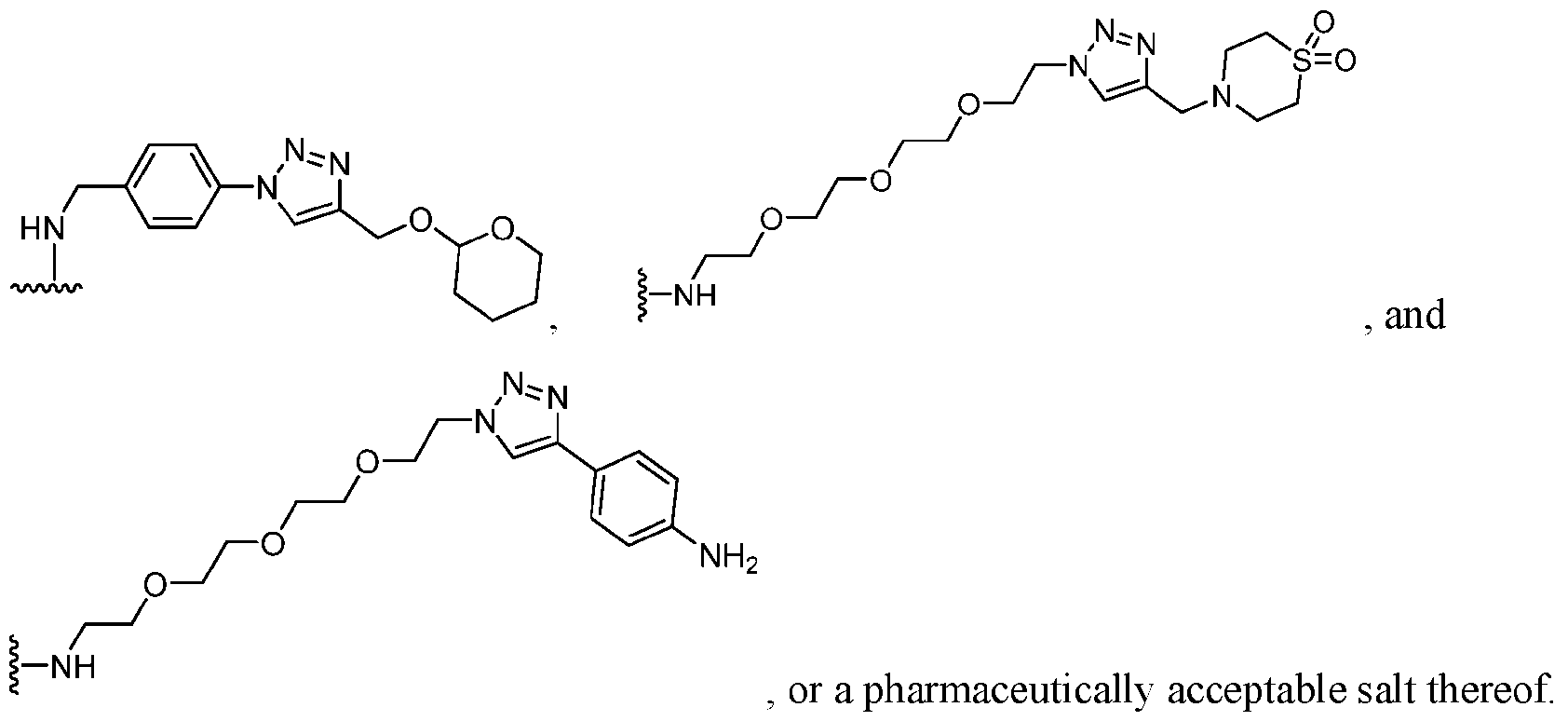 a
a
 [0632] Implantable devices, such as particles configured as polymeric hydrogel capsules comprising alginate, an afibrotic compound (e.g., covalently attached to an alginate), and an islet cell or SC-IC (e.g., as part of an SC-IC population), can be prepared according to any known method in the art. Exemplary implantable devices, particles (e.g., single and two compartment alginate hydrogel capsules) including polymers, and afibrotic compounds as well as compositions and methods of making and using the same, can be found in Intl. Patent Application Publication Nos WO 2012/167223, WO 2014/153126, WO 2016/019391, WO
2017/075630, WO 2017/075631, WO 2017/218507, WO 2018/067615, WO 2019/195055, WO 2020/069429, WO 2022/031862 and WO 2021/119522. [0633] In some instances, the implantable device including a differentiated cell population described herein (e.g., a mature SC-IC population) includes a semipermeable membrane as disclosed in Intl. Patent Application Publication No. WO 2003/050249. For example, the implantable device can contain the cells behind a semipermeable membrane that prevents passage of the cells, retaining them in the implantable device, but permits passage of INS, glucagon (GCG), and somatostatin secreted by the cell population. [0634] In some instances, the implantable device includes a spheroid semipermeable membrane made up of polysaccharide polymers > about 3,000 mol. wt. that are cross-linked so that it is permeable to proteins the size of INS but impermeable to molecules over about 100,000 mol. wt., such as those in US Patent No.4,391,909. [0635] In some instances, the implantable device includes a semipermeable membrane made of agarose and agaropectin, such as those in US Patent No.6,023,009. [0636] In some instances, the implantable device can be an artificial endocrine gland containing an extracorporeal segment, a subcutaneous segment, and a replaceable envelope containing the cell population, such as those in US Patent No.4,378,016. [0637] In some instances, the implantable device can be a bioartificial pancreas having an islet chamber, separated by a semipermeable membrane to one or more vascularizing chambers open to surrounding tissue, such as those in US Patent No.5,647,289. [0638] In some instances, the implantable device can be configured to retain the SC-IC population and permit passage of INS produced by the cells when implanted into an individual as disclosed in Intl. Patent Application Publication No. WO 20198099725 For example, Intl. Patent Application Publication No. WO 2019/009725 describes retaining cells by a semipermeable membrane made of polysaccharide, polycation, poly(lactide) (PLA), poly(glycolic acid) (PGA), poly(lactide-co-glycolide) (PLGA), other polyhydroxyacids, poly(caprolactone), polycarbonates, polyamides, polyanhydrides, polyphosphazene, polyamino acids, polyortho esters, polyacetals, polycyanoacrylates, polytetrafluoroethylene (PTFE), biodegradable polyurethanes, albumin, collagen, fibrin, polyamino acids, prolamines, alginate, agarose, agarose with gelatin, dextran, polyacrylates, ethylene-vinyl acetate polymers and other acyl-substituted cellulose acetates and derivatives thereof, polyurethanes, polystyrenes, polyvinyl chloride, polyvinyl fluoride, poly(vinyl imidazole), chlorosulphonated
polyolefins, polyethylene oxide, and combinations thereof. Additionally, Intl. Patent Application Publication No. WO 2019/099725 describes encapsulating the cells in a microcapsule that includes an alginate core surrounded by semipermeable membrane. Other suitable devices described therein include: a semi-solid or solid cell carrier formulated for surgical implantation, where the semi-solid or solid carrier can include semi-permeable gels, lattices, cellular scaffolds, which can be non-biodegradable or biodegradable; devices made of degradable materials particularly suitable for sustained release formulations (e.g., biocompatible polymers such as poly(lactic acid), poly(lactic-co-glycolic acid), methylcellulose, hyaluronic acid and collagen); devices that can deliver the cells to the subject on or in a biodegradable, especially bioresorbable or bioabsorbable, scaffold or matrix; devices including three-dimensional biomaterials containing the living cells attached to the scaffold, dispersed within the scaffold, or incorporated in an extracellular matrix entrapped in the scaffold; and devices in which the SC-ICs become integrated with the host tissue after implantation. [0639] Other implantable device configurations that are suitable for containing or delivering an SC-IC population described herein include those described in Intl. Patent Application Publication No. WO 2019/169351. Exemplary suitable devices described therein include, but are not limited to, devices that retain the cells in a semipermeable membrane made of PLA, PGA, PLGA, and other polyhydroxyacids, poly(caprolactone), polycarbonates, polyamides, polyanhydrides, polyphosphazene, polyamino acids, polyortho esters, polyacetals, polycyanoacrylates, biodegradable polyurethanes, albumin, collagen, fibrin, prolamines, alginate, agarose, agarose with gelatin, dextran, polyacrylates, ethylene-vinyl acetate polymers and other acyl-substituted cellulose acetates and derivatives thereof, polyurethanes, polystyrenes, polyvinyl chloride, polyvinyl fluoride, poly(vinyl imidazole), chlorosulphonated polyolefins, polyethylene oxide, or any combinations thereof; microcapsules that include an alginate core surrounded by the semipermeable membrane, microcapsules in which the alginate core includes covalently conjugated oligopeptides with an RGD sequence (arginine, glycine, aspartic acid); microcapsules in which the alginate core includes a chemoenzymatically engineered alginate of enhanced stability; microcapsules in which the alginate core is modified to produce membrane-mimetic films assembled by in-situ polymerization of acrylate functionalized phospholipids; microcapsules composed of enzymatically modified alginates using epimerases; microcapsules that include covalent links between adjacent layers of the
microcapsule membrane; microcapsules that include alginate coupled with phenol moieties; microcapsules that include an arginate-agarose scaffold; devices in which the cells are encapsulated in photoreactive liposomes and alginate; microcapsules made of suitable non- alginate materials such as dextran with ROD, BHD and polyethylene glycol-diacrylate (PEGDA), poly(MPC-co-n-butyl methacrylate-co-4-vinylphenyl boronic acid) (PMBV) and poly(vinyl alcohol) (PVA), agarose, agarose with gelatin, and multilayer cases of these non- alginate materials; devices that include an extracorporeal segment (e.g., part of the implantable device can be outside a body when the implantable device is implanted in the subject); and devices that include a semi-solid or solid carrier formulated for surgical implantation [0640] In some instances, an SC-IC population described herein can be administered as a composition including unencapsulated SC-ICs. In some instances, an unencapsulated SC-IC population herein can be administered to an individual by a method including transplanting or grafting the unencapsulated SC-IC population into the individual. For example, in some instances, the unencapsulated SC-IC population can be transplanted into the individual. In some instances, the unencapsulated SC-IC population can be engrafted into the individual. In some instances, the method further includes administering to the individual an immunosuppressant before and/or after administration of the SC-IC composition. In some instances, the immunosuppressant treatment can be continued for as long as a therapeutic effect is generated by the implanted SC-ICs. [0641] As will be appreciated by those in the art, any of the unencapsulated SC-IC populations described herein can be transplanted using techniques known in the art for implanting or transplanting pancreatic islets or islet-like cells to a location suitable for the therapeutic condition to be treated (e.g., diabetes). In general, the SC-ICs described herein can be implanted or transplanted either intravenously or by injection at the desired location in the patient. In some instances, the SC-ICs can be suspended in a gel matrix to prevent dispersion while they become attached to the site of implant. [0642] In some instances, following administration of the unencapsulated SC-IC population to the subject, at least a portion (e.g., about 25%, 50%, 60%, 70% or more) of the administered SC-IC population is viable (e.g. produces a therapeutic effect) for at least any of about 15 min, 30 min, 1 hr, 2 hr, 12 hr, 24 hr, 48 hr, 72 hr, 1 week, 1 month, 1 year, 2 years and 3 years. [0643] In some instances, any of the unencapsulated SC-IC populations herein can be administered to an individual by a method as described in any of the following: Intl. Patent
Application Publication Nos. WO 2021/022223; WO 2021/041316; WO 2021/146222; WO 2021/146627; WO 2021/195426; WO 2021/222285; WO 2022/036150 and WO 2022/076928. In some instances, an unencapsulated SC-IC population herein can be administered to an indiviudal by a method as described in any of these published patent applications, except with one, two, three or more modifications. EXAMPLES [0644] The following non-limiting examples are offered for purposes of illustration, not limitation. [0645] DIFFERENTIATION PROTOCOL [0646] Example 1: Differentiating Stem Cells into SC-ICs [0647] Expansion and Seed Train for iPSCs: a human iPSC line [(Cell and Gene Therapy Catapult; London, England) was thawed and expanded for multiple passages in adherent culture every 3-4 days with dissociation to single cells using Accutase® (Innovative Cell Technologies AT104) at a seeding density of about 25,000 cells/cm2 with 10 uM Y-27632 ROCK inhibitor (Selleckchem S1049). Cells were cultured on vitronectin-coated (VTN-N Fisher Scientific A14700/A31804) cell culture vessels in Essential 8™ medium (ThermoFisher A1517001) for the initial passages and in mTeSR™1 medium (STEMCELL Technologies 85850/85870/85875) for the final passage prior to aggregation. [0648] iPSC-Derived SC-ICs Differentiation: The differentiation of iPSC-derived SC-ICs was initiated by aggregating iPSCs dissociated from cell culture vessels followed by culture in various differentiation mediums for 7 stages, as summarized in Table 1. Detailed stage information and media components can be found in Tables 2-3. On Day -1, adherent undifferentiated iPSCs were dissociated to single cells using Accutase® after a 1xPBS wash. Cells were aggregated in mTeSR™1 medium containing 10 uM Y-27632 ROCK inhibitor in a PBSmini bioreactor (BR) (PBS Biotech) at speed of 55 rpm (37°C with 5% CO2). After 24 hours, aggregated iPSCs were washed with MCDB 131 basal media and then media was changed to Stage 1 PSC-differentiating media on Day 0, followed by differentiation media changes and washes in sequence with various durations over 28 days spanning Stage 1 to Stage 7 (Tables 2 and 3). In Stage 5 on Day 14, all aggregates and vessels were washed twice with 100 mL glucose-free/pyruvate-free DMEM (ThermoFisher Catalog No 11966025),
supplemented with 0.2% BSA and 1% Pen/Strep, and then the wash media was replaced with a second Stage 5 PP-differentiating media that was glucose-free, pyruvate free and contained 5.5 mM galactose. After 48 hours of culture in the second Stage 5 media on Day 16, all aggregates were collected, dissociated to single cells with AccumaxTM (Innovative Cell Technologies, San Diego, CA USA) and reaggregated at density of about 106 million cells per mL in 100 mL Stage 6 PEP-differentiation media with DNAase I using the same vessel for 2 days. On Day 18, the media was replaced with fresh Stage 6 PEP differentiation media and cultured for an additional 2 days. The media was replaced by Stage 7 SC-IC differentiation media every other day starting from Day 20 until Stage 7 was terminated, which ranged from Day 28 to Day 35. [0649] Table 1: Differentiation Protocol Summary by Stage/Day/Bioreactor (BR). Stage Differentiation Day BR Speed 100 mL/500 mL Aggregate in mTeSR +RI or E8 Day -1 55 RPM/43 RPM
[0632] Implantable devices, such as particles configured as polymeric hydrogel capsules comprising alginate, an afibrotic compound (e.g., covalently attached to an alginate), and an islet cell or SC-IC (e.g., as part of an SC-IC population), can be prepared according to any known method in the art. Exemplary implantable devices, particles (e.g., single and two compartment alginate hydrogel capsules) including polymers, and afibrotic compounds as well as compositions and methods of making and using the same, can be found in Intl. Patent Application Publication Nos WO 2012/167223, WO 2014/153126, WO 2016/019391, WO
2017/075630, WO 2017/075631, WO 2017/218507, WO 2018/067615, WO 2019/195055, WO 2020/069429, WO 2022/031862 and WO 2021/119522. [0633] In some instances, the implantable device including a differentiated cell population described herein (e.g., a mature SC-IC population) includes a semipermeable membrane as disclosed in Intl. Patent Application Publication No. WO 2003/050249. For example, the implantable device can contain the cells behind a semipermeable membrane that prevents passage of the cells, retaining them in the implantable device, but permits passage of INS, glucagon (GCG), and somatostatin secreted by the cell population. [0634] In some instances, the implantable device includes a spheroid semipermeable membrane made up of polysaccharide polymers > about 3,000 mol. wt. that are cross-linked so that it is permeable to proteins the size of INS but impermeable to molecules over about 100,000 mol. wt., such as those in US Patent No.4,391,909. [0635] In some instances, the implantable device includes a semipermeable membrane made of agarose and agaropectin, such as those in US Patent No.6,023,009. [0636] In some instances, the implantable device can be an artificial endocrine gland containing an extracorporeal segment, a subcutaneous segment, and a replaceable envelope containing the cell population, such as those in US Patent No.4,378,016. [0637] In some instances, the implantable device can be a bioartificial pancreas having an islet chamber, separated by a semipermeable membrane to one or more vascularizing chambers open to surrounding tissue, such as those in US Patent No.5,647,289. [0638] In some instances, the implantable device can be configured to retain the SC-IC population and permit passage of INS produced by the cells when implanted into an individual as disclosed in Intl. Patent Application Publication No. WO 20198099725 For example, Intl. Patent Application Publication No. WO 2019/009725 describes retaining cells by a semipermeable membrane made of polysaccharide, polycation, poly(lactide) (PLA), poly(glycolic acid) (PGA), poly(lactide-co-glycolide) (PLGA), other polyhydroxyacids, poly(caprolactone), polycarbonates, polyamides, polyanhydrides, polyphosphazene, polyamino acids, polyortho esters, polyacetals, polycyanoacrylates, polytetrafluoroethylene (PTFE), biodegradable polyurethanes, albumin, collagen, fibrin, polyamino acids, prolamines, alginate, agarose, agarose with gelatin, dextran, polyacrylates, ethylene-vinyl acetate polymers and other acyl-substituted cellulose acetates and derivatives thereof, polyurethanes, polystyrenes, polyvinyl chloride, polyvinyl fluoride, poly(vinyl imidazole), chlorosulphonated
polyolefins, polyethylene oxide, and combinations thereof. Additionally, Intl. Patent Application Publication No. WO 2019/099725 describes encapsulating the cells in a microcapsule that includes an alginate core surrounded by semipermeable membrane. Other suitable devices described therein include: a semi-solid or solid cell carrier formulated for surgical implantation, where the semi-solid or solid carrier can include semi-permeable gels, lattices, cellular scaffolds, which can be non-biodegradable or biodegradable; devices made of degradable materials particularly suitable for sustained release formulations (e.g., biocompatible polymers such as poly(lactic acid), poly(lactic-co-glycolic acid), methylcellulose, hyaluronic acid and collagen); devices that can deliver the cells to the subject on or in a biodegradable, especially bioresorbable or bioabsorbable, scaffold or matrix; devices including three-dimensional biomaterials containing the living cells attached to the scaffold, dispersed within the scaffold, or incorporated in an extracellular matrix entrapped in the scaffold; and devices in which the SC-ICs become integrated with the host tissue after implantation. [0639] Other implantable device configurations that are suitable for containing or delivering an SC-IC population described herein include those described in Intl. Patent Application Publication No. WO 2019/169351. Exemplary suitable devices described therein include, but are not limited to, devices that retain the cells in a semipermeable membrane made of PLA, PGA, PLGA, and other polyhydroxyacids, poly(caprolactone), polycarbonates, polyamides, polyanhydrides, polyphosphazene, polyamino acids, polyortho esters, polyacetals, polycyanoacrylates, biodegradable polyurethanes, albumin, collagen, fibrin, prolamines, alginate, agarose, agarose with gelatin, dextran, polyacrylates, ethylene-vinyl acetate polymers and other acyl-substituted cellulose acetates and derivatives thereof, polyurethanes, polystyrenes, polyvinyl chloride, polyvinyl fluoride, poly(vinyl imidazole), chlorosulphonated polyolefins, polyethylene oxide, or any combinations thereof; microcapsules that include an alginate core surrounded by the semipermeable membrane, microcapsules in which the alginate core includes covalently conjugated oligopeptides with an RGD sequence (arginine, glycine, aspartic acid); microcapsules in which the alginate core includes a chemoenzymatically engineered alginate of enhanced stability; microcapsules in which the alginate core is modified to produce membrane-mimetic films assembled by in-situ polymerization of acrylate functionalized phospholipids; microcapsules composed of enzymatically modified alginates using epimerases; microcapsules that include covalent links between adjacent layers of the
microcapsule membrane; microcapsules that include alginate coupled with phenol moieties; microcapsules that include an arginate-agarose scaffold; devices in which the cells are encapsulated in photoreactive liposomes and alginate; microcapsules made of suitable non- alginate materials such as dextran with ROD, BHD and polyethylene glycol-diacrylate (PEGDA), poly(MPC-co-n-butyl methacrylate-co-4-vinylphenyl boronic acid) (PMBV) and poly(vinyl alcohol) (PVA), agarose, agarose with gelatin, and multilayer cases of these non- alginate materials; devices that include an extracorporeal segment (e.g., part of the implantable device can be outside a body when the implantable device is implanted in the subject); and devices that include a semi-solid or solid carrier formulated for surgical implantation [0640] In some instances, an SC-IC population described herein can be administered as a composition including unencapsulated SC-ICs. In some instances, an unencapsulated SC-IC population herein can be administered to an individual by a method including transplanting or grafting the unencapsulated SC-IC population into the individual. For example, in some instances, the unencapsulated SC-IC population can be transplanted into the individual. In some instances, the unencapsulated SC-IC population can be engrafted into the individual. In some instances, the method further includes administering to the individual an immunosuppressant before and/or after administration of the SC-IC composition. In some instances, the immunosuppressant treatment can be continued for as long as a therapeutic effect is generated by the implanted SC-ICs. [0641] As will be appreciated by those in the art, any of the unencapsulated SC-IC populations described herein can be transplanted using techniques known in the art for implanting or transplanting pancreatic islets or islet-like cells to a location suitable for the therapeutic condition to be treated (e.g., diabetes). In general, the SC-ICs described herein can be implanted or transplanted either intravenously or by injection at the desired location in the patient. In some instances, the SC-ICs can be suspended in a gel matrix to prevent dispersion while they become attached to the site of implant. [0642] In some instances, following administration of the unencapsulated SC-IC population to the subject, at least a portion (e.g., about 25%, 50%, 60%, 70% or more) of the administered SC-IC population is viable (e.g. produces a therapeutic effect) for at least any of about 15 min, 30 min, 1 hr, 2 hr, 12 hr, 24 hr, 48 hr, 72 hr, 1 week, 1 month, 1 year, 2 years and 3 years. [0643] In some instances, any of the unencapsulated SC-IC populations herein can be administered to an individual by a method as described in any of the following: Intl. Patent
Application Publication Nos. WO 2021/022223; WO 2021/041316; WO 2021/146222; WO 2021/146627; WO 2021/195426; WO 2021/222285; WO 2022/036150 and WO 2022/076928. In some instances, an unencapsulated SC-IC population herein can be administered to an indiviudal by a method as described in any of these published patent applications, except with one, two, three or more modifications. EXAMPLES [0644] The following non-limiting examples are offered for purposes of illustration, not limitation. [0645] DIFFERENTIATION PROTOCOL [0646] Example 1: Differentiating Stem Cells into SC-ICs [0647] Expansion and Seed Train for iPSCs: a human iPSC line [(Cell and Gene Therapy Catapult; London, England) was thawed and expanded for multiple passages in adherent culture every 3-4 days with dissociation to single cells using Accutase® (Innovative Cell Technologies AT104) at a seeding density of about 25,000 cells/cm2 with 10 uM Y-27632 ROCK inhibitor (Selleckchem S1049). Cells were cultured on vitronectin-coated (VTN-N Fisher Scientific A14700/A31804) cell culture vessels in Essential 8™ medium (ThermoFisher A1517001) for the initial passages and in mTeSR™1 medium (STEMCELL Technologies 85850/85870/85875) for the final passage prior to aggregation. [0648] iPSC-Derived SC-ICs Differentiation: The differentiation of iPSC-derived SC-ICs was initiated by aggregating iPSCs dissociated from cell culture vessels followed by culture in various differentiation mediums for 7 stages, as summarized in Table 1. Detailed stage information and media components can be found in Tables 2-3. On Day -1, adherent undifferentiated iPSCs were dissociated to single cells using Accutase® after a 1xPBS wash. Cells were aggregated in mTeSR™1 medium containing 10 uM Y-27632 ROCK inhibitor in a PBSmini bioreactor (BR) (PBS Biotech) at speed of 55 rpm (37°C with 5% CO2). After 24 hours, aggregated iPSCs were washed with MCDB 131 basal media and then media was changed to Stage 1 PSC-differentiating media on Day 0, followed by differentiation media changes and washes in sequence with various durations over 28 days spanning Stage 1 to Stage 7 (Tables 2 and 3). In Stage 5 on Day 14, all aggregates and vessels were washed twice with 100 mL glucose-free/pyruvate-free DMEM (ThermoFisher Catalog No 11966025),
supplemented with 0.2% BSA and 1% Pen/Strep, and then the wash media was replaced with a second Stage 5 PP-differentiating media that was glucose-free, pyruvate free and contained 5.5 mM galactose. After 48 hours of culture in the second Stage 5 media on Day 16, all aggregates were collected, dissociated to single cells with AccumaxTM (Innovative Cell Technologies, San Diego, CA USA) and reaggregated at density of about 106 million cells per mL in 100 mL Stage 6 PEP-differentiation media with DNAase I using the same vessel for 2 days. On Day 18, the media was replaced with fresh Stage 6 PEP differentiation media and cultured for an additional 2 days. The media was replaced by Stage 7 SC-IC differentiation media every other day starting from Day 20 until Stage 7 was terminated, which ranged from Day 28 to Day 35. [0649] Table 1: Differentiation Protocol Summary by Stage/Day/Bioreactor (BR). Stage Differentiation Day BR Speed 100 mL/500 mL Aggregate in mTeSR +RI or E8 Day -1 55 RPM/43 RPM
 Stage 7 Day 20 55 RPM/43 RPM Stage 7 Day 21 – No feed 55 RPM/43 RPM
 Basal A (see, Table 3)
 Stage 3 D2 3 μM ATRA Reprocell PGT to FE 0.25 μM SANT-1 Sigma-Aldrich
 100 nM GSI XX Millipore Sigma M h
 HPLM Basal (see Table 3) 1:1000 CD Lipid t t Gibco
 [ ] a e : asa e a repara on ummary . Basal Factors S Catalog Stock Final Per 1 L Media ource No. Conc. Conc.** Media L L L
 2% FAF-BSA Proliant 68700 1 2% 20 g 1% Glutamax™ Gibco 35050061 100x 1% 10 mL L %
 co Catalog No.15140-122). **Final concentrations include amount in the basal media plus the supplemental amount added to that defined media to obtain the final Basal Media formulation. [0652] Cellular Composition Characterization Using Flow Cytometry Analysis: Samples for flow cytometry were collected on Day 0 (pluripotency), Day 2 (definitive endoderm), Day 10 (pancreatic progenitor), Day 20 (endocrine) and Day 28 (endocrine) and analyzed using a CytoFLEX system B2-R2-V0 equipped with a Blue 488 nm laser and a Red 638 nm laser. For sample collection, aggregates were washed with PBS and then dissociated using Accutase for 5-10 min at 37oC, then fixed with 4% formalin at 4oC for 15 min. Fixed samples were then washed 3x and treated with 1x Perm/Wash buffer (10x, Becton Dickinson 554723) for 20 min. After permeabilization, cells were incubated with corresponding primary antibody panels for various cell markers as described in Table 4 and Table 5 for 1 hr at room temperature. Cells were washed with 1x Perm/Wash buffer 2x then incubated with different secondary antibodies for 1 hr at room temperature in the dark as shown in Tables 4 and 5. After secondary antibody incubation, cells were washed twice with 1x PBS, resuspended in PBS and subjected to flow cytometry analysis for different differentiation markers. [0653] Table 4: Antibodies for Flow Cytometry Analysis. Day of Flow Cytometry Marker 1 Antibody Marker 2 Antibody An l i S nd r Antib d S nd r Antib d
 Day 20, Day 28 GCG CPEP anti-mouse-AF488 anti-rat-AF647 D 2 D 2 NKX 1 PEP
 Primary Catalog Secondary Catalog nk;
 [0655] INS content was measured on Day 28 of differentiation. Lysates for INS content measurement were prepared using a commercially available lysis buffer that lysis the cell membranes to free INS but does not lyse the nuclei (Solution 10- Chemometec). The number
of nuclei in the lysate was quantified using the NC-3000 or NC-200 (Chemometec) to determine the number of cells represented in the lysates. Lysates were then diluted 1:1000 in Kreb’s Ringer Buffer (KRB) and INS levels in diluted lysates were determined using a human INS ELISA (Mercodia). INS concentrations were normalized by cell counts to obtain an estimate of INS content per cell in Day 28 aggregates. [0656] Results from representative batches of cells prepared using the methods and media conditions described above are shown in Tables 6A-6B below. [0657] Table 6C shows Day 28 results from representative batches of cells prepared using these methods and media conditions including addition of 9 uM Wiki4 (in addition to IWR1- endo) during Stage 4.
[0655] INS content was measured on Day 28 of differentiation. Lysates for INS content measurement were prepared using a commercially available lysis buffer that lysis the cell membranes to free INS but does not lyse the nuclei (Solution 10- Chemometec). The number
of nuclei in the lysate was quantified using the NC-3000 or NC-200 (Chemometec) to determine the number of cells represented in the lysates. Lysates were then diluted 1:1000 in Kreb’s Ringer Buffer (KRB) and INS levels in diluted lysates were determined using a human INS ELISA (Mercodia). INS concentrations were normalized by cell counts to obtain an estimate of INS content per cell in Day 28 aggregates. [0656] Results from representative batches of cells prepared using the methods and media conditions described above are shown in Tables 6A-6B below. [0657] Table 6C shows Day 28 results from representative batches of cells prepared using these methods and media conditions including addition of 9 uM Wiki4 (in addition to IWR1- endo) during Stage 4.
[0658] Table 6A: 500/100 mL BR D2 and D10 Data Summary. Batch 1 2 3 4 5 6 7 8 9 10 11 12 13 14 15 16 17 18 19 20 21 22 23 24 25
 26 98.55 97.38 45.40 79.50 48.85 87.98 11.49
27 28 Mean StDev Min Max N

[0659] Table 6B: 500/100 mL BR D28 Data Summary. B 1 2 3 4 5 6 7 8 9 10 11 12 13 14 15 16 17 18 19 20 21 22 23 24 25 26
 27 56.93 21.47 54.45 67.49 13.55 99.73 2.02 270.08
28 29 Mean StDev Min Max N
 [0660] Table 6C: 500/100 mL BR D28 Data Summar (with Wiki4 durin S4) Batch 1 2 3 4 5 6 7 8 9 10 11 12 13 Mean StDev Min Max
 N 13 13 13 13 13 13 13 13
[0661] Example 2: Effects of Replacing Glucose With Galactose as an Alternative Nutrient With and Without Reaggregation and Other Special Features on SC-ICs Differentiated from hiPSCs [0662] Methods: iPSCs were differentiated as described in Tables 1-2 except for the following (a) GSI-XX treatment was only performed on Days 10, 11, and 12 in Stage 5, (b) no replacement of glucose with galactose unless explicitly stated, (c) no reaggregation unless explicitly stated, (d) no UNC0321 in any stage, and (e) MCDB rather than HPLM for Stages 6 and 7. Reaggregation at Day 16 and replacement of glucose by galactose from Days 20-27 were tested alongside numerous other experimental conditions during Stages 5-7. Following several similar experiments using this background differentiation protocol, INS content and secretion were compared to cell viability (based on FFS/SSC gating in flow cytometry) and percentage of beta-like cells (CPEP+/GCG-) resulting from differentiation. [0663] Subsequent experiments sequentially tested the effects of: (1) 48 hr replacement of glucose with galactose immediately prior to Day 16 reaggregation (i.e., Stage 5 zero glucose) relative to Day 16 reaggregation alone, (2) reaggregation immediately after 48 hr replacement of glucose with galactose during Stage 7 (i.e., Stage 7 zero glucose) relative to Stage 7 zero glucose alone, (3) Stage 5 zero glucose with Stage 6 reaggregation relative to Stage 5 zero glucose alone, and (4) sequential Stage 5 zero glucose with Stage 6 reaggregation was compared to Stage 6 reaggregation into zero glucose media, each with a variety of media additives in Stage 7 designed to enhance glucose metabolism by SC-ICs (e.g., beta-like cells) during Stage 7. [0664] Results: As compared to other contemporaneous treatments, Stage 7 zero glucose treatment markedly reduced the percentage of ECLCs (FIG. 2A) and slightly increased PECs (FIG. 2B), but paradoxically reduced INS content and secretion (FIGS. 2C-2D). Meanwhile, reaggregation on Day 16 at the beginning of Stage 6 increased INS content and secretion despite no major changes in cellular composition (FIGS.2A-2D). [0665] Further investigation revealed that these diverging effects could be explained through effects on viability (FIGS. 3A-C). Across numerous experimental conditions, the percentage of PBLCs did not correlate with INS secretion (FIG. 3A), while poor aggregate viability as assessed by FSC/SSC gating in flow cytometry was associated with low INS secretion (FIG. 3B). Zero glucose treatment reduced aggregate viability, while reaggregation increased it (FIG. 3C). [0666] Next, the effects of various combinations of zero glucose and reaggregation were tested (FIG. 4) to determine if using glucose deprivation to decrease off-target cells and
reaggregation to clear dead cells would yield a further benefit. With zero glucose treatment during the last two days of Stage 5 (D14-D15) followed by reaggregation at the start of Stage 6 (D16), a synergistic benefit for both INS content (FIG.4A) and INS secretion (FIG.4B) was observed, but this synergy did not extend to other permutations of zero glucose and/or reaggregation in Stages 5 to 7. [0667] Table 7 below shows effects of further studies with Stages 5 and 6 zero glucose and reaggregation treatments. In general, treatments without glucose but instead with an alternative nutrient such as galactose decreased SLC18A1+ cells, decreased Ki67+ cells, increased CPEP+ cells (including CPEP+/GCG- cells). [0668] In addition, Table 8 shows data from testing of 48 hr zero glucose followed by reaggregation during Stage 7, which also decreased SLC18A1+ cells and increased CPEP+ cells (including CPEP+/GCG- cells and CPEP+/NKX6.1+ cells).
[0669] Table 7: Effects of Zero Glucose and Reaggregation During Stage 5 or 6 on SC-ICs. Samp Contr 1 2 3 Contr 4 5 Contr 6 7 8 9
 0 mM Gal 5.5 mM Gal
Contr 10 Contr 11 12 13 14
 m a . m a nd = not determined
[0670] Table 8: Effects of Zero Glucose and Reaggregation During Stage 7 on SC-ICs. Samp Cont
 .
.
[0671] Example 3: Effects of Replacing Glucose with Various Alternative Nutrients Combined With Reaggregation on SC-ICs Differentiated from hiPSCs. [0672] Methods: SC-ICs were differentiated as described in Tables 1-2, except with various nutrient substitutions during the Stage 5 glucose-deprivation period. Alternative nutrients were tested, including 5.5 mM galactose, 25 mM galactose, 5 mM pyruvate, 10 mM pyruvate, 5 mM methyl pyruvate and 10 mM methyl pyruvate. In each case, the alternative nutrient was tested with or without supplementing the media with 1x NEAA during glucose deprivation. Additionally, withholding glucose without providing an alternative nutrient was tested in a separate experiment without UNC0321 during Stages 5-7. [0673] Results: Cell profiles from nutrient substitution experiments are shown in Table 9 below. Regardless of the choice of nutrient, ECLC levels were consistent with those obtained in experiments involving substitution of galactose for glucose. For non-galactose alternative nutrients tested, removal of NEAA resulted in lower INS content, although this effect was not observed for galactose. When comparing glucose/galactose substitution head-to-head with zero glucose without galactose (Table 10), cellular composition was comparable for both groups, but with slightly lower INS content in the absence of galactose. [0674] Table 9: Effects of Stage 5b No Glucose with Various Alternative Nutrients Followed by Stage 6 Reaggregation. Days 14-15 Alternative Nutrient
 10 mM methyl pyruvate 66.6 11.22 52.35 99.76 [0675] Table 10: Effects of Stage 5b No Glucose without Galactose Followed by Stage 6
 . Days 14-15 Alternative Nutrient ll iti i
 [0677] Methods: iPSCs were differentiated as described in Tables 1-2 except without zero glucose and reaggregation unless specified. LDHA gene expression in mature SC-ICs were measured by qPCR, and lactate accumulation (i.e., increase above fresh media lactate levels) was recorded during differentiation using a blood gas analyzer (ABL90 FLEX PLUS, Radiometer America Inc; Brea, CA). The LDHA qPCR assay was performed by extracting RNA from samples using the Qiagen RNeasy Kit (Cat. No. 74104) according to the manufacturer’s protocol. RNA was reverse transcribed into DNA using the Biorad iScript Reverse Transcription Supermix (Cat. No.1708841). The cDNA was then prepared in solution with ThermoFisher SsoAdvanced Universal Probes Supermix, applied to a ThermoFisher Taqman Array (Cat. No. 4342259) and run on a ThermoFisher QuantStudio 12K Flex Real- Time PCR System. For LDHA, the Taqman Assay Hs01378790_g1 was used. Data were normalized by averaging 18S (Hs99999901_s1), ACTB (Hs99999903_m1), and B2M (Hs99999907_m1) expression. [0678] Results: LDHA gene expression was markedly reduced by zero glucose and reaggregation (FIG. 5A), lactate production by Stage 6 cells was markedly reduced (Days 16 to 19), and lactate production by maturing SC-ICs was completely prevented (FIG.5B, Day 20 and after) as compared to SC-ICs differentiated otherwise similarly but without zero glucose and reaggregation. [0679] Example 5: Effects of Epigenetic Modifiers on SC-ICs Differentiated from hiPSCs [0680] Methods: iPSCs were differentiated as described in Tables 1-2 until Day 10, at which point they were split into several groups, each treated with a different epigenetic modifier or different timing of epigenetic modification. The protocol outlined in Tables 1-2 was continued
following Day 10 except without UNC0321 (unless specifically stated) and including treatment with various epigenetic modifiers. [0681] Results: The effects of various epigenetic modifiers on the SC-IC composition are shown in Table 11. Highlighted cells in the table for composition values represent changes relative to control that are larger than typical experimental noise, and highlighted molecules in the first column represent cases in which CPEP+/GCG-, CPEP+, and/or CPEP+/Nkx6.1+ populations were increased without also increasing either INS-/SLC+ or CPEP+/GCG+ populations. For example, UNC0321 treatment during Day 10 to Day 16 resulted in increased beta cells (CPEP+/GCG-, CPEP+/Nkx6.1+) and decreased polyhormonal cells (CPEP+/GCG+), as did MDL-800 and butyrate Days 14-20. INS content for these three treatments is shown in FIG. 6. Of the three, only UNC0321 improved INS content in addition to SC-IC composition metrics as compared to a matched control.
[0677] Methods: iPSCs were differentiated as described in Tables 1-2 except without zero glucose and reaggregation unless specified. LDHA gene expression in mature SC-ICs were measured by qPCR, and lactate accumulation (i.e., increase above fresh media lactate levels) was recorded during differentiation using a blood gas analyzer (ABL90 FLEX PLUS, Radiometer America Inc; Brea, CA). The LDHA qPCR assay was performed by extracting RNA from samples using the Qiagen RNeasy Kit (Cat. No. 74104) according to the manufacturer’s protocol. RNA was reverse transcribed into DNA using the Biorad iScript Reverse Transcription Supermix (Cat. No.1708841). The cDNA was then prepared in solution with ThermoFisher SsoAdvanced Universal Probes Supermix, applied to a ThermoFisher Taqman Array (Cat. No. 4342259) and run on a ThermoFisher QuantStudio 12K Flex Real- Time PCR System. For LDHA, the Taqman Assay Hs01378790_g1 was used. Data were normalized by averaging 18S (Hs99999901_s1), ACTB (Hs99999903_m1), and B2M (Hs99999907_m1) expression. [0678] Results: LDHA gene expression was markedly reduced by zero glucose and reaggregation (FIG. 5A), lactate production by Stage 6 cells was markedly reduced (Days 16 to 19), and lactate production by maturing SC-ICs was completely prevented (FIG.5B, Day 20 and after) as compared to SC-ICs differentiated otherwise similarly but without zero glucose and reaggregation. [0679] Example 5: Effects of Epigenetic Modifiers on SC-ICs Differentiated from hiPSCs [0680] Methods: iPSCs were differentiated as described in Tables 1-2 until Day 10, at which point they were split into several groups, each treated with a different epigenetic modifier or different timing of epigenetic modification. The protocol outlined in Tables 1-2 was continued
following Day 10 except without UNC0321 (unless specifically stated) and including treatment with various epigenetic modifiers. [0681] Results: The effects of various epigenetic modifiers on the SC-IC composition are shown in Table 11. Highlighted cells in the table for composition values represent changes relative to control that are larger than typical experimental noise, and highlighted molecules in the first column represent cases in which CPEP+/GCG-, CPEP+, and/or CPEP+/Nkx6.1+ populations were increased without also increasing either INS-/SLC+ or CPEP+/GCG+ populations. For example, UNC0321 treatment during Day 10 to Day 16 resulted in increased beta cells (CPEP+/GCG-, CPEP+/Nkx6.1+) and decreased polyhormonal cells (CPEP+/GCG+), as did MDL-800 and butyrate Days 14-20. INS content for these three treatments is shown in FIG. 6. Of the three, only UNC0321 improved INS content in addition to SC-IC composition metrics as compared to a matched control.
[0682] Table 11: Effect of Various Epigenetic Modifiers During Days 10-16 and Days 14-20 on Marker Expression in SC-ICs. Epig Mo Solven (DMS 5uM U 5uM M 5uM EPZ00 5uM A 1mM 5uM CAY1 5uM C 5uM R 100nM Solven (DMS 5uM U 5uM M 5uM EPZ00 5uM A 1mM 5uM CAY1 5uM C 5uM R
 100nM DZNep 14-20 66 69 3.4 6.3 48 75 27 33 42 96.8 99.8 3
[0683] Example 6: Effects on UNC0321 Timing on SC-ICs Differentiated from hiPSCs [0684] Methods: SC-ICs were differentiated as described in Table 2 except without UNC0321 (unless otherwise specified). UNC0321 during Stage 5 was compared to UNC0321 during Stages 5-6 and no UNC0321 in terms of PBLCs (CPEP+/GCG-), ECLCs (INS-/SLC+), polyhormonal cells (CPEP+/GCG+), and INS content. Results from UNC0321 treatment duration experiments are shown in Table 12 below. Increasing the duration of UNC0321 treatment from Stage 5 to Stage 5-Stage 6 resulted in more pronounced improvements in SC- IC differentiation and potency. A similar experiment showed that starting the UNC0321 treatment in Stage 4 and continuing through at least Stage 6 can further increase the percentage of CPEP+/GCG- cells in the SC-IC population (data not shown). [0685] Table 12: Effects of UNC0321 During Stage 5 and Stage 5-Stage 6. CPEP+/GCG- CPEP+/GCG+ INS-/SLC+ INS Content (%) (%) (%) (nU/cell)
 [ ] xamp e : ec s o vs as a n ors or -IC Differentiation [0687] Methods: SC-ICs were differentiated as described in Tables 1-2 except without UNC0321 (unless otherwise specified). UNC0638 and UNC0321 were tested as alternatives for G9a inhibition during Stages 5-7 of differentiation and compared to control differentiations without a G9a inhibitor in terms of cell profiles and INS content. [0688] Results: Alternative G9a inhibitor effects are shown in Table 13 below. Both 5 µM UNC0321 and 0.55 µM UNC0638 increased beta cell percentage and INS content in mature SC-ICs as compared to differentiations with no G9a inhibitor. [0689] Table 13: Effects of G9a inhibitors during Stages 5-7 on SC-ICs Differentiated from hiPSCs. CPEP+/GCG- NKX+/CPEP+ INS Content
 [0690] Example 8: Effect of Lowered Pyruvate on SC-ICs Differentiated from hiPSCs [0691] Methods: iPSCs were differentiated as described in Tables 1-2 (except without UNC0321) until Day 17, at which point they were treated with Stage 6/7 components as described in Table 2 (except UNC0321) in (i) the HPLM shown in Table 19 or (ii) custom MCDB 131 media (no pyruvate) supplemented with varying levels of sodium pyruvate ranging from 0 mM to 2 mM. In another experiment, iPSCs were differentiated as described in Tables 1-2 (except without UNC0321) until Day 20, at which point they were treated with Stage 7 components as described in Tables 1-2 (except UNC0321) in the HPLM shown in Table 19. In all experiments, the SC-IC population was evaluated at Day 28 for INS secretion and content along with cell composition. [0692] Results: Increased INS section and GSIS was observed in the SC-IC population obtained after differentiation during Stages 6-7 with media having 0.25 mM pyruvate or no pyruvate as compared to the same media having 1 mM or 2 mM pyruvate (see, FIG. 7). Additionally, a further increase in INS content and percentage of beta-like cells (CPEP+/GCG- ), as well as decreased percentage of polyhormonal cells (CPEP+/GCG+) was observed in the SC-IC population obtained after differentiation during Stages 6-7 (data not shown) or just Stage 7 with HPLM (0.05 mM pyruvate) as compared to MCDB 131 (1 mM pyruvate) (see, FIGS. 8A, 8B, 8C and 8D). [0693] Example 9: Rodent Studies with Encapsulated SC-ICs [0694] Methods: Streptozotocin (STZ)-induced diabetic mice were supplied by the Jackson Laboratory. STZ causes hyperglycemia in mice by depleting INS-producing pancreatic β cells. Mice received daily intraperitoneal injections of 40 mg STZ/kg body for 5 consecutive days; age-matched non-diabetic controls received buffer injections. Mice were glucose-tested after the final injection. Only mice with non-fasted blood glucose greater than 250 mg/dL were used in this study. SC-ICs, made according to the differentiation protocol described in Tables 1-3, were encapsulated in the inner compartment, of a two-compartment alginate hydrogel capsules, of overall diameter of 1.4 mm, in which the outer compartment included alginate chemically modified with Formula (I) Compound 101. Intraperitoneal administration of 0.5 mL of capsules to each mouse was done via laparotomy. Non-fasting blood glucose measurements were performed at least twice weekly.
[0695] Results: As shown in FIG. 9, diabetic non-treated control mice (n=4, black line) showed hyperglycemia with blood glucose levels exceeding 400 mg/dL. In contrast, mice treated with encapsulated SC-ICs (n=7, grey line) showed normoglycemia with blood glucose levels similar to non-diabetic control mice (n=6, grey dashed line) for over 50 days. [0696] Example 10: Differentiating Stem Cells into SC-ICs in a 3L Bioreactor [0697] Methods: iPSC were differentiated essentially as described in Example 1 in a 3L stirred tank reactor.
[0690] Example 8: Effect of Lowered Pyruvate on SC-ICs Differentiated from hiPSCs [0691] Methods: iPSCs were differentiated as described in Tables 1-2 (except without UNC0321) until Day 17, at which point they were treated with Stage 6/7 components as described in Table 2 (except UNC0321) in (i) the HPLM shown in Table 19 or (ii) custom MCDB 131 media (no pyruvate) supplemented with varying levels of sodium pyruvate ranging from 0 mM to 2 mM. In another experiment, iPSCs were differentiated as described in Tables 1-2 (except without UNC0321) until Day 20, at which point they were treated with Stage 7 components as described in Tables 1-2 (except UNC0321) in the HPLM shown in Table 19. In all experiments, the SC-IC population was evaluated at Day 28 for INS secretion and content along with cell composition. [0692] Results: Increased INS section and GSIS was observed in the SC-IC population obtained after differentiation during Stages 6-7 with media having 0.25 mM pyruvate or no pyruvate as compared to the same media having 1 mM or 2 mM pyruvate (see, FIG. 7). Additionally, a further increase in INS content and percentage of beta-like cells (CPEP+/GCG- ), as well as decreased percentage of polyhormonal cells (CPEP+/GCG+) was observed in the SC-IC population obtained after differentiation during Stages 6-7 (data not shown) or just Stage 7 with HPLM (0.05 mM pyruvate) as compared to MCDB 131 (1 mM pyruvate) (see, FIGS. 8A, 8B, 8C and 8D). [0693] Example 9: Rodent Studies with Encapsulated SC-ICs [0694] Methods: Streptozotocin (STZ)-induced diabetic mice were supplied by the Jackson Laboratory. STZ causes hyperglycemia in mice by depleting INS-producing pancreatic β cells. Mice received daily intraperitoneal injections of 40 mg STZ/kg body for 5 consecutive days; age-matched non-diabetic controls received buffer injections. Mice were glucose-tested after the final injection. Only mice with non-fasted blood glucose greater than 250 mg/dL were used in this study. SC-ICs, made according to the differentiation protocol described in Tables 1-3, were encapsulated in the inner compartment, of a two-compartment alginate hydrogel capsules, of overall diameter of 1.4 mm, in which the outer compartment included alginate chemically modified with Formula (I) Compound 101. Intraperitoneal administration of 0.5 mL of capsules to each mouse was done via laparotomy. Non-fasting blood glucose measurements were performed at least twice weekly.
[0695] Results: As shown in FIG. 9, diabetic non-treated control mice (n=4, black line) showed hyperglycemia with blood glucose levels exceeding 400 mg/dL. In contrast, mice treated with encapsulated SC-ICs (n=7, grey line) showed normoglycemia with blood glucose levels similar to non-diabetic control mice (n=6, grey dashed line) for over 50 days. [0696] Example 10: Differentiating Stem Cells into SC-ICs in a 3L Bioreactor [0697] Methods: iPSC were differentiated essentially as described in Example 1 in a 3L stirred tank reactor.
[0698] Table 14: 3L BR D28 Data Summary. Batch

EXEMPLARY DIFFERENTIATION FACTORS, DEFINED MEDIA AND SUPPLEMENTS [0699] Small molecule compounds useful as differentiation factors in the differentiation and derivation methods described herein have the chemical name and structure shown in Table 15 below. [0700] Table 15: Exemplary Small Molecule Differentiation and other Factors. Common Scientific Chemical Name Chemical Name (CAS No.) Structure
 BIO 6-bromoindirubin-3′-oxime CAS N 667463629
 Dehydroascorbic (L)-Dehydroascorbic acid acid CAS N 490 835
 (CAS No.209984-56-5) IWR-1 4-[(3aR,4S,7R,7aS)-
 N-acetyl-L- (2R)-2-Acetamido-3- cysteine sulfanylpropanoic acid
 SANT-1 N-[(3,5-dimethyl-1-phenyl-1H- pyrazol-4-yl)methylene]-4- h l thl 1
 WIKI4 2-[3-[[4-(4-methoxyphenyl)-5- (4-pyridinyl)-4H-1,2,4-triazol-3- l thi l 1H
 culture media and supplements that are well-known in the art and/or commercially available. Exemplary compositions for defined media and supplements referenced herein are described in Tables 16-30 below. [0702] Table 16: Exemplary MCDB Media (1X). Compound Conc. Conc. No. Components (mg/L) (mM)
 3 Folinic acid calcium salt 0.6 0.00117 4 Niacinamide 6.1 0.05
 Compound Concentration Concentration
 D-Glucose (Dextrose) 1000.0 5.56 Sodium Pyruvate 110.0 1.0
 p n No. Components (mg/L) (mM)
 6 Magnesium sulfate (anhydrous) 42.13 0.35003325 7 Potassium chloride 307.655 4.1268272
 Component Concentration Concentration
 Galactose 10.81 0.060002223 L-Glutamine 80.383 0.55000347
 o poe oc. oc. No. Components (mg/L) (mM)
 29 Sodium chloride 6400.0 110 (NaCl) i Ph ht i 12
 o poe o poe s o ua o – o ua o – No. Concentration Concentration
 Product Supplier Catalog Number B-27 (50x) S lmnt Gib / ThrmFihr 17504001 75
 Components Concentration Concentration
 (mg/L) (mM) INS 1000.0 0.1721763
 00x Concenra on x Concenra on Components (mg/L) (mg/L)
 Concentration (mg/L)
 Concentration (mg/L)
 Component Concentration
 3 DL-alpha-tocopherol 70.0 acetate 4 Li l i i 1
 B27 (50x) B27 (1X) Components Concentration Concentration titute
 of Science, available online at weizmann.ac.il/molgen/hanna/data-protocols. [0715] In some instances, the B27 (50x) supplement also includes oleic acid at about 50 mg/L and pipecolic acid at about 50 mg/L.
[0716] Table 29: Components of Exemplary KOSR Medium. glycine, L-histidine, L-isoleucine, L-methionine, Amino Acids L-phenylalanine, L-proline, L-hydroxyproline, L-serine, Lth i Lt t h Lt i L li -,
of Science, available online at weizmann.ac.il/molgen/hanna/data-protocols. [0715] In some instances, the B27 (50x) supplement also includes oleic acid at about 50 mg/L and pipecolic acid at about 50 mg/L.
[0716] Table 29: Components of Exemplary KOSR Medium. glycine, L-histidine, L-isoleucine, L-methionine, Amino Acids L-phenylalanine, L-proline, L-hydroxyproline, L-serine, Lth i Lt t h Lt i L li -,
 Component Concentration No. Components (mg/L)
 KI 0.0009 MnCl24H2O 0.002 s BSA and lipids including
 , ,
, ,
SEQUENCE LISTING [0718] The following nucleotide and/or amino acid sequences are referred to in the disclosure above and are provided below for reference. [0719] SEQ ID NO:1 – human betacullulin (81 aa) MDGNSTRSPETNGLLCGDPEENCAATTTQSKRKGHFSRCPKQYKHYCIKGRCRFVV AEQTPSCVCDEGYIGARCERVDLFY [0720] SEQ ID NO:2 – human EGF (53 aa) NSDSECPLSHDGYCLHDGVCMYIEALDKYACNCVVGYIGERCQYRDLKWWELR [0721] SEQ ID NO:3 – human KGF (163 aa) CNDMTPEQMATNVNCSSPERHTRSYDYMEGGDIRVRRLFCRTQWYLRIDKRGKVK GTQEMKNNYNIMEIRTVAVGIVAIKGVESEFYLAMNKEGKLYAKKECNEDCNFKELI LENHYNTYASAKWTHNGGEMFVALNQKGIPVRGKKTKKEQKTAHFLPMAIT [0722] SEQ ID NO:4 – human albumin (609 aa) MKWVTFISLLFLFSSAYSRGVFRRDAHKSEVAHRFKDLGEENFKALVLIAFAQYLQQ CPFEDHVKLVNEVTEFAKTCVADESAENCDKSLHTLFGDKLCTVATLRETYGEMAD CCAKQEPERNECFLQHKDDNPNLPRLVRPEVDVMCTAFHDNEETFLKKYLYEIARR HPYFYAPELLFFAKRYKAAFTECCQAADKAACLLPKLDELRDEGKASSAKQRLKCA SLQKFGERAFKAWAVARLSQRFPKAEFAEVSKLVTDLTKVHTECCHGDLLECADDR ADLAKYICENQDSISSKLKECCEKPLLEKSHCIAEVENDEMPADLPSLAADFVESKDV CKNYAEAKDVFLGMFLYEYARRHPDYSVVLLLRLAKTYETTLEKCCAAADPHECY AKVFDEFKPLVEEPQNLIKQNCELFEQLGEYKFQNALLVRYTKKVPQVSTPTLVEVS RNLGKVGSKCCKHPEAKRMPCAEDYLSVVLNQLCVLHEKTPVSDRVTKCCTESLVN RRPCFSALEVDETYVPKEFNAETFTFHADICTLSEKERQIKKQTALVELVKHKPKATK EQLKAVMDDFAAFVEKCCKADDKETCFAEEGKKLVAASQAALGL [0723] SEQ ID NO:5 – bovine albumin (607 aa) MKWVTFISLLLLFSSAYSRGVFRRDTHKSEIAHRFKDLGEEHFKGLVLIAFSQYLQQC PFDEHVKLVNELTEFAKTCVADESHAGCEKSLHTLFGDELCKVASLRETYGDMADC
CEKQEPERNECFLSHKDDSPDLPKLKPDPNTLCDEFKADEKKFWGKYLYEIARRHPY FYAPELLYYANKYNGVFQECCQAEDKGACLLPKIETMREKVLTSSARQRLRCASIQK FGERALKAWSVARLSQKFPKAEFVEVTKLVTDLTKVHKECCHGDLLECADDRADL AKYICDNQDTISSKLKECCDKPLLEKSHCIAEVEKDAIPENLPPLTADFAEDKDVCKN YQEAKDAFLGSFLYEYSRRHPEYAVSVLLRLAKEYEATLEECCAKDDPHACYSTVF DKLKHLVDEPQNLIKQNCDQFEKLGEYGFQNALIVRYTRKVPQVSTPTLVEVSRSLG KVGTRCCTKPESERMPCTEDYLSLILNRLCVLHEKTPVSEKVTKCCTESLVNRRPCFS ALTPDETYVPKAFDEKLFTFHADICTLPDTEKQIKKQTALVELLKHKPKATEEQLKTV MENFVAFVDKCCAADDKEACFAVEGPKLVVSTQTALA
NUMBERED EMBODIMENTS [0724] In addition to (or as an alternative to) the above, the following embodiments are encompassed by the disclosure above and are provided below: [0725] Embodiment SC1: A method of deriving a cell population comprising mature SC- ICs or a mature SC-IC population from a cell population comprising PP cells or a PP cell population, the method comprising the steps of: (i) culturing the PP cell population in a first PP-differentiating medium for a time period sufficient to obtain an intermediate PP/PEP cell population, wherein the first PP- differentiating medium is a defined medium comprising about 5 mM to about 50 mM glucose and a set of differentiation factors in amounts sufficient to promote differentiation of a least a portion of the PP cell population to PEP cells, wherein the set of differentiation factors comprises a G9a inhibitor and at least one differentiation factor selected from the group consisting of: one or more of a small molecule BMP inhibitor, a zinc compound, a thyroid hormone signaling pathway activator, an ATP-competitive inhibitor of TGF-β RI kinase, a cell-permeable SHH signaling inhibitor, a ROCK inhibitor, a Vitamin C compound, a GSI, a heparin, and at least one tankyrase 1/2 inhibitor; (ii) washing the intermediate PP/PEP cell population in a defined wash medium comprising < about 1 mM glucose; (iii) culturing the washed intermediate PP/PEP cell population in a second PP- differentiating medium for a time period sufficient to obtain a PEP cell population comprising cell aggregates (e.g., an aggregated PEP cell population), wherein the second PP-differentiating medium is a defined medium comprising < about 1 mM glucose and a set of differentiation factors in amounts sufficient to promote differentiation of at least a portion of the intermediate PP/PEP cell population to PEP cells, wherein the set of differentiation factors comprises a G9a inhibitor and at least one differentiation factor selected from the group consisting of:
a small molecule BMP inhibitor, a zinc compound, a thyroid hormone signaling pathway activator, an ATP-competitive inhibitor of TGF-β RI kinase, a cell-permeable SHH signaling inhibitor, a ROCK inhibitor, a Vitamin C compound, a GSI, a heparin, and at least one tankyrase 1/2 inhibitor; (iv) dissociating at least about 80%, 85%, 90%, 95%, 99% or more of the cell aggregates in the aggregated PEP cell population into single cells to obtain a dissociated PEP cell population; (v) culturing the dissociated PEP cell population in a first PEP-differentiating medium comprising a DNAse for a time period sufficient to obtain a reaggregated, intermediate PEP/SC-IC population, wherein the first PEP-differentiating medium is a defined medium comprising the DNAse, ≤ about 0.5 mM pyruvate, about 1 mM to ≤ about 25 mM glucose and a set of differentiation factors in amounts sufficient to promote differentiation of at least a portion of the PEP cell population to immature PECs, wherein the set of differentiation factors comprises a G9a inhibitor and at least one differentiation factor selected from the group consisting of: a thiol-based antioxidant, a small molecule BMP inhibitor, a zinc compound, a thyroid hormone signaling pathway activator, an ATP-competitive inhibitor of TGF-β RI kinase, a cell-permeable SHH signaling inhibitor, a Vitamin C compound, and a heparin; (vi) washing the reaggregated, intermediate PEP/SC-IC population in a defined wash medium comprising ≤ about 0.5 mM pyruvate and about 1 mM to ≤ about 25 mM glucose;
(vii) culturing the washed intermediate PEP/SC-IC population in a second PEP- differentiating medium for a time period sufficient to obtain a precursor SC-IC population, wherein the second PEP-differentiating medium is a defined medium comprising ≤ about 0.5 mM pyruvate, about 1 mM to ≤ about 25 mM glucose and a set of differentiation factors in amounts sufficient to promote differentiation of at least a portion of the intermediate PEP/SC- IC population to immature PBLCs, wherein the set of differentiation factors comprises a G9a inhibitor and at least one differentiation factor selected from the group consisting of: a thiol-based antioxidant, a small molecule BMP inhibitor, a zinc compound, a thyroid hormone signaling pathway activator, an ATP-competitive inhibitor of TGF-β RI kinase, a cell-permeable SHH signaling inhibitor, a Vitamin C compound, and a heparin; and (viii) culturing the precursor SC-IC population in an SC-IC-differentiating medium for a time period sufficient to obtain the mature SC-IC population, wherein the SC-IC- differentiating medium comprises ≤ about 0.5 mM pyruvate, about 1 mM to ≤ about 25 mM glucose and a set of differentiation factors in amounts sufficient to promote differentiation of at least a portion of the precursor SC-IC population to mature PBLCs, wherein the set of differentiation factors comprises a G9a inhibitor and at least one differentiation factor selected from the group consisting of: a cell-permeable Vitamin E analog/antioxidant, a carnitine compound, a CDLM, a thiol-based antioxidant, a small molecule BMP inhibitor, a zinc compound, a thyroid hormone signaling pathway activator, a Vitamin C compound, and a heparin.
[0726] Embodiment SC2: The method of Embodiment SC1, wherein the culturing time period in step (i) is about 3 days to about 6 days, the culturing time period in step (ii) is about 1 day to about 3 days, the culturing time period in step (v) is about 1 day to about 3 days, the culturing time period in step (vii) is about 1 day to about 3 days and the culturing time period in step (viii) is about 8 days to about 15 days. [0727] Embodiment SC3: The method of Embodiment SC1 or SC2, wherein the first PP- differentiating medium comprises about 10 mM to about 40 mM glucose and about 0.25 mM to 2.0 mM pyruvate. [0728] Embodiment SC4: The method of any one of Embodiments SC1 to SC3, wherein the wash medium in step (ii) comprises < about 0.01 mM glucose and optionally comprises an albumin. [0729] Embodiment SC5: The method of any one of Embodiments SC1 to SC4, wherein the second PP-differentiating medium comprises < about 0.01 mM glucose, about 3 mM to about 10 mM galactose and about 0.5 mM to about 1.5 mM pyruvate. [0730] Embodiment SC6: The method of Embodiment SC5, wherein the second PP- differentiating medium is glucose-free (i.e., < about 0.01 mM, < about 0.001 mM or 0 mM), the alternative nutrient is about 3 mM to about 15 mM galactose and optionally the wash medium in step (ii) is glucose-free (i.e., < about 0.01 mM, < about 0.001 mM or 0 mM). [0731] Embodiment SC7: The method of any one of Embodiments SC1 to SC6, wherein the G9a inhibitor in each of the first and second PP-differentiating mediums is UNC0321, optionally wherein each PP-differentiating medium comprises about 1 μM to about 10 μM UNC0321. [0732] Embodiment SC8: The method of any one of Embodiments SC1 to SC6, wherein the G9a inhibitor in each of the first and second PP-differentiating mediums is UNC0638, and optionally wherein each PP-differentiating medium comprises about 0.1 μM to about 1.0 μM UNC0638. [0733] Embodiment SC9: The method of any one of Embodiments SC1 to SC8, wherein each of the first and second PP-differentiating mediums comprises the G9a inhibitor and at least one differentiation factors selected from the group consisting of: a ROCK inhibitor, optionally wherein the ROCK inhibitor in each PP-differentiating medium is Y-27632, optionally wherein each PP-differentiating medium comprises about 1 μM to about 20 μM Y-276322HCl;
a small molecule BMP inhibitor, optionally wherein the BMP inhibitor in each PP- differentiating medium is LDN-193189, optionally wherein each PP-differentiating medium comprises about 50 nM to about 200 nM LDN-193189, a zinc compound, optionally wherein the zinc compound in each PP-differentiating medium is ZnSO4, optionally wherein each PP-differentiating medium comprises about 1 μM to about 5 μM ZnSO4, a thyroid hormone signaling pathway activator, optionally wherein the thyroid hormone signaling pathway activator in each PP-differentiating medium is T3, optionally wherein each PP-differentiating medium comprises about 1 μM to about 5 μM T3, an ATP-competitive inhibitor of TGF-β RI kinase, optionally wherein the ATP- competitive inhibitor of TGF-β RI kinase in each PP-differentiating medium is ALK5iII, optionally wherein each PP-differentiating medium comprises about 1 μM to about 10 μM ALK5iII, a cell-permeable SHH signaling inhibitor, optionally wherein the cell-permeable SHH signaling inhibitor in each PP-differentiating medium is SANT-1, optionally wherein each PP-differentiating medium comprises about 0.1 μM to about 0.5 μM SANT-1, a Vitamin C compound, optionally wherein the vitamin C compound in each PP- differentiating medium is ascorbic acid, optionally wherein each PP-differentiating medium comprises about 0.05 mM to about 0.50 mM ascorbic acid, a GSI, optionally wherein the GSI in each PP-differentiating medium is GSI-XX, optionally wherein each PP-differentiating medium comprises about 50 nM to about 200 nM GSI-XX, a heparin, optionally wherein the heparin in each PP-differentiating medium is an UFH, optionally wherein each PP-differentiating medium comprises about 1 μg/mL to about 20 μg/mL of UFH-PIM, at least one tankyrase 1/2 inhibitor, optionally wherein each PP-differentiating medium comprises about 50 nM to about 400 nM IWR-1, about 1 μM to about 30 μM WIKI4 or both IWR-1 and WIKI4 at concentrations of about 50 nM to about 400 nM or about 1 μM to about 30 μM, respectively. [0734] Embodiment SC10: The method of any one of Embodiments SC1 to SC9, wherein the set of differentiation factors in each of the first and second PP-differentiating mediums comprises:
about 3 μM to about 8 μM UNC0321 or about 0.3 μM to about 0.8 μM UNC0638, about 80 nM to about 120 nM LDN-193189, about 1 μM to about 3 μM ZnSO4, about 2 μM to about 4 μM T3, about 3 μM to about 8 μM ALK5iII, about 0.1 μM to about 0.4 μM SANT-1, about 6 μM to about 14 μM Y-276322HCl, about 0.10 mM to about 0.40 mM ascorbic acid, about 80 nM to about 120 nM GSI-XX, about 5 μg/mL to about 15 μg/mL of UFH-PIM and optionally one or both of about 150 nM to about 250 nM IWR-1 and about 6 µM to about 12 µM WIKI4, or about 4 μM to about 6 μM UNC0321, about 90 nM to about 110 nM LDN-193189, about 1.5 μM to about 2.5 μM ZnSO4, about 2.5 μM to about 3.5 μM T3, about 4 μM to about 6 μM ALK5iII, about 0.15 μM to about 0.35 μM SANT-1, about 8 μM to about 12 μM Y- 276322HCl, about 0.15 mM to about 0.35 mM ascorbic acid, about 90 nM to about 110 nM GSI-XX, about 7 μg/mL to about 13 μg/mL UFH-PIM and optionally one or both of about 180 nM to about 220 nM IWR-1 and about 8 µM to about 10 µM WIKI4. [0735] Embodiment SC11: The method of any one of Embodiments SC1 to SC10, wherein each of the PP-differentiating mediums comprises one or more of the following components: (i) a buffer, optionally wherein the buffer in each PP-differentiating medium comprises NaHCO3, optionally wherein the first PP-differentiating medium comprises about 25 mM to about 60 mM NaHCO3 and the second PP-differentiating medium comprises about 20 mM to about 60 mM NaHCO3; (ii) an albumin, optionally wherein the albumin in each PP-differentiating medium is a FAF-albumin, optionally wherein each PP-differentiating medium comprises about 1% to about 3% FAF-BSA or about 1% to about 3% FAF-HSA; (iii) a glutamine dipeptide, optionally wherein the glutamine dipeptide in each PP- differentiating medium is L-alanyl-L-glutamine, optionally wherein each PP-differentiating medium comprises about 1 mM to about 4 mM L-alanyl-L-glutamine; (iv) a NEAA supplement, optionally wherein the NEAA supplement in each PP- differentiating medium comprises L-alanine, L-asparagine, L-aspartic acid (or aspartate), glycine, L-proline and L-serine, optionally wherein each PP-differentiating medium comprises the NEAA (100x) supplement solution shown in Table 24 at a concentration of about 0.5x to about 1.5x; and (v) a serum replacement supplement, optionally wherein the serum replacement supplement in each PP-differentiating medium comprises a mixture of at least four of the
components selected from the group consisting of insulin, transferrin, a selenium, ethanolamine, biotin, alpha tocopherol, Vitamin A, an albumin, catalase, superoxide dismutase, corticosterone, galactose, glutathione, L-carnitine, linoleic acid, linolenic acid, oleic acid, pipecolic acid, progesterone, putrescine and triiodo-L-thyronine, optionally wherein each PP- differentiating medium comprises the B27 (50x) supplement solution shown in Table 28 at a concentration of about 0.2x to about 2.0x or the B27 (50x) supplement identified in Table 22 at a concentration of about 0.2x to about 2.0x. [0736] Embodiment SC12: The method of any one of Embodiments SC1 to SC11, wherein the first PP-differentiating medium comprises about 35 mM to about 54 mM NaHCO3, wherein the second PP-differentiating medium comprises about 20 mM to about 50 mM NaHCO3, and wherein each of the first and second PP-differentiating mediums comprise about 1.5% to about 2.5% FAF-HSA, about 1 mM to about 3 mM L-alanyl-L-glutamine, the NEAA (100x) supplement solution shown in Table 24 at a concentration of about 0.75x to about 1.25x and the B27 (50x) supplement solution shown in Table 28 at a concentration of about 0.5x to about 1.5x or the B27 (50x) supplement identified in Table 22 at a concentration of about 0.5x to about 1.5x. [0737] Embodiment SC13: The method of any one of Embodiments SC1 to SC12, wherein each of the PP-differentiating mediums comprises the MCDB media shown in Table 16. [0738] Embodiment SC14: The method of any one of Embodiments SC1 to SC13, wherein the first PP-differentiating medium comprises, or consists essentially of, the MCDB media shown in Table 16, about 25 mM glucose, about 2 mM L-alanine-L-glutamine, about 1 mM sodium pyruvate, about 2.0% FAF-HSA, about 45.2 mM NaHCO3, about 5 μM UNC0321, about 100 nM LDN-193189, about 2 μM ZnSO4, about 3 μM T3, about 5 μM ALK5i II, about 0.25 μM SANT-1, about 10 μM Y-276322HCl, about 0.25 mM ascorbic acid, about 100 nM GSI-XX, about 10 μg/mL UFH-PIM, the NEAA (100x) supplement shown in Table 23 at a concentration of about 1.0x and the B27 (50x) supplement shown in Table 28 at a concentration of about 1.0x or the B27 (50x) supplement identified in Table 22 at a concentration of about 1.0x. [0739] Embodiment SC15: The method of any one of Embodiments SC1 to SC14, wherein the second PP-differentiating medium is glucose-free (i.e., < about 0.01 mM, < about 0.001 mM or 0 mM) and comprises the MCDB media shown in Table 16, about 2 mM L-alanine-L- glutamine, about 2% FAF-BSA or about 2.0% FAF-HSA, about 24 mM or about 45.2 mM
NaHCO3, about 5 μM UNC0321, about 100 nM LDN-193189, about 2 μM ZnSO4, about 3 μM T3, about 5 μM ALK5i II, about 0.25 μM SANT-1, about 10 μM Y-276322HCl, about 0.25 mM ascorbic acid, about 100 nM GSI-XX, about 10 μg/mL UFH-PIM, the NEAA (100x) supplement shown in Table 23 at a concentration of about 1.0x and the B27 (50x) supplement shown in Table 28 at a concentration of about 1.0x or the B27 (50x) supplement identified in Table 22 at a concentration of about 1.0x. [0740] Embodiment SC16: The method of any one of Embodiments SC1 to SC15, wherein each of the first and second PP-differentiating mediums comprises about 190 nM to about 210 nM IWR-1 and about 8.5 uM to about 9.5 uM WIKI4, optionally wherein each PP- differentiating medium comprises about 200 nM IWR-1 and 9 about uM WIKI4. [0741] Embodiment SC17: The method of any one of Embodiments SC1 to SC16, wherein the wash medium in step (ii) comprises the DMEM composition shown in Table 20 and an albumin, optionally wherein the albumin is FAF-BSA or FAF-HSA, optionally wherein the wash medium comprises about 2% of FAF-BSA or about 2% FAF-HSA. [0742] Embodiment SC18: The method of any one of Embodiments SC1 to SC17, wherein the DNAse in the first PEP-differentiating medium is a recombinant bovine DNAse I, optionally wherein the PEP-differentiating medium comprises about 8 U/mL to about 12 U/mL or about 10 U/mL of the recombinant bovine DNAse I. [0743] Embodiment SC19: The method of any one of Embodiments SC1 to SC18, wherein the G9a inhibitor in each of the first and second PEP-differentiating mediums is UNC0321 or UNC0638, optionally wherein each of the first and second PEP-differentiating mediums comprises about 1 μM to about 10 μM UNC0321 or about 0.1 μM to about 1.0 μM UNC0638, optionally wherein each of the first and second PEP-differentiating mediums comprises about 3 μM to about 8 μM UNC0321 or about 0.3 μM to about 0.8 μM UNC0638. [0744] Embodiment SC20: The method of any one of Embodiments SC1 to SC19, wherein each of the first and second PEP-differentiating mediums comprises the G9a inhibitor and at least one of the differentiation factors selected from the group consisting of: (i) a thiol-based antioxidant, optionally wherein the thiol-based antioxidant in each PEP-differentiating medium is NAC, optionally wherein each PEP-differentiating medium comprises about 0.5 mM to about 1.5 mM NAC;
(ii) a small molecule BMP inhibitor, optionally wherein the BMP inhibitor in each PEP-differentiating medium is DMH-1 or LDN-193189, optionally wherein each PEP- differentiating medium comprises about 50 nM to about 200 nM LDN-193189; (iii) a zinc compound, optionally wherein the zinc compound in each PEP- differentiating medium is ZnSO4, optionally wherein each PEP-differentiating medium comprises about 1 μM to about 5 μM ZnSO4; (iv) a thyroid hormone signaling pathway activator, optionally wherein the thyroid hormone signaling pathway activator in each PEP-differentiating medium is T3, optionally wherein each PEP-differentiating medium comprises about 1 μM to about 5 μM T3; (v) an ATP-competitive inhibitor of TGF-β RI kinase, optionally wherein the ATP- competitive inhibitor of TGF-β RI kinase in each PEP-differentiating medium is ALK5iII, optionally wherein each PEP-differentiating medium comprises about 0.5 μM to about 5 μM ALK5iII; (vi) a cell-permeable SHH signaling inhibitor, optionally wherein the cell- permeable SHH signaling inhibitor in each PEP-differentiating medium is SANT-1, optionally wherein each PEP-differentiating medium comprises about 0.1 μM to about 0.5 μM SANT-1; (vii) a Vitamin C compound, optionally wherein the Vitamin C compound in each PEP-differentiating medium is ascorbic acid, optionally wherein each PEP-differentiating medium comprises about 0.05 mM to about 0.50 mM ascorbic acid; and (viii) a heparin, optionally wherein the heparin in each PEP-differentiating medium is an UFH, optionally wherein each PEP-differentiating medium comprises about 5 μg/mL to about 15 μg/mL of UFH-PIM. [0745] Embodiment SC21: The method of any one of Embodiments SC1 to SC20, wherein the set of differentiation factors in each of the first and second PEP-differentiating mediums comprises: (a) about 3 μM to about 8 μM UNC0321 or about 0.3 μM to about 0.8 μM UNC0638, about 0.7 mM to about 1.3 mM NAC, about 80 nM to about 120 nM LDN-193189, about 1 μM to about 4 μM ZnSO4, about 2 μM to about 4 μM T3, about 1 μM to about 4 μM ALK5iII, about 0.1 μM to about 0.4 μM SANT-1, about 0.10 mM to about 0.40 mM ascorbic acid and about 5 μg/mL to about 15 μg/mL of UFH-PIM; or (b) about 4 μM to about 6 μM UNC0321, about 0.9 mM to about 1.1 mM NAC, about 90 nM to about 110 nM LDN-193189, about 1 μM to about 3 μM ZnSO4, about 2.5 μM
to about 3.5 μM T3, about 2 μM to about 3 μM ALK5iII, about 0.2 μM to about 0.3 μM SANT- 1, about 0.20 mM to about 0.30 mM ascorbic acid and about 7 μg/mL to about 13 μg/mL of UFH-PIM. [0746] Embodiment SC22: The method of any one of Embodiments SC1 to SC21, wherein each of the first and second PEP-differentiating mediums comprises glucose, fructose, galactose, pyruvate and L-glutamine at a set of concentrations selected from the group consisting of: (a) about 1 mM to about 10 mM glucose, about 0.01 mM to about 0.1 mM fructose, about 0.01 mM to about 0.1 mM galactose, about 0.01 mM to about 0.10 mM pyruvate, about 0.1 mM to about 1 mM L-glutamine; (b) about 3 mM to about 7 mM glucose, about 0.02 mM to about 0.06 mM fructose, about 0.04 mM to about 0.08 mM galactose, about 0.03 mM to about 0.07 mM pyruvate, about 0.4 mM to about 0.7 mM glutamine; and (c) about 4 mM to about 6 mM glucose, about 0.03 mM to about 0.05 mM fructose, about 0.05 mM to about 0.07 mM galactose, about 0.04 mM to about 0.06 mM pyruvate, about 0.5 mM to about 0.6 mM glutamine. [0747] Embodiment SC23: The method of any one of Embodiments SC1 to SC22, wherein each of the PEP-differentiating mediums comprises one or more of the following components: (i) a buffer, optionally wherein the buffer in each PEP-differentiating medium comprises NaHCO3, optionally wherein each PEP-differentiating medium comprises NaHCO3 at about 20 mM to about 60 mM, about 20 to 40 mM or about 20 to about 30 mM; (ii) an albumin, optionally wherein the albumin in each PEP-differentiating medium is a FAF-albumin, optionally wherein each PEP-differentiating medium comprises about 1% to about 3% FAF-BSA or about 1% to about 3% FAF-HSA; and (iii) a serum replacement supplement, optionally wherein the serum replacement supplement in each PEP-differentiating medium comprises a mixture of at least four differentiation factors selected from the group consisting of insulin, transferrin, a selenium, ethanolamine, biotin, alpha tocopherol, Vitamin A, an albumin, catalase, superoxide dismutase, corticosterone, galactose, glutathione, L-carnitine, linoleic acid, linolenic acid, oleic acid, pipecolic acid, progesterone, putrescine and triiodo-L-thyronine, optionally wherein each PEP- differentiating medium comprises the B27 (50x) supplement solution shown in Table 28 at a
concentration of about 0.2x to about 2.0x or the B27 (50x) supplement identified in Table 22 at a concentration of about 0.2x to about 2.0x. [0748] Embodiment SC24: The method of any one of Embodiments SC1 to SC23, wherein each of the first and second PEP-differentiating mediums comprises NaHCO3, FAF-HSA and the B27 supplement at a set of concentrations selected from: (a) about 22 mM to about 27 mM NaHCO3, about 1% to about 3% FAF-HSA and about 0.5x to about 1.5x of the B27 (50x) supplement solution shown in Table 28 or identified in Table 22; and (b) about 23 mM to about 25 mM NaHCO3, about 1.5% to about 2.5% FAF-HSA, and about 0.75x to about 1.25x of the B27 (50x) supplement solution shown in Table 28 or identified in Table 22. [0749] Embodiment SC25: The method of any one of Embodiments SC1 to SC24, wherein each of the first and second PEP-differentiating mediums comprises a HPLM, optionally wherein the HPLM in each PEP-differentiating medium comprises the components in Table 18 or Table 3B, and optionally wherein the HPLM consists essentially of the components and mg/L concentrations shown in Table 18 or Table 19. [0750] Embodiment SC26: The method of any one of Embodiments SC1 to SC25, wherein each of the first and second PEP-differentiating mediums comprises the HPLM shown in Table 18, about 5 mM glucose, about 0.04 mM fructose, about 0.55 mM glutamine, about 0.05 mM sodium pyruvate, about 2.0% FAF-HSA, about 24 mM NaHCO3, about 5 μM UNC0321, about 0.9 mM NAC, about 100 nM LDN-193189, about 2 μM ZnSO4, about 3 μM T3, about 5 μM ALK5i II, about 0.25 μM SANT-1, about 0.25 mM ascorbic acid, about 9 μg/mL UFH-PIM and about 1x of the B27 (50x) supplement shown in Table 28 or the B27 (50x) supplement identified in Table 22, and wherein the first PEP-differentiating medium also comprises about 10 U/mL recombinant bovine DNAse I. [0751] Embodiment SC27: The method of any one of Embodiments SC1 to SC27, wherein the G9a inhibitor in the SC-IC differentiating medium is UNC0321 or UNC0638, optionally wherein the SC-IC differentiating mediums comprises about 1 μM to about 10 μM UNC0321 or about 0.1 μM to about 1.0 μM UNC0638, optionally wherein the SC-IC-differentiating medium comprises about 3 μM to about 8 μM UNC0321 or about 0.3 μM to about 0.8 μM UNC0638.
[0752] Embodiment SC28: The method of any one of Embodiments SC1 to SC27, wherein the SC-IC-differentiating medium comprises the G9a inhibitor and at least one differentiation factor selected from the group consisting of: (i) a cell-permeable Vitamin E analog/antioxidant, optionally wherein the cell- permeable Vitamin E analog/antioxidant is Trolox, optionally wherein the SC-IC- differentiating medium comprises about 5 μM to about 20 μM Trolox, (ii) a carnitine compound, optionally wherein the carnitine compound is L-carnitine or ALC, optionally wherein the SC-IC-differentiating medium comprises about 50 μM to about 200 μM L-carnitine or about 50 μM to about 200 μM ALC, (iii) a CDLM supplement, optionally wherein the CDLM supplement comprises at least two members selected from the group consisting of arachidonic acid, cholesterol, DL- alpha-tocopherol acetate, linoleic acid, linolenic acid, myristic acid, oleic acid, palmitic acid, palmitoleic acid and stearic acid, and optionally wherein the SC-IC-differentiating medium comprises the CDLM supplement composition defined by rows 1 to 11 of Table 27 at a v/v concentration of about 1:500 to about 1:2000 or the chemically defined lipid concentrate identified in Table 22 at a v/v concentration of about 1:500 to about 1:2000, (iv) a thiol-based antioxidant, optionally wherein the thiol-based antioxidant is NAC, optionally wherein the SC-IC-differentiating medium comprises about 0.5 mM to about 1.5 mM NAC, (v) a small molecule BMP inhibitor, optionally wherein the BMP inhibitor is LDN- 193189, and optionally wherein the SC-IC-differentiating medium comprises about 50 nM to about 200 nM LDN-193189, (vi) a zinc compound, optionally wherein the zinc compound is ZnSO4, and optionally wherein the SC-IC differentiating medium comprises about 1 μM to about 5 μM ZnSO4, (vii) a thyroid hormone signaling pathway activator, optionally wherein the thyroid hormone signaling pathway activator is T3, and optionally wherein the SC-IC differentiating medium comprises about 1 μM to about 5 μM T3, (viii) a Vitamin C compound, optionally wherein the Vitamin C compound is ascorbic acid, and optionally wherein the SC-IC differentiating medium comprises about 0.05 mM to about 0.50 mM ascorbic acid, and
(ix) a heparin, optionally wherein the heparin is a UFH, and optionally wherein each PEP-differentiating medium comprises about 5 μg/mL to about 15 μg/mL of UFH-PIM. [0753] Embodiment SC29: The method of any one of Embodiments SC1 to SC28, wherein the set of differentiation factors in the SC-IC-differentiating medium comprises: (a) about 3 μM to about 8 μM UNC0321 or about 0.3 μM to about 0.8 μM UNC0638, about 7 μM to about 15 μM Trolox, about 80 μM to about 120 μM ALC, the CDLM supplement composition defined by rows 1 to 11 of Table 27 at a v/v concentration of about 1:700 to about 1:1300 or the CDLC identified in Table 22 at a concentration of about 1:700 to about 1:1300, about 0.7 mM to about 1.3 mM NAC, about 80 nM to about 120 nM LDN- 193189, about 1 μM to about 4 μM ZnSO4, about 2 μM to about 4 μM T3, about 0.10 mM to about 0.40 mM ascorbic acid and about 6 μg/mL to about 14 μg/mL of UFH-PIM, or (b) about 4 μM to about 6 μM UNC0321, about 9 μM to about 11 μM Trolox, about 90 μM to about 110 μM ALC, the CDLM supplement composition defined by rows 1 to 11 of Table 27 at a v/v concentration of about 1:900 to about 1:1100, about 0.9 mM to about 1.1 mM NAC, about 90 nM to about 110 nM LDN-193189, about 1 μM to about 3 μM ZnSO4, about 2.5 μM to about 3.5 μM T3, about 0.20 mM to about 0.30 mM ascorbic acid and about 7 μg/mL to about 13 μg/mL of UFH-PIM. [0754] Embodiment SC30: The method of any one of Embodiments SC1 to SC29, wherein the SC-IC-differentiating medium comprises glucose, fructose, galactose, pyruvate and L- glutamine at concentrations selected from the group consisting of: (a) about 1 mM to about 10 mM glucose, about 0.01 mM to about 0.1 mM fructose, about 0.01 mM to about 0.1 mM galactose, about 0.01 mM to about 0.10 mM pyruvate and about 0.1 mM to about 1 mM L-glutamine, (b) about 3 mM to about 7 mM glucose, about 0.02 mM to about 0.06 mM fructose, about 0.04 mM to about 0.08 mM galactose, about 0.03 mM to about 0.07 mM pyruvate and about 0.4 mM to about 0.7 mM glutamine, and (c) about 4 mM to about 6 mM glucose, about 0.03 mM to about 0.05 mM fructose, about 0.05 mM to about 0.07 mM galactose, about 0.04 mM to about 0.06 mM pyruvate and about 0.5 mM to about 0.6 mM glutamine. [0755] Embodiment SC31: The method of any one of Embodiments SC1 to SC30, wherein the SC-IC-differentiating medium comprises at least one component selected from the group consisting of:
(i) a buffer, optionally wherein the buffer in the SC-IC-differentiating medium comprises NaHCO3, and optionally wherein the SC-IC-differentiating medium comprises NaHCO3 at about 20 mM to about 60 mM NaHCO3, about 20 to 40 mM or about 20 to about 30 mM, (ii) an albumin, optionally wherein the albumin in the SC-IC-differentiating medium is a FAF-albumin, and optionally wherein the SC-IC-differentiating medium comprises about 1% to about 3% FAF-BSA or about 1% to about 3% FAF-HSA, (iii) trace elements A supplement, optionally wherein the trace Elements A supplement comprises the 1000x solution composition shown in Table 25, and optionally wherein the SC-IC differentiating medium comprises the Table 251000x trace elements A supplement at about 0.5x to about 1.5x concentration, (iv) trace elements B supplement, optionally wherein the trace elements B supplement comprises the 1000x solution composition shown in Table 26, and optionally wherein the SC-IC differentiating medium comprises the Table 261000x trace elements B supplement at about 0.5x to about 1.5x concentration, and (v) a serum replacement supplement, optionally wherein the serum replacement supplement comprises the components of KOSR medium shown in Table 29 or the components in rows 1 to 38 of the KOSR medium shown in Table 30, and optionally wherein the SC-IC differentiating medium comprises the KOSR medium identified in Table 22 at a concentration of about 1% to about 5%. [0756] Embodiment S32: The method of any one of Embodiments SC1 to SC31, wherein the SC-IC-differentiating medium comprises NaHCO3, FAF-HSA, the trace elements A supplement, the trace elements B supplement and the KOSR medium at concentrations selected from the group consisting of: (a) about 22 mM to about 26 mM NaHCO3, about 1% to about 3% FAF-HSA, the trace elements A (1000x) supplement shown in Table 25 at about 0.7x to about 1.3x concentration, the trace elements B (1000x) supplement shown in Table 25 at about 0.7x to about 1.3x concentration and the XF KOSR medium identified in Table 22 at a concentration of about 1% to about 3%, and (b) about 23 mM to about 25 mM NaHCO3, about 1.5% to about 2.5% FAF-HSA, the trace elements A (1000x) supplement shown in Table 25 at about 0.9x to about 1.1x concentration, the trace elements B (1000x) supplement shown in Table 25 at about 0.9x to
about 1.1x concentration and the XF KOSR medium identified in Table 22 at a concentration of about 1.5% to about 2.5%. [0757] Embodiment SC33: The method of any one of Embodiments SC1 to SC32, wherein the SC-IC differentiating medium comprises a HPLM, optionally wherein the HPLM in the SC-IC-differentiating medium comprises the components in Table 18 or Table 3B, and optionally wherein the HPLM consists essentially of the components and mg/L concentrations shown in Table 18 or Table 19. [0758] Embodiment SC34: The method of any one of Embodiments SC1 to SC33, wherein the SC-IC-differentiating medium comprises the HPLM shown in Table 18, about 5 mM glucose, about 0.04 mM fructose, about 0.55 mM glutamine, about 0.05 mM sodium pyruvate, about 2% FAF-HSA, about 5 μM UNC0321, about 10 μM Trolox, about 100 μM ALC HCl, the chemically defined lipid concentrate identified in Table 22 at a concentration of about 1:1000 v/v, about 1 mM NAC, about 100 nM LDN-193189, about 2 μM ZnSO4, about 3 μM T3, about 0.25 mM ascorbic acid, about 10 μg/mL UFH-PIM, the trace Elements A (1000x) supplement shown in Table 25 at about 1x concentration, the trace Elements B (1000x) supplement shown in Table 26 at about 1x concentration and the KOSR medium identified in Table 22 at about 2% concentration. [0759] Embodiment SC35: The method of any one of Embodiments SC1 to SC34, wherein the time period in step (i) is about 4 days, the time period in step (ii) is about 2 days, the time period in step (v) is about 2 days, the time period in step (vii) is about 2 days and the time period in step (viii) is about 9 days. [0760] Embodiment SC36: The method of any one of Embodiments SC1 to SC35, wherein step (iv) further comprises: (iv)(a) collecting the aggregates from the aggregated PEP cell population; and (iv)(b) contacting the collected aggregates with an enzymatic solution comprising trypsin activity, chymotrypsin/elastase activity and collagenase type 1 activity for about 5 minutes to about 10 minutes. [0761] Embodiment SC37: The method of any one of Embodiments SC1 to SC36, wherein the intermediate PEP/SC-IC population obtained in step (v) comprises cell aggregates having an average size of about 50 µm to about 90 µm or about 60 µm to about 80 µm, and optionally wherein the average size of the cell aggregates in the intermediate PEP/SC-IC population is about 70 µm.
[0762] Embodiment SC38: The method of any one of Embodiments SC1 to SC37, wherein the defined wash medium in step (vi) consists essentially of the HPLM shown in Table 19. [0763] Embodiment SC39: The method of any one of Embodiments SC1 to SC38 further comprising: (a) replacing the first PP-differentiating medium in the culture with fresh first PP- differentiating medium at about 24 hours, about 48 hours and about 72 hours after initiating step (i); (b) replacing the second PP-differentiating medium in the culture with fresh second PP-differentiating medium at about 24 hours after initiating step (iii); (c) replacing the second PEP-differentiating medium at about 24 hours after initiating step (vii); and (d) replacing the SC-IC-differentiating medium at about every 48 hours after initiating step (viii). [0764] Embodiment SC40: The method of any one of Embodiments SC1 to SC39 further comprising: obtaining the PP cell population used in step (i) by culturing a population of cells comprising foregut endoderm (FE) cells or an FE cell population in an FE-differentiating medium for a time period sufficient to obtain the PP cell population, wherein the FE- differentiating medium is a defined medium comprising about 5 mM to about 50 mM glucose and a set of differentiation factors in amounts sufficient to promote differentiation of at least a portion of the FE cell population to PP cells, wherein the set of differentiation factors comprises at least one factor selected from the group consisting of: an EGF family growth factor, a Vitamin B3 compound, a Vitamin C compound, a FGF family growth factor, a PKC activator, a retinoid, a ROCK inhibitor, a cell-permeable SHH signaling inhibitor, at least one tankyrase 1/2 inhibitor, and a G9a inhibitor (e.g., UNC0321).
[0765] Embodiment SC41: The method of Embodiment SC40, wherein the FE- differentiating medium comprises at least two differentiation factors selected from the group consisting of: (i) an EGF family growth factor, optionally wherein the EGF family growth factor is a recombinant EGF protein, and optionally wherein the FE-differentiating medium comprises about 100 ng/mL to about 300 ng/mL recombinant human EGF protein, (ii) a Vitamin B3 compound, optionally wherein the vitamin B3 compound is NAM, and optionally wherein the FE-differentiating medium comprises about 1 µM to about 20 µM NAM, (iii) a Vitamin C compound, optionally wherein the Vitamin C compound is ascorbic acid, and optionally wherein the FE-differentiating medium comprises about 0.05 mM to about 0.50 mM ascorbic acid, (iv) a FGF family growth factor, optionally wherein the FGF family growth factor is a recombinant KGF protein, and optionally wherein the FE-differentiating medium comprises about 10 ng/mL to about 200 ng/mL recombinant human KGF, (v) a PKC activator, optionally wherein the PKC activator is TPPB, and optionally wherein the FE-differentiating medium comprises about 20 nM to about 200 nM TPPB, (vi) a retinoid, optionally wherein the retinoid is ATRA, and optionally wherein the FE-differentiating medium comprises about 50 nM to about 200 nM ATRA, (vii) a ROCK inhibitor, optionally wherein the ROCK inhibitor is Y-27632, and optionally wherein the FE-differentiating medium comprises about 1 μM to about 20 μM Y- 276322HCl, (viii) a cell-permeable SHH signaling inhibitor, optionally wherein the cell- permeable SHH signaling inhibitor is SANT-1, and optionally wherein the FE-differentiating medium comprises about 0.1 μM to about 0.5 μM SANT-1, (ix) at least one tankyrase 1/2 inhibitor, optionally wherein the FE-differentiating medium comprises (a) IWR-1 at a concentration of 50 nM to about 400 nM, (b) WIKI4 at a concentration of about 1 μM to about 30 μM or (c) both IWR-1 and WIKI4 at concentrations of 50 nM to about 400 nM and about 1 μM to about 30 μM, respectively, and (x) a G9a inhibitor, optionally wherein the G9a inhibitor is UNC0321 or UNC0638, and optionally wherein the FE-differentiating medium comprises about 1 μM to about 10 μM UNC0321 or about 0.1 μM to about 1.0 μM UNC0638.
[0766] Embodiment SC42: The method of Embodiment SC40 or SC41, wherein the FE- differentiating medium comprises a set of differentiating factors comprising about 150 ng/mL to about 250 ng/mL recombinant human EGF protein, about 5 µM to about 15 µM NAM, about 0.10 mM to about 0.40 mM ascorbic acid, about 20 ng/mL to about 100 ng/mL recombinant human KGF, about 40 nM to about 150 nM TPPB, about 40 nM to about 150 nM ATRA, about 5 μM to about 15 μM Y-276322HCl, about 0.2 μM to about 0.4 μM SANT-1, about 100 nM to about 250 nM IWR-1, optionally about 5 uM to about 20 uM WIKI4 and optionally about 2 μM to about 8 μM UNC0321 or about 0.2 μM to about 0.8 μM UNC0638. [0767] Embodiment SC43: The method of any one of Embodiment SC40 to SC42, wherein the FE-differentiating medium comprises about 20 mM to about 30 mM glucose, about 0.5 mM to 1.5 mM pyruvate and at least one component selected from the group consisting of: (i) a buffer, optionally wherein the buffer in the FE-differentiating medium comprises NaHCO3, and optionally wherein the FE-differentiating medium comprises NaHCO3 at about 25 mM to about 60 mM, about 30 mM to about 55 mM or about 35 mM to about 50 mM, (ii) an albumin, optionally wherein the albumin in the FE-differentiating medium is a FAF-albumin, and optionally wherein the FE-differentiating medium comprises about 1% to about 3% FAF-BSA or about 1% to about 3% FAF-HSA, (iii) a glutamine dipeptide, optionally wherein the glutamine dipeptide in the FE- differentiating medium is L-alanyl-L-glutamine, and optionally wherein the FE-differentiating medium comprises about 1 mM to about 4 mM L-alanyl-L-glutamine, and (iv) a serum replacement supplement, optionally wherein the serum replacement supplement in the FE-differentiating medium comprises a mixture of at least four components selected from the group consisting of insulin, transferrin, a selenium (e.g., sodium selenite), ethanolamine, biotin, alpha tocopherol, Vitamin A, an albumin, catalase, superoxide dismutase, corticosterone, galactose, glutathione, L-carnitine, linoleic acid, linolenic acid, oleic acid, pipecolic acid, progesterone, putrescine and triiodo-L-thyronine, optionally wherein the FE- differentiating medium comprises the B27 (50x) supplement solution shown in Table 28 at a concentration of about 0.2x to about 2.0x or the B27 (50x) supplement identified in Table 22 at a concentration of about 0.2x to about 2.0x.
[0768] Embodiment SC44: The method of Embodiment SC43, wherein the FE- differentiating mediums comprises glucose, sodium pyruvate, NaHCO3, FAF-HSA, L-alanine- L-glutamine and the B27 supplement at concentrations selected from the group consisting of: (a) about 22 mM to about 28 mM glucose, about 0.8 mM to about 1.2 mM sodium pyruvate, about 35 mM to about 55 mM NaHCO3, about 1% to about 3% FAF-HSA, about 1 mM to about 3 mM L-alanine-L-glutamine and about 0.5x to about 1.5x of the B27 (50x) supplement solution shown in Table 28 or identified in Table 22, and (b) about 24 mM to about 26 mM glucose, about 0.9 mM to about 1.1 mM sodium pyruvate, about 40 mM to about 50 mM NaHCO3, about 1.5% to about 2.5% FAF-HSA, about 1.5 mM to about 2.5 mM L-alanine-L-glutamine and about 0.75x to about 1.25x of the B27 (50x) supplement solution shown in Table 28 or identified in Table 22. [0769] Embodiment SC45: The method of any one of Embodiments SC40 to SC44, wherein the FE-differentiating medium comprises: (a) the MCDB media shown in Table 16, about 24 mM to about 26 mM glucose, about 0.8 mM to about 1.2 mM sodium pyruvate, about 1.8 mM to about 2.2 mM L-alanine-L- glutamine, about 43 mM to about 48 mM NaHCO3, about 1.8% to about 2.2% FAF-HSA, about 0.9x to about 1.1x of the B27 (50x) supplement shown in Table 28 or the B27 (50x) supplement identified in Table 22, about 175 ng/mL to about 225 ng/mL recombinant human EGF protein, about 8 µM to about 12 µM NAM, about 0.20 mM to about 0.30 mM ascorbic acid, about 40 ng/mL to about 60 ng/mL recombinant human KGF, about 80 nM to about 120 nM TPPB, about 80 nM to about 120 nM ATRA, about 8 μM to about 12 μM Y-276322HCl, about 0.2 μM to about 0.3 μM SANT-1 and about 180 nM to about 220 nM IWR-1, or (b) the MCDB media shown in Table 16, about 25 mM glucose, about 1 mM sodium pyruvate, about 2 mM L-alanine-L-glutamine, about 2% FAF-HSA, about 45.2 mM NaHCO3, about 1x of the B27 (50x) supplement shown in Table 28 or the B27 (50x) supplement identified in Table 22, about 20 ng/mL recombinant human EGF, about 10 µM NAM, about 0.25 mM ascorbic acid, about 50 ng/mL recombinant human KGF, about 100 nM TPPB, about 100 nM ATRA, about 10 μM Y-276322HCl, about 0.25 μM SANT-1 and about 200 nM IWR-1. [0770] Embodiment SC46: The method of any one of Embodiments SC40 to SC45, wherein the method comprises culturing the FE cell population in the FE-differentiating medium for about 3 days, and optionally replacing the FE-differentiating medium in the culture with fresh
FE-differentiating medium at about 24 hours and about 48 hours after initiating the culturing of the FE cell population. [0771] Embodiment SC47: The method of any one of Embodiments SC40 to SC46, wherein the FE-differentiating medium comprises both IWR-1 at about 200 nM and WIKI4 at about 5 uM to about 15 uM or about 9 uM. [0772] Embodiment SC48: The method of any one of Embodiments SC40 to SC47, wherein the FE-differentiating medium comprises UNC0321 at about 3 μM to about 7 μM or about 5 μM. [0773] Embodiment SC49: The method of any one of Embodiments SC40 to SC48, wherein the PP cell population comprises a set of cell marker characteristics selected from at least two characteristics selected from the group consisting of: (i) at least about 33% to about 71%, about 40% to about 60% or about 45% to about 55% PDX1+/NKX6.1+ cells, (ii) at least about 37% to about 92%, about 60% to about 90% or about 65% to about 75% PDX1+/CHGA- cells, (iii) at least about 41% to about 73%, about 50% to about 65% or about 50% to about 60% NKX6.1+ cells, (iv) at least about 46% to about 98%, about 65% to about 97% or about 80% to about 85% PDX1+ cells, and (v) less than about 2% to about 26%, about 5% to about 15% or about 9% to about 13% CHGA+ cells, optionally wherein the set of characteristics comprises (i) and (v), (ii) and (v), (iii) and (v), or (iv) and (v), and optionally wherein the PP cell population comprises at least about 50% PDX1+/NKX6.1+ cells, at least about 70% PDX1+/CHGA- cells, at least about 55% NKX6.1+ cells, at least about 80% PDX1+ cells and less than about 11% CHGA+ cells. [0774] Embodiment SC50: The method of any one of Embodiments SC40 to SC49, further comprising obtaining the FE cell population by: (i) culturing a population of cells comprising PGT cells or a PGT cell population in a first PGT-differentiating medium for a first time period of about 12 hours to about 48 hours to obtain an intermediate PGT/FE cell population; and (ii) culturing the intermediate PGT/FE cell population in a second PGT medium for a second time period of about 12 hours to about 48 hours to obtain the FE cell population,
wherein the first PGT-differentiating medium is a defined medium comprising about 5 mM to about 50 mM glucose and a set of differentiation factors in amounts sufficient to promote differentiation of at least a portion of the PGT cell population to FE cells, wherein the set of differentiation factors comprises a small molecule BMP inhibitor and at least one factor selected from the group consisting of an FGF family growth factor, a PKC activator, a retinoid, a ROCK inhibitor, a cell-permeable SHH signaling inhibitor and at least one tankyrase 1/2 inhibitor, and wherein the second PGT-differentiating medium is a defined medium that lacks a BMP inhibitor and comprises about 5 mM to about 50 mM glucose, about 0.5 mM to about 1.5 mM pyruvate and a set of differentiation factors in amounts sufficient to promote differentiation of at least a portion of the intermediate PGT/FE cell population to FE cells, wherein the set of differentiation factors comprises at least one factor selected from the group consisting of a Vitamin C compound, an FGF family growth factor, a PKC activator, a retinoid, a ROCK inhibitor, a cell-permeable SHH signaling inhibitor and at least one tankyrase 1/2 inhibitor. [0775] Embodiment SC51: The method of Embodiment SC50, wherein the first PGT- differentiating medium comprises a small molecule BMP inhibitor, optionally wherein the small molecule BMP inhibitor is DMH-1 or LDN-193189, and optionally wherein the first PGT-differentiating medium comprises DMH-1 at about 50 nM to about 250 nM DMH-1 or about 100 nM to about 200 nM. [0776] Embodiment SC52: The method of Embodiment SC50 or SC51, wherein each of the first and second PGT-differentiating mediums comprises at least one differentiation factor selected from the group consisting of: (i) a Vitamin C compound, optionally wherein the Vitamin C compound in each PGT-differentiating medium is ascorbic acid, and optionally wherein each PGT-differentiating medium comprises about 0.05 mM to about 0.50 mM ascorbic acid, (ii) a FGF family growth factor, optionally wherein the FGF family growth factor in each PGT-differentiating medium is a recombinant KGF protein, and optionally wherein each PGT-differentiating medium comprises about 10 ng/mL to about 200 ng/mL recombinant human KGF,
(iii) a PKC activator, optionally wherein the PKC activator in each PGT- differentiating medium is TPPB, and optionally wherein each PGT-differentiating medium comprises about 20 nM to about 200 nM TPPB, (iv) a retinoid, optionally wherein the retinoid in each PGT-differentiating medium is ATRA, optionally wherein each PGT-differentiating medium comprises about 0.25 μM to about 10 μM ATRA, (v) a ROCK inhibitor, optionally wherein the ROCK inhibitor in each PGT- differentiating medium is Y-27632, and optionally wherein each PGT-differentiating medium comprises about 1 μM to about 20 μM Y-276322HCl, (vi) a cell-permeable SHH signaling inhibitor, optionally wherein the cell- permeable SHH signaling inhibitor in each PGT-differentiating medium is SANT-1, and optionally wherein each PGT-differentiating medium comprises about 0.1 μM to about 0.5 μM SANT-1, (vii) a TGF-β superfamily growth factor, optionally wherein the TGF-β superfamily growth factor in each PGT-differentiating medium is Activin A, and optionally wherein each PGT-differentiating medium is about 5 ng/mL to about 40 ng/mL, and (viii) at least one tankyrase 1/2 inhibitor, optionally wherein each PGT-differentiating medium comprises (i) IWR-1 at a concentration of about 50 nM to about 400 nM, (ii) WIKI4 at a concentration of about 1 μM to about 30 μM or (iii) both IWR-1 and WIKI4 at concentrations of about 50 nM to about 400 nM and about 1 μM to about 30 μM, respectively. [0777] Embodiment SC53: The method of any one of Embodiments SC50 to SC52, wherein the first PGT-differentiating medium comprises a set of differentiation factors comprising: (a) about 100 nM to about 200 nM DMH-1, about 0.10 mM to about 0.40 mM ascorbic acid, about 20 ng/mL to about 100 ng/mL recombinant human KGF, about 30 nM to about 150 nM TPPB, about 1 μM to about 5 μM ATRA, about 5 μM to about 15 μM Y-27632, about 0.1 μM to about 0.4 μM SANT-1, about 10 ng/mL to about 30 ng/mL Activin A, about 100 nM to about 300 nM IWR-1 and optionally about 2 µM to about 20 µM WIKI4, or (b) about 125 mM to about 175 mM DMH-1, about 0.20 mM to about 0.30 mM ascorbic acid, about 30 ng/mL to about 70 ng/mL recombinant human KGF, about 40 nM to about 60 nM TPPB, about 2 μM to about 4 μM ATRA, about 8 μM to about 12 μM Y-27632, about 0.2 μM to about 0.4 μM SANT-1, about 15 ng/mL to about 25 ng/mL Activin A, about 150 nM to about 250 nM IWR-1 and optionally about 5 µM to about 15 µM WIKI4.
[0778] Embodiment SC54: The method of any one of Embodiments SC50 to SC53, wherein the second PGT-differentiating medium comprises a set of differentiation factors comprising: (a) about 0.10 mM to about 0.40 mM ascorbic acid, about 20 ng/mL to about 100 ng/mL recombinant human KGF, about 30 nM to about 150 nM TPPB, about 1 μM to about 5 μM ATRA, about 5 μM to about 15 μM Y-27632 (e.g., Y-276322HCl), about 0.1 μM to about 0.4 μM SANT-1, about 10 ng/mL to about 30 ng/mL Activin A, about 100 nM to about 300 nM IWR-1 and optionally about 2 µM to about 20 µM WIKI4, or (b) about 0.20 mM to about 0.30 mM ascorbic acid, about 30 ng/mL to about 70 ng/mL recombinant human KGF, about 40 nM to about 60 nM TPPB, about 2 μM to about 4 μM ATRA, about 8 μM to about 12 μM Y-27632 (e.g., Y-276322HCl), about 0.2 μM to about 0.4 μM SANT-1, about 15 ng/mL to about 25 ng/mL Activin A, about 150 nM to about 250 nM IWR-1 and optionally about 5 µM to about 15 µM WIKI4. [0779] Embodiment SC55: The method of any one of Embodiments SC50 to SC54, wherein each of the first and second PGT-differentiating mediums comprises about 20 mM to about 30 mM glucose, about 0.5 mM to about 1.5 mM pyruvate, and at least one component selected from the group consisting of: (i) a buffer, optionally wherein the buffer in each PGT-differentiating medium comprises NaHCO3, and optionally wherein the FE-differentiating medium comprises about 25 mM to about 60 mM NaHCO3, (ii) an albumin, optionally wherein the albumin in each PGT-differentiating medium is a FAF-albumin, and optionally wherein the FE-differentiating medium comprises about 1% to about 3% FAF-BSA or about 1% to about 3% FAF-HSA, (iii) a glutamine dipeptide, optionally wherein the glutamine dipeptide in each PGT- differentiating medium is L-alanyl-L-glutamine, and optionally wherein each PGT- differentiating medium comprises about 1 mM to about 4 mM L-alanyl-L-glutamine, and (iv) a serum replacement supplement, optionally wherein the serum replacement supplement in each PGT-differentiating medium comprises a mixture of at least four components selected from the group consisting of insulin, transferrin, a selenium (e.g., sodium selenite), ethanolamine, biotin, alpha tocopherol, Vitamin A, an albumin, catalase, superoxide dismutase, corticosterone, galactose, glutathione, L-carnitine, linoleic acid, linolenic acid, oleic acid, pipecolic acid, progesterone, putrescine and triiodo-L-thyronine, optionally wherein each PGT-differentiating medium comprises the B27 (50x) supplement solution shown in Table 28
at a concentration of about 0.1x to about 1.0x or the B27 (50x) supplement identified in Table 22 at a concentration of about 0.1x to about 1.0x. [0780] Embodiment SC56: The method of Embodiment SC55, wherein each of the first and second PGT-differentiating mediums comprises glucose, sodium pyruvate, NaHCO3, FAF- HSA, L-alanine-L-glutamine and the B27 supplement at concentrations selected from the group consisting of: (a) about 22 mM to about 28 mM glucose, about 0.8 mM to about 1.2 mM sodium pyruvate, about 30 mM to about 55 mM NaHCO3, about 1% to about 3% FAF-HSA, about 1 mM to about 3 mM L-alanine-L-glutamine and about 0.2x to about 1x of the B27 (50x) supplement solution shown in Table 28 or identified in Table 22, and (b) about 24 mM to about 26 mM glucose, about 0.9 mM to about 1.1 mM sodium pyruvate, about 35 mM to about 50 mMNaHCO3, about 1.5% to about 2.5% FAF-HSA, about 1.5 mM to about 2.5 mM L-alanine-L-glutamine and about 0.3x to about 0.8x of the B27 (50x) supplement solution shown in Table 28 or identified in Table 22. [0781] Embodiment SC57: The method of any one of Embodiments SC50 to SC56, wherein each of the first and second PGT-differentiating mediums comprises: (a) the MCDB media shown in Table 16, about 24 mM to about 26 mM glucose, about 1.8 mM to about 2.2 mM L-alanine-L-glutamine, about 42 mM to about 48 mM NaHCO3, about 1.8% to about 2.2% FAF-HSA, about 0.4x to about 0.6x of the B27 (50x) supplement shown in Table 28 or the B27 (50x) supplement identified in Table 22, about 0.20 mM to about 0.30 mM ascorbic acid, about 40 ng/mL to about 60 ng/mL recombinant human KGF, about 80 nM to about 120 nM TPPB, about 2 μM to about 4 μM ATRA, about 8 μM to about 12 μM Y-276322HCl, about 0.2 μM to about 0.3 μM SANT-1, about 18 ng/mL to about 22 ng/mL Activin A and about 180 nM to about 220 nM IWR-1, and (b) the MCDB media shown in Table 16, about 25 mM glucose, about 2.0 mM L- alanine-L-glutamine, about 42.5 mM NaHCO3, about 2% FAF-HSA, about 0.5x of the B27 (50x) supplement shown in Table 28 or the B27 (50x) supplement identified in Table 22, about 0.25 mM ascorbic acid, about 50 ng/mL recombinant human KGF, about 100 nM TPPB, about 3 μM ATRA, about 10 μM Y-276322HCl, about 0.25 μM SANT-1, about 20 ng/mL Activin A and about 200 nM IWR-1,
wherein the first PGT-differentiating medium further comprises about 140 mM to about 160 mM DMH-1, and optionally wherein the DMH-1 concentration in the first PGT- differentiating medium is about 150 mM. [0782] Embodiment SC58: The method of Embodiment SC57, wherein the PGT cell population is cultured in the first PGT-differentiating medium for about 24 hours, and the intermediate PGT/FE cell population is cultured in the second PGT-differentiating medium for about 24 hours. [0783] Embodiment SC59: The method of any one of Embodiments SC50 to SC58, wherein each PGT-differentiating medium comprises both IWR-1 at about 200 nM and WIKI4 at about 5 uM to about 15 uM or about 9 uM. [0784] Embodiment SC60: The method of any one of Embodiments SC50 to SC59 further comprising obtaining the PGT cell population by culturing a population of cells comprising DE cells or a DE cell population in a DE-differentiating medium for a time period sufficient to obtain the PGT cell population, wherein the DE-differentiating medium is a defined medium comprising about 5 mM to about 20 mM glucose and a set of differentiation factors in amounts sufficient to promote differentiation of at least a portion of the DE cell population to PGT cells, wherein the set of differentiation factors comprises a Vitamin C compound and an FGF family growth factor. [0785] Embodiment SC61: The method of Embodiment SC60, wherein the Vitamin C compound is ascorbic acid, optionally wherein the DE-differentiating medium comprises about 0.05 mM to about 0.50 mM ascorbic acid, and wherein the FGF family growth factor is a recombinant KGF protein, optionally wherein the DE-differentiating medium comprises about 10 ng/mL to about 200 ng/mL recombinant human KGF. [0786] Embodiment SC62: The method of Embodiment SC60 or SC61, wherein the set of differentiation factors comprises: (a) about 0.10 mM to about 0.40 mM ascorbic acid and about 20 ng/mL to about 100 ng/mL recombinant human KGF, (b) about 0.20 mM to about 0.30 mM ascorbic acid and about 30 ng/mL to about 70 ng/mL recombinant human KGF, or (c) about 0.24 mM to about 0.26 mM ascorbic acid, about 40 ng/mL to about 60 ng/mL recombinant human KGF.
[0787] Embodiment SC63: The method of any one of Embodiments SC60 to SC62, wherein the DE-differentiating medium comprises about 8 mM to about 16 mM glucose, about 0.5 mM to 1.5 mM pyruvate and at least one component selected from the group consisting of: (i) a buffer, optionally wherein the buffer comprises NaHCO3, and optionally wherein the DE-differentiating medium comprises about 25 mM to about 60 mM NaHCO3, (ii) an albumin, optionally wherein the albumin is a FAF-albumin, and optionally wherein the DE-differentiating medium comprises about 0.1% to about 0.3% FAF-BSA or about 0.1% to about 0.3% FAF-HSA, (iii) a glutamine dipeptide, optionally wherein the glutamine dipeptide is L-alanyl- L-glutamine, and optionally wherein the DE-differentiating medium comprises about 1 mM to about 4 mM L-alanyl-L-glutamine, and (iv) a serum replacement supplement comprising at least two of insulin, transferrin, a selenium (e.g., sodium selenite) and ethanolamine, optionally wherein the serum replacement supplement consists essentially of the ITS-X (100x) solution shown in Table 23 at a concentration (v:v) of about 1:50 to about 1:400. [0788] Embodiment SC64: The method of Embodiment SC63, wherein the DE- differentiating medium comprises glucose, sodium pyruvate, NaHCO3, FAF-HSA, L-alanine- L-glutamine and the ITS-X (100x) solution at concentrations selected from the group consisting of: (a) about 10 mM to about 14 mM glucose, about 0.8 mM to about 1.2 mM sodium pyruvate, about 30 mM to about 55 mM NaHCO3, about 0.1% to about 0.3% FAF-HSA, about 1 mM to about 3 mM L-alanine-L-glutamine and about 1:100 to about 1:300 of the ITS-X (100x) solution, and (b) about 11 mM to about 13 mM glucose, about 0.9 mM to about 1.1 mM sodium pyruvate, about 35 mM to about 50 mM NaHCO3, about 0.15% to about 0.25% FAF-HSA, about 1.5 mM to about 2.5 mM L-alanine-L-glutamine and about 1:150 to about 1:250 of the ITS-X (100x) solution. [0789] Embodiment SC65: The method of any one of Embodiments SC60 to SC64, wherein the DE-differentiating medium comprises: (a) the MCDB media shown in Table 16, about 11 mM to about 13 mM glucose, about 0.9 mM to about 1.1 mM sodium pyruvate, about 40 mM to about 50 mM NaHCO3, about 0.15% to about 0.25% FAF-HSA, about 1.5 mM to about 2.5 mM L-alanine-L-
glutamine, about 1:150 to about 1:250 of the ITS-X (100x) solution, about 0.24 mM to about 0.26 mM ascorbic acid, and about 40 ng/mL to about 60 ng/mL recombinant human KGF, and (b) the MCDB media shown in Table 16, about 12 mM glucose, about 1 mM sodium pyruvate, about 42.5 mM NaHCO3, about 0.2% FAF-HSA, about 2 mM L-alanine-L- glutamine, about 1:200 of the ITS-X (100x) solution, about 0.25 mM ascorbic acid and about 50 ng/mL recombinant human KGF. [0790] Embodiment SC66: The method of any one of Embodiments SC60 to SC65 further comprising: (i) culturing the DE cell population in the DE-differentiating medium for about 3 days; and (ii) replacing the DE-differentiating medium in the culture with fresh DE- differentiating medium at about 24 hours and about 48 hours after initiating the culturing of the DE cell population. [0791] Embodiment SC67: The method of any one of Embodiments SC60 to SC66 further comprising obtaining the DE cell population by culturing a population of cells comprising ME cells or an ME cell population in an ME-differentiating medium for a time period sufficient to obtain the DE cell population, wherein the ME-differentiating medium is a defined medium comprising about 5 mM to about 20 mM glucose and a set of differentiation factors in amounts sufficient to promote differentiation of at least a portion of the ME cell population to DE cells, wherein the set of differentiation factors comprises a small molecule BMP inhibitor and a TGF- β superfamily growth factor, optionally wherein the time period is about 0.5 day to about 2 days or about 1 day, and optionally wherein the method further comprises washing the DE cell population in a defined media prior to performing the method of any one of Embodiments SC60 to SC66, optionally wherein the defined media is the MCDB 131 media shown in Table 17. [0792] Embodiment SC68: The method of Embodiment SC67, wherein the small molecule BMP inhibitor is LDN-193189, optionally wherein the ME-differentiating medium comprises about 5 nM to about 20 nM LDN-193189, and wherein the TGF-β superfamily growth factor is Activin A, optionally wherein the ME-differentiating medium comprises about 50 ng/mL to about 300 ng/mL Activin A. [0793] Embodiment SC69: The method of Embodiment SC67 or SC68, wherein the set of differentiation factors comprises:
(a) about 6 nM to about 14 nM LDN-19318920 ng/mL and about 75 ng/mL to about 225 ng/mL Activin A, (b) about 8 nM to about 12 nM LDN-19318920 ng/mL and about 150 ng/mL to about 250 ng/mL Activin A, or (c) about 9 nM to about 11 nM LDN-19318920 ng/mL and about 190 ng/mL to about 210 ng/mL Activin A. [0794] Embodiment SC70: The method of any one of Embodiments SC67 to SC69, wherein the ME-differentiating medium comprises about 8 mM to about 16 mM glucose, about 0.5 mM to 1.5 mM pyruvate and at least one component selected from the group consisting of: (i) a buffer, optionally wherein the buffer comprises NaHCO3, and optionally wherein the ME-differentiating medium comprises about 25 mM to about 60 mM NaHCO3, (ii) an albumin, optionally wherein the albumin is a FAF-albumin, and optionally wherein the ME-differentiating medium comprises about 0.1% to about 0.3% FAF-BSA or about 0.1% to about 0.3% FAF-HSA, (iii) a glutamine dipeptide, optionally wherein the glutamine dipeptide is L-alanyl- L-glutamine, and optionally wherein the ME-differentiating medium comprises about 1 mM to about 4 mM L-alanyl-L-glutamine, and (iv) a serum replacement supplement comprising at least two of insulin, transferrin, a selenium (e.g., sodium selenite) and ethanolamine, optionally wherein the serum replacement supplement consists essentially of the ITS-X (100x) solution shown in Table 23 at a concentration (v:v) of about 1:1000 to about 1:8000. [0795] Embodiment SC71: The method of Embodiment 70, wherein the ME-differentiating medium comprises glucose, sodium pyruvate, NaHCO3, FAF-HSA, L-alanine-L-glutamine and the ITS-X (100x) solution at concentrations selected from the group consisting of: (a) about 10 mM to about 14 mM glucose, about 0.8 mM to about 1.2 mM sodium pyruvate, about 30 mM to about 55 mM NaHCO3, about 0.1% to about 0.3% FAF-HSA, about 1 mM to about 3 mM L-alanine-L-glutamine and about 1:1500 to about 1:7500 of the ITS-X (100x) solution, and (b) about 11 mM to about 13 mM glucose, about 0.9 mM to about 1.1 mM sodium pyruvate, about 35 mM to about 50 mM NaHCO3, about 0.15% to about 0.25% FAF-HSA, about 1.5 mM to about 2.5 mM L-alanine-L-glutamine and about 1:3000 to about 1:7000 of the ITS-X (100x) solution.
[0796] Embodiment SC72: The method of any one of Embodiments SC67 to SC71, wherein the ME-differentiating medium comprises: (a) the MCDB media shown in Table 16, about 11 mM to about 13 mM glucose, about 0.9 mM to about 1.1 mM sodium pyruvate, about 40 mM to about 50 mM NaHCO3, about 0.15% to about 0.25% FAF-HSA, about 1.5 mM to about 2.5 mM L-alanine-L- glutamine, about 1:4000 to about 1:6000 of the ITS-X (100x) solution, about 9 nM to about 11 nM LDN-193189 and about 190 ng/mL to about 210 ng/mL Activin A, or (b) the MCDB media shown in Table 16, about 12 mM glucose, about 1 mM sodium pyruvate, about 42.5 mM NaHCO3, about 0.2% FAF-HSA, about 2 mM L-alanine-L- glutamine, about 1:5000 of the ITS-X (100x) solution, about 10 nM LDN-193189 and about 200 ng/mL Activin A. [0797] Embodiment SC73: The method of any one of Embodiments SC67 to SC73, wherein the DE cell population comprises a set of cell marker characteristics selected from one or both of: (i) at least about 85% to about 99%, about 90% to about 98% or about 92% to about 97% FOXA2+/SOX17+ cells, and (ii) at least about 48% to about 97%, about 75% to about 95% or about 80% to about 90% GATA6+/SOX17+ cells. [0798] Embodiment SC74: The method of any one of Embodiments SC67 to SC73, further comprising obtaining the ME cell population by culturing a population of PSCs or a PSC population in a PSC-differentiating medium for a time period sufficient to obtain the ME cell population, wherein the PSC-differentiating medium is a defined medium comprising about 5 mM to about 20 mM glucose and a set of differentiation factors in amounts sufficient to promote differentiation of at least a portion of the PSC population to ME cells, wherein the differentiation factors are at least one factor selected from the group consisting of: a GSK-3α and GSK-3β inhibitor/Wnt pathway signaling activator, a ROCK inhibitor, a TGF-β super family growth factor, and a Wnt/β-catenin pathway activator, optionally wherein the time period is about 0.5 day to about 2 days or about 1 day, optionally wherein the method further comprises washing the ME cell population in a defined
media prior to performing the method of any one of Embodiments SC67 to SC72, and optionally wherein the defined media is the MCDB 131 media shown in Table 17. [0799] Embodiment SC75: The method of Embodiment SC74, wherein the PSC population consists essentially of human iPSCs and the PSC-differentiating medium comprises at least two differentiation factors selected from the group consisting of: (i) a GSK-3α and GSK-3β inhibitor/Wnt pathway signaling activator, optionally wherein the GSK-3α and GSK-3β inhibitor/Wnt pathway signaling activator is CHIR99021, and optionally wherein the PSC-differentiating medium comprises about 1 μM to about 5 μM CHIR99021, (ii) a ROCK inhibitor, optionally wherein the ROCK inhibitor is Y-27632, and optionally wherein the PSC-differentiating medium comprises about 5 μM to about 15 μM Y- 27632, (iii) a TGF-β super family growth factor, optionally wherein the TGF-β super family growth factor is Activin A, and optionally wherein the PSC-differentiating medium comprises about 50 ng/mL to about 300 ng/mL Activin A, and (iv) a Wnt/β-catenin pathway activator, optionally wherein the Wnt/β-catenin pathway activator is a Wnt3a protein, and optionally wherein the PSC-differentiating medium comprises about 5 ng/mL to about 20 ng/mL of recombinant human Wnt3a protein. [0800] Embodiment SC76: The method of Embodiments SC74 or SC75, wherein the set of differentiation factors comprises: (a) about 2 μM to about 4 μM CHIR99021, about 7 μM to about 13 μM Y-27632, about 100 ng/mL to about 300 ng/mL Activin A and about 8 ng/mL to about 16 ng/mL of recombinant human Wnt3a protein, or (b) about 2.5 μM to about 3.5 μM CHIR99021, about 9 μM to about 11 μM Y- 27632, about 150 ng/mL to about 250 ng/mL Activin A and about 10 ng/mL to about 14 ng/mL of recombinant human Wnt3a protein. [0801] Embodiment SC77: The method of any one of Embodiments SC74 to SC76, wherein the PSC-differentiating medium comprises about 8 mM to about 16 mM glucose, about 0.5 mM to 1.5 mM pyruvate and at least one component selected from the group consisting of: (i) a buffer, optionally wherein the buffer comprises NaHCO3, and optionally wherein the PSC-differentiating medium comprises about 25 mM to about 60 mM NaHCO3,
(ii) an albumin, optionally wherein the albumin is a FAF-albumin, and optionally wherein the PSC-differentiating medium comprises about 0.1% to about 0.3% FAF-BSA or about 0.1% to about 0.3% FAF-HSA, (iii) a glutamine dipeptide, optionally wherein the glutamine dipeptide is L-alanyl- L-glutamine, and optionally wherein the PSC-differentiating medium comprises about 1 mM to about 4 mM L-alanyl-L-glutamine, and (iv) a serum replacement supplement comprising at least two of insulin, transferrin, a selenium (e.g., sodium selenite) and ethanolamine, optionally wherein the PSC- differentiating medium comprises the ITS-X (100x) solution shown in Table 23 at a concentration (v:v) of about 1:1000 to about 1:8000. [0802] Embodiment SC78: The method of Embodiment SC77, wherein the PSC- differentiating medium comprises glucose, sodium pyruvate, NaHCO3, FAF-HSA, L-alanine- L-glutamine and the ITS-X (100x) solution concentrations selected from the group consisting of: (a) about 10 mM to about 14 mM glucose, about 0.8 mM to about 1.2 mM sodium pyruvate, about 30 mM to about 55 mM NaHCO3, about 0.1% to about 0.3% FAF-HSA, about 1 mM to about 3 mM L-alanine-L-glutamine and about 1:1500 to about 1:7500 of the ITS-X (100x) solution, and (b) about 11 mM to about 13 mM glucose, about 0.9 mM to about 1.1 mM sodium pyruvate, about 35 mM to about50 mM NaHCO3, about 0.15% to about 0.25% FAF-HSA, about 1.5 mM to about 2.5 mM L-alanine-L-glutamine and about 1:3000 to about 1:7000 of the ITS-X (100x) solution. [0803] Embodiment SC79: The method of any one of Embodiments SC74 to SC78, wherein the PSC-differentiating medium comprises: (a) the MCDB media shown in Table 16, about 11 mM to about 13 mM glucose, about 0.9 mM to about 1.1 mM sodium pyruvate, about 40 mM to about 50 mM NaHCO3, about 0.15% to about 0.25% FAF-HSA, about 1.5 mM to about 2.5 mM L-alanine-L- glutamine, about 1:4000 to about 1:6000 of the ITS-X (100x) solution, about 2.5 μM to about 3.5 μM CHIR99021, about 9 μM to about 11 μM Y-27632, about 150 ng/mL to about 250 ng/mL Activin A, and about 10 ng/mL to about 14 ng/mL of recombinant human Wnt3a protein, or
(b) the MCDB media shown in Table 16, about 12 mM glucose, about 1 mM sodium pyruvate, about 42.5 mM NaHCO3, about 0.2% FAF-HSA, about 2 mM L-alanine-L- glutamine, about 1:5000 of the ITS-X (100x) solution, about 3.0 μM CHIR99021, about 10 μM Y-27632, about 200 ng/mL Activin A and about 12.5 ng/mL of recombinant human Wnt3a protein. [0804] Embodiment SC80: The method of any one of Embodiments SC74 to SC80, wherein the method further comprises washing the ME cell population in a defined media prior to using the ME cell population in the method of any one of Embodiments SC67 to SC73, optionally wherein defined media is the MCDB 131 media shown in Table 17. [0805] Embodiment SC81: A method of deriving a cell population comprising SC-ICs or a mature SC-IC population, the method comprising the steps of: (i) culturing a population of cells comprising hiPSCs or an hiPSC population in a PSC-differentiating medium for about 0.5 day to about 2 days, optionally for about 1 day, to obtain a population of cells comprising ME cells or a ME cell population, wherein the PSC- differentiating medium comprises, or consists essentially of, the MCDB media shown in Table 16, about 12 mM glucose, about 1 mM sodium pyruvate, about 42.5 mM NaHCO3, about 0.2% FAF-HSA, about 2 mM L-alanine-L-glutamine, about 1:5000 of the ITS-X (100x) solution shown in Table 23, about 3.0 μM CHIR99021, about 10 μM Y-27632, about 200 ng/mL Activin A and about 12.5 ng/mL of recombinant human Wnt3a protein, optionally wherein the hiPSC population comprises cell aggregates having an initial aggregate diameter of about an initial aggregate diameter of about 150 μm to about 170 μm; (ii) washing the ME cell population in the MCDB 131 media shown in Table 17; (iii) culturing the washed ME cell population in an ME-differentiating medium for about 0.5 day to about 2 days or about 1 day, to obtain a population of cells comprising DE cells or a DE cell population, wherein the ME-differentiating medium comprises, or consists essentially of, the MCDB media shown in Table 16, about 12 mM glucose, about 1 mM sodium pyruvate, about 42.5 mM NaHCO3, about 0.2% FAF-HSA, about 2 mM L-alanine-L- glutamine, about 1:5000 of the ITS-X (100x) solution shown in Table 23, about 10 nM LDN- 193189 and about 200 ng/mL Activin A; (iv) washing the DE cell population in the MCDB 131 media shown in Table 17; (v) culturing the washed DE cell population in a DE-differentiating medium for about 3 days to obtain a population of cells comprising PGT cells or a PGT cell population,
wherein the culturing comprises replacing the DE-differentiating medium in the culture at about 24 hours and at about 48 hours and the DE-differentiating medium comprises, or consists essentially of, the MCDB media shown in Table 16, about 12 mM glucose, about 1 mM sodium pyruvate, about 42.5 mM NaHCO3, about 0.2% FAF-HSA, about 2 mM L-alanine-L- glutamine, about 1:200 of the ITS-X (100x) solution, about 0.25 mM ascorbic acid and about 50 ng/mL recombinant human KGF; (vi) culturing the PGT cell population in a first PGT-differentiating medium for about 0.5 day to about 2 days or about 1 day, to obtain an intermediate PGT/FE cell population, wherein the first PGT-differentiating medium comprises, or consists essentially of, the MCDB media shown in Table 16, about 25 mM glucose, about 2.0 mM L-alanine-L-glutamine, about 42.5 mM NaHCO3, about 2% FAF-HSA, about 0.5x of the B27 (50x) supplement shown in Table 28 or the B27 (50x) supplement identified in Table 22, about 150 mM DMH-1, about 0.25 mM ascorbic acid, about 50 ng/mL recombinant human KGF, about 100 nM TPPB, about 3 μM ATRA, about 10 μM Y-276322HCl, about 0.25 μM SANT-1, about 20 ng/mL Activin A and about 200 nM IWR-1; (vii) culturing the intermediate PGT/FE cell population in a second PGT- differentiating medium for about 0.5 day to about 2 days or about 1 day, to obtain a population of cells comprising FE cells or a FE cell population, wherein the second PGT-differentiating medium comprises, or consists essentially of, the MCDB media shown in Table 16, about 25 mM glucose, about 2.0 mM L-alanine-L-glutamine, about 42.5 mM NaHCO3, about 2% FAF- HSA, about 0.5x of the B27 (50x) supplement shown in Table 28 or the B27 (50x) supplement identified in Table 22, about 0.25 mM ascorbic acid, about 50 ng/mL recombinant human KGF, about 100 nM TPPB, about 3 μM ATRA, about 10 μM Y-276322HCl, about 0.25 μM SANT- 1, about 20 ng/mL Activin A and about 200 nM IWR-1; (viii) culturing the FE cell population in an FE-differentiating medium for about 3 days, to obtain a population of cells comprising PP cells or a PP cell population, wherein the culturing comprises replacing the FE-differentiating medium in the culture at about 24 hours and at about 48 hours and wherein the FE-differentiating medium comprises, or consists essentially of, the MCDB media shown in Table 16, about 25 mM glucose, about 1 mM sodium pyruvate, about 2 mM L-alanine-L-glutamine, about 2% FAF-HSA, about 45.2 mM NaHCO3, about 1x of the B27 (50x) supplement shown in Table 28 or the B27 (50x) supplement identified in Table 22, about 20 ng/mL recombinant human EGF, about 10 µM NAM, about
0.25 mM ascorbic acid, about 50 ng/mL recombinant human KGF, about 100 nM TPPB, about 100 nM ATRA, about 10 μM Y-276322HCl, about 0.25 μM SANT-1 and about 200 nM IWR- 1; (ix) culturing the PP cell population in a first PP-differentiating medium for a time period of about 4 days to obtain an intermediate PP/PEP cell population, wherein the culturing comprises replacing the first PP-differentiating medium in the culture with fresh first PP- differentiating medium at about every 24 hours during the time period, and wherein the first PP-differentiating medium comprises, or consists essentially of, the MCDB media shown in Table 16, about 25 mM glucose, about 2 mM L-alanine-L-glutamine, about 1 mM sodium pyruvate, about 2.0% FAF-HSA, about 45.2 mM NaHCO3, about 5 μM UNC0321, about 100 nM LDN-193189, about 2 μM ZnSO4, about 3 μM T3, about 5 μM ALK5i II, about 0.25 μM SANT-1, about 10 μM Y-276322HCl, about 0.25 mM ascorbic acid, about 100 nM GSI-XX, about 7 μg/mL to about 13 μg/mL UFH-PIM, the NEAA (100x) supplement shown in Table 23 at a concentration of about 1.0x, and the B27 (50x) supplement shown in Table 28 at a concentration of about 1.0x (or the B27 (50x) supplement identified in Table 22 at a concentration of 1.0x; (x) washing the intermediate PP/PEP cell population in the DMEM medium shown in Table 20; (xi) culturing the washed intermediate PP/PEP cell population in a second PP- differentiating medium for a time period of about 2 days to obtain a PEP cell population comprising cell aggregates (e.g., an aggregated PEP cell population), wherein the culturing comprises replacing the second PP-differentiating medium in the culture with fresh second PP- differentiating medium at about 24 hours after the beginning of the time period, and wherein the second PP-differentiating medium is glucose-free (i.e., < about 0.01 mM, < about 0.001 mM or 0 mM) and comprises, or consists essentially of, the MCDB media shown in Table 16, about 2 mM L-alanine-L-glutamine, about 2% FAF-BSA or about 2.0% FAF-HSA, about 24 mM or about 45.2 mM NaHCO3, about 5 μM UNC0321, about 100 nM LDN-193189, about 2 μM ZnSO4, about 3 μM T3, about 5 μM ALK5i II, about 0.25 μM SANT-1, about 10 μM Y- 276322HCl, about 0.25 mM ascorbic acid, about 100 nM GSI-XX, about 10 μg/mL UFH- PIM, the NEAA (100x) supplement shown in Table 23 at a concentration of about 1.0x and the B27 (50x) supplement shown in Table 28 at a concentration of about 1.0x (or the B27 (50x) supplement identified in Table 22 at a concentration of about 1.0x;
(xii) collecting the cell aggregates from the aggregated PEP cell population; (xiii) contacting the collected cell aggregates with an enzymatic solution comprising trypsin activity, chymotrypsin/elastase activity and collagenase type 1 activity for about 5 minutes to about 10 minutes to dissociate at least about 90%, 95%, 99% or more of the cell aggregates into single cells or a dissociated PEP cell population; (xiv) culturing the dissociated PEP cell population in a first PEP-differentiating medium for about 2 days, to obtain a reaggregated, intermediate PEP/SC-IC population, wherein the first PEP-differentiating medium comprises, or consists essentially of, the HPLM shown in Table 18, about 10 U/mL recombinant bovine DNAse I, about 5 mM glucose, about 0.04 mM fructose, about 0.55 mM glutamine, about 0.05 mM sodium pyruvate, about 2.0% FAF-HSA, about 24 mM NaHCO3, about 5 μM UNC0321, about 0.9 mM NAC, about 100 nM LDN-193189, about 2 μM ZnSO4, about 3 μM T3, about 5 μM ALK5i II, about 0.25 μM SANT-1, about 0.25 mM ascorbic acid, about 9 μg/mL UFH-PIM and about 1x of the B27 (50x) supplement shown in Table 28 or the B27 (50x) supplement identified in Table 22, optionally wherein the reaggregated intermediate PEP/SC-IC population comprises cell aggregates having an average size of about 60 µm to about 80 µm; (xv) washing the reaggregated, intermediate PEP/SC-IC population in a defined wash medium comprising ≤ about 0.5 mM pyruvate and about 1 mM to ≤ about 25 mM glucose; (xvi) culturing the washed intermediate PEP/SC-IC population in a second PEP- differentiating medium for a time period of about 2 days to obtain a precursor SC-IC population, wherein the culturing comprises replacing the second PEP-differentiating medium in the culture with fresh second PEP-differentiating medium at about 24 hours after the beginning of the time period, and wherein the second PEP-differentiating medium comprises, or consists essentially of, the HPLM shown in Table 18, about 5 mM glucose, about 0.04 mM fructose, about 0.55 mM glutamine, about 0.05 mM sodium pyruvate, about 2.0% FAF-HSA, about 24 mM NaHCO3, about 5 μM UNC0321, about 0.9 mM NAC, about 100 nM LDN- 193189, about 2 μM ZnSO4, about 3 μM T3, about 5 μM ALK5i II, about 0.25 μM SANT-1, about 0.25 mM ascorbic acid, about 9 μg/mL UFH-PIM and about 1x of the B27 (50x) supplement shown in Table 28 or the B27 (50x) supplement identified in Table 22; and (xvii) culturing the precursor SC-IC population in an SC-IC-differentiating medium for a time period of about 9 days to obtain the mature SC-IC population, wherein the culturing comprises replacing the SC-IC-differentiating medium in the culture with fresh SC-IC-
differentiating medium at about every 48 hours during the time period, and wherein the SC- IC-differentiating medium comprises, or consists essentially of, the HPLM shown in Table 18, about 5 mM glucose, about 0.04 mM fructose, about 0.55 mM glutamine, about 0.05 mM sodium pyruvate, about 2% FAF-HSA, about 5 μM UNC0321, about 10 μM Trolox, about 100 μM ALC HCl, the chemically defined lipid concentrate identified in Table 22 at a concentration of about 1:1000 v/v, about 1 mM NAC, about 100 nM LDN-193189, about 2 μM ZnSO4, about 3 μM T3, about 0.25 mM ascorbic acid and about 10 μg/mL UFH-PIM, the trace Elements A (1000x) supplement shown in Table 25 at about 1x concentration, the trace Elements B (1000x) supplement shown in Table 26 at about 1x concentration and the KOSR medium identified in Table 22 at about 2% concentration. [0806] Embodiment SC82: The method of any one of Embodiments SC1 to SC81, wherein the method does not comprise any physical separation of endocrine cells from non-endocrine cells or any physical separation of non-proliferating cells from proliferating cells, and wherein the mature SC-IC population comprises at least two characteristics selected from the group consisting of: (i) at least about 48% to about 68%, about 55% to about 65% or about 60% CPEP+/GCG- cells, (ii) about 13% to about 40%, or no more than about 17% to about 28%, or no more than about 23% GCG+ cells, (iii) at least about 42% to about 65%, about 48% to about 60% or about 54% NKX6.1+/CPEP+ cells, (iv) at least about 56% to about 77%, about 63% to about 73% or about 68% INS+/SLC- cells, (v) about 7% to about 17%, less than about 9% to about 14% or less than about 11% INS-/SLC+ cells, (vi) at least about 98% to about 100% or at least about 99.5% CHGA+ cells, (vii) about 1% to about 6%, or less than about 2% to about 5% or less than about 4% Ki67+ cells, (viii) an insulin content of about 100 nU/cell to about 570 nU/cell, about 230 nU/cell to about 435 nU/cell or about 300 nU/cell to about 360 nU/cell, and (ix) do not produce lactate,
optionally wherein the set of characteristics includes at least (i) and (vii), and optionally wherein the set of characteristics includes at least (i), (v), (vi), (vii) and (viii) or at least (i), (iv), (v), (vi), (vii) and (viii) or at least (i) and (ix) or at least (vii) and (ix). [0807] Embodiment SC83: The method of any one of Embodiments SC40 to SC81, wherein the FE-differentiating medium further comprises WIKI4 at a concentration of about 7 uM to about 11 uM or about 8 uM, 9 uM or 10 uM WIKI4, wherein the method does not comprise any physical separation of endocrine cells from non-endocrine cells or any physical separation of non-proliferating cells from proliferating cells, and wherein the mature SC-IC population comprises at least two characteristics selected from the group consisting of: (i) at least about 60% to about 75%, at least about 64% to about 71% or at least about 67% CPEP+/GCG- cells, (ii) about 12% to about 29%, about 16% to about 27% or no more than about 22% GCG+ cells, (iii) at least about 52% to about 67%, at least about 55% to about 65% or at least about 60% NKX6.1+/CPEP+ cells, (iv) at least about 70% to about 82%, at least about 73% to about 82% or at least 77% INS+/SLC- cells, (v) about 5% to about 10%, less than about 6% to about 9% or less than about 7% INS-/SLC+ cells, (vi) at least about 99.5% or at least about 99.8% CHGA+ cells, (vii) about 0.3% to about 5%, less than about 0.6% to about 3.5% or less than about 2% Ki67+ cells, and (vii) an insulin content of about 190 nU/cell to about 600 nU/cell, about 200 nU/cell to about 450 nU/cell or about 300 nU/cell to about 350 nU/cell, optionally wherein the set of characteristics includes at least (i) and (vii), and optionally wherein the set of characteristics includes at least (i), (v), (vi), (vii) and (viii) or at least (i), (iv), (v), (vi), (vii) and (viii). [0808] Embodiment SC84: The method of Embodiment SC81, wherein the FE- differentiating medium further comprises about 5 µM UNC0321 or about 0.5 µM UNC0638. [0809] Embodiment SC85: The method of Embodiment SC81, wherein one or both PP- differentiating mediums further comprises about 200 nM IWR-1 and about 9 µM WIKI4.
[0810] Embodiment C1: A composition comprising a cell population comprising stem cell- derived islet-like cells (SC-ICs), wherein the cell population comprises at least one characteristic selected from the group consisting of: (i) < about 2%, 1.5%, 1% or 0.5% of the cells in the cell population (population cells) are non-endocrine cells, or at least about 98%, 98.5%, 99% or 99.5% of the population cells express chromogranin A (CHGA; i.e., are CHGA+ cells); (ii) at least about 50%, 55%, 60% or 65% of the population cells are pancreatic beta-like cells (PBLCs), or at least about 50%, 55%, 60% or 65% of the population cells produce C-peptide (CPEP; i.e., are CPEP+ cells) but do not express glucagon (GCG-; i.e., are GCG- cells) (i.e., are CPEP+/GCG- cells); (iii) < about 40%, 30%, 25% or 22% of the population cells express glucagon (GCG+; i.e., are GCG+ cells); (iv) at least about 45%, 50%, 55% or 60% of the population cells are pancreatic endocrine cells, or at least about 45%, 50%, 55% or 60% of the population cells produce C- peptide (CPEP+; i.e., are CPEP+ cells) and express NK6 homeobox 1 (NKX6.l+; i.e., are NKX6.1+ cells) (i.e., are CPEP+/NKX6.1+ cells); (v) at least about 60%, 65% or 70% of the population cells produce insulin (INS+; i.e., are INS+ cells) and do not express solute carrier family 18 member 1 (SLC18A1-; i.e., are SLC18A1- cells) (i.e., INS+/SLC18A1- cells); (vi) an insulin content of at least about 150 nU/cell, 200 nU/cell, 300 nU/cell, 400 nU/cell or 500 nU/cell; (vii) < about 16%, 12% or 8% of the population cells are ECLCs that do not produce insulin (INS-; i.e., are INS- cells), or < about 16%, 12% or 8% of the population cells do not produce insulin (INS-; i.e., are INS- cells) and express solute carrier family 18 member 1 (SLC18A1+; i.e., are SLC18A1+ cells) (i.e., INS-/SLC18A1+ cells); (viii) < about 5%, 4% or 3% of the population cells are proliferating cells, or less than about 5%, 4% or 3% of the population cells express Ki67 (Ki67+; i.e., are Ki67+ cells); (ix) about 99.5% of the population cells are CHGA+ cells, about 60% of the population cells are CPEP+/GCG- cells, about 50% of the population cells are CPEP+/NKX6.1+ cells, and about 70% of the population cells are INS+/SLC18A1- cells; (x) < about 12% of the population are INS-/SLC18A1+ cells and < about 4% of the population cells are Ki67- cells;
(xi) the cell population does not produce lactate; (xii) < about 0.5% or about 0.2% of the population cells are non-endocrine cells, about 60% or about 65% of the population cells are PBLCs, about 50% or about 60% of the population cells are PBLCs expressing NKX6.1 (i.e., are NKX6.1+ PBLCs), about 70% or about 75% of the population cells are INS+ cells that are not ECLCs, < about 11% or about 7% of the population are ECLCs that are INS- cells and < about 4% or about 2% of the population cells are proliferating cells; the cell population does not produce lactate, and optionally the cell population has an insulin content of at least about 325 nU/cell; and (xiii) about 98% or about 99.5% of the population cells are CHGA+ cells, about 60% or about 65% of the population cells are CPEP+/GCG- cells, about 50% or about 60% of the population cells are CPEP+/NKX6.1+ cells, about 70% or about 75% of the population cells are INS+/SLC18A1- cells, < about 11% or about 7% of the population are INS-/SLC18A1+ cells and < about 4% or about 2% of the population cells are Ki67- cells, the cell population does not produce lactate, and optionally the cell population has an insulin content of at least about 325 nU/cell. [0811] Embodiment C2: The composition of Embodiment C1, wherein the cell population comprises aggregates having an average size of about 100 µm to about 275 µm, about 150 µm to 225 µm or about 180 µm. [0812] Embodiment C3: The composition of Embodiment C1 or C2, wherein the cell population comprises at least characteristic (i), and wherein the cell population is produced by a method comprising the step of: differentiating pancreatic endocrine progenitor cells, wherein the method does not comprise any physical separation of endocrine cells from non-endocrine cells. [0813] Embodiment C4: The composition of Embodiment C3, wherein the cell population further comprises characteristic (viii), and wherein the method does not comprise any physical separation of non-proliferating cells from proliferating cells. [0814] Embodiment C5: The composition of any one of Embodiments C1 to C4, wherein the cell population further comprises characteristic (xii) or (xiii), and wherein the cell population is produced by the method of any one Embodiments SC81, SC84 or SC85. [0815] Embodiment C6: The composition of any one of Embodiments C1 to C5 further comprising a defined serum-free cell culture media, optionally wherein the cell culture media consists essentially of the HPLM shown in Table 19 or CMRL 1066.
[0816] Embodiment CP1: An in vitro cell population comprising pancreatic progenitor cells or a PP cell population, wherein the PP cell population comprises: (i) PDX1+/NKX6.1+ cells at about 40% to about 60% or about 45% to about 55% of the PP cell population; (ii) PDX1+/CHGA- cells at about 60% to about 90% or about 65% to about 75% of the PP cell population; (iii) NKX6.1+ cells at about 50% to about 65% or about 50% to about 60% of the PP cell population; (iv) PDX1+ cells at about 65% to about 97% or about 80% to about 85% of the PP cell population; and (v) CHGA+ cells at about 5% to about 15% or about 9% to about 13% of the PP cell population. [0817] Embodiment CP2: The in vitro PP cell population of Embodiment CP1, wherein the cell population is produced by a method comprising the steps of: (i) differentiating a cell population consisting essentially of induced pluripotent stem cells (iPSCs) or an iPSC population to a cell population comprising ME cells or to a ME cell population by the method of Embodiment SC79; (ii) differentiating the ME cell population to a cell population comprising definitive endoderm (DE) cells or to a DE cell population by the method of Embodiment SC71; (iii) differentiating the DE cell population to a cell population comprising primitive gut tube (PGT) cells or to a PGT cell population by the method of Embodiment SC66; (iv) differentiating the PGT cell population to a cell population comprising foregut endoderm (FE) cells or to an FE cell population by the method of Embodiment SC58; and (v) differentiating the FE cell population to the PP cell population by the method of Embodiment SC46. [0818] Embodiment CP3: An in vitro cell population comprising mature stem cell derived islet-like cells (SC-ICs) or a mature SC-IC population, wherein the SC-IC population comprises at least two characteristics selected from the group consisting of: (i) ≥ about 60% CPEP+/GCG- cells in the SC-IC population; (ii) ≤ about 23% GCG+ cells in the SC-IC population; (iii) ≥ about 54% NKX6.1+/CPEP+ cells in the SC-IC population; (iv) ≥ about 68% INS+/SLC- cells in the SC-IC population;
(v) ≤ about 11% INS-/SLC+ cells in the SC-IC population; (vi) ≥ about 99.5% CHGA+ cells in the SC-IC population; (vii) ≤ about 4% Ki67+ cells in the SC-IC population; and (viii) an insulin content of about 300 nU/cell to about 360 nU/cell. [0819] Embodiment CP4: The mature SC-IC population of Embodiment CP3, wherein the SC-IC population comprises at least characteristics (i) and (vii), at least characteristics (i), (vi) and (vii), at least characteristics (i), (iv), (vi) and (vii), or at least characteristics (i), (vi), (vii) and (viii). [0820] Embodiment CP5: The mature SC-IC population of Embodiment CP3 or CP4, wherein the SC-IC population is produced by a method comprising the step of: differentiating a cell population comprising PP cells or a PP cell population to the mature SC-IC population by the method of Embodiment SC39. [0821] Embodiment CP6: The mature SC-IC population of Embodiment CP5, wherein the PP cell population is produced by a method comprising the steps of: (i) differentiating a cell population consisting essentially of iPSCs or an iPSC population to a cell population comprising ME cells or to an ME cell population by the method of Embodiment SC79; (ii) differentiating the ME cell population to a cell population comprising definitive endoderm (DE) cells or to a DE cell population by the method of Embodiment SC71; (iii) differentiating the DE cell population to a cell population comprising primitive gut tube (PGT) cells or to a PGT cell population by the method of Embodiment SC66; (iv) differentiating the PGT cell population to a cell population comprising foregut endoderm (FE) cells to an FE cell population by the method of Embodiment SC58; and (v) differentiating the FE cell population to the PP cell population by the method of Embodiment SC46. [0822] Embodiment CP7: An in vitro cell population comprising mature SC-ICs or a mature SC-IC population, wherein the SC-IC population comprises at least two of the following characteristics: (i) ≥ about 67% CPEP+/GCG- cells in the SC-IC population; (ii) ≤ about 22% GCG+ cells in the SC-IC population; (iii) ≥ about 60% NKX6.1+/CPEP+ cells in the SC-IC population; (iv) ≥ about 68% INS+/SLC- cells in the SC-IC population;
(v) ≤ about 7% INS-/SLC+ cells in the SC-IC population; (vi) ≥ about 99.8% CHGA+ cells in the SC-IC population; (vii) ≤ about 2% Ki67+ cells in the SC-IC population; and (viii) an insulin content of about 300 nU/cell to about 350 nU/cell. [0823] Embodiment CP8: The mature SC-IC population of Embodiment CP7, wherein the SC-IC population comprises at least characteristics (i) and (vii), at least characteristics (i), (vi) and (vii), at least characteristics (i), (iv), (vi) and (vii), or at least characteristics (i), (vi), (vii) and (viii). [0824] Embodiment CP9: The mature SC-IC population of Embodiment CP7 or CP8, wherein the SC-IC population is produced by a method comprising the step of: differentiating a cell population comprising PP cells or a PP cell population to the mature SC-IC population by the method of Embodiment SC39. [0825] Embodiment CP10: The mature SC-IC population of Embodiment CP5, wherein the PP cell population is obtained by a method comprising the steps of: (i) differentiating a cell population consisting essentially of induced pluripotent stem cells (iPSCs) or an iPSC population to a cell population comprising ME cells or to a ME cell population by the method of Embodiment SC79; (ii) differentiating the ME cell population to a cell population comprising definitive endoderm (DE) cells or to a DE cell population by the method of Embodiment SC71; (iii) differentiating the DE cell population to a cell population comprising primitive gut tube (PGT) cells or to a PGT cell population by the method of Embodiment SC66; (iv) differentiating the PGT cell population to a cell population comprising foregut endoderm (FE) cells or to a FE cell population by the method of Embodiment SC58; and (v) differentiating the FE cell population to the PP cell population by the method of Embodiment SC47. [0826] Embodiment DC1: A liquid cell differentiating composition comprising: a serum-free basal culture media; and a set of differentiation factors, wherein the set of differentiation factors is selected from the group consisting of: (i) a set of factors capable of promoting differentiation of foregut endoderm (FE) cells to pancreatic progenitor (PP) cells (i.e., a FE factor set);
(ii) a set of factors capable of promoting differentiation of pancreatic progenitor (PP) cells to pancreatic endocrine precursor (PEP) cells (i.e., a PP factor set); (iii) a set of factors capable of promoting differentiation of PEP cells to immature pancreatic beta-like cells (PBLCs) (i.e., a PEP factor set); and (iv) a set of factors capable of promoting differentiation of immature PBLCs to mature PBLCs (i.e., a PBLC factor set). [0827] Embodiment DC2: The cell differentiating composition of Embodiment DC1, wherein the set of differentiation factors is the FE factor set and comprises first and second tankyrase 1/2 inhibitors, wherein the first tankyrase 1/2 inhibitor is an adenosine subsite binding/G loop interacting inhibitor and the second tankyrase 1/2 inhibitor is an adenosine subsite binding inhibitor that does not interact with the G loop (e.g., EWR-1, JW55, G007-LK, JW55, CMP4, CMP24 or CMP40), and wherein the differentiation factors set further comprises at least one of: EGF family growth factor, a vitamin B3 compound, a vitamin C compound, an FGF family growth factor, a PKC activator, a retinoid, a ROCK inhibitor, a cell-permeable SHH signaling inhibitor, and a G9a inhibitor (e.g., UNC0321). [0828] Embodiment DC3: The cell differentiating composition of Embodiment DC1 or DC2, wherein the FE factor set comprises about 7 µM to about 11 µM WIKI4; about 180 nM to about 220 nM IWR-1 and at least one of the following factors selected from the group consisting of: about 4 μM to about 6 μM UNC0321 or about 0.4 μM to about 0.6 μM UNC0638, about 175 ng/mL to about 225 ng/mL recombinant human EGF protein, about 8 µM to about 12 µM NAM, about 0.20 mM to about 0.30 mM ascorbic acid
about 40 ng/mL to about 60 ng/mL recombinant human KGF, about 80 nM to about 120 nM TPPB, about 80 nM to about 120 nM ATRA, about 8 μM to about 12 μM Y-276322HCl, and about 0.2 μM to about 0.3 μM SANT-1. [0829] Embodiment DC4: The cell differentiating composition of Embodiment DC2 or DC3, wherein the FE factor set further comprises about 8 µM to about 10 µM WIKI4, about 190 nM to about 210 nM IWR-1 and about 4.5 μM to about 5.5 μM UNC0321. [0830] Embodiment DC5: The cell differentiating composition of any one of Embodiments DC2 to DC4, wherein the FE factor set comprises about 9 µM WIKI4, about 200 nM IWR-1, about 5 μM UNC0321, and at least two of the following factors selected from the group consisting of: about 190 ng/mL to about 210 ng/mL recombinant human EGF protein, about 9 µM to about 11 µM NAM, about 0.22 mM to about 0.28 mM ascorbic acid, about 45 ng/mL to about 55 ng/mL recombinant human KGF, about 90 nM to about 110 nM TPPB, about 90 nM to about 110 nM ATRA, about 9 μM to about 11 μM Y-276322HCl, and about 0.22 μM to about 0.28 μM SANT-1. [0831] Embodiment DC6: The cell differentiating composition of any one of Embodiments DC2 to DC5, wherein the basal culture media comprises about 22 mM to about 28 mM glucose, about 0.8 mM to about 1.2 mM pyruvate, about 35 mM to about 55 mM NaHCO3 and about 1 mM to about 3 mM L-alanine-L-glutamine, and optionally one or more of an albumin, the MCDB media shown in Table 16 and a serum replacement supplement. [0832] Embodiment DC7: The cell differentiating composition of any one of Embodiments DC2 to DC6 comprising the MCDB media shown in Table 16, about 25 mM glucose, about 1.0 mM sodium pyruvate; about 2 mM L-alanine-L-glutamine; about 2% FAF-HSA, about 45.2 mM NaHCO3; about 1x of the B27 (50x) supplement shown in Table 28 or the B27 (50x) supplement identified in Table 22; about 9 µM WIKI4; about 200 nM IWR-1, about 5 µM UNC0321; about 20 ng/mL recombinant human EGF, about 10 µM NAM, about 0.25 mM
ascorbic acid, about 50 ng/mL recombinant human KGF, about 100 nM TPPB, about 100 nM ATRA, about 10 μM Y-276322HCl and about 0.25 μM SANT-1. [0833] Embodiment DC8: The cell differentiating composition of any one of Embodiments DC2 to DC7further comprising an FE cell population at about 1 x 10⁶ cells/mL to about 5 x 10⁶ cells/mL. [0834] Embodiment DC9: The cell differentiating composition of Embodiment DC1, wherein the set of differentiation factors is the PP factor set and comprises a G9a inhibitor and at least one of the following factors selected from the group consisting of: a small molecule BMP inhibitor, a zinc compound, a thyroid hormone signaling pathway activator, an ATP-competitive inhibitor of TGF-β RI kinase, a cell permeable SHH signaling inhibitor, a ROCK inhibitor, a Vitamin C compound, a GSI, a heparin, and at least one tankyrase 1/2 inhibitor. [0835] Embodiment DC10: The cell differentiating composition of Embodiment DC9, wherein the PP factor set comprises about 4 μM to about 6 μM UNC0321 or about 0.4 μM to about 0.6 μM UNC0628, about 90 nM to about 110 nM LDN-193189, about 1.5 μM to about 2.5 μM ZnSO4, about 2.5 μM to about 3.5 μM T3, about 4 μM to about 6 μM ALK5iII, about 0.15 μM to about 0.35 μM SANT-1, about 8 μM to about 12 μM Y-276322HCl, about 0.15 mM to about 0.35 mM ascorbic acid, about 90 nM to about 110 nM GSI-XX and about 7 μg/mL to about 13 μg/mL UFH-PIM. [0836] Embodiment DC11: The cell differentiating composition of Embodiment DC10, wherein the PP factor set further comprises one or both of (a) about 180 nM to about 220 nM IWR-1 and (b) about 8 uM to about 10 uM WIKI4. [0837] Embodiment DC12: The cell differentiating composition of Embodiment DC10 or DC11, wherein the basal cell culture media comprises about 20 mM to about 30 mM glucose, about 0.8 mM to about 1.2 mM pyruvate, about 35 mM to about 55 mM NaHCO3 and about 1 mM to about 3 mM L-alanine-L-glutamine.
[0838] Embodiment DC13: The cell differentiating composition of Embodiment DC10 or DC11, wherein the basal cell culture media comprises < about 1 mM glucose or is glucose-free (i.e., 0 nM) and (ii) about 5 mM to about 10 mM galactose. [0839] Embodiment DC14: The cell differentiating composition of Embodiment 13, wherein the basal cell culture media comprises <0.01 mM glucose or is glucose-free (i.e., 0 mM), about 3 mM to about 10 mM galactose, about 0.5 mM to about 1.5 mM pyruvate, about 25 mM to about 50 mM NaHCO3 and about 1 mM to about 3 mM L-alanine-L-glutamine. [0840] Embodiment DC15: The cell differentiating composition of any one of Embodiments DC12 to DC14, wherein the basal cell culture media further comprises one or more of an albumin, the MCDB media shown in Table 16 and a serum replacement supplement. [0841] Embodiment DC16: The cell differentiating composition of any one of Embodiments DC12 to DC15 comprising the MCDB media shown in Table 16, about 25 mM glucose, about 1 mM sodium pyruvate, about 2 mM L-alanine-L-glutamine, about 45.2 mM NaHCO3, about 2% FAF- HSA, about 5 μM UNC0321, about 100 nM LDN-193189, about 2 μM ZnSO4, about 3 μM T3, about 5 μM ALK5i II, about 0.25 μM SANT-1, about 10 μM Y-276322HCl, about 0.25 mM ascorbic acid, about 100 nM GSI-XX, about 7 μg/mL to about 13 μg/mL UFH-PIM, the NEAA (100x) supplement shown in Table 23 at a concentration of about 1.0x and the B27 (50x) supplement shown in Table 28 at a concentration of about 1.0x or the B27 (50x) supplement identified in Table 22 at a concentration of about 1.0x. [0842] Embodiment DC17: The cell differentiating composition of any one of Embodiments DC9 to DC16 further comprising a PP cell population at about 1 x 10⁶ cells/mL to about 5 x 10⁶ cells/mL. [0843] Embodiment DC18: The cell differentiating composition of Embodiment DC17, wherein the PP cell population comprises at least two of the following characteristics: (i) about 40% to about 60% or about 45% to about 55% PDX1+/NKX6.1+ cells in the PP cell population, (ii) about 60% to about 90% or about 65% to about 75% PDX1+/CHGA- cells in the PP cell population, (iii) about 50% to about 65% or about 50% to about 60% NKX6.1+ cells in the PP cell population, (iv) about 65% to about 97% or about 80% to about 85% PDX1+ cells in the PP cell population; and
(v) < about 5% to about 15% or < about 9% to about 13% CHGA+ cells in the PP cell population. [0844] Embodiment DC19: The cell differentiating composition of Embodiment DC1, wherein the set of differentiation factors is the PEP factor set and comprises a G9a inhibitor and at least one of the following factors selected from the group consisting of: a thiol-based antioxidant, a small molecule BMP inhibitor, a zinc compound, a thyroid hormone signaling pathway activator, an ATP-competitive inhibitor of TGF-β RI kinase, a cell permeable SHH signaling inhibitor, a Vitamin C compound, and a heparin, wherein the basal cell culture media comprises < about 0.1 mM pyruvate and about 3 mM to about 7 mM glucose. [0845] Embodiment DC20: The cell differentiating composition of Embodiment DC19, wherein the PEP factor set comprises about 4 μM to about 6 μM of UNC0321 or about 0.4 μM to about 0.66 μM of UNC0638, about 0.9 mM to about 1.1 mM NAC, about 80 nM to about 120 nM LDN-193189, about 1 μM to about 3 μM ZnSO4, about 2 μM to about 4 μM T3, about 1.5 μM to about 3.5 μM ALK5iII, about 0.2 μM to about 0.3 μM SANT-1, about 0.2 mM to about 0.30 mM ascorbic acid and about 8 μg/mL to about 12 μg/mL of UFH-PIM. [0846] Embodiment DC21: The cell differentiating composition of Embodiment DC19 or DC20, wherein the basal cell culture media comprises about 4 mM to about 6 mM glucose, about 0.03 mM to about 0.05 mM fructose, about 0.05 mM to about 0.07 mM galactose, about 0.04 mM to about 0.06 mM pyruvate and about 0.5 mM to about 0.6 mM glutamine. [0847] Embodiment DC22: The cell differentiating composition of any one of Embodiments DC19 to DC21 further comprising one or more of an albumin, the HPLM shown in Table 18 and a serum replacement supplement. [0848] Embodiment DC23: The cell differentiating composition of any one of Embodiments DC19 to DC22 comprising the HPLM shown in Table 18, about 5 mM glucose, about 0.04 mM fructose, about 0.55 mM glutamine, about 0.05 mM sodium pyruvate, about 2.0% FAF- HSA, about 24 mM NaHCO3, about 5 μM UNC0321, about 0.9 mM NAC, about 100 nM LDN-
193189, about 2 μM ZnSO4, about 3 μM T3 about 5 μM ALK5i II, about 0.25 μM SANT-1, about 0.25 mM ascorbic acid, about 9 μg/mL UFH-PIM and about 1x of the B27 (50x) supplement shown in Table 28 or the B27 (50x) supplement identified in Table 22, and optionally wherein the composition further comprises about 10 U/mL recombinant bovine DNAse I. [0849] Embodiment DC24: The cell differentiating composition of any one of Embodiments DC19 to DC23 further comprising a PEP cell population at about 1 x 10⁵ cells/mL to about 1 x 10⁶ cells/mL. [0850] Embodiment DC25: The cell differentiating composition of Embodiment DC1, wherein the set of differentiation factors is the PBLC factor set and comprises a G9a inhibitor and at least one of the following factors selected from the group consisting of: a cell-permeable Vitamin E analog/antioxidant, a carnitine compound, a small molecule BMP inhibitor, a zinc compound, a heparin, a thyroid hormone signaling pathway activator, a Vitamin C compound, and a cysteine/cystine analog, wherein the basal cell culture media comprises < about 0.1 mM pyruvate and about 3 mM to about 7 mM glucose. [0851] Embodiment DC26: The cell differentiating composition of Embodiment DC25, wherein the PBLC factor set comprises about 4 μM to about 6 μM UNC0321 or about 0.4 μM to about 0.6 μM UNC0638, about 9 μM to about 11 μM Trolox, about 90 μM to about 110 μM ALC, the CDLM supplement composition defined by rows 1 to 11 of Table 27 at a v/v concentration of about 1:900 to about 1:1100, about 0.9 mM to about 1.1 mM NAC, about 90 nM to about 110 nM LDN-193189, about 1 μM to about 3 μM ZnSO4, about 2.5 μM to about 3.5 μM T3, about 0.20 mM to about 0.30 mM ascorbic acid and about 7 μg/mL to about 13 μg/mL of UFH-PIM. [0852] Embodiment DC27: The cell differentiating composition of Embodiment DC25 or DC26, wherein the basal cell culture media comprises about 4 mM to about 6 mM glucose,
about 0.03 mM to about 0.05 mM fructose, about 0.05 mM to about 0.07 mM galactose, about 0.04 mM to about 0.06 mM pyruvate and about 0.5 mM to about 0.6 mM glutamine. [0853] Embodiment DC28: The cell differentiating composition of any one of Embodiments DC25 to DC27 further comprising one or more of an albumin, the HPLM shown in Table 18 and a serum replacement supplement. [0854] Embodiment DC29: The cell differentiating composition of Embodiment DC25, wherein the PBLC factor set comprises about 4 μM to about 6 μM UNC0321, about 9 μM to about 11 μM Trolox, about 90 μM to about 110 μM ALC, the CDLM supplement composition defined by rows 1 to 11 of Table 27 at a v/v concentration of about 1:900 to about 1:1100, about 0.9 mM to about 1.1 mM NAC, about 90 nM to about 110 nM LDN-193189, about 1 μM to about 3 μM ZnSO4, about 2.5 μM to about 3.5 μM T3, about 0.20 mM to about 0.30 mM ascorbic acid and about 7 μg/mL to about 13 μg/mL of UFH-PIM. [0855] Embodiment DC30: The cell differentiating composition of any one of Embodiments DC19 to DC23 further comprising a precursor SC-IC population at about 2 x 10⁵ cells/mL to about 1 x 10⁶ cells/mL. [0856] Embodiment DC31: The liquid cell differentiating composition of any one of Embodiments DC1 to DC30, wherein the composition is contained in a bottle or present in a bioreactor. [0857] Embodiment E1: A method of deriving a cell population comprising mature SC-ICs from a precursor cell population, the method comprising the step of: culturing the precursor population in one or more differentiating mediums to obtain the mature SC-IC population, wherein at least one of the differentiating mediums is a defined medium comprising an epigenetic modifier, optionally wherein the epigenetic modifier is selected from the group consisting of an ADOHCYASE inhibitor, a SIRT1 activator, a SIRT6 activator, a HMT inhibitor, a DNMT inhibitor, a HDAC inhibitor and a combination thereof, optionally wherein the epigenetic modifier is selected from the group consisting of CM-272, UNC0321, UNC0638, azacytidine, butyrate, EPZ004777 and MDL-800, wherein the precursor cell population is a cell population PP cells or is a cell population comprising PEP cells. [0858] Embodiment E2: The method of Embodiment E1, wherein the mature SC-IC population comprises one or more altered characteristics as compared to a control SC-IC cell population obtained by performing the same culturing method in control medium(s) that are
identical to the corresponding differentiating medium(s) except each control medium lacks the epigenetic modifier, and wherein the one or more altered characteristics are selected from the group consisting of a higher percentage of PECs, a higher percentage of PBLCs, a lower percentage of polyhormonal cells and a higher percentage of PALCs. [0859] Embodiment E3: The method of Embodiment E2 further comprising assaying the mature SC-IC population to determine the presence of the one or more altered characteristics. [0860] Embodiment E4: The method of any one of Embodiments E1 to E3, wherein the precursor cell population is the PP cell population, and the method further comprises: (i) culturing the PP cell population in one or more PP-differentiating mediums to obtain a cell population comprising PEP cells or a PEP cell population; (ii) culturing the PEP cell population obtained in step (i) in one or more PEP- differentiating mediums to obtain a precursor SC-IC cell population; and (iii) culturing the precursor SC-IC population obtained in step (ii) in one or more SC-IC differentiating mediums to obtain the mature SC-IC population. [0861] Embodiment E5: The method of Embodiment E4, wherein the presence or absence of the epigenetic modifier in each of the PP-differentiating and PEP-differentiating mediums is selected from the group consisting of: (a) at least one of each PP-differentiating medium comprises the epigenetic modifier, (b) at least one of each PP-differentiating medium comprises the epigenetic modifier, (c) none of the PP-differentiating mediums comprises the epigenetic modifier and at least one PEP-differentiating medium comprises the epigenetic modifier, (d) at least one PP-differentiating medium comprises the epigenetic modifier and none of the PEP-differentiating mediums comprises the epigenetic modifier, and (e) each PP-differentiating medium and/or each PEP-differentiating medium comprises the epigenetic modifier. [0862] Embodiment E6: The method of Embodiment E5, wherein when two or more differentiating mediums comprise the epigenetic modifier, the epigenetic modifier in each medium can be the same or can be distinct from one another. [0863] Embodiment E7: The method of Embodiment E5 or E6, wherein steps (i) and (ii) further comprise:
(i)(a) culturing the PP cell population in a first PP-differentiating medium for a first time period sufficient to obtain an intermediate PP/PEP cell population, optionally wherein the first time period is about 3 days to about 5 days or about 4 days; (i)(b) culturing the intermediate PP/PEP cell population obtained in step (i)(a) in a second PP-differentiating medium for a second time period sufficient to obtain the PEP cell population, optionally wherein the second time period is about 1 day to about 3 days or about 2 days; (ii)(a) culturing the PEP cell population in a first PEP-differentiating medium for a first time period sufficient to obtain an intermediate PEP/SC-IC population, optionally wherein the first time period is about 1 day to about 3 days or about 2 days; and (ii)(b) culturing the intermediate PP/SC-IC population in a second PEP- differentiating medium for a second time period sufficient to obtain the precursor SC-IC population, optionally wherein the second time period is about 1 day to 3 days or about 2 days, wherein the first PP-differentiating medium comprises about 5 mM to ≤ about 50 mM glucose and about 0.5 mM to about 1.5 mM pyruvate, wherein the second PP-differentiating medium comprises about 5 mM to ≤ about 50 mM glucose or is glucose-free (i.e., < about 0.01 mM, < about 0.001 mM or 0 mM) and an alternative nutrient, wherein the first PEP-differentiating medium comprises about 3 mM to ≤ about 25 mM glucose or is glucose-free (i.e., < about 0.01 mM, < about 0.001 mM or 0 mM) and an alternative nutrient, wherein the second PEP-differentiating medium comprises about 3 mM to ≤ about 25 mM glucose or is glucose-free (i.e., < about 0.01 mM, < about 0.001 mM or 0 mM) and an alternative nutrient, wherein each PP-differentiating and PEP-differentiating medium further comprises about 1 mM to about 3 mM L-alanyl-L-glutamine or about 0.7 mM to about 2.0 mM glutamine, wherein each PP-differentiating medium further comprises a buffer (e.g., about 40 mM to about 50 mM NaHCO3), an albumin (e.g., about 1% to about 3% FAF-HSA) and a set of differentiation factors that comprises the epigenetic modifier (if present) and at least two factors selected from the group consisting of: a small molecule BMP inhibitor, a zinc compound,
a thyroid hormone signaling pathway inhibitor, a heparin, an ATP-competitive inhibitor of TGF-β RI kinase, a cell-permeable SHH signaling inhibitor, a NEAA supplement, a ROCK inhibitor, a Vitamin C compound, and a GSI, optionally wherein each PP-differentiating medium also comprises one or more of a serum replacement supplement and the MCDB media shown in Table 16, wherein each PEP-differentiating medium further comprises a buffer (e.g., about 22 mM to about 28 mM NaHCO3), an albumin (e.g., about 1% to about 3% FAF-HSA) and a set of differentiation factors that comprises the epigenetic modifier (if present) and at least two factors selected from the group consisting of: a thiol-based antioxidant, a small molecule BMP inhibitor, a zinc compound, a thyroid hormone signaling pathway activator, an ATP-competitive inhibitor of TGF-β RI kinase, a cell-permeable SHH signaling inhibitor, a Vitamin C compound, and a heparin, optionally wherein each PEP-differentiating medium further comprises one or more of a serum replacement supplement and the human plasma-like medium (HPLM) shown in Table 18, and optionally wherein the alternative nutrient in each glucose-free differentiating medium is about 4 mM to about 6 mM galactose and optionally wherein each glucose-free differentiating medium is pyruvate-free (i.e., < about 0.01 mM, < about 0.001 mM or 0 mM). [0864] Embodiment E8: The method of Embodiment E7, wherein the presence of absence of the epigenetic modifier in each PP-differentiating and PEP-differentiating medium is selected from the group consisting of: (a) the epigenetic modifier is present in each PP-differentiating medium and each PEP-differentiating medium,
(b) the epigenetic modifier is not present in the first PP-differentiating medium and is present in each of the second PP-differentiating medium and first PEP-differentiating medium, and optionally present in the second PEP-differentiating medium, and (c) the epigenetic modifier is not present in either PP-differentiating medium and is present in one or both PEP-differentiating mediums. [0865] Embodiment E9: The method of Embodiments E7 or E8, wherein the second PP- differentiating medium comprises about 5.5 mM galactose, is glucose-free (or comprises < 0.01 mM or < 0.001 mM glucose), and is optionally pyruvate-free (or comprises < 0.01 mM pyruvate or < 0.001 mM pyruvate), and the method further comprises washing the intermediate PP/PEP cell population in a defined wash medium before performing step (i)(b), wherein the defined wash medium is glucose-free (or comprises glucose at < 0.01 mM or <0.001), and optionally is pyruvate-free (or comprises < 0.01 mM pyruvate or < 0.001 mM pyruvate), optionally wherein the wash medium also comprises an albumin, optionally wherein the wash medium is the MCDB medium shown in Table 16 supplemented with about 1% to about 3% FAF-HSA. [0866] Embodiment E10: The method of any one of Embodiments E7 to E9, wherein the PEP cell population comprises aggregates, and the further method comprises: collecting the aggregates from the PEP cell population; contacting the collected aggregates with an enzymatic aggregate-dissociating solution to obtain a dissociated PEP cell population comprising single cells; culturing the dissociated PEP cell population in the first PEP-differentiating medium supplemented with DNAase I to obtain a reaggregated, intermediate PEP/SC-IC population, optionally wherein the aggregates in the intermediate PEP/SC-IC population have an average size of about 40 microns to about 100 microns, optionally wherein the average size is about 70 microns; and culturing the reaggregated intermediate PEP/SC-IC population in the second PEP- differentiating medium to obtain the precursor SC-IC cell population. [0867] Embodiment E11: The method of any one of Embodiments E4 to E10, wherein step (iii) further comprises: (iii)(a) culturing the precursor SC-IC population in an SC-IC differentiating medium for a time period sufficient to obtain the mature SC-IC population, optionally wherein the time period is about 8 days to about 12 days or about 9 days,
wherein the SC-IC-differentiating medium comprises glucose at about 3 mM to ≤ about 25 mM or the SC-IC-differentiating medium is glucose-free (i.e., < about 0.01 mM, < about 0.001 mM or 0 mM) and comprises an alternative nutrient, optionally wherein the alternative nutrient is about 4 mM to 6 mM galactose and optionally wherein the glucose-free SC-IC-differentiating medium is pyruvate-free (i.e., < about 0.01 mM, < about 0.001 mM or 0 mM), and wherein the SC-IC-differentiating medium further comprises glutamine (e.g., about 1 mM to about 3 mM L-alanyl-L-glutamine or about 0.7 mM to about 2.0 mM glutamine) and at least two factors selected from the group consisting of: a cell-permeable vitamin E analog/antioxidant, a carnitine compound, a CDLM, a thiol-based antioxidant, a small molecule BMP inhibitor; a zinc compound, a thyroid hormone signaling pathway activator, a Vitamin C compound, and a heparin, optionally wherein the SC-IC-differentiating medium further comprises one or more of an albumin (e.g., about 1% to about 3% FAF-HSA), a buffer (e.g., about 20 mM to about 28 mM NaHCO3) and a serum replacement supplement. [0868] Embodiment E12: The method of any one of Embodiments E7 to E11, wherein each of the first and second PP-differentiating mediums comprises about 1 mM to about 3 mM L- alanyl-L-glutamine, about 43 mM to about 47 mM NaHCO3, about 1.5% to about 2.5% FAF- HSA, about 80 nM to about 120 nM LDN-193189, about 1 μM to about 3 μM ZnSO4, about 2 μM to about 4 μM T3, about 3 μM to about 7 μM ALK5iII, about 0.1 μM to about 0.4 μM SANT-1, about 6 μM to about 14 μM Y-27632 2HCl, about 0.10 mM to about 0.40 mM ascorbic acid, about 80 nM to about 120 nM GSI-XX, about 5 μg/mL to about 15 μg/mL of UFH-PIM, optionally wherein one or both PP-differentiating mediums further comprises the B27 (50x) supplement solution shown in Table 28 at a concentration of about 0.5x to about 1.5x or the B27 (50x) supplement identified in Table 22 at a concentration of about 0.5x to about 1.5x and the MCDB media shown in Table 16,
wherein each of the first and second PEP-differentiating mediums comprises about 0.5 mM to about 0.6 mM glutamine, about 22 mM to about 26 mM NaHCO3, about 1.5% to about 2.5% FAF-HSA, about 0.9 mM to about 1.1 mM NAC, about 80 nM to about 120 nM LDN-193189, about 1 μM to about 3 μM ZnSO4, about 2 μM to about 3 μM T3, about 2 μM to about 3 μM ALK5iII, about 0.1 μM to about 0.4 μM SANT-1, about 0.10 mM to about 0.40 mM ascorbic acid and about 5 μg/mL to about 15 μg/mL of UFH-PIM, optionally wherein one or both PEP-differentiating mediums further comprises one or both of the B27 (50x) supplement solution shown in Table 28 at a concentration of about 0.5x to about 1.5x or the B27 (50x) supplement identified in Table 22 at a concentration of about 0.5x to about 1.5x and the HPLM shown in Table 18; and wherein the SC-IC-differentiating medium comprises about 0.5 mM to about 0.6 mM glutamine, about 22 mM to about 26 mM NaHCO3, about 1.5% to about 2.5% FAF-HSA, about 7 μM to about 15 μM Trolox, about 80 μM to about 120 μM ALC, the CDLM supplement composition defined by rows 1 to 11 of Table 27 at a v/v concentration of about 1:700 to about 1:1300 or the CDLC identified in Table 22 at a concentration of about 1:700 to about 1:1300, about 0.7 mM to about 1.3 mM NAC, about 80 nM to about 120 nM LDN-193189, about 1 μM to about 4 μM ZnSO4, about 2 μM to about 4 μM T3, about 0.10 mM to about 0.40 mM ascorbic acid, about 6 μg/mL to about 14 μg/mL of UFH-PIM and one or more of the trace elements A (1000x) supplement shown in Table 25 at about 0.7x to about 1.3x concentration, the trace elements B (1000x) supplement shown in Table 25 at about 0.7x to about 1.3x concentration and the XF KOSR medium identified in Table 22 at a concentration of about 1% to about 3%, optionally wherein the SC-IC-differentiating medium further comprises the HPLM shown in Table 18. [0869] Embodiment G1: A method of deriving a cell population comprising mature stem cell-derived islet-like cells (SC-ICs) from a precursor cell population, the method comprising the step of: culturing the precursor cell population in one or more differentiating mediums to obtain the mature SC-IC population, wherein at least one of the differentiating mediums is a low-glucose defined medium comprising glucose at < about 2 mM, wherein the precursor cell population is a cell population comprising pancreatic progenitor (PP) cells or a PP cell population, a cell population comprising pancreatic endocrine precursor (PEP) cells or a PEP cell population or a precursor SC-IC population.
[0870] Embodiment G2: The method of Embodiment G1, wherein the mature SC-IC population comprises one or more altered characteristics as compared to a control SC-IC population obtained by performing the same culturing method in control medium(s) that are identical to the corresponding differentiating medium(s) except each control medium has ≥ about 2 mM glucose, wherein the one or more altered characteristics are selected from the group consisting of: (i) increased insulin content, (ii) increased insulin secretion, (iii) increased GSIS, (iv) lower lactate production, (v) lower expression of lactate dehydrogenase A, (vi) a lower percentage of NPE cells, (vii) a lower percentage of proliferating cells, (viii) a higher percentage of PECs, and (ix) a higher percentage of PBLCs. [0871] Embodiment G3: The method of Embodiment G2 further comprising assaying the mature SC-IC population to determine the presence of the one or more altered characteristics. [0872] Embodiment G4: The method of any one of Embodiments G1 to G3, wherein the low-glucose defined medium comprises glucose at ≤ about 1 mM or is glucose-free (i.e., 0 mM), and wherein the medium optionally comprises an alternative nutrient at a concentration from about 0.1 mM to about 40 mM. [0873] Embodiment G5: The method of Embodiment G4, wherein the alternative nutrient is selected from the group consisting of galactose, methyl pyruvate, methyl succinate and pyruvate. [0874] Embodiment G6: The method of any one of Embodiments G1 to G5, wherein the low-glucose defined medium comprises < about 1 mM pyruvate or is pyruvate-free (i.e., 0 mM). [0875] Embodiment G7: The method of any one of Embodiments G2 to G6, wherein the low-glucose defined medium comprises glucose at ≤ about 0.01 mM or is glucose-free (i.e., 0 mM) and comprises galactose at a concentration of about 1 mM to about 40 mM, about 2 mM to about 30 mM, about 3 mM to about 20 mM, about 4 mM to about 10 mM, about 5 mM to about 9 mM or about 6 mM to about 8 mM.
[0876] Embodiment G8: The method of Embodiment G7, wherein the low-glucose defined medium is glucose-free (i.e., < about 0.1 mM, < about 0.01 mM, < about 0.001 mM or 0 mM) and comprises galactose at a concentration of about 4 mM to about 7 mM or about 5 mM to about 6.0 mM, optionally wherein the defined medium is pyruvate-free (i.e., < about 0.1 mM, < about 0.01 mM, < about 0.001 mM or 0 mM). [0877] Embodiment G9: The method of any one of Embodiments G2 to G8, wherein the precursor cell population is the PP cell population, and the method further comprises: (i) culturing the PP cell population in one or more PP-differentiating mediums to obtain a cell population comprising PEP cells or a PEP cell population, wherein at least one of the PP-differentiating mediums is the low-glucose defined medium; (ii) culturing the PEP cell population obtained in step (i) in one or more PEP- differentiating mediums to obtain a precursor SC-IC population; and (iii) culturing the SC-IC population obtained in step (ii) in one or more SC-IC differentiating mediums to obtain the mature SC-IC population. [0878] Embodiment G10: The method of Embodiment G9, wherein the altered characteristics in the mature SC-IC population comprise increased insulin content, increased insulin secretion, increased GSIS, lower lactate production, lower LDHA expression, a lower percentage of NPE cells and a higher percentage of PECs as compared to a control SC-IC population obtained by performing the steps (i), (ii) and (iii) except that each control PP- differentiating medium comprises ≥ 2 mM glucose. [0879] Embodiment G11: The method of Embodiment G9 or G10, wherein the step (i) further comprises: (i)(a) culturing the PP cell population in a first PP-differentiating medium for a first time period sufficient to obtain an intermediate PP/PEP cell population; and (i)(b) culturing the intermediate PP/PEP cell population in a second PP-differentiating medium for a second time period sufficient to obtain the PEP cell population, wherein the first PP-differentiating medium comprises about 5 mM to ≤ about 50 mM glucose and about 0.5 mM to 1.5 mM pyruvate, wherein the second PP-differentiating medium is the low-glucose defined medium that comprises an alternative nutrient and is glucose-free (i.e., ≤ about 0.1 mM, < about 0.01 mM, < about 0.001 mM or 0 mM), optionally wherein the alternative nutrient is about 4 mM
to 6 mM galactose and optionally wherein the second PP-differentiating medium is pyruvate- free (i.e., ≤ about 0.1 mM, < about 0.01 mM, < about 0.001 mM or 0 mM), wherein each of the first and second PP-differentiating mediums further comprises glutamine (e.g., about 1 mM to about 3 mM L-alanyl-L-glutamine or about 0.7 mM to about 2.0 mM glutamine) and at least two factors selected from the group consisting of: a small molecule BMP inhibitor, a zinc compound, a thyroid hormone signaling pathway inhibitor, a heparin, an ATP-competitive inhibitor of TGF-β RI kinase, a cell-permeable SHH signaling inhibitor, and a NEAA supplement, a ROCK inhibitor, a Vitamin C compound, and a GSI, optionally wherein each of the first and second PP-differentiating mediums further comprises one or more of an albumin (e.g., about 3% to about 15% FAF- HSA), a buffer (e.g., about 40 mM to about 50 mM NaHCO3) and a serum replacement supplement. [0880] Embodiment G12: The method of Embodiment G11, wherein the second PP- differentiating medium comprises about 5.5 mM galactose, < about 0.001 mM glucose or is glucose-free (i.e., ≤ about 0.1 mM, < about 0.01 mM, < about 0.001 mM or 0 mM) and < about 0.001 mM pyruvate or is pyruvate-free (i.e., ≤ about 0.1 mM, < about 0.01 mM, < about 0.001 mM or 0 mM). [0881] Embodiment G13: The method of Embodiment G11 or G12, wherein the first time period is about 3 days to 6 days or about 4 days. [0882] Embodiment G14: The method of any one of Embodiments G11 to G13, wherein the second time period is about 1 day to about 3 days or about 2 days. [0883] Embodiment G15: The method of any one of Embodiments G9 to G14, wherein the set of differentiation factors in each of the first and second PP-differentiating mediums comprises about 80 nM to about 120 nM LDN-193189, about 1 μM to about 3 μM ZnSO4, about 2 μM to about 4 μM T3, about 3 μM to about 8 μM ALK5iII, about 0.1 μM to about 0.4
μM SANT-1, the NEAA (100x) supplement solution shown in Table 24 at a concentration of about 0.75x to about 1.25x, about 6 μM to about 14 μM Y-276322HCl, about 0.10 mM to about 0.40 mM ascorbic acid, about 80 nM to about 120 nM GSI-XX and about 5 μg/mL to about 15 μg/mL of UFH-PIM. [0884] Embodiment G16: The method of any one of Embodiments G10 to G15, wherein the altered characteristics in the mature SC-IC population comprise at least one characteristic selected from the group consisting of: (a) a percentage of NPE cells that is at least about 10%, 15%, 20% or 25% lower than the percentage of NPE cells in the control SC-IC population, optionally wherein the NPE cells comprise ECLCs and/or SLC18A1+ cells, optionally wherein the NPE cells consist essentially of SLC18A1+ cells, (b) a percentage of PECs that is about 10% to about 20% higher than the percentage of PECs in the control SC-IC population, optionally wherein the PECs comprise or consist essentially of CPEP+ cells, (c) a reduction in LDHA mRNA expression of about 50% to about 75% as compared to the control SC-IC population, optionally wherein the mRNA expression is measured by quantitative PCR, and (d) no lactate production, optionally wherein the lactate is measured in the culture medium using a blood gas analyzer. [0885] Embodiment G17: The method of any one of Embodiments G11 to G16 further comprising washing the intermediate PP/PEP population in a low-glucose defined wash medium before performing step (i)(b), wherein the wash medium is glucose-free (i.e., ≤ about 0.1 mM, < about 0.01 mM, < about 0.001 mM or 0 mM), optionally wherein the wash medium comprises one or more of an albumin and glutamine (e.g., L-alanyl-L-glutamine), and optionally wherein the wash medium is pyruvate-free (i.e., ≤ about 0.1 mM, < about 0.01 mM, < about 0.001 mM or 0 mM). [0886] Embodiment G18: The method of any one of Embodiments G9 to G17, wherein the PEP cell population obtained in step (i) comprises aggregates and step (ii) further comprises: (ii)(a) collecting the aggregates and contacting the collected aggregates with an enzymatic aggregate-dissociating solution to obtain a dissociated PEP cell population comprising single cells, optionally wherein the enzymatic aggregate dissociating solution comprises trypsin activity, chymotrypsin/elastase activity, and collagenase type 1 activity;
(ii)(b) culturing the dissociated PEP cell population in a first PEP-differentiating medium comprising DNAase I for a first time period sufficient to obtain a reaggregated intermediate PEP/SC-IC population, optionally wherein the aggregates have an average size of about 40 µm to about 100 µm or about 70 µm; and (ii)(c) culturing the reaggregated intermediate PEP/SC-IC population in a second PEP-differentiating medium for a second time period sufficient to obtain the precursor SC-IC population, wherein each of the first and second PEP-differentiating mediums comprises glucose at a concentration of about 1 mM to ≤ about 25 mM, glutamine (e.g., 1 mM to about 3 mM L- alanyl-L-glutamine or about 0.7 mM to about 2.0 mM glutamine) and at least two factors selected from the group consisting of: a thiol-based antioxidant, a small molecule BMP inhibitor, a zinc compound, a thyroid hormone signaling pathway activator, an ATP-competitive inhibitor of TGF-β RI kinase, a cell-permeable SHH signaling inhibitor, a Vitamin C compound, and a heparin, optionally wherein each of the first and second PEP-differentiating mediums further comprises one or more of an albumin (e.g., about 1% to about 3% FAF- HSA), a buffer (e.g., about 20 mM to about 28 mM NaHCO3) and a serum replacement supplement. [0887] Embodiment G19: The method of any one of Embodiments G9 to G18, wherein step (iii) further comprises: (iii)(a) culturing the precursor SC-IC population in an SC-IC-differentiating medium for a time period sufficient to obtain the mature SC-IC population, wherein the SC-IC- differentiating medium comprises glucose at a concentration of about 1 mM to ≤ about 25 mM, glutamine (e.g., about 1 mM to about 3 mM L-alanyl-L-glutamine or about 0.7 mM to about 2.0 mM glutamine) and at least two factors selected from the group consisting of: a cell-permeable Vitamin E analog/antioxidant, a carnitine compound,
a CDLM, a thiol-based antioxidant, a small molecule BMP inhibitor; a zinc compound, a thyroid hormone signaling pathway activator, a Vitamin C compound, and a heparin, optionally wherein the SC-IC-differentiating medium further comprises one or more of an albumin (e.g., about 1% to about 3% FAF-HSA), a buffer (e.g., about 20 mM to about 28 mM NaHCO3) and a serum replacement supplement. [0888] Embodiment G20: The method of any one of Embodiments G11 to G19, wherein the first PP-differentiating medium comprises about 20 mM to about 30 mM glucose, about 0.5 mM to 1.5 mM pyruvate and about 40 mM to about 50 mM NaHCO3, wherein the second PP-differentiating medium comprises about 4 mM to about 6 mM galactose, about 30 mM to about 50 mM NaHCO3, < about 0.001 mM glucose or is glucose- free (i.e., ≤ about 0.1 mM, < about 0.01 mM, < about 0.001 mM or 0 mM) and < about 0.001 mM pyruvate or is pyruvate-free (i.e., ≤ about 0.1 mM, < about 0.01 mM, < about 0.001 mM or 0 mM), and wherein each of the first and second PP-differentiating mediums further comprises about 1% to about 3% of FAF-HSA, about 1 mM to about 3mM L-alanyl-L-glutamine, the B27 (50x) supplement solution shown in Table 28 at a concentration of about 0.5x to about 1.5x or the B27 (50x) supplement identified in Table 22 at a concentration of about 0.5x to about 1.5x, about 80 nM to about 120 nM LDN-193189, about 1 μM to about 3 μM ZnSO4, about 2 μM to about 4 μM T3, about 3 μM to about 8 μM ALK5iII, about 0.1 μM to about 0.4 μM SANT-1, the NEAA (100x) supplement solution shown in Table 24 at a concentration of about 0.75x to about 1.25x, about 6 μM to about 14 μM Y-276322HCl, about 0.10 mM to about 0.40 mM ascorbic acid, about 80 nM to about 120 nM GSI-XX, about 5 μg/mL to about 15 μg/mL of UFH-PIM, optionally wherein one or both PP-differentiating mediums further comprises the MCDB media shown in Table 16. [0889] Embodiment G21: The method of Embodiment G18 or G19, wherein the first time period in step (ii)(b) is about 1 day to about 3 days or about 2 days,
wherein the second time period in step (ii)(c) is about 1 day to about 3 days or about 2 days, and wherein the time period in step (iii) is about 8 days to about 12 days or about 9 days. [0890] Embodiment G22: The method of Embodiments G18 to G21, wherein each of the first and second PEP-differentiating mediums comprises about 4 mM to about 6 mM glucose, about 0.5 to about 0.6 mM glutamine, about 23 mM to about 25 mM NaHCO3, about 1.5% to about 2.5% FAF-HSA and about 0.75x to about 1.25x of the B27 (50x) supplement solution shown in Table 28 or identified in Table 22, optionally wherein each of the PEP-differentiating mediums further comprises the HPLM shown in Table 18, wherein the first PEP-differentiating medium further comprises about 9 U/mL to about 11 U/mL of recombinant bovine DNAase I, wherein the set of differentiation factors in each of the first and second PEP- differentiating mediums comprises about 0.9 mM to about 1.1 mM NAC, about 90 nM to about 110 nM LDN-193189, about 1 μM to about 3 μM ZnSO4, about 2.5 μM to about 3.5 μM T3, about 2 μM to about 3 μM ALK5iII, about 0.2 μM to about 0.3 μM SANT-1, about 0.20 mM to about 0.30 mM ascorbic acid and about 7 μg/mL to about 13 μg/mL of UFH-PIM, and wherein the SC-IC-differentiating medium comprises about 4 mM to about 6 mM glucose, about 0.5 mM to about 0.6 mM glutamine, about 22 mM to about 26 mM NaHCO3, about 1.5% to about 2.5% FAF-HSA, about 7 μM to about 15 μM Trolox, about 80 μM to about 120 μM ALC, the CDLM supplement composition defined by rows 1 to 11 of Table 27 at a v/v concentration of about 1:700 to about 1:1300 or the CDLC identified in Table 22 at a concentration of about 1:700 to about 1:1300, about 0.7 mM to about 1.3 mM NAC, about 80 nM to about 120 nM LDN-193189, about 1 μM to about 4 μM ZnSO4, about 2 μM to about 4 μM T3, about 0.10 mM to about 0.40 mM ascorbic acid, about 6 μg/mL to about 14 μg/mL of UFH-PIM and one or more of the trace elements A (1000x) supplement shown in Table 25 at about 0.7x to about 1.3x concentration, the trace elements B (1000x) supplement shown in Table 25 at about 0.7x to about 1.3x concentration and the XF KOSR medium identified in Table 22 at a concentration of about 1% to about 3%, optionally wherein the SC-IC- differentiating medium further comprises the HPLM shown in Table 18. [0891] Embodiment G23: The method of any one of Embodiments G18 to G22 further comprising washing the reaggregated cell population in a wash medium prior to performing step (ii)(c), wherein the wash medium comprises glucose at a concentration of about 1 mM to
≤ about 25 mM, optionally wherein the wash medium comprises the HPLM shown in Table 19, optionally wherein the wash medium further comprises an albumin, and optionally wherein the albumin is about 1.5% to about 2.5% FAF-HSA. [0892] Embodiment G24: The method of any one of Embodiments G9 to G23, wherein one or more of the PP-differentiating, PEP-differentiating and SC-IC-differentiating mediums further comprises a G9a inhibitor, optionally wherein the G9a inhibitor is selected from the group consisting of CM-272, UNC0321 and UNC0638. [0893] Embodiment G25: The method of any one of Embodiments G18 to G24, wherein the altered characteristics in the mature SC-IC population comprise at least one characteristic selected from the group consisting of: (a) a percentage of NPE cells that is at least about 15%, 20% or 30% lower than the percentage of NPE cells in the control SC-IC population, optionally wherein the NPE cells comprise ECLCs and/or SLC18A1+ cells, optionally wherein the NPE cells consist essentially of SLC18A1+ cells, and (b) a percentage of PECs that is about 15% or about 20% higher than the percentage of PECs in the control SC-IC population, optionally wherein the PECs comprise or consist essentially of CPEP+ cells. [0894] Embodiment G26: The method of any one of Embodiments G2 to G8, wherein the precursor cell population is the PEP cell population, and the method further comprises: (i) culturing the PEP cell population in one or more PEP-differentiating mediums to obtain a precursor SC-IC population, wherein at least one of the PEP-differentiating mediums is the low-glucose defined medium; and (ii) culturing the precursor SC-IC population obtained in step (i) in one or more SC- IC differentiating mediums to obtain the mature SC-IC population. [0895] Embodiment G27: The method of Embodiment G26, wherein the altered characteristics in the mature SC-IC population comprise a lower percentage of NPE cells and a higher percentage of PECs as compared to a control SC-IC population obtained by performing steps (i) and (ii) except that each control PEP-differentiating medium comprises ≥ 2 mM glucose. [0896] Embodiment G28: The method of Embodiment G26 or G27, wherein step (i) further comprises:
(i)(a) culturing the PEP cell population in a first PEP-differentiating medium for a first time period sufficient to obtain an intermediate PEP/SC-IC population; and (i)(b) culturing the intermediate PEP/SC-IC population in a second PEP- differentiating medium for a second time period sufficient to obtain the precursor SC-IC population, and wherein step (ii) further comprises: (ii)(a) culturing the precursor SC-IC population in an SC-IC-differentiating medium for a third time period sufficient to obtain the mature SC-IC population, wherein the first PEP-differentiating medium is the low-glucose defined medium that comprises an alternative nutrient and is glucose-free (i.e., ≤ about 0.1 mM, < about 0.01 mM, < about 0.001 mM or 0 mM), optionally wherein the alternative nutrient is about 4 mM to 6 mM galactose, and optionally wherein the first PEP-differentiating medium is pyruvate-free (i.e., ≤ about 0.1 mM, < about 0.01 mM, < about 0.001 mM or 0 mM), wherein the second PEP-differentiating medium comprises glucose at a concentration of about 1 mM to ≤ about 25 mM, wherein the SC-IC-differentiating medium comprises glucose at a concentration of about 1 mM to ≤ about 25 mM, and wherein each of the first and second PEP-differentiating mediums further comprises glutamine (e.g., about 1 mM to about 3 mM L-alanyl-L-glutamine or about 0.7 mM to about 2.0 mM glutamine) and at least two differentiation factors selected from the group consisting of: a thiol-based antioxidant, a small molecule BMP inhibitor, a zinc compound, a thyroid hormone signaling pathway activator, an ATP-competitive inhibitor of TGF-β RI kinase, a cell-permeable SHH signaling inhibitor, a Vitamin C compound, and a heparin, optionally wherein each of the first and second PEP-differentiating mediums further comprises one or more of an albumin (e.g., about 1% to about 3% FAF-HSA), a buffer (e.g., about 20 mM to about 28 mM NaHCO3) and a serum replacement supplement, and
wherein the SC-IC-differentiating medium further comprises glutamine (e.g., 1 mM to about 3 mM L-alanyl-L-glutamine or about 0.7 mM to about 2.0 mM glutamine) and at least two differentiation factors selected from the group consisting of: a cell-permeable Vitamin E analog/antioxidant, a carnitine compound, a CDLM, a thiol-based antioxidant, a small molecule BMP inhibitor, a zinc compound, a thyroid hormone signaling pathway activator, a Vitamin C compound, and a heparin, optionally wherein the SC-IC-differentiating medium further comprises one or more of an albumin (e.g., about 1% to about 3% FAF-HSA), a buffer (e.g., about 20 mM to about 28 mM NaHCO3) and a serum replacement supplement. [0897] Embodiment G29: The method of Embodiment F28, wherein the first PEP- differentiating medium comprises about 5.5 mM galactose, < about 0.001 mM glucose or is glucose-free (i.e., 0 mM) and < about 0.001 mM pyruvate or is pyruvate-free (i.e., 0 mM). [0898] Embodiment G30: The method of Embodiment G28 or G29, wherein the first time period is about 1 day to about 3 days or about 2 days, the second time period is about 1 day to about 3 days or about 2 days, and the third time period is about 8 days to about 12 days or about 9 days. [0899] Embodiment G31: The method of any one of Embodiments G28 to G30, wherein the second time period is about 2 days, optionally wherein the intermediate PEP/SC-IC population comprises aggregates and before performing step (i)(b), the method further comprising collecting and dissociating the aggregates to obtain a dissociated intermediate PEP/SC-IC population comprising single cells and reaggregating the dissociated intermediate PEP/SC-IC population. [0900] Embodiment G32: The method of any one of Embodiments G28 to G31, wherein the set of differentiation factors in each of the first and second PEP-differentiating mediums comprises about 0.7 mM to about 1.3 mM NAC, about 80 nM to about 120 nM LDN-193189, about 1 μM to about 4 μM ZnSO4, about 2 μM to about 4 μM T3, about 1 μM to about 4 μM
ALK5iII, about 0.1 μM to about 0.4 μM SANT-1, about 0.10 mM to about 0.40 mM ascorbic acid and about 5 μg/mL to about 15 μg/mL of UFH-PIM, and wherein the set of differentiation factors in the SC-IC-differentiating medium comprises about 7 μM to about 15 μM Trolox, about 80 μM to about 120 μM ALC, the CDLM supplement composition defined by rows 1 to 11 of Table 27 at a v/v concentration of about 1:700 to about 1:1300 or the CDLC identified in Table 22 at a concentration of about 1:700 to about 1:1300, about 0.7 mM to about 1.3 mM NAC, about 80 nM to about 120 nM LDN- 193189, about 1 μM to about 4 μM ZnSO4, about 2 μM to about 4 μM T3, about 0.10 mM to about 0.40 mM ascorbic acid and about 5 μg/mL to about 15 μg/mL of UFH-PIM. [0901] Embodiment G33: The method of any one of Embodiments G26 to G32, wherein the altered characteristics in the mature SC-IC population comprise one or both of: (a) a percentage of NPE cells that is about 10% or about 15% lower than the percentage of NPE cells in the control SC-IC population, optionally wherein the NPE cells comprise ECLCs and/or SLC18A1+ cells, and optionally wherein the NPE cells consist essentially of SLC18A1+ cells; and (b) a percentage of PECs that is about 10% or about 15% higher than the percentage of PECs in the control SC-IC population, optionally wherein the PECs comprise or consist essentially of CPEP+ cells. [0902] Embodiment G34: The method of any one of Embodiments G28 to G33, wherein the precursor PEP cell population comprises aggregates (e.g., PEP aggregates), and the method further comprises: collecting the PEP aggregates from the precursor PEP cell population; contacting the collected PEP aggregates with an enzymatic aggregate-dissociating solution to obtain a dissociated PEP cell population comprising single cells; culturing the dissociated PEP cell population in the first PEP-differentiating medium supplemented with DNAase I to obtain a reaggregated, intermediate PEP/SC-IC population, optionally wherein the aggregates in the intermediate PEP/SC-IC population have an average size of about 40 µm to about 100 µm or about 70 µm; and culturing the reaggregated intermediate PEP/SC-IC population in the second PEP- differentiating medium to obtain the precursor SC-IC cell population. [0903] Embodiment G35: The method of any one of Embodiments G28 to G34, wherein the first PEP-differentiating medium is glucose-free (i.e., ≤ about 0.1 mM, < about 0.01 mM, <
about 0.001 mM or 0 mM), pyruvate-free (i.e., ≤ about 0.1 mM, < about 0.01 mM, < about 0.001 mM or 0 mM) and comprises about 4 mM to 6 mM galactose, wherein the second PEP-differentiating medium comprises about 4 mM to about 6 mM glucose; and wherein each of the first and second PEP-differentiating mediums further comprises the HPLM shown in Table 18, about 0.5 to about 0.6 mM glutamine, about 23 mM to about 25 mM NaHCO3, about 1.5% to about 2.5% FAF-HSA, about 0.9 mM to about 1.1 mM NAC, about 90 nM to about 110 nM LDN-193189, about 1 μM to about 3 μM ZnSO4, about 2.5 μM to about 3.5 μM T3, about 2 μM to about 3 μM ALK5iII, about 0.2 μM to about 0.3 μM SANT- 1, about 0.20 mM to about 0.30 mM ascorbic acid and about 7 μg/mL to about 13 μg/mL of UFH-PIM, and optionally about 0.75x to about 1.25x of the B27 (50x) supplement solution shown in Table 28 or identified in Table 22, and wherein the SC-IC-differentiating medium comprises the HPLM shown in Table 18, about 4 mM to about 6 mM glucose, about 0.5 to about 0.6 mM glutamine, about 23 mM to about 25 mM NaHCO3, about 1.5% to about 2.5% FAF-HSA, about 9 μM to about 11 μM Trolox, about 90 μM to about 110 μM ALC, the CDLM supplement composition defined by rows 1 to 11 of Table 27 at a v/v concentration of about 1:900 to about 1:1100, about 0.9 mM to about 1.1 mM NAC, about 90 nM to about 110 nM LDN-193189, about 1 μM to about 3 μM ZnSO4, about 2.5 μM to about 3.5 μM T3, about 0.20 mM to about 0.30 mM ascorbic acid, about 7 μg/mL to about 13 μg/mL of UFH-PIM and one or more of the trace elements A (1000x) supplement shown in Table 25 at about 0.9x to about 1.1x concentration, the trace elements B (1000x) supplement shown in Table 25 at about 0.9x to about 1.1x concentration and the XF KOSR medium identified in Table 22 at a concentration of about 1.5% to about 2.5%. [0904] Embodiment G36: The method of Embodiment G34 or G35 further comprising washing the reaggregated intermediate PEP/SC-IC population in a wash medium prior to culturing in the second PEP-differentiating medium, wherein the wash medium comprises glucose at a concentration of about 1 mM to ≤ about 25 mM and optionally comprises one or more of galactose (e.g., about 0.06 mM), pyruvate (e.g., about 0.05 mM sodium pyruvate), glutamine (e.g., about 0.55 mM glutamine) and an albumin (e.g., about 1% to about 3% FAF- HSA).
[0905] Embodiment G37: The method of any one of Embodiments G26 to G36, wherein one or more of the PEP-differentiating mediums further comprises an epigenetic modifier, optionally wherein the epigenetic modifier is selected from the group consisting of an ADOHCYASE inhibitor; a SIRT1 activator, a SIRT6 activator, a HMT inhibitor, a DNMT inhibitor, a HDAC inhibitor and a combination thereof. [0906] Embodiment G38: The method of any one of Embodiments G26 to G36, wherein one or more of the PEP-differentiating and SC-IC differentiating mediums comprises a G9a inhibitor, optionally wherein the G9a inhibitor is selected from the group consisting ofCM- 272, UNC0321 and UNC0638. [0907] Embodiment G39: The method of any one of Embodiments G35 to G38, wherein the altered characteristics in the mature SC-IC population comprise one or both of: (a) a percentage of NPE cells that is about 15% or about 20% lower than the percentage of NPE cells in the control SC-IC population, optionally wherein the NPE cells comprise ECLCs and/or SLC18A1+ cells, and optionally wherein the NPE cells consist essentially of SLC18A1+ cells, and (b) a percentage of PECs that is about 20% or about 25% higher than the percentage of PECs in the control SC-IC population, optionally wherein the PECs comprise or consist essentially of CPEP+ cells. [0908] Embodiment G40: The method of any one of Embodiments G2 to G8, wherein the precursor cell population is the precursor SC-IC population, and the method comprises: culturing the precursor SC-IC population in one or more SC-IC-differentiating mediums for one or more time periods sufficient to obtain the mature SC-IC population, wherein at least one of the SC-IC-differentiating mediums is the low glucose defined medium. [0909] Embodiment G41: The method of Embodiment G40, wherein the altered characteristics in the mature SC-IC population comprise at least one characteristic selected from the group consisting of a lower percentage of NPE cells, a lower percentage of proliferating cells, a higher percentage of pancreatic endocrine cells and a higher percentage of PBLCs than in a control SC-IC population obtained by performing the same culturing step except that each SC-IC differentiating medium comprises ≥ 2 mM glucose. [0910] Embodiment G42: The method of Embodiments G40 or G41, wherein the culturing step comprises culturing the precursor SC-IC population for about 8 days to about 12 days or about 9 days in an SC-IC-differentiating medium to obtain the mature SC-IC population,
wherein the SC-IC-differentiating medium is glucose-free (i.e., ≤ about 0.1 mM, < about 0.01 mM, < about 0.001 mM or 0 mM) and comprises an alternative nutrient, optionally wherein the alternative nutrient is about 4 mM to 6 mM galactose, and optionally wherein the SC-IC- differentiating medium is pyruvate-free (i.e., ≤ about 0.1 mM, < about 0.01 mM, < about 0.001 mM or 0 mM), wherein the SC-IC-differentiating medium further comprises glutamine (e.g., about 1 mM to about 3 mM L-alanyl-L-glutamine or about 0.7 mM to about 2.0 mM glutamine) and at least two differentiation factors selected from the group consisting of: a cell-permeable Vitamin E analog/antioxidant, a carnitine compound, a CDLM, a thiol-based antioxidant, a small molecule BMP inhibitor, a zinc compound, a thyroid hormone signaling pathway activator, a Vitamin C compound, and a heparin, optionally wherein the SC-IC-differentiating medium further comprises one or more of an albumin (e.g., about 1% to about 3% FAF-HSA), a buffer (e.g., about 20 mM to about 28 mM NaHCO3) and a serum replacement supplement. [0911] Embodiment G43: The method of Embodiment G40 or G41, wherein the culturing step further comprises: (i) culturing the precursor SC-IC population in a first SC-IC differentiating medium for a first time period sufficient to obtain an intermediate precursor/mature SC-IC population comprising cell aggregates, wherein the first SC-IC differentiating medium is the low-glucose defined medium and optionally the first time period is about 2 days to about 4 days; (ii) collecting the aggregates obtained in step (i) and contacting the collected aggregates with an enzymatic aggregate-dissociating solution to obtain a dissociated intermediate precursor/mature SC-IC population comprising single cells, optionally wherein the enzymatic aggregate dissociating solution comprises trypsin activity, chymotrypsin/elastase activity, and collagenase type 1 activity; and
(iii) culturing the dissociated intermediate precursor/mature SC-IC population in a second SC-IC-differentiating medium comprising DNAase I for a second time period sufficient to obtain the mature SC-IC population which comprises cell aggregates having an average size of about 40 µm to about 100 µm, wherein the second SC-IC-differentiating medium comprises > 2 mM glucose or is the low-glucose defined medium, the second time period is about 6 days to about 8 days, and the cell aggregates have an average size of about 70 µm, wherein the first SC-IC differentiating medium is glucose-free (i.e., ≤ about 0.1 mM, < about 0.01 mM, < about 0.001 mM or 0 mM) and comprises an alternative nutrient, optionally wherein the alternative nutrient is about 4 mM to about 6 mM galactose and optionally wherein the first SC-IC-differentiating medium is pyruvate-free (i.e., ≤ about 0.1 mM, < about 0.01 mM, < about 0.001 mM or 0 mM), wherein the second SC-IC differentiating medium comprises glucose at about 3 mM to ≤ about 25 mM or the second SC-IC-differentiating medium is glucose-free (i.e., ≤ about 0.1 mM, < about 0.01 mM, < about 0.001 mM or 0 mM) and comprises an alternative nutrient and, optionally wherein the alternative nutrient is about 4 mM to about 6 mM galactose and optionally wherein the glucose-free SC-IC-differentiating medium is pyruvate-free (i.e., ≤ about 0.1 mM, < about 0.01 mM, < about 0.001 mM or 0 mM), and wherein each of the first and second SC-IC-differentiating mediums comprises glutamine (e.g., about 1 mM to about 3 mM L-alanyl-L-glutamine or about 0.7 mM to about 2.0 mM glutamine) and at least two differentiation factors selected from the group consisting of: a cell-permeable Vitamin E analog/antioxidant, a carnitine compound, a CDLM, a thiol-based antioxidant, a small molecule BMP inhibitor, a zinc compound, a thyroid hormone signaling pathway activator, a Vitamin C compound, and a heparin, optionally wherein each of the first and second SC-IC-differentiating mediums further comprises one or more of an albumin (e.g., about 1% to about 3% FAF-
HSA), a buffer (e.g., about 20 mM to about 28 mM NaHCO3) and a serum replacement supplement. [0912] Embodiment G44: The method of any one of Embodiments G40 to G43, wherein each SC-IC-differentiating medium comprises about 22 mM to about 26 mM NaHCO3, about 1% to about 3% FAF-HSA, about 7 μM to about 15 μM Trolox, about 80 μM to about 120 μM ALC, the CDLM supplement composition defined by rows 1 to 11 of Table 27 at a v/v concentration of about 1:700 to about 1:1300 or the CDLC identified in Table 22 at a concentration of about 1:700 to about 1:1300, about 0.7 mM to about 1.3 mM NAC, about 80 nM to about 120 nM LDN-193189, about 1 μM to about 4 μM ZnSO4, about 2 μM to about 4 μM T3, about 0.10 mM to about 0.40 mM ascorbic acid and about 5 μg/mL to about 15 μg/mL of UFH-PIM, optionally wherein each SC-IC differentiating medium further comprises a serum replacement supplement. [0913] Embodiment G45: The method of any one of Embodiments G40 to G44, wherein each SC-IC differentiating medium comprises the HPLM shown in Table 18, about 23 mM to about 25 mM NaHCO3, about 1.5% to about 2.5% FAF-HSA, about 9 μM to about 11 μM Trolox, about 90 μM to about 110 μM ALC, the CDLM supplement composition defined by rows 1 to 11 of Table 27 at a v/v concentration of about 1:900 to about 1:1100, about 0.9 mM to about 1.1 mM NAC, about 90 nM to about 110 nM LDN-193189, about 1 μM to about 3 μM ZnSO4, about 2.5 μM to about 3.5 μM T3, about 0.20 mM to about 0.30 mM ascorbic acid, about 7 μg/mL to about 13 μg/mL of UFH-PIM and one or more of the trace elements A (1000x) supplement shown in Table 25 at about 0.9x to about 1.1x concentration, the trace elements B (1000x) supplement shown in Table 25 at about 0.9x to about 1.1x concentration and the XF KOSR medium identified in Table 22 at a concentration of about 1.5% to about 2.5%. [0914] Embodiment G46: The method of any one of Embodiments G40 to G45, wherein one or both SC-IC-differentiating mediums further comprises a G9a inhibitor, optionally wherein the G9a inhibitor is selected from the group consisting of CM-272, UNC0321 and UNC0638. [0915] Embodiment G47: The method of any one of Embodiments G40 to G46, wherein the altered characteristics in the mature SC-IC population comprise at least one characteristic selected from the group consisting of:
(a) a percentage of NPE cells that is about 10%, 15% or 20% lower than the percentage of NPE cells in the control SC-IC population, optionally wherein the NPE cells comprise ECLCs and/or SLC18A1+ cells, optionally wherein the NPE cells consist essentially of SLC18A1+ cells, (b) a percentage of proliferating cells that is about 50%, 55%, 60% or 65% lower that the percentage of proliferating cell in the control SC-IC population, optionally wherein the proliferating cells comprise or consist essentially of Ki67+ cells, (c) a percentage of PECs that is about 15% or about 20% higher than the percentage of PECs in the control SC-IC population, optionally wherein the PECs comprise or consist essentially of CPEP+ cells, and (d) a percentage of PBLCs that is about 5%, 10%, 15% or 20% higher than the percentage of PBLCs in the control population, optionally wherein the PBLC comprise or consist essentially of CPEP+/GCG- cells and/or CPEP+/NKX6.1+ cells. [0916] Embodiment G48: The method of any one of Embodiments G2 to G8, wherein the precursor population is the PP cell population, and the method comprises: (i) culturing the PP cell population in one or more PP-differentiating mediums, to obtain a cell population comprising PEP cells or a PEP cell population, wherein at least one of the PP-differentiating mediums comprises glucose at < 2 mM or is glucose-free (i.e., ≤ about 0.1 mM, < about 0.01 mM, < about 0.001 mM or 0 mM); (ii) culturing the PEP cell population obtained in step (i) in one or more PEP- differentiating mediums to obtain a cell population comprising SC-ICs or a precursor SC-IC population, wherein at least one of the PEP-differentiating mediums comprises glucose at < 2 mM or is glucose-free (i.e., ≤ about 0.1 mM, < about 0.01 mM, < about 0.001 mM or 0 mM); and (iii) culturing the precursor SC-IC population obtained in step (ii) in one or more SC-IC differentiating mediums to obtain the mature SC-IC population. [0917] Embodiment G49: The method of Embodiment 48, wherein the altered characteristics in the mature SC-IC population comprise at least one characteristic selected from the group consisting of increased insulin content, increased insulin secretion, increased GSIS; a lower percentage of NPE cells and a higher percentage of PECs as compared to a control SC-IC population obtained by performing the same culturing steps except that each
control PP-differentiating medium and each control PEP-differentiating medium comprises ≥ 2 mM glucose. [0918] Embodiment G50: The method of Embodiment G48 or G49, wherein step (i) further comprises: (i)(a) culturing the PP cell population in a first PP-differentiating medium for a first time period sufficient to obtain an intermediate PP/PEP cell population, wherein the first time period is about 3 days to about 5 days or about 4 days; (i)(b) washing the intermediate PP/PEP cell population in a wash medium; and (i)(c) culturing the washed intermediate PP/PEP cell population in a second PP- differentiating medium for a second time period sufficient to obtain the PEP cell population, wherein the second time period is about 1 day to about 3 days or about 2 days, and wherein the first PP-differentiating medium comprises about 5 mM to ≤ about 50 mM glucose and about 0.5 mM to 1.5 mM pyruvate, wherein the wash medium is a defined medium comprising an albumin, glucose at < about 0.01 mM or is glucose-free (i.e., 0 mM) and pyruvate at < about 0.5 mM or is pyruvate- free (i.e., 0 mM), wherein the second PP-differentiating medium is glucose-free (i.e., ≤ about 0.1 mM, < about 0.01 mM, < about 0.001 mM or 0 mM) and comprises an alternative nutrient, optionally wherein the alternative nutrient is about 4 mM to about 6 mM galactose and optionally wherein the second PP-differentiating medium is pyruvate-free (i.e., < about 0.1 mM, < about 0.01 mM, < about 0.001 mM or 0 mM), and wherein each of the first and second PP-differentiating mediums further comprises glutamine (e.g., about 1 mM to about 3 mM L-alanyl-L-glutamine or about 0.7 mM to about 2.0 mM glutamine) and at least two differentiation factors selected from the group consisting of: a small molecule BMP inhibitor, a zinc compound, a thyroid hormone signaling pathway inhibitor, a heparin, an ATP-competitive inhibitor of TGF-β RI kinase, a cell-permeable SHH signaling inhibitor, a NEAA supplement, a ROCK inhibitor,
a Vitamin C compound, and a GSI, optionally wherein each of the first and second PP-differentiating mediums further comprises one or more of an albumin (e.g., about 1% to about 3% FAF- HSA), a buffer (e.g., about 40 mM to about 50 mM NaHCO3) and a serum replacement supplement. [0919] Embodiment G51: The method of any one of Embodiments G48 to G50, wherein the PEP cell population obtained in step (i) comprises aggregates and step (ii) further comprises: (ii)(a) collecting the PEP aggregates and contacting the collected PEP aggregates with an enzymatic aggregate-dissociating solution to obtain a dissociated PEP cell population comprising single cells, optionally wherein the enzymatic aggregate dissociating solution comprises trypsin activity, chymotrypsin/elastase activity, and collagenase type 1 activity; (ii)(b) culturing the dissociated PEP cell population in a first PEP-differentiating medium comprising DNAase I for a first time period sufficient to obtain a reaggregated intermediate PEP/SC-IC population, optionally wherein the aggregates have an average size of about 40 µm to about 100 µm or about 70 µm, (ii)(c) washing the reaggregated intermediate PEP/SC-IC population in a wash medium; and (ii)(d) culturing the reaggregated intermediate PEP/SC-IC population in a second PEP-differentiating medium for a second time period sufficient to obtain the precursor SC-IC cell population, wherein each of the first and second PEP-differentiating mediums is glucose-free (i.e., < about 0.1 mM, < about 0.01 mM, < about 0.001 mM or 0 mM) and comprises an alternative nutrient, optionally wherein the alternative nutrient is about 4 mM to about mM galactose and optionally wherein the second PP-differentiating medium is pyruvate-free (< about 0.1 mM, < about 0.01 mM, < about 0.001 mM or 0 mM), wherein each of the first and second PEP-differentiating mediums further comprises glutamine (e.g., about 1 mM to about 3 mM L-alanyl-L-glutamine or about 0.7 mM to about 2.0 mM glutamine) and at least two differentiation factors selected from the group consisting of: a thiol-based antioxidant, a small molecule BMP inhibitor,
a zinc compound, a thyroid hormone signaling pathway activator, an ATP-competitive inhibitor of TGF-β RI kinase, a cell-permeable SHH signaling inhibitor, a Vitamin C compound, and a heparin, optionally wherein each of the first and second PEP-differentiating mediums further comprises one or more of an albumin (e.g., about 1% to about 3% FAF- HSA), a buffer (e.g., about 20 mM to about 28 mM NaHCO3) and a serum replacement supplement. [0920] Embodiment G52: The method of any one of Embodiments G48 to G51, wherein step (iii) further comprises: (iii)(a) culturing the precursor SC-IC in an SC-IC differentiating medium for about 8 days to about 12 days or about 9 days, wherein the SC-IC-differentiating medium comprises glucose at about 3 mM to ≤ about 25 mM or the SC-IC-differentiating medium is glucose-free (i.e., < about 0.1 mM, < about 0.01 mM, < about 0.001 mM or 0 mM) and comprises an alternative nutrient, optionally wherein the alternative nutrient is about 4 mM to about 6 mM galactose and optionally wherein the glucose-free SC-IC-differentiating medium is pyruvate-free (< about 0.1 mM, < about 0.01 mM, < about 0.001 mM or 0 mM), and wherein the SC-IC-differentiating medium further comprises glutamine (e.g., about 1 mM to about 3 mM L-alanyl-L-glutamine or about 0.7 mM to about 2.0 mM glutamine) and at least two differentiation factors selected from the group consisting of: a cell-permeable Vitamin E analog/antioxidant, a carnitine compound, a CDLM, a thiol-based antioxidant, a small molecule BMP inhibitor, a zinc compound, a thyroid hormone signaling pathway activator, a Vitamin C compound, and a heparin,
optionally wherein the SC-IC-differentiating medium further comprises one or more of an albumin (e.g., about 1% to about 3% FAF-HSA), a buffer (e.g., about 20 mM to about 28 mM NaHCO3) and a serum replacement supplement. [0921] Embodiment G53: The method of any one of Embodiments G50 to G52, wherein the alternative nutrient in each glucose-free differentiating, medium is about 5.5 mM galactose. [0922] Embodiment G54: The method of any one of Embodiments G50 to G53, wherein each glucose-free differentiating medium is pyruvate-free (i.e., (< about 0.1 mM, < about 0.01 mM, < about 0.001 mM or 0 mM). [0923] Embodiment G55: The method of any one of Embodiments G50 to G54, wherein each of the first and second PP-differentiating mediums comprises about 1 mM to about 3 mM L-alanyl-L-glutamine, about 40 mM to about 50 mM NaHCO3, about 1.5% to about 2.5% FAF- HSA, about 80 nM to about 120 nM LDN-193189, about 1 μM to about 3 μM ZnSO4, about 2 μM to about 4 μM T3, about 3 μM to about 7 μM ALK5iII, about 0.1 μM to about 0.4 μM SANT-1, the NEAA (100x) supplement solution shown in Table 24 at a concentration of about 0.75x to about 1.25x, about 6 μM to about 14 μM Y-276322HCl, about 0.10 mM to about 0.40 mM ascorbic acid, about 80 nM to about 120 nM GSI-XX and about 5 μg/mL to about 15 μg/mL of UFH-PIM, optionally wherein one or both PP-differentiating mediums further comprises the MCDB media shown in Table 16, wherein each of the first and second PEP-differentiating mediums comprises about 0.5 mM to about 0.6 mM glutamine, about 22 mM to about 26 mM NaHCO3, about 0.9 mM to about 1.1 mM NAC, about 80 nM to about 120 nM LDN-193189, about 1 μM to about 3 μM ZnSO4, about 2 μM to about 3 μM T3, about 2 μM to about 3 μM ALK5iII, about 0.1 μM to about 0.4 μM SANT-1, about 0.10 mM to about 0.40 mM ascorbic acid and about 5 μg/mL to about 15 μg/mL of UFH-PIM, optionally wherein one or both PP-differentiating mediums further comprises the HPLM shown in Table 18, and wherein the SC-IC-differentiating medium comprises about 0.5 mM to about 0.6 mM glutamine, about 22 mM to about 26 mM NaHCO3, about 1.5% to about 2.5% FAF-HSA, about 7 μM to about 15 μM Trolox, about 80 μM to about 120 μM ALC, the CDLM supplement composition defined by rows 1 to 11 of Table 27 at a v/v concentration of about 1:700 to about 1:1300 or the CDLC identified in Table 22 at a concentration of about 1:700 to about 1:1300, about 0.7 mM to about 1.3 mM NAC, about 80 nM to about 120 nM LDN-193189, about 1 μM to about 4 μM ZnSO4, about 2 μM to about 4 μM T3, about 0.10 mM to about 0.40 mM ascorbic
acid, about 6 μg/mL to about 14 μg/mL of UFH-PIM and one or more of the trace elements A (1000x) supplement shown in Table 25 at about 0.7x to about 1.3x concentration, the trace elements B (1000x) supplement shown in Table 25 at about 0.7x to about 1.3x concentration and the XF KOSR medium identified in Table 22 at a concentration of about 1% to about 3%, optionally wherein the SC-IC-differentiating medium further comprises the HPLM shown in Table 18. [0924] Embodiment G56: The method of any one of Embodiments G50 to G55, wherein the time period in step (i)(a) is about 4 days, the time period in step (i)(b) is about 2 days and the time period in step (iii) is about 9 days. [0925] Embodiment G57: The method of any one of Embodiments G48 to G56, wherein one of both PP-differentiating and one or both of the PEP-differentiating mediums further comprises an epigenetic modifier, which may be the same or different in each differentiating medium, optionally wherein the epigenetic modifier is selected from the group consisting of an ADOHCYASE inhibitor, a SIRT1 activator, a SIRT6 activator, a HMT inhibitor, a DNMT inhibitor, a HDAC inhibitor and a combination thereof. [0926] Embodiment G58: The method of any one of Embodiments G48 to G56, wherein each of the PP-differentiating, PEP-differentiating and SC-IC-differentiating mediums further comprises a G9a inhibitor, which may the same or different in each differentiating medium, optionally wherein the G9a inhibitor is selected from the group consisting of CM-272, UNC0321 and UNC0638. [0927] Embodiment P1: A method of deriving a cell population comprising mature SC-ICs or a mature SC-IC population from a precursor cell population, the method comprising the step of: culturing the precursor population in one or more differentiating mediums to obtain the mature SC-IC population, wherein at least one of the differentiating mediums is a defined medium comprising < about 1 mM pyruvate, and wherein the precursor cell population is a cell population comprising PEP cells or a PEP cell population or is a precursor SC-IC population. [0928] Embodiment P2: The method of Embodiment P1, wherein the precursor cell population is the PEP cell population, and the method further comprises: (i) culturing the PEP cell population in one or more PEP-differentiating mediums to obtain a precursor SC-IC population; and
(ii) culturing the precursor SC-IC population in an SC-IC-differentiating medium to obtain the mature SC-IC population, wherein each of the PEP and SC-IC differentiating mediums comprises < about 1 mM pyruvate. [0929] Embodiment P3: The method of Embodiment P2, wherein the mature SC-IC population comprises one or more altered characteristics as compared to a control SC-IC population obtained by performing the steps (i) and (ii) in control mediums that are identical to the corresponding differentiating mediums except each control medium has ≥ about 1 mM pyruvate, and wherein the one or more altered characteristics are selected from the group consisting of increased insulin secretion and increased GSIS. [0930] Embodiment P4: The method of Embodiment P3, wherein the method further comprises assaying the mature SC-IC population to determine the presence of the one or more altered characteristics. [0931] Embodiment P5: The method of any one of Embodiments P1 to P4, wherein each differentiating medium comprises pyruvate at a concentration of less than about 0.75 mM, 0.5 mM, 0.25 mM, 0.1 mM, 0.05 mM or 0.025 mM or is pyruvate-free (i.e., (< about 0.1 mM, < about 0.01 mM, < about 0.001 mM or 0 mM), glutamine (e.g., about 1 mM to about 3 mM L- alanyl-L-glutamine or about 0.7 mM to about 2.0 mM glutamine), a buffer (e.g. about 20 mM to about 28 mM NaHCO3) and optionally an albumin (e.g., about 1% to 3% FAF-HSA). [0932] Embodiment P65: The method of any one of Embodiments P1 to P5, wherein each differentiating medium comprises less than about 0.5 mM pyruvate or less than about 0.25 mM pyruvate, optionally wherein each differentiating medium does not comprise the HPLM shown in Table 18 or does not comprise the HPLM shown in Table 19. [0933] Embodiment P7: The method of any one of Embodiments P2 to P7, wherein the precursor PEP cell population comprises aggregates (e.g., PEP aggregates) and step (i) further comprises: (i)(a) collecting the PEP aggregates and contacting the collected PEP aggregates with an enzymatic aggregate-dissociating solution to obtain a dissociated PEP cell population comprising single cells, optionally wherein the enzymatic aggregate dissociating solution comprises trypsin activity, chymotrypsin/elastase activity, and collagenase type 1 activity; (i)(b) culturing the dissociated PEP cell population in a first PEP-differentiating medium comprising DNAase I for a first time period sufficient to obtain a reaggregated,
intermediate PEP/SC-IC population, wherein the first time period is about 1 to 3 days or about 2 days, and optionally wherein the aggregates have an average size of about 40 µm to about 100 µm or about 70 µm, and (i)(c) culturing the reaggregated, intermediate PEP/SC-IC population obtained in step (ii)(b) in a second PEP-differentiating medium for a second time period sufficient to obtain the precursor SC-IC population, wherein the second time period is about 1 to about 3 days or about 2 days. [0934] Embodiment P8: The method of any one of Embodiments P2 to P7, wherein each PEP-differentiating medium comprises at least two differentiation factors selected from the group consisting of: a G9a inhibitor, a thiol-based antioxidant, a small molecule BMP inhibitor, a zinc compound, a thyroid hormone signaling pathway activator, an ATP-competitive inhibitor of TGF-β RI kinase, a cell-permeable SHH signaling inhibitor, a Vitamin C compound, and a heparin. [0935] Embodiment P9: The method of any one of Embodiments P2 to P8, wherein step (ii) further comprises: (ii)(a) culturing the precursor SC-IC population in an SC-IC-differentiating medium for about 8 to about 12 days or about 9 days, wherein the SC-IC-differentiating medium is a defined medium comprising at least two differentiation factors selected from the group consisting of: a G9a inhibitor, a cell-permeable Vitamin E analog/antioxidant, a carnitine compound, a CDLM, a thiol-based antioxidant, a small molecule BMP inhibitor, a zinc compound,
a thyroid hormone signaling pathway activator, a Vitamin C compound, and a heparin. [0936] Embodiment P10: The method of any one of Embodiments P2 to P9, wherein each PEP-differentiating medium is glucose-free (i.e., ≤ about 0.1 mM, < about 0.01 mM, < about 0.001 mM or 0 mM), is pyruvate-free (i.e., ≤ about 0.25 mM sodium pyruvate) and comprises about 1.5 mM to about 2.5 mM L-alanyl-L-glutamine, about 30 mM to about 50 mM NaHCO3, an albumin (e.g., about 1.5% to about 2.5% FAF-HSA), about 0.9 mM to about 1.1 mM NAC, about 90 nM to about 110 nM LDN-193189, about 1 μM to about 3 μM ZnSO4, about 2.5 μM to about 3.5 μM T3, about 2 μM to about 3 μM ALK5iII, about 0.2 μM to about 0.3 μM SANT- 1, about 0.20 mM to about 0.30 mM ascorbic acid, about 7 μg/mL to about 13 μg/mL of UFH- PIM and about 0.75x to about 1.25x of the B27 (50x) supplement solution shown in Table 28 or identified in Table 22, optionally wherein each PEP-differentiating medium also comprises the MCDB media shown in Table 16. [0937] Embodiment P11: The method of any one of Embodiments P2 to P10, wherein the SC-IC-differentiating medium is glucose-free (i.e., ≤ about 0.1 mM, < about 0.01 mM, < about 0.001 mM or 0 mM), is pyruvate-free (i.e., ≤ about 0.25 mM sodium pyruvate) and comprises about 1.5 mM to about 2.5 mM L-alanyl-L-glutamine, about 30 mM to about 50 mM NaHCO3, an albumin (e.g., about 1.5% to about 2.5% FAF-HSA), about 7 μM to about 15 μM Trolox, about 80 μM to about 120 μM ALC, the CDLM supplement composition defined by rows 1 to 11 of Table 27 at a v/v concentration of about 1:700 to about 1:1300 or the CDLC identified in Table 22 at a concentration of about 1:700 to about 1:1300, about 0.7 mM to about 1.3 mM NAC, about 80 nM to about 120 nM LDN-193189, about 1 μM to about 4 μM ZnSO4, about 2 μM to about 4 μM T3, about 0.10 mM to about 0.40 mM ascorbic acid, about 6 μg/mL to about 14 μg/mL of UFH-PIM and one or more of the trace elements A (1000x) supplement shown in Table 25 at about 0.7x to about 1.3x concentration, the trace elements B (1000x) supplement shown in Table 25 at about 0.7x to about 1.3x concentration and the XF KOSR medium identified in Table 22 at a concentration of about 1% to about 3%, optionally wherein the SC-IC-differentiating medium also comprises the MCDB media shown in Table 16.
[0938] Embodiment P12: The method of any one of Embodiments P1 to P9, wherein each differentiating medium comprises about 0.03 mM to about 0.07 mM sodium pyruvate, about 3 mM to about 7 mM glucose, about 0.3 mM to about 0.7 mM glutamine, and optionally one or more of about 0.04 mM to about 0.08 mM galactose and about 0.02 mM to about 0.06 mM fructose. [0939] Embodiment P13: The method of any one of Embodiments P2 to P8, wherein each PEP-differentiating medium is a defined medium comprising about 4 mM to about 6 mM glucose, about 0.04 mM to about 0.06 mM sodium pyruvate, about 0.03 mM to about 0.05 mM fructose, glutamine (e.g., about 1 mM to about 3 mM L-alanyl-L-glutamine or about 0.7 mM to about 2.0 mM glutamine), about 22 mM to about 24 mM NaHCO3, about 0.9 mM to about 1.1 mM NAC, about 90 nM to about 110 nM LDN-193189, about 1 μM to about 3 μM ZnSO4, about 2.5 μM to about 3.5 μM T3, about 2 μM to about 3 μM ALK5iII, about 0.2 μM to about 0.3 μM SANT-1, about 0.20 mM to about 0.30 mM ascorbic acid and about 7 μg/mL to about 13 μg/mL of UFH-PIM, and optionally wherein each PEP-differentiating medium also comprises one or more of an albumin (e.g., about 1.5% to about 2.5% FAF-HSA) and a serum replacement supplement (e.g., about 0.75x to about 1.25x of the B27 (50x) supplement solution shown in Table 28 or identified in Table 22). [0940] Embodiment P14: The method of Embodiment P12 or P13, wherein the SC-IC- differentiating medium is a defined medium comprising about 0.04 mM to about 0.06 mM sodium pyruvate, about 4 mM to about 6 mM glucose, about 0.4 mM to about 0.6 mM glutamine, about 0.05 mM to about 0.07 mM galactose, about 0.02 mM to about 0.06 mM fructose about 22 mM to about 26 mM NaHCO3, about 7 μM to about 15 μM Trolox, about 80 μM to about 120 μM ALC, the CDLM supplement composition defined by rows 1 to 11 of Table 27 at a v/v concentration of about 1:700 to about 1:1300 or the CDLC identified in Table 22 at a concentration of about 1:700 to about 1:1300, about 0.7 mM to about 1.3 mM NAC, about 80 nM to about 120 nM LDN-193189, about 1 μM to about 4 μM ZnSO4, about 2 μM to about 4 μM T3, about 0.10 mM to about 0.40 mM ascorbic acid and about 6 μg/mL to about 14 μg/mL of UFH-PIM, and optionally wherein the SC-IC-differentiating medium also comprises one or more of an albumin (e.g., about 1% to about 3% FAF-HSA), the trace elements A (1000x) supplement shown in Table 25 at about 0.7x to about 1.3x concentration, the trace elements B (1000x)
supplement shown in Table 25 at about 0.7x to about 1.3x concentration and the XF KOSR medium identified in Table 22 at a concentration of about 1% to about 3%. [0941] Embodiment P15: The method of Embodiment P14, wherein each differentiating medium also comprises about 1.5% to about 2.5% FAF-HSA and the HPLM shown in Table 18. [0942] Embodiment P16: The method of Embodiment P15, wherein the mature SC-IC population comprises one or more altered characteristics as compared to a control SC-IC population obtained by performing steps (i) and (ii) in control mediums that are identical to the corresponding differentiating mediums except each control medium does not comprise the HPLM shown in Table 19, and wherein the altered characteristics comprise increased insulin secretion, increased GSIS, increased insulin content, a higher percentage of PBLCs and a decreased percentage of polyhormonal cells. [0943] Embodiment P17: The method of Embodiment P1, wherein the precursor cell population is a precursor SC-IC population, and the method comprises: culturing the precursor SC-IC population in an SC-IC differentiating medium to obtain the mature SC-IC population, wherein the SC-IC-differentiating medium comprises a HPLM and at least two differentiation factors selected from the group consisting of: a G9a inhibitor, a cell-permeable Vitamin E analog/antioxidant, a carnitine compound, a CDLM, a thiol-based antioxidant, a small molecule BMP inhibitor, a zinc compound, a thyroid hormone signaling pathway activator, a Vitamin C compound, and a heparin, wherein the HPLM consists essentially of the formulation shown in Table 19 herein, and optionally wherein the SC-IC-differentiating medium also comprises one of more of an albumin (e.g., about 1% to about 3% FAF-HSA), the trace elements A (1000x) supplement shown in Table 25 at about 0.7x to about 1.3x
concentration, the trace elements B (1000x) supplement shown in Table 25 at about 0.7x to about 1.3x concentration and the XF KOSR medium identified in Table 22 at a concentration of about 1% to about 3%. [0944] Embodiment P18: The method of Embodiment P17, wherein the SC-IC- differentiating medium comprises the HPLM shown in Table 19, about 1.5% to about 2.5% FAF-HSA, about 7 μM to about 15 μM Trolox, about 80 μM to about 120 μM ALC, the CDLM supplement composition defined by rows 1 to 11 of Table 27 at a v/v concentration of about 1:700 to about 1:1300 or the CDLC identified in Table 22 at a concentration of about 1:700 to about 1:1300, about 0.7 mM to about 1.3 mM NAC, about 80 nM to about 120 nM LDN- 193189, about 1 μM to about 4 μM ZnSO4, about 2 μM to about 4 μM T3, about 0.10 mM to about 0.40 mM ascorbic acid, about 6 μg/mL to about 14 μg/mL of UFH-PIM, the trace elements A (1000x) supplement shown in Table 25 at about 0.7x to about 1.3x concentration, the trace elements B (1000x) supplement shown in Table 25 at about 0.7x to about 1.3x concentration and the XF KOSR medium identified in Table 22 at a concentration of about 1% to about 3%. [0945] Embodiment P19: The method of Embodiment P17 or P18, wherein the mature SC- IC population comprises one or more altered characteristics as compared to a control SC-IC population obtained by performing the same culturing step in a control medium that is identical to the SC-IC differentiating medium except the control medium does not comprise the HPLM shown in Table 19, and wherein the one or more altered characteristics comprise increased insulin secretion, increased GSIS, increased insulin content, a higher percentage of PBLCs and a lower percentage of polyhormonal cells. [0946] Embodiment P20: The method of Embodiment P19, wherein the method further comprises assaying the mature SC-IC population to determine the presence of the one or more altered characteristics. [0947] Embodiment P21: The method of any one of Embodiments P2 to P20, wherein each differentiating medium further comprises a G9a inhibitor, optionally wherein the G9a inhibitor is selected from the group consisting of CM272, UNC0321 and UNC0638, and optionally wherein each differentiating medium comprises about 4 μM to about 6 μM UNC0321 or about 0.4 μM to about 0.6 μM UNC0638. [0948] Embodiment 1: A method of deriving a cell population comprising mature stem cell- derived islet-like cells (SC-ICs), the method comprising the step of:
culturing the precursor cell population in one or more differentiating mediums to obtain the mature SC-IC population, wherein at least one of the differentiating mediums is a low- glucose defined medium comprising glucose at < about 2 mM, and wherein the precursor cell population is selected from the group consisting of a cell population comprising pancreatic progenitor (PP) cells, a cell population comprising pancreatic endocrine precursor (PEP) cells and a precursor SC-IC population. [0949] Embodiment 2: The method of Embodiment 1, wherein the mature SC-IC population comprises one or more altered characteristics as compared to a control SC-IC population obtained by performing the same culturing method in control medium(s) that are identical to the corresponding differentiating medium(s) except each control medium has ≥ 2 mM glucose, and wherein the one or more altered characteristics are selected from the group consisting of: increased insulin content, increased insulin secretion, increased glucose-stimulated insulin secretion (GSIS), lower lactate production, lower expression of lactate dehydrogenase A, a lower percentage of non-pancreatic endocrine (NPE) cells, a lower percentage of proliferating cells, a higher percentage of pancreatic endocrine cells (PECs), and a higher percentage of pancreatic beta-like cells (PBLCs). [0950] Embodiment 3: The method of Embodiment 1 or 2, wherein the low-glucose defined medium is glucose-free and comprises galactose at a concentration of about 4 mM to about 7 mM or about 5 mM to about 6.0 mM, optionally wherein the defined medium is pyruvate-free. [0951] Embodiment 4: The method of Embodiment 2 or 3, wherein the precursor cell population is the PP cell population, and the method further comprises: (i) culturing the PP cell population in one or more PP-differentiating mediums to obtain a cell population comprising PEP cells or a PEP cell population, wherein at least one of the PP-differentiating mediums is the low-glucose defined medium; (ii) culturing the PEP cell population obtained in culturing step (i) in one or more PEP- differentiating mediums to obtain a precursor SC-IC population; and (iii) culturing the SC-IC population obtained in culturing step (ii) in one or more SC- IC differentiating mediums to obtain the mature SC-IC population.
[0952] Embodiment 5: The method of Embodiment 4, wherein step (i) comprises: (i)(a) culturing the PP cell population in a first PP-differentiating medium for a first time period sufficient to obtain an intermediate PP/PEP cell population; and (i)(b) culturing the intermediate PP/PEP cell population in a second PP-differentiating medium for a second time period sufficient to obtain the PEP cell population, wherein: (a) the first PP-differentiating medium comprises about 5 mM to ≤ about 50 mM glucose and about 0.5 mM to about 1.5 mM pyruvate; (b) the second PP-differentiating medium is the low-glucose defined medium that comprises an alternative nutrient and is glucose-free, optionally wherein the alternative nutrient is about 4 mM to about 6 mM galactose and optionally wherein the second PP-differentiating medium is pyruvate-free, and (c) each of the first and second PP-differentiating mediums further comprises glutamine and at least two differentiation factors selected from the group consisting of: a small molecule BMP inhibitor, a zinc compound, a thyroid hormone signaling pathway inhibitor, a heparin, an ATP-competitive inhibitor of TGF-β RI kinase, a cell permeable Sonic Hedgehog (SHH) signaling inhibitor, a non-essential amino acids (NEAA) supplement, a Rho kinase (ROCK) inhibitor, a Vitamin C compound, and a γ-secretase inhibitor (GSI), optionally wherein each of the first and second PP-differentiating mediums further comprises one or more of an albumin, a buffer and a serum replacement supplement. [0953] Embodiment 6: The method of Embodiment 4 or 5, wherein the PEP cell population obtained in step (i) comprises aggregates and step (ii) further comprises: (ii)(a) collecting the aggregates and contacting the collected aggregates with an enzymatic aggregate-dissociating solution to obtain a dissociated PEP cell population
comprising single cells, optionally wherein the enzymatic aggregate dissociating solution comprises trypsin activity, chymotrypsin/elastase activity, and collagenase type 1 activity; (ii)(b) culturing the dissociated PEP cell population in a first PEP-differentiating medium comprising DNAase I for a first time period sufficient to obtain a reaggregated intermediate PEP/SC-IC population, optionally wherein the aggregates have an average size of about 40 µm to about 100 µm; and (ii)(c) culturing the reaggregated intermediate PEP/SC-IC population in a second PEP- differentiating medium for a second time period sufficient to obtain the precursor SC-IC population, wherein each of the first and second PEP-differentiating mediums comprises glucose at a concentration of about 1 mM to ≤ about 25 mM, glutamine, and at least two differentiation factors selected from the group consisting of: a thiol-based antioxidant, a small molecule BMP inhibitor, a zinc compound, a thyroid hormone signaling pathway activator, an ATP-competitive inhibitor of TGF-β RI kinase, a cell permeable SHH signaling inhibitor, a Vitamin C compound, and a heparin, optionally wherein each of the first and second PEP-differentiating mediums further comprises one or more of an albumin, a buffer and a serum replacement supplement. [0954] Embodiment 7: The method of any one of Embodiments 4 to 6, wherein step (iii) further comprises: (iii)(a) culturing the precursor SC-IC population in a SC-IC-differentiating medium for a time period sufficient to obtain the mature SC-IC population, wherein the SC-IC- differentiating medium comprises glucose at a concentration of about 1 mM to ≤ about 25 mM, glutamine and at least two differentiation factors selected from the group consisting of: a cell-permeable vitamin E analog/antioxidant, a carnitine compound, a chemically defined lipid mixture (CDLM),
a thiol-based antioxidant, a small molecule bone morphogenetic protein (BMP) inhibitor; a zinc compound, a thyroid hormone signaling pathway activator, a Vitamin C compound, and a heparin, optionally wherein the SC-IC-differentiating medium further comprises one or more of an albumin, a buffer and a serum replacement supplement. [0955] Embodiment 8: The method of any one of Embodiments 4 to 7, wherein one or more of the PP-differentiating, PEP-differentiating and SC-IC-differentiating mediums further comprises a G9a inhibitor, optionally wherein the G9a inhibitor is CM-272, UNC0321 or UNC0638. [0956] Embodiment 9: The method of Embodiments 2 or 3, wherein the precursor cell population is the PEP cell population, and the method comprises: (i') culturing the PEP cell population in one or more PEP-differentiating mediums to obtain a precursor SC-IC population, wherein at least one of the PEP-differentiating mediums is the low-glucose defined medium; and (ii') culturing the precursor SC-IC population obtained in culturing step (i') in one or more SC-IC differentiating mediums to obtain the mature SC-IC population. [0957] Embodiment 10: The method of Embodiment 9, wherein step (i') further comprises: (i')(a) culturing the PEP cell population in a first PEP-differentiating medium for a first time period sufficient to obtain an intermediate PEP/SC-IC population; and (i')(b) culturing the intermediate PEP/SC-IC population in a second PEP- differentiating medium for a second time period sufficient to obtain the precursor SC-IC population, wherein step (ii') further comprises: (ii')(a) culturing the precursor SC-IC population in an SC-IC-differentiating medium for a third time period sufficient to obtain the mature SC-IC population, and wherein the first PEP-differentiating medium is the low-glucose defined medium that comprises an alternative nutrient and is glucose-free, optionally wherein the alternative nutrient is about 4 mM to about 6 mM galactose, and optionally wherein the first PEP-
differentiating medium is pyruvate-free, the second PEP-differentiating medium comprises glucose at a concentration of about 1 mM to ≤ about 25 mM, the SC-IC-differentiating medium comprises glucose at a concentration of about 1 mM to ≤ about 25 mM, each of the first and second PEP-differentiating mediums further comprising glutamine and at least two differentiation factors selected from the group consisting of: a thiol-based antioxidant, a small molecule BMP inhibitor, a zinc compound, a thyroid hormone signaling pathway activator, an ATP-competitive inhibitor of TGF-β RI kinase, a cell permeable SHH signaling inhibitor, a Vitamin C compound, and a heparin, optionally wherein each of the first and second PEP-differentiating mediums further comprises one or more of an albumin, a buffer and a serum replacement supplement; and the SC-IC-differentiating medium further comprising glutamine and at least two differentiation factors selected from the group consisting of: a cell-permeable Vitamin E analog/antioxidant, a carnitine compound, a CDLM, a thiol-based antioxidant, a small molecule BMP inhibitor, a zinc compound, a thyroid hormone signaling pathway activator, a Vitamin C compound, and a heparin, optionally wherein the SC-IC-differentiating medium further comprises one or more of an albumin, a buffer and a serum replacement supplement. [0958] Embodiment 11: The method of Embodiment 10, wherein the precursor PEP cell population comprises aggregates (PEP aggregates), and wherein the method comprises:
collecting the PEP aggregates from the precursor PEP cell population; contacting the collected PEP aggregates with an enzymatic aggregate-dissociating solution to obtain a dissociated PEP cell population comprising single cells; culturing the dissociated PEP cell population in the first PEP-differentiating medium supplemented with DNAase I to obtain a reaggregated, intermediate PEP/SC-IC population, optionally wherein the aggregates in the intermediate PEP/SC-IC population have an average size of about 40 microns to about 100 microns, optionally wherein the average size is about 70 microns, and culturing the reaggregated intermediate PEP/SC-IC population in the second PEP- differentiating medium to obtain the precursor SC-IC cell population. [0959] Embodiment 12: The method of any one of Embodiments 9 to 11, wherein one or more of the PEP-differentiating mediums further comprises an epigenetic modifier, optionally wherein the epigenetic modifier is selected from the group consisting of: a S-adenosylhomocysteine hydrolase (ADOHCYASE) inhibitor, a SIRT1 activator, a SIRT6 activator, a histone methyltransferase (HMT) inhibitor, a DNA methyltransferase (DNMT) inhibitor, a histone deacetylase (HDAC) inhibitor, and a combination of at least two thereof. [0960] Embodiment 13: The method of any one of Embodiments 9 to 12, wherein one or more of the PEP-differentiating and SC-IC differentiating mediums comprises a G9a inhibitor, optionally wherein the G9a inhibitor is CM-272, UNC0321 or UNC0638. [0961] Embodiment 14: The method of Embodiment 2 or 3, wherein the precursor cell population is the precursor SC-IC population, and wherein the method further comprises: culturing the precursor SC-IC population in one or more SC-IC-differentiating mediums for one or more time periods sufficient to obtain the mature SC-IC population, wherein at least one of the SC-IC-differentiating mediums is the low glucose defined medium. [0962] Embodiment 15: The method of Embodiment 14, wherein the culturing step comprises: (i) culturing the precursor SC-IC population in a first SC-IC differentiating medium for a first time period sufficient to obtain an intermediate precursor/mature SC-IC
population comprising cell aggregates, wherein the first SC-IC differentiating medium is the low-glucose defined medium and optionally the first time period is about two days to about four days; (ii) collecting the aggregates obtained in culturing step (i) and contacting the collected aggregates with an enzymatic aggregate-dissociating solution to obtain a dissociated intermediate precursor/mature SC-IC population comprising single cells, optionally wherein the enzymatic aggregate dissociating solution comprises trypsin activity, chymotrypsin/elastase activity, and collagenase type 1 activity; and (iii) culturing the dissociated intermediate precursor/mature SC-IC population in a second SC-IC-differentiating medium comprising DNAase I for a second time period sufficient to obtain the mature SC-IC population that comprises cell aggregates having an average size of about 40 microns to about 100 microns, wherein the second SC-IC-differentiating medium comprises > about 2 mM glucose or is the low-glucose defined medium, the second time period is about 6 days to about 8 days, and the cell aggregates have an average size of about 70 µm, and wherein the first SC-IC differentiating medium is glucose-free and comprises an alternative nutrient, optionally wherein the alternative nutrient is about 4 mM to about 6 mM galactose and optionally wherein the first SC-IC-differentiating medium is pyruvate-free, wherein the second SC-IC differentiating medium comprises glucose at about 3 mM to ≤ about 25 mM or the second SC-IC-differentiating medium is glucose-free and comprises an alternative nutrient and, optionally wherein the alternative nutrient is about 4 mM to about 6 mM galactose and optionally wherein the glucose-free SC-IC-differentiating medium is pyruvate-free, and wherein each of the first and second SC-IC-differentiating mediums comprises glutamine and at least two differentiation factors selected from the group consisting of: a cell-permeable vitamin E analog/antioxidant, a carnitine compound, a CDLM, a thiol-based antioxidant, a small molecule BMP inhibitor, a zinc compound, a thyroid hormone signaling pathway activator,
a Vitamin C compound, and a heparin, optionally wherein each of the first and second SC-IC-differentiating mediums further comprises one or more of an albumin, a buffer and a serum replacement supplement. [0963] Embodiment 16: The method of Embodiment 14 or 15, wherein the culturing step comprises: (i) culturing the precursor SC-IC population in a first SC-IC differentiating medium for a first time period sufficient to obtain an intermediate precursor/mature SC-IC population comprising cell aggregates, wherein the first SC-IC differentiating medium is the low-glucose defined medium and optionally the first time period is about 2 days to about 4 days; (ii) collecting the aggregates obtained in culturing step (i) and contacting the collected aggregates with an enzymatic aggregate-dissociating solution to obtain a dissociated intermediate precursor/mature SC-IC population comprising single cells, optionally wherein the enzymatic aggregate dissociating solution comprises trypsin activity, chymotrypsin/elastase activity, and collagenase type 1 activity; and (iii) culturing the dissociated intermediate precursor/mature SC-IC population in a second SC-IC-differentiating medium comprising DNAase I for a second time period sufficient to obtain the mature SC-IC population which comprises cell aggregates having an average size of about 40 µm to about 100 µm, wherein the second SC-IC-differentiating medium comprises > about 2 mM glucose or is the low-glucose defined medium, the second time period is about 6 days to about 8 days, and the cell aggregates have an average size of about 70 µm, wherein the first SC-IC differentiating medium is glucose-free and comprises an alternative nutrient, optionally wherein the alternative nutrient is about 4 mM to about 6 mM galactose and optionally wherein the first SC-IC-differentiating medium is pyruvate-free; wherein the second SC-IC differentiating medium comprises glucose at about 3 mM to ≤ about 25 mM or the second SC-IC-differentiating medium is glucose-free and comprises an alternative nutrient and, optionally wherein the alternative nutrient is about 4 mM to about 6 mM galactose and optionally wherein the glucose-free SC-IC-differentiating medium is pyruvate-free, and
wherein each of the first and second SC-IC-differentiating mediums comprises glutamine and at least two differentiation factors selected from the group consisting of: a cell-permeable Vitamin E analog/antioxidant, a carnitine compound, a CDLM, a thiol-based antioxidant, a small molecule BMP inhibitor, a zinc compound, a thyroid hormone signaling pathway activator, a Vitamin C compound, and a heparin, optionally wherein each of the first and second SC-IC-differentiating mediums further comprises one or more of an albumin, a buffer and a serum replacement supplement. [0964] Embodiment 17: The method of any one of Embodiments 14 to 16, wherein one or both SC-IC-differentiating mediums further comprises a G9a inhibitor, optionally wherein the G9a inhibitor is CM-272, UNC0321 or UNC0638. [0965] Embodiment 18: The method of Embodiment 2 or 3, wherein the precursor population is the PP cell population, and the method comprises: (i) culturing the PP cell population in one or more PP-differentiating mediums, to obtain a cell population comprising PEP cells or a PEP cell population, wherein at least one of the PP-differentiating mediums comprises glucose at < about 2 mM or is glucose-free; (ii) culturing the PEP cell population obtained in culturing step (i) in one or more PEP-differentiating mediums to obtain a cell population comprising SC-ICs, wherein at least one of the PEP-differentiating mediums comprises glucose at < about 2 mM or is glucose-free; and (iii) culturing the precursor SC-IC population obtained in culturing step (ii) in one or more SC-IC differentiating mediums to obtain the mature SC-IC population. [0966] Embodiment 19: The method of Embodiment 18, wherein step (i) further comprises:
(i)(a) culturing the PP cell population in a first PP-differentiating medium for a first time period sufficient to obtain an intermediate PP/PEP cell population, wherein the first time period is about 3 days to about5 days; (i)(b) washing the intermediate PP/PEP cell population in a wash medium; and (i)(c) culturing the washed intermediate PP/PEP cell population in a second PP- differentiating medium for a second time period sufficient to obtain the PEP cell population, wherein the second time period is about 1 day to about 3 days, and wherein the first PP-differentiating medium comprises about 5 mM to ≤ about 50 mM glucose and about 0.5 mM to about 1.5 mM pyruvate, wherein the wash medium is a defined medium comprising an albumin, glucose at < about 0.01 mM and pyruvate at < about 0.5 mM, wherein the second PP-differentiating medium is glucose-free and comprises an alternative nutrient, optionally wherein the alternative nutrient is about 4 mM to about 6 mM galactose and optionally wherein the second PP-differentiating medium is pyruvate-free, and wherein each of the first and second PP-differentiating mediums further comprises glutamine and at least two differentiation factors selected from the group consisting of: a small molecule BMP inhibitor, a zinc compound, a thyroid hormone signaling pathway inhibitor, a heparin, an ATP-competitive inhibitor of TGF-β RI kinase, a cell permeable SHH signaling inhibitor, a NEAA supplement, a ROCK inhibitor, a Vitamin C compound, and a γ-secretase inhibitor (GSI), optionally wherein each of the first and second PP-differentiating mediums further comprises one or more of an albumin, a buffer and a serum replacement supplement. [0967] Embodiment 20: The method of Embodiment 18 or 19, wherein the PEP cell population obtained in step (i) comprises aggregates and step (ii) further comprises:
(ii)(a) collecting the PEP aggregates and contacting the collected PEP aggregates with an enzymatic aggregate-dissociating solution to obtain a dissociated PEP cell population comprising single cells, optionally wherein the enzymatic aggregate dissociating solution comprises trypsin activity, chymotrypsin/elastase activity and collagenase type 1 activity; (ii)(b) culturing the dissociated PEP cell population in a first PEP-differentiating medium comprising DNAase I for a first time period sufficient to obtain a reaggregated intermediate PEP/SC-IC population, optionally wherein the aggregates have an average size of about 40 µm to about 100 µm, optionally wherein the average size is about 70 µm, (ii)(c) washing the reaggregated intermediate PEP/SC-IC population in a wash medium; and (ii)(d) culturing the reaggregated intermediate PEP/SC-IC population in a second PEP- differentiating medium for a second time period sufficient to obtain the precursor SC-IC cell population, wherein each of the first and second PEP-differentiating mediums is glucose-free and comprises an alternative nutrient, optionally wherein the alternative nutrient is about 4 mM to 6 mM galactose and optionally wherein the second PP-differentiating medium is pyruvate-free; wherein each of the first and second PEP-differentiating mediums further comprises glutamine and at least 2 differentiation factors selected from the group consisting of: a thiol-based antioxidant, a small molecule BMP inhibitor, a zinc compound, a thyroid hormone signaling pathway activator, an ATP-competitive inhibitor of TGF-β RI kinase, a cell permeable SHH signaling inhibitor, a Vitamin C compound, and a heparin, optionally wherein each of the first and second PEP-differentiating mediums further comprises one or more of an albumin, a buffer and a serum replacement supplement. [0968] Embodiment 21: The method of any one of Embodiments 18 to 20, wherein step (iii) further comprises:
(iii)(a) culturing the precursor SC-IC in an SC-IC differentiating medium for about 8 days to about 12 days, or about 9 days, wherein the SC-IC-differentiating medium comprises glucose at about 3 mM to ≤ about 25 mM or the SC-IC-differentiating medium is glucose-free and comprises an alternative nutrient, optionally wherein the alternative nutrient is about 4 mM to about 6 mM galactose and optionally wherein the glucose-free SC-IC-differentiating medium is pyruvate-free, and wherein the SC-IC-differentiating medium further comprises glutamine and at least two differentiation factors selected from the group consisting of: a cell-permeable Vitamin E analog/antioxidant, a carnitine compound, a CDLM, a thiol-based antioxidant, a small molecule BMP inhibitor, a zinc compound, a thyroid hormone signaling pathway activator, a Vitamin C compound, and a heparin, optionally wherein the SC-IC-differentiating medium further comprises one or more of an albumin, a buffer and a serum replacement supplement. [0969] Embodiment 22: The method of any one of Embodiments 18 to 21, wherein one of both PP-differentiating and one or both of the PEP-differentiating mediums further comprises an epigenetic modifier, which may be the same or different in each differentiating medium, optionally wherein the epigenetic modifier is selected from the group consisting of: a S-adenosylhomocysteine hydrolase (ADOHCYASE) inhibitor, a SIRT1 activator, a SIRT6 activator, a histone methyltransferase (HMT) inhibitor, a DNA methyltransferase (DNMT) inhibitor, a histone deacetylase (HDAC) inhibitor, and a combination thereof.
[0970] Embodiment 23: The method of any one of Embodiments 18 to 22, wherein each of the PP-differentiating, PEP-differentiating and SC-IC-differentiating mediums further comprises a G9a inhibitor, which may the same or different in each differentiating medium, optionally wherein the G9a inhibitor is CM-272, UNC0321 or UNC0638. [0971] Embodiment 24: A method of deriving a cell population comprising mature stem cell-derived islet-like cells (SC-ICs) from a precursor cell population, the method comprising the step of: culturing the precursor population in one or more differentiating mediums to obtain the mature SC-IC population, wherein at least one of the differentiating mediums is a defined medium comprising an epigenetic modifier, optionally wherein the epigenetic modifier is selected from the group consisting of: a S-adenosylhomocysteine hydrolase (ADOHCYASE) inhibitor, a SIRT1 activator, a SIRT6 activator, a histone methyltransferase (HMT) inhibitor, a DNA methyltransferase (DNMT) inhibitor, a histone deacetylase (HDAC) inhibitor, and a combination thereof, optionally wherein the epigenetic modifier is CM-272, UNC0321, UNC0638, azacytidine, butyrate, EPZ004777 or MDL-800, wherein the precursor cell population is either (a) a cell population comprising pancreatic progenitor (PP) cells or (b) a cell population comprising pancreatic endocrine precursor (PEP) cells. [0972] Embodiment 25: The method of Embodiment 24, wherein the precursor cell population is the PP cell population, and the method further comprises: (i) culturing the PP cell population in one or more PP-differentiating mediums to obtain a cell population comprising PEP cells; (ii) culturing the PEP cell population obtained in step (i) in one or more PEP- differentiating mediums to obtain a precursor SC-IC cell population; and (iii) culturing the precursor SC-IC population obtained in step (ii) in one or more SC-IC differentiating mediums to obtain the mature SC-IC population.
[0973] Embodiment 26: The method of Embodiment 25, wherein steps (i) and (ii) further comprise: (i)(a) culturing the PP cell population in a first PP-differentiating medium for a first time period sufficient to obtain an intermediate PP/PEP cell population, optionally wherein the first time period is about 3 days to about 5 days or is about 4 days; (i)(b) culturing the intermediate PP/PEP cell population obtained in step (i)(a) in a second PP-differentiating medium for a second time period sufficient to obtain the PEP cell population, optionally wherein the second time period is about 1 day to about 3 days or is about 2 days; (ii)(a) culturing the PEP cell population in a first PEP-differentiating medium for a first time period sufficient to obtain an intermediate PEP/SC-IC population, optionally wherein the first time period is about 1 day to about 3 days or is about 2 days; and (ii)(b) culturing the intermediate PP/SC-IC population in a second PEP-differentiating medium for a second time period sufficient to obtain the precursor SC-IC population, optionally wherein the second time period is about 1 day to 3 days or is about 2 days, wherein the first PP-differentiating medium comprises about 5 mM to ≤ about 50 mM glucose and about 0.5 mM to about 1.5 mM pyruvate, wherein the second PP-differentiating medium comprises about 5 mM to ≤ about 50 mM glucose or is glucose-free and comprises an alternative nutrient, wherein the first PEP-differentiating medium comprises about 3 mM to ≤ about 25 mM glucose or is glucose-free and comprises an alternative nutrient, wherein the second PEP-differentiating medium comprises about 3 mM to ≤ about 25 mM glucose or is glucose-free and comprises an alternative nutrient, wherein each PP-differentiating and PEP-differentiating medium also comprises glutamine, wherein each PP-differentiating medium also comprises a buffer, an albumin and differentiation factors that comprise the epigenetic modifier (if present) and at least two factors selected from the group consisting of: a small molecule BMP inhibitor, a zinc compound, a thyroid hormone signaling pathway inhibitor, a heparin,
an ATP-competitive inhibitor of TGF-β RI kinase, a cell-permeable SHH signaling inhibitor, a non-essential amino acids (NEAA) supplement, a Rho kinase (ROCK) inhibitor, a Vitamin C compound, and a γ-secretase inhibitor (GSI), optionally wherein each PP-differentiating medium also comprises one or more of a serum replacement supplement and the MCDB media shown in Table 16, wherein each PEP-differentiating medium also comprises a buffer, an albumin and differentiation factors that comprises the epigenetic modifier (if present) and at least two more factors selected from the group consisting of: a thiol-based antioxidant, a small molecule BMP inhibitor, a zinc compound, a thyroid hormone signaling pathway activator, an ATP-competitive inhibitor of TGF-β RI kinase, a cell-permeable SHH signaling inhibitor, a Vitamin C compound, and a heparin, optionally wherein each PEP-differentiating medium also comprises one or more of a serum replacement supplement and the human plasma-like medium (HPLM) shown in Table 18, and optionally wherein the alternative nutrient in each glucose-free differentiating medium is about 4 mM to about 6 mM galactose and optionally wherein each glucose-free differentiating medium is pyruvate-free. [0974] Embodiment 27: The method of any one of Embodiments 24 to 26, wherein the PEP cell population comprises aggregates, and wherein the method further comprises: collecting the aggregates from the PEP cell population; contacting the collected aggregates with an enzymatic aggregate-dissociating solution to obtain a dissociated PEP cell population comprising single cells;
culturing the dissociated PEP cell population in the first PEP-differentiating medium supplemented with DNAase I to obtain a reaggregated, intermediate PEP/SC-IC population, optionally wherein the aggregates in the intermediate PEP/SC-IC population have an average size of about 40 µm to about 100 µm, optionally wherein the average size is about 70 µm; and culturing the reaggregated intermediate PEP/SC-IC population in the second PEP- differentiating medium to obtain the precursor SC-IC cell population. [0975] Embodiment 28: The method of any one of Embodiments 25 to 27, wherein step (iii) further comprises: (iii)(a) culturing the precursor SC-IC population in an SC-IC differentiating medium for a time period sufficient to obtain the mature SC-IC population, optionally wherein the time period is about 8 days to about 12 days or about 9 days, wherein the SC-IC-differentiating medium comprises glucose at about 3 mM to ≤ about 25 mM or the SC-IC-differentiating medium is glucose-free and comprises an alternative nutrient, optionally wherein the alternative nutrient is about 4 mM to about 6 mM galactose and optionally wherein the glucose-free SC-IC-differentiating medium is pyruvate-free, and wherein the SC-IC-differentiating medium further comprises glutamine and at least two differentiation factors selected from the group consisting of: a cell-permeable Vitamin E analog/antioxidant, a carnitine compound, a chemically defined lipid mixture (CDLM), a thiol-based antioxidant, a small molecule BMP inhibitor, a zinc compound, a thyroid hormone signaling pathway activator, a Vitamin C compound, and a heparin, optionally wherein the SC-IC-differentiating medium further comprises one or more of an albumin, a buffer and a serum replacement supplement. [0976] Embodiment 29: The method of Embodiment 24, wherein the precursor cell population is the PEP cell population), and wherein the method further comprises:
(i) culturing the PEP cell population in one or more PEP-differentiating mediums to obtain a precursor SC-IC cell population, wherein at least one of the PEP-differentiating mediums comprises an epigenetic modifier; and (ii) culturing the precursor SC-IC population obtained in step (i) in one or more SC- IC differentiating mediums to obtain the mature SC-IC population. [0977] Embodiment 30: The method of Embodiment 29, wherein the PEP cell population comprises aggregates and the method further comprises: collecting the aggregates from the PEP cell population; contacting the collected aggregates with an enzymatic aggregate-dissociating solution to obtain a dissociated PEP cell population comprising single cells; culturing the dissociated PEP cell population in a first PEP-differentiating medium comprising a DNAase I for a first time period sufficient to obtain a reaggregated, intermediate PEP/SC-IC population, optionally wherein the first time period is about 1 day to about 3 days or about 2 days, optionally wherein the aggregates in the intermediate PEP/SC-IC population have an average size of about 40 µm to about 100 µm, optionally wherein the average size is about 70 microns; and culturing the reaggregated intermediate PEP/SC-IC population in a second PEP- differentiating medium for a second time period sufficient to obtain the precursor SC-IC cell population, optionally wherein the second time period is about 1 day to about 3 days or about 2 days, wherein the first PEP-differentiating medium comprises about 9 U/mL to 11 U/mL of a recombinant bovine DNAse I, wherein the first PEP-differentiating medium comprises about 4 mM to about 6 mM glucose or is glucose-free and comprises about 5.5 mM galactose; wherein the second PEP-differentiating medium comprises about 4 mM to about 6 mM glucose or is glucose-free, pyruvate-free and comprises about 5.5 mM galactose, and wherein each of the first and second PEP-differentiating mediums further comprises glutamine, an epigenetic modifier, which may be the same or different in each medium, and at least two differentiation factors selected from the group consisting of: a thiol-based antioxidant, a small molecule BMP inhibitor, a zinc compound,
a thyroid hormone signaling pathway activator, an ATP-competitive inhibitor of TGF-β RI kinase, a cell-permeable SHH signaling inhibitor, a Vitamin C compound, and a heparin, optionally wherein each of the first and second PEP-differentiating mediums further comprises one or more of an albumin, a buffer and a serum replacement supplement. [0978] Embodiment 31: A method of deriving a cell population comprising mature stem cell-derived islet-like cells (SC-ICs) from a cell population comprising pancreatic progenitor (PP) cells, the method comprising the steps of: (i) culturing the PP cell population in one or more PP-differentiating mediums to obtain a population of cells comprising pancreatic endocrine precursor PEP cells, wherein each of the PP-differentiating medium comprises a G9a inhibitor; (ii) culturing the step (i) PEP cell population in one or more PEP-differentiating mediums to obtain a precursor SC-IC population, wherein each of the PEP-differentiating medium comprises a G9a inhibitor; (iii) culturing the step (ii) precursor SC-IC population in one or more SC-IC- differentiating mediums to obtain the mature SC-IC population, wherein each of the SC-IC differentiating mediums comprises a G9a inhibitor, wherein the G9a inhibitors in the culturing steps (i), (ii) and (iii) are the same or different, optionally wherein the G9a inhibitor is CM-272, UNC0321 or UNC0638. [0979] Embodiment 32: The method of Embodiment 31, wherein step (i) further comprises: (i)(a) culturing the PP cell population in a first PP-differentiating medium comprising a G9a inhibitor for a time period sufficient to obtain an intermediate PP/PEP cell population, optionally wherein the first time period is about 3 days to about 5 days, optionally wherein the time period is about 4 days; and (i)(b) culturing the intermediate PP/PEP cell population in a second PP-differentiating medium comprising a G9a inhibitor for a time period sufficient to obtain the PEP cell population, optionally wherein the second time period is about 1 day to about 3 days, optionally wherein the time period is about 2 days,
wherein the first PP-differentiating medium is a defined medium which comprises about 10 mM to about 40 mM glucose and a set of differentiation factors that includes the first G9a inhibitor, wherein the second PP-differentiating medium is a defined medium which comprises < about 0.1 mM glucose, an alternative nutrient and a set of differentiation factors that includes the second G9a inhibitor, and wherein the set of differentiation factors in each PP-differentiating medium includes at least two factors selected from the group consisting of: a small molecule BMP inhibitor, a zinc compound, a thyroid hormone signaling pathway inhibitor, a heparin, an ATP-competitive inhibitor of TGF-β RI kinase, a cell permeable Sonic Hedgehog (SHH) signaling inhibitor, a non-essential amino acids (NEAA) supplement, a Rho kinase (ROCK) inhibitor, a Vitamin C compound, and a γ-secretase inhibitor (GSI), and optionally wherein the G9a inhibitor in the first and second PP-differentiating mediums are the same and each PP-differentiating medium further comprises one or more of glutamine, about 0.5 mM to about 1.5 mM pyruvate, a buffer, an albumin and a serum replacement supplement. [0980] Embodiment 33: The method of Embodiment 31 or 32, wherein step (ii) further comprises: (ii)(a) culturing the PEP cell population in a PEP-differentiating medium comprising a G9a inhibitor for about 3 days to about 5 days or about 4 days, wherein the G9a inhibitor is the same or different than the G9a inhibitor in each PP- differentiating medium, and wherein the PEP-differentiating medium comprises about 3 mM to ≤ about 25 mM glucose, glutamine, a buffer and a set of differentiation factors comprising the G9a inhibitor and at least two factors selected from the group consisting of: a thiol-based antioxidant,
a small molecule BMP inhibitor, a zinc compound, a thyroid hormone signaling pathway activator, an ATP-competitive inhibitor of TGF-β RI kinase, a cell permeable Sonic Hedgehog (SHH) signaling inhibitor, a Vitamin C compound, and a heparin, optionally wherein the PEP-differentiating medium also comprises one or more of an albumin, a serum replacement supplement and the human plasma-like medium (HPLM) shown in Table 18. [0981] Embodiment 34: The method of any one of Embodiment 31 to 33, wherein the PEP cell population comprises aggregates, and the method further comprises prior to step (iii): dissociating at least about 80% of the cell aggregates in the aggregated PEP cell population into single cells to obtain a dissociated PEP cell population; culturing the dissociated PEP cell population in a first PEP-differentiating medium comprising a deoxyribonuclease (DNAse) for a time period sufficient to obtain a reaggregated, intermediate PEP/SC-IC population, optionally wherein the time period is about 1 day to about 3 days or about 2 days; and culturing the intermediate PEP/SC-IC population in a second PEP-differentiating medium for a time period sufficient to obtain a precursor SC-IC population, optionally wherein the time period is about 1 day to about 3 days or about 2 days, wherein each PEP-differentiating medium is a defined medium comprising about 3 mM to ≤ about 25 mM glucose, glutamine, a buffer and a set of differentiation factors comprising a G9a inhibitor and at least two factors selected from the group consisting of: a thiol-based antioxidant, a small molecule BMP inhibitor, a zinc compound, a thyroid hormone signaling pathway activator, an ATP-competitive inhibitor of TGF-β RI kinase, a cell-permeable Sonic Hedgehog (SHH) signaling inhibitor, a Vitamin C compound, and a heparin,
wherein the G9a inhibitor in each PEP-differentiating medium is the same or different and is the same or different than the G9a inhibitor in each PP-differentiating medium, and optionally wherein each PEP-differentiating medium also comprises one or more of an albumin, a serum replacement supplement and the HPLM shown in Table 18. [0982] Embodiment 35: The method of any one of Embodiments 31 to 34, wherein step (iii) further comprises: (iii)(a) culturing the precursor SC-IC population in an SC-IC-differentiating medium comprising a G9a inhibitor for a time period sufficient to obtain the mature SC-IC population, wherein the G9a inhibitor is the same or different than one or more of the G9a inhibitors in the PP-differentiating and PEP-differentiating mediums, wherein the SC-IC-differentiating medium comprises glucose at a concentration of about 3 mM to ≤ about 25 mM, glutamine, a buffer and a set of differentiation factors comprising the G9a inhibitor and at least two factors selected from the group consisting of: a cell-permeable Vitamin E analog/antioxidant, a carnitine compound, a chemically defined lipid mixture (CDLM), a thiol-based antioxidant, a small molecule BMP inhibitor, a zinc compound, a thyroid hormone signaling pathway activator, a Vitamin C compound, and a heparin, optionally wherein the SC-IC-differentiating medium further comprises one or more of an albumin, a buffer and a serum replacement supplement. [0983] Embodiment 36: A method of deriving a cell population comprising mature stem cell-derived islet-like cells (SC-ICs) from a precursor cell population, the method comprising the step of: culturing the precursor population in one or more differentiating mediums to obtain the mature SC-IC population, wherein at least one of the differentiating mediums is a defined medium comprising < about 1 mM pyruvate, and wherein the precursor cell population is a cell
population comprising pancreatic endocrine progenitor (PEP) cells or a precursor SC-IC population. [0984] Embodiment 37: The method of Embodiment 36, wherein the precursor cell population is the PEP cell population, and the method further comprises: (i) culturing the PEP cell population in one or more PEP-differentiating mediums to obtain a precursor SC-IC population; and (ii) culturing the precursor SC-IC population in a SC-IC-differentiating medium to obtain the mature SC-IC population, wherein each of the PEP and SC-IC differentiating mediums comprises ≤ about 1 mM pyruvate. [0985] Embodiment 38: The method of Embodiment 36 to 37, wherein the precursor PEP cell population comprises aggregates, and the culturing step (i) comprises: (i)(a) collecting the PEP aggregates and contacting the collected PEP aggregates with an enzymatic aggregate-dissociating solution to obtain a dissociated PEP cell population comprising single cells, optionally wherein the enzymatic aggregate dissociating solution comprises trypsin activity, chymotrypsin/elastase activity, and collagenase type 1 activity; (i)(b) culturing the dissociated PEP cell population in a first PEP-differentiating medium comprising DNAase I for a first time period sufficient to obtain a reaggregated, intermediate PEP/SC-IC population, wherein the first time period is about 1 day to about 3 days or about 2 days, and optionally wherein the aggregates have an average size of about 40 µm to about 100 µm, optionally wherein the average size is about 70 µm, and (i)(c) culturing the reaggregated, intermediate PEP/SC-IC population obtained in step (i)(b) in a second PEP-differentiating medium for a second time period sufficient to obtain the precursor SC-IC population, wherein the second time period is about 1 day to about 3 days or about 2 days. [0986] Embodiment 39: The method of any one of Embodiments 36 to 38, wherein step (ii) further comprises: (ii)(a) culturing the precursor SC-IC population in an SC-IC-differentiating medium for about 8 days to about 12 days or about 9 days, wherein the SC-IC-differentiating medium is a defined medium comprising a at least two differentiation factors selected from the group consisting of: a G9a inhibitor,
a cell-permeable Vitamin E analog/antioxidant, a carnitine compound, a chemically defined lipid mixture (CDLM), a thiol-based antioxidant, a small molecule BMP inhibitor, a zinc compound, a thyroid hormone signaling pathway activator, a Vitamin C compound, and a heparin. [0987] Embodiment 40: The method of Embodiment 36, wherein the precursor cell population is the precursor SC-IC population, and the method further comprises: (i) culturing the precursor SC-IC population in an SC-IC differentiating medium to obtain the mature SC-IC population, wherein the SC-IC-differentiating medium comprises a human plasma-like medium (HPLM) and at least two differentiation factors selected from the group consisting of: a G9a inhibitor, a cell-permeable Vitamin E analog/antioxidant, a carnitine compound, a chemically defined lipid mixture (CDLM), a thiol-based antioxidant, a small molecule BMP inhibitor, a zinc compound, a thyroid hormone signaling pathway activator, a Vitamin C compound, and a heparin, wherein the HPLM consists essentially of the formulation shown in Table 19 herein, optionally wherein the SC-IC-differentiating medium also comprises at least one of an albumin, trace elements A (1000x) supplement shown in Table 25 at about 0.7x to about 1.3x concentration, trace elements B (1000x) supplement shown in Table 25 at about 0.7x to about 1.3x concentration and a xeno-free Knock-Our Serum Replacement (KOSR)
medium identified in Table 22 at a concentration of about 1% to about 3%. [0988] Embodiment 41: A method of deriving a cell population comprising mature stem cell-derived islet-like cells (SC-ICs) from a cell population comprising pancreatic progenitor (PP) cells or a PP cell population, wherein the method comprises the steps of: (i) culturing the PP cell population in a first PP-differentiating medium for a time period sufficient to obtain an intermediate PP/PEP cell population, wherein the first PP- differentiating medium is a defined medium comprising about 5 mM to about 50 mM glucose and a set of differentiation factors in amounts sufficient to promote differentiation of a least a portion of the PP cell population to PEP cells, wherein the set of differentiation factors comprises a G9a inhibitor and at least one factor selected from the group consisting of: a small molecule bone morphogenetic protein (BMP) inhibitor, a zinc compound, a thyroid hormone signaling pathway activator, an ATP-competitive inhibitor of TGF-β RI kinase, a cell-permeable Sonic Hedgehog (SHH) signaling inhibitor, a Rho kinase (ROCK) inhibitor, a Vitamin C compound, a γ-secretase inhibitor (GSI), a heparin, and at least one tankyrase 1/2 inhibitor; (ii) washing the intermediate PP/PEP cell population in a defined wash medium comprising < about 1 mM glucose; (iii) culturing the washed intermediate PP/PEP cell population in a second PP- differentiating medium for a time period sufficient to obtain a PEP cell population comprising cell aggregates, wherein the second PP-differentiating medium is a defined medium comprising < about 1 mM glucose and a set of differentiation factors in amounts sufficient to promote differentiation of at least a portion of the intermediate PP/PEP cell population to PEP cells, wherein the set of differentiation factors comprises a G9a inhibitor and at least one factor selected from the group consisting of: a small molecule BMP inhibitor, a zinc compound,
a thyroid hormone signaling pathway activator, an ATP-competitive inhibitor of TGF-β RI kinase, a cell-permeable SHH signaling inhibitor, a ROCK inhibitor, a Vitamin C compound, a GSI, a heparin, and at least one tankyrase 1/2 inhibitor; (iv) dissociating at least about 80% of the cell aggregates in the aggregated PEP cell population into single cells to obtain a dissociated PEP cell population; (v) culturing the dissociated PEP cell population in a first PEP-differentiating medium comprising a deoxyribonuclease (DNAse) for a time period sufficient to obtain a reaggregated, intermediate PEP/SC-IC population, wherein the first PEP-differentiating medium is a defined medium comprising the DNAse, ≤ about 0.5 mM pyruvate, about 1 mM to ≤ about 25 mM glucose and a set of differentiation factors in amounts sufficient to promote differentiation of at least a portion of the PEP cell population to immature pancreatic endocrine cells (PECs), wherein the set of differentiation factors comprises a G9a inhibitor and at least one factor selected from the group consisting of: a thiol-based antioxidant, a small molecule BMP inhibitor; a zinc compound, a thyroid hormone signaling pathway activator, an ATP-competitive inhibitor of TGF-β RI kinase, a cell-permeable SHH signaling inhibitor, a Vitamin C compound, and a heparin; (vi) washing the reaggregated, intermediate PEP/SC-IC population in a defined wash medium comprising ≤ about 0.5 mM pyruvate and about 1 mM to ≤ about 25 mM glucose; (vii) culturing the washed intermediate PEP/SC-IC population in a second PEP- differentiating medium for a time period sufficient to obtain a precursor SC-IC population, wherein the second PEP-differentiating medium is a defined medium comprising ≤ about 0.5 mM pyruvate, about 1 mM to ≤ about 25 mM glucose and a set of differentiation factors in
amounts sufficient to promote differentiation of at least a portion of the intermediate PEP/SC- IC population to immature pancreatic beta-like cells (PBLCs), wherein the set of differentiation factors comprises a G9a inhibitor and at least one factor selected from the group consisting of: a thiol-based antioxidant, a small molecule BMP inhibitor, a zinc compound, a thyroid hormone signaling pathway activator, an ATP-competitive inhibitor of TGF-β RI kinase, a cell-permeable SHH signaling inhibitor, a Vitamin C compound, and a heparin; and (viii) culturing the precursor SC-IC population in an SC-IC-differentiating medium for a time period sufficient to obtain the mature SC-IC population, wherein the SC-IC- differentiating medium comprises ≤ about 0.5 mM pyruvate, about 1 mM to ≤ about 25 mM glucose and a set of differentiation factors in amounts sufficient to promote differentiation of at least a portion of the precursor SC-IC population to mature PBLCs, wherein the set of differentiation factors comprises a G9a inhibitor and at least one factor selected from the group consisting of: a cell-permeable Vitamin E analog/antioxidant, a carnitine compound, a chemically defined lipid mixture (CDLM), a thiol-based antioxidant, a small molecule BMP inhibitor, a zinc compound, a thyroid hormone signaling pathway activator, a Vitamin C compound, and a heparin. [0989] Embodiment 42: The method of Embodiment 41, further comprising obtaining the PP cell population used in step (i) by culturing a population of cells comprising foregut endoderm (FE) cells or a FE cell population in an FE-differentiating medium for a time period sufficient to obtain the PP cell population, wherein the FE-differentiating medium is a defined medium comprising about 5 mM to about 50 mM glucose and a set of differentiation factors in
amounts sufficient to promote differentiation of at least a portion of the FE cell population to PP cells, wherein the set of differentiation factors comprises at least one factor selected from the group consisting of: an EGF family growth factor, a Vitamin B3 compound, a Vitamin C compound, a FGF family growth factor, a PKC activator, a retinoid, a ROCK inhibitor, a cell-permeable SHH signaling inhibitor, at least one tankyrase 1/2 inhibitor, and a G9a inhibitor. [0990] Embodiment 43: The method of Embodiment 41 or 42, further comprising the step of: obtaining the FE cell population by: (i) culturing a population of cells comprising primitive gut tube (PGT) cells or a PGT cell population in a first PGT-differentiating medium for a first time period of about 12 hours to about 48 hours to obtain an intermediate PGT/FE cell population; and (ii) culturing the intermediate PGT/FE cell population in a second PGT medium for a second time period of about 12 hours to about 48 hours to obtain the FE cell population, wherein the first PGT-differentiating medium is a defined medium comprising about 5 mM to about 50 mM glucose and a set of differentiation factors in amounts sufficient to promote differentiation of at least a portion of the PGT cell population to FE cells, wherein the factors are selected from the group consisting of a small molecule BMP inhibitor and at least one of an FGF family growth factor, a PKC activator, a retinoid, a ROCK inhibitor, a cell- permeable SHH signaling inhibitor and at least one tankyrase 1/2 inhibitor; and wherein the second PGT-differentiating medium is a defined medium that lacks a BMP inhibitor and comprises about 5 mM to about 50 mM glucose, about 0.5 mM to about 1.5 mM pyruvate and a set of differentiation factors in amounts sufficient to promote differentiation of
at least a portion of the intermediate PGT/FE cell population to FE cells, wherein the factors comprise at least one factor selected from the group consisting of: a Vitamin C compound, an FGF family growth factor, a PKC activator, a retinoid, a ROCK inhibitor, a cell-permeable SHH signaling inhibitor, and at least one tankyrase 1/2 inhibitor. [0991] Embodiment 44: The method of any one of Embodiments 41 to 43, further comprising obtaining the PGT cell population by culturing a population of cells comprising definitive endoderm (DE) cells or a DE cell population in a DE-differentiating medium for a time period sufficient to obtain the PGT cell population, wherein the DE-differentiating medium is a defined medium comprising about 5 mM to about 20 mM glucose and a set of differentiation factors in amounts sufficient to promote differentiation of at least a portion of the DE cell population to PGT cells, wherein the factors comprise at least one factor selected from the group consisting of a Vitamin C compound and an FGF family growth factor. [0992] Embodiment 45: The method of any one of Embodiments 41 to 44, further comprising obtaining the DE cell population by culturing a population of cells comprising mesendoderm (ME) cells or an ME cell population in an ME-differentiating medium for a time period sufficient to obtain the DE cell population, wherein the ME-differentiating medium is a defined medium comprising about 5 mM to about 20 mM glucose and a set of differentiation factors in amounts sufficient to promote differentiation of at least a portion of the ME cell population to DE cells, wherein the factors comprise at least one factor selected from the group consisting of a small molecule BMP inhibitor and a TGF-β superfamily growth factor, optionally wherein the time period is about 0.5 day to about 2 days or about 1 day, optionally wherein the method further comprises washing the DE cell population in a defined media prior to performing the method of any one of Embodiments 41 to 44, and optionally wherein the defined media is the MCDB 131 media shown in Table 17. [0993] Embodiment 46: The method of any one of Embodiments 41 to 45, further comprising obtaining the ME cell population by culturing a population of PSCs or a PSC population in a PSC-differentiating medium for a time period sufficient to obtain the ME cell
population, wherein the PSC-differentiating medium is a defined medium comprising about 5 mM to about 20 mM glucose and a set of differentiation factors in amounts sufficient to promote differentiation of at least a portion of the PSC population to ME cells, wherein the factors comprise at least one factor selected from the group consisting of: a GSK-3α and GSK-3β inhibitor/Wnt pathway signaling activator, a ROCK inhibitor, a TGF-β super family growth factor, and a Wnt/β-catenin pathway activator, optionally wherein the time period is about 0.5 day to about 2 days or about 1 day, optionally wherein the method further comprises washing the ME cell population in a defined media prior to performing the method of any one of Embodiments 41 to 45, and optionally wherein the defined media is the MCDB 131 media shown in Table 17. [0994] Embodiment 47: A method of deriving a cell population comprising mature stem cell-derived islet-like cells (SC-ICs), wherein the method comprises the steps of: (i) culturing a population of cells comprising human induced pluripotent stem cells (hiPSCs) or a hiPSC population in a PSC-differentiating medium for about 0.5 day to about 2 days or about 1 day to obtain a population of cells comprising ME cells or a ME cell population, wherein the PSC-differentiating medium comprises, or consists essentially of, the MCDB media shown in Table 16, about 12 mM glucose, about 1 mM sodium pyruvate, about 42.5 mM NaHCO3, about 0.2% FAF-HSA, about 2 mM L-alanine-L-glutamine, about 1:5000 of the ITS-X (100x) solution shown in Table 23, about 3.0 μM CHIR99021, about 10 μM Y-27632, about 200 ng/mL Activin A and about 12.5 ng/mL of recombinant human Wnt3a protein, optionally wherein the hiPSC population comprises cell aggregates having an initial aggregate diameter of about an initial aggregate diameter of about 150 μm to about 170 μm; (ii) washing the ME cell population in the MCDB 131 media shown in Table 17; (iii) culturing the washed ME cell population in an ME-differentiating medium for about 0.5 day to about 2 days or about 1 day to obtain a population of cells comprising DE cells or a DE cell population, wherein the ME-differentiating medium comprises, or consists essentially of, the MCDB media shown in
Table 16, about 12 mM glucose, about 1 mM sodium pyruvate, about 42.5 mM NaHCO3, about 0.2% FAF-HSA, about 2 mM L-alanine-L-glutamine, about 1:5000 of the ITS-X (100x) solution shown in Table 23, about 10 nM LDN-193189 and about 200 ng/mL Activin A; (iv) washing the DE cell population in the MCDB 131 media shown in Table 17; (v) culturing the washed DE cell population in a DE-differentiating medium for about 3 days to obtain a population of cells comprising PGT cells or a PGT cell population, wherein the culturing comprises replacing the DE- differentiating medium in the culture at about 24 hours and about 48 hours and the DE-differentiating medium comprises, or consists essentially of, the MCDB media shown in Table 16, about 12 mM glucose, about 1 mM sodium pyruvate, about 42.5 mM NaHCO3, about 0.2% FAF-HSA, about 2 mM L- alanine-L-glutamine, about 1:200 of the ITS-X (100x) solution, about 0.25 mM ascorbic acid and about 50 ng/mL recombinant human KGF; (vi) culturing the PGT cell population in a first PGT-differentiating medium for about 0.5 day to about 2 days or about 1 day to obtain an intermediate PGT/FE cell population, wherein the first PGT-differentiating medium comprises, or consists essentially of, the MCDB media shown in Table 16, about 25 mM glucose, about 2.0 mM L-alanine-L-glutamine, about 42.5 mM NaHCO3, about 2% FAF-HSA, about 0.5x of the B27 (50x) supplement shown in Table 28 or the B27 (50x) supplement identified in Table 22, about 150 mM DMH- 1, about 0.25 mM ascorbic acid, about 50 ng/mL recombinant human KGF, about 100 nM TPPB, about 3 μM all-trans retinoic acid (ATRA), about 10 μM Y-276322HCl, about 0.25 μM SANT-1, about 20 ng/mL Activin A and about 200 nM IWR-1; (vii) culturing the intermediate PGT/FE cell population in a second PGT- differentiating medium for about 0.5 day to about 2 days or about 1 day to obtain a population of cells comprising FE cells or a FE cell population, wherein the second PGT-differentiating medium comprises, or consists essentially of, the MCDB media shown in Table 16, about 25 mM glucose, about 2.0 mM L-alanine-L-glutamine, about 42.5 mM NaHCO3, about 2% FAF-HSA, about 0.5x of the B27 (50x) supplement shown in Table 28 or the
B27 (50x) supplement identified in Table 22, about 0.25 mM ascorbic acid, about 50 ng/mL recombinant human KGF, about 100 nM TPPB, about 3 μM ATRA, about 10 μM Y-276322HCl, about 0.25 μM SANT-1, about 20 ng/mL Activin A and about 200 nM IWR-1; (viii) culturing the FE cell population in an FE-differentiating medium for about 3 days to obtain a population of cells comprising PP cells or a PP cell population, wherein the culturing comprises replacing the FE-differentiating medium in the culture at about 24 hours and about 48 hours, and wherein the FE-differentiating medium comprises, or consists essentially of, the MCDB media shown in Table 16, about 25 mM glucose, about 1 mM sodium pyruvate, about 2 mM L-alanine-L-glutamine, about 2% FAF-HSA, about 45.2 mM NaHCO3, about 1x of the B27 (50x) supplement shown in Table 28 or the B27 (50x) supplement identified in Table 22, about 20 ng/mL recombinant human EGF, about 10 µM NAM, about 0.25 mM ascorbic acid, about 50 ng/mL recombinant human KGF, about 100 nM TPPB, about 100 nM ATRA, about 10 μM Y-276322HCl, about 0.25 μM SANT-1 and about 200 nM IWR-1; (ix) culturing the PP cell population in a first PP-differentiating medium for a time period of about 4 days to obtain an intermediate PP/PEP cell population, wherein the culturing comprises replacing the first PP-differentiating medium in the culture with fresh first PP-differentiating medium at about every 24 hours during the time period, and wherein the first PP-differentiating medium comprises, or consists essentially of, the MCDB media shown in Table 16, about 25 mM glucose, about 2 mM L-alanine-L-glutamine, about 1 mM sodium pyruvate, about 2.0% FAF-HSA, about 45.2 mM NaHCO3, about 5 μM UNC0321, about 100 nM LDN-193189, about 2 μM ZnSO4, about 3 μM T3, about 5 μM ALK5i II, about 0.25 μM SANT-1, about 10 μM Y-27632 2HCl, about 0.25 mM ascorbic acid, about 100 nM GSI-XX, about 7 μg/mL to about 13 μg/mL UFH-PIM, the NEAA (100x) supplement shown in Table 23 at a concentration of about 1.0x, and the B27 (50x) supplement shown in Table 28 at a concentration of about 1.0x (or the B27 (50x) supplement identified in Table 22 at a concentration of about 1.0x);
(x) washing the intermediate PP/PEP cell population in the DMEM medium shown in Table 20; (xi) culturing the washed intermediate PP/PEP cell population in a second PP- differentiating medium for a time period of about 2 days to obtain a PEP cell population comprising cell aggregates or an aggregated PEP cell population, wherein the culturing comprises replacing the second PP-differentiating medium in the culture with fresh second PP-differentiating medium at about 24 hours after the beginning of the time period, and wherein the second PP- differentiating medium is glucose-free and comprises, or consists essentially of, the MCDB media shown in Table 16, about 2 mM L-alanine-L-glutamine, about 2% FAF-BSA or about 2.0% FAF-HSA), about 24 mM or about 45.2 mM NaHCO3, about 5 μM UNC0321, about 100 nM LDN-193189, about 2 μM ZnSO4, about 3 μM T3, about 5 μM ALK5i II, about 0.25 μM SANT-1, about 10 μM Y-276322HCl, about 0.25 mM ascorbic acid, about 100 nM GSI-XX, about 10 μg/mL UFH-PIM, the NEAA (100x) supplement shown in Table 23 at a concentration of about 1.0x and the B27 (50x) supplement shown in Table 28 at a concentration of about 1.0x (or the B27 (50x) supplement identified in Table 22 at a concentration of about 1.0x); (xii) collecting the cell aggregates from the aggregated PEP cell population; (xiii) contacting the collected cell aggregates with an enzymatic solution comprising trypsin activity, chymotrypsin/elastase activity and collagenase type 1 activity for about 5 minutes to about 10 minutes to dissociate at least about 90% of the cell aggregates into single cells or a dissociated PEP cell population; (xiv) culturing the dissociated PEP cell population in a first PEP-differentiating medium for about 2 days to obtain a reaggregated, intermediate PEP/SC-IC population, wherein the first PEP-differentiating medium comprises, or consists essentially of, the HPLM shown in Table 18, about 10 U/mL recombinant bovine DNAse I, about 5 mM glucose, about 0.04 mM fructose, about 0.55 mM glutamine, about 0.05 mM sodium pyruvate, about 2.0% FAF-HSA, about 24 mM NaHCO3, about 5 μM UNC0321, about 0.9 mM NAC, about 100 nM LDN-193189, about 2 μM ZnSO4, about 3 μM T3, about 5 μM ALK5i II, about 0.25 μM SANT-1, about 0.25 mM ascorbic acid, about 9 μg/mL UFH-PIM and about 1x of the B27 (50x) supplement shown in Table 28 or the B27 (50x) supplement identified in Table 22,
optionally wherein the reaggregated intermediate PEP/SC-IC population comprises cell aggregates having an average size of about 60 µm to about 80 µm; (xv) washing the reaggregated, intermediate PEP/SC-IC population in a defined wash medium comprising ≤ about 0.5 mM pyruvate and about 1 mM to ≤ about 25 mM glucose; (xvi) culturing the washed intermediate PEP/SC-IC population in a second PEP- differentiating medium for a time period of about 2 days to obtain a precursor SC-IC population, wherein the culturing comprises replacing the second PEP-differentiating medium in the culture with fresh second PEP-differentiating medium at about 24 hours after the beginning of the time period, and wherein the second PEP-differentiating medium comprises, or consists essentially of, the HPLM shown in Table 18, about 5 mM glucose, about 0.04 mM fructose, about 0.55 mM glutamine, about 0.05 mM sodium pyruvate, about 2.0% FAF-HSA, about 24 mM NaHCO3, about 5 μM UNC0321, about 0.9 mM NAC, about 100 nM LDN- 193189, about 2 μM ZnSO4, about 3 μM T3, about 5 μM ALK5i II, about 0.25 μM SANT-1, about 0.25 mM ascorbic acid, about 9 μg/mL UFH-PIM and about 1x of the B27 (50x) supplement shown in Table 28 or the B27 (50x) supplement identified in Table 22; and (xvii) culturing the precursor SC-IC population in an SC-IC-differentiating medium for a time period of about 9 days to obtain the mature SC-IC population, wherein the culturing comprises replacing the SC-IC-differentiating medium in the culture with fresh SC-IC- differentiating medium at about every 48 hours during the time period, and wherein the SC- IC-differentiating medium comprises, or consists essentially of, the HPLM shown in Table 18, about 5 mM glucose, about 0.04 mM fructose, about 0.55 mM glutamine, about 0.05 mM sodium pyruvate, about 2% FAF-HSA, about 5 μM UNC0321, about 10 μM Trolox, about 100 μM ALC HCl, the chemically defined lipid concentrate identified in Table 22 at a concentration of about 1:1000 v/v, about 1 mM NAC, about 100 nM LDN-193189, about 2 μM ZnSO4, about 3 μM T3, about 0.25 mM ascorbic acid, about 10 μg/mL UFH-PIM, the trace Elements A (1000x) supplement shown in Table 25 at about 1x concentration, the trace Elements B (1000x) supplement shown in Table 26 at about 1x concentration and the KOSR medium identified in Table 22 at about 2% concentration. [0995] Embodiment 48: A composition comprising a cell population comprising stem cell- derived islet-like cells (SC-ICs), wherein the cell population comprises one or more characteristics selected from the group consisting of:
(i) < about 2% of the cells in the cell population or population cells are non- endocrine cells, or at least about 98% of the population cells express chromogranin A (CHGA+); (ii) at least about 50% of the population cells are pancreatic beta-like cells (PBLCs), or at least about 50% of the population cells produce C-peptide (CPEP+) and do not express glucagon (GCG-) (CPEP+/GCG-); (i) < about 40% of the population cells express glucagon (GCG+); (ii) at least about 45%of the population cells are pancreatic endocrine cells, or at least about 45% of the population cells produce CPEP (CPEP+) and express NK6 homeobox 1 (NKX6.l+) (CPEP+/NKX6.1+); (iii) at least about 60% of the population cells produce insulin (INS+) and do not express solute carrier family 18 member 1 (SLC18A1-) (INS+/SLC18A1-); (iv) an insulin content of at least about 150 nU/cell; (v) < about 16% of the population cells are ECLCs that do not produce insulin, or < about 16% of the population cells do not produce insulin and express solute carrier family 18 member 1 (SLC18A1+) (INS-/SLC18A1+); (vi) < about 5% of the population cells are proliferating cells, or less than about 5% of the population cells express (Ki67+); (vii) at least about 99.5% of the population cells are CHGA+, at least about 60% of the population cells are CPEP+/GCG-, at least about 50% of the population cells are CPEP+/NKX6.1+ and at least about 70% of the population cells are INS+/ SLC18A1- ; (viii) < about 12% of the population are INS-/SLC18A1+ and < about 4% of the population cells are Ki67-; (ix) the cell population does not produce lactate; (x) < about 0.5% or about 0.2% of the population cells are non-endocrine cells, at least about 60% of the population cells are PBLCs, at least about 50% or about 60% of the population cells are PBLCs expressing NKX6.1 (NKX6.1+), at least about 70% or about 75% of the population cells are insulin-producing cells that are not ECLCs; < about 11% or about 7% of the population are ECLCs do not produce insulin and < about 4% or about 2% of the population cells are proliferating cells; the cell
population does not produce lactate and optionally the cell population has an insulin content of at least about 325 nU/cell; and (xi) at least about 98% or at least about 99.5% of the population cells are CHGA+, at least about 60% or about 65% of the population cells are CPEP+/GCG-, at least about 50% or about 60% of the population cells are CPEP+/NKX6.1+, at least about 70% or about 75% of the population cells are INS+/SLC18A1-; < about 11% or about 7% of the population are INS-/SLC18A1+ and < about 4% or about 2% of the population cells are Ki67-; the cell population does not produce lactate; and optionally the cell population has an insulin content of at least about 325 nU/cell. [0996] Embodiment 49: An in vitro cell population comprising pancreatic progenitor cells or a PP cell population, wherein the PP cell population comprises: (i) PDX1+/NKX6.1+ cells at a percent that is about 40% to about 60% or about 45% to about 55% of the PP cell population; (ii) PDX1+/CHGA- cells at a percent that is about 60% to about 90% or about 65% to about 75% of the PP cell population; (iii) NKX6.1+ cells at a percent that is about 50% to about 65% or about 50% to about 60% of the PP cell population; (iv) PDX1+ cells at a percent that is about 65% to about 97% or about 80% to about 85% of the PP cell population; and (v) CHGA+ cells at a percent that is < about 5% to about 15% or < about 9% to about 13% of the PP cell population. [0997] Embodiment 50: An in vitro cell population comprising mature stem cell derived islet-like cells (SC-ICs) or a mature SC-IC population, wherein the SC-IC population comprises at least two of the following characteristics: (i) a percent of CPEP+/GCG- cells that is at least about 60% of the cells in the SC-IC population; (ii) a percent of GCG+ cells that is no more than about 23% of the cells in the SC-IC population; (iii) a percent of NKX6.1+/CPEP+ cells that is at least about 54% of the cells in the SC-IC population; (iv) a percent of INS+/SLC- cells that is at least about 68% of the cells in the SC-IC population;
(v) a percent of INS-/SLC+ cells that is < about 11% of the cells in the SC-IC population; (vi) a percent of CHGA+ cells that is at least about 99.5% of the cells in the SC-IC population; (vii) a percent of Ki67+ cells that is less than about 4% of the cells in the SC-IC population; and (viii) an insulin content of about 300 nU/cell to about 360 nU/cell. [0998] Embodiment 51: An in vitro cell population comprising mature stem cell derived islet-like cells (SC-ICs) or a mature SC-IC population, wherein the SC-IC population comprises at least two of the following characteristics: (i) a percent of CPEP+/GCG- cells that is at least about 67% of the cells in the SC-IC population; (ii) a percent of GCG+ cells that is no more than about 22% of the cells in the SC-IC population; (iii) a percent of NKX6.1+/CPEP+ cells that is at least about 60% of the cells in the SC-IC population; (iv) a percent of INS+/SLC- cells that is at least about 68% of the cells in the SC-IC population; (v) a percent of INS-/SLC+ cells that is less than about 7% of the cells in the SC-IC population; (vi) a percent of CHGA+ cells that is at least about 99.8% of the cells in the SC-IC population; (vii) a percent of Ki67+ cells that is less than about 2% of the cells in the SC-IC population; and (viii) an insulin content of about 300 nU/cell to about 350 nU/cell. [0999] Embodiment 52: A liquid cell differentiating composition comprising: a serum-free basal culture media; and a set of differentiation factors, wherein the set of differentiation factors is selected from the group consisting of: (i) a set of factors capable of promoting differentiation of foregut endoderm (FE) cells to pancreatic progenitor (PP) cells (a FE factor set); (ii) a set of factors capable of promoting differentiation of pancreatic progenitor (PP) cells to pancreatic endocrine precursor (PEP) cells (a PP factor set);
(iii) a set of factors capable of promoting differentiation of PEP cells to immature pancreatic beta-like cells PBLCs) (a PEP factor set); and (iv) a set of factors capable of promoting differentiation of immature PBLCs to mature PBLCs (a PBLC factor set). [1000] Embodiment 53: A method of treating an individual having diabetes, one or more complications related to diabetes or a pre-diabetic condition, the method comprising the steps of: (a) administering to the individual an effective amount of a composition comprising an SC-IC population; (b) administering to the individual an effective amount of a composition comprising an encapsulated SC-IC population; or (c) administering to the individual a device having an SC-IC population.
Claims
CLAIMS What is claimed is: 1. A method of deriving a cell population comprising mature stem cell-derived islet-like cells (SC-ICs), the method comprising a step of: (a) culturing a first precursor cell population in one or more differentiating mediums to obtain the mature SC-IC population, wherein at least one of the differentiating mediums is a defined medium comprising glucose at less than about 2.5 mM or at less than about 2 mM, and wherein the first precursor cell population is selected from the group consisting of a foregut endoderm (FE) population, a pancreatic progenitor (PP) cell population, a pancreatic endocrine precursor (PEP) cell population and a precursor SC-IC cell population. 2. The method of claim 1, wherein the first precursor PP cell population comprises PDX1+ cells, the method comprising: (a) culturing the first precursor PP cell population comprising PDX1+cells, optionally PDX1+/NKX6.1+ cells and CHGA- cells, wherein the at least one of the differentiating mediums is a defined medium comprising glucose at a concentration of about 0 mM to less than about 2.5 mM and a G9a inhibitor, thereby obtaining a second cell population comprising PDX1+/CHGA+ cells. 3. The method of claim 2, wherein the first precursor PP cell population comprises PDX1+/NKX6.1+ cells and CHGA- cells. 4. The method of any one of claims 1-3, wherein the at least one of the cell differentiating mediums is a defined medium comprising glucose at a concentration of about 0 to about 0.02 mM, about 0 to about 0.04 mM, about 0 to about 0.06 mM, about 0 to about 0.08 mM, about 0 to about 0.1 mM, 0, about 0 to about 0.2 mM, about 0 to about 0.3 mM, about 0 to about 0.4 mM, about 0 to about 0.5 mM, about 0 to about 0.6 mM, about 0 to about 0.7 mM, about 0 to about 0.8 mM, about 0 to about 0.9 mM, about 0 to about 1.0 mM, about 0 to about 1.1 mM, about 0 to about 1.2 mM, about 0 to about 1.3 mM, about 0 to about 1.4 mM, about 0 to about 1.5 mM, about 0 to about 1.6 mM, about 0 to about 1.7 mM, about 0 to about 1.8 mM, about 0 to about 1.9 mM, about 0 to about 2.0 mM, about 0 to about 2.1 mM, about 0 to about 2.
2 mM, about 0 to about 2.
3 mM, about 0 to about 2.
4 mM, or about 0 to less than about 2.5 mM.
5. The method of any one of claims 1-4, wherein the at least one of the cell differentiating mediums is a defined medium comprising glucose at a concentration of about 0mM, about 0.1mM, about 0.2mM, about 0.3mM, about 0.4mM, about 0.5mM, about 0.6mM, about 0.7mM, about 0.8mM, about 0.9mM, about 1.0mM, about 1.1mM, about 1.2mM, about 1.3mM, about 1.4mM, about 1.5mM, about 1.6mM, about 1.7mM, about 1.8mM, about 1.9mM, about 2.0mM, about 2.1mM, about 2.2mM, about 2.3mM, about 2.4mM, or less than 2.5mM.
6. The method of any one of claims 1-5, wherein the at least one of the cell differentiating mediums is a defined medium comprising glucose at a concentration of 0mM, 0.1mM, 0.2mM, 0.3mM, 0.4mM, 0.5mM, 0.6mM, 0.7mM, 0.8mM, 0.9mM, 1.0mM, 1.1mM, 1.2mM, 1.3mM, 1.4mM, 1.5mM, 1.6mM, 1.7mM, 1.8mM, 1.9mM, 1.0mM, 2.1mM, 2.2mM, 2.3mM, 2.4mM, or less than 2.5mM.
7. The method of any one of claims 1-6, wherein the culturing in step (a) further comprises monitoring the pH. 8. The method of any one of claims 1-7, wherein the culturing in step (a) is at a pH in the range of: pH7.2 to pH7.8, pH7.4 to pH7.8, pH 7.2+/- 0.2 (pH7.0 to pH7.4), pH 7.4+/- 0.2 (pH7.2 to pH7.6), pH7.6+/- 0.2 (pH7.4 to pH7.8) or pH7.
8+/- 0.2 (pH7.6 to pH8.0).
9. The method of any one of claims 1-8, wherein at least one of the one or more differentiating mediums of steps (a) comprises a tankyrase 1/2 inhibitor, wherein the tankyrase ½ inhibitor is Wiki4.
10. The method of any one of claims 1-9, wherein the defined medium is glucose-free.
11. The method of any one of claims 1-10, wherein the defined medium comprises galactose at a concentration of about 4 mM to about 7 mM, about 5 mM to about 6.0 mM, about 5.5mM and optionally wherein the defined medium is pyruvate-free.
12. The method of any one of claims 1-11, wherein at least one of the differentiating mediums of step (a) comprises: 5.5mM galactose, glutamine, and at least two differentiation factors selected from the group consisting of: a small molecule BMP inhibitor, a zinc compound, a thyroid hormone signaling pathway activator, a heparin,
an ATP-competitive inhibitor of TGF-β RI kinase, a cell permeable Sonic Hedgehog (SHH) signaling inhibitor, a non-essential amino acids (NEAA) supplement, a Rho kinase (ROCK) inhibitor, a Vitamin C compound, and a γ-secretase inhibitor (GSI), and optionally further comprises one or more of an albumin, a buffer and a serum replacement supplement.
13. The method of any one of claims 1-2, further comprising: (b) culturing the second cell population comprising CHGA+/PDX1+ cells in a differentiating medium in the presence of an enzymatic aggregate-dissociating solution, to obtain a dissociated cell population comprising CHGA+/PDX1+ cells single cells, optionally wherein the enzymatic aggregate dissociating solution comprises trypsin activity, chymotrypsin/elastase activity, and collagenase type 1 activity, optionally including a chelating agent such as EDTA; and (c) culturing the dissociated cell population comprising CHGA+/PDX1+ cells single cells in a differentiating medium comprising DNAase I and G9a inhibitor for an additional time period sufficient to obtain a reaggregated population of cells, which cells are comprised in cell aggregates, optionally wherein the cell aggregates have an average size of about 40 µm to about 100 µm, or about 70 microns.
14. The method of claim 13, wherein the differentiating mediums of step (b) and step (c) each comprises glucose at a concentration of about 1 mM to ≤ about 25 mM, glutamine, and at least two differentiation factors selected from the group consisting of: a thiol-based antioxidant, a small molecule BMP inhibitor, a zinc compound, a thyroid hormone signaling pathway activator, an ATP-competitive inhibitor of TGF-β RI kinase, a cell permeable SHH signaling inhibitor, a Vitamin C compound, a heparin, and
optionally wherein each differentiating mediums further comprises one or more of an albumin, a buffer and a serum replacement supplement.
15. The method of claim 13 or 14, wherein the enzymatic aggregate dissociating solution comprises chymotrypsin/elastase activity and EDTA at a concentration of 0.5mM.
16. The method of claim 15, wherein filtering of the dissociated cell population is through a 40micron filter and at least about 80% of the cells in the population are single cells.
17. The method of any one of claims 13 to 16, further comprising : (d) culturing the reaggregated population of cells in a differentiating medium for a time period sufficient to obtain the mature (SC-ICs) cell population comprising NKX6.1+/CPEP+ cells and CPEP+/ GCG- cells, wherein the differentiating medium comprises glucose at a concentration of about 1 mM to ≤ about 25 mM, glutamine and at least two differentiation factors selected from the group consisting of: a cell-permeable vitamin E analog/antioxidant, a carnitine compound, a chemically defined lipid mixture (CDLM), a thiol-based antioxidant, a small molecule bone morphogenetic protein (BMP) inhibitor; a zinc compound, a thyroid hormone signaling pathway activator, a Vitamin C compound, a heparin, a G9A inhibitor, and optionally wherein the differentiating medium further comprises one or more of an albumin, a buffer and a serum replacement supplement.
18. The method of any one of claims 2 to 17, wherein the G9a inhibitor is CM-272, UNC0321 or UNC0638.
19. The method of claim 18, wherein the G9A inhibitor is UNC0321.
20. The method of any one of claims 13-19, wherein the differentiating medium comprises the human plasma-like medium (HPLM).
21. The method of any one of claims 1- 20 further comprising before step (a), culturing a foregut endoderm (FE) cell population comprising a combination of PDX1+, FOXA2+, NKX6.1-, and CHGA- cells in one or more cell differentiating mediums comprising two
tankyrase inhibitors, wherein one of the tankyrase inhibitors is Wiki4, thereby obtaining the (PP) precursor cell population comprising PDX1+, optionally comprising PDX1+/NKX6.1+ cells and CHGA-cells.
22. The method of any one of claims 1-21 wherein the method does not include a step of sorting or isolating individual cells or cell populations comprising a cell marker or a combination of cell markers.
23. The method of claim 22, wherein the sorting or isolating uses a selection marker to enrich for CPEP+/GCG- cells, CPEP+/NKX6.1+ cells, or CPEP+ cells, wherein the selection marker is any one of a cell marker TSQ, CD49A, ST8SIA1, GLUT2, ZNT8, CD9, or a combination thereof.
24. The method of claim 22 , wherein the sorting or isolating uses a selection marker to deplete cell populations other than CPEP+/GCG-, or CPEP+/NKX6.1+ or CPEP+, wherein the selection marker is any one of a cell marker CD26, SLC18A, or a combination thereof.
25. The method of any one of claims 1-24, wherein the mature SC-ICs cell population comprises at least about 54% to about 60% NKX6.1+/CPEP+ cells and at least about 60% to about 80% CPEP+/GCG- cells.
26. The method of any one of claims 1-25, wherein the mature SC-ICs cell population further comprises about 99.8% CHGA+ cells.
27. The method of any one of claims 1-26, wherein the culturing in (a), (b), (c) and (d) is in a bioreactor and produces at least 1.5E5cells/ml, optionally 1.5E5 cells/ml to 5E5 cells/ml, or about 3E5 cells/ml.
28. A method of deriving a cell population comprising mature stem cell-derived islet-like cells (SC-ICs) from a cell population comprising pancreatic progenitor (PP) cells comprising PDX1+ cells, wherein the method comprises: (i) culturing the PP cell population in a first PP-differentiating medium for a time period sufficient to obtain an intermediate PP/PEP cell population, wherein the PP cell population comprises PDX1+, optionally PDX1+/NKX6.1+ cells and CHGA- cells (PDX1+/CHGA- cells) and the PP/PEP cell population comprises PDX1+/CHGA+, wherein the first PP-differentiating medium is a defined medium comprising about 5 mM to about 50 mM glucose and a set of differentiation factors in amounts sufficient to promote differentiation of a least a portion of the PP cell population to PEP cells, wherein the set of differentiation factors comprises a G9a inhibitor and at least one factor selected from the group consisting of:
a small molecule bone morphogenetic protein (BMP) inhibitor, a zinc compound, a thyroid hormone signaling pathway activator, an ATP-competitive inhibitor of TGF-β RI kinase, a cell-permeable Sonic Hedgehog (SHH) signaling inhibitor, a Rho kinase (ROCK) inhibitor, a Vitamin C compound, a γ-secretase inhibitor (GSI), a heparin, and optionally at least one tankyrase 1/2 inhibitor; optionally two tankyrase 1/2 inhibitors; (ii) washing the intermediate PP/PEP cell population in a defined wash medium comprising < about 1 mM glucose; (iii) culturing the washed intermediate PP/PEP cell population in a second PP- differentiating medium for a time period sufficient to obtain a PEP cell population comprising cell aggregates, wherein the second PP-differentiating medium is a defined medium comprising < about 1 mM glucose and a set of differentiation factors in amounts sufficient to promote differentiation of at least a portion of the intermediate PP/PEP cell population to PEP population comprising PDX1+/CHGA+ (PDX1+/NKX6.1+/CHGA+ cells) cells, wherein the set of differentiation factors comprises a G9a inhibitor and at least one factor selected from the group consisting of: a small molecule BMP inhibitor, a zinc compound, a thyroid hormone signaling pathway activator, an ATP-competitive inhibitor of TGF-β RI kinase, a cell-permeable SHH signaling inhibitor, a ROCK inhibitor, a Vitamin C compound, a GSI, a heparin, and at least one tankyrase 1/2 inhibitor; optionally two tankyrase 1/2 inhibitors;
(iv) dissociating at least about 80% of the cell aggregates in the aggregated PEP cell population into single cells to obtain a dissociated PEP cell population; (v) culturing the dissociated PEP cell population in a first PEP-differentiating medium comprising a deoxyribonuclease (DNAse) for a time period sufficient to obtain a reaggregated, intermediate PEP/SC-IC population, wherein the first PEP-differentiating medium is a defined medium comprising the DNAse, ≤ about 0.5 mM pyruvate, about 1 mM to ≤ about 25 mM glucose and a set of differentiation factors in amounts sufficient to promote differentiation of at least a portion of the PEP cell population to immature pancreatic endocrine cells (PECs), wherein the set of differentiation factors comprises a G9a inhibitor and at least one factor selected from the group consisting of: a thiol-based antioxidant, a small molecule BMP inhibitor; a zinc compound, a thyroid hormone signaling pathway activator, an ATP-competitive inhibitor of TGF-β RI kinase, a cell-permeable SHH signaling inhibitor, a Vitamin C compound, and a heparin; (vi) washing the reaggregated, intermediate PEP/SC-IC population in a defined wash medium comprising ≤ about 0.5 mM pyruvate and about 1 mM to ≤ about 25 mM glucose; (vii) culturing the washed intermediate PEP/SC-IC population in a second PEP- differentiating medium for a time period sufficient to obtain a precursor SC-IC population, wherein the second PEP-differentiating medium is a defined medium comprising ≤ about 0.5 mM pyruvate, about 1 mM to ≤ about 25 mM glucose and a set of differentiation factors in amounts sufficient to promote differentiation of at least a portion of the intermediate PEP/SC- IC population to a precursor SC-IC population comprising CHGA+/PDX1+ cells, wherein the set of differentiation factors comprises a G9a inhibitor and at least one factor selected from the group consisting of: a thiol-based antioxidant, a small molecule BMP inhibitor, a zinc compound, a thyroid hormone signaling pathway activator,
an ATP-competitive inhibitor of TGF-β RI kinase, a cell-permeable SHH signaling inhibitor, a Vitamin C compound, and a heparin; and (viii) culturing the precursor SC-IC population in an SC-IC-differentiating medium for a time period sufficient to obtain the mature SC-IC population comprising a combination of NKX6.1+/CPEP+ cells, CPEP+/ GCG- cells, INS+/SLC18A1- cells, or CHGA+/Ki67- cells, wherein the SC-IC-differentiating medium comprises ≤ about 0.5 mM pyruvate, about 1 mM to ≤ about 25 mM glucose and a set of differentiation factors in amounts sufficient to promote differentiation of at least a portion of the precursor SC-IC population to mature PBLCs, wherein the set of differentiation factors comprises a G9a inhibitor and at least one factor selected from the group consisting of: a cell-permeable Vitamin E analog/antioxidant, a carnitine compound, a chemically defined lipid mixture (CDLM), a thiol-based antioxidant, a small molecule BMP inhibitor, a zinc compound, a thyroid hormone signaling pathway activator, a Vitamin C compound, and a heparin; and wherein in all steps (i)-(viii) at least one of the tankyrase 1/2 inhibitor is Wiki4 and the G9a inhibitor is UNC0321.
29. The method of Claim 28 further comprising obtaining the PP cell population used in step (i) by culturing a foregut endoderm (FE) population of cells comprising PDX1+ cells in an FE-differentiating medium for a time period sufficient to obtain the PP cell population, wherein the FE-differentiating medium is a defined medium comprising about 5 mM to about 50 mM glucose and a set of differentiation factors in amounts sufficient to promote differentiation of at least a portion of the FE cell population to PP cells, wherein the set of differentiation factors comprises at least one factor selected from the group consisting of: an EGF family growth factor, a Vitamin B3 compound, a Vitamin C compound,
a FGF family growth factor, a PKC activator, a retinoid, a ROCK inhibitor, a cell-permeable SHH signaling inhibitor, at least one tankyrase 1/2 inhibitor, optionally two tankyrase 1/2 inhibitors, wherein at least one of the trankyrase ½ inhibitor is Wiki4.
30. The method of Claim 28 or 29, further comprising the step of: obtaining the FE cell population by: (i) culturing a primitive gut tube (PGT) population of cells comprising FOXA2+ cells or a PGT cell population in a first PGT-differentiating medium for a first time period of about 12 hours to about 48 hours to obtain an intermediate PGT/FE cell population; and (ii) culturing the intermediate PGT/FE cell population in a second PGT medium for a second time period of about 12 hours to about 48 hours to obtain the FE cell population, wherein the first PGT-differentiating medium is a defined medium comprising about 5 mM to about 50 mM glucose and a set of differentiation factors in amounts sufficient to promote differentiation of at least a portion of the PGT cell population to FE cells, wherein the factors are selected from the group consisting of a small molecule BMP inhibitor and at least one of an FGF family growth factor, a PKC activator, a retinoid, a ROCK inhibitor, a cell- permeable SHH signaling inhibitor and at least one tankyrase 1/2 inhibitor; and wherein the second PGT-differentiating medium is a defined medium that lacks a BMP inhibitor and comprises about 5 mM to about 50 mM glucose, about 0.5 mM to about 1.5 mM pyruvate and a set of differentiation factors in amounts sufficient to promote differentiation of at least a portion of the intermediate PGT/FE cell population to FE cells, wherein the factors comprise at least one factor selected from the group consisting of: a Vitamin C compound, an FGF family growth factor, a PKC activator, a retinoid, a ROCK inhibitor, a cell-permeable SHH signaling inhibitor, and
at least one tankyrase 1/2 inhibitor, optionally two tankyrase 1/2 inhibitors, wherein at least one of the trankyrase ½ inhibitor is Wiki4.
31. The method of any one of Claims 28 to 30, further comprising obtaining the PGT cell population by culturing a definitive endoderm (DE) population of cells comprising PDX1- cells, and FOXA2+/SOX17+ cells or GATA6+/SOX17+ cells, in a DE-differentiating medium for a time period sufficient to obtain the PGT cell population, wherein the DE- differentiating medium is a defined medium comprising about 5 mM to about 20 mM glucose and a set of differentiation factors in amounts sufficient to promote differentiation of at least a portion of the DE cell population to PGT cells, wherein the factors comprise at least one factor selected from the group consisting of a Vitamin C compound and an FGF family growth factor.
32. A composition comprising a cell population, wherein: (i) < about 2% of the cells in the cell population or population cells are non- endocrine cells (CHGA-), or at least about 98% of the population cells express chromogranin A (CHGA+); (ii) at least about 50% of the population cells are CPEP+/GCG- cells or at least about 50% of the population cells produce C-peptide (CPEP+) and do not express glucagon (GCG-) (CPEP+/GCG-); (iii)< about 40% of the population cells express glucagon (GCG+); (iv) at least about 45%of the population cells are pancreatic endocrine cells (PDX+/CHGA+), or at least about 45% of the population cells produce CPEP (CPEP+) and express NK6 homeobox 1 (NKX6.l+) (CPEP+/NKX6.1+); (v) at least about 60% of the population cells produce insulin (INS+) and do not express solute carrier family 18 member 1 (SLC18A1-) (INS+/SLC18A1-); (vi) an insulin content of at least about 150 nU/cell; (vii) < about 16% of the population cells are INS-/SLC+ cells that do not produce insulin, or < about 16% of the population cells do not produce insulin and express solute carrier family 18 member 1 (SLC18A1+) (INS-/SLC18A1+); (viii) < about 5% of the population cells are proliferating cells (Ki67+), or less than about 5% of the population cells express (Ki67+); (ix) at least about 99.5% of the population cells are CHGA+, at least about 60% of the population cells are CPEP+/GCG-, at least about 50% of the population cells are
CPEP+/NKX6.1+ and at least about 70% of the population cells are INS+/ SLC18A1- ; (x) < about 12% of the population cells are INS-/SLC18A1+ and < about 4% of the population cells are Ki67-; (xi) the cell population does not produce lactate; (xii) < about 0.5% or about 0.2% of the population cells are non-endocrine cells, at least about 60% of the population cells are CPEP+/GCG- cells, at least about 50% or about 60% of the population cells are PBLCs expressing NKX6.1 (NKX6.1+), at least about 70% or about 75% of the population cells are insulin-producing cells that are not ECLCs (INS-/SLC+); < about 11% or about 7% of the population are INS-/SLC+ cells that do not produce insulin and < about 4% or about 2% of the population cells are proliferating cells; the cell population does not produce lactate and optionally the cell population has an insulin content of at least about 325 nU/cell, or 150nU/cell to at least about 200nU/cell; and (xiii) at least about 98% or at least about 99.5% of the population cells are CHGA+, at least about 60% or about 65% of the population cells are CPEP+/GCG-, at least about 50% or about 60% of the population cells are CPEP+/NKX6.1+, at least about 70% or about 75% of the population cells are INS+/SLC18A1-; < about 11% or about 7% of the population are INS-/SLC18A1+ and < about 4% or about 2% of the population cells are Ki67-; the cell population does not produce lactate; and optionally the cell population has an insulin content of at least about 325 nU/cell, or at least 150nU/cell to about 200nU/cell.
33. An in vitro cell population comprising cells wherein: (i) about 40% to about 60% or about 45% to about 55% of the cells in the population are PDX1+/NKX6.1+ cells; optionally wherein about 60% of the cells in the population are PDX1+/NKX6.1+; (ii) about 60% to about 90% or about 65% to about 75% of the cells in the population are PDX1+/CHGA- cells; (iii) about 50% to about 65% or about 50% to about 60% of the cells in the population are NKX6.1+ cells; (iv) about 65% to about 97% or about 80% to about 85% of the cells in the population are PDX1+ cells; or
(v) < about 5% to about 15% or < about 9% to about 13% of the cells in the population are CHGA+ cells.
34. An in vitro cell population comprising cells wherein: (i) at least about 60% of the cells in the population are CPEP+/GCG- cells; optionally about 60%, about 60% to about 68% of the cells in the population are CPEP+/GCG- cells; (ii) no more than about 23% of the cells in the population are GCG+ cells; optionally about 10% to about 20%, about 10% to about 23% of the cells in the population are GCG+ cells; (iii) at least about 54% of the cells in the population are NKX6.1+/CPEP+ cells; optionally about 54% to about 65%, about 54% of the cells in the population are NKX6.1+/CPEP+ cells, (iv) at least about 68% of the cells in the population are INS+/SLC- cells; optionally about 68%, about 68% to about 77% of the cells in the population are INS+/SLC- cells; (v) less than about 11% of the cells in the population are INS-/SLC+ cells; optionally about 11%, about 7% to about 11% of the cells in the population are INS-/SLC+ cells; (vi) at least about 99.5% of the cells in the cell population are CHGA+ cells; about 99.5% of the cells in the cell population are CHGA+ cells; (vii) less than about 4% of the cells in the cell population are Ki67+ cells; optionally about 3.5%, about 1% to 4% of the cells in the population are Ki67+ cells; (viii) an insulin content of at least about 150nU/cell to about 200nU/cell, or (ix) lactate production by the cell population in 48hrs of less than 0.5mM, about 0 to about 0.02 mM, about 0 to about 0.04 mM, about 0 to about 0.06 mM, about 0 to about 0.08 mM about 0 to about 0.1 mM 0, about 0 to about 0.2 mM, about 0 to about 0.3 mM, about 0 to about 0.4 mM, about 0 to about 0.5 mM, wherein the population comprises at least two of the above characteristics.
35. The in vitro cell population of claim 34, wherein at least about 60% to about 68% of the cells in the population are CPEP+/GCG- and at least about 99.5% of the cells in the population are CHGA+.
36. The in vitro cell population of claim 34, wherein at least about 54% to about 65% of the cells in the population are NKX6.1+/CPEP+ and less than about 11% of the cells in the population are INS-/SLC+.
37. The in vitro cell population of claim 34, wherein at least about 60% to about 68% of the cells in the population are CPEP+/GCG- and at least about 68% of the cells in the population are INS+/SLC-.
38. The in vitro cell population of claim 34, wherein at least about 54% of the cells in the population are NKX6.1+/CPEP+ and at least about 68% to about 77% of the cells in the population are INS+/SLC-.
39. The in vitro cell population of claim 34-38, wherein no more than about 23% of the cells in the population are GCG+.
40. The in vitro cell population of claim 34-39, wherein at least about 99.5% of the cells in the population are CHGA+.
41. An in vitro cell population comprising cells wherein: (i) at least about 67% of the cells in population are CPEP+/GCG-; optionally about 67% to about 80%, about 67% about 70%, about 70% to about 80%, about 70% to about 85% of the cells in the population are CPEP+/GCG- cells; (ii) no more than about 22% of the cells in the cell population are GCG+ cells; optionally about 10% to about 20%, about 10% to about 22% of the cells in the population are GCG+ cells; (iii) at least about 60% of the cells in the cell population are NKX6.1+/CPEP+ cells; optionally about 60% to about 70%, about 65% to about 75%, about 60% of the cells in the population are NKX6.1+/CPEP+ cells; (iv) about 68% of the cells in the cell population are INS+/SLC- cells; optionally about 77%, about 70% to about 80%, about 70% to about 85% of the cells in the population are INS+/SLC- cells; (v) less than about 7% of the cells in the cell population are INS-/SLC+ cells; optionally about 7%, about 3-7% of the cells in the population are INS-/SLC+ cells; (vi) at least about 99.8% of the cells in the cell population are CHGA+ cells; about 99.8% of the cells in the cell population are CHGA+ cells; (vii) less than about 2% of the cells in the cell population are Ki67+ cells; optionally 0.3- 2%, about 2% of the cells in the population are Ki67+ cells;
(viii) an insulin content of at least 150nu/cell to about 200nU/cell, or (ix) lactate production by the cell population in 48hrs of less than 0.5mM, about 0 to about 0.02 mM, about 0 to about 0.04 mM, about 0 to about 0.06 mM, about 0 to about 0.08 mM about 0 to about 0.1 mM 0, about 0 to about 0.2 mM, about 0 to about 0.3 mM, about 0 to about 0.4 mM, about 0 to about 0.5 mM, wherein the population comprises at least two of the above characteristics.
42. The in vitro cell population of claim 41, wherein about 67% of the cells in population are CPEP+/GCG- and about 99.8% of the cells in the population are CHGA+ cells.
43. The in vitro cell population of claim 41, wherein at least about 54% of the cells in the population are NKX6.1+/CPEP+ and less than about 11% of the cells in the population are INS-/SLC+.
44. The in vitro cell population of claim 41, wherein about 67% of the cells in the population are CPEP+/GCG- and about 68% of the cells in the population are INS+/SLC-.
45. The in vitro cell population of claim 41, wherein about 60% of the cells in the population are NKX6.1+/CPEP+ and about 68% of the cells in the population are INS+/SLC-.
46. The in vitro cell population of claim 41-45, wherein no more than about 22% of the cells in the population are GCG+.
47. The in vitro cell population of claim 41-45, wherein at least about 99.8% of the cells in the population are CHGA+.
48. The in vitro cell population of any one of claims 35-40, 42-47, wherein the population has an insulin content of at least 150nU/cell to about 200nU/cell.
49. The in vitro cell population of any one of claims 35-40, 42-47, wherein lactate production by the cell population of less than 0.5 mM in 48hrs.
50. A liquid cell differentiating composition comprising: (a) a serum-free basal culture media; and (b) a set of differentiation factors, wherein the set of differentiation factors is: (i) a set of factors promoting differentiation of foregut endoderm (FE) cells to pancreatic progenitor (PP) cells (a FE factor set); (ii) a set of factors promoting differentiation of pancreatic progenitor (PP) comprising PDX1+ cells to pancreatic endocrine precursor (PEP) population comprising PDX1+/CHGA+ cells (a PP factor set);
(iii) a set of factors promoting differentiation of PEP cells to immature SC- IC (a PEP factor set); or (iv) a set of factors capable of promoting differentiation of immature SC-IC to mature SC-IC (a SC-IC factor set).
51. The liquid cell differentiating composition of claim 50, wherein the serum-free basal culture media comprises 0 mM to less than 2.5 mM glucose and the PP factor set comprises a G9a inhibitor, optionally UNC0321.
52. The liquid cell differentiating composition of claim 51 further comprising at least one tankyrase ½ inhibitor, optionally wherein the tankyrase ½ inhibitor is Wiki4.
53. Use of the liquid cell differentiating composition of claim 51 or 52 for differentiating progenitor populations comprising PDX1+ cells, optionally a PP population comprising PDX1+ cells to a PEP population comprising PDX1+/ CHGA+ cells.
54. A pharmaceutical composition comprising the composition of claim 32 or the in vitro cell populations of any one of claims 33-49, and a carrier.
55. A method of treating an individual having diabetes mellitus, one or more complications related to diabetes mellitus or a pre-diabetic condition, the method comprising: (a) administering to the individual an effective amount of the composition of claim 33, the in vitro cell population of any one of claims 33-49 or the pharmaceutical composition of claim 54; (b) administering to the individual an effective amount of a pharmaceutical composition comprising the composition of claim 33 or the in vitro cell population of any one of claims 33-49 encapsulated in a device that provides immune protection of the encapsulated cells; or (c) administering to the individual a device comprising the composition of claim 33, the in vitro cell population of any one of claims 33-49 or the pharmaceutical composition of claim 54.
56. The method of claim 55, the method further comprising administering to the individual an immunosuppressant before and/or after the administering of step (a), (b) or (c).
57. The method of claim 55 or 56 wherein the device comprises alginate chemically modified with an afibrotic-effective amount of a compound of Formula I.
58. The method of any one of claims claim 57-59, wherein diabetes mellitus is Type 1 Diabetes.
59. The composition of claim 33, the in vitro cell population of any one of claims 33-49 or the pharmaceutical composition of claim 54 for use in the treatment of diabetes mellitus, one or more complications related to diabetes or a pre-diabetic condition.
60. Use of the composition of claim 33, the in vitro cell population of any one of claims 33-49 or the pharmaceutical composition of claim 54 in the manufacture of a medicament for treating diabetes, one or more complications related to diabetes mellitus or a pre-diabetic condition.
61. A method of culturing stem cells to obtain a population of differentiated cells, the method comprising at least one step of culturing a population of cells at a pH that is not higher than pH7.8, a pH in the range of: pH7.2 to pH7.8, pH7.3 to pH 7.8, pH7.4 to pH7.8, pH 7.2+/- 0.2 (pH7.0 to pH7.4), pH 7.4+/- 0.2 (pH7.2 to pH7.6), pH7.6+/- 0.2 (pH7.4 to pH7.8) or pH7.8+/- 0.2 (pH7.6 to pH8.0), wherein the at least one step is conducted in a bioreactor.
62. The method of claim 61 wherein the at least one step of culturing a population of cells at a pH, which pH is not higher than pH7.8, a pH in the range of: pH7.2 to pH7.8, pH7.3 to pH 7.8, pH7.4 to pH7.8, pH 7.2+/- 0.2 (pH7.0 to pH7.4), pH 7.4+/- 0.2 (pH7.2 to pH7.6), pH7.6+/- 0.2 (pH7.4 to pH7.8) or pH7.8+/- 0.2 (pH7.6 to pH8.0), is conducted in at least one differentiation medium comprising a defined medium comprising 0mM to less than 2.5mM glucose or 0mM to less than 2mM glucose.
63. A method of deriving a population of differentiated cells derived from stem cells, the method comprising at least one step of culturing a population cells at a pH that is not higher than pH7.8, a pH in the range of: pH7.2 to pH7.8, pH7.3 to pH 7.8, pH7.4 to pH7.8, pH 7.2+/- 0.2 (pH7.0 to pH7.4), pH 7.4+/- 0.2 (pH7.2 to pH7.6), pH7.6+/- 0.2 (pH7.4 to pH7.8) or pH7.8+/- 0.2 (pH7.6 to pH8.0) in at least one differentiation medium.
64. The method of claim 63, wherein the differentiation medium comprises a defined medium comprising 0 mM to less than 2.5mM glucose or 0 mM to less than 2mM glucose, and wherein the method is conducted in a bioreactor.
65. The method of any one of claims 61- 64, wherein the population of cells comprises PDX1+ cells.
66. The method of any one of claims 61- 65, wherein the population of differentiated cells is mature stem cell-derived islet-like cells (SC-ICs) comprising CPEP+/GCG- cells and GCG+ cells.
67. A method of deriving a cell population comprising mature stem cell-derived islet-like cells (SC-ICs), the method comprising a step of: (a) culturing a first precursor cell population comprising PDX1+ cells in one or more differentiating mediums to obtain the mature SC-IC population, wherein the first precursor cell population is selected from the group consisting of a foregut endoderm (FE) population, a pancreatic progenitor (PP) cell population, a pancreatic endocrine precursor (PEP) cell population and a precursor SC-IC cell population, wherein at least one of the differentiating mediums is a defined medium comprising G9a inhibitor.
68. The method of claim 67, wherein the G9a inhibitor is UNC0321 and optionally wherein at least one of the differentiating mediums is a defined medium comprising glucose at less than about 2.5 mM or at less than about 2 mM.
69. The method of claim 68, wherein the culturing of the first precursor cell population comprising PDX1+ cells is at pH in the range of: pH7.2 to pH7.8, pH7.3 to pH7.8, pH7.4 to pH7.6, pH7.4 to pH7.8, pH 7.2+/- 0.2 (pH7.0 to pH7.4), pH 7.4+/- 0.2 (pH7.2 to pH7.6), pH7.6+/- 0.2 (pH7.4 to pH7.8) or pH7.8+/- 0.2 (pH7.6 to pH8.0).
70. An in vitro cell population comprising mature SC-ICs wherein the population is produced by the method of any one of claims 1-31 or 61-69.
71. An in vitro cell population comprising cells wherein: (i) at least about 67% of the cells in population are CPEP+/GCG-; (ii) no more than about 22% of the cells in the cell population are GCG+ cells; (iii) at least about 60% of the cells in the cell population are NKX6.1+/CPEP+ cells; (iv) about 68% of the cells in the cell population are INS+/SLC- cells; (v) less than about 7% of the cells in the cell population are INS-/SLC+ cells; (vi) at least about 99.8% of the cells in the cell population are CHGA+ cells; (vii) less than about 2% of the cells in the cell population are Ki67+ cells; (viii) an insulin content of 150nu/cell to at least about 200nU/cell, or (ix) lactate production by the cell population of less than 0.5 mM in 48hrs, wherein the population comprises at least two of the above characteristics, and wherein the cell population is produced by the method of any one of claims 1-31 or 61-69.
Applications Claiming Priority (2)
| Application Number | Priority Date | Filing Date | Title |
|---|---|---|---|
| US202363605259P | 2023-12-01 | 2023-12-01 | |
| US63/605,259 | 2023-12-01 |
Publications (1)
| Publication Number | Publication Date |
|---|---|
| WO2025117331A1 true WO2025117331A1 (en) | 2025-06-05 |
Family
ID=93853415
Family Applications (1)
| Application Number | Title | Priority Date | Filing Date |
|---|---|---|---|
| PCT/US2024/056908 Pending WO2025117331A1 (en) | 2023-12-01 | 2024-11-21 | Methods of making stem cell-derived islet-like cells, as well as populations and compositions including the same |
Country Status (2)
| Country | Link |
|---|---|
| TW (1) | TW202540402A (en) |
| WO (1) | WO2025117331A1 (en) |
Citations (73)
| Publication number | Priority date | Publication date | Assignee | Title |
|---|---|---|---|---|
| US4378016A (en) | 1981-07-15 | 1983-03-29 | Biotek, Inc. | Artificial endocrine gland containing hormone-producing cells |
| US4391909A (en) | 1979-03-28 | 1983-07-05 | Damon Corporation | Microcapsules containing viable tissue cells |
| US5647289A (en) | 1996-05-06 | 1997-07-15 | The Needle Doctor, Inc. | Perimeter sewing system |
| WO1998030679A1 (en) | 1997-01-10 | 1998-07-16 | Life Technologies, Inc. | Embryonic stem cell serum replacement |
| US6023009A (en) | 1996-02-23 | 2000-02-08 | Circe Biomedical, Inc. | Artificial pancreas |
| US6326201B1 (en) | 1999-02-10 | 2001-12-04 | Curis, Inc. | Pancreatic progenitor cells, methods and uses related thereto |
| WO2003050249A2 (en) | 2001-12-07 | 2003-06-19 | Geron Corporation | Islet cells from human embryonic stem cells |
| US20040110287A1 (en) * | 2002-07-29 | 2004-06-10 | Es Cell International Pte Ltd. | Multi-step method for the differentiation of insulin positive, glucose responsive cells |
| US20090047263A1 (en) | 2005-12-13 | 2009-02-19 | Kyoto University | Nuclear reprogramming factor and induced pluripotent stem cells |
| US20090068742A1 (en) | 2005-12-13 | 2009-03-12 | Shinya Yamanaka | Nuclear Reprogramming Factor |
| US20090191159A1 (en) | 2007-06-15 | 2009-07-30 | Kazuhiro Sakurada | Multipotent/pluripotent cells and methods |
| US20090227032A1 (en) | 2005-12-13 | 2009-09-10 | Kyoto University | Nuclear reprogramming factor and induced pluripotent stem cells |
| US20090246875A1 (en) | 2007-12-10 | 2009-10-01 | Kyoto University | Efficient method for nuclear reprogramming |
| US20090298169A1 (en) | 2006-06-02 | 2009-12-03 | The University Of Georgia Research Foundation | Pancreatic and Liver Endoderm Cells and Tissue by Differentiation of Definitive Endoderm Cells Obtained from Human Embryonic Stems |
| WO2012112982A2 (en) | 2011-02-18 | 2012-08-23 | Massachusetts Institute Of Technology | Hydrogel encapsulated cells and anti-inflammatory drugs |
| WO2012167223A1 (en) | 2011-06-02 | 2012-12-06 | Massachusetts Institute Of Technology | Modified alginates for cell encapsulation and cell therapy |
| US20130273010A1 (en) | 2006-06-20 | 2013-10-17 | Genzyme Corporation | Serum-free media and their uses for chondrocyte expansion |
| WO2013192005A2 (en) | 2012-06-14 | 2013-12-27 | Janssen Biotech, Inc. | Differentiation of human embryonic stem cells into pancreatic endocrine cells |
| WO2014105543A1 (en) | 2012-12-31 | 2014-07-03 | Janssen Biotech, Inc. | Culturing of human embryonic stem cells at the air-liquid interface for differentiation into pancreatic endocrine cells |
| WO2014153126A1 (en) | 2013-03-14 | 2014-09-25 | Massachusetts Institute Of Technology | Multi-layer hydrogel capsules for encapsulation of cells and cell aggregates |
| US20140287944A1 (en) | 2013-02-26 | 2014-09-25 | President And Fellows Of Harvard College | Markers for functionally mature beta-cells and methods of using the same |
| WO2014160413A1 (en) | 2013-03-14 | 2014-10-02 | Viacyte, Inc. | In vitro differentiation of pluripotent stem cells to pancreatic endoderm cells (pec) and endocrine cells |
| WO2015028614A1 (en) | 2013-08-30 | 2015-03-05 | Novo Nordisk A/S | Generation of endocrine progenitor cells from human pluripotent stem cells using small molecules |
| US20150376574A1 (en) | 2013-02-22 | 2015-12-31 | Cedars-Sinai Medical Center | Pancreatic insulin-producing beta-cell lines derived from human pluripotent stem cells |
| US20160030360A1 (en) | 2014-08-01 | 2016-02-04 | Massachusetts Institute Of Technology | Modified alginates for anti-fibrotic materials and applications |
| US20160030359A1 (en) | 2013-03-14 | 2016-02-04 | Massachusetts Institute Of Technology | Multi-Layer Hydrogel Capsules for Encapsulation of Cells and Cell Aggregates |
| WO2016100930A1 (en) | 2014-12-18 | 2016-06-23 | President And Fellows Of Harvard College | Methods for generating stem cell-derived b cells and methods of use thereof |
| US9388386B2 (en) | 2011-12-22 | 2016-07-12 | Janssen Biotech, Inc. | Differentiation of human embryonic stem cells into single hormonal insulin positive cells |
| US20160215268A1 (en) * | 2014-12-19 | 2016-07-28 | Janssen Biotech, Inc. | Suspension Culturing of Pluripotent Stem Cells |
| WO2016170067A1 (en) | 2015-04-24 | 2016-10-27 | University Of Copenhagen | Method for production of insulin-producing cells |
| WO2016187225A1 (en) | 2015-05-17 | 2016-11-24 | Massachusetts Institute Of Technology | Multi-layer hydrogel capsules for encapsulation of cells and cell aggregates |
| WO2017075630A1 (en) | 2015-11-01 | 2017-05-04 | Massachusetts Institute Of Technology | Materials with improved properties |
| WO2017075631A1 (en) | 2015-11-01 | 2017-05-04 | Massachusetts Institute Of Technology | Modified alginates for anti-fibrotic materials and applications |
| WO2017218507A1 (en) | 2016-06-13 | 2017-12-21 | Massachusetts Institute Of Technology | Biocompatible zwitterionic polymer coatings and hydrogels for reducing foreign body response and fibrosis |
| WO2017222879A1 (en) | 2016-06-21 | 2017-12-28 | Janssen Biotech, Inc. | Generation of human pluripotent stem cell derived functional beta cells showing a glucose-dependent mitochondrial respiration and two-phase insulin secretion response |
| US9909104B2 (en) | 2013-07-26 | 2018-03-06 | The J. David Gladstone Institutes, A Testamentary Trust Established Under The Will Of J. David Gladstone | Generating definitive endoderm and pancreatic progenitor cells |
| WO2018067615A1 (en) | 2016-10-03 | 2018-04-12 | Sigilon Therapeutics, Inc. | Compounds, devices, and uses thereof |
| WO2018089928A1 (en) | 2016-11-11 | 2018-05-17 | Whitehead Institute For Biomedical Research | Human plasma-like medium |
| US20180135021A1 (en) | 2016-11-16 | 2018-05-17 | Allele Biotechnology And Pharmaceuticals, Inc. | Induction of pancreatic beta cells by stem cell differentiation with rna |
| WO2018089927A1 (en) | 2016-11-11 | 2018-05-17 | University Of Pittsburgh - Of The Commonwealth System Of Higher Education | Identification of instance-specific somatic genome alterations with functional impact |
| WO2018119155A1 (en) | 2016-12-20 | 2018-06-28 | The Regents Of The University Of California | Methods of pancreatic differentiation of stem cells |
| WO2019009725A1 (en) | 2017-07-07 | 2019-01-10 | Atum Holding B.V. | Apparatus to create objects and semi-rigid substrate therefor |
| WO2019018818A1 (en) | 2017-07-21 | 2019-01-24 | Semma Therapeutics, Inc. | Re-aggregation of stem cell-derived pancreatic beta cells |
| WO2019048690A1 (en) | 2017-09-11 | 2019-03-14 | Novo Nordisk A/S | Enrichment of nkx6.1 and c-peptide co-expressing cells derived in vitro from stem cells |
| WO2019099725A1 (en) | 2017-11-15 | 2019-05-23 | Semma Therapeutics, Inc. | Islet cell manufacturing compositions and methods of use |
| WO2019169351A1 (en) | 2018-03-02 | 2019-09-06 | Semma Therapeutics, Inc. | Methods of enhancing stem cell differentiation into beta cells |
| WO2019195055A1 (en) | 2018-04-04 | 2019-10-10 | Sigilon Therapeutics, Inc. | Implantable particles and related methods |
| WO2019227198A1 (en) | 2018-05-31 | 2019-12-05 | University Health Network (Uhn) | Methods and compositions comprising tankyrase inhibitors for generating insulin producing cells |
| WO2020033879A1 (en) | 2018-08-10 | 2020-02-13 | Semma Therapeutics, Inc. | Stem cell derived islet differentiation |
| WO2020069429A1 (en) | 2018-09-27 | 2020-04-02 | Sigilon Therapeutics, Inc. | Implantable devices for cell therapy and related methods |
| WO2020247954A1 (en) | 2019-06-06 | 2020-12-10 | President And Fellows Of Harvard College | Compositions and methods for maturing stem cell-derived beta cells |
| WO2020264072A1 (en) | 2019-06-25 | 2020-12-30 | Semma Therapeutics, Inc. | Enhanced differentiation of beta cells |
| WO2021022223A1 (en) | 2019-08-01 | 2021-02-04 | Sana Biotechnology, Inc. | Dux4 expressing cells and uses thereof |
| WO2021041316A1 (en) | 2019-08-23 | 2021-03-04 | Sana Biotechnology, Inc. | Cd24 expressing cells and uses thereof |
| US10975355B2 (en) | 2015-04-23 | 2021-04-13 | The Regents Of The University Of California | Controlled induction of human pancreatic progenitors produces functional beta-like cells |
| WO2021119522A1 (en) | 2019-12-13 | 2021-06-17 | Sigilon Therapeutics, Inc. | Compounds, polymers, devices, and uses thereof |
| WO2021146222A1 (en) | 2020-01-13 | 2021-07-22 | Sana Biotechnology, Inc. | Modification of blood type antigens |
| WO2021146627A1 (en) | 2020-01-17 | 2021-07-22 | Sana Biotechnology, Inc. | Safety switches for regulation of gene expression |
| US20210246427A1 (en) | 2018-04-27 | 2021-08-12 | Kaneka Corporation | Method for producing pancreatic beta cells |
| WO2021195426A1 (en) | 2020-03-25 | 2021-09-30 | Sana Biotechnology, Inc. | Hypoimmunogenic neural cells for the treatment of neurological disorders and conditions |
| WO2021222285A2 (en) | 2020-04-27 | 2021-11-04 | Sana Biotechnology, Inc. | Repeat dosing of hypoimmunogenic cells |
| WO2022026932A2 (en) | 2020-07-31 | 2022-02-03 | Vertex Pharmaceuticals Incorporated | Differentiation of pancreatic endocrine cells |
| WO2022031862A2 (en) | 2020-08-04 | 2022-02-10 | Sigilon Therapeutics, Inc. | Heteroaryl and heterocyclyl compounds |
| WO2022036150A1 (en) | 2020-08-13 | 2022-02-17 | Sana Biotechnology, Inc. | Methods of treating sensitized patients with hypoimmunogenic cells, and associated methods and compositions |
| US11299711B2 (en) | 2016-04-08 | 2022-04-12 | The Regents Of The University Of California | Production of fully functional mature beta cells from human pancreatic progenitors |
| WO2022076928A1 (en) | 2020-10-09 | 2022-04-14 | Sana Biotechnology, Inc. | METHODS FOR TRIGGERING SAFETY KILLING MECHANISMS USING A CD47-SIRPα BLOCKADE AGENT |
| US11332716B2 (en) | 2015-07-27 | 2022-05-17 | The Regents Of The University Of California | Methods and compositions for producing pancreatic beta cells |
| WO2022183740A1 (en) | 2021-03-05 | 2022-09-09 | 贝康医学科技有限公司 | Method for preparing pancreatic beta cell, and use thereof |
| WO2022204377A1 (en) | 2021-03-24 | 2022-09-29 | Salk Institute For Biological Studies | NOVEL CHEMICAL COMBINATIONS AND METHODS OF USE THEREOF, TOWARDS DIFFERENTIATION OF HUMAN PROGENITOR CELLS INTO FUNCTIONAL β CELLS |
| WO2023077140A2 (en) | 2021-11-01 | 2023-05-04 | Vertex Pharmaceuticals Incorporated | Stem cell derived pancreatic islet differentiation |
| WO2023076554A1 (en) | 2021-10-28 | 2023-05-04 | Memorial Sloan-Kettering Cancer Center | Compositions and methods for promoting in vitro maturation of cells |
| WO2023133568A2 (en) | 2022-01-10 | 2023-07-13 | Sana Biotechnology, Inc. | Hypoimmune beta cells differentiated from pluripotent stem cells and related uses and methods |
| US11767504B2 (en) | 2020-08-14 | 2023-09-26 | Albcura Corporation | Albumin compositions and methods of producing and using same |
-
2024
- 2024-11-21 WO PCT/US2024/056908 patent/WO2025117331A1/en active Pending
- 2024-11-29 TW TW113146344A patent/TW202540402A/en unknown
Patent Citations (80)
| Publication number | Priority date | Publication date | Assignee | Title |
|---|---|---|---|---|
| US4391909A (en) | 1979-03-28 | 1983-07-05 | Damon Corporation | Microcapsules containing viable tissue cells |
| US4378016A (en) | 1981-07-15 | 1983-03-29 | Biotek, Inc. | Artificial endocrine gland containing hormone-producing cells |
| US6023009A (en) | 1996-02-23 | 2000-02-08 | Circe Biomedical, Inc. | Artificial pancreas |
| US5647289A (en) | 1996-05-06 | 1997-07-15 | The Needle Doctor, Inc. | Perimeter sewing system |
| WO1998030679A1 (en) | 1997-01-10 | 1998-07-16 | Life Technologies, Inc. | Embryonic stem cell serum replacement |
| US6326201B1 (en) | 1999-02-10 | 2001-12-04 | Curis, Inc. | Pancreatic progenitor cells, methods and uses related thereto |
| WO2003050249A2 (en) | 2001-12-07 | 2003-06-19 | Geron Corporation | Islet cells from human embryonic stem cells |
| US20040110287A1 (en) * | 2002-07-29 | 2004-06-10 | Es Cell International Pte Ltd. | Multi-step method for the differentiation of insulin positive, glucose responsive cells |
| US20090227032A1 (en) | 2005-12-13 | 2009-09-10 | Kyoto University | Nuclear reprogramming factor and induced pluripotent stem cells |
| US20090068742A1 (en) | 2005-12-13 | 2009-03-12 | Shinya Yamanaka | Nuclear Reprogramming Factor |
| US20090047263A1 (en) | 2005-12-13 | 2009-02-19 | Kyoto University | Nuclear reprogramming factor and induced pluripotent stem cells |
| US20090298169A1 (en) | 2006-06-02 | 2009-12-03 | The University Of Georgia Research Foundation | Pancreatic and Liver Endoderm Cells and Tissue by Differentiation of Definitive Endoderm Cells Obtained from Human Embryonic Stems |
| US20130273010A1 (en) | 2006-06-20 | 2013-10-17 | Genzyme Corporation | Serum-free media and their uses for chondrocyte expansion |
| US20090191159A1 (en) | 2007-06-15 | 2009-07-30 | Kazuhiro Sakurada | Multipotent/pluripotent cells and methods |
| US20090304646A1 (en) | 2007-06-15 | 2009-12-10 | Kazuhiro Sakurada | Multipotent/Pluripotent Cells and Methods |
| US20090246875A1 (en) | 2007-12-10 | 2009-10-01 | Kyoto University | Efficient method for nuclear reprogramming |
| WO2012112982A2 (en) | 2011-02-18 | 2012-08-23 | Massachusetts Institute Of Technology | Hydrogel encapsulated cells and anti-inflammatory drugs |
| US20120213708A1 (en) | 2011-02-18 | 2012-08-23 | Massachusetts Institute Of Technology | Hydrogel encapsulated cells and anti-inflammatory drugs |
| WO2012167223A1 (en) | 2011-06-02 | 2012-12-06 | Massachusetts Institute Of Technology | Modified alginates for cell encapsulation and cell therapy |
| US9388386B2 (en) | 2011-12-22 | 2016-07-12 | Janssen Biotech, Inc. | Differentiation of human embryonic stem cells into single hormonal insulin positive cells |
| WO2013192005A2 (en) | 2012-06-14 | 2013-12-27 | Janssen Biotech, Inc. | Differentiation of human embryonic stem cells into pancreatic endocrine cells |
| WO2014105543A1 (en) | 2012-12-31 | 2014-07-03 | Janssen Biotech, Inc. | Culturing of human embryonic stem cells at the air-liquid interface for differentiation into pancreatic endocrine cells |
| US20150376574A1 (en) | 2013-02-22 | 2015-12-31 | Cedars-Sinai Medical Center | Pancreatic insulin-producing beta-cell lines derived from human pluripotent stem cells |
| US20140287944A1 (en) | 2013-02-26 | 2014-09-25 | President And Fellows Of Harvard College | Markers for functionally mature beta-cells and methods of using the same |
| WO2014160413A1 (en) | 2013-03-14 | 2014-10-02 | Viacyte, Inc. | In vitro differentiation of pluripotent stem cells to pancreatic endoderm cells (pec) and endocrine cells |
| US20160030359A1 (en) | 2013-03-14 | 2016-02-04 | Massachusetts Institute Of Technology | Multi-Layer Hydrogel Capsules for Encapsulation of Cells and Cell Aggregates |
| WO2014153126A1 (en) | 2013-03-14 | 2014-09-25 | Massachusetts Institute Of Technology | Multi-layer hydrogel capsules for encapsulation of cells and cell aggregates |
| US9909104B2 (en) | 2013-07-26 | 2018-03-06 | The J. David Gladstone Institutes, A Testamentary Trust Established Under The Will Of J. David Gladstone | Generating definitive endoderm and pancreatic progenitor cells |
| WO2015028614A1 (en) | 2013-08-30 | 2015-03-05 | Novo Nordisk A/S | Generation of endocrine progenitor cells from human pluripotent stem cells using small molecules |
| US20160208215A1 (en) | 2013-08-30 | 2016-07-21 | Novo Nordisk A/S | Generation of Endocrine Progenitor Cells from Human Pluripotent Stem Cells Using Small Molecules |
| US20160030360A1 (en) | 2014-08-01 | 2016-02-04 | Massachusetts Institute Of Technology | Modified alginates for anti-fibrotic materials and applications |
| WO2016019391A1 (en) | 2014-08-01 | 2016-02-04 | Massachusetts Institute Of Technology | Modified alginates for anti-fibrotic materials and applications |
| WO2016100930A1 (en) | 2014-12-18 | 2016-06-23 | President And Fellows Of Harvard College | Methods for generating stem cell-derived b cells and methods of use thereof |
| US20160215268A1 (en) * | 2014-12-19 | 2016-07-28 | Janssen Biotech, Inc. | Suspension Culturing of Pluripotent Stem Cells |
| US10975355B2 (en) | 2015-04-23 | 2021-04-13 | The Regents Of The University Of California | Controlled induction of human pancreatic progenitors produces functional beta-like cells |
| WO2016170067A1 (en) | 2015-04-24 | 2016-10-27 | University Of Copenhagen | Method for production of insulin-producing cells |
| WO2016187225A1 (en) | 2015-05-17 | 2016-11-24 | Massachusetts Institute Of Technology | Multi-layer hydrogel capsules for encapsulation of cells and cell aggregates |
| US11332716B2 (en) | 2015-07-27 | 2022-05-17 | The Regents Of The University Of California | Methods and compositions for producing pancreatic beta cells |
| WO2017075630A1 (en) | 2015-11-01 | 2017-05-04 | Massachusetts Institute Of Technology | Materials with improved properties |
| WO2017075631A1 (en) | 2015-11-01 | 2017-05-04 | Massachusetts Institute Of Technology | Modified alginates for anti-fibrotic materials and applications |
| US11299711B2 (en) | 2016-04-08 | 2022-04-12 | The Regents Of The University Of California | Production of fully functional mature beta cells from human pancreatic progenitors |
| WO2017218507A1 (en) | 2016-06-13 | 2017-12-21 | Massachusetts Institute Of Technology | Biocompatible zwitterionic polymer coatings and hydrogels for reducing foreign body response and fibrosis |
| WO2017222879A1 (en) | 2016-06-21 | 2017-12-28 | Janssen Biotech, Inc. | Generation of human pluripotent stem cell derived functional beta cells showing a glucose-dependent mitochondrial respiration and two-phase insulin secretion response |
| US10633635B2 (en) | 2016-06-21 | 2020-04-28 | Janssen Biotech, Inc. | Methods for production of functional beta cells |
| WO2018067615A1 (en) | 2016-10-03 | 2018-04-12 | Sigilon Therapeutics, Inc. | Compounds, devices, and uses thereof |
| WO2018089927A1 (en) | 2016-11-11 | 2018-05-17 | University Of Pittsburgh - Of The Commonwealth System Of Higher Education | Identification of instance-specific somatic genome alterations with functional impact |
| WO2018089928A1 (en) | 2016-11-11 | 2018-05-17 | Whitehead Institute For Biomedical Research | Human plasma-like medium |
| US20180135021A1 (en) | 2016-11-16 | 2018-05-17 | Allele Biotechnology And Pharmaceuticals, Inc. | Induction of pancreatic beta cells by stem cell differentiation with rna |
| WO2018119155A1 (en) | 2016-12-20 | 2018-06-28 | The Regents Of The University Of California | Methods of pancreatic differentiation of stem cells |
| WO2019009725A1 (en) | 2017-07-07 | 2019-01-10 | Atum Holding B.V. | Apparatus to create objects and semi-rigid substrate therefor |
| WO2019018818A1 (en) | 2017-07-21 | 2019-01-24 | Semma Therapeutics, Inc. | Re-aggregation of stem cell-derived pancreatic beta cells |
| WO2019048690A1 (en) | 2017-09-11 | 2019-03-14 | Novo Nordisk A/S | Enrichment of nkx6.1 and c-peptide co-expressing cells derived in vitro from stem cells |
| WO2019099725A1 (en) | 2017-11-15 | 2019-05-23 | Semma Therapeutics, Inc. | Islet cell manufacturing compositions and methods of use |
| WO2019169351A1 (en) | 2018-03-02 | 2019-09-06 | Semma Therapeutics, Inc. | Methods of enhancing stem cell differentiation into beta cells |
| WO2019195055A1 (en) | 2018-04-04 | 2019-10-10 | Sigilon Therapeutics, Inc. | Implantable particles and related methods |
| US20210246427A1 (en) | 2018-04-27 | 2021-08-12 | Kaneka Corporation | Method for producing pancreatic beta cells |
| WO2019227198A1 (en) | 2018-05-31 | 2019-12-05 | University Health Network (Uhn) | Methods and compositions comprising tankyrase inhibitors for generating insulin producing cells |
| WO2020033879A1 (en) | 2018-08-10 | 2020-02-13 | Semma Therapeutics, Inc. | Stem cell derived islet differentiation |
| US11525120B2 (en) | 2018-08-10 | 2022-12-13 | Vertex Pharmaceuticals Incorporated | Stem cell derived islet differentiation |
| US11466256B2 (en) | 2018-08-10 | 2022-10-11 | Vertex Pharmaceuticals Incorporated | Stem cell derived islet differentiation |
| WO2020069429A1 (en) | 2018-09-27 | 2020-04-02 | Sigilon Therapeutics, Inc. | Implantable devices for cell therapy and related methods |
| WO2020247954A1 (en) | 2019-06-06 | 2020-12-10 | President And Fellows Of Harvard College | Compositions and methods for maturing stem cell-derived beta cells |
| WO2020264072A1 (en) | 2019-06-25 | 2020-12-30 | Semma Therapeutics, Inc. | Enhanced differentiation of beta cells |
| WO2021022223A1 (en) | 2019-08-01 | 2021-02-04 | Sana Biotechnology, Inc. | Dux4 expressing cells and uses thereof |
| WO2021041316A1 (en) | 2019-08-23 | 2021-03-04 | Sana Biotechnology, Inc. | Cd24 expressing cells and uses thereof |
| WO2021119522A1 (en) | 2019-12-13 | 2021-06-17 | Sigilon Therapeutics, Inc. | Compounds, polymers, devices, and uses thereof |
| WO2021146222A1 (en) | 2020-01-13 | 2021-07-22 | Sana Biotechnology, Inc. | Modification of blood type antigens |
| WO2021146627A1 (en) | 2020-01-17 | 2021-07-22 | Sana Biotechnology, Inc. | Safety switches for regulation of gene expression |
| WO2021195426A1 (en) | 2020-03-25 | 2021-09-30 | Sana Biotechnology, Inc. | Hypoimmunogenic neural cells for the treatment of neurological disorders and conditions |
| WO2021222285A2 (en) | 2020-04-27 | 2021-11-04 | Sana Biotechnology, Inc. | Repeat dosing of hypoimmunogenic cells |
| WO2022026932A2 (en) | 2020-07-31 | 2022-02-03 | Vertex Pharmaceuticals Incorporated | Differentiation of pancreatic endocrine cells |
| WO2022031862A2 (en) | 2020-08-04 | 2022-02-10 | Sigilon Therapeutics, Inc. | Heteroaryl and heterocyclyl compounds |
| WO2022036150A1 (en) | 2020-08-13 | 2022-02-17 | Sana Biotechnology, Inc. | Methods of treating sensitized patients with hypoimmunogenic cells, and associated methods and compositions |
| US11767504B2 (en) | 2020-08-14 | 2023-09-26 | Albcura Corporation | Albumin compositions and methods of producing and using same |
| WO2022076928A1 (en) | 2020-10-09 | 2022-04-14 | Sana Biotechnology, Inc. | METHODS FOR TRIGGERING SAFETY KILLING MECHANISMS USING A CD47-SIRPα BLOCKADE AGENT |
| WO2022183740A1 (en) | 2021-03-05 | 2022-09-09 | 贝康医学科技有限公司 | Method for preparing pancreatic beta cell, and use thereof |
| WO2022204377A1 (en) | 2021-03-24 | 2022-09-29 | Salk Institute For Biological Studies | NOVEL CHEMICAL COMBINATIONS AND METHODS OF USE THEREOF, TOWARDS DIFFERENTIATION OF HUMAN PROGENITOR CELLS INTO FUNCTIONAL β CELLS |
| WO2023076554A1 (en) | 2021-10-28 | 2023-05-04 | Memorial Sloan-Kettering Cancer Center | Compositions and methods for promoting in vitro maturation of cells |
| WO2023077140A2 (en) | 2021-11-01 | 2023-05-04 | Vertex Pharmaceuticals Incorporated | Stem cell derived pancreatic islet differentiation |
| WO2023133568A2 (en) | 2022-01-10 | 2023-07-13 | Sana Biotechnology, Inc. | Hypoimmune beta cells differentiated from pluripotent stem cells and related uses and methods |
Non-Patent Citations (42)
| Title |
|---|
| "Current Protocols in Immunology", 1991, WILEY & SONS |
| "Current Protocols in Molecular Biology", 1988, JOHN WILEY & SONS, INC |
| "Current Protocols in Protein Science", 1995, WILEY & SONS |
| "Gene Transfer Vectors for Mammalian Cells", 1987, COLD SPRING HARBOR LABORATORY PRESS |
| ALI ET AL., BIOL OPEN, vol. 12, no. 3, 2023 |
| AMERI ET AL., CELL REP., vol. 19, 2017, pages 36 - 49 |
| BARSBYOTONKOSKI, DIABETOLOGIA, vol. 65, 2022, pages 917 - 930 |
| BONIFACINO ET AL.: "Current Protocols in Cell Biology", 2016, WILEY & SONS |
| BREWER ET AL., J. NEUROSCIENCE RES., vol. 35, 1993, pages 567 - 576 |
| BREWERCOTMAN, BRAIN RES, vol. 494, 1989, pages 65 - 74 |
| CANTOR ET AL., CELL, vol. 169, 2017, pages 258 - 272 |
| D'AMOUR ET AL., NAT. BIOTECHNOL., vol. 24, 2006, pages 1392 - 1401 |
| DULBECCOFREEMAN, VIROL, vol. 8, no. 1431985-92-0, 1959, pages 396 - 397 |
| HAIKARAINEN ET AL., CURR. PHARM. DES., vol. 20, 2014, pages 6472 - 6488 |
| HAKIARAINEN ET AL., PLOS ONE, vol. 8, 2013, pages e65404 |
| HARLOWLANE: "Using Antibodies: A Laboratory Manual", 1998, COLD SPRING HARBOR LABORATORY PRESS |
| KNEDLERHAM, VITRO CELL. DEV. BIOL. ANIM., vol. 23, 1987, pages 481 - 491 |
| KWOK ET AL., REPROD. TOXICOL., vol. 112, no. 497259-23-1, 2022, pages 22 - 35 |
| LEENDERS ET AL., J. MED. CHEM., vol. 64, 2021, pages 17936 - 17040 |
| MANSTEIN ET AL., STEM CELLS TRANS. MED, 2021, pages 1063 - 1080 |
| MANSTEIN ET AL., STEM CELLS TRANS. MED., 2021, pages 1063 - 1080 |
| MARIOTTI ET AL., BRIT. J. PHARMACOL., vol. 174, no. 1226056-71-8, 2017, pages 461 - 4636 |
| MAROTTA ET AL., METHODS MOL. BIOL., vol. 2454, 2022, pages 1 - 15 |
| MARSHALL ET AL., FASEB J, vol. 10, no. 396129-53-6, 1996, pages 969 - 978 |
| MENDOZA ET AL., BIOCHEM. BIOPHYS RES. COMM, vol. 568, 2021, pages 158 - 166 |
| MESQUITA ET AL., STEM CELL BIOL, vol. 5, 2021, pages 209 - 229 |
| MESQUITA ET AL., STEM CELL BIOL., vol. 5, 2021, pages 209 - 229 |
| MFOPOU ET AL., GASTROENTEROL, vol. 138, 2010, pages 2233 - 2245 |
| MILLMAN ET AL., NAT. COMMUN, vol. 7, 2015, pages 11463 |
| NAIR ET AL., NATURE REVIEWS ENDOCRINOLOGY, vol. 16, 2020, pages 508 - 518 |
| PAGLIUCA ET AL., CELL, vol. 159, 2014, pages 428 - 439 |
| PLAMBERGER ET AL., INT. J. MOL. SCI., vol. 22, no. 667463-62-9, 2021, pages 12041 |
| REZANIA ET AL., NAT. BIOTECHNOL., vol. 32, 2014, pages 1121 - 1133 |
| SHAPIRO ET AL., N. ENGL. J. MED., vol. 343, 2000, pages 230 - 238 |
| SUI ET AL., CURR. PROTOC. HUM. GENE, vol. 99, 2018, pages e68 |
| SUN ET AL., WORLD J. STEM CELLS, vol. 13, 2021, pages 193 - 207 |
| TAKAHASHI ET AL., CELL, vol. 131, no. 114870-03-0, 2007, pages 861 - 872 |
| VAN DER WAL ET AL., STEM CELL REP., vol. 10, 2018, pages 1975 - 1990 |
| VELAZCO-CRUZ ET AL., STEM CELL REP, vol. 12, no. 2, 2019, pages 351 - 365 |
| VERES ET AL., NATURE, vol. 569, 2019, pages 368 - 373 |
| YAO ZHONG XIANG ET AL: "<mark>In vitro cultivation of human fetal pancreatic ductal stem cells and their differentiation into insulin</mark>-<mark>producing cells</mark>", WORLD JOURNAL OF GASTROENTEROLOGY, vol. 10, no. 10, 15 May 2004 (2004-05-15), CN, pages 1452 - 1456, XP093246776, ISSN: 1007-9327, DOI: 10.3748/wjg.v10.i10.1452 * |
| YU ET AL., SCIENCE, vol. 318, 2007, pages 1917 - 1920 |
Also Published As
| Publication number | Publication date |
|---|---|
| TW202540402A (en) | 2025-10-16 |
Similar Documents
| Publication | Publication Date | Title |
|---|---|---|
| US11952591B2 (en) | Generation of human pluripotent stem cell derived functional beta cells showing a glucose-dependent mitochondrial respiration and two-phase insulin secretion response | |
| US20260000735A1 (en) | Enhanced differentiation of beta cells | |
| US12304900B2 (en) | Islet cell manufacturing compositions and methods of use | |
| CN112074281A (en) | Method for enhancing differentiation of stem cells into beta cells | |
| EP3008170A1 (en) | Sc- cells and compositions and methods for generating the same | |
| US20160215268A1 (en) | Suspension Culturing of Pluripotent Stem Cells | |
| CA2637843A1 (en) | Method of improving cell proliferation of pancreatic progenitor cells in a pancreatic cell culture | |
| US20240425817A1 (en) | Enhanced differentiation of beta cells | |
| AU2015372420B2 (en) | Method of inducing beta cells from urine-derived cells using small molecules | |
| CA3186968A1 (en) | In vitro differentiation of pancreatic endocrine cells | |
| US20240358767A1 (en) | Stem cell differentiation and chemical compounds | |
| TW202540402A (en) | Methods of making stem cell-derived islet-like cells, as well as populations and compositions inlcuding the same | |
| US20070015279A1 (en) | Methods of Selecting Pancreatic Endocrine Cells Using Protein Synthesis Inhibitors | |
| EP4284398A1 (en) | Generation of functional human ipsc-derived pancreatic islets in co-culture with isogenic ipsc-derived vascular endothelial cells |
Legal Events
| Date | Code | Title | Description |
|---|---|---|---|
| 121 | Ep: the epo has been informed by wipo that ep was designated in this application |
Ref document number: 24821701 Country of ref document: EP Kind code of ref document: A1 |