WO2025111306A1 - N-heterocyclic carbene functionalized transition metal dichalcogenides - Google Patents
N-heterocyclic carbene functionalized transition metal dichalcogenides Download PDFInfo
- Publication number
- WO2025111306A1 WO2025111306A1 PCT/US2024/056611 US2024056611W WO2025111306A1 WO 2025111306 A1 WO2025111306 A1 WO 2025111306A1 US 2024056611 W US2024056611 W US 2024056611W WO 2025111306 A1 WO2025111306 A1 WO 2025111306A1
- Authority
- WO
- WIPO (PCT)
- Prior art keywords
- optionally substituted
- transition metal
- heterocyclic carbene
- metal dichalcogenide
- exfoliated
- Prior art date
- Legal status (The legal status is an assumption and is not a legal conclusion. Google has not performed a legal analysis and makes no representation as to the accuracy of the status listed.)
- Pending
Links
Classifications
-
- C—CHEMISTRY; METALLURGY
- C07—ORGANIC CHEMISTRY
- C07F—ACYCLIC, CARBOCYCLIC OR HETEROCYCLIC COMPOUNDS CONTAINING ELEMENTS OTHER THAN CARBON, HYDROGEN, HALOGEN, OXYGEN, NITROGEN, SULFUR, SELENIUM OR TELLURIUM
- C07F11/00—Compounds containing elements of Groups 6 or 16 of the Periodic Table
Definitions
- This invention relates to N-heterocyclic carbene functionalized transition metal dichalcogenides. This invention also relates to methods of making N-heterocyclic carbene functionalized transition metal dichalcogenides. This invention also relates to articles of manufacture comprising N-heterocyclic carbene functionalized transition metal dichalcogenides. BACKGROUND [0004] All publications herein are incorporated by reference to the same extent as if each individual publication or patent application was specifically and individually indicated to be incorporated by reference.
- TMDs transition metal dichalcogenides
- the present invention provides a N-heterocyclic carbene functionalized transition metal dichalcogenide, comprising: at least one transition metal dichalcogenide; and at least one N-heterocyclic carbene.
- the at least one N-heterocyclic carbene has a structure of Formula (II): Formula (II), substituted alkyl, optionally substituted heteroalkyl, optionally substituted cyclyl, optionally substituted heterocyclyl, optionally substituted aryl, or optionally substituted heteroaryl; R 2a is H, optionally substituted alkyl, optionally substituted heteroalkyl, optionally substituted cyclyl, optionally substituted heterocyclyl, optionally substituted aryl, or optionally substituted heteroaryl; and Q 1a is an optionally substituted linker.
- Formula (II) Formula (II), substituted alkyl, optionally substituted heteroalkyl, optionally substituted cyclyl, optionally substituted heterocyclyl, optionally substituted aryl, or optionally substituted heteroaryl
- R 2a is H, optionally substituted alkyl, optionally substituted heteroalkyl, optionally substituted cyclyl, optionally substituted heterocyclyl,
- the at least one N-heterocyclic carbene has a structure of Formula (II-A): Formula (II-A), substituted alkyl, optionally substituted heteroalkyl, optionally substituted cyclyl, optionally substituted heterocyclyl, optionally substituted aryl, or optionally substituted heteroaryl;
- R 2a is H, optionally substituted alkyl, optionally substituted heteroalkyl, optionally substituted cyclyl, optionally substituted heterocyclyl, optionally substituted aryl, or optionally substituted heteroaryl;
- R 3a is absent, H, halo, optionally substituted alkyl, optionally substituted heteroalkyl, optionally substituted cyclyl, optionally substituted heterocyclyl, optionally substituted aryl, or optionally substituted heteroaryl;
- R 4a is absent, H, halo, optionally substituted alkyl,
- R 1a is H, optionally substituted alkyl, optionally substituted heteroalkyl, optionally substituted cyclyl, optionally substituted heterocyclyl, optionally substituted aryl, or optionally substituted heteroaryl
- R 2a is H, optionally substituted alkyl, optionally substituted heteroalkyl, optionally substituted cyclyl, optionally substituted heterocyclyl, optionally substituted aryl, or optionally substituted heteroaryl
- R 7a is H, OR 8a , SR 9a , halo, optionally substituted alkyl, optionally substituted heteroalkyl, optionally substituted cyclyl, optionally substituted heterocyclyl, optionally substituted aryl, or optionally substituted heteroaryl, wherein R 8a is H, or optionally substituted alkyl, and R 9a is H, or optionally substituted alkyl.
- the at least one N-heterocyclic carbene has a structure of Formula (IV): Formula (IV) 4886-5650-6109.1 Page 4 of 224 094876-000020WOPT wherein: Z 1a is C; Z 2a is C; R 10a is H, optionally substituted alkyl, optionally substituted heteroalkyl, optionally substituted cyclyl, optionally substituted heterocyclyl, optionally substituted aryl, or optionally substituted heteroaryl; R 11a is H, optionally substituted alkyl, optionally substituted heteroalkyl, optionally substituted cyclyl, optionally substituted heterocyclyl, optionally substituted aryl, or optionally substituted heteroaryl; R 12a is absent, H, halo, optionally substituted alkyl, optionally substituted heteroalkyl, optionally substituted alkoxy, optionally substituted alkylthio, optionally substituted alkylamino, optionally substituted amino, hydroxy, optional
- the at least one transition metal dichalcogenide has the formula: M a X a 2 , wherein: M a is a Group 4-10 transition metal; and X a is a chalcogen.
- M a is a Group 6 transition metal.
- the chalcogen is sulfur (S), selenium (Se), or tellurium (Te).
- the Group 6 transition metal is molybdenum (Mo) or tungsten (W).
- the at least one transition metal dichalcogenide is MoS 2 or WS 2 .
- the at least one transition metal dichalcogenide is an at least one exfoliated transition metal dichalcogenide, wherein the at least one exfoliated transition metal dichalcogenide comprises at least one exfoliated surface, and wherein the at least one N- heterocyclic carbene forms a self-assembled monolayer (SAM) or a partial self-assembled monolayer (SAM) on at least a portion of the at least one exfoliated surface of the at least one exfoliated transition metal dichalcogenide.
- SAM self-assembled monolayer
- SAM partial self-assembled monolayer
- the at least one transition metal dichalcogenide is an at least one exfoliated transition metal dichalcogenide, wherein the at least one exfoliated transition metal dichalcogenide comprises at least one exfoliated surface, wherein the at least one exfoliated 4886-5650-6109.1 Page 6 of 224 094876-000020WOPT surface comprises at least one exfoliated basal plane, and wherein the at least one N-heterocyclic carbene forms a self-assembled monolayer (SAM) or a partial self-assembled monolayer (SAM) on at least a portion of the at least one exfoliated basal plane.
- SAM self-assembled monolayer
- SAM partial self-assembled monolayer
- the present invention provides a method of making at least one N-heterocyclic carbene functionalized transition metal dichalcogenide, comprising: providing at least one bulk transition metal dichalcogenide; exfoliating the at least one bulk transition metal dichalcogenide to produce at least one exfoliated transition metal dichalcogenide comprising at least one exfoliated surface; and reacting at least a portion of the at least one exfoliated surface of the at least one exfoliated transition metal dichalcogenide with at least one N-heterocyclic carbene precursor.
- the at least one N-heterocyclic carbene precursor has a structure of Formula (I): Formula (I), wherein: A- is a counterion; R 1 is H, optionally substituted alkyl, optionally substituted heteroalkyl, optionally substituted cyclyl, optionally substituted heterocyclyl, optionally substituted aryl, or optionally substituted heteroaryl; R 2 is H, optionally substituted alkyl, optionally substituted heteroalkyl, optionally substituted cyclyl, optionally substituted heterocyclyl, optionally substituted aryl, or optionally substituted heteroaryl; and Q 1 is an optionally substituted linker.
- A- is a counterion
- R 1 is H, optionally substituted alkyl, optionally substituted heteroalkyl, optionally substituted cyclyl, optionally substituted heterocyclyl, optionally substituted aryl, or optionally substituted heteroaryl
- R 2 is H, optionally substituted alkyl, optionally substituted hetero
- the present invention provides an article of manufacture comprising at least one N-heterocyclic carbene functionalized transition metal dichalcogenide of the present invention.
- the article of manufacture is an energy storage device, energy storage material, sensing device, sensing material, semiconductor electronic device, semiconductor electronic material, semiconductor optoelectronic device, or semiconductor optoelectronic material.
- the article of manufacture is a semiconductor or has semiconducting properties. 4886-5650-6109.1 Page 7 of 224 094876-000020WOPT BRIEF DESCRIPTION OF THE DRAWINGS [0020] Exemplary embodiments are illustrated in referenced figures.
- FIG. 1A – FIG. 1B depicts in accordance with various embodiments of the invention, extinction spectra of redox exfoliated MoS 2 colloidal (FIG.1A) and the corresponding 2 nd derivative transformations in the A-exciton transition regions (FIG.1B).
- FIG. 2A – FIG. 2B depicts in accordance with various embodiments of the invention, the AFM image of redox exfoliated MoS 2 dispersion deposited on SiO 2 /Si substrate (FIG.2A) and the corresponding height profiles of selected nanosheets (FIG.2B).
- FIG. 1A – FIG. 1B depicts in accordance with various embodiments of the invention, extinction spectra of redox exfoliated MoS 2 colloidal (FIG.1A) and the corresponding 2 nd derivative transformations in the A-exciton transition regions (FIG.1B).
- FIG. 2A – FIG. 2B depicts in accordance with various embodiments of the invention, the
- the functionalized samples are labeled as x-NHC-MoS 2 where x represents the NHC:MoS 2 molar ratio.
- FIG. 4A – FIG. 4B depicts in accordance with various embodiments of the invention, the 2 nd derivatives of exfoliated MoS 2 entire extinction spectra (FIG. 4A) and the A- exciton positions obtained by centrifuge cascade of exfoliated MoS 2 (FIG.4B).
- FIG. 4A the 2 nd derivatives of exfoliated MoS 2 entire extinction spectra
- FIG.4B A- exciton positions obtained by centrifuge cascade of exfoliated MoS 2
- FIG. 6 depicts in accordance with various embodiments of the invention, XRD patterns of bulk MoS 2 and thin film exfoliated MoS 2 .
- FIG. 7 depicts in accordance with various embodiments of the invention, XRD pattern of white powder NHC15OH[OMs].
- FIG.8 depicts in accordance with various embodiments of the invention, ATR-IR spectra of thin film of studied materials deposited onto optical slides. [0029] FIG.
- FIG. 10A – FIG. 10B depicts in accordance with various embodiments of the invention, the extinction spectra of exfoliated MoS 2 suspension collected at different centrifuge rates (FIG.10A) and the 2 nd derivative transformation of the extinction spectra (FIG.10B). 4886-5650-6109.1 Page 8 of 224 094876-000020WOPT
- FIG. 11 depicts in accordance with various embodiments of the invention, XRD pattern of bulk, exfoliated, and functionalized MoS 2 .
- FIG. 10A – FIG. 10B depicts in accordance with various embodiments of the invention, the extinction spectra of exfoliated MoS 2 suspension collected at different centrifuge rates (FIG.10A) and the 2 nd derivative transformation of the extinction spectra (FIG.10B). 4886-5650-6109.1 Page 8 of 224 094876-000020WOPT
- FIG. 11 depicts in accordance with various embodiments of the invention, XRD pattern of bulk, exfoliated,
- FIG. 12 depicts in accordance with various embodiments of the invention, Zeta potentials of redox-exfoliated MoS 2 and sonication-induced exfoliated MoS 2 colloidal.
- FIG. 13 depicts various embodiments of the invention, Raman E 1 2g and A 1g vibrational modes of redox-exfoliated MoS 2 and NHC-functionalized MoS 2 .
- FIG. 14 depicts various embodiments of the invention, the hetero-superlattice structure formed by the restacking of multiple monolayers of TMDs is achieved through NHC functionalization. This approach is adaptable to different types of TMDs, with MoS 2 and WS 2 provided here as examples. [0035] FIG.
- FIG. 15 depicts in accordance with various embodiments of the invention, 2D Nanolayered MoS 2 Exfoliation, redox exfoliation of 2D nanolayered MoS 2 .
- FIG. 16 depicts in accordance with various embodiments of the invention, basal plane functionalization, proposed SAM formation and self-restacking.
- FIG. 17 depicts in accordance with various embodiments of the invention, basal- plane functionalized 2D MoS 2 , XRD patterns of functionalized 2D MoS 2 .
- FIG. 18A – FIG. 18D depicts in accordance with various embodiments of the invention, (FIG. 18A) Normalized extinction spectra of redox-exfoliated MoS 2 , (FIG. 18B) the corresponding 2 nd derivatives of A excitons, (FIG.
- FIG. 20A – FIG. 20D depicts in accordance with various embodiments of the invention, (FIG.20A) XRD patterns, (FIG.20B) ATIR spectra, (FIG.20C) Zeta potential of NHC- functionalized MoS 2 , labeled as x-NHC/MoS 2 where x represents the NHC:MoS 2 molar ratio, and (FIG.20D) the proposed interaction scheme. [0041] FIG. 21A – FIG.
- FIG. 21D depicts in accordance with various embodiments of the invention, XPS spectra of redox-exfoliated MoS 2 and 15-NHC/MoS 2 .
- FIG. 22A – FIG. 22B depicts in accordance with various embodiments of the invention, two intercalated structures arise from the restacking of exfoliated few- to monolayered TMDs.
- FIG.23A Normalized extinction spectra
- FIG.23B, FIG.23D the corresponding 2 nd derivatives in the A-B-excitonic regions and A excitons in energy (eV)
- FIG.23C A-D excitonic wavelengths
- FIG. 23E – FIG. 23H SEM images
- FIG. 23I – FIG. 23N statistical size distribution of redox-exfoliated MoS 2 at four different collected fractions.
- FIG. 24A – FIG. 24F depicts in accordance with various embodiments of the invention, (FIG. 24A, FIG. 24D, FIG.
- FIG. 24E Raman E 1 2g and A 1g vibration modes of redox- exfoliated MoS 2 and 15-NHC/MoS 2 ; the label 15-NHC/MoS 2 Px denotes data collected at different points within the same sample.
- FIG. 24B Si transverse optical vibration mode as an internal reference
- FIG.24C the corresponding E 1 2g and A 1g peak positions
- FIG.24F FMHWs of E 1 2g and A 1g peaks.
- FIG.25A XRD patterns of 15-NHC/MoS 2 Fx, where Fx represents different redox- exfoliated MoS 2 fractions, which are categorized as: F1 at 2000-2500 rpm, F2 at 2500-3000 rpm, F3 at 3000-4000 rpm, and F4 at >4000 rpm.
- FIG.25B XRD patterns of 15-NHC/MoS 2 Fx, which are redispersed in fresh a-ACN by sonication.
- FIG. 25C Normalized extinction spectra of redispersed 15-NHC/MoS 2 Fx in image b and (FIG.
- FIG. 26A – FIG. 26B depicts in accordance with various embodiments of the invention, (FIG.26A) Hybridization-induced by the perpendicular p z orbitals within the aromatic ⁇ -configuration and the out-of-plane chalcogen p z and metal d z 2 orbitals. (FIG. 26B) Hybridization-induced by the donation of in-plane lone pair electrons from the N-heterocyclic ring 4886-5650-6109.1 Page 10 of 224 094876-000020WOPT to the metal d z 2 orbitals.
- FIG. 27 depicts in accordance with various embodiments of the invention, Molecular structure of NHC15OH[OMs].
- FIG. 28A – FIG. 28D depicts in accordance with various embodiments of the invention, thin film fabrication by liquid-liquid thin film self-assembly technique.
- FIG.29 depicts in accordance with various embodiments of the invention, size and thickness selection of exfoliated TMD nanosheets by centrifuge cascade technique.
- FIG. 30B depicts in accordance with various embodiments of the invention, The 2 nd derivatives of extinction spectra of redox-exfoliated MoS 2 (FIG.30A) and WS 2 (FIG.30B).
- FIG. 31A – FIG. 31D depicts in accordance with various embodiments of the invention, (FIG.31A) Normalized extinction spectra, (FIG.31B, FIG.31D) the corresponding 2 nd derivatives of A and B excitons and A-excitonic transition in energy (eV), and (FIG.31C) A-D excitonic wavelengths of redox-exfoliated WS 2 colloidal at different centrifuge rates.
- FIG. 32E depicts in accordance with various embodiments of the invention, (FIG. 32A) AFM height retrace, (FIG. 32B) the corresponding height profiles of selected nanosheets, (FIG.32C) amplitude retrace images, (FIG.32D) XRD patterns, and (FIG. 32E) SEM image of redox-exfoliated MoS 2 thin film rendering flat-lying nanosheets.
- FIG. 33A – FIG. 33B depicts in accordance with various embodiments of the invention, AFM height retrace (FIG. 33A) and amplitude retrace images (FIG. 33B) of redox- exfoliated MoS 2 .
- FIG. 34E depicts in accordance with various embodiments of the invention, (FIG.34A – FIG.34D) AFM images and the (FIG.34E) corresponding height profiles of selected redox-exfoliated WS 2 nanosheets.
- FIG.35D XRD patterns of bulk and redox-exfoliated WS 2 .
- FIG. 36 depicts in accordance with various embodiments of the invention, XRD patterns of powder NHC15OH[OMs]. 4886-5650-6109.1 Page 11 of 224 094876-000020WOPT
- FIG. 37A – FIG. 37D depicts in accordance with various embodiments of the invention, XPS spectra of redox-exfoliated WS 2 and 15-NHC/WS 2 .
- FIG. 38 depicts in accordance with various embodiments of the invention, XRD patterns of 15-NHC/MoS 2 samples at different sonicating-restacking cycles, labeled as 15-NHC- /MoS 2 xS where x represents sonicating-restacking cycles.
- FIG. 38 depicts in accordance with various embodiments of the invention, XRD patterns of 15-NHC/MoS 2 samples at different sonicating-restacking cycles, labeled as 15-NHC- /MoS 2 xS where x represents sonicating-restack
- FIG. 39A – FIG. 39B depicts in accordance with various embodiments of the invention, XRD patterns of 15-NHC/MoS 2 and 15-NHC/WS 2 , labeled as x-NHC/TMDs where x represents NHC:TMDs molar ratio (FIG. 39A), and cartoon of two intercalated structures (FIG. 39B).
- FIG. 40A – FIG. 40D depicts in accordance with various embodiments of the invention, (FIG. 40A, FIG. 40B) XPS low binding energy regions, (FIG. 40C) schematic illustration of charge transfer process from NHC15OH[OMs] to MoS 2 and (FIG.
- FIG. 41A – FIG. 41B depicts in accordance with various embodiments of the invention, XPS low binding energy regions of redox-exfoliated WS 2 and 15-NHC/WS 2 .
- FIG. 42A – FIG. 42F depicts in accordance with various embodiments of the invention, (FIG. 42A, FIG. 42D, FIG.
- FIG. 42E Raman E 1 2g and A 1g vibration modes of redox- exfoliated WS 2 and 15-NHC/WS 2 samples; the label 15-NHC/WS 2 Px denotes the same deposited sample collected at different points.
- FIG.42B Si optical transverse vibration mode as an internal reference
- FIG.42C the corresponding E 1 2g and A 1g peak positions
- FIG.42F FMHWs of E 1 2g and A 1g peaks.
- FIG. 43B depicts in accordance with various embodiments of the invention, The corresponding separation of E 1 2g – A 1g from FIG.24A – FIG.24F (FIG.43A) and FIG.42A – FIG.42F (FIG.43B).
- FIG. 44A – FIG. 44B depicts in accordance with various embodiments of the invention, XRD patterns of 15-NHC/MoS 2 F4, where F4 represents for the redox-exfoliated MoS 2 fractions collected at centrifuge rate >4000 rpm, and the corresponding sonication-induced redispersed 15-NHC/MoS 2 F4 RS in a-ACN or DCM.
- FIG.45B Absorption spectra of Mo 6+ complexes
- FIG.45B Absorption spectra of Mo 6+ complexes
- FIG.45C Extinction spectra of redox-exfoliated MoS 2 and (FIG.45D) extracted titration fitting.
- FIG. 46A – FIG. 46D depicts in accordance with various embodiments of the invention,
- FIG.46A Absorption spectra of W 6+ complexes and
- FIG.46B extracted calibration fitting.
- FIG.46C Extinction spectra of redox-exfoliated WS 2 and
- FIG.46D extracted titration fitting.
- FIG.47 depicts in accordance with various embodiments of the invention, Image of deposited mono- to few-layered MoS 2 nanosheets on 300 nm SiO 2 /Si substrate under the optical microscope equipped within AFM instrument.
- FIG. 48A - FIG. 48B depicts in accordance with various embodiments of the invention, Functionalization of MoS 2 .
- FIG. 48A - FIG. 48B depicts in accordance with various embodiments of the invention, Functionalization of MoS 2 .
- FIG. 48A - FIG. 48B depicts in accordance with various embodiments of the invention, Functionalization of MoS 2 .
- FIG. 49A – FIG. 49B depicts in accordance with various embodiments of the invention
- FIG. 49A Photoluminescence of 15-NHC/MoS 2 Fx, where Fx represents different redox-exfoliated MoS 2 fractions, which are categorized as: F1 at 2000-2500 rpm, F2 at 2500-3000 rpm, F3 at 3000-4000 rpm, and F4 at >4000 rpm.
- FIG. 49B Constructed band gap diagrams of MoS 2 and NHC-functionalized MoS 2 .
- FIG. 51A – FIG. 50B depicts in accordance with various embodiments of the invention, extracted titration fitting at the local minimum ⁇ 345 of MoS 2 fraction F1 (FIG.50A) and F4 (FIG.50B). [0071] FIG. 51A – FIG.
- FIG.51L depicts in accordance with various embodiments of the invention,
- FIG.51A, FIG.51D Raman E 1 2g and A 1g vibration modes of redox-exfoliated MoS 2 Fx and 15-NHC/MoS 2 Fx, where Fx represents different redox-exfoliated MoS 2 fractions, which are categorized as: F1 at 2000-2500 rpm, F2 at 2500-3000 rpm, F3 at 3000-4000 rpm, and F4 at >4000 rpm.
- FIG. 51B, FIG.51C, FIG.51E, FIG.51F Raman E 1 2g and A 1g vibration modes of individual redox-exfoliated MoS 2 fraction and their corresponding 15-NHC/MoS 2 counterpart.
- FIG. 51G, FIG. 51J The corresponding E 1 2g and A 1g peak positions
- FIG. 51H, FIG. 51K FMHWs of E 1 2g and A 1g peaks
- FIG.51I the intensity ratio of E 1 2g /A 1g .
- FIG.51L Si optical transverse vibration mode as an internal reference. 4886-5650-6109.1 Page 13 of 224 094876-000020WOPT [0072]
- FIG.52D depicts in accordance with various embodiments of the invention, photoluminescence of individual MoS 2 Fx and their corresponding 15-NHC/MoS 2 Fx, where Fx represents different redox-exfoliated MoS 2 fractions, which are categorized as: F1 at 2000-2500 rpm (FIG.52A), F2 at 2500-3000 rpm (FIG.52B), F3 at 3000-4000 rpm (FIG.52C), and F4 at >4000 rpm (FIG.52D).
- FIG.53 depicts in accordance with various embodiments of the present invention, benzimidazolium salts as the N-heterocyclic carbene precursors.
- a and B are each independently H, optionally substituted alkyl, optionally substituted heteroalkyl, optionally substituted cyclyl, optionally substituted heterocyclyl, optionally substituted aryl, or optionally substituted heteroaryl. In some embodiments, A and B are each independently alkyl. In some embodiments, A and B are each independently ethyl, propyl, isopropyl, butyl, pentyl, or decyl.
- C and D are each independently H, halo, optionally substituted alkyl, optionally substituted heteroalkyl, optionally substituted alkoxy, optionally substituted alkylthio, optionally substituted alkylamino, optionally substituted amino, hydroxy, optionally substituted cyclyl, optionally substituted heterocyclyl, optionally substituted aryl, or optionally substituted heteroaryl.
- X- is a counterion. In some embodiments, X- is Cl-, Br-, I-, -OMs, -OTf, -BF 4 , or -PF 6 .
- FIG.54B depicts in accordance with various embodiments of the invention, XRD patterns of the NHC-functionalized MoS 2 (FIG.54B), and (FIG.54A) shows the chemical structure of the NHC precursor used to prepare the NHC-functionalized MoS 2 .
- DETAILED DESCRIPTION OF THE INVENTION [0075] All references cited herein are incorporated by reference in their entirety as though fully set forth. Unless defined otherwise, technical, and scientific terms used herein have the same meaning as commonly understood by one of ordinary skill in the art to which this invention belongs. [0076] One skilled in the art will recognize many methods and materials similar or equivalent to those described herein, which could be used in the practice of the present invention.
- the numbers expressing quantities of reagents, properties such as concentration, reaction conditions, and so forth, used to describe and claim certain embodiments of the invention are to be understood as being modified in some instances by the term “about.” Accordingly, in some embodiments, the numerical parameters set forth in the written description and attached claims are approximations that can vary depending upon the desired properties sought to be obtained by a particular embodiment. In some embodiments, the numerical parameters should be construed in light of the number of reported significant digits and by applying ordinary rounding techniques. Notwithstanding that the numerical ranges and parameters setting forth the broad scope of some embodiments of the invention are approximations, the numerical values set forth in the specific examples are reported as precisely as practicable.
- electron donating group is well-known in the art and generally refers to a functional group or atom that pushes electron density away from itself, towards other portions of the molecule, e.g., through resonance and/or inductive effects.
- Non- limiting examples of electron-donating groups include OR c , NR c R d , alkyl groups, wherein R c and R d are each independently H, optionally substituted alkyl, optionally substituted heteroalkyl, optionally substituted aryl, optionally substituted heteroaryl, optionally substituted cyclyl, or optionally substituted heterocyclyl.
- electron withdrawing group is well-known in the art and generally refers to a functional group or atom that pulls electron density towards itself, away from other portions of the molecule, e.g., through resonance and/or inductive effects.
- alkyl means a straight or branched, saturated aliphatic group having a chain of carbon atoms.
- C x alkyl and C x -C y alkyl are typically used where X and Y indicate the number of carbon atoms in the chain.
- C 1 -C 6 alkyl includes alkyls that have a chain of between 1 and 6 carbons (e.g., methyl, ethyl, propyl, isopropyl, butyl, sec-butyl, isobutyl, tert-butyl, pentyl, neopentyl, hexyl, and the like).
- Alkyl represented along with another group means a straight or branched, saturated alkyl divalent group having the number of atoms indicated or when no atoms are indicated means a bond, e.g., (C 6 -C 10 )aryl(C 0 - C 3 )alkyl includes phenyl, benzyl, phenethyl, 1-phenylethyl 3-phenylpropyl, and the like.
- the backbone of the alkyl can be optionally inserted with one or more heteroatoms, such as N, O, or S.
- a straight chain or branched chain alkyl has 30 or fewer carbon atoms in its backbone (e.g., C1-C30 for straight chains, C3-C30 for branched chains), and more preferably 20 or fewer.
- preferred cycloalkyls have from 3-10 carbon atoms in their ring structure, and more preferably have 5, 6 or 7 carbons in the ring structure.
- alkyl (or “lower alkyl”) as used throughout the specification, examples, and claims is intended to include both “unsubstituted alkyls” and “substituted alkyls”, the latter of which refers to alkyl moieties 4886-5650-6109.1 Page 17 of 224 094876-000020WOPT having one or more substituents replacing a hydrogen on one or more carbons of the hydrocarbon backbone.
- “lower alkyl” as used herein means an alkyl group, as defined above, but having from one to ten carbons, more preferably from one to six carbon atoms in its backbone structure.
- lower alkenyl and “lower alkynyl” have similar chain lengths.
- preferred alkyl groups are lower alkyls.
- a substituent designated herein as alkyl is a lower alkyl.
- Non-limiting examples of substituents of a substituted alkyl can include halogen, hydroxy, nitro, thiols, amino, azido, imino, amido, phosphoryl (including phosphonate and phosphinate), sulfonyl (including sulfate, sulfonamido, sulfamoyl and sulfonate), and silyl groups, as well as ethers, alkylthios, carbonyls (including ketones, aldehydes, carboxylates, and esters),- CF 3 , -CN and the like.
- alkenyl refers to unsaturated straight-chain, branched- chain or cyclic hydrocarbon group having at least one carbon-carbon double bond.
- C x alkenyl and C x -C y alkenyl are typically used where X and Y indicate the number of carbon atoms in the chain.
- C 2 -C 6 alkenyl includes alkenyls that have a chain of between 2 and 6 carbons and at least one double bond, e.g., vinyl, allyl, propenyl, isopropenyl, 1-butenyl, 2-butenyl, 3-butenyl, 2- methylallyl, 1-hexenyl, 2-hexenyl, 3- hexenyl, and the like).
- Alkenyl represented along with another group means a straight or branched, alkenyl divalent group having the number of atoms indicated.
- alkenyl can be optionally inserted with one or more heteroatoms, such as N, O, or S.
- heteroatoms such as N, O, or S.
- alkynyl refers to unsaturated hydrocarbon groups having at least one carbon-carbon triple bond.
- C x alkynyl and C x -C y alkynyl are typically used where X and Y indicate the number of carbon atoms in the chain.
- C 2 -C 6 alkynyl includes alkynyls that have a chain of between 2 and 6 carbons and at least one triple bond, e.g., ethynyl, 1-propynyl, 2-propynyl, 1-butynyl, isopentynyl, 1,3-hexa-diyn-yl, n-hexynyl, 3-pentynyl, 1- hexen-3-ynyl and the like.
- Alkynyl represented along with another group means a straight or branched, alkynyl divalent group having the number of atoms indicated.
- alkynyl can be optionally inserted with one or more heteroatoms, such as N, O, or S. 4886-5650-6109.1 Page 18 of 224 094876-000020WOPT [0091]
- alkylene alkenylene
- alkynylene refer to divalent alkyl, alkenyl, and alkynyl” groups. Prefixes C x and C x -C y are typically used where X and Y indicate the number of carbon atoms in the chain.
- C 1 -C 6 alkylene includes methylene, (— CH 2 —), ethylene (—CH 2 CH 2 —), trimethylene (—CH 2 CH 2 CH 2 —), tetramethylene (— CH 2 CH 2 CH 2 CH 2 —), 2-methyltetramethylene (—CH 2 CH(CH 3 )CH 2 CH 2 —), pentamethylene (— CH 2 CH 2 CH 2 CH 2 CH 2 —) and the like).
- Non-limiting examples of R a and R b are each independently hydrogen, alkyl, substituted alkyl, alkenyl, or substituted alkenyl.
- C x alkylidene and C x -C y alkylidene are typically used where X and Y indicate the number of carbon atoms in the chain.
- heteroalkyl refers to straight or branched chain, or cyclic carbon-containing groups, or combinations thereof, containing at least one heteroatom. Suitable heteroatoms include, but are not limited to, O, N, Si, P, Se, B, and S, wherein the phosphorous and sulfur atoms are optionally oxidized, and the nitrogen heteroatom is optionally quaternized. Heteroalkyls can be substituted as defined above for alkyl groups.
- halogen or “halo” refers to an atom selected from fluorine (F), chlorine (Cl), bromine (Br) and iodine (I).
- halogen radioisotope or “halo radioisotope” refers to a radionuclide of an atom selected from fluorine (F), chlorine (Cl), bromine (Br) and iodine (I).
- iodo refers to the iodine atom (I) when it is used in the context of a halo functional group or halogen functional group or as a halo substituent or halogen substituent.
- bromo refers to the bromine atom (Br) when it is used in the context of a halo functional group or halogen functional group or as a halo substituent or halogen substituent.
- chloro refers to the chlorine atom (Cl) when it is used in the context of a halo functional group or halogen functional group or as a halo substituent or halogen substituent. 4886-5650-6109.1 Page 19 of 224 094876-000020WOPT [0098]
- fluoro refers to the fluorine atom (F) when it is used in the context of a halo functional group or halogen functional group or as a halo substituent or halogen substituent.
- halogen-substituted moiety or “halo-substituted moiety”, as an isolated group or part of a larger group, means an aliphatic, alicyclic, or aromatic moiety, as described herein, substituted by one or more “halo” atoms, as such terms are defined in this application.
- halo-substituted alkyl includes haloalkyl, dihaloalkyl, trihaloalkyl, perhaloalkyl and the like (e.g., halosubstituted (C 1 -C 3 )alkyl includes chloromethyl, dichloromethyl, difluoromethyl, trifluoromethyl (-CF 3 ), 2,2,2-trifluoroethyl, perfluoroethyl, 2,2,2-trifluoro-l,l-dichloroethyl, and the like).
- aryl refers to monocyclic, bicyclic, or tricyclic fused aromatic ring system.
- C x aryl and C x -C y aryl are typically used where X and Y indicate the number of carbon atoms in the ring system.
- C 6 -C 12 aryl includes aryls that have 6 to 12 carbon atoms in the ring system.
- aryl groups include, but are not limited to, pyridinyl, pyrimidinyl, furanyl, thienyl, imidazolyl, thiazolyl, pyrazolyl, pyridazinyl, pyrazinyl, triazinyl, tetrazolyl, indolyl, benzyl, phenyl, naphthyl, anthracenyl, azulenyl, fluorenyl, indanyl, indenyl, naphthyl, phenyl, tetrahydronaphthyl, benzimidazolyl, benzofuranyl, benzothiofuranyl, benzothiophenyl, benzoxazolyl, benzoxazolinyl, benzthiazolyl, benztriazolyl, benztetrazolyl, benzisoxazolyl, benzisothiazolyl, benzimida
- heteroaryl refers to an aromatic 5-8 membered monocyclic, 8-12 membered fused bicyclic, or 11-14 membered fused tricyclic ring system having 1-3 heteroatoms if monocyclic, 1-6 heteroatoms if bicyclic, or 1-9 heteroatoms if tricyclic, said heteroatoms selected from O, N, or S (e.g., carbon atoms and 1-3, 1-6, or 1-9 heteroatoms of N, O, or S if monocyclic, bicyclic, or tricyclic, respectively.
- C x heteroaryl and C x -C y heteroaryl are typically used where X and Y indicate the number of carbon atoms in the ring system.
- C 4 -C 9 heteroaryl includes heteroaryls that have 4 to 9 carbon atoms in the ring system.
- Heteroaryls include, but are not limited to, those derived from benzo[b]furan, benzo[b] thiophene, benzimidazole, imidazo[4,5-c]pyridine, quinazoline, thieno[2,3-c]pyridine, thieno[3,2-b]pyridine, thieno[2, 3-b]pyridine, indolizine, imidazo[l,2a]pyridine, quinoline, isoquinoline, phthalazine, quinoxaline, naphthyridine, quinolizine, indole, isoindole, indazole, indoline, benzoxazole, benzopyrazole, benzothiazole, imidazo[l,5-a]pyridine, pyrazolo[l,5-a]pyridine, imidazo[l,2- a]pyrimidine, imidazo[l,2-c]pyrimidine, imidazo[l,5-a]pyrim
- heteroaryl groups include, but are not limited to, pyridyl, furyl or furanyl, imidazolyl, benzimidazolyl, pyrimidinyl, thiophenyl or thienyl, pyridazinyl, pyrazinyl, quinolinyl, indolyl, thiazolyl, naphthyridinyl, 2-amino-4-oxo-3,4-dihydropteridin-6-yl, tetrahydroisoquinolinyl, and the like.
- 1, 2, 3, or 4 hydrogen atoms of each ring may be substituted by a substituent.
- cyclyl refers to saturated and partially unsaturated cyclic hydrocarbon groups having 3 to 12 carbons, for example, 3 to 8 carbons, and, for example, 3 to 6 carbons.
- C x cyclyl and C x -C y cycyl are typically used where X and Y indicate the number of carbon atoms in the ring system.
- C 3 -C 8 cyclyl includes cyclyls that have 3 to 8 carbon atoms in the ring system.
- the cycloalkyl group additionally can be optionally substituted, e.g., with 1, 2, 3, or 4 substituents.
- C 3 -C 10 cyclyl includes cyclopropyl, cyclobutyl, cyclopentyl, cyclohexyl, cyclohexenyl, 2,5-cyclohexadienyl, cycloheptyl, cyclooctyl, bicyclo[2.2.2]octyl, adamantan-l-yl, decahydronaphthyl, oxocyclohexyl, dioxocyclohexyl, thiocyclohexyl, 2- oxobicyclo [2.2.1]hept-l-yl, and the like.
- Aryl and heteroaryls can be optionally substituted with one or more substituents at one or more positions, for example, halogen, alkyl, aralkyl, alkenyl, alkynyl, cycloalkyl, hydroxyl, amino, nitro, sulfhydryl, imino, amido, phosphate, phosphonate, phosphinate, carbonyl, carboxyl, silyl, ether, alkylthio, sulfonyl, ketone, aldehyde, ester, a heterocyclyl, an aromatic or heteroaromatic moiety, -CF 3 , -CN, or the like.
- heterocyclyl refers to a nonaromatic 4-8 membered monocyclic, 8-12 membered bicyclic, or 11-14 membered tricyclic ring system having 1-3 heteroatoms if monocyclic, 1-6 heteroatoms if bicyclic, or 1-9 heteroatoms if tricyclic, said heteroatoms selected 4886-5650-6109.1 Page 22 of 224 094876-000020WOPT from O, N, or S (e.g., carbon atoms and 1-3, 1-6, or 1-9 heteroatoms of N, O, or S if monocyclic, bicyclic, or tricyclic, respectively).
- C x heterocyclyl and C x -C y heterocyclyl are typically used where X and Y indicate the number of carbon atoms in the ring system.
- C 4 -C 9 heterocyclyl includes heterocyclyls that have 4-9 carbon atoms in the ring system.
- 1, 2 or 3 hydrogen atoms of each ring can be substituted by a substituent.
- heterocyclyl groups include, but are not limited to piperazinyl, pyrrolidinyl, dioxanyl, morpholinyl, tetrahydrofuranyl, piperidyl, 4-morpholyl, 4-piperazinyl, pyrrolidinyl, perhydropyrrolizinyl, 1,4- diazaperhydroepinyl, 1,3-dioxanyl, 1,4-dioxanyland the like.
- the terms “bicyclic” and “tricyclic” refer to fused, bridged, or joined by single bond polycyclic ring assemblies.
- cyclylalkylene means a divalent aryl, heteroaryl, cyclyl, or heterocyclyl.
- fused ring refers to a ring that is bonded to another ring to form a compound having a bicyclic structure when the ring atoms that are common to both rings are directly bound to each other.
- Non-exclusive examples of common fused rings include decalin, naphthalene, anthracene, phenanthrene, indole, furan, benzofuran, quinoline, and the like.
- Compounds having fused ring systems can be saturated, partially saturated, cyclyl, heterocyclyl, aromatics, heteroaromatics, and the like.
- carbonyl means the group —C(O)—. It is noted that the carbonyl group can be further substituted with a variety of substituents to form different carbonyl groups including acids, acid halides, amides, esters, ketones, and the like.
- carboxy means the group —C(O)O—. It is noted that compounds described herein containing carboxy moieties can include protected derivatives thereof, i.e., where the oxygen is substituted with a protecting group.
- Suitable protecting groups for carboxy moieties include benzyl, tert-butyl, and the like.
- carboxyl means —COOH.
- cyano means the group —CN.
- heteroatom refers to an atom that is not a carbon atom. Particular examples of heteroatoms include, but are not limited to nitrogen, oxygen, sulfur and halogens.
- a “heteroatom moiety” includes a moiety where the atom by which the moiety is attached is not a carbon.
- the term “hydroxy” means the group —OH.
- the term “imine derivative” means a derivative comprising the moiety —C(NR)— , wherein R comprises a hydrogen or carbon atom alpha to the nitrogen.
- nitro means the group —NO 2 .
- An “oxaaliphatic,” “oxaalicyclic”, or “oxaaromatic” mean an aliphatic, alicyclic, or aromatic, as defined herein, except where one or more oxygen atoms (—O—) are positioned between carbon atoms of the aliphatic, alicyclic, or aromatic respectively.
- An “oxoaliphatic,” “oxoalicyclic”, or “oxoaromatic” means an aliphatic, alicyclic, or aromatic, as defined herein, substituted with a carbonyl group.
- the carbonyl group can be an aldehyde, ketone, ester, amide, acid, or acid halide.
- aromatic means a moiety wherein the constituent atoms make up an unsaturated ring system, all atoms in the ring system are sp 2 hybridized and the total number of pi electrons is equal to 4n+2.
- An aromatic ring can be such that the ring atoms are only carbon atoms (e.g., aryl) or can include carbon and non-carbon atoms (e.g., heteroaryl).
- substituted refers to independent replacement of one or more (typically 1, 2, 3, 4, or 5) of the hydrogen atoms on the substituted moiety with substituents independently selected from the group of substituents listed below in the definition for “substituents” or otherwise specified.
- a non-hydrogen substituent can be any substituent that can be bound to an atom of the given moiety that is specified to be substituted.
- substituents include, but are not limited to, acyl, acylamino, acyloxy, aldehyde, alicyclic, aliphatic, alkanesulfonamido, alkanesulfonyl, alkaryl, alkenyl, alkoxy, alkoxycarbonyl, alkyl, alkylamino, alkylcarbanoyl, alkylene, alkylidene, alkylthios, alkynyl, amide, amido, amino, aminoalkyl, aralkyl, aralkylsulfonamido, arenesulfonamido, arenesulfonyl, aromatic, aryl, arylamino, arylcarbanoyl, aryloxy, azido, carbamoyl, carbonyl, carbonyls including ketones, carboxy, carboxylates, CF 3 , cyano (CN), cycloalkyl, cycloalkyl
- alkoxyl groups include methoxy, ethoxy, propyloxy, tert-butoxy, n-propyloxy, iso-propyloxy, n-butyloxy, iso-butyloxy, and the like.
- An “ether” is two hydrocarbons covalently linked by an oxygen. Accordingly, the substituent of an alkyl that renders that alkyl an ether is or resembles an alkoxyl, such as can be represented by one of -O-alkyl, -O-alkenyl, and -O-alkynyl.
- Aroxy can be represented by –O-aryl or O- heteroaryl, wherein aryl and heteroaryl are as defined below.
- alkoxy and aroxy groups can be substituted as described above for alkyl.
- aralkyl refers to an alkyl group substituted with an aryl group (e.g., an aromatic or heteroaromatic group).
- alkylthio refers to an alkyl group, as defined above, having a sulfur atom attached thereto. In preferred embodiments, the “alkylthio” moiety is represented by one of -S-alkyl, -S-alkenyl, and -S-alkynyl. Representative alkylthio groups include methylthio, ethylthio, and the like.
- alkylthio also encompasses cycloalkyl groups, alkene and cycloalkene groups, and alkyne groups.
- Arylthio refers to aryl or heteroaryl groups.
- sulfinyl means the group —SO—. It is noted that the sulfinyl group can be further substituted with a variety of substituents to form different sulfinyl groups including sulfinic acids, sulfinamides, sulfinyl esters, sulfoxides, and the like.
- sulfonyl means the group —SO 2 —.
- the sulfonyl group can be further substituted with a variety of substituents to form different sulfonyl groups including sulfonic acids (-SO 3 H), sulfonamides, sulfonate esters, sulfones, and the like.
- thiocarbonyl means the group —C(S)—. It is noted that the thiocarbonyl group can be further substituted with a variety of substituents to form different thiocarbonyl groups including thioacids, thioamides, thioesters, thioketones, and the like.
- amino means -NH 2 .
- alkylamino means a nitrogen moiety having at least one straight or branched unsaturated aliphatic, cyclyl, or heterocyclyl groups attached to the nitrogen.
- representative amino groups include 4886-5650-6109.1 Page 25 of 224 094876-000020WOPT —NH 2 , —NHCH 3 , —N(CH 3 ) 2 , —NH(C 1 -C 10 alkyl), —N(C 1 -C 10 alkyl) 2 , and the like.
- alkylamino includes “alkenylamino,” “alkynylamino,” “cyclylamino,” and “heterocyclylamino.”
- arylamino means a nitrogen moiety having at least one aryl group attached to the nitrogen. For example —NHaryl, and —N(aryl) 2 .
- heteroarylamino means a nitrogen moiety having at least one heteroaryl group attached to the nitrogen. For example —NHheteroaryl, and —N(heteroaryl) 2 .
- two substituents together with the nitrogen can also form a ring.
- the compounds described herein containing amino moieties can include protected derivatives thereof.
- aminoalkyl means an alkyl, alkenyl, and alkynyl as defined above, except where one or more substituted or unsubstituted nitrogen atoms (—N—) are positioned between carbon atoms of the alkyl, alkenyl, or alkynyl .
- an (C 2 -C 6 ) aminoalkyl refers to a chain comprising between 2 and 6 carbons and one or more nitrogen atoms positioned between the carbon atoms.
- alkoxyalkoxy means –O-(alkyl)-O-(alkyl), such as –OCH 2 CH 2 OCH 3 , and the like.
- alkoxyalkyl means -(alkyl)-O-(alkyl), such as -- CH 2 OCH 3 , – CH 2 OCH 2 CH 3 , and the like.
- aryloxy means —O-(aryl), such as –O-phenyl, –O-pyridinyl, and the like.
- arylalkyl means -(alkyl)-(aryl), such as benzyl (i.e., –CH 2 phenyl), – CH 2 -pyrindinyl, and the like.
- arylalkyloxy means –O-(alkyl)-(aryl), such as –O-benzyl, –O–CH 2 - pyridinyl, and the like.
- cycloalkyloxy means —O-(cycloalkyl), such as –O-cyclohexyl, and the like.
- cycloalkylalkyloxy means —O-(alkyl)-(cycloalkyl, such as – OCH 2 cyclohexyl, and the like. 4886-5650-6109.1 Page 26 of 224 094876-000020WOPT
- aminoalkoxy means –O-(alkyl)-NH 2 , such as –OCH 2 NH 2 , – OCH 2 CH 2 NH 2 , and the like.
- the term “mono- or di-alkylamino” means —NH(alkyl) or –N(alkyl)(alkyl), respectively, such as –NHCH 3 , –N(CH 3 ) 2 , and the like.
- the term “mono- or di-alkylaminoalkoxy” means –O-(alkyl)-NH(alkyl) or –O- (alkyl)-N(alkyl)(alkyl), respectively, such as –OCH 2 NHCH 3 , –OCH 2 CH 2 N(CH 3 ) 2 , and the like.
- arylamino means —NH(aryl), such as –NH-phenyl, –NH-pyridinyl, and the like.
- arylalkylamino means —NH-(alkyl)-(aryl), such as –NH-benzyl, – NHCH 2 -pyridinyl, and the like.
- alkylamino means —NH(alkyl), such as –NHCH 3 , –NHCH 2 CH 3 , and the like.
- cycloalkylamino means –NH-(cycloalkyl), such as –NH-cyclohexyl, and the like.
- cycloalkylalkylamino —NH-(alkyl)-(cycloalkyl), such as –NHCH 2 - cyclohexyl, and the like.
- a C 1 alkyl comprises methyl (i.e., — CH3) as well as —CR a R b R c where R a , R b , and R c can each independently be hydrogen or any other substituent where the atom alpha to the carbon is a heteroatom or cyano.
- CF 3 , CH 2 OH and CH 2 CN are all C 1 alkyls.
- compounds having the present structure except for the replacement of a hydrogen atom by a deuterium or tritium, or the replacement of a carbon atom by a 13 C- or 14 C-enriched carbon are within the scope of the invention.
- compounds of the present invention as disclosed herein may be synthesized using any synthetic method available to one of skill in the art.
- Non-limiting 4886-5650-6109.1 Page 27 of 224 094876-000020WOPT examples of synthetic methods used to prepare various embodiments of compounds of the present invention are disclosed in the Examples section herein.
- Transition metal dichalcogenides adopt a general chemical formula MX 2 , where M represents a transition metal of group 4 to 10 within the periodic table and X signifies a chalcogen.
- M represents a transition metal of group 4 to 10 within the periodic table and X signifies a chalcogen.
- TMDs exhibit diverse intrinsic properties, encompassing insulating, semiconducting, semi-metallic and metallic attributes. These materials primarily crystallize in a two-dimensional (2D) layered structure, akin to graphite. Each layer consists of a layer of hexagonally packed metal atoms sandwiched between two layers of chalcogen atoms.
- the TMD crystal structures are divided into two main polymorphs: 1T and 2H, where the front number delineates the number of layers per unit cell and the followed letter presents for octahedral or trigonal prismatic coordination respectively.
- 1T and 2H the front number delineates the number of layers per unit cell and the followed letter presents for octahedral or trigonal prismatic coordination respectively.
- TMDs retain their bulk properties while manifesting additional characteristics and versatile chemical reactivity.
- group VI TMDs because of their stability and semiconducting features, which demonstrate band gaps around 1–2 eV, being highly attractive for potential applications.
- these materials exhibit a gradual shift from indirect to direct band gap transition, rendering them valuable in the realm of electronic and optoelectronic applications.
- exfoliated 2D TMDs are attractive for photodetectors over a wide range of wavelengths that can be selected by finely tuning the number of layers. Also, they can serve as light-absorbing materials in thin-film solar cells with a direct band gap spanning the visible region. [0148] Consequently, scalable exfoliation methods to produce high-quality few- to mono- layered TMDs have been intensively investigated. Among these, the most efficient approach is exfoliating natural TMDs through intercalation chemistry, typically employing Li-based reagents.
- TMDs attractiveness at mono- to few-layered architectures
- the full extent of their potential applications is limited by the inherent band gap structures of TMDs.
- Efforts have been directed toward engineering TMDs’ band gap window.
- Common doping methods to modify TMDs’ surface and charge density, such as ion implantation, are ineffective at mono- to few-layered scale due to local defect generation and physical damage, which are detrimental to electronic applications.
- two predominant approaches have been used to address this challenge, each employing distinctive categories of reagents: thiol-based organic adsorbates and electron-donating molecules.
- This process leads to compression of the TMD nanosheets and intercalation of the donor molecules between the van der Waals layers of the TMDs, giving rise to an intercalated structure with an expanded interlayer spacing.
- This particular approach demonstrates at least two advantages over the thiol-based method.
- the electron- donating molecules form strong chemical interactions via the donating electrons, leading to more robust bond formation.
- the degree of intercalation can be controlled by finely modulating the ratio of precursor materials, which directly influences the electronic properties of the final intercalated products.
- the N-heterocyclic carbene functionalized TMDs of the present invention do not undergo the undesired phase transformation from the semiconducting state to the metallic state. This is crucial for semiconducting Group VI TMDs.
- MoS 2 was selected as a representative example for illustrating N-heterocyclic carbene functionalized TMDs of the present invention. The step-by-step redox exfoliation method used and the corresponding evidence of exfoliated MoS 2 are described herein. Finally, concerning basal plane functionalized TMDs, the results are demonstrated herein.
- Redox Exfoliation of Mono- to Few-layered MoS2 Nanosheets [0155] The ultraviolet-visible spectroscopy (UV-vis) data, shown in FIG.
- FIG.1B depicts the extinction ( ⁇ ) spectra of exfoliated MoS 2 colloidal obtained from the redox exfoliation process.
- the spectrum combines the aspects of both absorbance ( ⁇ ) and size-dependent scattering ( ⁇ ) backgrounds; hence, pertinent information can be extracted for approximate estimation of the thicknesses and lateral sizes of exfoliated MoS 2 nanosheets.
- Previous literature reports observed 4886-5650-6109.1 Page 30 of 224 094876-000020WOPT and reported this phenomenon, particularly as it relates to the evolving thicknesses and lateral sizes of those nanosheets. Importantly, the experimental set of data in these previous literature reports helped to interpolate the significance of a local minimum at 345 nm as an independent metric, free from the influence of scattering effects.
- FIG.1B The second derivative transformation of A exciton is presented in FIG.1B with x-axis converted to energy scale.
- the thicker ones are observed when A-excitons transition energy fall below 1.85 eV at lower centrifuge rates.
- the full second derivate transformation FIG.4A – FIG.4B) and relationship between A- exciton transition energy at different centrifuge rates are shown herein.
- the resultant exfoliated MoS 2 nanosheets exhibit thicknesses varying from 4 –7 layers.
- UV-vis extinction spectrum only provide an approximate estimation about thicknesses of predominant populations of nanosheets.
- scattering backgrounds play a key role in understanding thicknesses-related aspects.
- the inherent nature of redox exfoliation which leads to the absorption of POMs on the surface of 2D TMDs nanosheets, might contribute 4886-5650-6109.1 Page 31 of 224 094876-000020WOPT to the peak shifts. This effect might be pronounced when POMs species exhibit comparable sizes, at least 1nm in height.
- FIG.5 The height profiles of redox exfoliated MoS 2 dispersion are presented in FIG.2A – FIG.2B.
- step height an internal reference, known as “step height”. This solution is based on the observation that incomplete exfoliation results in staircase-like height profile. As illustrated in our data, a step height of approximate 2.0 to 2.5 nm was found and attributed to the thickness of a single layer.
- NHCs-Functionalized MoS2 Nanosheets [0158] Based on our experiments we observed the interaction between NHC15OH[OMs] adsorbates (molecular structure of NHC15OH[OMs] is provided in the Examples herein) and the exfoliated MoS 2 colloidal. Following the complete dissolution of the NHC15OH[OMs] in dichloromethane (DCM), exfoliated MoS 2 in anhydrous acetonitrile (ACN) was introduced, and the system was allowed to stand undisturbed in 24 h. Typically, depending on the molar ratio between the NHCs and the exfoliated MoS 2 , abrupt compression resulting precipitation could be directly observed within a matter of minutes.
- DCM dichloromethane
- ACN hydrous acetonitrile
- FIG. 3 illustrates the XRD patterns of thin film NHC15OH[OMs]-functionalized MoS 2 .
- diffraction patterns of the novel material reveal two distinct and prominent peaks at 7.98 and 24.25 (2 ⁇ ), which can be attributed to the molecular intercalation occurring between MoS 2 layers.
- NHC15OH[OMs] shows an approximate sub-layer height of NHC molecules forming self-assembly monolayers (SAMs) at 11 2 ⁇ , even when the SAMs sub-layer was not densely packed.
- SAMs self-assembly monolayers
- STM evidence was presented that revealed that the height of the carbene ring was at 235 pm, which was comparable to our calculations from our experimental data.
- NHC adsorbates, NHC precursors, and/or N-heterocyclic carbenes (NHCs) might not stand perpendicular to the plane, but rather lie nearly flat at a tilted angle.
- Transition metal dichalcogenides adopt a general chemical formula denoted as MX 2 , where M represents a transition metal of group 4 to 10 within the periodic table, and X corresponds to a chalcogen.
- M represents a transition metal of group 4 to 10 within the periodic table
- X corresponds to a chalcogen.
- TMDs exhibit diverse intrinsic properties that include insulating, semiconducting, semi-metallic and metallic. These materials primarily crystallize in a 2D layered structure akin to graphite. At mono- to few-layered scale, TMDs retain their inherent bulk properties while manifesting additional characteristics and versatile chemical reactivity.
- group VI TMDs particular attention is directed toward group VI TMDs, because of their stability and semiconducting features.
- the present invention provides an entirely new strategy based on the use of N-heterocyclic carbenes (NHCs) and/or N-heterocyclic carbene precursors and/or N-heterocyclic carbene adsorbates to intercalate and functionalize the basal plane of mono- to-few-layered TMDs. Unexpectedly, the resulting N-heterocyclic carbene functionalized TMDs do not undergo undesirable phase transformations.
- N-heterocyclic carbenes N-heterocyclic carbenes
- the N-heterocyclic carbene functionalized TMDs of the present invention do not undergo the undesired phase transformation from the semiconducting state to the metallic state. This is a crucial feature for semiconducting Group VI TMDs.
- the electronic characteristics and band gap structures of the N-heterocyclic carbene functionalized TMDs of the present invention can be systematically engineered through structural variation of the N-heterocyclic carbene headgroups.
- the resulting superstructure of functionalized and restacked N-heterocyclic carbene functionalized TMDs holds promise for applications in molecular encapsulation, information encoding technology, and as fundamental building blocks for nano-micro architecture engineering in the semiconductor industry and beyond.
- the present invention provides a novel approach for the functionalization of the basal plane of two-dimensional (2D) transition metal dichalcogenides (TMDs) by employing a gentle electron-donating agent based on N-heterocyclic carbenes (NHCs).
- the process of the present invention involves the exfoliation of bulk TMDs to yield mono-to-few-layered TMD nanosheets that are subsequently exposed to NHC adsorbates (i.e., NHC precursors), which interact with the TMDs.
- NHC molecules e.g., NHC adsorbates, NHC precursors, NHCs
- SAMs self-assembled monolayers
- this novel and innovative functionalization method described herein in various embodiments of the present invention preserves the inherent structures and 4886-5650-6109.1 Page 35 of 224 094876-000020WOPT phases of the TMDs, a critical factor for group VI TMDs that exclusively exhibit semiconducting characteristics in their natural 2H polymorph.
- the present invention possesses the capability to fabricate advanced and unprecedented 2D assembled materials with potential applications, for example, in energy storage, sensing, and semiconductor electronics and optoelectronics.
- UV-vis ultraviolet-visible
- PL photoluminescence
- TEM transmission electron microscopy
- XPS X-ray photoelectron spectroscopy
- the exfoliation process achieves an impressive yield of up to 8% with primarily mono to few-layer MoS 2 structure ( ⁇ 5 layers). Additionally, the bulk portion can be recycled for subsequent exfoliation cycles. Afterwards, the research introduces the utilization of self-assembled monolayers (SAMs) comprised of organic molecules on the basal plane of exfoliated MoS 2 . This demonstrates the potential of functionalized MoS 2 as fundamental building blocks for the engineering of advanced nano-architectures within TMDs domain. [0169] In various embodiments of the present invention, bulk MoS 2 has been effectively exfoliated using a convenient wet-chemistry method. In various embodiments of the present invention, the redox exfoliation affords substantial quantities of exfoliated materials, achieving a yield exceeding 8% per cycle.
- UV-vis extinction spectra validate the presence of mono to few-layered MoS 2 with prominent thicknesses ranging down to 4 layers.
- XRD pattern provides evidence of successful functionalization on the basal plane of MoS 2.
- a novel strategy to functionalize 2D TMDs is introduced. [0170] Herein, we introduce a novel, mild electron-donating approach that enables functionalization of the basal plane of two-dimensional (2D) few- to monolayered transition metal dichalcogenides (TMDs) using N-Heterocyclic Carbenes (NHCs).
- This strategy employs benzimidazolium methanesulfonates, a representative bench stable NHC adsorbate, to functionalize semiconducting TMDs through a one-step synthesis conducted under ambient conditions at room temperature.
- the functionalization is hypothesized to be driven by hybridization-induced process, which concurrently leads to restacking and entrapment of bilayer self-assembled monolayers (SAMs) of NHCs between the TMD monolayers, thereby forming superlattice structures.
- SAMs bilayer self-assembled monolayers
- the resultant superlattice materials are signified by expanded van der Waals (vdW) interlayer gaps of 11.1 and 13.0 ⁇ , which are tunable by controlling the sizes and thicknesses of TMD nanosheets.
- NHCs induce an n-doping effect, supported by alterations in both intrinsic in-plane and out-of-plane vibrations of TMDs.
- the experimental observations demonstrate that the bulky structures of NHCs can be incorporated into the interlayer gaps of TMDs while preserving their intrinsic semiconducting properties.
- the functionalized superlattice materials 4886-5650-6109.1 Page 37 of 224 094876-000020WOPT preserve the semiconducting properties typical of monolayers, as evidenced by their detectable photoluminescence.
- Two-dimensional transition metal dichalcogenides (2D TMDs) display compelling electronic and optoelectronic attributes at the monolayer architecture (1L).
- Layered TMDs are emerging class of 2D materials with their attractive thickness-dependent optical and electrical properties (Chhowalla, M.; Shin, H. S.; Eda, G.; Li, L.-J.; Loh, K. P.; Zhang, H. The Chemistry of Two-Dimensional Layered Transition Metal Dichalcogenide Nanosheets. Nat. Chem.2013, 5, 263–275).
- TMDs primarily crystallize in a 2D layered structure, wherein their composition covers transition metals from group 4 to 10 while the chalcogen atoms signify S, Se, or Te.
- TMDs exhibit diverse intrinsic properties, encompassing insulating, semi-conducting, semi-metallic and metallic attributes.
- group VI TMDs MoS 2 , MoSe 2 , WS 2 , WSe 2
- have garnered significant attention thanks to their stability and semiconducting characteristics, featuring optical band gaps around 1-2 eV.
- these materials undergo a gradual transition from indirect to direct band gap, thereby enhancing their utilities in the realm of electronic and optoelectronic domains, such as 2D field-effect transistors (2D FETs) (Sebastian, A.; Pendurthi, R.; Choudhury, T. H.; Redwing, J. M.; Das, S. Benchmarking Monolayer MoS 2 and WS 2 Field- Effect Transistors. Nat. Commun. 2021, 12, 693), memristors (Xu, R.; Jang, H.; Lee, M.-H.; Amanov, D.; Cho, Y.; Kim, H.; Park, S.; Shin, H.; Ham, D.
- 2D field-effect transistors 2D field-effect transistors
- the method offers a direct covalent toolbox; however, the extent of functionalization achieved was overestimated due to subsequent polymerization (Quirós-Ovies, R.; Vázquez Sulleiro, M.; Vera- Hidalgo, M.; Prieto, J.; Gómez, I. J.; Sebastián, V.; Santamar ⁇ a, J.; Pérez, E. M. Controlled Covalent Functionalization of 2 H-MoS 2 with Molecular or Polymeric Adlayers. Chem. – Eur. J.
- thermodynamically favorable 1H phase to 4886-5650-6109.1 Page 40 of 224 094876-000020WOPT metastable 1T phase
- the metastable 1T phase characterized by its high electron density, is metallic and acts as a nucleophile, enabling it to react with electrophilic species such as organohalides (poley, D.; Goswami, A.; Kappera, R.; Silva, C. de C. C.
- NHCs Upon interaction with group VI TMDs, NHCs possess the capability to remain on the basal plane of 2D 4886-5650-6109.1 Page 41 of 224 094876-000020WOPT monolayered TMD nanosheets and subsequently drive a restacking phenomenon, giving to the entrapment of NHCs between the single layers of TMDs.
- This interaction is surprising since the bulky NHCs head groups are not expected to achieve an intercalation state within group VI TMD hosts.
- the inertness of group VI TMDs limits the intercalation possibilities, which was previously believed to be exclusively driven by dual-charged host-guest systems (Heising, J.; Kanatzidis, M. G.
- the molecular entrapment and interlayer expansion are characterized by X-ray powder diffraction (XRD), attenuated total reflectance infrared spectroscopy (ATIR), and X-ray photoelectron spectroscopy (XPS).
- XRD X-ray powder diffraction
- AMR atomic force microscopy
- SEM scanning electron microscopy
- UV-vis ultraviolet-visible spectroscopy
- FIG.18A depicts the extinction ( ⁇ ) spectra of exfoliated MoS 2 colloidal fractions at four different centrifuge rates.
- the spectra combine the aspects of both absorbance ( ⁇ ) and size-dependent scattering ( ⁇ ) background; hence, pertinent information can be extracted for approximate estimation of the thicknesses and lateral sizes of exfoliated MoS 2 nanosheets.
- FIG.30A – FIG.30B and FIG.18C The full second derivative transformation and A-excitonic wavelengths at different centrifuge rates are shown in FIG.30A – FIG.30B and FIG.18C.
- FIG.30A – FIG.30B and FIG.18C Compared to the fitted models and corresponding reported equations, (Jawaid, A. M.; Ritter, A. J.; Vaia, R. A. Mechanism for Redox Exfoliation of Layered Transition Metal Dichalcogenides. Chem. Mater. 2020, 32, 6550–6565; Backes, C.; Smith, R. J.; McEvoy, N.; Berner, N. C.; McCloskey, D.; Nerl, H. C.; O’Neill, A.; King, P.
- the resultant exfoliated MoS 2 nanosheets exhibit thicknesses varying from 4–7 layers.
- UV-vis extinction spectrum only provides an approximate estimation about thicknesses of predominant population of nanosheets.
- scattering background plays a key role in understanding thickness-related aspects.
- the inherent nature of redox exfoliation which leads to the absorption of POMs on the surface of 2D TMD nanosheets, might contribute to the peak shifts. This effect might be pronounced when POMs species exhibit comparable sizes, at least 1 nm in height (Jawaid, A. M.; Ritter, A. J.; Vaia, R. A.
- step height an internal reference, known as “step height”, is employed (Jawaid, A. M.; Ritter, A. J.; Vaia, R. A. Mechanism for Redox Exfoliation of Layered 4886-5650-6109.1 Page 45 of 224 094876-000020WOPT Transition Metal Dichalcogenides. Chem. Mater.2020, 32, 6550–6565; Backes, C.; Smith, R. J.; McEvoy, N.; Berner, N. C.; McCloskey, D.; Nerl, H.
- NHC-Functionalized Few- to Monolayered TMD Nanosheets [0180] Having successfully attained few- to monolayered MoS 2 and WS 2 nanosheets, we proceeded with functionalization experiments involving NHC15OH[OMs] adsorbate and the exfoliated TMDs. Following the complete dissolution of the molecule in dichloromethane (DCM), redox-exfoliated MoS 2 in anhydrous acetonitrile (a-ACN) was introduced, and the system was allowed to stand undisturbed for 24 h. Typically, depending on the molar ratio between the NHCs and the redox-exfoliated MoS 2 , abrupt compression resulting in precipitation could be directly observed within a matter of minutes.
- DCM dichloromethane
- a-ACN anhydrous acetonitrile
- FIG. 20A illustrates the XRD patterns of thin film NHC15OH[OMs]-functionalized MoS 2 .
- diffraction patterns of the novel material reveal two distinct and prominent peaks at 7.98 and 24.25 (2 ⁇ ), which can be attributed to the molecular intercalation occurring between MoS 2 layers.
- FIG.36 presents a comparative analysis of the XRD pattern between powder NHC15OH[OMs] and the magnified XRD pattern of NHC15OH[OMs]- functionalized MoS 2 .
- the appearance of small peaks which are negligible and similar to those observed in powder NHC15OH[OMs] indicates molecular crystallization within the structure of intercalated host.
- ATIR measurements were conducted on thin film samples (FIG. 20B).
- XPS spectra also validate the presence of NHC molecules within the NHC-functionalized samples.
- NHC-functionalized MoS 2 and NHC-functionalized WS 2 exhibit the emergence of N 1s peaks at 401.5 eV and the additional S 2p peaks at 170 eV (FIG.21A – FIG.21D and FIG. 37A – FIG.37D). These peaks are attributed to the N atoms constituting the N-heterocyclic ring and S 6+ atoms within the methanesulfonate groups, respectively. Subsequently, the zeta potential of the anticipated NHC-functionalized MoS 2 was collected, providing a preliminary assessment of the surface characteristics (FIG. 20C).
- intercalated 2D layered TMDs typically illustrate a complete set of (00l) reflections (Pereira, J. M.; Tezze, D.; Niehues, I.; Asensio, Y.; Yang, H.; Mester, L.; Chen, S.; Casanova, F.; Bittner, A. M.; Ormaza, M.; Schiller, F.; Mart ⁇ n-Garc ⁇ a, B.; Hillenbrand, R.; Hueso, L. E.; Gobbi, M. Percolating Superconductivity in Air-Stable Organic-Ion Intercalated MoS 2 . Adv. Funct. Mater.
- FIG. 22A – FIG. 22B the second structure (outer right), depicted in FIG.22A – FIG.22B, solely contributes to the (002) reflections, resembling the behavior observed in multilayered TMDs.
- the additional presence of NHC layers effectively separate exfoliated few-layered TMDs nanosheets, giving to the broadened full half width maximum (FMHW) of (002) peak.
- FMHW full half width maximum
- FIG. 23A – FIG. 23H we prepared thin-film redox-exfoliated TMDs on Si substrates and subjected them to SEM imaging for statistical size analysis. It is observed that fractions collected at higher screening centrifuge rates exhibit nanosheets with smaller lengths and widths. This observation aligns with the concurrent shift in both A and D excitonic transitions, which can be attributed to variations in thickness and size respectively (FIG.23A – FIG.23D). Ultimately, the flat lying nanosheets reveal clear evidence of incomplete exfoliation, as indicated by the edge effects (FIG.32A – FIG.32E).
- FIG. 23I – FIG. 23N depicts the size distribution of 2D exfoliated few- to monolayered TMD nanosheets.
- the ultra-thin atomic resolution enhances the multifaced effects of physiosorbed heterojunctions.
- These effects are governed by mechanisms such as simple charge transfer model, dielectric screening effect, vectorial dipole-dipole interactions, among others (Zhao, Y.; Gobbi, M.; Hueso, L. E.; Samor ⁇ , P. Molecular Approach to Engineer Two-Dimensional Devices for CMOS and beyond-CMOS Applications. Chem. Rev. 2022, 122, 50–131).
- FIG. 24A – FIG. 24F summarizes the Raman spectra and the corresponding characteristics of the E 1 2g and A 1g vibration modes of redox-exfoliated MoS 2 before and after exposure to NHCs.
- both E 1 2g and A 1g modes within 15- NHC/MoS 2 P1 and P2 exhibit a red shift, which is indicative of softening effect attributed to n- doping (Kang, D.-H.; Kim, M.-S.; Shim, J.; Jeon, J.; Park, H.-Y.; Jung, W.-S.; Yu, H.-Y.; Pang, C.-H.; Lee, S.; Park, J.-H. High-Performance Transition Metal Dichalcogenide Photodetectors Enhanced by Self-Assembled Monolayer Doping. Adv. Funct. Mater.
- NHC15OH[OMs] adsorbates transfer their electrons, which dissipate and delocalize over the finite 2D plane of TMD monolayers.
- the extent of the shift differs between two points while 15-NHC/MoS 2 P3 shows no changes compared to redox-exfoliated MoS 2 .
- This can be explained by the different restacked structures, as evidenced earlier. In the case of restacked few-layered structures (P3), a small amount of intercalated NHCs exhibits negligible impact. In contrast, a rich intercalation of NHCs in restacked monolayered structure demonstrates a prominent impact, which varies as a function of the entrapped NHC content.
- the A 1g - E 1 2g peak separation was 4886-5650-6109.1 Page 53 of 224 094876-000020WOPT extracted in FIG.43A – FIG.43B.
- the A 1g - E 1 2g -A 1g peak separation is approximately 19 cm -1 for MoS 2 monolayers. At four layers and thicker, it is consistently 25 cm -1 (Lee, C.; Yan, H.; Brus, L. E.; Heinz, T. F.; Hone, J.; Ryu, S. Anomalous Lattice Vibrations of Single- and Few-Layer MoS 2 . ACS Nano 2010, 4, 2695–2700; Li, H.; Zhang, Q.; Yap, C. C.
- FIG. 25A shows the XRD patterns of 15-NHC/MoS 2 using these four fractions. These patterns consistently display trace amount of multilayered MoS 2 nanosheets, even in the final fraction F4. This suggests that the centrifuge cascade effectively collects not only thinner nanosheets but also smaller few-layered nanosheets. Remarkably, two superlattice structures are clearly identified as the sizes and thicknesses of MoS 2 nanosheets reduce.
- the data reveals that the A-B excitonic transitions in all 15-NHC/MoS 2 RS Fx fractions illustrate ambiguous alterations compared to those of the in-use redox-exfoliated MoS 2 fractions in a-ACN.
- the extinction intensity and spectra shape particularly in the low wavelength range of 200-300 nm, change significantly. It is noteworthy that the spectra shape and extinction intensity in this lower wavelength region are influenced by the scattering background of light, indirectly indicating an overall modification in morphology of the NHC-functionalized MoS 2 nanosheets.
- NHC15OH[OMs] is poorly soluble in a-ACN, likely due to its superior polarity compared to DCM while the long carbon alkyl chain of NHC15OH[OMs] exhibits nonpolar characteristics.
- the (002*) phase of 15-NHC/MoS 2 RS F4 in a-ACN or DCM remains, suggesting that NHCs are strongly bound onto the basal plane of the TMD nanosheets.
- Reported evidence includes a significant change in XPS spectra 4886-5650-6109.1 Page 55 of 224 094876-000020WOPT shape of the studied TMDs (Vera-Hidalgo, M.; Giovanelli, E.; Nav ⁇ o, C.; Pérez, E. M. Mild Covalent Functionalization of Transition Metal Dichalcogenides with Maleimides: A “Click” Reaction for 2H-MoS 2 and WS 2 . J. Am. Chem. Soc.2019, 141, 3767–3771; Kerwin, B.; Liu, S. E.; Sadhukhan, T.; Dasgupta, A.; Jones, L.
- N,N′- diphenyl-3,4,9,10-perylenedicarboximide renders a non-planar geometry on MoS 2 monolayer, resulting in reduced overlap of the ⁇ -orbitals with the out-of-plane MoS 2 orbitals.
- the isotropic and anisotropic geometries then affect the electronic and photoelectronic performance of the hybrid system (Obaidulla, S. M.; Habib, M. R.; Khan, Y.; Kong, Y.; Liang, T.; Xu, M. MoS 2 and Perylene Derivative Based Type-II Heterostructure: Bandgap Engineering and Giant Photoluminescence Enhancement. Adv.
- a phase transformation from 2H to 1T could be controlled by custom-designed molecular structures, achieving an intercalation state through dual-charged host-guest system.
- the mild reducing capability of the lone pair electrons residing in the in-plane N-heterocyclic ring has the potential to generate comparable interactions without driving a phase transformation (Jones, L. O.; Mosquera, M. A.; Ratner, M. A.; Schatz, G. C. Control of Charge 4886-5650-6109.1 Page 58 of 224 094876-000020WOPT Carriers and Band Structure in 2D Monolayer Molybdenum Disulfide via Covalent Functionalization. ACS Appl. Mater.
- FIG.51A – FIG. 51L presents the Raman spectra, highlighting the characteristics of the E 1 2g and A 1g vibration modes for MoS 2 F1-4 and their respective NHC-functionalized counterparts.
- all redox-exfoliated MoS 2 fractional thin films illustrate similar vibrational characteristics, with a slight shift of the A 1g mode position to a lower Raman shift and a slight reduction in the FMHWs across samples F1 to F4. It suggests that MoS 2 F4 does contain a richer proportion of thinner nanosheets.
- FIG. 49A – FIG. 49B provide an overview of the photoluminescent behavior observed in all four 15-NHC/MoS 2 Fx samples. Additional photoluminescent data for individual MoS 2 Fx and their respective 15-NHC/MoS 2 Fx is shown in FIG. 52A – FIG. 52D.
- the high photoluminescent intensity supports our hypothesis that when TMD (MoS 2 in this case) monolayers are extensively spaced by foreign species (NHCs), even if they are restacked in superlattice configurations, they retain the characteristics typical of individual monolayers.
- the data shows an increase in photoluminescent intensity across four fractions, indicating an enhanced periodicity in the arrangement of the restacked monolayers.
- the lower energy region (1.6-1.8 eV) corresponds to the A-excitonic transition, representing the optical band gap and encompassing contributions from both excitons and trions.
- the spectra observed in all four functionalized fractions exhibit a broader profile, suggesting an increased trion content.
- the optical band gaps illustrate a slight shift from F1 to F4 with the highest energy reaching 1.74 eV in 15-NHC/MoS 2 F4.
- Embodiments include those listed below. [0200] Embodiment 1.
- a method of making at least one N-heterocyclic carbene functionalized transition metal dichalcogenide comprising: providing at least one bulk transition 4886-5650-6109.1 Page 61 of 224 094876-000020WOPT metal dichalcogenide; exfoliating the at least one bulk transition metal dichalcogenide to produce at least one exfoliated transition metal dichalcogenide comprising at least one exfoliated surface; and reacting at least a portion of the at least one exfoliated surface of the at least one exfoliated transition metal dichalcogenide with at least one N-heterocyclic carbene precursor.
- Embodiment 3 The method of embodiment 1 or embodiment 2, wherein the exfoliating is conducted by a redox exfoliation process. [0203] Embodiment 4.
- N- heterocyclic carbene precursor has a structure of Formula (I): Formula (I), wherein: A- is a counterion; R 1 is H, optionally substituted alkyl, optionally substituted heteroalkyl, optionally substituted cyclyl, optionally substituted heterocyclyl, optionally substituted aryl, or optionally substituted heteroaryl; R 2 is H, optionally substituted alkyl, optionally substituted heteroalkyl, optionally substituted cyclyl, optionally substituted heterocyclyl, optionally substituted aryl, or optionally substituted heteroaryl; and Q 1 is an optionally substituted linker. [0204] Embodiment 5.
- A- is a counterion
- R 1 is H, optionally substituted alkyl, optionally substituted heteroalkyl, optionally substituted cyclyl, optionally substituted heterocyclyl, optionally substituted aryl, or optionally substituted heteroaryl
- R 2 is H, optionally substituted alkyl, optionally
- N- heterocyclic carbene precursor has a structure of Formula (I-A): Formula (I-A), 4886-5650-6109.1 Page 62 of 224 094876-000020WOPT wherein: A- is a counterion; R 1 is H, optionally substituted alkyl, optionally substituted heteroalkyl, optionally substituted cyclyl, optionally substituted heterocyclyl, optionally substituted aryl, or optionally substituted heteroaryl; R 2 is H, optionally substituted alkyl, optionally substituted heteroalkyl, optionally substituted cyclyl, optionally substituted heterocyclyl, optionally substituted aryl, or optionally substituted heteroaryl; R 3 is absent, H, halo, optionally substituted alkyl, optionally substituted heteroalkyl, optionally substituted cyclyl, optionally substituted heterocyclyl, optionally substituted aryl, or optionally substituted heteroaryl; R 4 is absent
- Embodiment 6 The method of any one of embodiments 1-5, wherein the N- heterocyclic carbene precursor has the structure of Formula (I-B): 4886-5650-6109.1 Page 63 of 224 094876-000020WOPT
- A- is a counterion; n is 0, 1, 2, 3, 4, 5, 6, 7, 8, 9, 10, 11, or 12; R 1 is H, optionally substituted alkyl, optionally substituted heteroalkyl, optionally substituted cyclyl, optionally substituted heterocyclyl, optionally substituted aryl, or optionally substituted heteroaryl; R 2 is H, optionally substituted alkyl, optionally substituted heteroalkyl, optionally substituted cyclyl, optionally substituted heterocyclyl, optionally substituted aryl, or optionally substituted heteroaryl; and R 7 is H, OR 8 , SR 9 , halo, optionally substituted alkyl, optionally substituted heteroalkyl, optionally substituted cyclyl, optionally substituted heterocyclyl, optionally substituted aryl, or optionally substituted heteroaryl, wherein R 8 is H, or optionally substituted alkyl, and R 9 is H, or optionally substituted alkyl.
- Embodiment 8 The method of any one of embodiments 1-7, wherein the at least one N-heterocyclic carbene precursor forms a self-assembled monolayer (SAM) on the at least one exfoliated surface of the at least one exfoliated transition metal dichalcogenide.
- Embodiment 9. The method of any one of embodiments 1-8, wherein the self- assembled monolayer (SAM) is a homogenous self-assembled monolayer, or heterogenous self- assembled monolayer.
- Embodiment 10 The method of any one of embodiments 1-9, wherein the self- assembled monolayer (SAM) comprises at least one N-heterocyclic carbene.
- Embodiment 11 The method of any one of embodiments 1-7, wherein the at least one N-heterocyclic carbene precursor forms a self-assembled monolayer (SAM) on the at least one exfoliated surface of the at least one exfoliated transition metal dichalcogenide.
- Embodiment 9. The method of any one of embodiments
- the at least one N- heterocyclic carbene has a structure of Formula (II): Formula (II), wherein: 4886-5650-6109.1 Page 65 of 224 094876-000020WOPT
- R 1a is H, optionally substituted alkyl, optionally substituted heteroalkyl, optionally substituted cyclyl, optionally substituted heterocyclyl, optionally substituted aryl, or optionally substituted heteroaryl
- R 2a is H, optionally substituted alkyl, optionally substituted heteroalkyl, optionally substituted cyclyl, optionally substituted heterocyclyl, optionally substituted aryl, or optionally substituted heteroaryl
- Q 1a is an optionally substituted linker.
- Embodiment 12 The method of embodiment 10 or embodiment 11, wherein the at least one N-heterocyclic carbene has a structure of Formula (II-A): Formula (II-A), wherein: R 1a is H, optionally substituted alkyl, optionally substituted heteroalkyl, optionally substituted cyclyl, optionally substituted heterocyclyl, optionally substituted aryl, or optionally substituted heteroaryl; R 2a is H, optionally substituted alkyl, optionally substituted heteroalkyl, optionally substituted cyclyl, optionally substituted heterocyclyl, optionally substituted aryl, or optionally substituted heteroaryl; R 3a is absent, H, halo, optionally substituted alkyl, optionally substituted heteroalkyl, optionally substituted cyclyl, optionally substituted heterocyclyl, optionally substituted aryl, or optionally substituted heteroaryl; R 4a is absent, H, halo, optionally substituted alkyl,
- Embodiment 13 The method of any one of embodiments 10-12, wherein the at least one N-heterocyclic carbene has the structure of Formula (II-B): Formula (II-B), wherein: n a is 0, 1, 2, 3, 4, 5, 6, 7, 8, 9, 10, 11, or 12; 4886-5650-6109.1 Page 67 of 224 094876-000020WOPT
- R 1a is H, optionally substituted alkyl, optionally substituted heteroalkyl, optionally substituted cyclyl, optionally substituted heterocyclyl, optionally substituted aryl, or optionally substituted heteroaryl
- R 2a is H, optionally substituted alkyl, optionally substituted heteroalkyl, optionally substituted cyclyl, optionally substituted heterocyclyl, optionally substituted aryl, or optionally substituted heteroaryl
- R 7a is H, OR 8a , SR 9a , halo, optionally substituted alkyl, optionally substituted heteroalkyl, optional
- Embodiment 14 The method of any one of embodiments 10-13, wherein the at least one N-heterocyclic carbene is .
- Embodiment 15 The method of any one of embodiments 10-13, wherein the at least one N-heterocyclic carbene is the same or different. 4886-5650-6109.1 Page 68 of 224 094876-000020WOPT [0215] Embodiment 16.
- the method of any one of embodiments 1-15, wherein the at least one bulk transition metal dichalcogenide comprises a two-dimensional (2D) structure.
- Embodiment 17 The method of embodiment 16, wherein the 2D structure comprises one layer, or a plurality of layers.
- Embodiment 23 The method of any one of embodiments 1-22, wherein the at least one exfoliated transition metal dichalcogenide comprises a two-dimensional (2D) structure.
- Embodiment 24 The method of embodiment 23, wherein the 2D structure comprises one layer, or a plurality of layers.
- Embodiment 25 The method of any one of embodiments 1-24, wherein the at least one exfoliated transition metal dichalcogenide has the formula: M b X b 2 , wherein: M b is a Group 4-10 transition metal; and X b is a chalcogen.
- Embodiment 26 The method of embodiment 25, wherein M b is a Group 6 transition metal. 4886-5650-6109.1 Page 69 of 224 094876-000020WOPT [0226] Embodiment 27. The method of embodiment 25 or embodiment 26, wherein the chalcogen is sulfur (S), selenium (Se), or tellurium (Te). [0227] Embodiment 28. The method of any one of embodiments 25-27, wherein the Group 6 transition metal is molybdenum (Mo). [0228] Embodiment 29. The method of any one of embodiments 1-28, wherein the at least one exfoliated transition metal dichalcogenide is MoS 2 . [0229] Embodiment 30.
- R 1a is H, optionally substituted alkyl, optionally substituted heteroalkyl, optionally substituted cyclyl, optionally substituted heterocyclyl, optionally substituted aryl, or optionally substituted heteroaryl
- R 2a is H, optionally substituted alkyl, optionally substituted heteroalkyl, optionally substituted cyclyl, optionally substituted heterocyclyl, optionally substituted aryl, or optionally substituted heteroaryl
- Q 1a is an optionally substituted linker.
- Embodiment 34 The method of any one of embodiments 31-33, wherein the at least one N-heterocyclic carbene has the structure of Formula (II-B): 4886-5650-6109.1 Page 71 of 224 094876-000020WOPT
- n a is 0, 1, 2, 3, 4, 5, 6, 7, 8, 9, 10, 11, or 12;
- R 1a is H, optionally substituted alkyl, optionally substituted heteroalkyl, optionally substituted cyclyl, optionally substituted heterocyclyl, optionally substituted aryl, or optionally substituted heteroaryl;
- R 2a is H, optionally substituted alkyl, optionally substituted heteroalkyl, optionally substituted cyclyl, optionally substituted heterocyclyl, optionally substituted aryl, or optionally substituted heteroaryl;
- R 7a is H, OR 8a , SR 9a , halo, optionally substituted alkyl, optionally substituted heteroalkyl, optionally substituted cyclyl, optionally substituted heterocyclyl, optionally substituted aryl, or optionally substituted heteroaryl, wherein R 8a is H, or optionally substituted alkyl, and R 9a is H, or optionally substituted alkyl.
- Embodiment 36 A N-heterocyclic carbene functionalized transition metal dichalcogenide made by the method of any one of embodiments 1-35.
- Embodiment 37 The N-heterocyclic carbene functionalized transition metal dichalcogenide of embodiment 36, wherein the N-heterocyclic carbene functionalized transition metal dichalcogenide is insulating, semiconducting, conducting, semi-metallic, metallic, or any combination thereof.
- Embodiment 38 The N-heterocyclic carbene functionalized transition metal dichalcogenide of embodiment 36, wherein the N-heterocyclic carbene functionalized transition metal dichalcogenide is semiconducting.
- Embodiment 39 Embodiment 39.
- Embodiment 40 The N-heterocyclic carbene functionalized transition metal dichalcogenide of any one of embodiments 36-39, wherein the N-heterocyclic carbene functionalized transition metal dichalcogenide comprises a self-assembled monolayer (SAM). 4886-5650-6109.1 Page 73 of 224 094876-000020WOPT [0240] Embodiment 41.
- SAM self-assembled monolayer
- the N-heterocyclic carbene functionalized transition metal dichalcogenide of embodiment 40 wherein the self-assembled monolayer (SAM) is a homogenous self-assembled monolayer, or heterogenous self-assembled monolayer.
- SAM self-assembled monolayer
- Embodiment 42 The N-heterocyclic carbene functionalized transition metal dichalcogenide of embodiment 40 or embodiment 41, wherein the self-assembled monolayer (SAM) comprises at least one N-heterocyclic carbene.
- Embodiment 43 Embodiment 43.
- N-heterocyclic carbene functionalized transition metal dichalcogenide of embodiment 42 wherein the at least one N-heterocyclic carbene has a structure of Formula (II): Formula (II), wherein: R 1a is H, optionally substituted alkyl, optionally substituted heteroalkyl, optionally substituted cyclyl, optionally substituted heterocyclyl, optionally substituted aryl, or optionally substituted heteroaryl; R 2a is H, optionally substituted alkyl, optionally substituted heteroalkyl, optionally substituted cyclyl, optionally substituted heterocyclyl, optionally substituted aryl, or optionally substituted heteroaryl; and Q 1a is an optionally substituted linker.
- R 1a is H, optionally substituted alkyl, optionally substituted heteroalkyl, optionally substituted cyclyl, optionally substituted heterocyclyl, optionally substituted aryl, or optionally substituted heteroaryl
- Q 1a is an optionally substituted
- Embodiment 44 The N-heterocyclic carbene functionalized transition metal dichalcogenide of embodiment 42 or embodiment 43, wherein the at least one N-heterocyclic carbene has a structure of Formula (II-A): Formula (II-A), 4886-5650-6109.1 Page 74 of 224 094876-000020WOPT wherein: R 1a is H, optionally substituted alkyl, optionally substituted heteroalkyl, optionally substituted cyclyl, optionally substituted heterocyclyl, optionally substituted aryl, or optionally substituted heteroaryl; R 2a is H, optionally substituted alkyl, optionally substituted heteroalkyl, optionally substituted cyclyl, optionally substituted heterocyclyl, optionally substituted aryl, or optionally substituted heteroaryl; R 3a is absent, H, halo, optionally substituted alkyl, optionally substituted heteroalkyl, optionally substituted cyclyl, optionally substituted hetero
- Embodiment 45 The N-heterocyclic carbene functionalized transition metal dichalcogenide of any one of embodiments 42-44, wherein the at least one N-heterocyclic carbene has the structure of Formula (II-B): 4886-5650-6109.1 Page 75 of 224 094876-000020WOPT
- n a is 0, 1, 2, 3, 4, 5, 6, 7, 8, 9, 10, 11, or 12;
- R 1a is H, optionally substituted alkyl, optionally substituted heteroalkyl, optionally substituted cyclyl, optionally substituted heterocyclyl, optionally substituted aryl, or optionally substituted heteroaryl;
- R 2a is H, optionally substituted alkyl, optionally substituted heteroalkyl, optionally substituted cyclyl, optionally substituted heterocyclyl, optionally substituted aryl, or optionally substituted heteroaryl;
- R 7a is H, OR 8a , SR 9a , halo, optionally substituted alkyl, optionally substituted heteroalkyl, optionally substituted cyclyl, optionally substituted heterocyclyl, optionally substituted aryl, or optionally substituted heteroaryl, wherein R 8a is H, or optionally substituted alkyl, and R 9a is H, or optionally substituted alkyl.
- Embodiment 46 The N-heterocyclic carbene functionalized transition metal dichalcogenide of any one of embodiments 42-45, wherein the at least one N-heterocyclic carbene is 4886-5650-6109.1 Page 76 of 224 094876-000020WOPT
- Embodiment 47 The N-heterocyclic carbene functionalized transition metal dichalcogenide of any one of embodiments 42-45, wherein the at least one N-heterocyclic carbene is the same or different.
- Embodiment 48 The N-heterocyclic carbene functionalized transition metal dichalcogenide of any one of embodiments 36-47, wherein the N-heterocyclic carbene functionalized transition metal dichalcogenide comprises a superstructure comprising intercalated layers, wherein the intercalated layers comprise at least one N-heterocyclic carbene.
- Embodiment 49 Embodiment 49.
- N-heterocyclic carbene functionalized transition metal dichalcogenide of embodiment 48 wherein the at least one N-heterocyclic carbene has a structure of Formula (II): Formula (II), wherein: 4886-5650-6109.1 Page 77 of 224 094876-000020WOPT
- R 1a is H, optionally substituted alkyl, optionally substituted heteroalkyl, optionally substituted cyclyl, optionally substituted heterocyclyl, optionally substituted aryl, or optionally substituted heteroaryl
- R 2a is H, optionally substituted alkyl, optionally substituted heteroalkyl, optionally substituted cyclyl, optionally substituted heterocyclyl, optionally substituted aryl, or optionally substituted heteroaryl
- Q 1a is an optionally substituted linker.
- Embodiment 50 The N-heterocyclic carbene functionalized transition metal dichalcogenide of embodiment 48 or embodiment 49, wherein the at least one N-heterocyclic carbene has a structure of Formula (II-A): Formula (II-A), wherein: R 1a is H, optionally substituted alkyl, optionally substituted heteroalkyl, optionally substituted cyclyl, optionally substituted heterocyclyl, optionally substituted aryl, or optionally substituted heteroaryl; R 2a is H, optionally substituted alkyl, optionally substituted heteroalkyl, optionally substituted cyclyl, optionally substituted heterocyclyl, optionally substituted aryl, or optionally substituted heteroaryl; R 3a is absent, H, halo, optionally substituted alkyl, optionally substituted heteroalkyl, optionally substituted cyclyl, optionally substituted heterocyclyl, optionally substituted aryl, or optionally substituted heteroaryl; R
- Embodiment 51 The N-heterocyclic carbene functionalized transition metal dichalcogenide of any one of embodiments 48-50, wherein the at least one N-heterocyclic carbene has the structure of Formula (II-B): Formula (II-B), wherein: n a is 0, 1, 2, 3, 4, 5, 6, 7, 8, 9, 10, 11, or 12; 4886-5650-6109.1 Page 79 of 224 094876-000020WOPT R 1a is H, optionally substituted alkyl, optionally substituted heteroalkyl, optionally substituted cyclyl, optionally substituted heterocyclyl, optionally substituted aryl, or optionally substituted heteroaryl; and R 2a is H, optionally substituted alkyl, optionally substituted heteroalkyl, optionally substituted cyclyl, optionally substituted heterocyclyl, optionally substituted aryl, or optionally substituted heteroaryl; and R 7a is H, OR 8a , SR 9a , halo
- Embodiment 52 The N-heterocyclic carbene functionalized transition metal dichalcogenide of any one of embodiments 48-51, wherein the at least one N-heterocyclic carbene is . 4886-5650-6109.1 Page 80 of 224 094876-000020WOPT [0252]
- Embodiment 53 The N-heterocyclic carbene functionalized transition metal dichalcogenide of any one of embodiments 48-51, wherein the at least one N-heterocyclic carbene is the same or different.
- Embodiment 54 An article of manufacture comprising a N-heterocyclic carbene functionalized transition metal dichalcogenide of any one of embodiments 36-53.
- Embodiment 55 The article of manufacture of embodiment 54, wherein the article of manufacture is an energy storage device, energy storage material, sensing device, sensing material, semiconductor electronic device, semiconductor electronic material, semiconductor optoelectronic device, or semiconductor optoelectronic material.
- Embodiment 56 The article of manufacture of embodiment 54, wherein the article of manufacture is a semiconductor.
- Embodiment 57 An article of manufacture comprising a N-heterocyclic carbene functionalized transition metal dichalcogenide made by the method of any one of embodiments 1- 35.
- Embodiment 58 Embodiment 58.
- Embodiment 59 The article of manufacture of embodiment 57, wherein the article of manufacture is an energy storage device, energy storage material, sensing device, sensing material, semiconductor electronic device, semiconductor electronic material, semiconductor optoelectronic device, or semiconductor optoelectronic material.
- Embodiment 60 Use of the N-heterocyclic carbene functionalized transition metal dichalcogenide of any one of embodiments 36-53.
- Embodiment 61 Use of the N-heterocyclic carbene functionalized transition metal dichalcogenide made by the method of any one of embodiments 1-35.
- Embodiment 62 Use of the N-heterocyclic carbene functionalized transition metal dichalcogenide made by the method of any one of embodiments 1-35.
- a N-heterocyclic carbene functionalized transition metal dichalcogenide comprising: at least one transition metal dichalcogenide; and at least one N- heterocyclic carbene.
- Embodiment 63 The N-heterocyclic carbene functionalized transition metal dichalcogenide of embodiment 62, wherein the at least one N-heterocyclic carbene has a structure of Formula (II): 4886-5650-6109.1 Page 81 of 224 094876-000020WOPT Formula (II), wherein: R 1a is H, optionally substituted alkyl, optionally substituted heteroalkyl, optionally substituted cyclyl, optionally substituted heterocyclyl, optionally substituted aryl, or optionally substituted heteroaryl; R 2a is H, optionally substituted alkyl, optionally substituted heteroalkyl, optionally substituted cyclyl, optionally substituted heterocyclyl, optionally substituted aryl, or optionally substituted heteroaryl; and Q
- Embodiment 64 The N-heterocyclic carbene functionalized transition metal dichalcogenide of embodiment 62 or embodiment 63, wherein the at least one N-heterocyclic carbene has a structure of Formula (II-A): Formula (II-A), wherein: R 1a is H, optionally substituted alkyl, optionally substituted heteroalkyl, optionally substituted cyclyl, optionally substituted heterocyclyl, optionally substituted aryl, or optionally substituted heteroaryl; R 2a is H, optionally substituted alkyl, optionally substituted heteroalkyl, optionally substituted cyclyl, optionally substituted heterocyclyl, optionally substituted aryl, or optionally substituted heteroaryl; R 3a is absent, H, halo, optionally substituted alkyl, optionally substituted heteroalkyl, optionally substituted cyclyl, optionally substituted heterocyclyl, optionally substituted aryl, or optionally substituted heteroaryl;
- Embodiment 65 The N-heterocyclic carbene functionalized transition metal dichalcogenide of any one of embodiments 62-64, wherein the at least one N-heterocyclic carbene has the structure of Formula (II-B): Formula (II-B), wherein: n a is 0, 1, 2, 3, 4, 5, 6, 7, 8, 9, 10, 11, or 12; 4886-5650-6109.1 Page 83 of 224 094876-000020WOPT R 1a is H, optionally substituted alkyl, optionally substituted heteroalkyl, optionally substituted cyclyl, optionally substituted heterocyclyl, optionally substituted aryl, or optionally substituted heteroaryl; R 2a is H, optionally substituted alkyl, optionally substituted heteroalkyl, optionally substituted cyclyl, optionally substituted heterocyclyl, optionally substituted aryl, or optionally substituted heteroaryl; and R 7a is H, OR 8a , SR 9a , hal
- Embodiment 66 The N-heterocyclic carbene functionalized transition metal dichalcogenide of any one of embodiments 62-65, wherein the at least one N-heterocyclic carbene is . 4886-5650-6109.1 Page 84 of 224 094876-000020WOPT [0266]
- Embodiment 67 The N-heterocyclic carbene functionalized transition metal dichalcogenide of any one of embodiments 62-64, wherein the at least one N-heterocyclic carbene is the same or different.
- Embodiment 68 Embodiment 68.
- M a is a Group 4-10 transition metal
- X a is a chalcogen.
- Embodiment 69 The N-heterocyclic carbene functionalized transition metal dichalcogenide of embodiment 68, wherein M a is a Group 6 transition metal.
- Embodiment 71 The N-heterocyclic carbene functionalized transition metal dichalcogenide of any one of embodiments 68-70, wherein the Group 6 transition metal is molybdenum (Mo).
- Embodiment 72 The N-heterocyclic carbene functionalized transition metal dichalcogenide of any one of embodiments 62-71, wherein the at least one transition metal dichalcogenide is MoS 2 .
- Embodiment 73 Embodiment 73.
- Embodiment 74 The N-heterocyclic carbene functionalized transition metal dichalcogenide of embodiment 73, wherein the at least one exfoliated transition metal dichalcogenide has the formula: M b X b 2 , wherein: M b is a Group 4-10 transition metal; and X b is a chalcogen. 4886-5650-6109.1 Page 85 of 224 094876-000020WOPT [0274] Embodiment 75.
- Embodiment 76 The N-heterocyclic carbene functionalized transition metal dichalcogenide of embodiment 74 or embodiment 75, wherein the chalcogen is sulfur (S), selenium (Se), or tellurium (Te).
- Embodiment 77 The N-heterocyclic carbene functionalized transition metal dichalcogenide of any one of embodiments 74-76, wherein the Group 6 transition metal is molybdenum (Mo).
- Embodiment 78 Embodiment 78.
- Embodiment 79. The N-heterocyclic carbene functionalized transition metal dichalcogenide of any one of embodiments 73-78, wherein the at least one exfoliated transition metal dichalcogenide comprises at least one exfoliated surface.
- Embodiment 80 Embodiment 80.
- SAM self-assembled monolayer
- Embodiment 81 The N-heterocyclic carbene functionalized transition metal dichalcogenide of embodiment 80, wherein the self-assembled monolayer (SAM) is a homogenous self-assembled monolayer, or heterogenous self-assembled monolayer.
- Embodiment 82 Embodiment 82.
- Embodiment 83 The N-heterocyclic carbene functionalized transition metal dichalcogenide of embodiment 82, wherein the at least one exfoliated basal plane is functionalized with the at least one N-heterocyclic carbene.
- Embodiment 84 The N-heterocyclic carbene functionalized transition metal dichalcogenide of any one of embodiments 73-78, wherein the at least one exfoliated transition metal dichalcogenide comprises a two-dimensional (2D) structure.
- Embodiment 85 The N-heterocyclic carbene functionalized transition metal dichalcogenide of embodiment 84, wherein the 2D structure comprises one layer, or a plurality of layers.
- Embodiment 86 The N-heterocyclic carbene functionalized transition metal dichalcogenide of any one of embodiments 62-84, wherein the N-heterocyclic carbene functionalized transition metal dichalcogenide comprises a superstructure comprising intercalated layers.
- Embodiment 87 Embodiment 87.
- Embodiment 88 An article of manufacture comprising a N-heterocyclic carbene functionalized transition metal dichalcogenide of any one of embodiments 62-87.
- Embodiment 89 The article of manufacture of embodiment 88, wherein the article of manufacture is an energy storage device, energy storage material, sensing device, sensing material, semiconductor electronic device, semiconductor electronic material, semiconductor optoelectronic device, or semiconductor optoelectronic material.
- N-heterocyclic carbene is represented as N-heterocyclic carbene.
- N- heterocyclic carbene precursor is represented as N-heterocyclic carbene precursor.
- N-heterocyclic carbene adsorbate is represented as N- heterocyclic carbene adsorbate.
- N-heterocyclic carbene functionalized transition metal dichalcogenide is represented as N-heterocyclic carbene functionalized transition metal dichalcogenide.
- the present invention provides a method of making at least one N-heterocyclic carbene functionalized transition metal dichalcogenide, comprising: providing at least one bulk transition metal dichalcogenide; exfoliating the at least one bulk transition metal 4886-5650-6109.1 Page 87 of 224 094876-000020WOPT dichalcogenide to produce at least one exfoliated transition metal dichalcogenide; and reacting the at least one exfoliated transition metal dichalcogenide with at least one N-heterocyclic carbene precursor.
- the present invention provides a method of making at least one N-heterocyclic carbene functionalized transition metal dichalcogenide, comprising: providing at least one bulk transition metal dichalcogenide; exfoliating the at least one bulk transition metal dichalcogenide to produce at least one exfoliated transition metal dichalcogenide; and reacting at least a portion of the at least one exfoliated transition metal dichalcogenide with at least one N- heterocyclic carbene precursor.
- the N-heterocyclic carbene adsorbate is a N-heterocyclic carbene precursor.
- the N-heterocyclic carbene precursor has a structure of Formula (I).
- the N-heterocyclic carbene precursor has a structure of Formula (I-A). In some embodiments, the N-heterocyclic carbene precursor has a structure of Formula (I-B). In some embodiments, the N-heterocyclic carbene precursor of Formula (I) is a N- heterocyclic carbene precursor of Formula (I-A). In some embodiments, the N-heterocyclic carbene precursor of Formula (I) is a N-heterocyclic carbene precursor of Formula (I-B). In some embodiments, the N-heterocyclic carbene precursor of Formula (I-A) is a N-heterocyclic carbene precursor of Formula (I-B).
- the N-heterocyclic carbene has a structure of Formula (II). In some embodiments, the N-heterocyclic carbene has a structure of Formula (II-A). In some embodiments, the N-heterocyclic carbene has a structure of Formula (II-B). In some embodiments, the N-heterocyclic carbene of Formula (II) is a N-heterocyclic carbene of Formula (II-A). In some embodiments, the N-heterocyclic carbene of Formula (II) is a N-heterocyclic carbene of Formula (II-B).
- the N-heterocyclic carbene of Formula (II-A) is a N-heterocyclic carbene of Formula (II-B).
- Additional embodiments include those listed below.
- the present invention aims to establish an effective method for functionalizing 2D TMDs. The work described herein focuses on using redox exfoliation to produce 2D nanolayered MoS 2 , thereby affording few- to monolayered nanosheets. Additionally, nanosheets with varied sizes and thicknesses were collected for characterization and evaluation.
- the present invention provides a method of making at least one N-heterocyclic carbene functionalized transition metal dichalcogenide, comprising: providing at least one bulk transition metal dichalcogenide; exfoliating the at least one bulk transition metal dichalcogenide to produce at least one exfoliated transition metal dichalcogenide comprising at least one exfoliated surface; and reacting at least a portion of the at least one exfoliated surface of the at least one exfoliated transition metal dichalcogenide with at least one N-heterocyclic carbene precursor.
- the present invention provides a N-heterocyclic carbene functionalized transition metal dichalcogenide made by a method of the present invention.
- the present invention provides an article of manufacture comprising a N- heterocyclic carbene functionalized transition metal dichalcogenide made by a method of the present invention.
- the present invention provides a N-heterocyclic carbene functionalized transition metal dichalcogenide, comprising: at least one transition metal dichalcogenide; and at least one N-heterocyclic carbene.
- the present invention provides an article of manufacture comprising a N-heterocyclic carbene functionalized transition metal dichalcogenide.
- Additional embodiments include those listed below. 4886-5650-6109.1 Page 89 of 224 094876-000020WOPT [0305] Embodiment 92.
- a N-heterocyclic carbene functionalized transition metal dichalcogenide comprising: at least one transition metal dichalcogenide; and at least one N- heterocyclic carbene.
- Embodiment 93 The N-heterocyclic carbene functionalized transition metal dichalcogenide of embodiment 92, wherein the at least one N-heterocyclic carbene has a structure of Formula (II): Formula (II), wherein: R 1a is H, optionally substituted alkyl, optionally substituted heteroalkyl, optionally substituted cyclyl, optionally substituted heterocyclyl, optionally substituted aryl, or optionally substituted heteroaryl; R 2a is H, optionally substituted alkyl, optionally substituted heteroalkyl, optionally substituted cyclyl, optionally substituted heterocyclyl, optionally substituted aryl, or optionally substituted heteroaryl; and Q 1a is an optionally substituted linker.
- Embodiment 94 The N-heterocyclic carbene functionalized transition metal dichalcogenide of embodiment 92, wherein the at least one N-heterocyclic carbene has a structure of Formula (II-A): Formula (II-A), wherein: R 1a is H, optionally substituted alkyl, optionally substituted heteroalkyl, optionally substituted cyclyl, optionally substituted heterocyclyl, optionally substituted aryl, or optionally substituted heteroaryl; 4886-5650-6109.1 Page 90 of 224 094876-000020WOPT R 2a is H, optionally substituted alkyl, optionally substituted heteroalkyl, optionally substituted cyclyl, optionally substituted heterocyclyl, optionally substituted aryl, or optionally substituted heteroaryl; R 3a is absent, H, halo, optionally substituted alkyl, optionally substituted heteroalkyl, optionally substituted cyclyl, optionally substituted heterocycly
- Embodiment 95 The N-heterocyclic carbene functionalized transition metal dichalcogenide of embodiment 92, wherein the at least one N-heterocyclic carbene has the structure of Formula (II-B): 4886-5650-6109.1 Page 91 of 224 094876-000020WOPT
- n a is 0, 1, 2, 3, 4, 5, 6, 7, 8, 9, 10, 11, or 12;
- R 1a is H, optionally substituted alkyl, optionally substituted heteroalkyl, optionally substituted cyclyl, optionally substituted heterocyclyl, optionally substituted aryl, or optionally substituted heteroaryl;
- R 2a is H, optionally substituted alkyl, optionally substituted heteroalkyl, optionally substituted cyclyl, optionally substituted heterocyclyl, optionally substituted aryl, or optionally substituted heteroaryl;
- R 7a is H, OR 8a , SR 9a , halo, optionally substituted alkyl, optionally substituted heteroalkyl, optionally substituted cyclyl, optionally substituted heterocyclyl, optionally substituted aryl, or optionally substituted heteroaryl, wherein R 8a is H, or optionally substituted alkyl, and R 9a is H, or optionally substituted alkyl.
- Embodiment 96 The N-heterocyclic carbene functionalized transition metal dichalcogenide of embodiment 92, wherein the at least one N-heterocyclic carbene has a structure of Formula (IV): 4886-5650-6109.1 Page 92 of 224 094876-000020WOPT Formula (IV) wherein: Z 1a is C; Z 2a is C; R 10a is H, optionally substituted alkyl, optionally substituted heteroalkyl, optionally substituted cyclyl, optionally substituted heterocyclyl, optionally substituted aryl, or optionally substituted heteroaryl; R 11a is H, optionally substituted alkyl, optionally substituted heteroalkyl, optionally substituted cyclyl, optionally substituted heterocyclyl, optionally substituted aryl, or optionally substituted heteroaryl; R 12a is absent, H, halo, optionally substituted alkyl, optionally substituted heteroalkyl, optionally substituted alkoxy, optional
- Embodiment 97 The N-heterocyclic carbene functionalized transition metal dichalcogenide of embodiment 92, wherein the at least one N-heterocyclic carbene is .
- Embodiment 98 The N-heterocyclic carbene functionalized transition metal dichalcogenide of embodiment 92, wherein the at least one transition metal dichalcogenide has the formula: M a X a 2 , wherein: M a is a Group 4-10 transition metal; and X a is a chalcogen.
- Embodiment 99 The N-heterocyclic carbene functionalized transition metal dichalcogenide of embodiment 98, wherein M a is a Group 6 transition metal.
- Embodiment 100 The N-heterocyclic carbene functionalized transition metal dichalcogenide of embodiment 98, wherein the chalcogen is sulfur (S), selenium (Se), or tellurium (Te). 4886-5650-6109.1 Page 94 of 224 094876-000020WOPT [0314]
- Embodiment 101 The N-heterocyclic carbene functionalized transition metal dichalcogenide of embodiment 99, wherein the Group 6 transition metal is molybdenum (Mo) or tungsten (W).
- Embodiment 102 Embodiment 102.
- SAM self-assembled monolayer
- SAM partial self-assembled monolayer
- Embodiment 104 The N-heterocyclic carbene functionalized transition metal dichalcogenide of embodiment 92, wherein the at least one transition metal dichalcogenide is an at least one exfoliated transition metal dichalcogenide, wherein the at least one exfoliated transition metal dichalcogenide comprises at least one exfoliated surface, wherein the at least one exfoliated surface comprises at least one exfoliated basal plane, and wherein the at least one N-heterocyclic carbene forms a self-assembled monolayer (SAM) or a partial self-assembled monolayer (SAM) on at least a portion of the at least one exfoliated basal plane.
- SAM self-assembled monolayer
- SAM partial self-assembled monolayer
- a method of making at least one N-heterocyclic carbene functionalized transition metal dichalcogenide of embodiment 92 comprising: providing at least one bulk transition metal dichalcogenide; exfoliating the at least one bulk transition metal dichalcogenide to produce at least one exfoliated transition metal dichalcogenide comprising at least one exfoliated surface; and reacting at least a portion of the at least one exfoliated surface of the at least one exfoliated transition metal dichalcogenide with at least one N-heterocyclic carbene precursor.
- the at least one N- heterocyclic carbene precursor has a structure of Formula (I): 4886-5650-6109.1 Page 95 of 224 094876-000020WOPT Formula (I), wherein: A- is a counterion; R 1 is H, optionally substituted alkyl, optionally substituted heteroalkyl, optionally substituted cyclyl, optionally substituted heterocyclyl, optionally substituted aryl, or optionally substituted heteroaryl; R 2 is H, optionally substituted alkyl, optionally substituted heteroalkyl, optionally substituted cyclyl, optionally substituted heterocyclyl, optionally substituted aryl, or optionally substituted heteroaryl; and Q 1 is an optionally substituted linker.
- A- is a counterion
- R 1 is H, optionally substituted alkyl, optionally substituted heteroalkyl, optionally substituted cyclyl, optionally substituted heterocyclyl, optionally substituted aryl, or optionally substituted heteroaryl
- Embodiment 107 The method of embodiment 105, wherein the at least one N- heterocyclic carbene precursor has a structure of Formula (III): Formula (III) wherein: A 1- is a counterion; Z 1 is C; Z 2 is C; R 10 is H, optionally substituted alkyl, optionally substituted heteroalkyl, optionally substituted cyclyl, optionally substituted heterocyclyl, optionally substituted aryl, or optionally substituted heteroaryl; 4886-5650-6109.1 Page 96 of 224 094876-000020WOPT R 11 is H, optionally substituted alkyl, optionally substituted heteroalkyl, optionally substituted cyclyl, optionally substituted heterocyclyl, optionally substituted aryl, or optionally substituted heteroaryl; R 12 is absent, H, halo, optionally substituted alkyl, optionally substituted heteroalkyl, optionally substituted alkoxy, optionally substituted alkylthio, optionally substituted al
- Embodiment 108 The method of embodiment 105, wherein the N-heterocyclic carbene precursor has the structure of Formula (I-B): 4886-5650-6109.1 Page 97 of 224 094876-000020WOPT
- A- is a counterion; n is 0, 1, 2, 3, 4, 5, 6, 7, 8, 9, 10, 11, or 12;
- R 1 is H, optionally substituted alkyl, optionally substituted heteroalkyl, optionally substituted cyclyl, optionally substituted heterocyclyl, optionally substituted aryl, or optionally substituted heteroaryl;
- R 2 is H, optionally substituted alkyl, optionally substituted heteroalkyl, optionally substituted cyclyl, optionally substituted heterocyclyl, optionally substituted aryl, or optionally substituted heteroaryl;
- R 7 is H, OR 8 , SR 9 , halo, optionally substituted alkyl, optionally substituted heteroalkyl, optionally substituted cyclyl, optionally substituted heterocyclyl, optionally substituted aryl, or optionally substituted heteroaryl, wherein R 8 is H, or optionally substituted alkyl, and R 9 is H, or optionally substituted alkyl.
- Embodiment 109 An article of manufacture comprising at least one N-heterocyclic carbene functionalized transition metal dichalcogenide of embodiment 92. 4886-5650-6109.1 Page 98 of 224 094876-000020WOPT
- Embodiment 110 The article of manufacture of embodiment 109, wherein the article of manufacture is an energy storage device, energy storage material, sensing device, sensing material, semiconductor electronic device, semiconductor electronic material, semiconductor optoelectronic device, or semiconductor optoelectronic material.
- Embodiment 111 The article of manufacture of embodiment 109, wherein the article of manufacture is a semiconductor or has semiconducting properties. [0325] Additional embodiments include those listed below.
- the present invention provides a N-heterocyclic carbene functionalized transition metal dichalcogenide, comprising: at least one transition metal dichalcogenide; and at least one N-heterocyclic carbene.
- the at least one N-heterocyclic carbene is chemically bonded to the at least one transition metal dichalcogenide.
- the at least one N- heterocyclic carbene is chemically bonded to an at least one transition metal of the at least one transition metal dichalcogenide.
- the chemical bond is a covalent bond, ionic bond, or combination thereof.
- the at least one N-heterocyclic carbene is chemically bonded to the at least one exfoliated transition metal dichalcogenide. In some embodiments, the at least one N-heterocyclic carbene is chemically bonded to the at least one exfoliated surface of the at least one exfoliated transition metal dichalcogenide. In some embodiments, the at least one N-heterocyclic carbene is chemically bonded to the at least one exfoliated basal plane of the at least one exfoliated transition metal dichalcogenide. [0328] In some embodiments, the at least one N-heterocyclic carbene is physiosorbed to the at least one transition metal dichalcogenide.
- the at least one N- heterocyclic carbene is physiosorbed to the at least one exfoliated transition metal dichalcogenide. In some embodiments, the at least one N-heterocyclic carbene is physiosorbed to the at least one exfoliated surface of the at least one exfoliated transition metal dichalcogenide. In some embodiments, the at least one N-heterocyclic carbene is physiosorbed to the at least one exfoliated basal plane of the at least one exfoliated transition metal dichalcogenide. [0329] In some embodiments, the at least one N-heterocyclic carbene is chemisorbed to the at least one transition metal dichalcogenide.
- the at least one N- heterocyclic carbene is chemisorbed to the at least one exfoliated transition metal dichalcogenide. In some embodiments, the at least one N-heterocyclic carbene is chemisorbed to the at least one 4886-5650-6109.1 Page 99 of 224 094876-000020WOPT exfoliated surface of the at least one exfoliated transition metal dichalcogenide. In some embodiments, the at least one N-heterocyclic carbene is chemisorbed to the at least one exfoliated basal plane of the at least one exfoliated transition metal dichalcogenide.
- the present invention provides at least one transition metal dichalcogenide, wherein the at least one transition metal dichalcogenide has the formula: M a X a 2 , wherein: M a is a Group 4-10 transition metal; and X a is a chalcogen.
- M a is a Group 4 transition metal, or Group 5 transition metal, or Group 6 transition metal, or Group 7 transition metal, or Group 8 transition metal, or Group 9 transition metal, or Group 10 transition metal.
- M a is a Group 6 transition metal.
- the chalcogen is sulfur (S), selenium (Se), or tellurium (Te).
- the chalcogen is sulfur (S). In some embodiments, the chalcogen is selenium (Se). In some embodiments, the chalcogen is tellurium (Te). [0334] In some embodiments, the Group 6 transition metal is molybdenum (Mo). In some embodiments, the Group 6 transition metal is molybdenum (Mo) or tungsten (W). In some embodiments, the Group 6 transition metal is tungsten (W). [0335] In some embodiments, the at least one transition metal dichalcogenide is MoS 2 . In some embodiments, the at least one transition metal dichalcogenide is MoS 2 or WS 2 . In some embodiments, the at least one transition metal dichalcogenide is WS 2 .
- the at least one transition metal dichalcogenide is an at least one exfoliated transition metal dichalcogenide.
- the at least one transition metal dichalcogenide is an at least one exfoliated transition metal dichalcogenide, wherein the at least one exfoliated transition metal dichalcogenide comprises at least one exfoliated surface, and wherein the at least one N- heterocyclic carbene forms a self-assembled monolayer (SAM) on at least a portion of the at least one exfoliated surface of the at least one exfoliated transition metal dichalcogenide.
- SAM self-assembled monolayer
- the at least one transition metal dichalcogenide is an at least one exfoliated transition metal dichalcogenide, wherein the at least one exfoliated transition metal dichalcogenide comprises at least one exfoliated surface, and wherein the at least one N- heterocyclic carbene forms a self-assembled monolayer (SAM) or partial self-assembled 4886-5650-6109.1 Page 100 of 224 094876-000020WOPT monolayer (SAM) on at least a portion of the at least one exfoliated surface of the at least one exfoliated transition metal dichalcogenide.
- SAM self-assembled monolayer
- SAM partial self-assembled 4886-5650-6109.1
- the at least one transition metal dichalcogenide is an at least one exfoliated transition metal dichalcogenide, wherein the at least one exfoliated transition metal dichalcogenide comprises at least one exfoliated surface, wherein the at least one exfoliated surface comprises at least one exfoliated basal plane, and wherein the at least one N-heterocyclic carbene forms a self-assembled monolayer (SAM) on at least a portion of the at least one exfoliated basal plane.
- SAM self-assembled monolayer
- the at least one transition metal dichalcogenide is an at least one exfoliated transition metal dichalcogenide, wherein the at least one exfoliated transition metal dichalcogenide comprises at least one exfoliated surface, wherein the at least one exfoliated surface comprises at least one exfoliated basal plane, and wherein the at least one N-heterocyclic carbene forms a self-assembled monolayer (SAM) or partial self-assembled monolayer (SAM) on at least a portion of the at least one exfoliated basal plane.
- the self-assembled monolayer (SAM) is a homogenous self- assembled monolayer, or heterogenous self-assembled monolayer.
- the partial self-assembled monolayer (SAM) is a homogenous self-assembled monolayer, or heterogenous self-assembled monolayer.
- the self-assembled monolayer (SAM) comprises at least one N-heterocyclic carbene.
- the partial self-assembled monolayer (SAM) comprises at least one N-heterocyclic carbene.
- the at least one N-heterocyclic carbene is the same or different.
- the at least one N-heterocyclic carbene precursor is the same or different.
- the present invention provides a method of making at least one N-heterocyclic carbene functionalized transition metal dichalcogenide, comprising: providing at least one bulk transition metal dichalcogenide; exfoliating the at least one bulk transition metal dichalcogenide to produce at least one exfoliated transition metal dichalcogenide comprising at least one exfoliated surface; and reacting at least a portion of the at least one exfoliated surface of the at least one exfoliated transition metal dichalcogenide with at least one N-heterocyclic carbene precursor.
- the present invention provides a method of making at least one N-heterocyclic carbene functionalized transition metal dichalcogenide, comprising: providing at least one bulk transition metal dichalcogenide; exfoliating the at least one bulk transition metal dichalcogenide to produce at least one exfoliated transition metal dichalcogenide; and reacting the at least one exfoliated transition metal dichalcogenide with at least one N-heterocyclic carbene precursor.
- the present invention provides a method of making at least one N-heterocyclic carbene functionalized transition metal dichalcogenide, comprising: providing at least one bulk transition metal dichalcogenide; exfoliating the at least one bulk transition metal dichalcogenide to produce at least one exfoliated transition metal dichalcogenide comprising at least one exfoliated surface; and reacting at least a portion of the at least one exfoliated surface of the at least one exfoliated transition metal dichalcogenide with at least one N-heterocyclic carbene precursor.
- reacting the at least one exfoliated transition metal dichalcogenide with at least one N-heterocyclic carbene precursor is performed under conditions sufficient to make the at least one N-heterocyclic carbene functionalized transition metal dichalcogenide.
- reacting at least a portion of the at least one exfoliated surface of the at least one exfoliated transition metal dichalcogenide with at least one N- heterocyclic carbene precursor is performed under conditions sufficient to make the at least one N-heterocyclic carbene functionalized transition metal dichalcogenide.
- reacting the at least one exfoliated transition metal dichalcogenide with at least one N-heterocyclic carbene precursor is performed under conditions effective to make the at least one N-heterocyclic carbene functionalized transition metal dichalcogenide.
- reacting at least a portion of the at least one exfoliated surface of the at least one exfoliated transition metal dichalcogenide with at least one N- heterocyclic carbene precursor is performed under conditions effective to make the at least one N- heterocyclic carbene functionalized transition metal dichalcogenide.
- the at least one exfoliated surface of the at least one exfoliated transition metal dichalcogenide comprises at least one exfoliated basal plane.
- the at least one exfoliated transition metal dichalcogenide comprises at least one exfoliated basal plane.
- the exfoliating is conducted by a redox exfoliation process.
- the at least one N-heterocyclic carbene precursor forms a self-assembled monolayer (SAM) on the at least one exfoliated surface of the at least one exfoliated transition metal dichalcogenide.
- the at least one N-heterocyclic carbene precursor forms a partial self-assembled monolayer (SAM) on the at least one exfoliated surface of the at least one exfoliated transition metal dichalcogenide.
- the self-assembled monolayer (SAM) is a homogenous self- assembled monolayer, or heterogenous self-assembled monolayer.
- the partial self-assembled monolayer (SAM) is a homogenous self-assembled monolayer, or heterogenous self-assembled monolayer.
- the self-assembled monolayer (SAM) comprises at least one N-heterocyclic carbene.
- the partial self-assembled monolayer comprises at least one N-heterocyclic carbene.
- the at least one bulk transition metal dichalcogenide comprises a two-dimensional (2D) structure.
- the 2D structure comprises one layer, or a plurality of layers.
- the at least one bulk transition metal dichalcogenide has the formula: M c X c 2 , wherein: M c is a Group 4-10 transition metal; and X c is a chalcogen.
- M c is a Group 4 transition metal, or Group 5 transition metal, or Group 6 transition metal, or Group 7 transition metal, or Group 8 transition metal, or Group 9 transition metal, or Group 10 transition metal. [0363] In some embodiments, M c is a Group 6 transition metal. [0364] In some embodiments, the chalcogen is sulfur (S), selenium (Se), or tellurium (Te). In some embodiments the chalcogen is sulfur (S). In some embodiments, the chalcogen is selenium (Se). In some embodiments, the chalcogen is tellurium (Te).
- the Group 6 transition metal is molybdenum (Mo). In some embodiments, the Group 6 transition metal is molybdenum (Mo) or tungsten (W). In some embodiments, the Group 6 transition metal is tungsten (W). [0366] In some embodiments, the at least one bulk transition metal dichalcogenide is MoS 2 . In some embodiments, the at least one bulk transition metal dichalcogenide is MoS 2 or WS 2 . In some embodiments, the at least one transition metal dichalcogenide is WS 2 .
- the at least one exfoliated transition metal dichalcogenide has the formula: M b X b 2 , wherein: M b is a Group 4-10 transition metal; and X b is a chalcogen.
- M b is a Group 4 transition metal, or Group 5 transition metal, or Group 6 transition metal, or Group 7 transition metal, or Group 8 transition metal, or Group 9 transition metal, or Group 10 transition metal.
- M b is a Group 6 transition metal.
- the chalcogen is sulfur (S), selenium (Se), or tellurium (Te). In some embodiments the chalcogen is sulfur (S).
- the chalcogen is selenium (Se). In some embodiments, the chalcogen is tellurium (Te). [0371] In some embodiments, the Group 6 transition metal is molybdenum (Mo). In some embodiments, the Group 6 transition metal is molybdenum (Mo) or tungsten (W). In some embodiments, the Group 6 transition metal is tungsten (W). [0372] In some embodiments, the at least one exfoliated transition metal dichalcogenide is MoS 2 . In some embodiments, the at least one exfoliated transition metal dichalcogenide is MoS 2 or WS 2 . In some embodiments, the at least one exfoliated transition metal dichalcogenide is WS 2 .
- the at least one exfoliated transition metal dichalcogenide comprises a two-dimensional (2D) structure. In some embodiments, the 2D structure comprises one layer, or a plurality of layers. [0374] In some embodiments, the at least one exfoliated transition metal dichalcogenide comprises at least one exfoliated surface. [0375] In some embodiments, the reaction of the at least a portion of the at least one exfoliated surface of the at least one exfoliated transition metal dichalcogenide with at least one N-heterocyclic carbene precursor to make the at least one N-heterocyclic carbene functionalized transition metal dichalcogenide.
- the at least one N-heterocyclic carbene functionalized transition metal dichalcogenide comprises at least one N-heterocyclic carbene.
- the N-heterocyclic carbene functionalized transition metal dichalcogenide is insulating, semiconducting, conducting, semi-metallic, metallic, or any combination thereof.
- the N-heterocyclic carbene functionalized transition metal dichalcogenide is semiconducting.
- the N-heterocyclic carbene functionalized transition metal dichalcogenide is a semiconductor.
- the N-heterocyclic carbene functionalized transition metal dichalcogenide comprises a self-assembled monolayer (SAM).
- the self-assembled monolayer (SAM) is a homogenous self-assembled monolayer, or heterogenous self- assembled monolayer.
- the self-assembled monolayer (SAM) comprises at least one N-heterocyclic carbene.
- the N-heterocyclic carbene functionalized transition metal dichalcogenide comprises a partial self-assembled monolayer (SAM).
- the partial self-assembled monolayer (SAM) is a homogenous self-assembled monolayer, or heterogenous self-assembled monolayer.
- the partial self-assembled monolayer comprises at least one N-heterocyclic carbene.
- the N-heterocyclic carbene functionalized transition metal dichalcogenide comprises a superstructure comprising intercalated layers. In some embodiments, the intercalated layers comprise the at least one N-heterocyclic carbene.
- the N-heterocyclic carbene functionalized transition metal dichalcogenide comprises a superstructure comprising intercalated layers, wherein the intercalated layers comprise at least one N-heterocyclic carbene.
- the at least one N-heterocyclic carbene forms a self- assembled monolayer (SAM) or partial self-assembled monolayer (SAM) on the at least one exfoliated surface of the at least one exfoliated transition metal dichalcogenide.
- the self-assembled monolayer (SAM) is a homogenous self- assembled monolayer, or heterogenous self-assembled monolayer.
- the 4886-5650-6109.1 Page 105 of 224 094876-000020WOPT partial self-assembled monolayer (SAM) is a homogenous self-assembled monolayer, or heterogenous self-assembled monolayer.
- the at least one exfoliated transition metal dichalcogenide comprises at least one exfoliated basal plane. In some embodiments, the at least one exfoliated basal plane is functionalized with the at least one N-heterocyclic carbene. In some embodiments, the at least one exfoliated transition metal dichalcogenide comprises a two-dimensional (2D) structure. In some embodiments, the 2D structure comprises one layer, or a plurality of layers. [0387] In various embodiments, the present invention provides an article of manufacture comprising at least one N-heterocyclic carbene functionalized transition metal dichalcogenide of the present invention.
- the article of manufacture is an energy storage device, energy storage material, sensing device, sensing material, semiconductor electronic device, semiconductor electronic material, semiconductor optoelectronic device, or semiconductor optoelectronic material.
- the article of manufacture is a semiconductor. In some embodiments, the article of manufacture is a semiconductor, or has semiconducting properties.
- the present invention provides for use of the N- heterocyclic carbene functionalized transition metal dichalcogenide of the present invention.
- the present invention provides for use of the N- heterocyclic carbene functionalized transition metal dichalcogenide made by the method of the present invention. [0392] Additional embodiments include those listed below.
- the present invention provides at least one N-heterocyclic carbene precursor, wherein the at least one N-heterocyclic carbene precursor has a structure of Formula (I): Formula (I), 4886-5650-6109.1 Page 106 of 224 094876-000020WOPT wherein: A- is a counterion; R 1 is H, optionally substituted alkyl, optionally substituted heteroalkyl, optionally substituted cyclyl, optionally substituted heterocyclyl, optionally substituted aryl, or optionally substituted heteroaryl; R 2 is H, optionally substituted alkyl, optionally substituted heteroalkyl, optionally substituted cyclyl, optionally substituted heterocyclyl, optionally substituted aryl, or optionally substituted heteroaryl; and Q 1 is an optionally substituted linker.
- A- is a counterion
- R 1 is H, optionally substituted alkyl, optionally substituted heteroalkyl, optionally substituted cyclyl, optionally substitute
- the optionally substituted linker comprises at least one carbon-carbon double bond.
- the optionally substituted linker is an optionally substituted alkylene, or optionally substituted alkenylene.
- R 1 is ethyl, propyl, isopropyl, butyl, pentyl, or decyl.
- R 2 is ethyl, propyl, isopropyl, butyl, pentyl, or decyl.
- A- is Cl-, Br-, I-, -OMs, -OTf, -BF 4 , or -PF 6 .
- N-heterocyclic carbene precursor of Formula (I) may be represented by the N-heterocyclic carbene precursor of Formula (I-1), wherein the N-heterocyclic carbene precursor of Formula (I-1) has the following structure: Formula (I-1), wherein A-, R 1 , R 2 , and Q 1 are as defined for the N-heterocyclic carbene precursor of Formula (I).
- the N-heterocyclic carbene precursor of Formula (I) may be represented by the N-heterocyclic carbene precursor of Formula (I-2), wherein the N-heterocyclic carbene precursor of Formula (I-2) has the following structure: 4886-5650-6109.1 Page 107 of 224 094876-000020WOPT Formula (I-2), wherein A-, R 1 , R 2 , and Q 1 are as defined for the N-heterocyclic carbene precursor of Formula (I).
- Additional embodiments include those listed below.
- the present invention provides a N-heterocyclic carbene precursor, wherein the N-heterocyclic carbene precursor has a structure of Formula (I-A): Formula (I-A), wherein: A- is a counterion; R 1 is H, optionally substituted alkyl, optionally substituted heteroalkyl, optionally substituted cyclyl, optionally substituted heterocyclyl, optionally substituted aryl, or optionally substituted heteroaryl; R 2 is H, optionally substituted alkyl, optionally substituted heteroalkyl, optionally substituted cyclyl, optionally substituted heterocyclyl, optionally substituted aryl, or optionally substituted heteroaryl; R 3 is absent, H, halo, optionally substituted alkyl, optionally substituted heteroalkyl, optionally substituted cyclyl, optionally substituted heterocyclyl, optionally substituted aryl, or optionally substituted heteroaryl; 4886-5650-6109.1 Page
- R 3 and R 4 are not both absent, and R 5 and R 6 are not both absent. In some embodiments, R 3 and R 4 are not both absent. In some embodiments, R 5 and R 6 are not both absent. [0402] In some embodiments, the ring comprises at least one carbon-carbon double bond. In some embodiments, the ring is an optionally substituted aromatic ring. In some embodiments, the ring is an optionally substituted benzene ring. In some embodiments, the ring is an aromatic ring. In some embodiments, the ring is a benzene ring.
- A- is Cl-, Br-, I-, -OMs, -OTf, -BF 4 , or -PF 6 .
- -OMs is represented by CH 3 SO 3 -.
- -OTf is represented by CF 3 SO 3 -.
- R 1 is ethyl, propyl, isopropyl, butyl, pentyl, or decyl.
- R 2 is ethyl, propyl, isopropyl, butyl, pentyl, or decyl.
- R 3 is absent, H, halo, optionally substituted alkyl, optionally substituted heteroalkyl, optionally substituted alkoxy, optionally substituted alkylthio, optionally substituted alkylamino, optionally substituted amino, hydroxy, optionally substituted cyclyl, optionally substituted heterocyclyl, optionally substituted aryl, or optionally substituted heteroaryl.
- R 4 is absent, H, halo, optionally substituted alkyl, optionally substituted heteroalkyl, optionally substituted alkoxy, optionally substituted alkylthio, optionally substituted alkylamino, optionally substituted amino, hydroxy, optionally substituted cyclyl, optionally substituted heterocyclyl, optionally substituted aryl, or optionally substituted heteroaryl.
- R 5 is absent, H, halo, optionally substituted alkyl, optionally substituted heteroalkyl, optionally substituted alkoxy, optionally substituted alkylthio, optionally substituted alkylamino, optionally substituted amino, hydroxy, optionally substituted cyclyl, optionally substituted heterocyclyl, optionally substituted aryl, or optionally substituted heteroaryl.
- R 6 is absent, H, halo, optionally substituted alkyl, optionally substituted heteroalkyl, optionally substituted alkoxy, optionally substituted alkylthio, optionally substituted alkylamino, optionally substituted amino, hydroxy, optionally substituted cyclyl, optionally substituted heterocyclyl, optionally substituted aryl, or optionally substituted heteroaryl.
- R 3 is absent, H, halo, OR 50 , SR 51 , or NR 52 R 53 , wherein R 50 is H, or optionally substituted alkyl; wherein R 51 is H, or optionally substituted alkyl; wherein R 52 is H, or optionally substituted alkyl; and wherein R 53 is H, or optionally substituted alkyl.
- R 4 is absent, H, halo, OR 54 , SR 55 , or NR 56 R 57 , wherein R 54 is H, or optionally substituted alkyl; wherein R 55 is H, or optionally substituted alkyl; wherein R 56 is H, or optionally substituted alkyl; and wherein R 57 is H, or optionally substituted alkyl.
- R 5 is absent, H, halo, OR 58 , SR 59 , or NR 60 R 61 , wherein R 58 is H, or optionally substituted alkyl; wherein R 59 is H, or optionally substituted alkyl; wherein R 60 is H, or optionally substituted alkyl; and wherein R 61 is H, or optionally substituted alkyl
- R 6 is absent, H, halo, OR 62 , SR 63 , or NR 64 R 65 , wherein R 62 is H, or optionally substituted alkyl; wherein R 63 is H, or optionally substituted alkyl; wherein R 64 is H, or optionally substituted alkyl; and wherein R 65 is H, or optionally substituted alkyl.
- R 4 and R 5 are absent, then the bond between the carbon attached to R 3 and the carbon attached to R 6 is a carbon-carbon double bond.
- R 4 and R 6 are absent, then the bond between the carbon attached to R 3 and the carbon attached to R 5 is a carbon-carbon double bond.
- R 3 and R 5 are absent, then the bond between the carbon attached to R 4 and the carbon attached to R 6 is a carbon-carbon double bond.
- R 3 and R 6 are absent, then the bond between the carbon attached to R 4 and the carbon attached to R 5 is a carbon-carbon double bond.
- the N-heterocyclic carbene precursor of Formula (I-A) may be represented by the N-heterocyclic carbene precursor of Formula (I-A-1), wherein the N- heterocyclic carbene precursor of Formula (I-A-1) has the following structure: 4886-5650-6109.1 Page 110 of 224 094876-000020WOPT Formula (I-A-1), wherein A-, R 1 , R 2 , R 3 , R 4 , R 5 , and R 6 are as defined for the N-heterocyclic carbene precursor of Formula (I-A).
- the N-heterocyclic carbene precursor of Formula (I-A) may be represented by the N-heterocyclic carbene precursor of Formula (I-A-2), wherein the N- heterocyclic carbene precursor of Formula (I-A-2) has the following structure: Formula (I-A-2), wherein A-, R 1 , R 2 , R 3 , R 4 , R 5 , and R 6 are as defined for the N-heterocyclic carbene precursor of Formula (I-A).
- Additional embodiments include those listed below.
- the present invention provides a N-heterocyclic carbene precursor, wherein the N-heterocyclic carbene precursor has the structure of Formula (I-B): 4886-5650-6109.1 Page 111 of 224 094876-000020WOPT
- A- is a counterion; n is 0, 1, 2, 3, 4, 5, 6, 7, 8, 9, 10, 11, or 12;
- R 1 is H, optionally substituted alkyl, optionally substituted heteroalkyl, optionally substituted cyclyl, optionally substituted heterocyclyl, optionally substituted aryl, or optionally substituted heteroaryl;
- R 2 is H, optionally substituted alkyl, optionally substituted heteroalkyl, optionally substituted cyclyl, optionally substituted heterocyclyl, optionally substituted aryl, or optionally substituted heteroaryl;
- R 7 is H, OR 8 , SR 9 , halo, optionally substituted alkyl, optionally substituted heteroalkyl, optionally substituted cyclyl, optionally substituted heterocyclyl, optionally substituted aryl, or optionally substituted heteroaryl, wherein R 8 is H, or optionally substituted alkyl, and R 9 is H, or optionally substituted alkyl.
- R 1 is ethyl, propyl, isopropyl, butyl, pentyl, or decyl.
- R 2 is ethyl, propyl, isopropyl, butyl, pentyl, or decyl. 4886-5650-6109.1 Page 112 of 224 094876-000020WOPT [0422]
- A- is Cl-, Br-, I-, -OMs, -OTf, -BF 4 , or -PF 6 .
- -OMs is represented by CH 3 SO 3 -.
- -OTf is represented by CF 3 SO 3 -.
- the N-heterocyclic carbene precursor of Formula (I-B) may be represented by the N-heterocyclic carbene precursor of Formula (I-B-1), wherein the N- heterocyclic carbene precursor of Formula (I-B-1) has the following structure: Formula (I-B-1), wherein A-, R 1 , R 2 , n, and R 7 are as defined for the N-heterocyclic carbene precursor of Formula (I-B).
- the N-heterocyclic carbene precursor of Formula (I-B) may be represented by the N-heterocyclic carbene precursor of Formula (I-B-2), wherein the N- heterocyclic carbene precursor of Formula (I-B-2) has the following structure: 4886-5650-6109.1 Page 113 of 224 094876-000020WOPT
- the present invention provides at least one N-heterocyclic carbene precursor, wherein the at least one N-heterocyclic carbene precursor is 4886-5650-6109.1 Page 114 of 224 094876-000020WOPT
- the present invention provides at least one N-heterocyclic carbene, wherein the at least one N-heterocyclic carbene has a structure of Formula (II): Formula (II), wherein: R 1a is H, optionally substituted alkyl, optionally substituted heteroalkyl, optionally substituted cyclyl, optionally substituted heterocyclyl, optionally substituted aryl, or optionally substituted heteroaryl; R 2a is H, optionally substituted alkyl, optionally substituted heteroalkyl, optionally substituted cyclyl, optionally substituted heterocyclyl, optionally substituted aryl, or optionally substituted heteroaryl; and Q 1a is an optionally substituted linker.
- R 1a is H, optionally substituted alkyl, optionally substituted heteroalkyl, optionally substituted cyclyl, optionally substituted heterocyclyl, optionally substituted aryl, or optionally substituted heteroaryl
- R 2a is H, optionally substituted alkyl
- the optionally substituted linker comprises at least one carbon-carbon double bond.
- the optionally substituted linker is an optionally substituted alkylene, or optionally substituted alkenylene.
- R 1a is ethyl, propyl, isopropyl, butyl, pentyl, or decyl.
- R 2a is ethyl, propyl, isopropyl, butyl, pentyl, or decyl.
- Additional embodiments include those listed below.
- the present invention provides at least one N-heterocyclic carbene, wherein the at least one N-heterocyclic carbene has a structure of Formula (II-A): Formula (II-A), wherein: R 1a is H, optionally substituted alkyl, optionally substituted heteroalkyl, optionally substituted cyclyl, optionally substituted heterocyclyl, optionally substituted aryl, or optionally substituted heteroaryl; R 2a is H, optionally substituted alkyl, optionally substituted heteroalkyl, optionally substituted cyclyl, optionally substituted heterocyclyl, optionally substituted aryl, or optionally substituted heteroaryl; R 3a is absent, H, halo, optionally substituted alkyl, optionally substituted heteroalkyl, optionally substituted cyclyl, optionally substituted heterocyclyl, optionally substituted aryl, or optionally substituted heteroaryl; R 4a is absent, H, halo
- the ring comprises at least one carbon-carbon double bond.
- the ring is an optionally substituted aromatic ring.
- the ring is an optionally substituted benzene ring.
- the ring is an aromatic ring.
- the ring is a benzene ring.
- R 1a is ethyl, propyl, isopropyl, butyl, pentyl, or decyl.
- R 2a is ethyl, propyl, isopropyl, butyl, pentyl, or decyl.
- R 3a is absent, H, halo, optionally substituted alkyl, optionally substituted heteroalkyl, optionally substituted alkoxy, optionally substituted alkylthio, optionally substituted alkylamino, optionally substituted amino, hydroxy, optionally substituted cyclyl, optionally substituted heterocyclyl, optionally substituted aryl, or optionally substituted heteroaryl.
- R 4a is absent, H, halo, optionally substituted alkyl, optionally substituted heteroalkyl, optionally substituted alkoxy, optionally substituted alkylthio, optionally substituted alkylamino, optionally substituted amino, hydroxy, optionally substituted cyclyl, optionally substituted heterocyclyl, optionally substituted aryl, or optionally substituted heteroaryl.
- R 5a is absent, H, halo, optionally substituted alkyl, optionally substituted heteroalkyl, optionally substituted alkoxy, optionally substituted alkylthio, optionally substituted alkylamino, optionally substituted amino, hydroxy, optionally substituted 4886-5650-6109.1 Page 119 of 224 094876-000020WOPT cyclyl, optionally substituted heterocyclyl, optionally substituted aryl, or optionally substituted heteroaryl.
- R 6a is absent, H, halo, optionally substituted alkyl, optionally substituted heteroalkyl, optionally substituted alkoxy, optionally substituted alkylthio, optionally substituted alkylamino, optionally substituted amino, hydroxy, optionally substituted cyclyl, optionally substituted heterocyclyl, optionally substituted aryl, or optionally substituted heteroaryl.
- R 3a is absent, H, halo, OR 50a , SR 51a , or NR 52a R 53a , wherein R 50a is H, or optionally substituted alkyl; wherein R 51a is H, or optionally substituted alkyl; wherein is H, or optionally substituted alkyl; and wherein R 53a is H, or optionally substituted alkyl.
- R 4a is absent, H, halo, OR 54a , SR 55a , or NR 56a R 57a , wherein R 54a is H, or optionally substituted alkyl; wherein R 55a is H, or optionally substituted alkyl; wherein R 56a is H, or optionally substituted alkyl; and wherein R 57a is H, or optionally substituted alkyl.
- R 5a is absent, H, halo, OR 58a , SR 59a , or NR 60a R 61a , wherein R 58a is H, or optionally substituted alkyl; wherein R 59a is H, or optionally substituted alkyl; wherein R 60a is H, or optionally substituted alkyl; and wherein R 61a is H, or optionally substituted alkyl.
- R 6a is absent, H, halo, OR 62a , SR 63a , or NR 64a R 65a , wherein R 62a is H, or optionally substituted alkyl; wherein R 63a is H, or optionally substituted alkyl; wherein R 64a is H, or optionally substituted alkyl; and wherein R 65a is H, or optionally substituted alkyl.
- R 4a and R 5a are absent, then the bond between the carbon attached to R 3a and the carbon attached to R 6a is a carbon-carbon double bond.
- the bond between the carbon attached to R 3a and the carbon attached to R 5a is a carbon-carbon double bond.
- R 3a and R 5a are absent, then the bond between the carbon attached to R 4a and the carbon attached to R 6a is a carbon-carbon double bond.
- R 3a and R 6a are absent, then the bond between the carbon attached to R 4a and the carbon attached to R 5a is a carbon-carbon double bond.
- additional embodiments include those listed below.
- the at least one N-heterocyclic carbene has the structure of Formula (II-B): 4886-5650-6109.1 Page 120 of 224 094876-000020WOPT
- n a is 0, 1, 2, 3, 4, 5, 6, 7, 8, 9, 10, 11, or 12;
- R 1a is H, optionally substituted alkyl, optionally substituted heteroalkyl, optionally substituted cyclyl, optionally substituted heterocyclyl, optionally substituted aryl, or optionally substituted heteroaryl;
- R 2a is H, optionally substituted alkyl, optionally substituted heteroalkyl, optionally substituted cyclyl, optionally substituted heterocyclyl, optionally substituted aryl, or optionally substituted heteroaryl;
- R 7a is H, OR 8a , SR 9a , halo, optionally substituted alkyl, optionally substituted heteroalkyl, optionally substituted cyclyl, optionally substituted heterocyclyl, optionally substituted aryl, or optionally substituted heteroaryl, wherein R 8a is H, or optionally substituted alkyl, and R 9a is H, or optionally substituted alkyl.
- R 1a is ethyl, propyl, isopropyl, butyl, pentyl, or decyl.
- R 2a is ethyl, propyl, isopropyl, butyl, pentyl, or decyl.
- Additional embodiments include those listed below. 4886-5650-6109.1 Page 121 of 224 094876-000020WOPT [0454]
- the present invention provides at least one N-heterocyclic carbene, wherein the at least one N-heterocyclic carbene is .
- the present invention provides at least one N-heterocyclic carbene precursor, wherein the at least one N-heterocyclic carbene precursor has a structure of Formula (III): Formula (III) wherein: A 1- is a counterion; Z 1 is C; 4886-5650-6109.1 Page 122 of 224 094876-000020WOPT Z 2 is C; R 10 is H, optionally substituted alkyl, optionally substituted heteroalkyl, optionally substituted cyclyl, optionally substituted heterocyclyl, optionally substituted aryl, or optionally substituted heteroaryl; R 11 is H, optionally substituted alkyl, optionally substituted heteroalkyl, optionally substituted cyclyl, optionally substituted heterocyclyl, optionally substituted aryl, or optionally substituted heteroaryl; R 12 is absent, H, halo, optionally substituted alkyl, optionally substituted heteroalkyl, optionally substituted alkoxy, optionally substituted
- the present invention provides at least one N-heterocyclic carbene precursor, wherein the at least one N-heterocyclic carbene precursor has a structure of Formula (III): Formula (III) wherein: A 1- is a counterion; Z 1 is C; Z 2 is C; R 10 is H, optionally substituted alkyl, optionally substituted heteroalkyl, optionally substituted cyclyl, optionally substituted heterocyclyl, optionally substituted aryl, or optionally substituted heteroaryl; R 11 is H, optionally substituted alkyl, optionally substituted heteroalkyl, optionally substituted cyclyl, optionally substituted
- the bond between Z 1 and Z 2 is a double bond. In some embodiments, if R 12 is absent and R 15 is absent, then the bond between Z 1 and Z 2 is a double bond. [0459] In some embodiments, if R 13 is absent and R 14 is absent, then the bond between Z 1 and Z 2 is a double bond. In some embodiments, if R 13 is absent and R 15 is absent, then the bond between Z 1 and Z 2 is a double bond. [0460] In some embodiments, the ring comprises at least one carbon-carbon double bond. In some embodiments, the ring is an optionally substituted aromatic ring.
- the ring is an optionally substituted benzene ring. In some embodiments, the ring is an aromatic ring. In some embodiments, the ring is a benzene ring.
- a 1- is Cl-, Br-, I-, -OMs, -OTf, -BF 4 , or -PF 6 . In some embodiments, -OMs is represented by CH 3 SO 3 -. In some embodiments, -OTf is represented by CF 3 SO 3 -.
- R 10 is ethyl, propyl, isopropyl, butyl, pentyl, or decyl.
- R 11 is ethyl, propyl, isopropyl, butyl, pentyl, or decyl.
- R 12 is absent, H, halo, OR 16 , SR 17 , or NR 18 R 19 , wherein R 16 is H, or optionally substituted alkyl; wherein R 17 is H, or optionally substituted alkyl; wherein R 18 is H, or optionally substituted alkyl; and wherein R 19 is H, or optionally substituted alkyl.
- R 13 is absent, H, halo, OR 20 , SR 21 , or NR 22 R 23 , wherein R 20 is H, or optionally substituted alkyl; wherein R 21 is H, or optionally substituted alkyl; wherein R 22 is H, or optionally substituted alkyl; and wherein R 23 is H, or optionally substituted alkyl.
- R 14 is absent, H, halo, OR 24 , SR 25 , or NR 26 R 27 , wherein R 24 is H, or optionally substituted alkyl; wherein R 25 is H, or optionally substituted alkyl; wherein R 26 is H, or optionally substituted alkyl; and wherein R 27 is H, or optionally substituted alkyl.
- R 15 is absent, H, halo, OR 28 , SR 29 , or NR 30 R 31 , wherein R 28 is H, or optionally substituted alkyl; wherein R 29 is H, or optionally substituted alkyl; wherein R 30 is H, or optionally substituted alkyl; and wherein R 31 is H, or optionally substituted alkyl.
- the N-heterocyclic carbene precursor of Formula (III) may be represented by the N-heterocyclic carbene precursor of Formula (III-1), wherein the N- heterocyclic carbene precursor of Formula (III-1) has the following structure: Formula (III-1), wherein A 1- , R 10 , R 11 , R 12 , R 13 , R 14 , R 15 , Z 1 and Z 2 carbene precursor of Formula (III).
- the N-heterocyclic carbene precursor of Formula (III) may be represented by the N-heterocyclic carbene precursor of Formula (III-2), wherein the N- heterocyclic carbene precursor of Formula (III-2) has the following structure: Formula (III-2), wherein A 1- , R 10 , R 11 , R 12 , R 13 , R 14 , R 15 , Z 1 and Z 2 are as defined for the N-heterocyclic carbene precursor of Formula (III).
- Additional embodiments include those listed below.
- the present invention provides at least one N-heterocyclic carbene precursor, wherein the at least one N-heterocyclic carbene precursor has the structure of Formula (III-A): Formula (III-A), wherein: A 1e- is a counterion; p e is 0, 1, 2, 3, 4, 5, 6, 7, 8, 9, 10, 11, 12, 13, 14, 15, or 16; q e is 0, 1, 2, 3, 4, 5, 6, 7, 8, 9, 10, 11, 12, 13, 14, 15, or 16; D 1e is CH 2 , O, S, or NR 34e , where R 34e is H, or optionally substituted alkyl; D 2e is CH 2 , O, S, or NR 35e , where R 35e is H, or optionally substituted alkyl; R 10e is H, optionally substituted alkyl, optionally substituted heteroalkyl, optionally substituted cyclyl, optionally substituted heterocyclyl,
- a 1e- is Cl-, Br-, I-, -OMs, -OTf, -BF 4 , or -PF 6 .
- -OMs is represented by CH 3 SO 3 -.
- -OTf is represented by CF 3 SO 3 -.
- R 10e is ethyl, propyl, isopropyl, butyl, pentyl, or decyl.
- R 11e is ethyl, propyl, isopropyl, butyl, pentyl, or decyl.
- the N-heterocyclic carbene precursor of Formula (III-A) may be represented by the N-heterocyclic carbene precursor of Formula (III-A-1), wherein the N- heterocyclic carbene precursor of Formula (III-A-1) has the following structure: Formula (III-A-1), where A 1e- , R 10e , R 11e , R 32e , R 33e , D 1e , D 2e , p e and q e are as defined for the N-heterocyclic carbene precursor of Formula (III-A).
- the N-heterocyclic carbene precursor of Formula (III-A) may be represented by the N-heterocyclic carbene precursor of Formula (III-A-2), wherein the N- heterocyclic carbene precursor of Formula (III-A-2) has the following structure: 4886-5650-6109.1 Page 128 of 224 094876-000020WOPT
- the present invention provides at least one N-heterocyclic carbene precursor, wherein the at least one N-heterocyclic carbene precursor has a structure of Formula (III-B): Formula (III-B), wherein: A 1f- is a counterion; R 10f is H, optionally substituted alkyl, optionally substituted heteroalkyl, optionally substituted cyclyl, optionally substituted heterocyclyl, optionally substituted aryl, or optionally substituted heteroaryl; and 4886-5650-6109.1 Page 129 of 224 094876-000020WOPT R 11f is H, optionally substituted alkyl, optionally substituted heteroalkyl, optionally substituted cyclyl, optionally substituted heterocyclyl, optionally substituted aryl, or optionally substituted heteroaryl.
- a 1f- is a counterion
- R 10f is H, optionally substituted alkyl, optionally substituted heteroalkyl, optionally substituted cyclyl, optionally substitute
- a 1f- is Cl-, Br-, I-, -OMs, -OTf, -BF 4 , or -PF 6 .
- -OMs is represented by CH 3 SO 3 -.
- -OTf is represented by CF 3 SO 3 -.
- the N-heterocyclic carbene precursor of Formula (III-B) may be represented by the N-heterocyclic carbene precursor of Formula (III-B-1), wherein the N- heterocyclic carbene precursor of Formula (III-B-1) has the following structure: Formula (III-B-1), where A 1f- , R 10f , and R 11f are as defined for the N-heterocyclic carbene precursor of Formula (III- B).
- the N-heterocyclic carbene precursor of Formula (III-B) may be represented by the N-heterocyclic carbene precursor of Formula (III-B-2), wherein the N- heterocyclic carbene precursor of Formula (III-B-2) has the following structure: 4886-5650-6109.1 Page 130 of 224 094876-000020WOPT Formula (III-B-2), where A 1f- , R 10f , and R 11f are as defined for the N-heterocyclic carbene precursor of Formula (III- B).
- Additional embodiments include those listed below.
- the present invention provides at least one N-heterocyclic carbene, wherein the at least one N-heterocyclic carbene has a structure of Formula (IV): Formula (IV) wherein: Z 1a is C; Z 2a is C; R 10a is H, optionally substituted alkyl, optionally substituted heteroalkyl, optionally substituted cyclyl, optionally substituted heterocyclyl, optionally substituted aryl, or optionally substituted heteroaryl; R 11a is H, optionally substituted alkyl, optionally substituted heteroalkyl, optionally substituted cyclyl, optionally substituted heterocyclyl, optionally substituted aryl, or optionally substituted heteroaryl; R 12a is absent, H, halo, optionally substituted alkyl, optionally substituted heteroalkyl, optionally substituted alkoxy, optionally substituted alkylthio, optionally substituted alkylamino, optionally substituted amino, hydroxy, optionally substituted
- R 12a and R 13a are not both absent, and wherein R 14a and R 15a are not both absent. In some embodiments, wherein R 12a and R 13a are not both absent. In some embodiments, wherein R 14a and R 15a are not both absent.
- the present invention provides at least one N-heterocyclic carbene, wherein the at least one N-heterocyclic carbene has a structure of Formula (IV): Formula (IV) wherein: Z 1a is C; Z 2a is C; R 10a is H, optionally substituted alkyl, optionally substituted heteroalkyl, optionally substituted cyclyl, optionally substituted heterocyclyl, optionally substituted aryl, or optionally substituted heteroaryl; R 11a is H, optionally substituted alkyl, optionally substituted heteroalkyl, optionally substituted cyclyl, optionally substituted heterocyclyl, optionally substituted aryl, or optionally substituted heteroaryl; R 12a is absent, H, halo, optionally substituted alkyl, optionally substituted heteroalkyl, optionally substituted alkoxy, optionally substituted alkylthio, optionally substituted alkylamino, optionally 4886-5650-6109.1 Page
- the bond between Z 1a and Z 2a is a double bond. In some embodiments, if R 12a is absent and R 15a is absent, then the bond between Z 1a and Z 2a is a double bond. [0485] In some embodiments, if R 13a is absent and R 14a is absent, then the bond between Z 1a and Z 2a is a double bond. In some embodiments, if R 13a is absent and R 15a is absent, then the bond between Z 1a and Z 2a is a double bond. [0486] In some embodiments, the ring comprises at least one carbon-carbon double bond. In some embodiments, the ring is an optionally substituted aromatic ring.
- the ring is an optionally substituted benzene ring. In some embodiments, the ring is an aromatic ring. In some embodiments, the ring is a benzene ring.
- R 10a is ethyl, propyl, isopropyl, butyl, pentyl, or decyl. In some embodiments, R 11a is ethyl, propyl, isopropyl, butyl, pentyl, or decyl. [0488] Additional embodiments include those listed below.
- the present invention provides at least one N-heterocyclic carbene, wherein the at least one N-heterocyclic carbene has a structure of Formula (IV-A): Formula (IV-A) wherein: Z 1b is C; Z 2b is C; R 10b is H, optionally substituted alkyl, optionally substituted heteroalkyl, optionally substituted cyclyl, optionally substituted heterocyclyl, optionally substituted aryl, or optionally substituted heteroaryl; R 11b is H, optionally substituted alkyl, optionally substituted heteroalkyl, optionally substituted cyclyl, optionally substituted heterocyclyl, optionally substituted aryl, or optionally substituted heteroaryl; R 12b is absent, H, halo, OR 16b , SR 17b , or NR 18b R 19b , wherein R 16b is H, or optional
- R 15b is absent, H, halo, OR 28b , SR 29b , or NR 30b R 31b , wherein R 28b is H, or optionally substituted alkyl; wherein R 29b is H, or optionally substituted alkyl; wherein R 30b is H, or optionally substituted alkyl; and wherein R 31b is H, or optionally substituted alkyl; and 4886-5650-6109.1
- Page 134 of 224 094876-000020WOPT between Z 1b and Z 2b indicates a bond that may be a single bond or a double bond; or R 12b and R 14b , or R 12b and R 15b , or R 13b and R 14b , or R 13b and R 15b may be taken together to form a ring, wherein the ring is optionally substituted.
- R 12b and R 13b are not both absent, and wherein R 14b and R 15b are not both absent. In some embodiments, wherein R 12b and R 13b are not both absent. In some embodiments, wherein R 14b and R 15b are not both absent.
- the present invention provides at least one N-heterocyclic carbene, wherein the at least one N-heterocyclic carbene has a structure of Formula (IV-A): Formula (IV-A) wherein: Z 1b is C; Z 2b is C; R 10b is H, optionally substituted alkyl, optionally substituted heteroalkyl, optionally substituted cyclyl, optionally substituted heterocyclyl, optionally substituted aryl, or optionally substituted heteroaryl; R 11b is H, optionally substituted alkyl, optionally substituted heteroalkyl, optionally substituted cyclyl, optionally substituted heterocyclyl, optionally substituted aryl, or optionally substituted heteroaryl; R 12b is absent, H, halo, OR 16b , SR 17b , or NR 18b R 19b , wherein R 16b is H, or optionally substituted alkyl; wherein R 17b is H, or optionally substituted alkyl;
- R 15b is absent, H, halo, OR 28b , SR 29b , or NR 30b R 31b , wherein R 28b is H, or optionally substituted alkyl; wherein R 29b is H, or optionally substituted alkyl; wherein R 30b is H, or optionally substituted alkyl; and wherein R 31b is H, or optionally substituted alkyl; and wherein R 12b and R 13b are not both absent, and wherein R 14b and R 15b are not both absent; and between Z 1b and Z 2b indicates a bond that may be a single bond or a double bond; or R 12b and R 14b , or R 12b and R 15b , or R 13b and R 14b , or R 13b and R 15b may be taken together to form a ring, wherein the ring is optionally substituted.
- the ring comprises at least one carbon-carbon double bond. In some embodiments, the ring is an optionally substituted aromatic ring.
- the ring is an optionally substituted benzene ring. In some embodiments, the ring is an aromatic ring. In some embodiments, the ring is a benzene ring.
- R 10b is ethyl, propyl, isopropyl, butyl, pentyl, or decyl. In some embodiments, R 11b is ethyl, propyl, isopropyl, butyl, pentyl, or decyl. [0496] Additional embodiments include those listed below.
- the present invention provides a N-heterocyclic carbene, wherein the N-heterocyclic carbene has the structure of Formula (IV-B): 4886-5650-6109.1 Page 136 of 224 094876-000020WOPT
- R 10c is ethyl, propyl, isopropyl, butyl, pentyl, or decyl.
- R 11c is ethyl, propyl, isopropyl, butyl, pentyl, or decyl.
- Additional embodiments include those listed below.
- the present invention provides at least one N-heterocyclic carbene, wherein the at least one N-heterocyclic carbene is .
- At least one N-heterocyclic carbene wherein the at least one N-heterocyclic carbene has a structure of Formula (IV-C): Formula (IV-C), wherein: 4886-5650-6109.1 Page 138 of 224 094876-000020WOPT
- R 10d is H, optionally substituted alkyl, optionally substituted heteroalkyl, optionally substituted cyclyl, optionally substituted heterocyclyl, optionally substituted aryl, or optionally substituted heteroaryl
- R 11d is H, optionally substituted alkyl, optionally substituted heteroalkyl, optionally substituted cyclyl, optionally substituted heterocyclyl, optionally substituted aryl, or optionally substituted heteroaryl.
- R 10d is ethyl, propyl, isopropyl, butyl, pentyl, or decyl.
- R 11d is ethyl, propyl, isopropyl, butyl, pentyl, or decyl.
- Additional embodiments include those listed below.
- the present invention provides a carbene functionalized transition metal dichalcogenide, comprising: at least one transition metal dichalcogenide; and at least one carbene.
- the at least one carbene is chemically bonded to the at least one transition metal dichalcogenide.
- the at least one carbene is chemically bonded to an at least one transition metal of the at least one transition metal dichalcogenide.
- the chemical bond is a covalent bond, ionic bond, or combination thereof.
- the at least one carbene is chemically bonded to the at least one exfoliated transition metal dichalcogenide.
- the at least one carbene is chemically bonded to the at least one exfoliated surface of the at least one exfoliated transition metal dichalcogenide.
- the at least one carbene is chemically bonded to the at least one exfoliated basal plane of the at least one exfoliated transition metal dichalcogenide.
- the at least one carbene is physiosorbed to the at least one transition metal dichalcogenide. In some embodiments, the at least one carbene is physiosorbed to the at least one exfoliated transition metal dichalcogenide. In some embodiments, the at least one carbene is physiosorbed to the at least one exfoliated surface of the at least one exfoliated transition metal dichalcogenide. In some embodiments, the at least one carbene is physiosorbed to the at least one exfoliated basal plane of the at least one exfoliated transition metal dichalcogenide. [0507] In some embodiments, the at least one carbene is chemisorbed to the at least one transition metal dichalcogenide.
- the at least one carbene is chemisorbed to the at least one exfoliated transition metal dichalcogenide. In some embodiments, the at least one carbene is chemisorbed to the at least one exfoliated surface of the at least one exfoliated transition 4886-5650-6109.1 Page 139 of 224 094876-000020WOPT metal dichalcogenide. In some embodiments, the at least one carbene is chemisorbed to the at least one exfoliated basal plane of the at least one exfoliated transition metal dichalcogenide.
- the present invention provides at least one transition metal dichalcogenide, wherein the at least one transition metal dichalcogenide has the formula: M a X a 2 , wherein: M a is a Group 4-10 transition metal; and X a is a chalcogen.
- M a is a Group 4 transition metal, or Group 5 transition metal, or Group 6 transition metal, or Group 7 transition metal, or Group 8 transition metal, or Group 9 transition metal, or Group 10 transition metal.
- M a is a Group 6 transition metal.
- the chalcogen is sulfur (S), selenium (Se), or tellurium (Te).
- the chalcogen is sulfur (S). In some embodiments, the chalcogen is selenium (Se). In some embodiments, the chalcogen is tellurium (Te). [0512] In some embodiments, the Group 6 transition metal is molybdenum (Mo). In some embodiments, the Group 6 transition metal is molybdenum (Mo) or tungsten (W). In some embodiments, the Group 6 transition metal is tungsten (W). [0513] In some embodiments, the at least one transition metal dichalcogenide is MoS 2 . In some embodiments, the at least one transition metal dichalcogenide is MoS 2 or WS 2 . In some embodiments, the at least one transition metal dichalcogenide is WS 2 .
- the at least one transition metal dichalcogenide is an at least one exfoliated transition metal dichalcogenide.
- the at least one transition metal dichalcogenide is an at least one exfoliated transition metal dichalcogenide, wherein the at least one exfoliated transition metal dichalcogenide comprises at least one exfoliated surface, and wherein the at least one carbene forms a self-assembled monolayer (SAM) on at least a portion of the at least one exfoliated surface of the at least one exfoliated transition metal dichalcogenide.
- SAM self-assembled monolayer
- the at least one transition metal dichalcogenide is an at least one exfoliated transition metal dichalcogenide, wherein the at least one exfoliated transition metal dichalcogenide comprises at least one exfoliated surface, and wherein the at least one carbene forms a self-assembled monolayer (SAM) or partial self-assembled monolayer (SAM) on at least a portion of the at least one exfoliated surface of the at least one exfoliated transition metal dichalcogenide.
- SAM self-assembled monolayer
- SAM partial self-assembled monolayer
- the at least one transition metal dichalcogenide is an at least one exfoliated transition metal dichalcogenide, wherein the at least one exfoliated transition metal dichalcogenide comprises at least one exfoliated surface, wherein the at least one exfoliated surface comprises at least one exfoliated basal plane, and wherein the at least one carbene forms a self-assembled monolayer (SAM) on at least a portion of the at least one exfoliated basal plane.
- SAM self-assembled monolayer
- the at least one transition metal dichalcogenide is an at least one exfoliated transition metal dichalcogenide, wherein the at least one exfoliated transition metal dichalcogenide comprises at least one exfoliated surface, wherein the at least one exfoliated surface comprises at least one exfoliated basal plane, and wherein the at least one carbene forms a self-assembled monolayer (SAM) or partial self-assembled monolayer (SAM) on at least a portion of the at least one exfoliated basal plane.
- the self-assembled monolayer (SAM) is a homogenous self- assembled monolayer, or heterogenous self-assembled monolayer.
- the partial self-assembled monolayer is a homogenous self-assembled monolayer, or heterogenous self-assembled monolayer.
- the self-assembled monolayer comprises at least one carbene.
- the partial self-assembled monolayer comprises at least one carbene.
- the at least one carbene is the same or different.
- the at least one carbene precursor is the same or different.
- the present invention provides a method of making at least one carbene functionalized transition metal dichalcogenide, comprising: providing at least one bulk transition metal dichalcogenide; exfoliating the at least one bulk transition metal dichalcogenide to produce at least one exfoliated transition metal dichalcogenide comprising at least one exfoliated surface; and reacting at least a portion of the at least one exfoliated surface of the at least one exfoliated transition metal dichalcogenide with at least one carbene precursor.
- the present invention provides a method of making at least one carbene functionalized transition metal dichalcogenide, comprising: providing at least one bulk transition metal dichalcogenide; exfoliating the at least one bulk transition metal dichalcogenide to produce at least one exfoliated transition metal dichalcogenide; and reacting the at least one exfoliated transition metal dichalcogenide with at least one carbene precursor.
- the present invention provides a method of making at least one carbene functionalized transition metal dichalcogenide, comprising: providing at least one bulk transition metal dichalcogenide; exfoliating the at least one bulk transition metal dichalcogenide to produce at least one exfoliated transition metal dichalcogenide comprising at least one exfoliated surface; and reacting at least a portion of the at least one exfoliated surface of the at least one exfoliated transition metal dichalcogenide with at least one carbene precursor.
- reacting the at least one exfoliated transition metal dichalcogenide with at least one carbene precursor is performed under conditions sufficient to make the at least one carbene functionalized transition metal dichalcogenide.
- reacting at least a portion of the at least one exfoliated surface of the at least one exfoliated transition metal dichalcogenide with at least one carbene precursor is performed under conditions sufficient to make the at least one carbene functionalized transition metal dichalcogenide.
- reacting the at least one exfoliated transition metal dichalcogenide with at least one carbene precursor is performed under conditions effective to make the at least one carbene functionalized transition metal dichalcogenide.
- reacting at least a portion of the at least one exfoliated surface of the at least one exfoliated transition metal dichalcogenide with at least one carbene precursor is performed under conditions effective to make the at least one carbene functionalized transition metal dichalcogenide.
- the at least one exfoliated surface of the at least one exfoliated transition metal dichalcogenide comprises at least one exfoliated basal plane.
- the at least one exfoliated transition metal dichalcogenide comprises at least one exfoliated basal plane.
- the exfoliating is conducted by a redox exfoliation process.
- the at least one carbene precursor forms a self-assembled monolayer (SAM) on the at least one exfoliated surface of the at least one exfoliated transition metal dichalcogenide.
- the at least one N-heterocyclic carbene precursor forms a partial self-assembled monolayer (SAM) on the at least one exfoliated surface of the at least one exfoliated transition metal dichalcogenide. 4886-5650-6109.1 Page 142 of 224 094876-000020WOPT
- the self-assembled monolayer (SAM) is a homogenous self- assembled monolayer, or heterogenous self-assembled monolayer.
- the partial self-assembled monolayer is a homogenous self-assembled monolayer, or heterogenous self-assembled monolayer.
- the self-assembled monolayer comprises at least one carbene.
- the partial self-assembled monolayer comprises at least one N-heterocyclic carbene.
- the at least one bulk transition metal dichalcogenide comprises a two-dimensional (2D) structure.
- the 2D structure comprises one layer, or a plurality of layers.
- the at least one bulk transition metal dichalcogenide has the formula: M c X c 2 , wherein: M c is a Group 4-10 transition metal; and X c is a chalcogen.
- M c is a Group 4 transition metal, or Group 5 transition metal, or Group 6 transition metal, or Group 7 transition metal, or Group 8 transition metal, or Group 9 transition metal, or Group 10 transition metal.
- M c is a Group 6 transition metal.
- chalcogen is sulfur (S), selenium (Se), or tellurium (Te).
- the chalcogen is sulfur (S).
- the chalcogen is selenium (Se). In some embodiments, the chalcogen is tellurium (Te). [0543] In some embodiments, the Group 6 transition metal is molybdenum (Mo). In some embodiments, the Group 6 transition metal is molybdenum (Mo) or tungsten (W). In some embodiments, the Group 6 transition metal is tungsten (W). [0544] In some embodiments, the at least one bulk transition metal dichalcogenide is MoS 2 . In some embodiments, the at least one bulk transition metal dichalcogenide is MoS 2 or WS 2 . In some embodiments, the at least one transition metal dichalcogenide is WS 2 .
- the at least one exfoliated transition metal dichalcogenide has the formula: M b X b 2 , wherein: M b is a Group 4-10 transition metal; and X b is a chalcogen.
- M b is a Group 4 transition metal, or Group 5 transition metal, or Group 6 transition metal, or Group 7 transition metal, or Group 8 transition metal, or Group 9 transition metal, or Group 10 transition metal. 4886-5650-6109.1 Page 143 of 224 094876-000020WOPT [0547]
- M b is a Group 6 transition metal.
- the chalcogen is sulfur (S), selenium (Se), or tellurium (Te). In some embodiments the chalcogen is sulfur (S). In some embodiments, the chalcogen is selenium (Se). In some embodiments, the chalcogen is tellurium (Te).
- the Group 6 transition metal is molybdenum (Mo). In some embodiments, the Group 6 transition metal is molybdenum (Mo) or tungsten (W). In some embodiments, the Group 6 transition metal is tungsten (W).
- the at least one exfoliated transition metal dichalcogenide is MoS 2 .
- the at least one exfoliated transition metal dichalcogenide is MoS 2 or WS 2 . In some embodiments, the at least one exfoliated transition metal dichalcogenide is WS 2 . [0551] In some embodiments, the at least one exfoliated transition metal dichalcogenide comprises a two-dimensional (2D) structure. In some embodiments, the 2D structure comprises one layer, or a plurality of layers. [0552] In some embodiments, the at least one exfoliated transition metal dichalcogenide comprises at least one exfoliated surface.
- the at least one carbene functionalized transition metal dichalcogenide comprises at least one carbene.
- the carbene functionalized transition metal dichalcogenide is insulating, semiconducting, conducting, semi-metallic, metallic, or any combination thereof.
- the carbene functionalized transition metal dichalcogenide is semiconducting.
- the carbene functionalized transition metal dichalcogenide is a semiconductor.
- the carbene functionalized transition metal dichalcogenide comprises a self-assembled monolayer (SAM).
- the self-assembled monolayer (SAM) is a homogenous self-assembled monolayer, or heterogenous self-assembled monolayer.
- the self-assembled monolayer (SAM) comprises at least one carbene. 4886-5650-6109.1 Page 144 of 224 094876-000020WOPT
- the carbene functionalized transition metal dichalcogenide comprises a partial self-assembled monolayer (SAM).
- the partial self- assembled monolayer is a homogenous self-assembled monolayer, or heterogenous self- assembled monolayer.
- the partial self-assembled monolayer comprises at least one carbene.
- the carbene functionalized transition metal dichalcogenide comprises a superstructure comprising intercalated layers.
- the intercalated layers comprise the at least one carbene.
- the carbene functionalized transition metal dichalcogenide comprises a superstructure comprising intercalated layers, wherein the intercalated layers comprise at least one carbene.
- the at least one carbene forms a self-assembled monolayer (SAM) or partial self-assembled monolayer (SAM) on the at least one exfoliated surface of the at least one exfoliated transition metal dichalcogenide.
- the self-assembled monolayer (SAM) is a homogenous self- assembled monolayer, or heterogenous self-assembled monolayer.
- the partial self-assembled monolayer (SAM) is a homogenous self-assembled monolayer, or heterogenous self-assembled monolayer.
- the at least one exfoliated transition metal dichalcogenide comprises at least one exfoliated basal plane.
- the at least one exfoliated basal plane is functionalized with the at least one carbene.
- the at least one exfoliated transition metal dichalcogenide comprises a two-dimensional (2D) structure.
- the 2D structure comprises one layer, or a plurality of layers.
- the present invention provides an article of manufacture comprising at least one carbene functionalized transition metal dichalcogenide of the present invention.
- the article of manufacture is an energy storage device, energy storage material, sensing device, sensing material, semiconductor electronic device, semiconductor electronic material, semiconductor optoelectronic device, or semiconductor optoelectronic material.
- the article of manufacture is a semiconductor. In some embodiments, the article of manufacture is a semiconductor, or has semiconducting properties. [0568] In various embodiments, the present invention provides for use of the carbene functionalized transition metal dichalcogenide of the present invention. [0569] In various embodiments, the present invention provides for use of the carbene functionalized transition metal dichalcogenide made by the method of the present invention. [0570] Additional embodiments include those listed below.
- the present invention provides at least one carbene precursor, wherein the at least one carbene precursor has a structure of Formula (V): Formula (V) wherein: A 2- is a counterion; R 36 is H, optionally substituted alkyl, optionally substituted heteroalkyl, optionally substituted cyclyl, optionally substituted heterocyclyl, optionally substituted aryl, or optionally substituted heteroaryl; R 37 is H, optionally substituted alkyl, optionally substituted heteroalkyl, optionally substituted cyclyl, optionally substituted heterocyclyl, optionally substituted aryl, or optionally substituted heteroaryl; R 38 is H, optionally substituted alkyl, optionally substituted heteroalkyl, optionally substituted cyclyl, optionally substituted heterocyclyl, optionally substituted aryl, or optionally substituted heteroaryl; R 39 is H, optionally substituted alkyl, optionally substituted heteroalkyl, optionally substituted cycly
- the present invention provides at least one carbene precursor, wherein the at least one carbene precursor has a structure of Formula (V): Formula (V) wherein: A 2- is a counterion; R 36 is H, optionally substituted alkyl, optionally substituted heteroalkyl, optionally substituted cyclyl, optionally substituted heterocyclyl, optionally substituted aryl, or optionally substituted heteroaryl; R 37 is H, optionally substituted alkyl, optionally substituted heteroalkyl, optionally substituted cyclyl, optionally substituted heterocyclyl, optionally substituted aryl, or optionally substituted heteroaryl; 4886-5650-6109.1 Page 147 of 224 094876-000020WOPT R 38 is H, optionally substituted alkyl, optionally substituted heteroalkyl, optionally substituted cyclyl, optionally substituted heterocyclyl, optionally substituted, optionally substituted
- the cyclic group comprises at least one carbon-carbon double bond.
- T 1 is a linker, wherein the linker is optionally substituted alkyl, optionally substituted alkylene, or optionally substituted alkenylene.
- T 2 is a linker, wherein the linker is optionally substituted alkyl, optionally substituted alkylene, or optionally substituted alkenylene.
- T 3 is a linker, wherein the linker is 4886-5650-6109.1 Page 148 of 224 094876-000020WOPT optionally substituted alkyl, optionally substituted alkylene, or optionally substituted alkenylene.
- T 4 is a linker, wherein the linker is optionally substituted alkyl, optionally substituted alkylene, or optionally substituted alkenylene.
- a 2- is Cl-, Br-, I-, -OMs, -OTf, -BF 4 , or -PF 6 .
- a 2- is Cl, Br, I, OMs, OTf, BF 4 , or PF 6 .
- -OMs is represented by CH 3 SO 3 -.
- -OTf is represented by CF 3 SO 3 -.
- w is zero and R 37 is ethyl, propyl, isopropyl, butyl, pentyl, or decyl.
- the carbene precursor of Formula (V) may be represented by the carbene precursor of Formula (V-A), wherein the carbene of Formula (V-A) has the following structure: Formula (V-A), where A 2- , R 36 , R 37 , R 38 , R 39 , R 40 , R 41 , G, J, T 1 , T 2 , T 3 , T 4 , s, u, v, w, e and f are as defined for the carbene precursor of Formula (V).
- the carbene precursor of Formula (V) may be represented by the carbene precursor of Formula (V-A), wherein the carbene of Formula (V-A) has the following structure: Formula (V-A), 4886-5650-6109.1 Page 149 of 224 094876-000020WOPT where A 2- , R 36 , R 37 , R 38 , R 39 , R 40 , R 41 , G, J, T 1 , T 2 , T 3 , T 4 , s, u, v, w, e and f are as defined for the carbene precursor of Formula (V), provided that J is not C.
- the carbene precursor of Formula (V) may be represented by the carbene precursor of Formula (V-B), wherein the carbene precursor of Formula (V-B) has the following structure: Formula (V-B), where A 2- , R 36 , R 37 , R 38 , R 39 , R 40 , R 41 , G, J, T 1 , T 2 , T 3 , T 4 , s, u, v, w, e and f are as defined for the carbene precursor of Formula (V). In some embodiments, it is provided that G is not C. In some embodiments, wherein G and J are not both C.
- the carbene precursor of Formula (V) may be represented by the carbene precursor of Formula (V-B), wherein the carbene precursor of Formula (V-B) has the following structure: Formula (V-B), where A 2- , R 36 , R 37 , R 38 , R 39 , R 40 , R 41 , G, J, T 1 , T 2 , T 3 , T 4 , s, u, v, w, e and f are as defined for the carbene precursor of Formula (V), provided that G is not C. In some embodiments, wherein G and J are not both C.
- the present invention provides at least one carbene, wherein the at least one carbene has a has a structure of Formula (VI): 4886-5650-6109.1 Page 150 of 224 094876-000020WOPT Formula (VI) wherein: R 36a is H, optionally substituted alkyl, optionally substituted heteroalkyl, optionally substituted cyclyl, optionally substituted heterocyclyl, optionally substituted aryl, or optionally substituted heteroaryl; R 37a is H, optionally substituted alkyl, optionally substituted heteroalkyl, optionally substituted cyclyl, optionally substituted heterocyclyl, optionally substituted aryl, or optionally substituted heteroaryl; R 38a is H, optionally substituted alkyl, optionally substituted heteroalkyl, optionally substituted cyclyl, optionally substituted heterocyclyl, optionally substituted aryl, or optionally substituted heteroaryl; R 39a is H, optionally substituted alkyl, optionally substituted heteroalky
- the present invention provides at least one carbene, wherein the at least one carbene has a has a structure of Formula (VI): Formula (VI) wherein: R 36a is H, optionally substituted alkyl, optionally substituted heteroalkyl, optionally substituted cyclyl, optionally substituted heterocyclyl, optionally substituted aryl, or optionally substituted heteroaryl; R 37a is H, optionally substituted alkyl, optionally substituted heteroalkyl, optionally substituted cyclyl, optionally substituted heterocyclyl, optionally substituted aryl, or optionally substituted heteroaryl; R 38a is H, optionally substituted alkyl, optionally substituted heteroalkyl, optionally substituted cyclyl, optionally substituted heterocyclyl, optionally substituted aryl, or optionally substituted heteroaryl; R 39a is H, optionally substituted alkyl, optionally substituted heteroalkyl, optionally substituted cyclyl, optionally substituted heterocyclyl, optional
- the cyclic group comprises at least one carbon-carbon double bond.
- T 1a is a linker, wherein the linker is optionally substituted alkyl, optionally substituted alkylene, or optionally substituted alkenylene.
- T 2a is a linker, wherein the linker is optionally substituted alkyl, optionally substituted alkylene, or optionally substituted alkenylene.
- T 3a is a linker, wherein the linker is optionally substituted alkyl, optionally substituted alkylene, or optionally substituted alkenylene.
- T 4a is a linker, wherein the linker is optionally substituted alkyl, optionally substituted alkylene, or optionally substituted alkenylene.
- w1 is zero and R 37a is ethyl, propyl, isopropyl, butyl, pentyl, or decyl.
- s1 is zero and R 36a is ethyl, propyl, isopropyl, butyl, pentyl, or decyl.
- the present invention provides a method of making at least one carbene functionalized transition metal dichalcogenide, comprising: providing at least one bulk transition metal dichalcogenide; exfoliating the at least one bulk transition metal dichalcogenide to produce at least one exfoliated transition metal dichalcogenide; and reacting the at least one exfoliated transition metal dichalcogenide with at least one carbene precursor.
- the present invention provides a method of making at least one carbene functionalized transition metal dichalcogenide, comprising: providing at least one bulk transition metal dichalcogenide; exfoliating the at least one bulk transition metal dichalcogenide to produce at least one exfoliated transition metal dichalcogenide; and reacting at least a portion of the at least one exfoliated transition metal dichalcogenide with at least one carbene precursor.
- the carbene adsorbate is a carbene precursor.
- the present invention provides a method of making at least one carbene functionalized transition metal dichalcogenide, comprising: providing at least one bulk transition metal dichalcogenide; exfoliating the at least one bulk transition metal dichalcogenide to produce at least one exfoliated transition metal dichalcogenide comprising at least one exfoliated surface; and reacting at least a portion of the at least one exfoliated surface of the at least one exfoliated transition metal dichalcogenide with at least one carbene precursor.
- the present invention provides a carbene functionalized transition metal dichalcogenide made by a method of the present invention.
- the present invention provides an article of manufacture comprising a carbene functionalized transition metal dichalcogenide made by a method of the present invention.
- the present invention provides a carbene functionalized transition metal dichalcogenide, comprising: at least one transition metal dichalcogenide; and at least one carbene.
- the present invention provides an article of manufacture comprising a carbene functionalized transition metal dichalcogenide.
- Additional embodiments include those listed below.
- the present invention provides ligand-induced functionalization of 2D nanolayered materials for properties modulation.
- two-dimensional (2D) nanolayered materials exhibit attractive electronic and optoelectronic properties as their thickness reduces to the monolayer level.
- these unique features offer distinctive advantages across various device applications, including photodetectors, field-effect transistors (FETs), sensors, and solar cells.
- envisioning a material functionalization strategy capable of modulating the structures and properties of 2D materials without introducing atomic dopants or distortion in the atomic structures represents a 4886-5650-6109.1 Page 154 of 224 094876-000020WOPT distinctive approach with undiscovered and potentially unparalleled outcomes.
- a chemical method is introduced involving the interaction between 2D nanosheets and custom-designed ligands, providing evidence of self- assembled monolayers on the basal planes of the sheets.
- this strategy offers an opportunity to generate unique 2D heterostructures with broadly tunable intrinsic properties.
- the selected organic ligands will be designed to tailor the electronic and optoelectronic characteristics of 2D nanolayered materials such as the density of charge carriers and the electron mobility. Additionally, in some embodiments, structural alternations induced by the organic adsorbates will facilitate the design of a series of functionalized nanosheets with diverse stacking compositions and features, thus leaving ample room for in-depth studies of the properties and applications of the materials.
- Embodiment 112. A N-heterocyclic carbene functionalized transition metal dichalcogenide, comprising: at least one transition metal dichalcogenide; and at least one N- heterocyclic carbene.
- R 1a is H, optionally substituted alkyl, optionally substituted heteroalkyl, optionally substituted cyclyl, optionally substituted heterocyclyl, optionally substituted aryl, or optionally substituted heteroaryl
- Q 1a is an optionally substituted
- Embodiment 114 The N-heterocyclic carbene functionalized transition metal dichalcogenide of embodiment 112, wherein the at least one N-heterocyclic carbene has a structure of Formula (II-A): Formula (II-A), wherein: R 1a is H, optionally substituted alkyl, optionally substituted heteroalkyl, optionally substituted cyclyl, optionally substituted heterocyclyl, optionally substituted aryl, or optionally substituted heteroaryl; R 2a is H, optionally substituted alkyl, optionally substituted heteroalkyl, optionally substituted cyclyl, optionally substituted heterocyclyl, optionally substituted aryl, or optionally substituted heteroaryl; R 3a is absent, H, halo, optionally substituted alkyl, optionally substituted heteroalkyl, optionally substituted cyclyl, optionally substituted heterocycly
- Embodiment 116 The N-heterocyclic carbene functionalized transition metal dichalcogenide of embodiment 112, wherein the at least one N-heterocyclic carbene has a structure of Formula (IV): Formula (IV) wherein: Z 1a is C; Z 2a is C; R 10a is H, optionally substituted alkyl, optionally substituted heteroalkyl, optionally substituted cyclyl, optionally substituted heterocyclyl, optionally substituted aryl, or optionally substituted heteroaryl; R 11a is H, optionally substituted alkyl, optionally substituted heteroalkyl, optionally substituted cyclyl, optionally substituted heterocyclyl, optionally substituted aryl, or optionally substituted heteroaryl; R 12a is absent, H, halo, optionally substituted alkyl, optionally substituted heteroalkyl, optionally substituted alkoxy, optionally
- Embodiment 117 The N-heterocyclic carbene functionalized transition metal dichalcogenide of embodiment 112, wherein the at least one N-heterocyclic carbene is .
- Embodiment 118 The N-heterocyclic carbene functionalized transition metal dichalcogenide of embodiment 112, wherein the at least one transition metal dichalcogenide has the formula: M a X a 2 , wherein: M a is a Group 4-10 transition metal; and X a is a chalcogen. 4886-5650-6109.1 Page 159 of 224 094876-000020WOPT [0609] Embodiment 119.
- SAM self-assembled monolayer
- SAM partial self-assembled monolayer
- Embodiment 124 The N-heterocyclic carbene functionalized transition metal dichalcogenide of embodiment 112, wherein the at least one transition metal dichalcogenide is an at least one exfoliated transition metal dichalcogenide, wherein the at least one exfoliated transition metal dichalcogenide comprises at least one exfoliated surface, wherein the at least one exfoliated surface comprises at least one exfoliated basal plane, and wherein the at least one N-heterocyclic carbene forms a self-assembled monolayer (SAM) or a partial self-assembled monolayer (SAM) on at least a portion of the at least one exfoliated basal plane.
- SAM self-assembled monolayer
- SAM partial self-assembled monolayer
- Embodiment 126 Embodiment 126.
- the at least one N- heterocyclic carbene precursor has a structure of Formula (I): Formula (I), wherein: A- is a counterion; R 1 is H, optionally substituted alkyl, optionally substituted heteroalkyl, optionally substituted cyclyl, optionally substituted heterocyclyl, optionally substituted aryl, or optionally substituted heteroaryl; R 2 is H, optionally substituted alkyl, optionally substituted heteroalkyl, optionally substituted cyclyl, optionally substituted heterocyclyl, optionally substituted aryl, or optionally substituted heteroaryl; and Q 1 is an optionally substituted linker.
- A- is a counterion
- R 1 is H, optionally substituted alkyl, optionally substituted heteroalkyl, optionally substituted cyclyl, optionally substituted heterocyclyl, optionally substituted aryl, or optionally substituted heteroaryl
- R 2 is H, optionally substituted alkyl, optionally substituted heteroalky
- an article of manufacture comprising at least one N-heterocyclic carbene functionalized transition metal dichalcogenide of any one of embodiments 112-124.
- Embodiment 128 The article of manufacture of embodiment 127, wherein the article of manufacture is an energy storage device, energy storage material, sensing device, sensing material, semiconductor electronic device, semiconductor electronic material, semiconductor optoelectronic device, or semiconductor optoelectronic material.
- Embodiment 129 The article of manufacture of embodiment 127, wherein the article of manufacture is a semiconductor or has semiconducting properties.
- Additional embodiments include those listed below.
- the N-heterocyclic carbene precursor has a structure of Formula (I).
- the N-heterocyclic carbene precursor has a structure of Formula (I-1). In some embodiments, the N-heterocyclic carbene precursor has a structure of 4886-5650-6109.1 Page 161 of 224 094876-000020WOPT Formula (I-2). In some embodiments, the N-heterocyclic carbene precursor has a structure of Formula (I-A). In some embodiments, the N-heterocyclic carbene precursor has a structure of Formula (I-A-1). In some embodiments, the N-heterocyclic carbene precursor has a structure of Formula (I-A-2). In some embodiments, the N-heterocyclic carbene precursor has a structure of Formula (I-B).
- the N-heterocyclic carbene precursor has a structure of Formula (I-B-1). In some embodiments, the N-heterocyclic carbene precursor has a structure of Formula (I-B-2). In some embodiments, the N-heterocyclic carbene precursor has a structure of Formula (III). In some embodiments, the N-heterocyclic carbene precursor has a structure of Formula (III-1). In some embodiments, the N-heterocyclic carbene precursor has a structure of Formula (III-2). In some embodiments, the N-heterocyclic carbene precursor has a structure of Formula (III-A). In some embodiments, the N-heterocyclic carbene precursor has a structure of Formula (III-A-1).
- the N-heterocyclic carbene precursor has a structure of Formula (III-A-2). In some embodiments, the N-heterocyclic carbene precursor has a structure of Formula (III-B). In some embodiments, the N-heterocyclic carbene precursor has a structure of Formula (III-B-1). In some embodiments, the N-heterocyclic carbene precursor has a structure of Formula (III-B-2). [0622] In some embodiments, the N-heterocyclic carbene precursor of Formula (I) is a N- heterocyclic carbene precursor of Formula (I-A).
- the N-heterocyclic carbene precursor of Formula (I-A) is a N-heterocyclic carbene precursor of Formula (I). In some embodiments, the N-heterocyclic carbene precursor of Formula (I) is a N-heterocyclic carbene precursor of Formula (I-B). In some embodiments, the N-heterocyclic carbene precursor of Formula (I-B) is a N-heterocyclic carbene precursor of Formula (I). In some embodiments, the N- heterocyclic carbene precursor of Formula (I-A) is a N-heterocyclic carbene precursor of Formula (I-B).
- the N-heterocyclic carbene precursor of Formula (I-B) is a N- heterocyclic carbene precursor of Formula (I-A).
- the N-heterocyclic carbene precursor of Formula (I) is a N-heterocyclic carbene precursor of Formula (III).
- the N-heterocyclic carbene precursor of Formula (III) is a N-heterocyclic carbene precursor of Formula (I).
- the N-heterocyclic carbene precursor of Formula (I) is a N-heterocyclic carbene precursor of Formula (III-A).
- the N- heterocyclic carbene precursor of Formula (III-A) is a N-heterocyclic carbene precursor of Formula (I). In some embodiments, the N-heterocyclic carbene precursor of Formula (I) is a N- 4886-5650-6109.1 Page 162 of 224 094876-000020WOPT heterocyclic carbene precursor of Formula (III-B). In some embodiments, the N-heterocyclic carbene precursor of Formula (III-B) is a N-heterocyclic carbene precursor of Formula (I). In some embodiments, the N-heterocyclic carbene precursor of Formula (III) is a N-heterocyclic carbene precursor of Formula (III-A).
- the N-heterocyclic carbene precursor of Formula (III-A) is a N-heterocyclic carbene precursor of Formula (III). In some embodiments, the N-heterocyclic carbene precursor of Formula (III) is a N-heterocyclic carbene precursor of Formula (III-B). In some embodiments, the N-heterocyclic carbene precursor of Formula (III-B) is a N-heterocyclic carbene precursor of Formula (III). In some embodiments, the N-heterocyclic carbene precursor of Formula (III) is a N-heterocyclic carbene precursor of Formula (I-A).
- the N-heterocyclic carbene precursor of Formula (I-A) is a N-heterocyclic carbene precursor of Formula (III). In some embodiments, the N-heterocyclic carbene precursor of Formula (III) is a N-heterocyclic carbene precursor of Formula (I-B). In some embodiments, the N-heterocyclic carbene precursor of Formula (I-B) is a N-heterocyclic carbene precursor of Formula (III). [0623] In some embodiments, the N-heterocyclic carbene has a structure of Formula (II). In some embodiments, the N-heterocyclic carbene has a structure of Formula (II-A).
- the N-heterocyclic carbene has a structure of Formula (II-B). In some embodiments, the N-heterocyclic carbene has a structure of Formula (IV). In some embodiments, the N- heterocyclic carbene has a structure of Formula (IV-A). In some embodiments, the N-heterocyclic carbene has a structure of Formula (IV-B). In some embodiments, the N-heterocyclic carbene has a structure of Formula (IV-C). [0624] In some embodiments, the N-heterocyclic carbene of Formula (II) is a N- heterocyclic carbene of Formula (II-A).
- the N-heterocyclic carbene of Formula (II-A) is a N-heterocyclic carbene of Formula (II).
- the N- heterocyclic carbene of Formula (II) is a N-heterocyclic carbene of Formula (II-B).
- the N-heterocyclic carbene of Formula (II-B) is a N-heterocyclic carbene of Formula (II).
- the N-heterocyclic carbene of Formula (II) is a N-heterocyclic carbene of Formula (IV).
- the N-heterocyclic carbene of Formula (IV) is a N- heterocyclic carbene of Formula (II). In some embodiments, the N-heterocyclic carbene of Formula (II) is a N-heterocyclic carbene of Formula (IV-A). In some embodiments, the N- heterocyclic carbene of Formula (IV-A) is a N-heterocyclic carbene of Formula (II). In some 4886-5650-6109.1 Page 163 of 224 094876-000020WOPT embodiments, the N-heterocyclic carbene of Formula (II) is a N-heterocyclic carbene of Formula (IV-B).
- the N-heterocyclic carbene of Formula (IV-B) is a N-heterocyclic carbene of Formula (II). In some embodiments, the N-heterocyclic carbene of Formula (II) is a N- heterocyclic carbene of Formula (IV-C). In some embodiments, the N-heterocyclic carbene of Formula (IV-C) is a N-heterocyclic carbene of Formula (II). In some embodiments, the N- heterocyclic carbene of Formula (IV) is a N-heterocyclic carbene of Formula (IV-A).
- the N-heterocyclic carbene of Formula (IV-A) is a N-heterocyclic carbene of Formula (IV). In some embodiments, the N-heterocyclic carbene of Formula (IV) is a N- heterocyclic carbene of Formula (IV-B). In some embodiments, the N-heterocyclic carbene of Formula (IV-B) is a N-heterocyclic carbene of Formula (IV). In some embodiments, the N- heterocyclic carbene of Formula (IV) is a N-heterocyclic carbene of Formula (IV-C). In some embodiments, the N-heterocyclic carbene of Formula (IV-C) is a N-heterocyclic carbene of Formula (IV).
- the N-heterocyclic carbene of Formula (IV) is a N- heterocyclic carbene of Formula (II-A). In some embodiments, the N-heterocyclic carbene of Formula (II-A) is a N-heterocyclic carbene of Formula (IV). In some embodiments, the N- heterocyclic carbene of Formula (IV) is a N-heterocyclic carbene of Formula (II-B). In some embodiments, the N-heterocyclic carbene of Formula (II-B) is a N-heterocyclic carbene of Formula (IV). [0625] Additional embodiments include those listed below.
- the at least one N-heterocyclic carbene precursor is 1,3- Diethylbenzimidazolium iodide; 1,3-Dipropylbenzimidazolium iodide; 1,3- Diisopropylbenzimidazolium iodide; 1,3-Dibutylbenzimidazolium iodide; 1,3- Dipentylbenzimidazolium iodide; 1,3-Didecylbenzimidazolium iodide; 1,3- Diethylbenzimidazolium bromide; 1,3-Dipropylbenzimidazolium bromide; 1,3- Diisopropylbenzimidazolium bromide; 1,3-Dibutylbenzimidazolium bromide; 1,3- Dipentylbenzimidazolium bromide; 1,3-Didecylbenzimidazolium bromide; 1,3- Diethylbenzimidazolium
- the at least one N-heterocyclic carbene precursor is 1,3- Diethylbenzimidazolium iodide; 1,3-Dipropylbenzimidazolium iodide; 1,3- Diisopropylbenzimidazolium iodide; 1,3-Dibutylbenzimidazolium iodide; 1,3- Dipentylbenzimidazolium iodide; or 1,3-Didecylbenzimidazolium iodide.
- the at least one N-heterocyclic carbene precursor is 1,3- Diethylbenzimidazolium bromide; 1,3-Dipropylbenzimidazolium bromide; 1,3- Diisopropylbenzimidazolium bromide; 1,3-Dibutylbenzimidazolium bromide; 1,3- Dipentylbenzimidazolium bromide; or 1,3-Didecylbenzimidazolium bromide.
- the at least one N-heterocyclic carbene precursor is 1,3- Diethylbenzimidazolium chloride; 1,3-Dipropylbenzimidazolium chloride; 1,3- Diisopropylbenzimidazolium chloride; 1,3-Dibutylbenzimidazolium chloride; 1,3- Dipentylbenzimidazolium chloride; or 1,3-Didecylbenzimidazolium chloride.
- the at least one N-heterocyclic carbene precursor is 1,3- Diethylbenzimidazolium methanesulfonate; 1,3-Dipropylbenzimidazolium methanesulfonate; 1,3-Diisopropylbenzimidazolium methanesulfonate; 1,3-Dibutylbenzimidazolium methanesulfonate; 1,3-Dipentylbenzimidazolium methanesulfonate; or 1,3- Didecylbenzimidazolium methanesulfonate.
- the at least one N-heterocyclic carbene precursor is 1,3- Diethylbenzimidazolium trifluoromethanesulfonate; 1,3-Dipropylbenzimidazolium trifluoromethanesulfonate; 1,3-Diisopropylbenzimidazolium trifluoromethanesulfonate; 1,3- Dibutylbenzimidazolium trifluoromethanesulfonate; 1,3-Dipentylbenzimidazolium trifluoromethanesulfonate; or 1,3-Didecylbenzimidazolium trifluoromethanesulfonate.
- the at least one N-heterocyclic carbene precursor is 1,3- Diethylbenzimidazolium tetrafluoroborate; 1,3-Dipropylbenzimidazolium tetrafluoroborate; 1,3- Diisopropylbenzimidazolium tetrafluoroborate; 1,3-Dibutylbenzimidazolium tetrafluoroborate; 1,3-Dipentylbenzimidazolium tetrafluoroborate; or 1,3-Didecylbenzimidazolium tetrafluoroborate.
- the at least one N-heterocyclic carbene precursor is 1,3- Diethylbenzimidazolium hexafluorophosphate; 1,3-Dipropylbenzimidazolium hexafluorophosphate; 1,3-Diisopropylbenzimidazolium hexafluorophosphate; 1,3- Dibutylbenzimidazolium hexafluorophosphate; 1,3-Dipentylbenzimidazolium hexafluorophosphate; or 1,3-Didecylbenzimidazolium hexafluorophosphate.
- Additional embodiments include those listed below.
- the at least one N-heterocyclic carbene precursor is , , , 4886-5650-6109.1 Page 166 of 224 094876-000020WOPT 4886-5650-6109.1 Page 167 of 224 094876-000020WOPT , , , [0637] In some embodiments, the at least one N-heterocyclic carbene precursor is , . 4886-5650-6109.1 Page 168 of 224 094876-000020WOPT [0638] In some embodiments, the at least one N-heterocyclic carbene precursor is , is , is , .
- the at least one N-heterocyclic carbene precursor is , . is , . is , . 4886-5650-6109.1 Page 170 of 224 094876-000020WOPT [0644] In some embodiments, the at least one N-heterocyclic carbene precursor is , , , , , , 4886-5650-6109.1 Page 171 of 224 094876-000020WOPT 4886-5650-61 [0645] In some embodiments, the at least one N-heterocyclic carbene precursor is , . is , . is , .
- the at least one N-heterocyclic carbene precursor is , . is , . is , . 4886-5650-6109.1 Page 174 of 224 094876-000020WOPT
- the at least one N-heterocyclic carbene precursor is , . [0652] In some embodiments, the at least one N-heterocyclic , , . [0653] In some embodiments, the at least one N-heterocyclic . [0654] In some embodiments, the at least one N-heterocyclic .
- the at least one N- is . 4886-5650-6109.1 Page 175 of 224 094876-000020WOPT
- the at least one N-heterocyclic carbene is is is . provides a composition comprising at least one N-heterocyclic carbene functionalized transition metal dichalcogenide, wherein the at least one N-heterocyclic carbene functionalized transition metal dichalcogenide comprises at least one transition metal dichalcogenide; and at least one N-heterocyclic carbene.
- present invention provides an article of manufacture comprising at least one N-heterocyclic carbene functionalized transition metal dichalcogenide, wherein the at least one N-heterocyclic carbene functionalized transition metal dichalcogenide comprises at least one transition metal dichalcogenide; and at least one N-heterocyclic carbene.
- EXAMPLES [0661] The following examples are provided to better illustrate the claimed invention and are not to be interpreted as limiting the scope of the invention. To the extent that specific materials are mentioned, it is merely for purposes of illustration and is not intended to limit the invention. One skilled in the art may develop equivalent means or reactants without the exercise of inventive capacity and without departing from the scope of the invention.
- Example 1 - Example 4 Materials 4886-5650-6109.1 Page 176 of 224 094876-000020WOPT
- Molybdenum disulfide MoS 2 , ⁇ 2 ⁇ m
- hydroquinone HQ
- cumene hydroperoxide CHP
- anhydrous acetonitrile a-CH 3 CN
- sodium borohydride NaBH 4
- potassium thiocyanate NaSCN
- sodium molybdate Na 2 MoO 4
- pentadecalactone hydrobromic acid (48 wt%)
- dicyclohexylcarbodiimide DCC
- 4-(dimethylamino)pyridine DMAP
- 4-amino- 3-nitrophenol potassium carbonate (K 2 CO 3 ), lithium aluminum hydride (LiAlH 4 ), iron powder 325 mesh (Fe), ammonium chloride (NH 4 Cl), isopropyl methanesulfonate, cesium
- Hydrochloric acid was purchased from Oakwood. Water was purified to a resistance of 18 M ⁇ , employing an Academic Milli-Q Water System (Millipore Corporation) and filtered through a 0.22 ⁇ m membrane before usage. Silica gel for column chromatography was obtained from Sorbent Technologies. [0665] Example 1. Synthesis of the adsorbates. [0666] The NHC adsorbate 6-((15-hydroxypentadecyl)oxy)-1,3-diisopropyl-1H- benzo[d]imidazol-3-ium methanesulfonate (NHC15OH[OMs]) was synthesized following the procedure described in Choi, Y.; Park, C.
- the oxidized slurry was treated with a stoichiometric amount of HQ (HQ/Mo 6+ 50:1).
- HQ 0.1M solution was added dropwise to ensure an efficient exfoliation process.
- the ensuing reaction was stirred at room temperature in 48 h.
- the slurry underwent centrifugation at 10000 rpm in 10 minutes to remove all traces of inorganic polyoxometalate macro-anions (POMs), characterized by their distinct blue color.
- 10 mL of a-CH 3 CN was introduced; the mixture was vortexed and sonicated in 30 minutes, followed by a subsequent centrifugation at 10000 rpm in 10 minutes.
- the precipitated MoS 2 was then redispersed by addition of 30 mL a- 4886-5650-6109.1 Page 179 of 224 094876-000020WOPT CH 3 CN. This process was carried out several times to achieve any desired concentration of exfoliated MoS 2 .
- the centrifuge rate in rpm (revolutions per minute) varies strongly depending on the rotor in use. Hence, for a comprehensive and consistent comparison, unit in rpm should be converted to G (relative centrifuge force) and reported accordingly.
- UV-vis data was collected by a Cary 60 UV-vis spectrophotometer. UV-vis technical parameters, data analysis, and mathematical transformation (the 2 nd derivative of 4886-5650-6109.1 Page 180 of 224 094876-000020WOPT extinction spectrum and corresponding smoothing steps) were followed as the protocol in Backes, C.; Hanlon, D.; Szydlowska, B. M.; Harvey, A.; Smith, R. J.; Higgins, T. M.; Coleman, J. N.
- ATR-IR Attenuated total reflectance infrared spectroscopy
- IR data was collected, employing an ATR-IR, Nicolet iS10, Thermo Scientific in the range of 500–4000 cm -1 with 2 cm -1 resolution.
- Zeta potential [0696] Zeta potential measurements were conducted on a Malvern Zetasizer model ZEN3600. Exfoliated MoS 2 colloidal nanosheets or NHC-functionalized MoS 2 was briefly sonicated and diluted to achieve a concentration of 0.01 mM, prior to undergoing subsequent Zeta potential measurements.
- Example 5 – Example 10 [0698] Materials [0699] Molybdenum disulfide (MoS 2 , ⁇ 2 ⁇ m), hydroquinone (HQ), cumene hydroperoxide (CHP), anhydrous acetonitrile (a-CH 3 CN), sodium borohydride (NaBH 4 ), potassium thiocyanate (NaSCN), sodium molybdate (Na 2 MoO 4 ), pentadecalactone, hydrobromic acid (48 wt%), dicyclohexylcarbodiimide (DCC), 4-(dimethylamino)pyridine (DMAP), 4-amino- 3-nitrophenol, potassium carbonate (K 2 CO 3 ), lithium aluminum hydride (LiAlH 4 ), iron powder 325 mesh (Fe), ammonium chloride (NH4Cl), isopropyl methanesulfonate, cesium carbonate (Cs2CO3), acetic acid (AcOH), methanol
- the oxidized slurry was treated with a stoichiometric amount of HQ (HQ/Mo6+50:1).
- HQ 0.1M solution was added dropwise to ensure an efficient exfoliation process.
- the ensuing reaction was stirred at room temperature in 48 hours.
- the slurry underwent centrifugation at 10000 rpm in 10 minutes to remove all traces of inorganic polyoxometalate macro-anions (POMs), characterized by their distinct blue color.
- 10 mL of a-CH 3 CN was introduced; the mixture was vortexed and sonicated in 30 minutes, followed by a subsequent centrifugation at 10000 rpm in 10 minutes.
- the precipitated MoS 2 was then redispersed 4886-5650-6109.1 Page 184 of 224 094876-000020WOPT by addition of 30 mL a-CH 3 CN. This process was carried out several times to achieve any desired concentration of exfoliated MoS 2 .
- MoS 2 Titration [0716] A concentrated exfoliated MoS 2 colloidal was diluted to make a series of stock solutions with the dilution of 6, 12, 18, 24, and 30 times. 300 ⁇ L from each stock solution was dropped carefully on a separate gold quartz crystal (QCM) plate (Novaetech S.r.i., resonance frequency 10 MHz) accordingly. Frequency analysis was carried out employing an eQCM from Camry Instruments.
- QCM gold quartz crystal
- Example 7 Functionalization of Exfoliated MoS2 by NHC Adsorbates [0718] A 12.5 mL portion of exfoliated MoS 2 (1 mM; 2 mg) was introduced to a 50 mL round bottom flask. Subsequently, 12.5 mL NHC15OH[OMs] 5 mM in DCM was quickly injected into the solution. The reaction was stirred at room temperature in 24 h.
- Example 9 Preparation of Liquid-Exfoliated Transition Metal Dichalcogenide Nanosheets with Controlled Size and Thickness: A State of the Art Protocol. J. Vis. Exp. 2016, 118, e54806.
- Example 9 XRD Analysis
- Example 10 ATR-IR Analysis
- the sample was prepared the same way as mentioned protocol for XRD analysis. The IR data was collected, employing an ATR-IR, Nicolet iS10, Thermo Scientific in the range of 500–4000 cm -1 with 2 cm -1 resolution.
- Example 11 – Example 19 [0726] Materials [0727] Molybdenum disulfide (MoS 2 , ⁇ 2 ⁇ m), tungsten disulfide (WS 2 , ⁇ 2 ⁇ m), hydroquinone (HQ), cumene hydroperoxide (CHP), anhydrous acetonitrile (a-CH 3 CN), sodium borohydride (NaBH 4 ), sodium thiocyanate (NaSCN), sodium molybdate (Na 2 MoO 4 ), sodium tungstate dihydrate (Na 2 WO 4 .2H 2 O), pentadecalactone, hydrobromic acid (48 wt%), dicyclohexylcarbodiimide (DCC), 4-(dimethylamino)pyridine (DMAP), 4-amino-3-nitrophenol, potassium carbonate (K 2 CO 3 ), lithium aluminum hydride (LiAlH 4 ), iron powder 325 mesh (Fe), ammonium chloride (NH 4 Cl
- the oxidized slurry was treated with a stoichiometric amount of HQ (HQ/Mo 6+ 40:1).
- HQ HQ/Mo 6+ 40:1
- 0.1M HQ solution was added dropwise to ensure an efficient exfoliation process.
- the resultant reaction was stirred at room temperature for 48 h. 4886-5650-6109.1 Page 188 of 224 094876-000020WOPT [0742]
- the slurry underwent centrifugation at 10000 rpm for 10 min to remove all traces of inorganic polyoxometalate macro-anions (POMs), characterized by their distinct blue color.
- POMs inorganic polyoxometalate macro-anions
- NaBH 4 could serve as a reducing agent for the exfoliation process. NaBH 4 was dissolved in deionized water (DI H 2 O). The oxidized slurry underwent treatment with a stoichiometric amount of NaBH 4 (NaBH 4 /Mo 6+ 12:1).
- MoS 2 titration A concentrated exfoliated MoS 2 colloidal was diluted to make a series of stock solutions with the dilution of 6, 12, 18, 24, and 30 times. 300 ⁇ L from each stock solution was dropped carefully on a separate gold quartz crystal (QCM) plate (Novaetech S.r.i., resonance frequency 10 MHz) accordingly. The loaded QCM plates, then, were dried in 60 o C oven overnight, ensuring complete solvent evaporation. Frequency analysis was carried out employing 4886-5650-6109.1 Page 189 of 224 094876-000020WOPT an eQCM from Camry Instruments.
- QCM gold quartz crystal
- the caked WS 2 was subjected to an additional washing step utilizing 50 mL of ethanol/acetone (1:1) solvent mixture. This sequence of steps constituted one washing cycle, which was repeated four additional times to ensure the complete elimination of oxidized species on the surface of WS 2 .
- the final powder underwent the vacuum- drying process and was stored in an environment enriched with CaSO 4 desiccant under vacuum.
- WS 2 oxidation [0752] In a 100 mL bottle flask, 50 mL of a-CH 3 CN was added, followed by the addition of 1500 mg washed WS 2 . The resultant mixture was briefly sonicated for 15 min, aiming at dispersing the aggregated MoS 2 particles.
- a concentrated exfoliated WS 2 colloidal was diluted to make a series of stock solutions with the dilution of 6, 12, 18, 24, and 30 times. 300 ⁇ L from each stock solution was dropped carefully on a separate gold quartz crystal (QCM) plate (Novaetech S.r.i., resonance frequency 10 MHz) accordingly. The loaded QCM plates, then, were dried in 60 o C oven overnight, ensuring complete solvent evaporation. Frequency analysis was carried out employing an eQCM from Camry Instruments.
- QCM gold quartz crystal
- Example 14 Bath Sonication-induced Exfoliation [0758] In a 40 mL glass vial, 30 mL of a-CH 3 CN was added, followed by the addition of 500 mg washed MoS 2 (or washed WS 2 ). The resultant mixture was briefly sonicated for 3 days, employing a Branson CPX1800H.
- Example 15 Thin Film Fabrication [0760] Employing the high surface tension at the interface of two immiscible liquids (hexane-water), the exfoliated TMDs were injected near interface where TMD nanosheets tend to assemble and form a thin film.
- TMD nanosheets To reduce the high surface energy, TMD nanosheets, with their basal plane offering the largest surface area, lay flat at the interface.
- the deposited substrates were positioned at an angle of 45 o to the vertical lifting pin of a custom-designed lifting tool.
- the entire system was then placed inside a 50 mL glass beaker, followed by the addition of 20 mL DI H 2 O and subsequently 20 mL hexane.
- the exfoliated TMD suspension was initially diluted to a concentration of 0.0125 mM, resulting in an almost colorless solution.
- 1 mL 0.0125 mM exfoliated TMDs was injected near the hexane-water interface.
- TMD nanosheets Following centrifuge screening after exfoliation, TMD nanosheets underwent a post-centrifuge cascade for size selection. Briefly, the 2000 rpm-redispersed suspension underwent another centrifuge cycle at 2500 rpm. The supernatant was collected and subjected to the next centrifuge cycle at 3000 rpm, while the precipitant was redispersed in fresh a-ACN, labeled as the 2000-2500 rpm fraction.
- Example 17 Functionalization of Exfoliated TMDs by NHC Adsorbates
- a 5 mL portion of exfoliated TMDs (1 mM) was introduced to a 40-mL glass vial.
- 5 mL of NHC15OH[OMs] (1, 5, 10, and 15 mM in DCM) was quickly injected into the solution. The reaction was left undisturbed at room temperature for 24 h.
- Example 18 The slurry was transferred to a centrifuge tube and subjected to centrifugation at 2000 rpm for 10 min to precipitate all functionalized and unfunctionalized TMDs.
- the resultant material was additionally washed with 10 mL of DCM, and subjected to centrifugation at 2000 rpm for 10 min. This process constituted one washing cycle and was repeated one more time to eliminate all unreacted NHCs.
- the final product was redispersed in DCM as an ink type for later characterization. Note: The redispersing step was carried out by physical shaking exclusively; no sonication was performed. [0766] Example 18.
- each resultant material was transferred to a centrifuge tube and subjected to centrifugation at 2000 rpm for 10 min to precipitate all functionalized and unfunctionalized TMDs.
- the resultant material was additionally washed with 10 mL of DCM, and subjected to centrifugation at 2000 rpm for 10 min. This process constituted one washing cycle and was repeated one more time to eliminate all unreacted NHCs.
- the final product was redispersed in DCM as an ink type for later characterization. Note: The sonicating and subsequent agglomerating steps were carried out when NHCs and redox-exfoliated TMDs coexisted within the solvent mixture. [0768] Example 19.
- UV-vis data was collected by a Cary 60 UV-vis spectrophotometer. UV-vis technical parameters, data analysis, and mathematical transformation (second derivative of extinction spectrum and corresponding smoothing steps) were followed as the protocol in previously reported (Backes, C.; Hanlon, D.; Szydlowska, B. M.; Harvey, A.; Smith, R. J.; Higgins, T. M.; Coleman, J. N. Preparation of Liquid-Exfoliated Transition Metal Dichalcogenide Nanosheets with Controlled Size and Thickness: A State of the Art Protocol. J. Vis. Exp. 2016, 118, e54806).
- Atomic force microscopy [0771] Atomic force microscopy (AFM) [0772] A 1 x 1 cm 2 300 nm thick SiO 2 layer-covered Si substrate, sourced from MSE Supplies, was obtained and pre-dipped into piranha solution in 5 min to wash away inorganic and organic residues contaminants. Subsequently, the substrate was washed thoroughly with DI water and dried with N 2 gas. Consequently, 20 ⁇ L dilute exfoliated TMDs colloidal (almost colorless) was dropped onto the polished side of the substrate. The dropped sample was dried naturally overnight prior to AFM measurement. Surface images were collected employing an AFM, MFP- 3D Origin+, Oxford Instruments in a non-contact soft tapping mode. The AFM tips utilized were Bruker TESPA-V2 model.
- NHC-functionalized samples a controlled circular area, with a radius of 0.35 cm, was fashioned on a glass slide by the application of a double-layer heat-resistant tape (2 mm thick). Subsequently, functionalized TMDs ink was dropped into the aperture, followed by natural evaporation of solvent at room temperature. Then, the covered tape was removed, and the sample was further dried at 100 o C overnight.
- XRD X- ray diffractometer
- ⁇ 0.15406 nm
- the spectrometer was coupled with an Olympus optical microscope, which focused the 488 nm laser beam on the samples using 50x or 100x objectives, collected the scattered light, and directed it to the spectrometer.
- the laser power was maintained at minimum, typically below 10 3 W/cm 2 , to prevent overheating or phase transformation of the samples. All spectra were recorded in the backscattering configuration, with incident and scattered light propagating perpendicular to the sample surfaces. All samples were dropped onto 300 nm SiO 2 /Si substrates and let dried in 100 o C oven overnight. Subsequently, samples were vacuumed and stored in an environment enriched with CaSO 4 desiccant under vacuum prior to any measurements.
- X-ray photoelectron spectroscopy [0786] Materials were deposited by drop-casting onto Si substrates. Data was collected using a PHI 5700 X-ray photoelectron spectrometer equipped with a monochromatic Al K ⁇ source with 10 mA emission current and 15 kV emission bias. Prior to deposition, Si substrates were washed carefully with DI H 2 O, ethanol, and acetone. The deposited samples were dried under vacuum overnight before analysis.
- Redox-exfoliated MoS 2 fractional thin films were made employing the thin film fabrication technique mentioned above (2 mL 0.1 mM redox-exfoliated MoS 2 ). All NHC-functionalized MoS 2 fractional samples were dropped directly onto VWR microscope slides and dried in 100 o C oven overnight. Subsequently, 4886-5650-6109.1 Page 195 of 224 094876-000020WOPT samples were vacuumed and stored in an environment enriched with CaSO 4 desiccant under vacuum prior to any measurements. [0790] Example 20. Additional Raman Analysis [0791] Additional insights from the Raman dataset can be used to quantify the differences in between redox-exfoliated MoS 2 and NHC-functionalized MoS 2 . According to Peter R.
- the intensity ratio of the LA mode corresponding to the scattering of longitudinal acoustic (LA) phonons at the M point in the Brillouin zone, with respect to either the E 1 2g or A 1g can be related to the lattice disorder (Busch, R. T.; Sun, L.; Austin, D.; Jiang, J.; Miesle, P.; Susner, M. A.; Conner, B. S.; Jawaid, A.; Becks, S. T.; Mahalingam, K.; Velez, M. A.; Torsi, R.; Robinson, J. A.; Rao, R.; Glavin, N. R.; Vaia, R.
- the non-resonant 514.5 nm free from the complexity of overlapping resonant vibration modes, simplifies the data extraction for the two signature in-plane E 1 2g and out-of-plane A 1g . This simplification enables deduction of strain and carrier doping levels within the MoS 2 flakes.
- Lattice disorder quantification [0793] Both LA/E 1 2g and LA/A 1g ratios are proportionally related, with reported data indicating that both exhibit comparable rates of change (Mignuzzi, S.; Pollard, A. J.; Bonini, N.; Brennan, B.; Gilmore, I. S.; Pimenta, M. A.; Richards, D.; Roy, D.
- FIG.51i presents the calculated A 1g /E 1 2g ratios for both fractionally unfunctionalized and functionalized datasets, revealing a significant increase in the ratios for NHC-functionalized samples compared to those of the corresponding redox- exfoliated MoS 2 fractions.
- strain and carrier doping levels quantification were calculated following the methodology outlined in the referenced work (Busch, R. T.; Sun, L.; Austin, D.; Jiang, J.; Miesle, P.; Susner, M. A.; Conner, B. S.; Jawaid, A.; Becks, S. T.; Mahalingam, K.; Velez, M. A.; Torsi, R.; Robinson, J. A.; Rao, R.; Glavin, N. R.; Vaia, R. A.; Pachter, R.; Joshua Kennedy, W.; Vernon, J. P.; Stevenson, P. R.
- Table 1 and Table 2 both illustrate a slight variation in strain across four fractional MoS 2 samples.
- the doping carrier concentration represents a significant variation, indicating a trend towards increased p-doping. This observation can be attributed by the extent of the p-doping effect, signified by the effective charge of adsorbed POMs per unit volume of the fractional MoS 2 nanosheets.
- Calculations in Table 1 also indicate that the NHC-functionalized samples are highly n-doped following functionalization. In contrast, the calculations in Table 2 show a slight trend toward p-doping.
- fraction 4 is used for comparison because it contains the richest population of monolayers, giving to a well-ordered superlattice structure, where monolayers are periodically separated by NHC molecules. This aligns with the second assumption made in the analysis. Consequently, we propose that the use of value from monolayered MoS 2 and value from multilayered MoS 2 as reference points a more reliable model for interpretating and comparing the changes between the initial final functionalized samples.
- Table 1 The amount of strain and carrier doping concentration of unfunctionalized and NHC-functionalized MoS 2 fractions; the calculations were conducted, using the vibration mode value E 1 2g and A 1g specific to multilayer and a monolayer of MoS 2 respectively.
- Example 31 [0825] 1,3-Dipentylbenzimidazolium bromide (Pen-NHC[Br]). To the suspension of benzimidazole (2.36 g, 20 mmol) and K 2 CO 3 (3.04 g, 22 mmol) in acetonitrile (20 mL) in a pressure vessel, to which 1-bromopentane (7.4 mL, 60 mmol) was added. The reaction mixture was refluxed at 80 o C for 2 days. After cooling to room temperature, the solvent was removed under reduced pressure, followed by addition of DCM. The resultant suspension was filtered through celite, and the filtrate was concentrated under reduced pressure to yield a solid powder.
- But-NHC[I] 0.716 g, 2 mmol
- AgOTf was added (1.028 g, 4 mmol), resulting in the immediate formation of a yellow precipitate.
- the mixture was stirred for 4886-5650-6109.1 Page 210 of 224 094876-000020WOPT 2 hours at room temperature and subsequently filtered through celite. The filtrate was concentrated under reduced pressure, yielding solid powder (0.676 g, 89%).
- But-NHC[I] 0.716 g, 2 mmol
- methanol 15 mL
- KPF 6 0.736 g, 4 mmol
- DI water 15 mL
- the mixture was stirred for 2 hours at room temperature and subsequently filtered through celite. The filtrate was concentrated under reduced pressure, yielding solid powder (0.624 g, 83%).
- Example 63 Functionalization of Exfoliated TMDs by Pen-NHC[I] [0889] A 5 mL portion of exfoliated TMDs (1 mM) was introduced to a 40-mL glass vial. Subsequently, 5 mL of Pen-NHC[I] (150 mM in DCM) was quickly injected into the solution.
Landscapes
- Chemical & Material Sciences (AREA)
- Organic Chemistry (AREA)
- Measuring Or Testing Involving Enzymes Or Micro-Organisms (AREA)
Abstract
This invention relates to N-heterocyclic carbene functionalized transition metal dichalcogenides. This invention also relates to methods of making N-heterocyclic carbene functionalized transition metal dichalcogenides. This invention also relates to articles of manufacture comprising N-heterocyclic carbene functionalized transition metal dichalcogenides.
Description
N-HETEROCYCLIC CARBENE FUNCTIONALIZED TRANSITION METAL DICHALCOGENIDES CROSS-REFERENCE TO RELATED APPLICATIONS [0001] This application claims the benefit of priority under 35 U.S.C. §119(e) to U.S. Provisional Patent Application No. 63/601,649 filed November 21, 2023, and U.S. Provisional Patent Application No.63/682,851 filed August 14, 2024, both of which are incorporated herein by reference in their entirety. STATEMENT REGARDING FEDERALLY SPONSORED RESEARCH OR DEVELOPMENT [0002] This invention was made with government support under Grant Nos. FA9550-20- 1-0349 and FA9550-23-1-0581 awarded by the U.S. Air Force Office of Scientific Research. The government has certain rights in the invention. FIELD OF THE INVENTION [0003] This invention relates to N-heterocyclic carbene functionalized transition metal dichalcogenides. This invention also relates to methods of making N-heterocyclic carbene functionalized transition metal dichalcogenides. This invention also relates to articles of manufacture comprising N-heterocyclic carbene functionalized transition metal dichalcogenides. BACKGROUND [0004] All publications herein are incorporated by reference to the same extent as if each individual publication or patent application was specifically and individually indicated to be incorporated by reference. The following description includes information that may be useful in understanding the present invention. It is not an admission that any of the information provided herein is prior art or relevant to the presently claimed invention, or that any publication specifically or implicitly referenced is prior art. [0005] Efforts have been directed toward the functionalization of mono-to-few-layered transition metal dichalcogenides (TMDs). According to the literature, two approaches have been used to address this challenge, each employing distinctive categories of reagents: thiol-based 4886-5650-6109.1 Page 1 of 224 094876-000020WOPT
organic adsorbates and electron-donating molecules. However, both of these previously reported approaches currently suffer from limitations. In the thiol-based strategy, organic molecules containing thiol (-SH) or disulfide (-S-S-) groups are used to establish a sulfur-chalcogenide bridge with TMDs. This bonding interaction is, however, fragile. [0006] The current electron-donating strategy, while an improvement over the existing thiol-based strategy, still suffers from several limitations. Using the current electron-donating strategy, it has been observed that excessive intercalation can induce phase transformations within the TMDs. These phase transformations include a shift from the semiconducting state to the metallic state, rendering the functionalized TMDs impractical and unsuitable for use in several intended applications, specifically those where semiconducting properties and/or characteristics are needed. [0007] Therefore, there is an ongoing need for new and improved functionalized transition metal dichalcogenides and methods of making them that overcome these limitations. The embodiments of the present invention address these needs. SUMMARY OF THE INVENTION [0008] In various embodiments, the present invention provides a N-heterocyclic carbene functionalized transition metal dichalcogenide, comprising: at least one transition metal dichalcogenide; and at least one N-heterocyclic carbene. [0009] In some embodiments, the at least one N-heterocyclic carbene has a structure of Formula (II): Formula (II),
 substituted alkyl, optionally substituted heteroalkyl, optionally substituted cyclyl, optionally substituted heterocyclyl, optionally substituted aryl, or optionally substituted heteroaryl; R2a is H, optionally substituted alkyl, optionally substituted heteroalkyl, optionally substituted cyclyl, optionally substituted heterocyclyl, optionally substituted aryl, or optionally substituted heteroaryl; and Q1a is an optionally substituted linker. 4886-5650-6109.1 Page 2 of 224 094876-000020WOPT
[0010] In some embodiments, the at least one N-heterocyclic carbene has a structure of Formula (II-A): Formula (II-A), substituted alkyl, optionally substituted heteroalkyl, optionally
substituted alkyl, optionally substituted heteroalkyl, optionally substituted cyclyl, optionally substituted heterocyclyl, optionally substituted aryl, or optionally substituted heteroaryl; R2a is H, optionally substituted alkyl, optionally substituted heteroalkyl, optionally substituted cyclyl, optionally substituted heterocyclyl, optionally substituted aryl, or optionally substituted heteroaryl; and Q1a is an optionally substituted linker. 4886-5650-6109.1 Page 2 of 224 094876-000020WOPT
[0010] In some embodiments, the at least one N-heterocyclic carbene has a structure of Formula (II-A): Formula (II-A), substituted alkyl, optionally substituted heteroalkyl, optionally
 substituted cyclyl, optionally substituted heterocyclyl, optionally substituted aryl, or optionally substituted heteroaryl; R2a is H, optionally substituted alkyl, optionally substituted heteroalkyl, optionally substituted cyclyl, optionally substituted heterocyclyl, optionally substituted aryl, or optionally substituted heteroaryl; R3a is absent, H, halo, optionally substituted alkyl, optionally substituted heteroalkyl, optionally substituted cyclyl, optionally substituted heterocyclyl, optionally substituted aryl, or optionally substituted heteroaryl; R4a is absent, H, halo, optionally substituted alkyl, optionally substituted heteroalkyl, optionally substituted cyclyl, optionally substituted heterocyclyl, optionally substituted aryl, or optionally substituted heteroaryl; R5a is absent, H, halo, optionally substituted alkyl, optionally substituted heteroalkyl, optionally substituted cyclyl, optionally substituted heterocyclyl, optionally substituted aryl, or optionally substituted heteroaryl; and R6a is absent, H, halo, optionally substituted alkyl, optionally substituted heteroalkyl, optionally substituted cyclyl, optionally substituted heterocyclyl, optionally substituted aryl, or optionally substituted heteroaryl; wherein R3a and R4a are not both absent, and wherein R5a and R6a are not both absent; or R3a and R5a, or R3a and R6a, or R4a and R5a, or R4a and R6a may be taken together to form a ring, wherein the ring is optionally substituted. [0011] In some embodiments, the at least one N-heterocyclic carbene has the structure of Formula (II-B): 4886-5650-6109.1 Page 3 of 224 094876-000020WOPT
Formula (II-B), , 4, 5, 6, 7, 8, 9, 10, 11, or 12; R1a is H, optionally substituted alkyl, optionally substituted heteroalkyl, optionally substituted cyclyl, optionally substituted heterocyclyl, optionally substituted aryl, or optionally substituted heteroaryl; R2a is H, optionally substituted alkyl, optionally substituted heteroalkyl, optionally substituted cyclyl, optionally substituted heterocyclyl, optionally substituted aryl, or optionally substituted heteroaryl; and R7a is H, OR8a, SR9a, halo, optionally substituted alkyl, optionally substituted heteroalkyl, optionally substituted cyclyl, optionally substituted heterocyclyl, optionally substituted aryl, or optionally substituted heteroaryl, wherein R8a is H, or optionally substituted alkyl, and R9a is H, or optionally substituted alkyl. [0012] In some embodiments, the at least one N-heterocyclic carbene has a structure of Formula (IV): Formula (IV)
 4886-5650-6109.1 Page 4 of 224 094876-000020WOPT
wherein: Z1a is C; Z2a is C; R10a is H, optionally substituted alkyl, optionally substituted heteroalkyl, optionally substituted cyclyl, optionally substituted heterocyclyl, optionally substituted aryl, or optionally substituted heteroaryl; R11a is H, optionally substituted alkyl, optionally substituted heteroalkyl, optionally substituted cyclyl, optionally substituted heterocyclyl, optionally substituted aryl, or optionally substituted heteroaryl; R12a is absent, H, halo, optionally substituted alkyl, optionally substituted heteroalkyl, optionally substituted alkoxy, optionally substituted alkylthio, optionally substituted alkylamino, optionally substituted amino, hydroxy, optionally substituted cyclyl, optionally substituted heterocyclyl, optionally substituted aryl, or optionally substituted heteroaryl; R13a is absent, H, halo, optionally substituted alkyl, optionally substituted heteroalkyl, optionally substituted alkoxy, optionally substituted alkylthio, optionally substituted alkylamino, optionally substituted amino, hydroxy, optionally substituted cyclyl, optionally substituted heterocyclyl, optionally substituted aryl, or optionally substituted heteroaryl; R14a is absent, H, halo, optionally substituted alkyl, optionally substituted heteroalkyl, optionally substituted alkoxy, optionally substituted alkylthio, optionally substituted alkylamino, optionally substituted amino, hydroxy, optionally substituted cyclyl, optionally substituted heterocyclyl, optionally substituted aryl, or optionally substituted heteroaryl; R15a is absent, H, halo, optionally substituted alkyl, optionally substituted heteroalkyl, optionally substituted alkoxy, optionally substituted alkylthio, optionally substituted alkylamino, optionally substituted amino, hydroxy, optionally substituted cyclyl, optionally substituted heterocyclyl, optionally substituted aryl, or optionally substituted heteroaryl; and wherein R12a and R13a are not both absent, and wherein R14a and R15a are not both absent; and between Z1a and Z2a indicates a bond that may be a single bond or a double bond; or R12a and R14a, or R12a and R15a, or R13a and R14a, or R13a and R15a may be taken together to form a ring, wherein the ring is optionally substituted. [0013] In some embodiments, the at least one N-heterocyclic carbene is 4886-5650-6109.1 Page 5 of 224 094876-000020WOPT
4886-5650-6109.1 Page 4 of 224 094876-000020WOPT
wherein: Z1a is C; Z2a is C; R10a is H, optionally substituted alkyl, optionally substituted heteroalkyl, optionally substituted cyclyl, optionally substituted heterocyclyl, optionally substituted aryl, or optionally substituted heteroaryl; R11a is H, optionally substituted alkyl, optionally substituted heteroalkyl, optionally substituted cyclyl, optionally substituted heterocyclyl, optionally substituted aryl, or optionally substituted heteroaryl; R12a is absent, H, halo, optionally substituted alkyl, optionally substituted heteroalkyl, optionally substituted alkoxy, optionally substituted alkylthio, optionally substituted alkylamino, optionally substituted amino, hydroxy, optionally substituted cyclyl, optionally substituted heterocyclyl, optionally substituted aryl, or optionally substituted heteroaryl; R13a is absent, H, halo, optionally substituted alkyl, optionally substituted heteroalkyl, optionally substituted alkoxy, optionally substituted alkylthio, optionally substituted alkylamino, optionally substituted amino, hydroxy, optionally substituted cyclyl, optionally substituted heterocyclyl, optionally substituted aryl, or optionally substituted heteroaryl; R14a is absent, H, halo, optionally substituted alkyl, optionally substituted heteroalkyl, optionally substituted alkoxy, optionally substituted alkylthio, optionally substituted alkylamino, optionally substituted amino, hydroxy, optionally substituted cyclyl, optionally substituted heterocyclyl, optionally substituted aryl, or optionally substituted heteroaryl; R15a is absent, H, halo, optionally substituted alkyl, optionally substituted heteroalkyl, optionally substituted alkoxy, optionally substituted alkylthio, optionally substituted alkylamino, optionally substituted amino, hydroxy, optionally substituted cyclyl, optionally substituted heterocyclyl, optionally substituted aryl, or optionally substituted heteroaryl; and wherein R12a and R13a are not both absent, and wherein R14a and R15a are not both absent; and between Z1a and Z2a indicates a bond that may be a single bond or a double bond; or R12a and R14a, or R12a and R15a, or R13a and R14a, or R13a and R15a may be taken together to form a ring, wherein the ring is optionally substituted. [0013] In some embodiments, the at least one N-heterocyclic carbene is 4886-5650-6109.1 Page 5 of 224 094876-000020WOPT
. [0014] In some embodiments, the at least one transition metal dichalcogenide has the formula: MaXa 2, wherein: Ma is a Group 4-10 transition metal; and Xa is a chalcogen. In some embodiments, Ma is a Group 6 transition metal. In some embodiments, the chalcogen is sulfur (S), selenium (Se), or tellurium (Te). In some embodiments, the Group 6 transition metal is molybdenum (Mo) or tungsten (W). In some embodiments, the at least one transition metal dichalcogenide is MoS2 or WS2. [0015] In some embodiments, the at least one transition metal dichalcogenide is an at least one exfoliated transition metal dichalcogenide, wherein the at least one exfoliated transition metal dichalcogenide comprises at least one exfoliated surface, and wherein the at least one N- heterocyclic carbene forms a self-assembled monolayer (SAM) or a partial self-assembled monolayer (SAM) on at least a portion of the at least one exfoliated surface of the at least one exfoliated transition metal dichalcogenide. [0016] In some embodiments, the at least one transition metal dichalcogenide is an at least one exfoliated transition metal dichalcogenide, wherein the at least one exfoliated transition metal dichalcogenide comprises at least one exfoliated surface, wherein the at least one exfoliated 4886-5650-6109.1 Page 6 of 224 094876-000020WOPT
surface comprises at least one exfoliated basal plane, and wherein the at least one N-heterocyclic carbene forms a self-assembled monolayer (SAM) or a partial self-assembled monolayer (SAM) on at least a portion of the at least one exfoliated basal plane. [0017] In various embodiments, the present invention provides a method of making at least one N-heterocyclic carbene functionalized transition metal dichalcogenide, comprising: providing at least one bulk transition metal dichalcogenide; exfoliating the at least one bulk transition metal dichalcogenide to produce at least one exfoliated transition metal dichalcogenide comprising at least one exfoliated surface; and reacting at least a portion of the at least one exfoliated surface of the at least one exfoliated transition metal dichalcogenide with at least one N-heterocyclic carbene precursor. [0018] In some embodiments, the at least one N-heterocyclic carbene precursor has a structure of Formula (I):
 Formula (I), wherein: A- is a counterion; R1 is H, optionally substituted alkyl, optionally substituted heteroalkyl, optionally substituted cyclyl, optionally substituted heterocyclyl, optionally substituted aryl, or optionally substituted heteroaryl; R2 is H, optionally substituted alkyl, optionally substituted heteroalkyl, optionally substituted cyclyl, optionally substituted heterocyclyl, optionally substituted aryl, or optionally substituted heteroaryl; and Q1 is an optionally substituted linker. [0019] In various embodiments, the present invention provides an article of manufacture comprising at least one N-heterocyclic carbene functionalized transition metal dichalcogenide of the present invention. In some embodiments, the article of manufacture is an energy storage device, energy storage material, sensing device, sensing material, semiconductor electronic device, semiconductor electronic material, semiconductor optoelectronic device, or semiconductor optoelectronic material. In some embodiments, the article of manufacture is a semiconductor or has semiconducting properties. 4886-5650-6109.1 Page 7 of 224 094876-000020WOPT
BRIEF DESCRIPTION OF THE DRAWINGS [0020] Exemplary embodiments are illustrated in referenced figures. It is intended that the embodiments and figures disclosed herein are to be considered illustrative rather than restrictive. [0021] FIG. 1A – FIG. 1B depicts in accordance with various embodiments of the invention, extinction spectra of redox exfoliated MoS2 colloidal (FIG.1A) and the corresponding 2nd derivative transformations in the A-exciton transition regions (FIG.1B). [0022] FIG. 2A – FIG. 2B depicts in accordance with various embodiments of the invention, the AFM image of redox exfoliated MoS2 dispersion deposited on SiO2/Si substrate (FIG.2A) and the corresponding height profiles of selected nanosheets (FIG.2B). [0023] FIG. 3 depicts in accordance with various embodiments of the invention, XRD patterns of thin film NHC15OH[OMs]-functionalized MoS2 where NHC = N-heterocyclic carbene. The functionalized samples are labeled as x-NHC-MoS2 where x represents the NHC:MoS2 molar ratio. [0024] FIG. 4A – FIG. 4B depicts in accordance with various embodiments of the invention, the 2nd derivatives of exfoliated MoS2 entire extinction spectra (FIG. 4A) and the A- exciton positions obtained by centrifuge cascade of exfoliated MoS2 (FIG.4B). [0025] FIG. 5 depicts in accordance with various embodiments of the invention, AFM height distribution of redox exfoliated MoS2, deposited onto SiO2/Si wafer, subjected to statistical analysis. The counted population is N = 311. [0026] FIG. 6 depicts in accordance with various embodiments of the invention, XRD patterns of bulk MoS2 and thin film exfoliated MoS2. [0027] FIG. 7 depicts in accordance with various embodiments of the invention, XRD pattern of white powder NHC15OH[OMs]. [0028] FIG.8 depicts in accordance with various embodiments of the invention, ATR-IR spectra of thin film of studied materials deposited onto optical slides. [0029] FIG. 9 depicts in accordance with various embodiments of the invention, Zeta potential of redox exfoliated MoS2 and anticipated NHC-functionalized MoS2 colloidal. [0030] FIG. 10A – FIG. 10B depicts in accordance with various embodiments of the invention, the extinction spectra of exfoliated MoS2 suspension collected at different centrifuge rates (FIG.10A) and the 2nd derivative transformation of the extinction spectra (FIG.10B). 4886-5650-6109.1 Page 8 of 224 094876-000020WOPT
[0031] FIG. 11 depicts in accordance with various embodiments of the invention, XRD pattern of bulk, exfoliated, and functionalized MoS2. [0032] FIG. 12 depicts in accordance with various embodiments of the invention, Zeta potentials of redox-exfoliated MoS2 and sonication-induced exfoliated MoS2 colloidal. [0033] FIG. 13 depicts various embodiments of the invention, Raman E1 2g and A1g vibrational modes of redox-exfoliated MoS2 and NHC-functionalized MoS2. [0034] FIG. 14 depicts various embodiments of the invention, the hetero-superlattice structure formed by the restacking of multiple monolayers of TMDs is achieved through NHC functionalization. This approach is adaptable to different types of TMDs, with MoS2 and WS2 provided here as examples. [0035] FIG. 15 depicts in accordance with various embodiments of the invention, 2D Nanolayered MoS2 Exfoliation, redox exfoliation of 2D nanolayered MoS2. Jawaid, A.; Che, J.; Drummy, L. F.; Bultman, J.; Waite, A.; Hsiao, M.-S.; Vaia, R. A. Redox Exfoliation of Layered Transition Metal Dichalcogenides. ACS Nano 2017, 11, 635-646; Jawaid, A. M.; Ritter, A. J.; Vaia, R. A. Mechanism for Redox Exfoliation of Layered Transition Metal Dichalcogenides. Chem. Mater.2020, 32, 6550-6565. [0036] FIG. 16 depicts in accordance with various embodiments of the invention, basal plane functionalization, proposed SAM formation and self-restacking. [0037] FIG. 17 depicts in accordance with various embodiments of the invention, basal- plane functionalized 2D MoS2, XRD patterns of functionalized 2D MoS2. [0038] FIG. 18A – FIG. 18D depicts in accordance with various embodiments of the invention, (FIG. 18A) Normalized extinction spectra of redox-exfoliated MoS2, (FIG. 18B) the corresponding 2nd derivatives of A excitons, (FIG. 18C) the relationship between A-excitonic wavelengths and the employed centrifuge rates, and (FIG.18D) Zeta potentials of redox-exfoliated MoS2 and sonication-induced exfoliated MoS2 colloidal. [0039] FIG. 19A – FIG. 19H depicts in accordance with various embodiments of the invention, (FIG.19A) AFM height retrace image, (FIG.19B) the corresponding height profiles of selected nanosheets, and (FIG.19C) AFM height distribution of redox-exfoliated MoS2; counted population is N = 311 nanosheets. (FIG. 19D) XRD patterns and (FIG. 19E- FIG. 19H) TEM images of redox-exfoliated MoS2. 4886-5650-6109.1 Page 9 of 224 094876-000020WOPT
[0040] FIG. 20A – FIG. 20D depicts in accordance with various embodiments of the invention, (FIG.20A) XRD patterns, (FIG.20B) ATIR spectra, (FIG.20C) Zeta potential of NHC- functionalized MoS2, labeled as x-NHC/MoS2 where x represents the NHC:MoS2 molar ratio, and (FIG.20D) the proposed interaction scheme. [0041] FIG. 21A – FIG. 21D depicts in accordance with various embodiments of the invention, XPS spectra of redox-exfoliated MoS2 and 15-NHC/MoS2. [0042] FIG. 22A – FIG. 22B depicts in accordance with various embodiments of the invention, two intercalated structures arise from the restacking of exfoliated few- to monolayered TMDs. [0043] FIG. 23A – FIG. 23N depicts in accordance with various embodiments of the invention, (FIG.23A) Normalized extinction spectra, (FIG.23B, FIG.23D) the corresponding 2nd derivatives in the A-B-excitonic regions and A excitons in energy (eV), (FIG.23C) A-D excitonic wavelengths, (FIG. 23E – FIG. 23H) SEM images, and (FIG. 23I – FIG. 23N) statistical size distribution of redox-exfoliated MoS2 at four different collected fractions. [0044] FIG. 24A – FIG. 24F depicts in accordance with various embodiments of the invention, (FIG. 24A, FIG. 24D, FIG. 24E) Raman E1 2g and A1g vibration modes of redox- exfoliated MoS2 and 15-NHC/MoS2; the label 15-NHC/MoS2 Px denotes data collected at different points within the same sample. (FIG. 24B) Si transverse optical vibration mode as an internal reference, (FIG.24C) the corresponding E1 2g and A1g peak positions, and (FIG.24F) FMHWs of E1 2g and A1g peaks. [0045] FIG. 25A – FIG. 25D depicts in accordance with various embodiments of the invention, (FIG.25A) XRD patterns of 15-NHC/MoS2 Fx, where Fx represents different redox- exfoliated MoS2 fractions, which are categorized as: F1 at 2000-2500 rpm, F2 at 2500-3000 rpm, F3 at 3000-4000 rpm, and F4 at >4000 rpm. (FIG.25B) XRD patterns of 15-NHC/MoS2 Fx, which are redispersed in fresh a-ACN by sonication. (FIG. 25C) Normalized extinction spectra of redispersed 15-NHC/MoS2 Fx in image b and (FIG. 25D) the corresponding 2nd derivatives of extinction spectra in image c. [0046] FIG. 26A – FIG. 26B depicts in accordance with various embodiments of the invention, (FIG.26A) Hybridization-induced by the perpendicular pz orbitals within the aromatic π-configuration and the out-of-plane chalcogen pz and metal dz2 orbitals. (FIG. 26B) Hybridization-induced by the donation of in-plane lone pair electrons from the N-heterocyclic ring 4886-5650-6109.1 Page 10 of 224 094876-000020WOPT
to the metal dz2 orbitals. Atom color code: purple, metal; yellow, chalcogen; blue, nitrogen; grey, carbon. [0047] FIG. 27 depicts in accordance with various embodiments of the invention, Molecular structure of NHC15OH[OMs]. [0048] FIG. 28A – FIG. 28D depicts in accordance with various embodiments of the invention, thin film fabrication by liquid-liquid thin film self-assembly technique. [0049] FIG.29 depicts in accordance with various embodiments of the invention, size and thickness selection of exfoliated TMD nanosheets by centrifuge cascade technique. [0050] FIG. 30A – FIG. 30B depicts in accordance with various embodiments of the invention, The 2nd derivatives of extinction spectra of redox-exfoliated MoS2 (FIG.30A) and WS2 (FIG.30B). [0051] FIG. 31A – FIG. 31D depicts in accordance with various embodiments of the invention, (FIG.31A) Normalized extinction spectra, (FIG.31B, FIG.31D) the corresponding 2nd derivatives of A and B excitons and A-excitonic transition in energy (eV), and (FIG.31C) A-D excitonic wavelengths of redox-exfoliated WS2 colloidal at different centrifuge rates. [0052] FIG. 32A – FIG. 32E depicts in accordance with various embodiments of the invention, (FIG. 32A) AFM height retrace, (FIG. 32B) the corresponding height profiles of selected nanosheets, (FIG.32C) amplitude retrace images, (FIG.32D) XRD patterns, and (FIG. 32E) SEM image of redox-exfoliated MoS2 thin film rendering flat-lying nanosheets. [0053] FIG. 33A – FIG. 33B depicts in accordance with various embodiments of the invention, AFM height retrace (FIG. 33A) and amplitude retrace images (FIG. 33B) of redox- exfoliated MoS2. [0054] FIG. 34A – FIG. 34E depicts in accordance with various embodiments of the invention, (FIG.34A – FIG.34D) AFM images and the (FIG.34E) corresponding height profiles of selected redox-exfoliated WS2 nanosheets. [0055] FIG. 35A – FIG. 35D depicts in accordance with various embodiments of the invention, (FIG. 35A) AFM image, (FIG. 35B) the corresponding height profiles of selected nanosheets, and (FIG.35C) AFM height distribution of redox-exfoliated WS2, counted population is N = 149 nanosheets. (FIG.35D) XRD patterns of bulk and redox-exfoliated WS2. [0056] FIG. 36 depicts in accordance with various embodiments of the invention, XRD patterns of powder NHC15OH[OMs]. 4886-5650-6109.1 Page 11 of 224 094876-000020WOPT
[0057] FIG. 37A – FIG. 37D depicts in accordance with various embodiments of the invention, XPS spectra of redox-exfoliated WS2 and 15-NHC/WS2. [0058] FIG. 38 depicts in accordance with various embodiments of the invention, XRD patterns of 15-NHC/MoS2 samples at different sonicating-restacking cycles, labeled as 15-NHC- /MoS2 xS where x represents sonicating-restacking cycles. [0059] FIG. 39A – FIG. 39B depicts in accordance with various embodiments of the invention, XRD patterns of 15-NHC/MoS2 and 15-NHC/WS2, labeled as x-NHC/TMDs where x represents NHC:TMDs molar ratio (FIG. 39A), and cartoon of two intercalated structures (FIG. 39B). [0060] FIG. 40A – FIG. 40D depicts in accordance with various embodiments of the invention, (FIG. 40A, FIG. 40B) XPS low binding energy regions, (FIG. 40C) schematic illustration of charge transfer process from NHC15OH[OMs] to MoS2 and (FIG. 40D) energy mismatch between Fermi level (EF) and valence band (EVB) of redox-exfoliated MoS2 and 15- NHC/MoS2. [0061] FIG. 41A – FIG. 41B depicts in accordance with various embodiments of the invention, XPS low binding energy regions of redox-exfoliated WS2 and 15-NHC/WS2. [0062] FIG. 42A – FIG. 42F depicts in accordance with various embodiments of the invention, (FIG. 42A, FIG. 42D, FIG. 42E) Raman E1 2g and A1g vibration modes of redox- exfoliated WS2 and 15-NHC/WS2 samples; the label 15-NHC/WS2 Px denotes the same deposited sample collected at different points. (FIG.42B) Si optical transverse vibration mode as an internal reference, (FIG.42C) the corresponding E1 2g and A1g peak positions, and (FIG.42F) FMHWs of E1 2g and A1g peaks. [0063] FIG. 43A – FIG. 43B depicts in accordance with various embodiments of the invention, The corresponding separation of E1 2g – A1g from FIG.24A – FIG.24F (FIG.43A) and FIG.42A – FIG.42F (FIG.43B). [0064] FIG. 44A – FIG. 44B depicts in accordance with various embodiments of the invention, XRD patterns of 15-NHC/MoS2 F4, where F4 represents for the redox-exfoliated MoS2 fractions collected at centrifuge rate >4000 rpm, and the corresponding sonication-induced redispersed 15-NHC/MoS2 F4 RS in a-ACN or DCM. Emerging (006*) and (008*) reflections, at 20.5 and 27.4 (2θ), respectively, are observed while trace amounts of crystallized NHC15OH[OMs] adsorbates are detected at an angle 21.3 (2θ) (see FIG.36). 4886-5650-6109.1 Page 12 of 224 094876-000020WOPT
[0065] FIG. 45A – FIG. 45D depicts in accordance with various embodiments of the invention, (FIG.45A) Absorption spectra of Mo6+ complexes and (FIG.45B) extracted calibration fitting. (FIG.45C) Extinction spectra of redox-exfoliated MoS2 and (FIG.45D) extracted titration fitting. [0066] FIG. 46A – FIG. 46D depicts in accordance with various embodiments of the invention, (FIG.46A) Absorption spectra of W6+ complexes and (FIG.46B) extracted calibration fitting. (FIG.46C) Extinction spectra of redox-exfoliated WS2 and (FIG.46D) extracted titration fitting. [0067] FIG.47 depicts in accordance with various embodiments of the invention, Image of deposited mono- to few-layered MoS2 nanosheets on 300 nm SiO2/Si substrate under the optical microscope equipped within AFM instrument. [0068] FIG. 48A - FIG. 48B depicts in accordance with various embodiments of the invention, Functionalization of MoS2. [0069] FIG. 49A – FIG. 49B depicts in accordance with various embodiments of the invention, (FIG. 49A) Photoluminescence of 15-NHC/MoS2 Fx, where Fx represents different redox-exfoliated MoS2 fractions, which are categorized as: F1 at 2000-2500 rpm, F2 at 2500-3000 rpm, F3 at 3000-4000 rpm, and F4 at >4000 rpm. (FIG.49B) Constructed band gap diagrams of MoS2 and NHC-functionalized MoS2. [0070] FIG. 50A – FIG. 50B depicts in accordance with various embodiments of the invention, extracted titration fitting at the local minimum ε345 of MoS2 fraction F1 (FIG.50A) and F4 (FIG.50B). [0071] FIG. 51A – FIG. 51L depicts in accordance with various embodiments of the invention, (FIG.51A, FIG.51D) Raman E1 2g and A1g vibration modes of redox-exfoliated MoS2 Fx and 15-NHC/MoS2 Fx, where Fx represents different redox-exfoliated MoS2 fractions, which are categorized as: F1 at 2000-2500 rpm, F2 at 2500-3000 rpm, F3 at 3000-4000 rpm, and F4 at >4000 rpm. (FIG. 51B, FIG.51C, FIG.51E, FIG.51F) Raman E1 2g and A1g vibration modes of individual redox-exfoliated MoS2 fraction and their corresponding 15-NHC/MoS2 counterpart. (FIG. 51G, FIG. 51J) The corresponding E1 2g and A1g peak positions, (FIG. 51H, FIG. 51K) FMHWs of E1 2g and A1g peaks, and (FIG.51I) the intensity ratio of E1 2g/A1g. (FIG.51L) Si optical transverse vibration mode as an internal reference. 4886-5650-6109.1 Page 13 of 224 094876-000020WOPT
[0072] FIG. 52A – FIG. 52D depicts in accordance with various embodiments of the invention, photoluminescence of individual MoS2 Fx and their corresponding 15-NHC/MoS2 Fx, where Fx represents different redox-exfoliated MoS2 fractions, which are categorized as: F1 at 2000-2500 rpm (FIG.52A), F2 at 2500-3000 rpm (FIG.52B), F3 at 3000-4000 rpm (FIG.52C), and F4 at >4000 rpm (FIG.52D). [0073] FIG.53 depicts in accordance with various embodiments of the present invention, benzimidazolium salts as the N-heterocyclic carbene precursors. In various embodiments, A and B are each independently H, optionally substituted alkyl, optionally substituted heteroalkyl, optionally substituted cyclyl, optionally substituted heterocyclyl, optionally substituted aryl, or optionally substituted heteroaryl. In some embodiments, A and B are each independently alkyl. In some embodiments, A and B are each independently ethyl, propyl, isopropyl, butyl, pentyl, or decyl. In various embodiments, C and D are each independently H, halo, optionally substituted alkyl, optionally substituted heteroalkyl, optionally substituted alkoxy, optionally substituted alkylthio, optionally substituted alkylamino, optionally substituted amino, hydroxy, optionally substituted cyclyl, optionally substituted heterocyclyl, optionally substituted aryl, or optionally substituted heteroaryl. In various embodiments, X- is a counterion. In some embodiments, X- is Cl-, Br-, I-, -OMs, -OTf, -BF4, or -PF6. [0074] FIG. 54A – FIG. 54B depicts in accordance with various embodiments of the invention, XRD patterns of the NHC-functionalized MoS2 (FIG.54B), and (FIG.54A) shows the chemical structure of the NHC precursor used to prepare the NHC-functionalized MoS2. DETAILED DESCRIPTION OF THE INVENTION [0075] All references cited herein are incorporated by reference in their entirety as though fully set forth. Unless defined otherwise, technical, and scientific terms used herein have the same meaning as commonly understood by one of ordinary skill in the art to which this invention belongs. [0076] One skilled in the art will recognize many methods and materials similar or equivalent to those described herein, which could be used in the practice of the present invention. Other features and advantages of the invention will become apparent from the following detailed description, taken in conjunction with the accompanying drawings, which illustrate, by way of example, various features of embodiments of the invention. Indeed, the present invention is in no 4886-5650-6109.1 Page 14 of 224 094876-000020WOPT
way limited to the methods and materials described. For purposes of the present invention, the following terms are defined below. For convenience, certain terms employed herein, in the specification, examples and appended claims are collected here. [0077] Unless stated otherwise, or implicit from context, the following terms and phrases include the meanings provided below. Unless explicitly stated otherwise, or apparent from context, the terms and phrases below do not exclude the meaning that the term or phrase has acquired in the art to which it pertains. Unless otherwise defined, all technical and scientific terms used herein have the same meaning as commonly understood by one of ordinary skill in the art to which this invention belongs. It should be understood that this invention is not limited to the particular methodology, protocols, and reagents, etc., described herein and as such can vary. The definitions and terminology used herein are provided to aid in describing particular embodiments, and are not intended to limit the claimed invention, because the scope of the invention is limited only by the claims. [0078] As used herein the term “comprising” or “comprises” is used in reference to compositions, methods, systems, articles of manufacture, apparatus, and respective component(s) thereof, that are useful to an embodiment, yet open to the inclusion of unspecified elements, whether useful or not. It will be understood by those within the art that, in general, terms used herein are generally intended as “open” terms (e.g., the term “including” should be interpreted as “including but not limited to,” the term “having” should be interpreted as “having at least,” the term “includes” should be interpreted as “includes but is not limited to,” etc.). Although the open- ended term “comprising,” as a synonym of terms such as including, containing, or having, is used herein to describe and claim the invention, the present invention, or embodiments thereof, may alternatively be described using alternative terms such as “consisting of” or “consisting essentially of.” [0079] Unless stated otherwise, the terms “a” and “an” and “the” and similar references used in the context of describing a particular embodiment of the application (especially in the context of claims) can be construed to cover both the singular and the plural. The recitation of ranges of values herein is merely intended to serve as a shorthand method of referring individually to each separate value falling within the range. Unless otherwise indicated herein, each individual value is incorporated into the specification as if it were individually recited herein. All methods described herein can be performed in any suitable order unless otherwise indicated herein or 4886-5650-6109.1 Page 15 of 224 094876-000020WOPT
otherwise clearly contradicted by context. The use of any and all examples, or exemplary language (for example, “such as”) provided with respect to certain embodiments herein is intended merely to better illuminate the application and does not pose a limitation on the scope of the application otherwise claimed. The abbreviation, “e.g.” is derived from the Latin exempli gratia, and is used herein to indicate a non-limiting example. Thus, the abbreviation “e.g.” is synonymous with the term “for example.” No language in the specification should be construed as indicating any non- claimed element essential to the practice of the application. [0080] “Optional" or “optionally” means that the subsequently described circumstance may or may not occur, so that the description includes instances where the circumstance occurs and instances where it does not. [0081] In some embodiments, the numbers expressing quantities of reagents, properties such as concentration, reaction conditions, and so forth, used to describe and claim certain embodiments of the invention are to be understood as being modified in some instances by the term “about.” Accordingly, in some embodiments, the numerical parameters set forth in the written description and attached claims are approximations that can vary depending upon the desired properties sought to be obtained by a particular embodiment. In some embodiments, the numerical parameters should be construed in light of the number of reported significant digits and by applying ordinary rounding techniques. Notwithstanding that the numerical ranges and parameters setting forth the broad scope of some embodiments of the invention are approximations, the numerical values set forth in the specific examples are reported as precisely as practicable. The numerical values presented in some embodiments of the invention may contain certain errors necessarily resulting from the standard deviation found in their respective testing measurements. [0082] Groupings of alternative elements or embodiments of the invention disclosed herein are not to be construed as limitations. Each group member can be referred to and claimed individually or in any combination with other members of the group or other elements found herein. One or more members of a group can be included in, or deleted from, a group for reasons of convenience and/or patentability. When any such inclusion or deletion occurs, the specification is herein deemed to contain the group as modified thus fulfilling the written description of all Markush groups used in the appended claims. 4886-5650-6109.1 Page 16 of 224 094876-000020WOPT
[0083] As used herein the term “electron donating group” is well-known in the art and generally refers to a functional group or atom that pushes electron density away from itself, towards other portions of the molecule, e.g., through resonance and/or inductive effects. Non- limiting examples of electron-donating groups include ORc, NRcRd, alkyl groups, wherein Rc and Rd are each independently H, optionally substituted alkyl, optionally substituted heteroalkyl, optionally substituted aryl, optionally substituted heteroaryl, optionally substituted cyclyl, or optionally substituted heterocyclyl. [0084] As used herein the term “electron withdrawing group” is well-known in the art and generally refers to a functional group or atom that pulls electron density towards itself, away from other portions of the molecule, e.g., through resonance and/or inductive effects. Non-limiting examples of electron-withdrawing groups include NO2, F, Cl, Br, I, CF3, CN, CO2Ra, C(=O)NRaRb, C(=O)Ra, SO2Ra, SO2ORa, SO2NRaRb, PO3RaRb, or NO, wherein Ra and Rb are each independently H, optionally substituted alkyl, optionally substituted heteroalkyl, optionally substituted aryl, optionally substituted heteroaryl, optionally substituted cyclyl, or optionally substituted heterocyclyl. [0085] As used herein, the term “alkyl” means a straight or branched, saturated aliphatic group having a chain of carbon atoms. Cx alkyl and Cx-Cyalkyl are typically used where X and Y indicate the number of carbon atoms in the chain. For example, C1-C6alkyl includes alkyls that have a chain of between 1 and 6 carbons (e.g., methyl, ethyl, propyl, isopropyl, butyl, sec-butyl, isobutyl, tert-butyl, pentyl, neopentyl, hexyl, and the like). Alkyl represented along with another group (e.g., as in arylalkyl) means a straight or branched, saturated alkyl divalent group having the number of atoms indicated or when no atoms are indicated means a bond, e.g., (C6-C10)aryl(C0- C3)alkyl includes phenyl, benzyl, phenethyl, 1-phenylethyl 3-phenylpropyl, and the like. The backbone of the alkyl can be optionally inserted with one or more heteroatoms, such as N, O, or S. [0086] In preferred embodiments, a straight chain or branched chain alkyl has 30 or fewer carbon atoms in its backbone (e.g., C1-C30 for straight chains, C3-C30 for branched chains), and more preferably 20 or fewer. Likewise, preferred cycloalkyls have from 3-10 carbon atoms in their ring structure, and more preferably have 5, 6 or 7 carbons in the ring structure. The term “alkyl” (or “lower alkyl”) as used throughout the specification, examples, and claims is intended to include both “unsubstituted alkyls” and “substituted alkyls”, the latter of which refers to alkyl moieties 4886-5650-6109.1 Page 17 of 224 094876-000020WOPT
having one or more substituents replacing a hydrogen on one or more carbons of the hydrocarbon backbone. [0087] Unless the number of carbons is otherwise specified, “lower alkyl” as used herein means an alkyl group, as defined above, but having from one to ten carbons, more preferably from one to six carbon atoms in its backbone structure. Likewise, “lower alkenyl” and “lower alkynyl” have similar chain lengths. Throughout the application, preferred alkyl groups are lower alkyls. In preferred embodiments, a substituent designated herein as alkyl is a lower alkyl. [0088] Non-limiting examples of substituents of a substituted alkyl can include halogen, hydroxy, nitro, thiols, amino, azido, imino, amido, phosphoryl (including phosphonate and phosphinate), sulfonyl (including sulfate, sulfonamido, sulfamoyl and sulfonate), and silyl groups, as well as ethers, alkylthios, carbonyls (including ketones, aldehydes, carboxylates, and esters),- CF3, -CN and the like. [0089] As used herein, the term “alkenyl” refers to unsaturated straight-chain, branched- chain or cyclic hydrocarbon group having at least one carbon-carbon double bond. Cx alkenyl and Cx-Cyalkenyl are typically used where X and Y indicate the number of carbon atoms in the chain. For example, C2-C6alkenyl includes alkenyls that have a chain of between 2 and 6 carbons and at least one double bond, e.g., vinyl, allyl, propenyl, isopropenyl, 1-butenyl, 2-butenyl, 3-butenyl, 2- methylallyl, 1-hexenyl, 2-hexenyl, 3- hexenyl, and the like). Alkenyl represented along with another group (e.g., as in arylalkenyl) means a straight or branched, alkenyl divalent group having the number of atoms indicated. The backbone of the alkenyl can be optionally inserted with one or more heteroatoms, such as N, O, or S. [0090] As used herein, the term “alkynyl” refers to unsaturated hydrocarbon groups having at least one carbon-carbon triple bond. Cx alkynyl and Cx-Cyalkynyl are typically used where X and Y indicate the number of carbon atoms in the chain. For example, C2-C6alkynyl includes alkynyls that have a chain of between 2 and 6 carbons and at least one triple bond, e.g., ethynyl, 1-propynyl, 2-propynyl, 1-butynyl, isopentynyl, 1,3-hexa-diyn-yl, n-hexynyl, 3-pentynyl, 1- hexen-3-ynyl and the like. Alkynyl represented along with another group (e.g., as in arylalkynyl) means a straight or branched, alkynyl divalent group having the number of atoms indicated. The backbone of the alkynyl can be optionally inserted with one or more heteroatoms, such as N, O, or S. 4886-5650-6109.1 Page 18 of 224 094876-000020WOPT
[0091] The terms “alkylene,” “alkenylene,” and “alkynylene” refer to divalent alkyl, alkenyl, and alkynyl” groups. Prefixes Cx and Cx-Cy are typically used where X and Y indicate the number of carbon atoms in the chain. For example, C1-C6alkylene includes methylene, (— CH2—), ethylene (—CH2CH2—), trimethylene (—CH2CH2CH2—), tetramethylene (— CH2CH2CH2CH2—), 2-methyltetramethylene (—CH2CH(CH3)CH2CH2—), pentamethylene (— CH2CH2CH2CH2CH2—) and the like). [0092] As used herein, the term “alkylidene” means a straight or branched unsaturated, aliphatic, divalent group having a general formula =CRaRb. Non-limiting examples of Ra and Rb are each independently hydrogen, alkyl, substituted alkyl, alkenyl, or substituted alkenyl. Cx alkylidene and Cx-Cyalkylidene are typically used where X and Y indicate the number of carbon atoms in the chain. For example, C2-C6alkylidene includes methylidene (=CH2), ethylidene (=CHCH3), isopropylidene (=C(CH3)2), propylidene (=CHCH2CH3), allylidene (=CH— CH=CH2), and the like). [0093] The term “heteroalkyl”, as used herein, refers to straight or branched chain, or cyclic carbon-containing groups, or combinations thereof, containing at least one heteroatom. Suitable heteroatoms include, but are not limited to, O, N, Si, P, Se, B, and S, wherein the phosphorous and sulfur atoms are optionally oxidized, and the nitrogen heteroatom is optionally quaternized. Heteroalkyls can be substituted as defined above for alkyl groups. [0094] As used herein, the term “halogen” or “halo” refers to an atom selected from fluorine (F), chlorine (Cl), bromine (Br) and iodine (I). The term “halogen radioisotope” or “halo radioisotope” refers to a radionuclide of an atom selected from fluorine (F), chlorine (Cl), bromine (Br) and iodine (I). [0095] In some embodiments, “iodo” refers to the iodine atom (I) when it is used in the context of a halo functional group or halogen functional group or as a halo substituent or halogen substituent. [0096] In some embodiments, “bromo” refers to the bromine atom (Br) when it is used in the context of a halo functional group or halogen functional group or as a halo substituent or halogen substituent. [0097] In some embodiments, “chloro” refers to the chlorine atom (Cl) when it is used in the context of a halo functional group or halogen functional group or as a halo substituent or halogen substituent. 4886-5650-6109.1 Page 19 of 224 094876-000020WOPT
[0098] In some embodiments, “fluoro” refers to the fluorine atom (F) when it is used in the context of a halo functional group or halogen functional group or as a halo substituent or halogen substituent. [0099] A “halogen-substituted moiety” or “halo-substituted moiety”, as an isolated group or part of a larger group, means an aliphatic, alicyclic, or aromatic moiety, as described herein, substituted by one or more “halo” atoms, as such terms are defined in this application. For example, halo-substituted alkyl includes haloalkyl, dihaloalkyl, trihaloalkyl, perhaloalkyl and the like (e.g., halosubstituted (C1-C3)alkyl includes chloromethyl, dichloromethyl, difluoromethyl, trifluoromethyl (-CF3), 2,2,2-trifluoroethyl, perfluoroethyl, 2,2,2-trifluoro-l,l-dichloroethyl, and the like). [0100] The term “aryl” refers to monocyclic, bicyclic, or tricyclic fused aromatic ring system. Cx aryl and Cx-Cyaryl are typically used where X and Y indicate the number of carbon atoms in the ring system. For example, C6-C12 aryl includes aryls that have 6 to 12 carbon atoms in the ring system. Exemplary aryl groups include, but are not limited to, pyridinyl, pyrimidinyl, furanyl, thienyl, imidazolyl, thiazolyl, pyrazolyl, pyridazinyl, pyrazinyl, triazinyl, tetrazolyl, indolyl, benzyl, phenyl, naphthyl, anthracenyl, azulenyl, fluorenyl, indanyl, indenyl, naphthyl, phenyl, tetrahydronaphthyl, benzimidazolyl, benzofuranyl, benzothiofuranyl, benzothiophenyl, benzoxazolyl, benzoxazolinyl, benzthiazolyl, benztriazolyl, benztetrazolyl, benzisoxazolyl, benzisothiazolyl, benzimidazolinyl, carbazolyl, 4aH carbazolyl, carbolinyl, chromanyl, chromenyl, cinnolinyl, decahydroquinolinyl, 2H,6H-1,5,2-dithiazinyl, dihydrofuro[2,3 b]tetrahydrofuran, furanyl, furazanyl, imidazolidinyl, imidazolinyl, imidazolyl, 1H-indazolyl, indolenyl, indolinyl, indolizinyl, indolyl, 3H-indolyl, isatinoyl, isobenzofuranyl, isochromanyl, isoindazolyl, isoindolinyl, isoindolyl, isoquinolinyl, isothiazolyl, isoxazolyl, methylenedioxyphenyl, morpholinyl, naphthyridinyl, octahydroisoquinolinyl, oxadiazolyl, 1,2,3- oxadiazolyl, 1,2,4-oxadiazolyl, 1,2,5-oxadiazolyl, 1,3,4-oxadiazolyl, oxazolidinyl, oxazolyl, oxindolyl, pyrimidinyl, phenanthridinyl, phenanthrolinyl, phenazinyl, phenothiazinyl, phenoxathinyl, phenoxazinyl, phthalazinyl, piperazinyl, piperidinyl, piperidonyl, 4-piperidonyl, piperonyl, pteridinyl, purinyl, pyranyl, pyrazinyl, pyrazolidinyl, pyrazolinyl, pyrazolyl, pyridazinyl, pyridooxazole, pyridoimidazole, pyridothiazole, pyridinyl, pyridyl, pyrimidinyl, pyrrolidinyl, pyrrolinyl, 2H-pyrrolyl, pyrrolyl, quinazolinyl, quinolinyl, 4H-quinolizinyl, quinoxalinyl, quinuclidinyl, tetrahydrofuranyl, tetrahydroisoquinolinyl, tetrahydroquinolinyl, 4886-5650-6109.1 Page 20 of 224 094876-000020WOPT
tetrazolyl, 6H-1,2,5-thiadiazinyl, 1,2,3-thiadiazolyl, 1,2,4-thiadiazolyl, 1,2,5-thiadiazolyl, 1,3,4- thiadiazolyl, thianthrenyl, thiazolyl, thienyl, thienothiazolyl, thienooxazolyl, thienoimidazolyl, thiophenyl and xanthenyl, and the like. In some embodiments, 1, 2, 3, or 4 hydrogen atoms of each ring can be substituted by a substituent. [0101] The term “heteroaryl” refers to an aromatic 5-8 membered monocyclic, 8-12 membered fused bicyclic, or 11-14 membered fused tricyclic ring system having 1-3 heteroatoms if monocyclic, 1-6 heteroatoms if bicyclic, or 1-9 heteroatoms if tricyclic, said heteroatoms selected from O, N, or S (e.g., carbon atoms and 1-3, 1-6, or 1-9 heteroatoms of N, O, or S if monocyclic, bicyclic, or tricyclic, respectively. Cx heteroaryl and Cx-Cyheteroaryl are typically used where X and Y indicate the number of carbon atoms in the ring system. For example, C4-C9 heteroaryl includes heteroaryls that have 4 to 9 carbon atoms in the ring system. Heteroaryls include, but are not limited to, those derived from benzo[b]furan, benzo[b] thiophene, benzimidazole, imidazo[4,5-c]pyridine, quinazoline, thieno[2,3-c]pyridine, thieno[3,2-b]pyridine, thieno[2, 3-b]pyridine, indolizine, imidazo[l,2a]pyridine, quinoline, isoquinoline, phthalazine, quinoxaline, naphthyridine, quinolizine, indole, isoindole, indazole, indoline, benzoxazole, benzopyrazole, benzothiazole, imidazo[l,5-a]pyridine, pyrazolo[l,5-a]pyridine, imidazo[l,2- a]pyrimidine, imidazo[l,2-c]pyrimidine, imidazo[l,5-a]pyrimidine, imidazo[l,5-c]pyrimidine, pyrrolo[2,3-b]pyridine, pyrrolo[2,3cjpyridine, pyrrolo[3,2-c]pyridine, pyrrolo[3,2-b]pyridine, pyrrolo[2,3-d]pyrimidine, pyrrolo[3,2-d]pyrimidine, pyrrolo [2,3-b]pyrazine, pyrazolo[l,5- a]pyridine, pyrrolo[l,2-b]pyridazine, pyrrolo[l,2-c]pyrimidine, pyrrolo[l,2-a]pyrimidine, pyrrolo[l,2-a]pyrazine, triazo[l,5-a]pyridine, pteridine, purine, carbazole, acridine, phenazine, phenothiazene, phenoxazine, l,2-dihydropyrrolo[3,2,l-hi]indole, indolizine, pyrido[l,2-a]indole, 2(lH)-pyridinone, benzimidazolyl, benzofuranyl, benzothiofuranyl, benzothiophenyl, benzoxazolyl, benzoxazolinyl, benzthiazolyl, benztriazolyl, benztetrazolyl, benzisoxazolyl, benzisothiazolyl, benzimidazolinyl, carbazolyl, 4aH-carbazolyl, carbolinyl, chromanyl, chromenyl, cinnolinyl, decahydroquinolinyl, 2H,6H-1,5,2-dithiazinyl, dihydrofuro[2,3-b]tetrahydrofuran, furanyl, furazanyl, imidazolidinyl, imidazolinyl, imidazolyl, 1H-indazolyl, indolenyl, indolinyl, indolizinyl, indolyl, 3H-indolyl, isatinoyl, isobenzofuranyl, isochromanyl, isoindazolyl, isoindolinyl, isoindolyl, isoquinolinyl, isothiazolyl, isoxazolyl, methylenedioxyphenyl, morpholinyl, naphthyridinyl, octahydroisoquinolinyl, oxadiazolyl, 1,2,3- oxadiazolyl, 1,2,4-oxadiazolyl, 1,2,5-oxadiazolyl, 1,3,4-oxadiazolyl, oxazolidinyl, oxazolyl, 4886-5650-6109.1 Page 21 of 224 094876-000020WOPT
oxepanyl, oxetanyl, oxindolyl, pyrimidinyl, phenanthridinyl, phenanthrolinyl, phenazinyl, phenothiazinyl, phenoxathinyl, phenoxazinyl, phthalazinyl, piperazinyl, piperidinyl, piperidonyl, 4-piperidonyl, piperonyl, pteridinyl, purinyl, pyranyl, pyrazinyl, pyrazolidinyl, pyrazolinyl, pyrazolyl, pyridazinyl, pyridooxazole, pyridoimidazole, pyridothiazole, pyridinyl, pyridyl, pyrimidinyl, pyrrolidinyl, pyrrolinyl, 2H-pyrrolyl, pyrrolyl, quinazolinyl, quinolinyl, 4H- quinolizinyl, quinoxalinyl, quinuclidinyl, tetrahydrofuranyl, tetrahydroisoquinolinyl, tetrahydropyranyl, tetrahydroquinolinyl, tetrazolyl, 6H-1,2,5-thiadiazinyl, 1,2,3-thiadiazolyl, 1,2,4-thiadiazolyl, 1,2,5-thiadiazolyl, 1,3,4-thiadiazolyl, thianthrenyl, thiazolyl, thienyl, thienothiazolyl, thienooxazolyl, thienoimidazolyl, thiophenyl and xanthenyl. Some exemplary heteroaryl groups include, but are not limited to, pyridyl, furyl or furanyl, imidazolyl, benzimidazolyl, pyrimidinyl, thiophenyl or thienyl, pyridazinyl, pyrazinyl, quinolinyl, indolyl, thiazolyl, naphthyridinyl, 2-amino-4-oxo-3,4-dihydropteridin-6-yl, tetrahydroisoquinolinyl, and the like. In some embodiments, 1, 2, 3, or 4 hydrogen atoms of each ring may be substituted by a substituent. [0102] The term “cyclyl” or “cycloalkyl” refers to saturated and partially unsaturated cyclic hydrocarbon groups having 3 to 12 carbons, for example, 3 to 8 carbons, and, for example, 3 to 6 carbons. Cxcyclyl and Cx-Cycycyl are typically used where X and Y indicate the number of carbon atoms in the ring system. For example, C3-C8 cyclyl includes cyclyls that have 3 to 8 carbon atoms in the ring system. The cycloalkyl group additionally can be optionally substituted, e.g., with 1, 2, 3, or 4 substituents. C3-C10cyclyl includes cyclopropyl, cyclobutyl, cyclopentyl, cyclohexyl, cyclohexenyl, 2,5-cyclohexadienyl, cycloheptyl, cyclooctyl, bicyclo[2.2.2]octyl, adamantan-l-yl, decahydronaphthyl, oxocyclohexyl, dioxocyclohexyl, thiocyclohexyl, 2- oxobicyclo [2.2.1]hept-l-yl, and the like. [0103] Aryl and heteroaryls can be optionally substituted with one or more substituents at one or more positions, for example, halogen, alkyl, aralkyl, alkenyl, alkynyl, cycloalkyl, hydroxyl, amino, nitro, sulfhydryl, imino, amido, phosphate, phosphonate, phosphinate, carbonyl, carboxyl, silyl, ether, alkylthio, sulfonyl, ketone, aldehyde, ester, a heterocyclyl, an aromatic or heteroaromatic moiety, -CF3, -CN, or the like. [0104] The term “heterocyclyl” refers to a nonaromatic 4-8 membered monocyclic, 8-12 membered bicyclic, or 11-14 membered tricyclic ring system having 1-3 heteroatoms if monocyclic, 1-6 heteroatoms if bicyclic, or 1-9 heteroatoms if tricyclic, said heteroatoms selected 4886-5650-6109.1 Page 22 of 224 094876-000020WOPT
from O, N, or S (e.g., carbon atoms and 1-3, 1-6, or 1-9 heteroatoms of N, O, or S if monocyclic, bicyclic, or tricyclic, respectively). Cxheterocyclyl and Cx-Cyheterocyclyl are typically used where X and Y indicate the number of carbon atoms in the ring system. For example, C4-C9 heterocyclyl includes heterocyclyls that have 4-9 carbon atoms in the ring system. In some embodiments, 1, 2 or 3 hydrogen atoms of each ring can be substituted by a substituent. Exemplary heterocyclyl groups include, but are not limited to piperazinyl, pyrrolidinyl, dioxanyl, morpholinyl, tetrahydrofuranyl, piperidyl, 4-morpholyl, 4-piperazinyl, pyrrolidinyl, perhydropyrrolizinyl, 1,4- diazaperhydroepinyl, 1,3-dioxanyl, 1,4-dioxanyland the like. [0105] The terms “bicyclic” and “tricyclic” refer to fused, bridged, or joined by single bond polycyclic ring assemblies. [0106] The term “cyclylalkylene” means a divalent aryl, heteroaryl, cyclyl, or heterocyclyl. [0107] As used herein, the term “fused ring” refers to a ring that is bonded to another ring to form a compound having a bicyclic structure when the ring atoms that are common to both rings are directly bound to each other. Non-exclusive examples of common fused rings include decalin, naphthalene, anthracene, phenanthrene, indole, furan, benzofuran, quinoline, and the like. Compounds having fused ring systems can be saturated, partially saturated, cyclyl, heterocyclyl, aromatics, heteroaromatics, and the like. [0108] As used herein, the term “carbonyl” means the group —C(O)—. It is noted that the carbonyl group can be further substituted with a variety of substituents to form different carbonyl groups including acids, acid halides, amides, esters, ketones, and the like. [0109] The term “carboxy” means the group —C(O)O—. It is noted that compounds described herein containing carboxy moieties can include protected derivatives thereof, i.e., where the oxygen is substituted with a protecting group. Suitable protecting groups for carboxy moieties include benzyl, tert-butyl, and the like. The term "carboxyl" means –COOH. [0110] The term “cyano” means the group —CN. [0111] The term, “heteroatom” refers to an atom that is not a carbon atom. Particular examples of heteroatoms include, but are not limited to nitrogen, oxygen, sulfur and halogens. A “heteroatom moiety” includes a moiety where the atom by which the moiety is attached is not a carbon. Examples of heteroatom moieties include —N=, —NRN—, —N+(O-)=, —O—, —S— or —S(O)2—, —OS(O)2—, and —SS—, wherein RN is H or a further substituent. 4886-5650-6109.1 Page 23 of 224 094876-000020WOPT
[0112] The term “hydroxy” means the group —OH. [0113] The term “imine derivative” means a derivative comprising the moiety —C(NR)— , wherein R comprises a hydrogen or carbon atom alpha to the nitrogen. [0114] The term “nitro” means the group —NO2. [0115] An “oxaaliphatic,” “oxaalicyclic”, or “oxaaromatic” mean an aliphatic, alicyclic, or aromatic, as defined herein, except where one or more oxygen atoms (—O—) are positioned between carbon atoms of the aliphatic, alicyclic, or aromatic respectively. [0116] An “oxoaliphatic,” “oxoalicyclic”, or “oxoaromatic” means an aliphatic, alicyclic, or aromatic, as defined herein, substituted with a carbonyl group. The carbonyl group can be an aldehyde, ketone, ester, amide, acid, or acid halide. [0117] As used herein, the term “aromatic” means a moiety wherein the constituent atoms make up an unsaturated ring system, all atoms in the ring system are sp2 hybridized and the total number of pi electrons is equal to 4n+2. An aromatic ring can be such that the ring atoms are only carbon atoms (e.g., aryl) or can include carbon and non-carbon atoms (e.g., heteroaryl). [0118] As used herein, the term “substituted” refers to independent replacement of one or more (typically 1, 2, 3, 4, or 5) of the hydrogen atoms on the substituted moiety with substituents independently selected from the group of substituents listed below in the definition for “substituents” or otherwise specified. In general, a non-hydrogen substituent can be any substituent that can be bound to an atom of the given moiety that is specified to be substituted. Examples of substituents include, but are not limited to, acyl, acylamino, acyloxy, aldehyde, alicyclic, aliphatic, alkanesulfonamido, alkanesulfonyl, alkaryl, alkenyl, alkoxy, alkoxycarbonyl, alkyl, alkylamino, alkylcarbanoyl, alkylene, alkylidene, alkylthios, alkynyl, amide, amido, amino, aminoalkyl, aralkyl, aralkylsulfonamido, arenesulfonamido, arenesulfonyl, aromatic, aryl, arylamino, arylcarbanoyl, aryloxy, azido, carbamoyl, carbonyl, carbonyls including ketones, carboxy, carboxylates, CF3, cyano (CN), cycloalkyl, cycloalkylene, ester, ether, haloalkyl, halogen, halogen, heteroaryl, heterocyclyl, hydroxy, hydroxyalkyl, imino, iminoketone, ketone, mercapto, nitro, oxaalkyl, oxo, oxoalkyl, phosphoryl (including phosphonate and phosphinate), silyl groups, sulfonamido, sulfonyl (including sulfate, sulfamoyl and sulfonate), thiols, and ureido moieties, each of which may optionally also be substituted or unsubstituted. In some cases, two substituents, together with the carbon(s) to which they are attached to, can form a ring. 4886-5650-6109.1 Page 24 of 224 094876-000020WOPT
[0119] Substituents may be protected as necessary and any of the protecting groups commonly used in the art may be employed. Non-limiting examples of protecting groups may be found, for example, in Greene et al., Protective Groups in Organic Synthesis, 3rd Ed. (New York: Wiley, 1999). [0120] The terms “alkoxyl” or “alkoxy” as used herein refers to an alkyl group, as defined above, having an oxygen atom attached thereto. Representative alkoxyl groups include methoxy, ethoxy, propyloxy, tert-butoxy, n-propyloxy, iso-propyloxy, n-butyloxy, iso-butyloxy, and the like. An “ether” is two hydrocarbons covalently linked by an oxygen. Accordingly, the substituent of an alkyl that renders that alkyl an ether is or resembles an alkoxyl, such as can be represented by one of -O-alkyl, -O-alkenyl, and -O-alkynyl. Aroxy can be represented by –O-aryl or O- heteroaryl, wherein aryl and heteroaryl are as defined below. The alkoxy and aroxy groups can be substituted as described above for alkyl. [0121] The term “aralkyl”, as used herein, refers to an alkyl group substituted with an aryl group (e.g., an aromatic or heteroaromatic group). [0122] The term “alkylthio” refers to an alkyl group, as defined above, having a sulfur atom attached thereto. In preferred embodiments, the “alkylthio” moiety is represented by one of -S-alkyl, -S-alkenyl, and -S-alkynyl. Representative alkylthio groups include methylthio, ethylthio, and the like. The term “alkylthio” also encompasses cycloalkyl groups, alkene and cycloalkene groups, and alkyne groups. “Arylthio” refers to aryl or heteroaryl groups. [0123] The term “sulfinyl” means the group —SO—. It is noted that the sulfinyl group can be further substituted with a variety of substituents to form different sulfinyl groups including sulfinic acids, sulfinamides, sulfinyl esters, sulfoxides, and the like. [0124] The term “sulfonyl” means the group —SO2—. It is noted that the sulfonyl group can be further substituted with a variety of substituents to form different sulfonyl groups including sulfonic acids (-SO3H), sulfonamides, sulfonate esters, sulfones, and the like. [0125] The term “thiocarbonyl” means the group —C(S)—. It is noted that the thiocarbonyl group can be further substituted with a variety of substituents to form different thiocarbonyl groups including thioacids, thioamides, thioesters, thioketones, and the like. [0126] As used herein, the term “amino” means -NH2. The term “alkylamino” means a nitrogen moiety having at least one straight or branched unsaturated aliphatic, cyclyl, or heterocyclyl groups attached to the nitrogen. For example, representative amino groups include 4886-5650-6109.1 Page 25 of 224 094876-000020WOPT
—NH2, —NHCH3, —N(CH3)2, —NH(C1-C10alkyl), —N(C1-C10alkyl)2, and the like. The term “alkylamino” includes “alkenylamino,” “alkynylamino,” “cyclylamino,” and “heterocyclylamino.” The term “arylamino” means a nitrogen moiety having at least one aryl group attached to the nitrogen. For example —NHaryl, and —N(aryl)2. The term “heteroarylamino” means a nitrogen moiety having at least one heteroaryl group attached to the nitrogen. For example —NHheteroaryl, and —N(heteroaryl)2. Optionally, two substituents together with the nitrogen can also form a ring. Unless indicated otherwise, the compounds described herein containing amino moieties can include protected derivatives thereof. Suitable protecting groups for amino moieties include acetyl, tert-butoxycarbonyl, benzyloxycarbonyl, and the like. [0127] The term “aminoalkyl” means an alkyl, alkenyl, and alkynyl as defined above, except where one or more substituted or unsubstituted nitrogen atoms (—N—) are positioned between carbon atoms of the alkyl, alkenyl, or alkynyl . For example, an (C2-C6) aminoalkyl refers to a chain comprising between 2 and 6 carbons and one or more nitrogen atoms positioned between the carbon atoms. [0128] The term "alkoxyalkoxy" means –O-(alkyl)-O-(alkyl), such as –OCH2CH2OCH3, and the like. [0129] The term “alkoxycarbonyl" means –C(O)O-(alkyl), such as –C(=O)OCH3, – C(=O)OCH2CH3, and the like. [0130] The term “alkoxyalkyl" means -(alkyl)-O-(alkyl), such as -- CH2OCH3, – CH2OCH2CH3, and the like. [0131] The term “aryloxy" means –O-(aryl), such as –O-phenyl, –O-pyridinyl, and the like. [0132] The term “arylalkyl" means -(alkyl)-(aryl), such as benzyl (i.e., –CH2phenyl), – CH2-pyrindinyl, and the like. [0133] The term “arylalkyloxy" means –O-(alkyl)-(aryl), such as –O-benzyl, –O–CH2- pyridinyl, and the like. [0134] The term “cycloalkyloxy" means –O-(cycloalkyl), such as –O-cyclohexyl, and the like. [0135] The term “cycloalkylalkyloxy" means –O-(alkyl)-(cycloalkyl, such as – OCH2cyclohexyl, and the like. 4886-5650-6109.1 Page 26 of 224 094876-000020WOPT
[0136] The term “aminoalkoxy" means –O-(alkyl)-NH2, such as –OCH2NH2, – OCH2CH2NH2, and the like. [0137] The term “mono- or di-alkylamino" means –NH(alkyl) or –N(alkyl)(alkyl), respectively, such as –NHCH3, –N(CH3)2, and the like. [0138] The term "mono- or di-alkylaminoalkoxy" means –O-(alkyl)-NH(alkyl) or –O- (alkyl)-N(alkyl)(alkyl), respectively, such as –OCH2NHCH3, –OCH2CH2N(CH3)2, and the like. [0139] The term “arylamino" means –NH(aryl), such as –NH-phenyl, –NH-pyridinyl, and the like. [0140] The term “arylalkylamino" means –NH-(alkyl)-(aryl), such as –NH-benzyl, – NHCH2-pyridinyl, and the like. [0141] The term “alkylamino" means –NH(alkyl), such as –NHCH3, –NHCH2CH3, and the like. [0142] The term “cycloalkylamino" means –NH-(cycloalkyl), such as –NH-cyclohexyl, and the like. [0143] The term “cycloalkylalkylamino" –NH-(alkyl)-(cycloalkyl), such as –NHCH2- cyclohexyl, and the like. [0144] It is noted in regard to all of the definitions provided herein that the definitions should be interpreted as being open ended in the sense that further substituents beyond those specified may be included. Hence, a C1 alkyl indicates that there is one carbon atom but does not indicate what are the substituents on the carbon atom. Hence, a C1 alkyl comprises methyl (i.e., — CH3) as well as —CRaRbRc where Ra, Rb, and Rc can each independently be hydrogen or any other substituent where the atom alpha to the carbon is a heteroatom or cyano. Hence, CF3, CH2OH and CH2CN are all C1 alkyls. [0145] Unless otherwise stated, structures depicted herein are meant to include compounds which differ only in the presence of one or more isotopically enriched atoms. For example, compounds having the present structure except for the replacement of a hydrogen atom by a deuterium or tritium, or the replacement of a carbon atom by a 13C- or 14C-enriched carbon are within the scope of the invention. [0146] In various embodiments, compounds of the present invention as disclosed herein may be synthesized using any synthetic method available to one of skill in the art. Non-limiting 4886-5650-6109.1 Page 27 of 224 094876-000020WOPT
examples of synthetic methods used to prepare various embodiments of compounds of the present invention are disclosed in the Examples section herein. [0147] Transition metal dichalcogenides (TMDs) adopt a general chemical formula MX2, where M represents a transition metal of group 4 to 10 within the periodic table and X signifies a chalcogen. TMDs exhibit diverse intrinsic properties, encompassing insulating, semiconducting, semi-metallic and metallic attributes. These materials primarily crystallize in a two-dimensional (2D) layered structure, akin to graphite. Each layer consists of a layer of hexagonally packed metal atoms sandwiched between two layers of chalcogen atoms. Based on the atomic packing order, the TMD crystal structures are divided into two main polymorphs: 1T and 2H, where the front number delineates the number of layers per unit cell and the followed letter presents for octahedral or trigonal prismatic coordination respectively. At mono- to few-layered scale, TMDs retain their bulk properties while manifesting additional characteristics and versatile chemical reactivity. Among the TMDs family, particular attention is directed towards group VI TMDs, because of their stability and semiconducting features, which demonstrate band gaps around 1–2 eV, being highly attractive for potential applications. Importantly, at few- to mono-layered architecture, these materials exhibit a gradual shift from indirect to direct band gap transition, rendering them valuable in the realm of electronic and optoelectronic applications. The change of this band structure is owing to the quantum confinement effect and the consequent change in the overlap of chalcogen pz orbitals between the 2D TMDs layers. As a result of this special feature, exfoliated 2D TMDs are attractive for photodetectors over a wide range of wavelengths that can be selected by finely tuning the number of layers. Also, they can serve as light-absorbing materials in thin-film solar cells with a direct band gap spanning the visible region. [0148] Consequently, scalable exfoliation methods to produce high-quality few- to mono- layered TMDs have been intensively investigated. Among these, the most efficient approach is exfoliating natural TMDs through intercalation chemistry, typically employing Li-based reagents. However, current research efforts have revealed a crucial limitation. It has been observed that excessive intercalation, beyond a certain threshold, induces phase transformation within the TMDs. In order to mitigate this issue, an alternative method - direct liquid phase exfoliation (LPE) – harnesses the intricate relation between the miss-match surface energies of TMDs and solvents, defined within the context of Hansen solubility framework. Nevertheless, this method encounters a fundamental limitation in terms of its solvent selection, primarily realizing on solvents such as 4886-5650-6109.1 Page 28 of 224 094876-000020WOPT
N-methyl-pyrrolidone (NMP), leading to persistence of organic residues on the TMDs’ surface. Furthermore, the LPE process necessitates extended sonication periods, which tend to fragment TMDs nanosheets into relatively smaller flakes. [0149] Hence, to avoid phase transformation, achieve high-quality mono- to few-layered nanosheets and maintain efficient exfoliation, mild redox chemistry was recently proposed in the literature and could afford large amounts of exfoliated TMDs with tunable layer thicknesses. In various embodiments, we envision exfoliating large-scale 2D nanolayered TMDs and using them as starting materials to further tune the electronic, optical, or interfacial properties for targeted goals based on the strategies discussed below. [0150] Despite the TMDs’ attractiveness at mono- to few-layered architectures, the full extent of their potential applications is limited by the inherent band gap structures of TMDs. Efforts have been directed toward engineering TMDs’ band gap window. Common doping methods to modify TMDs’ surface and charge density, such as ion implantation, are ineffective at mono- to few-layered scale due to local defect generation and physical damage, which are detrimental to electronic applications. Currently, two predominant approaches have been used to address this challenge, each employing distinctive categories of reagents: thiol-based organic adsorbates and electron-donating molecules. In the thiol-based strategy, organic molecules containing thiol (-SH) or disulfide (-S-S-) groups are used to establish a sulfur-chalcogenide bridge with TMDs. This bonding interaction is, however, fragile. [0151] More recent studies have revealed that TMDs can catalyze the formation of a disulfide bridge between two thiol molecules, indicating that the organic molecules tend to be physiosorbed rather than chemically bound to the surface of the TMDs. Furthermore, the affinity between transition metals and chalcogenide elements induces a pre-step modification that includes the creation of defects, such as the absence of chalcogenide atoms. These defects are poised for healing through the interaction between the transition metals and the thiol groups. Recently, a novel non-thiol-based strategy has been employed, utilizing the Michael addition reaction for the selective attack of chalcogenide nucleophiles upon the double bonds in maleimide-based adsorbates. However, this strategic approach requires the presence of maleimide ring, which severely limits the tunability of the electronic properties. [0152] With the electron-donating strategy reported in the literature, a limited library of molecules (Lewis bases) serve as electron donors, imparting their electrons to the anti-bonding 4886-5650-6109.1 Page 29 of 224 094876-000020WOPT
orbitals of the transition metals of TMDs. This process leads to compression of the TMD nanosheets and intercalation of the donor molecules between the van der Waals layers of the TMDs, giving rise to an intercalated structure with an expanded interlayer spacing. This particular approach demonstrates at least two advantages over the thiol-based method. First, the electron- donating molecules form strong chemical interactions via the donating electrons, leading to more robust bond formation. Second, the degree of intercalation can be controlled by finely modulating the ratio of precursor materials, which directly influences the electronic properties of the final intercalated products. Despite these advantages, as mentioned above, excessive intercalation, using strong electron donors, induces phase transformations within the TMDs. These phase transformations include a shift from the semiconducting to the metallic state, rendering impractical and unsuitable characteristics in several intended applications, specifically those within the semiconductor realm. Hence, the need for new and improved functionalized TMDs and methods for making them. [0153] Taking into account the limitations of previously reported work, herein in various embodiments of the present invention we successfully developed an entirely new strategy based on the use of N-heterocyclic carbenes (NHCs) – a gentle electron donating reagent – to intercalate and functionalize the basal plane of mono- to few-layered TMDs. Unexpectedly, the resulting NHC-functionalized TMDs did not experience any undesirable phase transformations. In particular, the N-heterocyclic carbene functionalized TMDs of the present invention do not undergo the undesired phase transformation from the semiconducting state to the metallic state. This is crucial for semiconducting Group VI TMDs. In various non-limiting embodiments MoS2 was selected as a representative example for illustrating N-heterocyclic carbene functionalized TMDs of the present invention. The step-by-step redox exfoliation method used and the corresponding evidence of exfoliated MoS2 are described herein. Finally, concerning basal plane functionalized TMDs, the results are demonstrated herein. [0154] Redox Exfoliation of Mono- to Few-layered MoS2 Nanosheets [0155] The ultraviolet-visible spectroscopy (UV-vis) data, shown in FIG. 1A – FIG.1B, depicts the extinction (ε) spectra of exfoliated MoS2 colloidal obtained from the redox exfoliation process. The spectrum combines the aspects of both absorbance (α) and size-dependent scattering (σ) backgrounds; hence, pertinent information can be extracted for approximate estimation of the thicknesses and lateral sizes of exfoliated MoS2 nanosheets. Previous literature reports observed 4886-5650-6109.1 Page 30 of 224 094876-000020WOPT
and reported this phenomenon, particularly as it relates to the evolving thicknesses and lateral sizes of those nanosheets. Importantly, the experimental set of data in these previous literature reports helped to interpolate the significance of a local minimum at 345 nm as an independent metric, free from the influence of scattering effects. This feature, then, can serve as a reference point for normalization in comparative analysis. Based on these previous literature reports, our data, in FIG. 1A, delineates the normalized extinction spectra of exfoliated MoS2 nanosheets. This data was collected from exfoliated MoS2 at different centrifuge rates subsequent to the redox exfoliation process. It is worth highlighting that increasing centrifuge rate results in thinner and smaller nanosheets, which emphasizes the discussed phenomenon in the region from 700 to 800 nm. In the spectral range from 700 to 350 nm, the exciton peaks of MoS2 were designated as A, B, C, D from right to left respectively. Among these excitons, A presents the transition from the K-point (the highest energy point) in the valence band to the conduction band, which demonstrates the band gap of material. Consequently, the position of the A exciton can be employed to infer the thicknesses of MoS2 nanosheets. This previously reported approach is feasible owing to 2D TMDs layer-dependent characteristics, which has been thoroughly examined and documented in the literature. Nevertheless, within the range below 700 nm, the dominance of scattering background necessitates the conversion of the original extinction spectrum into its second derivative. This mathematical transformation is recommended in the literature as an essential data processing step to reduce the peak shifts caused by the broad background. The second derivative transformation of A exciton is presented in FIG.1B with x-axis converted to energy scale. At a high centrifuge rate of 2500 rpm (740 G), the resultant exfoliated MoS2 nanosheets exhibit their minimum thicknesses with an approximate A-exciton transition of 1.85 eV (λA = 671 nm). In contrast, the thicker ones are observed when A-excitons transition energy fall below 1.85 eV at lower centrifuge rates. The full second derivate transformation (FIG.4A – FIG.4B) and relationship between A- exciton transition energy at different centrifuge rates are shown herein. Compared to the fitted models and corresponding reported equations, the resultant exfoliated MoS2 nanosheets exhibit thicknesses varying from 4 –7 layers. However, it is important to emphasize that UV-vis extinction spectrum only provide an approximate estimation about thicknesses of predominant populations of nanosheets. Furthermore, as mentioned, scattering backgrounds play a key role in understanding thicknesses-related aspects. Additionally, the inherent nature of redox exfoliation, which leads to the absorption of POMs on the surface of 2D TMDs nanosheets, might contribute 4886-5650-6109.1 Page 31 of 224 094876-000020WOPT
to the peak shifts. This effect might be pronounced when POMs species exhibit comparable sizes, at least 1nm in height. Hence, as a complementary data, statistical analysis based on height retrace from AFM was conducted (FIG.5). [0156] The height profiles of redox exfoliated MoS2 dispersion are presented in FIG.2A – FIG.2B. Herein, it is important to note that the actual thickness of a single layer of TMDs is not identical to the theoretical one, owing to factors such as solvent effects and the presence of adsorbed POMs absorbed on the nanosheets’ surface. To address this issue, an internal reference, known as “step height”, is employed. This solution is based on the observation that incomplete exfoliation results in staircase-like height profile. As illustrated in our data, a step height of approximate 2.0 to 2.5 nm was found and attributed to the thickness of a single layer. This observation is also in agreement with the published studies employing redox exfoliation methods. Finally, to provide further evidence of successful exfoliation of MoS2, XRD measurements were carried out for a comparative analysis between bulk MoS2, and thin film exfoliated materials (FIG. 6). As a consequence of mono- to few-layer architecture, the [hk0] and [h0l] reflections experience disappearance or substantial attenuation. This phenomenon is due to the loss of intralayer order within the material. Only [002] reflection, attributed to the interlayer thickness, persists after the restacking process. [0157] NHCs-Functionalized MoS2 Nanosheets [0158] Based on our experiments we observed the interaction between NHC15OH[OMs] adsorbates (molecular structure of NHC15OH[OMs] is provided in the Examples herein) and the exfoliated MoS2 colloidal. Following the complete dissolution of the NHC15OH[OMs] in dichloromethane (DCM), exfoliated MoS2 in anhydrous acetonitrile (ACN) was introduced, and the system was allowed to stand undisturbed in 24 h. Typically, depending on the molar ratio between the NHCs and the exfoliated MoS2, abrupt compression resulting precipitation could be directly observed within a matter of minutes. The resultant black powder was centrifuged and washed by DCM three times to remove unreacted NHCs. Subsequently, the washed powder was deposited as thin film on a glass slide (details provided in the Examples section herein) and subjected to X-ray powder diffraction (XRD). FIG. 3 illustrates the XRD patterns of thin film NHC15OH[OMs]-functionalized MoS2. Interestingly, diffraction patterns of the novel material reveal two distinct and prominent peaks at 7.98 and 24.25 (2θ), which can be attributed to the molecular intercalation occurring between MoS2 layers. Without being bound by theory, we 4886-5650-6109.1 Page 32 of 224 094876-000020WOPT
propose these two newly emerged peaks corresponding to the [002’] and [004’] reflections of the novel phase with an expanded thickness of 11.1 ^ compared to 6.1 ^ observed in bulk MoS2. In accordance with prior published literature, intercalation chemistry of 2D TMDs within groups IV and V have been investigated. This is primarily due to their metallic characteristics, which facilitate acceptance of electrons from donating reagents, but limited studies regarding the intercalation of group VI. A common employed strategy involves the pre-step exfoliation of semiconducting group VI TMDs, accomplished by Li-based reagents, which induce a phase transition to metallic state. From another perspective, solvent or partial hydrated species intercalation have been previously documented in the literature as well. Nevertheless, recovery of initial layer thickness can be accomplished by simple drying at solvent boiling temperature. However, it is noted that our samples were washed out and dried properly (details provided in Examples section herein). Furthermore, provided powder XRD pattern of NHC15OH[OMs] (FIG. 7) shows clearly different features compared to the functionalized materials. [0159] In various embodiments of the present invention, NHC molecules adopting longer chain length, extending up to 15 carbon atoms, led to interlayer expansion of 2.5 ^ on each side of the TMDs’ single layer. [0160] In previous reports NHC15OH[OMs] shows an approximate sub-layer height of NHC molecules forming self-assembly monolayers (SAMs) at 11 2 ^, even when the SAMs sub-layer was not densely packed. In another recent literature study, STM evidence was presented that revealed that the height of the carbene ring was at 235 pm, which was comparable to our calculations from our experimental data. Hence, without being bound by theory, we hypothesized that the NHC adsorbates, NHC precursors, and/or N-heterocyclic carbenes (NHCs) might not stand perpendicular to the plane, but rather lie nearly flat at a tilted angle. Also, as illustrated in the XRD patterns, it is evident that the intercalation process remains incomplete, even at high NHC:MoS2 molar ratio, as indicated by the persistence of bulky MoS2 reflection peaks. It can be potentially due to the bulky and cumbersome structure of the carbene head group. To further offer supplement about the intercalation triggered by the carbene, attenuated total reflectance infrared spectroscopy (ATR-IR) was conducted on thin film samples deposited onto optical glass slides (FIG.8). Finally, the zeta potential of the anticipated NHC-functionalized MoS2 was measured and compared to that of exfoliated MoS2, providing a preliminary assessment of the surficial characteristics (FIG. 9). Since the zeta potential measurement provides surficial charge, redox 4886-5650-6109.1 Page 33 of 224 094876-000020WOPT
exfoliated MoS2 shows a negative surface charge of -29.2 1 mV, which is in great agreement with reported observations due to the adsorption of negative charge POMs species. Upon interaction with NHC adsorbates, NHC precursors, and/or N-heterocyclic carbenes (NHCs), the POMs are desorbed and replaced by N-heterocyclic carbenes (NHCs), which results in an increase in surface charge. [0161] In various embodiments of the present invention described herein, the successful exfoliation of MoS2 have been demonstrated, obtaining the recent redox exfoliation method. The interaction between the various NHC molecules (e.g., NHC adsorbates, NHC precursors, N- heterocyclic carbenes (NHCs)), and the representative 2D TMDs (MoS2) are described herein in various embodiments of the present invention. Without being bound by theory, according to the experimental data provided herein molecular intercalation between the van der Waals layers of MoS2 was illustrated. [0162] Transition metal dichalcogenides (TMDs) adopt a general chemical formula denoted as MX2, where M represents a transition metal of group 4 to 10 within the periodic table, and X corresponds to a chalcogen. TMDs exhibit diverse intrinsic properties that include insulating, semiconducting, semi-metallic and metallic. These materials primarily crystallize in a 2D layered structure akin to graphite. At mono- to few-layered scale, TMDs retain their inherent bulk properties while manifesting additional characteristics and versatile chemical reactivity. Among the TMD family, particular attention is directed toward group VI TMDs, because of their stability and semiconducting features. At mono-layered architectures, these materials exhibit a direct band gap transition, rendering them valuable in the realm of electronic and optoelectronic applications. Nevertheless, without being bound by theory, the full extent of their potential applications is limited by the inherent band gap structures of TMDs. Consequently, the work described herein in various embodiments of the present invention overcomes this limitation by demonstrating an entirely unique functionalization method that allows fine-tuning of the electronic properties, optical properties, band gap structures, and surficial characteristics of TMDs to broaden their applications across new and diverse technological domains. [0163] In various embodiments of the present invention described herein we demonstrate, for the first time, the effective functionalization of the basal plane of 2D mono-to-few-layered TMDs employing NHCs (N-heterocyclic carbenes) and/or N-heterocyclic carbene precursors and/or NHC adsorbates. This pioneering and novel approach yields N-heterocyclic carbene 4886-5650-6109.1 Page 34 of 224 094876-000020WOPT
functionalized TMD superstructures with immense potential not only within the semiconductor industry, but also as nano-building blocks for electronics, optoelectronics, and semiconductor nano-micro-fabrication engineering. This transformative and novel invention marks a crucial advancement in the utilization of TMDs and their functionalized derivatives, expanding promising applications and paving the way for innovative advancements in nano-micro technology. [0164] In various embodiments, the present invention provides an entirely new strategy based on the use of N-heterocyclic carbenes (NHCs) and/or N-heterocyclic carbene precursors and/or N-heterocyclic carbene adsorbates to intercalate and functionalize the basal plane of mono- to-few-layered TMDs. Unexpectedly, the resulting N-heterocyclic carbene functionalized TMDs do not undergo undesirable phase transformations. In particular, the N-heterocyclic carbene functionalized TMDs of the present invention do not undergo the undesired phase transformation from the semiconducting state to the metallic state. This is a crucial feature for semiconducting Group VI TMDs. Furthermore, in various embodiments, the electronic characteristics and band gap structures of the N-heterocyclic carbene functionalized TMDs of the present invention can be systematically engineered through structural variation of the N-heterocyclic carbene headgroups. In addition, in various embodiments the resulting superstructure of functionalized and restacked N-heterocyclic carbene functionalized TMDs, characterized by their expanded space, holds promise for applications in molecular encapsulation, information encoding technology, and as fundamental building blocks for nano-micro architecture engineering in the semiconductor industry and beyond. [0165] In various embodiments the present invention provides a novel approach for the functionalization of the basal plane of two-dimensional (2D) transition metal dichalcogenides (TMDs) by employing a gentle electron-donating agent based on N-heterocyclic carbenes (NHCs). In various embodiments, the process of the present invention involves the exfoliation of bulk TMDs to yield mono-to-few-layered TMD nanosheets that are subsequently exposed to NHC adsorbates (i.e., NHC precursors), which interact with the TMDs. The NHC molecules (e.g., NHC adsorbates, NHC precursors, NHCs) form self-assembled monolayers (SAMs) on the TMDs, which leads to compression of the nanosheets and their subsequent self-restacking. The resulting NHC-functionalized TMDs exhibit a final superstructure comprised of NHC-intercalated layers. Surprisingly and unexpectedly, this novel and innovative functionalization method described herein in various embodiments of the present invention preserves the inherent structures and 4886-5650-6109.1 Page 35 of 224 094876-000020WOPT
phases of the TMDs, a critical factor for group VI TMDs that exclusively exhibit semiconducting characteristics in their natural 2H polymorph. In various embodiments, the present invention possesses the capability to fabricate advanced and unprecedented 2D assembled materials with potential applications, for example, in energy storage, sensing, and semiconductor electronics and optoelectronics. [0166] Surface functionalization of 2D nanolayered transition metal dichalcogenides for tunable electronic and optical properties. Two-dimensional (2D) transition metal (VI) dichalcogenides (TMDs) exhibit attractive layer-dependent characteristics. Among these characteristics, direct band gap transitions spanning the visible spectrum as the thicknesses decreases to the monolayer level is a special feature that offers advantages in various device applications such as photodetectors and solar cells. In this work, 2D nanolayered TMDs were exfoliated via a facile mild redox wet chemistry method. The corresponding exfoliated products were prepared and collected as a function of the specific layer thickness and the lateral size of the 2D nanosheets. The basal planes of mono to few-layered 2D TMDs were then functionalized with organic molecules or metal complexes to form covalent bonds designed to tune the optical and electronic properties of the TMDs. Characterization by ultraviolet-visible (UV-vis) spectroscopy and photoluminescence (PL) spectroscopy revealed the layer-dependent absorption spectra of the unfunctionalized exfoliated and functionalized exfoliated materials. Surface morphology details and particle size measurements were obtained by transmission electron microscopy (TEM). Finally, X-ray photoelectron spectroscopy (XPS) was used to evaluate the covalent functionalization of the TMDs. [0167] Two-dimensional transition metal dichalcogenides (2D TMDs) display compelling electronic and optoelectronic attributes, holding promise for microelectronic applications. Nonetheless, in contrast to their monolayer counterparts, thicker-layered TMDs manifest an indirect band gap, limiting their utility across various optoelectronic applications. This research attempts to achieve a methodology for large-scale fabrication of mono- to few-layer 2D TMDs through the process of redox exfoliation, followed by subsequent functionalization with organic adsorbates. By systematically investigating the impact of adsorbates’ structures on exfoliated MoS2, we seek to deliberately modulate the physical and chemical properties of 2D TMDs for optoelectronic devices. 4886-5650-6109.1 Page 36 of 224 094876-000020WOPT
[0168] A core objective of this research is to establish an effective approach for the functionalization of 2D MoS2. Initially, the study focuses on using redox exfoliation to produce high-quality 2D nanolayered MoS2. The exfoliation process achieves an impressive yield of up to 8% with primarily mono to few-layer MoS2 structure (< 5 layers). Additionally, the bulk portion can be recycled for subsequent exfoliation cycles. Afterwards, the research introduces the utilization of self-assembled monolayers (SAMs) comprised of organic molecules on the basal plane of exfoliated MoS2. This demonstrates the potential of functionalized MoS2 as fundamental building blocks for the engineering of advanced nano-architectures within TMDs domain. [0169] In various embodiments of the present invention, bulk MoS2 has been effectively exfoliated using a convenient wet-chemistry method. In various embodiments of the present invention, the redox exfoliation affords substantial quantities of exfoliated materials, achieving a yield exceeding 8% per cycle. In various embodiments of the present invention, UV-vis extinction spectra validate the presence of mono to few-layered MoS2 with prominent thicknesses ranging down to 4 layers. In various embodiments of the present invention, XRD pattern provides evidence of successful functionalization on the basal plane of MoS2. In various embodiments of the present invention, a novel strategy to functionalize 2D TMDs is introduced. [0170] Herein, we introduce a novel, mild electron-donating approach that enables functionalization of the basal plane of two-dimensional (2D) few- to monolayered transition metal dichalcogenides (TMDs) using N-Heterocyclic Carbenes (NHCs). This strategy employs benzimidazolium methanesulfonates, a representative bench stable NHC adsorbate, to functionalize semiconducting TMDs through a one-step synthesis conducted under ambient conditions at room temperature. Without being bound by theory, the functionalization is hypothesized to be driven by hybridization-induced process, which concurrently leads to restacking and entrapment of bilayer self-assembled monolayers (SAMs) of NHCs between the TMD monolayers, thereby forming superlattice structures. The resultant superlattice materials are signified by expanded van der Waals (vdW) interlayer gaps of 11.1 and 13.0 Å, which are tunable by controlling the sizes and thicknesses of TMD nanosheets. In addition to structural modifications, NHCs induce an n-doping effect, supported by alterations in both intrinsic in-plane and out-of-plane vibrations of TMDs. Finally, the experimental observations demonstrate that the bulky structures of NHCs can be incorporated into the interlayer gaps of TMDs while preserving their intrinsic semiconducting properties. Notably, the functionalized superlattice materials 4886-5650-6109.1 Page 37 of 224 094876-000020WOPT
preserve the semiconducting properties typical of monolayers, as evidenced by their detectable photoluminescence. [0171] Two-dimensional transition metal dichalcogenides (2D TMDs) display compelling electronic and optoelectronic attributes at the monolayer architecture (1L). However, the ability to modulate these inherent characteristics is constrained by the electronic structures and morphological limitations inherent to 1L TMDs. To address these challenges, the work described herein aims to achieve large-scale, high-quality production of few- to monolayered 2D TMDs, followed by subsequent functionalization with custom-designed organic adsorbates. [0172] Layered TMDs are emerging class of 2D materials with their attractive thickness- dependent optical and electrical properties (Chhowalla, M.; Shin, H. S.; Eda, G.; Li, L.-J.; Loh, K. P.; Zhang, H. The Chemistry of Two-Dimensional Layered Transition Metal Dichalcogenide Nanosheets. Nat. Chem.2013, 5, 263–275). Akin to graphite, TMDs primarily crystallize in a 2D layered structure, wherein their composition covers transition metals from group 4 to 10 while the chalcogen atoms signify S, Se, or Te. With a vast compositional library, TMDs exhibit diverse intrinsic properties, encompassing insulating, semi-conducting, semi-metallic and metallic attributes. Notably, group VI TMDs (MoS2, MoSe2, WS2, WSe2) have garnered significant attention, thanks to their stability and semiconducting characteristics, featuring optical band gaps around 1-2 eV. These properties render this group of TMDs become highly promising for various applications. At few- to monolayered architecture, these materials undergo a gradual transition from indirect to direct band gap, thereby enhancing their utilities in the realm of electronic and optoelectronic domains, such as 2D field-effect transistors (2D FETs) (Sebastian, A.; Pendurthi, R.; Choudhury, T. H.; Redwing, J. M.; Das, S. Benchmarking Monolayer MoS2 and WS2 Field- Effect Transistors. Nat. Commun. 2021, 12, 693), memristors (Xu, R.; Jang, H.; Lee, M.-H.; Amanov, D.; Cho, Y.; Kim, H.; Park, S.; Shin, H.; Ham, D. Vertical MoS2 Double-Layer Memristor with Electrochemical Metallization as an Atomic-Scale Synapse with Switching Thresholds Approaching 100 Mv. Nano Lett. 2019, 19, 2411–2417), photodetectors (Lopez- Sanchez, O.; Lembke, D.; Kayci, M.; Radenovic, A.; Kis, A. Ultrasensitive Photodetectors Based on Monolayer MoS2. Nat. Nanotechnol. 2013, 8, 497–501), solar cell (Tsai, M.-L.; Su, S.-H.; Chang, J.-K.; Tsai, D.-S.; Chen, C.-H.; Wu, C.-I.; Li, L.-J.; Chen, L.-J.; He, J.-H. Monolayer MoS2 Heterojunction Solar Cells. ACS Nano 2014, 8, 8317–8322). However, beyond the proof of concept from laboratory to device, several challenges have been addressed, concerning the 4886-5650-6109.1 Page 38 of 224 094876-000020WOPT
limitations of exfoliation methods (Velický, M.; Donnelly, G. E.; Hendren, W. R.; McFarland, S.; Scullion, D.; DeBenedetti, W. J. I.; Correa, G. C.; Han, Y.; Wain, A. J.; Hines, M. A.; Muller, D. A.; Novoselov, K. S.; Abruña, H. D.; Bowman, R. M.; Santos, E. J. G.; Huang, F. Mechanism of Gold-Assisted Exfoliation of Centimeter-Sized Transition-Metal Dichalcogenide Monolayers. ACS Nano 2018, 12, 10463–10472; Rangnekar, S. V.; Sangwan, V. K.; Jin, M.; Khalaj, M.; Szydłowska, B. M.; Dasgupta, A.; Kuo, L.; Kurtz, H. E.; Marks, T. J.; Hersam, M. C. Electroluminescence from Megasonically Solution-Processed MoS2 Nanosheet Films. ACS Nano 2023, 17, 17516–17526; Yang, R.; Mei, L.; Zhang, Q.; Fan, Y.; Shin, H. S.; Voiry, D.; Zeng, Z. High-Yield Production of Mono- or Few-Layer Transition Metal Dichalcogenide Nanosheets by an Electrochemical Lithium Ion Intercalation-Based Exfoliation Method. Nat. Protoc.2022, 17, 358–377 and technical fabrication issues such as metal/semiconductor contact, and resistance (Chhowalla, M.; Jena, D.; Zhang, H. Two-Dimensional Semiconductors for Transistors. Nat. Rev. Mater.2016, 1, 1–15). Other echoing challenges are the inherent TMDs' electronic properties and band gap windows, which are primarily tunable through custom-designed thicknesses or elemental doping (Splendiani, A.; Sun, L.; Zhang, Y.; Li, T.; Kim, J.; Chim, C.-Y.; Galli, G.; Wang, F. Emerging Photoluminescence in Monolayer MoS2. Nano Lett.2010, 10, 1271–1275; Robertson, A. W.; Lin, Y.-C.; Wang, S.; Sawada, H.; Allen, C. S.; Chen, Q.; Lee, S.; Lee, G.-D.; Lee, J.; Han, S.; Yoon, E.; Kirkland, A. I.; Kim, H.; Suenaga, K.; Warner, J. H. Atomic Structure and Spectroscopy of Single Metal (Cr, V) Substitutional Dopants in Monolayer MoS2. ACS Nano 2016, 10, 10227–10236). The two strategies have their own limitations; specifically, defects formation resulting from conventional doping methods at the atomically thin structure introduces additional energy levels and sites for electron-hole trapping. As a matter of fact, great efforts have been made to modify the electronic and optical properties of these group VI monolayered TMDs without causing significant damage to the crystal structure while preserving their inherent semiconducting features. A feasible approach that promotes simplicity and scalability is "chemical doping" or "chemical functionalization", achieved by regulating the properties of introduced chemical species. It should be noted that these terms encompass not only robust covalent bond formation but also physiosorbed interactions, leading to unparallel outcomes. [0173] From the covalent approach, the impact is straightforward. Despite that, natural semiconducting group VI TMDs (denoted as 2H or 1H at monolayer) exhibit chemical inertness due to the orientation of chalcogen pz orbitals and metals dz2 orbitals. These orbitals construct the 4886-5650-6109.1 Page 39 of 224 094876-000020WOPT
antibonding orbitals and contribute to the minimum conduction band, effectively passivating the basal plane of TMD monolayers (Chang, C.-H.; Fan, X.; Lin, S.-H.; Kuo, J.-L. Orbital Analysis of Electronic Structure and Phonon Dispersion in MoS2, MoSe2, WS2, and WSe2 Monolayers under Strain. Phys. Rev. B 2013, 88, 195420). Consequently, the range of available strategies is limited. Most studies have demonstrated the effectiveness of defects-healing approach using thiol- organic molecules; however, this strategy is constrained by the concentration of defects (Makarova, M.; Okawa, Y.; Aono, M. Selective Adsorption of Thiol Molecules at Sulfur Vacancies on MoS2(0001), Followed by Vacancy Repair via S–C Dissociation. J. Phys. Chem. C 2012, 116, 22411–22416; Bertolazzi, S.; Bonacchi, S.; Nan, G.; Pershin, A.; Beljonne, D.; Samorì, P. Engineering Chemically Active Defects in Monolayer MoS2 Transistors via Ion-Beam Irradiation and Their Healing via Vapor Deposition of Alkanethiols. Adv. Mater. 2017, 29, 1606760; Ippolito, S.; Urban, F.; Zheng, W.; Mazzarisi, O.; Valentini, C.; Kelly, A. G.; Gali, S. M.; Bonn, M.; Beljonne, D.; Corberi, F.; Coleman, J. N.; Wang, H. I.; Samorì, P. Unveiling Charge-Transport Mechanisms in Electronic Devices Based on Defect-Engineered MoS2 Covalent Networks. Adv. Mater. 2023, 35, 2211157). A minor branch, employing the thiol-functional groups to directly interact with the basal plane of TMDs, showed negligible effects owing to the weak S-S bonds, giving to the formation of physiosorbed dithiol molecules (Chen, X.; Berner, N. C.; Backes, C.; Duesberg, G. S.; McDonald, A. R. Functionalization of Two-Dimensional MoS2: On the Reaction Between MoS2 and Organic Thiols. Angew. Chem. Int. Ed.2016, 55, 5803–5808). Recently, a mild covalent functionalization approach based on electrophilic maleimides through Michael addition reaction has been proposed (Vera-Hidalgo, M.; Giovanelli, E.; Navío, C.; Pérez, E. M. Mild Covalent Functionalization of Transition Metal Dichalcogenides with Maleimides: A “Click” Reaction for 2H-MoS2 and WS2. J. Am. Chem. Soc.2019, 141, 3767–3771). The method offers a direct covalent toolbox; however, the extent of functionalization achieved was overestimated due to subsequent polymerization (Quirós-Ovies, R.; Vázquez Sulleiro, M.; Vera- Hidalgo, M.; Prieto, J.; Gómez, I. J.; Sebastián, V.; Santamaría, J.; Pérez, E. M. Controlled Covalent Functionalization of 2 H-MoS2 with Molecular or Polymeric Adlayers. Chem. – Eur. J. 2020, 26, 6629–6634; Vázquez Sulleiro, M.; Quirós-Ovies, R.; Vera-Hidalgo, M.; Gómez, I. J.; Sebastián, V.; Santamaría, J.; Pérez, E. M. Covalent Cross-Linking of 2H-MoS2 Nanosheets. Chem. – Eur. J.2021, 27, 2993–2996). To overcome the inertness of semiconducting TMDs, a pre-activation step was proposed that converts the thermodynamically favorable 1H phase to 4886-5650-6109.1 Page 40 of 224 094876-000020WOPT
metastable 1T phase (Eda, G.; Fujita, T.; Yamaguchi, H.; Voiry, D.; Chen, M.; Chhowalla, M. Coherent Atomic and Electronic Heterostructures of Single-Layer MoS2. ACS Nano 2012, 6, 7311–7317; Fan, X.; Xu, P.; Zhou, D.; Sun, Y.; Li, Y. C.; Nguyen, M. A. T.; Terrones, M.; Mallouk, T. E. Fast and Efficient Preparation of Exfoliated 2H MoS2 Nanosheets by Sonication- Assisted Lithium Intercalation and Infrared Laser-Induced 1T to 2H Phase Reversion. Nano Lett. 2015, 15, 5956–5960). The metastable 1T phase, characterized by its high electron density, is metallic and acts as a nucleophile, enabling it to react with electrophilic species such as organohalides (Voiry, D.; Goswami, A.; Kappera, R.; Silva, C. de C. C. e; Kaplan, D.; Fujita, T.; Chen, M.; Asefa, T.; Chhowalla, M. Covalent Functionalization of Monolayered Transition Metal Dichalcogenides by Phase Engineering. Nat. Chem.2015, 7, 45–49; Ries, L.; Petit, E.; Michel, T.; Diogo, C. C.; Gervais, C.; Salameh, C.; Bechelany, M.; Balme, S.; Miele, P.; Onofrio, N.; Voiry, D. Enhanced Sieving from Exfoliated MoS2 Membranes via Covalent Functionalization. Nat. Mater.2019, 18, 1112–1117) or radical-initiated species such as diazonium salts (Knirsch, K. C.; Berner, N. C.; Nerl, H. C.; Cucinotta, C. S.; Gholamvand, Z.; McEvoy, N.; Wang, Z.; Abramovic, I.; Vecera, P.; Halik, M.; Sanvito, S.; Duesberg, G. S.; Nicolosi, V.; Hauke, F.; Hirsch, A.; Coleman, J. N.; Backes, C. Basal-Plane Functionalization of Chemically Exfoliated Molybdenum Disulfide by Diazonium Salts. ACS Nano 2015, 9, 6018–6030), and alkyl azide (Tuci, G.; Mosconi, D.; Rossin, A.; Luconi, L.; Agnoli, S.; Righetto, M.; Pham-Huu, C.; Ba, H.; Cicchi, S.; Granozzi, G.; Giambastiani, G. Surface Engineering of Chemically Exfoliated MoS2 in a “Click”: How To Generate Versatile Multifunctional Transition Metal Dichalcogenides-Based Platforms. Chem. Mater. 2018, 30, 8257–8269). Though, phase transformation diminishes the semiconducting characteristics, while an additional phase reconversion, typically involving heat, generates defects and chemical transformation. [0174] Without being bound by theory, we hypothesize that instead of complete conversion to metallic phase, a milder reductant could donate a sufficient number of electrons into the antibonding orbitals of semiconducting TMDs without inducing phase transformation. This approach would potentially allow for subsequent covalent functionalization. To test our hypothesis, we chose NHCs, owing to their mild electron donating feature (Hopkinson, M. N.; Richter, C.; Schedler, M.; Glorius, F. An Overview of N-Heterocyclic Carbenes. Nature 2014, 510, 485–496). Surprisingly, experimental observations exceeded our initial hypotheses. Upon interaction with group VI TMDs, NHCs possess the capability to remain on the basal plane of 2D 4886-5650-6109.1 Page 41 of 224 094876-000020WOPT
monolayered TMD nanosheets and subsequently drive a restacking phenomenon, giving to the entrapment of NHCs between the single layers of TMDs. This interaction is surprising since the bulky NHCs head groups are not expected to achieve an intercalation state within group VI TMD hosts. Moreover, the inertness of group VI TMDs limits the intercalation possibilities, which was previously believed to be exclusively driven by dual-charged host-guest systems (Heising, J.; Kanatzidis, M. G. Exfoliated and Restacked MoS2 and WS2: Ionic or Neutral Species? Encapsulation and Ordering of Hard Electropositive Cations. J. Am. Chem. Soc.1999, 121, 11720– 11732). As such, the previously reported strategies involved the use of small metallic cations or dual process of restacking and guest entrapment in chemically exfoliated few- to monolayered TMDs (Divigalpitiya, W. M. R.; Frindt, R. F.; Morrison, S. R. Inclusion Systems of Organic Molecules in Restacked Single-Layer Molybdenum Disulfide. Science 1989, 246, 369–371; Tagaya, H.; Hashimoto, T.; Karasu, M.; Izumi, T.; Chiba, K. Inclusion of Substituted Ferrocenes and Aromatic Compounds into MoS2 Layers as New Intercalation Compounds. Chem. Lett.1991, 20, 2113–2116. Chem. Lett. 1991, 20, 2113–2116; Bissessur, R.; Heising, J.; Hirpo, W. Toward Pillared Layered Metal Sulfides. Intercalation of the Chalcogenide Clusters Co6Q8(PR3)6 (Q = S, Se, and Te and R = Alkyl) into MoS2. Chem. Mater.1996, 8, 318–320; Brenner, J.; Marshall, C. L.; Ellis, L.; Tomczyk, N.; Heising, J.; Kanatzidis, M. Microstructural Characterization of Highly HDS-Active Co6S8-Pillared Molybdenum Sulfides. Chem. Mater. 1998, 10, 1244–1257; Kosidowski, L.; Powell, A. V. Naphthalene Intercalation into Molybdenum Disulfide. Chem. Commun. 1998, 2201–2202). In either case, excessive electrons were injected into the host framework, inducing a metallic phase transformation. In our work described herein, the original exfoliated TMDs, and the resultant intercalated materials preserve the semiconducting characteristics. To our knowledge, such an observation has not been reported. [0175] Herein, we present the first experimental functionalization of 2D few-to- monolayered MoS2 and WS2 using NHCs, in the form of benzimidazolium salts. The adopted molecule, labeled as NHC15OH[OMs] is shown in FIG. 27). The bulk MoS2 and WS2 were initially exfoliated to obtain few- to monolayered nanosheets using the redox exfoliation methods (Jawaid, A.; Che, J.; Drummy, L. F.; Bultman, J.; Waite, A.; Hsiao, M.-S.; Vaia, R. A. Redox Exfoliation of Layered Transition Metal Dichalcogenides. ACS Nano 2017, 11, 635–646; Jawaid, A. M.; Ritter, A. J.; Vaia, R. A. Mechanism for Redox Exfoliation of Layered Transition Metal Dichalcogenides. Chem. Mater. 2020, 32, 6550–6565). Herein, we demonstrate that the NHCs 4886-5650-6109.1 Page 42 of 224 094876-000020WOPT
interact with the basal plane of exfoliated 2D MoS2 and WS2 nanosheets, replacing the surface- adsorbed redox products and consequently altering the surface Zeta potential. Without being bound by theory, the interaction nature between NHCs and exfoliated TMDs is hypothesized to involve orbital hybridization, leading to a restacking phenomenon. As a result, the NHC molecules become entrapped within the interlayer gaps of the TMDs, thereby forming superlattice structures signified by interlayer expansion. The molecular entrapment and interlayer expansion are characterized by X-ray powder diffraction (XRD), attenuated total reflectance infrared spectroscopy (ATIR), and X-ray photoelectron spectroscopy (XPS). The implications of intercalated NHCs are further elaborated upon using Raman spectroscopy, with complementary insights drawn from observations made via photoluminescence (PL), XPS, atomic force microscopy (AFM), scanning electron microscopy (SEM), in conjunction with centrifuge cascade and thin film fabrication methodologies. [0176] Redox Exfoliation of Few- to Monolayered TMD Nanosheets [0177] Exfoliation of pre-treated bulk MoS2 and WS2 was carried out, following the reported procedures, with minor adjustments (Jawaid, A.; Che, J.; Drummy, L. F.; Bultman, J.; Waite, A.; Hsiao, M.-S.; Vaia, R. A. Redox Exfoliation of Layered Transition Metal Dichalcogenides. ACS Nano 2017, 11, 635–646; Jawaid, A. M.; Ritter, A. J.; Vaia, R. A. Mechanism for Redox Exfoliation of Layered Transition Metal Dichalcogenides. Chem. Mater. 2020, 32, 6550–6565). (see Experimental section herein). After thorough removal of the adsorbed polyoxometalates macroanions (POMs), a centrifuge screening process was employed to isolate thin-layered nanosheets. The ultraviolet-visible spectroscopy (UV-vis) data, shown in FIG.18A, depicts the extinction (ε) spectra of exfoliated MoS2 colloidal fractions at four different centrifuge rates. The spectra combine the aspects of both absorbance (α) and size-dependent scattering (σ) background; hence, pertinent information can be extracted for approximate estimation of the thicknesses and lateral sizes of exfoliated MoS2 nanosheets. A comprehensive study was conducted, highlighting the significance of evolving thicknesses and lateral sizes of liquid-phase- exfoliated nanosheets (Backes, C.; Smith, R. J.; McEvoy, N.; Berner, N. C.; McCloskey, D.; Nerl, H. C.; O’Neill, A.; King, P. J.; Higgins, T.; Hanlon, D.; Scheuschner, N.; Maultzsch, J.; Houben, L.; Duesberg, G. S.; Donegan, J. F.; Nicolosi, V.; Coleman, J. N. Edge and Confinement Effects Allow in Situ Measurement of Size and Thickness of Liquid-Exfoliated Nanosheets. Nat. Commun. 2014, 5, 4576; Backes, C.; Higgins, T. M.; Kelly, A.; Boland, C.; Harvey, A.; Hanlon, 4886-5650-6109.1 Page 43 of 224 094876-000020WOPT
D.; Coleman, J. N. Guidelines for Exfoliation, Characterization and Processing of Layered Materials Produced by Liquid Exfoliation. Chem. Mater. 2017, 29, 243–255). An important feature is the local minimum at 345 nm, extrapolated from statistical data set as an independent metric, free from the influence of scattering effects. This feature serves as a reference point for normalization in comparative analysis. Based on these aforementioned reports, our data, in FIG. 18A, delineates the normalized extinction spectra of exfoliated MoS2. It is worth highlighting that increasing centrifuge rate results in thinner and smaller nanosheets, (Backes, C.; Smith, R. J.; McEvoy, N.; Berner, N. C.; McCloskey, D.; Nerl, H. C.; O’Neill, A.; King, P. J.; Higgins, T.; Hanlon, D.; Scheuschner, N.; Maultzsch, J.; Houben, L.; Duesberg, G. S.; Donegan, J. F.; Nicolosi, V.; Coleman, J. N. Edge and Confinement Effects Allow in Situ Measurement of Size and Thickness of Liquid-Exfoliated Nanosheets. Nat. Commun.2014, 5, 4576; Backes, C.; Higgins, T. M.; Kelly, A.; Boland, C.; Harvey, A.; Hanlon, D.; Coleman, J. N. Guidelines for Exfoliation, Characterization and Processing of Layered Materials Produced by Liquid Exfoliation. Chem. Mater.2017, 29, 243–255) which emphasizes the discussed phenomenon in the region from 700 to 800 nm. In the spectral range from 700 to 350 nm, the excitonic peaks of MoS2 were designated as A, B, C, D from right to left, respectively. Among these excitons, A presents the K-point transition from valence band to conduction band, which demonstrates the band gap of material. Consequently, A-excitonic wavelength can be employed to infer the thicknesses of MoS2 nanosheets, owing to the layer-dependent characteristics. Nevertheless, within the range below 700 nm, the dominance of scattering background necessitates the conversion of the original extinction spectrum into its second derivatives. This mathematical transformation was recommended as an essential data processing step to reduce the peak shift caused by the broad background (Backes, C.; Smith, R. J.; McEvoy, N.; Berner, N. C.; McCloskey, D.; Nerl, H. C.; O’Neill, A.; King, P. J.; Higgins, T.; Hanlon, D.; Scheuschner, N.; Maultzsch, J.; Houben, L.; Duesberg, G. S.; Donegan, J. F.; Nicolosi, V.; Coleman, J. N. Edge and Confinement Effects Allow in Situ Measurement of Size and Thickness of Liquid-Exfoliated Nanosheets. Nat. Commun.2014, 5, 4576; Backes, C.; Higgins, T. M.; Kelly, A.; Boland, C.; Harvey, A.; Hanlon, D.; Coleman, J. N. Guidelines for Exfoliation, Characterization and Processing of Layered Materials Produced by Liquid Exfoliation. Chem. Mater.2017, 29, 243–255). The second derivative transformation of A exciton is presented in FIG. 18B with the x-axis unit in energy (eV). As expected, at a high centrifuge rate of 2500 rpm, the resultant exfoliated MoS2 nanosheets exhibit their minimum 4886-5650-6109.1 Page 44 of 224 094876-000020WOPT
thicknesses with an approximate A-excitonic transition of 1.85 eV (λA = 671 nm). In contrast, the thicker ones are observed when A-excitonic transition energy falls below 1.85 eV at lower centrifuge rates. The full second derivative transformation and A-excitonic wavelengths at different centrifuge rates are shown in FIG.30A – FIG.30B and FIG.18C. Compared to the fitted models and corresponding reported equations, (Jawaid, A. M.; Ritter, A. J.; Vaia, R. A. Mechanism for Redox Exfoliation of Layered Transition Metal Dichalcogenides. Chem. Mater. 2020, 32, 6550–6565; Backes, C.; Smith, R. J.; McEvoy, N.; Berner, N. C.; McCloskey, D.; Nerl, H. C.; O’Neill, A.; King, P. J.; Higgins, T.; Hanlon, D.; Scheuschner, N.; Maultzsch, J.; Houben, L.; Duesberg, G. S.; Donegan, J. F.; Nicolosi, V.; Coleman, J. N. Edge and Confinement Effects Allow in Situ Measurement of Size and Thickness of Liquid-Exfoliated Nanosheets. Nat. Commun.2014, 5, 4576; Backes, C.; Higgins, T. M.; Kelly, A.; Boland, C.; Harvey, A.; Hanlon, D.; Coleman, J. N. Guidelines for Exfoliation, Characterization and Processing of Layered Materials Produced by Liquid Exfoliation. Chem. Mater. 2017, 29, 243–255) the resultant exfoliated MoS2 nanosheets exhibit thicknesses varying from 4–7 layers. However, it is imperative to emphasize that UV-vis extinction spectrum only provides an approximate estimation about thicknesses of predominant population of nanosheets. As mentioned, scattering background plays a key role in understanding thickness-related aspects. In addition, the inherent nature of redox exfoliation, which leads to the absorption of POMs on the surface of 2D TMD nanosheets, might contribute to the peak shifts. This effect might be pronounced when POMs species exhibit comparable sizes, at least 1 nm in height (Jawaid, A. M.; Ritter, A. J.; Vaia, R. A. Mechanism for Redox Exfoliation of Layered Transition Metal Dichalcogenides. Chem. Mater.2020, 32, 6550–65650. The surface absorption of negatively charged POMs is supported by comparing the Zeta potentials of redox-exfoliated MoS2 and sonication-induced exfoliated MoS2, shown in FIG. 18D. A similar observation was recorded, shown in FIG. 31A – FIG. 31D, with redox-exfoliated WS2 (ε235 as normalization metric). [0178] As complementary data, statistical analysis based on height retrace from AFM was conducted. The height profiles of redox-exfoliated MoS2 dispersion are presented in FIG.19A – FIG. 19H. It is crucial to note that the actual thickness of a single layer is not identical to the theoretical one, owing to factors such as solvent effects and the presence of POMs absorbed on the nanosheets’ surface. To address this issue, an internal reference, known as “step height”, is employed (Jawaid, A. M.; Ritter, A. J.; Vaia, R. A. Mechanism for Redox Exfoliation of Layered 4886-5650-6109.1 Page 45 of 224 094876-000020WOPT
Transition Metal Dichalcogenides. Chem. Mater.2020, 32, 6550–6565; Backes, C.; Smith, R. J.; McEvoy, N.; Berner, N. C.; McCloskey, D.; Nerl, H. C.; O’Neill, A.; King, P. J.; Higgins, T.; Hanlon, D.; Scheuschner, N.; Maultzsch, J.; Houben, L.; Duesberg, G. S.; Donegan, J. F.; Nicolosi, V.; Coleman, J. N. Edge and Confinement Effects Allow in Situ Measurement of Size and Thickness of Liquid-Exfoliated Nanosheets. Nat. Commun.2014, 5, 4576; Backes, C.; Higgins, T. M.; Kelly, A.; Boland, C.; Harvey, A.; Hanlon, D.; Coleman, J. N. Guidelines for Exfoliation, Characterization and Processing of Layered Materials Produced by Liquid Exfoliation. Chem. Mater.2017, 29, 243–255). The solution is based on the observation that incomplete exfoliation results in staircase-like height profile. As illustrated in our data, a step height of approximate 2.0 to 3.0 nm was found and attributed to the thickness of a single layer, which is consistent with previous reports (Jawaid, A. M.; Ritter, A. J.; Vaia, R. A. Mechanism for Redox Exfoliation of Layered Transition Metal Dichalcogenides. Chem. Mater. 2020, 32, 6550–6565). Herein, we emphasize that statistical analysis is a time-intensive process and susceptible to misinterpretation of data due to the intricacies involved in samples preparation, given that the standard sample preparation method for AFM analysis typically involves extensive dilution and drop-casting. This results in random orientation of nanosheets and their tendency to self-aggregate. Fortunately, the issue can be effectively overcome by the recent self-assembled thin film formation technique (FIG. 28A – FIG.28D) (Yu, X.; Prévot, M. S.; Guijarro, N.; Sivula, K. Self-Assembled 2D WSe2 Thin Films for Photoelectrochemical Hydrogen Production. Nat. Commun.2015, 6, 7596; Yun, T.; Kim, J.-S.; Shim, J.; Choi, D. S.; Lee, K. E.; Koo, S. H.; Kim, I.; Jung, H. J.; Yoo, H.-W.; Jung, H.-T.; Kim, S. O. Ultrafast Interfacial Self-Assembly of 2D Transition Metal Dichalcogenides Monolayer Films and Their Vertical and In-Plane Heterostructures. ACS Appl. Mater. Interfaces 2017, 9, 1021–1028). By leveraging this method, uniform and flat lying nanosheets can be achieved on the deposited substrates, facilitating the population height retrace analysis of 2D exfoliated TMDs (FIG. 32A – FIG. 32E). According to the height profile analysis of over 300 exfoliated MoS2 nanosheets, we deduced the average thickness of 9.7 4.2 nm, corresponding to approximately 5 layers. To further validate the probed species being indeed exfoliated materials, we compared the height and amplitude retrace profiles (FIG.33A – FIG.33B) with the shape images captured by transmission electron microscopy (TEM) (FIG. 19E – FIG. 19H). Finally, XRD measurements were carried out to compare bulk and thin film exfoliated MoS2 (FIG.19D). As a consequence of restacking, the in-plane (hk0) reflections experience disappearance or substantial attenuation. 4886-5650-6109.1 Page 46 of 224 094876-000020WOPT
Meanwhile, (00l) reflections, attributed to the interlayer thickness, significantly enhances. Similar analyses for redox-exfoliated WS2 are shown in FIG.34A – FIG.34E and FIG.35A – FIG.35D. [0179] NHC-Functionalized Few- to Monolayered TMD Nanosheets [0180] Having successfully attained few- to monolayered MoS2 and WS2 nanosheets, we proceeded with functionalization experiments involving NHC15OH[OMs] adsorbate and the exfoliated TMDs. Following the complete dissolution of the molecule in dichloromethane (DCM), redox-exfoliated MoS2 in anhydrous acetonitrile (a-ACN) was introduced, and the system was allowed to stand undisturbed for 24 h. Typically, depending on the molar ratio between the NHCs and the redox-exfoliated MoS2, abrupt compression resulting in precipitation could be directly observed within a matter of minutes. The resultant black powder was centrifuged and washed by DCM to remove unreacted NHCs. FIG. 20A illustrates the XRD patterns of thin film NHC15OH[OMs]-functionalized MoS2. Interestingly, diffraction patterns of the novel material reveal two distinct and prominent peaks at 7.98 and 24.25 (2θ), which can be attributed to the molecular intercalation occurring between MoS2 layers. We assign these new peaks corresponding to the (002’) and (006’) reflections of the novel phase with an expanded interlayer gap of 11.1 Å compared to 6.1 Å observed in bulk MoS2. FIG.36 presents a comparative analysis of the XRD pattern between powder NHC15OH[OMs] and the magnified XRD pattern of NHC15OH[OMs]- functionalized MoS2. Within the magnified XRD pattern, the appearance of small peaks, which are negligible and similar to those observed in powder NHC15OH[OMs], indicates molecular crystallization within the structure of intercalated host. To further offer complementary evidence of interlayer entrapped NHCs, ATIR measurements were conducted on thin film samples (FIG. 20B). XPS spectra also validate the presence of NHC molecules within the NHC-functionalized samples. Only NHC-functionalized MoS2 and NHC-functionalized WS2 exhibit the emergence of N 1s peaks at 401.5 eV and the additional S 2p peaks at 170 eV (FIG.21A – FIG.21D and FIG. 37A – FIG.37D). These peaks are attributed to the N atoms constituting the N-heterocyclic ring and S6+ atoms within the methanesulfonate groups, respectively. Subsequently, the zeta potential of the anticipated NHC-functionalized MoS2 was collected, providing a preliminary assessment of the surface characteristics (FIG. 20C). Upon interaction with NHCs, the resultant material demonstrates a positive surface potential shift, compared to that of redox-exfoliated MoS2. Without being bound by theory, we hypothesize that POMs are desorbed from TMDs surface, and replaced by NHCs, which remain strongly bound, thereby destabilizing the system. This is 4886-5650-6109.1 Page 47 of 224 094876-000020WOPT
followed by a self-restacking process, forming a superlattice, characterized by the expanded vdW interlayer gaps of 2D layered materials (FIG.20D). [0181] In pursuit of achieving a complete intercalation state, a series of samples was prepared by increasing the reacted molar ratio of NHCs to TMDs. The concentration of redox- exfoliated MoS2 (and WS2) within the as-prepared colloidal solution was systematically extrapolated, followed by a titration procedure (details in Experimental section herein). Surprisingly, at a high molar ratio of 15, trace amounts of multilayered MoS2 are still detected on the XRD patterns, as evidenced at pronouncing (00l) and (h0l) reflections. Based on reported works, it was established that at the stage of complete intercalation, intercalated 2D layered TMDs typically illustrate a complete set of (00l) reflections (Pereira, J. M.; Tezze, D.; Niehues, I.; Asensio, Y.; Yang, H.; Mester, L.; Chen, S.; Casanova, F.; Bittner, A. M.; Ormaza, M.; Schiller, F.; Martín-García, B.; Hillenbrand, R.; Hueso, L. E.; Gobbi, M. Percolating Superconductivity in Air-Stable Organic-Ion Intercalated MoS2. Adv. Funct. Mater. 2022, 32, 2208761). In contrast, our data set consistently reveals only two reflections, namely (002’) and (006’). Without being bound by theory, we reason that there might be three plausible explanations for this experimental observation. First, most prior works reported the intercalation of 2D layered TMDs followed by Li intercalation-induced exfoliation, which caused a phase transformation from the inherent 1H to 1T at the monolayered architecture. These two phases demonstrate fundamental structural difference, leading to variation in the stacking sequence of Mo and two S layers (Chhowalla, M.; Shin, H. S.; Eda, G.; Li, L.-J.; Loh, K. P.; Zhang, H. The Chemistry of Two-Dimensional Layered Transition Metal Dichalcogenide Nanosheets. Nat. Chem.2013, 5, 263–275). Given that 1T phase stacks in an AbC AbC order while 2H stacks in an AbA BaB order, the restacked materials after intercalation promote ordered symmetry along the direction perpendicular to the basal plane of TMDs. In our case, the exfoliated TMDs retained their initial semiconducting 2H (or 1H at monolayer) phase after redox exfoliation, as evidenced in XPS spectra (FIG. 21A – FIG. 21D). The transformation to 1T phase could be distinctly observed through the shift of both Mo 3d and S 2p peaks to lower binding energies (Fan, X.; Xu, P.; Li, Y. C.; Zhou, D.; Sun, Y.; Nguyen, M. A. T.; Terrones, M.; Mallouk, T. E. Controlled Exfoliation of MoS2 Crystals into Trilayer Nanosheets. J. Am. Chem. Soc.2016, 138, 5143–5149). Secondly, we suspect that the introduction of NHCs abruptly alters the surface properties of redox-exfoliated TMDs, destabilizing the entire system and leading to rapid agglomeration. To address this hypothesis, a control experiment was 4886-5650-6109.1 Page 48 of 224 094876-000020WOPT
set up, detailed in the Experimental section herein. Shortly, following complete intercalation and restacking process, the resultant mixture was sonicated to redisperse agglomerate materials. The system was allowed to stand undisturbed, which gives to a second re-stacking process. This procedure was optionally repeated several times to achieve a set of 5 samples, then subjected to XRD measurements. FIG.38 depicts the XRD patterns of 15-NHC/MoS2 samples, which remain negligible change across different sonicating-restacking cycles. The data suggests the system achieving an equilibrium state no matter how aggressive disturbance was introduced. On the other hand, a minor peak emerges at a lower angle of 6.77 (2θ), suggesting an expansion of the MoS2 interlayer space by 13.0 Å. The novel reflection indicates a slight disruption of molecular orientation after successive dispersing and restacking processes, while the (002’) reflection remains prominent. We then comprehend that additional superlattice structures might exist. Considering the elongated alkyl chain of the NHCs tail group and a comparison with the thickness of SAMs on a planar flat Au substrate (Choi, Y.; Park, C. S.; Tran, H.-V.; Li, C.-H.; Crudden, C. M.; Lee, T. R. Functionalized N-Heterocyclic Carbene Monolayers on Gold for Surface-Initiated Polymerizations. ACS Appl. Mater. Interfaces 2022, 14, 44969–44980) a broadened interlayer gap of only 5 Å renders the formation of NHCs arranged in a potentially flat bilayer-manner between two TMD monolayers. This geometric understanding is supported by prior observations employing aromatic ring systems such as metallocene, naphthalene, etc. (Divigalpitiya, W. M. R.; Frindt, R. F.; Morrison, S. R. Inclusion Systems of Organic Molecules in Restacked Single-Layer Molybdenum Disulfide. Science 1989, 246, 369–371; Tagaya, H.; Hashimoto, T.; Karasu, M.; Izumi, T.; Chiba, K. Inclusion of Substituted Ferrocenes and Aromatic Compounds into MoS2 Layers as New Intercalation Compounds. Chem. Lett.1991, 20, 2113–2116; Kuo, D.-Y.; Rice, P. S.; Raugei, S.; Cossairt, B. M. Charge Transfer in Metallocene Intercalated Transition Metal Dichalcogenides. J. Phys. Chem. C 2022, 126, 13994–14002). In addition, it has been reported that the intercalation of alkylamines with shorter alkyl chain length was able to expand the interlayer space to a greater extent (Jeong, S.; Yoo, D.; Ahn, M.; Miró, P.; Heine, T.; Cheon, J. Tandem Intercalation Strategy for Single-Layer Nanosheets as an Effective Alternative to Conventional Exfoliation Processes. Nat. Commun. 2015, 6, 5763). This might arise from the bulky carbene head groups that hinder the formation of densely packed SAMs in a standing-up configuration or from the preferential geometric hybridizations with π-electron organic molecules, which will be discussed in detail later. As a result, we come up with the third hypothesis that the 4886-5650-6109.1 Page 49 of 224 094876-000020WOPT
functionalization is indeed limited owing to the incomplete exfoliation of TMDs, presented in the next section. [0182] Limitation of NHC Functionalization due to Incomplete Exfoliation of TMDs [0183] As previously stated, the redox exfoliation method yields an average thickness distribution of 4-7 layers. Considering the bulkiness of NHC15OH[OMs], it is conceivable that the functionalization process occurs primarily at the exposed basal plane of TMDs, rather than being capable of penetrating into the intrinsic vdW gap (6.1 Å) of few-layered TMDs. Consequently, the subsequent restacking leads to the formation of two distinct structures (FIG. 22A – FIG. 22B). Herein, it is crucial to note that XRD peaks arise strictly from a periodic arrangement within the crystal lattice. Therefore, the second structure (outer right), depicted in FIG.22A – FIG.22B, solely contributes to the (002) reflections, resembling the behavior observed in multilayered TMDs. Despite that, the additional presence of NHC layers, effectively separate exfoliated few-layered TMDs nanosheets, giving to the broadened full half width maximum (FMHW) of (002) peak. Akin to the observation in 15-NHC/MoS2, 15-NHC/WS2, shown in FIG. 39A – FIG.39B, demonstrates analogous finding. [0184] To furnish visual evidence of the incomplete exfoliation, we set up the centrifuge cascade experiment (FIG.29) to collect exfoliated nanosheets at distinct fractions. Each fraction underwent screening via two different centrifuge rates enabling the custom selection of nanosheet thicknesses and sizes (Backes, C.; Higgins, T. M.; Kelly, A.; Boland, C.; Harvey, A.; Hanlon, D.; Coleman, J. N. Guidelines for Exfoliation, Characterization and Processing of Layered Materials Produced by Liquid Exfoliation. Chem. Mater.2017, 29, 243–255). Next, we prepared thin-film redox-exfoliated TMDs on Si substrates and subjected them to SEM imaging for statistical size analysis (FIG. 23A – FIG. 23H). It is observed that fractions collected at higher screening centrifuge rates exhibit nanosheets with smaller lengths and widths. This observation aligns with the concurrent shift in both A and D excitonic transitions, which can be attributed to variations in thickness and size respectively (FIG.23A – FIG.23D). Ultimately, the flat lying nanosheets reveal clear evidence of incomplete exfoliation, as indicated by the edge effects (FIG.32A – FIG.32E). FIG. 23I – FIG. 23N depicts the size distribution of 2D exfoliated few- to monolayered TMD nanosheets. Two metrics, maximum width and length, are employed for this statistical analysis, which reveals an evident shift to smaller sizes among four separated fractions. [0185] Doping Effects of NHC15OH[OMs] Adsorbates 4886-5650-6109.1 Page 50 of 224 094876-000020WOPT
[0186] Chemical structures, core energy levels and electronic properties of NHC- functionalized TMDs were extracted under XPS investigations. All spectra were initially calibrated by C 1s peak at 284.8 eV. In FIG. 21A – FIG. 21D, no trace of 1T-metallic phase presents, the redox-exfoliated MoS2 remain semiconducting 2H (1H at monolayer) after exfoliation. Typically, variation in spectra shape of Mo 3d and S 2p energy levels is negligible. Without being bound by theory, this indication suggests that the interactions between NHC15OH[OMs] and MoS2 involve other mechanisms rather than covalent bonds. Indeed, both Mo 3d and S 2p spectra exhibit a slight shift of 0.3 eV to the lower binding energy. We then exploited the XPS low binding energy region (0-20 eV), to analyze the disparity between the material’s Fermi level (EF) and valence band (EVB). By extrapolating the slopes of the low energy spectra, we deduced the energy difference EF – EVB to be 0.9 and 1.2 eV for 15-NHC/MoS2 and redox-exfoliated MoS2, respectively (FIG. 40A – FIG. 40D). It illustrates that the adopted NHC15OH[OMs] slightly elevates the valence band by donating a gentle number of electrons into MoS2 framework. A similar analysis was performed with redox-exfoliated WS2 and 15- NHC/WS2, shown in FIG.37A – FIG.37D and FIG.41A – FIG.41B, which achieved an identical observation. In this context, it is crucial to highlight that at the monolayered architecture, signified by a sub-nanometer thickness, the ultra-thin atomic resolution enhances the multifaced effects of physiosorbed heterojunctions. These effects are governed by mechanisms such as simple charge transfer model, dielectric screening effect, vectorial dipole-dipole interactions, among others (Zhao, Y.; Gobbi, M.; Hueso, L. E.; Samorì, P. Molecular Approach to Engineer Two-Dimensional Devices for CMOS and beyond-CMOS Applications. Chem. Rev. 2022, 122, 50–131). Consequently, a simple adsorbed molecular system could significantly perturb the energy alignments, giving to alteration of electron-phonon scattering throughout the entire 2D crystal lattice. Given the periodic nature of electron-phonon scattering, slight changes provide indication of structural alterations. In the case of 2D monolayered TMDs, electron-phonon characteristics can be elucidated through two significant vibration modes in the Raman spectra: the E1 2g phonon mode, representing an in-plane vibration involving both transition metal and chalcogen atoms, and the A1g mode, depicting an out-of-plane vibration, solely involving chalcogen atoms. Depending on the directional shift of these two modes, deduction regarding n- or p-type doping effects can be determined. This phenomenon has been extensively studied and reported in systems involving molecular SAMs on monolayered TMDs (Kang, D.-H.; Kim, M.-S.; Shim, J.; Jeon, J.; Park, H.- 4886-5650-6109.1 Page 51 of 224 094876-000020WOPT
Y.; Jung, W.-S.; Yu, H.-Y.; Pang, C.-H.; Lee, S.; Park, J.-H. High-Performance Transition Metal Dichalcogenide Photodetectors Enhanced by Self-Assembled Monolayer Doping. Adv. Funct. Mater.2015, 25, 4219–4227; Tarasov, A.; Zhang, S.; Tsai, M.-Y.; Campbell, P. M.; Graham, S.; Barlow, S.; Marder, S. R.; Vogel, E. M. Controlled Doping of Large-Area Trilayer MoS2 with Molecular Reductants and Oxidants. Adv. Mater. 2015, 27, 1175–1181; Zhang, S.; Hill, H. M.; Moudgil, K.; Richter, C. A.; Hight Walker, A. R.; Barlow, S.; Marder, S. R.; Hacker, C. A.; Pookpanratana, S. J. Controllable, Wide-Ranging n-Doping and p-Doping of Monolayer Group 6 Transition-Metal Disulfides and Diselenides. Adv. Mater. 2018, 30, 1802991). Therefore, we performed Raman spectroscopic studies to explore the doping effects of NHC15OH[OMs] on the phonons of TMDs. Additionally, for systematic and comprehensive data collection, all samples were deposited onto 300 nm SiO2/Si substrates, taking advantage of the Si optical transverse vibration mode as an internal reference. To avoid ambient moisture adsorption, which has been reported to partially dope TMDs, (Tongay, S.; Zhou, J.; Ataca, C.; Liu, J.; Kang, J. S.; Matthews, T. S.; You, L.; Li, J.; Grossman, J. C.; Wu, J. Broad-Range Modulation of Light Emission in Two- Dimensional Semiconductors by Molecular Physisorption Gating. Nano Lett. 2013, 13, 2831– 2836) after complete solvent evaporation, the samples were stored in an environment enriched with CaSO4 desiccant under vacuum prior to any measurements. [0187] FIG. 24A – FIG. 24F summarizes the Raman spectra and the corresponding characteristics of the E1 2g and A1g vibration modes of redox-exfoliated MoS2 before and after exposure to NHCs. We note that Raman spectra of all three points of 15-NHC/MoS2 were acquired within the same day. Hence, even though the Si optical transverse mode completely diminishes in 15-NHC/MoS2 P3 due to the thick layer of deposited materials, peak shift compared to the remaining two points is avoided. Based on the collected data, both E1 2g and A1g modes within 15- NHC/MoS2 P1 and P2 exhibit a red shift, which is indicative of softening effect attributed to n- doping (Kang, D.-H.; Kim, M.-S.; Shim, J.; Jeon, J.; Park, H.-Y.; Jung, W.-S.; Yu, H.-Y.; Pang, C.-H.; Lee, S.; Park, J.-H. High-Performance Transition Metal Dichalcogenide Photodetectors Enhanced by Self-Assembled Monolayer Doping. Adv. Funct. Mater. 2015, 25, 4219–4227; Tarasov, A.; Zhang, S.; Tsai, M.-Y.; Campbell, P. M.; Graham, S.; Barlow, S.; Marder, S. R.; Vogel, E. M. Controlled Doping of Large-Area Trilayer MoS2 with Molecular Reductants and Oxidants. Adv. Mater.2015, 27, 1175–1181; Zhang, S.; Hill, H. M.; Moudgil, K.; Richter, C. A.; Hight Walker, A. R.; Barlow, S.; Marder, S. R.; Hacker, C. A.; Pookpanratana, S. J. Controllable, 4886-5650-6109.1 Page 52 of 224 094876-000020WOPT
Wide-Ranging n-Doping and p-Doping of Monolayer Group 6 Transition-Metal Disulfides and Diselenides. Adv. Mater.2018, 30, 1802991). Another notable feature is the broadening and the evolving asymmetry of both E1 2g and A1g peaks at P1 and P2 points. To elucidate this phenomenon, we extracted the FMHWs of both peaks and their Raman shifts for comparison, depicted in FIG.24C, FIG.24F. It is observed that as the E1 2g and A1g modes undergo further red shift, their FMHWs broaden accordingly. This leads us to understand that NHC15OH[OMs] adsorbates transfer their electrons, which dissipate and delocalize over the finite 2D plane of TMD monolayers. Interestingly, the extent of the shift differs between two points while 15-NHC/MoS2 P3 shows no changes compared to redox-exfoliated MoS2. This can be explained by the different restacked structures, as evidenced earlier. In the case of restacked few-layered structures (P3), a small amount of intercalated NHCs exhibits negligible impact. In contrast, a rich intercalation of NHCs in restacked monolayered structure demonstrates a prominent impact, which varies as a function of the entrapped NHC content. We also address that the E1 2g mode was reported to remain intact or undergo insignificant changes in both peak position and the FMHW, either in monolayered MoS2 or in hybrid SAMs and monolayered MoS2 systems (Lee, C.; Yan, H.; Brus, L. E.; Heinz, T. F.; Hone, J.; Ryu, S. Anomalous Lattice Vibrations of Single- and Few-Layer MoS2. ACS Nano 2010, 4, 2695–2700; Li, H.; Zhang, Q.; Yap, C. C. R.; Tay, B. K.; Edwin, T. H. T.; Olivier, A.; Baillargeat, D. From Bulk to Monolayer MoS2: Evolution of Raman Scattering. Adv. Funct. Mater.2012, 22, 1385–1390; Wang, C.; He, Q.; Halim, U.; Liu, Y.; Zhu, E.; Lin, Z.; Xiao, H.; Duan, X.; Feng, Z.; Cheng, R.; Weiss, N. O.; Ye, G.; Huang, Y.-C.; Wu, H.; Cheng, H.- C.; Shakir, I.; Liao, L.; Chen, X.; Goddard III, W. A.; Huang, Y.; Duan, X. Monolayer Atomic Crystal Molecular Superlattices. Nature 2018, 555, 231–236; He, Q.; Lin, Z.; Ding, M.; Yin, A.; Halim, U.; Wang, C.; Liu, Y.; Cheng, H.-C.; Huang, Y.; Duan, X. In Situ Probing Molecular Intercalation in Two-Dimensional Layered Semiconductors. Nano Lett. 2019, 19, 6819–6826; Zhou, B.; Zhou, J.; Wang, L.; Kang, J. H.; Zhang, A.; Zhou, J.; Zhang, D.; Xu, D.; Hu, B.; Deng, S.; Huang, L.; Wong, C. W.; Huang, Y.; Duan, X. A Chemical-Dedoping Strategy to Tailor Electron Density in Molecular-Intercalated Bulk Monolayer MoS2. Nat. Synth. 2024, 3, 67–75). However, in our case, pronounced shift and broadened FMHW were recorded ( ̴ 3.5 cm-1 in P1). In the case of 15-NHC/WS2, red shift and broadened peaks were also recorded in FIG.42A – FIG. 42F. We reason that the effect is not as prominent as that of MoS2 due to the ineffective functionalization, shown in FIG. 39A – FIG. 39B. Finally, the A1g - E1 2g peak separation was 4886-5650-6109.1 Page 53 of 224 094876-000020WOPT
extracted in FIG.43A – FIG.43B. As previously documented, the A1g - E1 2g-A1g peak separation is approximately 19 cm-1 for MoS2 monolayers. At four layers and thicker, it is consistently 25 cm-1 (Lee, C.; Yan, H.; Brus, L. E.; Heinz, T. F.; Hone, J.; Ryu, S. Anomalous Lattice Vibrations of Single- and Few-Layer MoS2. ACS Nano 2010, 4, 2695–2700; Li, H.; Zhang, Q.; Yap, C. C. R.; Tay, B. K.; Edwin, T. H. T.; Olivier, A.; Baillargeat, D. From Bulk to Monolayer MoS2: Evolution of Raman Scattering. Adv. Funct. Mater.2012, 22, 1385–1390). Instead, we observed a consistent separation around 25 cm-1 for all 15-NHC/MoS2 taken points, including the restacked redox- exfoliated MoS2. This phenomenon will be examined in detail in the coming section, which discusses the NHC functionalization of individual redox-exfoliated MoS2 fractions. [0188] Tailoring Superlattice Structures [0189] Since the behavior of NHC-functionalized TMDs are hindered by incomplete exfoliation, we employed isolated MoS2 fractions, achieved through centrifuge cascade, and subjected them to exposure with NHC15OH[OMs] adsorbates. As depicted in FIG.23A – FIG. 23N, in addition to reduced nanosheet sizes, fractions collected at higher centrifuge rates will result in thinner thicknesses and a richer population of monolayers. Hence, complete functionalization is presumable, characterized by the exclusive appearance of (002') and (006') reflections (FIG. 20A - FIG.20D). However, experimental data reveal an unexpected phenomenon. We designate fractions collected at 2000-2500 rpm, 2500-3000 rpm, 3000-4000 rpm, and >4000 rpm as F1, F2, F3, and F4 respectively. FIG. 25A shows the XRD patterns of 15-NHC/MoS2 using these four fractions. These patterns consistently display trace amount of multilayered MoS2 nanosheets, even in the final fraction F4. This suggests that the centrifuge cascade effectively collects not only thinner nanosheets but also smaller few-layered nanosheets. Remarkably, two superlattice structures are clearly identified as the sizes and thicknesses of MoS2 nanosheets reduce. In the case of 15-NHC/MoS2 F1, the predominant superlattice structure is indicated by the (002') reflection at 7.98 (2θ); we refer to this phase as (002'). Conversely, the remaining three fractions showcase a different favored phase at the lower angle 6.77 (2θ), which corresponds to an interlayer expansion of 13.0 ^, in contrast to interlayer space of 11.1^ observed at 7.98 (2θ). We refer to both this newly observed reflection and the corresponding phase as (002*). [0190] To investigate the excitonic characteristics of NHC-functionalized TMDs, the resultant materials of each fraction were redispersed in a-ACN by a brief bath sonication (approximately 30 seconds), following complete agglomeration and removal of unreacted 4886-5650-6109.1 Page 54 of 224 094876-000020WOPT
NHC15OH[OMs] species. We denote the sonication-induced redispersed samples as 15- NHC/MoS2 RS Fx, where Fx represents for the labeled fractions. The normalized extinction spectrum and the corresponding 2nd derivatives are shown in FIG.25C and FIG.25D, respectively. The data reveals that the A-B excitonic transitions in all 15-NHC/MoS2 RS Fx fractions illustrate ambiguous alterations compared to those of the in-use redox-exfoliated MoS2 fractions in a-ACN. In contrast, the extinction intensity and spectra shape, particularly in the low wavelength range of 200-300 nm, change significantly. It is noteworthy that the spectra shape and extinction intensity in this lower wavelength region are influenced by the scattering background of light, indirectly indicating an overall modification in morphology of the NHC-functionalized MoS2 nanosheets. Herein, we double-checked the local minimum ε345 to ensure that the normalization metric remained consistent across individual fractions, confirming the reliability of the normalization for comparing alterations in spectra shape. The first fraction, F1, and the last fraction, F4 - utilized as the boundary condition - show negligible variation in ε345, remaining within acceptable experimental error margins (FIG.50A – FIG.50B). To further confirm that these observations originate from the configuration where NHC15OH[OMs] molecules remain on the basal plane of MoS2 nanosheets and are undetached by sonication, we directly dropped 15-NHC/MoS2 RS Fx fractions onto glasses and subjected to XRD measurement (FIG. 25B). On the other hand, we realize that NHC15OH[OMs] is poorly soluble in a-ACN, likely due to its superior polarity compared to DCM while the long carbon alkyl chain of NHC15OH[OMs] exhibits nonpolar characteristics. Then, we performed an additional control experiment using DCM instead of a- ACN for the sonication-induced redispersion step (FIG.44A – FIG.44B). In both cases, the (002*) phase of 15-NHC/MoS2 RS F4 in a-ACN or DCM remains, suggesting that NHCs are strongly bound onto the basal plane of the TMD nanosheets. The transition between (002') to (002*) is obviously spotted as the sizes and thicknesses of MoS2 nanosheets reduce. A single (002*) phase is attained when employing the thinnest and smallest nanosheets, regardless of sonication. Nevertheless, the primary factor influencing the phase transition warrants further study, as the centrifuge cascade produces fractions containing both smaller and thinner nanosheets. [0191] Nature of NHC-TMD Interaction [0192] Seeking a comprehensive explanation of the fundamental interactions between NHCs and group VI TMDs (MoS2 and WS2 in this work), we have reviewed literature that claims the formation of covalent bonds. Reported evidence includes a significant change in XPS spectra 4886-5650-6109.1 Page 55 of 224 094876-000020WOPT
shape of the studied TMDs (Vera-Hidalgo, M.; Giovanelli, E.; Navío, C.; Pérez, E. M. Mild Covalent Functionalization of Transition Metal Dichalcogenides with Maleimides: A “Click” Reaction for 2H-MoS2 and WS2. J. Am. Chem. Soc.2019, 141, 3767–3771; Kerwin, B.; Liu, S. E.; Sadhukhan, T.; Dasgupta, A.; Jones, L. O.; López-Arteaga, R.; Zeng, T. T.; Facchetti, A.; Schatz, G. C.; Hersam, M. C.; Marks, T. J. Trifluoromethylation of 2D Transition Metal Dichalcogenides: A Mild Functionalization and Tunable p-Type Doping Method. Angew. Chem. Int. Ed.2024, 63, e202403494). In case of a dual-phase metallic 1T and semiconducting 1H, solid-state C13 NMR provides strong support if peak shift of the molecular carbon components is observed (Voiry, D.; Goswami, A.; Kappera, R.; Silva, C. de C. C. e; Kaplan, D.; Fujita, T.; Chen, M.; Asefa, T.; Chhowalla, M. Covalent Functionalization of Monolayered Transition Metal Dichalcogenides by Phase Engineering. Nat. Chem. 2015, 7, 45–49; Ries, L.; Petit, E.; Michel, T.; Diogo, C. C.; Gervais, C.; Salameh, C.; Bechelany, M.; Balme, S.; Miele, P.; Onofrio, N.; Voiry, D. Enhanced Sieving from Exfoliated MoS2 Membranes via Covalent Functionalization. Nat. Mater.2019, 18, 1112–1117). However, our current observations potentially suggest the presence of interactions beyond merely strongly covalent bonding or physiosorbed heterojunctions. Without being bound by theory, we hypothesize that there are two potential scenarios for the interaction between NHCs and group VI TMDs. The first one might involve the orbital hybridization between the conjugated electron density of perpendicular π-orbitals of NHC aromatic rings and the out-of-plane orbitals of TMDs (FIG.26A). The hybridization results in additional mixed electronic states, contributed from both NHCs and TMDs (Amsterdam, S. H.; Marks, T. J.; Hersam, M. C. Leveraging Molecular Properties to Tailor Mixed-Dimensional Heterostructures beyond Energy Level Alignment. J. Phys. Chem. Lett.2021, 12, 4543–4557). As a consequence, it leads to a net change in electron density distribution, and an electron donation flows from one material to another. In our work described herein, a fraction of electrons flows from NHC15OH[OMs] adsorbates to MoS2 or WS2. Among prior works reporting heterojunctions between adsorbed π-organic molecules and monolayered group VI TMDs, we address comparable references studying perylene-derivatives. In case of 3,4,9,10-perylene tetracarboxylic dianhydride (PTCDA), its molecular structure renders a flat lying geometry on the MoS2 monolayer (Habib, M. R.; Li, H.; Kong, Y.; Liang, T.; Obaidulla, S. M.; Xie, S.; Wang, S.; Ma, X.; Su, H.; Xu, M. Tunable Photoluminescence in a van Der Waals Heterojunction Built from a MoS2 Monolayer and a PTCDA Organic Semiconductor. Nanoscale 2018, 10, 16107–16115). Density of states 4886-5650-6109.1 Page 56 of 224 094876-000020WOPT
calculation showed that S pz and Mo dz2 orbitals, which compose the conduction band minimum of MoS2, can hybridize with the conjugated C pz orbitals of PTCDA. In contrast to PTCDA, N,N′- diphenyl-3,4,9,10-perylenedicarboximide (PTCDI-Ph) renders a non-planar geometry on MoS2 monolayer, resulting in reduced overlap of the π-orbitals with the out-of-plane MoS2 orbitals. The isotropic and anisotropic geometries then affect the electronic and photoelectronic performance of the hybrid system (Obaidulla, S. M.; Habib, M. R.; Khan, Y.; Kong, Y.; Liang, T.; Xu, M. MoS2 and Perylene Derivative Based Type-II Heterostructure: Bandgap Engineering and Giant Photoluminescence Enhancement. Adv. Mater. Interfaces 2020, 7, 1901197). Recently, in addition to studies involving large well-defined grown monolayers, a solution-based approach employing exfoliated 2H-WS2 nanosheets and a perylene diimide derivative has been reported (Scharl, T.; Binder, G.; Chen, X.; Yokosawa, T.; Cadranel, A.; Knirsch, K. C.; Spiecker, E.; Hirsch, A.; Guldi, D. M. Noncovalent Liquid Phase Functionalization of 2H-WS2 with PDI: An Energy Conversion Platform with Long-Lived Charge Separation. J. Am. Chem. Soc. 2022, 144, 5834–5840). The work demonstrated that the semiconducting phase was well preserved while additional characteristics emerged from the adsorbed species. Unfortunately, the final hybrid structure has not been fully characterized. [0193] In the second scenario, hybridization might originate from electron donation from the in-plane carbon orbital of the N-heterocyclic ring to the transition metal dz2 orbitals (FIG.26B). To elucidate this idea, we revisit the intercalation chemistry of 2D layered TMDs (Jacobson, A. J. 7 - Organic and Organometallic Intercalation Compounds of the Transition Metal Dichalcogenides. In Intercalation Chemistry; Whittingham, M. S., Jacobson, A. J., Eds.; Academic Press, 1982; pp 229–265). In case of metallic 2D layered group IV and V TMDs, direct intercalation can be achieved in the bulk powder form. Due to their half-filled orbitals, intercalation can be explained by the Lewis acid-base model. The metallic TMDs act as electron donors, implying the possibility of saturation of the frontier metal d-orbitals and collapsing a metallic structure to a semiconducting manifold (Jawaid, A.; Pike, N. A.; Pachter, R.; Vaia, R. Basal Surface Hybridization of Group V Layered Transition Metal Dichalcogenides. ACS Mater. Au 2023, 3, 55–65). In the case of 2D layered group VI TMDs, direct intercalation of large species has not been observed in their inherent semiconducting state. The intercalation must be preceded by a pre-intercalation step, followed by an ion-exchange process. Common pre-intercalation methods involve strong reductants such as Butyllithium or direct insertion of alkali cations via 4886-5650-6109.1 Page 57 of 224 094876-000020WOPT
electrochemistry, which induces a phase transformation from 2H to 1T. Consequently, the resulting metallic group VI TMDs act as Lewis bases towards exchangeable cations or, in some cases, neutral molecules (Divigalpitiya, W. M. R.; Frindt, R. F.; Morrison, S. R. Inclusion Systems of Organic Molecules in Restacked Single-Layer Molybdenum Disulfide. Science 1989, 246, 369– 371; Tagaya, H.; Hashimoto, T.; Karasu, M.; Izumi, T.; Chiba, K. Inclusion of Substituted Ferrocenes and Aromatic Compounds into MoS2 Layers as New Intercalation Compounds. Chem. Lett. 1991, 20, 2113–2116; Bissessur, R.; Heising, J.; Hirpo, W. Toward Pillared Layered Metal Sulfides. Intercalation of the Chalcogenide Clusters Co6Q8(PR3)6 (Q = S, Se, and Te and R = Alkyl) into MoS2. Chem. Mater. 1996, 8, 318–320; Brenner, J.; Marshall, C. L.; Ellis, L.; Tomczyk, N.; Heising, J.; Kanatzidis, M. Microstructural Characterization of Highly HDS-Active Co6S8-Pillared Molybdenum Sulfides. Chem. Mater. 1998, 10, 1244–1257; Kosidowski, L.; Powell, A. V. Naphthalene Intercalation into Molybdenum Disulfide. Chem. Commun. 1998, 2201–2202). Recently, the strategy has been progressively innovated by Xiangfeng Duan’s group (Wang, C.; He, Q.; Halim, U.; Liu, Y.; Zhu, E.; Lin, Z.; Xiao, H.; Duan, X.; Feng, Z.; Cheng, R.; Weiss, N. O.; Ye, G.; Huang, Y.-C.; Wu, H.; Cheng, H.-C.; Shakir, I.; Liao, L.; Chen, X.; Goddard III, W. A.; Huang, Y.; Duan, X. Monolayer Atomic Crystal Molecular Superlattices. Nature 2018, 555, 231–236; He, Q.; Lin, Z.; Ding, M.; Yin, A.; Halim, U.; Wang, C.; Liu, Y.; Cheng, H.-C.; Huang, Y.; Duan, X. In Situ Probing Molecular Intercalation in Two-Dimensional Layered Semiconductors. Nano Lett. 2019, 19, 6819–6826; Zhou, B.; Zhou, J.; Wang, L.; Kang, J. H.; Zhang, A.; Zhou, J.; Zhang, D.; Xu, D.; Hu, B.; Deng, S.; Huang, L.; Wong, C. W.; Huang, Y.; Duan, X. A Chemical-Dedoping Strategy to Tailor Electron Density in Molecular-Intercalated Bulk Monolayer MoS2. Nat. Synth. 2024, 3, 67–75). Apart from traditional pre-intercalation methods, positively charged alkylammonium salts were directly inserted into the interlayer gaps of a single crystal MoS2 via electrochemistry. This process gave an injection of electrons into the MoS2 host framework. The adopted alkylammonium salts, with various molecular structures, limited the extent of intercalation, thereby determining the number of injected electrons. Hence, a phase transformation from 2H to 1T could be controlled by custom-designed molecular structures, achieving an intercalation state through dual-charged host-guest system. From those mentioned above, the mild reducing capability of the lone pair electrons residing in the in-plane N-heterocyclic ring has the potential to generate comparable interactions without driving a phase transformation (Jones, L. O.; Mosquera, M. A.; Ratner, M. A.; Schatz, G. C. Control of Charge 4886-5650-6109.1 Page 58 of 224 094876-000020WOPT
Carriers and Band Structure in 2D Monolayer Molybdenum Disulfide via Covalent Functionalization. ACS Appl. Mater. Interfaces 2020, 12, 4607–4615; Sadhukhan, T.; Schatz, G. C. Generating Bright Emissive States by Modulating the Bandgap of Monolayer Tungsten Diselenide. J. Phys. Chem. C 2022, 126, 5598–5606; Jones, L. O.; Sadhukhan, T.; Schatz, G. C. Localized π Surface States on 2D Molybdenum Disulfide from Carbene-Functionalization as a Qubit Design Strategy. ACS Phys. Chem. Au 2022, 2, 277–281). [0194] We have demonstrated the first experimental functionalization of 2D nanolayered TMDs, utilizing N-Heterocyclic Carbenes. Following the desorption of POMs, a restacking process was witnessed that entrapped NHC molecules between the van der Waal layers of 2D TMDs. Remarkably, this intercalation process can occur despite the semiconducting nature of exfoliated TMDs and the cumbersome structure of NHC15OH[OMs]. Without being bound by theory, the intercalated species are hypothesized to hybridize with the basal plane of TMDs, leading to interlayer expansion and formation of superlattice structures. These structural changes are further influenced by the collective effects of both sizes and thicknesses of the nanosheet population. The NHC functionalization induces an n-doping effect, injecting and redistributing the electron density across the entire 2D plane of the TMDs. Given the extent of exfoliation as well as the complex molecular structure of NHC15OH[OMs], further investigation is warranted. In summary, our findings present a novel strategic approach to functionalize 2D layered TMDs and introduce an entirely new intercalated families built on the framework of 2D layered TMD hosts and the NHC family. Notably, the NHC-functionalized superlattice structures retain the semiconducting monolayer characteristics, even at the restacked multilayer configuration. [0195] Monolayer Behavior of Tailored Superlattice Structures [0196] Recently, it has been reported that a semiconducting multilayered superlattice structures also demonstrate monolayer-like behavior, evidenced by strong photoluminescent intensity characteristic of monolayer architecture, attributed to the direct excitonic transitions (Wang, C.; He, Q.; Halim, U.; Liu, Y.; Zhu, E.; Lin, Z.; Xiao, H.; Duan, X.; Feng, Z.; Cheng, R.; Weiss, N. O.; Ye, G.; Huang, Y.-C.; Wu, H.; Cheng, H.-C.; Shakir, I.; Liao, L.; Chen, X.; Goddard III, W. A.; Huang, Y.; Duan, X. Monolayer Atomic Crystal Molecular Superlattices. Nature 2018, 555, 231–236; He, Q.; Lin, Z.; Ding, M.; Yin, A.; Halim, U.; Wang, C.; Liu, Y.; Cheng, H.-C.; Huang, Y.; Duan, X. In Situ Probing Molecular Intercalation in Two-Dimensional Layered Semiconductors. Nano Lett. 2019, 19, 6819–6826; Zhou, B.; Zhou, J.; Wang, L.; Kang, J. H.; 4886-5650-6109.1 Page 59 of 224 094876-000020WOPT
Zhang, A.; Zhou, J.; Zhang, D.; Xu, D.; Hu, B.; Deng, S.; Huang, L.; Wong, C. W.; Huang, Y.; Duan, X. A Chemical-Dedoping Strategy to Tailor Electron Density in Molecular-Intercalated Bulk Monolayer MoS2. Nat. Synth. 2024, 3, 67–75). Building on these concepts, we further investigated the E1 2g and A1g vibration modes, along with the photoluminescent properties, of individual MoS2 fractions and their respective NHC-functionalized derivatives. FIG.51A – FIG. 51L presents the Raman spectra, highlighting the characteristics of the E1 2g and A1g vibration modes for MoS2 F1-4 and their respective NHC-functionalized counterparts. From the fractional data set, all redox-exfoliated MoS2 fractional thin films illustrate similar vibrational characteristics, with a slight shift of the A1g mode position to a lower Raman shift and a slight reduction in the FMHWs across samples F1 to F4. It suggests that MoS2 F4 does contain a richer proportion of thinner nanosheets. Despite that, the FMHWs are still larger than the reported one for monolayers (19.0 cm-1) (Lee, C.; Yan, H.; Brus, L. E.; Heinz, T. F.; Hone, J.; Ryu, S. Anomalous Lattice Vibrations of Single- and Few-Layer MoS2. ACS Nano 2010, 4, 2695–2700; Li, H.; Zhang, Q.; Yap, C. C. R.; Tay, B. K.; Edwin, T. H. T.; Olivier, A.; Baillargeat, D. From Bulk to Monolayer MoS2: Evolution of Raman Scattering. Adv. Funct. Mater. 2012, 22, 1385–1390). This can be attributed to the high concentration of redox-exfoliated MoS2 Fx (0.1 mM, compared to 0.0125 mM used for AFM analysis) during the thin-film fabrication process, leading to the formation of a restacked multilayered thin film. In contrast, the corresponding 15-NHC/MoS2 Fx samples display vibrational variations across samples F1 to F4 in both peak positions and FMHWs. In all four functionalized fractions, a softening effect, characterized by a red shift to lower Raman shift in both E1 2g and A1g modes, accompanied by the broadened FMHWs of their respective peaks. The observation is consistent with our previous Raman data set for functionalized, fractional- combined, redox-exfoliated MoS2. The effect is most pronounced in 15-NHC/MoS2 F4, which is rich in restacked monolayers, further supporting the influence of incomplete exfoliation on functionalization. As a result, despite the separation introduced by the NHCs, the overall restacked multilayered superlattice structures do not exhibit the vibrational characteristics typical of monolayered MoS2, as indicated by an A1g – E1 2g peak separation similar to that of bulk MoS2. We attribute this phenomenon to lattice disorder, as well as the applied strain and doping carriers induced by the NHC functionalization (Busch, R. T.; Sun, L.; Austin, D.; Jiang, J.; Miesle, P.; Susner, M. A.; Conner, B. S.; Jawaid, A.; Becks, S. T.; Mahalingam, K.; Velez, M. A.; Torsi, R.; Robinson, J. A.; Rao, R.; Glavin, N. R.; Vaia, R. A.; Pachter, R.; Joshua Kennedy, W.; Vernon, J. 4886-5650-6109.1 Page 60 of 224 094876-000020WOPT
P.; Stevenson, P. R. Exfoliation Procedure-Dependent Optical Properties of Solution Deposited MoS2 Films. Npj 2D Mater. Appl. 2023, 7, 1–13). The related calculations and discussions will be detailed in the experimental section herein. [0197] FIG. 49A – FIG. 49B provide an overview of the photoluminescent behavior observed in all four 15-NHC/MoS2 Fx samples. Additional photoluminescent data for individual MoS2 Fx and their respective 15-NHC/MoS2 Fx is shown in FIG. 52A – FIG. 52D. The high photoluminescent intensity supports our hypothesis that when TMD (MoS2 in this case) monolayers are extensively spaced by foreign species (NHCs), even if they are restacked in superlattice configurations, they retain the characteristics typical of individual monolayers. The data shows an increase in photoluminescent intensity across four fractions, indicating an enhanced periodicity in the arrangement of the restacked monolayers. It is important to note that the lower energy region (1.6-1.8 eV) corresponds to the A-excitonic transition, representing the optical band gap and encompassing contributions from both excitons and trions. Unlike conventional undoped MoS2 monolayers, where the spectral profile of the direct A-excitonic transition is sharp and primarily dominated by excitons, the spectra observed in all four functionalized fractions exhibit a broader profile, suggesting an increased trion content. Additionally, the optical band gaps illustrate a slight shift from F1 to F4 with the highest energy reaching 1.74 eV in 15-NHC/MoS2 F4. However, this optical band gap remains smaller than that reported for undoped MoS2 monolayers (1.85 eV) (Splendiani, A.; Sun, L.; Zhang, Y.; Li, T.; Kim, J.; Chim, C.-Y.; Galli, G.; Wang, F. Emerging Photoluminescence in Monolayer MoS2. Nano Lett.2010, 10, 1271–1275). We hypothesized that this phenomenon is due to the quantity of injected electrons by the doping species (NHCs), which not only increase the trion content but also progressively modifies the overall band gap structure of MoS2. Moreover, the photoluminescent behavior confirm that our electron injection approach via using NHC functionalization, does not cause a phase transition, thereby preserving TMDs' semiconducting properties. Based on the photoluminescent data and the deduced valence band edge at low energy region in XPS, a band gap structure of MoS2 and NHC-functionalized MoS2 is constructed in FIG.49B. [0198] Various Embodiments of the Invention [0199] Embodiments include those listed below. [0200] Embodiment 1. A method of making at least one N-heterocyclic carbene functionalized transition metal dichalcogenide, comprising: providing at least one bulk transition 4886-5650-6109.1 Page 61 of 224 094876-000020WOPT
metal dichalcogenide; exfoliating the at least one bulk transition metal dichalcogenide to produce at least one exfoliated transition metal dichalcogenide comprising at least one exfoliated surface; and reacting at least a portion of the at least one exfoliated surface of the at least one exfoliated transition metal dichalcogenide with at least one N-heterocyclic carbene precursor. [0201] Embodiment 2. The method of embodiment 1, wherein the at least one exfoliated surface of the at least one exfoliated transition metal dichalcogenide comprises at least one exfoliated basal plane. [0202] Embodiment 3. The method of embodiment 1 or embodiment 2, wherein the exfoliating is conducted by a redox exfoliation process. [0203] Embodiment 4. The method of any one of embodiments 1-3, wherein the N- heterocyclic carbene precursor has a structure of Formula (I):
Formula (I), wherein: A- is a counterion; R1 is H, optionally substituted alkyl, optionally substituted heteroalkyl, optionally substituted cyclyl, optionally substituted heterocyclyl, optionally substituted aryl, or optionally substituted heteroaryl; R2 is H, optionally substituted alkyl, optionally substituted heteroalkyl, optionally substituted cyclyl, optionally substituted heterocyclyl, optionally substituted aryl, or optionally substituted heteroaryl; and Q1 is an optionally substituted linker. [0019] In various embodiments, the present invention provides an article of manufacture comprising at least one N-heterocyclic carbene functionalized transition metal dichalcogenide of the present invention. In some embodiments, the article of manufacture is an energy storage device, energy storage material, sensing device, sensing material, semiconductor electronic device, semiconductor electronic material, semiconductor optoelectronic device, or semiconductor optoelectronic material. In some embodiments, the article of manufacture is a semiconductor or has semiconducting properties. 4886-5650-6109.1 Page 7 of 224 094876-000020WOPT
BRIEF DESCRIPTION OF THE DRAWINGS [0020] Exemplary embodiments are illustrated in referenced figures. It is intended that the embodiments and figures disclosed herein are to be considered illustrative rather than restrictive. [0021] FIG. 1A – FIG. 1B depicts in accordance with various embodiments of the invention, extinction spectra of redox exfoliated MoS2 colloidal (FIG.1A) and the corresponding 2nd derivative transformations in the A-exciton transition regions (FIG.1B). [0022] FIG. 2A – FIG. 2B depicts in accordance with various embodiments of the invention, the AFM image of redox exfoliated MoS2 dispersion deposited on SiO2/Si substrate (FIG.2A) and the corresponding height profiles of selected nanosheets (FIG.2B). [0023] FIG. 3 depicts in accordance with various embodiments of the invention, XRD patterns of thin film NHC15OH[OMs]-functionalized MoS2 where NHC = N-heterocyclic carbene. The functionalized samples are labeled as x-NHC-MoS2 where x represents the NHC:MoS2 molar ratio. [0024] FIG. 4A – FIG. 4B depicts in accordance with various embodiments of the invention, the 2nd derivatives of exfoliated MoS2 entire extinction spectra (FIG. 4A) and the A- exciton positions obtained by centrifuge cascade of exfoliated MoS2 (FIG.4B). [0025] FIG. 5 depicts in accordance with various embodiments of the invention, AFM height distribution of redox exfoliated MoS2, deposited onto SiO2/Si wafer, subjected to statistical analysis. The counted population is N = 311. [0026] FIG. 6 depicts in accordance with various embodiments of the invention, XRD patterns of bulk MoS2 and thin film exfoliated MoS2. [0027] FIG. 7 depicts in accordance with various embodiments of the invention, XRD pattern of white powder NHC15OH[OMs]. [0028] FIG.8 depicts in accordance with various embodiments of the invention, ATR-IR spectra of thin film of studied materials deposited onto optical slides. [0029] FIG. 9 depicts in accordance with various embodiments of the invention, Zeta potential of redox exfoliated MoS2 and anticipated NHC-functionalized MoS2 colloidal. [0030] FIG. 10A – FIG. 10B depicts in accordance with various embodiments of the invention, the extinction spectra of exfoliated MoS2 suspension collected at different centrifuge rates (FIG.10A) and the 2nd derivative transformation of the extinction spectra (FIG.10B). 4886-5650-6109.1 Page 8 of 224 094876-000020WOPT
[0031] FIG. 11 depicts in accordance with various embodiments of the invention, XRD pattern of bulk, exfoliated, and functionalized MoS2. [0032] FIG. 12 depicts in accordance with various embodiments of the invention, Zeta potentials of redox-exfoliated MoS2 and sonication-induced exfoliated MoS2 colloidal. [0033] FIG. 13 depicts various embodiments of the invention, Raman E1 2g and A1g vibrational modes of redox-exfoliated MoS2 and NHC-functionalized MoS2. [0034] FIG. 14 depicts various embodiments of the invention, the hetero-superlattice structure formed by the restacking of multiple monolayers of TMDs is achieved through NHC functionalization. This approach is adaptable to different types of TMDs, with MoS2 and WS2 provided here as examples. [0035] FIG. 15 depicts in accordance with various embodiments of the invention, 2D Nanolayered MoS2 Exfoliation, redox exfoliation of 2D nanolayered MoS2. Jawaid, A.; Che, J.; Drummy, L. F.; Bultman, J.; Waite, A.; Hsiao, M.-S.; Vaia, R. A. Redox Exfoliation of Layered Transition Metal Dichalcogenides. ACS Nano 2017, 11, 635-646; Jawaid, A. M.; Ritter, A. J.; Vaia, R. A. Mechanism for Redox Exfoliation of Layered Transition Metal Dichalcogenides. Chem. Mater.2020, 32, 6550-6565. [0036] FIG. 16 depicts in accordance with various embodiments of the invention, basal plane functionalization, proposed SAM formation and self-restacking. [0037] FIG. 17 depicts in accordance with various embodiments of the invention, basal- plane functionalized 2D MoS2, XRD patterns of functionalized 2D MoS2. [0038] FIG. 18A – FIG. 18D depicts in accordance with various embodiments of the invention, (FIG. 18A) Normalized extinction spectra of redox-exfoliated MoS2, (FIG. 18B) the corresponding 2nd derivatives of A excitons, (FIG. 18C) the relationship between A-excitonic wavelengths and the employed centrifuge rates, and (FIG.18D) Zeta potentials of redox-exfoliated MoS2 and sonication-induced exfoliated MoS2 colloidal. [0039] FIG. 19A – FIG. 19H depicts in accordance with various embodiments of the invention, (FIG.19A) AFM height retrace image, (FIG.19B) the corresponding height profiles of selected nanosheets, and (FIG.19C) AFM height distribution of redox-exfoliated MoS2; counted population is N = 311 nanosheets. (FIG. 19D) XRD patterns and (FIG. 19E- FIG. 19H) TEM images of redox-exfoliated MoS2. 4886-5650-6109.1 Page 9 of 224 094876-000020WOPT
[0040] FIG. 20A – FIG. 20D depicts in accordance with various embodiments of the invention, (FIG.20A) XRD patterns, (FIG.20B) ATIR spectra, (FIG.20C) Zeta potential of NHC- functionalized MoS2, labeled as x-NHC/MoS2 where x represents the NHC:MoS2 molar ratio, and (FIG.20D) the proposed interaction scheme. [0041] FIG. 21A – FIG. 21D depicts in accordance with various embodiments of the invention, XPS spectra of redox-exfoliated MoS2 and 15-NHC/MoS2. [0042] FIG. 22A – FIG. 22B depicts in accordance with various embodiments of the invention, two intercalated structures arise from the restacking of exfoliated few- to monolayered TMDs. [0043] FIG. 23A – FIG. 23N depicts in accordance with various embodiments of the invention, (FIG.23A) Normalized extinction spectra, (FIG.23B, FIG.23D) the corresponding 2nd derivatives in the A-B-excitonic regions and A excitons in energy (eV), (FIG.23C) A-D excitonic wavelengths, (FIG. 23E – FIG. 23H) SEM images, and (FIG. 23I – FIG. 23N) statistical size distribution of redox-exfoliated MoS2 at four different collected fractions. [0044] FIG. 24A – FIG. 24F depicts in accordance with various embodiments of the invention, (FIG. 24A, FIG. 24D, FIG. 24E) Raman E1 2g and A1g vibration modes of redox- exfoliated MoS2 and 15-NHC/MoS2; the label 15-NHC/MoS2 Px denotes data collected at different points within the same sample. (FIG. 24B) Si transverse optical vibration mode as an internal reference, (FIG.24C) the corresponding E1 2g and A1g peak positions, and (FIG.24F) FMHWs of E1 2g and A1g peaks. [0045] FIG. 25A – FIG. 25D depicts in accordance with various embodiments of the invention, (FIG.25A) XRD patterns of 15-NHC/MoS2 Fx, where Fx represents different redox- exfoliated MoS2 fractions, which are categorized as: F1 at 2000-2500 rpm, F2 at 2500-3000 rpm, F3 at 3000-4000 rpm, and F4 at >4000 rpm. (FIG.25B) XRD patterns of 15-NHC/MoS2 Fx, which are redispersed in fresh a-ACN by sonication. (FIG. 25C) Normalized extinction spectra of redispersed 15-NHC/MoS2 Fx in image b and (FIG. 25D) the corresponding 2nd derivatives of extinction spectra in image c. [0046] FIG. 26A – FIG. 26B depicts in accordance with various embodiments of the invention, (FIG.26A) Hybridization-induced by the perpendicular pz orbitals within the aromatic π-configuration and the out-of-plane chalcogen pz and metal dz2 orbitals. (FIG. 26B) Hybridization-induced by the donation of in-plane lone pair electrons from the N-heterocyclic ring 4886-5650-6109.1 Page 10 of 224 094876-000020WOPT
to the metal dz2 orbitals. Atom color code: purple, metal; yellow, chalcogen; blue, nitrogen; grey, carbon. [0047] FIG. 27 depicts in accordance with various embodiments of the invention, Molecular structure of NHC15OH[OMs]. [0048] FIG. 28A – FIG. 28D depicts in accordance with various embodiments of the invention, thin film fabrication by liquid-liquid thin film self-assembly technique. [0049] FIG.29 depicts in accordance with various embodiments of the invention, size and thickness selection of exfoliated TMD nanosheets by centrifuge cascade technique. [0050] FIG. 30A – FIG. 30B depicts in accordance with various embodiments of the invention, The 2nd derivatives of extinction spectra of redox-exfoliated MoS2 (FIG.30A) and WS2 (FIG.30B). [0051] FIG. 31A – FIG. 31D depicts in accordance with various embodiments of the invention, (FIG.31A) Normalized extinction spectra, (FIG.31B, FIG.31D) the corresponding 2nd derivatives of A and B excitons and A-excitonic transition in energy (eV), and (FIG.31C) A-D excitonic wavelengths of redox-exfoliated WS2 colloidal at different centrifuge rates. [0052] FIG. 32A – FIG. 32E depicts in accordance with various embodiments of the invention, (FIG. 32A) AFM height retrace, (FIG. 32B) the corresponding height profiles of selected nanosheets, (FIG.32C) amplitude retrace images, (FIG.32D) XRD patterns, and (FIG. 32E) SEM image of redox-exfoliated MoS2 thin film rendering flat-lying nanosheets. [0053] FIG. 33A – FIG. 33B depicts in accordance with various embodiments of the invention, AFM height retrace (FIG. 33A) and amplitude retrace images (FIG. 33B) of redox- exfoliated MoS2. [0054] FIG. 34A – FIG. 34E depicts in accordance with various embodiments of the invention, (FIG.34A – FIG.34D) AFM images and the (FIG.34E) corresponding height profiles of selected redox-exfoliated WS2 nanosheets. [0055] FIG. 35A – FIG. 35D depicts in accordance with various embodiments of the invention, (FIG. 35A) AFM image, (FIG. 35B) the corresponding height profiles of selected nanosheets, and (FIG.35C) AFM height distribution of redox-exfoliated WS2, counted population is N = 149 nanosheets. (FIG.35D) XRD patterns of bulk and redox-exfoliated WS2. [0056] FIG. 36 depicts in accordance with various embodiments of the invention, XRD patterns of powder NHC15OH[OMs]. 4886-5650-6109.1 Page 11 of 224 094876-000020WOPT
[0057] FIG. 37A – FIG. 37D depicts in accordance with various embodiments of the invention, XPS spectra of redox-exfoliated WS2 and 15-NHC/WS2. [0058] FIG. 38 depicts in accordance with various embodiments of the invention, XRD patterns of 15-NHC/MoS2 samples at different sonicating-restacking cycles, labeled as 15-NHC- /MoS2 xS where x represents sonicating-restacking cycles. [0059] FIG. 39A – FIG. 39B depicts in accordance with various embodiments of the invention, XRD patterns of 15-NHC/MoS2 and 15-NHC/WS2, labeled as x-NHC/TMDs where x represents NHC:TMDs molar ratio (FIG. 39A), and cartoon of two intercalated structures (FIG. 39B). [0060] FIG. 40A – FIG. 40D depicts in accordance with various embodiments of the invention, (FIG. 40A, FIG. 40B) XPS low binding energy regions, (FIG. 40C) schematic illustration of charge transfer process from NHC15OH[OMs] to MoS2 and (FIG. 40D) energy mismatch between Fermi level (EF) and valence band (EVB) of redox-exfoliated MoS2 and 15- NHC/MoS2. [0061] FIG. 41A – FIG. 41B depicts in accordance with various embodiments of the invention, XPS low binding energy regions of redox-exfoliated WS2 and 15-NHC/WS2. [0062] FIG. 42A – FIG. 42F depicts in accordance with various embodiments of the invention, (FIG. 42A, FIG. 42D, FIG. 42E) Raman E1 2g and A1g vibration modes of redox- exfoliated WS2 and 15-NHC/WS2 samples; the label 15-NHC/WS2 Px denotes the same deposited sample collected at different points. (FIG.42B) Si optical transverse vibration mode as an internal reference, (FIG.42C) the corresponding E1 2g and A1g peak positions, and (FIG.42F) FMHWs of E1 2g and A1g peaks. [0063] FIG. 43A – FIG. 43B depicts in accordance with various embodiments of the invention, The corresponding separation of E1 2g – A1g from FIG.24A – FIG.24F (FIG.43A) and FIG.42A – FIG.42F (FIG.43B). [0064] FIG. 44A – FIG. 44B depicts in accordance with various embodiments of the invention, XRD patterns of 15-NHC/MoS2 F4, where F4 represents for the redox-exfoliated MoS2 fractions collected at centrifuge rate >4000 rpm, and the corresponding sonication-induced redispersed 15-NHC/MoS2 F4 RS in a-ACN or DCM. Emerging (006*) and (008*) reflections, at 20.5 and 27.4 (2θ), respectively, are observed while trace amounts of crystallized NHC15OH[OMs] adsorbates are detected at an angle 21.3 (2θ) (see FIG.36). 4886-5650-6109.1 Page 12 of 224 094876-000020WOPT
[0065] FIG. 45A – FIG. 45D depicts in accordance with various embodiments of the invention, (FIG.45A) Absorption spectra of Mo6+ complexes and (FIG.45B) extracted calibration fitting. (FIG.45C) Extinction spectra of redox-exfoliated MoS2 and (FIG.45D) extracted titration fitting. [0066] FIG. 46A – FIG. 46D depicts in accordance with various embodiments of the invention, (FIG.46A) Absorption spectra of W6+ complexes and (FIG.46B) extracted calibration fitting. (FIG.46C) Extinction spectra of redox-exfoliated WS2 and (FIG.46D) extracted titration fitting. [0067] FIG.47 depicts in accordance with various embodiments of the invention, Image of deposited mono- to few-layered MoS2 nanosheets on 300 nm SiO2/Si substrate under the optical microscope equipped within AFM instrument. [0068] FIG. 48A - FIG. 48B depicts in accordance with various embodiments of the invention, Functionalization of MoS2. [0069] FIG. 49A – FIG. 49B depicts in accordance with various embodiments of the invention, (FIG. 49A) Photoluminescence of 15-NHC/MoS2 Fx, where Fx represents different redox-exfoliated MoS2 fractions, which are categorized as: F1 at 2000-2500 rpm, F2 at 2500-3000 rpm, F3 at 3000-4000 rpm, and F4 at >4000 rpm. (FIG.49B) Constructed band gap diagrams of MoS2 and NHC-functionalized MoS2. [0070] FIG. 50A – FIG. 50B depicts in accordance with various embodiments of the invention, extracted titration fitting at the local minimum ε345 of MoS2 fraction F1 (FIG.50A) and F4 (FIG.50B). [0071] FIG. 51A – FIG. 51L depicts in accordance with various embodiments of the invention, (FIG.51A, FIG.51D) Raman E1 2g and A1g vibration modes of redox-exfoliated MoS2 Fx and 15-NHC/MoS2 Fx, where Fx represents different redox-exfoliated MoS2 fractions, which are categorized as: F1 at 2000-2500 rpm, F2 at 2500-3000 rpm, F3 at 3000-4000 rpm, and F4 at >4000 rpm. (FIG. 51B, FIG.51C, FIG.51E, FIG.51F) Raman E1 2g and A1g vibration modes of individual redox-exfoliated MoS2 fraction and their corresponding 15-NHC/MoS2 counterpart. (FIG. 51G, FIG. 51J) The corresponding E1 2g and A1g peak positions, (FIG. 51H, FIG. 51K) FMHWs of E1 2g and A1g peaks, and (FIG.51I) the intensity ratio of E1 2g/A1g. (FIG.51L) Si optical transverse vibration mode as an internal reference. 4886-5650-6109.1 Page 13 of 224 094876-000020WOPT
[0072] FIG. 52A – FIG. 52D depicts in accordance with various embodiments of the invention, photoluminescence of individual MoS2 Fx and their corresponding 15-NHC/MoS2 Fx, where Fx represents different redox-exfoliated MoS2 fractions, which are categorized as: F1 at 2000-2500 rpm (FIG.52A), F2 at 2500-3000 rpm (FIG.52B), F3 at 3000-4000 rpm (FIG.52C), and F4 at >4000 rpm (FIG.52D). [0073] FIG.53 depicts in accordance with various embodiments of the present invention, benzimidazolium salts as the N-heterocyclic carbene precursors. In various embodiments, A and B are each independently H, optionally substituted alkyl, optionally substituted heteroalkyl, optionally substituted cyclyl, optionally substituted heterocyclyl, optionally substituted aryl, or optionally substituted heteroaryl. In some embodiments, A and B are each independently alkyl. In some embodiments, A and B are each independently ethyl, propyl, isopropyl, butyl, pentyl, or decyl. In various embodiments, C and D are each independently H, halo, optionally substituted alkyl, optionally substituted heteroalkyl, optionally substituted alkoxy, optionally substituted alkylthio, optionally substituted alkylamino, optionally substituted amino, hydroxy, optionally substituted cyclyl, optionally substituted heterocyclyl, optionally substituted aryl, or optionally substituted heteroaryl. In various embodiments, X- is a counterion. In some embodiments, X- is Cl-, Br-, I-, -OMs, -OTf, -BF4, or -PF6. [0074] FIG. 54A – FIG. 54B depicts in accordance with various embodiments of the invention, XRD patterns of the NHC-functionalized MoS2 (FIG.54B), and (FIG.54A) shows the chemical structure of the NHC precursor used to prepare the NHC-functionalized MoS2. DETAILED DESCRIPTION OF THE INVENTION [0075] All references cited herein are incorporated by reference in their entirety as though fully set forth. Unless defined otherwise, technical, and scientific terms used herein have the same meaning as commonly understood by one of ordinary skill in the art to which this invention belongs. [0076] One skilled in the art will recognize many methods and materials similar or equivalent to those described herein, which could be used in the practice of the present invention. Other features and advantages of the invention will become apparent from the following detailed description, taken in conjunction with the accompanying drawings, which illustrate, by way of example, various features of embodiments of the invention. Indeed, the present invention is in no 4886-5650-6109.1 Page 14 of 224 094876-000020WOPT
way limited to the methods and materials described. For purposes of the present invention, the following terms are defined below. For convenience, certain terms employed herein, in the specification, examples and appended claims are collected here. [0077] Unless stated otherwise, or implicit from context, the following terms and phrases include the meanings provided below. Unless explicitly stated otherwise, or apparent from context, the terms and phrases below do not exclude the meaning that the term or phrase has acquired in the art to which it pertains. Unless otherwise defined, all technical and scientific terms used herein have the same meaning as commonly understood by one of ordinary skill in the art to which this invention belongs. It should be understood that this invention is not limited to the particular methodology, protocols, and reagents, etc., described herein and as such can vary. The definitions and terminology used herein are provided to aid in describing particular embodiments, and are not intended to limit the claimed invention, because the scope of the invention is limited only by the claims. [0078] As used herein the term “comprising” or “comprises” is used in reference to compositions, methods, systems, articles of manufacture, apparatus, and respective component(s) thereof, that are useful to an embodiment, yet open to the inclusion of unspecified elements, whether useful or not. It will be understood by those within the art that, in general, terms used herein are generally intended as “open” terms (e.g., the term “including” should be interpreted as “including but not limited to,” the term “having” should be interpreted as “having at least,” the term “includes” should be interpreted as “includes but is not limited to,” etc.). Although the open- ended term “comprising,” as a synonym of terms such as including, containing, or having, is used herein to describe and claim the invention, the present invention, or embodiments thereof, may alternatively be described using alternative terms such as “consisting of” or “consisting essentially of.” [0079] Unless stated otherwise, the terms “a” and “an” and “the” and similar references used in the context of describing a particular embodiment of the application (especially in the context of claims) can be construed to cover both the singular and the plural. The recitation of ranges of values herein is merely intended to serve as a shorthand method of referring individually to each separate value falling within the range. Unless otherwise indicated herein, each individual value is incorporated into the specification as if it were individually recited herein. All methods described herein can be performed in any suitable order unless otherwise indicated herein or 4886-5650-6109.1 Page 15 of 224 094876-000020WOPT
otherwise clearly contradicted by context. The use of any and all examples, or exemplary language (for example, “such as”) provided with respect to certain embodiments herein is intended merely to better illuminate the application and does not pose a limitation on the scope of the application otherwise claimed. The abbreviation, “e.g.” is derived from the Latin exempli gratia, and is used herein to indicate a non-limiting example. Thus, the abbreviation “e.g.” is synonymous with the term “for example.” No language in the specification should be construed as indicating any non- claimed element essential to the practice of the application. [0080] “Optional" or “optionally” means that the subsequently described circumstance may or may not occur, so that the description includes instances where the circumstance occurs and instances where it does not. [0081] In some embodiments, the numbers expressing quantities of reagents, properties such as concentration, reaction conditions, and so forth, used to describe and claim certain embodiments of the invention are to be understood as being modified in some instances by the term “about.” Accordingly, in some embodiments, the numerical parameters set forth in the written description and attached claims are approximations that can vary depending upon the desired properties sought to be obtained by a particular embodiment. In some embodiments, the numerical parameters should be construed in light of the number of reported significant digits and by applying ordinary rounding techniques. Notwithstanding that the numerical ranges and parameters setting forth the broad scope of some embodiments of the invention are approximations, the numerical values set forth in the specific examples are reported as precisely as practicable. The numerical values presented in some embodiments of the invention may contain certain errors necessarily resulting from the standard deviation found in their respective testing measurements. [0082] Groupings of alternative elements or embodiments of the invention disclosed herein are not to be construed as limitations. Each group member can be referred to and claimed individually or in any combination with other members of the group or other elements found herein. One or more members of a group can be included in, or deleted from, a group for reasons of convenience and/or patentability. When any such inclusion or deletion occurs, the specification is herein deemed to contain the group as modified thus fulfilling the written description of all Markush groups used in the appended claims. 4886-5650-6109.1 Page 16 of 224 094876-000020WOPT
[0083] As used herein the term “electron donating group” is well-known in the art and generally refers to a functional group or atom that pushes electron density away from itself, towards other portions of the molecule, e.g., through resonance and/or inductive effects. Non- limiting examples of electron-donating groups include ORc, NRcRd, alkyl groups, wherein Rc and Rd are each independently H, optionally substituted alkyl, optionally substituted heteroalkyl, optionally substituted aryl, optionally substituted heteroaryl, optionally substituted cyclyl, or optionally substituted heterocyclyl. [0084] As used herein the term “electron withdrawing group” is well-known in the art and generally refers to a functional group or atom that pulls electron density towards itself, away from other portions of the molecule, e.g., through resonance and/or inductive effects. Non-limiting examples of electron-withdrawing groups include NO2, F, Cl, Br, I, CF3, CN, CO2Ra, C(=O)NRaRb, C(=O)Ra, SO2Ra, SO2ORa, SO2NRaRb, PO3RaRb, or NO, wherein Ra and Rb are each independently H, optionally substituted alkyl, optionally substituted heteroalkyl, optionally substituted aryl, optionally substituted heteroaryl, optionally substituted cyclyl, or optionally substituted heterocyclyl. [0085] As used herein, the term “alkyl” means a straight or branched, saturated aliphatic group having a chain of carbon atoms. Cx alkyl and Cx-Cyalkyl are typically used where X and Y indicate the number of carbon atoms in the chain. For example, C1-C6alkyl includes alkyls that have a chain of between 1 and 6 carbons (e.g., methyl, ethyl, propyl, isopropyl, butyl, sec-butyl, isobutyl, tert-butyl, pentyl, neopentyl, hexyl, and the like). Alkyl represented along with another group (e.g., as in arylalkyl) means a straight or branched, saturated alkyl divalent group having the number of atoms indicated or when no atoms are indicated means a bond, e.g., (C6-C10)aryl(C0- C3)alkyl includes phenyl, benzyl, phenethyl, 1-phenylethyl 3-phenylpropyl, and the like. The backbone of the alkyl can be optionally inserted with one or more heteroatoms, such as N, O, or S. [0086] In preferred embodiments, a straight chain or branched chain alkyl has 30 or fewer carbon atoms in its backbone (e.g., C1-C30 for straight chains, C3-C30 for branched chains), and more preferably 20 or fewer. Likewise, preferred cycloalkyls have from 3-10 carbon atoms in their ring structure, and more preferably have 5, 6 or 7 carbons in the ring structure. The term “alkyl” (or “lower alkyl”) as used throughout the specification, examples, and claims is intended to include both “unsubstituted alkyls” and “substituted alkyls”, the latter of which refers to alkyl moieties 4886-5650-6109.1 Page 17 of 224 094876-000020WOPT
having one or more substituents replacing a hydrogen on one or more carbons of the hydrocarbon backbone. [0087] Unless the number of carbons is otherwise specified, “lower alkyl” as used herein means an alkyl group, as defined above, but having from one to ten carbons, more preferably from one to six carbon atoms in its backbone structure. Likewise, “lower alkenyl” and “lower alkynyl” have similar chain lengths. Throughout the application, preferred alkyl groups are lower alkyls. In preferred embodiments, a substituent designated herein as alkyl is a lower alkyl. [0088] Non-limiting examples of substituents of a substituted alkyl can include halogen, hydroxy, nitro, thiols, amino, azido, imino, amido, phosphoryl (including phosphonate and phosphinate), sulfonyl (including sulfate, sulfonamido, sulfamoyl and sulfonate), and silyl groups, as well as ethers, alkylthios, carbonyls (including ketones, aldehydes, carboxylates, and esters),- CF3, -CN and the like. [0089] As used herein, the term “alkenyl” refers to unsaturated straight-chain, branched- chain or cyclic hydrocarbon group having at least one carbon-carbon double bond. Cx alkenyl and Cx-Cyalkenyl are typically used where X and Y indicate the number of carbon atoms in the chain. For example, C2-C6alkenyl includes alkenyls that have a chain of between 2 and 6 carbons and at least one double bond, e.g., vinyl, allyl, propenyl, isopropenyl, 1-butenyl, 2-butenyl, 3-butenyl, 2- methylallyl, 1-hexenyl, 2-hexenyl, 3- hexenyl, and the like). Alkenyl represented along with another group (e.g., as in arylalkenyl) means a straight or branched, alkenyl divalent group having the number of atoms indicated. The backbone of the alkenyl can be optionally inserted with one or more heteroatoms, such as N, O, or S. [0090] As used herein, the term “alkynyl” refers to unsaturated hydrocarbon groups having at least one carbon-carbon triple bond. Cx alkynyl and Cx-Cyalkynyl are typically used where X and Y indicate the number of carbon atoms in the chain. For example, C2-C6alkynyl includes alkynyls that have a chain of between 2 and 6 carbons and at least one triple bond, e.g., ethynyl, 1-propynyl, 2-propynyl, 1-butynyl, isopentynyl, 1,3-hexa-diyn-yl, n-hexynyl, 3-pentynyl, 1- hexen-3-ynyl and the like. Alkynyl represented along with another group (e.g., as in arylalkynyl) means a straight or branched, alkynyl divalent group having the number of atoms indicated. The backbone of the alkynyl can be optionally inserted with one or more heteroatoms, such as N, O, or S. 4886-5650-6109.1 Page 18 of 224 094876-000020WOPT
[0091] The terms “alkylene,” “alkenylene,” and “alkynylene” refer to divalent alkyl, alkenyl, and alkynyl” groups. Prefixes Cx and Cx-Cy are typically used where X and Y indicate the number of carbon atoms in the chain. For example, C1-C6alkylene includes methylene, (— CH2—), ethylene (—CH2CH2—), trimethylene (—CH2CH2CH2—), tetramethylene (— CH2CH2CH2CH2—), 2-methyltetramethylene (—CH2CH(CH3)CH2CH2—), pentamethylene (— CH2CH2CH2CH2CH2—) and the like). [0092] As used herein, the term “alkylidene” means a straight or branched unsaturated, aliphatic, divalent group having a general formula =CRaRb. Non-limiting examples of Ra and Rb are each independently hydrogen, alkyl, substituted alkyl, alkenyl, or substituted alkenyl. Cx alkylidene and Cx-Cyalkylidene are typically used where X and Y indicate the number of carbon atoms in the chain. For example, C2-C6alkylidene includes methylidene (=CH2), ethylidene (=CHCH3), isopropylidene (=C(CH3)2), propylidene (=CHCH2CH3), allylidene (=CH— CH=CH2), and the like). [0093] The term “heteroalkyl”, as used herein, refers to straight or branched chain, or cyclic carbon-containing groups, or combinations thereof, containing at least one heteroatom. Suitable heteroatoms include, but are not limited to, O, N, Si, P, Se, B, and S, wherein the phosphorous and sulfur atoms are optionally oxidized, and the nitrogen heteroatom is optionally quaternized. Heteroalkyls can be substituted as defined above for alkyl groups. [0094] As used herein, the term “halogen” or “halo” refers to an atom selected from fluorine (F), chlorine (Cl), bromine (Br) and iodine (I). The term “halogen radioisotope” or “halo radioisotope” refers to a radionuclide of an atom selected from fluorine (F), chlorine (Cl), bromine (Br) and iodine (I). [0095] In some embodiments, “iodo” refers to the iodine atom (I) when it is used in the context of a halo functional group or halogen functional group or as a halo substituent or halogen substituent. [0096] In some embodiments, “bromo” refers to the bromine atom (Br) when it is used in the context of a halo functional group or halogen functional group or as a halo substituent or halogen substituent. [0097] In some embodiments, “chloro” refers to the chlorine atom (Cl) when it is used in the context of a halo functional group or halogen functional group or as a halo substituent or halogen substituent. 4886-5650-6109.1 Page 19 of 224 094876-000020WOPT
[0098] In some embodiments, “fluoro” refers to the fluorine atom (F) when it is used in the context of a halo functional group or halogen functional group or as a halo substituent or halogen substituent. [0099] A “halogen-substituted moiety” or “halo-substituted moiety”, as an isolated group or part of a larger group, means an aliphatic, alicyclic, or aromatic moiety, as described herein, substituted by one or more “halo” atoms, as such terms are defined in this application. For example, halo-substituted alkyl includes haloalkyl, dihaloalkyl, trihaloalkyl, perhaloalkyl and the like (e.g., halosubstituted (C1-C3)alkyl includes chloromethyl, dichloromethyl, difluoromethyl, trifluoromethyl (-CF3), 2,2,2-trifluoroethyl, perfluoroethyl, 2,2,2-trifluoro-l,l-dichloroethyl, and the like). [0100] The term “aryl” refers to monocyclic, bicyclic, or tricyclic fused aromatic ring system. Cx aryl and Cx-Cyaryl are typically used where X and Y indicate the number of carbon atoms in the ring system. For example, C6-C12 aryl includes aryls that have 6 to 12 carbon atoms in the ring system. Exemplary aryl groups include, but are not limited to, pyridinyl, pyrimidinyl, furanyl, thienyl, imidazolyl, thiazolyl, pyrazolyl, pyridazinyl, pyrazinyl, triazinyl, tetrazolyl, indolyl, benzyl, phenyl, naphthyl, anthracenyl, azulenyl, fluorenyl, indanyl, indenyl, naphthyl, phenyl, tetrahydronaphthyl, benzimidazolyl, benzofuranyl, benzothiofuranyl, benzothiophenyl, benzoxazolyl, benzoxazolinyl, benzthiazolyl, benztriazolyl, benztetrazolyl, benzisoxazolyl, benzisothiazolyl, benzimidazolinyl, carbazolyl, 4aH carbazolyl, carbolinyl, chromanyl, chromenyl, cinnolinyl, decahydroquinolinyl, 2H,6H-1,5,2-dithiazinyl, dihydrofuro[2,3 b]tetrahydrofuran, furanyl, furazanyl, imidazolidinyl, imidazolinyl, imidazolyl, 1H-indazolyl, indolenyl, indolinyl, indolizinyl, indolyl, 3H-indolyl, isatinoyl, isobenzofuranyl, isochromanyl, isoindazolyl, isoindolinyl, isoindolyl, isoquinolinyl, isothiazolyl, isoxazolyl, methylenedioxyphenyl, morpholinyl, naphthyridinyl, octahydroisoquinolinyl, oxadiazolyl, 1,2,3- oxadiazolyl, 1,2,4-oxadiazolyl, 1,2,5-oxadiazolyl, 1,3,4-oxadiazolyl, oxazolidinyl, oxazolyl, oxindolyl, pyrimidinyl, phenanthridinyl, phenanthrolinyl, phenazinyl, phenothiazinyl, phenoxathinyl, phenoxazinyl, phthalazinyl, piperazinyl, piperidinyl, piperidonyl, 4-piperidonyl, piperonyl, pteridinyl, purinyl, pyranyl, pyrazinyl, pyrazolidinyl, pyrazolinyl, pyrazolyl, pyridazinyl, pyridooxazole, pyridoimidazole, pyridothiazole, pyridinyl, pyridyl, pyrimidinyl, pyrrolidinyl, pyrrolinyl, 2H-pyrrolyl, pyrrolyl, quinazolinyl, quinolinyl, 4H-quinolizinyl, quinoxalinyl, quinuclidinyl, tetrahydrofuranyl, tetrahydroisoquinolinyl, tetrahydroquinolinyl, 4886-5650-6109.1 Page 20 of 224 094876-000020WOPT
tetrazolyl, 6H-1,2,5-thiadiazinyl, 1,2,3-thiadiazolyl, 1,2,4-thiadiazolyl, 1,2,5-thiadiazolyl, 1,3,4- thiadiazolyl, thianthrenyl, thiazolyl, thienyl, thienothiazolyl, thienooxazolyl, thienoimidazolyl, thiophenyl and xanthenyl, and the like. In some embodiments, 1, 2, 3, or 4 hydrogen atoms of each ring can be substituted by a substituent. [0101] The term “heteroaryl” refers to an aromatic 5-8 membered monocyclic, 8-12 membered fused bicyclic, or 11-14 membered fused tricyclic ring system having 1-3 heteroatoms if monocyclic, 1-6 heteroatoms if bicyclic, or 1-9 heteroatoms if tricyclic, said heteroatoms selected from O, N, or S (e.g., carbon atoms and 1-3, 1-6, or 1-9 heteroatoms of N, O, or S if monocyclic, bicyclic, or tricyclic, respectively. Cx heteroaryl and Cx-Cyheteroaryl are typically used where X and Y indicate the number of carbon atoms in the ring system. For example, C4-C9 heteroaryl includes heteroaryls that have 4 to 9 carbon atoms in the ring system. Heteroaryls include, but are not limited to, those derived from benzo[b]furan, benzo[b] thiophene, benzimidazole, imidazo[4,5-c]pyridine, quinazoline, thieno[2,3-c]pyridine, thieno[3,2-b]pyridine, thieno[2, 3-b]pyridine, indolizine, imidazo[l,2a]pyridine, quinoline, isoquinoline, phthalazine, quinoxaline, naphthyridine, quinolizine, indole, isoindole, indazole, indoline, benzoxazole, benzopyrazole, benzothiazole, imidazo[l,5-a]pyridine, pyrazolo[l,5-a]pyridine, imidazo[l,2- a]pyrimidine, imidazo[l,2-c]pyrimidine, imidazo[l,5-a]pyrimidine, imidazo[l,5-c]pyrimidine, pyrrolo[2,3-b]pyridine, pyrrolo[2,3cjpyridine, pyrrolo[3,2-c]pyridine, pyrrolo[3,2-b]pyridine, pyrrolo[2,3-d]pyrimidine, pyrrolo[3,2-d]pyrimidine, pyrrolo [2,3-b]pyrazine, pyrazolo[l,5- a]pyridine, pyrrolo[l,2-b]pyridazine, pyrrolo[l,2-c]pyrimidine, pyrrolo[l,2-a]pyrimidine, pyrrolo[l,2-a]pyrazine, triazo[l,5-a]pyridine, pteridine, purine, carbazole, acridine, phenazine, phenothiazene, phenoxazine, l,2-dihydropyrrolo[3,2,l-hi]indole, indolizine, pyrido[l,2-a]indole, 2(lH)-pyridinone, benzimidazolyl, benzofuranyl, benzothiofuranyl, benzothiophenyl, benzoxazolyl, benzoxazolinyl, benzthiazolyl, benztriazolyl, benztetrazolyl, benzisoxazolyl, benzisothiazolyl, benzimidazolinyl, carbazolyl, 4aH-carbazolyl, carbolinyl, chromanyl, chromenyl, cinnolinyl, decahydroquinolinyl, 2H,6H-1,5,2-dithiazinyl, dihydrofuro[2,3-b]tetrahydrofuran, furanyl, furazanyl, imidazolidinyl, imidazolinyl, imidazolyl, 1H-indazolyl, indolenyl, indolinyl, indolizinyl, indolyl, 3H-indolyl, isatinoyl, isobenzofuranyl, isochromanyl, isoindazolyl, isoindolinyl, isoindolyl, isoquinolinyl, isothiazolyl, isoxazolyl, methylenedioxyphenyl, morpholinyl, naphthyridinyl, octahydroisoquinolinyl, oxadiazolyl, 1,2,3- oxadiazolyl, 1,2,4-oxadiazolyl, 1,2,5-oxadiazolyl, 1,3,4-oxadiazolyl, oxazolidinyl, oxazolyl, 4886-5650-6109.1 Page 21 of 224 094876-000020WOPT
oxepanyl, oxetanyl, oxindolyl, pyrimidinyl, phenanthridinyl, phenanthrolinyl, phenazinyl, phenothiazinyl, phenoxathinyl, phenoxazinyl, phthalazinyl, piperazinyl, piperidinyl, piperidonyl, 4-piperidonyl, piperonyl, pteridinyl, purinyl, pyranyl, pyrazinyl, pyrazolidinyl, pyrazolinyl, pyrazolyl, pyridazinyl, pyridooxazole, pyridoimidazole, pyridothiazole, pyridinyl, pyridyl, pyrimidinyl, pyrrolidinyl, pyrrolinyl, 2H-pyrrolyl, pyrrolyl, quinazolinyl, quinolinyl, 4H- quinolizinyl, quinoxalinyl, quinuclidinyl, tetrahydrofuranyl, tetrahydroisoquinolinyl, tetrahydropyranyl, tetrahydroquinolinyl, tetrazolyl, 6H-1,2,5-thiadiazinyl, 1,2,3-thiadiazolyl, 1,2,4-thiadiazolyl, 1,2,5-thiadiazolyl, 1,3,4-thiadiazolyl, thianthrenyl, thiazolyl, thienyl, thienothiazolyl, thienooxazolyl, thienoimidazolyl, thiophenyl and xanthenyl. Some exemplary heteroaryl groups include, but are not limited to, pyridyl, furyl or furanyl, imidazolyl, benzimidazolyl, pyrimidinyl, thiophenyl or thienyl, pyridazinyl, pyrazinyl, quinolinyl, indolyl, thiazolyl, naphthyridinyl, 2-amino-4-oxo-3,4-dihydropteridin-6-yl, tetrahydroisoquinolinyl, and the like. In some embodiments, 1, 2, 3, or 4 hydrogen atoms of each ring may be substituted by a substituent. [0102] The term “cyclyl” or “cycloalkyl” refers to saturated and partially unsaturated cyclic hydrocarbon groups having 3 to 12 carbons, for example, 3 to 8 carbons, and, for example, 3 to 6 carbons. Cxcyclyl and Cx-Cycycyl are typically used where X and Y indicate the number of carbon atoms in the ring system. For example, C3-C8 cyclyl includes cyclyls that have 3 to 8 carbon atoms in the ring system. The cycloalkyl group additionally can be optionally substituted, e.g., with 1, 2, 3, or 4 substituents. C3-C10cyclyl includes cyclopropyl, cyclobutyl, cyclopentyl, cyclohexyl, cyclohexenyl, 2,5-cyclohexadienyl, cycloheptyl, cyclooctyl, bicyclo[2.2.2]octyl, adamantan-l-yl, decahydronaphthyl, oxocyclohexyl, dioxocyclohexyl, thiocyclohexyl, 2- oxobicyclo [2.2.1]hept-l-yl, and the like. [0103] Aryl and heteroaryls can be optionally substituted with one or more substituents at one or more positions, for example, halogen, alkyl, aralkyl, alkenyl, alkynyl, cycloalkyl, hydroxyl, amino, nitro, sulfhydryl, imino, amido, phosphate, phosphonate, phosphinate, carbonyl, carboxyl, silyl, ether, alkylthio, sulfonyl, ketone, aldehyde, ester, a heterocyclyl, an aromatic or heteroaromatic moiety, -CF3, -CN, or the like. [0104] The term “heterocyclyl” refers to a nonaromatic 4-8 membered monocyclic, 8-12 membered bicyclic, or 11-14 membered tricyclic ring system having 1-3 heteroatoms if monocyclic, 1-6 heteroatoms if bicyclic, or 1-9 heteroatoms if tricyclic, said heteroatoms selected 4886-5650-6109.1 Page 22 of 224 094876-000020WOPT
from O, N, or S (e.g., carbon atoms and 1-3, 1-6, or 1-9 heteroatoms of N, O, or S if monocyclic, bicyclic, or tricyclic, respectively). Cxheterocyclyl and Cx-Cyheterocyclyl are typically used where X and Y indicate the number of carbon atoms in the ring system. For example, C4-C9 heterocyclyl includes heterocyclyls that have 4-9 carbon atoms in the ring system. In some embodiments, 1, 2 or 3 hydrogen atoms of each ring can be substituted by a substituent. Exemplary heterocyclyl groups include, but are not limited to piperazinyl, pyrrolidinyl, dioxanyl, morpholinyl, tetrahydrofuranyl, piperidyl, 4-morpholyl, 4-piperazinyl, pyrrolidinyl, perhydropyrrolizinyl, 1,4- diazaperhydroepinyl, 1,3-dioxanyl, 1,4-dioxanyland the like. [0105] The terms “bicyclic” and “tricyclic” refer to fused, bridged, or joined by single bond polycyclic ring assemblies. [0106] The term “cyclylalkylene” means a divalent aryl, heteroaryl, cyclyl, or heterocyclyl. [0107] As used herein, the term “fused ring” refers to a ring that is bonded to another ring to form a compound having a bicyclic structure when the ring atoms that are common to both rings are directly bound to each other. Non-exclusive examples of common fused rings include decalin, naphthalene, anthracene, phenanthrene, indole, furan, benzofuran, quinoline, and the like. Compounds having fused ring systems can be saturated, partially saturated, cyclyl, heterocyclyl, aromatics, heteroaromatics, and the like. [0108] As used herein, the term “carbonyl” means the group —C(O)—. It is noted that the carbonyl group can be further substituted with a variety of substituents to form different carbonyl groups including acids, acid halides, amides, esters, ketones, and the like. [0109] The term “carboxy” means the group —C(O)O—. It is noted that compounds described herein containing carboxy moieties can include protected derivatives thereof, i.e., where the oxygen is substituted with a protecting group. Suitable protecting groups for carboxy moieties include benzyl, tert-butyl, and the like. The term "carboxyl" means –COOH. [0110] The term “cyano” means the group —CN. [0111] The term, “heteroatom” refers to an atom that is not a carbon atom. Particular examples of heteroatoms include, but are not limited to nitrogen, oxygen, sulfur and halogens. A “heteroatom moiety” includes a moiety where the atom by which the moiety is attached is not a carbon. Examples of heteroatom moieties include —N=, —NRN—, —N+(O-)=, —O—, —S— or —S(O)2—, —OS(O)2—, and —SS—, wherein RN is H or a further substituent. 4886-5650-6109.1 Page 23 of 224 094876-000020WOPT
[0112] The term “hydroxy” means the group —OH. [0113] The term “imine derivative” means a derivative comprising the moiety —C(NR)— , wherein R comprises a hydrogen or carbon atom alpha to the nitrogen. [0114] The term “nitro” means the group —NO2. [0115] An “oxaaliphatic,” “oxaalicyclic”, or “oxaaromatic” mean an aliphatic, alicyclic, or aromatic, as defined herein, except where one or more oxygen atoms (—O—) are positioned between carbon atoms of the aliphatic, alicyclic, or aromatic respectively. [0116] An “oxoaliphatic,” “oxoalicyclic”, or “oxoaromatic” means an aliphatic, alicyclic, or aromatic, as defined herein, substituted with a carbonyl group. The carbonyl group can be an aldehyde, ketone, ester, amide, acid, or acid halide. [0117] As used herein, the term “aromatic” means a moiety wherein the constituent atoms make up an unsaturated ring system, all atoms in the ring system are sp2 hybridized and the total number of pi electrons is equal to 4n+2. An aromatic ring can be such that the ring atoms are only carbon atoms (e.g., aryl) or can include carbon and non-carbon atoms (e.g., heteroaryl). [0118] As used herein, the term “substituted” refers to independent replacement of one or more (typically 1, 2, 3, 4, or 5) of the hydrogen atoms on the substituted moiety with substituents independently selected from the group of substituents listed below in the definition for “substituents” or otherwise specified. In general, a non-hydrogen substituent can be any substituent that can be bound to an atom of the given moiety that is specified to be substituted. Examples of substituents include, but are not limited to, acyl, acylamino, acyloxy, aldehyde, alicyclic, aliphatic, alkanesulfonamido, alkanesulfonyl, alkaryl, alkenyl, alkoxy, alkoxycarbonyl, alkyl, alkylamino, alkylcarbanoyl, alkylene, alkylidene, alkylthios, alkynyl, amide, amido, amino, aminoalkyl, aralkyl, aralkylsulfonamido, arenesulfonamido, arenesulfonyl, aromatic, aryl, arylamino, arylcarbanoyl, aryloxy, azido, carbamoyl, carbonyl, carbonyls including ketones, carboxy, carboxylates, CF3, cyano (CN), cycloalkyl, cycloalkylene, ester, ether, haloalkyl, halogen, halogen, heteroaryl, heterocyclyl, hydroxy, hydroxyalkyl, imino, iminoketone, ketone, mercapto, nitro, oxaalkyl, oxo, oxoalkyl, phosphoryl (including phosphonate and phosphinate), silyl groups, sulfonamido, sulfonyl (including sulfate, sulfamoyl and sulfonate), thiols, and ureido moieties, each of which may optionally also be substituted or unsubstituted. In some cases, two substituents, together with the carbon(s) to which they are attached to, can form a ring. 4886-5650-6109.1 Page 24 of 224 094876-000020WOPT
[0119] Substituents may be protected as necessary and any of the protecting groups commonly used in the art may be employed. Non-limiting examples of protecting groups may be found, for example, in Greene et al., Protective Groups in Organic Synthesis, 3rd Ed. (New York: Wiley, 1999). [0120] The terms “alkoxyl” or “alkoxy” as used herein refers to an alkyl group, as defined above, having an oxygen atom attached thereto. Representative alkoxyl groups include methoxy, ethoxy, propyloxy, tert-butoxy, n-propyloxy, iso-propyloxy, n-butyloxy, iso-butyloxy, and the like. An “ether” is two hydrocarbons covalently linked by an oxygen. Accordingly, the substituent of an alkyl that renders that alkyl an ether is or resembles an alkoxyl, such as can be represented by one of -O-alkyl, -O-alkenyl, and -O-alkynyl. Aroxy can be represented by –O-aryl or O- heteroaryl, wherein aryl and heteroaryl are as defined below. The alkoxy and aroxy groups can be substituted as described above for alkyl. [0121] The term “aralkyl”, as used herein, refers to an alkyl group substituted with an aryl group (e.g., an aromatic or heteroaromatic group). [0122] The term “alkylthio” refers to an alkyl group, as defined above, having a sulfur atom attached thereto. In preferred embodiments, the “alkylthio” moiety is represented by one of -S-alkyl, -S-alkenyl, and -S-alkynyl. Representative alkylthio groups include methylthio, ethylthio, and the like. The term “alkylthio” also encompasses cycloalkyl groups, alkene and cycloalkene groups, and alkyne groups. “Arylthio” refers to aryl or heteroaryl groups. [0123] The term “sulfinyl” means the group —SO—. It is noted that the sulfinyl group can be further substituted with a variety of substituents to form different sulfinyl groups including sulfinic acids, sulfinamides, sulfinyl esters, sulfoxides, and the like. [0124] The term “sulfonyl” means the group —SO2—. It is noted that the sulfonyl group can be further substituted with a variety of substituents to form different sulfonyl groups including sulfonic acids (-SO3H), sulfonamides, sulfonate esters, sulfones, and the like. [0125] The term “thiocarbonyl” means the group —C(S)—. It is noted that the thiocarbonyl group can be further substituted with a variety of substituents to form different thiocarbonyl groups including thioacids, thioamides, thioesters, thioketones, and the like. [0126] As used herein, the term “amino” means -NH2. The term “alkylamino” means a nitrogen moiety having at least one straight or branched unsaturated aliphatic, cyclyl, or heterocyclyl groups attached to the nitrogen. For example, representative amino groups include 4886-5650-6109.1 Page 25 of 224 094876-000020WOPT
—NH2, —NHCH3, —N(CH3)2, —NH(C1-C10alkyl), —N(C1-C10alkyl)2, and the like. The term “alkylamino” includes “alkenylamino,” “alkynylamino,” “cyclylamino,” and “heterocyclylamino.” The term “arylamino” means a nitrogen moiety having at least one aryl group attached to the nitrogen. For example —NHaryl, and —N(aryl)2. The term “heteroarylamino” means a nitrogen moiety having at least one heteroaryl group attached to the nitrogen. For example —NHheteroaryl, and —N(heteroaryl)2. Optionally, two substituents together with the nitrogen can also form a ring. Unless indicated otherwise, the compounds described herein containing amino moieties can include protected derivatives thereof. Suitable protecting groups for amino moieties include acetyl, tert-butoxycarbonyl, benzyloxycarbonyl, and the like. [0127] The term “aminoalkyl” means an alkyl, alkenyl, and alkynyl as defined above, except where one or more substituted or unsubstituted nitrogen atoms (—N—) are positioned between carbon atoms of the alkyl, alkenyl, or alkynyl . For example, an (C2-C6) aminoalkyl refers to a chain comprising between 2 and 6 carbons and one or more nitrogen atoms positioned between the carbon atoms. [0128] The term "alkoxyalkoxy" means –O-(alkyl)-O-(alkyl), such as –OCH2CH2OCH3, and the like. [0129] The term “alkoxycarbonyl" means –C(O)O-(alkyl), such as –C(=O)OCH3, – C(=O)OCH2CH3, and the like. [0130] The term “alkoxyalkyl" means -(alkyl)-O-(alkyl), such as -- CH2OCH3, – CH2OCH2CH3, and the like. [0131] The term “aryloxy" means –O-(aryl), such as –O-phenyl, –O-pyridinyl, and the like. [0132] The term “arylalkyl" means -(alkyl)-(aryl), such as benzyl (i.e., –CH2phenyl), – CH2-pyrindinyl, and the like. [0133] The term “arylalkyloxy" means –O-(alkyl)-(aryl), such as –O-benzyl, –O–CH2- pyridinyl, and the like. [0134] The term “cycloalkyloxy" means –O-(cycloalkyl), such as –O-cyclohexyl, and the like. [0135] The term “cycloalkylalkyloxy" means –O-(alkyl)-(cycloalkyl, such as – OCH2cyclohexyl, and the like. 4886-5650-6109.1 Page 26 of 224 094876-000020WOPT
[0136] The term “aminoalkoxy" means –O-(alkyl)-NH2, such as –OCH2NH2, – OCH2CH2NH2, and the like. [0137] The term “mono- or di-alkylamino" means –NH(alkyl) or –N(alkyl)(alkyl), respectively, such as –NHCH3, –N(CH3)2, and the like. [0138] The term "mono- or di-alkylaminoalkoxy" means –O-(alkyl)-NH(alkyl) or –O- (alkyl)-N(alkyl)(alkyl), respectively, such as –OCH2NHCH3, –OCH2CH2N(CH3)2, and the like. [0139] The term “arylamino" means –NH(aryl), such as –NH-phenyl, –NH-pyridinyl, and the like. [0140] The term “arylalkylamino" means –NH-(alkyl)-(aryl), such as –NH-benzyl, – NHCH2-pyridinyl, and the like. [0141] The term “alkylamino" means –NH(alkyl), such as –NHCH3, –NHCH2CH3, and the like. [0142] The term “cycloalkylamino" means –NH-(cycloalkyl), such as –NH-cyclohexyl, and the like. [0143] The term “cycloalkylalkylamino" –NH-(alkyl)-(cycloalkyl), such as –NHCH2- cyclohexyl, and the like. [0144] It is noted in regard to all of the definitions provided herein that the definitions should be interpreted as being open ended in the sense that further substituents beyond those specified may be included. Hence, a C1 alkyl indicates that there is one carbon atom but does not indicate what are the substituents on the carbon atom. Hence, a C1 alkyl comprises methyl (i.e., — CH3) as well as —CRaRbRc where Ra, Rb, and Rc can each independently be hydrogen or any other substituent where the atom alpha to the carbon is a heteroatom or cyano. Hence, CF3, CH2OH and CH2CN are all C1 alkyls. [0145] Unless otherwise stated, structures depicted herein are meant to include compounds which differ only in the presence of one or more isotopically enriched atoms. For example, compounds having the present structure except for the replacement of a hydrogen atom by a deuterium or tritium, or the replacement of a carbon atom by a 13C- or 14C-enriched carbon are within the scope of the invention. [0146] In various embodiments, compounds of the present invention as disclosed herein may be synthesized using any synthetic method available to one of skill in the art. Non-limiting 4886-5650-6109.1 Page 27 of 224 094876-000020WOPT
examples of synthetic methods used to prepare various embodiments of compounds of the present invention are disclosed in the Examples section herein. [0147] Transition metal dichalcogenides (TMDs) adopt a general chemical formula MX2, where M represents a transition metal of group 4 to 10 within the periodic table and X signifies a chalcogen. TMDs exhibit diverse intrinsic properties, encompassing insulating, semiconducting, semi-metallic and metallic attributes. These materials primarily crystallize in a two-dimensional (2D) layered structure, akin to graphite. Each layer consists of a layer of hexagonally packed metal atoms sandwiched between two layers of chalcogen atoms. Based on the atomic packing order, the TMD crystal structures are divided into two main polymorphs: 1T and 2H, where the front number delineates the number of layers per unit cell and the followed letter presents for octahedral or trigonal prismatic coordination respectively. At mono- to few-layered scale, TMDs retain their bulk properties while manifesting additional characteristics and versatile chemical reactivity. Among the TMDs family, particular attention is directed towards group VI TMDs, because of their stability and semiconducting features, which demonstrate band gaps around 1–2 eV, being highly attractive for potential applications. Importantly, at few- to mono-layered architecture, these materials exhibit a gradual shift from indirect to direct band gap transition, rendering them valuable in the realm of electronic and optoelectronic applications. The change of this band structure is owing to the quantum confinement effect and the consequent change in the overlap of chalcogen pz orbitals between the 2D TMDs layers. As a result of this special feature, exfoliated 2D TMDs are attractive for photodetectors over a wide range of wavelengths that can be selected by finely tuning the number of layers. Also, they can serve as light-absorbing materials in thin-film solar cells with a direct band gap spanning the visible region. [0148] Consequently, scalable exfoliation methods to produce high-quality few- to mono- layered TMDs have been intensively investigated. Among these, the most efficient approach is exfoliating natural TMDs through intercalation chemistry, typically employing Li-based reagents. However, current research efforts have revealed a crucial limitation. It has been observed that excessive intercalation, beyond a certain threshold, induces phase transformation within the TMDs. In order to mitigate this issue, an alternative method - direct liquid phase exfoliation (LPE) – harnesses the intricate relation between the miss-match surface energies of TMDs and solvents, defined within the context of Hansen solubility framework. Nevertheless, this method encounters a fundamental limitation in terms of its solvent selection, primarily realizing on solvents such as 4886-5650-6109.1 Page 28 of 224 094876-000020WOPT
N-methyl-pyrrolidone (NMP), leading to persistence of organic residues on the TMDs’ surface. Furthermore, the LPE process necessitates extended sonication periods, which tend to fragment TMDs nanosheets into relatively smaller flakes. [0149] Hence, to avoid phase transformation, achieve high-quality mono- to few-layered nanosheets and maintain efficient exfoliation, mild redox chemistry was recently proposed in the literature and could afford large amounts of exfoliated TMDs with tunable layer thicknesses. In various embodiments, we envision exfoliating large-scale 2D nanolayered TMDs and using them as starting materials to further tune the electronic, optical, or interfacial properties for targeted goals based on the strategies discussed below. [0150] Despite the TMDs’ attractiveness at mono- to few-layered architectures, the full extent of their potential applications is limited by the inherent band gap structures of TMDs. Efforts have been directed toward engineering TMDs’ band gap window. Common doping methods to modify TMDs’ surface and charge density, such as ion implantation, are ineffective at mono- to few-layered scale due to local defect generation and physical damage, which are detrimental to electronic applications. Currently, two predominant approaches have been used to address this challenge, each employing distinctive categories of reagents: thiol-based organic adsorbates and electron-donating molecules. In the thiol-based strategy, organic molecules containing thiol (-SH) or disulfide (-S-S-) groups are used to establish a sulfur-chalcogenide bridge with TMDs. This bonding interaction is, however, fragile. [0151] More recent studies have revealed that TMDs can catalyze the formation of a disulfide bridge between two thiol molecules, indicating that the organic molecules tend to be physiosorbed rather than chemically bound to the surface of the TMDs. Furthermore, the affinity between transition metals and chalcogenide elements induces a pre-step modification that includes the creation of defects, such as the absence of chalcogenide atoms. These defects are poised for healing through the interaction between the transition metals and the thiol groups. Recently, a novel non-thiol-based strategy has been employed, utilizing the Michael addition reaction for the selective attack of chalcogenide nucleophiles upon the double bonds in maleimide-based adsorbates. However, this strategic approach requires the presence of maleimide ring, which severely limits the tunability of the electronic properties. [0152] With the electron-donating strategy reported in the literature, a limited library of molecules (Lewis bases) serve as electron donors, imparting their electrons to the anti-bonding 4886-5650-6109.1 Page 29 of 224 094876-000020WOPT
orbitals of the transition metals of TMDs. This process leads to compression of the TMD nanosheets and intercalation of the donor molecules between the van der Waals layers of the TMDs, giving rise to an intercalated structure with an expanded interlayer spacing. This particular approach demonstrates at least two advantages over the thiol-based method. First, the electron- donating molecules form strong chemical interactions via the donating electrons, leading to more robust bond formation. Second, the degree of intercalation can be controlled by finely modulating the ratio of precursor materials, which directly influences the electronic properties of the final intercalated products. Despite these advantages, as mentioned above, excessive intercalation, using strong electron donors, induces phase transformations within the TMDs. These phase transformations include a shift from the semiconducting to the metallic state, rendering impractical and unsuitable characteristics in several intended applications, specifically those within the semiconductor realm. Hence, the need for new and improved functionalized TMDs and methods for making them. [0153] Taking into account the limitations of previously reported work, herein in various embodiments of the present invention we successfully developed an entirely new strategy based on the use of N-heterocyclic carbenes (NHCs) – a gentle electron donating reagent – to intercalate and functionalize the basal plane of mono- to few-layered TMDs. Unexpectedly, the resulting NHC-functionalized TMDs did not experience any undesirable phase transformations. In particular, the N-heterocyclic carbene functionalized TMDs of the present invention do not undergo the undesired phase transformation from the semiconducting state to the metallic state. This is crucial for semiconducting Group VI TMDs. In various non-limiting embodiments MoS2 was selected as a representative example for illustrating N-heterocyclic carbene functionalized TMDs of the present invention. The step-by-step redox exfoliation method used and the corresponding evidence of exfoliated MoS2 are described herein. Finally, concerning basal plane functionalized TMDs, the results are demonstrated herein. [0154] Redox Exfoliation of Mono- to Few-layered MoS2 Nanosheets [0155] The ultraviolet-visible spectroscopy (UV-vis) data, shown in FIG. 1A – FIG.1B, depicts the extinction (ε) spectra of exfoliated MoS2 colloidal obtained from the redox exfoliation process. The spectrum combines the aspects of both absorbance (α) and size-dependent scattering (σ) backgrounds; hence, pertinent information can be extracted for approximate estimation of the thicknesses and lateral sizes of exfoliated MoS2 nanosheets. Previous literature reports observed 4886-5650-6109.1 Page 30 of 224 094876-000020WOPT
and reported this phenomenon, particularly as it relates to the evolving thicknesses and lateral sizes of those nanosheets. Importantly, the experimental set of data in these previous literature reports helped to interpolate the significance of a local minimum at 345 nm as an independent metric, free from the influence of scattering effects. This feature, then, can serve as a reference point for normalization in comparative analysis. Based on these previous literature reports, our data, in FIG. 1A, delineates the normalized extinction spectra of exfoliated MoS2 nanosheets. This data was collected from exfoliated MoS2 at different centrifuge rates subsequent to the redox exfoliation process. It is worth highlighting that increasing centrifuge rate results in thinner and smaller nanosheets, which emphasizes the discussed phenomenon in the region from 700 to 800 nm. In the spectral range from 700 to 350 nm, the exciton peaks of MoS2 were designated as A, B, C, D from right to left respectively. Among these excitons, A presents the transition from the K-point (the highest energy point) in the valence band to the conduction band, which demonstrates the band gap of material. Consequently, the position of the A exciton can be employed to infer the thicknesses of MoS2 nanosheets. This previously reported approach is feasible owing to 2D TMDs layer-dependent characteristics, which has been thoroughly examined and documented in the literature. Nevertheless, within the range below 700 nm, the dominance of scattering background necessitates the conversion of the original extinction spectrum into its second derivative. This mathematical transformation is recommended in the literature as an essential data processing step to reduce the peak shifts caused by the broad background. The second derivative transformation of A exciton is presented in FIG.1B with x-axis converted to energy scale. At a high centrifuge rate of 2500 rpm (740 G), the resultant exfoliated MoS2 nanosheets exhibit their minimum thicknesses with an approximate A-exciton transition of 1.85 eV (λA = 671 nm). In contrast, the thicker ones are observed when A-excitons transition energy fall below 1.85 eV at lower centrifuge rates. The full second derivate transformation (FIG.4A – FIG.4B) and relationship between A- exciton transition energy at different centrifuge rates are shown herein. Compared to the fitted models and corresponding reported equations, the resultant exfoliated MoS2 nanosheets exhibit thicknesses varying from 4 –7 layers. However, it is important to emphasize that UV-vis extinction spectrum only provide an approximate estimation about thicknesses of predominant populations of nanosheets. Furthermore, as mentioned, scattering backgrounds play a key role in understanding thicknesses-related aspects. Additionally, the inherent nature of redox exfoliation, which leads to the absorption of POMs on the surface of 2D TMDs nanosheets, might contribute 4886-5650-6109.1 Page 31 of 224 094876-000020WOPT
to the peak shifts. This effect might be pronounced when POMs species exhibit comparable sizes, at least 1nm in height. Hence, as a complementary data, statistical analysis based on height retrace from AFM was conducted (FIG.5). [0156] The height profiles of redox exfoliated MoS2 dispersion are presented in FIG.2A – FIG.2B. Herein, it is important to note that the actual thickness of a single layer of TMDs is not identical to the theoretical one, owing to factors such as solvent effects and the presence of adsorbed POMs absorbed on the nanosheets’ surface. To address this issue, an internal reference, known as “step height”, is employed. This solution is based on the observation that incomplete exfoliation results in staircase-like height profile. As illustrated in our data, a step height of approximate 2.0 to 2.5 nm was found and attributed to the thickness of a single layer. This observation is also in agreement with the published studies employing redox exfoliation methods. Finally, to provide further evidence of successful exfoliation of MoS2, XRD measurements were carried out for a comparative analysis between bulk MoS2, and thin film exfoliated materials (FIG. 6). As a consequence of mono- to few-layer architecture, the [hk0] and [h0l] reflections experience disappearance or substantial attenuation. This phenomenon is due to the loss of intralayer order within the material. Only [002] reflection, attributed to the interlayer thickness, persists after the restacking process. [0157] NHCs-Functionalized MoS2 Nanosheets [0158] Based on our experiments we observed the interaction between NHC15OH[OMs] adsorbates (molecular structure of NHC15OH[OMs] is provided in the Examples herein) and the exfoliated MoS2 colloidal. Following the complete dissolution of the NHC15OH[OMs] in dichloromethane (DCM), exfoliated MoS2 in anhydrous acetonitrile (ACN) was introduced, and the system was allowed to stand undisturbed in 24 h. Typically, depending on the molar ratio between the NHCs and the exfoliated MoS2, abrupt compression resulting precipitation could be directly observed within a matter of minutes. The resultant black powder was centrifuged and washed by DCM three times to remove unreacted NHCs. Subsequently, the washed powder was deposited as thin film on a glass slide (details provided in the Examples section herein) and subjected to X-ray powder diffraction (XRD). FIG. 3 illustrates the XRD patterns of thin film NHC15OH[OMs]-functionalized MoS2. Interestingly, diffraction patterns of the novel material reveal two distinct and prominent peaks at 7.98 and 24.25 (2θ), which can be attributed to the molecular intercalation occurring between MoS2 layers. Without being bound by theory, we 4886-5650-6109.1 Page 32 of 224 094876-000020WOPT
propose these two newly emerged peaks corresponding to the [002’] and [004’] reflections of the novel phase with an expanded thickness of 11.1 ^ compared to 6.1 ^ observed in bulk MoS2. In accordance with prior published literature, intercalation chemistry of 2D TMDs within groups IV and V have been investigated. This is primarily due to their metallic characteristics, which facilitate acceptance of electrons from donating reagents, but limited studies regarding the intercalation of group VI. A common employed strategy involves the pre-step exfoliation of semiconducting group VI TMDs, accomplished by Li-based reagents, which induce a phase transition to metallic state. From another perspective, solvent or partial hydrated species intercalation have been previously documented in the literature as well. Nevertheless, recovery of initial layer thickness can be accomplished by simple drying at solvent boiling temperature. However, it is noted that our samples were washed out and dried properly (details provided in Examples section herein). Furthermore, provided powder XRD pattern of NHC15OH[OMs] (FIG. 7) shows clearly different features compared to the functionalized materials. [0159] In various embodiments of the present invention, NHC molecules adopting longer chain length, extending up to 15 carbon atoms, led to interlayer expansion of 2.5 ^ on each side of the TMDs’ single layer. [0160] In previous reports NHC15OH[OMs] shows an approximate sub-layer height of NHC molecules forming self-assembly monolayers (SAMs) at 11 2 ^, even when the SAMs sub-layer was not densely packed. In another recent literature study, STM evidence was presented that revealed that the height of the carbene ring was at 235 pm, which was comparable to our calculations from our experimental data. Hence, without being bound by theory, we hypothesized that the NHC adsorbates, NHC precursors, and/or N-heterocyclic carbenes (NHCs) might not stand perpendicular to the plane, but rather lie nearly flat at a tilted angle. Also, as illustrated in the XRD patterns, it is evident that the intercalation process remains incomplete, even at high NHC:MoS2 molar ratio, as indicated by the persistence of bulky MoS2 reflection peaks. It can be potentially due to the bulky and cumbersome structure of the carbene head group. To further offer supplement about the intercalation triggered by the carbene, attenuated total reflectance infrared spectroscopy (ATR-IR) was conducted on thin film samples deposited onto optical glass slides (FIG.8). Finally, the zeta potential of the anticipated NHC-functionalized MoS2 was measured and compared to that of exfoliated MoS2, providing a preliminary assessment of the surficial characteristics (FIG. 9). Since the zeta potential measurement provides surficial charge, redox 4886-5650-6109.1 Page 33 of 224 094876-000020WOPT
exfoliated MoS2 shows a negative surface charge of -29.2 1 mV, which is in great agreement with reported observations due to the adsorption of negative charge POMs species. Upon interaction with NHC adsorbates, NHC precursors, and/or N-heterocyclic carbenes (NHCs), the POMs are desorbed and replaced by N-heterocyclic carbenes (NHCs), which results in an increase in surface charge. [0161] In various embodiments of the present invention described herein, the successful exfoliation of MoS2 have been demonstrated, obtaining the recent redox exfoliation method. The interaction between the various NHC molecules (e.g., NHC adsorbates, NHC precursors, N- heterocyclic carbenes (NHCs)), and the representative 2D TMDs (MoS2) are described herein in various embodiments of the present invention. Without being bound by theory, according to the experimental data provided herein molecular intercalation between the van der Waals layers of MoS2 was illustrated. [0162] Transition metal dichalcogenides (TMDs) adopt a general chemical formula denoted as MX2, where M represents a transition metal of group 4 to 10 within the periodic table, and X corresponds to a chalcogen. TMDs exhibit diverse intrinsic properties that include insulating, semiconducting, semi-metallic and metallic. These materials primarily crystallize in a 2D layered structure akin to graphite. At mono- to few-layered scale, TMDs retain their inherent bulk properties while manifesting additional characteristics and versatile chemical reactivity. Among the TMD family, particular attention is directed toward group VI TMDs, because of their stability and semiconducting features. At mono-layered architectures, these materials exhibit a direct band gap transition, rendering them valuable in the realm of electronic and optoelectronic applications. Nevertheless, without being bound by theory, the full extent of their potential applications is limited by the inherent band gap structures of TMDs. Consequently, the work described herein in various embodiments of the present invention overcomes this limitation by demonstrating an entirely unique functionalization method that allows fine-tuning of the electronic properties, optical properties, band gap structures, and surficial characteristics of TMDs to broaden their applications across new and diverse technological domains. [0163] In various embodiments of the present invention described herein we demonstrate, for the first time, the effective functionalization of the basal plane of 2D mono-to-few-layered TMDs employing NHCs (N-heterocyclic carbenes) and/or N-heterocyclic carbene precursors and/or NHC adsorbates. This pioneering and novel approach yields N-heterocyclic carbene 4886-5650-6109.1 Page 34 of 224 094876-000020WOPT
functionalized TMD superstructures with immense potential not only within the semiconductor industry, but also as nano-building blocks for electronics, optoelectronics, and semiconductor nano-micro-fabrication engineering. This transformative and novel invention marks a crucial advancement in the utilization of TMDs and their functionalized derivatives, expanding promising applications and paving the way for innovative advancements in nano-micro technology. [0164] In various embodiments, the present invention provides an entirely new strategy based on the use of N-heterocyclic carbenes (NHCs) and/or N-heterocyclic carbene precursors and/or N-heterocyclic carbene adsorbates to intercalate and functionalize the basal plane of mono- to-few-layered TMDs. Unexpectedly, the resulting N-heterocyclic carbene functionalized TMDs do not undergo undesirable phase transformations. In particular, the N-heterocyclic carbene functionalized TMDs of the present invention do not undergo the undesired phase transformation from the semiconducting state to the metallic state. This is a crucial feature for semiconducting Group VI TMDs. Furthermore, in various embodiments, the electronic characteristics and band gap structures of the N-heterocyclic carbene functionalized TMDs of the present invention can be systematically engineered through structural variation of the N-heterocyclic carbene headgroups. In addition, in various embodiments the resulting superstructure of functionalized and restacked N-heterocyclic carbene functionalized TMDs, characterized by their expanded space, holds promise for applications in molecular encapsulation, information encoding technology, and as fundamental building blocks for nano-micro architecture engineering in the semiconductor industry and beyond. [0165] In various embodiments the present invention provides a novel approach for the functionalization of the basal plane of two-dimensional (2D) transition metal dichalcogenides (TMDs) by employing a gentle electron-donating agent based on N-heterocyclic carbenes (NHCs). In various embodiments, the process of the present invention involves the exfoliation of bulk TMDs to yield mono-to-few-layered TMD nanosheets that are subsequently exposed to NHC adsorbates (i.e., NHC precursors), which interact with the TMDs. The NHC molecules (e.g., NHC adsorbates, NHC precursors, NHCs) form self-assembled monolayers (SAMs) on the TMDs, which leads to compression of the nanosheets and their subsequent self-restacking. The resulting NHC-functionalized TMDs exhibit a final superstructure comprised of NHC-intercalated layers. Surprisingly and unexpectedly, this novel and innovative functionalization method described herein in various embodiments of the present invention preserves the inherent structures and 4886-5650-6109.1 Page 35 of 224 094876-000020WOPT
phases of the TMDs, a critical factor for group VI TMDs that exclusively exhibit semiconducting characteristics in their natural 2H polymorph. In various embodiments, the present invention possesses the capability to fabricate advanced and unprecedented 2D assembled materials with potential applications, for example, in energy storage, sensing, and semiconductor electronics and optoelectronics. [0166] Surface functionalization of 2D nanolayered transition metal dichalcogenides for tunable electronic and optical properties. Two-dimensional (2D) transition metal (VI) dichalcogenides (TMDs) exhibit attractive layer-dependent characteristics. Among these characteristics, direct band gap transitions spanning the visible spectrum as the thicknesses decreases to the monolayer level is a special feature that offers advantages in various device applications such as photodetectors and solar cells. In this work, 2D nanolayered TMDs were exfoliated via a facile mild redox wet chemistry method. The corresponding exfoliated products were prepared and collected as a function of the specific layer thickness and the lateral size of the 2D nanosheets. The basal planes of mono to few-layered 2D TMDs were then functionalized with organic molecules or metal complexes to form covalent bonds designed to tune the optical and electronic properties of the TMDs. Characterization by ultraviolet-visible (UV-vis) spectroscopy and photoluminescence (PL) spectroscopy revealed the layer-dependent absorption spectra of the unfunctionalized exfoliated and functionalized exfoliated materials. Surface morphology details and particle size measurements were obtained by transmission electron microscopy (TEM). Finally, X-ray photoelectron spectroscopy (XPS) was used to evaluate the covalent functionalization of the TMDs. [0167] Two-dimensional transition metal dichalcogenides (2D TMDs) display compelling electronic and optoelectronic attributes, holding promise for microelectronic applications. Nonetheless, in contrast to their monolayer counterparts, thicker-layered TMDs manifest an indirect band gap, limiting their utility across various optoelectronic applications. This research attempts to achieve a methodology for large-scale fabrication of mono- to few-layer 2D TMDs through the process of redox exfoliation, followed by subsequent functionalization with organic adsorbates. By systematically investigating the impact of adsorbates’ structures on exfoliated MoS2, we seek to deliberately modulate the physical and chemical properties of 2D TMDs for optoelectronic devices. 4886-5650-6109.1 Page 36 of 224 094876-000020WOPT
[0168] A core objective of this research is to establish an effective approach for the functionalization of 2D MoS2. Initially, the study focuses on using redox exfoliation to produce high-quality 2D nanolayered MoS2. The exfoliation process achieves an impressive yield of up to 8% with primarily mono to few-layer MoS2 structure (< 5 layers). Additionally, the bulk portion can be recycled for subsequent exfoliation cycles. Afterwards, the research introduces the utilization of self-assembled monolayers (SAMs) comprised of organic molecules on the basal plane of exfoliated MoS2. This demonstrates the potential of functionalized MoS2 as fundamental building blocks for the engineering of advanced nano-architectures within TMDs domain. [0169] In various embodiments of the present invention, bulk MoS2 has been effectively exfoliated using a convenient wet-chemistry method. In various embodiments of the present invention, the redox exfoliation affords substantial quantities of exfoliated materials, achieving a yield exceeding 8% per cycle. In various embodiments of the present invention, UV-vis extinction spectra validate the presence of mono to few-layered MoS2 with prominent thicknesses ranging down to 4 layers. In various embodiments of the present invention, XRD pattern provides evidence of successful functionalization on the basal plane of MoS2. In various embodiments of the present invention, a novel strategy to functionalize 2D TMDs is introduced. [0170] Herein, we introduce a novel, mild electron-donating approach that enables functionalization of the basal plane of two-dimensional (2D) few- to monolayered transition metal dichalcogenides (TMDs) using N-Heterocyclic Carbenes (NHCs). This strategy employs benzimidazolium methanesulfonates, a representative bench stable NHC adsorbate, to functionalize semiconducting TMDs through a one-step synthesis conducted under ambient conditions at room temperature. Without being bound by theory, the functionalization is hypothesized to be driven by hybridization-induced process, which concurrently leads to restacking and entrapment of bilayer self-assembled monolayers (SAMs) of NHCs between the TMD monolayers, thereby forming superlattice structures. The resultant superlattice materials are signified by expanded van der Waals (vdW) interlayer gaps of 11.1 and 13.0 Å, which are tunable by controlling the sizes and thicknesses of TMD nanosheets. In addition to structural modifications, NHCs induce an n-doping effect, supported by alterations in both intrinsic in-plane and out-of-plane vibrations of TMDs. Finally, the experimental observations demonstrate that the bulky structures of NHCs can be incorporated into the interlayer gaps of TMDs while preserving their intrinsic semiconducting properties. Notably, the functionalized superlattice materials 4886-5650-6109.1 Page 37 of 224 094876-000020WOPT
preserve the semiconducting properties typical of monolayers, as evidenced by their detectable photoluminescence. [0171] Two-dimensional transition metal dichalcogenides (2D TMDs) display compelling electronic and optoelectronic attributes at the monolayer architecture (1L). However, the ability to modulate these inherent characteristics is constrained by the electronic structures and morphological limitations inherent to 1L TMDs. To address these challenges, the work described herein aims to achieve large-scale, high-quality production of few- to monolayered 2D TMDs, followed by subsequent functionalization with custom-designed organic adsorbates. [0172] Layered TMDs are emerging class of 2D materials with their attractive thickness- dependent optical and electrical properties (Chhowalla, M.; Shin, H. S.; Eda, G.; Li, L.-J.; Loh, K. P.; Zhang, H. The Chemistry of Two-Dimensional Layered Transition Metal Dichalcogenide Nanosheets. Nat. Chem.2013, 5, 263–275). Akin to graphite, TMDs primarily crystallize in a 2D layered structure, wherein their composition covers transition metals from group 4 to 10 while the chalcogen atoms signify S, Se, or Te. With a vast compositional library, TMDs exhibit diverse intrinsic properties, encompassing insulating, semi-conducting, semi-metallic and metallic attributes. Notably, group VI TMDs (MoS2, MoSe2, WS2, WSe2) have garnered significant attention, thanks to their stability and semiconducting characteristics, featuring optical band gaps around 1-2 eV. These properties render this group of TMDs become highly promising for various applications. At few- to monolayered architecture, these materials undergo a gradual transition from indirect to direct band gap, thereby enhancing their utilities in the realm of electronic and optoelectronic domains, such as 2D field-effect transistors (2D FETs) (Sebastian, A.; Pendurthi, R.; Choudhury, T. H.; Redwing, J. M.; Das, S. Benchmarking Monolayer MoS2 and WS2 Field- Effect Transistors. Nat. Commun. 2021, 12, 693), memristors (Xu, R.; Jang, H.; Lee, M.-H.; Amanov, D.; Cho, Y.; Kim, H.; Park, S.; Shin, H.; Ham, D. Vertical MoS2 Double-Layer Memristor with Electrochemical Metallization as an Atomic-Scale Synapse with Switching Thresholds Approaching 100 Mv. Nano Lett. 2019, 19, 2411–2417), photodetectors (Lopez- Sanchez, O.; Lembke, D.; Kayci, M.; Radenovic, A.; Kis, A. Ultrasensitive Photodetectors Based on Monolayer MoS2. Nat. Nanotechnol. 2013, 8, 497–501), solar cell (Tsai, M.-L.; Su, S.-H.; Chang, J.-K.; Tsai, D.-S.; Chen, C.-H.; Wu, C.-I.; Li, L.-J.; Chen, L.-J.; He, J.-H. Monolayer MoS2 Heterojunction Solar Cells. ACS Nano 2014, 8, 8317–8322). However, beyond the proof of concept from laboratory to device, several challenges have been addressed, concerning the 4886-5650-6109.1 Page 38 of 224 094876-000020WOPT
limitations of exfoliation methods (Velický, M.; Donnelly, G. E.; Hendren, W. R.; McFarland, S.; Scullion, D.; DeBenedetti, W. J. I.; Correa, G. C.; Han, Y.; Wain, A. J.; Hines, M. A.; Muller, D. A.; Novoselov, K. S.; Abruña, H. D.; Bowman, R. M.; Santos, E. J. G.; Huang, F. Mechanism of Gold-Assisted Exfoliation of Centimeter-Sized Transition-Metal Dichalcogenide Monolayers. ACS Nano 2018, 12, 10463–10472; Rangnekar, S. V.; Sangwan, V. K.; Jin, M.; Khalaj, M.; Szydłowska, B. M.; Dasgupta, A.; Kuo, L.; Kurtz, H. E.; Marks, T. J.; Hersam, M. C. Electroluminescence from Megasonically Solution-Processed MoS2 Nanosheet Films. ACS Nano 2023, 17, 17516–17526; Yang, R.; Mei, L.; Zhang, Q.; Fan, Y.; Shin, H. S.; Voiry, D.; Zeng, Z. High-Yield Production of Mono- or Few-Layer Transition Metal Dichalcogenide Nanosheets by an Electrochemical Lithium Ion Intercalation-Based Exfoliation Method. Nat. Protoc.2022, 17, 358–377 and technical fabrication issues such as metal/semiconductor contact, and resistance (Chhowalla, M.; Jena, D.; Zhang, H. Two-Dimensional Semiconductors for Transistors. Nat. Rev. Mater.2016, 1, 1–15). Other echoing challenges are the inherent TMDs' electronic properties and band gap windows, which are primarily tunable through custom-designed thicknesses or elemental doping (Splendiani, A.; Sun, L.; Zhang, Y.; Li, T.; Kim, J.; Chim, C.-Y.; Galli, G.; Wang, F. Emerging Photoluminescence in Monolayer MoS2. Nano Lett.2010, 10, 1271–1275; Robertson, A. W.; Lin, Y.-C.; Wang, S.; Sawada, H.; Allen, C. S.; Chen, Q.; Lee, S.; Lee, G.-D.; Lee, J.; Han, S.; Yoon, E.; Kirkland, A. I.; Kim, H.; Suenaga, K.; Warner, J. H. Atomic Structure and Spectroscopy of Single Metal (Cr, V) Substitutional Dopants in Monolayer MoS2. ACS Nano 2016, 10, 10227–10236). The two strategies have their own limitations; specifically, defects formation resulting from conventional doping methods at the atomically thin structure introduces additional energy levels and sites for electron-hole trapping. As a matter of fact, great efforts have been made to modify the electronic and optical properties of these group VI monolayered TMDs without causing significant damage to the crystal structure while preserving their inherent semiconducting features. A feasible approach that promotes simplicity and scalability is "chemical doping" or "chemical functionalization", achieved by regulating the properties of introduced chemical species. It should be noted that these terms encompass not only robust covalent bond formation but also physiosorbed interactions, leading to unparallel outcomes. [0173] From the covalent approach, the impact is straightforward. Despite that, natural semiconducting group VI TMDs (denoted as 2H or 1H at monolayer) exhibit chemical inertness due to the orientation of chalcogen pz orbitals and metals dz2 orbitals. These orbitals construct the 4886-5650-6109.1 Page 39 of 224 094876-000020WOPT
antibonding orbitals and contribute to the minimum conduction band, effectively passivating the basal plane of TMD monolayers (Chang, C.-H.; Fan, X.; Lin, S.-H.; Kuo, J.-L. Orbital Analysis of Electronic Structure and Phonon Dispersion in MoS2, MoSe2, WS2, and WSe2 Monolayers under Strain. Phys. Rev. B 2013, 88, 195420). Consequently, the range of available strategies is limited. Most studies have demonstrated the effectiveness of defects-healing approach using thiol- organic molecules; however, this strategy is constrained by the concentration of defects (Makarova, M.; Okawa, Y.; Aono, M. Selective Adsorption of Thiol Molecules at Sulfur Vacancies on MoS2(0001), Followed by Vacancy Repair via S–C Dissociation. J. Phys. Chem. C 2012, 116, 22411–22416; Bertolazzi, S.; Bonacchi, S.; Nan, G.; Pershin, A.; Beljonne, D.; Samorì, P. Engineering Chemically Active Defects in Monolayer MoS2 Transistors via Ion-Beam Irradiation and Their Healing via Vapor Deposition of Alkanethiols. Adv. Mater. 2017, 29, 1606760; Ippolito, S.; Urban, F.; Zheng, W.; Mazzarisi, O.; Valentini, C.; Kelly, A. G.; Gali, S. M.; Bonn, M.; Beljonne, D.; Corberi, F.; Coleman, J. N.; Wang, H. I.; Samorì, P. Unveiling Charge-Transport Mechanisms in Electronic Devices Based on Defect-Engineered MoS2 Covalent Networks. Adv. Mater. 2023, 35, 2211157). A minor branch, employing the thiol-functional groups to directly interact with the basal plane of TMDs, showed negligible effects owing to the weak S-S bonds, giving to the formation of physiosorbed dithiol molecules (Chen, X.; Berner, N. C.; Backes, C.; Duesberg, G. S.; McDonald, A. R. Functionalization of Two-Dimensional MoS2: On the Reaction Between MoS2 and Organic Thiols. Angew. Chem. Int. Ed.2016, 55, 5803–5808). Recently, a mild covalent functionalization approach based on electrophilic maleimides through Michael addition reaction has been proposed (Vera-Hidalgo, M.; Giovanelli, E.; Navío, C.; Pérez, E. M. Mild Covalent Functionalization of Transition Metal Dichalcogenides with Maleimides: A “Click” Reaction for 2H-MoS2 and WS2. J. Am. Chem. Soc.2019, 141, 3767–3771). The method offers a direct covalent toolbox; however, the extent of functionalization achieved was overestimated due to subsequent polymerization (Quirós-Ovies, R.; Vázquez Sulleiro, M.; Vera- Hidalgo, M.; Prieto, J.; Gómez, I. J.; Sebastián, V.; Santamaría, J.; Pérez, E. M. Controlled Covalent Functionalization of 2 H-MoS2 with Molecular or Polymeric Adlayers. Chem. – Eur. J. 2020, 26, 6629–6634; Vázquez Sulleiro, M.; Quirós-Ovies, R.; Vera-Hidalgo, M.; Gómez, I. J.; Sebastián, V.; Santamaría, J.; Pérez, E. M. Covalent Cross-Linking of 2H-MoS2 Nanosheets. Chem. – Eur. J.2021, 27, 2993–2996). To overcome the inertness of semiconducting TMDs, a pre-activation step was proposed that converts the thermodynamically favorable 1H phase to 4886-5650-6109.1 Page 40 of 224 094876-000020WOPT
metastable 1T phase (Eda, G.; Fujita, T.; Yamaguchi, H.; Voiry, D.; Chen, M.; Chhowalla, M. Coherent Atomic and Electronic Heterostructures of Single-Layer MoS2. ACS Nano 2012, 6, 7311–7317; Fan, X.; Xu, P.; Zhou, D.; Sun, Y.; Li, Y. C.; Nguyen, M. A. T.; Terrones, M.; Mallouk, T. E. Fast and Efficient Preparation of Exfoliated 2H MoS2 Nanosheets by Sonication- Assisted Lithium Intercalation and Infrared Laser-Induced 1T to 2H Phase Reversion. Nano Lett. 2015, 15, 5956–5960). The metastable 1T phase, characterized by its high electron density, is metallic and acts as a nucleophile, enabling it to react with electrophilic species such as organohalides (Voiry, D.; Goswami, A.; Kappera, R.; Silva, C. de C. C. e; Kaplan, D.; Fujita, T.; Chen, M.; Asefa, T.; Chhowalla, M. Covalent Functionalization of Monolayered Transition Metal Dichalcogenides by Phase Engineering. Nat. Chem.2015, 7, 45–49; Ries, L.; Petit, E.; Michel, T.; Diogo, C. C.; Gervais, C.; Salameh, C.; Bechelany, M.; Balme, S.; Miele, P.; Onofrio, N.; Voiry, D. Enhanced Sieving from Exfoliated MoS2 Membranes via Covalent Functionalization. Nat. Mater.2019, 18, 1112–1117) or radical-initiated species such as diazonium salts (Knirsch, K. C.; Berner, N. C.; Nerl, H. C.; Cucinotta, C. S.; Gholamvand, Z.; McEvoy, N.; Wang, Z.; Abramovic, I.; Vecera, P.; Halik, M.; Sanvito, S.; Duesberg, G. S.; Nicolosi, V.; Hauke, F.; Hirsch, A.; Coleman, J. N.; Backes, C. Basal-Plane Functionalization of Chemically Exfoliated Molybdenum Disulfide by Diazonium Salts. ACS Nano 2015, 9, 6018–6030), and alkyl azide (Tuci, G.; Mosconi, D.; Rossin, A.; Luconi, L.; Agnoli, S.; Righetto, M.; Pham-Huu, C.; Ba, H.; Cicchi, S.; Granozzi, G.; Giambastiani, G. Surface Engineering of Chemically Exfoliated MoS2 in a “Click”: How To Generate Versatile Multifunctional Transition Metal Dichalcogenides-Based Platforms. Chem. Mater. 2018, 30, 8257–8269). Though, phase transformation diminishes the semiconducting characteristics, while an additional phase reconversion, typically involving heat, generates defects and chemical transformation. [0174] Without being bound by theory, we hypothesize that instead of complete conversion to metallic phase, a milder reductant could donate a sufficient number of electrons into the antibonding orbitals of semiconducting TMDs without inducing phase transformation. This approach would potentially allow for subsequent covalent functionalization. To test our hypothesis, we chose NHCs, owing to their mild electron donating feature (Hopkinson, M. N.; Richter, C.; Schedler, M.; Glorius, F. An Overview of N-Heterocyclic Carbenes. Nature 2014, 510, 485–496). Surprisingly, experimental observations exceeded our initial hypotheses. Upon interaction with group VI TMDs, NHCs possess the capability to remain on the basal plane of 2D 4886-5650-6109.1 Page 41 of 224 094876-000020WOPT
monolayered TMD nanosheets and subsequently drive a restacking phenomenon, giving to the entrapment of NHCs between the single layers of TMDs. This interaction is surprising since the bulky NHCs head groups are not expected to achieve an intercalation state within group VI TMD hosts. Moreover, the inertness of group VI TMDs limits the intercalation possibilities, which was previously believed to be exclusively driven by dual-charged host-guest systems (Heising, J.; Kanatzidis, M. G. Exfoliated and Restacked MoS2 and WS2: Ionic or Neutral Species? Encapsulation and Ordering of Hard Electropositive Cations. J. Am. Chem. Soc.1999, 121, 11720– 11732). As such, the previously reported strategies involved the use of small metallic cations or dual process of restacking and guest entrapment in chemically exfoliated few- to monolayered TMDs (Divigalpitiya, W. M. R.; Frindt, R. F.; Morrison, S. R. Inclusion Systems of Organic Molecules in Restacked Single-Layer Molybdenum Disulfide. Science 1989, 246, 369–371; Tagaya, H.; Hashimoto, T.; Karasu, M.; Izumi, T.; Chiba, K. Inclusion of Substituted Ferrocenes and Aromatic Compounds into MoS2 Layers as New Intercalation Compounds. Chem. Lett.1991, 20, 2113–2116. Chem. Lett. 1991, 20, 2113–2116; Bissessur, R.; Heising, J.; Hirpo, W. Toward Pillared Layered Metal Sulfides. Intercalation of the Chalcogenide Clusters Co6Q8(PR3)6 (Q = S, Se, and Te and R = Alkyl) into MoS2. Chem. Mater.1996, 8, 318–320; Brenner, J.; Marshall, C. L.; Ellis, L.; Tomczyk, N.; Heising, J.; Kanatzidis, M. Microstructural Characterization of Highly HDS-Active Co6S8-Pillared Molybdenum Sulfides. Chem. Mater. 1998, 10, 1244–1257; Kosidowski, L.; Powell, A. V. Naphthalene Intercalation into Molybdenum Disulfide. Chem. Commun. 1998, 2201–2202). In either case, excessive electrons were injected into the host framework, inducing a metallic phase transformation. In our work described herein, the original exfoliated TMDs, and the resultant intercalated materials preserve the semiconducting characteristics. To our knowledge, such an observation has not been reported. [0175] Herein, we present the first experimental functionalization of 2D few-to- monolayered MoS2 and WS2 using NHCs, in the form of benzimidazolium salts. The adopted molecule, labeled as NHC15OH[OMs] is shown in FIG. 27). The bulk MoS2 and WS2 were initially exfoliated to obtain few- to monolayered nanosheets using the redox exfoliation methods (Jawaid, A.; Che, J.; Drummy, L. F.; Bultman, J.; Waite, A.; Hsiao, M.-S.; Vaia, R. A. Redox Exfoliation of Layered Transition Metal Dichalcogenides. ACS Nano 2017, 11, 635–646; Jawaid, A. M.; Ritter, A. J.; Vaia, R. A. Mechanism for Redox Exfoliation of Layered Transition Metal Dichalcogenides. Chem. Mater. 2020, 32, 6550–6565). Herein, we demonstrate that the NHCs 4886-5650-6109.1 Page 42 of 224 094876-000020WOPT
interact with the basal plane of exfoliated 2D MoS2 and WS2 nanosheets, replacing the surface- adsorbed redox products and consequently altering the surface Zeta potential. Without being bound by theory, the interaction nature between NHCs and exfoliated TMDs is hypothesized to involve orbital hybridization, leading to a restacking phenomenon. As a result, the NHC molecules become entrapped within the interlayer gaps of the TMDs, thereby forming superlattice structures signified by interlayer expansion. The molecular entrapment and interlayer expansion are characterized by X-ray powder diffraction (XRD), attenuated total reflectance infrared spectroscopy (ATIR), and X-ray photoelectron spectroscopy (XPS). The implications of intercalated NHCs are further elaborated upon using Raman spectroscopy, with complementary insights drawn from observations made via photoluminescence (PL), XPS, atomic force microscopy (AFM), scanning electron microscopy (SEM), in conjunction with centrifuge cascade and thin film fabrication methodologies. [0176] Redox Exfoliation of Few- to Monolayered TMD Nanosheets [0177] Exfoliation of pre-treated bulk MoS2 and WS2 was carried out, following the reported procedures, with minor adjustments (Jawaid, A.; Che, J.; Drummy, L. F.; Bultman, J.; Waite, A.; Hsiao, M.-S.; Vaia, R. A. Redox Exfoliation of Layered Transition Metal Dichalcogenides. ACS Nano 2017, 11, 635–646; Jawaid, A. M.; Ritter, A. J.; Vaia, R. A. Mechanism for Redox Exfoliation of Layered Transition Metal Dichalcogenides. Chem. Mater. 2020, 32, 6550–6565). (see Experimental section herein). After thorough removal of the adsorbed polyoxometalates macroanions (POMs), a centrifuge screening process was employed to isolate thin-layered nanosheets. The ultraviolet-visible spectroscopy (UV-vis) data, shown in FIG.18A, depicts the extinction (ε) spectra of exfoliated MoS2 colloidal fractions at four different centrifuge rates. The spectra combine the aspects of both absorbance (α) and size-dependent scattering (σ) background; hence, pertinent information can be extracted for approximate estimation of the thicknesses and lateral sizes of exfoliated MoS2 nanosheets. A comprehensive study was conducted, highlighting the significance of evolving thicknesses and lateral sizes of liquid-phase- exfoliated nanosheets (Backes, C.; Smith, R. J.; McEvoy, N.; Berner, N. C.; McCloskey, D.; Nerl, H. C.; O’Neill, A.; King, P. J.; Higgins, T.; Hanlon, D.; Scheuschner, N.; Maultzsch, J.; Houben, L.; Duesberg, G. S.; Donegan, J. F.; Nicolosi, V.; Coleman, J. N. Edge and Confinement Effects Allow in Situ Measurement of Size and Thickness of Liquid-Exfoliated Nanosheets. Nat. Commun. 2014, 5, 4576; Backes, C.; Higgins, T. M.; Kelly, A.; Boland, C.; Harvey, A.; Hanlon, 4886-5650-6109.1 Page 43 of 224 094876-000020WOPT
D.; Coleman, J. N. Guidelines for Exfoliation, Characterization and Processing of Layered Materials Produced by Liquid Exfoliation. Chem. Mater. 2017, 29, 243–255). An important feature is the local minimum at 345 nm, extrapolated from statistical data set as an independent metric, free from the influence of scattering effects. This feature serves as a reference point for normalization in comparative analysis. Based on these aforementioned reports, our data, in FIG. 18A, delineates the normalized extinction spectra of exfoliated MoS2. It is worth highlighting that increasing centrifuge rate results in thinner and smaller nanosheets, (Backes, C.; Smith, R. J.; McEvoy, N.; Berner, N. C.; McCloskey, D.; Nerl, H. C.; O’Neill, A.; King, P. J.; Higgins, T.; Hanlon, D.; Scheuschner, N.; Maultzsch, J.; Houben, L.; Duesberg, G. S.; Donegan, J. F.; Nicolosi, V.; Coleman, J. N. Edge and Confinement Effects Allow in Situ Measurement of Size and Thickness of Liquid-Exfoliated Nanosheets. Nat. Commun.2014, 5, 4576; Backes, C.; Higgins, T. M.; Kelly, A.; Boland, C.; Harvey, A.; Hanlon, D.; Coleman, J. N. Guidelines for Exfoliation, Characterization and Processing of Layered Materials Produced by Liquid Exfoliation. Chem. Mater.2017, 29, 243–255) which emphasizes the discussed phenomenon in the region from 700 to 800 nm. In the spectral range from 700 to 350 nm, the excitonic peaks of MoS2 were designated as A, B, C, D from right to left, respectively. Among these excitons, A presents the K-point transition from valence band to conduction band, which demonstrates the band gap of material. Consequently, A-excitonic wavelength can be employed to infer the thicknesses of MoS2 nanosheets, owing to the layer-dependent characteristics. Nevertheless, within the range below 700 nm, the dominance of scattering background necessitates the conversion of the original extinction spectrum into its second derivatives. This mathematical transformation was recommended as an essential data processing step to reduce the peak shift caused by the broad background (Backes, C.; Smith, R. J.; McEvoy, N.; Berner, N. C.; McCloskey, D.; Nerl, H. C.; O’Neill, A.; King, P. J.; Higgins, T.; Hanlon, D.; Scheuschner, N.; Maultzsch, J.; Houben, L.; Duesberg, G. S.; Donegan, J. F.; Nicolosi, V.; Coleman, J. N. Edge and Confinement Effects Allow in Situ Measurement of Size and Thickness of Liquid-Exfoliated Nanosheets. Nat. Commun.2014, 5, 4576; Backes, C.; Higgins, T. M.; Kelly, A.; Boland, C.; Harvey, A.; Hanlon, D.; Coleman, J. N. Guidelines for Exfoliation, Characterization and Processing of Layered Materials Produced by Liquid Exfoliation. Chem. Mater.2017, 29, 243–255). The second derivative transformation of A exciton is presented in FIG. 18B with the x-axis unit in energy (eV). As expected, at a high centrifuge rate of 2500 rpm, the resultant exfoliated MoS2 nanosheets exhibit their minimum 4886-5650-6109.1 Page 44 of 224 094876-000020WOPT
thicknesses with an approximate A-excitonic transition of 1.85 eV (λA = 671 nm). In contrast, the thicker ones are observed when A-excitonic transition energy falls below 1.85 eV at lower centrifuge rates. The full second derivative transformation and A-excitonic wavelengths at different centrifuge rates are shown in FIG.30A – FIG.30B and FIG.18C. Compared to the fitted models and corresponding reported equations, (Jawaid, A. M.; Ritter, A. J.; Vaia, R. A. Mechanism for Redox Exfoliation of Layered Transition Metal Dichalcogenides. Chem. Mater. 2020, 32, 6550–6565; Backes, C.; Smith, R. J.; McEvoy, N.; Berner, N. C.; McCloskey, D.; Nerl, H. C.; O’Neill, A.; King, P. J.; Higgins, T.; Hanlon, D.; Scheuschner, N.; Maultzsch, J.; Houben, L.; Duesberg, G. S.; Donegan, J. F.; Nicolosi, V.; Coleman, J. N. Edge and Confinement Effects Allow in Situ Measurement of Size and Thickness of Liquid-Exfoliated Nanosheets. Nat. Commun.2014, 5, 4576; Backes, C.; Higgins, T. M.; Kelly, A.; Boland, C.; Harvey, A.; Hanlon, D.; Coleman, J. N. Guidelines for Exfoliation, Characterization and Processing of Layered Materials Produced by Liquid Exfoliation. Chem. Mater. 2017, 29, 243–255) the resultant exfoliated MoS2 nanosheets exhibit thicknesses varying from 4–7 layers. However, it is imperative to emphasize that UV-vis extinction spectrum only provides an approximate estimation about thicknesses of predominant population of nanosheets. As mentioned, scattering background plays a key role in understanding thickness-related aspects. In addition, the inherent nature of redox exfoliation, which leads to the absorption of POMs on the surface of 2D TMD nanosheets, might contribute to the peak shifts. This effect might be pronounced when POMs species exhibit comparable sizes, at least 1 nm in height (Jawaid, A. M.; Ritter, A. J.; Vaia, R. A. Mechanism for Redox Exfoliation of Layered Transition Metal Dichalcogenides. Chem. Mater.2020, 32, 6550–65650. The surface absorption of negatively charged POMs is supported by comparing the Zeta potentials of redox-exfoliated MoS2 and sonication-induced exfoliated MoS2, shown in FIG. 18D. A similar observation was recorded, shown in FIG. 31A – FIG. 31D, with redox-exfoliated WS2 (ε235 as normalization metric). [0178] As complementary data, statistical analysis based on height retrace from AFM was conducted. The height profiles of redox-exfoliated MoS2 dispersion are presented in FIG.19A – FIG. 19H. It is crucial to note that the actual thickness of a single layer is not identical to the theoretical one, owing to factors such as solvent effects and the presence of POMs absorbed on the nanosheets’ surface. To address this issue, an internal reference, known as “step height”, is employed (Jawaid, A. M.; Ritter, A. J.; Vaia, R. A. Mechanism for Redox Exfoliation of Layered 4886-5650-6109.1 Page 45 of 224 094876-000020WOPT
Transition Metal Dichalcogenides. Chem. Mater.2020, 32, 6550–6565; Backes, C.; Smith, R. J.; McEvoy, N.; Berner, N. C.; McCloskey, D.; Nerl, H. C.; O’Neill, A.; King, P. J.; Higgins, T.; Hanlon, D.; Scheuschner, N.; Maultzsch, J.; Houben, L.; Duesberg, G. S.; Donegan, J. F.; Nicolosi, V.; Coleman, J. N. Edge and Confinement Effects Allow in Situ Measurement of Size and Thickness of Liquid-Exfoliated Nanosheets. Nat. Commun.2014, 5, 4576; Backes, C.; Higgins, T. M.; Kelly, A.; Boland, C.; Harvey, A.; Hanlon, D.; Coleman, J. N. Guidelines for Exfoliation, Characterization and Processing of Layered Materials Produced by Liquid Exfoliation. Chem. Mater.2017, 29, 243–255). The solution is based on the observation that incomplete exfoliation results in staircase-like height profile. As illustrated in our data, a step height of approximate 2.0 to 3.0 nm was found and attributed to the thickness of a single layer, which is consistent with previous reports (Jawaid, A. M.; Ritter, A. J.; Vaia, R. A. Mechanism for Redox Exfoliation of Layered Transition Metal Dichalcogenides. Chem. Mater. 2020, 32, 6550–6565). Herein, we emphasize that statistical analysis is a time-intensive process and susceptible to misinterpretation of data due to the intricacies involved in samples preparation, given that the standard sample preparation method for AFM analysis typically involves extensive dilution and drop-casting. This results in random orientation of nanosheets and their tendency to self-aggregate. Fortunately, the issue can be effectively overcome by the recent self-assembled thin film formation technique (FIG. 28A – FIG.28D) (Yu, X.; Prévot, M. S.; Guijarro, N.; Sivula, K. Self-Assembled 2D WSe2 Thin Films for Photoelectrochemical Hydrogen Production. Nat. Commun.2015, 6, 7596; Yun, T.; Kim, J.-S.; Shim, J.; Choi, D. S.; Lee, K. E.; Koo, S. H.; Kim, I.; Jung, H. J.; Yoo, H.-W.; Jung, H.-T.; Kim, S. O. Ultrafast Interfacial Self-Assembly of 2D Transition Metal Dichalcogenides Monolayer Films and Their Vertical and In-Plane Heterostructures. ACS Appl. Mater. Interfaces 2017, 9, 1021–1028). By leveraging this method, uniform and flat lying nanosheets can be achieved on the deposited substrates, facilitating the population height retrace analysis of 2D exfoliated TMDs (FIG. 32A – FIG. 32E). According to the height profile analysis of over 300 exfoliated MoS2 nanosheets, we deduced the average thickness of 9.7 4.2 nm, corresponding to approximately 5 layers. To further validate the probed species being indeed exfoliated materials, we compared the height and amplitude retrace profiles (FIG.33A – FIG.33B) with the shape images captured by transmission electron microscopy (TEM) (FIG. 19E – FIG. 19H). Finally, XRD measurements were carried out to compare bulk and thin film exfoliated MoS2 (FIG.19D). As a consequence of restacking, the in-plane (hk0) reflections experience disappearance or substantial attenuation. 4886-5650-6109.1 Page 46 of 224 094876-000020WOPT
Meanwhile, (00l) reflections, attributed to the interlayer thickness, significantly enhances. Similar analyses for redox-exfoliated WS2 are shown in FIG.34A – FIG.34E and FIG.35A – FIG.35D. [0179] NHC-Functionalized Few- to Monolayered TMD Nanosheets [0180] Having successfully attained few- to monolayered MoS2 and WS2 nanosheets, we proceeded with functionalization experiments involving NHC15OH[OMs] adsorbate and the exfoliated TMDs. Following the complete dissolution of the molecule in dichloromethane (DCM), redox-exfoliated MoS2 in anhydrous acetonitrile (a-ACN) was introduced, and the system was allowed to stand undisturbed for 24 h. Typically, depending on the molar ratio between the NHCs and the redox-exfoliated MoS2, abrupt compression resulting in precipitation could be directly observed within a matter of minutes. The resultant black powder was centrifuged and washed by DCM to remove unreacted NHCs. FIG. 20A illustrates the XRD patterns of thin film NHC15OH[OMs]-functionalized MoS2. Interestingly, diffraction patterns of the novel material reveal two distinct and prominent peaks at 7.98 and 24.25 (2θ), which can be attributed to the molecular intercalation occurring between MoS2 layers. We assign these new peaks corresponding to the (002’) and (006’) reflections of the novel phase with an expanded interlayer gap of 11.1 Å compared to 6.1 Å observed in bulk MoS2. FIG.36 presents a comparative analysis of the XRD pattern between powder NHC15OH[OMs] and the magnified XRD pattern of NHC15OH[OMs]- functionalized MoS2. Within the magnified XRD pattern, the appearance of small peaks, which are negligible and similar to those observed in powder NHC15OH[OMs], indicates molecular crystallization within the structure of intercalated host. To further offer complementary evidence of interlayer entrapped NHCs, ATIR measurements were conducted on thin film samples (FIG. 20B). XPS spectra also validate the presence of NHC molecules within the NHC-functionalized samples. Only NHC-functionalized MoS2 and NHC-functionalized WS2 exhibit the emergence of N 1s peaks at 401.5 eV and the additional S 2p peaks at 170 eV (FIG.21A – FIG.21D and FIG. 37A – FIG.37D). These peaks are attributed to the N atoms constituting the N-heterocyclic ring and S6+ atoms within the methanesulfonate groups, respectively. Subsequently, the zeta potential of the anticipated NHC-functionalized MoS2 was collected, providing a preliminary assessment of the surface characteristics (FIG. 20C). Upon interaction with NHCs, the resultant material demonstrates a positive surface potential shift, compared to that of redox-exfoliated MoS2. Without being bound by theory, we hypothesize that POMs are desorbed from TMDs surface, and replaced by NHCs, which remain strongly bound, thereby destabilizing the system. This is 4886-5650-6109.1 Page 47 of 224 094876-000020WOPT
followed by a self-restacking process, forming a superlattice, characterized by the expanded vdW interlayer gaps of 2D layered materials (FIG.20D). [0181] In pursuit of achieving a complete intercalation state, a series of samples was prepared by increasing the reacted molar ratio of NHCs to TMDs. The concentration of redox- exfoliated MoS2 (and WS2) within the as-prepared colloidal solution was systematically extrapolated, followed by a titration procedure (details in Experimental section herein). Surprisingly, at a high molar ratio of 15, trace amounts of multilayered MoS2 are still detected on the XRD patterns, as evidenced at pronouncing (00l) and (h0l) reflections. Based on reported works, it was established that at the stage of complete intercalation, intercalated 2D layered TMDs typically illustrate a complete set of (00l) reflections (Pereira, J. M.; Tezze, D.; Niehues, I.; Asensio, Y.; Yang, H.; Mester, L.; Chen, S.; Casanova, F.; Bittner, A. M.; Ormaza, M.; Schiller, F.; Martín-García, B.; Hillenbrand, R.; Hueso, L. E.; Gobbi, M. Percolating Superconductivity in Air-Stable Organic-Ion Intercalated MoS2. Adv. Funct. Mater. 2022, 32, 2208761). In contrast, our data set consistently reveals only two reflections, namely (002’) and (006’). Without being bound by theory, we reason that there might be three plausible explanations for this experimental observation. First, most prior works reported the intercalation of 2D layered TMDs followed by Li intercalation-induced exfoliation, which caused a phase transformation from the inherent 1H to 1T at the monolayered architecture. These two phases demonstrate fundamental structural difference, leading to variation in the stacking sequence of Mo and two S layers (Chhowalla, M.; Shin, H. S.; Eda, G.; Li, L.-J.; Loh, K. P.; Zhang, H. The Chemistry of Two-Dimensional Layered Transition Metal Dichalcogenide Nanosheets. Nat. Chem.2013, 5, 263–275). Given that 1T phase stacks in an AbC AbC order while 2H stacks in an AbA BaB order, the restacked materials after intercalation promote ordered symmetry along the direction perpendicular to the basal plane of TMDs. In our case, the exfoliated TMDs retained their initial semiconducting 2H (or 1H at monolayer) phase after redox exfoliation, as evidenced in XPS spectra (FIG. 21A – FIG. 21D). The transformation to 1T phase could be distinctly observed through the shift of both Mo 3d and S 2p peaks to lower binding energies (Fan, X.; Xu, P.; Li, Y. C.; Zhou, D.; Sun, Y.; Nguyen, M. A. T.; Terrones, M.; Mallouk, T. E. Controlled Exfoliation of MoS2 Crystals into Trilayer Nanosheets. J. Am. Chem. Soc.2016, 138, 5143–5149). Secondly, we suspect that the introduction of NHCs abruptly alters the surface properties of redox-exfoliated TMDs, destabilizing the entire system and leading to rapid agglomeration. To address this hypothesis, a control experiment was 4886-5650-6109.1 Page 48 of 224 094876-000020WOPT
set up, detailed in the Experimental section herein. Shortly, following complete intercalation and restacking process, the resultant mixture was sonicated to redisperse agglomerate materials. The system was allowed to stand undisturbed, which gives to a second re-stacking process. This procedure was optionally repeated several times to achieve a set of 5 samples, then subjected to XRD measurements. FIG.38 depicts the XRD patterns of 15-NHC/MoS2 samples, which remain negligible change across different sonicating-restacking cycles. The data suggests the system achieving an equilibrium state no matter how aggressive disturbance was introduced. On the other hand, a minor peak emerges at a lower angle of 6.77 (2θ), suggesting an expansion of the MoS2 interlayer space by 13.0 Å. The novel reflection indicates a slight disruption of molecular orientation after successive dispersing and restacking processes, while the (002’) reflection remains prominent. We then comprehend that additional superlattice structures might exist. Considering the elongated alkyl chain of the NHCs tail group and a comparison with the thickness of SAMs on a planar flat Au substrate (Choi, Y.; Park, C. S.; Tran, H.-V.; Li, C.-H.; Crudden, C. M.; Lee, T. R. Functionalized N-Heterocyclic Carbene Monolayers on Gold for Surface-Initiated Polymerizations. ACS Appl. Mater. Interfaces 2022, 14, 44969–44980) a broadened interlayer gap of only 5 Å renders the formation of NHCs arranged in a potentially flat bilayer-manner between two TMD monolayers. This geometric understanding is supported by prior observations employing aromatic ring systems such as metallocene, naphthalene, etc. (Divigalpitiya, W. M. R.; Frindt, R. F.; Morrison, S. R. Inclusion Systems of Organic Molecules in Restacked Single-Layer Molybdenum Disulfide. Science 1989, 246, 369–371; Tagaya, H.; Hashimoto, T.; Karasu, M.; Izumi, T.; Chiba, K. Inclusion of Substituted Ferrocenes and Aromatic Compounds into MoS2 Layers as New Intercalation Compounds. Chem. Lett.1991, 20, 2113–2116; Kuo, D.-Y.; Rice, P. S.; Raugei, S.; Cossairt, B. M. Charge Transfer in Metallocene Intercalated Transition Metal Dichalcogenides. J. Phys. Chem. C 2022, 126, 13994–14002). In addition, it has been reported that the intercalation of alkylamines with shorter alkyl chain length was able to expand the interlayer space to a greater extent (Jeong, S.; Yoo, D.; Ahn, M.; Miró, P.; Heine, T.; Cheon, J. Tandem Intercalation Strategy for Single-Layer Nanosheets as an Effective Alternative to Conventional Exfoliation Processes. Nat. Commun. 2015, 6, 5763). This might arise from the bulky carbene head groups that hinder the formation of densely packed SAMs in a standing-up configuration or from the preferential geometric hybridizations with π-electron organic molecules, which will be discussed in detail later. As a result, we come up with the third hypothesis that the 4886-5650-6109.1 Page 49 of 224 094876-000020WOPT
functionalization is indeed limited owing to the incomplete exfoliation of TMDs, presented in the next section. [0182] Limitation of NHC Functionalization due to Incomplete Exfoliation of TMDs [0183] As previously stated, the redox exfoliation method yields an average thickness distribution of 4-7 layers. Considering the bulkiness of NHC15OH[OMs], it is conceivable that the functionalization process occurs primarily at the exposed basal plane of TMDs, rather than being capable of penetrating into the intrinsic vdW gap (6.1 Å) of few-layered TMDs. Consequently, the subsequent restacking leads to the formation of two distinct structures (FIG. 22A – FIG. 22B). Herein, it is crucial to note that XRD peaks arise strictly from a periodic arrangement within the crystal lattice. Therefore, the second structure (outer right), depicted in FIG.22A – FIG.22B, solely contributes to the (002) reflections, resembling the behavior observed in multilayered TMDs. Despite that, the additional presence of NHC layers, effectively separate exfoliated few-layered TMDs nanosheets, giving to the broadened full half width maximum (FMHW) of (002) peak. Akin to the observation in 15-NHC/MoS2, 15-NHC/WS2, shown in FIG. 39A – FIG.39B, demonstrates analogous finding. [0184] To furnish visual evidence of the incomplete exfoliation, we set up the centrifuge cascade experiment (FIG.29) to collect exfoliated nanosheets at distinct fractions. Each fraction underwent screening via two different centrifuge rates enabling the custom selection of nanosheet thicknesses and sizes (Backes, C.; Higgins, T. M.; Kelly, A.; Boland, C.; Harvey, A.; Hanlon, D.; Coleman, J. N. Guidelines for Exfoliation, Characterization and Processing of Layered Materials Produced by Liquid Exfoliation. Chem. Mater.2017, 29, 243–255). Next, we prepared thin-film redox-exfoliated TMDs on Si substrates and subjected them to SEM imaging for statistical size analysis (FIG. 23A – FIG. 23H). It is observed that fractions collected at higher screening centrifuge rates exhibit nanosheets with smaller lengths and widths. This observation aligns with the concurrent shift in both A and D excitonic transitions, which can be attributed to variations in thickness and size respectively (FIG.23A – FIG.23D). Ultimately, the flat lying nanosheets reveal clear evidence of incomplete exfoliation, as indicated by the edge effects (FIG.32A – FIG.32E). FIG. 23I – FIG. 23N depicts the size distribution of 2D exfoliated few- to monolayered TMD nanosheets. Two metrics, maximum width and length, are employed for this statistical analysis, which reveals an evident shift to smaller sizes among four separated fractions. [0185] Doping Effects of NHC15OH[OMs] Adsorbates 4886-5650-6109.1 Page 50 of 224 094876-000020WOPT
[0186] Chemical structures, core energy levels and electronic properties of NHC- functionalized TMDs were extracted under XPS investigations. All spectra were initially calibrated by C 1s peak at 284.8 eV. In FIG. 21A – FIG. 21D, no trace of 1T-metallic phase presents, the redox-exfoliated MoS2 remain semiconducting 2H (1H at monolayer) after exfoliation. Typically, variation in spectra shape of Mo 3d and S 2p energy levels is negligible. Without being bound by theory, this indication suggests that the interactions between NHC15OH[OMs] and MoS2 involve other mechanisms rather than covalent bonds. Indeed, both Mo 3d and S 2p spectra exhibit a slight shift of 0.3 eV to the lower binding energy. We then exploited the XPS low binding energy region (0-20 eV), to analyze the disparity between the material’s Fermi level (EF) and valence band (EVB). By extrapolating the slopes of the low energy spectra, we deduced the energy difference EF – EVB to be 0.9 and 1.2 eV for 15-NHC/MoS2 and redox-exfoliated MoS2, respectively (FIG. 40A – FIG. 40D). It illustrates that the adopted NHC15OH[OMs] slightly elevates the valence band by donating a gentle number of electrons into MoS2 framework. A similar analysis was performed with redox-exfoliated WS2 and 15- NHC/WS2, shown in FIG.37A – FIG.37D and FIG.41A – FIG.41B, which achieved an identical observation. In this context, it is crucial to highlight that at the monolayered architecture, signified by a sub-nanometer thickness, the ultra-thin atomic resolution enhances the multifaced effects of physiosorbed heterojunctions. These effects are governed by mechanisms such as simple charge transfer model, dielectric screening effect, vectorial dipole-dipole interactions, among others (Zhao, Y.; Gobbi, M.; Hueso, L. E.; Samorì, P. Molecular Approach to Engineer Two-Dimensional Devices for CMOS and beyond-CMOS Applications. Chem. Rev. 2022, 122, 50–131). Consequently, a simple adsorbed molecular system could significantly perturb the energy alignments, giving to alteration of electron-phonon scattering throughout the entire 2D crystal lattice. Given the periodic nature of electron-phonon scattering, slight changes provide indication of structural alterations. In the case of 2D monolayered TMDs, electron-phonon characteristics can be elucidated through two significant vibration modes in the Raman spectra: the E1 2g phonon mode, representing an in-plane vibration involving both transition metal and chalcogen atoms, and the A1g mode, depicting an out-of-plane vibration, solely involving chalcogen atoms. Depending on the directional shift of these two modes, deduction regarding n- or p-type doping effects can be determined. This phenomenon has been extensively studied and reported in systems involving molecular SAMs on monolayered TMDs (Kang, D.-H.; Kim, M.-S.; Shim, J.; Jeon, J.; Park, H.- 4886-5650-6109.1 Page 51 of 224 094876-000020WOPT
Y.; Jung, W.-S.; Yu, H.-Y.; Pang, C.-H.; Lee, S.; Park, J.-H. High-Performance Transition Metal Dichalcogenide Photodetectors Enhanced by Self-Assembled Monolayer Doping. Adv. Funct. Mater.2015, 25, 4219–4227; Tarasov, A.; Zhang, S.; Tsai, M.-Y.; Campbell, P. M.; Graham, S.; Barlow, S.; Marder, S. R.; Vogel, E. M. Controlled Doping of Large-Area Trilayer MoS2 with Molecular Reductants and Oxidants. Adv. Mater. 2015, 27, 1175–1181; Zhang, S.; Hill, H. M.; Moudgil, K.; Richter, C. A.; Hight Walker, A. R.; Barlow, S.; Marder, S. R.; Hacker, C. A.; Pookpanratana, S. J. Controllable, Wide-Ranging n-Doping and p-Doping of Monolayer Group 6 Transition-Metal Disulfides and Diselenides. Adv. Mater. 2018, 30, 1802991). Therefore, we performed Raman spectroscopic studies to explore the doping effects of NHC15OH[OMs] on the phonons of TMDs. Additionally, for systematic and comprehensive data collection, all samples were deposited onto 300 nm SiO2/Si substrates, taking advantage of the Si optical transverse vibration mode as an internal reference. To avoid ambient moisture adsorption, which has been reported to partially dope TMDs, (Tongay, S.; Zhou, J.; Ataca, C.; Liu, J.; Kang, J. S.; Matthews, T. S.; You, L.; Li, J.; Grossman, J. C.; Wu, J. Broad-Range Modulation of Light Emission in Two- Dimensional Semiconductors by Molecular Physisorption Gating. Nano Lett. 2013, 13, 2831– 2836) after complete solvent evaporation, the samples were stored in an environment enriched with CaSO4 desiccant under vacuum prior to any measurements. [0187] FIG. 24A – FIG. 24F summarizes the Raman spectra and the corresponding characteristics of the E1 2g and A1g vibration modes of redox-exfoliated MoS2 before and after exposure to NHCs. We note that Raman spectra of all three points of 15-NHC/MoS2 were acquired within the same day. Hence, even though the Si optical transverse mode completely diminishes in 15-NHC/MoS2 P3 due to the thick layer of deposited materials, peak shift compared to the remaining two points is avoided. Based on the collected data, both E1 2g and A1g modes within 15- NHC/MoS2 P1 and P2 exhibit a red shift, which is indicative of softening effect attributed to n- doping (Kang, D.-H.; Kim, M.-S.; Shim, J.; Jeon, J.; Park, H.-Y.; Jung, W.-S.; Yu, H.-Y.; Pang, C.-H.; Lee, S.; Park, J.-H. High-Performance Transition Metal Dichalcogenide Photodetectors Enhanced by Self-Assembled Monolayer Doping. Adv. Funct. Mater. 2015, 25, 4219–4227; Tarasov, A.; Zhang, S.; Tsai, M.-Y.; Campbell, P. M.; Graham, S.; Barlow, S.; Marder, S. R.; Vogel, E. M. Controlled Doping of Large-Area Trilayer MoS2 with Molecular Reductants and Oxidants. Adv. Mater.2015, 27, 1175–1181; Zhang, S.; Hill, H. M.; Moudgil, K.; Richter, C. A.; Hight Walker, A. R.; Barlow, S.; Marder, S. R.; Hacker, C. A.; Pookpanratana, S. J. Controllable, 4886-5650-6109.1 Page 52 of 224 094876-000020WOPT
Wide-Ranging n-Doping and p-Doping of Monolayer Group 6 Transition-Metal Disulfides and Diselenides. Adv. Mater.2018, 30, 1802991). Another notable feature is the broadening and the evolving asymmetry of both E1 2g and A1g peaks at P1 and P2 points. To elucidate this phenomenon, we extracted the FMHWs of both peaks and their Raman shifts for comparison, depicted in FIG.24C, FIG.24F. It is observed that as the E1 2g and A1g modes undergo further red shift, their FMHWs broaden accordingly. This leads us to understand that NHC15OH[OMs] adsorbates transfer their electrons, which dissipate and delocalize over the finite 2D plane of TMD monolayers. Interestingly, the extent of the shift differs between two points while 15-NHC/MoS2 P3 shows no changes compared to redox-exfoliated MoS2. This can be explained by the different restacked structures, as evidenced earlier. In the case of restacked few-layered structures (P3), a small amount of intercalated NHCs exhibits negligible impact. In contrast, a rich intercalation of NHCs in restacked monolayered structure demonstrates a prominent impact, which varies as a function of the entrapped NHC content. We also address that the E1 2g mode was reported to remain intact or undergo insignificant changes in both peak position and the FMHW, either in monolayered MoS2 or in hybrid SAMs and monolayered MoS2 systems (Lee, C.; Yan, H.; Brus, L. E.; Heinz, T. F.; Hone, J.; Ryu, S. Anomalous Lattice Vibrations of Single- and Few-Layer MoS2. ACS Nano 2010, 4, 2695–2700; Li, H.; Zhang, Q.; Yap, C. C. R.; Tay, B. K.; Edwin, T. H. T.; Olivier, A.; Baillargeat, D. From Bulk to Monolayer MoS2: Evolution of Raman Scattering. Adv. Funct. Mater.2012, 22, 1385–1390; Wang, C.; He, Q.; Halim, U.; Liu, Y.; Zhu, E.; Lin, Z.; Xiao, H.; Duan, X.; Feng, Z.; Cheng, R.; Weiss, N. O.; Ye, G.; Huang, Y.-C.; Wu, H.; Cheng, H.- C.; Shakir, I.; Liao, L.; Chen, X.; Goddard III, W. A.; Huang, Y.; Duan, X. Monolayer Atomic Crystal Molecular Superlattices. Nature 2018, 555, 231–236; He, Q.; Lin, Z.; Ding, M.; Yin, A.; Halim, U.; Wang, C.; Liu, Y.; Cheng, H.-C.; Huang, Y.; Duan, X. In Situ Probing Molecular Intercalation in Two-Dimensional Layered Semiconductors. Nano Lett. 2019, 19, 6819–6826; Zhou, B.; Zhou, J.; Wang, L.; Kang, J. H.; Zhang, A.; Zhou, J.; Zhang, D.; Xu, D.; Hu, B.; Deng, S.; Huang, L.; Wong, C. W.; Huang, Y.; Duan, X. A Chemical-Dedoping Strategy to Tailor Electron Density in Molecular-Intercalated Bulk Monolayer MoS2. Nat. Synth. 2024, 3, 67–75). However, in our case, pronounced shift and broadened FMHW were recorded ( ̴ 3.5 cm-1 in P1). In the case of 15-NHC/WS2, red shift and broadened peaks were also recorded in FIG.42A – FIG. 42F. We reason that the effect is not as prominent as that of MoS2 due to the ineffective functionalization, shown in FIG. 39A – FIG. 39B. Finally, the A1g - E1 2g peak separation was 4886-5650-6109.1 Page 53 of 224 094876-000020WOPT
extracted in FIG.43A – FIG.43B. As previously documented, the A1g - E1 2g-A1g peak separation is approximately 19 cm-1 for MoS2 monolayers. At four layers and thicker, it is consistently 25 cm-1 (Lee, C.; Yan, H.; Brus, L. E.; Heinz, T. F.; Hone, J.; Ryu, S. Anomalous Lattice Vibrations of Single- and Few-Layer MoS2. ACS Nano 2010, 4, 2695–2700; Li, H.; Zhang, Q.; Yap, C. C. R.; Tay, B. K.; Edwin, T. H. T.; Olivier, A.; Baillargeat, D. From Bulk to Monolayer MoS2: Evolution of Raman Scattering. Adv. Funct. Mater.2012, 22, 1385–1390). Instead, we observed a consistent separation around 25 cm-1 for all 15-NHC/MoS2 taken points, including the restacked redox- exfoliated MoS2. This phenomenon will be examined in detail in the coming section, which discusses the NHC functionalization of individual redox-exfoliated MoS2 fractions. [0188] Tailoring Superlattice Structures [0189] Since the behavior of NHC-functionalized TMDs are hindered by incomplete exfoliation, we employed isolated MoS2 fractions, achieved through centrifuge cascade, and subjected them to exposure with NHC15OH[OMs] adsorbates. As depicted in FIG.23A – FIG. 23N, in addition to reduced nanosheet sizes, fractions collected at higher centrifuge rates will result in thinner thicknesses and a richer population of monolayers. Hence, complete functionalization is presumable, characterized by the exclusive appearance of (002') and (006') reflections (FIG. 20A - FIG.20D). However, experimental data reveal an unexpected phenomenon. We designate fractions collected at 2000-2500 rpm, 2500-3000 rpm, 3000-4000 rpm, and >4000 rpm as F1, F2, F3, and F4 respectively. FIG. 25A shows the XRD patterns of 15-NHC/MoS2 using these four fractions. These patterns consistently display trace amount of multilayered MoS2 nanosheets, even in the final fraction F4. This suggests that the centrifuge cascade effectively collects not only thinner nanosheets but also smaller few-layered nanosheets. Remarkably, two superlattice structures are clearly identified as the sizes and thicknesses of MoS2 nanosheets reduce. In the case of 15-NHC/MoS2 F1, the predominant superlattice structure is indicated by the (002') reflection at 7.98 (2θ); we refer to this phase as (002'). Conversely, the remaining three fractions showcase a different favored phase at the lower angle 6.77 (2θ), which corresponds to an interlayer expansion of 13.0 ^, in contrast to interlayer space of 11.1^ observed at 7.98 (2θ). We refer to both this newly observed reflection and the corresponding phase as (002*). [0190] To investigate the excitonic characteristics of NHC-functionalized TMDs, the resultant materials of each fraction were redispersed in a-ACN by a brief bath sonication (approximately 30 seconds), following complete agglomeration and removal of unreacted 4886-5650-6109.1 Page 54 of 224 094876-000020WOPT
NHC15OH[OMs] species. We denote the sonication-induced redispersed samples as 15- NHC/MoS2 RS Fx, where Fx represents for the labeled fractions. The normalized extinction spectrum and the corresponding 2nd derivatives are shown in FIG.25C and FIG.25D, respectively. The data reveals that the A-B excitonic transitions in all 15-NHC/MoS2 RS Fx fractions illustrate ambiguous alterations compared to those of the in-use redox-exfoliated MoS2 fractions in a-ACN. In contrast, the extinction intensity and spectra shape, particularly in the low wavelength range of 200-300 nm, change significantly. It is noteworthy that the spectra shape and extinction intensity in this lower wavelength region are influenced by the scattering background of light, indirectly indicating an overall modification in morphology of the NHC-functionalized MoS2 nanosheets. Herein, we double-checked the local minimum ε345 to ensure that the normalization metric remained consistent across individual fractions, confirming the reliability of the normalization for comparing alterations in spectra shape. The first fraction, F1, and the last fraction, F4 - utilized as the boundary condition - show negligible variation in ε345, remaining within acceptable experimental error margins (FIG.50A – FIG.50B). To further confirm that these observations originate from the configuration where NHC15OH[OMs] molecules remain on the basal plane of MoS2 nanosheets and are undetached by sonication, we directly dropped 15-NHC/MoS2 RS Fx fractions onto glasses and subjected to XRD measurement (FIG. 25B). On the other hand, we realize that NHC15OH[OMs] is poorly soluble in a-ACN, likely due to its superior polarity compared to DCM while the long carbon alkyl chain of NHC15OH[OMs] exhibits nonpolar characteristics. Then, we performed an additional control experiment using DCM instead of a- ACN for the sonication-induced redispersion step (FIG.44A – FIG.44B). In both cases, the (002*) phase of 15-NHC/MoS2 RS F4 in a-ACN or DCM remains, suggesting that NHCs are strongly bound onto the basal plane of the TMD nanosheets. The transition between (002') to (002*) is obviously spotted as the sizes and thicknesses of MoS2 nanosheets reduce. A single (002*) phase is attained when employing the thinnest and smallest nanosheets, regardless of sonication. Nevertheless, the primary factor influencing the phase transition warrants further study, as the centrifuge cascade produces fractions containing both smaller and thinner nanosheets. [0191] Nature of NHC-TMD Interaction [0192] Seeking a comprehensive explanation of the fundamental interactions between NHCs and group VI TMDs (MoS2 and WS2 in this work), we have reviewed literature that claims the formation of covalent bonds. Reported evidence includes a significant change in XPS spectra 4886-5650-6109.1 Page 55 of 224 094876-000020WOPT
shape of the studied TMDs (Vera-Hidalgo, M.; Giovanelli, E.; Navío, C.; Pérez, E. M. Mild Covalent Functionalization of Transition Metal Dichalcogenides with Maleimides: A “Click” Reaction for 2H-MoS2 and WS2. J. Am. Chem. Soc.2019, 141, 3767–3771; Kerwin, B.; Liu, S. E.; Sadhukhan, T.; Dasgupta, A.; Jones, L. O.; López-Arteaga, R.; Zeng, T. T.; Facchetti, A.; Schatz, G. C.; Hersam, M. C.; Marks, T. J. Trifluoromethylation of 2D Transition Metal Dichalcogenides: A Mild Functionalization and Tunable p-Type Doping Method. Angew. Chem. Int. Ed.2024, 63, e202403494). In case of a dual-phase metallic 1T and semiconducting 1H, solid-state C13 NMR provides strong support if peak shift of the molecular carbon components is observed (Voiry, D.; Goswami, A.; Kappera, R.; Silva, C. de C. C. e; Kaplan, D.; Fujita, T.; Chen, M.; Asefa, T.; Chhowalla, M. Covalent Functionalization of Monolayered Transition Metal Dichalcogenides by Phase Engineering. Nat. Chem. 2015, 7, 45–49; Ries, L.; Petit, E.; Michel, T.; Diogo, C. C.; Gervais, C.; Salameh, C.; Bechelany, M.; Balme, S.; Miele, P.; Onofrio, N.; Voiry, D. Enhanced Sieving from Exfoliated MoS2 Membranes via Covalent Functionalization. Nat. Mater.2019, 18, 1112–1117). However, our current observations potentially suggest the presence of interactions beyond merely strongly covalent bonding or physiosorbed heterojunctions. Without being bound by theory, we hypothesize that there are two potential scenarios for the interaction between NHCs and group VI TMDs. The first one might involve the orbital hybridization between the conjugated electron density of perpendicular π-orbitals of NHC aromatic rings and the out-of-plane orbitals of TMDs (FIG.26A). The hybridization results in additional mixed electronic states, contributed from both NHCs and TMDs (Amsterdam, S. H.; Marks, T. J.; Hersam, M. C. Leveraging Molecular Properties to Tailor Mixed-Dimensional Heterostructures beyond Energy Level Alignment. J. Phys. Chem. Lett.2021, 12, 4543–4557). As a consequence, it leads to a net change in electron density distribution, and an electron donation flows from one material to another. In our work described herein, a fraction of electrons flows from NHC15OH[OMs] adsorbates to MoS2 or WS2. Among prior works reporting heterojunctions between adsorbed π-organic molecules and monolayered group VI TMDs, we address comparable references studying perylene-derivatives. In case of 3,4,9,10-perylene tetracarboxylic dianhydride (PTCDA), its molecular structure renders a flat lying geometry on the MoS2 monolayer (Habib, M. R.; Li, H.; Kong, Y.; Liang, T.; Obaidulla, S. M.; Xie, S.; Wang, S.; Ma, X.; Su, H.; Xu, M. Tunable Photoluminescence in a van Der Waals Heterojunction Built from a MoS2 Monolayer and a PTCDA Organic Semiconductor. Nanoscale 2018, 10, 16107–16115). Density of states 4886-5650-6109.1 Page 56 of 224 094876-000020WOPT
calculation showed that S pz and Mo dz2 orbitals, which compose the conduction band minimum of MoS2, can hybridize with the conjugated C pz orbitals of PTCDA. In contrast to PTCDA, N,N′- diphenyl-3,4,9,10-perylenedicarboximide (PTCDI-Ph) renders a non-planar geometry on MoS2 monolayer, resulting in reduced overlap of the π-orbitals with the out-of-plane MoS2 orbitals. The isotropic and anisotropic geometries then affect the electronic and photoelectronic performance of the hybrid system (Obaidulla, S. M.; Habib, M. R.; Khan, Y.; Kong, Y.; Liang, T.; Xu, M. MoS2 and Perylene Derivative Based Type-II Heterostructure: Bandgap Engineering and Giant Photoluminescence Enhancement. Adv. Mater. Interfaces 2020, 7, 1901197). Recently, in addition to studies involving large well-defined grown monolayers, a solution-based approach employing exfoliated 2H-WS2 nanosheets and a perylene diimide derivative has been reported (Scharl, T.; Binder, G.; Chen, X.; Yokosawa, T.; Cadranel, A.; Knirsch, K. C.; Spiecker, E.; Hirsch, A.; Guldi, D. M. Noncovalent Liquid Phase Functionalization of 2H-WS2 with PDI: An Energy Conversion Platform with Long-Lived Charge Separation. J. Am. Chem. Soc. 2022, 144, 5834–5840). The work demonstrated that the semiconducting phase was well preserved while additional characteristics emerged from the adsorbed species. Unfortunately, the final hybrid structure has not been fully characterized. [0193] In the second scenario, hybridization might originate from electron donation from the in-plane carbon orbital of the N-heterocyclic ring to the transition metal dz2 orbitals (FIG.26B). To elucidate this idea, we revisit the intercalation chemistry of 2D layered TMDs (Jacobson, A. J. 7 - Organic and Organometallic Intercalation Compounds of the Transition Metal Dichalcogenides. In Intercalation Chemistry; Whittingham, M. S., Jacobson, A. J., Eds.; Academic Press, 1982; pp 229–265). In case of metallic 2D layered group IV and V TMDs, direct intercalation can be achieved in the bulk powder form. Due to their half-filled orbitals, intercalation can be explained by the Lewis acid-base model. The metallic TMDs act as electron donors, implying the possibility of saturation of the frontier metal d-orbitals and collapsing a metallic structure to a semiconducting manifold (Jawaid, A.; Pike, N. A.; Pachter, R.; Vaia, R. Basal Surface Hybridization of Group V Layered Transition Metal Dichalcogenides. ACS Mater. Au 2023, 3, 55–65). In the case of 2D layered group VI TMDs, direct intercalation of large species has not been observed in their inherent semiconducting state. The intercalation must be preceded by a pre-intercalation step, followed by an ion-exchange process. Common pre-intercalation methods involve strong reductants such as Butyllithium or direct insertion of alkali cations via 4886-5650-6109.1 Page 57 of 224 094876-000020WOPT
electrochemistry, which induces a phase transformation from 2H to 1T. Consequently, the resulting metallic group VI TMDs act as Lewis bases towards exchangeable cations or, in some cases, neutral molecules (Divigalpitiya, W. M. R.; Frindt, R. F.; Morrison, S. R. Inclusion Systems of Organic Molecules in Restacked Single-Layer Molybdenum Disulfide. Science 1989, 246, 369– 371; Tagaya, H.; Hashimoto, T.; Karasu, M.; Izumi, T.; Chiba, K. Inclusion of Substituted Ferrocenes and Aromatic Compounds into MoS2 Layers as New Intercalation Compounds. Chem. Lett. 1991, 20, 2113–2116; Bissessur, R.; Heising, J.; Hirpo, W. Toward Pillared Layered Metal Sulfides. Intercalation of the Chalcogenide Clusters Co6Q8(PR3)6 (Q = S, Se, and Te and R = Alkyl) into MoS2. Chem. Mater. 1996, 8, 318–320; Brenner, J.; Marshall, C. L.; Ellis, L.; Tomczyk, N.; Heising, J.; Kanatzidis, M. Microstructural Characterization of Highly HDS-Active Co6S8-Pillared Molybdenum Sulfides. Chem. Mater. 1998, 10, 1244–1257; Kosidowski, L.; Powell, A. V. Naphthalene Intercalation into Molybdenum Disulfide. Chem. Commun. 1998, 2201–2202). Recently, the strategy has been progressively innovated by Xiangfeng Duan’s group (Wang, C.; He, Q.; Halim, U.; Liu, Y.; Zhu, E.; Lin, Z.; Xiao, H.; Duan, X.; Feng, Z.; Cheng, R.; Weiss, N. O.; Ye, G.; Huang, Y.-C.; Wu, H.; Cheng, H.-C.; Shakir, I.; Liao, L.; Chen, X.; Goddard III, W. A.; Huang, Y.; Duan, X. Monolayer Atomic Crystal Molecular Superlattices. Nature 2018, 555, 231–236; He, Q.; Lin, Z.; Ding, M.; Yin, A.; Halim, U.; Wang, C.; Liu, Y.; Cheng, H.-C.; Huang, Y.; Duan, X. In Situ Probing Molecular Intercalation in Two-Dimensional Layered Semiconductors. Nano Lett. 2019, 19, 6819–6826; Zhou, B.; Zhou, J.; Wang, L.; Kang, J. H.; Zhang, A.; Zhou, J.; Zhang, D.; Xu, D.; Hu, B.; Deng, S.; Huang, L.; Wong, C. W.; Huang, Y.; Duan, X. A Chemical-Dedoping Strategy to Tailor Electron Density in Molecular-Intercalated Bulk Monolayer MoS2. Nat. Synth. 2024, 3, 67–75). Apart from traditional pre-intercalation methods, positively charged alkylammonium salts were directly inserted into the interlayer gaps of a single crystal MoS2 via electrochemistry. This process gave an injection of electrons into the MoS2 host framework. The adopted alkylammonium salts, with various molecular structures, limited the extent of intercalation, thereby determining the number of injected electrons. Hence, a phase transformation from 2H to 1T could be controlled by custom-designed molecular structures, achieving an intercalation state through dual-charged host-guest system. From those mentioned above, the mild reducing capability of the lone pair electrons residing in the in-plane N-heterocyclic ring has the potential to generate comparable interactions without driving a phase transformation (Jones, L. O.; Mosquera, M. A.; Ratner, M. A.; Schatz, G. C. Control of Charge 4886-5650-6109.1 Page 58 of 224 094876-000020WOPT
Carriers and Band Structure in 2D Monolayer Molybdenum Disulfide via Covalent Functionalization. ACS Appl. Mater. Interfaces 2020, 12, 4607–4615; Sadhukhan, T.; Schatz, G. C. Generating Bright Emissive States by Modulating the Bandgap of Monolayer Tungsten Diselenide. J. Phys. Chem. C 2022, 126, 5598–5606; Jones, L. O.; Sadhukhan, T.; Schatz, G. C. Localized π Surface States on 2D Molybdenum Disulfide from Carbene-Functionalization as a Qubit Design Strategy. ACS Phys. Chem. Au 2022, 2, 277–281). [0194] We have demonstrated the first experimental functionalization of 2D nanolayered TMDs, utilizing N-Heterocyclic Carbenes. Following the desorption of POMs, a restacking process was witnessed that entrapped NHC molecules between the van der Waal layers of 2D TMDs. Remarkably, this intercalation process can occur despite the semiconducting nature of exfoliated TMDs and the cumbersome structure of NHC15OH[OMs]. Without being bound by theory, the intercalated species are hypothesized to hybridize with the basal plane of TMDs, leading to interlayer expansion and formation of superlattice structures. These structural changes are further influenced by the collective effects of both sizes and thicknesses of the nanosheet population. The NHC functionalization induces an n-doping effect, injecting and redistributing the electron density across the entire 2D plane of the TMDs. Given the extent of exfoliation as well as the complex molecular structure of NHC15OH[OMs], further investigation is warranted. In summary, our findings present a novel strategic approach to functionalize 2D layered TMDs and introduce an entirely new intercalated families built on the framework of 2D layered TMD hosts and the NHC family. Notably, the NHC-functionalized superlattice structures retain the semiconducting monolayer characteristics, even at the restacked multilayer configuration. [0195] Monolayer Behavior of Tailored Superlattice Structures [0196] Recently, it has been reported that a semiconducting multilayered superlattice structures also demonstrate monolayer-like behavior, evidenced by strong photoluminescent intensity characteristic of monolayer architecture, attributed to the direct excitonic transitions (Wang, C.; He, Q.; Halim, U.; Liu, Y.; Zhu, E.; Lin, Z.; Xiao, H.; Duan, X.; Feng, Z.; Cheng, R.; Weiss, N. O.; Ye, G.; Huang, Y.-C.; Wu, H.; Cheng, H.-C.; Shakir, I.; Liao, L.; Chen, X.; Goddard III, W. A.; Huang, Y.; Duan, X. Monolayer Atomic Crystal Molecular Superlattices. Nature 2018, 555, 231–236; He, Q.; Lin, Z.; Ding, M.; Yin, A.; Halim, U.; Wang, C.; Liu, Y.; Cheng, H.-C.; Huang, Y.; Duan, X. In Situ Probing Molecular Intercalation in Two-Dimensional Layered Semiconductors. Nano Lett. 2019, 19, 6819–6826; Zhou, B.; Zhou, J.; Wang, L.; Kang, J. H.; 4886-5650-6109.1 Page 59 of 224 094876-000020WOPT
Zhang, A.; Zhou, J.; Zhang, D.; Xu, D.; Hu, B.; Deng, S.; Huang, L.; Wong, C. W.; Huang, Y.; Duan, X. A Chemical-Dedoping Strategy to Tailor Electron Density in Molecular-Intercalated Bulk Monolayer MoS2. Nat. Synth. 2024, 3, 67–75). Building on these concepts, we further investigated the E1 2g and A1g vibration modes, along with the photoluminescent properties, of individual MoS2 fractions and their respective NHC-functionalized derivatives. FIG.51A – FIG. 51L presents the Raman spectra, highlighting the characteristics of the E1 2g and A1g vibration modes for MoS2 F1-4 and their respective NHC-functionalized counterparts. From the fractional data set, all redox-exfoliated MoS2 fractional thin films illustrate similar vibrational characteristics, with a slight shift of the A1g mode position to a lower Raman shift and a slight reduction in the FMHWs across samples F1 to F4. It suggests that MoS2 F4 does contain a richer proportion of thinner nanosheets. Despite that, the FMHWs are still larger than the reported one for monolayers (19.0 cm-1) (Lee, C.; Yan, H.; Brus, L. E.; Heinz, T. F.; Hone, J.; Ryu, S. Anomalous Lattice Vibrations of Single- and Few-Layer MoS2. ACS Nano 2010, 4, 2695–2700; Li, H.; Zhang, Q.; Yap, C. C. R.; Tay, B. K.; Edwin, T. H. T.; Olivier, A.; Baillargeat, D. From Bulk to Monolayer MoS2: Evolution of Raman Scattering. Adv. Funct. Mater. 2012, 22, 1385–1390). This can be attributed to the high concentration of redox-exfoliated MoS2 Fx (0.1 mM, compared to 0.0125 mM used for AFM analysis) during the thin-film fabrication process, leading to the formation of a restacked multilayered thin film. In contrast, the corresponding 15-NHC/MoS2 Fx samples display vibrational variations across samples F1 to F4 in both peak positions and FMHWs. In all four functionalized fractions, a softening effect, characterized by a red shift to lower Raman shift in both E1 2g and A1g modes, accompanied by the broadened FMHWs of their respective peaks. The observation is consistent with our previous Raman data set for functionalized, fractional- combined, redox-exfoliated MoS2. The effect is most pronounced in 15-NHC/MoS2 F4, which is rich in restacked monolayers, further supporting the influence of incomplete exfoliation on functionalization. As a result, despite the separation introduced by the NHCs, the overall restacked multilayered superlattice structures do not exhibit the vibrational characteristics typical of monolayered MoS2, as indicated by an A1g – E1 2g peak separation similar to that of bulk MoS2. We attribute this phenomenon to lattice disorder, as well as the applied strain and doping carriers induced by the NHC functionalization (Busch, R. T.; Sun, L.; Austin, D.; Jiang, J.; Miesle, P.; Susner, M. A.; Conner, B. S.; Jawaid, A.; Becks, S. T.; Mahalingam, K.; Velez, M. A.; Torsi, R.; Robinson, J. A.; Rao, R.; Glavin, N. R.; Vaia, R. A.; Pachter, R.; Joshua Kennedy, W.; Vernon, J. 4886-5650-6109.1 Page 60 of 224 094876-000020WOPT
P.; Stevenson, P. R. Exfoliation Procedure-Dependent Optical Properties of Solution Deposited MoS2 Films. Npj 2D Mater. Appl. 2023, 7, 1–13). The related calculations and discussions will be detailed in the experimental section herein. [0197] FIG. 49A – FIG. 49B provide an overview of the photoluminescent behavior observed in all four 15-NHC/MoS2 Fx samples. Additional photoluminescent data for individual MoS2 Fx and their respective 15-NHC/MoS2 Fx is shown in FIG. 52A – FIG. 52D. The high photoluminescent intensity supports our hypothesis that when TMD (MoS2 in this case) monolayers are extensively spaced by foreign species (NHCs), even if they are restacked in superlattice configurations, they retain the characteristics typical of individual monolayers. The data shows an increase in photoluminescent intensity across four fractions, indicating an enhanced periodicity in the arrangement of the restacked monolayers. It is important to note that the lower energy region (1.6-1.8 eV) corresponds to the A-excitonic transition, representing the optical band gap and encompassing contributions from both excitons and trions. Unlike conventional undoped MoS2 monolayers, where the spectral profile of the direct A-excitonic transition is sharp and primarily dominated by excitons, the spectra observed in all four functionalized fractions exhibit a broader profile, suggesting an increased trion content. Additionally, the optical band gaps illustrate a slight shift from F1 to F4 with the highest energy reaching 1.74 eV in 15-NHC/MoS2 F4. However, this optical band gap remains smaller than that reported for undoped MoS2 monolayers (1.85 eV) (Splendiani, A.; Sun, L.; Zhang, Y.; Li, T.; Kim, J.; Chim, C.-Y.; Galli, G.; Wang, F. Emerging Photoluminescence in Monolayer MoS2. Nano Lett.2010, 10, 1271–1275). We hypothesized that this phenomenon is due to the quantity of injected electrons by the doping species (NHCs), which not only increase the trion content but also progressively modifies the overall band gap structure of MoS2. Moreover, the photoluminescent behavior confirm that our electron injection approach via using NHC functionalization, does not cause a phase transition, thereby preserving TMDs' semiconducting properties. Based on the photoluminescent data and the deduced valence band edge at low energy region in XPS, a band gap structure of MoS2 and NHC-functionalized MoS2 is constructed in FIG.49B. [0198] Various Embodiments of the Invention [0199] Embodiments include those listed below. [0200] Embodiment 1. A method of making at least one N-heterocyclic carbene functionalized transition metal dichalcogenide, comprising: providing at least one bulk transition 4886-5650-6109.1 Page 61 of 224 094876-000020WOPT
metal dichalcogenide; exfoliating the at least one bulk transition metal dichalcogenide to produce at least one exfoliated transition metal dichalcogenide comprising at least one exfoliated surface; and reacting at least a portion of the at least one exfoliated surface of the at least one exfoliated transition metal dichalcogenide with at least one N-heterocyclic carbene precursor. [0201] Embodiment 2. The method of embodiment 1, wherein the at least one exfoliated surface of the at least one exfoliated transition metal dichalcogenide comprises at least one exfoliated basal plane. [0202] Embodiment 3. The method of embodiment 1 or embodiment 2, wherein the exfoliating is conducted by a redox exfoliation process. [0203] Embodiment 4. The method of any one of embodiments 1-3, wherein the N- heterocyclic carbene precursor has a structure of Formula (I):
 Formula (I), wherein: A- is a counterion; R1 is H, optionally substituted alkyl, optionally substituted heteroalkyl, optionally substituted cyclyl, optionally substituted heterocyclyl, optionally substituted aryl, or optionally substituted heteroaryl; R2 is H, optionally substituted alkyl, optionally substituted heteroalkyl, optionally substituted cyclyl, optionally substituted heterocyclyl, optionally substituted aryl, or optionally substituted heteroaryl; and Q1 is an optionally substituted linker. [0204] Embodiment 5. The method of any one of embodiments 1-4, wherein the N- heterocyclic carbene precursor has a structure of Formula (I-A): Formula (I-A),
 4886-5650-6109.1 Page 62 of 224 094876-000020WOPT
wherein: A- is a counterion; R1 is H, optionally substituted alkyl, optionally substituted heteroalkyl, optionally substituted cyclyl, optionally substituted heterocyclyl, optionally substituted aryl, or optionally substituted heteroaryl; R2 is H, optionally substituted alkyl, optionally substituted heteroalkyl, optionally substituted cyclyl, optionally substituted heterocyclyl, optionally substituted aryl, or optionally substituted heteroaryl; R3 is absent, H, halo, optionally substituted alkyl, optionally substituted heteroalkyl, optionally substituted cyclyl, optionally substituted heterocyclyl, optionally substituted aryl, or optionally substituted heteroaryl; R4 is absent, H, halo, optionally substituted alkyl, optionally substituted heteroalkyl, optionally substituted cyclyl, optionally substituted heterocyclyl, optionally substituted aryl, or optionally substituted heteroaryl; R5 is absent, H, halo, optionally substituted alkyl, optionally substituted heteroalkyl, optionally substituted cyclyl, optionally substituted heterocyclyl, optionally substituted aryl, or optionally substituted heteroaryl; and R6 is absent, H, halo, optionally substituted alkyl, optionally substituted heteroalkyl, optionally substituted cyclyl, optionally substituted heterocyclyl, optionally substituted aryl, or optionally substituted heteroaryl; or R3 and R5, or R3 and R6, or R4 and R5, or R4 and R6 may be taken together to form a ring, wherein the ring is optionally substituted. [0205] Embodiment 6. The method of any one of embodiments 1-5, wherein the N- heterocyclic carbene precursor has the structure of Formula (I-B): 4886-5650-6109.1 Page 63 of 224 094876-000020WOPT
4886-5650-6109.1 Page 62 of 224 094876-000020WOPT
wherein: A- is a counterion; R1 is H, optionally substituted alkyl, optionally substituted heteroalkyl, optionally substituted cyclyl, optionally substituted heterocyclyl, optionally substituted aryl, or optionally substituted heteroaryl; R2 is H, optionally substituted alkyl, optionally substituted heteroalkyl, optionally substituted cyclyl, optionally substituted heterocyclyl, optionally substituted aryl, or optionally substituted heteroaryl; R3 is absent, H, halo, optionally substituted alkyl, optionally substituted heteroalkyl, optionally substituted cyclyl, optionally substituted heterocyclyl, optionally substituted aryl, or optionally substituted heteroaryl; R4 is absent, H, halo, optionally substituted alkyl, optionally substituted heteroalkyl, optionally substituted cyclyl, optionally substituted heterocyclyl, optionally substituted aryl, or optionally substituted heteroaryl; R5 is absent, H, halo, optionally substituted alkyl, optionally substituted heteroalkyl, optionally substituted cyclyl, optionally substituted heterocyclyl, optionally substituted aryl, or optionally substituted heteroaryl; and R6 is absent, H, halo, optionally substituted alkyl, optionally substituted heteroalkyl, optionally substituted cyclyl, optionally substituted heterocyclyl, optionally substituted aryl, or optionally substituted heteroaryl; or R3 and R5, or R3 and R6, or R4 and R5, or R4 and R6 may be taken together to form a ring, wherein the ring is optionally substituted. [0205] Embodiment 6. The method of any one of embodiments 1-5, wherein the N- heterocyclic carbene precursor has the structure of Formula (I-B): 4886-5650-6109.1 Page 63 of 224 094876-000020WOPT
Formula (I-B), wherein: A- is a counterion; n is 0, 1, 2, 3, 4, 5, 6, 7, 8, 9, 10, 11, or 12; R1 is H, optionally substituted alkyl, optionally substituted heteroalkyl, optionally substituted cyclyl, optionally substituted heterocyclyl, optionally substituted aryl, or optionally substituted heteroaryl; R2 is H, optionally substituted alkyl, optionally substituted heteroalkyl, optionally substituted cyclyl, optionally substituted heterocyclyl, optionally substituted aryl, or optionally substituted heteroaryl; and R7 is H, OR8, SR9, halo, optionally substituted alkyl, optionally substituted heteroalkyl, optionally substituted cyclyl, optionally substituted heterocyclyl, optionally substituted aryl, or optionally substituted heteroaryl, wherein R8 is H, or optionally substituted alkyl, and R9 is H, or optionally substituted alkyl. [0206] Embodiment 7. The method of any one of embodiments 1-6, wherein the N- heterocyclic carbene precursor is 4886-5650-6109.1 Page 64 of 224 094876-000020WOPT
. [0207] Embodiment 8. The method of any one of embodiments 1-7, wherein the at least one N-heterocyclic carbene precursor forms a self-assembled monolayer (SAM) on the at least one exfoliated surface of the at least one exfoliated transition metal dichalcogenide. [0208] Embodiment 9. The method of any one of embodiments 1-8, wherein the self- assembled monolayer (SAM) is a homogenous self-assembled monolayer, or heterogenous self- assembled monolayer. [0209] Embodiment 10. The method of any one of embodiments 1-9, wherein the self- assembled monolayer (SAM) comprises at least one N-heterocyclic carbene. [0210] Embodiment 11. The method of embodiment 10, wherein the at least one N- heterocyclic carbene has a structure of Formula (II): Formula (II), wherein:
 4886-5650-6109.1 Page 65 of 224 094876-000020WOPT
R1a is H, optionally substituted alkyl, optionally substituted heteroalkyl, optionally substituted cyclyl, optionally substituted heterocyclyl, optionally substituted aryl, or optionally substituted heteroaryl; R2a is H, optionally substituted alkyl, optionally substituted heteroalkyl, optionally substituted cyclyl, optionally substituted heterocyclyl, optionally substituted aryl, or optionally substituted heteroaryl; and Q1a is an optionally substituted linker. [0211] Embodiment 12. The method of embodiment 10 or embodiment 11, wherein the at least one N-heterocyclic carbene has a structure of Formula (II-A): Formula (II-A),
4886-5650-6109.1 Page 65 of 224 094876-000020WOPT
R1a is H, optionally substituted alkyl, optionally substituted heteroalkyl, optionally substituted cyclyl, optionally substituted heterocyclyl, optionally substituted aryl, or optionally substituted heteroaryl; R2a is H, optionally substituted alkyl, optionally substituted heteroalkyl, optionally substituted cyclyl, optionally substituted heterocyclyl, optionally substituted aryl, or optionally substituted heteroaryl; and Q1a is an optionally substituted linker. [0211] Embodiment 12. The method of embodiment 10 or embodiment 11, wherein the at least one N-heterocyclic carbene has a structure of Formula (II-A): Formula (II-A),
 wherein: R1a is H, optionally substituted alkyl, optionally substituted heteroalkyl, optionally substituted cyclyl, optionally substituted heterocyclyl, optionally substituted aryl, or optionally substituted heteroaryl; R2a is H, optionally substituted alkyl, optionally substituted heteroalkyl, optionally substituted cyclyl, optionally substituted heterocyclyl, optionally substituted aryl, or optionally substituted heteroaryl; R3a is absent, H, halo, optionally substituted alkyl, optionally substituted heteroalkyl, optionally substituted cyclyl, optionally substituted heterocyclyl, optionally substituted aryl, or optionally substituted heteroaryl; R4a is absent, H, halo, optionally substituted alkyl, optionally substituted heteroalkyl, optionally substituted cyclyl, optionally substituted heterocyclyl, optionally substituted aryl, or optionally substituted heteroaryl; 4886-5650-6109.1 Page 66 of 224 094876-000020WOPT
R5a is absent, H, halo, optionally substituted alkyl, optionally substituted heteroalkyl, optionally substituted cyclyl, optionally substituted heterocyclyl, optionally substituted aryl, or optionally substituted heteroaryl; and R6a is absent, H, halo, optionally substituted alkyl, optionally substituted heteroalkyl, optionally substituted cyclyl, optionally substituted heterocyclyl, optionally substituted aryl, or optionally substituted heteroaryl; or R3a and R5a, or R3a and R6a, or R4a and R5a, or R4a and R6a may be taken together to form a ring, wherein the ring is optionally substituted. [0212] Embodiment 13. The method of any one of embodiments 10-12, wherein the at least one N-heterocyclic carbene has the structure of Formula (II-B): Formula (II-B), wherein:
wherein: R1a is H, optionally substituted alkyl, optionally substituted heteroalkyl, optionally substituted cyclyl, optionally substituted heterocyclyl, optionally substituted aryl, or optionally substituted heteroaryl; R2a is H, optionally substituted alkyl, optionally substituted heteroalkyl, optionally substituted cyclyl, optionally substituted heterocyclyl, optionally substituted aryl, or optionally substituted heteroaryl; R3a is absent, H, halo, optionally substituted alkyl, optionally substituted heteroalkyl, optionally substituted cyclyl, optionally substituted heterocyclyl, optionally substituted aryl, or optionally substituted heteroaryl; R4a is absent, H, halo, optionally substituted alkyl, optionally substituted heteroalkyl, optionally substituted cyclyl, optionally substituted heterocyclyl, optionally substituted aryl, or optionally substituted heteroaryl; 4886-5650-6109.1 Page 66 of 224 094876-000020WOPT
R5a is absent, H, halo, optionally substituted alkyl, optionally substituted heteroalkyl, optionally substituted cyclyl, optionally substituted heterocyclyl, optionally substituted aryl, or optionally substituted heteroaryl; and R6a is absent, H, halo, optionally substituted alkyl, optionally substituted heteroalkyl, optionally substituted cyclyl, optionally substituted heterocyclyl, optionally substituted aryl, or optionally substituted heteroaryl; or R3a and R5a, or R3a and R6a, or R4a and R5a, or R4a and R6a may be taken together to form a ring, wherein the ring is optionally substituted. [0212] Embodiment 13. The method of any one of embodiments 10-12, wherein the at least one N-heterocyclic carbene has the structure of Formula (II-B): Formula (II-B), wherein:
 na is 0, 1, 2, 3, 4, 5, 6, 7, 8, 9, 10, 11, or 12; 4886-5650-6109.1 Page 67 of 224 094876-000020WOPT
R1a is H, optionally substituted alkyl, optionally substituted heteroalkyl, optionally substituted cyclyl, optionally substituted heterocyclyl, optionally substituted aryl, or optionally substituted heteroaryl; R2a is H, optionally substituted alkyl, optionally substituted heteroalkyl, optionally substituted cyclyl, optionally substituted heterocyclyl, optionally substituted aryl, or optionally substituted heteroaryl; and R7a is H, OR8a, SR9a, halo, optionally substituted alkyl, optionally substituted heteroalkyl, optionally substituted cyclyl, optionally substituted heterocyclyl, optionally substituted aryl, or optionally substituted heteroaryl, wherein R8a is H, or optionally substituted alkyl, and R9a is H, or optionally substituted alkyl. [0213] Embodiment 14. The method of any one of embodiments 10-13, wherein the at least one N-heterocyclic carbene is .
na is 0, 1, 2, 3, 4, 5, 6, 7, 8, 9, 10, 11, or 12; 4886-5650-6109.1 Page 67 of 224 094876-000020WOPT
R1a is H, optionally substituted alkyl, optionally substituted heteroalkyl, optionally substituted cyclyl, optionally substituted heterocyclyl, optionally substituted aryl, or optionally substituted heteroaryl; R2a is H, optionally substituted alkyl, optionally substituted heteroalkyl, optionally substituted cyclyl, optionally substituted heterocyclyl, optionally substituted aryl, or optionally substituted heteroaryl; and R7a is H, OR8a, SR9a, halo, optionally substituted alkyl, optionally substituted heteroalkyl, optionally substituted cyclyl, optionally substituted heterocyclyl, optionally substituted aryl, or optionally substituted heteroaryl, wherein R8a is H, or optionally substituted alkyl, and R9a is H, or optionally substituted alkyl. [0213] Embodiment 14. The method of any one of embodiments 10-13, wherein the at least one N-heterocyclic carbene is .
 [0214] Embodiment 15. The method of any one of embodiments 10-13, wherein the at least one N-heterocyclic carbene is the same or different. 4886-5650-6109.1 Page 68 of 224 094876-000020WOPT
[0215] Embodiment 16. The method of any one of embodiments 1-15, wherein the at least one bulk transition metal dichalcogenide comprises a two-dimensional (2D) structure. [0216] Embodiment 17. The method of embodiment 16, wherein the 2D structure comprises one layer, or a plurality of layers. [0217] Embodiment 18. The method of any one of embodiments 1-17, wherein the at least one bulk transition metal dichalcogenide has the formula: MaXa 2, wherein: Ma is a Group 4-10 transition metal; and Xa is a chalcogen. [0218] Embodiment 19. The method of embodiment 18, wherein Ma is a Group 6 transition metal. [0219] Embodiment 20. The method of embodiment 18 or embodiment 19, wherein the chalcogen is sulfur (S), selenium (Se), or tellurium (Te). [0220] Embodiment 21. The method of any one of embodiments 18-20, wherein the Group 6 transition metal is molybdenum (Mo). [0221] Embodiment 22. The method of any one of embodiments 1-21, wherein the at least one bulk transition metal dichalcogenide is MoS2. [0222] Embodiment 23. The method of any one of embodiments 1-22, wherein the at least one exfoliated transition metal dichalcogenide comprises a two-dimensional (2D) structure. [0223] Embodiment 24. The method of embodiment 23, wherein the 2D structure comprises one layer, or a plurality of layers. [0224] Embodiment 25. The method of any one of embodiments 1-24, wherein the at least one exfoliated transition metal dichalcogenide has the formula: MbXb 2, wherein: Mb is a Group 4-10 transition metal; and Xb is a chalcogen. [0225] Embodiment 26. The method of embodiment 25, wherein Mb is a Group 6 transition metal. 4886-5650-6109.1 Page 69 of 224 094876-000020WOPT
[0226] Embodiment 27. The method of embodiment 25 or embodiment 26, wherein the chalcogen is sulfur (S), selenium (Se), or tellurium (Te). [0227] Embodiment 28. The method of any one of embodiments 25-27, wherein the Group 6 transition metal is molybdenum (Mo). [0228] Embodiment 29. The method of any one of embodiments 1-28, wherein the at least one exfoliated transition metal dichalcogenide is MoS2. [0229] Embodiment 30. The method of any one of embodiments 1-29, wherein the reaction of the at least a portion of the at least one exfoliated surface of the at least one exfoliated transition metal dichalcogenide with at least one N-heterocyclic carbene precursor to make the at least one N-heterocyclic carbene functionalized transition metal dichalcogenide. [0230] Embodiment 31. The method of any one of embodiments 1-30, wherein the at least one N-heterocyclic carbene functionalized transition metal dichalcogenide comprises at least one N-heterocyclic carbene. [0231] Embodiment 32. The method of embodiment 31, wherein the at least one N- heterocyclic carbene has a structure of Formula (II): Formula (II), wherein:
[0214] Embodiment 15. The method of any one of embodiments 10-13, wherein the at least one N-heterocyclic carbene is the same or different. 4886-5650-6109.1 Page 68 of 224 094876-000020WOPT
[0215] Embodiment 16. The method of any one of embodiments 1-15, wherein the at least one bulk transition metal dichalcogenide comprises a two-dimensional (2D) structure. [0216] Embodiment 17. The method of embodiment 16, wherein the 2D structure comprises one layer, or a plurality of layers. [0217] Embodiment 18. The method of any one of embodiments 1-17, wherein the at least one bulk transition metal dichalcogenide has the formula: MaXa 2, wherein: Ma is a Group 4-10 transition metal; and Xa is a chalcogen. [0218] Embodiment 19. The method of embodiment 18, wherein Ma is a Group 6 transition metal. [0219] Embodiment 20. The method of embodiment 18 or embodiment 19, wherein the chalcogen is sulfur (S), selenium (Se), or tellurium (Te). [0220] Embodiment 21. The method of any one of embodiments 18-20, wherein the Group 6 transition metal is molybdenum (Mo). [0221] Embodiment 22. The method of any one of embodiments 1-21, wherein the at least one bulk transition metal dichalcogenide is MoS2. [0222] Embodiment 23. The method of any one of embodiments 1-22, wherein the at least one exfoliated transition metal dichalcogenide comprises a two-dimensional (2D) structure. [0223] Embodiment 24. The method of embodiment 23, wherein the 2D structure comprises one layer, or a plurality of layers. [0224] Embodiment 25. The method of any one of embodiments 1-24, wherein the at least one exfoliated transition metal dichalcogenide has the formula: MbXb 2, wherein: Mb is a Group 4-10 transition metal; and Xb is a chalcogen. [0225] Embodiment 26. The method of embodiment 25, wherein Mb is a Group 6 transition metal. 4886-5650-6109.1 Page 69 of 224 094876-000020WOPT
[0226] Embodiment 27. The method of embodiment 25 or embodiment 26, wherein the chalcogen is sulfur (S), selenium (Se), or tellurium (Te). [0227] Embodiment 28. The method of any one of embodiments 25-27, wherein the Group 6 transition metal is molybdenum (Mo). [0228] Embodiment 29. The method of any one of embodiments 1-28, wherein the at least one exfoliated transition metal dichalcogenide is MoS2. [0229] Embodiment 30. The method of any one of embodiments 1-29, wherein the reaction of the at least a portion of the at least one exfoliated surface of the at least one exfoliated transition metal dichalcogenide with at least one N-heterocyclic carbene precursor to make the at least one N-heterocyclic carbene functionalized transition metal dichalcogenide. [0230] Embodiment 31. The method of any one of embodiments 1-30, wherein the at least one N-heterocyclic carbene functionalized transition metal dichalcogenide comprises at least one N-heterocyclic carbene. [0231] Embodiment 32. The method of embodiment 31, wherein the at least one N- heterocyclic carbene has a structure of Formula (II): Formula (II), wherein:
 R1a is H, optionally substituted alkyl, optionally substituted heteroalkyl, optionally substituted cyclyl, optionally substituted heterocyclyl, optionally substituted aryl, or optionally substituted heteroaryl; R2a is H, optionally substituted alkyl, optionally substituted heteroalkyl, optionally substituted cyclyl, optionally substituted heterocyclyl, optionally substituted aryl, or optionally substituted heteroaryl; and Q1a is an optionally substituted linker. [0232] Embodiment 33. The method of embodiment 31 or embodiment 32, wherein the at least one N-heterocyclic carbene has a structure of Formula (II-A): 4886-5650-6109.1 Page 70 of 224 094876-000020WOPT
Formula (II-A), wherein: R1a is H, optionally substituted alkyl, optionally substituted heteroalkyl, optionally substituted cyclyl, optionally substituted heterocyclyl, optionally substituted aryl, or optionally substituted heteroaryl; R2a is H, optionally substituted alkyl, optionally substituted heteroalkyl, optionally substituted cyclyl, optionally substituted heterocyclyl, optionally substituted aryl, or optionally substituted heteroaryl; R3a is absent, H, halo, optionally substituted alkyl, optionally substituted heteroalkyl, optionally substituted cyclyl, optionally substituted heterocyclyl, optionally substituted aryl, or optionally substituted heteroaryl; R4a is absent, H, halo, optionally substituted alkyl, optionally substituted heteroalkyl, optionally substituted cyclyl, optionally substituted heterocyclyl, optionally substituted aryl, or optionally substituted heteroaryl; R5a is absent, H, halo, optionally substituted alkyl, optionally substituted heteroalkyl, optionally substituted cyclyl, optionally substituted heterocyclyl, optionally substituted aryl, or optionally substituted heteroaryl; and R6a is absent, H, halo, optionally substituted alkyl, optionally substituted heteroalkyl, optionally substituted cyclyl, optionally substituted heterocyclyl, optionally substituted aryl, or optionally substituted heteroaryl; or R3a and R5a, or R3a and R6a, or R4a and R5a, or R4a and R6a may be taken together to form a ring, wherein the ring is optionally substituted. [0233] Embodiment 34. The method of any one of embodiments 31-33, wherein the at least one N-heterocyclic carbene has the structure of Formula (II-B): 4886-5650-6109.1 Page 71 of 224 094876-000020WOPT
R1a is H, optionally substituted alkyl, optionally substituted heteroalkyl, optionally substituted cyclyl, optionally substituted heterocyclyl, optionally substituted aryl, or optionally substituted heteroaryl; R2a is H, optionally substituted alkyl, optionally substituted heteroalkyl, optionally substituted cyclyl, optionally substituted heterocyclyl, optionally substituted aryl, or optionally substituted heteroaryl; and Q1a is an optionally substituted linker. [0232] Embodiment 33. The method of embodiment 31 or embodiment 32, wherein the at least one N-heterocyclic carbene has a structure of Formula (II-A): 4886-5650-6109.1 Page 70 of 224 094876-000020WOPT
Formula (II-A), wherein: R1a is H, optionally substituted alkyl, optionally substituted heteroalkyl, optionally substituted cyclyl, optionally substituted heterocyclyl, optionally substituted aryl, or optionally substituted heteroaryl; R2a is H, optionally substituted alkyl, optionally substituted heteroalkyl, optionally substituted cyclyl, optionally substituted heterocyclyl, optionally substituted aryl, or optionally substituted heteroaryl; R3a is absent, H, halo, optionally substituted alkyl, optionally substituted heteroalkyl, optionally substituted cyclyl, optionally substituted heterocyclyl, optionally substituted aryl, or optionally substituted heteroaryl; R4a is absent, H, halo, optionally substituted alkyl, optionally substituted heteroalkyl, optionally substituted cyclyl, optionally substituted heterocyclyl, optionally substituted aryl, or optionally substituted heteroaryl; R5a is absent, H, halo, optionally substituted alkyl, optionally substituted heteroalkyl, optionally substituted cyclyl, optionally substituted heterocyclyl, optionally substituted aryl, or optionally substituted heteroaryl; and R6a is absent, H, halo, optionally substituted alkyl, optionally substituted heteroalkyl, optionally substituted cyclyl, optionally substituted heterocyclyl, optionally substituted aryl, or optionally substituted heteroaryl; or R3a and R5a, or R3a and R6a, or R4a and R5a, or R4a and R6a may be taken together to form a ring, wherein the ring is optionally substituted. [0233] Embodiment 34. The method of any one of embodiments 31-33, wherein the at least one N-heterocyclic carbene has the structure of Formula (II-B): 4886-5650-6109.1 Page 71 of 224 094876-000020WOPT
Formula (II-B), wherein: na is 0, 1, 2, 3, 4, 5, 6, 7, 8, 9, 10, 11, or 12; R1a is H, optionally substituted alkyl, optionally substituted heteroalkyl, optionally substituted cyclyl, optionally substituted heterocyclyl, optionally substituted aryl, or optionally substituted heteroaryl; R2a is H, optionally substituted alkyl, optionally substituted heteroalkyl, optionally substituted cyclyl, optionally substituted heterocyclyl, optionally substituted aryl, or optionally substituted heteroaryl; and R7a is H, OR8a, SR9a, halo, optionally substituted alkyl, optionally substituted heteroalkyl, optionally substituted cyclyl, optionally substituted heterocyclyl, optionally substituted aryl, or optionally substituted heteroaryl, wherein R8a is H, or optionally substituted alkyl, and R9a is H, or optionally substituted alkyl. [0234] Embodiment 35. The method of any one of embodiments 31-34, wherein the at least one N-heterocyclic carbene is 4886-5650-6109.1 Page 72 of 224 094876-000020WOPT
. [0235] Embodiment 36. A N-heterocyclic carbene functionalized transition metal dichalcogenide made by the method of any one of embodiments 1-35. [0236] Embodiment 37. The N-heterocyclic carbene functionalized transition metal dichalcogenide of embodiment 36, wherein the N-heterocyclic carbene functionalized transition metal dichalcogenide is insulating, semiconducting, conducting, semi-metallic, metallic, or any combination thereof. [0237] Embodiment 38. The N-heterocyclic carbene functionalized transition metal dichalcogenide of embodiment 36, wherein the N-heterocyclic carbene functionalized transition metal dichalcogenide is semiconducting. [0238] Embodiment 39. The N-heterocyclic carbene functionalized transition metal dichalcogenide of embodiment 36, wherein the N-heterocyclic carbene functionalized transition metal dichalcogenide is a semiconductor. [0239] Embodiment 40. The N-heterocyclic carbene functionalized transition metal dichalcogenide of any one of embodiments 36-39, wherein the N-heterocyclic carbene functionalized transition metal dichalcogenide comprises a self-assembled monolayer (SAM). 4886-5650-6109.1 Page 73 of 224 094876-000020WOPT
[0240] Embodiment 41. The N-heterocyclic carbene functionalized transition metal dichalcogenide of embodiment 40, wherein the self-assembled monolayer (SAM) is a homogenous self-assembled monolayer, or heterogenous self-assembled monolayer. [0241] Embodiment 42. The N-heterocyclic carbene functionalized transition metal dichalcogenide of embodiment 40 or embodiment 41, wherein the self-assembled monolayer (SAM) comprises at least one N-heterocyclic carbene. [0242] Embodiment 43. The N-heterocyclic carbene functionalized transition metal dichalcogenide of embodiment 42, wherein the at least one N-heterocyclic carbene has a structure of Formula (II): Formula (II), wherein:
 R1a is H, optionally substituted alkyl, optionally substituted heteroalkyl, optionally substituted cyclyl, optionally substituted heterocyclyl, optionally substituted aryl, or optionally substituted heteroaryl; R2a is H, optionally substituted alkyl, optionally substituted heteroalkyl, optionally substituted cyclyl, optionally substituted heterocyclyl, optionally substituted aryl, or optionally substituted heteroaryl; and Q1a is an optionally substituted linker. [0243] Embodiment 44. The N-heterocyclic carbene functionalized transition metal dichalcogenide of embodiment 42 or embodiment 43, wherein the at least one N-heterocyclic carbene has a structure of Formula (II-A): Formula (II-A),
 4886-5650-6109.1 Page 74 of 224 094876-000020WOPT
wherein: R1a is H, optionally substituted alkyl, optionally substituted heteroalkyl, optionally substituted cyclyl, optionally substituted heterocyclyl, optionally substituted aryl, or optionally substituted heteroaryl; R2a is H, optionally substituted alkyl, optionally substituted heteroalkyl, optionally substituted cyclyl, optionally substituted heterocyclyl, optionally substituted aryl, or optionally substituted heteroaryl; R3a is absent, H, halo, optionally substituted alkyl, optionally substituted heteroalkyl, optionally substituted cyclyl, optionally substituted heterocyclyl, optionally substituted aryl, or optionally substituted heteroaryl; R4a is absent, H, halo, optionally substituted alkyl, optionally substituted heteroalkyl, optionally substituted cyclyl, optionally substituted heterocyclyl, optionally substituted aryl, or optionally substituted heteroaryl; R5a is absent, H, halo, optionally substituted alkyl, optionally substituted heteroalkyl, optionally substituted cyclyl, optionally substituted heterocyclyl, optionally substituted aryl, or optionally substituted heteroaryl; and R6a is absent, H, halo, optionally substituted alkyl, optionally substituted heteroalkyl, optionally substituted cyclyl, optionally substituted heterocyclyl, optionally substituted aryl, or optionally substituted heteroaryl; or R3a and R5a, or R3a and R6a, or R4a and R5a, or R4a and R6a may be taken together to form a ring, wherein the ring is optionally substituted. [0244] Embodiment 45. The N-heterocyclic carbene functionalized transition metal dichalcogenide of any one of embodiments 42-44, wherein the at least one N-heterocyclic carbene has the structure of Formula (II-B): 4886-5650-6109.1 Page 75 of 224 094876-000020WOPT
4886-5650-6109.1 Page 74 of 224 094876-000020WOPT
wherein: R1a is H, optionally substituted alkyl, optionally substituted heteroalkyl, optionally substituted cyclyl, optionally substituted heterocyclyl, optionally substituted aryl, or optionally substituted heteroaryl; R2a is H, optionally substituted alkyl, optionally substituted heteroalkyl, optionally substituted cyclyl, optionally substituted heterocyclyl, optionally substituted aryl, or optionally substituted heteroaryl; R3a is absent, H, halo, optionally substituted alkyl, optionally substituted heteroalkyl, optionally substituted cyclyl, optionally substituted heterocyclyl, optionally substituted aryl, or optionally substituted heteroaryl; R4a is absent, H, halo, optionally substituted alkyl, optionally substituted heteroalkyl, optionally substituted cyclyl, optionally substituted heterocyclyl, optionally substituted aryl, or optionally substituted heteroaryl; R5a is absent, H, halo, optionally substituted alkyl, optionally substituted heteroalkyl, optionally substituted cyclyl, optionally substituted heterocyclyl, optionally substituted aryl, or optionally substituted heteroaryl; and R6a is absent, H, halo, optionally substituted alkyl, optionally substituted heteroalkyl, optionally substituted cyclyl, optionally substituted heterocyclyl, optionally substituted aryl, or optionally substituted heteroaryl; or R3a and R5a, or R3a and R6a, or R4a and R5a, or R4a and R6a may be taken together to form a ring, wherein the ring is optionally substituted. [0244] Embodiment 45. The N-heterocyclic carbene functionalized transition metal dichalcogenide of any one of embodiments 42-44, wherein the at least one N-heterocyclic carbene has the structure of Formula (II-B): 4886-5650-6109.1 Page 75 of 224 094876-000020WOPT
Formula (II-B), wherein: na is 0, 1, 2, 3, 4, 5, 6, 7, 8, 9, 10, 11, or 12; R1a is H, optionally substituted alkyl, optionally substituted heteroalkyl, optionally substituted cyclyl, optionally substituted heterocyclyl, optionally substituted aryl, or optionally substituted heteroaryl; R2a is H, optionally substituted alkyl, optionally substituted heteroalkyl, optionally substituted cyclyl, optionally substituted heterocyclyl, optionally substituted aryl, or optionally substituted heteroaryl; and R7a is H, OR8a, SR9a, halo, optionally substituted alkyl, optionally substituted heteroalkyl, optionally substituted cyclyl, optionally substituted heterocyclyl, optionally substituted aryl, or optionally substituted heteroaryl, wherein R8a is H, or optionally substituted alkyl, and R9a is H, or optionally substituted alkyl. [0245] Embodiment 46. The N-heterocyclic carbene functionalized transition metal dichalcogenide of any one of embodiments 42-45, wherein the at least one N-heterocyclic carbene is 4886-5650-6109.1 Page 76 of 224 094876-000020WOPT
. [0246] Embodiment 47. The N-heterocyclic carbene functionalized transition metal dichalcogenide of any one of embodiments 42-45, wherein the at least one N-heterocyclic carbene is the same or different. [0247] Embodiment 48. The N-heterocyclic carbene functionalized transition metal dichalcogenide of any one of embodiments 36-47, wherein the N-heterocyclic carbene functionalized transition metal dichalcogenide comprises a superstructure comprising intercalated layers, wherein the intercalated layers comprise at least one N-heterocyclic carbene. [0248] Embodiment 49. The N-heterocyclic carbene functionalized transition metal dichalcogenide of embodiment 48, wherein the at least one N-heterocyclic carbene has a structure of Formula (II): Formula (II), wherein:
 4886-5650-6109.1 Page 77 of 224 094876-000020WOPT
R1a is H, optionally substituted alkyl, optionally substituted heteroalkyl, optionally substituted cyclyl, optionally substituted heterocyclyl, optionally substituted aryl, or optionally substituted heteroaryl; R2a is H, optionally substituted alkyl, optionally substituted heteroalkyl, optionally substituted cyclyl, optionally substituted heterocyclyl, optionally substituted aryl, or optionally substituted heteroaryl; and Q1a is an optionally substituted linker. [0249] Embodiment 50. The N-heterocyclic carbene functionalized transition metal dichalcogenide of embodiment 48 or embodiment 49, wherein the at least one N-heterocyclic carbene has a structure of Formula (II-A): Formula (II-A),
4886-5650-6109.1 Page 77 of 224 094876-000020WOPT
R1a is H, optionally substituted alkyl, optionally substituted heteroalkyl, optionally substituted cyclyl, optionally substituted heterocyclyl, optionally substituted aryl, or optionally substituted heteroaryl; R2a is H, optionally substituted alkyl, optionally substituted heteroalkyl, optionally substituted cyclyl, optionally substituted heterocyclyl, optionally substituted aryl, or optionally substituted heteroaryl; and Q1a is an optionally substituted linker. [0249] Embodiment 50. The N-heterocyclic carbene functionalized transition metal dichalcogenide of embodiment 48 or embodiment 49, wherein the at least one N-heterocyclic carbene has a structure of Formula (II-A): Formula (II-A),
 wherein: R1a is H, optionally substituted alkyl, optionally substituted heteroalkyl, optionally substituted cyclyl, optionally substituted heterocyclyl, optionally substituted aryl, or optionally substituted heteroaryl; R2a is H, optionally substituted alkyl, optionally substituted heteroalkyl, optionally substituted cyclyl, optionally substituted heterocyclyl, optionally substituted aryl, or optionally substituted heteroaryl; R3a is absent, H, halo, optionally substituted alkyl, optionally substituted heteroalkyl, optionally substituted cyclyl, optionally substituted heterocyclyl, optionally substituted aryl, or optionally substituted heteroaryl; R4a is absent, H, halo, optionally substituted alkyl, optionally substituted heteroalkyl, optionally substituted cyclyl, optionally substituted heterocyclyl, optionally substituted aryl, or optionally substituted heteroaryl; 4886-5650-6109.1 Page 78 of 224 094876-000020WOPT
R5a is absent, H, halo, optionally substituted alkyl, optionally substituted heteroalkyl, optionally substituted cyclyl, optionally substituted heterocyclyl, optionally substituted aryl, or optionally substituted heteroaryl; and R6a is absent, H, halo, optionally substituted alkyl, optionally substituted heteroalkyl, optionally substituted cyclyl, optionally substituted heterocyclyl, optionally substituted aryl, or optionally substituted heteroaryl; or R3a and R5a, or R3a and R6a, or R4a and R5a, or R4a and R6a may be taken together to form a ring, wherein the ring is optionally substituted. [0250] Embodiment 51. The N-heterocyclic carbene functionalized transition metal dichalcogenide of any one of embodiments 48-50, wherein the at least one N-heterocyclic carbene has the structure of Formula (II-B): Formula (II-B), wherein:
wherein: R1a is H, optionally substituted alkyl, optionally substituted heteroalkyl, optionally substituted cyclyl, optionally substituted heterocyclyl, optionally substituted aryl, or optionally substituted heteroaryl; R2a is H, optionally substituted alkyl, optionally substituted heteroalkyl, optionally substituted cyclyl, optionally substituted heterocyclyl, optionally substituted aryl, or optionally substituted heteroaryl; R3a is absent, H, halo, optionally substituted alkyl, optionally substituted heteroalkyl, optionally substituted cyclyl, optionally substituted heterocyclyl, optionally substituted aryl, or optionally substituted heteroaryl; R4a is absent, H, halo, optionally substituted alkyl, optionally substituted heteroalkyl, optionally substituted cyclyl, optionally substituted heterocyclyl, optionally substituted aryl, or optionally substituted heteroaryl; 4886-5650-6109.1 Page 78 of 224 094876-000020WOPT
R5a is absent, H, halo, optionally substituted alkyl, optionally substituted heteroalkyl, optionally substituted cyclyl, optionally substituted heterocyclyl, optionally substituted aryl, or optionally substituted heteroaryl; and R6a is absent, H, halo, optionally substituted alkyl, optionally substituted heteroalkyl, optionally substituted cyclyl, optionally substituted heterocyclyl, optionally substituted aryl, or optionally substituted heteroaryl; or R3a and R5a, or R3a and R6a, or R4a and R5a, or R4a and R6a may be taken together to form a ring, wherein the ring is optionally substituted. [0250] Embodiment 51. The N-heterocyclic carbene functionalized transition metal dichalcogenide of any one of embodiments 48-50, wherein the at least one N-heterocyclic carbene has the structure of Formula (II-B): Formula (II-B), wherein:
 na is 0, 1, 2, 3, 4, 5, 6, 7, 8, 9, 10, 11, or 12; 4886-5650-6109.1 Page 79 of 224 094876-000020WOPT
R1a is H, optionally substituted alkyl, optionally substituted heteroalkyl, optionally substituted cyclyl, optionally substituted heterocyclyl, optionally substituted aryl, or optionally substituted heteroaryl; and R2a is H, optionally substituted alkyl, optionally substituted heteroalkyl, optionally substituted cyclyl, optionally substituted heterocyclyl, optionally substituted aryl, or optionally substituted heteroaryl; and R7a is H, OR8a, SR9a, halo, optionally substituted alkyl, optionally substituted heteroalkyl, optionally substituted cyclyl, optionally substituted heterocyclyl, optionally substituted aryl, or optionally substituted heteroaryl, wherein R8a is H, or optionally substituted alkyl, and R9a is H, or optionally substituted alkyl. [0251] Embodiment 52. The N-heterocyclic carbene functionalized transition metal dichalcogenide of any one of embodiments 48-51, wherein the at least one N-heterocyclic carbene is .
na is 0, 1, 2, 3, 4, 5, 6, 7, 8, 9, 10, 11, or 12; 4886-5650-6109.1 Page 79 of 224 094876-000020WOPT
R1a is H, optionally substituted alkyl, optionally substituted heteroalkyl, optionally substituted cyclyl, optionally substituted heterocyclyl, optionally substituted aryl, or optionally substituted heteroaryl; and R2a is H, optionally substituted alkyl, optionally substituted heteroalkyl, optionally substituted cyclyl, optionally substituted heterocyclyl, optionally substituted aryl, or optionally substituted heteroaryl; and R7a is H, OR8a, SR9a, halo, optionally substituted alkyl, optionally substituted heteroalkyl, optionally substituted cyclyl, optionally substituted heterocyclyl, optionally substituted aryl, or optionally substituted heteroaryl, wherein R8a is H, or optionally substituted alkyl, and R9a is H, or optionally substituted alkyl. [0251] Embodiment 52. The N-heterocyclic carbene functionalized transition metal dichalcogenide of any one of embodiments 48-51, wherein the at least one N-heterocyclic carbene is .
 4886-5650-6109.1 Page 80 of 224 094876-000020WOPT
[0252] Embodiment 53. The N-heterocyclic carbene functionalized transition metal dichalcogenide of any one of embodiments 48-51, wherein the at least one N-heterocyclic carbene is the same or different. [0253] Embodiment 54. An article of manufacture comprising a N-heterocyclic carbene functionalized transition metal dichalcogenide of any one of embodiments 36-53. [0254] Embodiment 55. The article of manufacture of embodiment 54, wherein the article of manufacture is an energy storage device, energy storage material, sensing device, sensing material, semiconductor electronic device, semiconductor electronic material, semiconductor optoelectronic device, or semiconductor optoelectronic material. [0255] Embodiment 56. The article of manufacture of embodiment 54, wherein the article of manufacture is a semiconductor. [0256] Embodiment 57. An article of manufacture comprising a N-heterocyclic carbene functionalized transition metal dichalcogenide made by the method of any one of embodiments 1- 35. [0257] Embodiment 58. The article of manufacture of embodiment 57, wherein the article of manufacture is an energy storage device, energy storage material, sensing device, sensing material, semiconductor electronic device, semiconductor electronic material, semiconductor optoelectronic device, or semiconductor optoelectronic material. [0258] Embodiment 59. The article of manufacture of embodiment 57, wherein the article of manufacture is a semiconductor. [0259] Embodiment 60. Use of the N-heterocyclic carbene functionalized transition metal dichalcogenide of any one of embodiments 36-53. [0260] Embodiment 61. Use of the N-heterocyclic carbene functionalized transition metal dichalcogenide made by the method of any one of embodiments 1-35. [0261] Embodiment 62. A N-heterocyclic carbene functionalized transition metal dichalcogenide, comprising: at least one transition metal dichalcogenide; and at least one N- heterocyclic carbene. [0262] Embodiment 63. The N-heterocyclic carbene functionalized transition metal dichalcogenide of embodiment 62, wherein the at least one N-heterocyclic carbene has a structure of Formula (II): 4886-5650-6109.1 Page 81 of 224 094876-000020WOPT
Formula (II), wherein: R1a is H, optionally substituted alkyl, optionally substituted heteroalkyl, optionally substituted cyclyl, optionally substituted heterocyclyl, optionally substituted aryl, or optionally substituted heteroaryl; R2a is H, optionally substituted alkyl, optionally substituted heteroalkyl, optionally substituted cyclyl, optionally substituted heterocyclyl, optionally substituted aryl, or optionally substituted heteroaryl; and Q1a is an optionally substituted linker. [0263] Embodiment 64. The N-heterocyclic carbene functionalized transition metal dichalcogenide of embodiment 62 or embodiment 63, wherein the at least one N-heterocyclic carbene has a structure of Formula (II-A): Formula (II-A),
4886-5650-6109.1 Page 80 of 224 094876-000020WOPT
[0252] Embodiment 53. The N-heterocyclic carbene functionalized transition metal dichalcogenide of any one of embodiments 48-51, wherein the at least one N-heterocyclic carbene is the same or different. [0253] Embodiment 54. An article of manufacture comprising a N-heterocyclic carbene functionalized transition metal dichalcogenide of any one of embodiments 36-53. [0254] Embodiment 55. The article of manufacture of embodiment 54, wherein the article of manufacture is an energy storage device, energy storage material, sensing device, sensing material, semiconductor electronic device, semiconductor electronic material, semiconductor optoelectronic device, or semiconductor optoelectronic material. [0255] Embodiment 56. The article of manufacture of embodiment 54, wherein the article of manufacture is a semiconductor. [0256] Embodiment 57. An article of manufacture comprising a N-heterocyclic carbene functionalized transition metal dichalcogenide made by the method of any one of embodiments 1- 35. [0257] Embodiment 58. The article of manufacture of embodiment 57, wherein the article of manufacture is an energy storage device, energy storage material, sensing device, sensing material, semiconductor electronic device, semiconductor electronic material, semiconductor optoelectronic device, or semiconductor optoelectronic material. [0258] Embodiment 59. The article of manufacture of embodiment 57, wherein the article of manufacture is a semiconductor. [0259] Embodiment 60. Use of the N-heterocyclic carbene functionalized transition metal dichalcogenide of any one of embodiments 36-53. [0260] Embodiment 61. Use of the N-heterocyclic carbene functionalized transition metal dichalcogenide made by the method of any one of embodiments 1-35. [0261] Embodiment 62. A N-heterocyclic carbene functionalized transition metal dichalcogenide, comprising: at least one transition metal dichalcogenide; and at least one N- heterocyclic carbene. [0262] Embodiment 63. The N-heterocyclic carbene functionalized transition metal dichalcogenide of embodiment 62, wherein the at least one N-heterocyclic carbene has a structure of Formula (II): 4886-5650-6109.1 Page 81 of 224 094876-000020WOPT
Formula (II), wherein: R1a is H, optionally substituted alkyl, optionally substituted heteroalkyl, optionally substituted cyclyl, optionally substituted heterocyclyl, optionally substituted aryl, or optionally substituted heteroaryl; R2a is H, optionally substituted alkyl, optionally substituted heteroalkyl, optionally substituted cyclyl, optionally substituted heterocyclyl, optionally substituted aryl, or optionally substituted heteroaryl; and Q1a is an optionally substituted linker. [0263] Embodiment 64. The N-heterocyclic carbene functionalized transition metal dichalcogenide of embodiment 62 or embodiment 63, wherein the at least one N-heterocyclic carbene has a structure of Formula (II-A): Formula (II-A),
 wherein: R1a is H, optionally substituted alkyl, optionally substituted heteroalkyl, optionally substituted cyclyl, optionally substituted heterocyclyl, optionally substituted aryl, or optionally substituted heteroaryl; R2a is H, optionally substituted alkyl, optionally substituted heteroalkyl, optionally substituted cyclyl, optionally substituted heterocyclyl, optionally substituted aryl, or optionally substituted heteroaryl; R3a is absent, H, halo, optionally substituted alkyl, optionally substituted heteroalkyl, optionally substituted cyclyl, optionally substituted heterocyclyl, optionally substituted aryl, or optionally substituted heteroaryl; 4886-5650-6109.1 Page 82 of 224 094876-000020WOPT
R4a is absent, H, halo, optionally substituted alkyl, optionally substituted heteroalkyl, optionally substituted cyclyl, optionally substituted heterocyclyl, optionally substituted aryl, or optionally substituted heteroaryl; R5a is absent, H, halo, optionally substituted alkyl, optionally substituted heteroalkyl, optionally substituted cyclyl, optionally substituted heterocyclyl, optionally substituted aryl, or optionally substituted heteroaryl; and R6a is absent, H, halo, optionally substituted alkyl, optionally substituted heteroalkyl, optionally substituted cyclyl, optionally substituted heterocyclyl, optionally substituted aryl, or optionally substituted heteroaryl; or R3a and R5a, or R3a and R6a, or R4a and R5a, or R4a and R6a may be taken together to form a ring, wherein the ring is optionally substituted. [0264] Embodiment 65. The N-heterocyclic carbene functionalized transition metal dichalcogenide of any one of embodiments 62-64, wherein the at least one N-heterocyclic carbene has the structure of Formula (II-B): Formula (II-B), wherein:
wherein: R1a is H, optionally substituted alkyl, optionally substituted heteroalkyl, optionally substituted cyclyl, optionally substituted heterocyclyl, optionally substituted aryl, or optionally substituted heteroaryl; R2a is H, optionally substituted alkyl, optionally substituted heteroalkyl, optionally substituted cyclyl, optionally substituted heterocyclyl, optionally substituted aryl, or optionally substituted heteroaryl; R3a is absent, H, halo, optionally substituted alkyl, optionally substituted heteroalkyl, optionally substituted cyclyl, optionally substituted heterocyclyl, optionally substituted aryl, or optionally substituted heteroaryl; 4886-5650-6109.1 Page 82 of 224 094876-000020WOPT
R4a is absent, H, halo, optionally substituted alkyl, optionally substituted heteroalkyl, optionally substituted cyclyl, optionally substituted heterocyclyl, optionally substituted aryl, or optionally substituted heteroaryl; R5a is absent, H, halo, optionally substituted alkyl, optionally substituted heteroalkyl, optionally substituted cyclyl, optionally substituted heterocyclyl, optionally substituted aryl, or optionally substituted heteroaryl; and R6a is absent, H, halo, optionally substituted alkyl, optionally substituted heteroalkyl, optionally substituted cyclyl, optionally substituted heterocyclyl, optionally substituted aryl, or optionally substituted heteroaryl; or R3a and R5a, or R3a and R6a, or R4a and R5a, or R4a and R6a may be taken together to form a ring, wherein the ring is optionally substituted. [0264] Embodiment 65. The N-heterocyclic carbene functionalized transition metal dichalcogenide of any one of embodiments 62-64, wherein the at least one N-heterocyclic carbene has the structure of Formula (II-B): Formula (II-B), wherein:
 na is 0, 1, 2, 3, 4, 5, 6, 7, 8, 9, 10, 11, or 12; 4886-5650-6109.1 Page 83 of 224 094876-000020WOPT
R1a is H, optionally substituted alkyl, optionally substituted heteroalkyl, optionally substituted cyclyl, optionally substituted heterocyclyl, optionally substituted aryl, or optionally substituted heteroaryl; R2a is H, optionally substituted alkyl, optionally substituted heteroalkyl, optionally substituted cyclyl, optionally substituted heterocyclyl, optionally substituted aryl, or optionally substituted heteroaryl; and R7a is H, OR8a, SR9a, halo, optionally substituted alkyl, optionally substituted heteroalkyl, optionally substituted cyclyl, optionally substituted heterocyclyl, optionally substituted aryl, or optionally substituted heteroaryl, wherein R8a is H, or optionally substituted alkyl, and R9a is H, or optionally substituted alkyl. [0265] Embodiment 66. The N-heterocyclic carbene functionalized transition metal dichalcogenide of any one of embodiments 62-65, wherein the at least one N-heterocyclic carbene is .
na is 0, 1, 2, 3, 4, 5, 6, 7, 8, 9, 10, 11, or 12; 4886-5650-6109.1 Page 83 of 224 094876-000020WOPT
R1a is H, optionally substituted alkyl, optionally substituted heteroalkyl, optionally substituted cyclyl, optionally substituted heterocyclyl, optionally substituted aryl, or optionally substituted heteroaryl; R2a is H, optionally substituted alkyl, optionally substituted heteroalkyl, optionally substituted cyclyl, optionally substituted heterocyclyl, optionally substituted aryl, or optionally substituted heteroaryl; and R7a is H, OR8a, SR9a, halo, optionally substituted alkyl, optionally substituted heteroalkyl, optionally substituted cyclyl, optionally substituted heterocyclyl, optionally substituted aryl, or optionally substituted heteroaryl, wherein R8a is H, or optionally substituted alkyl, and R9a is H, or optionally substituted alkyl. [0265] Embodiment 66. The N-heterocyclic carbene functionalized transition metal dichalcogenide of any one of embodiments 62-65, wherein the at least one N-heterocyclic carbene is .
 4886-5650-6109.1 Page 84 of 224 094876-000020WOPT
[0266] Embodiment 67. The N-heterocyclic carbene functionalized transition metal dichalcogenide of any one of embodiments 62-64, wherein the at least one N-heterocyclic carbene is the same or different. [0267] Embodiment 68. The N-heterocyclic carbene functionalized transition metal dichalcogenide of any one of embodiments 62-67, wherein the at least one transition metal dichalcogenide has the formula: MaXa 2, wherein: Ma is a Group 4-10 transition metal; and Xa is a chalcogen. [0268] Embodiment 69. The N-heterocyclic carbene functionalized transition metal dichalcogenide of embodiment 68, wherein Ma is a Group 6 transition metal. [0269] Embodiment 70. The N-heterocyclic carbene functionalized transition metal dichalcogenide of embodiment 68 or embodiment 69, wherein the chalcogen is sulfur (S), selenium (Se), or tellurium (Te). [0270] Embodiment 71. The N-heterocyclic carbene functionalized transition metal dichalcogenide of any one of embodiments 68-70, wherein the Group 6 transition metal is molybdenum (Mo). [0271] Embodiment 72. The N-heterocyclic carbene functionalized transition metal dichalcogenide of any one of embodiments 62-71, wherein the at least one transition metal dichalcogenide is MoS2. [0272] Embodiment 73. The N-heterocyclic carbene functionalized transition metal dichalcogenide of any one of embodiments 62-72, wherein the at least one transition metal dichalcogenide is an at least one exfoliated transition metal dichalcogenide. [0273] Embodiment 74. The N-heterocyclic carbene functionalized transition metal dichalcogenide of embodiment 73, wherein the at least one exfoliated transition metal dichalcogenide has the formula: MbXb 2, wherein: Mb is a Group 4-10 transition metal; and Xb is a chalcogen. 4886-5650-6109.1 Page 85 of 224 094876-000020WOPT
[0274] Embodiment 75. The N-heterocyclic carbene functionalized transition metal dichalcogenide of embodiment 74, wherein Mb is a Group 6 transition metal. [0275] Embodiment 76. The N-heterocyclic carbene functionalized transition metal dichalcogenide of embodiment 74 or embodiment 75, wherein the chalcogen is sulfur (S), selenium (Se), or tellurium (Te). [0276] Embodiment 77. The N-heterocyclic carbene functionalized transition metal dichalcogenide of any one of embodiments 74-76, wherein the Group 6 transition metal is molybdenum (Mo). [0277] Embodiment 78. The N-heterocyclic carbene functionalized transition metal dichalcogenide of any one of embodiments 73-77, wherein the at least one exfoliated transition metal dichalcogenide is MoS2. [0278] Embodiment 79. The N-heterocyclic carbene functionalized transition metal dichalcogenide of any one of embodiments 73-78, wherein the at least one exfoliated transition metal dichalcogenide comprises at least one exfoliated surface. [0279] Embodiment 80. The N-heterocyclic carbene functionalized transition metal dichalcogenide of any one of embodiments 62-79, wherein the at least one N-heterocyclic carbene forms a self-assembled monolayer (SAM) on the at least one exfoliated surface of the at least one exfoliated transition metal dichalcogenide. [0280] Embodiment 81. The N-heterocyclic carbene functionalized transition metal dichalcogenide of embodiment 80, wherein the self-assembled monolayer (SAM) is a homogenous self-assembled monolayer, or heterogenous self-assembled monolayer. [0281] Embodiment 82. The N-heterocyclic carbene functionalized transition metal dichalcogenide of any one of embodiments 73-78, wherein the at least one exfoliated transition metal dichalcogenide comprises at least one exfoliated basal plane. [0282] Embodiment 83. The N-heterocyclic carbene functionalized transition metal dichalcogenide of embodiment 82, wherein the at least one exfoliated basal plane is functionalized with the at least one N-heterocyclic carbene. [0283] Embodiment 84. The N-heterocyclic carbene functionalized transition metal dichalcogenide of any one of embodiments 73-78, wherein the at least one exfoliated transition metal dichalcogenide comprises a two-dimensional (2D) structure. 4886-5650-6109.1 Page 86 of 224 094876-000020WOPT
[0284] Embodiment 85. The N-heterocyclic carbene functionalized transition metal dichalcogenide of embodiment 84, wherein the 2D structure comprises one layer, or a plurality of layers. [0285] Embodiment 86. The N-heterocyclic carbene functionalized transition metal dichalcogenide of any one of embodiments 62-84, wherein the N-heterocyclic carbene functionalized transition metal dichalcogenide comprises a superstructure comprising intercalated layers. [0286] Embodiment 87. The N-heterocyclic carbene functionalized transition metal dichalcogenide of embodiment 86, wherein the intercalated layers comprise the at least one N- heterocyclic carbene. [0287] Embodiment 88. An article of manufacture comprising a N-heterocyclic carbene functionalized transition metal dichalcogenide of any one of embodiments 62-87. [0288] Embodiment 89. The article of manufacture of embodiment 88, wherein the article of manufacture is an energy storage device, energy storage material, sensing device, sensing material, semiconductor electronic device, semiconductor electronic material, semiconductor optoelectronic device, or semiconductor optoelectronic material. [0289] Embodiment 90. The article of manufacture of embodiment 88, wherein the article of manufacture is a semiconductor. [0290] Embodiment 91. Use of the N-heterocyclic carbene functionalized transition metal dichalcogenide of any one of embodiments 62-87. [0291] Embodiments include those listed below. [0292] In various embodiments of the present invention, N-heterocyclic carbene is represented as N-heterocyclic carbene. In various embodiments of the present invention, N- heterocyclic carbene precursor is represented as N-heterocyclic carbene precursor. In various embodiments of the present invention, N-heterocyclic carbene adsorbate is represented as N- heterocyclic carbene adsorbate. In various embodiments of the present invention, N-heterocyclic carbene functionalized transition metal dichalcogenide is represented as N-heterocyclic carbene functionalized transition metal dichalcogenide. [0293] In various embodiments, the present invention provides a method of making at least one N-heterocyclic carbene functionalized transition metal dichalcogenide, comprising: providing at least one bulk transition metal dichalcogenide; exfoliating the at least one bulk transition metal 4886-5650-6109.1 Page 87 of 224 094876-000020WOPT
dichalcogenide to produce at least one exfoliated transition metal dichalcogenide; and reacting the at least one exfoliated transition metal dichalcogenide with at least one N-heterocyclic carbene precursor. [0294] In various embodiments, the present invention provides a method of making at least one N-heterocyclic carbene functionalized transition metal dichalcogenide, comprising: providing at least one bulk transition metal dichalcogenide; exfoliating the at least one bulk transition metal dichalcogenide to produce at least one exfoliated transition metal dichalcogenide; and reacting at least a portion of the at least one exfoliated transition metal dichalcogenide with at least one N- heterocyclic carbene precursor. [0295] In some embodiments, the N-heterocyclic carbene adsorbate is a N-heterocyclic carbene precursor. [0296] In some embodiments, the N-heterocyclic carbene precursor has a structure of Formula (I). In some embodiments, the N-heterocyclic carbene precursor has a structure of Formula (I-A). In some embodiments, the N-heterocyclic carbene precursor has a structure of Formula (I-B). In some embodiments, the N-heterocyclic carbene precursor of Formula (I) is a N- heterocyclic carbene precursor of Formula (I-A). In some embodiments, the N-heterocyclic carbene precursor of Formula (I) is a N-heterocyclic carbene precursor of Formula (I-B). In some embodiments, the N-heterocyclic carbene precursor of Formula (I-A) is a N-heterocyclic carbene precursor of Formula (I-B). [0297] In some embodiments, the N-heterocyclic carbene has a structure of Formula (II). In some embodiments, the N-heterocyclic carbene has a structure of Formula (II-A). In some embodiments, the N-heterocyclic carbene has a structure of Formula (II-B). In some embodiments, the N-heterocyclic carbene of Formula (II) is a N-heterocyclic carbene of Formula (II-A). In some embodiments, the N-heterocyclic carbene of Formula (II) is a N-heterocyclic carbene of Formula (II-B). In some embodiments, the N-heterocyclic carbene of Formula (II-A) is a N-heterocyclic carbene of Formula (II-B). [0298] Additional embodiments include those listed below. [0299] In various embodiments, the present invention aims to establish an effective method for functionalizing 2D TMDs. The work described herein focuses on using redox exfoliation to produce 2D nanolayered MoS2, thereby affording few- to monolayered nanosheets. Additionally, nanosheets with varied sizes and thicknesses were collected for characterization and evaluation. 4886-5650-6109.1 Page 88 of 224 094876-000020WOPT
Subsequently, exposure of the exfoliated materials to selected organic ligands induced functionalization, leading to the formation of self-assembled monolayers (SAMs) of organic molecules on the basal plane of exfoliated MoS2 nanosheets. Consequently, a new family of 2D materials was created with custom-designed interlayer expansions. [0300] In various embodiments of the present invention, the work described herein demonstrates the successful exfoliation of 2D nanolayered MoS2, primarily achieving nanosheets with fewer than 5 layers. Crucially, the exfoliated materials retained their semiconducting properties without any indication of phase transformation. Subsequent exposure to organic adsorbates led to functionalization of the basal plane of the MoS2 nanosheets, leading to the formation of new structures with entrapped molecules between the interlayer gaps of the 2D materials. These novel 2D structures exhibited interlayer expansion, which could be modulated for targeted applications. [0301] Additional embodiments include those listed below. [0302] In various embodiments, the present invention provides a method of making at least one N-heterocyclic carbene functionalized transition metal dichalcogenide, comprising: providing at least one bulk transition metal dichalcogenide; exfoliating the at least one bulk transition metal dichalcogenide to produce at least one exfoliated transition metal dichalcogenide comprising at least one exfoliated surface; and reacting at least a portion of the at least one exfoliated surface of the at least one exfoliated transition metal dichalcogenide with at least one N-heterocyclic carbene precursor. In various embodiments, the present invention provides a N-heterocyclic carbene functionalized transition metal dichalcogenide made by a method of the present invention. In various embodiments, the present invention provides an article of manufacture comprising a N- heterocyclic carbene functionalized transition metal dichalcogenide made by a method of the present invention. [0303] In various embodiments, the present invention provides a N-heterocyclic carbene functionalized transition metal dichalcogenide, comprising: at least one transition metal dichalcogenide; and at least one N-heterocyclic carbene. In various embodiments, the present invention provides an article of manufacture comprising a N-heterocyclic carbene functionalized transition metal dichalcogenide. [0304] Additional embodiments include those listed below. 4886-5650-6109.1 Page 89 of 224 094876-000020WOPT
[0305] Embodiment 92. A N-heterocyclic carbene functionalized transition metal dichalcogenide, comprising: at least one transition metal dichalcogenide; and at least one N- heterocyclic carbene. [0306] Embodiment 93. The N-heterocyclic carbene functionalized transition metal dichalcogenide of embodiment 92, wherein the at least one N-heterocyclic carbene has a structure of Formula (II): Formula (II), wherein:
4886-5650-6109.1 Page 84 of 224 094876-000020WOPT
[0266] Embodiment 67. The N-heterocyclic carbene functionalized transition metal dichalcogenide of any one of embodiments 62-64, wherein the at least one N-heterocyclic carbene is the same or different. [0267] Embodiment 68. The N-heterocyclic carbene functionalized transition metal dichalcogenide of any one of embodiments 62-67, wherein the at least one transition metal dichalcogenide has the formula: MaXa 2, wherein: Ma is a Group 4-10 transition metal; and Xa is a chalcogen. [0268] Embodiment 69. The N-heterocyclic carbene functionalized transition metal dichalcogenide of embodiment 68, wherein Ma is a Group 6 transition metal. [0269] Embodiment 70. The N-heterocyclic carbene functionalized transition metal dichalcogenide of embodiment 68 or embodiment 69, wherein the chalcogen is sulfur (S), selenium (Se), or tellurium (Te). [0270] Embodiment 71. The N-heterocyclic carbene functionalized transition metal dichalcogenide of any one of embodiments 68-70, wherein the Group 6 transition metal is molybdenum (Mo). [0271] Embodiment 72. The N-heterocyclic carbene functionalized transition metal dichalcogenide of any one of embodiments 62-71, wherein the at least one transition metal dichalcogenide is MoS2. [0272] Embodiment 73. The N-heterocyclic carbene functionalized transition metal dichalcogenide of any one of embodiments 62-72, wherein the at least one transition metal dichalcogenide is an at least one exfoliated transition metal dichalcogenide. [0273] Embodiment 74. The N-heterocyclic carbene functionalized transition metal dichalcogenide of embodiment 73, wherein the at least one exfoliated transition metal dichalcogenide has the formula: MbXb 2, wherein: Mb is a Group 4-10 transition metal; and Xb is a chalcogen. 4886-5650-6109.1 Page 85 of 224 094876-000020WOPT
[0274] Embodiment 75. The N-heterocyclic carbene functionalized transition metal dichalcogenide of embodiment 74, wherein Mb is a Group 6 transition metal. [0275] Embodiment 76. The N-heterocyclic carbene functionalized transition metal dichalcogenide of embodiment 74 or embodiment 75, wherein the chalcogen is sulfur (S), selenium (Se), or tellurium (Te). [0276] Embodiment 77. The N-heterocyclic carbene functionalized transition metal dichalcogenide of any one of embodiments 74-76, wherein the Group 6 transition metal is molybdenum (Mo). [0277] Embodiment 78. The N-heterocyclic carbene functionalized transition metal dichalcogenide of any one of embodiments 73-77, wherein the at least one exfoliated transition metal dichalcogenide is MoS2. [0278] Embodiment 79. The N-heterocyclic carbene functionalized transition metal dichalcogenide of any one of embodiments 73-78, wherein the at least one exfoliated transition metal dichalcogenide comprises at least one exfoliated surface. [0279] Embodiment 80. The N-heterocyclic carbene functionalized transition metal dichalcogenide of any one of embodiments 62-79, wherein the at least one N-heterocyclic carbene forms a self-assembled monolayer (SAM) on the at least one exfoliated surface of the at least one exfoliated transition metal dichalcogenide. [0280] Embodiment 81. The N-heterocyclic carbene functionalized transition metal dichalcogenide of embodiment 80, wherein the self-assembled monolayer (SAM) is a homogenous self-assembled monolayer, or heterogenous self-assembled monolayer. [0281] Embodiment 82. The N-heterocyclic carbene functionalized transition metal dichalcogenide of any one of embodiments 73-78, wherein the at least one exfoliated transition metal dichalcogenide comprises at least one exfoliated basal plane. [0282] Embodiment 83. The N-heterocyclic carbene functionalized transition metal dichalcogenide of embodiment 82, wherein the at least one exfoliated basal plane is functionalized with the at least one N-heterocyclic carbene. [0283] Embodiment 84. The N-heterocyclic carbene functionalized transition metal dichalcogenide of any one of embodiments 73-78, wherein the at least one exfoliated transition metal dichalcogenide comprises a two-dimensional (2D) structure. 4886-5650-6109.1 Page 86 of 224 094876-000020WOPT
[0284] Embodiment 85. The N-heterocyclic carbene functionalized transition metal dichalcogenide of embodiment 84, wherein the 2D structure comprises one layer, or a plurality of layers. [0285] Embodiment 86. The N-heterocyclic carbene functionalized transition metal dichalcogenide of any one of embodiments 62-84, wherein the N-heterocyclic carbene functionalized transition metal dichalcogenide comprises a superstructure comprising intercalated layers. [0286] Embodiment 87. The N-heterocyclic carbene functionalized transition metal dichalcogenide of embodiment 86, wherein the intercalated layers comprise the at least one N- heterocyclic carbene. [0287] Embodiment 88. An article of manufacture comprising a N-heterocyclic carbene functionalized transition metal dichalcogenide of any one of embodiments 62-87. [0288] Embodiment 89. The article of manufacture of embodiment 88, wherein the article of manufacture is an energy storage device, energy storage material, sensing device, sensing material, semiconductor electronic device, semiconductor electronic material, semiconductor optoelectronic device, or semiconductor optoelectronic material. [0289] Embodiment 90. The article of manufacture of embodiment 88, wherein the article of manufacture is a semiconductor. [0290] Embodiment 91. Use of the N-heterocyclic carbene functionalized transition metal dichalcogenide of any one of embodiments 62-87. [0291] Embodiments include those listed below. [0292] In various embodiments of the present invention, N-heterocyclic carbene is represented as N-heterocyclic carbene. In various embodiments of the present invention, N- heterocyclic carbene precursor is represented as N-heterocyclic carbene precursor. In various embodiments of the present invention, N-heterocyclic carbene adsorbate is represented as N- heterocyclic carbene adsorbate. In various embodiments of the present invention, N-heterocyclic carbene functionalized transition metal dichalcogenide is represented as N-heterocyclic carbene functionalized transition metal dichalcogenide. [0293] In various embodiments, the present invention provides a method of making at least one N-heterocyclic carbene functionalized transition metal dichalcogenide, comprising: providing at least one bulk transition metal dichalcogenide; exfoliating the at least one bulk transition metal 4886-5650-6109.1 Page 87 of 224 094876-000020WOPT
dichalcogenide to produce at least one exfoliated transition metal dichalcogenide; and reacting the at least one exfoliated transition metal dichalcogenide with at least one N-heterocyclic carbene precursor. [0294] In various embodiments, the present invention provides a method of making at least one N-heterocyclic carbene functionalized transition metal dichalcogenide, comprising: providing at least one bulk transition metal dichalcogenide; exfoliating the at least one bulk transition metal dichalcogenide to produce at least one exfoliated transition metal dichalcogenide; and reacting at least a portion of the at least one exfoliated transition metal dichalcogenide with at least one N- heterocyclic carbene precursor. [0295] In some embodiments, the N-heterocyclic carbene adsorbate is a N-heterocyclic carbene precursor. [0296] In some embodiments, the N-heterocyclic carbene precursor has a structure of Formula (I). In some embodiments, the N-heterocyclic carbene precursor has a structure of Formula (I-A). In some embodiments, the N-heterocyclic carbene precursor has a structure of Formula (I-B). In some embodiments, the N-heterocyclic carbene precursor of Formula (I) is a N- heterocyclic carbene precursor of Formula (I-A). In some embodiments, the N-heterocyclic carbene precursor of Formula (I) is a N-heterocyclic carbene precursor of Formula (I-B). In some embodiments, the N-heterocyclic carbene precursor of Formula (I-A) is a N-heterocyclic carbene precursor of Formula (I-B). [0297] In some embodiments, the N-heterocyclic carbene has a structure of Formula (II). In some embodiments, the N-heterocyclic carbene has a structure of Formula (II-A). In some embodiments, the N-heterocyclic carbene has a structure of Formula (II-B). In some embodiments, the N-heterocyclic carbene of Formula (II) is a N-heterocyclic carbene of Formula (II-A). In some embodiments, the N-heterocyclic carbene of Formula (II) is a N-heterocyclic carbene of Formula (II-B). In some embodiments, the N-heterocyclic carbene of Formula (II-A) is a N-heterocyclic carbene of Formula (II-B). [0298] Additional embodiments include those listed below. [0299] In various embodiments, the present invention aims to establish an effective method for functionalizing 2D TMDs. The work described herein focuses on using redox exfoliation to produce 2D nanolayered MoS2, thereby affording few- to monolayered nanosheets. Additionally, nanosheets with varied sizes and thicknesses were collected for characterization and evaluation. 4886-5650-6109.1 Page 88 of 224 094876-000020WOPT
Subsequently, exposure of the exfoliated materials to selected organic ligands induced functionalization, leading to the formation of self-assembled monolayers (SAMs) of organic molecules on the basal plane of exfoliated MoS2 nanosheets. Consequently, a new family of 2D materials was created with custom-designed interlayer expansions. [0300] In various embodiments of the present invention, the work described herein demonstrates the successful exfoliation of 2D nanolayered MoS2, primarily achieving nanosheets with fewer than 5 layers. Crucially, the exfoliated materials retained their semiconducting properties without any indication of phase transformation. Subsequent exposure to organic adsorbates led to functionalization of the basal plane of the MoS2 nanosheets, leading to the formation of new structures with entrapped molecules between the interlayer gaps of the 2D materials. These novel 2D structures exhibited interlayer expansion, which could be modulated for targeted applications. [0301] Additional embodiments include those listed below. [0302] In various embodiments, the present invention provides a method of making at least one N-heterocyclic carbene functionalized transition metal dichalcogenide, comprising: providing at least one bulk transition metal dichalcogenide; exfoliating the at least one bulk transition metal dichalcogenide to produce at least one exfoliated transition metal dichalcogenide comprising at least one exfoliated surface; and reacting at least a portion of the at least one exfoliated surface of the at least one exfoliated transition metal dichalcogenide with at least one N-heterocyclic carbene precursor. In various embodiments, the present invention provides a N-heterocyclic carbene functionalized transition metal dichalcogenide made by a method of the present invention. In various embodiments, the present invention provides an article of manufacture comprising a N- heterocyclic carbene functionalized transition metal dichalcogenide made by a method of the present invention. [0303] In various embodiments, the present invention provides a N-heterocyclic carbene functionalized transition metal dichalcogenide, comprising: at least one transition metal dichalcogenide; and at least one N-heterocyclic carbene. In various embodiments, the present invention provides an article of manufacture comprising a N-heterocyclic carbene functionalized transition metal dichalcogenide. [0304] Additional embodiments include those listed below. 4886-5650-6109.1 Page 89 of 224 094876-000020WOPT
[0305] Embodiment 92. A N-heterocyclic carbene functionalized transition metal dichalcogenide, comprising: at least one transition metal dichalcogenide; and at least one N- heterocyclic carbene. [0306] Embodiment 93. The N-heterocyclic carbene functionalized transition metal dichalcogenide of embodiment 92, wherein the at least one N-heterocyclic carbene has a structure of Formula (II): Formula (II), wherein:
 R1a is H, optionally substituted alkyl, optionally substituted heteroalkyl, optionally substituted cyclyl, optionally substituted heterocyclyl, optionally substituted aryl, or optionally substituted heteroaryl; R2a is H, optionally substituted alkyl, optionally substituted heteroalkyl, optionally substituted cyclyl, optionally substituted heterocyclyl, optionally substituted aryl, or optionally substituted heteroaryl; and Q1a is an optionally substituted linker. [0307] Embodiment 94. The N-heterocyclic carbene functionalized transition metal dichalcogenide of embodiment 92, wherein the at least one N-heterocyclic carbene has a structure of Formula (II-A): Formula (II-A), wherein:
 R1a is H, optionally substituted alkyl, optionally substituted heteroalkyl, optionally substituted cyclyl, optionally substituted heterocyclyl, optionally substituted aryl, or optionally substituted heteroaryl; 4886-5650-6109.1 Page 90 of 224 094876-000020WOPT
R2a is H, optionally substituted alkyl, optionally substituted heteroalkyl, optionally substituted cyclyl, optionally substituted heterocyclyl, optionally substituted aryl, or optionally substituted heteroaryl; R3a is absent, H, halo, optionally substituted alkyl, optionally substituted heteroalkyl, optionally substituted cyclyl, optionally substituted heterocyclyl, optionally substituted aryl, or optionally substituted heteroaryl; R4a is absent, H, halo, optionally substituted alkyl, optionally substituted heteroalkyl, optionally substituted cyclyl, optionally substituted heterocyclyl, optionally substituted aryl, or optionally substituted heteroaryl; R5a is absent, H, halo, optionally substituted alkyl, optionally substituted heteroalkyl, optionally substituted cyclyl, optionally substituted heterocyclyl, optionally substituted aryl, or optionally substituted heteroaryl; and R6a is absent, H, halo, optionally substituted alkyl, optionally substituted heteroalkyl, optionally substituted cyclyl, optionally substituted heterocyclyl, optionally substituted aryl, or optionally substituted heteroaryl; wherein R3a and R4a are not both absent, and wherein R5a and R6a are not both absent; or R3a and R5a, or R3a and R6a, or R4a and R5a, or R4a and R6a may be taken together to form a ring, wherein the ring is optionally substituted. [0308] Embodiment 95. The N-heterocyclic carbene functionalized transition metal dichalcogenide of embodiment 92, wherein the at least one N-heterocyclic carbene has the structure of Formula (II-B): 4886-5650-6109.1 Page 91 of 224 094876-000020WOPT
R1a is H, optionally substituted alkyl, optionally substituted heteroalkyl, optionally substituted cyclyl, optionally substituted heterocyclyl, optionally substituted aryl, or optionally substituted heteroaryl; 4886-5650-6109.1 Page 90 of 224 094876-000020WOPT
R2a is H, optionally substituted alkyl, optionally substituted heteroalkyl, optionally substituted cyclyl, optionally substituted heterocyclyl, optionally substituted aryl, or optionally substituted heteroaryl; R3a is absent, H, halo, optionally substituted alkyl, optionally substituted heteroalkyl, optionally substituted cyclyl, optionally substituted heterocyclyl, optionally substituted aryl, or optionally substituted heteroaryl; R4a is absent, H, halo, optionally substituted alkyl, optionally substituted heteroalkyl, optionally substituted cyclyl, optionally substituted heterocyclyl, optionally substituted aryl, or optionally substituted heteroaryl; R5a is absent, H, halo, optionally substituted alkyl, optionally substituted heteroalkyl, optionally substituted cyclyl, optionally substituted heterocyclyl, optionally substituted aryl, or optionally substituted heteroaryl; and R6a is absent, H, halo, optionally substituted alkyl, optionally substituted heteroalkyl, optionally substituted cyclyl, optionally substituted heterocyclyl, optionally substituted aryl, or optionally substituted heteroaryl; wherein R3a and R4a are not both absent, and wherein R5a and R6a are not both absent; or R3a and R5a, or R3a and R6a, or R4a and R5a, or R4a and R6a may be taken together to form a ring, wherein the ring is optionally substituted. [0308] Embodiment 95. The N-heterocyclic carbene functionalized transition metal dichalcogenide of embodiment 92, wherein the at least one N-heterocyclic carbene has the structure of Formula (II-B): 4886-5650-6109.1 Page 91 of 224 094876-000020WOPT
Formula (II-B), wherein: na is 0, 1, 2, 3, 4, 5, 6, 7, 8, 9, 10, 11, or 12; R1a is H, optionally substituted alkyl, optionally substituted heteroalkyl, optionally substituted cyclyl, optionally substituted heterocyclyl, optionally substituted aryl, or optionally substituted heteroaryl; R2a is H, optionally substituted alkyl, optionally substituted heteroalkyl, optionally substituted cyclyl, optionally substituted heterocyclyl, optionally substituted aryl, or optionally substituted heteroaryl; and R7a is H, OR8a, SR9a, halo, optionally substituted alkyl, optionally substituted heteroalkyl, optionally substituted cyclyl, optionally substituted heterocyclyl, optionally substituted aryl, or optionally substituted heteroaryl, wherein R8a is H, or optionally substituted alkyl, and R9a is H, or optionally substituted alkyl. [0309] Embodiment 96. The N-heterocyclic carbene functionalized transition metal dichalcogenide of embodiment 92, wherein the at least one N-heterocyclic carbene has a structure of Formula (IV): 4886-5650-6109.1 Page 92 of 224 094876-000020WOPT
Formula (IV) wherein: Z1a is C; Z2a is C; R10a is H, optionally substituted alkyl, optionally substituted heteroalkyl, optionally substituted cyclyl, optionally substituted heterocyclyl, optionally substituted aryl, or optionally substituted heteroaryl; R11a is H, optionally substituted alkyl, optionally substituted heteroalkyl, optionally substituted cyclyl, optionally substituted heterocyclyl, optionally substituted aryl, or optionally substituted heteroaryl; R12a is absent, H, halo, optionally substituted alkyl, optionally substituted heteroalkyl, optionally substituted alkoxy, optionally substituted alkylthio, optionally substituted alkylamino, optionally substituted amino, hydroxy, optionally substituted cyclyl, optionally substituted heterocyclyl, optionally substituted aryl, or optionally substituted heteroaryl; R13a is absent, H, halo, optionally substituted alkyl, optionally substituted heteroalkyl, optionally substituted alkoxy, optionally substituted alkylthio, optionally substituted alkylamino, optionally substituted amino, hydroxy, optionally substituted cyclyl, optionally substituted heterocyclyl, optionally substituted aryl, or optionally substituted heteroaryl; R14a is absent, H, halo, optionally substituted alkyl, optionally substituted heteroalkyl, optionally substituted alkoxy, optionally substituted alkylthio, optionally substituted alkylamino, optionally substituted amino, hydroxy, optionally substituted cyclyl, optionally substituted heterocyclyl, optionally substituted aryl, or optionally substituted heteroaryl; R15a is absent, H, halo, optionally substituted alkyl, optionally substituted heteroalkyl, optionally substituted alkoxy, optionally substituted alkylthio, optionally substituted alkylamino, optionally substituted amino, hydroxy, optionally substituted cyclyl, optionally substituted heterocyclyl, optionally substituted aryl, or optionally substituted heteroaryl; and wherein R12a and R13a are not both absent, and wherein R14a and R15a are not both absent; and 4886-5650-6109.1 Page 93 of 224 094876-000020WOPT
between Z1a and Z2a indicates a bond that may be a single bond or a double bond; or R12a and R14a, or R12a and R15a, or R13a and R14a, or R13a and R15a may be taken together to form a ring, wherein the ring is optionally substituted. [0310] Embodiment 97. The N-heterocyclic carbene functionalized transition metal dichalcogenide of embodiment 92, wherein the at least one N-heterocyclic carbene is .
 [0311] Embodiment 98. The N-heterocyclic carbene functionalized transition metal dichalcogenide of embodiment 92, wherein the at least one transition metal dichalcogenide has the formula: MaXa 2, wherein: Ma is a Group 4-10 transition metal; and Xa is a chalcogen. [0312] Embodiment 99. The N-heterocyclic carbene functionalized transition metal dichalcogenide of embodiment 98, wherein Ma is a Group 6 transition metal. [0313] Embodiment 100. The N-heterocyclic carbene functionalized transition metal dichalcogenide of embodiment 98, wherein the chalcogen is sulfur (S), selenium (Se), or tellurium (Te). 4886-5650-6109.1 Page 94 of 224 094876-000020WOPT
[0314] Embodiment 101. The N-heterocyclic carbene functionalized transition metal dichalcogenide of embodiment 99, wherein the Group 6 transition metal is molybdenum (Mo) or tungsten (W). [0315] Embodiment 102. The N-heterocyclic carbene functionalized transition metal dichalcogenide of embodiment 92, wherein the at least one transition metal dichalcogenide is MoS2 or WS2. [0316] Embodiment 103. The N-heterocyclic carbene functionalized transition metal dichalcogenide of embodiment 92, wherein the at least one transition metal dichalcogenide is an at least one exfoliated transition metal dichalcogenide, wherein the at least one exfoliated transition metal dichalcogenide comprises at least one exfoliated surface, and wherein the at least one N- heterocyclic carbene forms a self-assembled monolayer (SAM) or a partial self-assembled monolayer (SAM) on at least a portion of the at least one exfoliated surface of the at least one exfoliated transition metal dichalcogenide. [0317] Embodiment 104. The N-heterocyclic carbene functionalized transition metal dichalcogenide of embodiment 92, wherein the at least one transition metal dichalcogenide is an at least one exfoliated transition metal dichalcogenide, wherein the at least one exfoliated transition metal dichalcogenide comprises at least one exfoliated surface, wherein the at least one exfoliated surface comprises at least one exfoliated basal plane, and wherein the at least one N-heterocyclic carbene forms a self-assembled monolayer (SAM) or a partial self-assembled monolayer (SAM) on at least a portion of the at least one exfoliated basal plane. [0318] Embodiment 105. A method of making at least one N-heterocyclic carbene functionalized transition metal dichalcogenide of embodiment 92, comprising: providing at least one bulk transition metal dichalcogenide; exfoliating the at least one bulk transition metal dichalcogenide to produce at least one exfoliated transition metal dichalcogenide comprising at least one exfoliated surface; and reacting at least a portion of the at least one exfoliated surface of the at least one exfoliated transition metal dichalcogenide with at least one N-heterocyclic carbene precursor. [0319] Embodiment 106. The method of embodiment 105, wherein the at least one N- heterocyclic carbene precursor has a structure of Formula (I): 4886-5650-6109.1 Page 95 of 224 094876-000020WOPT
Formula (I), wherein: A- is a counterion; R1 is H, optionally substituted alkyl, optionally substituted heteroalkyl, optionally substituted cyclyl, optionally substituted heterocyclyl, optionally substituted aryl, or optionally substituted heteroaryl; R2 is H, optionally substituted alkyl, optionally substituted heteroalkyl, optionally substituted cyclyl, optionally substituted heterocyclyl, optionally substituted aryl, or optionally substituted heteroaryl; and Q1 is an optionally substituted linker. [0320] Embodiment 107. The method of embodiment 105, wherein the at least one N- heterocyclic carbene precursor has a structure of Formula (III): Formula (III) wherein:
[0311] Embodiment 98. The N-heterocyclic carbene functionalized transition metal dichalcogenide of embodiment 92, wherein the at least one transition metal dichalcogenide has the formula: MaXa 2, wherein: Ma is a Group 4-10 transition metal; and Xa is a chalcogen. [0312] Embodiment 99. The N-heterocyclic carbene functionalized transition metal dichalcogenide of embodiment 98, wherein Ma is a Group 6 transition metal. [0313] Embodiment 100. The N-heterocyclic carbene functionalized transition metal dichalcogenide of embodiment 98, wherein the chalcogen is sulfur (S), selenium (Se), or tellurium (Te). 4886-5650-6109.1 Page 94 of 224 094876-000020WOPT
[0314] Embodiment 101. The N-heterocyclic carbene functionalized transition metal dichalcogenide of embodiment 99, wherein the Group 6 transition metal is molybdenum (Mo) or tungsten (W). [0315] Embodiment 102. The N-heterocyclic carbene functionalized transition metal dichalcogenide of embodiment 92, wherein the at least one transition metal dichalcogenide is MoS2 or WS2. [0316] Embodiment 103. The N-heterocyclic carbene functionalized transition metal dichalcogenide of embodiment 92, wherein the at least one transition metal dichalcogenide is an at least one exfoliated transition metal dichalcogenide, wherein the at least one exfoliated transition metal dichalcogenide comprises at least one exfoliated surface, and wherein the at least one N- heterocyclic carbene forms a self-assembled monolayer (SAM) or a partial self-assembled monolayer (SAM) on at least a portion of the at least one exfoliated surface of the at least one exfoliated transition metal dichalcogenide. [0317] Embodiment 104. The N-heterocyclic carbene functionalized transition metal dichalcogenide of embodiment 92, wherein the at least one transition metal dichalcogenide is an at least one exfoliated transition metal dichalcogenide, wherein the at least one exfoliated transition metal dichalcogenide comprises at least one exfoliated surface, wherein the at least one exfoliated surface comprises at least one exfoliated basal plane, and wherein the at least one N-heterocyclic carbene forms a self-assembled monolayer (SAM) or a partial self-assembled monolayer (SAM) on at least a portion of the at least one exfoliated basal plane. [0318] Embodiment 105. A method of making at least one N-heterocyclic carbene functionalized transition metal dichalcogenide of embodiment 92, comprising: providing at least one bulk transition metal dichalcogenide; exfoliating the at least one bulk transition metal dichalcogenide to produce at least one exfoliated transition metal dichalcogenide comprising at least one exfoliated surface; and reacting at least a portion of the at least one exfoliated surface of the at least one exfoliated transition metal dichalcogenide with at least one N-heterocyclic carbene precursor. [0319] Embodiment 106. The method of embodiment 105, wherein the at least one N- heterocyclic carbene precursor has a structure of Formula (I): 4886-5650-6109.1 Page 95 of 224 094876-000020WOPT
Formula (I), wherein: A- is a counterion; R1 is H, optionally substituted alkyl, optionally substituted heteroalkyl, optionally substituted cyclyl, optionally substituted heterocyclyl, optionally substituted aryl, or optionally substituted heteroaryl; R2 is H, optionally substituted alkyl, optionally substituted heteroalkyl, optionally substituted cyclyl, optionally substituted heterocyclyl, optionally substituted aryl, or optionally substituted heteroaryl; and Q1 is an optionally substituted linker. [0320] Embodiment 107. The method of embodiment 105, wherein the at least one N- heterocyclic carbene precursor has a structure of Formula (III): Formula (III) wherein:
 A1- is a counterion; Z1 is C; Z2 is C; R10 is H, optionally substituted alkyl, optionally substituted heteroalkyl, optionally substituted cyclyl, optionally substituted heterocyclyl, optionally substituted aryl, or optionally substituted heteroaryl; 4886-5650-6109.1 Page 96 of 224 094876-000020WOPT
R11 is H, optionally substituted alkyl, optionally substituted heteroalkyl, optionally substituted cyclyl, optionally substituted heterocyclyl, optionally substituted aryl, or optionally substituted heteroaryl; R12 is absent, H, halo, optionally substituted alkyl, optionally substituted heteroalkyl, optionally substituted alkoxy, optionally substituted alkylthio, optionally substituted alkylamino, optionally substituted amino, hydroxy, optionally substituted cyclyl, optionally substituted heterocyclyl, optionally substituted aryl, or optionally substituted heteroaryl; R13 is absent, H, halo, optionally substituted alkyl, optionally substituted heteroalkyl, optionally substituted alkoxy, optionally substituted alkylthio, optionally substituted alkylamino, optionally substituted amino, hydroxy, optionally substituted cyclyl, optionally substituted heterocyclyl, optionally substituted aryl, or optionally substituted heteroaryl; R14 is absent, H, halo, optionally substituted alkyl, optionally substituted heteroalkyl, optionally substituted alkoxy, optionally substituted alkylthio, optionally substituted alkylamino, optionally substituted amino, hydroxy, optionally substituted cyclyl, optionally substituted heterocyclyl, optionally substituted aryl, or optionally substituted heteroaryl; R15 is absent, H, halo, optionally substituted alkyl, optionally substituted heteroalkyl, optionally substituted alkoxy, optionally substituted alkylthio, optionally substituted alkylamino, optionally substituted amino, hydroxy, optionally substituted cyclyl, optionally substituted heterocyclyl, optionally substituted aryl, or optionally substituted heteroaryl; and wherein R12 and R13 are not both absent, and wherein R14 and R15 are not both absent; and between Z1 and Z2 indicates a bond that may be a single bond or a double bond; or R12 and R14, or R12 and R15, or R13 and R14, or R13 and R15 may be taken together to form a ring, wherein the ring is optionally substituted. [0321] Embodiment 108. The method of embodiment 105, wherein the N-heterocyclic carbene precursor has the structure of Formula (I-B): 4886-5650-6109.1 Page 97 of 224 094876-000020WOPT
A1- is a counterion; Z1 is C; Z2 is C; R10 is H, optionally substituted alkyl, optionally substituted heteroalkyl, optionally substituted cyclyl, optionally substituted heterocyclyl, optionally substituted aryl, or optionally substituted heteroaryl; 4886-5650-6109.1 Page 96 of 224 094876-000020WOPT
R11 is H, optionally substituted alkyl, optionally substituted heteroalkyl, optionally substituted cyclyl, optionally substituted heterocyclyl, optionally substituted aryl, or optionally substituted heteroaryl; R12 is absent, H, halo, optionally substituted alkyl, optionally substituted heteroalkyl, optionally substituted alkoxy, optionally substituted alkylthio, optionally substituted alkylamino, optionally substituted amino, hydroxy, optionally substituted cyclyl, optionally substituted heterocyclyl, optionally substituted aryl, or optionally substituted heteroaryl; R13 is absent, H, halo, optionally substituted alkyl, optionally substituted heteroalkyl, optionally substituted alkoxy, optionally substituted alkylthio, optionally substituted alkylamino, optionally substituted amino, hydroxy, optionally substituted cyclyl, optionally substituted heterocyclyl, optionally substituted aryl, or optionally substituted heteroaryl; R14 is absent, H, halo, optionally substituted alkyl, optionally substituted heteroalkyl, optionally substituted alkoxy, optionally substituted alkylthio, optionally substituted alkylamino, optionally substituted amino, hydroxy, optionally substituted cyclyl, optionally substituted heterocyclyl, optionally substituted aryl, or optionally substituted heteroaryl; R15 is absent, H, halo, optionally substituted alkyl, optionally substituted heteroalkyl, optionally substituted alkoxy, optionally substituted alkylthio, optionally substituted alkylamino, optionally substituted amino, hydroxy, optionally substituted cyclyl, optionally substituted heterocyclyl, optionally substituted aryl, or optionally substituted heteroaryl; and wherein R12 and R13 are not both absent, and wherein R14 and R15 are not both absent; and between Z1 and Z2 indicates a bond that may be a single bond or a double bond; or R12 and R14, or R12 and R15, or R13 and R14, or R13 and R15 may be taken together to form a ring, wherein the ring is optionally substituted. [0321] Embodiment 108. The method of embodiment 105, wherein the N-heterocyclic carbene precursor has the structure of Formula (I-B): 4886-5650-6109.1 Page 97 of 224 094876-000020WOPT
Formula (I-B), wherein: A- is a counterion; n is 0, 1, 2, 3, 4, 5, 6, 7, 8, 9, 10, 11, or 12; R1 is H, optionally substituted alkyl, optionally substituted heteroalkyl, optionally substituted cyclyl, optionally substituted heterocyclyl, optionally substituted aryl, or optionally substituted heteroaryl; R2 is H, optionally substituted alkyl, optionally substituted heteroalkyl, optionally substituted cyclyl, optionally substituted heterocyclyl, optionally substituted aryl, or optionally substituted heteroaryl; and R7 is H, OR8, SR9, halo, optionally substituted alkyl, optionally substituted heteroalkyl, optionally substituted cyclyl, optionally substituted heterocyclyl, optionally substituted aryl, or optionally substituted heteroaryl, wherein R8 is H, or optionally substituted alkyl, and R9 is H, or optionally substituted alkyl. [0322] Embodiment 109. An article of manufacture comprising at least one N-heterocyclic carbene functionalized transition metal dichalcogenide of embodiment 92. 4886-5650-6109.1 Page 98 of 224 094876-000020WOPT
[0323] Embodiment 110. The article of manufacture of embodiment 109, wherein the article of manufacture is an energy storage device, energy storage material, sensing device, sensing material, semiconductor electronic device, semiconductor electronic material, semiconductor optoelectronic device, or semiconductor optoelectronic material. [0324] Embodiment 111. The article of manufacture of embodiment 109, wherein the article of manufacture is a semiconductor or has semiconducting properties. [0325] Additional embodiments include those listed below. [0326] In various embodiments, the present invention provides a N-heterocyclic carbene functionalized transition metal dichalcogenide, comprising: at least one transition metal dichalcogenide; and at least one N-heterocyclic carbene. [0327] In some embodiments, the at least one N-heterocyclic carbene is chemically bonded to the at least one transition metal dichalcogenide. In some embodiments, the at least one N- heterocyclic carbene is chemically bonded to an at least one transition metal of the at least one transition metal dichalcogenide. In some embodiments, the chemical bond is a covalent bond, ionic bond, or combination thereof. In some embodiments, the at least one N-heterocyclic carbene is chemically bonded to the at least one exfoliated transition metal dichalcogenide. In some embodiments, the at least one N-heterocyclic carbene is chemically bonded to the at least one exfoliated surface of the at least one exfoliated transition metal dichalcogenide. In some embodiments, the at least one N-heterocyclic carbene is chemically bonded to the at least one exfoliated basal plane of the at least one exfoliated transition metal dichalcogenide. [0328] In some embodiments, the at least one N-heterocyclic carbene is physiosorbed to the at least one transition metal dichalcogenide. In some embodiments, the at least one N- heterocyclic carbene is physiosorbed to the at least one exfoliated transition metal dichalcogenide. In some embodiments, the at least one N-heterocyclic carbene is physiosorbed to the at least one exfoliated surface of the at least one exfoliated transition metal dichalcogenide. In some embodiments, the at least one N-heterocyclic carbene is physiosorbed to the at least one exfoliated basal plane of the at least one exfoliated transition metal dichalcogenide. [0329] In some embodiments, the at least one N-heterocyclic carbene is chemisorbed to the at least one transition metal dichalcogenide. In some embodiments, the at least one N- heterocyclic carbene is chemisorbed to the at least one exfoliated transition metal dichalcogenide. In some embodiments, the at least one N-heterocyclic carbene is chemisorbed to the at least one 4886-5650-6109.1 Page 99 of 224 094876-000020WOPT
exfoliated surface of the at least one exfoliated transition metal dichalcogenide. In some embodiments, the at least one N-heterocyclic carbene is chemisorbed to the at least one exfoliated basal plane of the at least one exfoliated transition metal dichalcogenide. [0330] In various embodiments, the present invention provides at least one transition metal dichalcogenide, wherein the at least one transition metal dichalcogenide has the formula: MaXa 2, wherein: Ma is a Group 4-10 transition metal; and Xa is a chalcogen. [0331] In some embodiments, Ma is a Group 4 transition metal, or Group 5 transition metal, or Group 6 transition metal, or Group 7 transition metal, or Group 8 transition metal, or Group 9 transition metal, or Group 10 transition metal. [0332] In some embodiments, Ma is a Group 6 transition metal. [0333] In some embodiments, the chalcogen is sulfur (S), selenium (Se), or tellurium (Te). In some embodiments the chalcogen is sulfur (S). In some embodiments, the chalcogen is selenium (Se). In some embodiments, the chalcogen is tellurium (Te). [0334] In some embodiments, the Group 6 transition metal is molybdenum (Mo). In some embodiments, the Group 6 transition metal is molybdenum (Mo) or tungsten (W). In some embodiments, the Group 6 transition metal is tungsten (W). [0335] In some embodiments, the at least one transition metal dichalcogenide is MoS2. In some embodiments, the at least one transition metal dichalcogenide is MoS2 or WS2. In some embodiments, the at least one transition metal dichalcogenide is WS2. [0336] In some embodiments, the at least one transition metal dichalcogenide is an at least one exfoliated transition metal dichalcogenide. [0337] In some embodiments, the at least one transition metal dichalcogenide is an at least one exfoliated transition metal dichalcogenide, wherein the at least one exfoliated transition metal dichalcogenide comprises at least one exfoliated surface, and wherein the at least one N- heterocyclic carbene forms a self-assembled monolayer (SAM) on at least a portion of the at least one exfoliated surface of the at least one exfoliated transition metal dichalcogenide. [0338] In some embodiments, the at least one transition metal dichalcogenide is an at least one exfoliated transition metal dichalcogenide, wherein the at least one exfoliated transition metal dichalcogenide comprises at least one exfoliated surface, and wherein the at least one N- heterocyclic carbene forms a self-assembled monolayer (SAM) or partial self-assembled 4886-5650-6109.1 Page 100 of 224 094876-000020WOPT
monolayer (SAM) on at least a portion of the at least one exfoliated surface of the at least one exfoliated transition metal dichalcogenide. [0339] In some embodiments, the at least one transition metal dichalcogenide is an at least one exfoliated transition metal dichalcogenide, wherein the at least one exfoliated transition metal dichalcogenide comprises at least one exfoliated surface, wherein the at least one exfoliated surface comprises at least one exfoliated basal plane, and wherein the at least one N-heterocyclic carbene forms a self-assembled monolayer (SAM) on at least a portion of the at least one exfoliated basal plane. [0340] In some embodiments, the at least one transition metal dichalcogenide is an at least one exfoliated transition metal dichalcogenide, wherein the at least one exfoliated transition metal dichalcogenide comprises at least one exfoliated surface, wherein the at least one exfoliated surface comprises at least one exfoliated basal plane, and wherein the at least one N-heterocyclic carbene forms a self-assembled monolayer (SAM) or partial self-assembled monolayer (SAM) on at least a portion of the at least one exfoliated basal plane. [0341] In some embodiments, the self-assembled monolayer (SAM) is a homogenous self- assembled monolayer, or heterogenous self-assembled monolayer. In some embodiments, the partial self-assembled monolayer (SAM) is a homogenous self-assembled monolayer, or heterogenous self-assembled monolayer. [0342] In some embodiments, the self-assembled monolayer (SAM) comprises at least one N-heterocyclic carbene. In some embodiments, the partial self-assembled monolayer (SAM) comprises at least one N-heterocyclic carbene. [0343] In some embodiments, the at least one N-heterocyclic carbene is the same or different. In some embodiments, the at least one N-heterocyclic carbene precursor is the same or different. [0344] In various embodiments, the present invention provides a method of making at least one N-heterocyclic carbene functionalized transition metal dichalcogenide, comprising: providing at least one bulk transition metal dichalcogenide; exfoliating the at least one bulk transition metal dichalcogenide to produce at least one exfoliated transition metal dichalcogenide comprising at least one exfoliated surface; and reacting at least a portion of the at least one exfoliated surface of the at least one exfoliated transition metal dichalcogenide with at least one N-heterocyclic carbene precursor. 4886-5650-6109.1 Page 101 of 224 094876-000020WOPT
[0345] In various embodiments, the present invention provides a method of making at least one N-heterocyclic carbene functionalized transition metal dichalcogenide, comprising: providing at least one bulk transition metal dichalcogenide; exfoliating the at least one bulk transition metal dichalcogenide to produce at least one exfoliated transition metal dichalcogenide; and reacting the at least one exfoliated transition metal dichalcogenide with at least one N-heterocyclic carbene precursor. [0346] In various embodiments, the present invention provides a method of making at least one N-heterocyclic carbene functionalized transition metal dichalcogenide, comprising: providing at least one bulk transition metal dichalcogenide; exfoliating the at least one bulk transition metal dichalcogenide to produce at least one exfoliated transition metal dichalcogenide comprising at least one exfoliated surface; and reacting at least a portion of the at least one exfoliated surface of the at least one exfoliated transition metal dichalcogenide with at least one N-heterocyclic carbene precursor. [0347] In some embodiments, reacting the at least one exfoliated transition metal dichalcogenide with at least one N-heterocyclic carbene precursor is performed under conditions sufficient to make the at least one N-heterocyclic carbene functionalized transition metal dichalcogenide. [0348] In some embodiments, reacting at least a portion of the at least one exfoliated surface of the at least one exfoliated transition metal dichalcogenide with at least one N- heterocyclic carbene precursor is performed under conditions sufficient to make the at least one N-heterocyclic carbene functionalized transition metal dichalcogenide. [0349] In some embodiments, reacting the at least one exfoliated transition metal dichalcogenide with at least one N-heterocyclic carbene precursor is performed under conditions effective to make the at least one N-heterocyclic carbene functionalized transition metal dichalcogenide. [0350] In some embodiments, reacting at least a portion of the at least one exfoliated surface of the at least one exfoliated transition metal dichalcogenide with at least one N- heterocyclic carbene precursor is performed under conditions effective to make the at least one N- heterocyclic carbene functionalized transition metal dichalcogenide. [0351] In some embodiments, the at least one exfoliated surface of the at least one exfoliated transition metal dichalcogenide comprises at least one exfoliated basal plane. 4886-5650-6109.1 Page 102 of 224 094876-000020WOPT
[0352] In some embodiments, the at least one exfoliated transition metal dichalcogenide comprises at least one exfoliated basal plane. [0353] In some embodiments, the exfoliating is conducted by a redox exfoliation process. [0354] In some embodiments, the at least one N-heterocyclic carbene precursor forms a self-assembled monolayer (SAM) on the at least one exfoliated surface of the at least one exfoliated transition metal dichalcogenide. [0355] In some embodiments, the at least one N-heterocyclic carbene precursor forms a partial self-assembled monolayer (SAM) on the at least one exfoliated surface of the at least one exfoliated transition metal dichalcogenide. [0356] In some embodiments, the self-assembled monolayer (SAM) is a homogenous self- assembled monolayer, or heterogenous self-assembled monolayer. [0357] In some embodiments, the partial self-assembled monolayer (SAM) is a homogenous self-assembled monolayer, or heterogenous self-assembled monolayer. [0358] In some embodiments, the self-assembled monolayer (SAM) comprises at least one N-heterocyclic carbene. [0359] In some embodiments, the partial self-assembled monolayer (SAM) comprises at least one N-heterocyclic carbene. [0360] In some embodiments, the at least one bulk transition metal dichalcogenide comprises a two-dimensional (2D) structure. In some embodiments, the 2D structure comprises one layer, or a plurality of layers. [0361] In some embodiments, the at least one bulk transition metal dichalcogenide has the formula: McXc 2, wherein: Mc is a Group 4-10 transition metal; and Xc is a chalcogen. [0362] In some embodiments, Mc is a Group 4 transition metal, or Group 5 transition metal, or Group 6 transition metal, or Group 7 transition metal, or Group 8 transition metal, or Group 9 transition metal, or Group 10 transition metal. [0363] In some embodiments, Mc is a Group 6 transition metal. [0364] In some embodiments, the chalcogen is sulfur (S), selenium (Se), or tellurium (Te). In some embodiments the chalcogen is sulfur (S). In some embodiments, the chalcogen is selenium (Se). In some embodiments, the chalcogen is tellurium (Te). 4886-5650-6109.1 Page 103 of 224 094876-000020WOPT
[0365] In some embodiments, the Group 6 transition metal is molybdenum (Mo). In some embodiments, the Group 6 transition metal is molybdenum (Mo) or tungsten (W). In some embodiments, the Group 6 transition metal is tungsten (W). [0366] In some embodiments, the at least one bulk transition metal dichalcogenide is MoS2. In some embodiments, the at least one bulk transition metal dichalcogenide is MoS2 or WS2. In some embodiments, the at least one transition metal dichalcogenide is WS2. [0367] In some embodiments, the at least one exfoliated transition metal dichalcogenide has the formula: MbXb 2, wherein: Mb is a Group 4-10 transition metal; and Xb is a chalcogen. [0368] In some embodiments, Mb is a Group 4 transition metal, or Group 5 transition metal, or Group 6 transition metal, or Group 7 transition metal, or Group 8 transition metal, or Group 9 transition metal, or Group 10 transition metal. [0369] In some embodiments, Mb is a Group 6 transition metal. [0370] In some embodiments, the chalcogen is sulfur (S), selenium (Se), or tellurium (Te). In some embodiments the chalcogen is sulfur (S). In some embodiments, the chalcogen is selenium (Se). In some embodiments, the chalcogen is tellurium (Te). [0371] In some embodiments, the Group 6 transition metal is molybdenum (Mo). In some embodiments, the Group 6 transition metal is molybdenum (Mo) or tungsten (W). In some embodiments, the Group 6 transition metal is tungsten (W). [0372] In some embodiments, the at least one exfoliated transition metal dichalcogenide is MoS2. In some embodiments, the at least one exfoliated transition metal dichalcogenide is MoS2 or WS2. In some embodiments, the at least one exfoliated transition metal dichalcogenide is WS2. [0373] In some embodiments, the at least one exfoliated transition metal dichalcogenide comprises a two-dimensional (2D) structure. In some embodiments, the 2D structure comprises one layer, or a plurality of layers. [0374] In some embodiments, the at least one exfoliated transition metal dichalcogenide comprises at least one exfoliated surface. [0375] In some embodiments, the reaction of the at least a portion of the at least one exfoliated surface of the at least one exfoliated transition metal dichalcogenide with at least one N-heterocyclic carbene precursor to make the at least one N-heterocyclic carbene functionalized transition metal dichalcogenide. 4886-5650-6109.1 Page 104 of 224 094876-000020WOPT
[0376] In some embodiments, the at least one N-heterocyclic carbene functionalized transition metal dichalcogenide comprises at least one N-heterocyclic carbene. [0377] In some embodiments, the N-heterocyclic carbene functionalized transition metal dichalcogenide is insulating, semiconducting, conducting, semi-metallic, metallic, or any combination thereof. [0378] In some embodiments, the N-heterocyclic carbene functionalized transition metal dichalcogenide is semiconducting. [0379] In some embodiments, the N-heterocyclic carbene functionalized transition metal dichalcogenide is a semiconductor. [0380] In some embodiments, the N-heterocyclic carbene functionalized transition metal dichalcogenide comprises a self-assembled monolayer (SAM). In some embodiments, the self- assembled monolayer (SAM) is a homogenous self-assembled monolayer, or heterogenous self- assembled monolayer. In some embodiments, the self-assembled monolayer (SAM) comprises at least one N-heterocyclic carbene. [0381] In some embodiments, the N-heterocyclic carbene functionalized transition metal dichalcogenide comprises a partial self-assembled monolayer (SAM). In some embodiments, the partial self-assembled monolayer (SAM) is a homogenous self-assembled monolayer, or heterogenous self-assembled monolayer. In some embodiments, the partial self-assembled monolayer (SAM) comprises at least one N-heterocyclic carbene. [0382] In some embodiments, the N-heterocyclic carbene functionalized transition metal dichalcogenide comprises a superstructure comprising intercalated layers. In some embodiments, the intercalated layers comprise the at least one N-heterocyclic carbene. [0383] In some embodiments, the N-heterocyclic carbene functionalized transition metal dichalcogenide comprises a superstructure comprising intercalated layers, wherein the intercalated layers comprise at least one N-heterocyclic carbene. [0384] In some embodiments, the at least one N-heterocyclic carbene forms a self- assembled monolayer (SAM) or partial self-assembled monolayer (SAM) on the at least one exfoliated surface of the at least one exfoliated transition metal dichalcogenide. [0385] In some embodiments, the self-assembled monolayer (SAM) is a homogenous self- assembled monolayer, or heterogenous self-assembled monolayer. In some embodiments, the 4886-5650-6109.1 Page 105 of 224 094876-000020WOPT
partial self-assembled monolayer (SAM) is a homogenous self-assembled monolayer, or heterogenous self-assembled monolayer. [0386] In some embodiments, the at least one exfoliated transition metal dichalcogenide comprises at least one exfoliated basal plane. In some embodiments, the at least one exfoliated basal plane is functionalized with the at least one N-heterocyclic carbene. In some embodiments, the at least one exfoliated transition metal dichalcogenide comprises a two-dimensional (2D) structure. In some embodiments, the 2D structure comprises one layer, or a plurality of layers. [0387] In various embodiments, the present invention provides an article of manufacture comprising at least one N-heterocyclic carbene functionalized transition metal dichalcogenide of the present invention. [0388] In some embodiments, the article of manufacture is an energy storage device, energy storage material, sensing device, sensing material, semiconductor electronic device, semiconductor electronic material, semiconductor optoelectronic device, or semiconductor optoelectronic material. [0389] In some embodiments, the article of manufacture is a semiconductor. In some embodiments, the article of manufacture is a semiconductor, or has semiconducting properties. [0390] In various embodiments, the present invention provides for use of the N- heterocyclic carbene functionalized transition metal dichalcogenide of the present invention. [0391] In various embodiments, the present invention provides for use of the N- heterocyclic carbene functionalized transition metal dichalcogenide made by the method of the present invention. [0392] Additional embodiments include those listed below. [0393] In various embodiments, the present invention provides at least one N-heterocyclic carbene precursor, wherein the at least one N-heterocyclic carbene precursor has a structure of Formula (I): Formula (I),
 4886-5650-6109.1 Page 106 of 224 094876-000020WOPT
wherein: A- is a counterion; R1 is H, optionally substituted alkyl, optionally substituted heteroalkyl, optionally substituted cyclyl, optionally substituted heterocyclyl, optionally substituted aryl, or optionally substituted heteroaryl; R2 is H, optionally substituted alkyl, optionally substituted heteroalkyl, optionally substituted cyclyl, optionally substituted heterocyclyl, optionally substituted aryl, or optionally substituted heteroaryl; and Q1 is an optionally substituted linker. [0394] In some embodiments, the optionally substituted linker comprises at least one carbon-carbon double bond. In some embodiments, the optionally substituted linker is an optionally substituted alkylene, or optionally substituted alkenylene. [0395] In some embodiments, R1 is ethyl, propyl, isopropyl, butyl, pentyl, or decyl. In some embodiments, R2 is ethyl, propyl, isopropyl, butyl, pentyl, or decyl. [0396] In some embodiments, A- is Cl-, Br-, I-, -OMs, -OTf, -BF4, or -PF6. In some embodiments, -OMs is represented by CH3SO3-. In some embodiments, -OTf is represented by CF3SO3-. [0397] In some embodiments, the N-heterocyclic carbene precursor of Formula (I) may be represented by the N-heterocyclic carbene precursor of Formula (I-1), wherein the N-heterocyclic carbene precursor of Formula (I-1) has the following structure:
4886-5650-6109.1 Page 106 of 224 094876-000020WOPT
wherein: A- is a counterion; R1 is H, optionally substituted alkyl, optionally substituted heteroalkyl, optionally substituted cyclyl, optionally substituted heterocyclyl, optionally substituted aryl, or optionally substituted heteroaryl; R2 is H, optionally substituted alkyl, optionally substituted heteroalkyl, optionally substituted cyclyl, optionally substituted heterocyclyl, optionally substituted aryl, or optionally substituted heteroaryl; and Q1 is an optionally substituted linker. [0394] In some embodiments, the optionally substituted linker comprises at least one carbon-carbon double bond. In some embodiments, the optionally substituted linker is an optionally substituted alkylene, or optionally substituted alkenylene. [0395] In some embodiments, R1 is ethyl, propyl, isopropyl, butyl, pentyl, or decyl. In some embodiments, R2 is ethyl, propyl, isopropyl, butyl, pentyl, or decyl. [0396] In some embodiments, A- is Cl-, Br-, I-, -OMs, -OTf, -BF4, or -PF6. In some embodiments, -OMs is represented by CH3SO3-. In some embodiments, -OTf is represented by CF3SO3-. [0397] In some embodiments, the N-heterocyclic carbene precursor of Formula (I) may be represented by the N-heterocyclic carbene precursor of Formula (I-1), wherein the N-heterocyclic carbene precursor of Formula (I-1) has the following structure:
 Formula (I-1), wherein A-, R1, R2, and Q1 are as defined for the N-heterocyclic carbene precursor of Formula (I). [0398] In some embodiments, the N-heterocyclic carbene precursor of Formula (I) may be represented by the N-heterocyclic carbene precursor of Formula (I-2), wherein the N-heterocyclic carbene precursor of Formula (I-2) has the following structure: 4886-5650-6109.1 Page 107 of 224 094876-000020WOPT
Formula (I-2), wherein A-, R1, R2, and Q1 are as defined for the N-heterocyclic carbene precursor of Formula (I). [0399] Additional embodiments include those listed below. [0400] In various embodiments, the present invention provides a N-heterocyclic carbene precursor, wherein the N-heterocyclic carbene precursor has a structure of Formula (I-A): Formula (I-A), wherein:
Formula (I-1), wherein A-, R1, R2, and Q1 are as defined for the N-heterocyclic carbene precursor of Formula (I). [0398] In some embodiments, the N-heterocyclic carbene precursor of Formula (I) may be represented by the N-heterocyclic carbene precursor of Formula (I-2), wherein the N-heterocyclic carbene precursor of Formula (I-2) has the following structure: 4886-5650-6109.1 Page 107 of 224 094876-000020WOPT
Formula (I-2), wherein A-, R1, R2, and Q1 are as defined for the N-heterocyclic carbene precursor of Formula (I). [0399] Additional embodiments include those listed below. [0400] In various embodiments, the present invention provides a N-heterocyclic carbene precursor, wherein the N-heterocyclic carbene precursor has a structure of Formula (I-A): Formula (I-A), wherein:
 A- is a counterion; R1 is H, optionally substituted alkyl, optionally substituted heteroalkyl, optionally substituted cyclyl, optionally substituted heterocyclyl, optionally substituted aryl, or optionally substituted heteroaryl; R2 is H, optionally substituted alkyl, optionally substituted heteroalkyl, optionally substituted cyclyl, optionally substituted heterocyclyl, optionally substituted aryl, or optionally substituted heteroaryl; R3 is absent, H, halo, optionally substituted alkyl, optionally substituted heteroalkyl, optionally substituted cyclyl, optionally substituted heterocyclyl, optionally substituted aryl, or optionally substituted heteroaryl; 4886-5650-6109.1 Page 108 of 224 094876-000020WOPT
R4 is absent, H, halo, optionally substituted alkyl, optionally substituted heteroalkyl, optionally substituted cyclyl, optionally substituted heterocyclyl, optionally substituted aryl, or optionally substituted heteroaryl; R5 is absent, H, halo, optionally substituted alkyl, optionally substituted heteroalkyl, optionally substituted cyclyl, optionally substituted heterocyclyl, optionally substituted aryl, or optionally substituted heteroaryl; and R6 is absent, H, halo, optionally substituted alkyl, optionally substituted heteroalkyl, optionally substituted cyclyl, optionally substituted heterocyclyl, optionally substituted aryl, or optionally substituted heteroaryl; or R3 and R5, or R3 and R6, or R4 and R5, or R4 and R6 may be taken together to form a ring, wherein the ring is optionally substituted. [0401] In some embodiments, R3 and R4 are not both absent, and R5 and R6 are not both absent. In some embodiments, R3 and R4 are not both absent. In some embodiments, R5 and R6 are not both absent. [0402] In some embodiments, the ring comprises at least one carbon-carbon double bond. In some embodiments, the ring is an optionally substituted aromatic ring. In some embodiments, the ring is an optionally substituted benzene ring. In some embodiments, the ring is an aromatic ring. In some embodiments, the ring is a benzene ring. [0403] In some embodiments, A- is Cl-, Br-, I-, -OMs, -OTf, -BF4, or -PF6. In some embodiments, -OMs is represented by CH3SO3-. In some embodiments, -OTf is represented by CF3SO3-. [0404] In some embodiments, R1 is ethyl, propyl, isopropyl, butyl, pentyl, or decyl. In some embodiments, R2 is ethyl, propyl, isopropyl, butyl, pentyl, or decyl. [0405] In some embodiments, R3 is absent, H, halo, optionally substituted alkyl, optionally substituted heteroalkyl, optionally substituted alkoxy, optionally substituted alkylthio, optionally substituted alkylamino, optionally substituted amino, hydroxy, optionally substituted cyclyl, optionally substituted heterocyclyl, optionally substituted aryl, or optionally substituted heteroaryl. [0406] In some embodiments, R4 is absent, H, halo, optionally substituted alkyl, optionally substituted heteroalkyl, optionally substituted alkoxy, optionally substituted alkylthio, optionally substituted alkylamino, optionally substituted amino, hydroxy, optionally substituted cyclyl, optionally substituted heterocyclyl, optionally substituted aryl, or optionally substituted heteroaryl. 4886-5650-6109.1 Page 109 of 224 094876-000020WOPT
[0407] In some embodiments, R5 is absent, H, halo, optionally substituted alkyl, optionally substituted heteroalkyl, optionally substituted alkoxy, optionally substituted alkylthio, optionally substituted alkylamino, optionally substituted amino, hydroxy, optionally substituted cyclyl, optionally substituted heterocyclyl, optionally substituted aryl, or optionally substituted heteroaryl. [0408] In some embodiments, R6 is absent, H, halo, optionally substituted alkyl, optionally substituted heteroalkyl, optionally substituted alkoxy, optionally substituted alkylthio, optionally substituted alkylamino, optionally substituted amino, hydroxy, optionally substituted cyclyl, optionally substituted heterocyclyl, optionally substituted aryl, or optionally substituted heteroaryl. [0409] In some embodiments, R3 is absent, H, halo, OR50, SR51, or NR52R53, wherein R50 is H, or optionally substituted alkyl; wherein R51 is H, or optionally substituted alkyl; wherein R52 is H, or optionally substituted alkyl; and wherein R53 is H, or optionally substituted alkyl. [0410] In some embodiments, R4 is absent, H, halo, OR54, SR55, or NR56R57, wherein R54 is H, or optionally substituted alkyl; wherein R55 is H, or optionally substituted alkyl; wherein R56 is H, or optionally substituted alkyl; and wherein R57 is H, or optionally substituted alkyl. [0411] In some embodiments, R5 is absent, H, halo, OR58, SR59, or NR60R61, wherein R58 is H, or optionally substituted alkyl; wherein R59 is H, or optionally substituted alkyl; wherein R60 is H, or optionally substituted alkyl; and wherein R61 is H, or optionally substituted alkyl [0412] In some embodiments, R6 is absent, H, halo, OR62, SR63, or NR64R65, wherein R62 is H, or optionally substituted alkyl; wherein R63 is H, or optionally substituted alkyl; wherein R64 is H, or optionally substituted alkyl; and wherein R65 is H, or optionally substituted alkyl. [0413] In some embodiments, if R4 and R5 are absent, then the bond between the carbon attached to R3 and the carbon attached to R6 is a carbon-carbon double bond. [0414] In some embodiments, if R4 and R6 are absent, then the bond between the carbon attached to R3 and the carbon attached to R5 is a carbon-carbon double bond. [0415] In some embodiments, if R3 and R5 are absent, then the bond between the carbon attached to R4 and the carbon attached to R6 is a carbon-carbon double bond. [0416] In some embodiments, if R3 and R6 are absent, then the bond between the carbon attached to R4 and the carbon attached to R5 is a carbon-carbon double bond. [0417] In some embodiments, the N-heterocyclic carbene precursor of Formula (I-A) may be represented by the N-heterocyclic carbene precursor of Formula (I-A-1), wherein the N- heterocyclic carbene precursor of Formula (I-A-1) has the following structure: 4886-5650-6109.1 Page 110 of 224 094876-000020WOPT
Formula (I-A-1), wherein A-, R1, R2, R3, R4, R5, and R6 are as defined for the N-heterocyclic carbene precursor of Formula (I-A). [0418] In some embodiments, the N-heterocyclic carbene precursor of Formula (I-A) may be represented by the N-heterocyclic carbene precursor of Formula (I-A-2), wherein the N- heterocyclic carbene precursor of Formula (I-A-2) has the following structure:
A- is a counterion; R1 is H, optionally substituted alkyl, optionally substituted heteroalkyl, optionally substituted cyclyl, optionally substituted heterocyclyl, optionally substituted aryl, or optionally substituted heteroaryl; R2 is H, optionally substituted alkyl, optionally substituted heteroalkyl, optionally substituted cyclyl, optionally substituted heterocyclyl, optionally substituted aryl, or optionally substituted heteroaryl; R3 is absent, H, halo, optionally substituted alkyl, optionally substituted heteroalkyl, optionally substituted cyclyl, optionally substituted heterocyclyl, optionally substituted aryl, or optionally substituted heteroaryl; 4886-5650-6109.1 Page 108 of 224 094876-000020WOPT
R4 is absent, H, halo, optionally substituted alkyl, optionally substituted heteroalkyl, optionally substituted cyclyl, optionally substituted heterocyclyl, optionally substituted aryl, or optionally substituted heteroaryl; R5 is absent, H, halo, optionally substituted alkyl, optionally substituted heteroalkyl, optionally substituted cyclyl, optionally substituted heterocyclyl, optionally substituted aryl, or optionally substituted heteroaryl; and R6 is absent, H, halo, optionally substituted alkyl, optionally substituted heteroalkyl, optionally substituted cyclyl, optionally substituted heterocyclyl, optionally substituted aryl, or optionally substituted heteroaryl; or R3 and R5, or R3 and R6, or R4 and R5, or R4 and R6 may be taken together to form a ring, wherein the ring is optionally substituted. [0401] In some embodiments, R3 and R4 are not both absent, and R5 and R6 are not both absent. In some embodiments, R3 and R4 are not both absent. In some embodiments, R5 and R6 are not both absent. [0402] In some embodiments, the ring comprises at least one carbon-carbon double bond. In some embodiments, the ring is an optionally substituted aromatic ring. In some embodiments, the ring is an optionally substituted benzene ring. In some embodiments, the ring is an aromatic ring. In some embodiments, the ring is a benzene ring. [0403] In some embodiments, A- is Cl-, Br-, I-, -OMs, -OTf, -BF4, or -PF6. In some embodiments, -OMs is represented by CH3SO3-. In some embodiments, -OTf is represented by CF3SO3-. [0404] In some embodiments, R1 is ethyl, propyl, isopropyl, butyl, pentyl, or decyl. In some embodiments, R2 is ethyl, propyl, isopropyl, butyl, pentyl, or decyl. [0405] In some embodiments, R3 is absent, H, halo, optionally substituted alkyl, optionally substituted heteroalkyl, optionally substituted alkoxy, optionally substituted alkylthio, optionally substituted alkylamino, optionally substituted amino, hydroxy, optionally substituted cyclyl, optionally substituted heterocyclyl, optionally substituted aryl, or optionally substituted heteroaryl. [0406] In some embodiments, R4 is absent, H, halo, optionally substituted alkyl, optionally substituted heteroalkyl, optionally substituted alkoxy, optionally substituted alkylthio, optionally substituted alkylamino, optionally substituted amino, hydroxy, optionally substituted cyclyl, optionally substituted heterocyclyl, optionally substituted aryl, or optionally substituted heteroaryl. 4886-5650-6109.1 Page 109 of 224 094876-000020WOPT
[0407] In some embodiments, R5 is absent, H, halo, optionally substituted alkyl, optionally substituted heteroalkyl, optionally substituted alkoxy, optionally substituted alkylthio, optionally substituted alkylamino, optionally substituted amino, hydroxy, optionally substituted cyclyl, optionally substituted heterocyclyl, optionally substituted aryl, or optionally substituted heteroaryl. [0408] In some embodiments, R6 is absent, H, halo, optionally substituted alkyl, optionally substituted heteroalkyl, optionally substituted alkoxy, optionally substituted alkylthio, optionally substituted alkylamino, optionally substituted amino, hydroxy, optionally substituted cyclyl, optionally substituted heterocyclyl, optionally substituted aryl, or optionally substituted heteroaryl. [0409] In some embodiments, R3 is absent, H, halo, OR50, SR51, or NR52R53, wherein R50 is H, or optionally substituted alkyl; wherein R51 is H, or optionally substituted alkyl; wherein R52 is H, or optionally substituted alkyl; and wherein R53 is H, or optionally substituted alkyl. [0410] In some embodiments, R4 is absent, H, halo, OR54, SR55, or NR56R57, wherein R54 is H, or optionally substituted alkyl; wherein R55 is H, or optionally substituted alkyl; wherein R56 is H, or optionally substituted alkyl; and wherein R57 is H, or optionally substituted alkyl. [0411] In some embodiments, R5 is absent, H, halo, OR58, SR59, or NR60R61, wherein R58 is H, or optionally substituted alkyl; wherein R59 is H, or optionally substituted alkyl; wherein R60 is H, or optionally substituted alkyl; and wherein R61 is H, or optionally substituted alkyl [0412] In some embodiments, R6 is absent, H, halo, OR62, SR63, or NR64R65, wherein R62 is H, or optionally substituted alkyl; wherein R63 is H, or optionally substituted alkyl; wherein R64 is H, or optionally substituted alkyl; and wherein R65 is H, or optionally substituted alkyl. [0413] In some embodiments, if R4 and R5 are absent, then the bond between the carbon attached to R3 and the carbon attached to R6 is a carbon-carbon double bond. [0414] In some embodiments, if R4 and R6 are absent, then the bond between the carbon attached to R3 and the carbon attached to R5 is a carbon-carbon double bond. [0415] In some embodiments, if R3 and R5 are absent, then the bond between the carbon attached to R4 and the carbon attached to R6 is a carbon-carbon double bond. [0416] In some embodiments, if R3 and R6 are absent, then the bond between the carbon attached to R4 and the carbon attached to R5 is a carbon-carbon double bond. [0417] In some embodiments, the N-heterocyclic carbene precursor of Formula (I-A) may be represented by the N-heterocyclic carbene precursor of Formula (I-A-1), wherein the N- heterocyclic carbene precursor of Formula (I-A-1) has the following structure: 4886-5650-6109.1 Page 110 of 224 094876-000020WOPT
Formula (I-A-1), wherein A-, R1, R2, R3, R4, R5, and R6 are as defined for the N-heterocyclic carbene precursor of Formula (I-A). [0418] In some embodiments, the N-heterocyclic carbene precursor of Formula (I-A) may be represented by the N-heterocyclic carbene precursor of Formula (I-A-2), wherein the N- heterocyclic carbene precursor of Formula (I-A-2) has the following structure:
 Formula (I-A-2), wherein A-, R1, R2, R3, R4, R5, and R6 are as defined for the N-heterocyclic carbene precursor of Formula (I-A). [0419] Additional embodiments include those listed below. [0420] In some embodiments, the present invention provides a N-heterocyclic carbene precursor, wherein the N-heterocyclic carbene precursor has the structure of Formula (I-B): 4886-5650-6109.1 Page 111 of 224 094876-000020WOPT
Formula (I-B), wherein: A- is a counterion; n is 0, 1, 2, 3, 4, 5, 6, 7, 8, 9, 10, 11, or 12; R1 is H, optionally substituted alkyl, optionally substituted heteroalkyl, optionally substituted cyclyl, optionally substituted heterocyclyl, optionally substituted aryl, or optionally substituted heteroaryl; R2 is H, optionally substituted alkyl, optionally substituted heteroalkyl, optionally substituted cyclyl, optionally substituted heterocyclyl, optionally substituted aryl, or optionally substituted heteroaryl; and R7 is H, OR8, SR9, halo, optionally substituted alkyl, optionally substituted heteroalkyl, optionally substituted cyclyl, optionally substituted heterocyclyl, optionally substituted aryl, or optionally substituted heteroaryl, wherein R8 is H, or optionally substituted alkyl, and R9 is H, or optionally substituted alkyl. [0421] In some embodiments, R1 is ethyl, propyl, isopropyl, butyl, pentyl, or decyl. In some embodiments, R2 is ethyl, propyl, isopropyl, butyl, pentyl, or decyl. 4886-5650-6109.1 Page 112 of 224 094876-000020WOPT
[0422] In some embodiments, A- is Cl-, Br-, I-, -OMs, -OTf, -BF4, or -PF6. In some embodiments, -OMs is represented by CH3SO3-. In some embodiments, -OTf is represented by CF3SO3-. [0423] In some embodiments, the N-heterocyclic carbene precursor of Formula (I-B) may be represented by the N-heterocyclic carbene precursor of Formula (I-B-1), wherein the N- heterocyclic carbene precursor of Formula (I-B-1) has the following structure:
 Formula (I-B-1), wherein A-, R1, R2, n, and R7 are as defined for the N-heterocyclic carbene precursor of Formula (I-B). [0424] In some embodiments, the N-heterocyclic carbene precursor of Formula (I-B) may be represented by the N-heterocyclic carbene precursor of Formula (I-B-2), wherein the N- heterocyclic carbene precursor of Formula (I-B-2) has the following structure: 4886-5650-6109.1 Page 113 of 224 094876-000020WOPT
Formula (I-B-2), wherein A-, R1, R2, n, and R7 are as defined for the N-heterocyclic carbene precursor of Formula (I-B). [0425] Additional embodiments include those listed below. [0426] In various embodiments, the present invention provides at least one N-heterocyclic carbene precursor, wherein the at least one N-heterocyclic carbene precursor is 4886-5650-6109.1 Page 114 of 224 094876-000020WOPT
. [0427] In various
 at least one N-heterocyclic carbene precursor, wherein the at least one N-heterocyclic carbene precursor is 4886-5650-6109.1 Page 115 of 224 094876-000020WOPT
. [0428] In various
 at least one N-heterocyclic carbene precursor, wherein the at least one N-heterocyclic carbene precursor is 4886-5650-6109.1 Page 116 of 224 094876-000020WOPT
. [0429] Additional em w. [0430] In various embodiments, the present invention provides at least one N-heterocyclic carbene, wherein the at least one N-heterocyclic carbene has a structure of Formula (II): Formula (II), wherein:
 R1a is H, optionally substituted alkyl, optionally substituted heteroalkyl, optionally substituted cyclyl, optionally substituted heterocyclyl, optionally substituted aryl, or optionally substituted heteroaryl; R2a is H, optionally substituted alkyl, optionally substituted heteroalkyl, optionally substituted cyclyl, optionally substituted heterocyclyl, optionally substituted aryl, or optionally substituted heteroaryl; and Q1a is an optionally substituted linker. 4886-5650-6109.1 Page 117 of 224 094876-000020WOPT
[0431] In some embodiments, the optionally substituted linker comprises at least one carbon-carbon double bond. In some embodiments, the optionally substituted linker is an optionally substituted alkylene, or optionally substituted alkenylene. [0432] In some embodiments, R1a is ethyl, propyl, isopropyl, butyl, pentyl, or decyl. In some embodiments, R2a is ethyl, propyl, isopropyl, butyl, pentyl, or decyl. [0433] Additional embodiments include those listed below. [0434] In various embodiments, the present invention provides at least one N-heterocyclic carbene, wherein the at least one N-heterocyclic carbene has a structure of Formula (II-A): Formula (II-A),
R1a is H, optionally substituted alkyl, optionally substituted heteroalkyl, optionally substituted cyclyl, optionally substituted heterocyclyl, optionally substituted aryl, or optionally substituted heteroaryl; R2a is H, optionally substituted alkyl, optionally substituted heteroalkyl, optionally substituted cyclyl, optionally substituted heterocyclyl, optionally substituted aryl, or optionally substituted heteroaryl; and Q1a is an optionally substituted linker. 4886-5650-6109.1 Page 117 of 224 094876-000020WOPT
[0431] In some embodiments, the optionally substituted linker comprises at least one carbon-carbon double bond. In some embodiments, the optionally substituted linker is an optionally substituted alkylene, or optionally substituted alkenylene. [0432] In some embodiments, R1a is ethyl, propyl, isopropyl, butyl, pentyl, or decyl. In some embodiments, R2a is ethyl, propyl, isopropyl, butyl, pentyl, or decyl. [0433] Additional embodiments include those listed below. [0434] In various embodiments, the present invention provides at least one N-heterocyclic carbene, wherein the at least one N-heterocyclic carbene has a structure of Formula (II-A): Formula (II-A),
 wherein: R1a is H, optionally substituted alkyl, optionally substituted heteroalkyl, optionally substituted cyclyl, optionally substituted heterocyclyl, optionally substituted aryl, or optionally substituted heteroaryl; R2a is H, optionally substituted alkyl, optionally substituted heteroalkyl, optionally substituted cyclyl, optionally substituted heterocyclyl, optionally substituted aryl, or optionally substituted heteroaryl; R3a is absent, H, halo, optionally substituted alkyl, optionally substituted heteroalkyl, optionally substituted cyclyl, optionally substituted heterocyclyl, optionally substituted aryl, or optionally substituted heteroaryl; R4a is absent, H, halo, optionally substituted alkyl, optionally substituted heteroalkyl, optionally substituted cyclyl, optionally substituted heterocyclyl, optionally substituted aryl, or optionally substituted heteroaryl; 4886-5650-6109.1 Page 118 of 224 094876-000020WOPT
R5a is absent, H, halo, optionally substituted alkyl, optionally substituted heteroalkyl, optionally substituted cyclyl, optionally substituted heterocyclyl, optionally substituted aryl, or optionally substituted heteroaryl; and R6a is absent, H, halo, optionally substituted alkyl, optionally substituted heteroalkyl, optionally substituted cyclyl, optionally substituted heterocyclyl, optionally substituted aryl, or optionally substituted heteroaryl; or R3a and R5a, or R3a and R6a, or R4a and R5a, or R4a and R6a may be taken together to form a ring, wherein the ring is optionally substituted. [0435] In some embodiments, wherein R3a and R4a are not both absent, and wherein R5a and R6a are not both absent. In some embodiments, wherein R3a and R4a are not both absent. In some embodiments, wherein R5a and R6a are not both absent. [0436] In some embodiments, the ring comprises at least one carbon-carbon double bond. In some embodiments, the ring is an optionally substituted aromatic ring. In some embodiments, the ring is an optionally substituted benzene ring. In some embodiments, the ring is an aromatic ring. In some embodiments, the ring is a benzene ring. [0437] In some embodiments, R1a is ethyl, propyl, isopropyl, butyl, pentyl, or decyl. In some embodiments, R2a is ethyl, propyl, isopropyl, butyl, pentyl, or decyl. [0438] In some embodiments, R3a is absent, H, halo, optionally substituted alkyl, optionally substituted heteroalkyl, optionally substituted alkoxy, optionally substituted alkylthio, optionally substituted alkylamino, optionally substituted amino, hydroxy, optionally substituted cyclyl, optionally substituted heterocyclyl, optionally substituted aryl, or optionally substituted heteroaryl. [0439] In some embodiments, R4a is absent, H, halo, optionally substituted alkyl, optionally substituted heteroalkyl, optionally substituted alkoxy, optionally substituted alkylthio, optionally substituted alkylamino, optionally substituted amino, hydroxy, optionally substituted cyclyl, optionally substituted heterocyclyl, optionally substituted aryl, or optionally substituted heteroaryl. [0440] In some embodiments, R5a is absent, H, halo, optionally substituted alkyl, optionally substituted heteroalkyl, optionally substituted alkoxy, optionally substituted alkylthio, optionally substituted alkylamino, optionally substituted amino, hydroxy, optionally substituted 4886-5650-6109.1 Page 119 of 224 094876-000020WOPT
cyclyl, optionally substituted heterocyclyl, optionally substituted aryl, or optionally substituted heteroaryl. [0441] In some embodiments, R6a is absent, H, halo, optionally substituted alkyl, optionally substituted heteroalkyl, optionally substituted alkoxy, optionally substituted alkylthio, optionally substituted alkylamino, optionally substituted amino, hydroxy, optionally substituted cyclyl, optionally substituted heterocyclyl, optionally substituted aryl, or optionally substituted heteroaryl. [0442] In some embodiments, R3a is absent, H, halo, OR50a, SR51a, or NR52aR53a, wherein R50a is H, or optionally substituted alkyl; wherein R51a is H, or optionally substituted alkyl; wherein is H, or optionally substituted alkyl; and wherein R53a is H, or optionally substituted alkyl. [0443] In some embodiments, R4a is absent, H, halo, OR54a, SR55a, or NR56aR57a, wherein R54a is H, or optionally substituted alkyl; wherein R55a is H, or optionally substituted alkyl; wherein R56a is H, or optionally substituted alkyl; and wherein R57a is H, or optionally substituted alkyl. [0444] In some embodiments, R5a is absent, H, halo, OR58a, SR59a, or NR60aR61a, wherein R58a is H, or optionally substituted alkyl; wherein R59a is H, or optionally substituted alkyl; wherein R60a is H, or optionally substituted alkyl; and wherein R61a is H, or optionally substituted alkyl. In some embodiments, R6a is absent, H, halo, OR62a, SR63a, or NR64aR65a, wherein R62a is H, or optionally substituted alkyl; wherein R63a is H, or optionally substituted alkyl; wherein R64a is H, or optionally substituted alkyl; and wherein R65a is H, or optionally substituted alkyl. [0446] In some embodiments, if R4a and R5a are absent, then the bond between the carbon attached to R3a and the carbon attached to R6a is a carbon-carbon double bond. [0447] In some embodiments, if R4a and R6a are absent, then the bond between the carbon attached to R3a and the carbon attached to R5a is a carbon-carbon double bond. [0448] In some embodiments, if R3a and R5a are absent, then the bond between the carbon attached to R4a and the carbon attached to R6a is a carbon-carbon double bond. [0449] In some embodiments, if R3a and R6a are absent, then the bond between the carbon attached to R4a and the carbon attached to R5a is a carbon-carbon double bond. [0450] Additional embodiments include those listed below. [0451] In some embodiments, the at least one N-heterocyclic carbene has the structure of Formula (II-B): 4886-5650-6109.1 Page 120 of 224 094876-000020WOPT
wherein: R1a is H, optionally substituted alkyl, optionally substituted heteroalkyl, optionally substituted cyclyl, optionally substituted heterocyclyl, optionally substituted aryl, or optionally substituted heteroaryl; R2a is H, optionally substituted alkyl, optionally substituted heteroalkyl, optionally substituted cyclyl, optionally substituted heterocyclyl, optionally substituted aryl, or optionally substituted heteroaryl; R3a is absent, H, halo, optionally substituted alkyl, optionally substituted heteroalkyl, optionally substituted cyclyl, optionally substituted heterocyclyl, optionally substituted aryl, or optionally substituted heteroaryl; R4a is absent, H, halo, optionally substituted alkyl, optionally substituted heteroalkyl, optionally substituted cyclyl, optionally substituted heterocyclyl, optionally substituted aryl, or optionally substituted heteroaryl; 4886-5650-6109.1 Page 118 of 224 094876-000020WOPT
R5a is absent, H, halo, optionally substituted alkyl, optionally substituted heteroalkyl, optionally substituted cyclyl, optionally substituted heterocyclyl, optionally substituted aryl, or optionally substituted heteroaryl; and R6a is absent, H, halo, optionally substituted alkyl, optionally substituted heteroalkyl, optionally substituted cyclyl, optionally substituted heterocyclyl, optionally substituted aryl, or optionally substituted heteroaryl; or R3a and R5a, or R3a and R6a, or R4a and R5a, or R4a and R6a may be taken together to form a ring, wherein the ring is optionally substituted. [0435] In some embodiments, wherein R3a and R4a are not both absent, and wherein R5a and R6a are not both absent. In some embodiments, wherein R3a and R4a are not both absent. In some embodiments, wherein R5a and R6a are not both absent. [0436] In some embodiments, the ring comprises at least one carbon-carbon double bond. In some embodiments, the ring is an optionally substituted aromatic ring. In some embodiments, the ring is an optionally substituted benzene ring. In some embodiments, the ring is an aromatic ring. In some embodiments, the ring is a benzene ring. [0437] In some embodiments, R1a is ethyl, propyl, isopropyl, butyl, pentyl, or decyl. In some embodiments, R2a is ethyl, propyl, isopropyl, butyl, pentyl, or decyl. [0438] In some embodiments, R3a is absent, H, halo, optionally substituted alkyl, optionally substituted heteroalkyl, optionally substituted alkoxy, optionally substituted alkylthio, optionally substituted alkylamino, optionally substituted amino, hydroxy, optionally substituted cyclyl, optionally substituted heterocyclyl, optionally substituted aryl, or optionally substituted heteroaryl. [0439] In some embodiments, R4a is absent, H, halo, optionally substituted alkyl, optionally substituted heteroalkyl, optionally substituted alkoxy, optionally substituted alkylthio, optionally substituted alkylamino, optionally substituted amino, hydroxy, optionally substituted cyclyl, optionally substituted heterocyclyl, optionally substituted aryl, or optionally substituted heteroaryl. [0440] In some embodiments, R5a is absent, H, halo, optionally substituted alkyl, optionally substituted heteroalkyl, optionally substituted alkoxy, optionally substituted alkylthio, optionally substituted alkylamino, optionally substituted amino, hydroxy, optionally substituted 4886-5650-6109.1 Page 119 of 224 094876-000020WOPT
cyclyl, optionally substituted heterocyclyl, optionally substituted aryl, or optionally substituted heteroaryl. [0441] In some embodiments, R6a is absent, H, halo, optionally substituted alkyl, optionally substituted heteroalkyl, optionally substituted alkoxy, optionally substituted alkylthio, optionally substituted alkylamino, optionally substituted amino, hydroxy, optionally substituted cyclyl, optionally substituted heterocyclyl, optionally substituted aryl, or optionally substituted heteroaryl. [0442] In some embodiments, R3a is absent, H, halo, OR50a, SR51a, or NR52aR53a, wherein R50a is H, or optionally substituted alkyl; wherein R51a is H, or optionally substituted alkyl; wherein is H, or optionally substituted alkyl; and wherein R53a is H, or optionally substituted alkyl. [0443] In some embodiments, R4a is absent, H, halo, OR54a, SR55a, or NR56aR57a, wherein R54a is H, or optionally substituted alkyl; wherein R55a is H, or optionally substituted alkyl; wherein R56a is H, or optionally substituted alkyl; and wherein R57a is H, or optionally substituted alkyl. [0444] In some embodiments, R5a is absent, H, halo, OR58a, SR59a, or NR60aR61a, wherein R58a is H, or optionally substituted alkyl; wherein R59a is H, or optionally substituted alkyl; wherein R60a is H, or optionally substituted alkyl; and wherein R61a is H, or optionally substituted alkyl. In some embodiments, R6a is absent, H, halo, OR62a, SR63a, or NR64aR65a, wherein R62a is H, or optionally substituted alkyl; wherein R63a is H, or optionally substituted alkyl; wherein R64a is H, or optionally substituted alkyl; and wherein R65a is H, or optionally substituted alkyl. [0446] In some embodiments, if R4a and R5a are absent, then the bond between the carbon attached to R3a and the carbon attached to R6a is a carbon-carbon double bond. [0447] In some embodiments, if R4a and R6a are absent, then the bond between the carbon attached to R3a and the carbon attached to R5a is a carbon-carbon double bond. [0448] In some embodiments, if R3a and R5a are absent, then the bond between the carbon attached to R4a and the carbon attached to R6a is a carbon-carbon double bond. [0449] In some embodiments, if R3a and R6a are absent, then the bond between the carbon attached to R4a and the carbon attached to R5a is a carbon-carbon double bond. [0450] Additional embodiments include those listed below. [0451] In some embodiments, the at least one N-heterocyclic carbene has the structure of Formula (II-B): 4886-5650-6109.1 Page 120 of 224 094876-000020WOPT
Formula (II-B), wherein: na is 0, 1, 2, 3, 4, 5, 6, 7, 8, 9, 10, 11, or 12; R1a is H, optionally substituted alkyl, optionally substituted heteroalkyl, optionally substituted cyclyl, optionally substituted heterocyclyl, optionally substituted aryl, or optionally substituted heteroaryl; R2a is H, optionally substituted alkyl, optionally substituted heteroalkyl, optionally substituted cyclyl, optionally substituted heterocyclyl, optionally substituted aryl, or optionally substituted heteroaryl; and R7a is H, OR8a, SR9a, halo, optionally substituted alkyl, optionally substituted heteroalkyl, optionally substituted cyclyl, optionally substituted heterocyclyl, optionally substituted aryl, or optionally substituted heteroaryl, wherein R8a is H, or optionally substituted alkyl, and R9a is H, or optionally substituted alkyl. [0452] In some embodiments, R1a is ethyl, propyl, isopropyl, butyl, pentyl, or decyl. In some embodiments, R2a is ethyl, propyl, isopropyl, butyl, pentyl, or decyl. [0453] Additional embodiments include those listed below. 4886-5650-6109.1 Page 121 of 224 094876-000020WOPT
[0454] In various embodiments, the present invention provides at least one N-heterocyclic carbene, wherein the at least one N-heterocyclic carbene is .
 [0455] In various embodiments, the present invention provides at least one N-heterocyclic carbene precursor, wherein the at least one N-heterocyclic carbene precursor has a structure of Formula (III): Formula (III) wherein:
 A1- is a counterion; Z1 is C; 4886-5650-6109.1 Page 122 of 224 094876-000020WOPT
Z2 is C; R10 is H, optionally substituted alkyl, optionally substituted heteroalkyl, optionally substituted cyclyl, optionally substituted heterocyclyl, optionally substituted aryl, or optionally substituted heteroaryl; R11 is H, optionally substituted alkyl, optionally substituted heteroalkyl, optionally substituted cyclyl, optionally substituted heterocyclyl, optionally substituted aryl, or optionally substituted heteroaryl; R12 is absent, H, halo, optionally substituted alkyl, optionally substituted heteroalkyl, optionally substituted alkoxy, optionally substituted alkylthio, optionally substituted alkylamino, optionally substituted amino, hydroxy, optionally substituted cyclyl, optionally substituted heterocyclyl, optionally substituted aryl, or optionally substituted heteroaryl; R13 is absent, H, halo, optionally substituted alkyl, optionally substituted heteroalkyl, optionally substituted alkoxy, optionally substituted alkylthio, optionally substituted alkylamino, optionally substituted amino, hydroxy, optionally substituted cyclyl, optionally substituted heterocyclyl, optionally substituted aryl, or optionally substituted heteroaryl; R14 is absent, H, halo, optionally substituted alkyl, optionally substituted heteroalkyl, optionally substituted alkoxy, optionally substituted alkylthio, optionally substituted alkylamino, optionally substituted amino, hydroxy, optionally substituted cyclyl, optionally substituted heterocyclyl, optionally substituted aryl, or optionally substituted heteroaryl; R15 is absent, H, halo, optionally substituted alkyl, optionally substituted heteroalkyl, optionally substituted alkoxy, optionally substituted alkylthio, optionally substituted alkylamino, optionally substituted amino, hydroxy, optionally substituted cyclyl, optionally substituted heterocyclyl, optionally substituted aryl, or optionally substituted heteroaryl; and between Z1 and Z2 indicates a bond that may be a single bond or a double bond; or R12 and R14, or R12 and R15, or R13 and R14, or R13 and R15 may be taken together to form a ring, wherein the ring is optionally substituted. [0456] In some embodiments, R12 and R13 are not both absent, and wherein R14 and R15 are not both absent. In some embodiments, R12 and R13 are not both absent. In some embodiments, R14 and R15 are not both absent. 4886-5650-6109.1 Page 123 of 224 094876-000020WOPT
[0457] In various embodiments, the present invention provides at least one N-heterocyclic carbene precursor, wherein the at least one N-heterocyclic carbene precursor has a structure of Formula (III): Formula (III) wherein:
A1- is a counterion; Z1 is C; 4886-5650-6109.1 Page 122 of 224 094876-000020WOPT
Z2 is C; R10 is H, optionally substituted alkyl, optionally substituted heteroalkyl, optionally substituted cyclyl, optionally substituted heterocyclyl, optionally substituted aryl, or optionally substituted heteroaryl; R11 is H, optionally substituted alkyl, optionally substituted heteroalkyl, optionally substituted cyclyl, optionally substituted heterocyclyl, optionally substituted aryl, or optionally substituted heteroaryl; R12 is absent, H, halo, optionally substituted alkyl, optionally substituted heteroalkyl, optionally substituted alkoxy, optionally substituted alkylthio, optionally substituted alkylamino, optionally substituted amino, hydroxy, optionally substituted cyclyl, optionally substituted heterocyclyl, optionally substituted aryl, or optionally substituted heteroaryl; R13 is absent, H, halo, optionally substituted alkyl, optionally substituted heteroalkyl, optionally substituted alkoxy, optionally substituted alkylthio, optionally substituted alkylamino, optionally substituted amino, hydroxy, optionally substituted cyclyl, optionally substituted heterocyclyl, optionally substituted aryl, or optionally substituted heteroaryl; R14 is absent, H, halo, optionally substituted alkyl, optionally substituted heteroalkyl, optionally substituted alkoxy, optionally substituted alkylthio, optionally substituted alkylamino, optionally substituted amino, hydroxy, optionally substituted cyclyl, optionally substituted heterocyclyl, optionally substituted aryl, or optionally substituted heteroaryl; R15 is absent, H, halo, optionally substituted alkyl, optionally substituted heteroalkyl, optionally substituted alkoxy, optionally substituted alkylthio, optionally substituted alkylamino, optionally substituted amino, hydroxy, optionally substituted cyclyl, optionally substituted heterocyclyl, optionally substituted aryl, or optionally substituted heteroaryl; and between Z1 and Z2 indicates a bond that may be a single bond or a double bond; or R12 and R14, or R12 and R15, or R13 and R14, or R13 and R15 may be taken together to form a ring, wherein the ring is optionally substituted. [0456] In some embodiments, R12 and R13 are not both absent, and wherein R14 and R15 are not both absent. In some embodiments, R12 and R13 are not both absent. In some embodiments, R14 and R15 are not both absent. 4886-5650-6109.1 Page 123 of 224 094876-000020WOPT
[0457] In various embodiments, the present invention provides at least one N-heterocyclic carbene precursor, wherein the at least one N-heterocyclic carbene precursor has a structure of Formula (III): Formula (III) wherein:
 A1- is a counterion; Z1 is C; Z2 is C; R10 is H, optionally substituted alkyl, optionally substituted heteroalkyl, optionally substituted cyclyl, optionally substituted heterocyclyl, optionally substituted aryl, or optionally substituted heteroaryl; R11 is H, optionally substituted alkyl, optionally substituted heteroalkyl, optionally substituted cyclyl, optionally substituted heterocyclyl, optionally substituted aryl, or optionally substituted heteroaryl; R12 is absent, H, halo, optionally substituted alkyl, optionally substituted heteroalkyl, optionally substituted alkoxy, optionally substituted alkylthio, optionally substituted alkylamino, optionally substituted amino, hydroxy, optionally substituted cyclyl, optionally substituted heterocyclyl, optionally substituted aryl, or optionally substituted heteroaryl; R13 is absent, H, halo, optionally substituted alkyl, optionally substituted heteroalkyl, optionally substituted alkoxy, optionally substituted alkylthio, optionally substituted alkylamino, optionally substituted amino, hydroxy, optionally substituted cyclyl, optionally substituted heterocyclyl, optionally substituted aryl, or optionally substituted heteroaryl; R14 is absent, H, halo, optionally substituted alkyl, optionally substituted heteroalkyl, optionally substituted alkoxy, optionally substituted alkylthio, optionally substituted alkylamino, optionally 4886-5650-6109.1 Page 124 of 224 094876-000020WOPT
substituted amino, hydroxy, optionally substituted cyclyl, optionally substituted heterocyclyl, optionally substituted aryl, or optionally substituted heteroaryl; R15 is absent, H, halo, optionally substituted alkyl, optionally substituted heteroalkyl, optionally substituted alkoxy, optionally substituted alkylthio, optionally substituted alkylamino, optionally substituted amino, hydroxy, optionally substituted cyclyl, optionally substituted heterocyclyl, optionally substituted aryl, or optionally substituted heteroaryl; and wherein R12 and R13 are not both absent, and wherein R14 and R15 are not both absent; and between Z1 and Z2 indicates a bond that may be a single bond or a double bond; or R12 and R14, or R12 and R15, or R13 and R14, or R13 and R15 may be taken together to form a ring, wherein the ring is optionally substituted. [0458] In some embodiments, if R12 is absent and R14 is absent, then the bond between Z1 and Z2 is a double bond. In some embodiments, if R12 is absent and R15 is absent, then the bond between Z1 and Z2 is a double bond. [0459] In some embodiments, if R13 is absent and R14 is absent, then the bond between Z1 and Z2 is a double bond. In some embodiments, if R13 is absent and R15 is absent, then the bond between Z1 and Z2 is a double bond. [0460] In some embodiments, the ring comprises at least one carbon-carbon double bond. In some embodiments, the ring is an optionally substituted aromatic ring. In some embodiments, the ring is an optionally substituted benzene ring. In some embodiments, the ring is an aromatic ring. In some embodiments, the ring is a benzene ring. [0461] In some embodiments, A1- is Cl-, Br-, I-, -OMs, -OTf, -BF4, or -PF6. In some embodiments, -OMs is represented by CH3SO3-. In some embodiments, -OTf is represented by CF3SO3-. [0462] In some embodiments, R10 is ethyl, propyl, isopropyl, butyl, pentyl, or decyl. In some embodiments, R11 is ethyl, propyl, isopropyl, butyl, pentyl, or decyl. [0463] In some embodiments, R12 is absent, H, halo, OR16, SR17, or NR18R19, wherein R16 is H, or optionally substituted alkyl; wherein R17 is H, or optionally substituted alkyl; wherein R18 is H, or optionally substituted alkyl; and wherein R19 is H, or optionally substituted alkyl. [0464] In some embodiments, R13 is absent, H, halo, OR20, SR21, or NR22R23, wherein R20 is H, or optionally substituted alkyl; wherein R21 is H, or optionally substituted alkyl; wherein R22 is H, or optionally substituted alkyl; and wherein R23 is H, or optionally substituted alkyl. 4886-5650-6109.1 Page 125 of 224 094876-000020WOPT
[0465] In some embodiments, R14 is absent, H, halo, OR24, SR25, or NR26R27, wherein R24 is H, or optionally substituted alkyl; wherein R25 is H, or optionally substituted alkyl; wherein R26 is H, or optionally substituted alkyl; and wherein R27 is H, or optionally substituted alkyl. [0466] In some embodiments, R15 is absent, H, halo, OR28, SR29, or NR30R31, wherein R28 is H, or optionally substituted alkyl; wherein R29 is H, or optionally substituted alkyl; wherein R30 is H, or optionally substituted alkyl; and wherein R31 is H, or optionally substituted alkyl. [0467] In some embodiments, the N-heterocyclic carbene precursor of Formula (III) may be represented by the N-heterocyclic carbene precursor of Formula (III-1), wherein the N- heterocyclic carbene precursor of Formula (III-1) has the following structure: Formula (III-1), wherein A1-, R10, R11, R12, R13, R14, R15, Z1 and Z2
A1- is a counterion; Z1 is C; Z2 is C; R10 is H, optionally substituted alkyl, optionally substituted heteroalkyl, optionally substituted cyclyl, optionally substituted heterocyclyl, optionally substituted aryl, or optionally substituted heteroaryl; R11 is H, optionally substituted alkyl, optionally substituted heteroalkyl, optionally substituted cyclyl, optionally substituted heterocyclyl, optionally substituted aryl, or optionally substituted heteroaryl; R12 is absent, H, halo, optionally substituted alkyl, optionally substituted heteroalkyl, optionally substituted alkoxy, optionally substituted alkylthio, optionally substituted alkylamino, optionally substituted amino, hydroxy, optionally substituted cyclyl, optionally substituted heterocyclyl, optionally substituted aryl, or optionally substituted heteroaryl; R13 is absent, H, halo, optionally substituted alkyl, optionally substituted heteroalkyl, optionally substituted alkoxy, optionally substituted alkylthio, optionally substituted alkylamino, optionally substituted amino, hydroxy, optionally substituted cyclyl, optionally substituted heterocyclyl, optionally substituted aryl, or optionally substituted heteroaryl; R14 is absent, H, halo, optionally substituted alkyl, optionally substituted heteroalkyl, optionally substituted alkoxy, optionally substituted alkylthio, optionally substituted alkylamino, optionally 4886-5650-6109.1 Page 124 of 224 094876-000020WOPT
substituted amino, hydroxy, optionally substituted cyclyl, optionally substituted heterocyclyl, optionally substituted aryl, or optionally substituted heteroaryl; R15 is absent, H, halo, optionally substituted alkyl, optionally substituted heteroalkyl, optionally substituted alkoxy, optionally substituted alkylthio, optionally substituted alkylamino, optionally substituted amino, hydroxy, optionally substituted cyclyl, optionally substituted heterocyclyl, optionally substituted aryl, or optionally substituted heteroaryl; and wherein R12 and R13 are not both absent, and wherein R14 and R15 are not both absent; and between Z1 and Z2 indicates a bond that may be a single bond or a double bond; or R12 and R14, or R12 and R15, or R13 and R14, or R13 and R15 may be taken together to form a ring, wherein the ring is optionally substituted. [0458] In some embodiments, if R12 is absent and R14 is absent, then the bond between Z1 and Z2 is a double bond. In some embodiments, if R12 is absent and R15 is absent, then the bond between Z1 and Z2 is a double bond. [0459] In some embodiments, if R13 is absent and R14 is absent, then the bond between Z1 and Z2 is a double bond. In some embodiments, if R13 is absent and R15 is absent, then the bond between Z1 and Z2 is a double bond. [0460] In some embodiments, the ring comprises at least one carbon-carbon double bond. In some embodiments, the ring is an optionally substituted aromatic ring. In some embodiments, the ring is an optionally substituted benzene ring. In some embodiments, the ring is an aromatic ring. In some embodiments, the ring is a benzene ring. [0461] In some embodiments, A1- is Cl-, Br-, I-, -OMs, -OTf, -BF4, or -PF6. In some embodiments, -OMs is represented by CH3SO3-. In some embodiments, -OTf is represented by CF3SO3-. [0462] In some embodiments, R10 is ethyl, propyl, isopropyl, butyl, pentyl, or decyl. In some embodiments, R11 is ethyl, propyl, isopropyl, butyl, pentyl, or decyl. [0463] In some embodiments, R12 is absent, H, halo, OR16, SR17, or NR18R19, wherein R16 is H, or optionally substituted alkyl; wherein R17 is H, or optionally substituted alkyl; wherein R18 is H, or optionally substituted alkyl; and wherein R19 is H, or optionally substituted alkyl. [0464] In some embodiments, R13 is absent, H, halo, OR20, SR21, or NR22R23, wherein R20 is H, or optionally substituted alkyl; wherein R21 is H, or optionally substituted alkyl; wherein R22 is H, or optionally substituted alkyl; and wherein R23 is H, or optionally substituted alkyl. 4886-5650-6109.1 Page 125 of 224 094876-000020WOPT
[0465] In some embodiments, R14 is absent, H, halo, OR24, SR25, or NR26R27, wherein R24 is H, or optionally substituted alkyl; wherein R25 is H, or optionally substituted alkyl; wherein R26 is H, or optionally substituted alkyl; and wherein R27 is H, or optionally substituted alkyl. [0466] In some embodiments, R15 is absent, H, halo, OR28, SR29, or NR30R31, wherein R28 is H, or optionally substituted alkyl; wherein R29 is H, or optionally substituted alkyl; wherein R30 is H, or optionally substituted alkyl; and wherein R31 is H, or optionally substituted alkyl. [0467] In some embodiments, the N-heterocyclic carbene precursor of Formula (III) may be represented by the N-heterocyclic carbene precursor of Formula (III-1), wherein the N- heterocyclic carbene precursor of Formula (III-1) has the following structure: Formula (III-1), wherein A1-, R10, R11, R12, R13, R14, R15, Z1 and Z2
 carbene precursor of Formula (III). [0468] In some embodiments, the N-heterocyclic carbene precursor of Formula (III) may be represented by the N-heterocyclic carbene precursor of Formula (III-2), wherein the N- heterocyclic carbene precursor of Formula (III-2) has the following structure:
 Formula (III-2), wherein A1-, R10, R11, R12, R13, R14, R15, Z1 and Z2 are as defined for the N-heterocyclic carbene precursor of Formula (III). [0469] Additional embodiments include those listed below. 4886-5650-6109.1 Page 126 of 224 094876-000020WOPT
[0470] In various embodiments, the present invention provides at least one N-heterocyclic carbene precursor, wherein the at least one N-heterocyclic carbene precursor has the structure of Formula (III-A):
Formula (III-2), wherein A1-, R10, R11, R12, R13, R14, R15, Z1 and Z2 are as defined for the N-heterocyclic carbene precursor of Formula (III). [0469] Additional embodiments include those listed below. 4886-5650-6109.1 Page 126 of 224 094876-000020WOPT
[0470] In various embodiments, the present invention provides at least one N-heterocyclic carbene precursor, wherein the at least one N-heterocyclic carbene precursor has the structure of Formula (III-A):
 Formula (III-A), wherein: A1e- is a counterion; pe is 0, 1, 2, 3, 4, 5, 6, 7, 8, 9, 10, 11, 12, 13, 14, 15, or 16; qe is 0, 1, 2, 3, 4, 5, 6, 7, 8, 9, 10, 11, 12, 13, 14, 15, or 16; D1e is CH2, O, S, or NR34e, where R34e is H, or optionally substituted alkyl; D2e is CH2, O, S, or NR35e, where R35e is H, or optionally substituted alkyl; R10e is H, optionally substituted alkyl, optionally substituted heteroalkyl, optionally substituted cyclyl, optionally substituted heterocyclyl, optionally substituted aryl, or optionally substituted heteroaryl; R11e is H, optionally substituted alkyl, optionally substituted heteroalkyl, optionally substituted cyclyl, optionally substituted heterocyclyl, optionally substituted aryl, or optionally substituted heteroaryl; R32e is H, OR12e, SR13e, NR14eR15e, halo, optionally substituted alkyl, optionally substituted heteroalkyl, optionally substituted cyclyl, optionally substituted heterocyclyl, optionally substituted aryl, or optionally substituted heteroaryl; wherein R12e is H, or optionally substituted alkyl; and R13e is H, or optionally substituted alkyl; wherein R14e is H, or optionally substituted alkyl; and wherein R15e is H, or optionally substituted alkyl; and 4886-5650-6109.1 Page 127 of 224 094876-000020WOPT
R33e is H, OR16e, SR17e, NR18eR19e, halo, optionally substituted alkyl, optionally substituted heteroalkyl, optionally substituted cyclyl, optionally substituted heterocyclyl, optionally substituted aryl, or optionally substituted heteroaryl; wherein R16e is H, or optionally substituted alkyl; R17e is H, or optionally substituted alkyl; R18e is H, or optionally substituted alkyl; and R19e is H, or optionally substituted alkyl. [0471] In some embodiments, A1e- is Cl-, Br-, I-, -OMs, -OTf, -BF4, or -PF6. In some embodiments, -OMs is represented by CH3SO3-. In some embodiments, -OTf is represented by CF3SO3-. [0472] In some embodiments, R10e is ethyl, propyl, isopropyl, butyl, pentyl, or decyl. In some embodiments, R11e is ethyl, propyl, isopropyl, butyl, pentyl, or decyl. [0473] In some embodiments, the N-heterocyclic carbene precursor of Formula (III-A) may be represented by the N-heterocyclic carbene precursor of Formula (III-A-1), wherein the N- heterocyclic carbene precursor of Formula (III-A-1) has the following structure:
Formula (III-A), wherein: A1e- is a counterion; pe is 0, 1, 2, 3, 4, 5, 6, 7, 8, 9, 10, 11, 12, 13, 14, 15, or 16; qe is 0, 1, 2, 3, 4, 5, 6, 7, 8, 9, 10, 11, 12, 13, 14, 15, or 16; D1e is CH2, O, S, or NR34e, where R34e is H, or optionally substituted alkyl; D2e is CH2, O, S, or NR35e, where R35e is H, or optionally substituted alkyl; R10e is H, optionally substituted alkyl, optionally substituted heteroalkyl, optionally substituted cyclyl, optionally substituted heterocyclyl, optionally substituted aryl, or optionally substituted heteroaryl; R11e is H, optionally substituted alkyl, optionally substituted heteroalkyl, optionally substituted cyclyl, optionally substituted heterocyclyl, optionally substituted aryl, or optionally substituted heteroaryl; R32e is H, OR12e, SR13e, NR14eR15e, halo, optionally substituted alkyl, optionally substituted heteroalkyl, optionally substituted cyclyl, optionally substituted heterocyclyl, optionally substituted aryl, or optionally substituted heteroaryl; wherein R12e is H, or optionally substituted alkyl; and R13e is H, or optionally substituted alkyl; wherein R14e is H, or optionally substituted alkyl; and wherein R15e is H, or optionally substituted alkyl; and 4886-5650-6109.1 Page 127 of 224 094876-000020WOPT
R33e is H, OR16e, SR17e, NR18eR19e, halo, optionally substituted alkyl, optionally substituted heteroalkyl, optionally substituted cyclyl, optionally substituted heterocyclyl, optionally substituted aryl, or optionally substituted heteroaryl; wherein R16e is H, or optionally substituted alkyl; R17e is H, or optionally substituted alkyl; R18e is H, or optionally substituted alkyl; and R19e is H, or optionally substituted alkyl. [0471] In some embodiments, A1e- is Cl-, Br-, I-, -OMs, -OTf, -BF4, or -PF6. In some embodiments, -OMs is represented by CH3SO3-. In some embodiments, -OTf is represented by CF3SO3-. [0472] In some embodiments, R10e is ethyl, propyl, isopropyl, butyl, pentyl, or decyl. In some embodiments, R11e is ethyl, propyl, isopropyl, butyl, pentyl, or decyl. [0473] In some embodiments, the N-heterocyclic carbene precursor of Formula (III-A) may be represented by the N-heterocyclic carbene precursor of Formula (III-A-1), wherein the N- heterocyclic carbene precursor of Formula (III-A-1) has the following structure:
 Formula (III-A-1), where A1e-, R10e, R11e, R32e, R33e, D1e, D2e, pe and qe are as defined for the N-heterocyclic carbene precursor of Formula (III-A). [0474] In some embodiments, the N-heterocyclic carbene precursor of Formula (III-A) may be represented by the N-heterocyclic carbene precursor of Formula (III-A-2), wherein the N- heterocyclic carbene precursor of Formula (III-A-2) has the following structure: 4886-5650-6109.1 Page 128 of 224 094876-000020WOPT
Formula (III-A-2), where A1e-, R10e, R11e, R32e, R33e, D1e, D2e, pe and qe are as defined for the N-heterocyclic carbene precursor of Formula (III-A). [0475] Additional embodiments include those listed below. [0476] In various embodiments, the present invention provides at least one N-heterocyclic carbene precursor, wherein the at least one N-heterocyclic carbene precursor has a structure of Formula (III-B):
 Formula (III-B), wherein: A1f- is a counterion; R10f is H, optionally substituted alkyl, optionally substituted heteroalkyl, optionally substituted cyclyl, optionally substituted heterocyclyl, optionally substituted aryl, or optionally substituted heteroaryl; and 4886-5650-6109.1 Page 129 of 224 094876-000020WOPT
R11f is H, optionally substituted alkyl, optionally substituted heteroalkyl, optionally substituted cyclyl, optionally substituted heterocyclyl, optionally substituted aryl, or optionally substituted heteroaryl. [0477] In some embodiments, A1f- is Cl-, Br-, I-, -OMs, -OTf, -BF4, or -PF6. In some embodiments, -OMs is represented by CH3SO3-. In some embodiments, -OTf is represented by CF3SO3-. [0478] In some embodiments, the N-heterocyclic carbene precursor of Formula (III-B) may be represented by the N-heterocyclic carbene precursor of Formula (III-B-1), wherein the N- heterocyclic carbene precursor of Formula (III-B-1) has the following structure:
Formula (III-B), wherein: A1f- is a counterion; R10f is H, optionally substituted alkyl, optionally substituted heteroalkyl, optionally substituted cyclyl, optionally substituted heterocyclyl, optionally substituted aryl, or optionally substituted heteroaryl; and 4886-5650-6109.1 Page 129 of 224 094876-000020WOPT
R11f is H, optionally substituted alkyl, optionally substituted heteroalkyl, optionally substituted cyclyl, optionally substituted heterocyclyl, optionally substituted aryl, or optionally substituted heteroaryl. [0477] In some embodiments, A1f- is Cl-, Br-, I-, -OMs, -OTf, -BF4, or -PF6. In some embodiments, -OMs is represented by CH3SO3-. In some embodiments, -OTf is represented by CF3SO3-. [0478] In some embodiments, the N-heterocyclic carbene precursor of Formula (III-B) may be represented by the N-heterocyclic carbene precursor of Formula (III-B-1), wherein the N- heterocyclic carbene precursor of Formula (III-B-1) has the following structure:
 Formula (III-B-1), where A1f-, R10f, and R11f are as defined for the N-heterocyclic carbene precursor of Formula (III- B). [0479] In some embodiments, the N-heterocyclic carbene precursor of Formula (III-B) may be represented by the N-heterocyclic carbene precursor of Formula (III-B-2), wherein the N- heterocyclic carbene precursor of Formula (III-B-2) has the following structure:
 4886-5650-6109.1 Page 130 of 224 094876-000020WOPT
Formula (III-B-2), where A1f-, R10f, and R11f are as defined for the N-heterocyclic carbene precursor of Formula (III- B). [0480] Additional embodiments include those listed below. [0481] In various embodiments, the present invention provides at least one N-heterocyclic carbene, wherein the at least one N-heterocyclic carbene has a structure of Formula (IV): Formula (IV)
4886-5650-6109.1 Page 130 of 224 094876-000020WOPT
Formula (III-B-2), where A1f-, R10f, and R11f are as defined for the N-heterocyclic carbene precursor of Formula (III- B). [0480] Additional embodiments include those listed below. [0481] In various embodiments, the present invention provides at least one N-heterocyclic carbene, wherein the at least one N-heterocyclic carbene has a structure of Formula (IV): Formula (IV)
 wherein: Z1a is C; Z2a is C; R10a is H, optionally substituted alkyl, optionally substituted heteroalkyl, optionally substituted cyclyl, optionally substituted heterocyclyl, optionally substituted aryl, or optionally substituted heteroaryl; R11a is H, optionally substituted alkyl, optionally substituted heteroalkyl, optionally substituted cyclyl, optionally substituted heterocyclyl, optionally substituted aryl, or optionally substituted heteroaryl; R12a is absent, H, halo, optionally substituted alkyl, optionally substituted heteroalkyl, optionally substituted alkoxy, optionally substituted alkylthio, optionally substituted alkylamino, optionally substituted amino, hydroxy, optionally substituted cyclyl, optionally substituted heterocyclyl, optionally substituted aryl, or optionally substituted heteroaryl; R13a is absent, H, halo, optionally substituted alkyl, optionally substituted heteroalkyl, optionally substituted alkoxy, optionally substituted alkylthio, optionally substituted alkylamino, optionally substituted amino, hydroxy, optionally substituted cyclyl, optionally substituted heterocyclyl, optionally substituted aryl, or optionally substituted heteroaryl; R14a is absent, H, halo, optionally substituted alkyl, optionally substituted heteroalkyl, optionally substituted alkoxy, optionally substituted alkylthio, optionally substituted alkylamino, optionally 4886-5650-6109.1 Page 131 of 224 094876-000020WOPT
substituted amino, hydroxy, optionally substituted cyclyl, optionally substituted heterocyclyl, optionally substituted aryl, or optionally substituted heteroaryl; R15a is absent, H, halo, optionally substituted alkyl, optionally substituted heteroalkyl, optionally substituted alkoxy, optionally substituted alkylthio, optionally substituted alkylamino, optionally substituted amino, hydroxy, optionally substituted cyclyl, optionally substituted heterocyclyl, optionally substituted aryl, or optionally substituted heteroaryl; and between Z1a and Z2a indicates a bond that may be a single bond or a double bond; or R12a and R14a, or R12a and R15a, or R13a and R14a, or R13a and R15a may be taken together to form a ring, wherein the ring is optionally substituted. [0482] In some embodiments, wherein R12a and R13a are not both absent, and wherein R14a and R15a are not both absent. In some embodiments, wherein R12a and R13a are not both absent. In some embodiments, wherein R14a and R15a are not both absent. [0483] In various embodiments, the present invention provides at least one N-heterocyclic carbene, wherein the at least one N-heterocyclic carbene has a structure of Formula (IV):
wherein: Z1a is C; Z2a is C; R10a is H, optionally substituted alkyl, optionally substituted heteroalkyl, optionally substituted cyclyl, optionally substituted heterocyclyl, optionally substituted aryl, or optionally substituted heteroaryl; R11a is H, optionally substituted alkyl, optionally substituted heteroalkyl, optionally substituted cyclyl, optionally substituted heterocyclyl, optionally substituted aryl, or optionally substituted heteroaryl; R12a is absent, H, halo, optionally substituted alkyl, optionally substituted heteroalkyl, optionally substituted alkoxy, optionally substituted alkylthio, optionally substituted alkylamino, optionally substituted amino, hydroxy, optionally substituted cyclyl, optionally substituted heterocyclyl, optionally substituted aryl, or optionally substituted heteroaryl; R13a is absent, H, halo, optionally substituted alkyl, optionally substituted heteroalkyl, optionally substituted alkoxy, optionally substituted alkylthio, optionally substituted alkylamino, optionally substituted amino, hydroxy, optionally substituted cyclyl, optionally substituted heterocyclyl, optionally substituted aryl, or optionally substituted heteroaryl; R14a is absent, H, halo, optionally substituted alkyl, optionally substituted heteroalkyl, optionally substituted alkoxy, optionally substituted alkylthio, optionally substituted alkylamino, optionally 4886-5650-6109.1 Page 131 of 224 094876-000020WOPT
substituted amino, hydroxy, optionally substituted cyclyl, optionally substituted heterocyclyl, optionally substituted aryl, or optionally substituted heteroaryl; R15a is absent, H, halo, optionally substituted alkyl, optionally substituted heteroalkyl, optionally substituted alkoxy, optionally substituted alkylthio, optionally substituted alkylamino, optionally substituted amino, hydroxy, optionally substituted cyclyl, optionally substituted heterocyclyl, optionally substituted aryl, or optionally substituted heteroaryl; and between Z1a and Z2a indicates a bond that may be a single bond or a double bond; or R12a and R14a, or R12a and R15a, or R13a and R14a, or R13a and R15a may be taken together to form a ring, wherein the ring is optionally substituted. [0482] In some embodiments, wherein R12a and R13a are not both absent, and wherein R14a and R15a are not both absent. In some embodiments, wherein R12a and R13a are not both absent. In some embodiments, wherein R14a and R15a are not both absent. [0483] In various embodiments, the present invention provides at least one N-heterocyclic carbene, wherein the at least one N-heterocyclic carbene has a structure of Formula (IV):
 Formula (IV) wherein: Z1a is C; Z2a is C; R10a is H, optionally substituted alkyl, optionally substituted heteroalkyl, optionally substituted cyclyl, optionally substituted heterocyclyl, optionally substituted aryl, or optionally substituted heteroaryl; R11a is H, optionally substituted alkyl, optionally substituted heteroalkyl, optionally substituted cyclyl, optionally substituted heterocyclyl, optionally substituted aryl, or optionally substituted heteroaryl; R12a is absent, H, halo, optionally substituted alkyl, optionally substituted heteroalkyl, optionally substituted alkoxy, optionally substituted alkylthio, optionally substituted alkylamino, optionally 4886-5650-6109.1 Page 132 of 224 094876-000020WOPT
substituted amino, hydroxy, optionally substituted cyclyl, optionally substituted heterocyclyl, optionally substituted aryl, or optionally substituted heteroaryl; R13a is absent, H, halo, optionally substituted alkyl, optionally substituted heteroalkyl, optionally substituted alkoxy, optionally substituted alkylthio, optionally substituted alkylamino, optionally substituted amino, hydroxy, optionally substituted cyclyl, optionally substituted heterocyclyl, optionally substituted aryl, or optionally substituted heteroaryl; R14a is absent, H, halo, optionally substituted alkyl, optionally substituted heteroalkyl, optionally substituted alkoxy, optionally substituted alkylthio, optionally substituted alkylamino, optionally substituted amino, hydroxy, optionally substituted cyclyl, optionally substituted heterocyclyl, optionally substituted aryl, or optionally substituted heteroaryl; R15a is absent, H, halo, optionally substituted alkyl, optionally substituted heteroalkyl, optionally substituted alkoxy, optionally substituted alkylthio, optionally substituted alkylamino, optionally substituted amino, hydroxy, optionally substituted cyclyl, optionally substituted heterocyclyl, optionally substituted aryl, or optionally substituted heteroaryl; and wherein R12a and R13a are not both absent, and wherein R14a and R15a are not both absent; and between Z1a and Z2a indicates a bond that may be a single bond or a double bond; or R12a and R14a, or R12a and R15a, or R13a and R14a, or R13a and R15a may be taken together to form a ring, wherein the ring is optionally substituted. [0484] In some embodiments, if R12a is absent and R14a is absent, then the bond between Z1a and Z2a is a double bond. In some embodiments, if R12a is absent and R15a is absent, then the bond between Z1a and Z2a is a double bond. [0485] In some embodiments, if R13a is absent and R14a is absent, then the bond between Z1a and Z2a is a double bond. In some embodiments, if R13a is absent and R15a is absent, then the bond between Z1a and Z2a is a double bond. [0486] In some embodiments, the ring comprises at least one carbon-carbon double bond. In some embodiments, the ring is an optionally substituted aromatic ring. In some embodiments, the ring is an optionally substituted benzene ring. In some embodiments, the ring is an aromatic ring. In some embodiments, the ring is a benzene ring. [0487] In some embodiments, R10a is ethyl, propyl, isopropyl, butyl, pentyl, or decyl. In some embodiments, R11a is ethyl, propyl, isopropyl, butyl, pentyl, or decyl. [0488] Additional embodiments include those listed below. 4886-5650-6109.1 Page 133 of 224 094876-000020WOPT
[0489] In various embodiments, the present invention provides at least one N-heterocyclic carbene, wherein the at least one N-heterocyclic carbene has a structure of Formula (IV-A): Formula (IV-A)
Formula (IV) wherein: Z1a is C; Z2a is C; R10a is H, optionally substituted alkyl, optionally substituted heteroalkyl, optionally substituted cyclyl, optionally substituted heterocyclyl, optionally substituted aryl, or optionally substituted heteroaryl; R11a is H, optionally substituted alkyl, optionally substituted heteroalkyl, optionally substituted cyclyl, optionally substituted heterocyclyl, optionally substituted aryl, or optionally substituted heteroaryl; R12a is absent, H, halo, optionally substituted alkyl, optionally substituted heteroalkyl, optionally substituted alkoxy, optionally substituted alkylthio, optionally substituted alkylamino, optionally 4886-5650-6109.1 Page 132 of 224 094876-000020WOPT
substituted amino, hydroxy, optionally substituted cyclyl, optionally substituted heterocyclyl, optionally substituted aryl, or optionally substituted heteroaryl; R13a is absent, H, halo, optionally substituted alkyl, optionally substituted heteroalkyl, optionally substituted alkoxy, optionally substituted alkylthio, optionally substituted alkylamino, optionally substituted amino, hydroxy, optionally substituted cyclyl, optionally substituted heterocyclyl, optionally substituted aryl, or optionally substituted heteroaryl; R14a is absent, H, halo, optionally substituted alkyl, optionally substituted heteroalkyl, optionally substituted alkoxy, optionally substituted alkylthio, optionally substituted alkylamino, optionally substituted amino, hydroxy, optionally substituted cyclyl, optionally substituted heterocyclyl, optionally substituted aryl, or optionally substituted heteroaryl; R15a is absent, H, halo, optionally substituted alkyl, optionally substituted heteroalkyl, optionally substituted alkoxy, optionally substituted alkylthio, optionally substituted alkylamino, optionally substituted amino, hydroxy, optionally substituted cyclyl, optionally substituted heterocyclyl, optionally substituted aryl, or optionally substituted heteroaryl; and wherein R12a and R13a are not both absent, and wherein R14a and R15a are not both absent; and between Z1a and Z2a indicates a bond that may be a single bond or a double bond; or R12a and R14a, or R12a and R15a, or R13a and R14a, or R13a and R15a may be taken together to form a ring, wherein the ring is optionally substituted. [0484] In some embodiments, if R12a is absent and R14a is absent, then the bond between Z1a and Z2a is a double bond. In some embodiments, if R12a is absent and R15a is absent, then the bond between Z1a and Z2a is a double bond. [0485] In some embodiments, if R13a is absent and R14a is absent, then the bond between Z1a and Z2a is a double bond. In some embodiments, if R13a is absent and R15a is absent, then the bond between Z1a and Z2a is a double bond. [0486] In some embodiments, the ring comprises at least one carbon-carbon double bond. In some embodiments, the ring is an optionally substituted aromatic ring. In some embodiments, the ring is an optionally substituted benzene ring. In some embodiments, the ring is an aromatic ring. In some embodiments, the ring is a benzene ring. [0487] In some embodiments, R10a is ethyl, propyl, isopropyl, butyl, pentyl, or decyl. In some embodiments, R11a is ethyl, propyl, isopropyl, butyl, pentyl, or decyl. [0488] Additional embodiments include those listed below. 4886-5650-6109.1 Page 133 of 224 094876-000020WOPT
[0489] In various embodiments, the present invention provides at least one N-heterocyclic carbene, wherein the at least one N-heterocyclic carbene has a structure of Formula (IV-A): Formula (IV-A)
 wherein: Z1b is C; Z2b is C; R10b is H, optionally substituted alkyl, optionally substituted heteroalkyl, optionally substituted cyclyl, optionally substituted heterocyclyl, optionally substituted aryl, or optionally substituted heteroaryl; R11b is H, optionally substituted alkyl, optionally substituted heteroalkyl, optionally substituted cyclyl, optionally substituted heterocyclyl, optionally substituted aryl, or optionally substituted heteroaryl; R12b is absent, H, halo, OR16b, SR17b, or NR18bR19b, wherein R16b is H, or optionally substituted alkyl; wherein R17b is H, or optionally substituted alkyl; wherein R18b is H, or optionally substituted alkyl; and wherein R19b is H, or optionally substituted alkyl; R13b is absent, H, halo, OR20b, SR21b, or NR22bR23b, wherein R20b is H, or optionally substituted alkyl; wherein R21b is H, or optionally substituted alkyl; wherein R22b is H, or optionally substituted alkyl; and wherein R23b is H, or optionally substituted alkyl; R14b is absent, H, halo, OR24b, SR25b, or NR26bR27b, wherein R24b is H, or optionally substituted alkyl; wherein R25b is H, or optionally substituted alkyl; wherein R26b is H, or optionally substituted alkyl; and wherein R27b is H, or optionally substituted alkyl. R15b is absent, H, halo, OR28b, SR29b, or NR30bR31b, wherein R28b is H, or optionally substituted alkyl; wherein R29b is H, or optionally substituted alkyl; wherein R30b is H, or optionally substituted alkyl; and wherein R31b is H, or optionally substituted alkyl; and 4886-5650-6109.1 Page 134 of 224 094876-000020WOPT
between Z1b and Z2b indicates a bond that may be a single bond or a double bond; or R12b and R14b, or R12b and R15b, or R13b and R14b, or R13b and R15b may be taken together to form a ring, wherein the ring is optionally substituted. [0490] In some embodiments, wherein R12b and R13b are not both absent, and wherein R14b and R15b are not both absent. In some embodiments, wherein R12b and R13b are not both absent. In some embodiments, wherein R14b and R15b are not both absent. [0491] In various embodiments, the present invention provides at least one N-heterocyclic carbene, wherein the at least one N-heterocyclic carbene has a structure of Formula (IV-A):
wherein: Z1b is C; Z2b is C; R10b is H, optionally substituted alkyl, optionally substituted heteroalkyl, optionally substituted cyclyl, optionally substituted heterocyclyl, optionally substituted aryl, or optionally substituted heteroaryl; R11b is H, optionally substituted alkyl, optionally substituted heteroalkyl, optionally substituted cyclyl, optionally substituted heterocyclyl, optionally substituted aryl, or optionally substituted heteroaryl; R12b is absent, H, halo, OR16b, SR17b, or NR18bR19b, wherein R16b is H, or optionally substituted alkyl; wherein R17b is H, or optionally substituted alkyl; wherein R18b is H, or optionally substituted alkyl; and wherein R19b is H, or optionally substituted alkyl; R13b is absent, H, halo, OR20b, SR21b, or NR22bR23b, wherein R20b is H, or optionally substituted alkyl; wherein R21b is H, or optionally substituted alkyl; wherein R22b is H, or optionally substituted alkyl; and wherein R23b is H, or optionally substituted alkyl; R14b is absent, H, halo, OR24b, SR25b, or NR26bR27b, wherein R24b is H, or optionally substituted alkyl; wherein R25b is H, or optionally substituted alkyl; wherein R26b is H, or optionally substituted alkyl; and wherein R27b is H, or optionally substituted alkyl. R15b is absent, H, halo, OR28b, SR29b, or NR30bR31b, wherein R28b is H, or optionally substituted alkyl; wherein R29b is H, or optionally substituted alkyl; wherein R30b is H, or optionally substituted alkyl; and wherein R31b is H, or optionally substituted alkyl; and 4886-5650-6109.1 Page 134 of 224 094876-000020WOPT
between Z1b and Z2b indicates a bond that may be a single bond or a double bond; or R12b and R14b, or R12b and R15b, or R13b and R14b, or R13b and R15b may be taken together to form a ring, wherein the ring is optionally substituted. [0490] In some embodiments, wherein R12b and R13b are not both absent, and wherein R14b and R15b are not both absent. In some embodiments, wherein R12b and R13b are not both absent. In some embodiments, wherein R14b and R15b are not both absent. [0491] In various embodiments, the present invention provides at least one N-heterocyclic carbene, wherein the at least one N-heterocyclic carbene has a structure of Formula (IV-A):
 Formula (IV-A) wherein: Z1b is C; Z2b is C; R10b is H, optionally substituted alkyl, optionally substituted heteroalkyl, optionally substituted cyclyl, optionally substituted heterocyclyl, optionally substituted aryl, or optionally substituted heteroaryl; R11b is H, optionally substituted alkyl, optionally substituted heteroalkyl, optionally substituted cyclyl, optionally substituted heterocyclyl, optionally substituted aryl, or optionally substituted heteroaryl; R12b is absent, H, halo, OR16b, SR17b, or NR18bR19b, wherein R16b is H, or optionally substituted alkyl; wherein R17b is H, or optionally substituted alkyl; wherein R18b is H, or optionally substituted alkyl; and wherein R19b is H, or optionally substituted alkyl; R13b is absent, H, halo, OR20b, SR21b, or NR22bR23b, wherein R20b is H, or optionally substituted alkyl; wherein R21b is H, or optionally substituted alkyl; wherein R22b is H, or optionally substituted alkyl; and wherein R23b is H, or optionally substituted alkyl; 4886-5650-6109.1 Page 135 of 224 094876-000020WOPT
R14b is absent, H, halo, OR24b, SR25b, or NR26bR27b, wherein R24b is H, or optionally substituted alkyl; wherein R25b is H, or optionally substituted alkyl; wherein R26b is H, or optionally substituted alkyl; and wherein R27b is H, or optionally substituted alkyl. R15b is absent, H, halo, OR28b, SR29b, or NR30bR31b, wherein R28b is H, or optionally substituted alkyl; wherein R29b is H, or optionally substituted alkyl; wherein R30b is H, or optionally substituted alkyl; and wherein R31b is H, or optionally substituted alkyl; and wherein R12b and R13b are not both absent, and wherein R14b and R15b are not both absent; and between Z1b and Z2b indicates a bond that may be a single bond or a double bond; or R12b and R14b, or R12b and R15b, or R13b and R14b, or R13b and R15b may be taken together to form a ring, wherein the ring is optionally substituted. [0492] In some embodiments, if R12b is absent and R14b is absent, then the bond between Z1b and Z2b is a double bond. In some embodiments, if R12b is absent and R15b is absent, then the bond between Z1b and Z2b is a double bond. [0493] In some embodiments, if R13b is absent and R14b is absent, then the bond between Z1b and Z2b is a double bond. In some embodiments, if R13b is absent and R15b is absent, then the bond between Z1b and Z2b is a double bond. [0494] In some embodiments, the ring comprises at least one carbon-carbon double bond. In some embodiments, the ring is an optionally substituted aromatic ring. In some embodiments, the ring is an optionally substituted benzene ring. In some embodiments, the ring is an aromatic ring. In some embodiments, the ring is a benzene ring. [0495] In some embodiments, R10b is ethyl, propyl, isopropyl, butyl, pentyl, or decyl. In some embodiments, R11b is ethyl, propyl, isopropyl, butyl, pentyl, or decyl. [0496] Additional embodiments include those listed below. [0497] In various embodiments, the present invention provides a N-heterocyclic carbene, wherein the N-heterocyclic carbene has the structure of Formula (IV-B): 4886-5650-6109.1 Page 136 of 224 094876-000020WOPT
Formula (IV-A) wherein: Z1b is C; Z2b is C; R10b is H, optionally substituted alkyl, optionally substituted heteroalkyl, optionally substituted cyclyl, optionally substituted heterocyclyl, optionally substituted aryl, or optionally substituted heteroaryl; R11b is H, optionally substituted alkyl, optionally substituted heteroalkyl, optionally substituted cyclyl, optionally substituted heterocyclyl, optionally substituted aryl, or optionally substituted heteroaryl; R12b is absent, H, halo, OR16b, SR17b, or NR18bR19b, wherein R16b is H, or optionally substituted alkyl; wherein R17b is H, or optionally substituted alkyl; wherein R18b is H, or optionally substituted alkyl; and wherein R19b is H, or optionally substituted alkyl; R13b is absent, H, halo, OR20b, SR21b, or NR22bR23b, wherein R20b is H, or optionally substituted alkyl; wherein R21b is H, or optionally substituted alkyl; wherein R22b is H, or optionally substituted alkyl; and wherein R23b is H, or optionally substituted alkyl; 4886-5650-6109.1 Page 135 of 224 094876-000020WOPT
R14b is absent, H, halo, OR24b, SR25b, or NR26bR27b, wherein R24b is H, or optionally substituted alkyl; wherein R25b is H, or optionally substituted alkyl; wherein R26b is H, or optionally substituted alkyl; and wherein R27b is H, or optionally substituted alkyl. R15b is absent, H, halo, OR28b, SR29b, or NR30bR31b, wherein R28b is H, or optionally substituted alkyl; wherein R29b is H, or optionally substituted alkyl; wherein R30b is H, or optionally substituted alkyl; and wherein R31b is H, or optionally substituted alkyl; and wherein R12b and R13b are not both absent, and wherein R14b and R15b are not both absent; and between Z1b and Z2b indicates a bond that may be a single bond or a double bond; or R12b and R14b, or R12b and R15b, or R13b and R14b, or R13b and R15b may be taken together to form a ring, wherein the ring is optionally substituted. [0492] In some embodiments, if R12b is absent and R14b is absent, then the bond between Z1b and Z2b is a double bond. In some embodiments, if R12b is absent and R15b is absent, then the bond between Z1b and Z2b is a double bond. [0493] In some embodiments, if R13b is absent and R14b is absent, then the bond between Z1b and Z2b is a double bond. In some embodiments, if R13b is absent and R15b is absent, then the bond between Z1b and Z2b is a double bond. [0494] In some embodiments, the ring comprises at least one carbon-carbon double bond. In some embodiments, the ring is an optionally substituted aromatic ring. In some embodiments, the ring is an optionally substituted benzene ring. In some embodiments, the ring is an aromatic ring. In some embodiments, the ring is a benzene ring. [0495] In some embodiments, R10b is ethyl, propyl, isopropyl, butyl, pentyl, or decyl. In some embodiments, R11b is ethyl, propyl, isopropyl, butyl, pentyl, or decyl. [0496] Additional embodiments include those listed below. [0497] In various embodiments, the present invention provides a N-heterocyclic carbene, wherein the N-heterocyclic carbene has the structure of Formula (IV-B): 4886-5650-6109.1 Page 136 of 224 094876-000020WOPT
Formula (IV-B), wherein: pc is 0, 1, 2, 3, 4, 5, 6, 7, 8, 9, 10, 11, 12, 13, 14, 15, or 16; qc is 0, 1, 2, 3, 4, 5, 6, 7, 8, 9, 10, 11, 12, 13, 14, 15, or 16; D1c is CH2, O, S, or NR34c, where R34c is H, or optionally substituted alkyl; D2c is CH2, O, S, or NR35c, where R35c is H, or optionally substituted alkyl; R10c is H, optionally substituted alkyl, optionally substituted heteroalkyl, optionally substituted cyclyl, optionally substituted heterocyclyl, optionally substituted aryl, or optionally substituted heteroaryl; R11c is H, optionally substituted alkyl, optionally substituted heteroalkyl, optionally substituted cyclyl, optionally substituted heterocyclyl, optionally substituted aryl, or optionally substituted heteroaryl; R32c is H, OR12c, SR13c, NR14cR15c, halo, optionally substituted alkyl, optionally substituted heteroalkyl, optionally substituted cyclyl, optionally substituted heterocyclyl, optionally substituted aryl, or optionally substituted heteroaryl; wherein R12c is H, or optionally substituted alkyl; and R13c is H, or optionally substituted alkyl; wherein R14c is H, or optionally substituted alkyl; and wherein R15c is H, or optionally substituted alkyl; and R33c is H, OR16c, SR17c, NR18cR19c, halo, optionally substituted alkyl, optionally substituted heteroalkyl, optionally substituted cyclyl, optionally substituted heterocyclyl, optionally substituted aryl, or optionally substituted heteroaryl; wherein R16c is H, or optionally substituted alkyl; R17c is H, or optionally substituted alkyl; R18c is H, or optionally substituted alkyl; and R19c is H, or optionally substituted alkyl. 4886-5650-6109.1 Page 137 of 224 094876-000020WOPT
[0498] In some embodiments, R10c is ethyl, propyl, isopropyl, butyl, pentyl, or decyl. In some embodiments, R11c is ethyl, propyl, isopropyl, butyl, pentyl, or decyl. [0499] Additional embodiments include those listed below. [0500] In various embodiments, the present invention provides at least one N-heterocyclic carbene, wherein the at least one N-heterocyclic carbene is . [0501] In various
 at least one N-heterocyclic carbene, wherein the at least one N-heterocyclic carbene has a structure of Formula (IV-C):
 Formula (IV-C), wherein: 4886-5650-6109.1 Page 138 of 224 094876-000020WOPT
R10d is H, optionally substituted alkyl, optionally substituted heteroalkyl, optionally substituted cyclyl, optionally substituted heterocyclyl, optionally substituted aryl, or optionally substituted heteroaryl; and R11d is H, optionally substituted alkyl, optionally substituted heteroalkyl, optionally substituted cyclyl, optionally substituted heterocyclyl, optionally substituted aryl, or optionally substituted heteroaryl. [0502] In some embodiments, R10d is ethyl, propyl, isopropyl, butyl, pentyl, or decyl. In some embodiments, R11d is ethyl, propyl, isopropyl, butyl, pentyl, or decyl. [0503] Additional embodiments include those listed below. [0504] In various embodiments, the present invention provides a carbene functionalized transition metal dichalcogenide, comprising: at least one transition metal dichalcogenide; and at least one carbene. [0505] In some embodiments, the at least one carbene is chemically bonded to the at least one transition metal dichalcogenide. In some embodiments, the at least one carbene is chemically bonded to an at least one transition metal of the at least one transition metal dichalcogenide. In some embodiments, the chemical bond is a covalent bond, ionic bond, or combination thereof. In some embodiments, the at least one carbene is chemically bonded to the at least one exfoliated transition metal dichalcogenide. In some embodiments, the at least one carbene is chemically bonded to the at least one exfoliated surface of the at least one exfoliated transition metal dichalcogenide. In some embodiments, the at least one carbene is chemically bonded to the at least one exfoliated basal plane of the at least one exfoliated transition metal dichalcogenide. [0506] In some embodiments, the at least one carbene is physiosorbed to the at least one transition metal dichalcogenide. In some embodiments, the at least one carbene is physiosorbed to the at least one exfoliated transition metal dichalcogenide. In some embodiments, the at least one carbene is physiosorbed to the at least one exfoliated surface of the at least one exfoliated transition metal dichalcogenide. In some embodiments, the at least one carbene is physiosorbed to the at least one exfoliated basal plane of the at least one exfoliated transition metal dichalcogenide. [0507] In some embodiments, the at least one carbene is chemisorbed to the at least one transition metal dichalcogenide. In some embodiments, the at least one carbene is chemisorbed to the at least one exfoliated transition metal dichalcogenide. In some embodiments, the at least one carbene is chemisorbed to the at least one exfoliated surface of the at least one exfoliated transition 4886-5650-6109.1 Page 139 of 224 094876-000020WOPT
metal dichalcogenide. In some embodiments, the at least one carbene is chemisorbed to the at least one exfoliated basal plane of the at least one exfoliated transition metal dichalcogenide. [0508] In various embodiments, the present invention provides at least one transition metal dichalcogenide, wherein the at least one transition metal dichalcogenide has the formula: MaXa 2, wherein: Ma is a Group 4-10 transition metal; and Xa is a chalcogen. [0509] In some embodiments, Ma is a Group 4 transition metal, or Group 5 transition metal, or Group 6 transition metal, or Group 7 transition metal, or Group 8 transition metal, or Group 9 transition metal, or Group 10 transition metal. [0510] In some embodiments, Ma is a Group 6 transition metal. [0511] In some embodiments, the chalcogen is sulfur (S), selenium (Se), or tellurium (Te). In some embodiments the chalcogen is sulfur (S). In some embodiments, the chalcogen is selenium (Se). In some embodiments, the chalcogen is tellurium (Te). [0512] In some embodiments, the Group 6 transition metal is molybdenum (Mo). In some embodiments, the Group 6 transition metal is molybdenum (Mo) or tungsten (W). In some embodiments, the Group 6 transition metal is tungsten (W). [0513] In some embodiments, the at least one transition metal dichalcogenide is MoS2. In some embodiments, the at least one transition metal dichalcogenide is MoS2 or WS2. In some embodiments, the at least one transition metal dichalcogenide is WS2. [0514] In some embodiments, the at least one transition metal dichalcogenide is an at least one exfoliated transition metal dichalcogenide. [0515] In some embodiments, the at least one transition metal dichalcogenide is an at least one exfoliated transition metal dichalcogenide, wherein the at least one exfoliated transition metal dichalcogenide comprises at least one exfoliated surface, and wherein the at least one carbene forms a self-assembled monolayer (SAM) on at least a portion of the at least one exfoliated surface of the at least one exfoliated transition metal dichalcogenide. [0516] In some embodiments, the at least one transition metal dichalcogenide is an at least one exfoliated transition metal dichalcogenide, wherein the at least one exfoliated transition metal dichalcogenide comprises at least one exfoliated surface, and wherein the at least one carbene forms a self-assembled monolayer (SAM) or partial self-assembled monolayer (SAM) on at least a portion of the at least one exfoliated surface of the at least one exfoliated transition metal dichalcogenide. 4886-5650-6109.1 Page 140 of 224 094876-000020WOPT
[0517] In some embodiments, the at least one transition metal dichalcogenide is an at least one exfoliated transition metal dichalcogenide, wherein the at least one exfoliated transition metal dichalcogenide comprises at least one exfoliated surface, wherein the at least one exfoliated surface comprises at least one exfoliated basal plane, and wherein the at least one carbene forms a self-assembled monolayer (SAM) on at least a portion of the at least one exfoliated basal plane. [0518] In some embodiments, the at least one transition metal dichalcogenide is an at least one exfoliated transition metal dichalcogenide, wherein the at least one exfoliated transition metal dichalcogenide comprises at least one exfoliated surface, wherein the at least one exfoliated surface comprises at least one exfoliated basal plane, and wherein the at least one carbene forms a self-assembled monolayer (SAM) or partial self-assembled monolayer (SAM) on at least a portion of the at least one exfoliated basal plane. [0519] In some embodiments, the self-assembled monolayer (SAM) is a homogenous self- assembled monolayer, or heterogenous self-assembled monolayer. In some embodiments, the partial self-assembled monolayer (SAM) is a homogenous self-assembled monolayer, or heterogenous self-assembled monolayer. [0520] In some embodiments, the self-assembled monolayer (SAM) comprises at least one carbene. In some embodiments, the partial self-assembled monolayer (SAM) comprises at least one carbene. [0521] In some embodiments, the at least one carbene is the same or different. In some embodiments, the at least one carbene precursor is the same or different. [0522] In various embodiments, the present invention provides a method of making at least one carbene functionalized transition metal dichalcogenide, comprising: providing at least one bulk transition metal dichalcogenide; exfoliating the at least one bulk transition metal dichalcogenide to produce at least one exfoliated transition metal dichalcogenide comprising at least one exfoliated surface; and reacting at least a portion of the at least one exfoliated surface of the at least one exfoliated transition metal dichalcogenide with at least one carbene precursor. [0523] In various embodiments, the present invention provides a method of making at least one carbene functionalized transition metal dichalcogenide, comprising: providing at least one bulk transition metal dichalcogenide; exfoliating the at least one bulk transition metal dichalcogenide to produce at least one exfoliated transition metal dichalcogenide; and reacting the at least one exfoliated transition metal dichalcogenide with at least one carbene precursor. 4886-5650-6109.1 Page 141 of 224 094876-000020WOPT
[0524] In various embodiments, the present invention provides a method of making at least one carbene functionalized transition metal dichalcogenide, comprising: providing at least one bulk transition metal dichalcogenide; exfoliating the at least one bulk transition metal dichalcogenide to produce at least one exfoliated transition metal dichalcogenide comprising at least one exfoliated surface; and reacting at least a portion of the at least one exfoliated surface of the at least one exfoliated transition metal dichalcogenide with at least one carbene precursor. [0525] In some embodiments, reacting the at least one exfoliated transition metal dichalcogenide with at least one carbene precursor is performed under conditions sufficient to make the at least one carbene functionalized transition metal dichalcogenide. [0526] In some embodiments, reacting at least a portion of the at least one exfoliated surface of the at least one exfoliated transition metal dichalcogenide with at least one carbene precursor is performed under conditions sufficient to make the at least one carbene functionalized transition metal dichalcogenide. [0527] In some embodiments, reacting the at least one exfoliated transition metal dichalcogenide with at least one carbene precursor is performed under conditions effective to make the at least one carbene functionalized transition metal dichalcogenide. [0528] In some embodiments, reacting at least a portion of the at least one exfoliated surface of the at least one exfoliated transition metal dichalcogenide with at least one carbene precursor is performed under conditions effective to make the at least one carbene functionalized transition metal dichalcogenide. [0529] In some embodiments, the at least one exfoliated surface of the at least one exfoliated transition metal dichalcogenide comprises at least one exfoliated basal plane. [0530] In some embodiments, the at least one exfoliated transition metal dichalcogenide comprises at least one exfoliated basal plane. [0531] In some embodiments, the exfoliating is conducted by a redox exfoliation process. [0532] In some embodiments, the at least one carbene precursor forms a self-assembled monolayer (SAM) on the at least one exfoliated surface of the at least one exfoliated transition metal dichalcogenide. [0533] In some embodiments, the at least one N-heterocyclic carbene precursor forms a partial self-assembled monolayer (SAM) on the at least one exfoliated surface of the at least one exfoliated transition metal dichalcogenide. 4886-5650-6109.1 Page 142 of 224 094876-000020WOPT
[0534] In some embodiments, the self-assembled monolayer (SAM) is a homogenous self- assembled monolayer, or heterogenous self-assembled monolayer. [0535] In some embodiments, the partial self-assembled monolayer (SAM) is a homogenous self-assembled monolayer, or heterogenous self-assembled monolayer. [0536] In some embodiments, the self-assembled monolayer (SAM) comprises at least one carbene. [0537] In some embodiments, the partial self-assembled monolayer (SAM) comprises at least one N-heterocyclic carbene. [0538] In some embodiments, the at least one bulk transition metal dichalcogenide comprises a two-dimensional (2D) structure. In some embodiments, the 2D structure comprises one layer, or a plurality of layers. [0539] In some embodiments, the at least one bulk transition metal dichalcogenide has the formula: McXc 2, wherein: Mc is a Group 4-10 transition metal; and Xc is a chalcogen. [0540] In some embodiments, Mc is a Group 4 transition metal, or Group 5 transition metal, or Group 6 transition metal, or Group 7 transition metal, or Group 8 transition metal, or Group 9 transition metal, or Group 10 transition metal. [0541] In some embodiments, Mc is a Group 6 transition metal. [0542] In some embodiments,
Formula (IV-C), wherein: 4886-5650-6109.1 Page 138 of 224 094876-000020WOPT
R10d is H, optionally substituted alkyl, optionally substituted heteroalkyl, optionally substituted cyclyl, optionally substituted heterocyclyl, optionally substituted aryl, or optionally substituted heteroaryl; and R11d is H, optionally substituted alkyl, optionally substituted heteroalkyl, optionally substituted cyclyl, optionally substituted heterocyclyl, optionally substituted aryl, or optionally substituted heteroaryl. [0502] In some embodiments, R10d is ethyl, propyl, isopropyl, butyl, pentyl, or decyl. In some embodiments, R11d is ethyl, propyl, isopropyl, butyl, pentyl, or decyl. [0503] Additional embodiments include those listed below. [0504] In various embodiments, the present invention provides a carbene functionalized transition metal dichalcogenide, comprising: at least one transition metal dichalcogenide; and at least one carbene. [0505] In some embodiments, the at least one carbene is chemically bonded to the at least one transition metal dichalcogenide. In some embodiments, the at least one carbene is chemically bonded to an at least one transition metal of the at least one transition metal dichalcogenide. In some embodiments, the chemical bond is a covalent bond, ionic bond, or combination thereof. In some embodiments, the at least one carbene is chemically bonded to the at least one exfoliated transition metal dichalcogenide. In some embodiments, the at least one carbene is chemically bonded to the at least one exfoliated surface of the at least one exfoliated transition metal dichalcogenide. In some embodiments, the at least one carbene is chemically bonded to the at least one exfoliated basal plane of the at least one exfoliated transition metal dichalcogenide. [0506] In some embodiments, the at least one carbene is physiosorbed to the at least one transition metal dichalcogenide. In some embodiments, the at least one carbene is physiosorbed to the at least one exfoliated transition metal dichalcogenide. In some embodiments, the at least one carbene is physiosorbed to the at least one exfoliated surface of the at least one exfoliated transition metal dichalcogenide. In some embodiments, the at least one carbene is physiosorbed to the at least one exfoliated basal plane of the at least one exfoliated transition metal dichalcogenide. [0507] In some embodiments, the at least one carbene is chemisorbed to the at least one transition metal dichalcogenide. In some embodiments, the at least one carbene is chemisorbed to the at least one exfoliated transition metal dichalcogenide. In some embodiments, the at least one carbene is chemisorbed to the at least one exfoliated surface of the at least one exfoliated transition 4886-5650-6109.1 Page 139 of 224 094876-000020WOPT
metal dichalcogenide. In some embodiments, the at least one carbene is chemisorbed to the at least one exfoliated basal plane of the at least one exfoliated transition metal dichalcogenide. [0508] In various embodiments, the present invention provides at least one transition metal dichalcogenide, wherein the at least one transition metal dichalcogenide has the formula: MaXa 2, wherein: Ma is a Group 4-10 transition metal; and Xa is a chalcogen. [0509] In some embodiments, Ma is a Group 4 transition metal, or Group 5 transition metal, or Group 6 transition metal, or Group 7 transition metal, or Group 8 transition metal, or Group 9 transition metal, or Group 10 transition metal. [0510] In some embodiments, Ma is a Group 6 transition metal. [0511] In some embodiments, the chalcogen is sulfur (S), selenium (Se), or tellurium (Te). In some embodiments the chalcogen is sulfur (S). In some embodiments, the chalcogen is selenium (Se). In some embodiments, the chalcogen is tellurium (Te). [0512] In some embodiments, the Group 6 transition metal is molybdenum (Mo). In some embodiments, the Group 6 transition metal is molybdenum (Mo) or tungsten (W). In some embodiments, the Group 6 transition metal is tungsten (W). [0513] In some embodiments, the at least one transition metal dichalcogenide is MoS2. In some embodiments, the at least one transition metal dichalcogenide is MoS2 or WS2. In some embodiments, the at least one transition metal dichalcogenide is WS2. [0514] In some embodiments, the at least one transition metal dichalcogenide is an at least one exfoliated transition metal dichalcogenide. [0515] In some embodiments, the at least one transition metal dichalcogenide is an at least one exfoliated transition metal dichalcogenide, wherein the at least one exfoliated transition metal dichalcogenide comprises at least one exfoliated surface, and wherein the at least one carbene forms a self-assembled monolayer (SAM) on at least a portion of the at least one exfoliated surface of the at least one exfoliated transition metal dichalcogenide. [0516] In some embodiments, the at least one transition metal dichalcogenide is an at least one exfoliated transition metal dichalcogenide, wherein the at least one exfoliated transition metal dichalcogenide comprises at least one exfoliated surface, and wherein the at least one carbene forms a self-assembled monolayer (SAM) or partial self-assembled monolayer (SAM) on at least a portion of the at least one exfoliated surface of the at least one exfoliated transition metal dichalcogenide. 4886-5650-6109.1 Page 140 of 224 094876-000020WOPT
[0517] In some embodiments, the at least one transition metal dichalcogenide is an at least one exfoliated transition metal dichalcogenide, wherein the at least one exfoliated transition metal dichalcogenide comprises at least one exfoliated surface, wherein the at least one exfoliated surface comprises at least one exfoliated basal plane, and wherein the at least one carbene forms a self-assembled monolayer (SAM) on at least a portion of the at least one exfoliated basal plane. [0518] In some embodiments, the at least one transition metal dichalcogenide is an at least one exfoliated transition metal dichalcogenide, wherein the at least one exfoliated transition metal dichalcogenide comprises at least one exfoliated surface, wherein the at least one exfoliated surface comprises at least one exfoliated basal plane, and wherein the at least one carbene forms a self-assembled monolayer (SAM) or partial self-assembled monolayer (SAM) on at least a portion of the at least one exfoliated basal plane. [0519] In some embodiments, the self-assembled monolayer (SAM) is a homogenous self- assembled monolayer, or heterogenous self-assembled monolayer. In some embodiments, the partial self-assembled monolayer (SAM) is a homogenous self-assembled monolayer, or heterogenous self-assembled monolayer. [0520] In some embodiments, the self-assembled monolayer (SAM) comprises at least one carbene. In some embodiments, the partial self-assembled monolayer (SAM) comprises at least one carbene. [0521] In some embodiments, the at least one carbene is the same or different. In some embodiments, the at least one carbene precursor is the same or different. [0522] In various embodiments, the present invention provides a method of making at least one carbene functionalized transition metal dichalcogenide, comprising: providing at least one bulk transition metal dichalcogenide; exfoliating the at least one bulk transition metal dichalcogenide to produce at least one exfoliated transition metal dichalcogenide comprising at least one exfoliated surface; and reacting at least a portion of the at least one exfoliated surface of the at least one exfoliated transition metal dichalcogenide with at least one carbene precursor. [0523] In various embodiments, the present invention provides a method of making at least one carbene functionalized transition metal dichalcogenide, comprising: providing at least one bulk transition metal dichalcogenide; exfoliating the at least one bulk transition metal dichalcogenide to produce at least one exfoliated transition metal dichalcogenide; and reacting the at least one exfoliated transition metal dichalcogenide with at least one carbene precursor. 4886-5650-6109.1 Page 141 of 224 094876-000020WOPT
[0524] In various embodiments, the present invention provides a method of making at least one carbene functionalized transition metal dichalcogenide, comprising: providing at least one bulk transition metal dichalcogenide; exfoliating the at least one bulk transition metal dichalcogenide to produce at least one exfoliated transition metal dichalcogenide comprising at least one exfoliated surface; and reacting at least a portion of the at least one exfoliated surface of the at least one exfoliated transition metal dichalcogenide with at least one carbene precursor. [0525] In some embodiments, reacting the at least one exfoliated transition metal dichalcogenide with at least one carbene precursor is performed under conditions sufficient to make the at least one carbene functionalized transition metal dichalcogenide. [0526] In some embodiments, reacting at least a portion of the at least one exfoliated surface of the at least one exfoliated transition metal dichalcogenide with at least one carbene precursor is performed under conditions sufficient to make the at least one carbene functionalized transition metal dichalcogenide. [0527] In some embodiments, reacting the at least one exfoliated transition metal dichalcogenide with at least one carbene precursor is performed under conditions effective to make the at least one carbene functionalized transition metal dichalcogenide. [0528] In some embodiments, reacting at least a portion of the at least one exfoliated surface of the at least one exfoliated transition metal dichalcogenide with at least one carbene precursor is performed under conditions effective to make the at least one carbene functionalized transition metal dichalcogenide. [0529] In some embodiments, the at least one exfoliated surface of the at least one exfoliated transition metal dichalcogenide comprises at least one exfoliated basal plane. [0530] In some embodiments, the at least one exfoliated transition metal dichalcogenide comprises at least one exfoliated basal plane. [0531] In some embodiments, the exfoliating is conducted by a redox exfoliation process. [0532] In some embodiments, the at least one carbene precursor forms a self-assembled monolayer (SAM) on the at least one exfoliated surface of the at least one exfoliated transition metal dichalcogenide. [0533] In some embodiments, the at least one N-heterocyclic carbene precursor forms a partial self-assembled monolayer (SAM) on the at least one exfoliated surface of the at least one exfoliated transition metal dichalcogenide. 4886-5650-6109.1 Page 142 of 224 094876-000020WOPT
[0534] In some embodiments, the self-assembled monolayer (SAM) is a homogenous self- assembled monolayer, or heterogenous self-assembled monolayer. [0535] In some embodiments, the partial self-assembled monolayer (SAM) is a homogenous self-assembled monolayer, or heterogenous self-assembled monolayer. [0536] In some embodiments, the self-assembled monolayer (SAM) comprises at least one carbene. [0537] In some embodiments, the partial self-assembled monolayer (SAM) comprises at least one N-heterocyclic carbene. [0538] In some embodiments, the at least one bulk transition metal dichalcogenide comprises a two-dimensional (2D) structure. In some embodiments, the 2D structure comprises one layer, or a plurality of layers. [0539] In some embodiments, the at least one bulk transition metal dichalcogenide has the formula: McXc 2, wherein: Mc is a Group 4-10 transition metal; and Xc is a chalcogen. [0540] In some embodiments, Mc is a Group 4 transition metal, or Group 5 transition metal, or Group 6 transition metal, or Group 7 transition metal, or Group 8 transition metal, or Group 9 transition metal, or Group 10 transition metal. [0541] In some embodiments, Mc is a Group 6 transition metal. [0542] In some embodiments,
 chalcogen is sulfur (S), selenium (Se), or tellurium (Te). In some embodiments the chalcogen is sulfur (S). In some embodiments, the chalcogen is selenium (Se). In some embodiments, the chalcogen is tellurium (Te). [0543] In some embodiments, the Group 6 transition metal is molybdenum (Mo). In some embodiments, the Group 6 transition metal is molybdenum (Mo) or tungsten (W). In some embodiments, the Group 6 transition metal is tungsten (W). [0544] In some embodiments, the at least one bulk transition metal dichalcogenide is MoS2. In some embodiments, the at least one bulk transition metal dichalcogenide is MoS2 or WS2. In some embodiments, the at least one transition metal dichalcogenide is WS2. [0545] In some embodiments, the at least one exfoliated transition metal dichalcogenide has the formula: MbXb 2, wherein: Mb is a Group 4-10 transition metal; and Xb is a chalcogen. [0546] In some embodiments, Mb is a Group 4 transition metal, or Group 5 transition metal, or Group 6 transition metal, or Group 7 transition metal, or Group 8 transition metal, or Group 9 transition metal, or Group 10 transition metal. 4886-5650-6109.1 Page 143 of 224 094876-000020WOPT
[0547] In some embodiments, Mb is a Group 6 transition metal. [0548] In some embodiments, the chalcogen is sulfur (S), selenium (Se), or tellurium (Te). In some embodiments the chalcogen is sulfur (S). In some embodiments, the chalcogen is selenium (Se). In some embodiments, the chalcogen is tellurium (Te). [0549] In some embodiments, the Group 6 transition metal is molybdenum (Mo). In some embodiments, the Group 6 transition metal is molybdenum (Mo) or tungsten (W). In some embodiments, the Group 6 transition metal is tungsten (W). [0550] In some embodiments, the at least one exfoliated transition metal dichalcogenide is MoS2. In some embodiments, the at least one exfoliated transition metal dichalcogenide is MoS2 or WS2. In some embodiments, the at least one exfoliated transition metal dichalcogenide is WS2. [0551] In some embodiments, the at least one exfoliated transition metal dichalcogenide comprises a two-dimensional (2D) structure. In some embodiments, the 2D structure comprises one layer, or a plurality of layers. [0552] In some embodiments, the at least one exfoliated transition metal dichalcogenide comprises at least one exfoliated surface. [0553] In some embodiments, the reaction of the at least a portion of the at least one exfoliated surface of the at least one exfoliated transition metal dichalcogenide with at least one carbene precursor to make the at least one carbene functionalized transition metal dichalcogenide. [0554] In some embodiments, the at least one carbene functionalized transition metal dichalcogenide comprises at least one carbene. [0555] In some embodiments, the carbene functionalized transition metal dichalcogenide is insulating, semiconducting, conducting, semi-metallic, metallic, or any combination thereof. [0556] In some embodiments, the carbene functionalized transition metal dichalcogenide is semiconducting. [0557] In some embodiments, the carbene functionalized transition metal dichalcogenide is a semiconductor. [0558] In some embodiments, the carbene functionalized transition metal dichalcogenide comprises a self-assembled monolayer (SAM). In some embodiments, the self-assembled monolayer (SAM) is a homogenous self-assembled monolayer, or heterogenous self-assembled monolayer. In some embodiments, the self-assembled monolayer (SAM) comprises at least one carbene. 4886-5650-6109.1 Page 144 of 224 094876-000020WOPT
[0559] In some embodiments, the carbene functionalized transition metal dichalcogenide comprises a partial self-assembled monolayer (SAM). In some embodiments, the partial self- assembled monolayer (SAM) is a homogenous self-assembled monolayer, or heterogenous self- assembled monolayer. In some embodiments, the partial self-assembled monolayer (SAM) comprises at least one carbene. [0560] In some embodiments, the carbene functionalized transition metal dichalcogenide comprises a superstructure comprising intercalated layers. In some embodiments, the intercalated layers comprise the at least one carbene. [0561] In some embodiments, the carbene functionalized transition metal dichalcogenide comprises a superstructure comprising intercalated layers, wherein the intercalated layers comprise at least one carbene. [0562] In some embodiments, the at least one carbene forms a self-assembled monolayer (SAM) or partial self-assembled monolayer (SAM) on the at least one exfoliated surface of the at least one exfoliated transition metal dichalcogenide. [0563] In some embodiments, the self-assembled monolayer (SAM) is a homogenous self- assembled monolayer, or heterogenous self-assembled monolayer. In some embodiments, the partial self-assembled monolayer (SAM) is a homogenous self-assembled monolayer, or heterogenous self-assembled monolayer. [0564] In some embodiments, the at least one exfoliated transition metal dichalcogenide comprises at least one exfoliated basal plane. In some embodiments, the at least one exfoliated basal plane is functionalized with the at least one carbene. In some embodiments, the at least one exfoliated transition metal dichalcogenide comprises a two-dimensional (2D) structure. In some embodiments, the 2D structure comprises one layer, or a plurality of layers. [0565] In various embodiments, the present invention provides an article of manufacture comprising at least one carbene functionalized transition metal dichalcogenide of the present invention. [0566] In some embodiments, the article of manufacture is an energy storage device, energy storage material, sensing device, sensing material, semiconductor electronic device, semiconductor electronic material, semiconductor optoelectronic device, or semiconductor optoelectronic material. 4886-5650-6109.1 Page 145 of 224 094876-000020WOPT
[0567] In some embodiments, the article of manufacture is a semiconductor. In some embodiments, the article of manufacture is a semiconductor, or has semiconducting properties. [0568] In various embodiments, the present invention provides for use of the carbene functionalized transition metal dichalcogenide of the present invention. [0569] In various embodiments, the present invention provides for use of the carbene functionalized transition metal dichalcogenide made by the method of the present invention. [0570] Additional embodiments include those listed below. [0571] In various embodiments, the present invention provides at least one carbene precursor, wherein the at least one carbene precursor has a structure of Formula (V): Formula (V) wherein:
chalcogen is sulfur (S), selenium (Se), or tellurium (Te). In some embodiments the chalcogen is sulfur (S). In some embodiments, the chalcogen is selenium (Se). In some embodiments, the chalcogen is tellurium (Te). [0543] In some embodiments, the Group 6 transition metal is molybdenum (Mo). In some embodiments, the Group 6 transition metal is molybdenum (Mo) or tungsten (W). In some embodiments, the Group 6 transition metal is tungsten (W). [0544] In some embodiments, the at least one bulk transition metal dichalcogenide is MoS2. In some embodiments, the at least one bulk transition metal dichalcogenide is MoS2 or WS2. In some embodiments, the at least one transition metal dichalcogenide is WS2. [0545] In some embodiments, the at least one exfoliated transition metal dichalcogenide has the formula: MbXb 2, wherein: Mb is a Group 4-10 transition metal; and Xb is a chalcogen. [0546] In some embodiments, Mb is a Group 4 transition metal, or Group 5 transition metal, or Group 6 transition metal, or Group 7 transition metal, or Group 8 transition metal, or Group 9 transition metal, or Group 10 transition metal. 4886-5650-6109.1 Page 143 of 224 094876-000020WOPT
[0547] In some embodiments, Mb is a Group 6 transition metal. [0548] In some embodiments, the chalcogen is sulfur (S), selenium (Se), or tellurium (Te). In some embodiments the chalcogen is sulfur (S). In some embodiments, the chalcogen is selenium (Se). In some embodiments, the chalcogen is tellurium (Te). [0549] In some embodiments, the Group 6 transition metal is molybdenum (Mo). In some embodiments, the Group 6 transition metal is molybdenum (Mo) or tungsten (W). In some embodiments, the Group 6 transition metal is tungsten (W). [0550] In some embodiments, the at least one exfoliated transition metal dichalcogenide is MoS2. In some embodiments, the at least one exfoliated transition metal dichalcogenide is MoS2 or WS2. In some embodiments, the at least one exfoliated transition metal dichalcogenide is WS2. [0551] In some embodiments, the at least one exfoliated transition metal dichalcogenide comprises a two-dimensional (2D) structure. In some embodiments, the 2D structure comprises one layer, or a plurality of layers. [0552] In some embodiments, the at least one exfoliated transition metal dichalcogenide comprises at least one exfoliated surface. [0553] In some embodiments, the reaction of the at least a portion of the at least one exfoliated surface of the at least one exfoliated transition metal dichalcogenide with at least one carbene precursor to make the at least one carbene functionalized transition metal dichalcogenide. [0554] In some embodiments, the at least one carbene functionalized transition metal dichalcogenide comprises at least one carbene. [0555] In some embodiments, the carbene functionalized transition metal dichalcogenide is insulating, semiconducting, conducting, semi-metallic, metallic, or any combination thereof. [0556] In some embodiments, the carbene functionalized transition metal dichalcogenide is semiconducting. [0557] In some embodiments, the carbene functionalized transition metal dichalcogenide is a semiconductor. [0558] In some embodiments, the carbene functionalized transition metal dichalcogenide comprises a self-assembled monolayer (SAM). In some embodiments, the self-assembled monolayer (SAM) is a homogenous self-assembled monolayer, or heterogenous self-assembled monolayer. In some embodiments, the self-assembled monolayer (SAM) comprises at least one carbene. 4886-5650-6109.1 Page 144 of 224 094876-000020WOPT
[0559] In some embodiments, the carbene functionalized transition metal dichalcogenide comprises a partial self-assembled monolayer (SAM). In some embodiments, the partial self- assembled monolayer (SAM) is a homogenous self-assembled monolayer, or heterogenous self- assembled monolayer. In some embodiments, the partial self-assembled monolayer (SAM) comprises at least one carbene. [0560] In some embodiments, the carbene functionalized transition metal dichalcogenide comprises a superstructure comprising intercalated layers. In some embodiments, the intercalated layers comprise the at least one carbene. [0561] In some embodiments, the carbene functionalized transition metal dichalcogenide comprises a superstructure comprising intercalated layers, wherein the intercalated layers comprise at least one carbene. [0562] In some embodiments, the at least one carbene forms a self-assembled monolayer (SAM) or partial self-assembled monolayer (SAM) on the at least one exfoliated surface of the at least one exfoliated transition metal dichalcogenide. [0563] In some embodiments, the self-assembled monolayer (SAM) is a homogenous self- assembled monolayer, or heterogenous self-assembled monolayer. In some embodiments, the partial self-assembled monolayer (SAM) is a homogenous self-assembled monolayer, or heterogenous self-assembled monolayer. [0564] In some embodiments, the at least one exfoliated transition metal dichalcogenide comprises at least one exfoliated basal plane. In some embodiments, the at least one exfoliated basal plane is functionalized with the at least one carbene. In some embodiments, the at least one exfoliated transition metal dichalcogenide comprises a two-dimensional (2D) structure. In some embodiments, the 2D structure comprises one layer, or a plurality of layers. [0565] In various embodiments, the present invention provides an article of manufacture comprising at least one carbene functionalized transition metal dichalcogenide of the present invention. [0566] In some embodiments, the article of manufacture is an energy storage device, energy storage material, sensing device, sensing material, semiconductor electronic device, semiconductor electronic material, semiconductor optoelectronic device, or semiconductor optoelectronic material. 4886-5650-6109.1 Page 145 of 224 094876-000020WOPT
[0567] In some embodiments, the article of manufacture is a semiconductor. In some embodiments, the article of manufacture is a semiconductor, or has semiconducting properties. [0568] In various embodiments, the present invention provides for use of the carbene functionalized transition metal dichalcogenide of the present invention. [0569] In various embodiments, the present invention provides for use of the carbene functionalized transition metal dichalcogenide made by the method of the present invention. [0570] Additional embodiments include those listed below. [0571] In various embodiments, the present invention provides at least one carbene precursor, wherein the at least one carbene precursor has a structure of Formula (V): Formula (V) wherein:
 A2- is a counterion; R36 is H, optionally substituted alkyl, optionally substituted heteroalkyl, optionally substituted cyclyl, optionally substituted heterocyclyl, optionally substituted aryl, or optionally substituted heteroaryl; R37 is H, optionally substituted alkyl, optionally substituted heteroalkyl, optionally substituted cyclyl, optionally substituted heterocyclyl, optionally substituted aryl, or optionally substituted heteroaryl; R38 is H, optionally substituted alkyl, optionally substituted heteroalkyl, optionally substituted cyclyl, optionally substituted heterocyclyl, optionally substituted aryl, or optionally substituted heteroaryl; R39 is H, optionally substituted alkyl, optionally substituted heteroalkyl, optionally substituted cyclyl, optionally substituted heterocyclyl, optionally substituted aryl, or optionally substituted heteroaryl; R40 is absent, H, or optionally substituted alkyl; R41 is absent, H or optionally substituted alkyl; 4886-5650-6109.1 Page 146 of 224 094876-000020WOPT
G is C, N, P, O, or S; J is C, N, P, O, or S; T1 is a linker; T2 is a linker; T3 is a linker; T4 is a linker; e is zero or 1; f is zero or 1; s is zero or 1; u is zero or 1; v is zero or 1; and w is zero or 1; or wherein any two or more of R36, R37, R38, R39, R40, R41, T1, T2, T3, and T4 can be taken together to form a cyclic group. [0572] In some embodiments, wherein G and J are not both C. [0573] In various embodiments, the present invention provides at least one carbene precursor, wherein the at least one carbene precursor has a structure of Formula (V):
A2- is a counterion; R36 is H, optionally substituted alkyl, optionally substituted heteroalkyl, optionally substituted cyclyl, optionally substituted heterocyclyl, optionally substituted aryl, or optionally substituted heteroaryl; R37 is H, optionally substituted alkyl, optionally substituted heteroalkyl, optionally substituted cyclyl, optionally substituted heterocyclyl, optionally substituted aryl, or optionally substituted heteroaryl; R38 is H, optionally substituted alkyl, optionally substituted heteroalkyl, optionally substituted cyclyl, optionally substituted heterocyclyl, optionally substituted aryl, or optionally substituted heteroaryl; R39 is H, optionally substituted alkyl, optionally substituted heteroalkyl, optionally substituted cyclyl, optionally substituted heterocyclyl, optionally substituted aryl, or optionally substituted heteroaryl; R40 is absent, H, or optionally substituted alkyl; R41 is absent, H or optionally substituted alkyl; 4886-5650-6109.1 Page 146 of 224 094876-000020WOPT
G is C, N, P, O, or S; J is C, N, P, O, or S; T1 is a linker; T2 is a linker; T3 is a linker; T4 is a linker; e is zero or 1; f is zero or 1; s is zero or 1; u is zero or 1; v is zero or 1; and w is zero or 1; or wherein any two or more of R36, R37, R38, R39, R40, R41, T1, T2, T3, and T4 can be taken together to form a cyclic group. [0572] In some embodiments, wherein G and J are not both C. [0573] In various embodiments, the present invention provides at least one carbene precursor, wherein the at least one carbene precursor has a structure of Formula (V):
 Formula (V) wherein: A2- is a counterion; R36 is H, optionally substituted alkyl, optionally substituted heteroalkyl, optionally substituted cyclyl, optionally substituted heterocyclyl, optionally substituted aryl, or optionally substituted heteroaryl; R37 is H, optionally substituted alkyl, optionally substituted heteroalkyl, optionally substituted cyclyl, optionally substituted heterocyclyl, optionally substituted aryl, or optionally substituted heteroaryl; 4886-5650-6109.1 Page 147 of 224 094876-000020WOPT
R38 is H, optionally substituted alkyl, optionally substituted heteroalkyl, optionally substituted cyclyl, optionally substituted heterocyclyl, optionally substituted aryl, or optionally substituted heteroaryl; R39 is H, optionally substituted alkyl, optionally substituted heteroalkyl, optionally substituted cyclyl, optionally substituted heterocyclyl, optionally substituted aryl, or optionally substituted heteroaryl; R40 is absent, H, or optionally substituted alkyl; R41 is absent, H or optionally substituted alkyl; G is C, N, P, O, or S; J is C, N, P, O, or S; T1 is a linker; T2 is a linker; T3 is a linker; T4 is a linker; e is zero or 1; f is zero or 1; s is zero or 1; u is zero or 1; v is zero or 1; and w is zero or 1; and wherein G and J are not both C; or wherein any two or more of R36, R37, R38, R39, R40, R41, T1, T2, T3, and T4 can be taken together to form a cyclic group.. [0574] In some embodiments, wherein when G is N or P, then R40 is absent, or e is zero. In some embodiments, wherein when J is N or P, then R41 is absent, or f is zero. [0575] In some embodiments, wherein when G is O or S, then R40 is absent, and e is zero. In some embodiments, when J is O or S, then R41 is absent, and f is zero. [0576] In some embodiments, the cyclic group comprises at least one carbon-carbon double bond. [0577] In some embodiments, T1 is a linker, wherein the linker is optionally substituted alkyl, optionally substituted alkylene, or optionally substituted alkenylene. In some embodiments, T2 is a linker, wherein the linker is optionally substituted alkyl, optionally substituted alkylene, or optionally substituted alkenylene. In some embodiments, T3 is a linker, wherein the linker is 4886-5650-6109.1 Page 148 of 224 094876-000020WOPT
optionally substituted alkyl, optionally substituted alkylene, or optionally substituted alkenylene. In some embodiments, T4 is a linker, wherein the linker is optionally substituted alkyl, optionally substituted alkylene, or optionally substituted alkenylene. [0578] In some embodiments, A2- is Cl-, Br-, I-, -OMs, -OTf, -BF4, or -PF6. In some embodiments, A2- is Cl, Br, I, OMs, OTf, BF4, or PF6. In some embodiments, -OMs is represented by CH3SO3-. In some embodiments, -OTf is represented by CF3SO3-. [0579] In some embodiments, w is zero and R37 is ethyl, propyl, isopropyl, butyl, pentyl, or decyl. In some embodiments, s is zero and R36 is ethyl, propyl, isopropyl, butyl, pentyl, or decyl. [0580] In some embodiments, the carbene precursor of Formula (V) may be represented by the carbene precursor of Formula (V-A), wherein the carbene of Formula (V-A) has the following structure:
Formula (V) wherein: A2- is a counterion; R36 is H, optionally substituted alkyl, optionally substituted heteroalkyl, optionally substituted cyclyl, optionally substituted heterocyclyl, optionally substituted aryl, or optionally substituted heteroaryl; R37 is H, optionally substituted alkyl, optionally substituted heteroalkyl, optionally substituted cyclyl, optionally substituted heterocyclyl, optionally substituted aryl, or optionally substituted heteroaryl; 4886-5650-6109.1 Page 147 of 224 094876-000020WOPT
R38 is H, optionally substituted alkyl, optionally substituted heteroalkyl, optionally substituted cyclyl, optionally substituted heterocyclyl, optionally substituted aryl, or optionally substituted heteroaryl; R39 is H, optionally substituted alkyl, optionally substituted heteroalkyl, optionally substituted cyclyl, optionally substituted heterocyclyl, optionally substituted aryl, or optionally substituted heteroaryl; R40 is absent, H, or optionally substituted alkyl; R41 is absent, H or optionally substituted alkyl; G is C, N, P, O, or S; J is C, N, P, O, or S; T1 is a linker; T2 is a linker; T3 is a linker; T4 is a linker; e is zero or 1; f is zero or 1; s is zero or 1; u is zero or 1; v is zero or 1; and w is zero or 1; and wherein G and J are not both C; or wherein any two or more of R36, R37, R38, R39, R40, R41, T1, T2, T3, and T4 can be taken together to form a cyclic group.. [0574] In some embodiments, wherein when G is N or P, then R40 is absent, or e is zero. In some embodiments, wherein when J is N or P, then R41 is absent, or f is zero. [0575] In some embodiments, wherein when G is O or S, then R40 is absent, and e is zero. In some embodiments, when J is O or S, then R41 is absent, and f is zero. [0576] In some embodiments, the cyclic group comprises at least one carbon-carbon double bond. [0577] In some embodiments, T1 is a linker, wherein the linker is optionally substituted alkyl, optionally substituted alkylene, or optionally substituted alkenylene. In some embodiments, T2 is a linker, wherein the linker is optionally substituted alkyl, optionally substituted alkylene, or optionally substituted alkenylene. In some embodiments, T3 is a linker, wherein the linker is 4886-5650-6109.1 Page 148 of 224 094876-000020WOPT
optionally substituted alkyl, optionally substituted alkylene, or optionally substituted alkenylene. In some embodiments, T4 is a linker, wherein the linker is optionally substituted alkyl, optionally substituted alkylene, or optionally substituted alkenylene. [0578] In some embodiments, A2- is Cl-, Br-, I-, -OMs, -OTf, -BF4, or -PF6. In some embodiments, A2- is Cl, Br, I, OMs, OTf, BF4, or PF6. In some embodiments, -OMs is represented by CH3SO3-. In some embodiments, -OTf is represented by CF3SO3-. [0579] In some embodiments, w is zero and R37 is ethyl, propyl, isopropyl, butyl, pentyl, or decyl. In some embodiments, s is zero and R36 is ethyl, propyl, isopropyl, butyl, pentyl, or decyl. [0580] In some embodiments, the carbene precursor of Formula (V) may be represented by the carbene precursor of Formula (V-A), wherein the carbene of Formula (V-A) has the following structure:
 Formula (V-A), where A2-, R36, R37, R38, R39, R40, R41, G, J, T1, T2, T3, T4, s, u, v, w, e and f are as defined for the carbene precursor of Formula (V). In some embodiments, it is provided that J is not C. In some embodiments, wherein G and J are not both C. [0581] In some embodiments, the carbene precursor of Formula (V) may be represented by the carbene precursor of Formula (V-A), wherein the carbene of Formula (V-A) has the following structure:
 Formula (V-A), 4886-5650-6109.1 Page 149 of 224 094876-000020WOPT
where A2-, R36, R37, R38, R39, R40, R41, G, J, T1, T2, T3, T4, s, u, v, w, e and f are as defined for the carbene precursor of Formula (V), provided that J is not C. In some embodiments, wherein G and J are not both C. [0582] In some embodiments, the carbene precursor of Formula (V) may be represented by the carbene precursor of Formula (V-B), wherein the carbene precursor of Formula (V-B) has the following structure:
Formula (V-A), 4886-5650-6109.1 Page 149 of 224 094876-000020WOPT
where A2-, R36, R37, R38, R39, R40, R41, G, J, T1, T2, T3, T4, s, u, v, w, e and f are as defined for the carbene precursor of Formula (V), provided that J is not C. In some embodiments, wherein G and J are not both C. [0582] In some embodiments, the carbene precursor of Formula (V) may be represented by the carbene precursor of Formula (V-B), wherein the carbene precursor of Formula (V-B) has the following structure:
 Formula (V-B), where A2-, R36, R37, R38, R39, R40, R41, G, J, T1, T2, T3, T4, s, u, v, w, e and f are as defined for the carbene precursor of Formula (V). In some embodiments, it is provided that G is not C. In some embodiments, wherein G and J are not both C. [0583] In some embodiments, the carbene precursor of Formula (V) may be represented by the carbene precursor of Formula (V-B), wherein the carbene precursor of Formula (V-B) has the following structure:
 Formula (V-B), where A2-, R36, R37, R38, R39, R40, R41, G, J, T1, T2, T3, T4, s, u, v, w, e and f are as defined for the carbene precursor of Formula (V), provided that G is not C. In some embodiments, wherein G and J are not both C. [0584] In various embodiments, the present invention provides at least one carbene, wherein the at least one carbene has a has a structure of Formula (VI): 4886-5650-6109.1 Page 150 of 224 094876-000020WOPT
Formula (VI) wherein: R36a is H, optionally substituted alkyl, optionally substituted heteroalkyl, optionally substituted cyclyl, optionally substituted heterocyclyl, optionally substituted aryl, or optionally substituted heteroaryl; R37a is H, optionally substituted alkyl, optionally substituted heteroalkyl, optionally substituted cyclyl, optionally substituted heterocyclyl, optionally substituted aryl, or optionally substituted heteroaryl; R38a is H, optionally substituted alkyl, optionally substituted heteroalkyl, optionally substituted cyclyl, optionally substituted heterocyclyl, optionally substituted aryl, or optionally substituted heteroaryl; R39a is H, optionally substituted alkyl, optionally substituted heteroalkyl, optionally substituted cyclyl, optionally substituted heterocyclyl, optionally substituted aryl, or optionally substituted heteroaryl; R40a is absent, H, or optionally substituted alkyl; R41a is absent, H, or optionally substituted alkyl; Gb is C, N, P, O, or S; Jb is C, N, P, O, or S; T1a is a linker; T2a is a linker; T3a is a linker; T4a is a linker; e1 is zero or 1; f1 is zero or 1; s1 is zero or 1; u1 is zero or 1; v1 is zero or 1; and 4886-5650-6109.1 Page 151 of 224 094876-000020WOPT
w1 is zero or 1; or wherein any two or more of R36a, R37a, R38a, R39a, R40a, R41a, T1a, T2a, T3a, and T4a can be taken together to form a cyclic group. [0585] In some embodiments, wherein Gb and Jb are not both C. [0586] In various embodiments, the present invention provides at least one carbene, wherein the at least one carbene has a has a structure of Formula (VI): Formula (VI)
Formula (V-B), where A2-, R36, R37, R38, R39, R40, R41, G, J, T1, T2, T3, T4, s, u, v, w, e and f are as defined for the carbene precursor of Formula (V), provided that G is not C. In some embodiments, wherein G and J are not both C. [0584] In various embodiments, the present invention provides at least one carbene, wherein the at least one carbene has a has a structure of Formula (VI): 4886-5650-6109.1 Page 150 of 224 094876-000020WOPT
Formula (VI) wherein: R36a is H, optionally substituted alkyl, optionally substituted heteroalkyl, optionally substituted cyclyl, optionally substituted heterocyclyl, optionally substituted aryl, or optionally substituted heteroaryl; R37a is H, optionally substituted alkyl, optionally substituted heteroalkyl, optionally substituted cyclyl, optionally substituted heterocyclyl, optionally substituted aryl, or optionally substituted heteroaryl; R38a is H, optionally substituted alkyl, optionally substituted heteroalkyl, optionally substituted cyclyl, optionally substituted heterocyclyl, optionally substituted aryl, or optionally substituted heteroaryl; R39a is H, optionally substituted alkyl, optionally substituted heteroalkyl, optionally substituted cyclyl, optionally substituted heterocyclyl, optionally substituted aryl, or optionally substituted heteroaryl; R40a is absent, H, or optionally substituted alkyl; R41a is absent, H, or optionally substituted alkyl; Gb is C, N, P, O, or S; Jb is C, N, P, O, or S; T1a is a linker; T2a is a linker; T3a is a linker; T4a is a linker; e1 is zero or 1; f1 is zero or 1; s1 is zero or 1; u1 is zero or 1; v1 is zero or 1; and 4886-5650-6109.1 Page 151 of 224 094876-000020WOPT
w1 is zero or 1; or wherein any two or more of R36a, R37a, R38a, R39a, R40a, R41a, T1a, T2a, T3a, and T4a can be taken together to form a cyclic group. [0585] In some embodiments, wherein Gb and Jb are not both C. [0586] In various embodiments, the present invention provides at least one carbene, wherein the at least one carbene has a has a structure of Formula (VI): Formula (VI)
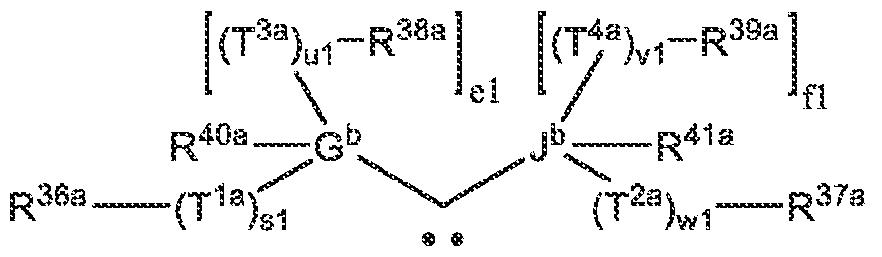 wherein: R36a is H, optionally substituted alkyl, optionally substituted heteroalkyl, optionally substituted cyclyl, optionally substituted heterocyclyl, optionally substituted aryl, or optionally substituted heteroaryl; R37a is H, optionally substituted alkyl, optionally substituted heteroalkyl, optionally substituted cyclyl, optionally substituted heterocyclyl, optionally substituted aryl, or optionally substituted heteroaryl; R38a is H, optionally substituted alkyl, optionally substituted heteroalkyl, optionally substituted cyclyl, optionally substituted heterocyclyl, optionally substituted aryl, or optionally substituted heteroaryl; R39a is H, optionally substituted alkyl, optionally substituted heteroalkyl, optionally substituted cyclyl, optionally substituted heterocyclyl, optionally substituted aryl, or optionally substituted heteroaryl; R40a is absent, H, or optionally substituted alkyl; R41a is absent, H, or optionally substituted alkyl; Gb is C, N, P, O, or S; Jb is C, N, P, O, or S; T1a is a linker; T2a is a linker; T3a is a linker; 4886-5650-6109.1 Page 152 of 224 094876-000020WOPT
T4a is a linker; e1 is zero or 1; f1 is zero or 1; s1 is zero or 1; u1 is zero or 1; v1 is zero or 1; and w1 is zero or 1; and wherein Gb and Jb are not both C; or wherein any two or more of R36a, R37a, R38a, R39a, R40a, R41a, T1a, T2a, T3a, and T4a can be taken together to form a cyclic group. [0587] In some embodiments, wherein when Gb is N or P, then R40a is absent or e1 is zero. In some embodiments, wherein when Jb is N or P, then R41a is absent or f1 is zero. [0588] In some embodiments, wherein when Gb is O or S, then R40a is absent and e1 is zero. In some embodiments, when Jb is O or S, then R41a is absent and f1 is zero. [0589] In some embodiments, the cyclic group comprises at least one carbon-carbon double bond. [0590] In some embodiments, T1a is a linker, wherein the linker is optionally substituted alkyl, optionally substituted alkylene, or optionally substituted alkenylene. In some embodiments, T2a is a linker, wherein the linker is optionally substituted alkyl, optionally substituted alkylene, or optionally substituted alkenylene. In some embodiments, T3a is a linker, wherein the linker is optionally substituted alkyl, optionally substituted alkylene, or optionally substituted alkenylene. In some embodiments, T4a is a linker, wherein the linker is optionally substituted alkyl, optionally substituted alkylene, or optionally substituted alkenylene. [0591] In some embodiments, w1 is zero and R37a is ethyl, propyl, isopropyl, butyl, pentyl, or decyl. In some embodiments, s1 is zero and R36a is ethyl, propyl, isopropyl, butyl, pentyl, or decyl. [0592] Additional embodiments include those listed below. [0593] In various embodiments, the present invention provides a method of making at least one carbene functionalized transition metal dichalcogenide, comprising: providing at least one bulk transition metal dichalcogenide; exfoliating the at least one bulk transition metal dichalcogenide to produce at least one exfoliated transition metal dichalcogenide; and reacting the at least one exfoliated transition metal dichalcogenide with at least one carbene precursor. 4886-5650-6109.1 Page 153 of 224 094876-000020WOPT
[0594] In various embodiments, the present invention provides a method of making at least one carbene functionalized transition metal dichalcogenide, comprising: providing at least one bulk transition metal dichalcogenide; exfoliating the at least one bulk transition metal dichalcogenide to produce at least one exfoliated transition metal dichalcogenide; and reacting at least a portion of the at least one exfoliated transition metal dichalcogenide with at least one carbene precursor. [0595] In some embodiments, the carbene adsorbate is a carbene precursor. [0596] Additional embodiments include those listed below. [0597] In various embodiments, the present invention provides a method of making at least one carbene functionalized transition metal dichalcogenide, comprising: providing at least one bulk transition metal dichalcogenide; exfoliating the at least one bulk transition metal dichalcogenide to produce at least one exfoliated transition metal dichalcogenide comprising at least one exfoliated surface; and reacting at least a portion of the at least one exfoliated surface of the at least one exfoliated transition metal dichalcogenide with at least one carbene precursor. In various embodiments, the present invention provides a carbene functionalized transition metal dichalcogenide made by a method of the present invention. In various embodiments, the present invention provides an article of manufacture comprising a carbene functionalized transition metal dichalcogenide made by a method of the present invention. [0598] In various embodiments, the present invention provides a carbene functionalized transition metal dichalcogenide, comprising: at least one transition metal dichalcogenide; and at least one carbene. In various embodiments, the present invention provides an article of manufacture comprising a carbene functionalized transition metal dichalcogenide. [0599] Additional embodiments include those listed below. [0600] In some embodiments, the present invention provides ligand-induced functionalization of 2D nanolayered materials for properties modulation. In some embodiments, two-dimensional (2D) nanolayered materials exhibit attractive electronic and optoelectronic properties as their thickness reduces to the monolayer level. In some embodiments, these unique features offer distinctive advantages across various device applications, including photodetectors, field-effect transistors (FETs), sensors, and solar cells. In some embodiments, envisioning a material functionalization strategy capable of modulating the structures and properties of 2D materials without introducing atomic dopants or distortion in the atomic structures represents a 4886-5650-6109.1 Page 154 of 224 094876-000020WOPT
distinctive approach with undiscovered and potentially unparalleled outcomes. In various embodiments of the present invention provided herein a chemical method is introduced involving the interaction between 2D nanosheets and custom-designed ligands, providing evidence of self- assembled monolayers on the basal planes of the sheets. In some embodiments, this strategy offers an opportunity to generate unique 2D heterostructures with broadly tunable intrinsic properties. In some embodiments, the selected organic ligands will be designed to tailor the electronic and optoelectronic characteristics of 2D nanolayered materials such as the density of charge carriers and the electron mobility. Additionally, in some embodiments, structural alternations induced by the organic adsorbates will facilitate the design of a series of functionalized nanosheets with diverse stacking compositions and features, thus leaving ample room for in-depth studies of the properties and applications of the materials. [0601] Additional embodiments include those listed below. [0602] Embodiment 112. A N-heterocyclic carbene functionalized transition metal dichalcogenide, comprising: at least one transition metal dichalcogenide; and at least one N- heterocyclic carbene. [0603] Embodiment 113. The N-heterocyclic carbene functionalized transition metal dichalcogenide of embodiment 112, wherein the at least one N-heterocyclic carbene has a structure of Formula (II): Formula (II), wherein:
wherein: R36a is H, optionally substituted alkyl, optionally substituted heteroalkyl, optionally substituted cyclyl, optionally substituted heterocyclyl, optionally substituted aryl, or optionally substituted heteroaryl; R37a is H, optionally substituted alkyl, optionally substituted heteroalkyl, optionally substituted cyclyl, optionally substituted heterocyclyl, optionally substituted aryl, or optionally substituted heteroaryl; R38a is H, optionally substituted alkyl, optionally substituted heteroalkyl, optionally substituted cyclyl, optionally substituted heterocyclyl, optionally substituted aryl, or optionally substituted heteroaryl; R39a is H, optionally substituted alkyl, optionally substituted heteroalkyl, optionally substituted cyclyl, optionally substituted heterocyclyl, optionally substituted aryl, or optionally substituted heteroaryl; R40a is absent, H, or optionally substituted alkyl; R41a is absent, H, or optionally substituted alkyl; Gb is C, N, P, O, or S; Jb is C, N, P, O, or S; T1a is a linker; T2a is a linker; T3a is a linker; 4886-5650-6109.1 Page 152 of 224 094876-000020WOPT
T4a is a linker; e1 is zero or 1; f1 is zero or 1; s1 is zero or 1; u1 is zero or 1; v1 is zero or 1; and w1 is zero or 1; and wherein Gb and Jb are not both C; or wherein any two or more of R36a, R37a, R38a, R39a, R40a, R41a, T1a, T2a, T3a, and T4a can be taken together to form a cyclic group. [0587] In some embodiments, wherein when Gb is N or P, then R40a is absent or e1 is zero. In some embodiments, wherein when Jb is N or P, then R41a is absent or f1 is zero. [0588] In some embodiments, wherein when Gb is O or S, then R40a is absent and e1 is zero. In some embodiments, when Jb is O or S, then R41a is absent and f1 is zero. [0589] In some embodiments, the cyclic group comprises at least one carbon-carbon double bond. [0590] In some embodiments, T1a is a linker, wherein the linker is optionally substituted alkyl, optionally substituted alkylene, or optionally substituted alkenylene. In some embodiments, T2a is a linker, wherein the linker is optionally substituted alkyl, optionally substituted alkylene, or optionally substituted alkenylene. In some embodiments, T3a is a linker, wherein the linker is optionally substituted alkyl, optionally substituted alkylene, or optionally substituted alkenylene. In some embodiments, T4a is a linker, wherein the linker is optionally substituted alkyl, optionally substituted alkylene, or optionally substituted alkenylene. [0591] In some embodiments, w1 is zero and R37a is ethyl, propyl, isopropyl, butyl, pentyl, or decyl. In some embodiments, s1 is zero and R36a is ethyl, propyl, isopropyl, butyl, pentyl, or decyl. [0592] Additional embodiments include those listed below. [0593] In various embodiments, the present invention provides a method of making at least one carbene functionalized transition metal dichalcogenide, comprising: providing at least one bulk transition metal dichalcogenide; exfoliating the at least one bulk transition metal dichalcogenide to produce at least one exfoliated transition metal dichalcogenide; and reacting the at least one exfoliated transition metal dichalcogenide with at least one carbene precursor. 4886-5650-6109.1 Page 153 of 224 094876-000020WOPT
[0594] In various embodiments, the present invention provides a method of making at least one carbene functionalized transition metal dichalcogenide, comprising: providing at least one bulk transition metal dichalcogenide; exfoliating the at least one bulk transition metal dichalcogenide to produce at least one exfoliated transition metal dichalcogenide; and reacting at least a portion of the at least one exfoliated transition metal dichalcogenide with at least one carbene precursor. [0595] In some embodiments, the carbene adsorbate is a carbene precursor. [0596] Additional embodiments include those listed below. [0597] In various embodiments, the present invention provides a method of making at least one carbene functionalized transition metal dichalcogenide, comprising: providing at least one bulk transition metal dichalcogenide; exfoliating the at least one bulk transition metal dichalcogenide to produce at least one exfoliated transition metal dichalcogenide comprising at least one exfoliated surface; and reacting at least a portion of the at least one exfoliated surface of the at least one exfoliated transition metal dichalcogenide with at least one carbene precursor. In various embodiments, the present invention provides a carbene functionalized transition metal dichalcogenide made by a method of the present invention. In various embodiments, the present invention provides an article of manufacture comprising a carbene functionalized transition metal dichalcogenide made by a method of the present invention. [0598] In various embodiments, the present invention provides a carbene functionalized transition metal dichalcogenide, comprising: at least one transition metal dichalcogenide; and at least one carbene. In various embodiments, the present invention provides an article of manufacture comprising a carbene functionalized transition metal dichalcogenide. [0599] Additional embodiments include those listed below. [0600] In some embodiments, the present invention provides ligand-induced functionalization of 2D nanolayered materials for properties modulation. In some embodiments, two-dimensional (2D) nanolayered materials exhibit attractive electronic and optoelectronic properties as their thickness reduces to the monolayer level. In some embodiments, these unique features offer distinctive advantages across various device applications, including photodetectors, field-effect transistors (FETs), sensors, and solar cells. In some embodiments, envisioning a material functionalization strategy capable of modulating the structures and properties of 2D materials without introducing atomic dopants or distortion in the atomic structures represents a 4886-5650-6109.1 Page 154 of 224 094876-000020WOPT
distinctive approach with undiscovered and potentially unparalleled outcomes. In various embodiments of the present invention provided herein a chemical method is introduced involving the interaction between 2D nanosheets and custom-designed ligands, providing evidence of self- assembled monolayers on the basal planes of the sheets. In some embodiments, this strategy offers an opportunity to generate unique 2D heterostructures with broadly tunable intrinsic properties. In some embodiments, the selected organic ligands will be designed to tailor the electronic and optoelectronic characteristics of 2D nanolayered materials such as the density of charge carriers and the electron mobility. Additionally, in some embodiments, structural alternations induced by the organic adsorbates will facilitate the design of a series of functionalized nanosheets with diverse stacking compositions and features, thus leaving ample room for in-depth studies of the properties and applications of the materials. [0601] Additional embodiments include those listed below. [0602] Embodiment 112. A N-heterocyclic carbene functionalized transition metal dichalcogenide, comprising: at least one transition metal dichalcogenide; and at least one N- heterocyclic carbene. [0603] Embodiment 113. The N-heterocyclic carbene functionalized transition metal dichalcogenide of embodiment 112, wherein the at least one N-heterocyclic carbene has a structure of Formula (II): Formula (II), wherein:
 R1a is H, optionally substituted alkyl, optionally substituted heteroalkyl, optionally substituted cyclyl, optionally substituted heterocyclyl, optionally substituted aryl, or optionally substituted heteroaryl; R2a is H, optionally substituted alkyl, optionally substituted heteroalkyl, optionally substituted cyclyl, optionally substituted heterocyclyl, optionally substituted aryl, or optionally substituted heteroaryl; and Q1a is an optionally substituted linker. 4886-5650-6109.1 Page 155 of 224 094876-000020WOPT
[0604] Embodiment 114. The N-heterocyclic carbene functionalized transition metal dichalcogenide of embodiment 112, wherein the at least one N-heterocyclic carbene has a structure of Formula (II-A): Formula (II-A),
R1a is H, optionally substituted alkyl, optionally substituted heteroalkyl, optionally substituted cyclyl, optionally substituted heterocyclyl, optionally substituted aryl, or optionally substituted heteroaryl; R2a is H, optionally substituted alkyl, optionally substituted heteroalkyl, optionally substituted cyclyl, optionally substituted heterocyclyl, optionally substituted aryl, or optionally substituted heteroaryl; and Q1a is an optionally substituted linker. 4886-5650-6109.1 Page 155 of 224 094876-000020WOPT
[0604] Embodiment 114. The N-heterocyclic carbene functionalized transition metal dichalcogenide of embodiment 112, wherein the at least one N-heterocyclic carbene has a structure of Formula (II-A): Formula (II-A),
 wherein: R1a is H, optionally substituted alkyl, optionally substituted heteroalkyl, optionally substituted cyclyl, optionally substituted heterocyclyl, optionally substituted aryl, or optionally substituted heteroaryl; R2a is H, optionally substituted alkyl, optionally substituted heteroalkyl, optionally substituted cyclyl, optionally substituted heterocyclyl, optionally substituted aryl, or optionally substituted heteroaryl; R3a is absent, H, halo, optionally substituted alkyl, optionally substituted heteroalkyl, optionally substituted cyclyl, optionally substituted heterocyclyl, optionally substituted aryl, or optionally substituted heteroaryl; R4a is absent, H, halo, optionally substituted alkyl, optionally substituted heteroalkyl, optionally substituted cyclyl, optionally substituted heterocyclyl, optionally substituted aryl, or optionally substituted heteroaryl; R5a is absent, H, halo, optionally substituted alkyl, optionally substituted heteroalkyl, optionally substituted cyclyl, optionally substituted heterocyclyl, optionally substituted aryl, or optionally substituted heteroaryl; and R6a is absent, H, halo, optionally substituted alkyl, optionally substituted heteroalkyl, optionally substituted cyclyl, optionally substituted heterocyclyl, optionally substituted aryl, or optionally substituted heteroaryl; wherein R3a and R4a are not both absent, and wherein R5a and R6a are not both absent; or R3a and R5a, or R3a and R6a, or R4a and R5a, or R4a and R6a may be taken together to form a ring, wherein the ring is optionally substituted. 4886-5650-6109.1 Page 156 of 224 094876-000020WOPT
[0605] Embodiment 115. The N-heterocyclic carbene functionalized transition metal dichalcogenide of embodiment 112, wherein the at least one N-heterocyclic carbene has the structure of Formula (II-B): Formula (II-B),
wherein: R1a is H, optionally substituted alkyl, optionally substituted heteroalkyl, optionally substituted cyclyl, optionally substituted heterocyclyl, optionally substituted aryl, or optionally substituted heteroaryl; R2a is H, optionally substituted alkyl, optionally substituted heteroalkyl, optionally substituted cyclyl, optionally substituted heterocyclyl, optionally substituted aryl, or optionally substituted heteroaryl; R3a is absent, H, halo, optionally substituted alkyl, optionally substituted heteroalkyl, optionally substituted cyclyl, optionally substituted heterocyclyl, optionally substituted aryl, or optionally substituted heteroaryl; R4a is absent, H, halo, optionally substituted alkyl, optionally substituted heteroalkyl, optionally substituted cyclyl, optionally substituted heterocyclyl, optionally substituted aryl, or optionally substituted heteroaryl; R5a is absent, H, halo, optionally substituted alkyl, optionally substituted heteroalkyl, optionally substituted cyclyl, optionally substituted heterocyclyl, optionally substituted aryl, or optionally substituted heteroaryl; and R6a is absent, H, halo, optionally substituted alkyl, optionally substituted heteroalkyl, optionally substituted cyclyl, optionally substituted heterocyclyl, optionally substituted aryl, or optionally substituted heteroaryl; wherein R3a and R4a are not both absent, and wherein R5a and R6a are not both absent; or R3a and R5a, or R3a and R6a, or R4a and R5a, or R4a and R6a may be taken together to form a ring, wherein the ring is optionally substituted. 4886-5650-6109.1 Page 156 of 224 094876-000020WOPT
[0605] Embodiment 115. The N-heterocyclic carbene functionalized transition metal dichalcogenide of embodiment 112, wherein the at least one N-heterocyclic carbene has the structure of Formula (II-B): Formula (II-B),
 na is 0, 1, 2, 3, 4, 5, 6, 7, 8, 9, 10, 11, or 12; R1a is H, optionally substituted alkyl, optionally substituted heteroalkyl, optionally substituted cyclyl, optionally substituted heterocyclyl, optionally substituted aryl, or optionally substituted heteroaryl; R2a is H, optionally substituted alkyl, optionally substituted heteroalkyl, optionally substituted cyclyl, optionally substituted heterocyclyl, optionally substituted aryl, or optionally substituted heteroaryl; and R7a is H, OR8a, SR9a, halo, optionally substituted alkyl, optionally substituted heteroalkyl, optionally substituted cyclyl, optionally substituted heterocyclyl, optionally substituted aryl, or optionally substituted heteroaryl, wherein R8a is H, or optionally substituted alkyl, and R9a is H, or optionally substituted alkyl. 4886-5650-6109.1 Page 157 of 224 094876-000020WOPT
[0606] Embodiment 116. The N-heterocyclic carbene functionalized transition metal dichalcogenide of embodiment 112, wherein the at least one N-heterocyclic carbene has a structure of Formula (IV): Formula (IV)
na is 0, 1, 2, 3, 4, 5, 6, 7, 8, 9, 10, 11, or 12; R1a is H, optionally substituted alkyl, optionally substituted heteroalkyl, optionally substituted cyclyl, optionally substituted heterocyclyl, optionally substituted aryl, or optionally substituted heteroaryl; R2a is H, optionally substituted alkyl, optionally substituted heteroalkyl, optionally substituted cyclyl, optionally substituted heterocyclyl, optionally substituted aryl, or optionally substituted heteroaryl; and R7a is H, OR8a, SR9a, halo, optionally substituted alkyl, optionally substituted heteroalkyl, optionally substituted cyclyl, optionally substituted heterocyclyl, optionally substituted aryl, or optionally substituted heteroaryl, wherein R8a is H, or optionally substituted alkyl, and R9a is H, or optionally substituted alkyl. 4886-5650-6109.1 Page 157 of 224 094876-000020WOPT
[0606] Embodiment 116. The N-heterocyclic carbene functionalized transition metal dichalcogenide of embodiment 112, wherein the at least one N-heterocyclic carbene has a structure of Formula (IV): Formula (IV)
 wherein: Z1a is C; Z2a is C; R10a is H, optionally substituted alkyl, optionally substituted heteroalkyl, optionally substituted cyclyl, optionally substituted heterocyclyl, optionally substituted aryl, or optionally substituted heteroaryl; R11a is H, optionally substituted alkyl, optionally substituted heteroalkyl, optionally substituted cyclyl, optionally substituted heterocyclyl, optionally substituted aryl, or optionally substituted heteroaryl; R12a is absent, H, halo, optionally substituted alkyl, optionally substituted heteroalkyl, optionally substituted alkoxy, optionally substituted alkylthio, optionally substituted alkylamino, optionally substituted amino, hydroxy, optionally substituted cyclyl, optionally substituted heterocyclyl, optionally substituted aryl, or optionally substituted heteroaryl; R13a is absent, H, halo, optionally substituted alkyl, optionally substituted heteroalkyl, optionally substituted alkoxy, optionally substituted alkylthio, optionally substituted alkylamino, optionally substituted amino, hydroxy, optionally substituted cyclyl, optionally substituted heterocyclyl, optionally substituted aryl, or optionally substituted heteroaryl; R14a is absent, H, halo, optionally substituted alkyl, optionally substituted heteroalkyl, optionally substituted alkoxy, optionally substituted alkylthio, optionally substituted alkylamino, optionally substituted amino, hydroxy, optionally substituted cyclyl, optionally substituted heterocyclyl, optionally substituted aryl, or optionally substituted heteroaryl; 4886-5650-6109.1 Page 158 of 224 094876-000020WOPT
R15a is absent, H, halo, optionally substituted alkyl, optionally substituted heteroalkyl, optionally substituted alkoxy, optionally substituted alkylthio, optionally substituted alkylamino, optionally substituted amino, hydroxy, optionally substituted cyclyl, optionally substituted heterocyclyl, optionally substituted aryl, or optionally substituted heteroaryl; and wherein R12a and R13a are not both absent, and wherein R14a and R15a are not both absent; and between Z1a and Z2a indicates a bond that may be a single bond or a double bond; or R12a and R14a, or R12a and R15a, or R13a and R14a, or R13a and R15a may be taken together to form a ring, wherein the ring is optionally substituted. [0607] Embodiment 117. The N-heterocyclic carbene functionalized transition metal dichalcogenide of embodiment 112, wherein the at least one N-heterocyclic carbene is .
wherein: Z1a is C; Z2a is C; R10a is H, optionally substituted alkyl, optionally substituted heteroalkyl, optionally substituted cyclyl, optionally substituted heterocyclyl, optionally substituted aryl, or optionally substituted heteroaryl; R11a is H, optionally substituted alkyl, optionally substituted heteroalkyl, optionally substituted cyclyl, optionally substituted heterocyclyl, optionally substituted aryl, or optionally substituted heteroaryl; R12a is absent, H, halo, optionally substituted alkyl, optionally substituted heteroalkyl, optionally substituted alkoxy, optionally substituted alkylthio, optionally substituted alkylamino, optionally substituted amino, hydroxy, optionally substituted cyclyl, optionally substituted heterocyclyl, optionally substituted aryl, or optionally substituted heteroaryl; R13a is absent, H, halo, optionally substituted alkyl, optionally substituted heteroalkyl, optionally substituted alkoxy, optionally substituted alkylthio, optionally substituted alkylamino, optionally substituted amino, hydroxy, optionally substituted cyclyl, optionally substituted heterocyclyl, optionally substituted aryl, or optionally substituted heteroaryl; R14a is absent, H, halo, optionally substituted alkyl, optionally substituted heteroalkyl, optionally substituted alkoxy, optionally substituted alkylthio, optionally substituted alkylamino, optionally substituted amino, hydroxy, optionally substituted cyclyl, optionally substituted heterocyclyl, optionally substituted aryl, or optionally substituted heteroaryl; 4886-5650-6109.1 Page 158 of 224 094876-000020WOPT
R15a is absent, H, halo, optionally substituted alkyl, optionally substituted heteroalkyl, optionally substituted alkoxy, optionally substituted alkylthio, optionally substituted alkylamino, optionally substituted amino, hydroxy, optionally substituted cyclyl, optionally substituted heterocyclyl, optionally substituted aryl, or optionally substituted heteroaryl; and wherein R12a and R13a are not both absent, and wherein R14a and R15a are not both absent; and between Z1a and Z2a indicates a bond that may be a single bond or a double bond; or R12a and R14a, or R12a and R15a, or R13a and R14a, or R13a and R15a may be taken together to form a ring, wherein the ring is optionally substituted. [0607] Embodiment 117. The N-heterocyclic carbene functionalized transition metal dichalcogenide of embodiment 112, wherein the at least one N-heterocyclic carbene is .
 [0608] Embodiment 118. The N-heterocyclic carbene functionalized transition metal dichalcogenide of embodiment 112, wherein the at least one transition metal dichalcogenide has the formula: MaXa 2, wherein: Ma is a Group 4-10 transition metal; and Xa is a chalcogen. 4886-5650-6109.1 Page 159 of 224 094876-000020WOPT
[0609] Embodiment 119. The N-heterocyclic carbene functionalized transition metal dichalcogenide of embodiment 118, wherein Ma is a Group 6 transition metal. [0610] Embodiment 120. The N-heterocyclic carbene functionalized transition metal dichalcogenide of embodiment 118, wherein the chalcogen is sulfur (S), selenium (Se), or tellurium (Te). [0611] Embodiment 121. The N-heterocyclic carbene functionalized transition metal dichalcogenide of embodiment 119, wherein the Group 6 transition metal is molybdenum (Mo) or tungsten (W). [0612] Embodiment 122. The N-heterocyclic carbene functionalized transition metal dichalcogenide of embodiment 112, wherein the at least one transition metal dichalcogenide is MoS2 or WS2. [0613] Embodiment 123. The N-heterocyclic carbene functionalized transition metal dichalcogenide of embodiment 112, wherein the at least one transition metal dichalcogenide is an at least one exfoliated transition metal dichalcogenide, wherein the at least one exfoliated transition metal dichalcogenide comprises at least one exfoliated surface, and wherein the at least one N- heterocyclic carbene forms a self-assembled monolayer (SAM) or a partial self-assembled monolayer (SAM) on at least a portion of the at least one exfoliated surface of the at least one exfoliated transition metal dichalcogenide. [0614] Embodiment 124. The N-heterocyclic carbene functionalized transition metal dichalcogenide of embodiment 112, wherein the at least one transition metal dichalcogenide is an at least one exfoliated transition metal dichalcogenide, wherein the at least one exfoliated transition metal dichalcogenide comprises at least one exfoliated surface, wherein the at least one exfoliated surface comprises at least one exfoliated basal plane, and wherein the at least one N-heterocyclic carbene forms a self-assembled monolayer (SAM) or a partial self-assembled monolayer (SAM) on at least a portion of the at least one exfoliated basal plane. [0615] Embodiment 125. A method of making at least one N-heterocyclic carbene functionalized transition metal dichalcogenide of embodiment 112, comprising: providing at least one bulk transition metal dichalcogenide; exfoliating the at least one bulk transition metal dichalcogenide to produce at least one exfoliated transition metal dichalcogenide comprising at least one exfoliated surface; and reacting at least a portion of the at least one exfoliated surface of 4886-5650-6109.1 Page 160 of 224 094876-000020WOPT
the at least one exfoliated transition metal dichalcogenide with at least one N-heterocyclic carbene precursor. [0616] Embodiment 126. The method of embodiment 125, wherein the at least one N- heterocyclic carbene precursor has a structure of Formula (I):
[0608] Embodiment 118. The N-heterocyclic carbene functionalized transition metal dichalcogenide of embodiment 112, wherein the at least one transition metal dichalcogenide has the formula: MaXa 2, wherein: Ma is a Group 4-10 transition metal; and Xa is a chalcogen. 4886-5650-6109.1 Page 159 of 224 094876-000020WOPT
[0609] Embodiment 119. The N-heterocyclic carbene functionalized transition metal dichalcogenide of embodiment 118, wherein Ma is a Group 6 transition metal. [0610] Embodiment 120. The N-heterocyclic carbene functionalized transition metal dichalcogenide of embodiment 118, wherein the chalcogen is sulfur (S), selenium (Se), or tellurium (Te). [0611] Embodiment 121. The N-heterocyclic carbene functionalized transition metal dichalcogenide of embodiment 119, wherein the Group 6 transition metal is molybdenum (Mo) or tungsten (W). [0612] Embodiment 122. The N-heterocyclic carbene functionalized transition metal dichalcogenide of embodiment 112, wherein the at least one transition metal dichalcogenide is MoS2 or WS2. [0613] Embodiment 123. The N-heterocyclic carbene functionalized transition metal dichalcogenide of embodiment 112, wherein the at least one transition metal dichalcogenide is an at least one exfoliated transition metal dichalcogenide, wherein the at least one exfoliated transition metal dichalcogenide comprises at least one exfoliated surface, and wherein the at least one N- heterocyclic carbene forms a self-assembled monolayer (SAM) or a partial self-assembled monolayer (SAM) on at least a portion of the at least one exfoliated surface of the at least one exfoliated transition metal dichalcogenide. [0614] Embodiment 124. The N-heterocyclic carbene functionalized transition metal dichalcogenide of embodiment 112, wherein the at least one transition metal dichalcogenide is an at least one exfoliated transition metal dichalcogenide, wherein the at least one exfoliated transition metal dichalcogenide comprises at least one exfoliated surface, wherein the at least one exfoliated surface comprises at least one exfoliated basal plane, and wherein the at least one N-heterocyclic carbene forms a self-assembled monolayer (SAM) or a partial self-assembled monolayer (SAM) on at least a portion of the at least one exfoliated basal plane. [0615] Embodiment 125. A method of making at least one N-heterocyclic carbene functionalized transition metal dichalcogenide of embodiment 112, comprising: providing at least one bulk transition metal dichalcogenide; exfoliating the at least one bulk transition metal dichalcogenide to produce at least one exfoliated transition metal dichalcogenide comprising at least one exfoliated surface; and reacting at least a portion of the at least one exfoliated surface of 4886-5650-6109.1 Page 160 of 224 094876-000020WOPT
the at least one exfoliated transition metal dichalcogenide with at least one N-heterocyclic carbene precursor. [0616] Embodiment 126. The method of embodiment 125, wherein the at least one N- heterocyclic carbene precursor has a structure of Formula (I):
 Formula (I), wherein: A- is a counterion; R1 is H, optionally substituted alkyl, optionally substituted heteroalkyl, optionally substituted cyclyl, optionally substituted heterocyclyl, optionally substituted aryl, or optionally substituted heteroaryl; R2 is H, optionally substituted alkyl, optionally substituted heteroalkyl, optionally substituted cyclyl, optionally substituted heterocyclyl, optionally substituted aryl, or optionally substituted heteroaryl; and Q1 is an optionally substituted linker. [0617] Embodiment 127. An article of manufacture comprising at least one N-heterocyclic carbene functionalized transition metal dichalcogenide of any one of embodiments 112-124. [0618] Embodiment 128. The article of manufacture of embodiment 127, wherein the article of manufacture is an energy storage device, energy storage material, sensing device, sensing material, semiconductor electronic device, semiconductor electronic material, semiconductor optoelectronic device, or semiconductor optoelectronic material. [0619] Embodiment 129. The article of manufacture of embodiment 127, wherein the article of manufacture is a semiconductor or has semiconducting properties. [0620] Additional embodiments include those listed below. [0621] In some embodiments, the N-heterocyclic carbene precursor has a structure of Formula (I). In some embodiments, the N-heterocyclic carbene precursor has a structure of Formula (I-1). In some embodiments, the N-heterocyclic carbene precursor has a structure of 4886-5650-6109.1 Page 161 of 224 094876-000020WOPT
Formula (I-2). In some embodiments, the N-heterocyclic carbene precursor has a structure of Formula (I-A). In some embodiments, the N-heterocyclic carbene precursor has a structure of Formula (I-A-1). In some embodiments, the N-heterocyclic carbene precursor has a structure of Formula (I-A-2). In some embodiments, the N-heterocyclic carbene precursor has a structure of Formula (I-B). In some embodiments, the N-heterocyclic carbene precursor has a structure of Formula (I-B-1). In some embodiments, the N-heterocyclic carbene precursor has a structure of Formula (I-B-2). In some embodiments, the N-heterocyclic carbene precursor has a structure of Formula (III). In some embodiments, the N-heterocyclic carbene precursor has a structure of Formula (III-1). In some embodiments, the N-heterocyclic carbene precursor has a structure of Formula (III-2). In some embodiments, the N-heterocyclic carbene precursor has a structure of Formula (III-A). In some embodiments, the N-heterocyclic carbene precursor has a structure of Formula (III-A-1). In some embodiments, the N-heterocyclic carbene precursor has a structure of Formula (III-A-2). In some embodiments, the N-heterocyclic carbene precursor has a structure of Formula (III-B). In some embodiments, the N-heterocyclic carbene precursor has a structure of Formula (III-B-1). In some embodiments, the N-heterocyclic carbene precursor has a structure of Formula (III-B-2). [0622] In some embodiments, the N-heterocyclic carbene precursor of Formula (I) is a N- heterocyclic carbene precursor of Formula (I-A). In some embodiments, the N-heterocyclic carbene precursor of Formula (I-A) is a N-heterocyclic carbene precursor of Formula (I). In some embodiments, the N-heterocyclic carbene precursor of Formula (I) is a N-heterocyclic carbene precursor of Formula (I-B). In some embodiments, the N-heterocyclic carbene precursor of Formula (I-B) is a N-heterocyclic carbene precursor of Formula (I). In some embodiments, the N- heterocyclic carbene precursor of Formula (I-A) is a N-heterocyclic carbene precursor of Formula (I-B). In some embodiments, the N-heterocyclic carbene precursor of Formula (I-B) is a N- heterocyclic carbene precursor of Formula (I-A). In some embodiments, the N-heterocyclic carbene precursor of Formula (I) is a N-heterocyclic carbene precursor of Formula (III). In some embodiments, the N-heterocyclic carbene precursor of Formula (III) is a N-heterocyclic carbene precursor of Formula (I). In some embodiments, the N-heterocyclic carbene precursor of Formula (I) is a N-heterocyclic carbene precursor of Formula (III-A). In some embodiments, the N- heterocyclic carbene precursor of Formula (III-A) is a N-heterocyclic carbene precursor of Formula (I). In some embodiments, the N-heterocyclic carbene precursor of Formula (I) is a N- 4886-5650-6109.1 Page 162 of 224 094876-000020WOPT
heterocyclic carbene precursor of Formula (III-B). In some embodiments, the N-heterocyclic carbene precursor of Formula (III-B) is a N-heterocyclic carbene precursor of Formula (I). In some embodiments, the N-heterocyclic carbene precursor of Formula (III) is a N-heterocyclic carbene precursor of Formula (III-A). In some embodiments, the N-heterocyclic carbene precursor of Formula (III-A) is a N-heterocyclic carbene precursor of Formula (III). In some embodiments, the N-heterocyclic carbene precursor of Formula (III) is a N-heterocyclic carbene precursor of Formula (III-B). In some embodiments, the N-heterocyclic carbene precursor of Formula (III-B) is a N-heterocyclic carbene precursor of Formula (III). In some embodiments, the N-heterocyclic carbene precursor of Formula (III) is a N-heterocyclic carbene precursor of Formula (I-A). In some embodiments, the N-heterocyclic carbene precursor of Formula (I-A) is a N-heterocyclic carbene precursor of Formula (III). In some embodiments, the N-heterocyclic carbene precursor of Formula (III) is a N-heterocyclic carbene precursor of Formula (I-B). In some embodiments, the N-heterocyclic carbene precursor of Formula (I-B) is a N-heterocyclic carbene precursor of Formula (III). [0623] In some embodiments, the N-heterocyclic carbene has a structure of Formula (II). In some embodiments, the N-heterocyclic carbene has a structure of Formula (II-A). In some embodiments, the N-heterocyclic carbene has a structure of Formula (II-B). In some embodiments, the N-heterocyclic carbene has a structure of Formula (IV). In some embodiments, the N- heterocyclic carbene has a structure of Formula (IV-A). In some embodiments, the N-heterocyclic carbene has a structure of Formula (IV-B). In some embodiments, the N-heterocyclic carbene has a structure of Formula (IV-C). [0624] In some embodiments, the N-heterocyclic carbene of Formula (II) is a N- heterocyclic carbene of Formula (II-A). In some embodiments, the N-heterocyclic carbene of Formula (II-A) is a N-heterocyclic carbene of Formula (II). In some embodiments, the N- heterocyclic carbene of Formula (II) is a N-heterocyclic carbene of Formula (II-B). In some embodiments, the N-heterocyclic carbene of Formula (II-B) is a N-heterocyclic carbene of Formula (II). In some embodiments, the N-heterocyclic carbene of Formula (II) is a N-heterocyclic carbene of Formula (IV). In some embodiments, the N-heterocyclic carbene of Formula (IV) is a N- heterocyclic carbene of Formula (II). In some embodiments, the N-heterocyclic carbene of Formula (II) is a N-heterocyclic carbene of Formula (IV-A). In some embodiments, the N- heterocyclic carbene of Formula (IV-A) is a N-heterocyclic carbene of Formula (II). In some 4886-5650-6109.1 Page 163 of 224 094876-000020WOPT
embodiments, the N-heterocyclic carbene of Formula (II) is a N-heterocyclic carbene of Formula (IV-B). In some embodiments, the N-heterocyclic carbene of Formula (IV-B) is a N-heterocyclic carbene of Formula (II). In some embodiments, the N-heterocyclic carbene of Formula (II) is a N- heterocyclic carbene of Formula (IV-C). In some embodiments, the N-heterocyclic carbene of Formula (IV-C) is a N-heterocyclic carbene of Formula (II). In some embodiments, the N- heterocyclic carbene of Formula (IV) is a N-heterocyclic carbene of Formula (IV-A). In some embodiments, the N-heterocyclic carbene of Formula (IV-A) is a N-heterocyclic carbene of Formula (IV). In some embodiments, the N-heterocyclic carbene of Formula (IV) is a N- heterocyclic carbene of Formula (IV-B). In some embodiments, the N-heterocyclic carbene of Formula (IV-B) is a N-heterocyclic carbene of Formula (IV). In some embodiments, the N- heterocyclic carbene of Formula (IV) is a N-heterocyclic carbene of Formula (IV-C). In some embodiments, the N-heterocyclic carbene of Formula (IV-C) is a N-heterocyclic carbene of Formula (IV). In some embodiments, the N-heterocyclic carbene of Formula (IV) is a N- heterocyclic carbene of Formula (II-A). In some embodiments, the N-heterocyclic carbene of Formula (II-A) is a N-heterocyclic carbene of Formula (IV). In some embodiments, the N- heterocyclic carbene of Formula (IV) is a N-heterocyclic carbene of Formula (II-B). In some embodiments, the N-heterocyclic carbene of Formula (II-B) is a N-heterocyclic carbene of Formula (IV). [0625] Additional embodiments include those listed below. [0626] In some embodiments, the at least one N-heterocyclic carbene precursor is 1,3- Diethylbenzimidazolium iodide; 1,3-Dipropylbenzimidazolium iodide; 1,3- Diisopropylbenzimidazolium iodide; 1,3-Dibutylbenzimidazolium iodide; 1,3- Dipentylbenzimidazolium iodide; 1,3-Didecylbenzimidazolium iodide; 1,3- Diethylbenzimidazolium bromide; 1,3-Dipropylbenzimidazolium bromide; 1,3- Diisopropylbenzimidazolium bromide; 1,3-Dibutylbenzimidazolium bromide; 1,3- Dipentylbenzimidazolium bromide; 1,3-Didecylbenzimidazolium bromide; 1,3- Diethylbenzimidazolium chloride; 1,3-Dipropylbenzimidazolium chloride; 1,3- Diisopropylbenzimidazolium chloride; 1,3-Dibutylbenzimidazolium chloride; 1,3- Dipentylbenzimidazolium chloride; 1,3-Didecylbenzimidazolium chloride; 1,3- Diethylbenzimidazolium methanesulfonate; 1,3-Dipropylbenzimidazolium methanesulfonate; 1,3-Diisopropylbenzimidazolium methanesulfonate; 1,3-Dibutylbenzimidazolium 4886-5650-6109.1 Page 164 of 224 094876-000020WOPT
methanesulfonate; 1,3-Dipentylbenzimidazolium methanesulfonate; 1,3-Didecylbenzimidazolium methanesulfonate; 1,3-Diethylbenzimidazolium trifluoromethanesulfonate; 1,3- Dipropylbenzimidazolium trifluoromethanesulfonate; 1,3-Diisopropylbenzimidazolium trifluoromethanesulfonate; 1,3-Dibutylbenzimidazolium trifluoromethanesulfonate; 1,3- Dipentylbenzimidazolium trifluoromethanesulfonate; 1,3-Didecylbenzimidazolium trifluoromethanesulfonate; 1,3-Diethylbenzimidazolium tetrafluoroborate; 1,3- Dipropylbenzimidazolium tetrafluoroborate; 1,3-Diisopropylbenzimidazolium tetrafluoroborate; 1,3-Dibutylbenzimidazolium tetrafluoroborate; 1,3-Dipentylbenzimidazolium tetrafluoroborate; 1,3-Didecylbenzimidazolium tetrafluoroborate; 1,3-Diethylbenzimidazolium hexafluorophosphate; 1,3-Dipropylbenzimidazolium hexafluorophosphate; 1,3- Diisopropylbenzimidazolium hexafluorophosphate; 1,3-Dibutylbenzimidazolium hexafluorophosphate; 1,3-Dipentylbenzimidazolium hexafluorophosphate; or 1,3- Didecylbenzimidazolium hexafluorophosphate. [0627] In some embodiments, the at least one N-heterocyclic carbene precursor is 1,3- Diethylbenzimidazolium iodide; 1,3-Dipropylbenzimidazolium iodide; 1,3- Diisopropylbenzimidazolium iodide; 1,3-Dibutylbenzimidazolium iodide; 1,3- Dipentylbenzimidazolium iodide; or 1,3-Didecylbenzimidazolium iodide. [0628] In some embodiments, the at least one N-heterocyclic carbene precursor is 1,3- Diethylbenzimidazolium bromide; 1,3-Dipropylbenzimidazolium bromide; 1,3- Diisopropylbenzimidazolium bromide; 1,3-Dibutylbenzimidazolium bromide; 1,3- Dipentylbenzimidazolium bromide; or 1,3-Didecylbenzimidazolium bromide. [0629] In some embodiments, the at least one N-heterocyclic carbene precursor is 1,3- Diethylbenzimidazolium chloride; 1,3-Dipropylbenzimidazolium chloride; 1,3- Diisopropylbenzimidazolium chloride; 1,3-Dibutylbenzimidazolium chloride; 1,3- Dipentylbenzimidazolium chloride; or 1,3-Didecylbenzimidazolium chloride. [0630] In some embodiments, the at least one N-heterocyclic carbene precursor is 1,3- Diethylbenzimidazolium methanesulfonate; 1,3-Dipropylbenzimidazolium methanesulfonate; 1,3-Diisopropylbenzimidazolium methanesulfonate; 1,3-Dibutylbenzimidazolium methanesulfonate; 1,3-Dipentylbenzimidazolium methanesulfonate; or 1,3- Didecylbenzimidazolium methanesulfonate. 4886-5650-6109.1 Page 165 of 224 094876-000020WOPT
[0631] In some embodiments, the at least one N-heterocyclic carbene precursor is 1,3- Diethylbenzimidazolium trifluoromethanesulfonate; 1,3-Dipropylbenzimidazolium trifluoromethanesulfonate; 1,3-Diisopropylbenzimidazolium trifluoromethanesulfonate; 1,3- Dibutylbenzimidazolium trifluoromethanesulfonate; 1,3-Dipentylbenzimidazolium trifluoromethanesulfonate; or 1,3-Didecylbenzimidazolium trifluoromethanesulfonate. [0632] In some embodiments, the at least one N-heterocyclic carbene precursor is 1,3- Diethylbenzimidazolium tetrafluoroborate; 1,3-Dipropylbenzimidazolium tetrafluoroborate; 1,3- Diisopropylbenzimidazolium tetrafluoroborate; 1,3-Dibutylbenzimidazolium tetrafluoroborate; 1,3-Dipentylbenzimidazolium tetrafluoroborate; or 1,3-Didecylbenzimidazolium tetrafluoroborate. [0633] In some embodiments, the at least one N-heterocyclic carbene precursor is 1,3- Diethylbenzimidazolium hexafluorophosphate; 1,3-Dipropylbenzimidazolium hexafluorophosphate; 1,3-Diisopropylbenzimidazolium hexafluorophosphate; 1,3- Dibutylbenzimidazolium hexafluorophosphate; 1,3-Dipentylbenzimidazolium hexafluorophosphate; or 1,3-Didecylbenzimidazolium hexafluorophosphate. [0634] Additional embodiments include those listed below. [0635] In some embodiments, the at least one N-heterocyclic carbene precursor is , , ,
Formula (I), wherein: A- is a counterion; R1 is H, optionally substituted alkyl, optionally substituted heteroalkyl, optionally substituted cyclyl, optionally substituted heterocyclyl, optionally substituted aryl, or optionally substituted heteroaryl; R2 is H, optionally substituted alkyl, optionally substituted heteroalkyl, optionally substituted cyclyl, optionally substituted heterocyclyl, optionally substituted aryl, or optionally substituted heteroaryl; and Q1 is an optionally substituted linker. [0617] Embodiment 127. An article of manufacture comprising at least one N-heterocyclic carbene functionalized transition metal dichalcogenide of any one of embodiments 112-124. [0618] Embodiment 128. The article of manufacture of embodiment 127, wherein the article of manufacture is an energy storage device, energy storage material, sensing device, sensing material, semiconductor electronic device, semiconductor electronic material, semiconductor optoelectronic device, or semiconductor optoelectronic material. [0619] Embodiment 129. The article of manufacture of embodiment 127, wherein the article of manufacture is a semiconductor or has semiconducting properties. [0620] Additional embodiments include those listed below. [0621] In some embodiments, the N-heterocyclic carbene precursor has a structure of Formula (I). In some embodiments, the N-heterocyclic carbene precursor has a structure of Formula (I-1). In some embodiments, the N-heterocyclic carbene precursor has a structure of 4886-5650-6109.1 Page 161 of 224 094876-000020WOPT
Formula (I-2). In some embodiments, the N-heterocyclic carbene precursor has a structure of Formula (I-A). In some embodiments, the N-heterocyclic carbene precursor has a structure of Formula (I-A-1). In some embodiments, the N-heterocyclic carbene precursor has a structure of Formula (I-A-2). In some embodiments, the N-heterocyclic carbene precursor has a structure of Formula (I-B). In some embodiments, the N-heterocyclic carbene precursor has a structure of Formula (I-B-1). In some embodiments, the N-heterocyclic carbene precursor has a structure of Formula (I-B-2). In some embodiments, the N-heterocyclic carbene precursor has a structure of Formula (III). In some embodiments, the N-heterocyclic carbene precursor has a structure of Formula (III-1). In some embodiments, the N-heterocyclic carbene precursor has a structure of Formula (III-2). In some embodiments, the N-heterocyclic carbene precursor has a structure of Formula (III-A). In some embodiments, the N-heterocyclic carbene precursor has a structure of Formula (III-A-1). In some embodiments, the N-heterocyclic carbene precursor has a structure of Formula (III-A-2). In some embodiments, the N-heterocyclic carbene precursor has a structure of Formula (III-B). In some embodiments, the N-heterocyclic carbene precursor has a structure of Formula (III-B-1). In some embodiments, the N-heterocyclic carbene precursor has a structure of Formula (III-B-2). [0622] In some embodiments, the N-heterocyclic carbene precursor of Formula (I) is a N- heterocyclic carbene precursor of Formula (I-A). In some embodiments, the N-heterocyclic carbene precursor of Formula (I-A) is a N-heterocyclic carbene precursor of Formula (I). In some embodiments, the N-heterocyclic carbene precursor of Formula (I) is a N-heterocyclic carbene precursor of Formula (I-B). In some embodiments, the N-heterocyclic carbene precursor of Formula (I-B) is a N-heterocyclic carbene precursor of Formula (I). In some embodiments, the N- heterocyclic carbene precursor of Formula (I-A) is a N-heterocyclic carbene precursor of Formula (I-B). In some embodiments, the N-heterocyclic carbene precursor of Formula (I-B) is a N- heterocyclic carbene precursor of Formula (I-A). In some embodiments, the N-heterocyclic carbene precursor of Formula (I) is a N-heterocyclic carbene precursor of Formula (III). In some embodiments, the N-heterocyclic carbene precursor of Formula (III) is a N-heterocyclic carbene precursor of Formula (I). In some embodiments, the N-heterocyclic carbene precursor of Formula (I) is a N-heterocyclic carbene precursor of Formula (III-A). In some embodiments, the N- heterocyclic carbene precursor of Formula (III-A) is a N-heterocyclic carbene precursor of Formula (I). In some embodiments, the N-heterocyclic carbene precursor of Formula (I) is a N- 4886-5650-6109.1 Page 162 of 224 094876-000020WOPT
heterocyclic carbene precursor of Formula (III-B). In some embodiments, the N-heterocyclic carbene precursor of Formula (III-B) is a N-heterocyclic carbene precursor of Formula (I). In some embodiments, the N-heterocyclic carbene precursor of Formula (III) is a N-heterocyclic carbene precursor of Formula (III-A). In some embodiments, the N-heterocyclic carbene precursor of Formula (III-A) is a N-heterocyclic carbene precursor of Formula (III). In some embodiments, the N-heterocyclic carbene precursor of Formula (III) is a N-heterocyclic carbene precursor of Formula (III-B). In some embodiments, the N-heterocyclic carbene precursor of Formula (III-B) is a N-heterocyclic carbene precursor of Formula (III). In some embodiments, the N-heterocyclic carbene precursor of Formula (III) is a N-heterocyclic carbene precursor of Formula (I-A). In some embodiments, the N-heterocyclic carbene precursor of Formula (I-A) is a N-heterocyclic carbene precursor of Formula (III). In some embodiments, the N-heterocyclic carbene precursor of Formula (III) is a N-heterocyclic carbene precursor of Formula (I-B). In some embodiments, the N-heterocyclic carbene precursor of Formula (I-B) is a N-heterocyclic carbene precursor of Formula (III). [0623] In some embodiments, the N-heterocyclic carbene has a structure of Formula (II). In some embodiments, the N-heterocyclic carbene has a structure of Formula (II-A). In some embodiments, the N-heterocyclic carbene has a structure of Formula (II-B). In some embodiments, the N-heterocyclic carbene has a structure of Formula (IV). In some embodiments, the N- heterocyclic carbene has a structure of Formula (IV-A). In some embodiments, the N-heterocyclic carbene has a structure of Formula (IV-B). In some embodiments, the N-heterocyclic carbene has a structure of Formula (IV-C). [0624] In some embodiments, the N-heterocyclic carbene of Formula (II) is a N- heterocyclic carbene of Formula (II-A). In some embodiments, the N-heterocyclic carbene of Formula (II-A) is a N-heterocyclic carbene of Formula (II). In some embodiments, the N- heterocyclic carbene of Formula (II) is a N-heterocyclic carbene of Formula (II-B). In some embodiments, the N-heterocyclic carbene of Formula (II-B) is a N-heterocyclic carbene of Formula (II). In some embodiments, the N-heterocyclic carbene of Formula (II) is a N-heterocyclic carbene of Formula (IV). In some embodiments, the N-heterocyclic carbene of Formula (IV) is a N- heterocyclic carbene of Formula (II). In some embodiments, the N-heterocyclic carbene of Formula (II) is a N-heterocyclic carbene of Formula (IV-A). In some embodiments, the N- heterocyclic carbene of Formula (IV-A) is a N-heterocyclic carbene of Formula (II). In some 4886-5650-6109.1 Page 163 of 224 094876-000020WOPT
embodiments, the N-heterocyclic carbene of Formula (II) is a N-heterocyclic carbene of Formula (IV-B). In some embodiments, the N-heterocyclic carbene of Formula (IV-B) is a N-heterocyclic carbene of Formula (II). In some embodiments, the N-heterocyclic carbene of Formula (II) is a N- heterocyclic carbene of Formula (IV-C). In some embodiments, the N-heterocyclic carbene of Formula (IV-C) is a N-heterocyclic carbene of Formula (II). In some embodiments, the N- heterocyclic carbene of Formula (IV) is a N-heterocyclic carbene of Formula (IV-A). In some embodiments, the N-heterocyclic carbene of Formula (IV-A) is a N-heterocyclic carbene of Formula (IV). In some embodiments, the N-heterocyclic carbene of Formula (IV) is a N- heterocyclic carbene of Formula (IV-B). In some embodiments, the N-heterocyclic carbene of Formula (IV-B) is a N-heterocyclic carbene of Formula (IV). In some embodiments, the N- heterocyclic carbene of Formula (IV) is a N-heterocyclic carbene of Formula (IV-C). In some embodiments, the N-heterocyclic carbene of Formula (IV-C) is a N-heterocyclic carbene of Formula (IV). In some embodiments, the N-heterocyclic carbene of Formula (IV) is a N- heterocyclic carbene of Formula (II-A). In some embodiments, the N-heterocyclic carbene of Formula (II-A) is a N-heterocyclic carbene of Formula (IV). In some embodiments, the N- heterocyclic carbene of Formula (IV) is a N-heterocyclic carbene of Formula (II-B). In some embodiments, the N-heterocyclic carbene of Formula (II-B) is a N-heterocyclic carbene of Formula (IV). [0625] Additional embodiments include those listed below. [0626] In some embodiments, the at least one N-heterocyclic carbene precursor is 1,3- Diethylbenzimidazolium iodide; 1,3-Dipropylbenzimidazolium iodide; 1,3- Diisopropylbenzimidazolium iodide; 1,3-Dibutylbenzimidazolium iodide; 1,3- Dipentylbenzimidazolium iodide; 1,3-Didecylbenzimidazolium iodide; 1,3- Diethylbenzimidazolium bromide; 1,3-Dipropylbenzimidazolium bromide; 1,3- Diisopropylbenzimidazolium bromide; 1,3-Dibutylbenzimidazolium bromide; 1,3- Dipentylbenzimidazolium bromide; 1,3-Didecylbenzimidazolium bromide; 1,3- Diethylbenzimidazolium chloride; 1,3-Dipropylbenzimidazolium chloride; 1,3- Diisopropylbenzimidazolium chloride; 1,3-Dibutylbenzimidazolium chloride; 1,3- Dipentylbenzimidazolium chloride; 1,3-Didecylbenzimidazolium chloride; 1,3- Diethylbenzimidazolium methanesulfonate; 1,3-Dipropylbenzimidazolium methanesulfonate; 1,3-Diisopropylbenzimidazolium methanesulfonate; 1,3-Dibutylbenzimidazolium 4886-5650-6109.1 Page 164 of 224 094876-000020WOPT
methanesulfonate; 1,3-Dipentylbenzimidazolium methanesulfonate; 1,3-Didecylbenzimidazolium methanesulfonate; 1,3-Diethylbenzimidazolium trifluoromethanesulfonate; 1,3- Dipropylbenzimidazolium trifluoromethanesulfonate; 1,3-Diisopropylbenzimidazolium trifluoromethanesulfonate; 1,3-Dibutylbenzimidazolium trifluoromethanesulfonate; 1,3- Dipentylbenzimidazolium trifluoromethanesulfonate; 1,3-Didecylbenzimidazolium trifluoromethanesulfonate; 1,3-Diethylbenzimidazolium tetrafluoroborate; 1,3- Dipropylbenzimidazolium tetrafluoroborate; 1,3-Diisopropylbenzimidazolium tetrafluoroborate; 1,3-Dibutylbenzimidazolium tetrafluoroborate; 1,3-Dipentylbenzimidazolium tetrafluoroborate; 1,3-Didecylbenzimidazolium tetrafluoroborate; 1,3-Diethylbenzimidazolium hexafluorophosphate; 1,3-Dipropylbenzimidazolium hexafluorophosphate; 1,3- Diisopropylbenzimidazolium hexafluorophosphate; 1,3-Dibutylbenzimidazolium hexafluorophosphate; 1,3-Dipentylbenzimidazolium hexafluorophosphate; or 1,3- Didecylbenzimidazolium hexafluorophosphate. [0627] In some embodiments, the at least one N-heterocyclic carbene precursor is 1,3- Diethylbenzimidazolium iodide; 1,3-Dipropylbenzimidazolium iodide; 1,3- Diisopropylbenzimidazolium iodide; 1,3-Dibutylbenzimidazolium iodide; 1,3- Dipentylbenzimidazolium iodide; or 1,3-Didecylbenzimidazolium iodide. [0628] In some embodiments, the at least one N-heterocyclic carbene precursor is 1,3- Diethylbenzimidazolium bromide; 1,3-Dipropylbenzimidazolium bromide; 1,3- Diisopropylbenzimidazolium bromide; 1,3-Dibutylbenzimidazolium bromide; 1,3- Dipentylbenzimidazolium bromide; or 1,3-Didecylbenzimidazolium bromide. [0629] In some embodiments, the at least one N-heterocyclic carbene precursor is 1,3- Diethylbenzimidazolium chloride; 1,3-Dipropylbenzimidazolium chloride; 1,3- Diisopropylbenzimidazolium chloride; 1,3-Dibutylbenzimidazolium chloride; 1,3- Dipentylbenzimidazolium chloride; or 1,3-Didecylbenzimidazolium chloride. [0630] In some embodiments, the at least one N-heterocyclic carbene precursor is 1,3- Diethylbenzimidazolium methanesulfonate; 1,3-Dipropylbenzimidazolium methanesulfonate; 1,3-Diisopropylbenzimidazolium methanesulfonate; 1,3-Dibutylbenzimidazolium methanesulfonate; 1,3-Dipentylbenzimidazolium methanesulfonate; or 1,3- Didecylbenzimidazolium methanesulfonate. 4886-5650-6109.1 Page 165 of 224 094876-000020WOPT
[0631] In some embodiments, the at least one N-heterocyclic carbene precursor is 1,3- Diethylbenzimidazolium trifluoromethanesulfonate; 1,3-Dipropylbenzimidazolium trifluoromethanesulfonate; 1,3-Diisopropylbenzimidazolium trifluoromethanesulfonate; 1,3- Dibutylbenzimidazolium trifluoromethanesulfonate; 1,3-Dipentylbenzimidazolium trifluoromethanesulfonate; or 1,3-Didecylbenzimidazolium trifluoromethanesulfonate. [0632] In some embodiments, the at least one N-heterocyclic carbene precursor is 1,3- Diethylbenzimidazolium tetrafluoroborate; 1,3-Dipropylbenzimidazolium tetrafluoroborate; 1,3- Diisopropylbenzimidazolium tetrafluoroborate; 1,3-Dibutylbenzimidazolium tetrafluoroborate; 1,3-Dipentylbenzimidazolium tetrafluoroborate; or 1,3-Didecylbenzimidazolium tetrafluoroborate. [0633] In some embodiments, the at least one N-heterocyclic carbene precursor is 1,3- Diethylbenzimidazolium hexafluorophosphate; 1,3-Dipropylbenzimidazolium hexafluorophosphate; 1,3-Diisopropylbenzimidazolium hexafluorophosphate; 1,3- Dibutylbenzimidazolium hexafluorophosphate; 1,3-Dipentylbenzimidazolium hexafluorophosphate; or 1,3-Didecylbenzimidazolium hexafluorophosphate. [0634] Additional embodiments include those listed below. [0635] In some embodiments, the at least one N-heterocyclic carbene precursor is , , ,
 4886-5650-6109.1 Page 166 of 224 094876-000020WOPT
4886-5650-6109.1 Page 167 of 224 094876-000020WOPT
, , , [0637] In some embodiments, the at least one N-heterocyclic carbene precursor is , .
4886-5650-6109.1 Page 166 of 224 094876-000020WOPT
4886-5650-6109.1 Page 167 of 224 094876-000020WOPT
, , , [0637] In some embodiments, the at least one N-heterocyclic carbene precursor is , .
 4886-5650-6109.1 Page 168 of 224 094876-000020WOPT
[0638] In some embodiments, the at least one N-heterocyclic carbene precursor is , is ,
4886-5650-6109.1 Page 168 of 224 094876-000020WOPT
[0638] In some embodiments, the at least one N-heterocyclic carbene precursor is , is ,
 is , .
 4886-5650-6109.1 Page 169 of 224 094876-000020WOPT
[0641] In some embodiments, the at least one N-heterocyclic carbene precursor is , . is
4886-5650-6109.1 Page 169 of 224 094876-000020WOPT
[0641] In some embodiments, the at least one N-heterocyclic carbene precursor is , . is
 , .
, .
 is , .
 4886-5650-6109.1 Page 170 of 224 094876-000020WOPT
[0644] In some embodiments, the at least one N-heterocyclic carbene precursor is , , , , , , ,
4886-5650-6109.1 Page 170 of 224 094876-000020WOPT
[0644] In some embodiments, the at least one N-heterocyclic carbene precursor is , , , , , , ,
 4886-5650-6109.1 Page 171 of 224 094876-000020WOPT
4886-5650-61
[0645] In some embodiments, the at least one N-heterocyclic carbene precursor is , . is
4886-5650-6109.1 Page 171 of 224 094876-000020WOPT
4886-5650-61
[0645] In some embodiments, the at least one N-heterocyclic carbene precursor is , . is
 , .
, .
 is , .
 4886-5650-6109.1 Page 173 of 224 094876-000020WOPT
[0648] In some embodiments, the at least one N-heterocyclic carbene precursor is , . is
4886-5650-6109.1 Page 173 of 224 094876-000020WOPT
[0648] In some embodiments, the at least one N-heterocyclic carbene precursor is , . is
 , .
, .
 is , .
 4886-5650-6109.1 Page 174 of 224 094876-000020WOPT
[0651] In some embodiments, the at least one N-heterocyclic carbene precursor is , .
4886-5650-6109.1 Page 174 of 224 094876-000020WOPT
[0651] In some embodiments, the at least one N-heterocyclic carbene precursor is , .
 [0652] In some embodiments, the at least one N-heterocyclic ,
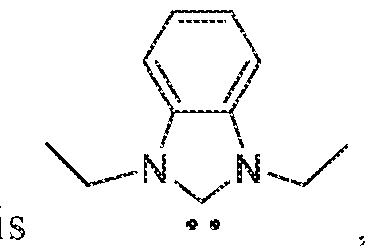 , .
, .
 [0653] In some embodiments, the at least one N-heterocyclic .
 [0654] In some embodiments, the at least one N-heterocyclic . [0655] In some embodiments, the at least one N-
 is .
is .
 4886-5650-6109.1 Page 175 of 224 094876-000020WOPT
[0656] In some embodiments, the at least one N-heterocyclic carbene is is
4886-5650-6109.1 Page 175 of 224 094876-000020WOPT
[0656] In some embodiments, the at least one N-heterocyclic carbene is is
 is .
is .
 provides a composition comprising at least one N-heterocyclic carbene functionalized transition metal dichalcogenide, wherein the at least one N-heterocyclic carbene functionalized transition metal dichalcogenide comprises at least one transition metal dichalcogenide; and at least one N-heterocyclic carbene. [0660] In various embodiments, present invention provides an article of manufacture comprising at least one N-heterocyclic carbene functionalized transition metal dichalcogenide, wherein the at least one N-heterocyclic carbene functionalized transition metal dichalcogenide comprises at least one transition metal dichalcogenide; and at least one N-heterocyclic carbene. EXAMPLES [0661] The following examples are provided to better illustrate the claimed invention and are not to be interpreted as limiting the scope of the invention. To the extent that specific materials are mentioned, it is merely for purposes of illustration and is not intended to limit the invention. One skilled in the art may develop equivalent means or reactants without the exercise of inventive capacity and without departing from the scope of the invention. [0662] Example 1 - Example 4 [0663] Materials 4886-5650-6109.1 Page 176 of 224 094876-000020WOPT
[0664] Molybdenum disulfide (MoS2, < 2 μm), hydroquinone (HQ), cumene hydroperoxide (CHP), anhydrous acetonitrile (a-CH3CN), sodium borohydride (NaBH4), potassium thiocyanate (NaSCN), sodium molybdate (Na2MoO4), pentadecalactone, hydrobromic acid (48 wt%), dicyclohexylcarbodiimide (DCC), 4-(dimethylamino)pyridine (DMAP), 4-amino- 3-nitrophenol, potassium carbonate (K2CO3), lithium aluminum hydride (LiAlH4), iron powder 325 mesh (Fe), ammonium chloride (NH4Cl), isopropyl methanesulfonate, cesium carbonate (Cs2CO3), acetic acid (AcOH), methanol (MeOH), dichloromethane (DCM), acetonitrile (CH3CN), formic acid (HCOOH), isopropyl alcohol (iPrOH), and tetrahydrofuran (THF) were purchased from Sigma-Aldrich. Hydrochloric acid was purchased from Oakwood. Water was purified to a resistance of 18 MΩ, employing an Academic Milli-Q Water System (Millipore Corporation) and filtered through a 0.22 μm membrane before usage. Silica gel for column chromatography was obtained from Sorbent Technologies. [0665] Example 1. Synthesis of the adsorbates. [0666] The NHC adsorbate 6-((15-hydroxypentadecyl)oxy)-1,3-diisopropyl-1H- benzo[d]imidazol-3-ium methanesulfonate (NHC15OH[OMs]) was synthesized following the procedure described in Choi, Y.; Park, C. S.; Tran, H.-V.; Li, C.-H.; Crudden, C. M.; Lee, T. R. Functionalized N-Heterocyclic Carbene Monolayers on Gold for Surface-Initiated Polymerizations. ACS Appl. Mater. Interfaces 2022, 14, 44969-44980. The synthesized NHC molecular structure is shown as: .
provides a composition comprising at least one N-heterocyclic carbene functionalized transition metal dichalcogenide, wherein the at least one N-heterocyclic carbene functionalized transition metal dichalcogenide comprises at least one transition metal dichalcogenide; and at least one N-heterocyclic carbene. [0660] In various embodiments, present invention provides an article of manufacture comprising at least one N-heterocyclic carbene functionalized transition metal dichalcogenide, wherein the at least one N-heterocyclic carbene functionalized transition metal dichalcogenide comprises at least one transition metal dichalcogenide; and at least one N-heterocyclic carbene. EXAMPLES [0661] The following examples are provided to better illustrate the claimed invention and are not to be interpreted as limiting the scope of the invention. To the extent that specific materials are mentioned, it is merely for purposes of illustration and is not intended to limit the invention. One skilled in the art may develop equivalent means or reactants without the exercise of inventive capacity and without departing from the scope of the invention. [0662] Example 1 - Example 4 [0663] Materials 4886-5650-6109.1 Page 176 of 224 094876-000020WOPT
[0664] Molybdenum disulfide (MoS2, < 2 μm), hydroquinone (HQ), cumene hydroperoxide (CHP), anhydrous acetonitrile (a-CH3CN), sodium borohydride (NaBH4), potassium thiocyanate (NaSCN), sodium molybdate (Na2MoO4), pentadecalactone, hydrobromic acid (48 wt%), dicyclohexylcarbodiimide (DCC), 4-(dimethylamino)pyridine (DMAP), 4-amino- 3-nitrophenol, potassium carbonate (K2CO3), lithium aluminum hydride (LiAlH4), iron powder 325 mesh (Fe), ammonium chloride (NH4Cl), isopropyl methanesulfonate, cesium carbonate (Cs2CO3), acetic acid (AcOH), methanol (MeOH), dichloromethane (DCM), acetonitrile (CH3CN), formic acid (HCOOH), isopropyl alcohol (iPrOH), and tetrahydrofuran (THF) were purchased from Sigma-Aldrich. Hydrochloric acid was purchased from Oakwood. Water was purified to a resistance of 18 MΩ, employing an Academic Milli-Q Water System (Millipore Corporation) and filtered through a 0.22 μm membrane before usage. Silica gel for column chromatography was obtained from Sorbent Technologies. [0665] Example 1. Synthesis of the adsorbates. [0666] The NHC adsorbate 6-((15-hydroxypentadecyl)oxy)-1,3-diisopropyl-1H- benzo[d]imidazol-3-ium methanesulfonate (NHC15OH[OMs]) was synthesized following the procedure described in Choi, Y.; Park, C. S.; Tran, H.-V.; Li, C.-H.; Crudden, C. M.; Lee, T. R. Functionalized N-Heterocyclic Carbene Monolayers on Gold for Surface-Initiated Polymerizations. ACS Appl. Mater. Interfaces 2022, 14, 44969-44980. The synthesized NHC molecular structure is shown as: .
 [0667] Example 2. Exfoliation of MoS2. 4886-5650-6109.1 Page 177 of 224 094876-000020WOPT
[0668] The exfoliation of MoS2 was performed following the methods described in Jawaid, A. M.; Ritter, A. J.; Vaia, R. A. Mechanism for Redox Exfoliation of Layered Transition Metal Dichalcogenides. Chem. Mater. 2020, 32, 6550-6565 with minor modifications as mentioned below: [0669] Pretreatment of MoS2 [0670] Pristine MoS2 powder, purchased from Sigma (< 2μm), was washed prior to use for exfoliation by gently refluxing at 50oC in ethanol/acetone (1:1) in 24 h (100 mg/mL). After refluxing, the slurry underwent filtration, employing a filter membrane with pore size of 0.22 μm, sourced from TISCH Scientific. The caked MoS2 was subjected to additional washing step utilizing 50 mL ethanol/acetone (1:1) solvent mixture. This sequence of steps constituted one washing cycle, which was repeated two additional times to ensure the complete elimination of oxidized species on the surface of MoS2. The final powder underwent vacuum-drying process and stored in an environment enriched with CaSO4 desiccant under vacuum. [0671] MoS2 oxidation [0672] In a 100 mL bottle flask, 50 mL a-CH3CN was introduced, followed by the addition of 1500 mg washed MoS2. The resulting mixture was briefly sonicated in 15 minutes, aiming at dispersing the aggregated MoS2 particles. Subsequently, 150 μL CHP 80% was added to the flask. The reaction system was heated up to 55oC and gently stirred in 24 h. [0673] Mo6+ titration analysis [0674] After oxidation process, the bottle flask was let cool down to room temperature and undisturbed in 2 h. Subsequently, 2 mL from the yellow supernatant was pipetted and subjected to centrifugation at 10000 rpm in 10 minutes. The centrifugation process would remove the left MoS2 from the solution. A total volume of 500 μL supernatant was subjected to a 20 mL vial, followed by 500 μL HCl 6M. The mixture was swirled to ensure thorough homogeneity. Following this step, 500 μL NaSCN 2M and 500 μL NaBH40.01 M were added subsequentially to the vial. The resulting solution was allowed to stand undisturbed for a period of 10 minutes. Subsequently, an additional volume of 4 mL distilled acetone was added to the vial to dissolve insoluble organic species. The absorption spectra were collected by a Cary 60 UV-vis spectrophotometer. Absorption peak at 460 nm, resulting from the molybdenum thiocyanate complex, was recorded; the absorbance was interpolated to Mo6+ concentration, based on the constructed Mo6+ calibration curve. 4886-5650-6109.1 Page 178 of 224 094876-000020WOPT
[0675] Mo6+ titration calibration [0676] Na2MoO4 was dissolved in water to prepare a series of stock solutions with different concentrations (0, 0.01, 0.03, 0.05, 0.07, 0.1, 0.2, and 0.3 M). 500 μL HCl 6M was added to each 20 mL vial containing the respective stock solution (500 μL). The mixture was swirled to ensure thorough homogeneity. Following this step, 500 μL NaSCN 2M and 500 μL NaBH40.01 M were added subsequentially to each vial. The resulting solution was allowed to stand undisturbed for a period of 10 minutes. Subsequently, an additional volume of 1.5 mL distilled H2O was added to each vial. The absorption spectrum of each solution was collected by a Cary 60 UV-vis spectrophotometer. Absorption peak at 460 nm, resulting from the molybdenum thiocyanate complex, was recorded, and employed to construct a calibration curve, enabling the quantification of Mo6+ concentrations across the various solutions under investigation (α460 = 9.4 mL μmol-1 cm- 1, R2 = 0.99986). [0677] MoS2 exfoliation [0678] Following the analysis of Mo6+ concentration, HQ was dissolved in a-CH3CN to produce a solution with a concentration of 0.1M. Next, the oxidized slurry was treated with a stoichiometric amount of HQ (HQ/Mo6+ 50:1). Crucially, HQ 0.1M solution was added dropwise to ensure an efficient exfoliation process. The ensuing reaction was stirred at room temperature in 48 h. [0679] Upon achieving complete exfoliation, the slurry underwent centrifugation at 10000 rpm in 10 minutes to remove all traces of inorganic polyoxometalate macro-anions (POMs), characterized by their distinct blue color. In the next step, 10 mL of a-CH3CN was introduced; the mixture was vortexed and sonicated in 30 minutes, followed by a subsequent centrifugation at 10000 rpm in 10 minutes. This process constituted one cycle. It is imperative to emphasize the crucial significance of this purification step to obtain exfoliated MoS2 at high quality and good dispersion. This procedure was repeated 4 – 7 additional cycles for efficient removal of POMs. Ultimately, 30 mL a-CH3CN was added, and the mixture was vortexed and sonicated in 30 minutes. The temperature during sonication was controlled between 5oC – 20oC. The ensuing mixture was centrifuged at 2000 rpm in 30 minutes. Following, 20 mL supernatant was pipetted out and subjected to subsequent centrifugation at 10000 rpm in 10 minutes to eliminate small exfoliated MoS2 sheets. The precipitated MoS2 was then redispersed by addition of 30 mL a- 4886-5650-6109.1 Page 179 of 224 094876-000020WOPT
CH3CN. This process was carried out several times to achieve any desired concentration of exfoliated MoS2. [0680] Note: The centrifuge rate in rpm (revolutions per minute) varies strongly depending on the rotor in use. Hence, for a comprehensive and consistent comparison, unit in rpm should be converted to G (relative centrifuge force) and reported accordingly. In our experimental setup, the following centrifuge rates were used with the corresponding number in G: 10000 rpm (11980 G), 2500 rpm (740 G), 2000 rpm (470 G), 1500 rpm (269 G), 1000 rpm (120 G), and 500 rpm (30 G). [0681] MoS2 titration [0682] A concentrated exfoliated MoS2 colloidal was diluted to make a series of stock solutions with the dilution of 6, 12, 18, 24, and 30 times. 300 μL from each stock solution was dropped carefully on a separate gold quartz crystal (QCM) plate (Novaetech S.r.i., resonance frequency 10 MHz) accordingly. The loaded QCM plates, then, were dried in 60oC oven overnight, ensuring complete solvent evaporation. Frequency analysis was carried out employing an eQCM from Camry Instruments. The mass of MoS2 within the dropped volume was deduced accordingly and fitted with the minima extinction at 345 nm from the UV-vis extinction spectrum of exfoliated MoS2 (ε345 = 42 mL mg-1 cm-1, R2 = 0.93887). [0683] Example 3. Functionalization of Exfoliated MoS2 by NHC Adsorbates. [0684] A 6.25 mL portion of exfoliated MoS2 (1 mM; 1 mg) was introduced to a 40 mL glass vial. Subsequently, 6.25 mL NHC15OH[OMs] x mM in DCM was quickly injected into the solution. The reaction was left undisturbed at room temperature in 24 h. Then, the slurry was transferred to a centrifuge tube and subjected to centrifugation at 5000 rpm in 10 minutes to sediment all functionalized and unfunctionalized MoS2. The resulting material was additionally washed with 10 mL DCM, stirred in 5 minutes in a 20 mL glass vial, and subjected to centrifugation at 5000 rpm in 10 minutes. This process constituted one washing cycle and was repeated two more times to eliminate all unreacted NHCs. The final product was redispersed in DCM as an ink type for later characterization. [0685] Example 4. Characterization [0686] Ultraviolet-visible spectroscopy (UV-vis) [0687] UV-vis data was collected by a Cary 60 UV-vis spectrophotometer. UV-vis technical parameters, data analysis, and mathematical transformation (the 2nd derivative of 4886-5650-6109.1 Page 180 of 224 094876-000020WOPT
extinction spectrum and corresponding smoothing steps) were followed as the protocol in Backes, C.; Hanlon, D.; Szydlowska, B. M.; Harvey, A.; Smith, R. J.; Higgins, T. M.; Coleman, J. N. Preparation of Liquid-Exfoliated Transition Metal Dichalcogenide Nanosheets with Controlled Size and Thickness: A State of the Art Protocol. J. Vis. Exp.2016, 118, e54806. [0688] Atomic force microscope (AFM) [0689] 1 x 1 cm2 300 nm thick SiO2 layer-covered Si substrate, sourced from MSE Supplies, was obtained and pre-dipped into piranha solution over night to wash away inorganic and organic residues contaminants. Subsequently, the substrate was washed thoroughly with DI water and dried by N2 gas. Consequently, 20 μL exfoliated MoS2 colloidal (ε345 = 0.6) was dropped onto the polished side of the substrate. The dropped sample was dried naturally overnight prior to AFM measurement. Surface images were obtained employing an AFM, MFP-3D Origin+, Oxford Instruments in a non-contact soft tapping mode. Certain numbers of images were collected and subsequently underwent a statistical analysis and generated a statistical height retrace histogram. [0690] Note: Owing to the inherent self-dried aggregation tendency of exfoliated nanosheets, care must be taken to select analysis locations. Guidelines for differentiating between promising, non-aggregated regions have been demonstrated in the prior publication, Backes, C.; Higgins, T. M.; Kelly, A.; Boland, C.; Harvey, A.; Hanlon, D.; Coleman, J. N. Guidelines for Exfoliation, Characterization and Processing of Layered Materials Produced by Liquid Exfoliation. Chem. Mater.2017, 29, 1, 243-255. Typically, when situated on 300 nm thick SiO2 layer, even the nanoscale nanosheets still manifest as distinctive green dots, even under a standard optical microscope equipped within AFM instruments. In contrast, aggregated materials results in prominent green clusters. Hence, during the scanning analysis, it is imperative to probe close, but not within the green regions to avoid thick, aggregation effects. [0691] X-ray powder diffraction (XRD) [0692] Exfoliated MoS2 was prepared by drop-casting on a glass slide and drying in an oven at 80oC in 2h. A controlled circular area, with a radius of 0.7 cm, was fashioned on a glass slide by the application of a double-layer heat-resistant tape (2 mm thick). Subsequently, functionalized MoS2 ink was dropped into the aperture, followed by natural evaporation of solvent at room temperature. Then, the covered tape was removed, and the sample was further dried at 100oC in 1h, followed by situated at 80oC overnight. The XRD pattern was collected employing an X-ray diffractometer (XRD, Smart Lab, Rigaku, Cu-Kα radiation (λ = 0.15406 nm) operated at 4886-5650-6109.1 Page 181 of 224 094876-000020WOPT
40 kV and 44 mA, 5 mm beam mask, 0.5o divergence slit, step size 0.02o (2θ), scanning rate 1.5o min-1). [0693] Attenuated total reflectance infrared spectroscopy (ATR-IR) [0694] The sample was prepared the same way as mentioned protocol for XRD analysis. The IR data was collected, employing an ATR-IR, Nicolet iS10, Thermo Scientific in the range of 500–4000 cm-1 with 2 cm-1 resolution. [0695] Zeta potential [0696] Zeta potential measurements were conducted on a Malvern Zetasizer model ZEN3600. Exfoliated MoS2 colloidal nanosheets or NHC-functionalized MoS2 was briefly sonicated and diluted to achieve a concentration of 0.01 mM, prior to undergoing subsequent Zeta potential measurements. [0697] Example 5 – Example 10 [0698] Materials [0699] Molybdenum disulfide (MoS2, < 2 μm), hydroquinone (HQ), cumene hydroperoxide (CHP), anhydrous acetonitrile (a-CH3CN), sodium borohydride (NaBH4), potassium thiocyanate (NaSCN), sodium molybdate (Na2MoO4), pentadecalactone, hydrobromic acid (48 wt%), dicyclohexylcarbodiimide (DCC), 4-(dimethylamino)pyridine (DMAP), 4-amino- 3-nitrophenol, potassium carbonate (K2CO3), lithium aluminum hydride (LiAlH4), iron powder 325 mesh (Fe), ammonium chloride (NH4Cl), isopropyl methanesulfonate, cesium carbonate (Cs2CO3), acetic acid (AcOH), methanol (MeOH), dichloromethane (DCM), acetonitrile (CH3CN), formic acid (HCOOH), isopropyl alcohol (iPrOH), and tetrahydrofuran (THF) were purchased from Sigma-Aldrich. Hydrochloric acid was purchased from Oakwood. Water was purified to a resistance of 18 MΩ, employing an Academic Milli-Q Water System (Millipore Corporation) and filtered through a 0.22 μm membrane before usage. Silica gel for column chromatography was obtained from Sorbent Technologies. [0700] Example 5. Synthesis of the adsorbates [0701] The NHC adsorbate 6-((15-hydroxypentadecyl)oxy)-1,3-diisopropyl-1H- benzo[d]imidazol-3-ium methanesulfonate (NHC15OH[OMs]) was synthesized following the procedure described in Choi, Y.; Park, C. S.; Tran, H.-V.; Li, C.-H.; Crudden, C. M.; Lee, T. R. Functionalized N-Heterocyclic Carbene
[0667] Example 2. Exfoliation of MoS2. 4886-5650-6109.1 Page 177 of 224 094876-000020WOPT
[0668] The exfoliation of MoS2 was performed following the methods described in Jawaid, A. M.; Ritter, A. J.; Vaia, R. A. Mechanism for Redox Exfoliation of Layered Transition Metal Dichalcogenides. Chem. Mater. 2020, 32, 6550-6565 with minor modifications as mentioned below: [0669] Pretreatment of MoS2 [0670] Pristine MoS2 powder, purchased from Sigma (< 2μm), was washed prior to use for exfoliation by gently refluxing at 50oC in ethanol/acetone (1:1) in 24 h (100 mg/mL). After refluxing, the slurry underwent filtration, employing a filter membrane with pore size of 0.22 μm, sourced from TISCH Scientific. The caked MoS2 was subjected to additional washing step utilizing 50 mL ethanol/acetone (1:1) solvent mixture. This sequence of steps constituted one washing cycle, which was repeated two additional times to ensure the complete elimination of oxidized species on the surface of MoS2. The final powder underwent vacuum-drying process and stored in an environment enriched with CaSO4 desiccant under vacuum. [0671] MoS2 oxidation [0672] In a 100 mL bottle flask, 50 mL a-CH3CN was introduced, followed by the addition of 1500 mg washed MoS2. The resulting mixture was briefly sonicated in 15 minutes, aiming at dispersing the aggregated MoS2 particles. Subsequently, 150 μL CHP 80% was added to the flask. The reaction system was heated up to 55oC and gently stirred in 24 h. [0673] Mo6+ titration analysis [0674] After oxidation process, the bottle flask was let cool down to room temperature and undisturbed in 2 h. Subsequently, 2 mL from the yellow supernatant was pipetted and subjected to centrifugation at 10000 rpm in 10 minutes. The centrifugation process would remove the left MoS2 from the solution. A total volume of 500 μL supernatant was subjected to a 20 mL vial, followed by 500 μL HCl 6M. The mixture was swirled to ensure thorough homogeneity. Following this step, 500 μL NaSCN 2M and 500 μL NaBH40.01 M were added subsequentially to the vial. The resulting solution was allowed to stand undisturbed for a period of 10 minutes. Subsequently, an additional volume of 4 mL distilled acetone was added to the vial to dissolve insoluble organic species. The absorption spectra were collected by a Cary 60 UV-vis spectrophotometer. Absorption peak at 460 nm, resulting from the molybdenum thiocyanate complex, was recorded; the absorbance was interpolated to Mo6+ concentration, based on the constructed Mo6+ calibration curve. 4886-5650-6109.1 Page 178 of 224 094876-000020WOPT
[0675] Mo6+ titration calibration [0676] Na2MoO4 was dissolved in water to prepare a series of stock solutions with different concentrations (0, 0.01, 0.03, 0.05, 0.07, 0.1, 0.2, and 0.3 M). 500 μL HCl 6M was added to each 20 mL vial containing the respective stock solution (500 μL). The mixture was swirled to ensure thorough homogeneity. Following this step, 500 μL NaSCN 2M and 500 μL NaBH40.01 M were added subsequentially to each vial. The resulting solution was allowed to stand undisturbed for a period of 10 minutes. Subsequently, an additional volume of 1.5 mL distilled H2O was added to each vial. The absorption spectrum of each solution was collected by a Cary 60 UV-vis spectrophotometer. Absorption peak at 460 nm, resulting from the molybdenum thiocyanate complex, was recorded, and employed to construct a calibration curve, enabling the quantification of Mo6+ concentrations across the various solutions under investigation (α460 = 9.4 mL μmol-1 cm- 1, R2 = 0.99986). [0677] MoS2 exfoliation [0678] Following the analysis of Mo6+ concentration, HQ was dissolved in a-CH3CN to produce a solution with a concentration of 0.1M. Next, the oxidized slurry was treated with a stoichiometric amount of HQ (HQ/Mo6+ 50:1). Crucially, HQ 0.1M solution was added dropwise to ensure an efficient exfoliation process. The ensuing reaction was stirred at room temperature in 48 h. [0679] Upon achieving complete exfoliation, the slurry underwent centrifugation at 10000 rpm in 10 minutes to remove all traces of inorganic polyoxometalate macro-anions (POMs), characterized by their distinct blue color. In the next step, 10 mL of a-CH3CN was introduced; the mixture was vortexed and sonicated in 30 minutes, followed by a subsequent centrifugation at 10000 rpm in 10 minutes. This process constituted one cycle. It is imperative to emphasize the crucial significance of this purification step to obtain exfoliated MoS2 at high quality and good dispersion. This procedure was repeated 4 – 7 additional cycles for efficient removal of POMs. Ultimately, 30 mL a-CH3CN was added, and the mixture was vortexed and sonicated in 30 minutes. The temperature during sonication was controlled between 5oC – 20oC. The ensuing mixture was centrifuged at 2000 rpm in 30 minutes. Following, 20 mL supernatant was pipetted out and subjected to subsequent centrifugation at 10000 rpm in 10 minutes to eliminate small exfoliated MoS2 sheets. The precipitated MoS2 was then redispersed by addition of 30 mL a- 4886-5650-6109.1 Page 179 of 224 094876-000020WOPT
CH3CN. This process was carried out several times to achieve any desired concentration of exfoliated MoS2. [0680] Note: The centrifuge rate in rpm (revolutions per minute) varies strongly depending on the rotor in use. Hence, for a comprehensive and consistent comparison, unit in rpm should be converted to G (relative centrifuge force) and reported accordingly. In our experimental setup, the following centrifuge rates were used with the corresponding number in G: 10000 rpm (11980 G), 2500 rpm (740 G), 2000 rpm (470 G), 1500 rpm (269 G), 1000 rpm (120 G), and 500 rpm (30 G). [0681] MoS2 titration [0682] A concentrated exfoliated MoS2 colloidal was diluted to make a series of stock solutions with the dilution of 6, 12, 18, 24, and 30 times. 300 μL from each stock solution was dropped carefully on a separate gold quartz crystal (QCM) plate (Novaetech S.r.i., resonance frequency 10 MHz) accordingly. The loaded QCM plates, then, were dried in 60oC oven overnight, ensuring complete solvent evaporation. Frequency analysis was carried out employing an eQCM from Camry Instruments. The mass of MoS2 within the dropped volume was deduced accordingly and fitted with the minima extinction at 345 nm from the UV-vis extinction spectrum of exfoliated MoS2 (ε345 = 42 mL mg-1 cm-1, R2 = 0.93887). [0683] Example 3. Functionalization of Exfoliated MoS2 by NHC Adsorbates. [0684] A 6.25 mL portion of exfoliated MoS2 (1 mM; 1 mg) was introduced to a 40 mL glass vial. Subsequently, 6.25 mL NHC15OH[OMs] x mM in DCM was quickly injected into the solution. The reaction was left undisturbed at room temperature in 24 h. Then, the slurry was transferred to a centrifuge tube and subjected to centrifugation at 5000 rpm in 10 minutes to sediment all functionalized and unfunctionalized MoS2. The resulting material was additionally washed with 10 mL DCM, stirred in 5 minutes in a 20 mL glass vial, and subjected to centrifugation at 5000 rpm in 10 minutes. This process constituted one washing cycle and was repeated two more times to eliminate all unreacted NHCs. The final product was redispersed in DCM as an ink type for later characterization. [0685] Example 4. Characterization [0686] Ultraviolet-visible spectroscopy (UV-vis) [0687] UV-vis data was collected by a Cary 60 UV-vis spectrophotometer. UV-vis technical parameters, data analysis, and mathematical transformation (the 2nd derivative of 4886-5650-6109.1 Page 180 of 224 094876-000020WOPT
extinction spectrum and corresponding smoothing steps) were followed as the protocol in Backes, C.; Hanlon, D.; Szydlowska, B. M.; Harvey, A.; Smith, R. J.; Higgins, T. M.; Coleman, J. N. Preparation of Liquid-Exfoliated Transition Metal Dichalcogenide Nanosheets with Controlled Size and Thickness: A State of the Art Protocol. J. Vis. Exp.2016, 118, e54806. [0688] Atomic force microscope (AFM) [0689] 1 x 1 cm2 300 nm thick SiO2 layer-covered Si substrate, sourced from MSE Supplies, was obtained and pre-dipped into piranha solution over night to wash away inorganic and organic residues contaminants. Subsequently, the substrate was washed thoroughly with DI water and dried by N2 gas. Consequently, 20 μL exfoliated MoS2 colloidal (ε345 = 0.6) was dropped onto the polished side of the substrate. The dropped sample was dried naturally overnight prior to AFM measurement. Surface images were obtained employing an AFM, MFP-3D Origin+, Oxford Instruments in a non-contact soft tapping mode. Certain numbers of images were collected and subsequently underwent a statistical analysis and generated a statistical height retrace histogram. [0690] Note: Owing to the inherent self-dried aggregation tendency of exfoliated nanosheets, care must be taken to select analysis locations. Guidelines for differentiating between promising, non-aggregated regions have been demonstrated in the prior publication, Backes, C.; Higgins, T. M.; Kelly, A.; Boland, C.; Harvey, A.; Hanlon, D.; Coleman, J. N. Guidelines for Exfoliation, Characterization and Processing of Layered Materials Produced by Liquid Exfoliation. Chem. Mater.2017, 29, 1, 243-255. Typically, when situated on 300 nm thick SiO2 layer, even the nanoscale nanosheets still manifest as distinctive green dots, even under a standard optical microscope equipped within AFM instruments. In contrast, aggregated materials results in prominent green clusters. Hence, during the scanning analysis, it is imperative to probe close, but not within the green regions to avoid thick, aggregation effects. [0691] X-ray powder diffraction (XRD) [0692] Exfoliated MoS2 was prepared by drop-casting on a glass slide and drying in an oven at 80oC in 2h. A controlled circular area, with a radius of 0.7 cm, was fashioned on a glass slide by the application of a double-layer heat-resistant tape (2 mm thick). Subsequently, functionalized MoS2 ink was dropped into the aperture, followed by natural evaporation of solvent at room temperature. Then, the covered tape was removed, and the sample was further dried at 100oC in 1h, followed by situated at 80oC overnight. The XRD pattern was collected employing an X-ray diffractometer (XRD, Smart Lab, Rigaku, Cu-Kα radiation (λ = 0.15406 nm) operated at 4886-5650-6109.1 Page 181 of 224 094876-000020WOPT
40 kV and 44 mA, 5 mm beam mask, 0.5o divergence slit, step size 0.02o (2θ), scanning rate 1.5o min-1). [0693] Attenuated total reflectance infrared spectroscopy (ATR-IR) [0694] The sample was prepared the same way as mentioned protocol for XRD analysis. The IR data was collected, employing an ATR-IR, Nicolet iS10, Thermo Scientific in the range of 500–4000 cm-1 with 2 cm-1 resolution. [0695] Zeta potential [0696] Zeta potential measurements were conducted on a Malvern Zetasizer model ZEN3600. Exfoliated MoS2 colloidal nanosheets or NHC-functionalized MoS2 was briefly sonicated and diluted to achieve a concentration of 0.01 mM, prior to undergoing subsequent Zeta potential measurements. [0697] Example 5 – Example 10 [0698] Materials [0699] Molybdenum disulfide (MoS2, < 2 μm), hydroquinone (HQ), cumene hydroperoxide (CHP), anhydrous acetonitrile (a-CH3CN), sodium borohydride (NaBH4), potassium thiocyanate (NaSCN), sodium molybdate (Na2MoO4), pentadecalactone, hydrobromic acid (48 wt%), dicyclohexylcarbodiimide (DCC), 4-(dimethylamino)pyridine (DMAP), 4-amino- 3-nitrophenol, potassium carbonate (K2CO3), lithium aluminum hydride (LiAlH4), iron powder 325 mesh (Fe), ammonium chloride (NH4Cl), isopropyl methanesulfonate, cesium carbonate (Cs2CO3), acetic acid (AcOH), methanol (MeOH), dichloromethane (DCM), acetonitrile (CH3CN), formic acid (HCOOH), isopropyl alcohol (iPrOH), and tetrahydrofuran (THF) were purchased from Sigma-Aldrich. Hydrochloric acid was purchased from Oakwood. Water was purified to a resistance of 18 MΩ, employing an Academic Milli-Q Water System (Millipore Corporation) and filtered through a 0.22 μm membrane before usage. Silica gel for column chromatography was obtained from Sorbent Technologies. [0700] Example 5. Synthesis of the adsorbates [0701] The NHC adsorbate 6-((15-hydroxypentadecyl)oxy)-1,3-diisopropyl-1H- benzo[d]imidazol-3-ium methanesulfonate (NHC15OH[OMs]) was synthesized following the procedure described in Choi, Y.; Park, C. S.; Tran, H.-V.; Li, C.-H.; Crudden, C. M.; Lee, T. R. Functionalized N-Heterocyclic Carbene
 on Gold for Surface-Initiated Polymerizations. ACS Appl. Mater. Interfaces 2022, 14, 44969-44980. 4886-5650-6109.1 Page 182 of 224 094876-000020WOPT
[0702] Example 6. Exfoliation of MoS2 [0703] The exfoliation of MoS2 was performed following the methods described in Jawaid, A. M.; Ritter, A. J.; Vaia, R. A. Mechanism for Redox Exfoliation of Layered Transition Metal Dichalcogenides. Chem. Mater. 2020, 32, 6550-6565 with minor modifications as mentioned below: [0704] Pretreatment of MoS2 [0705] Pristine MoS2 powder, purchased from Sigma (< 2μm), was washed prior to use for exfoliation by gently refluxing at 50oC in ethanol/acetone (1:1) in 24 h (100 mg/mL). After refluxing, the slurry underwent filtration, employing a filter membrane with pore size of 0.22 μm, sourced from TISCH Scientific. The caked MoS2 was subjected to additional washing step utilizing 50 mL ethanol/acetone (1:1) solvent mixture. This sequence of steps constituted one washing cycle, which was repeated two additional times to ensure the complete elimination of oxidized species on the surface of MoS2. The final powder underwent vacuum drying process and stored in an environment enriched with CaSO4 desiccant under vacuum. [0706] MoS2 Oxidation [0707] In a 100 mL bottle flask, 50 mL a-CH3CN was introduced, followed by the addition of 1500 mg washed MoS2. The resulting mixture was briefly sonicated in 15 minutes, aiming at dispersing the aggregated MoS2 particles. Subsequently, 150 μL CHP 80% was added to the flask. The reaction system was heated up to 55oC and gently stirred in 24 h. [0708] Mo6+ Titration Calibration [0709] Na2MoO4 was dissolved in water to prepare a series of stock solutions with different concentrations (0, 0.01, 0.03, 0.05, 0.07, 0.1, 0.2, and 0.3 M).500 μL HCl 6M was added to each 20 mL vial containing the respective stock solution (500 μL). The mixture was swirled to ensure thorough homogeneity. Following this step, 500 μL NaSCN 2M and 500 μL NaBH40.01 M were added subsequentially to each vial. The resulting solution was allowed to stand undisturbed for a period of 10 minutes. Subsequently, an additional volume of 1.5 mL distilled H2O was added to each vial. The absorption spectrum of each solution was collected by a Cary 60 UV-vis spectrophotometer. Absorption peak at 460 nm, resulting from the molybdenum thiocyanate complex, was recorded, and employed to construct a calibration curve, enabling the quantification of Mo6+ concentrations across the various solutions under investigation (α460= 9.4 mL μmol-1 cm-1, R2 = 0.99986). 4886-5650-6109.1 Page 183 of 224 094876-000020WOPT
[0710] Mo6+ Titration Analysis [0711] After oxidation process, the bottle flask was let cool down to room temperature and undisturbed in 2 h. Subsequently, 2 mL from the yellow supernatant was pipetted and subjected to centrifugation at 10000 rpm in 10 minutes. The centrifugation process would remove the left MoS2 from the solution. A total volume of 500 μL supernatant was subjected to a 20 mL vial, followed by 500 μL HCl 6M. The mixture was swirled to ensure thorough homogeneity. Following this step, 500 μL NaSCN 2M and 500 μL NaBH4 0.01 M were added subsequentially to the vial. The resulting solution was allowed to stand undisturbed for a period of 10 minutes. Subsequently, an additional volume of 4 mL distilled acetone was added to the vial to dissolve insoluble organic species. The absorption spectra were collected by a Cary 60 UV-vis spectrophotometer. Absorption peak at 460 nm, resulting from the molybdenum thiocyanate complex, was recorded; the absorbance was interpolated to Mo6+ concentration, based on the constructed Mo6+ calibration curve. [0712] MoS2 exfoliation [0713] Following the analysis of Mo6+ concentration, HQ was dissolved in a-CH3CN to produce a solution with a concentration of 0.1M. Next, the oxidized slurry was treated with a stoichiometric amount of HQ (HQ/Mo6+50:1). Crucially, HQ 0.1M solution was added dropwise to ensure an efficient exfoliation process. The ensuing reaction was stirred at room temperature in 48 hours. [0714] Upon achieving complete exfoliation, the slurry underwent centrifugation at 10000 rpm in 10 minutes to remove all traces of inorganic polyoxometalate macro-anions (POMs), characterized by their distinct blue color. In the next step, 10 mL of a-CH3CN was introduced; the mixture was vortexed and sonicated in 30 minutes, followed by a subsequent centrifugation at 10000 rpm in 10 minutes. It is imperative to emphasize the crucial significance of this purification step to obtain exfoliated MoS2 at high quality and good dispersion. This procedure was repeated 4 – 7 times for efficient removal of POMs. Ultimately, 30 mL a- CH3CN was added, and the mixture was vortexed and sonicated in 30 minutes. The temperature during sonication was controlled between 5oC – 20oC. The ensuing mixture was centrifuged at 2000 rpm in 30 minutes. Following, 20 mL supernatant was pipetted out and subjected to subsequent centrifugation at 10000 rpm in 10 minutes to eliminate small exfoliated MoS2 sheets. The precipitated MoS2 was then redispersed 4886-5650-6109.1 Page 184 of 224 094876-000020WOPT
by addition of 30 mL a-CH3CN. This process was carried out several times to achieve any desired concentration of exfoliated MoS2. [0715] MoS2 Titration [0716] A concentrated exfoliated MoS2 colloidal was diluted to make a series of stock solutions with the dilution of 6, 12, 18, 24, and 30 times. 300 μL from each stock solution was dropped carefully on a separate gold quartz crystal (QCM) plate (Novaetech S.r.i., resonance frequency 10 MHz) accordingly. Frequency analysis was carried out employing an eQCM from Camry Instruments. The mass of MoS2 within the dropped volume was deduced accordingly and fitted with the minima extinction at 345 nm from the UV-vis extinction spectrum of exfoliated MoS2 (ε345 = 42 mL mg-1 cm-1). [0717] Example 7. Functionalization of Exfoliated MoS2 by NHC Adsorbates [0718] A 12.5 mL portion of exfoliated MoS2 (1 mM; 2 mg) was introduced to a 50 mL round bottom flask. Subsequently, 12.5 mL NHC15OH[OMs] 5 mM in DCM was quickly injected into the solution. The reaction was stirred at room temperature in 24 h. Then, the slurry was transferred to a centrifuge tube and subjected to centrifugation at 10000 rpm in 10 minutes to sediment all functionalized and unfunctionalized MoS2. The resulting material was additionally washed with DCM, gently swirled, and subjected to centrifugation at 10000 rpm in 10 minutes. This process constituted one washing cycle and was repeated two more times to eliminate all unreacted NHC. The final product was redispersed in DCM as an ink type for later characterization. [0719] Example 8. UV-vis Analysis [0720] UV-vis technical parameters, data analysis, and mathematical transformation were followed as the protocol in Backes, C.; Hanlon, D.; Szydlowska, B. M.; Harvey, A.; Smith, R. J.; Higgins, T. M.; Coleman, J. N. Preparation of Liquid-Exfoliated Transition Metal Dichalcogenide Nanosheets with Controlled Size and Thickness: A State of the Art Protocol. J. Vis. Exp. 2016, 118, e54806. [0721] Example 9. XRD Analysis [0722] A controlled circular area, with a radius of 0.7 cm, was fashioned on an optical microscope glass by the application of a double-layer heat-resistant tape. Subsequently, either exfoliated MoS2 or functionalized MoS2 ink was dropped into the aperture, followed by natural evaporation of solvent at room temperature. Then, the covered tape was removed, and the sample was further dried at 100oC in 1h, followed by situated at 80oC overnight. The XRD pattern was 4886-5650-6109.1 Page 185 of 224 094876-000020WOPT
collected employing an X-ray diffractometer (XRD, Smart Lab, Rigaku, Cu-Kα irradiation operated at 40 kV and 44 mA). [0723] Example 10. ATR-IR Analysis [0724] The sample was prepared the same way as mentioned protocol for XRD analysis. The IR data was collected, employing an ATR-IR, Nicolet iS10, Thermo Scientific in the range of 500–4000 cm-1 with 2 cm-1 resolution. [0725] Example 11 – Example 19 [0726] Materials [0727] Molybdenum disulfide (MoS2, < 2 μm), tungsten disulfide (WS2, < 2 μm), hydroquinone (HQ), cumene hydroperoxide (CHP), anhydrous acetonitrile (a-CH3CN), sodium borohydride (NaBH4), sodium thiocyanate (NaSCN), sodium molybdate (Na2MoO4), sodium tungstate dihydrate (Na2WO4.2H2O), pentadecalactone, hydrobromic acid (48 wt%), dicyclohexylcarbodiimide (DCC), 4-(dimethylamino)pyridine (DMAP), 4-amino-3-nitrophenol, potassium carbonate (K2CO3), lithium aluminum hydride (LiAlH4), iron powder 325 mesh (Fe), ammonium chloride (NH4Cl), isopropyl methanesulfonate, cesium carbonate (Cs2CO3), acetic acid (AcOH), methanol (MeOH), dichloromethane (DCM), acetonitrile (CH3CN), formic acid (HCOOH), isopropyl alcohol (iPrOH), and tetrahydrofuran (THF) were purchased from Sigma- Aldrich, USA. Hydrochloric acid was purchased from Oakwood Chemical, USA. Water was purified to a resistance of 18 MΩ, employing an Academic Milli-Q Water System (Millipore Corporation) and filtered through a 0.22 μm membrane before usage. Silica gel for column chromatography was obtained from Sorbent Technologies. [0728] Example 11. Synthesis of the Adsorbates [0729] The NHC adsorbate 6-((15-hydroxypentadecyl)oxy)-1,3-diisopropyl-1H- benzo[d]imidazol-3-ium methanesulfonate (NHC15OH[OMs]) was synthesized following the procedure described in Choi, Y.; Park, C. S.; Tran, H.-V.; Li, C.-H.; Crudden, C. M.; Lee, T. R. Functionalized N-Heterocyclic Carbene Monolayers on Gold for Surface-Initiated Polymerizations. ACS Appl. Mater. Interfaces 2022, 14, 44969–44980. The synthesized NHC molecular structure is shown as: 4886-5650-6109.1 Page 186 of 224 094876-000020WOPT
on Gold for Surface-Initiated Polymerizations. ACS Appl. Mater. Interfaces 2022, 14, 44969-44980. 4886-5650-6109.1 Page 182 of 224 094876-000020WOPT
[0702] Example 6. Exfoliation of MoS2 [0703] The exfoliation of MoS2 was performed following the methods described in Jawaid, A. M.; Ritter, A. J.; Vaia, R. A. Mechanism for Redox Exfoliation of Layered Transition Metal Dichalcogenides. Chem. Mater. 2020, 32, 6550-6565 with minor modifications as mentioned below: [0704] Pretreatment of MoS2 [0705] Pristine MoS2 powder, purchased from Sigma (< 2μm), was washed prior to use for exfoliation by gently refluxing at 50oC in ethanol/acetone (1:1) in 24 h (100 mg/mL). After refluxing, the slurry underwent filtration, employing a filter membrane with pore size of 0.22 μm, sourced from TISCH Scientific. The caked MoS2 was subjected to additional washing step utilizing 50 mL ethanol/acetone (1:1) solvent mixture. This sequence of steps constituted one washing cycle, which was repeated two additional times to ensure the complete elimination of oxidized species on the surface of MoS2. The final powder underwent vacuum drying process and stored in an environment enriched with CaSO4 desiccant under vacuum. [0706] MoS2 Oxidation [0707] In a 100 mL bottle flask, 50 mL a-CH3CN was introduced, followed by the addition of 1500 mg washed MoS2. The resulting mixture was briefly sonicated in 15 minutes, aiming at dispersing the aggregated MoS2 particles. Subsequently, 150 μL CHP 80% was added to the flask. The reaction system was heated up to 55oC and gently stirred in 24 h. [0708] Mo6+ Titration Calibration [0709] Na2MoO4 was dissolved in water to prepare a series of stock solutions with different concentrations (0, 0.01, 0.03, 0.05, 0.07, 0.1, 0.2, and 0.3 M).500 μL HCl 6M was added to each 20 mL vial containing the respective stock solution (500 μL). The mixture was swirled to ensure thorough homogeneity. Following this step, 500 μL NaSCN 2M and 500 μL NaBH40.01 M were added subsequentially to each vial. The resulting solution was allowed to stand undisturbed for a period of 10 minutes. Subsequently, an additional volume of 1.5 mL distilled H2O was added to each vial. The absorption spectrum of each solution was collected by a Cary 60 UV-vis spectrophotometer. Absorption peak at 460 nm, resulting from the molybdenum thiocyanate complex, was recorded, and employed to construct a calibration curve, enabling the quantification of Mo6+ concentrations across the various solutions under investigation (α460= 9.4 mL μmol-1 cm-1, R2 = 0.99986). 4886-5650-6109.1 Page 183 of 224 094876-000020WOPT
[0710] Mo6+ Titration Analysis [0711] After oxidation process, the bottle flask was let cool down to room temperature and undisturbed in 2 h. Subsequently, 2 mL from the yellow supernatant was pipetted and subjected to centrifugation at 10000 rpm in 10 minutes. The centrifugation process would remove the left MoS2 from the solution. A total volume of 500 μL supernatant was subjected to a 20 mL vial, followed by 500 μL HCl 6M. The mixture was swirled to ensure thorough homogeneity. Following this step, 500 μL NaSCN 2M and 500 μL NaBH4 0.01 M were added subsequentially to the vial. The resulting solution was allowed to stand undisturbed for a period of 10 minutes. Subsequently, an additional volume of 4 mL distilled acetone was added to the vial to dissolve insoluble organic species. The absorption spectra were collected by a Cary 60 UV-vis spectrophotometer. Absorption peak at 460 nm, resulting from the molybdenum thiocyanate complex, was recorded; the absorbance was interpolated to Mo6+ concentration, based on the constructed Mo6+ calibration curve. [0712] MoS2 exfoliation [0713] Following the analysis of Mo6+ concentration, HQ was dissolved in a-CH3CN to produce a solution with a concentration of 0.1M. Next, the oxidized slurry was treated with a stoichiometric amount of HQ (HQ/Mo6+50:1). Crucially, HQ 0.1M solution was added dropwise to ensure an efficient exfoliation process. The ensuing reaction was stirred at room temperature in 48 hours. [0714] Upon achieving complete exfoliation, the slurry underwent centrifugation at 10000 rpm in 10 minutes to remove all traces of inorganic polyoxometalate macro-anions (POMs), characterized by their distinct blue color. In the next step, 10 mL of a-CH3CN was introduced; the mixture was vortexed and sonicated in 30 minutes, followed by a subsequent centrifugation at 10000 rpm in 10 minutes. It is imperative to emphasize the crucial significance of this purification step to obtain exfoliated MoS2 at high quality and good dispersion. This procedure was repeated 4 – 7 times for efficient removal of POMs. Ultimately, 30 mL a- CH3CN was added, and the mixture was vortexed and sonicated in 30 minutes. The temperature during sonication was controlled between 5oC – 20oC. The ensuing mixture was centrifuged at 2000 rpm in 30 minutes. Following, 20 mL supernatant was pipetted out and subjected to subsequent centrifugation at 10000 rpm in 10 minutes to eliminate small exfoliated MoS2 sheets. The precipitated MoS2 was then redispersed 4886-5650-6109.1 Page 184 of 224 094876-000020WOPT
by addition of 30 mL a-CH3CN. This process was carried out several times to achieve any desired concentration of exfoliated MoS2. [0715] MoS2 Titration [0716] A concentrated exfoliated MoS2 colloidal was diluted to make a series of stock solutions with the dilution of 6, 12, 18, 24, and 30 times. 300 μL from each stock solution was dropped carefully on a separate gold quartz crystal (QCM) plate (Novaetech S.r.i., resonance frequency 10 MHz) accordingly. Frequency analysis was carried out employing an eQCM from Camry Instruments. The mass of MoS2 within the dropped volume was deduced accordingly and fitted with the minima extinction at 345 nm from the UV-vis extinction spectrum of exfoliated MoS2 (ε345 = 42 mL mg-1 cm-1). [0717] Example 7. Functionalization of Exfoliated MoS2 by NHC Adsorbates [0718] A 12.5 mL portion of exfoliated MoS2 (1 mM; 2 mg) was introduced to a 50 mL round bottom flask. Subsequently, 12.5 mL NHC15OH[OMs] 5 mM in DCM was quickly injected into the solution. The reaction was stirred at room temperature in 24 h. Then, the slurry was transferred to a centrifuge tube and subjected to centrifugation at 10000 rpm in 10 minutes to sediment all functionalized and unfunctionalized MoS2. The resulting material was additionally washed with DCM, gently swirled, and subjected to centrifugation at 10000 rpm in 10 minutes. This process constituted one washing cycle and was repeated two more times to eliminate all unreacted NHC. The final product was redispersed in DCM as an ink type for later characterization. [0719] Example 8. UV-vis Analysis [0720] UV-vis technical parameters, data analysis, and mathematical transformation were followed as the protocol in Backes, C.; Hanlon, D.; Szydlowska, B. M.; Harvey, A.; Smith, R. J.; Higgins, T. M.; Coleman, J. N. Preparation of Liquid-Exfoliated Transition Metal Dichalcogenide Nanosheets with Controlled Size and Thickness: A State of the Art Protocol. J. Vis. Exp. 2016, 118, e54806. [0721] Example 9. XRD Analysis [0722] A controlled circular area, with a radius of 0.7 cm, was fashioned on an optical microscope glass by the application of a double-layer heat-resistant tape. Subsequently, either exfoliated MoS2 or functionalized MoS2 ink was dropped into the aperture, followed by natural evaporation of solvent at room temperature. Then, the covered tape was removed, and the sample was further dried at 100oC in 1h, followed by situated at 80oC overnight. The XRD pattern was 4886-5650-6109.1 Page 185 of 224 094876-000020WOPT
collected employing an X-ray diffractometer (XRD, Smart Lab, Rigaku, Cu-Kα irradiation operated at 40 kV and 44 mA). [0723] Example 10. ATR-IR Analysis [0724] The sample was prepared the same way as mentioned protocol for XRD analysis. The IR data was collected, employing an ATR-IR, Nicolet iS10, Thermo Scientific in the range of 500–4000 cm-1 with 2 cm-1 resolution. [0725] Example 11 – Example 19 [0726] Materials [0727] Molybdenum disulfide (MoS2, < 2 μm), tungsten disulfide (WS2, < 2 μm), hydroquinone (HQ), cumene hydroperoxide (CHP), anhydrous acetonitrile (a-CH3CN), sodium borohydride (NaBH4), sodium thiocyanate (NaSCN), sodium molybdate (Na2MoO4), sodium tungstate dihydrate (Na2WO4.2H2O), pentadecalactone, hydrobromic acid (48 wt%), dicyclohexylcarbodiimide (DCC), 4-(dimethylamino)pyridine (DMAP), 4-amino-3-nitrophenol, potassium carbonate (K2CO3), lithium aluminum hydride (LiAlH4), iron powder 325 mesh (Fe), ammonium chloride (NH4Cl), isopropyl methanesulfonate, cesium carbonate (Cs2CO3), acetic acid (AcOH), methanol (MeOH), dichloromethane (DCM), acetonitrile (CH3CN), formic acid (HCOOH), isopropyl alcohol (iPrOH), and tetrahydrofuran (THF) were purchased from Sigma- Aldrich, USA. Hydrochloric acid was purchased from Oakwood Chemical, USA. Water was purified to a resistance of 18 MΩ, employing an Academic Milli-Q Water System (Millipore Corporation) and filtered through a 0.22 μm membrane before usage. Silica gel for column chromatography was obtained from Sorbent Technologies. [0728] Example 11. Synthesis of the Adsorbates [0729] The NHC adsorbate 6-((15-hydroxypentadecyl)oxy)-1,3-diisopropyl-1H- benzo[d]imidazol-3-ium methanesulfonate (NHC15OH[OMs]) was synthesized following the procedure described in Choi, Y.; Park, C. S.; Tran, H.-V.; Li, C.-H.; Crudden, C. M.; Lee, T. R. Functionalized N-Heterocyclic Carbene Monolayers on Gold for Surface-Initiated Polymerizations. ACS Appl. Mater. Interfaces 2022, 14, 44969–44980. The synthesized NHC molecular structure is shown as: 4886-5650-6109.1 Page 186 of 224 094876-000020WOPT
. [0730] Example 12. Redox E S2. [0731] The exfoliation of MoS2 was performed following the methods described in Jawaid, A.; Che, J.; Drummy, L. F.; Bultman, J.; Waite, A.; Hsiao, M.-S.; Vaia, R. A. Redox Exfoliation of Layered Transition Metal Dichalcogenides. ACS Nano 2017, 11, 635–646 and Jawaid, A. M.; Ritter, A. J.; Vaia, R. A. Mechanism for Redox Exfoliation of Layered Transition Metal Dichalcogenides. Chem. Mater. 2020, 32, 6550–6565 with minor modifications as mentioned below: [0732] Pretreatment of MoS2 [0733] Pristine MoS2 powder, purchased from Sigma, USA (< 2 μm), was washed prior to use for exfoliation by gently refluxing at 50oC in ethanol/acetone (1:1) solution for 24 h (100 mg/mL). After refluxing, the slurry underwent filtration, employing a filter membrane with pore size of 0.22 μm, purchased from TISCH Scientific. The caked MoS2 was subjected to an additional washing step utilizing 50 mL of ethanol/acetone (1:1) solvent mixture. This sequence of steps constituted one washing cycle, which was repeated four additional times to ensure the complete elimination of oxidized species on the surface of MoS2. The final powder underwent the vacuum- drying process and was stored in an environment enriched with CaSO4 desiccant under vacuum. [0734] MoS2 oxidation [0735] In a 100 mL bottle flask, 50 mL of a-CH3CN was added, followed by the addition of 1500 mg washed MoS2. The resultant mixture was briefly sonicated for 15 min, aiming at dispersing the aggregated MoS2 particles. Subsequently, 150 μL of 80% CHP was added to the flask. The reaction system was heated up to 55oC and gently stirred for 24 h. [0736] Mo6+ titration analysis 4886-5650-6109.1 Page 187 of 224 094876-000020WOPT
[0737] After the oxidation process, the bottle flask was let cool down to room temperature undisturbed for 2 h. Subsequently, 2 mL of the yellow supernatant was pipetted and subjected to centrifugation at 10000 rpm for 10 min. The centrifugation process would remove the remaining unreacted MoS2 from the solution. A total volume of 500 μL of the supernatant was transferred to a 20-mL vial, followed by an addition of 500 μL of 6M HCl. The mixture was swirled to ensure thorough homogeneity. Following this step, 500 μL of 2M NaSCN and 500 μL of 0.01M NaBH4 were added subsequently to the vial. The resultant solution was allowed to stand undisturbed for a period of 10 min. Subsequently, an additional volume of 4 mL of distilled acetone was added to the vial to dissolve insoluble organic species. The absorption spectra were collected by a Cary 60 UV-vis spectrophotometer. Absorption peak at 460 nm, resulting from the molybdenum thiocyanate complex, was recorded; the absorbance was extrapolated to Mo6+ concentration, based on the constructed Mo6+ calibration curve. [0738] Mo6+ titration calibration [0739] Na2MoO4 was dissolved in water to prepare a series of stock solutions with different concentrations (0, 0.01, 0.03, 0.05, 0.07, 0.1, 0.2, and 0.3 mM). 500 μL of 6M HCl was added to each 20-mL vial containing the respective stock solution (500 μL). The mixture was swirled to ensure thorough homogeneity. Following this step, 500 μL of 2M NaSCN and 500 μL of 0.01M NaBH4 were added subsequently to each vial. The resultant solution was allowed to stand undisturbed for a period of 10 min. Subsequently, an additional volume of 1.5 mL of distilled water was added to each vial. The absorption spectrum of each solution was collected by a Cary 60 UV-vis spectrophotometer. Absorption peak at 460 nm, resulting from the molybdenum thiocyanate complex, was recorded, and employed to construct a calibration curve, enabling the quantification of Mo6+ concentrations across the various solutions under investigation (ε460 = 9.4 mL μmol-1 cm-1, R2 = 0.99986) (FIG.45A – FIG.45D). [0740] MoS2 exfoliation [0741] Following the analysis of Mo6+ concentration, HQ was dissolved in a-CH3CN to produce a solution with a concentration of 0.1M. Next, the oxidized slurry was treated with a stoichiometric amount of HQ (HQ/Mo6+ 40:1). Crucially, 0.1M HQ solution was added dropwise to ensure an efficient exfoliation process. The resultant reaction was stirred at room temperature for 48 h. 4886-5650-6109.1 Page 188 of 224 094876-000020WOPT
[0742] Upon achieving complete exfoliation, the slurry underwent centrifugation at 10000 rpm for 10 min to remove all traces of inorganic polyoxometalate macro-anions (POMs), characterized by their distinct blue color. In the next step, 10 mL of a-CH3CN was added; the mixture was vortexed and sonicated for 30 min, followed by a subsequent centrifugation at 10000 rpm for 10 min. This process constituted one cycle. It is imperative to emphasize the crucial significance of this purification step to obtain exfoliated MoS2 at high quality and good dispersion. This procedure was repeated 4–7 additional cycles for efficient removal of POMs. Ultimately, 30 mL of a-CH3CN was added, and the mixture was vortexed and sonicated for 30 min. The temperature during sonication was controlled between 5oC–20oC. The resultant mixture was centrifuged at 2000 rpm for 30 min. Subsequently, 20 mL of the supernatant was pipetted out and subjected to subsequent centrifugation at 10000 rpm for 10 min to eliminate small exfoliated MoS2 sheets. The precipitated MoS2 was then redispersed by the addition of 30 mL of a-CH3CN. This process was carried out several times to achieve any desired concentration of exfoliated MoS2. [0743] Note: Apart from employing HQ, NaBH4 could serve as a reducing agent for the exfoliation process. NaBH4 was dissolved in deionized water (DI H2O). The oxidized slurry underwent treatment with a stoichiometric amount of NaBH4 (NaBH4/Mo6+ 12:1). Subsequently, 2 mL NaBH4 solution was added dropwise to ensure an efficient exfoliation process. The resultant reaction was stirred at room temperature for 48 h. Next steps were carried out as previously described. [0744] Note: The centrifuge rate in rpm (revolutions per minute) varies strongly depending on the rotor in use. Hence, for a comprehensive and consistent comparison, unit in rpm should be converted to G (relative centrifuge force) and reported accordingly. In our experimental setup, the following centrifuge rates were used with the corresponding number in G: 10000 rpm (11980 G), 2500 rpm (740 G), 2000 rpm (470 G), 1500 rpm (269 G), 1000 rpm (120 G), and 500 rpm (30 G). [0745] MoS2 titration [0746] A concentrated exfoliated MoS2 colloidal was diluted to make a series of stock solutions with the dilution of 6, 12, 18, 24, and 30 times. 300 μL from each stock solution was dropped carefully on a separate gold quartz crystal (QCM) plate (Novaetech S.r.i., resonance frequency 10 MHz) accordingly. The loaded QCM plates, then, were dried in 60oC oven overnight, ensuring complete solvent evaporation. Frequency analysis was carried out employing 4886-5650-6109.1 Page 189 of 224 094876-000020WOPT
an eQCM from Camry Instruments. The mass of MoS2 within the dropped volume was deduced accordingly and fitted with the minima extinction at 345 nm from the UV-vis extinction spectrum of exfoliated MoS2 (ε345 = 42 mL mg-1 cm-1, R2 = 0.93887) (FIG.45A – FIG.45D). [0747] Example 13. Redox Exfoliation of WS2 [0748] In contrast to MoS2, WS2 exhibited sensitivity during the exfoliation process. We conducted W6+ calibration and W6+ titration analyses. However, the extracted absorbance attributable to W6+ complexes at 396 nm was relatively small compared to that of Mo6+. Additionally, based on the extracted absorbance, the subsequent exfoliation was inefficient, followed by the same calculated stoichiometric reductant quantity of both HQ and NaBH4 for MoS2 exfoliation (FIG.46A – FIG.46D). Hence, we modified the protocol as follows: [0749] Pretreatment of WS2 [0750] Pristine WS2 powder, purchased from Sigma, USA (< 2 μm), was washed prior to use for exfoliation by gently refluxing at 70oC in ethanol/acetone (1:1) solution for 24 h (100 mg/mL). After refluxing, the slurry underwent filtration, employing a filter membrane with pore size of 0.22 μm, purchased from TISCH Scientific. The caked WS2 was subjected to an additional washing step utilizing 50 mL of ethanol/acetone (1:1) solvent mixture. This sequence of steps constituted one washing cycle, which was repeated four additional times to ensure the complete elimination of oxidized species on the surface of WS2. The final powder underwent the vacuum- drying process and was stored in an environment enriched with CaSO4 desiccant under vacuum. [0751] WS2 oxidation [0752] In a 100 mL bottle flask, 50 mL of a-CH3CN was added, followed by the addition of 1500 mg washed WS2. The resultant mixture was briefly sonicated for 15 min, aiming at dispersing the aggregated MoS2 particles. Subsequently, 450 μL of 80% CHP was added to the flask. The reaction system was heated up to 70oC and gently stirred for 24 h. [0753] WS2 exfoliation [0754] Following oxidation, NaBH4 was dissolved in DI H2O to make 0.1M NaBH4 solution. Subsequently, 2 mL 0.1M NaBH4 solution was added dropwise to ensure an efficient exfoliation process. The resultant reaction was stirred at room temperature for 4 days. Next steps were carried out similarly to that of WS2. [0755] WS2 titration 4886-5650-6109.1 Page 190 of 224 094876-000020WOPT
[0756] A concentrated exfoliated WS2 colloidal was diluted to make a series of stock solutions with the dilution of 6, 12, 18, 24, and 30 times. 300 μL from each stock solution was dropped carefully on a separate gold quartz crystal (QCM) plate (Novaetech S.r.i., resonance frequency 10 MHz) accordingly. The loaded QCM plates, then, were dried in 60oC oven overnight, ensuring complete solvent evaporation. Frequency analysis was carried out employing an eQCM from Camry Instruments. The mass of WS2 within the dropped volume was deduced accordingly and fitted with the extinction at 235 nm from the UV-vis extinction spectrum of exfoliated WS2 (ε235 = 54 mL mg-1 cm-1, R2 = 0.99678) (FIG.46A – FIG.46D). [0757] Example 14. Bath Sonication-induced Exfoliation [0758] In a 40 mL glass vial, 30 mL of a-CH3CN was added, followed by the addition of 500 mg washed MoS2 (or washed WS2). The resultant mixture was briefly sonicated for 3 days, employing a Branson CPX1800H. The temperature during sonication was controlled between 5oC–20oC. The resultant mixture was centrifuged at 2000 rpm for 30 min. Subsequently, 20 mL of the supernatant was pipetted out and subjected to subsequent centrifugation at 10000 rpm for 10 min to eliminate small exfoliated MoS2 sheets. The precipitated MoS2 was then redispersed by the addition of 30 mL of a-CH3CN. [0759] Example 15. Thin Film Fabrication [0760] Employing the high surface tension at the interface of two immiscible liquids (hexane-water), the exfoliated TMDs were injected near interface where TMD nanosheets tend to assemble and form a thin film. To reduce the high surface energy, TMD nanosheets, with their basal plane offering the largest surface area, lay flat at the interface. Typically, the deposited substrates were positioned at an angle of 45o to the vertical lifting pin of a custom-designed lifting tool. The entire system was then placed inside a 50 mL glass beaker, followed by the addition of 20 mL DI H2O and subsequently 20 mL hexane. The exfoliated TMD suspension was initially diluted to a concentration of 0.0125 mM, resulting in an almost colorless solution. Next, 1 mL 0.0125 mM exfoliated TMDs was injected near the hexane-water interface. The system was left undisturbed for 30 min to allow the TMD nanosheets to spread out and stabilize the surface energy system. Finally, the assembled thin film was scooped onto the substrates by gently lifting the vertical pin (FIG.28A – FIG.28D). The deposited substrates were dried in an 80oC oven before any characterizations. 4886-5650-6109.1 Page 191 of 224 094876-000020WOPT
[0761] Note: Low concentration of 0.0125 mM is crucially important to prevent nanosheets from lying on top of others. The lifting process should be executed gently and slowly while the hexane layer has not been completely evaporated. If significant evaporation occurs, refilling is necessary. The high surface tension at the hexane-water interface will generate a force to pull TMD nanosheets in the opposite direction to the lifting vector, thereby maximizing flat lying orientation and minimizing the risk of the nanosheets sliding over each other. [0762] Example 16. Size Selection by Centrifuge Cascade [0763] Following centrifuge screening after exfoliation, TMD nanosheets underwent a post-centrifuge cascade for size selection. Briefly, the 2000 rpm-redispersed suspension underwent another centrifuge cycle at 2500 rpm. The supernatant was collected and subjected to the next centrifuge cycle at 3000 rpm, while the precipitant was redispersed in fresh a-ACN, labeled as the 2000-2500 rpm fraction. Subsequent steps followed as illustrated in FIG.29. The last fraction (>4000 rpm) underwent an additional screening at 9000 rpm. The supernatant after 9000 rpm was discarded. [0764] Example 17. Functionalization of Exfoliated TMDs by NHC Adsorbates [0765] A 5 mL portion of exfoliated TMDs (1 mM) was introduced to a 40-mL glass vial. Subsequently, 5 mL of NHC15OH[OMs] (1, 5, 10, and 15 mM in DCM) was quickly injected into the solution. The reaction was left undisturbed at room temperature for 24 h. Then, the slurry was transferred to a centrifuge tube and subjected to centrifugation at 2000 rpm for 10 min to precipitate all functionalized and unfunctionalized TMDs. The resultant material was additionally washed with 10 mL of DCM, and subjected to centrifugation at 2000 rpm for 10 min. This process constituted one washing cycle and was repeated one more time to eliminate all unreacted NHCs. The final product was redispersed in DCM as an ink type for later characterization. Note: The redispersing step was carried out by physical shaking exclusively; no sonication was performed. [0766] Example 18. NHC Functionalization of Exfoliated TMDs under Sonication Impact [0767] A 5 mL portion of exfoliated TMDs (1 mM) was introduced to a 40-mL glass vial. Subsequently, 5 mL of NHC15OH[OMs] (15mM in DCM) was quickly injected into the solution. The reaction was left undisturbed at room temperature for 24 h. Then, the slurry was briefly sonicated in 1 min and left undisturbed until the complete restacking process occurred. This sonicating-restacking process constituted one cycle and was optionally repeated 2, 3, and 5 more 4886-5650-6109.1 Page 192 of 224 094876-000020WOPT
times to achieve a set of 5 samples. Subsequently, each resultant material was transferred to a centrifuge tube and subjected to centrifugation at 2000 rpm for 10 min to precipitate all functionalized and unfunctionalized TMDs. The resultant material was additionally washed with 10 mL of DCM, and subjected to centrifugation at 2000 rpm for 10 min. This process constituted one washing cycle and was repeated one more time to eliminate all unreacted NHCs. The final product was redispersed in DCM as an ink type for later characterization. Note: The sonicating and subsequent agglomerating steps were carried out when NHCs and redox-exfoliated TMDs coexisted within the solvent mixture. [0768] Example 19. Characterization [0769] Ultraviolet-visible spectroscopy (UV-vis) [0770] UV-vis data was collected by a Cary 60 UV-vis spectrophotometer. UV-vis technical parameters, data analysis, and mathematical transformation (second derivative of extinction spectrum and corresponding smoothing steps) were followed as the protocol in previously reported (Backes, C.; Hanlon, D.; Szydlowska, B. M.; Harvey, A.; Smith, R. J.; Higgins, T. M.; Coleman, J. N. Preparation of Liquid-Exfoliated Transition Metal Dichalcogenide Nanosheets with Controlled Size and Thickness: A State of the Art Protocol. J. Vis. Exp. 2016, 118, e54806). [0771] Atomic force microscopy (AFM) [0772] A 1 x 1 cm2300 nm thick SiO2 layer-covered Si substrate, sourced from MSE Supplies, was obtained and pre-dipped into piranha solution in 5 min to wash away inorganic and organic residues contaminants. Subsequently, the substrate was washed thoroughly with DI water and dried with N2 gas. Consequently, 20 μL dilute exfoliated TMDs colloidal (almost colorless) was dropped onto the polished side of the substrate. The dropped sample was dried naturally overnight prior to AFM measurement. Surface images were collected employing an AFM, MFP- 3D Origin+, Oxford Instruments in a non-contact soft tapping mode. The AFM tips utilized were Bruker TESPA-V2 model. Certain numbers of images were collected and subsequently underwent a statistical analysis to generate a height retrace histogram. [0773] Note: Owing to the inherent self-dried aggregation tendency of exfoliated nanosheets, care must be taken to select analysis locations. Guidelines for differentiating between promising, non-aggregated regions have been demonstrated in the prior publication (Backes, C.; 4886-5650-6109.1 Page 193 of 224 094876-000020WOPT
Higgins, T. M.; Kelly, A.; Boland, C.; Harvey, A.; Hanlon, D.; Coleman, J. N. Guidelines for Exfoliation, Characterization and Processing of Layered Materials Produced by Liquid Exfoliation. Chem. Mater. 2017, 29, 243–255). Typically, when situated on 300 nm thick SiO2 layer, the nanoscale nanosheets still manifest as distinctive blue dots, even under a standard optical microscope equipped within AFM instruments. In contrast, aggregated materials results in prominent blue clusters as illustrated in FIG. 47. Hence, during the scanning analysis, it is imperative to probe close, but not within the blue regions to avoid thick, aggregation effects. The aggregation effects could be overcome by TMDs thin film fabrication technique, which rendered the exfoliated nanosheets lying flat on the substrate. [0774] X-ray powder diffraction (XRD) [0775] Exfoliated TMDs were prepared by drop-casting on a glass slide and drying in an oven at 80oC for 2 h. For NHC-functionalized samples, a controlled circular area, with a radius of 0.35 cm, was fashioned on a glass slide by the application of a double-layer heat-resistant tape (2 mm thick). Subsequently, functionalized TMDs ink was dropped into the aperture, followed by natural evaporation of solvent at room temperature. Then, the covered tape was removed, and the sample was further dried at 100oC overnight. The XRD patterns were collected employing an X- ray diffractometer (XRD, Smart Lab, Rigaku, Cu-Kα radiation (λ = 0.15406 nm) operated at 40 kV and 44 mA, 5 mm beam mask, 1/8o divergence slit, step size 0.02o (2θ), scanning rate 1.5o min- 1). [0776] Attenuated total reflectance infrared spectroscopy (ATIR) [0777] The samples were prepared similarly as mentioned in the protocol for XRD analysis. The IR data was collected, employing an ATR-IR, Nicolet iS10, Thermo Scientific in the range of 500–4000 cm-1 with 2 cm-1 resolution. [0778] Zeta potential [0779] Zeta potential measurements were conducted on a Malvern Zetasizer model ZEN3600. Exfoliated TMDs colloidal or NHC-functionalized TMDs was briefly sonicated and diluted to achieve a concentration of 0.01 mM, prior to subsequent Zeta potential measurements. [0780] Scanning electron microscopy (SEM) [0781] Exfoliated TMDs nanosheets were deposited onto Si substrates, employing thin film fabrication as mentioned above. All samples were characterized by a scanning electron microscope (SEM, LEO-1525) with an accelerating voltage of 15 kV. 4886-5650-6109.1 Page 194 of 224 094876-000020WOPT
[0782] Transmission electron microscopy (TEM) [0783] Images were taken by JEOL JEM-2010 TEM operating at an accelerating voltage of 200 kV. Dilute exfoliated TMDs suspension was dropped onto 200 mesh holey carbon-coated copper grid, sourced from TED PELLA, INC (200 mesh Cu). Deposited samples were let dried overnight before analysis. [0784] Raman spectroscopy [0785] The Raman scattering spectra were measured using a Horiba JY T64000 triple spectrometer. The spectrometer was coupled with an Olympus optical microscope, which focused the 488 nm laser beam on the samples using 50x or 100x objectives, collected the scattered light, and directed it to the spectrometer. The laser power was maintained at minimum, typically below 103 W/cm2, to prevent overheating or phase transformation of the samples. All spectra were recorded in the backscattering configuration, with incident and scattered light propagating perpendicular to the sample surfaces. All samples were dropped onto 300 nm SiO2/Si substrates and let dried in 100oC oven overnight. Subsequently, samples were vacuumed and stored in an environment enriched with CaSO4 desiccant under vacuum prior to any measurements. [0786] X-ray photoelectron spectroscopy (XPS) [0787] Materials were deposited by drop-casting onto Si substrates. Data was collected using a PHI 5700 X-ray photoelectron spectrometer equipped with a monochromatic Al Kα source with 10 mA emission current and 15 kV emission bias. Prior to deposition, Si substrates were washed carefully with DI H2O, ethanol, and acetone. The deposited samples were dried under vacuum overnight before analysis. [0788] Raman spectroscopy and photoluminescence [0789] The photoluminescence and Raman scattering spectra of centrifuge cascade fractions and their corresponding functionalized fractions were measured using a Renishaw inVia using a 532 nm laser with a 50x LWD objective with a numerical aperture of 0.75 and an 1800 lines/mm grating. All spectra were collected with a 60 second acquisition time at 10% laser power (606 μW). Baselines from the spectra were corrected using asymmetrically reweighted penalized least squares smoothing before fitting with pseudo-Voigt line shapes. Redox-exfoliated MoS2 fractional thin films were made employing the thin film fabrication technique mentioned above (2 mL 0.1 mM redox-exfoliated MoS2). All NHC-functionalized MoS2 fractional samples were dropped directly onto VWR microscope slides and dried in 100oC oven overnight. Subsequently, 4886-5650-6109.1 Page 195 of 224 094876-000020WOPT
samples were vacuumed and stored in an environment enriched with CaSO4 desiccant under vacuum prior to any measurements. [0790] Example 20. Additional Raman Analysis [0791] Additional insights from the Raman dataset can be used to quantify the differences in between redox-exfoliated MoS2 and NHC-functionalized MoS2. According to Peter R. Stevenson and colleagues, the intensity ratio of the LA mode corresponding to the scattering of longitudinal acoustic (LA) phonons at the M point in the Brillouin zone, with respect to either the E1 2g or A1g can be related to the lattice disorder (Busch, R. T.; Sun, L.; Austin, D.; Jiang, J.; Miesle, P.; Susner, M. A.; Conner, B. S.; Jawaid, A.; Becks, S. T.; Mahalingam, K.; Velez, M. A.; Torsi, R.; Robinson, J. A.; Rao, R.; Glavin, N. R.; Vaia, R. A.; Pachter, R.; Joshua Kennedy, W.; Vernon, J. P.; Stevenson, P. R. Exfoliation Procedure-Dependent Optical Properties of Solution Deposited MoS2 Films. Npj 2D Mater. Appl.2023, 7, 1–13). A lower ratio indicates reduced lattice disorder within the 2D crystal structure. To conduct the analysis, Raman spectra of the same sample set are collected employing two different excitation wavelengths: 633 nm (resonant) and 514.5 nm (non-resonant). The resonant 633 nm excitation wavelength, due to vibrational resonance, allows for the observable intensity of the LA mode, which will be used in subsequent calculation. On the other hand, the non-resonant 514.5 nm, free from the complexity of overlapping resonant vibration modes, simplifies the data extraction for the two signature in-plane E1 2g and out-of-plane A1g. This simplification enables deduction of strain and carrier doping levels within the MoS2 flakes. [0792] Lattice disorder quantification [0793] Both LA/E1 2g and LA/A1g ratios are proportionally related, with reported data indicating that both exhibit comparable rates of change (Mignuzzi, S.; Pollard, A. J.; Bonini, N.; Brennan, B.; Gilmore, I. S.; Pimenta, M. A.; Richards, D.; Roy, D. Effect of Disorder on Raman Scattering of Single-Layer MoS2. Phys. Rev. B 2015, 91, 195411). In other words, if the lattice disorder arises from the same underlying mechanism, the A1g/E1 2g ratios will remain the same for both unfunctionalized and functionalized samples. FIG.51i presents the calculated A1g/E1 2g ratios for both fractionally unfunctionalized and functionalized datasets, revealing a significant increase in the ratios for NHC-functionalized samples compared to those of the corresponding redox- exfoliated MoS2 fractions. This newly determined ratios suggest that the influence of NHCs on the 2D plane of the MoS2 monolayer is directional, with a more pronounced effect on the out-of- plane A1g modes. This enhanced impact might be attributed to the direct interaction between NHC 4886-5650-6109.1 Page 196 of 224 094876-000020WOPT
molecules and the basal plane of the monolayer. On the other hand, the variation in the A1g/E1 2g ratios across fractional samples might result from the combined influence of multiple complex species, including the inherent concentration of defects, the presence of absorbed POMs, and the degree of NHC functionalization. [0794] Strain and carrier doping levels quantification [0795] The strain and carrier doping levels were calculated following the methodology outlined in the referenced work (Busch, R. T.; Sun, L.; Austin, D.; Jiang, J.; Miesle, P.; Susner, M. A.; Conner, B. S.; Jawaid, A.; Becks, S. T.; Mahalingam, K.; Velez, M. A.; Torsi, R.; Robinson, J. A.; Rao, R.; Glavin, N. R.; Vaia, R. A.; Pachter, R.; Joshua Kennedy, W.; Vernon, J. P.; Stevenson, P. R. Exfoliation Procedure-Dependent Optical Properties of Solution Deposited MoS2 Films. Npj 2D Mater. Appl. 2023, 7, 1–13). As the NHC molecules introduce a certain level of strain (εS) and a doping carrier concentration (nD, which is negative here due to electron injection from NHCs), the vibrational frequencies ωE and ωA of the E1 2g and A1g modes, respectively, will shift accordingly. These frequency shifts are expressed by equations (1) and (2) below: ΔωE = -2γE εS + kn,EnD (Equation 1) ΔωA = -2γA εS + kn,AnD (Equation 2) [0796] The Grüneisen parameter (γ) and kn are constants that relate to changes in the lattice volume and dopant concentration to vibrational frequencies, respectively. is the frequency corresponding to undoped and unstrained MoS2. For each unfunctionalized and functionalized fractional film, the (E = E1 2g) and (A = A1g) values were obtained from previously reported work (Lee, C.;
 T. F.; Hone, J.; Ryu, S. Anomalous Lattice Vibrations of Single- and Few-Layer MoS2. ACS Nano 2010, 4, 2695–2700). The γE and γA values were set to 0.45 and 0.21, respectively, corresponding to few-layered MoS2 (Guo, Y.; Li, B.; Huang, Y.; Du, S.; Sun, C.; Luo, H.; Liu, B.; Zhou, X.; Yang, J.; Li, J.; Gu, C. Direct Bandgap Engineering with Local Biaxial Strain in Few-Layer MoS2 Bubbles. Nano Res. 2020, 13, 2072–2078). The respective kn,E and kn,A values were set to the monolayer values of −0.33×10⁻¹³ and −2.22×10⁻¹³. The extracted strain and carrier doping levels are shown in Table 1 and Table 2. It is important to emphasize that meticulous attention is required to determine the and values of these calculations. Our analysis reveals that the MoS2 dataset calculated using
 values form 4886-5650-6109.1 Page 197 of 224 094876-000020WOPT
multilayered MoS2 (Table 1) differs significantly from the dataset calculated using reference values from monolayered MoS2 (Table 2). Given that the FMHWs for all four fractional MoS2 films are consistent with the reported value for multilayered MoS2 and considering the absence of a detectable PL signal (FIG. 52A – FIG. 52D), we conclude that the and values for multilayered MoS2 are more reliable for use in calculations and In the case of NHC- functionalized MoS
values form 4886-5650-6109.1 Page 197 of 224 094876-000020WOPT
multilayered MoS2 (Table 1) differs significantly from the dataset calculated using reference values from monolayered MoS2 (Table 2). Given that the FMHWs for all four fractional MoS2 films are consistent with the reported value for multilayered MoS2 and considering the absence of a detectable PL signal (FIG. 52A – FIG. 52D), we conclude that the and values for multilayered MoS2 are more reliable for use in calculations and In the case of NHC- functionalized MoS
 2 samples, several assumptions are made to values. First, the doping effects of NHCs doping are assumed to have a more pronounced impact on the out-of-plane A1g vibration mode compared to the in-plane E1 2g vibration mode, as indicated by the change in A1g/E1 2g intensity ratio. Second, since MoS2 monolayers are separated by NHCs and exhibit monolayer characteristics, evidenced by a detectable PL signal, value from monolayered MoS2 is adopted. Third, considering that the adsorbed POMs species function as p- type dopants (Busch, R. T.; Sun, L.; Austin, D.; Jiang, J.; Miesle, P.; Susner, M. A.; Conner, B. S.; Jawaid, A.; Becks, S. T.; Mahalingam, K.; Velez, M. A.; Torsi, R.; Robinson, J. A.; Rao, R.; Glavin, N. R.; Vaia, R. A.; Pachter, R.; Joshua Kennedy, W.; Vernon, J. P.; Stevenson, P. R. Exfoliation Procedure-Dependent Optical Properties of Solution Deposited MoS2 Films. Npj 2D Mater. Appl.2023, 7, 1–13) while NHCs are expected to act as n-type dopants, and acknowledging the uncertainty regarding whether the resultant superlattice structure material will exhibit properties entirely analogous to monolayered MoS2, the values from both monolayered and multilayered are used for comparison of the results.
 the correlation between the PL peak position shift and the associated strain will be employed to reassess the validity of the calculations (the PL peak position should shift -0.2 eV per strain percent) (Michail, A.; Delikoukos, N.; Parthenios, J.; Galiotis, C.; Papagelis, K. Optical Detection of Strain and Doping Inhomogeneities in Single Layer MoS2. Appl. Phys. Lett.2016, 108, 173102). [0797] Table 1 and Table 2 both illustrate a slight variation in strain across four fractional MoS2 samples. However, in the calculations presented in Table 1, the doping carrier concentration represents a significant variation, indicating a trend towards increased p-doping. This observation can be attributed by the extent of the p-doping effect, signified by the effective charge of adsorbed POMs per unit volume of the fractional MoS2 nanosheets. Calculations in Table 1 also indicate that the NHC-functionalized samples are highly n-doped following functionalization. In contrast, the calculations in Table 2 show a slight trend toward p-doping. Both calculations demonstrate that an increase in strain applied to the MoS2 monolayers following functionalization; however, a 4886-5650-6109.1 Page 198 of 224 094876-000020WOPT
huger gap is detected in the case, where the value from multilayered MoS2 is employed. As a final step to assess the validity of these two calculations, we obtain the correlation between the PL peak position shift and the associated PL peak position shift of the NHC-functionalized MoS2 compared to monolayered MoS2 is 1.1 eV corresponding to 0.55% increase in strain. This aligns closely with the obtained value for unfunctionalized and functionalized MoS2 F4, which displays a 0.58% increase in strain. Herein, fraction 4 is used for comparison because it contains the richest population of monolayers, giving to a well-ordered superlattice structure, where monolayers are periodically separated by NHC molecules. This aligns with the second assumption made in the analysis. Consequently, we propose that the use of value from monolayered MoS2 and value from multilayered MoS2 as reference points a more reliable model for
the correlation between the PL peak position shift and the associated strain will be employed to reassess the validity of the calculations (the PL peak position should shift -0.2 eV per strain percent) (Michail, A.; Delikoukos, N.; Parthenios, J.; Galiotis, C.; Papagelis, K. Optical Detection of Strain and Doping Inhomogeneities in Single Layer MoS2. Appl. Phys. Lett.2016, 108, 173102). [0797] Table 1 and Table 2 both illustrate a slight variation in strain across four fractional MoS2 samples. However, in the calculations presented in Table 1, the doping carrier concentration represents a significant variation, indicating a trend towards increased p-doping. This observation can be attributed by the extent of the p-doping effect, signified by the effective charge of adsorbed POMs per unit volume of the fractional MoS2 nanosheets. Calculations in Table 1 also indicate that the NHC-functionalized samples are highly n-doped following functionalization. In contrast, the calculations in Table 2 show a slight trend toward p-doping. Both calculations demonstrate that an increase in strain applied to the MoS2 monolayers following functionalization; however, a 4886-5650-6109.1 Page 198 of 224 094876-000020WOPT
huger gap is detected in the case, where the value from multilayered MoS2 is employed. As a final step to assess the validity of these two calculations, we obtain the correlation between the PL peak position shift and the associated PL peak position shift of the NHC-functionalized MoS2 compared to monolayered MoS2 is 1.1 eV corresponding to 0.55% increase in strain. This aligns closely with the obtained value for unfunctionalized and functionalized MoS2 F4, which displays a 0.58% increase in strain. Herein, fraction 4 is used for comparison because it contains the richest population of monolayers, giving to a well-ordered superlattice structure, where monolayers are periodically separated by NHC molecules. This aligns with the second assumption made in the analysis. Consequently, we propose that the use of value from monolayered MoS2 and value from multilayered MoS2 as reference points a more reliable model for
 interpretating and comparing the changes between the initial final functionalized samples. [0798] Table 1. The amount of strain and carrier doping concentration of unfunctionalized and NHC-functionalized MoS2 fractions; the calculations were conducted, using the vibration mode value E1 2g and A1g specific to multilayer and a monolayer of MoS2 respectively. E1 2g (cm-1) A1g (cm-1) ε (%) nD (1013 cm-2) MoS2 F1 383.5 408.7 -0.39 -0.45 MoS2 F2 383.5 408.6 -0.40 -0.40 MoS2 F3 383.4 408.4 -0.38 -0.33 MoS2 F4 383.5 407.9 -0.42 -0.07 15-NHC/MoS2 F1 382.9 ± 0.3 408.2 ± 0.2 -0.04 ± 0.10 -198.17 ± 0.02 15-NHC/MoS2 F2 383.1 ± 0.2 408.2 ± 0.3 -0.11 ± 0.05 -198.14 ± 0.09 4886-5650-6109.1 Page 199 of 224 094876-000020WOPT
15-NHC/MoS2 F3 382.8 ± 0.2 407.8 ± 0.3 -0.01 ± 0.06 -198.03 ± 0.11 15-NHC/MoS2 F4 382.0 ± 1.0 406.5 ± 0.8 0.16 ± 0.29 -197.58 ± 0.19 [0799] Table 2. The amount of strain and carrier doping concentration of unfunctionalized and NHC-functionalized MoS2 fractions; the calculations were conducted, using the vibration mode value E1 2g and A1g specific to a monolayer of MoS2. E1 2g (cm-1) A1g (cm-1) ε (%) nD (1013 cm-2) MoS2 F1 383.5 408.7 0.42 -2.87 MoS2 F2 383.5 408.6 0.41 -2.82 MoS2 F3 383.4 408.4 0.43 -2.76 MoS2 F4 383.5 407.9 0.39 -2.50 15-NHC/MoS2 F1 382.9 ± 0.3 408.2 ± 0.2 0.59 ± 0.1 -2.74 ± 0.14 15-NHC/MoS2 F2 383.1 ± 0.2 408.2 ± 0.3 0.52 ± 0.05 -2.48 ± 0.38 15-NHC/MoS2 F3 382.8 ± 0.2 407.8 ± 0.3 0.61 ± 0.06 -2.64 ± 0.11 15-NHC/MoS2 F4 382.0 ± 1.0 406.5 ± 0.8 0.78 ± 0.29 -2.18 ± 0.19 4886-5650-6109.1 Page 200 of 224 094876-000020WOPT
[0800] Example 21 – Example 62 [0801] Materials [0802] Molybdenum disulfide (MoS2, < 2 μm), tungsten disulfide (WS2, < 2 μm), hydroquinone (HQ), cumene hydroperoxide (CHP), anhydrous acetonitrile (a-CH3CN), sodium borohydride (NaBH4), sodium thiocyanate (NaSCN), sodium molybdate (Na2MoO4), sodium tungstate dihydrate (Na2WO4.2H2O), pentadecalactone, hydrobromic acid (48 wt%), dicyclohexylcarbodiimide (DCC), 4-(dimethylamino)pyridine (DMAP), 4-amino-3-nitrophenol, potassium carbonate (K2CO3), lithium aluminum hydride (LiAlH4), iron powder 325 mesh (Fe), ammonium chloride (NH4Cl), isopropyl methanesulfonate, cesium carbonate (Cs2CO3), acetic acid (AcOH), methanol (MeOH), dichloromethane (DCM), chloroform (TCM), acetonitrile (CH3CN), formic acid (HCOOH), isopropyl alcohol (iPrOH), tetrahydrofuran (THF), ethyl acetate (EtOAc), benzimidazole, iodoethane (C2H5I), 1-iodopropane (C3H7I), 2-iodopropane ((CH3)2CHI), 1- iodobutane (C4H9I), 1-iodopentane (C5H11I), 1-iododecane (C10H21I), bromoethane (C2H5Br), 1- bromopropane (C3H7Br), 2-bromopropane ((CH3)2CHBr), 1-bromobutane (C4H9Br), 1- bromopentane (C5H11Br), 1-bromodecane (C10H21Br), barium chloride dihydrate (BaCl2.2H2O), silver sulfate (Ag2SO4), silver tetrafluoroborate (AgBF4), silver methanesulfonate (AgOMs), silver trifluoromethanesulfonate (AgOTf), potassium hexafluorophosphate (KPF6) were purchased from Sigma-Aldrich, USA. Hydrochloric acid was purchased from Oakwood Chemical, USA. Water was purified to a resistance of 18 MΩ, employing an Academic Milli-Q Water System (Millipore Corporation) and filtered through a 0.22 μm membrane before usage. Silica gel for column chromatography was obtained from Sorbent Technologies. [0803] Synthesis of the Adsorbates [0804] Example 21 [0805] 1,3-Diethylbenzimidazolium iodide (Et-NHC[I]). To the suspension of benzimidazole (2.36 g, 20 mmol) and K2CO3 (3.04 g, 22 mmol) in acetonitrile (20 mL) in a pressure vessel, to which iodoethane (4.8 mL, 60 mmol) was added. The reaction mixture was refluxed at 80oC for 2 days. After cooling to room temperature, the solvent was removed under reduced pressure, followed by addition of DCM. The resultant suspension was filtered through celite, and the filtrate was concentrated under reduced pressure to yield a solid powder. The solid residue was subsequently washed with ethyl acetate to afford product as a white powder (5.25 g, 4886-5650-6109.1 Page 201 of 224 094876-000020WOPT
87%). 1H NMR (400 MHz, CDCl3): δ 11.13 (s, 1H), 7.76 (dd, J = 6.3, 3.1 Hz, 2H), 7.67 (dd, J = 6.3, 3.1 Hz, 2H), 4.68 (q, J = 7.4 Hz, 4H), 1.76 (t, J = 7.4 Hz, 6H). [0806] Example 22 [0807] 1,3-Dipropylbenzimidazolium iodide (Pr-NHC[I]). To the suspension of benzimidazole (2.36 g, 20 mmol) and K2CO3 (3.04 g, 22 mmol) in acetonitrile (20 mL) in a pressure vessel, to which 1-iodopropane (5.9 mL, 60 mmol) was added. The reaction mixture was refluxed at 80oC for 2 days. After cooling to room temperature, the solvent was removed under reduced pressure, followed by addition of DCM. The resultant suspension was filtered through celite, and the filtrate was concentrated under reduced pressure to yield a solid powder. The solid residue was subsequently washed with ethyl acetate to afford product as a white powder (6.27 g, 95%). 1H NMR (400 MHz, CDCl3): δ 11.09 (s, 1H), 7.76 (dd, J = 6.3, 3.2 Hz, 2H), 7.66 (dd, J = 6.3, 3.2 Hz, 2H), 4.6 (t, J = 7.6 Hz, 4H), 2.12 (m, J = 7.5 Hz, 4H), 1.05 (t, J = 7.4 Hz, 6H). [0808] Example 23 [0809] 1,3-Diisopropylbenzimidazolium iodide (iPr-NHC[I]). To the suspension of benzimidazole (2.36 g, 20 mmol) and K2CO3 (3.04 g, 22 mmol) in acetonitrile (20 mL) in a pressure vessel, to which 2-iodopropane (6.0 mL, 60 mmol) was added. The reaction mixture was refluxed at 80oC for 2 days. After cooling to room temperature, the solvent was removed under reduced pressure, followed by addition of DCM. The resultant suspension was filtered through celite, and the filtrate was concentrated under reduced pressure to yield a solid powder. The solid residue was subsequently washed with ethyl acetate to afford product as a white powder (5.68 g, 86%). 1H NMR (400 MHz, CDCl3): δ 10.85 (s, 1H), 7.82 (dd, J = 6.3, 3.2 Hz, 2H), 7.65 (dd, J = 6.3, 3.2 Hz, 2H), 5.21 (m, J = 6.7 Hz, 2H), 1.85 (d, J = 6.8 Hz, 12H). [0810] Example 24 [0811] 1,3-Dibutylbenzimidazolium iodide (But-NHC[I]). To the suspension of benzimidazole (2.36 g, 20 mmol) and K2CO3 (3.04 g, 22 mmol) in acetonitrile (20 mL) in a pressure vessel, to which 1-iodobutane (6.8 mL, 60 mmol) was added. The reaction mixture was refluxed at 80oC for 2 days. After cooling to room temperature, the solvent was removed under reduced pressure, followed by addition of DCM. The resultant suspension was filtered through celite, and the filtrate was concentrated under reduced pressure to yield a solid powder. The solid residue was subsequently washed with ethyl acetate to afford product as a white powder (6.59 g, 92%). 1H NMR (400 MHz, CDCl3): δ 11.12 (s, 1H), 7.76 (dd, J = 6.3, 3.2 Hz, 2H), 7.65 (dd, J = 4886-5650-6109.1 Page 202 of 224 094876-000020WOPT
6.3, 3.2 Hz, 2H), 4.64 (t, J = 7.4 Hz, 4H), 2.05 (m, J = 6.8 Hz, 4H), 1.46 (m, J = 7.2 Hz, 4H), 0.99 (t, J = 7.4 Hz, 6H). [0812] Example 25 [0813] 1,3-Dipentylbenzimidazolium iodide (Pen-NHC[I]). To the suspension of benzimidazole (2.36 g, 20 mmol) and K2CO3 (3.04 g, 22 mmol) in acetonitrile (20 mL) in a pressure vessel, to which 1-iodopentane (7.8 mL, 60 mmol) was added. The reaction mixture was refluxed at 80oC for 2 days. After cooling to room temperature, the solvent was removed under reduced pressure, followed by addition of DCM. The resultant suspension was filtered through celite, and the filtrate was concentrated under reduced pressure to yield a solid powder. The solid residue was subsequently washed with ethyl acetate to afford product as a white powder (6.56 g, 85%). 1H NMR (400 MHz, CDCl3): δ 11.26 (s, 1H), 7.69 (m, 4H), 4.62 (t, J = 7.6 Hz, 4H), 2.08 (m, J = 7.2 Hz, 4H), 1.46 (m, J = 7.2 Hz, 4H), 0.91 (t, J = 7.2 Hz, 6H). [0814] Example 26 [0815] 1,3-Didecylbenzimidazolium iodide (Dec-NHC[I]). To the suspension of benzimidazole (2.36 g, 20 mmol) and K2CO3 (3.04 g, 22 mmol) in acetonitrile (20 mL) in a pressure vessel, to which 1-iododecane (12.3 mL, 60 mmol) was added. The reaction mixture was refluxed at 80oC for 2 days. After cooling to room temperature, the solvent was removed under reduced pressure, followed by addition of DCM. The resultant suspension was filtered through celite, and the filtrate was concentrated under reduced pressure to yield a solid powder. The solid residue was subsequently washed with ethyl acetate to afford product as a white powder (8.52 g, 81%). 1H NMR (400 MHz, CDCl3): δ 11.2 (s, 1H), 7.69 (m, 4H), 4.61 (t, J = 7.6 Hz, 4H), 2.05 (m, J = 7.2 Hz, 4H), 1.46-1.16 (m, 32H), 0.86 (t, J = 7.1 Hz, 6H). [0816] Example 27 [0817] 1,3-Diethylbenzimidazolium bromide (Et-NHC[Br]). To the suspension of benzimidazole (2.36 g, 20 mmol) and K2CO3 (3.04 g, 22 mmol) in acetonitrile (20 mL) in a pressure vessel, to which bromoethane (4.5 mL, 60 mmol) was added. The reaction mixture was refluxed at 80oC for 2 days. After cooling to room temperature, the solvent was removed under reduced pressure, followed by addition of DCM. The resultant suspension was filtered through celite, and the filtrate was concentrated under reduced pressure to yield a solid powder. The solid residue was subsequently washed with ethyl acetate to afford product as a white powder (4.79 g, 4886-5650-6109.1 Page 203 of 224 094876-000020WOPT
94%). 1H NMR (400 MHz, CDCl3): δ 11.36 (s, 1H), 7.74 (dd, J = 6.3, 3.2 Hz, 2H), 7.65 (dd, J = 6.3, 3.1 Hz, 2H), 4.69 (q, J = 7.4 Hz, 4H), 1.72 (t, J = 7.3 Hz, 6H). [0818] Example 28 [0819] 1,3-Dipropylbenzimidazolium bromide (Pr-NHC[Br]). To the suspension of benzimidazole (2.36 g, 20 mmol) and K2CO3 (3.04 g, 22 mmol) in acetonitrile (20 mL) in a pressure vessel, to which 1-bromopropane (5.9 mL, 60 mmol) was added. The reaction mixture was refluxed at 80oC for 2 days. After cooling to room temperature, the solvent was removed under reduced pressure, followed by addition of DCM. The resultant suspension was filtered through celite, and the filtrate was concentrated under reduced pressure to yield a solid powder. The solid residue was subsequently washed with ethyl acetate to afford product as a white powder (4.7 g, 83%). 1H NMR (400 MHz, CDCl3): δ 11.5 (s, 1H), 7.72 (dd, J = 6.3, 3.2 Hz, 2H), 7.66 (dd, J = 6.3, 3.2 Hz, 2H), 4.61 (t, J = 7.5 Hz, 4H), 2.11 (m, J = 7.5 Hz, 4H), 1.05 (t, J = 7.4 Hz, 6H). [0820] Example 29 [0821] 1,3-Diisopropylbenzimidazolium bromide (iPr-NHC[Br]). To the suspension of benzimidazole (2.36 g, 20 mmol) and K2CO3 (3.04 g, 22 mmol) in acetonitrile (20 mL) in a pressure vessel, to which 2-bromopropane (5.6 mL, 60 mmol) was added. The reaction mixture was refluxed at 80oC for 2 days. After cooling to room temperature, the solvent was removed under reduced pressure, followed by addition of DCM. The resultant suspension was filtered through celite, and the filtrate was concentrated under reduced pressure to yield a solid powder. The solid residue was subsequently washed with ethyl acetate to afford product as a white powder (4.53 g, 80%). 1H NMR (400 MHz, CDCl3): δ 11.44 (s, 1H), 7.78 (dd, J = 6.3, 3.2 Hz, 2H), 7.64 (dd, J = 6.3, 3.2 Hz, 2H), 5.2 (m, J = 6.8 Hz, 2H), 1.86 (d, J = 6.8 Hz, 12H). [0822] Example 30 [0823] 1,3-Dibutylbenzimidazolium bromide (But-NHC[Br]). To the suspension of benzimidazole (2.36 g, 20 mmol) and K2CO3 (3.04 g, 22 mmol) in acetonitrile (20 mL) in a pressure vessel, to which 1-bromobutane (6.5 mL, 60 mmol) was added. The reaction mixture was refluxed at 80oC for 2 days. After cooling to room temperature, the solvent was removed under reduced pressure, followed by addition of DCM. The resultant suspension was filtered through celite, and the filtrate was concentrated under reduced pressure to yield a solid powder. The solid residue was subsequently washed with ethyl acetate to afford product as a white powder 4886-5650-6109.1 Page 204 of 224 094876-000020WOPT
(6.03 g, 97%). 1H NMR (400 MHz, CDCl3): δ 11.43 (s, 1H), 7.72 (dd, J = 6.3, 3.2 Hz, 2H), 7.65 (dd, J = 6.3, 3.2 Hz, 2H), 4.63 (t, J = 7.4 Hz, 4H), 2.02 (m, J = 6.8 Hz, 4H), 1.44 (m, J = 7.2 Hz, 4H), 0.97 (t, J = 7.4 Hz, 6H). [0824] Example 31 [0825] 1,3-Dipentylbenzimidazolium bromide (Pen-NHC[Br]). To the suspension of benzimidazole (2.36 g, 20 mmol) and K2CO3 (3.04 g, 22 mmol) in acetonitrile (20 mL) in a pressure vessel, to which 1-bromopentane (7.4 mL, 60 mmol) was added. The reaction mixture was refluxed at 80oC for 2 days. After cooling to room temperature, the solvent was removed under reduced pressure, followed by addition of DCM. The resultant suspension was filtered through celite, and the filtrate was concentrated under reduced pressure to yield a solid powder. The solid residue was subsequently washed with ethyl acetate to afford product as a white powder (6.17 g, 91%). 1H NMR (400 MHz, CDCl3): δ 11.45 (s, 1H), 7.68 (m, 4H), 4.62 (t, J = 7.6 Hz, 4H), 2.05 (m, J = 7.2 Hz, 4H), 1.39 (m, J = 7.2 Hz, 4H), 0.88 (t, J = 7.2 Hz, 6H). [0826] Example 32 [0827] 1,3-Didecylbenzimidazolium bromide (Dec-NHC[Br]). To the suspension of benzimidazole (2.36 g, 20 mmol) and K2CO3 (3.04 g, 22 mmol) in acetonitrile (20 mL) in a pressure vessel, to which 1-bromodecane (12.4 mL, 60 mmol) was added. The reaction mixture was refluxed at 80oC for 2 days. After cooling to room temperature, the solvent was removed under reduced pressure, followed by addition of DCM. The resultant suspension was filtered through celite, and the filtrate was concentrated under reduced pressure to yield a solid powder. The solid residue was subsequently washed with ethyl acetate to afford product as a white powder (8.62 g, 90%). 1H NMR (400 MHz, CDCl3): δ 11.46 (s, 1H), 7.68 (m, 4H), 4.62 (t, J = 7.6 Hz, 4H), 2.03 (m, J = 7.2 Hz, 4H), 1.45-1.15 (m, 32H), 0.85 (t, J = 7.1 Hz, 6H). [0828] Example 33 [0829] 1,3-Diethylbenzimidazolium chloride (Et-NHC[Cl]). To the solution of Et- NHC[I] (0.604 g, 2 mmol) in chloroform (20 mL), Ag2SO4 was added (1.248 g, 4 mmol), resulting in the immediate formation of a yellow precipitate. The mixture was stirred for 2 hours at room temperature and subsequently filtered through celite. The filtrate was concentrated under reduced pressure, yielding a sticky solid, which was washed with ethyl acetate to obtain a white powder. This white powder was dissolved in methanol (20 mL), and a solution of BaCl2.2H2O (0.976 g, 4 mmol) in DI water (10 mL) was added. A white precipitate formed immediately. The mixture 4886-5650-6109.1 Page 205 of 224 094876-000020WOPT
was stirred for an additional 2 hours at room temperature, followed by filtration through celite. The filtrate was concentrated under reduced pressure, after which chloroform was added to the residue. The mixture was filtered again through celite, and the solvent was removed from the filtrate under reduced pressure. The resultant sticky solid was washed with ethyl acetate to obtain a white powder (0.257 g, 61%). 1H NMR (400 MHz, CDCl3): δ 11.72 (s, 1H), 7.72 (dd, J = 6.3, 3.2 Hz, 2H), 7.66 (dd, J = 6.3, 3.1 Hz, 2H), 4.70 (q, J = 7.3 Hz, 4H), 1.73 (t, J = 7.3 Hz, 6H). [0830] Example 34 [0831] 1,3-Dipropylbenzimidazolium chloride (Pr-NHC[Cl]). To the solution of Pr- NHC[I] (0.66 g, 2 mmol) in chloroform (20 mL), Ag2SO4 was added (1.248 g, 4 mmol), resulting in the immediate formation of a yellow precipitate. The mixture was stirred for 2 hours at room temperature and subsequently filtered through celite. The filtrate was concentrated under reduced pressure, yielding a sticky solid, which was washed with ethyl acetate to obtain a white powder. This white powder was dissolved in methanol (20 mL), and a solution of BaCl2.2H2O (0.976 g, 4 mmol) in DI water (10 mL) was added. A white precipitate formed immediately. The mixture was stirred for an additional 2 hours at room temperature, followed by filtration through celite. The filtrate was concentrated under reduced pressure, after which chloroform was added to the residue. The mixture was filtered again through celite, and the solvent was removed from the filtrate under reduced pressure. The resultant sticky solid was washed with ethyl acetate to obtain a white powder (0.4 g, 84%). 1H NMR (400 MHz, CDCl3): δ 11.72 (s, 1H), 7.71 (dd, J = 6.3, 3.2 Hz, 2H), 7.64 (dd, J = 6.3, 3.1 Hz, 2H), 4.60 (t, J = 7.4 Hz, 4H), 2.09 (m, J = 7.5 Hz, 4H), 1.04 (t, J = 7.4 Hz, 6H). [0832] Example 35 [0833] 1,3-Diisopropylbenzimidazolium chloride (iPr-NHC[Cl]). To the solution of iPr- NHC[I] (0.66 g, 2 mmol) in chloroform (20 mL), Ag2SO4 was added (1.248 g, 4 mmol), resulting in the immediate formation of a yellow precipitate. The mixture was stirred for 2 hours at room temperature and subsequently filtered through celite. The filtrate was concentrated under reduced pressure, yielding a sticky solid, which was washed with ethyl acetate to obtain a white powder. This white powder was dissolved in methanol (20 mL), and a solution of BaCl2.2H2O (0.976 g, 4 mmol) in DI water (10 mL) was added. A white precipitate formed immediately. The mixture was stirred for an additional 2 hours at room temperature, followed by filtration through celite. The filtrate was concentrated under reduced pressure, after which chloroform was added to the 4886-5650-6109.1 Page 206 of 224 094876-000020WOPT
residue. The mixture was filtered again through celite, and the solvent was removed from the filtrate under reduced pressure. The resultant sticky solid was washed with ethyl acetate to obtain a white powder (0.357 g, 84%). 1H NMR (400 MHz, CDCl3): δ 11.78 (s, 1H), 7.77 (dd, J = 6.3, 3.2 Hz, 2H), 7.62 (dd, J = 6.3, 3.2 Hz, 2H), 5.18 (m, J = 6.8 Hz, 2H), 1.84 (d, J = 6.5 Hz, 12H). [0834] Example 36 [0835] 1,3-Dibutylbenzimidazolium chloride (But-NHC[Cl]). To the solution of But- NHC[I] (0.716 g, 2 mmol) in chloroform (20 mL), Ag2SO4 was added (1.248 g, 4 mmol), resulting in the immediate formation of a yellow precipitate. The mixture was stirred for 2 hours at room temperature and subsequently filtered through celite. The filtrate was concentrated under reduced pressure, yielding a sticky solid, which was washed with ethyl acetate to obtain a white powder. This white powder was dissolved in methanol (20 mL), and a solution of BaCl2.2H2O (0.976 g, 4 mmol) in DI water (10 mL) was added. A white precipitate formed immediately. The mixture was stirred for an additional 2 hours at room temperature, followed by filtration through celite. The filtrate was concentrated under reduced pressure, after which chloroform was added to the residue. The mixture was filtered again through celite, and the solvent was removed from the filtrate under reduced pressure. The resultant sticky solid was washed with ethyl acetate to obtain a white powder (0.352 g, 66%). 1H NMR (400 MHz, CDCl3): δ 11.8 (s, 1H), 7.7 (dd, J = 6.3, 3.2 Hz, 2H), 7.64 (dd, J = 6.3, 3.2 Hz, 2H), 4.63 (t, J = 7.4 Hz, 4H), 2.03 (m, J = 7.5 Hz, 4H), 1.45 (m, J = 7.4 Hz, 4H), 0.98 (t, J = 7.4 Hz, 6H). [0836] Example 37 [0837] 1,3-Dipentylbenzimidazolium chloride (Pen-NHC[Cl]). To the solution of Pen- NHC[I] (0.772 g, 2 mmol) in chloroform (20 mL), Ag2SO4 was added (1.248 g, 4 mmol), resulting in the immediate formation of a yellow precipitate. The mixture was stirred for 2 hours at room temperature and subsequently filtered through celite. The filtrate was concentrated under reduced pressure, yielding a sticky solid, which was washed with ethyl acetate to obtain a white powder. This white powder was dissolved in methanol (20 mL), and a solution of BaCl2.2H2O (0.976 g, 4 mmol) in DI water (10 mL) was added. A white precipitate formed immediately. The mixture was stirred for an additional 2 hours at room temperature, followed by filtration through celite. The filtrate was concentrated under reduced pressure, after which chloroform was added to the residue. The mixture was filtered again through celite, and the solvent was removed from the filtrate under reduced pressure. The resultant sticky solid was washed with ethyl acetate to obtain 4886-5650-6109.1 Page 207 of 224 094876-000020WOPT
a white powder (0.418 g, 71%). 1H NMR (400 MHz, CDCl3): δ 11.87 (s, 1H), 7.66 (m, 4H), 4.62 (t, J = 7.5 Hz, 4H), 2.04 (m, J = 7.2 Hz, 4H), 1.38 (m, J = 7.2 Hz, 4H), 0.89 (t, J = 7.2 Hz, 6H). [0838] Example 38 [0839] 1,3-Didecylbenzimidazolium chloride (Dec-NHC[Cl]). To the solution of Dec- NHC[I] (1.052 g, 2 mmol) in chloroform (20 mL), Ag2SO4 was added (1.248 g, 4 mmol), resulting in the immediate formation of a yellow precipitate. The mixture was stirred for 2 hours at room temperature and subsequently filtered through celite. The filtrate was concentrated under reduced pressure, yielding a sticky solid, which was washed with ethyl acetate to obtain a white powder. This white powder was dissolved in methanol (20 mL), and a solution of BaCl2.2H2O (0.976 g, 4 mmol) in DI water (10 mL) was added. A white precipitate formed immediately. The mixture was stirred for an additional 2 hours at room temperature, followed by filtration through celite. The filtrate was concentrated under reduced pressure, after which chloroform was added to the residue. The mixture was filtered again through celite, and the solvent was removed from the filtrate under reduced pressure. The resultant sticky solid was washed with ethyl acetate to obtain a white powder (0.634 g, 73%). 1H NMR (400 MHz, CDCl3): δ 11.86 (s, 1H), 7.67 (m, 4H), 4.62 (t, J = 7.6 Hz, 4H), 2.04 (m, J = 7.2 Hz, 4H), 1.45-1.17 (m, 32H), 0.86 (t, J = 7.1 Hz, 6H). [0840] Example 39 [0841] 1,3-Diethylbenzimidazolium methanesulfonate (Et-NHC[OMs]). To the solution of Et-NHC[I] (0.604 g, 2 mmol) in chloroform (20 mL), AgOMs was added (0.812 g, 4 mmol), resulting in the immediate formation of a yellow precipitate. The mixture was stirred for 2 hours at room temperature and subsequently filtered through celite. The filtrate was concentrated under reduced pressure, yielding solid powder (0.486 g, 90%). 1H NMR (400 MHz, CDCl3): δ 10.68 (s, 1H), 7.71 (dd, J = 6.3, 3.2 Hz, 2H), 7.65 (dd, J = 6.3, 3.1 Hz, 2H), 4.64 (q, J = 7.3 Hz, 4H), 2.81 (s, 3H), 1.7 (t, J = 7.3 Hz, 6H). [0842] Example 40 [0843] 1,3-Dipropylbenzimidazolium methanesulfonate (Pr-NHC[OMs]). To the solution of Pr-NHC[I] (0.66 g, 2 mmol) in chloroform (20 mL), AgOMs was added (0.812 g, 4 mmol), resulting in the immediate formation of a yellow precipitate. The mixture was stirred for 2 hours at room temperature and subsequently filtered through celite. The filtrate was concentrated under reduced pressure, yielding solid powder (0.519 g, 87%). 1H NMR (400 MHz, CDCl3): δ 10.77 (s, 4886-5650-6109.1 Page 208 of 224 094876-000020WOPT
1H), 7.71 (dd, J = 6.3, 3.2 Hz, 2H), 7.64 (dd, J = 6.3, 3.1 Hz, 2H), 4.57 (t, J = 7.4 Hz, 4H), 2.83 (s, 3H), 2.07 (m, J = 7.5 Hz, 4H), 1.04 (t, J = 7.4 Hz, 6H). [0844] Example 41 [0845] 1,3-Diisopropylbenzimidazolium methanesulfonate (iPr-NHC[OMs]). To the solution of iPr-NHC[I] (0.66 g, 2 mmol) in chloroform (20 mL), AgOMs was added (0.812 g, 4 mmol), resulting in the immediate formation of a yellow precipitate. The mixture was stirred for 2 hours at room temperature and subsequently filtered through celite. The filtrate was concentrated under reduced pressure, yielding solid powder (0.525 g, 88%). 1H NMR (400 MHz, CDCl3): δ 10.66 (s, 1H), 7.77 (dd, J = 6.3, 3.2 Hz, 2H), 7.62 (dd, J = 6.3, 3.2 Hz, 2H), 5.12 (m, J = 6.8 Hz, 2H), 2.83 (s, 3H), 1.83 (d, J = 6.5 Hz, 12H). [0846] Example 42 [0847] 1,3-Dibutylbenzimidazolium methanesulfonate (But-NHC[OMs]). To the solution of But-NHC[I] (0.716 g, 2 mmol) in chloroform (20 mL), AgOMs was added (0.812 g, 4 mmol), resulting in the immediate formation of a yellow precipitate. The mixture was stirred for 2 hours at room temperature and subsequently filtered through celite. The filtrate was concentrated under reduced pressure, yielding solid powder (0.554 g, 85%). 1H NMR (400 MHz, CDCl3): δ 10.74 (s, 1H), 7.7 (dd, J = 6.3, 3.2 Hz, 2H), 7.64 (dd, J = 6.3, 3.2 Hz, 2H), 4.59 (t, J = 7.4 Hz, 4H), 2.83 (s, 3H), 2.00 (m, J = 7.5 Hz, 4H), 1.43 (m, J = 7.4 Hz, 4H), 0.98 (t, J = 7.4 Hz, 6H). [0848] Example 43 [0849] 1,3-Dipentylbenzimidazolium methanesulfonate (Pen-NHC[OMs]). To the solution of Pen-NHC[I] (0.772 g, 2 mmol) in chloroform (20 mL), AgOMs was added (0.812 g, 4 mmol), resulting in the immediate formation of a yellow precipitate. The mixture was stirred for 2 hours at room temperature and subsequently filtered through celite. The filtrate was concentrated under reduced pressure, yielding solid powder (0.481 g, 68%). 1H NMR (400 MHz, CDCl3): δ 10.72 (s, 1H), 7.67 (m, 4H), 4.58 (t, J = 7.5 Hz, 4H), 2.83 (s, 3H), 2.02 (m, J = 7.2 Hz, 4H), 1.38 (m, J = 7.2 Hz, 4H), 0.89 (t, J = 7.2 Hz, 6H). [0850] Example 44 [0851] 1,3-Didecylbenzimidazolium methanesulfonate (Dec-NHC[OMs]). To the solution of Dec-NHC[I] (1.052 g, 2 mmol) in chloroform (20 mL), AgOMs was added (0.812 g, 4 mmol), resulting in the immediate formation of a yellow precipitate. The mixture was stirred for 2 hours at room temperature and subsequently filtered through celite. The filtrate was concentrated under 4886-5650-6109.1 Page 209 of 224 094876-000020WOPT
reduced pressure, yielding solid powder (0.86 g, 87%). 1H NMR (400 MHz, CDCl3): δ 10.76 (s, 1H), 7.66 (m, 4H), 4.58 (t, J = 7.6 Hz, 4H), 2.84 (s, 3H), 2.01 (m, J = 7.2 Hz, 4H), 1.45-1.16 (m, 32H), 0.86 (t, J = 7.1 Hz, 6H). [0852] Example 45 [0853] 1,3-Diethylbenzimidazolium trifluoromethanesulfonate (Et-NHC[OTf]). To the solution of Et-NHC[I] (0.604 g, 2 mmol) in chloroform (20 mL), AgOTf was added (1.028 g, 4 mmol), resulting in the immediate formation of a yellow precipitate. The mixture was stirred for 2 hours at room temperature and subsequently filtered through celite. The filtrate was concentrated under reduced pressure, yielding solid powder (0.46 g, 71%). 1H NMR (400 MHz, CDCl3): δ 9.99 (s, 1H), 7.74 (dd, J = 6.3, 3.2 Hz, 2H), 7.68 (dd, J = 6.3, 3.1 Hz, 2H), 4.59 (q, J = 7.3 Hz, 4H), 1.7 (t, J = 7.3 Hz, 6H).
interpretating and comparing the changes between the initial final functionalized samples. [0798] Table 1. The amount of strain and carrier doping concentration of unfunctionalized and NHC-functionalized MoS2 fractions; the calculations were conducted, using the vibration mode value E1 2g and A1g specific to multilayer and a monolayer of MoS2 respectively. E1 2g (cm-1) A1g (cm-1) ε (%) nD (1013 cm-2) MoS2 F1 383.5 408.7 -0.39 -0.45 MoS2 F2 383.5 408.6 -0.40 -0.40 MoS2 F3 383.4 408.4 -0.38 -0.33 MoS2 F4 383.5 407.9 -0.42 -0.07 15-NHC/MoS2 F1 382.9 ± 0.3 408.2 ± 0.2 -0.04 ± 0.10 -198.17 ± 0.02 15-NHC/MoS2 F2 383.1 ± 0.2 408.2 ± 0.3 -0.11 ± 0.05 -198.14 ± 0.09 4886-5650-6109.1 Page 199 of 224 094876-000020WOPT
15-NHC/MoS2 F3 382.8 ± 0.2 407.8 ± 0.3 -0.01 ± 0.06 -198.03 ± 0.11 15-NHC/MoS2 F4 382.0 ± 1.0 406.5 ± 0.8 0.16 ± 0.29 -197.58 ± 0.19 [0799] Table 2. The amount of strain and carrier doping concentration of unfunctionalized and NHC-functionalized MoS2 fractions; the calculations were conducted, using the vibration mode value E1 2g and A1g specific to a monolayer of MoS2. E1 2g (cm-1) A1g (cm-1) ε (%) nD (1013 cm-2) MoS2 F1 383.5 408.7 0.42 -2.87 MoS2 F2 383.5 408.6 0.41 -2.82 MoS2 F3 383.4 408.4 0.43 -2.76 MoS2 F4 383.5 407.9 0.39 -2.50 15-NHC/MoS2 F1 382.9 ± 0.3 408.2 ± 0.2 0.59 ± 0.1 -2.74 ± 0.14 15-NHC/MoS2 F2 383.1 ± 0.2 408.2 ± 0.3 0.52 ± 0.05 -2.48 ± 0.38 15-NHC/MoS2 F3 382.8 ± 0.2 407.8 ± 0.3 0.61 ± 0.06 -2.64 ± 0.11 15-NHC/MoS2 F4 382.0 ± 1.0 406.5 ± 0.8 0.78 ± 0.29 -2.18 ± 0.19 4886-5650-6109.1 Page 200 of 224 094876-000020WOPT
[0800] Example 21 – Example 62 [0801] Materials [0802] Molybdenum disulfide (MoS2, < 2 μm), tungsten disulfide (WS2, < 2 μm), hydroquinone (HQ), cumene hydroperoxide (CHP), anhydrous acetonitrile (a-CH3CN), sodium borohydride (NaBH4), sodium thiocyanate (NaSCN), sodium molybdate (Na2MoO4), sodium tungstate dihydrate (Na2WO4.2H2O), pentadecalactone, hydrobromic acid (48 wt%), dicyclohexylcarbodiimide (DCC), 4-(dimethylamino)pyridine (DMAP), 4-amino-3-nitrophenol, potassium carbonate (K2CO3), lithium aluminum hydride (LiAlH4), iron powder 325 mesh (Fe), ammonium chloride (NH4Cl), isopropyl methanesulfonate, cesium carbonate (Cs2CO3), acetic acid (AcOH), methanol (MeOH), dichloromethane (DCM), chloroform (TCM), acetonitrile (CH3CN), formic acid (HCOOH), isopropyl alcohol (iPrOH), tetrahydrofuran (THF), ethyl acetate (EtOAc), benzimidazole, iodoethane (C2H5I), 1-iodopropane (C3H7I), 2-iodopropane ((CH3)2CHI), 1- iodobutane (C4H9I), 1-iodopentane (C5H11I), 1-iododecane (C10H21I), bromoethane (C2H5Br), 1- bromopropane (C3H7Br), 2-bromopropane ((CH3)2CHBr), 1-bromobutane (C4H9Br), 1- bromopentane (C5H11Br), 1-bromodecane (C10H21Br), barium chloride dihydrate (BaCl2.2H2O), silver sulfate (Ag2SO4), silver tetrafluoroborate (AgBF4), silver methanesulfonate (AgOMs), silver trifluoromethanesulfonate (AgOTf), potassium hexafluorophosphate (KPF6) were purchased from Sigma-Aldrich, USA. Hydrochloric acid was purchased from Oakwood Chemical, USA. Water was purified to a resistance of 18 MΩ, employing an Academic Milli-Q Water System (Millipore Corporation) and filtered through a 0.22 μm membrane before usage. Silica gel for column chromatography was obtained from Sorbent Technologies. [0803] Synthesis of the Adsorbates [0804] Example 21 [0805] 1,3-Diethylbenzimidazolium iodide (Et-NHC[I]). To the suspension of benzimidazole (2.36 g, 20 mmol) and K2CO3 (3.04 g, 22 mmol) in acetonitrile (20 mL) in a pressure vessel, to which iodoethane (4.8 mL, 60 mmol) was added. The reaction mixture was refluxed at 80oC for 2 days. After cooling to room temperature, the solvent was removed under reduced pressure, followed by addition of DCM. The resultant suspension was filtered through celite, and the filtrate was concentrated under reduced pressure to yield a solid powder. The solid residue was subsequently washed with ethyl acetate to afford product as a white powder (5.25 g, 4886-5650-6109.1 Page 201 of 224 094876-000020WOPT
87%). 1H NMR (400 MHz, CDCl3): δ 11.13 (s, 1H), 7.76 (dd, J = 6.3, 3.1 Hz, 2H), 7.67 (dd, J = 6.3, 3.1 Hz, 2H), 4.68 (q, J = 7.4 Hz, 4H), 1.76 (t, J = 7.4 Hz, 6H). [0806] Example 22 [0807] 1,3-Dipropylbenzimidazolium iodide (Pr-NHC[I]). To the suspension of benzimidazole (2.36 g, 20 mmol) and K2CO3 (3.04 g, 22 mmol) in acetonitrile (20 mL) in a pressure vessel, to which 1-iodopropane (5.9 mL, 60 mmol) was added. The reaction mixture was refluxed at 80oC for 2 days. After cooling to room temperature, the solvent was removed under reduced pressure, followed by addition of DCM. The resultant suspension was filtered through celite, and the filtrate was concentrated under reduced pressure to yield a solid powder. The solid residue was subsequently washed with ethyl acetate to afford product as a white powder (6.27 g, 95%). 1H NMR (400 MHz, CDCl3): δ 11.09 (s, 1H), 7.76 (dd, J = 6.3, 3.2 Hz, 2H), 7.66 (dd, J = 6.3, 3.2 Hz, 2H), 4.6 (t, J = 7.6 Hz, 4H), 2.12 (m, J = 7.5 Hz, 4H), 1.05 (t, J = 7.4 Hz, 6H). [0808] Example 23 [0809] 1,3-Diisopropylbenzimidazolium iodide (iPr-NHC[I]). To the suspension of benzimidazole (2.36 g, 20 mmol) and K2CO3 (3.04 g, 22 mmol) in acetonitrile (20 mL) in a pressure vessel, to which 2-iodopropane (6.0 mL, 60 mmol) was added. The reaction mixture was refluxed at 80oC for 2 days. After cooling to room temperature, the solvent was removed under reduced pressure, followed by addition of DCM. The resultant suspension was filtered through celite, and the filtrate was concentrated under reduced pressure to yield a solid powder. The solid residue was subsequently washed with ethyl acetate to afford product as a white powder (5.68 g, 86%). 1H NMR (400 MHz, CDCl3): δ 10.85 (s, 1H), 7.82 (dd, J = 6.3, 3.2 Hz, 2H), 7.65 (dd, J = 6.3, 3.2 Hz, 2H), 5.21 (m, J = 6.7 Hz, 2H), 1.85 (d, J = 6.8 Hz, 12H). [0810] Example 24 [0811] 1,3-Dibutylbenzimidazolium iodide (But-NHC[I]). To the suspension of benzimidazole (2.36 g, 20 mmol) and K2CO3 (3.04 g, 22 mmol) in acetonitrile (20 mL) in a pressure vessel, to which 1-iodobutane (6.8 mL, 60 mmol) was added. The reaction mixture was refluxed at 80oC for 2 days. After cooling to room temperature, the solvent was removed under reduced pressure, followed by addition of DCM. The resultant suspension was filtered through celite, and the filtrate was concentrated under reduced pressure to yield a solid powder. The solid residue was subsequently washed with ethyl acetate to afford product as a white powder (6.59 g, 92%). 1H NMR (400 MHz, CDCl3): δ 11.12 (s, 1H), 7.76 (dd, J = 6.3, 3.2 Hz, 2H), 7.65 (dd, J = 4886-5650-6109.1 Page 202 of 224 094876-000020WOPT
6.3, 3.2 Hz, 2H), 4.64 (t, J = 7.4 Hz, 4H), 2.05 (m, J = 6.8 Hz, 4H), 1.46 (m, J = 7.2 Hz, 4H), 0.99 (t, J = 7.4 Hz, 6H). [0812] Example 25 [0813] 1,3-Dipentylbenzimidazolium iodide (Pen-NHC[I]). To the suspension of benzimidazole (2.36 g, 20 mmol) and K2CO3 (3.04 g, 22 mmol) in acetonitrile (20 mL) in a pressure vessel, to which 1-iodopentane (7.8 mL, 60 mmol) was added. The reaction mixture was refluxed at 80oC for 2 days. After cooling to room temperature, the solvent was removed under reduced pressure, followed by addition of DCM. The resultant suspension was filtered through celite, and the filtrate was concentrated under reduced pressure to yield a solid powder. The solid residue was subsequently washed with ethyl acetate to afford product as a white powder (6.56 g, 85%). 1H NMR (400 MHz, CDCl3): δ 11.26 (s, 1H), 7.69 (m, 4H), 4.62 (t, J = 7.6 Hz, 4H), 2.08 (m, J = 7.2 Hz, 4H), 1.46 (m, J = 7.2 Hz, 4H), 0.91 (t, J = 7.2 Hz, 6H). [0814] Example 26 [0815] 1,3-Didecylbenzimidazolium iodide (Dec-NHC[I]). To the suspension of benzimidazole (2.36 g, 20 mmol) and K2CO3 (3.04 g, 22 mmol) in acetonitrile (20 mL) in a pressure vessel, to which 1-iododecane (12.3 mL, 60 mmol) was added. The reaction mixture was refluxed at 80oC for 2 days. After cooling to room temperature, the solvent was removed under reduced pressure, followed by addition of DCM. The resultant suspension was filtered through celite, and the filtrate was concentrated under reduced pressure to yield a solid powder. The solid residue was subsequently washed with ethyl acetate to afford product as a white powder (8.52 g, 81%). 1H NMR (400 MHz, CDCl3): δ 11.2 (s, 1H), 7.69 (m, 4H), 4.61 (t, J = 7.6 Hz, 4H), 2.05 (m, J = 7.2 Hz, 4H), 1.46-1.16 (m, 32H), 0.86 (t, J = 7.1 Hz, 6H). [0816] Example 27 [0817] 1,3-Diethylbenzimidazolium bromide (Et-NHC[Br]). To the suspension of benzimidazole (2.36 g, 20 mmol) and K2CO3 (3.04 g, 22 mmol) in acetonitrile (20 mL) in a pressure vessel, to which bromoethane (4.5 mL, 60 mmol) was added. The reaction mixture was refluxed at 80oC for 2 days. After cooling to room temperature, the solvent was removed under reduced pressure, followed by addition of DCM. The resultant suspension was filtered through celite, and the filtrate was concentrated under reduced pressure to yield a solid powder. The solid residue was subsequently washed with ethyl acetate to afford product as a white powder (4.79 g, 4886-5650-6109.1 Page 203 of 224 094876-000020WOPT
94%). 1H NMR (400 MHz, CDCl3): δ 11.36 (s, 1H), 7.74 (dd, J = 6.3, 3.2 Hz, 2H), 7.65 (dd, J = 6.3, 3.1 Hz, 2H), 4.69 (q, J = 7.4 Hz, 4H), 1.72 (t, J = 7.3 Hz, 6H). [0818] Example 28 [0819] 1,3-Dipropylbenzimidazolium bromide (Pr-NHC[Br]). To the suspension of benzimidazole (2.36 g, 20 mmol) and K2CO3 (3.04 g, 22 mmol) in acetonitrile (20 mL) in a pressure vessel, to which 1-bromopropane (5.9 mL, 60 mmol) was added. The reaction mixture was refluxed at 80oC for 2 days. After cooling to room temperature, the solvent was removed under reduced pressure, followed by addition of DCM. The resultant suspension was filtered through celite, and the filtrate was concentrated under reduced pressure to yield a solid powder. The solid residue was subsequently washed with ethyl acetate to afford product as a white powder (4.7 g, 83%). 1H NMR (400 MHz, CDCl3): δ 11.5 (s, 1H), 7.72 (dd, J = 6.3, 3.2 Hz, 2H), 7.66 (dd, J = 6.3, 3.2 Hz, 2H), 4.61 (t, J = 7.5 Hz, 4H), 2.11 (m, J = 7.5 Hz, 4H), 1.05 (t, J = 7.4 Hz, 6H). [0820] Example 29 [0821] 1,3-Diisopropylbenzimidazolium bromide (iPr-NHC[Br]). To the suspension of benzimidazole (2.36 g, 20 mmol) and K2CO3 (3.04 g, 22 mmol) in acetonitrile (20 mL) in a pressure vessel, to which 2-bromopropane (5.6 mL, 60 mmol) was added. The reaction mixture was refluxed at 80oC for 2 days. After cooling to room temperature, the solvent was removed under reduced pressure, followed by addition of DCM. The resultant suspension was filtered through celite, and the filtrate was concentrated under reduced pressure to yield a solid powder. The solid residue was subsequently washed with ethyl acetate to afford product as a white powder (4.53 g, 80%). 1H NMR (400 MHz, CDCl3): δ 11.44 (s, 1H), 7.78 (dd, J = 6.3, 3.2 Hz, 2H), 7.64 (dd, J = 6.3, 3.2 Hz, 2H), 5.2 (m, J = 6.8 Hz, 2H), 1.86 (d, J = 6.8 Hz, 12H). [0822] Example 30 [0823] 1,3-Dibutylbenzimidazolium bromide (But-NHC[Br]). To the suspension of benzimidazole (2.36 g, 20 mmol) and K2CO3 (3.04 g, 22 mmol) in acetonitrile (20 mL) in a pressure vessel, to which 1-bromobutane (6.5 mL, 60 mmol) was added. The reaction mixture was refluxed at 80oC for 2 days. After cooling to room temperature, the solvent was removed under reduced pressure, followed by addition of DCM. The resultant suspension was filtered through celite, and the filtrate was concentrated under reduced pressure to yield a solid powder. The solid residue was subsequently washed with ethyl acetate to afford product as a white powder 4886-5650-6109.1 Page 204 of 224 094876-000020WOPT
(6.03 g, 97%). 1H NMR (400 MHz, CDCl3): δ 11.43 (s, 1H), 7.72 (dd, J = 6.3, 3.2 Hz, 2H), 7.65 (dd, J = 6.3, 3.2 Hz, 2H), 4.63 (t, J = 7.4 Hz, 4H), 2.02 (m, J = 6.8 Hz, 4H), 1.44 (m, J = 7.2 Hz, 4H), 0.97 (t, J = 7.4 Hz, 6H). [0824] Example 31 [0825] 1,3-Dipentylbenzimidazolium bromide (Pen-NHC[Br]). To the suspension of benzimidazole (2.36 g, 20 mmol) and K2CO3 (3.04 g, 22 mmol) in acetonitrile (20 mL) in a pressure vessel, to which 1-bromopentane (7.4 mL, 60 mmol) was added. The reaction mixture was refluxed at 80oC for 2 days. After cooling to room temperature, the solvent was removed under reduced pressure, followed by addition of DCM. The resultant suspension was filtered through celite, and the filtrate was concentrated under reduced pressure to yield a solid powder. The solid residue was subsequently washed with ethyl acetate to afford product as a white powder (6.17 g, 91%). 1H NMR (400 MHz, CDCl3): δ 11.45 (s, 1H), 7.68 (m, 4H), 4.62 (t, J = 7.6 Hz, 4H), 2.05 (m, J = 7.2 Hz, 4H), 1.39 (m, J = 7.2 Hz, 4H), 0.88 (t, J = 7.2 Hz, 6H). [0826] Example 32 [0827] 1,3-Didecylbenzimidazolium bromide (Dec-NHC[Br]). To the suspension of benzimidazole (2.36 g, 20 mmol) and K2CO3 (3.04 g, 22 mmol) in acetonitrile (20 mL) in a pressure vessel, to which 1-bromodecane (12.4 mL, 60 mmol) was added. The reaction mixture was refluxed at 80oC for 2 days. After cooling to room temperature, the solvent was removed under reduced pressure, followed by addition of DCM. The resultant suspension was filtered through celite, and the filtrate was concentrated under reduced pressure to yield a solid powder. The solid residue was subsequently washed with ethyl acetate to afford product as a white powder (8.62 g, 90%). 1H NMR (400 MHz, CDCl3): δ 11.46 (s, 1H), 7.68 (m, 4H), 4.62 (t, J = 7.6 Hz, 4H), 2.03 (m, J = 7.2 Hz, 4H), 1.45-1.15 (m, 32H), 0.85 (t, J = 7.1 Hz, 6H). [0828] Example 33 [0829] 1,3-Diethylbenzimidazolium chloride (Et-NHC[Cl]). To the solution of Et- NHC[I] (0.604 g, 2 mmol) in chloroform (20 mL), Ag2SO4 was added (1.248 g, 4 mmol), resulting in the immediate formation of a yellow precipitate. The mixture was stirred for 2 hours at room temperature and subsequently filtered through celite. The filtrate was concentrated under reduced pressure, yielding a sticky solid, which was washed with ethyl acetate to obtain a white powder. This white powder was dissolved in methanol (20 mL), and a solution of BaCl2.2H2O (0.976 g, 4 mmol) in DI water (10 mL) was added. A white precipitate formed immediately. The mixture 4886-5650-6109.1 Page 205 of 224 094876-000020WOPT
was stirred for an additional 2 hours at room temperature, followed by filtration through celite. The filtrate was concentrated under reduced pressure, after which chloroform was added to the residue. The mixture was filtered again through celite, and the solvent was removed from the filtrate under reduced pressure. The resultant sticky solid was washed with ethyl acetate to obtain a white powder (0.257 g, 61%). 1H NMR (400 MHz, CDCl3): δ 11.72 (s, 1H), 7.72 (dd, J = 6.3, 3.2 Hz, 2H), 7.66 (dd, J = 6.3, 3.1 Hz, 2H), 4.70 (q, J = 7.3 Hz, 4H), 1.73 (t, J = 7.3 Hz, 6H). [0830] Example 34 [0831] 1,3-Dipropylbenzimidazolium chloride (Pr-NHC[Cl]). To the solution of Pr- NHC[I] (0.66 g, 2 mmol) in chloroform (20 mL), Ag2SO4 was added (1.248 g, 4 mmol), resulting in the immediate formation of a yellow precipitate. The mixture was stirred for 2 hours at room temperature and subsequently filtered through celite. The filtrate was concentrated under reduced pressure, yielding a sticky solid, which was washed with ethyl acetate to obtain a white powder. This white powder was dissolved in methanol (20 mL), and a solution of BaCl2.2H2O (0.976 g, 4 mmol) in DI water (10 mL) was added. A white precipitate formed immediately. The mixture was stirred for an additional 2 hours at room temperature, followed by filtration through celite. The filtrate was concentrated under reduced pressure, after which chloroform was added to the residue. The mixture was filtered again through celite, and the solvent was removed from the filtrate under reduced pressure. The resultant sticky solid was washed with ethyl acetate to obtain a white powder (0.4 g, 84%). 1H NMR (400 MHz, CDCl3): δ 11.72 (s, 1H), 7.71 (dd, J = 6.3, 3.2 Hz, 2H), 7.64 (dd, J = 6.3, 3.1 Hz, 2H), 4.60 (t, J = 7.4 Hz, 4H), 2.09 (m, J = 7.5 Hz, 4H), 1.04 (t, J = 7.4 Hz, 6H). [0832] Example 35 [0833] 1,3-Diisopropylbenzimidazolium chloride (iPr-NHC[Cl]). To the solution of iPr- NHC[I] (0.66 g, 2 mmol) in chloroform (20 mL), Ag2SO4 was added (1.248 g, 4 mmol), resulting in the immediate formation of a yellow precipitate. The mixture was stirred for 2 hours at room temperature and subsequently filtered through celite. The filtrate was concentrated under reduced pressure, yielding a sticky solid, which was washed with ethyl acetate to obtain a white powder. This white powder was dissolved in methanol (20 mL), and a solution of BaCl2.2H2O (0.976 g, 4 mmol) in DI water (10 mL) was added. A white precipitate formed immediately. The mixture was stirred for an additional 2 hours at room temperature, followed by filtration through celite. The filtrate was concentrated under reduced pressure, after which chloroform was added to the 4886-5650-6109.1 Page 206 of 224 094876-000020WOPT
residue. The mixture was filtered again through celite, and the solvent was removed from the filtrate under reduced pressure. The resultant sticky solid was washed with ethyl acetate to obtain a white powder (0.357 g, 84%). 1H NMR (400 MHz, CDCl3): δ 11.78 (s, 1H), 7.77 (dd, J = 6.3, 3.2 Hz, 2H), 7.62 (dd, J = 6.3, 3.2 Hz, 2H), 5.18 (m, J = 6.8 Hz, 2H), 1.84 (d, J = 6.5 Hz, 12H). [0834] Example 36 [0835] 1,3-Dibutylbenzimidazolium chloride (But-NHC[Cl]). To the solution of But- NHC[I] (0.716 g, 2 mmol) in chloroform (20 mL), Ag2SO4 was added (1.248 g, 4 mmol), resulting in the immediate formation of a yellow precipitate. The mixture was stirred for 2 hours at room temperature and subsequently filtered through celite. The filtrate was concentrated under reduced pressure, yielding a sticky solid, which was washed with ethyl acetate to obtain a white powder. This white powder was dissolved in methanol (20 mL), and a solution of BaCl2.2H2O (0.976 g, 4 mmol) in DI water (10 mL) was added. A white precipitate formed immediately. The mixture was stirred for an additional 2 hours at room temperature, followed by filtration through celite. The filtrate was concentrated under reduced pressure, after which chloroform was added to the residue. The mixture was filtered again through celite, and the solvent was removed from the filtrate under reduced pressure. The resultant sticky solid was washed with ethyl acetate to obtain a white powder (0.352 g, 66%). 1H NMR (400 MHz, CDCl3): δ 11.8 (s, 1H), 7.7 (dd, J = 6.3, 3.2 Hz, 2H), 7.64 (dd, J = 6.3, 3.2 Hz, 2H), 4.63 (t, J = 7.4 Hz, 4H), 2.03 (m, J = 7.5 Hz, 4H), 1.45 (m, J = 7.4 Hz, 4H), 0.98 (t, J = 7.4 Hz, 6H). [0836] Example 37 [0837] 1,3-Dipentylbenzimidazolium chloride (Pen-NHC[Cl]). To the solution of Pen- NHC[I] (0.772 g, 2 mmol) in chloroform (20 mL), Ag2SO4 was added (1.248 g, 4 mmol), resulting in the immediate formation of a yellow precipitate. The mixture was stirred for 2 hours at room temperature and subsequently filtered through celite. The filtrate was concentrated under reduced pressure, yielding a sticky solid, which was washed with ethyl acetate to obtain a white powder. This white powder was dissolved in methanol (20 mL), and a solution of BaCl2.2H2O (0.976 g, 4 mmol) in DI water (10 mL) was added. A white precipitate formed immediately. The mixture was stirred for an additional 2 hours at room temperature, followed by filtration through celite. The filtrate was concentrated under reduced pressure, after which chloroform was added to the residue. The mixture was filtered again through celite, and the solvent was removed from the filtrate under reduced pressure. The resultant sticky solid was washed with ethyl acetate to obtain 4886-5650-6109.1 Page 207 of 224 094876-000020WOPT
a white powder (0.418 g, 71%). 1H NMR (400 MHz, CDCl3): δ 11.87 (s, 1H), 7.66 (m, 4H), 4.62 (t, J = 7.5 Hz, 4H), 2.04 (m, J = 7.2 Hz, 4H), 1.38 (m, J = 7.2 Hz, 4H), 0.89 (t, J = 7.2 Hz, 6H). [0838] Example 38 [0839] 1,3-Didecylbenzimidazolium chloride (Dec-NHC[Cl]). To the solution of Dec- NHC[I] (1.052 g, 2 mmol) in chloroform (20 mL), Ag2SO4 was added (1.248 g, 4 mmol), resulting in the immediate formation of a yellow precipitate. The mixture was stirred for 2 hours at room temperature and subsequently filtered through celite. The filtrate was concentrated under reduced pressure, yielding a sticky solid, which was washed with ethyl acetate to obtain a white powder. This white powder was dissolved in methanol (20 mL), and a solution of BaCl2.2H2O (0.976 g, 4 mmol) in DI water (10 mL) was added. A white precipitate formed immediately. The mixture was stirred for an additional 2 hours at room temperature, followed by filtration through celite. The filtrate was concentrated under reduced pressure, after which chloroform was added to the residue. The mixture was filtered again through celite, and the solvent was removed from the filtrate under reduced pressure. The resultant sticky solid was washed with ethyl acetate to obtain a white powder (0.634 g, 73%). 1H NMR (400 MHz, CDCl3): δ 11.86 (s, 1H), 7.67 (m, 4H), 4.62 (t, J = 7.6 Hz, 4H), 2.04 (m, J = 7.2 Hz, 4H), 1.45-1.17 (m, 32H), 0.86 (t, J = 7.1 Hz, 6H). [0840] Example 39 [0841] 1,3-Diethylbenzimidazolium methanesulfonate (Et-NHC[OMs]). To the solution of Et-NHC[I] (0.604 g, 2 mmol) in chloroform (20 mL), AgOMs was added (0.812 g, 4 mmol), resulting in the immediate formation of a yellow precipitate. The mixture was stirred for 2 hours at room temperature and subsequently filtered through celite. The filtrate was concentrated under reduced pressure, yielding solid powder (0.486 g, 90%). 1H NMR (400 MHz, CDCl3): δ 10.68 (s, 1H), 7.71 (dd, J = 6.3, 3.2 Hz, 2H), 7.65 (dd, J = 6.3, 3.1 Hz, 2H), 4.64 (q, J = 7.3 Hz, 4H), 2.81 (s, 3H), 1.7 (t, J = 7.3 Hz, 6H). [0842] Example 40 [0843] 1,3-Dipropylbenzimidazolium methanesulfonate (Pr-NHC[OMs]). To the solution of Pr-NHC[I] (0.66 g, 2 mmol) in chloroform (20 mL), AgOMs was added (0.812 g, 4 mmol), resulting in the immediate formation of a yellow precipitate. The mixture was stirred for 2 hours at room temperature and subsequently filtered through celite. The filtrate was concentrated under reduced pressure, yielding solid powder (0.519 g, 87%). 1H NMR (400 MHz, CDCl3): δ 10.77 (s, 4886-5650-6109.1 Page 208 of 224 094876-000020WOPT
1H), 7.71 (dd, J = 6.3, 3.2 Hz, 2H), 7.64 (dd, J = 6.3, 3.1 Hz, 2H), 4.57 (t, J = 7.4 Hz, 4H), 2.83 (s, 3H), 2.07 (m, J = 7.5 Hz, 4H), 1.04 (t, J = 7.4 Hz, 6H). [0844] Example 41 [0845] 1,3-Diisopropylbenzimidazolium methanesulfonate (iPr-NHC[OMs]). To the solution of iPr-NHC[I] (0.66 g, 2 mmol) in chloroform (20 mL), AgOMs was added (0.812 g, 4 mmol), resulting in the immediate formation of a yellow precipitate. The mixture was stirred for 2 hours at room temperature and subsequently filtered through celite. The filtrate was concentrated under reduced pressure, yielding solid powder (0.525 g, 88%). 1H NMR (400 MHz, CDCl3): δ 10.66 (s, 1H), 7.77 (dd, J = 6.3, 3.2 Hz, 2H), 7.62 (dd, J = 6.3, 3.2 Hz, 2H), 5.12 (m, J = 6.8 Hz, 2H), 2.83 (s, 3H), 1.83 (d, J = 6.5 Hz, 12H). [0846] Example 42 [0847] 1,3-Dibutylbenzimidazolium methanesulfonate (But-NHC[OMs]). To the solution of But-NHC[I] (0.716 g, 2 mmol) in chloroform (20 mL), AgOMs was added (0.812 g, 4 mmol), resulting in the immediate formation of a yellow precipitate. The mixture was stirred for 2 hours at room temperature and subsequently filtered through celite. The filtrate was concentrated under reduced pressure, yielding solid powder (0.554 g, 85%). 1H NMR (400 MHz, CDCl3): δ 10.74 (s, 1H), 7.7 (dd, J = 6.3, 3.2 Hz, 2H), 7.64 (dd, J = 6.3, 3.2 Hz, 2H), 4.59 (t, J = 7.4 Hz, 4H), 2.83 (s, 3H), 2.00 (m, J = 7.5 Hz, 4H), 1.43 (m, J = 7.4 Hz, 4H), 0.98 (t, J = 7.4 Hz, 6H). [0848] Example 43 [0849] 1,3-Dipentylbenzimidazolium methanesulfonate (Pen-NHC[OMs]). To the solution of Pen-NHC[I] (0.772 g, 2 mmol) in chloroform (20 mL), AgOMs was added (0.812 g, 4 mmol), resulting in the immediate formation of a yellow precipitate. The mixture was stirred for 2 hours at room temperature and subsequently filtered through celite. The filtrate was concentrated under reduced pressure, yielding solid powder (0.481 g, 68%). 1H NMR (400 MHz, CDCl3): δ 10.72 (s, 1H), 7.67 (m, 4H), 4.58 (t, J = 7.5 Hz, 4H), 2.83 (s, 3H), 2.02 (m, J = 7.2 Hz, 4H), 1.38 (m, J = 7.2 Hz, 4H), 0.89 (t, J = 7.2 Hz, 6H). [0850] Example 44 [0851] 1,3-Didecylbenzimidazolium methanesulfonate (Dec-NHC[OMs]). To the solution of Dec-NHC[I] (1.052 g, 2 mmol) in chloroform (20 mL), AgOMs was added (0.812 g, 4 mmol), resulting in the immediate formation of a yellow precipitate. The mixture was stirred for 2 hours at room temperature and subsequently filtered through celite. The filtrate was concentrated under 4886-5650-6109.1 Page 209 of 224 094876-000020WOPT
reduced pressure, yielding solid powder (0.86 g, 87%). 1H NMR (400 MHz, CDCl3): δ 10.76 (s, 1H), 7.66 (m, 4H), 4.58 (t, J = 7.6 Hz, 4H), 2.84 (s, 3H), 2.01 (m, J = 7.2 Hz, 4H), 1.45-1.16 (m, 32H), 0.86 (t, J = 7.1 Hz, 6H). [0852] Example 45 [0853] 1,3-Diethylbenzimidazolium trifluoromethanesulfonate (Et-NHC[OTf]). To the solution of Et-NHC[I] (0.604 g, 2 mmol) in chloroform (20 mL), AgOTf was added (1.028 g, 4 mmol), resulting in the immediate formation of a yellow precipitate. The mixture was stirred for 2 hours at room temperature and subsequently filtered through celite. The filtrate was concentrated under reduced pressure, yielding solid powder (0.46 g, 71%). 1H NMR (400 MHz, CDCl3): δ 9.99 (s, 1H), 7.74 (dd, J = 6.3, 3.2 Hz, 2H), 7.68 (dd, J = 6.3, 3.1 Hz, 2H), 4.59 (q, J = 7.3 Hz, 4H), 1.7 (t, J = 7.3 Hz, 6H).
 [0854] Example 46 [0855] 1,3-Dipropylbenzimidazolium trifluoromethanesulfonate (Pr-NHC[OTf]). To the solution of Pr-NHC[I] (0.66 g, 2 mmol) in chloroform (20 mL), AgOTf was added (1.028 g, 4 mmol), resulting in the immediate formation of a yellow precipitate. The mixture was stirred for 2 hours at room temperature and subsequently filtered through celite. The filtrate was concentrated under reduced pressure, yielding solid powder (0.556 g, 79%). 1H NMR (400 MHz, CDCl3): δ 9.97 (s, 1H), 7.75 (dd, J = 6.3, 3.2 Hz, 2H), 7.67 (dd, J = 6.3, 3.1 Hz, 2H), 4.5 (t, J = 7.4 Hz, 4H), 2.06 (m, J = 7.5 Hz, 4H), 1.03 (t, J = 7.4 Hz, 6H). [0856] Example 47
 [0857] 1,3-Diisopropylbenzimidazolium trifluoromethanesulfonate (iPr-NHC[OTf]). To the solution of iPr-NHC[I] (0.66 g, 2 mmol) in chloroform (20 mL), AgOTf was added (1.028 g, 4 mmol), resulting in the immediate formation of a yellow precipitate. The mixture was stirred for 2 hours at room temperature and subsequently filtered through celite. The filtrate was concentrated under reduced pressure, yielding solid powder (0.563 g, 78%). 1H NMR (400 MHz, CDCl3): δ 9.88 (s, 1H), 7.8 (dd, J = 6.3, 3.2 Hz, 2H), 7.66 (dd, J = 6.3, 3.2 Hz, 2H), 5.03 (m, J = 6.8 Hz, 2H), 1.8 (d, J = 6.5 Hz, 12H). [0858] Example 48 [0859] 1,3-Dibutylbenzimidazolium trifluoromethanesulfonate (But-NHC[OTf]). To the solution of But-NHC[I] (0.716 g, 2 mmol) in chloroform (20 mL), AgOTf was added (1.028 g, 4 mmol), resulting in the immediate formation of a yellow precipitate. The mixture was stirred for 4886-5650-6109.1 Page 210 of 224 094876-000020WOPT
2 hours at room temperature and subsequently filtered through celite. The filtrate was concentrated under reduced pressure, yielding solid powder (0.676 g, 89%). 1H NMR (400 MHz, CDCl3): δ 9.92 (s, 1H), 7.75 (dd, J = 6.3, 3.2 Hz, 2H), 7.67 (dd, J = 6.3, 3.2 Hz, 2H), 4.52 (t, J = 7.4 Hz, 4H), 1.99 (m, J = 7.5 Hz, 4H), 1.42 (m, J = 7.4 Hz, 4H), 0.97 (t, J = 7.4 Hz, 6H). [0860] Example 49 [0861] 1,3-Dipentylbenzimidazolium trifluoromethanesulfonate (Pen-NHC[OTf]). To the solution of Pen-NHC[I] (0.772 g, 2 mmol) in chloroform (20 mL), AgOTf was added (1.028 g, 4 mmol), resulting in the immediate formation of a yellow precipitate. The mixture was stirred for 2 hours at room temperature and subsequently filtered through celite. The filtrate was concentrated under reduced pressure, yielding solid powder (0.693 g, 85%). 1H NMR (400 MHz, CDCl3): δ 10.02 (s, 1H), 7.7 (m, 4H), 4.52 (t, J = 7.5 Hz, 4H), 2.02 (m, J = 7.2 Hz, 4H), 1.38 (m, J = 7.2 Hz, 4H), 0.9 (t, J = 7.2 Hz, 6H).
[0857] 1,3-Diisopropylbenzimidazolium trifluoromethanesulfonate (iPr-NHC[OTf]). To the solution of iPr-NHC[I] (0.66 g, 2 mmol) in chloroform (20 mL), AgOTf was added (1.028 g, 4 mmol), resulting in the immediate formation of a yellow precipitate. The mixture was stirred for 2 hours at room temperature and subsequently filtered through celite. The filtrate was concentrated under reduced pressure, yielding solid powder (0.563 g, 78%). 1H NMR (400 MHz, CDCl3): δ 9.88 (s, 1H), 7.8 (dd, J = 6.3, 3.2 Hz, 2H), 7.66 (dd, J = 6.3, 3.2 Hz, 2H), 5.03 (m, J = 6.8 Hz, 2H), 1.8 (d, J = 6.5 Hz, 12H). [0858] Example 48 [0859] 1,3-Dibutylbenzimidazolium trifluoromethanesulfonate (But-NHC[OTf]). To the solution of But-NHC[I] (0.716 g, 2 mmol) in chloroform (20 mL), AgOTf was added (1.028 g, 4 mmol), resulting in the immediate formation of a yellow precipitate. The mixture was stirred for 4886-5650-6109.1 Page 210 of 224 094876-000020WOPT
2 hours at room temperature and subsequently filtered through celite. The filtrate was concentrated under reduced pressure, yielding solid powder (0.676 g, 89%). 1H NMR (400 MHz, CDCl3): δ 9.92 (s, 1H), 7.75 (dd, J = 6.3, 3.2 Hz, 2H), 7.67 (dd, J = 6.3, 3.2 Hz, 2H), 4.52 (t, J = 7.4 Hz, 4H), 1.99 (m, J = 7.5 Hz, 4H), 1.42 (m, J = 7.4 Hz, 4H), 0.97 (t, J = 7.4 Hz, 6H). [0860] Example 49 [0861] 1,3-Dipentylbenzimidazolium trifluoromethanesulfonate (Pen-NHC[OTf]). To the solution of Pen-NHC[I] (0.772 g, 2 mmol) in chloroform (20 mL), AgOTf was added (1.028 g, 4 mmol), resulting in the immediate formation of a yellow precipitate. The mixture was stirred for 2 hours at room temperature and subsequently filtered through celite. The filtrate was concentrated under reduced pressure, yielding solid powder (0.693 g, 85%). 1H NMR (400 MHz, CDCl3): δ 10.02 (s, 1H), 7.7 (m, 4H), 4.52 (t, J = 7.5 Hz, 4H), 2.02 (m, J = 7.2 Hz, 4H), 1.38 (m, J = 7.2 Hz, 4H), 0.9 (t, J = 7.2 Hz, 6H).
 [0862] Example 50 [0863] 1,3-Didecylbenzimidazolium trifluoromethanesulfonate (Dec-NHC[OTf]). To the solution of (1.028 g, 4
 mmol), resulting in the immediate formation of a yellow precipitate. The mixture was stirred for 2 hours at room temperature and subsequently filtered through celite. The filtrate was concentrated under reduced pressure, yielding solid powder (0.943 g, 86%). 1H NMR (400 MHz, CDCl3): δ 10.04 (s, 1H), 7.7 (m, 4H), 4.51 (t, J = 7.6 Hz, 4H), 2.01 (m, J = 7.3 Hz, 4H), 1.45-1.16 (m, 32H), 0.87 (t, J = 6.8 Hz, 6H). [0864] Example 51 [0865] 1,3-Diethylbenzimidazolium tetrafluoroborate (Et-NHC[BF4]). To the solution of Et-NHC[I] (0.604 g, 2 mmol) in chloroform (20 mL), AgBF4 was added (0.78 g, 4 mmol), resulting in the immediate formation of a yellow precipitate. The mixture was stirred for 2 hours at room temperature and subsequently filtered through celite. The filtrate was concentrated under reduced pressure, yielding solid powder (0.435 g, 83%). 1H NMR (400 MHz, CDCl3): δ 9.61 (s, 1H), 7.74 (dd, J = 6.3, 3.2 Hz, 2H), 7.68 (dd, J = 6.3, 3.1 Hz, 2H), 4.57 (q, J = 7.3 Hz, 4H), 1.71 (t, J = 7.3 Hz, 6H). [0866] Example 52 [0867] 1,3-Dipropylbenzimidazolium tetrafluoroborate (Pr-NHC[BF4]). To the solution of Pr-NHC[I] (0.66 g, 2 mmol) in chloroform (20 mL), AgBF4 was added (0.78 g, 4 mmol), 4886-5650-6109.1 Page 211 of 224 094876-000020WOPT
resulting in the immediate formation of a yellow precipitate. The mixture was stirred for 2 hours at room temperature and subsequently filtered through celite. The filtrate was concentrated under reduced pressure, yielding solid powder (0.371 g, 64%). 1H NMR (400 MHz, CDCl3): δ 9.57 (s, 1H), 7.75 (dd, J = 6.3, 3.2 Hz, 2H), 7.67 (dd, J = 6.3, 3.1 Hz, 2H), 4.49 (t, J = 7.4 Hz, 4H), 2.06 (m, J = 7.5 Hz, 4H), 1.03 (t, J = 7.4 Hz, 6H). [0868] Example 53 [0869] 1,3-Diisopropylbenzimidazolium tetrafluoroborate (iPr-NHC[BF4]). To the solution of iPr-NHC[I] (0.66 g, 2 mmol) in chloroform (20 mL), AgBF4 was added (0.78 g, 4 mmol), resulting in the immediate formation of a yellow precipitate. The mixture was stirred for 2 hours at room temperature and subsequently filtered through celite. The filtrate was concentrated under reduced pressure, yielding solid powder (0.342 g, 59%). 1H NMR (400 MHz, CDCl3): δ 9.5 (s, 1H), 7.8 (dd, J = 6.3, 3.2 Hz, 2H), 7.66 (dd, J = 6.3, 3.2 Hz, 2H), 5.00 (m, J = 6.8 Hz, 2H), 1.79 (d, J = 6.5 Hz, 12H). [0870] Example 54 [0871] 1,3-Dibutylbenzimidazolium tetrafluoroborate (But-NHC[BF4]). To the solution of But-NHC[I] (0.716 g, 2 mmol) in chloroform (20 mL), AgBF4 was added (0.78 g, 4 mmol), resulting in the immediate formation of a yellow precipitate. The mixture was stirred for 2 hours at room temperature and subsequently filtered through celite. The filtrate was concentrated under reduced pressure, yielding solid powder (0.42 g, 66%). 1H NMR (400 MHz, CDCl3): δ 9.55 (s, 1H), 7.75 (dd, J = 6.3, 3.2 Hz, 2H), 7.67 (dd, J = 6.3, 3.2 Hz, 2H), 4.51 (t, J = 7.4 Hz, 4H), 1.99 (m, J = 7.5 Hz, 4H), 1.43 (m, J = 7.4 Hz, 4H), 0.98 (t, J = 7.4 Hz, 6H). [0872] Example 55 [0873] 1,3-Dipentylbenzimidazolium tetrafluoroborate (Pen-NHC[BF4]). To the solution of Pen-NHC[I] (0.772 g, 2 mmol) in chloroform (20 mL), AgBF4 was added (0.78 g, 4 mmol), resulting in the immediate formation of a yellow precipitate. The mixture was stirred for 2 hours at room temperature and subsequently filtered through celite. The filtrate was concentrated under reduced pressure, yielding solid powder (0.381 g, 55%). 1H NMR (400 MHz, CDCl3): δ 9.63 (s, 1H), 7.7 (m, 4H), 4.5 (t, J = 7.5 Hz, 4H), 2.02 (m, J = 7.2 Hz, 4H), 1.38 (m, J = 7.2 Hz, 4H), 0.91 (t, J = 7.2 Hz, 6H). [0874] Example 56 4886-5650-6109.1 Page 212 of 224 094876-000020WOPT
[0875] 1,3-Didecylbenzimidazolium tetrafluoroborate (Dec-NHC[BF4]). To the solution of Dec-NHC[I] (1.052 g, 2 mmol) in chloroform (20 mL), AgBF4 was added (0.78 g, 4 mmol), resulting in the immediate formation of a yellow precipitate. The mixture was stirred for 2 hours at room temperature and subsequently filtered through celite. The filtrate was concentrated under reduced pressure, yielding solid powder (0.797 g, 82%). 1H NMR (400 MHz, CDCl3): δ 9.61 (s, 1H), 7.7 (m, 4H), 4.5 (t, J = 7.6 Hz, 4H), 2.00 (m, J = 7.3 Hz, 4H), 1.45-1.16 (m, 32H), 0.87 (t, J = 6.8 Hz, 6H). [0876] Example 57 [0877] 1,3-Diethylbenzimidazolium hexafluorophosphate (Et-NHC[PF6]). To the solution of Et-NHC[I] (0.604 g, 2 mmol) in methanol (15 mL), a solution of KPF6 (0.736 g, 4 mmol) in DI water (15 mL) was added, resulting in the immediate formation of a white precipitate. The mixture was stirred for 24 hours at room temperature and subsequently filtered to obtain solid powder (0.48 g, 75%). 1H NMR (400 MHz, CDCl3): δ 9.61 (s, 1H), 7.74 (dd, J = 6.3, 3.2 Hz, 2H), 7.68 (dd, J = 6.3, 3.1 Hz, 2H), 4.55 (q, J = 7.3 Hz, 4H), 1.7 (t, J = 7.3 Hz, 6H). [0878] Example 58 [0879] 1,3-Dipropylbenzimidazolium hexafluorophosphate (Pr-NHC[PF6]). To the solution of Pr-NHC[I] (0.66 g, 2 mmol) in methanol (15 mL), a solution of KPF6 (0.736 g, 4 mmol) in DI water (15 mL) was added, resulting in the immediate formation of a white precipitate. The mixture was stirred for 2 hours at room temperature and subsequently filtered through celite. The filtrate was concentrated under reduced pressure, yielding solid powder (0.633 g, 91%). 1H NMR (400 MHz, CDCl3): δ 9.30 (s, 1H), 7.75 (dd, J = 6.3, 3.2 Hz, 2H), 7.67 (dd, J = 6.3, 3.1 Hz, 2H), 4.46 (t, J = 7.4 Hz, 4H), 2.06 (m, J = 7.5 Hz, 4H), 1.04 (t, J = 7.4 Hz, 6H). [0880] Example 59 [0881] 1,3-Diisopropylbenzimidazolium hexafluorophosphate (iPr-NHC[PF6]). To the solution of iPr-NHC[I] (0.66 g, 2 mmol) in methanol (15 mL), a solution of KPF6 (0.736 g, 4 mmol) in DI water (15 mL) was added, resulting in the immediate formation of a white precipitate. The mixture was stirred for 2 hours at room temperature and subsequently filtered through celite. The filtrate was concentrated under reduced pressure, yielding solid powder (0.591 g, 85%). 1H NMR (400 MHz, CDCl3): δ 9.18 (s, 1H), 7.8 (dd, J = 6.3, 3.2 Hz, 2H), 7.67 (dd, J = 6.3, 3.2 Hz, 2H), 4.98 (m, J = 6.8 Hz, 2H), 1.79 (d, J = 6.5 Hz, 12H). [0882] Example 60 4886-5650-6109.1 Page 213 of 224 094876-000020WOPT
[0883] 1,3-Dibutylbenzimidazolium hexafluorophosphate (But-NHC[PF6]). To the solution of But-NHC[I] (0.716 g, 2 mmol) in methanol (15 mL), a solution of KPF6 (0.736 g, 4 mmol) in DI water (15 mL) was added, resulting in the immediate formation of a white precipitate. The mixture was stirred for 2 hours at room temperature and subsequently filtered through celite. The filtrate was concentrated under reduced pressure, yielding solid powder (0.624 g, 83%). 1H NMR (400 MHz, CDCl3): δ 9.26 (s, 1H), 7.75 (dd, J = 6.3, 3.2 Hz, 2H), 7.67 (dd, J = 6.3, 3.2 Hz, 2H), 4.48 (t, J = 7.4 Hz, 4H), 1.99 (m, J = 7.5 Hz, 4H), 1.43 (m, J = 7.4 Hz, 4H), 0.99 (t, J = 7.4 Hz, 6H). [0884] Example 61 [0885] 1,3-Dipentylbenzimidazolium hexafluorophosphate (Pen-NHC[PF6]). To the solution of Pen-NHC[I] (0.772 g, 2 mmol) in methanol (15 mL), a solution of KPF6 (0.736 g, 4 mmol) in DI water (15 mL) was added, resulting in the immediate formation of a white precipitate. The mixture was stirred for 2 hours at room temperature and subsequently filtered through celite. The filtrate was concentrated under reduced pressure, yielding solid powder (0.598 g, 74%). 1H NMR (400 MHz, CDCl3): δ 9.2 (s, 1H), 7.7 (m, 4H), 4.46 (t, J = 7.5 Hz, 4H), 2.01 (m, J = 7.2 Hz, 4H), 1.37 (m, J = 7.2 Hz, 4H), 0.9 (t, J = 7.2 Hz, 6H). [0886] Example 62 [0887] 1,3-Didecylbenzimidazolium hexafluorophosphate (Dec-NHC[PF6]). To the solution of Dec-NHC[I] (1.052 g, 2 mmol) in methanol (15 mL), a solution of KPF6 (0.736 g, 4 mmol) in DI water (15 mL) was added, resulting in the immediate formation of a white precipitate. The mixture was stirred for 2 hours at room temperature and subsequently filtered through celite. The filtrate was concentrated under reduced pressure, yielding solid powder (0.751 g, 69%). 1H NMR (400 MHz, CDCl3): δ 9.38 (s, 1H), 7.7 (m, 4H), 4.48 (t, J = 7.6 Hz, 4H), 2.00 (m, J = 7.3 Hz, 4H), 1.45-1.16 (m, 32H), 0.86 (t, J = 6.8 Hz, 6H). [0888] Example 63. Functionalization of Exfoliated TMDs by Pen-NHC[I] [0889] A 5 mL portion of exfoliated TMDs (1 mM) was introduced to a 40-mL glass vial. Subsequently, 5 mL of Pen-NHC[I] (150 mM in DCM) was quickly injected into the solution. The reaction was left undisturbed at room temperature for 24 h. Then, the slurry was transferred to a centrifuge tube and subjected to centrifugation at 2000 rpm for 10 min to precipitate all functionalized and unfunctionalized TMDs. The resultant material was additionally washed with 10 mL of DCM, and subjected to centrifugation at 2000 rpm for 10 min. This process constituted 4886-5650-6109.1 Page 214 of 224 094876-000020WOPT
one washing cycle and was repeated one more time to eliminate all unreacted NHCs. The final product was redispersed in DCM as an ink type for later characterization. [0890] Various embodiments of the invention are described above in the Detailed Description. While these descriptions directly describe the above embodiments, it is understood that those skilled in the art may conceive modifications and/or variations to the specific embodiments shown and described herein. Any such modifications or variations that fall within the purview of this description are intended to be included therein as well. Unless specifically noted, it is the intention of the inventors that the words and phrases in the specification and claims be given the ordinary and accustomed meanings to those of ordinary skill in the applicable art(s). [0891] The foregoing description of various embodiments of the invention known to the applicant at this time of filing the application has been presented and is intended for the purposes of illustration and description. The present description is not intended to be exhaustive nor limit the invention to the precise form disclosed and many modifications and variations are possible in the light of the above teachings. The embodiments described serve to explain the principles of the invention and its practical application and to enable others skilled in the art to utilize the invention in various embodiments and with various modifications as are suited to the particular use contemplated. Therefore, it is intended that the invention is not limited to the particular embodiments disclosed for carrying out the invention. [0892] While particular embodiments of the present invention have been shown and described, it will be obvious to those skilled in the art that, based upon the teachings herein, changes and modifications may be made without departing from this invention and its broader aspects and, therefore, the appended claims are to encompass within their scope all such changes and modifications as are within the true spirit and scope of this invention. It will be understood by those within the art that, in general, terms used herein are generally intended as “open” terms (e.g., the term “including” should be interpreted as “including but not limited to,” the term “having” should be interpreted as “having at least,” the term “includes” should be interpreted as “includes but is not limited to,” etc.). 4886-5650-6109.1 Page 215 of 224 094876-000020WOPT
mmol), resulting in the immediate formation of a yellow precipitate. The mixture was stirred for 2 hours at room temperature and subsequently filtered through celite. The filtrate was concentrated under reduced pressure, yielding solid powder (0.943 g, 86%). 1H NMR (400 MHz, CDCl3): δ 10.04 (s, 1H), 7.7 (m, 4H), 4.51 (t, J = 7.6 Hz, 4H), 2.01 (m, J = 7.3 Hz, 4H), 1.45-1.16 (m, 32H), 0.87 (t, J = 6.8 Hz, 6H). [0864] Example 51 [0865] 1,3-Diethylbenzimidazolium tetrafluoroborate (Et-NHC[BF4]). To the solution of Et-NHC[I] (0.604 g, 2 mmol) in chloroform (20 mL), AgBF4 was added (0.78 g, 4 mmol), resulting in the immediate formation of a yellow precipitate. The mixture was stirred for 2 hours at room temperature and subsequently filtered through celite. The filtrate was concentrated under reduced pressure, yielding solid powder (0.435 g, 83%). 1H NMR (400 MHz, CDCl3): δ 9.61 (s, 1H), 7.74 (dd, J = 6.3, 3.2 Hz, 2H), 7.68 (dd, J = 6.3, 3.1 Hz, 2H), 4.57 (q, J = 7.3 Hz, 4H), 1.71 (t, J = 7.3 Hz, 6H). [0866] Example 52 [0867] 1,3-Dipropylbenzimidazolium tetrafluoroborate (Pr-NHC[BF4]). To the solution of Pr-NHC[I] (0.66 g, 2 mmol) in chloroform (20 mL), AgBF4 was added (0.78 g, 4 mmol), 4886-5650-6109.1 Page 211 of 224 094876-000020WOPT
resulting in the immediate formation of a yellow precipitate. The mixture was stirred for 2 hours at room temperature and subsequently filtered through celite. The filtrate was concentrated under reduced pressure, yielding solid powder (0.371 g, 64%). 1H NMR (400 MHz, CDCl3): δ 9.57 (s, 1H), 7.75 (dd, J = 6.3, 3.2 Hz, 2H), 7.67 (dd, J = 6.3, 3.1 Hz, 2H), 4.49 (t, J = 7.4 Hz, 4H), 2.06 (m, J = 7.5 Hz, 4H), 1.03 (t, J = 7.4 Hz, 6H). [0868] Example 53 [0869] 1,3-Diisopropylbenzimidazolium tetrafluoroborate (iPr-NHC[BF4]). To the solution of iPr-NHC[I] (0.66 g, 2 mmol) in chloroform (20 mL), AgBF4 was added (0.78 g, 4 mmol), resulting in the immediate formation of a yellow precipitate. The mixture was stirred for 2 hours at room temperature and subsequently filtered through celite. The filtrate was concentrated under reduced pressure, yielding solid powder (0.342 g, 59%). 1H NMR (400 MHz, CDCl3): δ 9.5 (s, 1H), 7.8 (dd, J = 6.3, 3.2 Hz, 2H), 7.66 (dd, J = 6.3, 3.2 Hz, 2H), 5.00 (m, J = 6.8 Hz, 2H), 1.79 (d, J = 6.5 Hz, 12H). [0870] Example 54 [0871] 1,3-Dibutylbenzimidazolium tetrafluoroborate (But-NHC[BF4]). To the solution of But-NHC[I] (0.716 g, 2 mmol) in chloroform (20 mL), AgBF4 was added (0.78 g, 4 mmol), resulting in the immediate formation of a yellow precipitate. The mixture was stirred for 2 hours at room temperature and subsequently filtered through celite. The filtrate was concentrated under reduced pressure, yielding solid powder (0.42 g, 66%). 1H NMR (400 MHz, CDCl3): δ 9.55 (s, 1H), 7.75 (dd, J = 6.3, 3.2 Hz, 2H), 7.67 (dd, J = 6.3, 3.2 Hz, 2H), 4.51 (t, J = 7.4 Hz, 4H), 1.99 (m, J = 7.5 Hz, 4H), 1.43 (m, J = 7.4 Hz, 4H), 0.98 (t, J = 7.4 Hz, 6H). [0872] Example 55 [0873] 1,3-Dipentylbenzimidazolium tetrafluoroborate (Pen-NHC[BF4]). To the solution of Pen-NHC[I] (0.772 g, 2 mmol) in chloroform (20 mL), AgBF4 was added (0.78 g, 4 mmol), resulting in the immediate formation of a yellow precipitate. The mixture was stirred for 2 hours at room temperature and subsequently filtered through celite. The filtrate was concentrated under reduced pressure, yielding solid powder (0.381 g, 55%). 1H NMR (400 MHz, CDCl3): δ 9.63 (s, 1H), 7.7 (m, 4H), 4.5 (t, J = 7.5 Hz, 4H), 2.02 (m, J = 7.2 Hz, 4H), 1.38 (m, J = 7.2 Hz, 4H), 0.91 (t, J = 7.2 Hz, 6H). [0874] Example 56 4886-5650-6109.1 Page 212 of 224 094876-000020WOPT
[0875] 1,3-Didecylbenzimidazolium tetrafluoroborate (Dec-NHC[BF4]). To the solution of Dec-NHC[I] (1.052 g, 2 mmol) in chloroform (20 mL), AgBF4 was added (0.78 g, 4 mmol), resulting in the immediate formation of a yellow precipitate. The mixture was stirred for 2 hours at room temperature and subsequently filtered through celite. The filtrate was concentrated under reduced pressure, yielding solid powder (0.797 g, 82%). 1H NMR (400 MHz, CDCl3): δ 9.61 (s, 1H), 7.7 (m, 4H), 4.5 (t, J = 7.6 Hz, 4H), 2.00 (m, J = 7.3 Hz, 4H), 1.45-1.16 (m, 32H), 0.87 (t, J = 6.8 Hz, 6H). [0876] Example 57 [0877] 1,3-Diethylbenzimidazolium hexafluorophosphate (Et-NHC[PF6]). To the solution of Et-NHC[I] (0.604 g, 2 mmol) in methanol (15 mL), a solution of KPF6 (0.736 g, 4 mmol) in DI water (15 mL) was added, resulting in the immediate formation of a white precipitate. The mixture was stirred for 24 hours at room temperature and subsequently filtered to obtain solid powder (0.48 g, 75%). 1H NMR (400 MHz, CDCl3): δ 9.61 (s, 1H), 7.74 (dd, J = 6.3, 3.2 Hz, 2H), 7.68 (dd, J = 6.3, 3.1 Hz, 2H), 4.55 (q, J = 7.3 Hz, 4H), 1.7 (t, J = 7.3 Hz, 6H). [0878] Example 58 [0879] 1,3-Dipropylbenzimidazolium hexafluorophosphate (Pr-NHC[PF6]). To the solution of Pr-NHC[I] (0.66 g, 2 mmol) in methanol (15 mL), a solution of KPF6 (0.736 g, 4 mmol) in DI water (15 mL) was added, resulting in the immediate formation of a white precipitate. The mixture was stirred for 2 hours at room temperature and subsequently filtered through celite. The filtrate was concentrated under reduced pressure, yielding solid powder (0.633 g, 91%). 1H NMR (400 MHz, CDCl3): δ 9.30 (s, 1H), 7.75 (dd, J = 6.3, 3.2 Hz, 2H), 7.67 (dd, J = 6.3, 3.1 Hz, 2H), 4.46 (t, J = 7.4 Hz, 4H), 2.06 (m, J = 7.5 Hz, 4H), 1.04 (t, J = 7.4 Hz, 6H). [0880] Example 59 [0881] 1,3-Diisopropylbenzimidazolium hexafluorophosphate (iPr-NHC[PF6]). To the solution of iPr-NHC[I] (0.66 g, 2 mmol) in methanol (15 mL), a solution of KPF6 (0.736 g, 4 mmol) in DI water (15 mL) was added, resulting in the immediate formation of a white precipitate. The mixture was stirred for 2 hours at room temperature and subsequently filtered through celite. The filtrate was concentrated under reduced pressure, yielding solid powder (0.591 g, 85%). 1H NMR (400 MHz, CDCl3): δ 9.18 (s, 1H), 7.8 (dd, J = 6.3, 3.2 Hz, 2H), 7.67 (dd, J = 6.3, 3.2 Hz, 2H), 4.98 (m, J = 6.8 Hz, 2H), 1.79 (d, J = 6.5 Hz, 12H). [0882] Example 60 4886-5650-6109.1 Page 213 of 224 094876-000020WOPT
[0883] 1,3-Dibutylbenzimidazolium hexafluorophosphate (But-NHC[PF6]). To the solution of But-NHC[I] (0.716 g, 2 mmol) in methanol (15 mL), a solution of KPF6 (0.736 g, 4 mmol) in DI water (15 mL) was added, resulting in the immediate formation of a white precipitate. The mixture was stirred for 2 hours at room temperature and subsequently filtered through celite. The filtrate was concentrated under reduced pressure, yielding solid powder (0.624 g, 83%). 1H NMR (400 MHz, CDCl3): δ 9.26 (s, 1H), 7.75 (dd, J = 6.3, 3.2 Hz, 2H), 7.67 (dd, J = 6.3, 3.2 Hz, 2H), 4.48 (t, J = 7.4 Hz, 4H), 1.99 (m, J = 7.5 Hz, 4H), 1.43 (m, J = 7.4 Hz, 4H), 0.99 (t, J = 7.4 Hz, 6H). [0884] Example 61 [0885] 1,3-Dipentylbenzimidazolium hexafluorophosphate (Pen-NHC[PF6]). To the solution of Pen-NHC[I] (0.772 g, 2 mmol) in methanol (15 mL), a solution of KPF6 (0.736 g, 4 mmol) in DI water (15 mL) was added, resulting in the immediate formation of a white precipitate. The mixture was stirred for 2 hours at room temperature and subsequently filtered through celite. The filtrate was concentrated under reduced pressure, yielding solid powder (0.598 g, 74%). 1H NMR (400 MHz, CDCl3): δ 9.2 (s, 1H), 7.7 (m, 4H), 4.46 (t, J = 7.5 Hz, 4H), 2.01 (m, J = 7.2 Hz, 4H), 1.37 (m, J = 7.2 Hz, 4H), 0.9 (t, J = 7.2 Hz, 6H). [0886] Example 62 [0887] 1,3-Didecylbenzimidazolium hexafluorophosphate (Dec-NHC[PF6]). To the solution of Dec-NHC[I] (1.052 g, 2 mmol) in methanol (15 mL), a solution of KPF6 (0.736 g, 4 mmol) in DI water (15 mL) was added, resulting in the immediate formation of a white precipitate. The mixture was stirred for 2 hours at room temperature and subsequently filtered through celite. The filtrate was concentrated under reduced pressure, yielding solid powder (0.751 g, 69%). 1H NMR (400 MHz, CDCl3): δ 9.38 (s, 1H), 7.7 (m, 4H), 4.48 (t, J = 7.6 Hz, 4H), 2.00 (m, J = 7.3 Hz, 4H), 1.45-1.16 (m, 32H), 0.86 (t, J = 6.8 Hz, 6H). [0888] Example 63. Functionalization of Exfoliated TMDs by Pen-NHC[I] [0889] A 5 mL portion of exfoliated TMDs (1 mM) was introduced to a 40-mL glass vial. Subsequently, 5 mL of Pen-NHC[I] (150 mM in DCM) was quickly injected into the solution. The reaction was left undisturbed at room temperature for 24 h. Then, the slurry was transferred to a centrifuge tube and subjected to centrifugation at 2000 rpm for 10 min to precipitate all functionalized and unfunctionalized TMDs. The resultant material was additionally washed with 10 mL of DCM, and subjected to centrifugation at 2000 rpm for 10 min. This process constituted 4886-5650-6109.1 Page 214 of 224 094876-000020WOPT
one washing cycle and was repeated one more time to eliminate all unreacted NHCs. The final product was redispersed in DCM as an ink type for later characterization. [0890] Various embodiments of the invention are described above in the Detailed Description. While these descriptions directly describe the above embodiments, it is understood that those skilled in the art may conceive modifications and/or variations to the specific embodiments shown and described herein. Any such modifications or variations that fall within the purview of this description are intended to be included therein as well. Unless specifically noted, it is the intention of the inventors that the words and phrases in the specification and claims be given the ordinary and accustomed meanings to those of ordinary skill in the applicable art(s). [0891] The foregoing description of various embodiments of the invention known to the applicant at this time of filing the application has been presented and is intended for the purposes of illustration and description. The present description is not intended to be exhaustive nor limit the invention to the precise form disclosed and many modifications and variations are possible in the light of the above teachings. The embodiments described serve to explain the principles of the invention and its practical application and to enable others skilled in the art to utilize the invention in various embodiments and with various modifications as are suited to the particular use contemplated. Therefore, it is intended that the invention is not limited to the particular embodiments disclosed for carrying out the invention. [0892] While particular embodiments of the present invention have been shown and described, it will be obvious to those skilled in the art that, based upon the teachings herein, changes and modifications may be made without departing from this invention and its broader aspects and, therefore, the appended claims are to encompass within their scope all such changes and modifications as are within the true spirit and scope of this invention. It will be understood by those within the art that, in general, terms used herein are generally intended as “open” terms (e.g., the term “including” should be interpreted as “including but not limited to,” the term “having” should be interpreted as “having at least,” the term “includes” should be interpreted as “includes but is not limited to,” etc.). 4886-5650-6109.1 Page 215 of 224 094876-000020WOPT
Claims
CLAIMS What is claimed is: 1. A N-heterocyclic carbene functionalized transition metal dichalcogenide, comprising: at least one transition metal dichalcogenide; and at least one N-heterocyclic carbene. 2. The N-heterocyclic carbene functionalized transition metal dichalcogenide of claim 1, wherein the at least one N-heterocyclic carbene has a structure of Formula (II): Formula (II), wherein:
 R1a is H, optionally substituted alkyl, optionally substituted heteroalkyl, optionally substituted cyclyl, optionally substituted heterocyclyl, optionally substituted aryl, or optionally substituted heteroaryl; R2a is H, optionally substituted alkyl, optionally substituted heteroalkyl, optionally substituted cyclyl, optionally substituted heterocyclyl, optionally substituted aryl, or optionally substituted heteroaryl; and Q1a is an optionally substituted linker. 3. The N-heterocyclic carbene functionalized transition metal dichalcogenide of claim 1, wherein the at least one N-heterocyclic carbene has a structure of Formula (II-A): Formula (II-A),
 4886-5650-6109.1 Page 216 of 224 094876-000020WOPT
wherein: R1a is H, optionally substituted alkyl, optionally substituted heteroalkyl, optionally substituted cyclyl, optionally substituted heterocyclyl, optionally substituted aryl, or optionally substituted heteroaryl; R2a is H, optionally substituted alkyl, optionally substituted heteroalkyl, optionally substituted cyclyl, optionally substituted heterocyclyl, optionally substituted aryl, or optionally substituted heteroaryl; R3a is absent, H, halo, optionally substituted alkyl, optionally substituted heteroalkyl, optionally substituted cyclyl, optionally substituted heterocyclyl, optionally substituted aryl, or optionally substituted heteroaryl; R4a is absent, H, halo, optionally substituted alkyl, optionally substituted heteroalkyl, optionally substituted cyclyl, optionally substituted heterocyclyl, optionally substituted aryl, or optionally substituted heteroaryl; R5a is absent, H, halo, optionally substituted alkyl, optionally substituted heteroalkyl, optionally substituted cyclyl, optionally substituted heterocyclyl, optionally substituted aryl, or optionally substituted heteroaryl; and R6a is absent, H, halo, optionally substituted alkyl, optionally substituted heteroalkyl, optionally substituted cyclyl, optionally substituted heterocyclyl, optionally substituted aryl, or optionally substituted heteroaryl; wherein R3a and R4a are not both absent, and wherein R5a and R6a are not both absent; or R3a and R5a, or R3a and R6a, or R4a and R5a, or R4a and R6a may be taken together to form a ring, wherein the ring is optionally substituted. 4. The N-heterocyclic carbene functionalized transition metal dichalcogenide of claim 1, wherein the at least one N-heterocyclic carbene has the structure of Formula (II-B): 4886-5650-6109.1 Page 217 of 224 094876-000020WOPT
4886-5650-6109.1 Page 216 of 224 094876-000020WOPT
wherein: R1a is H, optionally substituted alkyl, optionally substituted heteroalkyl, optionally substituted cyclyl, optionally substituted heterocyclyl, optionally substituted aryl, or optionally substituted heteroaryl; R2a is H, optionally substituted alkyl, optionally substituted heteroalkyl, optionally substituted cyclyl, optionally substituted heterocyclyl, optionally substituted aryl, or optionally substituted heteroaryl; R3a is absent, H, halo, optionally substituted alkyl, optionally substituted heteroalkyl, optionally substituted cyclyl, optionally substituted heterocyclyl, optionally substituted aryl, or optionally substituted heteroaryl; R4a is absent, H, halo, optionally substituted alkyl, optionally substituted heteroalkyl, optionally substituted cyclyl, optionally substituted heterocyclyl, optionally substituted aryl, or optionally substituted heteroaryl; R5a is absent, H, halo, optionally substituted alkyl, optionally substituted heteroalkyl, optionally substituted cyclyl, optionally substituted heterocyclyl, optionally substituted aryl, or optionally substituted heteroaryl; and R6a is absent, H, halo, optionally substituted alkyl, optionally substituted heteroalkyl, optionally substituted cyclyl, optionally substituted heterocyclyl, optionally substituted aryl, or optionally substituted heteroaryl; wherein R3a and R4a are not both absent, and wherein R5a and R6a are not both absent; or R3a and R5a, or R3a and R6a, or R4a and R5a, or R4a and R6a may be taken together to form a ring, wherein the ring is optionally substituted. 4. The N-heterocyclic carbene functionalized transition metal dichalcogenide of claim 1, wherein the at least one N-heterocyclic carbene has the structure of Formula (II-B): 4886-5650-6109.1 Page 217 of 224 094876-000020WOPT
Formula (II-B), wherein: na is 0, 1,
2,
3,
4,
5,
6,
7, 8, 9, 10, 11, or 12; R1a is H, optionally substituted alkyl, optionally substituted heteroalkyl, optionally substituted cyclyl, optionally substituted heterocyclyl, optionally substituted aryl, or optionally substituted heteroaryl; R2a is H, optionally substituted alkyl, optionally substituted heteroalkyl, optionally substituted cyclyl, optionally substituted heterocyclyl, optionally substituted aryl, or optionally substituted heteroaryl; and R7a is H, OR8a, SR9a, halo, optionally substituted alkyl, optionally substituted heteroalkyl, optionally substituted cyclyl, optionally substituted heterocyclyl, optionally substituted aryl, or optionally substituted heteroaryl, wherein R8a is H, or optionally substituted alkyl, and R9a is H, or optionally substituted alkyl. 5. The N-heterocyclic carbene functionalized transition metal dichalcogenide of claim 1, wherein the at least one N-heterocyclic carbene has a structure of Formula (IV): 4886-5650-6109.1 Page 218 of 224 094876-000020WOPT
Formula (IV) wherein: Z1a is C; Z2a is C; R10a is H, optionally substituted alkyl, optionally substituted heteroalkyl, optionally substituted cyclyl, optionally substituted heterocyclyl, optionally substituted aryl, or optionally substituted heteroaryl; R11a is H, optionally substituted alkyl, optionally substituted heteroalkyl, optionally substituted cyclyl, optionally substituted heterocyclyl, optionally substituted aryl, or optionally substituted heteroaryl; R12a is absent, H, halo, optionally substituted alkyl, optionally substituted heteroalkyl, optionally substituted alkoxy, optionally substituted alkylthio, optionally substituted alkylamino, optionally substituted amino, hydroxy, optionally substituted cyclyl, optionally substituted heterocyclyl, optionally substituted aryl, or optionally substituted heteroaryl; R13a is absent, H, halo, optionally substituted alkyl, optionally substituted heteroalkyl, optionally substituted alkoxy, optionally substituted alkylthio, optionally substituted alkylamino, optionally substituted amino, hydroxy, optionally substituted cyclyl, optionally substituted heterocyclyl, optionally substituted aryl, or optionally substituted heteroaryl; R14a is absent, H, halo, optionally substituted alkyl, optionally substituted heteroalkyl, optionally substituted alkoxy, optionally substituted alkylthio, optionally substituted alkylamino, optionally substituted amino, hydroxy, optionally substituted cyclyl, optionally substituted heterocyclyl, optionally substituted aryl, or optionally substituted heteroaryl; R15a is absent, H, halo, optionally substituted alkyl, optionally substituted heteroalkyl, optionally substituted alkoxy, optionally substituted alkylthio, optionally substituted alkylamino, optionally 4886-5650-6109.1 Page 219 of 224 094876-000020WOPT
substituted amino, hydroxy, optionally substituted cyclyl, optionally substituted heterocyclyl, optionally substituted aryl, or optionally substituted heteroaryl; and wherein R12a and R13a are not both absent, and wherein R14a and R15a are not both absent; and between Z1a and Z2a indicates a bond that may be a single bond or a double bond; or R12a and R14a, or R12a and R15a, or R13a and R14a, or R13a and R15a may be taken together to form a ring, wherein the ring is optionally substituted. 6. The N-heterocyclic carbene functionalized transition metal dichalcogenide of claim 1, wherein the at least one N-heterocyclic carbene is .
 7. The N-heterocyclic carbene functionalized transition metal dichalcogenide of claim 1, wherein the at least one transition metal dichalcogenide has the formula: MaXa 2, wherein: Ma is a Group 4-10 transition metal; and 4886-5650-6109.1 Page 220 of 224 094876-000020WOPT
Xa is a chalcogen.
7. The N-heterocyclic carbene functionalized transition metal dichalcogenide of claim 1, wherein the at least one transition metal dichalcogenide has the formula: MaXa 2, wherein: Ma is a Group 4-10 transition metal; and 4886-5650-6109.1 Page 220 of 224 094876-000020WOPT
Xa is a chalcogen.
8. The N-heterocyclic carbene functionalized transition metal dichalcogenide of claim 7, wherein Ma is a Group 6 transition metal.
9. The N-heterocyclic carbene functionalized transition metal dichalcogenide of claim 7, wherein the chalcogen is sulfur (S), selenium (Se), or tellurium (Te).
10. The N-heterocyclic carbene functionalized transition metal dichalcogenide of claim 8, wherein the Group 6 transition metal is molybdenum (Mo) or tungsten (W).
11. The N-heterocyclic carbene functionalized transition metal dichalcogenide of claim 1, wherein the at least one transition metal dichalcogenide is MoS2 or WS2.
12. The N-heterocyclic carbene functionalized transition metal dichalcogenide of claim 1, wherein the at least one transition metal dichalcogenide is an at least one exfoliated transition metal dichalcogenide, wherein the at least one exfoliated transition metal dichalcogenide comprises at least one exfoliated surface, and wherein the at least one N-heterocyclic carbene forms a self- assembled monolayer (SAM) or a partial self-assembled monolayer (SAM) on at least a portion of the at least one exfoliated surface of the at least one exfoliated transition metal dichalcogenide.
13. The N-heterocyclic carbene functionalized transition metal dichalcogenide of claim 1, wherein the at least one transition metal dichalcogenide is an at least one exfoliated transition metal dichalcogenide, wherein the at least one exfoliated transition metal dichalcogenide comprises at least one exfoliated surface, wherein the at least one exfoliated surface comprises at least one exfoliated basal plane, and wherein the at least one N-heterocyclic carbene forms a self-assembled monolayer (SAM) or a partial self-assembled monolayer (SAM) on at least a portion of the at least one exfoliated basal plane. 4886-5650-6109.1 Page 221 of 224 094876-000020WOPT
14. A method of making at least one N-heterocyclic carbene functionalized transition metal dichalcogenide of claim 1, comprising: providing at least one bulk transition metal dichalcogenide; exfoliating the at least one bulk transition metal dichalcogenide to produce at least one exfoliated transition metal dichalcogenide comprising at least one exfoliated surface; and reacting at least a portion of the at least one exfoliated surface of the at least one exfoliated transition metal dichalcogenide with at least one N-heterocyclic carbene precursor.
15. The method of claim 14, wherein the at least one N-heterocyclic carbene precursor has a structure of Formula (I): Formula (I), wherein:
 A- is a counterion; R1 is H, optionally substituted alkyl, optionally substituted heteroalkyl, optionally substituted cyclyl, optionally substituted heterocyclyl, optionally substituted aryl, or optionally substituted heteroaryl; R2 is H, optionally substituted alkyl, optionally substituted heteroalkyl, optionally substituted cyclyl, optionally substituted heterocyclyl, optionally substituted aryl, or optionally substituted heteroaryl; and Q1 is an optionally substituted linker.
16. An article of manufacture comprising at least one N-heterocyclic carbene functionalized transition metal dichalcogenide of any one of claims 1-13.
17. The article of manufacture of claim 16, wherein the article of manufacture is an energy storage device, energy storage material, sensing device, sensing material, semiconductor electronic device, 4886-5650-6109.1 Page 222 of 224 094876-000020WOPT
semiconductor electronic material, semiconductor optoelectronic device, or semiconductor optoelectronic material.
18. The article of manufacture of claim 16, wherein the article of manufacture is a semiconductor or has semiconducting properties. 4886-5650-6109.1 Page 223 of 224 094876-000020WOPT
Applications Claiming Priority (4)
| Application Number | Priority Date | Filing Date | Title |
|---|---|---|---|
| US202363601649P | 2023-11-21 | 2023-11-21 | |
| US63/601,649 | 2023-11-21 | ||
| US202463682851P | 2024-08-14 | 2024-08-14 | |
| US63/682,851 | 2024-08-14 |
Publications (1)
| Publication Number | Publication Date |
|---|---|
| WO2025111306A1 true WO2025111306A1 (en) | 2025-05-30 |
Family
ID=95827383
Family Applications (1)
| Application Number | Title | Priority Date | Filing Date |
|---|---|---|---|
| PCT/US2024/056611 Pending WO2025111306A1 (en) | 2023-11-21 | 2024-11-20 | N-heterocyclic carbene functionalized transition metal dichalcogenides |
Country Status (1)
| Country | Link |
|---|---|
| WO (1) | WO2025111306A1 (en) |
Citations (2)
| Publication number | Priority date | Publication date | Assignee | Title |
|---|---|---|---|---|
| US20170044683A1 (en) * | 2014-02-17 | 2017-02-16 | Ucl Business Pcl | Method for producing dispersions of nanosheets |
| US20210181147A1 (en) * | 2017-10-27 | 2021-06-17 | Korea Research Institute Of Bioscience And Biotechnology | Graphene transistor comprising functionalized n-heterocyclic carbene compound, fabrication method therefor, and biosensor comprising same |
-
2024
- 2024-11-20 WO PCT/US2024/056611 patent/WO2025111306A1/en active Pending
Patent Citations (2)
| Publication number | Priority date | Publication date | Assignee | Title |
|---|---|---|---|---|
| US20170044683A1 (en) * | 2014-02-17 | 2017-02-16 | Ucl Business Pcl | Method for producing dispersions of nanosheets |
| US20210181147A1 (en) * | 2017-10-27 | 2021-06-17 | Korea Research Institute Of Bioscience And Biotechnology | Graphene transistor comprising functionalized n-heterocyclic carbene compound, fabrication method therefor, and biosensor comprising same |
Non-Patent Citations (3)
| Title |
|---|
| BAEK GEUN WOO, SEO SEUNG GI, HAHM DONGHYO, BAE WAN KI, KWAK JEONGHUN, JIN SUNG HUN: "Highly Efficient, Surface Ligand Modified Quantum Dot Light‐Emitting Diodes Driven by Type‐Controllable MoTe 2 Thin Film Transistors via Electron Charge Enhancer", ADVANCED ELECTRONIC MATERIALS, WILEY, vol. 7, no. 10, 1 October 2021 (2021-10-01), XP093318893, ISSN: 2199-160X, DOI: 10.1002/aelm.202100535 * |
| GARCÍA-DALÍ S., PAREDES J. I., VILLAR-RODIL S., MARTÍNEZ-JÓDAR A., MARTÍNEZ-ALONSO A., TASCÓN J. M. D.: "Molecular Functionalization of 2H-Phase MoS 2 Nanosheets via an Electrolytic Route for Enhanced Catalytic Performance", ACS APPLIED MATERIALS & INTERFACES, AMERICAN CHEMICAL SOCIETY, UNITED STATES, vol. 13, no. 28, 21 July 2021 (2021-07-21), United States, pages 33157 - 33171, XP093318895, ISSN: 1944-8244, DOI: 10.1021/acsami.1c08850 * |
| WESTMORELAND DANA E., LÓPEZ-ARTEAGA RAFAEL, KANTT LEANNA PAGE, WASIELEWSKI MICHAEL R., WEISS EMILY A.: "Dynamic Tuning of the Bandgap of CdSe Quantum Dots through Redox-Active Exciton-Delocalizing N-Heterocyclic Carbene Ligands", JOURNAL OF THE AMERICAN CHEMICAL SOCIETY, ACS PUBLICATIONS, vol. 144, no. 10, 16 March 2022 (2022-03-16), pages 4300 - 4304, XP093318894, ISSN: 0002-7863, DOI: 10.1021/jacs.1c12842 * |
Similar Documents
| Publication | Publication Date | Title |
|---|---|---|
| Wang et al. | Synthesis, properties, and optoelectronic applications of two-dimensional MoS 2 and MoS 2-based heterostructures | |
| Saha et al. | Editors’ choice—review—conductive forms of MoS2 and their applications in energy storage and conversion | |
| Hirsch et al. | Post‐graphene 2D chemistry: the emerging field of molybdenum disulfide and black phosphorus functionalization | |
| Mähringer et al. | Oriented thin films of electroactive triphenylene catecholate-based two-dimensional metal–organic frameworks | |
| Karthikeyan et al. | Single-step synthesis and catalytic activity of structure-controlled nickel sulfide nanoparticles | |
| Jawaid et al. | Redox exfoliation of layered transition metal dichalcogenides | |
| Zhang et al. | Shape-dependent defect structures of monolayer MoS2 crystals grown by chemical vapor deposition | |
| Luo et al. | Ultrafast cathodic exfoliation of few-layer black phosphorus in aqueous solution | |
| Zhou et al. | Synthesis of colloidal WSe2 nanocrystals: polymorphism control by precursor-ligand chemistry | |
| Bao et al. | Supramolecular Engineering of Crystalline Fullerene Micro‐/Nano‐Architectures | |
| Johansson et al. | Highly crystalline MAPbI3 perovskite grain formation by irreversible poor-solvent diffusion aggregation, for efficient solar cell fabrication | |
| Qiu et al. | Biomolecule-assisted hydrothermal synthesis of In 2 S 3 porous films and enhanced photocatalytic properties | |
| Hosseinpour-Mashkani et al. | CuInS2 nanostructures: Synthesis, characterization, formation mechanism and solar cell applications | |
| Maserati et al. | Understanding the synthetic pathway to large-area, high-quality [AgSePh]∞ nanocrystal films | |
| Gerkman et al. | Direct imaging of individual molecular binding to clean nanopore edges in 2D monolayer MoS2 | |
| Kuchkaev et al. | Chemical functionalization of 2D black phosphorus toward its applications in energy devices and catalysis: a review | |
| Kambe et al. | Solution phase mass synthesis of 2D atomic layer with hexagonal boron network | |
| Gómez-Muñoz et al. | Fast polymeric functionalization approach for the covalent coating of MoS2 layers | |
| Saravanan et al. | Colloidal synthesis of copper cadmium sulphide (CuCdS2) nanoparticles and its structural, optical and morphological properties | |
| Fang et al. | Covalent chemical functionalization of Ti 3 C 2 T x MXene nanosheets with fullerenes C 60 and C 70 for enhanced nonlinear optical limiting | |
| US11505467B2 (en) | High functionalization density graphene | |
| Gu et al. | Inorganic–organic hybrid layered semiconductor AgSePh: quasi-solution synthesis, optical properties, and thermolysis behavior | |
| Yadav et al. | Precursor engineering for soft selective synthesis of phase pure metal-rich digenite (Cu 9 S 5) and djurleite (Cu 31 S 16) nanocrystals and investigation of their photo-switching characteristics | |
| Yin et al. | In situ SPM studies of electrochemical interfaces in high ionic strength electrolytes | |
| Damlin et al. | Study of the electrochemical and optical properties of fullerene and methano [60] fullerenediphosphonate derivatives in solution and as self-assembled structures |
Legal Events
| Date | Code | Title | Description |
|---|---|---|---|
| 121 | Ep: the epo has been informed by wipo that ep was designated in this application |
Ref document number: 24894953 Country of ref document: EP Kind code of ref document: A1 |