WO2025106953A1 - Sustained delivery of nitrile-containing jak inhibitors from a hydrogel through reversible thioimidate adducts - Google Patents
Sustained delivery of nitrile-containing jak inhibitors from a hydrogel through reversible thioimidate adducts Download PDFInfo
- Publication number
- WO2025106953A1 WO2025106953A1 PCT/US2024/056342 US2024056342W WO2025106953A1 WO 2025106953 A1 WO2025106953 A1 WO 2025106953A1 US 2024056342 W US2024056342 W US 2024056342W WO 2025106953 A1 WO2025106953 A1 WO 2025106953A1
- Authority
- WO
- WIPO (PCT)
- Prior art keywords
- thiolated
- alopecia
- hydrogel
- jak inhibitor
- inflammatory
- Prior art date
- Legal status (The legal status is an assumption and is not a legal conclusion. Google has not performed a legal analysis and makes no representation as to the accuracy of the status listed.)
- Pending
Links
Classifications
-
- A—HUMAN NECESSITIES
- A61—MEDICAL OR VETERINARY SCIENCE; HYGIENE
- A61K—PREPARATIONS FOR MEDICAL, DENTAL OR TOILETRY PURPOSES
- A61K31/00—Medicinal preparations containing organic active ingredients
- A61K31/33—Heterocyclic compounds
- A61K31/395—Heterocyclic compounds having nitrogen as a ring hetero atom, e.g. guanethidine or rifamycins
- A61K31/435—Heterocyclic compounds having nitrogen as a ring hetero atom, e.g. guanethidine or rifamycins having six-membered rings with one nitrogen as the only ring hetero atom
- A61K31/4353—Heterocyclic compounds having nitrogen as a ring hetero atom, e.g. guanethidine or rifamycins having six-membered rings with one nitrogen as the only ring hetero atom ortho- or peri-condensed with heterocyclic ring systems
- A61K31/437—Heterocyclic compounds having nitrogen as a ring hetero atom, e.g. guanethidine or rifamycins having six-membered rings with one nitrogen as the only ring hetero atom ortho- or peri-condensed with heterocyclic ring systems the heterocyclic ring system containing a five-membered ring having nitrogen as a ring hetero atom, e.g. indolizine, beta-carboline
-
- A—HUMAN NECESSITIES
- A61—MEDICAL OR VETERINARY SCIENCE; HYGIENE
- A61K—PREPARATIONS FOR MEDICAL, DENTAL OR TOILETRY PURPOSES
- A61K31/00—Medicinal preparations containing organic active ingredients
- A61K31/33—Heterocyclic compounds
- A61K31/395—Heterocyclic compounds having nitrogen as a ring hetero atom, e.g. guanethidine or rifamycins
- A61K31/495—Heterocyclic compounds having nitrogen as a ring hetero atom, e.g. guanethidine or rifamycins having six-membered rings with two or more nitrogen atoms as the only ring heteroatoms, e.g. piperazine or tetrazines
- A61K31/505—Pyrimidines; Hydrogenated pyrimidines, e.g. trimethoprim
- A61K31/519—Pyrimidines; Hydrogenated pyrimidines, e.g. trimethoprim ortho- or peri-condensed with heterocyclic rings
-
- A—HUMAN NECESSITIES
- A61—MEDICAL OR VETERINARY SCIENCE; HYGIENE
- A61P—SPECIFIC THERAPEUTIC ACTIVITY OF CHEMICAL COMPOUNDS OR MEDICINAL PREPARATIONS
- A61P17/00—Drugs for dermatological disorders
-
- A—HUMAN NECESSITIES
- A61—MEDICAL OR VETERINARY SCIENCE; HYGIENE
- A61P—SPECIFIC THERAPEUTIC ACTIVITY OF CHEMICAL COMPOUNDS OR MEDICINAL PREPARATIONS
- A61P17/00—Drugs for dermatological disorders
- A61P17/14—Drugs for dermatological disorders for baldness or alopecia
Definitions
- the invention relates to sustained delivery JAK inhibitor hydrogels comprising JAK inhibitors having a nitrile group reversibly conjugated to a thiol group of a thiolated polymer, such as hyaluronic acid, to form a thioimidate adduct for the treatment of an inflammatory disorder such as inflammatory skin disorders and autoimmune diseases such as rheumatoid arthritis, psoriatic arthritis or reactive arthritis, as well as autoimmune and inflammatory hair loss, such as alopecia areata, and/or non-inflammatory disorder hair loss, such as androgenetic alopecia.
- an inflammatory disorder such as inflammatory skin disorders and autoimmune diseases such as rheumatoid arthritis, psoriatic arthritis or reactive arthritis
- autoimmune and inflammatory hair loss such as alopecia areata
- non-inflammatory disorder hair loss such as androgenetic alopecia.
- the invention also relates to methods for treating inflammatory disorders, including skin disorders such as atopic dermatitis, alopecia areata, central centrifugal cicatricial alopecia, lichen planopilaris; hidradenitis suppurativa, lichen planus, mucosal lichen planus, psoriasis, pemphigus or vitiligo, and other autoimmune diseases such as rheumatoid arthritis, psoriatic arthritis or reactive arthritis by administering to a subject in need thereof a JAK inhibitor having a nitrile group reversibly conjugated to a thiol group of a thiolated hyaluronic acid to form a thioimidate adduct.
- skin disorders such as atopic dermatitis, alopecia areata, central centrifugal cicatricial alopecia, lichen planopilaris; hidradenitis suppurativa,
- the invention further relates to methods for treating such inflammatory disorders and autoimmune diseases by administering to a subject in need thereof a composition comprising an injectable nitrile-containing JAK inhibitor, for example, baricitinib or any other nitrile-containing JAK inhibitors, as described infra in the absence of a thiolated polymer that forms a hydrogel, wherein the JAK inhibitor crystallizes or precipitates out of the composition and sustains its own release.
- an injectable nitrile-containing JAK inhibitor for example, baricitinib or any other nitrile-containing JAK inhibitors
- JAK Janus kinase
- STAT pathway The Janus kinase and signal transducer and activator of transcription JAK (Janus kinase)/STAT pathway has emerged as a disease target for many inflammatory disorders in the skin.
- JAK-STAT signaling e.g., ruxolitinib, abrocitinib, upadacitinib), vitiligo (ruxolitinib), alopecia areata (e.g., ritlecitinib, baricitinib), psoriasis/psoriatic arthritis (e.g., deucravacitinib, tofacitinib), while many others are currently under investigation for other dermatologic diseases.
- atopic dermatitis e.g., ruxolitinib, abrocitinib, upadacitinib), vitiligo (ruxolitinib), alope
- biomaterial-based drug delivery systems can be utilized to retain payloads at a particular target tissue of interest, maximizing bioavailability while minimizing systemic absorption and off- target toxicities.
- hydrogels are desirable as they are often biocompatible due to their high-water content and they can be engineered to be injectable for minimally invasive delivery.
- hydrogel systems have been attempted for drug delivery, their use for local and sustained drug release in dermatology remains difficult.
- small molecules such as JAK inhibitors are challenging to deliver from hydrogels due to their small size and rapid diffusion.
- Previous research delivering JAK inhibitors from hydrogels showed release over days but were unable to achieve longer-term release profiles.
- a notable and similar dermatologic example showed metalloprotease-triggered delivery of tofacitinib for atopic dermatitis in vitro from a polyethylene glycol hydrogel but with release of -40% at 48 hours.
- the need for repeated administrations either as a topical or injectable limits compliance and is a major barrier to use and clinical translation.
- sustained delivery hydrogels for treatment of a disorder or a disease comprising a small molecule drug having a nitrile group reversibly conjugated to a thiol group of a thiolated polymer, such as hyaluronic acid, to form a thioimidate adduct.
- injectable pharmaceuticals compositions for treatment of a disorder or a disease comprising the foregoing sustained delivery hydrogels and a pharmaceutically acceptable carrier.
- methods for treating a disorder or a disease in a subject in need thereof comprising administering the foregoing sustained delivery hydrogels to the subject.
- sustained delivery JAK inhibitor hydrogels for treatment of an inflammatory disorder, an autoimmune disease, an autoimmune and inflammatory hair loss, and/or a non-inflammatory disorder hair loss
- the JAK inhibitor hydrogel comprising a JAK inhibitor having a nitrile group reversibly conjugated to a thiol group of a thiolated polymer to form a thioimidate adduct.
- sustained delivery baricitinib hydrogels comprising baricitinib having a nitrile group reversibly conjugated to a thiol group of a thiolated polymer to form a thioimidate adduct for treatment of an inflammatory disorder, an autoimmune disease, an autoimmune and inflammatory hair loss, and/or a non-inflammatory disorder hair loss.
- the invention provides injectable pharmaceutical compositions for treatment of an inflammatory disorder, an autoimmune disease, an autoimmune and inflammatory hair loss, and/or a non-inflammatory disorder hair loss, the injectable pharmaceutical composition comprising a nitrile-containing JAK inhibitor, e.g., baricitinib, and a pharmaceutically acceptable carrier.
- the invention provides sustained delivery pharmaceutical compositions for treatment of an inflammatory disorder, an autoimmune disease, an autoimmune and inflammatory hair loss, and/or a non-inflammatory disorder hair loss, the sustained delivery pharmaceutical composition comprising a nitrile-containing JAK inhibitor, e.g., baricitinib, and a pharmaceutically acceptable carrier.
- the sustained delivery pharmaceutical composition is an injectable pharmaceutical composition.
- the invention provides injectable pharmaceutical compositions for treatment of an inflammatory disorder, an autoimmune disease, an autoimmune and inflammatory hair loss, and/or a non-inflammatory disorder hair loss, the injectable pharmaceutical composition comprising a low concentration of thiolated hydrogel, a nitrile-containing JAK inhibitor and a pharmaceutically acceptable carrier.
- the invention provides methods for treating an inflammatory disorder, an autoimmune disease, an autoimmune and inflammatory hair loss, and/or a non-inflammatory disorder hair loss in a subject in need thereof, the method comprising administering a sustained delivery nitrile-containing JAK inhibitor hydrogel to a body part of the subject affected by the inflammatory disorder, the autoimmune disease, the autoimmune and inflammatory hair loss, and/or the non-inflammatory disorder hair loss, wherein the JAK inhibitor hydrogel comprises a JAK inhibitor having a nitrile group reversibly conjugated to a thiol group of a thiolated polymer by a thioimidatc adduct.
- the invention provides methods for treating an inflammatory disorder, an autoimmune disease, an autoimmune and inflammatory hair loss, and/or a noninflammatory disorder hair loss in a subject in need thereof, the method comprising administering a sustained delivery baricitinib hydrogel to a body part of the subject affected by the inflammatory disorder, autoimmune disease, the autoimmune and inflammatory hair loss, and/or the noninflammatory disorder hair loss, wherein the sustained delivery baricitinib hydrogel comprises baricitinib reversibly conjugated at a nitrile group to a thiol group of a thiolated polymer by a thioimidate adduct.
- the invention provides methods for treating an inflammatory disorder, an autoimmune disease, an autoimmune and inflammatory hair loss, and/or a non-inflammatory disorder hair loss in a subject in need thereof, the method comprising administering an injectable pharmaceutical composition to a body part of the subject affected by the inflammatory disorder, the autoimmune disease, the autoimmune and inflammatory hair loss, and/or the non-inflammatory disorder hair loss, wherein the injectable pharmaceutical composition comprises a nitrile- containing JAK inhibitor, e.g., baricitinib, and a pharmaceutically acceptable carrier.
- the injectable pharmaceutical composition is administered with hollow microneedles that allow delivery of the injectable pharmaceutical composition comprising the therapeutic agent (the JAK inhibitor) in a upon application of pressure.
- the invention provides methods for treating an inflammatory disorder, an autoimmune disease, an autoimmune and inflammatory hair loss, and/or a non-inflammatory disorder hair loss in a subject in need thereof, the method comprising administering s sustained delivery pharmaceutical composition to a body part of the subject affected by the inflammatory disorder, the autoimmune disease, the autoimmune and inflammatory hair loss, and/or the noninflammatory disorder hair loss, wherein the sustained delivery pharmaceutical composition comprises a nitrile-containing JAK inhibitor, e.g., baricitinib, and a pharmaceutically acceptable carrier.
- the sustained delivery pharmaceutical composition is an injectable pharmaceutical composition.
- the invention provides methods for producing a sustained delivery JAK inhibitor hydrogel for treatment of an inflammatory disorder, an autoimmune disease, an autoimmune and inflammatory hair loss, and/or a non-inflammatory disorder hair loss in a subject in need thereof, wherein the JAK inhibitor hydrogel comprises a nitrilc-containing JAK inhibitor and the nitrile group is reversibly conjugated to a thiol group of a thiolated polymer to form thioimidate adduct, the method comprising: (a) mixing a thiolated polymer with the nitrile- containing JAK inhibitor having a nitrile group to a desired weight percent concentration (w/v) of from about 0.5 to 10 wt.% for 24 hours to form a crosslinked JAK inhibitor hydrogel, wherein the thiolated polymer and the JAK inhibitor are each dissolved in a respective solvent; (b) centrifuging the crosslinked JAK inhibitor hydrogel; and (c) washing the centrifuged
- Figures 1A-1B show baricitinib and cysteamine thioimidate formation.
- the reaction forms through a modified Pinner reaction in which a free, nucleophilic thiol attacks the electrophilic nitrile on baricitinib.
- IB shows liquid chromatography-mass spectrometry demonstrates product formation between baricitinib (373 Da), cysteamine (77 Da), andbaricitinib-cysteamine (449 Da), resolving with three distinct retention time peaks (0.3 s, 1.5 s, 1.4 s, respectively).
- Figures 2A-2D show polymer design, thioimidate bonding, and hydrogel disulfide crosslinking.
- Fig. 2A shows hyaluronic acid (100 kDa) is amidated at its carboxyl position with cysteamine to yield a thiolated product where x is the fraction of disaccharides with thiol modification and 1-x is the fraction of unmodified disaccharides.
- unmodified thiols oxidize and form disulfide crosslinks between polymer chains under physiologic conditions to yield a dynamically crosslinked hydrogel.
- the degree of unbound thiols which form disulfides is represented by x-y, and unmodified disaccharides are represented as 1-x. Figs.
- 2C-2E show the structures of three iterations of disaccharide modifications that form during thioimidate bonding between baricitinib and hyaluronic acid, namely the thioimidate, free thiol, and disulfide.
- Figures 3A-3B show quantification of hyaluronic acid thiolation and consumption of thiols by baricitinib.
- Figures 4A-4B show that 13 C and NMR validate thioimidate formation between baricitinib and thiolated hyaluronic acid.
- Figures 5A-5C show hydrogel formation and shear oscillatory rheometry.
- Fig. 5A shows hydrogels are formed between thiolated hyaluronic acid and baricitinib, where thioimidate adducts and disulfide crosslinks form simultaneously. Upon material deposition, thioimidate bonds reverse to release baricitinib into the surrounding environment.
- Fig. 5B shows shear oscillatory rheometry over 24 hours demonstrating crosslinking of polymers into hydrogels (-100 Pa) with and without baricitinib (2 mg/mL) which occur over the course of 24 hours. Frequency sweeps demonstrate classic viscoelastic behavior of materials.
- Figures 6A-6C show baricitinib release and ultraviolet spectrometry.
- Fig. 6A shows quantification of baricitinib aromatic absorption in ultraviolet A and B range (280-400 nm) demonstrating highest absorption in the ultraviolet B range. Subsequent plotting of absorbance against dose demonstrates linear absorption at 300 nm.
- Fig. 6C shows release curves for hydrogels assembled at 0.2 mg/mL or 2 mg/mL baricitinib loaded (2 wt% hydrogel, 30% thiol modification).
- Figures 7A-7E show validation of baricitinib activity on JAK/STAT signaling using a HEK293 luciferase reporter.
- Fig. 7A shows HEK293 cell line with the firefly luciferase gene under the control of Interferon Stimulated Response Element (ISRE) where type I interferon-induced JAK/STAT signaling pathway in the target cells can be monitored by measuring luciferase activity.
- ISRE Interferon Stimulated Response Element
- Fig. 7C shows a schematic of experimental design demonstrating hydrogel incubation in saline with collection and replacement of releasate performed at regular intervals and then added directly to cells.
- Fig. 7D shows incubation of cells with 5 pL releasates demonstrates sustained JAK/STAT inhibition but only from the 2 mg/mL formulation. *p ⁇ 0.05 between 0.2 mg/mL and 2 mg/mL.
- Figures 8A-8D show in vivo injections of baricitinib hydrogel in an imiquimod model of psoriasiform dermatitis.
- Fig. 8B shows images of skin changes at five days and seven days. Fig.
- Fig. 8D shows quantification of epidermal thickness at seven days by quantifying epidermal ROI divided by length. *p ⁇ 0.05 by one-way ANOVA.
- Figure 9 shows LCMS between sulfur-containing small molecules and baricitinib.
- L- cysteine (122 Da), a thiol forms a product with baricitinib (372 Da) at 494 Da, indicating formation of a thioimidate.
- Levamisole (205 Da), a thiazole does not form a product with baricitinib.
- Figure 10 shows 1 H NMR with shifted aromatic peaks on baricitinib. Individual aromatic protons are highlighted. Shifted protons (yellow, green, red, orange) are highlighted relative to thioimidate (purple). One proton (blue) is unshifted.
- Figure 11 shows hydrogel formation and shear oscillatory rheometry frequency sweeps. Frequency sweeps (0.5% strain) between hydrogels and baricitinib hydrogels demonstrate frequency dependent properties to suggest viscoelastic behavior.
- Figure 12 shows ROI selection in FIJI accurately highlights the epidermis for quantification of total thickness.
- Figure 13 shows representative H&E images of skin sections demonstrating changes in epidermal thickness in response to baricitinib hydrogel treatments. Sections represent tissue examined directly over injection sites.
- Fig. 14A shows absolute weight at five days.
- Fig. 14B shows weight loss as percentage of untreated controls that did not receive imiquimod.
- Figure 15 shows a representative section of hydrogel in subcutaneous tissue in imiquimod mouse model. Hydrogels in the dermis arc typically lost in processing but can be observed in few sections in the subcutaneous space, where they are stable one week after injection.
- Figure 16 shows using 1 H NMR that an aromatic nitrile containing molecule, CHIR 99021 , and thiolated hyaluronic acid react in a reversible manner to form a thioimidate.
- the 1 H NMR data shows the formation of a new set of peaks in the aromatic region downfield from those in CHIR99021 alone.
- Thiolated hyaluronic acid alone shows no peaks in this region.
- Nitriles react with thiols to form thioimidate adducts, which possess reversible and dynamic S-C covalent bonds that form through a Pinner-like mechanism between a thiol nucleophile and an electrophilic carbon of a nitrile group.
- the thioimidate can be further stabilized through other mechanisms.
- a hydrogel comprising a small molecule drug having an electrophilic aliphatic nitrile to reversibly conjugate a nucleophilic thiol of a thiolated polymer as a thioimidate adduct was sought to achieve a pharmacologic goal of a slow drug release over a period of about 12 weeks to treat various dermatologic indications.
- Previously formulated hydrogels comprising small molecules demonstrated a rapid release of the small molecules from the hydrogels during four to six weeks.
- a 12- week release period would enable a patient to make quarterly visits for routine intradermal or subcutaneous injections of the small molecule-containing thiolated hydrogels under already well-established and well-accepted protocols that are used, for example, for hydrogel dermal filler treatments, and avoid systemic exposure to the small molecule.
- An aliphatic nitrile that is present on numerous clinically approved JAK inhibitors was identified as a potential reactive electrophile that can be leveraged to reversibly and covalently bind the drug, i.e., the JAK inhibitor, within a thiolated hydrogel for controlled and tunable release for local delivery, e.g., in the skin or a joint.
- thiols on a thiolated polymer such as hyaluronic acid
- a thiolated polymer such as hyaluronic acid
- a nitrile-containing JAK inhibitor such as baricitinib
- baricitinib which is a representative JAK1/2 inhibitor
- disulfide crosslinks to form a hydrogel.
- Hyaluronic acid which is a naturally occurring glycosaminoglycan that is biocompatible, widely investigated for drug delivery applications, and already used in dermal injectables clinically, was selected.
- any thiol-containing polymer may be used according to the present invention.
- the invention provides sustained delivery JAK inhibitor hydrogels for treatment of an inflammatory disorder, an autoimmune disease, an autoimmune and inflammatory hair loss, and/or a non-inflammatory disorder hair loss, the JAK inhibitor hydrogel comprising a JAK inhibitor having a nitrile group reversibly conjugated to a thiol group of a thiolated polymer to form a thioimidate adduct.
- the thiolated polymer is a thiolated hyaluronic acid, a thiolated chitosan, a thiolated cyclodextrin, a thiolated poly(ethylene glycol), a thiolated polyvinyl alcohol, a thiolated polyacrylamide, a thiolated polyethylene oxide, a thiolated polymethacrylate, a thiolated dextran, a thiolated alginate, a thiolated cellulose, a thiolated gelatin, a thiolated collagen, a thiolated silk, a thiolated keratin or a thiolated elastin.
- the thiolated polymer is a thiolated hyaluronic acid.
- the thiolated hyaluronic acid has an average molecular weight of from 1 KD to 1,000,000 KD when the hyaluronic acid is polydispersed in solution.
- the sustained delivery JAK inhibitor hydrogel the thiolated hyaluronic acid has an average molecular weight of from 10,000 KD to 1,000,000 KD when the hyaluronic acid is polydispersed in solution.
- the thiolated hyaluronic acid has an average molecular weight of 100,000 KD when the hyaluronic acid is polydispersed in solution.
- the nitrile-containing JAK inhibitor is baricitinib, delgocitinib, ruxolitinib, deuruxolitinib, tofacitinib, momelotinib, gusacitinib, itacitinib, izencitinib, lorpucitinib, povorcitinib or a nitrile-containing metabolite thereof.
- the nitrile-containing JAK inhibitor is a compound having chemical structure (A):
- the nitrile-containing JAK inhibitor is a compound having structure (I) or (II):
- the sustained delivery JAK inhibitor hydrogel is formulated for local administration.
- the local administration comprises transdermal administration, intradermal injection, intramuscular injection, subcutaneous injection or intra-articular injection.
- the local administration comprises transdermal administration.
- the transdermal administration comprises transdermal delivery via microneedles coated with the JAK inhibitor, a solid polymer matrix having the JAK inhibitor incorporated therein, dissolving polymer microneedles having the JAK inhibitor incorporated therein, hydrogel-forming microneedles comprising the JAK inhibitor in the hydrogel, or a transdermal patch.
- the inflammatory disorder is an inflammatory skin disorder.
- the inflammatory skin disorder is atopic dermatitis, cicatricial alopecia, central centrifugal cicatricial alopecia, hidradcnitis suppurativa, lichen planopilaris, frontal fibrosing alopecia, alopecia areata, lichen planus, mucosal lichen planus, psoriasis, pemphigus or vitiligo.
- the autoimmune disease is alopecia areata, persistent patchy alopecia areata, alopecia totalis, alopecia universalis, ophiasis alopecia, alopecia barbae, rheumatoid arthritis, psoriatic arthritis or reactive arthritis.
- the autoimmune and inflammatory hair loss is alopecia areata.
- the hair loss is a non-inflammatory disorder hair loss, wherein the non-inHammatory disorder hair loss is male or female androgenetic alopecia (male pattern baldness or female pattern baldness) or telogen effluvium.
- the invention provides sustained delivery baricitinib hydrogels comprising baricitinib having a nitrile group reversibly conjugated to a thiol group of a thiolated polymer to form a thioimidate adduct for treatment of an inflammatory disorder, an autoimmune disease, an autoimmune and inflammatory hair loss, and/or a non-inflammatory disorder hair loss.
- the sustained delivery baricitinib hydrogel is formulated for local administration, wherein the local administration comprises intradermal injection, intramuscular injection, subcutaneous injection or intra-articular injection. In an embodiment, the local administration comprises transdermal administration. In various embodiments, the inflammatory disorder is an inflammatory skin disorder.
- the autoimmune disease is alopecia areata, persistent patchy alopecia areata, alopecia totalis, alopecia universalis, ophiasis alopecia, alopecia barbae, rheumatoid arthritis, psoriatic arthritis or reactive arthritis.
- the autoimmune and inflammatory hair loss is alopecia areata.
- the hair loss is a non-inflammatory disorder hair loss, wherein the noninflammatory disorder hair loss is male or female androgenetic alopecia (male pattern baldness or female pattern baldness) or telogen effluvium.
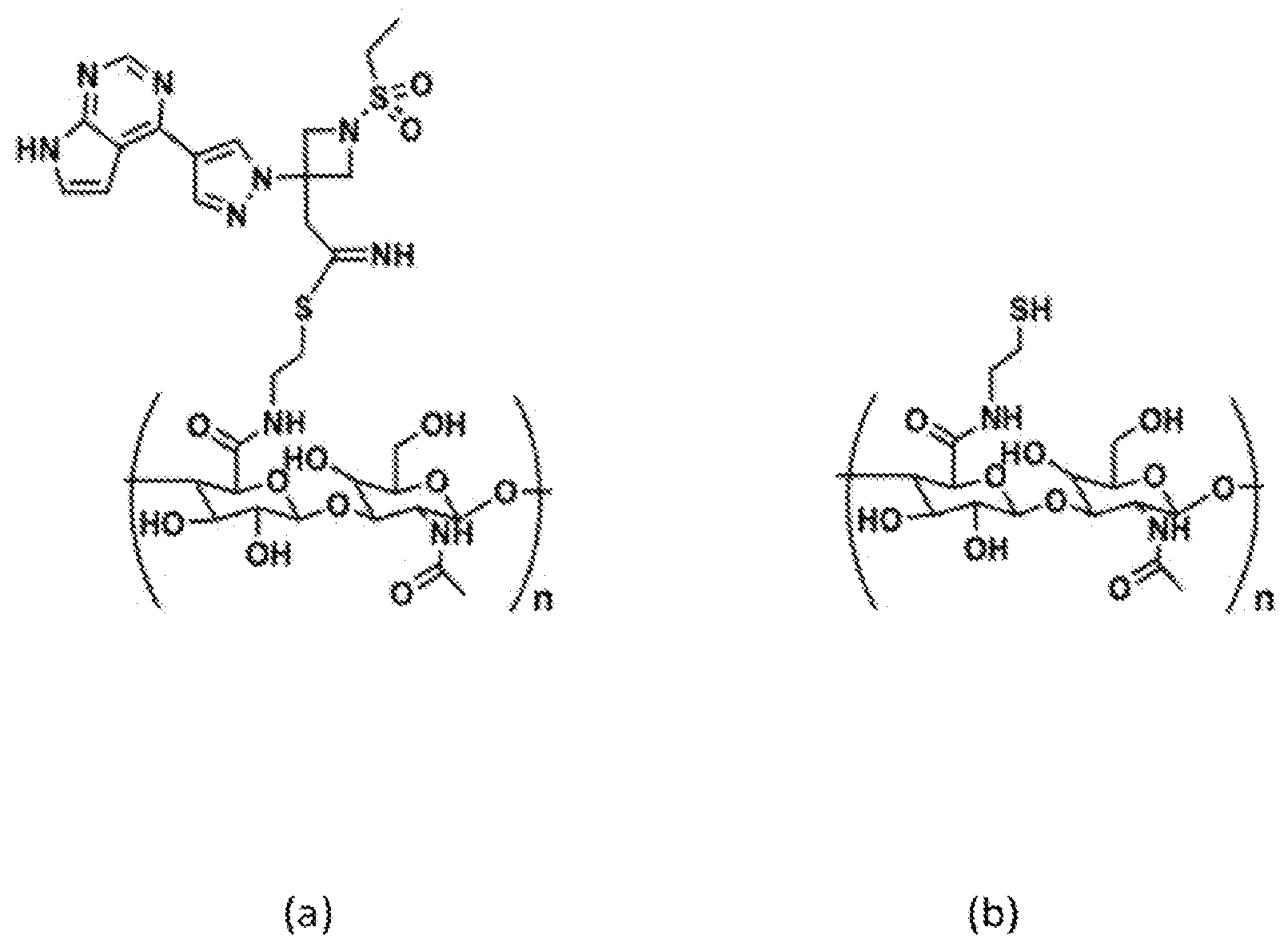
- the sustained delivery baricitinib hydrogel comprises chemical substructures (a) together with (b) and (c):
- the invention provides injectable pharmaceutical compositions for treatment of an inflammatory disorder, an autoimmune disease, an autoimmune and inflammatory hair loss, and/or a non-inflammatory disorder hair loss, the injectable pharmaceutical composition comprising a nitrile-containing JAK inhibitor and a pharmaceutically acceptable carrier.
- the transdermal administration comprises transdermal delivery via microneedles coated with the JAK inhibitor, a solid polymer matrix having the JAK inhibitor incorporated therein, dissolving polymer microneedles having the JAK inhibitor incorporated therein, hydrogel-forming microneedles comprising the JAK inhibitor in the hydrogel, or a transdermal patch.
- the local administration comprises intradermal injection, intramuscular injection, subcutaneous injection, or intra-articular injection.
- the local administration comprises transdermal administration.
- the inflammatory disorder is an inflammatory skin disorder.
- the inflammatory skin disorder is atopic dermatitis, cicatricial alopecia, central centrifugal cicatricial alopecia, hidradenitis suppurativa, lichen planopilaris, frontal fibrosing alopecia, alopecia areata, lichen planus, mucosal lichen planus, psoriasis, pemphigus or vitiligo.
- the autoimmune disease is alopecia areata, persistent patchy alopecia areata, alopecia totalis, alopecia universalis, ophiasis alopecia, alopecia barbae, rheumatoid arthritis, psoriatic arthritis or reactive arthritis.
- the autoimmune and inflammatory hair loss is alopecia areata.
- the hair loss is a noninflammatory disorder hair loss, wherein the non-inflammatory disorder hair loss is male or female androgenetic alopecia (male pattern baldness or female pattern baldness) or telogen effluvium.
- the invention provides methods for treating an inflammatory disorder, an autoimmune disease, an autoimmune and inflammatory hair loss, and/or a non-inflammatory disorder hair loss in a subject in need thereof, the method comprising administering a sustained delivery nitrile-containing JAK inhibitor hydrogel to a body part of the subject affected by the inflammatory disorder, the autoimmune disease, the autoimmune and inflammatory hair loss, and/or the non-inflammatory disorder hair loss, wherein the JAK inhibitor hydrogel comprises a JAK inhibitor having a nitrile group reversibly conjugated to a thiol group of a thiolated polymer to form a thioimidate adduct.
- the thiolated polymer is a thiolated hyaluronic acid, a thiolated chitosan, a thiolated cyclodextrin, a thiolated poly(ethylene glycol), a thiolated polyvinyl alcohol, a thiolated polyacrylamide, a thiolated polyethylene oxide, a thiolated polymethacrylate, a thiolated dextran, a thiolated alginate, a thiolated cellulose, a thiolated gelatin, a thiolated collagen, a thiolated silk, a thiolated keratin or a thiolated elastin.
- the thiolated polymer is a thiolated hyaluronic acid.
- the thiolated hyaluronic acid has an average molecular weight of from 1 KD to 1,000,000 KD when the hyaluronic acid is polydispersed in solution.
- the thiolated hyaluronic acid has an average molecular weight of from 10,000 KD to 1,000,000 KD when the hyaluronic acid is polydispersed in solution.
- the thiolated hyaluronic acid has an average molecular weight of 100,000 KD when the hyaluronic acid is polydispersed in solution.
- the nitrile- containing JAK inhibitor hydrogel is formulated for local administration.
- the local administration comprises intradermal injection, intramuscular injection, subcutaneous injection or intra-articular injection.
- the local administration comprises transdermal administration.
- the transdermal administration comprises transdermal delivery via microneedles coated with the JAK inhibitor, a solid polymer matrix having the JAK inhibitor incorporated therein, dissolving polymer microneedles having the JAK inhibitor incorporated therein, hydrogel -forming microneedles comprising the JAK inhibitor in the hydrogel, or a transdcrmal patch.
- the local administration comprises transdermal injection, intradermal injection intramuscular injection, or intra-articular injection.
- the inflammatory disorder is an inflammatory skin disorder.
- the inflammatory skin disorder is atopic dermatitis, cicatricial alopecia, central centrifugal cicatricial alopecia, hidradenitis suppurativa, lichen planopilaris, frontal fibrosing alopecia, alopecia areata, lichen planus, mucosal lichen planus, psoriasis, pemphigus or vitiligo.
- the autoimmune disease is alopecia areata, persistent patchy alopecia areata, alopecia totalis, alopecia universalis, ophiasis alopecia, alopecia barbae, rheumatoid arthritis, psoriatic arthritis or reactive arthritis.
- the autoimmune and inflammatory hair loss is alopecia areata.
- the hair loss is a non-inflammatory disorder hair loss, wherein the non-inflammatory disorder hair loss is male or female androgenetic alopecia (male pattern baldness or female pattern baldness) or telogen effluvium.
- the nitrile-containing JAK inhibitor is baricitinib, delgocitinib, ruxolitinib, deuruxolitinib, tofacitinib, momelotinib, gusacitinib, itacitinib, izencitinib, lorpucitinib, povorcitinib or a nitrile-containing metabolite thereof.
- the nitrile-containing JAK inhibitor is a compound having chemical structure (A): [0046]
- the nitrile-containing JAK inhibitor is a compound having structure (I) or (II):
- the invention provides methods for treating an inflammatory disorder, an autoimmune disease, an autoimmune and inflammatory hair loss, and/or a noninflammatory disorder hair loss in a subject in need thereof, the method comprising administering a sustained delivery baricitinib hydrogel to a body part of the subject affected by the inflammatory disorder, autoimmune disease, the autoimmune and inflammatory hair loss, and/or the noninflammatory disorder hair loss, wherein the sustained delivery baricitinib hydrogel comprises baricitinib reversibly conjugated at a nitrile group to a thiol group of a thiolated polymer to form a thioimidate adduct.
- the thiolated polymer is a thiolated hyaluronic acid, a thiolated chitosan, a thiolated cyclodextrin, a thiolated poly(ethylene glycol), a thiolated polyvinyl alcohol, a thiolated polyacrylamide, a thiolated polyethylene oxide, a thiolated polymcthacrylatc, a thiolated dextran, a thiolated alginate, a thiolated cellulose, a thiolated gelatin, a thiolated collagen, a thiolated silk, a thiolated keratin or a thiolated clastin.
- the thiolated polymer is a thiolated hyaluronic acid.
- the thiolated hyaluronic acid has an average molecular weight of from 1 KD to 1 ,000,000 KD when the hyaluronic acid is polydispersed in solution.
- the thiolated hyaluronic acid has an average molecular weight of from 10,000 KD to 1,000,000 KD when the hyaluronic acid is polydispersed in solution.
- the thiolated hyaluronic acid has an average molecular weight of 100,000 KD when the hyaluronic acid is polydispersed in solution.
- the sustained delivery baricitinib hydrogel is formulated for local administration, wherein the local administration comprises intradermal injection, intramuscular injection, subcutaneous injection or intra- articular injection. In an embodiment, the local administration comprises transdermal administration. In an embodiment, the inflammatory disorder is an inflammatory skin disorder.
- the inflammatory skin disorder is atopic dermatitis, cicatricial alopecia, central centrifugal cicatricial alopecia, hidradenitis suppurativa, lichen planopilaris, frontal fibrosing alopecia, alopecia areata, lichen planus, mucosal lichen planus, psoriasis, pemphigus or vitiligo.
- the autoimmune disease is alopecia areata, persistent patchy alopecia areata, alopecia totalis, alopecia universalis, ophiasis alopecia, alopecia barbae, rheumatoid arthritis, psoriatic arthritis or reactive arthritis.
- the autoimmune and inflammatory hair loss is alopecia areata.
- the hair loss is a non-inflammatory disorder hair loss, wherein the non-inflammatory disorder hair loss is male or female androgenetic alopecia (male pattern baldness or female pattern baldness), or telogen effluvium.
- the sustained delivery baricitinib hydrogel comprises chemical substructures (a), (b) and (c):
- the invention provides methods for treating an inflammatory disorder, an autoimmune disease, an autoimmune and inflammatory hair loss, and/or a non-inflammatory disorder hair loss in a subject in need thereof, the method comprising administering an injectable pharmaceutical composition to a body part of the subject affected by the inflammatory disorder, the autoimmune disease, the autoimmune and inflammatory hair loss, and/or the non-inflammatory disorder hair loss, wherein the injectable pharmaceutical composition comprises a nitrile- containing JAK inhibitor and a pharmaceutically acceptable carrier.
- the nitrile-containing JAK inhibitor JAK inhibitor is baricitinib, delgocitinib, ruxolitinib, deuruxolitinib, tofacitinib, momelotinib, gusacitinib, itacitinib, izencitinib, lorpucitinib, povorcitinib or a nitrile-containing metabolite thereof.
- the nitrile- containing JAK inhibitor JAK inhibitor is a compound having chemical structure (A):
- the nitrile-containing JAK inhibitor is a compound having structure (I) or (II):
- the injectable pharmaceutical composition is formulated for local administration.
- the local administration comprises intradermal injection, intramuscular injection, subcutaneous injection or intra-articular injection.
- the local administration comprises transdermal administration.
- the injectable pharmaceutical composition is administered with hollow microneedles that allow delivery of a therapeutic agent (the JAK inhibitor) upon application of pressure.
- the transdermal administration comprises transdermal delivery via microneedles coated with the JAK inhibitor, a solid polymer matrix having the JAK inhibitor incorporated therein, dissolving polymer microneedles having the JAK inhibitor incorporated therein, hydrogel-forming microneedles comprising the JAK inhibitor in the hydrogel, or a transdermal patch.
- the local administration comprises intradermal injection, intramuscular injection, or intra-articular injection.
- the inflammatory disorder is an inflammatory skin disorder.
- the local administration comprises transdermal injection.
- the inflammatory skin disorder is atopic dermatitis, cicatricial alopecia, central centrifugal cicatricial alopecia, hidradenitis suppurativa, lichen planopilaris, frontal fibrosing alopecia, alopecia areata, lichen planus, mucosal lichen planus, psoriasis, pemphigus or vitiligo.
- the autoimmune disease is alopecia areata, persistent patchy alopecia areata, alopecia totalis, alopecia universalis, ophiasis alopecia, alopecia barbae, rheumatoid arthritis, psoriatic arthritis or reactive arthritis.
- the autoimmune and inflammatory hair loss is alopecia areata.
- the hair loss is a non-inflammatory disorder hair loss, wherein the non-inflammatory disorder hair loss is male or female androgenetic alopecia (male pattern baldness or female pattern baldness) or telogen effluvium.
- the invention provides methods for producing a sustained delivery JAK inhibitor hydrogel for treatment of an inflammatory disorder, an autoimmune disease, an autoimmune and inflammatory hair loss, and/or a non-inflammatory disorder hair loss in a subject in need thereof, wherein the JAK inhibitor hydrogel comprises a nitrile-containing JAK inhibitor and the nitrile group is reversibly conjugated to a thiol group of a thiolated polymer to form a thioimidate adduct, the method comprising: (a) mixing a thiolated polymer with the nitrile- containing JAK inhibitor having a nitrile group to a desired weight percent concentration (w/v) of from 0.5 to 10 wt.% for 24 hours to form a crosslinked JAK inhibitor hydrogel, wherein the thiolated polymer and the JAK inhibitor are each dissolved in a respective solvent; (b) centrifuging the crosslinked JAK inhibitor hydrogel; and (c) washing the centrifuged cross
- the thiolated polymer is a thiolated hyaluronic acid, a thiolated chitosan, a thiolated cyclodextrin, a thiolated poly(ethylene glycol), a thiolated polyvinyl alcohol, a thiolated polyacrylamide, a thiolated polyethylene oxide, a thiolated polymethacrylate, a thiolated dextran, a thiolated alginate, a thiolated cellulose, a thiolated gelatin, a thiolated collagen, a thiolated silk, a thiolated keratin or a thiolated elastin.
- the thiolated polymer is a thiolated hyaluronic acid.
- the thiolated hyaluronic acid has an average molecular weight of from 1 KD to 1,000,000 KD when polydispersed in solution.
- the thiolated hyaluronic acid has an average molecular weight of from 10,000 KD to 1 ,000,000 KD when polydispersed in solution.
- the thiolatcd hyaluronic acid has an average molecular weight of 100,000 KD when polydispersed in solution.
- the nitrile-containing JAK inhibitor is baricitinib, delgocitinib, ruxolitinib, deuruxolitinib, tofacitinib, momelotinib, gusacitinib, itacitinib, izencitinib, lorpucitinib, povorcitinib or a nitrile-containing metabolite thereof.
- the nitrile-containing JAK inhibitor is a compound having chemical structure (A):
- the method further comprises formulating the sustained delivery JAK inhibitor hydrogel for local administration.
- the local administration comprises intradermal injection, intramuscular injection, subcutaneous injection or intra-articular injection.
- the local administration comprises transdermal administration.
- the transdermal administration comprises transdermal delivery via microneedles coated with the JAK inhibitor, a solid polymer matrix having the JAK inhibitor incorporated therein, dissolving polymer microneedles having the JAK inhibitor incorporated therein, hydrogel-forming microneedles comprising the JAK inhibitor in the hydrogel, or a transdermal patch.
- the local administration comprises intradermal injection, intramuscular injection, or intra-articular injection.
- the local administration comprises transdermal administration.
- the inflammatory disorder is an inflammatory skin disorder.
- the inflammatory skin disorder is atopic dermatitis, cicatricial alopecia, central centrifugal cicatricial alopecia, hidradenitis suppurativa, lichen planopilaris, frontal fibrosing alopecia, alopecia areata, lichen planus, mucosal lichen planus, psoriasis, pemphigus or vitiligo.
- the autoimmune disease is alopecia areata, persistent patchy alopecia areata, alopecia totalis, alopecia universalis, ophiasis alopecia, alopecia barbae, rheumatoid arthritis, psoriatic arthritis or reactive arthritis.
- the autoimmune and inflammatory hair loss is alopecia areata.
- the hair loss is a non-inflammatory disorder hair loss, wherein the non-inflammatory disorder hair loss is male or female androgenetic alopecia (male pattern baldness or female pattern baldness) or telogen effluvium.
- the JAK inhibitors according to embodiments of the present invention may be any JAK inhibitors having a nitrile group that is capable of being reversibly conjugated to a thiol group of any thiolated polymer to form a thioimidate adduct, thereby forming an administrable JAK inhibitor hydrogel or the nitrile-containing JAK inhibitor may be administered as an injectable pharmaceutical composition in the absence of conjugation to a thiolated polymer.
- Nitrile- containing JAK inhibitors that are capable of being reversibly conjugated to a thiol group of a thiolated hyaluronic acid to form a thioimidate adduct that are amenable for sustained delivery in hydrogel according to embodiments of the invention include, but are not limited to, baricitinib, delgocitinib, ruxolitinib, deuruxolitinib, tofacitinib, momelotinib, gusacitinib, itacitinib, izencitinib, lorpucitinib, povorcitinib and nitrile-containing metabolites or derivatives thereof.
- Baricitinib has the following chemical structure:
- a nitrile-containing metabolite compound of baricitinib has the following structures, M3, M12, M10 or M22, as shown in Shawky A.M., et al. Pharmaceutics, 2022, 14(5): 1001, which is incorporated herein in its entirety:
- nitrile- and nitrile oxide-containing metabolite compounds of baricitinib reversibly may be conjugated to a thiol group of a thiolated polymer, such as hyaluronic acid or other thiolated polymers, as described herein, to form a thioimidatc adduct or thioimidatc oxide adduct for the treatment of the diseases and disorders described herein.
- Delgocitinib has the following chemical structure:
- a nitrile-containing metabolite compound of delgocitinib has the following structures, Ml, M2 and M3, as shown in Shawky A.M., et al. Pharmaceutics, 2022, 14(5): 1001, which is incorporated herein in its entirety: [0060] These nitrile-containing metabolite compounds of delgocitinib may be reversibly conjugated to a thiol group of a thiolatcd polymer, such as hyaluronic acid or other thiolatcd polymers, as described herein, to form a thioimidate adduct for the treatment of the diseases and disorders described herein.
- a thiolatcd polymer such as hyaluronic acid or other thiolatcd polymers
- Ruxolitinib has the following chemical structure:
- a nitrile-containing metabolite compound of ruxolitinib has the following structures, M49, M 18/M31 , M43/M45, M7/M8/M16/M27, M44/M37/M38 and M28/M51, M44, M9/M11, and M37/M38, as shown in Shawky A.M., et al. Pharmaceutics, 2022, 14(5): 1001, which is incorporated herein in its entirety:
- nitrile-containing metabolite compounds of ruxolitinib may be reversibly conjugated to a thiol group of a thiolated polymer, such as hyaluronic acid or other thiolated polymers, as described herein, to form a thioimidate adduct for the treatment of the diseases and disorders described herein.
- a thiolated polymer such as hyaluronic acid or other thiolated polymers
- the nitrile-containing JAK inhibitor is deuruxolitinib (CAS 1513883- 39-0) having the following chemical structure:
- Tofacitinib has the following chemical structure:
- nitrile-containing metabolite compounds of tofacitinib may be reversibly conjugated to a thiol group of a thiolatcd polymer, such as hyaluronic acid or other thiolatcd polymers, as described herein, to form a thioimidate adduct for the treatment of the diseases and disorders described herein.
- a thiolatcd polymer such as hyaluronic acid or other thiolatcd polymers
- Momelotinib has the following chemical structure:
- Itacitinib has the following chemical structure:
- Gusacitinib has the following chemical structure: as described by Shawky A.M., et al. Pharmaceutics, 2022, 14(5): 1001 , which is incorporated herein in its entirety. Shawky et al. also describe the following nitrile-containing JAK inhibitors, Compounds 1 (referred to as “compound A” herein) and 3 (referred to as “compound II” herein) , respectively:
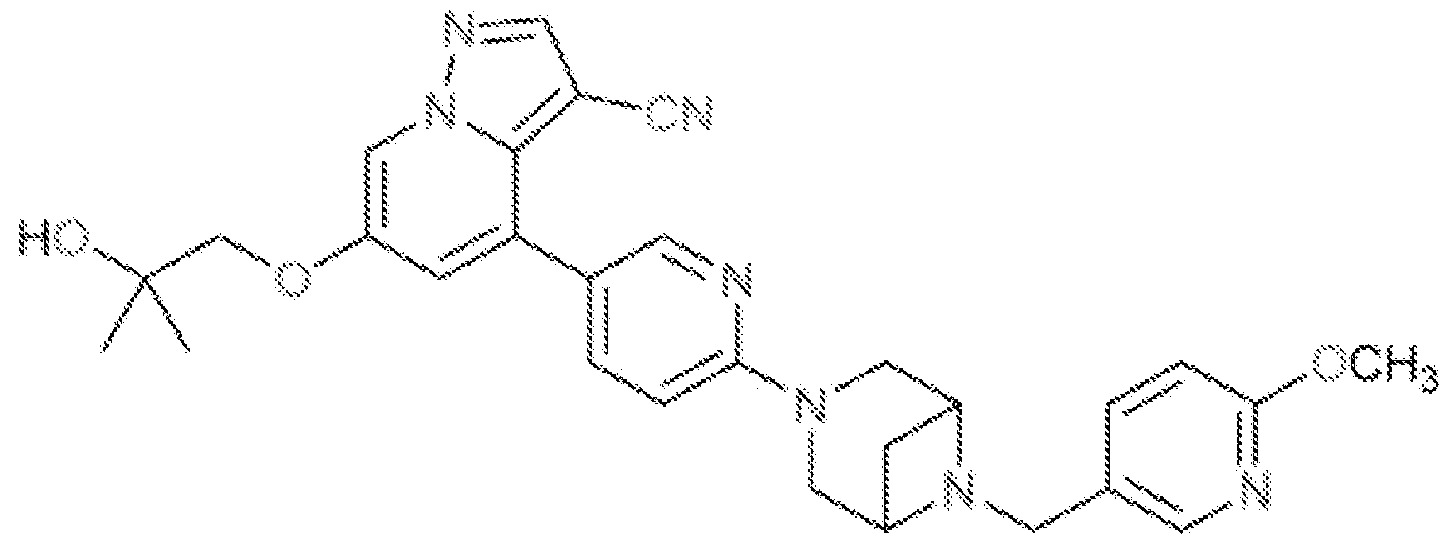
- the nitrile-containing JAK inhibitor is izencitinib, lorpucitinib or povorcitinib, whose structure is described by Zhang et al., European Journal of Medicinal Chemistry 261 (2023) 115848, which is incorporated herein in its entirety.
- Izencitinib has the following chemical structure:
- Lorpucitinib has the following chemical structure:
- Povorcitinib has the following chemical structure:
- the nitrile-containing JAK inhibitor is a compound having chemical structure (I) or (II):
- hydrogel is well-known in the art and means a crosslinked polymer network in water. Hydrogels may be used to encapsulate and release a therapeutic agent for local and sustained delivery.
- a “sustained delivery JAK inhibitor hydrogel” is a crosslinked polymer network comprising a JAK inhibitor having a nitrile group that is reversibly conjugated to a thiol group of a thiolated polymer to form a thioimidate adduct.
- Thiol-containing polymers that are capable of being reversibly conjugated to a nitrile group of a nitrile-containing JAK inhibitor to form a thioimidate adduct that are amenable for sustained delivery in hydrogel according to embodiments of the invention include, but are not limited to a thiolated hyaluronic acid, a thiolated chitosan, a thiolated cyclodextrin, a thiolated poly(ethylene glycol), a thiolated polyvinyl alcohol, a thiolated polyacrylamide, a thiolated polyethylene oxide, a thiolated polymethacrylate, a thiolated dextran, a thiolated alginate, a thiolated cellulose, a thiolated gelatin, a thiolated collagen, a thiolated silk, a thiolated keratin and a thiolated elastin, which crosslink via their
- thiol group- containing polymers also form intra- and inter-chain disulfide binds which contribute to their gelling properties.
- the ability to cross-link via disulfide binds within their own structure results in formation of stable three-dimensional hydrophilic networks.
- thiolating agent is an organic compound that contains a thiol functional group and is used to conjugate the thiol group to a polymer to form a thiolated polymer.
- Thiolating agents include but are not limited to cystine, cysteamine, and 3,3'-dithiodipropionic acid. Any of the aforementioned thiolating agents are capable of conjugating a thiol group to a polymer, e.g., to a hyaluronic acid, to thiolate the polymer.
- the thiolated hydrogel is a viscous solution. Accordingly, in some embodiments, such low concentration-hydrogels may be delivered locally as an injectable composition comprising a JAK inhibitor for non-sustained release from the hydrogel.
- a low concentration thiolated polymer hydrogel comprises about 0.5 wt% of a thiolated polymer.
- high concentrations of the thiolated polymer form a composition that is neither a hydrogel nor a solid, rendering it unusable for local delivery.
- a high concentration thiolated polymer hydrogel comprises about 20 wt% of a thiolated polymer.
- the term “about” or “approximately” means within an acceptable error range for the particular value as determined by one of ordinary skill in the art, which will depend in part on how the value is measured or determined, i.e., the limitations of the measurement system. For example, “about” can mean within 1 or more than 1 standard deviations, per practice in the art.
- a measurable value such as an amount, e.g., in mg, a temporal duration, a concentration, and the like, may encompass variations of ⁇ 20% or ⁇ 10%, more preferably ⁇ 5%, even more preferably ⁇ 1 %, and still more preferably ⁇ 0.1 % from the specified value, as such variations are appropriate to perform the disclosed methods.
- composition As used herein, the terms “component,” “composition,” “composition of compounds,” “compound,” “drug,” “pharmacologically active agent,” “active agent,” “therapeutic,” “therapy,” “treatment,” or “medicament” are used interchangeably herein to refer to a compound or compounds or composition of matter which, when administered to a subject (human or animal) induces a desired pharmacological and/or physiologic effect by local and/or systemic action.
- solvent is well-known in the art and means any substance that is capable of dissolving one or several substances, thus creating a solution.
- a solvent typically is a liquid, but alternatively may be a solid or a gas.
- treatment refers to the administering of a therapeutically effective amount of the compound of the invention, i.e., a nitrile-containing small molecule such as a JAK inhibitor, to ameliorate undesired symptoms associated with a disease or disorder, to prevent the manifestation of such symptoms before they occur, to slow down the progression of the disorders described herein, slow down the deterioration of symptoms, to slow down the irreversible damage caused in the progressive chronic stage of the disease, to delay the onset of said progressive stage, to lessen the severity or cure the disease, to improve survival rate or more rapid recovery, or to prevent the disease form occurring or a combination of two or more of the above.
- the terms “treatment” or “therapy” include preventative (e.g., prophylactic), curative or palliative treatment.
- the disorder is an inflammatory disorder.
- the inflammatory disorder is an inflammatory skin disorder.
- the term “inflammatory skin disorder” means a disorder or disease of the skin involving different immune cells, in which the immune cells, e.g., white blood cells (lymphocytes, monocytes, neutrophils, eosinophils and basophils), release inflammatory mediators, which in turn cause small blood vessels in tissues to dilate, resulting in the affected area of the skin to turn red, swell, feel hot, and be painful, i.c., to become inflamed.
- cytokines include but are not limited to, cytokines, arachidonic acid metabolites, e.g., prostaglandins and leukotrienes, nitric oxide, and oxygen free radicals, which are produced by epithelial cells, endothelial cells, and infiltrating inflammatory cells.
- JAK inhibitors have been shown to disrupt T cell-induced macrophage activation and to reduce downstream proinflammatory cytokine and chemokine responses, which suggests that suppressing the T cell-macrophage interaction contributes to the therapeutic effect of JAK inhibitors, as described by Nyirenda MH, Nijjar JS, Frleta-Gilchrist M, et al. JAK inhibitors disrupt T cell-induced proinflammatory macrophage activation.
- the inflammatory skin disorder is atopic dermatitis, alopecia areata, central centrifugal cicatricial alopecia; hidradenitis suppurativa, lichen planus, lichen planopilaris, frontal fibrosing alopecia, mucosal lichen planus, psoriasis, pemphigus and/or vitiligo.
- the inflammatory disorder is rheumatoid arthritis, psoriatic arthritis or reactive arthritis.
- the term “treating” includes alleviating or reducing at least one adverse or negative effect or symptom of a condition, disease or disorder.
- autoimmune disease is well-known in the ait and means a disease in which the body's immune system attacks healthy cells and tissues. Over 100 autoimmune diseases have been identified that affect over 24 million people. Rheumatoid arthritis (RA) is an example of an autoimmune disease; in RA, the immune system produces antibodies that attach to the lining of joints and the immune system attacks this lining causing chronic inflammation and painful swelling that lead to bone erosion and joint deformity.
- RA Rheumatoid arthritis
- a “therapeutically effective amount” as used herein refers to that amount which provides a therapeutic effect for a given indication and administration regimen.
- sustained delivery is well-known in the ail and means a delivery of a drug in a human body (or in a non-human mammal, e.g., dog) at a predetermined and constant rate (zeroorder drug release) to maintain a continuous level of the drug, usually over an extended period of time with the least possible side-effects after administration of a single dose.
- Zero-order drug release is a way to improve the therapeutic effect and avoid the side effects of the drug.
- the drug is released from the carrier.
- the hydrogel in which the nitrilc-group of the JAK inhibitor is reversibly conjugated to a thiol group of a thiolatcd polymer to form a thioimidate adduct provides a “sustained delivery of the JAK inhibitor” at a constant rate after one administration, such as by intradermal or subcutaneous injection, such as over a 12- week period; thus, the drug concentration-time profile is flat.
- subject refers to an animal, for example a human, to whom treatment, including prophylactic treatment, with the pharmaceutical compositions according to the present invention, i.e., the herein described multifunctional branched therapeutic agents, respectively, is provided.
- subject refers to human and non-human animals.
- non-human animals and “non-human mammals” are used interchangeably herein and include all vertebrates, e.g., mammals, such as non-human primates, (particularly higher primates), sheep, dog, rodent, (e.g., mouse or rat), guinea pig, goat, pig, cat, rabbits, cows, horses and non-mammals such as reptiles, amphibians, chickens, and turkeys.
- mammals such as non-human primates, (particularly higher primates), sheep, dog, rodent, (e.g., mouse or rat), guinea pig, goat, pig, cat, rabbits, cows, horses and non-mammals such as reptiles, amphibians, chickens, and turkeys.
- a “pharmaceutically acceptable carrier” is well known to those skilled in the art.
- the carrier may be a solid carrier for solid formulations, a liquid carrier or diluent for liquid formulations, or mixtures thereof.
- the pharmaceutical compositions of the invention may further include one or more ingredient selected from diluents, buffers, flavoring agents, binders, disintegr nts, surface active agents, thickeners, lubricants, preservatives (including antioxidants), and the like.
- the formulations may be of immediate release, sustained release, delayed-onset release or any other release profile known to one skilled in the art.
- the phrase “pharmaceutically acceptable” is employed herein to refer to those compounds, materials, compositions, and/or dosage forms which are, within the scope of sound medical judgment, suitable for use in contact with the tissues of human beings and animals without excessive toxicity, irritation, allergic response, or other problem or complication, commensurate with a reasonable benefit/risk ratio.
- Salts derived from appropriate bases include alkali metal, alkaline earth metal, ammonium and quaternary ammonium salts.
- Representative alkali or alkaline earth metal salts include sodium, lithium, potassium, calcium, magnesium, and the like.
- Further pharmaceutically acceptable salts include, when appropriate, nontoxic ammonium, quaternary ammonium, and amine cations formed using counterions such as halide, hydroxide, carboxylate, sulfate, phosphate, nitrate, lower alkyl sulfonate and aryl sulfonate.
- Suitable bases for use in the preparation of pharmaceutically acceptable salts including, but not limited to, inorganic bases, such as magnesium hydroxide, calcium hydroxide, potassium hydroxide, zinc hydroxide, or sodium hydroxide; and organic bases, such as primary, secondary, tertiary, and quaternary, aliphatic and aromatic amines, including L-arginine, benethamine, benzathine, choline, deanol, diethanolamine, diethylamine, dimethylamine, dipropylamine, diisopropylamine, 2-(diethylamino)-ethanol, ethanolamine, ethylamine, ethylenediamine, isopropylamine, N-methyl-glucamine, hydrabamine, IH-imidazole, L-lysine, morpholine, 4-(2- hydroxyethyl)-morpholine, methylamine, piperidine, piperazine, propylamine, pyrrolidine, l-
- the invention further includes derivatives of the compounds of the invention, i.e., derivatives of the nitrile-containing JAK inhibitors which also contain a nitrile group.
- derivatives includes but is not limited to ether derivatives, acid derivatives, amide derivatives, ester derivatives and the like.
- the invention further includes metabolites of the compounds of the invention, i.e., metabolites of the nitrile-containing JAK inhibitors which also contain a nitrile group.
- metabolites of the compounds of the invention i.e., metabolites of the nitrile-containing JAK inhibitors which also contain a nitrile group.
- the term “metabolite” means any substance produced from another substance by metabolism or a metabolic process.
- the invention further includes pharmaceutical products of the compounds of the invention.
- pharmaceutical product means a composition suitable for pharmaceutical use (pharmaceutical composition), as defined herein.
- the invention further includes prodrugs of the compounds of the invention.
- prodrug means a substance which can be converted in vivo into a biologically active agent by such reactions as hydrolysis, esterification, de-esterification, activation, salt formation and the like.
- This invention further includes crystals of the compounds of the invention. Further, this invention provides polymorphs of the compound of the invention.
- crystal means a substance in a crystalline state.
- polymorph refers to a particular crystalline state of a substance, having particular physical properties such as X-ray diffraction, IR spectra, melting point, and the like.
- the invention further includes sustained delivery hydrogels comprising a small molecule drug having a nitrile group reversibly conjugated to a thiol group of a thiolated polymer, such as hyaluronic acid, to form a thioimidate adduct.
- the small molecule drug may be selected from any of those drugs which treat any of diverse disease states, including respiratory, cardiovascular, metabolic, infectious, and rare diseases, as well as drugs that are useful in the therapeutic areas of oncology, immunology, inflammation, endocrinology, dermatology, neurology, ophthalmology, hematology, gastroenterology, and aesthetics.
- the nitrile group of the small molecule drug may adjoin an aliphatic carbon, a non-aromatic unsaturated carbon, an aromatic carbon, a nitrogen atom, or a sulfur atom within the small molecule drug.
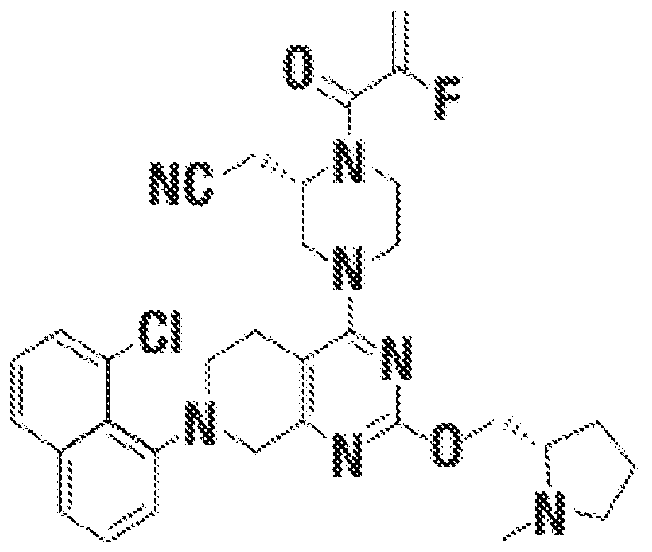
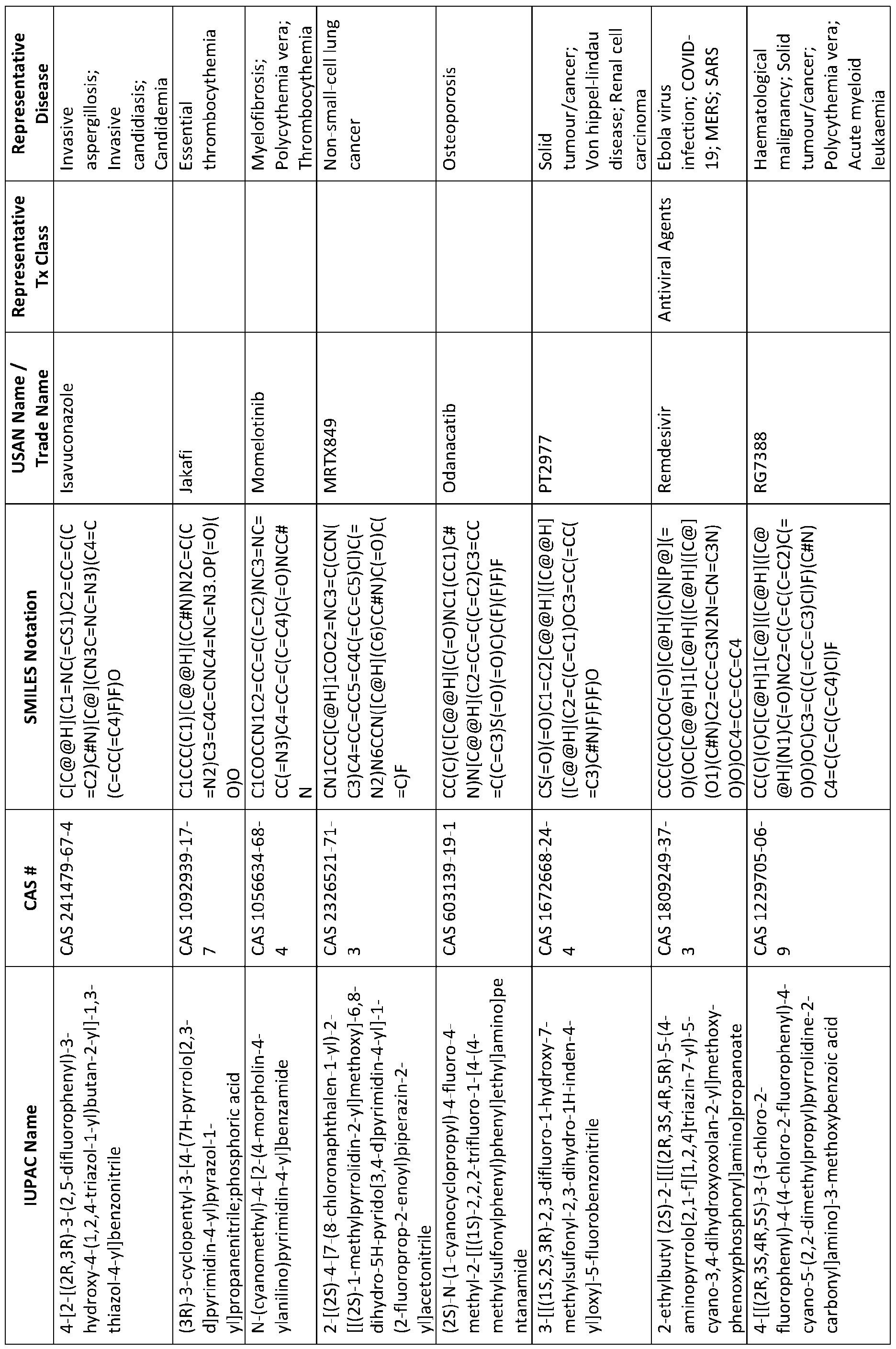
- Examples of small molecule drugs having a nitrile group include, but are not limited to, the compounds listed in Table 1 thru Table 7 below.
- the small molecule drug having a nitrile group is a dipeptidyl peptidase-4 (DPP-4) inhibitor (also known as gliptins).
- the small molecule drug having a nitrile group is the DPP-4 inhibitor alogliptin.
- the small molecule drug having a nitrile group is a Wnt signaling pathway agonist.
- the small molecule drug having a nitrile group is the Wnt signaling pathway agonist CHIR 99021.
- sustained delivery hydrogels comprising a small molecule drug having a nitrile group reversibly conjugated to a thiol group of a thiolated polymer to form a thioimidate adduct.
- a small molecule drug having a nitrile group reversibly conjugated to a thiol group of a thiolated polymer to form a thioimidate adduct.
- the small molecule drugs having a nitrile group listed in Table 1 thru Table 7 below may, but is not limited to, be used to treat a disorder or disease indicated therein.
- the small molecule drug having a nitrile group is BMS- 180428 or BMS- 180448, which have the structures depicted below.
- the small molecule drug having a nitrile group is apalutamide (ERLEADA®), which has the structure depicted below.
- Apalutamide, an androgen receptor (AR) antagonist is a nonsteroidal antiandrogen used for the treatment of prostate cancer.
- the small molecule drug having a nitrile group is cnobosarm, which has the structure depicted below.
- the small molecule drug having a nitrile group is glasdegib (DAURISMOTM), which has the structure depicted below.
- Glasdegib a hedgehog pathway inhibitor, is used for the treatment of acute myeloid leukemia (DAURISMOTM).
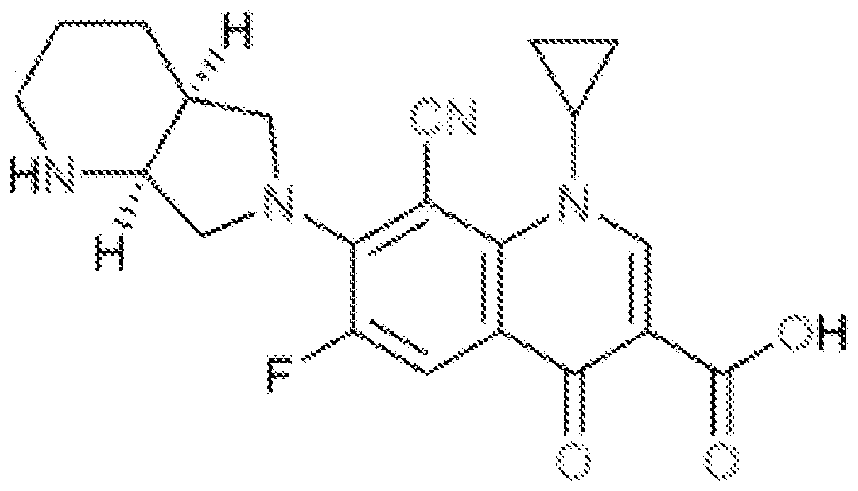
- the small molecule drug having a nitrile group is pradofloxacin, which has the structure depicted below.
- the small molecule drug having a nitrile group is ravuconazolc, which has the structure depicted below.
- the small molecule drug having a nitrile group is fosravuconazole, which has the structure depicted below.
- the small molecule drug having a nitrile group is lanoconazole, which has the structure depicted below.
- the small molecule drug having a nitrile group is doravirinc (PIFELTRO®), which has the structure depicted below.
- Doravirine a non-nucleoside reverse transcriptase inhibitor, is used in the treatment of HIV/AIDS.
- the small molecule drug having a nitrile group is perampanel (FYCOMPATM), which has the structure depicted below and is used as an anti-epileptic medication.
- the small molecule drug having a nitrile group is selpercatinib (RETEVMO®), which has the structure depicted below; it is a kinase inhibitor and used in the treatment of cancer.
- the small molecule drug having a nitrile group is cyanocobalamin (Vitamin B12), which has the structure depicted below.
- the small molecule drug having a nitrile group is zuranolone (ZURZUVAETM), which has the structure depicted below. Zuranolone, a neuroactive steroid gamma-aminobutyric acid (GABA) A receptor positive modulator, is used for the treatment of postpartum depression (PPD).
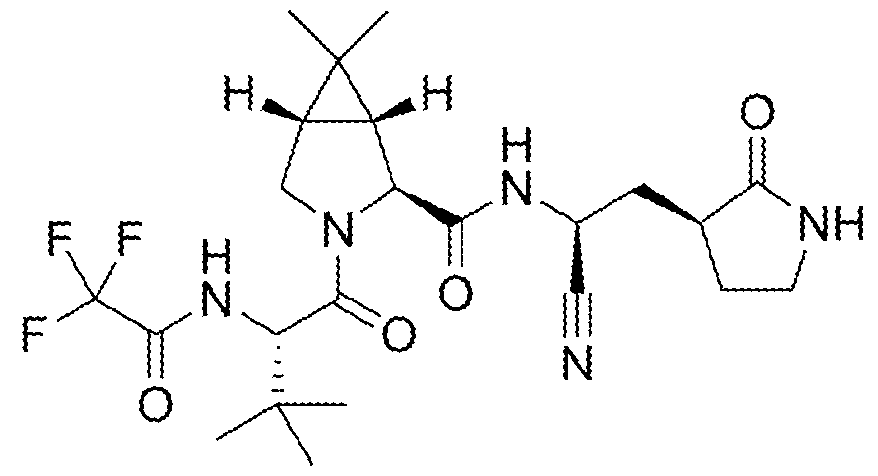
- the small molecule drug having a nitrile group is nirmatrclvir, which has the structure depicted below.
- Nirmatrelvir, a 3C-like protease inhibitor is part of a nirmatrelvir/ritonavir combination (PAXLOVIDTM) used to treat COVID-19.
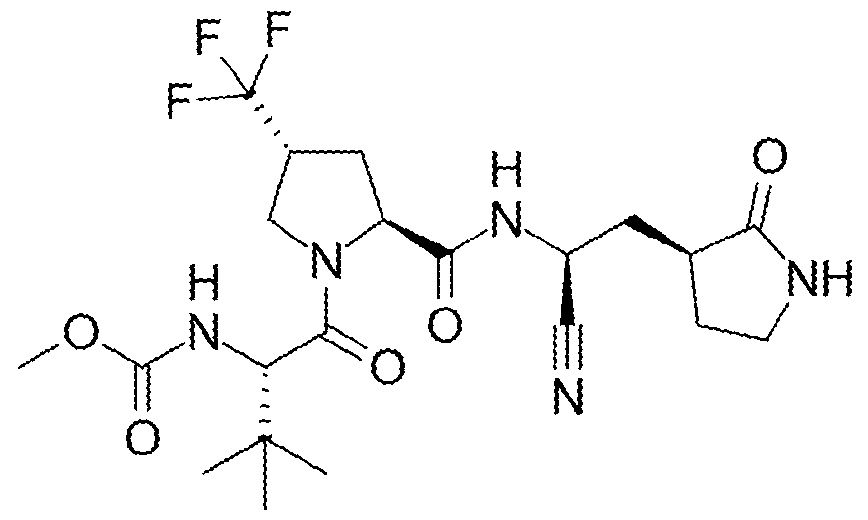
- the small molecule drug having a nitrile group is ibuzatrelvir, which has the structure depicted below.
- Ibuzatrelvir is an antiviral being developed for the treatment of COVID-19.
- the small molecule drug having a nitrile group is adagrasib (KRAZATI®), which has the structure depicted below.
- Adagrasib an irreversible inhibitor of KRAS G12C
- the small molecule drug having a nitrile group is olutasidenib (REZLIDHIA®), which has the structure depicted below.
- Olutasidenib an isocitrate dehydrogenase- 1 (IDH1) inhibitor, is used for the treatment of acute myeloid leukemia (AML).
- sustained delivery hydrogels comprising a small molecule drug having a nitrile group
- the physician will determine the actual dosage and duration of treatment, which will be most suitable for an individual with that disorder or disease and can vary with the age, weight, genetics and/or response of the particular individual, as well as be informed by the use of that small molecule drug having a nitrile group alone, i.e, in the absence of a hydrogel.
- a therapeutic agent of the invention which is a nitrilc-containing JAK inhibitors as described herein which are either (i) nitrile group reversibly conjugated to a thiol group of a thiolated hydrogel, such as hyaluronic acid, to form a thioimidate adduct or (ii) in the absence of a hydrogel, and a pharmaceutical composition comprising the same can be administered to a subject by any method known to a person skilled in the art.
- tissue e.g., needle or catheter
- a topical administration may be desired for application to dermal, ocular, or mucosal surfaces.
- Another method of administration is via aspiration or aerosol formulation.
- hydrogels and compositions provided herein may be use for systemic delivery of the active agent contained in those hydrogels and compositions.
- the compound or the pharmaceutical composition may be administered topically to body surfaces and are thus formulated in a form suitable for topical administration.
- suitable topical formulations include gels, ointments, creams, lotions, drops and the like.
- the compositions are prepared and applied as solutions, suspensions, or emulsions in a physiologically acceptable diluent with or without a pharmaceutical carrier.
- Transdermal formulations may be prepared by incorporating the active agent in a thixotropic or gelatinous carrier such as a cellulosic medium, e.g., methyl cellulose or hydroxyethyl cellulose, with the resulting formulation then being packed in a transdermal device adapted to be secured in dermal contact with the skin of a wearer.
- a thixotropic or gelatinous carrier such as a cellulosic medium, e.g., methyl cellulose or hydroxyethyl cellulose
- Transdermal administration may comprise application to the area to be treated, e.g., the skin affected by one of the disorders described herein, by transdermal injection or a transdermal delivery system comprising a microneedle coated with the therapeutic agent (i.e., the JAK inhibitor), a solid polymer matrix having the therapeutic agent (the JAK inhibitor) incorporated therein, dissolving polymer microneedles that dissolve after insertion into the skin and release the therapeutic agent; a transdermal patch comprising a reservoir storing the agent and a semi- permeable membrane, a transdermal gel comprising the agent dissolved therein, a transdermal spray comprising the agent dissolved therein, or a metered dose transdermal spray comprising the agent dissolved therein.
- the therapeutic agent i.e., the JAK inhibitor
- the JAK inhibitor solid polymer matrix having the therapeutic agent (the JAK inhibitor) incorporated therein, dissolving polymer microneedles that dissolve after insertion into the skin and release the therapeutic agent
- the microneedles for transdermal delivery of a JAK inhibitor are hydrogel-forming microneedles, as described by Turner, J.G, et al., Macromol. Biosci. 2021, 27, 2000307.
- Such hydrogel-forming microneedles are made of a swellable polymer such as a crosslinked hydrogel, which swells upon water uptake when inserted into the skin and comprise the JAK inhibitor in the hydrogel.
- the hydrogel-forming microneedles comprise a therapeutic-agent-loaded (i.e., JAK inhibitor loaded) reservoir attached to the tops of the microneedles.
- Such hydrogel-forming microneedles are minimally invasive, have a higher drug loading capacity and a tunable therapeutic-agent release rate, and are biocompatible.
- administration is effected by intradermal (into the dermis) or subcutaneous injection of a nitrile-containing JAK inhibitor in the absence of a thiolated polymer, i.e., without formation of a hydrogel, wherein the JAK inhibitor crystallizes or precipitates out of the injected composition and sustains its own release in the dermis.
- administration is effected by transdermal injection.
- any of the usual pharmaceutical media may be employed.
- suitable carriers and additives include water, glycols, oils, alcohols, flavoring agents, preservatives, coloring agents, and the like.
- suitable carriers and additives include starches, sugars, diluents, granulating agents, lubricants, binders, disintegrating agents, and the like.
- the carrier will usually comprise sterile water, though other ingredients may be included, such as ingredients that aid solubility or for preservation.
- Injectable solutions may also be prepared in which case appropriate stabilizing agents may be employed.
- appropriate stabilizing agents may be employed.
- Methods of treatment using formulations suitable for oral administration may be presented as discrete units such as capsules, cachets, tablets, or lozenges, each containing a predetermined amount of the active ingredient.
- a suspension in an aqueous liquor or a non-aqueous liquid may be employed, such as a syrup, an elixir, an emulsion, or a draught.
- a tablet may be made by compression or molding, or wet granulation, optionally with one or more accessory ingredients.
- Compressed tablets may be prepared by compressing in a suitable machine, with the active compound being in a free-flowing form such as a powder or granules which optionally is mixed with, for example, a binder, disintegrat'd, lubricant, inert diluent, surface active agent, or discharging agent. Molded tablets comprised of a mixture of the powdered active compound with a suitable carrier may be made by molding in a suitable machine.
- a syrup may be made by adding the active compound to a concentrated aqueous solution of a sugar, for example sucrose, to which may also be added any accessory ingredient(s).
- Such accessory ingredient(s) may include flavorings, suitable preservative, agents to retard crystallization of the sugar, and agents to increase the solubility of any other ingredient, such as a polyhydroxy alcohol, for example glycerol or sorbitol.
- Formulations suitable for parenteral administration may comprise a sterile aqueous preparation of the active compound, which, in some embodiments, is isotonic with the blood of the recipient (e.g., physiological saline solution).
- Such formulations may include suspending agents and thickening agents and liposomes or other microparticulate systems which are designed to target the compound to blood components or one or more organs.
- the formulations may be presented in unit-dose or multi-dose form.
- Parenteral administration may comprise any suitable form of systemic delivery.
- Administration may for example be intravenous, intra-arterial, intrathecal, intramuscular, subcutaneous, intramuscular, intra-abdominal (e.g., intraperitoneal), etc., and may be canned out by infusion pumps (external or implantable) or any other suitable means appropriate to the desired administration modality.
- a dosage unit of the compounds used in the present invention may comprise a single compound or mixtures thereof with additional therapeutic agents.
- a “dose” or “dosage unit” or “unit dosage” of a compound of the invention as measured in milligrams refers to the milligrams of the compound of the invention present in a composition, regardless of the form of the composition.
- a dosage unit can be prepared for oral dosage forms, such as tablets, capsules, pills, powders, liquid suspensions, and granules.
- a compound of the invention is administered at a dosage of 1- 3000 mg per day. In some embodiments, a compound of the invention as described herein is administered at a dosage of 1-1000 mg per day. In some embodiments, a compound of the invention as described herein is administered at a dosage of 1-500 mg per day. In some embodiments, a compound of the invention as described herein is administered at a dosage of 10- 500 mg per day. In some embodiments, a compound of the invention as described herein is administered at a dosage of 25-500 mg per day. In some embodiments, a compound of the invention as described herein is administered at a dosage of 50-500 mg per day.
- a compound of the invention as described herein is administered at a dosage of 5- 250 mg per day. In some embodiments, a compound of the invention as described herein is administered at a dosage of 10-250 mg per day. In some embodiments, a compound of the invention as described herein is administered at a dosage of 20-250 mg per day. In some embodiments, a compound of the invention as described herein is administered at a dosage of 25- 250 mg per day. In some embodiments, a compound of the invention as described herein is administered at a dosage of 25-200 mg per day. In some embodiments, a compound of the invention as described herein is administered at a dosage of 25-150 mg per day. In some embodiments, a compound of the invention as described herein is administered at a dosage of 25- 125 mg per day. In some embodiments, a compound of the invention as described herein is administered at a dosage of 25-100 mg per day.
- a compound of the invention is administered at a dose of 1- 10 mg per day, 3-26 mg per day, 3-60 mg per day, 3-16 mg per day, 3-30 mg per day, 10-26 mg per day, 10- 100 mg per day, 15-60 mg per day, 15-100 mg per day, 25-100 mg per day, 50-100 mg per day, 50-200 mg per day, 100-200 mg per day, 100-250 mg per day, 125-300 mg per day, 20-50 mg per day, 5-50 mg per day, 200-500 mg per day, 125-500 mg per day, 500-1000 mg per day, 200-1000 mg per day, 1000-2000 mg per day, 1000-3000 mg per day, 125-3000 mg per day, 2000- 3000 mg per day, 300-1500 mg per day or 100-1000 mg per day.
- the methods may comprise administering a compound at various dosages.
- the compound may be administered per day at a dosage of 3 mg, 10 mg, 30 mg, 40 mg, 50 mg, 80 mg, 100 mg, 120 mg, 125 mg, 200 mg, 250 mg, 300 mg, 450 mg, 500 mg, 600 mg, 900 mg, 1000 mg, 1500 mg, 2000 mg, 2500 mg or 3000 mg.
- the compound may be administered at a dosage of 0.1 mg/kg/day.
- the compound may be administered at a dosage between 0.2 to 30 mg/kg/day, or 0.2 mg/kg/day, 0.3 mg/kg/day, 1 mg/kg/day, 3 mg/kg/day, 5 mg/kg/day, 10 mg/kg/day, 20 mg/kg/day, 30 mg/kg/day, 50 mg/kg/day or 100 mg/kg/day.
- the compound of the invention is prepared for once daily administration. In another embodiment, the compound of the invention is prepared for more than once daily administration, for example, twice daily, three times daily, four times daily, etc. In some embodiments, the compound or the pharmaceutical composition of the invention is administered in the form of a capsule, a tablet, or a liquid suspension. In other embodiments, the compound or the pharmaceutical composition of the invention is administered in an oral dosage unit form.
- the methods of treatment of the present invention can additionally include administering to the subject one or more additional therapeutic agents for a combination therapy.
- additional therapeutic agents may be administered, by a route and in an amount commonly used therefore, simultaneously or sequentially with a compound or composition of the present invention.
- the term “combination therapy” means the administration of two or more therapeutic agents to treat a cancer described in the present invention. Such administration encompasses coadministration of these therapeutic agents in a substantially simultaneous manner, such as in a single capsule having a fixed ratio of active ingredients or in multiple, separate capsules for each active ingredient. In addition, such administration also encompasses use of each type of therapeutic agent in a sequential manner. In either case, the treatment regimen will provide beneficial effects of the drug combination in treating the disorders described herein. [00154] The following examples are presented in order to more fully illustrate particular embodiments of the invention. They should in no way be construed, however, as limiting the broad scope of the invention.
- Thiolated hyaluronic acid was purchased from a supplier (HA works LLC, Bedminster, NJ), synthesized as previously described through an amidation reaction at the carboxyl of hyaluronic acid with 30% or 50% degree of modification of disaccharides. Polymers were stored under vacuum in a desiccator at room temperature. All other chemical reagents were purchased from Sigma- Aldrich (St. Louis, MO) and stored according to manufacturer’s instructions unless otherwise indicated. All experiments were performed in triplicate unless otherwise indicated.
- LCMS Liquid chromatography-mass spectrometry
- 3 H spectrum of baricitinib was obtained in 64K data points over 10 kHz spectral width using a 30° flip-angle pulse.
- 13 C spectra were obtained in 64K data points over 29.761 kHz spectral width using the pulse program, zgpgsezr, a z-restored spin-echo 13 C pulse sequence with power-gated X H decoupling.
- a 2s relaxation delay was used between acquisitions.
- the free induction decays were processed using exponential window function (line-broadening 0.3 Hz for 1 H and 1 Hz for 13 C) before Fourier transformation.
- Thiol quantification assays The Free Thiol Assay Kit (abl 12158, Abeam, Waltham, MA) was used for all thiol quantification measurements. Solutions of thiolated hyaluronic acid in distilled water were mixed with a solution of baricitinib in 1:1 dimethyl sulfoxide (DMSO) to distilled water to the indicated final concentrations in 100 pL total volume including 50 pL of assay reaction mixture. Solutions prior to addition of reaction mixture were gently vortexed and products were allowed to form for 20 minutes. After mixing, 50 pL of product was transferred to a black walled 96-well plate and products were incubated with 50pL of the assay reaction mixture according to manufacturer’s protocols. Analyses were performed using the Biotek Synergy Hl microplate reader (ex/em: 490/520 nm).
- Hydrogel formation and in vitro release Hydrogels were formed by evenly mixing stock solutions of thiolated hyaluronic acid in phosphate-buffered saline (PBS) with stock solutions of baricitinib in DMSO to the final desired weight percent concentration (w/v) and allowed to mix and crosslink for 24 hours. After 24 hours, hydrogels were briefly centrifuged and DMSO was removed by briefly washing hydrogels in PBS (3 x 5 minutes). For release studies, 100 pL of hydrogel was incubated in 200 pL of PBS at room temperature and releasates were collected and replaced with fresh PBS at days 2, 4, 8, 12, 16, 20, 28, and 42. At the final timepoint, hydrogels were manually disrupted.
- PBS phosphate-buffered saline
- Shear oscillatory rheometry Hydrogels were formed as described and deposited on the bottom plate of an HR 20 (TA Instruments, New Castle, DE) rheometer immediately after mixing or after 24 hours of gelation. The rheometer was fitted with a 20 mm diameter stainless steel parallel plate geometry and placed at a 350 pm gap. Oscillatory rheological time sweeps (1% strain, 10 Hz) were performed to obtain the average storage (G’) and loss (G”) moduli, and oscillatory frequency sweeps (1% strain, 0.1 Hz to 100 Hz) were obtained to characterize dynamic viscoelastic properties. RESULTS AND DISCUSSION
- the thioimidate may further be stabilized to form a thiazoline ring; however, the difference in molecular weight is too small between the products to differentiate thioimidate from thiazoline.
- a tetrahedral bisadduct that was previously reported to occur with low frequency was not observed; this would appear as a product with molecular weight that combines two cysteamines or cysteines and one baricitinib.
- a hydrogel was designed from thiolated hyaluronic acid that directly binds to baricitinib, which also forms disulfide bonds with itself for gel formation.
- thiolated hyaluronic acid formed from the amidation reaction between the carboxyl of hyaluronic acid to cysteamine with a degree of thiol modification of either 30% or 50%, and a molecular weight of approximately 100 kDa was used (Figure 2A).
- the thiols function to form thioimidates with baricitinib as well as disulfide crosslinks between polymer chains to form hydrogels ( Figure 2B).
- 13 C NMR was used to confirm that the formed products between baricitinib and thiolated hyaluronic acid were thioimidates.
- 13 C NMR revealed distinct peaks for both baricitinib and thiolated hyaluronic acid that are consistent with predicted and expected spectra.
- the 13 C NMR spectra of the combined product demonstrated a distinct peak at 170 ppm that was not present in the spectra of the reactants ( Figure 4A). This is consistent with prior reports for thioimidate carbons as well as the predicted peak from the NMR predict tool at nmrdb.org (Universidad del Valle). Thioimidate product formation using ’H NMR.
- baricitinib release its absorption properties were determined in the ultraviolet (UV) range, where baricitinib absorbs due to its aromatic ring. It was determined that baricitinib absorbs most in the ultraviolet B range (280-320 nm), with absorbances increasing linearly with concentration (Figure 6A), consistent with prior methods for measuring baricitinib in solution.
- baricitinib hydrogels were assembled with varying baricitinib loading (0.2 mg/mL, 2 mg/mL, corresponding to 40-fold or 4-fold thiol excess), hydrogel concentration (%w/v), and thiol modification (30% or 50%).
- Baricitinib hydrogels were incubated in PBS at room temperature with releasates collected and replaced regularly over six weeks. At six weeks, hydrogels had nearly fully eroded and were manually disrupted in PBS. Baricitinib in releasates was measured by absorbance at 300 nm on a standard curve. Cumulative release demonstrates similar release profiles with 0.2 mg/mL of baricitinib included ( Figure 6B). In these formulations, approximately 40% was released by one week, 50% by two weeks, and 60% by three weeks. By four weeks, differences in release were observed; 90% of baricitinib was released in 2 wt% 30% mod hydrogels, while -70% was released in 5 wt% 50% mod hydrogels.
- the latter formulation has four-times the concentration of thiols in solution. This sustains baricitinib release through thioimidate formation and by increasing disulfide crosslinking, thereby decreasing network mesh size. At 2 mg/mL baricitinib, there is a larger concentration gradient due to the higher amount of baricitinib loaded. Consistent with this, release was much faster with up to -70% released by one week, 80% by two weeks, and 90% by four weeks. Significant differences in release were observed before two weeks, where there was faster release observed in formulations assembled at 2 wt% compared to formulations assembled at 5 wt%, consistent with the role of thiols in forming thioimidates and disulfides to slow release.
- baricitinib also began to precipitate over time within the hydrogel, which may also partially contribute to its sustained release.
- formulations of baricitinib were selected at 2 wt% and 30% thiol modification for biologic activity - release profiles of relevant formulations are plotted ( Figure 6C). Higher concentrations of hydrogel could not be injected through a 27G syringe while higher thiol modifications did not change release profiles.
- HEK 293 culture Cells (BPS Bioscience, San Diego, CA) were thawed in Dulbecco's Modified Eagle Medium (DMEM) supplemented with 10% fetal bovine serum (FBS) and 1% penicillin/streptomycin. In subsequent studies, media was supplemented with 400 pg/ml of geneticin. Prior to use, cells were split into 96 well black-walled, clear bottom plates (30,0000/well) in media without geneticin 24 hours prior.
- DMEM Dulbecco's Modified Eagle Medium
- FBS fetal bovine serum
- penicillin/streptomycin penicillin/streptomycin
- Luciferase Assays For the interferon (IFNa) titration, varying concentrations from 10' 1 to 10 4 U/mL of IFNa at 100 pL total volume were incubated for 6 hours. For the baricitinib condition, concentrations of 10’ 3 to 10 3 g/mL baricitinib were added to wells and incubated for 1 hour. IFNa was added to each well at a final concentration of 100 U/mL at 100 pL total per well and incubated for 6 hours. For the releasate assay, releasate volumes of 5 pL or 20 pL were added to cells in triplicate from each timepoint and incubated for 1 hour.
- IFNa interferon
- IFNa volume was added to a total of 100 pL and 100 U/mL and then incubated for 6 hours. After the 6-hour incubation of IFNa, luciferase activity was quantified for each of the three tests using the ONE-StepTM Luciferase Assay System (BPS Bioscience, San Diego, CA) with 100 pL master mix was added for a total volume of 200 pL. The 96 well plate was placed on an orbital shaker for 15 minutes covered from light before taking fluorescence measurements using the Biotek Synergy Hl microplate reader.
- HaCAT culture and proliferation assay HaCaT cells were cultured in calcium-free DMEM with 10% FBS, and 1% penicillin/streptomycin as previously described. Cells were split into 24-well plates 24 hours at 100,000/well. After 24 hours, hydrogels were formed and 50 pL was transferred to a polycarbonate membrane transwell insert with 6.5 mm diameter, 0.1 pm pore size (Coming, Coming, NY) and coincubated with cells for the indicated times. The CellTiter 96® AQueous One Solution Cell Proliferation MTS Assay (Promega, Madison, WI) was utilized according to manufacturer’s protocols after incubation with one hour. Absorbance was measured at 490 nm using the Biotek Synergy Hl microplate reader.
- Quantification of epidermal thickness was performed on stitched lOx slides of 6-10 mm skin sections by selecting the entire region-of-interest (ROI) of the epidermis using the Wand Tool on FIJI on Legacy Mode. The smooth feature was utilized to ensure the ROI appropriate captured the entire region between the granular layer and basal layer. The ROI area was measured and subsequently divided by the length of epidermis. Average epidermal thickness was obtained for two sections per mouse.
- ROI region-of-interest
- Baricitinib hydrogels prepared as described above were tested in vivo, using a mouse model for alopecia areata, as described in McElwee et al. (1998) J Invest Dermatol 111:797-803. Briefly, in this model, alopecia develops in -10-20% of aging mice after six months which are subsequently be transferred to younger C3H/HeJ mice through skin grafts, reliably producing alopecia areata in up to 95-100% of mice six to ten weeks after grafting. Baricitinib (Jabbari et al. (2015) EBioMedicine 2:351-355) and other JAK inhibitors (Xing et al.
- NMR is used to show the reaction between an aromatic nitrile containing molecule, CHIR 99021 (a Wnt signaling pathway agonist), and thiolated hyaluronic acid.
- CHIR 99021 a Wnt signaling pathway agonist
- the nitrile group is expected to react with the thiol group in a reversible manner to form a thioimidate.
- a 20 mM solution of CHIR 99021 dissolved in ethanol was combined with thiolated hyaluronic acid in D2O. The solution was left to sit overnight and filtered for 1 H NMR analysis.
- the aromatic nitrile in CHIR 99021 reacts in a reversible manner with the thiolated hyaluronic acid to form a thioimidate.
- the 'H NMR data shows the formation of a new set of peaks in the aromatic region downfield from those in CHIR99021 alone.
- Thiolated hyaluronic acid alone shows no peaks in this region.
Landscapes
- Health & Medical Sciences (AREA)
- Veterinary Medicine (AREA)
- Chemical & Material Sciences (AREA)
- Medicinal Chemistry (AREA)
- Pharmacology & Pharmacy (AREA)
- Life Sciences & Earth Sciences (AREA)
- Animal Behavior & Ethology (AREA)
- General Health & Medical Sciences (AREA)
- Public Health (AREA)
- Epidemiology (AREA)
- Engineering & Computer Science (AREA)
- Bioinformatics & Cheminformatics (AREA)
- Dermatology (AREA)
- Chemical Kinetics & Catalysis (AREA)
- General Chemical & Material Sciences (AREA)
- Nuclear Medicine, Radiotherapy & Molecular Imaging (AREA)
- Organic Chemistry (AREA)
- Medicinal Preparation (AREA)
Abstract
The invention provides sustained delivery JAK inhibitor hydrogels for treatment of an inflammatory disorder, autoimmune disease, an autoimmune and inflammatory hair loss, and/or a non-inflammatory disorder hair loss, the JAK inhibitor hydrogel comprising a JAK inhibitor having a nitrile group reversibly conjugated to a thiol group of a thiolated polymer to form a thioimidate adduct. The invention also provides injectable pharmaceutical compositions for treatment of an inflammatory disorder, an autoimmune disease, an autoimmune and inflammatory hair loss, and/or a non-inflammatory disorder hair loss, the injectable pharmaceutical compositions comprising a nitrile-containing JAK inhibitor and a pharmaceutically acceptable carrier.
Description
SUSTAINED DELIVERY OF NITRILE-CONTAINING JAK INHIBITORS FROM A HYDROGEL THROUGH REVERSIBLE THIOIMIDATE ADDUCTS
FIELD OF THE INVENTION
[001] The invention relates to sustained delivery JAK inhibitor hydrogels comprising JAK inhibitors having a nitrile group reversibly conjugated to a thiol group of a thiolated polymer, such as hyaluronic acid, to form a thioimidate adduct for the treatment of an inflammatory disorder such as inflammatory skin disorders and autoimmune diseases such as rheumatoid arthritis, psoriatic arthritis or reactive arthritis, as well as autoimmune and inflammatory hair loss, such as alopecia areata, and/or non-inflammatory disorder hair loss, such as androgenetic alopecia. The invention also relates to methods for treating inflammatory disorders, including skin disorders such as atopic dermatitis, alopecia areata, central centrifugal cicatricial alopecia, lichen planopilaris; hidradenitis suppurativa, lichen planus, mucosal lichen planus, psoriasis, pemphigus or vitiligo, and other autoimmune diseases such as rheumatoid arthritis, psoriatic arthritis or reactive arthritis by administering to a subject in need thereof a JAK inhibitor having a nitrile group reversibly conjugated to a thiol group of a thiolated hyaluronic acid to form a thioimidate adduct. The invention further relates to methods for treating such inflammatory disorders and autoimmune diseases by administering to a subject in need thereof a composition comprising an injectable nitrile-containing JAK inhibitor, for example, baricitinib or any other nitrile-containing JAK inhibitors, as described infra in the absence of a thiolated polymer that forms a hydrogel, wherein the JAK inhibitor crystallizes or precipitates out of the composition and sustains its own release.
BACKGROUND OF THE INVENTION
[002] The Janus kinase and signal transducer and activator of transcription JAK (Janus kinase)/STAT pathway has emerged as a disease target for many inflammatory disorders in the skin. To date, several small molecule inhibitors of JAK-STAT signaling have been FDA approved and are highly effective in dermatology, including in atopic dermatitis (e.g., ruxolitinib, abrocitinib, upadacitinib), vitiligo (ruxolitinib), alopecia areata (e.g., ritlecitinib, baricitinib), psoriasis/psoriatic arthritis (e.g., deucravacitinib, tofacitinib), while many others are currently under investigation for other dermatologic diseases. Despite their broad clinical efficacy in dermatology, systemic use of JAK inhibitors is associated with serious risks of infections, major adverse cardiovascular events, thromboses, malignancy, and death leading to a black box warning
for all FDA approved JAK inhibitors. As a result, providers and patients are forced to exercise caution in their use while patients at high risk for cardiovascular events and malignancy arc excluded altogether. As a result, patients are unable to clinically benefit from the effectiveness of these medications without taking on high levels of risk. To overcome limitations of systemic JAK inhibitors, biomaterial-based drug delivery systems can be utilized to retain payloads at a particular target tissue of interest, maximizing bioavailability while minimizing systemic absorption and off- target toxicities. In this regard, hydrogels are desirable as they are often biocompatible due to their high-water content and they can be engineered to be injectable for minimally invasive delivery. Although hydrogel systems have been attempted for drug delivery, their use for local and sustained drug release in dermatology remains difficult. For example, small molecules such as JAK inhibitors are challenging to deliver from hydrogels due to their small size and rapid diffusion. Previous research delivering JAK inhibitors from hydrogels showed release over days but were unable to achieve longer-term release profiles. A notable and similar dermatologic example showed metalloprotease-triggered delivery of tofacitinib for atopic dermatitis in vitro from a polyethylene glycol hydrogel but with release of -40% at 48 hours. Further, the need for repeated administrations either as a topical or injectable limits compliance and is a major barrier to use and clinical translation.
[003] Accordingly, there remains a need for developing improved compositions to deliver JAK inhibitors to the skin that could be readily administered in dermatology clinics and methods for treatment of inflammatory disorders of the skin and autoimmune diseases affecting the skin with enhanced compositions.
SUMMARY OF THE INVENTION
[004] In one aspect, provided herein are sustained delivery hydrogels for treatment of a disorder or a disease comprising a small molecule drug having a nitrile group reversibly conjugated to a thiol group of a thiolated polymer, such as hyaluronic acid, to form a thioimidate adduct. Also provided herein are injectable pharmaceuticals compositions for treatment of a disorder or a disease, comprising the foregoing sustained delivery hydrogels and a pharmaceutically acceptable carrier. Also provided herein are methods for treating a disorder or a disease in a subject in need thereof, the method comprising administering the foregoing sustained delivery hydrogels to the subject.
[005] In one aspect, provided herein are sustained delivery JAK inhibitor hydrogels for treatment of an inflammatory disorder, an autoimmune disease, an autoimmune and inflammatory hair loss, and/or a non-inflammatory disorder hair loss, the JAK inhibitor hydrogel comprising a JAK inhibitor having a nitrile group reversibly conjugated to a thiol group of a thiolated polymer to form a thioimidate adduct.
[006] In another aspect, provided herein are sustained delivery baricitinib hydrogels comprising baricitinib having a nitrile group reversibly conjugated to a thiol group of a thiolated polymer to form a thioimidate adduct for treatment of an inflammatory disorder, an autoimmune disease, an autoimmune and inflammatory hair loss, and/or a non-inflammatory disorder hair loss.
[007] In one aspect, the invention provides injectable pharmaceutical compositions for treatment of an inflammatory disorder, an autoimmune disease, an autoimmune and inflammatory hair loss, and/or a non-inflammatory disorder hair loss, the injectable pharmaceutical composition comprising a nitrile-containing JAK inhibitor, e.g., baricitinib, and a pharmaceutically acceptable carrier. In another aspect, the invention provides sustained delivery pharmaceutical compositions for treatment of an inflammatory disorder, an autoimmune disease, an autoimmune and inflammatory hair loss, and/or a non-inflammatory disorder hair loss, the sustained delivery pharmaceutical composition comprising a nitrile-containing JAK inhibitor, e.g., baricitinib, and a pharmaceutically acceptable carrier. In an embodiment, the sustained delivery pharmaceutical composition is an injectable pharmaceutical composition.
[008] In another aspect, the invention provides injectable pharmaceutical compositions for treatment of an inflammatory disorder, an autoimmune disease, an autoimmune and inflammatory hair loss, and/or a non-inflammatory disorder hair loss, the injectable pharmaceutical composition comprising a low concentration of thiolated hydrogel, a nitrile-containing JAK inhibitor and a pharmaceutically acceptable carrier.
[009] In another aspect, the invention provides methods for treating an inflammatory disorder, an autoimmune disease, an autoimmune and inflammatory hair loss, and/or a non-inflammatory disorder hair loss in a subject in need thereof, the method comprising administering a sustained delivery nitrile-containing JAK inhibitor hydrogel to a body part of the subject affected by the inflammatory disorder, the autoimmune disease, the autoimmune and inflammatory hair loss, and/or the non-inflammatory disorder hair loss, wherein the JAK inhibitor hydrogel comprises a
JAK inhibitor having a nitrile group reversibly conjugated to a thiol group of a thiolated polymer by a thioimidatc adduct.
[0010] In still another aspect, the invention provides methods for treating an inflammatory disorder, an autoimmune disease, an autoimmune and inflammatory hair loss, and/or a noninflammatory disorder hair loss in a subject in need thereof, the method comprising administering a sustained delivery baricitinib hydrogel to a body part of the subject affected by the inflammatory disorder, autoimmune disease, the autoimmune and inflammatory hair loss, and/or the noninflammatory disorder hair loss, wherein the sustained delivery baricitinib hydrogel comprises baricitinib reversibly conjugated at a nitrile group to a thiol group of a thiolated polymer by a thioimidate adduct.
[0011] In one aspect, the invention provides methods for treating an inflammatory disorder, an autoimmune disease, an autoimmune and inflammatory hair loss, and/or a non-inflammatory disorder hair loss in a subject in need thereof, the method comprising administering an injectable pharmaceutical composition to a body part of the subject affected by the inflammatory disorder, the autoimmune disease, the autoimmune and inflammatory hair loss, and/or the non-inflammatory disorder hair loss, wherein the injectable pharmaceutical composition comprises a nitrile- containing JAK inhibitor, e.g., baricitinib, and a pharmaceutically acceptable carrier. In an embodiment, the injectable pharmaceutical composition is administered with hollow microneedles that allow delivery of the injectable pharmaceutical composition comprising the therapeutic agent (the JAK inhibitor) in a upon application of pressure.
[0012] In another aspect, the invention provides methods for treating an inflammatory disorder, an autoimmune disease, an autoimmune and inflammatory hair loss, and/or a non-inflammatory disorder hair loss in a subject in need thereof, the method comprising administering s sustained delivery pharmaceutical composition to a body part of the subject affected by the inflammatory disorder, the autoimmune disease, the autoimmune and inflammatory hair loss, and/or the noninflammatory disorder hair loss, wherein the sustained delivery pharmaceutical composition comprises a nitrile-containing JAK inhibitor, e.g., baricitinib, and a pharmaceutically acceptable carrier. In an embodiment, the sustained delivery pharmaceutical composition is an injectable pharmaceutical composition.
[0013] In another aspect, the invention provides methods for producing a sustained delivery JAK inhibitor hydrogel for treatment of an inflammatory disorder, an autoimmune disease, an
autoimmune and inflammatory hair loss, and/or a non-inflammatory disorder hair loss in a subject in need thereof, wherein the JAK inhibitor hydrogel comprises a nitrilc-containing JAK inhibitor and the nitrile group is reversibly conjugated to a thiol group of a thiolated polymer to form thioimidate adduct, the method comprising: (a) mixing a thiolated polymer with the nitrile- containing JAK inhibitor having a nitrile group to a desired weight percent concentration (w/v) of from about 0.5 to 10 wt.% for 24 hours to form a crosslinked JAK inhibitor hydrogel, wherein the thiolated polymer and the JAK inhibitor are each dissolved in a respective solvent; (b) centrifuging the crosslinked JAK inhibitor hydrogel; and (c) washing the centrifuged crosslinked JAK inhibitor hydrogel to remove the solvent.
[0014] Other features and advantages of the present invention will become apparent from the following detailed description examples and figures. It should be understood, however, that the detailed description and the specific examples while indicating preferred embodiments of the invention are given by way of illustration only, since various changes and modifications within the spirit and scope of the invention will become apparent to those skilled in the ail from this detailed description.
BRIEF DESCRIPTION OF THE DRAWINGS
[0015] The following drawings form part of the present specification and are included to further demonstrate certain aspects of the present disclosure, the inventions of which can be better understood by reference to one or more of these drawings in combination with the detailed description of specific embodiments presented herein.
[0016] Figures 1A-1B show baricitinib and cysteamine thioimidate formation. Fig.lA shows barictinib nitrile ( — C = N, also called a cyano group) interacts with thiols (-SH functional group) to form thioimidates (-S-CR=NH, R is C or N). The reaction forms through a modified Pinner reaction in which a free, nucleophilic thiol attacks the electrophilic nitrile on baricitinib. Fig. IB shows liquid chromatography-mass spectrometry demonstrates product formation between baricitinib (373 Da), cysteamine (77 Da), andbaricitinib-cysteamine (449 Da), resolving with three distinct retention time peaks (0.3 s, 1.5 s, 1.4 s, respectively).
[0017] Figures 2A-2D show polymer design, thioimidate bonding, and hydrogel disulfide crosslinking. Fig. 2A shows hyaluronic acid (100 kDa) is amidated at its carboxyl position with cysteamine to yield a thiolated product where x is the fraction of disaccharides with thiol modification and 1-x is the fraction of unmodified disaccharides. Fig. 2B shows baricitinib nitrile
( — C = N) interacts with the thiolated hyaluronic acid polymer (-SH) to yield thioimidates (-S- CR--NU, R is C), where y represents the fraction of disaccharidcs with bound baricitinib. Simultaneously, unmodified thiols oxidize and form disulfide crosslinks between polymer chains under physiologic conditions to yield a dynamically crosslinked hydrogel. The degree of unbound thiols which form disulfides is represented by x-y, and unmodified disaccharides are represented as 1-x. Figs. 2C-2E show the structures of three iterations of disaccharide modifications that form during thioimidate bonding between baricitinib and hyaluronic acid, namely the thioimidate, free thiol, and disulfide.
[0018] Figures 3A-3B show quantification of hyaluronic acid thiolation and consumption of thiols by baricitinib. Fig. 3A shows the validation of the presence of thiols on hyaluronic acid using a commercially available assay. Fluorescence excitation at 494 and emission at 517 nm was performed using glutathione (GSH) standards and compared to thiolated hyaluronic acid (10 pM, yellow bar), n=3 per group. Fig. 3B shows thiolated hyaluronic acid (25 pM) was incubated with varying doses of baricitinib (0-400 pM), n=3 per group. Free thiols were subsequently quantified using the thiol quantification assay demonstrating consumption of free thiols on hyaluronic acid with increasing concentrations of baricitinib. *p<0.05 compared to [CN]/[SH] of 1, n=3 per group. C) Comparison of nitrile to thiol ratio demonstrates incomplete bond formation and reversibility. Keq measurements at tested concentrations of [CN]/[SH] of 1, 2, 4, 8, and 16.
[0019] Figures 4A-4B show that 13C and
NMR validate thioimidate formation between baricitinib and thiolated hyaluronic acid. Fig. 4A shows 13C NMR of baricitinib, thiolated hyaluronic acid, and the product baricitinib-thiolated hyaluronic acid demonstrate the unique spectra of each individual reactant and a new peak at 170 ppm corresponding to the predicted chemical shift of the double-bonded sp2 thioimidate carbon (R-N=C(SR)R). Fig. 4B shows ’ H NMR of baricitinib, thiolated hyaluronic acid, and the product baricitinib-thiolated hyaluronic acid demonstrate the unique spectra of each individual reactant with distinct aromatic protons in the baricitinib-hyaluronic acid group that is chemically shifted from the aromatic protons of baricitinib alone, suggesting the presence of a modified product in solution consistent with the thioimidate adduct.
[0020] Figures 5A-5C show hydrogel formation and shear oscillatory rheometry. Fig. 5A shows hydrogels are formed between thiolated hyaluronic acid and baricitinib, where thioimidate adducts and disulfide crosslinks form simultaneously. Upon material deposition, thioimidate bonds reverse
to release baricitinib into the surrounding environment. Fig. 5B shows shear oscillatory rheometry over 24 hours demonstrating crosslinking of polymers into hydrogels (-100 Pa) with and without baricitinib (2 mg/mL) which occur over the course of 24 hours. Frequency sweeps demonstrate classic viscoelastic behavior of materials. Fig. 5C shows mechanical properties of hydrogels (n=3) and baricitinib hydrogels (n=3) measured by shear oscillatory rheometry (0.5% strain, 10 Hz) demonstrate comparable properties.
[0021] Figures 6A-6C show baricitinib release and ultraviolet spectrometry. Fig. 6A shows quantification of baricitinib aromatic absorption in ultraviolet A and B range (280-400 nm) demonstrating highest absorption in the ultraviolet B range. Subsequent plotting of absorbance against dose demonstrates linear absorption at 300 nm. Fig. 6B shows measuring baricitinib release at 300 nm against a standard curve allows quantification of baricitinib release from hydrogel formulations. Tunable release is exhibited over the course of six weeks with release dependent on material formulation. *p<0.05 between groups at each timepoint, n=3 per group. Fig. 6C shows release curves for hydrogels assembled at 0.2 mg/mL or 2 mg/mL baricitinib loaded (2 wt% hydrogel, 30% thiol modification).
[0022] Figures 7A-7E show validation of baricitinib activity on JAK/STAT signaling using a HEK293 luciferase reporter. Fig. 7A shows HEK293 cell line with the firefly luciferase gene under the control of Interferon Stimulated Response Element (ISRE) where type I interferon-induced JAK/STAT signaling pathway in the target cells can be monitored by measuring luciferase activity. IFNa (EC50 15 U/mL) leads to induction of luminescence, n=3 per group. Fig. 7B shows that After stimulation with 100 U/mL IFNa, baricitinib leads to near complete silencing of luciferase activity, n=3 per group. Fig. 7C shows a schematic of experimental design demonstrating hydrogel incubation in saline with collection and replacement of releasate performed at regular intervals and then added directly to cells. Fig. 7D shows incubation of cells with 5 pL releasates demonstrates sustained JAK/STAT inhibition but only from the 2 mg/mL formulation. *p<0.05 between 0.2 mg/mL and 2 mg/mL. Incubation of cells with 20 p L of releasates demonstrates near complete inhibition of JAK/STAT signaling at all tested timepoints, n=3 per group. Fig. 7E shows proliferative activity after incubation with hydrogels (2 wt%, 30% thiol mod) in a trans well insert was determined in immortalized human keratinocytes (HaCaT cells) using an MTS cell proliferation assay at 24 hours, 72 hours, and 96 hours by measuring absorbance at 490 nm.
Representative images demonstrate confluent monolayers of keratinocytes at 96 hours without evidence of cytotoxicity. Scale = 1 mm, n=3 per group.
[0023] Figures 8A-8D show in vivo injections of baricitinib hydrogel in an imiquimod model of psoriasiform dermatitis. Fig. 8A shows four 25 uL injections of baricitinib hydrogel (n=7) or PBS, hydrogel alone, or baricitinib alone controls (n=6 per group) are injected into four spots in dorsal mouse skin. After injection, imiquimod is applied daily for five days to induce psoriasiform inflammation before sacrifice. Imiquimod treated mice are compared to mice without imiquimod (n=6). Fig. 8B shows images of skin changes at five days and seven days. Fig. 8C shows H&E sections demonstrating skin thickening in response to imiquimod application with reduced thickening seen in treatment groups at seven days. Scale = 100 pm. Fig. 8D shows quantification of epidermal thickness at seven days by quantifying epidermal ROI divided by length. *p<0.05 by one-way ANOVA.
[0024] Figure 9 shows LCMS between sulfur-containing small molecules and baricitinib. L- cysteine (122 Da), a thiol, forms a product with baricitinib (372 Da) at 494 Da, indicating formation of a thioimidate. Levamisole (205 Da), a thiazole, does not form a product with baricitinib.
[0025] Figure 10 shows 1 H NMR with shifted aromatic peaks on baricitinib. Individual aromatic protons are highlighted. Shifted protons (yellow, green, red, orange) are highlighted relative to thioimidate (purple). One proton (blue) is unshifted.
[0026] Figure 11 shows hydrogel formation and shear oscillatory rheometry frequency sweeps. Frequency sweeps (0.5% strain) between hydrogels and baricitinib hydrogels demonstrate frequency dependent properties to suggest viscoelastic behavior.
[0027] Figure 12 shows ROI selection in FIJI accurately highlights the epidermis for quantification of total thickness.
[0028] Figure 13 shows representative H&E images of skin sections demonstrating changes in epidermal thickness in response to baricitinib hydrogel treatments. Sections represent tissue examined directly over injection sites.
[0029] Figures 14A-14B shows weight loss trends in response to treatment with PBS (n=3), hydrogel (n=3), baricitinib (n=3), or baricitinib hydrogel (n=4). Fig. 14A shows absolute weight at five days. Fig. 14B shows weight loss as percentage of untreated controls that did not receive imiquimod.
[0030] Figure 15 shows a representative section of hydrogel in subcutaneous tissue in imiquimod mouse model. Hydrogels in the dermis arc typically lost in processing but can be observed in few sections in the subcutaneous space, where they are stable one week after injection.
[0031] Figure 16 shows using 1 H NMR that an aromatic nitrile containing molecule, CHIR 99021 , and thiolated hyaluronic acid react in a reversible manner to form a thioimidate. The 1 H NMR data shows the formation of a new set of peaks in the aromatic region downfield from those in CHIR99021 alone. Thiolated hyaluronic acid alone shows no peaks in this region.
DETAILED DESCRIPTION OF THE INVENTION
[0032] The present subject matter may be understood more readily by reference to the following detailed description which forms a part of this disclosure. It is to be understood that this invention is not limited to the specific products, methods, conditions or parameters described and/or shown herein, and that the terminology used herein is for the purpose of describing particular embodiments by way of example only and is not intended to be limiting of the claimed invention. [0033] The small size and rapid diffusion of small molecules such as JAK inhibitors not only render their delivery from hydrogels difficult but also limit their ability to attain longer-term release profiles. These drawbacks necessitate recurring topical or injectable administrations of the small molecules, thus constraining patient use and clinical application.
[0034] Nitriles react with thiols to form thioimidate adducts, which possess reversible and dynamic S-C covalent bonds that form through a Pinner-like mechanism between a thiol nucleophile and an electrophilic carbon of a nitrile group. The thioimidate can be further stabilized through other mechanisms. This was first demonstrated through a reversible interaction between benzoylamidoacetonitrile and a cysteine of papain, a papaya cysteine protease; yet, it is now widely accepted that thioimidates form under a range of conditions and also with aliphatic nitriles, where nitrile groups are frequently employed as reversible inhibitors of cysteine proteases (e.g., Cathepsin C inhibitors) to form thioimidates. However, the biologic function of the nitrile group is unknown and is not well understood.
[0035] Based on this body of research, a hydrogel comprising a small molecule drug having an electrophilic aliphatic nitrile to reversibly conjugate a nucleophilic thiol of a thiolated polymer as a thioimidate adduct was sought to achieve a pharmacologic goal of a slow drug release over a period of about 12 weeks to treat various dermatologic indications. Previously formulated hydrogels comprising small molecules demonstrated a rapid release of the small molecules from
the hydrogels during four to six weeks. A 12- week release period would enable a patient to make quarterly visits for routine intradermal or subcutaneous injections of the small molecule-containing thiolated hydrogels under already well-established and well-accepted protocols that are used, for example, for hydrogel dermal filler treatments, and avoid systemic exposure to the small molecule. [0036] An aliphatic nitrile that is present on numerous clinically approved JAK inhibitors was identified as a potential reactive electrophile that can be leveraged to reversibly and covalently bind the drug, i.e., the JAK inhibitor, within a thiolated hydrogel for controlled and tunable release for local delivery, e.g., in the skin or a joint.
[0037] The sustained release of JAK inhibitors from hydrogels that present thiols to form thioimidate bonds with aliphatic nitriles of JAK inhibitors was pursued to leverage the dynamic and reversible bonds that are needed to bind and then later release drugs in unmodified forms. To this end, an injectable JAK inhibitor eluting hyaluronic acid hydrogel with a high degree of thiol modification was engineered. In this system, thiols on a thiolated polymer, such as hyaluronic acid, are available to (i) bind a nitrile-containing JAK inhibitor, such as baricitinib, which is a representative JAK1/2 inhibitor, and (ii) react with themselves to form disulfide crosslinks to form a hydrogel. Hyaluronic acid, which is a naturally occurring glycosaminoglycan that is biocompatible, widely investigated for drug delivery applications, and already used in dermal injectables clinically, was selected. However, any thiol-containing polymer may be used according to the present invention. Using rational design, the formation of thioimidates with baricitinib was investigated and tuned baricitinib release from thiolated hydrogels was demonstrated, as described in Example 1, the JAK inhibitor drug-hydrogel material for JAK-STAT inhibition in vitro was tested, as described in Example 2, and an injectable therapeutic comprising a JAK inhibitor hydrogel was tested in vivo in a mouse model of psoriasis, as described in Example 3.
[0038] In one aspect, the invention provides sustained delivery JAK inhibitor hydrogels for treatment of an inflammatory disorder, an autoimmune disease, an autoimmune and inflammatory hair loss, and/or a non-inflammatory disorder hair loss, the JAK inhibitor hydrogel comprising a JAK inhibitor having a nitrile group reversibly conjugated to a thiol group of a thiolated polymer to form a thioimidate adduct. In an embodiment of the sustained delivery JAK inhibitor hydrogel, the thiolated polymer is a thiolated hyaluronic acid, a thiolated chitosan, a thiolated cyclodextrin, a thiolated poly(ethylene glycol), a thiolated polyvinyl alcohol, a thiolated polyacrylamide, a thiolated polyethylene oxide, a thiolated polymethacrylate, a thiolated dextran, a thiolated alginate,
a thiolated cellulose, a thiolated gelatin, a thiolated collagen, a thiolated silk, a thiolated keratin or a thiolated elastin. In some embodiments, the thiolated polymer is a thiolated hyaluronic acid. In various embodiments, the thiolated hyaluronic acid has an average molecular weight of from 1 KD to 1,000,000 KD when the hyaluronic acid is polydispersed in solution. In an embodiment of the sustained delivery JAK inhibitor hydrogel, the thiolated hyaluronic acid has an average molecular weight of from 10,000 KD to 1,000,000 KD when the hyaluronic acid is polydispersed in solution. In a particular embodiment, the thiolated hyaluronic acid has an average molecular weight of 100,000 KD when the hyaluronic acid is polydispersed in solution. In an embodiment of the sustained delivery JAK inhibitor hydrogel, the nitrile-containing JAK inhibitor is baricitinib, delgocitinib, ruxolitinib, deuruxolitinib, tofacitinib, momelotinib, gusacitinib, itacitinib, izencitinib, lorpucitinib, povorcitinib or a nitrile-containing metabolite thereof. In some embodiments, the nitrile-containing JAK inhibitor is a compound having chemical structure (A):
[0039] In another embodiment, the nitrile-containing JAK inhibitor is a compound having structure (I) or (II):
[0040] In certain embodiments of the sustained delivery JAK inhibitor hydrogel, the sustained delivery JAK inhibitor hydrogel is formulated for local administration. In some embodiments, the local administration comprises transdermal administration, intradermal injection, intramuscular injection, subcutaneous injection or intra-articular injection. In an embodiment, the local administration comprises transdermal administration. In a particular embodiment, the transdermal administration comprises transdermal delivery via microneedles coated with the JAK inhibitor, a solid polymer matrix having the JAK inhibitor incorporated therein, dissolving polymer microneedles having the JAK inhibitor incorporated therein, hydrogel-forming microneedles comprising the JAK inhibitor in the hydrogel, or a transdermal patch. In some embodiments, the inflammatory disorder is an inflammatory skin disorder. In certain embodiments, the inflammatory
skin disorder is atopic dermatitis, cicatricial alopecia, central centrifugal cicatricial alopecia, hidradcnitis suppurativa, lichen planopilaris, frontal fibrosing alopecia, alopecia areata, lichen planus, mucosal lichen planus, psoriasis, pemphigus or vitiligo. In various embodiments, the autoimmune disease is alopecia areata, persistent patchy alopecia areata, alopecia totalis, alopecia universalis, ophiasis alopecia, alopecia barbae, rheumatoid arthritis, psoriatic arthritis or reactive arthritis. In a particular embodiment, the autoimmune and inflammatory hair loss is alopecia areata. In some embodiments, the hair loss is a non-inflammatory disorder hair loss, wherein the non-inHammatory disorder hair loss is male or female androgenetic alopecia (male pattern baldness or female pattern baldness) or telogen effluvium.
[0041] In another aspect, the invention provides sustained delivery baricitinib hydrogels comprising baricitinib having a nitrile group reversibly conjugated to a thiol group of a thiolated polymer to form a thioimidate adduct for treatment of an inflammatory disorder, an autoimmune disease, an autoimmune and inflammatory hair loss, and/or a non-inflammatory disorder hair loss. In an embodiment of the sustained delivery baricitinib hydrogel, the thiolated polymer is a thiolated hyaluronic acid, a thiolated chitosan, a thiolated cyclodextrin, a thiolated poly(ethylene glycol), a thiolated polyvinyl alcohol, a thiolated polyacrylamide, a thiolated polyethylene oxide, a thiolated polymethacrylate, a thiolated dextran, a thiolated alginate, a thiolated cellulose, a thiolated gelatin, a thiolated collagen, a thiolated silk, a thiolated keratin or a thiolated elastin. In some embodiments, the thiolated polymer is a thiolated hyaluronic acid. In an embodiment, the thiolated hyaluronic acid has an average molecular weight of from 1 KD to 1 ,000,000 KD when the hyaluronic acid is polydispersed in solution. In some embodiments, the thiolated hyaluronic acid has an average molecular weight of from 10,000 KD to 1,000,000 KD when the hyaluronic acid is polydispersed in solution. In a particular embodiment, the thiolated hyaluronic acid has an average molecular weight of 100,000 KD when the hyaluronic acid is poly dispersed in solution. In some embodiments, the sustained delivery baricitinib hydrogel is formulated for local administration, wherein the local administration comprises intradermal injection, intramuscular injection, subcutaneous injection or intra-articular injection. In an embodiment, the local administration comprises transdermal administration. In various embodiments, the inflammatory disorder is an inflammatory skin disorder. In a particular embodiment, the inflammatory skin disorder is atopic dermatitis, cicatricial alopecia, central centrifugal cicatricial alopecia, hidradenitis suppurativa, lichen planopilaris, frontal fibrosing alopecia, alopecia areata, lichen
planus, mucosal lichen planus, psoriasis, pemphigus or vitiligo. In some embodiments, the autoimmune disease is alopecia areata, persistent patchy alopecia areata, alopecia totalis, alopecia universalis, ophiasis alopecia, alopecia barbae, rheumatoid arthritis, psoriatic arthritis or reactive arthritis. In some embodiments, the autoimmune and inflammatory hair loss is alopecia areata. In certain embodiments, the hair loss is a non-inflammatory disorder hair loss, wherein the noninflammatory disorder hair loss is male or female androgenetic alopecia (male pattern baldness or female pattern baldness) or telogen effluvium. In an embodiment, the sustained delivery baricitinib hydrogel comprises chemical substructures (a) together with (b) and (c):
(C).
[0042] In one aspect, the invention provides injectable pharmaceutical compositions for treatment of an inflammatory disorder, an autoimmune disease, an autoimmune and inflammatory hair loss, and/or a non-inflammatory disorder hair loss, the injectable pharmaceutical composition comprising a nitrile-containing JAK inhibitor and a pharmaceutically acceptable carrier. In particular embodiments of the injectable pharmaceutical composition, the nitrile-containing JAK inhibitor JAK inhibitor is baricitinib, delgocitinib, ruxolitinib, deuruxolitinib, tofacitinib, momelotinib, gusacitinib, itacitinib, izencitinib, lorpucitinib, povorcitinib or a nitrile-containing metabolite thereof. In an embodiment, the nitrile-containing JAK inhibitor is a compound having chemical structure (A):
[0043] In some embodiments of the injectable pharmaceutical composition, the nitrile-containing JAK inhibitor is a compound having structure (I) or (II):
, wherein R =CN
(I)
(II).
[0044] In an embodiment of the injectable pharmaceutical composition, the pharmaceutical composition is formulated for local administration. In another embodiment, the local administration comprises intradermal injection, intramuscular injection, subcutaneous injection or intra- articular injection. In an embodiment, the local administration comprises transdermal administration. In an embodiment, the injectable pharmaceutical composition is administered with hollow microneedles that allow delivery of the injectable pharmaceutical composition comprising the therapeutic agent (the JAK inhibitor) in a upon application of pressure. In a particular embodiment of the injectable pharmaceutical composition, the transdermal administration comprises transdermal delivery via microneedles coated with the JAK inhibitor, a solid polymer matrix having the JAK inhibitor incorporated therein, dissolving polymer microneedles having the JAK inhibitor incorporated therein, hydrogel-forming microneedles comprising the JAK inhibitor in the hydrogel, or a transdermal patch. In some embodiments, the local administration comprises intradermal injection, intramuscular injection, subcutaneous injection, or intra-articular injection. In an embodiment, the local administration comprises transdermal administration. In a particular embodiment, the inflammatory disorder is an inflammatory skin disorder. In certain embodiments of the injectable pharmaceutical composition, the inflammatory skin disorder is atopic dermatitis, cicatricial alopecia, central centrifugal cicatricial alopecia, hidradenitis suppurativa, lichen planopilaris, frontal fibrosing alopecia, alopecia areata, lichen planus, mucosal lichen planus, psoriasis, pemphigus or vitiligo. In some embodiments, the autoimmune disease is alopecia areata, persistent patchy alopecia areata, alopecia totalis, alopecia universalis, ophiasis alopecia, alopecia barbae, rheumatoid arthritis, psoriatic arthritis or reactive arthritis. In an embodiment of the
injectable pharmaceutical composition, the autoimmune and inflammatory hair loss is alopecia areata. In another embodiment of the injectable pharmaceutical composition, the hair loss is a noninflammatory disorder hair loss, wherein the non-inflammatory disorder hair loss is male or female androgenetic alopecia (male pattern baldness or female pattern baldness) or telogen effluvium.
[0045] In another aspect, the invention provides methods for treating an inflammatory disorder, an autoimmune disease, an autoimmune and inflammatory hair loss, and/or a non-inflammatory disorder hair loss in a subject in need thereof, the method comprising administering a sustained delivery nitrile-containing JAK inhibitor hydrogel to a body part of the subject affected by the inflammatory disorder, the autoimmune disease, the autoimmune and inflammatory hair loss, and/or the non-inflammatory disorder hair loss, wherein the JAK inhibitor hydrogel comprises a JAK inhibitor having a nitrile group reversibly conjugated to a thiol group of a thiolated polymer to form a thioimidate adduct. In an embodiment of said method, the thiolated polymer is a thiolated hyaluronic acid, a thiolated chitosan, a thiolated cyclodextrin, a thiolated poly(ethylene glycol), a thiolated polyvinyl alcohol, a thiolated polyacrylamide, a thiolated polyethylene oxide, a thiolated polymethacrylate, a thiolated dextran, a thiolated alginate, a thiolated cellulose, a thiolated gelatin, a thiolated collagen, a thiolated silk, a thiolated keratin or a thiolated elastin. In particular embodiments, the thiolated polymer is a thiolated hyaluronic acid. In an embodiment, the thiolated hyaluronic acid has an average molecular weight of from 1 KD to 1,000,000 KD when the hyaluronic acid is polydispersed in solution. In some embodiments, the thiolated hyaluronic acid has an average molecular weight of from 10,000 KD to 1,000,000 KD when the hyaluronic acid is polydispersed in solution. In a particular embodiment, the thiolated hyaluronic acid has an average molecular weight of 100,000 KD when the hyaluronic acid is polydispersed in solution. In some embodiments of said methods, only a single dose of the hydrogel is administered. In some embodiments of said methods, multiple doses (for example, two, three, four or more doses) of the hydrogel are administered (for example, weekly or monthly). In an embodiment, the nitrile- containing JAK inhibitor hydrogel is formulated for local administration. In some embodiments, the local administration comprises intradermal injection, intramuscular injection, subcutaneous injection or intra-articular injection. In an embodiment, the local administration comprises transdermal administration. In certain embodiments of said methods, the transdermal administration comprises transdermal delivery via microneedles coated with the JAK inhibitor, a solid polymer matrix having the JAK inhibitor incorporated therein, dissolving polymer
microneedles having the JAK inhibitor incorporated therein, hydrogel -forming microneedles comprising the JAK inhibitor in the hydrogel, or a transdcrmal patch. In some embodiments, the local administration comprises transdermal injection, intradermal injection intramuscular injection, or intra-articular injection. In an embodiment, the inflammatory disorder is an inflammatory skin disorder. In various embodiments, the inflammatory skin disorder is atopic dermatitis, cicatricial alopecia, central centrifugal cicatricial alopecia, hidradenitis suppurativa, lichen planopilaris, frontal fibrosing alopecia, alopecia areata, lichen planus, mucosal lichen planus, psoriasis, pemphigus or vitiligo. In certain embodiments, the autoimmune disease is alopecia areata, persistent patchy alopecia areata, alopecia totalis, alopecia universalis, ophiasis alopecia, alopecia barbae, rheumatoid arthritis, psoriatic arthritis or reactive arthritis. In a particular embodiment, the autoimmune and inflammatory hair loss is alopecia areata. In some embodiments of said methods, the hair loss is a non-inflammatory disorder hair loss, wherein the non-inflammatory disorder hair loss is male or female androgenetic alopecia (male pattern baldness or female pattern baldness) or telogen effluvium. In a particular embodiment of said methods, the nitrile-containing JAK inhibitor is baricitinib, delgocitinib, ruxolitinib, deuruxolitinib, tofacitinib, momelotinib, gusacitinib, itacitinib, izencitinib, lorpucitinib, povorcitinib or a nitrile-containing metabolite thereof. In some embodiments of said methods, the nitrile-containing JAK inhibitor is a compound having chemical structure (A):
[0046] In an embodiment of said methods, wherein the nitrile-containing JAK inhibitor is a compound having structure (I) or (II):
[0047] In still another aspect, the invention provides methods for treating an inflammatory disorder, an autoimmune disease, an autoimmune and inflammatory hair loss, and/or a noninflammatory disorder hair loss in a subject in need thereof, the method comprising administering a sustained delivery baricitinib hydrogel to a body part of the subject affected by the inflammatory disorder, autoimmune disease, the autoimmune and inflammatory hair loss, and/or the noninflammatory disorder hair loss, wherein the sustained delivery baricitinib hydrogel comprises baricitinib reversibly conjugated at a nitrile group to a thiol group of a thiolated polymer to form a thioimidate adduct. In some embodiments of said method, the thiolated polymer is a thiolated hyaluronic acid, a thiolated chitosan, a thiolated cyclodextrin, a thiolated poly(ethylene glycol), a
thiolated polyvinyl alcohol, a thiolated polyacrylamide, a thiolated polyethylene oxide, a thiolated polymcthacrylatc, a thiolated dextran, a thiolated alginate, a thiolated cellulose, a thiolated gelatin, a thiolated collagen, a thiolated silk, a thiolated keratin or a thiolated clastin. In a particular embodiment, the thiolated polymer is a thiolated hyaluronic acid. In various embodiments, the thiolated hyaluronic acid has an average molecular weight of from 1 KD to 1 ,000,000 KD when the hyaluronic acid is polydispersed in solution. In certain embodiments of said methods, the thiolated hyaluronic acid has an average molecular weight of from 10,000 KD to 1,000,000 KD when the hyaluronic acid is polydispersed in solution. In particular embodiments of said methods, the thiolated hyaluronic acid has an average molecular weight of 100,000 KD when the hyaluronic acid is polydispersed in solution. In some embodiments, the sustained delivery baricitinib hydrogel is formulated for local administration, wherein the local administration comprises intradermal injection, intramuscular injection, subcutaneous injection or intra- articular injection. In an embodiment, the local administration comprises transdermal administration. In an embodiment, the inflammatory disorder is an inflammatory skin disorder. In some embodiments of said methods, the inflammatory skin disorder is atopic dermatitis, cicatricial alopecia, central centrifugal cicatricial alopecia, hidradenitis suppurativa, lichen planopilaris, frontal fibrosing alopecia, alopecia areata, lichen planus, mucosal lichen planus, psoriasis, pemphigus or vitiligo. In various embodiments, the autoimmune disease is alopecia areata, persistent patchy alopecia areata, alopecia totalis, alopecia universalis, ophiasis alopecia, alopecia barbae, rheumatoid arthritis, psoriatic arthritis or reactive arthritis. In an embodiment, the autoimmune and inflammatory hair loss is alopecia areata. In some embodiments of said methods, the hair loss is a non-inflammatory disorder hair loss, wherein the non-inflammatory disorder hair loss is male or female androgenetic alopecia (male pattern baldness or female pattern baldness), or telogen effluvium. In an embodiment, the sustained delivery baricitinib hydrogel comprises chemical substructures (a), (b) and (c):
[0048] In one aspect, the invention provides methods for treating an inflammatory disorder, an autoimmune disease, an autoimmune and inflammatory hair loss, and/or a non-inflammatory disorder hair loss in a subject in need thereof, the method comprising administering an injectable pharmaceutical composition to a body part of the subject affected by the inflammatory disorder, the autoimmune disease, the autoimmune and inflammatory hair loss, and/or the non-inflammatory disorder hair loss, wherein the injectable pharmaceutical composition comprises a nitrile- containing JAK inhibitor and a pharmaceutically acceptable carrier. In a particular embodiment of said method, the nitrile-containing JAK inhibitor JAK inhibitor is baricitinib, delgocitinib, ruxolitinib, deuruxolitinib, tofacitinib, momelotinib, gusacitinib, itacitinib, izencitinib, lorpucitinib, povorcitinib or a nitrile-containing metabolite thereof. In an embodiment, the nitrile- containing JAK inhibitor JAK inhibitor is a compound having chemical structure (A):
[0049] .In some embodiments of said methods, the nitrile-containing JAK inhibitor is a compound having structure (I) or (II):
(II).
[0050] In an embodiment of said methods, the injectable pharmaceutical composition is formulated for local administration. In some embodiments, the local administration comprises intradermal injection, intramuscular injection, subcutaneous injection or intra-articular injection. In an embodiment, the local administration comprises transdermal administration. In an embodiment, the injectable pharmaceutical composition is administered with hollow microneedles that allow delivery of a therapeutic agent (the JAK inhibitor) upon application of pressure. In particular embodiments of said methods, the transdermal administration comprises transdermal delivery via microneedles coated with the JAK inhibitor, a solid polymer matrix having the JAK inhibitor incorporated therein, dissolving polymer microneedles having the JAK inhibitor incorporated therein, hydrogel-forming microneedles comprising the JAK inhibitor in the
hydrogel, or a transdermal patch. In some embodiments, the local administration comprises intradermal injection, intramuscular injection, or intra-articular injection. In an embodiment, the inflammatory disorder is an inflammatory skin disorder. In an embodiment, the local administration comprises transdermal injection. In a particular embodiment, the inflammatory skin disorder is atopic dermatitis, cicatricial alopecia, central centrifugal cicatricial alopecia, hidradenitis suppurativa, lichen planopilaris, frontal fibrosing alopecia, alopecia areata, lichen planus, mucosal lichen planus, psoriasis, pemphigus or vitiligo. In some embodiments, the autoimmune disease is alopecia areata, persistent patchy alopecia areata, alopecia totalis, alopecia universalis, ophiasis alopecia, alopecia barbae, rheumatoid arthritis, psoriatic arthritis or reactive arthritis. In a particular embodiment, the autoimmune and inflammatory hair loss is alopecia areata. In certain embodiments of said methods, the hair loss is a non-inflammatory disorder hair loss, wherein the non-inflammatory disorder hair loss is male or female androgenetic alopecia (male pattern baldness or female pattern baldness) or telogen effluvium.
[0051] In another aspect, the invention provides methods for producing a sustained delivery JAK inhibitor hydrogel for treatment of an inflammatory disorder, an autoimmune disease, an autoimmune and inflammatory hair loss, and/or a non-inflammatory disorder hair loss in a subject in need thereof, wherein the JAK inhibitor hydrogel comprises a nitrile-containing JAK inhibitor and the nitrile group is reversibly conjugated to a thiol group of a thiolated polymer to form a thioimidate adduct, the method comprising: (a) mixing a thiolated polymer with the nitrile- containing JAK inhibitor having a nitrile group to a desired weight percent concentration (w/v) of from 0.5 to 10 wt.% for 24 hours to form a crosslinked JAK inhibitor hydrogel, wherein the thiolated polymer and the JAK inhibitor are each dissolved in a respective solvent; (b) centrifuging the crosslinked JAK inhibitor hydrogel; and (c) washing the centrifuged crosslinked JAK inhibitor hydrogel to remove the solvent. In an embodiment of said method, the thiolated polymer is a thiolated hyaluronic acid, a thiolated chitosan, a thiolated cyclodextrin, a thiolated poly(ethylene glycol), a thiolated polyvinyl alcohol, a thiolated polyacrylamide, a thiolated polyethylene oxide, a thiolated polymethacrylate, a thiolated dextran, a thiolated alginate, a thiolated cellulose, a thiolated gelatin, a thiolated collagen, a thiolated silk, a thiolated keratin or a thiolated elastin. In a particular embodiment, the thiolated polymer is a thiolated hyaluronic acid. In some embodiments of said methods, the thiolated hyaluronic acid has an average molecular weight of from 1 KD to 1,000,000 KD when polydispersed in solution. In an embodiment, the thiolated
hyaluronic acid has an average molecular weight of from 10,000 KD to 1 ,000,000 KD when polydispersed in solution. In certain embodiments, the thiolatcd hyaluronic acid has an average molecular weight of 100,000 KD when polydispersed in solution. In a particular embodiment of said methods, the nitrile-containing JAK inhibitor is baricitinib, delgocitinib, ruxolitinib, deuruxolitinib, tofacitinib, momelotinib, gusacitinib, itacitinib, izencitinib, lorpucitinib, povorcitinib or a nitrile-containing metabolite thereof. In an embodiment, the nitrile-containing JAK inhibitor is a compound having chemical structure (A):
[0052] In another embodiment of said methods, the nitrilc-containing JAK inhibitor is a compound having structure (I) or (II):
, wherein R =CN
(I)
(II).
[0053J In some embodiments, the method further comprises formulating the sustained delivery JAK inhibitor hydrogel for local administration. In an embodiment, the local administration comprises intradermal injection, intramuscular injection, subcutaneous injection or intra-articular injection. In an embodiment, the local administration comprises transdermal administration. In certain embodiments, the transdermal administration comprises transdermal delivery via microneedles coated with the JAK inhibitor, a solid polymer matrix having the JAK inhibitor incorporated therein, dissolving polymer microneedles having the JAK inhibitor incorporated therein, hydrogel-forming microneedles comprising the JAK inhibitor in the hydrogel, or a transdermal patch. In various embodiments, the local administration comprises intradermal injection, intramuscular injection, or intra-articular injection. In an embodiment, the local administration comprises transdermal administration. In some embodiments of said methods, the inflammatory disorder is an inflammatory skin disorder. In a particular embodiments, the inflammatory skin disorder is atopic dermatitis, cicatricial alopecia, central centrifugal cicatricial alopecia, hidradenitis suppurativa, lichen planopilaris, frontal fibrosing alopecia, alopecia areata, lichen planus, mucosal lichen planus, psoriasis, pemphigus or vitiligo. In certain embodiments, the autoimmune disease is alopecia areata, persistent patchy alopecia areata, alopecia totalis, alopecia universalis, ophiasis alopecia, alopecia barbae, rheumatoid arthritis, psoriatic arthritis or reactive arthritis. In an embodiment, the autoimmune and inflammatory hair loss is alopecia areata. In some embodiments, the hair loss is a non-inflammatory disorder hair loss, wherein the non-inflammatory
disorder hair loss is male or female androgenetic alopecia (male pattern baldness or female pattern baldness) or telogen effluvium.
Nitrile-Containing JAK Inhibitors
[0054] The JAK inhibitors according to embodiments of the present invention may be any JAK inhibitors having a nitrile group that is capable of being reversibly conjugated to a thiol group of any thiolated polymer to form a thioimidate adduct, thereby forming an administrable JAK inhibitor hydrogel or the nitrile-containing JAK inhibitor may be administered as an injectable pharmaceutical composition in the absence of conjugation to a thiolated polymer. Nitrile- containing JAK inhibitors that are capable of being reversibly conjugated to a thiol group of a thiolated hyaluronic acid to form a thioimidate adduct that are amenable for sustained delivery in hydrogel according to embodiments of the invention include, but are not limited to, baricitinib, delgocitinib, ruxolitinib, deuruxolitinib, tofacitinib, momelotinib, gusacitinib, itacitinib, izencitinib, lorpucitinib, povorcitinib and nitrile-containing metabolites or derivatives thereof.
[0056] In an embodiment, a nitrile-containing metabolite compound of baricitinib has the following structures, M3, M12, M10 or M22, as shown in Shawky A.M., et al. Pharmaceutics, 2022, 14(5): 1001, which is incorporated herein in its entirety:
M12,
M22.
[0057] These nitrile- and nitrile oxide-containing metabolite compounds of baricitinib reversibly may be conjugated to a thiol group of a thiolated polymer, such as hyaluronic acid or other thiolated polymers, as described herein, to form a thioimidatc adduct or thioimidatc oxide adduct for the treatment of the diseases and disorders described herein.
[0058] Delgocitinib has the following chemical structure:
[0059] In an embodiment, a nitrile-containing metabolite compound of delgocitinib has the following structures, Ml, M2 and M3, as shown in Shawky A.M., et al. Pharmaceutics, 2022, 14(5): 1001, which is incorporated herein in its entirety:
[0060] These nitrile-containing metabolite compounds of delgocitinib may be reversibly conjugated to a thiol group of a thiolatcd polymer, such as hyaluronic acid or other thiolatcd polymers, as described herein, to form a thioimidate adduct for the treatment of the diseases and disorders described herein.
[0062] In an embodiment, a nitrile-containing metabolite compound of ruxolitinib has the following structures, M49, M 18/M31 , M43/M45, M7/M8/M16/M27, M44/M37/M38 and M28/M51, M44, M9/M11, and M37/M38, as shown in Shawky A.M., et al. Pharmaceutics, 2022, 14(5): 1001, which is incorporated herein in its entirety:
[0063] These nitrile-containing metabolite compounds of ruxolitinib may be reversibly conjugated to a thiol group of a thiolated polymer, such as hyaluronic acid or other thiolated polymers, as described herein, to form a thioimidate adduct for the treatment of the diseases and disorders described herein.
[0064] In an embodiment, the nitrile-containing JAK inhibitor is deuruxolitinib (CAS 1513883- 39-0) having the following chemical structure:
[0066] In an embodiment, a nitrile-containing metabolite compound of tofacitinib has the following structures, M1/M2/M3, as shown in Shawky A.M., et al. Pharmaceutics, 2022, 14(5): 1001, which is incorporated herein in its entirety:
[0067] These nitrile-containing metabolite compounds of tofacitinib may be reversibly conjugated to a thiol group of a thiolatcd polymer, such as hyaluronic acid or other thiolatcd polymers, as described herein, to form a thioimidate adduct for the treatment of the diseases and disorders described herein.
[0070] Gusacitinib has the following chemical structure:
as described by Shawky A.M., et al. Pharmaceutics, 2022, 14(5): 1001 , which is incorporated herein in its entirety. Shawky et al. also describe the following nitrile-containing JAK inhibitors, Compounds 1 (referred to as “compound A” herein) and 3 (referred to as “compound II” herein) , respectively:
[0071] In some embodiments, the nitrile-containing JAK inhibitor is izencitinib, lorpucitinib or povorcitinib, whose structure is described by Zhang et al., European Journal of Medicinal Chemistry 261 (2023) 115848, which is incorporated herein in its entirety.
[0075] In an embodiment, the nitrile-containing JAK inhibitor is a compound having chemical structure (I) or (II):
as described by Forster et al., 2016, Cell Chemical Biology 23, 1335-1340, which is incorporated herein in its entirety.
Thiolated Polymeric Hydrogels
[0076] The term “hydrogel” is well-known in the art and means a crosslinked polymer network in water. Hydrogels may be used to encapsulate and release a therapeutic agent for local and sustained delivery. As used herein a “sustained delivery JAK inhibitor hydrogel” is a crosslinked polymer network comprising a JAK inhibitor having a nitrile group that is reversibly conjugated to a thiol group of a thiolated polymer to form a thioimidate adduct.
[0077] The thiolated polymers according to embodiments of the present invention may be any polymer having a thiol group that is capable of being reversibly conjugated to a nitrile group of any nitrile-containing JAK inhibitor to form a thioimidate adduct, thereby forming an administrable JAK inhibitor hydrogel. Thiol-containing polymers that are capable of being reversibly conjugated to a nitrile group of a nitrile-containing JAK inhibitor to form a thioimidate adduct that are amenable for sustained delivery in hydrogel according to embodiments of the invention include, but are not limited to a thiolated hyaluronic acid, a thiolated chitosan, a thiolated cyclodextrin, a thiolated poly(ethylene glycol), a thiolated polyvinyl alcohol, a thiolated polyacrylamide, a thiolated polyethylene oxide, a thiolated polymethacrylate, a thiolated dextran, a thiolated alginate, a thiolated cellulose, a thiolated gelatin, a thiolated collagen, a thiolated silk, a thiolated keratin and a thiolated elastin, which crosslink via their thiol groups. These thiol group- containing polymers also form intra- and inter-chain disulfide binds which contribute to their
gelling properties. The ability to cross-link via disulfide binds within their own structure results in formation of stable three-dimensional hydrophilic networks.
[0078] Polymers may be thiolated by methods that are well-known in the art. As used herein, a “thiolating agent” is an organic compound that contains a thiol functional group and is used to conjugate the thiol group to a polymer to form a thiolated polymer. Thiolating agents, include but are not limited to cystine, cysteamine, and 3,3'-dithiodipropionic acid. Any of the aforementioned thiolating agents are capable of conjugating a thiol group to a polymer, e.g., to a hyaluronic acid, to thiolate the polymer.
[0079] At low concentrations of thiolated polymer, the thiolated hydrogel is a viscous solution. Accordingly, in some embodiments, such low concentration-hydrogels may be delivered locally as an injectable composition comprising a JAK inhibitor for non-sustained release from the hydrogel. In an embodiment, a low concentration thiolated polymer hydrogel comprises about 0.5 wt% of a thiolated polymer. Whereas high concentrations of the thiolated polymer form a composition that is neither a hydrogel nor a solid, rendering it unusable for local delivery. In an embodiment, a high concentration thiolated polymer hydrogel comprises about 20 wt% of a thiolated polymer.
[0080] Unless otherwise defined herein, scientific and technical terms used in connection with the present application shall have the meanings that are commonly understood by those of ordinary skill in the art. Further, unless otherwise required by context, singular terms shall include pluralities and plural terms shall include the singular.
[0081] As employed above and throughout the disclosure, the following terms and abbreviations, unless otherwise indicated, shall be understood to have the following meanings.
[0082] In the present disclosure the singular forms “a,” “an,” and “the” include the plural reference, and reference to a particular numerical value includes at least that particular value, unless the context clearly indicates otherwise. Thus, for example, a reference to “a compound” is a reference to one or more of such compounds and equivalents thereof known to those skilled in the art, and so forth. The term “plurality”, as used herein, means more than one. When a range of values is expressed, another embodiment incudes from the one particular and/or to the other particular value. Similarly, when values are expressed as approximations, by use of the antecedent “about,” it is understood that the particular value forms another embodiment. All ranges are inclusive and combinable.
[0083] The term “about” or “approximately” means within an acceptable error range for the particular value as determined by one of ordinary skill in the art, which will depend in part on how the value is measured or determined, i.e., the limitations of the measurement system. For example, “about” can mean within 1 or more than 1 standard deviations, per practice in the art. Alternatively, when referring to a measurable value such as an amount, e.g., in mg, a temporal duration, a concentration, and the like, may encompass variations of ±20% or ± 10%, more preferably ±5%, even more preferably ±1 %, and still more preferably ±0.1 % from the specified value, as such variations are appropriate to perform the disclosed methods.
[0084] As used herein, the terms “component,” “composition,” “composition of compounds,” “compound,” “drug,” “pharmacologically active agent,” “active agent,” “therapeutic,” “therapy,” “treatment,” or “medicament” are used interchangeably herein to refer to a compound or compounds or composition of matter which, when administered to a subject (human or animal) induces a desired pharmacological and/or physiologic effect by local and/or systemic action.
[0085] The term “solvent” is well-known in the art and means any substance that is capable of dissolving one or several substances, thus creating a solution. A solvent typically is a liquid, but alternatively may be a solid or a gas.
[0086] The term “treatment” or “treating” as used herein refers to the administering of a therapeutically effective amount of the compound of the invention, i.e., a nitrile-containing small molecule such as a JAK inhibitor, to ameliorate undesired symptoms associated with a disease or disorder, to prevent the manifestation of such symptoms before they occur, to slow down the progression of the disorders described herein, slow down the deterioration of symptoms, to slow down the irreversible damage caused in the progressive chronic stage of the disease, to delay the onset of said progressive stage, to lessen the severity or cure the disease, to improve survival rate or more rapid recovery, or to prevent the disease form occurring or a combination of two or more of the above. As used herein, the terms “treatment” or “therapy” (as well as different forms thereof) include preventative (e.g., prophylactic), curative or palliative treatment.
[0087] In an embodiment the disorder is an inflammatory disorder. In some embodiments, the inflammatory disorder is an inflammatory skin disorder. The term “inflammatory skin disorder “ is well-known in the art and means a disorder or disease of the skin involving different immune cells, in which the immune cells, e.g., white blood cells (lymphocytes, monocytes, neutrophils, eosinophils and basophils), release inflammatory mediators, which in turn cause small blood
vessels in tissues to dilate, resulting in the affected area of the skin to turn red, swell, feel hot, and be painful, i.c., to become inflamed. The dilated blood vessels and inflammatory mediators permit additional immune cells to enter the affected skin; the immune cells also cause fluid to enter the inflamed skin causing swelling. Additional inflammatory mediators, include but are not limited to, cytokines, arachidonic acid metabolites, e.g., prostaglandins and leukotrienes, nitric oxide, and oxygen free radicals, which are produced by epithelial cells, endothelial cells, and infiltrating inflammatory cells. JAK inhibitors have been shown to disrupt T cell-induced macrophage activation and to reduce downstream proinflammatory cytokine and chemokine responses, which suggests that suppressing the T cell-macrophage interaction contributes to the therapeutic effect of JAK inhibitors, as described by Nyirenda MH, Nijjar JS, Frleta-Gilchrist M, et al. JAK inhibitors disrupt T cell-induced proinflammatory macrophage activation. RMD Open 2023;9:e002671. doi:10.1136/ rmdopen-2022-00267, which is incorporated by reference in its entirety.
[0088] In particular embodiments, the inflammatory skin disorder is atopic dermatitis, alopecia areata, central centrifugal cicatricial alopecia; hidradenitis suppurativa, lichen planus, lichen planopilaris, frontal fibrosing alopecia, mucosal lichen planus, psoriasis, pemphigus and/or vitiligo. In some embodiments, the inflammatory disorder is rheumatoid arthritis, psoriatic arthritis or reactive arthritis. As used herein, the term “treating” includes alleviating or reducing at least one adverse or negative effect or symptom of a condition, disease or disorder.
[0089] The term “autoimmune disease” is well-known in the ait and means a disease in which the body's immune system attacks healthy cells and tissues. Over 100 autoimmune diseases have been identified that affect over 24 million people. Rheumatoid arthritis (RA) is an example of an autoimmune disease; in RA, the immune system produces antibodies that attach to the lining of joints and the immune system attacks this lining causing chronic inflammation and painful swelling that lead to bone erosion and joint deformity.
[0090] A “therapeutically effective amount” as used herein refers to that amount which provides a therapeutic effect for a given indication and administration regimen.
[0091] The term “sustained delivery” is well-known in the ail and means a delivery of a drug in a human body (or in a non-human mammal, e.g., dog) at a predetermined and constant rate (zeroorder drug release) to maintain a continuous level of the drug, usually over an extended period of time with the least possible side-effects after administration of a single dose. Zero-order drug release is a way to improve the therapeutic effect and avoid the side effects of the drug. The drug
is released from the carrier. In the context of the present invention, the hydrogel in which the nitrilc-group of the JAK inhibitor is reversibly conjugated to a thiol group of a thiolatcd polymer to form a thioimidate adduct, provides a “sustained delivery of the JAK inhibitor” at a constant rate after one administration, such as by intradermal or subcutaneous injection, such as over a 12- week period; thus, the drug concentration-time profile is flat.
[0092] The terms “subject,” “individual,” and “patient” are used interchangeably herein, and refer to an animal, for example a human, to whom treatment, including prophylactic treatment, with the pharmaceutical compositions according to the present invention, i.e., the herein described multifunctional branched therapeutic agents, respectively, is provided. The term “subject” as used herein refers to human and non-human animals. The terms “non-human animals” and “non-human mammals” are used interchangeably herein and include all vertebrates, e.g., mammals, such as non-human primates, (particularly higher primates), sheep, dog, rodent, (e.g., mouse or rat), guinea pig, goat, pig, cat, rabbits, cows, horses and non-mammals such as reptiles, amphibians, chickens, and turkeys.
[0093] As used herein, a “pharmaceutically acceptable carrier” is well known to those skilled in the art. The carrier may be a solid carrier for solid formulations, a liquid carrier or diluent for liquid formulations, or mixtures thereof. In addition, the pharmaceutical compositions of the invention may further include one or more ingredient selected from diluents, buffers, flavoring agents, binders, disintegr nts, surface active agents, thickeners, lubricants, preservatives (including antioxidants), and the like. The formulations may be of immediate release, sustained release, delayed-onset release or any other release profile known to one skilled in the art.
[0094] In some embodiments, the phrase “pharmaceutically acceptable” is employed herein to refer to those compounds, materials, compositions, and/or dosage forms which are, within the scope of sound medical judgment, suitable for use in contact with the tissues of human beings and animals without excessive toxicity, irritation, allergic response, or other problem or complication, commensurate with a reasonable benefit/risk ratio.
[0095] The present invention also includes “pharmaceutically acceptable salts” of the compounds, i.e., the nitrile-containing JAK inhibitors described herein, e.g., baricitinib. As used herein, “pharmaceutically acceptable salts” refers to derivatives of the disclosed compounds wherein the parent compound is modified by converting an existing acid or base moiety to its salt form. Examples of pharmaceutically acceptable salts include, but are not limited to, mineral or organic acid salts of
basic residues such as amines; alkali or organic salts of acidic residues such as carboxylic acids; and the like. The pharmaceutically acceptable salts of the compounds of the invention include the conventional non-toxic salts of the parent compounds formed, for example, from non-toxic inorganic or organic acids, including salts of baricitinib, delgocitinib, ruxolitinib, deuruxolitinib, tofacitinib, momelotinib, gusacitinib, itacitinib, izencitinib, lorpucitinib, povorcitinib or a nitrile-containing metabolite thereof. The pharmaceutically acceptable salts of the compounds of the invention can be synthesized from the parent compound which contains a basic or acidic moiety by conventional chemical methods. Generally, such salts can be prepared by reacting the free acid or base forms of these compounds with a stoichiometric amount of the appropriate base or acid in water or in an organic solvent, or in a mixture of the two. In some embodiments, the solvent is a nonaqueous media like ether, ethyl acetate, ethanol, isopropanol, or acetonitrile.
[0096] The pharmaceutically acceptable salts of the compounds of the invention can be formed by conventional means, such as by reacting the free base or free acid form of the product with one or more equivalents of the appropriate acid or base in a solvent or medium in which the salt is insoluble or in a solvent such as water, which is removed in vacuo or by freeze drying or by exchanging the ions of an existing salt for another ion or suitable ion-exchange resin.
[0097] Possible pharmaceutically acceptable salts are well known in the art. For example, S. M. Berge, et al. describe pharmaceutically acceptable salts in detail in J. Pharmaceutical Sciences, 66: 1-19, 1977; which is incorporated herein by reference in its entirety.
[0098] A pharmaceutically acceptable salt form of a compound of the invention can be prepared in situ during the final isolation and purification of the compound, or separately by reacting the free base functionality with a suitable organic or inorganic acid. Suitable acids for preparation of the pharmaceutically acceptable salts include, but are not limited to, inorganic acids such as hydrochloric acid, hydrobromic acid, phosphoric acid, sulfuric acid, and perchloric acid, or with organic acids such as acetic acid, oxalic acid, maleic acid, tartaric acid, citric acid, succinic acid, or malonic acid or by using other methods used in the art such as ion exchange.
[0099] Other pharmaceutically acceptable salts can include adipate, alginate, ascorbate, aspartate, benzenesulfonate, benzoate, bisulfate, borate, butyrate, camphorate, camphorsulfonate, citrate, cyclopentanepropionate, digluconate, dodecylsulfate, ethanesulfonate, formate, fumarate, glucoheptonate, glycerophosphate, gluconate, hemisulfate, heptanoate, hexanoate, hydroiodide, 2- hydroxy-ethanesulfonate, lactobionate, lactate, laurate, lauryl sulfate, malate, maleate, malonate,
methanesulfonate, 2- naphthalenesulfonate, nicotinate, nitrate, oleate, oxalate, palmitate, pamoate, pectinate, persulfate, 3-phcnylpropionatc, phosphate, picrate, pivalate, propionate, stearate, succinate, sulfate, tailrate, thiocyanate, p-toluenesulfonate, undecanoate, valerate salts, and the like.
[00100] Salts derived from appropriate bases include alkali metal, alkaline earth metal, ammonium and quaternary ammonium salts. Representative alkali or alkaline earth metal salts include sodium, lithium, potassium, calcium, magnesium, and the like. Further pharmaceutically acceptable salts include, when appropriate, nontoxic ammonium, quaternary ammonium, and amine cations formed using counterions such as halide, hydroxide, carboxylate, sulfate, phosphate, nitrate, lower alkyl sulfonate and aryl sulfonate.
[00101] Suitable bases for use in the preparation of pharmaceutically acceptable salts, including, but not limited to, inorganic bases, such as magnesium hydroxide, calcium hydroxide, potassium hydroxide, zinc hydroxide, or sodium hydroxide; and organic bases, such as primary, secondary, tertiary, and quaternary, aliphatic and aromatic amines, including L-arginine, benethamine, benzathine, choline, deanol, diethanolamine, diethylamine, dimethylamine, dipropylamine, diisopropylamine, 2-(diethylamino)-ethanol, ethanolamine, ethylamine, ethylenediamine, isopropylamine, N-methyl-glucamine, hydrabamine, IH-imidazole, L-lysine, morpholine, 4-(2- hydroxyethyl)-morpholine, methylamine, piperidine, piperazine, propylamine, pyrrolidine, l-(2- hydroxyethyl)-pyrrolidine, pyridine, quinuclidine, quinoline, isoquinoline, secondary amines, triethanolamine, trimethylamine, triethylamine, N-methyl-D-glucamine, 2-amino-2- (hydroxymethyl)-l,3-propanediol, and tromethamine.
[00102] The invention further includes derivatives of the compounds of the invention, i.e., derivatives of the nitrile-containing JAK inhibitors which also contain a nitrile group. The term “derivatives” includes but is not limited to ether derivatives, acid derivatives, amide derivatives, ester derivatives and the like.
[00103] The invention further includes metabolites of the compounds of the invention, i.e., metabolites of the nitrile-containing JAK inhibitors which also contain a nitrile group. The term “metabolite” means any substance produced from another substance by metabolism or a metabolic process.
[00104] The invention further includes pharmaceutical products of the compounds of the invention. The term “pharmaceutical product” means a composition suitable for pharmaceutical use (pharmaceutical composition), as defined herein.
[00105] The invention further includes prodrugs of the compounds of the invention. The term “prodrug” means a substance which can be converted in vivo into a biologically active agent by such reactions as hydrolysis, esterification, de-esterification, activation, salt formation and the like.
[00106] This invention further includes crystals of the compounds of the invention. Further, this invention provides polymorphs of the compound of the invention. The term “crystal” means a substance in a crystalline state. The term “polymorph” refers to a particular crystalline state of a substance, having particular physical properties such as X-ray diffraction, IR spectra, melting point, and the like.
[00107] The invention further includes sustained delivery hydrogels comprising a small molecule drug having a nitrile group reversibly conjugated to a thiol group of a thiolated polymer, such as hyaluronic acid, to form a thioimidate adduct. The small molecule drug may be selected from any of those drugs which treat any of diverse disease states, including respiratory, cardiovascular, metabolic, infectious, and rare diseases, as well as drugs that are useful in the therapeutic areas of oncology, immunology, inflammation, endocrinology, dermatology, neurology, ophthalmology, hematology, gastroenterology, and aesthetics. The nitrile group of the small molecule drug may adjoin an aliphatic carbon, a non-aromatic unsaturated carbon, an aromatic carbon, a nitrogen atom, or a sulfur atom within the small molecule drug.
[00108] Examples of small molecule drugs having a nitrile group include, but are not limited to, the compounds listed in Table 1 thru Table 7 below. For example, the small molecule drug having a nitrile group is a dipeptidyl peptidase-4 (DPP-4) inhibitor (also known as gliptins). For example, the small molecule drug having a nitrile group is the DPP-4 inhibitor alogliptin.
[00109] In another example, the small molecule drug having a nitrile group is a Wnt signaling pathway agonist. For example, the small molecule drug having a nitrile group is the Wnt signaling pathway agonist CHIR 99021.
[00110] Also provided herein are processes of making the sustained delivery hydrogels comprising a small molecule drug having a nitrile group reversibly conjugated to a thiol group of a thiolated polymer to form a thioimidate adduct. Persons skilled in the art will understand that the same general principles and concepts described here in conjunction with baricitinib and other nitrile-containing JAK inhibitors, including principles and concepts related to methods of making and using such hydrogels and pharmaceutical compositions thereof, apply with equal force to other small molecule drugs having a nitrile group.
[00111] Also provided herein are methods for treating a disorder or a disease in a subject in need thereof, the method comprising administering a sustained delivery hydrogel with a nitrilc- containing small molecule drug hydrogel to the subject, wherein the sustained delivery hydrogel comprises the small molecule drug having a nitrile group reversibly conjugated to a thiol group of a thiolated polymer to form a thioimidate adduct. The small molecule drugs having a nitrile group listed in Table 1 thru Table 7 below may, but is not limited to, be used to treat a disorder or disease indicated therein.
[00112] In some embodiments of the hydrogels, processes and methods provided herein, the small molecule drug having a nitrile group is BMS- 180428 or BMS- 180448, which have the structures depicted below.
BMS-180428 (3R, 4S)
BMS-180448 3S, 4R)
[00113] In some embodiments of the hydrogels, processes and methods provided herein, the small molecule drug having a nitrile group is apalutamide (ERLEADA®), which has the structure depicted below. Apalutamide, an androgen receptor (AR) antagonist, is a nonsteroidal antiandrogen used for the treatment of prostate cancer.
[00114] In some embodiments of the hydrogels, processes and methods provided herein, the small molecule drug having a nitrile group is cnobosarm, which has the structure depicted below.
[00115] In some embodiments of the hydrogels, processes and methods provided herein, the small molecule drug having a nitrile group is glasdegib (DAURISMO™), which has the structure depicted below. Glasdegib, a hedgehog pathway inhibitor, is used for the treatment of acute myeloid leukemia (
[00116] In some embodiments of the hydrogels, processes and methods provided herein, the small molecule drug having a nitrile group is pradofloxacin, which has the structure depicted below.
[00117] In some embodiments of the hydrogels, processes and methods provided herein, the small molecule drug having a nitrile group is ravuconazolc, which has the structure depicted below.
[00118] In some embodiments of the hydrogels, processes and methods provided herein, the small molecule drug having a nitrile group is fosravuconazole, which has the structure depicted below.
[00119] In some embodiments of the hydrogels, processes and methods provided herein, the small molecule drug having a nitrile group is lanoconazole, which has the structure depicted below.
[00120] In some embodiments of the hydrogels, processes and methods provided herein, the small molecule drug having a nitrile group is doravirinc (PIFELTRO®), which has the structure depicted below. Doravirine, a non-nucleoside reverse transcriptase inhibitor, is used in the treatment of HIV/AIDS.
[00121] In some embodiments of the hydrogels, processes and methods provided herein, the small molecule drug having a nitrile group is perampanel (FYCOMPA™), which has the structure depicted below and is used as an anti-epileptic medication.
[00122] In some embodiments of the hydrogels, processes and methods provided herein, the small molecule drug having a nitrile group is selpercatinib (RETEVMO®), which has the structure depicted below; it is a kinase inhibitor and used in the treatment of cancer.
[00123] In some embodiments of the hydrogels, processes and methods provided herein, the small molecule drug having a nitrile group is cyanocobalamin (Vitamin B12), which has the structure depicted below.
[00124] In some embodiments of the hydrogels, processes and methods provided herein, the small molecule drug having a nitrile group is zuranolone (ZURZUVAE™), which has the structure depicted below. Zuranolone, a neuroactive steroid gamma-aminobutyric acid (GABA) A receptor positive modulator, is used for the treatment of postpartum depression (PPD).
[00125] In some embodiments of the hydrogels, processes and methods provided herein, the small molecule drug having a nitrile group is nirmatrclvir, which has the structure depicted below. Nirmatrelvir, a 3C-like protease inhibitor, is part of a nirmatrelvir/ritonavir combination (PAXLOVID™) used to treat COVID-19.
[00126] In some embodiments of the hydrogels, processes and methods provided herein, the small molecule drug having a nitrile group is ibuzatrelvir, which has the structure depicted below. Ibuzatrelvir is an antiviral being developed for the treatment of COVID-19.
[00127] In some embodiments of the hydrogels, processes and methods provided herein, the small molecule drug having a nitrile group is adagrasib (KRAZATI®), which has the structure depicted below. Adagrasib, an irreversible inhibitor of KRAS G12C, is used in the treatment of non-small cell lung and colorectal cancers.
[00128] In some embodiments of the hydrogels, processes and methods provided herein, the small molecule drug having a nitrile group is olutasidenib (REZLIDHIA®), which has the structure depicted below. Olutasidenib, an isocitrate dehydrogenase- 1 (IDH1) inhibitor, is used for the treatment of acute myeloid leukemia (AML).
[00129] For treating a specific disorder or disease in a subject, particularly humans, with sustained delivery hydrogels comprising a small molecule drug having a nitrile group, it is expected that the physician will determine the actual dosage and duration of treatment, which will be most suitable for an individual with that disorder or disease and can vary with the age, weight, genetics and/or response of the particular individual, as well as be informed by the use of that small molecule drug having a nitrile group alone, i.e, in the absence of a hydrogel.
Table 6. Cyano-containing small molecule drugs that have been discontinued during the pre-registration or clinical trial stage.
Administration Routes
[00130] The compound, i.c., a therapeutic agent of the invention which is a nitrilc-containing JAK inhibitors as described herein which are either (i) nitrile group reversibly conjugated to a thiol group of a thiolated hydrogel, such as hyaluronic acid, to form a thioimidate adduct or (ii) in the absence of a hydrogel, and a pharmaceutical composition comprising the same can be administered to a subject by any method known to a person skilled in the art. These methods include, but are not limited to, transdermally, intradermally, subcutaneously, intraarticularly, intramuscularly, orally, parenterally, intravascularly, paracancerally, transmucosally, intranasally, intravenously, sublingually, intraperitoneally, intraventricularly, intracranially, intravaginally, by inhalation, rectally, or intratumorally. These methods include any means in which the compound or the pharmaceutical composition comprising the same can be delivered to tissue (e.g., needle or catheter). Alternatively, a topical administration may be desired for application to dermal, ocular, or mucosal surfaces. Another method of administration is via aspiration or aerosol formulation.
[00131] It is also contemplated that local administration, such as by subcutaneous injection or intramuscular injection, of the hydrogels and compositions provided herein may be use for systemic delivery of the active agent contained in those hydrogels and compositions.
[00132] The compound or the pharmaceutical composition may be administered topically to body surfaces and are thus formulated in a form suitable for topical administration. Suitable topical formulations include gels, ointments, creams, lotions, drops and the like. For topical administrations, the compositions are prepared and applied as solutions, suspensions, or emulsions in a physiologically acceptable diluent with or without a pharmaceutical carrier.
[00133] Transdermal formulations may be prepared by incorporating the active agent in a thixotropic or gelatinous carrier such as a cellulosic medium, e.g., methyl cellulose or hydroxyethyl cellulose, with the resulting formulation then being packed in a transdermal device adapted to be secured in dermal contact with the skin of a wearer.
[00134] Transdermal administration may comprise application to the area to be treated, e.g., the skin affected by one of the disorders described herein, by transdermal injection or a transdermal delivery system comprising a microneedle coated with the therapeutic agent (i.e., the JAK inhibitor), a solid polymer matrix having the therapeutic agent (the JAK inhibitor) incorporated therein, dissolving polymer microneedles that dissolve after insertion into the skin and release the therapeutic agent; a transdermal patch comprising a reservoir storing the agent and a semi-
permeable membrane, a transdermal gel comprising the agent dissolved therein, a transdermal spray comprising the agent dissolved therein, or a metered dose transdermal spray comprising the agent dissolved therein.
[00135] In certain embodiments, the microneedles for transdermal delivery of a JAK inhibitor are hydrogel-forming microneedles, as described by Turner, J.G, et al., Macromol. Biosci. 2021, 27, 2000307. Such hydrogel-forming microneedles are made of a swellable polymer such as a crosslinked hydrogel, which swells upon water uptake when inserted into the skin and comprise the JAK inhibitor in the hydrogel. In another embodiment, the hydrogel-forming microneedles comprise a therapeutic-agent-loaded (i.e., JAK inhibitor loaded) reservoir attached to the tops of the microneedles. Such hydrogel-forming microneedles are minimally invasive, have a higher drug loading capacity and a tunable therapeutic-agent release rate, and are biocompatible.
[00136] In an embodiment, administration is effected by intradermal (into the dermis) or subcutaneous injection of a nitrile-containing JAK inhibitor in the absence of a thiolated polymer, i.e., without formation of a hydrogel, wherein the JAK inhibitor crystallizes or precipitates out of the injected composition and sustains its own release in the dermis. In some embodiment, administration is effected by transdermal injection.
[00137] In preparing the compositions in oral dosage form, any of the usual pharmaceutical media may be employed. Thus, for liquid oral preparations, such as, suspensions, elixirs, and solutions, suitable carriers and additives include water, glycols, oils, alcohols, flavoring agents, preservatives, coloring agents, and the like. For solid oral preparations such as, powders, capsules, and tablets, suitable carriers and additives include starches, sugars, diluents, granulating agents, lubricants, binders, disintegrating agents, and the like. For parenteral formulations, the carrier will usually comprise sterile water, though other ingredients may be included, such as ingredients that aid solubility or for preservation. Injectable solutions may also be prepared in which case appropriate stabilizing agents may be employed. In some applications, it may be advantageous to utilize the active agent in a “vectorized” form, such as by encapsulation of the active agent in a liposome or other encapsulant medium, or by fixation of the active agent, e.g., by covalent bonding, chelation, or associative coordination, on a suitable biomolecule, such as those selected from proteins, lipoproteins, glycoproteins, and polysaccharides.
[00138] Methods of treatment using formulations suitable for oral administration may be presented as discrete units such as capsules, cachets, tablets, or lozenges, each containing a
predetermined amount of the active ingredient. Optionally, a suspension in an aqueous liquor or a non-aqueous liquid may be employed, such as a syrup, an elixir, an emulsion, or a draught.
[00139] A tablet may be made by compression or molding, or wet granulation, optionally with one or more accessory ingredients. Compressed tablets may be prepared by compressing in a suitable machine, with the active compound being in a free-flowing form such as a powder or granules which optionally is mixed with, for example, a binder, disintegrat'd, lubricant, inert diluent, surface active agent, or discharging agent. Molded tablets comprised of a mixture of the powdered active compound with a suitable carrier may be made by molding in a suitable machine. [00140] A syrup may be made by adding the active compound to a concentrated aqueous solution of a sugar, for example sucrose, to which may also be added any accessory ingredient(s). Such accessory ingredient(s) may include flavorings, suitable preservative, agents to retard crystallization of the sugar, and agents to increase the solubility of any other ingredient, such as a polyhydroxy alcohol, for example glycerol or sorbitol.
[00141] Formulations suitable for parenteral administration may comprise a sterile aqueous preparation of the active compound, which, in some embodiments, is isotonic with the blood of the recipient (e.g., physiological saline solution). Such formulations may include suspending agents and thickening agents and liposomes or other microparticulate systems which are designed to target the compound to blood components or one or more organs. The formulations may be presented in unit-dose or multi-dose form.
[00142] Parenteral administration may comprise any suitable form of systemic delivery. Administration may for example be intravenous, intra-arterial, intrathecal, intramuscular, subcutaneous, intramuscular, intra-abdominal (e.g., intraperitoneal), etc., and may be canned out by infusion pumps (external or implantable) or any other suitable means appropriate to the desired administration modality.
[00143] For administration to mammals, and particularly humans, it is expected that the physician will determine the actual dosage and duration of treatment, which will be most suitable for an individual and can vary with the age, weight, genetics and/or response of the particular individual. In some embodiments, the subject is a mammal (e.g., a human or non-human mammal). In some embodiments, the subject is a human.
[00144] The methods of the invention comprise administration of a compound of the invention, or a pharmaceutically acceptable salt thereof, at a therapeutically effective amount. The therapeutically effective amount may include various dosages.
[00145] A dosage unit of the compounds used in the present invention may comprise a single compound or mixtures thereof with additional therapeutic agents. A “dose” or “dosage unit” or “unit dosage” of a compound of the invention as measured in milligrams refers to the milligrams of the compound of the invention present in a composition, regardless of the form of the composition.
[00146] In some embodiments, a dosage unit can be prepared for oral dosage forms, such as tablets, capsules, pills, powders, liquid suspensions, and granules.
[00147] In some embodiments, a compound of the invention is administered at a dosage of 1- 3000 mg per day. In some embodiments, a compound of the invention as described herein is administered at a dosage of 1-1000 mg per day. In some embodiments, a compound of the invention as described herein is administered at a dosage of 1-500 mg per day. In some embodiments, a compound of the invention as described herein is administered at a dosage of 10- 500 mg per day. In some embodiments, a compound of the invention as described herein is administered at a dosage of 25-500 mg per day. In some embodiments, a compound of the invention as described herein is administered at a dosage of 50-500 mg per day. In some embodiments, a compound of the invention as described herein is administered at a dosage of 5- 250 mg per day. In some embodiments, a compound of the invention as described herein is administered at a dosage of 10-250 mg per day. In some embodiments, a compound of the invention as described herein is administered at a dosage of 20-250 mg per day. In some embodiments, a compound of the invention as described herein is administered at a dosage of 25- 250 mg per day. In some embodiments, a compound of the invention as described herein is administered at a dosage of 25-200 mg per day. In some embodiments, a compound of the invention as described herein is administered at a dosage of 25-150 mg per day. In some embodiments, a compound of the invention as described herein is administered at a dosage of 25- 125 mg per day. In some embodiments, a compound of the invention as described herein is administered at a dosage of 25-100 mg per day.
[00148] In other embodiments, a compound of the invention is administered at a dose of 1- 10 mg per day, 3-26 mg per day, 3-60 mg per day, 3-16 mg per day, 3-30 mg per day, 10-26 mg per
day, 10- 100 mg per day, 15-60 mg per day, 15-100 mg per day, 25-100 mg per day, 50-100 mg per day, 50-200 mg per day, 100-200 mg per day, 100-250 mg per day, 125-300 mg per day, 20-50 mg per day, 5-50 mg per day, 200-500 mg per day, 125-500 mg per day, 500-1000 mg per day, 200-1000 mg per day, 1000-2000 mg per day, 1000-3000 mg per day, 125-3000 mg per day, 2000- 3000 mg per day, 300-1500 mg per day or 100-1000 mg per day.
[00149] The methods may comprise administering a compound at various dosages. For example, the compound may be administered per day at a dosage of 3 mg, 10 mg, 30 mg, 40 mg, 50 mg, 80 mg, 100 mg, 120 mg, 125 mg, 200 mg, 250 mg, 300 mg, 450 mg, 500 mg, 600 mg, 900 mg, 1000 mg, 1500 mg, 2000 mg, 2500 mg or 3000 mg.
[00150] Alternatively, the compound may be administered at a dosage of 0.1 mg/kg/day. The compound may be administered at a dosage between 0.2 to 30 mg/kg/day, or 0.2 mg/kg/day, 0.3 mg/kg/day, 1 mg/kg/day, 3 mg/kg/day, 5 mg/kg/day, 10 mg/kg/day, 20 mg/kg/day, 30 mg/kg/day, 50 mg/kg/day or 100 mg/kg/day.
[00151] In some embodiments, the compound of the invention is prepared for once daily administration. In another embodiment, the compound of the invention is prepared for more than once daily administration, for example, twice daily, three times daily, four times daily, etc. In some embodiments, the compound or the pharmaceutical composition of the invention is administered in the form of a capsule, a tablet, or a liquid suspension. In other embodiments, the compound or the pharmaceutical composition of the invention is administered in an oral dosage unit form.
[00152] The methods of treatment of the present invention can additionally include administering to the subject one or more additional therapeutic agents for a combination therapy. Such additional therapeutic agents may be administered, by a route and in an amount commonly used therefore, simultaneously or sequentially with a compound or composition of the present invention.
[00153] The term “combination therapy” means the administration of two or more therapeutic agents to treat a cancer described in the present invention. Such administration encompasses coadministration of these therapeutic agents in a substantially simultaneous manner, such as in a single capsule having a fixed ratio of active ingredients or in multiple, separate capsules for each active ingredient. In addition, such administration also encompasses use of each type of therapeutic agent in a sequential manner. In either case, the treatment regimen will provide beneficial effects of the drug combination in treating the disorders described herein.
[00154] The following examples are presented in order to more fully illustrate particular embodiments of the invention. They should in no way be construed, however, as limiting the broad scope of the invention.
EXAMPLES
Example 1
Thioimidate Bond Formation and Hydrogel Formation and Baricitinib Release Methods
[00155] Materials: Thiolated hyaluronic acid was purchased from a supplier (HA works LLC, Bedminster, NJ), synthesized as previously described through an amidation reaction at the carboxyl of hyaluronic acid with 30% or 50% degree of modification of disaccharides. Polymers were stored under vacuum in a desiccator at room temperature. All other chemical reagents were purchased from Sigma- Aldrich (St. Louis, MO) and stored according to manufacturer’s instructions unless otherwise indicated. All experiments were performed in triplicate unless otherwise indicated.
[00156] Liquid chromatography-mass spectrometry (LCMS)'. Samples were prepared by mixing 500 p M of baricitinib with cysteamine, L-cysteine, or levamisole in distilled water. Samples were filtered through a 0.2 pm syringe filter before use. Nominal mass accuracy LCMS data were obtained using a Waters Acquity ultra-performance liquid chromatography (UPLC) system equipped with a Waters TUV detector (254 nm) and a Waters SQD single quadrupole mass analyzer with electrospray ionization. LC gradient 500 pL/min: 30 seconds hold 95:5 (water: acetonitrile 0.1% v/v formic acid), 2 minute gradient to 5:95, and 30 seconds hold using the Acquity UPLC high strength silica C18, 1.7 pm, 2.1 x 50 mm column.
[00157] Nuclear magnetic resonance (NMR): Samples were prepared by mixing 1 mg of baricitinib or thiolated hyaluronic acid in 400 pL D2O. Samples were centrifuged to remove insoluble fractions prior to use. 1H and 13C spectra were recorded at 500.20 MHz and 125.78 MHz on a Bruker AV111 500 MHz NMR spectrometer equipped with a Bruker 5mm DCH Helium Cryoprobe. 1 H spectra of hyaluronic acid and baricitinib-hyaluronic acid were obtained in 32 K data points over 8 kHz spectral width using the water suppression pulse program, noesygpprld, to suppress the water peak. 3H spectrum of baricitinib was obtained in 64K data points over 10 kHz spectral width using a 30° flip-angle pulse. 13C spectra were obtained in 64K data points over 29.761 kHz spectral width using the pulse program, zgpgsezr, a z-restored spin-echo 13C pulse
sequence with power-gated XH decoupling. A 2s relaxation delay was used between acquisitions. The free induction decays were processed using exponential window function (line-broadening 0.3 Hz for 1 H and 1 Hz for 13C) before Fourier transformation.
[00158] Thiol quantification assays: The Free Thiol Assay Kit (abl 12158, Abeam, Waltham, MA) was used for all thiol quantification measurements. Solutions of thiolated hyaluronic acid in distilled water were mixed with a solution of baricitinib in 1:1 dimethyl sulfoxide (DMSO) to distilled water to the indicated final concentrations in 100 pL total volume including 50 pL of assay reaction mixture. Solutions prior to addition of reaction mixture were gently vortexed and products were allowed to form for 20 minutes. After mixing, 50 pL of product was transferred to a black walled 96-well plate and products were incubated with 50pL of the assay reaction mixture according to manufacturer’s protocols. Analyses were performed using the Biotek Synergy Hl microplate reader (ex/em: 490/520 nm).
[00159] Hydrogel formation and in vitro release: Hydrogels were formed by evenly mixing stock solutions of thiolated hyaluronic acid in phosphate-buffered saline (PBS) with stock solutions of baricitinib in DMSO to the final desired weight percent concentration (w/v) and allowed to mix and crosslink for 24 hours. After 24 hours, hydrogels were briefly centrifuged and DMSO was removed by briefly washing hydrogels in PBS (3 x 5 minutes). For release studies, 100 pL of hydrogel was incubated in 200 pL of PBS at room temperature and releasates were collected and replaced with fresh PBS at days 2, 4, 8, 12, 16, 20, 28, and 42. At the final timepoint, hydrogels were manually disrupted. Absorbances were measured at 300 nm the Biotek Synergy Hl microplate reader and baricitinib concentrations were determined from a standard curve and summed to obtain cumulative release. For in vivo studies, hydrogels were transferred to a 27G x Iri” insulin syringe and subsequently sterilized under ultraviolet irradiation.
[00160] Shear oscillatory rheometry: Hydrogels were formed as described and deposited on the bottom plate of an HR 20 (TA Instruments, New Castle, DE) rheometer immediately after mixing or after 24 hours of gelation. The rheometer was fitted with a 20 mm diameter stainless steel parallel plate geometry and placed at a 350 pm gap. Oscillatory rheological time sweeps (1% strain, 10 Hz) were performed to obtain the average storage (G’) and loss (G”) moduli, and oscillatory frequency sweeps (1% strain, 0.1 Hz to 100 Hz) were obtained to characterize dynamic viscoelastic properties.
RESULTS AND DISCUSSION
Thioimidate Bond Formation
[00161] Previous studies suggest that the nitrile on baricitinib is reactive to thiols and able to form reversible thioimidates through a Pinner-like mechanism (Figure 1A). To confirm that baricitinib has a reactive nitrile, cysteamine was mixed with baricitinib for one hour, in concordance of previous reports that the thioimidate forms efficiently at physiologic pH within this time. Using LC-MS, resolution of baricitinib (373 Da), cysteamine (77 Da), and the thioimidate adduct of cysteamine and baricitinib (449 Da) eluting with retention times of 0.3, 1.5 and 1.4 seconds, respectively at equimolar concentrations (Figure IB) was demonstrated. A product form with baricitinib and L-cysteine (122 Da), yielding an adduct (494 Da) was similarly observed. (Figure 9). It also was shown that levamisole (205 Da), a thiazole, does not react with baricitinib to form a product, suggesting that the reactivity with baricitinib is specific to thiol-containing molecules. In the presence of primary amines such as in cysteamine or cysteine, the thioimidate may further be stabilized to form a thiazoline ring; however, the difference in molecular weight is too small between the products to differentiate thioimidate from thiazoline. Importantly, a tetrahedral bisadduct that was previously reported to occur with low frequency was not observed; this would appear as a product with molecular weight that combines two cysteamines or cysteines and one baricitinib.
[00162] Having shown the specificity of baricitinib with thiols, a hydrogel was designed from thiolated hyaluronic acid that directly binds to baricitinib, which also forms disulfide bonds with itself for gel formation. Specifically, thiolated hyaluronic acid formed from the amidation reaction between the carboxyl of hyaluronic acid to cysteamine with a degree of thiol modification of either 30% or 50%, and a molecular weight of approximately 100 kDa was used (Figure 2A). The thiols function to form thioimidates with baricitinib as well as disulfide crosslinks between polymer chains to form hydrogels (Figure 2B).
[00163] To test that thiolated hyaluronic acid reacts with baricitinib, a commercially available and sensitive fluorogenic substrate which creates a fluorescent product to detect thiols in solution was used. This reagent was validated against a standard dose of glutathione (GSH), while also confirming that a 10 pM concentration of GSH exhibits an equivalent signal to 10 pM concentration of thiolated hyaluronic acid with 30% modification, consistent with approximately 1 thiol per 3.33 disaccharide repeats (Figure 3A). Next, baricitinib was titrated into a solution of
25 pM thiolated hyaluronic acid. Increasing concentrations of baricitinib consumed thiols and decreased detection; at equimolar baricitinib nitrile to thiol concentrations, only -27% of thiols were consumed on hyaluronic acid (Figure 3B). However, increasing concentrations of baricitinib yielded near complete consumption (-90%) of free thiols at a molar excess of nitrile of 16 to 1.
[00164] By assuming equilibrium after one hour, Keq was calculated. In keeping with the dynamic nature of the thioimidate bond, the Keq was highest at a nitrile to thiol ratio of 4 to 1 (Figure 3C). These values likely overestimate thiol consumption by baricitinib given their ability to also form disulfides. Importantly, consuming thiols on hyaluronic acid suggest that thioimidates are formed. Another reactive moiety on hyaluronic acid is the primary alcohol, which may also form imidates with baricitinib, although this reaction is typically base-catalyzed.
[00165] 13C NMR was used to confirm that the formed products between baricitinib and thiolated hyaluronic acid were thioimidates. 13C NMR revealed distinct peaks for both baricitinib and thiolated hyaluronic acid that are consistent with predicted and expected spectra. The 13C NMR spectra of the combined product demonstrated a distinct peak at 170 ppm that was not present in the spectra of the reactants (Figure 4A). This is consistent with prior reports for thioimidate carbons as well as the predicted peak from the NMR predict tool at nmrdb.org (Universidad del Valle). Thioimidate product formation using ’H NMR. Using H NMR was further characterized, and it was shown that baricitinib has five distinct aromatic protons with peaks between 7-9 ppm. When baricitinib was combined with thiolated hyaluronic acid, the product spectra had a new set of distinct aromatic protons with downfield shifts compared to baricitinib alone, suggesting a second modified baricitinib species was present (Figure 4B). The downfield shift most likely represents a deshielding effect from conjugation of the hyaluronic acid polymer to baricitinib through the thioimidate. In support of this, four of the five aromatic protons of baricitinib were shifted; the peak at -7.7 ppm corresponding to the hydrogen furthest from the thioimidate was not affected, which suggests that the deshielding effect may be related to atomic proximity. Aromatic protons corresponding to the 1 H NMR signals are highlighted (Figure 10).
Hydrogel Formation and Baricitinib Release
[00166] Hydrogels were assembled by mixing baricitinib in solution with thiolated hyaluronic acid (Figure 5A). At 2 wt%, shear oscillatory rheometry was used to confirm formation of a viscoelastic hydrogel where the storage modulus (G’) was higher than the loss modulus (G”) (Figure 5B). Disulfide crosslinks formed over at least 24 hours, reaching a final G’ of -100 Pa
and G” of ~10 Pa at this timepoint. Moduli were frequency dependent, indicating the dynamic and viscoclastic nature of the material (Figure 11). No significant differences in moduli were observed between hydrogels without and with baricitinib (Figure 5C).
[00167] To measure baricitinib release, its absorption properties were determined in the ultraviolet (UV) range, where baricitinib absorbs due to its aromatic ring. It was determined that baricitinib absorbs most in the ultraviolet B range (280-320 nm), with absorbances increasing linearly with concentration (Figure 6A), consistent with prior methods for measuring baricitinib in solution. Next, baricitinib hydrogels were assembled with varying baricitinib loading (0.2 mg/mL, 2 mg/mL, corresponding to 40-fold or 4-fold thiol excess), hydrogel concentration (%w/v), and thiol modification (30% or 50%). Baricitinib hydrogels were incubated in PBS at room temperature with releasates collected and replaced regularly over six weeks. At six weeks, hydrogels had nearly fully eroded and were manually disrupted in PBS. Baricitinib in releasates was measured by absorbance at 300 nm on a standard curve. Cumulative release demonstrates similar release profiles with 0.2 mg/mL of baricitinib included (Figure 6B). In these formulations, approximately 40% was released by one week, 50% by two weeks, and 60% by three weeks. By four weeks, differences in release were observed; 90% of baricitinib was released in 2 wt% 30% mod hydrogels, while -70% was released in 5 wt% 50% mod hydrogels. In this instance, the latter formulation has four-times the concentration of thiols in solution. This sustains baricitinib release through thioimidate formation and by increasing disulfide crosslinking, thereby decreasing network mesh size. At 2 mg/mL baricitinib, there is a larger concentration gradient due to the higher amount of baricitinib loaded. Consistent with this, release was much faster with up to -70% released by one week, 80% by two weeks, and 90% by four weeks. Significant differences in release were observed before two weeks, where there was faster release observed in formulations assembled at 2 wt% compared to formulations assembled at 5 wt%, consistent with the role of thiols in forming thioimidates and disulfides to slow release. At 2 mg/mL, baricitinib also began to precipitate over time within the hydrogel, which may also partially contribute to its sustained release. Using the data above, formulations of baricitinib were selected at 2 wt% and 30% thiol modification for biologic activity - release profiles of relevant formulations are plotted (Figure 6C). Higher concentrations of hydrogel could not be injected through a 27G syringe while higher thiol modifications did not change release profiles.
Example 2
In Vitro Activity on JAK-STAT Signaling
MATERIALS
[00168] HEK 293 culture: Cells (BPS Bioscience, San Diego, CA) were thawed in Dulbecco's Modified Eagle Medium (DMEM) supplemented with 10% fetal bovine serum (FBS) and 1% penicillin/streptomycin. In subsequent studies, media was supplemented with 400 pg/ml of geneticin. Prior to use, cells were split into 96 well black-walled, clear bottom plates (30,0000/well) in media without geneticin 24 hours prior.
[00169] Luciferase Assays: For the interferon (IFNa) titration, varying concentrations from 10'1 to 104 U/mL of IFNa at 100 pL total volume were incubated for 6 hours. For the baricitinib condition, concentrations of 10’3 to 103 g/mL baricitinib were added to wells and incubated for 1 hour. IFNa was added to each well at a final concentration of 100 U/mL at 100 pL total per well and incubated for 6 hours. For the releasate assay, releasate volumes of 5 pL or 20 pL were added to cells in triplicate from each timepoint and incubated for 1 hour. IFNa volume was added to a total of 100 pL and 100 U/mL and then incubated for 6 hours. After the 6-hour incubation of IFNa, luciferase activity was quantified for each of the three tests using the ONE-Step™ Luciferase Assay System (BPS Bioscience, San Diego, CA) with 100 pL master mix was added for a total volume of 200 pL. The 96 well plate was placed on an orbital shaker for 15 minutes covered from light before taking fluorescence measurements using the Biotek Synergy Hl microplate reader.
[00170] HaCAT culture and proliferation assay: HaCaT cells were cultured in calcium-free DMEM with 10% FBS, and 1% penicillin/streptomycin as previously described. Cells were split into 24-well plates 24 hours at 100,000/well. After 24 hours, hydrogels were formed and 50 pL was transferred to a polycarbonate membrane transwell insert with 6.5 mm diameter, 0.1 pm pore size (Coming, Coming, NY) and coincubated with cells for the indicated times. The CellTiter 96® AQueous One Solution Cell Proliferation MTS Assay (Promega, Madison, WI) was utilized according to manufacturer’s protocols after incubation with one hour. Absorbance was measured at 490 nm using the Biotek Synergy Hl microplate reader.
RESULTS AND DISCUSSION
In vitro activity on JAK-STAT signaling
[00171] To test the effect of released baricitinib in vitro, a recombinant HEK293 cell line which contains the firefly luciferase gene stable integrated and under the control of interferon- stimulated
response element was used. In this line, interferon-a (IFNa) binding and activation of JAK1 leads to luciferase expression, enabling rapid and high-through testing of baricitinib release from hydrogels. This approach was validated by measuring luminescence in response to IFNa stimulation, showing a dose-dependent increase and EC50 of 10.4 U/mL (Figure 7A). After stimulating cells with 100 U/mL IFN , it was shown that baricitinib decreased luminescence signal with maximal inhibition occurring at 20 pg/mL (Figure 7B). For in vitro measurements, hydrogels were assembled at 0.2 or 2 mg/mL baricitinib at 2 wt% and 30% thiol modification (also referred to herein as “mod”). Releasates were collected at indicated timepoints and added to HEK293 culture followed by IFNa stimulation. To validate differences between baricitinib loading, 5 pL or 20 pL of releasate was added to culture from either 0.2 mg/mL or 2 mg/mL baricitinib hydrogels at 2 wt% or 30% mod (Figure 7D). With 5 pL releasate added from the 0.2 mg/mL formulations, inhibition from releasates occurred early, and activity was diminished after three weeks. In contrast, 5 pL of releasates from the 2 mg/mL formulation demonstrated sustained inhibition at all timepoints. At 20 pL of releasate added from either formulation, near complete inhibition was attained at every timepoint tested, which could overcome the difference in baricitinib loading. Together, the data suggested that 0.2 mg/mL baricitinib was sufficient in achieving sustained release and activity in inhibiting JAK-STAT signaling in response to IFNa in vitro.
Example 3
In Vivo Mouse Model of Psoriasis
METHODS
[00172] In vivo studies and tissue processing: C57BL/6 female mice were used for imiquimod assays. After chemical epilation, hydrogels were injected into four sites intradermally into dorsal mouse skin. Imiquimod 5% cream was subsequently applied daily for five days before sacrifice at seven days. Standard histologic protocols using 4% paraformaldehyde and paraffin-embedding were utilized. Investigators were blinded through the histology process and imaging process. Images were analyzed using a Leica Microsystems DM6 B microscope equipped with a DFC9000 Camera or Keyence imaging system. At least two injection sites and four sections were stained with hematoxylin and eosin per mouse. Quantification of epidermal thickness was performed on stitched lOx slides of 6-10 mm skin sections by selecting the entire region-of-interest (ROI) of the epidermis using the Wand Tool on FIJI on Legacy Mode. The smooth feature was utilized to ensure the ROI appropriate captured the entire region between the granular layer and basal layer. The ROI
area was measured and subsequently divided by the length of epidermis. Average epidermal thickness was obtained for two sections per mouse.
RESULTS AND DISCUSSION
Hydrogel injections in vivo in a mouse model of psoriasis
[00173] To test the baricitinib hydrogel prepared as described above, for activity in vivo, a mouse model was utilized in which imiquimod, a ligand for Toll-like receptors 7 and 8, is applied daily to dorsal mouse skin to induce a psoriasis-like dermatitis characterized by erythema, scaling, and thickening of the epidermis from JAK-STAT signaling. Baricitinib has previously been shown to be effective in this mouse model of psoriasis as well as in human psoriasis. In this model, baricitinib hydrogel or PBS, hydrogel, and baricitinib alone controls were injected (4 x 25 pL) intradermally into dorsal mouse skin followed by application of 5% imiquimod cream daily for five days (Figure 8A). Dorsal skin with erythema and scale was present by five days with improvement in the baricitinib hydrogel treatment groups (Figure 8B). Scaling was not observed in any of the baricitinib hydrogel groups. At seven days, mice were sacrificed, and tissue was examined through hematoxylin and eosin (H&E) staining (Figure 8C). In keeping with the psoriasis phenotype, imiquimod treated groups exhibited thickened, acanthotic epidermis with parakeratosis, retention of nuclei in the stratum corneum. Epidermal thickness from the granular to basal layer was measured in ImageJ by dividing the entire epidermal area by the length (Figure 12) In response to imiquimod treatment, epidermal thickness increased nearly five-fold (Figure 8D). Thickness was significantly higher in PBS, hydrogel, and baricitinib treated groups but was not statistically different from the baricitinib hydrogel, suggesting a treatment effect from baricitinib hydrogel. Representative H&E of skin demonstrates consistency in these trends across the entire epidermis (Figure 13). Weight loss of up to 15% was observed in all imiquimod groups; baricitinib hydrogel-treated mice exhibited the least weight loss but this effect was not significant (Figures 14A-14B). The data indicate that the hydrogel improves baricitinib activity likely through an effect on retention and ameliorates the epidermal thickening seen in psoriasis; of note, baricitinib alone injected had no effect which indicate that systemic absorption is not a mechanism for therapeutic response. The hydrogel was not observed in the dermis in H&E sections, consistent with prior reports that soft, hyaluronic acid-based hydrogels are lost during the processing steps. However, few sections demonstrate hydrogel in the subcutaneous space which may indicate migration over time or inadvertent injection (Figure 15).
Conclusion
[00174] An injectable hydrogel that sustains the release of baricitinib through reversible thioimidate chemistry was engineered. It was shown that thioimidates form between baricitinib and thiolated hyaluronic acid. In hydrogels, release of baricitinib was sustained from a hydrogel over six weeks that was subsequently active in inhibiting JAK-STAT signaling in vitro and in vivo in a mouse model of psoriasis. These data support the use of hydrogels for delivery of small molecules in the skin and this platform can be further explored with other JAK inhibitors containing nitrile groups in other inflammatory skin disorders. Further studies are needed to understand the pharmacokinetics of the hydrogel and duration of efficacy in vivo before pursuit of safety and efficacy in large animal models.
[00175] Statistics: All data in Examples 1 to 3 were reported as mean ± standard deviation. Comparisons were performed between groups using Student’s t-test or one-way ANOVA with post hoc testing. Bonferroni correction was used to account for multiple comparisons with a=0.05. All statistical analyses were performed in Graphpad Prism 9.
Example 4
In Vivo Mouse Model of Alopecia Areata
[00176] Baricitinib hydrogels prepared as described above were tested in vivo, using a mouse model for alopecia areata, as described in McElwee et al. (1998) J Invest Dermatol 111:797-803. Briefly, in this model, alopecia develops in -10-20% of aging mice after six months which are subsequently be transferred to younger C3H/HeJ mice through skin grafts, reliably producing alopecia areata in up to 95-100% of mice six to ten weeks after grafting. Baricitinib (Jabbari et al. (2015) EBioMedicine 2:351-355) and other JAK inhibitors (Xing et al. (2014) Nat Med 20:1043- 49) have been validated in these models, where they are highly effective in preventing and treating alopecia areata. Following grafting, baricitinib hydrogels or controls were injected intradermally (3 x 200 pL) and ventral hair loss was followed through serial images over time. Hair loss index was quantified based on ventral surface area. Animals treated with controls proceeded to lose nearly all their ventral hair, while animals treated with baricitinib hydrogels retained significantly more hair. Differences in hair loss index between baricitinib hydrogels and controls were observed in hair loss as early as 7 days and were significant as far as 93 days.
Example 5
Thioimidate Bond Formation Between Thiolated Hyaluronic Acid and the aromatic nitrile of CHIR 99021
[00177] In this Example,
NMR is used to show the reaction between an aromatic nitrile containing molecule, CHIR 99021 (a Wnt signaling pathway agonist), and thiolated hyaluronic acid. The nitrile group is expected to react with the thiol group in a reversible manner to form a thioimidate. A 20 mM solution of CHIR 99021 dissolved in ethanol was combined with thiolated hyaluronic acid in D2O. The solution was left to sit overnight and filtered for 1 H NMR analysis. As shown in Figure 16, the aromatic nitrile in CHIR 99021 reacts in a reversible manner with the thiolated hyaluronic acid to form a thioimidate. In particular, the 'H NMR data shows the formation of a new set of peaks in the aromatic region downfield from those in CHIR99021 alone. Thiolated hyaluronic acid alone shows no peaks in this region.
[00178] All references, including publications, patent applications, and patents, cited herein are hereby incorporated by reference in their entirety herein.
[00179] While certain features of the invention have been illustrated and described herein with some degree of particularity, it is understood that this description has been given only by way of example and that numerous changes in the details of construction, fabrication, and use, including the combination and arrangement of parts may be made without departing from the spirit and scope of the invention, and that many modifications, substitutions, changes, and equivalents will now occur to those of ordinary skill in the art. It is, therefore, to be understood that the appended claims are intended to cover all such modifications and changes as fall within the true spirit of the invention.
Claims
1. A sustained delivery JAK inhibitor hydrogel for treatment of an inflammatory disorder, an autoimmune disease, an autoimmune and inflammatory hair loss, and/or a non-inflammatory disorder hair loss, the sustained delivery JAK inhibitor hydrogel comprising a JAK inhibitor having a nitrile group reversibly conjugated to a thiol group of a thiolated polymer to form a thioimidate adduct.
2. The sustained delivery JAK inhibitor hydrogel of claim 1, wherein the thiolated polymer is a thiolated hyaluronic acid, a thiolated chitosan, a thiolated cyclodextrin, a thiolated poly(ethylene glycol), a thiolated polyvinyl alcohol, a thiolated polyacrylamide, a thiolated polyethylene oxide, a thiolated polymethacrylate, a thiolated dextran, a thiolated alginate, a thiolated cellulose, a thiolated gelatin, a thiolated collagen, a thiolated silk, a thiolated keratin or a thiolated elastin.
3. The sustained delivery JAK inhibitor hydrogel of claim 1, wherein the thiolated polymer is a thiolated hyaluronic acid.
4. The sustained delivery JAK inhibitor hydrogel of claim 3, wherein the thiolated hyaluronic acid has an average molecular weight of from 1 KD to 1 ,000,000 KD when the hyaluronic acid is polydispersed in solution.
5. The sustained delivery JAK inhibitor hydrogel of claim 4, wherein the thiolated hyaluronic acid has an average molecular weight of from 10,000 KD to 1,000,000 KD when the hyaluronic acid is polydispersed in solution.
6. The sustained delivery JAK inhibitor hydrogel of claim 5, wherein the thiolated hyaluronic acid has an average molecular weight of 100,000 KD when the hyaluronic acid is poly dispersed in solution.
7. The sustained delivery JAK inhibitor hydrogel of claim 1, wherein the nitrile-containing JAK inhibitor is baricitinib, delgocitinib, ruxolitinib, deuruxolitinib, tofacitinib, momelotinib, gusacitinib, itacitinib, izencitinib, lorpucitinib, povorcitinib or a nitrile-containing metabolite thereof.
8. The sustained delivery JAK inhibitor hydrogel of claim 1, wherein the nitrile-containing JAK inhibitor is a compound having chemical structure (A):
9. The sustained delivery JAK inhibitor hydrogel of claim 1, wherein the nitrile-containing JAK inhibitor is a compound having structure (I) or (II):
, wherein R =CN
(I)
10. The sustained delivery JAK inhibitor hydrogel of claim 1 formulated for local administration.
11. The sustained delivery JAK inhibitor hydrogel of claim 10, wherein the local administration comprises intradermal injection, intramuscular injection, subcutaneous injection or intra-articular injection,
12. The sustained delivery JAK inhibitor hydrogel of claim 10, wherein the local administration comprises transdermal administration.
13. The sustained delivery JAK inhibitor hydrogel of claim 12, wherein the transdermal administration comprises transdermal delivery via microneedles coated with the JAK inhibitor, a solid polymer matrix having the JAK inhibitor incorporated therein, dissolving polymer microneedles having the JAK inhibitor incorporated therein, hydrogel-forming microneedles comprising the JAK inhibitor in the hydrogel, or a transdermal patch.
14. The sustained delivery JAK inhibitor hydrogel of claim 1, wherein the inflammatory disorder is an inflammatory skin disorder.
15. The sustained delivery JAK inhibitor hydrogel of claim 14, wherein the inflammatory skin disorder is atopic dermatitis, cicatricial alopecia, central centrifugal cicatricial alopecia, hidradenitis suppurativa, lichen planopilaris, frontal fibrosing alopecia, alopecia areata, lichen planus, mucosal lichen planus, psoriasis, pemphigus or vitiligo.
16. The sustained delivery JAK inhibitor hydrogel of claim 1 , wherein the autoimmune disease is alopecia areata, persistent patchy alopecia areata, alopecia totalis, alopecia universalis, ophiasis alopecia, alopecia barbae, rheumatoid arthritis, psoriatic arthritis or reactive arthritis.
17. The sustained delivery JAK inhibitor hydrogel of claim 1, wherein the autoimmune and inflammatory hair loss is alopecia areata and the non-inflammatory disorder hair loss is male or female androgenetic alopecia or telogen effluvium.
18. A sustained delivery baricitinib hydrogel comprising baricitinib having a nitrile group reversibly conjugated to a thiol group of a thiolated polymer to form a thioimidate adduct for treatment of an inflammatory disorder, an autoimmune disease, an autoimmune and inflammatory hair loss, and/or a non-inflammatory disorder hair loss.
19. The sustained delivery baricitinib hydrogel of claim 18, wherein the thiolated polymer is a thiolated hyaluronic acid, a thiolated chitosan, a thiolated cyclodextrin, a thiolated poly(ethylene glycol), a thiolated polyvinyl alcohol, a thiolated polyacrylamide, a thiolated polyethylene oxide, a thiolated polymethacrylate, a thiolated dextran, a thiolated alginate, a thiolated cellulose, a thiolated gelatin, a thiolated collagen, a thiolated silk, a thiolated keratin or a thiolated elastin.
20. The sustained delivery baricitinib hydrogel of claim 18, wherein the thiolated polymer is a thiolated hyaluronic acid.
21. The sustained delivery baricitinib hydrogel of claim 20, wherein the thiolated hyaluronic acid has an average molecular weight of from 1 KD to 1,000,000 KD when the hyaluronic acid is polydispersed in solution.
22. The sustained delivery baricitinib hydrogel of claim 19, wherein the thiolated hyaluronic acid has an average molecular weight of from 10,000 KD to 1,000,000 KD when the hyaluronic acid is polydispersed in solution.
23. The sustained delivery baricitinib hydrogel of claim 22, wherein the thiolated hyaluronic acid has an average molecular weight of 100,000 KD when the hyaluronic acid is polydispersed in solution.
24. The sustained delivery baricitinib hydrogel of claim 18 formulated for local administration, wherein the local administration comprises intradermal injection, intramuscular injection, subcutaneous injection or intra-articular injection.
25. The sustained delivery baricitinib hydrogel of claim 18 formulated for local administration, wherein the local administration comprises transdcrmal injection.
26. The sustained delivery baricitinib hydrogel of claim 18, wherein the inflammatory disorder is an inflammatory skin disorder.
27. The sustained delivery baricitinib hydrogel of claim 26, wherein the inflammatory skin disorder is atopic dermatitis, cicatricial alopecia, central centrifugal cicatricial alopecia, hidradenitis suppurativa, lichen planopilaris, frontal fibrosing alopecia, alopecia areata, lichen planus, mucosal lichen planus, psoriasis, pemphigus or vitiligo.
28. The sustained delivery baricitinib hydrogel of claim 18, wherein the autoimmune disease is alopecia areata, persistent patchy alopecia areata, alopecia totalis, alopecia universalis, ophiasis alopecia, alopecia barbae, rheumatoid arthritis, psoriatic arthritis or reactive arthritis.
29. The sustained delivery baricitinib hydrogel of claim 18, wherein the autoimmune and inflammatory hair loss is alopecia areata and the non-inflammatory disorder hair loss is male or female androgenetic alopecia or telogen effluvium.
30. The sustained delivery baricitinib hydrogel of claim 18 comprising chemical substructures (a), (b) and (c):
(C).
31. An injectable pharmaceutical composition for treatment of an inflammatory disorder, an autoimmune disease, an autoimmune and inflammatory hair loss, and/or a non-inflammatory disorder hair loss, the pharmaceutical composition comprising a nitrile-containing JAK inhibitor and a pharmaceutically acceptable carrier.
32. The injectable pharmaceutical composition of claim 31 , wherein the nitrile-containing JAK inhibitor JAK inhibitor is baricitinib, delgocitinib, ruxolitinib, deuruxolitinib, tofacitinib, momelotinib, gusacitinib, itacitinib, izencitinib, lorpucitinib, povorcitinib or a nitrile-containing metabolite thereof.
33. The injectable pharmaceutical composition of claim 31 , wherein the nitrile-containing JAK inhibitor JAK inhibitor is a compound having chemical structure (A):
34. The injectable pharmaceutical composition of claim 31 , wherein the nitrile-containing JAK inhibitor is a compound having structure (I) or (II):
, wherein R =CN
(I)
(II).
35. The injectable pharmaceutical composition of claim 31 formulated for local administration.
36. The injectable pharmaceutical composition of claim 35, wherein the local administration comprises intradermal injection, intramuscular injection, subcutaneous injection or intra-articular injection.
37. The injectable pharmaceutical composition of claim 35, wherein the local administration comprises transdermal administration.
38. The injectable pharmaceutical composition of claim 37, wherein the transdermal administration comprises transdermal delivery via micronccdlcs coated with the JAK inhibitor, a solid polymer matrix having the JAK inhibitor incorporated therein, dissolving polymer microneedles having the JAK inhibitor incorporated therein, hydrogel-forming microneedles comprising the JAK inhibitor in the hydrogel, or a transdermal patch.
39. The injectable pharmaceutical composition of claim 35, wherein the local administration comprises administration with hollow microneedles that allow delivery of the composition a the injectable pharmaceutical composition upon application of pressure,
40. The injectable pharmaceutical composition of claim 31 , wherein the inflammatory disorder is an inflammatory skin disorder.
41. The injectable pharmaceutical composition of claim 40, wherein the inflammatory skin disorder is atopic dermatitis, cicatricial alopecia, central centrifugal cicatricial alopecia,
hidradenitis suppurativa, lichen planopilaris, frontal fibrosing alopecia, alopecia areata, lichen planus, mucosal lichen planus, psoriasis, pemphigus or vitiligo.
42. The injectable pharmaceutical composition of claim 31, wherein the autoimmune disease is alopecia areata, persistent patchy alopecia areata, alopecia totalis, alopecia universalis, ophiasis alopecia, alopecia barbae, rheumatoid arthritis, psoriatic arthritis or reactive arthritis.
43. The injectable pharmaceutical composition of claim 31, wherein the autoimmune and inflammatory hair loss is alopecia areata and the non-inflammatory disorder hair loss is male or female androgenetic alopecia or telogen effluvium.
44. A method for treating an inflammatory disorder, an autoimmune disease, an autoimmune and inflammatory hair loss, and/or a non-inflammatory disorder hair loss in a subject in need thereof, the method comprising administering the sustained delivery nitrile-containing JAK inhibitor hydrogel according to any one of claims 1 to 9 to a body part of the subject affected by the inflammatory disorder, the autoimmune disease, the autoimmune and inflammatory hair loss, and/or the non-inflammatory disorder hair loss.
45. The method of claim 44, wherein the nitrile-containing JAK inhibitor hydrogel is formulated for local administration.
46. The method of claim 45, wherein the local administration comprises intradermal injection, intramuscular injection, subcutaneous injection or intra-articular injection.
47. The method of claim 45, wherein the local administration comprises transdermal administration,
48. The method of claim 47, wherein the transdermal administration comprises transdermal delivery via microneedles coated with the JAK inhibitor, a solid polymer matrix having the JAK inhibitor incorporated therein, dissolving polymer microneedles having the JAK inhibitor incorporated therein, hydrogel-forming microneedles comprising the JAK inhibitor in the hydrogel, or a transdermal patch.
49. The method of claim 44, wherein the inflammatory disorder is an inflammatory skin disorder.
50. The method of claim 49, wherein the inflammatory skin disorder is atopic dermatitis, cicatricial alopecia, central centrifugal cicatricial alopecia, hidradenitis suppurativa, lichen
planopilaris, frontal fibrosing alopecia, alopecia areata, lichen planus, mucosal lichen planus, psoriasis, pemphigus or vitiligo.
51. The method of claim 44, wherein the autoimmune disease is alopecia areata, persistent patchy alopecia areata, alopecia totalis, alopecia universalis, ophiasis alopecia, alopecia barbae, rheumatoid arthritis, psoriatic arthritis or reactive arthritis.
52. The method of claim 44, wherein the autoimmune and inflammatory hair loss is alopecia areata and the non-inflammatory disorder hair loss is male or female androgenetic alopecia or telogen effluvium.
53. A method for treating an inflammatory disorder, an autoimmune disease, an autoimmune and inflammatory hair loss, and/or a non-inflammatory disorder hair loss in a subject in need thereof, the method comprising administering the sustained delivery baricitinib hydrogel according to any one of claims 18 to 23 to a body part of the subject affected by the inflammatory disorder, the autoimmune disease, the autoimmune and inflammatory hair loss, and/or the noninflammatory disorder hair loss.
54. The method of claim 53, wherein the sustained delivery baricitinib hydrogel is formulated for local administration, wherein the local administration comprises intradermal injection, intramuscular- injection, subcutaneous injection or intra- articular injection.
55. The method of claim 53, wherein the sustained delivery baricitinib hydrogel is formulated for local administration, wherein the local administration comprises transdermal injection
56. The method of claim 53, wherein the inflammatory disorder is an inflammatory skin disorder.
57. The method of claim 56, wherein the inflammatory skin disorder is atopic dermatitis, cicatricial alopecia, central centrifugal cicatricial alopecia, hidradenitis suppurativa, lichen planopilaris, frontal fibrosing alopecia, alopecia areata, lichen planus, mucosal lichen planus, psoriasis, pemphigus or vitiligo.
58. The method of claim 53, wherein the autoimmune disease is alopecia areata, persistent patchy alopecia areata, alopecia totalis, alopecia universalis, ophiasis alopecia, alopecia barbae, rheumatoid arthritis, psoriatic arthritis or reactive arthritis.
59. The method of claim 53, wherein the autoimmune and inflammatory hair loss is alopecia areata and the non-inflammatory disorder hair loss is male or female androgcnctic alopecia or telogen effluvium.
60. The method of claim 53, wherein the sustained delivery baricitinib hydrogel comprises chemical substructures (a), (b) and (c):
(a) (b)
(c).
61. A method for treating an inflammatory disorder, an autoimmune disease, an autoimmune and inflammatory hair loss, and/or a non-inflammatory disorder hair loss in a subject in need thereof, the method comprising administering the injectable pharmaceutical composition according to any one of claims 31 to 34 to a body part of the subject affected by the inflammatory disorder, the autoimmune disease, the autoimmune and inflammatory hair loss, and/or the noninflammatory disorder hair loss.
62. The method of claim 61, wherein the injectable pharmaceutical composition is formulated for local administration.
63. The method of claim 62, wherein the local administration comprises intradermal injection, intramuscular injection, subcutaneous injection or intra- articular injection.
64. The method of claim 62, wherein the local administration comprises transdermal administration.
65. The method of claim 64, wherein the transdermal administration comprises transdermal delivery via microneedles coated with the JAK inhibitor, a solid polymer matrix having the JAK inhibitor incorporated therein, dissolving polymer microneedles having the JAK inhibitor
incorporated therein, hydrogel-forming microneedles comprising the JAK inhibitor in the hydrogel, or a transdcrmal patch.
66. The method of claim 62, wherein the local administration comprises administration with hollow microneedles that allow delivery of the injectable pharmaceutical composition upon application of pressure.
67. The method of claim 61, wherein the inflammatory disorder is an inflammatory skin disorder.
68. The method of claim 67, wherein the inflammatory skin disorder is atopic dermatitis, cicatricial alopecia, central centrifugal cicatricial alopecia, hidradenitis suppurativa, lichen planopilaris, frontal fibrosing alopecia, alopecia areata, lichen planus, mucosal lichen planus, psoriasis, pemphigus or vitiligo.
69. The method of claim 61, wherein the autoimmune disease is alopecia areata, persistent patchy alopecia areata, alopecia totalis, alopecia universalis, ophiasis alopecia, alopecia barbae, rheumatoid arthritis, psoriatic arthritis or reactive arthritis.
70. The method of claim 61, wherein the autoimmune and inflammatory hair loss is alopecia areata and the non-inflammatory disorder hair loss is male or female androgenetic alopecia or telogen effluvium.
71. A method for producing a sustained delivery JAK inhibitor hydrogel for treatment of an inflammatory disorder, an autoimmune disease, an autoimmune and inflammatory hair loss, and/or a non-inflammatory disorder hair loss in a subject in need thereof, wherein the JAK inhibitor hydrogel comprises a nitrile-containing JAK inhibitor and the nitrile group is reversibly conjugated to a thiol group of a thiolated polymer to form a thioimidate adduct, the method comprising:
(a) mixing a thiolated polymer with the nitrile-containing JAK inhibitor having a nitrile group to a desired weight percent concentration (w/v) of from 0.5 to 10 wt.% for 24 hours to form a crosslinked JAK inhibitor hydrogel, wherein the thiolated polymer and the JAK inhibitor are each dissolved in a respective solvent;
(b) centrifuging the crosslinked JAK inhibitor hydrogel; and
(c) washing the centrifuged crosslinked JAK inhibitor hydrogel to remove the solvent.
72. The method of claim 71 , wherein the thiolated polymer is a thiolated hyaluronic acid, a thiolatcd chitosan, a thiolated cyclodcxtrin, a thiolated poly(cthylcnc glycol), a thiolated polyvinyl alcohol, a thiolated polyacrylamide, a thiolated polyethylene oxide, a thiolated polymethacrylate, a thiolated dextran, a thiolated alginate, a thiolated cellulose, a thiolated gelatin, a thiolated collagen, a thiolated silk, a thiolated keratin or a thiolated elastin.
73. The method of claim 72, wherein the thiolated polymer is a thiolated hyaluronic acid.
74. The method of claim 73, wherein the thiolated hyaluronic acid has an average molecular weight of from 1 KD to 1,000,000 KD when polydispersed in solution.
75. The method of claim 74, wherein the thiolated hyaluronic acid has an average molecular weight of from 10,000 KD to 1,000,000 KD when polydispersed in solution.
76. The method of claim 75, wherein the thiolated hyaluronic acid has an average molecular weight of 100,000 KD when polydispersed in solution.
77. The method of claim 71, wherein the nitrile-containing JAK inhibitor is baricitinib, delgocitinib, ruxolitinib, deuruxolitinib, tofacitinib, momelotinib, gusacitinib, itacitinib, izencitinib, lorpucitinib, povorcitinib or a nitrile-containing metabolite thereof.
80. The method of claim 71, further comprising formulating the sustained delivery JAK inhibitor hydrogel for local administration.
81. The method of claim 80, wherein the local administration comprises intradermal injection, intramuscular injection, subcutaneous injection or intra-articular injection.
82. The method of claim 80, wherein the local administration comprises transdermal administration.
83. The method of claim 82, wherein the transdermal administration comprises transdermal delivery via micronccdlcs coated with the JAK inhibitor, a solid polymer matrix having the JAK inhibitor incorporated therein, dissolving polymer microneedles having the JAK inhibitor incorporated therein, hydrogel-forming microneedles comprising the JAK inhibitor in the hydrogel, or a transdermal patch.
84. The method of claim 71, wherein the inflammatory disorder is an inflammatory skin disorder.
85. The method of claim 84, wherein the inflammatory skin disorder is atopic dermatitis, cicatricial alopecia, central centrifugal cicatricial alopecia, hidradenitis suppurativa, lichen planopilaris, frontal fibrosing alopecia, alopecia areata, lichen planus, mucosal lichen planus, psoriasis, pemphigus or vitiligo.
86. The method of claim 71, wherein the autoimmune disease is alopecia areata, persistent patchy alopecia areata, alopecia totalis, alopecia universalis, ophiasis alopecia, alopecia barbae, rheumatoid arthritis, psoriatic arthritis or reactive arthritis.
87. The method of claim 71, wherein the autoimmune and inflammatory hair loss is alopecia areata and the non-inflammatory disorder hair loss is male or female androgenetic alopecia or telogen effluvium.
Applications Claiming Priority (4)
| Application Number | Priority Date | Filing Date | Title |
|---|---|---|---|
| US202363600576P | 2023-11-17 | 2023-11-17 | |
| US63/600,576 | 2023-11-17 | ||
| US202463564976P | 2024-03-13 | 2024-03-13 | |
| US63/564,976 | 2024-03-13 |
Publications (1)
| Publication Number | Publication Date |
|---|---|
| WO2025106953A1 true WO2025106953A1 (en) | 2025-05-22 |
Family
ID=95743417
Family Applications (1)
| Application Number | Title | Priority Date | Filing Date |
|---|---|---|---|
| PCT/US2024/056342 Pending WO2025106953A1 (en) | 2023-11-17 | 2024-11-18 | Sustained delivery of nitrile-containing jak inhibitors from a hydrogel through reversible thioimidate adducts |
Country Status (1)
| Country | Link |
|---|---|
| WO (1) | WO2025106953A1 (en) |
Citations (3)
| Publication number | Priority date | Publication date | Assignee | Title |
|---|---|---|---|---|
| US20180243481A1 (en) * | 2015-08-17 | 2018-08-30 | The Johns Hopkins University | Fiber-hydrogel composite surgical meshes for tissue repair |
| US20210338834A1 (en) * | 2018-09-26 | 2021-11-04 | Ascendis Pharma A/S | Degradable hyaluronic acid hydrogels |
| US20220257600A1 (en) * | 2018-06-20 | 2022-08-18 | Progenity, Inc. | Treatment of a disease of the gastrointestinal tract with a jak or other kinase inhibitor |
-
2024
- 2024-11-18 WO PCT/US2024/056342 patent/WO2025106953A1/en active Pending
Patent Citations (3)
| Publication number | Priority date | Publication date | Assignee | Title |
|---|---|---|---|---|
| US20180243481A1 (en) * | 2015-08-17 | 2018-08-30 | The Johns Hopkins University | Fiber-hydrogel composite surgical meshes for tissue repair |
| US20220257600A1 (en) * | 2018-06-20 | 2022-08-18 | Progenity, Inc. | Treatment of a disease of the gastrointestinal tract with a jak or other kinase inhibitor |
| US20210338834A1 (en) * | 2018-09-26 | 2021-11-04 | Ascendis Pharma A/S | Degradable hyaluronic acid hydrogels |
Non-Patent Citations (2)
| Title |
|---|
| NODDELAND HEIDI KYUNG; LIND MARIANNE; JENSEN LOUISE BASTHOLM; PETERSSON KARSTEN; SKAK-NIELSEN TINE; LARSEN FLEMMING HOFMANN; MALMS: "Design and characterization of matrix metalloproteinase-responsive hydrogels for the treatment of inflammatory skin diseases", ACTA BIOMATERIALIA, ELSEVIER, AMSTERDAM, NL, vol. 157, 13 December 2022 (2022-12-13), AMSTERDAM, NL, pages 149 - 161, XP087255404, ISSN: 1742-7061, DOI: 10.1016/j.actbio.2022.12.015 * |
| ZHENG XUAN-QI; HUANG JIN-FENG; LIN JIA-LIANG; ZHU YA-XIN; WANG MIN-QI; GUO MEI-LIANG; ZAN XING-JIE; WU AI-MIN: "Controlled release of baricitinib from a thermos-responsive hydrogel system inhibits inflammation by suppressing JAK2/STAT3 pathway in acute spinal cord injury", COLLOIDS AND SURFACES B: BIOINTERFACES, ELSEVIER AMSTERDAM, NL, vol. 199, 29 December 2020 (2020-12-29), NL , XP086512058, ISSN: 0927-7765, DOI: 10.1016/j.colsurfb.2020.111532 * |
Similar Documents
| Publication | Publication Date | Title |
|---|---|---|
| EP1720551B1 (en) | Alkaloid formulations | |
| US20110190347A1 (en) | Methods for treating neuropathic pain | |
| WO2015127416A1 (en) | Compositions of pentosan polysulfate salts for oral administration and methods of use | |
| KR101996245B1 (en) | Pharmaceutical combination comprising a selective s1p1 receptor agonist | |
| EA025636B1 (en) | PHARMACEUTICAL COMPOSITIONS CONTAINING DOPAMINE RECEPTOR LIGANDS | |
| CN114126596A (en) | Ketamine formulations for subcutaneous injection | |
| WO2020172266A1 (en) | Topical rapamycin formulations and their use in treating facial angiofibromas and other skin disorders | |
| EA021936B1 (en) | Method for treating acute mania | |
| JP6538140B2 (en) | Method for measuring efficacy of gastric acid inhibitors using 13C carbonate | |
| IL291823A (en) | Methods and materials for the treatment of neurotoxicity | |
| WO2017104725A1 (en) | Wound treatment agent | |
| KR20160005356A (en) | Radiomitigating pharmaceutical formulations | |
| US20190241498A1 (en) | Resveratrol esters | |
| WO2025106953A1 (en) | Sustained delivery of nitrile-containing jak inhibitors from a hydrogel through reversible thioimidate adducts | |
| WO2018164662A1 (en) | Resveratrol esters | |
| CA2907060C (en) | Topical anti-inflammatory pharmaceutical composition with zileuton cream formulation | |
| US20120202860A2 (en) | Analgesic Compounds, Compositions and Uses Thereof | |
| CN109369754B (en) | Nitrate ester compound and application thereof | |
| EP3843785A1 (en) | Compositions with synergistic permeation enhancers for drug delivery | |
| CA3074302A1 (en) | Topical compositions and methods for treatment | |
| US9498458B2 (en) | Method of inhibiting or treating fibrosis | |
| WO2014093228A1 (en) | Antagonizing heparin with salicylamide compounds and antihistamines | |
| JP7406192B2 (en) | Fibrosis treatment drug | |
| EP3875081B1 (en) | Pharmaceutical composition containing alkyl carbamoyl naphthalenyloxy octenoyl hydroxyamide phosphate, tartrate or combination thereof, and preparation method therefor | |
| RU2846757C1 (en) | Methods and materials for treating neurotoxicity |
Legal Events
| Date | Code | Title | Description |
|---|---|---|---|
| 121 | Ep: the epo has been informed by wipo that ep was designated in this application |
Ref document number: 24892418 Country of ref document: EP Kind code of ref document: A1 |