WO2025102002A1 - Keto-amide-based fibroblast activation protein-targeted ligand linked to a pi3k inhibitor, compositions and methods of use - Google Patents
Keto-amide-based fibroblast activation protein-targeted ligand linked to a pi3k inhibitor, compositions and methods of use Download PDFInfo
- Publication number
- WO2025102002A1 WO2025102002A1 PCT/US2024/055264 US2024055264W WO2025102002A1 WO 2025102002 A1 WO2025102002 A1 WO 2025102002A1 US 2024055264 W US2024055264 W US 2024055264W WO 2025102002 A1 WO2025102002 A1 WO 2025102002A1
- Authority
- WO
- WIPO (PCT)
- Prior art keywords
- conjugate
- alkyl
- group
- formula
- moiety
- Prior art date
- Legal status (The legal status is an assumption and is not a legal conclusion. Google has not performed a legal analysis and makes no representation as to the accuracy of the status listed.)
- Pending
Links
Classifications
-
- A—HUMAN NECESSITIES
- A61—MEDICAL OR VETERINARY SCIENCE; HYGIENE
- A61K—PREPARATIONS FOR MEDICAL, DENTAL OR TOILETRY PURPOSES
- A61K47/00—Medicinal preparations characterised by the non-active ingredients used, e.g. carriers or inert additives; Targeting or modifying agents chemically bound to the active ingredient
- A61K47/50—Medicinal preparations characterised by the non-active ingredients used, e.g. carriers or inert additives; Targeting or modifying agents chemically bound to the active ingredient the non-active ingredient being chemically bound to the active ingredient, e.g. polymer-drug conjugates
- A61K47/51—Medicinal preparations characterised by the non-active ingredients used, e.g. carriers or inert additives; Targeting or modifying agents chemically bound to the active ingredient the non-active ingredient being chemically bound to the active ingredient, e.g. polymer-drug conjugates the non-active ingredient being a modifying agent
- A61K47/54—Medicinal preparations characterised by the non-active ingredients used, e.g. carriers or inert additives; Targeting or modifying agents chemically bound to the active ingredient the non-active ingredient being chemically bound to the active ingredient, e.g. polymer-drug conjugates the non-active ingredient being a modifying agent the modifying agent being an organic compound
- A61K47/55—Medicinal preparations characterised by the non-active ingredients used, e.g. carriers or inert additives; Targeting or modifying agents chemically bound to the active ingredient the non-active ingredient being chemically bound to the active ingredient, e.g. polymer-drug conjugates the non-active ingredient being a modifying agent the modifying agent being an organic compound the modifying agent being also a pharmacologically or therapeutically active agent, i.e. the entire conjugate being a codrug
-
- A—HUMAN NECESSITIES
- A61—MEDICAL OR VETERINARY SCIENCE; HYGIENE
- A61K—PREPARATIONS FOR MEDICAL, DENTAL OR TOILETRY PURPOSES
- A61K47/00—Medicinal preparations characterised by the non-active ingredients used, e.g. carriers or inert additives; Targeting or modifying agents chemically bound to the active ingredient
- A61K47/50—Medicinal preparations characterised by the non-active ingredients used, e.g. carriers or inert additives; Targeting or modifying agents chemically bound to the active ingredient the non-active ingredient being chemically bound to the active ingredient, e.g. polymer-drug conjugates
- A61K47/51—Medicinal preparations characterised by the non-active ingredients used, e.g. carriers or inert additives; Targeting or modifying agents chemically bound to the active ingredient the non-active ingredient being chemically bound to the active ingredient, e.g. polymer-drug conjugates the non-active ingredient being a modifying agent
- A61K47/54—Medicinal preparations characterised by the non-active ingredients used, e.g. carriers or inert additives; Targeting or modifying agents chemically bound to the active ingredient the non-active ingredient being chemically bound to the active ingredient, e.g. polymer-drug conjugates the non-active ingredient being a modifying agent the modifying agent being an organic compound
- A61K47/545—Heterocyclic compounds
-
- A—HUMAN NECESSITIES
- A61—MEDICAL OR VETERINARY SCIENCE; HYGIENE
- A61P—SPECIFIC THERAPEUTIC ACTIVITY OF CHEMICAL COMPOUNDS OR MEDICINAL PREPARATIONS
- A61P43/00—Drugs for specific purposes, not provided for in groups A61P1/00-A61P41/00
-
- C—CHEMISTRY; METALLURGY
- C07—ORGANIC CHEMISTRY
- C07D—HETEROCYCLIC COMPOUNDS
- C07D401/00—Heterocyclic compounds containing two or more hetero rings, having nitrogen atoms as the only ring hetero atoms, at least one ring being a six-membered ring with only one nitrogen atom
- C07D401/14—Heterocyclic compounds containing two or more hetero rings, having nitrogen atoms as the only ring hetero atoms, at least one ring being a six-membered ring with only one nitrogen atom containing three or more hetero rings
Definitions
- the present disclosure relates to conjugates comprising a fibroblast activation protein ⁇ (FAP- ⁇ )-targeted ligand, a bifunctional or trifunctional linker, and a phosphatidylinositol-3-kinase (PI3k) inhibitor; and methods of use of the conjugates as a pharmaceutical composition in the inhibiting the progression of a fibrosis in a subject.
- FAP- ⁇ fibroblast activation protein ⁇
- PI3k phosphatidylinositol-3-kinase
- Idiopathic pulmonary fibrosis is a progressive fibrotic disease. It is believed to be caused by repetitive environmental injury to the lining of the lungs and resulting abnormal wound- healing responses. When lung tissues experience prolonged activation of wound healing responses, the result is typically permanent scarring, organ malfunction, and death.
- IPF Idiopathic pulmonary fibrosis
- the conjugate can have or comprise a conjugate of formula I, or be a stereoisomer or a pharmaceutically acceptable salt thereof.
- Formula I can be or comprise: wherein A has the structure: wherein: represents a functionalized 5- to 10-membered N-containing aromatic or non-aromatic mono- or bi-cyclic heterocycle, which optionally further comprises 1-3 heteroatoms selected from O, N, and S; R 1 and R 2 are each independently selected from the group consisting of -H, -D - OH, -F, -Cl, -Br, -I, -C 1-6 alkyl, -O-C 1-6 alkyl, and -S-C 1-6 alkyl; R 3 and R 4 are independently selected from the group consisting of -H, -OH, -F, -Cl, -Br, -I, -C 1-6 alkyl, -O-C 1-6 alkyl, and -S-C 1-6 alkyl; R 5 and R 6 are each independently selected from group consisting of -H, -OH, -F, -Cl, -Br, -
- L can be attached to A at any carbon atom of the functionalized 5- to 10-membered N- containing aromatic or non-aromatic mono- or bi-cyclic heterocycle, a 1° amine, a 2° amine, a functionalized alkyl, or a functionalized cycloalkyl.
- each R 2 is independently selected from the group consisting of -H, -D, -OH, -F, -Cl, -Br, -I, -C 1-6 alkyl, -O-C 1-6 alkyl, and -S-C 1-6 alkyl;
- R3 and R4 are each independently selected from the group consisting of -H, -OH, -F, -Cl, -Br, -I, -C 1-6 alkyl, -O-C 1-6 alkyl, and -S-C 1-6 alkyl;
- R5 and R6 are each independently selected from the group consisting of -H, -OH, -F, -Cl, -Br, -I, -C 1-6 alkyl, -O-C 1-6 alkyl, and -S-C 1-6 alkyl;
- B can be or comprise a radical of a PI3k inhibitor or a dual PI3k/mTOR inhibitor.
- the PI3k/mTOR inhibitor can be a radical of a compound selected from:
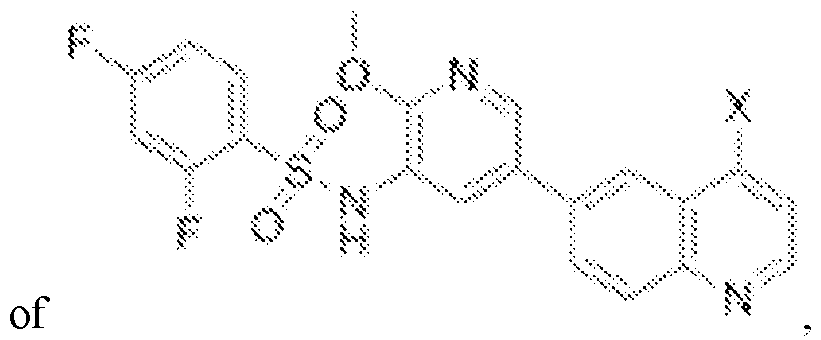
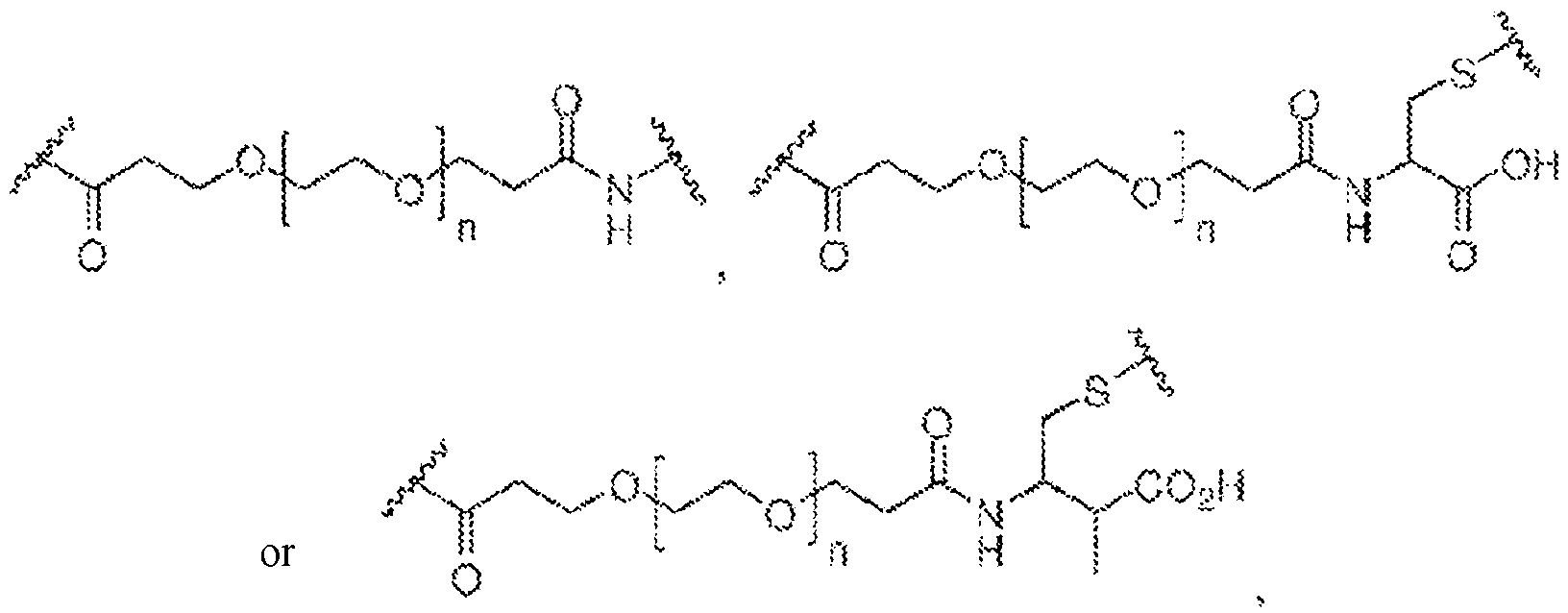
- the PI3k inhibitor can be a radical o wherein X is or comprises a structure selected from: . [0014] In certain embodiments, the PI3k inhibitor is a radical of . [0015] The PI3k inhibitor is a radical of (GSK1059615), or (BEZ235, NVP-BEZ235 or dactolisib). [0016] L of the conjugate can be or can comprise a moiety of the formula: , wherein n is an integer from 0 to 10. L can be or can comprise a moiety of the formula: , wherein n is an integer from 0 to 10. L can be or can comprise a moiety of the formula: .
- L can be or can comprise a moiety of the formula: wherein n is an integer from 0 to 20.
- L can be or can comprise a moiety of the formula: .
- L can be or can comprise a moiety of the formula: [0019]
- L can be or can comprise a moiety of the formula: wherein n is an integer from 0 to 20.
- L can be or can comprise a moiety of the formula: , wherein n is an integer from 0 to 20.
- L can be a linker that can be cleaved (e.g., under physiological conditions).
- L can be cleaved reductively, oxidatively, or enzymatically.
- L can comprise an oxime ester.
- L can comprise a hydrazone.
- L can comprise a peptide, a peptidoglycan, an alkyl, or a sugar.
- L can be or can comprise
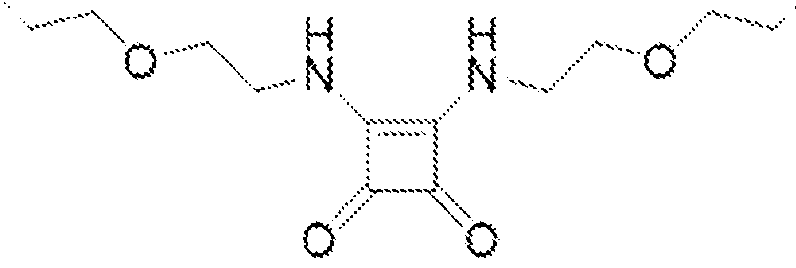
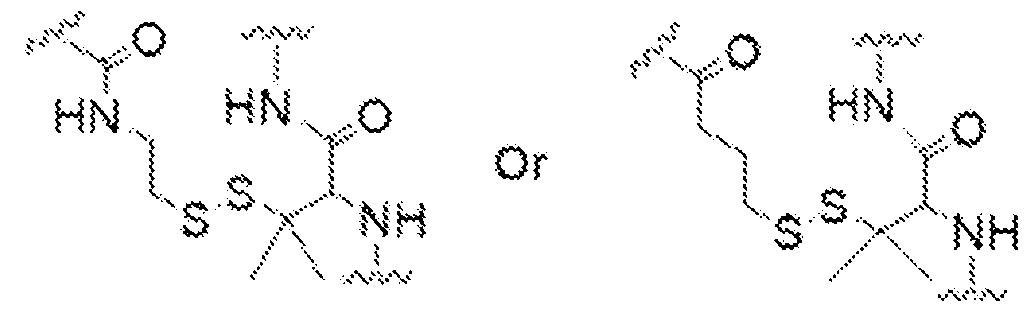
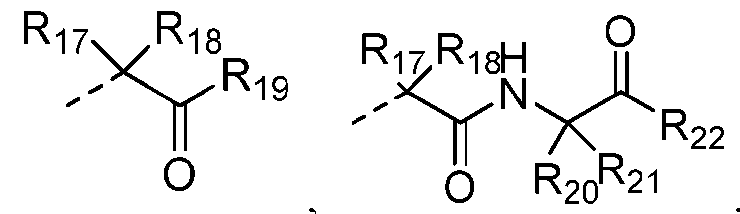
- L can be or comprise: wherein: R 27 and R 28 are each independently selected from the group consisting of H and C 1 -C 6 alkyl; and Z is an integer from 1 to 8. [0021] L can comprise the structure: wherein: R31 is H or C1-C6 alkyl; and R29a, R29b, R30a, and R30b are each independently selected from the group consisting of H and C1-C6 alkyl. [0022] The conjugate can be selected from:
- the conjugate can be selected from:
- the conjugate can be selected from:
- the conjugate of formula I can, in certain embodiments, further comprise a pharmacokinetic extender C (e.g., a radical of a pharmacokinetic extender C).
- the conjugate of formula I has the formula (II):
- A, B, and L of formula (II) can be or comprise any A, B, or L, respectively, described in connection with formula (I).
- C can be an albumin binder, a plasma protein binder, or a hapten.
- C can be an albumin binder, a plasma protein binder, or a hapten.
- the albumin binder can be or can comprise albumin binding domain 035 (ABD035), albumin binding domain Con (ABDCon), a designed ankyrin repeat protein (DARPin), a disulfide-stabilized Fv fragment (dsFv), an anti-albumin antibody CA645, an anti-human serum albumin nanobody, or variable new antigen receptor E06 (VNAR E06).
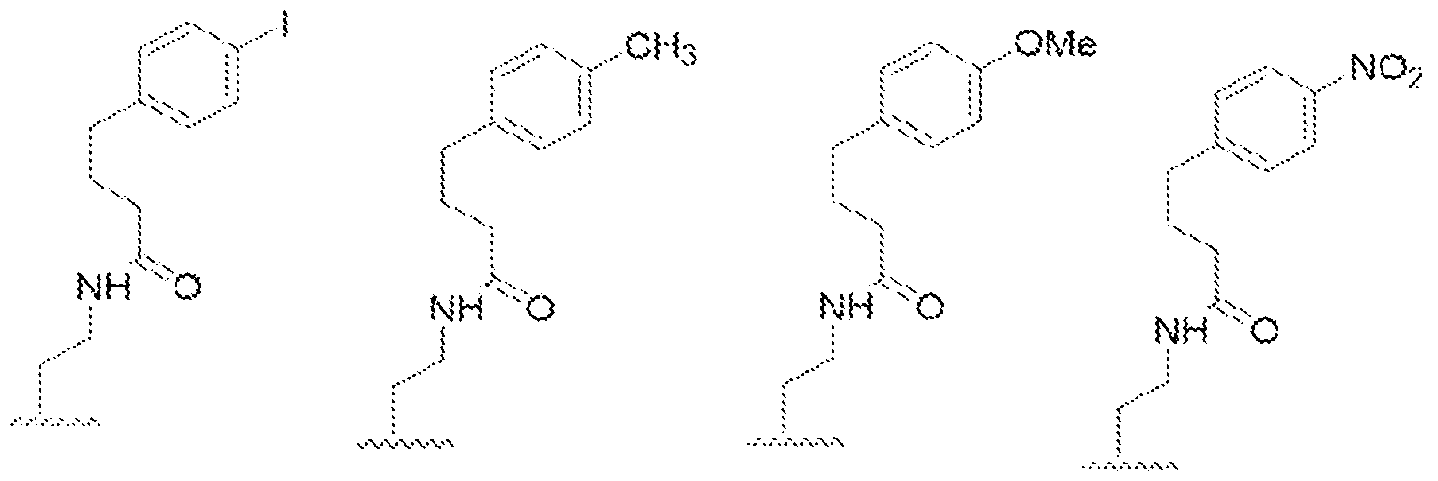
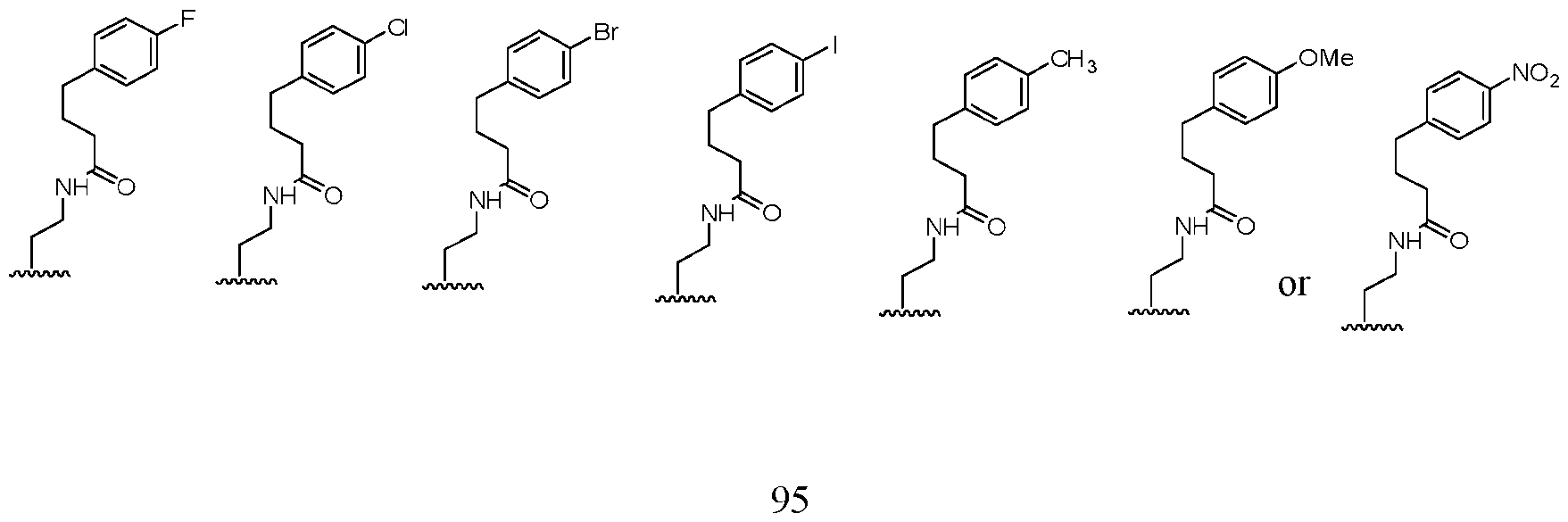
- C can be or can comprise any of the following structures:
- C can be or can comprise:
- C can be or can comprise: H .
- C can be or can comprise:
- the hapten can be recognized (or recognizable) by an autologous antibody.
- the hapten can be selected from the group consisting of rhamnose, an ⁇ -galactosyl moiety, a dinitrophenyl (DNP) moiety, and a trinitrophenyl (TNP) moiety.
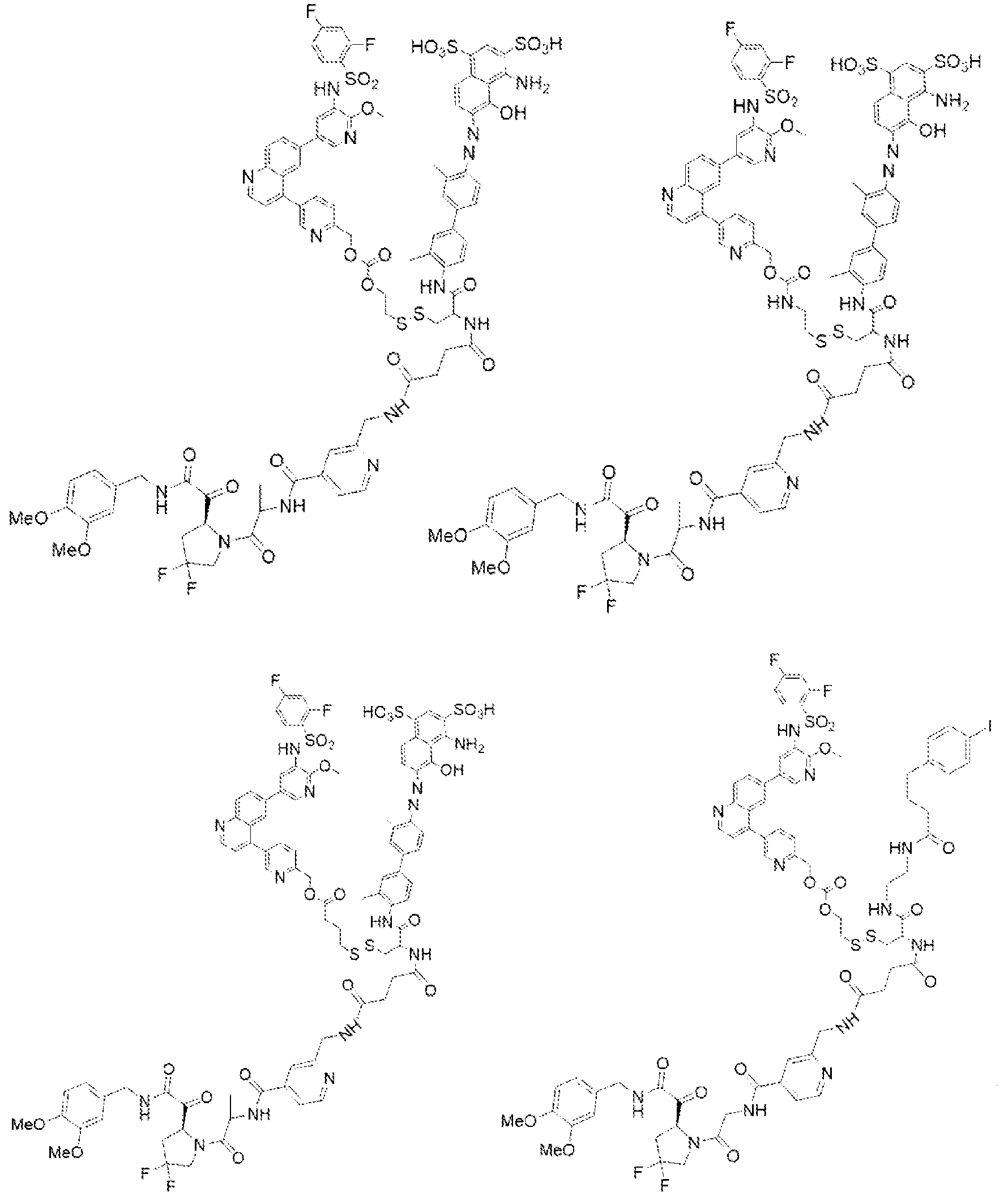
- the conjugate can have a structure selected from:
- L is or comprises at least one carbon atom, and p is 0-3.
- L can be or can comprise a moiety of the formula: , wherein n is an integer from 0 to 10.
- L can be or can comprise a moiety of the formula: , wherein n is an integer from 0 to 10.
- L can be or can comprise a moiety of the formula: [0031]
- L can be or can comprise a moiety of the formula: wherein n is an integer from 0 to 10.
- L can be or can comprise a moiety of the formula: .
- L can be or can comprise a moiety of the formula: [0032]
- L can be or can comprise a moiety of the formula: wherein n is an integer from 0 to 20.
- L can be or can comprise a moiety of the formula: wherein n is an integer from 0 to 20.
- L can be a linker that can be cleaved (e.g., under physiological conditions).
- L can be cleaved reductively, oxidatively, or enzymatically.
- L can comprise an oxime ester.
- L can comprise a hydrazone.
- L can comprise a peptide, a peptidoglycan, an alkyl, or a sugar.
- L can be or can comprise: .
- L can be or comprise a structure selected from: wherein: R 27 and R 28 are each independently selected from the group consisting of H and C 1 -C 6 alkyl; and Z is an integer from 1 to 8. [0034] L can comprise the structure: wherein: R31 is H or C1-C6 alkyl; and R 29a , R 29b , R 30a, and R 30b are each independently selected from the group consisting of H and C1-C6 alkyl. [0035] Still further provided is a conjugate having a structure selected from:
- conjugate hereof Uses of a conjugate hereof, or a stereoisomer or a pharmaceutically acceptable salt thereof, or optionally a pharmaceutical composition comprising an effective amount of such a conjugate, stereoisomer, or pharmaceutically acceptable salt thereof, in the manufacture of a medicament for the inhibition of the progression of fibrosis in a subject are also provided.
- the conjugate can be any conjugate hereof.
- the conjugate comprises an albumin binder, a plasma protein binder, or a hapten.
- the C can be an albumin binder that is or comprises albumin binding domain 035 (ABD035), albumin binding domain Con (ABDCon), a designed ankyrin repeat protein (DARPin), a disulfide-stabilized Fv fragment (dsFv), an anti-albumin antibody CA645, an anti-human serum albumin nanobody, or variable new antigen receptor E06 (VNAR E06).
- Methods are also provided for inhibiting the progression of fibrosis in a subject. Such am ethod can comprise administering to the subject an effective amount of a conjugate hereof, or a stereoisomer or a pharmaceutically acceptable salt thereof, whereupon the progression of fibrosis in the subject is inhibited or otherwise alleviated.
- FIG.1 is a synthesis scheme for conjugates hereof (further described in Example 1 below); and [0003] FIG.2 shows data from a liquid chromatography-mass spectrometry (LC-MS) analysis of conjugates hereof.
- LC-MS liquid chromatography-mass spectrometry
- Conjugates are provided that comprise a phosphatidylinositol-3-kinase (PI3K) inhibitor or a dual inhibitor of the PI3K/mTOR signaling pathway. Such conjugates can further comprise a linker and a FAP8 payload. In certain embodiments, the conjugates are useful for inhibiting progression of fibrosis in a subject. “Inhibiting” and its formatives means hindering, retarding, abrogating, or reversing the onset or progression of fibrosis or related symptoms.
- PI3K phosphatidylinositol-3-kinase
- the subject can be a human or a mammal of economic importance and/or social importance to humans, for instance, carnivores other than humans (e.g., cats and dogs), swine (e.g., pigs, hogs, and wild boars), ruminants (e.g., cattle, oxen, sheep, giraffes, deer, goats, bison, and camels), horses, and birds including those kinds of birds that are endangered and kept in zoos, and fowl, more particularly domesticated fowl, e.g., poultry, such as turkeys, chickens, ducks, geese, guinea fowl, and the like, as they are also of economic importance to humans.
- carnivores other than humans e.g., cats and dogs
- swine e.g., pigs, hogs, and wild boars
- ruminants e.g., cattle, oxen, sheep
- subject does not denote a particular age. Thus, adult, juvenile and newborn subjects are covered.
- subject, “ “individual” and “patient” may be used interchangeably herein.
- the subject is a mammal.
- the subject is a human.
- a method of treating fibrosis in a subject is also provided.
- the terms “treat,” “treatment,” and “treating” refer to any and all uses which remedy a condition or symptom, or otherwise prevent, hinder, retard, abrogate or reverse the onset or progression of fibrosis or other undesirable symptoms in any way whatsoever.
- the term “treating,” and the like is to be considered in its broadest possible context.
- treatment does not necessarily imply that a subject is treated until total recovery or cure.
- the treatment need not necessarily remedy, prevent, hinder, retard, abrogate or reverse all signs or symptoms, but can remedy, prevent, hinder, retard, abrogate or reverse one or more signs or symptoms.
- the method can comprise administering to the subject an effective amount of a conjugate hereof or a stereoisomer or pharmaceutically acceptable salt thereof, whereupon the subject is treated for fibrosis.
- the conjugate can be or comprise formula I or a stereoisomer or a pharmaceutically acceptable salt thereof, or a pharmaceutical composition comprising the conjugate of formula I Formula I can be or comprise: wherein A has the structure: wherein: a functionalized 5- to 10-membered N-containing aromatic or non-aromatic mono- or bi-cyclic heterocycle, which optionally further comprises 1-3 heteroatoms selected from O, N, and S; R 1 and R 2 are each independently selected from the group consisting of -H, -D - OH, -F, -Cl, -Br, -I, -C 1-6 alkyl, -O-C 1-6 alkyl, and -S-C 1-6 alkyl; R 3 and R 4 are each independently selected from the group consisting of -H, -OH, -F, -Cl, -Br, -I, -C 1-6 alkyl, -O-C 1-6 alkyl, and -S-C 1-6 alkyl;
- the conjugate can optionally be formulated as a pharmaceutical composition, for example, further comprising a pharmaceutically acceptable carrier.
- administering of the conjugate or composition to a subject means that the conjugate or composition is presented such that the conjugate can be transferred to the subject.
- the mode of administration can be by way of oral, parenteral (including subcutaneous, intradermal, intramuscular, intravenous, intracerebrally, intranasally, intrathecal, and intraspinal), inhalation (including nebulisation), topical, rectal or vaginal modes.
- the conjugate or composition can also be administered directly into a tumor and/or into tissue adjacent to one or more segments of a tumor or administered directly into blood vessels.
- the conjugate can be administered in, as appropriate, a treatment or diagnostic effective amount.
- a treatment or diagnostic effective amount is intended to include an amount which, when administered according to the desired dosing regimen, achieves a desired therapeutic or diagnostic effect, including one or more of: alleviating the symptoms of, preventing or delaying the onset of, inhibiting or slowing the progression of, diagnosing, or halting or reversing altogether the onset or progression of a particular condition being treated and/or assessed.
- the expressions “effective amount” and “therapeutically effective amount” mean the amount of conjugate when administered to a mammal, in particular a human, in need of such treatment, is sufficient to treat cancer.
- the precise amount of conjugate to be administered can be determined by a physician with consideration of individual differences in age, weight, tumor size, extent of infection or metastasis, and condition of the subject.
- Suitable dosage amounts and dosing regimens to achieve this can be determined by the attending physician and can depend on the particular condition being treated or diagnosed, the severity of the condition as well the general age, health and weight of the subject.
- Dosing can occur at intervals of minutes, hours, days, weeks, months or years or continuously over any one of these periods.
- Suitable dosages of the particulate material per se can lie within the range of about 0.1 ng per kg of body weight to 1 g per kg of body weight per dosage.
- the dosage can be in the range of 1 ⁇ g to 1 g per kg of body weight per dosage, such as is in the range of 1 mg to 1 g per kg of body weight per dosage.
- the dosage can be in the range of 1 mg to 500 mg per kg of body weight per dosage.
- the dosage can be in the range of 1 mg to 400 mg per kg of body weight per dosage.
- the dosage can be in the range of 1 mg to 350 mg per kg of body weight per dosage.
- the dosage can be in the range of 1 mg to 300 mg per kg of body weight per dosage.
- the dosage can be in the range of 1 mg to 275 mg per kg of body weight per dosage. In another embodiment, the dosage can be in the range of 1 mg to 250 mg per kg of body weight per dosage. In another embodiment, the dosage can be in the range of 1 mg to 200 mg per kg of body weight per dosage. In another embodiment, the dosage can be in the range of 1 mg to 150 mg per kg of body weight per dosage. In yet another embodiment, the dosage can be in the range of 1 mg to 100 mg per kg of body weight per dosage, such as up to 50 mg per body weight per dosage. All ranges set forth in this paragraph are inclusive of their stated end points and all 1 mg increments encompassed thereby.
- Conjugates or compositions can be administered in a single dose or a series of doses.
- L can be attached to A at any carbon atom of the functionalized 5- to 10-membered N-containing aromatic or non-aromatic mono- or bi-cyclic heterocycle, a 1° amine, a 2° amine, a functionalized alkyl, or a functionalized cycloalkyl.
- each R 2 is selected from the group consisting of -H, -D, -OH, -F, -Cl, -Br, I, -C 1-6 alkyl, -O-C 1-6 alkyl, and -S-C 1-6 alkyl;
- R3 and R4 are each independently selected from the group consisting of -H, -OH, -F, -Cl, -Br, -I, -C 1-6 alkyl, -O-C 1-6 alkyl, and -S-C 1-6 alkyl;
- R5 and R6 are each independently selected from the group consisting of -H, -OH, -F, -Cl, -Br, -I, -C 1-6 alkyl, -O-C 1-6 alkyl, and -S-C 1-6 alkyl;
- PI3k kinases are members of a unique and conserved family of intracellular lipid kinases that can phosphorylate the 3'-OH group on phosphatidylinositols or phosphoinositides.
- PI3k kinases are key signaling enzymes that rcan relay signals from cell surface receptors to downstream effectors.
- the PI3k signaling pathway can be highly mutated in human cancers, and PI3k signaling can be a key factor in disease states including inflammatory disease states and fibrosis.
- Downstream mediators of the PI3k signal transduction pathway include Akt and mammalian target of rapamycin (mTOR).
- mTOR is a serine-threonine kinase related to the lipid kinases of the PI3k family and has been implicated in a wide range of biological processes including cell growth, cell proliferation, cell motility and survival. Disregulation of the mTOR pathway can occur in various disease states, including cancer.
- B of formula I can be or comprise a PI3k inhibitor or a dual PI3k/mTOR inhibitor, or a radical of a PI3k inhibitor or a radical of a dual PI3k/mTOR inhibitor.
- the PI3k/mTOR inhibitor can be or comprise a compound selected from: [0052]
- the PI3k inhibitor can be a radical o wherein X is or comprises a structure selected from: .
- the PI3k inhibitor is a radical of .
- the PI3k inhibitor is a radical o
- L of the conjugates can be a bifunctional or trifunctional linker.
- L of the conjugates can be a linker that can be cleaved or a “releasable” linker.
- L of the compounds hereof can be a non- releasable linker.
- the term “releasable linker” is a linker that includes at least one bond that can be broken or cleaved under physiological conditions, such as reductive, acidic, basic, oxidative, metabolic, biochemical, enzymatic (e.g., cathepsin B-cleavable), or other conditions (e.g., p-aminobenzylic- based multivalent releasable bond (see, e.g., International Patent Application Publication Number WO 2017/0205661)).
- a “releasable linker” is a linker that can be cleaved to varying degrees under certain conditions and, in particular, can be fragmented or cleaved in less than about 1 week when under, or otherwise exposed to, certain metabolic, physiological, or cellular conditions that can initiate a cascade of fragmentation or bond cleavage (which may, for example, result in the release of one or more moieties connected through one or more portions of the linker (e.g., A and B)).
- Bond cleavage can occur by standard chemical hydrolysis reactions that occur, for example, at physiological pH, or as a result of compartmentalization into a cellular organelle such as an endosome having a lower pH than cytosolic pH.
- Bond cleavage can also occur by acid catalyzed elimination. Alternatively, fragmentation can be initiated by a nucleophilic attack on a disulfide group of the quick-release linker, causing cleavage to form a thiolate, for example. In any of these cases, the quick-release nature of such linkers can be realized by whatever mechanism may be relevant to the chemical, metabolic, physiological, or biological conditions present.
- a releasable linker comprises one or more sulfide bridges.
- a non-releasable linker means a linker that includes at least one bond that is not easily or quickly broken (i.e.
- the bond does not cleave) and, while potentially cleavable or fragmentable to varying degrees under certain conditions, does not cleave, fragment, or otherwise release one or more of the moieties connected through one or more portions of the linker (e.g., A and B) when subjected to certain metabolic, physiological, or cellular conditions that may initiate a cascade of fragmentation (e.g., after administration to a subject) for more than about 1 week (e.g., 1 week), more than about 1 month (e.g., 1 month), more than about 4 months (e.g., 4 months), more than about 6 months (e.g., 6 months), or more than about 1 year (e.g., 1 year).
- the linker e.g., A and B
- a non-releasable linker comprises one or more amides, esters, ethers, amines, or thioethers (e.g., thio-maleimide), for example.
- the linker comprises an ester, phosphate, oxime, acetal, pyrophosphate, polyphosphate, disulfide, sulfate, hydrazide, imine, carbonate, carbamate or enzyme-cleavable amino acid sequence.
- L can comprise an oxime ester.
- L can comprise a hydrazone.
- L can comprise polyethylene glycol (PEG).
- L can comprise a peptide, a peptidoglycan, an alkyl, or a sugar.
- the linker(s) can comprise a self-immolative disulfide group.
- An example of a self- immolative disulfide also includes a sterically protected disulfide bond.
- the steroid can be attached to the linker via any other suitable self-immolative bond, including via a self-immolative cathepsin cleavable amino acid sequence; via a self-immolative furin cleavable amino acid sequence; via a self-immolative ⁇ -glucuronidase cleavable moiety; via a self-immolative phosphatase cleavable moiety; or via a self-immolative sulfatase cleavable moiety. Multiple self- immolative linkages are also contemplated. [0058] In some embodiments, the linker comprises a self-immolative moiety.
- the linker comprises a self-immolative disulfide and or sterically protected disulfide bond. In some embodiments, the linker comprises a self-immolative cathepsin-cleavable amino acid sequence. In some embodiments, the linker comprises a self-immolative furin-cleavable amino acid sequence. In some embodiments, the linker comprises a self-immolative ⁇ - glucuronidase-cleavable moiety. In some embodiments, the linker comprises a self-immolative phosphatase-cleavable moiety. In some embodiments, the linker comprises a self-immolative sulfatase-cleavable moiety.
- the linker comprises a phosphate or pyrophosphate group. In some embodiments, the linker comprises a cathepsin B cleavable group. In some embodiments, the cathepsin B cleavable group is Valine-Citrulline. In some embodiments, the linker comprises a carbamate moiety. In some embodiments, the linker comprises a ⁇ -glucuronide.
- L comprises one or more spacer linkers (e.g., S 1 ). Spacer linkers can be hydrophilic spacer linkers comprising a plurality of hydroxyl functional groups. A spacer can comprise any stable arrangement of atoms.
- Each spacer can be independently selected from the group consisting an amide, ester, urea, carbonate, carbamate, disulfide, amino acid, amine, ether, alkyl, alkene, alkyne, heteroalkyl (e.g., PEG), cycloakyl, aryl, heterocycloalkyl, heteroaryl, carbohydrate, glycan, peptidoglycan, polypeptide, or any combination thereof.
- a spacer comprises any one or more of the following units: an amide, ester, urea, carbonate, carbamate, disulfide, amino acid, amine, ether, alkyl, alkene, alkyne, heteroalkyl (e.g., PEG), cycloakyl, aryl, heterocycloalkyl, heteroaryl, carbohydrate, glycan, peptidoglycan, polypeptide, or any combination thereof.
- a spacer comprises one or more monosaccharide, disaccharide, polysaccharide, glycan, or peptidoglycan.
- a spacer comprises a releasable moiety (e.g., a disulfide bond, an ester, or other moieties that can be cleaved in vivo).
- a spacer comprises one or more units such as ethylene (e.g., polyethylene), ethylene glycol (e.g., PEG), ethanolamine, ethylenediamine, and the like (e.g., propylene glycol, propanolamine, propylenediamine).
- a spacer comprises an oligoethylene, PEG, alkyl chain, oligopeptide, polypeptide, rigid functionality, peptidoglycan, oligoproline, oligopiperidine, or any combination thereof.
- a spacer comprises an oligoethylene glycol or a PEG.
- a spacer can comprise an oligoethylene glycol.
- a spacer comprises a PEG.
- a spacer comprises an oligopeptide or polypeptide.
- a spacer comprises an oligopeptide.
- a spacer comprises a polypeptide.
- a spacer comprises a peptidoglycan.
- a spacer does not comprise a glycan. In some embodiments, a spacer does not comprise a sugar. In some embodiments, a rigid functionality is an oligoproline or oligopiperidine. In some embodiments, a rigid functionality is an oligoproline. In some embodiments, a rigid functionality is an oligopiperidine. In some embodiments, a rigid functionality is an oligophenyl. In some embodiments, a rigid functionality is an oligoalkyne.
- an oligoproline or oligopiperidine has about two up to and including about fifty, about two to about forty, about two to about thirty, about two to about twenty, about two to about fifteen, about two to about ten, or about two to about six repeating units (e.g., prolines or piperidines).
- L can be or can comprise a moiety of the formula: , wherein n is an integer from 0 to 10.
- L can be or can comprise a moiety of the formula: , .
- L can be or can comprise a moiety of the formula: wherein n is an integer from 0 to 20.
- L can comprise a peptide, a peptidoglycan, an alkyl, or a sugar.
- L can be or can comprise .
- L can comprise a structure selected from: wherein: R27 and R28 are each independently selected from the group consisting of H and C1-C6 alkyl; and Z is an integer from 1 to 8.
- L can comprise the structure: wherein: R 31 is H or C 1 -C 6 alkyl; and R29a, R29b, R30a, and R30b are each independently selected from the group consisting of H and C 1 -C 6 alkyl.
- the conjugate can be selected from: [0068]
- the conjugate can be selected from:
- the conjugate can be selected from: .
- the conjugate of formula I further comprises a pharmacokinetic extender C and has the formula (II): .
- C can be an albumin binder, a plasma protein binder, or a hapten.
- the albumin binder can be or can comprise albumin binding domain 035 (ABD035), albumin binding domain Con (ABDCon), a designed ankyrin repeat protein (DARPin), a disulfide- stabilized Fv fragment (dsFv), an anti-albumin antibody CA645, an anti-human serum albumin nanobody, or variable new antigen receptor E06 (VNAR E06).
- C can be or can comprise: .
- C can be or can comprise:
- C can be or can comprise: .
- H C can be or can comprise: .
- C can be or can comprise: .
- the hapten is recognized by an autologous antibody. The hapten can be selected from the group consisting of rhamnose, an ⁇ -galactosyl moiety, a dinitrophenyl (DNP) moiety, and a trinitrophenyl (TNP) moiety.
- the conjugate can have a structure selected from:
- L comprises at least one carbon atom; and p is 0-3.
- L can be or can comprise a moiety of the formula: , wherein n is an integer from 0 to 10.
- L can be or can comprise a moiety of the formula: , wherein n is an integer from 0 to 10.
- L can be or can comprise a moiety of the formula: [0076]
- L can be or can comprise a moiety of the formula: wherein n is an integer from 0 to 10.
- L can be or can comprise a moiety of the formula: .
- L can be or can comprise a moiety of the formula: [0077]
- L can be or can comprise a moiety of the formula: wherein n is an integer from 0 to 20.
- L can be or can comprise a moiety of the formula: wherein n is an integer from 0 to 20.
- L can be a linker that can be cleaved (e.g., under physiological conditions).
- L can be cleaved reductively, oxidatively, or enzymatically.
- L can comprise an oxime ester.
- L can comprise a hydrazone.
- L can comprise a peptide, a peptidoglycan, an alkyl, or a sugar.
- L can be or can comprise: .
- L can comprise a structure selected from: wherein: R27 and R28 are each independently selected from the group consisting of H and C1-C6 alkyl; and Z is an integer from 1 to 8.
- L can comprise the structure: wherein: R31 is H or C1-C6 alkyl; and R 29a , R 29b , R 30a, and R 30b are independently selected from the group consisting of H and C1-C6 alkyl.
- the conjugate can have a structure selected from:
- the conjugates can be synthesized as described herein or otherwise by one of ordinary skill in the art having the benefit of this disclosure via standard synthesis methods generally known in the art using commercially available starting materials and reagents.
- the conjugate (or stereoisomer or pharmaceutical salt therof) can be formulated into a pharmaceutical composition.
- the pharmaceutical composition can comprise any conjugate hereof and a pharmaceutically acceptable carrier, such as a composition comprising a conjugate dispersed in a pharmaceutically acceptable liquid carrier.
- the pharmaceutical composition can comprise a plurality of conjugates and a pharmaceutically acceptable carrier.
- the composition is suitable for administration to a subject for diagnostic, mapping, and/or therapeutic applications.
- Liquids within which the conjugate may be dispersed include a carrier liquid or an in vivo liquid.
- the conjugate being “dispersed” throughout or in a liquid is meant that the conjugate presents as a dispersed phase within the liquid which itself, relative to the conjugate, presents as a continuous liquid medium or phase.
- liquid in the context of a liquid carrier is intended to mean a vehicle in which the conjugate is dispersed and which is in a liquid state at least at the temperature of intended use.
- a liquid carrier used in accordance with the invention can be made up of one or more different liquids.
- Suitable pharmacologically acceptable liquid carriers are described in Martin, Remington's Pharmaceutical Sciences, 18 th Ed., Mack Publishing Co., Easton, PA, (1990), and include, but are not limited to, liquids that may be sterilized, such as water and oils, including those of petroleum, animal, vegetable, mineral or synthetic origin, such as peanut oil, soya bean oil, mineral oil, sesame oil, and the like.
- Other liquid carriers include methylene glycol, propylene glycol, polyethylene glycol, polypropylene glycol, ethanol, isopropyl alcohol, and benzyl alcohol.
- the conjugate can be taken up by a subject in vivo, for example, when the conjugate is administered orally or parenterally.
- a liquid carrier originally carrying the conjugate can become so dilute in vivo that the surrounding liquid environment throughout which the conjugate is dispersed becomes more representative of an in vivo liquid (i.e., a biological liquid/fluid within the subject) than the original liquid carrier.
- the conjugate might more aptly be described as being dispersed throughout blood rather than an original liquid carrier.
- compositions can comprise one or more pharmacologically acceptable additives known to those in the art.
- the liquid carrier may comprise one or more additives such as wetting agents, de-foaming agents, surfactants, buffers, electrolytes, preservatives, colourings, flavourings, and sweeteners.
- additives such as wetting agents, de-foaming agents, surfactants, buffers, electrolytes, preservatives, colourings, flavourings, and sweeteners.
- suitable liquid carrier and additive can be selected for the intended application of the composition.
- conjugate or compositions are suitable for parenteral administration, they will generally be in the form of an aqueous or non-aqueous isotonic sterile injection solution that may contain one or more of an anti-oxidant, buffer, bactericide or solute which renders the composition isotonic with the blood of the intended subject.
- Such compositions can be presented in unit-dose or multi-dose sealed containers, for example, ampoules and vials.
- the term "about” or “approximately” means within an acceptable range for the particular value as determined by one of ordinary skill in the art, which will depend in part on how the value is measured or determined, e.g., the limitations of the measurement system.
- “about” can mean a range of up to 20%, preferably up to 10%, more preferably up to 5%, and more preferably still up to 1% of a given value.
- the term can mean within an order of magnitude, preferably within 5-fold, and more preferably within 2-fold, of a value.
- the term “about” means within an acceptable error range for the particular value, such as ⁇ 1-20%, preferably ⁇ 1-10% and more preferably ⁇ 1-5%.
- Alkyl generally refers to a straight or branched hydrocarbon chain radical consisting solely of carbon and hydrogen atoms, such as having from one to fifteen carbon atoms (e.g., C 1 - C15 alkyl). "Alkyl” is intended to include independent recitations of a saturated “alkyl, " unless otherwise stated. An alkyl can comprise one to thirteen carbon atoms (e.g., C 1 -C 13 alkyl). An alkyl can comprise one to eight carbon atoms (e.g., C1-C8 alkyl). An alkyl can comprise one to five carbon atoms (e.g., C 1 -C 5 alkyl).
- An alkyl can comprise one to four carbon atoms (e.g., C 1 - C4 alkyl).
- An alkyl can comprise one to three carbon atoms (e.g., C1-C3 alkyl).
- An alkyl can comprise one to two carbon atoms (e.g., C 1 -C 2 alkyl).
- An alkyl can comprise one carbon atom (e.g., C1 alkyl).
- An alkyl can comprise five to fifteen carbon atoms (e.g., C5-C15 alkyl).
- An alkyl can comprise five to eight carbon atoms (e.g., C 5 -C 8 alkyl).
- An alkyl can comprise two to five carbon atoms (e.g., C2-C5 alkyl).
- An alkyl can comprise three to five carbon atoms (e.g., C3-C5 alkyl).
- the alkyl group is selected from methyl, ethyl, 1-propyl (n- propyl), 1-methylethyl (iso-propyl), 1-butyl (n-butyl), 1-methylpropyl (sec-butyl), 2- methylpropyl (iso-butyl), 1,1-dimethylethyl (tert-butyl), 1-pentyl (n-pentyl).
- the alkyl is attached to the rest of the molecule by a single bond.
- Alkoxy refers to a radical bonded through an oxygen atom of the formula –O-alkyl, where alkyl is an alkyl chain as defined above.
- Alkylene or “alkylene chain” generally refers to a straight or branched divalent alkyl group linking the rest of the molecule to a radical group, such as having from one to twelve carbon atoms, for example, methylene, ethylene, propylene, i-propylene, n-butylene, and the like.
- Aryl refers to a radical derived from an aromatic monocyclic or multicyclic hydrocarbon ring system by removing a hydrogen atom from a ring carbon atom.
- the aromatic monocyclic or multicyclic hydrocarbon ring system contains only hydrogen and from five to eighteen carbon atoms, where at least one of the rings in the ring system is fully unsaturated, i.e., it contains a cyclic, delocalized (4n+2) ⁇ –electron system in accordance with the Hückel theory.
- the ring systems from which aryl groups are derived include, but are not limited to, benzene, fluorene, indane, indene, tetralin and naphthalene.
- alkyl or "aryl-alkyl” refers to a radical of the formula -R c -aryl, where R c is an alkylene chain as defined above, for example, methylene, ethylene, and the like. The alkylene chain part of the aralkyl radical is optionally substituted as described above for an alkylene chain.
- Carbocyclyl or “cycloalkyl” refers to a stable non-aromatic monocyclic or polycyclic hydrocarbon radical consisting solely of carbon and hydrogen atoms, which includes fused or bridged ring systems, having from three to fifteen carbon atoms. A carbocyclyl can comprise three to ten carbon atoms.
- a carbocyclyl can comprise five to seven carbon atoms.
- the carbocyclyl is attached to the rest of the molecule by a single bond.
- Carbocyclyl or cycloalkyl is saturated (i.e., containing single C-C bonds only) or unsaturated (i.e., containing one or more double bonds or triple bonds).
- saturated cycloalkyls include, e.g., cyclopropyl, cyclobutyl, cyclopentyl, cyclohexyl, cycloheptyl, and cyclooctyl.
- An unsaturated carbocyclyl is also referred to as "cycloalkenyl.
- Examples of monocyclic cycloalkenyls include, e.g., cyclopentenyl, cyclohexenyl, cycloheptenyl, and cyclooctenyl.
- Polycyclic carbocyclyl radicals include, for example, adamantyl, norbornyl (i.e., bicyclo[2.2.1]heptanyl), norbornenyl, decalinyl, 7,7-dimethyl-bicyclo[2.2.1]heptanyl, and the like.
- Carbocyclylalkyl refers to a radical of the formula –R c -carbocyclyl, where R c is an alkylene chain as defined above.
- Halo or “halogen” refers to a bromo, chloro, fluoro or iodo substituent.
- Haloalkyl refers to an alkyl radical, as defined above, that is substituted by one or more halogen radicals, as defined above, for example, trifluoromethyl, difluoromethyl, fluoromethyl, 2,2,2-trifluoroethyl, 1-fluoromethyl-2-fluoroethyl, and the like.
- heteroalkyl refers to an alkyl group as defined above in which one or more skeletal carbon atoms of the alkyl are substituted with a heteroatom (with the appropriate number of substituents or valencies – for example, -CH 2 - may be replaced with -NH- or -O-).
- each substituted carbon atom is independently substituted with a heteroatom, such as wherein the carbon is substituted with a nitrogen, oxygen, selenium, or other suitable heteroatom.
- each substituted carbon atom is independently substituted for an oxygen, nitrogen (e.g.
- a heteroalkyl is attached to the rest of the molecule at a carbon atom of the heteroalkyl.
- a heteroalkyl is attached to the rest of the molecule at a heteroatom of the heteroalkyl.
- a heteroalkyl is a C 1 -C 18 heteroalkyl.
- a heteroalkyl is a C 1 -C 12 heteroalkyl.
- a heteroalkyl is a C1-C6 heteroalkyl.
- a heteroalkyl is a C1-C4 heteroalkyl.
- Heteroalkyl can include alkoxy, alkoxyalkyl, alkylamino, alkylaminoalkyl, aminoalkyl, heterocycloalkyl, heterocycloalkyl, and heterocycloalkylalkyl, as defined herein.
- Heteroalkylene refers to a divalent heteroalkyl group defined above which links one part of the molecule to another part of the molecule.
- Heterocyclyl refers to a stable 3- to 18-membered non-aromatic ring radical that can comprise two to twelve carbon atoms and from one to six heteroatoms selected from nitrogen, oxygen and sulfur.
- the heterocyclyl radical is a monocyclic, bicyclic, tricyclic or tetracyclic ring system, which optionally includes aromatic, fused, and/or bridged ring systems.
- the heteroatoms in the heterocyclyl radical are optionally oxidized.
- the heterocyclyl radical is partially or fully saturated.
- Heterocyclyl is intended to include independent recitations of heterocyclyl comprising aromatic and non-aromatic ring structures, unless otherwise stated.
- the heterocyclyl is attached to the rest of the molecule through any atom of the ring(s).
- heterocyclyl radicals include, but are not limited to, dioxolanyl, thienyl[1,3]dithianyl, decahydroisoquinolyl, imidazolinyl, 1,3-benzodioxolyl, 1,4-benzodioxanyl, tetrahydroquinolinyl, 5,6,7,8-tetrahydroquinazolinyl, 5,6,7,8-tetrahydrobenzo[4,5]thieno[2,3-d]pyrimidinyl, 6,7,8,9-tetrahydro-5H-cyclohepta[4,5]thieno[2,3-d]pyrimidinyl, 5,6,7,8-tetrahydropyrido[4,5-c]pyridazinyl, indolinyl, isoindolinyl, imidazolidinyl, isothiazolidinyl, isoxazolidinyl, morpholinyl
- N-heterocyclyl or “N-attached heterocyclyl” refers to a heterocyclyl radical as defined above containing at least one nitrogen and where the point of attachment of the heterocyclyl radical to the rest of the molecule is through a nitrogen atom in the heterocyclyl radical.
- N-heterocyclyl radicals include, but are not limited to, 1-morpholinyl, 1-piperidinyl, 1- piperazinyl, 1-pyrrolidinyl, pyrazolidinyl, imidazolinyl, and imidazolidinyl.
- Heteroaryl refers to a radical derived from a 3- to 18-membered aromatic ring radical that can comprise two to seventeen carbon atoms and from one to six heteroatoms selected from nitrogen, oxygen and sulfur.
- the heteroaryl radical is a monocyclic, bicyclic, tricyclic or tetracyclic ring system, wherein at least one of the rings in the ring system is fully unsaturated, i.e., it contains a cyclic, delocalized (4n+2) ⁇ –electron system in accordance with the Hückel theory.
- Heteroaryl includes fused or bridged ring systems.
- the heteroatom(s) in the heteroaryl radical is optionally oxidized.
- the conjugates can contain one or more asymmetric centers and thus give rise to enantiomers, diastereomers, and other stereoisomeric forms that are defined, in terms of absolute stereochemistry, as (R)- or (S)-. Unless stated otherwise, it is intended that all stereoisomeric forms of the compounds are contemplated. When the conjugates contain alkene double bonds, and unless specified otherwise, it is intended that this disclosure includes both E and Z geometric isomers (e.g., cis or trans). Likewise, all possible isomers, as well as their racemic and optically pure forms, and all tautomeric forms are also intended to be included.
- geometric isomer refers to E or Z geometric isomers (e.g., cis or trans) of an alkene double bond.
- positional isomer refers to structural isomers around a central ring, such as ortho-, meta-, and para- isomers around a benzene ring. Further, it is understood that replacement of one or more hydrogen atoms with deuterium can significantly lower the rate of metabolism of a drug and, therefore, increase its half-life.
- Clause A A method of treating fibrosis in a subject, which method comprises administering to the subject an effective amount of a conjugate of formula I, a stereoisomer or a pharmaceutically acceptable salt thereof, or a pharmaceutical composition comprising an effective amount of a conjugate of formula I, wherein formula I is: wherein A has the structure: wherein: represents a functionalized 5- to 10-membered N-containing aromatic or non-aromatic mono- or bi-cyclic heterocycle, which optionally further comprises 1-3 heteroatoms selected from O, N, and S; R1 and R2 are each independently selected from the group consisting of -H, -D - OH, -F, -Cl, -Br, -I, -C 1-6 alkyl, -O-C 1-6 alkyl, and -S-C
- Clause B The method of Clause A, wherein L is attached to A at any carbon atom of the functionalized 5- to 10-membered N-containing aromatic or non-aromatic mono- or bi-cyclic heterocycle, a 1° amine, a 2° amine, a functionalized alkyl, or a functionalized cycloalkyl.
- Clause C The method of Clause A, wherein L is attached to A at any carbon atom of the functionalized 5- to 10-membered N-containing aromatic or non-aromatic mono- or bi-cyclic heterocycle, a 1° amine, a 2° amine, a functionalized alkyl, or a functionalized cycloalkyl.
- each R2 is selected from the group consisting of -H, -D, -OH, -F, -Cl, -Br, I, -C 1-6 alkyl, -O-C 1-6 alkyl, and -S-C 1-6 alkyl
- R3 and R4 are each independently selected from the group consisting of -H, -OH, -F, -Cl, -Br, -I, -C 1-6 alkyl, -O-C 1-6 alkyl, and -S-C 1-6 alkyl
- R 5 and R 6 are each independently selected from the group consisting of -H, -OH, -F, -Cl, -Br, -I, -C 1-6 alkyl, -O-C 1-6 alkyl, and -S-C 1-6 alkyl
- R 7 is selected from the group consisting of H, D,
- Clause D The method of any of the foregoing Clauses, wherein the PI3k inhibitor or the PI3k/mTOR inhibitor is a radical of any one of the following structures:
- Clause E The method of any one of the foregoing Clauses, wherein L is or comprises a moiety of the formula: , wherein n is an integer from 0 to 10.
- Clause F The method of any one of the foregoing Clauses, where L is or comprises a moiety of the formula: , wherein n is an integer from 0 to 10.
- Clause G The method of any one of the foregoing Clauses, wherein L is or comprises a moiety of the formula: [0119] Clause H.
- Clause K The method of any one of the foregoing Clauses, wherein L is or comprises a moiety of the formula: wherein n is an integer from 0 to 20.
- Clause L The method of any one of the foregoing Clauses, wherein L is or comprises a moiety of the formula: , wherein n is an integer from 0 to 20.
- Clause M The method of Clause A, wherein L is a linker that can be cleaved under physiological conditions.
- Clause N The method of Clause M, wherein L can be cleaved reductively, oxidatively, or enzymatically.
- Clause O The method of any one of the foregoing Clauses, wherein L is or comprises a moiety of the formula: wherein n is an integer from 0 to 20.
- Clause T The method of any one of the foregoing Clauses, wherein L comprises a structure selected from a group consisting of: , wherein: R 27 and R 28 are each independently selected from the group consisting of H and C 1 -C 6 alkyl; and Z is an integer from 1 to 8.
- Clause U The method of any one of the foregoing Clauses, wherein L comprises the structure: wherein: R 31 is H or C 1 -C 6 alkyl; and R29a, R29b, R30a, and R30b are each independently selected from the group consisting of H and C 1 -C 6 alkyl.
- Clause V The method of Clause A, wherein the conjugate is selected from: [0134] Clause W. The method of Clause A, wherein the conjugate is selected from: . [0135] Clause X. The method of Clause A, wherein the conjugate is selected from: . [0136] Clause Y. The method of Clause A, wherein the conjugate of formula I further comprises a pharmacokinetic extender C and has the formula (II): [0137] Clause Z. The method of Clause Y, wherein C is an albumin binder, a plasma protein binder, or a hapten. [0138] Clause AA.
- Clauses Y or Z wherein C is an albumin binder that is or comprises albumin binding domain 035 (ABD035), albumin binding domain Con (ABDCon), a designed ankyrin repeat protein (DARPin), a disulfide-stabilized Fv fragment (dsFv), an anti- albumin antibody CA645, an anti-human serum albumin nanobody, or variable new antigen receptor E06 (VNAR E06).
- C is an albumin binder that is or comprises albumin binding domain 035 (ABD035), albumin binding domain Con (ABDCon), a designed ankyrin repeat protein (DARPin), a disulfide-stabilized Fv fragment (dsFv), an anti- albumin antibody CA645, an anti-human serum albumin nanobody, or variable new antigen receptor E06 (VNAR E06).
- Clause BB The method of any one of Clauses Y-AA, wherein C is or comprises: .
- Clause CC The method of any one of Clauses
- Clause Z wherein the hapten is recognized by an autologous antibody.
- Clause KK The method of Clause Z, wherein the hapten is selected from the group consisting of rhamnose, an ⁇ -galactosyl moiety, a dinitrophenyl (DNP) moiety, and a trinitrophenyl (TNP) moiety.
- Clause LL wherein L is or comprises a moiety of the formula: wherein n is an integer from 0 to 10.
- Clause QQ The method of Clause LL, wherein L is or comprises a moiety of the formula: .
- Clause RR The method of Clause LL, wherein L is or comprises a moiety of the formula:
- Clause SS The method of Clause LL, wherein L is or comprises a moiety of the formula: wherein n is an integer from 0 to 20.
- Clause TT The method of Clause LL, wherein L is or comprises a moiety of the formula: , wherein n is an integer from 0 to 20.
- Clause UU The method of Clause LL, wherein L is a linker that can be cleaved under physiological conditions.
- Clause VV The method of Clause UU, wherein L can be cleaved reductively, oxidatively, or enzymatically.
- Clause WW The method of Clause UU, wherein L can be cleaved reductively, oxidatively, or enzymatically.
- Clause LL The method of Clause LL, wherein L comprises an oxime ester.
- Clause XX The method of Clause LL, wherein L comprises a hydrazone.
- Clause ZZ The method of Clause LL, wherein L comprises a peptide, a peptidoglycan, an alkyl, or a sugar.
- Clause AAA The method of Clause LL, wherein L is or comprises: .
- Clause BBB Clause BBB.
- Clause LL wherein L is or comprises a structure selected from: , wherein: R 27 and R 28 are each independently selected from the group consisting of H and C 1 -C 6 alkyl; and Z is an integer from 1 to 8.
- Clause CCC The method of Clause LL, wherein L comprises the structure: wherein: R31 is H or C1-C6 alkyl; and R 29a , R 29b , R 30a, and R 30b are independently selected from the group consisting of H and C1-C6 alkyl.
- Clause DDD The method of Clause LL, wherein the conjugate is selected from:
- conjugate of formula I is: wherein A has the structure: wherein: represents a functionalized 5- to 10-membered N-containing aromatic or non-aromatic mono- or bi-cyclic heterocycle, which optionally further comprises 1-3 heteroatoms selected from O, N, and S; R1 and R2 are each independently selected from the group consisting of -H, -D - OH, -F, -Cl, -Br, -I, -C 1-6 alkyl, -O-C 1-6 alkyl, and -S-C 1-6 alkyl; R3 and R4 are each independently selected from the group consisting of -H, -OH,
- Clause FFF The use of Clause EEE, wherein the conjugate of formula I further comprises a pharmacokinetic extender C and has the formula (II): [0170] Clause GGG. The use of Clause EEE, wherein C is an albumin binder, a plasma protein binder, or a hapten. [0171] Clause HHH.
- Clauses FFF or GGG wherein C is an albumin binder that is or comprises albumin binding domain 035 (ABD035), albumin binding domain Con (ABDCon), a designed ankyrin repeat protein (DARPin), a disulfide-stabilized Fv fragment (dsFv), an anti- albumin antibody CA645, an anti-human serum albumin nanobody, or variable new antigen receptor E06 (VNAR E06).
- C is an albumin binder that is or comprises albumin binding domain 035 (ABD035), albumin binding domain Con (ABDCon), a designed ankyrin repeat protein (DARPin), a disulfide-stabilized Fv fragment (dsFv), an anti- albumin antibody CA645, an anti-human serum albumin nanobody, or variable new antigen receptor E06 (VNAR E06).
- a conjugate of formula I, a stereoisomer or a pharmaceutically acceptable salt thereof, or a pharmaceutical composition comprising an effective amount of a conjugate of formula I, wherein formula I is: wherein A has the structure: wherein: represents a functionalized 5- to 10-membered N-containing aromatic or non-aromatic mono- or bi-cyclic heterocycle, which optionally further comprises 1-3 heteroatoms selected from O, N, and S; R 1 and R 2 are each independently selected from the group consisting of -H, -D - OH, -F, -Cl, -Br, -I, -C 1-6 alkyl, -O-C 1-6 alkyl, and -S-C 1-6 alkyl; R 3 and R 4 are each independently selected from the group consisting of -H, -OH, -F, -Cl, -Br, -I, -C 1-6 alkyl, -O-C 1-6 alkyl, and -S-C 1-6 al
- Clause JJJ The conjugate of Clause III, wherein L is attached to A at any carbon atom of the functionalized 5- to 10-membered N-containing aromatic or non-aromatic mono- or bi- cyclic heterocycle, a 1° amine, a 2° amine, a functionalized alkyl, or a functionalized cycloalkyl.
- each R2 is selected from the group consisting of -H, -D, -OH, -F, -Cl, -Br, I, -C 1-6 alkyl, -O-C 1-6 alkyl, and -S-C 1-6 alkyl;
- R3 and R4 are each independently selected from the group consisting of -H, -OH, -F, -Cl, -Br, -I, -C 1-6 alkyl, -O-C 1-6 alkyl, and -S-C 1-6 alkyl;
- R5 and R6 are each independently selected from the group consisting of -H, -OH, -F, -Cl, -Br, -I, -C 1-6 alkyl, -O-C 1-6 alkyl, and -S-C 1-6 alkyl;
- R7 is
- Clause LLL The conjugate of any one of Clauses III-LLL, wherein the PI3k inhibitor or the PI3k/mTOR inhibitor is a radical of any one of the following structures:
- Clause UUU The conjugate of any one of Clauses III-NNN, wherein L is a linker that can be cleaved under physiological conditions.
- Clause VVV The conjugate of Clause UUU, wherein L can be cleaved reductively, oxidatively, or enzymatically.
- Clause WWW The conjugate of Clause UUU, wherein L can be cleaved reductively, oxidatively, or enzymatically.
- Clause AAAA The conjugate of Clause III selected from:
- Clause BBBB The conjugate Clause III selected from: .
- Clause CCCC The conjugate of Clause III selected from: . [0193] Clause DDDD. The conjugate of Clause III, wherein the conjugate of formula I further comprises a pharmacokinetic extender C and has the formula (II): . [0194] Clause EEEE. The conjugate of Clause DDDD, wherein C is an albumin binder, a plasma protein binder, or a hapten. [0195] Clause FFFF.
- Clause GGGG The conjugate of any one of Clauses DDDD-GGGG, wherein C is or comprises: .
- Clause HHHH The conjugate of any one of Clauses DDDD-GGGG, wherein C is or comprises: .
- Clause KKKK The conjugate of any one of DDDD-GGGG, wherein C is or comprises: .
- Clause MMMM The conjugate of any one of DDDD-GGGG, wherein C is or comprises: .
- Clause NNNN The conjugate of any one of DDDD-GGGG, wherein C is or comprises .
- Clause OOOO The conjugate of any one of DDDD-GGGG, wherein C is or comprises:
- Clause EEEE wherein the hapten is recognized by an autologous antibody.
- Clause PPPP The conjugate of Clause EEEE, wherein the hapten is selected from the group consisting of rhamnose, an ⁇ -galactosyl moiety, a DNP moiety, and a TNP moiety.
- Clause QQQQ The conjugate of Clause DDDD, wherein the compound has a structure selected from: , wherein L comprises at least one carbon atom; and p is 0-3.
- Clause RRRR The conjugate of Clause DDDD, wherein L is or comprises a moiety of the formula: , wherein n is an integer from 0 to 10.
- Clause SSSS The conjugate of Clause DDDD, wherein L is or comprises a moiety of the formula: , wherein n is an integer from 0 to 10.
- Clause TTTT The conjugate of Clause DDDD, wherein L is or comprises a moiety of the formula: .
- Clause UUUU The conjugate of Clause DDDD, wherein L is or comprises a moiety of the formula: wherein n is an integer from 0 to 10.
- Clause VVVV The conjugate of Clause DDDD, wherein L is or comprises a moiety of the formula: .
- Clause WWWW The conjugate of Clause DDDD, wherein L is or comprises a moiety of the formula: .
- Clause ZZZZZ wherein L can be cleaved reductively, oxidatively, or enzymatically.
- Clause CCCCC The conjugate of Clause DDDD, wherein L is or comprises: [0219] Clause DDDDD.
- Clause DDDD wherein L is or comprises a structure selected from: , wherein: R27 and R28 are each independently selected from the group consisting of H and C1-C6 alkyl; and Z is an integer from 1 to 8.
- Clause EEEEE The conjugate of Clause DDDD, wherein L comprises the structure: wherein: R31 is H or C1-C6 alkyl; and R 29a , R 29b , R 30a, and R 30b are independently selected from the group consisting of H and C1-C6 alkyl.
- Clause FFFFF The conjugate of Clause DDDD, wherein the conjugate is selected from:
- Clause GGGGG A method of inhibiting the progression of fibrosis in a subject comprising administering to the subject an effective amount of a conjugate of any one of Clauses III-FFFFF, or a stereoisomer or a pharmaceutically acceptable salt thereof, whereupon progression of a fibrotic disease state (e.g., fibrosis) in the subject is inhibited.
- a fibrotic disease state e.g., fibrosis
- EXAMPLES [0223] The following examples serve to illustrate the present disclosure. The examples are not intended to limit the scope of the claimed invention.
- Example 1 Scheme-1 Synthesis of FAP8-PI3K conjugate.
- FIG.1 depicts the synthesis scheme of a FAP8-PI3K conjugate, which is further described below.
- reaction mixture was stirred at 55 °C, for 4 hours and, thereafter, KOH (3 eq. with respect to dialkylated product) and H2O (5.0 mL) were added to the same reaction mixture, which was continuously stirred for an additional 12 hours. The progress of the reaction was monitored by LC-MS. [0229] The reaction mixture was carefully neutralized with 1N HCl and extracted multiple times with EtOAc, combined organic extracts were evaporated under reduced pressure, and obtained crude residue was purified by CombiFlash using EtOAc+Hexanes system and provided the desired compound 8 as white solid (500 mg, 81%). [0230] Synthesis of compound (9).
- Serum-starved confluent HLF cells primary lung fibroblast, normal, human
- TGF ⁇ 1 transforming growth factor beta 1
- FAP8-PI3K inhibitor conjugates hereof 1-100 nM
- membranes are incubated with antibodies to detect pSMAD2Ser465/467 (Cell Signaling Technology, #3101; Danvers, MA) or pAktSer473 (Cell Signaling Technology, #4060; Danvers, MA), and signals are visualized with ECL Western Blot Detection Reagents (GE Healthcare; Chicago, IL). After stripping, membranes are blocked and reprobed with antibodies specific for total SMAD2 (Cell Signaling Technology, #3103; Danvers, MA) or total Akt (Cell Signaling Technology, #4060; Danvers, MA).
- SDS sodium dodecyl sulfate
- lungs are harvested at 7, 14, and 21 days after bleomycin instillation and assayed as described below.
- induction of idiopathic pulmonary fibrosis (IPF) is initiated as described above, and a FAP8-PI3K conjugate (2 mmol/kg) is intravenously injected every other day beginning on day 10.
- Lungs are harvested on day 21 and assayed as described below (day 0 was taken as the day of bleomycin administration).
- Total lung collagen is determined by the analysis of hydroxyproline as described in published articles using a known and standardized method. The right lung is consistently set aside for this assay.
- harvested right lung is homogenized in PBS (pH 7.4), and digested with 12 N HCl at 120 °C for 3 hours.
- Citrate/acetate buffer (pH 6.0) and chloramine-T solution are added at room temperature for 20 minutes, and the samples are incubated with Ehrlich’s solution for 15 minutes at 65 °C.
- Samples are cooled to room temperature and read at 550 nm. Hydroxyproline standards (Sigma-Aldrich; St. Louis, MO) at concentrations between 0 and 400 mg/ml are used to construct a standard curve.
Landscapes
- Health & Medical Sciences (AREA)
- Chemical & Material Sciences (AREA)
- Organic Chemistry (AREA)
- Engineering & Computer Science (AREA)
- Bioinformatics & Cheminformatics (AREA)
- General Health & Medical Sciences (AREA)
- Medicinal Chemistry (AREA)
- Pharmacology & Pharmacy (AREA)
- Life Sciences & Earth Sciences (AREA)
- Animal Behavior & Ethology (AREA)
- Public Health (AREA)
- Veterinary Medicine (AREA)
- Epidemiology (AREA)
- General Chemical & Material Sciences (AREA)
- Nuclear Medicine, Radiotherapy & Molecular Imaging (AREA)
- Chemical Kinetics & Catalysis (AREA)
- Pharmaceuticals Containing Other Organic And Inorganic Compounds (AREA)
Abstract
Conjugates comprising a fibroblast activation protein α (FAP-α)-targeted ligand, a bifunctional or trifunctional linker, and a phosphatidylinositol-3-kinase (PI3k) inhibitor; uses of the conjugates in the manufacture of a medicament for inhibiting progression of fibrosis in a subject; and a method of use in inhibiting progression of fibrosis in a subject.
Description
KETO-AMIDE-BASED FIBROBLAST ACTIVATION PROTEIN-TARGETED LIGAND LINKED TO A PI3K INHIBITOR, COMPOSITIONS AND METHODS OF USE PRIORITY [0001] This patent application is related to and claims the priority benefit of U.S. Provisional Patent Application No. 63/548,098 filed November 10, 2023. The content of the foregoing application is hereby incorporated by reference in its entirety into this disclosure. TECHNICAL FIELD [0002] The present disclosure relates to conjugates comprising a fibroblast activation protein α (FAP-α)-targeted ligand, a bifunctional or trifunctional linker, and a phosphatidylinositol-3-kinase (PI3k) inhibitor; and methods of use of the conjugates as a pharmaceutical composition in the inhibiting the progression of a fibrosis in a subject. BACKGROUND [0003] Fibrotic diseases constitute a major health problem affecting a large number of individuals worldwide. Extracellular matrix can be over-produced and disrupts normal organ architecture, ultimately leading to organ failure. [0004] Virtually every organ in the human body can be affected. The lungs, kidneys, liver, skin, heart, and bladder, however, are the most commonly affected. [0005] Idiopathic pulmonary fibrosis (IPF) is a progressive fibrotic disease. It is believed to be caused by repetitive environmental injury to the lining of the lungs and resulting abnormal wound- healing responses. When lung tissues experience prolonged activation of wound healing responses, the result is typically permanent scarring, organ malfunction, and death. [0006] It is estimated that there are about 128,000 people living with IPF, with 48,000 new cases diagnosed annually in the United States alone. About 40,000 patients die each year. The median survival age after diagnosis is approximately 2-3 years. Owing to the widespread and multi-organ occurrence of fibrotic diseases, it can be difficult to determine their total incidence. It has been estimated, however, that as much as 45% of the mortality in western developed countries is caused by their collective occurrence. [0007] Until recently, there have been no curative therapies for IPF. Treatment options have been limited to lung rehabilitation and oxygen therapy. [0008] In 2014, the U.S. Food and Drug Administration approved pirfenidone and nintedanib for the treatment of IPF. Both drugs show limited and inconsistent efficacy. More recently, several kinase inhibitors have been introduced into human clinical trials in hopes of blocking essential steps in the fibrotic process. The inhibitors, however, target enzymes in healthy tissues as well as diseased tissues, raising concerns about systemic toxicity. In more advanced cases, lung
transplantation can be an option. Finding an HLA match, however, is often difficult and avoiding transplant rejection can be challenging. [0009] In view of the above, there is a long-felt and unmet need for therapies that can slow, if not halt, the progression of IPF. In view of the foregoing, it is an object to provide a new method of treating fibrosis. This and other objects and advantages, as well as inventive features, will be apparent from the detailed description provided herein. SUMMARY [0010] Conjugates are provided. The conjugate can have or comprise a conjugate of formula I, or be a stereoisomer or a pharmaceutically acceptable salt thereof. Formula I can be or comprise:
 wherein A has the structure:
 wherein:
 represents a functionalized 5- to 10-membered N-containing aromatic or non-aromatic mono- or bi-cyclic heterocycle, which optionally further comprises 1-3 heteroatoms selected from O, N, and S; R1 and R2 are each independently selected from the group consisting of -H, -D - OH, -F, -Cl, -Br, -I, -C1-6 alkyl, -O-C1-6 alkyl, and -S-C1-6 alkyl; R3 and R4 are independently selected from the group consisting of -H, -OH, -F, -Cl, -Br, -I, -C1-6 alkyl, -O-C1-6 alkyl, and -S-C1-6 alkyl; R5 and R6 are each independently selected from group consisting of -H, -OH, -F, -Cl, -Br, -I, -C1-6 alkyl, -O-C1-6 alkyl, and -S-C1-6 alkyl; R7 is selected from the group consisting of H, D, OH, CH2=, -CH3, CH3CH2-, (CH3)2CH-, (CH3)3C-, -CH2Ph, and substituted -CH2Ph; R8-R10 are each independently selected from group consisting of -H, -OH, -F, -Cl, -Br, -I, -NO2, -SO3H, -SO2NH2, -NH2, -N3, -NH=NH, -C1-6 alkyl, -O-C1-6 alkyl, and -S-C1-6 alkyl; and
R11 is selected from the group consisting of H, D, Cl-Cl0 alkyl, C3-Cl0 cycloalkyl,
represents a functionalized 5- to 10-membered N-containing aromatic or non-aromatic mono- or bi-cyclic heterocycle, which optionally further comprises 1-3 heteroatoms selected from O, N, and S; R1 and R2 are each independently selected from the group consisting of -H, -D - OH, -F, -Cl, -Br, -I, -C1-6 alkyl, -O-C1-6 alkyl, and -S-C1-6 alkyl; R3 and R4 are independently selected from the group consisting of -H, -OH, -F, -Cl, -Br, -I, -C1-6 alkyl, -O-C1-6 alkyl, and -S-C1-6 alkyl; R5 and R6 are each independently selected from group consisting of -H, -OH, -F, -Cl, -Br, -I, -C1-6 alkyl, -O-C1-6 alkyl, and -S-C1-6 alkyl; R7 is selected from the group consisting of H, D, OH, CH2=, -CH3, CH3CH2-, (CH3)2CH-, (CH3)3C-, -CH2Ph, and substituted -CH2Ph; R8-R10 are each independently selected from group consisting of -H, -OH, -F, -Cl, -Br, -I, -NO2, -SO3H, -SO2NH2, -NH2, -N3, -NH=NH, -C1-6 alkyl, -O-C1-6 alkyl, and -S-C1-6 alkyl; and
R11 is selected from the group consisting of H, D, Cl-Cl0 alkyl, C3-Cl0 cycloalkyl,
 unsubstituted aryl, and substituted or unsubstituted C7-C20 alkyl aryl, wherein the aryl is:
 wherein: R12 and R16 are each independently selected from the group consisting of H, D, halogen, C1-C3 alkyl, C1-C3 alkoxy, -CF3, and -C(=O)-OR23, wherein R23 is selected from the group consisting of H, D, halogen, Cl-C4 alkyl, and C1-C3 alkoxy; R13, R14 and R15 are each independently selected from the group consisting of H, D, halogen, -OMe, C1-C3 alkyl, C1-C3 alkoxy, -CF3, and -C(=O)-OR23, wherein R23 is selected from the group consisting of H, D, halogen, Cl-C4 alkyl, and C1-C3 alkoxy; R17, R18, R20, and R21 are each independently selected from H and CH3; and R19 and R22 are each independently selected from the group consisting of phenyl, dimethoxyphenyl, and aryl; L is a bifunctional or trifunctional linker; and B is a phosphatidylinositol-3-kinase (PI3K) inhibitor or a dual inhibitor of the PI3K/mTOR signaling pathway. [0011] L can be attached to A at any carbon atom of the functionalized 5- to 10-membered N- containing aromatic or non-aromatic mono- or bi-cyclic heterocycle, a 1° amine, a 2° amine, a functionalized alkyl, or a functionalized cycloalkyl. “A” can have the formula IV or V:
 wherein: each R2 is independently selected from the group consisting of -H, -D, -OH, -F, -Cl, -Br, -I, -C1-6 alkyl, -O-C1-6 alkyl, and -S-C1-6 alkyl; R3 and R4 are each independently selected from the group consisting of -H, -OH, -F, -Cl, -Br, -I, -C1-6 alkyl, -O-C1-6 alkyl, and -S-C1-6 alkyl; R5 and R6 are each independently selected from the group consisting of -H, -OH, -F, -Cl, -Br, -I, -C1-6 alkyl, -O-C1-6 alkyl, and -S-C1-6 alkyl; R7 is selected from the group consisting of H, D, OH, CH2=, -CH3, CH3CH2-, (CH3)2CH-, and (CH3)3C-; R11 is selected from the group consisting of









[0069] The conjugate can be selected from:
 . [0070] The conjugate of formula I further comprises a pharmacokinetic extender C and has the formula (II):
 . C can be an albumin binder, a plasma protein binder, or a hapten. The albumin binder can be or can comprise albumin binding domain 035 (ABD035), albumin binding domain Con (ABDCon), a designed ankyrin repeat protein (DARPin), a disulfide-
stabilized Fv fragment (dsFv), an anti-albumin antibody CA645, an anti-human serum albumin nanobody, or variable new antigen receptor E06 (VNAR E06). C can be or can comprise:
. C can be an albumin binder, a plasma protein binder, or a hapten. The albumin binder can be or can comprise albumin binding domain 035 (ABD035), albumin binding domain Con (ABDCon), a designed ankyrin repeat protein (DARPin), a disulfide-
stabilized Fv fragment (dsFv), an anti-albumin antibody CA645, an anti-human serum albumin nanobody, or variable new antigen receptor E06 (VNAR E06). C can be or can comprise:
 . [0071] C can be or can comprise:




[0079] The conjugate can have a structure selected from:







[0133] Clause V. The method of Clause A, wherein the conjugate is selected from:
 [0134] Clause W. The method of Clause A, wherein the conjugate is selected from:
 . [0135] Clause X. The method of Clause A, wherein the conjugate is selected from:
 . [0136] Clause Y. The method of Clause A, wherein the conjugate of formula I further comprises a pharmacokinetic extender C and has the formula (II):
 [0137] Clause Z. The method of Clause Y, wherein C is an albumin binder, a plasma protein binder, or a hapten. [0138] Clause AA. The method of Clauses Y or Z, wherein C is an albumin binder that is or comprises albumin binding domain 035 (ABD035), albumin binding domain Con (ABDCon), a designed ankyrin repeat protein (DARPin), a disulfide-stabilized Fv fragment (dsFv), an anti- albumin antibody CA645, an anti-human serum albumin nanobody, or variable new antigen receptor E06 (VNAR E06). [0139] Clause BB. The method of any one of Clauses Y-AA, wherein C is or comprises: .
 [0140] Clause CC. The method of any one of Clauses Y-AA, wherein C is or comprises:




[0149] Clause LL. The method of Clause A, wherein the compound has a structure selected from:
 wherein L comprises at least one carbon atom; and p is 0-3. [0150] Clause MM. The method of Clause LL, wherein L is or comprises a moiety of the formula:
 , wherein n is an integer from 0 to 10. [0151] Clause NN. The method of Clause LL, wherein L is or comprises a moiety of the formula:
 , wherein n is an integer from 0 to 10.
[0152] Clause OO. The method of Clause LL, wherein L is or comprises a moiety of the formula:
, wherein n is an integer from 0 to 10.
[0152] Clause OO. The method of Clause LL, wherein L is or comprises a moiety of the formula:
 . [0153] Clause PP. The method of Clause LL, wherein L is or comprises a moiety of the formula:
 wherein n is an integer from 0 to 10. [0154] Clause QQ. The method of Clause LL, wherein L is or comprises a moiety of the formula:
 . [0155] Clause RR. The method of Clause LL, wherein L is or comprises a moiety of the formula:



[0174] Clause KKK. The conjugate of Clauses III or JJJ, wherein A has the formula IV or V:
 wherein: each R2 is selected from the group consisting of -H, -D, -OH, -F, -Cl, -Br, I, -C1-6 alkyl, -O-C1-6 alkyl, and -S-C1-6 alkyl; R3 and R4 are each independently selected from the group consisting of -H, -OH, -F, -Cl, -Br, -I, -C1-6 alkyl, -O-C1-6 alkyl, and -S-C1-6 alkyl; R5 and R6 are each independently selected from the group consisting of -H, -OH, -F, -Cl, -Br, -I, -C1-6 alkyl, -O-C1-6 alkyl, and -S-C1-6 alkyl; R7 is selected from the group consisting of H, D, OH, CH2=, -CH3, CH3CH2-, (CH3)2CH-, and (CH3)3C-; R11 is selected from the group consisting of


,

 , wherein X is or comprises a structure selected from:
 . [0176] Clause MMM. The conjugate of any one of Clauses III-LLL wherein L is or comprises a moiety of the formula:
 , wherein n is an integer from 0 to 10. [0177] Clause NNN. The conjugate of any one of Clauses III-MMM, where L is or comprises a moiety of the formula:
 , wherein n is an integer from 0 to 10. [0178] Clause OOO. The conjugate of any one of Clauses III-NNN, wherein L is or comprises a moiety of the formula:
 [0179] Clause PPP. The conjugate of any one of Clauses III-NNN, wherein L is or comprises a moiety of the formula:
 wherein n is an integer from 0 to 20. [0180] Clause QQQ. The conjugate of any one of Clauses III-NNN, wherein L is or comprises a moiety of the formula:
 . [0181] Clause RRR. The conjugate of any one of Clauses III-NNN, wherein L is or comprises a
moiety of the formula:
. [0181] Clause RRR. The conjugate of any one of Clauses III-NNN, wherein L is or comprises a
moiety of the formula:
 [0182] Clause SSS. The conjugate of any one of Clauses III-NNN, wherein L is or comprises a moiety of the formula:
 wherein n is an integer from 0 to 20. [0183] Clause TTT. The conjugate of any one of Clauses III-NNN, wherein L is or comprises a moiety of the formula:


[0190] Clause AAAA. The conjugate of Clause III selected from:


[0191] Clause BBBB. The conjugate Clause III selected from:
 .
.
[0192] Clause CCCC. The conjugate of Clause III selected from:
 . [0193] Clause DDDD. The conjugate of Clause III, wherein the conjugate of formula I further comprises a pharmacokinetic extender C and has the formula (II):
 . [0194] Clause EEEE. The conjugate of Clause DDDD, wherein C is an albumin binder, a plasma protein binder, or a hapten. [0195] Clause FFFF. The conjugate of Clauses DDDD or EEEE, wherein C is an albumin binder that is or comprises albumin binding domain 035 (ABD035), albumin binding domain
Con (ABDCon), a designed ankyrin repeat protein (DARPin), a disulfide-stabilized Fv fragment (dsFv), an anti-albumin antibody CA645, an anti-human serum albumin nanobody, or variable new antigen receptor E06 (VNAR E06). [0196] Clause GGGG. The conjugate of any one of Clauses DDDD-GGGG, wherein C is or comprises:
. [0194] Clause EEEE. The conjugate of Clause DDDD, wherein C is an albumin binder, a plasma protein binder, or a hapten. [0195] Clause FFFF. The conjugate of Clauses DDDD or EEEE, wherein C is an albumin binder that is or comprises albumin binding domain 035 (ABD035), albumin binding domain
Con (ABDCon), a designed ankyrin repeat protein (DARPin), a disulfide-stabilized Fv fragment (dsFv), an anti-albumin antibody CA645, an anti-human serum albumin nanobody, or variable new antigen receptor E06 (VNAR E06). [0196] Clause GGGG. The conjugate of any one of Clauses DDDD-GGGG, wherein C is or comprises:
 . [0197] Clause HHHH. The conjugate of any one of Clauses DDDD-GGGG, wherein C is or comprises:

 wherein: each of R12-19 is independently -H, -C1-C6 alkyl, -F, -Cl, -Br, -I, -CN, -CHO, -B(OH)2, -C(O)alkyl, -C(O)aryl-, -C=C-C(O)aryl, -C=C-S(O)2aryl, -CO2H, -SO3H, -SO2NH2, -PO3H2, or -SO2F; and each of R20 and R21 is independently -H, -C1-C6 alkyl, -F, -Cl, -Br, -I, -O-C1-6 alkyl, -CN, -CHO, -B(OH)2, -C=C-C(O)aryl, -C=C-S(O)2aryl, -CO2H, -SO3H, -SO2NH2, -PO3H2, -SO2F,
 [0198] Clause IIII. The conjugate of any one of Clauses DDDD-GGGG, wherein C is or comprises:
 . [0199] Clause JJJJ. The conjugate of any one of DDDD-GGGG, wherein C is or comprises:
 .
.
[0200] Clause KKKK. The conjugate of any one of DDDD-GGGG, wherein C is or comprises:
 . [0201] Clause LLLL. The conjugate of any one of DDDD-GGGG, wherein C comprises a radical of (PEG)n, wherein n = 0-32, a peptide, a petidoglycan, or a saccharide. [0202] Clause MMMM. The conjugate of any one of DDDD-GGGG, wherein C is or comprises:
 . [0203] Clause NNNN. The conjugate of any one of DDDD-GGGG, wherein C is or comprises
 . [0204] Clause OOOO. The conjugate of Clause EEEE, wherein the hapten is recognized by an autologous antibody. [0205] Clause PPPP. The conjugate of Clause EEEE, wherein the hapten is selected from the group consisting of rhamnose, an α-galactosyl moiety, a DNP moiety, and a TNP moiety. [0206] Clause QQQQ. The conjugate of Clause DDDD, wherein the compound has a structure
selected from:
. [0204] Clause OOOO. The conjugate of Clause EEEE, wherein the hapten is recognized by an autologous antibody. [0205] Clause PPPP. The conjugate of Clause EEEE, wherein the hapten is selected from the group consisting of rhamnose, an α-galactosyl moiety, a DNP moiety, and a TNP moiety. [0206] Clause QQQQ. The conjugate of Clause DDDD, wherein the compound has a structure
selected from:
 , wherein L comprises at least one carbon atom; and p is 0-3.
[0207] Clause RRRR. The conjugate of Clause DDDD, wherein L is or comprises a moiety of the formula:
, wherein L comprises at least one carbon atom; and p is 0-3.
[0207] Clause RRRR. The conjugate of Clause DDDD, wherein L is or comprises a moiety of the formula:
 , wherein n is an integer from 0 to 10. [0208] Clause SSSS. The conjugate of Clause DDDD, wherein L is or comprises a moiety of the formula:
 , wherein n is an integer from 0 to 10. [0209] Clause TTTT. The conjugate of Clause DDDD, wherein L is or comprises a moiety of the formula:
 . [0210] Clause UUUU. The conjugate of Clause DDDD, wherein L is or comprises a moiety of the formula:
 wherein n is an integer from 0 to 10. [0211] Clause VVVV. The conjugate of Clause DDDD, wherein L is or comprises a moiety of
the formula:
wherein n is an integer from 0 to 10. [0211] Clause VVVV. The conjugate of Clause DDDD, wherein L is or comprises a moiety of
the formula:
 . [0212] Clause WWWW. The conjugate of Clause DDDD, wherein L is or comprises a moiety of the formula:
 [0213] Clause XXXX. The conjugate of Clause DDDD, wherein L is or comprises a moiety of the formula:
 wherein n is an integer from 0 to 20. [0214] Clause YYYY. The conjugate of Clause DDDD, wherein L is or comprises a moiety of the formula:
 , wherein n is an integer from 0 to 20. [0215] Clause ZZZZ. The conjugate of Clause DDDD, wherein L is a linker that can be cleaved under physiological conditions. [0216] Clause AAAAA. The conjugate of Clause ZZZZ, wherein L can be cleaved reductively, oxidatively, or enzymatically. [0217] Clause BBBBB. The conjugate of Clause DDDD, wherein L comprises an oxime ester, a hydrazone, (PEG)n, wherein n = 0-36, a peptide, a peptidoglycan, an alkyl, and/or a sugar. [0218] Clause CCCCC. The conjugate of Clause DDDD, wherein L is or comprises:
 [0219] Clause DDDDD. The conjugate of Clause DDDD, wherein L is or comprises a structure selected from:
 , wherein: R27 and R28 are each independently selected from the group consisting of H and C1-C6 alkyl; and Z is an integer from 1 to 8. [0220] Clause EEEEE. The conjugate of Clause DDDD, wherein L comprises the structure:
 wherein: R31 is H or C1-C6 alkyl; and R29a, R29b, R30a, and R30b are independently selected from the group consisting of H and C1-C6 alkyl. [0221] Clause FFFFF. The conjugate of Clause DDDD, wherein the conjugate is selected from:


Claims
WHAT IS CLAIMED IS: 1. A conjugate of formula I, a stereoisomer or a pharmaceutically acceptable salt thereof, or a pharmaceutical composition comprising an effective amount of a conjugate of formula I, wherein formula I is: wherein A has the structure:
 wherein:
 represents a functionalized 5- to 10-membered N-containing aromatic or non-aromatic mono- or bi-cyclic heterocycle, which optionally further comprises 1-3 heteroatoms selected from O, N, and S; R1 and R2 are each independently selected from the group consisting of -H, -D - OH, -F, -Cl, -Br, -I, -C1-6 alkyl, -O-C1-6 alkyl, and -S-C1-6 alkyl; R3 and R4 are each independently selected from the group consisting of -H, -OH, -F, -Cl, -Br, -I, -C1-6 alkyl, -O-C1-6 alkyl, and -S-C1-6 alkyl; R5 and R6 are each independently selected from group consisting of -H, -OH, -F, -Cl, -Br, -I, -C1-6 alkyl, -O-C1-6 alkyl, and -S-C1-6 alkyl; R7 is selected from the group consisting of H, D, OH, CH2=, -CH3, CH3CH2-, (CH3)2CH- , (CH3)3C-, -CH2Ph, and substituted -CH2Ph; R8-R10 are each independently selected from group consisting of -H, -OH, -F, -Cl, -Br, -I, -NO2, -SO3H, -SO2NH2, -NH2, -N3, -NH=NH, -C1-6 alkyl, -O-C1-6 alkyl, and -S-C1-6 alkyl; and R11 is selected from the group consisting of H, D, Cl-Cl0 alkyl, C3-Cl0 cycloalkyl, adamantyl,
 , , substituted or unsubstituted aryl, substituted or unsubstituted C7-C20 alkyl aryl, wherein the aryl is:
 wherein: R12 and R16 are each independently selected from the group consisting of H, D, halogen, C1-C3 alkyl, C1-C3 alkoxy, -CF3, and -C(=O)-OR23, wherein R23 is selected from the group consisting of H, D, halogen, Cl-C4 alkyl, and C1-C3 alkoxy; R13, R14 and R15 are each independently selected from the group consisting of H, D, halogen, -OMe, C1-C3 alkyl, C1-C3 alkoxy, -CF3, and -C(=O)-OR23, wherein R23 is selected from the group consisting of H, D, halogen, Cl-C4 alkyl, and C1-C3 alkoxy; R17, R18, R20, and R21 are each independently selected from H and CH3; and R19 and R22 are independently selected from the group consisting of phenyl, dimethoxyphenyl, and aryl; L is a bifunctional or trifunctional linker; and B is a phosphatidylinositol-3-kinase (PI3K) inhibitor or a dual inhibitor of the PI3K/ mammalian target of rapamycin (mTOR) signaling pathway; wherein the conjugate is optionally provided as a pharmaceutical composition further comprising a pharmaceutically acceptable carrier.
2. The conjugate of claim 1, wherein L is attached to A at any carbon atom of the functionalized 5- to 10-membered N-containing aromatic or non-aromatic mono- or bi-cyclic heterocycle, a 1° amine, a 2° amine, a functionalized alkyl, or a functionalized cycloalkyl.
3. The conjugate of claim 1 or 2, wherein A has the formula IV or V:
 wherein: each R2 is selected from the group consisting of -H, -D, -OH, -F, -Cl, -Br, I, -C1-6 alkyl, -O-C1-6 alkyl, and -S-C1-6 alkyl; R3 and R4 are each independently selected from the group consisting of -H, -OH, -F, -Cl, -Br, -I, -C1-6 alkyl, -O-C1-6 alkyl, and -S-C1-6 alkyl; R5 and R6 are each independently selected from the group consisting of -H, -OH, -F, -Cl, -Br, -I, -C1-6 alkyl, -O-C1-6 alkyl, and -S-C1-6 alkyl; R7 is selected from the group consisting of H, D, OH, CH2=, -CH3, CH3CH2-, (CH3)2CH-, and (CH3)3C-; R11 is selected from the group consisting of


4. The conjugate of claim 1, wherein the PI3k inhibitor or the PI3k/mTOR inhibitor is a radical of any one of the following structures:
,

 , wherein X is or comprises a structure selected from:
 .
.
5. The conjugate of any one of claims 1-4, wherein L is or comprises a moiety of the formula:
 , wherein n is an integer from 0 to 10.
6. The conjugate of any one of claims 1-4, where L is or comprises a moiety of the formula:
 , wherein n is an integer from 0 to 10.
7. The conjugate of any one of claims 1-4, wherein L is or comprises a moiety of the formula:
 .
.
8. The conjugate of any one of claims 1-4, wherein L is or comprises a moiety of the formula:

9. The conjugate of any one of claims 1-4, wherein L is or comprises a moiety of the formula:
 .
.
10. The conjugate of any one of claims 1-4, wherein L is or comprises a moiety of the formula:

11. The conjugate of any one of claims 1-4, wherein L is or comprises a moiety of the formula:
 wherein n is an integer from 0 to 20.
12. The conjugate of any one of claims 1-4, wherein L is or comprises a moiety of the formula:
 , wherein n is an integer from 0 to 20.
13. The conjugate of claim 1, wherein L is a linker that can be cleaved under physiological conditions.
14. The conjugate of claim 13, wherein L can be cleaved reductively, oxidatively, or enzymatically.
15. The conjugate of any one of claims 1-4, wherein L comprises an oxime ester.
16. The conjugate of any one of claims 1-4, wherein L comprises a hydrazone.
17. The conjugate of any one of claims 1-4, wherein L comprises polyethylene glycoln (PEG)n, wherein n = 0-36.
18. The conjugate of any one of claims 1-4, wherein L comprises a peptide, a peptidoglycan, an alkyl, or a sugar.
19. The conjugate of any one of claims 1-4, wherein L is or comprises:

20. The conjugate of any one of claims 1-4, wherein L comprises a structure selected from a group consisting of:
 , wherein: R27 and R28 are each independently selected from the group consisting of H and C1-C6 alkyl; and Z is an integer from 1 to 8.
21. The conjugate of any one of claims 1-4, wherein L comprises the structure:
 wherein: R31 is H or C1-C6 alkyl; and R29a, R29b, R30a, and R30b are each independently selected from the group consisting of H and C1-C6 alkyl.
22. The conjugate of claim 1 selected from:


23. The conjugate of claim 1 selected from:
 .
.
24. The conjugate of claim 1 selected from:
 .
.
25. The conjugate of claim 1, wherein the conjugate of formula I further comprises a pharmacokinetic extender C and has the formula (II):
 .
.
26. The conjugate of claim 25, wherein C is an albumin binder, a plasma protein binder, or a hapten.
27. The conjugate of claim 25 of claim 26, wherein C is an albumin binder that is or comprises albumin binding domain 035 (ABD035), albumin binding domain Con (ABDCon), a designed ankyrin repeat protein (DARPin), a disulfide-stabilized Fv fragment (dsFv), an anti- albumin antibody CA645, an anti-human serum albumin nanobody, or variable new antigen receptor E06 (VNAR E06).
28. The conjugate of any one of claims 25-27, wherein C is or comprises: .

29. The conjugate of any one of claims 25-27, wherein C is or comprises:
 wherein: each of R12-19 is independently -H, -C1-C6 alkyl, -F, -Cl, -Br, -I, -CN, -CHO, -B(OH)2, -C(O)alkyl, -C(O)aryl-, -C=C-C(O)aryl, -C=C-S(O)2aryl, -CO2H, -SO3H, -SO2NH2, -PO3H2, or -SO2F; and each of R20 and R21 is independently -H, -C1-C6 alkyl, -F, -Cl, -Br, -I, -O-C1-6 alkyl, -CN, -CHO, -B(OH)2, -C=C-C(O)aryl, -C=C-S(O)2aryl, -CO2H, -SO3H, -SO2NH2, -PO3H2, -SO2F,

30. The conjugate of any one of claims 25-27, wherein C is or comprises:
 .
.
31. The conjugate of any one of claims 25-27, wherein C is or comprises:
 .
.
32. The conjugate of any one of claims 25-27, wherein C is or comprises:
 .
.
33. The conjugate of any one of claims 25-27, wherein C comprises a radical of (PEG)n, wherein n = 0-32, a peptide, a petidoglycan, or a saccharide.
34. The conjugate of any one of claims 25-27, wherein C is or comprises:

35. The conjugate of any one of claims 25-27, wherein C is or comprises
 .
.
36. The conjugate of claim 26, wherein the hapten is recognized by an autologous antibody.
37. The conjugate of claim 26, wherein the hapten is selected from the group consisting of rhamnose, an α-galactosyl moiety, a dinitrophenyl (DNP) moiety, and a trinitrophenyl (TNP) moiety.
38. The conjugate of claim 1, wherein the compound has a structure selected from:
 , wherein L comprises at least one carbon atom; and p is 0-3.
39. The conjugate of claim 38, wherein L is or comprises a moiety of the formula:
 , wherein n is an integer from 0 to 10.
40. The conjugate of claim 38, wherein L is or comprises a moiety of the formula:
 , wherein n is an integer from 0 to 10.
41. The conjugate of claim 38, wherein L is or comprises a moiety of the formula:
 .
.
42. The conjugate of claim 38, wherein L is or comprises a moiety of the formula:
 wherein n is an integer from 0 to 10.
43. The conjugate of claim 38, wherein L is or comprises a moiety of the formula:
 .
.
44. The conjugate of claim 38, wherein L is or comprises a moiety of the formula:

45. The conjugate of claim 38, wherein L is or comprises a moiety of the formula:
 wherein n is an integer from 0 to 20.
46. The conjugate of claim 38, wherein L is or comprises a moiety of the formula:
 , wherein n is an integer from 0 to 20.
47. The conjugate of claim 38, wherein L is a linker that can be cleaved under physiological conditions. 48. The conjugate of claim 47, wherein L can be cleaved reductively, oxidatively, or enzymatically. 49. The conjugate of claim 38, wherein L comprises an oxime ester.
48. The conjugate of claim 38, wherein L comprises a hydrazone.
49. The conjugate of claim 38, wherein L comprises (PEG)n, wherein n = 0-36.
50. The conjugate of claim 38, wherein L comprises a peptide, a peptidoglycan, an alkyl, or a sugar.
51. The conjugate of claim 38, wherein L is or comprises:


52. The conjugate of claim 38, wherein L is or comprises a structure selected from:
 , wherein: R27 and R28 are each independently selected from the group consisting of H and C1-C6 alkyl; and Z is an integer from 1 to 8.
53. The conjugate of claim 38, wherein L comprises the structure:
 wherein: R31 is H or C1-C6 alkyl; and R29a, R29b, R30a, and R30b are independently selected from the group consisting of H and C1-C6 alkyl.
54. The conjugate of claim 38, wherein the conjugate is selected from:


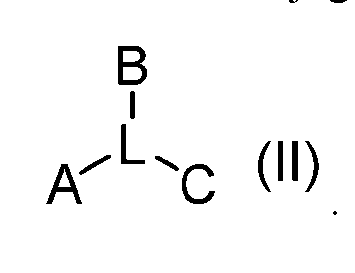
58. The use of claim 56 or 57, wherein C is an albumin binder that is or comprises albumin binding domain 035 (ABD035), albumin binding domain Con (ABDCon), a designed ankyrin repeat protein (DARPin), a disulfide-stabilized Fv fragment (dsFv), an anti-albumin antibody CA645, an anti-human serum albumin nanobody, or variable new antigen receptor E06 (VNAR E06).
59. A method of inhibiting the progression of fibrosis in a subject comprising administering to the subject an effective amount of a conjugate of any one of claims 1-54, or a stereoisomer or a pharmaceutically acceptable salt thereof, whereupon progression of fibrosis in the subject is inhibited.
Applications Claiming Priority (2)
| Application Number | Priority Date | Filing Date | Title |
|---|---|---|---|
| US202363548098P | 2023-11-10 | 2023-11-10 | |
| US63/548,098 | 2023-11-10 |
Publications (1)
| Publication Number | Publication Date |
|---|---|
| WO2025102002A1 true WO2025102002A1 (en) | 2025-05-15 |
Family
ID=95696677
Family Applications (1)
| Application Number | Title | Priority Date | Filing Date |
|---|---|---|---|
| PCT/US2024/055264 Pending WO2025102002A1 (en) | 2023-11-10 | 2024-11-08 | Keto-amide-based fibroblast activation protein-targeted ligand linked to a pi3k inhibitor, compositions and methods of use |
Country Status (1)
| Country | Link |
|---|---|
| WO (1) | WO2025102002A1 (en) |
Cited By (1)
| Publication number | Priority date | Publication date | Assignee | Title |
|---|---|---|---|---|
| WO2025240868A1 (en) * | 2024-05-16 | 2025-11-20 | Purdue Research Foundation | Method of using chemically stable keto-amide fibroblast activation protein-targeted conjugates and compositions comprising same to treat fibrosis |
Citations (3)
| Publication number | Priority date | Publication date | Assignee | Title |
|---|---|---|---|---|
| US20120115866A1 (en) * | 2006-09-15 | 2012-05-10 | Tyrogenex, Inc. | Kinase inhibitor compounds |
| US20220001037A1 (en) * | 2018-10-17 | 2022-01-06 | Purdue Research Foundation | Fibroblast activation protein (fap) targeted imaging and therapy in fibrosis |
| US20230192647A1 (en) * | 2020-03-30 | 2023-06-22 | Ustav Organicke Chemie A Biochemie Av Cr, V. V. I. | Compounds for inhibition of fibroblast activation protein |
-
2024
- 2024-11-08 WO PCT/US2024/055264 patent/WO2025102002A1/en active Pending
Patent Citations (3)
| Publication number | Priority date | Publication date | Assignee | Title |
|---|---|---|---|---|
| US20120115866A1 (en) * | 2006-09-15 | 2012-05-10 | Tyrogenex, Inc. | Kinase inhibitor compounds |
| US20220001037A1 (en) * | 2018-10-17 | 2022-01-06 | Purdue Research Foundation | Fibroblast activation protein (fap) targeted imaging and therapy in fibrosis |
| US20230192647A1 (en) * | 2020-03-30 | 2023-06-22 | Ustav Organicke Chemie A Biochemie Av Cr, V. V. I. | Compounds for inhibition of fibroblast activation protein |
Cited By (1)
| Publication number | Priority date | Publication date | Assignee | Title |
|---|---|---|---|---|
| WO2025240868A1 (en) * | 2024-05-16 | 2025-11-20 | Purdue Research Foundation | Method of using chemically stable keto-amide fibroblast activation protein-targeted conjugates and compositions comprising same to treat fibrosis |
Similar Documents
| Publication | Publication Date | Title |
|---|---|---|
| US8138165B2 (en) | Chromones and chromone derivatives and uses thereof | |
| RU2650512C2 (en) | Compounding, which inhibites activity of btk and/or jak3 kinases | |
| JP6538656B2 (en) | 5'-nucleotidase inhibitors and their therapeutic use | |
| ES2316978T3 (en) | ACETAMIDS 3-CYANOTIOPHEN REPLACED AS AN ANTIGONIST OF THE GLUCAGON RECEIVER. | |
| KR20200015528A (en) | Compound for the treatment of systemic insulin resistant disease and use thereof | |
| CA3054809A1 (en) | Uses of pyrimidopyrimidinones as sik inhibitors | |
| BR112020024695A2 (en) | active agents and methods of using these for the treatment of metabolic disorders and non-alcoholic fatty liver disease | |
| US20180369205A1 (en) | Heterobifunctional Pan-Selectin Antagonists Having a Triazole Linker | |
| AU2014324634A1 (en) | Methods and compositions for treating and/or preventing mucositis | |
| AU2013355238A1 (en) | Compounds, compositions and methods using E-selectin antagonists for mobilization of hematopoietic cells | |
| ES2699452T3 (en) | New triazine derivative | |
| WO2023137453A1 (en) | Prodrugs of 3,4-methylenedioxy-n-methcathinone and uses thereof | |
| CN115916342A (en) | Compounds, compositions and methods for treating fibrotic diseases and cancer | |
| KR20180114057A (en) | Pyrimidine 7-membered ring compound, its preparation method, its pharmaceutical composition, and its use | |
| RU2658910C2 (en) | Chromene derivatives substituted by alkoxide as inhibitors of the tcr-nck interaction | |
| WO2024012565A1 (en) | Memantine derivative, pharmaceutical composition thereof and use thereof | |
| CN114761389A (en) | phospholipid-FLAVAGLINE conjugates and methods of using the same for targeted cancer therapy | |
| ES3040773T3 (en) | Phospholipid-flavagline conjugates and methods of using the same for targeted cancer therapy | |
| JP2020531495A (en) | Compositions and Methods for Cancer Treatment | |
| EP2121585B1 (en) | Novel aminoguanidines as melanocortin receptor ligands | |
| RU2647842C2 (en) | New compounds of flavonoids and their application | |
| CN121548565A (en) | An indole compound, its preparation method and uses | |
| US20200268758A1 (en) | Compositions and methods for white to beige adipogenesis | |
| WO2025240868A1 (en) | Method of using chemically stable keto-amide fibroblast activation protein-targeted conjugates and compositions comprising same to treat fibrosis | |
| CN102268014A (en) | Condensed heteroaryl derivative and its preparation method and use |
Legal Events
| Date | Code | Title | Description |
|---|---|---|---|
| 121 | Ep: the epo has been informed by wipo that ep was designated in this application |
Ref document number: 24889743 Country of ref document: EP Kind code of ref document: A1 |