WO2025097033A1 - Metformin combination therapy for use in cancer treatment - Google Patents
Metformin combination therapy for use in cancer treatment Download PDFInfo
- Publication number
- WO2025097033A1 WO2025097033A1 PCT/US2024/054235 US2024054235W WO2025097033A1 WO 2025097033 A1 WO2025097033 A1 WO 2025097033A1 US 2024054235 W US2024054235 W US 2024054235W WO 2025097033 A1 WO2025097033 A1 WO 2025097033A1
- Authority
- WO
- WIPO (PCT)
- Prior art keywords
- tki
- metformin
- amount
- cancer
- day
- Prior art date
- Legal status (The legal status is an assumption and is not a legal conclusion. Google has not performed a legal analysis and makes no representation as to the accuracy of the status listed.)
- Pending
Links
Classifications
-
- A—HUMAN NECESSITIES
- A61—MEDICAL OR VETERINARY SCIENCE; HYGIENE
- A61K—PREPARATIONS FOR MEDICAL, DENTAL OR TOILETRY PURPOSES
- A61K31/00—Medicinal preparations containing organic active ingredients
- A61K31/13—Amines
- A61K31/155—Amidines (), e.g. guanidine (H2N—C(=NH)—NH2), isourea (N=C(OH)—NH2), isothiourea (—N=C(SH)—NH2)
-
- A—HUMAN NECESSITIES
- A61—MEDICAL OR VETERINARY SCIENCE; HYGIENE
- A61K—PREPARATIONS FOR MEDICAL, DENTAL OR TOILETRY PURPOSES
- A61K31/00—Medicinal preparations containing organic active ingredients
- A61K31/33—Heterocyclic compounds
- A61K31/395—Heterocyclic compounds having nitrogen as a ring hetero atom, e.g. guanethidine or rifamycins
- A61K31/495—Heterocyclic compounds having nitrogen as a ring hetero atom, e.g. guanethidine or rifamycins having six-membered rings with two or more nitrogen atoms as the only ring heteroatoms, e.g. piperazine or tetrazines
- A61K31/4965—Non-condensed pyrazines
- A61K31/497—Non-condensed pyrazines containing further heterocyclic rings
-
- A—HUMAN NECESSITIES
- A61—MEDICAL OR VETERINARY SCIENCE; HYGIENE
- A61K—PREPARATIONS FOR MEDICAL, DENTAL OR TOILETRY PURPOSES
- A61K45/00—Medicinal preparations containing active ingredients not provided for in groups A61K31/00 - A61K41/00
- A61K45/06—Mixtures of active ingredients without chemical characterisation, e.g. antiphlogistics and cardiaca
Definitions
- a composition including metformin and a tyrosine kinase inhibitor (TKI).
- TKI tyrosine kinase inhibitor
- a method of treating cancer in a subject in need thereof including administering to the subject a therapeutically effective amount of metformin and a tyrosine kinase inhibitor (TKI), thereby treating the cancer.
- FIGS. 1A-1I show metformin sensitized FLT3-ITD AML cell lines to Gilteritinib.
- (1A- 1D) The visual diagrams sourced from the CompuSyn Report highlight the effects of Metformin, Gilteritinib, and the combinations (Combo) after 48 hours treatment.
- the dose-response graph illustrates the correlation between fraction affected (Fa) and Dose in MOLM-13 (FLT3-ITD), MV4-11, MOLM13-RES (FLT3 TKI resistant) and THP-1 (FLT3-WT) cells (top of 1 A-1D).
- the Combination Index (CI) values ⁇ 1 indicate synergistic interactions.
- FIGS. 2A-2I show Gilteritinib and Metformin inhibited cell proli feration/growth, induced cell cycle arrest and apoptosis in FLT3-ITD cell lines.
- AML cells were treated with Gilteritinib and Metformin each alone or in combinations (Combo 1: Gilteritinib 5 nM + Metformin 5 mM; Combo2: Gilteritinib 10 nM + Metformin 10 mM; Combo: Gilteritinib 80 nM + Metformin 4 mM) for 24-48 hours and then used in different experiments.
- FIGS. 3A-3N show combinational treatment of metformin and gilteritinib strikingly suppresses human FLT3-ITD AML progression in vivo. Bioluminescence imaging of leukemia burden in vehicle control and treated groups was performed from the ventral side in NSG (M0LM13) mice.
- mice were treated with vehicle, metformin (250 mg/kg/day, intraperitoneal injection), gilteritinib (7.5 mg/kg/day, oral gavage), or Combo (metformin 250 mg/kg/day + gilteritinib 7.5 mg/kg/day) once daily after 7 days post- bone marrow transplantation (BMT).
- BMT bone marrow transplantation
- mice were treated with vehicle, metformin (250 mg/kg/day, intraperitoneal injection), gilteritinib (15 mg/kg/day, oral gavage), or Combo (metformin 250 mg/kg/day + gilteritinib 15 mg/kg/day) once daily after 10 days post- BMT (3H-3K).
- metformin 250 mg/kg/day, intraperitoneal injection
- gilteritinib (15 mg/kg/day, oral gavage
- Combo metalformin 250 mg/kg/day + gilteritinib 15 mg/kg/day
- FIGS. 4A-4I show Metformin synergized with Gilteritinib in treating FLT3-ITD AML by co-targeting PLK1.
- (4A and 4B) qRT-PCR validation of PLK1 mRNA abundance in untreated M0LM13 cells, MOLM13-RES cells with and without Gilteritinib, Metformin or Combo treatment (4A), and in BM samples from MOLM13-RES xenotransplanted NRGS mice (4B) (i.e.. Gilteritinib: 240 nM; Metformin: 10 mM; and Combo: Gilteritinib 80 nM + Metformin 4mM).
- FIGS. 5A-5D show metformin and gilteritinib co-target the PLK1 signaling in FLT3- ITD AML cells.
- FIGS. 6A-6B show Metformin improved the overall survival of patients with FLT3- ITD AML.
- A Survival analysis of patients w ith concurrent FLT3-ITD AML and diabetes.
- (6B) qRT-PCR validation of PLK1 expression in clinical samples. Data are shown as mean ⁇ SD and assessed by 2-tailed Student t test (6B). Log-rank tests are used for survival analyses (6A). **P ⁇ 0.01, ***P ⁇ 0.001.
- Antibodies are large, complex molecules (molecular weight of -150,000 or about 1320 amino acids) with intricate internal structure.
- a natural antibody molecule contains two identical pairs of polypeptide chains, each pair having one light chain and one heavy chain.
- Each light chain and heavy chain in turn consists of two regions: a variable (“V”) region, involved in binding the target antigen, and a constant (“C”) region that interacts with other components of the immune system.
- the light and heavy chain variable regions also referred to herein as light chain variable (VL) domain and heavy chain variable (VH) domain, respectively
- VL variable
- VH heavy chain variable domain
- VK or VK kappa chain
- VK kappa chain
- V lambda chain
- CDRs complementarity determining regions
- FR framework
- an “antibody variant” as provided herein refers to a polypeptide capable of binding to an antigen and including one or more structural domains (e.g., light chain variable domain, heavy chain variable domain) of an antibody or fragment thereof.
- Non-limiting examples of antibody variants include single-domain antibodies or nanobodies, monospecific Fab2. bispecific Fab2, trispecific Fab3, monovalent IgGs, scFv, bispecific antibodies, bispecific diabodies, trispecific triabodies, scFv-Fc, minibodies, IgNAR, V-NAR, hcIgG, VhH, or peptibodies.
- a “peptibody” as provided herein refers to a peptide moiety attached (through a covalent or non-covalent linker) to the Fc domain of an antibody.
- antibody variants known in the art include antibodies produced by cartilaginous fish or camelids. A general description of antibodies from camelids and the variable regions thereof and methods for their production, isolation, and use may be found in references WO97/49805 and WO 97/49805 which are incorporated by reference herein in their entirety and for all purposes. Likewise, antibodies from cartilaginous fish and the variable regions thereof and methods for their production, isolation, and use may be found in W02005/118629, which is incorporated by reference herein in its entirety and for all purposes.
- CDR LI CDR L2
- CDR L3 CDR L3
- CDR LI complementarity determining regions
- L variable light chain
- the variable light chain provided herein includes in N-terminal to C- terminal direction a CDR LI, a CDR L2 and a CDR L3.
- CDR Hl CDR H2
- CDR H3 CDR H3
- variable light chain includes in N-terminal to C-terminal direction a FR LI, a FR L2, a FR L3 and a FR L4.
- FR Hl FR H2
- FR H3 FR H4
- FR H4 the variable heavy chain provided herein includes in N-terminal to C-terminal direction a FR Hl, a FR H2, a FR H3 and a FR H4.
- An exemplary immunoglobulin (antibody) structural unit comprises a tetramer.
- Each tetramer is composed of two identical pairs of polypeptide chains, each pair having one “light’” (about 25 kD) and one “heavy” chain (about 50-70 kD).
- the N-terminus of each chain defines a variable region of about 100 to 110 or more amino acids primarily responsible for antigen recognition.
- the terms variable light chain (VL), variable light chain (VL) domain or light chain variable region and variable heavy chain (VH), variable heavy chain (VH) domain or heavy chain variable region refer to these light and heavy chain regions, respectively.
- variable light chain (VL), variable light chain (VL) domain and light chain variable region may be used interchangeably.
- variable heavy chain (VH), variable heavy chain (VH) domain and heavy chain variable region as referred to herein may be used interchangeably.
- the Fc i.e. fragment crystallizable region
- the Fc region is the "base” or "tail” of an immunoglobulin and is typically composed of two heavy chains that contribute two or three constant domains depending on the class of the antibody. By binding to specific proteins, the Fc region ensures that each antibody generates an appropriate immune response for a given antigen.
- the Fc region also binds to various cell receptors, such as Fc receptors, and other immune molecules, such as complement proteins.
- antibody is used according to its commonly known meaning in the art. Antibodies exist, e.g., as intact immunoglobulins or as a number of well-characterized fragments produced by digestion with various peptidases. Thus, for example, pepsin digests an antibody below the disulfide linkages in the hinge region to produce F(ab)'2, a dimer of Fab which itself is a light chain joined to VH-CHI by a disulfide bond. The F(ab)'2 may be reduced under mild conditions to break the disulfide linkage in the hinge region, thereby converting the F(ab)'2 dimer into an Fab' monomer.
- the Fab' monomer is essentially Fab with part of the hinge region (see Fundamental Immunology (Paul ed.. 3d ed. 1993). While various antibody fragments are defined in terms of the digestion of an intact antibody, one of skill will appreciate that such fragments may be synthesized de novo either chemically or by using recombinant DNA methodology 7 . Thus, the term antibody, as used herein, also includes antibody fragments either produced by the modification of whole antibodies, or those synthesized de novo using recombinant DNA methodologies (e.g., single chain Fv) or those identified using phage display libraries (see, e.g., McCafferty 7 et al., Nature 348:552-554 (1990)).
- an antibody as referred to herein further includes antibody variants such as single domain antibodies.
- an antibody includes a single monomeric variable antibody domain.
- the antibody includes a variable light chain (VL) domain or a variable heavy chain (VH) domain.
- the antibody is a variable light chain (VL) domain or a variable heavy chain (VH) domain.
- mAb monoclonal or polyclonal antibodies
- Techniques for the production of single chain antibodies can be adapted to produce antibodies to polypeptides of this invention.
- transgenic mice, or other organisms such as other mammals may be used to express humanized antibodies.
- phage display technology 7 can be used to identify antibodies and heteromeric Fab fragments that specifically bind to selected antigens (see, e.g., McCafferty 7 et al., Nature 348:552-554 (1990); Marks et al., Biotechnology 10:779-783 (1992)).
- a single-chain variable fragment is typically a fusion protein of the variable regions of the heavy (VH) and light chains (VL) of immunoglobulins, connected with a short linker peptide of 10 to about 25 amino acids.
- the linker may usually be rich in glycine for flexibility, as well as serine or threonine for solubility.
- the linker can either connect the N- terminus of the VH with the C-terminus of the VL, or vice versa.
- the epitope of a mAb is the region of its antigen to which the mAb binds.
- Two antibodies bind to the same or overlapping epitope if each competitively inhibits (blocks) binding of the other to the antigen. That is, a lx, 5x, lOx, 20x or lOOx excess of one antibody inhibits binding of the other by at least 30% but preferably 50%, 75%, 90% or even 99% as measured in a competitive binding assay (see, e.g., Junghans et al., Cancer Res. 50: 1495. 1990).
- two antibodies have the same epitope if essentially all amino acid mutations in the antigen that reduce or eliminate binding of one antibody reduce or eliminate binding of the other.
- Two antibodies have overlapping epitopes if some amino acid mutations that reduce or eliminate binding of one antibody reduce or eliminate binding of the other.
- the genes encoding the heavy and light chains of an antibody of interest can be cloned from a cell, e.g., the genes encoding a monoclonal antibody can be cloned from a hybridoma and used to produce a recombinant monoclonal antibody.
- Gene libraries encoding heavy and light chains of monoclonal antibodies can also be made from hybridoma or plasma cells. Random combinations of the heavy and light chain gene products generate a large pool of antibodies with different antigenic specificity (see, e.g., Kuby, Immunology (3rd ed. 1997)).
- Techniques for the production of single chain antibodies or recombinant antibodies U.S. Patent 4,946,778.
- mice can be adapted to produce antibodies to polypeptides of this invention.
- transgenic mice or other organisms such as other mammals, may be used to express humanized or human antibodies (see, e.g., U.S. Patent Nos. 5,545,807; 5,545,806; 5,569,825; 5,625,126; 5,633,425; 5,661,016, Marks et al., Bio/Technology 10:779- 783 (1992)1 Lonberg et al.. Nature 368:856-859 (1994); Morrison, Nature 368:812-13 (1994); Fishwild et al..
- phage display technology' can be used to identify antibodies and heteromeric Fab fragments that specifically bind to selected antigens (see, e.g., McCafferty et al., Nature 348:552-554 (1990); Marks et al.. Biotechnology 10:779-783 (1992)).
- Antibodies can also be made bispecific, i.e., able to recognize two different antigens (see, e.g., WO 93/08829, Traunecker et al., EMBO J.
- Antibodies can also be heteroconjugates, e.g., two covalently joined antibodies, or immunotoxins (see. e.g., U.S. Patent No. 4,676,980 , WO 91/00360; WO 92/200373; and EP 03089).
- the specified antibodies bind to a particular protein at least two times the background and more typically more than 10 to 100 times background.
- Specific binding to an antibody under such conditions requires an antibody that is selected for its specificity' for a particular protein.
- polyclonal antibodies can be selected to obtain only a subset of antibodies that are specifically immunoreactive with the selected antigen and not with other proteins.
- This selection may be achieved by subtracting out antibodies that cross-react with other molecules.
- a variety of immunoassay formats may be used to select antibodies specifically immunoreactive with a particular protein.
- solid-phase ELISA immunoassays are routinely used to select antibodies specifically immunoreactive with a protein (see, e.g.. Harlow & Lane, Using Antibodies, A Laboratory Manual (1998) for a description of immunoassay formats and conditions that can be used to determine specific immunoreactivity).
- a "ligand” refers to an agent, e.g., a polypeptide or other molecule, capable of binding to a receptor or antibody, antibody variant, antibody region or fragment thereof.
- the term "gene” means the segment of DNA involved in producing a protein; it includes regions preceding and following the coding region (leader and trailer) as well as intervening sequences (introns) between individual coding segments (exons).
- the leader, the trailer as well as the introns include regulatory' elements that are necessary during the transcription and the translation of a gene.
- a "protein gene product” is a protein expressed from a particular gene.
- the named protein includes any of the protein’s naturally occurring forms, variants or homologs that maintain the protein transcription factor activity (e.g., within at least 50%, 80%, 90%, 95%, 96%, 97%, 98%, 99% or 100% activity compared to the native protein).
- variants or homologs have at least 90%, 95%, 96%, 97%, 98%, 99% or 100% amino acid sequence identity across the whole sequence or a portion of the sequence (e.g. a 50, 100. 150 or 200 continuous amino acid portion) compared to a naturally occurring form.
- the protein is the protein as identified by its NCBI sequence reference.
- the protein is the protein as identified by its NCBI sequence reference, homolog or functional fragment thereof.
- FLT3 or “FLT3 protein” is used herein according to its plain ordinary meaning and refers to any of the recombinant or naturally occurring forms of fins like tyrosine kinase 3, also know n as cluster of differentiation antigen 135 (CD135) or fetal liver kinase-2 (Flk2), or variants or homologs thereof that maintain FLT3 activity (e.g., within at least 50%, 60%, 70%, 80%, 90%, 95%, 96%, 98%, 99%, or 100% activity compared to FLT3). In some aspects, the variants or homologs have at least 90%. 95%. 96%. 97%. 98%.
- the FLT3 protein is substantially identical to the protein identified by the UniProt reference number P36888 or a variant or homolog having substantial identity thereto.
- PLK1 or “PLK.1 protein” is used herein according to its plain ordinary meaning and refers to any of any of the recombinant or naturally occurring forms of polo-like kinase 1, also know n as serine/threonine-protein kinase 13 (STPK13), or variants or homologs thereof that maintain PLK1 activity (e g-, within at least 50%, 60%, 70%, 80%, 90%, 95%, 96%, 98%, 99%, or 100% activity compared to PLK1).
- the variants or homologs have at least 90%, 95%, 96%, 97%, 98%, 99% or 100% amino acid sequence identity across the whole sequence or a portion of the sequence (e.g.
- the PLK1 protein is substantially identical to the protein identified by the UniProt reference number P53350 or a variant or homolog having substantial identity' thereto.
- STAT5 or “STAT5 protein” is used herein according to its plain ordinary meaning and refers to any of the recombinant or naturally occurring forms of signal transducer and activator of transcription 5, or variants or homologs thereof that maintain STAT5 activity (e.g., within at least 50%, 60%, 70%, 80%, 90%, 95%, 96%, 98%, 99%, or 100% activity compared to STAT5).
- the STAT5 protein is a STAT5A protein or a STAT5B protein.
- the STAT5 protein is a STAT5A protein.
- the variants or homologs have at least 90%, 95%, 96%, 97%, 98%, 99% or 100% amino acid sequence identity across the whole sequence or a portion of the sequence (e.g. a 50, 100, 200, 300, 400, 500, 600, or 700 continuous amino acid portion) compared to a naturally occurring STAT5A protein.
- the STAT5 protein is substantially identical to the protein identified by the UniProt reference number P42229 or a variant or homolog having substantial identity thereto.
- the STAT5 protein is a STAT5B protein.
- the variants or homologs have at least 90%, 95%, 96%, 97%, 98%, 99% or 100% amino acid sequence identity across the whole sequence or a portion of the sequence (e.g. a 50, 100, 200. 300, 400, 500, 600, or 700 continuous amino acid portion) compared to a naturally occurring STAT5B protein.
- the STAT5 protein is substantially identical to the protein identified by the UniProt reference number P51692 or a variant or homolog having substantial identity thereto.
- ERK or “ERK protein” is used herein according to its plain ordinary' meaning and refers to any of any of the recombinant or naturally occurring forms of extracellular signal-regulated kinase, also known as mitogen-activated protein kinase (MAPK), or variants or homologs thereof that maintain ERK activity (e.g., within at least 50%, 60%, 70%, 80%, 90%, 95%, 96%, 98%, 99%, or 100% activity compared to ERK).
- the ERK protein is a ERK1 protein or a ERK2 protein.
- the ERK protein is a ERK1 protein.
- the variants or homologs have at least 90%.
- the ERK1 protein is substantially identical to the protein identified by the UniProt reference number P27361 or a variant or homolog having substantial identity thereto.
- the ERK protein is a ERK2 protein.
- the variants or homologs have at least 90%, 95%, 96%, 97%, 98%, 99% or 100% amino acid sequence identity across the whole sequence or a portion of the sequence (e.g.
- the ERK2 protein is substantially identical to the protein identified by the UniProt reference number P28482 or a variant or homolog having substantial identity thereto.
- mTOR or “mTOR protein” is used herein according to its plain ordinary 7 meaning and refers to any of any of the recombinant or naturally occurring forms of mammalian target of rapamycin, also known as mechanistic target of rapamycin or FK506-binding protein 12-rapamycine associated protein 1 (FRAP1), or variants or homologs thereof that maintain mTOR activity (e.g., within at least 50%, 60%, 70%, 80%, 90%, 95%, 96%, 98%, 99%, or 100% activity compared to mTOR).
- FRAP1 12-rapamycine associated protein 1
- the variants or homologs have at least 90%, 95%, 96%, 97%, 98%, 99% or 100% amino acid sequence identity across the whole sequence or a portion of the sequence (e.g. a 50, 100, 200. 300, 400. 500, 1000, 15000, 2000. or 2500 continuous amino acid portion) compared to a naturally occurring mTOR protein.
- the mTOR protein is substantially identical to the protein identified by the UniProt reference number P42345 or a variant or homolog having substantial identity thereto.
- metformin is used herein according to its plain ordinary meaning and refers to a biguanide.
- the biguanide is an anti-hyperglycemic agent.
- the metformin decreases PLK1 activity.
- the biguanide is tyV- dimethylbiguanide.
- metformin is also know n as Fortamet, Glucophage, or Glumetza.
- tyrosine kinase inhibitor or “TKI” is used herein according to its plain ordinary meaning and refers to a compound that inhibits activity of a tyrosine kinase.
- the TKI prevents addition of a phosphate group to the tyrosine kinase.
- the TKI is referred to a ty rosine phosphorylation inhibitor or tyrophostin.
- TKI-resistant cancer is used herein according to its plain ordinary meaning and refers to a cancer which is resistant to a TKI treatment. In embodiments, a TKI treatment is ineffective at killing TKI-resistant cancer cells.
- a cell can be identified by well-known methods in the art including, for example, presence of an intact membrane, staining by a particular dye, ability 7 to produce progeny or, in the case of a gamete, ability 7 to combine with a second gamete to produce a viable offspring.
- Cells may include prokaryotic and eukaryotic cells. Prokary otic cells include but are not limited to bacteria. Eukaryotic cells include, but are not limited to, yeast cells and cells derived from plants and animals, for example mammalian, insect (e.g., spodoptera) and human cells.
- expression includes any step involved in the production of the polypeptide including, but not limited to, transcription, post-transcriptional modification, translation, post- translational modification, and secretion. Expression can be detected using conventional techniques for detecting protein (e.g., ELISA, Western blotting, flow cytometry, immunofluorescence, immunohistochemistry, etc.).
- biological sample refers to materials obtained from or derived from a subject or patient.
- a biological sample includes sections of tissues such as biopsy and autopsy samples, and frozen sections taken for histological purposes.
- samples include bodily fluids such as blood and blood fractions or products (e.g., serum, plasma, platelets, red blood cells, and the like), sputum, tissue, cultured cells (e.g.. primary cultures, explants, and transformed cells) stool, urine, synovial fluid joint tissue, synovial tissue, synoviocytes, fibroblast-like synoviocytes, macrophage-like synoviocytes, immune cells, hematopoietic cells, fibroblasts, macrophages, T cells, etc.
- a biological sample is typically obtained from a eukaryotic organism, such as a mammal such as a primate e.g., chimpanzee or human; cow; dog; cat; a rodent, e.g., guinea pig, rat, mouse; rabbit; or a bird; reptile; or fish.
- a mammal such as a primate e.g., chimpanzee or human; cow; dog; cat; a rodent, e.g., guinea pig, rat, mouse; rabbit; or a bird; reptile; or fish.
- a “control” or “standard control” refers to a sample, measurement, or value that serves as a reference, usually a known reference, for comparison to a test sample, measurement, or value.
- a test sample can be taken from a patient suspected of having a given disease (e.g. cancer) and compared to a known normal (non-diseased) individual (e.g. a standard control subject).
- a standard control can also represent an average measurement or value gathered from a population of similar individuals (e.g. standard control subjects) that do not have a given disease (i.e. standard control population), e.g., healthy individuals with a similar medical background, same age, weight, etc.
- a standard control value can also be obtained from the same individual, e.g. from an earlier-obtained sample from the patient prior to disease onset.
- a control can be devised to compare therapeutic benefit based on pharmacological data (e.g. halflife) or therapeutic measures e.g., comparison of side effects). Controls are also valuable for determining the significance of data. For example, if values for a given parameter are widely variant in controls, variation in test samples will not be considered as significant.
- standard controls can be designed for assessment of any number of parameters (e.g. RNA levels, protein levels, specific cell types, specific bodily fluids, specific tissues, etc).
- Standard controls are also valuable for determining the significance (e.g. statistical significance) of data. For example, if values for a given parameter are widely variant in standard controls, variation in test samples will not be considered as significant.
- ‘‘Patient”, “patient in need thereof’, “subject”, or “subject in need thereof’ refers to a living organism suffering from or prone to a disease or condition that can be treated by administration of a pharmaceutical composition as provided herein.
- Non-limiting examples include humans, other mammals, bovines. rats, mice, dogs, monkeys, goat, sheep, cows, deer, and other non-mammalian animals.
- a patient is human.
- a patient in need thereof is human.
- a subject is human.
- a subject in need thereof is human.
- the terms “disease” or “condition” refer to a state of being or health status of a patient or subject capable of being treated with the compounds or methods provided herein.
- the disease may be a cancer.
- the cancer may refer to a solid tumor malignancy.
- Solid tumor malignancies include malignant tumors that may be devoid of fluids or cysts.
- the solid tumor malignancy may include breast cancer, ovarian cancer, pancreatic cancer, cervical cancer, gastric cancer, renal cancer, head and neck cancer, bone cancer, skin cancer or prostate cancer.
- cancer refers to human cancers and carcinomas, sarcomas, adenocarcinomas, lymphomas, leukemias, including solid and lymphoid cancers, kidney, breast, lung, bladder, colon, ovarian, prostate, pancreas, stomach, brain, head and neck, skin, uterine, testicular, glioma, esophagus, and liver cancer, including hepatocarcinoma, lymphoma, including B-acute lymphoblastic lymphoma, non-Hodgkin’s lymphomas (e.g, Burkitt’s, Small Cell, and Large Cell lymphomas), Hodgkin’s lymphoma, leukemia (including acute myeloid leukemia (AML), ALL, and CML), or multiple myeloma.
- AML acute myeloid leukemia
- ALL acute myeloid leukemia
- CML multiple myeloma
- cancer refers to all types of cancer, neoplasm or malignant tumors found in mammals (e.g., humans), including leukemia, carcinomas and sarcomas.
- exemplary cancers that may be treated with a compound or method provided herein include breast cancer, colon cancer, kidney cancer, leukemia, lung cancer, melanoma, ovarian cancer, prostate cancer, pancreatic cancer, brain cancer, liver cancer, gastric cancer or a sarcoma.
- leukemia refers broadly to progressive, malignant diseases of the blood- forming organs and is generally characterized by a distorted proliferation and development of leukocytes and their precursors in the blood and bone marrow. Leukemia is generally clinically classified on the basis of (1) the duration and character of the disease-acute or chronic; (2) the type of cell involved; myeloid (myelogenous), lymphoid (lymphogenous), or monocytic; and (3) the increase or non-increase in the number abnormal cells in the blood-leukemic or aleukemic (subleukemic).
- Exemplary leukemias that may be treated with a compound or method provided herein include, for example, acute myeloid leukemia, acute nonlymphocytic leukemia, chronic lymphocytic leukemia, acute granulocytic leukemia, chronic granulocytic leukemia, acute promyelocytic leukemia, adult T-cell leukemia, aleukemic leukemia, a leukocythemic leukemia, basophylic leukemia, blast cell leukemia, bovine leukemia, chronic myelocytic leukemia, leukemia cutis, embryonal leukemia, eosinophilic leukemia.
- sarcoma generally refers to a tumor which is made up of a substance like the embry onic connective tissue and is generally composed of closely packed cells embedded in a fibrillar or homogeneous substance.
- Sarcomas that may be treated with a compound or method provided herein include a chondrosarcoma, fibrosarcoma, lymphosarcoma, melanosarcoma, myxosarcoma, osteosarcoma, Abernethy's sarcoma, adipose sarcoma, liposarcoma, alveolar soft part sarcoma, ameloblastic sarcoma, botryoid sarcoma, chloroma sarcoma, chorio carcinoma, embryonal sarcoma, Wilms' tumor sarcoma, endometrial sarcoma, stromal sarcoma, Ewing's sarcoma, fascial s
- treating refers to any indicia of success in the therapy or amelioration of an injury', disease, pathology' or condition, including any objective or subjective parameter such as abatement; remission; diminishing of symptoms or making the injury', pathology’ or condition more tolerable to the patient; slowing in the rate of degeneration or decline; making the final point of degeneration less debilitating; improving a patient’s physical or mental well-being.
- the treatment or amelioration of symptoms can be based on objective or subjective parameters; including the results of a physical examination, neuropsychiatric exams, and/or a psychiatric evaluation.
- the term "treating" and conjugations thereof, may include prevention of an injury, pathology, condition, or disease.
- treating is preventing.
- treating does not include preventing.
- treating or “treatment of’ a condition, disease or disorder or symptoms associated with a condition, disease or disorder refers to an approach for obtaining beneficial or desired results, including clinical results.
- beneficial or desired clinical results can include, but are not limited to, alleviation or amelioration of one or more symptoms or conditions, diminishment of extent of condition, disorder or disease, stabilization of the state of condition, disorder or disease, prevention of development of condition, disorder or disease, prevention of spread of condition, disorder or disease, delay or slowing of condition, disorder or disease progression, delay or slowing of condition, disorder or disease onset, amelioration or palliation of the condition, disorder or disease state, and remission, whether partial or total.
- Treating can also mean prolonging survival of a subject beyond that expected in the absence of treatment. “Treating” can also mean inhibiting the progression of the condition, disorder or disease, slowing the progression of the condition, disorder or disease temporarily, although in some instances, it involves halting the progression of the condition, disorder or disease permanently.
- treatment, treat, or treating refers to a method of reducing the effects of one or more symptoms of a disease or condition characterized by expression of the protease or symptom of the disease or condition characterized by expression of the protease.
- treatment can refer to a 10%, 20%, 30%, 40%, 50%, 60%, 70%, 80%, 90%, or 100% reduction in the severity of an established disease, condition, or symptom of the disease or condition.
- a method for treating a disease is considered to be a treatment if there is a 10% reduction in one or more symptoms of the disease in a subject as compared to a control.
- the reduction can be a 10%, 20%, 30%, 40%, 50%, 60%, 70%, 80%, 90%, 100%, or any percent reduction in between 10% and 100% as compared to native or control levels.
- treatment does not necessarily refer to a cure or complete ablation of the disease, condition, or symptoms of the disease or condition.
- references to decreasing, reducing, or inhibiting include a change of 10%, 20%, 30%, 40%, 50%, 60%, 70%, 80%, 90% or greater as compared to a control level and such terms can include but do not necessarily include complete elimination.
- dose refers to the amount of active ingredient given to an individual at each administration.
- the dose will vary depending on a number of factors, including the range of normal doses for a given therapy, frequency of administration; size and tolerance of the individual; severity of the condition; risk of side effects; and the route of administration.
- dose form refers to the particular format of the pharmaceutical or pharmaceutical composition, and depends on the route of administration.
- a dosage form can be in a liquid form for nebulization, e.g., for inhalants, in a tablet or liquid, e.g., for oral delivery, or a saline solution, e.g., for injection.
- an “effective amount” is an amount sufficient for a compound to accomplish a stated purpose relative to the absence of the compound (e.g. achieve the effect for which it is administered, treat a disease, reduce enzyme activity, increase enzyme activity, reduce a signaling pathway, or reduce one or more symptoms of a disease or condition).
- An example of an “effective amount” is an amount sufficient to contribute to the treatment, prevention, or reduction of a symptom or symptoms of a disease, which could also be referred to as a “therapeutically effective amount.”
- a “reduction” of a symptom or symptoms means decreasing of the severity or frequency of the symptom(s), or elimination of the symptom(s).
- a “prophylactically effective amount” of a drug is an amount of a drug that, when administered to a subject, will have the intended prophylactic effect, e.g., preventing or delaying the onset (or reoccurrence) of an injury, disease, pathology or condition, or reducing the likelihood of the onset (or reoccurrence) of an injury, disease, pathology, or condition, or their symptoms.
- the full prophylactic effect does not necessarily occur by administration of one dose, and may occur only after administration of a series of doses. Thus, a prophylactically effective amount may be administered in one or more administrations.
- An “activity decreasing amount,” as used herein, refers to an amount of antagonist required to decrease the activity of an enzy me relative to the absence of the antagonist.
- a “function disrupting amount,” as used herein, refers to the amount of antagonist required to disrupt the function of an enzyme or protein relative to the absence of the antagonist. The exact amounts will depend on the purpose of the treatment, and will be ascertainable by one skilled in the art using known techniques (see, e.g., Lieberman, Pharmaceutical Dosage Forms (vols. 1-3, 1992); Lloyd, The Art, Science and Technology of Pharmaceutical Compounding (1999); Pickar, Dosage Calculations (1999); and Remington: The Science and Practice of Pharmacy, 20th Edition, 2003, Gennaro, Ed., Lippincott, Williams & Wilkins).
- the therapeutically effective amount can be initially determined from cell culture assays.
- Target concentrations will be those concentrations of active compound(s) that are capable of achieving the methods described herein, as measured using the methods described herein or known in the art.
- therapeutically effective amounts for use in humans can also be determined from animal models.
- a dose for humans can be formulated to achieve a concentration that has been found to be effective in animals.
- the dosage in humans can be adjusted by monitoring compounds effectiveness and adjusting the dosage upwards or downwards, as described above. Adjusting the dose to achieve maximal efficacy in humans based on the methods described above and other methods is well within the capabilities of the ordinarily skilled artisan.
- ‘therapeutically effective dose or amount” as used herein is meant a dose that produces effects for which it is administered (e.g. treating or preventing a disease).
- the exact dose and formulation will depend on the purpose of the treatment, and will be ascertainable by one skilled in the art using known techniques (see, e.g., Lieberman, Pharmaceutical Dosage Forms (vols. 1-3, 1992); Lloyd, The Art, Science and Technology of Pharmaceutical Compounding (1999); Remington: The Science and Practice of Pharmacy, 20th Edition, Gennaro, Editor (2003), and Pickar, Dosage Calculations (1999)).
- a therapeutically effective amount will show an increase or decrease of at least 5%, 10%, 15%, 20%, 25%, 40%, 50%, 60%, 75%, 80%, 90%, or at least 100%.
- Therapeutic efficacy can also be expressed as “-fold” increase or decrease.
- a therapeutically effective amount can have at least a 1.2-fold, 1.5-fold, 2-fold. 5-fold, or more effect over a standard control.
- a therapeutically effective dose or amount may ameliorate one or more symptoms of a disease.
- a therapeutically effective dose or amount may prevent or delay the onset of a disease or one or more sy mptoms of a disease when the effect for which it is being administered is to treat a person who is at risk of developing the disease.
- Dosages may be varied depending upon the requirements of the patient and the compound being employed.
- the dose administered to a patient should be sufficient to effect a beneficial therapeutic response in the patient over time.
- the size of the dose also will be determined by the existence, nature, and extent of any adverse side-effects. Determination of the proper dosage for a particular situation is within the skill of the practitioner. Generally, treatment is initiated with smaller dosages which are less than the optimum dose of the compound. Thereafter, the dosage is increased by small increments until the optimum effect under circumstances is reached. Dosage amounts and intervals can be adjusted individually to provide levels of the administered compound effective for the particular clinical indication being treated. This will provide a therapeutic regimen that is commensurate with the severity of the individual's disease state.
- administering means oral administration, administration as a suppository, topical contact, intravenous, intraperitoneal, intramuscular, intralesional, intrathecal, intranasal or subcutaneous administration, or the implantation of a slow-release device, e.g., a mini-osmotic pump, to a subject.
- Administration is by any route, including parenteral and transmucosal (e.g, buccal, sublingual, palatal, gingival, nasal, vaginal, rectal, or transdermal).
- Parenteral administration includes, e.g.
- intravenous, intramuscular, intra-arteriole, intradermal, subcutaneous, intraperitoneal, intraventricular, and intracranial Other modes of delivery include, but are not limited to, the use of liposomal formulations, intravenous infusion, transdermal patches, etc.
- co-administer it is meant that a composition described herein is administered at the same time, just prior to, or just after the administration of one or more additional therapies, for example cancer therapies such as chemotherapy, hormonal therapy, radiotherapy, or immunotherapy.
- the compounds of the invention can be administered alone or can be coadministered to the patient.
- Coadministration is meant to include simultaneous or sequential administration of the compounds individually or in combination (more than one compound).
- compositions of the present invention can be delivered by transdermally, by a topical route, formulated as applicator sticks, solutions, suspensions, emulsions, gels, creams, ointments, pastes, jellies, paints, powders, and aerosols.
- compositions described herein are administered at the same time, just prior to, or just after the administration of one or more additional therapies.
- the compounds provided herein can be administered alone or can be coadministered to the patient.
- Co-administration is meant to include simultaneous or sequential administration of the compounds individually or in combination (more than one compound).
- the preparations can also be combined, when desired, with other active substances (e.g., to reduce metabolic degradation).
- the compositions of the present disclosure can be delivered transdermally, by a topical route, or formulated as applicator sticks, solutions, suspensions, emulsions, gels, creams, ointments, pastes, jellies, paints, powders, and aerosols.
- compositions of the present invention may additionally include components to provide sustained release and/or comfort.
- Such components include high molecular weight, anionic mucomimetic polymers, gelling polysaccharides and finely-divided drug carrier substrates. These components are discussed in greater detail in U.S. Pat. Nos. 4,911,920;
- compositions of the present invention can also be delivered as microspheres for slow release in the body.
- microspheres can be administered via intradermal injection of drug-containing microspheres, which slowly release subcutaneously (see Rao, J. Biomater Sci. Polym. Ed. 7:623-645, 1995; as biodegradable and injectable gel formulations (see, e.g., Gao Pharm. Res. 12:857-863, 1995); or, as microspheres for oral administration (see, e.g., Eyles, J. Pharm. Pharmacol. 49:669-674, 1997).
- the formulations of the compositions of the present invention can be delivered by the use of liposomes which fuse with the cellular membrane or are endocytosed, i.e., by employing receptor ligands attached to the liposome, that bind to surface membrane protein receptors of the cell resulting in endocytosis.
- liposomes particularly where the liposome surface carries receptor ligands specific for target cells, or are otherwise preferentially directed to a specific organ, one can focus the delivery' of the compositions of the present invention into the target cells in vivo.
- the compositions of the present invention can also be delivered as nanoparticles.
- composition will generally comprise agents for buffering and preservation in storage, and can include buffers and carriers for appropriate delivery, depending on the route of administration.
- “Pharmaceutically acceptable excipient” and “pharmaceutically acceptable carrier” refer to a substance that aids the administration of an active agent to and absorption by a subject and can be included in the compositions of the present invention without causing a significant adverse toxicological effect on the patient.
- Non-limiting examples of pharmaceutically acceptable excipients include water, NaCl, normal saline solutions, lactated Ringer’s, normal sucrose, normal glucose, binders, fillers, disintegrants, lubricants, coatings, sweeteners, flavors, salt solutions (such as Ringer's solution), alcohols, oils, gelatins, carbohydrates such as lactose, amylose or starch, fatty acid esters, hydroxymethy cellulose, polyvinyl pyrrolidine, and colors, and the like.
- Such preparations can be sterilized and, if desired, mixed with auxiliary agents such as lubricants, preservatives, stabilizers, wetting agents, emulsifiers, salts for influencing osmotic pressure, buffers, coloring, and/or aromatic substances and the like that do not deleteriously react with the compounds of the invention.
- auxiliary agents such as lubricants, preservatives, stabilizers, wetting agents, emulsifiers, salts for influencing osmotic pressure, buffers, coloring, and/or aromatic substances and the like that do not deleteriously react with the compounds of the invention.
- auxiliary agents such as lubricants, preservatives, stabilizers, wetting agents, emulsifiers, salts for influencing osmotic pressure, buffers, coloring, and/or aromatic substances and the like that do not deleteriously react with the compounds of the invention.
- auxiliary agents such as lubricants, preservatives, stabilizers, wetting agents
- pharmaceutically acceptable salt refers to salts derived from a variety of organic and inorganic counter ions well known in the art and include, by way of example only, sodium, potassium, calcium, magnesium, ammonium, tetraalkylammonium, and the like; and when the molecule contains a basic functionality, salts of organic or inorganic acids, such as hydrochloride, hydrobromide, tartrate, mesylate, acetate, maleate, oxalate and the like.
- preparation is intended to include the formulation of the active compound with encapsulating material as a carrier providing a capsule in which the active component with or without other carriers, is surrounded by a carrier, which is thus in association with it.
- carrier providing a capsule in which the active component with or without other carriers, is surrounded by a carrier, which is thus in association with it.
- cachets and lozenges are included. Tablets, powders, capsules, pills, cachets, and lozenges can be used as solid dosage forms suitable for oral administration.
- the pharmaceutical preparation is optionally in unit dosage form.
- the preparation is subdivided into unit doses containing appropriate quantities of the active component.
- the unit dosage form can be a packaged preparation, the package containing discrete quantities of preparation, such as packeted tablets, capsules, and powders in vials or ampoules.
- the unit dosage form can be a capsule, tablet, cachet, or lozenge itself, or it can be the appropriate number of any of these in packaged form.
- the unit dosage form can be of a frozen dispersion.
- compositions including metformin and a tyrosine kinase inhibitor include metformin and a tyrosine kinase inhibitor (TKI).
- the compositions provided herein including embodiments thereof are, inter alia, useful for treating cancer.
- the TKI is an antibody or a small molecule. In embodiments, the TKI is an antibody. In embodiments, the TKI is a small molecule. [0068] In embodiments, the TKI is gilteritinib, midostaurin, quizartinib, crenolanib, sunitinib, lestaurtinib, FLX925, cabozantinib, SEL24-B489, G-749, AMG 925, TTT-3002, or FF-10101. In embodiments, the TKI is gilteritinib. In embodiments, the TKI is midostaurin. In embodiments, the TKI is quizartinib.
- the TKI is crenolanib. In embodiments, the TKI is sunitinib. In embodiments, the TKI is lestaurtinib. In embodiments, the TKI is FLX925. In embodiments, the TKI is cabozantinib. In embodiments, the TKI is SEL24-B489. In embodiments, the TKI is G-749. In embodiments, the TKI is AMG 925. In embodiments, the TKI is TTT-3002. In embodiments, the TKI is FF-10101.
- the TKI is not sorafenib, osimertinib, gefitinib, icotinib, or rociletinib. In embodiments, the TKI is not sorafenib. In embodiments, the TKI is not osimertinib. In embodiments, the TKI is not gefitinib. In embodiments, the TKI is not icotinib. In embodiments, the TKI is not rociletinib.
- the composition includes an amount of metformin between about 250 mg to about 2500 mg. In embodiments, the composition includes an amount of metformin between about 300 mg to about 2500 mg. In embodiments, the composition includes an amount of metformin between about 400 mg to about 2500 mg. In embodiments, the composition includes an amount of metformin between about 500 mg to about 2500 mg. In embodiments, the composition includes an amount of metformin between about 600 mg to about 2500 mg. In embodiments, the composition includes an amount of metformin between about 700 mg to about 2500 mg. In embodiments, the composition includes an amount of metformin between about 800 mg to about 2500 mg. In embodiments, the composition includes an amount of metformin between about 900 mg to about 2500 mg.
- the composition includes an amount of metformin between about 1000 mg to about 2500 mg. In embodiments, the composition includes an amount of metformin between about 1100 mg to about 2500 mg. In embodiments, the composition includes an amount of metformin between about 1200 mg to about 2500 mg. In embodiments, the composition includes an amount of metformin between about 1300 mg to about 2500 mg. In embodiments, the composition includes an amount of metformin between about 1400 mg to about 2500 mg. In embodiments, the composition includes an amount of metformin between about 1500 mg to about 2500 mg. In embodiments, the composition includes an amount of metformin between about 1600 mg to about 2500 mg. In embodiments, the composition includes an amount of metformin between about 1700 mg to about 2500 mg.
- the composition includes an amount of metformin between about 1800 mg to about 2500 mg. In embodiments, the composition includes an amount of metformin between about 1900 mg to about 2500 mg. In embodiments, the composition includes an amount of metformin between about 2000 mg to about 2500 mg. In embodiments, the composition includes an amount of metformin between about 2100 mg to about 2500 mg. In embodiments, the composition includes an amount of metformin between about 2200 mg to about 2500 mg. In embodiments, the composition includes an amount of metformin between about 2300 mg to about 2500 mg. In embodiments, the composition includes an amount of metformin between about 2400 mg to about 2500 mg.
- the composition includes an amount of metformin between about 250 mg to about 2400 mg. In embodiments, the composition includes an amount of metformin between about 250 mg to about 2300 mg. In embodiments, the composition includes an amount of metformin between about 250 mg to about 2200 mg. In embodiments, the composition includes an amount of metformin between about 250 mg to about 2100 mg. In embodiments, the composition includes an amount of metformin betw een about 250 mg to about 2000 mg. In embodiments, the composition includes an amount of metformin betw een about 250 mg to about 1900 mg. In embodiments, the composition includes an amount of metformin between about 250 mg to about 1800 mg.
- the composition includes an amount of metformin between about 250 mg to about 1700 mg. In embodiments, the composition includes an amount of metformin between about 250 mg to about 1600 mg. In embodiments, the composition includes an amount of metformin between about 250 mg to about 1500 mg. In embodiments, the composition includes an amount of metformin between about 250 mg to about 1400 mg. In embodiments, the composition includes an amount of metformin between about 250 mg to about 1300 mg. In embodiments, the composition includes an amount of metformin between about 250 mg to about 1200 mg. In embodiments, the composition includes an amount of metformin between about 250 mg to about 1100 mg. In embodiments, the composition includes an amount of metformin between about 250 mg to about 1000 mg.
- the composition includes an amount of metformin between about 250 mg to about 900 mg. In embodiments, the composition includes an amount of metformin between about 250 mg to about 800 mg. In embodiments, the composition includes an amount of metformin between about 250 mg to about 700 mg. In embodiments, the composition includes an amount of metformin between about 250 mg to about 600 mg. In embodiments, the composition includes an amount of metformin between about 250 mg to about 500 mg. In embodiments, the composition includes an amount of metformin between about 250 mg to about 400 mg. In embodiments, the composition includes an amount of metformin between about 250 mg to about 300 mg.
- the composition includes an amount of metformin between 250 mg to 2500 mg. In embodiments, the composition includes an amount of metformin between 300 mg to 2500 mg. In embodiments, the composition includes an amount of metformin between 400 mg to 2500 mg. In embodiments, the composition includes an amount of metformin between 500 mg to 2500 mg. In embodiments, the composition includes an amount of metformin between 600 mg to 2500 mg. In embodiments, the composition includes an amount of metformin between 700 mg to 2500 mg. In embodiments, the composition includes an amount of metformin between 800 mg to 2500 mg. In embodiments, the composition includes an amount of metformin between 900 mg to 2500 mg.
- the composition includes an amount of metformin between 1000 mg to 2500 mg. In embodiments, the composition includes an amount of metformin between 1100 mg to 2500 mg. In embodiments, the composition includes an amount of metformin between 1200 mg to 2500 mg. In embodiments, the composition includes an amount of metformin between 1300 mg to 2500 mg. In embodiments, the composition includes an amount of metformin between 1400 mg to 2500 mg. In embodiments, the composition includes an amount of metformin between 1500 mg to 2500 mg. In embodiments, the composition includes an amount of metformin between 1600 mg to 2500 mg. In embodiments, the composition includes an amount of metformin between 1700 mg to 2500 mg.
- the composition includes an amount of metformin between 1800 mg to 2500 mg. In embodiments, the composition includes an amount of metformin between 1900 mg to 2500 mg. In embodiments, the composition includes an amount of metformin between 2000 mg to 2500 mg. In embodiments, the composition includes an amount of metformin between 2100 mg to 2500 mg. In embodiments, the composition includes an amount of metformin between 2200 mg to 2500 mg. In embodiments, the composition includes an amount of metformin between 2300 mg to 2500 mg. In embodiments, the composition includes an amount of metformin between 2400 mg to 2500 mg.
- the composition includes an amount of metformin between 250 mg to
- the composition includes an amount of metformin between 250 mg to 2300 mg. In embodiments, the composition includes an amount of metformin between 250 mg to 2200 mg. In embodiments, the composition includes an amount of metformin between 250 mg to 2100 mg. In embodiments, the composition includes an amount of metformin between 250 mg to 2000 mg. In embodiments, the composition includes an amount of metformin between 250 mg to 1900 mg. In embodiments, the composition includes an amount of metformin between 250 mg to 1800 mg. In embodiments, the composition includes an amount of metformin between 250 mg to 1700 mg. In embodiments, the composition includes an amount of metformin between 250 mg to 1600 mg. In embodiments, the composition includes an amount of metformin between 250 mg to 1500 mg.
- the composition includes an amount of metformin between 250 mg to 1400 mg. In embodiments, the composition includes an amount of metformin between 250 mg to 1300 mg. In embodiments, the composition includes an amount of metformin between 250 mg to 1200 mg. In embodiments, the composition includes an amount of metformin between 250 mg to 1100 mg. In embodiments, the composition includes an amount of metformin between 250 mg to 1000 mg. In embodiments, the composition includes an amount of metformin between 250 mg to 900 mg. In embodiments, the composition includes an amount of metformin between 250 mg to 800 mg. In embodiments, the composition includes an amount of metformin between 250 mg to 700 mg. In embodiments, the composition includes an amount of metformin between 250 mg to 600 mg. In embodiments, the composition includes an amount of metformin between 250 mg to 500 mg. In embodiments, the composition includes an amount of metformin between 250 mg to 400 mg. In embodiments, the composition includes an amount of metformin between 250 mg to 300 mg.
- the composition includes an amount of the TKI between about 10 mg to about 300 mg. In embodiments, the composition includes an amount of the TKI between about 20 mg to about 300 mg. In embodiments, the composition includes an amount of the TKI between about 30 mg to about 300 mg. In embodiments, the composition includes an amount of the TKI between about 40 mg to about 300 mg. In embodiments, the composition includes an amount of the TKI between about 50 mg to about 300 mg. In embodiments, the composition includes an amount of the TKI between about 60 mg to about 300 mg. In embodiments, the composition includes an amount of the TKI betw een about 70 mg to about 300 mg. In embodiments, the composition includes an amount of the TKI between about 80 mg to about 300 mg.
- the composition includes an amount of the TKI between about 90 mg to about 300 mg. In embodiments, the composition includes an amount of the TKI between about 100 mg to about 300 mg. In embodiments, the composition includes an amount of the TKI between about 110 mg to about 300 mg. In embodiments, the composition includes an amount of the TKI between about 120 mg to about 300 mg. In embodiments, the composition includes an amount of the TKI between about 130 mg to about 300 mg. In embodiments, the composition includes an amount of the TKI between about 140 mg to about 300 mg. In embodiments, the composition includes an amount of the TKI between about 150 mg to about 300 mg. In embodiments, the composition includes an amount of the TKI between about 160 mg to about 300 mg.
- the composition includes an amount of the TKI between about 170 mg to about 300 mg. In embodiments, the composition includes an amount of the TKI between about 180 mg to about 300 mg. In embodiments, the composition includes an amount of the TKI between about 190 mg to about 300 mg. In embodiments, the composition includes an amount of the TKI between about 200 mg to about 300 mg. In embodiments, the composition includes an amount of the TKI between about 210 mg to about 300 mg. In embodiments, the composition includes an amount of the TKI between about 220 mg to about 300 mg. In embodiments, the composition includes an amount of the TKI between about 230 mg to about 300 mg. In embodiments, the composition includes an amount of the TKI between about 240 mg to about 300 mg.
- the composition includes an amount of the TKI between about 250 mg to about 300 mg. In embodiments, the composition includes an amount of the TKI between about 260 mg to about 300 mg. In embodiments, the composition includes an amount of the TKI between about 270 mg to about 300 mg. In embodiments, the composition includes an amount of the TKI betw een about 280 mg to about 300 mg. In embodiments, the composition includes an amount of the TKI between about 290 mg to about 300 mg.
- the composition includes an amount of the TKI betw een about 10 mg to about 290 mg. In embodiments, the composition includes an amount of the TKI between about 10 mg to about 280 mg. In embodiments, the composition includes an amount of the TKI between about 10 mg to about 270 mg. In embodiments, the composition includes an amount of the TKI betw een about 10 mg to about 260 mg. In embodiments, the composition includes an amount of the TKI between about 10 mg to about 250 mg. In embodiments, the composition includes an amount of the TKI between about 10 mg to about 240 mg. In embodiments, the composition includes an amount of the TKI between about 10 mg to about 230 mg.
- the composition includes an amount of the TKI between about 10 mg to about 220 mg. In embodiments, the composition includes an amount of the TKI between about 10 mg to about 210 mg. In embodiments, the composition includes an amount of the TKI between about 10 mg to about 200 mg. In embodiments, the composition includes an amount of the TKI between about 10 mg to about 190 mg. In embodiments, the composition includes an amount of the TKI between about 10 mg to about 180 mg. In embodiments, the composition includes an amount of the TKI between about 10 mg to about 170 mg. In embodiments, the composition includes an amount of the TKI between about 10 mg to about 160 mg. In embodiments, the composition includes an amount of the TKI between about 10 mg to about 150 mg.
- the composition includes an amount of the TKI between about 10 mg to about 140 mg. In embodiments, the composition includes an amount of the TKI between about 10 mg to about 130 mg. In embodiments, the composition includes an amount of the TKI between about 10 mg to about 120 mg. In embodiments, the composition includes an amount of the TKI between about 10 mg to about 110 mg. In embodiments, the composition includes an amount of the TKI between about 10 mg to about 100 mg. In embodiments, the composition includes an amount of the TKI between about 10 mg to about 90 mg. In embodiments, the composition includes an amount of the TKI between about 10 mg to about 80 mg. In embodiments, the composition includes an amount of the TKI between about 10 mg to about 70 mg.
- the composition includes an amount of the TKI between about 10 mg to about 60 mg. In embodiments, the composition includes an amount of the TKI between about 10 mg to about 40 mg. In embodiments, the composition includes an amount of the TKI between about 10 mg to about 30 mg. In embodiments, the composition includes an amount of the TKI between about 10 mg to about 20 mg.
- the composition includes an amount of the TKI between 10 mg to 300 mg. In embodiments, the composition includes an amount of the TKI between 20 mg to 300 mg. In embodiments, the composition includes an amount of the TKI between 30 mg to 300 mg. In embodiments, the composition includes an amount of the TKI between 40 mg to 300 mg. In embodiments, the composition includes an amount of the TKI between 50 mg to 300 mg. In embodiments, the composition includes an amount of the TKI between 60 mg to 300 mg. In embodiments, the composition includes an amount of the TKI between 70 mg to 300 mg. In embodiments, the composition includes an amount of the TKI between 80 mg to 300 mg. In embodiments, the composition includes an amount of the TKI between 90 mg to 300 mg.
- the composition includes an amount of the TKI between 100 mg to 300 mg. In embodiments, the composition includes an amount of the TKI between 110 mg to 300 mg. In embodiments, the composition includes an amount of the TKI between 120 mg to 300 mg. In embodiments, the composition includes an amount of the TKI between 130 mg to 300 mg. In embodiments, the composition includes an amount of the TKI betw een 140 mg to 300 mg. In embodiments, the composition includes an amount of the TKI between 150 mg to 300 mg. In embodiments, the composition includes an amount of the TKI between 160 mg to 300 mg. In embodiments, the composition includes an amount of the TKI between 170 mg to 300 mg. In embodiments, the composition includes an amount of the TKI between 180 mg to 300 mg.
- the composition includes an amount of the TKI between 190 mg to 300 mg. In embodiments, the composition includes an amount of the TKI between 200 mg to 300 mg. In embodiments, the composition includes an amount of the TKI between 210 mg to 300 mg. In embodiments, the composition includes an amount of the TKI between 220 mg to 300 mg. In embodiments, the composition includes an amount of the TKI betw een 230 mg to 300 mg. In embodiments, the composition includes an amount of the TKI between 240 mg to 300 mg. In embodiments, the composition includes an amount of the TKI between 250 mg to 300 mg. In embodiments, the composition includes an amount of the TKI between 260 mg to 300 mg. In embodiments, the composition includes an amount of the TKI between 270 mg to 300 mg. In embodiments, the composition includes an amount of the TKI between 280 mg to 300 mg. In embodiments, the composition includes an amount of the TKI between 290 mg to 300 mg.
- the composition includes an amount of the TKI between 10 mg to 290 mg. In embodiments, the composition includes an amount of the TKI between 10 mg to 280 mg. In embodiments, the composition includes an amount of the TKI between 10 mg to 270 mg. In embodiments, the composition includes an amount of the TKI between 10 mg to 260 mg. In embodiments, the composition includes an amount of the TKI between 10 mg to 250 mg. In embodiments, the composition includes an amount of the TKI between 10 mg to 240 mg. In embodiments, the composition includes an amount of the TKI between 10 mg to 230 mg. In embodiments, the composition includes an amount of the TKI between 10 mg to 220 mg. In embodiments, the composition includes an amount of the TKI between 10 mg to 210 mg.
- the composition includes an amount of the TKI between 10 mg to 200 mg. In embodiments, the composition includes an amount of the TKI between 10 mg to 190 mg. In embodiments, the composition includes an amount of the TKI between 10 mg to 180 mg. In embodiments, the composition includes an amount of the TKI between 10 mg to 170 mg. In embodiments, the composition includes an amount of the TKI between 10 mg to 160 mg. In embodiments, the composition includes an amount of the TKI between 10 mg to 150 mg. In embodiments, the composition includes an amount of the TKI betw een 10 mg to 140 mg. In embodiments, the composition includes an amount of the TKI between 10 mg to 130 mg. In embodiments, the composition includes an amount of the TKI between 10 mg to 120 mg.
- the composition includes an amount of the TKI between 10 mg to 110 mg. In embodiments, the composition includes an amount of the TKI between 10 mg to 100 mg. In embodiments, the composition includes an amount of the TKI between 10 mg to 90 mg. In embodiments, the composition includes an amount of the TKI between 10 mg to 80 mg. In embodiments, the composition includes an amount of the TKI between 10 mg to 70 mg. In embodiments, the composition includes an amount of the TKI between 10 mg to 60 mg. In embodiments, the composition includes an amount of the TKI betw een 10 mg to 40 mg. In embodiments, the composition includes an amount of the TKI between 10 mg to 30 mg. In embodiments, the composition includes an amount of the TKI between 10 mg to 20 mg.
- the amount of metformin or the amount of the TKI are effective to inhibit polo-like kinase 1 (PLK1) activity in a human subject or a human cell. In embodiments, the amount of metformin is effective to inhibit polo-like kinase 1 (PLK1) activity in a human subject or a human cell. In embodiments, the amount of metformin is effective to inhibit pololike kinase 1 (PLK1) activity in a human subject. In embodiments, the amount of metformin is effective to inhibit polo-like kinase 1 (PLK1) activity in a human cell.
- the amount of the TKI is effective to inhibit polo-like kinase 1 (PLK1) activity in a human subject or a human cell. In embodiments, the amount of the TKI is effective to inhibit polo-like kinase 1 (PLK1) activity in a human subject. In embodiments, the amount of the TKI is effective to inhibit polo-like kinase 1 (PLK1) activity in a human cell.
- metformin is in a first dosage form and the TKI is in a second dosage form.
- the TKI is in a first dosage form and metformin is in a second dosage form.
- metformin and the TKI are in a single dosage form.
- the composition is a pharmaceutical composition, wherein the pharmaceutical composition further includes a pharmaceutically acceptable excipient.
- metformin and the TKI are present in a combined synergistic amount, wherein the combined synergistic amount is effective to treat cancer in a subject in need thereof.
- a “combined synergistic amount” is used herein according to its plain ordinary meaning and refers to the sum of a first amount (e.g., an amount of metformin) and a second amount (e.g., an amount of a TKI) that results in a synergistic effect (i.e. an effect greater than an additive effect).
- the terms “synergy,” “synergism,” “synergistic,” which are used herein interchangeably, refer to a measured effect of compounds (e.g., metformin and a TKI) administered in combination where the measured effect (e.g., treatment of cancer) is greater than the sum of the individual effects of each of the compounds administered alone as a single agent.
- the combined synergistic amount is a combined therapeutically effective amount for treating cancer in a subject in need thereof.
- the combined synergistic amount includes an amount of metformin that is less than a therapeutically effective amount of metformin when administered alone as a single agent.
- the combined synergistic amount includes an amount of a TKI that is less than a therapeutically effective amount of the TKI when administered alone as a single agent. In embodiments, the combined synergistic amount includes an amount of metformin and an amount of a TKI that are each less than a therapeutically effective amount of metformin and the therapeutically effective amount of the TKI when each of the compounds (e.g., metformin and the TKI) are administered alone as a single agent. In embodiments, the therapeutically effective amount of metformin is an U.S. Food and Drug Administration (FDA)-approved amount of metformin that is effective in treating a disease, disorder, or condition in a subject in need thereof.
- FDA U.S. Food and Drug Administration
- the therapeutically effective amount of a TKI is an FDA-approved amount of a TKI metformin that is effective in treating a disease, disorder, or condition in a subject in need thereof.
- the combined therapeutically effective amount is a therapeutically effective amount of metformin combined with a therapeutically effective amount of a TKI.
- a synergistic amount may be about 0.1, 0.2, 0.3, 0.4, 0.5, 0.6, 0.7, 0.8,
- a synergistic amount may be about 0.1, 0.2. 0.3, 0.4, 0.5, 0.6. 0.7, 0.8, 0.9, 1.0. 1.1, 1.2, 1.3, 1.4. 1.5, 1.6, 1.7, 1.8, 1.9, 2.0, 2.1, 2.2, 2.3,
- the synergistic effect may be a PLK1 activity decreasing effect, an FLT3 activity decreasing effect, a STAT5 activity decreasing effect, an ERK activity decreasing effect, and/or an mTOR activity decreasing effect.
- the synergistic effect is a PLK1 activity decreasing effect.
- the synergistic effect is an FLT3 activity decreasing effect.
- the synergistic effect is the synergistic effect is a STAT5 activity decreasing effect.
- the synergistic effect is an ERK activity decreasing effect.
- the synergistic effect is.
- the synergistic effect is an mTOR activity decreasing effect.
- synergy between metformin and the TKI may result in about 0.1, 0.2, 0.3, 0.4, 0.5, 0.6, 0.7, 0.8, 0.9, 1.0, 1.1. 1.2, 1.3, 1.4, 1.5. 1.6, 1.7, 1.8, 1.9, 2.0, 2.1, 2.2, 2.3, 2.4,
- synergy between metformin and the TKI results in about 0.1, 0.2, 0.3, 0.4, 0.5, 0.6, 0.7, 0.8, 0.9, 1.0, 1.1, 1.2, 1.3, 1.4, 1.5, 1.6, 1.7, 1.8, 1.9, 2.0, 2.1, 2.2, 2.3, 2.4, 2.5,
- sy nergy between metformin and the TKI results in about 0.1, 0.2, 0.3, 0.4. 0.5, 0.6, 0.7, 0.8. 0.9, 1.0, 1.1, 1.2. 1.3, 1.4, 1.5, 1.6. 1.7, 1.8, 1.9, 2.0, 2.1, 2.2, 2.3, 2.4, 2.5,
- synergy between metformin and the TKI results in about 0. 1, 0.2, 0.3.
- synergy between metformin and the TKI results in about 0. 1, 0.2, 0.3. 0.4, 0.5, 0.6, 0.7, 0.8, 0.9, 1.0, 1.1, 1.2, 1.3, 1.4, 1.5, 1.6, 1.7, 1.8, 1.9, 2.0, 2.1, 2.2, 2.3, 2.4, 2.5,
- synergy between metformin and the TKI results in about 0.1, 0.2, 0.3, 0.4, 0.5, 0.6, 0.7, 0.8, 0.9, 1.0, 1.1, 1.2, 1.3, 1.4, 1.5, 1.6, 1.7, 1.8, 1.9, 2.0, 2.1, 2.2, 2.3, 2.4, 2.5,
- synergy between metformin and the TKI may result in 0.1, 0.2, 0.3, 0.4, 0.5, 0.6, 0.7, 0.8, 0.9, 1.0, 1.1, 1.2. 1.3, 1.4, 1.5, 1.6. 1.7, 1.8, 1.9, 2.0, 2.1, 2.2, 2.3, 2.4, 2.5,
- synergy between metformin and the TKI results in 0.1, 0.2, 0.3. 0.4. 0.5, 0.6, 0.7, 0.8, 0.9, 1.0, 1.1, 1.2, 1.3, 1.4, 1.5, 1.6, 1.7, 1.8, 1.9, 2.0, 2.1, 2.2, 2.3, 2.4, 2.5, 2.6,
- synergy between metformin and the TKI results in 0.1, 0.2, 0.3, 0.4, 0.5. 0.6, 0.7, 0.8, 0.9. 1.0, 1.1, 1.2, 1.3. 1.4, 1.5, 1.6, 1.7. 1.8, 1.9, 2.0, 2.1, 2.2, 2.3, 2.4. 2.5, 2.6,
- synergy between metformin and the TKI results in 0.1 , 0.2, 0.3, 0.4, 0.5, 0.6, 0.7, 0.8, 0.9, 1.0, 1.1, 1.2, 1.3, 1.4, 1.5, 1.6, 1.7, 1.8, 1.9, 2.0, 2.1, 2.2, 2.3, 2.4, 2.5, 2.6,
- synergy between metformin and the TKI results in 0.1, 0.2, 0.3, 0.4, 0.5. 0.6, 0.7, 0.8, 0.9. 1.0, 1.1, 1.2, 1.3. 1.4, 1.5, 1.6, 1.7. 1.8, 1.9, 2.0, 2.1, 2.2, 2.3, 2.4, 2.5, 2.6,
- synergy between metformin and the TKI results in 0. 1, 0.2, 0.3, 0.4.
- synergy between metformin and the TKI results in 0. 1, 0.2, 0.3, 0.4. 0.5, 0.6, 0.7, 0.8, 0.9, 1.0, 1.1, 1.2, 1.3, 1.4, 1.5, 1.6, 1.7, 1.8, 1.9, 2.0, 2.1, 2.2, 2.3, 2.4, 2.5, 2.6,
- the synergistic effect may be a cancer-treating effect such as a lymphoma (i.e. a lymphoma-treating synergistic effect), Hodgkin lymphoma (i.e. a Hodgkin lymphoma-treating synergistic effect), Non-Hodgkin lymphoma (i.e. aNon-Hodgkin lymphoma-treating synergistic effect), leukemia (i.e. a leukemia-treating synergistic effect), myeloma (i.e. a myeloma-treating synergistic effect), multiple myeloma (i.e.
- AML i.e. a AML-treating synergistic effect
- B-ALL i.e. a B-ALL-treating synergistic effect
- T-ALL i.e. a T-ALL-treating synergistic effect
- renal cell carcinoma i.e. a renal cell carcinomatreating synergistic effect
- colon cancer i.e. a colon cancer-treating synergistic effect
- colorectal cancer i.e. a colorectal cancer-treating synergistic effect
- rectal cancer i.e. a rectal cancer-treating synergistic effect
- breast cancer i.e.
- epithelial squamous cell cancer i.e., epithelial squamous cell cancer-treating synergistic effect
- melanoma i.e.. melanoma-treating synergistic effect
- gastric cancer i.e. a gastric cancertreating synergistic effect
- brain cancer i.e. a brain cancer-treating synergistic effect
- lung cancer i.e. a lung cancer-treating synergistic effect
- pancreatic cancer i.e. a pancreatic cancertreating synergistic effect
- cervical cancer i.e. a cervical cancer-treating synergistic effect
- ovarian cancer i.e.
- liver cancer i.e. a liver cancertreating synergistic effect
- bladder cancer i.e. a bladder cancer-treating synergistic effect
- prostate cancer i.e. a prostate cancer-treating synergistic effect
- testicular cancer i.e. a testicular cancer-treating synergistic effect
- thyroid cancer i.e. a thyroid cancer-treating synergistic effect
- head and neck cancer i.e. a head and neck cancer-treating synergistic effect
- uterine cancer i.e. an uterine cancer-treating synergistic effect
- endometrial cancer i.e.
- an endometrial cancer-treating synergistic effect bone cancer (i.e. a bone cancer-treating synergistic effect), sarcoma (i.e. a sarcoma-treating synergistic effect), soft tissue sarcoma (i.e. a soft tissue sarcoma-treating synergistic effect), osteosarcoma (i.e. an osteosarcoma-treating synergistic effect), adenocarcinoma (i.e. an adenocarcinoma-treating synergistic effect), adrenal cancer (i.e. a adrenal cancer-treating synergistic effect.
- bone cancer i.e. a bone cancer-treating synergistic effect
- sarcoma i.e. a sarcoma-treating synergistic effect
- soft tissue sarcoma i.e. a soft tissue sarcoma-treating synergistic effect
- osteosarcoma i
- the synergistic effect is a lymphoma-treating synergistic effect.
- the synergistic effect is a Hodgkin lymphoma-treating synergistic effect.
- the synergistic effect is a Non-Hodgkin lymphoma-treating synergistic effect.
- the synergistic effect is a leukemia-treating synergistic effect.
- the synergistic effect is a myeloma-treating synergistic effect.
- the synergistic effect is a multiple myeloma-treating synergistic effect.
- the synergistic effect is an AML -treating synergistic effect. In embodiments, the synergistic effect is a B-ALL-treating synergistic effect. In embodiments, the synergistic effect is a T-ALL-treating synergistic effect. In embodiments, the synergistic effect is a renal cell carcinoma-treating synergistic effect. In embodiments, the synergistic effect is a colon cancer-treating synergistic effect. In embodiments, the synergistic effect is a colorectal cancer-treating synergistic effect. In embodiments, the synergistic effect is a rectal cancer-treating synergistic effect.
- the synergistic effect is a breast cancer-treating synergistic effect.
- the synergistic effect is epithelial squamous cell cancer-treating synergistic effect.
- the synergistic effect is melanoma-treating synergistic effect.
- the synergistic effect is a gastric cancer-treating synergistic effect.
- the synergistic effect is a brain cancertreating synergistic effect.
- the synergistic effect is a lung cancer-treating synergistic effect.
- the synergistic effect is a pancreatic cancer-treating synergistic effect.
- the synergistic effect is a cervical cancer-treating synergistic effect. In embodiments, the synergistic effect is an ovarian cancer-treating synergistic effect. In embodiments, the synergistic effect is a liver cancer-treating synergistic effect. In embodiments, the synergistic effect is a bladder cancer-treating synergistic effect. In embodiments, the synergistic effect is a prostate cancer-treating synergistic effect. In embodiments, the synergistic effect is a testicular cancer-treating synergistic effect. In embodiments, the synergistic effect is a thyroid cancer-treating synergistic effect.
- the synergistic effect is a head and neck cancer-treating synergistic effect. In embodiments, the synergistic effect is a uterine cancertreating synergistic effect. In embodiments, the synergistic effect is an endometrial cancertreating synergistic effect. In embodiments, the synergistic effect is a bone cancer-treating synergistic effect. In embodiments, the synergistic effect is a sarcoma-treating synergistic effect. In embodiments, the synergistic effect is a soft tissue sarcoma-treating synergistic effect. In embodiments, the synergistic effect is an osteosarcoma-treating synergistic effect. In embodiments, the synergistic effect is an adenocarcinoma-treating synergistic effect. In embodiments, the synergistic effect is an adrenal cancer-treating synergistic effect.
- the cancer is lymphoma, Hodgkin lymphoma, Non-Hodgkin lymphoma, leukemia, myeloma, multiple myeloma, acute myeloid leukemia (AML), B-cell acute lymphoblastic leukemia (B-ALL), T-cell acute lymphoblastic leukemia (T-ALL), renal cell carcinoma, colon cancer, rectal cancer, colorectal cancer, breast cancer, epithelial squamous cell cancer, melanoma, gastric cancer, brain cancer, lung cancer, pancreatic cancer, cervical cancer, ovarian cancer, liver cancer, bladder cancer, prostate cancer, testicular cancer, thyroid cancer, head and neck cancer, uterine cancer, endometrial cancer, bone cancer, sarcoma, soft tissue sarcoma, osteosarcoma, adenocarcinoma, or adrenal cancer.
- AML acute myeloid leukemia
- B-ALL B-cell acute lymphoblastic leukemia
- T-ALL T-
- the cancer is lymphoma. In embodiments, the cancer is Hodgkin lymphoma. In embodiments, the cancer is Non-Hodgkin lymphoma. In embodiments, the cancer is leukemia. In embodiments, the cancer is myeloma. In embodiments, the cancer is multiple myeloma. In embodiments, the cancer is acute myeloid leukemia (AML). In embodiments, the cancer is B-cell acute lymphoblastic leukemia (B-ALL). In embodiments, the cancer is T-cell acute lymphoblastic leukemia (T-ALL). In embodiments, the cancer is renal cell carcinoma. In embodiments, the cancer is colon cancer. In embodiments, the cancer is rectal cancer.
- AML acute myeloid leukemia
- B-ALL B-cell acute lymphoblastic leukemia
- T-ALL T-cell acute lymphoblastic leukemia
- the cancer is renal cell carcinoma. In embodiments, the cancer is colon cancer. In embodiments, the cancer is rectal cancer.
- the cancer is colorectal cancer. In embodiments, the cancer is breast cancer. In embodiments, the cancer is epithelial squamous cell cancer. In embodiments, the cancer is melanoma. In embodiments, the cancer is gastric cancer. In embodiments, the cancer is brain cancer. In embodiments, the cancer is lung cancer. In embodiments, the cancer is pancreatic cancer. In embodiments, the cancer is cervical cancer. In embodiments, the cancer is ovarian cancer. In embodiments, the cancer is liver cancer. In embodiments, the cancer is bladder cancer. In embodiments, the cancer is prostate cancer. In embodiments, the cancer is testicular cancer. In embodiments, the cancer is thyroid cancer. In embodiments, the cancer is head and neck cancer.
- the cancer is uterine cancer. In embodiments, the cancer is endometrial cancer. In embodiments, the cancer is bone cancer. In embodiments, the cancer is sarcoma. In embodiments, the cancer is soft tissue sarcoma. In embodiments, the cancer is osteosarcoma. In embodiments, the cancer is adenocarcinoma. In embodiments, the cancer is adrenal cancer.
- the cancer includes an fins like tyrosine kinase 3 (FLT3) mutation or increased FLT3 expression. In embodiments, the cancer includes an fins like tyrosine kinase 3 (FLT3) mutation. In embodiments, the cancer includes increased FLT3 expression.
- the cancer includes increased polo-like kinase 1 (PLK1) activity.
- PLK1 polo-like kinase 1
- the cancer includes a TKI-resistant cancer.
- TKI tyrosine kinase inhibitor
- the therapeutically effective amount of metformin and a TKI is a combined therapeutically effective amount of metformin and a TKI.
- the combined therapeutically effective amount is the combined amount of metformin and a TKI that is effective at treating a cancer in a subject in need thereof.
- the therapeutically effective amount of metformin is an U.S. Food and Drug Administration (FDA)-approved amount of metformin metformin that is effective in treating a disease, disorder, or condition in a subject in need thereof.
- the therapeutically effective amount of a TKI is an FDA-approved amount of a TKI metformin that is effective in treating a disease, disorder, or condition in a subject in need thereof.
- the combined therapeutically effective amount is a therapeutically effective amount of metformin combined with a therapeutically effective amount of a TKI.
- the combined therapeutically effective amount is a combined synergistic amount.
- the TKI is an antibody or a small molecule. In embodiments, the TKI is an antibody. In embodiments, the TKI is a small molecule.
- the TKI is gilteritinib, midostaurin. quizartinib, crenolanib, sunitinib, lestaurtinib, FLX925, cabozantinib, SEL24-B489. G-749. AMG 925, TTT-3002. or FF-10101.
- the TKI is gilteritinib.
- the TKI is midostaurin.
- the TKI is quizartinib.
- the TKI is crenolanib.
- the TKI is sunitinib.
- the TKI is lestaurtinib.
- the TKI is FLX925. In embodiments, the TKI is cabozantinib. In embodiments, the TKI is SEL24-B489. In embodiments, the TKI is G-749. In embodiments, the TKI is AMG 925. In embodiments, the TKI is TTT-3002. In embodiments, the TKI is FF-10101.
- the TKI is not sorafenib, osimertinib, gefitinib, icotinib, or rociletinib. In embodiments, the TKI is not sorafenib. In embodiments, the TKI is not osimertinib. In embodiments, the TKI is not gefitinib. In embodiments, the TKI is not icotinib. In embodiments, the TKI is not rociletinib.
- metformin and TKI are administered in a combined synergistic amount.
- a “combined synergistic amount” is used herein according to its plain ordinary meaning and refers to the sum of a first amount (e.g., an amount of metformin) and a second amount (e.g., an amount of a TKI) that results in a synergistic effect (i.e., an effect greater than an additive effect).
- the terms “synergy,” “synergism,” “synergistic,” which are used herein interchangeably, refer to a measured effect of compounds (e.g., metformin and a TKI) administered in combination where the measured effect (e.g., treatment of cancer) is greater than the sum of the individual effects of each of the compounds administered alone as a single agent.
- the combined synergistic amount includes an amount of metformin that is less than a therapeutically effective amount of metformin when administered alone as a single agent.
- the combined synergistic amount includes an amount of a TKI that is less than a therapeutically effective amount of the TKI when administered alone as a single agent.
- the combined synergistic amount includes an amount of metformin and an amount of a TKI that is less than a therapeutically effective amount of metformin and the therapeutically effect amount of the TKI when each of the compounds (e.g., metformin and the TKI) are administered alone as a single agent.
- a synergistic amount may be about 0.1, 0.2, 0.3, 0.4, 0.5, 0.6, 0.7, 0.8, 0.9, 1.0, 1.1, 1.2, 1.3, 1.4, 1.5, 1.6, 1.7. 1.8, 1.9, 2.0, 2.1. 2.2, 2.3, 2.4, 2.5, 2.6, 2.7, 2.8, 2.9, 3.0,
- the synergistic amount is about 0. 1% of the amount of metformin when used separately from the TKI. In embodiments, the synergistic amount is about 0.2% of the amount of metformin when used separately from the TKI. In embodiments, the synergistic amount is about 0.3% of the amount of metformin when used separately from the TKI. In embodiments, the synergistic amount is about 0.4% of the amount of metformin when used separately from the TKI. In embodiments, the synergistic amount is about 0.5% of the amount of metformin when used separately from the TKI. In embodiments, the synergistic amount is about 0.6% of the amount of metformin when used separately from the TKI.
- the synergistic amount is about 0.7% of the amount of metformin when used separately from the TKI. In embodiments, the synergistic amount is about 0.8% of the amount of metformin when used separately from the TKI. In embodiments, the synergistic amount is about 0.9% of the amount of metformin when used separately from the TKI. In embodiments, the synergistic amount is about 1.0% of the amount of metformin when used separately from the TKI. In embodiments, the synergistic amount is about 1.1% of the amount of metformin when used separately from the TKI. In embodiments, the synergistic amount is about 1.2% of the amount of metformin when used separately from the TKI.
- the synergistic amount is about 1.3% of the amount of metformin when used separately from the TKI. In embodiments, the synergistic amount is about 1.4% of the amount of metformin when used separately from the TKI. In embodiments, the synergistic amount is about 1.5% of the amount of metformin when used separately from the TKI. In embodiments, the synergistic amount is about 1.6% of the amount of metformin when used separately from the TKI. In embodiments, the synergistic amount is about 1.7% of the amount of metformin when used separately from the TKI. In embodiments, the synergistic amount is about 1.8% of the amount of metformin when used separately from the TKI. In embodiments, the synergistic amount is about 1.9% of the amount of metformin when used separately from the TKI. In embodiments, the synergistic amount is about 2.0% of the amount of metformin when used separately from the TKI.
- the synergistic amount is about 2. 1% of the amount of metformin when used separately from the TKI. In embodiments, the synergistic amount is about 2.2% of the amount of metformin when used separately from the TKI. In embodiments, the synergistic amount is about 2.3% of the amount of metformin when used separately from the TKI. In embodiments, the synergistic amount is about 2.4% of the amount of metformin when used separately from the TKI. In embodiments, the synergistic amount is about 2.5% of the amount of metformin when used separately from the TKI. In embodiments, the synergistic amount is about 2.6% of the amount of metformin when used separately from the TKI.
- the synergistic amount is about 2.7% of the amount of metformin when used separately from the TKI. In embodiments, the synergistic amount is about 2.8% of the amount of metformin when used separately from the TKI. In embodiments, the synergistic amount is about 2.9% of the amount of metformin when used separately from the TKI. In embodiments, the synergistic amount is about 3.0% of the amount of metformin when used separately from the TKI. In embodiments, the synergistic amount is about 3.1% of the amount of metformin when used separately from the TKI. In embodiments, the synergistic amount is about 3.2% of the amount of metformin when used separately from the TKI.
- the synergistic amount is about 3.3% of the amount of metformin when used separately from the TKI. In embodiments, the synergistic amount is about 3.4% of the amount of metformin when used separately from the TKI. In embodiments, the synergistic amount is about 3.5% of the amount of metformin when used separately from the TKI. In embodiments, the synergistic amount is about 3.6% of the amount of metformin when used separately from the TKI. In embodiments, the synergistic amount is about 3.7% of the amount of metformin when used separately from the TKI. In embodiments, the synergistic amount is about 3.8% of the amount of metformin when used separately from the TKI. In embodiments, the synergistic amount is about 3.9% of the amount of metformin when used separately from the TKI. In embodiments, the synergistic amount is about 4.0% of the amount of metformin when used separately from the TKI.
- the synergistic amount is about 4.1% of the amount of metformin when used separately from the TKI. In embodiments, the synergistic amount is about 4.2% of the amount of metformin when used separately from the TKI. In embodiments, the synergistic amount is about 4.3% of the amount of metformin when used separately from the TKI. In embodiments, the synergistic amount is about 4.4% of the amount of metformin when used separately from the TKI. In embodiments, the synergistic amount is about 4.5% of the amount of metformin when used separately from the TKI. In embodiments, the synergistic amount is about 4.6% of the amount of metformin when used separately from the TKI.
- the synergistic amount is about 4.7% of the amount of metformin when used separately from the TKI. In embodiments, the synergistic amount is about 4.8% of the amount of metformin when used separately from the TKI. In embodiments, the synergistic amount is about 4.9% of the amount of metformin when used separately from the TKI. In embodiments, the synergistic amount is about 5.0% of the amount of metformin when used separately from the TKI. In embodiments, the synergistic amount is about 5.1% of the amount of metformin when used separately from the TKI. In embodiments, the synergistic amount is about 5.2% of the amount of metformin when used separately from the TKI.
- the synergistic amount is about 5.3% of the amount of metformin when used separately from the TKI. In embodiments, the synergistic amount is about 5.4% of the amount of metformin when used separately from the TKI. In embodiments, the synergistic amount is about 5.5% of the amount of metformin when used separately from the TKI. In embodiments, the synergistic amount is about 5.6% of the amount of metformin when used separately from the TKI. In embodiments, the synergistic amount is about 5.7% of the amount of metformin when used separately from the TKI. In embodiments, the synergistic amount is about 5.8% of the amount of metformin when used separately from the TKI.
- the synergistic amount is about 5.9% of the amount of metformin when used separately from the TKI. In embodiments, the synergistic amount is about 6.0% of the amount of metformin when used separately from the TKI. [0114] In embodiments, the synergistic amount is about 6.1% of the amount of metformin when used separately from the TKI. In embodiments, the synergistic amount is about 6.2% of the amount of metformin when used separately from the TKI. In embodiments, the synergistic amount is about 6.3% of the amount of metformin when used separately from the TKI. In embodiments, the synergistic amount is about 6.4% of the amount of metformin when used separately from the TKI.
- the synergistic amount is about 6.5% of the amount of metformin when used separately from the TKI. In embodiments, the synergistic amount is about 6.6% of the amount of metformin when used separately from the TKI. In embodiments, the synergistic amount is about 6.7% of the amount of metformin when used separately from the TKI. In embodiments, the synergistic amount is about 6.8% of the amount of metformin when used separately from the TKI. In embodiments, the synergistic amount is about 6.9% of the amount of metformin when used separately from the TKI. In embodiments, the synergistic amount is about 7.0% of the amount of metformin when used separately from the TKI.
- the synergistic amount is about 7.1% of the amount of metformin when used separately from the TKI. In embodiments, the synergistic amount is about 7.2% of the amount of metformin when used separately from the TKI. In embodiments, the synergistic amount is about 7.3% of the amount of metformin when used separately from the TKI. In embodiments, the synergistic amount is about 7.4% of the amount of metformin when used separately from the TKI. In embodiments, the synergistic amount is about 7.5% of the amount of metformin when used separately from the TKI. In embodiments, the synergistic amount is about 7.6% of the amount of metformin when used separately from the TKI.
- the synergistic amount is about 7.7% of the amount of metformin when used separately from the TKI. In embodiments, the synergistic amount is about 7.8% of the amount of metformin when used separately from the TKI. In embodiments, the synergistic amount is about 7.9% of the amount of metformin when used separately from the TKI. In embodiments, the synergistic amount is about 8.0% of the amount of metformin when used separately from the TKI.
- the synergistic amount is about 8.1% of the amount of metformin when used separately from the TKI. In embodiments, the synergistic amount is about 8.2% of the amount of metformin when used separately from the TKI. In embodiments, the synergistic amount is about 8.3% of the amount of metformin when used separately from the TKI. In embodiments, the synergistic amount is about 8.4% of the amount of metformin when used separately from the TKI. In embodiments, the synergistic amount is about 8.5% of the amount of metformin when used separately from the TKI. In embodiments, the synergistic amount is about 8.6% of the amount of metformin when used separately from the TKI.
- the synergistic amount is about 8.7% of the amount of metformin when used separately from the TKI. In embodiments, the synergistic amount is about 8.8% of the amount of metformin when used separately from the TKI. In embodiments, the synergistic amount is about 8.9% of the amount of metformin when used separately from the TKI. In embodiments, the synergistic amount is about 9.0% of the amount of metformin when used separately from the TKI. In embodiments, the synergistic amount is about 9.1% of the amount of metformin when used separately from the TKI. In embodiments, the synergistic amount is about 9.2% of the amount of metformin when used separately from the TKI.
- the synergistic amount is about 9.3% of the amount of metformin when used separately from the TKI. In embodiments, the synergistic amount is about 9.4% of the amount of metformin when used separately from the TKI. In embodiments, the synergistic amount is about 9.5% of the amount of metformin when used separately from the TKI. In embodiments, the synergistic amount is about 9.6% of the amount of metformin when used separately from the TKI. In embodiments, the synergistic amount is about 9.7% of the amount of metformin when used separately from the TKI. In embodiments, the synergistic amount is about 9.8% of the amount of metformin when used separately from the TKI. In embodiments, the synergistic amount is about 9.9% of the amount of metformin when used separately from the TKI. In embodiments, the synergistic amount is about 10.0% of the amount of metformin when used separately from the TKI.
- the synergistic amount is about 1 1% of the amount of metformin when used separately from the TKI. In embodiments, the synergistic amount is about 12% of the amount of metformin when used separately from the TKI. In embodiments, the synergistic amount is about 13% of the amount of metformin when used separately from the TKI. In embodiments, the synergistic amount is about 14% of the amount of metformin when used separately from the TKI. In embodiments, the synergistic amount is about 15% of the amount of metformin when used separately from the TKI. In embodiments, the synergistic amount is about 16% of the amount of metformin w hen used separately from the TKI.
- the synergistic amount is about 17% of the amount of metformin when used separately from the TKI. In embodiments, the synergistic amount is about 18% of the amount of metformin when used separately from the TKI. In embodiments, the synergistic amount is about 19% of the amount of metformin when used separately from the TKI. In embodiments, the synergistic amount is about 20% of the amount of metformin when used separately from the TKI. In embodiments, the synergistic amount is about 21% of the amount of metformin when used separately from the TKI. In embodiments, the synergistic amount is about 22% of the amount of metformin when used separately from the TKI.
- the synergistic amount is about 23% of the amount of metformin when used separately from the TKI. In embodiments, the synergistic amount is about 24% of the amount of metformin when used separately from the TKI. In embodiments, the synergistic amount is about 25% of the amount of metformin when used separately from the TKI. In embodiments, the synergistic amount is about 26% of the amount of metformin when used separately from the TKI. In embodiments, the synergistic amount is about 27% of the amount of metformin when used separately from the TKI. In embodiments, the synergistic amount is about 28% of the amount of metformin when used separately from the TKI. In embodiments, the synergistic amount is about 29% of the amount of metformin when used separately from the TKI. In embodiments, the sy nergistic amount is about 30% of the amount of metformin when used separately from the TKI.
- the synergistic amount is about 31% of the amount of metformin when used separately from the TKI. In embodiments, the synergistic amount is about 32% of the amount of metformin when used separately from the TKI. In embodiments, the synergistic amount is about 33% of the amount of metformin when used separately from the TKI. In embodiments, the synergistic amount is about 34% of the amount of metformin when used separately from the TKI. In embodiments, the synergistic amount is about 35% of the amount of metformin when used separately from the TKI. In embodiments, the synergistic amount is about 36% of the amount of metformin when used separately from the TKI.
- the synergistic amount is about 37% of the amount of metformin when used separately from the TKI. In embodiments, the synergistic amount is about 38% of the amount of metformin when used separately from the TKI. In embodiments, the synergistic amount is about 39% of the amount of metformin when used separately from the TKI. In embodiments, the synergistic amount is about 40% of the amount of metformin when used separately from the TKI. In embodiments, the synergistic amount is about 41% of the amount of metformin when used separately from the TKI. In embodiments, the synergistic amount is about 42% of the amount of metformin when used separately from the TKI.
- the synergistic amount is about 43% of the amount of metformin when used separately from the TKI. In embodiments, the synergistic amount is about 44% of the amount of metformin when used separately from the TKI. In embodiments, the synergistic amount is about 45% of the amount of metformin when used separately from the TKI. In embodiments, the synergistic amount is about 46% of the amount of metformin when used separately from the TKI. In embodiments, the synergistic amount is about 47% of the amount of metformin when used separately from the TKI. In embodiments, the synergistic amount is about 48% of the amount of metformin when used separately from the TKI. In embodiments, the synergistic amount is about 49% of the amount of metformin when used separately from the TKI. In embodiments, the synergistic amount is about 50% of the amount of metformin when used separately from the TKI.
- the synergistic amount is about 51% of the amount of metformin when used separately from the TKI. In embodiments, the synergistic amount is about 52% of the amount of metformin when used separately from the TKI. In embodiments, the synergistic amount is about 53% of the amount of metformin when used separately from the TKI. In embodiments, the synergistic amount is about 54% of the amount of metformin when used separately from the TKI. In embodiments, the synergistic amount is about 55% of the amount of metformin when used separately from the TKI. In embodiments, the synergistic amount is about 56% of the amount of metformin when used separately from the TKI.
- the synergistic amount is about 57% of the amount of metformin when used separately from the TKI. In embodiments, the synergistic amount is about 58% of the amount of metformin when used separately from the TKI. In embodiments, the synergistic amount is about 59% of the amount of metformin when used separately from the TKI. In embodiments, the synergistic amount is about 60% of the amount of metformin when used separately from the TKI. In embodiments, the synergistic amount is about 61% of the amount of metformin when used separately from the TKI. In embodiments, the synergistic amount is about 62% of the amount of metformin when used separately from the TKI.
- the synergistic amount is about 63% of the amount of metformin when used separately from the TKI. In embodiments, the synergistic amount is about 64% of the amount of metformin when used separately from the TKI. In embodiments, the synergistic amount is about 65% of the amount of metformin when used separately from the TKI. In embodiments, the synergistic amount is about 66% of the amount of metformin when used separately from the TKI. In embodiments, the synergistic amount is about 67% of the amount of metformin when used separately from the TKI. In embodiments, the synergistic amount is about 68% of the amount of metformin when used separately from the TKI. In embodiments, the synergistic amount is about 69% of the amount of metformin when used separately from the TKI. In embodiments, the synergistic amount is about 70% of the amount of metformin when used separately from the TKI.
- the synergistic amount is about 71% of the amount of metfomiin when used separately from the TKI. In embodiments, the synergistic amount is about 72% of the amount of metformin when used separately from the TKI. In embodiments, the synergistic amount is about 73% of the amount of metformin when used separately from the TKI. In embodiments, the synergistic amount is about 74% of the amount of metformin when used separately from the TKI. In embodiments, the synergistic amount is about 75% of the amount of metformin when used separately from the TKI. In embodiments, the synergistic amount is about 76% of the amount of metformin when used separately from the TKI.
- the synergistic amount is about 77% of the amount of metformin when used separately from the TKI. In embodiments, the synergistic amount is about 78% of the amount of metformin when used separately from the TKI. In embodiments, the synergistic amount is about 79% of the amount of metformin when used separately from the TKI. In embodiments, the synergistic amount is about 80% of the amount of metformin when used separately from the TKI. In embodiments, the synergistic amount is about 81% of the amount of metformin w hen used separately from the TKI. In embodiments, the synergistic amount is about 82% of the amount of metformin when used separately from the TKI.
- the synergistic amount is about 83% of the amount of metformin when used separately from the TKI. In embodiments, the synergistic amount is about 84% of the amount of metformin when used separately from the TKI. In embodiments, the synergistic amount is about 85% of the amount of metformin when used separately from the TKI. In embodiments, the synergistic amount is about 86% of the amount of metformin when used separately from the TKI. In embodiments, the synergistic amount is about 87% of the amount of metformin when used separately from the TKI. In embodiments, the synergistic amount is about 88% of the amount of metformin when used separately from the TKI.
- the synergistic amount is about 89% of the amount of metformin when used separately from the TKI. In embodiments, the synergistic amount is about 90% of the amount of metformin when used separately from the TKI. In embodiments, the synergistic amount is about 91% of the amount of metformin when used separately from the TKI. In embodiments, the synergistic amount is about 92% of the amount of metformin when used separately from the TKI. In embodiments, the synergistic amount is about 93% of the amount of metformin when used separately from the TKI. In embodiments, the synergistic amount is about 94% of the amount of metformin when used separately from the TKI.
- the synergistic amount is about 95% of the amount of metformin when used separately from the TKI. In embodiments, the synergistic amount is about 96% of the amount of metformin when used separately from the TKI. In embodiments, the synergistic amount is about 97% of the amount of metformin when used separately from the TKI. In embodiments, the synergistic amount is about 98% of the amount of metformin when used separately from the TKI. In embodiments, the synergistic amount is about 99% of the amount of metformin when used separately from the TKI.
- a synergistic amount may be about 0.1, 0.2, 0.3, 0.4, 0.5, 0.6, 0.7, 0.8, 0.9, 1.0, 1.1, 1.2, 1.3, 1.4, 1.5, 1.6, 1.7, 1.8, 1.9, 2.0, 2.1, 2.2, 2.3, 2.4, 2.5, 2.6, 2.7, 2.8, 2.9, 3.0,
- the synergistic amount is about 0.1% of the amount of the TKI when used separately from metformin. In embodiments, the synergistic amount is about 0.2% of the amount of the TKI when used separately from metformin. In embodiments, the synergistic amount is about 0.3% of the amount of the TKI when used separately from metformin. In embodiments, the synergistic amount is about 0.4% of the amount of the TKI when used separately from metformin. In embodiments, the synergistic amount is about 0.5% of the amount of the TKI when used separately from metformin. In embodiments, the synergistic amount is about 0.6% of the amount of the TKI when used separately from metformin.
- the synergistic amount is about 0.7% of the amount of the TKI when used separately from metformin. In embodiments, the synergistic amount is about 0.8% of the amount of the TKI when used separately from metformin. In embodiments, the synergistic amount is about 0.9% of the amount of the TKI when used separately from metformin. In embodiments, the synergistic amount is about 1.0% of the amount of the TKI when used separately from metformin. In embodiments, the synergistic amount is about 1.1% of the amount of the TKI when used separately from metformin. In embodiments, the synergistic amount is about 1.2% of the amount of the TKI when used separately from metformin.
- the synergistic amount is about 1.3% of the amount of the TKI when used separately from metformin. In embodiments, the synergistic amount is about 1.4% of the amount of the TKI when used separately from metformin. In embodiments, the synergistic amount is about 1.5% of the amount of the TKI when used separately from metformin. In embodiments, the synergistic amount is about 1.6% of the amount of the TKI when used separately from metformin. In embodiments, the synergistic amount is about 1.7% of the amount of the TKI when used separately from metformin. In embodiments, the synergistic amount is about 1.8% of the amount of the TKI when used separately from metformin. In embodiments, the synergistic amount is about 1.9% of the amount of the TKI when used separately from metformin. In embodiments, the synergistic amount is about 2.0% of the amount of the TKI when used separately from metformin.
- the synergistic amount is about 2.1% of the amount of the TKI when used separately from metformin. In embodiments, the synergistic amount is about 2.2% of the amount of the TKI when used separately from metformin. In embodiments, the synergistic amount is about 2.3% of the amount of the TKI when used separately from metformin. In embodiments, the synergistic amount is about 2.4% of the amount of the TKI when used separately from metformin. In embodiments, the synergistic amount is about 2.5% of the amount of the TKI when used separately from metformin. In embodiments, the synergistic amount is about 2.6% of the amount of the TKI when used separately from metformin.
- the synergistic amount is about 2.7% of the amount of the TKI when used separately from metformin. In embodiments, the synergistic amount is about 2.8% of the amount of the TKI when used separately from metformin. In embodiments, the synergistic amount is about 2.9% of the amount of the TKI when used separately from metformin. In embodiments, the synergistic amount is about 3.0% of the amount of the TKI when used separately from metformin. In embodiments, the synergistic amount is about 3.1% of the amount of the TKI when used separately from metformin. In embodiments, the synergistic amount is about 3.2% of the amount of the TKI when used separately from metformin.
- the synergistic amount is about 3.3% of the amount of the TKI when used separately from metformin. In embodiments, the synergistic amount is about 3.4% of the amount of the TKI when used separately from metformin. In embodiments, the synergistic amount is about 3.5% of the amount of the TKI when used separately from metformin. In embodiments, the synergistic amount is about 3.6% of the amount of the TKI when used separately from metformin. In embodiments, the synergistic amount is about 3.7% of the amount of the TKI when used separately from metformin. In embodiments, the synergistic amount is about 3.8% of the amount of the TKI when used separately from metformin. In embodiments, the synergistic amount is about 3.9% of the amount of the TKI when used separately from metformin. In embodiments, the synergistic amount is about 4.0% of the amount of the TKI when used separately from metformin.
- the synergistic amount is about 4.1% of the amount of the TKI when used separately from metformin. In embodiments, the synergistic amount is about 4.2% of the amount of the TKI when used separately from metformin. In embodiments, the synergistic amount is about 4.3% of the amount of the TKI when used separately from metformin. In embodiments, the synergistic amount is about 4.4% of the amount of the TKI when used separately from metformin. In embodiments, the synergistic amount is about 4.5% of the amount of the TKI when used separately from metformin. In embodiments, the synergistic amount is about 4.6% of the amount of the TKI when used separately from metformin.
- the synergistic amount is about 4.7% of the amount of the TKI when used separately from metformin. In embodiments, the synergistic amount is about 4.8% of the amount of the TKI when used separately from metformin. In embodiments, the synergistic amount is about 4.9% of the amount of the TKI when used separately from metformin. In embodiments, the synergistic amount is about 5.0% of the amount of the TKI when used separately from metformin. In embodiments, the synergistic amount is about 5.1% of the amount of the TKI when used separately from metformin. In embodiments, the synergistic amount is about 5.2% of the amount of the TKI when used separately from metformin.
- the synergistic amount is about 5.3% of the amount of the TKI when used separately from metformin. In embodiments, the synergistic amount is about 5.4% of the amount of the TKI when used separately from metformin. In embodiments, the synergistic amount is about 5.5% of the amount of the TKI when used separately from metformin. In embodiments, the synergistic amount is about 5.6% of the amount of the TKI when used separately from metformin. In embodiments, the synergistic amount is about 5.7% of the amount of the TKI when used separately from metformin. In embodiments, the synergistic amount is about 5.8% of the amount of the TKI when used separately from metformin. In embodiments, the synergistic amount is about 5.9% of the amount of the TKI when used separately from metformin. In embodiments, the synergistic amount is about 6.0% of the amount of the TKI when used separately from metformin.
- the synergistic amount is about 6.1% of the amount of the TKI when used separately from metformin. In embodiments, the synergistic amount is about 6.2% of the amount of the TKI when used separately from metformin. In embodiments, the synergistic amount is about 6.3% of the amount of the TKI when used separately from metformin. In embodiments, the synergistic amount is about 6.4% of the amount of the TKI when used separately from metformin. In embodiments, the synergistic amount is about 6.5% of the amount of the TKI when used separately from metformin. In embodiments, the synergistic amount is about 6.6% of the amount of the TKI when used separately from metformin.
- the synergistic amount is about 6.7% of the amount of the TKI when used separately from metformin. In embodiments, the synergistic amount is about 6.8% of the amount of the TKI when used separately from metformin. In embodiments, the synergistic amount is about 6.9% of the amount of the TKI when used separately from metformin. In embodiments, the synergistic amount is about 7.0% of the amount of the TKI when used separately from metformin. In embodiments, the synergistic amount is about 7. 1% of the amount of the TKI when used separately from metformin. In embodiments, the synergistic amount is about 7.2% of the amount of the TKI when used separately from metformin.
- the sy nergistic amount is about 7.3% of the amount of the TKI when used separately from metformin. In embodiments, the synergistic amount is about 7.4% of the amount of the TKI when used separately from metformin. In embodiments, the synergistic amount is about 7.5% of the amount of the TKI when used separately from metformin. In embodiments, the synergistic amount is about 7.6% of the amount of the TKI when used separately from metformin. In embodiments, the synergistic amount is about 7.7% of the amount of the TKI when used separately from metformin. In embodiments, the synergistic amount is about 7.8% of the amount of the TKI when used separately from metformin. In embodiments, the synergistic amount is about 7.9% of the amount of the TKI when used separately from metformin. In embodiments, the sy nergistic amount is about 8.0% of the amount of the TKI when used separately from metformin.
- the synergistic amount is about 8. 1% of the amount of the TKI when used separately from metformin. In embodiments, the synergistic amount is about 8.2% of the amount of the TKI when used separately from metformin. In embodiments, the synergistic amount is about 8.3% of the amount of the TKI when used separately from metformin. In embodiments, the synergistic amount is about 8.4% of the amount of the TKI when used separately from metformin. In embodiments, the synergistic amount is about 8.5% of the amount of the TKI when used separately from metformin. In embodiments, the synergistic amount is about 8.6% of the amount of the TKI when used separately from metformin.
- the synergistic amount is about 8.7% of the amount of the TKI when used separately from metformin. In embodiments, the synergistic amount is about 8.8% of the amount of the TKI when used separately from metformin. In embodiments, the synergistic amount is about 8.9% of the amount of the TKI when used separately from metformin. In embodiments, the synergistic amount is about 9.0% of the amount of the TKI when used separately from metformin. In embodiments, the synergistic amount is about 9.1% of the amount of the TKI when used separately from metformin. In embodiments, the synergistic amount is about 9.2% of the amount of the TKI when used separately from metformin.
- the synergistic amount is about 9.3% of the amount of the TKI when used separately from metformin. In embodiments, the synergistic amount is about 9.4% of the amount of the TKI when used separately from metformin. In embodiments, the synergistic amount is about 9.5% of the amount of the TKI when used separately from metformin. In embodiments, the synergistic amount is about 9.6% of the amount of the TKI when used separately from metformin. In embodiments, the synergistic amount is about 9.7% of the amount of the TKI when used separately from metformin. In embodiments, the synergistic amount is about 9.8% of the amount of the TKI when used separately from metformin. In embodiments, the synergistic amount is about 9.9% of the amount of the TKI when used separately from metformin. In embodiments, the synergistic amount is about 10.0% of the amount of the TKI when used separately from metformin.
- the synergistic amount is about 11% of the amount of the TKI when used separately from metformin. In embodiments, the synergistic amount is about 12% of the amount of the TKI when used separately from metformin. In embodiments, the synergistic amount is about 13% of the amount of the TKI when used separately from metformin. In embodiments, the synergistic amount is about 14% of the amount of the TKI when used separately from metformin. In embodiments, the synergistic amount is about 15% of the amount of the TKI when used separately from metformin. In embodiments, the synergistic amount is about 16% of the amount of the TKI when used separately from metformin.
- the synergistic amount is about 17% of the amount of the TKI when used separately from metformin. In embodiments, the synergistic amount is about 18% of the amount of the TKI when used separately from metformin. In embodiments, the synergistic amount is about 19% of the amount of the TKI when used separately from metformin. In embodiments, the synergistic amount is about 20% of the amount of the TKI when used separately from metformin. In embodiments, the synergistic amount is about 21% of the amount of the TKI when used separately from metformin. In embodiments, the synergistic amount is about 22% of the amount of the TKI when used separately from metformin.
- the synergistic amount is about 23% of the amount of the TKI when used separately from metformin. In embodiments, the synergistic amount is about 24% of the amount of the TKI when used separately from metformin. In embodiments, the synergistic amount is about 25% of the amount of the TKI when used separately from metformin. In embodiments, the synergistic amount is about 26% of the amount of the TKI when used separately from metformin. In embodiments, the synergistic amount is about 27% of the amount of the TKI when used separately from metformin. In embodiments, the synergistic amount is about 28% of the amount of the TKI when used separately from metformin. In embodiments, the synergistic amount is about 29% of the amount of the TKI when used separately from metformin. In embodiments, the synergistic amount is about 30% of the amount of the TKI when used separately from metformin.
- the synergistic amount is about 31% of the amount of the TKI when used separately from metformin. In embodiments, the synergistic amount is about 32% of the amount of the TKI when used separately from metformin. In embodiments, the synergistic amount is about 33% of the amount of the TKI when used separately from metformin. In embodiments, the synergistic amount is about 34% of the amount of the TKI when used separately from metformin. In embodiments, the synergistic amount is about 35% of the amount of the TKI when used separately from metformin. In embodiments, the synergistic amount is about 36% of the amount of the TKI when used separately from metformin.
- the synergistic amount is about 37% of the amount of the TKI when used separately from metformin. In embodiments, the synergistic amount is about 38% of the amount of the TKI when used separately from metformin. In embodiments, the synergistic amount is about 39% of the amount of the TKI when used separately from metformin. In embodiments, the synergistic amount is about 40% of the amount of the TKI when used separately from metformin. In embodiments, the synergistic amount is about 41% of the amount of the TKI when used separately from metformin. In embodiments, the synergistic amount is about 42% of the amount of the TKI when used separately from metformin.
- the synergistic amount is about 43% of the amount of the TKI when used separately from metformin. In embodiments, the synergistic amount is about 44% of the amount of the TKI when used separately from metformin. In embodiments, the synergistic amount is about 45% of the amount of the TKI when used separately from metformin. In embodiments, the synergistic amount is about 46% of the amount of the TKI when used separately from metformin. In embodiments, the synergistic amount is about 47% of the amount of the TKI when used separately from metformin. In embodiments, the synergistic amount is about 48% of the amount of the TKI when used separately from metformin. In embodiments, the synergistic amount is about 49% of the amount of the TKI when used separately from metformin. In embodiments, the synergistic amount is about 50% of the amount of the TKI when used separately from metformin.
- the synergistic amount is about 51% of the amount of the TKI when used separately from metformin. In embodiments, the synergistic amount is about 52% of the amount of the TKI when used separately from metformin. In embodiments, the synergistic amount is about 53% of the amount of the TKI when used separately from metformin. In embodiments, the synergistic amount is about 54% of the amount of the TKI when used separately from metformin. In embodiments, the synergistic amount is about 55% of the amount of the TKI when used separately from metformin. In embodiments, the synergistic amount is about 56% of the amount of the TKI when used separately from metformin.
- the synergistic amount is about 57% of the amount of the TKI when used separately from metformin. In embodiments, the synergistic amount is about 58% of the amount of the TKI when used separately from metformin. In embodiments, the synergistic amount is about 59% of the amount of the TKI when used separately from metformin. In embodiments, the synergistic amount is about 60% of the amount of the TKI when used separately from metformin. In embodiments, the synergistic amount is about 61% of the amount of the TKI when used separately from metformin. In embodiments, the synergistic amount is about 62% of the amount of the TKI when used separately from metformin.
- the synergistic amount is about 63% of the amount of the TKI when used separately from metformin. In embodiments, the synergistic amount is about 64% of the amount of the TKI when used separately from metformin. In embodiments, the synergistic amount is about 65% of the amount of the TKI when used separately from metformin. In embodiments, the synergistic amount is about 66% of the amount of the TKI when used separately from metformin. In embodiments, the synergistic amount is about 67% of the amount of the TKI when used separately from metformin. In embodiments, the synergistic amount is about 68% of the amount of the TKI when used separately from metformin. In embodiments, the synergistic amount is about 69% of the amount of the TKI when used separately from metformin. In embodiments, the synergistic amount is about 70% of the amount of the TKI when used separately from metformin.
- the synergistic amount is about 71% of the amount of the TKI when used separately from metformin. In embodiments, the synergistic amount is about 72% of the amount of the TKI when used separately from metformin. In embodiments, the synergistic amount is about 73% of the amount of the TKI when used separately from metformin. In embodiments, the synergistic amount is about 74% of the amount of the TKI when used separately from metformin. In embodiments, the synergistic amount is about 75% of the amount of the TKI when used separately from metformin. In embodiments, the synergistic amount is about 76% of the amount of the TKI when used separately from metformin.
- the synergistic amount is about 77% of the amount of the TKI when used separately from metformin. In embodiments, the synergistic amount is about 78% of the amount of the TKI when used separately from metformin. In embodiments, the synergistic amount is about 79% of the amount of the TKI when used separately from metformin. In embodiments, the synergistic amount is about 80% of the amount of the TKI when used separately from metformin. In embodiments, the synergistic amount is about 81% of the amount of the TKI when used separately from metformin. In embodiments, the synergistic amount is about 82% of the amount of the TKI when used separately from metformin.
- the synergistic amount is about 83% of the amount of the TKI when used separately from metformin. In embodiments, the synergistic amount is about 84% of the amount of the TKI when used separately from metformin. In embodiments, the synergistic amount is about 85% of the amount of the TKI when used separately from metformin. In embodiments, the synergistic amount is about 86% of the amount of the TKI when used separately from metformin. In embodiments, the synergistic amount is about 87% of the amount of the TKI when used separately from metformin. In embodiments, the synergistic amount is about 88% of the amount of the TKI when used separately from metformin.
- the synergistic amount is about 89% of the amount of the TKI when used separately from metformin. In embodiments, the synergistic amount is about 90% of the amount of the TKI when used separately from metformin. In embodiments, the synergistic amount is about 91% of the amount of the TKI when used separately from metformin. In embodiments, the synergistic amount is about 92% of the amount of the TKI when used separately from metformin. In embodiments, the synergistic amount is about 93% of the amount of the TKI when used separately from metformin. In embodiments, the synergistic amount is about 94% of the amount of the TKI when used separately from metformin.
- the synergistic amount is about 95% of the amount of the TKI when used separately from metformin. In embodiments, the synergistic amount is about 96% of the amount of the TKI when used separately from metformin. In embodiments, the synergistic amount is about 97% of the amount of the TKI when used separately from metformin. In embodiments, the synergistic amount is about 98% of the amount of the TKI when used separately from metformin. In embodiments, the synergistic amount is about 99% of the amount of the TKI when used separately from metformin.
- the synergistic effect may be a PLK1 activity decreasing effect, an FLT3 activity decreasing effect, a STAT5 activity decreasing effect, an ERK activity decreasing effect, and/or an mTOR activity' decreasing effect.
- the synergistic effect is a PLK1 activity 7 decreasing effect.
- the synergistic effect is an FLT3 activity decreasing effect.
- the synergistic effect is the synergistic effect is a STAT5 activity decreasing effect.
- the synergistic effect is an ERK activity 7 decreasing effect.
- the synergistic effect is.
- the synergistic effect is an mTOR activity decreasing effect.
- synergy between metformin and the TKI may result in about 0.1, 0.2,
- sy nergy between metformin and the TKI may result in about 0.1, 0.2, 0.3. 0.4, 0.5, 0.6, 0.7. 0.8, 0.9, 1.0, 1.1. 1.2, 1.3, 1.4, 1.5. 1.6, 1.7, 1.8, 1.9, 2.0, 2.1, 2.2, 2.3, 2.4,
- synergy between metformin and the TKI may result in about 0.1, 0.2, 0.3, 0.4, 0.5, 0.6, 0.7, 0.8, 0.9, 1.0, 1.1 , 1.2, 1.3, 1.4, 1.5, 1.6, 1.7, 1.8, 1.9, 2.0, 2.1, 2.2, 2.3, 2.4,
- synergy between metformin and the TKI may result in about 0.1, 0.2, 0.3. 0.4, 0.5, 0.6, 0.7. 0.8, 0.9, 1.0. 1.1. 1.2, 1.3, 1.4. 1.5. 1.6, 1.7, 1.8. 1.9, 2.0, 2.1, 2.2. 2.3, 2.4,
- synergy between metformin and the TKI may result in about 0.1, 0.2, 0.3, 0.4, 0.5, 0.6, 0.7, 0.8, 0.9, 1.0, 1.1, 1.2, 1.3, 1.4, 1.5, 1.6, 1.7, 1.8, 1.9, 2.0, 2.1, 2.2, 2.3, 2.4,
- synergy' between metformin and the TKI may result in about 0.1, 0.2, 0.3, 0.4, 0.5, 0.6, 0.7. 0.8, 0.9, 1.0, 1.1. 1.2, 1.3, 1.4, 1.5. 1.6, 1.7, 1.8, 1.9, 2.0, 2.1, 2.2, 2.3, 2.4,
- synergy between metformin and the TKI results in about 0.1% greater decrease than the sum of the decrease of metformin or the TKI when used individually and separately. In embodiments, synergy between metformin and the TKI results in about 0.2% greater decrease than the sum of the decrease of metformin or the TKI when used individually and separately. In embodiments, synergy' between metformin and the TKI results in about 0.3% greater decrease than the sum of the decrease of metformin or the TKI when used individually and separately. In embodiments, synergy’ between metformin and the TKI results in about 0.4% greater decrease than the sum of the decrease of metformin or the TKI when used individually and separately.
- synergy' between metformin and the TKI results in about 0.5% greater decrease than the sum of the decrease of metformin or the TKI when used individually and separately. In embodiments, synergy between metformin and the TKI results in about 0.6% greater decrease than the sum of the decrease of metformin or the TKI when used individually and separately. In embodiments, synergy' between metformin and the TKI results in about 0.7% greater decrease than the sum of the decrease of metformin or the TKI w hen used individually and separately. In embodiments, synergy' between metformin and the TKI results in about 0.8% greater decrease than the sum of the decrease of metformin or the TKI when used individually and separately.
- synergy' between metformin and the TKI results in about 0.9% greater decrease than the sum of the decrease of metformin or the TKI when used individually and separately. In embodiments, synergy' between metformin and the TKI results in about 1.0% greater decrease than the sum of the decrease of metformin or the TKI when used individually and separately. In embodiments, synergy’ between metformin and the TKI results in about 1.1% greater decrease than the sum of the decrease of metformin or the TKI when used individually and separately. In embodiments, synergy' between metformin and the TKI results in about 1.2% greater decrease than the sum of the decrease of metformin or the TKI when used individually and separately.
- synergy’ between metformin and the TKI results in about 1.3% greater decrease than the sum of the decrease of metformin or the TKI when used individually and separately. In embodiments, synergy' between metformin and the TKI results in about 1.4% greater decrease than the sum of the decrease of metformin or the TKI when used individually and separately. In embodiments, synergy’ between metformin and the TKI results in about 1.5% greater decrease than the sum of the decrease of metformin or the TKI when used individually and separately. In embodiments, synergy' between metformin and the TKI results in about 1.6% greater decrease than the sum of the decrease of metformin or the TKI when used individually and separately.
- synergy’ between metformin and the TKI results in about 1.7% greater decrease than the sum of the decrease of metformin or the TKI when used individually and separately. In embodiments, synergy' between metformin and the TKI results in about 1.8% greater decrease than the sum of the decrease of metformin or the TKI when used individually and separately. In embodiments, synergy between metformin and the TKI results in about 1.9% greater decrease than the sum of the decrease of metformin or the TKI when used individually and separately. In embodiments, synergy' between metformin and the TKI results in about 2.0% greater decrease than the sum of the decrease of metformin or the TKI when used individually and separately.
- synergy between metformin and the TKI results in about 2. 1% greater decrease than the sum of the decrease of metformin or the TKI when used individually and separately. In embodiments, synergy between metformin and the TKI results in about 2.2% greater decrease than the sum of the decrease of metformin or the TKI when used individually and separately. In embodiments, synergy' between metformin and the TKI results in about 2.3% greater decrease than the sum of the decrease of metformin or the TKI when used individually and separately. In embodiments, synergy' between metformin and the TKI results in about 2.4% greater decrease than the sum of the decrease of metformin or the TKI when used individually and separately.
- synergy' between metformin and the TKI results in about 2.5% greater decrease than the sum of the decrease of metformin or the TKI when used individually and separately. In embodiments, synergy’ between metformin and the TKI results in about 2.6% greater decrease than the sum of the decrease of metformin or the TKI when used individually and separately. In embodiments, synergy' between metformin and the TKI results in about 2.7% greater decrease than the sum of the decrease of metformin or the TKI when used individually and separately. In embodiments, synergy’ between metformin and the TKI results in about 2.8% greater decrease than the sum of the decrease of metformin or the TKI when used individually and separately.
- synergy' between metformin and the TKI results in about 2.9% greater decrease than the sum of the decrease of metformin or the TKI when used individually and separately. In embodiments, synergy’ between metformin and the TKI results in about 3.0% greater decrease than the sum of the decrease of metformin or the TKI when used individually and separately. In embodiments, synergy' between metformin and the TKI results in about 3.1% greater decrease than the sum of the decrease of metformin or the TKI when used individually and separately. In embodiments, synergy’ between metformin and the TKI results in about 3.2% greater decrease than the sum of the decrease of metformin or the TKI when used individually and separately.
- synergy' between metformin and the TKI results in about 3.3% greater decrease than the sum of the decrease of metformin or the TKI when used individually and separately. In embodiments, synergy between metformin and the TKI results in about 3.4% greater decrease than the sum of the decrease of metformin or the TKI when used individually and separately. In embodiments, synergy' between metformin and the TKI results in about 3.5% greater decrease than the sum of the decrease of metformin or the TKI when used individually and separately. In embodiments, synergy' between metformin and the TKI results in about 3.6% greater decrease than the sum of the decrease of metformin or the TKI when used individually and separately.
- synergy' between metformin and the TKI results in about 3.7% greater decrease than the sum of the decrease of metformin or the TKI when used individually and separately. In embodiments, synergy' between metformin and the TKI results in about 3.8% greater decrease than the sum of the decrease of metformin or the TKI when used individually and separately. In embodiments, synergy’ between metformin and the TKI results in about 3.9% greater decrease than the sum of the decrease of metformin or the TKI when used individually and separately. In embodiments, synergy' between metformin and the TKI results in about 4.0% greater decrease than the sum of the decrease of metformin or the TKI when used individually and separately.
- synergy between metformin and the TKI results in about 4.1% greater decrease than the sum of the decrease of metformin or the TKI when used individually and separately. In embodiments, synergy' between metformin and the TKI results in about 4.2% greater decrease than the sum of the decrease of metformin or the TKI when used individually and separately. In embodiments, synergy’ between metformin and the TKI results in about 4.3% greater decrease than the sum of the decrease of metformin or the TKI when used individually and separately. In embodiments, synergy' between metformin and the TKI results in about 4.4% greater decrease than the sum of the decrease of metformin or the TKI when used individually and separately.
- synergy’ between metformin and the TKI results in about 4.5% greater decrease than the sum of the decrease of metformin or the TKI when used individually and separately. In embodiments, synergy' between metformin and the TKI results in about 4.6% greater decrease than the sum of the decrease of metformin or the TKI when used individually and separately. In embodiments, synergy’ between metformin and the TKI results in about 4.7% greater decrease than the sum of the decrease of metformin or the TKI when used individually and separately. In embodiments, synergy' between metformin and the TKI results in about 4.8% greater decrease than the sum of the decrease of metformin or the TKI when used individually and separately.
- synergy between metformin and the TKI results in about 4.9% greater decrease than the sum of the decrease of metformin or the TKI when used individually and separately. In embodiments, synergy' between metformin and the TKI results in about 5.0% greater decrease than the sum of the decrease of metformin or the TKI when used individually and separately. In embodiments, synergy' between metformin and the TKI results in about 5.1% greater decrease than the sum of the decrease of metformin or the TKI when used individually and separately. In embodiments, synergy' between metformin and the TKI results in about 5.2% greater decrease than the sum of the decrease of metformin or the TKI when used individually and separately.
- synergy' between metformin and the TKI results in about 5.3% greater decrease than the sum of the decrease of metformin or the TKI when used individually and separately. In embodiments, synergy’ between metformin and the TKI results in about 5.4% greater decrease than the sum of the decrease of metformin or the TKI when used individually and separately. In embodiments, synergy' between metformin and the TKI results in about 5.5% greater decrease than the sum of the decrease of metformin or the TKI when used individually and separately. In embodiments, synergy’ between metformin and the TKI results in about 5.6% greater decrease than the sum of the decrease of metformin or the TKI when used individually and separately.
- synergy' between metformin and the TKI results in about 5.7% greater decrease than the sum of the decrease of metformin or the TKI when used individually and separately. In embodiments, synergy’ between metformin and the TKI results in about 5.8% greater decrease than the sum of the decrease of metformin or the TKI when used individually and separately. In embodiments, synergy' between metformin and the TKI results in about 5.9% greater decrease than the sum of the decrease of metformin or the TKI when used individually and separately. In embodiments, synergy' between metformin and the TKI results in about 6.0% greater decrease than the sum of the decrease of metformin or the TKI when used individually and separately.
- synergy between metformin and the TKI results in about 6.1% greater decrease than the sum of the decrease of metformin or the TKI when used individually and separately. In embodiments, synergy between metformin and the TKI results in about 6.2% greater decrease than the sum of the decrease of metformin or the TKI when used individually and separately. In embodiments, synergy' between metformin and the TKI results in about 6.3% greater decrease than the sum of the decrease of metformin or the TKI when used individually and separately. In embodiments, synergy' between metformin and the TKI results in about 6.4% greater decrease than the sum of the decrease of metformin or the TKI when used individually and separately.
- synergy’ between metformin and the TKI results in about 6.5% greater decrease than the sum of the decrease of metformin or the TKI when used individually and separately. In embodiments, synergy' between metformin and the TKI results in about 6.6% greater decrease than the sum of the decrease of metformin or the TKI when used individually and separately. In embodiments, synergy’ between metformin and the TKI results in about 6.7% greater decrease than the sum of the decrease of metformin or the TKI when used individually and separately. In embodiments, synergy' between metformin and the TKI results in about 6.8% greater decrease than the sum of the decrease of metformin or the TKI when used individually and separately.
- synergy’ between metformin and the TKI results in about 6.9% greater decrease than the sum of the decrease of metformin or the TKI when used individually and separately. In embodiments, synergy' between metformin and the TKI results in about 7.0% greater decrease than the sum of the decrease of metformin or the TKI when used individually and separately. In embodiments, synergy’ between metformin and the TKI results in about 7.1% greater decrease than the sum of the decrease of metformin or the TKI when used individually and separately. In embodiments, synergy' between metformin and the TKI results in about 7.2% greater decrease than the sum of the decrease of metformin or the TKI when used individually and separately.
- synergy between metformin and the TKI results in about 7.3% greater decrease than the sum of the decrease of metformin or the TKI when used individually and separately. In embodiments, synergy' between metformin and the TKI results in about 7.4% greater decrease than the sum of the decrease of metformin or the TKI when used individually and separately. In embodiments, synergy' between metformin and the TKI results in about 7.5% greater decrease than the sum of the decrease of metformin or the TKI when used individually and separately. In embodiments, synergy' between metformin and the TKI results in about 7.6% greater decrease than the sum of the decrease of metformin or the TKI when used individually and separately.
- synergy' between metformin and the TKI results in about 7.7% greater decrease than the sum of the decrease of metformin or the TKI when used individually and separately. In embodiments, synergy’ between metformin and the TKI results in about 7.8% greater decrease than the sum of the decrease of metformin or the TKI when used individually and separately. In embodiments, synergy' between metformin and the TKI results in about 7.9% greater decrease than the sum of the decrease of metformin or the TKI when used individually and separately. In embodiments, synergy’ between metformin and the TKI results in about 8.0% greater decrease than the sum of the decrease of metformin or the TKI when used individually and separately.
- synergy' between metformin and the TKI results in about 8.1% greater decrease than the sum of the decrease of metformin or the TKI when used individually and separately. In embodiments, synergy between metformin and the TKI results in about 8.2% greater decrease than the sum of the decrease of metformin or the TKI when used individually and separately. In embodiments, synergy' between metformin and the TKI results in about 8.3% greater decrease than the sum of the decrease of metformin or the TKI when used individually and separately. In embodiments, synergy’ between metformin and the TKI results in about 8.4% greater decrease than the sum of the decrease of metformin or the TKI when used individually and separately.
- synergy' between metformin and the TKI results in about 8.5% greater decrease than the sum of the decrease of metformin or the TKI when used individually and separately. In embodiments, synergy’ between metformin and the TKI results in about 8.6% greater decrease than the sum of the decrease of metformin or the TKI when used individually and separately. In embodiments, synergy' between metformin and the TKI results in about 8.7% greater decrease than the sum of the decrease of metformin or the TKI when used individually and separately. In embodiments, synergy between metformin and the TKI results in about 8.8% greater decrease than the sum of the decrease of metformin or the TKI when used individually and separately.
- synergy' between metformin and the TKI results in about 8.9% greater decrease than the sum of the decrease of metformin or the TKI when used individually and separately. In embodiments, synergy' between metformin and the TKI results in about 9.0% greater decrease than the sum of the decrease of metformin or the TKI when used individually and separately. In embodiments, synergy' between metformin and the TKI results in about 9.1% greater decrease than the sum of the decrease of metformin or the TKI when used individually and separately. In embodiments, synergy' between metformin and the TKI results in about 9.2% greater decrease than the sum of the decrease of metformin or the TKI when used individually and separately.
- synergy’ between metformin and the TKI results in about 9.3% greater decrease than the sum of the decrease of metformin or the TKI when used individually and separately. In embodiments, synergy' between metformin and the TKI results in about 9.4% greater decrease than the sum of the decrease of metformin or the TKI when used individually and separately. In embodiments, synergy’ between metformin and the TKI results in about 9.5% greater decrease than the sum of the decrease of metformin or the TKI when used individually and separately. In embodiments, synergy' between metformin and the TKI results in about 9.6% greater decrease than the sum of the decrease of metformin or the TKI when used individually and separately.
- synergy’ between metformin and the TKI results in about 9.7% greater decrease than the sum of the decrease of metformin or the TKI when used individually and separately. In embodiments, synergy' between metformin and the TKI results in about 9.8% greater decrease than the sum of the decrease of metformin or the TKI when used individually and separately. In embodiments, synergy’ between metformin and the TKI results in about 9.9% greater decrease than the sum of the decrease of metformin or the TKI when used individually and separately. In embodiments, synergy' between metformin and the TKI results in about 10.0% greater decrease than the sum of the decrease of metformin or the TKI when used individually and separately.
- synergy between metformin and the TKI results in about 11% greater decrease than the sum of the decrease of metformin or the TKI when used individually and separately. In embodiments, synergy ⁇ between metformin and the TKI results in about 12% greater decrease than the sum of the decrease of metformin or the TKI when used individually and separately. In embodiments, synergy between metformin and the TKI results in about 13% greater decrease than the sum of the decrease of metformin or the TKI when used individually and separately. In embodiments, synergy' between metformin and the TKI results in about 14% greater decrease than the sum of the decrease of metformin or the TKI when used individually and separately.
- synergy' between metformin and the TKI results in about 15% greater decrease than the sum of the decrease of metformin or the TKI when used individually and separately. In embodiments, synergy' between metformin and the TKI results in about 16% greater decrease than the sum of the decrease of metformin or the TKI when used individually and separately. In embodiments, synergy' between metformin and the TKI results in about 17% greater decrease than the sum of the decrease of metformin or the TKI when used individually and separately. In embodiments, synergy’ between metformin and the TKI results in about 18% greater decrease than the sum of the decrease of metformin or the TKI when used individually and separately.
- synergy' between metformin and the TKI results in about 19% greater decrease than the sum of the decrease of metformin or the TKI when used individually and separately. In embodiments, synergy’ between metformin and the TKI results in about 20% greater decrease than the sum of the decrease of metformin or the TKI when used individually and separately. In embodiments, synergy' between metformin and the TKI results in about 21% greater decrease than the sum of the decrease of metformin or the TKI when used individually and separately. In embodiments, synergy’ between metformin and the TKI results in about 22% greater decrease than the sum of the decrease of metformin or the TKI when used individually and separately.
- synergy' between metformin and the TKI results in about 23% greater decrease than the sum of the decrease of metformin or the TKI when used individually and separately. In embodiments, synergy’ between metformin and the TKI results in about 24% greater decrease than the sum of the decrease of metformin or the TKI when used individually and separately. In embodiments, synergy' between metformin and the TKI results in about 25% greater decrease than the sum of the decrease of metformin or the TKI when used individually and separately. In embodiments, synergy between metformin and the TKI results in about 26% greater decrease than the sum of the decrease of metformin or the TKI when used individually and separately.
- synergy' between metformin and the TKI results in about 27% greater decrease than the sum of the decrease of metformin or the TKI when used individually and separately. In embodiments, synergy' between metformin and the TKI results in about 28% greater decrease than the sum of the decrease of metformin or the TKI when used individually and separately. In embodiments, synergy' between metformin and the TKI results in about 29% greater decrease than the sum of the decrease of metformin or the TKI when used individually and separately. In embodiments, synergy' between metformin and the TKI results in about 30% greater decrease than the sum of the decrease of metformin or the TKI when used individually and separately.
- synergy between metformin and the TKI results in about 31% greater decrease than the sum of the decrease of metformin or the TKI when used individually and separately. In embodiments, synergy' between metformin and the TKI results in about 32% greater decrease than the sum of the decrease of metformin or the TKI when used individually and separately. In embodiments, synergy’ between metformin and the TKI results in about 33% greater decrease than the sum of the decrease of metformin or the TKI when used individually and separately. In embodiments, synergy' between metformin and the TKI results in about 34% greater decrease than the sum of the decrease of metformin or the TKI when used individually and separately.
- synergy’ between metformin and the TKI results in about 35% greater decrease than the sum of the decrease of metformin or the TKI when used individually and separately. In embodiments, synergy' between metformin and the TKI results in about 36% greater decrease than the sum of the decrease of metformin or the TKI when used individually and separately. In embodiments, synergy between metformin and the TKI results in about 37% greater decrease than the sum of the decrease of metformin or the TKI when used individually and separately. In embodiments, synergy' between metformin and the TKI results in about 38% greater decrease than the sum of the decrease of metformin or the TKI when used individually and separately.
- synergy' between metformin and the TKI results in about 39% greater decrease than the sum of the decrease of metformin or the TKI when used individually and separately. In embodiments, synergy' between metformin and the TKI results in about 40% greater decrease than the sum of the decrease of metformin or the TKI when used individually and separately. In embodiments, synergy' between metformin and the TKI results in about 41% greater decrease than the sum of the decrease of metformin or the TKI when used individually and separately. In embodiments, synergy’ between metformin and the TKI results in about 42% greater decrease than the sum of the decrease of metformin or the TKI when used individually and separately.
- synergy' between metformin and the TKI results in about 43% greater decrease than the sum of the decrease of metformin or the TKI when used individually and separately. In embodiments, synergy’ between metformin and the TKI results in about 44% greater decrease than the sum of the decrease of metformin or the TKI when used individually and separately. In embodiments, synergy' between metformin and the TKI results in about 45% greater decrease than the sum of the decrease of metformin or the TKI when used individually and separately. In embodiments, synergy’ between metformin and the TKI results in about 46% greater decrease than the sum of the decrease of metformin or the TKI when used individually and separately.
- synergy' between metformin and the TKI results in about 47% greater decrease than the sum of the decrease of metformin or the TKI when used individually and separately. In embodiments, synergy’ between metformin and the TKI results in about 48% greater decrease than the sum of the decrease of metformin or the TKI when used individually and separately. In embodiments, synergy' between metformin and the TKI results in about 49% greater decrease than the sum of the decrease of metformin or the TKI when used individually and separately. In embodiments, synergy between metformin and the TKI results in about 50% greater decrease than the sum of the decrease of metformin or the TKI when used individually and separately.
- synergy' between metformin and the TKI results in about 51% greater decrease than the sum of the decrease of metformin or the TKI when used individually and separately. In embodiments, synergy between metformin and the TKI results in about 52% greater decrease than the sum of the decrease of metformin or the TKI when used individually and separately. In embodiments, synergy' between metformin and the TKI results in about 53% greater decrease than the sum of the decrease of metformin or the TKI when used individually and separately. In embodiments, synergy' between metformin and the TKI results in about 54% greater decrease than the sum of the decrease of metformin or the TKI when used individually and separately.
- synergy' between metformin and the TKI results in about 55% greater decrease than the sum of the decrease of metformin or the TKI when used individually and separately. In embodiments, synergy' between metformin and the TKI results in about 56% greater decrease than the sum of the decrease of metformin or the TKI when used individually and separately. In embodiments, synergy’ between metformin and the TKI results in about 57% greater decrease than the sum of the decrease of metformin or the TKI when used individually and separately. In embodiments, synergy' between metformin and the TKI results in about 58% greater decrease than the sum of the decrease of metformin or the TKI when used individually and separately.
- synergy’ between metformin and the TKI results in about 59% greater decrease than the sum of the decrease of metformin or the TKI when used individually and separately. In embodiments, synergy' between metformin and the TKI results in about 60% greater decrease than the sum of the decrease of metformin or the TKI when used individually and separately. In embodiments, synergy’ between metformin and the TKI results in about 61% greater decrease than the sum of the decrease of metformin or the TKI when used individually and separately. In embodiments, synergy' between metformin and the TKI results in about 62% greater decrease than the sum of the decrease of metformin or the TKI when used individually and separately.
- synergy’ between metformin and the TKI results in about 63% greater decrease than the sum of the decrease of metformin or the TKI when used individually and separately. In embodiments, synergy' between metformin and the TKI results in about 64% greater decrease than the sum of the decrease of metformin or the TKI when used individually and separately. In embodiments, synergy between metformin and the TKI results in about 65% greater decrease than the sum of the decrease of metformin or the TKI when used individually and separately. In embodiments, synergy' between metformin and the TKI results in about 66% greater decrease than the sum of the decrease of metformin or the TKI when used individually and separately.
- synergy' between metformin and the TKI results in about 67% greater decrease than the sum of the decrease of metformin or the TKI when used individually and separately. In embodiments, synergy' between metformin and the TKI results in about 68% greater decrease than the sum of the decrease of metformin or the TKI when used individually and separately. In embodiments, synergy' between metformin and the TKI results in about 69% greater decrease than the sum of the decrease of metformin or the TKI when used individually and separately. In embodiments, synergy’ between metformin and the TKI results in about 70% greater decrease than the sum of the decrease of metformin or the TKI when used individually and separately.
- synergy between metformin and the TKI results in about 71% greater decrease than the sum of the decrease of metformin or the TKI when used individually and separately. In embodiments, synergy between metformin and the TKI results in about 72% greater decrease than the sum of the decrease of metformin or the TKI when used individually and separately. In embodiments, synergy' between metformin and the TKI results in about 73% greater decrease than the sum of the decrease of metformin or the TKI when used individually and separately. In embodiments, synergy’ between metformin and the TKI results in about 74% greater decrease than the sum of the decrease of metformin or the TKI when used individually and separately.
- synergy' between metformin and the TKI results in about 75% greater decrease than the sum of the decrease of metformin or the TKI when used individually and separately. In embodiments, synergy’ between metformin and the TKI results in about 76% greater decrease than the sum of the decrease of metformin or the TKI when used individually and separately. In embodiments, synergy' between metformin and the TKI results in about 77% greater decrease than the sum of the decrease of metformin or the TKI when used individually and separately. In embodiments, synergy’ between metformin and the TKI results in about 78% greater decrease than the sum of the decrease of metformin or the TKI when used individually and separately.
- synergy' between metformin and the TKI results in about 79% greater decrease than the sum of the decrease of metformin or the TKI when used individually and separately. In embodiments, synergy between metformin and the TKI results in about 80% greater decrease than the sum of the decrease of metformin or the TKI when used individually and separately. In embodiments, synergy' between metformin and the TKI results in about 81% greater decrease than the sum of the decrease of metformin or the TKI when used individually and separately. In embodiments, synergy' between metformin and the TKI results in about 82% greater decrease than the sum of the decrease of metformin or the TKI when used individually and separately.
- synergy' between metformin and the TKI results in about 83% greater decrease than the sum of the decrease of metformin or the TKI when used individually and separately. In embodiments, synergy' between metformin and the TKI results in about 84% greater decrease than the sum of the decrease of metformin or the TKI when used individually and separately. In embodiments, synergy’ between metformin and the TKI results in about 85% greater decrease than the sum of the decrease of metformin or the TKI when used individually and separately. In embodiments, synergy' between metformin and the TKI results in about 86% greater decrease than the sum of the decrease of metformin or the TKI when used individually and separately.
- synergy’ between metformin and the TKI results in about 87% greater decrease than the sum of the decrease of metformin or the TKI when used individually and separately. In embodiments, synergy' between metformin and the TKI results in about 88% greater decrease than the sum of the decrease of metformin or the TKI when used individually and separately. In embodiments, synergy’ between metformin and the TKI results in about 89% greater decrease than the sum of the decrease of metformin or the TKI when used individually and separately. In embodiments, synergy' between metformin and the TKI results in about 90% greater decrease than the sum of the decrease of metformin or the TKI when used individually and separately.
- synergy' between metformin and the TKI results in about 91% greater decrease than the sum of the decrease of metformin or the TKI when used individually and separately. In embodiments, synergy' between metformin and the TKI results in about 92% greater decrease than the sum of the decrease of metformin or the TKI when used individually and separately. In embodiments, synergy' between metformin and the TKI results in about 93% greater decrease than the sum of the decrease of metformin or the TKI when used individually and separately. In embodiments, synergy’ between metformin and the TKI results in about 94% greater decrease than the sum of the decrease of metformin or the TKI when used individually and separately.
- synergy' between metformin and the TKI results in about 95% greater decrease than the sum of the decrease of metformin or the TKI when used individually and separately. In embodiments, synergy’ between metformin and the TKI results in about 96% greater decrease than the sum of the decrease of metformin or the TKI when used individually and separately. In embodiments, synergy' between metformin and the TKI results in about 97% greater decrease than the sum of the decrease of metformin or the TKI when used individually and separately. In embodiments, synergy’ between metformin and the TKI results in about 98% greater decrease than the sum of the decrease of metformin or the TKI when used individually and separately. In embodiments, synergy' between metformin and the TKI results in about 99% greater decrease than the sum of the decrease of metformin or the TKI when used individually and separately.
- synergy between metformin and the TKI may result in 0. 1, 0.2, 0.3, 0.4, 0.5, 0.6, 0.7, 0.8, 0.9, 1.0, 1.1, 1.2, 1.3, 1.4, 1.5, 1.6, 1.7, 1.8, 1.9, 2.0, 2.1, 2.2, 2.3, 2.4, 2.5,
- synergy between metformin and the TKI results in 0.1, 0.2, 0.3, 0.4, 0.5. 0.6, 0.7, 0.8, 0.9. 1.0, 1.1, 1.2. 1.3. 1.4, 1.5, 1.6. 1.7. 1.8, 1.9, 2.0. 2.1, 2.2, 2.3, 2.4. 2.5, 2.6,
- synergy between metformin and the TKI results in 0.1, 0.2, 0.3, 0.4, 0.5, 0.6, 0.7, 0.8, 0.9, 1.0, 1.1, 1.2, 1.3, 1.4, 1.5, 1.6, 1.7, 1.8, 1.9, 2.0, 2.1, 2.2, 2.3, 2.4, 2.5, 2.6,
- synergy between metformin and the TKI results in 0.1, 0.2, 0.3, 0.4.
- synergy between metformin and the TKI results in 0. 1, 0.2, 0.3, 0.4. 0.5, 0.6, 0.7, 0.8, 0.9, 1.0, 1.1, 1.2, 1.3, 1.4, 1.5, 1.6, 1.7, 1.8, 1.9, 2.0, 2.1, 2.2, 2.3, 2.4, 2.5, 2.6,
- synergy between metformin and the TKI results in 0.1, 0.2, 0.3, 0.4, 0.5, 0.6, 0.7, 0.8, 0.9, 1.0, 1.1, 1.2, 1.3. 1.4, 1.5, 1.6, 1.7. 1.8, 1.9, 2.0, 2.1, 2.2, 2.3, 2.4, 2.5, 2.6,
- synergy between metformin and the TKI results in 0.1, 0.2, 0.3, 0.4. 0.5. 0.6, 0.7, 0.8. 0.9. 1.0, 1.1, 1.2. 1.3. 1.4, 1.5, 1.6. 1.7. 1.8, 1.9, 2.0. 2.1, 2.2, 2.3, 2.4. 2.5, 2.6,
- the synergistic effect may be a cancer-treating effect such as a lymphoma (i.e. a lymphoma-treating synergistic effect), a Hodgkin lymphoma (i.e. a Hodgkin lymphoma-treating synergistic effect), a Non-Hodgkin lymphoma (i.e. aNon-Hodgkin lymphoma-treating synergistic effect), a leukemia (i.e. a leukemia-treating synergistic effect), a myeloma (i.e. a myeloma-treating synergistic effect), a multiple myeloma (i.e.
- a multiple myeloma-treating synergistic effect an AML (i.e. a AML-treating synergistic effect), a B-ALL (i.e. a B-ALL- treating synergistic effect), a T-ALL (i.e. a T- ALL -treating synergistic effect), a renal cell carcinoma (i.e. a renal cell carcinoma-treating synergistic effect), a colon cancer (i.e. a colon cancer-treating synergistic effect), a colorectal cancer (i.e. a colorectal cancer-treating synergistic effect), a rectal cancer (i.e.
- a rectal cancer-treating synergistic effect a breast cancer (i.e. a breast cancer-treating synergistic effect), an epithelial squamous cell cancer (i.e., epithelial squamous cell cancer-treating synergistic effect), a melanoma (i.e., melanoma-treating synergistic effect), a gastric cancer (i.e. a gastric cancer-treating synergistic effect), a brain cancer (i.e. a brain cancer-treating synergistic effect), a lung cancer (i.e. a lung cancer-treating synergistic effect), a pancreatic cancer (i.e.
- a pancreatic cancer-treating synergistic effect a cervical cancer (i.e. a cervical cancer-treating synergistic effect), an ovarian cancer (i.e. an ovarian cancer-treating synergistic effect), a liver cancer (i.e. a liver cancer-treating synergistic effect), a bladder cancer (i.e. a bladder cancer-treating synergistic effect), a prostate cancer (i.e. a prostate cancer-treating synergistic effect), a testicular cancer (i.e. a testicular cancer-treating synergistic effect), a thyroid cancer (i.e. a thyroid cancer-treating synergistic effect), a head and neck cancer (i.e.
- a head and neck cancer-treating synergistic effect a uterine cancer (i.e. an uterine cancer-treating synergistic effect), an endometrial cancer (i.e. an endometrial cancertreating synergistic effect), a bone cancer (i.e. a bone cancer-treating synergistic effect), a sarcoma (i.e. a sarcoma-treating synergistic effect), a soft tissue sarcoma (i.e. a soft tissue sarcoma-treating synergistic effect), an osteosarcoma (i.e. an osteosarcoma-treating synergistic effect), an adenocarcinoma (i.e. an adenocarcinoma-treating synergistic effect), or an adrenal cancer (i.e. a adrenal cancer-treating synergistic effect.
- a uterine cancer i.e. an uterine cancer-treating synergistic effect
- the synergistic effect is a lymphoma-treating synergistic effect.
- the synergistic effect is a Hodgkin lymphoma-treating synergistic effect.
- the synergistic effect is a Non-Hodgkin lymphoma-treating synergistic effect.
- the synergistic effect is a leukemia-treating synergistic effect.
- the synergistic effect is a myeloma-treating synergistic effect.
- the synergistic effect is a multiple myeloma-treating synergistic effect.
- the synergistic effect is an AML-treating synergistic effect. In embodiments, the synergistic effect is a B-ALL-treating synergistic effect. In embodiments, the synergistic effect is a T-ALL-treating synergistic effect. In embodiments, the synergistic effect is a renal cell carcinoma-treating synergistic effect. In embodiments, the synergistic effect is a colon cancer-treating synergistic effect. In embodiments, the synergistic effect is a colorectal cancer-treating synergistic effect. In embodiments, the synergistic effect is a rectal cancer-treating synergistic effect.
- the synergistic effect is a breast cancer-treating synergistic effect.
- the synergistic effect is epithelial squamous cell cancer-treating synergistic effect.
- the synergistic effect is melanoma-treating synergistic effect.
- the synergistic effect is a gastric cancer-treating synergistic effect.
- the synergistic effect is a brain cancertreating synergistic effect.
- the synergistic effect is a lung cancer-treating synergistic effect.
- the synergistic effect is a pancreatic cancer-treating synergistic effect.
- the synergistic effect is a cervical cancer-treating synergistic effect. In embodiments, the synergistic effect is an ovarian cancer-treating synergistic effect. In embodiments, the synergistic effect is a liver cancer-treating synergistic effect. In embodiments, the synergistic effect is a bladder cancer-treating synergistic effect. In embodiments, the synergistic effect is a prostate cancer-treating synergistic effect. In embodiments, the synergistic effect is a testicular cancer-treating synergistic effect. In embodiments, the synergistic effect is a thyroid cancer-treating synergistic effect.
- the synergistic effect is a head and neck cancer-treating synergistic effect. In embodiments, the synergistic effect is a uterine cancertreating synergistic effect. In embodiments, the synergistic effect is an endometrial cancertreating synergistic effect. In embodiments, the synergistic effect is a bone cancer-treating synergistic effect. In embodiments, the synergistic effect is a sarcoma-treating synergistic effect. In embodiments, the synergistic effect is a soft tissue sarcoma-treating synergistic effect. In embodiments, the synergistic effect is an osteosarcoma-treating synergistic effect. In embodiments, the synergistic effect is an adenocarcinoma-treating synergistic effect. In embodiments, the synergistic effect is an adrenal cancer-treating synergistic effect.
- meformin and the TKI may be administered in combination either simultaneously (e.g., as a mixture), separately but simultaneously (e.g., via separate formulations or intravenous lines) or sequentially (e.g., one agent is administered first followed by administration of the second agent).
- combination is used to refer to concomitant, simultaneous or sequential administration of metformin and the TKI.
- metformin and the TKI are administered simultaneously or sequentially. In embodiments, metformin and the TKI are administered simultaneously. In embodiments, metformin and the TKI are administered sequentially. During the course of treatment metformin and the TKI may at times be administered sequentially and at other times be administered simultaneously. [0158] In embodiments, metformin is administered at a first time point and the TKI is administered at a second time point, wherein the first time point precedes the second time point.
- the TKI is administered at a first time point and metformin is administered at a second time point, wherein the first time point precedes the second time point.
- metformin and the TKI are admixed prior to administration.
- metformin is administered at an amount of about 250 mg/day to about 2500 mg/day. In embodiments, metformin is administered at an amount of about 300 mg/day to about 2500 mg/day. In embodiments, metformin is administered at an amount of about 400 mg/day to about 2500 mg/day. In embodiments, metformin is administered at an amount of about 500 mg/day to about 2500 mg/day. In embodiments, metformin is administered at an amount of about 600 mg/day to about 2500 mg/day. In embodiments, metformin is administered at an amount of about 700 mg/day to about 2500 mg/day. In embodiments, metformin is administered at an amount of about 800 mg/day to about 2500 mg/day.
- metformin is administered at an amount of about 900 mg/day to about 2500 mg/day. In embodiments, metformin is administered at an amount of about 1000 mg/day to about 2500 mg/day. In embodiments, metformin is administered at an amount of about 1100 mg/day to about 2500 mg/day. In embodiments, metformin is administered at an amount of about 1200 mg/day to about 2500 mg/day. In embodiments, metformin is administered at an amount of about 1300 mg/day to about 2500 mg/day. In embodiments, metformin is administered at an amount of about 1400 mg/day to about 2500 mg/day. In embodiments, metformin is administered at an amount of about 1500 mg/day to about 2500 mg/day.
- metformin is administered at an amount of about 1600 mg/day to about 2500 mg/day. In embodiments, metformin is administered at an amount of about 1700 mg/day to about 2500 mg/day. In embodiments, metformin is administered at an amount of about 1800 mg/day to about 2500 mg/day. In embodiments, metformin is administered at an amount of about 1900 mg/day to about 2500 mg/day. In embodiments, metformin is administered at an amount of about 2000 mg/day to about 2500 mg/day. In embodiments, metformin is administered at an amount of about 2100 mg/day to about 2500 mg/day. In embodiments, metformin is administered at an amount of about 2200 mg/day to about 2500 mg/day. In embodiments, metformin is administered at an amount of about 2300 mg/day to about 2500 mg/day. In embodiments, metformin is administered at an amount of about 2400 mg/day to about 2500 mg/day.
- metformin is administered at an amount of about 250 mg/day to about 2400 mg/day. In embodiments, metformin is administered at an amount of about 250 mg/day to about 2300 mg/day. In embodiments, metformin is administered at an amount of about 250 mg/day to about 2200 mg/day. In embodiments, metformin is administered at an amount of about 250 mg/day to about 2100 mg/day. In embodiments, metformin is administered at an amount of about 250 mg/day to about 2000 mg/day. In embodiments, metformin is administered at an amount of about 250 mg/day to about 1900 mg/day. In embodiments, metformin is administered at an amount of about 250 mg/day to about 1800 mg/day.
- metformin is administered at an amount of about 250 mg/day to about 1700 mg/day. In embodiments, metformin is administered at an amount of about 250 mg/day to about 1600 mg/day. In embodiments, metformin is administered at an amount of about 250 mg/day to about 1500 mg/day. In embodiments, metformin is administered at an amount of about 250 mg/day to about 1400 mg/day. In embodiments, metformin is administered at an amount of about 250 mg/day to about 1300 mg/day. In embodiments, metformin is administered at an amount of about 250 mg/day to about 1200 mg/day. In embodiments, metformin is administered at an amount of about 250 mg/day to about 1100 mg/day.
- metformin is administered at an amount of about 250 mg/day to about 1000 mg/day. In embodiments, metformin is administered at an amount of about 250 mg/day to about 900 mg/day. In embodiments, metformin is administered at an amount of about 250 mg/day to about 800 mg/day. In embodiments, metformin is administered at an amount of about 250 mg/day to about 700 mg/day. In embodiments, metformin is administered at an amount of about 250 mg/day to about 600 mg/day. In embodiments, metformin is administered at an amount of about 250 mg/day to about 500 mg/day. In embodiments, metformin is administered at an amount of about 250 mg/day to about 400 mg/day. In embodiments, metformin is administered at an amount of about 250 mg/day to about 300 mg/day.
- metformin is administered at an amount of 250 mg/day to 2500 mg/day. In embodiments, metformin is administered at an amount of 300 mg/day to 2500 mg/day. In embodiments, metformin is administered at an amount of 400 mg/day to 2500 mg/day. In embodiments, metformin is administered at an amount of 500 mg/day to 2500 mg/day. In embodiments, metformin is administered at an amount of 600 mg/day to 2500 mg/day. In embodiments, metformin is administered at an amount of 700 mg/day to 2500 mg/day. In embodiments, metformin is administered at an amount of 800 mg/day to 2500 mg/day.
- metformin is administered at an amount of 900 mg/day to 2500 mg/day. In embodiments, metformin is administered at an amount of 1000 mg/day to 2500 mg/day. In embodiments, metformin is administered at an amount of 1100 mg/day to 2500 mg/day. In embodiments, metformin is administered at an amount of 1200 mg/day to 2500 mg/day. In embodiments, metformin is administered at an amount of 1300 mg/day to 2500 mg/day. In embodiments, metformin is administered at an amount of 1400 mg/day to 2500 mg/day. In embodiments, metformin is administered at an amount of 1500 mg/day to 2500 mg/day.
- metformin is administered at an amount of 1600 mg/day to 2500 mg/day. In embodiments, metformin is administered at an amount of 1700 mg/day to 2500 mg/day. In embodiments, metformin is administered at an amount of 1800 mg/day to 2500 mg/day. In embodiments, metformin is administered at an amount of 1900 mg/day to 2500 mg/day. In embodiments, metformin is administered at an amount of 2000 mg/day to 2500 mg/day. In embodiments, metformin is administered at an amount of 2100 mg/day to 2500 mg/day. In embodiments, metformin is administered at an amount of 2200 mg/day to 2500 mg/day. In embodiments, metformin is administered at an amount of 2300 mg/day to 2500 mg/day. In embodiments, metformin is administered at an amount of 2400 mg/day to 2500 mg/day.
- metformin is administered at an amount of 250 mg/day to 2400 mg/day. In embodiments, metformin is administered at an amount of 250 mg/day to 2300 mg/day. In embodiments, metformin is administered at an amount of 250 mg/day to 2200 mg/day. In embodiments, metformin is administered at an amount of 250 mg/day to 2100 mg/day. In embodiments, metformin is administered at an amount of 250 mg/day to 2000 mg/day. In embodiments, metformin is administered at an amount of 250 mg/day to 1900 mg/day. In embodiments, metformin is administered at an amount of 250 mg/day to 1800 mg/day.
- metformin is administered at an amount of 250 mg/day to 1700 mg/day. In embodiments, metformin is administered at an amount of 250 mg/day to 1600 mg/day. In embodiments, metformin is administered at an amount of 250 mg/day to 1500 mg/day. In embodiments, metformin is administered at an amount of 250 mg/day to 1400 mg/day. In embodiments, metformin is administered at an amount of 250 mg/day to 1300 mg/day. In embodiments, metformin is administered at an amount of 250 mg/day to 1200 mg/day. In embodiments, metformin is administered at an amount of 250 mg/day to 1100 mg/day. In embodiments, metformin is administered at an amount of 250 mg/day to 1000 mg/day.
- metformin is administered at an amount of 250 mg/day to 900 mg/day. In embodiments, metformin is administered at an amount of 250 mg/day to 800 mg/day. In embodiments, metformin is administered at an amount of 250 mg/day to 700 mg/day. In embodiments, metformin is administered at an amount of 250 mg/day to 600 mg/day. In embodiments, metformin is administered at an amount of 250 mg/day to 500 mg/day. In embodiments, metformin is administered at an amount of 250 mg/day to 400 mg/day. In embodiments, metformin is administered at an amount of 250 mg/day to 300 mg/day.
- the TKI is administered at an amount of about 10 mg/day to about 300 mg/day. In embodiments, the TKI is administered at an amount of about 20 mg/day to about 300 mg/day. In embodiments, the TKI is administered at an amount of about 30 mg/day to about 300 mg/day. In embodiments, the TKI is administered at an amount of about 40 mg/day to about 300 mg/day. In embodiments, the TKI is administered at an amount of about 50 mg/day to about 300 mg/day. In embodiments, the TKI is administered at an amount of about 60 mg/day to about 300 mg/day. In embodiments, the TKI is administered at an amount of about 70 mg/day to about 300 mg/day.
- the TKI is administered at an amount of about 80 mg/day to about 300 mg/day. In embodiments, the TKI is administered at an amount of about 90 mg/day to about 300 mg/day. In embodiments, the TKI is administered at an amount of about 100 mg/day to about 300 mg/day. In embodiments, the TKI is administered at an amount of about 110 mg/day to about 300 mg/day. In embodiments, the TKI is administered at an amount of about 120 mg/day to about 300 mg/day. In embodiments, the TKI is administered at an amount of about 130 mg/day to about 300 mg/day. In embodiments, the TKI is administered at an amount of about 140 mg/day to about 300 mg/day.
- the TKI is administered at an amount of about 150 mg/day to about 300 mg/day. In embodiments, the TKI is administered at an amount of about 160 mg/day to about 300 mg/day. In embodiments, the TKI is administered at an amount of about 170 mg/day to about 300 mg/day. In embodiments, the TKI is administered at an amount of about 180 mg/day to about 300 mg/day. In embodiments, the TKI is administered at an amount of about 190 mg/day to about 300 mg/day. In embodiments, the TKI is administered at an amount of about 200 mg/day to about 300 mg/day. In embodiments, the TKI is administered at an amount of about 210 mg/day to about 300 mg/day.
- the TKI is administered at an amount of about 220 mg/day to about 300 mg/day. In embodiments, the TKI is administered at an amount of about 230 mg/day to about 300 mg/day. In embodiments, the TKI is administered at an amount of about 240 mg/day to about 300 mg/day. In embodiments, the TKI is administered at an amount of about 250 mg/day to about 300 mg/day. In embodiments, the TKI is administered at an amount of about 260 mg/day to about 300 mg/day. In embodiments, the TKI is administered at an amount of about 270 mg/day to about 300 mg/day. In embodiments, the TKI is administered at an amount of about 280 mg/day to about 300 mg/day. In embodiments, the TKI is administered at an amount of about 290 mg/day to about 300 mg/day.
- the TKI is administered at an amount of about 10 mg/day to about 290 mg/day. In embodiments, the TKI is administered at an amount of about 10 mg/day to about 280 mg/day. In embodiments, the TKI is administered at an amount of about 10 mg/day to about 270 mg/day. In embodiments, the TKI is administered at an amount of about 10 mg/day to about 260 mg/day. In embodiments, the TKI is administered at an amount of about 10 mg/day to about 250 mg/day. In embodiments, the TKI is administered at an amount of about 10 mg/day to about 240 mg/day. In embodiments, the TKI is administered at an amount of about 10 mg/day to about 230 mg/day.
- the TKI is administered at an amount of about 10 mg/day to about 220 mg/day. In embodiments, the TKI is administered at an amount of about 10 mg/day to about 210 mg/day. In embodiments, the TKI is administered at an amount of about 10 mg/day to about 200 mg/day. In embodiments, the TKI is administered at an amount of about 10 mg/day to about 190 mg/day. In embodiments, the TKI is administered at an amount of about 10 mg/day to about 180 mg/day. In embodiments, the TKI is administered at an amount of about 10 mg/day to about 170 mg/day. In embodiments, the TKI is administered at an amount of about 10 mg/day to about 160 mg/day.
- the TKI is administered at an amount of about 10 mg/day to about 150 mg/day. In embodiments, the TKI is administered at an amount of about 10 mg/day to about 140 mg/day. In embodiments, the TKI is administered at an amount of about 10 mg/day to about 130 mg/day. In embodiments, the TKI is administered at an amount of about 10 mg/day to about 120 mg/day. In embodiments, the TKI is administered at an amount of about 10 mg/day to about 110 mg/day. In embodiments. the TKI is administered at an amount of about 10 mg/day to about 100 mg/day. In embodiments, the TKI is administered at an amount of about 10 mg/day to about 290 mg/day.
- the TKI is administered at an amount of about 10 mg/day to about 80 mg/day. In embodiments, the TKI is administered at an amount of about 10 mg/day to about 70 mg/day. In embodiments, the TKI is administered at an amount of about 10 mg/day to about 60 mg/day. In embodiments, the TKI is administered at an amount of about 10 mg/day to about 50 mg/day. In embodiments, the TKI is administered at an amount of about 10 mg/day to about 40 mg/day. In embodiments, the TKI is administered at an amount of about 10 mg/day to about 30 mg/day. In embodiments, the TKI is administered at an amount of about 10 mg/day to about 20 mg/day.
- the TKI is administered at an amount of 10 mg/day to 300 mg/day. In embodiments, the TKI is administered at an amount of 20 mg/day to 300 mg/day. In embodiments, the TKI is administered at an amount of 30 mg/day to 300 mg/day. In embodiments, the TKI is administered at an amount of 40 mg/day to 300 mg/day. In embodiments, the TKI is administered at an amount of 50 mg/day to 300 mg/day. In embodiments, the TKI is administered at an amount of 60 mg/day to 300 mg/day. In embodiments, the TKI is administered at an amount of 70 mg/day to 300 mg/day. In embodiments, the TKI is administered at an amount of 80 mg/day to 300 mg/day.
- the TKI is administered at an amount of 90 mg/day to 300 mg/day. In embodiments, the TKI is administered at an amount of 100 mg/day to 300 mg/day. In embodiments, the TKI is administered at an amount of 110 mg/day to 300 mg/day. In embodiments, the TKI is administered at an amount of 120 mg/day to 300 mg/day. In embodiments, the TKI is administered at an amount of 130 mg/day to 300 mg/day. In embodiments, the TKI is administered at an amount of 140 mg/day to 300 mg/day. In embodiments, the TKI is administered at an amount of 150 mg/day to 300 mg/day. In embodiments, the TKI is administered at an amount of 160 mg/day to 300 mg/day.
- the TKI is administered at an amount of 170 mg/day to 300 mg/day. In embodiments, the TKI is administered at an amount of 180 mg/day to 300 mg/day. In embodiments, the TKI is administered at an amount of 190 mg/day to 300 mg/day. In embodiments, the TKI is administered at an amount of 200 mg/day to 300 mg/day. In embodiments, the TKI is administered at an amount of 210 mg/day to 300 mg/day. In embodiments, the TKI is administered at an amount of 220 mg/day to 300 mg/day. In embodiments, the TKI is administered at an amount of 230 mg/day to 300 mg/day. In embodiments, the TKI is administered at an amount of 240 mg/day to 300 mg/day.
- the TKI is administered at an amount of 250 mg/day to 300 mg/day. In embodiments, the TKI is administered at an amount of 260 mg/day to 300 mg/day. In embodiments, the TKI is administered at an amount of 270 mg/day to 300 mg/day. In embodiments, the TKI is administered at an amount of 280 mg/day to 300 mg/day. In embodiments, the TKI is administered at an amount of 290 mg/day to 300 mg/day.
- the TKI is administered at an amount of 10 mg/day to 290 mg/day. In embodiments, the TKI is administered at an amount of 10 mg/day to 280 mg/day. In embodiments, the TKI is administered at an amount of 10 mg/day to 270 mg/day. In embodiments, the TKI is administered at an amount of 10 mg/day to 260 mg/day. In embodiments, the TKI is administered at an amount of 10 mg/day to 250 mg/day. In embodiments, the TKI is administered at an amount of 10 mg/day to 240 mg/day. In embodiments, the TKI is administered at an amount of 10 mg/day to 230 mg/day.
- the TKI is administered at an amount of 10 mg/day to 220 mg/day. In embodiments, the TKI is administered at an amount of 10 mg/day to 210 mg/day. In embodiments, the TKI is administered at an amount of 10 mg/day to 200 mg/day. In embodiments, the TKI is administered at an amount of 10 mg/day to 190 mg/day. In embodiments, the TKI is administered at an amount of 10 mg/day to 180 mg/day. In embodiments, the TKI is administered at an amount of 10 mg/day to 170 mg/day. In embodiments, the TKI is administered at an amount of 10 mg/day to 160 mg/day. In embodiments, the TKI is administered at an amount of 10 mg/day to 150 mg/day.
- the TKI is administered at an amount of 10 mg/day to 140 mg/day. In embodiments, the TKI is administered at an amount of 10 mg/day to 130 mg/day. In embodiments, the TKI is administered at an amount of 10 mg/day to 120 mg/day. In embodiments, the TKI is administered at an amount of 10 mg/day to 110 mg/day. In embodiments, the TKI is administered at an amount of 10 mg/day to 100 mg/day. In embodiments, the TKI is administered at an amount of 10 mg/day to 290 mg/day. In embodiments, the TKI is administered at an amount of 10 mg/day to 80 mg/day. In embodiments, the TKI is administered at an amount of 10 mg/day to 70 mg/day.
- the TKI is administered at an amount of 10 mg/day to 60 mg/day. In embodiments, the TKI is administered at an amount of 10 mg/day to 50 mg/day. In embodiments, the TKI is administered at an amount of 10 mg/day to 40 mg/day. In embodiments, the TKI is administered at an amount of 10 mg/day to 30 mg/day. In embodiments, the TKI is administered at an amount of 10 mg/day to 20 mg/day.
- metformin is administered at an amount of about 1200 mg/day and the TKI is administered at an amount of about 70 mg/day. In embodiments, metformin is administered at an amount of 1200 mg/day and the TKI is administered at an amount of 70 mg/day.
- metformin is in a first dosage form and the TKI is in a second dosage form.
- the TKI is in a first dosage form and metformin is in a second dosage form.
- the first dosage form and the second dosage form are the same dosage form.
- the first dosage form and the second dosage form are different dosage forms.
- metformin and the TKI are in a single dosage form.
- the course of treatment is best determined on an individual basis depending on the particular characteristics of the subject and the type of treatment selected.
- the treatment such as those disclosed herein, can be administered to the subject on a daily, twice daily, bi-weekly, monthly or any applicable basis that is therapeutically effective.
- the treatment can be administered alone or in combination with any other treatment disclosed herein or known in the art.
- the additional treatment can be administered simultaneously with the first treatment, at a different time, or on an entirely different therapeutic schedule (e.g., the first treatment can be daily, while the additional treatment is weekly).
- metformin or the TKI is admisntered once daily, twice daily, three times daily, four times daily, or five times daily. In embodiments, metformin is admisntered once daily, twice daily, three times daily, four times daily, or five times daily. In embodiments, metformin is admisntered once daily. In embodiments, metformin is admisntered twice daily. In embodiments, metformin is admisntered three times daily. In embodiments, metformin is admisntered four times daily. In embodiments, metformin is admisntered five times daily. In embodiments, the TKI is admisntered once daily. In embodiments, the TKI is admisntered twice daily. In embodiments, the TKI is admisntered three times daily. In embodiments, the TKI is admisntered four times daily. In embodiments, the TKI is admisntered five times daily.
- metformin or the TKI is administered orally. In embodiments, metformin is administered orally. In embodiments, the TKI is administered orally.
- the subject is a mammal. In embodiments, the subject is a human.
- the cancer is lymphoma, Hodgkin lymphoma, Non-Hodgkin lymphoma, leukemia, myeloma, multiple myeloma, acute myeloid leukemia (AML), B-cell acute lymphoblastic leukemia (B-ALL), T-cell acute lymphoblastic leukemia (T-ALL), renal cell carcinoma, colon cancer, rectal cancer, colorectal cancer, breast cancer, epithelial squamous cell cancer, melanoma, gastric cancer, brain cancer, lung cancer, pancreatic cancer, cervical cancer, ovarian cancer, liver cancer, bladder cancer, prostate cancer, testicular cancer, thyroid cancer, head and neck cancer, uterine cancer, endometrial cancer, bone cancer, sarcoma, soft tissue sarcoma, osteosarcoma, adenocarcinoma, or adrenal cancer.
- AML acute myeloid leukemia
- B-ALL B-cell acute lymphoblastic leukemia
- T-ALL T-
- the cancer is lymphoma. In embodiments, the cancer is Hodgkin lymphoma. In embodiments, the cancer is Non-Hodgkin lymphoma. In embodiments, the cancer is leukemia. In embodiments, the cancer is myeloma. In embodiments, the cancer is multiple myeloma. In embodiments, the cancer is acute myeloid leukemia (AML). In embodiments, the cancer is B-cell acute lymphoblastic leukemia (B-ALL). In embodiments, the cancer is T-cell acute lymphoblastic leukemia (T-ALL). In embodiments, the cancer is renal cell carcinoma. In embodiments, the cancer is colon cancer. In embodiments, the cancer is rectal cancer.
- AML acute myeloid leukemia
- B-ALL B-cell acute lymphoblastic leukemia
- T-ALL T-cell acute lymphoblastic leukemia
- the cancer is renal cell carcinoma. In embodiments, the cancer is colon cancer. In embodiments, the cancer is rectal cancer.
- the cancer is colorectal cancer. In embodiments, the cancer is breast cancer. In embodiments, the cancer is epithelial squamous cell cancer. In embodiments, the cancer is melanoma. In embodiments, the cancer is gastric cancer. In embodiments, the cancer is brain cancer. In embodiments, the cancer is lung cancer. In embodiments, the cancer is pancreatic cancer. In embodiments, the cancer is cervical cancer. In embodiments, the cancer is ovarian cancer. In embodiments, the cancer is liver cancer. In embodiments, the cancer is bladder cancer. In embodiments, the cancer is prostate cancer. In embodiments, the cancer is testicular cancer. In embodiments, the cancer is thyroid cancer. In embodiments, the cancer is head and neck cancer. In embodiments, the cancer is uterine cancer. In embodiments, the cancer is endometrial cancer.
- the cancer is bone cancer. In embodiments, the cancer is sarcoma. In embodiments, the cancer is soft tissue sarcoma. In embodiments, the cancer is osteosarcoma. In embodiments, the cancer is adenocarcinoma. In embodiments, the cancer is adrenal cancer.
- the cancer includes a fms like tyrosine kinase 3 (FLT3) mutation or increased FLT3 expression. In embodiments, the cancer includes a fms like tyrosine kinase 3 (FLT3) mutation. In embodiments, the cancer includes increased FLT3 expression.
- FLT3 tyrosine kinase 3
- the cancer includes increased polo-like kinase 1 (PLK1) activity.
- PLK1 polo-like kinase 1
- the cancer includes a TKI-resistant cancer
- Fms-like tyrosine kinase 3 (FLT3) mutations occur in over 30% of human acute myeloid leukemia (AML) cases, with FLT3-intemal tandem duplication (FLT3-ITD) mutation being the major form and associated with poor prognosis.
- Tyrosine kinase inhibitors including Gilteritinib, have shown promise in treating FLT3-mutated AML, but also face challenges such as drug resistance, relapse and relatively high cost. Pairing FLT3 TKIs with other agents like BCL2 inhibitors improves therapeutic efficacy but simultaneously amplifies adverse reactions and financial burdens.
- Metformin a cheap, safe and widely-used anti-diabetic agent, shows a striking synergistic effect with Gilteritinib in treating FLT3-ITD AML.
- the combination (Metformin+Gilteritinib) showed a robust synergy in suppressing cell proliferation and promoting apoptosis and cell cycle arrest in multiple FLT3- ITD AML cell lines, including FLT3 TKI-resistant M0LM13 cells.
- the combinational treatment showed a dramatic synergy in reducing leukemia burden and prolonging survival in FLT3 TKI-resistant AML mouse models.
- the combinational treatment synergistically suppresses Polo-like kinase 1 (PLK1) expression and phosphory lation of FLT3, STAT5, ERK, and mTOR.
- PLK1 Polo-like kinase 1
- our retrospective clinical analysis has unveiled a significant correlation between Metformin intake and improved survival rates among FLT3- ITD AML patients.
- the cotreatment of Metformin and Gilteritinib showed robustly enhanced therapeutic efficacy in treating FLT3-mutated AML by synergistically suppressing PLK1 expression and phosphorylation of FLT3/STAT5/ERK/mTOR.
- Metformin/ Gilteritinib combination holds great promise as a potent, safe and cost-effective therapeutic strategy for patients with FLT3 -mutated AML (including TKI-resistant AML), particularly in developing countries where affordability is a major issue.
- AML Acute myeloid leukemia
- FLT3-ITD Fms-like tyrosine kinase 3-intemal tandem duplication
- the human AML cell lines M0LM13. N0M0-1 (DSMZ), and MV4-11, THP-1, Kasumi-1 (ATCC) were cultured in in RPMT 1640 (118751 19, Thermo Fisher Scientific) supplemented with 10% FBS (Omega Scientific); MA9.3ITD (MLL-AF9 and FLT3- ITD carrying human CD34+ cord blood cells), established by Dr. James Mulloy, 1 was maintained in IMDM (12440079, Thermo Fisher Scientific) supplemented with 20%
- MOLM13-RES cell line (M0LM13 cells resistant to FLT3 inhibitors) was kindly provided by Dr. Shaiyn Baker 2 and was cultured in RPMI 1640 medium supplemented with 10% FBS.
- HEK293T (ATCC) were maintained in DMEM (11965118, Thermo Fisher Scientific) supplemented with 10% FBS. All the cell lines were validated by a Short Tandem Repeat (STR) analysis within 6 months, cultured with 100 IU/mL penicillin. 100 pg/mL streptomycin (1% P/S) at 37°C with 5% CO2 after tested to be mycoplasma free by mycoplasma detection kit (G238, ABM).
- STR Short Tandem Repeat
- Cell viability assay The cell proliferation and growth were assessed by MTT (3-(4.5- dimethylthiazol-2-yl)-2,5-diphenylltetrazolium bromide, G4000, Promega) assay followed by the manufacturer’s instructions. Briefly, cells were seeded into non-treated 96-well plates in 100 pL complete medium at the density of 2 x 10 4 /well for AML cell lines and 5 x 10 5 /well for primary AML samples. 10 pl MTT dye solution was added to each well at indicated time points and followed by 100 pl solubilization/stop solution after 4 hours incubation. The absorbance at 570 nm was measured by BioTek Synergy Neo2 (Agilent Technologies) 24 hours later. The percentage of cell viability compared to the control was determined by the following equation: OD of Treated-OD of Blank
- the ratio of observed to expected outcomes was determined utilizing the Bliss index method, 3 with values greater than 1 denoting synergistic effects, respectively.
- Isobolograms illustrate the relationship between observed and expected effects when combining two drugs. The top left section of the graph indicates heightened synergistic effects.
- PI staining cells were washed once with cold PBS, then resuspended in Krishan's reagent (0.05 mg/ml PI, 0.02 mg/ml ribonuclease A, 0.1% trisodium citrate, and 0.3% NP-40), and incubated for 30 minutes at 37°C prior to flow cytometry’ analysis.
- Krishan's reagent 0.05 mg/ml PI, 0.02 mg/ml ribonuclease A, 0.1% trisodium citrate, and 0.3% NP-40
- EdU assay cells were collected and re-seeded into plates with 1.5 mL fresh complete medium after 48 hours treatment. 10 pM EdU was added into the media and incubated with cells for 24 hours. Then cells were fixed in 4% formaldehyde and EdU incorporation was assessed using the Click-iT EdU Alexa Fluor 647 Kit (Invitrogen).
- Apoptosis Cell apoptosis was detected by Apoptosis Detection Kit from BD Biosciences. In Brief, 2 x 10 6 cells were seeded into non-treated 6-well plates, incubated with DMSO/drugs for 48 hours and then collected for staining with APC-conjugated anti-Annexin V (29057, Biotium) for 15 minutes at dark followed by DAPI (1 pg/mL. MillipoerSigma) before flow cytometry.
- Flow cytometry Analysis was conducted using LSR Fortessa flow cytometer (BD Biosciences) and the results were analyzed with Flowjo Version 10 software. The cells were stained using the following reagents: PE-conjugated anti-human CD33 (12-0339-42, Invitrogen), APC-conjugated anti-human CD45 (17-9459-42, Invitrogen), Propidium Iodide (PI, P4170, MillipoerSigma).
- EdU (5-ethynyl-2'-deoxyuridine, C10424, Invitrogen), Hoechst 33342 (B2261, MillipoerSigma) and Pyronin Y (P9172, MillipoerSigma) and APC-conjugated anti-Annexin V (29057, Biotium).
- mice were used in the regular FLT3-ITD AML xenotransplantation models. 1 *10 6 luciferase-expressing M0LM13 cells were injected into sublethally irradiated NSG mice aged 8 weeks via lateral tail vein. 7 days post-transplantation, bioluminescence signal was measured to confirm the engraftment of human leukemia cells then mice were randomly grouped into following groups: Vehicle (85% saline, 10% Cremophor EL, and 5% ethanol, oral gavage.
- Vehicle 85% saline, 10% Cremophor EL, and 5% ethanol, oral gavage.
- MOLM13-RES cells human-derived, resistant to Gilteritinib
- NRGS mice were used in TKI-resistant xenotransplantation models.
- 5xl0 5 luciferase-expressing MOLM13-RES cells were injected into sublethally irradiated NRGS mice aged 8-10 weeks via lateral tail vein.
- Vehicle 85% saline, 10% Cremophor EL, and 5% ethanol
- oral gavage I xPBS
- AML progression was monitored by examining human engrafts in peripheral blood and bioluminescence signals in the whole body.
- Engraftment rates of donor cells in total mononuclear cells were assessed by flow cytometry analysis using human CD45 and CD33 markers. All mice were treated 5 days/week until either succumbed or euthanized. The overall survival of the recipients was monitored. [0194] Bioluminescence imaging. Bioluminescence imaging was used to track the engraftment of M0LM13 cells or MOLM13-RES cells in NSG or NRGS recipient mice, respectively. Mice were weighed and injected intraperitoneally with D-luciferin (LUCK-2G. Goldbio) dissolved in PBS at the dosage of 150mg/kg, 10 minutes prior to imaging.
- D-luciferin LCK-2G. Goldbio
- Bioluminescence signals were measured using Lago X (Spectral Instruments Imaging) and analyzed by Aura imaging software (Spectral Instruments Imaging). The bioluminescence signal, representing the leukemia burden, was depicted in radiance with the unit "photons/seconds/cm2/steradian", and signal strength was illustrated using pseudocolor.
- RNA extraction and quantitative RT-PCR Total RNA was isolated with the miRNeasy Kit (Qiagen). 500-1000 ng of the extracted RNA was converted to first-strand cDNA using the QuantiTect Reverse Transcription Kit (Qiagen) following the manufacturer’s protocols. Quantitative real-time PCR (qPCR) was carried out using the Applied Biosystems PowerUp SYBR Green Master Mix on the QuantStudioTM 7 Flex Real-Time PCR System (Thermo Fisher Scientific). Reference genes ACTB and GAPDH were employed. Primer sequences were provided in Table 2.
- Equal total protein amount (15 pg-25 pg) was loaded into SDS-PAGE gels, then transferred to 0.45 pm PVDF membranes (Thermo Fisher Scientific). Membranes were blocked with 5% non-fat milk for 1 hour at room temperature, sequentially incubated with the specified primary' antibodies at 4°C overnight. The next day, membranes were washed 3 times with lx PBST and then incubated with secondary antibody at room temperature for 1 hour. For protein phosphorylation detection, samples were loaded in duplicates to detect total and phospho-proteins simultaneously. Signal underw ent immunobloting using Pierce ECL Western Blotting Substrate (Thermo Fisher Scientific).
- anti-PLKl (#4513, Cell Signaling Technology), anti-FLT3 (#3462, Cell Signaling Technology), anti-phospho-FLT3 (#3466, Cell Signaling Technology).
- anti-STAT5 (abl 78941, Abeam), anti-phospho-STAT5 (#4322, Cell Signaling Technology), anti-AKT (9272, Cell Signaling Technology ), anti-phospho-AKT (4060, Cell Signaling Technology), anti-ERK (#9102, Cell Signaling Technology), anti-phospho-ERK (#4370.
- RNA-seq and Data Analysis Total RNA extraction was performed from M0LM13- RES cells with/without drug(s) using QIAzol reagent and miRNeasy Mini Kit (Qiagen). RNA concentration and RNA integrity were assessed by NanoDrop 1000 (Thermo Fisher Scientific) and Bioanalyzer (Agilent, Santa Clara, USA) respectively. 300 ng RNA was used for library construction with the KAPA rnRNA HyperPrep Kit (Illumina Platforms, Kapa Biosystems, Wilmington, USA), followed by 10 PCR amplification cycles and purification using the AxyPrep Mag PCR Clean-up kit (Thermo Fisher Scientific).
- RNA-Seq data has been deposited at GEO database with accession number GSE244855 (www.ncbi.nlm.nih, gov/ geo/ciuerv/acc. cgi. secure token for reviewer access is sronycgcrlehtij).
- Gene expression profiling in M0LM13 and MOLM13-RES cells was analyzed using public datasets (GSE180180, GSE180181). sourced from the Gene Expression Omnibus (www .ncbi.nlm.nih. gov/geo/1. Differential gene expressions between the tw o groups were analyzed using the DEseq2 4 package in R
- Plasmids and shRNAs Plasmids and shRNAs.
- the pcDNA3-PLKl was purchased from GenScript and used as the template to produce PLK1 fragments via PCR amplification using the CloneAmpTM HiFi PCR Premix (639298, Takara Bio). Subsequently, these PCR fragments were integrated into the pCDH vector, yielding the pCDH-PLKl construct, utilizing the In-Fusion HD Cloning Plus Kits (638909, Takara Bio).
- Lentiviral vectors from TRC encoding shRNAs for PLK1 were obtained from MilliporeSigma.
- the lentiviral packaging vectors pMD2.G, pMDLg/pRRE and pRSV- Rev
- the primers used in this research can be found in Table 1.
- mice were injected with M0LM13 (FLT3-1TD) cells, and NRGS mice received MOLM13-RES (TKJ-resistant) cells. Both male and female mice were used for the experiments. Mice were randomly assigned into each group. The mice were kept at 22 ⁇ 2°C with around 50% humidity’, under a 12-h light/ dark cycle, and had free access to standard laboratory' chow and water. Bedding material was changed twice a week, and environmental enrichment was provided to promote natural behaviors.
- Lentiviral construction and infection Lentiviral particles for pLKO. 1 -shPLKl -2/4 (TRCN0000121322, TRCN0000121325, MilhporeSigma), pLKO.l-shNS, pCDH-PLKl, and pCDH were produced in HEK-293T cells.
- the lentiviral particles were generated by cotransfecting HEK-293T cells with the desired lentiviral vector and a packaging helper mix (contains pMD2.G. pMDLg/pRRE and pRSV-Rev) using X-tremeGENE HP (MilhporeSigma) transfection reagent in treated 10cm dishes. After 12 h, the medium was refreshed.
- Supernatants containing viruses were collected at 48- and 72-h post-transfection, filtered through a 0.45 pM filter, and used to infect AML cells.
- AML cells were mixed with the viral supernatant in the presence of 4 pg/mL polybrene (H9268. Sigma- Aldrich), followed by two rounds of spinoculation (1500 rpm, 32°C). Following the second transduction, cells were subjected to puromycin selection at the concentration of 2 pg/mL after recovery for 24 h.
- Table 2 Information of primary FLT3-ITD AML patient samples used herein
- Example 3 Metformin synergizes with Gilteritinib in suppressing survival/proliferation and promoting apoptosis and cell cycle arrest of human FLT3-ITD AML cells in vitro
- Metformin synergizes with Gilteritinib in treating FLT3-ITD AML
- Gilteritinib In MOLM13-RES cells, Gilteritinib only exerted growth inhibitory' effect at a much higher concentrations of 80 and 240 nM.
- the Combol group (Gilteritinib 80 nM + Metformin 4 mM) exhibited a greater inhibitory effect compared to Gilteritinib alone at 80 nM and even at the higher concentration of 240 nM; moreover, Combo 2 group (gilteritinib 240 nM + metformin 10 mM) showed greater inhibition of cell growth than either treatment did alone (Fig. 2B).
- the combination of Gilteritinib and Metformin did not show such a synergistic effect in FLT3-WT AML (THP-1) cells (Fig.
- Metformin specifically amplifies the anti-proliferative and pro-apoptotic effects of Gilteritinib in FLT3-ITD and FLT3 TKI-resistant AML cells, but not in FLT3-WT AML cells.
- Example 4 Metformin and Gilteritinib combinational treatment synergistically inhibits FLT3-ITD AML progression in vivo
- luciferase imaging revealed a notable suppression of AML progression in all the treated groups, particularly in the combinational treatment group.
- our analysis of AML engraftment in peripheral blood (PB), bone marrow (BM), and spleen revealed the lowest engraftment levels in the combinational treatment group (Figs. 3A-3D). While the control group experienced significant and consistent increases in white blood cells and weight loss, the treatment groups, especially the combinational treatment group, maintained relatively stable white blood cell counts and body weight (Figs. 3E-3F).
- mice were randomly grouped and administered with vehicle control or Metformin (250 mg/kg/day) and Gilteritinib (15 mg/kg/day) or in combination once daily.
- Metformin 250 mg/kg/day
- Gilteritinib 15 mg/kg/day
- AML progression was significantly inhibited in all the drug-treated mice, especially those in the combination group, as shown by bioluminescence imaging.
- PB peripheral blood
- BMT-D22 day 22 post xenotransplantation
- T-D12 12 days post the first treatment
- the combinational treatment resulted in the low est engraftment levels.
- the combinational treated group showed the least AML engraftment in PB, bone marrow (BM) and the spleen on day 26 post transplantation (DMT-D26 or T-D16) (Figs. 3H-3K).
- Example 5 PLK1 is a common target of Metformin and Gilteritinib and mediates FLT3- ITD AML cells response to Gilteritinib
- Example 6 Metformin and Gliteritinib treatments synergistically suppress expression of PLK1 and the activation of its downstream pathways in FLT3-ITD AML cells
- PLK1 a critical serine/threonine-protein kinase
- MAPK MAPK
- mTOR a critical serine/threonine-protein kinase
- Example 7 Metformin-intake prolongs survival in FLT3-ITD AML patients with Diabetes: clinical insights and implications of PLK1 expression
- PLK1 's expression level strikingly decreased in FLT3-ITD CR patients (with Metformin exposure) (Fig. 6B).
- PLK1 central to various oncogenic pathways like MAPK and mTOR, 32-35 exhibits a significant downregulation, especially when Metformin and Gilteritinib are combined. These fewers show taht this treatment can not only curtail the expression of PLK1 but also the phosphorylation levels of FLT3, STAT5, ERK, and mTOR.
- Metformin phosphorylation levels of FLT3, STAT5, ERK, and mTOR.
- Example 8 Metformin Potentiates Gilteritinib Sensitivity via Targeting PLK1 Signaling: A Strategy to Improve Outcomes and Reduce Costs in Treating FLT3-Mutated Acute Myeloid Leukemia
- FLT3 mutations including FLT3-ITD and FLT3-TKD
- FLT3-ITD and FLT3-TKD acute myeloid leukemia
- FLT3 TKI Albeit FLT3 tyrosine kinase inhibitors
- Metformin (MET) a cost-effective anti-diabetic drug with minimal side effects, has demonstrated anti-tumor effects (Dowling R et al. Cancer Res. 2007).
- GLT Gilteritinib
- MET and GLT across various AML cell lines including those carrying FLT3/ITD (M0LM13, MV4-11, and MA9.3-ITD), FLT3 TKI resistant cells (MOLM13-RES) and those carrying FLT3 wild-type (FLT3/WT) (THP1, N0M01 and Kasumi-1).
- MET's IC50S were consistent (7.284 -12.76 mM), while GLT’s varied, with lower values in FLT3/ITD cells (10 nM) and higher in FLT3 TKI resistant (241 nM) and FLT3/WT cells (334-1,053 nM).
- PLK1 Polo-like kinase 1
- Mimicking MET treatment PLK1 knockdown enhanced GLT sensitivity, reducing IC50 from 259.2 nM to 47-60 nM.
- PLK1 overexpression increased GLT's IC50 7-fold (13.07 nM to 95.94 nM), largely reversing MET’s effect.
- PLKL a crucial serine/threonine-protein kinase, influences multiple signaling pathways such as MAPK and mTOR pathways.
- MET and GLT Upon treating M0LM13 or MOLM13-RES cells with MET and GLT alone or combined, the PLK1 levels and phosphorylation levels of FLT3, STAT5, ERK, and mTOR were decreased, with the most significant decrease occurred upon the combined treatment. Depletion and overexpression of PLK1 decreased and increased these phosphorylation levels, respectively.
- our findings suggest that the synergistic therapeutic effect of MET and GLT in treating FLT3 -mutated AML is likely through synergistically targeting PLK1 and its downstream pathways.
- the projected doses for a 60 kg patient equate to roughly 1,200 mg/day for metformin and 70 mg/day for gilteritinib.
- This gilteritinib dose is merely half the current clinical recommendation (120 mg/day).
- the gilteritinib dose could be even lower (e.g., 30 mg/day) for optimal therapeutic efficacy.
- metformin s affordability ( ⁇ $30 or $60/month. if taking 1,000 or 2,000 mg tablets daily) and safety (without serious side effects)
- the metformin/gilteritinib combination presents a much more affordable, safer, and effective therapeutic strategy for FLT3-mutated AML.
- PLK1 central to various oncogenic pathways like MAPK and mTOR, exhibits a significant down-regulation, especially when metformin and gilteritinib are combined. This treatment not only curtails the expression of PLK1 but also the phosphorylation levels of FLT3, STAT5, ERK, and mTOR. By countering the persistently active PLKl-MAPK/mTOR pathway in MOLM13-RES cells with metformin, we re-sensitized these cells to FLT3 TKI. Conversely, forced expression of PLK1 largely reverses the beneficial effects of metformin and gilteritinib, reinstating TKI resistance in FLT3-ITD AML cells.
- P Embodiment 1 A composition comprising metformin and a tyrosine kinase inhibitor (TKI).
- TKI tyrosine kinase inhibitor
- P Embodiment 2 The composition of P embodiment 1, wherein the TKI is an antibody or a small molecule.
- P Embodiment 3 The composition of P embodiment 1 or 2, wherein the TKI is gilteritinib, midostaurin, quizartinib, crenolanib, sunitinib, lestaurtinib, FLX925, cabozantinib, SEL24-B489, G-749, AMG 925, TTT-3002, or FF-10101.
- P Embodiment 4. The composition of any one of P embodiments 1-3. wherein the TKI is not sorafenib, osimertinib, gefitinib, icotinib, or rociletinib.
- P Embodiment 5 The composition of any one of P embodiments 1-4, wherein the composition comprises an amount of metformin between about 250 mg to about 2500 mg.
- P Embodiment 6 The composition of any one of P embodiments 1-5, wherein the composition comprises an amount of the TKI between about 10 mg to about 300 mg.
- P Embodiment 7 The composition of any one of P embodiments 5 or 6, wherein the amount of metformin or the amount of the TKI are effective to inhibit polo-like kinase 1 (PLK1) activity in a human subject or a human cell.
- PLK1 polo-like kinase 1
- P Embodiment 8 The composition of any one of P embodiments 1-7, wherein metformin is in a first dosage form and the TKI is in a second dosage form.
- P Embodiment 9 The composition of any one of P embodiments 1-7, wherein metformin and the TKI are in a single dosage form.
- P Embodiment 10 The composition of any one of P embodiments 1 -9. wherein the composition is a pharmaceutical composition, wherein the pharmaceutical composition further comprises a pharmaceutically acceptable excipient.
- P Embodiment 11 The composition of any one of P embodiments 1-10, wherein metformin and the TKI are present in a combined synergistic amount, wherein the combined synergistic amount is effective to treat cancer in a subj ect in need thereof.
- P Embodiment 12 The composition of any one of P embodiments 1-11, wherein the cancer is lymphoma, Hodgkin lymphoma, Non-Hodgkin lymphoma, leukemia, myeloma, multiple myeloma, acute myeloid leukemia (AML), B-cell acute lymphoblastic leukemia (B- ALL), T-cell acute lymphoblastic leukemia (T-ALL), renal cell carcinoma, colon cancer, rectal cancer, colorectal cancer, breast cancer, epithelial squamous cell cancer, melanoma, gastric cancer, brain cancer, lung cancer, pancreatic cancer, cervical cancer, ovarian cancer, liver cancer, bladder cancer, prostate cancer, testicular cancer, thyroid cancer, head and neck cancer, uterine cancer, endometrial cancer, bone cancer, sarcoma, soft tissue sarcoma, osteosarcoma, adenocarcinoma, or adrenal cancer.
- P Embodiment 13 The composition of any one of
- P Embodiment 14 The composition of any one of P embodiments 1-13, wherein the cancer comprises increased polo-like kinase 1 (PLK1) activity.
- PLK1 polo-like kinase 1
- P Embodiment 15 The composition of any one of P embodiments 1-14, wherein the cancer comprises a TKI-resistant cancer.
- P Embodiment 16 A method of treating cancer in a subject in need thereof, the method comprising administering to the subject a therapeutically effective amount of metformin and a tyrosine kinase inhibitor (TKI), thereby treating the cancer.
- TKI tyrosine kinase inhibitor
- P Embodiment 17 The method of P embodiment 16. wherein the TKI is an antibody or a small molecule.
- P Embodiment 18 The method of P embodiment 16 or 17, wherein the TKI is gilteritinib, midostaurin, quizartinib, crenolanib, sunitinib, lestaurtinib, FLX925, cabozantinib, SEL24-B489, G-749, AMG 925. TTT-3002. or FF- 10101.
- P Embodiment 19 The method of any one of P embodiments 16-18, wherein the TKI is not sorafenib, osimertinib. gefitinib. icotinib, or rociletinib.
- P Embodiment 20 The method of any one of P embodiments 16-18, wherein metformin and TKI are administered in a combined synergistic amount.
- P Embodiment 21 The method of any one of P embodiments 16-20, wherein metformin and the TKI are administered simultaneously or sequentially.
- P Embodiment 22 The method of any one of P embodiments 16-21, wherein metformin is administered at a first time point and the TKI is administered at a second time point, wherein the first time point precedes the second time point.
- P Embodiment 23 The method of any one of P embodiments 16-21, wherein the TKI is administered at a first time point and metformin is administered at a second time point, wherein the first time point precedes the second time point
- P Embodiment 24 The method of any one of P embodiments 16-23, wherein metformin and the TKI are admixed prior to administration.
- P Embodiment 25 The method of any one of P embodiments 16-24, wherein metformin is administered at an amount of about 250 mg/day to about 2500 mg/day.
- P Embodiment 26 The method of any one of P embodiments 16-25, wherein the TKI is administered at an amount of about 10 mg/day to about 300 mg/day.
- P Embodiment 27 The method of any one of P embodiments 16-26, wherein metformin is administered at an amount of about 1200 mg/day and the TKI is administered at an amount of about 70 mg/day.
- P Embodiment 28 The method of any one of P embodiments 16-27. wherein metformin is in a first dosage form and the TKI is in a second dosage form.
- P Embodiment 29 The method of any one of P embodiments 16-27, wherein metformin and the TKI are in a single dosage form.
- P Embodiment 30 The method of any one of P embodiments 16-29, wherein metformin or the TKI is administered daily.
- P Embodiment 31 The method of any one of P embodiments 16-30. wherein metformin or the TKI is administered orally.
- P Embodiment 32 The method of any one of P embodiments 16-31 , wherein the subject is a mammal.
- P Embodiment 33 The method of any one of P embodiments 16-32, wherein the subject is a human.
- P Embodiment 34 The method of any one of P embodiments 16-33, wherein the cancer is lymphoma, Hodgkin lymphoma, Non-Hodgkin lymphoma, leukemia, myeloma, multiple myeloma, acute myeloid leukemia (AML), B-cell acute lymphoblastic leukemia (B- ALL), T-cell acute lymphoblastic leukemia (T-ALL), renal cell carcinoma, colon cancer, rectal cancer, colorectal cancer, breast cancer, epithelial squamous cell cancer, melanoma, gastric cancer, brain cancer, lung cancer, pancreatic cancer, cervical cancer, ovarian cancer, liver cancer, bladder cancer, prostate cancer, testicular cancer, thyroid cancer, head and neck cancer, uterine cancer, endometrial cancer, bone cancer, sarcoma, soft tissue sarcoma, osteosarcoma, adenocarcinoma, or adrenal cancer.
- AML acute myeloid leukemia
- P Embodiment 35 The method of any one of P embodiments 16-34. wherein the cancer comprises an fms like tyrosine kinase 3 (FLT3) mutation or increased FLT3 expression.
- FLT3 tyrosine kinase 3
- P Embodiment 36 The method of any one of P embodiments 16-35, wherein the cancer comprises increased polo-like kinase 1 (PLK1) activity'.
- PLK1 polo-like kinase 1
- P Embodiment 37 The method of any one of P embodiments 16-36, wherein the cancer comprises a TKI-resistant cancer.
- Embodiment 1 A composition comprising metformin and a tyrosine kinase inhibitor (TKI).
- TKI tyrosine kinase inhibitor
- Embodiment 2 The composition of embodiment 1, wherein the TKI is an antibody or a small molecule.
- Embodiment 6 The composition of any one of embodiments 1-5. wherein the composition comprises an amount of the TKI between about 10 mg to about 300 mg.
- Embodiment 7 The composition of any one of embodiments 5 or 6, wherein the amount of metformin or the amount of the TKI are effective to inhibit polo-like kinase 1 (PLK1) activity 7 in a human subject or a human cell.
- Embodiment 8 The composition of any one of embodiments 1-7, wherein metformin is in a first dosage form and the TKI is in a second dosage form.
- Embodiment 9 The composition of any one of embodiments 1-7. wherein metformin and the TKI are in a single dosage form.
- Embodiment 10 The composition of any one of embodiments 1-9, wherein the composition is a pharmaceutical composition, wherein the pharmaceutical composition further comprises a pharmaceutically acceptable excipient.
- Embodiment 11 The composition of any one of embodiments 1-10, wherein metformin and the TKI are present in a combined synergistic amount, wherein the combined synergistic amount is effective to treat cancer in a subject in need thereof.
- Embodiment 12 The composition of embodiment 11, wherein the cancer is lymphoma, Hodgkin lymphoma, Non-Hodgkin lymphoma, leukemia, myeloma, multiple myeloma, acute myeloid leukemia (AML), B-cell acute lymphoblastic leukemia (B-ALL), T-cell acute lymphoblastic leukemia (T-ALL), renal cell carcinoma, colon cancer, rectal cancer, colorectal cancer, breast cancer, epithelial squamous cell cancer, melanoma, gastric cancer, brain cancer, lung cancer, pancreatic cancer, cervical cancer, ovarian cancer, liver cancer, bladder cancer, prostate cancer, testicular cancer, thyroid cancer, head and neck cancer, uterine cancer, endometrial cancer, bone cancer, sarcoma, soft tissue sarcoma, osteosarcoma, adenocarcinoma, or adrenal cancer.
- AML acute myeloid leukemia
- B-ALL B-cell acute lympho
- Embodiment 13 The composition of embodiment 11 or 12, wherein the cancer comprises an fins like tyrosine kinase 3 (FLT3) mutation or increased FLT3 expression.
- FLT3 tyrosine kinase 3
- Embodiment 14 The composition of any one of embodiments 11-13, wherein the cancer comprises increased polo-like kinase 1 (PLK1) activity.
- PLK1 polo-like kinase 1
- Embodiment 15 The composition of any one of embodiments 11-14, wherein the cancer comprises a TKI-resistant cancer.
- Embodiment 16 A method of treating cancer in a subject in need thereof, the method comprising administering to the subject a therapeutically effective amount of metformin and a tyrosine kinase inhibitor (TKI), thereby treating the cancer.
- TKI tyrosine kinase inhibitor
- Embodiment 18 The method of embodiment 16 or 17, wherein the TKI is gilteritinib. midostaurin, quizartinib. crenolanib. sunitinib, lestaurtinib, FLX925, cabozantinib. SEL24-B489, G-749, AMG 925, TTT-3002, or FF-10101.
- Embodiment 19 The method of any one of embodiments 16-18, wherein the TKI is not sorafenib, osimertinib, gefitinib, icotinib, or rociletinib.
- Embodiment 20 The method of any one of embodiments 16-18, wherein metformin and TKI are administered in a combined synergistic amount.
- Embodiment 21 The method of any one of embodiments 16-20. wherein metformin and the TKI are administered simultaneously or sequentially.
- Embodiment 22 The method of any one of embodiments 16-21, wherein metformin is administered at a first time point and the TKI is administered at a second time point, wherein the first time point precedes the second time point.
- Embodiment 23 The method of any one of embodiments 16-21, wherein the TKI is administered at a first time point and metformin is administered at a second time point, wherein the first time point precedes the second time point
- Embodiment 24 The method of any one of embodiments 16-23, wherein metformin and the TKI are admixed prior to administration.
- Embodiment 25 The method of any one of embodiments 16-24, wherein metformin is administered at an amount of about 250 mg/day to about 2500 mg/day.
- Embodiment 26 The method of any one of embodiments 16-25. wherein the TKI is administered at an amount of about 10 mg/day to about 300 mg/day.
- Embodiment 27 The method of any one of embodiments 16-26, wherein metformin is administered at an amount of about 1200 mg/day and the TKI is administered at an amount of about 70 mg/day.
- Embodiment 28 The method of any one of embodiments 16-27, wherein metformin is in a first dosage form and the TKI is in a second dosage form.
- Embodiment 29 The method of any one of embodiments 16-27, wherein metformin and the TKI are in a single dosage form.
- Embodiment 30 The method of any one of embodiments 16-29, wherein metformin or the TKI is administered daily.
- Embodiment 31 The method of any one of embodiments 16-30, wherein metformin or the TKI is administered orally .
- Embodiment 32 The method of any one of embodiments 16-31, wherein the subject is a mammal.
- Embodiment 33 The method of any one of embodiments 16-32. wherein the subject is a human.
- Embodiment 34 The method of any one of embodiments 16-33, wherein the cancer is lymphoma, Hodgkin lymphoma, Non-Hodgkin lymphoma, leukemia, myeloma, multiple myeloma, acute myeloid leukemia (AML), B-cell acute lymphoblastic leukemia (B-ALL), T-cell acute lymphoblastic leukemia (T-ALL), renal cell carcinoma, colon cancer, rectal cancer, colorectal cancer, breast cancer, epithelial squamous cell cancer, melanoma, gastric cancer, brain cancer, lung cancer, pancreatic cancer, cervical cancer, ovarian cancer, liver cancer, bladder cancer, prostate cancer, testicular cancer, thyroid cancer, head and neck cancer, uterine cancer, endometrial cancer, bone cancer, sarcoma, soft tissue sarcoma, osteosarcoma, adenocarcinoma, or adrenal cancer.
- AML acute myeloid leukemia
- Embodiment 35 The method of any one of embodiments 16-34, wherein the cancer comprises an fins like tyrosine kinase 3 (FLT3) mutation or increased FLT3 expression.
- FLT3 tyrosine kinase 3
- Embodiment 36 The method of any one of embodiments 16-35, wherein the cancer comprises increased polo-like kinase 1 (PLK1) activity.
- PLK1 polo-like kinase 1
- Embodiment 37 The method of any one of embodiments 16-36, wherein the cancer comprises a TKI-resistant cancer.
Landscapes
- Health & Medical Sciences (AREA)
- Chemical & Material Sciences (AREA)
- Medicinal Chemistry (AREA)
- Pharmacology & Pharmacy (AREA)
- Epidemiology (AREA)
- Life Sciences & Earth Sciences (AREA)
- Animal Behavior & Ethology (AREA)
- General Health & Medical Sciences (AREA)
- Public Health (AREA)
- Veterinary Medicine (AREA)
- Medicines Containing Antibodies Or Antigens For Use As Internal Diagnostic Agents (AREA)
Abstract
Provided herein are, inter alia, compositions including metformin and a tyrosine kinase inhibitor and methods of use thereof. The compositions are useful, inter alia, for treating cancer in a subject in need thereof.
Description
METFORMIN COMBINATION THERAPY FOR USE IN CANCER TREATMENT
RELATED APPLICATION DATA
[0001] This application claims the benefit of priority under 35 U.S.C. § 119(e) of the U.S. Patent Application No. 63/595,278, filed on November 1, 2023, which is hereby incorporated by reference in its entirety and for all purposes.
SEQUENCE LISTING
[0002] The material in the accompanying Sequence Listing is hereby incorporated by reference in its entirety. The accompanying file, named “048440-891001 WO_SL_ST26.xml” was created on October 24, 2024 and is 11,529 bytes.
STATEMENT AS TO RIGHTS TO INVENTIONS MADE UNDER FEDERALLY SPONSORED RESEARCH AND DEVELOPMENT
[0003] This invention was made with government support under R01 CA280389, R01 CA243386, R01 CA271497, and R01 CA236399 awarded by the National Institutes of Health. The government has certain rights in the invention.
BACKGROUND
[0004] In the last decade, advanced therapeutics like targeted therapy and immunotherapy have substantially improved patient outcomes. However, increased costs become a big financial burden to the healthcare systems and patients, even in the developed countries such as the United States of American (U.S.). For instance, the U.S. spends over 18% of GDP on health care, which is projected to reach 19.6% by 2030, albeit Americans are less healthy and are more likely to die younger than residents of other high-income countries. Thus, creating cost-effective treatments is crucial for both developing and developed countries, and is of high social and economic significance. The compositions and methods provided herein, inter alia, address these and other problems in the art.
BRIEF SUMMARY
[0005] In an aspect is provided a composition including metformin and a tyrosine kinase inhibitor (TKI).
[0006] In another aspect is provided a method of treating cancer in a subject in need thereof, the method including administering to the subject a therapeutically effective amount of metformin and a tyrosine kinase inhibitor (TKI), thereby treating the cancer.
BRIEF DESCRIPTION OF THE DRAWINGS
[0007] FIGS. 1A-1I show metformin sensitized FLT3-ITD AML cell lines to Gilteritinib. (1A- 1D) The visual diagrams sourced from the CompuSyn Report highlight the effects of Metformin, Gilteritinib, and the combinations (Combo) after 48 hours treatment. The dose-response graph illustrates the correlation between fraction affected (Fa) and Dose in MOLM-13 (FLT3-ITD), MV4-11, MOLM13-RES (FLT3 TKI resistant) and THP-1 (FLT3-WT) cells (top of 1 A-1D). The Combination Index (CI) values < 1 indicate synergistic interactions. (G-J) Inhibition rates of different concentrations of Gilteritinib before and after combinations with Metformin at ICio value (1E-1H, top) and the Bliss index values (G-J, bottom) were shown. Value > 1 indicates synergy'. (II) The dose-response matrix (left) of Metformin and Gilteritinib at varying concentrations and the Bliss synergy score (determined by Synergy Finder 3.0, right and bottom). All experimental data are representative of at least three independent experiments. Data are shown as means ± SD and assessed by 2-tailed Student t test (1E-1H) *P < 0.05, **P < 0.01, ***P < 0.001, and ns, not significant. MET, Metformin; GIL, Gilteritinib.
[0008] FIGS. 2A-2I show Gilteritinib and Metformin inhibited cell proli feration/growth, induced cell cycle arrest and apoptosis in FLT3-ITD cell lines. AML cells were treated with Gilteritinib and Metformin each alone or in combinations (Combo 1: Gilteritinib 5 nM + Metformin 5 mM; Combo2: Gilteritinib 10 nM + Metformin 10 mM; Combo: Gilteritinib 80 nM + Metformin 4 mM) for 24-48 hours and then used in different experiments. (2A-2C) MTT assays showing the relative proliferation/growth of M0LM13 (2A), MOLM13-RES (2B) and THP-1 cells (2C). (2D-2F) Flow cytometry analysis of cell cycle was performed in M0LM13 (2D), MOLM13-RES (2E), THP-1 (2F) cells 48 hours post-treatment with control (DMSO) or indicated drugs. (2G-2I) Flow cytometry' analysis of apoptosis in M0LM13 (2G), M0LM13- RES (2H), THP-1 (21) cells 48 hours post-treatment with control (DMSO) or indicated drugs. All experimental data are representative of at least three independent experiments. Data are shown as means ± SD and assessed by two-way ANOVA (2A-2C) or one-way ANOVA (2D-2I). *P < 0.05, **P < 0.01, ***P < 0.001, and ns, not significant. MET, Metformin; GIL, Gilteritinib.
[0009] FIGS. 3A-3N show combinational treatment of metformin and gilteritinib strikingly suppresses human FLT3-ITD AML progression in vivo. Bioluminescence imaging of leukemia burden in vehicle control and treated groups was performed from the ventral side in NSG (M0LM13) mice. Mice were treated with vehicle, metformin (250 mg/kg/day, intraperitoneal injection), gilteritinib (7.5 mg/kg/day, oral gavage), or Combo (metformin 250 mg/kg/day + gilteritinib 7.5 mg/kg/day) once daily after 7 days post- bone marrow transplantation (BMT). (3A-3D) Flow cytometry analysis of the engraftment in bone marrow (BM)(3A), peripheral blood (PB)(3B) and spleen (SP)(3C) and statistical analysis of spleen weight (3D) in the vehicle control (n = 3) and treated groups (n = 3) on day 21 post-BMT in NSG (M0LM13) MICE. (3E and 3F) White blood cell (WBC) counts (3E) and body weight (3F) from the 0 to 18 days post- BMT in NSG (M0LM13) mice. (3G) Kaplan-Meier survival curves for NSG mice xenotransplanted with human M0LM13 AML cells. Bioluminescence imaging of leukemia burden in vehicle control and treated groups was performed from the ventral side in NRGS (MOLM13-RES) mice. Mice were treated with vehicle, metformin (250 mg/kg/day, intraperitoneal injection), gilteritinib (15 mg/kg/day, oral gavage), or Combo (metformin 250 mg/kg/day + gilteritinib 15 mg/kg/day) once daily after 10 days post- BMT (3H-3K). Flow cytometry analysis of the engraftment in BM (3H), PB(3I) and SP (3 J) and statistical analysis of spleen weight (3K) in the vehicle (n = 5) and treated groups (n = 3) on day 26 post-BMT in NRGS (MOLM13-RES) MICE. (3L and 3M) WBC counts (K) and body weight (L) from the 0 to 21 days post-BMT in NRGS (MOLM13-RES) mice. (3N) Kaplan-Meier survival curves for NRGS mice xenotransplanted with human MOLM13-RES AML cells. Data are shown as mean ± SD and assessed by 2-tailed Student t test (3A-3D and 3H-3K) or two-way ANOVA (3E-3F and 3L-3M). Log-rank tests are used for survival analyses (3G and 3N). *P < 0.05, **P < 0.01, ***P < 0.001. MET, Metformin; GIL, Gilteritinib.
[0010] FIGS. 4A-4I show Metformin synergized with Gilteritinib in treating FLT3-ITD AML by co-targeting PLK1. (4A and 4B) qRT-PCR validation of PLK1 mRNA abundance in untreated M0LM13 cells, MOLM13-RES cells with and without Gilteritinib, Metformin or Combo treatment (4A), and in BM samples from MOLM13-RES xenotransplanted NRGS mice (4B) (i.e.. Gilteritinib: 240 nM; Metformin: 10 mM; and Combo: Gilteritinib 80 nM + Metformin 4mM). (4C) Western blot analysis of PLK1 expression level changes in MOLM13-RES cells 24 hours post-treatment with different drug concentrations. (4D) Western blot showing the protein
abundance of PLK1 in multiple subtypes of human AML cells compared to healthy BM controls. (4E-4G) IC50 value changes of Gilteritinib upon PLK1 knockdown in M0LM13-RES cells (4E) or after the overexpression of PLK.1 in M0LM13 (4F) or M0LM13-RES cells (4G), compared to the control cells. (4H) Relative cell proliferation/growth assays (bottom) and western blot analysis of PLK1 expression levels at 24 hours post-treatment (top) with indicated drug concentrations in M0LM13-RES cells after overexpressing PLK1 or vehicle vector. (41) Flow cytometry analysis of apoptosis at 48 hours post-treatment with indicated drug concentrations in M0LM13-RES cells overexpressing PLK1 or vehicle control. All experimental data are representative of at least three independent experiments. Data are shown as mean ± SD and assessed by 2-tailed Student t test (4A-4B, 4E-4F, and 41) or two-way ANOVA (4H). **P < 0.01, ***P < 0.001. MET, Metformin; GIL, Gilteritinib.
[0011] FIGS. 5A-5D show metformin and gilteritinib co-target the PLK1 signaling in FLT3- ITD AML cells. (5 A) Western blot analysis of PLK1 and downstream signaling protein phosphorylation levels post 24-h treatment with gilteritinib (5 nM), metformin (5 mM), gilteritinib (10 nM), metformin (10 mM), and combinations (Combol: GIL 5 nM + MET 5 mM; Combo2: GIL 10 nM + MET 10 mM) in M0LM13 cells. Representative data of n = 2 biological replicates. (5B) Western blot analysis of PLK1 and downstream signaling protein phosphorylation levels post 24-h treatment with gilteritinib (80 nM), metformin (4 mM), gilteritinib (240 nM), metformin (10 mM), and combinations (Combol: GIL 80 nM + MET 4 mM; Combo2: GIL 240 nM + MET 10 mM) in MOLM13-RES cells. Representative data of n = 2 biological replicates. (5C) Western blot showing PLK.1 and downstream signaling protein phosphorylation level changes upon PLK1 knockdown or overexpression in MOLM13-RES cells. Representative data of n = 2 biological replicates. (5D) Western blot showing PLK.1 and downstream signaling protein phosphorylation level changes after 24-h treatment with specified drug concentrations in MOLM13-RES cells overexpressing PLK1 or EV. Representative data of n = 2 biological replicates.
[0012] FIGS. 6A-6B show Metformin improved the overall survival of patients with FLT3- ITD AML. (A) Survival analysis of patients w ith concurrent FLT3-ITD AML and diabetes. (6B) qRT-PCR validation of PLK1 expression in clinical samples. Data are shown as mean ± SD and assessed by 2-tailed Student t test (6B). Log-rank tests are used for survival analyses (6A). **P < 0.01, ***P < 0.001.
DETAILED DESCRIPTION
DEFINITIONS
[0013] While various embodiments and aspects of the present invention are shown and described herein, it will be obvious to those skilled in the art that such embodiments and aspects are provided by way of example only. Numerous variations, changes, and substitutions will now occur to those skilled in the art without departing from the invention. It should be understood that various alternatives to the embodiments of the invention described herein may be employed in practicing the invention.
[0014] The section headings used herein are for organizational purposes only and are not to be construed as limiting the subject matter described. All documents, or portions of documents, cited in the application including, without limitation, patents, patent applications, articles, books, manuals, and treatises are hereby expressly incorporated by reference in their entirety for any purpose.
[0015] The abbreviations used herein have their conventional meaning within the chemical and biological arts. The chemical structures and formulae set forth herein are constructed according to the standard rules of chemical valency know n in the chemical arts.
[0016] Unless defined otherwise, technical and scientific terms used herein have the same meaning as commonly understood by a person of ordinary skill in the art. See, e.g.. Singleton et al., DICTIONARY OF MICROBIOLOGY AND MOLECULAR BIOLOGY 2nd ed„ J. Wiley & Sons (New York, NY 1994); Sambrook et al., MOLECULAR CLONING, A LABORATORY MANUAL, Cold Springs Harbor Press (Cold Springs Harbor, NY 1989). Any methods, devices and materials similar or equivalent to those described herein can be used in the practice of this invention. The following definitions are provided to facilitate understanding of certain terms used frequently herein and are not meant to limit the scope of the present disclosure.
[0017] Antibodies are large, complex molecules (molecular weight of -150,000 or about 1320 amino acids) with intricate internal structure. A natural antibody molecule contains two identical pairs of polypeptide chains, each pair having one light chain and one heavy chain. Each light chain and heavy chain in turn consists of two regions: a variable ("V”) region, involved in binding the target antigen, and a constant (“C”) region that interacts with other components of the immune system. The light and heavy chain variable regions (also referred to herein as light
chain variable (VL) domain and heavy chain variable (VH) domain, respectively) come together in 3-dimensional space to form a variable region that binds the antigen (for example, a receptor on the surface of a cell). In human, two types of light chain are known: kappa chain (VK or VK). encoded by the immunoglobulin kappa locus on chromosome 2, and the lambda chain (V ), encoded by the immunoglobulin lambda locus on chromosome 22. Within each light or heavy chain variable region, there are three short segments (averaging 10 amino acids in length) called the complementarity determining regions (“CDRs”). The six CDRs in an antibody variable domain (three from the light chain and three from the heavy chain) fold up together in 3- dimensional space to form the actual antibody binding site which docks onto the target antigen. The position and length of the CDRs have been precisely defined by Kabat, E. et al., Sequences of Proteins of Immunological Interest, U.S. Department of Health and Human Services, 1983, 1987. The part of a variable region not contained in the CDRs is called the framework ("FR"), which forms the environment for the CDRs.
[0018] An “antibody variant” as provided herein refers to a polypeptide capable of binding to an antigen and including one or more structural domains (e.g., light chain variable domain, heavy chain variable domain) of an antibody or fragment thereof. Non-limiting examples of antibody variants include single-domain antibodies or nanobodies, monospecific Fab2. bispecific Fab2, trispecific Fab3, monovalent IgGs, scFv, bispecific antibodies, bispecific diabodies, trispecific triabodies, scFv-Fc, minibodies, IgNAR, V-NAR, hcIgG, VhH, or peptibodies. A “peptibody” as provided herein refers to a peptide moiety attached (through a covalent or non-covalent linker) to the Fc domain of an antibody. Further non-limiting examples of antibody variants known in the art include antibodies produced by cartilaginous fish or camelids. A general description of antibodies from camelids and the variable regions thereof and methods for their production, isolation, and use may be found in references WO97/49805 and WO 97/49805 which are incorporated by reference herein in their entirety and for all purposes. Likewise, antibodies from cartilaginous fish and the variable regions thereof and methods for their production, isolation, and use may be found in W02005/118629, which is incorporated by reference herein in its entirety and for all purposes.
[0019] The terms "CDR LI", "CDR L2" and "CDR L3" as provided herein refer to the complementarity determining regions (CDR) 1, 2, and 3 of the variable light (L) chain of an antibody. In embodiments, the variable light chain provided herein includes in N-terminal to C-
terminal direction a CDR LI, a CDR L2 and a CDR L3. Likewise, the terms "CDR Hl", "CDR H2" and "CDR H3" as provided herein refer to the complementarity determining regions (CDR) 1. 2, and 3 of the variable heavy (H) chain of an antibody. In embodiments, the variable heavy chain provided herein includes in N-terminal to C-terminal direction a CDR Hl, a CDR H2 and a CDR H3.
[0020] The terms "FR LI", "FR L2", "FR L3" and "FR L4" as provided herein are used according to their common meaning in the art and refer to the framework regions (FR) 1 , 2, 3 and 4 of the variable light (L) chain of an antibody. In embodiments, the variable light chain provided herein includes in N-terminal to C-terminal direction a FR LI, a FR L2, a FR L3 and a FR L4. Likewise, the terms "FR Hl", "FR H2", "FR H3" and "FR H4" as provided herein are used according to their common meaning in the art and refer to the framework regions (FR) 1, 2, 3 and 4 of the variable heavy (H) chain of an antibody. In embodiments, the variable heavy chain provided herein includes in N-terminal to C-terminal direction a FR Hl, a FR H2, a FR H3 and a FR H4.
[0021] An exemplary immunoglobulin (antibody) structural unit comprises a tetramer. Each tetramer is composed of two identical pairs of polypeptide chains, each pair having one “light’" (about 25 kD) and one “heavy” chain (about 50-70 kD). The N-terminus of each chain defines a variable region of about 100 to 110 or more amino acids primarily responsible for antigen recognition. The terms variable light chain (VL), variable light chain (VL) domain or light chain variable region and variable heavy chain (VH), variable heavy chain (VH) domain or heavy chain variable region refer to these light and heavy chain regions, respectively. The terms variable light chain (VL), variable light chain (VL) domain and light chain variable region as referred to herein may be used interchangeably. The terms variable heavy chain (VH), variable heavy chain (VH) domain and heavy chain variable region as referred to herein may be used interchangeably. The Fc (i.e. fragment crystallizable region) is the "base" or "tail" of an immunoglobulin and is typically composed of two heavy chains that contribute two or three constant domains depending on the class of the antibody. By binding to specific proteins, the Fc region ensures that each antibody generates an appropriate immune response for a given antigen. The Fc region also binds to various cell receptors, such as Fc receptors, and other immune molecules, such as complement proteins.
[0022] The term "antibody" is used according to its commonly known meaning in the art. Antibodies exist, e.g., as intact immunoglobulins or as a number of well-characterized fragments produced by digestion with various peptidases. Thus, for example, pepsin digests an antibody below the disulfide linkages in the hinge region to produce F(ab)'2, a dimer of Fab which itself is a light chain joined to VH-CHI by a disulfide bond. The F(ab)'2 may be reduced under mild conditions to break the disulfide linkage in the hinge region, thereby converting the F(ab)'2 dimer into an Fab' monomer. The Fab' monomer is essentially Fab with part of the hinge region (see Fundamental Immunology (Paul ed.. 3d ed. 1993). While various antibody fragments are defined in terms of the digestion of an intact antibody, one of skill will appreciate that such fragments may be synthesized de novo either chemically or by using recombinant DNA methodology7. Thus, the term antibody, as used herein, also includes antibody fragments either produced by the modification of whole antibodies, or those synthesized de novo using recombinant DNA methodologies (e.g., single chain Fv) or those identified using phage display libraries (see, e.g., McCafferty7 et al., Nature 348:552-554 (1990)). The term “antibody” as referred to herein further includes antibody variants such as single domain antibodies. Thus, in embodiments an antibody includes a single monomeric variable antibody domain. Thus, in embodiments, the antibody, includes a variable light chain (VL) domain or a variable heavy chain (VH) domain. In embodiments, the antibody is a variable light chain (VL) domain or a variable heavy chain (VH) domain.
[0023] For preparation of monoclonal or polyclonal antibodies, any technique known in the art can be used (see, e.g., Kohler & Milstein, Nature 256:495-497 (1975); Kozbor et al., Immunology Today 4:72 (1983); Cole et al., pp. 77-96 in Monoclonal Antibodies and Cancer Therapy (1985)). "Monoclonal" antibodies (mAb) refer to antibodies derived from a single clone. Techniques for the production of single chain antibodies (U.S. Pat. No. 4,946,778) can be adapted to produce antibodies to polypeptides of this invention. Also, transgenic mice, or other organisms such as other mammals, may be used to express humanized antibodies. Alternatively, phage display technology7 can be used to identify antibodies and heteromeric Fab fragments that specifically bind to selected antigens (see, e.g., McCafferty7 et al., Nature 348:552-554 (1990); Marks et al., Biotechnology 10:779-783 (1992)).
[0024] A single-chain variable fragment (scFv) is typically a fusion protein of the variable regions of the heavy (VH) and light chains (VL) of immunoglobulins, connected with a short
linker peptide of 10 to about 25 amino acids. The linker may usually be rich in glycine for flexibility, as well as serine or threonine for solubility. The linker can either connect the N- terminus of the VH with the C-terminus of the VL, or vice versa.
[0025] The epitope of a mAb is the region of its antigen to which the mAb binds. Two antibodies bind to the same or overlapping epitope if each competitively inhibits (blocks) binding of the other to the antigen. That is, a lx, 5x, lOx, 20x or lOOx excess of one antibody inhibits binding of the other by at least 30% but preferably 50%, 75%, 90% or even 99% as measured in a competitive binding assay (see, e.g., Junghans et al., Cancer Res. 50: 1495. 1990). Alternatively, two antibodies have the same epitope if essentially all amino acid mutations in the antigen that reduce or eliminate binding of one antibody reduce or eliminate binding of the other. Two antibodies have overlapping epitopes if some amino acid mutations that reduce or eliminate binding of one antibody reduce or eliminate binding of the other.
[0026] For preparation of suitable antibodies of the invention and for use according to the invention, e.g., recombinant, monoclonal, or polyclonal antibodies, many techniques known in the art can be used (see, e.g., Kohler & Milstein, Nature 256:495-497 (1975); Kozbor et al., Immunology Today 4: 72 (1983); Cole et al., pp. 77-96 in Monoclonal Antibodies and Cancer Therapy, Alan R. Liss, Inc. (1985); Coligan. Current Protocols in Immunology (1991); Harlow & Lane. Antibodies, A Laboratory Manual (1988); and Goding, Monoclonal Antibodies: Principles and Practice (2d ed. 1986)). The genes encoding the heavy and light chains of an antibody of interest can be cloned from a cell, e.g., the genes encoding a monoclonal antibody can be cloned from a hybridoma and used to produce a recombinant monoclonal antibody. Gene libraries encoding heavy and light chains of monoclonal antibodies can also be made from hybridoma or plasma cells. Random combinations of the heavy and light chain gene products generate a large pool of antibodies with different antigenic specificity (see, e.g., Kuby, Immunology (3rd ed. 1997)). Techniques for the production of single chain antibodies or recombinant antibodies (U.S. Patent 4,946,778. U.S. Patent No. 4,816.567) can be adapted to produce antibodies to polypeptides of this invention. Also, transgenic mice, or other organisms such as other mammals, may be used to express humanized or human antibodies (see, e.g., U.S. Patent Nos. 5,545,807; 5,545,806; 5,569,825; 5,625,126; 5,633,425; 5,661,016, Marks et al., Bio/Technology 10:779- 783 (1992)1 Lonberg et al.. Nature 368:856-859 (1994); Morrison, Nature 368:812-13 (1994); Fishwild et al.. Nature Biotechnology 14:845-51 (1996); Neuberger, Nature Biotechnology
14:826 (1996); and Lonberg & Huszar, Intern. Rev. Immunol. 13:65-93 (1995)). Alternatively, phage display technology' can be used to identify antibodies and heteromeric Fab fragments that specifically bind to selected antigens (see, e.g., McCafferty et al., Nature 348:552-554 (1990); Marks et al.. Biotechnology 10:779-783 (1992)). Antibodies can also be made bispecific, i.e., able to recognize two different antigens (see, e.g., WO 93/08829, Traunecker et al., EMBO J. 10:3655-3659 (1991); and Suresh et al., Methods in Enzymology 121:210 (1986)). Antibodies can also be heteroconjugates, e.g., two covalently joined antibodies, or immunotoxins (see. e.g., U.S. Patent No. 4,676,980 , WO 91/00360; WO 92/200373; and EP 03089).
[0027] The phrase "specifically (or selectively) binds" to an antibody or "specifically (or selectively) immunoreactive with," when referring to a protein or peptide, refers to a binding reaction that is determinative of the presence of the protein, often in a heterogeneous population of proteins and other biologies. Thus, under designated immunoassay conditions, the specified antibodies bind to a particular protein at least two times the background and more typically more than 10 to 100 times background. Specific binding to an antibody under such conditions requires an antibody that is selected for its specificity' for a particular protein. For example, polyclonal antibodies can be selected to obtain only a subset of antibodies that are specifically immunoreactive with the selected antigen and not with other proteins. This selection may be achieved by subtracting out antibodies that cross-react with other molecules. A variety of immunoassay formats may be used to select antibodies specifically immunoreactive with a particular protein. For example, solid-phase ELISA immunoassays are routinely used to select antibodies specifically immunoreactive with a protein (see, e.g.. Harlow & Lane, Using Antibodies, A Laboratory Manual (1998) for a description of immunoassay formats and conditions that can be used to determine specific immunoreactivity).
[0028] A "ligand" refers to an agent, e.g., a polypeptide or other molecule, capable of binding to a receptor or antibody, antibody variant, antibody region or fragment thereof.
[0029] The term "gene" means the segment of DNA involved in producing a protein; it includes regions preceding and following the coding region (leader and trailer) as well as intervening sequences (introns) between individual coding segments (exons). The leader, the trailer as well as the introns include regulatory' elements that are necessary during the
transcription and the translation of a gene. Further, a "protein gene product" is a protein expressed from a particular gene.
[0030] For specific proteins described herein, the named protein includes any of the protein’s naturally occurring forms, variants or homologs that maintain the protein transcription factor activity (e.g., within at least 50%, 80%, 90%, 95%, 96%, 97%, 98%, 99% or 100% activity compared to the native protein). In some embodiments, variants or homologs have at least 90%, 95%, 96%, 97%, 98%, 99% or 100% amino acid sequence identity across the whole sequence or a portion of the sequence (e.g. a 50, 100. 150 or 200 continuous amino acid portion) compared to a naturally occurring form. In other embodiments, the protein is the protein as identified by its NCBI sequence reference. In other embodiments, the protein is the protein as identified by its NCBI sequence reference, homolog or functional fragment thereof.
[0031] The term “FLT3” or “FLT3 protein” is used herein according to its plain ordinary meaning and refers to any of the recombinant or naturally occurring forms of fins like tyrosine kinase 3, also know n as cluster of differentiation antigen 135 (CD135) or fetal liver kinase-2 (Flk2), or variants or homologs thereof that maintain FLT3 activity (e.g., within at least 50%, 60%, 70%, 80%, 90%, 95%, 96%, 98%, 99%, or 100% activity compared to FLT3). In some aspects, the variants or homologs have at least 90%. 95%. 96%. 97%. 98%. 99% or 100% amino acid sequence identity across the whole sequence or a portion of the sequence (e.g. a 50, 100, 200, 300, 400, 500, 600, 700, 800 or 900 continuous amino acid portion) compared to a naturally occurring FLT3 protein. In embodiments, the FLT3 protein is substantially identical to the protein identified by the UniProt reference number P36888 or a variant or homolog having substantial identity thereto.
[0032] The term ‘ PLK1” or “PLK.1 protein” is used herein according to its plain ordinary meaning and refers to any of any of the recombinant or naturally occurring forms of polo-like kinase 1, also know n as serine/threonine-protein kinase 13 (STPK13), or variants or homologs thereof that maintain PLK1 activity (e g-, within at least 50%, 60%, 70%, 80%, 90%, 95%, 96%, 98%, 99%, or 100% activity compared to PLK1). In some aspects, the variants or homologs have at least 90%, 95%, 96%, 97%, 98%, 99% or 100% amino acid sequence identity across the whole sequence or a portion of the sequence (e.g. a 50, 100, 200, 300, 400, or 500 continuous amino acid portion) compared to a naturally occurring PLK1 protein. In embodiments, the PLK1
protein is substantially identical to the protein identified by the UniProt reference number P53350 or a variant or homolog having substantial identity' thereto.
[0033] The term “STAT5” or “STAT5 protein” is used herein according to its plain ordinary meaning and refers to any of the recombinant or naturally occurring forms of signal transducer and activator of transcription 5, or variants or homologs thereof that maintain STAT5 activity (e.g., within at least 50%, 60%, 70%, 80%, 90%, 95%, 96%, 98%, 99%, or 100% activity compared to STAT5). In embodiments, the STAT5 protein is a STAT5A protein or a STAT5B protein. In embodiments, the STAT5 protein is a STAT5A protein. In some aspects, the variants or homologs have at least 90%, 95%, 96%, 97%, 98%, 99% or 100% amino acid sequence identity across the whole sequence or a portion of the sequence (e.g. a 50, 100, 200, 300, 400, 500, 600, or 700 continuous amino acid portion) compared to a naturally occurring STAT5A protein. In embodiments, the STAT5 protein is substantially identical to the protein identified by the UniProt reference number P42229 or a variant or homolog having substantial identity thereto. In embodiments, the STAT5 protein is a STAT5B protein. In some aspects, the variants or homologs have at least 90%, 95%, 96%, 97%, 98%, 99% or 100% amino acid sequence identity across the whole sequence or a portion of the sequence (e.g. a 50, 100, 200. 300, 400, 500, 600, or 700 continuous amino acid portion) compared to a naturally occurring STAT5B protein. . In embodiments, the STAT5 protein is substantially identical to the protein identified by the UniProt reference number P51692 or a variant or homolog having substantial identity thereto.
[0034] The term ‘ERK” or “ERK protein” is used herein according to its plain ordinary' meaning and refers to any of any of the recombinant or naturally occurring forms of extracellular signal-regulated kinase, also known as mitogen-activated protein kinase (MAPK), or variants or homologs thereof that maintain ERK activity (e.g., within at least 50%, 60%, 70%, 80%, 90%, 95%, 96%, 98%, 99%, or 100% activity compared to ERK). In embodiments, the ERK protein is a ERK1 protein or a ERK2 protein. In embodiments, the ERK protein is a ERK1 protein. In some aspects, the variants or homologs have at least 90%. 95%. 96%. 97%. 98%. 99% or 100% amino acid sequence identity across the whole sequence or a portion of the sequence (e.g. a 50, 100, 150, 200, 250, or 300 continuous amino acid portion) compared to a naturally occurring ERK1 protein. In embodiments, the ERK1 protein is substantially identical to the protein identified by the UniProt reference number P27361 or a variant or homolog having substantial identity thereto. In embodiments, the ERK protein is a ERK2 protein. In some aspects, the
variants or homologs have at least 90%, 95%, 96%, 97%, 98%, 99% or 100% amino acid sequence identity across the whole sequence or a portion of the sequence (e.g. a 50, 100, 150, 200, 250, or 300 continuous amino acid portion) compared to a naturally occurring ERK2 protein. In embodiments, the ERK2 protein is substantially identical to the protein identified by the UniProt reference number P28482 or a variant or homolog having substantial identity thereto.
[0035] The term “mTOR” or “mTOR protein” is used herein according to its plain ordinary7 meaning and refers to any of any of the recombinant or naturally occurring forms of mammalian target of rapamycin, also known as mechanistic target of rapamycin or FK506-binding protein 12-rapamycine associated protein 1 (FRAP1), or variants or homologs thereof that maintain mTOR activity (e.g., within at least 50%, 60%, 70%, 80%, 90%, 95%, 96%, 98%, 99%, or 100% activity compared to mTOR). In some aspects, the variants or homologs have at least 90%, 95%, 96%, 97%, 98%, 99% or 100% amino acid sequence identity across the whole sequence or a portion of the sequence (e.g. a 50, 100, 200. 300, 400. 500, 1000, 15000, 2000. or 2500 continuous amino acid portion) compared to a naturally occurring mTOR protein. In embodiments, the mTOR protein is substantially identical to the protein identified by the UniProt reference number P42345 or a variant or homolog having substantial identity thereto.
[0036] The term "‘metformin” is used herein according to its plain ordinary meaning and refers to a biguanide. In embodiments, the biguanide is an anti-hyperglycemic agent. In embodiments, the metformin decreases PLK1 activity. In embodiments, the biguanide is tyV- dimethylbiguanide. In embodiments, metformin is also know n as Fortamet, Glucophage, or Glumetza.
[0037] The term “tyrosine kinase inhibitor” or “TKI” is used herein according to its plain ordinary meaning and refers to a compound that inhibits activity of a tyrosine kinase. In embodiments, the TKI prevents addition of a phosphate group to the tyrosine kinase. In embodiments, the TKI is referred to a ty rosine phosphorylation inhibitor or tyrophostin.
[0038] The term “TKI-resistant cancer” is used herein according to its plain ordinary meaning and refers to a cancer which is resistant to a TKI treatment. In embodiments, a TKI treatment is ineffective at killing TKI-resistant cancer cells.
[0039] A "cell" as used herein, refers to a cell cartying out metabolic or other function sufficient to preserve or replicate its genomic DNA. A cell can be identified by well-known methods in the art including, for example, presence of an intact membrane, staining by a particular dye, ability7 to produce progeny or, in the case of a gamete, ability7 to combine with a second gamete to produce a viable offspring. Cells may include prokaryotic and eukaryotic cells. Prokary otic cells include but are not limited to bacteria. Eukaryotic cells include, but are not limited to, yeast cells and cells derived from plants and animals, for example mammalian, insect (e.g., spodoptera) and human cells.
[0040] The term "expression" includes any step involved in the production of the polypeptide including, but not limited to, transcription, post-transcriptional modification, translation, post- translational modification, and secretion. Expression can be detected using conventional techniques for detecting protein (e.g., ELISA, Western blotting, flow cytometry, immunofluorescence, immunohistochemistry, etc.).
[0041] "‘Biological sample" or '‘sample” refer to materials obtained from or derived from a subject or patient. A biological sample includes sections of tissues such as biopsy and autopsy samples, and frozen sections taken for histological purposes. Such samples include bodily fluids such as blood and blood fractions or products (e.g., serum, plasma, platelets, red blood cells, and the like), sputum, tissue, cultured cells (e.g.. primary cultures, explants, and transformed cells) stool, urine, synovial fluid joint tissue, synovial tissue, synoviocytes, fibroblast-like synoviocytes, macrophage-like synoviocytes, immune cells, hematopoietic cells, fibroblasts, macrophages, T cells, etc. A biological sample is typically obtained from a eukaryotic organism, such as a mammal such as a primate e.g., chimpanzee or human; cow; dog; cat; a rodent, e.g., guinea pig, rat, mouse; rabbit; or a bird; reptile; or fish.
[0042] A “control” or “standard control” refers to a sample, measurement, or value that serves as a reference, usually a known reference, for comparison to a test sample, measurement, or value. For example, a test sample can be taken from a patient suspected of having a given disease (e.g. cancer) and compared to a known normal (non-diseased) individual (e.g. a standard control subject). A standard control can also represent an average measurement or value gathered from a population of similar individuals (e.g. standard control subjects) that do not have a given disease (i.e. standard control population), e.g., healthy individuals with a similar medical background,
same age, weight, etc. A standard control value can also be obtained from the same individual, e.g. from an earlier-obtained sample from the patient prior to disease onset. For example, a control can be devised to compare therapeutic benefit based on pharmacological data (e.g. halflife) or therapeutic measures e.g., comparison of side effects). Controls are also valuable for determining the significance of data. For example, if values for a given parameter are widely variant in controls, variation in test samples will not be considered as significant. One of skill will recognize that standard controls can be designed for assessment of any number of parameters (e.g. RNA levels, protein levels, specific cell types, specific bodily fluids, specific tissues, etc).
[0043] One of skill in the art will understand which standard controls are most appropriate in a given situation and be able to analyze data based on comparisons to standard control values. Standard controls are also valuable for determining the significance (e.g. statistical significance) of data. For example, if values for a given parameter are widely variant in standard controls, variation in test samples will not be considered as significant.
[0044] ‘‘Patient”, “patient in need thereof’, “subject”, or “subject in need thereof’ refers to a living organism suffering from or prone to a disease or condition that can be treated by administration of a pharmaceutical composition as provided herein. Non-limiting examples include humans, other mammals, bovines. rats, mice, dogs, monkeys, goat, sheep, cows, deer, and other non-mammalian animals. In embodiments, a patient is human. In embodiments, a patient in need thereof is human. In embodiments, a subject is human. In embodiments, a subject in need thereof is human.
[0045] The terms “disease” or “condition” refer to a state of being or health status of a patient or subject capable of being treated with the compounds or methods provided herein. The disease may be a cancer. The cancer may refer to a solid tumor malignancy. Solid tumor malignancies include malignant tumors that may be devoid of fluids or cysts. For example, the solid tumor malignancy may include breast cancer, ovarian cancer, pancreatic cancer, cervical cancer, gastric cancer, renal cancer, head and neck cancer, bone cancer, skin cancer or prostate cancer. In some further instances, “cancer” refers to human cancers and carcinomas, sarcomas, adenocarcinomas, lymphomas, leukemias, including solid and lymphoid cancers, kidney, breast, lung, bladder, colon, ovarian, prostate, pancreas, stomach, brain, head and neck, skin, uterine, testicular,
glioma, esophagus, and liver cancer, including hepatocarcinoma, lymphoma, including B-acute lymphoblastic lymphoma, non-Hodgkin’s lymphomas (e.g, Burkitt’s, Small Cell, and Large Cell lymphomas), Hodgkin’s lymphoma, leukemia (including acute myeloid leukemia (AML), ALL, and CML), or multiple myeloma.
[0046] As used herein, the term “cancer” refers to all types of cancer, neoplasm or malignant tumors found in mammals (e.g., humans), including leukemia, carcinomas and sarcomas. Exemplary cancers that may be treated with a compound or method provided herein include breast cancer, colon cancer, kidney cancer, leukemia, lung cancer, melanoma, ovarian cancer, prostate cancer, pancreatic cancer, brain cancer, liver cancer, gastric cancer or a sarcoma.
[0047] The term “leukemia” refers broadly to progressive, malignant diseases of the blood- forming organs and is generally characterized by a distorted proliferation and development of leukocytes and their precursors in the blood and bone marrow. Leukemia is generally clinically classified on the basis of (1) the duration and character of the disease-acute or chronic; (2) the type of cell involved; myeloid (myelogenous), lymphoid (lymphogenous), or monocytic; and (3) the increase or non-increase in the number abnormal cells in the blood-leukemic or aleukemic (subleukemic). Exemplary leukemias that may be treated with a compound or method provided herein include, for example, acute myeloid leukemia, acute nonlymphocytic leukemia, chronic lymphocytic leukemia, acute granulocytic leukemia, chronic granulocytic leukemia, acute promyelocytic leukemia, adult T-cell leukemia, aleukemic leukemia, a leukocythemic leukemia, basophylic leukemia, blast cell leukemia, bovine leukemia, chronic myelocytic leukemia, leukemia cutis, embryonal leukemia, eosinophilic leukemia. Gross' leukemia, hairy-cell leukemia, hemoblastic leukemia, hemocytoblastic leukemia, histiocytic leukemia, stem cell leukemia, acute monocytic leukemia, leukopenic leukemia, lymphatic leukemia, lymphoblastic leukemia, lymphocytic leukemia, lymphogenous leukemia, lymphoid leukemia, lymphosarcoma cell leukemia, mast cell leukemia, megakaryocytic leukemia, micromyeloblastic leukemia, monocytic leukemia, myeloblastic leukemia, myelocytic leukemia, myeloid granulocytic leukemia, myelomonocytic leukemia, Naegeli leukemia, plasma cell leukemia, multiple myeloma, plasmacytic leukemia, promyelocytic leukemia, Rieder cell leukemia, Schilling's leukemia, stem cell leukemia, subleukemic leukemia, or undifferentiated cell leukemia.
[0048] The term “sarcoma’ generally refers to a tumor which is made up of a substance like the embry onic connective tissue and is generally composed of closely packed cells embedded in a fibrillar or homogeneous substance. Sarcomas that may be treated with a compound or method provided herein include a chondrosarcoma, fibrosarcoma, lymphosarcoma, melanosarcoma, myxosarcoma, osteosarcoma, Abernethy's sarcoma, adipose sarcoma, liposarcoma, alveolar soft part sarcoma, ameloblastic sarcoma, botryoid sarcoma, chloroma sarcoma, chorio carcinoma, embryonal sarcoma, Wilms' tumor sarcoma, endometrial sarcoma, stromal sarcoma, Ewing's sarcoma, fascial sarcoma, fibroblastic sarcoma, giant cell sarcoma, granulocytic sarcoma, Hodgkin's sarcoma, idiopathic multiple pigmented hemorrhagic sarcoma, immunoblastic sarcoma of B cells, lymphoma, immunoblastic sarcoma of T-cells, Jensen's sarcoma, Kaposi's sarcoma, Kupffer cell sarcoma, angiosarcoma, leukosarcoma, malignant mesenchymoma sarcoma, parosteal sarcoma, reticulocytic sarcoma, Rous sarcoma, serocystic sarcoma, synovial sarcoma, or telangiectaltic sarcoma.
[0049] The terms “treating”, or “treatment” refers to any indicia of success in the therapy or amelioration of an injury', disease, pathology' or condition, including any objective or subjective parameter such as abatement; remission; diminishing of symptoms or making the injury', pathology’ or condition more tolerable to the patient; slowing in the rate of degeneration or decline; making the final point of degeneration less debilitating; improving a patient’s physical or mental well-being. The treatment or amelioration of symptoms can be based on objective or subjective parameters; including the results of a physical examination, neuropsychiatric exams, and/or a psychiatric evaluation. The term "treating" and conjugations thereof, may include prevention of an injury, pathology, condition, or disease. In embodiments, treating is preventing. In embodiments, treating does not include preventing.
[0050] As used herein, “treating” or “treatment of’ a condition, disease or disorder or symptoms associated with a condition, disease or disorder refers to an approach for obtaining beneficial or desired results, including clinical results. Beneficial or desired clinical results can include, but are not limited to, alleviation or amelioration of one or more symptoms or conditions, diminishment of extent of condition, disorder or disease, stabilization of the state of condition, disorder or disease, prevention of development of condition, disorder or disease, prevention of spread of condition, disorder or disease, delay or slowing of condition, disorder or disease progression, delay or slowing of condition, disorder or disease onset, amelioration or
palliation of the condition, disorder or disease state, and remission, whether partial or total. “Treating” can also mean prolonging survival of a subject beyond that expected in the absence of treatment. “Treating” can also mean inhibiting the progression of the condition, disorder or disease, slowing the progression of the condition, disorder or disease temporarily, although in some instances, it involves halting the progression of the condition, disorder or disease permanently. As used herein the terms treatment, treat, or treating refers to a method of reducing the effects of one or more symptoms of a disease or condition characterized by expression of the protease or symptom of the disease or condition characterized by expression of the protease. Thus, in the disclosed method, treatment can refer to a 10%, 20%, 30%, 40%, 50%, 60%, 70%, 80%, 90%, or 100% reduction in the severity of an established disease, condition, or symptom of the disease or condition. For example, a method for treating a disease is considered to be a treatment if there is a 10% reduction in one or more symptoms of the disease in a subject as compared to a control. Thus, the reduction can be a 10%, 20%, 30%, 40%, 50%, 60%, 70%, 80%, 90%, 100%, or any percent reduction in between 10% and 100% as compared to native or control levels. It is understood that treatment does not necessarily refer to a cure or complete ablation of the disease, condition, or symptoms of the disease or condition. Further, as used herein, references to decreasing, reducing, or inhibiting include a change of 10%, 20%, 30%, 40%, 50%, 60%, 70%, 80%, 90% or greater as compared to a control level and such terms can include but do not necessarily include complete elimination.
[0051] The terms “dose” and “dosage” are used interchangeably herein. A dose refers to the amount of active ingredient given to an individual at each administration. The dose will vary depending on a number of factors, including the range of normal doses for a given therapy, frequency of administration; size and tolerance of the individual; severity of the condition; risk of side effects; and the route of administration. One of skill will recognize that the dose can be modified depending on the above factors or based on therapeutic progress. The term “dosage form” refers to the particular format of the pharmaceutical or pharmaceutical composition, and depends on the route of administration. For example, a dosage form can be in a liquid form for nebulization, e.g., for inhalants, in a tablet or liquid, e.g., for oral delivery, or a saline solution, e.g., for injection.
[0052] An “effective amount” is an amount sufficient for a compound to accomplish a stated purpose relative to the absence of the compound (e.g. achieve the effect for which it is
administered, treat a disease, reduce enzyme activity, increase enzyme activity, reduce a signaling pathway, or reduce one or more symptoms of a disease or condition). An example of an “effective amount” is an amount sufficient to contribute to the treatment, prevention, or reduction of a symptom or symptoms of a disease, which could also be referred to as a “therapeutically effective amount.” A “reduction” of a symptom or symptoms (and grammatical equivalents of this phrase) means decreasing of the severity or frequency of the symptom(s), or elimination of the symptom(s). A “prophylactically effective amount” of a drug is an amount of a drug that, when administered to a subject, will have the intended prophylactic effect, e.g., preventing or delaying the onset (or reoccurrence) of an injury, disease, pathology or condition, or reducing the likelihood of the onset (or reoccurrence) of an injury, disease, pathology, or condition, or their symptoms. The full prophylactic effect does not necessarily occur by administration of one dose, and may occur only after administration of a series of doses. Thus, a prophylactically effective amount may be administered in one or more administrations. An “activity decreasing amount,” as used herein, refers to an amount of antagonist required to decrease the activity of an enzy me relative to the absence of the antagonist. A “function disrupting amount,” as used herein, refers to the amount of antagonist required to disrupt the function of an enzyme or protein relative to the absence of the antagonist. The exact amounts will depend on the purpose of the treatment, and will be ascertainable by one skilled in the art using known techniques (see, e.g., Lieberman, Pharmaceutical Dosage Forms (vols. 1-3, 1992); Lloyd, The Art, Science and Technology of Pharmaceutical Compounding (1999); Pickar, Dosage Calculations (1999); and Remington: The Science and Practice of Pharmacy, 20th Edition, 2003, Gennaro, Ed., Lippincott, Williams & Wilkins).
[0053] For any compound described herein, the therapeutically effective amount can be initially determined from cell culture assays. Target concentrations will be those concentrations of active compound(s) that are capable of achieving the methods described herein, as measured using the methods described herein or known in the art.
[0054] As is well known in the art, therapeutically effective amounts for use in humans can also be determined from animal models. For example, a dose for humans can be formulated to achieve a concentration that has been found to be effective in animals. The dosage in humans can be adjusted by monitoring compounds effectiveness and adjusting the dosage upwards or downwards, as described above. Adjusting the dose to achieve maximal efficacy in humans
based on the methods described above and other methods is well within the capabilities of the ordinarily skilled artisan.
[0055] By ‘‘therapeutically effective dose or amount” as used herein is meant a dose that produces effects for which it is administered (e.g. treating or preventing a disease). The exact dose and formulation will depend on the purpose of the treatment, and will be ascertainable by one skilled in the art using known techniques (see, e.g., Lieberman, Pharmaceutical Dosage Forms (vols. 1-3, 1992); Lloyd, The Art, Science and Technology of Pharmaceutical Compounding (1999); Remington: The Science and Practice of Pharmacy, 20th Edition, Gennaro, Editor (2003), and Pickar, Dosage Calculations (1999)). For example, for the given parameter, a therapeutically effective amount will show an increase or decrease of at least 5%, 10%, 15%, 20%, 25%, 40%, 50%, 60%, 75%, 80%, 90%, or at least 100%. Therapeutic efficacycan also be expressed as “-fold” increase or decrease. For example, a therapeutically effective amount can have at least a 1.2-fold, 1.5-fold, 2-fold. 5-fold, or more effect over a standard control. A therapeutically effective dose or amount may ameliorate one or more symptoms of a disease. A therapeutically effective dose or amount may prevent or delay the onset of a disease or one or more sy mptoms of a disease when the effect for which it is being administered is to treat a person who is at risk of developing the disease.
[0056] Dosages may be varied depending upon the requirements of the patient and the compound being employed. The dose administered to a patient, in the context of the present disclosure, should be sufficient to effect a beneficial therapeutic response in the patient over time. The size of the dose also will be determined by the existence, nature, and extent of any adverse side-effects. Determination of the proper dosage for a particular situation is within the skill of the practitioner. Generally, treatment is initiated with smaller dosages which are less than the optimum dose of the compound. Thereafter, the dosage is increased by small increments until the optimum effect under circumstances is reached. Dosage amounts and intervals can be adjusted individually to provide levels of the administered compound effective for the particular clinical indication being treated. This will provide a therapeutic regimen that is commensurate with the severity of the individual's disease state.
[0057] As used herein, the term "administering" means oral administration, administration as a suppository, topical contact, intravenous, intraperitoneal, intramuscular, intralesional, intrathecal,
intranasal or subcutaneous administration, or the implantation of a slow-release device, e.g., a mini-osmotic pump, to a subject. Administration is by any route, including parenteral and transmucosal (e.g, buccal, sublingual, palatal, gingival, nasal, vaginal, rectal, or transdermal). Parenteral administration includes, e.g. intravenous, intramuscular, intra-arteriole, intradermal, subcutaneous, intraperitoneal, intraventricular, and intracranial. Other modes of delivery include, but are not limited to, the use of liposomal formulations, intravenous infusion, transdermal patches, etc. By "co-administer" it is meant that a composition described herein is administered at the same time, just prior to, or just after the administration of one or more additional therapies, for example cancer therapies such as chemotherapy, hormonal therapy, radiotherapy, or immunotherapy. The compounds of the invention can be administered alone or can be coadministered to the patient. Coadministration is meant to include simultaneous or sequential administration of the compounds individually or in combination (more than one compound). Thus, the preparations can also be combined, when desired, with other active substances (e.g. to reduce metabolic degradation). The compositions of the present invention can be delivered by transdermally, by a topical route, formulated as applicator sticks, solutions, suspensions, emulsions, gels, creams, ointments, pastes, jellies, paints, powders, and aerosols.
[0058] "Co-administer" it is meant that a composition described herein is administered at the same time, just prior to, or just after the administration of one or more additional therapies. The compounds provided herein can be administered alone or can be coadministered to the patient. Co-administration is meant to include simultaneous or sequential administration of the compounds individually or in combination (more than one compound). Thus, the preparations can also be combined, when desired, with other active substances (e.g., to reduce metabolic degradation). The compositions of the present disclosure can be delivered transdermally, by a topical route, or formulated as applicator sticks, solutions, suspensions, emulsions, gels, creams, ointments, pastes, jellies, paints, powders, and aerosols.
[0059] The compositions of the present invention may additionally include components to provide sustained release and/or comfort. Such components include high molecular weight, anionic mucomimetic polymers, gelling polysaccharides and finely-divided drug carrier substrates. These components are discussed in greater detail in U.S. Pat. Nos. 4,911,920;
5.403,841; 5,212,162; and 4,861,760. The entire contents of these patents are incorporated herein by reference in their entirety for all purposes. The compositions of the present invention can also
be delivered as microspheres for slow release in the body. For example, microspheres can be administered via intradermal injection of drug-containing microspheres, which slowly release subcutaneously (see Rao, J. Biomater Sci. Polym. Ed. 7:623-645, 1995; as biodegradable and injectable gel formulations (see, e.g., Gao Pharm. Res. 12:857-863, 1995); or, as microspheres for oral administration (see, e.g., Eyles, J. Pharm. Pharmacol. 49:669-674, 1997). In embodiments, the formulations of the compositions of the present invention can be delivered by the use of liposomes which fuse with the cellular membrane or are endocytosed, i.e., by employing receptor ligands attached to the liposome, that bind to surface membrane protein receptors of the cell resulting in endocytosis. By using liposomes, particularly where the liposome surface carries receptor ligands specific for target cells, or are otherwise preferentially directed to a specific organ, one can focus the delivery' of the compositions of the present invention into the target cells in vivo. (See, e.g.. Al-Muhammed, J. Microencapsul. 13:293-306, 1996; Chonn, Curr. Opin. Biotechnol. 6:698-708, 1995; Ostro, Am. J. Hosp. Pharm. 46: 1576- 1587, 1989). The compositions of the present invention can also be delivered as nanoparticles.
[0060] As used herein, the term “pharmaceutically acceptable” is used synonymously with “physiologically acceptable” and “pharmacologically acceptable”. A pharmaceutical composition will generally comprise agents for buffering and preservation in storage, and can include buffers and carriers for appropriate delivery, depending on the route of administration.
[0061] "Pharmaceutically acceptable excipient" and "pharmaceutically acceptable carrier" refer to a substance that aids the administration of an active agent to and absorption by a subject and can be included in the compositions of the present invention without causing a significant adverse toxicological effect on the patient. Non-limiting examples of pharmaceutically acceptable excipients include water, NaCl, normal saline solutions, lactated Ringer’s, normal sucrose, normal glucose, binders, fillers, disintegrants, lubricants, coatings, sweeteners, flavors, salt solutions (such as Ringer's solution), alcohols, oils, gelatins, carbohydrates such as lactose, amylose or starch, fatty acid esters, hydroxymethy cellulose, polyvinyl pyrrolidine, and colors, and the like. Such preparations can be sterilized and, if desired, mixed with auxiliary agents such as lubricants, preservatives, stabilizers, wetting agents, emulsifiers, salts for influencing osmotic pressure, buffers, coloring, and/or aromatic substances and the like that do not deleteriously react with the compounds of the invention. One of skill in the art will recognize that other pharmaceutical excipients are useful in the present invention.
[0062] The term "pharmaceutically acceptable salt" refers to salts derived from a variety of organic and inorganic counter ions well known in the art and include, by way of example only, sodium, potassium, calcium, magnesium, ammonium, tetraalkylammonium, and the like; and when the molecule contains a basic functionality, salts of organic or inorganic acids, such as hydrochloride, hydrobromide, tartrate, mesylate, acetate, maleate, oxalate and the like.
[0063] The term "preparation" is intended to include the formulation of the active compound with encapsulating material as a carrier providing a capsule in which the active component with or without other carriers, is surrounded by a carrier, which is thus in association with it. Similarly, cachets and lozenges are included. Tablets, powders, capsules, pills, cachets, and lozenges can be used as solid dosage forms suitable for oral administration.
[0064] The pharmaceutical preparation is optionally in unit dosage form. In such form the preparation is subdivided into unit doses containing appropriate quantities of the active component. The unit dosage form can be a packaged preparation, the package containing discrete quantities of preparation, such as packeted tablets, capsules, and powders in vials or ampoules. Also, the unit dosage form can be a capsule, tablet, cachet, or lozenge itself, or it can be the appropriate number of any of these in packaged form. The unit dosage form can be of a frozen dispersion.
[0065] It is understood that the examples and embodiments described herein are for illustrative purposes only and that various modifications or changes in light thereof will be suggested to persons skilled in the art and are to be included within the spirit and purview of this application and scope of the appended claims. All publications, patents, and patent applications cited herein are hereby incorporated by reference in their entirety for all purposes.
METFORMIN AND TKI COMPOSITIONS
[0066] Provided herein are, inter alia, compositions including metformin and a tyrosine kinase inhibitor (TKI). The compositions provided herein including embodiments thereof are, inter alia, useful for treating cancer. Thus, in an aspect is provided a composition including metformin and a tyrosine kinase inhibitor (TKI).
[0067] In embodiments, the TKI is an antibody or a small molecule. In embodiments, the TKI is an antibody. In embodiments, the TKI is a small molecule.
[0068] In embodiments, the TKI is gilteritinib, midostaurin, quizartinib, crenolanib, sunitinib, lestaurtinib, FLX925, cabozantinib, SEL24-B489, G-749, AMG 925, TTT-3002, or FF-10101. In embodiments, the TKI is gilteritinib. In embodiments, the TKI is midostaurin. In embodiments, the TKI is quizartinib. In embodiments, the TKI is crenolanib. In embodiments, the TKI is sunitinib. In embodiments, the TKI is lestaurtinib. In embodiments, the TKI is FLX925. In embodiments, the TKI is cabozantinib. In embodiments, the TKI is SEL24-B489. In embodiments, the TKI is G-749. In embodiments, the TKI is AMG 925. In embodiments, the TKI is TTT-3002. In embodiments, the TKI is FF-10101.
[0069] In embodiments, the TKI is not sorafenib, osimertinib, gefitinib, icotinib, or rociletinib. In embodiments, the TKI is not sorafenib. In embodiments, the TKI is not osimertinib. In embodiments, the TKI is not gefitinib. In embodiments, the TKI is not icotinib. In embodiments, the TKI is not rociletinib.
[0070] In embodiments, the composition includes an amount of metformin between about 250 mg to about 2500 mg. In embodiments, the composition includes an amount of metformin between about 300 mg to about 2500 mg. In embodiments, the composition includes an amount of metformin between about 400 mg to about 2500 mg. In embodiments, the composition includes an amount of metformin between about 500 mg to about 2500 mg. In embodiments, the composition includes an amount of metformin between about 600 mg to about 2500 mg. In embodiments, the composition includes an amount of metformin between about 700 mg to about 2500 mg. In embodiments, the composition includes an amount of metformin between about 800 mg to about 2500 mg. In embodiments, the composition includes an amount of metformin between about 900 mg to about 2500 mg. In embodiments, the composition includes an amount of metformin between about 1000 mg to about 2500 mg. In embodiments, the composition includes an amount of metformin between about 1100 mg to about 2500 mg. In embodiments, the composition includes an amount of metformin between about 1200 mg to about 2500 mg. In embodiments, the composition includes an amount of metformin between about 1300 mg to about 2500 mg. In embodiments, the composition includes an amount of metformin between about 1400 mg to about 2500 mg. In embodiments, the composition includes an amount of metformin between about 1500 mg to about 2500 mg. In embodiments, the composition includes an amount of metformin between about 1600 mg to about 2500 mg. In embodiments, the composition includes an amount of metformin between about 1700 mg to about 2500 mg. In
embodiments, the composition includes an amount of metformin between about 1800 mg to about 2500 mg. In embodiments, the composition includes an amount of metformin between about 1900 mg to about 2500 mg. In embodiments, the composition includes an amount of metformin between about 2000 mg to about 2500 mg. In embodiments, the composition includes an amount of metformin between about 2100 mg to about 2500 mg. In embodiments, the composition includes an amount of metformin between about 2200 mg to about 2500 mg. In embodiments, the composition includes an amount of metformin between about 2300 mg to about 2500 mg. In embodiments, the composition includes an amount of metformin between about 2400 mg to about 2500 mg.
[0071] In embodiments, the composition includes an amount of metformin between about 250 mg to about 2400 mg. In embodiments, the composition includes an amount of metformin between about 250 mg to about 2300 mg. In embodiments, the composition includes an amount of metformin between about 250 mg to about 2200 mg. In embodiments, the composition includes an amount of metformin between about 250 mg to about 2100 mg. In embodiments, the composition includes an amount of metformin betw een about 250 mg to about 2000 mg. In embodiments, the composition includes an amount of metformin betw een about 250 mg to about 1900 mg. In embodiments, the composition includes an amount of metformin between about 250 mg to about 1800 mg. In embodiments, the composition includes an amount of metformin between about 250 mg to about 1700 mg. In embodiments, the composition includes an amount of metformin between about 250 mg to about 1600 mg. In embodiments, the composition includes an amount of metformin between about 250 mg to about 1500 mg. In embodiments, the composition includes an amount of metformin between about 250 mg to about 1400 mg. In embodiments, the composition includes an amount of metformin between about 250 mg to about 1300 mg. In embodiments, the composition includes an amount of metformin between about 250 mg to about 1200 mg. In embodiments, the composition includes an amount of metformin between about 250 mg to about 1100 mg. In embodiments, the composition includes an amount of metformin between about 250 mg to about 1000 mg. In embodiments, the composition includes an amount of metformin between about 250 mg to about 900 mg. In embodiments, the composition includes an amount of metformin between about 250 mg to about 800 mg. In embodiments, the composition includes an amount of metformin between about 250 mg to about 700 mg. In embodiments, the composition includes an amount of metformin between about 250
mg to about 600 mg. In embodiments, the composition includes an amount of metformin between about 250 mg to about 500 mg. In embodiments, the composition includes an amount of metformin between about 250 mg to about 400 mg. In embodiments, the composition includes an amount of metformin between about 250 mg to about 300 mg.
[0072] In embodiments, the composition includes an amount of metformin between 250 mg to 2500 mg. In embodiments, the composition includes an amount of metformin between 300 mg to 2500 mg. In embodiments, the composition includes an amount of metformin between 400 mg to 2500 mg. In embodiments, the composition includes an amount of metformin between 500 mg to 2500 mg. In embodiments, the composition includes an amount of metformin between 600 mg to 2500 mg. In embodiments, the composition includes an amount of metformin between 700 mg to 2500 mg. In embodiments, the composition includes an amount of metformin between 800 mg to 2500 mg. In embodiments, the composition includes an amount of metformin between 900 mg to 2500 mg. In embodiments, the composition includes an amount of metformin between 1000 mg to 2500 mg. In embodiments, the composition includes an amount of metformin between 1100 mg to 2500 mg. In embodiments, the composition includes an amount of metformin between 1200 mg to 2500 mg. In embodiments, the composition includes an amount of metformin between 1300 mg to 2500 mg. In embodiments, the composition includes an amount of metformin between 1400 mg to 2500 mg. In embodiments, the composition includes an amount of metformin between 1500 mg to 2500 mg. In embodiments, the composition includes an amount of metformin between 1600 mg to 2500 mg. In embodiments, the composition includes an amount of metformin between 1700 mg to 2500 mg. In embodiments, the composition includes an amount of metformin between 1800 mg to 2500 mg. In embodiments, the composition includes an amount of metformin between 1900 mg to 2500 mg. In embodiments, the composition includes an amount of metformin between 2000 mg to 2500 mg. In embodiments, the composition includes an amount of metformin between 2100 mg to 2500 mg. In embodiments, the composition includes an amount of metformin between 2200 mg to 2500 mg. In embodiments, the composition includes an amount of metformin between 2300 mg to 2500 mg. In embodiments, the composition includes an amount of metformin between 2400 mg to 2500 mg.
[0073] In embodiments, the composition includes an amount of metformin between 250 mg to
2400 mg. In embodiments, the composition includes an amount of metformin between 250 mg to
2300 mg. In embodiments, the composition includes an amount of metformin between 250 mg to 2200 mg. In embodiments, the composition includes an amount of metformin between 250 mg to 2100 mg. In embodiments, the composition includes an amount of metformin between 250 mg to 2000 mg. In embodiments, the composition includes an amount of metformin between 250 mg to 1900 mg. In embodiments, the composition includes an amount of metformin between 250 mg to 1800 mg. In embodiments, the composition includes an amount of metformin between 250 mg to 1700 mg. In embodiments, the composition includes an amount of metformin between 250 mg to 1600 mg. In embodiments, the composition includes an amount of metformin between 250 mg to 1500 mg. In embodiments, the composition includes an amount of metformin between 250 mg to 1400 mg. In embodiments, the composition includes an amount of metformin between 250 mg to 1300 mg. In embodiments, the composition includes an amount of metformin between 250 mg to 1200 mg. In embodiments, the composition includes an amount of metformin between 250 mg to 1100 mg. In embodiments, the composition includes an amount of metformin between 250 mg to 1000 mg. In embodiments, the composition includes an amount of metformin between 250 mg to 900 mg. In embodiments, the composition includes an amount of metformin between 250 mg to 800 mg. In embodiments, the composition includes an amount of metformin between 250 mg to 700 mg. In embodiments, the composition includes an amount of metformin between 250 mg to 600 mg. In embodiments, the composition includes an amount of metformin between 250 mg to 500 mg. In embodiments, the composition includes an amount of metformin between 250 mg to 400 mg. In embodiments, the composition includes an amount of metformin between 250 mg to 300 mg.
[0074] In embodiments, the composition includes an amount of the TKI between about 10 mg to about 300 mg. In embodiments, the composition includes an amount of the TKI between about 20 mg to about 300 mg. In embodiments, the composition includes an amount of the TKI between about 30 mg to about 300 mg. In embodiments, the composition includes an amount of the TKI between about 40 mg to about 300 mg. In embodiments, the composition includes an amount of the TKI between about 50 mg to about 300 mg. In embodiments, the composition includes an amount of the TKI between about 60 mg to about 300 mg. In embodiments, the composition includes an amount of the TKI betw een about 70 mg to about 300 mg. In embodiments, the composition includes an amount of the TKI between about 80 mg to about 300 mg. In embodiments, the composition includes an amount of the TKI between about 90 mg to
about 300 mg. In embodiments, the composition includes an amount of the TKI between about 100 mg to about 300 mg. In embodiments, the composition includes an amount of the TKI between about 110 mg to about 300 mg. In embodiments, the composition includes an amount of the TKI between about 120 mg to about 300 mg. In embodiments, the composition includes an amount of the TKI between about 130 mg to about 300 mg. In embodiments, the composition includes an amount of the TKI between about 140 mg to about 300 mg. In embodiments, the composition includes an amount of the TKI between about 150 mg to about 300 mg. In embodiments, the composition includes an amount of the TKI between about 160 mg to about 300 mg. In embodiments, the composition includes an amount of the TKI between about 170 mg to about 300 mg. In embodiments, the composition includes an amount of the TKI between about 180 mg to about 300 mg. In embodiments, the composition includes an amount of the TKI between about 190 mg to about 300 mg. In embodiments, the composition includes an amount of the TKI between about 200 mg to about 300 mg. In embodiments, the composition includes an amount of the TKI between about 210 mg to about 300 mg. In embodiments, the composition includes an amount of the TKI between about 220 mg to about 300 mg. In embodiments, the composition includes an amount of the TKI between about 230 mg to about 300 mg. In embodiments, the composition includes an amount of the TKI between about 240 mg to about 300 mg. In embodiments, the composition includes an amount of the TKI between about 250 mg to about 300 mg. In embodiments, the composition includes an amount of the TKI between about 260 mg to about 300 mg. In embodiments, the composition includes an amount of the TKI between about 270 mg to about 300 mg. In embodiments, the composition includes an amount of the TKI betw een about 280 mg to about 300 mg. In embodiments, the composition includes an amount of the TKI between about 290 mg to about 300 mg.
[0075] In embodiments, the composition includes an amount of the TKI betw een about 10 mg to about 290 mg. In embodiments, the composition includes an amount of the TKI between about 10 mg to about 280 mg. In embodiments, the composition includes an amount of the TKI between about 10 mg to about 270 mg. In embodiments, the composition includes an amount of the TKI betw een about 10 mg to about 260 mg. In embodiments, the composition includes an amount of the TKI between about 10 mg to about 250 mg. In embodiments, the composition includes an amount of the TKI between about 10 mg to about 240 mg. In embodiments, the composition includes an amount of the TKI between about 10 mg to about 230 mg. In
embodiments, the composition includes an amount of the TKI between about 10 mg to about 220 mg. In embodiments, the composition includes an amount of the TKI between about 10 mg to about 210 mg. In embodiments, the composition includes an amount of the TKI between about 10 mg to about 200 mg. In embodiments, the composition includes an amount of the TKI between about 10 mg to about 190 mg. In embodiments, the composition includes an amount of the TKI between about 10 mg to about 180 mg. In embodiments, the composition includes an amount of the TKI between about 10 mg to about 170 mg. In embodiments, the composition includes an amount of the TKI between about 10 mg to about 160 mg. In embodiments, the composition includes an amount of the TKI between about 10 mg to about 150 mg. In embodiments, the composition includes an amount of the TKI between about 10 mg to about 140 mg. In embodiments, the composition includes an amount of the TKI between about 10 mg to about 130 mg. In embodiments, the composition includes an amount of the TKI between about 10 mg to about 120 mg. In embodiments, the composition includes an amount of the TKI between about 10 mg to about 110 mg. In embodiments, the composition includes an amount of the TKI between about 10 mg to about 100 mg. In embodiments, the composition includes an amount of the TKI between about 10 mg to about 90 mg. In embodiments, the composition includes an amount of the TKI between about 10 mg to about 80 mg. In embodiments, the composition includes an amount of the TKI between about 10 mg to about 70 mg. In embodiments, the composition includes an amount of the TKI between about 10 mg to about 60 mg. In embodiments, the composition includes an amount of the TKI between about 10 mg to about 40 mg. In embodiments, the composition includes an amount of the TKI between about 10 mg to about 30 mg. In embodiments, the composition includes an amount of the TKI between about 10 mg to about 20 mg.
[0076] In embodiments, the composition includes an amount of the TKI between 10 mg to 300 mg. In embodiments, the composition includes an amount of the TKI between 20 mg to 300 mg. In embodiments, the composition includes an amount of the TKI between 30 mg to 300 mg. In embodiments, the composition includes an amount of the TKI between 40 mg to 300 mg. In embodiments, the composition includes an amount of the TKI between 50 mg to 300 mg. In embodiments, the composition includes an amount of the TKI between 60 mg to 300 mg. In embodiments, the composition includes an amount of the TKI between 70 mg to 300 mg. In embodiments, the composition includes an amount of the TKI between 80 mg to 300 mg. In
embodiments, the composition includes an amount of the TKI between 90 mg to 300 mg. In embodiments, the composition includes an amount of the TKI between 100 mg to 300 mg. In embodiments, the composition includes an amount of the TKI between 110 mg to 300 mg. In embodiments, the composition includes an amount of the TKI between 120 mg to 300 mg. In embodiments, the composition includes an amount of the TKI between 130 mg to 300 mg. In embodiments, the composition includes an amount of the TKI betw een 140 mg to 300 mg. In embodiments, the composition includes an amount of the TKI between 150 mg to 300 mg. In embodiments, the composition includes an amount of the TKI between 160 mg to 300 mg. In embodiments, the composition includes an amount of the TKI between 170 mg to 300 mg. In embodiments, the composition includes an amount of the TKI between 180 mg to 300 mg. In embodiments, the composition includes an amount of the TKI between 190 mg to 300 mg. In embodiments, the composition includes an amount of the TKI between 200 mg to 300 mg. In embodiments, the composition includes an amount of the TKI between 210 mg to 300 mg. In embodiments, the composition includes an amount of the TKI between 220 mg to 300 mg. In embodiments, the composition includes an amount of the TKI betw een 230 mg to 300 mg. In embodiments, the composition includes an amount of the TKI between 240 mg to 300 mg. In embodiments, the composition includes an amount of the TKI between 250 mg to 300 mg. In embodiments, the composition includes an amount of the TKI between 260 mg to 300 mg. In embodiments, the composition includes an amount of the TKI between 270 mg to 300 mg. In embodiments, the composition includes an amount of the TKI between 280 mg to 300 mg. In embodiments, the composition includes an amount of the TKI between 290 mg to 300 mg.
[0077] In embodiments, the composition includes an amount of the TKI between 10 mg to 290 mg. In embodiments, the composition includes an amount of the TKI between 10 mg to 280 mg. In embodiments, the composition includes an amount of the TKI between 10 mg to 270 mg. In embodiments, the composition includes an amount of the TKI between 10 mg to 260 mg. In embodiments, the composition includes an amount of the TKI between 10 mg to 250 mg. In embodiments, the composition includes an amount of the TKI between 10 mg to 240 mg. In embodiments, the composition includes an amount of the TKI between 10 mg to 230 mg. In embodiments, the composition includes an amount of the TKI between 10 mg to 220 mg. In embodiments, the composition includes an amount of the TKI between 10 mg to 210 mg. In embodiments, the composition includes an amount of the TKI between 10 mg to 200 mg. In
embodiments, the composition includes an amount of the TKI between 10 mg to 190 mg. In embodiments, the composition includes an amount of the TKI between 10 mg to 180 mg. In embodiments, the composition includes an amount of the TKI between 10 mg to 170 mg. In embodiments, the composition includes an amount of the TKI between 10 mg to 160 mg. In embodiments, the composition includes an amount of the TKI between 10 mg to 150 mg. In embodiments, the composition includes an amount of the TKI betw een 10 mg to 140 mg. In embodiments, the composition includes an amount of the TKI between 10 mg to 130 mg. In embodiments, the composition includes an amount of the TKI between 10 mg to 120 mg. In embodiments, the composition includes an amount of the TKI between 10 mg to 110 mg. In embodiments, the composition includes an amount of the TKI between 10 mg to 100 mg. In embodiments, the composition includes an amount of the TKI between 10 mg to 90 mg. In embodiments, the composition includes an amount of the TKI between 10 mg to 80 mg. In embodiments, the composition includes an amount of the TKI between 10 mg to 70 mg. In embodiments, the composition includes an amount of the TKI between 10 mg to 60 mg. In embodiments, the composition includes an amount of the TKI betw een 10 mg to 40 mg. In embodiments, the composition includes an amount of the TKI between 10 mg to 30 mg. In embodiments, the composition includes an amount of the TKI between 10 mg to 20 mg.
[0078] In embodiments, the amount of metformin or the amount of the TKI are effective to inhibit polo-like kinase 1 (PLK1) activity in a human subject or a human cell. In embodiments, the amount of metformin is effective to inhibit polo-like kinase 1 (PLK1) activity in a human subject or a human cell. In embodiments, the amount of metformin is effective to inhibit pololike kinase 1 (PLK1) activity in a human subject. In embodiments, the amount of metformin is effective to inhibit polo-like kinase 1 (PLK1) activity in a human cell. In embodiments, the amount of the TKI is effective to inhibit polo-like kinase 1 (PLK1) activity in a human subject or a human cell. In embodiments, the amount of the TKI is effective to inhibit polo-like kinase 1 (PLK1) activity in a human subject. In embodiments, the amount of the TKI is effective to inhibit polo-like kinase 1 (PLK1) activity in a human cell.
[0079] In embodiments, metformin is in a first dosage form and the TKI is in a second dosage form. In embodiments, the TKI is in a first dosage form and metformin is in a second dosage form. In embodiments, metformin and the TKI are in a single dosage form.
[0080] In embodiments, the composition is a pharmaceutical composition, wherein the pharmaceutical composition further includes a pharmaceutically acceptable excipient.
[0081] In embodiments, metformin and the TKI are present in a combined synergistic amount, wherein the combined synergistic amount is effective to treat cancer in a subject in need thereof. A “combined synergistic amount” is used herein according to its plain ordinary meaning and refers to the sum of a first amount (e.g., an amount of metformin) and a second amount (e.g., an amount of a TKI) that results in a synergistic effect (i.e. an effect greater than an additive effect). Therefore, the terms "synergy," "synergism," "synergistic," which are used herein interchangeably, refer to a measured effect of compounds (e.g., metformin and a TKI) administered in combination where the measured effect (e.g., treatment of cancer) is greater than the sum of the individual effects of each of the compounds administered alone as a single agent. In embodiments, the combined synergistic amount is a combined therapeutically effective amount for treating cancer in a subject in need thereof. In embodiments, the combined synergistic amount includes an amount of metformin that is less than a therapeutically effective amount of metformin when administered alone as a single agent. In embodiments, the combined synergistic amount includes an amount of a TKI that is less than a therapeutically effective amount of the TKI when administered alone as a single agent. In embodiments, the combined synergistic amount includes an amount of metformin and an amount of a TKI that are each less than a therapeutically effective amount of metformin and the therapeutically effective amount of the TKI when each of the compounds (e.g., metformin and the TKI) are administered alone as a single agent. In embodiments, the therapeutically effective amount of metformin is an U.S. Food and Drug Administration (FDA)-approved amount of metformin that is effective in treating a disease, disorder, or condition in a subject in need thereof. In embodiments, the therapeutically effective amount of a TKI is an FDA-approved amount of a TKI metformin that is effective in treating a disease, disorder, or condition in a subject in need thereof. In embodiments, the combined therapeutically effective amount is a therapeutically effective amount of metformin combined with a therapeutically effective amount of a TKI.
[0082] In embodiments, a synergistic amount may be about 0.1, 0.2, 0.3, 0.4, 0.5, 0.6, 0.7, 0.8,
0.9, 1.0, 1.1, 1.2, 1.3, 1.4, 1.5, 1.6, 1.7, 1.8, 1.9, 2.0, 2.1, 2.2, 2.3, 2.4, 2.5, 2.6, 2.7, 2.8, 2.9, 3.0,
3.1. 3.2, 3.3, 3.4, 3.5. 3.6, 3.7, 3.8, 3.9. 4.0, 4.1, 4.2, 4.3. 4.4, 4.5, 4.6, 4.7, 4.8, 4.9, 5.0, 5.1, 5.2,
5.3. 5.4, 5.5, 5.6. 5.7. 5.8, 5.9, 6.0. 6.1. 6.2, 6.3, 6.4. 6.5. 6.6, 6.7, 6.8. 6.9, 7.0, 7.1, 7.2. 7.3, 7.4,
7.5, 7.6, 7.7, 7.8, 7.9, 8.0, 8.1, 8.2, 8.3, 8.4, 8.5, 8.6, 8.7, 8.8, 8.9, 9.0, 9.1, 9.2, 9.3, 9.4, 9.5, 9.6,
9.7, 9.8, 9.9, 10.0, 11, 12, 13, 14, 15. 16, 17, 18, 19, 20, 21, 22, 23, 24, 25, 26, 27, 28, 29, 30, 31.
32, 33, 34, 35, 36, 37, 38, 39, 40, 41. 42. 43. 44, 45, 46, 47, 48, 49, 50, 51, 52, 53, 54, 55, 56, 57.
58, 59, 60, 61, 62, 63, 64, 65, 66, 67, 68, 69, 70, 71, 72, 73, 74, 75, 76, 77, 78, 79, 80, 81, 82, 83,
84, 85, 86, 87, 88, 89, 90, 91, 92, 93, 94, 95, 96, 97, 98, or 99% of the amount of metformin when used separately from the TKI. In embodiments, a synergistic amount may be about 0.1, 0.2. 0.3, 0.4, 0.5, 0.6. 0.7, 0.8, 0.9, 1.0. 1.1, 1.2, 1.3, 1.4. 1.5, 1.6, 1.7, 1.8, 1.9, 2.0, 2.1, 2.2, 2.3,
2.4. 2.5, 2.6, 2.7. 2.8. 2.9, 3.0, 3.1. 3.2. 3.3, 3.4, 3.5. 3.6. 3.7, 3.8, 3.9. 4.0, 4.1, 4.2, 4.3. 4.4, 4.5,
4.6, 4.7, 4.8, 4.9, 5.0, 5.1, 5.2, 5.3, 5.4, 5.5, 5.6, 5.7, 5.8, 5.9, 6.0, 6.1, 6.2, 6.3, 6.4, 6.5, 6.6, 6.7,
6.8, 6.9, 7.0, 7.1, 7.2, 7.3, 7.4, 7.5, 7.6, 7.7, 7.8, 7.9, 8.0, 8.1, 8.2, 8.3, 8.4, 8.5, 8.6, 8.7, 8.8, 8.9,
9.0, 9.1, 9.2, 9.3, 9.4. 9.5, 9.6, 9.7, 9.8. 9.9, 10.0, 11, 12. 13. 14, 15, 16, 17, 18, 19, 20, 21, 22, 23,
24, 25, 26, 27, 28, 29, 30, 31, 32, 33. 34. 35. 36. 37. 38, 39, 40, 41, 42, 43, 44, 45, 46, 47, 48, 49.
50, 51, 52, 53, 54, 55, 56, 57, 58, 59, 60, 61, 62, 63, 64, 65, 66, 67, 68, 69, 70, 71, 72, 73, 74, 75,
76, 77, 78, 79, 80, 81, 82, 83, 84, 85, 86, 87, 88, 89, 90, 91, 92, 93, 94, 95, 96, 97, 98, or 99% of the amount of the TKI when used separately from metformin.
[0083] The synergistic effect may be a PLK1 activity decreasing effect, an FLT3 activity decreasing effect, a STAT5 activity decreasing effect, an ERK activity decreasing effect, and/or an mTOR activity decreasing effect. In embodiments, the synergistic effect is a PLK1 activity decreasing effect. In embodiments, the synergistic effect is an FLT3 activity decreasing effect. In embodiments. In embodiments, the synergistic effect is the synergistic effect is a STAT5 activity decreasing effect. In embodiments, the synergistic effect is an ERK activity decreasing effect. In embodiments, the synergistic effect is. In embodiments, the synergistic effect is an mTOR activity decreasing effect.
[0084] In embodiments, synergy between metformin and the TKI may result in about 0.1, 0.2, 0.3, 0.4, 0.5, 0.6, 0.7, 0.8, 0.9, 1.0, 1.1. 1.2, 1.3, 1.4, 1.5. 1.6, 1.7, 1.8, 1.9, 2.0, 2.1, 2.2, 2.3, 2.4,
2.5. 2.6, 2.7, 2.8, 2.9. 3.0, 3.1, 3.2, 3.3. 3.4, 3.5, 3.6, 3.7. 3.8, 3.9, 4.0, 4.1, 4.2, 4.3, 4.4. 4.5, 4.6,
4.7, 4.8, 4.9, 5.0, 5.1, 5.2, 5.3, 5.4, 5.5, 5.6, 5.7, 5.8, 5.9, 6.0, 6.1, 6.2, 6.3, 6.4, 6.5, 6.6, 6.7, 6.8,
6.9, 7.0, 7.1, 7.2, 7.3, 7.4, 7.5, 7.6, 7.7, 7.8, 7.9, 8.0, 8.1, 8.2, 8.3, 8.4, 8.5, 8.6, 8.7, 8.8, 8.9, 9.0,
9.1, 9.2, 9.3, 9.4, 9.5, 9.6, 9.7, 9.8, 9.9, 10.0, 11, 12, 13, 14, 15, 16, 17, 18, 19, 20, 21, 22, 23, 24,
25, 26, 27, 28, 29, 30, 31, 32, 33, 34. 35. 36. 37, 38, 39, 40, 41, 42, 43, 44, 45, 46, 47, 48, 49, 50.
51, 52, 53, 54, 55, 56, 57, 58, 59, 60. 61. 62. 63. 64. 65. 66. 67, 68, 69, 70, 71, 72, 73, 74, 75, 76.
77, 78, 79, 80, 81, 82, 83, 84, 85, 86, 87, 88, 89, 90, 91, 92, 93, 94, 95, 96, 97, 98, 99, or 100% greater decrease (e.g., decrease of PLK1 activity, decrease of FLT3 activity, decrease of STAT5 activity, decrease of ERK activity, or decrease of mTOR activity) than the sum of the decrease of metformin or the TKI when used individually and separately.
[0085] In embodiments, synergy between metformin and the TKI results in about 0.1, 0.2, 0.3, 0.4, 0.5, 0.6, 0.7, 0.8, 0.9, 1.0, 1.1, 1.2, 1.3, 1.4, 1.5, 1.6, 1.7, 1.8, 1.9, 2.0, 2.1, 2.2, 2.3, 2.4, 2.5,
2.6, 2.7, 2.8, 2.9, 3.0, 3.1, 3.2, 3.3, 3.4. 3.5, 3.6, 3.7, 3.8. 3.9, 4.0, 4.1, 4.2, 4.3, 4.4, 4.5, 4.6, 4.7,
4.8. 4.9, 5.0, 5.1, 5.2. 5.3, 5.4, 5.5, 5.6. 5.7, 5.8, 5.9, 6.0. 6.1, 6.2, 6.3, 6.4, 6.5, 6.6, 6.7. 6.8, 6.9,
7.0, 7.1, 7.2, 7.3, 7.4, 7.5, 7.6, 7.7, 7.8, 7.9, 8.0, 8.1, 8.2, 8.3, 8.4, 8.5, 8.6, 8.7, 8.8, 8.9, 9.0, 9.1,
9.2, 9.3, 9.4, 9.5, 9.6, 9.7, 9.8, 9.9, 10.0, 11, 12, 13, 14, 15, 16, 17, 18, 19, 20, 21, 22, 23, 24, 25,
26, 27, 28, 29, 30, 31, 32, 33, 34, 35, 36, 37, 38, 39, 40, 41, 42, 43, 44, 45, 46, 47, 48, 49, 50, 51,
52, 53, 54, 55, 56, 57, 58, 59, 60, 61. 62. 63. 64, 65, 66, 67, 68, 69, 70, 71, 72, 73, 74, 75, 76, 77.
78, 79, 80, 81, 82, 83, 84, 85, 86, 87. 88. 89. 90. 91. 92. 93, 94, 95, 96, 97, 98, 99, or 100% greater decrease of PLK1 activity than the sum of the decrease of metformin or the TKI when used individually and separately.
[0086] In embodiments, sy nergy between metformin and the TKI results in about 0.1, 0.2, 0.3, 0.4. 0.5, 0.6, 0.7, 0.8. 0.9, 1.0, 1.1, 1.2. 1.3, 1.4, 1.5, 1.6. 1.7, 1.8, 1.9, 2.0, 2.1, 2.2, 2.3, 2.4, 2.5,
2.6, 2.7, 2.8, 2.9. 3.0. 3.1, 3.2, 3.3. 3.4. 3.5, 3.6, 3.7. 3.8. 3.9, 4.0, 4.1. 4.2, 4.3, 4.4, 4.5. 4.6, 4.7,
4.8, 4.9, 5.0, 5.1, 5.2, 5.3, 5.4, 5.5, 5.6, 5.7, 5.8, 5.9, 6.0, 6.1, 6.2, 6.3, 6.4, 6.5, 6.6, 6.7, 6.8, 6.9,
7.0, 7.1, 7.2, 7.3, 7.4, 7.5, 7.6, 7.7, 7.8, 7.9, 8.0, 8.1, 8.2, 8.3, 8.4, 8.5, 8.6, 8.7, 8.8, 8.9, 9.0, 9.1,
9.2, 9.3, 9.4, 9.5, 9.6. 9.7, 9.8, 9.9, 10.0, 11, 12, 13, 14, 15, 16, 17, 18, 19, 20. 21. 22, 23, 24, 25,
26, 27, 28, 29, 30, 31, 32, 33, 34, 35. 36. 37. 38. 39. 40, 41, 42, 43, 44, 45, 46, 47, 48, 49, 50, 51.
52, 53, 54, 55, 56, 57, 58, 59, 60, 61 , 62, 63, 64, 65, 66, 67, 68, 69, 70, 71 , 72, 73, 74, 75, 76, 77,
78, 79, 80, 81, 82, 83, 84, 85, 86, 87, 88, 89, 90, 91, 92, 93, 94, 95, 96, 97, 98, 99, or 100% greater decrease of FLT3 activity than the sum of the decrease of metformin or the TKI when used individually and separately.
[0087] In embodiments, synergy between metformin and the TKI results in about 0. 1, 0.2, 0.3.
0.4, 0.5, 0.6, 0.7, 0.8, 0.9, 1.0, 1.1, 1.2, 1.3, 1.4, 1.5, 1.6, 1.7, 1.8, 1.9, 2.0, 2.1, 2.2, 2.3, 2.4, 2.5,
2.6, 2.7, 2.8, 2.9, 3.0, 3.1, 3.2, 3.3, 3.4, 3.5, 3.6, 3.7, 3.8, 3.9, 4.0, 4.1, 4.2, 4.3, 4.4, 4.5, 4.6, 4.7,
4.8, 4.9, 5.0, 5.1, 5.2, 5.3, 5.4, 5.5, 5.6. 5.7, 5.8, 5.9, 6.0. 6.1, 6.2, 6.3, 6.4, 6.5, 6.6, 6.7, 6.8, 6.9,
7.0, 7.1, 7.2, 7.3, 7.4, 7.5, 7.6, 7.7, 7.8, 7.9, 8.0, 8.1, 8.2, 8.3, 8.4, 8.5, 8.6, 8.7, 8.8, 8.9, 9.0, 9.1,
9.2, 9.3, 9.4, 9.5, 9.6, 9.7, 9.8, 9.9, 10.0, 11, 12, 13, 14, 15, 16, 17, 18, 19, 20. 21, 22, 23, 24, 25,
26, 27, 28, 29, 30, 31, 32, 33, 34, 35. 36. 37. 38, 39, 40, 41, 42, 43, 44, 45, 46, 47, 48, 49, 50, 51.
52, 53, 54, 55, 56, 57, 58, 59, 60, 61, 62, 63, 64, 65, 66, 67, 68, 69, 70, 71, 72, 73, 74, 75, 76, 77,
78, 79, 80, 81, 82, 83, 84, 85, 86, 87, 88, 89, 90, 91, 92, 93, 94, 95, 96, 97, 98, 99, or 100% greater decrease of STAT5 activity than the sum of the decrease of metformin or the TKI when used individually and separately.
[0088] In embodiments, synergy between metformin and the TKI results in about 0. 1, 0.2, 0.3. 0.4, 0.5, 0.6, 0.7, 0.8, 0.9, 1.0, 1.1, 1.2, 1.3, 1.4, 1.5, 1.6, 1.7, 1.8, 1.9, 2.0, 2.1, 2.2, 2.3, 2.4, 2.5,
2.6, 2.7, 2.8, 2.9, 3.0, 3.1, 3.2, 3.3, 3.4, 3.5, 3.6, 3.7, 3.8, 3.9, 4.0, 4.1, 4.2, 4.3, 4.4, 4.5, 4.6, 4.7,
4.8, 4.9, 5.0, 5.1, 5.2, 5.3, 5.4, 5.5, 5.6, 5.7, 5.8, 5.9, 6.0, 6.1, 6.2, 6.3, 6.4, 6.5, 6.6, 6.7, 6.8, 6.9,
7.0. 7.1, 7.2, 7.3, 7.4. 7.5, 7.6, 7.7, 7.8. 7.9, 8.0, 8.1, 8.2. 8.3, 8.4, 8.5, 8.6, 8.7, 8.8, 8.9, 9.0, 9.1,
9.2, 9.3, 9.4, 9.5. 9.6. 9.7, 9.8, 9.9. 10.0. 11, 12, 13, 14, 15, 16, 17, 18, 19, 20. 21. 22. 23. 24. 25.
26, 27, 28, 29, 30, 31, 32, 33, 34, 35, 36, 37, 38, 39, 40, 41, 42, 43, 44, 45, 46, 47, 48, 49, 50, 51,
52, 53, 54, 55, 56, 57, 58, 59, 60, 61, 62, 63, 64, 65, 66, 67, 68, 69, 70, 71, 72, 73, 74, 75, 76, 77,
78, 79, 80, 81, 82, 83, 84, 85, 86, 87. 88. 89, 90, 91, 92, 93, 94, 95, 96, 97, 98, 99, or 100% greater decrease of ERK activity than the sum of the decrease of metformin or the TKI when used individually and separately.
[0089] In embodiments, synergy between metformin and the TKI results in about 0.1, 0.2, 0.3, 0.4, 0.5, 0.6, 0.7, 0.8, 0.9, 1.0, 1.1, 1.2, 1.3, 1.4, 1.5, 1.6, 1.7, 1.8, 1.9, 2.0, 2.1, 2.2, 2.3, 2.4, 2.5,
2.6, 2.7, 2.8, 2.9, 3.0. 3.1, 3.2, 3.3, 3.4. 3.5, 3.6, 3.7, 3.8. 3.9, 4.0, 4.1, 4.2, 4.3, 4.4, 4.5, 4.6, 4.7,
4.8. 4.9, 5.0, 5.1, 5.2. 5.3, 5.4, 5.5. 5.6. 5.7, 5.8, 5.9. 6.0. 6.1, 6.2, 6.3. 6.4, 6.5, 6.6, 6.7. 6.8, 6.9,
7.0, 7.1 , 7.2, 7.3, 7.4, 7.5, 7.6, 7.7, 7.8, 7.9, 8.0, 8.1 , 8.2, 8.3, 8.4, 8.5, 8.6, 8.7, 8.8, 8.9, 9.0, 9.1,
9.2, 9.3, 9.4, 9.5, 9.6, 9.7, 9.8, 9.9, 10.0, 11, 12, 13, 14, 15, 16, 17, 18, 19, 20, 21, 22, 23, 24, 25,
26, 27, 28, 29, 30, 31, 32, 33, 34, 35. 36, 37, 38, 39, 40, 41, 42, 43, 44, 45, 46, 47, 48, 49, 50, 51.
52, 53, 54, 55, 56, 57, 58, 59, 60, 61. 62. 63. 64. 65, 66, 67, 68, 69, 70, 71, 72, 73, 74, 75, 76, 77.
78, 79, 80, 81, 82, 83, 84, 85, 86, 87, 88, 89, 90, 91, 92, 93, 94, 95, 96, 97, 98, 99, or 100% greater decrease of mTOR activity than the sum of the decrease of metformin or the TKI when used individually and separately.
[0090] In embodiments, synergy between metformin and the TKI may result in 0.1, 0.2, 0.3, 0.4, 0.5, 0.6, 0.7, 0.8, 0.9, 1.0, 1.1, 1.2. 1.3, 1.4, 1.5, 1.6. 1.7, 1.8, 1.9, 2.0, 2.1, 2.2, 2.3, 2.4, 2.5,
2.6. 2.7, 2.8, 2.9, 3.0. 3.1, 3.2, 3.3, 3.4. 3.5, 3.6, 3.7, 3.8. 3.9, 4.0, 4.1, 4.2, 4.3, 4.4, 4.5, 4.6, 4.7,
4.8, 4.9, 5.0, 5.1, 5.2, 5.3, 5.4, 5.5, 5.6, 5.7, 5.8, 5.9, 6.0, 6.1, 6.2, 6.3, 6.4, 6.5, 6.6, 6.7, 6.8, 6.9,
7.0, 7.1, 7.2, 7.3, 7.4, 7.5, 7.6, 7.7, 7.8, 7.9, 8.0, 8.1, 8.2, 8.3, 8.4, 8.5, 8.6, 8.7, 8.8, 8.9, 9.0, 9.1,
9.2, 9.3, 9.4, 9.5, 9.6, 9.7, 9.8, 9.9, 10.0, 11, 12, 13, 14, 15, 16, 17, 18, 19, 20, 21, 22, 23, 24, 25,
26, 27, 28, 29, 30, 31, 32, 33, 34, 35. 36. 37. 38, 39, 40, 41, 42, 43, 44, 45, 46, 47, 48, 49, 50, 51.
52, 53, 54, 55, 56, 57, 58, 59, 60, 61. 62. 63. 64. 65. 66. 67, 68, 69, 70, 71, 72, 73, 74, 75, 76, 77.
78, 79, 80, 81, 82, 83, 84, 85, 86, 87, 88, 89, 90, 91, 92, 93, 94, 95, 96, 97, 98, 99, or 100% greater inhibition of the PLK1 protein, the FLT3 protein, the STAT5 protein, the ERK protein, and/or the mTOR protein than the sum of the inhibition of metformin or the TKI when used individually and separately.
[0091] In embodiments, synergy between metformin and the TKI results in 0.1, 0.2, 0.3. 0.4. 0.5, 0.6, 0.7, 0.8, 0.9, 1.0, 1.1, 1.2, 1.3, 1.4, 1.5, 1.6, 1.7, 1.8, 1.9, 2.0, 2.1, 2.2, 2.3, 2.4, 2.5, 2.6,
2.7, 2.8, 2.9, 3.0, 3.1, 3.2, 3.3, 3.4, 3.5, 3.6, 3.7, 3.8, 3.9, 4.0, 4.1, 4.2, 4.3, 4.4, 4.5, 4.6, 4.7, 4.8,
4.9, 5.0, 5.1, 5.2, 5.3. 5.4, 5.5, 5.6, 5.7. 5.8, 5.9, 6.0, 6.1. 6.2, 6.3, 6.4, 6.5, 6.6, 6.7, 6.8, 6.9, 7.0,
7.1. 7.2, 7.3, 7.4, 7.5. 7.6, 7.7, 7.8, 7.9. 8.0, 8.1, 8.2. 8.3. 8.4, 8.5, 8.6. 8.7, 8.8, 8.9, 9.0. 9.1, 9.2,
9.3, 9.4, 9.5, 9.6, 9.7, 9.8, 9.9, 10.0, 11, 12, 13, 14, 15, 16, 17, 18, 19, 20, 21, 22, 23, 24, 25, 26,
27, 28, 29, 30, 31, 32, 33, 34, 35, 36, 37, 38, 39, 40, 41, 42, 43, 44, 45, 46, 47, 48, 49, 50, 51, 52,
53, 54, 55, 56, 57, 58, 59, 60, 61, 62. 63, 64, 65, 66, 67, 68, 69, 70, 71, 72, 73, 74, 75, 76, 77, 78.
79, 80, 81, 82, 83, 84, 85, 86, 87, 88. 89. 90. 91, 92, 93, 94, 95, 96, 97, 98, 99, or 100% greater inhibition of the PLK1 protein, the FLT3 protein, the STAT5 protein, the ERK protein, or the mTOR protein than the sum of the inhibition of metformin or the TKI when used individually and separately.
[0092] In embodiments, synergy between metformin and the TKI results in 0.1, 0.2, 0.3, 0.4, 0.5. 0.6, 0.7, 0.8, 0.9. 1.0, 1.1, 1.2, 1.3. 1.4, 1.5, 1.6, 1.7. 1.8, 1.9, 2.0, 2.1, 2.2, 2.3, 2.4. 2.5, 2.6,
2.7, 2.8, 2.9, 3.0, 3.1, 3.2, 3.3, 3.4, 3.5, 3.6, 3.7, 3.8, 3.9, 4.0, 4.1, 4.2, 4.3, 4.4, 4.5, 4.6, 4.7, 4.8,
4.9, 5.0, 5.1, 5.2, 5.3, 5.4, 5.5, 5.6, 5.7, 5.8, 5.9, 6.0, 6.1, 6.2, 6.3, 6.4, 6.5, 6.6, 6.7, 6.8, 6.9, 7.0,
7.1, 7.2, 7.3, 7.4, 7.5, 7.6, 7.7, 7.8, 7.9, 8.0, 8.1, 8.2, 8.3, 8.4, 8.5, 8.6, 8.7, 8.8, 8.9, 9.0, 9.1, 9.2,
9.3, 9.4, 9.5, 9.6, 9.7. 9.8, 9.9, 10.0, 11, 12, 13, 14, 15, 16. 17. 18, 19, 20, 21, 22, 23, 24, 25, 26, 27, 28, 29, 30, 31, 32, 33, 34, 35, 36. 37. 38. 39. 40. 41. 42. 43, 44, 45, 46, 47, 48, 49, 50, 51, 52.
53, 54, 55, 56, 57, 58, 59, 60, 61, 62, 63, 64, 65, 66, 67, 68, 69, 70, 71, 72, 73, 74, 75, 76, 77, 78, 79, 80, 81, 82, 83, 84, 85, 86, 87, 88. 89, 90, 91, 92, 93, 94, 95, 96, 97, 98, 99, or 100% greater inhibition of the PLK1 protein than the sum of the inhibition of metformin or the TKI when used individually and separately.
[0093] In embodiments, synergy between metformin and the TKI results in 0.1 , 0.2, 0.3, 0.4, 0.5, 0.6, 0.7, 0.8, 0.9, 1.0, 1.1, 1.2, 1.3, 1.4, 1.5, 1.6, 1.7, 1.8, 1.9, 2.0, 2.1, 2.2, 2.3, 2.4, 2.5, 2.6,
2.7, 2.8, 2.9, 3.0, 3.1, 3.2, 3.3, 3.4, 3.5. 3.6, 3.7, 3.8, 3.9. 4.0, 4.1, 4.2, 4.3, 4.4, 4.5, 4.6, 4.7, 4.8,
4.9. 5.0, 5.1, 5.2, 5.3. 5.4, 5.5, 5.6, 5.7. 5.8, 5.9, 6.0, 6.1. 6.2, 6.3, 6.4, 6.5, 6.6, 6.7, 6.8. 6.9, 7.0,
7.1, 7.2, 7.3, 7.4, 7.5, 7.6, 7.7, 7.8, 7.9, 8.0, 8.1, 8.2, 8.3, 8.4, 8.5, 8.6, 8.7, 8.8, 8.9, 9.0, 9.1, 9.2,
9.3, 9.4, 9.5, 9.6, 9.7, 9.8, 9.9, 10.0, 11, 12, 13, 14, 15, 16, 17, 18, 19, 20, 21, 22, 23, 24, 25, 26, 27, 28, 29, 30, 31, 32, 33, 34, 35, 36, 37, 38, 39, 40, 41, 42, 43, 44, 45, 46, 47, 48, 49, 50, 51, 52,
53, 54, 55, 56, 57, 58, 59, 60, 61, 62. 63. 64. 65, 66, 67, 68, 69, 70, 71, 72, 73, 74, 75, 76, 77, 78.
79, 80, 81, 82, 83, 84, 85, 86, 87, 88. 89. 90. 91. 92. 93. 94, 95, 96, 97, 98, 99, or 100% greater inhibition of the FLT3 protein than the sum of the inhibition of metformin or the TKI when used individually and separately.
[0094] In embodiments, synergy between metformin and the TKI results in 0.1, 0.2, 0.3, 0.4, 0.5. 0.6, 0.7, 0.8, 0.9. 1.0, 1.1, 1.2, 1.3. 1.4, 1.5, 1.6, 1.7. 1.8, 1.9, 2.0, 2.1, 2.2, 2.3, 2.4, 2.5, 2.6,
2.7, 2.8, 2.9, 3.0. 3.1. 3.2, 3.3, 3.4. 3.5. 3.6, 3.7, 3.8. 3.9. 4.0, 4.1, 4.2. 4.3, 4.4, 4.5, 4.6. 4.7, 4.8,
4.9, 5.0, 5.1, 5.2, 5.3, 5.4, 5.5, 5.6, 5.7, 5.8, 5.9, 6.0, 6.1, 6.2, 6.3, 6.4, 6.5, 6.6, 6.7, 6.8, 6.9, 7.0,
7.1, 7.2, 7.3, 7.4, 7.5, 7.6, 7.7, 7.8, 7.9, 8.0, 8.1, 8.2, 8.3, 8.4, 8.5, 8.6, 8.7, 8.8, 8.9, 9.0, 9.1, 9.2,
9.3, 9.4, 9.5, 9.6, 9.7. 9.8, 9.9, 10.0, 11, 12, 13, 14, 15, 16. 17, 18, 19, 20, 21, 22, 23, 24, 25, 26, 27, 28, 29, 30, 31, 32, 33, 34, 35, 36. 37. 38. 39. 40. 41, 42, 43, 44, 45, 46, 47, 48, 49, 50, 51, 52.
53, 54, 55, 56, 57, 58, 59, 60, 61 , 62, 63, 64, 65, 66, 67, 68, 69, 70, 71 , 72, 73, 74, 75, 76, 77, 78,
79, 80, 81, 82, 83, 84, 85, 86, 87, 88, 89, 90, 91, 92, 93, 94, 95, 96, 97, 98, 99, or 100% greater inhibition of the STAT5 protein than the sum of the inhibition of metformin or the TKI when used individually and separately.
[0095] In embodiments, synergy between metformin and the TKI results in 0. 1, 0.2, 0.3, 0.4.
0.5, 0.6, 0.7, 0.8, 0.9, 1.0, 1.1, 1.2, 1.3, 1.4, 1.5, 1.6, 1.7, 1.8, 1.9, 2.0, 2.1, 2.2, 2.3, 2.4, 2.5, 2.6,
2.7, 2.8, 2.9, 3.0, 3.1, 3.2, 3.3, 3.4, 3.5, 3.6, 3.7, 3.8, 3.9, 4.0, 4.1, 4.2, 4.3, 4.4, 4.5, 4.6, 4.7, 4.8,
4.9, 5.0, 5.1, 5.2, 5.3, 5.4, 5.5, 5.6, 5.7. 5.8, 5.9, 6.0, 6.1. 6.2, 6.3, 6.4, 6.5, 6.6, 6.7, 6.8, 6.9, 7.0,
7.1, 7.2, 7.3, 7.4, 7.5, 7.6, 7.7, 7.8, 7.9, 8.0, 8.1, 8.2, 8.3, 8.4, 8.5, 8.6, 8.7, 8.8, 8.9, 9.0, 9.1, 9.2,
9.3, 9.4, 9.5, 9.6, 9.7, 9.8, 9.9, 10.0, 11, 12, 13, 14, 15, 16. 17, 18, 19, 20, 21, 22, 23, 24, 25, 26,
27, 28, 29, 30, 31, 32, 33, 34, 35, 36. 37. 38. 39, 40, 41, 42, 43, 44, 45, 46, 47, 48, 49, 50, 51, 52.
53, 54, 55, 56, 57, 58, 59, 60, 61, 62, 63, 64, 65, 66, 67, 68, 69, 70, 71, 72, 73, 74, 75, 76, 77, 78,
79, 80, 81, 82, 83, 84, 85, 86, 87, 88, 89, 90, 91, 92, 93, 94, 95, 96, 97, 98, 99, or 100% greater inhibition of the ERK protein than the sum of the inhibition of metformin or the TKI when used individually and separately.
[0096] In embodiments, synergy between metformin and the TKI results in 0. 1, 0.2, 0.3, 0.4. 0.5, 0.6, 0.7, 0.8, 0.9, 1.0, 1.1, 1.2, 1.3, 1.4, 1.5, 1.6, 1.7, 1.8, 1.9, 2.0, 2.1, 2.2, 2.3, 2.4, 2.5, 2.6,
2.7, 2.8, 2.9, 3.0, 3.1, 3.2, 3.3, 3.4, 3.5, 3.6, 3.7, 3.8, 3.9, 4.0, 4.1, 4.2, 4.3, 4.4, 4.5, 4.6, 4.7, 4.8,
4.9, 5.0, 5.1, 5.2, 5.3, 5.4, 5.5, 5.6, 5.7, 5.8, 5.9, 6.0, 6.1, 6.2, 6.3, 6.4, 6.5, 6.6, 6.7, 6.8, 6.9, 7.0,
7.1. 7.2, 7.3, 7.4, 7.5. 7.6, 7.7, 7.8, 7.9. 8.0, 8.1, 8.2, 8.3. 8.4, 8.5, 8.6, 8.7, 8.8, 8.9, 9.0, 9.1, 9.2,
9.3. 9.4, 9.5, 9.6. 9.7. 9.8, 9.9, 10.0, 11, 12, 13, 14, 15. 16. 17. 18. 19. 20. 21. 22. 23, 24, 25, 26,
27, 28, 29, 30, 31, 32, 33, 34, 35, 36, 37, 38, 39, 40, 41, 42, 43, 44, 45, 46, 47, 48, 49, 50, 51, 52,
53, 54, 55, 56, 57, 58, 59, 60, 61, 62, 63, 64, 65, 66, 67, 68, 69, 70, 71, 72, 73, 74, 75, 76, 77, 78,
79, 80, 81, 82, 83, 84, 85, 86, 87, 88. 89. 90, 91, 92, 93, 94, 95, 96, 97, 98, 99, or 100% greater inhibition of the mTOR protein than the sum of the inhibition of metformin or the TKI when used individually and separately.
[0097] The synergistic effect may be a cancer-treating effect such as a lymphoma (i.e. a lymphoma-treating synergistic effect), Hodgkin lymphoma (i.e. a Hodgkin lymphoma-treating synergistic effect), Non-Hodgkin lymphoma (i.e. aNon-Hodgkin lymphoma-treating synergistic effect), leukemia (i.e. a leukemia-treating synergistic effect), myeloma (i.e. a myeloma-treating synergistic effect), multiple myeloma (i.e. a multiple myeloma-treating synergistic effect), AML (i.e. a AML-treating synergistic effect), B-ALL (i.e. a B-ALL-treating synergistic effect), T-ALL (i.e. a T-ALL-treating synergistic effect), renal cell carcinoma (i.e. a renal cell carcinomatreating synergistic effect), colon cancer (i.e. a colon cancer-treating synergistic effect), colorectal cancer (i.e. a colorectal cancer-treating synergistic effect), rectal cancer (i.e. a rectal cancer-treating synergistic effect), breast cancer (i.e. a breast cancer-treating synergistic effect), epithelial squamous cell cancer (i.e., epithelial squamous cell cancer-treating synergistic effect), melanoma (i.e.. melanoma-treating synergistic effect), gastric cancer (i.e. a gastric cancertreating synergistic effect), brain cancer (i.e. a brain cancer-treating synergistic effect), lung
cancer (i.e. a lung cancer-treating synergistic effect), pancreatic cancer (i.e. a pancreatic cancertreating synergistic effect), cervical cancer (i.e. a cervical cancer-treating synergistic effect), ovarian cancer (i.e. an ovarian cancer-treating synergistic effect), liver cancer (i.e. a liver cancertreating synergistic effect), bladder cancer (i.e. a bladder cancer-treating synergistic effect), prostate cancer (i.e. a prostate cancer-treating synergistic effect), testicular cancer (i.e. a testicular cancer-treating synergistic effect), thyroid cancer (i.e. a thyroid cancer-treating synergistic effect), head and neck cancer (i.e. a head and neck cancer-treating synergistic effect), uterine cancer (i.e. an uterine cancer-treating synergistic effect), endometrial cancer (i.e. an endometrial cancer-treating synergistic effect), bone cancer (i.e. a bone cancer-treating synergistic effect), sarcoma (i.e. a sarcoma-treating synergistic effect), soft tissue sarcoma (i.e. a soft tissue sarcoma-treating synergistic effect), osteosarcoma (i.e. an osteosarcoma-treating synergistic effect), adenocarcinoma (i.e. an adenocarcinoma-treating synergistic effect), adrenal cancer (i.e. a adrenal cancer-treating synergistic effect.
[0098] In embodiments, the synergistic effect is a lymphoma-treating synergistic effect. In embodiments, the synergistic effect is a Hodgkin lymphoma-treating synergistic effect. In embodiments, the synergistic effect is a Non-Hodgkin lymphoma-treating synergistic effect. In embodiments, the synergistic effect is a leukemia-treating synergistic effect. In embodiments, the synergistic effect is a myeloma-treating synergistic effect. In embodiments, the synergistic effect is a multiple myeloma-treating synergistic effect. In embodiments, the synergistic effect is an AML -treating synergistic effect. In embodiments, the synergistic effect is a B-ALL-treating synergistic effect. In embodiments, the synergistic effect is a T-ALL-treating synergistic effect. In embodiments, the synergistic effect is a renal cell carcinoma-treating synergistic effect. In embodiments, the synergistic effect is a colon cancer-treating synergistic effect. In embodiments, the synergistic effect is a colorectal cancer-treating synergistic effect. In embodiments, the synergistic effect is a rectal cancer-treating synergistic effect. In embodiments, the synergistic effect is a breast cancer-treating synergistic effect. In embodiments, the synergistic effect is epithelial squamous cell cancer-treating synergistic effect. In embodiments, the synergistic effect is melanoma-treating synergistic effect. In embodiments, the synergistic effect is a gastric cancer-treating synergistic effect. In embodiments, the synergistic effect is a brain cancertreating synergistic effect. In embodiments, the synergistic effect is a lung cancer-treating synergistic effect. In embodiments, the synergistic effect is a pancreatic cancer-treating
synergistic effect. In embodiments, the synergistic effect is a cervical cancer-treating synergistic effect. In embodiments, the synergistic effect is an ovarian cancer-treating synergistic effect. In embodiments, the synergistic effect is a liver cancer-treating synergistic effect. In embodiments, the synergistic effect is a bladder cancer-treating synergistic effect. In embodiments, the synergistic effect is a prostate cancer-treating synergistic effect. In embodiments, the synergistic effect is a testicular cancer-treating synergistic effect. In embodiments, the synergistic effect is a thyroid cancer-treating synergistic effect. In embodiments, the synergistic effect is a head and neck cancer-treating synergistic effect. In embodiments, the synergistic effect is a uterine cancertreating synergistic effect. In embodiments, the synergistic effect is an endometrial cancertreating synergistic effect. In embodiments, the synergistic effect is a bone cancer-treating synergistic effect. In embodiments, the synergistic effect is a sarcoma-treating synergistic effect. In embodiments, the synergistic effect is a soft tissue sarcoma-treating synergistic effect. In embodiments, the synergistic effect is an osteosarcoma-treating synergistic effect. In embodiments, the synergistic effect is an adenocarcinoma-treating synergistic effect. In embodiments, the synergistic effect is an adrenal cancer-treating synergistic effect.
[0099] In embodiments, the cancer is lymphoma, Hodgkin lymphoma, Non-Hodgkin lymphoma, leukemia, myeloma, multiple myeloma, acute myeloid leukemia (AML), B-cell acute lymphoblastic leukemia (B-ALL), T-cell acute lymphoblastic leukemia (T-ALL), renal cell carcinoma, colon cancer, rectal cancer, colorectal cancer, breast cancer, epithelial squamous cell cancer, melanoma, gastric cancer, brain cancer, lung cancer, pancreatic cancer, cervical cancer, ovarian cancer, liver cancer, bladder cancer, prostate cancer, testicular cancer, thyroid cancer, head and neck cancer, uterine cancer, endometrial cancer, bone cancer, sarcoma, soft tissue sarcoma, osteosarcoma, adenocarcinoma, or adrenal cancer.
[0100] In embodiments, the cancer is lymphoma. In embodiments, the cancer is Hodgkin lymphoma. In embodiments, the cancer is Non-Hodgkin lymphoma. In embodiments, the cancer is leukemia. In embodiments, the cancer is myeloma. In embodiments, the cancer is multiple myeloma. In embodiments, the cancer is acute myeloid leukemia (AML). In embodiments, the cancer is B-cell acute lymphoblastic leukemia (B-ALL). In embodiments, the cancer is T-cell acute lymphoblastic leukemia (T-ALL). In embodiments, the cancer is renal cell carcinoma. In embodiments, the cancer is colon cancer. In embodiments, the cancer is rectal cancer. In embodiments, the cancer is colorectal cancer. In embodiments, the cancer is breast cancer. In
embodiments, the cancer is epithelial squamous cell cancer. In embodiments, the cancer is melanoma. In embodiments, the cancer is gastric cancer. In embodiments, the cancer is brain cancer. In embodiments, the cancer is lung cancer. In embodiments, the cancer is pancreatic cancer. In embodiments, the cancer is cervical cancer. In embodiments, the cancer is ovarian cancer. In embodiments, the cancer is liver cancer. In embodiments, the cancer is bladder cancer. In embodiments, the cancer is prostate cancer. In embodiments, the cancer is testicular cancer. In embodiments, the cancer is thyroid cancer. In embodiments, the cancer is head and neck cancer. In embodiments, the cancer is uterine cancer. In embodiments, the cancer is endometrial cancer. In embodiments, the cancer is bone cancer. In embodiments, the cancer is sarcoma. In embodiments, the cancer is soft tissue sarcoma. In embodiments, the cancer is osteosarcoma. In embodiments, the cancer is adenocarcinoma. In embodiments, the cancer is adrenal cancer.
[0101] In embodiments, the cancer includes an fins like tyrosine kinase 3 (FLT3) mutation or increased FLT3 expression. In embodiments, the cancer includes an fins like tyrosine kinase 3 (FLT3) mutation. In embodiments, the cancer includes increased FLT3 expression.
[0102] In embodiments, the cancer includes increased polo-like kinase 1 (PLK1) activity.
[0103] In embodiments, the cancer includes a TKI-resistant cancer.
METHODS OF TREATMENT
[0104] The methods of treatment provided herein including embodiments thereof, are contemplated, inter alia, for treating cancer. Thus, in an aspect is provided a method of treating cancer in a subject in need thereof, the method including administering to the subject a therapeutically effective amount of metformin and a tyrosine kinase inhibitor (TKI), thereby treating the cancer.
[0105] In embodiments, the therapeutically effective amount of metformin and a TKI is a combined therapeutically effective amount of metformin and a TKI. In embodiments, the combined therapeutically effective amount is the combined amount of metformin and a TKI that is effective at treating a cancer in a subject in need thereof. In embodiments, the therapeutically effective amount of metformin is an U.S. Food and Drug Administration (FDA)-approved amount of metformin metformin that is effective in treating a disease, disorder, or condition in a subject in need thereof. In embodiments, the therapeutically effective amount of a TKI is an
FDA-approved amount of a TKI metformin that is effective in treating a disease, disorder, or condition in a subject in need thereof. In embodiments, the combined therapeutically effective amount is a therapeutically effective amount of metformin combined with a therapeutically effective amount of a TKI. In embodiments, the combined therapeutically effective amount is a combined synergistic amount.
[0106] In embodiments, the TKI is an antibody or a small molecule. In embodiments, the TKI is an antibody. In embodiments, the TKI is a small molecule.
[0107] In embodiments, the TKI is gilteritinib, midostaurin. quizartinib, crenolanib, sunitinib, lestaurtinib, FLX925, cabozantinib, SEL24-B489. G-749. AMG 925, TTT-3002. or FF-10101. In embodiments, the TKI is gilteritinib. In embodiments, the TKI is midostaurin. In embodiments, the TKI is quizartinib. In embodiments, the TKI is crenolanib. In embodiments, the TKI is sunitinib. In embodiments, the TKI is lestaurtinib. In embodiments, the TKI is FLX925. In embodiments, the TKI is cabozantinib. In embodiments, the TKI is SEL24-B489. In embodiments, the TKI is G-749. In embodiments, the TKI is AMG 925. In embodiments, the TKI is TTT-3002. In embodiments, the TKI is FF-10101.
[0108] In embodiments, the TKI is not sorafenib, osimertinib, gefitinib, icotinib, or rociletinib. In embodiments, the TKI is not sorafenib. In embodiments, the TKI is not osimertinib. In embodiments, the TKI is not gefitinib. In embodiments, the TKI is not icotinib. In embodiments, the TKI is not rociletinib.
[0109] In embodiments, metformin and TKI are administered in a combined synergistic amount. A “combined synergistic amount” is used herein according to its plain ordinary meaning and refers to the sum of a first amount (e.g., an amount of metformin) and a second amount (e.g., an amount of a TKI) that results in a synergistic effect (i.e., an effect greater than an additive effect). Therefore, the terms "synergy," "synergism," "synergistic," which are used herein interchangeably, refer to a measured effect of compounds (e.g., metformin and a TKI) administered in combination where the measured effect (e.g., treatment of cancer) is greater than the sum of the individual effects of each of the compounds administered alone as a single agent. In embodiments, the combined synergistic amount includes an amount of metformin that is less than a therapeutically effective amount of metformin when administered alone as a single agent. In embodiments, the combined synergistic amount includes an amount of a TKI that is less than
a therapeutically effective amount of the TKI when administered alone as a single agent. In embodiments, the combined synergistic amount includes an amount of metformin and an amount of a TKI that is less than a therapeutically effective amount of metformin and the therapeutically effect amount of the TKI when each of the compounds (e.g., metformin and the TKI) are administered alone as a single agent.
[0110] In embodiments, a synergistic amount may be about 0.1, 0.2, 0.3, 0.4, 0.5, 0.6, 0.7, 0.8, 0.9, 1.0, 1.1, 1.2, 1.3, 1.4, 1.5, 1.6, 1.7. 1.8, 1.9, 2.0, 2.1. 2.2, 2.3, 2.4, 2.5, 2.6, 2.7, 2.8, 2.9, 3.0,
3.1. 3.2, 3.3, 3.4, 3.5. 3.6, 3.7, 3.8, 3.9. 4.0, 4.1, 4.2, 4.3. 4.4, 4.5, 4.6, 4.7, 4.8, 4.9, 5.0. 5.1, 5.2,
5.3, 5.4, 5.5, 5.6, 5.7, 5.8, 5.9, 6.0, 6.1, 6.2, 6.3, 6.4, 6.5, 6.6, 6.7, 6.8, 6.9, 7.0, 7.1, 7.2, 7.3, 7.4,
7.5, 7.6, 7.7, 7.8, 7.9, 8.0, 8.1, 8.2, 8.3, 8.4, 8.5, 8.6, 8.7, 8.8, 8.9, 9.0, 9.1, 9.2, 9.3, 9.4, 9.5, 9.6,
9.7, 9.8, 9.9, 10.0, 11, 12, 13, 14, 15, 16, 17, 18, 19, 20, 21, 22, 23, 24, 25, 26, 27, 28, 29, 30, 31,
32, 33, 34, 35, 36, 37, 38, 39, 40, 41. 42. 43. 44, 45, 46, 47, 48, 49, 50, 51, 52, 53, 54, 55, 56, 57.
58, 59, 60, 61, 62, 63, 64, 65, 66, 67. 68. 69. 70. 71. 72. 73, 74, 75, 76, 77, 78, 79, 80, 81, 82, 83.
84, 85, 86, 87, 88, 89, 90, 91, 92, 93, 94, 95, 96, 97, 98, or 99% of the amount of metformin when used separately from the TKI.
[OHl] In embodiments, the synergistic amount is about 0. 1% of the amount of metformin when used separately from the TKI. In embodiments, the synergistic amount is about 0.2% of the amount of metformin when used separately from the TKI. In embodiments, the synergistic amount is about 0.3% of the amount of metformin when used separately from the TKI. In embodiments, the synergistic amount is about 0.4% of the amount of metformin when used separately from the TKI. In embodiments, the synergistic amount is about 0.5% of the amount of metformin when used separately from the TKI. In embodiments, the synergistic amount is about 0.6% of the amount of metformin when used separately from the TKI. In embodiments, the synergistic amount is about 0.7% of the amount of metformin when used separately from the TKI. In embodiments, the synergistic amount is about 0.8% of the amount of metformin when used separately from the TKI. In embodiments, the synergistic amount is about 0.9% of the amount of metformin when used separately from the TKI. In embodiments, the synergistic amount is about 1.0% of the amount of metformin when used separately from the TKI. In embodiments, the synergistic amount is about 1.1% of the amount of metformin when used separately from the TKI. In embodiments, the synergistic amount is about 1.2% of the amount of metformin when used separately from the TKI. In embodiments, the synergistic amount is about
1.3% of the amount of metformin when used separately from the TKI. In embodiments, the synergistic amount is about 1.4% of the amount of metformin when used separately from the TKI. In embodiments, the synergistic amount is about 1.5% of the amount of metformin when used separately from the TKI. In embodiments, the synergistic amount is about 1.6% of the amount of metformin when used separately from the TKI. In embodiments, the synergistic amount is about 1.7% of the amount of metformin when used separately from the TKI. In embodiments, the synergistic amount is about 1.8% of the amount of metformin when used separately from the TKI. In embodiments, the synergistic amount is about 1.9% of the amount of metformin when used separately from the TKI. In embodiments, the synergistic amount is about 2.0% of the amount of metformin when used separately from the TKI.
[0112] In embodiments, the synergistic amount is about 2. 1% of the amount of metformin when used separately from the TKI. In embodiments, the synergistic amount is about 2.2% of the amount of metformin when used separately from the TKI. In embodiments, the synergistic amount is about 2.3% of the amount of metformin when used separately from the TKI. In embodiments, the synergistic amount is about 2.4% of the amount of metformin when used separately from the TKI. In embodiments, the synergistic amount is about 2.5% of the amount of metformin when used separately from the TKI. In embodiments, the synergistic amount is about 2.6% of the amount of metformin when used separately from the TKI. In embodiments, the synergistic amount is about 2.7% of the amount of metformin when used separately from the TKI. In embodiments, the synergistic amount is about 2.8% of the amount of metformin when used separately from the TKI. In embodiments, the synergistic amount is about 2.9% of the amount of metformin when used separately from the TKI. In embodiments, the synergistic amount is about 3.0% of the amount of metformin when used separately from the TKI. In embodiments, the synergistic amount is about 3.1% of the amount of metformin when used separately from the TKI. In embodiments, the synergistic amount is about 3.2% of the amount of metformin when used separately from the TKI. In embodiments, the synergistic amount is about 3.3% of the amount of metformin when used separately from the TKI. In embodiments, the synergistic amount is about 3.4% of the amount of metformin when used separately from the TKI. In embodiments, the synergistic amount is about 3.5% of the amount of metformin when used separately from the TKI. In embodiments, the synergistic amount is about 3.6% of the amount of metformin when used separately from the TKI. In embodiments, the synergistic
amount is about 3.7% of the amount of metformin when used separately from the TKI. In embodiments, the synergistic amount is about 3.8% of the amount of metformin when used separately from the TKI. In embodiments, the synergistic amount is about 3.9% of the amount of metformin when used separately from the TKI. In embodiments, the synergistic amount is about 4.0% of the amount of metformin when used separately from the TKI.
[0113] In embodiments, the synergistic amount is about 4.1% of the amount of metformin when used separately from the TKI. In embodiments, the synergistic amount is about 4.2% of the amount of metformin when used separately from the TKI. In embodiments, the synergistic amount is about 4.3% of the amount of metformin when used separately from the TKI. In embodiments, the synergistic amount is about 4.4% of the amount of metformin when used separately from the TKI. In embodiments, the synergistic amount is about 4.5% of the amount of metformin when used separately from the TKI. In embodiments, the synergistic amount is about 4.6% of the amount of metformin when used separately from the TKI. In embodiments, the synergistic amount is about 4.7% of the amount of metformin when used separately from the TKI. In embodiments, the synergistic amount is about 4.8% of the amount of metformin when used separately from the TKI. In embodiments, the synergistic amount is about 4.9% of the amount of metformin when used separately from the TKI. In embodiments, the synergistic amount is about 5.0% of the amount of metformin when used separately from the TKI. In embodiments, the synergistic amount is about 5.1% of the amount of metformin when used separately from the TKI. In embodiments, the synergistic amount is about 5.2% of the amount of metformin when used separately from the TKI. In embodiments, the synergistic amount is about 5.3% of the amount of metformin when used separately from the TKI. In embodiments, the synergistic amount is about 5.4% of the amount of metformin when used separately from the TKI. In embodiments, the synergistic amount is about 5.5% of the amount of metformin when used separately from the TKI. In embodiments, the synergistic amount is about 5.6% of the amount of metformin when used separately from the TKI. In embodiments, the synergistic amount is about 5.7% of the amount of metformin when used separately from the TKI. In embodiments, the synergistic amount is about 5.8% of the amount of metformin when used separately from the TKI. In embodiments, the synergistic amount is about 5.9% of the amount of metformin when used separately from the TKI. In embodiments, the synergistic amount is about 6.0% of the amount of metformin when used separately from the TKI.
[0114] In embodiments, the synergistic amount is about 6.1% of the amount of metformin when used separately from the TKI. In embodiments, the synergistic amount is about 6.2% of the amount of metformin when used separately from the TKI. In embodiments, the synergistic amount is about 6.3% of the amount of metformin when used separately from the TKI. In embodiments, the synergistic amount is about 6.4% of the amount of metformin when used separately from the TKI. In embodiments, the synergistic amount is about 6.5% of the amount of metformin when used separately from the TKI. In embodiments, the synergistic amount is about 6.6% of the amount of metformin when used separately from the TKI. In embodiments, the synergistic amount is about 6.7% of the amount of metformin when used separately from the TKI. In embodiments, the synergistic amount is about 6.8% of the amount of metformin when used separately from the TKI. In embodiments, the synergistic amount is about 6.9% of the amount of metformin when used separately from the TKI. In embodiments, the synergistic amount is about 7.0% of the amount of metformin when used separately from the TKI. In embodiments, the synergistic amount is about 7.1% of the amount of metformin when used separately from the TKI. In embodiments, the synergistic amount is about 7.2% of the amount of metformin when used separately from the TKI. In embodiments, the synergistic amount is about 7.3% of the amount of metformin when used separately from the TKI. In embodiments, the synergistic amount is about 7.4% of the amount of metformin when used separately from the TKI. In embodiments, the synergistic amount is about 7.5% of the amount of metformin when used separately from the TKI. In embodiments, the synergistic amount is about 7.6% of the amount of metformin when used separately from the TKI. In embodiments, the synergistic amount is about 7.7% of the amount of metformin when used separately from the TKI. In embodiments, the synergistic amount is about 7.8% of the amount of metformin when used separately from the TKI. In embodiments, the synergistic amount is about 7.9% of the amount of metformin when used separately from the TKI. In embodiments, the synergistic amount is about 8.0% of the amount of metformin when used separately from the TKI.
[0115] In embodiments, the synergistic amount is about 8.1% of the amount of metformin when used separately from the TKI. In embodiments, the synergistic amount is about 8.2% of the amount of metformin when used separately from the TKI. In embodiments, the synergistic amount is about 8.3% of the amount of metformin when used separately from the TKI. In embodiments, the synergistic amount is about 8.4% of the amount of metformin when used
separately from the TKI. In embodiments, the synergistic amount is about 8.5% of the amount of metformin when used separately from the TKI. In embodiments, the synergistic amount is about 8.6% of the amount of metformin when used separately from the TKI. In embodiments, the synergistic amount is about 8.7% of the amount of metformin when used separately from the TKI. In embodiments, the synergistic amount is about 8.8% of the amount of metformin when used separately from the TKI. In embodiments, the synergistic amount is about 8.9% of the amount of metformin when used separately from the TKI. In embodiments, the synergistic amount is about 9.0% of the amount of metformin when used separately from the TKI. In embodiments, the synergistic amount is about 9.1% of the amount of metformin when used separately from the TKI. In embodiments, the synergistic amount is about 9.2% of the amount of metformin when used separately from the TKI. In embodiments, the synergistic amount is about 9.3% of the amount of metformin when used separately from the TKI. In embodiments, the synergistic amount is about 9.4% of the amount of metformin when used separately from the TKI. In embodiments, the synergistic amount is about 9.5% of the amount of metformin when used separately from the TKI. In embodiments, the synergistic amount is about 9.6% of the amount of metformin when used separately from the TKI. In embodiments, the synergistic amount is about 9.7% of the amount of metformin when used separately from the TKI. In embodiments, the synergistic amount is about 9.8% of the amount of metformin when used separately from the TKI. In embodiments, the synergistic amount is about 9.9% of the amount of metformin when used separately from the TKI. In embodiments, the synergistic amount is about 10.0% of the amount of metformin when used separately from the TKI.
[0116] In embodiments, the synergistic amount is about 1 1% of the amount of metformin when used separately from the TKI. In embodiments, the synergistic amount is about 12% of the amount of metformin when used separately from the TKI. In embodiments, the synergistic amount is about 13% of the amount of metformin when used separately from the TKI. In embodiments, the synergistic amount is about 14% of the amount of metformin when used separately from the TKI. In embodiments, the synergistic amount is about 15% of the amount of metformin when used separately from the TKI. In embodiments, the synergistic amount is about 16% of the amount of metformin w hen used separately from the TKI. In embodiments, the synergistic amount is about 17% of the amount of metformin when used separately from the TKI. In embodiments, the synergistic amount is about 18% of the amount of metformin when
used separately from the TKI. In embodiments, the synergistic amount is about 19% of the amount of metformin when used separately from the TKI. In embodiments, the synergistic amount is about 20% of the amount of metformin when used separately from the TKI. In embodiments, the synergistic amount is about 21% of the amount of metformin when used separately from the TKI. In embodiments, the synergistic amount is about 22% of the amount of metformin when used separately from the TKI. In embodiments, the synergistic amount is about 23% of the amount of metformin when used separately from the TKI. In embodiments, the synergistic amount is about 24% of the amount of metformin when used separately from the TKI. In embodiments, the synergistic amount is about 25% of the amount of metformin when used separately from the TKI. In embodiments, the synergistic amount is about 26% of the amount of metformin when used separately from the TKI. In embodiments, the synergistic amount is about 27% of the amount of metformin when used separately from the TKI. In embodiments, the synergistic amount is about 28% of the amount of metformin when used separately from the TKI. In embodiments, the synergistic amount is about 29% of the amount of metformin when used separately from the TKI. In embodiments, the sy nergistic amount is about 30% of the amount of metformin when used separately from the TKI.
[0117] In embodiments, the synergistic amount is about 31% of the amount of metformin when used separately from the TKI. In embodiments, the synergistic amount is about 32% of the amount of metformin when used separately from the TKI. In embodiments, the synergistic amount is about 33% of the amount of metformin when used separately from the TKI. In embodiments, the synergistic amount is about 34% of the amount of metformin when used separately from the TKI. In embodiments, the synergistic amount is about 35% of the amount of metformin when used separately from the TKI. In embodiments, the synergistic amount is about 36% of the amount of metformin when used separately from the TKI. In embodiments, the synergistic amount is about 37% of the amount of metformin when used separately from the TKI. In embodiments, the synergistic amount is about 38% of the amount of metformin when used separately from the TKI. In embodiments, the synergistic amount is about 39% of the amount of metformin when used separately from the TKI. In embodiments, the synergistic amount is about 40% of the amount of metformin when used separately from the TKI. In embodiments, the synergistic amount is about 41% of the amount of metformin when used separately from the TKI. In embodiments, the synergistic amount is about 42% of the amount of
metformin when used separately from the TKI. In embodiments, the synergistic amount is about 43% of the amount of metformin when used separately from the TKI. In embodiments, the synergistic amount is about 44% of the amount of metformin when used separately from the TKI. In embodiments, the synergistic amount is about 45% of the amount of metformin when used separately from the TKI. In embodiments, the synergistic amount is about 46% of the amount of metformin when used separately from the TKI. In embodiments, the synergistic amount is about 47% of the amount of metformin when used separately from the TKI. In embodiments, the synergistic amount is about 48% of the amount of metformin when used separately from the TKI. In embodiments, the synergistic amount is about 49% of the amount of metformin when used separately from the TKI. In embodiments, the synergistic amount is about 50% of the amount of metformin when used separately from the TKI.
[0118] In embodiments, the synergistic amount is about 51% of the amount of metformin when used separately from the TKI. In embodiments, the synergistic amount is about 52% of the amount of metformin when used separately from the TKI. In embodiments, the synergistic amount is about 53% of the amount of metformin when used separately from the TKI. In embodiments, the synergistic amount is about 54% of the amount of metformin when used separately from the TKI. In embodiments, the synergistic amount is about 55% of the amount of metformin when used separately from the TKI. In embodiments, the synergistic amount is about 56% of the amount of metformin when used separately from the TKI. In embodiments, the synergistic amount is about 57% of the amount of metformin when used separately from the TKI. In embodiments, the synergistic amount is about 58% of the amount of metformin when used separately from the TKI. In embodiments, the synergistic amount is about 59% of the amount of metformin when used separately from the TKI. In embodiments, the synergistic amount is about 60% of the amount of metformin when used separately from the TKI. In embodiments, the synergistic amount is about 61% of the amount of metformin when used separately from the TKI. In embodiments, the synergistic amount is about 62% of the amount of metformin when used separately from the TKI. In embodiments, the synergistic amount is about 63% of the amount of metformin when used separately from the TKI. In embodiments, the synergistic amount is about 64% of the amount of metformin when used separately from the TKI. In embodiments, the synergistic amount is about 65% of the amount of metformin when used separately from the TKI. In embodiments, the synergistic amount is about 66% of the
amount of metformin when used separately from the TKI. In embodiments, the synergistic amount is about 67% of the amount of metformin when used separately from the TKI. In embodiments, the synergistic amount is about 68% of the amount of metformin when used separately from the TKI. In embodiments, the synergistic amount is about 69% of the amount of metformin when used separately from the TKI. In embodiments, the synergistic amount is about 70% of the amount of metformin when used separately from the TKI.
[0119] In embodiments, the synergistic amount is about 71% of the amount of metfomiin when used separately from the TKI. In embodiments, the synergistic amount is about 72% of the amount of metformin when used separately from the TKI. In embodiments, the synergistic amount is about 73% of the amount of metformin when used separately from the TKI. In embodiments, the synergistic amount is about 74% of the amount of metformin when used separately from the TKI. In embodiments, the synergistic amount is about 75% of the amount of metformin when used separately from the TKI. In embodiments, the synergistic amount is about 76% of the amount of metformin when used separately from the TKI. In embodiments, the synergistic amount is about 77% of the amount of metformin when used separately from the TKI. In embodiments, the synergistic amount is about 78% of the amount of metformin when used separately from the TKI. In embodiments, the synergistic amount is about 79% of the amount of metformin when used separately from the TKI. In embodiments, the synergistic amount is about 80% of the amount of metformin when used separately from the TKI. In embodiments, the synergistic amount is about 81% of the amount of metformin w hen used separately from the TKI. In embodiments, the synergistic amount is about 82% of the amount of metformin when used separately from the TKI. In embodiments, the synergistic amount is about 83% of the amount of metformin when used separately from the TKI. In embodiments, the synergistic amount is about 84% of the amount of metformin when used separately from the TKI. In embodiments, the synergistic amount is about 85% of the amount of metformin when used separately from the TKI. In embodiments, the synergistic amount is about 86% of the amount of metformin when used separately from the TKI. In embodiments, the synergistic amount is about 87% of the amount of metformin when used separately from the TKI. In embodiments, the synergistic amount is about 88% of the amount of metformin when used separately from the TKI. In embodiments, the synergistic amount is about 89% of the amount of metformin when used separately from the TKI. In embodiments, the synergistic amount is about
90% of the amount of metformin when used separately from the TKI. In embodiments, the synergistic amount is about 91% of the amount of metformin when used separately from the TKI. In embodiments, the synergistic amount is about 92% of the amount of metformin when used separately from the TKI. In embodiments, the synergistic amount is about 93% of the amount of metformin when used separately from the TKI. In embodiments, the synergistic amount is about 94% of the amount of metformin when used separately from the TKI. In embodiments, the synergistic amount is about 95% of the amount of metformin when used separately from the TKI. In embodiments, the synergistic amount is about 96% of the amount of metformin when used separately from the TKI. In embodiments, the synergistic amount is about 97% of the amount of metformin when used separately from the TKI. In embodiments, the synergistic amount is about 98% of the amount of metformin when used separately from the TKI. In embodiments, the synergistic amount is about 99% of the amount of metformin when used separately from the TKI.
[0120] In embodiments, a synergistic amount may be about 0.1, 0.2, 0.3, 0.4, 0.5, 0.6, 0.7, 0.8, 0.9, 1.0, 1.1, 1.2, 1.3, 1.4, 1.5, 1.6, 1.7, 1.8, 1.9, 2.0, 2.1, 2.2, 2.3, 2.4, 2.5, 2.6, 2.7, 2.8, 2.9, 3.0,
3.1, 3.2, 3.3, 3.4, 3.5. 3.6, 3.7, 3.8, 3.9. 4.0, 4.1, 4.2, 4.3. 4.4, 4.5, 4.6, 4.7, 4.8, 4.9, 5.0, 5.1, 5.2,
5.3. 5.4, 5.5, 5.6, 5.7. 5.8, 5.9, 6.0, 6.1. 6.2, 6.3, 6.4. 6.5. 6.6, 6.7, 6.8. 6.9, 7.0, 7.1, 7.2. 7.3, 7.4,
7.5, 7.6, 7.7, 7.8, 7.9, 8.0, 8.1, 8.2, 8.3, 8.4, 8.5, 8.6, 8.7, 8.8, 8.9, 9.0, 9.1, 9.2, 9.3, 9.4, 9.5, 9.6,
9.7, 9.8, 9.9, 10.0, 11, 12, 13, 14, 15, 16, 17, 18, 19, 20, 21, 22, 23, 24, 25, 26, 27, 28, 29, 30, 31,
32, 33, 34, 35, 36, 37, 38, 39, 40, 41. 42, 43, 44, 45, 46, 47, 48, 49, 50, 51, 52, 53, 54, 55, 56, 57.
58, 59, 60, 61, 62, 63, 64, 65, 66, 67. 68. 69. 70, 71, 72, 73, 74, 75, 76, 77, 78, 79, 80, 81, 82, 83.
84, 85, 86, 87, 88, 89, 90, 91, 92, 93, 94, 95, 96, 97, 98, or 99% of the amount of the TKI when used separately from metformin.
[0121] In embodiments, the synergistic amount is about 0.1% of the amount of the TKI when used separately from metformin. In embodiments, the synergistic amount is about 0.2% of the amount of the TKI when used separately from metformin. In embodiments, the synergistic amount is about 0.3% of the amount of the TKI when used separately from metformin. In embodiments, the synergistic amount is about 0.4% of the amount of the TKI when used separately from metformin. In embodiments, the synergistic amount is about 0.5% of the amount of the TKI when used separately from metformin. In embodiments, the synergistic amount is about 0.6% of the amount of the TKI when used separately from metformin. In embodiments, the
synergistic amount is about 0.7% of the amount of the TKI when used separately from metformin. In embodiments, the synergistic amount is about 0.8% of the amount of the TKI when used separately from metformin. In embodiments, the synergistic amount is about 0.9% of the amount of the TKI when used separately from metformin. In embodiments, the synergistic amount is about 1.0% of the amount of the TKI when used separately from metformin. In embodiments, the synergistic amount is about 1.1% of the amount of the TKI when used separately from metformin. In embodiments, the synergistic amount is about 1.2% of the amount of the TKI when used separately from metformin. In embodiments, the synergistic amount is about 1.3% of the amount of the TKI when used separately from metformin. In embodiments, the synergistic amount is about 1.4% of the amount of the TKI when used separately from metformin. In embodiments, the synergistic amount is about 1.5% of the amount of the TKI when used separately from metformin. In embodiments, the synergistic amount is about 1.6% of the amount of the TKI when used separately from metformin. In embodiments, the synergistic amount is about 1.7% of the amount of the TKI when used separately from metformin. In embodiments, the synergistic amount is about 1.8% of the amount of the TKI when used separately from metformin. In embodiments, the synergistic amount is about 1.9% of the amount of the TKI when used separately from metformin. In embodiments, the synergistic amount is about 2.0% of the amount of the TKI when used separately from metformin.
[0122] In embodiments, the synergistic amount is about 2.1% of the amount of the TKI when used separately from metformin. In embodiments, the synergistic amount is about 2.2% of the amount of the TKI when used separately from metformin. In embodiments, the synergistic amount is about 2.3% of the amount of the TKI when used separately from metformin. In embodiments, the synergistic amount is about 2.4% of the amount of the TKI when used separately from metformin. In embodiments, the synergistic amount is about 2.5% of the amount of the TKI when used separately from metformin. In embodiments, the synergistic amount is about 2.6% of the amount of the TKI when used separately from metformin. In embodiments, the synergistic amount is about 2.7% of the amount of the TKI when used separately from metformin. In embodiments, the synergistic amount is about 2.8% of the amount of the TKI when used separately from metformin. In embodiments, the synergistic amount is about 2.9% of the amount of the TKI when used separately from metformin. In embodiments, the synergistic amount is about 3.0% of the amount of the TKI when used separately from metformin. In
embodiments, the synergistic amount is about 3.1% of the amount of the TKI when used separately from metformin. In embodiments, the synergistic amount is about 3.2% of the amount of the TKI when used separately from metformin. In embodiments, the synergistic amount is about 3.3% of the amount of the TKI when used separately from metformin. In embodiments, the synergistic amount is about 3.4% of the amount of the TKI when used separately from metformin. In embodiments, the synergistic amount is about 3.5% of the amount of the TKI when used separately from metformin. In embodiments, the synergistic amount is about 3.6% of the amount of the TKI when used separately from metformin. In embodiments, the synergistic amount is about 3.7% of the amount of the TKI when used separately from metformin. In embodiments, the synergistic amount is about 3.8% of the amount of the TKI when used separately from metformin. In embodiments, the synergistic amount is about 3.9% of the amount of the TKI when used separately from metformin. In embodiments, the synergistic amount is about 4.0% of the amount of the TKI when used separately from metformin.
[0123] In embodiments, the synergistic amount is about 4.1% of the amount of the TKI when used separately from metformin. In embodiments, the synergistic amount is about 4.2% of the amount of the TKI when used separately from metformin. In embodiments, the synergistic amount is about 4.3% of the amount of the TKI when used separately from metformin. In embodiments, the synergistic amount is about 4.4% of the amount of the TKI when used separately from metformin. In embodiments, the synergistic amount is about 4.5% of the amount of the TKI when used separately from metformin. In embodiments, the synergistic amount is about 4.6% of the amount of the TKI when used separately from metformin. In embodiments, the synergistic amount is about 4.7% of the amount of the TKI when used separately from metformin. In embodiments, the synergistic amount is about 4.8% of the amount of the TKI when used separately from metformin. In embodiments, the synergistic amount is about 4.9% of the amount of the TKI when used separately from metformin. In embodiments, the synergistic amount is about 5.0% of the amount of the TKI when used separately from metformin. In embodiments, the synergistic amount is about 5.1% of the amount of the TKI when used separately from metformin. In embodiments, the synergistic amount is about 5.2% of the amount of the TKI when used separately from metformin. In embodiments, the synergistic amount is about 5.3% of the amount of the TKI when used separately from metformin. In embodiments, the synergistic amount is about 5.4% of the amount of the TKI when used separately from
metformin. In embodiments, the synergistic amount is about 5.5% of the amount of the TKI when used separately from metformin. In embodiments, the synergistic amount is about 5.6% of the amount of the TKI when used separately from metformin. In embodiments, the synergistic amount is about 5.7% of the amount of the TKI when used separately from metformin. In embodiments, the synergistic amount is about 5.8% of the amount of the TKI when used separately from metformin. In embodiments, the synergistic amount is about 5.9% of the amount of the TKI when used separately from metformin. In embodiments, the synergistic amount is about 6.0% of the amount of the TKI when used separately from metformin.
[0124] In embodiments, the synergistic amount is about 6.1% of the amount of the TKI when used separately from metformin. In embodiments, the synergistic amount is about 6.2% of the amount of the TKI when used separately from metformin. In embodiments, the synergistic amount is about 6.3% of the amount of the TKI when used separately from metformin. In embodiments, the synergistic amount is about 6.4% of the amount of the TKI when used separately from metformin. In embodiments, the synergistic amount is about 6.5% of the amount of the TKI when used separately from metformin. In embodiments, the synergistic amount is about 6.6% of the amount of the TKI when used separately from metformin. In embodiments, the synergistic amount is about 6.7% of the amount of the TKI when used separately from metformin. In embodiments, the synergistic amount is about 6.8% of the amount of the TKI when used separately from metformin. In embodiments, the synergistic amount is about 6.9% of the amount of the TKI when used separately from metformin. In embodiments, the synergistic amount is about 7.0% of the amount of the TKI when used separately from metformin. In embodiments, the synergistic amount is about 7. 1% of the amount of the TKI when used separately from metformin. In embodiments, the synergistic amount is about 7.2% of the amount of the TKI when used separately from metformin. In embodiments, the sy nergistic amount is about 7.3% of the amount of the TKI when used separately from metformin. In embodiments, the synergistic amount is about 7.4% of the amount of the TKI when used separately from metformin. In embodiments, the synergistic amount is about 7.5% of the amount of the TKI when used separately from metformin. In embodiments, the synergistic amount is about 7.6% of the amount of the TKI when used separately from metformin. In embodiments, the synergistic amount is about 7.7% of the amount of the TKI when used separately from metformin. In embodiments, the synergistic amount is about 7.8% of the amount of the TKI when used
separately from metformin. In embodiments, the synergistic amount is about 7.9% of the amount of the TKI when used separately from metformin. In embodiments, the sy nergistic amount is about 8.0% of the amount of the TKI when used separately from metformin.
[0125] In embodiments, the synergistic amount is about 8. 1% of the amount of the TKI when used separately from metformin. In embodiments, the synergistic amount is about 8.2% of the amount of the TKI when used separately from metformin. In embodiments, the synergistic amount is about 8.3% of the amount of the TKI when used separately from metformin. In embodiments, the synergistic amount is about 8.4% of the amount of the TKI when used separately from metformin. In embodiments, the synergistic amount is about 8.5% of the amount of the TKI when used separately from metformin. In embodiments, the synergistic amount is about 8.6% of the amount of the TKI when used separately from metformin. In embodiments, the synergistic amount is about 8.7% of the amount of the TKI when used separately from metformin. In embodiments, the synergistic amount is about 8.8% of the amount of the TKI when used separately from metformin. In embodiments, the synergistic amount is about 8.9% of the amount of the TKI when used separately from metformin. In embodiments, the synergistic amount is about 9.0% of the amount of the TKI when used separately from metformin. In embodiments, the synergistic amount is about 9.1% of the amount of the TKI when used separately from metformin. In embodiments, the synergistic amount is about 9.2% of the amount of the TKI when used separately from metformin. In embodiments, the synergistic amount is about 9.3% of the amount of the TKI when used separately from metformin. In embodiments, the synergistic amount is about 9.4% of the amount of the TKI when used separately from metformin. In embodiments, the synergistic amount is about 9.5% of the amount of the TKI when used separately from metformin. In embodiments, the synergistic amount is about 9.6% of the amount of the TKI when used separately from metformin. In embodiments, the synergistic amount is about 9.7% of the amount of the TKI when used separately from metformin. In embodiments, the synergistic amount is about 9.8% of the amount of the TKI when used separately from metformin. In embodiments, the synergistic amount is about 9.9% of the amount of the TKI when used separately from metformin. In embodiments, the synergistic amount is about 10.0% of the amount of the TKI when used separately from metformin.
[0126] In embodiments, the synergistic amount is about 11% of the amount of the TKI when used separately from metformin. In embodiments, the synergistic amount is about 12% of the
amount of the TKI when used separately from metformin. In embodiments, the synergistic amount is about 13% of the amount of the TKI when used separately from metformin. In embodiments, the synergistic amount is about 14% of the amount of the TKI when used separately from metformin. In embodiments, the synergistic amount is about 15% of the amount of the TKI when used separately from metformin. In embodiments, the synergistic amount is about 16% of the amount of the TKI when used separately from metformin. In embodiments, the synergistic amount is about 17% of the amount of the TKI when used separately from metformin. In embodiments, the synergistic amount is about 18% of the amount of the TKI when used separately from metformin. In embodiments, the synergistic amount is about 19% of the amount of the TKI when used separately from metformin. In embodiments, the synergistic amount is about 20% of the amount of the TKI when used separately from metformin. In embodiments, the synergistic amount is about 21% of the amount of the TKI when used separately from metformin. In embodiments, the synergistic amount is about 22% of the amount of the TKI when used separately from metformin. In embodiments, the synergistic amount is about 23% of the amount of the TKI when used separately from metformin. In embodiments, the synergistic amount is about 24% of the amount of the TKI when used separately from metformin. In embodiments, the synergistic amount is about 25% of the amount of the TKI when used separately from metformin. In embodiments, the synergistic amount is about 26% of the amount of the TKI when used separately from metformin. In embodiments, the synergistic amount is about 27% of the amount of the TKI when used separately from metformin. In embodiments, the synergistic amount is about 28% of the amount of the TKI when used separately from metformin. In embodiments, the synergistic amount is about 29% of the amount of the TKI when used separately from metformin. In embodiments, the synergistic amount is about 30% of the amount of the TKI when used separately from metformin.
[0127] In embodiments, the synergistic amount is about 31% of the amount of the TKI when used separately from metformin. In embodiments, the synergistic amount is about 32% of the amount of the TKI when used separately from metformin. In embodiments, the synergistic amount is about 33% of the amount of the TKI when used separately from metformin. In embodiments, the synergistic amount is about 34% of the amount of the TKI when used separately from metformin. In embodiments, the synergistic amount is about 35% of the amount of the TKI when used separately from metformin. In embodiments, the synergistic amount is
about 36% of the amount of the TKI when used separately from metformin. In embodiments, the synergistic amount is about 37% of the amount of the TKI when used separately from metformin. In embodiments, the synergistic amount is about 38% of the amount of the TKI when used separately from metformin. In embodiments, the synergistic amount is about 39% of the amount of the TKI when used separately from metformin. In embodiments, the synergistic amount is about 40% of the amount of the TKI when used separately from metformin. In embodiments, the synergistic amount is about 41% of the amount of the TKI when used separately from metformin. In embodiments, the synergistic amount is about 42% of the amount of the TKI when used separately from metformin. In embodiments, the synergistic amount is about 43% of the amount of the TKI when used separately from metformin. In embodiments, the synergistic amount is about 44% of the amount of the TKI when used separately from metformin. In embodiments, the synergistic amount is about 45% of the amount of the TKI when used separately from metformin. In embodiments, the synergistic amount is about 46% of the amount of the TKI when used separately from metformin. In embodiments, the synergistic amount is about 47% of the amount of the TKI when used separately from metformin. In embodiments, the synergistic amount is about 48% of the amount of the TKI when used separately from metformin. In embodiments, the synergistic amount is about 49% of the amount of the TKI when used separately from metformin. In embodiments, the synergistic amount is about 50% of the amount of the TKI when used separately from metformin.
[0128] In embodiments, the synergistic amount is about 51% of the amount of the TKI when used separately from metformin. In embodiments, the synergistic amount is about 52% of the amount of the TKI when used separately from metformin. In embodiments, the synergistic amount is about 53% of the amount of the TKI when used separately from metformin. In embodiments, the synergistic amount is about 54% of the amount of the TKI when used separately from metformin. In embodiments, the synergistic amount is about 55% of the amount of the TKI when used separately from metformin. In embodiments, the synergistic amount is about 56% of the amount of the TKI when used separately from metformin. In embodiments, the synergistic amount is about 57% of the amount of the TKI when used separately from metformin. In embodiments, the synergistic amount is about 58% of the amount of the TKI when used separately from metformin. In embodiments, the synergistic amount is about 59% of the amount of the TKI when used separately from metformin. In embodiments, the synergistic
amount is about 60% of the amount of the TKI when used separately from metformin. In embodiments, the synergistic amount is about 61% of the amount of the TKI when used separately from metformin. In embodiments, the synergistic amount is about 62% of the amount of the TKI when used separately from metformin. In embodiments, the synergistic amount is about 63% of the amount of the TKI when used separately from metformin. In embodiments, the synergistic amount is about 64% of the amount of the TKI when used separately from metformin. In embodiments, the synergistic amount is about 65% of the amount of the TKI when used separately from metformin. In embodiments, the synergistic amount is about 66% of the amount of the TKI when used separately from metformin. In embodiments, the synergistic amount is about 67% of the amount of the TKI when used separately from metformin. In embodiments, the synergistic amount is about 68% of the amount of the TKI when used separately from metformin. In embodiments, the synergistic amount is about 69% of the amount of the TKI when used separately from metformin. In embodiments, the synergistic amount is about 70% of the amount of the TKI when used separately from metformin.
[0129] In embodiments, the synergistic amount is about 71% of the amount of the TKI when used separately from metformin. In embodiments, the synergistic amount is about 72% of the amount of the TKI when used separately from metformin. In embodiments, the synergistic amount is about 73% of the amount of the TKI when used separately from metformin. In embodiments, the synergistic amount is about 74% of the amount of the TKI when used separately from metformin. In embodiments, the synergistic amount is about 75% of the amount of the TKI when used separately from metformin. In embodiments, the synergistic amount is about 76% of the amount of the TKI when used separately from metformin. In embodiments, the synergistic amount is about 77% of the amount of the TKI when used separately from metformin. In embodiments, the synergistic amount is about 78% of the amount of the TKI when used separately from metformin. In embodiments, the synergistic amount is about 79% of the amount of the TKI when used separately from metformin. In embodiments, the synergistic amount is about 80% of the amount of the TKI when used separately from metformin. In embodiments, the synergistic amount is about 81% of the amount of the TKI when used separately from metformin. In embodiments, the synergistic amount is about 82% of the amount of the TKI when used separately from metformin. In embodiments, the synergistic amount is about 83% of the amount of the TKI when used separately from metformin. In embodiments, the
synergistic amount is about 84% of the amount of the TKI when used separately from metformin. In embodiments, the synergistic amount is about 85% of the amount of the TKI when used separately from metformin. In embodiments, the synergistic amount is about 86% of the amount of the TKI when used separately from metformin. In embodiments, the synergistic amount is about 87% of the amount of the TKI when used separately from metformin. In embodiments, the synergistic amount is about 88% of the amount of the TKI when used separately from metformin. In embodiments, the synergistic amount is about 89% of the amount of the TKI when used separately from metformin. In embodiments, the synergistic amount is about 90% of the amount of the TKI when used separately from metformin. In embodiments, the synergistic amount is about 91% of the amount of the TKI when used separately from metformin. In embodiments, the synergistic amount is about 92% of the amount of the TKI when used separately from metformin. In embodiments, the synergistic amount is about 93% of the amount of the TKI when used separately from metformin. In embodiments, the synergistic amount is about 94% of the amount of the TKI when used separately from metformin. In embodiments, the synergistic amount is about 95% of the amount of the TKI when used separately from metformin. In embodiments, the synergistic amount is about 96% of the amount of the TKI when used separately from metformin. In embodiments, the synergistic amount is about 97% of the amount of the TKI when used separately from metformin. In embodiments, the synergistic amount is about 98% of the amount of the TKI when used separately from metformin. In embodiments, the synergistic amount is about 99% of the amount of the TKI when used separately from metformin.
[0130] The synergistic effect may be a PLK1 activity decreasing effect, an FLT3 activity decreasing effect, a STAT5 activity decreasing effect, an ERK activity decreasing effect, and/or an mTOR activity' decreasing effect. In embodiments, the synergistic effect is a PLK1 activity7 decreasing effect. In embodiments, the synergistic effect is an FLT3 activity decreasing effect. In embodiments. In embodiments, the synergistic effect is the synergistic effect is a STAT5 activity decreasing effect. In embodiments, the synergistic effect is an ERK activity7 decreasing effect. In embodiments, the synergistic effect is. In embodiments, the synergistic effect is an mTOR activity decreasing effect.
[0131] In embodiments, synergy between metformin and the TKI may result in about 0.1, 0.2,
0.3. 0.4, 0.5, 0.6. 0.7. 0.8, 0.9, 1.0. 1.1. 1.2, 1.3, 1.4. 1.5. 1.6, 1.7, 1.8. 1.9, 2.0, 2.1, 2.2. 2.3, 2.4,
2.5, 2.6, 2.7, 2.8, 2.9, 3.0, 3.1, 3.2, 3.3, 3.4, 3.5, 3.6, 3.7, 3.8, 3.9, 4.0, 4.1, 4.2, 4.3, 4.4, 4.5, 4.6,
4.7, 4.8, 4.9, 5.0, 5.1, 5.2, 5.3, 5.4, 5.5. 5.6, 5.7, 5.8, 5.9. 6.0, 6.1, 6.2, 6.3, 6.4, 6.5, 6.6, 6.7, 6.8,
6.9. 7.0, 7.1, 7.2, 7.3. 7.4, 7.5, 7.6, 7.7. 7.8, 7.9, 8.0, 8.1. 8.2, 8.3, 8.4, 8.5, 8.6, 8.7, 8.8, 8.9, 9.0,
9.1, 9.2, 9.3, 9.4, 9.5, 9.6, 9.7, 9.8, 9.9, 10.0, 1 1, 12, 13, 14, 15, 16, 17, 18, 19, 20, 21, 22, 23, 24,
25, 26, 27, 28, 29, 30, 31, 32, 33, 34, 35, 36, 37, 38, 39, 40, 41, 42, 43, 44, 45, 46, 47, 48, 49, 50,
51, 52, 53, 54, 55, 56, 57, 58, 59, 60, 61, 62, 63, 64, 65, 66, 67, 68, 69, 70, 71, 72, 73, 74, 75, 76,
77, 78, 79, 80, 81, 82, 83, 84, 85, 86. 87. 88. 89, 90, 91, 92, 93, 94, 95, 96, 97, 98, 99, or 100% greater decrease (e.g., decrease of PLK1 activity, decrease of FLT3 activity, decrease of STAT5 activity, decrease of ERK activity, or decrease of mTOR activity) than the sum of the decrease of metformin or the TKI when used individually and separately.
[0132] In embodiments, sy nergy between metformin and the TKI may result in about 0.1, 0.2, 0.3. 0.4, 0.5, 0.6, 0.7. 0.8, 0.9, 1.0, 1.1. 1.2, 1.3, 1.4, 1.5. 1.6, 1.7, 1.8, 1.9, 2.0, 2.1, 2.2, 2.3, 2.4,
2.5, 2.6, 2.7, 2.8. 2.9. 3.0, 3.1, 3.2. 3.3. 3.4, 3.5, 3.6. 3.7. 3.8, 3.9, 4.0. 4.1, 4.2, 4.3, 4.4. 4.5, 4.6,
4.7, 4.8, 4.9, 5.0, 5.1, 5.2, 5.3, 5.4, 5.5, 5.6, 5.7, 5.8, 5.9, 6.0, 6.1, 6.2, 6.3, 6.4, 6.5, 6.6, 6.7, 6.8,
6.9. 7.0, 7.1, 7.2, 7.3, 7.4, 7.5, 7.6, 7.7, 7.8, 7.9, 8.0, 8.1, 8.2, 8.3, 8.4, 8.5, 8.6, 8.7, 8.8, 8.9, 9.0,
9.1, 9.2, 9.3, 9.4, 9.5. 9.6, 9.7, 9.8, 9.9. 10.0, 11, 12, 13, 14, 15, 16, 17, 18, 19, 20, 21, 22, 23, 24.
25, 26, 27, 28, 29, 30, 31, 32, 33, 34. 35. 36. 37. 38. 39, 40, 41, 42, 43, 44, 45, 46, 47, 48, 49, 50.
51, 52, 53, 54, 55, 56, 57, 58, 59, 60, 61, 62, 63, 64, 65, 66, 67, 68, 69, 70, 71, 72, 73, 74, 75, 76,
77, 78, 79, 80, 81, 82, 83, 84, 85, 86, 87, 88, 89, 90, 91, 92, 93, 94, 95, 96, 97, 98, 99, or 100% greater decrease of PLK1 activity than the sum of the decrease of metformin or the TKI when used individually and separately.
[0133] In embodiments, synergy between metformin and the TKI may result in about 0.1, 0.2, 0.3, 0.4, 0.5, 0.6, 0.7, 0.8, 0.9, 1.0, 1.1 , 1.2, 1.3, 1.4, 1.5, 1.6, 1.7, 1.8, 1.9, 2.0, 2.1, 2.2, 2.3, 2.4,
2.5, 2.6, 2.7, 2.8, 2.9, 3.0, 3.1, 3.2, 3.3, 3.4, 3.5, 3.6, 3.7, 3.8, 3.9, 4.0, 4.1, 4.2, 4.3, 4.4, 4.5, 4.6,
4.7, 4.8, 4.9, 5.0, 5.1, 5.2, 5.3, 5.4, 5.5. 5.6, 5.7, 5.8, 5.9. 6.0, 6.1, 6.2, 6.3, 6.4, 6.5, 6.6, 6.7, 6.8,
6.9. 7.0, 7.1, 7.2, 7.3. 7.4, 7.5, 7.6, 7.7. 7.8, 7.9, 8.0, 8.1. 8.2, 8.3, 8.4, 8.5, 8.6, 8.7, 8.8. 8.9, 9.0,
9.1, 9.2, 9.3, 9.4, 9.5, 9.6, 9.7, 9.8, 9.9, 10.0, 1 1, 12, 13, 14, 15, 16, 17, 18, 19, 20, 21, 22, 23, 24,
25, 26, 27, 28, 29, 30, 31, 32, 33, 34, 35, 36, 37, 38, 39, 40, 41, 42, 43, 44, 45, 46, 47, 48, 49, 50,
51, 52, 53, 54, 55, 56, 57, 58, 59, 60, 61, 62, 63, 64, 65, 66, 67, 68, 69, 70, 71, 72, 73, 74, 75, 76,
77, 78, 79, 80, 81, 82, 83, 84, 85, 86. 87. 88. 89, 90, 91, 92, 93, 94, 95, 96, 97, 98, 99, or 100%
greater decrease of FLT3 activity than the sum of the decrease of metformin or the TKI when used individually and separately.
[0134] In embodiments, synergy between metformin and the TKI may result in about 0.1, 0.2, 0.3. 0.4, 0.5, 0.6, 0.7. 0.8, 0.9, 1.0. 1.1. 1.2, 1.3, 1.4. 1.5. 1.6, 1.7, 1.8. 1.9, 2.0, 2.1, 2.2. 2.3, 2.4,
2.5, 2.6, 2.7, 2.8, 2.9, 3.0, 3.1, 3.2, 3.3, 3.4, 3.5, 3.6, 3.7, 3.8, 3.9, 4.0, 4.1 , 4.2, 4.3, 4.4, 4.5, 4.6,
4.7, 4.8, 4.9, 5.0, 5.1, 5.2, 5.3, 5.4, 5.5, 5.6, 5.7, 5.8, 5.9, 6.0, 6.1, 6.2, 6.3, 6.4, 6.5, 6.6, 6.7, 6.8,
6.9, 7.0, 7.1, 7.2, 7.3, 7.4, 7.5, 7.6, 7.7. 7.8, 7.9, 8.0, 8.1. 8.2, 8.3, 8.4, 8.5, 8.6, 8.7, 8.8, 8.9, 9.0,
9.1. 9.2, 9.3, 9.4, 9.5. 9.6, 9.7, 9.8, 9.9. 10.0. 11. 12, 13, 14, 15, 16, 17, 18, 19, 20, 21, 22, 23, 24.
25, 26, 27, 28, 29, 30, 31, 32, 33, 34, 35, 36, 37, 38, 39, 40, 41, 42, 43, 44, 45, 46, 47, 48, 49, 50,
51, 52, 53, 54, 55, 56, 57, 58, 59, 60, 61, 62, 63, 64, 65, 66, 67, 68, 69, 70, 71, 72, 73, 74, 75, 76,
77, 78, 79, 80, 81, 82, 83, 84, 85, 86, 87, 88, 89, 90, 91, 92, 93, 94, 95, 96, 97, 98, 99, or 100% greater decrease of STAT5 activity than the sum of the decrease of metformin or the TKI when used individually and separately.
[0135] In embodiments, synergy between metformin and the TKI may result in about 0.1, 0.2, 0.3, 0.4, 0.5, 0.6, 0.7, 0.8, 0.9, 1.0, 1.1, 1.2, 1.3, 1.4, 1.5, 1.6, 1.7, 1.8, 1.9, 2.0, 2.1, 2.2, 2.3, 2.4,
2.5, 2.6, 2.7, 2.8, 2.9, 3.0, 3.1, 3.2, 3.3, 3.4, 3.5, 3.6, 3.7, 3.8, 3.9, 4.0, 4.1, 4.2, 4.3, 4.4, 4.5, 4.6,
4.7, 4.8, 4.9, 5.0, 5.1. 5.2, 5.3, 5.4, 5.5. 5.6, 5.7, 5.8, 5.9. 6.0, 6.1, 6.2, 6.3, 6.4, 6.5, 6.6, 6.7, 6.8,
6.9, 7.0, 7.1, 7.2. 7.3. 7.4, 7.5, 7.6. 7.7. 7.8, 7.9, 8.0. 8.1. 8.2, 8.3, 8.4. 8.5, 8.6, 8.7, 8.8. 8.9, 9.0,
9.1, 9.2, 9.3, 9.4, 9.5, 9.6, 9.7, 9.8, 9.9, 10.0, 1 1, 12, 13, 14, 15, 16, 17, 18, 19, 20, 21, 22, 23, 24,
25, 26, 27, 28, 29, 30, 31, 32, 33, 34, 35, 36, 37, 38, 39, 40, 41, 42, 43, 44, 45, 46, 47, 48, 49, 50,
51, 52, 53, 54, 55, 56, 57, 58, 59, 60. 61. 62, 63, 64, 65, 66, 67, 68, 69, 70, 71, 72, 73, 74, 75, 76.
77, 78, 79, 80, 81, 82, 83, 84, 85, 86. 87. 88. 89. 90. 91, 92, 93, 94, 95, 96, 97, 98, 99, or 100% greater decrease of ERK activity than the sum of the decrease of metformin or the TKI when used individually and separately.
[0136] In embodiments, synergy' between metformin and the TKI may result in about 0.1, 0.2, 0.3, 0.4, 0.5, 0.6, 0.7. 0.8, 0.9, 1.0, 1.1. 1.2, 1.3, 1.4, 1.5. 1.6, 1.7, 1.8, 1.9, 2.0, 2.1, 2.2, 2.3, 2.4,
2.5. 2.6, 2.7, 2.8, 2.9. 3.0, 3.1, 3.2. 3.3. 3.4, 3.5, 3.6. 3.7. 3.8, 3.9, 4.0. 4.1, 4.2, 4.3, 4.4. 4.5, 4.6,
4.7, 4.8, 4.9, 5.0, 5.1, 5.2, 5.3, 5.4, 5.5, 5.6, 5.7, 5.8, 5.9, 6.0, 6.1, 6.2, 6.3, 6.4, 6.5, 6.6, 6.7, 6.8,
6.9, 7.0, 7.1, 7.2, 7.3, 7.4, 7.5, 7.6, 7.7, 7.8, 7.9, 8.0, 8.1, 8.2, 8.3, 8.4, 8.5, 8.6, 8.7, 8.8, 8.9, 9.0,
9.1, 9.2, 9.3, 9.4, 9.5, 9.6, 9.7, 9.8, 9.9. 10.0, 11, 12, 13, 14, 15, 16, 17, 18, 19, 20, 21, 22, 23, 24.
25, 26, 27, 28, 29, 30, 31, 32, 33, 34, 35, 36, 37, 38, 39, 40, 41, 42, 43, 44, 45, 46, 47, 48, 49, 50,
51, 52, 53, 54, 55, 56, 57, 58, 59, 60. 61, 62, 63, 64, 65, 66, 67, 68, 69, 70, 71, 72, 73, 74, 75, 76.
77, 78, 79, 80, 81, 82, 83, 84, 85, 86. 87. 88. 89, 90, 91, 92, 93, 94, 95, 96, 97, 98, 99, or 100% greater decrease of mTOR activity than the sum of the decrease of metformin or the TKI when used individually and separately.
[0137] In embodiments, synergy between metformin and the TKI results in about 0.1% greater decrease than the sum of the decrease of metformin or the TKI when used individually and separately. In embodiments, synergy between metformin and the TKI results in about 0.2% greater decrease than the sum of the decrease of metformin or the TKI when used individually and separately. In embodiments, synergy' between metformin and the TKI results in about 0.3% greater decrease than the sum of the decrease of metformin or the TKI when used individually and separately. In embodiments, synergy’ between metformin and the TKI results in about 0.4% greater decrease than the sum of the decrease of metformin or the TKI when used individually and separately. In embodiments, synergy' between metformin and the TKI results in about 0.5% greater decrease than the sum of the decrease of metformin or the TKI when used individually and separately. In embodiments, synergy between metformin and the TKI results in about 0.6% greater decrease than the sum of the decrease of metformin or the TKI when used individually and separately. In embodiments, synergy' between metformin and the TKI results in about 0.7% greater decrease than the sum of the decrease of metformin or the TKI w hen used individually and separately. In embodiments, synergy' between metformin and the TKI results in about 0.8% greater decrease than the sum of the decrease of metformin or the TKI when used individually and separately. In embodiments, synergy' between metformin and the TKI results in about 0.9% greater decrease than the sum of the decrease of metformin or the TKI when used individually and separately. In embodiments, synergy' between metformin and the TKI results in about 1.0% greater decrease than the sum of the decrease of metformin or the TKI when used individually and separately. In embodiments, synergy’ between metformin and the TKI results in about 1.1% greater decrease than the sum of the decrease of metformin or the TKI when used individually and separately. In embodiments, synergy' between metformin and the TKI results in about 1.2% greater decrease than the sum of the decrease of metformin or the TKI when used individually and separately. In embodiments, synergy’ between metformin and the TKI results in about 1.3% greater decrease than the sum of the decrease of metformin or the TKI when used individually
and separately. In embodiments, synergy' between metformin and the TKI results in about 1.4% greater decrease than the sum of the decrease of metformin or the TKI when used individually and separately. In embodiments, synergy’ between metformin and the TKI results in about 1.5% greater decrease than the sum of the decrease of metformin or the TKI when used individually and separately. In embodiments, synergy' between metformin and the TKI results in about 1.6% greater decrease than the sum of the decrease of metformin or the TKI when used individually and separately. In embodiments, synergy’ between metformin and the TKI results in about 1.7% greater decrease than the sum of the decrease of metformin or the TKI when used individually and separately. In embodiments, synergy' between metformin and the TKI results in about 1.8% greater decrease than the sum of the decrease of metformin or the TKI when used individually and separately. In embodiments, synergy between metformin and the TKI results in about 1.9% greater decrease than the sum of the decrease of metformin or the TKI when used individually and separately. In embodiments, synergy' between metformin and the TKI results in about 2.0% greater decrease than the sum of the decrease of metformin or the TKI when used individually and separately.
[0138] In embodiments, synergy between metformin and the TKI results in about 2. 1% greater decrease than the sum of the decrease of metformin or the TKI when used individually and separately. In embodiments, synergy between metformin and the TKI results in about 2.2% greater decrease than the sum of the decrease of metformin or the TKI when used individually and separately. In embodiments, synergy' between metformin and the TKI results in about 2.3% greater decrease than the sum of the decrease of metformin or the TKI when used individually and separately. In embodiments, synergy' between metformin and the TKI results in about 2.4% greater decrease than the sum of the decrease of metformin or the TKI when used individually and separately. In embodiments, synergy' between metformin and the TKI results in about 2.5% greater decrease than the sum of the decrease of metformin or the TKI when used individually and separately. In embodiments, synergy’ between metformin and the TKI results in about 2.6% greater decrease than the sum of the decrease of metformin or the TKI when used individually and separately. In embodiments, synergy' between metformin and the TKI results in about 2.7% greater decrease than the sum of the decrease of metformin or the TKI when used individually and separately. In embodiments, synergy’ between metformin and the TKI results in about 2.8% greater decrease than the sum of the decrease of metformin or the TKI when used individually
and separately. In embodiments, synergy' between metformin and the TKI results in about 2.9% greater decrease than the sum of the decrease of metformin or the TKI when used individually and separately. In embodiments, synergy’ between metformin and the TKI results in about 3.0% greater decrease than the sum of the decrease of metformin or the TKI when used individually and separately. In embodiments, synergy' between metformin and the TKI results in about 3.1% greater decrease than the sum of the decrease of metformin or the TKI when used individually and separately. In embodiments, synergy’ between metformin and the TKI results in about 3.2% greater decrease than the sum of the decrease of metformin or the TKI when used individually and separately. In embodiments, synergy' between metformin and the TKI results in about 3.3% greater decrease than the sum of the decrease of metformin or the TKI when used individually and separately. In embodiments, synergy between metformin and the TKI results in about 3.4% greater decrease than the sum of the decrease of metformin or the TKI when used individually and separately. In embodiments, synergy' between metformin and the TKI results in about 3.5% greater decrease than the sum of the decrease of metformin or the TKI when used individually and separately. In embodiments, synergy' between metformin and the TKI results in about 3.6% greater decrease than the sum of the decrease of metformin or the TKI when used individually and separately. In embodiments, synergy' between metformin and the TKI results in about 3.7% greater decrease than the sum of the decrease of metformin or the TKI when used individually and separately. In embodiments, synergy' between metformin and the TKI results in about 3.8% greater decrease than the sum of the decrease of metformin or the TKI when used individually and separately. In embodiments, synergy’ between metformin and the TKI results in about 3.9% greater decrease than the sum of the decrease of metformin or the TKI when used individually and separately. In embodiments, synergy' between metformin and the TKI results in about 4.0% greater decrease than the sum of the decrease of metformin or the TKI when used individually and separately.
[0139] In embodiments, synergy between metformin and the TKI results in about 4.1% greater decrease than the sum of the decrease of metformin or the TKI when used individually and separately. In embodiments, synergy' between metformin and the TKI results in about 4.2% greater decrease than the sum of the decrease of metformin or the TKI when used individually and separately. In embodiments, synergy’ between metformin and the TKI results in about 4.3% greater decrease than the sum of the decrease of metformin or the TKI when used individually
and separately. In embodiments, synergy' between metformin and the TKI results in about 4.4% greater decrease than the sum of the decrease of metformin or the TKI when used individually and separately. In embodiments, synergy’ between metformin and the TKI results in about 4.5% greater decrease than the sum of the decrease of metformin or the TKI when used individually and separately. In embodiments, synergy' between metformin and the TKI results in about 4.6% greater decrease than the sum of the decrease of metformin or the TKI when used individually and separately. In embodiments, synergy’ between metformin and the TKI results in about 4.7% greater decrease than the sum of the decrease of metformin or the TKI when used individually and separately. In embodiments, synergy' between metformin and the TKI results in about 4.8% greater decrease than the sum of the decrease of metformin or the TKI when used individually and separately. In embodiments, synergy between metformin and the TKI results in about 4.9% greater decrease than the sum of the decrease of metformin or the TKI when used individually and separately. In embodiments, synergy' between metformin and the TKI results in about 5.0% greater decrease than the sum of the decrease of metformin or the TKI when used individually and separately. In embodiments, synergy' between metformin and the TKI results in about 5.1% greater decrease than the sum of the decrease of metformin or the TKI when used individually and separately. In embodiments, synergy' between metformin and the TKI results in about 5.2% greater decrease than the sum of the decrease of metformin or the TKI when used individually and separately. In embodiments, synergy' between metformin and the TKI results in about 5.3% greater decrease than the sum of the decrease of metformin or the TKI when used individually and separately. In embodiments, synergy’ between metformin and the TKI results in about 5.4% greater decrease than the sum of the decrease of metformin or the TKI when used individually and separately. In embodiments, synergy' between metformin and the TKI results in about 5.5% greater decrease than the sum of the decrease of metformin or the TKI when used individually and separately. In embodiments, synergy’ between metformin and the TKI results in about 5.6% greater decrease than the sum of the decrease of metformin or the TKI when used individually and separately. In embodiments, synergy' between metformin and the TKI results in about 5.7% greater decrease than the sum of the decrease of metformin or the TKI when used individually and separately. In embodiments, synergy’ between metformin and the TKI results in about 5.8% greater decrease than the sum of the decrease of metformin or the TKI when used individually and separately. In embodiments, synergy' between metformin and the TKI results in about 5.9%
greater decrease than the sum of the decrease of metformin or the TKI when used individually and separately. In embodiments, synergy' between metformin and the TKI results in about 6.0% greater decrease than the sum of the decrease of metformin or the TKI when used individually and separately.
[0140] In embodiments, synergy between metformin and the TKI results in about 6.1% greater decrease than the sum of the decrease of metformin or the TKI when used individually and separately. In embodiments, synergy between metformin and the TKI results in about 6.2% greater decrease than the sum of the decrease of metformin or the TKI when used individually and separately. In embodiments, synergy' between metformin and the TKI results in about 6.3% greater decrease than the sum of the decrease of metformin or the TKI when used individually and separately. In embodiments, synergy' between metformin and the TKI results in about 6.4% greater decrease than the sum of the decrease of metformin or the TKI when used individually and separately. In embodiments, synergy’ between metformin and the TKI results in about 6.5% greater decrease than the sum of the decrease of metformin or the TKI when used individually and separately. In embodiments, synergy' between metformin and the TKI results in about 6.6% greater decrease than the sum of the decrease of metformin or the TKI when used individually and separately. In embodiments, synergy’ between metformin and the TKI results in about 6.7% greater decrease than the sum of the decrease of metformin or the TKI when used individually and separately. In embodiments, synergy' between metformin and the TKI results in about 6.8% greater decrease than the sum of the decrease of metformin or the TKI when used individually and separately. In embodiments, synergy’ between metformin and the TKI results in about 6.9% greater decrease than the sum of the decrease of metformin or the TKI when used individually and separately. In embodiments, synergy' between metformin and the TKI results in about 7.0% greater decrease than the sum of the decrease of metformin or the TKI when used individually and separately. In embodiments, synergy’ between metformin and the TKI results in about 7.1% greater decrease than the sum of the decrease of metformin or the TKI when used individually and separately. In embodiments, synergy' between metformin and the TKI results in about 7.2% greater decrease than the sum of the decrease of metformin or the TKI when used individually and separately. In embodiments, synergy between metformin and the TKI results in about 7.3% greater decrease than the sum of the decrease of metformin or the TKI when used individually and separately. In embodiments, synergy' between metformin and the TKI results in about 7.4%
greater decrease than the sum of the decrease of metformin or the TKI when used individually and separately. In embodiments, synergy' between metformin and the TKI results in about 7.5% greater decrease than the sum of the decrease of metformin or the TKI when used individually and separately. In embodiments, synergy' between metformin and the TKI results in about 7.6% greater decrease than the sum of the decrease of metformin or the TKI when used individually and separately. In embodiments, synergy' between metformin and the TKI results in about 7.7% greater decrease than the sum of the decrease of metformin or the TKI when used individually and separately. In embodiments, synergy’ between metformin and the TKI results in about 7.8% greater decrease than the sum of the decrease of metformin or the TKI when used individually and separately. In embodiments, synergy' between metformin and the TKI results in about 7.9% greater decrease than the sum of the decrease of metformin or the TKI when used individually and separately. In embodiments, synergy’ between metformin and the TKI results in about 8.0% greater decrease than the sum of the decrease of metformin or the TKI when used individually and separately.
[0141] In embodiments, synergy' between metformin and the TKI results in about 8.1% greater decrease than the sum of the decrease of metformin or the TKI when used individually and separately. In embodiments, synergy between metformin and the TKI results in about 8.2% greater decrease than the sum of the decrease of metformin or the TKI when used individually and separately. In embodiments, synergy' between metformin and the TKI results in about 8.3% greater decrease than the sum of the decrease of metformin or the TKI when used individually and separately. In embodiments, synergy’ between metformin and the TKI results in about 8.4% greater decrease than the sum of the decrease of metformin or the TKI when used individually and separately. In embodiments, synergy' between metformin and the TKI results in about 8.5% greater decrease than the sum of the decrease of metformin or the TKI when used individually and separately. In embodiments, synergy’ between metformin and the TKI results in about 8.6% greater decrease than the sum of the decrease of metformin or the TKI when used individually and separately. In embodiments, synergy' between metformin and the TKI results in about 8.7% greater decrease than the sum of the decrease of metformin or the TKI when used individually and separately. In embodiments, synergy between metformin and the TKI results in about 8.8% greater decrease than the sum of the decrease of metformin or the TKI when used individually and separately. In embodiments, synergy' between metformin and the TKI results in about 8.9%
greater decrease than the sum of the decrease of metformin or the TKI when used individually and separately. In embodiments, synergy' between metformin and the TKI results in about 9.0% greater decrease than the sum of the decrease of metformin or the TKI when used individually and separately. In embodiments, synergy' between metformin and the TKI results in about 9.1% greater decrease than the sum of the decrease of metformin or the TKI when used individually and separately. In embodiments, synergy' between metformin and the TKI results in about 9.2% greater decrease than the sum of the decrease of metformin or the TKI when used individually and separately. In embodiments, synergy’ between metformin and the TKI results in about 9.3% greater decrease than the sum of the decrease of metformin or the TKI when used individually and separately. In embodiments, synergy' between metformin and the TKI results in about 9.4% greater decrease than the sum of the decrease of metformin or the TKI when used individually and separately. In embodiments, synergy’ between metformin and the TKI results in about 9.5% greater decrease than the sum of the decrease of metformin or the TKI when used individually and separately. In embodiments, synergy' between metformin and the TKI results in about 9.6% greater decrease than the sum of the decrease of metformin or the TKI when used individually and separately. In embodiments, synergy’ between metformin and the TKI results in about 9.7% greater decrease than the sum of the decrease of metformin or the TKI when used individually and separately. In embodiments, synergy' between metformin and the TKI results in about 9.8% greater decrease than the sum of the decrease of metformin or the TKI when used individually and separately. In embodiments, synergy’ between metformin and the TKI results in about 9.9% greater decrease than the sum of the decrease of metformin or the TKI when used individually and separately. In embodiments, synergy' between metformin and the TKI results in about 10.0% greater decrease than the sum of the decrease of metformin or the TKI when used individually and separately.
[0142] In embodiments, synergy between metformin and the TKI results in about 11% greater decrease than the sum of the decrease of metformin or the TKI when used individually and separately. In embodiments, synergy^ between metformin and the TKI results in about 12% greater decrease than the sum of the decrease of metformin or the TKI when used individually and separately. In embodiments, synergy between metformin and the TKI results in about 13% greater decrease than the sum of the decrease of metformin or the TKI when used individually and separately. In embodiments, synergy' between metformin and the TKI results in about 14%
greater decrease than the sum of the decrease of metformin or the TKI when used individually and separately. In embodiments, synergy' between metformin and the TKI results in about 15% greater decrease than the sum of the decrease of metformin or the TKI when used individually and separately. In embodiments, synergy' between metformin and the TKI results in about 16% greater decrease than the sum of the decrease of metformin or the TKI when used individually and separately. In embodiments, synergy' between metformin and the TKI results in about 17% greater decrease than the sum of the decrease of metformin or the TKI when used individually and separately. In embodiments, synergy’ between metformin and the TKI results in about 18% greater decrease than the sum of the decrease of metformin or the TKI when used individually and separately. In embodiments, synergy' between metformin and the TKI results in about 19% greater decrease than the sum of the decrease of metformin or the TKI when used individually and separately. In embodiments, synergy’ between metformin and the TKI results in about 20% greater decrease than the sum of the decrease of metformin or the TKI when used individually and separately. In embodiments, synergy' between metformin and the TKI results in about 21% greater decrease than the sum of the decrease of metformin or the TKI when used individually and separately. In embodiments, synergy’ between metformin and the TKI results in about 22% greater decrease than the sum of the decrease of metformin or the TKI when used individually and separately. In embodiments, synergy' between metformin and the TKI results in about 23% greater decrease than the sum of the decrease of metformin or the TKI when used individually and separately. In embodiments, synergy’ between metformin and the TKI results in about 24% greater decrease than the sum of the decrease of metformin or the TKI when used individually and separately. In embodiments, synergy' between metformin and the TKI results in about 25% greater decrease than the sum of the decrease of metformin or the TKI when used individually and separately. In embodiments, synergy between metformin and the TKI results in about 26% greater decrease than the sum of the decrease of metformin or the TKI when used individually and separately. In embodiments, synergy' between metformin and the TKI results in about 27% greater decrease than the sum of the decrease of metformin or the TKI when used individually and separately. In embodiments, synergy' between metformin and the TKI results in about 28% greater decrease than the sum of the decrease of metformin or the TKI when used individually and separately. In embodiments, synergy' between metformin and the TKI results in about 29% greater decrease than the sum of the decrease of metformin or the TKI when used individually
and separately. In embodiments, synergy' between metformin and the TKI results in about 30% greater decrease than the sum of the decrease of metformin or the TKI when used individually and separately.
[0143] In embodiments, synergy between metformin and the TKI results in about 31% greater decrease than the sum of the decrease of metformin or the TKI when used individually and separately. In embodiments, synergy' between metformin and the TKI results in about 32% greater decrease than the sum of the decrease of metformin or the TKI when used individually and separately. In embodiments, synergy’ between metformin and the TKI results in about 33% greater decrease than the sum of the decrease of metformin or the TKI when used individually and separately. In embodiments, synergy' between metformin and the TKI results in about 34% greater decrease than the sum of the decrease of metformin or the TKI when used individually and separately. In embodiments, synergy’ between metformin and the TKI results in about 35% greater decrease than the sum of the decrease of metformin or the TKI when used individually and separately. In embodiments, synergy' between metformin and the TKI results in about 36% greater decrease than the sum of the decrease of metformin or the TKI when used individually and separately. In embodiments, synergy between metformin and the TKI results in about 37% greater decrease than the sum of the decrease of metformin or the TKI when used individually and separately. In embodiments, synergy' between metformin and the TKI results in about 38% greater decrease than the sum of the decrease of metformin or the TKI when used individually and separately. In embodiments, synergy' between metformin and the TKI results in about 39% greater decrease than the sum of the decrease of metformin or the TKI when used individually and separately. In embodiments, synergy' between metformin and the TKI results in about 40% greater decrease than the sum of the decrease of metformin or the TKI when used individually and separately. In embodiments, synergy' between metformin and the TKI results in about 41% greater decrease than the sum of the decrease of metformin or the TKI when used individually and separately. In embodiments, synergy’ between metformin and the TKI results in about 42% greater decrease than the sum of the decrease of metformin or the TKI when used individually and separately. In embodiments, synergy' between metformin and the TKI results in about 43% greater decrease than the sum of the decrease of metformin or the TKI when used individually and separately. In embodiments, synergy’ between metformin and the TKI results in about 44% greater decrease than the sum of the decrease of metformin or the TKI when used individually
and separately. In embodiments, synergy' between metformin and the TKI results in about 45% greater decrease than the sum of the decrease of metformin or the TKI when used individually and separately. In embodiments, synergy’ between metformin and the TKI results in about 46% greater decrease than the sum of the decrease of metformin or the TKI when used individually and separately. In embodiments, synergy' between metformin and the TKI results in about 47% greater decrease than the sum of the decrease of metformin or the TKI when used individually and separately. In embodiments, synergy’ between metformin and the TKI results in about 48% greater decrease than the sum of the decrease of metformin or the TKI when used individually and separately. In embodiments, synergy' between metformin and the TKI results in about 49% greater decrease than the sum of the decrease of metformin or the TKI when used individually and separately. In embodiments, synergy between metformin and the TKI results in about 50% greater decrease than the sum of the decrease of metformin or the TKI when used individually and separately.
[0144] In embodiments, synergy' between metformin and the TKI results in about 51% greater decrease than the sum of the decrease of metformin or the TKI when used individually and separately. In embodiments, synergy between metformin and the TKI results in about 52% greater decrease than the sum of the decrease of metformin or the TKI when used individually and separately. In embodiments, synergy' between metformin and the TKI results in about 53% greater decrease than the sum of the decrease of metformin or the TKI when used individually and separately. In embodiments, synergy' between metformin and the TKI results in about 54% greater decrease than the sum of the decrease of metformin or the TKI when used individually and separately. In embodiments, synergy' between metformin and the TKI results in about 55% greater decrease than the sum of the decrease of metformin or the TKI when used individually and separately. In embodiments, synergy' between metformin and the TKI results in about 56% greater decrease than the sum of the decrease of metformin or the TKI when used individually and separately. In embodiments, synergy’ between metformin and the TKI results in about 57% greater decrease than the sum of the decrease of metformin or the TKI when used individually and separately. In embodiments, synergy' between metformin and the TKI results in about 58% greater decrease than the sum of the decrease of metformin or the TKI when used individually and separately. In embodiments, synergy’ between metformin and the TKI results in about 59% greater decrease than the sum of the decrease of metformin or the TKI when used individually
and separately. In embodiments, synergy' between metformin and the TKI results in about 60% greater decrease than the sum of the decrease of metformin or the TKI when used individually and separately. In embodiments, synergy’ between metformin and the TKI results in about 61% greater decrease than the sum of the decrease of metformin or the TKI when used individually and separately. In embodiments, synergy' between metformin and the TKI results in about 62% greater decrease than the sum of the decrease of metformin or the TKI when used individually and separately. In embodiments, synergy’ between metformin and the TKI results in about 63% greater decrease than the sum of the decrease of metformin or the TKI when used individually and separately. In embodiments, synergy' between metformin and the TKI results in about 64% greater decrease than the sum of the decrease of metformin or the TKI when used individually and separately. In embodiments, synergy between metformin and the TKI results in about 65% greater decrease than the sum of the decrease of metformin or the TKI when used individually and separately. In embodiments, synergy' between metformin and the TKI results in about 66% greater decrease than the sum of the decrease of metformin or the TKI when used individually and separately. In embodiments, synergy' between metformin and the TKI results in about 67% greater decrease than the sum of the decrease of metformin or the TKI when used individually and separately. In embodiments, synergy' between metformin and the TKI results in about 68% greater decrease than the sum of the decrease of metformin or the TKI when used individually and separately. In embodiments, synergy' between metformin and the TKI results in about 69% greater decrease than the sum of the decrease of metformin or the TKI when used individually and separately. In embodiments, synergy’ between metformin and the TKI results in about 70% greater decrease than the sum of the decrease of metformin or the TKI when used individually and separately.
[0145] In embodiments, synergy between metformin and the TKI results in about 71% greater decrease than the sum of the decrease of metformin or the TKI when used individually and separately. In embodiments, synergy between metformin and the TKI results in about 72% greater decrease than the sum of the decrease of metformin or the TKI when used individually and separately. In embodiments, synergy' between metformin and the TKI results in about 73% greater decrease than the sum of the decrease of metformin or the TKI when used individually and separately. In embodiments, synergy’ between metformin and the TKI results in about 74% greater decrease than the sum of the decrease of metformin or the TKI when used individually
and separately. In embodiments, synergy' between metformin and the TKI results in about 75% greater decrease than the sum of the decrease of metformin or the TKI when used individually and separately. In embodiments, synergy’ between metformin and the TKI results in about 76% greater decrease than the sum of the decrease of metformin or the TKI when used individually and separately. In embodiments, synergy' between metformin and the TKI results in about 77% greater decrease than the sum of the decrease of metformin or the TKI when used individually and separately. In embodiments, synergy’ between metformin and the TKI results in about 78% greater decrease than the sum of the decrease of metformin or the TKI when used individually and separately. In embodiments, synergy' between metformin and the TKI results in about 79% greater decrease than the sum of the decrease of metformin or the TKI when used individually and separately. In embodiments, synergy between metformin and the TKI results in about 80% greater decrease than the sum of the decrease of metformin or the TKI when used individually and separately. In embodiments, synergy' between metformin and the TKI results in about 81% greater decrease than the sum of the decrease of metformin or the TKI when used individually and separately. In embodiments, synergy' between metformin and the TKI results in about 82% greater decrease than the sum of the decrease of metformin or the TKI when used individually and separately. In embodiments, synergy' between metformin and the TKI results in about 83% greater decrease than the sum of the decrease of metformin or the TKI when used individually and separately. In embodiments, synergy' between metformin and the TKI results in about 84% greater decrease than the sum of the decrease of metformin or the TKI when used individually and separately. In embodiments, synergy’ between metformin and the TKI results in about 85% greater decrease than the sum of the decrease of metformin or the TKI when used individually and separately. In embodiments, synergy' between metformin and the TKI results in about 86% greater decrease than the sum of the decrease of metformin or the TKI when used individually and separately. In embodiments, synergy’ between metformin and the TKI results in about 87% greater decrease than the sum of the decrease of metformin or the TKI when used individually and separately. In embodiments, synergy' between metformin and the TKI results in about 88% greater decrease than the sum of the decrease of metformin or the TKI when used individually and separately. In embodiments, synergy’ between metformin and the TKI results in about 89% greater decrease than the sum of the decrease of metformin or the TKI when used individually and separately. In embodiments, synergy' between metformin and the TKI results in about 90%
greater decrease than the sum of the decrease of metformin or the TKI when used individually and separately. In embodiments, synergy' between metformin and the TKI results in about 91% greater decrease than the sum of the decrease of metformin or the TKI when used individually and separately. In embodiments, synergy' between metformin and the TKI results in about 92% greater decrease than the sum of the decrease of metformin or the TKI when used individually and separately. In embodiments, synergy' between metformin and the TKI results in about 93% greater decrease than the sum of the decrease of metformin or the TKI when used individually and separately. In embodiments, synergy’ between metformin and the TKI results in about 94% greater decrease than the sum of the decrease of metformin or the TKI when used individually and separately. In embodiments, synergy' between metformin and the TKI results in about 95% greater decrease than the sum of the decrease of metformin or the TKI when used individually and separately. In embodiments, synergy’ between metformin and the TKI results in about 96% greater decrease than the sum of the decrease of metformin or the TKI when used individually and separately. In embodiments, synergy' between metformin and the TKI results in about 97% greater decrease than the sum of the decrease of metformin or the TKI when used individually and separately. In embodiments, synergy’ between metformin and the TKI results in about 98% greater decrease than the sum of the decrease of metformin or the TKI when used individually and separately. In embodiments, synergy' between metformin and the TKI results in about 99% greater decrease than the sum of the decrease of metformin or the TKI when used individually and separately.
[0146] In embodiments, synergy between metformin and the TKI may result in 0. 1, 0.2, 0.3, 0.4, 0.5, 0.6, 0.7, 0.8, 0.9, 1.0, 1.1, 1.2, 1.3, 1.4, 1.5, 1.6, 1.7, 1.8, 1.9, 2.0, 2.1, 2.2, 2.3, 2.4, 2.5,
2.6, 2.7, 2.8, 2.9, 3.0, 3.1, 3.2, 3.3, 3.4, 3.5, 3.6, 3.7, 3.8, 3.9, 4.0, 4.1, 4.2, 4.3, 4.4, 4.5, 4.6, 4.7,
4.8, 4.9, 5.0, 5.1, 5.2, 5.3, 5.4, 5.5, 5.6, 5.7, 5.8, 5.9, 6.0, 6.1, 6.2, 6.3, 6.4, 6.5, 6.6, 6.7, 6.8, 6.9,
7.0. 7.1, 7.2, 7.3, 7.4. 7.5, 7.6, 7.7, 7.8. 7.9, 8.0, 8.1, 8.2. 8.3, 8.4, 8.5, 8.6, 8.7, 8.8, 8.9, 9.0, 9.1,
9.2. 9.3, 9.4, 9.5. 9.6. 9.7, 9.8, 9.9. 10.0. 11, 12, 13, 14, 15, 16, 17, 18, 19, 20. 21. 22. 23. 24. 25.
26, 27, 28, 29, 30, 31, 32, 33, 34, 35, 36, 37, 38, 39, 40, 41, 42, 43, 44, 45, 46, 47, 48, 49, 50, 51,
52, 53, 54, 55, 56, 57, 58, 59, 60, 61, 62, 63, 64, 65, 66, 67, 68, 69, 70, 71, 72, 73, 74, 75, 76, 77,
78, 79, 80, 81, 82, 83, 84, 85, 86, 87. 88, 89, 90, 91, 92, 93, 94, 95, 96, 97, 98, 99, or 100% greater inhibition of the PLK1 protein, the FLT3 protein, the STAT5 protein, the ERK protein.
and/or the mTOR protein than the sum of the inhibition of metformin or the TKI when used individually and separately.
[0147] In embodiments, synergy between metformin and the TKI results in 0.1, 0.2, 0.3, 0.4, 0.5. 0.6, 0.7, 0.8, 0.9. 1.0, 1.1, 1.2. 1.3. 1.4, 1.5, 1.6. 1.7. 1.8, 1.9, 2.0. 2.1, 2.2, 2.3, 2.4. 2.5, 2.6,
2.7, 2.8, 2.9, 3.0, 3.1 , 3.2, 3.3, 3.4, 3.5, 3.6, 3.7, 3.8, 3.9, 4.0, 4.1 , 4.2, 4.3, 4.4, 4.5, 4.6, 4.7, 4.8,
4.9, 5.0, 5.1, 5.2, 5.3, 5.4, 5.5, 5.6, 5.7, 5.8, 5.9, 6.0, 6.1, 6.2, 6.3, 6.4, 6.5, 6.6, 6.7, 6.8, 6.9, 7.0,
7.1, 7.2, 7.3, 7.4, 7.5, 7.6, 7.7, 7.8, 7.9. 8.0, 8.1, 8.2, 8.3. 8.4, 8.5, 8.6, 8.7, 8.8, 8.9, 9.0, 9.1, 9.2,
9.3. 9.4, 9.5, 9.6, 9.7. 9.8, 9.9, 10.0, 11, 12, 13, 14, 15, 16. 17. 18. 19, 20, 21, 22, 23, 24, 25, 26,
27, 28, 29, 30, 31, 32, 33, 34, 35, 36, 37, 38, 39, 40, 41, 42, 43, 44, 45, 46, 47, 48, 49, 50, 51, 52,
53, 54, 55, 56, 57, 58, 59, 60, 61, 62, 63, 64, 65, 66, 67, 68, 69, 70, 71, 72, 73, 74, 75, 76, 77, 78,
79, 80, 81, 82, 83, 84, 85, 86, 87, 88, 89, 90, 91, 92, 93, 94, 95, 96, 97, 98, 99, or 100% greater inhibition of the PLK1 protein, the FLT3 protein, the STAT5 protein, the ERK protein, and the mTOR protein than the sum of the inhibition of metformin or the TKI when used individually and separately.
[0148] In embodiments, synergy between metformin and the TKI results in 0.1, 0.2, 0.3, 0.4, 0.5, 0.6, 0.7, 0.8, 0.9, 1.0, 1.1, 1.2, 1.3, 1.4, 1.5, 1.6, 1.7, 1.8, 1.9, 2.0, 2.1, 2.2, 2.3, 2.4, 2.5, 2.6,
2.7, 2.8, 2.9, 3.0, 3.1. 3.2, 3.3, 3.4, 3.5. 3.6, 3.7, 3.8, 3.9. 4.0, 4.1, 4.2, 4.3, 4.4, 4.5, 4.6, 4.7, 4.8,
4.9, 5.0, 5.1, 5.2. 5.3. 5.4, 5.5, 5.6. 5.7. 5.8, 5.9, 6.0. 6.1. 6.2, 6.3, 6.4. 6.5, 6.6, 6.7, 6.8. 6.9, 7.0,
7.1, 7.2, 7.3, 7.4, 7.5, 7.6, 7.7, 7.8, 7.9, 8.0, 8.1, 8.2, 8.3, 8.4, 8.5, 8.6, 8.7, 8.8, 8.9, 9.0, 9.1, 9.2,
9.3, 9.4, 9.5, 9.6, 9.7, 9.8, 9.9, 10.0, 11, 12, 13, 14, 15, 16, 17, 18, 19, 20, 21, 22, 23, 24, 25, 26,
27, 28, 29, 30, 31, 32, 33, 34, 35, 36. 37. 38, 39, 40, 41, 42, 43, 44, 45, 46, 47, 48, 49, 50, 51, 52.
53, 54, 55, 56, 57, 58, 59, 60, 61, 62. 63. 64. 65. 66. 67, 68, 69, 70, 71, 72, 73, 74, 75, 76, 77, 78.
79, 80, 81, 82, 83, 84, 85, 86, 87, 88, 89, 90, 91, 92, 93, 94, 95, 96, 97, 98, 99, or 100% greater inhibition of the PLK1 protein, the FLT3 protein, the STAT5 protein, the ERK protein, or the mTOR protein than the sum of the inhibition of metformin or the TKI when used individually and separately.
[0149] In embodiments, synergy between metformin and the TKI results in 0.1, 0.2, 0.3, 0.4.
0.5, 0.6, 0.7, 0.8, 0.9, 1.0, 1.1, 1.2, 1.3, 1.4, 1.5, 1.6, 1.7, 1.8, 1.9, 2.0, 2.1, 2.2, 2.3, 2.4, 2.5, 2.6,
2.7, 2.8, 2.9, 3.0, 3.1, 3.2, 3.3, 3.4, 3.5, 3.6, 3.7, 3.8, 3.9, 4.0, 4.1, 4.2, 4.3, 4.4, 4.5, 4.6, 4.7, 4.8,
4.9, 5.0, 5.1, 5.2, 5.3, 5.4, 5.5, 5.6, 5.7. 5.8, 5.9, 6.0, 6.1. 6.2, 6.3, 6.4, 6.5, 6.6, 6.7, 6.8, 6.9, 7.0,
7.1, 7.2, 7.3, 7.4, 7.5, 7.6, 7.7, 7.8, 7.9, 8.0, 8.1, 8.2, 8.3, 8.4, 8.5, 8.6, 8.7, 8.8, 8.9, 9.0, 9.1, 9.2,
9.3, 9.4, 9.5, 9.6, 9.7, 9.8, 9.9, 10.0, 11, 12, 13, 14, 15, 16. 17, 18, 19, 20, 21, 22, 23, 24, 25, 26,
27, 28, 29, 30, 31, 32, 33, 34, 35, 36. 37. 38. 39, 40, 41, 42, 43, 44, 45, 46, 47, 48, 49, 50, 51, 52.
53, 54, 55, 56, 57, 58, 59, 60, 61, 62, 63, 64, 65, 66, 67, 68, 69, 70, 71, 72, 73, 74, 75, 76, 77, 78,
79, 80, 81, 82, 83, 84, 85, 86, 87, 88, 89, 90, 91, 92, 93, 94, 95, 96, 97, 98, 99, or 100% greater inhibition of the PLK1 protein than the sum of the inhibition of metformin or the TKI when used individually and separately.
[0150] In embodiments, synergy between metformin and the TKI results in 0. 1, 0.2, 0.3, 0.4. 0.5, 0.6, 0.7, 0.8, 0.9, 1.0, 1.1, 1.2, 1.3, 1.4, 1.5, 1.6, 1.7, 1.8, 1.9, 2.0, 2.1, 2.2, 2.3, 2.4, 2.5, 2.6,
2.7, 2.8, 2.9, 3.0, 3.1, 3.2, 3.3, 3.4, 3.5, 3.6, 3.7, 3.8, 3.9, 4.0, 4.1, 4.2, 4.3, 4.4, 4.5, 4.6, 4.7, 4.8,
4.9, 5.0, 5.1, 5.2, 5.3, 5.4, 5.5, 5.6, 5.7, 5.8, 5.9, 6.0, 6.1, 6.2, 6.3, 6.4, 6.5, 6.6, 6.7, 6.8, 6.9, 7.0,
7.1, 7.2, 7.3, 7.4, 7.5. 7.6, 7.7, 7.8, 7.9. 8.0, 8.1, 8.2, 8.3. 8.4, 8.5, 8.6, 8.7, 8.8, 8.9, 9.0, 9.1, 9.2,
9.3, 9.4, 9.5, 9.6. 9.7. 9.8, 9.9, 10.0, 11, 12, 13, 14, 15. 16. 17. 18. 19. 20. 21. 22. 23, 24, 25, 26,
27, 28, 29, 30, 31, 32, 33, 34, 35, 36, 37, 38, 39, 40, 41, 42, 43, 44, 45, 46, 47, 48, 49, 50, 51, 52,
53, 54, 55, 56, 57, 58, 59, 60, 61, 62, 63, 64, 65, 66, 67, 68, 69, 70, 71, 72, 73, 74, 75, 76, 77, 78,
79, 80, 81, 82, 83, 84, 85, 86, 87, 88. 89. 90, 91, 92, 93, 94, 95, 96, 97, 98, 99, or 100% greater inhibition of the FLT3 protein than the sum of the inhibition of metformin or the TKI when used individually and separately.
[0151] In embodiments, synergy between metformin and the TKI results in 0.1, 0.2, 0.3, 0.4, 0.5, 0.6, 0.7, 0.8, 0.9, 1.0, 1.1, 1.2, 1.3, 1.4, 1.5, 1.6, 1.7, 1.8, 1.9, 2.0, 2.1, 2.2, 2.3, 2.4, 2.5, 2.6,
2.7, 2.8, 2.9, 3.0, 3.1. 3.2, 3.3, 3.4, 3.5. 3.6, 3.7, 3.8, 3.9. 4.0, 4.1, 4.2, 4.3, 4.4, 4.5, 4.6, 4.7, 4.8,
4.9. 5.0, 5.1, 5.2, 5.3. 5.4, 5.5, 5.6. 5.7. 5.8, 5.9, 6.0. 6.1. 6.2, 6.3, 6.4. 6.5, 6.6, 6.7, 6.8. 6.9, 7.0,
7.1 , 7.2, 7.3, 7.4, 7.5, 7.6, 7.7, 7.8, 7.9, 8.0, 8.1, 8.2, 8.3, 8.4, 8.5, 8.6, 8.7, 8.8, 8.9, 9.0, 9.1 , 9.2,
9.3, 9.4, 9.5, 9.6, 9.7, 9.8, 9.9, 10.0, 11, 12, 13, 14, 15, 16, 17, 18, 19, 20, 21, 22, 23, 24, 25, 26,
27, 28, 29, 30, 31, 32, 33, 34, 35, 36. 37, 38, 39, 40, 41, 42, 43, 44, 45, 46, 47, 48, 49, 50, 51, 52.
53, 54, 55, 56, 57, 58, 59, 60, 61, 62. 63. 64. 65. 66, 67, 68, 69, 70, 71, 72, 73, 74, 75, 76, 77, 78.
79, 80, 81, 82, 83, 84, 85, 86, 87, 88, 89, 90, 91, 92, 93, 94, 95, 96, 97, 98, 99, or 100% greater inhibition of the the STAT5 protein than the sum of the inhibition of metformin or the TKI when used individually and separately.
[0152] In embodiments, synergy between metformin and the TKI results in 0.1, 0.2, 0.3, 0.4, 0.5, 0.6, 0.7, 0.8, 0.9, 1.0, 1.1, 1.2, 1.3. 1.4, 1.5, 1.6, 1.7. 1.8, 1.9, 2.0, 2.1, 2.2, 2.3, 2.4, 2.5, 2.6,
2.7. 2.8, 2.9, 3.0, 3.1. 3.2, 3.3, 3.4, 3.5. 3.6, 3.7, 3.8, 3.9. 4.0, 4.1, 4.2, 4.3, 4.4, 4.5, 4.6, 4.7, 4.8,
4.9, 5.0, 5.1, 5.2, 5.3, 5.4, 5.5, 5.6, 5.7, 5.8, 5.9, 6.0, 6.1, 6.2, 6.3, 6.4, 6.5, 6.6, 6.7, 6.8, 6.9, 7.0,
7.1, 7.2, 7.3, 7.4, 7.5, 7.6, 7.7, 7.8, 7.9, 8.0, 8.1, 8.2, 8.3, 8.4, 8.5, 8.6, 8.7, 8.8, 8.9, 9.0, 9.1, 9.2,
9.3, 9.4, 9.5, 9.6, 9.7, 9.8, 9.9, 10.0, 11, 12, 13, 14, 15, 16, 17, 18, 19, 20, 21, 22, 23, 24, 25, 26,
27, 28, 29, 30, 31, 32, 33, 34, 35, 36. 37. 38. 39, 40, 41, 42, 43, 44, 45, 46, 47, 48, 49, 50, 51, 52.
53, 54, 55, 56, 57, 58, 59, 60, 61, 62. 63. 64. 65. 66. 67. 68, 69, 70, 71, 72, 73, 74, 75, 76, 77, 78.
79, 80, 81, 82, 83, 84, 85, 86, 87, 88, 89, 90, 91, 92, 93, 94, 95, 96, 97, 98, 99, or 100% greater inhibition of the the ERK protein than the sum of the inhibition of metformin or the TKI when used individually and separately.
[0153] In embodiments, synergy between metformin and the TKI results in 0.1, 0.2, 0.3, 0.4. 0.5. 0.6, 0.7, 0.8. 0.9. 1.0, 1.1, 1.2. 1.3. 1.4, 1.5, 1.6. 1.7. 1.8, 1.9, 2.0. 2.1, 2.2, 2.3, 2.4. 2.5, 2.6,
2.7, 2.8, 2.9, 3.0, 3.1, 3.2, 3.3, 3.4, 3.5, 3.6, 3.7, 3.8, 3.9, 4.0, 4.1, 4.2, 4.3, 4.4, 4.5, 4.6, 4.7, 4.8,
4.9, 5.0, 5.1, 5.2, 5.3, 5.4, 5.5, 5.6, 5.7, 5.8, 5.9, 6.0, 6.1, 6.2, 6.3, 6.4, 6.5, 6.6, 6.7, 6.8, 6.9, 7.0,
7.1, 7.2, 7.3, 7.4, 7.5. 7.6, 7.7, 7.8, 7.9. 8.0, 8.1, 8.2, 8.3. 8.4, 8.5, 8.6, 8.7, 8.8, 8.9, 9.0, 9.1, 9.2,
9.3. 9.4, 9.5, 9.6, 9.7. 9.8, 9.9, 10.0, 11, 12, 13, 14, 15, 16. 17. 18. 19. 20, 21, 22, 23, 24, 25, 26,
27, 28, 29, 30, 31, 32, 33, 34, 35, 36, 37, 38, 39, 40, 41, 42, 43, 44, 45, 46, 47, 48, 49, 50, 51, 52,
53, 54, 55, 56, 57, 58, 59, 60, 61, 62, 63, 64, 65, 66, 67, 68, 69, 70, 71, 72, 73, 74, 75, 76, 77, 78,
79, 80, 81, 82, 83, 84, 85, 86, 87, 88. 89, 90, 91, 92, 93, 94, 95, 96, 97, 98, 99, or 100% greater inhibition of the mTOR protein than the sum of the inhibition of metformin or the TKI when used individually and separately.
[0154] The synergistic effect may be a cancer-treating effect such as a lymphoma (i.e. a lymphoma-treating synergistic effect), a Hodgkin lymphoma (i.e. a Hodgkin lymphoma-treating synergistic effect), a Non-Hodgkin lymphoma (i.e. aNon-Hodgkin lymphoma-treating synergistic effect), a leukemia (i.e. a leukemia-treating synergistic effect), a myeloma (i.e. a myeloma-treating synergistic effect), a multiple myeloma (i.e. a multiple myeloma-treating synergistic effect), an AML (i.e. a AML-treating synergistic effect), a B-ALL (i.e. a B-ALL- treating synergistic effect), a T-ALL (i.e. a T- ALL -treating synergistic effect), a renal cell carcinoma (i.e. a renal cell carcinoma-treating synergistic effect), a colon cancer (i.e. a colon cancer-treating synergistic effect), a colorectal cancer (i.e. a colorectal cancer-treating synergistic
effect), a rectal cancer (i.e. a rectal cancer-treating synergistic effect), a breast cancer (i.e. a breast cancer-treating synergistic effect), an epithelial squamous cell cancer (i.e., epithelial squamous cell cancer-treating synergistic effect), a melanoma (i.e., melanoma-treating synergistic effect), a gastric cancer (i.e. a gastric cancer-treating synergistic effect), a brain cancer (i.e. a brain cancer-treating synergistic effect), a lung cancer (i.e. a lung cancer-treating synergistic effect), a pancreatic cancer (i.e. a pancreatic cancer-treating synergistic effect), a cervical cancer (i.e. a cervical cancer-treating synergistic effect), an ovarian cancer (i.e. an ovarian cancer-treating synergistic effect), a liver cancer (i.e. a liver cancer-treating synergistic effect), a bladder cancer (i.e. a bladder cancer-treating synergistic effect), a prostate cancer (i.e. a prostate cancer-treating synergistic effect), a testicular cancer (i.e. a testicular cancer-treating synergistic effect), a thyroid cancer (i.e. a thyroid cancer-treating synergistic effect), a head and neck cancer (i.e. a head and neck cancer-treating synergistic effect), a uterine cancer (i.e. an uterine cancer-treating synergistic effect), an endometrial cancer (i.e. an endometrial cancertreating synergistic effect), a bone cancer (i.e. a bone cancer-treating synergistic effect), a sarcoma (i.e. a sarcoma-treating synergistic effect), a soft tissue sarcoma (i.e. a soft tissue sarcoma-treating synergistic effect), an osteosarcoma (i.e. an osteosarcoma-treating synergistic effect), an adenocarcinoma (i.e. an adenocarcinoma-treating synergistic effect), or an adrenal cancer (i.e. a adrenal cancer-treating synergistic effect.
[0155] In embodiments, the synergistic effect is a lymphoma-treating synergistic effect. In embodiments, the synergistic effect is a Hodgkin lymphoma-treating synergistic effect. In embodiments, the synergistic effect is a Non-Hodgkin lymphoma-treating synergistic effect. In embodiments, the synergistic effect is a leukemia-treating synergistic effect. In embodiments, the synergistic effect is a myeloma-treating synergistic effect. In embodiments, the synergistic effect is a multiple myeloma-treating synergistic effect. In embodiments, the synergistic effect is an AML-treating synergistic effect. In embodiments, the synergistic effect is a B-ALL-treating synergistic effect. In embodiments, the synergistic effect is a T-ALL-treating synergistic effect. In embodiments, the synergistic effect is a renal cell carcinoma-treating synergistic effect. In embodiments, the synergistic effect is a colon cancer-treating synergistic effect. In embodiments, the synergistic effect is a colorectal cancer-treating synergistic effect. In embodiments, the synergistic effect is a rectal cancer-treating synergistic effect. In embodiments, the synergistic effect is a breast cancer-treating synergistic effect. In embodiments, the synergistic effect is
epithelial squamous cell cancer-treating synergistic effect. In embodiments, the synergistic effect is melanoma-treating synergistic effect. In embodiments, the synergistic effect is a gastric cancer-treating synergistic effect. In embodiments, the synergistic effect is a brain cancertreating synergistic effect. In embodiments, the synergistic effect is a lung cancer-treating synergistic effect. In embodiments, the synergistic effect is a pancreatic cancer-treating synergistic effect. In embodiments, the synergistic effect is a cervical cancer-treating synergistic effect. In embodiments, the synergistic effect is an ovarian cancer-treating synergistic effect. In embodiments, the synergistic effect is a liver cancer-treating synergistic effect. In embodiments, the synergistic effect is a bladder cancer-treating synergistic effect. In embodiments, the synergistic effect is a prostate cancer-treating synergistic effect. In embodiments, the synergistic effect is a testicular cancer-treating synergistic effect. In embodiments, the synergistic effect is a thyroid cancer-treating synergistic effect. In embodiments, the synergistic effect is a head and neck cancer-treating synergistic effect. In embodiments, the synergistic effect is a uterine cancertreating synergistic effect. In embodiments, the synergistic effect is an endometrial cancertreating synergistic effect. In embodiments, the synergistic effect is a bone cancer-treating synergistic effect. In embodiments, the synergistic effect is a sarcoma-treating synergistic effect. In embodiments, the synergistic effect is a soft tissue sarcoma-treating synergistic effect. In embodiments, the synergistic effect is an osteosarcoma-treating synergistic effect. In embodiments, the synergistic effect is an adenocarcinoma-treating synergistic effect. In embodiments, the synergistic effect is an adrenal cancer-treating synergistic effect.
[0156] In embodiments, meformin and the TKI may be administered in combination either simultaneously (e.g., as a mixture), separately but simultaneously (e.g., via separate formulations or intravenous lines) or sequentially (e.g., one agent is administered first followed by administration of the second agent). Thus, the term combination is used to refer to concomitant, simultaneous or sequential administration of metformin and the TKI.
[0157] In embodiments, metformin and the TKI are administered simultaneously or sequentially. In embodiments, metformin and the TKI are administered simultaneously. In embodiments, metformin and the TKI are administered sequentially. During the course of treatment metformin and the TKI may at times be administered sequentially and at other times be administered simultaneously.
[0158] In embodiments, metformin is administered at a first time point and the TKI is administered at a second time point, wherein the first time point precedes the second time point.
[0159] In embodiments, the TKI is administered at a first time point and metformin is administered at a second time point, wherein the first time point precedes the second time point.
[0160] In embodiments, metformin and the TKI are admixed prior to administration.
[0161] In embodiments, metformin is administered at an amount of about 250 mg/day to about 2500 mg/day. In embodiments, metformin is administered at an amount of about 300 mg/day to about 2500 mg/day. In embodiments, metformin is administered at an amount of about 400 mg/day to about 2500 mg/day. In embodiments, metformin is administered at an amount of about 500 mg/day to about 2500 mg/day. In embodiments, metformin is administered at an amount of about 600 mg/day to about 2500 mg/day. In embodiments, metformin is administered at an amount of about 700 mg/day to about 2500 mg/day. In embodiments, metformin is administered at an amount of about 800 mg/day to about 2500 mg/day. In embodiments, metformin is administered at an amount of about 900 mg/day to about 2500 mg/day. In embodiments, metformin is administered at an amount of about 1000 mg/day to about 2500 mg/day. In embodiments, metformin is administered at an amount of about 1100 mg/day to about 2500 mg/day. In embodiments, metformin is administered at an amount of about 1200 mg/day to about 2500 mg/day. In embodiments, metformin is administered at an amount of about 1300 mg/day to about 2500 mg/day. In embodiments, metformin is administered at an amount of about 1400 mg/day to about 2500 mg/day. In embodiments, metformin is administered at an amount of about 1500 mg/day to about 2500 mg/day. In embodiments, metformin is administered at an amount of about 1600 mg/day to about 2500 mg/day. In embodiments, metformin is administered at an amount of about 1700 mg/day to about 2500 mg/day. In embodiments, metformin is administered at an amount of about 1800 mg/day to about 2500 mg/day. In embodiments, metformin is administered at an amount of about 1900 mg/day to about 2500 mg/day. In embodiments, metformin is administered at an amount of about 2000 mg/day to about 2500 mg/day. In embodiments, metformin is administered at an amount of about 2100 mg/day to about 2500 mg/day. In embodiments, metformin is administered at an amount of about 2200 mg/day to about 2500 mg/day. In embodiments, metformin is administered at an amount of about 2300
mg/day to about 2500 mg/day. In embodiments, metformin is administered at an amount of about 2400 mg/day to about 2500 mg/day.
[0162] In embodiments, metformin is administered at an amount of about 250 mg/day to about 2400 mg/day. In embodiments, metformin is administered at an amount of about 250 mg/day to about 2300 mg/day. In embodiments, metformin is administered at an amount of about 250 mg/day to about 2200 mg/day. In embodiments, metformin is administered at an amount of about 250 mg/day to about 2100 mg/day. In embodiments, metformin is administered at an amount of about 250 mg/day to about 2000 mg/day. In embodiments, metformin is administered at an amount of about 250 mg/day to about 1900 mg/day. In embodiments, metformin is administered at an amount of about 250 mg/day to about 1800 mg/day. In embodiments, metformin is administered at an amount of about 250 mg/day to about 1700 mg/day. In embodiments, metformin is administered at an amount of about 250 mg/day to about 1600 mg/day. In embodiments, metformin is administered at an amount of about 250 mg/day to about 1500 mg/day. In embodiments, metformin is administered at an amount of about 250 mg/day to about 1400 mg/day. In embodiments, metformin is administered at an amount of about 250 mg/day to about 1300 mg/day. In embodiments, metformin is administered at an amount of about 250 mg/day to about 1200 mg/day. In embodiments, metformin is administered at an amount of about 250 mg/day to about 1100 mg/day. In embodiments, metformin is administered at an amount of about 250 mg/day to about 1000 mg/day. In embodiments, metformin is administered at an amount of about 250 mg/day to about 900 mg/day. In embodiments, metformin is administered at an amount of about 250 mg/day to about 800 mg/day. In embodiments, metformin is administered at an amount of about 250 mg/day to about 700 mg/day. In embodiments, metformin is administered at an amount of about 250 mg/day to about 600 mg/day. In embodiments, metformin is administered at an amount of about 250 mg/day to about 500 mg/day. In embodiments, metformin is administered at an amount of about 250 mg/day to about 400 mg/day. In embodiments, metformin is administered at an amount of about 250 mg/day to about 300 mg/day.
[0163] In embodiments, metformin is administered at an amount of 250 mg/day to 2500 mg/day. In embodiments, metformin is administered at an amount of 300 mg/day to 2500 mg/day. In embodiments, metformin is administered at an amount of 400 mg/day to 2500 mg/day. In embodiments, metformin is administered at an amount of 500 mg/day to 2500
mg/day. In embodiments, metformin is administered at an amount of 600 mg/day to 2500 mg/day. In embodiments, metformin is administered at an amount of 700 mg/day to 2500 mg/day. In embodiments, metformin is administered at an amount of 800 mg/day to 2500 mg/day. In embodiments, metformin is administered at an amount of 900 mg/day to 2500 mg/day. In embodiments, metformin is administered at an amount of 1000 mg/day to 2500 mg/day. In embodiments, metformin is administered at an amount of 1100 mg/day to 2500 mg/day. In embodiments, metformin is administered at an amount of 1200 mg/day to 2500 mg/day. In embodiments, metformin is administered at an amount of 1300 mg/day to 2500 mg/day. In embodiments, metformin is administered at an amount of 1400 mg/day to 2500 mg/day. In embodiments, metformin is administered at an amount of 1500 mg/day to 2500 mg/day. In embodiments, metformin is administered at an amount of 1600 mg/day to 2500 mg/day. In embodiments, metformin is administered at an amount of 1700 mg/day to 2500 mg/day. In embodiments, metformin is administered at an amount of 1800 mg/day to 2500 mg/day. In embodiments, metformin is administered at an amount of 1900 mg/day to 2500 mg/day. In embodiments, metformin is administered at an amount of 2000 mg/day to 2500 mg/day. In embodiments, metformin is administered at an amount of 2100 mg/day to 2500 mg/day. In embodiments, metformin is administered at an amount of 2200 mg/day to 2500 mg/day. In embodiments, metformin is administered at an amount of 2300 mg/day to 2500 mg/day. In embodiments, metformin is administered at an amount of 2400 mg/day to 2500 mg/day.
[0164] In embodiments, metformin is administered at an amount of 250 mg/day to 2400 mg/day. In embodiments, metformin is administered at an amount of 250 mg/day to 2300 mg/day. In embodiments, metformin is administered at an amount of 250 mg/day to 2200 mg/day. In embodiments, metformin is administered at an amount of 250 mg/day to 2100 mg/day. In embodiments, metformin is administered at an amount of 250 mg/day to 2000 mg/day. In embodiments, metformin is administered at an amount of 250 mg/day to 1900 mg/day. In embodiments, metformin is administered at an amount of 250 mg/day to 1800 mg/day. In embodiments, metformin is administered at an amount of 250 mg/day to 1700 mg/day. In embodiments, metformin is administered at an amount of 250 mg/day to 1600 mg/day. In embodiments, metformin is administered at an amount of 250 mg/day to 1500 mg/day. In embodiments, metformin is administered at an amount of 250 mg/day to 1400
mg/day. In embodiments, metformin is administered at an amount of 250 mg/day to 1300 mg/day. In embodiments, metformin is administered at an amount of 250 mg/day to 1200 mg/day. In embodiments, metformin is administered at an amount of 250 mg/day to 1100 mg/day. In embodiments, metformin is administered at an amount of 250 mg/day to 1000 mg/day. In embodiments, metformin is administered at an amount of 250 mg/day to 900 mg/day. In embodiments, metformin is administered at an amount of 250 mg/day to 800 mg/day. In embodiments, metformin is administered at an amount of 250 mg/day to 700 mg/day. In embodiments, metformin is administered at an amount of 250 mg/day to 600 mg/day. In embodiments, metformin is administered at an amount of 250 mg/day to 500 mg/day. In embodiments, metformin is administered at an amount of 250 mg/day to 400 mg/day. In embodiments, metformin is administered at an amount of 250 mg/day to 300 mg/day.
[0165] In embodiments, the TKI is administered at an amount of about 10 mg/day to about 300 mg/day. In embodiments, the TKI is administered at an amount of about 20 mg/day to about 300 mg/day. In embodiments, the TKI is administered at an amount of about 30 mg/day to about 300 mg/day. In embodiments, the TKI is administered at an amount of about 40 mg/day to about 300 mg/day. In embodiments, the TKI is administered at an amount of about 50 mg/day to about 300 mg/day. In embodiments, the TKI is administered at an amount of about 60 mg/day to about 300 mg/day. In embodiments, the TKI is administered at an amount of about 70 mg/day to about 300 mg/day. In embodiments, the TKI is administered at an amount of about 80 mg/day to about 300 mg/day. In embodiments, the TKI is administered at an amount of about 90 mg/day to about 300 mg/day. In embodiments, the TKI is administered at an amount of about 100 mg/day to about 300 mg/day. In embodiments, the TKI is administered at an amount of about 110 mg/day to about 300 mg/day. In embodiments, the TKI is administered at an amount of about 120 mg/day to about 300 mg/day. In embodiments, the TKI is administered at an amount of about 130 mg/day to about 300 mg/day. In embodiments, the TKI is administered at an amount of about 140 mg/day to about 300 mg/day. In embodiments, the TKI is administered at an amount of about 150 mg/day to about 300 mg/day. In embodiments, the TKI is administered at an amount of about 160 mg/day to about 300 mg/day. In embodiments, the TKI is administered at an amount of about 170 mg/day to about 300 mg/day. In embodiments, the TKI is administered at an amount of about 180 mg/day to about 300 mg/day. In embodiments, the TKI is administered at an amount of about 190 mg/day to about 300 mg/day. In embodiments, the TKI is
administered at an amount of about 200 mg/day to about 300 mg/day. In embodiments, the TKI is administered at an amount of about 210 mg/day to about 300 mg/day. In embodiments, the TKI is administered at an amount of about 220 mg/day to about 300 mg/day. In embodiments, the TKI is administered at an amount of about 230 mg/day to about 300 mg/day. In embodiments, the TKI is administered at an amount of about 240 mg/day to about 300 mg/day. In embodiments, the TKI is administered at an amount of about 250 mg/day to about 300 mg/day. In embodiments, the TKI is administered at an amount of about 260 mg/day to about 300 mg/day. In embodiments, the TKI is administered at an amount of about 270 mg/day to about 300 mg/day. In embodiments, the TKI is administered at an amount of about 280 mg/day to about 300 mg/day. In embodiments, the TKI is administered at an amount of about 290 mg/day to about 300 mg/day.
[0166] In embodiments, the TKI is administered at an amount of about 10 mg/day to about 290 mg/day. In embodiments, the TKI is administered at an amount of about 10 mg/day to about 280 mg/day. In embodiments, the TKI is administered at an amount of about 10 mg/day to about 270 mg/day. In embodiments, the TKI is administered at an amount of about 10 mg/day to about 260 mg/day. In embodiments, the TKI is administered at an amount of about 10 mg/day to about 250 mg/day. In embodiments, the TKI is administered at an amount of about 10 mg/day to about 240 mg/day. In embodiments, the TKI is administered at an amount of about 10 mg/day to about 230 mg/day. In embodiments, the TKI is administered at an amount of about 10 mg/day to about 220 mg/day. In embodiments, the TKI is administered at an amount of about 10 mg/day to about 210 mg/day. In embodiments, the TKI is administered at an amount of about 10 mg/day to about 200 mg/day. In embodiments, the TKI is administered at an amount of about 10 mg/day to about 190 mg/day. In embodiments, the TKI is administered at an amount of about 10 mg/day to about 180 mg/day. In embodiments, the TKI is administered at an amount of about 10 mg/day to about 170 mg/day. In embodiments, the TKI is administered at an amount of about 10 mg/day to about 160 mg/day. In embodiments, the TKI is administered at an amount of about 10 mg/day to about 150 mg/day. In embodiments, the TKI is administered at an amount of about 10 mg/day to about 140 mg/day. In embodiments, the TKI is administered at an amount of about 10 mg/day to about 130 mg/day. In embodiments, the TKI is administered at an amount of about 10 mg/day to about 120 mg/day. In embodiments, the TKI is administered at an amount of about 10 mg/day to about 110 mg/day. In embodiments. the TKI is administered at an amount of about 10 mg/day to about 100
mg/day. In embodiments, the TKI is administered at an amount of about 10 mg/day to about 290 mg/day. In embodiments, the TKI is administered at an amount of about 10 mg/day to about 80 mg/day. In embodiments, the TKI is administered at an amount of about 10 mg/day to about 70 mg/day. In embodiments, the TKI is administered at an amount of about 10 mg/day to about 60 mg/day. In embodiments, the TKI is administered at an amount of about 10 mg/day to about 50 mg/day. In embodiments, the TKI is administered at an amount of about 10 mg/day to about 40 mg/day. In embodiments, the TKI is administered at an amount of about 10 mg/day to about 30 mg/day. In embodiments, the TKI is administered at an amount of about 10 mg/day to about 20 mg/day.
[0167] In embodiments, the TKI is administered at an amount of 10 mg/day to 300 mg/day. In embodiments, the TKI is administered at an amount of 20 mg/day to 300 mg/day. In embodiments, the TKI is administered at an amount of 30 mg/day to 300 mg/day. In embodiments, the TKI is administered at an amount of 40 mg/day to 300 mg/day. In embodiments, the TKI is administered at an amount of 50 mg/day to 300 mg/day. In embodiments, the TKI is administered at an amount of 60 mg/day to 300 mg/day. In embodiments, the TKI is administered at an amount of 70 mg/day to 300 mg/day. In embodiments, the TKI is administered at an amount of 80 mg/day to 300 mg/day. In embodiments, the TKI is administered at an amount of 90 mg/day to 300 mg/day. In embodiments, the TKI is administered at an amount of 100 mg/day to 300 mg/day. In embodiments, the TKI is administered at an amount of 110 mg/day to 300 mg/day. In embodiments, the TKI is administered at an amount of 120 mg/day to 300 mg/day. In embodiments, the TKI is administered at an amount of 130 mg/day to 300 mg/day. In embodiments, the TKI is administered at an amount of 140 mg/day to 300 mg/day. In embodiments, the TKI is administered at an amount of 150 mg/day to 300 mg/day. In embodiments, the TKI is administered at an amount of 160 mg/day to 300 mg/day. In embodiments, the TKI is administered at an amount of 170 mg/day to 300 mg/day. In embodiments, the TKI is administered at an amount of 180 mg/day to 300 mg/day. In embodiments, the TKI is administered at an amount of 190 mg/day to 300 mg/day. In embodiments, the TKI is administered at an amount of 200 mg/day to 300 mg/day. In embodiments, the TKI is administered at an amount of 210 mg/day to 300 mg/day. In embodiments, the TKI is administered at an amount of 220 mg/day to 300 mg/day. In
embodiments, the TKI is administered at an amount of 230 mg/day to 300 mg/day. In embodiments, the TKI is administered at an amount of 240 mg/day to 300 mg/day. In embodiments, the TKI is administered at an amount of 250 mg/day to 300 mg/day. In embodiments, the TKI is administered at an amount of 260 mg/day to 300 mg/day. In embodiments, the TKI is administered at an amount of 270 mg/day to 300 mg/day. In embodiments, the TKI is administered at an amount of 280 mg/day to 300 mg/day. In embodiments, the TKI is administered at an amount of 290 mg/day to 300 mg/day.
[0168] In embodiments, the TKI is administered at an amount of 10 mg/day to 290 mg/day. In embodiments, the TKI is administered at an amount of 10 mg/day to 280 mg/day. In embodiments, the TKI is administered at an amount of 10 mg/day to 270 mg/day. In embodiments, the TKI is administered at an amount of 10 mg/day to 260 mg/day. In embodiments, the TKI is administered at an amount of 10 mg/day to 250 mg/day. In embodiments, the TKI is administered at an amount of 10 mg/day to 240 mg/day. In embodiments, the TKI is administered at an amount of 10 mg/day to 230 mg/day. In embodiments, the TKI is administered at an amount of 10 mg/day to 220 mg/day. In embodiments, the TKI is administered at an amount of 10 mg/day to 210 mg/day. In embodiments, the TKI is administered at an amount of 10 mg/day to 200 mg/day. In embodiments, the TKI is administered at an amount of 10 mg/day to 190 mg/day. In embodiments, the TKI is administered at an amount of 10 mg/day to 180 mg/day. In embodiments, the TKI is administered at an amount of 10 mg/day to 170 mg/day. In embodiments, the TKI is administered at an amount of 10 mg/day to 160 mg/day. In embodiments, the TKI is administered at an amount of 10 mg/day to 150 mg/day. In embodiments, the TKI is administered at an amount of 10 mg/day to 140 mg/day. In embodiments, the TKI is administered at an amount of 10 mg/day to 130 mg/day. In embodiments, the TKI is administered at an amount of 10 mg/day to 120 mg/day. In embodiments, the TKI is administered at an amount of 10 mg/day to 110 mg/day. In embodiments, the TKI is administered at an amount of 10 mg/day to 100 mg/day. In embodiments, the TKI is administered at an amount of 10 mg/day to 290 mg/day. In embodiments, the TKI is administered at an amount of 10 mg/day to 80 mg/day. In embodiments, the TKI is administered at an amount of 10 mg/day to 70 mg/day. In embodiments, the TKI is administered at an amount of 10 mg/day to 60 mg/day. In
embodiments, the TKI is administered at an amount of 10 mg/day to 50 mg/day. In embodiments, the TKI is administered at an amount of 10 mg/day to 40 mg/day. In embodiments, the TKI is administered at an amount of 10 mg/day to 30 mg/day. In embodiments, the TKI is administered at an amount of 10 mg/day to 20 mg/day.
[0169] In embodiments, metformin is administered at an amount of about 1200 mg/day and the TKI is administered at an amount of about 70 mg/day. In embodiments, metformin is administered at an amount of 1200 mg/day and the TKI is administered at an amount of 70 mg/day.
[0170] In embodiments, metformin is in a first dosage form and the TKI is in a second dosage form. In embodiments, the TKI is in a first dosage form and metformin is in a second dosage form. In embodiments, the first dosage form and the second dosage form are the same dosage form. In embodiments, the first dosage form and the second dosage form are different dosage forms. In embodiments, metformin and the TKI are in a single dosage form.
[0171] The course of treatment is best determined on an individual basis depending on the particular characteristics of the subject and the type of treatment selected. The treatment, such as those disclosed herein, can be administered to the subject on a daily, twice daily, bi-weekly, monthly or any applicable basis that is therapeutically effective. The treatment can be administered alone or in combination with any other treatment disclosed herein or known in the art. The additional treatment can be administered simultaneously with the first treatment, at a different time, or on an entirely different therapeutic schedule (e.g., the first treatment can be daily, while the additional treatment is weekly).
[0172] In embodiments, metformin or the TKI is administered daily. In embodiments, the metformin and the TKI are administered daily. In embodiments, metformin is administered daily. In embodiments, the TKI is administered daily.
[0173] In embodiments, metformin or the TKI is admisntered once daily, twice daily, three times daily, four times daily, or five times daily. In embodiments, metformin is admisntered once daily, twice daily, three times daily, four times daily, or five times daily. In embodiments, metformin is admisntered once daily. In embodiments, metformin is admisntered twice daily. In embodiments, metformin is admisntered three times daily. In embodiments, metformin is
admisntered four times daily. In embodiments, metformin is admisntered five times daily. In embodiments, the TKI is admisntered once daily. In embodiments, the TKI is admisntered twice daily. In embodiments, the TKI is admisntered three times daily. In embodiments, the TKI is admisntered four times daily. In embodiments, the TKI is admisntered five times daily.
[0174] In embodiments, metformin or the TKI is administered orally. In embodiments, metformin is administered orally. In embodiments, the TKI is administered orally.
[0175] In embodiments, the subject is a mammal. In embodiments, the subject is a human.
[0176] In embodiments, the cancer is lymphoma, Hodgkin lymphoma, Non-Hodgkin lymphoma, leukemia, myeloma, multiple myeloma, acute myeloid leukemia (AML), B-cell acute lymphoblastic leukemia (B-ALL), T-cell acute lymphoblastic leukemia (T-ALL), renal cell carcinoma, colon cancer, rectal cancer, colorectal cancer, breast cancer, epithelial squamous cell cancer, melanoma, gastric cancer, brain cancer, lung cancer, pancreatic cancer, cervical cancer, ovarian cancer, liver cancer, bladder cancer, prostate cancer, testicular cancer, thyroid cancer, head and neck cancer, uterine cancer, endometrial cancer, bone cancer, sarcoma, soft tissue sarcoma, osteosarcoma, adenocarcinoma, or adrenal cancer.
[0177] In embodiments, the cancer is lymphoma. In embodiments, the cancer is Hodgkin lymphoma. In embodiments, the cancer is Non-Hodgkin lymphoma. In embodiments, the cancer is leukemia. In embodiments, the cancer is myeloma. In embodiments, the cancer is multiple myeloma. In embodiments, the cancer is acute myeloid leukemia (AML). In embodiments, the cancer is B-cell acute lymphoblastic leukemia (B-ALL). In embodiments, the cancer is T-cell acute lymphoblastic leukemia (T-ALL). In embodiments, the cancer is renal cell carcinoma. In embodiments, the cancer is colon cancer. In embodiments, the cancer is rectal cancer. In embodiments, the cancer is colorectal cancer. In embodiments, the cancer is breast cancer. In embodiments, the cancer is epithelial squamous cell cancer. In embodiments, the cancer is melanoma. In embodiments, the cancer is gastric cancer. In embodiments, the cancer is brain cancer. In embodiments, the cancer is lung cancer. In embodiments, the cancer is pancreatic cancer. In embodiments, the cancer is cervical cancer. In embodiments, the cancer is ovarian cancer. In embodiments, the cancer is liver cancer. In embodiments, the cancer is bladder cancer. In embodiments, the cancer is prostate cancer. In embodiments, the cancer is testicular cancer. In embodiments, the cancer is thyroid cancer. In embodiments, the cancer is head and neck cancer.
In embodiments, the cancer is uterine cancer. In embodiments, the cancer is endometrial cancer.
In embodiments, the cancer is bone cancer. In embodiments, the cancer is sarcoma. In embodiments, the cancer is soft tissue sarcoma. In embodiments, the cancer is osteosarcoma. In embodiments, the cancer is adenocarcinoma. In embodiments, the cancer is adrenal cancer.
[0178] In embodiments, the cancer includes a fms like tyrosine kinase 3 (FLT3) mutation or increased FLT3 expression. In embodiments, the cancer includes a fms like tyrosine kinase 3 (FLT3) mutation. In embodiments, the cancer includes increased FLT3 expression.
[0179] In embodiments, the cancer includes increased polo-like kinase 1 (PLK1) activity.
[0180] In embodiments, the cancer includes a TKI-resistant cancer
EXAMPLES
Example 1
[0181] Fms-like tyrosine kinase 3 (FLT3) mutations occur in over 30% of human acute myeloid leukemia (AML) cases, with FLT3-intemal tandem duplication (FLT3-ITD) mutation being the major form and associated with poor prognosis. Tyrosine kinase inhibitors (TKIs), including Gilteritinib, have shown promise in treating FLT3-mutated AML, but also face challenges such as drug resistance, relapse and relatively high cost. Pairing FLT3 TKIs with other agents like BCL2 inhibitors improves therapeutic efficacy but simultaneously amplifies adverse reactions and financial burdens. Here, we report that Metformin, a cheap, safe and widely-used anti-diabetic agent, shows a striking synergistic effect with Gilteritinib in treating FLT3-ITD AML. The combination (Metformin+Gilteritinib) showed a robust synergy in suppressing cell proliferation and promoting apoptosis and cell cycle arrest in multiple FLT3- ITD AML cell lines, including FLT3 TKI-resistant M0LM13 cells. Furthermore, the combinational treatment showed a dramatic synergy in reducing leukemia burden and prolonging survival in FLT3 TKI-resistant AML mouse models. Mechanistically, the combinational treatment synergistically suppresses Polo-like kinase 1 (PLK1) expression and phosphory lation of FLT3, STAT5, ERK, and mTOR. Intriguingly, our retrospective clinical analysis has unveiled a significant correlation between Metformin intake and improved survival rates among FLT3- ITD AML patients. Collectively, the cotreatment of Metformin and Gilteritinib showed robustly enhanced therapeutic efficacy in treating FLT3-mutated AML by synergistically suppressing PLK1 expression and phosphorylation of FLT3/STAT5/ERK/mTOR. In conclusion, the
Metformin/ Gilteritinib combination holds great promise as a potent, safe and cost-effective therapeutic strategy for patients with FLT3 -mutated AML (including TKI-resistant AML), particularly in developing countries where affordability is a major issue.
[0182] Acute myeloid leukemia (AML) often presents with recunent genetic abnormalities,3’4 with 25-30% associated with Fms-like tyrosine kinase 3-intemal tandem duplication (FLT3-ITD) mutations.5’6 These mutations can ligand-independently activate FLT3, trigging pathways involving PI3K/AKT, RAS/MAPK, and STAT5.7'10 Clinically, FLT3-ITD mutations often lead to poor overall survival (OS) and relapse-free survival (RFS).3,11,12 Recently, tyrosine kinase inhibitors targeting FLT3 (FLT3 TKIs) like Midostaurin and Gilteritinib (GIL) were approved by the US Food and Drug Administration (FDA),13 with Gilteritinib showing significant promise against FLT3-ITD mutations.14 As clinical trials reported, Gilteritinib could significantly improve median OS for FLT3-mutated AML patients compared to salvage chemotherapy (9.3 vs. 5.6 months. P < .001); however, 26.7% of patients showed no response, and only 37. 1% achieved an OS exceeding one year due to drug resistance or relapse.14 Exploring combinations, Wang et al. reported a 58.1% composite complete remission (CRc) rate with Gilteritinib and Azacitidine.15 Dav er et al. found a 75% CRc rate with a combination of Gilteritinib and Venetoclax (a BCL2 inhibitor), surpassing the monotherapy of Gilteritinib (43% rate, P < .05).16,17 However, these combination regimens face challenges, such as elevated side effects (e.g., myelosuppression and infections)16 and high costs. The cumulative cost of FLT3 TKIs, coupled with other small-molecule inhibitors like Venetoclax, would be pretty' high (totaling over $0.5 million or even $1 million for lifetime treatment in the U.S.18 19) and thus would be a big financial burden to the health care systems and patients. This underscores the need for research to decipher FLT3 TKI-resistance mechanisms and pave the way for developing cost- effective FLT3-TKI -based combinations.
[0183] Here we showed that combining Metformin with Gilteritinib synergistically eradicates FLT3-ITD AML and TKI-resistant FLT3-ITD AML cells in vitro and in vivo, outperforming single treatments. Moreover, we identified PLK1 as a key factor for TKI resistance in FLT3-ITD AML, and as a co-target of Metformin and Gilteritinib that mediates their synergistic therapeutic effect. Strikingly, a retrospective clinical analysis further confirmed the role of Metformin in improving OS in AML patients. Collectively, our results demonstrate that Metformin plus
Gilteritinib represents a more affordable, safe, and effective treatment strategy for FLT3-mutated AML patients, including TKI-resistant cases.
Example 2: Materials and Methods
[0184] Cell Culture. The human AML cell lines M0LM13. N0M0-1 (DSMZ), and MV4-11, THP-1, Kasumi-1 (ATCC) were cultured in in RPMT 1640 (118751 19, Thermo Fisher Scientific) supplemented with 10% FBS (Omega Scientific); MA9.3ITD (MLL-AF9 and FLT3- ITD carrying human CD34+ cord blood cells), established by Dr. James Mulloy,1 was maintained in IMDM (12440079, Thermo Fisher Scientific) supplemented with 20%
FBS. MOLM13-RES cell line (M0LM13 cells resistant to FLT3 inhibitors) was kindly provided by Dr. Shaiyn Baker2 and was cultured in RPMI 1640 medium supplemented with 10% FBS. HEK293T (ATCC) were maintained in DMEM (11965118, Thermo Fisher Scientific) supplemented with 10% FBS. All the cell lines were validated by a Short Tandem Repeat (STR) analysis within 6 months, cultured with 100 IU/mL penicillin. 100 pg/mL streptomycin (1% P/S) at 37°C with 5% CO2 after tested to be mycoplasma free by mycoplasma detection kit (G238, ABM).
[0185] Compounds. FLT3 inhibitor Gilteritinib (HY-12432) was purchased from MedChem Express, Metformin was purchased from MillipoerSigma. For in vitro studies, Gilteritinib was dissolved in DMSO and Metformin was dissolved in 1 *PBS. aliquoted and stored at -20°C. For in vivo applications, Gilteritinib was formulated in a solution of 85% saline, 10% Cremophor EL (I4Y-Y1890, MedChem Express), and 5% ethanol, and administered via oral gavage. Metformin was prepared in 1 /PBS for intraperitoneal injections. Compounds for in vivo use are freshly prepared every day.
[0186] Cell viability assay. The cell proliferation and growth were assessed by MTT (3-(4.5- dimethylthiazol-2-yl)-2,5-diphenylltetrazolium bromide, G4000, Promega) assay followed by the manufacturer’s instructions. Briefly, cells were seeded into non-treated 96-well plates in 100 pL complete medium at the density of 2 x 10⁴/well for AML cell lines and 5 x 10⁵/well for primary AML samples. 10 pl MTT dye solution was added to each well at indicated time points and followed by 100 pl solubilization/stop solution after 4 hours incubation. The absorbance at 570 nm was measured by BioTek Synergy Neo2 (Agilent Technologies) 24 hours later. The percentage of cell viability compared to the control was determined by the following equation:
OD of Treated-OD of Blank
Cell viability (%) =100 OD of Control- OD of Blank
[0187] Proliferation analysis and Bliss index. Cell proliferation was measured using MTT as described in the cell viability assay. Metformin was fixed at ICio, IC30 and IC50 values to combine with varying concentrations of Gilteritinib. To systematically assess the effects of Metformin and Gilteritinib, we compared the observed and expected outcomes from their combined administration. Utilizing the well-established Loewe additivity' model,3 we projected the influence of the individual drugs. The expected combination effect (Eexp) was based on the individual effects of each drug:

[0188] The ratio of observed to expected outcomes was determined utilizing the Bliss index method,3 with values greater than 1 denoting synergistic effects, respectively. Isobolograms illustrate the relationship between observed and expected effects when combining two drugs. The top left section of the graph indicates heightened synergistic effects.
[0189] Cell cycle analysis. Propidium Iodide (PI, P4170, MillipoerSigma) and EdU (5-ethynyl- 2'-deoxyuridine, C10424, Invitrogen) DNA staining was used to assess cell cycle phases (G0/G1, S and G2/M). Hoechst 33342 (B2261, MillipoerSigma) and Pyronin Y (P9172, MillipoerSigma) were used to determine stages of GO. G1 and S/G2/M. In brief, 2 x io6 cells were seeded into non-treated 6-well plates, incubated with DMSO/drugs for 48 hours and then collected for assays. For PI staining, cells were washed once with cold PBS, then resuspended in Krishan's reagent (0.05 mg/ml PI, 0.02 mg/ml ribonuclease A, 0.1% trisodium citrate, and 0.3% NP-40), and incubated for 30 minutes at 37°C prior to flow cytometry’ analysis. For EdU assay, cells were collected and re-seeded into plates with 1.5 mL fresh complete medium after 48 hours treatment. 10 pM EdU was added into the media and incubated with cells for 24 hours. Then cells were fixed in 4% formaldehyde and EdU incorporation was assessed using the Click-iT EdU Alexa Fluor 647 Kit (Invitrogen). according to manufacturer's protocols. For Hoechst/Pyronin Y staining, cells were placed in cell culture medium, followed by a 45-minute incubation with lOug/mL Hoechst 33342 at 37°C and then another 15-minute incubation with Py ronin Y at 37°C.
[0190] Apoptosis. Cell apoptosis was detected by Apoptosis Detection Kit from BD Biosciences. In Brief, 2 x 10⁶ cells were seeded into non-treated 6-well plates, incubated with
DMSO/drugs for 48 hours and then collected for staining with APC-conjugated anti-Annexin V (29057, Biotium) for 15 minutes at dark followed by DAPI (1 pg/mL. MillipoerSigma) before flow cytometry.
[0191] Flow cytometry. Analysis was conducted using LSR Fortessa flow cytometer (BD Biosciences) and the results were analyzed with Flowjo Version 10 software. The cells were stained using the following reagents: PE-conjugated anti-human CD33 (12-0339-42, Invitrogen), APC-conjugated anti-human CD45 (17-9459-42, Invitrogen), Propidium Iodide (PI, P4170, MillipoerSigma). EdU (5-ethynyl-2'-deoxyuridine, C10424, Invitrogen), Hoechst 33342 (B2261, MillipoerSigma) and Pyronin Y (P9172, MillipoerSigma) and APC-conjugated anti-Annexin V (29057, Biotium).
[0192] In vivo Xenotransplantation Experiments. M0LM13 cells and NSG mice were used in the regular FLT3-ITD AML xenotransplantation models. 1 *106 luciferase-expressing M0LM13 cells were injected into sublethally irradiated NSG mice aged 8 weeks via lateral tail vein. 7 days post-transplantation, bioluminescence signal was measured to confirm the engraftment of human leukemia cells then mice were randomly grouped into following groups: Vehicle (85% saline, 10% Cremophor EL, and 5% ethanol, oral gavage. 1 xPBS, intraperitoneally, once daily, n = 8), Metformin (250 mg/kg/d, intraperitoneally, n = 10), Gilteritinib (7.5 mg/kg/d, oral gavage, n = 10). or the combination of both drugs (n = 9).
[0193] MOLM13-RES cells (human-derived, resistant to Gilteritinib) and NRGS mice were used in TKI-resistant xenotransplantation models. In brief, 5xl05 luciferase-expressing MOLM13-RES cells were injected into sublethally irradiated NRGS mice aged 8-10 weeks via lateral tail vein. 10 days post-transplantation, bioluminescence signal was measured to confirm the engraftment of human leukemia cells then mice were randomly grouped into following groups: Vehicle (85% saline, 10% Cremophor EL, and 5% ethanol, oral gavage, I xPBS, intraperitoneally, once daily n=8), Metformin (250mg/kg/d, intraperitoneally. n=9), Gilteritinib (15mg/kg/d, oral gavage. n=10), or the combination of both drugs (n=9). AML progression was monitored by examining human engrafts in peripheral blood and bioluminescence signals in the whole body. Engraftment rates of donor cells in total mononuclear cells were assessed by flow cytometry analysis using human CD45 and CD33 markers. All mice were treated 5 days/week until either succumbed or euthanized. The overall survival of the recipients was monitored.
[0194] Bioluminescence imaging. Bioluminescence imaging was used to track the engraftment of M0LM13 cells or MOLM13-RES cells in NSG or NRGS recipient mice, respectively. Mice were weighed and injected intraperitoneally with D-luciferin (LUCK-2G. Goldbio) dissolved in PBS at the dosage of 150mg/kg, 10 minutes prior to imaging. Bioluminescence signals were measured using Lago X (Spectral Instruments Imaging) and analyzed by Aura imaging software (Spectral Instruments Imaging). The bioluminescence signal, representing the leukemia burden, was depicted in radiance with the unit "photons/seconds/cm2/steradian", and signal strength was illustrated using pseudocolor.
[0195] RNA extraction and quantitative RT-PCR. Total RNA was isolated with the miRNeasy Kit (Qiagen). 500-1000 ng of the extracted RNA was converted to first-strand cDNA using the QuantiTect Reverse Transcription Kit (Qiagen) following the manufacturer’s protocols. Quantitative real-time PCR (qPCR) was carried out using the Applied Biosystems PowerUp SYBR Green Master Mix on the QuantStudio™ 7 Flex Real-Time PCR System (Thermo Fisher Scientific). Reference genes ACTB and GAPDH were employed. Primer sequences were provided in Table 2.
[0196] Western blotting. Cells were harvested, washed once with cold PBS and lysed in RIPA Lysis Buffer (R0278. Sigma-Aldrich) containing phenylmethylsulfonyl fluoride (PMSF), protease inhibitor cocktail (78438. Thermo Fisher Scientific), and phosphorylase inhibitor (Santa Cruz Biotechnology, Dallas, Texas). Samples were chilled on ice for 30 minutes, then centrifuged at 12,000rpm for 15 minutes at 4°C, with the supernatants subsequently collected. Protein concentration was quantified using Bio-Rad Protein Assay (5000006, Bio-Rad). Equal total protein amount (15 pg-25 pg) was loaded into SDS-PAGE gels, then transferred to 0.45 pm PVDF membranes (Thermo Fisher Scientific). Membranes were blocked with 5% non-fat milk for 1 hour at room temperature, sequentially incubated with the specified primary' antibodies at 4°C overnight. The next day, membranes were washed 3 times with lx PBST and then incubated with secondary antibody at room temperature for 1 hour. For protein phosphorylation detection, samples were loaded in duplicates to detect total and phospho-proteins simultaneously. Signal underw ent immunobloting using Pierce ECL Western Blotting Substrate (Thermo Fisher Scientific). The following antibodies w ere used: anti-PLKl (#4513, Cell Signaling Technology), anti-FLT3 (#3462, Cell Signaling Technology), anti-phospho-FLT3 (#3466, Cell Signaling Technology). anti-STAT5 (abl 78941, Abeam), anti-phospho-STAT5 (#4322, Cell Signaling
Technology), anti-AKT (9272, Cell Signaling Technology ), anti-phospho-AKT (4060, Cell Signaling Technology), anti-ERK (#9102, Cell Signaling Technology), anti-phospho-ERK (#4370. Cell Signaling Technology’)- anti-mTOR (#2983, Cell Signaling Technology), anti- phospho-mTOR (#5536, Cell Signaling Technology), anti-GAPDH (10494-1-AP, Proteintech) and anti-Vinculin (sc-73614, Santa Cruz Biotechnology’).
[0197] RNA-seq and Data Analysis. Total RNA extraction was performed from M0LM13- RES cells with/without drug(s) using QIAzol reagent and miRNeasy Mini Kit (Qiagen). RNA concentration and RNA integrity were assessed by NanoDrop 1000 (Thermo Fisher Scientific) and Bioanalyzer (Agilent, Santa Clara, USA) respectively. 300 ng RNA was used for library construction with the KAPA rnRNA HyperPrep Kit (Illumina Platforms, Kapa Biosystems, Wilmington, USA), followed by 10 PCR amplification cycles and purification using the AxyPrep Mag PCR Clean-up kit (Thermo Fisher Scientific). Quality assurance for the library’ engaged both Qubit fluorometer (Thermo Fisher Scientific) and the 2100 Bioanalyzer (Agilent Technologies). Sequencing was performed using an Illumina® HiSeq 2500 system, utilizing a 51 bp single-end configuration via the TruSeq SR Cluster Kit V4-cBot-HS (Illumina, San Diego, CA, USA). The obtained reads underwent alignment against the human GRCh38 reference genome using STAR software. Gene transcription levels (RPKM) were computed using RSEM software. For differential gene expression evaluation between different groups, DESeq24 was employed in the R environment.5 Enrichment pathways were identified through GSEA. Genes manifesting significant alterations in expression (absolute log foldchange > .5, P < .05) w ere further scrutinized. The average gene expressions of three biological replicates were used for the analysis.
[0198] Genome-wide expression profiling analysis. RNA-Seq data has been deposited at GEO database with accession number GSE244855 (www.ncbi.nlm.nih, gov/ geo/ciuerv/acc. cgi. secure token for reviewer access is sronycgcrlehtij). Gene expression profiling in M0LM13 and MOLM13-RES cells was analyzed using public datasets (GSE180180, GSE180181). sourced from the Gene Expression Omnibus (www .ncbi.nlm.nih. gov/geo/1. Differential gene expressions between the tw o groups were analyzed using the DEseq24 package in R
[0199] Plasmids and shRNAs. The pcDNA3-PLKl was purchased from GenScript and used as the template to produce PLK1 fragments via PCR amplification using the CloneAmp™ HiFi
PCR Premix (639298, Takara Bio). Subsequently, these PCR fragments were integrated into the pCDH vector, yielding the pCDH-PLKl construct, utilizing the In-Fusion HD Cloning Plus Kits (638909, Takara Bio). Lentiviral vectors from TRC encoding shRNAs for PLK1 were obtained from MilliporeSigma. The lentiviral packaging vectors (pMD2.G, pMDLg/pRRE and pRSV- Rev) were obtained from Addgene. The primers used in this research can be found in Table 1.
[0200] Healthy donor and primary7 patient samples. Primary' patient and healthy donor samples were collected from City of Hope Hospital and Fujian Medical University' Union Hospital with institutional review boards (IRBs) approval, following the Declaration of Helsinki. All participants provided written consent. Sample size was estimated using power analysis (homepage.univie.ac.at/robin.ristl/samplesize.php) and based on clinical observ ations to ensure adequate power for detecting meaningful differences. FLT3-ITD AML patients with concurrent diabetes were retrospectively selected from clinical records. Subjects were divided into groups based on their use of Metformin. A comprehensive statistical analysis of baseline characteristics, including age, gender, bone marrow blast percentage, blood cell levels, and treatment regimens, was conducted to confirm no significant differences between groups, ensuring balanced representation and minimizing confounding variables. Health and immune status were documented from clinical records to ensure all included patients met the study’s criteria. Clinical records were reviewed to ascertain any previous medical procedures or treatments. Only patients who were drug- and test-naive and had no prior involvement in related experimental conditions were included to maintain the integrity of the study groups. Characteristics of AML patients for assessing the effects of drug treatment can be found in Table 2. Mononuclear cells were extracted from leukemia specimens using FicolLPaque Plus (GE Healthcare Life Sciences) and cultured in RPMI 1640 with 10% FBS for cell viability assays, RNA or protein extraction.
[0201] Determination of combination index. We used the Combination Index (CI) method to evaluate drug interactions between Metformin and Gilteritinib. The dose-response curve illustrated the relationship between fraction affected (Fa) and dosage. If individual drug curves lie below the combination curve, a lower combined dose achieves the same Fa and vice versa. CI values indicate synergistic (CI < 1) effects. Analysis was conducted using the CompuSyn software by Chou.30
[0202] Animal model. All animal studies followed institutional guidelines and received IACUC approval at City of Hope under SPF (Specific Pathogen Free)-grade pathogen-free conditions. The facility is equipped with HEPA filtration to maintain air quality’ and prevent contamination. We used a "human-in-mouse" leukemia xenotransplantation model for in vivo bioluminescence imaging, established by transplanting AML cells into 8-10-week-old NRGS mice (NOD.Cg-RagltmlMom I12rgtmlWjl Tg (CMV-IL3, CSF2, KITLG) lEav/J, RRID: IMSR_J AX: 024099), from the Jackson laboratory. NSG mice were injected with M0LM13 (FLT3-1TD) cells, and NRGS mice received MOLM13-RES (TKJ-resistant) cells. Both male and female mice were used for the experiments. Mice were randomly assigned into each group. The mice were kept at 22 ± 2°C with around 50% humidity’, under a 12-h light/ dark cycle, and had free access to standard laboratory' chow and water. Bedding material was changed twice a week, and environmental enrichment was provided to promote natural behaviors.
[0203] Lentiviral construction and infection. Lentiviral particles for pLKO. 1 -shPLKl -2/4 (TRCN0000121322, TRCN0000121325, MilhporeSigma), pLKO.l-shNS, pCDH-PLKl, and pCDH were produced in HEK-293T cells. The lentiviral particles were generated by cotransfecting HEK-293T cells with the desired lentiviral vector and a packaging helper mix (contains pMD2.G. pMDLg/pRRE and pRSV-Rev) using X-tremeGENE HP (MilhporeSigma) transfection reagent in treated 10cm dishes. After 12 h, the medium was refreshed. Supernatants containing viruses were collected at 48- and 72-h post-transfection, filtered through a 0.45 pM filter, and used to infect AML cells. For effective transduction, AML cells were mixed with the viral supernatant in the presence of 4 pg/mL polybrene (H9268. Sigma- Aldrich), followed by two rounds of spinoculation (1500 rpm, 32°C). Following the second transduction, cells were subjected to puromycin selection at the concentration of 2 pg/mL after recovery for 24 h.
[0204] Quantification and Statistical Analysis. Data were analyzed using GraphPad Prism 9.3 and presented as mean ± SD. Statistical tests were used for group differences, with survival evaluated via the Log-Rank test. Synergy scores were determined using SynergyFinder 3.0.31 A *P < .05 indicated statistical significance. In vitro assays were repeated twice with three technical replicates. Kaplan-Meier curves w ere plotted in GraphPad Prism 9.3, and mice were randomized by non-participant evaluators.
Table 1: Sequences of Oligos
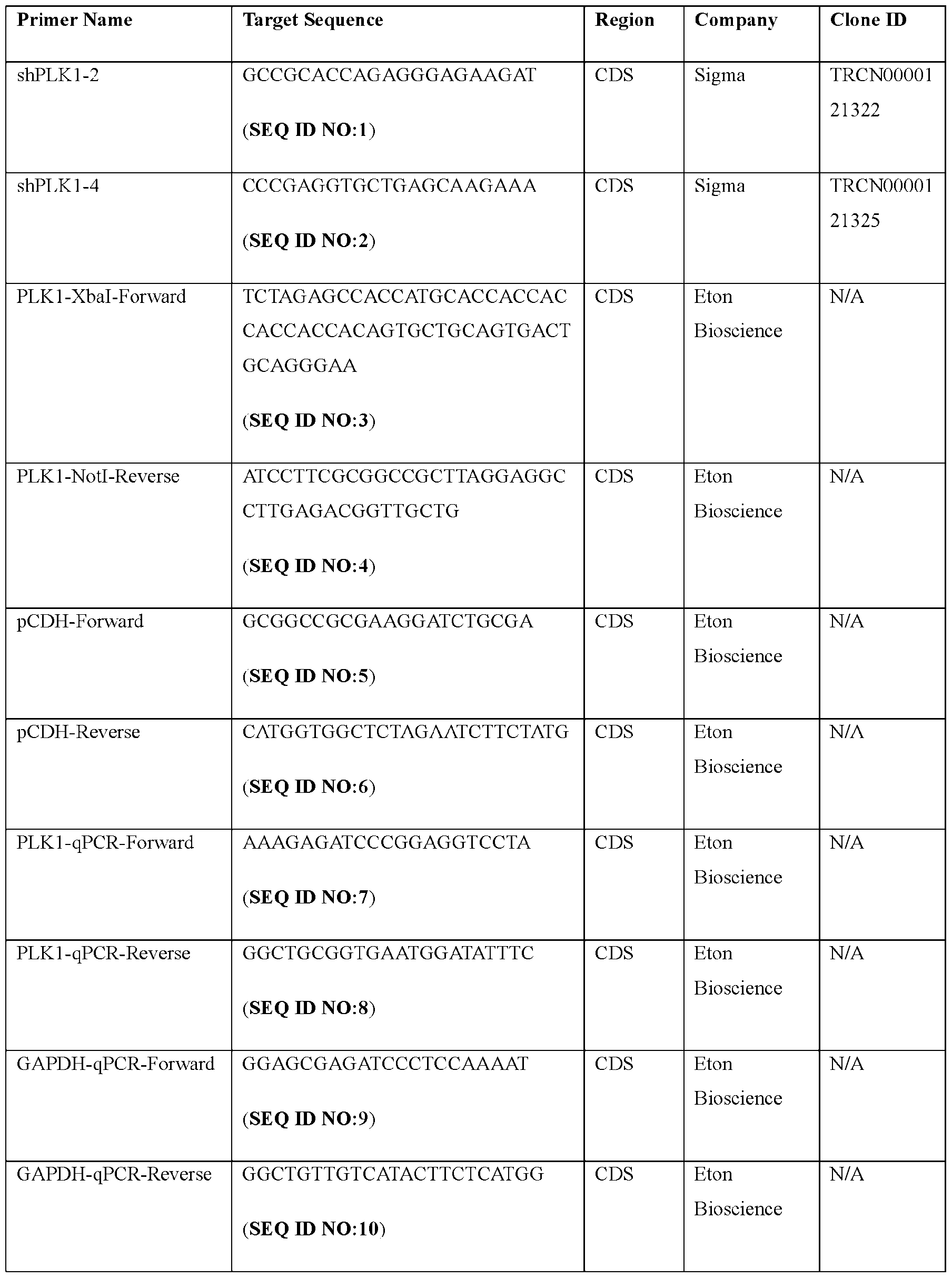

N/A, not available.
Table 2: Information of primary FLT3-ITD AML patient samples used herein

Table 3: Cotreatment with Metformin shows no increase in side effects


Details of Metformin usage, duration, and side effects for samples illustrated in Fig. 6A.
Example 3: Metformin synergizes with Gilteritinib in suppressing survival/proliferation and promoting apoptosis and cell cycle arrest of human FLT3-ITD AML cells in vitro [0205] To determine whether Metformin can synergize with Gilteritinib in treating FLT3-ITD AML, we conducted a series of in vitro assays with human AML cell lines including those carrying FLT3-ITD (M0LM13, MV4-11, and MA9.3-ITD), FLT3 TKI resistant cells (MOLM13-RES) and those carrying FLT3 wild-type (FLT3-WT) (THP1, N0M01 and Kasumi- 1). While the IC so values of Metformin were relatively consistent across all three types of AML cell lines, the IC50 values of Gilteritinib were notably lower in FLT3-ITD AML cells compared to MOLM13-RES and FLT3-WT cells. We next evaluated the combinatorial effect of Metformin and Gilteritinib using the Chou-Talalay method and CompuSyn software. We observed synergistic effects (CI values < 1) of Metformin and Gilteritinib in killing FLT3-ITD AML cell lines (Figs. 1A and IB) and MOLM13-RES cells (Fig. IC), but not in FLT3-WT AML cell lines (Fig. ID).
[0206] Using the Bliss Independence Model, we combined the fixed concentrations of Metformin (IC10, IC30, IC50, respectively) with different concentrations of Gilteritinib. The synergy7 between Metformin and Gilteritinib was evident in FLT3-ITD and MOLM13-RES AML cell lines (with Bliss indices > 1; Figs. 1E-1G), but not in FLT3-WT AML cell lines (Fig. 1H). To determine the optimal drug combination for MOLM13-RES cells, we conducted various combination groups and found that the pairing of Metformin at 4 mM with Gilteritinib at 80 nM yielded a standout synergy score of 21 . 11 (Fig. II), indicating superior synergistic efficacy. Collectively, our findings reveal the synergistic effects of Metformin and Gilteritinib on suppressing AML cell survival in FLT3-ITD and FLT3 TKI-resistant AML cell lines.
[0207] We next assessed their synergistic effects on AML cell proliferation. In M0LM13 cells, either Gilteritinib or Metformin alone substantially inhibited cell growth. Specifically, gilteritinib at both 5 and 10 nM concentrations, as well as metformin at 5 and 10 mM, independently showed significant inhibition of cell growth/vi ability. Interestingly the Combo 1 group (Gilteritinib 5 nM + Metformin 5 mM) not only exhibited a substantially greater inhibitor
effect than did each treatment alone, but also showed similar inhibitory effect to that of a higher- dose (10 nM) Gilteritinib monotherapy in M0LM13 cells (Fig. 2A).This indicates that with the help from a low dose of Metformin, a lower dose of Gilteritinib can work as effective as a higher dose of Gilteritinib. Moreover, Combo2 (Gilteritinib 10 nM + Metformin 10 mM) had a significantly more robust inhibitory effect than that of Gilteritinib and Metformin each alone (Fig. 2A). In MOLM13-RES cells, Gilteritinib only exerted growth inhibitory' effect at a much higher concentrations of 80 and 240 nM., The Combol group (Gilteritinib 80 nM + Metformin 4 mM) exhibited a greater inhibitory effect compared to Gilteritinib alone at 80 nM and even at the higher concentration of 240 nM; moreover, Combo 2 group (gilteritinib 240 nM + metformin 10 mM) showed greater inhibition of cell growth than either treatment did alone (Fig. 2B). In contrast, the combination of Gilteritinib and Metformin did not show such a synergistic effect in FLT3-WT AML (THP-1) cells (Fig. 2C). Furthermore, we also observed a significant synergy between Gilteritinib and Metformin in suppressing the proliferation of human primary FLT3- ITD AML cells, with the combination of the half dose of each compound (120 nM Gilteritinib + 10 mM Metformin) surpassing the full dose of each alone.
[0208] By flow cytometry, we also observed a synergistic effect between Metformin and Gilteritinib on promoting cell cycle arrest at G0/G1 in FLT3-ITD AML cell lines, with the lower concentration combination (5 mM Metformin and 5 nM Gilteritinib) showing a comparable effect to the higher concentration of Gilteritinib (10 nM) while the higher concentration combination (10 mM Metformin and 10 nM Gilteritinib) showing a significantly greater effect than each alone (Fig. 2D). This was further verified in M0LM13 cells using EdU staining. Similarly, in MOLM13-RES cells, both the Combol (gilteritinib 80 nM + metformin 4 mM) and the Combo2 (gilteritinib 240 nM + metformin 10 mM) treatments led to greater G0/G1 cell cycle arrest than did each individual drug alone, with the effect of Combol surpassing that of a higher concentration of gilteritinib (240 nM) (Fig. 2E), further supported by EdU and Hoechst/Py ronin staining. In contrast, in THP-1 cells (FLT3-WT), the combined treatment showed no synergistic or cooperative effects (Fig. 2F).
[0209] Regarding apoptosis, we observed similar patterns. In FLT3-ITD AML cells, the induction of apoptosis by Combol (gilteritinib 5 nM + metformin 5 mM) was on par with 10 nM Gilteritinib alone, while Combo2 (gilteritnib 10 mM + metformin 10 mM) induced significantly higher apoptosis than did single treatment (Fig. 2G). In MOLM13-RES cells, combining a
reduced dose of Gilteritinib (80 nM) with Metformin (4 mM) achieved greater apoptosis than did 240 nM Gilteritinib alone (Fig. 2H), suggesting that even a relatively low dose of Metformin could greatly sensitize FLT3 TKI-resistant AML cells to Gilteritinib. Again, no synergistic effect on apoptosis was seen in FLT3-WT AML cells (Fig. 21). Together, Metformin specifically amplifies the anti-proliferative and pro-apoptotic effects of Gilteritinib in FLT3-ITD and FLT3 TKI-resistant AML cells, but not in FLT3-WT AML cells.
Example 4: Metformin and Gilteritinib combinational treatment synergistically inhibits FLT3-ITD AML progression in vivo
[0210] To evaluate the therapeutic potential of the Metformin and Gilteritinib combination in treating FLT3-ITD AML in vivo, we developed ‘human-in-mouse” AML models using luciferase-expressing M0LM13 (FLT3-ITD AML) OR MOLM13-RES (TKI-resistant FLT3- ITD AML) cells and monitoried human AML progression in the recipient mice and recorded the surivial of the mice. In the regular FLT3-1TD AML model. 7 days after bone marrow transplantation (BMT), treatments commenced, involving either vehicle control, metformin (250 mg/kg/day), gilteritinib (7.5 mg/kg/day), or their combination. Subsequently, luciferase imaging revealed a notable suppression of AML progression in all the treated groups, particularly in the combinational treatment group. Moreover, on day 21 post-BMT. our analysis of AML engraftment in peripheral blood (PB), bone marrow (BM), and spleen revealed the lowest engraftment levels in the combinational treatment group (Figs. 3A-3D). While the control group experienced significant and consistent increases in white blood cells and weight loss, the treatment groups, especially the combinational treatment group, maintained relatively stable white blood cell counts and body weight (Figs. 3E-3F). Furthermore, on day 45, flow cytometry unveiled that the combinational treatment group maintained remarkably low engraftment levels (0.43%) compared to the significant elevations in the monotherapy groups (metformin: 82.4%; gilteritinib: 69.3%). As a result, all the mice in the combinational treatment group survived beyond 70 days with minimal leukemia burden, in stark contrast to the significantly shorter median survival times in the control (21 days), metformin (46 days), and gilteritinib (52 days) groups (Fig. 3G). In the TKI-resistant FLT3-ITD AML mouse models, after 10 days posttransplantation. mice were randomly grouped and administered with vehicle control or Metformin (250 mg/kg/day) and Gilteritinib (15 mg/kg/day) or in combination once daily. After one week of treatment (i.e., BMT-D17), AML progression was significantly inhibited in all the
drug-treated mice, especially those in the combination group, as shown by bioluminescence imaging. We also collected peripheral blood (PB) from 5 randomly chosen mice of each group simultaneously on day 22 post xenotransplantation (BMT-D22), i.e., 12 days post the first treatment (T-D12), to analyze human AML engraftment in mice. As expected, the combinational treatment resulted in the low est engraftment levels. Similarly, the combinational treated group showed the least AML engraftment in PB, bone marrow (BM) and the spleen on day 26 post transplantation (DMT-D26 or T-D16) (Figs. 3H-3K). Periodic monitoring indicated the control group had escalated white blood cell counts and body weight loss, while the combination group remained stable, suggesting great therapeutic benefits in the treated mice (Figs. 3L-3M). Of note, while AML gradually progressed to a very' high level in mice treated with Metformin or Gilteritinib alone (71.3% and 66.7% engraftment in PB, respectively, on day 55 posttransplantation (BMT-D55 or T-D45)), the Combo treatment strikingly and constantly suppressed AML progression to a very low level (2.08% engraftment in PB). As a result, while Metformin or Gilteritinib single treatment significantly increased OS more than two folds compared to the vehicle-control group (the median survival in the vehicle-, Metformin- and Gilteritinib-treated mice was 28, 58 and 66 days, respectively), the combinational treatment exhibited a much more significant therapeutic efficacy, with -90% of the Combo-treated mice survived over 120 days (Fig. 3N) with minimal leukemia burden. Such data demonstrate the synergistic effect of Metformin and Gilteritinib in vivo and highlight the very' promising therapeutic potential of the combination in treating FLT3 -mutated AML (even with TKI- resistance).
Example 5: PLK1 is a common target of Metformin and Gilteritinib and mediates FLT3- ITD AML cells response to Gilteritinib
[0211] To understand the molecular mechanism(s) underlying the synergistic effect of Metformin and Gilteritinib in FLT3-mutated AML, we subjected MOLM13-RES cells from both the control and drug-treated groups (Gilteritinib: 240 nM; Metformin: 10 mM; Combo: Gilteritinib 80 nM + Metformin 4 mM) after 24 h of treatment to RNA sequencing (RNA-seq), follow ed by a comprehensive data analysis. We performed Gene Set Enrichment Analysis (GSEA) of those significantly down-regulated genes in drug treated samples and found three pathways (i.e., E2F TARGETS, G2M CHECKPOINT. and MTORC1 SIGNALING) were commonly suppressed in the three treated groups. Moreover, we performed integrative analysis
with the RNA-seq data from the datasets: GSE180180, GSE180181 to reveal differentially expressed genes in M0LM13-RES cells compared to parental M0LM13 cells. We found that PLK1 is elevated in M0LM13-RES cells relative to M0LM13 cells, and is also significantly down-regulated in all the three groups of drug treated samples and is shared by the above three commonly suppressed pathways, implying its essential role in FLT3-ITD AML and Gilteritinib resistance. We then confirmed by qPCR that PLK1 mRNA level is significantly higher in M0LM13-RES than in parental M0LM13 cells, but down-regulated upon drug treatments, especially the combinational treatment (Fig. 4A).This observation was further validated in vivo using PB samples from M0LM13-RES AML NRGS mice(Fig. 4B). Interestingly, while both Gilteritinib and Metformin regulated PLK1 protein level in M0LM13-RES cells in a dosedependent manner, their lower-does combination (Gilteritinib: 80 nM; Metformin: 4 mM) induced a stronger inhibition on PLK1 expression than did higher dose individually (Gilteritinib 240 nM or Metformin 10 rnM) (Fig. 4C), highlighting the synergistic effect of Gilteritinib and Metformin on inhibiting PLK1 expression in MOLM13-RES cells. In addition, PLK1 was particularly overexpressed in FLT3-ITD AML cells relative to healthy controls or FLT3-WT AML cells (Fig. 4D). which further supports its specific role in FLT3-ITD AML.
[0212] To examine PLKl’s roles in the response of FLT3-ITD AML cells to Gliteritinib, we knocked down PLK1 in both M0LM13 and MOLM13-RES cells and found that PLK1 depletion substantially decreased IC50 of Gilteritinib (Fig. 4E, mimicking the effect of Metformin (4 nM) co-treatment (10 mM in M0LM13 cells and 4 mM in MOLM13-RES cells). Conversely, overexpression of PLK1 strikingly increased the IC50 (> 7-fold) of Gilteritinib in M0LM13 cells (Fig. 4F). Notably, in MOLM13-RES cells, overexpression of PLK.1 largely reversed the synergy between Metformin and Gilteritinib (Fig. 4G), and rescued the growth inhibition and apoptosispromoting effects caused by Gilteritinib and Metformin treatment alone or in combination (Figs. 4H-4I). Collectively, these data indicate that PLK1 is a functionally essential target/effector of Metformin and Gilteritinib treatments, and mediates TKJ resistance in FLT3-ITD AML.
Example 6: Metformin and Gliteritinib treatments synergistically suppress expression of PLK1 and the activation of its downstream pathways in FLT3-ITD AML cells
[0213] PLK1, a critical serine/threonine-protein kinase, is known to impact many cellular functions and may affect pathways like MAPK and mTOR.32’35 To investigate the effects of Metformin and Gilteritinib treatments on the activity of PLKl ’s downstream pathways, we
detected protein abundance and phosphory lation levels of the key signaling proteins in those pathways. Western blotting showed that in M0LM13 cells, a 6-hour treatment with Metformin, Gilteritinib, and especially their combination led to marked decreases in PLK1 levels. This led to reduced phosphorylation of FLT3, STAT5, ERK, and mTOR, with combined treatment being the most effective, whereas their total protein levels largely persisted. Such effects became more evident at 24 hours (Fig. 5 A). Similar patterns were observed in the M0LM13-RES cells, with the combination again showing the most robust suppression effects, whereas Gilteritinib 10 nM alone treatment did not show evident effects (Fig. 5B).
[0214] Mimicking the effects of Metformin/Gilteritinib treatments, knockdown of PLK1 expression in MOLM13-RES cells also led to a substantial decline in the phosphorylation levels of FLT3, STAT5, ERK, and mTOR, and the opposite is true when PLK1 was forced expressed (Fig. 5C). Furthermore, forced expression of PLK1 could also sufficiently reverse the reduced phosphorylation levels caused by Metformin/Gilteritinib treatments in MOLM13-RES cells (Fig. 5D). Thus, our data suggest that the synergistic effect of Metformin and Gilteritinib appears to be attributed to their synergistically targeting of PLK1 and its downstream signaling pathways.
Example 7: Metformin-intake prolongs survival in FLT3-ITD AML patients with Diabetes: clinical insights and implications of PLK1 expression
[0215] To investigate the impact of Metformin treatment on AML patients with FLT3-ITD mutation, we executed a retrospective clinical analysis, involving AML patients possessing FLT3-ITD mutations who were also diagnosed with diabetes. These patients were segregated into two cohorts: Metformin recipients and non-recipients. Strikingly, we found a notable elongation in OS in the Metformin-intake group, with a median OS stretching to 13.2 months, significantly longer than that in the group without Metformin (4.5 months; P = .0197) (Fig. 6A). Notably, the analysis comparing the metformin-intake group with the non-metformin group demonstrated no increase in the incidence of hematologic toxicities, fever, or liver function impairment, showing no statistically significant differences between the groups (Table 3). Patients exposed to Metformin had a higher CR rate than did the patients without Metformin exposure (64.3% vs 39.0%, P = .1277). Notably, the proportion of FLT3-ITD AML patients receiving FLT3 TKIs was remarkably low (Metformin group 2/16, without-Metformin group 10/53), underscoring their limited accessibility due to high costs. A comparative analysis of PLK1 levels amongst healthy individuals (n = 13). AML patients with FLT3-WT (n = 13) or
FLT3-ITD (n = 16) and FLT3-ITD CR patients (n = 5) (with Metformin exposure) revealed that 1) PLK1 s expression level in the FLT3-ITD AML cases is significantly higher than that in healthy individuals or FLT3-WT AML patients; and 2) PLK1 's expression level strikingly decreased in FLT3-ITD CR patients (with Metformin exposure) (Fig. 6B). These results further implicate the role of PLK1 in the adverse prognosis associated with FLT3-ITD AML. Survival analysis from the GSE37642 dataset confirmed worse outcomes for AML patients with high PLK1 levels (P = 0.0063). In short, the real-world data suggest that Metformin improves survival in FLT3-ITD AML patients, which appears to be at least in part through targeting PLK1 and its downstream pathways.
[0216] Discussion
[0217] This study evidences an elevated expression of PLK1 in FLT3-TKI -resistant AML cells. PLK1 was particularly upregulated in TKI-resistant FLT3-ITD AML cells. Both Gilteritinib and Metformin independently downregulated PLK1 in FLT3-ITD cells. Yet, higher doses of Gilteritinib were required to meaningfully diminish PLK1 expression in MOLM13-RES cells. Notably, their combinational treatment yielded a substantially enhanced inhibitory effect on PLK1 expression in FLT3-ITD AML and TKI-resistant cells, highlighting the synergy' in targeting PLK1.
[0218] PLK1, central to various oncogenic pathways like MAPK and mTOR, 32-35 exhibits a significant downregulation, especially when Metformin and Gilteritinib are combined. These restuls show taht this treatment can not only curtail the expression of PLK1 but also the phosphorylation levels of FLT3, STAT5, ERK, and mTOR. By countering the persistently active PLKl-MAPK/mTOR pathway in MOLM13-RES cells with Metformin, we re-sensitize these cells to FLT3-TKI. Conversely, forced expression of PLK1 largely reversed the beneficial effects of Metformin and Gilteritinib, reinstating TKI resistance in FLT3-ITD AML cells. Additionally, our retrospective clinical data pointed to elevated PLK1 levels in FLT3-ITD AML patient samples, which dropped post-Metformin treatment during remission. Collectively, our results provide evidence that PLK1 plays a pivotal role in regulating the response of FLT3-mutated AML cells to TKI treatment, and is also a critical effector that mediates the therapeutic effects of Metformin and Gilteritinib in treating FLT3 -mutated AML.
[0219] Our data demonstrated that FLT3-ITD AML patients with diabetes on Metformin showed an improved OS. Our analysis was limited to diabetic individuals. By combining Metformin with a reduced Gilteritinib dose, a cost-effective and safer treatment for FLT3- mutated AML may be provided.
[0220] In summary, our studies highlight the benefits of combining Metformin with a TKI (e.g., Gilteritinib) to treat FLT3-mutated AML. We have identified PLK1 as a pivotal regulator in FLT3 TKI resistance and a critical co-target for Metformin and Gilteritinib.
[0221] REFERENCES
[0222] 1. Poisal JA. Sisko AM. Cuckler GA, et al. National Health Expenditure Projections, 2021-30: Growth To Moderate As COVID-19 Impacts Wane. Health Aff (Millwood) .
2022;41(4):474-486.
[0223] 2. Woolf SH, Aron L. U.S. Health in International Perspective: Shorter Lives, Poorer Health. In: Woolf SH, Aron L, eds. US Health in International Perspective: Shorter Lives, Poorer Health. Washington (DC): National Academies Press.; 2013.
[0224] 3. Arber DA, Orazi A. Hasseijian R, et al. The 2016 revision to the World Health Organization classification of myeloid neoplasms and acute leukemia. Blood.
2016;127(20):2391-2405.
[0225] 4. Dohner H, Weisdorf DJ, Bloomfield CD. Acute Myeloid Leukemia. N Engl J Med. 2015;373(12): 1136-1152.
[0226] 5. Papaemmanuil E, Gerstung M, Bullinger L, et al. Genomic Classification and Prognosis in Acute Myeloid Leukemia. N Engl J Med. 2016;374(23):2209-2221.
[0227] 6. Cancer Genome Atlas Research N, Ley TJ, Miller C, et al. Genomic and epigenomic landscapes of adult de novo acute myeloid leukemia. N Engl J Med.
2013;368(22):2059-2074.
[0228] 7. Frohling S, Schlenk RF, Breitruck J, et al. Prognostic significance of activating FLT3 mutations in younger adults (16 to 60 years) with acute myeloid leukemia and normal cytogenetics: a study of the AML Study Group Ulm. Blood. 2002;100(13):4372-4380.
[0229] 8. Kottaridis PD, Gale RE, Frew ME, et al. The presence of a FLT3 internal tandem duplication in patients with acute myeloid leukemia (AML) adds important prognostic information to cytogenetic risk group and response to the first cycle of chemotherapy: analysis of 854 patients from the United Kingdom Medical Research Council AML 10 and 12 trials. Blood. 2001 ;98(6): 1752-1759.
[0230] 9. Mizuki M, Fenski R, Halfter H, et al. Flt3 mutations from patients with acute myeloid leukemia induce transformation of 32D cells mediated by the Ras and STAT5 pathways. Blood. 2000;96(12):3907-3914.
[0231] 10. Brandts CH, Sargin B, Rode M, et al. Constitutive activation of Akt by Flt3 internal tandem duplications is necessary for increased survival, proliferation, and myeloid transformation. Cancer Res. 2005;65(21):9643-9650.
[0232] 11. Rucker FG, Du L, Luck TJ, et al. Molecular landscape and prognostic impact of FLT3-ITD insertion site in acute myeloid leukemia: RATIFY study results. Leukemia.
2022:36(1 ):90-99.
[0233] 12. Wagner K, Damm F, Thol F, et al. FLT3-intemal tandem duplication and age are the major prognostic factors in patients with relapsed acute myeloid leukemia with normal karyotype. Haematologica. 201 l;96(5):681-686.
[0234] 13. Zhao JC, Agarw al S, Ahmad H, Amin K, Bewersdorf JP, Zeidan AM. A review of FLT3 inhibitors in acute myeloid leukemia. Blood Rev. 2022;52: 100905.
[0235] 14. Perl AE, Martinelli G, Cortes JE. et al. Gilteritinib or Chemotherapy for Relapsed or Refractory FLT3-Mutated AML. NEngl JMed. 2019;381(l 8): 1728-1740.
[0236] 15. Wang ES, Montesinos P, Minden MD, et al. Phase 3 trial of gilteritinib plus azacitidine vs azacitidine for newly diagnosed FLT3mut+ AML ineligible for intensive chemotherapy. Blood. 2022; 140(17): 1845-1857.
[0237] 16. Daver N, Perl AE, Maly J, et al. Venetoclax Plus Gilteritinib for FLT3-Mutated Relapsed/Refractory Acute Myeloid Leukemia. J Clin Oncol. 2022;40(35):4048-4059.
[0238] 17. Numan Y, Abdel Rahman Z, Grenet J, et al. Gilteritinib clinical activity in relapsed/refractory FLT3 mutated acute myeloid leukemia previously treated with FLT3 inhibitors. Am J Hematol. 2022;97(3):322-328.
[0239] 18. Pandya BJ, Qi CZ, Gamham A, Yang H. Shah MV, Zeidan AM. Costeffectiveness of gilteritinib for relapsed/refractory FLT3(mut+) acute myeloid leukemia. J Manag Care Spec Pharm. 2021;27(10): 1469-1481.
[0240] 19. Patel KK, Zeidan AM, Shallis RM, Prebet T, Podoltsev N, Huntington SF. Costeffectiveness of azacitidine and venetoclax in unfit patients with previously untreated acute myeloid leukemia. Blood Adv. 2021;5(4):994-1002.
[0241] 20. Libby G, Donnelly LA, Donnan PT, Alessi DR, Morris AD, Evans JM. New users of metformin are at low risk of incident cancer: a cohort study among people with type 2 diabetes. Diabetes Care. 2009;32(9): 1620-1625.
[0242] 21. Evans JM, Donnelly LA, Emslie-Smith AM, Alessi DR, Morris AD. Metformin and reduced risk of cancer in diabetic patients. BMJ. 2005;330(7503): 1304-1305.
[0243] 22. Franciosi M, Lucisano G. Lapice E, Strippoli GF, Pellegrini F, Nicolucci A. Metformin therapy and risk of cancer in patients with type 2 diabetes: systematic review. PLoS One. 2013;8(8):e71583.
[0244] 23. Coyle C, Cafferty FH, Vale C, Langley RE. Metformin as an adjuvant treatment for cancer: a systematic review and meta-analysis. Ann Oncol. 2016;27(12):2184-2195.
[0245] 24. Zhou G, Myers R, Li Y, et al. Role of AMP-activated protein kinase in mechanism of metformin action. J Clin Invest. 2001;108(8): 1167-1174.
[0246] 25. Foretz M, Guigas B, Bertrand L, Pollak M, Viollet B. Metformin: from mechanisms of action to therapies. Cell Metab. 2014;20(6):953-966.
[0247] 26. Ma T, Tian X, Zhang B, et al. Low-dose metformin targets the lysosomal AMPK pathway through PEN2. Nature. 2022;603(7899): 159-165.
[0248] 27. Wang Y, Xu W, Yan Z. et al. Metformin induces autophagy and G0/G1 phase cell cycle arrest in myeloma by targeting the AMPK/mTORCl and mTORC2 pathways. J Exp Clin Cancer Res. 2018;37(l):63.
[0249] 28. Zakikhani M. Dowling R, Fantus IG. Sonenberg N, Pollak M. Metformin is an AMP kinase-dependent growth inhibitor for breast cancer cells. Cancer Res. 2006;66(21 ): 10269- 10273.
[0250] 29. Han K, Fyles A, Shek T, et al. A Phase II Randomized Trial of Chemoradiation with or without Metformin in Locally Advanced Cervical Cancer. Clin Cancer Res. 2022;28(24):5263-5271.
[0251] 30. Chou TC. Drug combination studies and their synergy quantification using the Chou-Talalay method. Cancer Res. 2010;70(2):440-446.
[0252] 31. lanevski A, Giri AK, Aittokallio T. SynergyFinder 3.0: an interactive analysis and consensus interpretation of multi-drug synergies across multiple samples. Nucleic Acids Res. 2022;50(Wl):W739-W743.
[0253] 32. Kong Y, Allison DB, Zhang Q. et al. The kinase PLK1 promotes the development of Kras/Tp53-mutant lung adenocarcinoma through transcriptional activation of the receptor RET. Sci Signal. 2022;15(754):eabj4009.
[0254] 33. Liu TT, Yang KX, Yu J, et al. Co-targeting PLK1 and mTOR induces synergistic inhibitory effects against esophageal squamous cell carcinoma. J Mol Med (Berl). 2018;96(8):807-817.
[0255] 34. Wu J, Ivanov AL Fisher PB, Fu Z. Polo-like kinase 1 induces epithehal-to- mesenchymal transition and promotes epithelial cell motility by activating CRAF/ERK signaling. Elife. 2016;5.
[0256] 35. Jin B, Jin D, Zhuo Z, Zhang B, Chen K. MiR-1224-5p Activates Autophagy , Cell Invasion and Inhibits Epithelial-to-Mesenchymal Transition in Osteosarcoma Cells by Directly Targeting PLK1 Through PI3K/AKT/mTOR Signaling Pathway. Onco Targets Ther.
2020;13: 11807-11818.
[0257] 36. Reagan-Shaw S, Nihal M, Ahmad N. Dose translation from animal to human studies revisited. FASEB J. 2008;22(3):659-661.
[0258] 37. Satterwhite LE. Metformin Extended-Release Oral Solution. Clin Diabetes. 202L39(2):226-227.
[0259] 38. Karlin KL, Mondal G, Hartman JK, et al. The oncogenic STP axis promotes triple-negative breast cancer via degradation of the REST tumor suppressor. Cell Rep. 2014;9(4): 1318-1332.
[0260] 39. Weichert W, Denkert C, Schmidt M, et al. Polo-like kinase isoform expression is a prognostic factor in ovarian carcinoma. Br J Cancer. 2004;90(4):815-821.
[0261] 40. Takahashi T, Sano B. Nagata T, et al. Polo-like kinase 1 (PLK1) is overexpressed in primary colorectal cancers. Cancer Sci. 2003 ;94(2): 148-152.
[0262] 41. Ferrarotto R, Goonatilake R, Yoo SY, et al. Epithelial-Mesenchymal Transition Predicts Polo-Like Kinase 1 Inhibitor-Mediated Apoptosis in Non-Small Cell Lung Cancer. Clin Cancer Res. 2016;22(7): 1674-1686.
[0263] 42. Dufies M. Verbiest A, Cooley’ LS, et al. Plkl, upregulated by HIF-2, mediates metastasis and drug resistance of clear cell renal cell carcinoma. Commun Biol. 2021;4(l): 166.
[0264] 43. Renner AG, Dos Santos C, Recher C, et al. Polo-like kinase 1 is overexpressed in acute myeloid leukemia and its inhibition preferentially targets the proliferation of leukemic cells. Blood. 2009;114(3):659-662.
[0265] 44. Iliaki S, Beyaert R, Afonina IS. Polo-like kinase 1 (PLK1) signaling in cancer and beyond. Biochem Pharmacol . 2021;193:114747.
[0266] 45. Gutteridge RE, Ndiaye MA, Liu X. Ahmad N. Plkl Inhibitors in Cancer Therapy: From Laboratory to Clinics. Mol Cancer Ther. 2016;15(7): 1427-1435.
[0267] 46. Flory J, Lipska K. Metformin in 2019. JAMA. 2019;321(19): 1926-1927.
[0268] 47. Daugan M, Dufay Wojcicki A, d'Hayer B, Boudy V. Metformin: An anti-diabetic drug to fight cancer. Pharmacol Res. 2016;113(Pt A):675-685.
[0269] 48. Rozengurt E, Sinnet-Smith J, Kisfalvi K. Crosstalk between insulin/insulin-like growth factor-1 receptors and G protein-coupled receptor signaling systems: a novel target for the antidiabetic drug metformin in pancreatic cancer. Clin Cancer Res. 2010;16(9):2505-2511.
[0270] 49. Pemicova I. Korbonits M. Metformin— mode of action and clinical implications for diabetes and cancer. Nat Rev Endocrinol . 2014; 10(3): 143- 156.
[0271] 50. Thakur S, Daley B, Gaskins K, et al. Metformin Targets Mitochondrial Glycerophosphate Dehydrogenase to Control Rate of Oxidative Phosphory lation and Grow th of Thyroid Cancer In Vitro and In Vivo. Clin Cancer Res. 2018;24(16):4030-4043.
Example 8: Metformin Potentiates Gilteritinib Sensitivity via Targeting PLK1 Signaling: A Strategy to Improve Outcomes and Reduce Costs in Treating FLT3-Mutated Acute Myeloid Leukemia
[0272] FLT3 mutations (including FLT3-ITD and FLT3-TKD), occurring in -30% of acute myeloid leukemia (AML) patients, signal poor prognosis due to elevated relapse risk. Albeit FLT3 tyrosine kinase inhibitors (FLT3 TKI) demonstrated efficacy in treating FLT3 -mutated AML in the clinic, there are issues such as high cost, side effects, and high rate of drug resistance/relapse. Hence, an affordable, efficient treatment with lower side effects is needed. Metformin (MET), a cost-effective anti-diabetic drug with minimal side effects, has demonstrated anti-tumor effects (Dowling R et al. Cancer Res. 2007). Here we aimed to determine if combining MET with FLT3 TKI, like Gilteritinib (GLT), could enhance efficacy, reduce side effects and costs in treating FLT3-mutated AML.
[0273] To this end, we first assessed the IC50 values of MET and GLT across various AML cell lines including those carrying FLT3/ITD (M0LM13, MV4-11, and MA9.3-ITD), FLT3 TKI resistant cells (MOLM13-RES) and those carrying FLT3 wild-type (FLT3/WT) (THP1, N0M01 and Kasumi-1). MET's IC50S were consistent (7.284 -12.76 mM), while GLT’s varied, with lower values in FLT3/ITD cells (10 nM) and higher in FLT3 TKI resistant (241 nM) and FLT3/WT cells (334-1,053 nM). Using the Chou-Talalay Method, a Combination Index (CI) below 1 in FLT3/ITD and MOLM13-RES cells indicated synergy, whereas it showed antagonism (CI>1) in FLT3/WT cells. Both MET and GLT induced cell cycle arrest and apoptosis, with Combol (GLT 5 nM + MET 5 mM) matching GLT 10 nM effects; Combo2 (GLT 10 nM + MET 10 mM) amplified these effects.
[0274] We next evaluated the synergistic effect of MET and GLT in treating TKI-resistance AML in vivo using NRGS mice xeno-transplanted with MOLM13-RES cells. Both bioluminescence imaging and flow cytometry assays showed each treatment alone reduced leukemia burden, and their combination had a synergistic effect, reducing AML burden dramatically. While MET or GLT alone doubled overall survival compared to vehicle treatment (56-62 days vs. 26 days), -90% of the mice treated with the Combo survived over 120 days and their leukemia burden was still minimal, highlighting the synergistic effect and the promising therapeutic potential of this combination in treating FLT3-mutated AML (even with TKI- resistance).
[0275] To understand the underlying molecular mechanism(s), we performed RNA-seq with vehicle- or drug-treated MOLM13-RES cells, followed by pathway analysis and validation/mechanistic studies, we identified Polo-like kinase 1 (PLK1) as a key target of MET and GLT. PLKl’s expression is notably suppressed by both treatments. Mimicking MET treatment, PLK1 knockdown enhanced GLT sensitivity, reducing IC50 from 259.2 nM to 47-60 nM. Conversely, PLK1 overexpression increased GLT's IC50 7-fold (13.07 nM to 95.94 nM), largely reversing MET’s effect. PLKL a crucial serine/threonine-protein kinase, influences multiple signaling pathways such as MAPK and mTOR pathways. Upon treating M0LM13 or MOLM13-RES cells with MET and GLT alone or combined, the PLK1 levels and phosphorylation levels of FLT3, STAT5, ERK, and mTOR were decreased, with the most significant decrease occurred upon the combined treatment. Depletion and overexpression of PLK1 decreased and increased these phosphorylation levels, respectively. Together, our findings suggest that the synergistic therapeutic effect of MET and GLT in treating FLT3 -mutated AML is likely through synergistically targeting PLK1 and its downstream pathways.
[0276] Meanwhile, we executed a retrospective clinical study of FLT3/ITD AML patients who were also diagnosed with diabetes. Metformin users showed a notably longer median OS (13.2 months) than non-MET users (4.5 months. P=0.0197). Despite FLT3/ITD status, FLT3 TKIs were seldom used in China due to high cost. Additionally, PLK1 level was dramatically higher in FLT3/ITD AML cases than in both healthy and FLT3/WT cases (P<0.001), implying PLKl's role in FLT3/ITD's poor prognosis.
[0277] In summary', our findings demonstrate a synergistic approach in treating FLT3-mutated AML using MET and GLT.
Example 9
[0278] FLT3-ITD AML. historically challenging to treat due to poor outcomes and high relapse rates, has shown some promising results with costly TKI-based combination treatments like gilteritinib plus venetoclax. Their high costs (over $327K for gilteritinib lifetime usage and ~$12K for venetoclax monthly usage (400 mg/day) in the US), combined with significant side effects, restrict their broader adoption, evident from our data with only 17% (12/69) of patients with FLT3-ITD AML in Fujian (one of the richest provinces in China) receiving TKI treatment. Our study offers a solution: combining metformin and gilteritinib targeting PLK1 signaling. This combination showcased improved survival in preclinical and clinical settings. Based on the doses used in our mouse model and following the US FDA (FDA. 2005) guidelines and the human equivalent dose conversion formula, the projected doses for a 60 kg patient equate to roughly 1,200 mg/day for metformin and 70 mg/day for gilteritinib. This gilteritinib dose is merely half the current clinical recommendation (120 mg/day). Given that a patient can safely take up to 2.500 mg/day of metformin, the gilteritinib dose could be even lower (e.g., 30 mg/day) for optimal therapeutic efficacy. Considering metformin’s affordability (<$30 or $60/month. if taking 1,000 or 2,000 mg tablets daily) and safety (without serious side effects), the metformin/gilteritinib combination presents a much more affordable, safer, and effective therapeutic strategy for FLT3-mutated AML.
[0279] As described herein, we discovered that metformin and gilteritinib synergistically eradicated FLT3-ITD AML, including those resistant to TKIs. Expanding upon prior research that highlighted metformin-mediated enhancement of sorafenib sensitivity in AML, we broadened our study to include a diverse range of FLT3-ITD cell lines and TKI-resistant models. PLK1 has been implicated in the pathogenesis of various cancers. Dufies et al. reported its association with clear cell renal cell carcinoma resistance to sunitinib, while Renner et al. demonstrated that its overexpression in leukemic cell lines, when suppressed, could impede proliferation and clonogenicity7 of AML cells. Our study pinpointed an elevated expression of PLK1 in FLT3-ITD AML cell lines and primary patient samples, with a particular upregulation in TKI-resistant FLT3-ITD AML cells, underscoring its potential as a resistance reversal target. Both gilteritinib and metformin independently down-regulated PLK1 in FLT3-ITD AML cells.
Yet, higher concentrations of gilteritinib were required to meaningfully diminish PLK1 expression in M0LM13-RES cells. Notably, their combinational treatment yielded a substantially enhanced inhibitory effect on PLK1 expression in regular and TKI-resistant FLT3- ITD AML cells, highlighting the synergy in targeting PLK1.
[0280] PLK1, central to various oncogenic pathways like MAPK and mTOR, exhibits a significant down-regulation, especially when metformin and gilteritinib are combined. This treatment not only curtails the expression of PLK1 but also the phosphorylation levels of FLT3, STAT5, ERK, and mTOR. By countering the persistently active PLKl-MAPK/mTOR pathway in MOLM13-RES cells with metformin, we re-sensitized these cells to FLT3 TKI. Conversely, forced expression of PLK1 largely reverses the beneficial effects of metformin and gilteritinib, reinstating TKI resistance in FLT3-ITD AML cells. Additionally, our retrospective clinical data pointed to elevated PLK1 levels in FLT3-ITD AML patient samples, which dropped postmetformin treatment during remission. Collectively, our results suggest that PLK1 plays a pivotal role in regulating the response of FLT3 -mutated AML cells to TKI treatment and is also a critical effector that mediates the therapeutic effects of metformin and gilteritinib in treating FLT3-mutated AML. Previous research has established the capability of metformin to enhance chemotherapy efficacy and counter drug resistance in AML, particularly through its impact on key pathways such as PI3K/Akt/mTOR. Here, we delved deeper into the mechanistic interactions, identifying the pivotal role of PLK1 in FLT3-ITD AML and its modulation by metformin in synergy' with gilteritinib, adding a critical dimension to our understanding of how these therapies interact at the molecular level. While recent small-molecule PLK1 inhibitors demonstrate potential in preclinical studies, their clinical application is limited by moderate response rates and potential side effects. Metformin, with broader effects and minimal side effects, presents a safer and more potent and cost-effective alternative of PLK1 inhibitors. In addition, although here we focused on PLK1 as a critical co-target of metformin and gilteritinib, metformin definitely also targets other pathways, such as insulin and insulin-like growth factor 1 signaling and mitochondrial function.
[0281] Our data suggest that patients with FLT3-ITD AML and diabetes showed an improved OS upon metformin uptake. How ever, due to the high cost of FLT3 TKIs, very few of patients with FLT3-ITD AML in our cohort had received TKI treatment. The limited use of FLT3 TKIs, like gilteritinib. in our samples points to cost barriers in developing nations. By combining
metformin with a reduced gilteritinib dose, we propose a cost-effective and safer treatment for FLT3-mutated AML. Future clinical trials are needed to investigate whether an even lower dosage (e.g., 1/3 or even 1/5 of the standard dosage) of gilteritinib combined with an optimal dosage of metformin can match or outperform the gilteritinib and venetoclax combination (thus far the most effective FLT3 TKI-based combinational therapy) in efficacy. If so, this approach could cut treatment costs dramatically (to 1/5 or even 1/10 of that of the gilteritinib and venetoclax combination), making it more accessible/affordable globally (especially in developing countries) and possibly making a paradigm shift in FLT3-mutated AML therapy.
[0282] In summary. our studies highlight the benefits of combining metformin with a TKI (e.g., gilteritinib) to treat FLT3-mutated AML. We have identified PLK1 as a pivotal regulator in
FLT3 TKI resistance and a critical co-target for metformin and gilteritinib. Thus, this w ork not only sheds light on the molecular mechanism(s) underlying TKI resistance of FLT3 -mutated AML .
INFORMAL SEQUENCE LISTING

P EMBODIMENTS
[0283] P Embodiment 1. A composition comprising metformin and a tyrosine kinase inhibitor (TKI).
[0284] P Embodiment 2. The composition of P embodiment 1, wherein the TKI is an antibody or a small molecule.
[0285] P Embodiment 3. The composition of P embodiment 1 or 2, wherein the TKI is gilteritinib, midostaurin, quizartinib, crenolanib, sunitinib, lestaurtinib, FLX925, cabozantinib, SEL24-B489, G-749, AMG 925, TTT-3002, or FF-10101.
[0286] P Embodiment 4. The composition of any one of P embodiments 1-3. wherein the TKI is not sorafenib, osimertinib, gefitinib, icotinib, or rociletinib.
[0287] P Embodiment 5. The composition of any one of P embodiments 1-4, wherein the composition comprises an amount of metformin between about 250 mg to about 2500 mg.
[0288] P Embodiment 6. The composition of any one of P embodiments 1-5, wherein the composition comprises an amount of the TKI between about 10 mg to about 300 mg.
[0289] P Embodiment 7. The composition of any one of P embodiments 5 or 6, wherein the amount of metformin or the amount of the TKI are effective to inhibit polo-like kinase 1 (PLK1) activity in a human subject or a human cell.
[0290] P Embodiment 8. The composition of any one of P embodiments 1-7, wherein metformin is in a first dosage form and the TKI is in a second dosage form.
[0291] P Embodiment 9 . The composition of any one of P embodiments 1-7, wherein metformin and the TKI are in a single dosage form.
[0292] P Embodiment 10. The composition of any one of P embodiments 1 -9. wherein the composition is a pharmaceutical composition, wherein the pharmaceutical composition further comprises a pharmaceutically acceptable excipient.
[0293] P Embodiment 11. The composition of any one of P embodiments 1-10, wherein metformin and the TKI are present in a combined synergistic amount, wherein the combined synergistic amount is effective to treat cancer in a subj ect in need thereof.
[0294] P Embodiment 12. The composition of any one of P embodiments 1-11, wherein the cancer is lymphoma, Hodgkin lymphoma, Non-Hodgkin lymphoma, leukemia, myeloma, multiple myeloma, acute myeloid leukemia (AML), B-cell acute lymphoblastic leukemia (B- ALL), T-cell acute lymphoblastic leukemia (T-ALL), renal cell carcinoma, colon cancer, rectal cancer, colorectal cancer, breast cancer, epithelial squamous cell cancer, melanoma, gastric cancer, brain cancer, lung cancer, pancreatic cancer, cervical cancer, ovarian cancer, liver cancer, bladder cancer, prostate cancer, testicular cancer, thyroid cancer, head and neck cancer, uterine cancer, endometrial cancer, bone cancer, sarcoma, soft tissue sarcoma, osteosarcoma, adenocarcinoma, or adrenal cancer.
[0295] P Embodiment 13. The composition of any one of P embodiments 1-12, wherein the cancer comprises an fms like tyrosine kinase 3 (FLT3) mutation or increased FLT3 expression.
[0296] P Embodiment 14. The composition of any one of P embodiments 1-13, wherein the cancer comprises increased polo-like kinase 1 (PLK1) activity.
[0297] P Embodiment 15. The composition of any one of P embodiments 1-14, wherein the cancer comprises a TKI-resistant cancer.
[0298] P Embodiment 16. A method of treating cancer in a subject in need thereof, the method comprising administering to the subject a therapeutically effective amount of metformin and a tyrosine kinase inhibitor (TKI), thereby treating the cancer.
[0299] P Embodiment 17. The method of P embodiment 16. wherein the TKI is an antibody or a small molecule.
[0300] P Embodiment 18. The method of P embodiment 16 or 17, wherein the TKI is gilteritinib, midostaurin, quizartinib, crenolanib, sunitinib, lestaurtinib, FLX925, cabozantinib, SEL24-B489, G-749, AMG 925. TTT-3002. or FF- 10101.
[0301] P Embodiment 19. The method of any one of P embodiments 16-18, wherein the TKI is not sorafenib, osimertinib. gefitinib. icotinib, or rociletinib.
[0302] P Embodiment 20. The method of any one of P embodiments 16-18, wherein metformin and TKI are administered in a combined synergistic amount.
[0303] P Embodiment 21. The method of any one of P embodiments 16-20, wherein metformin and the TKI are administered simultaneously or sequentially.
[0304] P Embodiment 22. The method of any one of P embodiments 16-21, wherein metformin is administered at a first time point and the TKI is administered at a second time point, wherein the first time point precedes the second time point.
[0305] P Embodiment 23. The method of any one of P embodiments 16-21, wherein the TKI is administered at a first time point and metformin is administered at a second time point, wherein the first time point precedes the second time point
[0306] P Embodiment 24. The method of any one of P embodiments 16-23, wherein metformin and the TKI are admixed prior to administration.
[0307] P Embodiment 25. The method of any one of P embodiments 16-24, wherein metformin is administered at an amount of about 250 mg/day to about 2500 mg/day.
[0308] P Embodiment 26. The method of any one of P embodiments 16-25, wherein the TKI is administered at an amount of about 10 mg/day to about 300 mg/day.
[0309] P Embodiment 27. The method of any one of P embodiments 16-26, wherein metformin is administered at an amount of about 1200 mg/day and the TKI is administered at an amount of about 70 mg/day.
[0310] P Embodiment 28. The method of any one of P embodiments 16-27. wherein metformin is in a first dosage form and the TKI is in a second dosage form.
[0311] P Embodiment 29. The method of any one of P embodiments 16-27, wherein metformin and the TKI are in a single dosage form.
[0312] P Embodiment 30. The method of any one of P embodiments 16-29, wherein metformin or the TKI is administered daily.
[0313] P Embodiment 31. The method of any one of P embodiments 16-30. wherein metformin or the TKI is administered orally.
[0314] P Embodiment 32. The method of any one of P embodiments 16-31 , wherein the subject is a mammal.
[0315] P Embodiment 33. The method of any one of P embodiments 16-32, wherein the subject is a human.
[0316] P Embodiment 34. The method of any one of P embodiments 16-33, wherein the cancer is lymphoma, Hodgkin lymphoma, Non-Hodgkin lymphoma, leukemia, myeloma, multiple myeloma, acute myeloid leukemia (AML), B-cell acute lymphoblastic leukemia (B- ALL), T-cell acute lymphoblastic leukemia (T-ALL), renal cell carcinoma, colon cancer, rectal cancer, colorectal cancer, breast cancer, epithelial squamous cell cancer, melanoma, gastric cancer, brain cancer, lung cancer, pancreatic cancer, cervical cancer, ovarian cancer, liver cancer,
bladder cancer, prostate cancer, testicular cancer, thyroid cancer, head and neck cancer, uterine cancer, endometrial cancer, bone cancer, sarcoma, soft tissue sarcoma, osteosarcoma, adenocarcinoma, or adrenal cancer.
[0317] P Embodiment 35. The method of any one of P embodiments 16-34. wherein the cancer comprises an fms like tyrosine kinase 3 (FLT3) mutation or increased FLT3 expression.
[0318] P Embodiment 36. The method of any one of P embodiments 16-35, wherein the cancer comprises increased polo-like kinase 1 (PLK1) activity'.
[0319] P Embodiment 37. The method of any one of P embodiments 16-36, wherein the cancer comprises a TKI-resistant cancer.
EMBODIMENTS
[0320] Embodiment 1. A composition comprising metformin and a tyrosine kinase inhibitor (TKI).
[0321] Embodiment 2. The composition of embodiment 1, wherein the TKI is an antibody or a small molecule.
[0322] Embodiment 3. The composition of embodiment 1 or 2, wherein the TKI is gilteritinib, midostaurin, quizartinib, crenolanib, sunitinib, lestaurtinib, FLX925, cabozantinib, SEL24-B489, G-749, AMG 925. TTT-3002. or FF-10101.
[0323] Embodiment 4. The composition of any one of embodiments 1-3, wherein the TKI is not sorafenib, osimertinib, gefitinib, icotinib, or rociletinib.
[0324] Embodiment 5. The composition of any one of embodiments 1-4, wherein the composition comprises an amount of metformin between about 250 mg to about 2500 mg.
[0325] Embodiment 6. The composition of any one of embodiments 1-5. wherein the composition comprises an amount of the TKI between about 10 mg to about 300 mg.
[0326] Embodiment 7. The composition of any one of embodiments 5 or 6, wherein the amount of metformin or the amount of the TKI are effective to inhibit polo-like kinase 1 (PLK1) activity7 in a human subject or a human cell.
[0327] Embodiment 8. The composition of any one of embodiments 1-7, wherein metformin is in a first dosage form and the TKI is in a second dosage form.
[0328] Embodiment 9 . The composition of any one of embodiments 1-7. wherein metformin and the TKI are in a single dosage form.
[0329] Embodiment 10. The composition of any one of embodiments 1-9, wherein the composition is a pharmaceutical composition, wherein the pharmaceutical composition further comprises a pharmaceutically acceptable excipient.
[0330] Embodiment 11. The composition of any one of embodiments 1-10, wherein metformin and the TKI are present in a combined synergistic amount, wherein the combined synergistic amount is effective to treat cancer in a subject in need thereof.
[0331] Embodiment 12. The composition of embodiment 11, wherein the cancer is lymphoma, Hodgkin lymphoma, Non-Hodgkin lymphoma, leukemia, myeloma, multiple myeloma, acute myeloid leukemia (AML), B-cell acute lymphoblastic leukemia (B-ALL), T-cell acute lymphoblastic leukemia (T-ALL), renal cell carcinoma, colon cancer, rectal cancer, colorectal cancer, breast cancer, epithelial squamous cell cancer, melanoma, gastric cancer, brain cancer, lung cancer, pancreatic cancer, cervical cancer, ovarian cancer, liver cancer, bladder cancer, prostate cancer, testicular cancer, thyroid cancer, head and neck cancer, uterine cancer, endometrial cancer, bone cancer, sarcoma, soft tissue sarcoma, osteosarcoma, adenocarcinoma, or adrenal cancer.
[0332] Embodiment 13. The composition of embodiment 11 or 12, wherein the cancer comprises an fins like tyrosine kinase 3 (FLT3) mutation or increased FLT3 expression.
[0333] Embodiment 14. The composition of any one of embodiments 11-13, wherein the cancer comprises increased polo-like kinase 1 (PLK1) activity.
[0334] Embodiment 15. The composition of any one of embodiments 11-14, wherein the cancer comprises a TKI-resistant cancer.
[0335] Embodiment 16. A method of treating cancer in a subject in need thereof, the method comprising administering to the subject a therapeutically effective amount of metformin and a tyrosine kinase inhibitor (TKI), thereby treating the cancer.
[0336] Embodiment 17. The method of embodiment 16, wherein the TKI is an antibody or a small molecule.
[0337] Embodiment 18. The method of embodiment 16 or 17, wherein the TKI is gilteritinib. midostaurin, quizartinib. crenolanib. sunitinib, lestaurtinib, FLX925, cabozantinib. SEL24-B489, G-749, AMG 925, TTT-3002, or FF-10101.
[0338] Embodiment 19. The method of any one of embodiments 16-18, wherein the TKI is not sorafenib, osimertinib, gefitinib, icotinib, or rociletinib.
[0339] Embodiment 20. The method of any one of embodiments 16-18, wherein metformin and TKI are administered in a combined synergistic amount.
[0340] Embodiment 21. The method of any one of embodiments 16-20. wherein metformin and the TKI are administered simultaneously or sequentially.
[0341] Embodiment 22. The method of any one of embodiments 16-21, wherein metformin is administered at a first time point and the TKI is administered at a second time point, wherein the first time point precedes the second time point.
[0342] Embodiment 23. The method of any one of embodiments 16-21, wherein the TKI is administered at a first time point and metformin is administered at a second time point, wherein the first time point precedes the second time point
[0343] Embodiment 24. The method of any one of embodiments 16-23, wherein metformin and the TKI are admixed prior to administration.
[0344] Embodiment 25. The method of any one of embodiments 16-24, wherein metformin is administered at an amount of about 250 mg/day to about 2500 mg/day.
[0345] Embodiment 26. The method of any one of embodiments 16-25. wherein the TKI is administered at an amount of about 10 mg/day to about 300 mg/day.
[0346] Embodiment 27. The method of any one of embodiments 16-26, wherein metformin is administered at an amount of about 1200 mg/day and the TKI is administered at an amount of about 70 mg/day.
[0347] Embodiment 28. The method of any one of embodiments 16-27, wherein metformin is in a first dosage form and the TKI is in a second dosage form.
[0348] Embodiment 29. The method of any one of embodiments 16-27, wherein metformin and the TKI are in a single dosage form.
[0349] Embodiment 30. The method of any one of embodiments 16-29, wherein metformin or the TKI is administered daily.
[0350] Embodiment 31. The method of any one of embodiments 16-30, wherein metformin or the TKI is administered orally .
[0351] Embodiment 32. The method of any one of embodiments 16-31, wherein the subject is a mammal.
[0352] Embodiment 33. The method of any one of embodiments 16-32. wherein the subject is a human.
[0353] Embodiment 34. The method of any one of embodiments 16-33, wherein the cancer is lymphoma, Hodgkin lymphoma, Non-Hodgkin lymphoma, leukemia, myeloma, multiple myeloma, acute myeloid leukemia (AML), B-cell acute lymphoblastic leukemia (B-ALL), T-cell acute lymphoblastic leukemia (T-ALL), renal cell carcinoma, colon cancer, rectal cancer, colorectal cancer, breast cancer, epithelial squamous cell cancer, melanoma, gastric cancer, brain cancer, lung cancer, pancreatic cancer, cervical cancer, ovarian cancer, liver cancer, bladder cancer, prostate cancer, testicular cancer, thyroid cancer, head and neck cancer, uterine cancer, endometrial cancer, bone cancer, sarcoma, soft tissue sarcoma, osteosarcoma, adenocarcinoma, or adrenal cancer.
[0354] Embodiment 35. The method of any one of embodiments 16-34, wherein the cancer comprises an fins like tyrosine kinase 3 (FLT3) mutation or increased FLT3 expression.
[0355] Embodiment 36. The method of any one of embodiments 16-35, wherein the cancer comprises increased polo-like kinase 1 (PLK1) activity.
[0356] Embodiment 37. The method of any one of embodiments 16-36, wherein the cancer comprises a TKI-resistant cancer.
Claims
1. A composition comprising metformin and a tyrosine kinase inhibitor (TKI).
2. The composition of claim 1, wherein the TKI is an antibody or a small molecule.
3. The composition of claim 1, wherein the TKI is gilteritinib, midostaurin, quizartinib, crenolanib, sunitinib, lestaurtinib, FLX925, cabozantinib, SEL24- B489, G-749, AMG 925, TTT-3002, or FF-10101.
4. The composition of claim 1, wherein the TKI is not sorafenib, osimertinib, gefitinib, icotinib, or rociletinib.
5. The composition of claim 1, wherein the composition comprises an amount of metformin between about 250 mg to about 2500 mg.
6. The composition of claim 1, wherein the composition comprises an amount of the TKI between about 10 mg to about 300 mg.
7. The composition of claim 5, wherein the amount of metformin or the amount of the TKI are effective to inhibit polo-like kinase 1 (PLK1) activity in a human subject or a human cell.
8. The composition of claim 1, wherein metformin is in a first dosage form and the TKI is in a second dosage form.
9 . The composition of claim 1, wherein metformin and the TKI are in a single dosage form.
10. The composition of claim 1, wherein the composition is a pharmaceutical composition, wherein the pharmaceutical composition further comprises a pharmaceutically acceptable excipient.
11. The composition of claim 1, wherein metformin and the TKI are present in a combined synergistic amount, wherein the combined synergistic amount is effective to treat cancer in a subject in need thereof.
12. The composition of claim 11. wherein the cancer is lymphoma, Hodgkin lymphoma. Non-Hodgkin lymphoma, leukemia, myeloma, multiple myeloma, acute myeloid leukemia (AML), B-cell acute lymphoblastic leukemia (B-ALL), T-cell acute lymphoblastic leukemia (T-ALL), renal cell carcinoma, colon cancer, rectal cancer, colorectal cancer, breast cancer, epithelial squamous cell cancer, melanoma, gastric cancer, brain cancer, lung cancer, pancreatic cancer, cervical cancer, ovarian cancer, liver cancer, bladder cancer, prostate cancer, testicular cancer, thyroid cancer, head and neck cancer, uterine cancer, endometrial cancer, bone cancer, sarcoma, soft tissue sarcoma, osteosarcoma, adenocarcinoma, or adrenal cancer.
13. The composition of claim 11 , wherein the cancer comprises an fms like tyrosine kinase 3 (FLT3) mutation or increased FLT3 expression.
14. The composition of claim 11. wherein the cancer comprises increased polo-like kinase 1 (PLK1) activity.
15. The composition of claim 11. wherein the cancer comprises a TKI- resistant cancer.
16. A method of treating cancer in a subject in need thereof, the method comprising administering to the subject a therapeutically effective amount of metformin and a tyrosine kinase inhibitor (TKI), thereby treating the cancer.
17. The method of claim 16, wherein the TKI is an antibody or a small molecule.
18. The method of claim 16, wherein the TKI is gilteritinib, midostaurin, quizartinib, crenolanib, sunitinib, lestaurtinib, FLX925, cabozantinib, SEL24-B489, G-749, AMG 925, TTT-3002, or FF-10101.
19. The method of claim 16, wherein the TKI is not sorafenib, osimertinib, gefitinib. icotinib, or rociletinib.
20. The method of claim 16, wherein metformin and TKI are administered in a combined synergistic amount.
21. The method of claim 16, wherein metformin and the TKI are administered simultaneously or sequentially.
22. The method of claim 16, wherein metformin is administered at a first time point and the TKI is administered at a second time point, wherein the first time point precedes the second time point.
23. The method of claim 16, wherein the TKI is administered at a first time point and metformin is administered at a second time point, wherein the first time point precedes the second time point.
24. The method of claim 16, wherein metformin and the TKI are admixed prior to administration.
25. The method of claim 16, wherein metformin is administered at an amount of about 250 mg/day to about 2500 mg/day.
26. The method of claim 16, wherein the TKI is administered at an amount of about 10 mg/day to about 300 mg/day.
27. The method of claim 16, wherein metformin is administered at an amount of about 1200 mg/day and the TKI is administered at an amount of about 70 mg/day.
28. The method of claim 16, wherein metformin is in a first dosage form and the TKI is in a second dosage form.
29. The method of claim 16, wherein metformin and the TKI are in a single dosage form.
30. The method of claim 16, wherein metformin or the TKI is administered daily.
31. The method of claim 16, wherein metformin or the TKI is administered orally.
32. The method of claim 16, wherein the subject is a mammal.
33. The method of 16, wherein the subject is a human.
34. The method of claim 16, wherein the cancer is lymphoma, Hodgkin lymphoma. Non-Hodgkin lymphoma, leukemia, myeloma, multiple myeloma, acute myeloid leukemia (AML), B-cell acute lymphoblastic leukemia (B-ALL), T-cell acute lymphoblastic leukemia (T-ALL), renal cell carcinoma, colon cancer, rectal cancer, colorectal cancer, breast cancer, epithelial squamous cell cancer, melanoma, gastric cancer, brain cancer, lung cancer, pancreatic cancer, cervical cancer, ovarian cancer, liver cancer, bladder cancer, prostate cancer, testicular cancer, thyroid cancer, head and neck cancer, uterine cancer, endometrial cancer, bone cancer, sarcoma, soft tissue sarcoma, osteosarcoma, adenocarcinoma, or adrenal cancer.
35. The method of claim 16, wherein the cancer comprises an fms like tyrosine kinase 3 (FLT3) mutation or increased FLT3 expression.
36. The method of claim 16, wherein the cancer comprises increased pololike kinase 1 (PLK.1) activity.
37. The method of claim 16, wherein the cancer comprises a TKI-resistant cancer.
Applications Claiming Priority (2)
| Application Number | Priority Date | Filing Date | Title |
|---|---|---|---|
| US202363595278P | 2023-11-01 | 2023-11-01 | |
| US63/595,278 | 2023-11-01 |
Publications (1)
| Publication Number | Publication Date |
|---|---|
| WO2025097033A1 true WO2025097033A1 (en) | 2025-05-08 |
Family
ID=95581186
Family Applications (1)
| Application Number | Title | Priority Date | Filing Date |
|---|---|---|---|
| PCT/US2024/054235 Pending WO2025097033A1 (en) | 2023-11-01 | 2024-11-01 | Metformin combination therapy for use in cancer treatment |
Country Status (1)
| Country | Link |
|---|---|
| WO (1) | WO2025097033A1 (en) |
Citations (3)
| Publication number | Priority date | Publication date | Assignee | Title |
|---|---|---|---|---|
| US20180055828A1 (en) * | 2012-03-19 | 2018-03-01 | Plexxikon Inc. | Kinase modulation, and indications therefor |
| US20180243299A1 (en) * | 2015-08-24 | 2018-08-30 | The Methodist Hospital | Compositions and methods for treating ewing family tumors |
| US20210255168A1 (en) * | 2018-06-13 | 2021-08-19 | King Faisal Specialist Hospital & Research Centre | A method of precision cancer therapy |
-
2024
- 2024-11-01 WO PCT/US2024/054235 patent/WO2025097033A1/en active Pending
Patent Citations (3)
| Publication number | Priority date | Publication date | Assignee | Title |
|---|---|---|---|---|
| US20180055828A1 (en) * | 2012-03-19 | 2018-03-01 | Plexxikon Inc. | Kinase modulation, and indications therefor |
| US20180243299A1 (en) * | 2015-08-24 | 2018-08-30 | The Methodist Hospital | Compositions and methods for treating ewing family tumors |
| US20210255168A1 (en) * | 2018-06-13 | 2021-08-19 | King Faisal Specialist Hospital & Research Centre | A method of precision cancer therapy |
Non-Patent Citations (3)
| Title |
|---|
| ARRIETA OSCAR, BARRÓN FELICIANO, PADILLA MIGUEL-ÁNGEL SALINAS, AVILÉS-SALAS ALEJANDRO, RAMÍREZ-TIRADO LAURA ALEJANDRA, ARGUELLES J: "Effect of Metformin Plus Tyrosine Kinase Inhibitors Compared With Tyrosine Kinase Inhibitors Alone in Patients With Epidermal Growth Factor Receptor–Mutated Lung Adenocarcinoma: A Phase 2 Randomized Clinical Trial", JAMA ONCOLOGY, vol. 5, no. 11, 1 November 2019 (2019-11-01) - 5 September 2019 (2019-09-05), US , pages e192553, XP009562919, ISSN: 2374-2437, DOI: 10.1001/jamaoncol.2019.2553 * |
| CHEN MEILING, SHEN CHAO, CHEN YI, CHEN ZHENHUA, ZHOU KEREN, CHEN YUANZHONG, LI WEI, ZENG CHENGWU, QING YING, WU DONG, XU CAIMING, : "Metformin synergizes with gilteritinib in treating FLT3-mutated leukemia via targeting PLK1 signaling", CELL REPORTS MEDICINE, vol. 5, no. 7, 1 July 2024 (2024-07-01), pages 1 - 21, XP093312564, ISSN: 2666-3791, DOI: 10.1016/j.xcrm.2024.101645 * |
| ZHANG QIMAN, ZHENG JIN, WANG WEN, CORNETT ELYSE M., KAYE ALAN DAVID, URITS IVAN, VISWANATH OMAR, WEI FEI-LONG: "The Anticancer Effect of Metformin Combined with Epidermal Growth Factor Receptor Tyrosine Kinase Inhibitors in Non-small Cell Lung Cancer Patients with or Without Type 2 Diabetes Mellitus: A Systematic Review and Meta-analysis", ONCOLOGY AND THERAPY, vol. 10, no. 2, 1 December 2022 (2022-12-01), pages 363 - 375, XP093312567, ISSN: 2366-1070, DOI: 10.1007/s40487-022-00209-0 * |
Similar Documents
| Publication | Publication Date | Title |
|---|---|---|
| Porta et al. | Renal effects of targeted anticancer therapies | |
| CN111247172B (en) | Ovarian cancer therapy based on anti-CD47 agents | |
| US11220548B2 (en) | Treatment of C1013G/CXCR4-associated Waldenstrom's macroglobulinemia with an anti-CXCR4 antibody | |
| US20220265823A1 (en) | Uses of myostatin antagonists, combinations containing them and uses thereof | |
| US20200022967A1 (en) | Use of 2-carboxamide cycloamino urea derivatives in the treatment of EGFR dependent diseases or diseases that have acquired resistance to agents that target EGFR family members | |
| JP2026004356A (en) | Methods for treating relapsed/refractory follicular lymphoma with mosunetuzumab and lenalidomide | |
| US20200031920A1 (en) | Combination Therapy for Treating Cancer | |
| WO2025097033A1 (en) | Metformin combination therapy for use in cancer treatment | |
| CN113454114B (en) | Drug combinations for treating cancer | |
| US20250319053A1 (en) | Inhibitors of the peptidyl-prolyl cis/trans isomerase (pin1), combinations and uses thereof | |
| WO2022056592A1 (en) | Treatment and/or prevention of cancers | |
| RU2781401C2 (en) | Use of myostatin antagonists, combination containing them and their use | |
| Castillo et al. | Initial Evaluation of the Patient with Waldenström | |
| HK40029255A (en) | Anti-cd47 agent-based ovarian cancer therapy | |
| NZ614427A (en) | Use of inhibitors of egfr-family receptors in the treatment of hormone refractory breast cancers |
Legal Events
| Date | Code | Title | Description |
|---|---|---|---|
| 121 | Ep: the epo has been informed by wipo that ep was designated in this application |
Ref document number: 24887035 Country of ref document: EP Kind code of ref document: A1 |