WO2025075868A1 - Ppp1r15b rna interference agents - Google Patents
Ppp1r15b rna interference agents Download PDFInfo
- Publication number
- WO2025075868A1 WO2025075868A1 PCT/US2024/048763 US2024048763W WO2025075868A1 WO 2025075868 A1 WO2025075868 A1 WO 2025075868A1 US 2024048763 W US2024048763 W US 2024048763W WO 2025075868 A1 WO2025075868 A1 WO 2025075868A1
- Authority
- WO
- WIPO (PCT)
- Prior art keywords
- ppp1r15b
- nucleic acid
- antisense strand
- sense strand
- seq
- Prior art date
- Legal status (The legal status is an assumption and is not a legal conclusion. Google has not performed a legal analysis and makes no representation as to the accuracy of the status listed.)
- Pending
Links
Classifications
-
- C—CHEMISTRY; METALLURGY
- C12—BIOCHEMISTRY; BEER; SPIRITS; WINE; VINEGAR; MICROBIOLOGY; ENZYMOLOGY; MUTATION OR GENETIC ENGINEERING
- C12N—MICROORGANISMS OR ENZYMES; COMPOSITIONS THEREOF; PROPAGATING, PRESERVING, OR MAINTAINING MICROORGANISMS; MUTATION OR GENETIC ENGINEERING; CULTURE MEDIA
- C12N15/00—Mutation or genetic engineering; DNA or RNA concerning genetic engineering, vectors, e.g. plasmids, or their isolation, preparation or purification; Use of hosts therefor
- C12N15/09—Recombinant DNA-technology
- C12N15/11—DNA or RNA fragments; Modified forms thereof; Non-coding nucleic acids having a biological activity
- C12N15/113—Non-coding nucleic acids modulating the expression of genes, e.g. antisense oligonucleotides; Antisense DNA or RNA; Triplex- forming oligonucleotides; Catalytic nucleic acids, e.g. ribozymes; Nucleic acids used in co-suppression or gene silencing
- C12N15/1137—Non-coding nucleic acids modulating the expression of genes, e.g. antisense oligonucleotides; Antisense DNA or RNA; Triplex- forming oligonucleotides; Catalytic nucleic acids, e.g. ribozymes; Nucleic acids used in co-suppression or gene silencing against enzymes
-
- C—CHEMISTRY; METALLURGY
- C12—BIOCHEMISTRY; BEER; SPIRITS; WINE; VINEGAR; MICROBIOLOGY; ENZYMOLOGY; MUTATION OR GENETIC ENGINEERING
- C12N—MICROORGANISMS OR ENZYMES; COMPOSITIONS THEREOF; PROPAGATING, PRESERVING, OR MAINTAINING MICROORGANISMS; MUTATION OR GENETIC ENGINEERING; CULTURE MEDIA
- C12N2310/00—Structure or type of the nucleic acid
- C12N2310/10—Type of nucleic acid
- C12N2310/14—Type of nucleic acid interfering nucleic acids [NA]
-
- C—CHEMISTRY; METALLURGY
- C12—BIOCHEMISTRY; BEER; SPIRITS; WINE; VINEGAR; MICROBIOLOGY; ENZYMOLOGY; MUTATION OR GENETIC ENGINEERING
- C12N—MICROORGANISMS OR ENZYMES; COMPOSITIONS THEREOF; PROPAGATING, PRESERVING, OR MAINTAINING MICROORGANISMS; MUTATION OR GENETIC ENGINEERING; CULTURE MEDIA
- C12N2310/00—Structure or type of the nucleic acid
- C12N2310/30—Chemical structure
- C12N2310/31—Chemical structure of the backbone
- C12N2310/315—Phosphorothioates
-
- C—CHEMISTRY; METALLURGY
- C12—BIOCHEMISTRY; BEER; SPIRITS; WINE; VINEGAR; MICROBIOLOGY; ENZYMOLOGY; MUTATION OR GENETIC ENGINEERING
- C12N—MICROORGANISMS OR ENZYMES; COMPOSITIONS THEREOF; PROPAGATING, PRESERVING, OR MAINTAINING MICROORGANISMS; MUTATION OR GENETIC ENGINEERING; CULTURE MEDIA
- C12N2310/00—Structure or type of the nucleic acid
- C12N2310/30—Chemical structure
- C12N2310/31—Chemical structure of the backbone
- C12N2310/317—Chemical structure of the backbone with an inverted bond, e.g. a cap structure
-
- C—CHEMISTRY; METALLURGY
- C12—BIOCHEMISTRY; BEER; SPIRITS; WINE; VINEGAR; MICROBIOLOGY; ENZYMOLOGY; MUTATION OR GENETIC ENGINEERING
- C12N—MICROORGANISMS OR ENZYMES; COMPOSITIONS THEREOF; PROPAGATING, PRESERVING, OR MAINTAINING MICROORGANISMS; MUTATION OR GENETIC ENGINEERING; CULTURE MEDIA
- C12N2310/00—Structure or type of the nucleic acid
- C12N2310/30—Chemical structure
- C12N2310/32—Chemical structure of the sugar
- C12N2310/321—2'-O-R Modification
-
- C—CHEMISTRY; METALLURGY
- C12—BIOCHEMISTRY; BEER; SPIRITS; WINE; VINEGAR; MICROBIOLOGY; ENZYMOLOGY; MUTATION OR GENETIC ENGINEERING
- C12N—MICROORGANISMS OR ENZYMES; COMPOSITIONS THEREOF; PROPAGATING, PRESERVING, OR MAINTAINING MICROORGANISMS; MUTATION OR GENETIC ENGINEERING; CULTURE MEDIA
- C12N2310/00—Structure or type of the nucleic acid
- C12N2310/30—Chemical structure
- C12N2310/32—Chemical structure of the sugar
- C12N2310/322—2'-R Modification
-
- C—CHEMISTRY; METALLURGY
- C12—BIOCHEMISTRY; BEER; SPIRITS; WINE; VINEGAR; MICROBIOLOGY; ENZYMOLOGY; MUTATION OR GENETIC ENGINEERING
- C12N—MICROORGANISMS OR ENZYMES; COMPOSITIONS THEREOF; PROPAGATING, PRESERVING, OR MAINTAINING MICROORGANISMS; MUTATION OR GENETIC ENGINEERING; CULTURE MEDIA
- C12N2310/00—Structure or type of the nucleic acid
- C12N2310/30—Chemical structure
- C12N2310/35—Nature of the modification
- C12N2310/351—Conjugate
Definitions
- ISR activation has been observed in metabolic diseases including diabetes, hepatic steatosis, steatohepatitis and obesity. It has been reported that PPP1R15B /CReP ablation causes constitutive eIF2a phosphorylation in the liver, which leads to activation of the ATF4 transcriptional program (Xu, et al., Hepatology. 2018; 68(6): 2167-2181). Liver-specific PPP1 R15B /CReP knockout mice exhibited marked browning of white adipose tissue, increased energy expenditure and insulin sensitivity (Xu, et al., Hepatology. 2018; 68(6): 2167-2181).
- PPP1R15B RNAi agents and compositions comprising a PPP1R15B RNAi agent are also provided herein. Also provided herein are methods of using the PPP1R15B RNAi agents or compositions comprising a PPP1R15B RNAi agent for treating PPP1R15B associated metabolic disorder, such as obesity, Type 2 diabetes (T2D), or nonalcoholic steatohepatitis (NASH), nonalcoholic fatty liver disease (NAFLD), dyslipidemia, or metabolic syndrome in a subject.
- PPP1R15B RNAi agents and compositions comprising a PPP1R15B RNAi agent are also provided herein are methods of using the PPP1R15B RNAi agents or compositions comprising a PPP1R15B RNAi agent for treating PPP1R15B associated metabolic disorder, such as obesity, Type 2 diabetes (T2D), or nonalcoholic steatohepatitis (NASH), nonalcoholic fatty liver disease (NAFLD), dyslipidemia, or metabolic syndrome
- PPP1R15B RNAi agent comprising a sense strand and an antisense strand, wherein the sense strand and the antisense strand form a duplex, and wherein the antisense strand is complementary to a region of PPP1R15B mRNA.
- the sense strand and the antisense strand comprise a pair of nucleic acid sequences of the sense strand and the antisense strand of any one of dsRNA No. 1 - 79, wherein optionally one or more nucleotides of the sense strand and the antisense strand are independently modified nucleotides, and wherein optionally one or more internucleotide linkages of the sense strand and the antisense strand are modified intemucleotide linkages.
- the sense strand comprises a first nucleic acid sequence of SEQ ID NO: 129, and the antisense strand comprises a second nucleic acid sequence of SEQ ID NO: 208;
- the sense strand comprises a first nucleic acid sequence of SEQ ID NO: 132
- the antisense strand comprises a second nucleic acid sequence of SEQ ID NO: 211
- the sense strand comprises a first nucleic acid sequence of SEQ ID NO: 136, and the antisense strand comprises a second nucleic acid sequence of SEQ ID NO: 215, and
- the sense strand comprises a first nucleic acid sequence of SEQ ID NO: 157
- the antisense strand comprises a second nucleic acid sequence of SEQ ID NO: 236, wherein optionally one or more nucleotides of the sense strand and the antisense strand are independently modified nucleotides, and wherein optionally one or more internucleotide linkages of the sense strand and the antisense strand are modified intemucleotide linkages.
- the PPP1R15B RNAi agents described herein may include modifications.
- the modifications can be made to one or more nucleotides of the sense strand and/or antisense strand or to the internucleotide linkages.
- one or more nucleotides of the sense strand are modified nucleotides.
- each nucleotide of the sense strand is a modified nucleotide.
- one or more nucleotides of the antisense strand are modified nucleotides.
- each nucleotide of the antisense strand is a modified nucleotide.
- the modified nucleotide is a 2'-fluoro modified nucleotide, 2 -O-methyl modified nucleotide, 2’ deoxy nucleotide (D ⁇ A), or 2 -O-alkyl modified nucleotide.
- the sense strand has three 2'-fluoro modified nucleotides, e.g., at positions 9, 10, 11 from the 5’ end of the sense strand.
- the other nucleotides of the sense strand are 2'-O-methyl modified nucleotides.
- the antisense strand has five 2'-fluoro modified nucleotides, e.g., at positions 2, 5, 7, 14, 16 from the 5’ end of the antisense strand.
- the antisense strand has five 2'-fluoro modified nucleotides, e.g., at positions 2, 5, 8, 14, 16 from the 5 1 end of the antisense strand.
- the antisense strand has five 2'-fluoro modified nucleotides, e.g , at positions 2, 3, 7, 14, 16 from the 5’ end of the antisense strand.
- the other nucleotides of the antisense strand are 2'-O-methyl modified nucleotides.
- the 5’ end of the antisense strand has 5’ phosphate or 5’ vinylphosphonate (5’-VP).
- the sense strand and the antisense strand have one or more modified internucleotide linkages.
- the modified internucleotide linkage is phosphorothioate linkage.
- the sense strand has four or five phosphorothioate linkages.
- the antisense strand has four or five phosphorothioate linkages.
- the sense strand and the antisense strand each has four or five phosphorothioate linkages.
- the sense strand has four phosphorothioate linkages and the antisense strand has five phosphorothioate linkages.
- Exemplary modified sense strand and antisense strand nucleic acid sequences of PPP1R15B RNAi agent are provided in Table 3.
- the sense strand and the antisense strand comprise a pair of nucleic acid sequences of the sense strand and the antisense strand of any one of dsRNA No. 80-186.
- the sense strand and the antisense strand comprise a pair of nucleic acid sequences selected from the group consisting of:
- the sense strand comprises a first nucleic acid sequence of SEQ ID NO: 281, and the antisense strand comprises a second nucleic acid sequence of SEQ ID NO: 370;
- the sense strand comprises a first nucleic acid sequence of SEQ ID NO: 283, and the antisense strand comprises a second nucleic acid sequence of SEQ ID NO: 372:
- the sense strand comprises a first nucleic acid sequence of SEQ ID NO: 287, and the antisense strand comprises a second nucleic acid sequence of SEQ ID NO: 376;
- the sense strand comprises a first nucleic acid sequence of SEQ ID NO: 294, and the antisense strand comprises a second nucleic acid sequence of SEQ ID NO: 383, and
- the sense strand comprises a first nucleic acid sequence of SEQ ID NO: 315
- the antisense strand comprises a second nucleic acid sequence of SEQ ID NO: 404.
- L (linker) is present and comprises Formula (III) or Formula (IV):
- compositions comprising an PPP1R15B RNAi agent described herein and a pharmaceutically acceptable carrier. Also provided herein are pharmaceutical compositions comprising a means for reducing PPP1R15B expression in a cell and a pharmaceutically acceptable carrier.
- a PPP1R.15B associated metabolic disorder such as obesity, Type 2 diabetes, nonalcoholic steatohepatitis (NASH), nonalcoholic fatty liver disease (NAFLD), dyslipidemia, or metabolic syndrome in a patient in need thereof
- a PPP1R15B associated metabolic disorder such as obesity, Type 2 diabetes, nonalcoholic steatohepatitis (NASH), nonalcoholic fatty liver disease (NAFLD), dyslipidemia, or metabolic syndrome
- a PPP1R15B RNAi agent or a pharmaceutical composition described herein is administered to the patient intravenously or subcutaneously.
- such methods further comprise administering a second therapeutic, agent (e.g., an incretin) to the patient.
- a second therapeutic, agent e.g., an incretin
- Also provided herein are methods of reducing PPP1R15B expression in a cell comprising: introducing a PPP1R15B RNAi agent described herein into the cell; and incubating the cell for a time sufficient for degradation of PPP1R15B mRNA, thereby reducing PPP1R15B expression in the cell.
- PPP1R15B RNAi agents or the pharmaceutical composition comprising an PPP1R15B RNAi agent for use in a therapy are also provided.
- a PPP1R15B associated metabolic disorder such as obesity, Type 2 diabetes, nonalcoholic steatohepatitis (NASH), nonalcoholic fatty liver disease (NAFLD), dyslipidemia, or metabolic syndrome.
- PPP1R15B RNAi agents in the manufacture of a medicament for the treatment of a PPP1R15B associated metabolic disorder, such as obesity, Type 2 diabetes, nonalcoholic steatohepatitis (NASH), nonalcoholic faty liver disease (NAFLD), dyslipidemia, or metabolic syndrome.
- a PPP1R15B associated metabolic disorder such as obesity, Type 2 diabetes, nonalcoholic steatohepatitis (NASH), nonalcoholic faty liver disease (NAFLD), dyslipidemia, or metabolic syndrome.
- Figure 1 is a bar graph showing the percent body weight change in diet-induced obese (DIO) mice up to day 1 1 after a single dose of a PPP1R15B RNAi agent. (dsRNA No. 122), a daily GLP-1R agonist, or a combination of the PPP1R15B RNAi agent (dsRNA No 12.2) and daily GLP-1R agonist.
- Figure 2 is a line graph illustrating energy expenditure in DIO mice up to day 10 after a single dose of a PPP1RI5B RNAi agent (dsRNA No. 122) as compared with vehicle.
- dsRNA No. 122 a PPP1RI5B RNAi agent
- PPP1R15B RNAi agents and compositions comprising a PPP1R15B RNAi agent are also provided herein. Also provided herein are methods of using the PPP1R15B RNAi agents or compositions comprising a PPP1R15B RNAi agent for treating PPP1R15B associated metabolic disorder, such as obesity, Type 2 diabetes, nonalcoholic steatohepatitis (NASH), nonalcoholic fatty liver disease (NAFLD), dyslipidemia, or metabolic syndrome, in a subject.
- PPP1R15B RNAi agents and compositions comprising a PPP1R15B RNAi agent are also provided herein are methods of using the PPP1R15B RNAi agents or compositions comprising a PPP1R15B RNAi agent for treating PPP1R15B associated metabolic disorder, such as obesity, Type 2 diabetes, nonalcoholic steatohepatitis (NASH), nonalcoholic fatty liver disease (NAFLD), dyslipidemia, or metabolic syndrome, in a subject.
- the sense strand and antisense strand of the PPP1R15B RNAi agent may have overhangs at either the 5’ end or the 3’ end (i.e., 5’ overhang or 3’ overhang).
- the sense strand and the antisense strand may have 5’ or 3’ overhangs of 1 to 5 nucleotides.
- the delivers' moiety comprises Formula (II) (Ac means acetyl): [00033]
- PPP1R15B RNAi agent comprising Formula (I): R-L-D, wherein R is a double stranded RNA (dsRNA) comprising a sense stand and an antisense strand, wherein the antisense strand is complementary to PPP1R15B mRNA, wherein L is a linker, or optionally absent, and wherein D is a delivery moiety comprising Formula (II):
- the sense strand comprises a nucleic acid sequence selected from any one of SEQ ID NOs: 2-80, wherein optionally one or more nucleotides of the sense strand are independently modified nucleotides, and wherein optionally one or more internucleotide linkages of the sense strand are modified internucleotide linkages.
- the sense strand and the antisense strand comprise a pair of nucleic acid sequences of the sense strand and the antisense strand of any one of dsRNA No. 1 - 79, wherein optionally one or more nucleotides of the sense strand and the antisense strand are independently modified nucleotides, and wherein optionally one or more internucleotide linkages of the sense strand and the antisense strand are modified intemucleotide linkages.
- the sense strand and the antisense strand comprise a pair of nucleic acid sequences selected from the group consisting of: (a) the sense strand comprises a first nucleic acid sequence having at least 90% sequence identity to SEQ ID NO: 93, and the antisense strand comprises a second nucleic acid sequence having at least 90% sequence identity to SEQ ID NO: 172;
- the sense strand comprises a first nucleic acid sequence having at least 90% sequence identity to SEQ ID NO: 129, and the antisense strand comprises a second nucleic acid sequence having at least 90% sequence identity to SEQ ID NO: 208;
- the sense strand comprises a first nucleic acid sequence having at least 90% sequence identity to SEQ ID NO: 132, and the antisense strand comprises a second nucleic acid sequence having at least 90% sequence identity to SEQ ID NO: 211;
- the sense strand and the antisense strand comprise a pair of nucleic acid sequences selected from the group consisting of:
- the sense strand comprises a first nucleic acid sequence having at least 95% sequence identity to SEQ ID NO: 129, and the antisense strand comprises a second nucleic acid sequence having at least 95% sequence identity to SEQ ID NO: 208;
- the sense strand comprises a first nucleic acid sequence having at least 95% sequence identity to SEQ ID NO: 132, and the antisense strand comprises a second nucleic acid sequence having at least 95% sequence identity to SEQ ID NO: 211 ;
- the sense strand comprises a first nucleic acid sequence having at least 95% sequence identity to SEQ ID NO: 136, and the antisense strand comprises a second nucleic acid sequence having at least 95% sequence identity to SEQ ID NO: 215;
- the sense strand comprises a first nucleic acid sequence having at least 95% sequence identity to SEQ ID NO: 157
- the antisense strand comprises a second nucleic acid sequence having at least 95% sequence identity to SEQ ID NO: 236, wherein optionally one or more nucleotides of the sense strand and the antisense strand are independently modified nucleotides, and wherein optionally one or more internucleotide linkages of the sense strand and the anti sense strand are modified internucleotide linkages.
- the sense strand and the antisense strand comprise a pair of nucleic acid sequences selected from the 1 group consisting of:
- the sense strand comprises a first nucleic acid sequence of SEQ ID NO: 93, and the antisense strand comprises a second nucleic acid sequence of SEQ ID NO: 172;
- the sense strand comprises a first nucleic acid sequence of SEQ ID NO: 123
- the antisense strand comprises a second nucleic acid sequence of SEQ ID NO: 202
- the sense strand comprises a first nucleic acid sequence of SEQ ID NO: 125, and the antisense strand comprises a second nucleic acid sequence of SEQ ID NO: 204;
- the sense strand comprises a first nucleic acid sequence of SEQ ID NO: 129, and the antisense strand comprises a second nucleic acid sequence of SEQ ID NO: 208;
- the sense strand comprises a first nucleic acid sequence of SEQ !D NO: 132, and the antisense strand comprises a second nucleic acid sequence of SEQ ID NO: 211;
- the sense strand comprises a first nucleic acid sequence of SEQ ID NO: 157
- the antisense strand comprises a second nucleic acid sequence of SEQ ID NO: 236, wherein optionally one or more nucleotides of the sense strand and the antisense strand are independently modified nucleotides, and wherein optionally one or more internucleotide linkages of the sense strand and the antisense strand are modified intemucleotide linkages.
- the modified nucleotide is a 2'-fluoro modified nucleotide, 2'-O-methyl modified nucleotide, 2’ deoxy nucleotide (DNA), or 2'-O-alkyl modified nucleotide.
- the sense strand has four 2'-fluoro modified nucleotides, e.g., at positions 7, 9, 10, 11 from the 5’ end of the sense strand.
- the other nucleotides of the sense strand are 2'-O-methyl modified nucleotides.
- the antisense strand has four 2'-fluoro modified nucleotides, e.g., at positions 2, 6, 14, 16 from the 5’ end of the antisense strand.
- the other nucleotides of the antisense strand are 2’-O-methyl modified nucleotides.
- the sense strand has three 2'-fluoro modified nucleotides, e.g., at positions 9, 10, 11 from the 5 ; end of the sense strand.
- the other nucleotides of the sense strand are 2'-O-methyl modified nucleotides.
- the antisense strand has five 2'-fluoro modified nucleotides, e.g., at positions 2, 5, 7, 14, 16 from the 5’ end of the antisense strand.
- the antisense strand has five 2’-fluoro modified nucleotides, e.g., at positions 2, 5, 8, 14, 16 from the 5’ end of the antisense strand.
- the sense strand or the antisense strand comprises an abasic moiety or inverted abasic moiety, e.g., a moiety in Table 4
- Exemplary modified sense strand and antisense strand nucleic acid sequences of ppp I Kj 5B RNAi agent are provided in Table 3.
- the sense strand and the antisense strand comprise a pair of nucleic acid sequences of the sense strand and the antisense strand of any one of dsRNA No. 80-186.
- the sense strand comprises a first nucleic acid sequence having at least 90% sequence identity to SEQ ID NO: 251
- the antisense strand comprises a second nucleic acid sequence having at least 90% sequence identity to SEQ ID NO: 340;
- the sense strand comprises a first nucleic acid sequence having at least 90% sequence identity to SEQ ID NO: 281, and the antisense strand comprises a second nucleic acid sequence having at least 90% sequence identity to SEQ ID NO: 370,
- the sense strand comprises a first nucleic acid sequence having at least 90% sequence identity to SEQ ID NO: 283, and the antisense strand comprises a second nucleic acid sequence having at least 90% sequence identity to SEQ ID NO: 372;
- the sense strand comprises a first nucleic acid sequence having at least 90% sequence identity to SEQ ID NO: 287, and the antisense strand comprises a second nucleic acid sequence having at least 90% sequence identity to SEQ ID NO: 376;
- the sense strand comprises a first nucleic acid sequence having at least 90% sequence identity to SEQ ID NO: 290, and the antisense strand comprises a second nucleic acid sequence having at least 90% sequence identity to SEQ ID NO: 379;
- the sense strand comprises a first nucleic acid sequence having at least 90% sequence identity to SEQ ID NO: 294, and the antisense strand comprises a second nucleic acid sequence having at least 90% sequence identity to SEQ ID NO: 383;
- the sense strand comprises a first nucleic acid sequence having at least 90% sequence identity to SEQ ID NO: 315
- the antisense strand comprises a second nucleic acid sequence having at least 90% sequence identity to SEQ ID NO: 404.
- the sense strand and the antisense strand comprise a pair of nucleic acid sequences selected from the group consisting of:
- the sense strand comprises a first nucleic acid sequence having at least 95% sequence identity to SEQ ID NO: 281
- the antisense strand comprises a second nucleic acid sequence having at least 95% sequence identity to SEQ ID NO: 370;
- the sense strand comprises a first nucleic acid sequence having at least 95% sequence identity to SEQ ID NO: 287, and the antisense strand comprises a second nucleic acid sequence having at least 95% sequence identity to SEQ ID NO: 376;
- the sense strand comprises a first nucleic acid sequence having at least 95% sequence identity to SEQ ID NO: 290, and the antisense strand comprises a second nucleic acid sequence having at least 95% sequence identity to SEQ ID NO: 379;
- the sense strand comprises a first nucleic acid sequence having at least 95% sequence identity to SEQ ID NO: 294, and the antisense strand comprises a second nucleic acid sequence having at least 95% sequence identity to SEQ ID NO: 383;
- the sense strand comprises a first nucleic acid sequence having at least 95% sequence identity to SEQ ID NO: 315
- the antisense strand comprises a second nucleic acid sequence having at least 95% sequence identity to SEQ ID NO: 404
- the sense strand comprises a first nucleic acid sequence of SEQ ID NO: 251
- the antisense strand comprises a second nucleic acid sequence of SEQ ID NO: 340
- the sense strand comprises a first nucleic acid sequence of SEQ ID NO: 281, and the antisense strand comprises a second nucleic acid sequence of SEQ ID NO: 370;
- the sense strand comprises a first nucleic acid sequence of SEQ ID NO: 283, and the antisense strand comprises a second nucleic acid sequence of SEQ ID NO: 372;
- the sense strand comprises a first nucleic acid sequence of SEQ ID NO: 287, and the antisense strand comprises a second nucleic acid sequence of SEQ ID NO: 376:
- the sense strand comprises a first nucleic acid sequence of SEQ ID NO: 290, and the antisense strand comprises a second nucleic acid sequence of SEQ ID NO: 379;
- the sense strand comprises a first nucleic acid sequence of SEQ ID NO: 294, and the antisense strand comprises a second nucleic acid sequence of SEQ ID NO: 383;
- the sense strand comprises a first nucleic acid sequence of SEQ ID NO: 315
- the antisense strand comprises a second nucleic acid sequence of SEQ ID NO: 404.
- the delivery moiety (D) is conjugated to the 3’ end of the sense stand via a linker (L).
- Suitable linkers are known in the art.
- linker (L) comprises Formula (III) or Formula (IV):
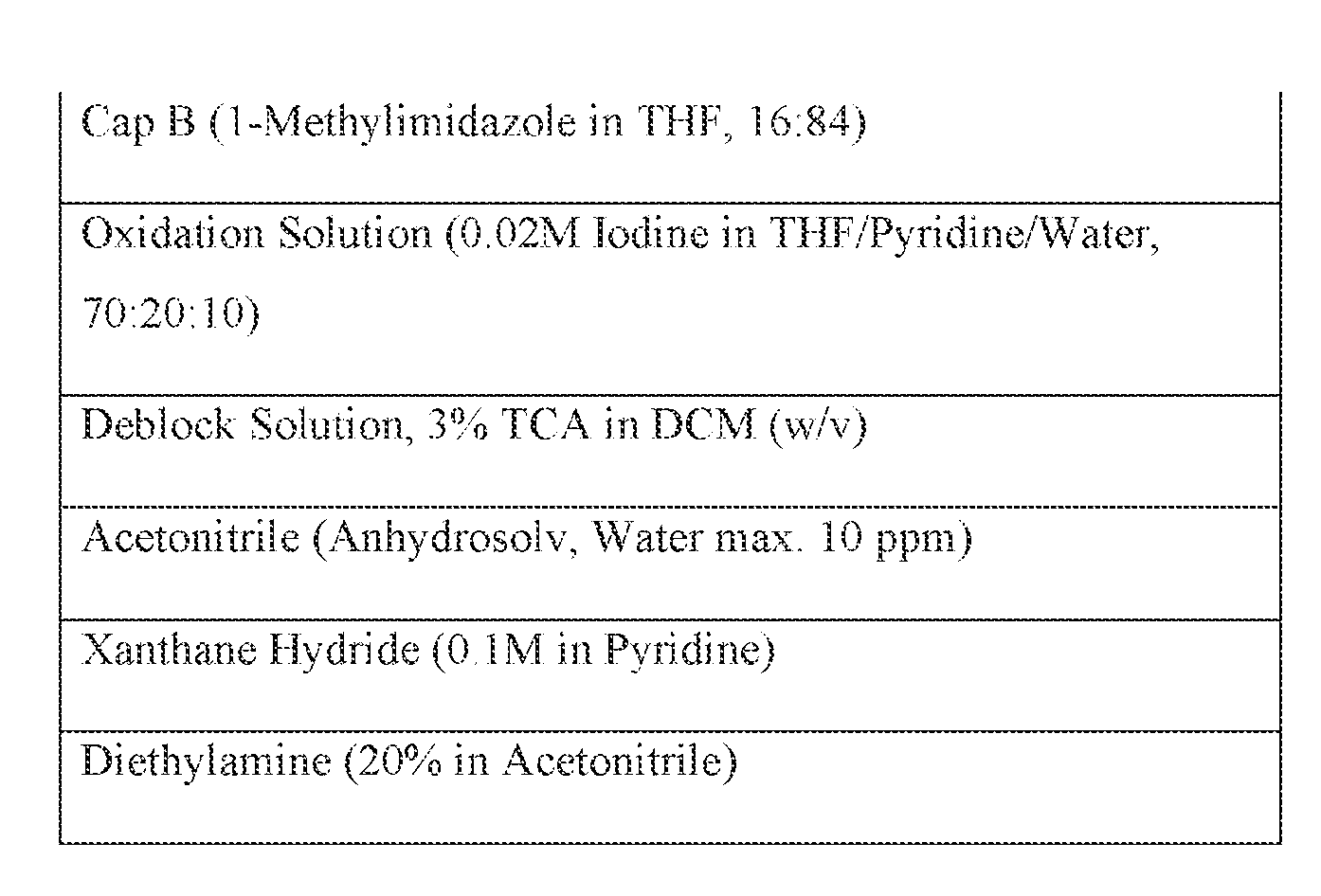
- the sense strand and antisense strand of PPP1R15B RNAi agent can be synthesized using any nucleic acid polymerization methods known in the art, for example, solid-phase synthesis by employing phosphoramidite chemistry' methodology (e.g., Current Protocols in Nucleic Acid Chemistry, Beaucage, S.L. et al, (Edrs ), John Wiley & Sons, Inc., New York, NY, USA), H-phosphonate, phosphortriester chemistry, or enzymatic synthesis. Automated commercial synthesizers can be used, for example, MerMadeTM 12 from LGC Biosearch Technologies, or other synthesizers from BioAutomation or Applied Biosystems.
- phosphoramidite chemistry' methodology e.g., Current Protocols in Nucleic Acid Chemistry, Beaucage, S.L. et al, (Edrs ), John Wiley & Sons, Inc., New York, NY, USA
- Phosphorothioate linkages can be introduced using a sulfurizing reagent such as phenylacetyl disulfide or DDTT (((dimethylaminomethylidene) amino)-3H ⁇ l,2,4-dithiazaoline-3-thione). It is well known to use similar techniques and commercially available modified amidites and controlled -pore glass (CPG) products to synthesize modified oligonucleotides or conjugated oligonucleotides.
- a sulfurizing reagent such as phenylacetyl disulfide or DDTT (((dimethylaminomethylidene) amino)-3H ⁇ l,2,4-dithiazaoline-3-thione).
- CPG controlled -pore glass
- Purification methods can be used to exclude the unwanted impurities from the final oligonucleotide product.
- Commonly used purification techniques for single stranded oligonucleotides include reverse-phase ion pair high performance liquid chromatography (RP- IP-HPLC), capillary gel electrophoresis (CGE), anion exchange HPLC (AX-HPLC), and size exclusion chromatography (SEC).
- RP- IP-HPLC reverse-phase ion pair high performance liquid chromatography
- CGE capillary gel electrophoresis
- AX-HPLC anion exchange HPLC
- SEC size exclusion chromatography
- oligonucleotides can be analyzed by mass spectrometry and quantified by spectrophotometry at a wavelength of 260 nra. The sense strand and antisense strand can then be annealed to form a duplex.
- a PPP I R15B associated metabolic disorder such as obesity, Type 2 diabetes, nonalcoholic steatohepatitis (NASH), nonalcoholic fatty liver disease (NAFLD), dyslipidemia, or metabolic syndrome in a patient in need thereof
- a PPP1R15B RNAi agent or a pharmaceutical composition described herein comprises administering to the patient an effective amount of a PPP1R15B RNAi agent or a pharmaceutical composition described herein.
- the PPP1R15B RNAi agent or the pharmaceutical composition is administered to the patient intravenously or subcutaneously.
- such methods further comprise administering a second therapeutic agent to the patient.
- the PPP1R15B RNAi agent described herein may be used in simultaneous, separate, and sequential combinations with a second therapeutic agent selected from incretin, metformin, a thiazolidinedione, a sulfonylurea, a dipeptidyl peptidase 4 inhibitor, a sodium glucose co-transporter, a SGLT-2 inhibitor, a growth differentiation factor 15 modulator (“GDF15”), a peptide tyrosine tyrosine modulator (“PYY”), a modified insulin, amylin, a dual amylin calcitonin receptor agonist, or oxyntomodulin agonist (“OXM”) for the treatment of a condition selected from the group consisting of T2D, obesity, NASH, NAFLD, dyslipidemia, and metabolic syndrome.
- a second therapeutic agent selected from incretin, metformin, a thiazolidinedione, a
- such methods comprise administering a PPP1R15B RNAi agent and an incretin to the patient in simultaneous, separate, and sequential combinations.
- incretin include glucagon like peptide- 1 (GLP-1) or GLP-1 analogs, glucosedependent insulinotropic polypeptide (GIP) or GIP analogs, oxyntomodulin or oxyntomodulin analogs; dual GIP and GLP-1 receptor agonists; GCG, and GIP receptor agonist and GLP-1 receptor tri-agonists.
- the incretin may be selected from semaglutide, dulaglutide, tirzepatide, exenatide, liraglutide, albiglutide, lixisenatide, or retatrutide.
- Dosage values may vary with the type and severity of the condition to be alleviated. It is further understood that for any particular subject, specific dosage regimens should be adjusted over time according to the individual need and the professional judgment of the person administering or supervising the administration of the compositions.
- PPP1R15B RNAi agents or the pharmaceutical composition comprising an PPP1R15B RNAi agent for use in a therapy are also provided.
- PPP1R15B RNAi agents or pharmaceutical compositions comprising a PPP1R15B RNAi agent for use in the treatment of a PPPIR15B associated metabolic disorder such as obesity, Type 2 diabetes, nonalcoholic steatohepatitis (NASH), nonalcoholic fatty liver disease (NAFLD), dyslipidemia, or metabolic syndrome.
- PPP1R15B RNAi agents in the manufacture of a medicament for the treatment of a PPP1R15B associated metabolic disorder such as obesity.
- Type 2 diabetes, or nonalcoholic steatohepatitis (NASH), nonalcoholic fatty liver disease (NAFLD), dyslipidemia, or metabolic syndrome are also provided herein.
- alkyl means saturated linear or branched-chain monovalent hydrocarbon radical, containing the indicated number of carbon atoms.
- C1-C20 alkyl means a radical having 1-20 carbon atoms in a linear or branched arrangement.
- antisense strand means a single-stranded oligonucleotide that is complementary to a region of a target sequence.
- sense strand means a single-stranded oligonucleotide that is complementary to a region of an antisense strand.
- complementary' means a structural relationship between two nucleotides (e.g, on two opposing nucleic acids or on opposing regions of a single nucleic acid strand, e.g., a hairpin) that permits the two nucleotides to form base pairs with one another
- a purine nucleotide of one nucleic acid that is complementary to a pyrimidine nucleotide of an opposing nucleic acid may base pair together by forming hydrogen bonds with one another
- Complementary nucleotides can base pair in the Watson-Crick manner or in any other manner that allows for the formation of stable duplexes
- two nucleic acids may have regions of multiple nucleotides that are complementary with each other to form regions of complementarity, as described herein.
- an “effective amount” refers to an amount necessary (for periods of time and for the means of administration) to achieve the desired therapeutic result.
- An effective amount of a RNAi agent may vary according to factors such as the disease state, age, sex, and weight of the individual, and the ability of the RNAi agent to elicit a desired response in the individual.
- An effective amount is also one in which any toxic or detrimental effects of the RNAi agent are outweighed by the therapeutically beneficial effects.
- knockdown or “expression knockdown” refers to reduced niRNA or protein expression of a gene after treatment of a reagent, e.g,, a RNAi agent
- modified internucleotide linkage means an internucleotide linkage having one or more chemical modifications when compared with a reference internucleotide linkage having a phosphodi ester bond.
- a modified internucleotide linkage can be a non- naturally occurring linkage.
- the modified internucleotide linkage is ph osph oroth i oate li nkage .
- modified nucleotide refers to a nucleotide having one or more chemical modifications when compared with a corresponding reference nucleotide selected from: adenine ribonucleotide, guanine ribonucleotide, cytosine ribonucleotide, uracil ribonucleotide, adenine deoxyribonucleotide, guanine deoxyribonucleotide, cytosine deoxyribonucleotide, and thymidine deoxyribonucleotide.
- a modified nucleotide can have, for example, one or more chemical modification in its sugar, nucleobase, and/or phosphate group. Additionally, or alternatively, a modified nucleotide can have one or more chemical moieties conjugated to a corresponding reference nucleotide.
- nucleotide means an organic compound having a nucleoside (a nucleobase, e.g., adenine, cytosine, guanine, thymine, or uracil, and a pentose sugar, e.g,, ribose or 2 ! -deoxyribose) linked to a phosphate group.
- a “nucleotide” can serve as a monomeric unit of nucleic acid polymers such as deoxyribonucleic acid (DNA) and ribonucleic acid (RNA).
- oligonucleotide means a polymer of linked nucleotides, each of which can be modified or unmodified.
- An oligonucleotide is typically less than about 100 nucleotides in length.
- overhang means the unpaired nucleotide or nucleotides that protrude from the duplex structure of a double stranded oligonucleotide.
- An overhang may include one or more unpaired nucleotides extending from a duplex region at the 5’ terminus or 3’ terminus of a double stranded oligonucleotide.
- the overhang can be a 3’ or 5’ overhang on the antisense strand or sense strand of a double stranded oligonucleotide.
- patient refers to a human patient
- phosphate analog means a chemical moiety that mimics the electrostatic and/or steric properties of a phosphate group.
- a phosphate analog is positioned at the 5’ terminal nucleotide of an oligonucleotide in place of a 5’- phosphate, which is often susceptible to enzymatic removal.
- a 5’ phosphate analog can include a phosphatase-resistant linkage. Examples of phosphate analogs include 5’ methylene phosphonate (5’-MP) and 5’ -(E)-vinylphosphonate (5’-VP). In some embodiments, the phosphate analog is 5’-VP.
- % sequence identity' or “percentage sequence identity'” with respect to a reference nucleic acid sequence is defined as the percentage of nucleotides, nucleosides, or nucleobases in a candidate sequence that are identical with the nucleotides, nucleosides, or nucleobases in the reference nucleic acid sequence, after optimally aligning the sequences and introducing gaps or overhangs, if necessary', to achieve the maximum percent sequence identity.
- Alignment for purposes of determining percent nucleic acid sequence identity can be achieved in various ways that are within the skill in the art, for instance, using publicly available computer software programs, for example, those described in Current Protocols in Molecular Biology (Ausubel et al., eds., 1987, Supp. 30, section 7.7.18, Table 7.7.] ), and including BLAST, BLAST-2, ALIGN, Megalign (DNASTAR), Clustal W2.0 or Clustal X2.0 software. Those skill ed in the art can determine appropriate parameters for measuring alignment, including any algorithms needed to achieve maximal alignment over the full length of the sequences being compared.
- RNAi means an agent that mediates sequence-specific degradation of a target mRNA by RNA interference, e.g., via RNA-induced silencing complex (RISC) pathway.
- RISC RNA-induced silencing complex
- the RNAi agent has a sense strand and an antisense strand, and the sense strand and the antisense strand form a duplex (e.g., a double stranded RNA).
- the sense strand has a delivery moiety conjugated to the 3’ end of the sense strand or a nucl eotide of the sense strand.
- PPP1R15B refers to a PPP1R15B mRNA transcript.
- the nucleic acid sequence of human PPP1R15B mRNA can be found at NM_032833.5 (SEQ II) NO: 1).
- the amino acid sequence of human PPP1R15B protein can be found at NP 116222.4.
- the nucleic acid sequence of mouse PPP1R15B mRNA can be found at NM_133819.3 (SEQ ID NO: 425).
- the amino acid sequence of mouse PPP1R15B protein can be found at NP_598580.1.
- PPP1R15B associated metabolic disorder means a metabolic disorder associated with abnormal PPP1R15B expression, activity, or function
- subject means a mammal, including cat, dog, mouse, rat, chimpanzee, ape, monkey, and human. Preferably the subject is human.
- Single strands (sense and antisense) of the dsRNA were typically synthesized on solid support via a MerMadeTM 12 (LGC Biosearch Technologies) or a similar automated oligonucleotide synthesizer
- the sequences of the sense and antisense strands were shown in Tables 2 and 3.
- the sense strands were synthesized using an appropriate CPG such as 3'- Cholesterol-TEG CNA CPG 500 (LGC Biosearch Technologies) or phthalamido amino C6 Icaa CPG 500 A (Chemgenes) whereas the antisense strands used standard support (LGC Biosearch Technologies).
- the oligonucleotides were synthesized via phosphoramidite chemistry at an appropriate scale for in-vitro or in-vivo experimentation.
- the sense strands were ty pically cleaved and deprotected from the CPG using cold 50% (methylamine/ammonia hydroxide 28-30%) at RT for 2-3 hrs, whereas 3% DEA in ammonia hydroxide (28-30%, cold) was typically used for the antisense strands.
- C/D was determined complete by IP-RP LCMS when the resulting mass data confirmed the identity of sequence.
- RNA hydroxy desilylation may be carried out using triethylamine tri hydrofluoride in DM SO.
- the CPG was filtered via 0.45 um PVDF syringeless filter, 0.22 pm PVDF Steriflip® vacuum filtration or 0.22 gm PVDF Stericup® Quick release.
- the CPG was typically back washed/rinsed with either 30% EtOH/RNAse free water then filtered through the same filtering device and combined with the first filtrate. This was repeated twice. The material was then divided evenly into conical centrifuge tubes to remove organics via GenevacTM. After concentration, the crude oligonucleotides were diluted back to synthesized scale with RNAse free water and filtered either by 0.45 pm PVDF syringeless filter, 0,22 pm PVDF Sterillip® vacuum filtration or 0.22 gm PVDF Stericup® Quick release.
- oligonucleotide was then nano filtered 2x via 15 mL 100K MWCO centrifugal spin tubes at 3500xgfor 2 min. Cholesterol-linked oligonucleotides were annealed at this stage to give cholesterol conjugated dsRNA by mixing equimolar aliquots of sense and antisense strands at room temperature for 30 minutes The final desalted oligonucleotides were analyzed for concentration (nano drop at A260), characterized by IP-RP LC/MS for mass purity and LJPLC for UV-purity
- RNAi agents were tested in vitro for PPP1R15B knock down in cultured cells. Knockdown of PPP1R15B expression by these RNAi agents is assayed using the following procedure: human Hep3b cells were plated and each RNAi agent was added directly to an individual well The RNAi agents were added at. concentrations of 500 nM and 50 nM, in duplicate. Treated cells were lysed and an analysis of changes in gene expression in RNAi agent treated cells was measured using Cells-to-CT Kits following the manufacturer’s protocol (ThermoFisher A35377).
- Predesigned gene expression assays were selected from Applied Bio-systems (Foster City, CA, USA) The efficiencies of these assays (ThermoFisher Hs03044848_m 1 PPP1R15B and ThermoFisher Hs99999905_ml GAPDH) were characterized with a dilution series of cDNA.
- RT-QPCR was performed in MicroAmp Optical 384-well reaction plates using QuantStudio 7 Flex system.
- the delta-delta CT method of normalizing to the housekeeping gene GAPDH was used to determine relative amounts of gene expression.
- GraphPad Prism was used to determine ICso with a three-parameter logistic fit.
- RT-QPCR was performed in MicroAmp Optical 384-well reaction plates using QuantStudio 7 Flex system.
- the delta-delta CT method of normalizing to the housekeeping gene beta-actin was used to determine relative amounts of gene expression.
- GraphPad Prism was used to determine IC50 with a three-parameter logistic fit. Results are shown as percent knockdown (%KD) of the PPP1R15B transcript.
- Table 8 shows the percentage knockdown of PPP1 R15B mRNA in human Hep3b cells by the tested PPP1R15B RNAi agents.
- Table 9 shows the percentage knockdown of PPP1R.15B in human Hep3b cells by selected PPP1 R15B RNAi agents at different concentrations.
- Table 10 shows the percentage knockdown of PPPIR15B in mouse HepalCIC7 cells by selected PPP1R15B RNAi agents.
- Taqman assays for RPLP0 Mm01974474_gH, Applied Biosystems
- PPP1R15B Mm00551747_m l, Applied Biosystems
- mice given PPP1R15B RNAi agent showed increased daily energy expenditure when compared to the vehicle control group in statistically significant fashion starting on day 2 and continuing throughout the 10-day treatment period.
Landscapes
- Life Sciences & Earth Sciences (AREA)
- Genetics & Genomics (AREA)
- Health & Medical Sciences (AREA)
- Engineering & Computer Science (AREA)
- Biomedical Technology (AREA)
- General Engineering & Computer Science (AREA)
- Bioinformatics & Cheminformatics (AREA)
- Organic Chemistry (AREA)
- Chemical & Material Sciences (AREA)
- Biotechnology (AREA)
- Zoology (AREA)
- Wood Science & Technology (AREA)
- Molecular Biology (AREA)
- Microbiology (AREA)
- Plant Pathology (AREA)
- Virology (AREA)
- Biophysics (AREA)
- Biochemistry (AREA)
- General Health & Medical Sciences (AREA)
- Physics & Mathematics (AREA)
- Pharmaceuticals Containing Other Organic And Inorganic Compounds (AREA)
Abstract
Description




Claims


Priority Applications (5)
| Application Number | Priority Date | Filing Date | Title |
|---|---|---|---|
| CN202480063223.4A CN121941769A (en) | 2023-10-02 | 2024-09-27 | PPP1R15B RNA interference agent |
| IL327234A IL327234A (en) | 2023-10-02 | 2024-09-27 | Ppp1r15b rna interference agents |
| AU2024354329A AU2024354329A1 (en) | 2023-10-02 | 2024-09-27 | Ppp1r15b rna interference agents |
| DO2026000082A DOP2026000082A (en) | 2023-10-02 | 2026-03-25 | PPP1R15B RNA INTERFERENCE AGENTS |
| CONC2026/0003999A CO2026003999A2 (en) | 2023-10-02 | 2026-03-27 | ppp1r15b RNA interfering agents |
Applications Claiming Priority (2)
| Application Number | Priority Date | Filing Date | Title |
|---|---|---|---|
| US202363587235P | 2023-10-02 | 2023-10-02 | |
| US63/587,235 | 2023-10-02 |
Publications (1)
| Publication Number | Publication Date |
|---|---|
| WO2025075868A1 true WO2025075868A1 (en) | 2025-04-10 |
Family
ID=93119498
Family Applications (1)
| Application Number | Title | Priority Date | Filing Date |
|---|---|---|---|
| PCT/US2024/048763 Pending WO2025075868A1 (en) | 2023-10-02 | 2024-09-27 | Ppp1r15b rna interference agents |
Country Status (8)
| Country | Link |
|---|---|
| CN (1) | CN121941769A (en) |
| AR (1) | AR133998A1 (en) |
| AU (1) | AU2024354329A1 (en) |
| CO (1) | CO2026003999A2 (en) |
| DO (1) | DOP2026000082A (en) |
| IL (1) | IL327234A (en) |
| TW (1) | TW202532087A (en) |
| WO (1) | WO2025075868A1 (en) |
Citations (1)
| Publication number | Priority date | Publication date | Assignee | Title |
|---|---|---|---|---|
| WO2022271806A1 (en) | 2021-06-24 | 2022-12-29 | Eli Lilly And Company | Novel therapeutic delivery moieties and uses thereof |
-
2024
- 2024-09-27 IL IL327234A patent/IL327234A/en unknown
- 2024-09-27 AU AU2024354329A patent/AU2024354329A1/en active Pending
- 2024-09-27 WO PCT/US2024/048763 patent/WO2025075868A1/en active Pending
- 2024-09-27 CN CN202480063223.4A patent/CN121941769A/en active Pending
- 2024-09-30 AR ARP240102652A patent/AR133998A1/en unknown
- 2024-09-30 TW TW113137413A patent/TW202532087A/en unknown
-
2026
- 2026-03-25 DO DO2026000082A patent/DOP2026000082A/en unknown
- 2026-03-27 CO CONC2026/0003999A patent/CO2026003999A2/en unknown
Patent Citations (1)
| Publication number | Priority date | Publication date | Assignee | Title |
|---|---|---|---|---|
| WO2022271806A1 (en) | 2021-06-24 | 2022-12-29 | Eli Lilly And Company | Novel therapeutic delivery moieties and uses thereof |
Non-Patent Citations (10)
| Title |
|---|
| "Current Protocols in Molecular Biology", 1987 |
| A. LOYD ET AL.: "Remington: The Science and Practice of Pharmacy", 2020, JOHN WILEY &. SONS, INC. |
| ABDULKARIM BAROJ ET AL: "A Missense Mutation in PPP1R15B Causes a Syndrome Including Diabetes, Short Stature, and Microcephaly", DIABETES, vol. 64, no. 11, 1 November 2015 (2015-11-01), pages 3951 - 3962, XP093077206, ISSN: 0012-1797, DOI: 10.2337/db15-0477 * |
| ABDULKARIM BAROJ ET AL: "Supplementary Data: A Missense Mutation in PPP1R15B Causes a Syndrome Including Diabetes, Short Stature, and Microcephaly", DIABETES, 9 July 2015 (2015-07-09), pages 1 - 7, XP093232495, Retrieved from the Internet <URL:https://ada.silverchair-cdn.com/ada/content_public/journal/diabetes/64/11/10.2337_db15-0477/3/db150477supplementarydata.pdf> DOI: 10.2337/db15-0477 * |
| FIRE ET AL., NATURE, vol. 391, 1998, pages 806 - 811 |
| KHAN RUKSHAR ET AL: "mir-98-5p regulates gluconeogenesis and lipogenesis by targeting PPP1R15B in hepatocytes", JOURNAL OF CELL COMMUNICATION AND SIGNALING, vol. 17, no. 3, 14 March 2023 (2023-03-14), NL, pages 881 - 895, XP093232069, ISSN: 1873-9601, DOI: 10.1007/s12079-023-00735-0 * |
| MARIA SHAHMORADGOLI ET AL: "Protein phosphatase 1, regulatory subunit 15B is a survival factor for ER[alpha]-positive breast cancer", INTERNATIONAL JOURNAL OF CANCER, JOHN WILEY & SONS, INC, US, vol. 132, no. 11, 27 December 2012 (2012-12-27), pages 2714 - 2719, XP071287499, ISSN: 0020-7136, DOI: 10.1002/IJC.27945 * |
| MAURO COSTA-MATTIOLIPETER WALTER, SCIENCE, vol. 368, no. 6-489, 2020, pages 5314 |
| WEIR, J. PHYSIOL., vol. 109, 1949, pages 1 - 9 |
| XU ET AL., HEPATOLOGY, vol. 68, no. 6, 2018, pages 2167 - 2181 |
Also Published As
| Publication number | Publication date |
|---|---|
| CN121941769A (en) | 2026-04-28 |
| TW202532087A (en) | 2025-08-16 |
| AR133998A1 (en) | 2025-11-19 |
| CO2026003999A2 (en) | 2026-04-16 |
| AU2024354329A1 (en) | 2026-05-14 |
| DOP2026000082A (en) | 2026-04-30 |
| IL327234A (en) | 2026-05-01 |
Similar Documents
| Publication | Publication Date | Title |
|---|---|---|
| EP4403633A1 (en) | Lpa inhibitor and use thereof | |
| US10584335B2 (en) | Single-stranded RNAi agents containing an internal, non-nucleic acid spacer | |
| US10526602B2 (en) | Segmented micro RNA mimetics | |
| KR101801404B1 (en) | Treatment of collagen gene related diseases by inhibition of natural antisense transcript to a collagen gene | |
| EP1670518B1 (en) | Rna interference for the treatment of gain-of-function disorders | |
| KR101702689B1 (en) | Treatment of paraoxonase 1 (pon1) related diseases by inhibition of natural antisense transcript to pon1 | |
| CN102762731B (en) | By inhibiting to treat insulin gene (INS) relevant disease for the natural antisense transcript of insulin gene (INS) | |
| HK1211316A1 (en) | Mirna modulators of thermogenesis | |
| KR20140033165A (en) | Treatment of frataxin (fxn) related diseases by inhibition of natural antisense transcript to fxn | |
| JP2023123517A (en) | Angelman Syndrome Antisense Treatment | |
| CN116887842A (en) | Novel RNA compositions and methods for inhibiting ANGPTL3 | |
| AU2024354329A1 (en) | Ppp1r15b rna interference agents | |
| JP7288052B2 (en) | Enhanced oligonucleotides for inhibiting SCN9A expression | |
| WO2022266486A2 (en) | Products and compositions | |
| JP2025508324A (en) | Compositions and methods for inhibiting expression of prekallikrein (PKK) protein - Patents.com | |
| US20220403388A1 (en) | Oligonucleotide Progranulin Agonists | |
| US20230257753A1 (en) | Products and compositions | |
| WO2025087442A1 (en) | Oligonucleotide targeting lipoprotein a and use thereof | |
| KR20260016935A (en) | Nucleic acids targeting angiotensinogen and uses thereof | |
| TW202604550A (en) | Nucleic acid molecule for inhibiting angptl3 gene expression | |
| WO2025016342A1 (en) | Oligonucleotide targeting angiotensinogen and use thereof | |
| WO2025190276A1 (en) | Polynucleotide molecule for suppressing dmpk expression and use thereof | |
| JP2026502120A (en) | Compositions and methods for inhibiting the expression of 17 beta-hydroxysteroid dehydrogenase type 13 (HSD17B13) | |
| WO2019038228A1 (en) | Oligonucleotides for modulating tom1 expression |
Legal Events
| Date | Code | Title | Description |
|---|---|---|---|
| 121 | Ep: the epo has been informed by wipo that ep was designated in this application |
Ref document number: 24790739 Country of ref document: EP Kind code of ref document: A1 |
|
| WWE | Wipo information: entry into national phase |
Ref document number: 327234 Country of ref document: IL |
|
| REG | Reference to national code |
Ref country code: BR Ref legal event code: B01A Ref document number: 112026006062 Country of ref document: BR |
|
| WWE | Wipo information: entry into national phase |
Ref document number: 2601002179 Country of ref document: TH |
|
| WWE | Wipo information: entry into national phase |
Ref document number: 831619 Country of ref document: NZ |
|
| WWP | Wipo information: published in national office |
Ref document number: 327234 Country of ref document: IL |
|
| WWP | Wipo information: published in national office |
Ref document number: 831619 Country of ref document: NZ |
|
| WWE | Wipo information: entry into national phase |
Ref document number: 2601002179 Country of ref document: TH |
|
| WWE | Wipo information: entry into national phase |
Ref document number: AU2024354329 Country of ref document: AU |
|
| WWE | Wipo information: entry into national phase |
Ref document number: 11202602041W Country of ref document: SG |
|
| WWP | Wipo information: published in national office |
Ref document number: 11202602041W Country of ref document: SG |