WO2025035212A1 - Irreversible 17beta-hsd1 inhibitors - Google Patents
Irreversible 17beta-hsd1 inhibitors Download PDFInfo
- Publication number
- WO2025035212A1 WO2025035212A1 PCT/CA2024/051059 CA2024051059W WO2025035212A1 WO 2025035212 A1 WO2025035212 A1 WO 2025035212A1 CA 2024051059 W CA2024051059 W CA 2024051059W WO 2025035212 A1 WO2025035212 A1 WO 2025035212A1
- Authority
- WO
- WIPO (PCT)
- Prior art keywords
- compound
- pbrm
- bromoethyl
- trien
- alkyl
- Prior art date
- Legal status (The legal status is an assumption and is not a legal conclusion. Google has not performed a legal analysis and makes no representation as to the accuracy of the status listed.)
- Pending
Links
Classifications
-
- A—HUMAN NECESSITIES
- A61—MEDICAL OR VETERINARY SCIENCE; HYGIENE
- A61P—SPECIFIC THERAPEUTIC ACTIVITY OF CHEMICAL COMPOUNDS OR MEDICINAL PREPARATIONS
- A61P5/00—Drugs for disorders of the endocrine system
- A61P5/24—Drugs for disorders of the endocrine system of the sex hormones
- A61P5/32—Antioestrogens
-
- A—HUMAN NECESSITIES
- A61—MEDICAL OR VETERINARY SCIENCE; HYGIENE
- A61P—SPECIFIC THERAPEUTIC ACTIVITY OF CHEMICAL COMPOUNDS OR MEDICINAL PREPARATIONS
- A61P35/00—Antineoplastic agents
-
- C—CHEMISTRY; METALLURGY
- C07—ORGANIC CHEMISTRY
- C07J—STEROIDS
- C07J43/00—Normal steroids having a nitrogen-containing hetero ring spiro-condensed or not condensed with the cyclopenta(a)hydrophenanthrene skeleton
- C07J43/003—Normal steroids having a nitrogen-containing hetero ring spiro-condensed or not condensed with the cyclopenta(a)hydrophenanthrene skeleton not condensed
Definitions
- the present invention relates to the inhibition of 17
- the present invention provides compounds of formula (I) and compositions comprising thereof, which provide a potent, non-estrogenic and irreversible inhibitory effect on 17
- the invention further provides therapeutic methods and uses based on the new compounds and compositions.
- Estradiol (E2) is produced in premenopausal women mainly in the ovaries. It reaches the target tissues by endocrine route, where it exerts its effect through interaction with the estrogen receptor (ER)a. After menopause, the plasma E2 level drops to 1/10 of the E2 level in premenopausal women. E2 is then mainly produced in the peripheral tissue, such as breast tissue, endometrium, adipose tissue, skin from inactive precursors, etc. These reactions take place with the participation of various steroidogenic enzymes (hydroxysteroid dehydrogenases, aromatase), in the peripheral tissue, where the active estrogens exert their effect.
- ER estrogen receptor
- E2 its concentration in the peripheral tissue, especially in estrogen-dependent diseases, is higher than in healthy tissue.
- the growth of many cancer cell lines is stimulated by a locally increased E2 concentration.
- diseases such as endometriosis, leiomyosis, adenomyosis, menorrhagia, metrorrhagia and dysmenorrhoea is dependent on a significantly increased E2 level in correspondingly diseased tissue.
- Endometriosis is an estrogen-dependent disease affecting approximately 5-10% of all women of childbearing age with 35 - 50% of women suffering abdominal pain u./o. Sterility has signs of endometriosis.
- This disease is defined as histologically proven ectopic endometrial glandular and stromal tissue.
- This chronic disease which is prone to recurrences, leads to pain of varying intensity and varying character as well as potentially to sterility if it is given a corresponding form.
- Three macroscopic conditions are distinguished: peritoneal endometriosis, retroperitoneal deep infiltrating endometriosis including adenomyosis uteri and cystic ovarian endometriosis.
- 3-Hydroxysteroid dehydrogenase type 1 (17
- This enzyme also catalyzes the reduction of dehydroepiandrosterone (DHEA) into 5-androstene-3
- DHEA dehydroepiandrosterone
- A5-diol 5-androstene-3
- 3-HSD1 are thus interesting therapeutic agents for the control of estrogen-dependent diseases such as breast cancers and endometriosis.
- 3-(m-carbamoylbenzyl)estradiol (CC-156) has been reported as a potent inhibitor of 17[3- HSD1 . Despite of its good inhibitory potency, it was found to stimulate in vitro both the MCF- 7 and T-47D estrogen-sensitive breast cancer cell lines, thus greatly reducing its therapeutic potential.
- the E2 derivative 3- ⁇ [(16p,17p)-3-(2-bromoethyl)-17-hydroxyestra-1 ,3,5(10)-trien-16-yl]methyl ⁇ benzamide (hereinafter also referred as “PBRM”) has been reported as the first non-estrogenic irreversible steroidal inhibitor of 17
- the present inventors have surprisingly found that when the PBRM compound was modified by replacing the original 16p-methylbenzamide moiety by another amide moiety of formula (i): the resulting compound not only retained the irreversibility and non-estrogenicity nature of the original PBRM but that a remarkable improvement both in the inhibitory effect on 17p- HSD1 as well as in metabolic stability was achieved.
- Fig. 1 shows that when one of the compounds of the invention (PBRM-II) was administered to an ER+ breast cancer cell line T-47D, there was a remarkable reduction in the cell growth with respect the control.
- PBRM-II the compounds of the invention are efficient in the treatment of an estrogen-dependent disease, which is characterized by being associated to high levels of estrogens, but also, and importantly, that they do not “add” estrogenicity to the environment.
- CC-156 a reversible 17P-HSD1 inhibitor which, when it is administered to the cells, it induces estrogenicity and gives rise to an increase in the cell growth of the tumoral cells, even when used at low concentration (see Fig. 1).
- Fig. 1 it can also be derived that the compounds of the invention not only inhibit more potently the target, but that this higher potency translates into a more efficient treatment of the disease at the lowest doses (0.1 and 1 pM) if compared to PBRM.
- Table 1 shows that the IC50 value was 26-fold reduced when PBRM was modified by replacing the methylbenzamide by an amide moiety of formula (i) located at position 15
- Fig. 2 shows that the stability of the compound was increased more than 30%.
- the compounds provided by the present invention means a great advance in the field of irreversible 17P-HSD1 inhibitors, in terms of inhibitory potency, efficiency, and safety.
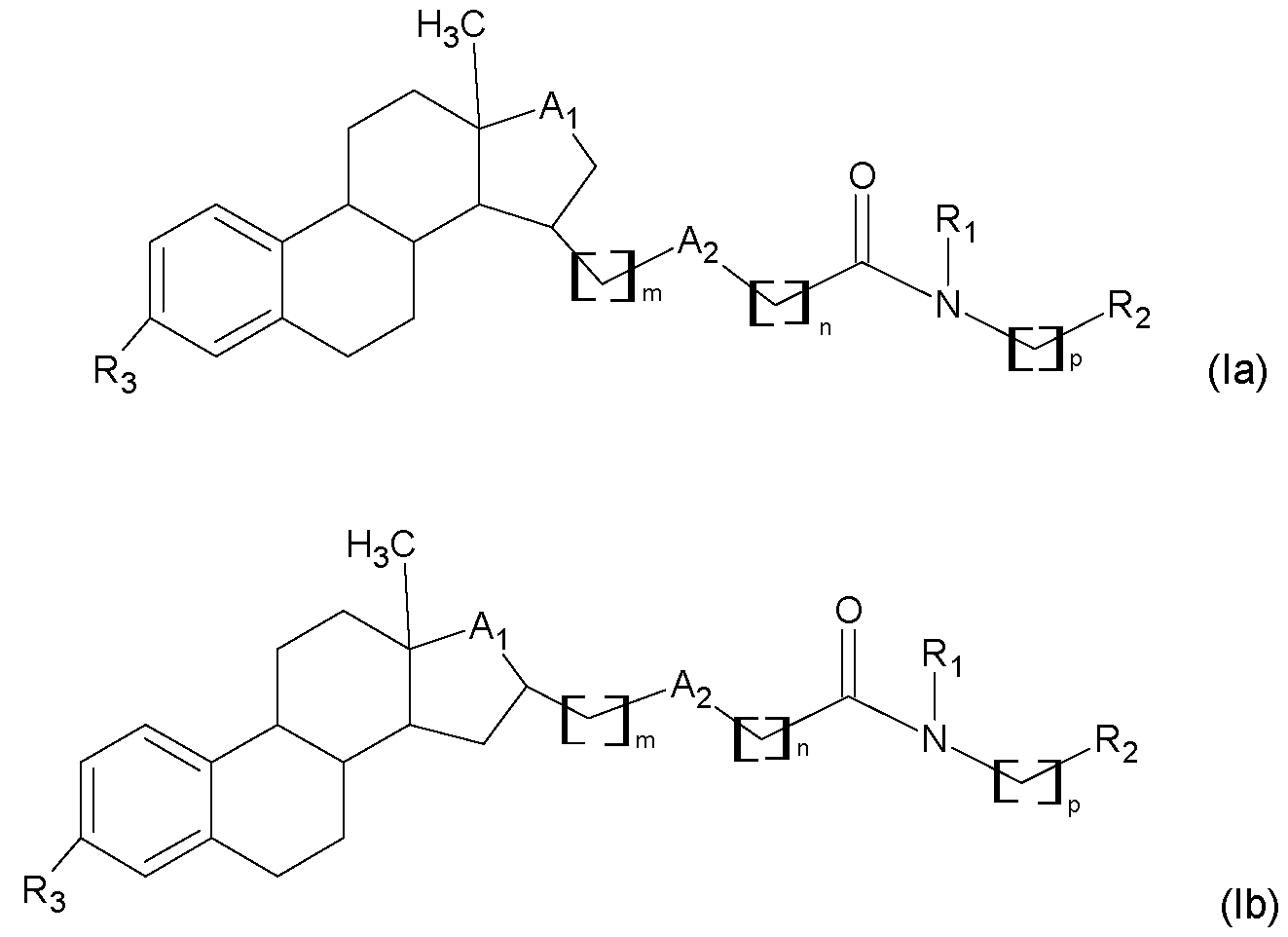
- the present invention provides in a first aspect a compound of formula (I), a stereoisomer or salt thereof: wherein:
- Ai is selected from C(O) and CHR z i;
- a 2 is selected from CH 2 and O;
- Ri is selected from the group consisting of: hydrogen, (Ci-C5)alkyl optionally substituted with one or more Z substituents, (Ci-C 5 )alkoxy optionally substituted with one or more Z substituents, (C 2 -C 5 )alkenyl optionally substituted with one or more Z substituents, (C 2 - C 5 )alkynyl optionally substituted with one or more Z substituents; (C 3 -C 8 )cycloalkyl; aryl; and heteroaryl;
- R 2 is a heterocyclic aromatic ring having 5, 6 or 7 members selected from the group consisting of: CR z2 , N, S, and O, provided that at least one of the members is N, S or O;
- R 3 is (Ci-C 5 )alkyl substituted with one or more Br, Br 76 ; I, I 123 , I 124 , or I 131 ;
- R Z2 is selected from hydrogen, OH, (Ci-Cio)alkyl optionally substituted with one or more Z substituents, and (Ci-Cio)alkoxy optionally substituted by one or more Z substituents;
- Z is selected from halogen, OH, (Ci-C5)alkyl, (Ci-C5)haloalkyl, (Ci-C5)alkoxy, (Ci- C 5 )haloalkoxy, and NR X IR X2 ;
- R x i, R x 2, R x 4 and R X 5 are the same or different and are selected from the group consisting of: hydrogen, (Ci-C 5 )alkyl, (Ci-C 5 )haloalkyl, (Ci-C 5 )alkoxy, and (Ci-C 5 )haloalkoxy;
- R X3 is selected from H, and (Ci-C 5 )alkyl; m represents an integer value selected from 0 to 2; n represents an integer value selected from 0 to 2; p represents an integer value selected from 0 to 5; wherein: aryl is an aromatic ring system comprising 5 or 6 CR c members, wherein R c is selected from H, halogen, cyano, nitro, (Ci-C 5 )alkyl, (Ci-C 5 )haloalkyl, -O-(Ci-C 5 )alkyl, and -O-(Ci- C 5 )haloalkyl; and heteroaryl is an aromatic ring system comprising 5 or 6 members selected from the group consisting of: CRd, O, N, NH, and S; wherein Rd is selected from H, halogen, cyano, nitro, (Ci-C 5 )alkyl, (Ci-C 5 )haloalkyl, -O-
- the invention also provides synthetic processes for preparing the compounds of the invention.
- the invention provides a process for preparing a compound of formula (I) as defined in the first aspect of the invention, the process comprising the steps provided in Schemes 1 or 2 below:
- Alk (Ci-Cs)alkyl
- Alk-X (Ci-Cs)alkyl substituted by one X selected from Br, Br 76 ; I, I 123 , I 124 , or I 131 .
- the amide coupling step between the carboxylic acid compound of formula (II) and the amine of formula (III) can be performed using amide coupling agents well-known in the state of the art.
- Illustrative non-limitative examples of amide coupling agents are independently selected from TBTU, TCTU, HATU, T3P or COMU.
- the coupling reaction is performed in the presence of DMF or any other suitable aprotic solvent, and an alkali, such as DIPEA.
- the halogenation step (either bromination or iodination) of the OH-derivative of formula (IV) can be performed using well-known reagents and conditions. Illustrative non-limitative conditions are provided below, i.e., PPh 3 and CBr 4 .
- the reduction step of the C17 ketone can also be performed using any suitable reducing reagents and conditions.
- the reducing agent specifically reduces the ketone and converts it to alcohol.
- specific water-soluble reagents are non-toxic and/or green reagents.
- Non-limiting examples of specific water-soluble reducing agents include sodium borohydride (NaBH 4 ); sodium cyanoborohydride (NaCNBH 3 ); e.g.
- H2 hydrogen gas
- H3NBH3 ammonia borane
- borane dimethylamine complex [(CH 3 )2NH BH 3 ]
- borane tert-butylamine complex [(CH3) 3 CNH 2 BH3]
- borane-pyrimidine complex
- the present invention provides a pharmaceutical composition
- a pharmaceutical composition comprising the compound as defined in the first aspect of the invention, and one or more pharmaceutically acceptable excipients or carriers.
- the present invention provides a kit of parts comprising:
- the present invention provides a compound as defined in the first aspect of the invention, for use in therapy or diagnosis.
- compounds of the present invention may be useful in therapy, especially in the treatment or prevention of steroid hormone dependent diseases or disorders requiring the inhibition of 17P-HSD1 enzyme, in animals, in particular mammals, and humans.
- compounds of formula (I) represent inhibitors of the 17
- the present invention provides a method for inhibiting 17
- This aspect can be formulated as a compound of formula (I) as defined in the first aspect of the invention or the pharmaceutical composition of the third aspect of the invention for use in the treatment and/or prevention of a disease by inhibiting the 17
- This aspect can also be alternatively formulated as the use of a compound of formula (I) as defined in the first aspect of the invention or the pharmaceutical composition of the third aspect of the invention for the manufacture of a medicament for the treatment and/or prevention of a disease by inhibiting the 17
- the present invention provides a method for the treatment and/or prevention of an estrogen-dependent disease, the method comprising the step of administering a therapeutically effective amount of the compound of formula (I) as defined in the first aspect of the invention or the pharmaceutical composition as defined in the third aspect of the invention, to a subject in need thereof.
- This aspect can alternatively be formulated as the compound of formula (I) as defined in the first aspect of the invention or the pharmaceutical composition of the third aspect of the invention for use in the treatment and/or prevention of an estrogen-dependent disease.
- This aspect can alternatively be formulated as the use of a compound of formula (I) as defined in the first aspect of the invention or the pharmaceutical composition of the third aspect of the invention for the manufacture of a medicament for the treatment and/or prevention of an estrogendependent disease.
- Fig. 1 Effect of 17P-HSD1 inhibitors on estrogen-dependent T-47D cell proliferation.
- Fig. 2 Metabolic stability in human liver microsomes of 17P-HSD1 inhibitors CC-156 (comparative purpose), PBRM (comparative purpose), and PBRM-II (invention).
- Fig. 3 Irreversibility of the compound of the invention PBRM-II.
- Fig. 4 Concentration of PBRM-II when given orally (30 mg/kg in DMSO:Sunflower oil/8:92) in mice.
- Fig. 5A Percent of PBRM-II remaining (%PR) versus time (min).
- Fig. 5B Ln of percent of PBRM-II remaining (%PR) versus time (min) and half-life of PBRM-II at 4 pM in human liver microsomes (HLM).
- Fig. 5C Percent of PBRM remaining (%PR) versus time (min).
- Fig. 5D Ln of percent of PBRM remaining (%PR) versus time (min) and half-life of PBRM- II at 4 pM in human liver microsomes (HLM).
- any ranges given include both the lower and the upper end-points of the range.
- the present invention provides irreversible 17P-HSD1 inhibitors.
- a compound is a 17
- the compound inhibits at least a 10%, at least a 20%, at least a 30%, at least a 40%, at least a 50%, at least a 60%, at least a 70%, at least a 80% or at least a 90% of the enzymatic activity.
- concentration of E1 and E2 labelled and non-labelled can be determined using any suitable technique.
- concentration inhibiting 50% of E1 to E2 transformation IC 5 o
- IC 5 o can be determined any routine protocol or tool, such as using GraphPad Prism 6 software.
- the irreversibility is due to the ability of the compounds of formula (I) to covalently bind to 17
- estrone E1
- estradiol E2
- There are well-known methods in the state of the art to determine whether a compound covalently binds to this enzyme. (Zang et al. Cell Chem Biol., 2019, 26 (11), 1486-1500). Washout experiments, where cells are first exposed to the inhibitor, then washed out and then allowed to determine the enzymatic activity, are among valuable method in the validation process.
- alkyl refers to a straight or branched hydrocarbon chain radical containing no unsaturation, and which is attached to the rest of the molecule by a single bond.
- Typical alkyl groups have from 1 to about 5 carbon atoms, e. g., methyl, ethyl, n-propyl, /-propyl, n-butyl, f-butyl, and n-pentyl, among others.
- Typical alkenyl radicals have from 2 to about 10, 2 to about 8 or 2 to about 6 carbon atoms.
- the alkenyl group is vinyl, 1-methyl-ethenyl, 1 -propenyl, 2-propenyl, or butenyl.
- alkynyl groups include, but are not limited to, ethynyl, 2-propynyl, and 2-butynyl.
- cycloalkyl refers to a cyclic alkyl, wherein “alkyl” is as defined above.
- Illustrative non/limitative examples of cycloalkyl are Examples of cycloalkyl groups include, but are not limited to, cyclopropyl, cyclobutyl, cyclopentyl, cyclohexyl, or cycloheptyl.
- alkoxy refers to a -O-alkyl, wherein “alkyl” is as defined above.
- Illustrative non-limitative examples of hydroxyalkyl are methoxy, ethoxy, or f-butoxy, among others.
- haloalkyl refers to a straight or branched hydrocarbon chain radical containing no unsaturation, wherein one or more of the hydrogen atoms are replaced by halogen. Illustrative non-limitative examples of haloalkyl are chloromethyl, trifluoromethyl, 1-chloro-2-fluoroethyl, and the like.
- haloalkoxy refers to a -O-haloalkyl, wherein “haloalkyl” is as defined above.
- halogen refers to bromo, chloro, iodo or fluoro.
- nitro refers to NO 2 .
- salt must be understood as any form of a compound used in accordance with this invention in which said compound is in ionic form or is charged and coupled to a counter-ion (a cation or anion) or is in solution.
- This definition also includes quaternary ammonium salts and complexes of the active molecule with other molecules and ions, particularly, complexes formed via ionic interactions.
- the definition includes in particular physiologically acceptable salts; this term must be understood as equivalent to "pharmacologically acceptable salts” or “pharmaceutically acceptable salts”.
- the term "pharmaceutically acceptable salts” means any salt that is tolerated physiologically (normally meaning that it is not toxic, particularly, as a result of the counter-ion) when used in an appropriate manner for a treatment, applied or used, particularly, in humans and/or mammals.
- physiologically acceptable salts may be formed with cations or bases and, in the context of this invention, are understood to be salts formed by at least one compound used in accordance with the invention - normally an acid (deprotonated)- such as an anion and at least one physiologically tolerated cation, preferably inorganic, particularly when used in humans and/or mammals.
- Salts with alkali and alkali earth metals are preferred particularly, as well as those formed with ammonium cations (NH 4 + ).
- Preferred salts are those formed with (mono) or (di)sodium, (mono) or (di)potassium, magnesium or calcium.
- These physiologically acceptable salts may also be formed with anions or acids and, in the context of this invention, are understood as being salts formed by at least one compound used in accordance with the invention - normally protonated, for example in nitrogen - such as a cation and at least one physiologically tolerated anion, particularly when used on humans and/or mammals.
- This definition specifically includes in the context of this invention a salt formed by a physiologically tolerated acid, i.e., salts of a specific active compound with physiologically tolerated organic or inorganic acids - particularly when used on humans and/or mammals.
- a physiologically tolerated acid i.e., salts of a specific active compound with physiologically tolerated organic or inorganic acids - particularly when used on humans and/or mammals.
- this type of salts are those formed with: hydrochloric acid, hydrobromic acid, sulphuric acid, methanesulfonic acid, formic acid, acetic acid, oxalic acid, succinic acid, malic acid, tartaric acid, mandelic acid, fumaric acid, lactic acid or citric acid.
- any compound of formula (I) referred to herein is intended to represent such specific compound as well as certain variations or forms.
- compounds referred to herein may have asymmetric centres and therefore exist in different enantiomeric or diastereomeric forms.
- any given compound of formula (I) referred to herein is intended to represent any one of a racemate, one or more enantiomeric forms, one or more diastereomeric forms, and mixtures thereof.
- stereoisomerism or geometric isomerism about the double bond is also possible, therefore in some cases the molecule could exist as (E)-isomer or (Z)-isomer (trans and cis isomers).
- each double bond will have its own stereoisomerism, that could be the same as, or different to, the stereoisomerism of the other double bonds of the molecule.
- compounds referred to herein may exist as atropisomers. All the stereoisomers including enantiomers, diastereoisomers, geometric isomers and atropisomers of the compounds referred herein, and mixtures thereof, are considered within the scope of the present invention.
- any compound of formula (I) referred to herein may exist as tautomer.
- tautomer refers to one of two or more structural isomers of a compound that exist in equilibrium and are readily converted from one isomeric form to another.
- the compound of the invention is one of formula (la) or (lb): wherein Ri to R 3 , Ai, A 2 , m, n, and p are as defined in the first aspect of the invention.
- the compound of the invention is of formula (Ic) or (Id): wherein Ri to R 3 , Ai, A 2 , m, n, and p are as defined in the first aspect of the invention.
- the compound is one wherein Ai is C(O).
- Ai is selected from C(O) or CHOH.
- m is 1
- a 2 CH 2
- n is 0.
- the compound of the invention is one wherein Ri is hydrogen.
- the compound of the invention is one wherein R 3 is bromoethyl, particularly 2-bromoethyl. In one embodiment of the invention, the compound of the invention is one wherein p is 0 when R 2 represents a 5-membered heterocyclic aromatic ring.
- the compound of the invention is one wherein p is 1 when R 2 represents a 6-membered heterocyclic aromatic ring.
- the compound of the invention is one wherein R 2 is a heterocyclic aromatic ring having 5 or 6 members. Particularly R 2 is a heterocyclic aromatic ring having one or two heteroatoms. In another particular embodiment, R 2 is a heterocyclic aromatic ring having one or two heteroatoms selected from N or S. In one embodiment R 2 is a thiazolyl ring wherein Rz 2 is as defined above, particularly Rz 2 is selected from H and (Ci-C 5 )alkyl. In an alternative embodiment R 2 represents a pyridinyl ring, wherein Rz 2 is as defined above, particularly Rz 2 is selected from H and (Ci-C5)alkyl.
- the compound of the invention is selected from the group consisting of:
- the present invention provides a pharmaceutical composition comprising a therapeutically effective amount of the compounds of the invention, as defined above.
- terapéuticaally effective amount it is understood the amount of the compound(s) that, when administered, is sufficient to prevent development of, or alleviate to some extent, one or more of the symptoms of the disease which is addressed.
- the precise therapeutic dose of the component(s), as well as the amount of the compound(s) of the invention, may depend on several variables. Some of these would be: route of administration, time of drug release (e.g., instant or extended), administration schedule, pain severity, condition of the patient, and the like.
- compositions can be prepared as a liquid, semi-solid or solid dosage form, for example in the form of solutions for injection, drops, juices, syrups, sprays, suspensions, tablets, patches, capsules, dressings, suppositories, ointments, creams, lotions, gels, emulsions, aerosols or in multiparticulate form, for example in the form of pills or granules, if appropriate compressed into tablets, decanted into capsules or suspended in a liquid, or administered as such.
- compositions can be prepared with the aid of conventional means, devices, methods or processes known in the art.
- compositions which may be used in such compositions are adjuvants, vehicles or excipients known to those skilled in the art or commonly used in the preparation of therapeutic compositions, which may be selected, for example, from the group consisting of excipients, fillers, solvents, diluents, surfactants, colorants, preservatives, disintegrants, sliding agents, lubricants, flavoring agents or binders.
- pharmaceutically acceptable refers to pharmaceutically acceptable materials, compositions or vehicles. Each component must be pharmaceutically acceptable in the sense of being compatible with the other ingredients of the pharmaceutical composition. It must also be suitable for use in contact with the tissue or organ of humans without excessive toxicity, irritation, allergic response, immunogenicity or other problems or complications commensurate with a reasonable benefit/risk ratio in animals and, particularly, in humans.
- physiologically compatible adjuvants or the number of adjuvants to be used depends on the form of administration of the pharmaceutical composition, i.e., oral, subcutaneous, parenteral, intravenous, intraperitoneal, intradermal, intramuscular, intranasal, buccal, rectal, otic or intratympanic.
- Preparations in the form of tablets, dragees, capsules, granules, pills, drops, in particular otic drops, juices or syrups are preferably suitable for oral administration; solutions, suspensions, easily reconstitutable dry preparations or also sprays are preferably suitable for parenteral, topical or inhalation administration.
- the compounds in accordance with the invention used in the pharmaceutical composition in accordance with the invention in a depot, in a dissolved form or in a dressing, or if appropriate having added other agents favoring penetration into the skin, are preparations suitable for percutaneous administration.
- the preparation forms administrable orally or percutaneously can also release the respective compound according to the invention in a delayed form.
- the active drug components can be combined with an oral, non-toxic, pharmaceutically acceptable, inert carrier such as lactose, starch, sucrose, glucose, methyl cellulose, magnesium stearate, dicalcium phosphate, calcium sulphate, mannitol, sorbitol and the like; for oral administration in liquid form, the oral drug components can be combined with any oral, nontoxic, pharmaceutically acceptable inert carrier such as ethanol, glycerol, water, and the like.
- suitable binders, lubricants, disintegrating agents, and colouring agents can also be incorporated into the mixture.
- Suitable binders include starch, gelatine, natural sugars such as glucose or beta-lactose, corn sweeteners, natural and synthetic gums such as acacia, tragacanth, or sodium alginate, carboxymethylcellulose, polyethylene glycol, waxes, and the like.
- Lubricants used in these dosage forms include sodium oleate, sodium stearate, magnesium stearate, and the like.
- Disintegrators include, without limitation, starch, methyl cellulose, agar, bentonite, xanthan gum, and the like.
- Gelatine capsules contain the active ingredient and powdered carriers, such as lactose, starch, cellulose derivatives, magnesium stearate, stearic acid, and the like.
- Similar diluents can be used to make compressed tablets. Both tablets and capsules can be manufactured as sustained release products to provide for continuous release of medication over a period of hours. Compressed tablets can be sugar coated or film coated to mask any unpleasant taste and protect the tablet from the atmosphere, or enteric coated for selective disintegration in the gastrointestinal tract.
- Liquid dosage forms for oral administration can contain colouring and flavouring to increase patient acceptance.
- the dosage administered of the pharmaceutical composition will, of course, vary depending on the use and known factors such as the age, health, and weight of the recipient; nature and extent of symptoms, concurrent treatments, if any, frequency of treatment, and the effect desired.
- the recipient may be any type of mammal, but is preferably a human.
- the present invention also provides therapeutic and prophylactic methods and uses based on the compounds and compositions provided by the present invention.
- treatment includes, but is not limited to, alleviating, diminishing or eliminating one or more symptoms of the disorder; reducing the degree of the disease, stabilizing (i.e., not worsening) the condition, delaying or slowing the progression, alleviating or improving its condition, and remitting (whether total or partial).
- prevention refers to preventing the onset of the pain from occurring in a patient who is predisposed, but who does not yet have symptoms of the disease.
- Estrogen-dependent condition refers to a disease, a condition, a tumor which initiation, and/or proliferation and/or growth is stimulated by estrogens.
- Estrogen-dependent condition can be a benign condition or a malignant condition:
- Conditions which are estrogen-dependent can either be benign (local proliferation without metastasis) or malignant (local proliferation associated with metastasis).
- a malignant condition is typically a cancer.
- the subject suffers from a malign estrogen-dependent disease or disorder, such as cancer.
- a malign estrogen-dependent disease or disorder such as cancer.
- cancers are breast cancer, lung cancer, prostate cancer, endometrial cancer, uterine cancer, and ovarian cancer, among others.
- the subject suffers from a benign estrogen-dependent disease or disorder such as endometriosis, uterine fibroids, uterine leiomyoma, adenomyosis, dysmenorrhea, menorrhagia, metrorrhagia, prostadynia, benign prostatic hyperplasia, urinary dysfunction, polycystic ovarian syndrome, lower urinary tract syndrome, multiple sclerosis, obesity, rheumatoid arthritis, colon cancer, tissue wounds, skin wrinkles or cataracts.
- a benign estrogen-dependent disease or disorder such as endometriosis, uterine fibroids, uterine leiomyoma, adenomyosis, dysmenorrhea, menorrhagia, metrorrhagia, prostadynia, benign prostatic hyperplasia, urinary dysfunction, polycystic ovarian syndrome, lower urinary tract syndrome, multiple sclerosis, obesity, rheumatoid arthritis
- the compounds of the invention are administered in combination with one or more other therapeutic agents suitable in the treatment of estrogen-dependent diseases.
- therapeutic agent is used to describe an agent, other than a compound according to the present invention, which is used in combination with the present compounds as an agent with biological activity to assist in effecting an intended therapy, inhibition and/or prevention/prophylaxis for which the present compounds are used.
- Preferred bioactive agents for use herein include those agents which have pharmacological activity similar to that for which the present compounds are used or administered and include for example, anti-cancer agents, antiviral agents, especially including anti-HIV agents and anti-HCV agents, antimicrobial agents, antifungal agents, non-steroidal antiinflammatory compounds (NSAID), retinoid compounds, matrix metallo-protease inhibitors, an anti-estrogens, GnRH agonists or antagonists, selective progestin receptor modulators (SPRM), angiogenesis inhibitors, progestin like compounds, aromatase inhibitors, 17p- HSD-7 inhibitors, 17P-HSD5 inhibitors, or any combination thereof.
- anti-cancer agents especially including anti-HIV agents and anti-HCV agents, antimicrobial agents, antifungal agents, non-steroidal antiinflammatory compounds (NSAID), retinoid compounds, matrix metallo-protease inhibitors, an anti-estrogens, GnRH agonists or antagonists, selective pro
- a non-steroidal anti-inflammatory compound is e.g. a compound selected from acetyl salicylic acid, indometacin, sulindac, phenylbutazone, diclofenac, fentiazac, ketorolac) piroxicam, tenoxicam, mecoxicam, meloxicam, cinnoxicam, ibufenac, ibuprofen, naproxen, ketoprofen, nabumetone, niflurmic acid and nimesulide, or a pharmaceutically acceptable salt thereof.
- NSAID non-steroidal anti-inflammatory compound
- Preferred NSAIDs are diclofenac, piroxicam, tenoxicam, mecoxicam, meloxicam, ibufenac, ibuprofen, naproxen and ketoprofen, or a pharmaceutically acceptable salt thereof.
- retinoid compounds include, for example, Accutane; Adapalene; Allergan AGN-193174; Allergan AGN-193676; Allergan AGN-193836; Allergan AGN-193109; Aronex AR-623; BMS-181162; Galderma CD-437; Eisai ER-34617; Etrinate; Fenretinide; Ligand LGD-1550; lexacalcitol; Maxia Pharmaceuticals MX-781 ; mofarotene; Molecular Design MDI-101 ; Molecular Design MDI-301 ; Molecular Design MDI-403; Motretinide; Eisai 4-(2-[5-(4-methyl-7-ethylbenzofuran-2-yl)pyrrolyl])benzoic acid; Johnson & Johnson N-[4-[2-thyl-1-(1 H-imidazol-1-yl)butyl]phenyl]-2-benzothiazolamine;Soriatane; Roche
- matrix metallo-protease inhibitors examples include known:
- An anti-estrogen e.g. a selective estrogen receptor modulator (SERM)
- SERM selective estrogen receptor modulator
- SERMs are tamoxifen, toremifene, arzoxifene, idoxifene, EM 800, fulvestrant and droloxifene.
- GnRH (LHRH) agonists are, e.g., leuprorelin, deslorelin, triptorelin, buserelin, nafarelin, goserelin, avorelin, histerelin, compound PTL 03001 (5-oxo-L-propyl-L-histidyl-L-tryptophyl-L-seryl-L-tyrosyl-D-tryptophyl-L-leucyl-L- arginyl-N-ethyl-L-prolinamide) (Peptech), compound AN 207 (6-[N6-[5-[2-[1 ,2,3,4,6,11- hexahydro-2,5,12-trihydroxy-7-mehoxy-6,11-dioxo-4-[[2,3,6-trideoxy-3-(2,3-dihydro-1 H- pyrrol-1-yl).
- Preferred examples are triptorelin, leuprorelin and goserelin, or a pharmaceutically acceptable salt thereof, in particular triptorelin or a pharmaceutically acceptable salt thereof, e.g. as triptorelin pamoate.
- GnRH (LHRH) antagonists are e.g. cetrorelix, abarelix, ramorelix, teverelix, ganirelix, compounds A 75998 (Acetyl-D-(2-naphthyl)alanyl- D-(4-chlorophenyl)alanyl-D-(3-pyridyl)alanyl-seryl-(N-methyl)tyrosyl-N6-(nicotinoyl)-D- lysyl-leucyl-N6-(isopropyl)lysyl-propyl-D-alaninamide) and A 84861 (Tetrahydrofuran-2- (S)-ylcarbonyl-glycyl-D-(2-naphthyl)alanyl-D-(4-cholro)phenylalanyl-D-(3-pyridyl)-al
- SPRMs selective progestin receptor modulators
- An angiogenesis inhibitor is e.g. an av
- VEGF vascular endothelial growth factor
- telomerase inhibitors are well known in the art.
- VEGF inhibitors or antagonists are agents which suppress angiogenesis by reducing binding of VEGF to cellular receptors, including but not limited to, for example blocking monoclonal antibodies against the growth factor (e.g. rhuMAbVEGF, Ryan et al., Toxicol Pathol 1999, 27:78-86), against the receptor (e.g. DC101 and derivatives, Witte et al., Cancer Metastasis Rev 1998, 17:155-61), soluble forms of VEGF receptors (e.g. soluble Fit, Aiello et al., Proc Natl Acad Sci U S A 1995, 92:10457-61), or compounds which directly antagonise interactions between VEGF and cell surface receptors (e.g. Fairbrother et al., Biochemistry 1998,37:17754-64).
- monoclonal antibodies against the growth factor e.g. rhuMAbVEGF, Ryan et al., Toxicol Pathol 1999, 27:78-86
- a protein kinase inhibitor is for instance a tyrosine kinase inhibitor, in particular compounds 3-[4-(2-carboxyethyl-3,5-dimethylpyrrol-2- yl)methylidenyl]-2-indolinone, and 3-[(2,4-dimethylpyrrol-5-yl)methylidenyl]-2-indolinone.
- Vitaxin antibody Ixsys
- Angiostatin, endostatin and thalidomide are well known in the art.
- Pharmaceutically acceptable salts of the compound mentioned herein are well known in the art.
- the one or more other therapeutic agents are administered simultaneously, consecutively, or separately to the compound or composition of the invention.
- the following examples are provided by way of illustration or are not intended to be limiting of the present invention.
- TLC Thin-layer chromatography
- flash-column chromatography were performed on 0.20-mm silica gel 60 F254 plates and with 230-400 mesh ASTM silica gel 60, respectively (E. Merck; Darmstadt, Germany).
- Infrared (IR) spectra were recorded on a Horizon MB 3000 ABB FTIR spectrometer (Quebec, QC, Canada), and only the significant bands are reported (in cm -1 ).
- Nuclear magnetic resonance (NMR) spectra were recorded at 300 MHz and 400 MHz for 1 H and 75 MHz and 100.6 MHz for 13 C on a Bruker Avance NEO 300 and Avance 400 digital spectrometer (Billerica, MA, USA).
- the chemical shifts (8) were expressed in ppm and referenced to chloroform (7.26 and 77.0 ppm), acetone (2.05 and 28.9 ppm), methanol (3.31 and 49.0 ppm) or dimethylsulfoxide (2.49 and 39.5 ppm) for 1 H and 13 C NMR, respectively.
- HPLC High-performance liquid chromatography
- LRMS Low-resolution mass spectra
- the solution was then transferred via a cannula to a 200 mL round flame dried bottom flask and without transferring the black solid depot.
- the solution was cooled at -40°C and Cui (984 mg, 5.18 mmol) was then rapidly added in one shot.
- the solution was vigorously stirred for 15 min at this temperature and the color of the solution changed gradually from pale gray to pale gray purple color.
- a solution of compound 3 (1.0 g, 2.59 mmol) in anhydrous THF (40 mL) was then dropwise added over 70 min at -40°C (1 drop per 4-5 seconds) and then stirred at -40°C for an additional 15 min.
- Glacial acetic acid (1.0 mL) was then dropwise added at -40°C and stirred for 30 min at this temperature.
- Amide 14 was prepared as described for preparation of compound 13. Thus, starting from acid 12 (61 mg, 0.17 mmol), we obtained 55 mg (71%) of amide 14 as a foam after chromatography using MeOH/DCM (0.5:99.5).
- PBRM-III was prepared as described for the preparation of compound 6. Thus, bromination of amide 13 (195 mg, 0.42 mmol) gave 57 mg (26%) of PBRM-III as a solid after chromatography using acetone/DCM (5:95).
- PBRM-IV was prepared as described for preparation of compound 6. Thus, bromination of amide 14 (50 mg, 0.11 mmol) gave 25 mg (32%) of PBRM-IV as a white solid after chromatography using acetone/DCM (5:95).
- PBRM-V was prepared as described for preparation of PBRM-XII.
- reduction of PBRM-III (50 mg, 0.09 mmol) with NaBH4 gave 10.3 mg (20%) of PBRM-V as a white solid after recrystallization (MeOH).
- Amide 16 was prepared as described for preparation of compound 15. Thus, starting from acid 12 (45 mg, 0.13 mmol), we obtained 35 mg (57%) of amide 15 as a foam after chromatography using MeOH/DCM (4:96).
- PBRM-VII was prepared as described for preparation of compound 6. Thus, bromination of amide 15 (63 mg, 0.12 mmol) gave 24 mg (34%) of PBRM-VII as a yellow solid after chromatography using acetone/diethyl ether/DCM (4:20:80).
- PBRM-VIII was prepared as described for preparation of compound 6. Thus, bromination of amide 16 (34 mg, 0.07 mmol) gave 19 mg (50%) of PBRM-VIII as a yellow solid after chromatography (acetone/ether/DCM (3:20:80)).
- PBRM-IX was prepared as described for preparation of PBRM-XII.
- reduction of PBRM-VII (17 mg, 0.03 mmol) with NaBH 4 gave 13 mg (76%) of PBRM-IX as a white foam after chromatography using MeOH/DCM (8:92).
- PBRM-X was prepared as described for preparation of PBRM-XII.
- reduction of PBRM-VIII (10 mg, 0.07 mmol) with NaBH 4 gave 3.3 mg (33%) of PBRM-X as a white foam after chromatography using MeOH/DCM (8:92).
- T-47D breast cancer cells purchased from the American Type Culture Collection (ATCC) (Manassas, VA, USA) were grown in RPMI medium supplemented with 5% (v/v) fetal bovine serum (FBS) treated with dextran-coated charcoal, L-glutamine (2 nM), penicillin (100 lU/mL), streptomycin (100 pg/mL) and insulin (50 ng/mL).
- ATCC American Type Culture Collection
- FBS fetal bovine serum
- penicillin 100 lU/mL
- streptomycin 100 pg/mL
- insulin 50 ng/mL
- the cells were seeded in a 24-well plate (8000-25000 cells/well).
- Stock solution of each compound to be tested was previously prepared in dimethylsulfoxide (DMSO) and diluted with culture medium to achieve the appropriate concentrations prior to use. After 24 h of incubation, a diluted solution of each compound was added to the cells to obtain the appropriate final concentration from 0.5 nM to 1 pM for IC 5 o value determination. The final concentration of DMSO in the well was adjusted to 0.1%.
- DMSO dimethylsulfoxide
- T-47D cells were grown in a medium supplemented with insulin (50 ng/mL) and 5% dextran- coated charcoal-treated FBS, which was used rather than untreated 10% FBS, to remove the remaining steroid hormones.
- Stock solution of each compound to be tested was previously prepared in DMSO and diluted with a culture medium to achieve the appropriate concentrations, prior to use.
- the cells (3000 cells/well) were seeded and after 24 h of incubation, a diluted solution of each inhibitor was added to the cells to obtain appropriate final concentration (0.01 , 0.1 , 1 , 5, 10, 50, 100, 500 and 1000 nM). The final concentration of DMSO in the well was adjusted to 0.1%.
- the inhibitor and cells were preincubated for 2 h at 37°C and a solution containing [14C]-E1 (10 nM) and cold E1 (50 nM) was added to obtain a final concentration of 60 nM.
- Cells were incubated for 24 h and each inhibitor was assessed in triplicate. After incubation, the culture medium was removed, and the steroids (labelled and unlabelled E1 and E2) were extracted with diethyl ether. The organic phase was evaporated to dryness with nitrogen. Residues were dissolved in DCM, spotted on silica gel TLC plates (EMD Chemicals Inc., Gibbstown, NJ, USA) and eluted with toluene/acetone (4:1) as the solvent system.
- PBRM-II PBRM-II
- IC50 3.8 nM
- PBRM-II-OH PBRM-XII
- PBRM-X 7.4, 9.6, 11 .4 and 16.9 nM, respectively.
- All PBRM analogs tested were found to be more active than PBRM.
- Compound CC-156 was found to have a similar activity to PBRM.
- T47-D cells were cultivated as mentioned above. Cells were pre-incubated with the inhibitors for 2 h at 37°C, the medium was slowly removed and the cells were carefully washed 3 times with PBS (phosphate buffer saline). The remaining 17
- the ER + breast cancer cell line T-47D was chosen because they express the ER, the predominantly ERa, and they proliferate in the presence of estrogenic compounds
- the cell line was maintained in culture flasks (175 cm 2 growth area, BD Falcon) at 37°C in a 5% CO 2 humidified atmosphere.
- the T-47D cells were grown in phenol red free RPMI 1640 medium supplemented with 10% fetale bovine serum (FB, penicillin (100 lU/mL), streptomycin (100 pg/mL), L-glutamine (2 mM) and 17
- T-47D cells were suspended in RPMI supplemented with insulin (50 ng/mL), instead of 17
- the cells were plated in 96-well plates at a density of 3 000 cells/well and allowed to attach for 48 h.
- the inhibitors and the reference compounds diluted in fresh culture media were added to the wells and replaced every 2 days for 7 days of treatment.
- CellTitter 96® Aqueous One Solution Cell Proliferation Assay was used as an indirect colorimetric measurement of cell proliferation according to the manufacturer’s instructions. Briefly, after the treatments, 20 pL of MTS solution was added to each well (100 pL) of the plates and incubated at 37°C for 4 h.
- the absorbance at 490 nm was then measured with a Thermo max microplate reader (Molecular Devices, Sunnyvale, CA).
- the control (culture media + DMSO) was set to 100% of cell proliferation. Results are provided in Fig. 1.
- PBRM-II is not estrogenic and more efficient than PBRM to reduce the cell proliferation of estrogen-dependent T-47D cells.
- Stability assays were performed for 1 h at 37°C, with or without 10 mM NADPH in the presence of 40 pg of human liver S9 fraction from Corning (Melrose, MA, USA) and 10 pM of substrate in a final 100 pL volume of 50 mM Tris buffer supplemented with 10 mM MgCI 2 .
- Assays were ended by adding 100 pL of methanol (MeOH), centrifuged at 13,000 g for 10 min to obtain a pellet of proteins.
- MeOH methanol
- the animals were acclimatized to environmental conditions (temperature: 22 ⁇ 3°C; humidity: 50 ⁇ 20%; 12-h light/12-h dark cycles, lights on at 07:15 h) for at least 5 days before starting the experiment.
- the animals were housed three per cage and were allowed free access to water and a certified commercial rodent food (Rodent diet #T.2018.15, Harlan Teklad, Madison, Wisconsin, U.S.A.) and water were provided ad libitum.
- the experiments with animals were conducted in an animal facility approved by the Canadian Council on Animal Care (CCAC) and the Association for Assessment and Accreditation of Laboratory Animal Care. The study was performed in accordance with the CCAC Guide for Care and Use of Experimental Animals. Institutional approval was obtained.
- CCAC Canadian Council on Animal Care
- PBRM and PBRM-II were administered at the following concentrations: 5, 15, 30 and 60 mg/kg of body weight in 0.1 mL of dimethylsulfoxide and sunflower oil (8:92).
- the compound was firstly dissolved in DMSO and thereafter we added sunflower oil to obtain a final concentration of DMSO of 8%.
- the mice were fasted from 8 h before administration of compounds.
- Blood samples for determination of plasma compound concentration were collected by cardiac puncture at 2 h post-dose from 3 mices per dose.
- Plasma samples were collected into Microvette potassium-EDTA (ethylenediamine tetra-acetic acid)-coated tube (Sarstedt, Aktiegesellchaft & Co, Germany) and centrifuged at 3200 rpm for 10 minutes at 4 °C. The plasma was collected and stored at -80°C until analyzed by liquid chromatography/mass spectrometry/mass spectrometry (LC-MS/MS) analysis.
- LC-MS/MS liquid chromatography/mass spectrometry/mass spectrometry
- the concentration of inhibitors was determined by LC/MS/MS analysis using a procedure developed at CHUQ (CHUL) - Research Center (Bioanalytical Service).
- CHUQ CHUQ
- 100 pL of plasma sample is transferred to individual tubes and 600 pL of ammonium acetate (1 mM) is added.
- a methanolic solution 50 pL containing the deuterated steroid internal standard is then added to each tube.
- Samples are transferred on Strata-X SPE colums (Phenomenex, Torrance, CA, USA) and each column is washed with water and methanol:water (10:90, v/v). The inhibitor is then eluted with 5 mL of methanol containing 1 mM ammonium acetate.
- Methanol is evaporated at 45 °C under inert atmosphere and the dried residue reconstituted in 100 pL of methanol:water (85:15, v/v).
- the HPLC system uses a 75 x 4.6-mm, reversed-phase phenylhexyl column (phenomenex, Torrance, USA) at a flow rate of 0.8 mL/min.
- the inhibitor is detected using an API 4000 mass spectrometer, equipped with TurbolonSpray (Applied Biosystems, Canada). ESI in positive ion mode was used.
- estrone 60 nM
- estradiol 17p-HSD1
- PBRM-II has a very similar oral biodisponibility (plasmatic concentration) than PBRM.
- mice were fasted from 10 h before inhibitors administration.
- a single dose of PBRM-II (30 mg/kg) was administered to female Balb/c mice (3 animals/time- point per dose) by gavage (PO) using Sunflower oil:DMSO (dimethylsulfoxide) (92:8) as vehicle.
- PBRM-II was first dissolved in DMSO and, thereafter, we added the appropriate co-solvent (SO) to obtain a final 8% concentration of DMSO when injecting 100 pL. Animals were sacrificed by exsanguination under isoflurane 2, 6, 12 and 24 after administration of PBRM-II.
- Tissues liver, kidney, uterus, ovary and brain
- the colon content were then collected and stored at -80 °C until the concentration of PBRM-II was determined by LC- MS/MS analysis using a procedure developed at CHU de Quebec Research Center for steroid derivatives. The results are shown in Table 5 below and in Figure 4. Table 5. Concentration of PBRM-II (ng) per g of six tissues
- PBRM-II was not significantly detected in brain tissue. This suggests that it cannot cross the bloodbrain barrier. PBRM-II was present in five of the tissues analyzed (liver, kidney, uterus, ovary and in the colon content), but it did not accumulate, and its concentration decreased over time. Additionally, there was a low level of PBRM-II detected at 24h, suggesting a complete clearance of the compound after 48h. A greater accumulation in the ovary and uterine tissues was observed compared to some of the other tissues.
- reactions were initiated by transferring 380 pL of the preincubated microsomes containing the compound in a new row of the 96 well plate and adding 20 pL of NADPH (final concentration 1 mM). Using the remaining volume of the preincubated microsomes containing the compound, reactions without NADPH were incubated to rule out non-NADPH metabolism or chemical instability in the incubation buffer. Reactions without compound were also incubated for blank control.
- PBRM-II The same protocol as for PBRM-II was used to determine the half-life of PBRM in human liver microsomes ( Figures 5C and 5D).
- the half-life of PBRM in human liver microsomes was calculated to be 103 min. Therefore, PBRM-II is more stable than PBRM in human liver microsomes.
Landscapes
- Health & Medical Sciences (AREA)
- Chemical & Material Sciences (AREA)
- Organic Chemistry (AREA)
- General Health & Medical Sciences (AREA)
- Public Health (AREA)
- Medicinal Chemistry (AREA)
- Veterinary Medicine (AREA)
- Animal Behavior & Ethology (AREA)
- Life Sciences & Earth Sciences (AREA)
- Pharmacology & Pharmacy (AREA)
- General Chemical & Material Sciences (AREA)
- Nuclear Medicine, Radiotherapy & Molecular Imaging (AREA)
- Chemical Kinetics & Catalysis (AREA)
- Bioinformatics & Cheminformatics (AREA)
- Endocrinology (AREA)
- Engineering & Computer Science (AREA)
- Diabetes (AREA)
- Pharmaceuticals Containing Other Organic And Inorganic Compounds (AREA)
- Plural Heterocyclic Compounds (AREA)
- Steroid Compounds (AREA)
- Epidemiology (AREA)
Abstract
Description


Claims


Priority Applications (5)
| Application Number | Priority Date | Filing Date | Title |
|---|---|---|---|
| CN202480064329.6A CN122003428A (en) | 2023-08-15 | 2024-08-14 | Irreversible 17 beta-HSD 1 inhibitors |
| AU2024325101A AU2024325101A1 (en) | 2023-08-15 | 2024-08-14 | Irreversible 17beta-hsd1 inhibitors |
| KR1020267008001A KR20260053018A (en) | 2023-08-15 | 2024-08-14 | Irreversible 17β-HSD1 inhibitor |
| IL326489A IL326489A (en) | 2023-08-15 | 2024-08-14 | Irreversible 17beta-hsd1 inhibitors |
| MX2026001701A MX2026001701A (en) | 2023-08-15 | 2026-02-11 | Irreversible 17beta-hsd1 inhibitors |
Applications Claiming Priority (2)
| Application Number | Priority Date | Filing Date | Title |
|---|---|---|---|
| US202363519779P | 2023-08-15 | 2023-08-15 | |
| US63/519,779 | 2023-08-15 |
Publications (2)
| Publication Number | Publication Date |
|---|---|
| WO2025035212A1 true WO2025035212A1 (en) | 2025-02-20 |
| WO2025035212A9 WO2025035212A9 (en) | 2025-04-10 |
Family
ID=94631938
Family Applications (1)
| Application Number | Title | Priority Date | Filing Date |
|---|---|---|---|
| PCT/CA2024/051059 Pending WO2025035212A1 (en) | 2023-08-15 | 2024-08-14 | Irreversible 17beta-hsd1 inhibitors |
Country Status (9)
| Country | Link |
|---|---|
| KR (1) | KR20260053018A (en) |
| CN (1) | CN122003428A (en) |
| AR (1) | AR133544A1 (en) |
| AU (1) | AU2024325101A1 (en) |
| IL (1) | IL326489A (en) |
| MX (1) | MX2026001701A (en) |
| PY (1) | PY2470298A (en) |
| TW (1) | TW202521126A (en) |
| WO (1) | WO2025035212A1 (en) |
Citations (4)
| Publication number | Priority date | Publication date | Assignee | Title |
|---|---|---|---|---|
| US20140088053A1 (en) * | 2011-03-25 | 2014-03-27 | UNIVERSITé LAVAL | INHIBITORS OF 17Beta-HSD1, 17Beta-HSD3 AND 17Beta-HSD10 |
| US20170081357A1 (en) * | 2013-06-25 | 2017-03-23 | Forendo Pharma Ltd | Therapeutically active 17-nitrogen substituted estratreinthiazole derivatives as inhibitors of 17.beta-hydroxysteroid dehydrogenase |
| US20170081356A1 (en) * | 2013-06-25 | 2017-03-23 | Forendo Pharma Ltd | Therapeutically active estratrienthiazole derivatives as inhibitors of 17.beta-hydroxy-steroid dehydrogenase, type 1 |
| US20170114090A1 (en) * | 2013-06-25 | 2017-04-27 | Forendo Pharma Ltd | Therapeutically active estratrienthiazole derivatives as hinibitors of 17 b-hydroxysteroid dehydrogenase, type 1 |
-
2024
- 2024-08-14 CN CN202480064329.6A patent/CN122003428A/en active Pending
- 2024-08-14 AR ARP240102149A patent/AR133544A1/en unknown
- 2024-08-14 PY PY202402470298A patent/PY2470298A/en unknown
- 2024-08-14 IL IL326489A patent/IL326489A/en unknown
- 2024-08-14 WO PCT/CA2024/051059 patent/WO2025035212A1/en active Pending
- 2024-08-14 KR KR1020267008001A patent/KR20260053018A/en active Pending
- 2024-08-14 AU AU2024325101A patent/AU2024325101A1/en active Pending
- 2024-08-15 TW TW113130601A patent/TW202521126A/en unknown
-
2026
- 2026-02-11 MX MX2026001701A patent/MX2026001701A/en unknown
Patent Citations (4)
| Publication number | Priority date | Publication date | Assignee | Title |
|---|---|---|---|---|
| US20140088053A1 (en) * | 2011-03-25 | 2014-03-27 | UNIVERSITé LAVAL | INHIBITORS OF 17Beta-HSD1, 17Beta-HSD3 AND 17Beta-HSD10 |
| US20170081357A1 (en) * | 2013-06-25 | 2017-03-23 | Forendo Pharma Ltd | Therapeutically active 17-nitrogen substituted estratreinthiazole derivatives as inhibitors of 17.beta-hydroxysteroid dehydrogenase |
| US20170081356A1 (en) * | 2013-06-25 | 2017-03-23 | Forendo Pharma Ltd | Therapeutically active estratrienthiazole derivatives as inhibitors of 17.beta-hydroxy-steroid dehydrogenase, type 1 |
| US20170114090A1 (en) * | 2013-06-25 | 2017-04-27 | Forendo Pharma Ltd | Therapeutically active estratrienthiazole derivatives as hinibitors of 17 b-hydroxysteroid dehydrogenase, type 1 |
Non-Patent Citations (2)
| Title |
|---|
| LESPÉRANCE MAXIME, ROY JENNY, DJIEMENY NGUETA ADRIEN, MALTAIS RENÉ, POIRIER DONALD: "Synthesis of 16β-derivatives of 3-(2-bromoethyl)-estra-1,3,5(10)-trien-17β-ol as inhibitors of 17β-HSD1 and/or steroid sulfatase for the treatment of estrogen-dependent diseases", STEROIDS, ELSEVIER SCIENCE PUBLISHERS, NEW YORK, NY., US, vol. 172, 1 August 2021 (2021-08-01), US , pages 108856, XP093282452, ISSN: 0039-128X, DOI: 10.1016/j.steroids.2021.108856 * |
| MALTAIS ET AL.: "Crucial Role of 3-Bromocthyl in Removing the Estrogenic Activity of 17beta-HSD1 Inhibitor 16beta-(m-Carbamoylbenzyl)estradiol.", ACS MEDICINAL CHEMISTRY LETTERS, vol. 2, no. 8, 8 September 2011 (2011-09-08) - 17 July 2011 (2011-07-17), pages 678 - 681, XP055122964, ISSN: 1948-5875, Retrieved from the Internet <URL:https://pubs.acs.org/doi/10.1021/ml200093v> DOI: 10.1021/ml200093v * |
Also Published As
| Publication number | Publication date |
|---|---|
| WO2025035212A9 (en) | 2025-04-10 |
| AR133544A1 (en) | 2025-10-08 |
| CN122003428A (en) | 2026-05-08 |
| PY2470298A (en) | 2025-04-24 |
| AU2024325101A1 (en) | 2026-03-05 |
| MX2026001701A (en) | 2026-03-02 |
| TW202521126A (en) | 2025-06-01 |
| KR20260053018A (en) | 2026-04-20 |
| IL326489A (en) | 2026-04-01 |
Similar Documents
| Publication | Publication Date | Title |
|---|---|---|
| CN106008460B (en) | Pharmaceutically acceptable salt of 2-{4-[(3S)-piperidin-3-yl]phenyl}-2H-indazole-7-carboxamide | |
| CN105873917B (en) | Non-steroidal antiandrogens and selective androgen receptor modulators containing a pyridyl moiety | |
| EP3013846B1 (en) | Therapeutically active 17-nitrogen substituted estratrienthiazole derivatives as inhibitors of 17.beta.-hydroxysteroid dehydrogenase | |
| BRPI0806245B1 (en) | Compounds of formula i and their uses | |
| JP6918020B2 (en) | [8- (Phenylsulfonyl) -3,8-diazabicyclo [3.2.1] octa-3-yl] (1H-1,2,3-triazole-4-yl) metanone | |
| CN107814798B (en) | 3-Substituted acrylic compound and its preparation method and use | |
| JP6842474B2 (en) | Steroid compounds, compositions containing the compounds and their use | |
| EP4125846A1 (en) | Pyrazolylpropanamide compounds and uses thereof for treatment of prostate cancer | |
| WO2015018356A1 (en) | Diarylhydantoin derivative, and preparation method, pharmaceutical composition, and application thereof | |
| CN110945007B (en) | 15 beta- [ 3-propionylamino ] -substituted estra-1, 3,5 (10) -trien-17-one compounds and 17-oximes thereof for inhibiting 17 beta-hydroxysteroid dehydrogenases | |
| EP3013845B1 (en) | Therapeutically active estratrienthiazole derivatives as inhibitors of 17b-hydroxysteroid dehydrogenase, type 1 | |
| US10626140B2 (en) | Prodrugs of 17β-HSD1-inhibitors | |
| CN1980949A (en) | New 2-substituted d-homo-estra-1,3,5(10)-trienes as inhibitors of 17beta-hydroxy steroid dehydrogenase type 1 | |
| KR20150023880A (en) | N-[4-(Quinolin-4-yloxy)cyclohexyl(methyl)](hetero)arylcarboxamides as androgen receptor antagonists, production and use thereof as medicinal products | |
| US11884636B2 (en) | Gonadotropin releasing hormone receptor antagonist and use thereof | |
| TW202521126A (en) | Irreversible 17β-hsd1 inhibitors | |
| US20150148321A1 (en) | Substituted androst-4-ene diones | |
| CN112851741B (en) | Substituted steroid compound and application thereof | |
| TW201103547A (en) | 17β-alkyl-17α-oxy-oestratrienes | |
| HK40085020A (en) | Gonadotropin releasing hormone receptor antagonist and use thereof | |
| HK40085020B (en) | Gonadotropin releasing hormone receptor antagonist and use thereof | |
| HK40069262A (en) | Methanones | |
| BR112021010598A2 (en) | Compounds, method for preparing a compound and pharmaceutical composition |
Legal Events
| Date | Code | Title | Description |
|---|---|---|---|
| 121 | Ep: the epo has been informed by wipo that ep was designated in this application |
Ref document number: 24853098 Country of ref document: EP Kind code of ref document: A1 |
|
| WWE | Wipo information: entry into national phase |
Ref document number: 326489 Country of ref document: IL |
|
| WWE | Wipo information: entry into national phase |
Ref document number: MX/A/2026/001701 Country of ref document: MX |
|
| WWE | Wipo information: entry into national phase |
Ref document number: 2601000989 Country of ref document: TH Ref document number: P2026-00502 Country of ref document: AE |
|
| WWE | Wipo information: entry into national phase |
Ref document number: AU2024325101 Country of ref document: AU |
|
| REG | Reference to national code |
Ref country code: BR Ref legal event code: B01A Ref document number: 112026003622 Country of ref document: BR |
|
| WWP | Wipo information: published in national office |
Ref document number: 326489 Country of ref document: IL |
|
| WWP | Wipo information: published in national office |
Ref document number: MX/A/2026/001701 Country of ref document: MX |
|
| ENP | Entry into the national phase |
Ref document number: 2024325101 Country of ref document: AU Date of ref document: 20240814 Kind code of ref document: A |
|
| ENP | Entry into the national phase |
Ref document number: 1020267008001 Country of ref document: KR Free format text: ST27 STATUS EVENT CODE: A-0-1-A10-A15-NAP-PA0105 (AS PROVIDED BY THE NATIONAL OFFICE) |
|
| WWE | Wipo information: entry into national phase |
Ref document number: 1020267008001 Country of ref document: KR |
|
| WWE | Wipo information: entry into national phase |
Ref document number: 2024853098 Country of ref document: EP |
|
| NENP | Non-entry into the national phase |
Ref country code: DE |
|
| WWE | Wipo information: entry into national phase |
Ref document number: 11202600892S Country of ref document: SG |
|
| WWP | Wipo information: published in national office |
Ref document number: 11202600892S Country of ref document: SG |
|
| WWP | Wipo information: published in national office |
Ref document number: 1020267008001 Country of ref document: KR |