WO2025032777A1 - 情報処理装置、車両、経路決定方法およびプログラム - Google Patents
情報処理装置、車両、経路決定方法およびプログラム Download PDFInfo
- Publication number
- WO2025032777A1 WO2025032777A1 PCT/JP2023/029144 JP2023029144W WO2025032777A1 WO 2025032777 A1 WO2025032777 A1 WO 2025032777A1 JP 2023029144 W JP2023029144 W JP 2023029144W WO 2025032777 A1 WO2025032777 A1 WO 2025032777A1
- Authority
- WO
- WIPO (PCT)
- Prior art keywords
- information
- vehicle
- user
- destination
- route
- Prior art date
- Legal status (The legal status is an assumption and is not a legal conclusion. Google has not performed a legal analysis and makes no representation as to the accuracy of the status listed.)
- Pending
Links
Images




Classifications
-
- G—PHYSICS
- G01—MEASURING; TESTING
- G01C—MEASURING DISTANCES, LEVELS OR BEARINGS; SURVEYING; NAVIGATION; GYROSCOPIC INSTRUMENTS; PHOTOGRAMMETRY OR VIDEOGRAMMETRY
- G01C21/00—Navigation; Navigational instruments not provided for in groups G01C1/00 - G01C19/00
- G01C21/26—Navigation; Navigational instruments not provided for in groups G01C1/00 - G01C19/00 specially adapted for navigation in a road network
- G01C21/34—Route searching; Route guidance
-
- G—PHYSICS
- G01—MEASURING; TESTING
- G01C—MEASURING DISTANCES, LEVELS OR BEARINGS; SURVEYING; NAVIGATION; GYROSCOPIC INSTRUMENTS; PHOTOGRAMMETRY OR VIDEOGRAMMETRY
- G01C21/00—Navigation; Navigational instruments not provided for in groups G01C1/00 - G01C19/00
- G01C21/26—Navigation; Navigational instruments not provided for in groups G01C1/00 - G01C19/00 specially adapted for navigation in a road network
- G01C21/34—Route searching; Route guidance
- G01C21/3407—Route searching; Route guidance specially adapted for specific applications
-
- G—PHYSICS
- G01—MEASURING; TESTING
- G01C—MEASURING DISTANCES, LEVELS OR BEARINGS; SURVEYING; NAVIGATION; GYROSCOPIC INSTRUMENTS; PHOTOGRAMMETRY OR VIDEOGRAMMETRY
- G01C21/00—Navigation; Navigational instruments not provided for in groups G01C1/00 - G01C19/00
- G01C21/26—Navigation; Navigational instruments not provided for in groups G01C1/00 - G01C19/00 specially adapted for navigation in a road network
- G01C21/34—Route searching; Route guidance
- G01C21/3407—Route searching; Route guidance specially adapted for specific applications
- G01C21/3415—Dynamic re-routing, e.g. recalculating the route when the user deviates from calculated route or after detecting real-time traffic data or accidents
-
- G—PHYSICS
- G01—MEASURING; TESTING
- G01C—MEASURING DISTANCES, LEVELS OR BEARINGS; SURVEYING; NAVIGATION; GYROSCOPIC INSTRUMENTS; PHOTOGRAMMETRY OR VIDEOGRAMMETRY
- G01C21/00—Navigation; Navigational instruments not provided for in groups G01C1/00 - G01C19/00
- G01C21/26—Navigation; Navigational instruments not provided for in groups G01C1/00 - G01C19/00 specially adapted for navigation in a road network
- G01C21/34—Route searching; Route guidance
- G01C21/3407—Route searching; Route guidance specially adapted for specific applications
- G01C21/3423—Multimodal routing
-
- G—PHYSICS
- G01—MEASURING; TESTING
- G01C—MEASURING DISTANCES, LEVELS OR BEARINGS; SURVEYING; NAVIGATION; GYROSCOPIC INSTRUMENTS; PHOTOGRAMMETRY OR VIDEOGRAMMETRY
- G01C21/00—Navigation; Navigational instruments not provided for in groups G01C1/00 - G01C19/00
- G01C21/26—Navigation; Navigational instruments not provided for in groups G01C1/00 - G01C19/00 specially adapted for navigation in a road network
- G01C21/34—Route searching; Route guidance
- G01C21/3407—Route searching; Route guidance specially adapted for specific applications
- G01C21/343—Calculating itineraries
-
- G—PHYSICS
- G01—MEASURING; TESTING
- G01C—MEASURING DISTANCES, LEVELS OR BEARINGS; SURVEYING; NAVIGATION; GYROSCOPIC INSTRUMENTS; PHOTOGRAMMETRY OR VIDEOGRAMMETRY
- G01C21/00—Navigation; Navigational instruments not provided for in groups G01C1/00 - G01C19/00
- G01C21/26—Navigation; Navigational instruments not provided for in groups G01C1/00 - G01C19/00 specially adapted for navigation in a road network
- G01C21/34—Route searching; Route guidance
- G01C21/3407—Route searching; Route guidance specially adapted for specific applications
- G01C21/3438—Rendezvous; Ride sharing
-
- G—PHYSICS
- G01—MEASURING; TESTING
- G01C—MEASURING DISTANCES, LEVELS OR BEARINGS; SURVEYING; NAVIGATION; GYROSCOPIC INSTRUMENTS; PHOTOGRAMMETRY OR VIDEOGRAMMETRY
- G01C21/00—Navigation; Navigational instruments not provided for in groups G01C1/00 - G01C19/00
- G01C21/26—Navigation; Navigational instruments not provided for in groups G01C1/00 - G01C19/00 specially adapted for navigation in a road network
- G01C21/34—Route searching; Route guidance
- G01C21/3453—Special cost functions, i.e. other than distance or default speed limit of road segments
- G01C21/3461—Preferred or disfavoured areas, e.g. dangerous zones, toll or emission zones, intersections, manoeuvre types or segments such as motorways, toll roads or ferries
-
- G—PHYSICS
- G01—MEASURING; TESTING
- G01C—MEASURING DISTANCES, LEVELS OR BEARINGS; SURVEYING; NAVIGATION; GYROSCOPIC INSTRUMENTS; PHOTOGRAMMETRY OR VIDEOGRAMMETRY
- G01C21/00—Navigation; Navigational instruments not provided for in groups G01C1/00 - G01C19/00
- G01C21/26—Navigation; Navigational instruments not provided for in groups G01C1/00 - G01C19/00 specially adapted for navigation in a road network
- G01C21/34—Route searching; Route guidance
- G01C21/3453—Special cost functions, i.e. other than distance or default speed limit of road segments
- G01C21/3484—Personalized, e.g. from learned user behaviour or user-defined profiles
-
- G—PHYSICS
- G01—MEASURING; TESTING
- G01C—MEASURING DISTANCES, LEVELS OR BEARINGS; SURVEYING; NAVIGATION; GYROSCOPIC INSTRUMENTS; PHOTOGRAMMETRY OR VIDEOGRAMMETRY
- G01C21/00—Navigation; Navigational instruments not provided for in groups G01C1/00 - G01C19/00
- G01C21/26—Navigation; Navigational instruments not provided for in groups G01C1/00 - G01C19/00 specially adapted for navigation in a road network
- G01C21/34—Route searching; Route guidance
- G01C21/3453—Special cost functions, i.e. other than distance or default speed limit of road segments
- G01C21/3492—Special cost functions, i.e. other than distance or default speed limit of road segments employing speed data or traffic data, e.g. real-time or historical
-
- G—PHYSICS
- G01—MEASURING; TESTING
- G01C—MEASURING DISTANCES, LEVELS OR BEARINGS; SURVEYING; NAVIGATION; GYROSCOPIC INSTRUMENTS; PHOTOGRAMMETRY OR VIDEOGRAMMETRY
- G01C21/00—Navigation; Navigational instruments not provided for in groups G01C1/00 - G01C19/00
- G01C21/26—Navigation; Navigational instruments not provided for in groups G01C1/00 - G01C19/00 specially adapted for navigation in a road network
- G01C21/34—Route searching; Route guidance
- G01C21/36—Input/output arrangements for on-board computers
- G01C21/3605—Destination input or retrieval
-
- G—PHYSICS
- G01—MEASURING; TESTING
- G01C—MEASURING DISTANCES, LEVELS OR BEARINGS; SURVEYING; NAVIGATION; GYROSCOPIC INSTRUMENTS; PHOTOGRAMMETRY OR VIDEOGRAMMETRY
- G01C21/00—Navigation; Navigational instruments not provided for in groups G01C1/00 - G01C19/00
- G01C21/26—Navigation; Navigational instruments not provided for in groups G01C1/00 - G01C19/00 specially adapted for navigation in a road network
- G01C21/34—Route searching; Route guidance
- G01C21/36—Input/output arrangements for on-board computers
- G01C21/3605—Destination input or retrieval
- G01C21/3617—Destination input or retrieval using user history, behaviour, conditions or preferences, e.g. predicted or inferred from previous use or current movement
-
- G—PHYSICS
- G01—MEASURING; TESTING
- G01C—MEASURING DISTANCES, LEVELS OR BEARINGS; SURVEYING; NAVIGATION; GYROSCOPIC INSTRUMENTS; PHOTOGRAMMETRY OR VIDEOGRAMMETRY
- G01C21/00—Navigation; Navigational instruments not provided for in groups G01C1/00 - G01C19/00
- G01C21/26—Navigation; Navigational instruments not provided for in groups G01C1/00 - G01C19/00 specially adapted for navigation in a road network
- G01C21/34—Route searching; Route guidance
- G01C21/36—Input/output arrangements for on-board computers
- G01C21/3605—Destination input or retrieval
- G01C21/362—Destination input or retrieval received from an external device or application, e.g. PDA, mobile phone or calendar application
-
- G—PHYSICS
- G08—SIGNALLING
- G08G—TRAFFIC CONTROL SYSTEMS
- G08G1/00—Traffic control systems for road vehicles
- G08G1/123—Traffic control systems for road vehicles indicating the position of vehicles, e.g. scheduled vehicles; Managing passenger vehicles circulating according to a fixed timetable, e.g. buses, trains, trams
Definitions
- This disclosure relates to an information processing device, a vehicle, a route determination method, and a program that search for a route for a vehicle to travel.
- Patent Document 1 discloses technology in which a destination is specified by a user who is in a vehicle, and a vehicle route to the specified destination is searched for.
- the destination is input by the user in the vehicle, but in cases where, for example, only children or only elderly people are in an autonomous vehicle, it may be difficult for the user to input the destination appropriately and at the right time.
- the present disclosure has been made in consideration of the above, and aims to provide an information processing device that can determine the route a vehicle will travel without requiring the user in the vehicle to input a destination.
- the information processing device disclosed herein is an information processing device that determines a route along which a vehicle will travel, and includes an information acquisition unit that acquires location-related information that is information relating to the location of a second user different from a first user who boards the vehicle, a destination setting unit that sets a destination for the vehicle using the location-related information, and a route search unit that determines a route along which the vehicle will travel from the boarding location where the first user boards the vehicle to the destination set by the destination setting unit.
- the information processing device disclosed herein has the effect of determining the route along which the vehicle will travel without the need for the user in the vehicle to input a destination.
- FIG. 1 is a diagram showing a configuration example of a vehicle according to a first embodiment; A flowchart showing an example of a route determination process in an information processing unit according to the first embodiment.
- FIG. 1 is an image diagram showing a specific example of a route determination method according to the first embodiment.
- FIG. 1 is a diagram showing an example of a route determination system according to a first embodiment.
- FIG. 1 is a diagram showing a configuration example of a manually driven vehicle according to a first embodiment;
- FIG. 1 is a diagram showing a configuration example of a computer system that realizes an information processing unit and an information processing device according to a first embodiment.
- FIG. 13 is a diagram showing a configuration example of a vehicle according to a second embodiment; A flowchart showing an example of a route determination process in an information processing unit according to the second embodiment.
- FIG. 13 is a diagram showing a configuration example of a vehicle according to a third embodiment; A flowchart showing an example of a route determination process in an information processing unit according to the third embodiment.
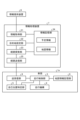
- FIG. 1 is a diagram showing a configuration example of a vehicle according to the first embodiment.
- the vehicle 1 of the present embodiment includes an information processing unit 2, a driving control unit 3, a driving mechanism 4, and a self-location identification unit 5.
- the vehicle 1 can carry a user who is a user of the vehicle 1, and can transport the user to a destination.
- FIG. 1 shows an example in which the vehicle 1 is an autonomous vehicle capable of autonomous driving, but the present embodiment is not limited to autonomous vehicles, as described later, and can also be applied to manually driven vehicles driven by a driver.
- the present embodiment can also be applied to vehicles that can switch between autonomous driving and manual driving.
- the information processing unit 2 is an example of an information processing device that determines the route of the vehicle 1 (the route along which the vehicle 1 travels).
- the information processing unit 2 includes an information acquisition unit 21, a destination setting unit 22, a route search unit 23, and an information storage unit 24.
- the information acquisition unit 21 receives information by communicating with other devices.
- the information acquisition unit 21 acquires schedule information by receiving schedule information indicating the schedule of a second user different from the first user who is a user riding in the vehicle from the information providing device 6, and stores the acquired schedule information in the information storage unit 24.
- the schedule information of the second user is an example of location-related information that is information regarding the location of the second user.
- the first user is a child
- the second user is a guardian such as a parent of the child who is the first user.
- the child may be a minor, a person of elementary school age or younger, or an infant.
- the first user may be an elderly person
- the second user may be the spouse, child, relative, etc. of the elderly person who is the first user.
- the relationship between the first user and the second user is not limited to this, and it is sufficient that a second user corresponding to the first user is predetermined. Since the second user is, for example, a person who welcomes the first user who is transported by the vehicle 1, it can be said that the second user is a user who indirectly uses the vehicle 1.
- the identification information of the second user corresponding to the first user is registered in a dispatch management device (not shown) that manages the dispatch of vehicle 1 at the time of reservation, and when the dispatch management device instructs vehicle 1 to be dispatched, it transmits the identification information of the second user.
- the information acquisition unit 21 acquires the identification information of the second user by receiving the identification information of the second user from the dispatch management device, and acquires schedule information from the information providing device 6 based on the acquired identification information of the second user.
- This identification information i.e., user identification information, may be a login ID (IDentifier) defined for using a mobility service by vehicle 1.
- it may be a login ID defined for using a general-purpose service not limited to the mobility service by vehicle 1, a login ID for using a schedule management service that manages schedule information, or the identification information of a user terminal that is a terminal device that can be operated by a user, or may be other than these.
- the user's schedule information may also be managed within the service system that provides the mobility service. For example, the user logs into the mobility service providing system that provides the mobility service using a login ID for using the mobility service and registers the schedule information.
- the schedule information may be stored in the vehicle dispatch management device, or may be stored in an information processing device other than the vehicle dispatch management device in the mobility service providing system that provides the mobility service, or may be stored in the user terminal.
- the user when the user uses the mobility service providing system, the user may be permitted to refer to the schedule information stored in a specified format in the user terminal, and the information acquisition unit 21 may acquire the schedule information from, for example, the user terminal used to log in for the vehicle 1.
- the information acquisition unit 21 acquires the schedule information from a device in which the schedule information is stored.
- the information provision device 6 may be a vehicle dispatch management device, may be an information processing device other than the vehicle dispatch management device, or may be a user terminal.
- the information acquisition unit 21 may acquire the schedule information from the information provision device 6 that stores the schedule information via another device.
- the vehicle dispatch management device may acquire schedule information from a user terminal, and the information acquisition unit 21 may acquire the schedule information from the vehicle dispatch management device.
- a user may be able to use the mobility service system by installing application software (hereinafter also referred to as an app) for using the mobility service system on a user terminal, or may be able to use the mobility service system by logging in to a web page for using the mobility service system.
- app application software
- the user's schedule information may be managed by a mobility providing service system that provides mobility services, as in the above example.
- the schedule information management service system that provides a schedule management service that manages schedule information may cooperate with the mobility providing service system, and the information acquisition unit 21 may acquire schedule information from a schedule information management device that manages schedule information in the schedule information management service system.
- the information providing device 6 may be the schedule information management device.
- a reservation management login ID which is a login ID defined for using the reservation management service
- a schedule information management service system that provides a schedule management service that manages schedule information and the mobility providing service system are linked, and the information acquisition unit 21 may acquire schedule information from a schedule information management device that manages schedule information in the schedule information management service system.
- the information providing device 6 may be the schedule information management device.
- the information acquisition unit 21 acquires, for example, schedule information from the user terminal.
- the method of associating the first user with the second user is not limited to the above example.
- the first user may present presented information which is the reservation identification information assigned to the reservation, the user identification information of the first user, or the user identification information of the second user.
- the presented information is recorded on an IC card or is indicated by a two-dimensional code such as a QR (registered trademark) code.
- the first user causes the IC card or the two-dimensional code to be read by a reading device (not shown) in the vehicle 1.
- the information acquisition unit 21 receives the presented information from the reading device, and acquires the schedule information from the information providing device 6 based on the presented information.
- the reservation identification information may be transmitted to the vehicle dispatch management device and the user identification information of the second user corresponding to the reservation identification information may be obtained from the vehicle dispatch management device by inquiring of the vehicle dispatch management device.
- the reservation identification information is determined by the vehicle dispatch management device when reserving the vehicle 1, for example.
- the information acquisition unit 21 may grasp the user identification information of the second user corresponding to the presented information received from the reading device by receiving and retaining the reservation identification information and the corresponding user identification information of the second user from the vehicle dispatch management device.
- the user identification information of the second user corresponding to the user identification information of the first user may be obtained from the vehicle dispatch management device by inquiring of the vehicle dispatch management device, as in the case where the presented information is reservation identification information, or the user identification information of the first user and the corresponding user identification information of the second user may be received from the vehicle dispatch management device and retained.
- the vehicle dispatch management device accepts registration of the user identification information of the first user together with the user identification information of the second user, for example, when registering for use of the mobility service.
- the user identification information of the first user may be information used for biometric authentication.
- a reception unit (not shown) that receives input from the first user may receive the input of the presented information described above.
- the presented information is output from the reception unit to the information acquisition unit 21.
- the vehicle 1 may be capable of both reading the presented information by the reading device described above and receiving the input of the presented information by the reception unit, allowing the first user to select either one.
- the reception unit may also receive input of instruction information from the first user that instructs the vehicle 1 to depart, i.e., to leave, and output the instruction information to the route search unit 23.
- the identification information of the information providing device 6 from which the schedule information is obtained may be registered in advance in the vehicle 1.
- the identification information of the user terminal of the second user may be registered as the information providing device 6.
- the information acquisition unit 21 acquires schedule information from the user terminal of the second user, which is the information providing device 6.
- the destination setting unit 22 sets the destination of the vehicle 1 using the schedule information of the second user.
- the destination setting unit 22 determines the destination of the vehicle 1 using the schedule information stored in the information storage unit 24, sets the determined destination as the destination of the vehicle 1, and notifies the route search unit 23 of the set destination.
- the destination setting unit 22 calculates the distance between the departure point and a first location corresponding to the earliest first schedule among the schedules indicated by the schedule information after the departure time, calculates an approximate travel time based on the distance, and selects the first schedule as a route search target if the second user is scheduled to be at the first location at a time that is the approximate travel time after the departure time.
- the destination setting unit 22 calculates the distance between the departure point and a second location corresponding to the second earliest second schedule after the departure time, calculates an approximate travel time based on the distance, and selects the second schedule as a route search target if the second user is scheduled to be at the second location at a time that is the approximate travel time after the departure time. If the second user is not at the second location the estimated time after the departure time, the destination setting unit 22 similarly changes the target schedule to the next schedule, repeats these processes until a schedule is found in which the second user is at a location corresponding to the target schedule the estimated time after the departure time, and selects the found schedule as a route search target. The destination setting unit 22 then determines the location corresponding to the schedule selected as the route search target as the destination.
- the information storage unit 24 can store various types of information. For example, as shown in FIG. 1, the information storage unit 24 stores schedule information and map information.
- the map information is information that represents a map including information about roads, and includes the location of each road, the number of lanes on each road, the direction of travel of each lane, the location of traffic lights, and regulation information indicating regulations such as one-way traffic and stop signs.
- the map information may also include information indicating the curvature of a curve in a road, the gradient of a road, and the degree of unevenness of the road surface.
- the map information may also include information indicating the occurrence status of past crimes (types and frequency of crimes that have occurred) for each block on the map, such as a crime prevention map.
- the map information may also include information indicating the brightness for each block.
- the map information may also be information indicating a static map of high-precision three-dimensional map data including dynamic and semi-dynamic information, such as a dynamic map. If the dynamic map includes at least one of traffic light information and traffic congestion information, the information may be acquired as a dynamic map.
- the route search unit 23 uses map information stored in the information storage unit 24 to determine the route (route of vehicle 1) that vehicle 1 will travel from the departure point (boarding point) to the destination notified by the destination setting unit 22, and notifies the driving control unit 3 of the determined route.
- the route search unit 23 determines, for example, as the destination of vehicle 1, a location corresponding to a schedule indicated by the schedule information that is after the departure time and at which vehicle 1 can arrive while the second user is at the location corresponding to the schedule.
- the route search unit 23 searches for a route that will arrive at the destination within the time that the second user is staying at the destination, and if there is a route that will arrive at the destination within the time that the second user is staying at the destination, it determines this route as the route for the vehicle 1. If the result of the route search is that there is no route that will arrive at the destination within the time that the second user is staying at the destination, the route search unit 23 changes the plan selected as the route search target and performs the same process. The route search unit 23 repeats these processes until it finds a route that will arrive at the destination where the second user is staying. By traveling along the route determined in this manner, the vehicle 1 can deliver the first user to the location where the second user is expected to be.
- the method of determining the route in the route search unit 23 is not limited to the above example.
- the route search unit 23 may perform route search by sequentially changing the schedule to be the target of the route search without calculating the approximate required time. That is, the route search unit 23 determines the first location corresponding to the first schedule that is the schedule after the departure time and has the earliest time among the schedules indicated by the schedule information as the destination, performs a route search, and if the result of the route search shows that there is a route that arrives at the destination within the time that the second user is staying at the destination, determines that route as the route for the vehicle 1.
- the route search unit 23 determines the second location corresponding to the second schedule that is the second earliest time after the departure time among the schedules indicated by the schedule information, performs a route search, and if the result of the route search shows that there is a route that arrives at the destination within the time that the second user is staying at the destination, determines that route as the route for the vehicle 1.
- the route search unit 23 repeats these processes until a route that arrives at the destination where the second user is staying is found. In this case, the route search unit 23 searches for the destination together with the route, and therefore the route search unit 23 also functions as the destination setting unit 22.
- the method of determining the route in the route search unit 23 is not limited to these examples.
- the departure point is set to, for example, the current position of the vehicle 1 indicated by the position information (described later) received by the route search unit 23 from the self-location determination unit 5, but is not limited to this.
- the departure point may be specified by the vehicle dispatch management device, or a reception unit (not shown) may receive input of the departure point.
- the self-location determination unit 5 determines the self-location of the vehicle 1, and outputs location information indicating the determined self-location to the driving control unit 3 and the route search unit 23.
- the self-location determination unit 5 determines its own location by performing positioning using a satellite positioning system such as GPS (Global Positioning System) or GNSS (Global Navigation Satellite System), but the method of determining the self-location in the self-location determination unit 5 is not limited to this. Note that if location information is not used in the route search unit 23, the location information does not need to be output from the self-location determination unit 5 to the route search unit 23.
- GPS Global Positioning System
- GNSS Global Navigation Satellite System
- the driving control unit 3 controls the driving mechanism 4 based on the route notified by the route search unit 23, thereby controlling the driving of the vehicle 1 in an autonomous driving manner.
- the driving control unit 3 controls the driving mechanism 4 based on information acquired by sensors (not shown), such as a camera for detecting obstacles, a LiDAR (Light Detection And Ranging), and a millimeter wave sensor, position information received from the self-location determination unit 5, and map information stored in the information storage unit 24.
- sensors not shown
- sensors such as a camera for detecting obstacles, a LiDAR (Light Detection And Ranging), and a millimeter wave sensor, position information received from the self-location determination unit 5, and map information stored in the information storage unit 24.
- the driving control of the autonomous driving of the vehicle 1 is not limited to the above as long as it controls the vehicle to travel along the route notified by the route search unit 23, and any method may be used, and a detailed description thereof will be omitted since a general method may be used.
- the map information for autonomous driving which is the map information used by the driving control unit 3 may be different from the map information stored in the information storage unit 24.
- the driving control unit 3 performs driving control based on the map information for autonomous driving stored in a map information storage unit (not shown) in the vehicle 1.
- the map information stored in the information storage unit 24 may be two-dimensional map information
- the map information for autonomous driving may be a dynamic map.
- the information to be updated may be acquired by the information acquisition unit 21, or may be acquired by a transceiver unit (not shown).
- the driving mechanism 4 is a mechanism for driving the vehicle 1, and includes a number of mechanisms for driving the vehicle 1, such as an accelerator pedal or other accelerator operating device, a steering device, and brakes.
- the route search unit 23 sets the destination of the vehicle 1 based on the schedule information of a second user different from the first user riding in the vehicle 1, so that the route of the vehicle 1 can be determined without the need for the first user riding in the vehicle 1 to input a destination. For example, if the first user riding in the vehicle 1 is a child and the second user is the child's guardian, the child riding in the vehicle 1 can be delivered to the guardian without the child needing to input a destination.
- the information processing unit 2 may not only set the destination of the vehicle 1 based on the schedule information of the second user, but also notify the route search unit 23 of the destination received by the reception unit when the reception unit (not shown) receives input of the destination, and the route search unit 23 may determine a route to the destination notified by the reception unit. It may also be possible to set which of the determination of the destination of the vehicle 1 based on the schedule information of the second user and the destination received by the reception unit is to be prioritized. For example, when reserving the vehicle 1, the user terminal of the second user receives input of priority information from the second user indicating which is to be prioritized, and the user terminal transmits the priority information to the vehicle dispatch management device.
- the vehicle dispatch management device then transmits the priority information to the vehicle 1, and the information acquisition unit 21 receives the priority information from the vehicle dispatch management device and outputs it to the route search unit 23, and the route search unit 23 determines the destination based on the priority information. For example, a parent who is a second user can input priority information indicating that priority is given to determining the destination of vehicle 1 based on the schedule information of the second user, thereby preventing a child who is a first user from inputting a destination that is not intended by the second user and transporting the first user to that destination.
- the route search unit 23 notifies the driving control unit 3 of the determined route, but this is not limited thereto.
- the route search unit 23 may store route information indicating the determined route in the information storage unit 24 or a route information storage unit (not shown) in the vehicle 1.
- the driving control unit 3 controls the driving of the vehicle 1 by referring to the route information stored in the information storage unit 24 or the route information storage unit.
- FIG. 2 is a flowchart showing an example of route determination processing in the information processing unit 2 of this embodiment. Note that FIG. 2 shows an example in which the first user is a child and the second user is the guardian of the first user, but the first and second users are not limited to this, and similar processing is performed even when the second user is other than a guardian.
- the information processing unit 2 acquires the schedule information of the guardian (step S1).
- the information acquisition unit 21 acquires the schedule information of the guardian, who is the second user, from the information providing device 6, and stores the acquired schedule information in the information storage unit 24.
- the information processing unit 2 sets the destination using the schedule information (step S2). For example, the destination setting unit 22 selects, as a route search target, a schedule in which the guardian will be staying at a location that is an approximate required time after the scheduled departure time from among the schedules indicated by the schedule information stored in the information storage unit 24, sets the location corresponding to the schedule selected as the route search target as the destination, and notifies the route search unit 23 of the set destination.
- the information processing unit 2 determines a route using the set destination (step S3), and ends the route determination process.
- the route search unit 23 uses the map information stored in the information storage unit 24 to search for a route (route from the departure point to the destination) that will arrive at the destination within the time that the guardian stays at the destination notified by the destination setting unit 22, and determines the route obtained by the search as the route of the vehicle 1.
- the route search unit 23 may search for a route using the Dijkstra algorithm, Bellman-Ford algorithm, or the like, which treats intersections as nodes and sets costs on edges connecting nodes to search for a route that minimizes the cost, or may search for route candidates using a full search method, or may search for a route using a metaheuristic method, or may perform route search using a method other than these.
- the cost in the Dijkstra algorithm may be distance or required time, but is not limited to these.
- the departure point may be the current location of vehicle 1, but is not limited to this.
- the departure point may be specified by the vehicle dispatch management device, or the reception unit may receive input of the departure point.
- the route search unit 23 If, as a result of the route search in step S3, there is no route that reaches the destination within the time that the guardian stays at the destination, the route search unit 23 notifies the destination setting unit 22 of that fact, the destination setting unit 22 changes the plan that is the subject of the route search, determines the location corresponding to the changed plan as the destination, and the route search unit 23 performs a route search again. If the plan that is the subject of the route search cannot be determined in step S2, or if a route that reaches the destination within the time that the guardian stays at the destination is not found in step S3, the destination setting unit 22 may determine the destination as a designated destination designated by the guardian. The designated destination may be set in advance by, for example, the guardian who is the second user.
- the destination setting unit 22 may generate request information requesting the setting of a destination, transmit the generated request information to the guardian's user terminal via an information transmission unit not shown, and the information acquisition unit 21 may receive information indicating the designated destination from the user terminal, and store the received information in the information storage unit 24.
- the destination setting unit 22 can grasp the designated destination by reading out the information indicating the designated destination from the information storage unit 24.
- an information transmission unit may transmit the set destination to the guardian's user terminal. This allows the guardian to confirm the destination of vehicle 1.
- the information transmission unit may transmit the location information output from self-location identification unit 5 to the guardian's user terminal. This allows the guardian to confirm the current location of vehicle 1.
- FIG. 3 is an image diagram showing a specific example of the route determination method of this embodiment.
- the number of stops is used as a route index as an example.
- a first user who is a child 201, is getting into vehicle 1 at a departure point, and the current time of vehicle 1 is 17:15, and it is assumed that the departure time is 17:15, assuming that vehicle 1 will depart immediately after child 201 gets on.
- the rectangular frame at the top of FIG. 3 shows an example of a schedule of mother 202 of child 201, who is scheduled to attend a conference at venue A from 16:00 to 17:00, and to shop at store B from 17:30 to 18:00.
- information processing unit 2 of vehicle 1 has obtained a route to arrive at store B at 17:40 by searching through the process illustrated in FIG. 2.
- the guardian plans to be at store B from 17:30 to 18:00, so if vehicle 1 travels along this route, it is expected that vehicle 1 will arrive at store B while the guardian is at store B.
- the destination and route may be re-set using the process shown in Figure 2, with that time as the starting point.
- the information processing unit 2 may set a route to the destination with as few stops as possible in order to prevent the first user from becoming involved in a crime.
- the information acquisition unit 21 acquires traffic light information indicating the timing of traffic light (traffic light) color change, i.e., the timing of traffic light color change, and congestion information indicating the occurrence of congestion from the information providing device 6 that provides this information, and stores the acquired traffic light information and congestion information in the information storage unit 24.
- the traffic light information may be, for example, information indicating the traffic light cycle indicating the length of one cycle in which the traffic light turns green, yellow (or flashing green), and red, the lighting time for each light color, and the reference time, or information indicating the scheduled time for the traffic light to change from green to yellow, yellow to red, and red to green.
- the reference time is, for example, a reference time for determining the time at which each light color of the traffic light starts to light, and may be, for example, the start time of one of the cycles. If the start of one cycle is when the green light starts to light, the time at which the green light starts to light in one of the cycles can be used as the reference time.
- the time at which the green light starts to light can be determined by adding an integer multiple of the traffic light cycle to the reference time.
- the reference time is not limited to this, and may be set so as to be able to determine the time at which each light color of the traffic light starts to light.
- the reference time may be a time in the past or in the future.
- the route search unit 23 performs a determination process for determining whether or not at least one of a first stop, which is a stop due to the color of the traffic light of the vehicle 1, and a second stop, which is a stop due to traffic congestion of the vehicle 1, occurs in the route candidate based on the traffic light information and traffic congestion information. If neither the first stop nor the second stop occurs in the route candidate as a result of the determination process, the route search unit 23 determines the route candidate as the route of the vehicle 1. In addition, for example, the route search unit 23 may determine the route of the vehicle 1 based on at least one of the stop time and the number of stops of the vehicle 1 on the route of the vehicle 1 from among the route candidates determined by the determination process to have at least one of the first stop and the second stop.
- the route search unit 23 may determine, for example, the route candidate with the smallest number of stops as the route of the vehicle 1, or the route candidate with the smallest maximum value of the stop time among the route candidates as the route of the vehicle 1.
- the method of determining a route in the route search unit 23 is not limited to this.
- FIG. 1 illustrates an example in which the vehicle 1 performs the route determination process of this embodiment
- the route determination process may be performed by a device separate from the vehicle.
- FIG. 4 illustrates an example of a route determination system of this embodiment.
- the route determination system of this embodiment includes a vehicle 1a and an information processing device 7, and the route determination process is performed by the information processing device 7.
- Components having the same functions as those in the example illustrated in FIG. 1 are given the same reference numerals, and duplicated descriptions will be omitted.
- a route transmission unit 25 is added to the information processing unit 2 shown in FIG. 1, and in the vehicle 1a shown in FIG. 4, the information processing unit 2 is removed from the vehicle 1 shown in FIG. 1, and a transceiver unit 8 and a map information storage unit 9 are added.
- the self-location determination unit 5 outputs position information indicating the position of the vehicle 1a to the driving control unit 3 and the transceiver unit 8.
- the transceiver unit 8 transmits the position information to the information processing device 7. Note that if position information is not used in the route search unit 23, the self-location determination unit 5 does not need to output position information to the transceiver unit 8.
- the route search unit 23 in the information processing device 7 shown in FIG. 4 performs route determination processing in the same manner as the route search unit 23 in the information processing unit 2 shown in FIG. 1, and outputs route information indicating the determined route to the route transmission unit 25.
- the route transmission unit 25 transmits the route information to the vehicle 1a.
- the transmitter/receiver 8 of vehicle 1a receives route information from the information processing device 7 and outputs the received route information to the driving control unit 3.
- the driving control unit 3 controls the driving of vehicle 1a by controlling the driving mechanism 4 based on the route indicated by the route information received from the transmitter/receiver 8. For example, similar to the driving control unit 3 shown in FIG. 1, the driving control unit 3 controls the driving mechanism 4 based on information acquired by a sensor (not shown), position information, and map information stored in the map information storage unit 9.
- the map information stored in the information storage unit 24 of the information processing device 7 and the map information stored in the map information storage unit 9 may be the same or different.
- FIG. 5 is a diagram showing an example of the configuration of a manually driven vehicle in this embodiment.
- Vehicle 1b shown in FIG. 5 is a vehicle driven by a driver, i.e., a manually driven vehicle.
- vehicle 1b has the driving control unit 3 removed from vehicle 1 and is equipped with an information processing unit 2b instead of the information processing unit 2.
- Components having the same functions as the example shown in FIG. 1 are given the same reference numerals and redundant explanations will be omitted.
- the information processing unit 2b is the same as the information processing unit 2 shown in FIG. 1, except that a route display unit 26 is added to the information processing unit 2 shown in FIG. 1.
- the route search unit 23 of the information processing unit 2b performs route determination processing in the same manner as the route search unit 23 of the information processing unit 2 shown in FIG. 1, and outputs route information indicating the determined route to the route display unit 26.
- the route display unit 26 displays the route indicated by the route information.
- the route display unit 26 may display the route on a map.
- the route search unit 23 may read the map information from the information storage unit 24 and pass it to the route display unit 26, or the route display unit 26 may read the map information from the information storage unit 24 and display it as a map.
- the information processing device 7 may perform the route determination process as in the example shown in FIG. 4.
- the vehicle is equipped with a route display unit 26 instead of the driving control unit 3 of the vehicle 1a shown in FIG. 4, and route information indicating the route determined by the information processing device 7 is received by the transceiver unit 8, and the route indicated by the route information is displayed by the route display unit 26.
- FIG. 6 is a diagram showing an example of the configuration of a computer system that realizes the information processing units 2, 2b and the information processing device 7 of this embodiment.
- this computer system includes a control unit 101, an input unit 102, a storage unit 103, a display unit 104, a communication unit 105, and an output unit 106, which are connected via a system bus 107.
- the control unit 101 is, for example, a processor such as a CPU (Central Processing Unit), and executes a program in which the processing in the information processing unit 2, 2b and the information processing device 7 of this embodiment is described.
- the input unit 102 is, for example, composed of a keyboard, buttons, a mouse, etc., and is used by the user of the computer system to input various information.
- the storage unit 103 includes various memories such as a RAM (Random Access Memory) and a ROM (Read Only Memory) and a storage device such as a hard disk, and stores the program to be executed by the control unit 101, necessary data obtained in the process of processing, etc.
- the storage unit 103 is also used as a temporary storage area for the program.
- the control unit 101 and the storage unit 103 constitute a processing circuit.
- the processing circuit may be one circuit or multiple circuits.
- the display unit 104 is composed of a display, an LCD (liquid crystal display panel), etc., and displays various screens to the user of the computer system. A touch panel in which the input unit 102 and the display unit 104 are integrated may be used.
- the communication unit 105 is a receiver and a transmitter that perform communication processing.
- the output unit 106 is a speaker or the like. Note that FIG. 6 is an example, and the configuration of the computer system is not limited to the example of FIG. 6. For example, the output unit 106 does not have to be provided.
- a program is installed in the storage unit 103 from a CD-ROM or DVD-ROM set in a CD (Compact Disc)-ROM drive or DVD (Digital Versatile Disc)-ROM drive (not shown). Then, when the program is executed, the program read from the storage unit 103 is stored in the main memory area of the storage unit 103. In this state, the control unit 101 executes the processes as the information processing units 2, 2b and the information processing device 7 of this embodiment according to the program stored in the storage unit 103.
- a CD-ROM or DVD-ROM is used as a recording medium to provide the program describing the processing in the information processing unit 2, 2b and the information processing device 7, but this is not limiting.
- a program provided by a transmission medium such as the Internet via the communication unit 105 may be used.
- the program of this embodiment executes, for example, the steps of acquiring location-related information, which is information about the location of a second user different from a first user riding in vehicle 1, setting a destination for vehicle 1 using the location-related information, and determining a route for vehicle 1 to travel from the boarding location where the first user boards vehicle 1 to the set destination.
- location-related information which is information about the location of a second user different from a first user riding in vehicle 1
- setting a destination for vehicle 1 using the location-related information and determining a route for vehicle 1 to travel from the boarding location where the first user boards vehicle 1 to the set destination.
- the control unit 101 shown in FIG. 6 executing a program stored in the storage unit 103 shown in FIG. 6.
- the storage unit 103 is also used to realize the destination setting unit 22 and the route search unit 23 shown in FIG. 1, 4, and 5.
- the information acquisition unit 21 shown in FIG. 1 is realized by the communication unit 105 shown in FIG. 6. Some functions of the information acquisition unit 21 shown in FIG. 1 may be realized by the control unit 101 and the storage unit 103.
- the information storage unit 24 is part of the storage unit 103.
- the reception unit (not shown) is realized by at least one of the input unit 102 and the communication unit 105.
- the route display unit 26 shown in FIG. 5 is realized by the display unit 104 shown in FIG. 6.
- the control unit 101 may be used to control the destination setting unit 22, the route display unit 26, and the information acquisition unit 21.
- the information processing units 2, 2b, and the information processing device 7 may be realized by multiple computer systems.
- the information processing device 7 may also be realized by a cloud computer system.
- the driving control unit 3 shown in FIG. 1, and the driving control unit 3 and map information storage unit 9 shown in FIG. 4 are also realized by computer systems.
- the driving control unit 3 shown in FIG. 1, and the driving control unit 3 and map information storage unit 9 shown in FIG. 4 are realized by a processing circuit composed of a control unit 101 and a storage unit 103 exemplified in FIG. 6, for example.
- the driving control unit 3 and information processing unit 2 shown in FIG. 1 may be realized by one computer system.
- the self-location determination unit 5 shown in FIG. 1, FIG. 4, and FIG. 5 is equipped with a GNSS antenna, and the position information is calculated by the above-mentioned control circuit using a signal received by the GNSS antenna.
- the information processing units 2, 2b and the information processing device 7 set the destination of the vehicle 1 based on the schedule information of a second user different from the first user riding in the vehicle 1, so that the route of the vehicle 1 can be determined without the need for the first user riding in the vehicle 1 to input a destination. For example, if the first user riding in the vehicle 1 is a child and the second user is the child's guardian, the child riding in the vehicle 1 can be delivered to the guardian without the child needing to input a destination.
- Embodiment 2. 7 is a diagram showing an example of the configuration of a vehicle according to the second embodiment.
- a vehicle 1c according to the present embodiment is similar to the vehicle 1 according to the first embodiment, except that the vehicle 1c includes an information processing unit 2c instead of the information processing unit 2.
- Components having the same functions as those in the first embodiment are given the same reference numerals as those in the first embodiment, and duplicated explanations will be omitted. Below, differences from the first embodiment will be mainly explained.
- the destination of vehicle 1 was determined based on the schedule information of a second user who is different from the first user riding in vehicle 1. In this embodiment, however, vehicle 1c determines the destination of vehicle 1c based on the location of the second user.
- the information processing unit 2c is similar to the information processing unit 2 of the first embodiment, except that it includes a destination setting unit 22c and a route searching unit 23c instead of the destination setting unit 22 and the route searching unit 23.
- the information acquisition unit 21 receives information by communicating with other devices.
- the information acquisition unit 21 acquires, for example, location information indicating the location (current location) of the user terminal 10 from the user terminal 10 carried by the second user, and stores the acquired location information in the information storage unit 24.
- the location information of the second user is an example of location-related information that is information related to the location of the second user.
- the information storage unit 24 is capable of storing various types of information, and in this embodiment, for example, stores location information and map information as shown in FIG. 7.
- the destination setting unit 22c sets the destination of the vehicle 1 using the location information stored in the information storage unit 24, and notifies the route search unit 23 of the set destination. For example, the destination setting unit 22c sets the location of the second user indicated by the location information stored in the information storage unit 24 as the destination. Note that in FIG. 7, the location information acquired by the information acquisition unit 21 is stored in the information storage unit 24, but this is not limited thereto, and the location information acquired by the information acquisition unit 21 may be directly output from the information acquisition unit 21 to the destination setting unit 22c.
- the route search unit 23c uses the map information stored in the information storage unit 24 to search for a route of the vehicle 1 from the departure point to the destination notified by the destination setting unit 22c. As with the first embodiment, the departure point may be, for example, the current location of the vehicle 1, or may be specified by the vehicle dispatch management device, or the reception unit may receive an input.
- FIG. 8 is a flowchart showing an example of route determination processing in the information processing unit 2c of this embodiment. Note that FIG. 8 shows an example in which the first user is a child and the second user is the guardian of the first user, but the first and second users are not limited to this, and similar processing is performed even when the second user is other than a guardian.
- the information processing unit 2c acquires the guardian's location information (step S11).
- the information acquisition unit 21 receives location information indicating the location of the user terminal 10 from the user terminal 10 carried by the guardian as location information indicating the guardian's location, and stores the received location information in the information storage unit 24.
- the user terminal 10 is, for example, a smartphone, tablet, smartwatch, personal computer, etc., but is not limited to these, and may be any device that is capable of identifying its own location and transmitting location information indicating the identified location.
- the user terminal 10 may be a device specialized in identifying and transmitting location information.
- the information processing unit 2c sets the destination using the location information (step S12). For example, the destination setting unit 22c sets the destination by determining the location of the guardian indicated by the location information stored in the information storage unit 24 as the destination, and notifies the route search unit 23 of the set destination.
- the information processing unit 2c determines a route using the set destination (step S13), and ends the route determination process.
- the route search unit 23c searches for a route for the vehicle 1 from the departure point to the destination using map information stored in the information storage unit 24, and determines the route obtained by the search as the route for the vehicle 1.
- the route search unit 23c may search for a route using the Dijkstra algorithm, the Bellman-Ford algorithm, or the like, may search for route candidates using an exhaustive search method, may search for a route using a metaheuristics method, or may perform route search using a method other than these.
- the cost in the Dijkstra algorithm may be, but is not limited to, distance or required time.
- the information processing unit 2c shown in FIG. 7 is also realized by a computer system, similar to the information processing units 2 and 2b in the first embodiment.
- the destination setting unit 22c and route search unit 23c shown in FIG. 7 are realized by the control unit 101 shown in FIG. 6 executing a program stored in the storage unit 103 shown in FIG. 6.
- the storage unit 103 is also used to realize the destination setting unit 22c and route search unit 23c shown in FIG. 7.
- the vehicle 1c performs the route determination process, as in the example shown in FIG. 1, but this is not limited to the above, and the information processing device may perform the route determination process, as in the example shown in FIG. 4.
- the information processing device 7 shown in FIG. 4 includes a destination setting unit 22c and a route searching unit 23c instead of the destination setting unit 22 and the route searching unit 23 shown in FIG. 4, and the information acquisition unit 21 acquires location information from the user terminal 10.
- the division of functions between the information processing device and the vehicle is not limited to this example, as in the first embodiment.
- FIG. 7 shows an example in which vehicle 1c is an autonomous vehicle
- the configuration and operation of this embodiment can also be applied to a manually driven vehicle, similar to the example shown in FIG. 5.
- information processing unit 2b shown in FIG. 5 includes destination setting unit 22c and route search unit 23c instead of destination setting unit 22 and route search unit 23 shown in FIG. 5, and information acquisition unit 21 acquires location information from user terminal 10.
- the information processing unit 2c sets the destination of the vehicle 1c based on the position of the second user who is different from the first user riding in the vehicle 1c, so that the route of the vehicle 1c can be determined without the need for the first user riding in the vehicle 1c to input a destination. For example, if the first user riding in the vehicle 1c is a child and the second user is the child's guardian, the child riding in the vehicle 1c can be delivered to the guardian without the child needing to input a destination.
- Embodiment 3. 9 is a diagram showing an example of the configuration of a vehicle according to the third embodiment.
- a vehicle 1d according to the present embodiment is similar to the vehicle 1 according to the first embodiment, except that the vehicle 1d includes an information processing unit 2d instead of the information processing unit 2.
- Components having the same functions as those in the first and second embodiments are given the same reference numerals as those in the first and second embodiments, and duplicated explanations will be omitted. Below, differences from the first and second embodiments will be mainly explained.
- the destination of vehicle 1 is determined based on the schedule information of a second user different from the first user who boards vehicle 1, and in the second embodiment, the destination of vehicle 1c is determined based on the location information of the second user.
- the destination of vehicle 1d is switched between being determined based on the schedule information of the second user and being determined based on the location information of the second user.
- the information processing unit 2d is the same as the information processing unit 2 of the first embodiment, except that it includes a destination setting unit 22d and a route search unit 23d instead of the destination setting unit 22 and the route search unit 23.
- the information acquisition unit 21 receives information by communicating with other devices, as in the first embodiment. In this embodiment, the information acquisition unit 21 acquires schedule information of the second user from the information providing device 6 and stores the schedule information in the information storage unit 24. In this embodiment, the information acquisition unit 21 further acquires location information indicating the location of the user terminal 10 from the user terminal 10 carried by the second user, and stores the acquired location information in the information storage unit 24. Note that in FIG.
- the information providing device 6 and the user terminal 10 are illustrated separately, but the information providing device 6 may be the user terminal 10 as described in the first embodiment. That is, the information providing device 6 and the user terminal 10 may be the same device.
- the information storage unit 24 is capable of storing various information, and in this embodiment, for example, as shown in FIG. 9, stores schedule information, location information, and map information.
- the destination setting unit 22d can perform both the determination of the destination of the vehicle 1d based on the schedule information of the second user and the determination of the destination of the vehicle 1d based on the position information of the second user. For example, when the vehicle 1d departs, the destination setting unit 22d sets the destination by determining the destination of the vehicle 1d based on the schedule information of the second user, notifies the route search unit 23 of the set destination, and when a destination review condition, which is a set condition, is satisfied, resets the destination by determining the destination of the vehicle 1d based on the position information of the second user, and notifies the route search unit 23 of the reset destination.
- the destination setting unit 22d may reset the destination of the vehicle 1d using the position information, and the route search unit 23d may determine the route along which the vehicle 1d will travel from the current position of the vehicle 1d to the destination reset by the destination setting unit 22d.
- the self-location identification unit 5 also outputs position information indicating the current position of the vehicle 1d to the destination setting unit 22d.
- Destination review conditions include, but are not limited to, for example, a condition that the distance from the destination being set is equal to or less than a threshold value, a condition that the estimated time required to reach the destination being set is equal to or less than a threshold value, a condition that the elapsed time since departure is equal to or more than a threshold value, and a condition that the distance between the second user's position estimated based on the schedule information and the second user's current position indicated by the position information is equal to or more than a threshold value.
- vehicle 1d can adjust the destination according to the second user's actual position by resetting the destination of vehicle 1d based on the second user's position information. Also, when the distance between the second user's position estimated based on the schedule information and the second user's current position indicated by the position information is equal to or more than a threshold value, vehicle 1d can reset the destination based on the second user's position information, thereby resetting the destination according to the actual position when the second user's actual behavior changes from the plan.
- the switching of the destination determination method in the destination setting unit 22d is not limited to this example.
- the destination when the vehicle 1d departs, the destination may be set by determining the destination of the vehicle 1d based on the location information of the second user, and the set destination may be notified to the route search unit 23.
- the destination review condition when the destination review condition is satisfied, the destination may be reset by determining the destination of the vehicle 1d based on the schedule information of the second user, and the reset destination may be notified to the route search unit 23.
- the destination review condition in this case is, for example, a condition that the location information of the second user cannot be received for a certain period of time or more, but is not limited to this.
- FIG. 10 is a flowchart showing an example of route determination processing in the information processing unit 2 of this embodiment.
- FIG. 8 shows an example in which the first user is a child and the second user is the guardian of the first user, but the first and second users are not limited to this, and similar processing is performed even when the second user is other than a guardian.
- the information processing unit 2d performs steps S1 to S3 in the same manner as in the first embodiment.
- the information processing unit 2d determines whether or not the destination review condition is satisfied (step S21).
- the destination setting unit 22d determines whether or not the destination review condition is satisfied.
- step S21 is repeated. If the destination review condition is met (step S21 Yes), step S11 is performed as in the second embodiment.
- the information processing unit 2d resets the destination using the location information (step S12a). For example, the destination setting unit 22d resets the destination by determining the guardian's location indicated by the location information stored in the information storage unit 24 as the destination, and notifies the route search unit 23d of the set destination.
- the information processing unit 2d then redetermines the route using the set destination (step S13a), and ends the route determination process.
- the route search unit 23d uses the map information stored in the information storage unit 24 to search for a route for the vehicle 1d from the current position of the vehicle 1d indicated by the position information output from the self-location identification unit 5 to the reset destination, and resets the route by determining the route obtained by the search as the route for the vehicle 1.
- the example shown in FIG. 10 is just one example and is not limited thereto.
- the destination of vehicle 1d may be redetermined based on the schedule information of the second user.
- a destination review condition a switching condition for switching from determining the destination of vehicle 1d based on the position information of the second user to determining the destination of vehicle 1d based on the schedule information of the second user
- the destination of vehicle 1d may be redetermined based on the schedule information of the second user. In this way, the destination determination method may be switched multiple times.
- the information processing unit 2d shown in FIG. 10 is also realized by a computer system, like the information processing units 2 and 2b in the first embodiment and the information processing unit 2c in the second embodiment.
- the destination setting unit 22d and the route search unit 23d shown in FIG. 9 are realized by the control unit 101 shown in FIG. 6 executing a program stored in the storage unit 103 shown in FIG. 6.
- the storage unit 103 is also used to realize the destination setting unit 22d and the route search unit 23d shown in FIG. 10.
- the vehicle 1d performs the route determination process as in the example shown in FIG. 1, but this is not limited to the above, and the information processing device may perform the route determination process as in the example shown in FIG. 4.
- the information processing device 7 includes a destination setting unit 22d and a route searching unit 23d instead of the destination setting unit 22 and the route searching unit 23 shown in FIG. 4, and the information acquisition unit 21 acquires schedule information from the information providing device 6 and acquires location information from the user terminal 10.
- the division of functions between the information processing device and the vehicle is not limited to this example, as in the first embodiment.
- FIG. 10 shows an example in which vehicle 1d is an autonomous vehicle
- the configuration and operation of this embodiment can also be applied to manually driven vehicles, similar to the example shown in FIG. 5.
- information processing unit 2b shown in FIG. 5 includes destination setting unit 22d and route search unit 23d instead of destination setting unit 22 and route search unit 23 shown in FIG. 5, and information acquisition unit 21 acquires schedule information from information providing device 6 and acquires location information from user terminal 10.
- the information processing unit 2d switches between determining the destination of the vehicle 1d based on the schedule information of the second user and determining the destination of the vehicle 1d based on the location information of the second user.
- This provides the same effect as in embodiment 1 and allows the destination to be set more appropriately depending on the situation. For example, if the first user riding in the vehicle 1d is a child and the second user is the child's guardian, and after the destination is set based on the guardian's schedule information and the vehicle 1d departs, if the distance between the set destination and the vehicle 1d falls below a threshold, the destination determination method can be switched to adjust the destination according to the guardian's actual location.
- 1, 1a, 1b, 1c, 1d vehicle; 2, 2b, 2c, 2d: information processing unit; 3: driving control unit; 4: driving mechanism; 5: self-location determination unit; 6: information providing device; 7: information processing device; 8: transmission/reception unit; 9: map information storage unit; 10: user terminal; 21: information acquisition unit; 22, 22c, 22d: destination setting unit; 23, 23c, 23d: route search unit; 24: information storage unit; 25: route transmission unit; 26: route display unit.
Landscapes
- Engineering & Computer Science (AREA)
- Radar, Positioning & Navigation (AREA)
- Remote Sensing (AREA)
- Automation & Control Theory (AREA)
- Physics & Mathematics (AREA)
- General Physics & Mathematics (AREA)
- Health & Medical Sciences (AREA)
- General Health & Medical Sciences (AREA)
- Social Psychology (AREA)
- Traffic Control Systems (AREA)
- Navigation (AREA)
Priority Applications (4)
| Application Number | Priority Date | Filing Date | Title |
|---|---|---|---|
| DE112023006443.1T DE112023006443T5 (de) | 2023-08-09 | 2023-08-09 | Informationsverarbeitungsvorrichtung, Fahrzeug, Streckenbestimmungsverfahren und Programm |
| CN202380101075.6A CN121693766A (zh) | 2023-08-09 | 2023-08-09 | 信息处理装置、车辆、路径决定方法和程序 |
| PCT/JP2023/029144 WO2025032777A1 (ja) | 2023-08-09 | 2023-08-09 | 情報処理装置、車両、経路決定方法およびプログラム |
| JP2024540036A JP7634788B1 (ja) | 2023-08-09 | 2023-08-09 | 情報処理装置、車両、経路決定方法およびプログラム |
Applications Claiming Priority (1)
| Application Number | Priority Date | Filing Date | Title |
|---|---|---|---|
| PCT/JP2023/029144 WO2025032777A1 (ja) | 2023-08-09 | 2023-08-09 | 情報処理装置、車両、経路決定方法およびプログラム |
Publications (1)
| Publication Number | Publication Date |
|---|---|
| WO2025032777A1 true WO2025032777A1 (ja) | 2025-02-13 |
Family
ID=94533752
Family Applications (1)
| Application Number | Title | Priority Date | Filing Date |
|---|---|---|---|
| PCT/JP2023/029144 Pending WO2025032777A1 (ja) | 2023-08-09 | 2023-08-09 | 情報処理装置、車両、経路決定方法およびプログラム |
Country Status (4)
| Country | Link |
|---|---|
| JP (1) | JP7634788B1 (https=) |
| CN (1) | CN121693766A (https=) |
| DE (1) | DE112023006443T5 (https=) |
| WO (1) | WO2025032777A1 (https=) |
Citations (2)
| Publication number | Priority date | Publication date | Assignee | Title |
|---|---|---|---|---|
| JP2008203013A (ja) * | 2007-02-19 | 2008-09-04 | Casio Hitachi Mobile Communications Co Ltd | 携帯端末装置及びプログラム |
| JP2021018709A (ja) * | 2019-07-23 | 2021-02-15 | トヨタ自動車株式会社 | 車両 |
Family Cites Families (3)
| Publication number | Priority date | Publication date | Assignee | Title |
|---|---|---|---|---|
| JP5872229B2 (ja) | 2011-09-29 | 2016-03-01 | クラリオン株式会社 | 情報端末 |
| JP2014174130A (ja) * | 2013-03-13 | 2014-09-22 | Panasonic Corp | 携帯情報端末装置およびプログラム |
| JP7593296B2 (ja) * | 2021-11-01 | 2024-12-03 | トヨタ自動車株式会社 | 移動巡回型託児サービス支援システム |
-
2023
- 2023-08-09 JP JP2024540036A patent/JP7634788B1/ja active Active
- 2023-08-09 DE DE112023006443.1T patent/DE112023006443T5/de active Pending
- 2023-08-09 CN CN202380101075.6A patent/CN121693766A/zh active Pending
- 2023-08-09 WO PCT/JP2023/029144 patent/WO2025032777A1/ja active Pending
Patent Citations (2)
| Publication number | Priority date | Publication date | Assignee | Title |
|---|---|---|---|---|
| JP2008203013A (ja) * | 2007-02-19 | 2008-09-04 | Casio Hitachi Mobile Communications Co Ltd | 携帯端末装置及びプログラム |
| JP2021018709A (ja) * | 2019-07-23 | 2021-02-15 | トヨタ自動車株式会社 | 車両 |
Also Published As
| Publication number | Publication date |
|---|---|
| JP7634788B1 (ja) | 2025-02-21 |
| DE112023006443T5 (de) | 2026-03-26 |
| CN121693766A (zh) | 2026-03-17 |
| JPWO2025032777A1 (https=) | 2025-02-13 |
Similar Documents
| Publication | Publication Date | Title |
|---|---|---|
| US11599123B2 (en) | Systems and methods for controlling autonomous vehicles that provide a vehicle service to users | |
| US20240194069A1 (en) | Systems and methods for detecting vehicle movements and displaying parking spaces | |
| US9672734B1 (en) | Traffic aware lane determination for human driver and autonomous vehicle driving system | |
| US10847035B2 (en) | Demand responsive operation system | |
| US7860647B2 (en) | Guide report device, system thereof, method thereof, program for executing the method, and recording medium containing the program | |
| US20200175432A1 (en) | Travel schedule determination device, autonomous vehicle, travel schedule determination method, and program | |
| US20110133959A1 (en) | Unoccupied parking area notification system and method for notifying information on unoccupied parking area | |
| CN111051170A (zh) | 识别自主车辆的未分配的乘客 | |
| US20170016738A1 (en) | Vehicle Operation Device | |
| CN111376913A (zh) | 车辆控制设备、车辆控制方法和车辆控制系统 | |
| KR102118290B1 (ko) | 예상주행정보를 이용한 차량배차 방법 및 시스템 | |
| US20210150656A1 (en) | Service management device, service providing system, and service management method | |
| WO2018132088A1 (en) | Picking up and dropping off passengers at an airport using an autonomous vehicle | |
| CN111351492A (zh) | 用于自动驾驶车辆导航的方法和系统 | |
| JP2004333464A (ja) | 簡易型カーナビゲーション方法及びシステム | |
| US11262205B2 (en) | Traffic control apparatus, traffic control system, traffic control method, and non-transitory computer recording medium | |
| JP2019158842A (ja) | 情報処理方法および情報処理装置 | |
| JP2019158843A (ja) | 情報提供方法および情報提供装置 | |
| WO2021209782A1 (ja) | 配車システム、配車方法及び配車装置 | |
| JP3232967B2 (ja) | 移動計画監視装置 | |
| JP7634788B1 (ja) | 情報処理装置、車両、経路決定方法およびプログラム | |
| JP7664815B2 (ja) | 車両運用支援装置、端末装置、デマンド交通システム、車両運用支援方法および車両運用支援プログラム | |
| JP7630730B1 (ja) | 情報処理装置、車両、経路決定方法およびプログラム | |
| JP2003344072A (ja) | 移動体集合位置提示システム | |
| WO2019216377A1 (ja) | 携帯端末装置及び探索システム |
Legal Events
| Date | Code | Title | Description |
|---|---|---|---|
| ENP | Entry into the national phase |
Ref document number: 2024540036 Country of ref document: JP Kind code of ref document: A |
|
| WWE | Wipo information: entry into national phase |
Ref document number: 2024540036 Country of ref document: JP |
|
| 121 | Ep: the epo has been informed by wipo that ep was designated in this application |
Ref document number: 23948494 Country of ref document: EP Kind code of ref document: A1 |
|
| WWE | Wipo information: entry into national phase |
Ref document number: 112023006443 Country of ref document: DE |
|
| WWP | Wipo information: published in national office |
Ref document number: 112023006443 Country of ref document: DE |