WO2025019309A2 - Compounds and compositions as c-kit kinase inhibitors - Google Patents
Compounds and compositions as c-kit kinase inhibitors Download PDFInfo
- Publication number
- WO2025019309A2 WO2025019309A2 PCT/US2024/037785 US2024037785W WO2025019309A2 WO 2025019309 A2 WO2025019309 A2 WO 2025019309A2 US 2024037785 W US2024037785 W US 2024037785W WO 2025019309 A2 WO2025019309 A2 WO 2025019309A2
- Authority
- WO
- WIPO (PCT)
- Prior art keywords
- optionally substituted
- disease
- compound
- heteroaryl
- group
- Prior art date
- Legal status (The legal status is an assumption and is not a legal conclusion. Google has not performed a legal analysis and makes no representation as to the accuracy of the status listed.)
- Pending
Links
Classifications
-
- A—HUMAN NECESSITIES
- A61—MEDICAL OR VETERINARY SCIENCE; HYGIENE
- A61K—PREPARATIONS FOR MEDICAL, DENTAL OR TOILETRY PURPOSES
- A61K31/00—Medicinal preparations containing organic active ingredients
- A61K31/33—Heterocyclic compounds
- A61K31/395—Heterocyclic compounds having nitrogen as a ring hetero atom, e.g. guanethidine or rifamycins
- A61K31/435—Heterocyclic compounds having nitrogen as a ring hetero atom, e.g. guanethidine or rifamycins having six-membered rings with one nitrogen as the only ring hetero atom
- A61K31/4353—Heterocyclic compounds having nitrogen as a ring hetero atom, e.g. guanethidine or rifamycins having six-membered rings with one nitrogen as the only ring hetero atom ortho- or peri-condensed with heterocyclic ring systems
- A61K31/437—Heterocyclic compounds having nitrogen as a ring hetero atom, e.g. guanethidine or rifamycins having six-membered rings with one nitrogen as the only ring hetero atom ortho- or peri-condensed with heterocyclic ring systems the heterocyclic ring system containing a five-membered ring having nitrogen as a ring hetero atom, e.g. indolizine, beta-carboline
-
- A—HUMAN NECESSITIES
- A61—MEDICAL OR VETERINARY SCIENCE; HYGIENE
- A61K—PREPARATIONS FOR MEDICAL, DENTAL OR TOILETRY PURPOSES
- A61K31/00—Medicinal preparations containing organic active ingredients
- A61K31/33—Heterocyclic compounds
- A61K31/395—Heterocyclic compounds having nitrogen as a ring hetero atom, e.g. guanethidine or rifamycins
- A61K31/495—Heterocyclic compounds having nitrogen as a ring hetero atom, e.g. guanethidine or rifamycins having six-membered rings with two or more nitrogen atoms as the only ring heteroatoms, e.g. piperazine or tetrazines
- A61K31/4985—Pyrazines or piperazines ortho- or peri-condensed with heterocyclic ring systems
-
- C—CHEMISTRY; METALLURGY
- C07—ORGANIC CHEMISTRY
- C07D—HETEROCYCLIC COMPOUNDS
- C07D471/00—Heterocyclic compounds containing nitrogen atoms as the only ring hetero atoms in the condensed system, at least one ring being a six-membered ring with one nitrogen atom, not provided for by groups C07D451/00 - C07D463/00
- C07D471/02—Heterocyclic compounds containing nitrogen atoms as the only ring hetero atoms in the condensed system, at least one ring being a six-membered ring with one nitrogen atom, not provided for by groups C07D451/00 - C07D463/00 in which the condensed system contains two hetero rings
- C07D471/04—Ortho-condensed systems
-
- C—CHEMISTRY; METALLURGY
- C07—ORGANIC CHEMISTRY
- C07D—HETEROCYCLIC COMPOUNDS
- C07D519/00—Heterocyclic compounds containing more than one system of two or more relevant hetero rings condensed among themselves or condensed with a common carbocyclic ring system not provided for in groups C07D453/00 or C07D455/00
Definitions
- the present invention relates generally to compounds and pharmaceutical compositions useful as CSF1R, PDGFR and/or c-kit kinases inhibitors.
- Protein kinases are a large set of structurally related phosphoryl transferases having highly conserved structures and catalytic functions. Protein kinases are enzymatic components of the signal transduction pathways which catalyze the transfer of the terminal phosphate from ATP to the hydroxy group of tyrosine, serine and/or threonine residues of proteins, and are therefore categorized into families by the substrates they phosphorylate: Protein Tyrosine Kinases (PTK), and Protein Serine/Threonine Kinases.
- PTK Protein Tyrosine Kinases
- Protein kinases play a critical role in the control of cell growth and differentiation and are responsible for the control of a wide variety of cellular signal transduction processes, wherein protein kinases are key mediators of cellular signal leading to the production of growth factors and cytokines.
- the overexpression or inappropriate expression of normal or mutant protein kinases plays a significant role in the development of many diseases and disorders including, central nervous system disorders such as Alzheimer’s inflammatory disorders such as arthritis, bone diseases such as osteoporosis, metabolic disorders such as diabetes, blood vessel proliferative disorders such as angiogenesis, autoimmune diseases such as rheumatoid arthritis, ocular diseases, cardiovascular disease, atherosclerosis, cancer, thrombosis, psoriasis, restenosis, schizophrenia, pain sensation, transplant rejection and infectious diseases such as viral, and fungal infections.
- central nervous system disorders such as Alzheimer’s inflammatory disorders such as arthritis, bone diseases such as osteoporosis, metabolic disorders such as diabetes, blood vessel proliferative disorders such as angiogenesis, autoimmune diseases such as rheumatoid arthritis, ocular diseases, cardiovascular disease, atherosclerosis, cancer, thrombosis, psoriasis, restenosis, schizophrenia, pain sensation, transplant rejection and infectious diseases such as viral, and fungal
- mast cells are immune cells that reside in tissues throughout the body and release chemical mediators in response to certain stimuli. Inflammatory mediators are stored in granules within the mast cells. Activation of a mast cell leads to the process of degranulation, which releases these chemicals into the extracellular space. Dysfunction of mast cells has been implicated in a wide range of allergic and inflammatory diseases including skin and eye diseases, such as chronic urticaria systemic sclerosis, atopic dermatitis and allergic conjunctivitis; respiratory diseases such as asthma and chronic rhinosinusitis with nasal polyposis; and gastrointestinal diseases such as irritable bowel syndrome, inflammatory bowel disease, eosinophilic esophagitis and food allergy.
- skin and eye diseases such as chronic urticaria systemic sclerosis, atopic dermatitis and allergic conjunctivitis
- respiratory diseases such as asthma and chronic rhinosinusitis with nasal polyposis
- gastrointestinal diseases such as irritable bowel syndrome, inflammatory bowel disease,
- KIT also known as CD117
- SCF stem cell factor
- KIT KIT’s native ligand
- activation of KIT by SCF is important in the migration, differentiation, and propagation of circulating mast cell progenitors, as well as the survival of mature mast cells within tissue.
- KIT is also important for mast cell activation, degranulation, and the release of downstream cytokines.
- the present invention provides a compound of Formula (I): or a pharmaceutically acceptable salt thereof, wherein: m is 0, 1, 2, 3, or 4; each R 1 is independently selected from the group consisting of deuterium, halogen, -CN, optionally substituted -Ci-Ce alkyl, optionally substituted -Ci-Ce alkoxy, optionally substituted -Cs-Cs cycloalkyl, optionally substituted -Cs-Cs cycloalkenyl, optionally substituted 3- to 8- membered heterocycloalkyl , optionally substituted aryl, optionally substituted arylalkyl, optionally substituted heteroaryl, optionally substituted heteroarylalkyl, -C(O)R 4 , -C(O)OR 4 , -C(O)NR 4 R 5 , -C(S)NR 4 R 5 , and -NR 4 R 5 ; each R 4 and R 5 is independently selected from the group consisting
- R 9 is selected from the group consisting of hydrogen, deuterium, halogen, -CN, optionally substituted -Ci-Ce alkyl, optionally substituted -Ci-Ce alkoxy, optionally substituted -C3- Cs cycloalkyl, optionally substituted -C5-C8 cycloalkenyl, optionally substituted 3- to 8- membered heterocycloalkyl , optionally substituted aryl, optionally substituted arylalkyl, optionally substituted heteroaryl, optionally substituted heteroarylalkyl, -C(O)R 4 , - C(O)OR 4 , -C(O)NR 4 R 5 , -C(S)NR 4 R 5 , and -NR 4 R 5 ; n is 0, 1, 2, 3, or 4;
- R 2 is selected from the group consisting of deuterium, halogen, -CN, optionally substituted -Ci-Ce alkyl, optionally substituted -C3-C8 cycloalkyl, optionally substituted -Ci-Ce alkoxy, and optionally substituted -C3-C8 cycloalkoxy;
- R 3 is -LR 4a ;
- L is absent, -(CR 6 R 7 ) P -, -(CR 7 R 8 ) q O-, -(CR 7 R 8 ) q NR 4 -, -(CR 7 R 8 ) q C(O)NR 4 -, or - (CR 7 R 8 ) q NR 4 C(O)-;
- p is selected from the group consisting of 1, 2, 3, or 4;
- q is selected from the group consisting of 0, 1, 2, 3 and 4;
- R 6 is selected from the group consisting of hydrogen, optionally substituted -Ci-Ce alkyl, optionally substituted -Ci-Ce alkoxy, and -NHC(O)OR 4 ;
- R 7 and R 8 are each independently selected from the group consisting of hydrogen, fluorine, and optionally substituted -Ci-Ce alkyl;
- R 4a is selected from the group consisting of optionally substituted -Ci-Cs alkyl, optionally substituted -C2-C8 alkenyl, optionally substituted -C3-C 12 cycloalkyl, optionally substituted -C5-C12 cycloalkenyl, optionally substituted 3- to 8- membered heterocycloalkyl, optionally substituted aryl, and optionally substituted heteroaryl; and
- O is absent or optionally substituted 5-membered heteroaryl when L is not absent; and _ is optionally substituted 5-membered heteroaryl when L is absent; .0, provided that not N-N alternatively, when possible, ® and R 3 can be taken together with the nitrogen atom to which they are attached to form optionally substituted 6- to 12-membered heterocyclic ring or optionally substituted fused heteroaryl, alternatively, when possible ® and R 2 can be taken together with the nitrogen atom to which they are attached to form optionally substituted 6- to 12-membered heterocyclic ring.
- n is 0, or m is 1.
- m is 1, 2, 3, or 4, and each R 1 is independently halogen, or -CN.
- m is 1, 2, 3 or 4, and at least one R 1 is -F, -CN, or optionally substituted -CH3.
- m is 1, 2, 3 or 4 and at least one , wherein R 12 is hydrogen, optionally substituted -Ci-Ce alkyl, or optionally substituted -C3-C8 cycloalkyl. In these embodiments, m is preferably 1.
- R 12 is hydrogen, optionally substituted Ci-C4-alkyl or optionally substituted Cs-Ce-cycloalkyl.
- R 12 is hydrogen, methyl, fluoromethyl, difluoromethyl, trifluoromethyl, orfluorocyclopropyl.
- Rn is ;
- R 9 is hydrogen, deuterium, halogen, -CN, optionally substituted -C1-C3 alkyl, optionally substituted -C1-C3 alkoxy, or optionally substituted -C3-C6 cycloalkyl.
- R 9 is hydrogen, halogen, methyl, trifluoromethyl or -CN. More preferably R 9 is hydrogen.
- n is 0, 1 or 2, preferably 0 or 1.
- n is 1 or 2 and each R 2 is independently -CH3, -F, -Cl, -CF2H, -CF3, cyclopropyl, -OCH3, -OCF3, or -OCHF2 or each R 2 is independently -CH3, -F, -Cl, -CF3, cyclopropyl, -OCH3, -OCF3, or -OCHF2.
- n is preferably 1.
- R 11 is selected from the group consisting of hydrogen, optionally substituted -Ci- Cs alkyl, optionally substituted -C3-C8 cycloalkyl, optionally substituted 3- to 8- membered heterocycloalkyl, optionally substituted aryl, and optionally substituted heteroaryl.
- R 11 is selected from the group consisting of hydrogen, optionally substituted -Ci- Cs alkyl, optionally substituted -C3-C8 cycloalkyl, optionally substituted 3- to 8- membered heterocycloalkyl, optionally substituted aryl, and optionally substituted heteroaryl.
- R 11 is selected from the group consisting of hydrogen, optionally substituted -Ci- Cs alkyl, optionally substituted -C3-C8 cycloalkyl, optionally substituted 3- to 8- membered heterocycloalkyl, optionally substituted aryl, and optionally substituted heteroaryl.
- R 11 is selected from the group consist
- L is -(CR 6 R 7 ) P -, p is 1 or 2, and R 6 and R 7 are as previously defined.
- each R 6 and R 7 is independently hydrogen or halogen, more preferably each R 6 and R 7 is hydrogen.
- L is -NH- or -NHC(O)-, and ® is absent.
- L is absent.
- R 4a is optionally substituted -Ci-Cs alkyl.
- R 4a is optionally substituted -C3-C12 cycloalkyl, optionally substituted -C5-C12 cycloalkenyl, or optionally substituted -C3-C12 heterocycloalkyl.
- R 4a is selected from the groups below:
- R 4a is selected from the groups below, and R 4 is optionally substituted:
- the compound of Formula (I) is represented by Formula (I).
- the compound of Formula (I) is represented by one of F ormul ae (IV- 1 ) to (I V-3) : wherein R 1 , R 2 , n, A and R 4a are as previously defined.
- the compound of Formula (I) is represented by one of Formulae (V-l) to (V-3): wherein R 1 , m, R 2 , A and R 3 are as previously defined.
- the compound of Formula (I) is represented by one of
- the compound of Formula (I) is represented by one of Formulae (VII-1) to (VII-3): wherein R 1 , R 2 , A and R 3 are as previously defined.
- the compound of Formula (I) is represented by one of Formulae (VIII-1) to (VIII-3): wherein R 1 , R 2 , A and R 4a are as previously defined.
- the compound of Formula (I) is represented by one of
- the compound of Formula (I) is represented by one of Formulae (X-l) ⁇ (X-9):
- R 1 , m, A and R 3 are as previously defined.
- the compound of Formula (I) is represented by one of Formulae (XI-1) ⁇ (XI-8):
- R 1 , m, R 2 , n and A are as previously defined.
- the compound of Formula (I) is represented by one of Formulae (XII-1) ⁇ (XII-15):
- each M is O, S, or N-R 11 ; each E is independently CH or N; and R 1 , m, R 2 , n, R 11 and R 3 are as previously defined.
- the compound of Formula (I) is represented by one of Formulae (XIII-1) ⁇ (XIII-15): wherein M, E, R 1 , m, R 2 , R 11 and R 3 are as previously defined.
- the compound of Formula (I) is represented by one of Formulae (XIX-1) ⁇ (XIX-5):
- B is -C3-C8 cycloalkyl, -Cs-Cs cycloalkenyl, 3- to 8-membered heterocycloalkyl, aryl, or heteroaryl;
- R 21 is selected from the group consisting of halogen, -CN, -OH, optionally substituted -Ci-Ce alkyl, optionally substituted -Ci-Ce alkoxy, optionally substituted -C3-C8 cycloalkyl, optionally substituted -C5-C8 cycloalkenyl, optionally substituted 3- to 8-membered heterocycloalkyl , optionally substituted aryl, optionally substituted arylalkyl, optionally substituted heteroaryl, optionally substituted heteroarylalkyl, -C(O)R 4 , -C(O)OR 4 , -C(O)NR 4 R 5 , -C(S)NR 4 R 5 , and -NR 4 R 5
- the compound of Formula (I) is represented by one of Formulae (XX-1) ⁇ (XX-5):
- the compound of Formula (I) is represented by one of
- the compound of Formula (I) is represented by one of
- the compound of Formula (I) is represented by one of
- the compounds of the present invention may contain one or more asymmetric carbon atoms and may exist in racemic, diastereoisomeric, and optically active forms. It will still be appreciated that certain compounds of the present invention may exist in different tautomeric forms. All tautomers are contemplated to be within the scope of the present invention.
- the compounds of the present invention and any other pharmaceutically active agent(s) may be administered together or separately and, when administered separately, administration may occur simultaneously or sequentially, in any order.
- the amounts of the compounds of the present invention and the other pharmaceutically active agent(s) and the relative timings of administration will be selected in order to achieve the desired combined therapeutic effect.
- the administration in combination of a compound of the present invention and salts, solvates, or other pharmaceutically acceptable derivatives thereof with other treatment agents may be achieved by concomitant administration in: (1) a unitary pharmaceutical composition including both compounds; or (2) separate pharmaceutical compositions each including one of the compounds.
- the additional therapeutic agent is administered at a lower dose and/or dosing frequency as compared to dose and/or dosing frequency of the additional therapeutic agent required to achieve similar results in treating or preventing as PDGFR and/or c-kit kinases inhibitors.
- aryl refers to a mono- or polycyclic carbocyclic ring system comprising at least one aromatic ring.
- Preferred aryl groups are CL-Ci 2-ary 1 groups, including, but not limited to, phenyl, naphthyl, tetrahydronaphthyl, indanyl, and indenyl.
- a polycyclic aryl is a polycyclic ring system that comprises at least one aromatic ring.
- Polycyclic aryls can comprise fused rings, covalently attached rings or a combination thereof.
- heteroaryl refers to a mono- or polycyclic aromatic radical having one or more ring atom selected from S, O and N; and the remaining ring atoms are carbon, wherein any N or S contained within the ring may be optionally oxidized.
- a heteroaryl group is a 5- to 10-membered heteroaryl, such as a 5- or 6-membered monocyclic heteroaryl or an 8- to 10-membered bicyclic heteroaryl.
- Heteroaryl groups include, but are not limited to, pyridinyl, pyrazinyl, pyrimidinyl, pyrrolyl, pyrazolyl, imidazolyl, thiazolyl, oxazolyl, isooxazolyl, thiadiazolyl, oxadiazolyl, thiophenyl, furanyl, quinolinyl, isoquinolinyl, benzimidazolyl, benzoxazolyl, quinoxalinyl.
- a polycyclic heteroaryl can comprise fused rings, covalently attached rings or a combination thereof.
- a heteroaryl group can be C-attached or N-attached where possible.
- aryl and heteroaryl groups can be substituted or unsubstituted.
- bicyclic aryl or “bicyclic heteroaryl” refers to a ring system consisting of two rings wherein at least one ring is aromatic; and the two rings can be fused or covalently attached.
- alkyl refers to saturated, straight- or branched-chain hydrocarbon radicals.
- C1-C4 alkyl refers to saturated, straight- or branched-chain hydrocarbon radicals.
- C1-C4 alkyl “Ci-C 6 alkyl,” “Ci-C 8 alkyl,” “C1-C12 alkyl,” “C2-C4 alkyl,” and “C3-C6 alkyl,” refer to alkyl groups containing from 1 to 4, 1 to 6, 1 to 8, 1 to 12, 2 to 4 and 3 to 6 carbon atoms respectively.
- alkyl groups include, but are not limited to, methyl, ethyl, propyl, isopropyl, //-butyl, ec-butyl, tert-butyl, n-pentyl, neopentyl, n-hexyl, n-heptyl and n-octyl radicals.
- alkenyl refers to straight- or branched-chain hydrocarbon radicals having at least one carbon-carbon double bond.
- C2-C8 alkenyl refers to alkenyl groups containing from 2 to 8, 2 to 12, 2 to 4, 3 to 4 or 3 to 6 carbon atoms respectively.
- Alkenyl groups include, but are not limited to, ethenyl, propenyl, butenyl, 2-methyl-2- buten-2-yl, heptenyl, octenyl, and the like.
- alkynyl refers to straight- or branched-chain hydrocarbon radicals having at least one carbon-carbon triple bond.
- C2-C8 alkynyl refers to alkynyl groups containing from 2 to 8t, 2 to 12, 2 to 4, 3 to 4 or 3 to 6 carbon atoms respectively.
- Representative alkynyl groups include, but are not limited to, ethynyl, 2-propynyl, 2- butynyl, heptynyl, octynyl, and the like.
- cycloalkyl refers to a monocyclic or polycyclic saturated carbocyclic ring, such as a bi- or tri-cyclic fused, bridged or spiro system.
- the ring carbon atoms are optionally oxo- substituted or optionally substituted with an exocyclic olefinic double bond.
- Preferred cycloalkyl groups include C3-C12 cycloalkyl, C3- Ce cycloalkyl, C3-C8 cycloalkyl and C4-C7 cycloalkyl.
- cycloalkyl examples include, but are not limited to, cyclopropyl, cyclobutyl, cyclopentyl, cyclohexyl, cyclopentyl, cyclooctyl, 4-methylene-cyclohexyl, bicyclo[2.2.1]heptyl, bicyclo[3.1.0]hexyl, spiro[2.5]octyl, 3-methylenebicyclo[3.2.1]octyl, spiro[4.4]nonanyl, and the like.
- cycloalkenyl refers to monocyclic or polycyclic carbocyclic ring, such as a bi- or tri-cyclic fused, bridged or spiro system having at least one carbon-carbon double bond.
- the ring carbon atoms are optionally oxo-substituted or optionally substituted with an exocyclic olefinic double bond.
- Preferred cycloalkenyl groups include C3-C12 cycloalkenyl, C4-Ci2-cycloalkenyl, C3-C8 cycloalkenyl, C4-C8 cycloalkenyl and C5-C7 cycloalkenyl groups.
- cycloalkenyl examples include, but are not limited to, cyclopropenyl, cyclobutenyl, cyclopentenyl, cyclohexenyl, cycloheptenyl, cyclooctenyl, bicyclo[2.2.1]hept-2-enyl, bicyclo[3.1.0]hex-2-enyl, spiro[2.5]oct-4-enyl, spiro[4.4]non-2-enyl, bicyclo[4.2.1]non-3-en-12-yl, and the like.
- arylalkyl means a functional group wherein an alkylene chain is attached to an aryl group, e.g., -(CH2)n-phenyl, where n is 1 to 12, preferably 1 to 6 and more preferably 1 or 2.
- substituted arylalkyl means an arylalkyl functional group in which the aryl group is substituted.
- heteroarylalkyl means a functional group wherein an alkylene chain, is attached to a heteroaryl group, e.g., -(CH2)n-heteroaryl, where n is 1 to 12, preferably 1 to 6 and more preferably 1 or 2.
- substituted heteroarylalkyl means a heteroarylalkyl functional group in which the heteroaryl group is substituted.
- alkoxy refers to a radical in which an alkyl group having the designated number of carbon atoms is connected to the rest of the molecule via an oxygen atom.
- Alkoxy groups include Ci-Ci2-alkoxy, Ci-Cs-alkoxy, Ci-Ce-alkoxy, Ci- C4-alkoxy and Ci-Cs-alkoxy groups. Examples of alkoxy groups includes, but are not limited to, methoxy, ethoxy, n-propoxy, 2-propoxy (isopropoxy) and the higher homologs and isomers.
- Preferred alkoxy is Ci-Csalkoxy.
- An “aliphatic” group is a non-aromatic moiety comprised of any combination of carbon atoms, hydrogen atoms, halogen atoms, oxygen, nitrogen or other atoms, and optionally contains one or more units of unsaturation, e.g., double and/or triple bonds.
- aliphatic groups are functional groups, such as alkyl, alkenyl, alkynyl, O, OH, NH, NH 2 , C(O), S(O) 2 , C(O)O, C(O)NH, OC(O)O, OC(O)NH, OC(O)NH 2 , S(O) 2 NH, S(O) 2 NH 2 , NHC(O)NH 2 , NHC(O)C(O)NH, NHS(O) 2 NH, NHS(O) 2 NH 2 , C(0)NHS(0)2, C(0)NHS(0)2NH or C(O)NHS(O)2NH2, and the like, groups comprising one or more functional groups, non-aromatic hydrocarbons (optionally substituted), and groups wherein one or more carbons of a non-aromatic hydrocarbon (optionally substituted) is replaced by a functional group.
- functional groups such as alkyl, alkenyl, alkynyl, O, OH,
- Carbon atoms of an aliphatic group can be optionally oxo-substituted.
- An aliphatic group may be straight chained, branched, cyclic, or a combination thereof and preferably contains between about 1 and about 24 carbon atoms, more typically between about 1 and about 12 carbon atoms.
- aliphatic groups expressly include, for example, alkoxyalkyls, polyalkoxyalkyls, such as polyalkylene glycols, polyamines, and polyimines, for example. Aliphatic groups may be optionally substituted.
- heterocyclic and “heterocycloalkyl” can be used interchangeably and refer to a non-aromatic ring or a polycyclic ring system, such as a bi- or tri-cyclic fused, bridged or spiro system, where (i) each ring system contains at least one heteroatom independently selected from oxygen, sulfur and nitrogen, (ii) each ring system can be saturated or unsaturated (iii) the nitrogen and sulfur heteroatoms may optionally be oxidized, (iv) the nitrogen heteroatom may optionally be quatemized, (v) any of the above rings may be fused to an aromatic ring, and (vi) the remaining ring atoms are carbon atoms which may be optionally oxo- substituted or optionally substituted with exocyclic olefinic double bond.
- heterocycloalkyl groups include, but are not limited to, 1,3- dioxolane, pyrrolidinyl, pyrazolinyl, pyrazolidinyl, imidazolinyl, imidazolidinyl, piperidinyl, piperazinyl, oxazolidinyl, isoxazolidinyl, morpholinyl, thiazolidinyl, isothiazolidinyl, quinoxalinyl, pyridazinonyl, 2-azabicyclo[2.2.1]-heptyl, 8- azabicyclo[3.2.1]octyl, 5-azaspiro[2.5]octyl, 2-oxa-7-azaspiro[4.4]nonanyl, 7-oxooxepan- 4-yl, and tetrahydrofuryl. Such heterocyclic or heterocycloalkyl groups may be further substituted.
- a heterocycloalkyl or heterocyclic group
- any alkyl, alkenyl, alkynyl, alicyclic, cycloalkyl, cycloalkenyl, aryl, heteroaryl, heterocyclic, aliphatic moiety or the like described herein can also be a divalent or multivalent group when used as a linkage to connect two or more groups or substituents, which can be at the same or different atom(s).
- One skilled in the art can readily determine the valence of any such group from the context in which it occurs.
- substituted refers to substitution by independent replacement of one, two, or three or more of the hydrogen atoms with substituents including, but not limited to, -F, -Cl, -Br, -I, -OH, Ci-Ci2-alkyl; C2-Ci2-alkenyl, C2-Ci2-alkynyl, -Cs-Cn-cycloalkyl, protected hydroxy, -NO2, -N3, -CN, -NH2, protected amino, oxo, thioxo, -NH-C1-C12- alkyl, -NH-C2-C8-alkenyl, -NH-C2-C8-alkynyl, -NH-C3-Ci2-cycloalkyl, -NH-aryl, -NH- heteroaryl, -NH-heterocycloalkyl, -dialkylamino, -diarylamino, -diheteroaryla
- the substituents are independently selected from halo, preferably Cl and F; Ci-C4-alkyl, preferably methyl and ethyl; halo-Ci-C4-alkyl, such as fluoromethyl, difluoromethyl, and trifluoromethyl; C2-C4- alkenyl; halo-C2-C4-alkenyl; Cs-Ce-cycloalkyl, such as cyclopropyl; Ci-C4-alkoxy, such as methoxy and ethoxy; halo-Ci-C4-alkoxy, such as fluoromethoxy, difluoromethoxy, and trifluoromethoxy; -CN; -OH; NH2; Ci-C4-alkylamino; di(Ci-C4-alkyl)amino; and NO2.
- a substituent in a substituted moiety is additionally optionally substituted with one or more groups, each group being independently selected from Ci-C4-alkyl; -CF3, -OCH3, -OCF3, - F, -Cl, -Br, -I, -OH, -NO2, -CN, and -NH2.
- a substituted alkyl group is substituted with one or more halogen atoms, more preferably one or more fluorine or chlorine atoms.
- halo or halogen alone or as part of another substituent, as used herein, refers to a fluorine, chlorine, bromine, or iodine atom.
- the term “optionally substituted”, as used herein, means that the referenced group may be substituted or unsubstituted. In one embodiment, the referenced group is optionally substituted with zero substituents, i.e., the referenced group is unsubstituted. In another embodiment, the referenced group is optionally substituted with one or more additional group(s) individually and independently selected from groups described herein.
- hydrogen includes hydrogen and deuterium.
- the recitation of an element includes all isotopes of that element so long as the resulting compound is pharmaceutically acceptable.
- the isotopes of an element are present at a particular position according to their natural abundance. In other embodiments, one or more isotopes of an element at a particular position are enriched beyond their natural abundance.
- hydroxy activating group refers to a labile chemical moiety which is known in the art to activate a hydroxyl group so that it will depart during synthetic procedures such as in a substitution or an elimination reaction.
- hydroxyl activating group include, but not limited to, mesylate, tosylate, triflate, p- nitrobenzoate, phosphonate and the like.
- activated hydroxyl refers to a hydroxy group activated with a hydroxyl activating group, as defined above, including, but not limited to mesylate, tosylate, triflate, p-nitrobenzoate, phosphonate groups.
- hydroxy protecting group refers to a labile chemical moiety which is known in the art to protect a hydroxyl group against undesired reactions during synthetic procedures. After said synthetic procedure(s) the hydroxy protecting group as described herein may be selectively removed. Hydroxy protecting groups as known in the art are described generally in P.G. M. Wuts, Greene’s Protective Groups in Organic Synthesis, 5th edition, John Wiley & Sons, Hoboken, NJ (2014).
- hydroxyl protecting groups include, but are not limited to, benzyloxycarbonyl, 4- methoxybenzyloxy carbonyl, tert-butoxy-carbonyl, isopropoxycarbonyl, diphenylmethoxycarbonyl, 2,2,2-trichloroethoxycarbonyl, allyloxycarbonyl, acetyl, formyl, chloroacetyl, trifluoroacetyl, methoxyacetyl, phenoxyacetyl, benzoyl, methyl, t- butyl, 2,2,2-trichloroethyl, 2 -trimethyl silyl ethyl, allyl, benzyl, triphenyl-methyl (trityl), methoxymethyl, methylthiomethyl, benzyloxymethyl, 2-(trimethylsilyl)-ethoxymethyl, methanesulfonyl, trimethylsilyl, triisopropylsilyl, and the like.
- protected hydroxy refers to a hydroxy group protected with a hydroxy protecting group, as defined above, including but not limited to, benzoyl, acetyl, trimethylsilyl, triethylsilyl, methoxymethyl groups, for example.
- hydroxy prodrug group refers to a promoiety group which is known in the art to change the physicochemical, and hence the biological properties of a parent drug in a transient manner by covering or masking the hydroxy group. After said synthetic procedure(s), the hydroxy prodrug group as described herein must be capable of reverting back to hydroxy group in vivo. Hydroxy prodrug groups as known in the art are described generally in Kenneth B. Sloan, Prodrugs, Topical and Ocular Drug Delivery, (Drugs and the Pharmaceutical Sciences; Volume 53), Marcel Dekker, Inc., New York (1992).
- amino protecting group refers to a labile chemical moiety which is known in the art to protect an amino group against undesired reactions during synthetic procedures. After said synthetic procedure(s) the amino protecting group as described herein may be selectively removed.
- Amino protecting groups as known in the art are described generally in P.G.M. Wuts, Greene’s Protective Groups in Organic Synthesis, 5th edition, John Wiley & Sons, Hoboken, NJ (2014).
- Examples of amino protecting groups include, but are not limited to, methoxy carbonyl, t-butoxy carbonyl, 12- fluorenyl-methoxycarbonyl, benzyloxycarbonyl, and the like.
- protected amino refers to an amino group protected with an amino protecting group as defined above.
- leaving group means a functional group or atom which can be displaced by another functional group or atom in a substitution reaction, such as a nucleophilic substitution reaction.
- representative leaving groups include chloro, bromo and iodo groups; sulfonic ester groups, such as mesylate, tosylate, brosylate, nosylate and the like; and acyloxy groups, such as acetoxy, trifluoroacetoxy and the like.
- aprotic solvent refers to a solvent that is relatively inert to proton activity, i.e., not acting as a proton-donor.
- Examples include, but are not limited to, hydrocarbons, such as hexane and toluene, for example, halogenated hydrocarbons, such as, for example, methylene chloride, ethylene chloride, chloroform, and the like, heterocyclic compounds, such as, for example, tetrahydrofuran and N- methylpyrrolidinone, and ethers such as diethyl ether, bis-methoxymethyl ether.
- hydrocarbons such as hexane and toluene
- halogenated hydrocarbons such as, for example, methylene chloride, ethylene chloride, chloroform, and the like
- heterocyclic compounds such as, for example, tetrahydrofuran and N- methylpyrrolidinone
- ethers such as diethyl ether, bis-methoxymethyl ether.
- protic solvent refers to a solvent that tends to provide protons, such as an alcohol, for example, methanol, ethanol, propanol, isopropanol, butanol, t-butanol, and the like.
- alcohol for example, methanol, ethanol, propanol, isopropanol, butanol, t-butanol, and the like.
- solvents are well known to those skilled in the art, and it will be obvious to those skilled in the art that individual solvents or mixtures thereof may be preferred for specific compounds and reaction conditions, depending upon such factors as the solubility of reagents, reactivity of reagents and preferred temperature ranges, for example.
- stable refers to compounds which possess stability sufficient to allow manufacture and which maintains the integrity of the compound for a sufficient period of time to be useful for the purposes detailed herein (e.g., therapeutic or prophylactic administration to a subject).
- the synthesized compounds can be separated from a reaction mixture and further purified by a method such as column chromatography, high pressure liquid chromatography, or recrystallization.
- a method such as column chromatography, high pressure liquid chromatography, or recrystallization.
- further methods of synthesizing the compounds of the Formula herein will be evident to those of ordinary skill in the art. Additionally, the various synthetic steps may be performed in an alternate sequence or order to give the desired compounds.
- Synthetic chemistry transformations and protecting group methodologies (protection and deprotection) useful in synthesizing the compounds described herein are known in the art and include, for example, those such as described in R. Larock, Comprehensive Organic Transformations, 2 nd Ed. Wiley-VCH (1999); P.G.M.
- subject refers to an animal.
- the animal is a mammal. More preferably, the mammal is a human.
- a subject also refers to, for example, a dog, cat, horse, cow, pig, guinea pig, fish, bird and the like.
- the compounds of this invention may be modified by appending appropriate functionalities to enhance selective biological properties.
- modifications are known in the art and may include those which increase biological penetration into a given biological system (e.g., blood, lymphatic system, central nervous system), increase oral availability, increase solubility to allow administration by injection, alter metabolism and alter rate of excretion.
- the compounds described herein contain one or more asymmetric centers and thus give rise to enantiomers, diastereomers, and other stereoisomeric forms that may be defined, in terms of absolute stereochemistry, as (R)- or (S)-, or as (D)- or (L)- for amino acids.
- the present invention is meant to include all such possible isomers, as well as their racemic and optically pure forms.
- Optical isomers may be prepared from their respective optically active precursors by the procedures described above, or by resolving the racemic mixtures. The resolution can be carried out in the presence of a resolving agent, by chromatography or by repeated crystallization or by some combination of these techniques which are known to those skilled in the art.
- any carbon-carbon double bond appearing herein is selected for convenience only and is not intended to designate a particular configuration unless the text so states; thus a carbon-carbon double bond or carbonheteroatom double bond depicted arbitrarily herein as trans may be cis, trans, or a mixture of the two in any proportion.
- Certain compounds of the present invention may also exist in different stable conformational forms which may be separable. Torsional asymmetry due to restricted rotation about an asymmetric single bond, for example because of steric hindrance or ring strain, may permit separation of different conformers.
- the present invention includes each conformational isomer of these compounds and mixtures thereof.
- the term "pharmaceutically acceptable salt,” refers to those salts which are, within the scope of sound medical judgment, suitable for use in contact with the tissues of humans and lower animals without undue toxicity, irritation, allergic response and the like, and are commensurate with a reasonable benefit/risk ratio.
- Pharmaceutically acceptable salts are well known in the art. For example, S. M. Berge, et al. describes pharmaceutically acceptable salts in detail in J. Pharmaceutical Sciences, 66: 2-19 (1977).
- the salts can be prepared in situ during the final isolation and purification of the compounds of the invention, or separately by reacting the free base function with a suitable organic acid.
- nontoxic acid addition salts are salts of an amino group formed with inorganic acids such as hydrochloric acid, hydrobromic acid, phosphoric acid, sulfuric acid and perchloric acid or with organic acids such as acetic acid, maleic acid, tartaric acid, citric acid, succinic acid or malonic acid or by using other methods used in the art such as ion exchange.
- salts include, but are not limited to, adipate, alginate, ascorbate, aspartate, benzenesulfonate, benzoate, bisulfate, borate, butyrate, camphorate, camphorsulfonate, citrate, cyclopentane-propionate, digluconate, dodecyl sulfate, ethanesulfonate, formate, fumarate, glucoheptonate, glycerophosphate, gluconate, hemisulfate, heptanoate, hexanoate, hydroiodide, 2-hydroxy-ethanesulfonate, lactobionate, lactate, laurate, lauryl sulfate, malate, maleate, malonate, methanesulfonate, 2-naphthalenesulfonate, nicotinate, nitrate, oleate, oxalate, palmitate, pa
- alkali or alkaline earth metal salts include sodium, lithium, potassium, calcium, magnesium, and the like.
- Further pharmaceutically acceptable salts include, when appropriate, nontoxic ammonium, quaternary ammonium, and amine cations formed using counterions such as halide, hydroxide, carboxylate, sulfate, phosphate, nitrate, alkyl having from 1 to 6 carbon atoms, sulfonate and aryl sulfonate.
- ester refers to esters which hydrolyze in vivo and include those that break down readily in the human body to leave the parent compound or a salt thereof.
- Suitable ester groups include, for example, those derived from pharmaceutically acceptable aliphatic carboxylic acids, particularly alkanoic, alkenoic, cycloalkanoic and alkanedioic acids, in which each alkyl or alkenyl moiety advantageously has not more than 6 carbon atoms.
- esters include, but are not limited to, formates, acetates, propionates, butyrates, acrylates and ethyl succinates.
- compositions of the present invention comprise a therapeutically effective amount of a compound of the present invention formulated together with one or more pharmaceutically acceptable carriers or excipients.
- the term "pharmaceutically acceptable carrier or excipient” means a non-toxic, inert solid, semi-solid or liquid filler, diluent, encapsulating material or formulation auxiliary of any type.
- materials which can serve as pharmaceutically acceptable carriers are sugars such as lactose, glucose and sucrose; starches such as corn starch and potato starch; cellulose and its derivatives such as sodium carboxymethyl cellulose, ethyl cellulose and cellulose acetate; powdered tragacanth; malt; gelatin; talc; excipients such as cocoa butter and suppository waxes; oils such as peanut oil, cottonseed oil, safflower oil, sesame oil, olive oil, corn oil and soybean oil; glycols such as propylene glycol; esters such as ethyl oleate and ethyl laurate; agar; buffering agents such as magnesium hydroxide and aluminum hydroxide; alginic acid;
- compositions of this invention may be administered orally, parenterally, by inhalation spray, topically, rectally, nasally, buccally, vaginally or via an implanted reservoir, preferably by oral administration or administration by injection.
- the pharmaceutical compositions of this invention may contain any conventional non-toxic pharmaceutically-acceptable carriers, adjuvants or vehicles.
- the pH of the formulation may be adjusted with pharmaceutically acceptable acids, bases or buffers to enhance the stability of the formulated compound or its delivery form.
- parenteral as used herein includes subcutaneous, intracutaneous, intravenous, intramuscular, intraarticular, intra-arterial, intrasynovial, intrastemal, intrathecal, intralesional and intracranial injection or infusion techniques.
- Liquid dosage forms for oral administration include pharmaceutically acceptable emulsions, microemulsions, solutions, suspensions, syrups and elixirs.
- the liquid dosage forms may contain inert diluents commonly used in the art such as, for example, water or other solvents, solubilizing agents and emulsifiers such as ethyl alcohol, isopropyl alcohol, ethyl carbonate, ethyl acetate, benzyl alcohol, benzyl benzoate, propylene glycol, 1,3-butylene glycol, dimethylformamide, oils (in particular, cottonseed, groundnut, corn, germ, olive, castor, and sesame oils), glycerol, tetrahydrofurfuryl alcohol, polyethylene glycols and fatty acid esters of sorbitan, and mixtures thereof.
- the oral compositions can also include adjuvants such as wetting agents, e
- Injectable preparations for example, sterile injectable aqueous or oleaginous suspensions, may be formulated according to the known art using suitable dispersing or wetting agents and suspending agents.
- the sterile injectable preparation may also be a sterile injectable solution, suspension or emulsion in a nontoxic parenterally acceptable diluent or solvent, for example, as a solution in 1,3 -butanediol.
- the acceptable vehicles and solvents that may be employed are water, Ringer's solution, U.S.P. and isotonic sodium chloride solution.
- sterile, fixed oils are conventionally employed as a solvent or suspending medium.
- any bland fixed oil can be employed including synthetic mono- or diglycerides.
- fatty acids such as oleic acid are used in the preparation of injectables.
- the injectable formulations can be sterilized, for example, by filtration through a bacterial-retaining filter, or by incorporating sterilizing agents in the form of sterile solid compositions which can be dissolved or dispersed in sterile water or other sterile injectable medium prior to use.
- the rate of drug release can be controlled.
- biodegradable polymers include poly(orthoesters) and poly(anhydrides).
- Depot injectable formulations are also prepared by entrapping the drug in liposomes or microemulsions that are compatible with body tissues.
- compositions for rectal or vaginal administration are preferably suppositories which can be prepared by mixing the compounds of this invention with suitable nonirritating excipients or carriers such as cocoa butter, polyethylene glycol or a suppository wax which are solid at ambient temperature but liquid at body temperature and therefore melt in the rectum or vaginal cavity and release the active compound.
- suitable nonirritating excipients or carriers such as cocoa butter, polyethylene glycol or a suppository wax which are solid at ambient temperature but liquid at body temperature and therefore melt in the rectum or vaginal cavity and release the active compound.
- Solid dosage forms for oral administration include capsules, tablets, pills, powders, and granules.
- the active compound is mixed with at least one inert, pharmaceutically acceptable excipient or carrier such as sodium citrate or dicalcium phosphate and/or: a) fillers or extenders such as starches, lactose, sucrose, glucose, mannitol, and silicic acid, b) binders such as, for example, carboxymethylcellulose, alginates, gelatin, polyvinylpyrrolidinone, sucrose, and acacia, c) humectants such as glycerol, d) disintegrating agents such as agar-agar, calcium carbonate, potato or tapioca starch, alginic acid, certain silicates, and sodium carbonate, e) solution retarding agents such as paraffin, f) absorption accelerators such as quaternary ammonium compounds, g) wetting agents such as, for example, cetyl alcohol and g
- compositions of a similar type may also be employed as fillers in soft and hard-filled gelatin capsules using such excipients as lactose or milk sugar as well as high molecular weight polyethylene glycols and the like.
- the solid dosage forms of tablets, dragees, capsules, pills, and granules can be prepared with coatings and shells such as enteric coatings and other coatings well known in the pharmaceutical formulating art. They may optionally contain opacifying agents and can also be of a composition that they release the active ingredient(s) only, or preferentially, in a certain part of the intestinal tract, optionally, in a delayed manner. Examples of embedding compositions that can be used include polymeric substances and waxes.
- Dosage forms for topical or transdermal administration of a compound of this invention include ointments, pastes, creams, lotions, gels, powders, solutions, sprays, inhalants or patches.
- the active component is admixed under sterile conditions with a pharmaceutically acceptable carrier and any needed preservatives or buffers as may be required.
- Ophthalmic formulations, ear drops, eye ointments, powders and solutions are also contemplated as being within the scope of this invention.
- the ointments, pastes, creams and gels may contain, in addition to an active compound of this invention, excipients such as animal and vegetable fats, oils, waxes, paraffins, starch, tragacanth, cellulose derivatives, polyethylene glycols, silicones, bentonites, silicic acid, talc and zinc oxide, or mixtures thereof.
- excipients such as animal and vegetable fats, oils, waxes, paraffins, starch, tragacanth, cellulose derivatives, polyethylene glycols, silicones, bentonites, silicic acid, talc and zinc oxide, or mixtures thereof.
- Powders and sprays can contain, in addition to the compounds of this invention, excipients such as lactose, talc, silicic acid, aluminum hydroxide, calcium silicates and polyamide powder, or mixtures of these substances.
- Sprays can additionally contain customary propellants such as chlorofluorohydrocarbons.
- Transdermal patches have the added advantage of providing controlled delivery of a compound to the body.
- dosage forms can be made by dissolving or dispensing the compound in the proper medium.
- Absorption enhancers can also be used to increase the flux of the compound across the skin.
- the rate can be controlled by either providing a rate controlling membrane or by dispersing the compound in a polymer matrix or gel.
- a therapeutic composition of the invention is formulated and administered to the patient in solid or liquid particulate form by direct administration e.g., inhalation into the respiratory system.
- Solid or liquid particulate forms of the active compound prepared for practicing the present invention include particles of respirable size: that is, particles of a size sufficiently small to pass through the mouth and larynx upon inhalation and into the bronchi and alveoli of the lungs.
- Delivery of aerosolized therapeutics, particularly aerosolized antibiotics is known in the art (see, for example U.S. Pat. No. 5,767,068 to Van Devanter et al., U.S. Pat. No. 5,508,269 to Smith et al., and WO 98/43650 by Montgomery, all of which are incorporated herein by reference).
- Protein tyrosine kinases play a central role in the regulation of a wide variety of cellular processes and maintaining control over cellular function.
- Protein kinases catalyze and regulate the process of phosphorylation, whereby the kinases covalently attach phosphate groups to proteins or lipid targets in response to a variety of extracellular signals.
- Examples of such stimuli include hormones, neurotransmitters, growth and differentiation factors, cell cycle events, environmental stresses and nutritional stresses.
- An extracellular stimulus may affect one or more cellular responses related to cell growth, migration, differentiation, secretion of hormones, activation of transcription factors, muscle contraction, glucose metabolism, control of protein synthesis, and regulation of the cell cycle.
- diseases are associated with abnormal cellular responses triggered by protein kinase-mediated events. These diseases include, but are not limited to, autoimmune diseases, inflammatory diseases, bone diseases, metabolic diseases, neurological and neurodegenerative diseases, cancer, cardiovascular diseases, respiratory diseases, allergies and asthma, Alzheimer's disease, and hormone-related diseases.
- protein-tyrosine kinases examples include, but are not limited to,
- tyrosine kinases such as Irk, IGFR-1, Zap-70, Bmx, Btk, CHK (Csk homologous kinase), CSK (C -terminal Src Kinase), ltk-1, Src (c-Src, Lyn, Fyn, Lek, Syk, Hck, Yes, Blk, Fgr and Frk), Tee, Txk/Rlk, Abl, EGFR (EGFR-l/ErbB-1, ErbB- 2/NEU/HER-2, ErbB-3 and ErbB-4), FAK, FGF1 R (also FGFR1 or FGR-1), FGF2R (also FGR-2), MET (also Met-1 or c-MET), PDGFR (a and 0), Tie-1, Tie-2 (also Tek-1 or Tek), VEGFR1 (also FLT-1), VEGFR2 (also KDR), FLT-3, FLT-4, c
- (b) and serine/threonine kinases such as Aurora, c-RAF, SGK, MAP kinases (e.g., MKK4, MKK6, etc.), SAPK2a, SAPK20, Ark, ATM (1-3), CamK (1-IV), CamKK, Chkl and 2 (Checkpoint kinases), CKI, CK2, Erk, IKK-I (also IKK- a or CHUK), IKK-2 (also IKK- 0), Ilk, Jnk (1-3), LimK (1 and 2), MLK3Raf (A, B, and C), CDK (1-10), PKC (including all PKC subtypes), Plk (1-3), NIK, Pak (1-3), PDK1, PKR, RhoK, RIP, RIP-2, GSK3 (a and 0), KA, P38, Erk (1-3), PKB (including all PKB subtypes) (also AKT-1, AKT-2, AKT-3 or AKT3-1), IRAKI,
- Phosphorylation modulates or regulates a variety of cellular processes such as proliferation, growth, differentiation, metabolism, apoptosis, motility, transcription, translation and other signaling processes.
- Aberrant or excessive PTK activity has been observed in many disease states including, but not limited to, benign and malignant proliferative disorders, diseases resulting from inappropriate activation of the immune system and diseases resulting from inappropriate activation of the nervous systems.
- Specific diseases and disease conditions include, but are not limited to, autoimmune disorders, allograft rejection, graft vs.
- Tyrosine kinases can be broadly classified as receptor-type (having extracellular, transmembrane and intracellular domains) or the non-receptor type (being wholly intracellular) protein tyrosine kinases. Tyrosine kinases transfer the terminal phosphate of ATP to tyrosine residues of proteins thereby activating or inactivating signal transduction pathways. Inappropriate or uncontrolled activation of many of these kinase (aberrant protein tyrosine kinase activity), for example by over-expression or mutation, results in uncontrolled cell growth.
- Mast cells are tissue elements derived from a particular subset of hematopoietic stem cells that express CD34, c-kit and CD 13 antigens. Mast cells are characterized by their heterogeneity, not only regarding tissue location and structure but also at the functional and histochemical levels. Immature mast cell progenitors circulate in the bloodstream and differentiate into various tissues. These differentiation and proliferation processes are under the influence of cytokines, one of importance being Stem Cell Factor (SCF), also termed c-Kit ligand, Steel factor or Mast Cell Growth Factor.
- SCF Stem Cell Factor
- the Stem Cell Factor receptor is encoded by the protooncogene, c-kit, which is expressed in hematopoietic progenitor cells, mast cells, germ cells, interstitial cells of Cajal (ICC), and some human tumors, and is also expressed by non hematopoietic cells.
- SCF Stem cell factor
- c-kit receptor is a Type III transmembrane receptor protein tyrosine kinase which initiates cell growth and proliferation signal transduction cascades in response to SCF binding.
- Ligation of c-kit receptor by SCF induces its dimerization followed by its transphorylation, leading to the recruitment and activation of various intracytoplasmic substrates.
- These activated substrates induce multiple intracellular signaling pathways responsible for cell proliferation and activation.
- These proteins are known to be involved in many cellular mechanisms, which in case of disruption, lead to disorders such as abnormal cell proliferation and migration, as well as inflammation.
- mast cells SCF and c-kit receptor
- the relationship between mast cells, SCF and c-kit receptor is discussed in the following references: Huang, E. et al., "The hematopoietic growth factor Kt is encoded by the SI locus and is the ligand of the c-kit receptor, the gene product of the W locus", Cell, 63, 225-233, 1990; Zsebo, K.M. et al., "Stem cell factor is encoded at the $/ locus of the mouse and is the ligand for the c-kit tyrosine kinase receptor", Cell, 63, 213-224, 1990; Zhang, S. et al.," Cytokine production by cell cultures from bronchial subepithelial myofibroblasts", J.
- Mast cells are the primary effector cells in allergic inflammation. Mast cells are also involved in other pathogenic processes such as acute inflammation and fibrosis.Mast cells present in tissues of patients are implicated in or contribute to the genesis of diseases such as autoimmune diseases (multiple sclerosis, rheumatoid arthritis, inflammatory bowel diseases (IBD)), allergic diseases (allergic rhinitis, allergic sinusitis, anaphylactic syndrome, urticaria, angioedema, atopic dermatitis, allergic contact dermatitis, erythema nodosum, erythema multiforme, cutaneous necrotizing venulitis and insect bite skin inflammation and bronchial asthma), tumor angiogenesis, germ cell tumors, mast cell tumors, gastrointestinal stromal tumors, small-cell lung cancer, melanoma, breast cancer, acute myelogenous leukemia, glioblastoma, neuroblastoma and mastocytosis, inflammatory diseases, diabetes, type I diabetes,
- mast cells participate in the destruction of tissues by releasing a cocktail of different proteases and mediators categorized into three groups: preformed granule-associated mediators (histamine, proteoglycans, and neutral proteases), lipid-derived mediators (prostaglandins, thromboxanes and leucotrienes), and various cytokines (IL-1, IL-2, IL-3, IL-4, IL-5, IL-6, IL-8, TNF-a, GM-CSF, MIP-La, MIP-ip, MIP-2 and IFN-v).
- preformed granule-associated mediators histamine, proteoglycans, and neutral proteases
- lipid-derived mediators prostaglandins, thromboxanes and leucotrienes
- cytokines IL-1, IL-2, IL-3, IL-4, IL-5, IL-6, IL-8, TNF-a, GM-CSF, MIP-
- the liberation by activated mast cells of mediators may i) induce inflammation and vasodilatation and ii) participate in the tissue destruction process.
- mast cell activation induces diverse effector responses, such as secretion of allergic mediators, proteases, chemokines such as MCP-1 and RANTES, leukotrienes, prostaglandins and neurotrophins; and induction of cytokine gene transcription (IL-4, IL-5, IL-6, IL-13, TNF-a and GM-CSF).
- chemokines such as MCP-1 and RANTES
- leukotrienes such as MCP-1 and RANTES
- prostaglandins chemokines
- neurotrophins cytokine gene transcription
- IL-4, IL-5, IL-6, IL-13, TNF-a and GM-CSF cytokine gene transcription
- Asthma is characterized by airflow obstruction, bronchial hyper responsiveness and airway inflammation. Airway inflammation is the major factor in the development and perpetuation of asthma. In allergic asthma, allergens are thought to initiate the inflammatory process by inducing a T-lymphocyte mediated response (TH2) that results in the production of allergen-specific IgE. IgE binds to its high-affinity receptor FcERI on pulmonary mast cells, triggering a type I (IgE-mediated) immediate allergic response. Thus, mast cells play a role in asthma.
- mast cell degranulation is stimulated by common neurotransmitters such as neurotensin, somatostatin, substance P and acetylcholine, by growth or survival factors, notably such as NGF.
- Mast cells involved in the response to such stimulus can be brain mast cells but also other mast cells releasing the content of their granules in the blood stream that ultimately reach sensory, motor or brain neurons. Following mast cells activation, released granules liberate various factors capable of modulating and altering neurotransmission and neurons survival.
- serotonin is important since an increase of the level of free serotonin has been observed in depressed patients.
- the sudden burst of serotonin may be followed by a period of serotonin shortage, leading to pain and migraine.
- mast cells exacerbate in autocrine or paracrine manner the deregulation of neurotransmission.
- anxiety or stress-induced release of neurotransmitters such as serotonin activates mast cells, which in turn release the content of their granules, further contributing to the chemical imbalance in the brain leading to CNS disorders.
- mast cells can be categorized into vasoactive, nociceptive, proinflammatory and other neurotransmitters. Taken together, these factors are able to induce disturbance in the activity of neurons, whether they are sensory, motor, or CNS neurons. In addition, patients afflicted with mastocytosis are more inclined to develop CNS disorders than the normal population. This can be explained by the presence of activating mutations in the c-kit receptor, which induce degranulation of mast cells and a burst of factors contributing to chemical imbalance and neurotransmission alteration.
- mast cells The activation of mast cells by different drugs, including, but not limited to, salicylic derivatives, morphine derivatives, opioids, heroin, amphetamines, alcohol, nicotine, analgesics, anesthetics, and anxyolitics results in the degranulation of mast cells, which participate in the exacerbation of the chemical imbalance responsible for drug habituation and withdrawal syndrome.
- released granules liberate various factors capable of modulating and altering neurotransmission. Among such factors is morphine which is bound or stored in mast cells granules. Tobacco smoke also induces the release of mediators from canine mast cells and modulates prostaglandin production leading to asthma.
- Mast cells have also been identified to be involved in or to contribute to drug dependence and withdrawal symptoms.
- mast cells SCF and c-kit kinase in various diseases are discussed in the following fereterces: Oliveira et al., “Stem Cell Factor: A Hemopoietic Cytokine with Important Targets in Asthma", Current Drug Targets, 2: 313-318, 2003; Puxeddu et al., "Mast cells in allergy and beyond", The International Journal of Biochemistry & Cell Biology, 35: 1601-1607, 2003; Rottem et al., "Mast cells and autoimmunity", Autoimmunity Reviews, 4: 21-27, 2005; Woolley, D.E. et al., "The mast cell in inflammatory arthritis", N. Engl. J.
- the activity of the c-kit receptor is regulated in normal cells, and the normal functional activity of this c-kit gene product is important for the maintenance of normal hematopoeisis, melanogenesis, genetogensis, and growth and differentiation of mast cells.
- Inhibition of c-kit kinase activity reduces the growth and differentiation of mast cells and thereby mediates the diseases and/or conditions associated with mast cells, such as autoimmune diseases, multiple sclerosis, rheumatoid arthritis, inflammatory bowel diseases (IBD), respiratory diseases, allergic diseases, allergic rhinitis, allergic sinusitis, anaphylactic syndrome, urticaria, angioedema, atopic dermatitis, allergic contact dermatitis, erythema nodosum, erythema multiforme, cutaneous necrotizing venulitis and insect bite skin inflammation, bronchial asthma, tumor angiogenesis, germ cell tumors, mast cell tumors, gastrointestinal stromal tumors, small-cell lung cancer, melanoma, breast cancer, acute myelogenous leukemia, glioblastoma, neuroblastoma and mastocytosis, inflammatory diseases, diabetes, type I diabetes, type II diabetes, irritable bowel syndrome (IBS), CNS disorders
- c-kit kinase plays a role in the biological aspects of certain human cancers, and unregulated c-kit kinase activity is implicated in the pathogenesis of human cancers, and in certain tumor types. Proliferation of tumor cell growth mediated by c-kit can occur by a specific mutation of the c-kit polypeptide that results in ligand independent activation or by autocrine stimulation of the receptor.
- mutations that cause constitutive activation of c-kit kinase activity in the absence of SCF binding are implicated in malignant human cancers, including germ cell tumors, mast cell tumors, gastrointestinal stromal tumors, small-cell lung cancer, melanoma, breast cancer, acute myelogenous leukemia, glioblastoma, neuroblastoma and mastocytosis.
- This assay uses MO7e cells, which are a human promegakaryocytic leukemia cell line that depend on SCF for proliferation.
- c-kit receptor has a substantial homology to the PDGF receptor and to the CSF-1 receptor (c- Fms).
- PDGF Platelet-derived Growth Factor
- PDGF Platinum-derived Growth Factor
- the PDGF growth factor family consists of PDGF-A, PDGF-B, PDGF-C and PDGF-D, which form either homo- or heterodimers (AA, AB, BB, CC, DD) that bind to the protein tyrosine kinase receptors PDGFR-a and PDGFR-p.
- Dimerization of the growth factors is a prerequisite for activation of the kinase, as the monomeric forms are inactive.
- the two receptor isoforms dimerize upon binding resulting in three possible receptor combinations, PDGFR-aa, PDGFR-PP and PDGFR-ap.
- Growth factor AA binds only to aa
- growth factor BB can bind with -aa, - PP and - aP
- growth factors CC and AB specifically interact with -aa and -a ⁇
- growth factor DD binds to -33.
- the PDGF- receptor plays an important role in the maintenance, growth and development of hematopoietic and non- hematopoietic cells.
- MAPK Ras/mitogen-activated protein kinase
- Pl-3 kinase phospholipase-y pathway
- MAPK family members regulate various biological functions by phosphorylation of target molecules (transcription factors and other kinases) and thus contribute to regulation of cellular processes such as proliferation, differentiation, apoptosis and immunoresponses.
- Pl-3 kinase activation generated PIP3 which functions as a second messenger to activate downstream tyrosine kinases Btk and Itk, the Ser/Thr kinases PDK1 and Akt (PKB).
- Akt activation is involved in survival, proliferation and cell growth.
- PLC After activation PLC hydolyses its substrate, Ptdlns(4,5)P2, and forms two secondary messengers, diacylglycerol and lns(l,4,5)P3 which stimulates intracellular processes such as proliferation, angiogenesis and cell motility.
- PDGFR is expressed on early stem cells, mast cells, myeloid cells, mesenchymal cells and smooth muscle cells. Only PDGFR-P is implicated in myeloid leukemias usually as a translocation partner with Tel, Huntingtin interacting protein (HIP1) or Rabaptin5. Activation mutations in PDGFR-a kinase domain are associated with gastrointestinal stromal tumors (GIST).
- GIST gastrointestinal stromal tumors
- Certain embodiments of compounds of Formula (I) and Formula (II) provided herein inhibit PDGF receptor (PDGFRa and PDGFRP) activity and c-kit kinase activity, and are useful for the treatment of diseases, which respond to an inhibition of the PDGF receptor kinase. Therefore, certain compounds of Formula (I) provided herein are useful for the treatment of tumor diseases, such as gliomas, sarcomas, prostate tumors, small cell lung cancer and tumors of the colon, breast, and ovary.
- tumor diseases such as gliomas, sarcomas, prostate tumors, small cell lung cancer and tumors of the colon, breast, and ovary.
- certain embodiments of compounds of Formula (I) provided herein are useful to treat disorders, such as thrombosis, psoriasis, scleroderma, fibrosis, asthma, metabolic diseases and hypereosinophilia.
- Compounds of Formula (I) and Formula (II) provided herein are also effective against diseases associated with vascular smooth-muscle cell migration and proliferation, such as restenosis and atherosclerosis.
- OB obliterative bronchiolitis
- compounds of Formula (I) provided herein exhibit useful effects in the treatment of disorders arising as a result of transplantation, for example, allogenic ransplantation, especially tissue rejection, suchas obliterative bronchiolitis (OB).
- compounds of Formula (I) provided herein are useful for the protection of stem cells, for example to combat the hemotoxic effect of chemotherapeutic agents, such as 5 -fluorouracil.
- the compounds of Formula (I) provided herein, and the pharmaceutically acceptable salts, pharmaceutically acceptable solvates are inhibitors of c-kit kinase activity or are inhibitors of c-kit kinase activity and PDGFRR (a and P) kinase activity.
- the compounds of Formula (I) provided herein, and the pharmaceutically acceptable salts, pharmaceutically acceptable solvates are inhibitors of c-kit kinase activity or are inhibitors of c-kit kinase activity and PDGFRR (a and P) kinase activity.
- the compounds of Formula (I) provided herein, and the pharmaceutically acceptable salts, pharmaceutically acceptable solvates e.g.
- the N-oxide derivatives, protected derivatives, individual isomers and mixture of isomers thereof are inhibitors of c-kit kinase activity and PDGFRR (a and P) kinase activity.
- the compounds of Formula (I) provided herein, and the pharmaceutically acceptable salts, pharmaceutically acceptable solvates (e.g. hydrates), the N-oxide derivatives, protected derivatives, individual isomers and mixture of isomers thereof are inhibitors of either c-kit kinase activity.
- Such compounds of Formula (I) provided herein, and the pharmaceutically acceptable salts, pharmaceutically acceptable solvates e.g.
- diseases or disorders include, but are not limited to, a mast cell associated disease, inflammatory diseases, respiratory diseases, an allergy disorder, fibrosis diseases, metabolic diseases, autoimmune diseases, a CNS related disorder, a neurodegenerative disorder, neurological diseases, dermatoligical diseases, a graft-versus-host disease, a pain condition, a neoplastic disorder, a cardiovascular disease and cancer.
- Non-limiting examples of such diseases include asthma, allergic rhinitis, allergic sinusitis, bronchial asthma, irritable bowel syndrome (IBS), inflammatory bowel disease (IBD), pulmonary arterial hypertension (PAH), idiopathic arterial hypertension (IP AH), primary pulmonary hypertension (PPH), pulmonary fibrosis, liver fibrosis, cardiac fibrosis, scleroderma, urticaria, dermatoses, atopic dermatitis, allergic contact dermatitis, diabetes, type I diabetes, type II diabetes, rheumatoid arthritis, multiple scherosis, cytopenias (by way of example only, anemia, leucopenia, neutropenia, thrombocytopenia, granuloctopenia, pancytoia and idiopathic thrombocytopenic purpura), systemic lupus erythematosus, chronic obstructive pulmonary disease (COPD), adult respiratory distress syndrome (ARDS), ulcerative colitis,
- the compounds of Formula (I) provided herein, and the pharmaceutically acceptable salts, pharmaceutically acceptable solvates (e.g. hydrates), the N-oxide derivatives, protected derivatives, individual isomers and mixture of isomers thereof, are useful for treating diseases or disorders in which c-kit kinase contributes to the pathology and/or symptomology of a disease or disorder.
- Non-limiting examples of such diseases include asthma, allergic rhinitis, allergic sinusitis, bronchial asthma, irritable bowel syndrome (IBS), inflammatory bowel disease (IBD), pulmonary arterial hypertension (PAH), pulmonary fibrosis, liver fibrosis, cardiac fibrosis, scleroderma, urticaria, dermatoses, atopic dermatitis, allergic contact dermatitis, diabetes, type I diabetes, type II diabetes, rheumatoid arthritis, multiple scherosis, cytopenias (by way of example only, anemia, leucopenia, neutropenia, thrombocytopenia, granuloctopenia, pancytoia and idiopathic thrombocytopenic purpura), systemic lupus erythematosus, chronic obstructive pulmonary disease (COPD), adult respiratory distress syndrome (ARDS), ulcerative colitis, Crohns disease, psoriasis, lymphomas (by way of example only
- the compounds of Formula (I) provided herein, and the pharmaceutically acceptable salts, pharmaceutically acceptable solvates (e.g. hydrates), the N-oxide derivatives, protected derivatives, individual isomers and mixture of isomers thereof, are useful for treating diseases or disorders in which c-kit kinase and PDGFR (a and/or P) kinase contribute to the pathology and/or symptomology of a disease or disorder.
- Non-limiting examples of such diseases include asthma, allergic rhinitis, allergic sinusitis, bronchial asthma, irritable bowel syndrome (IBS), inflammatory bowel disease (IBD), pulmonary arterial hypertension (PAH), pulmonary fibrosis, liver fibrosis, cardiac fibrosis, scleroderma, urticaria, dermatoses, atopic dermatitis, allergic contact dermatitis, diabetes, type I diabetes, type 11 diabetes, rheumatoid arthritis, multiple scherosis, cytopenias (by way of example only, anemia, leucopenia, neutropenia, thrombocytopenia, granuloctopenia, pancytoia and idiopathic thrombocytopenic purpura), systemic lupus erythematosus, chronic obstructive pulmonary disease (COPD), adult respiratory distress syndrome (ARDS), ulcerative colitis, Crohns disease, psoriasis, lymphomas (by way of example only
- Another aspect provided herein includes methods for treating a cell-proliferative disease, comprising administering to a system or subject in need of such treatment an effective amount of a compound of Formula (I), or pharmaceutically acceptable salts or pharmaceutical compositions thereof; wherein the cell-proliferative disease is lymphoma, osteosarcoma, melanoma, or a tumor of breast, renal, prostate, colorectal, thyroid, ovarian, pancreatic, neuronal, lung, uterine or gastrointestinal tumor.
- the compounds of Formula (I), pharmaceutically acceptable salts, solvates, N-oxides and isomers thereof, pharmaceutical compositions, and/or combinations provided herein are used in the treatment diseases and/or disorders including, but not limited to, asthma, bronchial asthma, allergic asthma, intrinsic asthma, extrinsic asthma, exercise-induced asthma, drug-induced asthma (including aspirin and NSAID-induced) and dust-induced asthma, chronic obstructive pulmonary disease (COPD); bronchitis, including infectious and eosinophilic bronchitis; emphysema; bronchiectasis; cystic fibrosis; sarcoidosis; farmer's lung and related diseases; hypersensitivity pneumonitis; lung fibrosis, including cryptogenic fibrosing alveolitis, idiopathic interstitial pneumonias, fibrosis complicating anti -neoplastic therapy and chronic infection, including tuberculosis and aspergillosis and other fun
- COPD
- the compounds of Formula (I), pharmaceutically acceptable salts, solvates, N-oxides and isomers thereof, pharmaceutical compositions, and/or combinations provided herein are used in the treatment of dermatological disorders including, but not limited to, psoriasis, atopic dermatitis, contact dermatitis or other eczematous dermatoses, and delayed-type hypersensitivity reactions; phyto- and photodermatitis; seborrhoeic dermatitis, dermatitis herpetiformis, lichen planus, lichen sclerosus et atrophica, pyoderma gangrenosum, skin sarcoid, basal cell carcinoma, actinic keratosis, discoid lupus erythematosus, pemphigus, pemphigoid, epidermolysis bullosa, urticaria, angioedema, vasculitides, toxic erythemas, cutaneous eosin
- the compounds of Formula (I), pharmaceutically acceptable salts, solvates, N-oxides and isomers thereof, pharmaceutical compositions, and/or combinations provided herein are used in the treatment of rheumatoid arthritis, irritable bowel syndrome, systemic lupus erythematosus, multiple sclerosis, Hashimoto's thyroiditis, Crohns disease, inflammatory bowel disease (IBD), Graves' disease, Addison's disease, diabetes mellitus, idiopathic thrombocytopaenic purpura, eosinophilic fasciitis, hyper-lgE syndrome, antiphospholipid syndrome and Sazary syndrome.
- the compounds of Formula (I), pharmaceutically acceptable salts, solvates, N-oxides and isomers thereof, and pharmaceutical compositions provided herein are used in the treatment of cancer including, but not limited to, prostate, breast, lung, ovarian, pancreatic, bowel and colon, stomach, skin and brain tumors and malignancies affecting the bone marrow (including the leukaemias) and lymphoproliferative systems, such as Hodgkin's and non-Hodgkin's lymphoma; including the prevention and treatment of metastatic disease and tumor recurrences, and paraneoplastic syndromes.
- cancer including, but not limited to, prostate, breast, lung, ovarian, pancreatic, bowel and colon, stomach, skin and brain tumors and malignancies affecting the bone marrow (including the leukaemias) and lymphoproliferative systems, such as Hodgkin's and non-Hodgkin's lymphoma; including the prevention and treatment of metastatic disease and tumor recur
- compounds of Formula (I), pharmaceutically acceptable salts, pharmaceutically acceptable solvates e.g. hydrates
- pharmaceutically acceptable solvates e.g. hydrates
- pharmaceutical compositions containing at least one compound of Formula (I), or pharmaceutically acceptable salts, pharmaceutically acceptable solvates e.g.
- hydrates the N-oxide derivatives, protected derivatives, individual isomers or mixture of isomers thereof, for use in activating c-kit kinase activity, or c-kit kinase and PDGFRR (a and/or P) kinase activity, and thereby are used to in the prevention or treatment of diseases and/or disorders associated with c-kit kinase activity, or c-kit kinase and PDGFRR (a and/or P) kinase activity.
- Also provided herein are methods for the treatment of a subject suffering from a disease and/or disorder associated with c-kit kinase activity wherein the method includes administering to the subject in need thereof, an effective amount of a compound of Formula (I), or pharmaceutically acceptable salts, pharmaceutically acceptable solvates (e.g. hydrates), the N-oxide derivatives, protected derivatives, individual isomers or mixture of isomers thereof, either alone or as part of a pharmaceutical composition as described herein.
- a compound of Formula (I) or pharmaceutically acceptable salts, pharmaceutically acceptable solvates (e.g. hydrates)
- pharmaceutically acceptable solvates e.g. hydrates
- Also provided herein are methods for the treatment of a subject suffering from a disease and/or disorder associated with c-kit kinase activity and PDGFR (a and/or P) kinase activity wherein the method includes administering to the subject in need thereof, an effective amount of a compound of Formula (I), or pharmaceutically acceptable salts, pharmaceutically acceptable solvates (e.g. hydrates), the N-oxide derivatives, protected derivatives, individual isomers or mixture of isomers thereof, either alone or as part of a pharmaceutical composition as described herein.
- a compound of Formula (I), or pharmaceutically acceptable salts, pharmaceutically acceptable solvates e.g.
- hydrates the N-oxide derivatives, protected derivatives, individual isomers or mixture of isomers thereof, in the manufacture of a medicament for the treatment of a disease or disorder associated with c- kit kinase activity.
- a compound of Formula (I), or pharmaceutically acceptable salts, pharmaceutically acceptable solvates e.g. hydrates
- the N-oxide derivatives, protected derivatives, individual isomers or mixture of isomers thereof in the manufacture of a medicament for the treatment of a disease or disorder associated with c-kit kinase activity and PDGFR (a and/or P) kinase activity.
- the present invention further provides a method for preventing or treating any of the diseases or disorders described above in a subject in need of such treatment, which method comprises administering to said subject a therapeutically effective amount of a compound of Formula (I), or a pharmaceutically acceptable salt thereof.
- a therapeutically effective amount of a compound of Formula (I), or a pharmaceutically acceptable salt thereof for any of the above uses, the required dosage will vary depending on the mode of administration, the particular condition to be treated and the effect desired. (See, "Administration and Pharmaceutical Compositions," infra).
- An inhibitory amount or dose of the compounds of the present invention may range from about 0.01 mg/Kg to about 500 mg/Kg, alternatively from about 1 to about 50 mg/Kg. Inhibitory amounts or doses will also vary depending on route of administration, as well as the possibility of co-usage with other agents.
- conditions are treated or prevented in a patient such as a human or another animal by administering to the patient a therapeutically effective amount of a compound of the invention, in such amounts and for such time as is necessary to achieve the desired result.
- a “therapeutically effective amount” of a compound of the invention is meant an amount of the compound which confers a therapeutic effect on the treated subject, at a reasonable benefit/risk ratio applicable to any medical treatment.
- the therapeutic effect may be objective (i.e., measurable by some test or marker) or subjective (i.e., subject gives an indication of or feels an effect).
- An effective amount of the compound described above may range from about 0.1 mg/Kg to about 500 mg/Kg, preferably from about 1 to about 50 mg/Kg. Effective doses will also vary depending on route of administration, as well as the possibility of co-usage with other agents. It will be understood, however, that the total daily usage of the compounds and compositions of the present invention will be decided by the attending physician within the scope of sound medical judgment.
- the specific therapeutically effective dose level for any particular patient will depend upon a variety of factors including the disorder being treated and the severity of the disorder; the activity of the specific compound employed; the specific composition employed; the age, body weight, general health, sex and diet of the patient; the time of administration, route of administration, and rate of excretion of the specific compound employed; the duration of the treatment; drugs used in combination or contemporaneously with the specific compound employed; and like factors well known in the medical arts.
- the total daily dose of the compounds of this invention administered to a human or other animal in single or in divided doses can be in amounts, for example, from 0.01 to 50 mg/kg body weight or more usually from 0.1 to 25 mg/kg body weight.
- Single dose compositions may contain such amounts or submultiples thereof to make up the daily dose.
- treatment regimens according to the present invention comprise administration to a patient in need of such treatment from about 10 mg to about 1000 mg of the compound(s) of this invention per day in single or multiple doses.
- the compounds of the present invention described herein can, for example, be administered by injection, intravenously, intra-arterial, subdermally, intraperitoneally, intramuscularly, or subcutaneously; or orally, buccally, nasally, transmucosally, topically, in an ophthalmic preparation, or by inhalation, with a dosage ranging from about 0.1 to about 500 mg/kg of body weight, alternatively dosages between 1 mg and 1000 mg/dose, every 4 to 120 hours, or according to the requirements of the particular drug.
- the methods herein contemplate administration of an effective amount of compound or compound composition to achieve the desired or stated effect.
- the pharmaceutical compositions of this invention will be administered from about 1 to about 6 times per day or alternatively, as a continuous infusion.
- Such administration can be used as a chronic or acute therapy.
- the amount of active ingredient that may be combined with pharmaceutically excipients or carriers to produce a single dosage form will vary depending upon the host treated and the particular mode of administration.
- a typical preparation will contain from about 5% to about 95% active compound (w/w).
- such preparations may contain from about 20% to about 80% active compound.
- a maintenance dose of a compound, composition or combination of this invention may be administered, if necessary. Subsequently, the dosage or frequency of administration, or both, may be reduced, as a function of the symptoms, to a level at which the improved condition is retained when the symptoms have been alleviated to the desired level. Patients may, however, require intermittent treatment on a long-term basis upon any recurrence of disease symptoms.
- compositions of this invention comprise a combination of a compound of the Formula described herein and one or more additional therapeutic or prophylactic agents
- both the compound and the additional agent should be present at dosage levels of between about 1 to 100%, and more preferably between about 5 to 95% of the dosage normally administered in a monotherapy regimen.
- the additional agents may be administered separately, as part of a multiple dose regimen, from the compounds of this invention. Alternatively, those agents may be part of a single dosage form, mixed together with the compounds of this invention in a single composition.
- the said “additional therapeutic or prophylactic agents” includes but not limited to, immune therapies (eg. interferon), therapeutic vaccines, antifibrotic agents, antiinflammatory agents such as corticosteroids or NSAIDs, bronchodilators such as beta-2 adrenergic agonists and xanthines (e.g. theophylline), mucolytic agents, anti-muscarinics, anti-leukotrienes, inhibitors of cell adhesion (e.g. ICAM antagonists), anti-oxidants (e.g. N-acetylcysteine), cytokine agonists, cytokine antagonists, lung surfactants and/or antimicrobial and anti-viral agents (e.g. ribavirin and amantidine).
- immune therapies eg. interferon
- therapeutic vaccines e.g. interferon
- antifibrotic agents such as corticosteroids or NSAIDs
- bronchodilators such as beta-2 adren
- the compounds of Formula I may be prepared via several different synthetic routes. Non-limiting examples of synthetic schemes demonstrating the making of compounds of the invention are illustrated in Schemes 1 to 4.
- Scheme 1 illustrates a general method to prepare the compound of formula (I).
- the carboxylic acid compound (1-1), wherein R 1 and m are as previously defined, is condensed with amine (1-2), wherein R 2 and n are as previously defined and X is a halogen or a triflate, under amide coupling conditions (e.g. HATU, EDC, DCC, T3P, etc.) or conditions involving the use of reagents that activates the acid into an acyl chloride (SOCh, C1COCOC1 and Ghosez’s reagent) or an acyl imidazole (carbonyl diimidazole), to provide amide (1-3).
- amide coupling conditions e.g. HATU, EDC, DCC, T3P, etc.
- SOCh, C1COCOC1 and Ghosez’s reagent an acyl imidazole
- carbonyl diimidazole carbonyl diimidazole
- Compound (1-3) is reacted using transition metal catalyzed reactions (e.g. Suzuki coupling, Stille coupling, Sonogashira coupling, Negishi coupling, Buchwald- Hartwig coupling, Ullmann coupling, C-H activation coupling, photoredox-mediated coupling, etc.) with (1-4), wherein ® and R 3 are previously defined, and Y is, without limitation, a boronic acid, a boronic ester, an organotin, an organozinc, a magnesium halide, an organosilane, or hydrogen, to provide the compound of Formula (I).
- transition metal catalyzed reactions e.g. Suzuki coupling, Stille coupling, Sonogashira coupling, Negishi coupling, Buchwald- Hartwig coupling, Ullmann coupling, C-H activation coupling, photoredox-mediated coupling, etc.
- Y is, without limitation, a boronic acid, a boronic ester, an organotin
- Scheme 2 illustrates an alternative method to prepare the compound of Formula (I).
- the carboxylic acid (1-1), as previously described, is condensed with amine (2-1), wherein R 2 and n are as previously defined and V is, without limitation, a hydroxylamine, an azide, an alkyne, a carboxylic acid, a hydrazide or a nitrile, under amide coupling conditions (e.g. HATU, EDC, DCC, T3P, etc.) or conditions involving the use of reagents that activates the acid into an acyl chloride (SOCh, C1COCOC1 and Ghosez’s reagent) or an acyl imidazole (carbonyl diimidazole), to provide amide (2-2).
- amide coupling conditions e.g. HATU, EDC, DCC, T3P, etc.
- SOCh, C1COCOC1 and Ghosez’s reagent an acyl imidazole
- the amide (2-2) is reacted with compound (2-3), wherein R 3 is previously defined and Z is, without limitation, a carboxylic acid, an alkyne, an amine, or an azide, using relevant heterocyclic synthetic methods found in the literature (e.g. Y. Ishihara, A. Montero, P. S. Baran, The Portable Chemist’s Consultant: A Survival Guide for Discovery, Process, and Radiolabeling, Apple Publishing Group, New York City, NY, 2013, or J. A. Joule, K. Mills. Heterocyclic Chemistry, 5 th Edition, Wiley- Blackwell, Hoboken, NJ, 2010, etc.) to provide the compound with Formula (I), wherein ® is as previously defined.
- Scheme 3 illustrates an alternative method to prepare the compound of Formula (I).
- Compound (1-4) as previously described, is reacted using previously defined transition metal catalyzed reactions with compound (3-1), wherein R 2 , n, and X are as previously defined, and Q is -NO2 or a protected amino group (e.g. -NHBoc, -NHCbz, -NHFmoc, etc.), to form compound (3-2).
- Compound (3-2) is converted to compound (3-3) by the following procedures: when Q is -NO2, either hydrogenation under proper hydrogen pressure in the presence of a catalyst such as, without limitation, Pd/C, Pd(OH)2 or Raney Nickel, or treatment with a metal reducing reagent such as, without limitation, Zn, Fe, SnCh, etc.; when Q is a protected amino group, removal of the amino protecting group under proper conditions (e.g. hydrogenation for Cbz in the presence of proper catalyst such as Pd/C, or an acid such as HC1, TFA, pTSA, TMSOTf for Boc).
- Compound (3-3) is condensed with compound (1-1), wherein R 1 and m are as previously defined, under previously described amide bond forming conditions to produce the compound of Formula (I).
- Scheme 4 illustrates an alternative method to prepare the compound of Formula (I).
- Compound (2-3) as previously described, is reacted using previously described relevant heterocyclic synthetic methods with compound (4-1), wherein Q, R 2 , n, and V are as previously described, to form compound (3-2), which is previously described.
- Compound (3-2) is converted into compound (3-3) using previously described methods to convert an - NO2 group or a protected amino group into a free amino group.
- Compound (3-3) is condensed with compound (1-1), wherein R 1 and m are as previously defined, under previously described amide bond forming conditions to produce the compound of Formula (I).
- Scheme 5 illustrates an alternative method to prepare the compound of Formula (I).
- Compound (2-2) as previously described, is reacted using previously described relevant heterocyclic synthetic methods with compound (5-1), wherein Z is as previously defined, and Y is selected from, but not limiting to, hydrogen, halogen, trifate, boronic acid, boronic ester, etc., to afford compound (5-2).
- Mass spectra were run on LC-MS systems using electrospray ionization. These were Agilent 1290 Infinity II systems with an Agilent 6120 Quadrupole detector. Spectra were obtained using a ZORBAX Eclipse XDB-C18 column (4.6 x 30 mm, 1.8 micron). Spectra were obtained at 298K using a mobile phase of 0.1% formic acid in water (A) and 0.1% formic acid in acetonitrile (B). Spectra were obtained with the following solvent gradient: 5% (B) from 0-1.5 min, 5-95% (B) from 1.5-4.5 min, and 95% (B) from 4.5-6 min. The solvent flowrate was 1.2 mL/min. Compounds were detected at 210 nm and 254 nm wavelengths. [M+H] + refers to mono-isotopic molecular weights.
- Compounds were purified via reverse-phase high-performance liquid chromatography (RPHPLC) using a Gilson GX-281 automated liquid handling system. Compounds were purified on a Phenomenex Kinetex EVO Cl 8 column (250 x 21.2 mm, 5 micron), unless otherwise specified. Compounds were purified at 298K using a mobile phase of water (A) and acetonitrile (B) using gradient elution between 0% and 100% (B), unless otherwise specified. The solvent flowrate was 20 mL/min and compounds were detected at 254 nm wavelength.
- RPHPLC reverse-phase high-performance liquid chromatography
- NPLC normal-phase liquid chromatography
- Teledyne ISCO Combiflash purification system a Teledyne ISCO Combiflash purification system.
- Compounds were purified on a REDISEP silica gel cartridge.
- Compounds were purified at 298K and detected at 254 nm wavelength.
- Step 1-2 A suspension of the compound from Step 1-1 (118 mg, 0.420 mmol) in Toluene (2 ml) was treated with lawesson's reagent (205 mg, 0.507 mmol). The reaction was warmed to 100 °C and stirred for 2 hrs to form a clear solution. The mixture was concentrated in vacuo. The crude was added to a 12 g silica gel column and eluted by ethyl acetate/cyclohexane from 0% to 100% to give the desired product (69 mg, 0.247 mmol, 58.9 % yield) as a white solid.
- ESI MS m/z 280.00 [M+H] + .
- Step 1-3 A solution of the compound from Step 1-2 (69 mg, 0.247 mmol) in Ethanol (2 ml) and Water (0.5 ml) was treated with ammonium chloride (96 mg, 1.795 mmol) and zinc (125 mg, 1.912 mmol). The reaction was warmed to 85 °C and stirred overnight. The mixture was concentrated in vacuo, diluted with methanol, filtered, and rinsed with methanol to give the desired crude compound (62 mg, 0.249 mmol, 100 % yield) as a white solid.
- ESI MS m/z 250.23 [M+H] + .
- Step 1-4 A suspension of imidazo[l,2-a]pyridine-3 -carboxylic acid (97 mg, 0.598 mmol) in CH2CI2 (1 ml) was treated with 1 -chi oro-N,N,2-trimethylprop-l-en-l -amine (100 pL, 0.756 mmol). The reaction was stirred at room temperature for 1 hr to give the solution of the resulting imidazo[l,2-a]pyridine-3 -carbonyl chloride.
- Example 2 Step 2-1 To the suspension of imidazo[l,2-a]pyridine-3 -carboxylic acid (1000 mg, 6.17 mmol) in DCM (12 mL) and DMF (0.1 mL) cooled in an ice-water bath was added oxalyl chloride (5.2 mL, 61.7 mmol) dropwise. In two hours, it was raised to rt and stirred at rt for 2 h, white solid presented. LCMS (quenched into MeOH) showed the conversion was completed. It was concentrated and kept under vacuum for o/n.
- Step 2-2 A suspension of the compound from Step 2-1 in Toluene (1 ml) was treated with dibutyl stannanone (15 mg, 0.060 mmol) and azidotrimethylsilane (100 pl, 0.753 mmol) under N2. The reaction was warmed to 100 °C and stirred overnight. The suspension was filtered, washed with dichloromethane. The solid was dried in vacuo to give the desired product (91 mg, 0.285 mmol, 75.0 % yield) as a white solid.
- ESI MS m/z 320.12 [M+H] + .
- Step 2-3 A suspension of the compound from Step 2-2 (35 mg, 0.110 mmol) and cyclopropylboronic acid (32 mg, 0.373 mmol) in 1,2-Dichloroethane (0.2 ml) and 1,4- Dioxane (0.2 ml) was treated with copper (II) acetate (40 mg, 0.220 mmol), 2,2'-bipyridine (37 mg, 0.237 mmol) and sodium carbonate (40 mg, 0.377 mmol) under N2. The reaction was warmed to 100 °C and stirred overnight. The mixture was filtered through celite, rinsed with dichloromethane, and dried in vacuo.
- Example 2 2.4 mg, 6.68 pmol, 6.09 % yield
- ESI MS m/z 360.23 [M+H] + .
- Step 3-1 A solution of the compound from Step 2-2 (35 mg, 0.110 mmol) in DMF (0.5 ml) was treated with K2CO3 (52 mg, 0.376 mmol) and 3 -bromo- 1,1 -difluorocyclobutane (33.1 pl, 0.328 mmol). The reaction was warmed to 100 °C and stirred overnight. The mixture was filtered through celite and rinsed with methanol. The filtrate was concentrated in vacuo, added to a 4 g silica gel column and eluted by acetone/cyclohexane from 0% to 100% to give Example 3 (17 mg, 0.042 mmol, 37.9 % yield) as a white solid.
- ESI MS m/z 410.38 [M+H] + . 'H NMR (500 MHz, CDCI3) 5 9.74 (s, 1H), 9.13 (s, 2H), 8.46 (s, 1H),
- Step 4-1 A suspension of imidazo[l,2-a]pyridine-3 -carboxylic acid (1.17 g, 7.22 mmol) in CH2CI2 (12 ml) was treated with l-chloro-N,N,2-trimethylprop-l-en-l -amine (1.1 ml, 8.31 mmol). The reaction was stirred at room temperature for 2 hr.
- Step 4-2 A solution of the compound from Step 4-1 (166 mg, 0.503 mmol) and bis(pinacolato)diboron (192 mg, 0.756 mmol) in 1,4-Dioxane (2.5 ml) was treated with PdCh(dppf) (56 mg, 0.077 mmol) and potassium acetate (201 mg, 2.048 mmol) under N2. The reaction was warmed to 80 °C and stirred overnight. The mixture was filtered through celite, rinsed with acetone, and concentrated in vacuo.
- Step 4-3 A solution of the compound from Step 4-2 (40 mg, 0.106 mmol) and 2-bromo-4- (3,3-difluorocyclobutyl)thiazole (41 mg, 0.161 mmol) in 1,4-Dioxane (0.4 ml) and Water (0.1 ml) was treated with XPhos Pd G3 (9 mg, 10.63 pmol) and tripotassium phosphate (50 mg, 0.236 mmol) under N2. The reaction was warmed to 80 °C and stirred overnight. The mixture was filtered through the celite and rinsed with acetone.
- Example 4 (39 mg, 0.092 mmol, 87 % yield) as an off-white solid.
- ESI MS m/z 425.41 [M+H] + .
- Example 7 Step 7-1 To a solution of imidazo[l,2-a]pyridine-3 -carboxylic acid (1000 mg, 6.17 mmol) and DMF (96 pl, 1.233 mmol) in DCM 12 mL was added dropwise oxalyl chloride (2699 pl, 30.8 mmol) at 0 °C. The mixture was allowed to warm up to room temperature overnight. Removal of all volatiles under vaccum produced the desired product (1110 mg, 6.17 mmol, quant.) as a grey-green solid. The crude solid was used directly in the next step.
- Step 7-2 A suspension of the compound from Step 7-1 (279 mg, 1.55 mmol) in DCE (5 mL) was added to a solution of 5-ethynyl-2-methylaniline (0.223 g, 1.699 mmol) and DIPEA (0.810 ml, 4.63 mmol) in DCE (2 mL) at 0 °C. The mixture was stirred at 0 °C over 20 mins, then at 55 °C for 3 hours.
- Step 7-3 A 5 mL microwave vial was loaded with 3-bromo-l,l-difluorocyclobutane (186 mg, 1.090 mmol) and sodium azide (92 mg, 1.417 mmol). Water (0.5 mL) was added, and the vial was sealed and heated to 120 °C for 30 mins using a microwave reactor.
- the resulting biphasic mixture was added to a suspension of N-(5-ethynyl-2- methylphenyl)imidazo[l,2-a]pyridine-3 -carboxamide (30 mg, 0.109 mmol), copper(II) sulfate pentahydrate (5.44 mg, 0.022 mmol), sodium ascorbate (4.32 mg, 0.022 mmol) in DMF (1 ml).
- the mixture was stirred at 80 °C over 1 hour.
- the mixture was diluted with water and ethyl acetate, and filtered through a celite plug.
- the aqueous phase was extracted with ethyl acetate.
- the combined organic phase was dried over anhydrous sodium sulfate, and concentrated under vacuum.
- Step 8-1 A suspension of the compound from Step 4-1 (206 mg, 0.624 mmol) in MeOH (4 ml) was treated with hypodiboric acid (89 mg, 0.993 mmol), DIPEA (230 pl, 1.317 mmol), [l,l'-biphenyl]-2-yldicyclohexylphosphane (CyJohnPhos) (26 mg, 0.074 mmol) and nickel(II) chloride (9.6 mg, 0.074 mmol) under N2. The reaction was stirred at room temperature overnight. The mixture was concentrated in vacuo and then treated with dichloromethane/hexane (1 : 1).
- Step 8-2 A solution of the compound from Step x-1 (53 mg, 0.180 mmol) and 5-(3,3- difluorocyclobutyl)-lH-tetrazole (42 mg, 0.262 mmol) in CH2CI2 (1.5 ml) was treated with [Cu(OH)(TMEDA)]2C12 (20 mg, 0.043 mmol) and K2CO3 (52 mg, 0.376 mmol) under O2 (1 atm). The reaction was stirred at room temperature overnight. The mixture was filtered through celite, rinsed with dichloromethane, and concentrated in vacuo.
- Example 8 (4.5 mg, 10.99 pmol, 6.12 % yield) as as a white solid.
- ESI MS m/z 410.23 [M+H] + .
- Step 10-1 Into the solution of 2-bromo-l-(4-methyl-3-nitrophenyl)ethan-l-one (500 mg, 1.937 mmol) and 3, 3 -difluorocy cl obutane-1 -carboxylic acid (277 mg, 2.034 mmol) in acetonitrile (10 ml), DIPEA (846 pl, 4.84 mmol) was added. It was stirred at rt for 4 hours. LCMS showed reaction was completed. It was concentrated and dissolved in DCM, the organic was washed with water *2, brine, dried QSfeSCh) and concentrated to give the crude desired compound.
- DIPEA 846 pl, 4.84 mmol
- Step 10-3 Crude compound from Step 10-2 (261 mg, 0.88 mmol) was dissolved in EtOH (4 mL), water (1 mL). Zinc (290 mg, 4.43 mmol) and NH4CI (234 mg, 4.43 mmol) were added. It was stirred 1 h at rt. LCMS showed the reaction was completed. It was filtered and washed with EtOAc. The EtOAc solution was washed with brine twice, dried (Na2SO4) and concentrated to give the crude desired product (184 mg, 78%).
- Step 10-4 Imidazo[l,2-a]pyridine-3 -carboxylic acid (124 mg, 0.766 mmol) in CH2CI2 (2.000 ml), l-chloro-N,N,2-trimethylprop-l-en-l -amine (120 pl, 0.905 mmol) was added and stirred at rt for 2 hours.
- the compound from Steop 10-3 (184 mg, 0.696 mmol) was dissolved in pyridine (2 ml).
- the solution from above reaction was added into it and stirred at rt fori h. It was concentrated and purified on prep-HPLC to afford Example 10 and Example 11.
- Step 11-2-1 The compound from Step 4-1 (30 mg, 0.091 mmol), dichlorobis(chlorodi- tert-butylphosphine) palladium (II) (2.447 mg, 5 mol%, 4.54 pmol), 5- fluorobenzo[d]oxazole (18.69 mg, 1.5 eq., 0.136 mmol), Cu(XantPhos)! (13.98 mg, 20 mol%, 0.018 mmol) and cesium carbonate (74.0 mg, 2.5 eq., 0.227 mmol) was loaded in a 2-dram vial equipped with a magnetic stir bar. The vial was sealed, and then evacuated and refilled with nitrogen.
- Step 11-10-1 Tert-butyl (2-methyl-5-(2H-l,2,3-triazol-4-yl)phenyl)carbamate (67 mg, 0.244 mmol), 3 -bromo- 1,1 -difluorocyclobutane (104 mg, 0.611 mmol), potassium carbonate (101 mg, 0.733 mmol) was suspended in DMF (1.2 ml). The mixture was stirred at 100 °C overnight. The crude was concentrated in vacuo and purified over silica gel to yield the desired product as an off-white solid (16 mg, 18%).
- Step 11-10-2 Hydrochloric acid (1098 pl, 4.39 mmol, 4M in dioxane) was added to the compound from Step 11-10-1 (16 mg, 0.044 mmol). The mixture was stirred at RT over 1 h. The solvent was removed. The crude was used in the next step directly.
- Step 11-10-3 A suspension of imidazo[l,2-a]pyridine-3 -carboxylic acid (8.3 mg, 0.051 mmol) in DCM (1 ml) was treated with Ghosez's Reagent (7.8 mg, 0.058 mmol). The mixture was stirred over 1 h at RT.
- Example 11-10 as a white powder (10 mg, 48%).
- ESI MS m/z 409.34 [M+H] + .
- Step 11-11-2 Potassium bicarbonate (246 mg, 2.456 mmol) was added to a solution of the compound from Step 11-11-1 (110 mg, 0.614 mmol) in THF (2.5 ml) and water (0.5 ml). 2-bromo-l-(3,3-difluorocyclobutyl)ethan-l-one (131 mg, 0.614 mmol) was added. The mixture was heated at 80 °C over 3 h. The solvent was removed, and the crude was used directly in the next step.
- Step 11-11-3 A vial containing the compounds from Step 11-11-2 (180 mg, 0.614 mmol) was evacuated and refilled with N2 3 times. THF (3.0 ml) was added, and 60% sodium hydride (36.8 mg, 0.921 mmol) was added in small batches under positive nitrogen flow. The resulting suspension was stirred at RT over 30 mins. At 0 °C, (2- (chloromethoxy)ethyl)trimethylsilane (153 mg, 0.921 mmol) was added dropwise. The mixture was stirred over 2 h. Water (5 mL) was added, and the aqueous layer was extracted with EtOAc (10 mL*3). After removal of solvent, the crude was purified via silica gel column chromatography (0-30% EtOAc in cHex) to yield the desired product (100 mg, 39%).
- Step 11-11-4 Ammonium chloride (101 mg, 1.889 mmol) and zinc (99 mg, 1.511 mmol) wad added to a solution of the compound from Step 11-11-3 (80 mg, 0.189 mmol) in ethanol (1.5 ml) and water (0.3 ml). The suspension was stirred at 85 °C overnight. The suspension was filtered, and the filtrate was concentrated to reveal the desired product as a yellow solid (71 mg, 96%).
- Step 11-12-1 To a suspension of 4-methyl-3 -nitroaniline (300 mg, 1.972 mmol) in aqueous 4N HC1 (2 mL) was added a solution of sodium nitrate (129 mg, 1.517 mmol) in water (2 mL) dropwise at 0 °C. The mixture was stirred at the temperature for 1 h. A solution of sodium azide (79 mg, 1.213 mmol) in water (2 mL) was added at 0 °C. The mixture was allowed to warm up to RT overnight. The solution was then extracted with EtOAc. The organic phase was concentrated to reveal the desired pdt as a brown powdery solid (210 mg, 78%), which was used directly in the next step.
- Step 11-12-2 The compound from Step 11-12-1 (153 mg, 0.861 mmol), copper(II) sulfate pentahydrate (32.3 mg, 0.129 mmol), sodium ascorbate (51.2 mg, 0.258 mmol), 3-ethynyl- 1,1 -difluorocyclobutane (100 mg, 0.861 mmol) was suspended in EtOH (2ml), Water (2 ml) in a 20 mL vial. The mixture was stirred at RT overnight. The resulting mixture was filtered through a celite plug and concentrated. The crude was purified via silica gel chromatography to yield the desired product (124 mg, 49%).
- Step 11-12-3 Ammonium chloride (225 mg, 4.21 mmol)and zinc (220 mg, 3.37 mmol) was added to a solution of the compound from Step 11-12-2 (124 mg, 0.421 mmol) in ethanol (4.0 ml) and water (0.8 ml). The suspension was stirred at 85 °C overnight. The suspension was filtered, and the filtrate was concentrated. The crude was used directly in the next step.
- Staurosporine (AM-2282) and Imatinib (STI571) were purchased from Selleck Chemicals LLC (Houston, TX).
- the c-KIT reference compound THBOOl (EP-053504) was synthesized by Enanta Pharmaceuticals, Inc. (Watertown, MA).
- the c-KIT Kinase Enzyme System (V4498) and ADP-GloTM Kinase Assay kit (V6930) were purchased from Promega (Madison, WI).
- DMSO (D2650) was purchased from Sigma-Aldrich (Burlington, MA).
- ECHO-650 acoustic liquid handling system (67492212) and 384-well LDV ECHO source plates (LP-0200) were purchased from Labcyte, Inc (San Jose, CA).
- Envision Multimode Plate Reader (2104/464466) and ProxiPlate-384 Plus White 384- shallow well microplates (6008280) were purchased from PerkinElmer (Waltham, MA).
- Test compounds were dispersed into a 384-well low volume while ProxiPlate microplate from a DMSO solution using an ECHO 650 acoustic dispenser to generate a 11 -point, 3.162-fold dilution, concentration curve starting at 10 pM in duplicate.
- kinase Reaction The kinase assay was based on the recommended protocol by c-KIT Kinase Enzyme System from Promega. Recombinant human c-KIT kinase in 3 pL of assay buffer (40 mM Tris pH 7.5, 20 mM MgCh, 0.1 mg/mL BSA and 50 pM DTT) was added to the test or high control wells and 3 pL of assay buffer was added to the low control wells. The microplate was centrifuged at 800 rotations per minute (rpm) for 60 s and incubated at room temperature (RT) for 30 min. Next, 2 pL of buffered ATP and polyEY substrate solution was added to all wells.
- assay buffer 40 mM Tris pH 7.5, 20 mM MgCh, 0.1 mg/mL BSA and 50 pM DTT
- the microplate was centrifuged at 800 rpm for 60 s and incubated at RT for 2 h.
- the final assay contained c-KIT (30-40 nM), ATP (50 pM), polyEY substrate (0.2 pg/pL), test compounds (0-10 pM) and DMSO (1.7%) in 5 pL assay buffer.
- ADP detection with ADP-GloTM Kinase Assay After the kinase reaction incubation, 5 pL of ADP-GloTM reagent was added to all wells. The microplate was centrifuged at 800 rpm for 60 s and incubated at RT for 40 min. Ten microliter (10 pL) of Kinase Detection Reagent (Luciferin-Luciferase system) was then added to all wells. The microplate was centrifuged at 800 rpm for 60 s and incubated at RT for 60 min. Kinase activity was measured as increase in luminescence at RT in an Envision plate reader equipped with 560 nm filters and operating in endpoint mode.
- M-07e cells (Creative Bioarray, CSC-C0249) which endogenously express human c-KIT were used to evaluate the effect of compounds on stem cell factor (SCF)-mediated cell proliferation.
- M-07e cells were cultured in growth media (RPMI + 10% FBS + 1% penicillin/ streptomycin + 10 ng/mL GM-CSF) at 5E5-1.5E6 cells/mL, replenishing media every 3-4 days.
- 1.5E4 cells were seeded per well in 384 well tissue culture treated plates in 20 pL assay media (RPMI + 10% FBS + 1% penicillin/ streptomycin) without growth factor stimulation and incubated at 37°C in a CO2 humidity-controlled incubator.
Landscapes
- Chemical & Material Sciences (AREA)
- Organic Chemistry (AREA)
- Health & Medical Sciences (AREA)
- Medicinal Chemistry (AREA)
- Pharmacology & Pharmacy (AREA)
- Epidemiology (AREA)
- Life Sciences & Earth Sciences (AREA)
- Animal Behavior & Ethology (AREA)
- General Health & Medical Sciences (AREA)
- Public Health (AREA)
- Veterinary Medicine (AREA)
- Pharmaceuticals Containing Other Organic And Inorganic Compounds (AREA)
Abstract
The invention provides compounds of formula (I), or pharmaceutically acceptable salts and pharmaceutical compositions thereof, (I) which are useful as protein kinase inhibitors, as well as methods for using such compounds to treat, ameliorate or prevent a condition associated with abnormal or deregulated kinase activity. In some embodiments, the invention provides methods for using such compounds to treat, ameliorate or prevent diseases or disorders that involve abnormal activation of c-kit or c-kit, CSF1R and PDGFR (PDGFRα, PDGFRβ) kinases.
Description
COMPOUNDS AND COMPOSITIONS AS C-KIT KINASE INHIBITORS
RELATED APPLICATION
This application claims the benefit of U.S. Provisional Application No. 63/526,801, filed on July 14, 2023. The entire teachings of the above application are incorporated herein by reference.
TECHNICAL FIELD
The present invention relates generally to compounds and pharmaceutical compositions useful as CSF1R, PDGFR and/or c-kit kinases inhibitors.
BACKGROUND OF THE INVENTION
Protein kinases (PK) are a large set of structurally related phosphoryl transferases having highly conserved structures and catalytic functions. Protein kinases are enzymatic components of the signal transduction pathways which catalyze the transfer of the terminal phosphate from ATP to the hydroxy group of tyrosine, serine and/or threonine residues of proteins, and are therefore categorized into families by the substrates they phosphorylate: Protein Tyrosine Kinases (PTK), and Protein Serine/Threonine Kinases.
Protein kinases play a critical role in the control of cell growth and differentiation and are responsible for the control of a wide variety of cellular signal transduction processes, wherein protein kinases are key mediators of cellular signal leading to the production of growth factors and cytokines. The overexpression or inappropriate expression of normal or mutant protein kinases plays a significant role in the development of many diseases and disorders including, central nervous system disorders such as Alzheimer’s inflammatory disorders such as arthritis, bone diseases such as osteoporosis, metabolic disorders such as diabetes, blood vessel proliferative disorders such as angiogenesis, autoimmune diseases such as rheumatoid arthritis, ocular diseases, cardiovascular disease, atherosclerosis, cancer, thrombosis, psoriasis, restenosis, schizophrenia, pain sensation, transplant rejection and infectious diseases such as viral, and fungal infections.
Mast cells are immune cells that reside in tissues throughout the body and release chemical mediators in response to certain stimuli. Inflammatory mediators are stored in granules within the mast cells. Activation of a mast cell leads to the process of
degranulation, which releases these chemicals into the extracellular space. Dysfunction of mast cells has been implicated in a wide range of allergic and inflammatory diseases including skin and eye diseases, such as chronic urticaria systemic sclerosis, atopic dermatitis and allergic conjunctivitis; respiratory diseases such as asthma and chronic rhinosinusitis with nasal polyposis; and gastrointestinal diseases such as irritable bowel syndrome, inflammatory bowel disease, eosinophilic esophagitis and food allergy.
KIT, also known as CD117, is a receptor tyrosine kinase and is considered to be a critical regulator of mast cell activity. The stem cell factor, SCF, is KIT’s native ligand, and activation of KIT by SCF is important in the migration, differentiation, and propagation of circulating mast cell progenitors, as well as the survival of mature mast cells within tissue. KIT is also important for mast cell activation, degranulation, and the release of downstream cytokines. Although compounds have been reported to inhibit KIT activity and some of them have been approved to treat certain types of cancer or tumor, they have not been approved as therapies to treat, ameliorate or prevent autoimmune diseases or disorders that involve abnormal activation of c-kit or c-kit, CSF1R and PDGFR (PDGFRa, PDGFRP) kinases. (Refer to WO 2013/033070, WO 2013/033116, WO 2013/033167, WO 2013/033203, WO 2013/033620, WO 2022/109595, WO 2022016021, and WO 2022/182982, WO 2023/205226, WO 2023/212612, WO 2024/118887, WO 2024/123966, and WO 2024/124002).
SUMMARY OF THE INVENTION
In its principal aspect, the present invention provides a compound of Formula (I):
 or a pharmaceutically acceptable salt thereof, wherein: m is 0, 1, 2, 3, or 4; each R1 is independently selected from the group consisting of deuterium, halogen, -CN, optionally substituted -Ci-Ce alkyl, optionally substituted -Ci-Ce alkoxy, optionally substituted -Cs-Cs cycloalkyl, optionally substituted -Cs-Cs cycloalkenyl, optionally substituted 3- to 8- membered heterocycloalkyl , optionally substituted aryl, optionally
substituted arylalkyl, optionally substituted heteroaryl, optionally substituted heteroarylalkyl, -C(O)R4, -C(O)OR4, -C(O)NR4R5, -C(S)NR4R5, and -NR4R5; each R4 and R5 is independently selected from the group consisting of hydrogen and optionally substituted -Ci-Ce alkyl, optionally substituted -C3-C8 cycloalkyl, optionally substituted aryl, optionally substituted arylalkyl, optionally substituted heteroaryl, optionally substituted heteroaryl alkyl, alternatively, R4 and R5 are taken together with the nitrogen atom to which they are attached to form optionally substituted -C3-C8 heterocyclic ring;
or a pharmaceutically acceptable salt thereof, wherein: m is 0, 1, 2, 3, or 4; each R1 is independently selected from the group consisting of deuterium, halogen, -CN, optionally substituted -Ci-Ce alkyl, optionally substituted -Ci-Ce alkoxy, optionally substituted -Cs-Cs cycloalkyl, optionally substituted -Cs-Cs cycloalkenyl, optionally substituted 3- to 8- membered heterocycloalkyl , optionally substituted aryl, optionally
substituted arylalkyl, optionally substituted heteroaryl, optionally substituted heteroarylalkyl, -C(O)R4, -C(O)OR4, -C(O)NR4R5, -C(S)NR4R5, and -NR4R5; each R4 and R5 is independently selected from the group consisting of hydrogen and optionally substituted -Ci-Ce alkyl, optionally substituted -C3-C8 cycloalkyl, optionally substituted aryl, optionally substituted arylalkyl, optionally substituted heteroaryl, optionally substituted heteroaryl alkyl, alternatively, R4 and R5 are taken together with the nitrogen atom to which they are attached to form optionally substituted -C3-C8 heterocyclic ring;
R9 is selected from the group consisting of hydrogen, deuterium, halogen, -CN, optionally substituted -Ci-Ce alkyl, optionally substituted -Ci-Ce alkoxy, optionally substituted -C3- Cs cycloalkyl, optionally substituted -C5-C8 cycloalkenyl, optionally substituted 3- to 8- membered heterocycloalkyl , optionally substituted aryl, optionally substituted arylalkyl, optionally substituted heteroaryl, optionally substituted heteroarylalkyl, -C(O)R4, - C(O)OR4, -C(O)NR4R5, -C(S)NR4R5, and -NR4R5; n is 0, 1, 2, 3, or 4;
R2 is selected from the group consisting of deuterium, halogen, -CN, optionally substituted -Ci-Ce alkyl, optionally substituted -C3-C8 cycloalkyl, optionally substituted -Ci-Ce alkoxy, and optionally substituted -C3-C8 cycloalkoxy;
R3 is -LR4a;
L is absent, -(CR6R7)P-, -(CR7R8)qO-, -(CR7R8)qNR4-, -(CR7R8)qC(O)NR4 -, or - (CR7R8)qNR4C(O)-; p is selected from the group consisting of 1, 2, 3, or 4; q is selected from the group consisting of 0, 1, 2, 3 and 4;
R6 is selected from the group consisting of hydrogen, optionally substituted -Ci-Ce alkyl, optionally substituted -Ci-Ce alkoxy, and -NHC(O)OR4;
R7 and R8 are each independently selected from the group consisting of hydrogen, fluorine, and optionally substituted -Ci-Ce alkyl;
R4ais selected from the group consisting of optionally substituted -Ci-Cs alkyl, optionally substituted -C2-C8 alkenyl, optionally substituted -C3-C 12 cycloalkyl, optionally substituted -C5-C12 cycloalkenyl, optionally substituted 3- to 8- membered heterocycloalkyl, optionally substituted aryl, and optionally substituted heteroaryl; and
Ois absent or optionally substituted 5-membered heteroaryl when L is not absent; and _ is optionally substituted 5-membered heteroaryl when L is absent;
.0,
 provided that
 not N-N
 alternatively, when possible, ® and R3 can be taken together with the nitrogen atom to which they are attached to form optionally substituted 6- to 12-membered heterocyclic ring or optionally substituted fused heteroaryl, alternatively, when possible ® and R2 can be taken together with the nitrogen atom to which they are attached to form optionally substituted 6- to 12-membered heterocyclic ring.
DETAILED DESCRIPTION OF THE INVENTION
In one embodiment of the present invention is a compound of Formula (I) as described above, or a pharmaceutically acceptable salt thereof.
In certain embodiments of the compounds of Formula (I), m is 0, or m is 1.
In certain embodiments of the compounds of Formula (I), m is 1, 2, 3, or 4, and each R1 is independently halogen, or -CN.
In certain embodiments of the compounds of Formula (I), m is 1, 2, 3 or 4, and at least one R1 is -F, -CN, or optionally substituted -CH3.
In certain embodiments of the compounds of Formula (I), m is 1, 2, 3 or 4 and at least one
 , wherein R12 is hydrogen, optionally substituted -Ci-Ce alkyl, or optionally substituted -C3-C8 cycloalkyl. In these embodiments, m is preferably 1. In certain embodiments, R12 is hydrogen, optionally substituted Ci-C4-alkyl or optionally substituted Cs-Ce-cycloalkyl. Preferably R12 is hydrogen, methyl, fluoromethyl, difluoromethyl, trifluoromethyl, orfluorocyclopropyl. In certain embodiments Rn is
 ;
;
In certain embodiments of the compounds of Formula (I), R9 is hydrogen, deuterium, halogen, -CN, optionally substituted -C1-C3 alkyl, optionally substituted -C1-C3 alkoxy, or optionally substituted -C3-C6 cycloalkyl. Preferably R9 is hydrogen, halogen, methyl, trifluoromethyl or -CN. More preferably R9 is hydrogen.
In certain embodiments of the compounds of Formula (I), n is 0, 1 or 2, preferably 0 or 1.
In certain embodiments of the compounds of Formula (I), n is 1 or 2 and each R2 is independently -CH3, -F, -Cl, -CF2H, -CF3, cyclopropyl, -OCH3, -OCF3, or -OCHF2 or each R2 is independently -CH3, -F, -Cl, -CF3, cyclopropyl, -OCH3, -OCF3, or -OCHF2. In these embodiments, n is preferably 1.
In certain embodiments of the compounds of Formula (I),
 is selected from the groups below, and O is optionally substituted when possible:
 wherein R11 is selected from the group consisting of hydrogen, optionally substituted -Ci- Cs alkyl, optionally substituted -C3-C8 cycloalkyl, optionally substituted 3- to 8- membered heterocycloalkyl, optionally substituted aryl, and optionally substituted heteroaryl.
Alternatively, when
wherein R11 is selected from the group consisting of hydrogen, optionally substituted -Ci- Cs alkyl, optionally substituted -C3-C8 cycloalkyl, optionally substituted 3- to 8- membered heterocycloalkyl, optionally substituted aryl, and optionally substituted heteroaryl.
Alternatively, when

 can be taken together with the nitrogen atom to which they are attached to form optionally substituted 6- to 12-membered heterocyclic ring or optionally substituted fused heteroaryl.
 the nitrogen atom to which they are attached to form an optionally substituted 6- to 12- membered heterocyclic ring or an optionally substituted 3- to 8-membered heterocyclic ring.
In certain embodiments of the compounds of Formula (I), L is -(CR6R7)P-, p is 1 or 2, and R6 and R7 are as previously defined. Preferably each R6 and R7 is independently hydrogen or halogen, more preferably each R6 and R7 is hydrogen.
In certain embodiments of the compounds of Formula (I), L is -NH- or -NHC(O)-, and ® is absent.
In certain embodiments of the compounds of Formula (I), L is absent.
In certain embodiments of the compounds of Formula (I), R4a is optionally substituted -Ci-Cs alkyl.
In certain embodiments of the compounds of Formula (I), R4a is optionally substituted -C3-C12 cycloalkyl, optionally substituted -C5-C12 cycloalkenyl, or optionally substituted -C3-C12 heterocycloalkyl.
In certain embodiments of the compounds of Formula (I), R4a is selected from the groups below:

In certain embodiments of the compounds of Formula (I), R4a is selected from the groups below, and R4 is optionally substituted:

In certain embodiments, the compound of Formula (I) is represented by Formula
(II)
 wherein R1, m, R2, n, A and R4a are as previously defined. In certain embodiments, the compound of Formula (I) is represented by one of
Formulae (III-l) to (HI-3):
 wherein R1, R2, n, A and R3 are as previously defined.
In certain embodiments, the compound of Formula (I) is represented by one of F ormul ae (IV- 1 ) to (I V-3) :
 wherein R1, R2, n, A and R4a are as previously defined.
In certain embodiments, the compound of Formula (I) is represented by one of Formulae (V-l) to (V-3):
 wherein R1, m, R2, A and R3 are as previously defined.
In certain embodiments, the compound of Formula (I) is represented by one of
Formula (VI- 1) to (VI-3):
 wherein R1, m, R2, A and R4a are as previously defined.
In certain embodiments, the compound of Formula (I) is represented by one of Formulae (VII-1) to (VII-3):
 wherein R1, R2, A and R3 are as previously defined.
In certain embodiments, the compound of Formula (I) is represented by one of Formulae (VIII-1) to (VIII-3):
wherein R1, R2, A and R3 are as previously defined.
In certain embodiments, the compound of Formula (I) is represented by one of Formulae (VIII-1) to (VIII-3):
 wherein R1, R2, A and R4a are as previously defined. In certain embodiments, the compound of Formula (I) is represented by one of
Formulae (IX-1) to (IX-8):
 wherein R12, R2, n, A and R3 are as previously defined.
In certain embodiments, the compound of Formula (I) is represented by one of Formulae (X-l) ~ (X-9):

In certain embodiments, the compound of Formula (I) is represented by one of Formulae (XI-1) ~ (XI-8):

In certain embodiments, the compound of Formula (I) is represented by one of Formulae (XII-1) ~ (XII-15):

In certain embodiments, the compound of Formula (I) is represented by one of Formulae (XIII-1) ~ (XIII-15):
 wherein M, E, R1, m, R2, R11 and R3 are as previously defined.
In certain embodiments, the compound of Formula (I) is represented by one of Formulae (XIX-1) ~ (XIX-5):

In certain embodiments, the compound of Formula (I) is represented by one of Formulae (XX-1) ~ (XX-5):
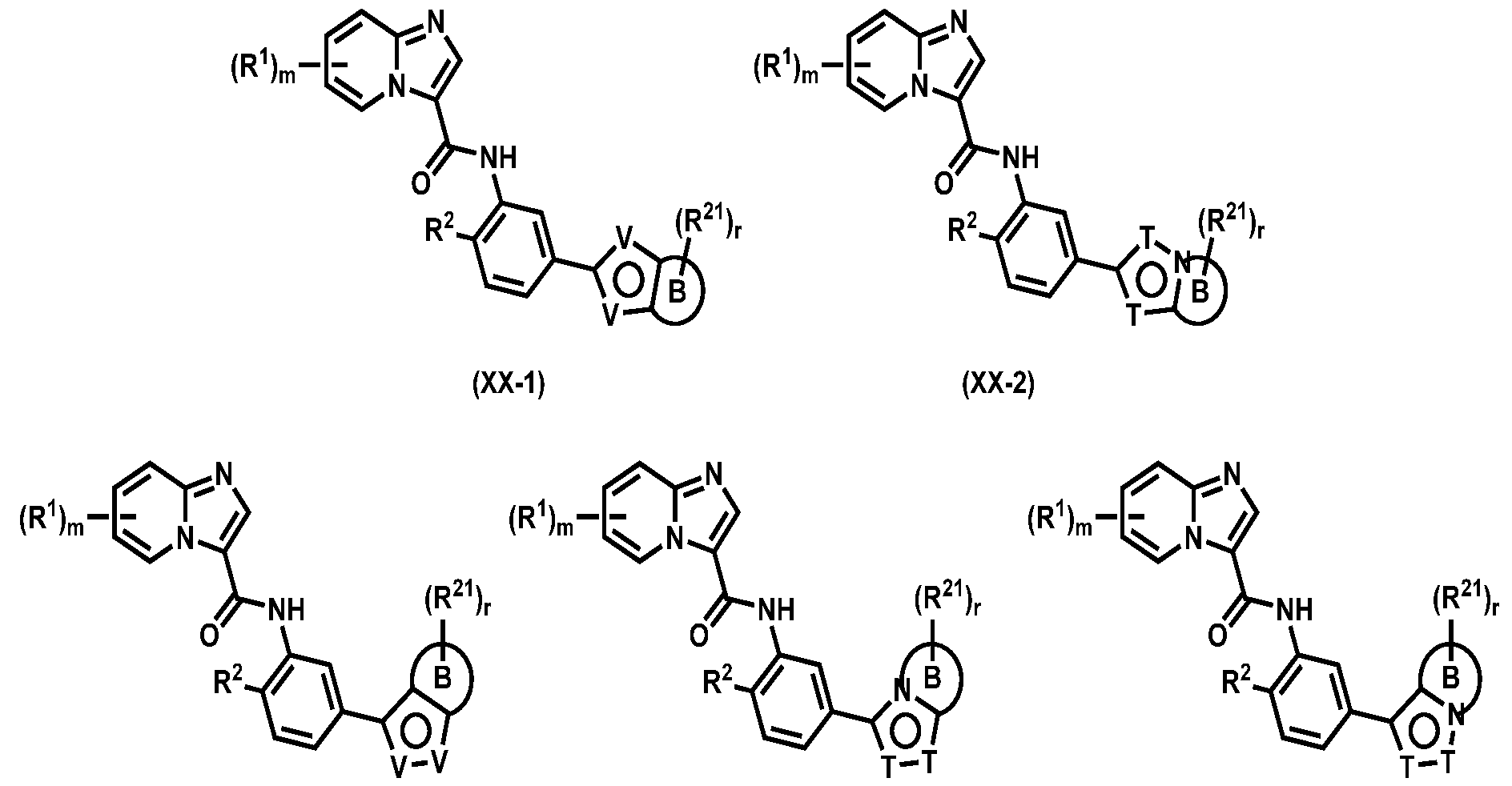
(XX-3) (XX-4) (XX-5) wherein B, R21, r, V, T, R1, m, and R2 are as previously defined.
In certain embodiments, the compound of Formula (I) is represented by one of
Formulae (XXI-1) ~ (XXI-10):

(XXI-3) (XXI-4) (XXI -5)
 wherein B, R21, r, V, T, R1, and R2 are as previously defined.
In certain embodiments, the compound of Formula (I) is represented by one of
Formulae (XXII-1) ~ (XXII-5):
 wherein B, R21, r, V, T, and R2 are as previously defined.
In certain embodiments, the compound of Formula (I) is represented by one of
Formulae (XXIII-1) ~ (XXIII-6):
 wherein B, R21, r, and R2 are as previously defined.
Each preferred group stated above can be taken in combination with one, any or all other preferred groups.
It will be appreciated that the description of the present invention herein should be construed in congruity with the laws and principles of chemical bonding. In some instances, it may be necessary to remove a hydrogen atom in order to accommodate a substituent at any given location.
It will be appreciated that the compounds of the present invention may contain one or more asymmetric carbon atoms and may exist in racemic, diastereoisomeric, and optically active forms. It will still be appreciated that certain compounds of the present invention may exist in different tautomeric forms. All tautomers are contemplated to be within the scope of the present invention.
The compounds of the present invention and any other pharmaceutically active agent(s) may be administered together or separately and, when administered separately, administration may occur simultaneously or sequentially, in any order. The amounts of the compounds of the present invention and the other pharmaceutically active agent(s) and the relative timings of administration will be selected in order to achieve the desired combined therapeutic effect. The administration in combination of a compound of the present invention and salts, solvates, or other pharmaceutically acceptable derivatives thereof with other treatment agents may be achieved by concomitant administration in: (1) a unitary pharmaceutical composition including both compounds; or (2) separate pharmaceutical compositions each including one of the compounds.
In certain embodiments of the combination therapy, the additional therapeutic agent is administered at a lower dose and/or dosing frequency as compared to dose and/or dosing frequency of the additional therapeutic agent required to achieve similar results in treating or preventing as PDGFR and/or c-kit kinases inhibitors.
It should be understood that the compounds encompassed by the present invention are those that are suitably stable for use as pharmaceutical agent.
DEFINITIONS
Listed below are definitions of various terms used to describe this invention. These definitions apply to the terms as they are used throughout this specification and claims, unless otherwise limited in specific instances, either individually or as part of a larger group.
The term "aryl," as used herein, refers to a mono- or polycyclic carbocyclic ring system comprising at least one aromatic ring. Preferred aryl groups are CL-Ci 2-ary 1 groups, including, but not limited to, phenyl, naphthyl, tetrahydronaphthyl, indanyl, and indenyl. A polycyclic aryl is a polycyclic ring system that comprises at least one aromatic ring. Polycyclic aryls can comprise fused rings, covalently attached rings or a combination thereof.
The term "heteroaryl," as used herein, refers to a mono- or polycyclic aromatic radical having one or more ring atom selected from S, O and N; and the remaining ring atoms are carbon, wherein any N or S contained within the ring may be optionally oxidized. In certain embodiments, a heteroaryl group is a 5- to 10-membered heteroaryl, such as a 5- or 6-membered monocyclic heteroaryl or an 8- to 10-membered bicyclic heteroaryl. Heteroaryl groups include, but are not limited to, pyridinyl, pyrazinyl, pyrimidinyl, pyrrolyl, pyrazolyl, imidazolyl, thiazolyl, oxazolyl, isooxazolyl, thiadiazolyl, oxadiazolyl, thiophenyl, furanyl, quinolinyl, isoquinolinyl, benzimidazolyl, benzoxazolyl, quinoxalinyl. A polycyclic heteroaryl can comprise fused rings, covalently attached rings or a combination thereof. A heteroaryl group can be C-attached or N-attached where possible.
In accordance with the invention, aryl and heteroaryl groups can be substituted or unsubstituted.
The term “bicyclic aryl” or “bicyclic heteroaryl” refers to a ring system consisting of two rings wherein at least one ring is aromatic; and the two rings can be fused or covalently attached.
The term “alkyl” as used herein, refers to saturated, straight- or branched-chain hydrocarbon radicals. "C1-C4 alkyl,” "Ci-C6 alkyl,” “Ci-C8 alkyl,” “C1-C12 alkyl," "C2-C4 alkyl,” and "C3-C6 alkyl,” refer to alkyl groups containing from 1 to 4, 1 to 6, 1 to 8, 1 to 12, 2 to 4 and 3 to 6 carbon atoms respectively. Examples of alkyl groups include, but are not limited to, methyl, ethyl, propyl, isopropyl, //-butyl, ec-butyl, tert-butyl, n-pentyl, neopentyl, n-hexyl, n-heptyl and n-octyl radicals.
The term “alkenyl” as used herein, refers to straight- or branched-chain hydrocarbon radicals having at least one carbon-carbon double bond. “C2-C8 alkenyl,” “C2-C12 alkenyl," “C2-C4 alkenyl,” “C3-C4 alkenyl,” and “C3-C6 alkenyl,” refer to alkenyl groups containing from 2 to 8, 2 to 12, 2 to 4, 3 to 4 or 3 to 6 carbon atoms respectively. Alkenyl groups include, but are not limited to, ethenyl, propenyl, butenyl, 2-methyl-2- buten-2-yl, heptenyl, octenyl, and the like.
The term “alkynyl” as used herein, refers to straight- or branched-chain hydrocarbon radicals having at least one carbon-carbon triple bond. “C2-C8 alkynyl,” “C2- C12 alkynyl," “C2-C4 alkynyl,” “C3-C4 alkynyl,” and “C3-C6 alkynyl,” refer to alkynyl groups containing from 2 to 8t, 2 to 12, 2 to 4, 3 to 4 or 3 to 6 carbon atoms respectively. Representative alkynyl groups include, but are not limited to, ethynyl, 2-propynyl, 2- butynyl, heptynyl, octynyl, and the like.
The term “cycloalkyl”, as used herein, refers to a monocyclic or polycyclic saturated carbocyclic ring, such as a bi- or tri-cyclic fused, bridged or spiro system. The ring carbon atoms are optionally oxo- substituted or optionally substituted with an exocyclic olefinic double bond. Preferred cycloalkyl groups include C3-C12 cycloalkyl, C3- Ce cycloalkyl, C3-C8 cycloalkyl and C4-C7 cycloalkyl. Examples of cycloalkyl include, but are not limited to, cyclopropyl, cyclobutyl, cyclopentyl, cyclohexyl, cyclopentyl, cyclooctyl, 4-methylene-cyclohexyl, bicyclo[2.2.1]heptyl, bicyclo[3.1.0]hexyl, spiro[2.5]octyl, 3-methylenebicyclo[3.2.1]octyl, spiro[4.4]nonanyl, and the like.
The term “cycloalkenyl”, as used herein, refers to monocyclic or polycyclic carbocyclic ring, such as a bi- or tri-cyclic fused, bridged or spiro system having at least one carbon-carbon double bond. The ring carbon atoms are optionally oxo-substituted or optionally substituted with an exocyclic olefinic double bond. Preferred cycloalkenyl groups include C3-C12 cycloalkenyl, C4-Ci2-cycloalkenyl, C3-C8 cycloalkenyl, C4-C8 cycloalkenyl and C5-C7 cycloalkenyl groups. Examples of cycloalkenyl include, but are not limited to, cyclopropenyl, cyclobutenyl, cyclopentenyl, cyclohexenyl, cycloheptenyl,
cyclooctenyl, bicyclo[2.2.1]hept-2-enyl, bicyclo[3.1.0]hex-2-enyl, spiro[2.5]oct-4-enyl, spiro[4.4]non-2-enyl, bicyclo[4.2.1]non-3-en-12-yl, and the like.
As used herein, the term “arylalkyl” means a functional group wherein an alkylene chain is attached to an aryl group, e.g., -(CH2)n-phenyl, where n is 1 to 12, preferably 1 to 6 and more preferably 1 or 2. The term “substituted arylalkyl” means an arylalkyl functional group in which the aryl group is substituted. Similarly, the term “heteroarylalkyl” means a functional group wherein an alkylene chain, is attached to a heteroaryl group, e.g., -(CH2)n-heteroaryl, where n is 1 to 12, preferably 1 to 6 and more preferably 1 or 2. The term “substituted heteroarylalkyl” means a heteroarylalkyl functional group in which the heteroaryl group is substituted.
As used herein, the term “alkoxy” refers to a radical in which an alkyl group having the designated number of carbon atoms is connected to the rest of the molecule via an oxygen atom. Alkoxy groups include Ci-Ci2-alkoxy, Ci-Cs-alkoxy, Ci-Ce-alkoxy, Ci- C4-alkoxy and Ci-Cs-alkoxy groups. Examples of alkoxy groups includes, but are not limited to, methoxy, ethoxy, n-propoxy, 2-propoxy (isopropoxy) and the higher homologs and isomers. Preferred alkoxy is Ci-Csalkoxy.
An “aliphatic” group is a non-aromatic moiety comprised of any combination of carbon atoms, hydrogen atoms, halogen atoms, oxygen, nitrogen or other atoms, and optionally contains one or more units of unsaturation, e.g., double and/or triple bonds. Examples of aliphatic groups are functional groups, such as alkyl, alkenyl, alkynyl, O, OH, NH, NH2, C(O), S(O)2, C(O)O, C(O)NH, OC(O)O, OC(O)NH, OC(O)NH2, S(O)2NH, S(O)2NH2, NHC(O)NH2, NHC(O)C(O)NH, NHS(O)2NH, NHS(O)2NH2, C(0)NHS(0)2, C(0)NHS(0)2NH or C(O)NHS(O)2NH2, and the like, groups comprising one or more functional groups, non-aromatic hydrocarbons (optionally substituted), and groups wherein one or more carbons of a non-aromatic hydrocarbon (optionally substituted) is replaced by a functional group. Carbon atoms of an aliphatic group can be optionally oxo-substituted. An aliphatic group may be straight chained, branched, cyclic, or a combination thereof and preferably contains between about 1 and about 24 carbon atoms, more typically between about 1 and about 12 carbon atoms. In addition to aliphatic hydrocarbon groups, as used herein, aliphatic groups expressly include, for example, alkoxyalkyls, polyalkoxyalkyls, such as polyalkylene glycols, polyamines, and polyimines, for example. Aliphatic groups may be optionally substituted.
The terms “heterocyclic” and “heterocycloalkyl” can be used interchangeably and refer to a non-aromatic ring or a polycyclic ring system, such as a bi- or tri-cyclic fused,
bridged or spiro system, where (i) each ring system contains at least one heteroatom independently selected from oxygen, sulfur and nitrogen, (ii) each ring system can be saturated or unsaturated (iii) the nitrogen and sulfur heteroatoms may optionally be oxidized, (iv) the nitrogen heteroatom may optionally be quatemized, (v) any of the above rings may be fused to an aromatic ring, and (vi) the remaining ring atoms are carbon atoms which may be optionally oxo- substituted or optionally substituted with exocyclic olefinic double bond. Representative heterocycloalkyl groups include, but are not limited to, 1,3- dioxolane, pyrrolidinyl, pyrazolinyl, pyrazolidinyl, imidazolinyl, imidazolidinyl, piperidinyl, piperazinyl, oxazolidinyl, isoxazolidinyl, morpholinyl, thiazolidinyl, isothiazolidinyl, quinoxalinyl, pyridazinonyl, 2-azabicyclo[2.2.1]-heptyl, 8- azabicyclo[3.2.1]octyl, 5-azaspiro[2.5]octyl, 2-oxa-7-azaspiro[4.4]nonanyl, 7-oxooxepan- 4-yl, and tetrahydrofuryl. Such heterocyclic or heterocycloalkyl groups may be further substituted. A heterocycloalkyl or heterocyclic group can be C-attached or N-attached where possible.
It is understood that any alkyl, alkenyl, alkynyl, alicyclic, cycloalkyl, cycloalkenyl, aryl, heteroaryl, heterocyclic, aliphatic moiety or the like described herein can also be a divalent or multivalent group when used as a linkage to connect two or more groups or substituents, which can be at the same or different atom(s). One skilled in the art can readily determine the valence of any such group from the context in which it occurs.
The term “substituted” refers to substitution by independent replacement of one, two, or three or more of the hydrogen atoms with substituents including, but not limited to, -F, -Cl, -Br, -I, -OH, Ci-Ci2-alkyl; C2-Ci2-alkenyl, C2-Ci2-alkynyl, -Cs-Cn-cycloalkyl, protected hydroxy, -NO2, -N3, -CN, -NH2, protected amino, oxo, thioxo, -NH-C1-C12- alkyl, -NH-C2-C8-alkenyl, -NH-C2-C8-alkynyl, -NH-C3-Ci2-cycloalkyl, -NH-aryl, -NH- heteroaryl, -NH-heterocycloalkyl, -dialkylamino, -diarylamino, -diheteroarylamino, -O-Ci- Ci2-alkyl, -O-C2-C8-alkenyl, -O-C2-C8-alkynyl, -O-C3-Ci2-cycloalkyl, -O-aryl, -O- heteroaryl, -O-heterocycloalkyl, -C(O)-Ci-Ci2-alkyl, -C(O)-C2-C8-alkenyl, -C(O)-C2-C8- alkynyl, -C(O)-C3-Ci2-cycloalkyl, -C(O)-aryl, -C(O)-heteroaryl, -C(O)-heterocycloalkyl, - CONH2, -CONH-Ci-Ci2-alkyl, -CONH-C2-C8-alkenyl, -CONH-C2-C8-alkynyl, -CONH- C3-Ci2-cycloalkyl, -CONH-aryl, -CONH-heteroaryl, -CONH-heterocycloalkyl, -OCO2-C1- Ci2-alkyl, -OCO2-C2-C8-alkenyl, -OCO2-C2-C8-alkynyl, -OCO2-C3-Ci2-cycloalkyl, - OCO2-aryl, -OCO2-heteroaryl, -OCO2-heterocycloalkyl, -CO2-C1-C12 alkyl, -CO2-C2-C8 alkenyl, -CO2-C2-C8 alkynyl, -CO2-C3-Ci2-cycloalkyl, -CO2-aryl, -CO2-heteroaryl, -CO2- heterocyloalkyl, -OCONH2, -OCONH-Ci-Ci2-alkyl, -OCONH-C2-C8-alkenyl, -OCONH-
C2-C8-alkynyl, -OCONH-Cs-Cn-cycloalkyl, -OCONH-aryl, -OCONH-heteroaryl, - OCONH-heterocycloalkyl, -NHC(O)H, -NHC(O)-Ci-Ci2-alkyl, -NHC(O)-C2-C8-alkenyl, - NHC(O)-C2-C8-alkynyl, -NHC(O)-C3-Ci2-cycloalkyl, -NHC(O)-aryl, -NHC(O)- heteroaryl, -NHC(O)-heterocycloalkyl, -NHCCh-Ci-Cn-alkyl, -NHCO2-C2-C8-alkenyl, - NHCO2-C2-C8-alkynyl, -NHCO2-C3-Ci2-cycloalkyl, -NHCCh-aryl, -NHCCh-heteroaryl, - NHCO2- heterocycloalkyl, -NHC(O)NH2, -NHC(O)NH-Ci-Ci2-alkyl,
-NHC(O)NH-C2-C8-alkenyl, -NHC(O)NH-C2-C8-alkynyl, -NHC(O)NH-C3-CI2- cycloalkyl, -NHC(O)NH-aryl, -NHC(O)NH-heteroaryl, -NHC(O)NH-heterocycloalkyl, - NHC(S)NH2, -NHC(S)NH-Ci-Ci2-alkyl, -NHC(S)NH-C2-C8-alkenyl, -NHC(S)NH-C2-C8- alkynyl, -NHC(S)NH-C3-Ci2-cycloalkyl, -NHC(S)NH-aryl, -NHC(S)NH-heteroaryl, - NHC(S)NH-heterocycloalkyl, -NHC(NH)NH2, -NHC(NH)NH-Ci-Ci2-alkyl, - NHC(NH)NH-C2-C8-alkenyl, -NHC(NH)NH-C2-C8-alkynyl, -NHC(NH)NH-C3-CI2- cycloalkyl, -NHC(NH)NH-aryl, -NHC(NH)NH-heteroaryl, -NHC(NH)NH- heterocycloalkyl, -NHC(NH)-Ci-Ci2-alkyl, -NHC(NH)-C2-C8-alkenyl, -NHC(NH)-C2-C8- alkynyl, -NHC(NH)-C3-Ci2-cycloalkyl, -NHC(NH)-aryl, -NHC(NH)-heteroaryl, - NHC(NH)-heterocycloalkyl, -C(NH)NH2, -C(NH)NH-Ci-Ci2-alkyl, -C(NH)NH-C2-C8- alkenyl, -C(NH)NH-C2-C8-alkynyl, -C(NH)NH-C3-Ci2-cycloalkyl, -C(NH)NH-aryl, - C(NH)NH-heteroaryl, -C(NH)NH-heterocycloalkyl, -S(O)-Ci-Ci2-alkyl, -S(O)-C2-C8- alkenyl, - S(O)-C2-C8-alkynyl, -S(O)-C3-Ci2-cycloalkyl, -S(O)-aryl, -S(O)-heteroaryl, - S(O)-heterocycloalkyl, -SO2NH2, -SO2NH-Ci-Ci2-alkyl, -SO2NH-C2-C8-alkenyl, -SO2NH- C2-C8-alkynyl, -SO2-Ci-Ci2-alkyl, -SO2-C2-C8-alkenyl, -SO2-C2-C8-alkynyl, -SO2-C3-C12- cycloalkyl, -SCh-aryl, -SCh-heteroaryl, -SCh-heterocycloalkyl, -SO2NH-C3-C12- cycloalkyl, -SChNH-aryl, -SO2NH-heteroaryl, -SO2NH-heterocycloalkyl, -NHSO2-C1-C12- alkyl, -NHSO2-C2-C8-alkenyl, - NHSO2-C2-C8-alkynyl, -NHSCh-Cs-Cn-cycloalkyl, - NHSO2-aryl, -NHSCh-heteroaryl, -NHSCh-heterocycloalkyl, -CH2NH2, -CH2SO2CH3, - aryl, -arylalkyl, -heteroaryl, -heteroarylalkyl, -heterocycloalkyl, -Cs-Cn-cycloalkyl, polyalkoxyalkyl, polyalkoxy, -methoxymethoxy, -methoxyethoxy, -SH, -S-Ci-Ci2-alkyl, - S-C2-C8-alkenyl, -S-C2-C8-alkynyl, -S-Cs-Cn-cycloalkyl, -S-aryl, -S -heteroaryl, -S- heterocycloalkyl, or methylthio-methyl. In certain embodiments, the substituents are independently selected from halo, preferably Cl and F; Ci-C4-alkyl, preferably methyl and ethyl; halo-Ci-C4-alkyl, such as fluoromethyl, difluoromethyl, and trifluoromethyl; C2-C4- alkenyl; halo-C2-C4-alkenyl; Cs-Ce-cycloalkyl, such as cyclopropyl; Ci-C4-alkoxy, such as methoxy and ethoxy; halo-Ci-C4-alkoxy, such as fluoromethoxy, difluoromethoxy, and trifluoromethoxy; -CN; -OH; NH2; Ci-C4-alkylamino; di(Ci-C4-alkyl)amino; and NO2. It
is understood that an aryl, heteroaryl, alkyl, alkenyl, alkynyl, cycloalkyl, or heterocycloalkyl in a substituent can be further substituted. In certain embodiments, a substituent in a substituted moiety is additionally optionally substituted with one or more groups, each group being independently selected from Ci-C4-alkyl; -CF3, -OCH3, -OCF3, - F, -Cl, -Br, -I, -OH, -NO2, -CN, and -NH2. Preferably, a substituted alkyl group is substituted with one or more halogen atoms, more preferably one or more fluorine or chlorine atoms.
The term “halo” or halogen” alone or as part of another substituent, as used herein, refers to a fluorine, chlorine, bromine, or iodine atom.
The term “optionally substituted”, as used herein, means that the referenced group may be substituted or unsubstituted. In one embodiment, the referenced group is optionally substituted with zero substituents, i.e., the referenced group is unsubstituted. In another embodiment, the referenced group is optionally substituted with one or more additional group(s) individually and independently selected from groups described herein.
The term “hydrogen” includes hydrogen and deuterium. In addition, the recitation of an element includes all isotopes of that element so long as the resulting compound is pharmaceutically acceptable. In certain embodiments, the isotopes of an element are present at a particular position according to their natural abundance. In other embodiments, one or more isotopes of an element at a particular position are enriched beyond their natural abundance.
The term “hydroxy activating group,” as used herein, refers to a labile chemical moiety which is known in the art to activate a hydroxyl group so that it will depart during synthetic procedures such as in a substitution or an elimination reaction. Examples of hydroxyl activating group include, but not limited to, mesylate, tosylate, triflate, p- nitrobenzoate, phosphonate and the like.
The term “activated hydroxyl,” as used herein, refers to a hydroxy group activated with a hydroxyl activating group, as defined above, including, but not limited to mesylate, tosylate, triflate, p-nitrobenzoate, phosphonate groups.
The term “hydroxy protecting group,” as used herein, refers to a labile chemical moiety which is known in the art to protect a hydroxyl group against undesired reactions during synthetic procedures. After said synthetic procedure(s) the hydroxy protecting group as described herein may be selectively removed. Hydroxy protecting groups as known in the art are described generally in P.G. M. Wuts, Greene’s Protective Groups in Organic Synthesis, 5th edition, John Wiley & Sons, Hoboken, NJ (2014). Examples of
hydroxyl protecting groups include, but are not limited to, benzyloxycarbonyl, 4- methoxybenzyloxy carbonyl, tert-butoxy-carbonyl, isopropoxycarbonyl, diphenylmethoxycarbonyl, 2,2,2-trichloroethoxycarbonyl, allyloxycarbonyl, acetyl, formyl, chloroacetyl, trifluoroacetyl, methoxyacetyl, phenoxyacetyl, benzoyl, methyl, t- butyl, 2,2,2-trichloroethyl, 2 -trimethyl silyl ethyl, allyl, benzyl, triphenyl-methyl (trityl), methoxymethyl, methylthiomethyl, benzyloxymethyl, 2-(trimethylsilyl)-ethoxymethyl, methanesulfonyl, trimethylsilyl, triisopropylsilyl, and the like.
The term "protected hydroxy," as used herein, refers to a hydroxy group protected with a hydroxy protecting group, as defined above, including but not limited to, benzoyl, acetyl, trimethylsilyl, triethylsilyl, methoxymethyl groups, for example.
The term “hydroxy prodrug group,” as used herein, refers to a promoiety group which is known in the art to change the physicochemical, and hence the biological properties of a parent drug in a transient manner by covering or masking the hydroxy group. After said synthetic procedure(s), the hydroxy prodrug group as described herein must be capable of reverting back to hydroxy group in vivo. Hydroxy prodrug groups as known in the art are described generally in Kenneth B. Sloan, Prodrugs, Topical and Ocular Drug Delivery, (Drugs and the Pharmaceutical Sciences; Volume 53), Marcel Dekker, Inc., New York (1992).
The term “amino protecting group,” as used herein, refers to a labile chemical moiety which is known in the art to protect an amino group against undesired reactions during synthetic procedures. After said synthetic procedure(s) the amino protecting group as described herein may be selectively removed. Amino protecting groups as known in the art are described generally in P.G.M. Wuts, Greene’s Protective Groups in Organic Synthesis, 5th edition, John Wiley & Sons, Hoboken, NJ (2014). Examples of amino protecting groups include, but are not limited to, methoxy carbonyl, t-butoxy carbonyl, 12- fluorenyl-methoxycarbonyl, benzyloxycarbonyl, and the like.
The term “protected amino,” as used herein, refers to an amino group protected with an amino protecting group as defined above.
The term "leaving group" means a functional group or atom which can be displaced by another functional group or atom in a substitution reaction, such as a nucleophilic substitution reaction. By way of example, representative leaving groups include chloro, bromo and iodo groups; sulfonic ester groups, such as mesylate, tosylate, brosylate, nosylate and the like; and acyloxy groups, such as acetoxy, trifluoroacetoxy and the like.
The term "aprotic solvent," as used herein, refers to a solvent that is relatively inert to proton activity, i.e., not acting as a proton-donor. Examples include, but are not limited to, hydrocarbons, such as hexane and toluene, for example, halogenated hydrocarbons, such as, for example, methylene chloride, ethylene chloride, chloroform, and the like, heterocyclic compounds, such as, for example, tetrahydrofuran and N- methylpyrrolidinone, and ethers such as diethyl ether, bis-methoxymethyl ether. Such compounds are well known to those skilled in the art, and it will be obvious to those skilled in the art that individual solvents or mixtures thereof may be preferred for specific compounds and reaction conditions, depending upon such factors as the solubility of reagents, reactivity of reagents and preferred temperature ranges, for example. Further discussions of aprotic solvents may be found in organic chemistry textbooks or in specialized monographs, for example: Organic Solvents Physical Properties and Methods of Purification, 4th ed., edited by John A. Riddick et aL, Vol. II, in the Techniques of Chemistry Series, John Wiley & Sons, NY, 1986.
The term “protic solvent,” as used herein, refers to a solvent that tends to provide protons, such as an alcohol, for example, methanol, ethanol, propanol, isopropanol, butanol, t-butanol, and the like. Such solvents are well known to those skilled in the art, and it will be obvious to those skilled in the art that individual solvents or mixtures thereof may be preferred for specific compounds and reaction conditions, depending upon such factors as the solubility of reagents, reactivity of reagents and preferred temperature ranges, for example. Further discussions of protogenic solvents may be found in organic chemistry textbooks or in specialized monographs, for example: Organic Solvents Physical Properties and Methods of Purification, 4th ed., edited by John A. Riddick et al., Vol. II, in the Techniques of Chemistry Series, John Wiley & Sons, NY, 1986.
Combinations of substituents and variables envisioned by this invention are only those that result in the formation of stable compounds. The term “stable,” as used herein, refers to compounds which possess stability sufficient to allow manufacture and which maintains the integrity of the compound for a sufficient period of time to be useful for the purposes detailed herein (e.g., therapeutic or prophylactic administration to a subject).
The synthesized compounds can be separated from a reaction mixture and further purified by a method such as column chromatography, high pressure liquid chromatography, or recrystallization. As can be appreciated by the skilled artisan, further methods of synthesizing the compounds of the Formula herein will be evident to those of ordinary skill in the art. Additionally, the various synthetic steps may be performed in an
alternate sequence or order to give the desired compounds. Synthetic chemistry transformations and protecting group methodologies (protection and deprotection) useful in synthesizing the compounds described herein are known in the art and include, for example, those such as described in R. Larock, Comprehensive Organic Transformations, 2nd Ed. Wiley-VCH (1999); P.G.M. Wuts, Greene’s Protective Groups in Organic Synthesis, 5th edition, John Wiley & Sons, Hoboken, NJ (2014); L. Fieser and M. Fieser, Fieser and Fieser's Reagents for Organic Synthesis, John Wiley and Sons (1994); and L. Paquette, ed., Encyclopedia of Reagents for Organic Synthesis, John Wiley and Sons (1995), and subsequent editions thereof.
The term “subject,” as used herein, refers to an animal. Preferably, the animal is a mammal. More preferably, the mammal is a human. A subject also refers to, for example, a dog, cat, horse, cow, pig, guinea pig, fish, bird and the like.
The compounds of this invention may be modified by appending appropriate functionalities to enhance selective biological properties. Such modifications are known in the art and may include those which increase biological penetration into a given biological system (e.g., blood, lymphatic system, central nervous system), increase oral availability, increase solubility to allow administration by injection, alter metabolism and alter rate of excretion.
The compounds described herein contain one or more asymmetric centers and thus give rise to enantiomers, diastereomers, and other stereoisomeric forms that may be defined, in terms of absolute stereochemistry, as (R)- or (S)-, or as (D)- or (L)- for amino acids. The present invention is meant to include all such possible isomers, as well as their racemic and optically pure forms. Optical isomers may be prepared from their respective optically active precursors by the procedures described above, or by resolving the racemic mixtures. The resolution can be carried out in the presence of a resolving agent, by chromatography or by repeated crystallization or by some combination of these techniques which are known to those skilled in the art. Further details regarding resolutions can be found in Jacques, et al., Enantiomers, Racemates, and Resolutions (John Wiley & Sons, 1981). When the compounds described herein contain olefinic double bonds, other unsaturation, or other centers of geometric asymmetry, and unless specified otherwise, it is intended that the compounds include both E and Z geometric isomers or cis- and transisomers. Likewise, all tautomeric forms are also intended to be included. Tautomers may be in cyclic or acyclic. The configuration of any carbon-carbon double bond appearing herein is selected for convenience only and is not intended to designate a particular
configuration unless the text so states; thus a carbon-carbon double bond or carbonheteroatom double bond depicted arbitrarily herein as trans may be cis, trans, or a mixture of the two in any proportion.
Certain compounds of the present invention may also exist in different stable conformational forms which may be separable. Torsional asymmetry due to restricted rotation about an asymmetric single bond, for example because of steric hindrance or ring strain, may permit separation of different conformers. The present invention includes each conformational isomer of these compounds and mixtures thereof.
As used herein, the term "pharmaceutically acceptable salt," refers to those salts which are, within the scope of sound medical judgment, suitable for use in contact with the tissues of humans and lower animals without undue toxicity, irritation, allergic response and the like, and are commensurate with a reasonable benefit/risk ratio. Pharmaceutically acceptable salts are well known in the art. For example, S. M. Berge, et al. describes pharmaceutically acceptable salts in detail in J. Pharmaceutical Sciences, 66: 2-19 (1977). The salts can be prepared in situ during the final isolation and purification of the compounds of the invention, or separately by reacting the free base function with a suitable organic acid. Examples of pharmaceutically acceptable salts include, but are not limited to, nontoxic acid addition salts are salts of an amino group formed with inorganic acids such as hydrochloric acid, hydrobromic acid, phosphoric acid, sulfuric acid and perchloric acid or with organic acids such as acetic acid, maleic acid, tartaric acid, citric acid, succinic acid or malonic acid or by using other methods used in the art such as ion exchange. Other pharmaceutically acceptable salts include, but are not limited to, adipate, alginate, ascorbate, aspartate, benzenesulfonate, benzoate, bisulfate, borate, butyrate, camphorate, camphorsulfonate, citrate, cyclopentane-propionate, digluconate, dodecyl sulfate, ethanesulfonate, formate, fumarate, glucoheptonate, glycerophosphate, gluconate, hemisulfate, heptanoate, hexanoate, hydroiodide, 2-hydroxy-ethanesulfonate, lactobionate, lactate, laurate, lauryl sulfate, malate, maleate, malonate, methanesulfonate, 2-naphthalenesulfonate, nicotinate, nitrate, oleate, oxalate, palmitate, pamoate, pectinate, persulfate, 3 -phenylpropionate, phosphate, picrate, pivalate, propionate, stearate, succinate, sulfate, tartrate, thiocyanate, -toluenesulfonate, undecanoate, valerate salts, and the like. Representative alkali or alkaline earth metal salts include sodium, lithium, potassium, calcium, magnesium, and the like. Further pharmaceutically acceptable salts include, when appropriate, nontoxic ammonium, quaternary ammonium, and amine
cations formed using counterions such as halide, hydroxide, carboxylate, sulfate, phosphate, nitrate, alkyl having from 1 to 6 carbon atoms, sulfonate and aryl sulfonate.
As used herein, the term "pharmaceutically acceptable ester" refers to esters which hydrolyze in vivo and include those that break down readily in the human body to leave the parent compound or a salt thereof. Suitable ester groups include, for example, those derived from pharmaceutically acceptable aliphatic carboxylic acids, particularly alkanoic, alkenoic, cycloalkanoic and alkanedioic acids, in which each alkyl or alkenyl moiety advantageously has not more than 6 carbon atoms. Examples of particular esters include, but are not limited to, formates, acetates, propionates, butyrates, acrylates and ethyl succinates.
PHARMACEUTICAL COMPOSITIONS
The pharmaceutical compositions of the present invention comprise a therapeutically effective amount of a compound of the present invention formulated together with one or more pharmaceutically acceptable carriers or excipients.
As used herein, the term "pharmaceutically acceptable carrier or excipient" means a non-toxic, inert solid, semi-solid or liquid filler, diluent, encapsulating material or formulation auxiliary of any type. Some examples of materials which can serve as pharmaceutically acceptable carriers are sugars such as lactose, glucose and sucrose; starches such as corn starch and potato starch; cellulose and its derivatives such as sodium carboxymethyl cellulose, ethyl cellulose and cellulose acetate; powdered tragacanth; malt; gelatin; talc; excipients such as cocoa butter and suppository waxes; oils such as peanut oil, cottonseed oil, safflower oil, sesame oil, olive oil, corn oil and soybean oil; glycols such as propylene glycol; esters such as ethyl oleate and ethyl laurate; agar; buffering agents such as magnesium hydroxide and aluminum hydroxide; alginic acid; pyrogen-free water; isotonic saline; Ringer's solution; ethyl alcohol, and phosphate buffer solutions, as well as other non-toxic compatible lubricants such as sodium lauryl sulfate and magnesium stearate, as well as coloring agents, releasing agents, coating agents, sweetening, flavoring and perfuming agents, preservatives and antioxidants can also be present in the composition, according to the judgment of the formulator.
The pharmaceutical compositions of this invention may be administered orally, parenterally, by inhalation spray, topically, rectally, nasally, buccally, vaginally or via an implanted reservoir, preferably by oral administration or administration by injection. The pharmaceutical compositions of this invention may contain any conventional non-toxic
pharmaceutically-acceptable carriers, adjuvants or vehicles. In some cases, the pH of the formulation may be adjusted with pharmaceutically acceptable acids, bases or buffers to enhance the stability of the formulated compound or its delivery form. The term parenteral as used herein includes subcutaneous, intracutaneous, intravenous, intramuscular, intraarticular, intra-arterial, intrasynovial, intrastemal, intrathecal, intralesional and intracranial injection or infusion techniques.
Liquid dosage forms for oral administration include pharmaceutically acceptable emulsions, microemulsions, solutions, suspensions, syrups and elixirs. In addition to the active compounds, the liquid dosage forms may contain inert diluents commonly used in the art such as, for example, water or other solvents, solubilizing agents and emulsifiers such as ethyl alcohol, isopropyl alcohol, ethyl carbonate, ethyl acetate, benzyl alcohol, benzyl benzoate, propylene glycol, 1,3-butylene glycol, dimethylformamide, oils (in particular, cottonseed, groundnut, corn, germ, olive, castor, and sesame oils), glycerol, tetrahydrofurfuryl alcohol, polyethylene glycols and fatty acid esters of sorbitan, and mixtures thereof. Besides inert diluents, the oral compositions can also include adjuvants such as wetting agents, emulsifying and suspending agents, sweetening, flavoring, and perfuming agents.
Injectable preparations, for example, sterile injectable aqueous or oleaginous suspensions, may be formulated according to the known art using suitable dispersing or wetting agents and suspending agents. The sterile injectable preparation may also be a sterile injectable solution, suspension or emulsion in a nontoxic parenterally acceptable diluent or solvent, for example, as a solution in 1,3 -butanediol. Among the acceptable vehicles and solvents that may be employed are water, Ringer's solution, U.S.P. and isotonic sodium chloride solution. In addition, sterile, fixed oils are conventionally employed as a solvent or suspending medium. For this purpose, any bland fixed oil can be employed including synthetic mono- or diglycerides. In addition, fatty acids such as oleic acid are used in the preparation of injectables.
The injectable formulations can be sterilized, for example, by filtration through a bacterial-retaining filter, or by incorporating sterilizing agents in the form of sterile solid compositions which can be dissolved or dispersed in sterile water or other sterile injectable medium prior to use.
In order to prolong the effect of a drug, it is often desirable to slow the absorption of the drug from subcutaneous or intramuscular injection. This may be accomplished by the use of a liquid suspension of crystalline or amorphous material with poor water
solubility. The rate of absorption of the drug then depends upon its rate of dissolution, which, in turn, may depend upon crystal size and crystalline form. Alternatively, delayed absorption of a parenterally administered drug form is accomplished by dissolving or suspending the drug in an oil vehicle. Injectable depot forms are made by forming microencapsule matrices of the drug in biodegradable polymers such as polylactidepolyglycolide. Depending upon the ratio of drug to polymer and the nature of the particular polymer employed, the rate of drug release can be controlled. Examples of other biodegradable polymers include poly(orthoesters) and poly(anhydrides). Depot injectable formulations are also prepared by entrapping the drug in liposomes or microemulsions that are compatible with body tissues.
Compositions for rectal or vaginal administration are preferably suppositories which can be prepared by mixing the compounds of this invention with suitable nonirritating excipients or carriers such as cocoa butter, polyethylene glycol or a suppository wax which are solid at ambient temperature but liquid at body temperature and therefore melt in the rectum or vaginal cavity and release the active compound.
Solid dosage forms for oral administration include capsules, tablets, pills, powders, and granules. In such solid dosage forms, the active compound is mixed with at least one inert, pharmaceutically acceptable excipient or carrier such as sodium citrate or dicalcium phosphate and/or: a) fillers or extenders such as starches, lactose, sucrose, glucose, mannitol, and silicic acid, b) binders such as, for example, carboxymethylcellulose, alginates, gelatin, polyvinylpyrrolidinone, sucrose, and acacia, c) humectants such as glycerol, d) disintegrating agents such as agar-agar, calcium carbonate, potato or tapioca starch, alginic acid, certain silicates, and sodium carbonate, e) solution retarding agents such as paraffin, f) absorption accelerators such as quaternary ammonium compounds, g) wetting agents such as, for example, cetyl alcohol and glycerol monostearate, h) absorbents such as kaolin and bentonite clay, and i) lubricants such as talc, calcium stearate, magnesium stearate, solid polyethylene glycols, sodium lauryl sulfate, and mixtures thereof. In the case of capsules, tablets and pills, the dosage form may also comprise buffering agents.
Solid compositions of a similar type may also be employed as fillers in soft and hard-filled gelatin capsules using such excipients as lactose or milk sugar as well as high molecular weight polyethylene glycols and the like.
The solid dosage forms of tablets, dragees, capsules, pills, and granules can be prepared with coatings and shells such as enteric coatings and other coatings well known
in the pharmaceutical formulating art. They may optionally contain opacifying agents and can also be of a composition that they release the active ingredient(s) only, or preferentially, in a certain part of the intestinal tract, optionally, in a delayed manner. Examples of embedding compositions that can be used include polymeric substances and waxes.
Dosage forms for topical or transdermal administration of a compound of this invention include ointments, pastes, creams, lotions, gels, powders, solutions, sprays, inhalants or patches. The active component is admixed under sterile conditions with a pharmaceutically acceptable carrier and any needed preservatives or buffers as may be required. Ophthalmic formulations, ear drops, eye ointments, powders and solutions are also contemplated as being within the scope of this invention.
The ointments, pastes, creams and gels may contain, in addition to an active compound of this invention, excipients such as animal and vegetable fats, oils, waxes, paraffins, starch, tragacanth, cellulose derivatives, polyethylene glycols, silicones, bentonites, silicic acid, talc and zinc oxide, or mixtures thereof.
Powders and sprays can contain, in addition to the compounds of this invention, excipients such as lactose, talc, silicic acid, aluminum hydroxide, calcium silicates and polyamide powder, or mixtures of these substances. Sprays can additionally contain customary propellants such as chlorofluorohydrocarbons.
Transdermal patches have the added advantage of providing controlled delivery of a compound to the body. Such dosage forms can be made by dissolving or dispensing the compound in the proper medium. Absorption enhancers can also be used to increase the flux of the compound across the skin. The rate can be controlled by either providing a rate controlling membrane or by dispersing the compound in a polymer matrix or gel.
For pulmonary delivery, a therapeutic composition of the invention is formulated and administered to the patient in solid or liquid particulate form by direct administration e.g., inhalation into the respiratory system. Solid or liquid particulate forms of the active compound prepared for practicing the present invention include particles of respirable size: that is, particles of a size sufficiently small to pass through the mouth and larynx upon inhalation and into the bronchi and alveoli of the lungs. Delivery of aerosolized therapeutics, particularly aerosolized antibiotics, is known in the art (see, for example U.S. Pat. No. 5,767,068 to Van Devanter et al., U.S. Pat. No. 5,508,269 to Smith et al., and WO 98/43650 by Montgomery, all of which are incorporated herein by reference).
PHARMACOLOGY AND ADMINISTRATION
Protein tyrosine kinases (PTK) play a central role in the regulation of a wide variety of cellular processes and maintaining control over cellular function. Protein kinases catalyze and regulate the process of phosphorylation, whereby the kinases covalently attach phosphate groups to proteins or lipid targets in response to a variety of extracellular signals. Examples of such stimuli include hormones, neurotransmitters, growth and differentiation factors, cell cycle events, environmental stresses and nutritional stresses. An extracellular stimulus may affect one or more cellular responses related to cell growth, migration, differentiation, secretion of hormones, activation of transcription factors, muscle contraction, glucose metabolism, control of protein synthesis, and regulation of the cell cycle.
Many diseases are associated with abnormal cellular responses triggered by protein kinase-mediated events. These diseases include, but are not limited to, autoimmune diseases, inflammatory diseases, bone diseases, metabolic diseases, neurological and neurodegenerative diseases, cancer, cardiovascular diseases, respiratory diseases, allergies and asthma, Alzheimer's disease, and hormone-related diseases.
Examples of protein-tyrosine kinases include, but are not limited to,
(a) tyrosine kinases such as Irk, IGFR-1, Zap-70, Bmx, Btk, CHK (Csk homologous kinase), CSK (C -terminal Src Kinase), ltk-1, Src (c-Src, Lyn, Fyn, Lek, Syk, Hck, Yes, Blk, Fgr and Frk), Tee, Txk/Rlk, Abl, EGFR (EGFR-l/ErbB-1, ErbB- 2/NEU/HER-2, ErbB-3 and ErbB-4), FAK, FGF1 R (also FGFR1 or FGR-1), FGF2R (also FGR-2), MET (also Met-1 or c-MET), PDGFR (a and 0), Tie-1, Tie-2 (also Tek-1 or Tek), VEGFR1 (also FLT-1), VEGFR2 (also KDR), FLT-3, FLT-4, c-KIT, JAK1, JAK2, JAK3, TYK2, LOK, ET, TRKA, PYK2, ALK (Anaplastic Lymphoma Kinase), EPHA (1- 8), EPHB (1-6), RON, Fes, Fer or EPHB4 (also EPHB4-1), and
(b) and serine/threonine kinases such as Aurora, c-RAF, SGK, MAP kinases (e.g., MKK4, MKK6, etc.), SAPK2a, SAPK20, Ark, ATM (1-3), CamK (1-IV), CamKK, Chkl and 2 (Checkpoint kinases), CKI, CK2, Erk, IKK-I (also IKK- a or CHUK), IKK-2 (also IKK- 0), Ilk, Jnk (1-3), LimK (1 and 2), MLK3Raf (A, B, and C), CDK (1-10), PKC (including all PKC subtypes), Plk (1-3), NIK, Pak (1-3), PDK1, PKR, RhoK, RIP, RIP-2, GSK3 (a and 0), KA, P38, Erk (1-3), PKB (including all PKB subtypes) (also AKT-1, AKT-2, AKT-3 or AKT3-1), IRAKI, FRK, SGK, TAK1 and Tpl-2 (also COT).
Phosphorylation modulates or regulates a variety of cellular processes such as proliferation, growth, differentiation, metabolism, apoptosis, motility, transcription,
translation and other signaling processes. Aberrant or excessive PTK activity has been observed in many disease states including, but not limited to, benign and malignant proliferative disorders, diseases resulting from inappropriate activation of the immune system and diseases resulting from inappropriate activation of the nervous systems. Specific diseases and disease conditions include, but are not limited to, autoimmune disorders, allograft rejection, graft vs. host disease, diabetic retinopathy, choroidal neovascularization due to age-related macular degeneration, psoriasis, arthritis, osteoarthritis, rheumatoid arthritis, synovial pannus invasion in arthritis, multiple sclerosis, myasthenia gravis, diabetes mellitus, diabetic angiopathy, retinopathy of prematurity, infantile hemangiomas, non-small cell lung, bladder and head and neck cancers, prostate cancer, breast cancer, ovarian cancer, gastric and pancreatic cancer, psoriasis, fibrosis, rheumatoid arthritis, atherosclerosis, restenosis, auto-immune disease, allergy, respiratory diseases, asthma, transplantation rejection, inflammation, thrombosis, retinal vessel proliferation, inflammatory bowel disease, Crohn's disease, ulcerative colitis, bone diseases, transplant or bone marrow transplant rejection, lupus, chronic pancreatitis, cachexia, septic shock, fibroproliferative and differentiative skin diseases or disorders, central nervous system diseases, neurodegenerative diseases, disorders or conditions related to nerve damage and axon degeneration subsequent to a brain or spinal cord injury, acute or chronic cancer, ocular diseases, viral infections, heart disease, lung or pulmonary diseases or kidney or renal diseases and bronchitis.
Tyrosine kinases can be broadly classified as receptor-type (having extracellular, transmembrane and intracellular domains) or the non-receptor type (being wholly intracellular) protein tyrosine kinases. Tyrosine kinases transfer the terminal phosphate of ATP to tyrosine residues of proteins thereby activating or inactivating signal transduction pathways. Inappropriate or uncontrolled activation of many of these kinase (aberrant protein tyrosine kinase activity), for example by over-expression or mutation, results in uncontrolled cell growth. Many of the protein tyrosine kinases, whether a receptor or nonreceptor tyrosine kinase have been found to be involved in cellular signaling pathways involved in numerous pathogenic conditions, including, but not limited to, immunomodulation, inflammation, or proliferative disorders such as cancer. c-kit
Mast cells are tissue elements derived from a particular subset of hematopoietic stem cells that express CD34, c-kit and CD 13 antigens. Mast cells are characterized by
their heterogeneity, not only regarding tissue location and structure but also at the functional and histochemical levels. Immature mast cell progenitors circulate in the bloodstream and differentiate into various tissues. These differentiation and proliferation processes are under the influence of cytokines, one of importance being Stem Cell Factor (SCF), also termed c-Kit ligand, Steel factor or Mast Cell Growth Factor. The Stem Cell Factor receptor is encoded by the protooncogene, c-kit, which is expressed in hematopoietic progenitor cells, mast cells, germ cells, interstitial cells of Cajal (ICC), and some human tumors, and is also expressed by non hematopoietic cells.
Stem cell factor (SCF), also known as c-kit ligand, is the primary regulating factor for human mast cell growth and function. The SCF receptor, c-kit receptor, is a Type III transmembrane receptor protein tyrosine kinase which initiates cell growth and proliferation signal transduction cascades in response to SCF binding. Ligation of c-kit receptor by SCF induces its dimerization followed by its transphorylation, leading to the recruitment and activation of various intracytoplasmic substrates. These activated substrates induce multiple intracellular signaling pathways responsible for cell proliferation and activation. These proteins are known to be involved in many cellular mechanisms, which in case of disruption, lead to disorders such as abnormal cell proliferation and migration, as well as inflammation.
The relationship between mast cells, SCF and c-kit receptor is discussed in the following references: Huang, E. et al., "The hematopoietic growth factor Kt is encoded by the SI locus and is the ligand of the c-kit receptor, the gene product of the W locus", Cell, 63, 225-233, 1990; Zsebo, K.M. et al., "Stem cell factor is encoded at the $/ locus of the mouse and is the ligand for the c-kit tyrosine kinase receptor", Cell, 63, 213-224, 1990; Zhang, S. et al.," Cytokine production by cell cultures from bronchial subepithelial myofibroblasts", J. PathOl., 180, 95-10, 1996; Zhang, S. et al., "Human mast cells express stem cell factor", J. Pathol., 186, 59-66, 1998; Kassel, O. et al., "Up and down regulation by glucocorticoids of the constitutive expression of the mast cell growth factor stem cell factor by human tung fibroblasts in culture", Mol. Pharmacol., 54, 1073-1079, 1998; Kasset, O. et al., "Human bronchial smooth muscle cells in culture produce Stem Cell Factor", Eur. Bespir. J., 13, 951-954, 1999; Kassel, O. et at., "The Stem Cel Factor, Stem cell factor, its Properties and Potential Role in the Airways", Pulmonary Pharmacology & Therapeutics", 14, 227-288, 2001; de Paulis, A. et al, "Stem cell factor is localized in, released trom, and cleaved by human mast cells", J. Immunol, 163, 2799-2808, 1999; Mot, C.D. et al., "Structure of a c-kit product complex reveals the basis for kinase
transactivation", J. Biol. Chem., 278, 31461-31464, 2003; temura, A. et al., "The c-kit ligand, stem cell actor, promotes mast cell survival by suppressing apoptosis", Am. J. PathOl., 144,321-328, 1994; Nilsson, G. et al., "Stem cell factor is a chemotactic factor for human mast cells", A Ammunol., 153, 3717-3723, 1994; Meininger, C.J. et al., "The c-kit receptor ligand functions as a mast cell chemoattractant", Blood, 79, 958-963, 1992, and Kinashi, T. et al., "Steel factor and c-kit regulate cell-matrix adhesion", Blood, 83, 1033- 1038, 1994.
The following references discuss the c-kit signaling pathway and its relationship with various downstream pathways and the relationship with diseases associated with mast cells: Thommes, K. et al., "Identification of Tyr-703 and Tyr-936 as the primary association sites for Gr2 and Grb? in the c-Kit/stem cel factor receptor", Biochem., d. 341,211-216, 1999; ishizuka, T. et al., Stem cell factor augments Fc epsilon Rlmediated TNF-alpha production and stimulates MAP kinases via a different pathway in MC/9 mast cells", J. Immunol., 161, 3624-3630, 1998; Timokhina, I. et al., "Kit signaling through Pi 3 -kinase and Sr kinase pathways: an essential role for Fact and JNK activation in mast cell proliferation", EMBO 1., 17, 6250-6262, 1998; Tang, B. et al., "Tec kinase associates with c-kit and is tyrosine phosphorylated and activated following stem cell factor binding", Mot. Cell. Biol., 14, 8432-8437, 1994, and Ueda, S. et al., "Critical roles of c-Kit tyrosine residues 567 and 719 in stem cell factor-induced chemotaxis: contribution of src tamily kinase and PI3-kinase on calcium mobilization and cell migration", Blood, 99, 3342-3349, 2002.
Mast cells are the primary effector cells in allergic inflammation. Mast cells are also involved in other pathogenic processes such as acute inflammation and fibrosis.Mast cells present in tissues of patients are implicated in or contribute to the genesis of diseases such as autoimmune diseases (multiple sclerosis, rheumatoid arthritis, inflammatory bowel diseases (IBD)), allergic diseases (allergic rhinitis, allergic sinusitis, anaphylactic syndrome, urticaria, angioedema, atopic dermatitis, allergic contact dermatitis, erythema nodosum, erythema multiforme, cutaneous necrotizing venulitis and insect bite skin inflammation and bronchial asthma), tumor angiogenesis, germ cell tumors, mast cell tumors, gastrointestinal stromal tumors, small-cell lung cancer, melanoma, breast cancer, acute myelogenous leukemia, glioblastoma, neuroblastoma and mastocytosis, inflammatory diseases, diabetes, type I diabetes, type II diabetes, irritable bowel syndrome (IBS), CNS disorders and interstitial cystitis. In these diseases, mast cells participate in the destruction of tissues by releasing a cocktail of different proteases and mediators
categorized into three groups: preformed granule-associated mediators (histamine, proteoglycans, and neutral proteases), lipid-derived mediators (prostaglandins, thromboxanes and leucotrienes), and various cytokines (IL-1, IL-2, IL-3, IL-4, IL-5, IL-6, IL-8, TNF-a, GM-CSF, MIP-La, MIP-ip, MIP-2 and IFN-v). The liberation by activated mast cells of mediators (TNF-a, histamine, leukotrienes, prostaglandins etc.) as well as proteases may i) induce inflammation and vasodilatation and ii) participate in the tissue destruction process.
In addition, mast cell activation induces diverse effector responses, such as secretion of allergic mediators, proteases, chemokines such as MCP-1 and RANTES, leukotrienes, prostaglandins and neurotrophins; and induction of cytokine gene transcription (IL-4, IL-5, IL-6, IL-13, TNF-a and GM-CSF). These mediators contribute to creating the asthmatic phenotype by their effects on endothelial cells, smooth muscle cells and fibroblasts and on extracellular matrix, and by recruiting other inflammatory cells.
Asthma is characterized by airflow obstruction, bronchial hyper responsiveness and airway inflammation. Airway inflammation is the major factor in the development and perpetuation of asthma. In allergic asthma, allergens are thought to initiate the inflammatory process by inducing a T-lymphocyte mediated response (TH2) that results in the production of allergen-specific IgE. IgE binds to its high-affinity receptor FcERI on pulmonary mast cells, triggering a type I (IgE-mediated) immediate allergic response. Thus, mast cells play a role in asthma.
The activation of mast cells by different stimuli such as stress, trauma, infection and neurotransmitters, also participate in the exacerbation of the chemical imbalance causing CNS disorders. More specifically, mast cell degranulation is stimulated by common neurotransmitters such as neurotensin, somatostatin, substance P and acetylcholine, by growth or survival factors, notably such as NGF. Mast cells involved in the response to such stimulus can be brain mast cells but also other mast cells releasing the content of their granules in the blood stream that ultimately reach sensory, motor or brain neurons. Following mast cells activation, released granules liberate various factors capable of modulating and altering neurotransmission and neurons survival. Among such factors, serotonin is important since an increase of the level of free serotonin has been observed in depressed patients. Alternatively, the sudden burst of serotonin may be followed by a period of serotonin shortage, leading to pain and migraine. As a consequence, it is believed that mast cells exacerbate in autocrine or paracrine manner the deregulation of neurotransmission. For example, anxiety or stress-induced release of neurotransmitters
such as serotonin activates mast cells, which in turn release the content of their granules, further contributing to the chemical imbalance in the brain leading to CNS disorders.
Other mediators released by mast cells can be categorized into vasoactive, nociceptive, proinflammatory and other neurotransmitters. Taken together, these factors are able to induce disturbance in the activity of neurons, whether they are sensory, motor, or CNS neurons. In addition, patients afflicted with mastocytosis are more inclined to develop CNS disorders than the normal population. This can be explained by the presence of activating mutations in the c-kit receptor, which induce degranulation of mast cells and a burst of factors contributing to chemical imbalance and neurotransmission alteration.
The activation of mast cells by different drugs, including, but not limited to, salicylic derivatives, morphine derivatives, opioids, heroin, amphetamines, alcohol, nicotine, analgesics, anesthetics, and anxyolitics results in the degranulation of mast cells, which participate in the exacerbation of the chemical imbalance responsible for drug habituation and withdrawal syndrome. Following mast cells activation, released granules liberate various factors capable of modulating and altering neurotransmission. Among such factors is morphine which is bound or stored in mast cells granules. Tobacco smoke also induces the release of mediators from canine mast cells and modulates prostaglandin production leading to asthma. In addition, patients afflicted with mastocytosis are more inclined to develop substance use disorders than the normal population. This can be explained by the presence of activating mutations in the c-kit receptor, which induce degranulation of mast cells and a burst of factors contributing to chemical imbalance and neurotransmission alteration.
Mast cells have also been identified to be involved in or to contribute to drug dependence and withdrawal symptoms.
The relationship between mast cells, SCF and c-kit kinase in various diseases is discussed in the following fereterces: Oliveira et al., "Stem Cell Factor: A Hemopoietic Cytokine with Important Targets in Asthma", Current Drug Targets, 2: 313-318, 2003; Puxeddu et al., "Mast cells in allergy and beyond", The International Journal of Biochemistry & Cell Biology, 35: 1601-1607, 2003; Rottem et al., "Mast cells and autoimmunity", Autoimmunity Reviews, 4: 21-27, 2005; Woolley, D.E. et al., "The mast cell in inflammatory arthritis", N. Engl. J. Med., 348: 1709-1711, 2003; Benoist, C. et al., "Mast cells in autoimmune disease", Nature, 420:875-878, 2002; Nigrovic, P.A. et al., "Mast cells in inflammatory arthritis", Arthritis es. Then, 7: 1-11, 2005; Wang, H.W. et al., "Mast cell accumulation and cytokine expression in the tight skin mouse model of
scleroderma", Exp. Dematol., 14, 295-302, 2005; Olsson, N. et al., "Demonstration of mast cell chemotactic activity in bronchoalveolar lavage ttuid collected from asthmatic patients before and during pollen season", J. Allergy Clin. Immunol., 105, 455-461, 2000; Ma, Y. et al., "Idolinone derivatives inhibit constitutively activated KTT mutants and kilt neoplastic mast cells", J. Invest. Dermatol., 114, 392-394, 2000; Kobayashi, Y. et al., "Mast Cells as a Target ot Rheumatoid Arthritis Treatment", Jpn. J. Pharmacol., 7-11,2002, and Ai-Muhsen, S.Z. et al., The expression of stem cell factor and c-kit receptor in human asthmatic airways", C#in. Exp. Allergy, 34, 911-916, 2004.
In addition, the treatment of asthma and arthritis with administration of a c-kit inhibitor is presented in the following references: Takeuchi et at., "ST1571 inhibits growth and adhesion of human mast cells in culture", Journal of Leukocyte Biology, 74: 1026- 1034, 2003; Berlin et al., "Treatment of Cockroach Allergen Asthma Model with Imatinib Attenuates Airway Responses", American dourat of Respiratory and Critical care Medicine, 171 : 35-39, 2005; Ekland et al., "Treatment of rheumatoid arthritis with imatinib mesylate: clinical improvement in three refractory cases", Annals of Medicine, 35: 362-367, 2003; Miyachi et al., "Efficacy of imatinib mesylate (ST1571) treatment for a patient with rheumatoid arthritis developing chronic myelogenous leukemia", Clinical Rheumatology, 22: 329-332, 2003; Juurikivi et al., "Inhibition of c-kit tyrosine kinase by imatinib mesylate induces apoptosis in mast cells in rheumatoid synovial: a potential approach to the treatment of arthritis", Ann. Rheum. Dis., 64: 1126-1131, 2005; Wolf, A.AM., et at., "The kinase inhibitor iratinib mnesylate inhibits TN — alpha production in vitro and prevents TNF-dependent acute hepatic inflammation", Proo. Natl. Acad. Sci. U. S. A. 102: 13622-- 13627, 2005; Leath et al., "Novel and emerging therapies for asthma", Drug Discovery Today, 10(23/24): 1647-1655, 2005; Berlin et al., "Inhibition of SCF attenuates peribronchial remodeling in chronic cockroach allergen-induced asthma", Laboratory Investigations, 86: 557-565, 2006; Paniagua et al., "Selective tyrosine kinase inhibition by imatinib mesylate for the treatment of autoimmune arthritis", The Journal of Clinical Investigation, 116(10): 2633-2642, 2006; Wenzel et al., "Update in Asthma", American Journal of Respiratory and Critical care Medicine, 173: 698-706, 2006; Chaudhary et al., "Pharmacological Differentiation of Inflammation and Fibrosis in the Bleomycin Model", American Journal of Respiratory and Critical care Medicine, 173: 769-776, 2006, and Reber et al., "Review: Stem cell factor and its receptor c-Kit as targets for inflammatory diseases", European Journal of Pharmacology, 533: 327-340, 2006.
The activity of the c-kit receptor is regulated in normal cells, and the normal functional activity of this c-kit gene product is important for the maintenance of normal hematopoeisis, melanogenesis, genetogensis, and growth and differentiation of mast cells. Inhibition of c-kit kinase activity reduces the growth and differentiation of mast cells and thereby mediates the diseases and/or conditions associated with mast cells, such as autoimmune diseases, multiple sclerosis, rheumatoid arthritis, inflammatory bowel diseases (IBD), respiratory diseases, allergic diseases, allergic rhinitis, allergic sinusitis, anaphylactic syndrome, urticaria, angioedema, atopic dermatitis, allergic contact dermatitis, erythema nodosum, erythema multiforme, cutaneous necrotizing venulitis and insect bite skin inflammation, bronchial asthma, tumor angiogenesis, germ cell tumors, mast cell tumors, gastrointestinal stromal tumors, small-cell lung cancer, melanoma, breast cancer, acute myelogenous leukemia, glioblastoma, neuroblastoma and mastocytosis, inflammatory diseases, diabetes, type I diabetes, type II diabetes, irritable bowel syndrome (IBS), CNS disorders and interstitial cystitis.
In addition to its importance in normal cellular physiologic activities, c-kit kinase plays a role in the biological aspects of certain human cancers, and unregulated c-kit kinase activity is implicated in the pathogenesis of human cancers, and in certain tumor types. Proliferation of tumor cell growth mediated by c-kit can occur by a specific mutation of the c-kit polypeptide that results in ligand independent activation or by autocrine stimulation of the receptor. In the former case, mutations that cause constitutive activation of c-kit kinase activity in the absence of SCF binding are implicated in malignant human cancers, including germ cell tumors, mast cell tumors, gastrointestinal stromal tumors, small-cell lung cancer, melanoma, breast cancer, acute myelogenous leukemia, glioblastoma, neuroblastoma and mastocytosis.
A proliferation assay for the evaluation of the efficacy of c-kit inhibitors and PDGF inhibitors is given in Kuriu et at., "Proliteration of human myeloid leukemia cell line associated with the tyrosine-phosphorylation and activation of the proto-oncogene c- kit product", Blood, 78(11): 2834-2840, 1991; Heinrich et al., "Inhibition of c-kit receptor tyrosine kinase activity by ST1571, a selective tyrosine kinase inhibitor", Blood, 96(3): 925-932, 2000; Buchdunger et al., "Ab Protein-Tyrosine Kinase Inhibitor ST1571 Inhibits In Vitro Signal Transduction Mediated by c-Kit and Platelet-Derived Growth Factor Receptors", The Journal of Pharmacology and Experimental Therapeutics, 295(1): 139-145, 2000; and Smolich et at., The antiangiogenic protein kinase inhibitors SU5416 and SU6668 inhibit the SCF receptor (c-kit) in a human myeloid leukemia cell line and in
acute myeloid leukemia blasts", Blood, 97(5): 1413-1421, 2001. This assay uses MO7e cells, which are a human promegakaryocytic leukemia cell line that depend on SCF for proliferation. These references in combination with Berlin et al., Ekland et al., and Miyachi et al., (cited above) show that that a c-kit kinase inhibitor screened via this proliferation assay was later found to treat rheumatoid arthritis and asthma.
In addition, a compound that was initially evaluated for its efficacy as a c-kit inhibitor using a proliferation assay based on Ba/F3 cells and Ba/F3-derived cells (see WO 2004/01903) was later found to be effective in the treatment of mast cell tumours and asthma (see Bellamy F. et al., " Pharmacokinetics of masitinib in cats", Vet. Res. Commun., June 16 (epub) 2009; Hahn K.A. et al., "Mastinib is safe and effective for treatment of canine mact cell tumours', J. Vet. intern. Med., 22, 1301-1309, 2008 and Humbert M. et al., " Mastinib, a &-kit/PDGF receptor tyrosine kinase inhibitor, improves disease control in severe corticosteroid-dependent asthmatics", 64, 1194-1201, 2009. c-kit receptor has a substantial homology to the PDGF receptor and to the CSF-1 receptor (c- Fms).
Platelet-derived Growth Factor (PDGF) receptor family
PDGF (Platelet-derived Growth Factor) is commonly occurring growth factor which plays an important role both in normal growth and in pathological cell proliferation. By way of example, such as that observed in carcinogenesis and in diseases of the smooth muscle cells of blood vessels, for example in atherosclerosis and thrombosis. The PDGF growth factor family consists of PDGF-A, PDGF-B, PDGF-C and PDGF-D, which form either homo- or heterodimers (AA, AB, BB, CC, DD) that bind to the protein tyrosine kinase receptors PDGFR-a and PDGFR-p. Dimerization of the growth factors is a prerequisite for activation of the kinase, as the monomeric forms are inactive. The two receptor isoforms dimerize upon binding resulting in three possible receptor combinations, PDGFR-aa, PDGFR-PP and PDGFR-ap. Growth factor AA binds only to aa, growth factor BB can bind with -aa, - PP and - aP, growth factors CC and AB specifically interact with -aa and -a~, and growth factor DD binds to -33. The PDGF- receptor plays an important role in the maintenance, growth and development of hematopoietic and non- hematopoietic cells.
Key downstream mediators of PDGFR signaling are Ras/mitogen-activated protein kinase (MAPK), Pl-3 kinase and phospholipase-y (PLCx) pathways. MAPK family members regulate various biological functions by phosphorylation of target molecules
(transcription factors and other kinases) and thus contribute to regulation of cellular processes such as proliferation, differentiation, apoptosis and immunoresponses. Pl-3 kinase activation generated PIP3 which functions as a second messenger to activate downstream tyrosine kinases Btk and Itk, the Ser/Thr kinases PDK1 and Akt (PKB). Akt activation is involved in survival, proliferation and cell growth. After activation PLC hydolyses its substrate, Ptdlns(4,5)P2, and forms two secondary messengers, diacylglycerol and lns(l,4,5)P3 which stimulates intracellular processes such as proliferation, angiogenesis and cell motility.
PDGFR is expressed on early stem cells, mast cells, myeloid cells, mesenchymal cells and smooth muscle cells. Only PDGFR-P is implicated in myeloid leukemias usually as a translocation partner with Tel, Huntingtin interacting protein (HIP1) or Rabaptin5. Activation mutations in PDGFR-a kinase domain are associated with gastrointestinal stromal tumors (GIST).
Certain embodiments of compounds of Formula (I) and Formula (II) provided herein inhibit PDGF receptor (PDGFRa and PDGFRP) activity and c-kit kinase activity, and are useful for the treatment of diseases, which respond to an inhibition of the PDGF receptor kinase. Therefore, certain compounds of Formula (I) provided herein are useful for the treatment of tumor diseases, such as gliomas, sarcomas, prostate tumors, small cell lung cancer and tumors of the colon, breast, and ovary. In addition, certain embodiments of compounds of Formula (I) provided herein are useful to treat disorders, such as thrombosis, psoriasis, scleroderma, fibrosis, asthma, metabolic diseases and hypereosinophilia. Compounds of Formula (I) and Formula (II) provided herein are also effective against diseases associated with vascular smooth-muscle cell migration and proliferation, such as restenosis and atherosclerosis.
Patients with obliterative bronchiolitis (OB), a chronic rejection of allogenic lung transplants, often show an elevated PDGF concentration in bronchoalveolar lavage fluids. In certain embodiments, compounds of Formula (I) provided herein exhibit useful effects in the treatment of disorders arising as a result of transplantation, for example, allogenic ransplantation, especially tissue rejection, suchas obliterative bronchiolitis (OB).
In certain embodiments, compounds of Formula (I) provided herein are useful for the protection of stem cells, for example to combat the hemotoxic effect of chemotherapeutic agents, such as 5 -fluorouracil.
The compounds of Formula (I) provided herein, and the pharmaceutically acceptable salts, pharmaceutically acceptable solvates (e.g. hydrates), the N-oxide
derivatives, protected derivatives, individual isomers and mixture of isomers thereof, are inhibitors of c-kit kinase activity or are inhibitors of c-kit kinase activity and PDGFRR (a and P) kinase activity. In certain embodiments, the compounds of Formula (I) provided herein, and the pharmaceutically acceptable salts, pharmaceutically acceptable solvates (e.g. hydrates), the N-oxide derivatives, protected derivatives, individual isomers and mixture of isomers thereof, are inhibitors of c-kit kinase activity and PDGFRR (a and P) kinase activity. In other embodiments, the compounds of Formula (I) provided herein, and the pharmaceutically acceptable salts, pharmaceutically acceptable solvates (e.g. hydrates), the N-oxide derivatives, protected derivatives, individual isomers and mixture of isomers thereof, are inhibitors of either c-kit kinase activity. Such compounds of Formula (I) provided herein, and the pharmaceutically acceptable salts, pharmaceutically acceptable solvates (e.g. hydrates), the N-oxide derivatives, protected derivatives, individual isomers and mixture of isomers thereof, are useful for treating diseases or disorders in which c-kit kinase, or c-kit and PDGFR (a and/or P) kinase, contributes to the pathology and/or symptomology of a disease or disorder. Such diseases or disorders include, but are not limited to, a mast cell associated disease, inflammatory diseases, respiratory diseases, an allergy disorder, fibrosis diseases, metabolic diseases, autoimmune diseases, a CNS related disorder, a neurodegenerative disorder, neurological diseases, dermatoligical diseases, a graft-versus-host disease, a pain condition, a neoplastic disorder, a cardiovascular disease and cancer.
Non-limiting examples of such diseases include asthma, allergic rhinitis, allergic sinusitis, bronchial asthma, irritable bowel syndrome (IBS), inflammatory bowel disease (IBD), pulmonary arterial hypertension (PAH), idiopathic arterial hypertension (IP AH), primary pulmonary hypertension (PPH), pulmonary fibrosis, liver fibrosis, cardiac fibrosis, scleroderma, urticaria, dermatoses, atopic dermatitis, allergic contact dermatitis, diabetes, type I diabetes, type II diabetes, rheumatoid arthritis, multiple scherosis, cytopenias (by way of example only, anemia, leucopenia, neutropenia, thrombocytopenia, granuloctopenia, pancytoia and idiopathic thrombocytopenic purpura), systemic lupus erythematosus, chronic obstructive pulmonary disease (COPD), adult respiratory distress syndrome (ARDS), ulcerative colitis, Crohns disease, psoriasis, lymphomas (by way of example only, Band T cell lymphomas), myelodysplasic syndrome, breast cancer, pancreatic cancer, papillary thyroid carcinoma, ovarian carcinoma, human adenoid cystic carcinoma, non small cell lung cancer, secretory breast carcinoma, congenital fibrosarcoma, congenital mesoblastic nephroma, acute myelogenous leukemia, chronic
myeloid leukemia metastasis, cancer-related pain, neuroblastoma, osteosarcoma, melanoma, bone metastases, a tumor of breast, renal, lung, prostate, pancreas, colon, ovary, thyroid, colorectal tumors, neuronal tumors, uterine tumors, gastrointestinal stromal tumors (GIST), gliomas, sarcomas, tumor angiogenesis, germ cell tumors, mast cell tumors, glioblastoma, neuroblastoma, mastocytosis, osteoporosis, hypereosinophilia, restenosis, atherosclerosis, anaphylactic syndrome, angioedema, erythema nodosum, erythema multiforme, cutaneous necrotizing venulitis, insect bite skin inflammation, CNS disorders and interstitial cystitis.
In certain embodiments, the compounds of Formula (I) provided herein, and the pharmaceutically acceptable salts, pharmaceutically acceptable solvates (e.g. hydrates), the N-oxide derivatives, protected derivatives, individual isomers and mixture of isomers thereof, are useful for treating diseases or disorders in which c-kit kinase contributes to the pathology and/or symptomology of a disease or disorder. Non-limiting examples of such diseases include asthma, allergic rhinitis, allergic sinusitis, bronchial asthma, irritable bowel syndrome (IBS), inflammatory bowel disease (IBD), pulmonary arterial hypertension (PAH), pulmonary fibrosis, liver fibrosis, cardiac fibrosis, scleroderma, urticaria, dermatoses, atopic dermatitis, allergic contact dermatitis, diabetes, type I diabetes, type II diabetes, rheumatoid arthritis, multiple scherosis, cytopenias (by way of example only, anemia, leucopenia, neutropenia, thrombocytopenia, granuloctopenia, pancytoia and idiopathic thrombocytopenic purpura), systemic lupus erythematosus, chronic obstructive pulmonary disease (COPD), adult respiratory distress syndrome (ARDS), ulcerative colitis, Crohns disease, psoriasis, lymphomas (by way of example only, Band T cell lymphomas), myelodysplasic syndrome, breast cancer, pancreatic cancer, papillary thyroid carcinoma, ovarian carcinoma, human adenoid cystic carcinoma, non small cell lung cancer, secretory breast carcinoma, congenital fibrosarcoma, congenital mesoblastic nephroma, acute myelogenous leukemia, chronic myeloid leukemia metastasis, cancer-related pain, neuroblastoma, osteosarcoma, melanoma, bone metastases, a tumor of breast, renal, lung, prostate, pancreas, colon, ovary, thyroid, colorectal tumors, neuronal tumors, uterine tumors, gastrointestinal stromal tumors (GIST), gliomas, sarcomas, tumor angiogenesis, germ cell tumors, mast cell tumors, glioblastoma, neuroblastoma, mastocytosis, osteoporosis, hypereosinophilia, restenosis, atherosclerosis, anaphylactic syndrome, angioedema, erythema nodosum, erythema multiforme, cutaneous necrotizing venulitis, insect bite skin inflammation, CNS disorders and interstitial cystitis.
In certain embodiments, the compounds of Formula (I) provided herein, and the pharmaceutically acceptable salts, pharmaceutically acceptable solvates (e.g. hydrates), the N-oxide derivatives, protected derivatives, individual isomers and mixture of isomers thereof, are useful for treating diseases or disorders in which c-kit kinase and PDGFR (a and/or P) kinase contribute to the pathology and/or symptomology of a disease or disorder. Non-limiting examples of such diseases include asthma, allergic rhinitis, allergic sinusitis, bronchial asthma, irritable bowel syndrome (IBS), inflammatory bowel disease (IBD), pulmonary arterial hypertension (PAH), pulmonary fibrosis, liver fibrosis, cardiac fibrosis, scleroderma, urticaria, dermatoses, atopic dermatitis, allergic contact dermatitis, diabetes, type I diabetes, type 11 diabetes, rheumatoid arthritis, multiple scherosis, cytopenias (by way of example only, anemia, leucopenia, neutropenia, thrombocytopenia, granuloctopenia, pancytoia and idiopathic thrombocytopenic purpura), systemic lupus erythematosus, chronic obstructive pulmonary disease (COPD), adult respiratory distress syndrome (ARDS), ulcerative colitis, Crohns disease, psoriasis, lymphomas (by way of example only, Band T cell lymphomas), myelodysplasic syndrome, breast cancer, pancreatic cancer, papillary thyroid carcinoma, ovarian carcinoma, human adenoid cystic carcinoma, non small cell lung cancer, secretory breast carcinoma, congenital fibrosarcoma, congenital mesoblastic nephroma, acute myelogenous leukemia, chronic myeloid leukemia metastasis, cancer-related pain, neuroblastoma, osteosarcoma, melanoma, bone metastases, a tumor of breast, renal, lung, prostate, pancreas, colon, ovary, thyroid, colorectal tumors, neuronal tumors, uterine tumors, gastrointestinal stromal tumors (GIST), gliomas, sarcomas, tumor angiogenesis, germ cell tumors, mast cell tumors, glioblastoma, neuroblastoma, mastocytosis, osteoporosis, hypereosinophilia, restenosis, atherosclerosis, anaphylactic syndrome, angioedema, erythema nodosum, erythema multiforme, cutaneous necrotizing venulitis, insect bite skin inflammation, CNS disorders and interstitial cystitis.
Another aspect provided herein includes methods for treating a cell-proliferative disease, comprising administering to a system or subject in need of such treatment an effective amount of a compound of Formula (I), or pharmaceutically acceptable salts or pharmaceutical compositions thereof; wherein the cell-proliferative disease is lymphoma, osteosarcoma, melanoma, or a tumor of breast, renal, prostate, colorectal, thyroid, ovarian, pancreatic, neuronal, lung, uterine or gastrointestinal tumor.
In certain embodiments, the compounds of Formula (I), pharmaceutically acceptable salts, solvates, N-oxides and isomers thereof, pharmaceutical compositions,
and/or combinations provided herein are used in the treatment diseases and/or disorders including, but not limited to, asthma, bronchial asthma, allergic asthma, intrinsic asthma, extrinsic asthma, exercise-induced asthma, drug-induced asthma (including aspirin and NSAID-induced) and dust-induced asthma, chronic obstructive pulmonary disease (COPD); bronchitis, including infectious and eosinophilic bronchitis; emphysema; bronchiectasis; cystic fibrosis; sarcoidosis; farmer's lung and related diseases; hypersensitivity pneumonitis; lung fibrosis, including cryptogenic fibrosing alveolitis, idiopathic interstitial pneumonias, fibrosis complicating anti -neoplastic therapy and chronic infection, including tuberculosis and aspergillosis and other fungal infections; complications of lung transplantation; vasculitic and thrombotic disorders of the lung vasculature, and pulmonary hypertension; antitussive activity including treatment of chronic cough associated with inflammatory and secretory conditions of the airways, and iatrogenic cough; acute and chronic rhinitis including rhinitis medicamentosa, and vasomotor rhinitis; perennial and seasonal allergic rhinitis including rhinitis nervosa (hay fever); nasal polyposis; acute viral infection including the common cold, and infection due to respiratory syncytial virus, influenza, coronavirus (including SARS) and adenovirus.
In certain embodiments, the compounds of Formula (I), pharmaceutically acceptable salts, solvates, N-oxides and isomers thereof, pharmaceutical compositions, and/or combinations provided herein are used in the treatment of dermatological disorders including, but not limited to, psoriasis, atopic dermatitis, contact dermatitis or other eczematous dermatoses, and delayed-type hypersensitivity reactions; phyto- and photodermatitis; seborrhoeic dermatitis, dermatitis herpetiformis, lichen planus, lichen sclerosus et atrophica, pyoderma gangrenosum, skin sarcoid, basal cell carcinoma, actinic keratosis, discoid lupus erythematosus, pemphigus, pemphigoid, epidermolysis bullosa, urticaria, angioedema, vasculitides, toxic erythemas, cutaneous eosinophilias, alopecia areata, male-pattern baldness, Sweet's syndrome, Weber-Christian syndrome, erythema multiforme; cellulitis, both infective and non-infective; panniculitis;cutaneous lymphomas, non-melanoma skin cancer and other dysplastic lesions; drug-induced disorders including fixed drug eruptions.
In certain embodiments, the compounds of Formula (I), pharmaceutically acceptable salts, solvates, N-oxides and isomers thereof, pharmaceutical compositions, and/or combinations provided herein are used in the treatment of rheumatoid arthritis, irritable bowel syndrome, systemic lupus erythematosus, multiple sclerosis, Hashimoto's thyroiditis, Crohns disease, inflammatory bowel disease (IBD), Graves' disease, Addison's
disease, diabetes mellitus, idiopathic thrombocytopaenic purpura, eosinophilic fasciitis, hyper-lgE syndrome, antiphospholipid syndrome and Sazary syndrome.
In certain embodiments, the compounds of Formula (I), pharmaceutically acceptable salts, solvates, N-oxides and isomers thereof, and pharmaceutical compositions provided herein are used in the treatment of cancer including, but not limited to, prostate, breast, lung, ovarian, pancreatic, bowel and colon, stomach, skin and brain tumors and malignancies affecting the bone marrow (including the leukaemias) and lymphoproliferative systems, such as Hodgkin's and non-Hodgkin's lymphoma; including the prevention and treatment of metastatic disease and tumor recurrences, and paraneoplastic syndromes.
Provided herein are compounds of Formula (I), pharmaceutically acceptable salts, pharmaceutically acceptable solvates (e.g. hydrates), the N-oxide derivatives, protected derivatives, individual isomers and mixture of isomers thereof, and pharmaceutical compositions containing at least one compound of Formula (I), or pharmaceutically acceptable salts, pharmaceutically acceptable solvates (e.g. hydrates), the N-oxide derivatives, protected derivatives, individual isomers or mixture of isomers thereof, for use in activating c-kit kinase activity, or c-kit kinase and PDGFRR (a and/or P) kinase activity, and thereby are used to in the prevention or treatment of diseases and/or disorders associated with c-kit kinase activity, or c-kit kinase and PDGFRR (a and/or P) kinase activity.
Also provided herein are methods for the treatment of a subject suffering from a disease and/or disorder associated with c-kit kinase activity, wherein the method includes administering to the subject in need thereof, an effective amount of a compound of Formula (I), or pharmaceutically acceptable salts, pharmaceutically acceptable solvates (e.g. hydrates), the N-oxide derivatives, protected derivatives, individual isomers or mixture of isomers thereof, either alone or as part of a pharmaceutical composition as described herein.
Also provided herein are methods for the treatment of a subject suffering from a disease and/or disorder associated with c-kit kinase activity and PDGFR (a and/or P) kinase activity, wherein the method includes administering to the subject in need thereof, an effective amount of a compound of Formula (I), or pharmaceutically acceptable salts, pharmaceutically acceptable solvates (e.g. hydrates), the N-oxide derivatives, protected derivatives, individual isomers or mixture of isomers thereof, either alone or as part of a pharmaceutical composition as described herein.
Provided herein is the use of a compound of Formula (I), or pharmaceutically acceptable salts, pharmaceutically acceptable solvates (e.g. hydrates), the N-oxide derivatives, protected derivatives, individual isomers or mixture of isomers thereof, in the manufacture of a medicament for the treatment of a disease or disorder associated with c- kit kinase activity. Also provided herein is the use of a compound of Formula (I), or pharmaceutically acceptable salts, pharmaceutically acceptable solvates (e.g. hydrates), the N-oxide derivatives, protected derivatives, individual isomers or mixture of isomers thereof, in the manufacture of a medicament for the treatment of a disease or disorder associated with c-kit kinase activity and PDGFR (a and/or P) kinase activity.
Furthermore, provided herein is the use of a compound having Formula (I), or pharmaceutically acceptable salts or pharmaceutical compositions thereof, and optionally in combination with a therapeutically effective amount of a second agent, in the manufacture of a medicament for treating a disease or condition modulated by kinase activity, particularly c-kit, or c-kit and PDGFRR (a and/or P).
In accordance with the foregoing, the present invention further provides a method for preventing or treating any of the diseases or disorders described above in a subject in need of such treatment, which method comprises administering to said subject a therapeutically effective amount of a compound of Formula (I), or a pharmaceutically acceptable salt thereof. For any of the above uses, the required dosage will vary depending on the mode of administration, the particular condition to be treated and the effect desired. (See, "Administration and Pharmaceutical Compositions," infra).
An inhibitory amount or dose of the compounds of the present invention may range from about 0.01 mg/Kg to about 500 mg/Kg, alternatively from about 1 to about 50 mg/Kg. Inhibitory amounts or doses will also vary depending on route of administration, as well as the possibility of co-usage with other agents.
According to the methods of treatment of the present invention, conditions are treated or prevented in a patient such as a human or another animal by administering to the patient a therapeutically effective amount of a compound of the invention, in such amounts and for such time as is necessary to achieve the desired result.
By a "therapeutically effective amount" of a compound of the invention is meant an amount of the compound which confers a therapeutic effect on the treated subject, at a reasonable benefit/risk ratio applicable to any medical treatment. The therapeutic effect may be objective (i.e., measurable by some test or marker) or subjective (i.e., subject gives an indication of or feels an effect). An effective amount of the compound described above
may range from about 0.1 mg/Kg to about 500 mg/Kg, preferably from about 1 to about 50 mg/Kg. Effective doses will also vary depending on route of administration, as well as the possibility of co-usage with other agents. It will be understood, however, that the total daily usage of the compounds and compositions of the present invention will be decided by the attending physician within the scope of sound medical judgment. The specific therapeutically effective dose level for any particular patient will depend upon a variety of factors including the disorder being treated and the severity of the disorder; the activity of the specific compound employed; the specific composition employed; the age, body weight, general health, sex and diet of the patient; the time of administration, route of administration, and rate of excretion of the specific compound employed; the duration of the treatment; drugs used in combination or contemporaneously with the specific compound employed; and like factors well known in the medical arts.
The total daily dose of the compounds of this invention administered to a human or other animal in single or in divided doses can be in amounts, for example, from 0.01 to 50 mg/kg body weight or more usually from 0.1 to 25 mg/kg body weight. Single dose compositions may contain such amounts or submultiples thereof to make up the daily dose. In general, treatment regimens according to the present invention comprise administration to a patient in need of such treatment from about 10 mg to about 1000 mg of the compound(s) of this invention per day in single or multiple doses.
The compounds of the present invention described herein can, for example, be administered by injection, intravenously, intra-arterial, subdermally, intraperitoneally, intramuscularly, or subcutaneously; or orally, buccally, nasally, transmucosally, topically, in an ophthalmic preparation, or by inhalation, with a dosage ranging from about 0.1 to about 500 mg/kg of body weight, alternatively dosages between 1 mg and 1000 mg/dose, every 4 to 120 hours, or according to the requirements of the particular drug. The methods herein contemplate administration of an effective amount of compound or compound composition to achieve the desired or stated effect. Typically, the pharmaceutical compositions of this invention will be administered from about 1 to about 6 times per day or alternatively, as a continuous infusion. Such administration can be used as a chronic or acute therapy. The amount of active ingredient that may be combined with pharmaceutically excipients or carriers to produce a single dosage form will vary depending upon the host treated and the particular mode of administration. A typical preparation will contain from about 5% to about 95% active compound (w/w).
Alternatively, such preparations may contain from about 20% to about 80% active compound.
Lower or higher doses than those recited above may be required. Specific dosage and treatment regimens for any particular patient will depend upon a variety of factors, including the activity of the specific compound employed, the age, body weight, general health status, sex, diet, time of administration, rate of excretion, drug combination, the severity and course of the disease, condition or symptoms, the patient’s disposition to the disease, condition or symptoms, and the judgment of the treating physician.
Upon improvement of a patient’s condition, a maintenance dose of a compound, composition or combination of this invention may be administered, if necessary. Subsequently, the dosage or frequency of administration, or both, may be reduced, as a function of the symptoms, to a level at which the improved condition is retained when the symptoms have been alleviated to the desired level. Patients may, however, require intermittent treatment on a long-term basis upon any recurrence of disease symptoms.
When the compositions of this invention comprise a combination of a compound of the Formula described herein and one or more additional therapeutic or prophylactic agents, both the compound and the additional agent should be present at dosage levels of between about 1 to 100%, and more preferably between about 5 to 95% of the dosage normally administered in a monotherapy regimen. The additional agents may be administered separately, as part of a multiple dose regimen, from the compounds of this invention. Alternatively, those agents may be part of a single dosage form, mixed together with the compounds of this invention in a single composition.
The said “additional therapeutic or prophylactic agents” includes but not limited to, immune therapies (eg. interferon), therapeutic vaccines, antifibrotic agents, antiinflammatory agents such as corticosteroids or NSAIDs, bronchodilators such as beta-2 adrenergic agonists and xanthines (e.g. theophylline), mucolytic agents, anti-muscarinics, anti-leukotrienes, inhibitors of cell adhesion (e.g. ICAM antagonists), anti-oxidants (e.g. N-acetylcysteine), cytokine agonists, cytokine antagonists, lung surfactants and/or antimicrobial and anti-viral agents (e.g. ribavirin and amantidine). The compositions according to the invention may also be used in combination with gene replacement therapy.
ABBREVIATIONS
Abbreviations which may be used in the descriptions of the scheme and the examples that follow are: Ac for acetyl; AcOH for acetic acid; ACN or MeCN or CH3CN for acetonitrile; Boc for /-butoxy carbonyl; Brine for sodium chloride solution in water; B2Pin2 for is(pinacolato)diboron; Burgess reagent for 1 -methoxy -N- triethylammoniosulfonyl-methanimidate; Bu2SnO for dibutyltin(IV) oxide; Cbz for benzyloxycarbonyl; C1COCOC1 or (COC1)2 for oxalyl chloride; Cu(0Ac)2 for copper(II) acetate; CuSCh’STEO for copper(II) sulfate pentahydrate; CyJohnPhos for 2- (dicyclohexylphosphino))-l,l’-biphenyl; DCM or CH2CI2 for dichloromethane; DDC for N,N'-dicyclohexylcarbodiimide; CDC13 for deuterated chloroform; CH3 for methyl; DCE for 1, 2-dichloroethane; DIPEA or (i-Pr)2EtN for N,N, -diisopropylethyl amine; DMF for N,N-dimethylformamide; EDC for l-ethyl-3-(3-dimethylaminopropyl)carbodiimide; EtOAc for ethyl acetate; EtOH for ethanol; Fe for iron; Fmoc for fluorenylmethyloxycarbonyl; Ghosez’s reagent for l-chloro-N,N,2-trimethyl-l- propenylamine; HATU for O-(7-azabenzotriazol-2-yl)-N,N,N’,N’,-tetramethyluronium Hexafluoro-phosphate; HC1 for hydrogen chloride; H2O for water; K2CO3 for potassium carbonate; KO Ac for potassium acetate; K3PO4 for tripotassium phosphate; Lawesson's reagent for 2,4-bis(4-methoxyphenyl)-l,3,2,4-dithiadiphosphetane-2,4-dithione; MeOH for methanol; MTBE for methyl tert-butyl ether; NaCl for sodium chloride; NaHCOs for sodium bicarbonate or sodium hydrogen carbonate; Na2CO3 sodium carbonate; NaNs for sodium azide; NaOH for sodium hydroxide; Na2SO4 for sodium sulfate; NH3 for ammonia; NH4CI for ammonium chloride; NH4OH for ammonium hydroxide; NH4OAC for ammonium acetate; NH2OH for hydroxyamine; NO2 for nitro; PTSA for p- toluenesulfonic acid; Pd/C for palladium on carbon; Pd(OH)2 for palladium (II) hydroxide; SnCh for tin (II) chloride; SOCI2 for thionyl chloride; TEA or EtsN for triethylamine; TFA for trifluoroacetic acid; TFAA for trifluoroacetic anhydride; THF for tetrahydrofuran; TMSN3 for trimethyl silyl azide; T3P for propanephosphonic acid anhydride; OTf for triflate; Ph for phenyl; rt for room temperature; TBS for tert-butyl dimethyl silyl; TMS for trimethyl silyl; or TMSOTf for trimethyl silyl trifluoromethanesulfonate; XPhos Pd G3 for (2-Dicyclohexylphosphino-2',4',6'- triisopropyl-l,r-biphenyl)[2-(2'-amino-l,r-biphenyl)]palladium(II) methanesulfonate; PdC12(dppf) for [l,l'-Bis(diphenylphosphino)ferrocene]palladium(II) di chloride; Zn for zinc.
SYNTHETIC METHODS
The compounds and processes of the present invention will be better understood in connection with the following synthetic schemes that illustrate the methods by which the compounds of the invention may be prepared, which are intended as an illustration only and not to limit the scope of the invention. Various changes and modifications to the disclosed embodiments will be apparent to those skilled in the art and such changes and modifications including, without limitation, those relating to the chemical structures, substituents, derivatives, and/or methods of the invention may be made without departing from the spirit of the invention and the scope of the appended claims.
It will be appreciated that, with appropriate manipulation and protection of any chemical functionality, synthesis of compounds of Formula (I) is accomplished by methods analogous to those above and to those described in the Experimental section. Suitable protecting groups can be found, but are not restricted to, those found in in P.G.M. Wuts, Greene’s Protective Groups in Organic Synthesis, 5th edition, John Wiley & Sons, Hoboken, NJ (2014).
The compounds of Formula I may be prepared via several different synthetic routes. Non-limiting examples of synthetic schemes demonstrating the making of compounds of the invention are illustrated in Schemes 1 to 4.
Scheme 1

Scheme 1 illustrates a general method to prepare the compound of formula (I). The carboxylic acid compound (1-1), wherein R1 and m are as previously defined, is condensed with amine (1-2), wherein R2 and n are as previously defined and X is a halogen or a triflate, under amide coupling conditions (e.g. HATU, EDC, DCC, T3P, etc.) or conditions involving the use of reagents that activates the acid into an acyl chloride (SOCh, C1COCOC1 and Ghosez’s reagent) or an acyl imidazole (carbonyl diimidazole), to provide amide (1-3). Compound (1-3) is reacted using transition metal catalyzed reactions (e.g. Suzuki coupling, Stille coupling, Sonogashira coupling, Negishi coupling, Buchwald- Hartwig coupling, Ullmann coupling, C-H activation coupling, photoredox-mediated
coupling, etc.) with (1-4), wherein ® and R3 are previously defined, and Y is, without limitation, a boronic acid, a boronic ester, an organotin, an organozinc, a magnesium halide, an organosilane, or hydrogen, to provide the compound of Formula (I).
Scheme 2
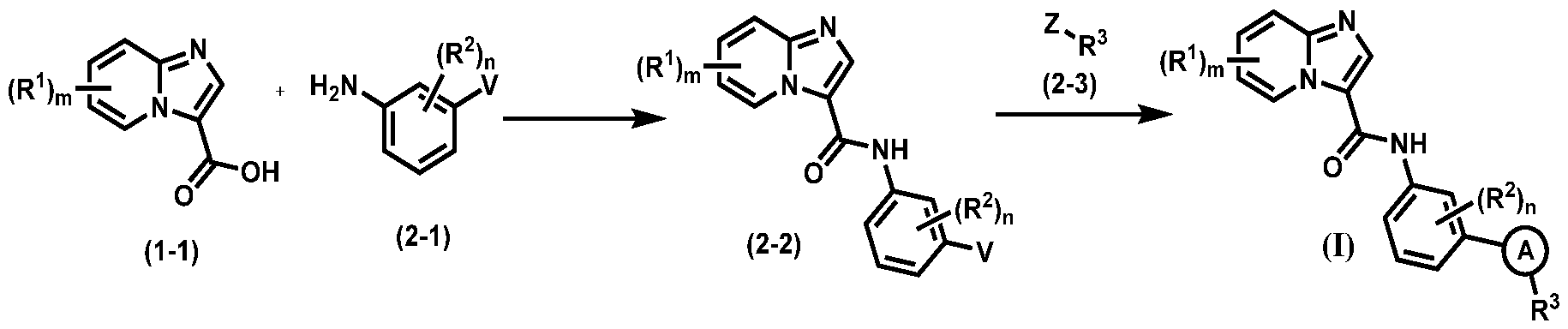
Scheme 2 illustrates an alternative method to prepare the compound of Formula (I). The carboxylic acid (1-1), as previously described, is condensed with amine (2-1), wherein R2 and n are as previously defined and V is, without limitation, a hydroxylamine, an azide, an alkyne, a carboxylic acid, a hydrazide or a nitrile, under amide coupling conditions (e.g. HATU, EDC, DCC, T3P, etc.) or conditions involving the use of reagents that activates the acid into an acyl chloride (SOCh, C1COCOC1 and Ghosez’s reagent) or an acyl imidazole (carbonyl diimidazole), to provide amide (2-2). The amide (2-2) is reacted with compound (2-3), wherein R3 is previously defined and Z is, without limitation, a carboxylic acid, an alkyne, an amine, or an azide, using relevant heterocyclic synthetic methods found in the literature (e.g. Y. Ishihara, A. Montero, P. S. Baran, The Portable Chemist’s Consultant: A Survival Guide for Discovery, Process, and Radiolabeling, Apple Publishing Group, New York City, NY, 2013, or J. A. Joule, K. Mills. Heterocyclic Chemistry, 5th Edition, Wiley- Blackwell, Hoboken, NJ, 2010, etc.) to provide the compound with Formula (I), wherein ® is as previously defined.
Scheme 3

Scheme 3 illustrates an alternative method to prepare the compound of Formula (I). Compound (1-4), as previously described, is reacted using previously defined transition metal catalyzed reactions with compound (3-1), wherein R2, n, and X are as previously defined, and Q is -NO2 or a protected amino group (e.g. -NHBoc, -NHCbz, -NHFmoc, etc.), to form compound (3-2). Compound (3-2) is converted to compound (3-3) by the following procedures: when Q is -NO2, either hydrogenation under proper hydrogen pressure in the presence of a catalyst such as, without limitation, Pd/C, Pd(OH)2 or Raney Nickel, or treatment with a metal reducing reagent such as, without limitation, Zn, Fe, SnCh, etc.; when Q is a protected amino group, removal of the amino protecting group under proper conditions (e.g. hydrogenation for Cbz in the presence of proper catalyst such as Pd/C, or an acid such as HC1, TFA, pTSA, TMSOTf for Boc). Compound (3-3) is condensed with compound (1-1), wherein R1 and m are as previously defined, under previously described amide bond forming conditions to produce the compound of Formula (I).
Scheme 4

Scheme 4 illustrates an alternative method to prepare the compound of Formula (I). Compound (2-3), as previously described, is reacted using previously described relevant heterocyclic synthetic methods with compound (4-1), wherein Q, R2, n, and V are as previously described, to form compound (3-2), which is previously described. Compound (3-2) is converted into compound (3-3) using previously described methods to convert an - NO2 group or a protected amino group into a free amino group. Compound (3-3) is condensed with compound (1-1), wherein R1 and m are as previously defined, under previously described amide bond forming conditions to produce the compound of Formula (I).
Scheme 5

Scheme 5 illustrates an alternative method to prepare the compound of Formula (I). Compound (2-2), as previously described, is reacted using previously described relevant heterocyclic synthetic methods with compound (5-1), wherein Z is as previously defined, and Y is selected from, but not limiting to, hydrogen, halogen, trifate, boronic acid, boronic ester, etc., to afford compound (5-2). Treatment of compound (5-2) with compound (5-3), wherein R3 is as previously defined, and LG is a leaving group, such as, without limitation, halogen, tritiate, tosylate, mesylate, boronic acid, boronic ester, etc., provides the compound of Formula (I).
EXAMPLES
The compounds and processes of the present invention will be better understood in connection with the following examples, which are intended as an illustration only and not limiting the scope of the invention. Starting materials were either available from a commercial vendor or produced by methods well known to those skilled in the art.
General Conditions:
Mass spectra were run on LC-MS systems using electrospray ionization. These were Agilent 1290 Infinity II systems with an Agilent 6120 Quadrupole detector. Spectra were obtained using a ZORBAX Eclipse XDB-C18 column (4.6 x 30 mm, 1.8 micron). Spectra were obtained at 298K using a mobile phase of 0.1% formic acid in water (A) and 0.1% formic acid in acetonitrile (B). Spectra were obtained with the following solvent gradient: 5% (B) from 0-1.5 min, 5-95% (B) from 1.5-4.5 min, and 95% (B) from 4.5-6 min. The solvent flowrate was 1.2 mL/min. Compounds were detected at 210 nm and 254 nm wavelengths. [M+H]+ refers to mono-isotopic molecular weights.
NMR spectra were run on a Bruker 400 MHz spectrometer. Spectra were measured at 298K and referenced using the solvent peak. Chemical shifts for 1 H NMR are reported in parts per million (ppm).
Compounds were purified via reverse-phase high-performance liquid chromatography (RPHPLC) using a Gilson GX-281 automated liquid handling system. Compounds were purified on a Phenomenex Kinetex EVO Cl 8 column (250 x 21.2 mm, 5 micron), unless otherwise specified. Compounds were purified at 298K using a mobile phase of water (A) and acetonitrile (B) using gradient elution between 0% and 100% (B), unless otherwise specified. The solvent flowrate was 20 mL/min and compounds were detected at 254 nm wavelength.
Alternatively, compounds were purified via normal-phase liquid chromatography (NPLC) using a Teledyne ISCO Combiflash purification system. Compounds were purified on a REDISEP silica gel cartridge. Compounds were purified at 298K and detected at 254 nm wavelength.
Example 1


Step 1-1 : A solution of 4-methyl-3 -nitrobenzohydrazide (474 mg, 2.429 mmol) and (lR,2S)-2-fluorocyclopropane-l-carboxylic acid (280 mg, 2.69 mmol) in DMF (1 ml) and CH2CI2 (4 ml) was treated with HATU (1030 mg, 2.71 mmol) and N-methylmorpholine (800 pl, 7.28 mmol). The reaction was stirred at room temperature overnight. The mixture was filtered and rinsed with MTBE to give the desired product (589 mg, 2.094 mmol, 86 % yield) as a white solid. ESI MS m/z = 282.08 [M+H]+.
Step 1-2: A suspension of the compound from Step 1-1 (118 mg, 0.420 mmol) in Toluene (2 ml) was treated with lawesson's reagent (205 mg, 0.507 mmol). The reaction was warmed to 100 °C and stirred for 2 hrs to form a clear solution. The mixture was concentrated in vacuo. The crude was added to a 12 g silica gel column and eluted by ethyl acetate/cyclohexane from 0% to 100% to give the desired product (69 mg, 0.247 mmol, 58.9 % yield) as a white solid. ESI MS m/z = 280.00 [M+H]+.
Step 1-3: A solution of the compound from Step 1-2 (69 mg, 0.247 mmol) in Ethanol (2 ml) and Water (0.5 ml) was treated with ammonium chloride (96 mg, 1.795 mmol) and zinc (125 mg, 1.912 mmol). The reaction was warmed to 85 °C and stirred overnight. The mixture was concentrated in vacuo, diluted with methanol, filtered, and rinsed with methanol to give the desired crude compound (62 mg, 0.249 mmol, 100 % yield) as a white solid. ESI MS m/z = 250.23 [M+H]+.
Step 1-4: A suspension of imidazo[l,2-a]pyridine-3 -carboxylic acid (97 mg, 0.598 mmol) in CH2CI2 (1 ml) was treated with 1 -chi oro-N,N,2-trimethylprop-l-en-l -amine (100 pL, 0.756 mmol). The reaction was stirred at room temperature for 1 hr to give the solution of the resulting imidazo[l,2-a]pyridine-3 -carbonyl chloride. A solution of the compound from Step 1-3 (62 mg, 0.249 mmol) in Pyridine (1 ml) was treated with the freshly
prepared solution of imidazo[l,2-a]pyridine-3 -carbonyl chloride (543 pl, 0.298 mmol) in DCM. The reaction was stirred at room temperature for 2 hrs. The mixture was concentrated in vacuo. The crude was added to a 4 g silica gel column and eluted by acetone/cyclohexane from 0% to 100% to give Example 1 (41 mg, 0.104 mmol, 41.9 % yield) as a white solid. ESI MS m/z = 394.19 [M+H]+. ‘HNMR (500 MHz, CDCh) 5 10.77 (s, 1H), 10.07 (s, 1H), 9.3 (d, J= 6.9 Hz 1H), 8.23 (d, J= 9.2 Hz, 1H), 8.02 (s, 1H), 7.94 (t, J =7.2 Hz, 1H), 7.77 (d, J= 7.9, 1H), 7.49 (t, J= 7.0 Hz 1H), 7.37 (d, J= 8.0 Hz, 1H), 5.08 (ddd, J= 5.3, 3.3, 1.9 Hz, 1H), 4.96 (ddd, J= 5.5, 3.3, 1.8 Hz, 1H), 2.84 - 2.70 (m, 1H), 2.49 (s, 2H), 1.70 - 1.85 (m, 2H). The following example was prepared using a procedure similar to Example 1 as described above:


Example 2
Step 2-1: To the suspension of imidazo[l,2-a]pyridine-3 -carboxylic acid (1000 mg, 6.17 mmol) in DCM (12 mL) and DMF (0.1 mL) cooled in an ice-water bath was added oxalyl chloride (5.2 mL, 61.7 mmol) dropwise. In two hours, it was raised to rt and stirred at rt for 2 h, white solid presented. LCMS (quenched into MeOH) showed the conversion was completed. It was concentrated and kept under vacuum for o/n. 3-amino-4- methylbenzonitrile (897 mg, 6.78 mmol) in DCE (15 mL), DIPEA (3.2 mL, 18.50 mmol) was added to give a clear solution. It was cooled in an ice-water bath. The above acyl chloride was suspended in DCE (a total of 30 mL) and was added into this solution at such a temperature. A clear solution has resulted. It was stirred for 30 mins at such temperature, then rt for 0 mins before it was heated to 55 °C. Solid appeared. It was heated for 4 hours before being cooled. The reaction was concentrated to dry. The mixture was dissolved in EtOAc, washed with water, brine, dried (ISfeSCh), and concentrated. The crude was stirred with cold DCM, the solid was collected under a high vacuum to give 0.61 g of the desired product (2.21 mmol, 35.8 % yield) as a white solid. ESI MS m/z = 277.23 [M+H]+.
Step 2-2: A suspension of the compound from Step 2-1 in Toluene (1 ml) was treated with dibutyl stannanone (15 mg, 0.060 mmol) and azidotrimethylsilane (100 pl, 0.753 mmol) under N2. The reaction was warmed to 100 °C and stirred overnight. The suspension was filtered, washed with dichloromethane. The solid was dried in vacuo to give the desired product (91 mg, 0.285 mmol, 75.0 % yield) as a white solid. ESI MS m/z = 320.12 [M+H]+.
Step 2-3: A suspension of the compound from Step 2-2 (35 mg, 0.110 mmol) and cyclopropylboronic acid (32 mg, 0.373 mmol) in 1,2-Dichloroethane (0.2 ml) and 1,4- Dioxane (0.2 ml) was treated with copper (II) acetate (40 mg, 0.220 mmol), 2,2'-bipyridine (37 mg, 0.237 mmol) and sodium carbonate (40 mg, 0.377 mmol) under N2. The reaction was warmed to 100 °C and stirred overnight. The mixture was filtered through celite, rinsed with dichloromethane, and dried in vacuo. The crude was purified by prep-HPLC to give Example 2 (2.4 mg, 6.68 pmol, 6.09 % yield) as a white solid. ESI MS m/z = 360.23 [M+H]+. 'H NMR (400 MHz, CDCh) 5 10.64 (s, 1H), 10.09 (s, 1H), 9.92 (d, J= 7.0 Hz, 1H), 8.25 - 8.15 (m, 2H), 8.00 - 7.84 (m, 2H), 7.45 (t, J= 7.0 Hz, 1H), 7.37 (d, J= 7.9 Hz, 1H), 4.22 (ddt, J= 12.0, 8.3, 4.2 Hz, 1H), 2.49 (s, 3H), 1.51 (td, J= 4.6, 3.1 Hz, 2H), 1.32 - 1.20 (m, 2H).
Example 3

Example 3
Step 3-1 : A solution of the compound from Step 2-2 (35 mg, 0.110 mmol) in DMF (0.5 ml) was treated with K2CO3 (52 mg, 0.376 mmol) and 3 -bromo- 1,1 -difluorocyclobutane (33.1 pl, 0.328 mmol). The reaction was warmed to 100 °C and stirred overnight. The mixture was filtered through celite and rinsed with methanol. The filtrate was concentrated in vacuo, added to a 4 g silica gel column and eluted by acetone/cyclohexane from 0% to 100% to give Example 3 (17 mg, 0.042 mmol, 37.9 % yield) as a white solid. ESI MS m/z = 410.38 [M+H]+. 'H NMR (500 MHz, CDCI3) 5 9.74 (s, 1H), 9.13 (s, 2H), 8.46 (s, 1H),
7.97 (dd, J= 7.8, 1.8 Hz, 2H), 7.68 (d, J= 8.5 Hz, 1H), 7.40 (d, J= 8.0 Hz, 1H), 5.35 (td, J = 7.9, 4.8 Hz, 1H), 3.45 (tdd, J= 15.3, 11.7, 7.4 Hz, 2H), 3.32 (dddd, J= 15.7, 12.4, 8.3, 4.5 Hz, 2H), 2.48 (s, 3H).
Example 4


Step 4-1 : A suspension of imidazo[l,2-a]pyridine-3 -carboxylic acid (1.17 g, 7.22 mmol) in CH2CI2 (12 ml) was treated with l-chloro-N,N,2-trimethylprop-l-en-l -amine (1.1 ml, 8.31 mmol). The reaction was stirred at room temperature for 2 hr. The resulting clear solution of imidazo[l,2-a]pyridine-3 -carbonyl chloride (1.3 g, 7.20 mmol, 100 % yield) in CH2CI2 (12 mL) was added dropwise to a solution of 5-bromo-2-methylaniline (1.24 g, 6.66 mmol) in pyridine (4 ml) over 10 min. The reaction was stirred at room temperature for 4 hrs. The mixture was diluted with ethyl acetate and quenched with water. The organic layer was washed with brine, dried over sodium sulfate and concentrated in vacuo. The crude was washed with dichloromethane/hexane (1 : 1) (10 mL) over 3 times to obtain the desired product (2.2 g, 6.66 mmol, 100 % yield) as a white solid. ESI MS m/z = 330.04, 331.96 [M+H]+.
Step 4-2: A solution of the compound from Step 4-1 (166 mg, 0.503 mmol) and bis(pinacolato)diboron (192 mg, 0.756 mmol) in 1,4-Dioxane (2.5 ml) was treated with PdCh(dppf) (56 mg, 0.077 mmol) and potassium acetate (201 mg, 2.048 mmol) under N2. The reaction was warmed to 80 °C and stirred overnight. The mixture was filtered through celite, rinsed with acetone, and concentrated in vacuo. The crude was added to a 12 g silica gel column and eluted by acetone/cyclohexane from 0% to 100% to give the desired product (120 mg, 0.318 mmol, 63.3 % yield) as a white solid. ESI MS m/z = 378.16 [M+H]+.
Step 4-3: A solution of the compound from Step 4-2 (40 mg, 0.106 mmol) and 2-bromo-4- (3,3-difluorocyclobutyl)thiazole (41 mg, 0.161 mmol) in 1,4-Dioxane (0.4 ml) and Water (0.1 ml) was treated with XPhos Pd G3 (9 mg, 10.63 pmol) and tripotassium phosphate (50 mg, 0.236 mmol) under N2. The reaction was warmed to 80 °C and stirred overnight. The mixture was filtered through the celite and rinsed with acetone. The crude was concentrated in vacuo, added to a 4 g silica gel colunn, and eluted by acetone/cyclohexane
from 0% to 100% to give Example 4 (39 mg, 0.092 mmol, 87 % yield) as an off-white solid. ESI MS m/z = 425.41 [M+H]+. 'H NMR (500 MHz, CDCh) 5 9.62 (d, J= 7.0 Hz, 1H), 8.63 (s, 1H), 8.37 - 8.27 (m, 2H), 7.84 (d, J= 9.0 Hz, 1H), 7.75 (dd, J= 7.9, 1.9 Hz, 1H), 7.54 (ddd, 7= 8.8, 7.0, 1.4 Hz, 1H), 7.33 (d, J= 7.9 Hz, 1H), 7.14 (t, J= 6.9 Hz, 1H), 6.96 (s, 1H), 3.50 (qt, J= 8.6, 4.3 Hz, 1H), 3.03 - 2.87 (m, 4H), 2.42 (s, 3H).
The following examples were prepared using procedures similar to Example 4 as described above:


Example 7

Example 7 Step 7-1 : To a solution of imidazo[l,2-a]pyridine-3 -carboxylic acid (1000 mg, 6.17 mmol) and DMF (96 pl, 1.233 mmol) in DCM 12 mL was added dropwise oxalyl chloride (2699
pl, 30.8 mmol) at 0 °C. The mixture was allowed to warm up to room temperature overnight. Removal of all volatiles under vaccum produced the desired product (1110 mg, 6.17 mmol, quant.) as a grey-green solid. The crude solid was used directly in the next step.
Step 7-2: A suspension of the compound from Step 7-1 (279 mg, 1.55 mmol) in DCE (5 mL) was added to a solution of 5-ethynyl-2-methylaniline (0.223 g, 1.699 mmol) and DIPEA (0.810 ml, 4.63 mmol) in DCE (2 mL) at 0 °C. The mixture was stirred at 0 °C over 20 mins, then at 55 °C for 3 hours. The solvent was removed under vacuum, and the crude was loaded on a 24 g silica gel column and eluted by acetone/cyclohexane from 0% to 100% to give the desired product (350 mg, 1.27 mmol, 85 % yield) as a yellow-brown solid. ESI MS m/z = 276.31 [M+H]+.
Step 7-3: A 5 mL microwave vial was loaded with 3-bromo-l,l-difluorocyclobutane (186 mg, 1.090 mmol) and sodium azide (92 mg, 1.417 mmol). Water (0.5 mL) was added, and the vial was sealed and heated to 120 °C for 30 mins using a microwave reactor. The resulting biphasic mixture was added to a suspension of N-(5-ethynyl-2- methylphenyl)imidazo[l,2-a]pyridine-3 -carboxamide (30 mg, 0.109 mmol), copper(II) sulfate pentahydrate (5.44 mg, 0.022 mmol), sodium ascorbate (4.32 mg, 0.022 mmol) in DMF (1 ml). The mixture was stirred at 80 °C over 1 hour. The mixture was diluted with water and ethyl acetate, and filtered through a celite plug. The aqueous phase was extracted with ethyl acetate. The combined organic phase was dried over anhydrous sodium sulfate, and concentrated under vacuum. The mixture was purified over prep- HPLC to produce Example 7 as a white solid (17 mg, 0.109 mmol, 38%). ESI MS m/z = 409.00 [M+H]+. 'H NMR (400 MHz, CDCh) 5 9.57 (d, J= 6.9 Hz, 1H), 8.55 (s, 1H), 8.41 (s, 1H), 8.22 - 8.09 (m, 1H), 7.88 (s, 1H), 7.84 - 7.78 (m, 1H), 7.66 (dd, J= 7.9, 1.7 Hz, 1H), 7.57 - 7.47 (m, 1H), 7.30 (d, J= 8.0 Hz, 1H), 7.12 (t, J= 6.9 Hz, 1H), 5.08 - 4.94 (m, 1H), 4.81 (s, 2H), 3.37 - 3.17 (m, 3H), 2.37 (s, 3H).
Example 8


Step 8-1 : A suspension of the compound from Step 4-1 (206 mg, 0.624 mmol) in MeOH (4 ml) was treated with hypodiboric acid (89 mg, 0.993 mmol), DIPEA (230 pl, 1.317 mmol), [l,l'-biphenyl]-2-yldicyclohexylphosphane (CyJohnPhos) (26 mg, 0.074 mmol) and nickel(II) chloride (9.6 mg, 0.074 mmol) under N2. The reaction was stirred at room temperature overnight. The mixture was concentrated in vacuo and then treated with dichloromethane/hexane (1 : 1). The suspension was filtered and the solid was rinsed with dichloromethane to give the crude desired product (141 mg, 0.478 mmol, 77 % yield) as an off-white solid. ESI MS m/z = 295.97 [M+H]+.
Step 8-2: A solution of the compound from Step x-1 (53 mg, 0.180 mmol) and 5-(3,3- difluorocyclobutyl)-lH-tetrazole (42 mg, 0.262 mmol) in CH2CI2 (1.5 ml) was treated with [Cu(OH)(TMEDA)]2C12 (20 mg, 0.043 mmol) and K2CO3 (52 mg, 0.376 mmol) under O2 (1 atm). The reaction was stirred at room temperature overnight. The mixture was filtered through celite, rinsed with dichloromethane, and concentrated in vacuo. The crude was added to a 4 g silica gel column and eluted by acetone/cyclohexane from 0% to 100% to give Example 8 (4.5 mg, 10.99 pmol, 6.12 % yield) as as a white solid. ESI MS m/z = 410.23 [M+H]+. 'H NMR (500 MHz, CDCI3) 5 9.77 (d, J= 7.0 Hz, 1H), 9.39 (s, 1H), 9.32 (s, 1H), 8.52 (d, J= 2.3 Hz, 1H), 8.01 (d, J= 9.1 Hz, 1H), 7.91 (dd, J= 8.3, 2.3 Hz, 1H), 7.74 (t, J= 7.7 Hz, 1H), 7.44 (d, J= 8.3 Hz, 1H), 7.31 (t, J= 6.9 Hz, 1H), 3.73 (pd, J= 8.7, 2.8 Hz, 1H), 3.16 - 3.05 (m, 4H), 2.51 (s, 3H).
The following example was prepared using procedures similar to Example 8 as described above:

Example 10


Step 10-1 : Into the solution of 2-bromo-l-(4-methyl-3-nitrophenyl)ethan-l-one (500 mg, 1.937 mmol) and 3, 3 -difluorocy cl obutane-1 -carboxylic acid (277 mg, 2.034 mmol) in acetonitrile (10 ml), DIPEA (846 pl, 4.84 mmol) was added. It was stirred at rt for 4 hours. LCMS showed reaction was completed. It was concentrated and dissolved in DCM, the organic was washed with water *2, brine, dried QSfeSCh) and concentrated to give the crude desired compound. JH NMR (400 MHz, CDCh) 3 8.48 (d, J= 1.8 Hz, 1H), 8.05 (dd, J= 8.0, 1.8 Hz, 1H), 7.54 (d, J= 8.0 Hz, 1H), 5.39 (d, J= 0.7 Hz, 2H), 3.25 - 3.11 (m, 1H), 3.11 - 2.82 (m, 4H), 2.71 (s, 3H). The crude was used directly in the next steps.
Step 10-2: The crude compound from Step 10-1 (290 mg, 0.926 mmol), and ammonium acetate (714 mg, 9.26 mmol) was mixed in acetic acid (5 ml), it was heated to 120 °C under stirring. In 2 hours, LCMS Showed both the imidazole and the oxazole were formed, it was cooled. The mixture was suspended in DCM, washed with water, aq. NaHCO3, dried (Na2SO4), and was concentrated. The solid resulted was suspended in DCM and filtered. The filtrate was concentrated to give a brownish solid (261 mg, 96%). ESI MS m/z = 295.06 [M+H]+ for oxazole; ESI MS m/z = 294.32 [M+H]+ for imidazole.
Step 10-3: Crude compound from Step 10-2 (261 mg, 0.88 mmol) was dissolved in EtOH (4 mL), water (1 mL). Zinc (290 mg, 4.43 mmol) and NH4CI (234 mg, 4.43 mmol) were
added. It was stirred 1 h at rt. LCMS showed the reaction was completed. It was filtered and washed with EtOAc. The EtOAc solution was washed with brine twice, dried (Na2SO4) and concentrated to give the crude desired product (184 mg, 78%). ESI MS m/z = 265.10 [M+H]+ for oxazole; ESI MS m/z = 264.22 [M+H]+ for imidazole. Step 10-4: Imidazo[l,2-a]pyridine-3 -carboxylic acid (124 mg, 0.766 mmol) in CH2CI2 (2.000 ml), l-chloro-N,N,2-trimethylprop-l-en-l -amine (120 pl, 0.905 mmol) was added and stirred at rt for 2 hours. The compound from Steop 10-3 (184 mg, 0.696 mmol) was dissolved in pyridine (2 ml). The solution from above reaction was added into it and stirred at rt fori h. It was concentrated and purified on prep-HPLC to afford Example 10 and Example 11. ESI MS m/z = 409.16 [M+H]+ for Example 10; ESI MS m/z = 408.17 [M+H]+ for Example 11.
The following example was prepared using a procedure similar to Example 10 as described above:

Step 11-2-1 : The compound from Step 4-1 (30 mg, 0.091 mmol), dichlorobis(chlorodi- tert-butylphosphine) palladium (II) (2.447 mg, 5 mol%, 4.54 pmol), 5- fluorobenzo[d]oxazole (18.69 mg, 1.5 eq., 0.136 mmol), Cu(XantPhos)! (13.98 mg, 20 mol%, 0.018 mmol) and cesium carbonate (74.0 mg, 2.5 eq., 0.227 mmol) was loaded in a
2-dram vial equipped with a magnetic stir bar. The vial was sealed, and then evacuated and refilled with nitrogen. Toluene (0.909 ml) was added via syringe. The mixture was stirred at 100 °C overnight. After the reaction was complete, the mixture was filtered through a celite plug, concentrated, and then purified over preparative HPLC to yield Example 11-2 (1.4 mg, 4% yield). ESI MS m/z = 387.13 [M+H]+.
The following examples were prepared using procedures similar to Example 11-2 as described above:

Example 11-10


Step 11-10-1 : Tert-butyl (2-methyl-5-(2H-l,2,3-triazol-4-yl)phenyl)carbamate (67 mg, 0.244 mmol), 3 -bromo- 1,1 -difluorocyclobutane (104 mg, 0.611 mmol), potassium carbonate (101 mg, 0.733 mmol) was suspended in DMF (1.2 ml). The mixture was stirred at 100 °C overnight. The crude was concentrated in vacuo and purified over silica gel to yield the desired product as an off-white solid (16 mg, 18%).
Step 11-10-2: Hydrochloric acid (1098 pl, 4.39 mmol, 4M in dioxane) was added to the compound from Step 11-10-1 (16 mg, 0.044 mmol). The mixture was stirred at RT over 1 h. The solvent was removed. The crude was used in the next step directly. Step 11-10-3: A suspension of imidazo[l,2-a]pyridine-3 -carboxylic acid (8.3 mg, 0.051 mmol) in DCM (1 ml) was treated with Ghosez's Reagent (7.8 mg, 0.058 mmol). The mixture was stirred over 1 h at RT. The resulting solution was added to a solution of the compound from Step 11-10-2 (13 mg, 0.043 mmol) in pyridine (1 ml). The mixture was stirred over 2 h at RT. The solvent was removed and the crude was purified over prep- HPLC to produce Example 11-10 as a white powder (10 mg, 48%). ESI MS m/z = 409.34 [M+H]+.
Example 11-11
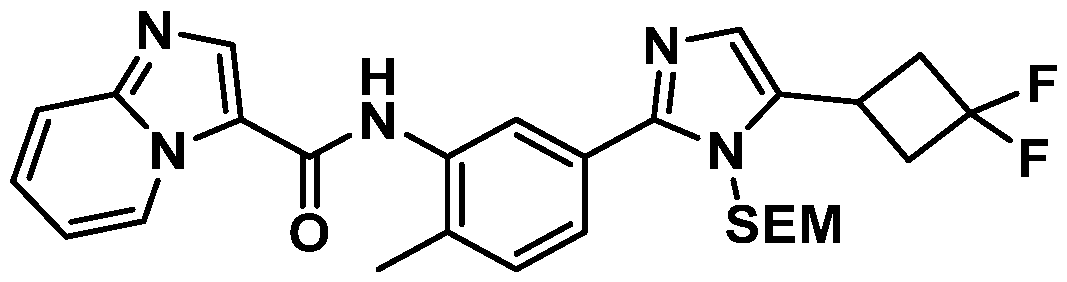

Step 11-11-1 : LiHMDS (6.78 ml, 6.78 mmol) 1 M solution in THF was added dropwise to a solution of 4-methyl-3 -nitrobenzonitrile (1 g, 6.17 mmol) in THF (6 mL) at 0 °C. The mixture was stirred at 0 °C over 1.5 hr. Water (10 mL) was added at 0 °C. The resulting mixture was adjusted to pH=l by adding 6 M HC1 (2 mL) and then stirred for 30 mins. The aqueous phase was washed with EtOAc, then basified with NaOH (IM) until pH=13 and extracted with EtOAc. The solvent was removed to reveal a black tar oil. The crude was used directly in the next step.
Step 11-11-2: Potassium bicarbonate (246 mg, 2.456 mmol) was added to a solution of the compound from Step 11-11-1 (110 mg, 0.614 mmol) in THF (2.5 ml) and water (0.5 ml). 2-bromo-l-(3,3-difluorocyclobutyl)ethan-l-one (131 mg, 0.614 mmol) was added. The mixture was heated at 80 °C over 3 h. The solvent was removed, and the crude was used directly in the next step.
Step 11-11-3: A vial containing the compounds from Step 11-11-2 (180 mg, 0.614 mmol) was evacuated and refilled with N2 3 times. THF (3.0 ml) was added, and 60% sodium hydride (36.8 mg, 0.921 mmol) was added in small batches under positive nitrogen flow. The resulting suspension was stirred at RT over 30 mins. At 0 °C, (2- (chloromethoxy)ethyl)trimethylsilane (153 mg, 0.921 mmol) was added dropwise. The mixture was stirred over 2 h. Water (5 mL) was added, and the aqueous layer was extracted with EtOAc (10 mL*3). After removal of solvent, the crude was purified via
silica gel column chromatography (0-30% EtOAc in cHex) to yield the desired product (100 mg, 39%).
Step 11-11-4: Ammonium chloride (101 mg, 1.889 mmol) and zinc (99 mg, 1.511 mmol) wad added to a solution of the compound from Step 11-11-3 (80 mg, 0.189 mmol) in ethanol (1.5 ml) and water (0.3 ml). The suspension was stirred at 85 °C overnight. The suspension was filtered, and the filtrate was concentrated to reveal the desired product as a yellow solid (71 mg, 96%).
Step 11-11-5: A suspension of imidazo[l,2-a]pyridine-3 -carboxylic acid (14.54 mg, 0.090 mmol) in DCM (1 ml) was treated with Ghosez's Reagent (13.78 mg, 0.103 mmol). The mixture was stirred over 1 h at RT. The resulting solution was added to a solution of the compound from Step 11-11-4 (30 mg, 0.076 mmol) in pyridine (1 ml). The mixture was stirred over 2 h at RT. The solvent was removed and the crude was purified over prep- HPLC to provide Example 11-11 as a white powder (14.5 mg, 30%). ESI MS m/z = 538.24 [M+H]+.
Example 11-12

Step 11-12-1 : To a suspension of 4-methyl-3 -nitroaniline (300 mg, 1.972 mmol) in aqueous 4N HC1 (2 mL) was added a solution of sodium nitrate (129 mg, 1.517 mmol) in water (2 mL) dropwise at 0 °C. The mixture was stirred at the temperature for 1 h. A solution of sodium azide (79 mg, 1.213 mmol) in water (2 mL) was added at 0 °C. The mixture was allowed to warm up to RT overnight. The solution was then extracted with
EtOAc. The organic phase was concentrated to reveal the desired pdt as a brown powdery solid (210 mg, 78%), which was used directly in the next step.
Step 11-12-2: The compound from Step 11-12-1 (153 mg, 0.861 mmol), copper(II) sulfate pentahydrate (32.3 mg, 0.129 mmol), sodium ascorbate (51.2 mg, 0.258 mmol), 3-ethynyl- 1,1 -difluorocyclobutane (100 mg, 0.861 mmol) was suspended in EtOH (2ml), Water (2 ml) in a 20 mL vial. The mixture was stirred at RT overnight. The resulting mixture was filtered through a celite plug and concentrated. The crude was purified via silica gel chromatography to yield the desired product (124 mg, 49%).
Step 11-12-3: Ammonium chloride (225 mg, 4.21 mmol)and zinc (220 mg, 3.37 mmol) was added to a solution of the compound from Step 11-12-2 (124 mg, 0.421 mmol) in ethanol (4.0 ml) and water (0.8 ml). The suspension was stirred at 85 °C overnight. The suspension was filtered, and the filtrate was concentrated. The crude was used directly in the next step.
Step 11-12-4: A suspension of imidazo[l,2-a]pyridine-3 -carboxylic acid (14.44 mg, 0.089 mmol) in DCM (1 ml) was treated with Ghosez's Reagent (13.68 mg, 0.102 mmol). The mixture was stirred over 1 h at RT. The resulting solution was added to a solution of the compound from Step 11-12-3 (20 mg, 0.076 mmol) in pyridine (1 ml). The mixture was stirred over 2 h at RT. The solvent was removed and the crude was purified over prep- HPLC to produce Example 11-12 as a white powder (9.1 mg, 0.089 mmol, 30% yield). ESI MS m/z = 409.10 [M+H]+.
Example 11-13

(1 -1 eq.)
Step 11-13-1 : The compound from Step 4-1 (50 mg, 0.151 mmol), copper(I) iodide (1.442 mg, 7.57 pmol) and tripotassium phosphate (64.3 mg, 0.303 mmol) was loaded in a 40 mL vial. The vial was evacuated and refilled with N2 3 times. Toluene (1.5 ml) was added via syringe, followed by (lS,2S)-Nl,N2-dimethylcyclohexane-l,2-diamine (4.31 mg, 0.030
mmol). The mixture was heated at 100 °C overnight. The solvent was removed and the resulting crude was purified over prep-HPLC to yield Example 11-13 as a white powder (9.0 mg, 0.15 mmol, 16%). ESI MS m/z = 368.45 [M+H]+.
The following examples are prepared using procedures similar to those described above:


 BIOLOGICAL ACTIVITY c-KIT Kinase Assay
MATERIALS AND METHODS:
Materials and Equipment:
Staurosporine (AM-2282) and Imatinib (STI571) were purchased from Selleck Chemicals LLC (Houston, TX). The c-KIT reference compound THBOOl (EP-053504) was synthesized by Enanta Pharmaceuticals, Inc. (Watertown, MA). The c-KIT Kinase Enzyme System (V4498) and ADP-Glo™ Kinase Assay kit (V6930) were purchased from Promega (Madison, WI). DMSO (D2650) was purchased from Sigma-Aldrich (Burlington, MA). ECHO-650 acoustic liquid handling system (67492212) and 384-well LDV ECHO source plates (LP-0200) were purchased from Labcyte, Inc (San Jose, CA). Envision Multimode Plate Reader (2104/464466) and ProxiPlate-384 Plus White 384- shallow well microplates (6008280) were purchased from PerkinElmer (Waltham, MA).
1. c-KIT Kinase Chemiluminescence Assay:
ICso determination. Test compounds were dispersed into a 384-well low volume while ProxiPlate microplate from a DMSO solution using an ECHO 650 acoustic dispenser to generate a 11 -point, 3.162-fold dilution, concentration curve starting at 10 pM in duplicate.
Kinase Reaction: The kinase assay was based on the recommended protocol by c-KIT Kinase Enzyme System from Promega. Recombinant human c-KIT kinase in 3 pL of assay buffer (40 mM Tris pH 7.5, 20 mM MgCh, 0.1 mg/mL BSA and 50 pM DTT) was added to the test or high control wells and 3 pL of assay buffer was added to the low control wells. The microplate was centrifuged at 800 rotations per minute (rpm) for 60 s and incubated at room temperature (RT) for 30 min. Next, 2 pL of buffered ATP and polyEY substrate solution was added to all wells. The microplate was centrifuged at 800 rpm for 60 s and incubated at RT for 2 h. The final assay contained c-KIT (30-40 nM), ATP (50 pM), polyEY substrate (0.2 pg/pL), test compounds (0-10 pM) and DMSO (1.7%) in 5 pL assay buffer.
ADP detection with ADP-Glo™ Kinase Assay: After the kinase reaction incubation, 5 pL of ADP-GloTM reagent was added to all wells. The microplate was centrifuged at 800 rpm for 60 s and incubated at RT for 40 min. Ten microliter (10 pL) of Kinase Detection
Reagent (Luciferin-Luciferase system) was then added to all wells. The microplate was centrifuged at 800 rpm for 60 s and incubated at RT for 60 min. Kinase activity was measured as increase in luminescence at RT in an Envision plate reader equipped with 560 nm filters and operating in endpoint mode.
Data Analysis: Endpoint chemiluminescence from high and low control wells were used to calculate normalized c-KIT activity at various concentrations of test compounds. The normalized activities were fitted to inhibitor-versus-normalized response fit in GraphPad Prism 7 to determine half-maximal inhibitory concentration (ICso) and hill coefficient values (H). c-KIT activity (%) = 100/( l+IH/IC5oH). Where I is the inhibitor concentration and H is the Hill coefficient. ICso ranges are reported as follows: A < 100 nM; B 0.1-1 pM; C > 1 pM.
2. M-07e Cellular Assay
M-07e cells (Creative Bioarray, CSC-C0249) which endogenously express human c-KIT were used to evaluate the effect of compounds on stem cell factor (SCF)-mediated cell proliferation. M-07e cells were cultured in growth media (RPMI + 10% FBS + 1% penicillin/ streptomycin + 10 ng/mL GM-CSF) at 5E5-1.5E6 cells/mL, replenishing media every 3-4 days. 1.5E4 cells were seeded per well in 384 well tissue culture treated plates in 20 pL assay media (RPMI + 10% FBS + 1% penicillin/ streptomycin) without growth factor stimulation and incubated at 37°C in a CO2 humidity-controlled incubator. Twenty- four hours later, three-fold serially diluted test compounds in media containing SCF (at the previously determined EC90) were added to the plated M-07e cells and incubated for an additional 72 hours. Cell viability was determined by adding 25 pL CellTiter Gio (Promega) to the cells and the luminescence was measured using a Perkin Elmer Envision plate reader. The EC50 was determined using GraphPad Prism. Percent cell growth was determined after normalizing the curve to the mean RLU high control (no compound control wells) at 100% and the mean RLU low control (no SCF control wells) at 0%. EC50 curves were generated using a variable slope four-parameter logistic model with equation Y=100/(l+XAHillSlope)/(EC50AHillSlope). EC50 ranges are reported as follows: A < 100 nM; B 0.1-1 pM; C > 1 pM.
Table 1. Summary of Biological Activities


It is understood that the examples and embodiments described herein are for illustrative purposes only and that various modifications or changes in light thereof will be suggested to persons skilled in the art and are to be included within the spirit and purview of this application and scope of the appended claims.
While this invention has been particularly shown and described with references to preferred embodiments thereof, it will be understood by those skilled in the art that various changes in form and details may be made therein without departing from the scope of the invention encompassed by the appended claims.
Claims
1. A compound of Formula (I) or pharmaceutically acceptable salt thereof,
 wherein: m is 0, 1, 2, 3, or 4; each R1 is independently selected from the group consisting of deuterium, halogen, -CN, optionally substituted -Ci-Ce alkyl, optionally substituted -Ci-Ce alkoxy, optionally substituted -C3-C8 cycloalkyl, optionally substituted -Cs-Cs cycloalkenyl, optionally substituted 3- to 8- membered heterocycloalkyl , optionally substituted aryl, optionally substituted arylalkyl, optionally substituted heteroaryl, optionally substituted heteroarylalkyl, -C(O)R4, -C(O)OR4, -C(O)NR4R5, -C(S)NR4R5, and -NR4R5; each R4 and R5 is independently selected from the group consisting of hydrogen and optionally substituted -Ci-Ce alkyl, optionally substituted -C/i-Cs cycloalkyl, optionally substituted aryl, optionally substituted arylalkyl, optionally substituted heteroaryl, optionally substituted heteroaryl alkyl, alternatively, R4 and R5 are taken together with the nitrogen atom to which they are attached to form optionally substituted -C3-C8 heterocyclic ring;
R9 is selected from the group consisting of hydrogen, deuterium, halogen, -CN, optionally substituted -Ci-Ce alkyl, optionally substituted -Ci-Ce alkoxy, optionally substituted -C3- Cs cycloalkyl, optionally substituted -Cs-Cs cycloalkenyl, optionally substituted 3- to 8- membered heterocycloalkyl , optionally substituted aryl, optionally substituted arylalkyl, optionally substituted heteroaryl, optionally substituted heteroarylalkyl, -C(O)R4, - C(O)OR4, -C(O)NR4R5, -C(S)NR4R5, and -NR4R5; n is 0, 1, 2, 3, or 4;
R2 is selected from the group consisting of deuterium, halogen, -CN, optionally substituted -Ci-Ce alkyl, optionally substituted -C3-C8 cycloalkyl, optionally substituted -Ci-Ce alkoxy, and optionally substituted -C3-C8 cycloalkoxy;
R3 is -LR4a;
L is absent, -(CR6R7)P-, -(CR7R8)qO-, -(CR7R8)qNR4-, -(CR7R8)qC(O)NR4 or -
(CR7R8)qNR4C(O)-; p is selected from the group consisting of 1, 2, 3, or 4; q is selected from the group consisting of 0, 1, 2, 3 and 4;
R6 is selected from the group consisting of hydrogen, optionally substituted -Ci-Ce alkyl, optionally substituted -Ci-Ce alkoxy, and -NHC(O)OR4;
R7 and R8 are each independently selected from the group consisting of hydrogen, fluorine, and optionally substituted -Ci-Ce alkyl;
R4ais selected from the group consisting of optionally substituted -Ci-Cs alkyl, optionally substituted -C2-C8 alkenyl, optionally substituted -C3-C 12 cycloalkyl, optionally substituted -C5-C12 cycloalkenyl, optionally substituted 3- to 8- membered heterocycloalkyl optionally substituted aryl; and optionally substituted heteroaryl; and
(A)
' — 'is absent or an optionally substituted 5-membered heteroaryl when L is not absent; A and '■- is an optionally substituted 5-membered heteroaryl when L is absent;

Provided that A is not N-N , N-0 , or O-N , alternatively, when
 and R can be taken together with the nitrogen atom to which they are attached to form optionally substituted 6- to 12-membered heterocyclic ring or optionally substituted fused heteroaryl, alternatively, when possible
 and R2 can be taken together with the nitrogen atom to which they are attached to form optionally substituted 6- to 12-membered heterocyclic ring.
2. The compound of Formula (I) is represented by Formula (II):
 wherein R1, m, R2, n, A and R4a are as defined in claim 1.
3. The compound of Formula (I) is represented by one of Formulae (XI-1) ~ (XI-8):
 wherein R1, m, R2, n and A are as defined in claim 1.
5 4. The compound of Formula (I) is represented by one of Formulae (XX-1) ~ (XX-5):

(XX-3)
(XX-4) (XX-5) wherein B is -C3-C8 cycloalkyl, -Cs-Cs cycloalkenyl, 3- to 8-membered heterocycloalkyl, aryl, or heteroaryl; R21 is selected from the group consisting of halogen, -CN, -OH, optionally substituted -Ci-Ce alkyl, optionally substituted -Ci-Ce alkoxy, optionally substituted -C3-C8 cycloalkyl, optionally substituted -C5-C8 cycloalkenyl, optionally substituted 3- to 8-membered heterocycloalkyl , optionally substituted aryl, optionally substituted arylalkyl, optionally substituted heteroaryl, optionally substituted heteroarylalkyl, -C(O)R4, -C(O)OR4, -C(O)NR4R5, -C(S)NR4R5, and -NR4R5; r is 0, 1, 2 or 3; one V is O, S, or NR11; another V is N or CH; each T is independently selected from the group consisting of N and CH; R4, R5, R11, R1, m, and R2 are as defined in claim 1.
5. The compound of Formula (I) is represented by one of Formulae (XXII-1) ~ (XXII-

6. The compound of Formula (I) is represented by one of Formulae (XXIII-1) ~ (XXIII-
6):

7. A compound selected from the compounds set forth below, or a pharmaceutically acceptable salt thereof:


8. A pharmaceutical composition comprising a compound of any one of claims 1 to 7 and a pharmaceutically acceptable carrier.
9. A medicament for treating a disease mediated by a kinase in a patient in need therof, wherein the medicaments comprises a therapeutically effective amount of a compound of any one of claims 1 to 7, the kinase is selected from c-kit, CSF1R, PDGFRa, and PDGFRp, and the disease is a mast-cell associated disease, a respiratory disease, an inflammatory disorder, irritable bowel syndrome (IBS), inflammatory bowel disease (IBD), an autoimmune disorder, a metabolic disease, a fibrosis disease, a dermatological disease, pulmonary arterial hypertension (PAH) or primary pulmonary hypertension (PPH).
10. The medicament of claim 9, wherein the disease is asthma, allergic rhinitis, pulmonary arterial hypertension (PAH), pulmonary fibrosis, hepatic fibrosis, cardiac fibrosis, scleroderma, irritable bowel syndrome (IBS), inflammatory bowel disease (IBD), uticaria, dermatosis, type I diabetes or type II diabetes.
11. Use of a compound of any one of claims 1 to 7 in the manufacture of a medicament for treating a disease or disorder in a patient where modulation of kinase is implicated, wherein the kinase is selected from c-kit, CSF1R, PDGFRa and PDGFRp.
12. A method for treating a disease or disorder where modulation of a kinase is implicated, wherein the method comprises administering to a system or subject in need of such treatment an effective amount of a compound of any one of claims 1 to 7, wherein the kinase is selected from c-kit, CSF1R, PDGFRa and PDGFRp.
13. The method of claim 12, wherein the disease is a mast-cell associated disease, a respiratory disease, an inflammatory disorder, irritable bowel syndrome (IBS), inflammatory bowel disease (IBD), an autoimmune disorder, a metabolic disease, a fibrosis disease, a dermatological disease, pulmonary arterial hypertension (PAH) or primary pulmonary hypertension (PPH).
14. The method of claim 13, wherein the disease is asthma, allergic rhinitis, pulmonary arterial hypertension (PAH), pulmonary fibrosis, hepatic fibrosis, cardiac fibrosis, scleroderma, irritable bowel syndrome (IBS), inflammatory bowel disease (IBD), uticaria, dermatosis, type I diabetes or type II diabetes.
15. A method of modulating kinase activity, comprising administering to a system or a subject in need thereof, a therapeutically effective amount of the compound of any one of claims 1 to 7 or pharmaceutically acceptable salts or pharmaceutical compositions thereof, wherein the kinase is c-kit, CSF1R, PDGFRa and PDGFRp.
16. A compound of any one of claims 1 to 7 for use in treating a disease mediated by c-kit, CSF1R, PDGFRa and PDGFRP or combination thereof, therein the disease is selected from a mast-cell associated disease, a respiratory disease, an inflammatory disorder, irritable bowel syndrome (IBS), inflammatory bowel disease (IBD), an autoimmune disorder, a metabolic disease, a fibrosis disease, a dermatological disease, a bone marrow disease, pulmonary arterial hypertension (PAH) or primary pulmonary hypertension (PPH).
17. The compound of claim 16, wherein the disease is asthma, atopic dermatitis, allergic rhinitis, pulmonary arterial hypertension (PAH), pulmonary fibrosis, idiopathic pulmonary fibrosis (IPF), systemic sclerosis-associated interstitial lung disease (SSc-ILD), chronic obstructive pulmonary disease (COPD), osteoarthritis, hepatic fibrosis, cardiac fibrosis, scleroderma, irritable bowel syndrome (IBS), inflammatory bowel disease (IBD), eosinophilic gastrointestinal disorders (EGIDs), eosinophilic esophagitis (EoE), chronic urticaria, dermatosis, allergic contact dermatitis, rheumatoid arthritis, multiple sclerosis, amyotrophic lateral sclerosis, interstitial cystitis, psoriasis, hidradenitis suppurativa (HS), chronic prurigo, nasal polyps, insect sting, food allergy, allergic rhinoconjunctivitis, pancreatitis, anaphylactic, myelodysplastic syndrome (MDS), severe combined immunodeficiency (SCID), Fanconi anemia, chronic granulomatous disease (CGD), sickle cell disease, type I diabetes or type II diabetes.
18. A compound of any one of claims 1 to 7 for use in treating a disease mediated by c-kit, CSF1R, PDGFRa and PDGFRp, or combination thereof, wherein the disease is selected from melanoma, a gastrointestinal stromal tumor, a mast cell tumor, mastocytosis, mast cell activation syndrome (MCAS).
Applications Claiming Priority (2)
| Application Number | Priority Date | Filing Date | Title |
|---|---|---|---|
| US202363526801P | 2023-07-14 | 2023-07-14 | |
| US63/526,801 | 2023-07-14 |
Publications (2)
| Publication Number | Publication Date |
|---|---|
| WO2025019309A2 true WO2025019309A2 (en) | 2025-01-23 |
| WO2025019309A3 WO2025019309A3 (en) | 2025-05-15 |
Family
ID=94282479
Family Applications (1)
| Application Number | Title | Priority Date | Filing Date |
|---|---|---|---|
| PCT/US2024/037785 Pending WO2025019309A2 (en) | 2023-07-14 | 2024-07-12 | Compounds and compositions as c-kit kinase inhibitors |
Country Status (2)
| Country | Link |
|---|---|
| US (1) | US20250034138A1 (en) |
| WO (1) | WO2025019309A2 (en) |
Cited By (3)
| Publication number | Priority date | Publication date | Assignee | Title |
|---|---|---|---|---|
| US12448379B2 (en) | 2022-11-30 | 2025-10-21 | Blueprint Medicines Corporation | Wild type kit inhibitors |
| WO2025256552A1 (en) * | 2024-06-11 | 2025-12-18 | 上海翰森生物医药科技有限公司 | Pyrazole derivative inhibitor, preparation method therefor and use thereof |
| WO2026032333A1 (en) * | 2024-08-06 | 2026-02-12 | 上海美悦生物科技发展有限公司 | Heterocyclic compound, preparation method therefor and use thereof |
Family Cites Families (5)
| Publication number | Priority date | Publication date | Assignee | Title |
|---|---|---|---|---|
| DE102005016547A1 (en) * | 2005-04-08 | 2006-10-12 | Grünenthal GmbH | Substituted 5,6,7,8-tetrahydro-imidazo (1,2-a) pyridin-2-ylamine compounds and their use for the preparation of medicaments |
| BRPI0718677A2 (en) * | 2006-11-03 | 2013-11-26 | Irm Llc | COMPOUNDS AND COMPOSITIONS AS PROTEIN KINASE INHIBITORS |
| WO2013033620A1 (en) * | 2011-09-01 | 2013-03-07 | Irm Llc | Compounds and compositions as pdgfr kinase inhibitors |
| EA201490537A1 (en) * | 2011-09-01 | 2014-07-30 | АйАрЭм ЭлЭлСи | COMPOUNDS AND COMPOSITIONS AS A K-KAZASE INHIBITOR C-Kit |
| US20240189289A1 (en) * | 2021-03-04 | 2024-06-13 | The Brigham And Women`S Hospital, Inc. | Inhibitors of ephb3 signaling |
-
2024
- 2024-07-12 US US18/771,345 patent/US20250034138A1/en active Pending
- 2024-07-12 WO PCT/US2024/037785 patent/WO2025019309A2/en active Pending
Cited By (3)
| Publication number | Priority date | Publication date | Assignee | Title |
|---|---|---|---|---|
| US12448379B2 (en) | 2022-11-30 | 2025-10-21 | Blueprint Medicines Corporation | Wild type kit inhibitors |
| WO2025256552A1 (en) * | 2024-06-11 | 2025-12-18 | 上海翰森生物医药科技有限公司 | Pyrazole derivative inhibitor, preparation method therefor and use thereof |
| WO2026032333A1 (en) * | 2024-08-06 | 2026-02-12 | 上海美悦生物科技发展有限公司 | Heterocyclic compound, preparation method therefor and use thereof |
Also Published As
| Publication number | Publication date |
|---|---|
| WO2025019309A3 (en) | 2025-05-15 |
| US20250034138A1 (en) | 2025-01-30 |
Similar Documents
| Publication | Publication Date | Title |
|---|---|---|
| KR100441362B1 (en) | Phthalazines with Angiogenesis Inhibiting Activity | |
| CN113061132B (en) | Condensed ring lactam compound, preparation method and application | |
| ES2368876T3 (en) | DERIVATIVES OF 2-HETEROARILAMINOPIRIMIDINA AS KINASE INHIBITORS. | |
| JP7025556B2 (en) | PRC2 inhibitor | |
| US10450301B2 (en) | Apoptosis signal-regulating kinase 1 inhibitors and methods of use thereof | |
| TW202144345A (en) | Kras mutant protein inhibitors | |
| EP3784671B1 (en) | Dual atm and dna-pk inhibitors for use in anti-tumor therapy | |
| WO2025019309A2 (en) | Compounds and compositions as c-kit kinase inhibitors | |
| AU2024321427A1 (en) | Pharmaceutical compounds and compositions as c-kit kinase inhibitors | |
| CN113348170B (en) | Biphenyl derivative inhibitors, preparation methods and applications thereof | |
| EA035499B1 (en) | Novel glutaminase inhibitors | |
| JP2022526854A (en) | Phosphatidylinositol 3-kinase inhibitor | |
| WO2018218042A1 (en) | Apoptosis signal-regulating kinase 1 inhibitors and methods of use thereof | |
| JP2011526295A (en) | 5- and 6-membered heterocyclic compounds | |
| MX2015004151A (en) | Gdf-8 inhibitors. | |
| BR112016016158B1 (en) | BICYCLIC HETEROCYL DERIVATIVES AS IRAK4 INHIBITORS, THEIR PHARMACEUTICAL COMPOSITION AND THEIR USES | |
| JP2021535213A (en) | Tetrahydropyridopyrimidine derivative as an AhR modulator | |
| WO2025024503A1 (en) | PHARMACEUTICAL COMPOUNDS AND COMPOSITIONS AS c-KIT KINASE INHIBITORS | |
| US11345699B2 (en) | Apoptosis signal-regulating kinase 1 inhibitors and methods of use thereof | |
| US20220242861A1 (en) | Imidazopyridinyl compounds and use thereof for treatment of proliferative disorders | |
| EP3621615A1 (en) | Apoptosis signal-regulating kinase 1 inhibitors and methods of use thereof | |
| CN121013849A (en) | Heterocyclic compounds as WRN inhibitors | |
| US10538528B2 (en) | 5H-pyrrolo[2,3-D]pyrimidin-6(7H)-one derivative | |
| CN109761986B (en) | Tricyclic derivative inhibitor, preparation method and application thereof | |
| CN112912142A (en) | 5-azaindazole derivatives as adenosine receptor antagonists |
Legal Events
| Date | Code | Title | Description |
|---|---|---|---|
| 121 | Ep: the epo has been informed by wipo that ep was designated in this application |
Ref document number: 24843743 Country of ref document: EP Kind code of ref document: A2 |
|
| NENP | Non-entry into the national phase |
Ref country code: DE |